
About 2,400 massive stars in the center of 30 Doradus, the Tarantula Nebula, produce intense radiation and powerful winds as they blow off material seen as infrared emission from NASA Spitzer Space Telescope and X-rays from Chandra X-ray Observatory.
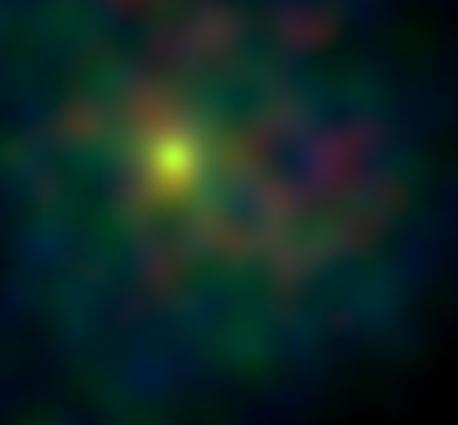
This false-color image shows comet Tempel 1 as seen by NASA Chandra X-ray Observatory on June 30, 2005, Universal Time. The comet was bright and condensed.
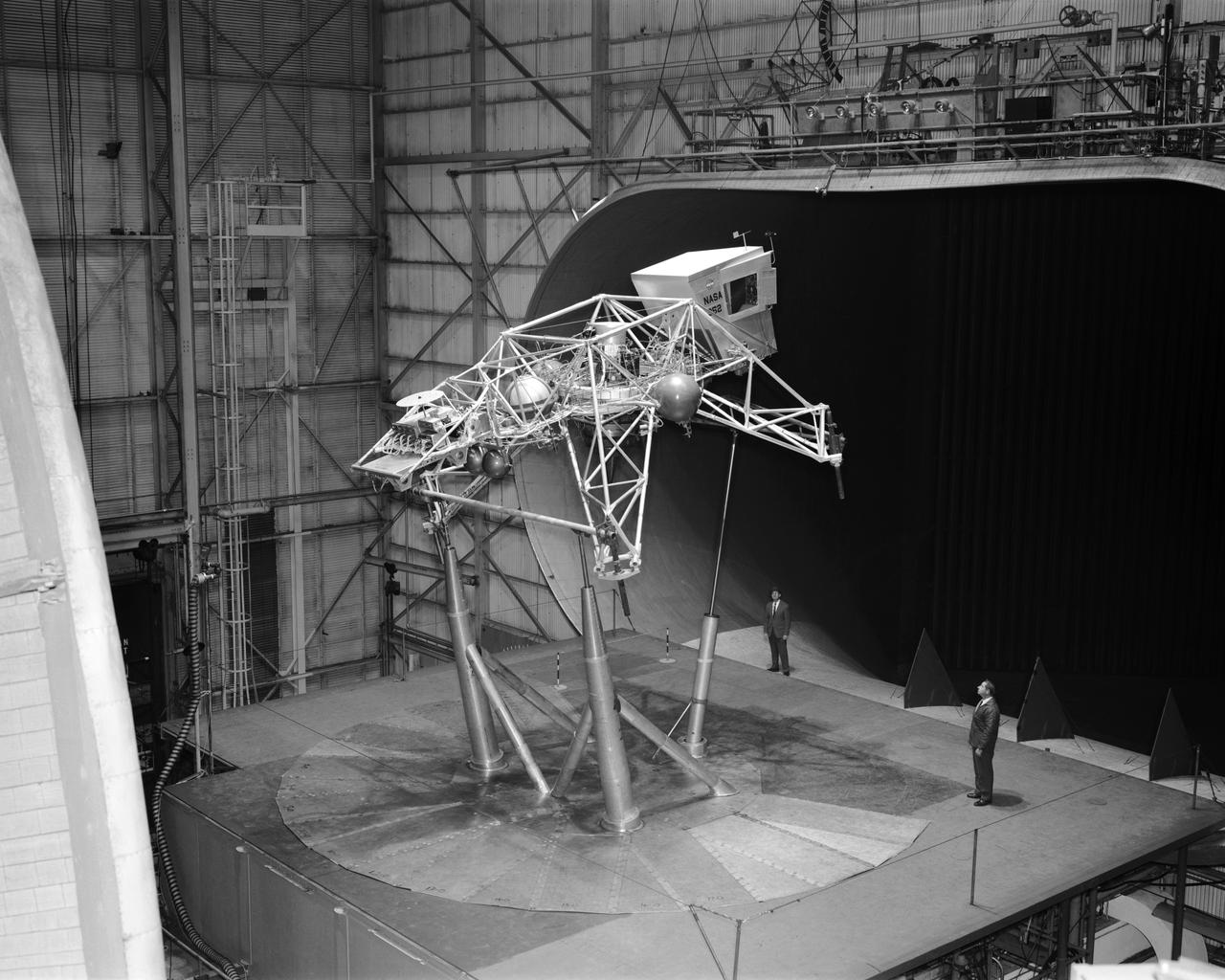
Concept model of the Lunar Excursion Module tested in the Full-Scale wind tunnel. -- Published in James R. Hansen, Spaceflight Revolution: NASA Langley Research Center From Sputnik to Apollo, (Washington: NASA, 1995), p. 356.-L69-670 Bell Lunar Landing Training Vehicle (LLTV): Following the crash of a sister Lunar Landing Training Vehicle at Ellington Field in Houston, Texas, the LLTV NASA 952 was sent from Houston to Langley for tests in the 30 x 60 Full Scale Tunnel. The LLTV was returned to Houston for further training use a short time later. NASA 952 is now on exhibit at the Johnson Space Center in Houston, Texas.
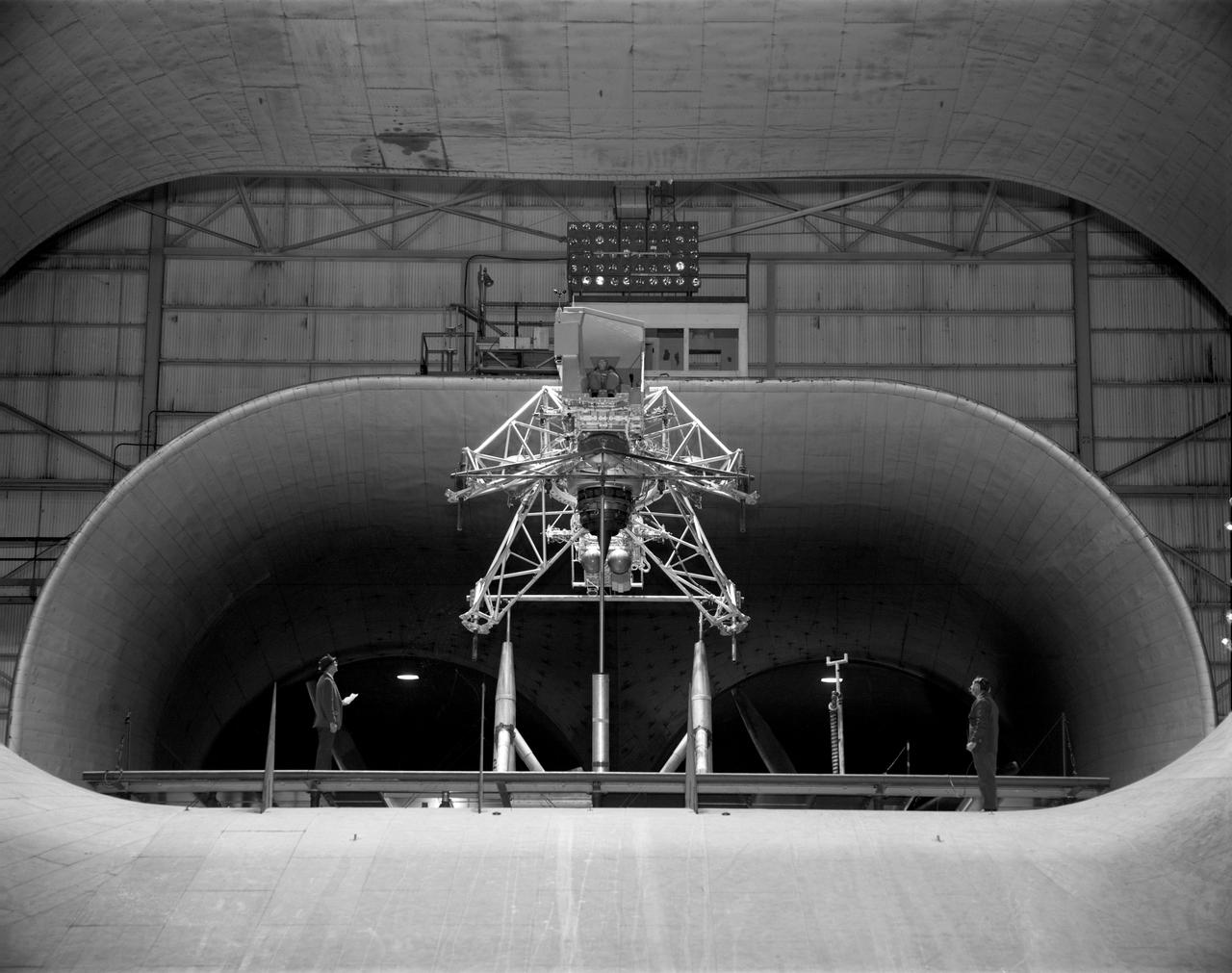
Concept model of the Lunar Excursion Module tested in the Full-Scale wind tunnel. -- Published in James R. Hansen, Spaceflight Revolution: NASA Langley Research Center From Sputnik to Apollo, (Washington: NASA, 1995), p. 356.-L69-670 Bell Lunar Landing Training Vehicle (LLTV): Following the crash of a sister Lunar Landing Training Vehicle at Ellington Field in Houston, Texas, the LLTV NASA 952 was sent from Houston to Langley for tests in the 30 x 60 Full Scale Tunnel. The LLTV was returned to Houston for further training use a short time later. NASA 952 is now on exhibit at the Johnson Space Center in Houston, Texas.
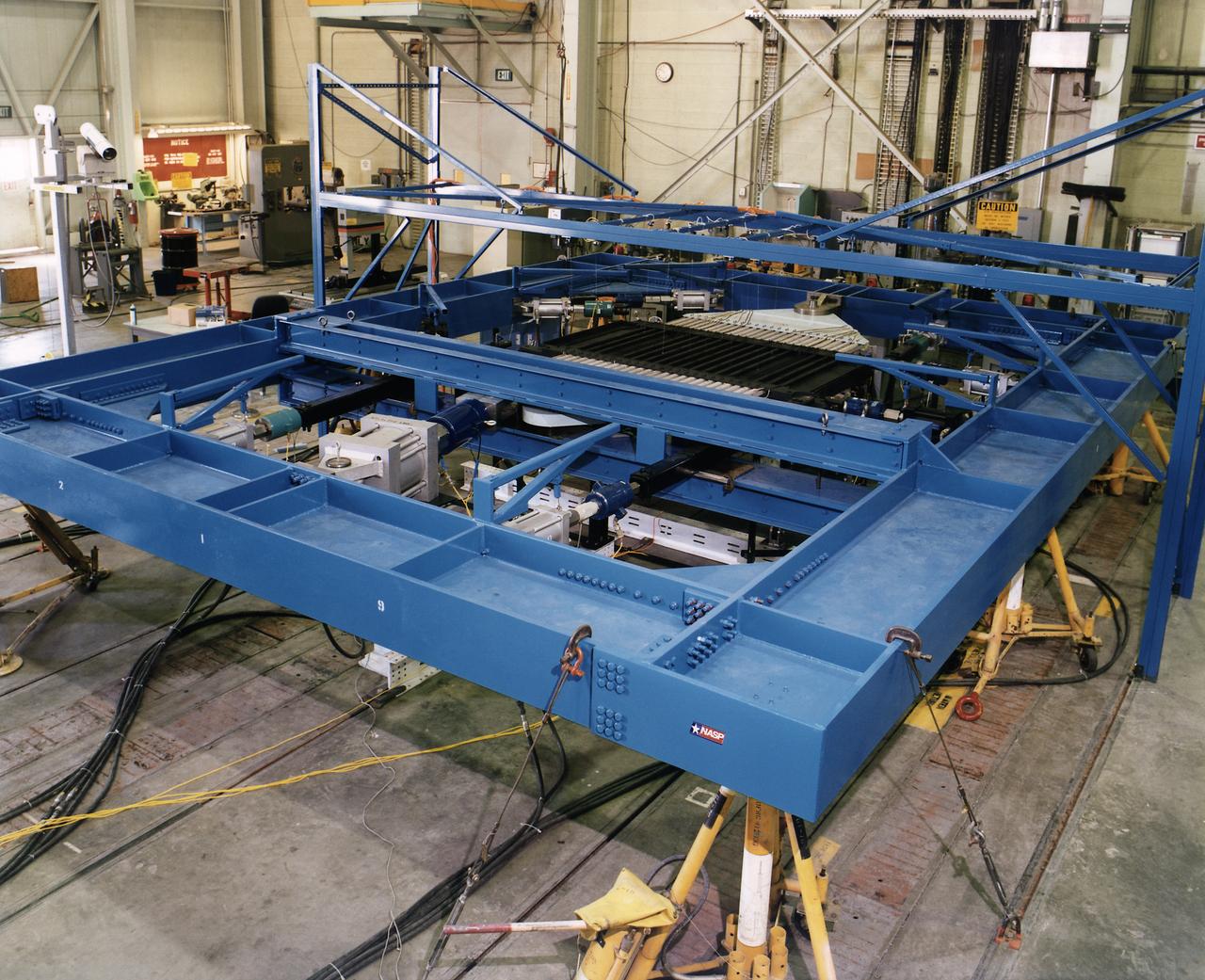
Combined Loads Test Fixture with NASP test article installed

This composite image contains the deepest X-ray image ever made of the spectacular star forming region called 30 Doradus. By combining X-ray data from NASA’s Chandra X-ray Observatory (blue and green) with optical data from NASA’s Hubble Space Telescope (yellow) and radio data from the Atacama Large Millimeter/submillimeter Array (orange), this stellar arrangement comes alive.
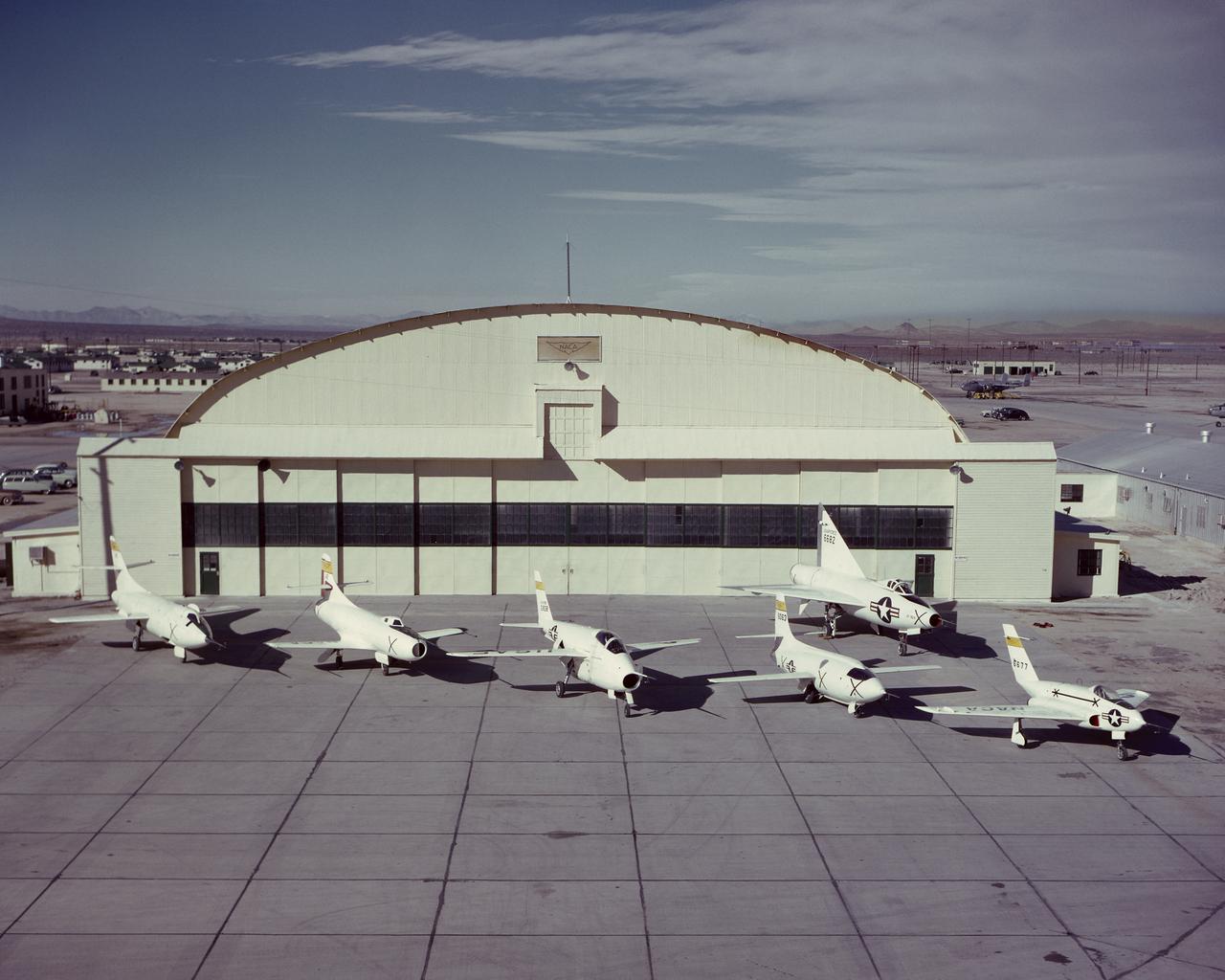
NACA X-Planes on South Base ramp. Northrop X-4, Bell X-1, Bell X-5, Douglas D-558-1, Douglas D-558-2. Back row Convair XF-92A. March 30, 1952

The spiral galaxy NGC 3627, located about 30 million light years from Earth as seen by four NASA telescopes; inset shows the central region, which contains a bright X-ray source that is likely powered by material falling onto a supermassive black hole.
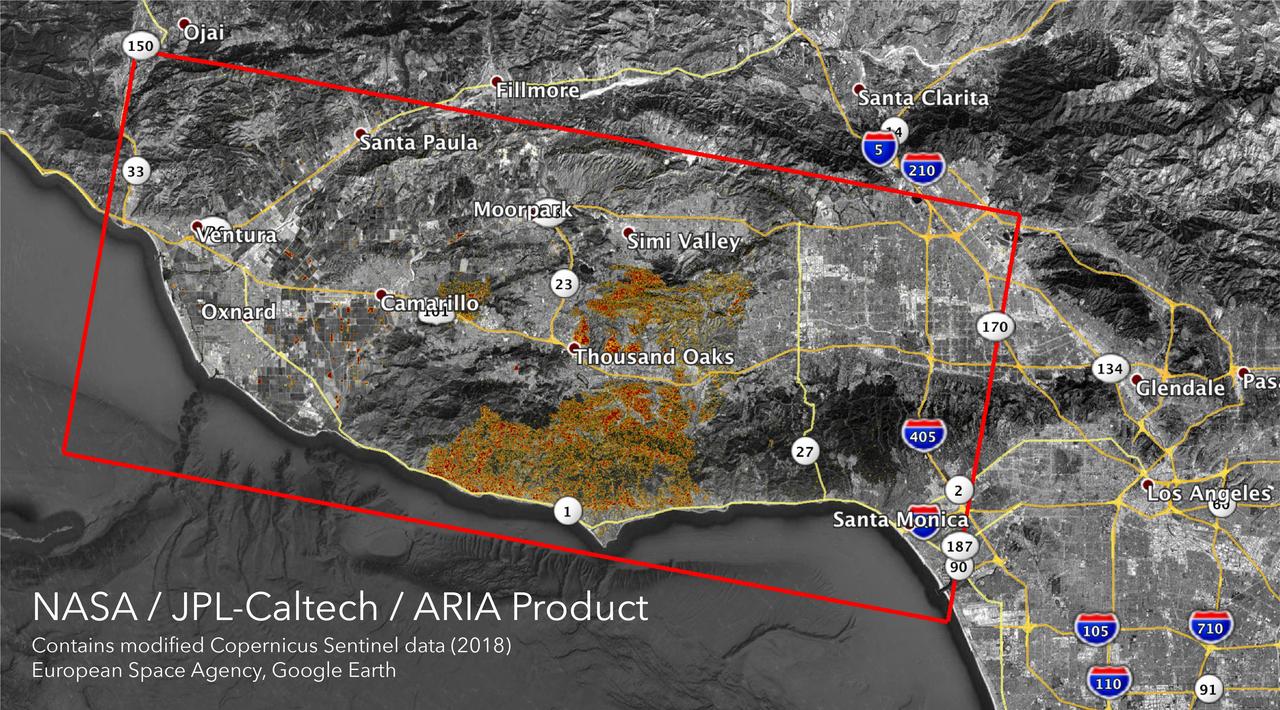
The Advanced Rapid Imaging and Analysis (ARIA) team at NASA's Jet Propulsion Laboratory in Pasadena, California, created these Damage Proxy Maps (DPMs) depicting areas in California likely damaged by the Woolsey and Camp Fires. They are derived from synthetic aperture radar (SAR) images from the Copernicus Sentinel-1 satellites, operated by the European Space Agency (ESA). The pre-event images for the Woolsey Fire in Southern California were taken before the fire on Oct. 30, 2018 and the post-event image was acquired during the fire on Nov. 11, 2018. The map covers an area of 50 miles x 25 miles (80 km x 40 km), indicated with the big red polygon. Each pixel measures about 33 yards x 33 yards (30 m x 30 m). The color variation from yellow to red indicates increasingly more significant ground surface change. The pre-event images for the Camp Fire in Northern California were taken on Nov. 4, 2018 and the post-event images were acquired during the fire on Nov. 10, 2018. The map covers an area of 55 miles x 48 miles (88 km x 77 km). As in the previous image, each pixel measures about 33 yards x 33 yards (30 m x 30 m). The color variation from yellow to red indicates increasingly more significant ground surface change. Preliminary validation for both maps was done by comparing approximate location data to Google's Crisismap. These damage proxy maps can be used as guidance to identify damaged areas with the understanding that they may be less reliable over vegetated areas including farmlands. For example, the scattered single colored pixels over vegetated areas may be false positives, and the lack of colored pixels over vegetated areas does not necessarily mean no damage. https://photojournal.jpl.nasa.gov/catalog/PIA22816
CAPE CANAVERAL, Fla. – Part of the Constellation Program, the Ares I-X is the flight test vehicle for the Ares I, which is the essential core of a space transportation system that eventually will carry crewed missions back to the moon, on to Mars and out into the solar system. The Ares I-X flight test is targeted for no earlier than Aug. 30.
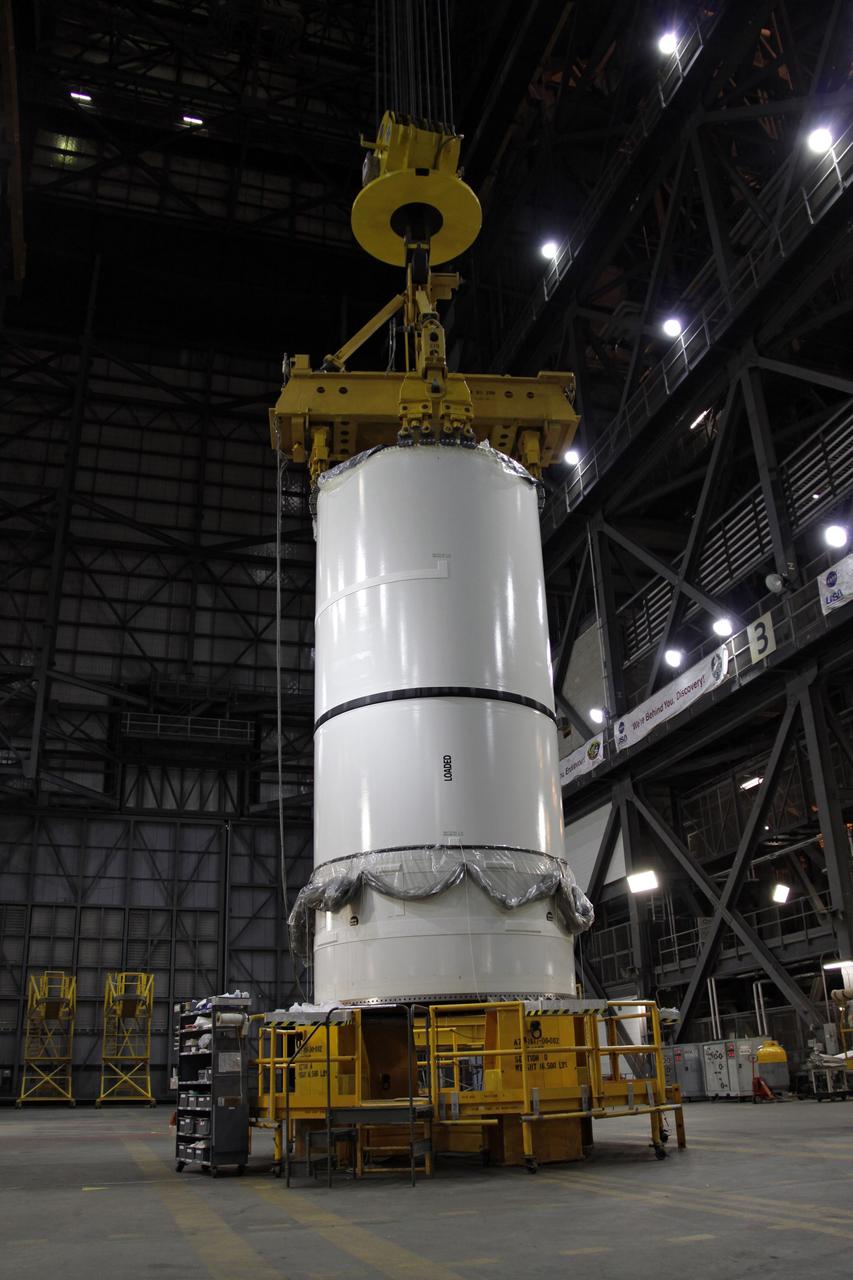
CAPE CANAVERAL, Fla. – A crane is attached to the Ares I-X forward center assembly in NASA Kennedy Space Center's Vehicle Assembly Building. It will be mated with the aft center assembly. Part of the Constellation Program, the Ares I-X is the test vehicle for the Ares I, which is the essential core of a space transportation system that eventually will carry crewed missions back to the moon, on to Mars and out into the solar system . The Ares I-X flight test is targeted for no earlier than Aug. 30. Photo credit: NASA/Troy Cryder
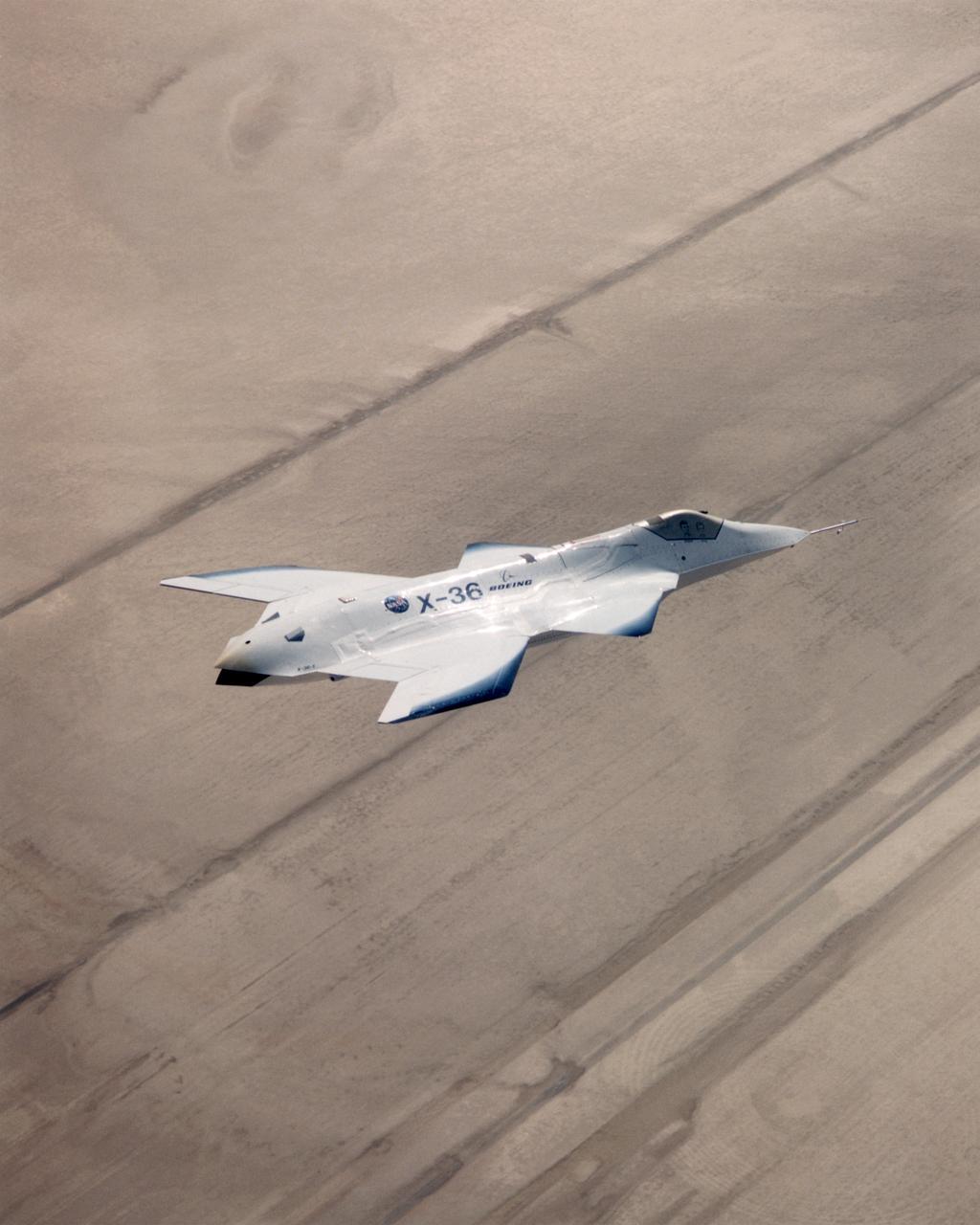
The X-36 technology demonstrator shows off its distinctive shape as the remotely piloted aircraft flies a research mission over the Southern California desert on October 30, 1997.
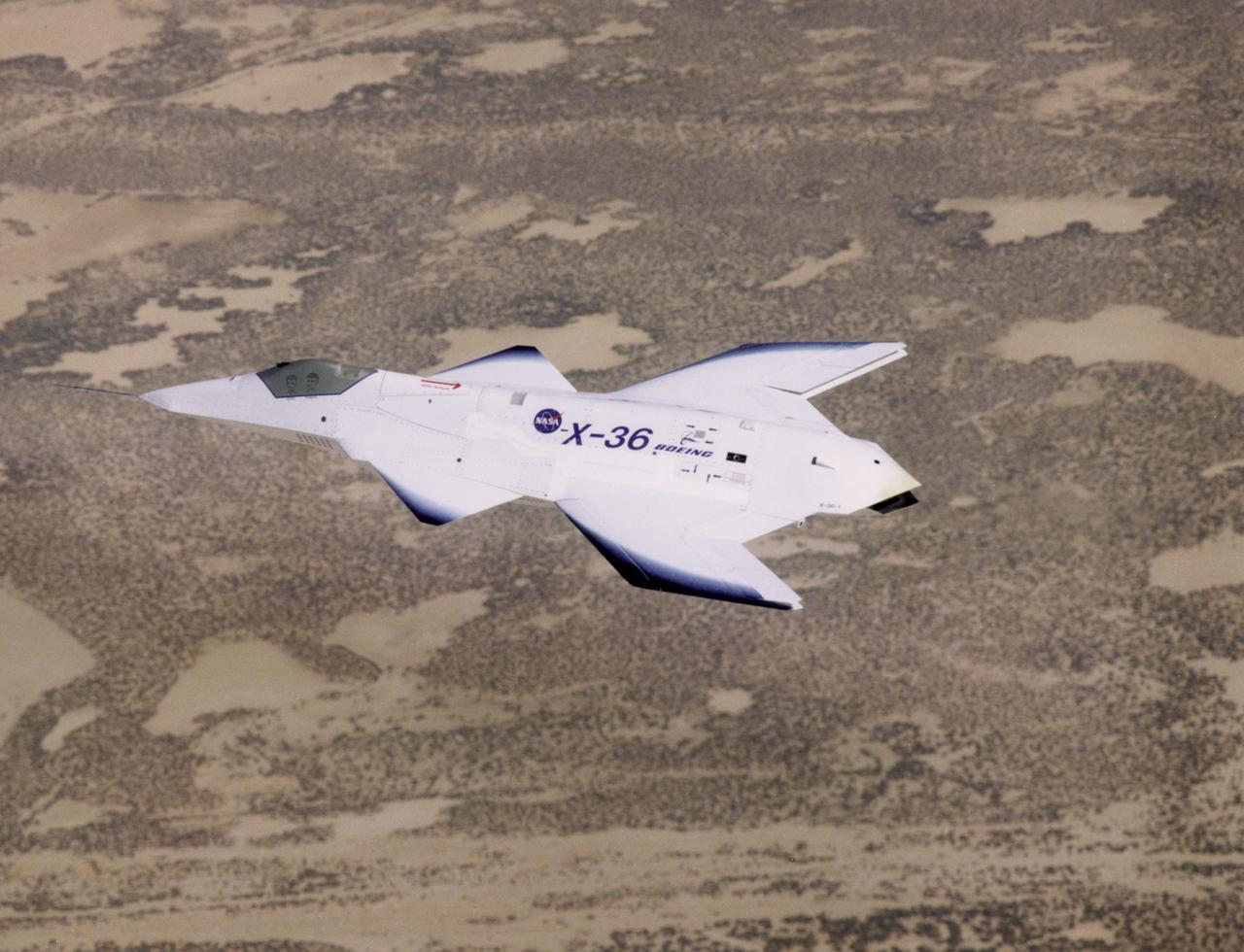
The unusual lines of the X-36 technology demonstrator contrast sharply with the desert floor as the remotely piloted aircraft scoots across the California desert at low altitude during a research flight on October 30, 1997.
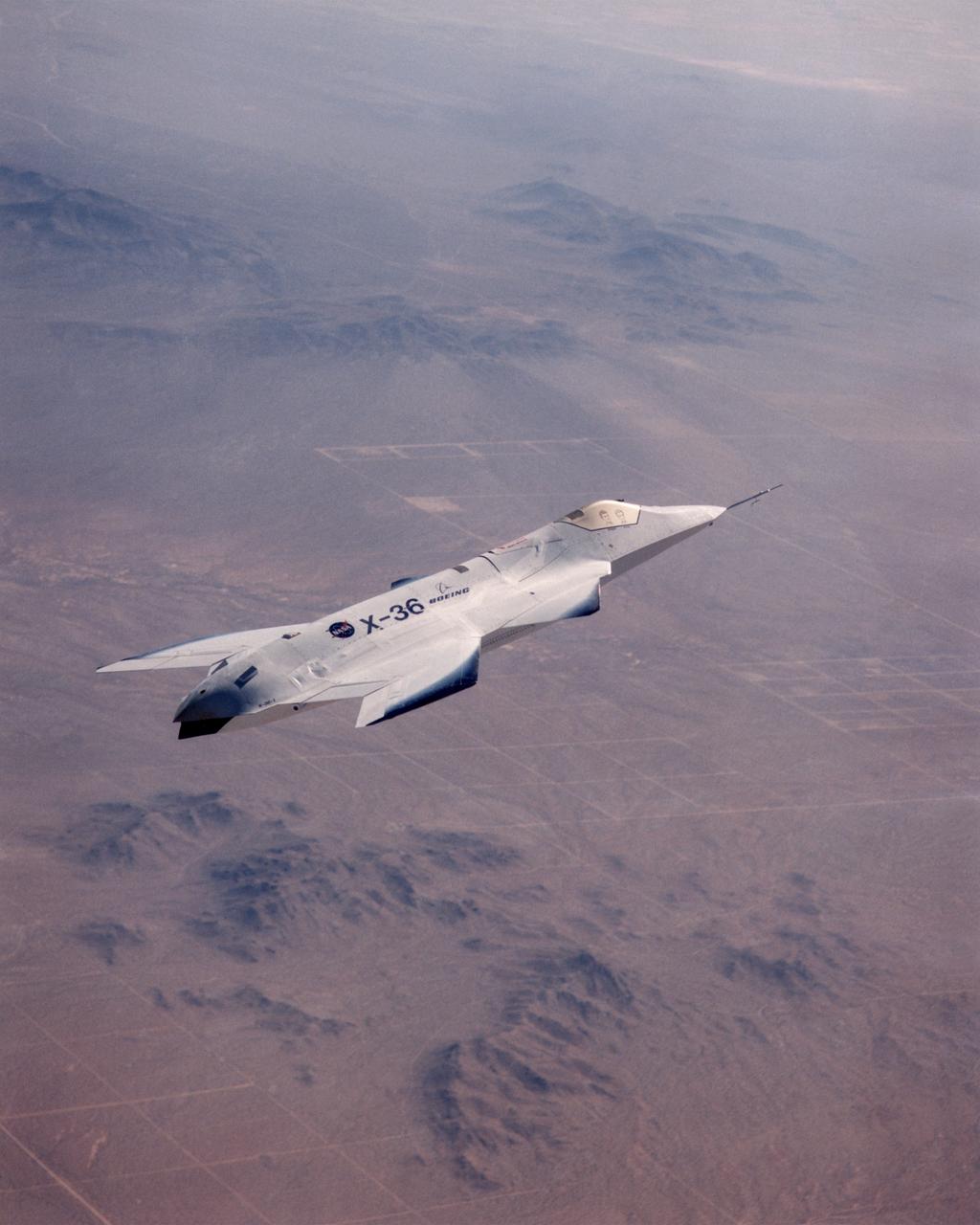
The X-36 technology demonstrator shows off its distinctive shape as the remotely piloted aircraft flies a research mission over the Southern California desert on October 30, 1997.
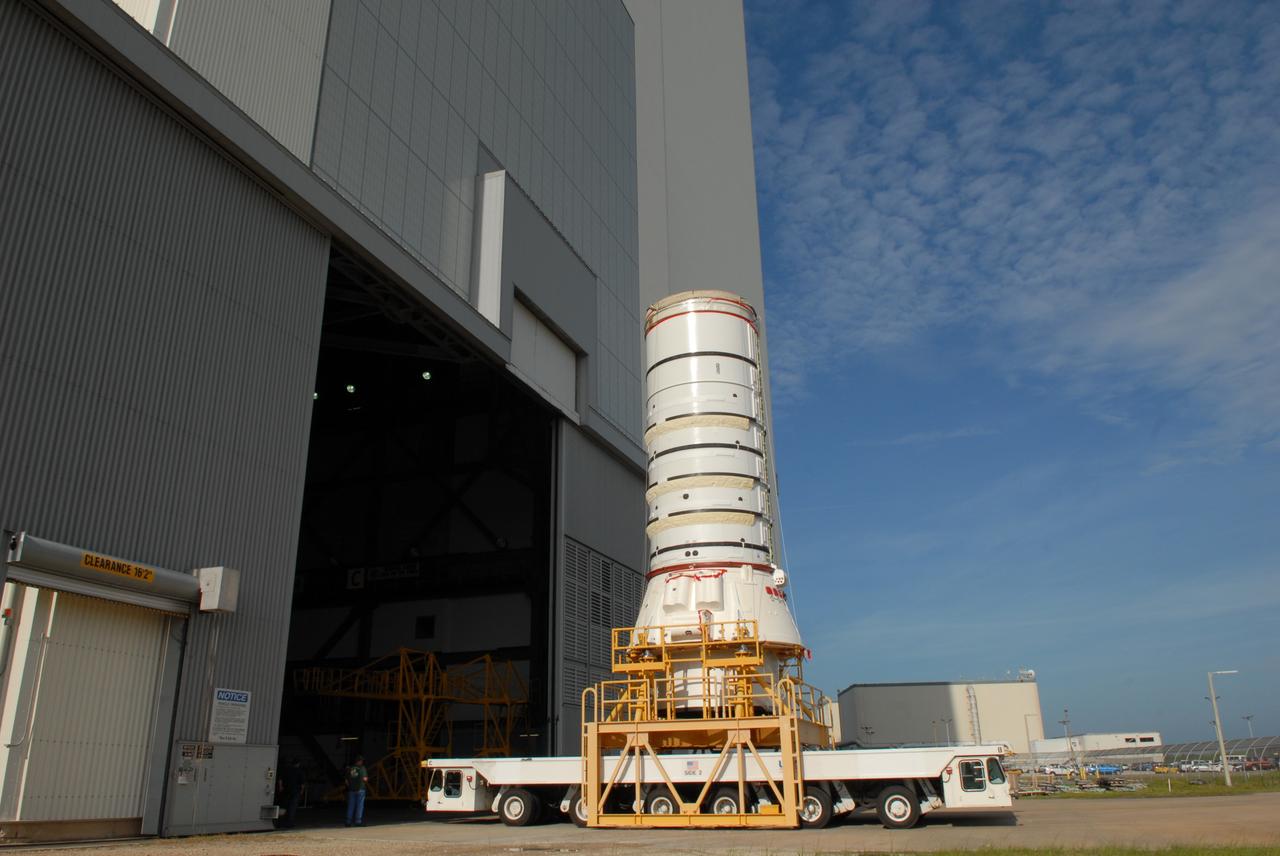
CAPE CANAVERAL, Fla. – The Ares I-X aft assembly moves toward the door of the Vehicle Assembly Building at NASA's Kennedy Space Center in Florida. Inside, it will be stacked with other segments to complete the Ares I-X test vehicle. The aft assembly will be the first segment to be stacked on the mobile launch platform in the VAB. Part of the Constellation Program, the Ares I-X is the test vehicle for the Ares I, which is the essential core of a space transportation system that eventually will carry crewed missions back to the moon, on to Mars and out into the solar system. The Ares I-X flight test is targeted no earlier than Aug. 30 from Launch Pad 39B. Photo credit: NASA/Jim Grossmann
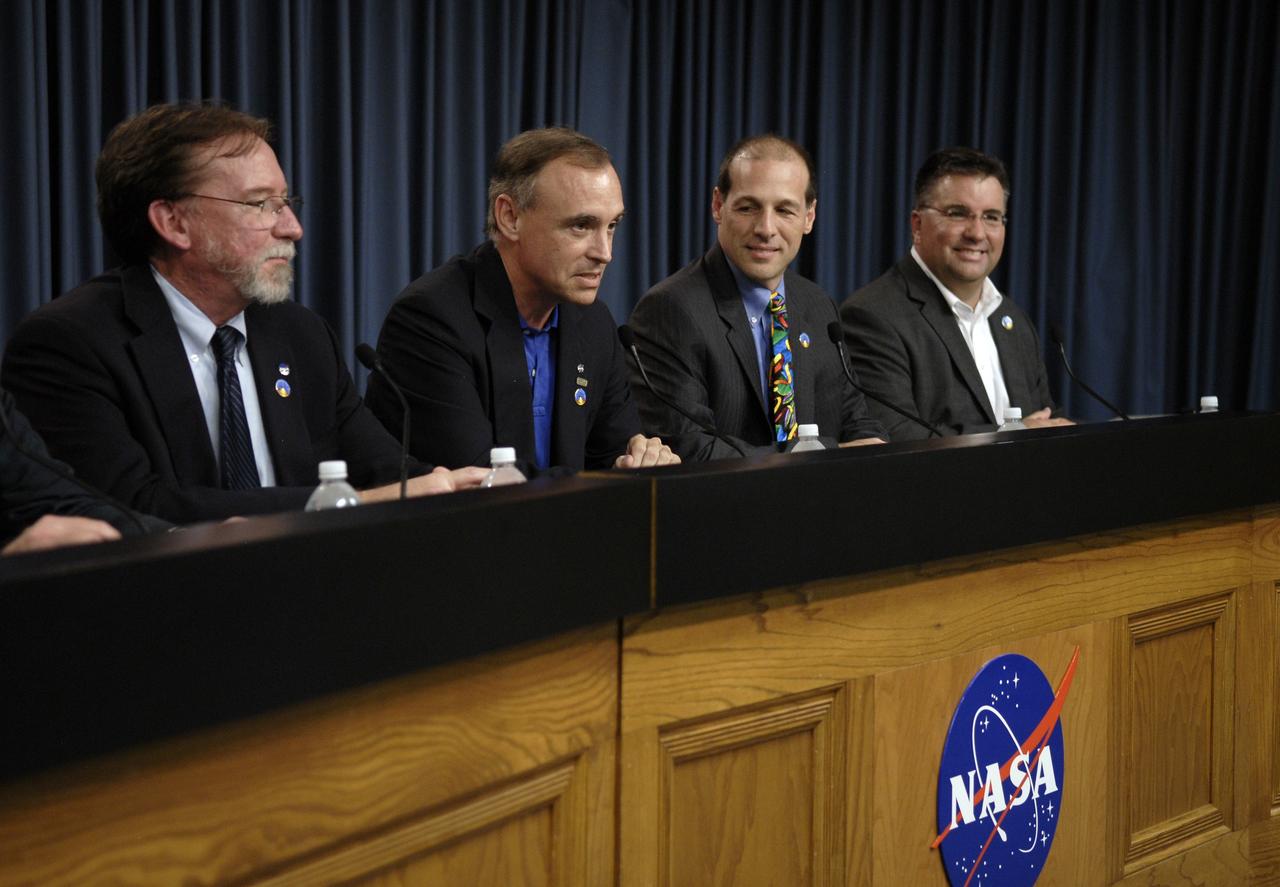
CAPE CANAVERAL, Fla. - At NASA's Kennedy Space Center in Florida, Constellation Program Manager Jeff Hanley addresses a post-launch news conference in the Press Site auditorium following the successful launch of the Ares I-X test rocket at 11:30 a.m. EDT Oct. 28. From left, are, Doug Cooke, associate administrator for NASA's Exploration Systems Mission Directorate; Hanley; Bob Ess, mission manager for the Ares I-X flight test; and Edward Mango, launch director for the Ares I-X flight test. For more information on the Ares I-X vehicle and flight test, visit http://www.nasa.gov/aresIX. Photo credit: NASA/Kim Shiflett
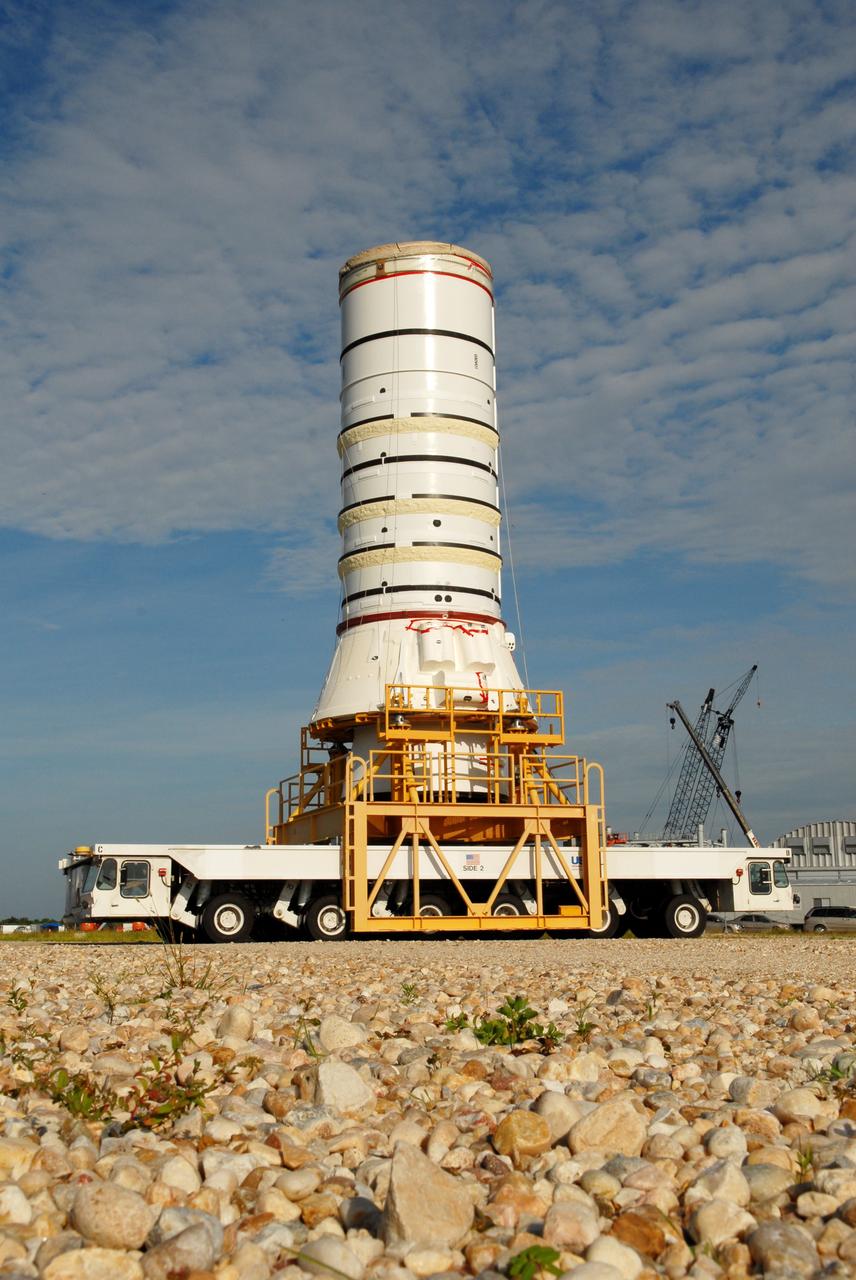
CAPE CANAVERAL, Fla. – The Ares I-X aft assembly is being moved to the Vehicle Assembly Building at NASA's Kennedy Space Center in Florida. There it will be stacked with other segments to complete the Ares I-X test vehicle. The aft assembly will be the first segment to be stacked on the mobile launch platform in the VAB. Part of the Constellation Program, the Ares I-X is the test vehicle for the Ares I, which is the essential core of a space transportation system that eventually will carry crewed missions back to the moon, on to Mars and out into the solar system. The Ares I-X flight test is targeted no earlier than Aug. 30 from Launch Pad 39B. Photo credit: NASA/Jim Grossmann
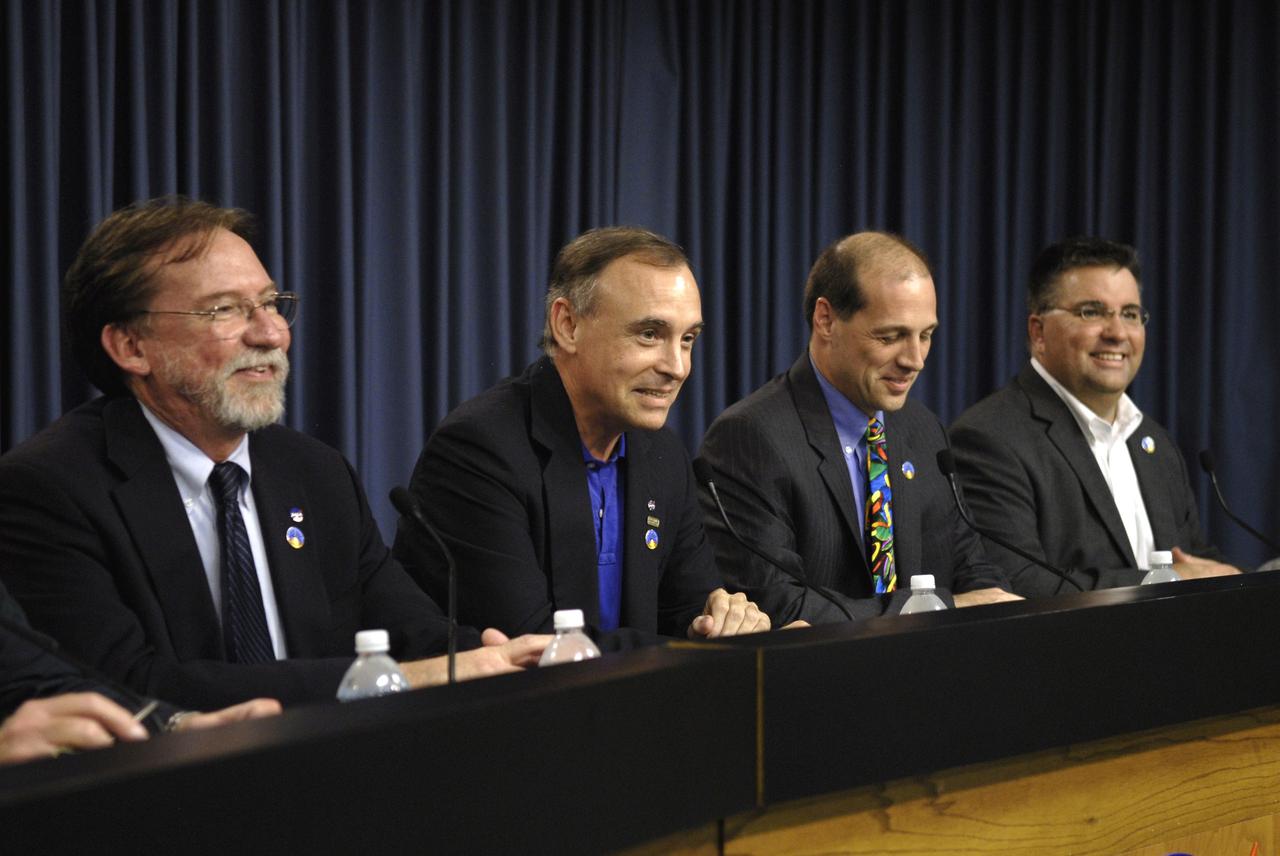
CAPE CANAVERAL, Fla. - At NASA's Kennedy Space Center in Florida, a post-launch news conference is held in the Press Site auditorium following the successful launch of the Ares I-X test rocket at 11:30 a.m. EDT Oct. 28. Smiling, from left, are Doug Cooke, associate administrator for NASA's Exploration Systems Mission Directorate; Jeff Hanley, Constellation Program manager; Bob Ess, mission manager for the Ares I-X flight test; and Edward Mango, launch director for the Ares I-X flight test. For more information on the Ares I-X vehicle and flight test, visit http://www.nasa.gov/aresIX. Photo credit: NASA/Kim Shiflett
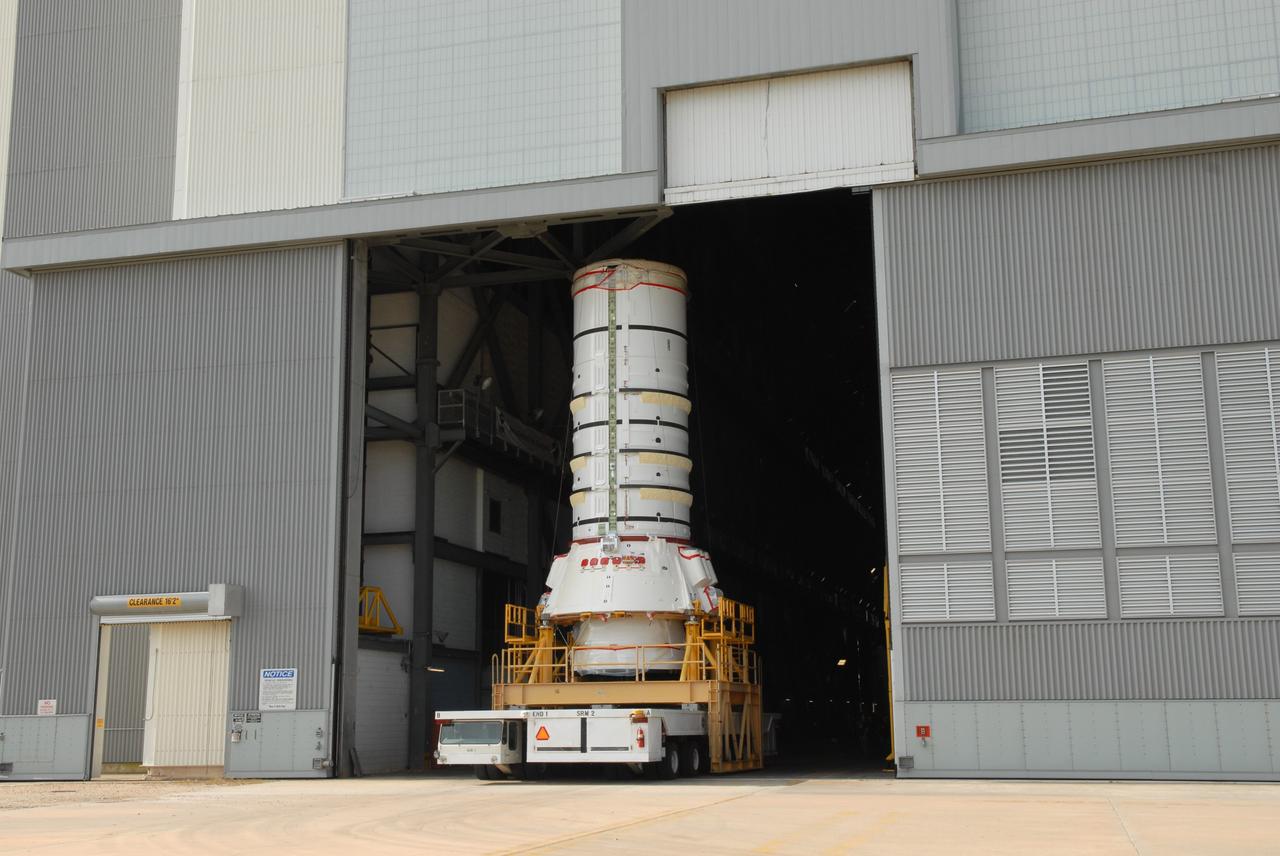
CAPE CANAVERAL, Fla. – The Ares I-X aft assembly moves inside the Vehicle Assembly Building at NASA's Kennedy Space Center in Florida. It will be stacked with other segments to complete the Ares I-X test vehicle.The aft assembly will be the first segment to be stacked on the mobile launch platform in the VAB. Part of the Constellation Program, the Ares I-X is the test vehicle for the Ares I, which is the essential core of a space transportation system that eventually will carry crewed missions back to the moon, on to Mars and out into the solar system. The Ares I-X flight test is targeted no earlier than Aug. 30 from Launch Pad 39B. Photo credit: NASA/Jim Grossmann
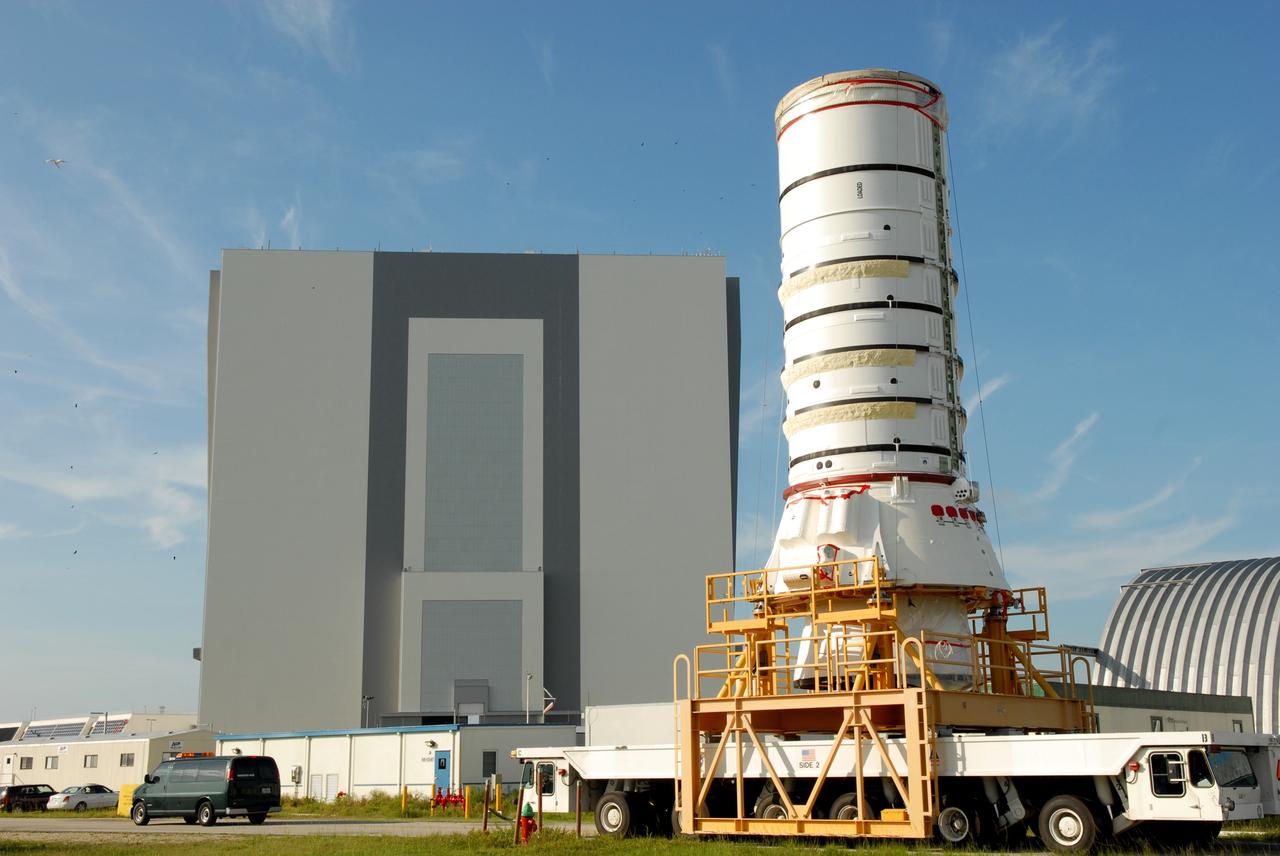
CAPE CANAVERAL, Fla. – The Ares I-X aft assembly nears the Vehicle Assembly Building at NASA's Kennedy Space Center in Florida. It is being moved to the VAB for stacking to complete the Ares I-X test vehicle. The aft assembly will be the first segment to be stacked on the mobile launch platform in the VAB. Part of the Constellation Program, the Ares I-X is the test vehicle for the Ares I, which is the essential core of a space transportation system that eventually will carry crewed missions back to the moon, on to Mars and out into the solar system. The Ares I-X flight test is targeted no earlier than Aug. 30 from Launch Pad 39B. Photo credit: NASA/Jim Grossmann
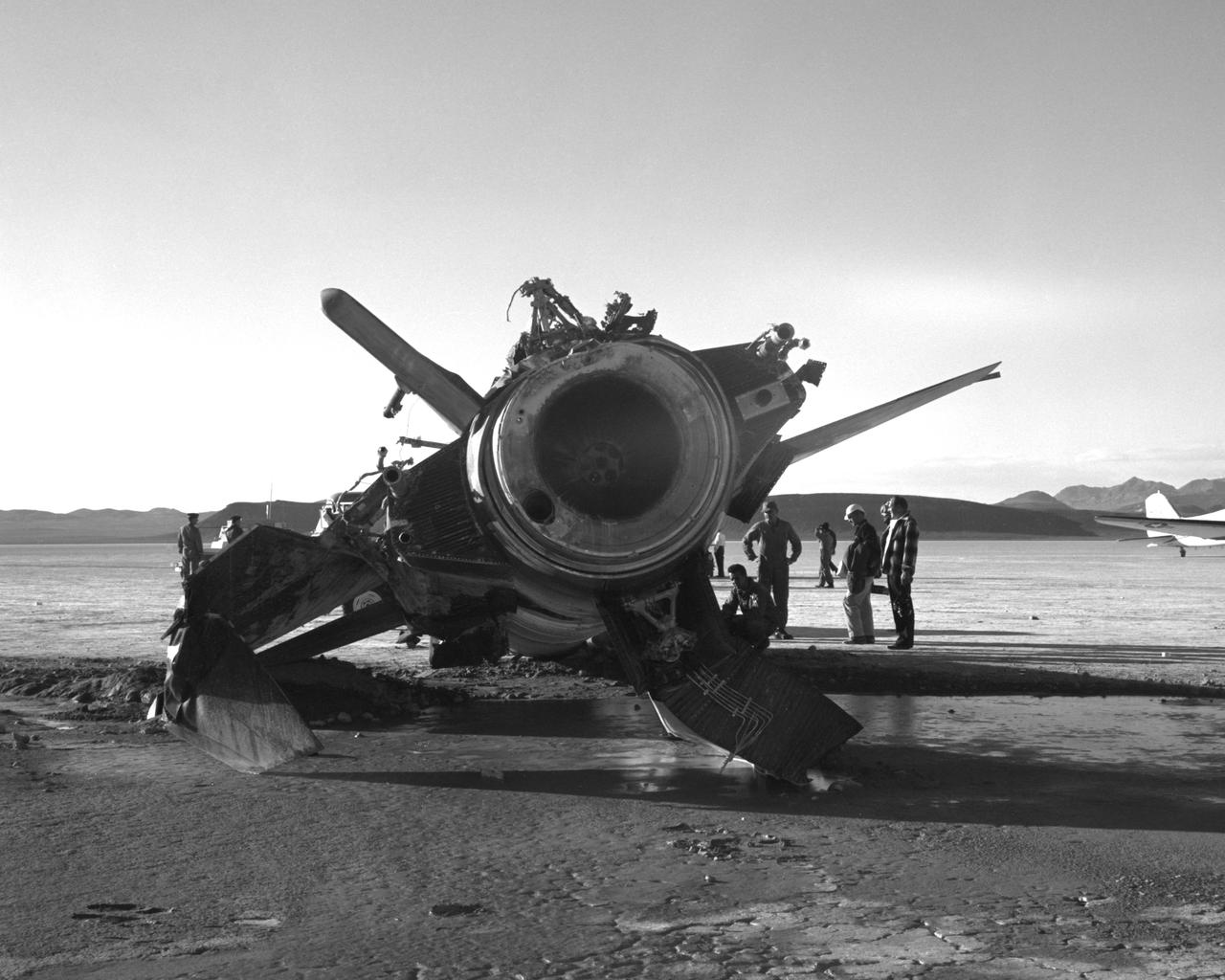
NASA research pilot Jack McKay was injured in a crash landing of the X-15 #2 on November 9, 1962. Following the launch from the B-52 to begin flight 2-31-52, he started the X-15's rocket engine, only to discover that it produced just 30 percent of its maximum thrust. He had to make a high-speed emergency landing on Mud Lake, NV, without flaps but with a significant amount of fuel still in the aircraft. As the X-15 slid across the lakebed, the left skid collapsed; the aircraft turned sideways and flipped onto its back. McKay suffered back injuries but was eventually able to resume X-15 pilot duties, making 22 more flights. The X-15 was sent back to North American Aviation and rebuilt into the X-15A-2.
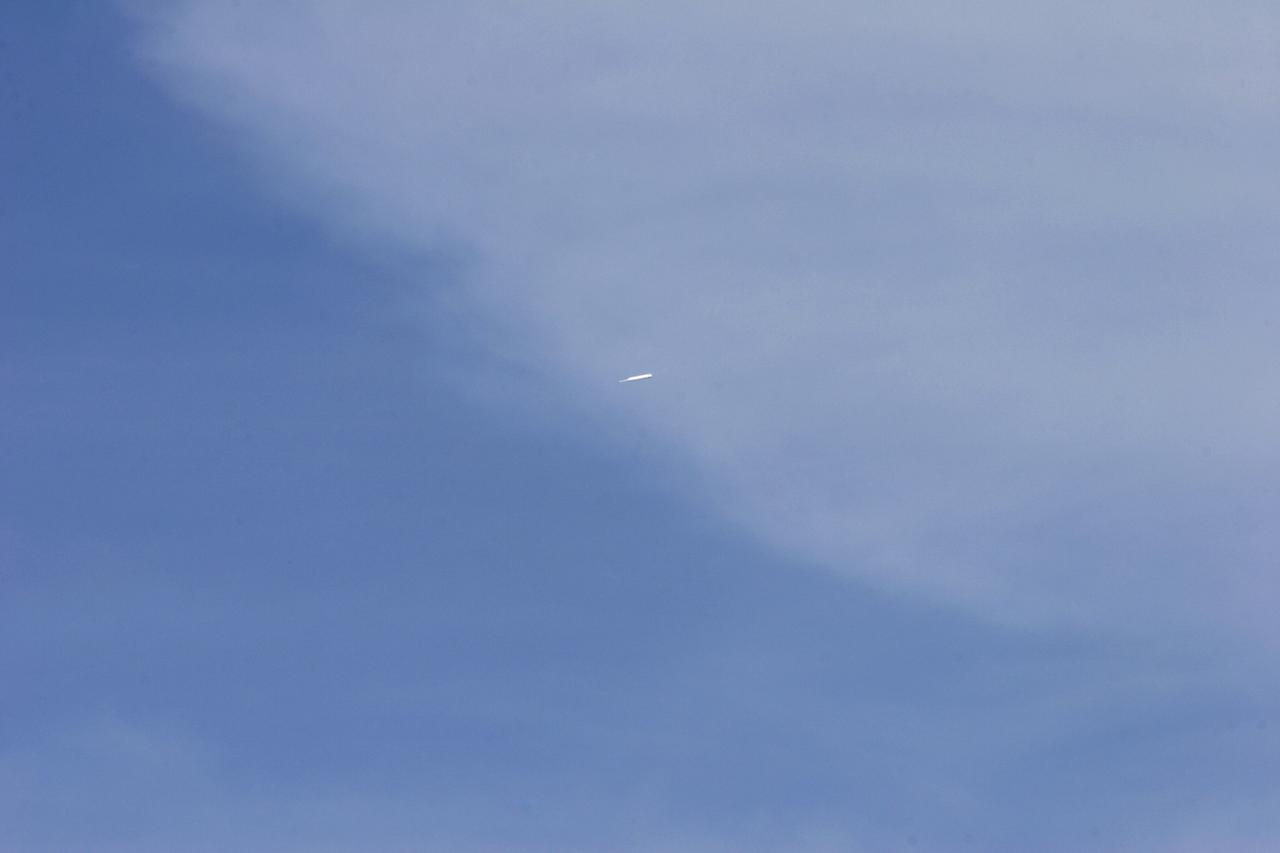
CAPE CANAVERAL, Fla. – The upper stage of the Ares I-X rocket falls toward the Atlantic Ocean off the coast of NASA's Kennedy Space Center in Florida following the launch of the flight test mission. Liftoff of the 6-minute flight test was at 11:30 a.m. EDT Oct. 28. This was the first launch from Kennedy's pads of a vehicle other than the space shuttle since the Apollo Program's Saturn rockets were retired. The parts used to make the Ares I-X booster flew on 30 different shuttle missions ranging from STS-29 in 1989 to STS-106 in 2000. The data returned from more than 700 sensors throughout the rocket will be used to refine the design of future launch vehicles and bring NASA one step closer to reaching its exploration goals. For information on the Ares I-X vehicle and flight test, visit http://www.nasa.gov/aresIX. Photo credit: United Space Alliance
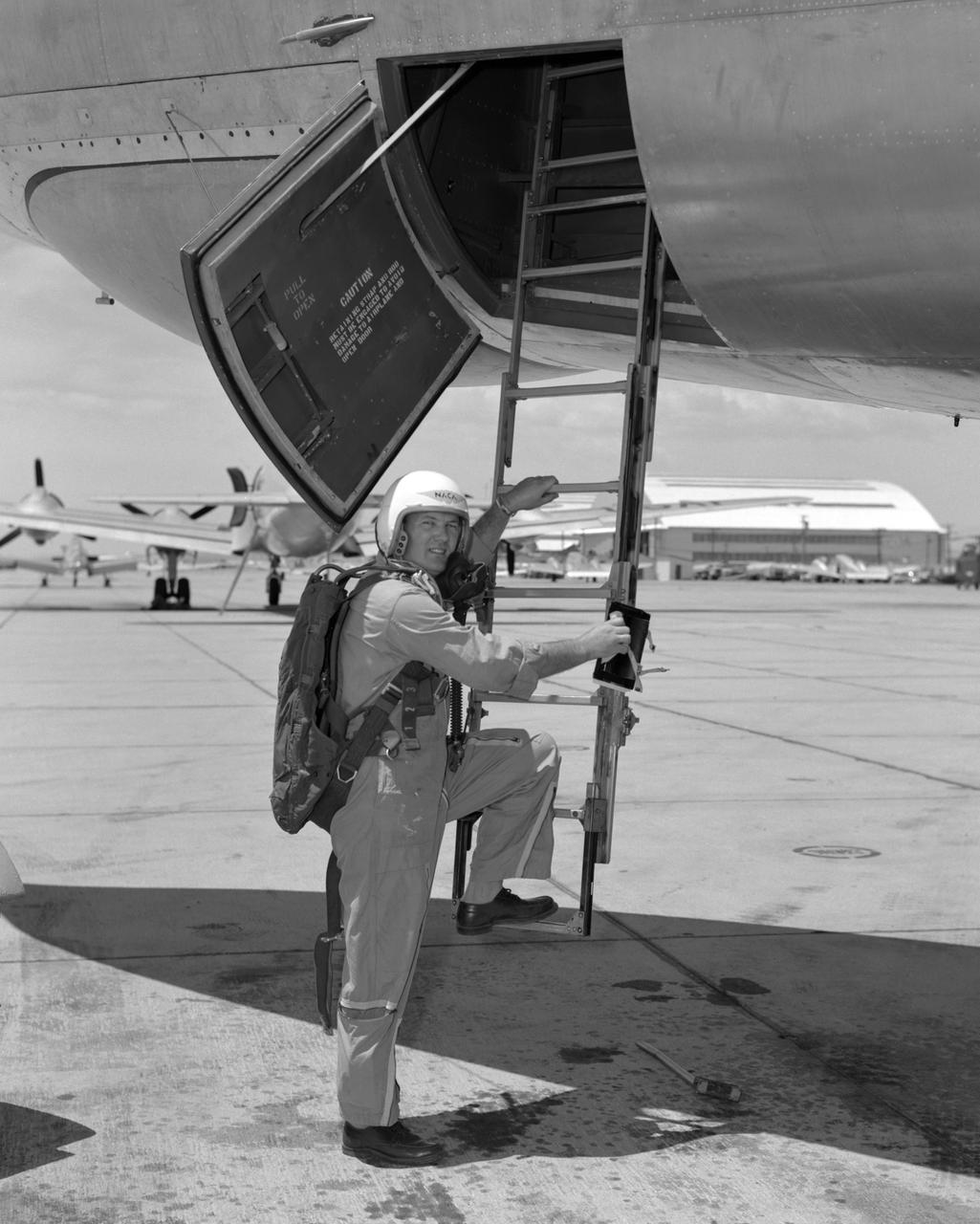
From December 10, 1966, until his retirement on February 27, 1976, Stanley P. Butchart served as Chief (later, Director) of Flight Operations at NASA's Flight Research Center (renamed on March 26, 1976, the Hugh L. Dryden Flight Research Center). Initially, his responsibilities in this position included the Research Pilots Branch, a Maintenance and Manufacturing Branch, and an Operations Engineering Branch, the last of which not only included propulsion and electrical/electronic sections but project engineers for the X-15 and lifting bodies. During his tenure, however, the responsibilities of his directorate came to include not only Flight Test Engineering Support but Flight Systems and Loads laboratories. Before becoming Chief of Flight Operations, Butchart had served since June of 1966 as head of the Research Pilots Branch (Chief Pilot) and then as acting chief of Flight Operations. He had joined the Center (then known as the National Advisory Committee for Aeronautics' High-Speed Flight Research Station) as a research pilot on May 10, 1951. During his career as a research pilot, he flew a great variety of research and air-launch aircraft including the D-558-I, D-558-II, B-29 (plus its Navy version, the P2B), X-4, X-5, KC-135, CV-880, CV-990, B-47, B-52, B-747, F-100A, F-101, F-102, F-104, PA-30 Twin Comanche, JetStar, F-111, R4D, B-720, and B-47. Although previously a single-engine pilot, he became the Center's principal multi-engine pilot during a period of air-launches in which the pilot of the air-launch aircraft (B-29 or P2B) basically directed the operations. It was he who called for the chase planes before each drop, directed the positioning of fire rescue vehicles, and released the experimental aircraft after ensuring that all was ready for the drop. As pilot of the B-29 and P2B, Butchart launched the X-1A once, the X-1B 13 times, the X-1E 22 times, and the D-558-II 102 times. In addition, he towed the M2-F1 lightweight lifting body 14 times behind an R4
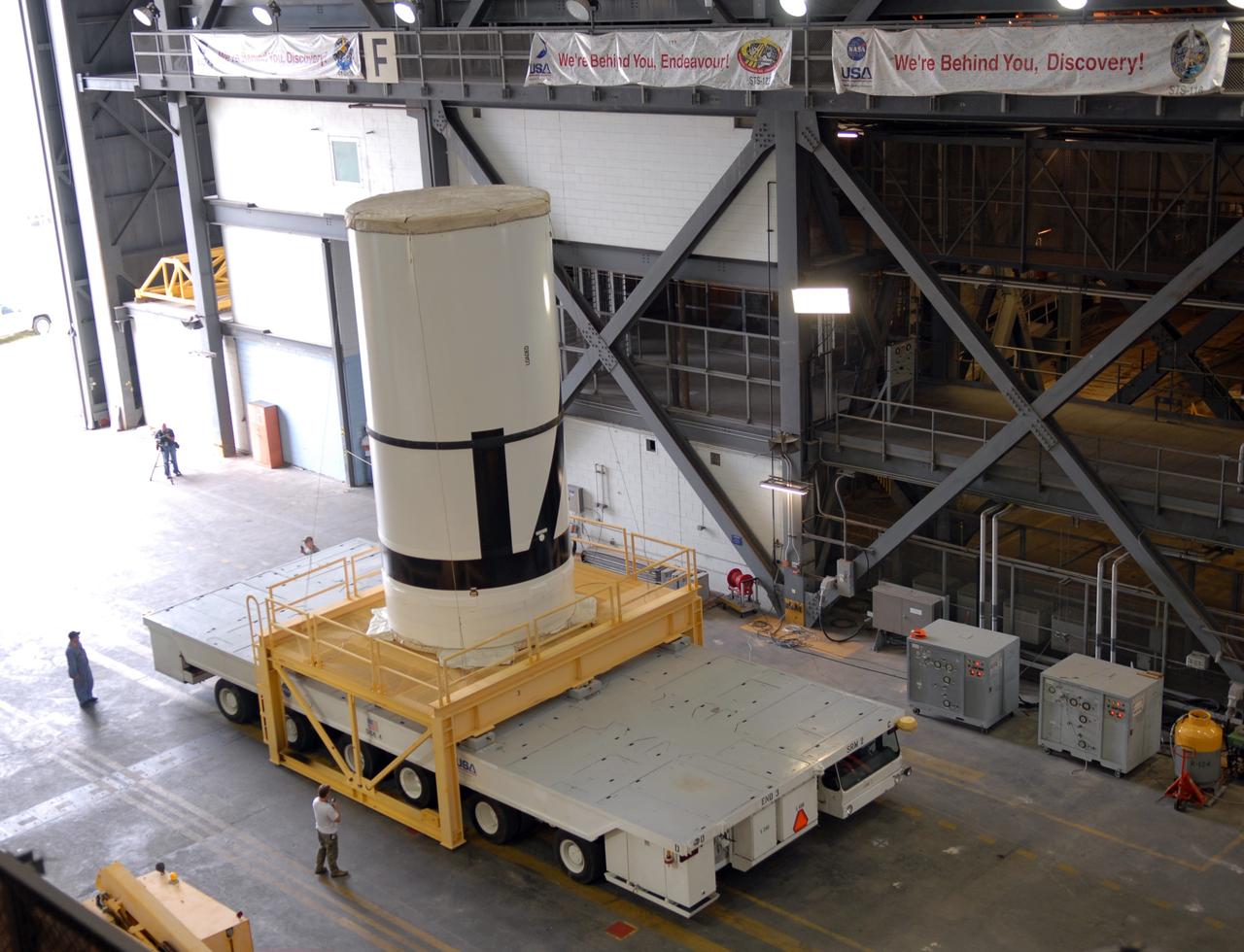
CAPE CANAVERAL, Fla. – The Ares I-X aft center booster segment arrives in the transfer aisle of the Vehicle Assembly Building at NASA's Kennedy Space Center in Florida. The Ares I-X launch vehicle segments are being stacked in the VAB. Part of the Constellation Program, the Ares I-X is the test vehicle for the Ares I, which is the essential core of a space transportation system that eventually will carry crewed missions back to the moon, on to Mars and out into the solar system. Launch is targeted for no earlier than Aug. 30 from Launch Pad 39B. Photo credit: NASA/Jim Grossmann
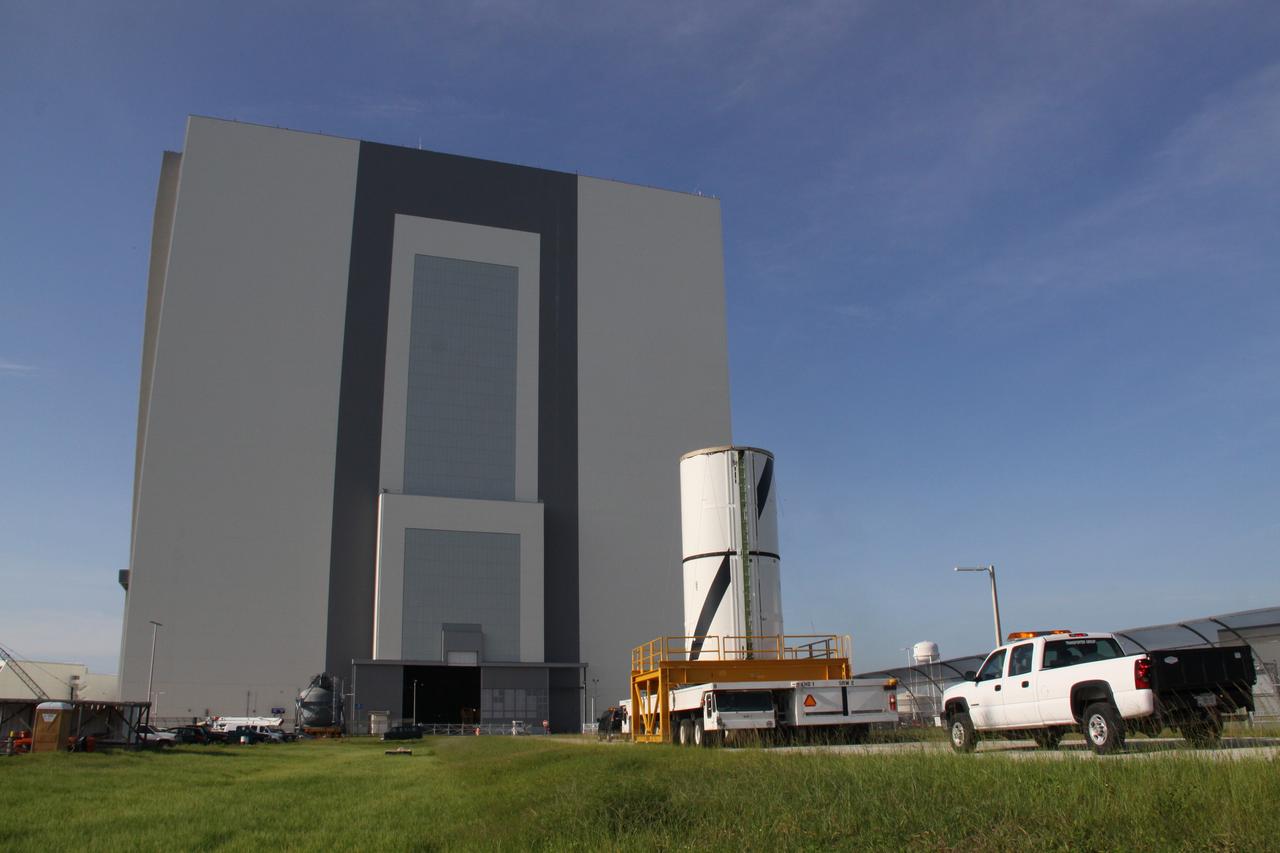
CAPE CANAVERAL, Fla. – At NASA's Kennedy Space Center in Florida, the Ares I-X forward center segment approaches the Vehicle Assembly Building, or VAB, after leaving the Rotation, Processing and Surge Facility. The launch vehicle is being assembled in the VAB's High Bay 3. Part of the Constellation Program, the Ares I-X is the test vehicle for the Ares I, which is the essential core of a space transportation system that eventually will carry crewed missions back to the moon, on to Mars and out into the solar system . The Ares I-X flight test is targeted for no earlier than Aug. 30. Photo credit: NASA/Jack Pfaller
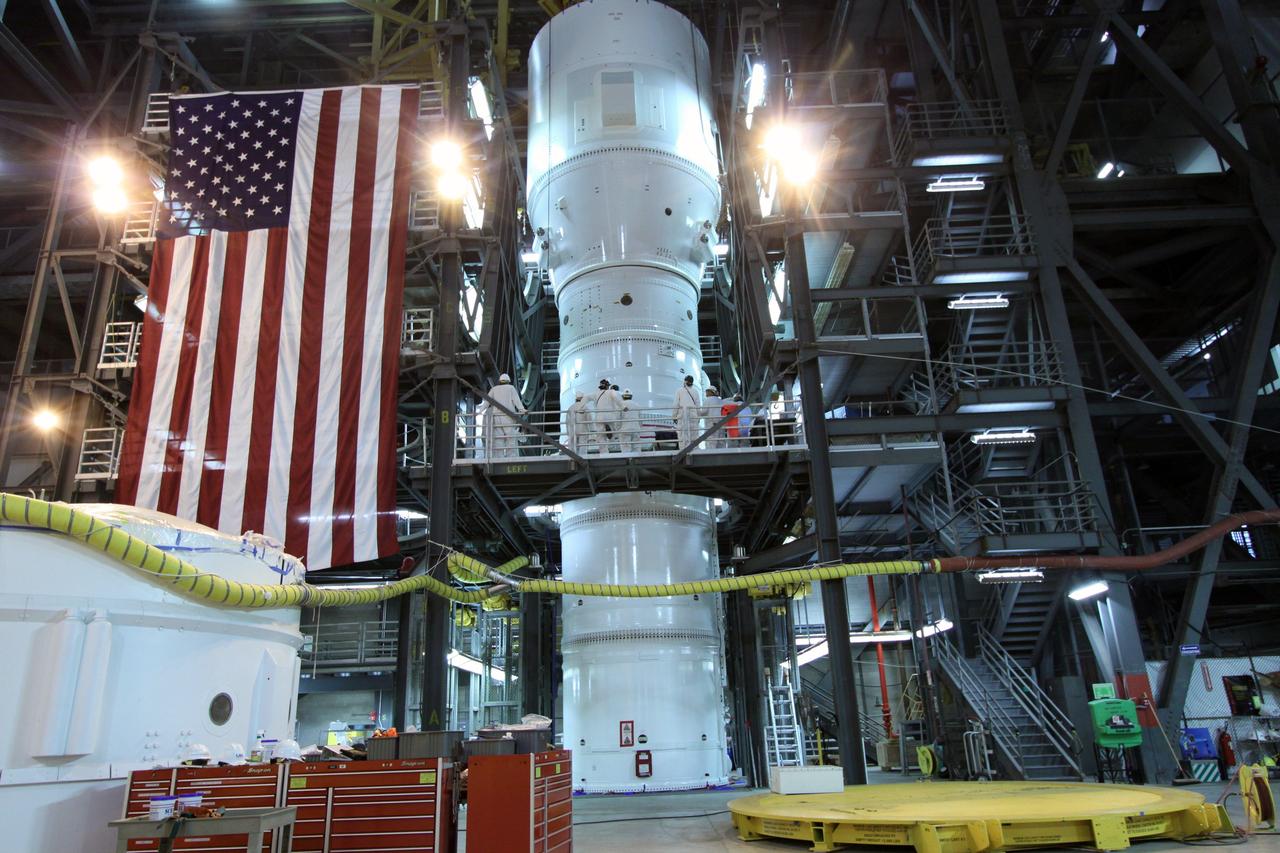
CAPE CANAVERAL, Fla. – In the Vehicle Assembly Building at NASA's Kennedy Space Center in Florida, segments of the Ares I-X first stage are mated to the fifth simulator segment, completing Super Stack 1. The super stack comprises the forward skirt, forward skirt extension, interstages 1 and 2 and the fifth segment simulator. Ares I-X is the test vehicle for the Ares I, which is part of the Constellation Program to return men to the moon and beyond. The Ares I-X flight test is targeted no earlier than Aug. 30 from Launch Pad 39B. Photo credit: NASA/Jack Pfaller
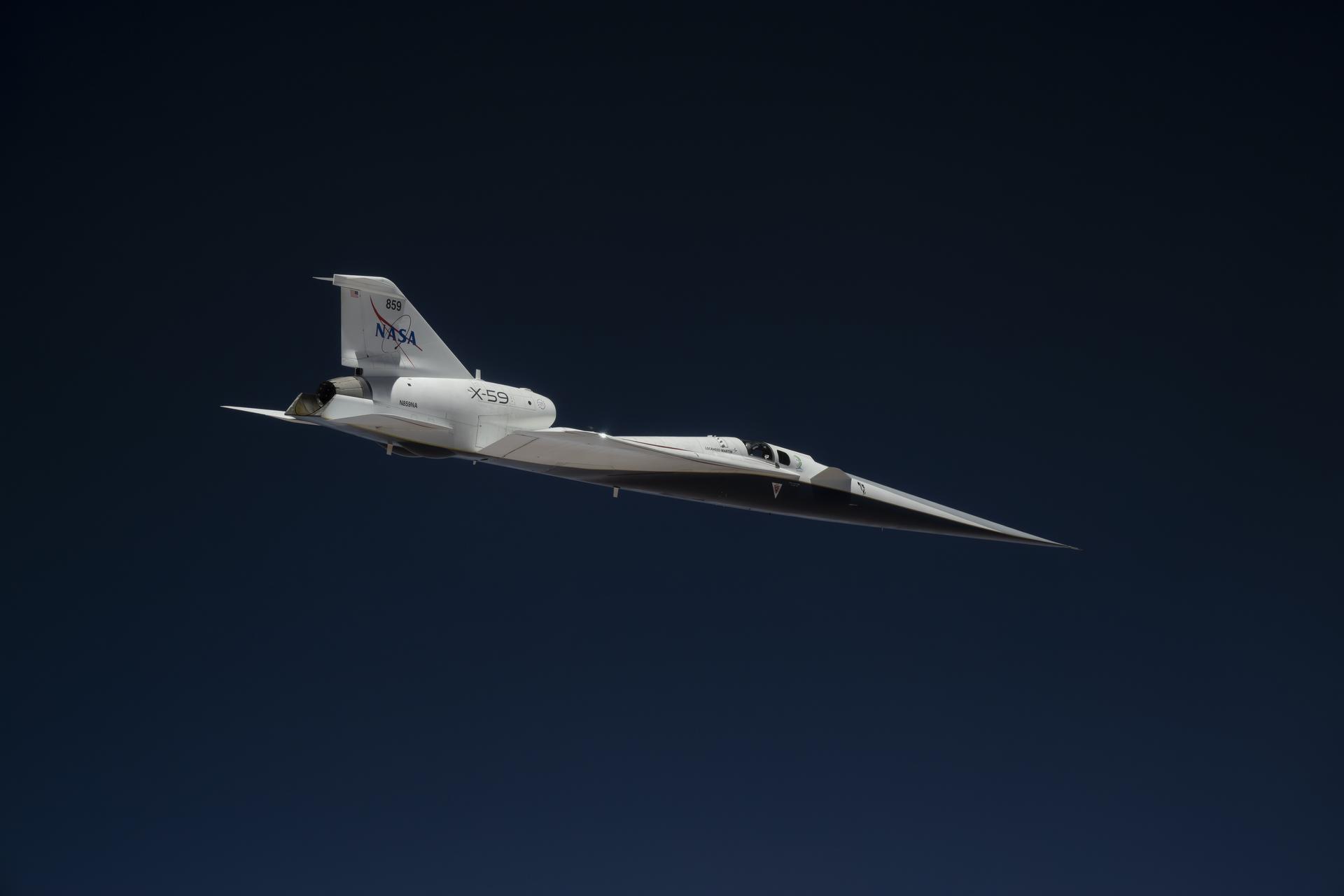
NASA’s X-59 quiet supersonic research aircraft completed its first dual-flight day on Thursday, April 30, at the agency’s Armstrong Flight Research Center in Edwards, California. This image shows the X-59 flying over the Mojave Desert during the aircraft’s second flight of the day, and its 12th overall. The X-59 flew test points at altitudes ranging from 12,000 to 43,000 feet and speeds from approximately 528 to 627 mph, or Mach 0.8 to Mach 0.95. The increased tempo of test flights allows the team to collect more data over a shorter period of time.
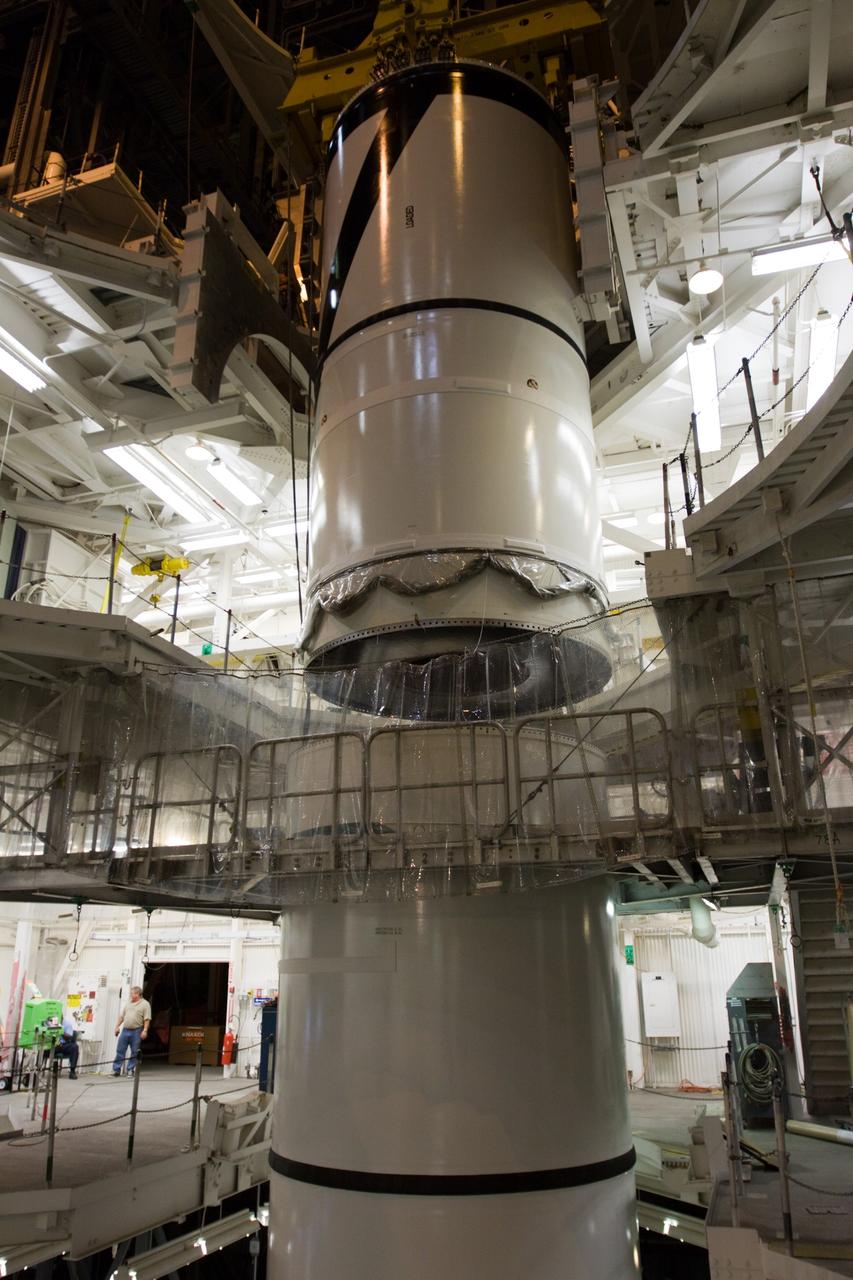
CAPE CANAVERAL, Fla. – In the High Bay 3 of NASA Kennedy Space Center's Vehicle Assembly Building, the Ares I-X forward segment is lowered onto the forward center for mating. The forward center is already mated with the aft center and the aft skirt segments below. Part of the Constellation Program, the Ares I-X is the test vehicle for the Ares I, which is the essential core of a space transportation system that eventually will carry crewed missions back to the moon, on to Mars and out into the solar system . The Ares I-X flight test is targeted for no earlier than Aug. 30. Photo credit: NASA/Troy Cryder
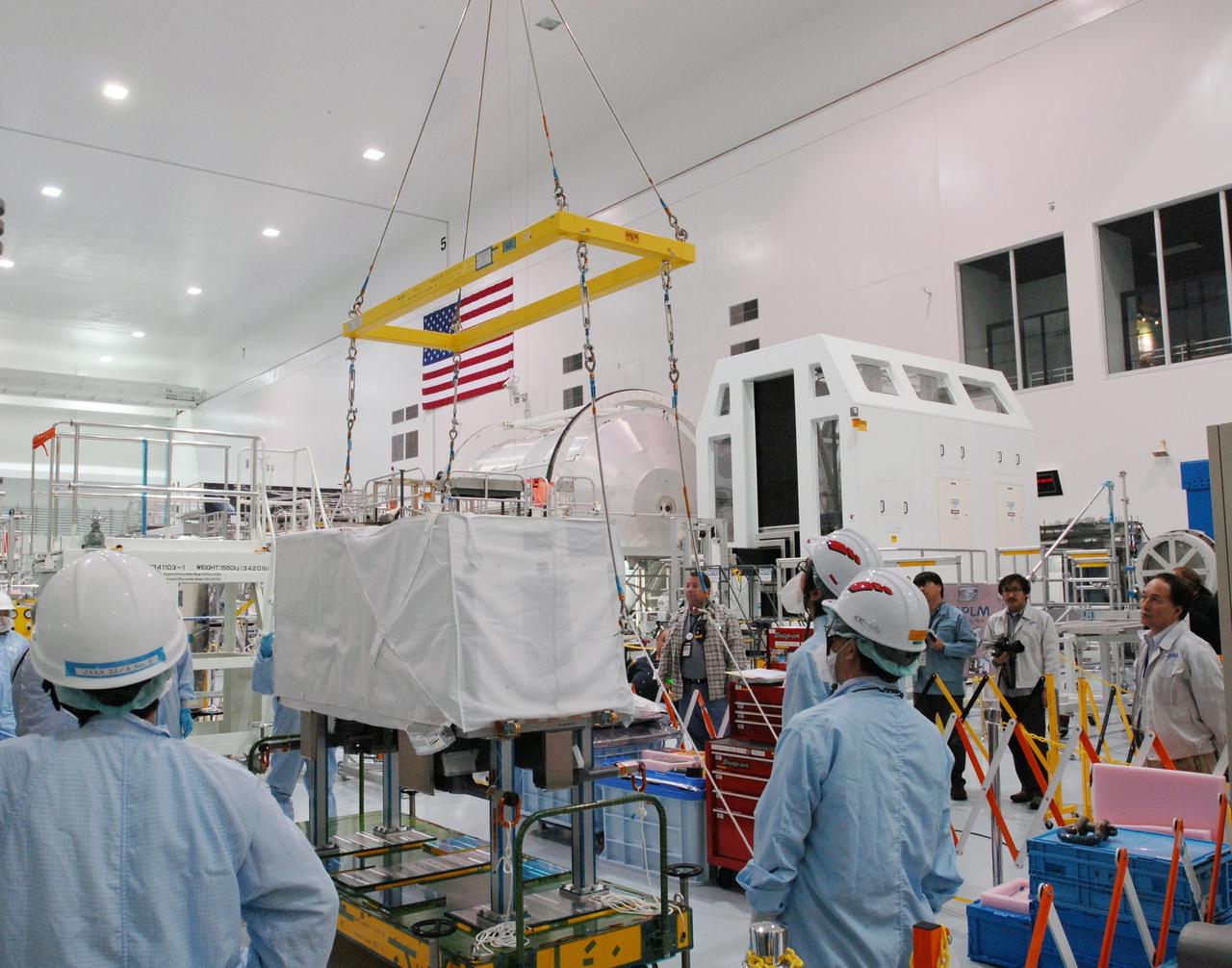
CAPE CANAVERAL, Fla. -- In the Space Station Processing Facility at NASA's Kennedy Space Center in Florida, a crane is moved over the MAXI (Monitor of All-sky X-ray Image). The crane will lift the MAXI onto the Japanese Experiment Module's Experiment Logistics Module-Exposed Section, or ELM-ES, where it will be installed. The MAXI is part of space shuttle Endeavour's payload on the STS-127 mission. Using X-ray slit cameras with high sensitivity, the MAXI will continuously monitor astronomical X-ray objects over a broad energy band (0.5 to 30 keV). Endeavour is targeted to launch May 15. Photo credit: NASA/Jim Grossmann
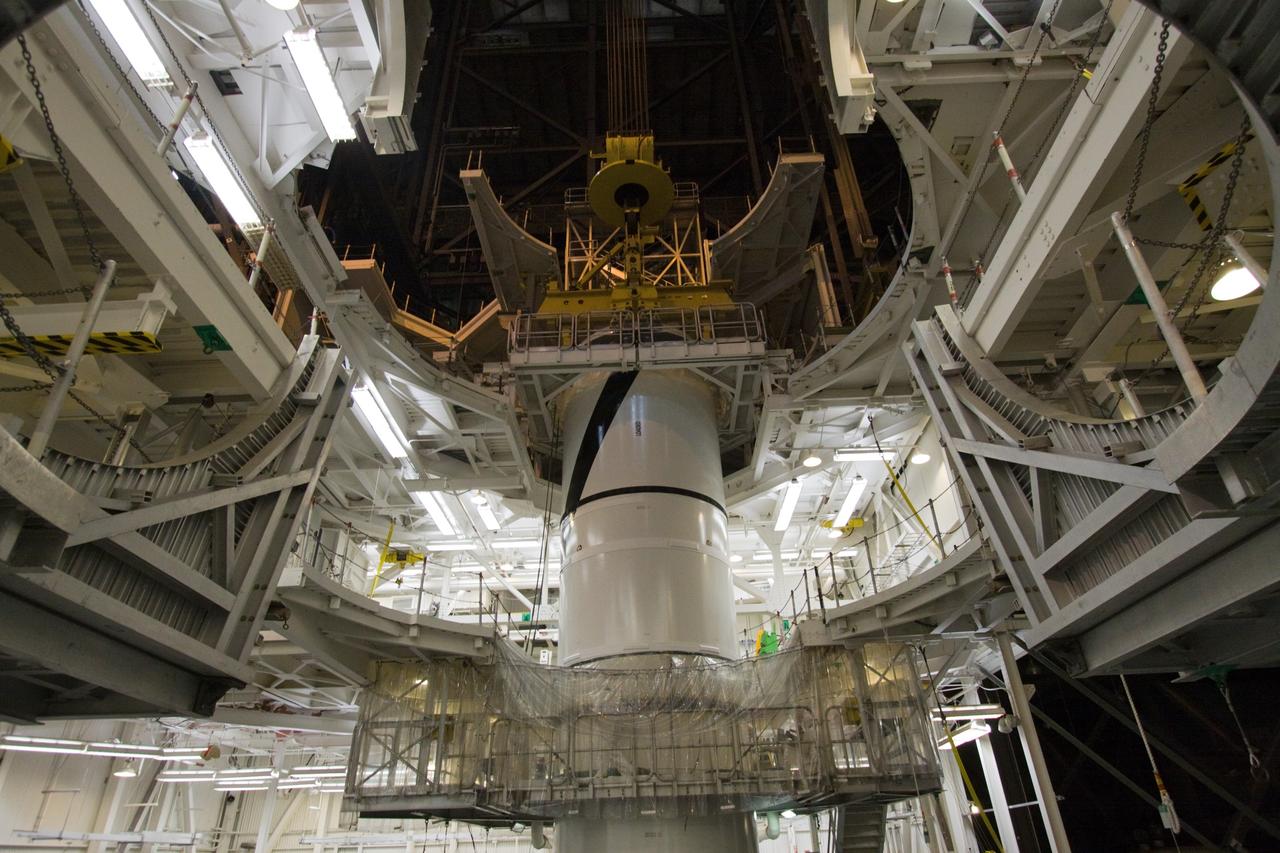
CAPE CANAVERAL, Fla. – In the Vehicle Assembly Building's High Bay 3 at NASA's Kennedy Space Center in Florida, workers check the attachment, or mating, of the Ares I-X forward center segment atop the aft assembly (aft segment and aft skirt). Part of the Constellation Program, the Ares I-X is the test vehicle for the Ares I, which is the essential core of a space transportation system that eventually will carry crewed missions back to the moon, on to Mars and out into the solar system . The Ares I-X flight test is targeted for no earlier than Aug. 30. Photo credit: NASA/Jack Pfaller
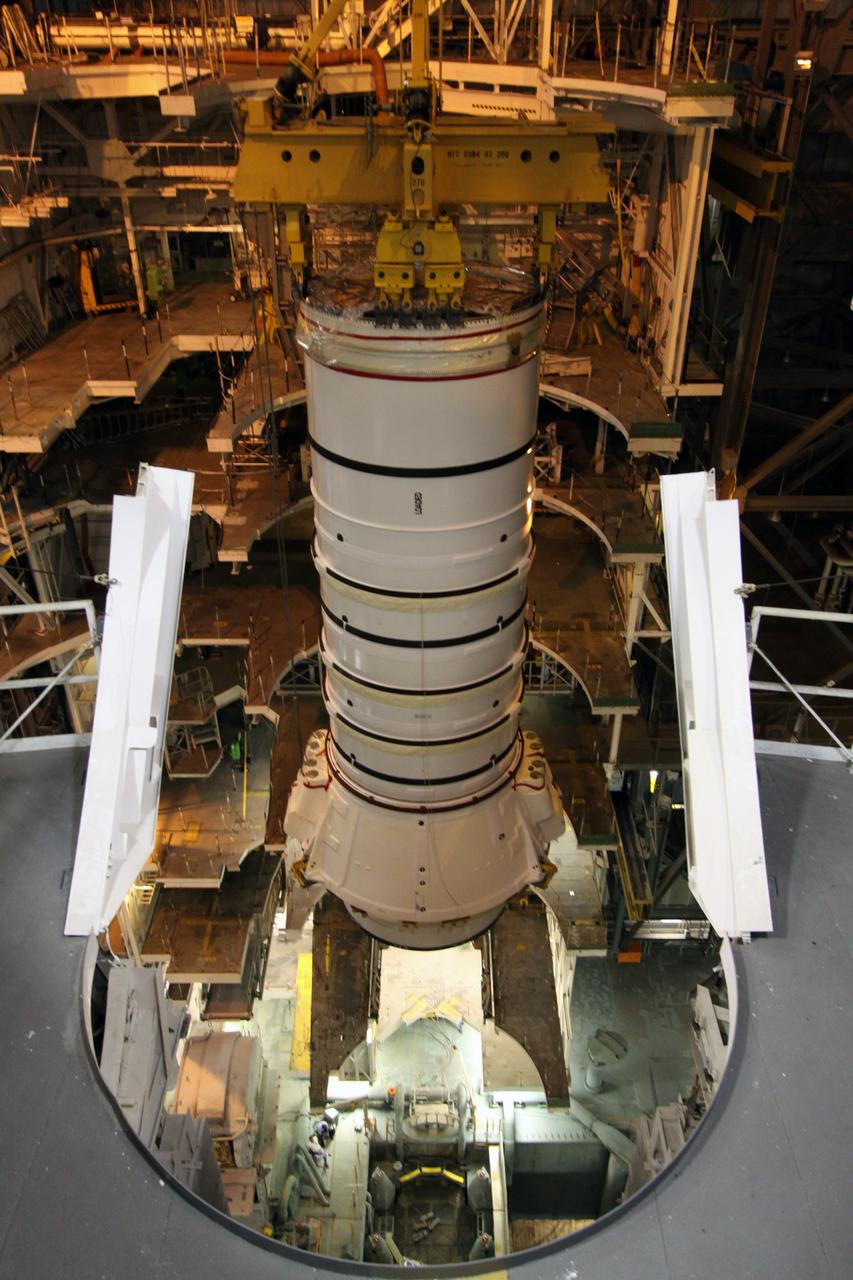
CAPE CANAVERAL, Fla. – In the Vehicle Assembly Building at NASA's Kennedy Space Center in Florida, the Ares I-X aft booster segment with the aft skirt is lowered into High Bay 3. It will be placed on the mobile launch platform. This is the start of the buildup of the Ares I-X launch vehicle for the flight test targeted for no earlier than Aug. 30. Part of the Constellation Program, the Ares I-X is the test vehicle for the Ares I, which is the essential core of a space transportation system that eventually will carry crewed missions back to the moon, on to Mars and out into the solar system. Photo credit: NASA/Jack Pfaller
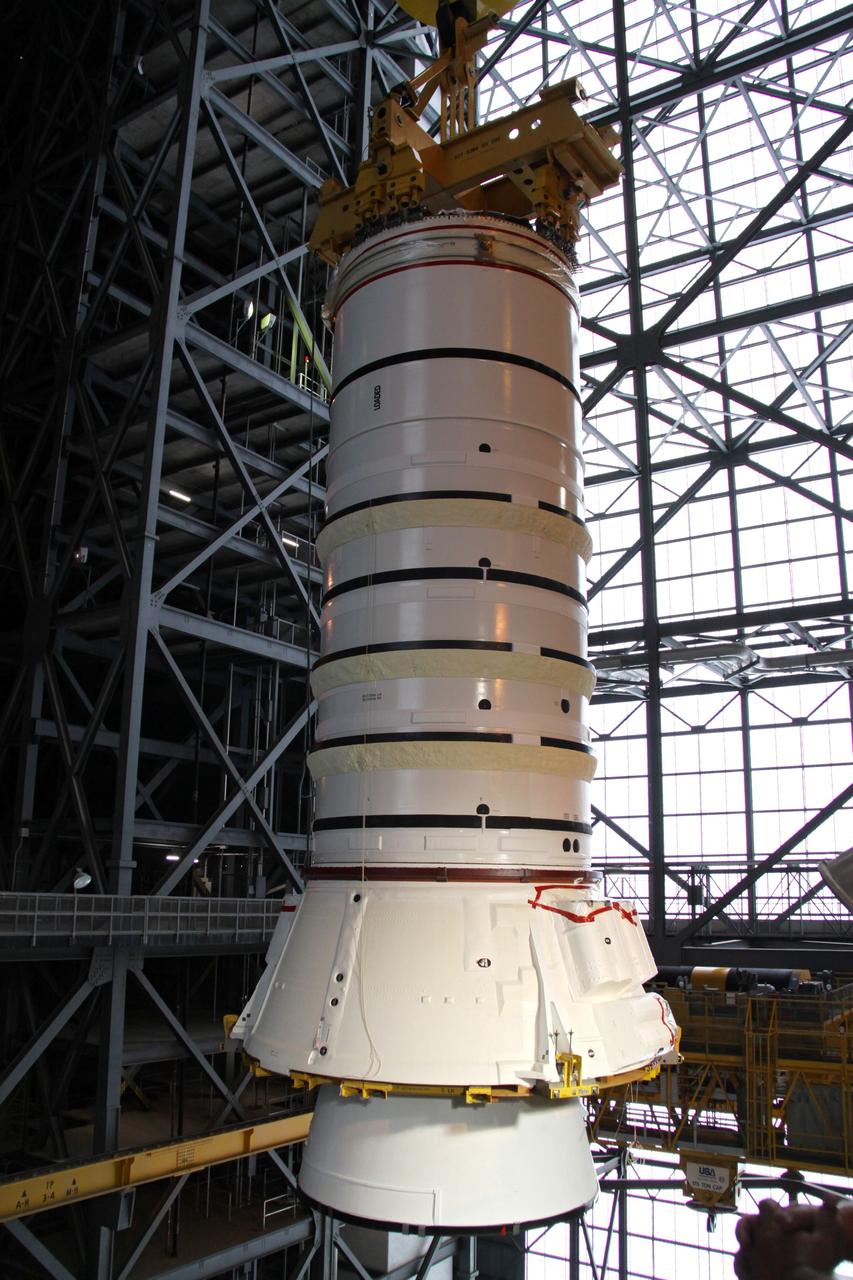
CAPE CANAVERAL, Fla. – In the Vehicle Assembly Building at NASA's Kennedy Space Center in Florida, the Ares I-X aft booster segment with the aft skirt is lifted into the upper regions of the VAB. The stack will be lowered onto the mobile launch platform in High Bay 3. This is the start of the buildup of the Ares I-X launch vehicle for the flight test targeted for no earlier than Aug. 30. Part of the Constellation Program, the Ares I-X is the test vehicle for the Ares I, which is the essential core of a space transportation system that eventually will carry crewed missions back to the moon, on to Mars and out into the solar system. Photo credit: NASA/Jack Pfaller
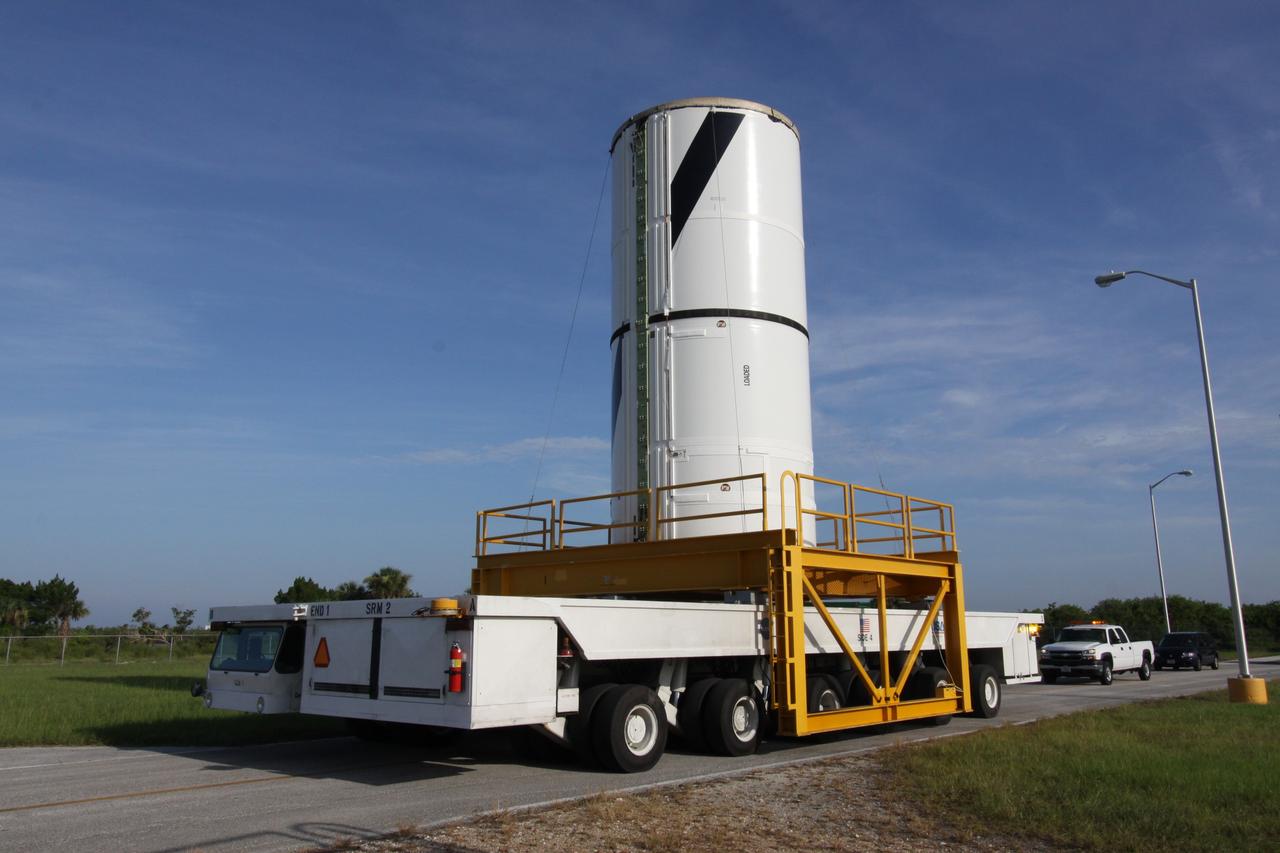
CAPE CANAVERAL, Fla. – At NASA's Kennedy Space Center in Florida, the Ares I-X forward center segment is moving from the Rotation, Processing and Surge Facility to the Vehicle Assembly Building, or VAB. The launch vehicle is being assembled in the VAB's High Bay 3. Part of the Constellation Program, the Ares I-X is the test vehicle for the Ares I, which is the essential core of a space transportation system that eventually will carry crewed missions back to the moon, on to Mars and out into the solar system . The Ares I-X flight test is targeted for no earlier than Aug. 30. Photo credit: NASA/Jack Pfaller
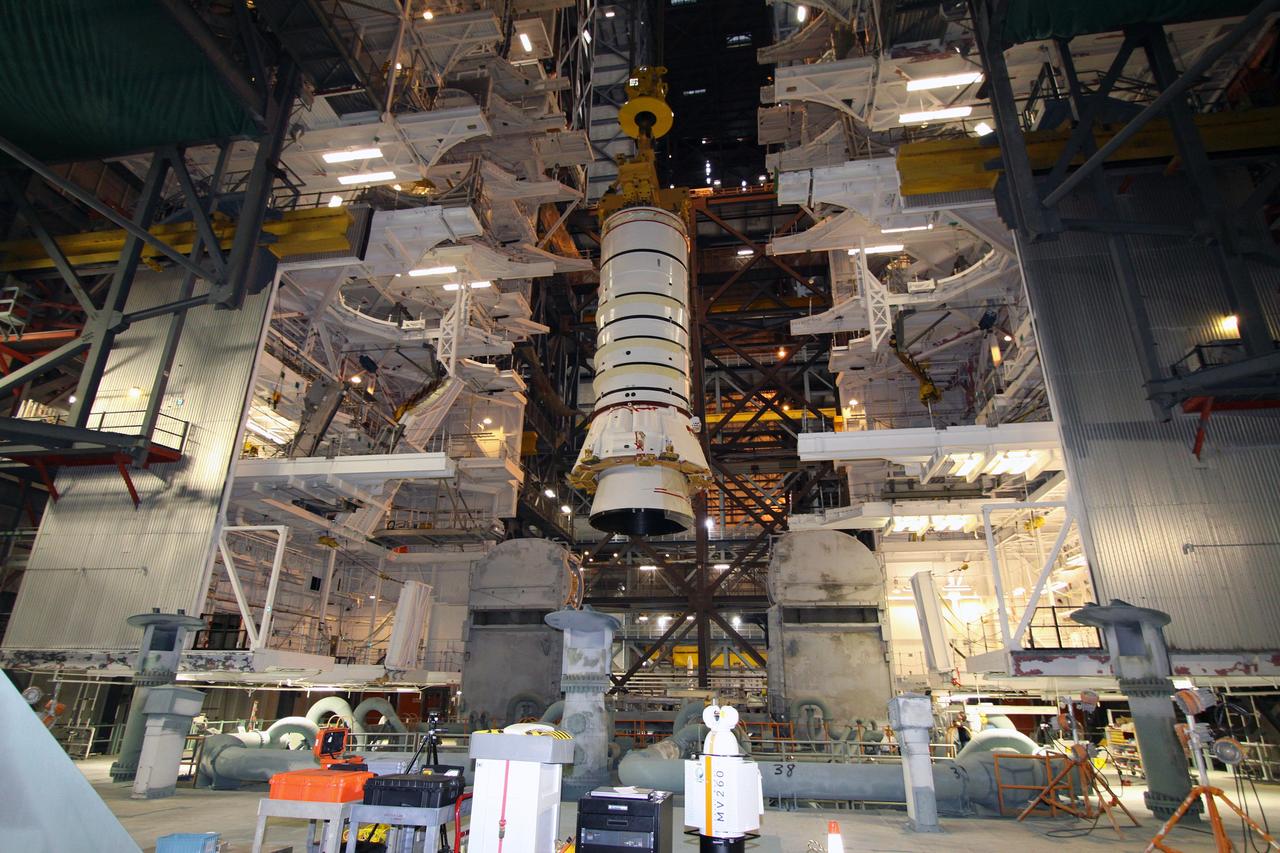
CAPE CANAVERAL, Fla. – In the Vehicle Assembly Building at NASA's Kennedy Space Center in Florida, the Ares I-X aft booster segment with the aft skirt is lowered toward the mobile launch platform in High Bay 3. This is the start of the buildup of the Ares I-X launch vehicle for the flight test targeted for no earlier than Aug. 30. Part of the Constellation Program, the Ares I-X is the test vehicle for the Ares I, which is the essential core of a space transportation system that eventually will carry crewed missions back to the moon, on to Mars and out into the solar system. Photo credit: NASA/Jack Pfaller
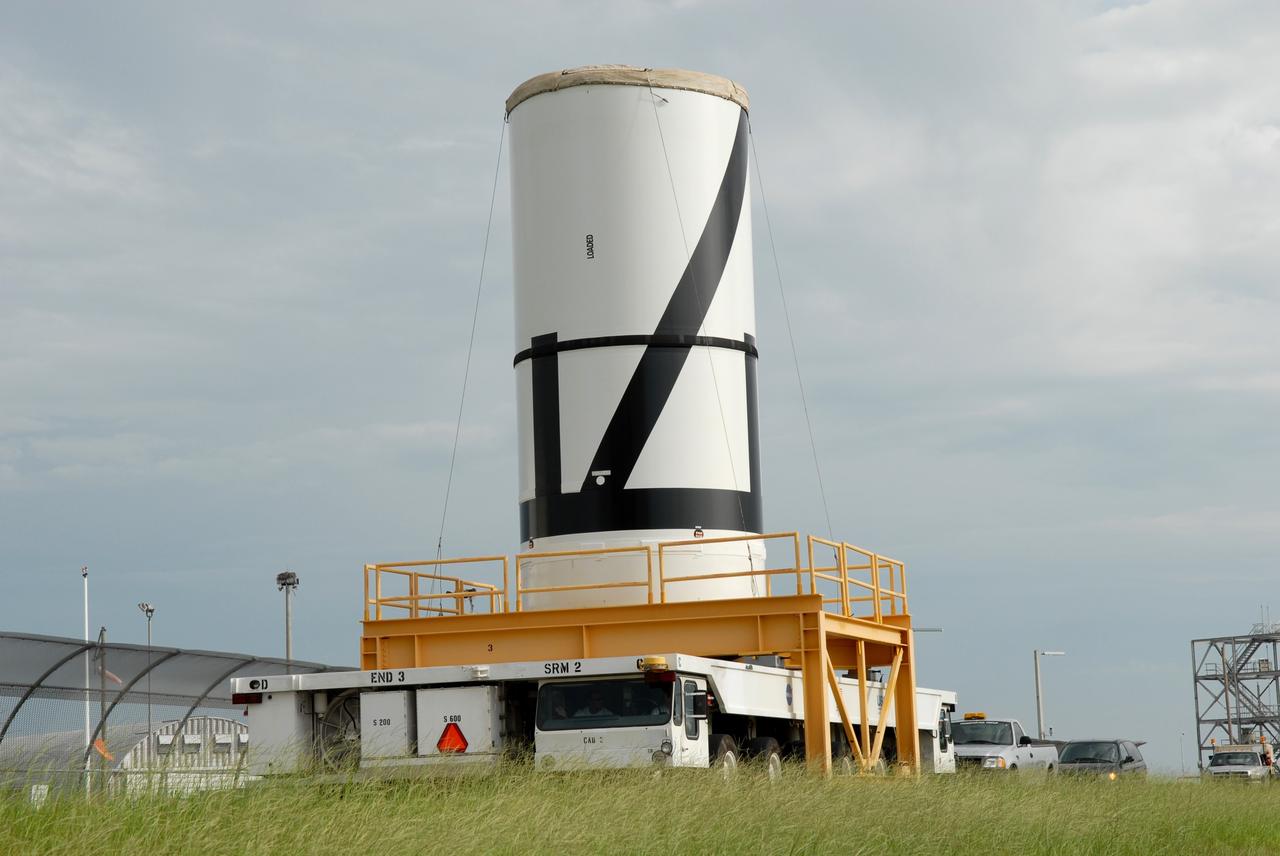
CAPE CANAVERAL, Fla. – The Ares I-X aft center booster segment is transported from the Rotation, Processing and Surge Facility to the Vehicle Assembly Building at NASA's Kennedy Space Center in Florida. The Ares I-X launch vehicle segments are being stacked in the VAB. Part of the Constellation Program, the Ares I-X is the test vehicle for the Ares I, which is the essential core of a space transportation system that eventually will carry crewed missions back to the moon, on to Mars and out into the solar system. Launch is targeted for no earlier than Aug. 30 from Launch Pad 39B. Photo credit: NASA/Jim Grossmann
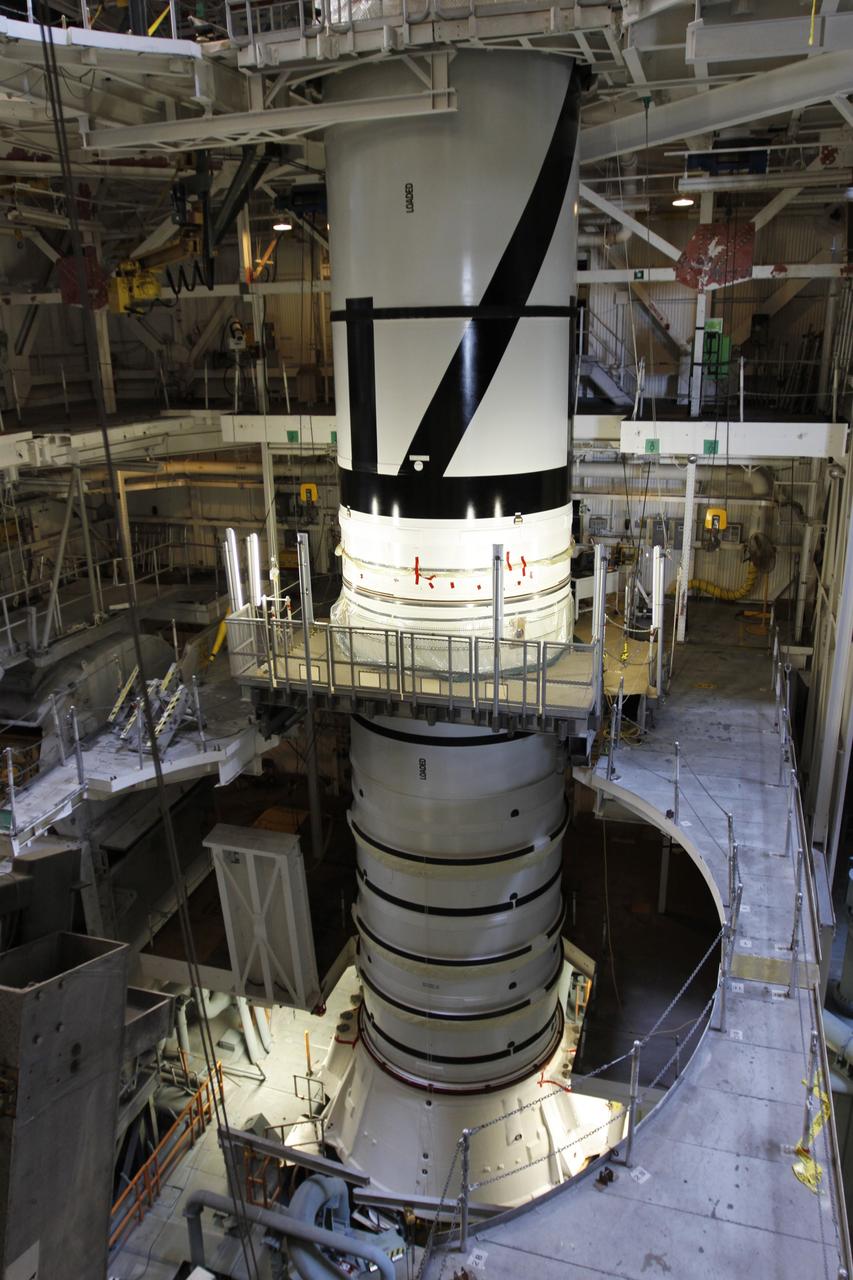
CAPE CANAVERAL, Fla. – In the Vehicle Assembly Building's High Bay 3 at NASA's Kennedy Space Center in Florida, the stacking of the Ares I-X segments is under way. Seen here are the aft center and the aft skirt segments. Part of the Constellation Program, the Ares I-X is the test vehicle for the Ares I, which is the essential core of a space transportation system that eventually will carry crewed missions back to the moon, on to Mars and out into the solar system . The Ares I-X flight test is targeted for no earlier than Aug. 30. Photo credit: NASA/Troy Cryder
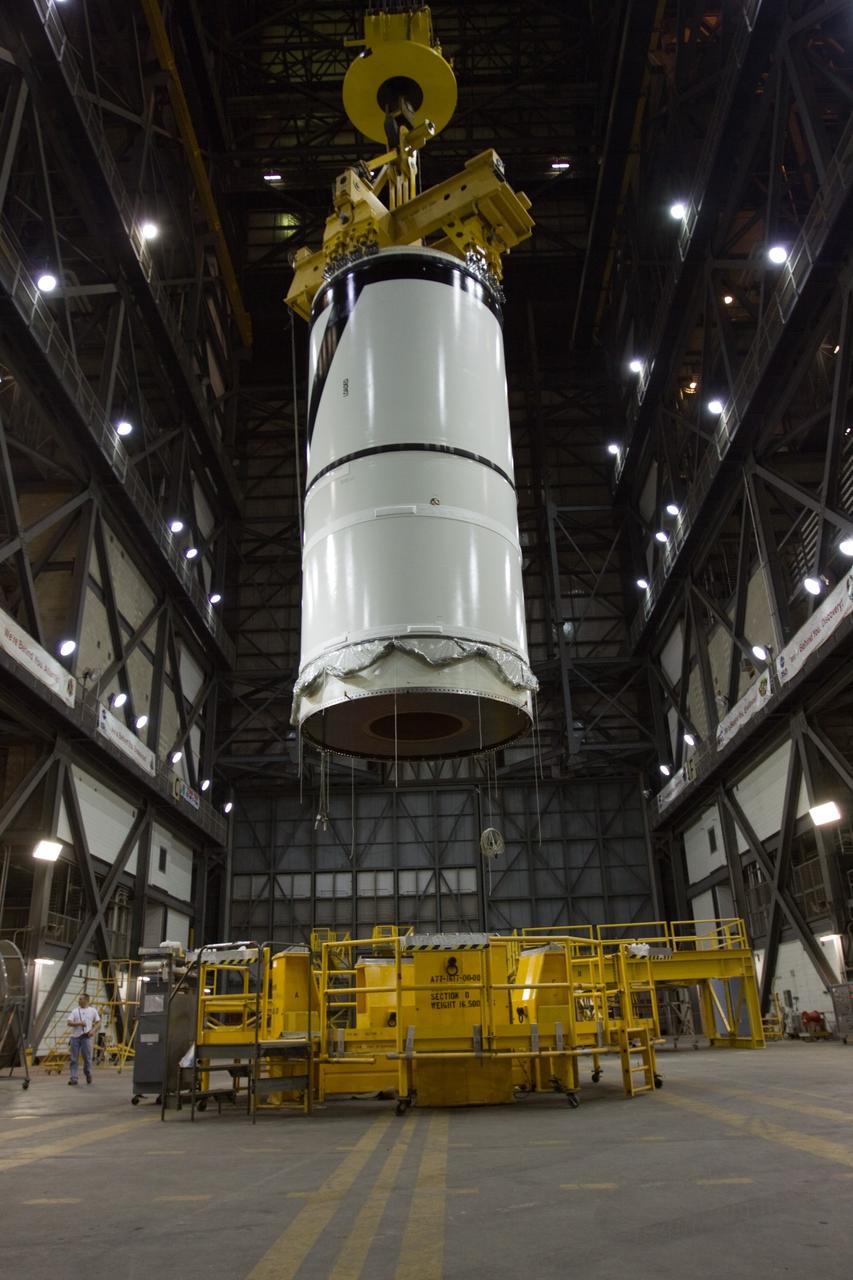
CAPE CANAVERAL, Fla. – In the transfer aisle of NASA Kennedy Space Center's Vehicle Assembly Building, the Ares I-X forward segment is lifted. It will be moved into High Bay 3 for stacking with the forward center, aft center and the aft skirt segments. Part of the Constellation Program, the Ares I-X is the test vehicle for the Ares I, which is the essential core of a space transportation system that eventually will carry crewed missions back to the moon, on to Mars and out into the solar system . The Ares I-X flight test is targeted for no earlier than Aug. 30. Photo credit: NASA/Troy Cryder
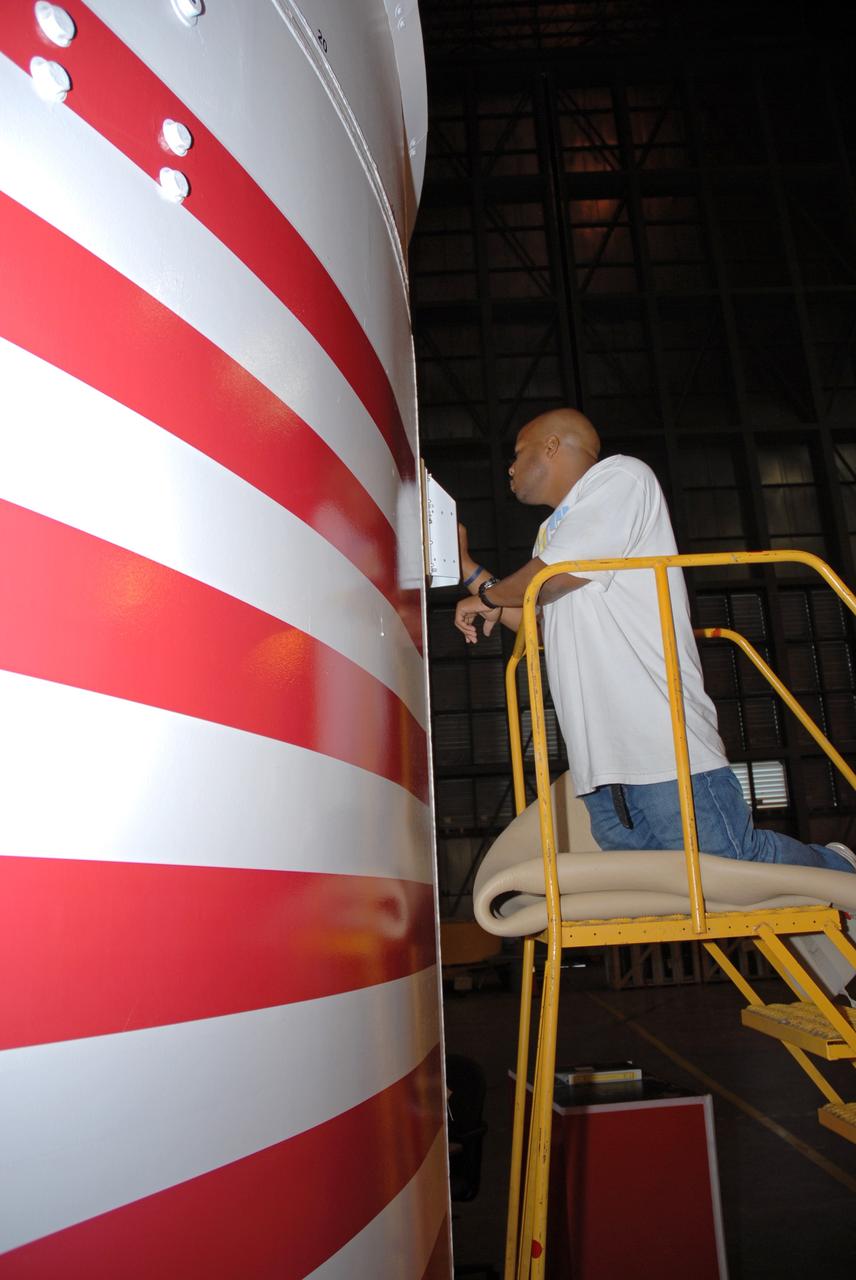
CAPE CANAVERAL, Fla. – In the Vehicle Assembly Building's High Bay 4 at NASA's Kennedy Space Center in Florida, technician Troy Merrick, with United Space Alliance, installs a video camera on the side of the Ares I-X segments 6 and 7. The downward facing camera will provide live video during launch. Part of the Constellation Program, the Ares I-X is the test vehicle for the Ares I, which is the essential core of a space transportation system that eventually will carry crewed missions back to the moon, on to Mars and out into the solar system . The Ares I-X flight test is targeted for no earlier than Aug. 30. Photo credit: NASA/Jack Pfaller
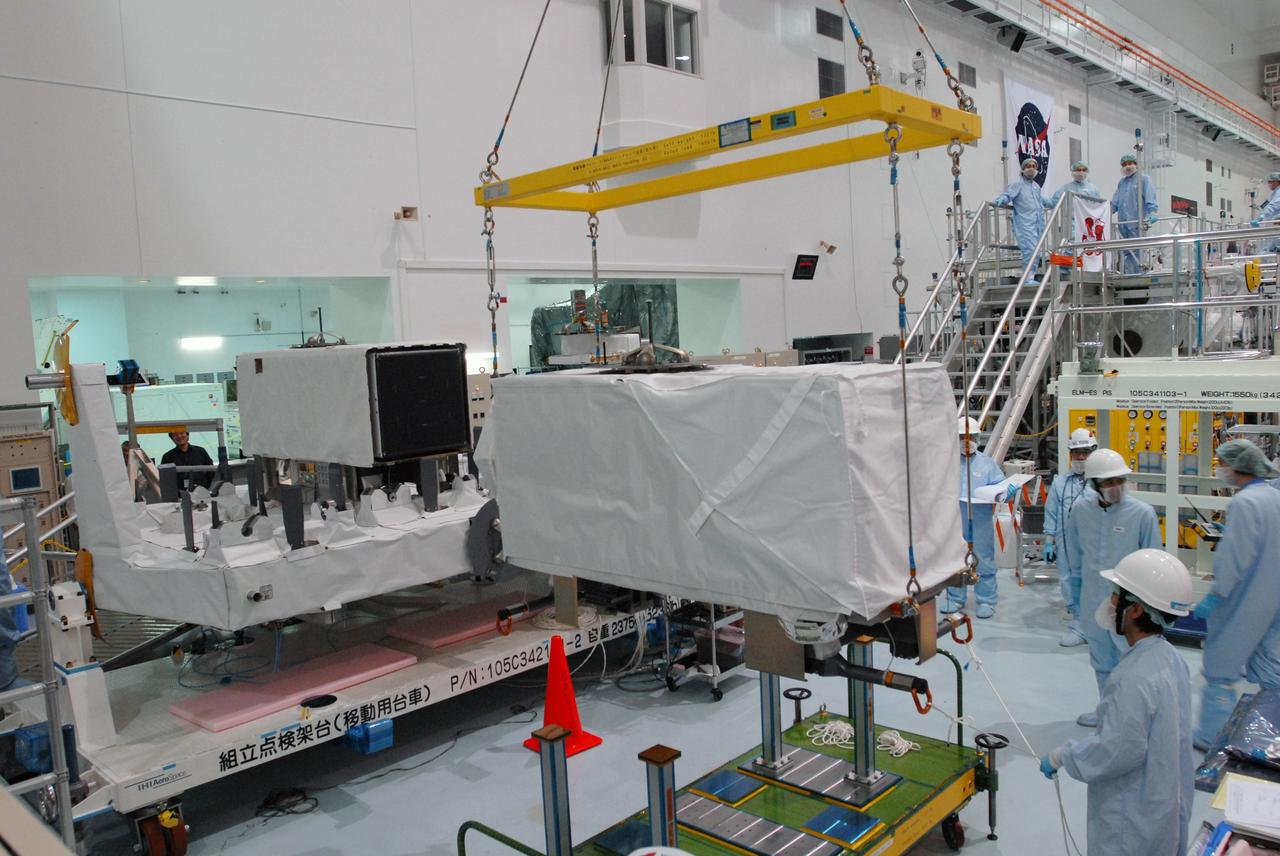
CAPE CANAVERAL, Fla. -- In the Space Station Processing Facility at NASA's Kennedy Space Center in Florida, a crane lifts the MAXI (Monitor of All-sky X-ray Image) to move it onto the Japanese Experiment Module's Experiment Logistics Module-Exposed Section, or ELM-ES, where it will be installed. The MAXI is part of space shuttle Endeavour's payload on the STS-127 mission. Using X-ray slit cameras with high sensitivity, the MAXI will continuously monitor astronomical X-ray objects over a broad energy band (0.5 to 30 keV). Endeavour is targeted to launch May 15. Photo credit: NASA/Jim Grossmann
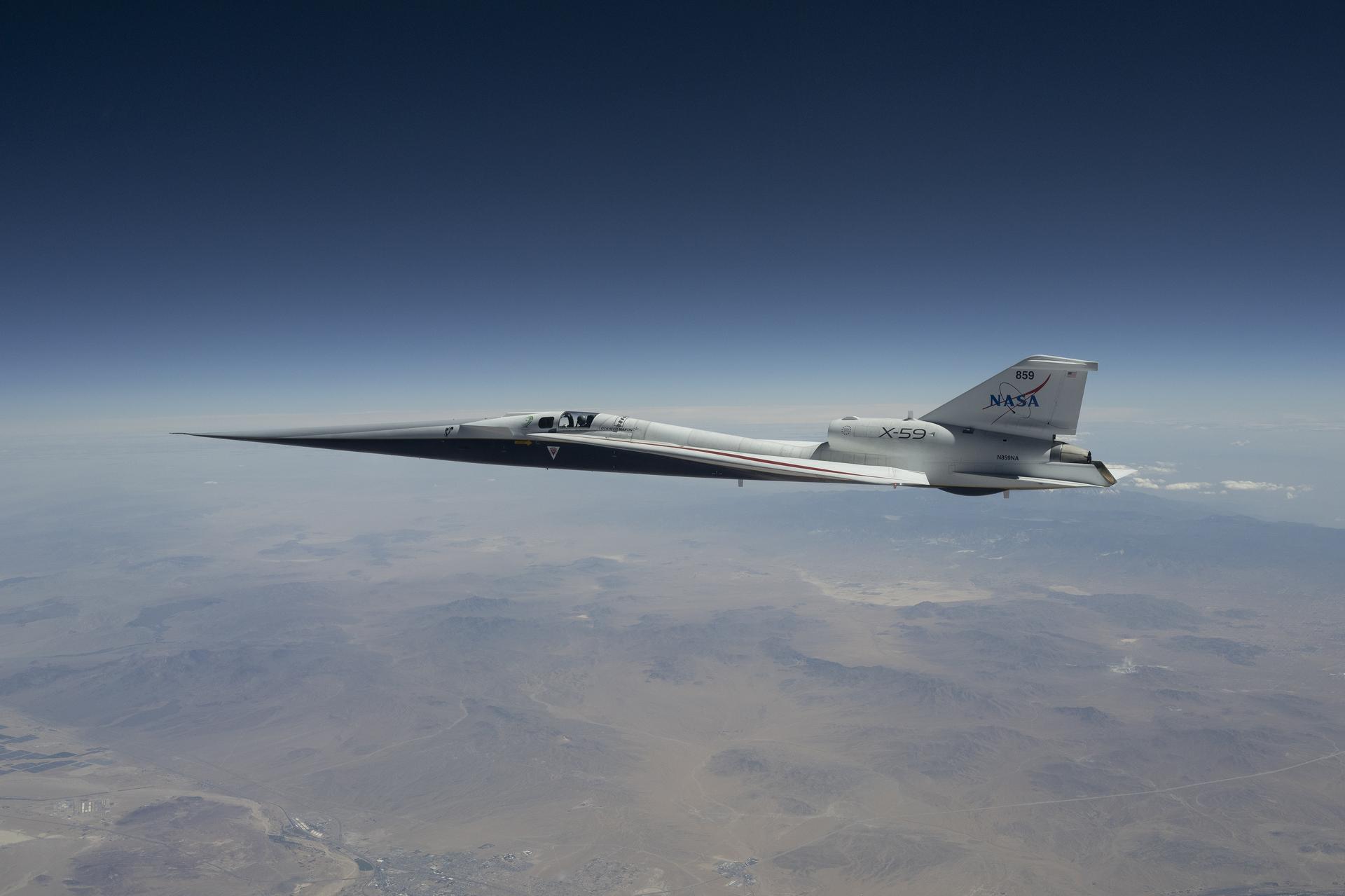
NASA’s X-59 quiet supersonic research aircraft completed its first dual-flight day on Thursday, April 30, at the agency’s Armstrong Flight Research Center in Edwards, California. This image shows the X-59 flying over the Mojave Desert during the aircraft’s second flight of the day, and its 12th overall. The X-59 flew test points at altitudes ranging from 12,000 to 43,000 feet and speeds from approximately 528 to 627 mph, or Mach 0.8 to Mach 0.95. The increased tempo of test flights allows the team to collect more data over a shorter period of time.
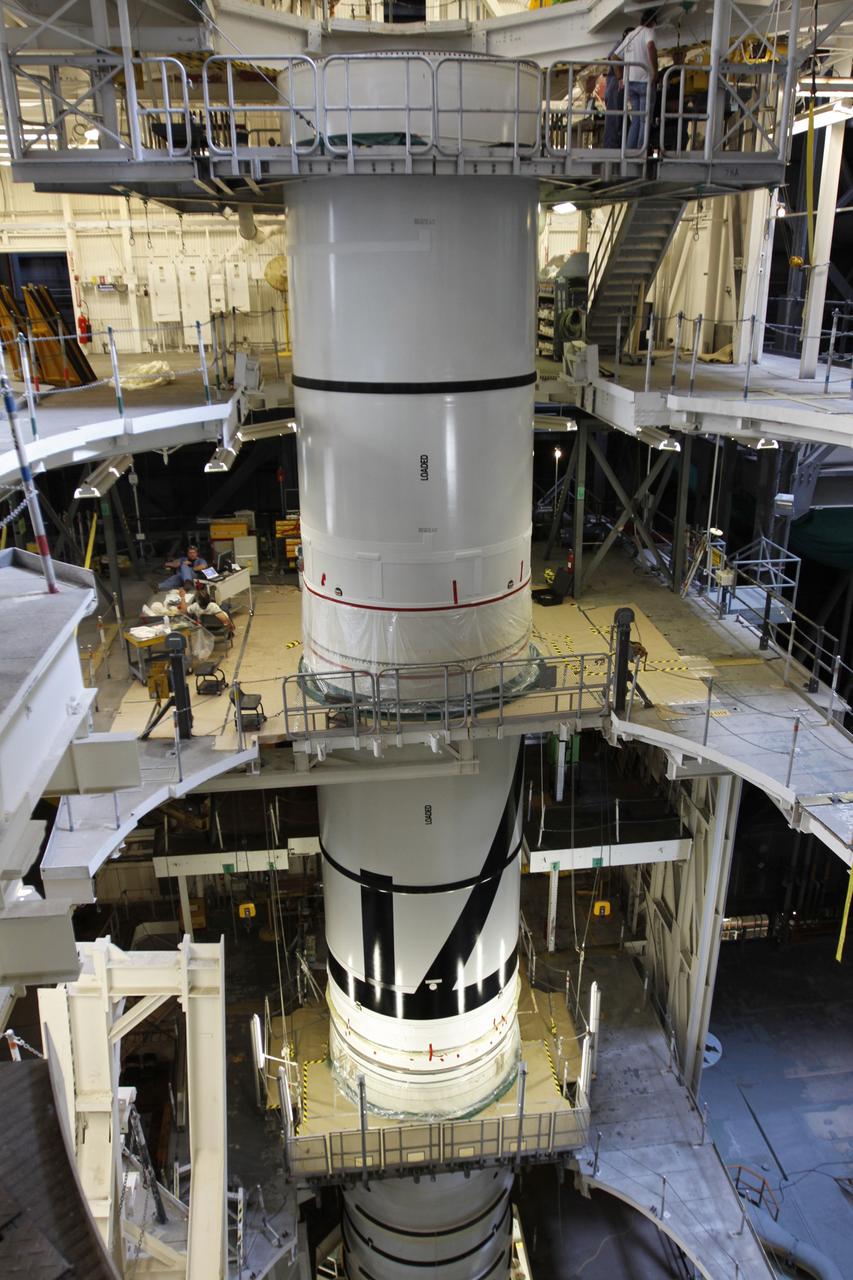
CAPE CANAVERAL, Fla. – In the Vehicle Assembly Building's High Bay 3 at NASA's Kennedy Space Center in Florida, the stacking of the Ares I-X segments is under way. Here, the forward center segment (top) is lowered onto the aft center and the aft skirt segments. Part of the Constellation Program, the Ares I-X is the test vehicle for the Ares I, which is the essential core of a space transportation system that eventually will carry crewed missions back to the moon, on to Mars and out into the solar system . The Ares I-X flight test is targeted for no earlier than Aug. 30. Photo credit: NASA/Troy Cryder
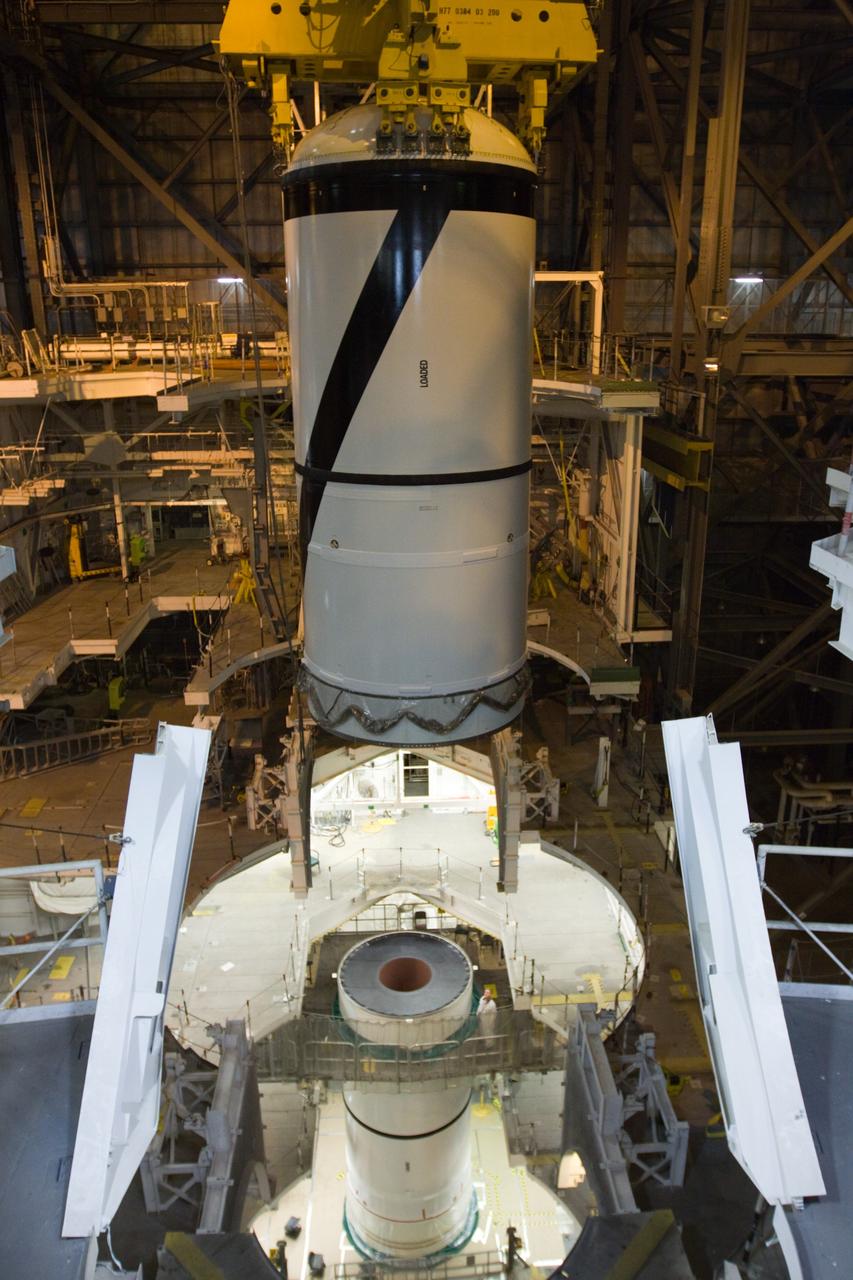
CAPE CANAVERAL, Fla. – In the High Bay 3 of NASA Kennedy Space Center's Vehicle Assembly Building, the Ares I-X forward segment is lowered toward the forward center for mating. The forward center is already mated with the aft center and the aft skirt segments below. Part of the Constellation Program, the Ares I-X is the test vehicle for the Ares I, which is the essential core of a space transportation system that eventually will carry crewed missions back to the moon, on to Mars and out into the solar system . The Ares I-X flight test is targeted for no earlier than Aug. 30. Photo credit: NASA/Troy Cryder
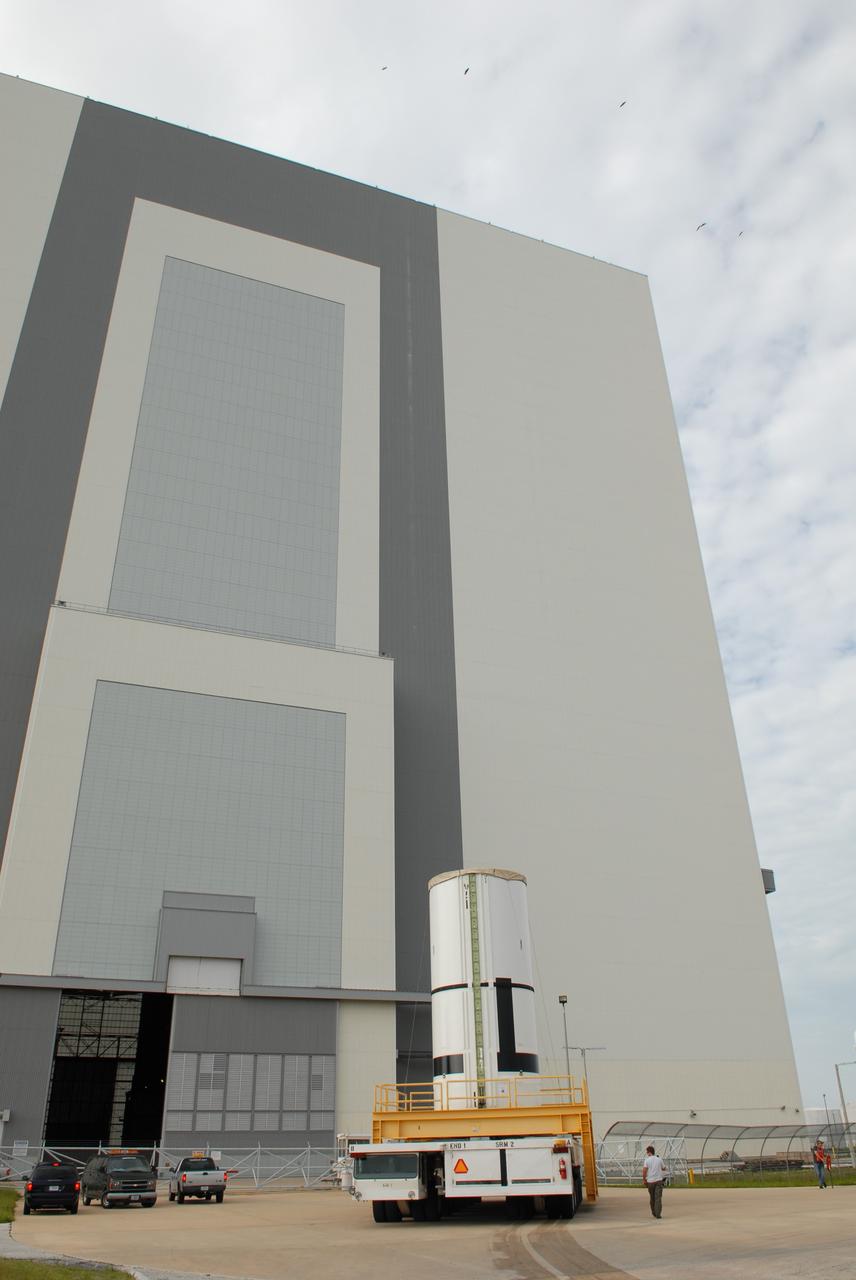
CAPE CANAVERAL, Fla. – The Ares I-X aft center booster segment rolls toward the Vehicle Assembly Building at NASA's Kennedy Space Center in Florida. The Ares I-X launch vehicle segments are being stacked in the VAB. Part of the Constellation Program, the Ares I-X is the test vehicle for the Ares I, which is the essential core of a space transportation system that eventually will carry crewed missions back to the moon, on to Mars and out into the solar system. Launch is targeted for no earlier than Aug. 30 from Launch Pad 39B. Photo credit: NASA/Jim Grossmann
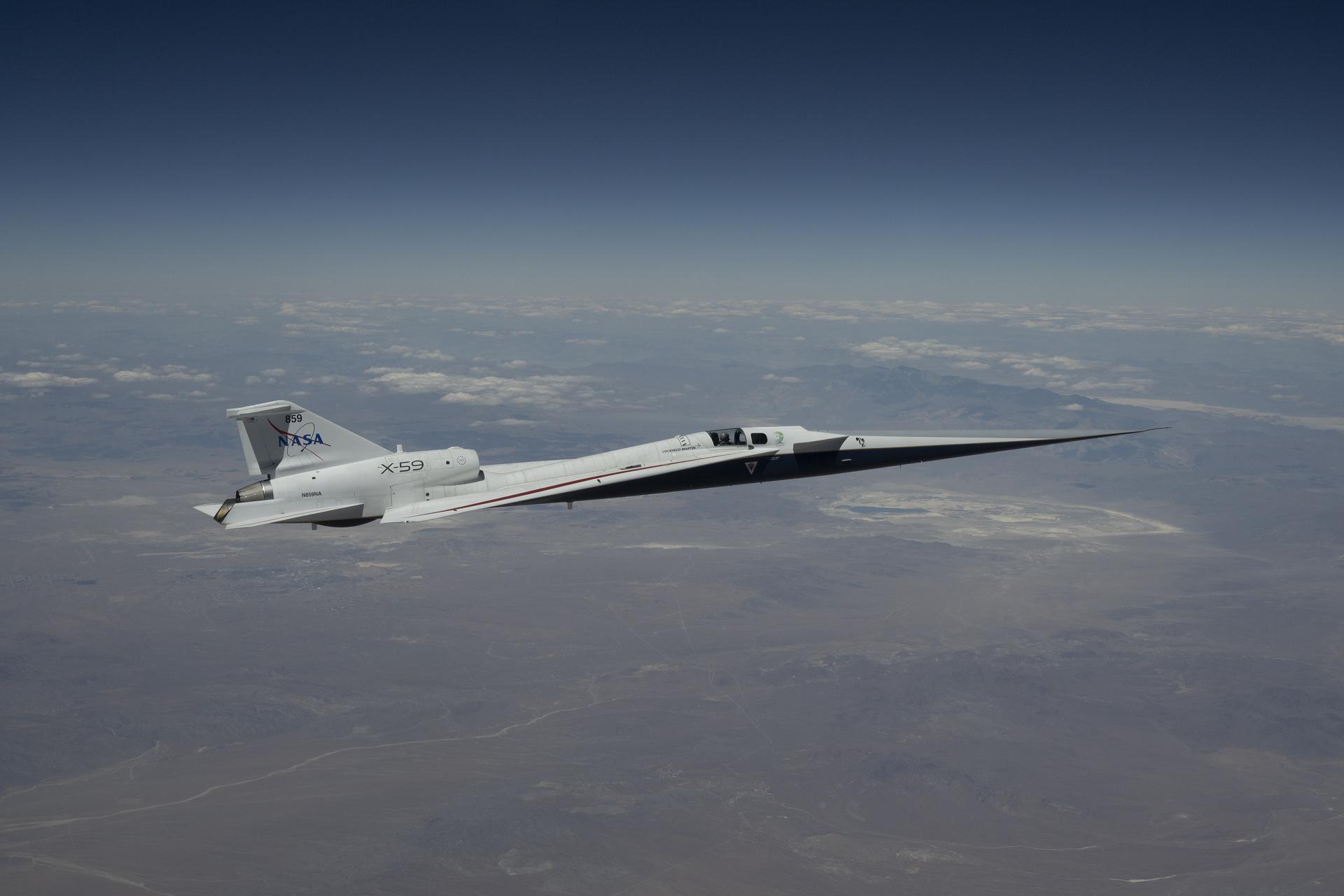
NASA’s X-59 quiet supersonic research aircraft completed its first dual-flight day on Thursday, April 30, at the agency’s Armstrong Flight Research Center in Edwards, California. This image shows the X-59 flying over the Mojave Desert during the aircraft’s second flight of the day, and its 12th overall. The X-59 flew test points at altitudes ranging from 12,000 to 43,000 feet and speeds from approximately 528 to 627 mph, or Mach 0.8 to Mach 0.95. The increased tempo of test flights allows the team to collect more data over a shorter period of time.
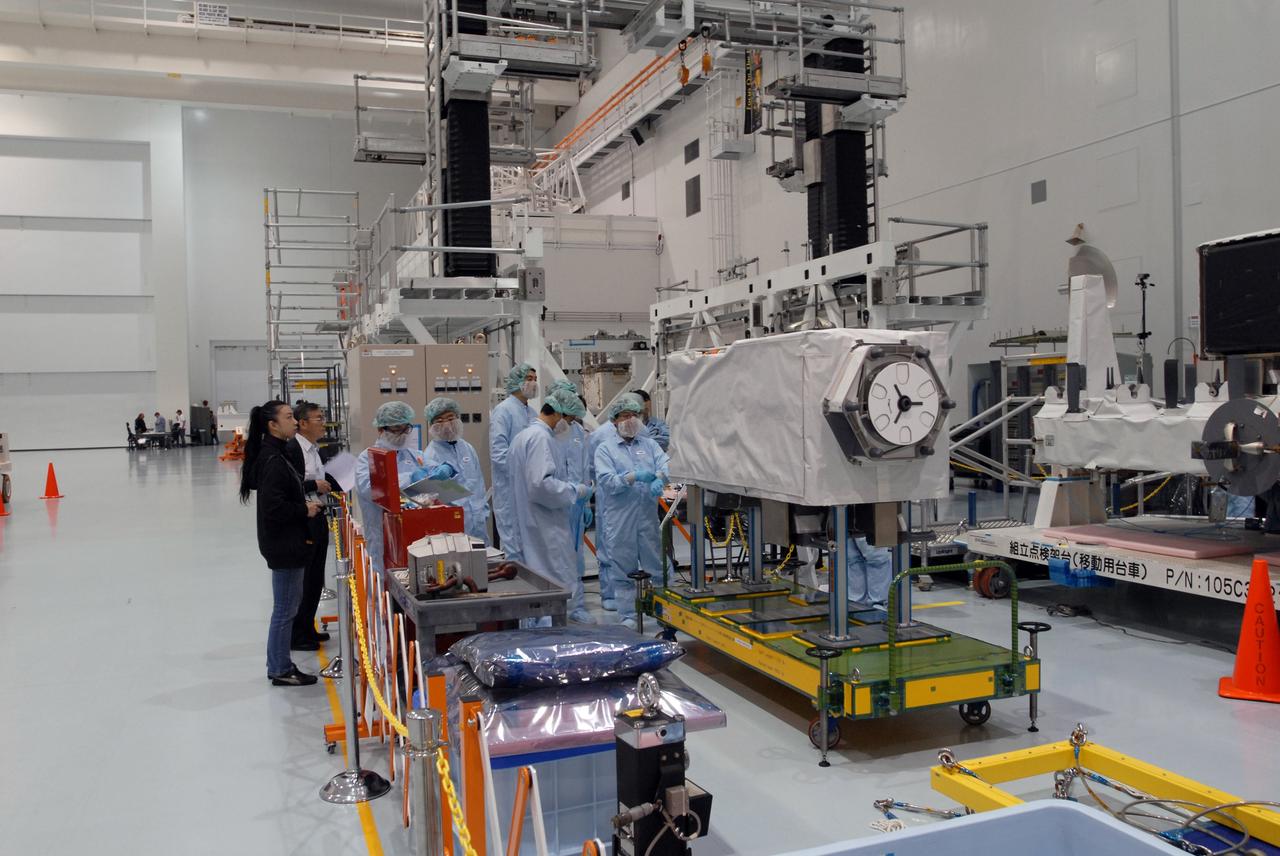
CAPE CANAVERAL, Fla. -- In the Space Station Processing Facility at NASA's Kennedy Space Center in Florida, the MAXI (Monitor of All-sky X-ray Image) is waiting to be installed on the Japanese Experiment Module's Experiment Logistics Module-Exposed Section, or ELM-ES. The MAXI is part of space shuttle Endeavour's payload on the STS-127 mission. Using X-ray slit cameras with high sensitivity, the MAXI will continuously monitor astronomical X-ray objects over a broad energy band (0.5 to 30 keV). Endeavour is targeted to launch May 15. Photo credit: NASA/Jim Grossmann
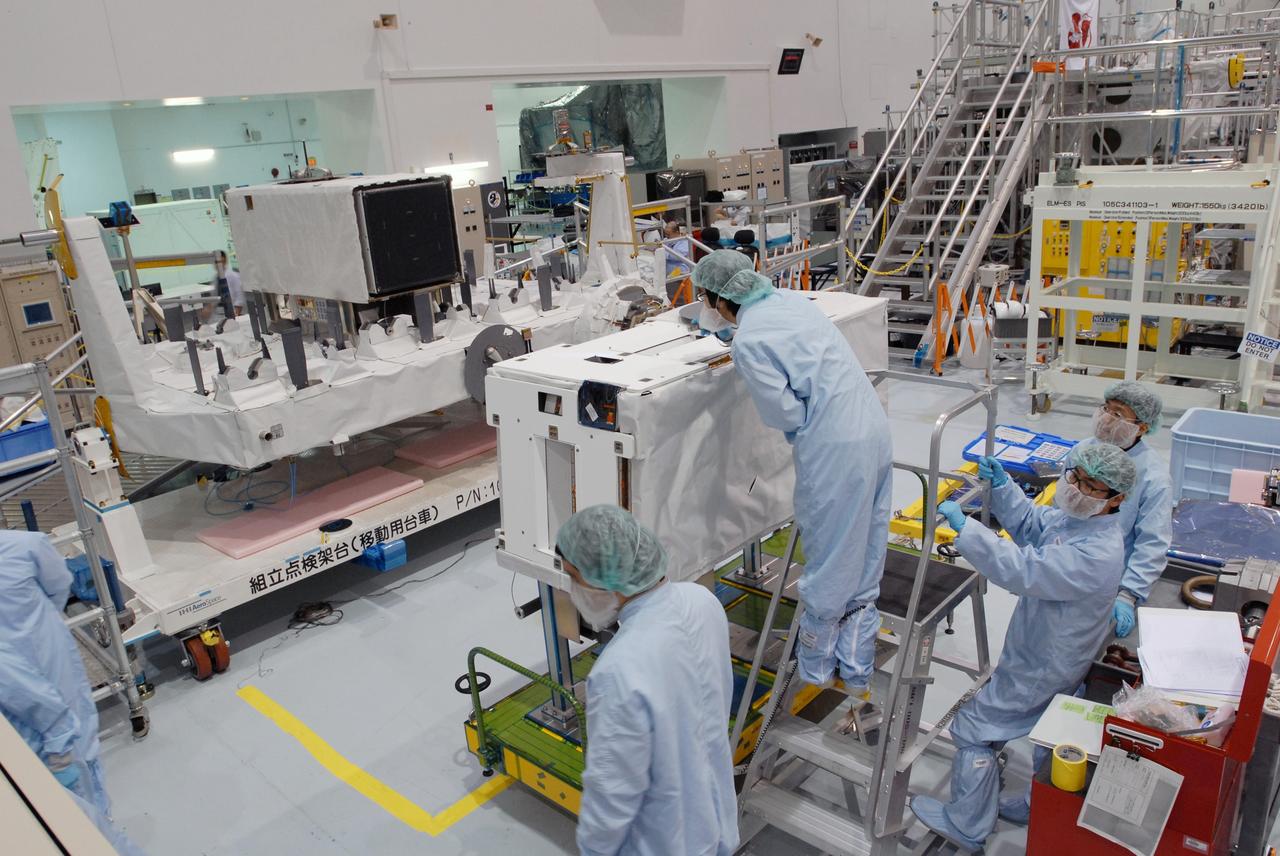
CAPE CANAVERAL, Fla. -- In the Space Station Processing Facility at NASA's Kennedy Space Center in Florida, workers check the MAXI (Monitor of All-sky X-ray Image) before it is installed on the Japanese Experiment Module's Experiment Logistics Module-Exposed Section, or ELM-ES. The MAXI is part of space shuttle Endeavour's payload on the STS-127 mission. Using X-ray slit cameras with high sensitivity, the MAXI will continuously monitor astronomical X-ray objects over a broad energy band (0.5 to 30 keV). Endeavour is targeted to launch May 15. Photo credit: NASA/Jim Grossmann
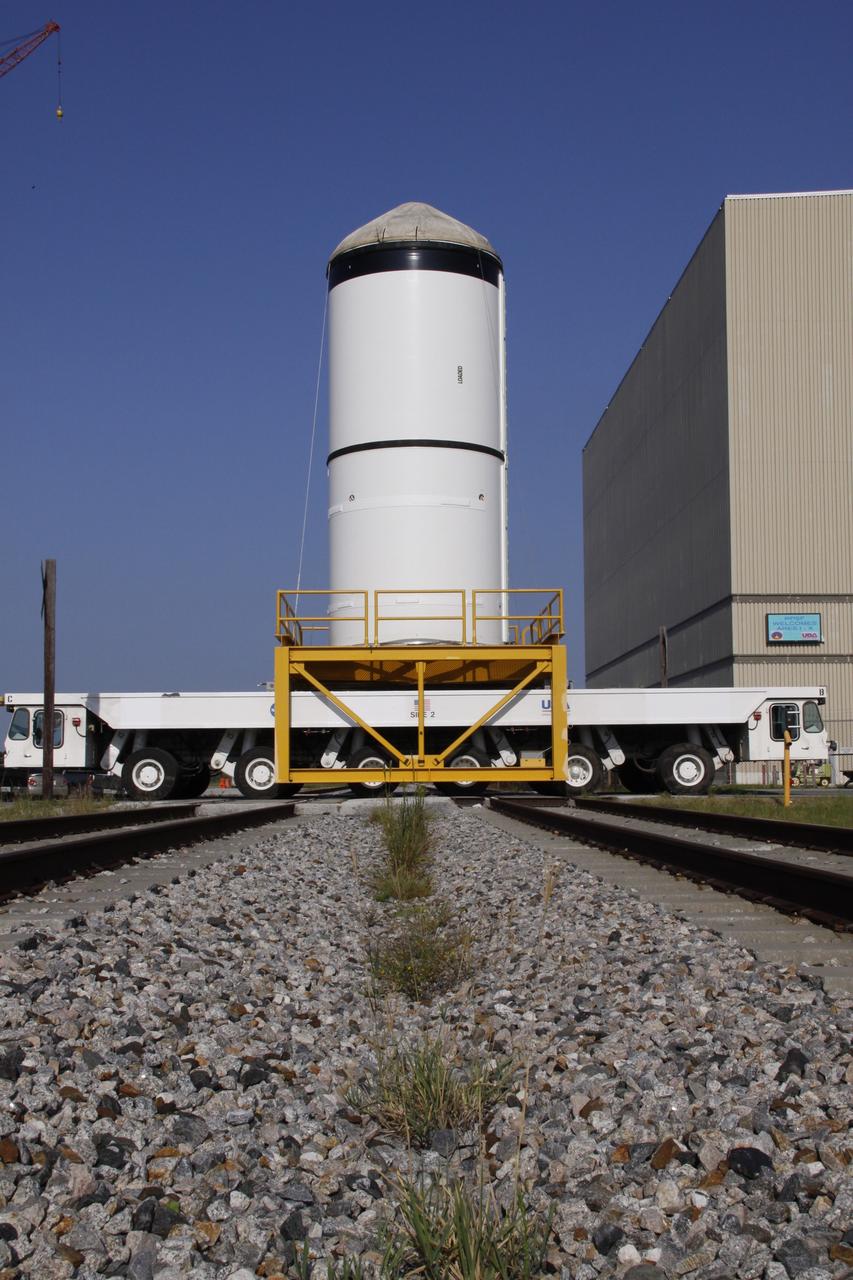
CAPE CANAVERAL, Fla. – The Ares I-X forward segment leaves the Rotation, Surge and Processing Facility at NASA's Kennedy Space Center in Florida. It is being transported to the Vehicle Assembly Building for mating with the aft center and aft segments already stacked. Part of the Constellation Program, the Ares I-X is the test vehicle for the Ares I, which is the essential core of a space transportation system that eventually will carry crewed missions back to the moon, on to Mars and out into the solar system . The Ares I-X flight test is targeted for no earlier than Aug. 30. Photo credit: NASA/Troy Cryder
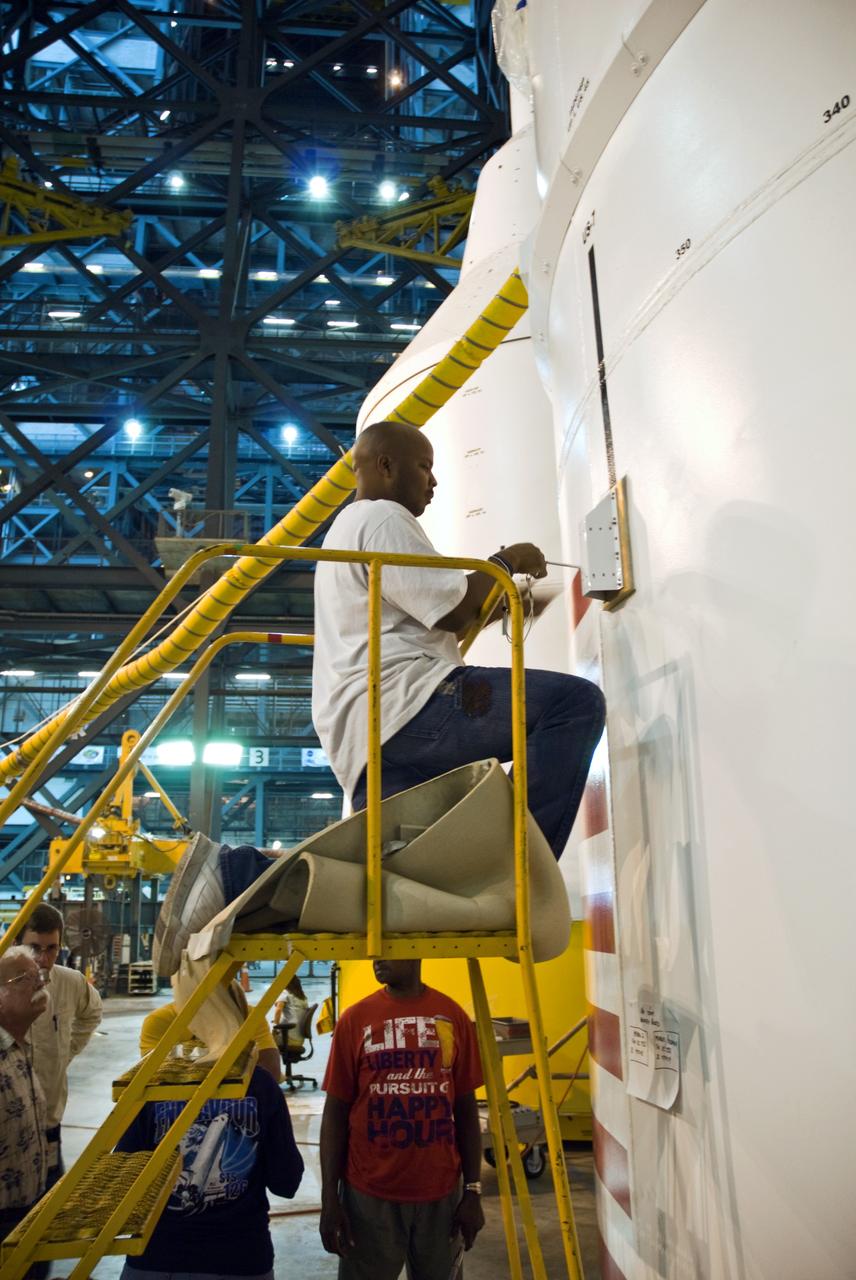
CAPE CANAVERAL, Fla. – In the Vehicle Assembly Building's High Bay 4 at NASA's Kennedy Space Center in Florida, technician Troy Merrick, with United Space Alliance, finishes installing a video camera on the side of the Ares I-X segments 6 and 7. The downward facing camera will provide live video during launch. Part of the Constellation Program, the Ares I-X is the test vehicle for the Ares I, which is the essential core of a space transportation system that eventually will carry crewed missions back to the moon, on to Mars and out into the solar system . The Ares I-X flight test is targeted for no earlier than Aug. 30. Photo credit: NASA/Jack Pfaller
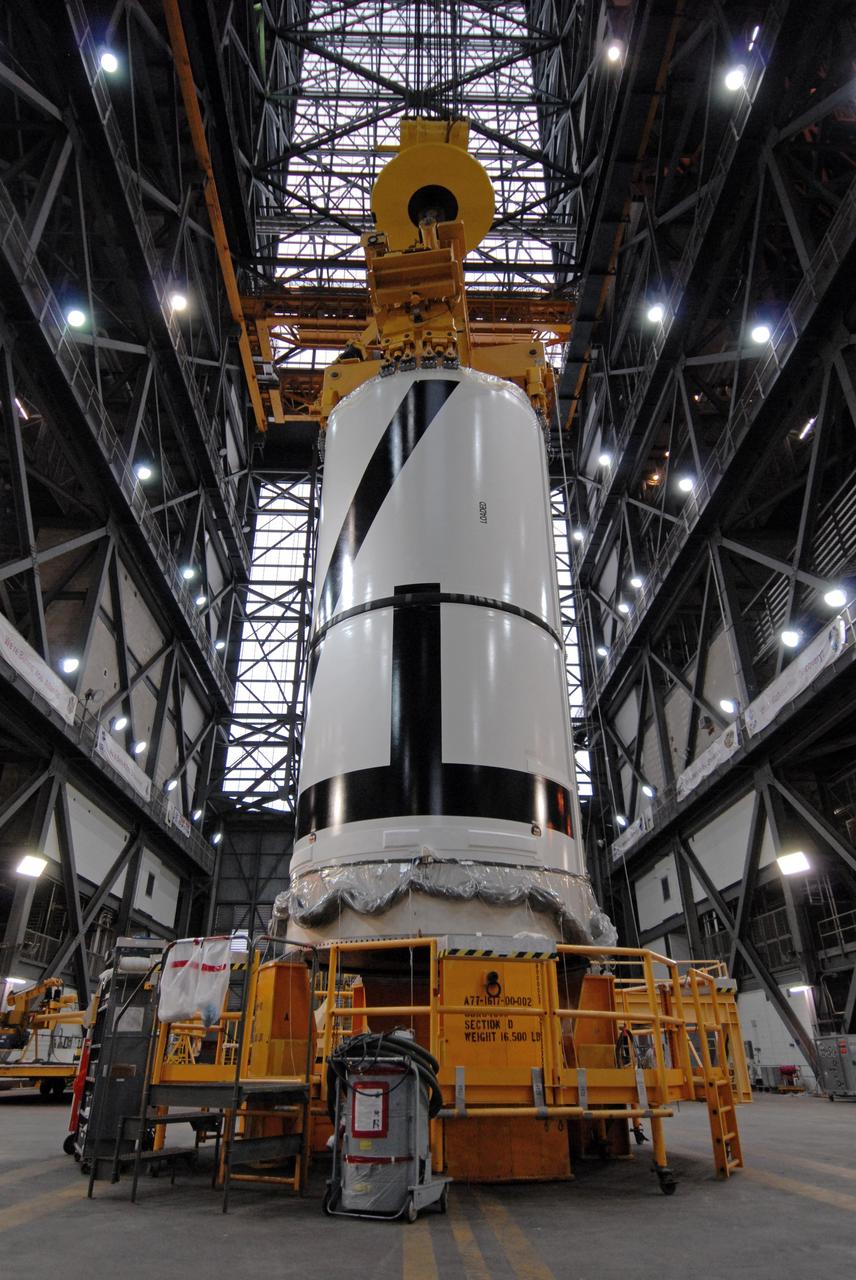
CAPE CANAVERAL, Fla. – In the Vehicle Assembly Building's transfer aisle at NASA's Kennedy Space Center in Florida, an overhead crane is attached to the Ares I-X aft center booster segment. The segment will be lifted and then lowered into High Bay 3 for attachment to the aft booster segment with the aft skirt. Part of the Constellation Program, the Ares I-X is the test vehicle for the Ares I, which is the essential core of a space transportation system that eventually will carry crewed missions back to the moon, on to Mars and out into the solar system . The flight test of the Ares I-X is targeted for no earlier than Aug. 30. Photo credit: NASA/Tim Jacobs
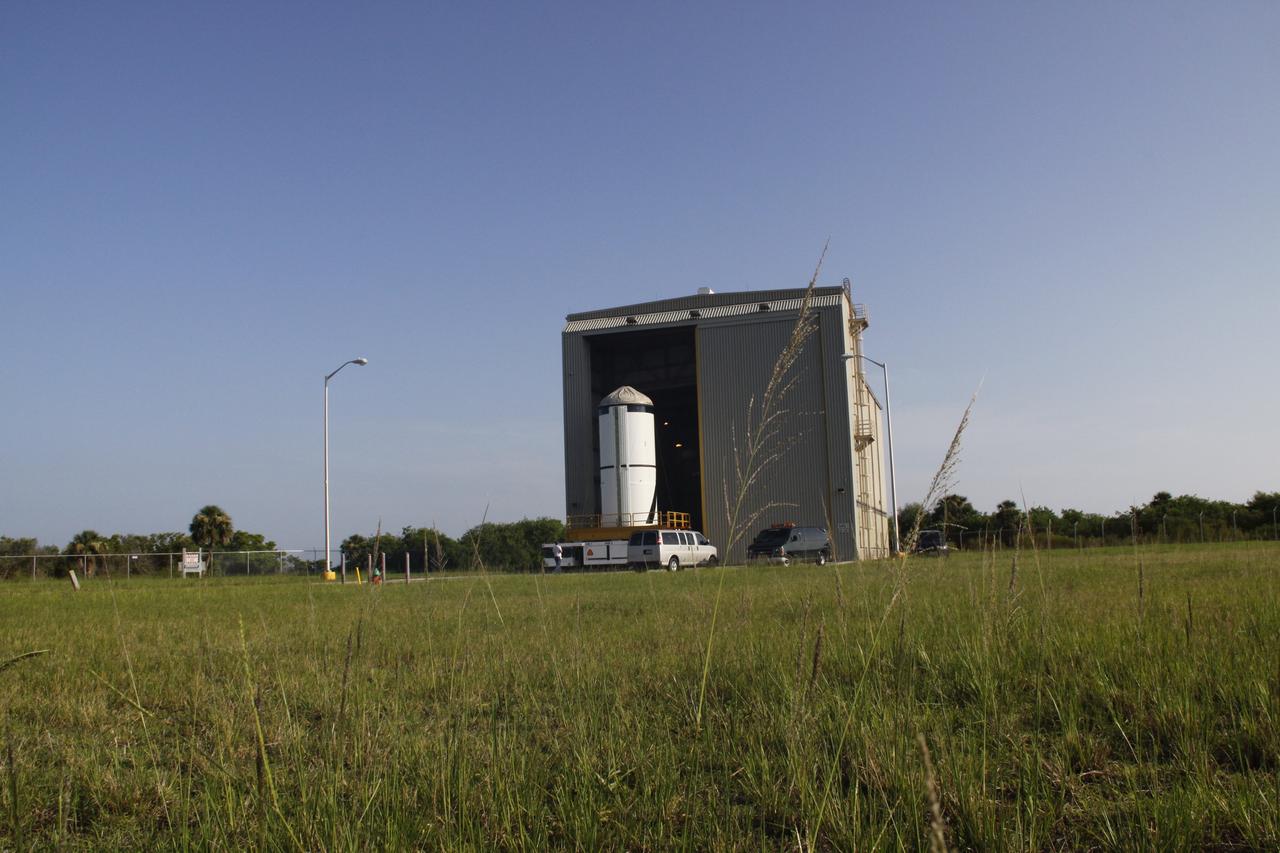
CAPE CANAVERAL, Fla. – The Ares I-X forward segment leaves the Rotation, Surge and Processing Facility at NASA's Kennedy Space Center in Florida. It is being transported to the Vehicle Assembly Building for mating with the aft center and aft segments already stacked.Part of the Constellation Program, the Ares I-X is the test vehicle for the Ares I, which is the essential core of a space transportation system that eventually will carry crewed missions back to the moon, on to Mars and out into the solar system . The Ares I-X flight test is targeted for no earlier than Aug. 30. Photo credit: NASA/Troy Cryder
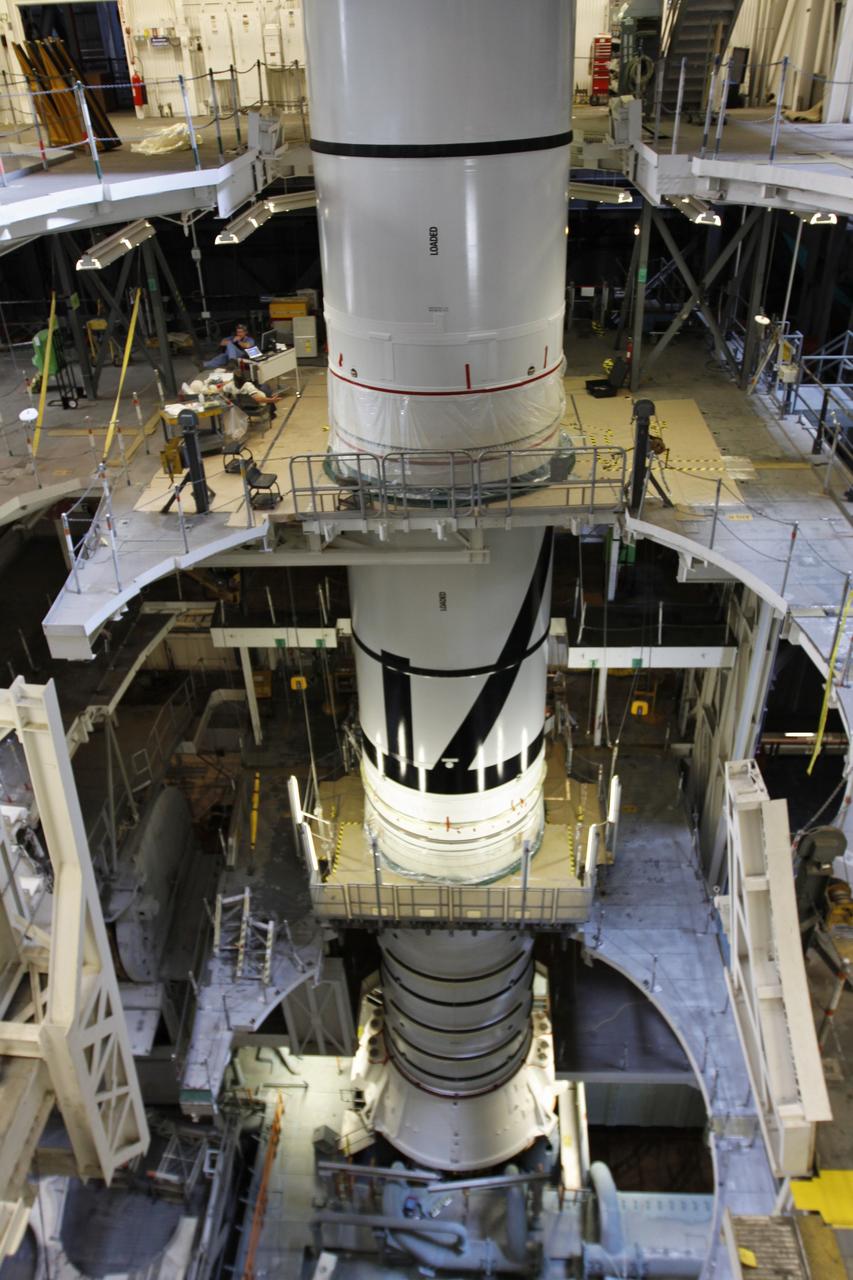
CAPE CANAVERAL, Fla. – In the Vehicle Assembly Building's High Bay 3 at NASA's Kennedy Space Center in Florida, the stacking of the Ares I-X segments is under way. Here, the forward center segment (top) is lowered onto the aft center and the aft skirt segments. Part of the Constellation Program, the Ares I-X is the test vehicle for the Ares I, which is the essential core of a space transportation system that eventually will carry crewed missions back to the moon, on to Mars and out into the solar system . The Ares I-X flight test is targeted for no earlier than Aug. 30. Photo credit: NASA/Troy Cryder
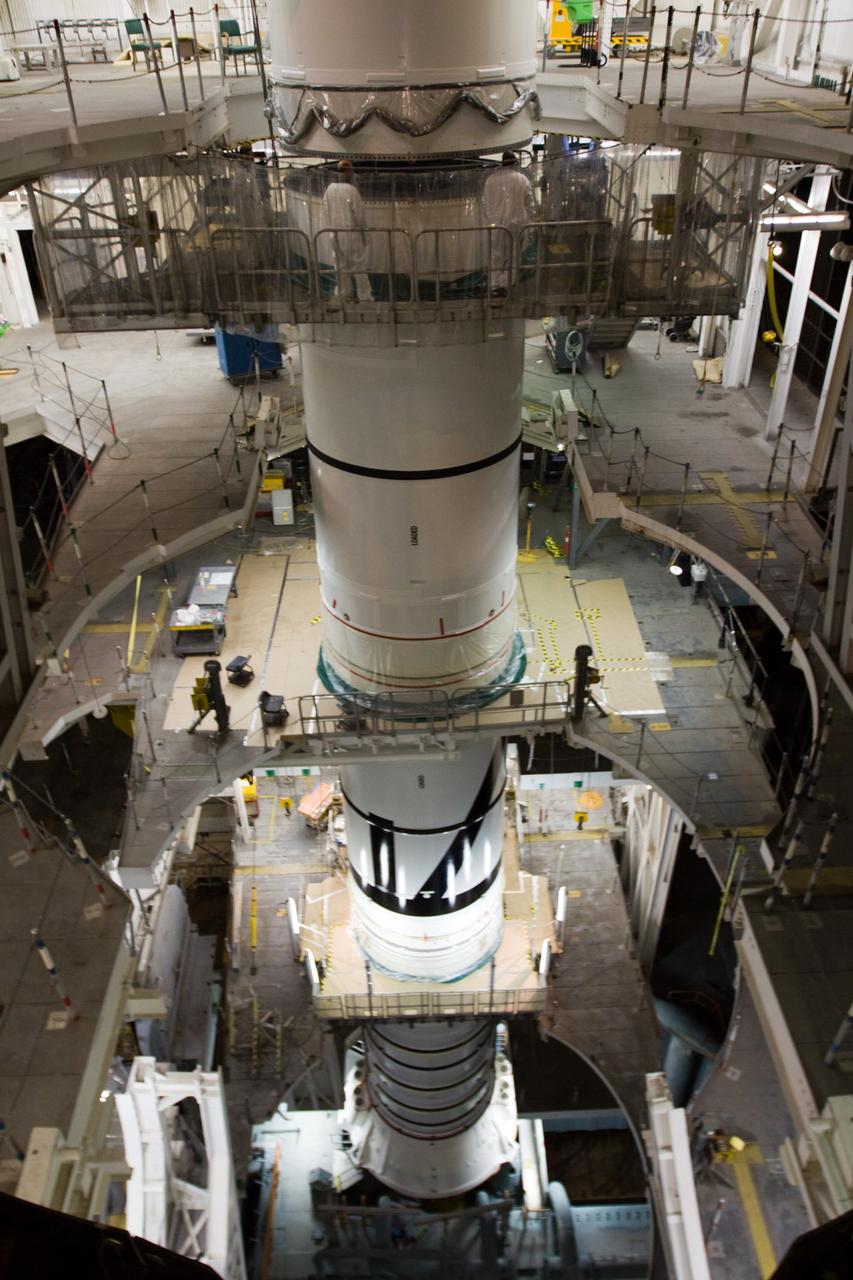
CAPE CANAVERAL, Fla. – In the High Bay 3 of NASA Kennedy Space Center's Vehicle Assembly Building, the Ares I-X forward segment is mated with the forward center segment, already stacked with the aft center and the aft skirt segments below. Part of the Constellation Program, the Ares I-X is the test vehicle for the Ares I, which is the essential core of a space transportation system that eventually will carry crewed missions back to the moon, on to Mars and out into the solar system . The Ares I-X flight test is targeted for no earlier than Aug. 30. Photo credit: NASA/Troy Cryder
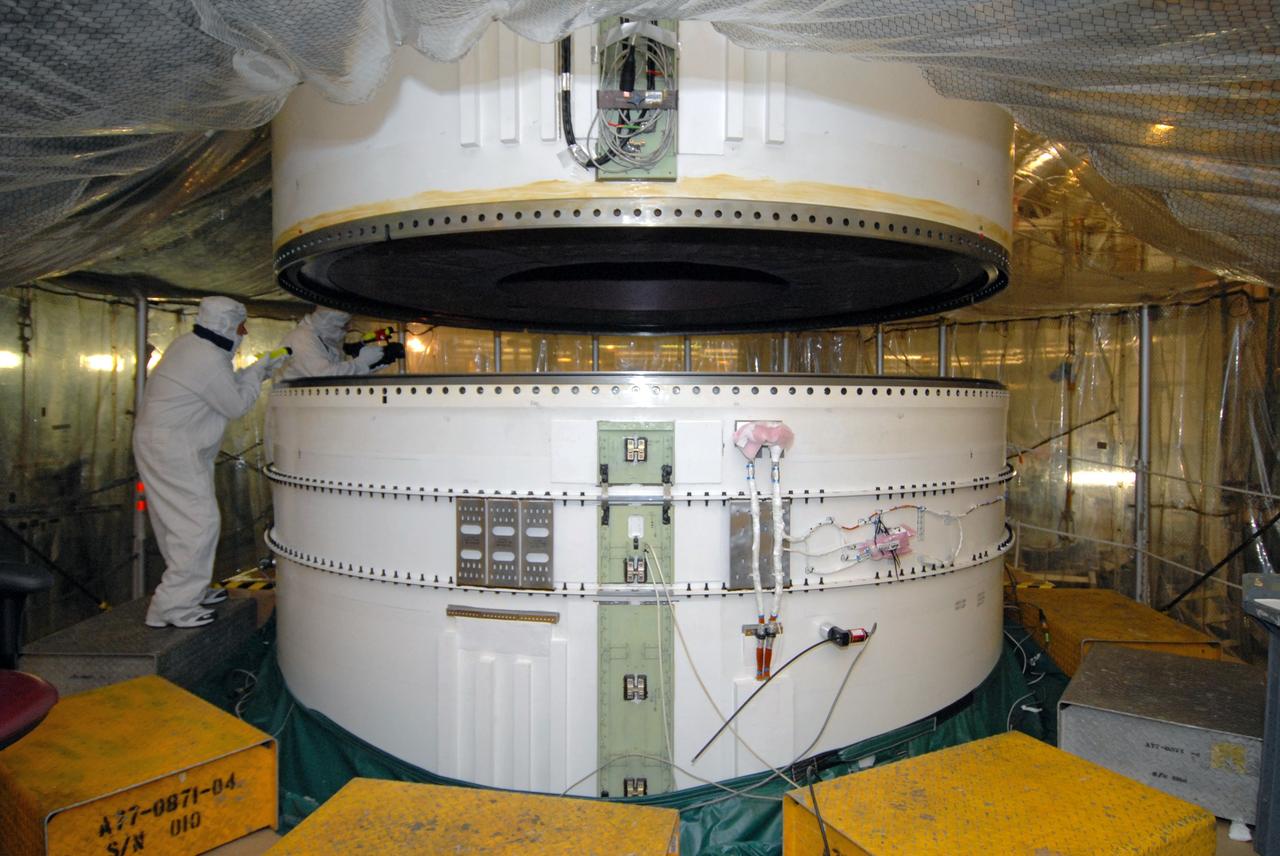
CAPE CANAVERAL, Fla. – In the Vehicle Assembly Building's High Bay 3 at NASA's Kennedy Space Center in Florida, the Ares I-X aft center booster segment is lowered for attachment to the aft booster and skirt. Part of the Constellation Program, the Ares I-X is the test vehicle for the Ares I, which is the essential core of a space transportation system that eventually will carry crewed missions back to the moon, on to Mars and out into the solar system . The flight test of the Ares I-X is targeted for no earlier than Aug. 30. Photo credit: NASA/Tim Jacobs
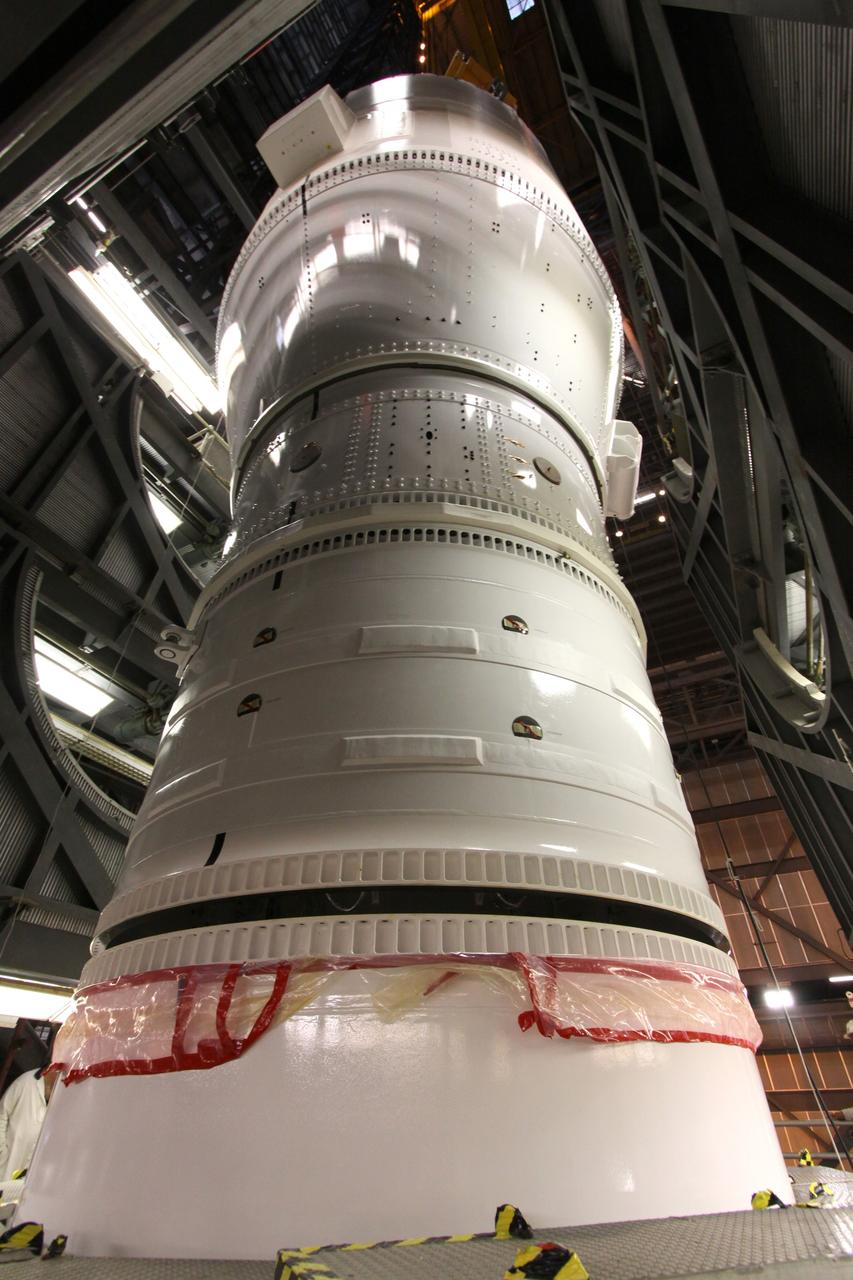
CAPE CANAVERAL, Fla. – In the Vehicle Assembly Building at NASA's Kennedy Space Center in Florida, segments of the Ares I-X first stage are lowered onto the fifth simulator segment for mating, to complete Super Stack 1. The super stack comprises the forward skirt, forward skirt extension, interstages 1 and 2 and the fifth segment simulator. Ares I-X is the test vehicle for the Ares I, which is part of the Constellation Program to return men to the moon and beyond. The Ares I-X flight test is targeted no earlier than Aug. 30 from Launch Pad 39B. Photo credit: NASA/Jack Pfaller
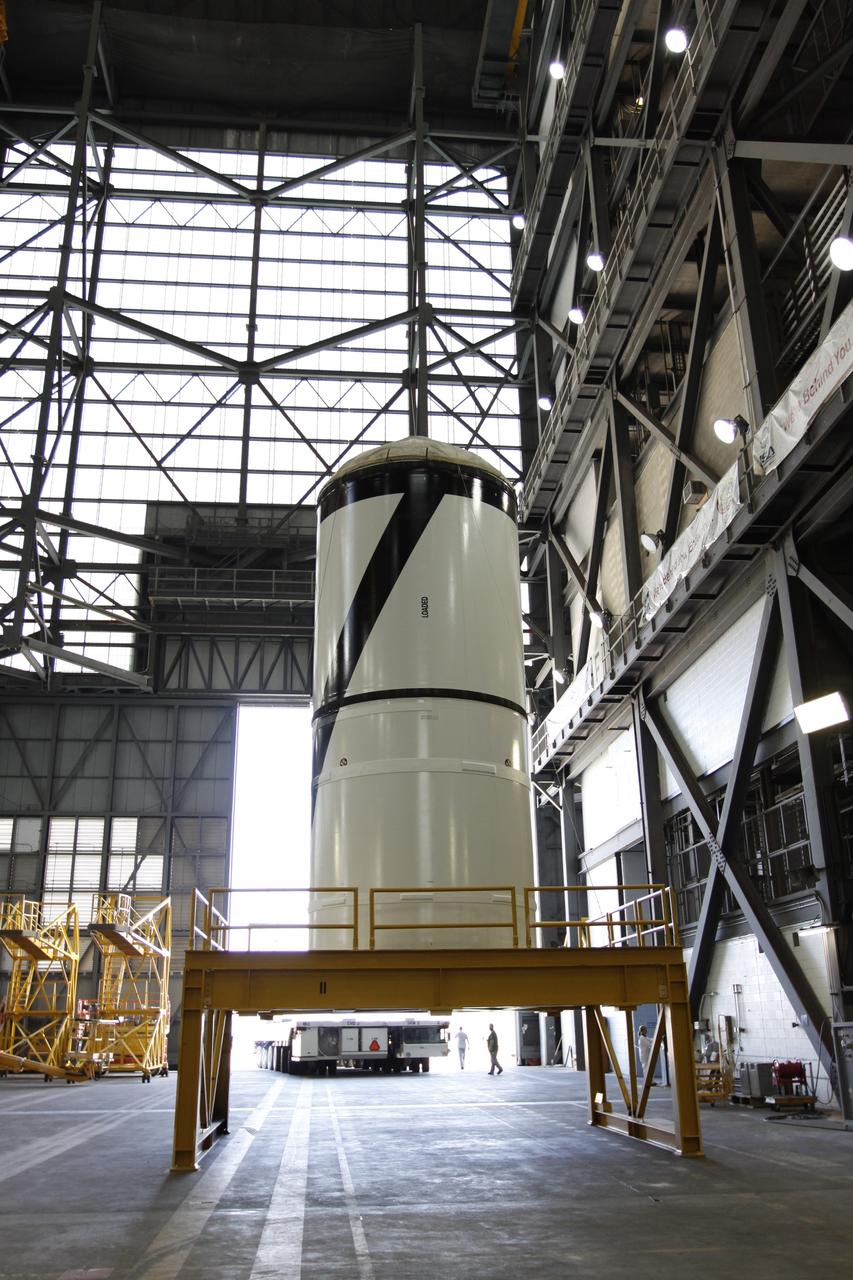
CAPE CANAVERAL, Fla. – The Ares I-X forward segment is in the transfer aisle of the Vehicle Assembly Building at NASA's Kennedy Space Center in Florida. It will be mated with the aft center and aft segments already stacked. Part of the Constellation Program, the Ares I-X is the test vehicle for the Ares I, which is the essential core of a space transportation system that eventually will carry crewed missions back to the moon, on to Mars and out into the solar system . The Ares I-X flight test is targeted for no earlier than Aug. 30. Photo credit: NASA/Troy Cryder
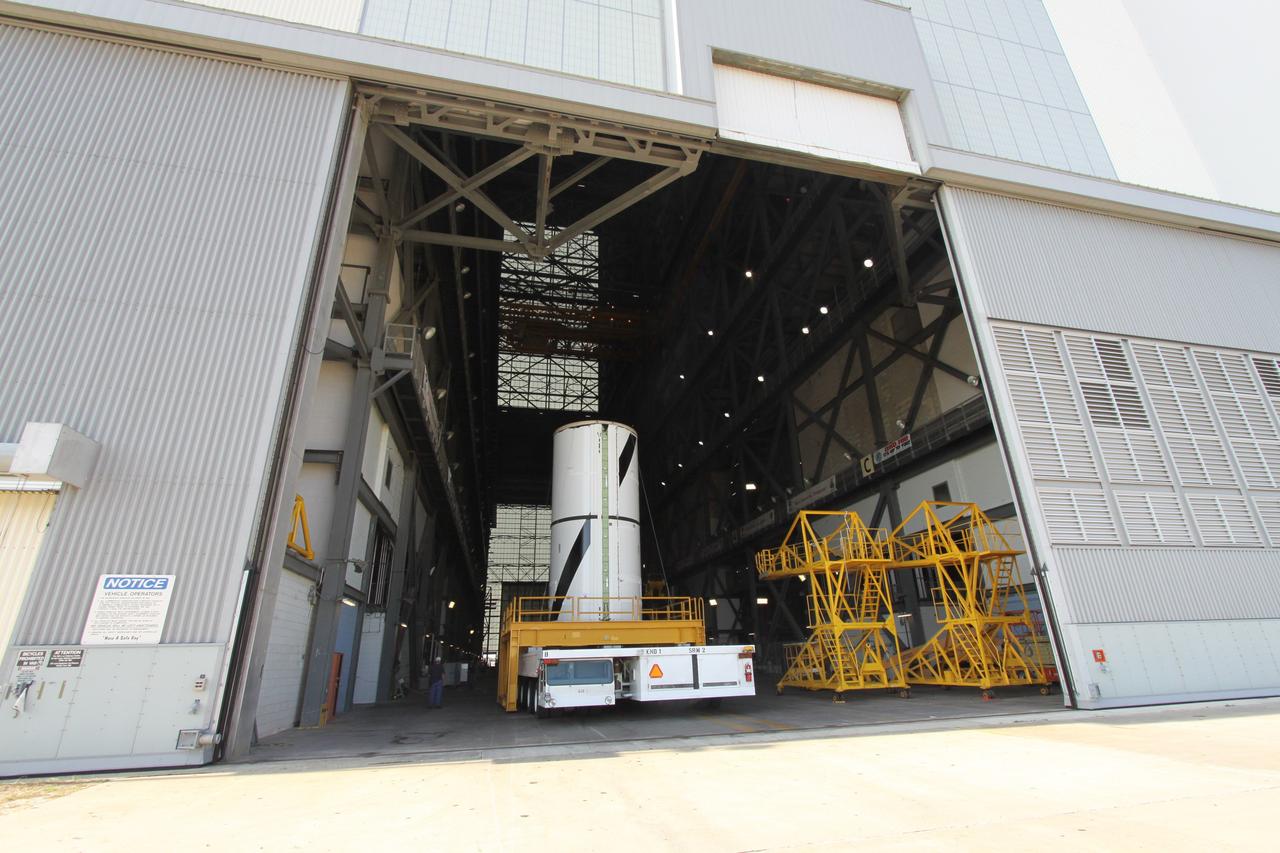
CAPE CANAVERAL, Fla. – At NASA's Kennedy Space Center in Florida, the Ares I-X forward center segment moves into the transfer aisle of the Vehicle Assembly Building, or VAB. The launch vehicle is being assembled in the VAB's High Bay 3. Part of the Constellation Program, the Ares I-X is the test vehicle for the Ares I, which is the essential core of a space transportation system that eventually will carry crewed missions back to the moon, on to Mars and out into the solar system . The Ares I-X flight test is targeted for no earlier than Aug. 30. Photo credit: NASA/Jack Pfaller
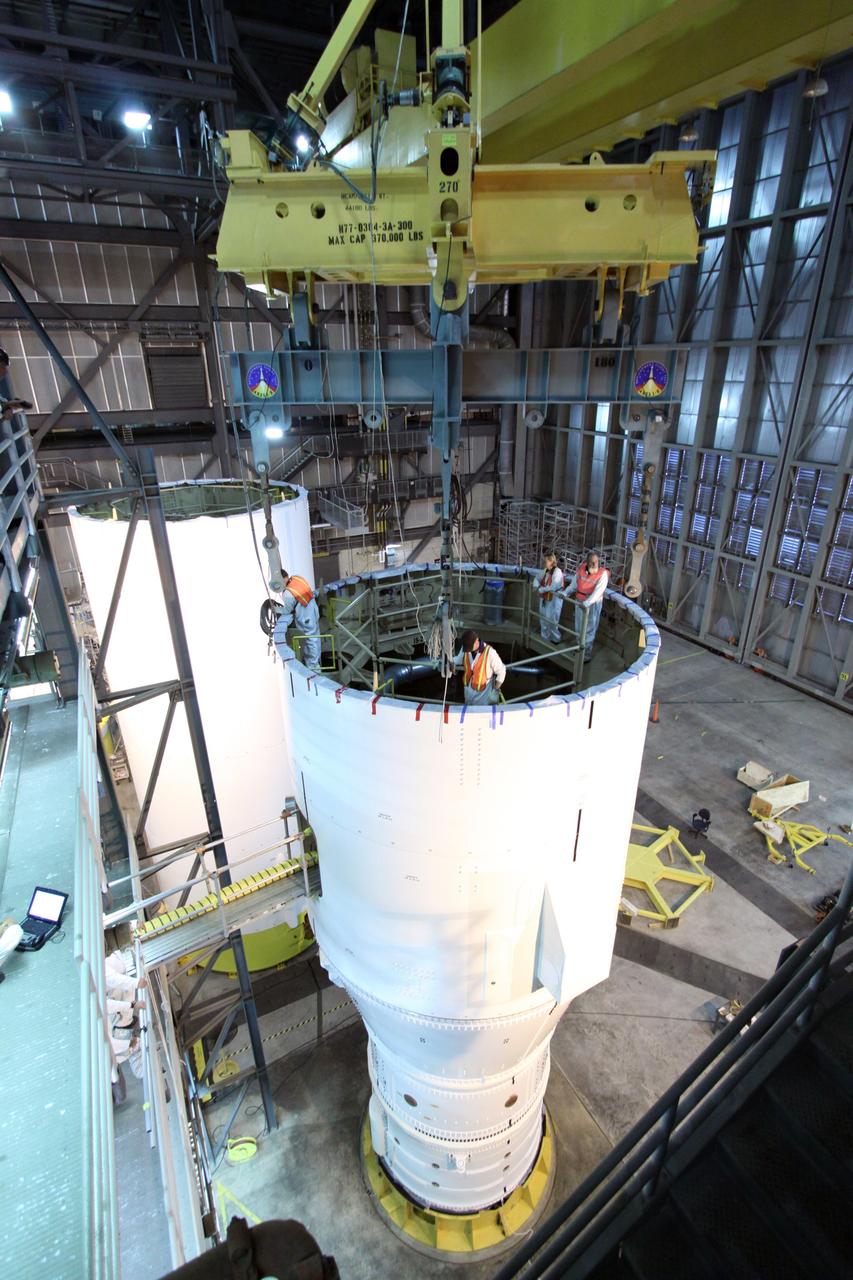
CAPE CANAVERAL, Fla. – In the Vehicle Assembly Building at NASA's Kennedy Space Center in Florida, the segments of the Ares I-X first stage are fitted with a crane to lift it to the fifth segment simulator for mating, completing Super Stack 1. The super stack comprises the forward skirt, forward skirt extension, interstages 1 and 2 and the fifth segment simulator. Ares I-X is the test vehicle for the Ares I, which is part of the Constellation Program to return men to the moon and beyond. The Ares I-X flight test is targeted no earlier than Aug. 30 from Launch Pad 39B. Photo credit: NASA/Jack Pfaller
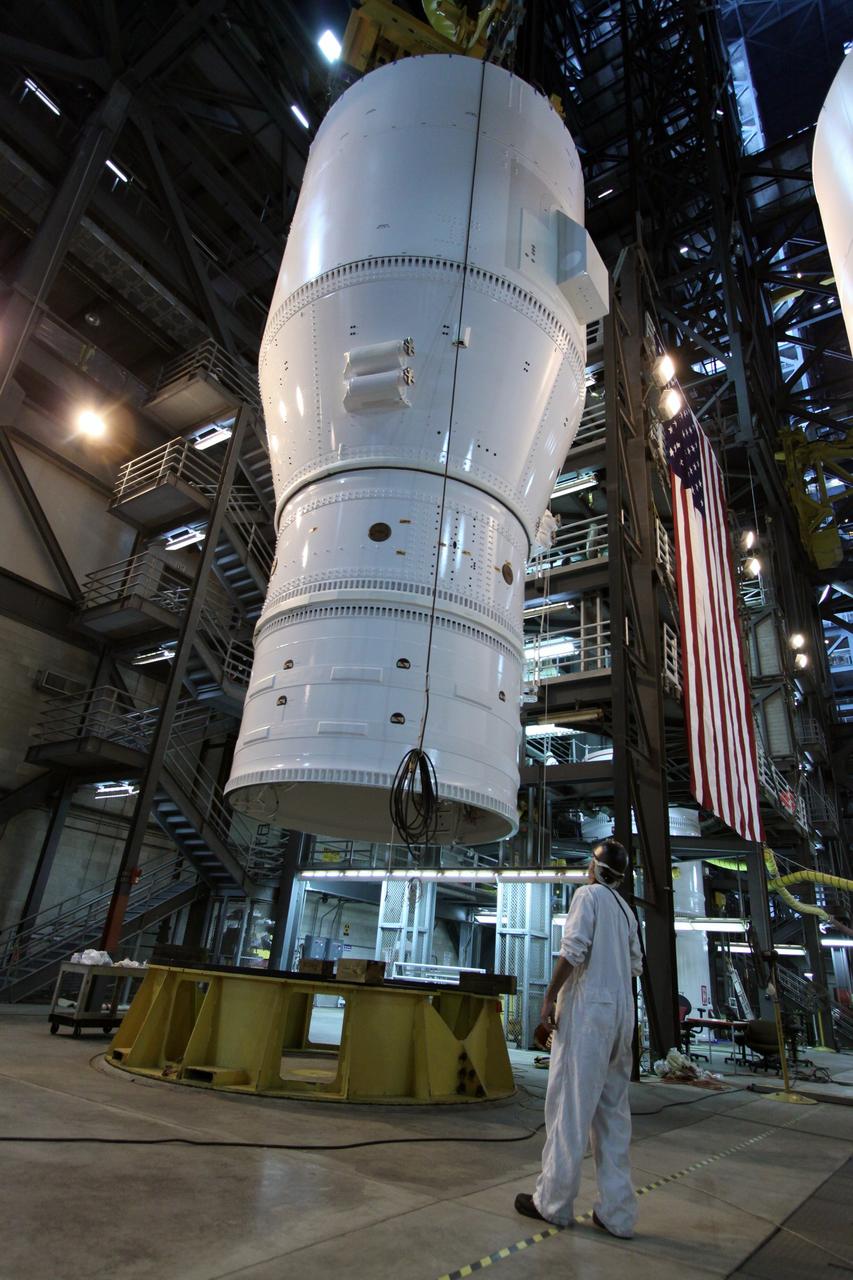
CAPE CANAVERAL, Fla. – In the Vehicle Assembly Building at NASA's Kennedy Space Center in Florida, segments of the Ares I-X first stage are lifted from the stand. The segments are being moved for stacking and mating to the fifth segment simulator, completing Super Stack 1. The super stack comprises the forward skirt, forward skirt extension, interstages 1 and 2 and the fifth segment simulator. Ares I-X is the test vehicle for the Ares I, which is part of the Constellation Program to return men to the moon and beyond. The Ares I-X flight test is targeted no earlier than Aug. 30 from Launch Pad 39B. Photo credit: NASA/Jack Pfaller
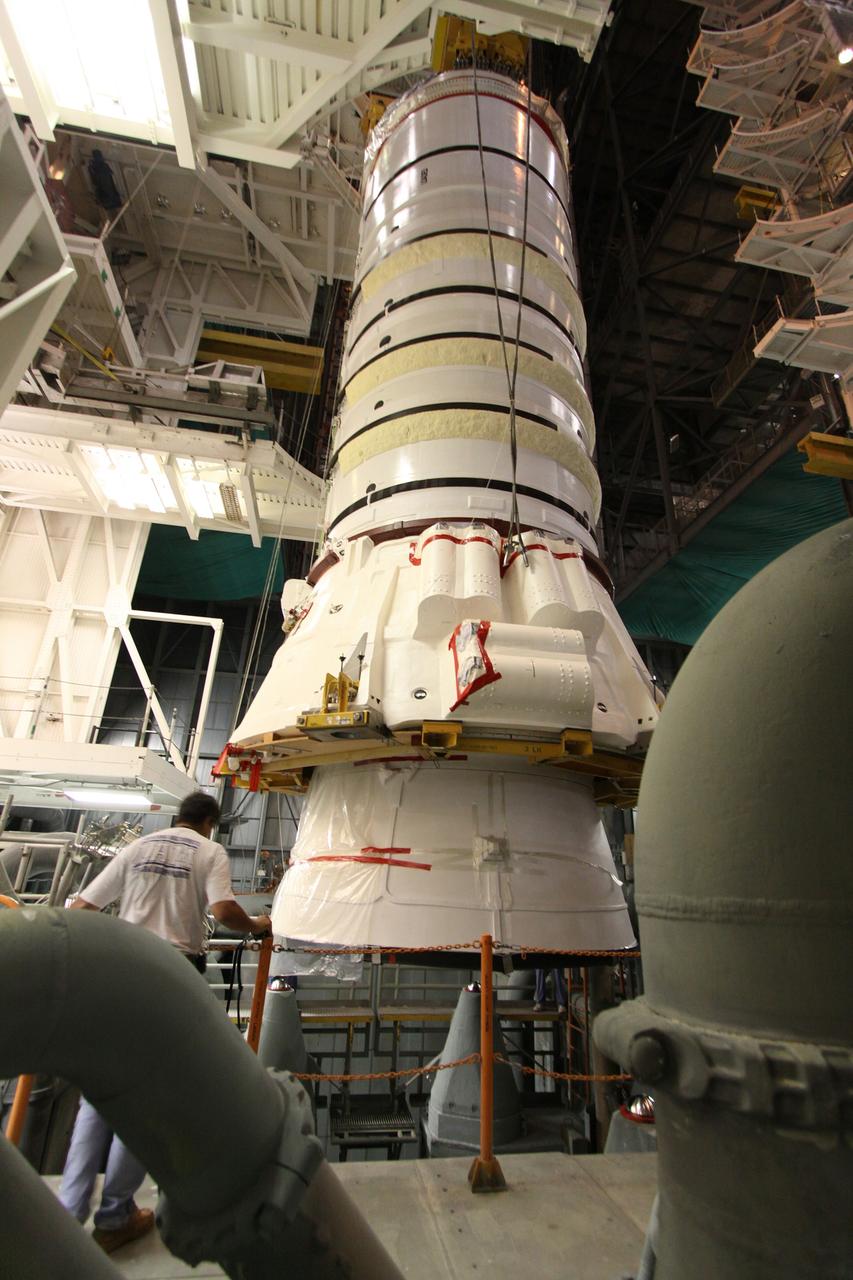
CAPE CANAVERAL, Fla. – In the Vehicle Assembly Building at NASA's Kennedy Space Center in Florida, workers keep watch as the Ares I-X aft booster segment with the aft skirt is lowered toward the mobile launch platform in High Bay 3. This is the start of the buildup of the Ares I-X launch vehicle for the flight test targeted for no earlier than Aug. 30. Part of the Constellation Program, the Ares I-X is the test vehicle for the Ares I, which is the essential core of a space transportation system that eventually will carry crewed missions back to the moon, on to Mars and out into the solar system. Photo credit: NASA/Jack Pfaller
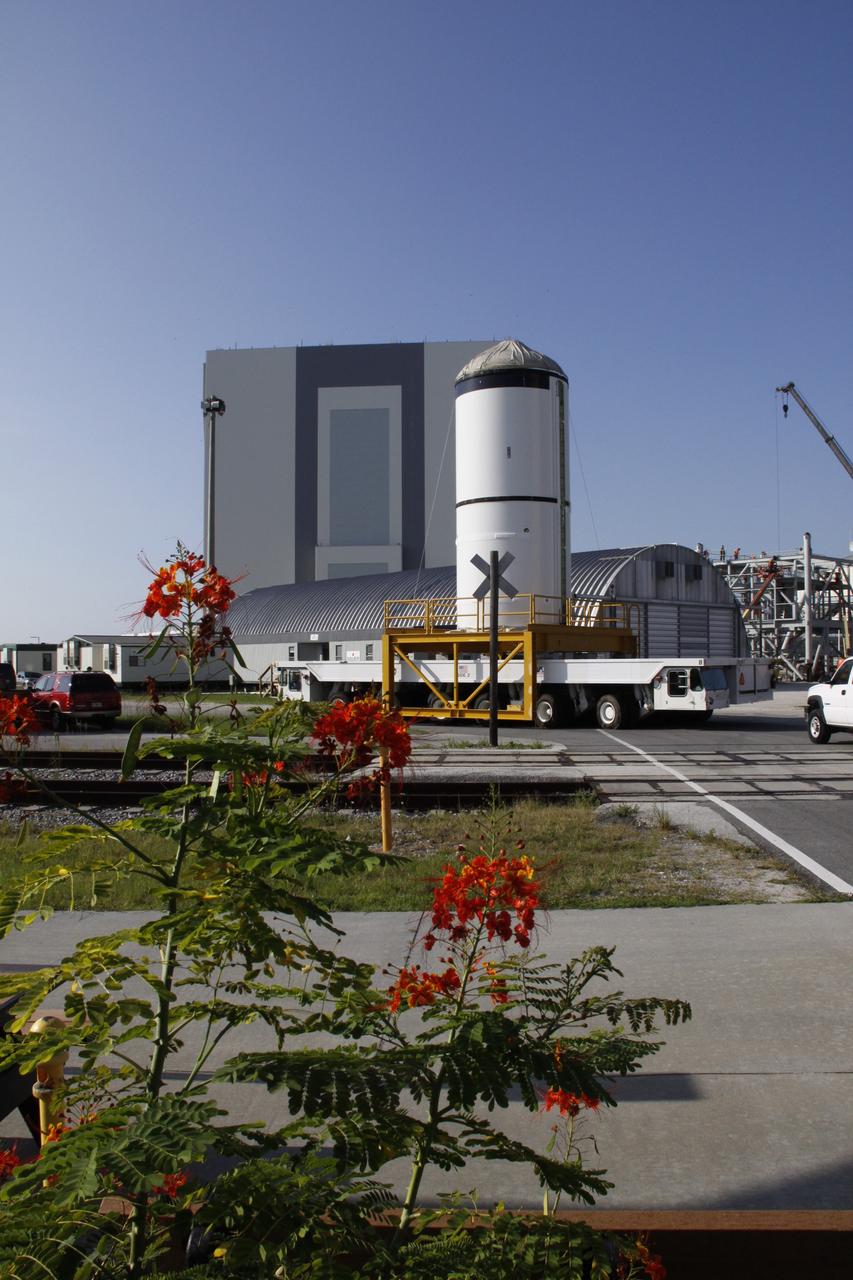
CAPE CANAVERAL, Fla. – The Ares I-X forward segment leaves the Rotation, Surge and Processing Facility at NASA's Kennedy Space Center in Florida. It is being transported to the Vehicle Assembly Building, which is in the background, for mating with the aft center and aft segments already stacked. Part of the Constellation Program, the Ares I-X is the test vehicle for the Ares I, which is the essential core of a space transportation system that eventually will carry crewed missions back to the moon, on to Mars and out into the solar system . The Ares I-X flight test is targeted for no earlier than Aug. 30. Photo credit: NASA/Troy Cryder
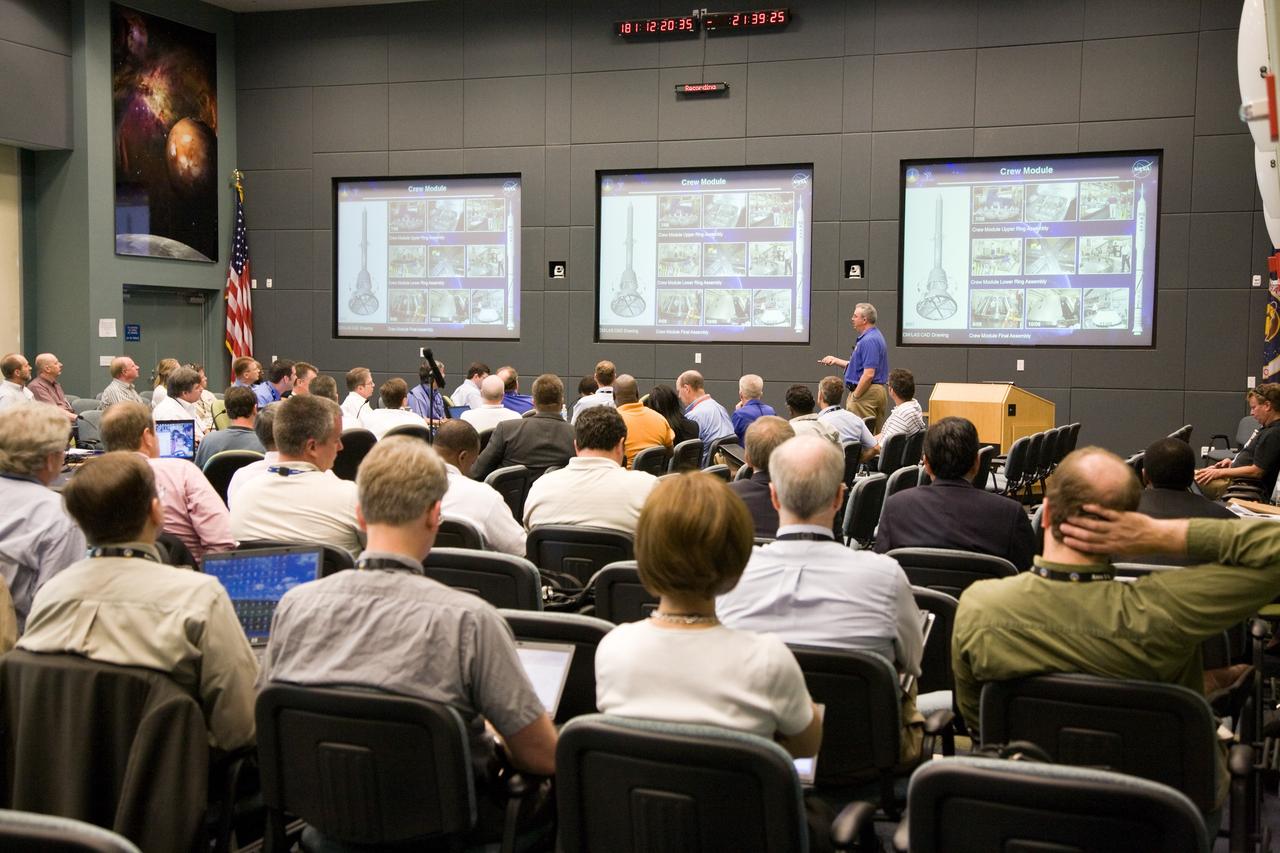
CAPE CANAVERAL, Fla. – At NASA's Kennedy Space Center in Florida, the Ares I-X management team reviews consensus for stacking and mating of the I-X upper stage segments. Steve Davis, deputy mission manager, provides a slide presentation of the Crew Module. Launch of the Ares I-X flight test is targeted no earlier than Aug. 30 from Launch Pad 39B. Ares I is the essential core of a safe, reliable, cost-effective space transportation system that eventually will carry crewed missions back to the moon, on to Mars and out into the solar system. Photo credit: NASA/Dimitri Gerondidakis
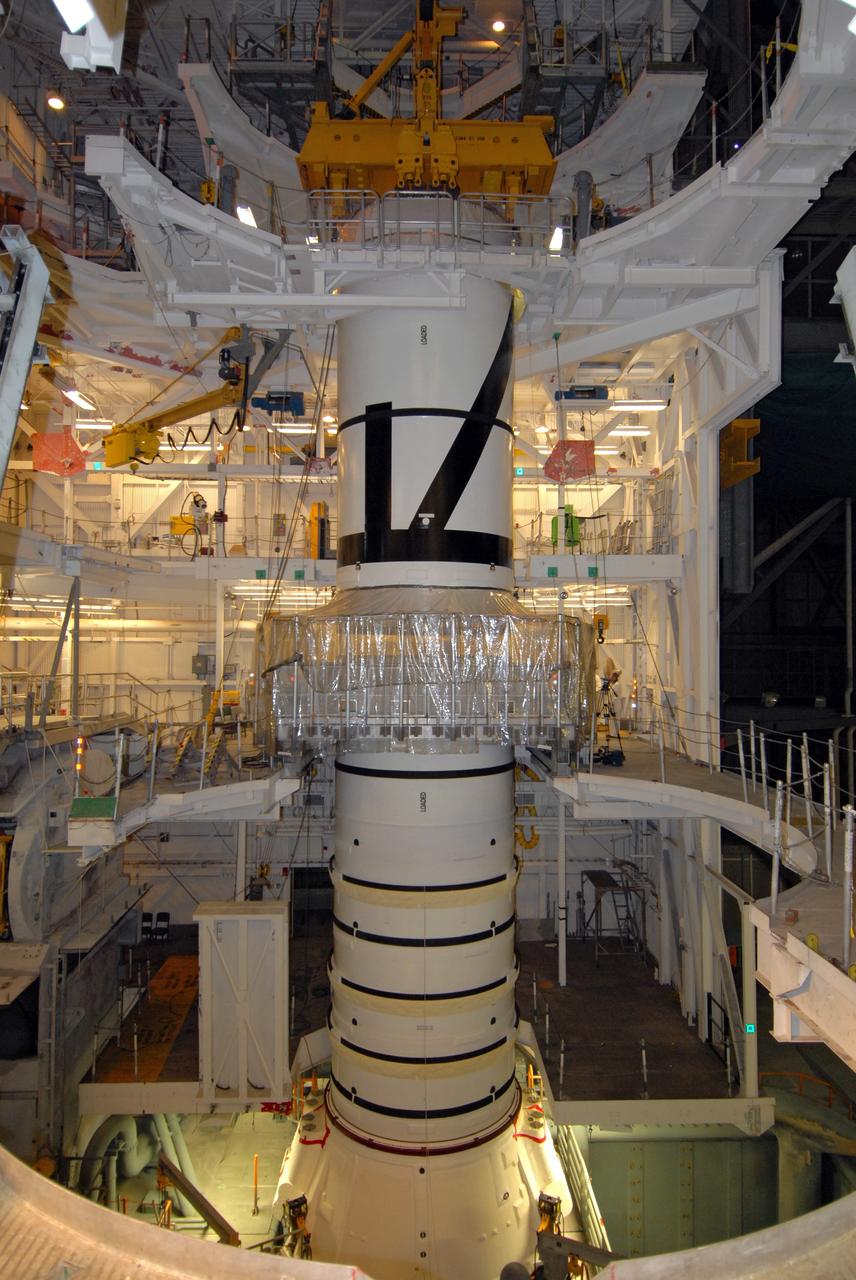
CAPE CANAVERAL, Fla. – In the Vehicle Assembly Building's High Bay 3 at NASA's Kennedy Space Center in Florida, the Ares I-X aft center booster segment is lowered onto the aft booster and skirt for mating. Part of the Constellation Program, the Ares I-X is the test vehicle for the Ares I, which is the essential core of a space transportation system that eventually will carry crewed missions back to the moon, on to Mars and out into the solar system . The flight test of the Ares I-X is targeted for no earlier than Aug. 30. Photo credit: NASA/Tim Jacobs
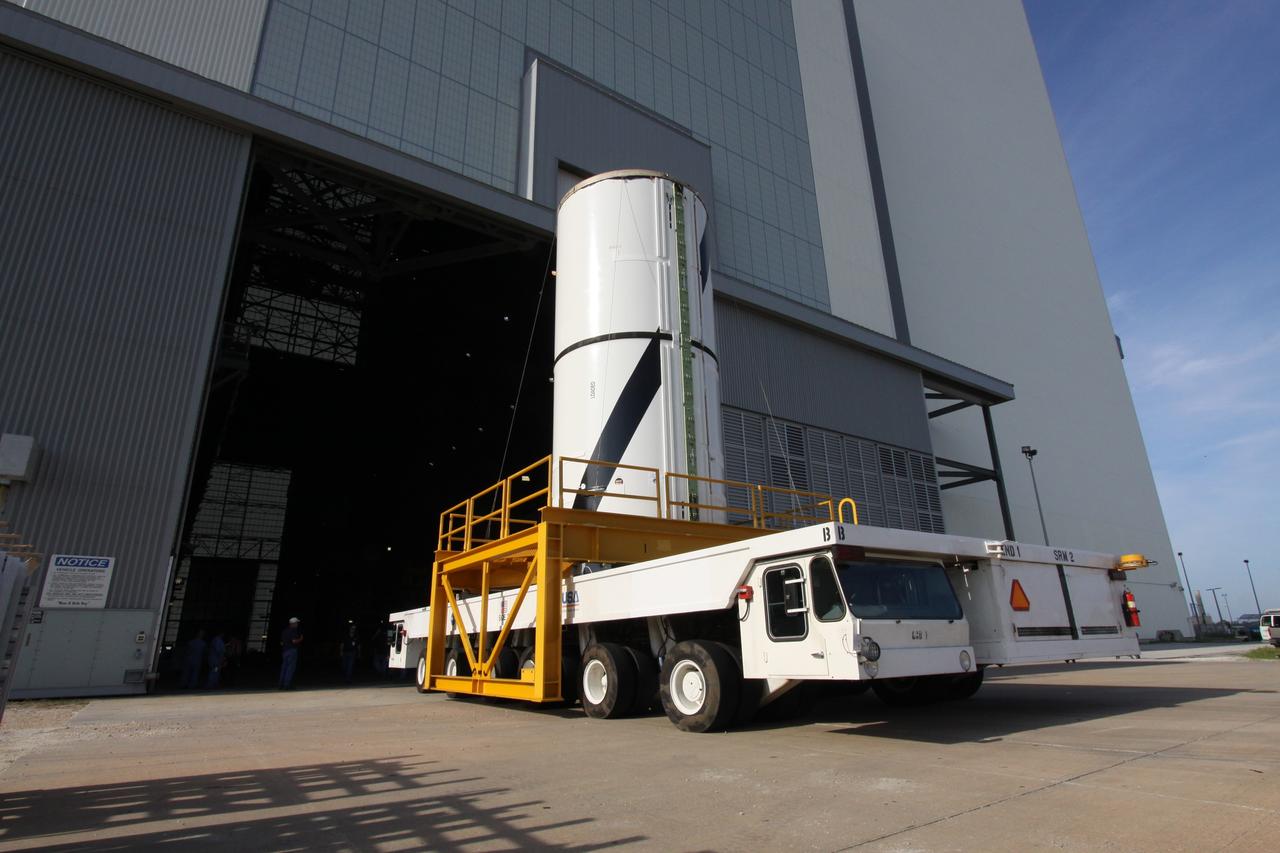
CAPE CANAVERAL, Fla. – At NASA's Kennedy Space Center in Florida, the Ares I-X forward center segment heads through the door of the Vehicle Assembly Building, or VAB. The launch vehicle is being assembled in the VAB's High Bay 3. Part of the Constellation Program, the Ares I-X is the test vehicle for the Ares I, which is the essential core of a space transportation system that eventually will carry crewed missions back to the moon, on to Mars and out into the solar system . The Ares I-X flight test is targeted for no earlier than Aug. 30. Photo credit: NASA/Jack Pfaller
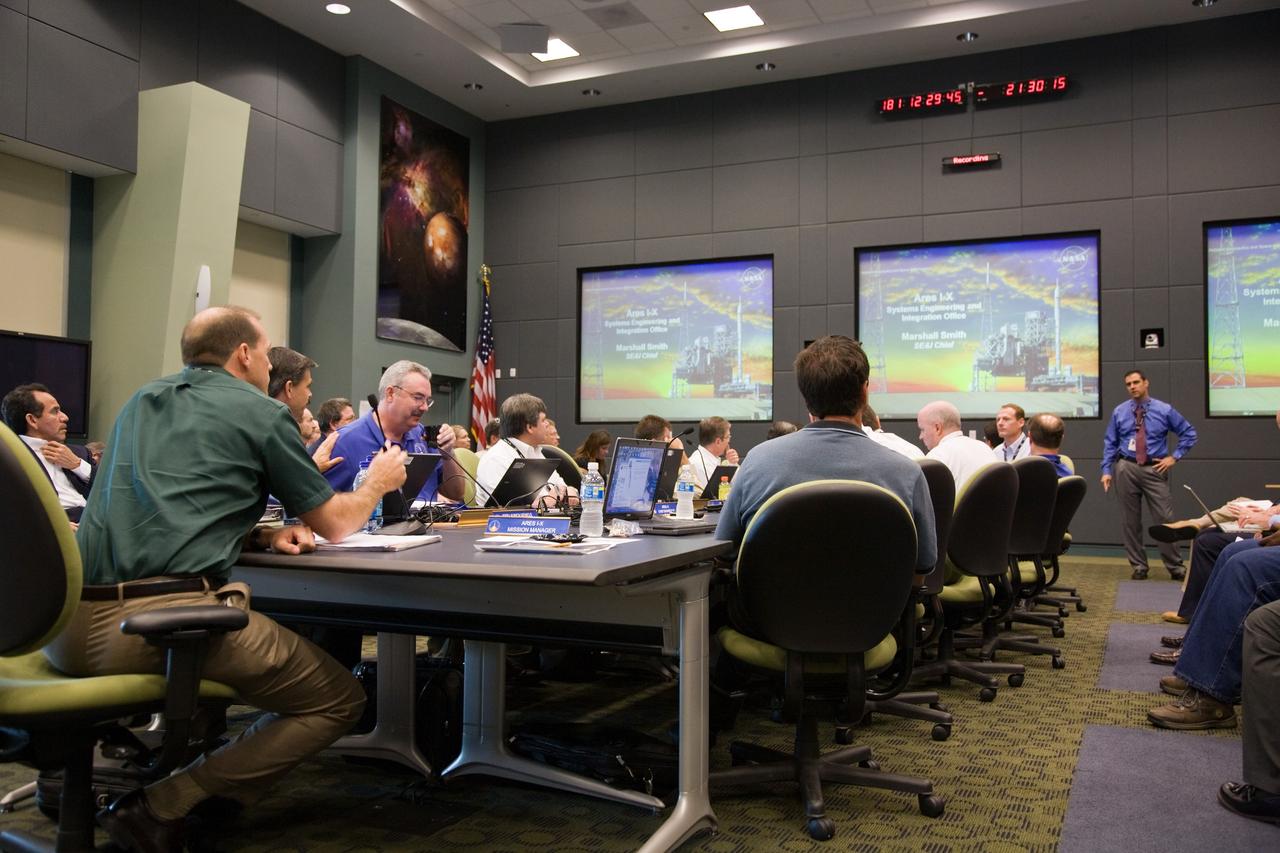
CAPE CANAVERAL, Fla. – At NASA's Kennedy Space Center in Florida, Marshall Smith, the Ares I-X Systems Engineering and Integration chief, reviews consensus for stacking and mating of the I-X upper stage segments with the management team. Launch of the Ares I-X flight test is targeted no earlier than Aug. 30 from Launch Pad 39B. Ares I is the essential core of a safe, reliable, cost-effective space transportation system that eventually will carry crewed missions back to the moon, on to Mars and out into the solar system. Photo credit: NASA/Dimitri Gerondidakis
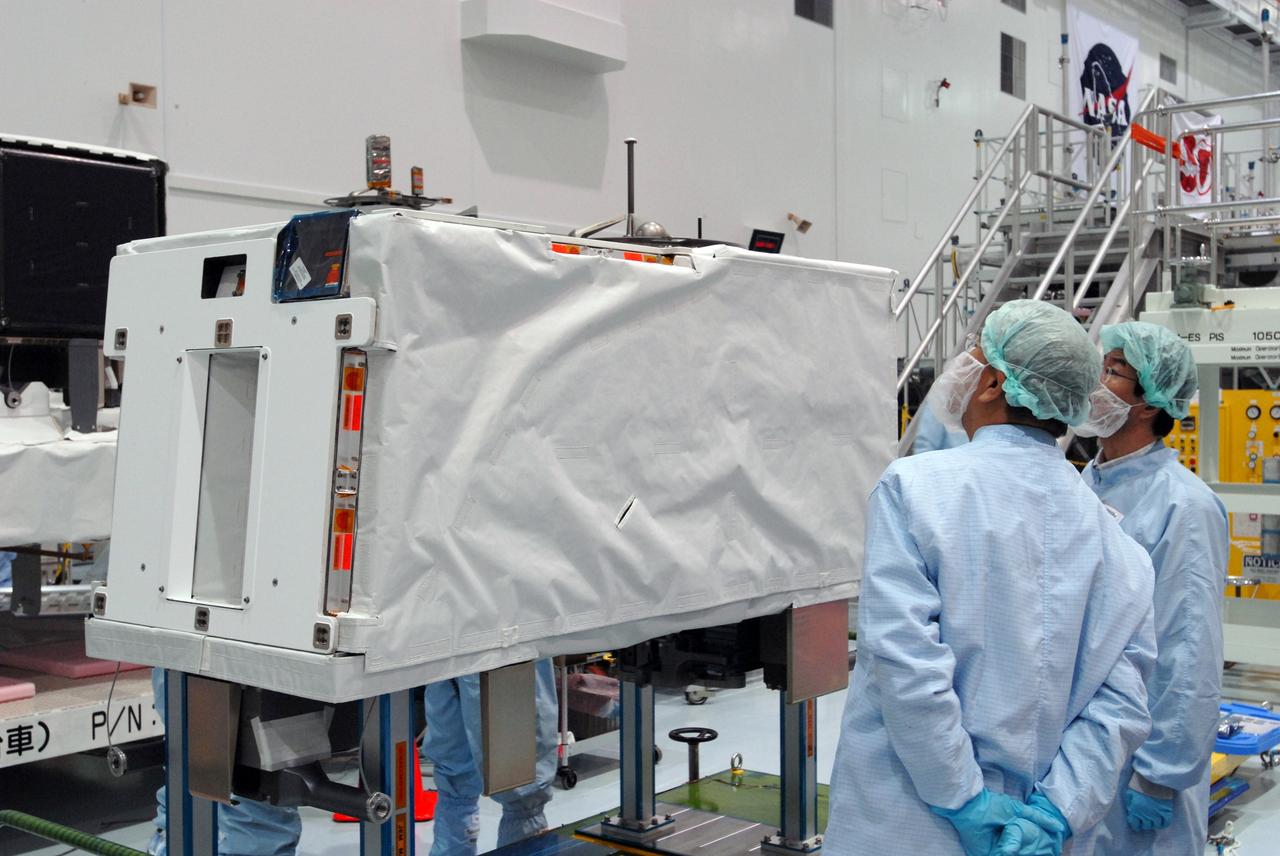
CAPE CANAVERAL, Fla. -- In the Space Station Processing Facility at NASA's Kennedy Space Center in Florida, the MAXI (Monitor of All-sky X-ray Image) is waiting to be installed on the Japanese Experiment Module's Experiment Logistics Module-Exposed Section, or ELM-ES. The MAXI is part of space shuttle Endeavour's payload on the STS-127 mission. Using X-ray slit cameras with high sensitivity, the MAXI will continuously monitor astronomical X-ray objects over a broad energy band (0.5 to 30 keV). Endeavour is targeted to launch May 15. Photo credit: NASA/Jim Grossmann
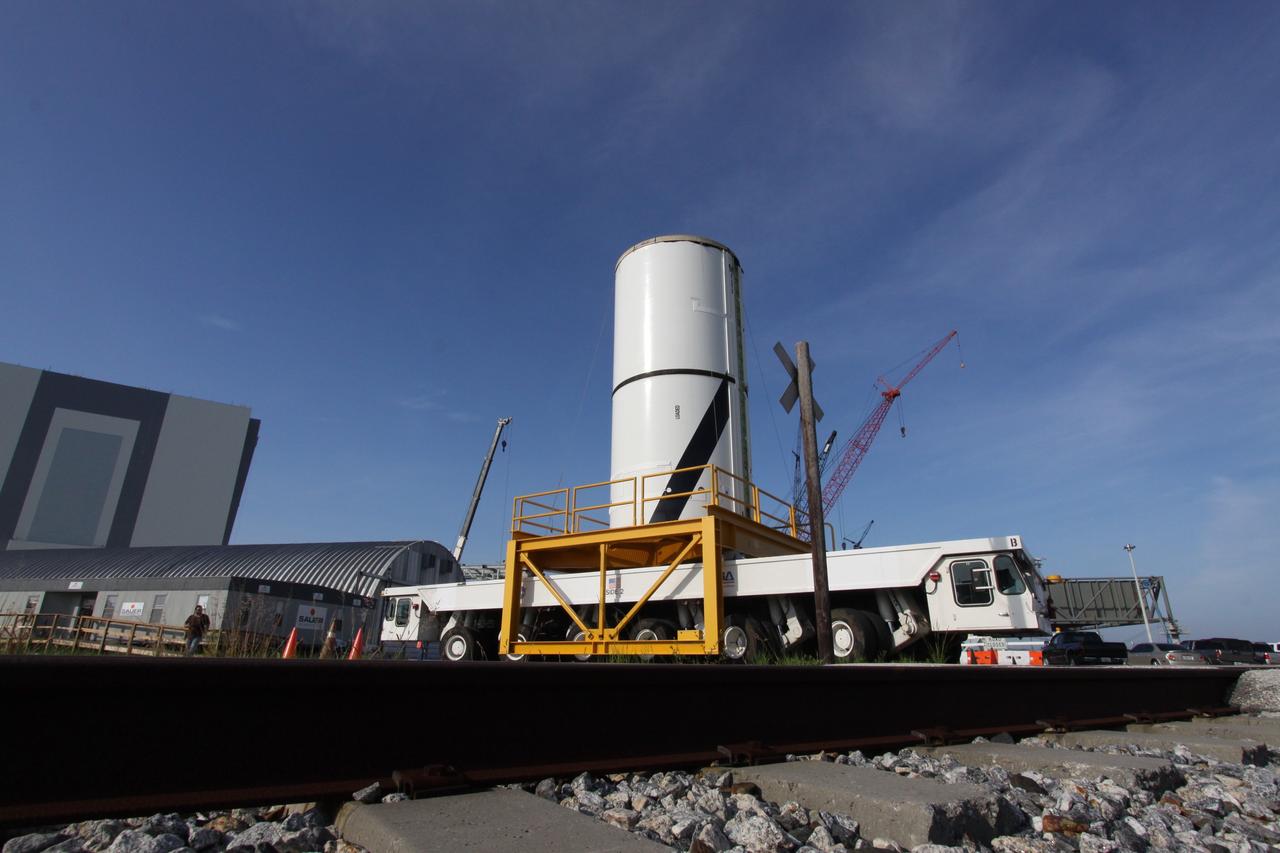
CAPE CANAVERAL, Fla. – At NASA's Kennedy Space Center in Florida, the Ares I-X forward center segment nears the Vehicle Assembly Building, or VAB, after leaving the Rotation, Processing and Surge Facility. The launch vehicle is being assembled in the VAB's High Bay 3. Part of the Constellation Program, the Ares I-X is the test vehicle for the Ares I, which is the essential core of a space transportation system that eventually will carry crewed missions back to the moon, on to Mars and out into the solar system . The Ares I-X flight test is targeted for no earlier than Aug. 30. Photo credit: NASA/Jack Pfaller
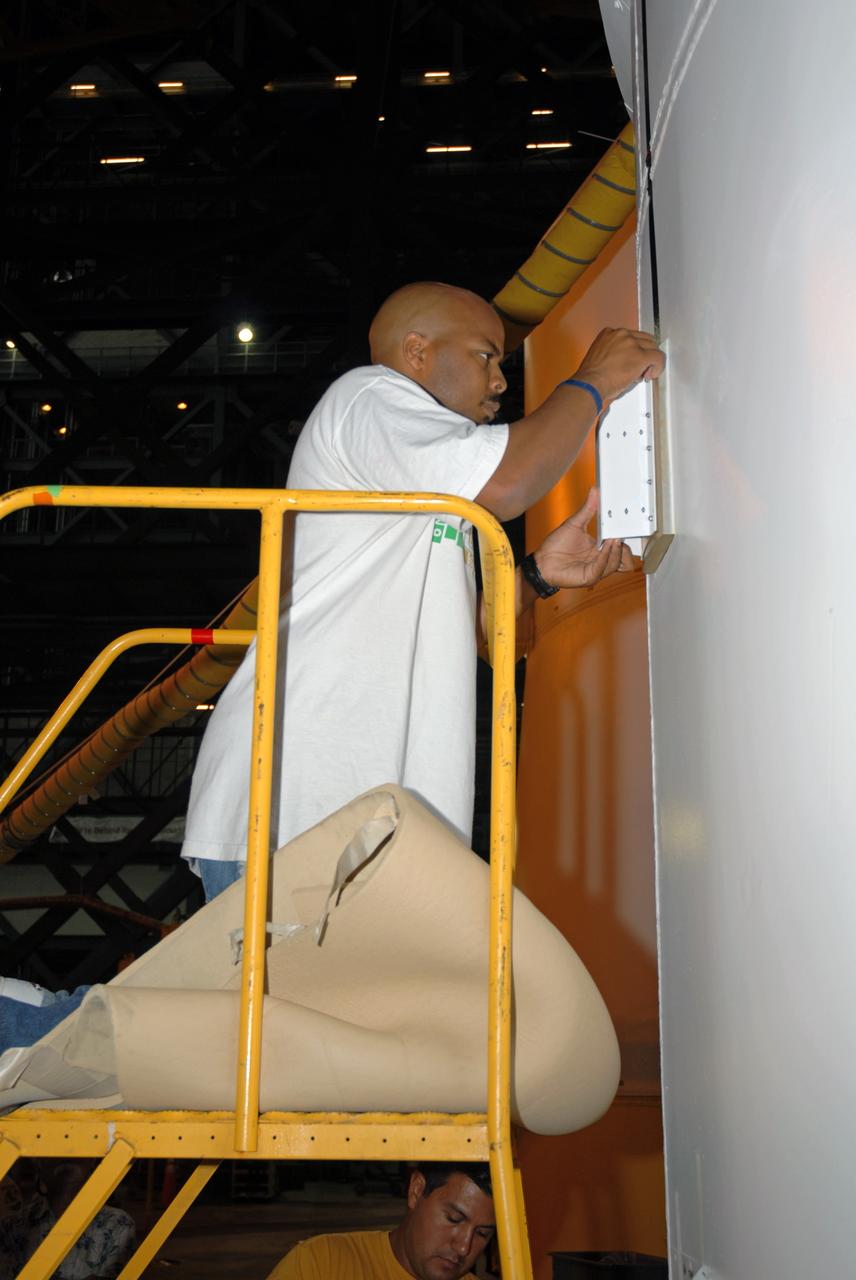
CAPE CANAVERAL, Fla. – In the Vehicle Assembly Building's High Bay 4 at NASA's Kennedy Space Center in Florida, technician Troy Merrick, with United Space Alliance, installs a video camera on the side of the Ares I-X segments 6 and 7. The downward facing camera will provide live video during launch. Part of the Constellation Program, the Ares I-X is the test vehicle for the Ares I, which is the essential core of a space transportation system that eventually will carry crewed missions back to the moon, on to Mars and out into the solar system . The Ares I-X flight test is targeted for no earlier than Aug. 30. Photo credit: NASA/Jack Pfaller
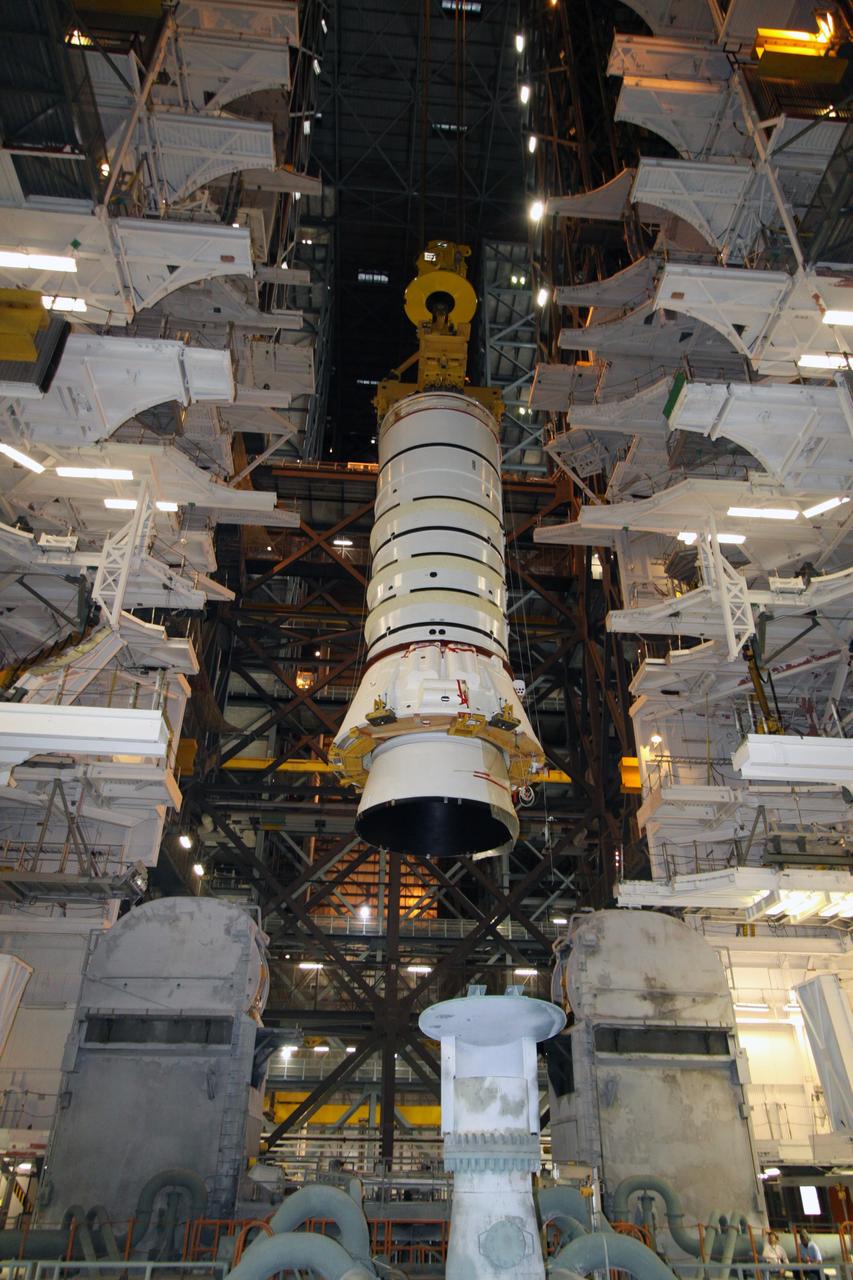
CAPE CANAVERAL, Fla. – In the Vehicle Assembly Building at NASA's Kennedy Space Center in Florida, the Ares I-X aft booster segment with the aft skirt is lowered toward the mobile launch platform in High Bay 3. This is the start of the buildup of the Ares I-X launch vehicle for the flight test targeted for no earlier than Aug. 30. Part of the Constellation Program, the Ares I-X is the test vehicle for the Ares I, which is the essential core of a space transportation system that eventually will carry crewed missions back to the moon, on to Mars and out into the solar system. Photo credit: NASA/Jack Pfaller
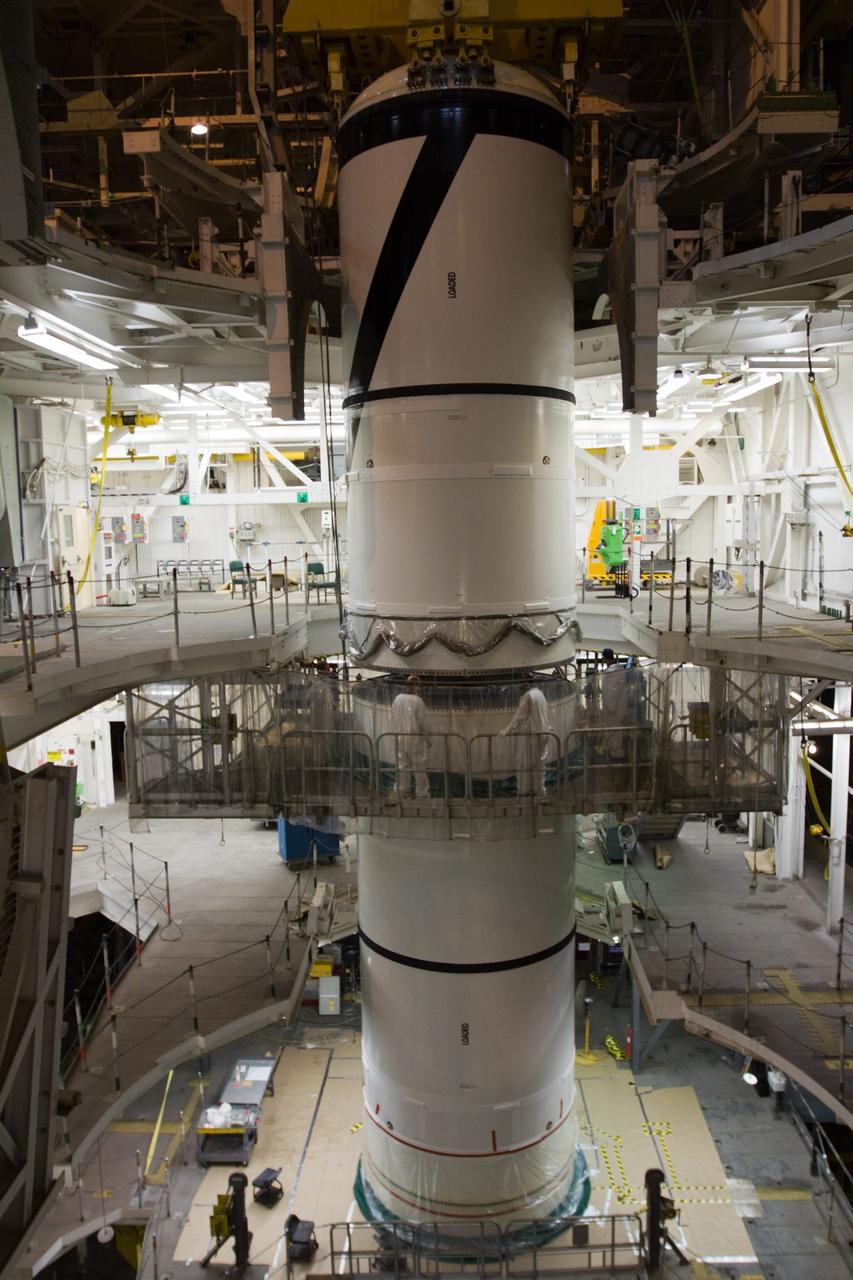
CAPE CANAVERAL, Fla. – In the High Bay 3 of NASA Kennedy Space Center's Vehicle Assembly Building, the Ares I-X forward segment is lowered onto the forward center for mating. The forward center is already mated with the aft center and the aft skirt segments below. Part of the Constellation Program, the Ares I-X is the test vehicle for the Ares I, which is the essential core of a space transportation system that eventually will carry crewed missions back to the moon, on to Mars and out into the solar system . The Ares I-X flight test is targeted for no earlier than Aug. 30. Photo credit: NASA/Troy Cryder
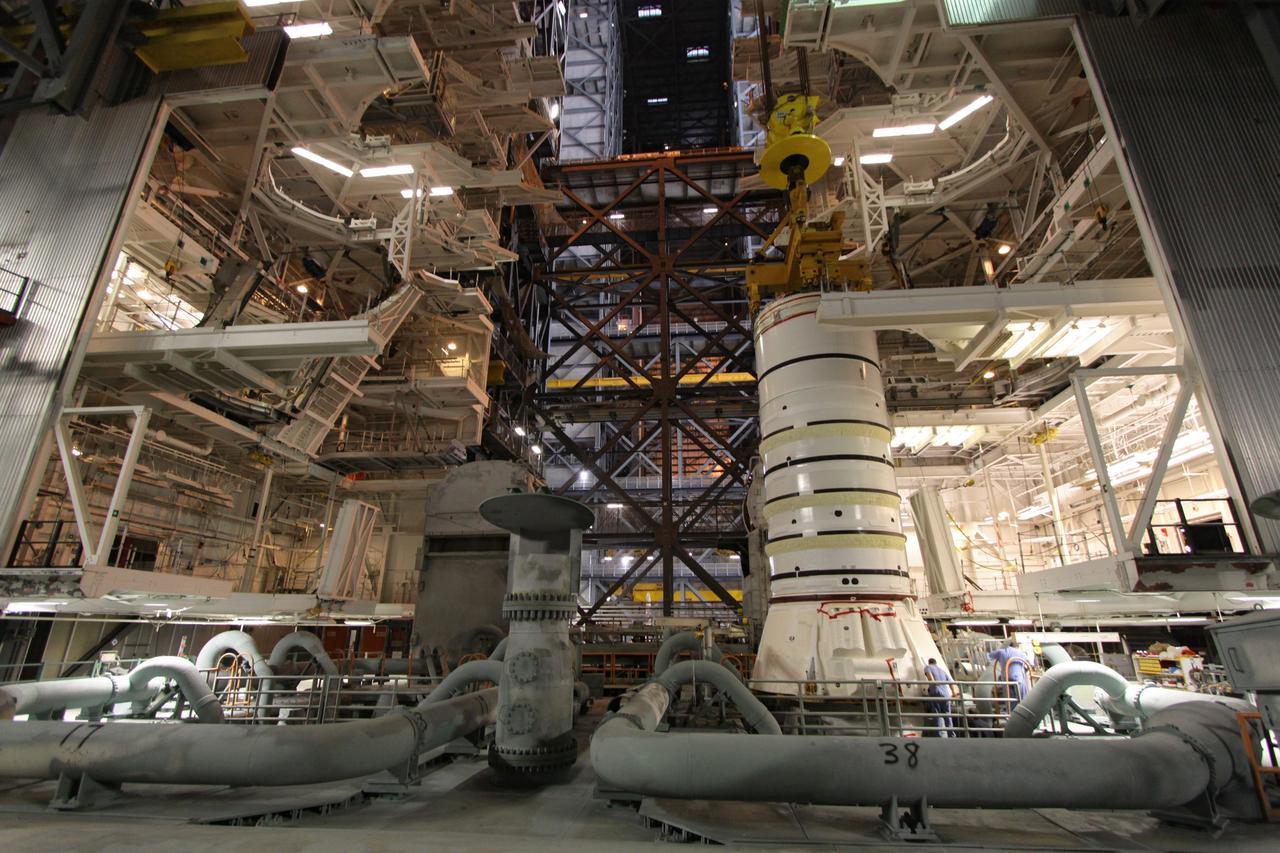
CAPE CANAVERAL, Fla. – In the Vehicle Assembly Building at NASA's Kennedy Space Center in Florida, the Ares I-X aft booster segment with the aft skirt is lowered onto the mobile launch platform in High Bay 3. This is the start of the buildup of the Ares I-X launch vehicle for the flight test targeted for no earlier than Aug. 30. Part of the Constellation Program, the Ares I-X is the test vehicle for the Ares I, which is the essential core of a space transportation system that eventually will carry crewed missions back to the moon, on to Mars and out into the solar system. Photo credit: NASA/Jack Pfaller
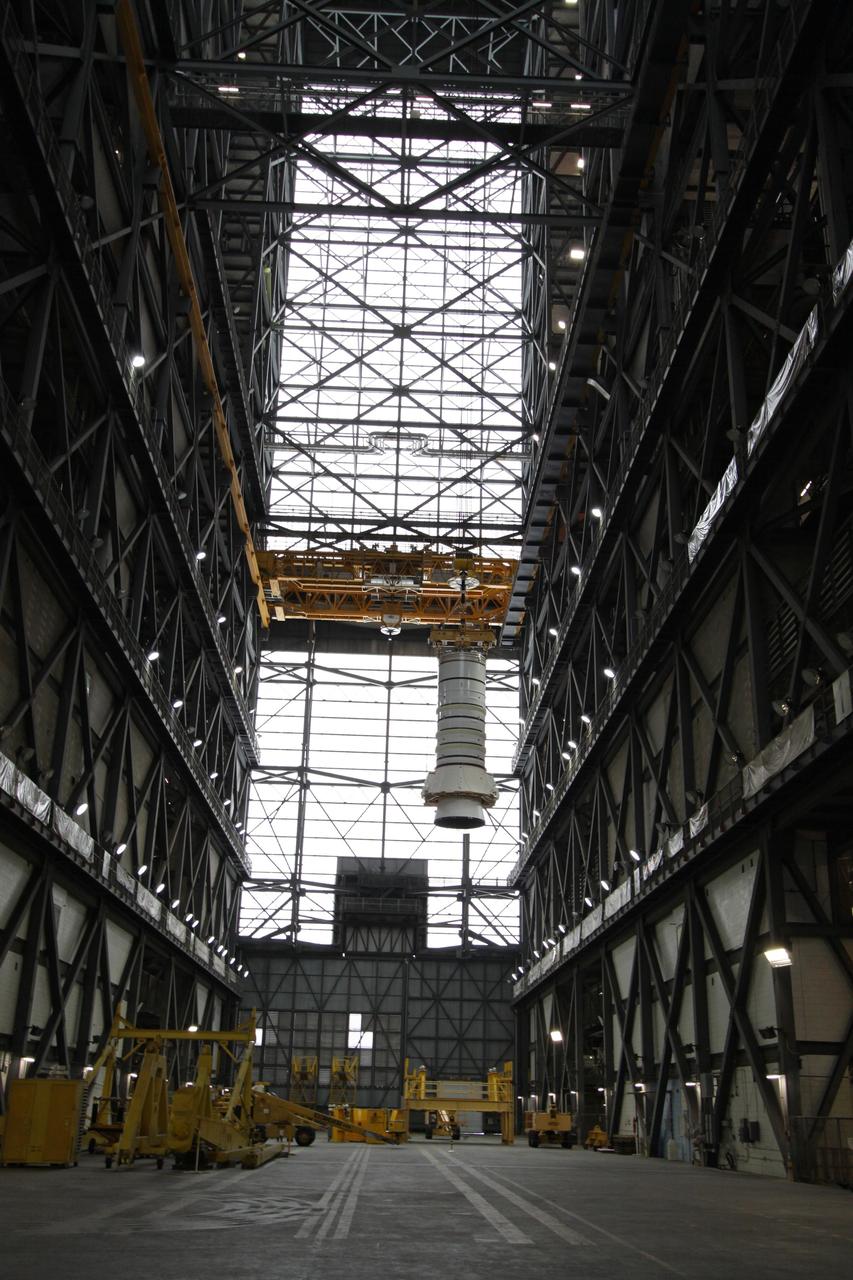
CAPE CANAVERAL, Fla. – In the Vehicle Assembly Building at NASA's Kennedy Space Center in Florida, the Ares I-X aft booster segment with the aft skirt is lifted across the VAB transfer aisle. The stack will be hoisted into the upper regions of the VAB and lowered onto the mobile launch platform in High Bay 3. This is the start of the buildup of the Ares I-X launch vehicle for the flight test targeted for no earlier than Aug. 30. Part of the Constellation Program, the Ares I-X is the test vehicle for the Ares I, which is the essential core of a space transportation system that eventually will carry crewed missions back to the moon, on to Mars and out into the solar system. Photo credit: NASA/Jack Pfaller
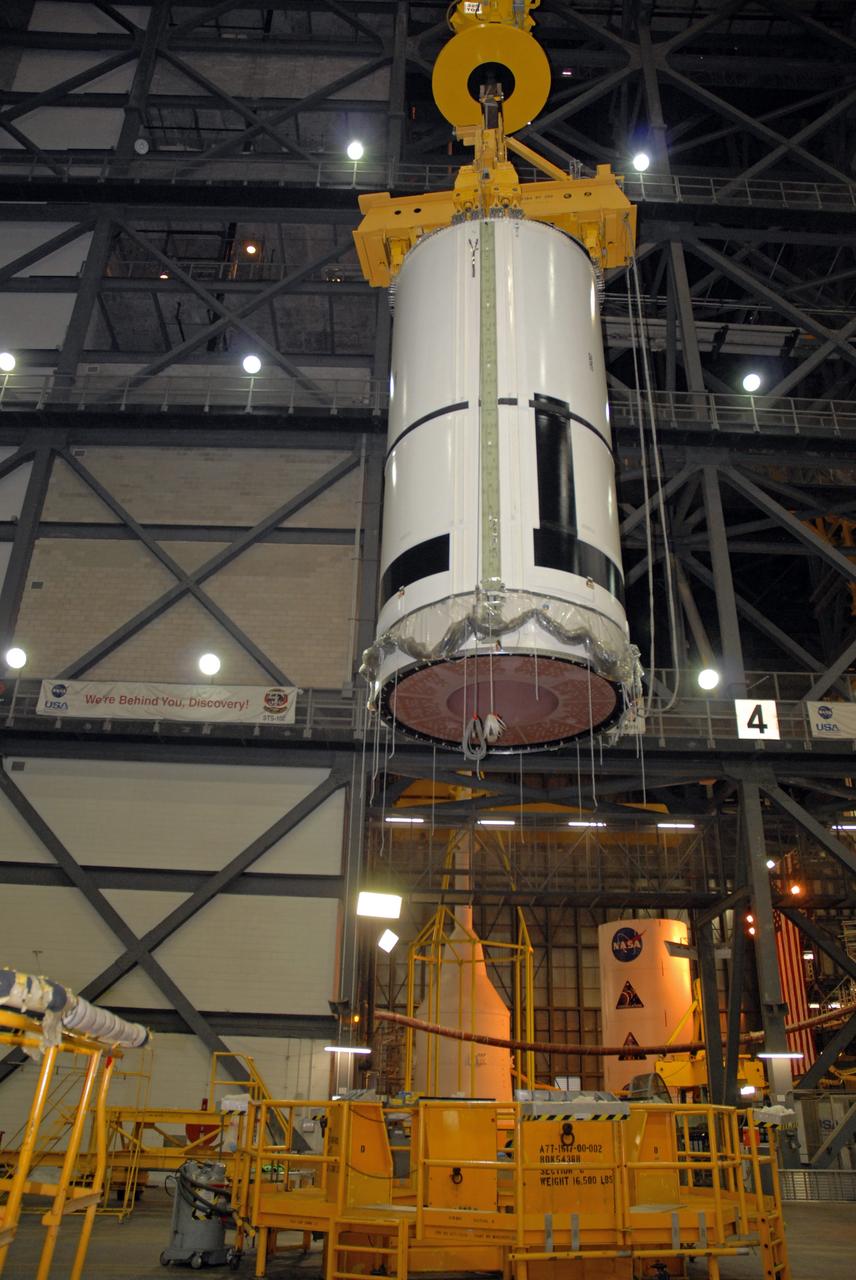
CAPE CANAVERAL, Fla. – In the Vehicle Assembly Building's transfer aisle at NASA's Kennedy Space Center in Florida, an overhead crane lifts the Ares I-X aft center booster segment, which will be lifted and then lowered into High Bay 3 for attachment to the aft booster and skirt. Part of the Constellation Program, the Ares I-X is the test vehicle for the Ares I, which is the essential core of a space transportation system that eventually will carry crewed missions back to the moon, on to Mars and out into the solar system . The flight test of the Ares I-X is targeted for no earlier than Aug. 30. Photo credit: NASA/Tim Jacobs
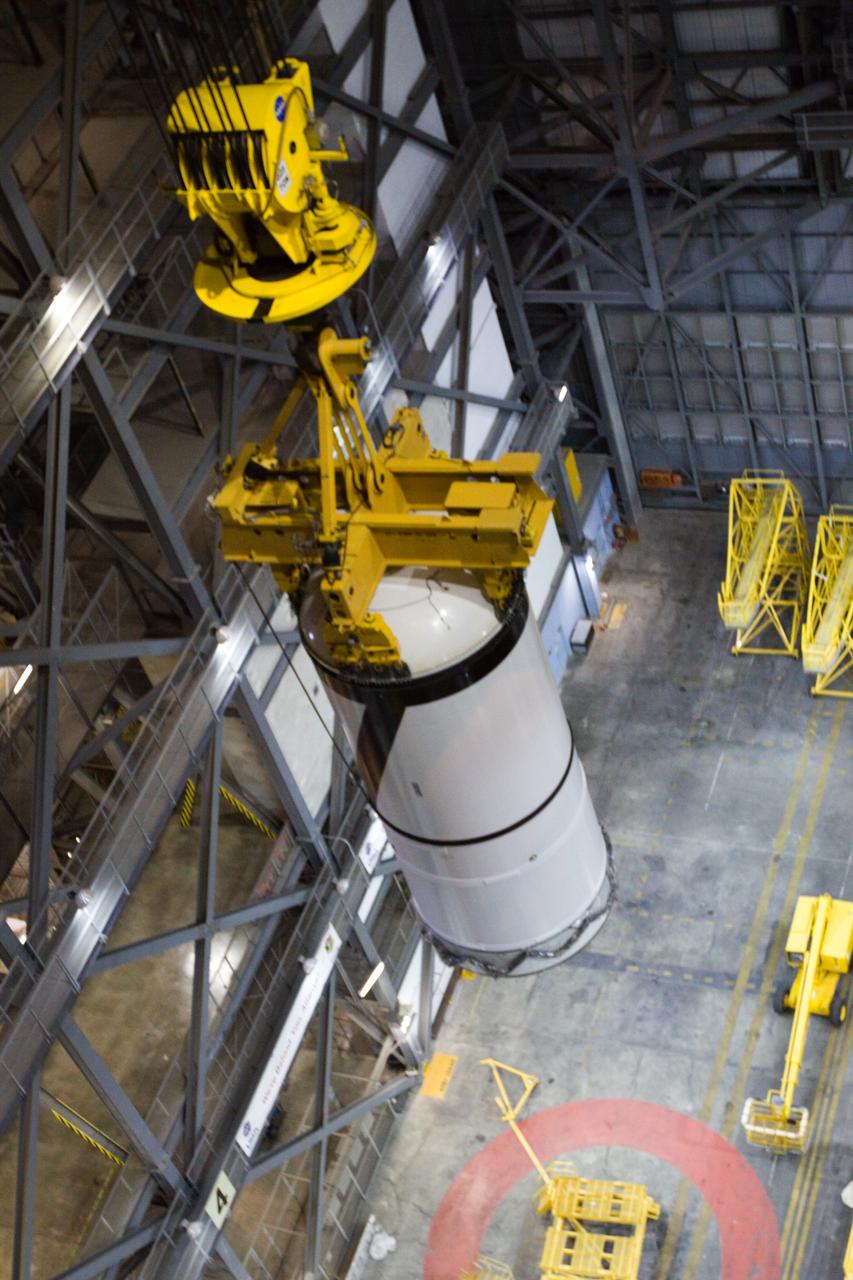
CAPE CANAVERAL, Fla. – In the transfer aisle of NASA Kennedy Space Center's Vehicle Assembly Building, the Ares I-X forward segment is lifted into the upper levels. It will be moved into High Bay 3 for stacking with the forward center, aft center and the aft skirt segments. Part of the Constellation Program, the Ares I-X is the test vehicle for the Ares I, which is the essential core of a space transportation system that eventually will carry crewed missions back to the moon, on to Mars and out into the solar system . The Ares I-X flight test is targeted for no earlier than Aug. 30. Photo credit: NASA/Troy Cryder
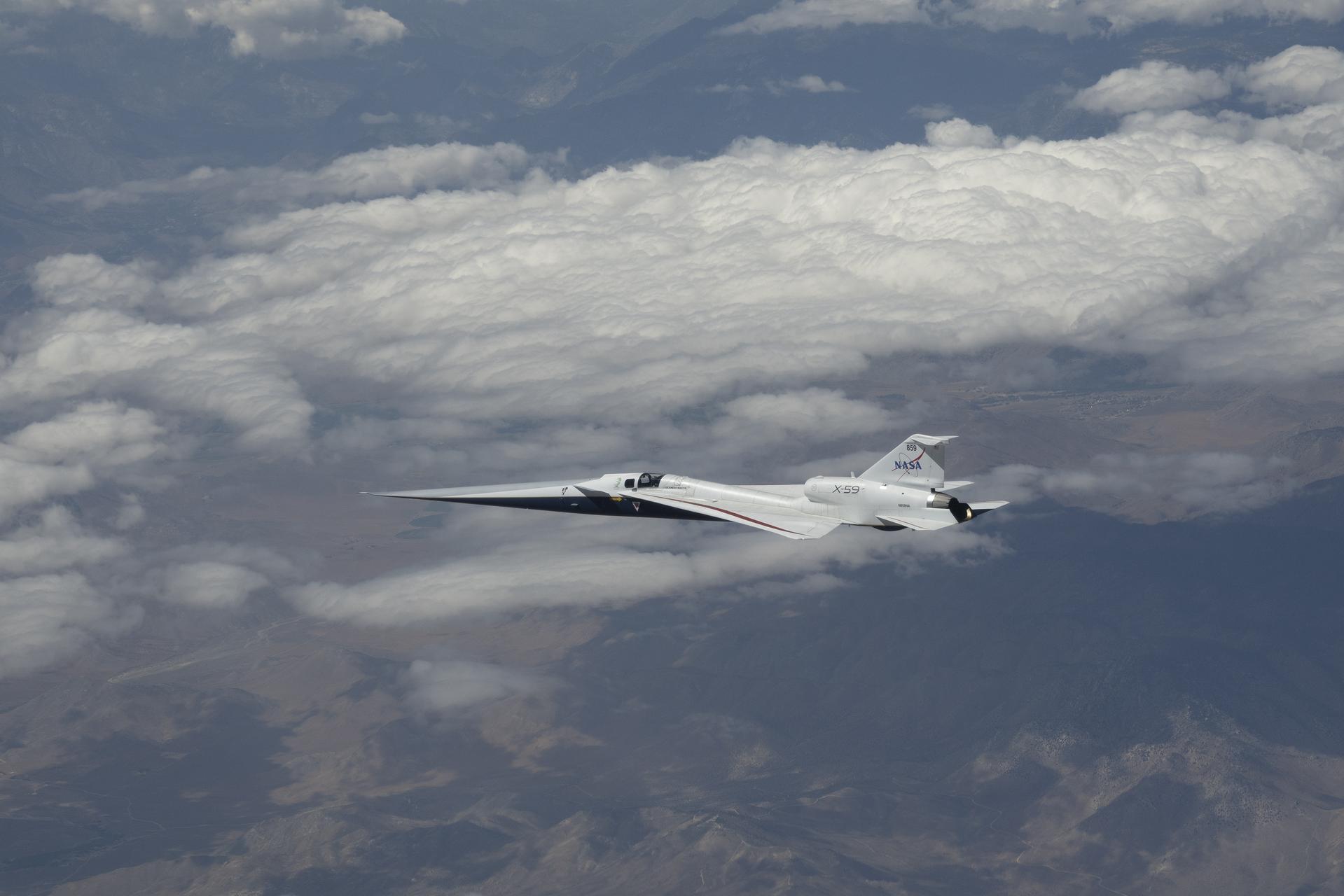
NASA’s X-59 quiet supersonic research aircraft completed its first dual-flight day on Thursday, April 30, at the agency’s Armstrong Flight Research Center in Edwards, California. This image shows the X-59 flying over the Mojave Desert during the aircraft’s second flight of the day, and its 12th overall. The X-59 flew test points at altitudes ranging from 12,000 to 43,000 feet and speeds from approximately 528 to 627 mph, or Mach 0.8 to Mach 0.95. The increased tempo of test flights allows the team to collect more data over a shorter period of time.
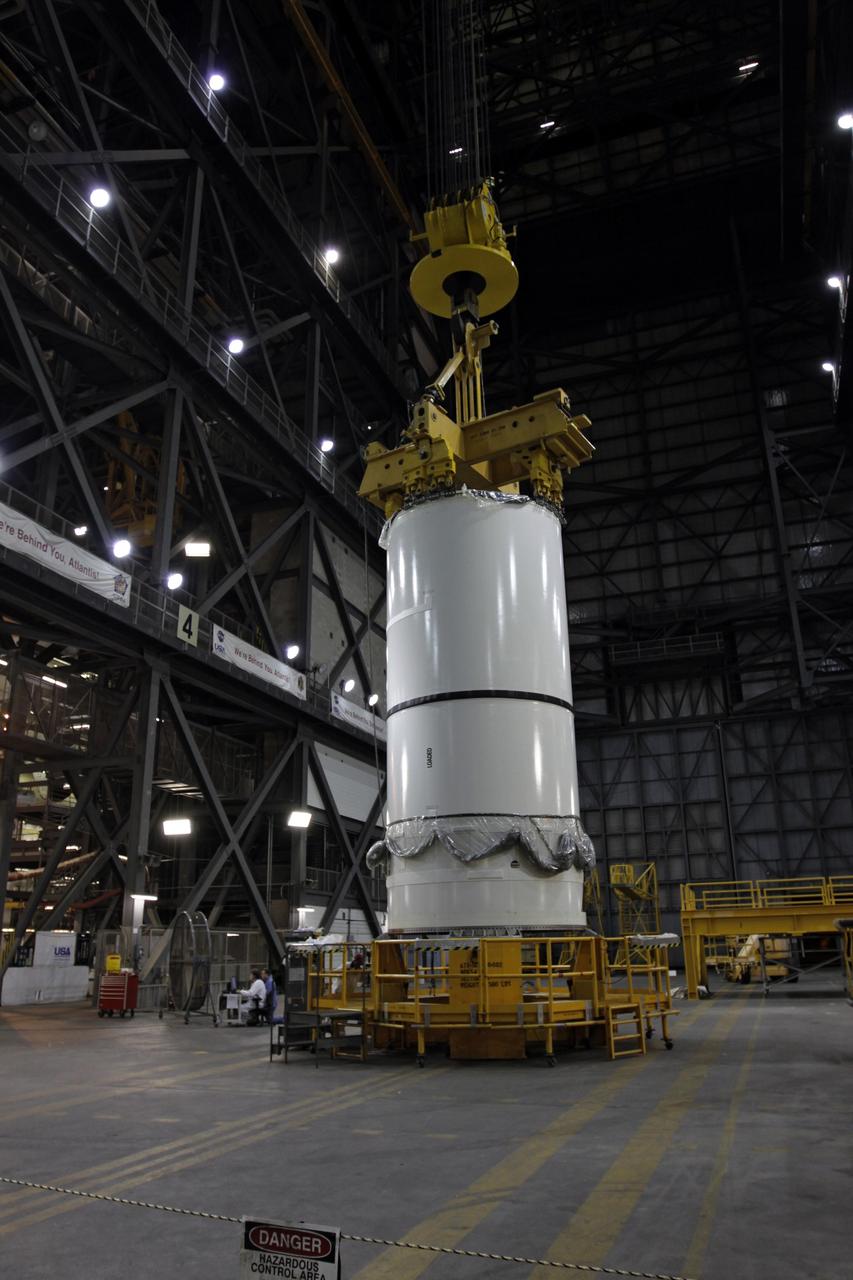
CAPE CANAVERAL, Fla. – A crane is attached to the Ares I-X forward center assembly in NASA Kennedy Space Center's Vehicle Assembly Building. The assembly will be lifted into High Bay 3 for stacking with the aft assembly. Part of the Constellation Program, the Ares I-X is the test vehicle for the Ares I, which is the essential core of a space transportation system that eventually will carry crewed missions back to the moon, on to Mars and out into the solar system . The Ares I-X flight test is targeted for no earlier than Aug. 30. Photo credit: NASA/Troy Cryder
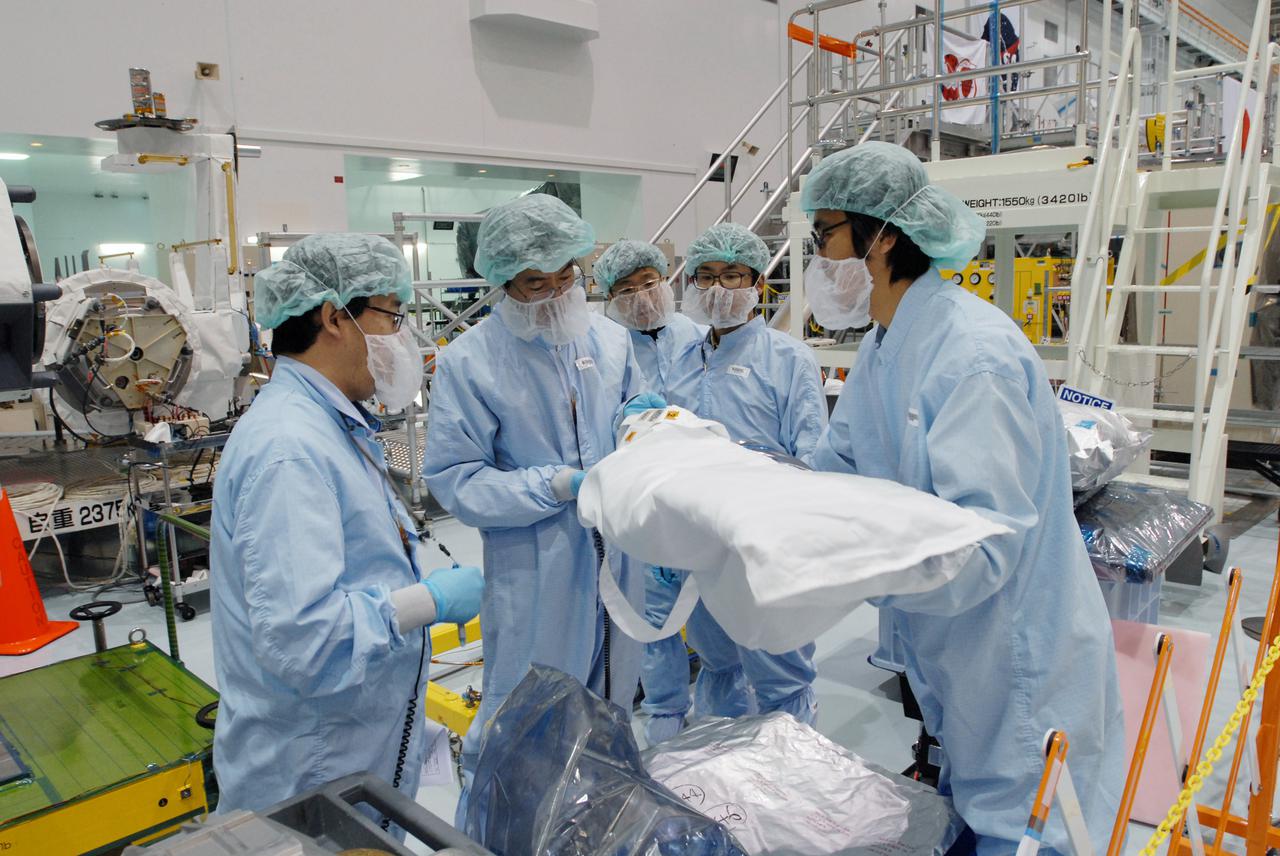
CAPE CANAVERAL, Fla. -- In the Space Station Processing Facility at NASA's Kennedy Space Center in Florida, workers examines equipment for the MAXI (Monitor of All-sky X-ray Image) before it is installed on the Japanese Experiment Module's Experiment Logistics Module-Exposed Section, or ELM-ES. The MAXI is part of space shuttle Endeavour's payload on the STS-127 mission. Using X-ray slit cameras with high sensitivity, the MAXI will continuously monitor astronomical X-ray objects over a broad energy band (0.5 to 30 keV). Endeavour is targeted to launch May 15. Photo credit: NASA_Jim Grossmann
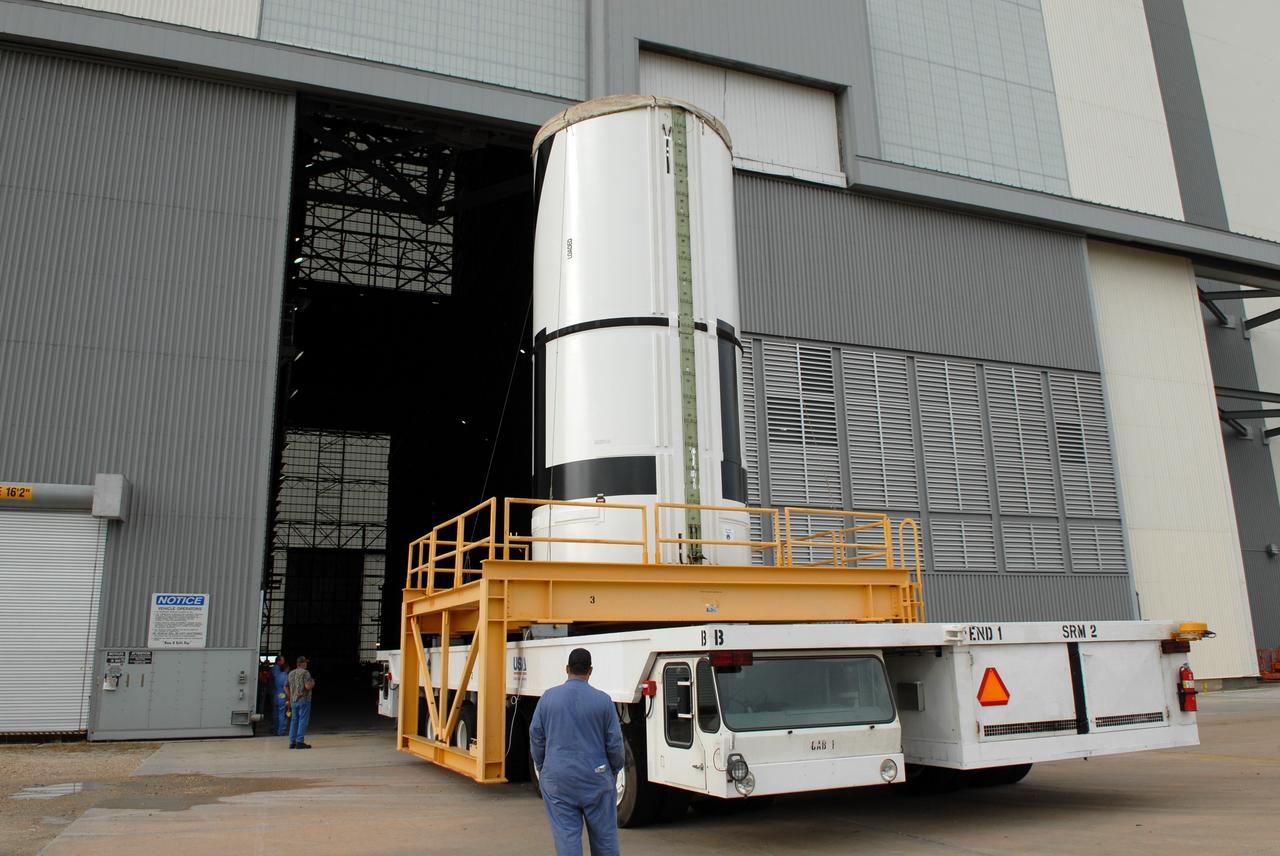
CAPE CANAVERAL, Fla. – The Ares I-X aft center booster segment rolls toward the open door of the Vehicle Assembly Building at NASA's Kennedy Space Center in Florida. The Ares I-X launch vehicle segments are being stacked in the VAB. Part of the Constellation Program, the Ares I-X is the test vehicle for the Ares I, which is the essential core of a space transportation system that eventually will carry crewed missions back to the moon, on to Mars and out into the solar system. Launch is targeted for no earlier than Aug. 30 from Launch Pad 39B. Photo credit: NASA/Jim Grossmann
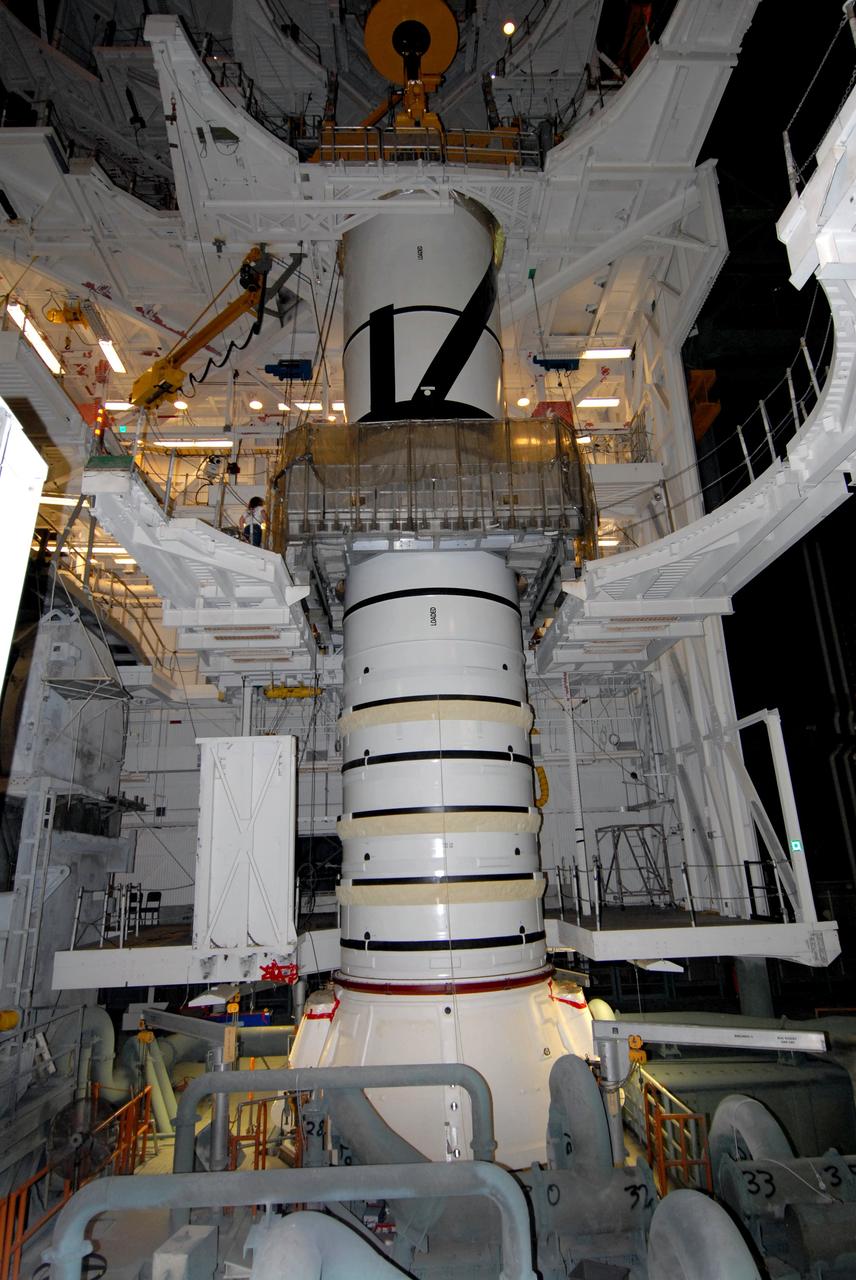
CAPE CANAVERAL, Fla. – In the Vehicle Assembly Building's High Bay 3 at NASA's Kennedy Space Center in Florida, the Ares I-X aft center booster segment is mated to the aft booster and skirt. Part of the Constellation Program, the Ares I-X is the test vehicle for the Ares I, which is the essential core of a space transportation system that eventually will carry crewed missions back to the moon, on to Mars and out into the solar system . The flight test of the Ares I-X is targeted for no earlier than Aug. 30. Photo credit: NASA/Tim Jacobs
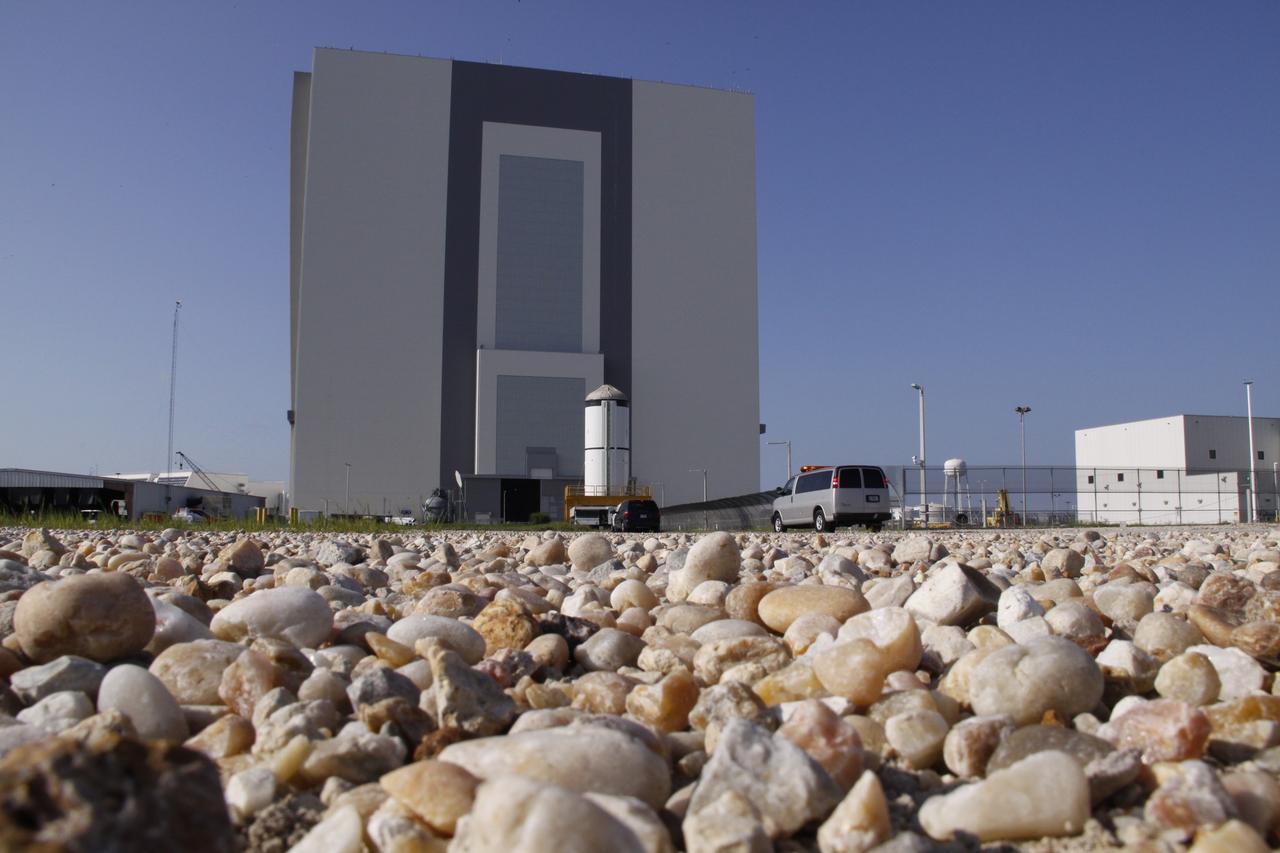
CAPE CANAVERAL, Fla. – The Ares I-X forward segment nears the Vehicle Assembly Building at NASA's Kennedy Space Center in Florida. It will be mated with the aft center and aft segments already stacked. Part of the Constellation Program, the Ares I-X is the test vehicle for the Ares I, which is the essential core of a space transportation system that eventually will carry crewed missions back to the moon, on to Mars and out into the solar system . The Ares I-X flight test is targeted for no earlier than Aug. 30. Photo credit: NASA/Troy Cryder
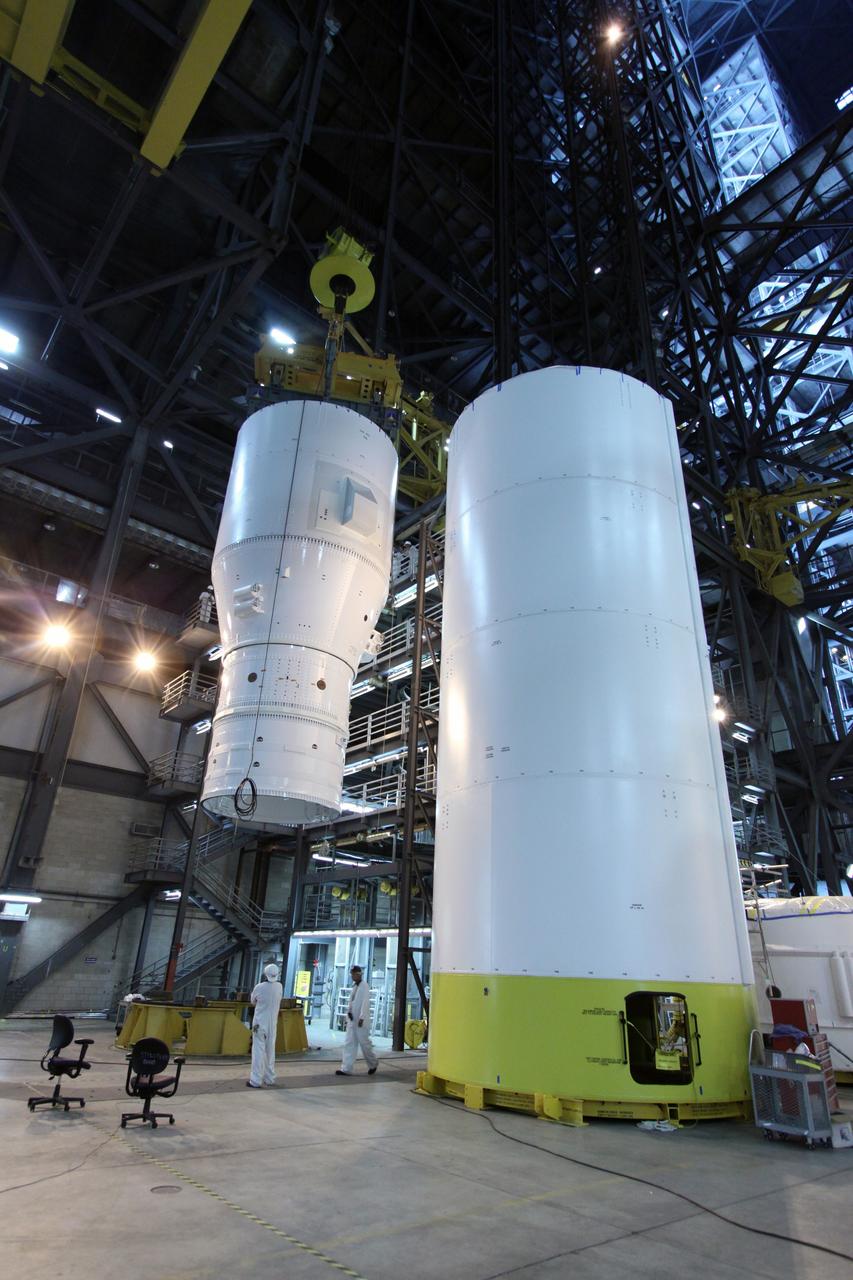
CAPE CANAVERAL, Fla. – In the Vehicle Assembly Building at NASA's Kennedy Space Center in Florida, segments of the Ares I-X first stage are moved across the bay. They will be stacked and mated to the fifth segment simulator, completing Super Stack 1. The super stack comprises the forward skirt, forward skirt extension, interstages 1 and 2 and the fifth segment simulator. Ares I-X is the test vehicle for the Ares I, which is part of the Constellation Program to return men to the moon and beyond. The Ares I-X flight test is targeted no earlier than Aug. 30 from Launch Pad 39B. Photo credit: NASA/Jack Pfaller
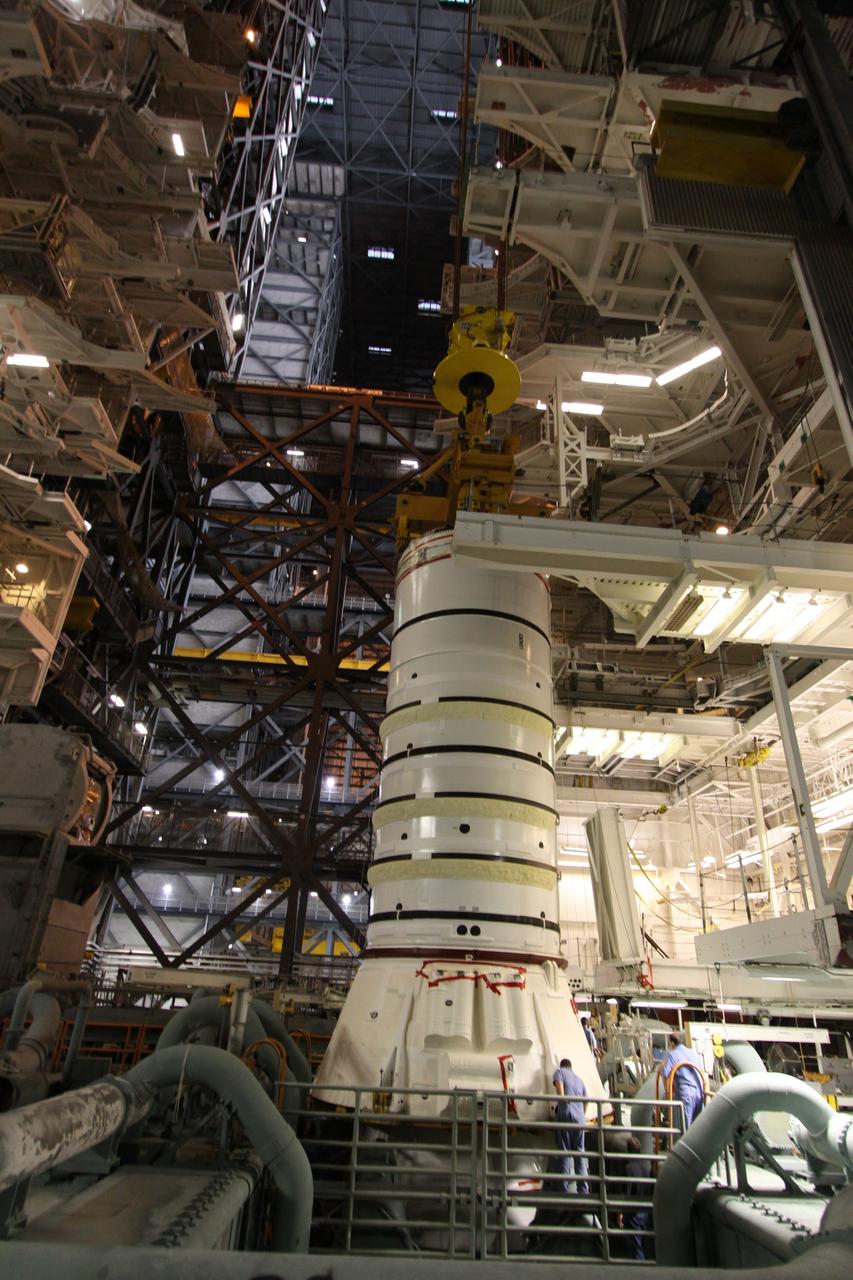
CAPE CANAVERAL, Fla. – In the Vehicle Assembly Building at NASA's Kennedy Space Center in Florida, workers keep watch as the Ares I-X aft booster segment with the aft skirt is lowered toward the mobile launch platform in High Bay 3. This is the start of the buildup of the Ares I-X launch vehicle for the flight test targeted for no earlier than Aug. 30. Part of the Constellation Program, the Ares I-X is the test vehicle for the Ares I, which is the essential core of a space transportation system that eventually will carry crewed missions back to the moon, on to Mars and out into the solar system. Photo credit: NASA/Jack Pfaller
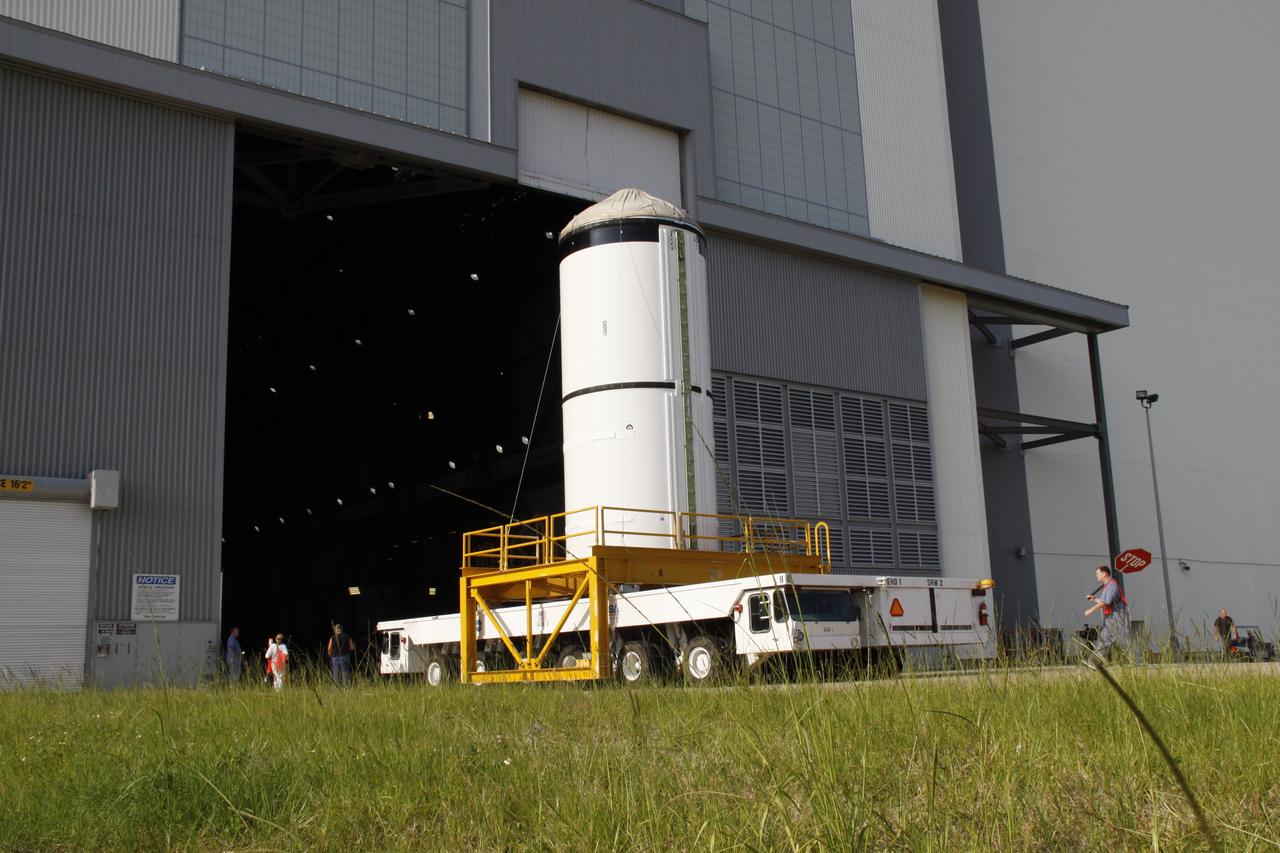
CAPE CANAVERAL, Fla. – The Ares I-X forward segment enters the Vehicle Assembly Building at NASA's Kennedy Space Center in Florida. It will be mated with the aft center and aft segments already stacked. Part of the Constellation Program, the Ares I-X is the test vehicle for the Ares I, which is the essential core of a space transportation system that eventually will carry crewed missions back to the moon, on to Mars and out into the solar system . The Ares I-X flight test is targeted for no earlier than Aug. 30. Photo credit: NASA/Troy Cryder
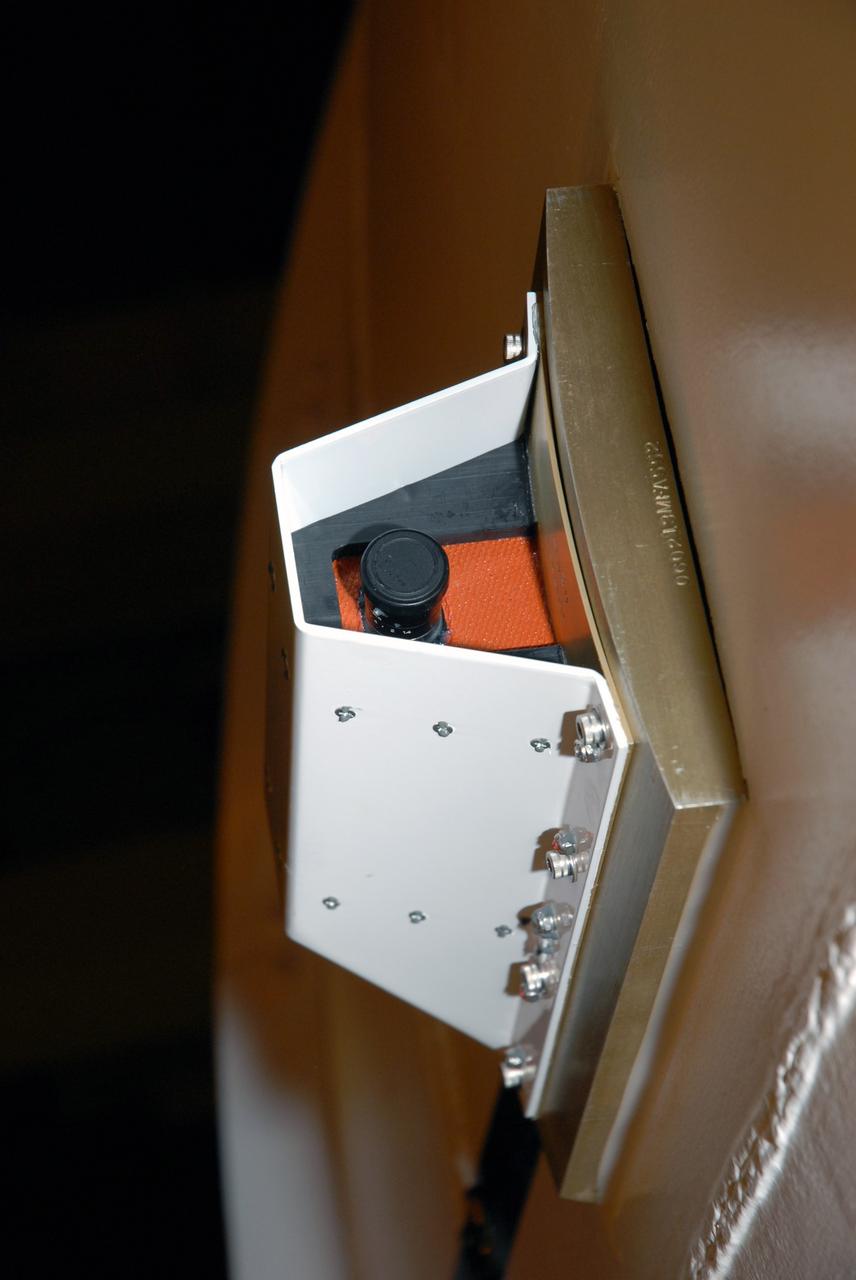
CAPE CANAVERAL, Fla. – A close-up of the video camera installed on the side of the Ares I-X segments 6 and 7, which are in the Vehicle Assembly Building's High Bay 4 at NASA's Kennedy Space Center in Florida. The downward facing camera will provide live video during launch. Part of the Constellation Program, the Ares I-X is the test vehicle for the Ares I, which is the essential core of a space transportation system that eventually will carry crewed missions back to the moon, on to Mars and out into the solar system . The Ares I-X flight test is targeted for no earlier than Aug. 30. Photo credit: NASA/Jack Pfaller
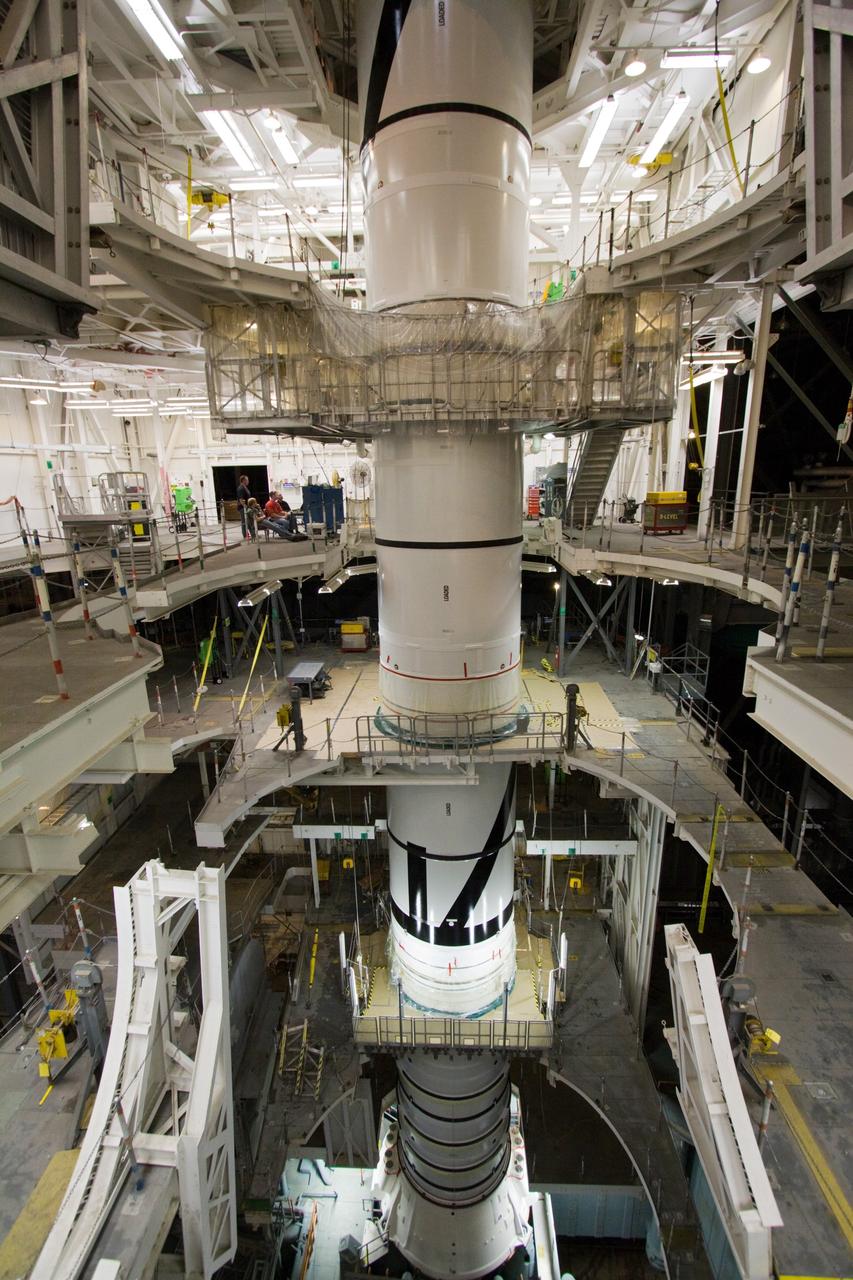
CAPE CANAVERAL, Fla. – In the Vehicle Assembly Building's High Bay 3 at NASA's Kennedy Space Center in Florida, workers secure the attachment, or mating, of the Ares I-X forward segment to the forward center segment atop the aft assembly (aft segment and aft skirt). Part of the Constellation Program, the Ares I-X is the test vehicle for the Ares I, which is the essential core of a space transportation system that eventually will carry crewed missions back to the moon, on to Mars and out into the solar system . The Ares I-X flight test is targeted for no earlier than Aug. 30. Photo credit: NASA/Jack Pfaller
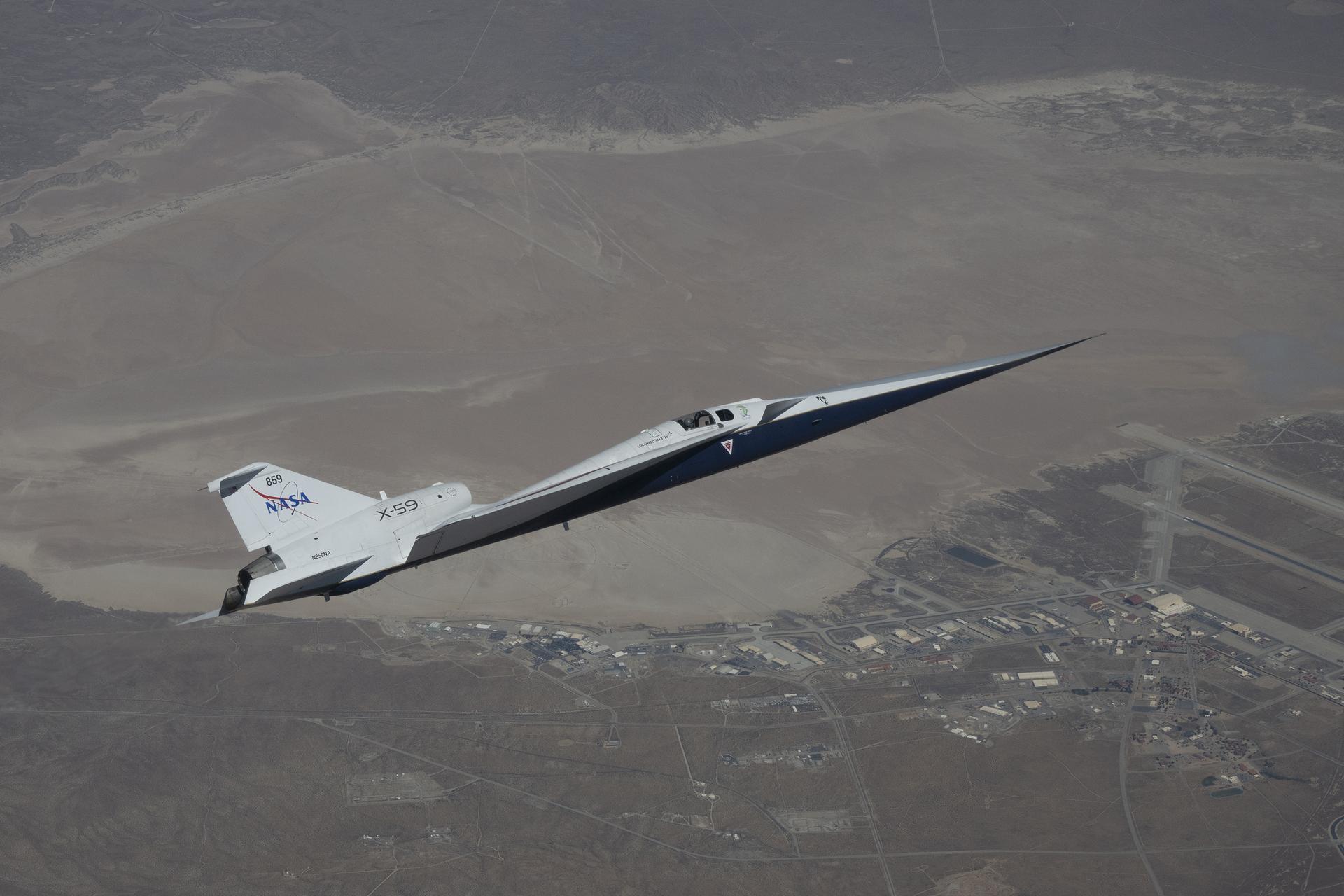
NASA’s X-59 quiet supersonic research aircraft completed its first dual-flight day on Thursday, April 30, at the agency’s Armstrong Flight Research Center in Edwards, California. This image shows the X-59 flying over the Mojave Desert during the aircraft’s second flight of the day, and its 12th overall. The X-59 flew test points at altitudes ranging from 12,000 to 43,000 feet and speeds from approximately 528 to 627 mph, or Mach 0.8 to Mach 0.95. The increased tempo of test flights allows the team to collect more data over a shorter period of time.
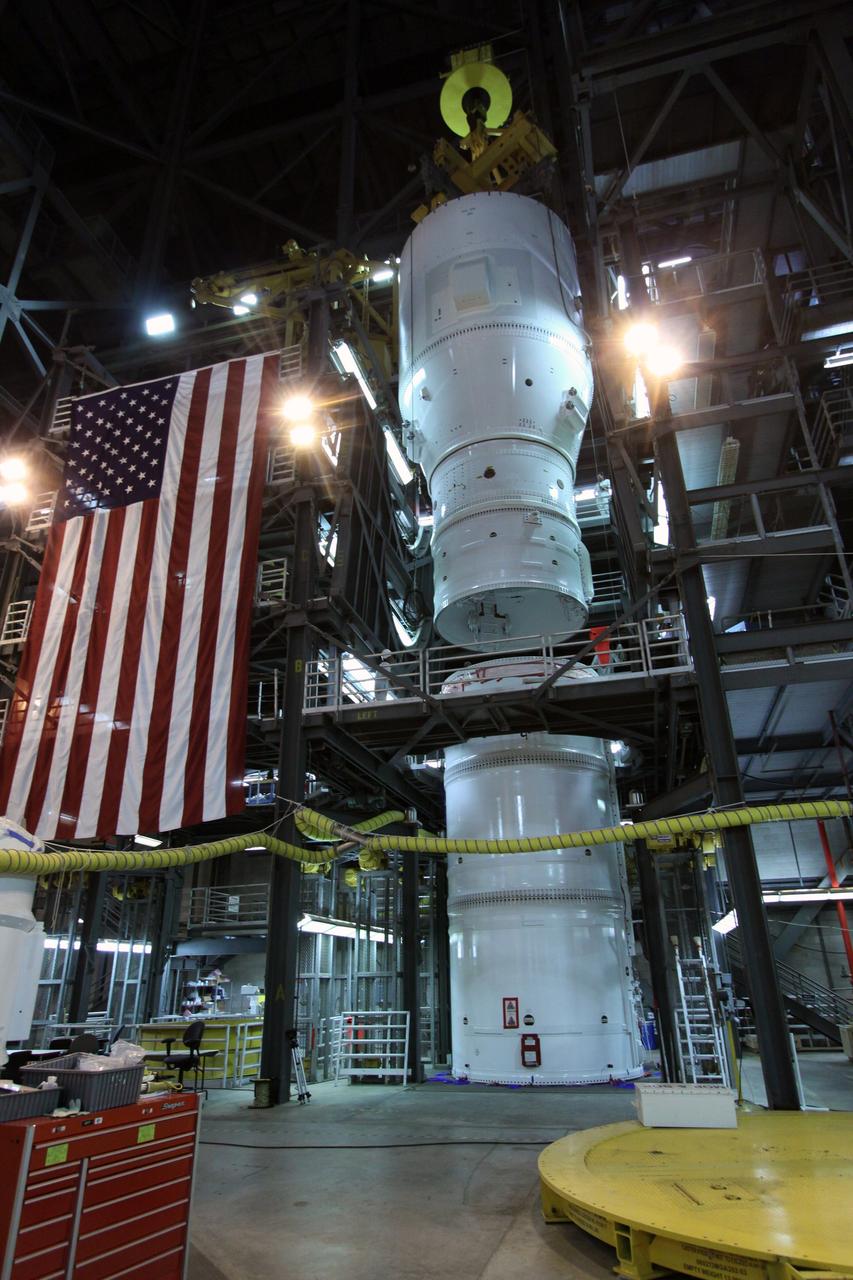
CAPE CANAVERAL, Fla. – In the Vehicle Assembly Building at NASA's Kennedy Space Center in Florida, segments of the Ares I-X first stage are lowered toward the fifth simulator segment for mating, to complete Super Stack 1. The super stack comprises the forward skirt, forward skirt extension, interstages 1 and 2 and the fifth segment simulator. Ares I-X is the test vehicle for the Ares I, which is part of the Constellation Program to return men to the moon and beyond. The Ares I-X flight test is targeted no earlier than Aug. 30 from Launch Pad 39B. Photo credit: NASA/Jack Pfaller
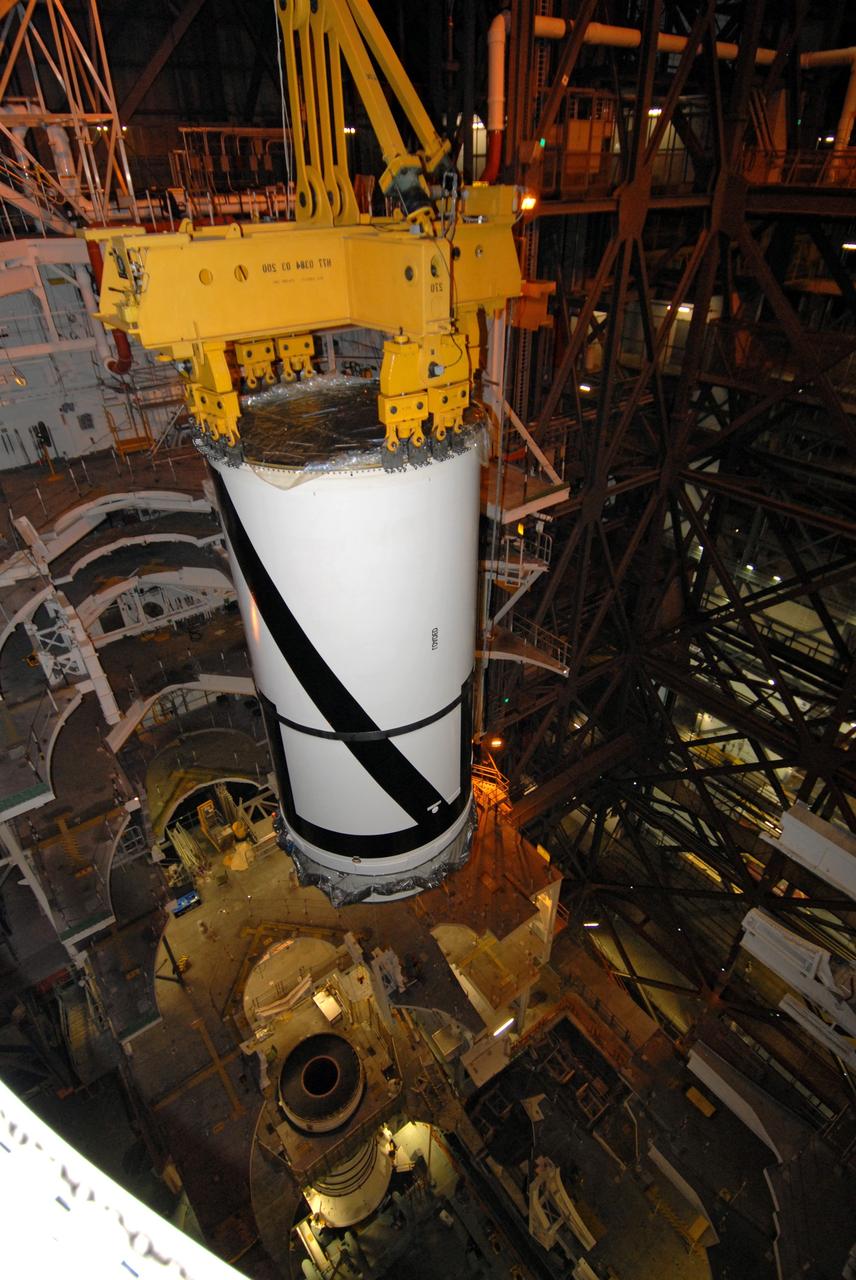
CAPE CANAVERAL, Fla. – In the Vehicle Assembly Building's transfer aisle at NASA's Kennedy Space Center in Florida, an overhead crane lowers the Ares I-X aft center booster segment toward the aft booster and skirt in High Bay 3. Part of the Constellation Program, the Ares I-X is the test vehicle for the Ares I, which is the essential core of a space transportation system that eventually will carry crewed missions back to the moon, on to Mars and out into the solar system . The flight test of the Ares I-X is targeted for no earlier than Aug. 30. Photo credit: NASA/Tim Jacobs
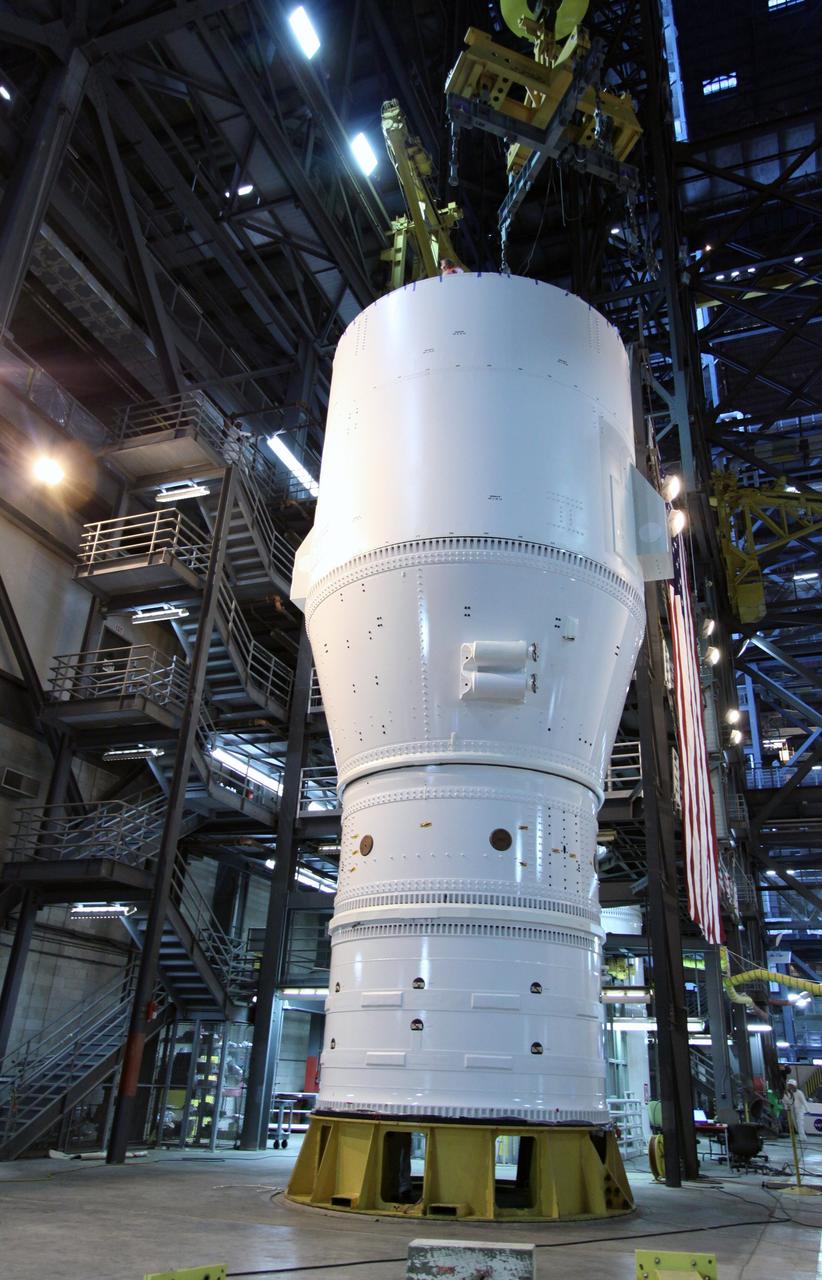
CAPE CANAVERAL, Fla. – In the Vehicle Assembly Building at NASA's Kennedy Space Center in Florida, segments of the Ares I-X first stage are fitted with a crane to lift it to the fifth segment simulator for mating, completing Super Stack 1. The super stack comprises the forward skirt, forward skirt extension, interstages 1 and 2 and the fifth segment simulator. Ares I-X is the test vehicle for the Ares I, which is part of the Constellation Program to return men to the moon and beyond. The Ares I-X flight test is targeted no earlier than Aug. 30 from Launch Pad 39B. Photo credit: NASA/Jack Pfaller
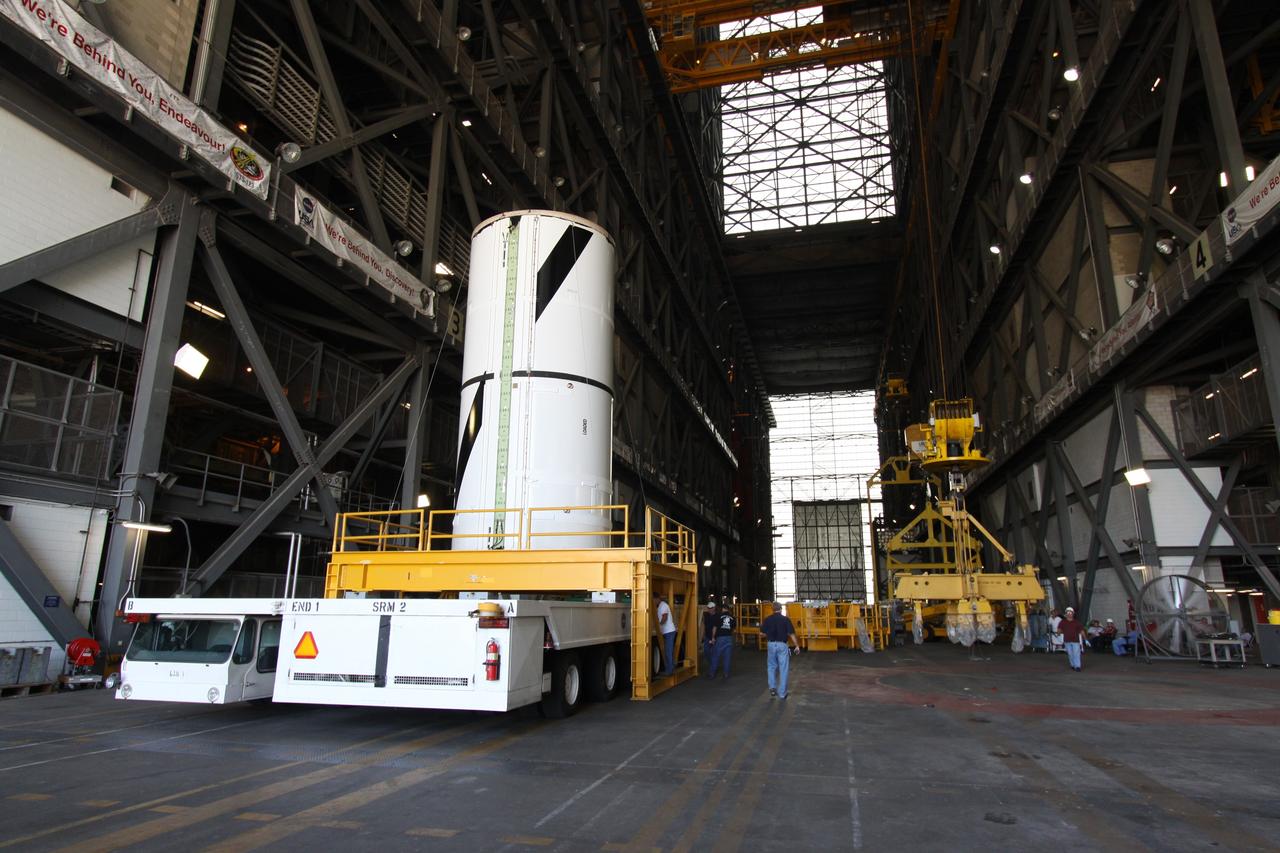
CAPE CANAVERAL, Fla. – At NASA's Kennedy Space Center in Florida, the Ares I-X forward center segment arrives in the transfer aisle of the Vehicle Assembly Building, or VAB. The launch vehicle is being assembled in the VAB's High Bay 3. Part of the Constellation Program, the Ares I-X is the test vehicle for the Ares I, which is the essential core of a space transportation system that eventually will carry crewed missions back to the moon, on to Mars and out into the solar system . The Ares I-X flight test is targeted for no earlier than Aug. 30. Photo credit: NASA/Jack Pfaller
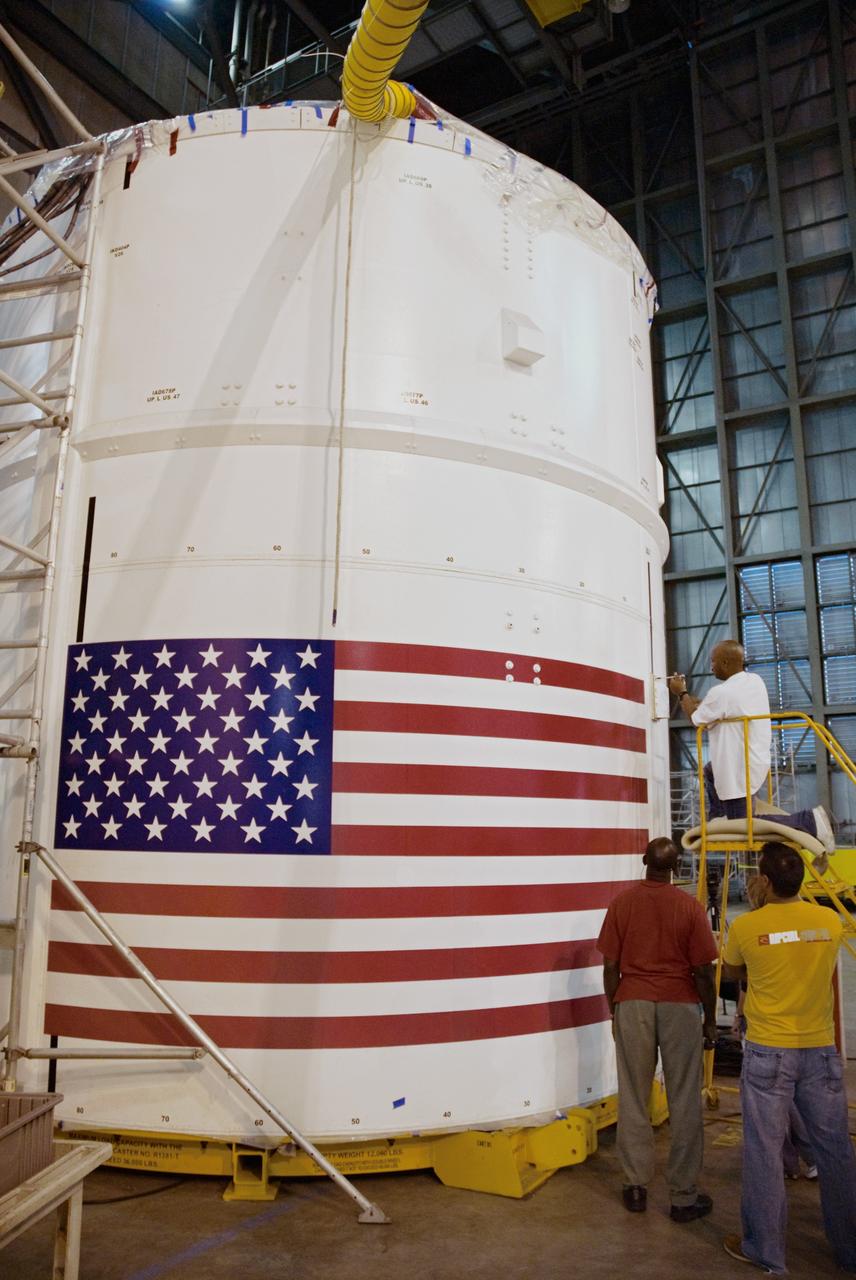
CAPE CANAVERAL, Fla. – In the Vehicle Assembly Building's High Bay 4 at NASA's Kennedy Space Center in Florida, technician Troy Merrick, with United Space Alliance, finishes installing a video camera on the side of the Ares I-X segments 6 and 7. The downward facing camera will provide live video during launch. Part of the Constellation Program, the Ares I-X is the test vehicle for the Ares I, which is the essential core of a space transportation system that eventually will carry crewed missions back to the moon, on to Mars and out into the solar system . The Ares I-X flight test is targeted for no earlier than Aug. 30. Photo credit: NASA/Jack Pfaller
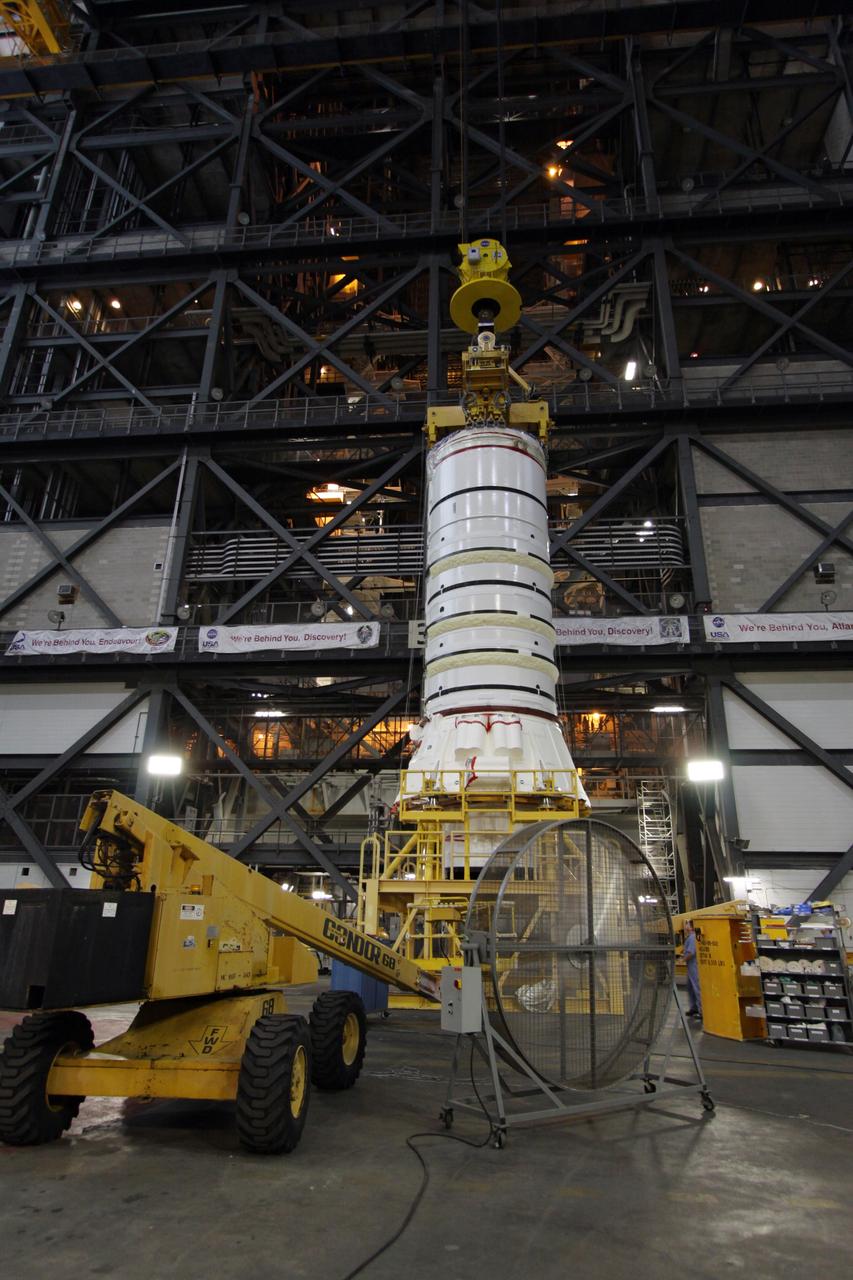
CAPE CANAVERAL, Fla. – In the Vehicle Assembly Building at NASA's Kennedy Space Center in Florida, the Ares I-X aft booster segment with the aft skirt is lifted from its stand. The stack will be hoisted into the upper regions of the VAB and lowered onto the mobile launch platform in High Bay 3. This is the start of the buildup of the Ares I-X launch vehicle for the flight test targeted for no earlier than Aug. 30. Part of the Constellation Program, the Ares I-X is the test vehicle for the Ares I, which is the essential core of a space transportation system that eventually will carry crewed missions back to the moon, on to Mars and out into the solar system. Photo credit: NASA/Jack Pfaller
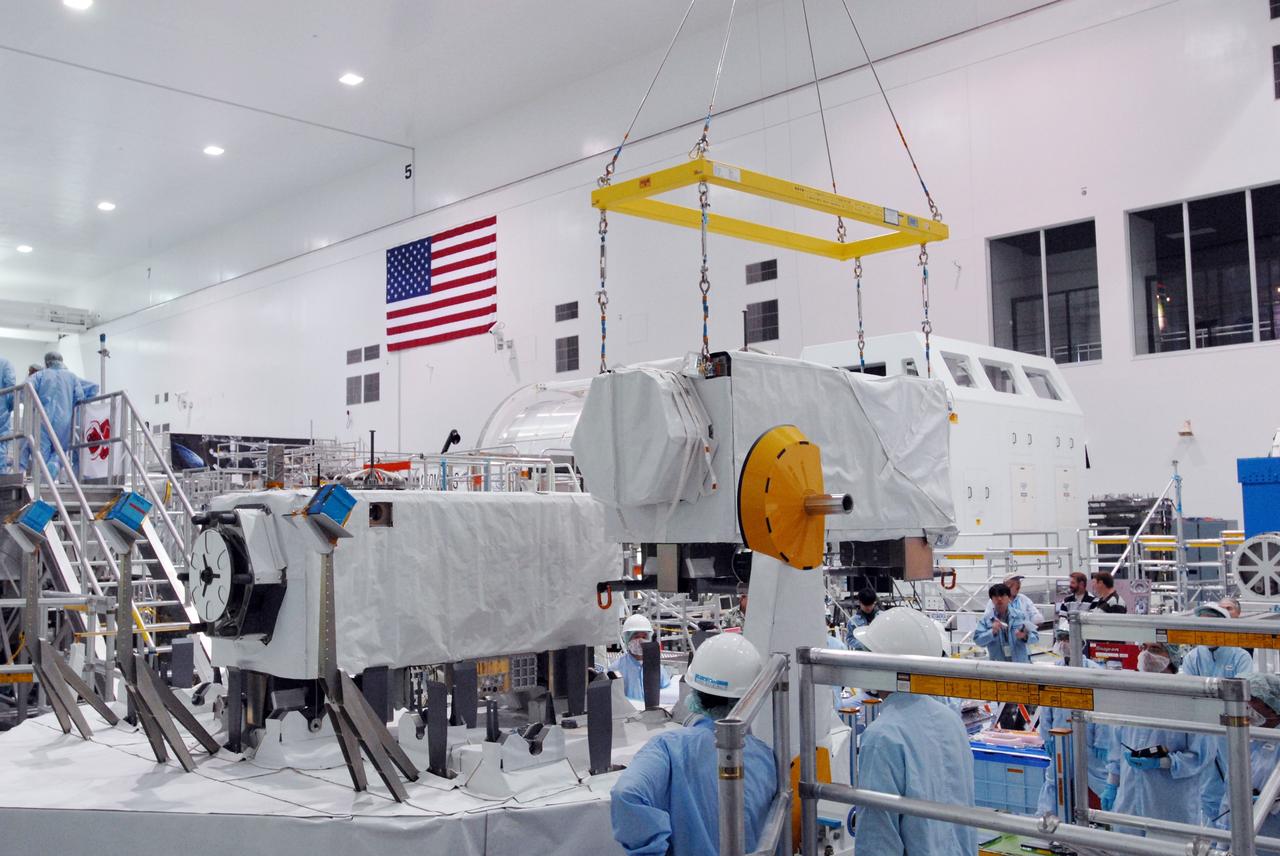
CAPE CANAVERAL, Fla. -- In the Space Station Processing Facility at NASA's Kennedy Space Center in Florida, a crane lifts the MAXI (Monitor of All-sky X-ray Image) to move it onto the Japanese Experiment Module's Experiment Logistics Module-Exposed Section, or ELM-ES, where it will be installed. The MAXI is part of space shuttle Endeavour's payload on the STS-127 mission. Using X-ray slit cameras with high sensitivity, the MAXI will continuously monitor astronomical X-ray objects over a broad energy band (0.5 to 30 keV). Endeavour is targeted to launch May 15. Photo credit: NASA/Jim Grossmann
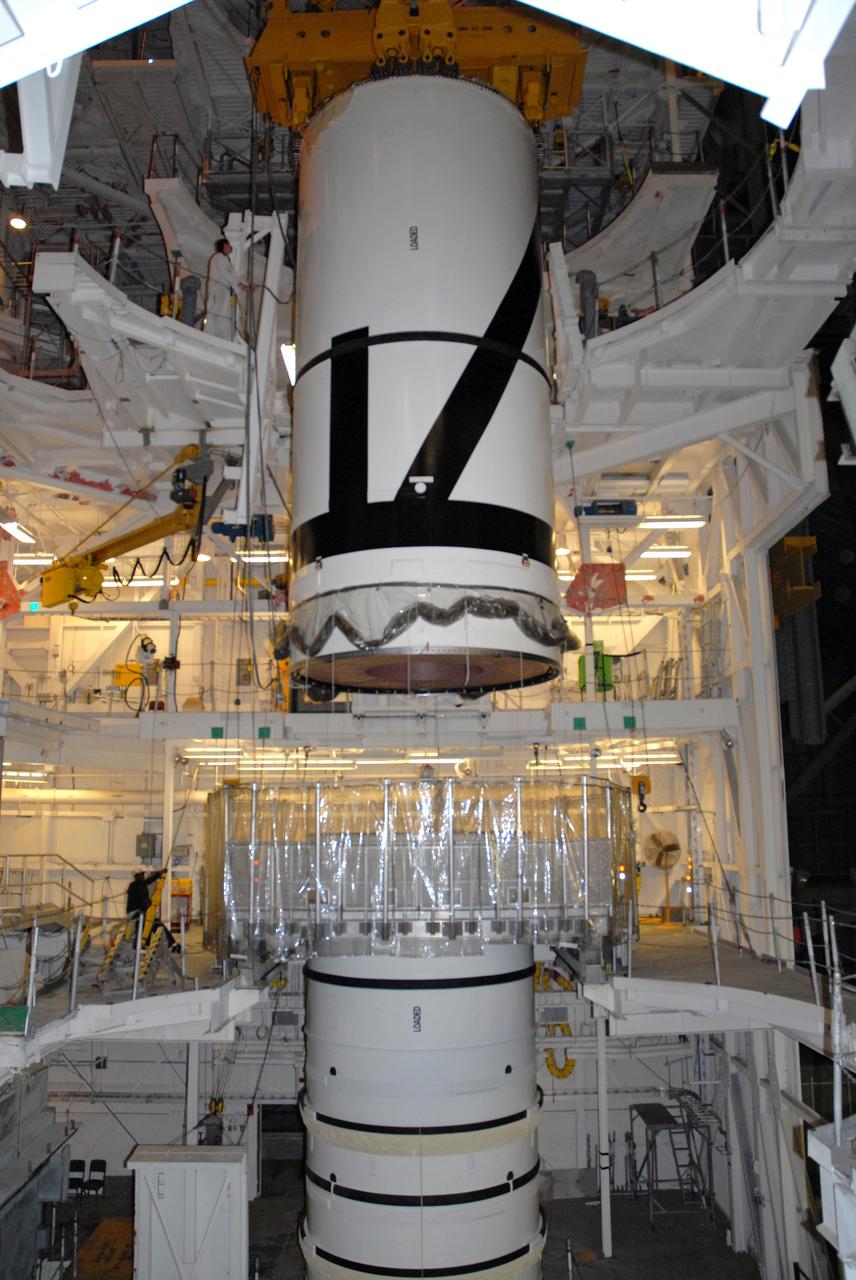
CAPE CANAVERAL, Fla. – In the Vehicle Assembly Building's transfer aisle at NASA's Kennedy Space Center in Florida, an overhead crane lowers the Ares I-X aft center booster segment toward the aft booster and skirt in High Bay 3. Part of the Constellation Program, the Ares I-X is the test vehicle for the Ares I, which is the essential core of a space transportation system that eventually will carry crewed missions back to the moon, on to Mars and out into the solar system . The flight test of the Ares I-X is targeted for no earlier than Aug. 30. Photo credit: NASA/Tim Jacobs
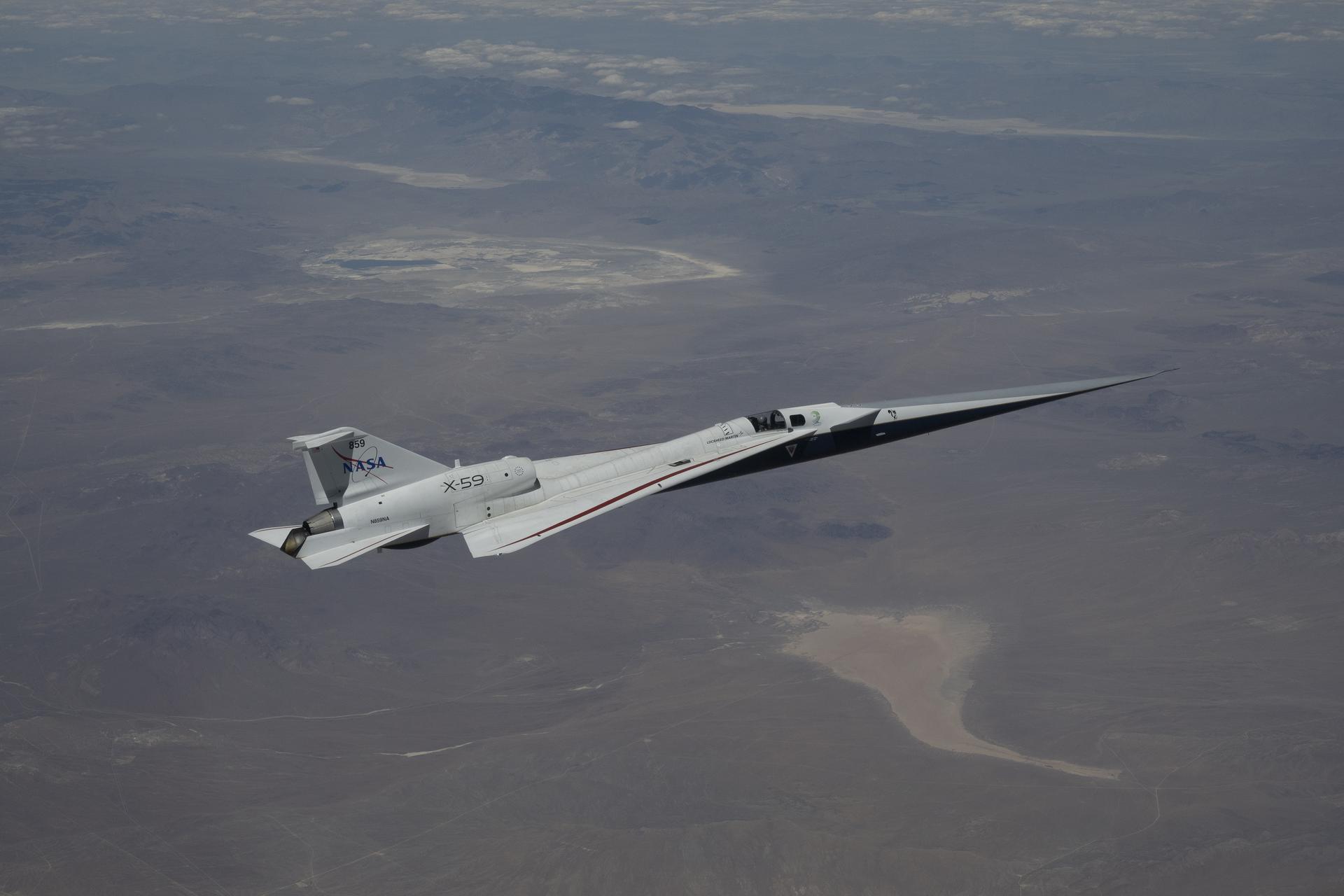
NASA’s X-59 quiet supersonic research aircraft completed its first dual-flight day on Thursday, April 30, at the agency’s Armstrong Flight Research Center in Edwards, California. This image shows the X-59 flying over the Mojave Desert during the aircraft’s second flight of the day, and its 12th overall. The X-59 flew test points at altitudes ranging from 12,000 to 43,000 feet and speeds from approximately 528 to 627 mph, or Mach 0.8 to Mach 0.95. The increased tempo of test flights allows the team to collect more data over a shorter period of time.
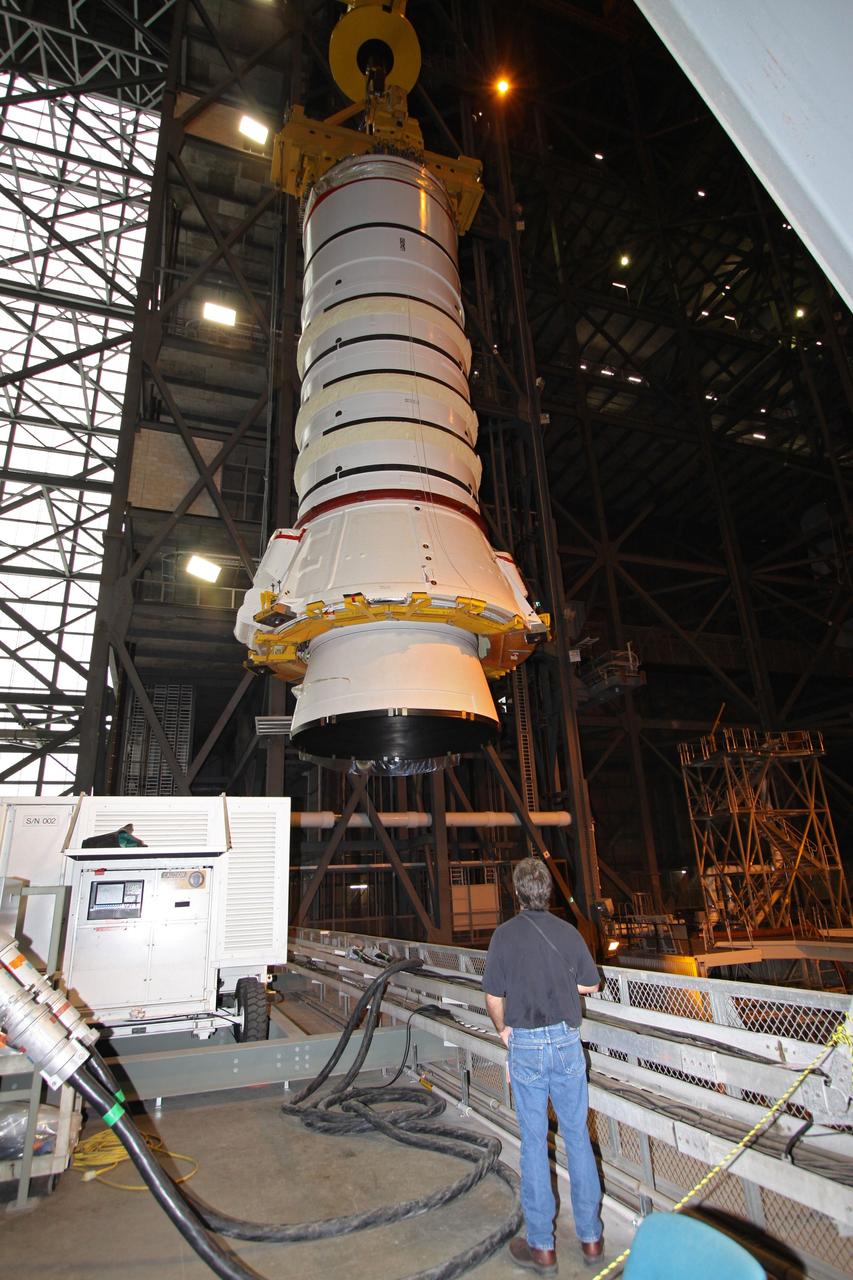
CAPE CANAVERAL, Fla. – In the Vehicle Assembly Building at NASA's Kennedy Space Center in Florida, the Ares I-X aft booster segment with the aft skirt is moved to High Bay 1 where it will be lowered onto the mobile launch platform in High Bay 3. This is the start of the buildup of the Ares I-X launch vehicle for the flight test targeted for no earlier than Aug. 30. Part of the Constellation Program, the Ares I-X is the test vehicle for the Ares I, which is the essential core of a space transportation system that eventually will carry crewed missions back to the moon, on to Mars and out into the solar system. Photo credit: NASA/Jack Pfaller
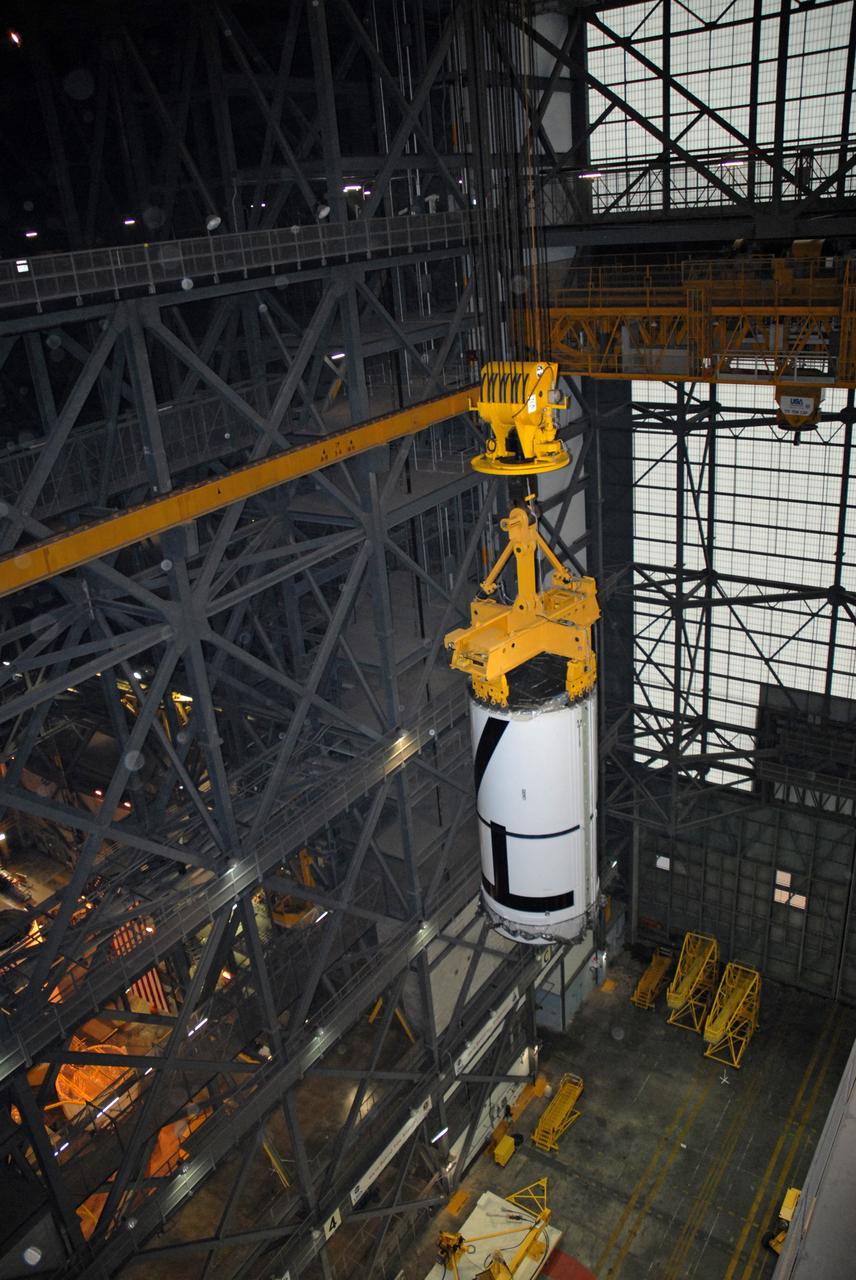
CAPE CANAVERAL, Fla. – In the Vehicle Assembly Building's transfer aisle at NASA's Kennedy Space Center in Florida, an overhead crane lifts the Ares I-X aft center booster segment , which will be lifted and then lowered into High Bay 3 for attachment to the aft booster and skirt. Part of the Constellation Program, the Ares I-X is the test vehicle for the Ares I, which is the essential core of a space transportation system that eventually will carry crewed missions back to the moon, on to Mars and out into the solar system . The flight test of the Ares I-X is targeted for no earlier than Aug. 30. Photo credit: NASA/Tim Jacobs
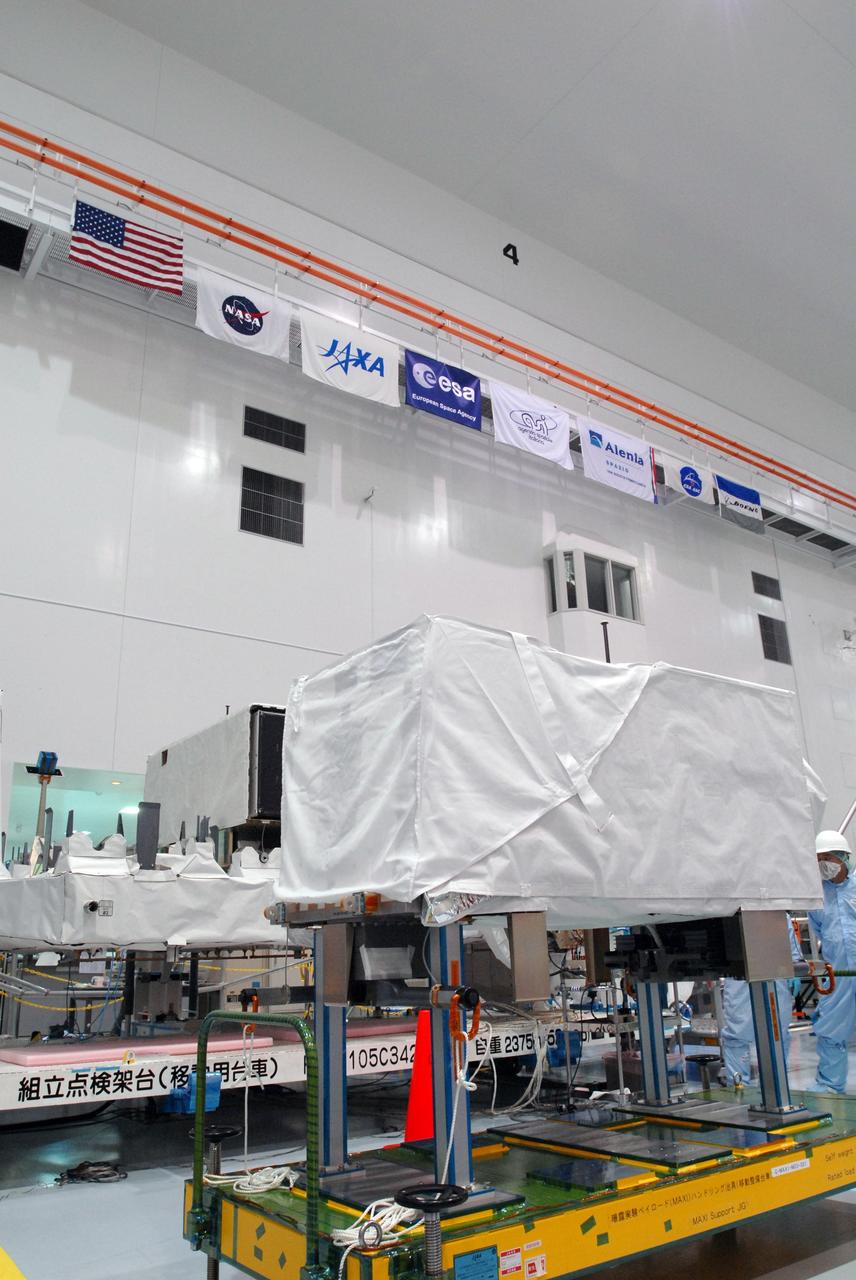
CAPE CANAVERAL, Fla. -- In the Space Station Processing Facility at NASA's Kennedy Space Center in Florida, the MAXI (Monitor of All-sky X-ray Image) is moved toward the Japanese Experiment Module's Experiment Logistics Module-Exposed Section, or ELM-ES, where it will be installed. The MAXI is part of space shuttle Endeavour's payload on the STS-127 mission. Using X-ray slit cameras with high sensitivity, the MAXI will continuously monitor astronomical X-ray objects over a broad energy band (0.5 to 30 keV). Endeavour is targeted to launch May 15. Photo credit: NASA/Jim Grossmann

CAPE CANAVERAL, Fla. – In the Vehicle Assembly Building's High Bay 4 at NASA's Kennedy Space Center in Florida, technician Troy Merrick, with United Space Alliance, prepares a site on the Ares I-X segments 6 and 7 where a video camera will be installed. The downward facing camera will provide live video during launch. Part of the Constellation Program, the Ares I-X is the test vehicle for the Ares I, which is the essential core of a space transportation system that eventually will carry crewed missions back to the moon, on to Mars and out into the solar system . The Ares I-X flight test is targeted for no earlier than Aug. 30. Photo credit: NASA/Jack Pfaller
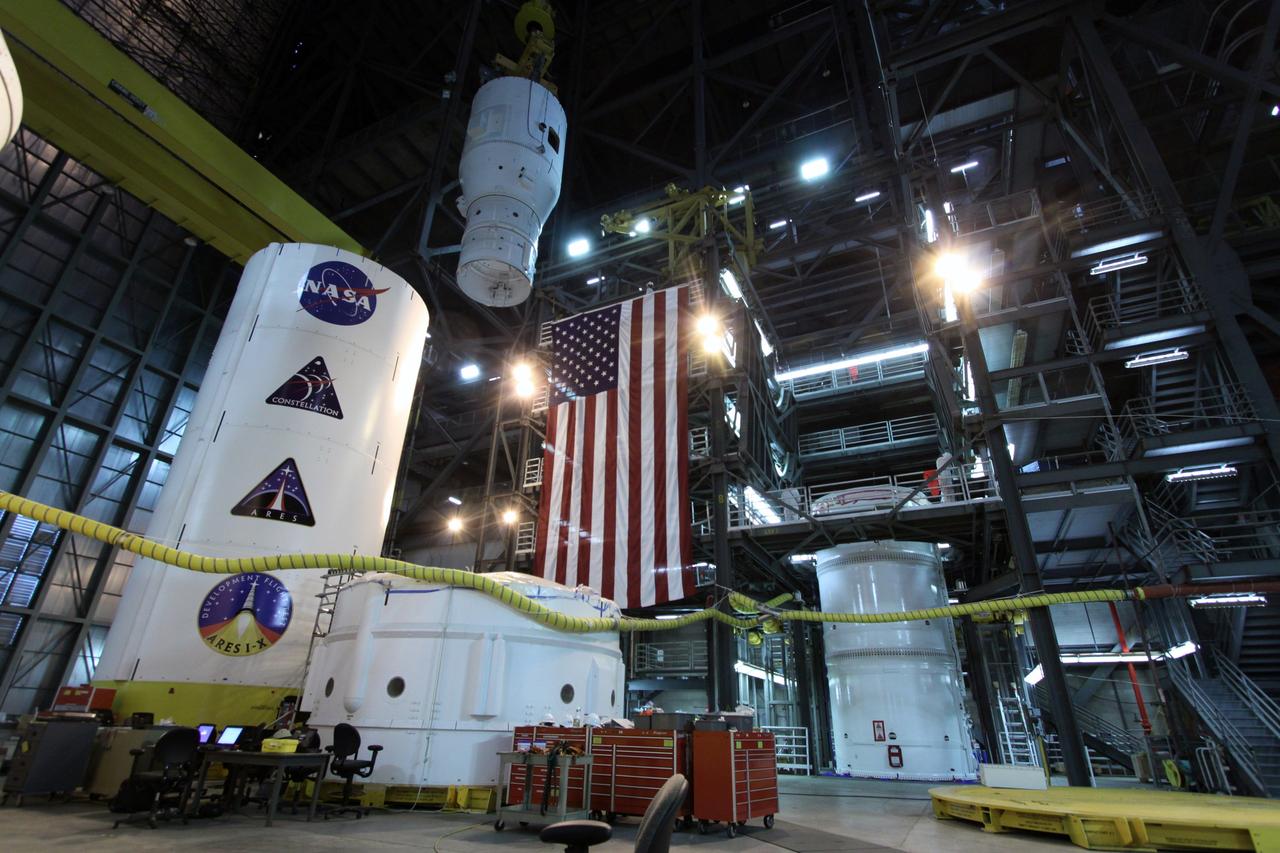
CAPE CANAVERAL, Fla. – In the Vehicle Assembly Building at NASA's Kennedy Space Center in Florida, segments of the Ares I-X first stage move past other stacks toward the fifth simulator segment stack at right. The two stacks will be mated, completing Super Stack 1. The super stack comprises the forward skirt, forward skirt extension, interstages 1 and 2 and the fifth segment simulator. Ares I-X is the test vehicle for the Ares I, which is part of the Constellation Program to return men to the moon and beyond. The Ares I-X flight test is targeted no earlier than Aug. 30 from Launch Pad 39B. Photo credit: NASA/Jack Pfaller
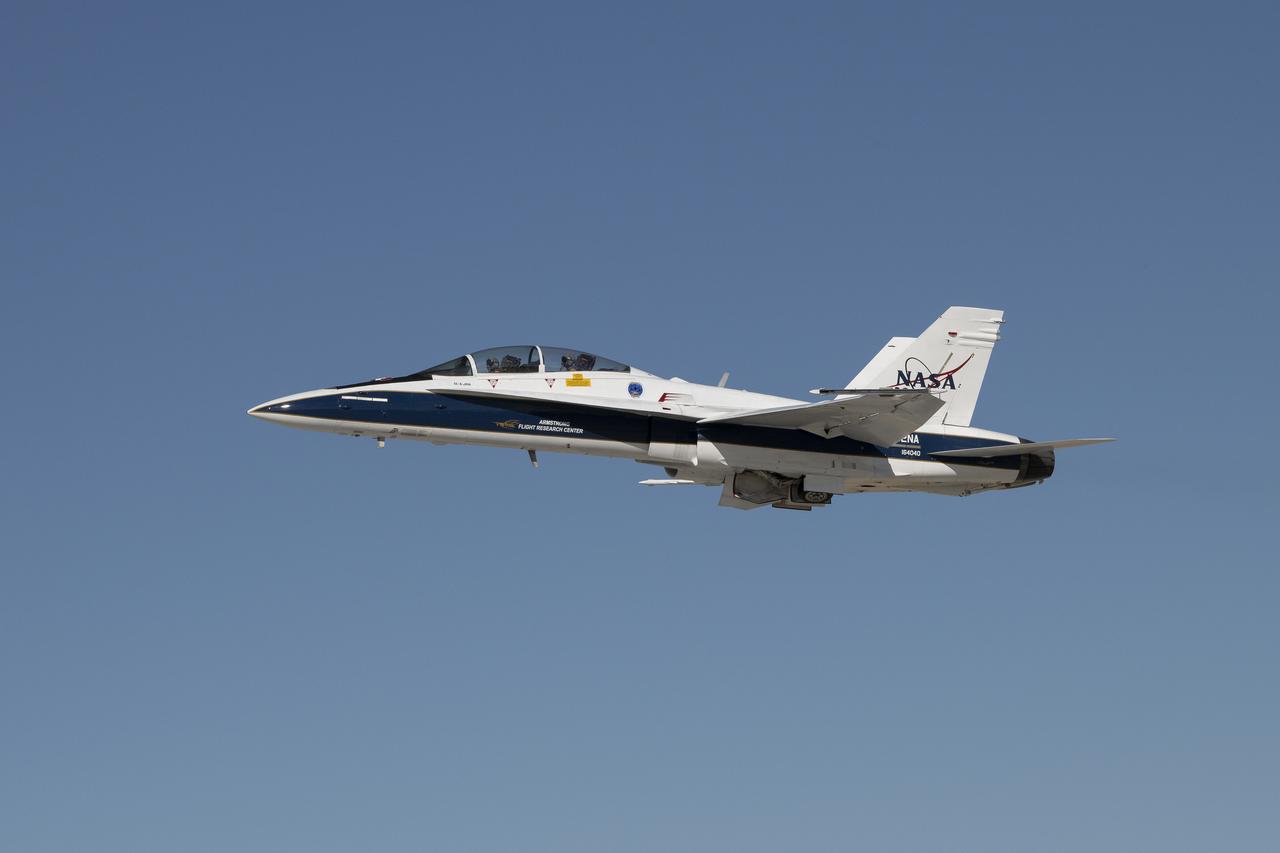
The Quesst mission recently completed testing of operations and equipment to be used in recording the sonic thumps of the X-59. To simulate the sonic thumps expected to be created by the X-59, NASA Armstrong Flight Researcher Center pilot Jim Less performed inverted dive maneuvers in an F-18, shown here, to generate softer sonic booms. The sonic booms were recorded by 10 ground recording stations stretched across 30 miles of desert near Edwards Air Force Base.