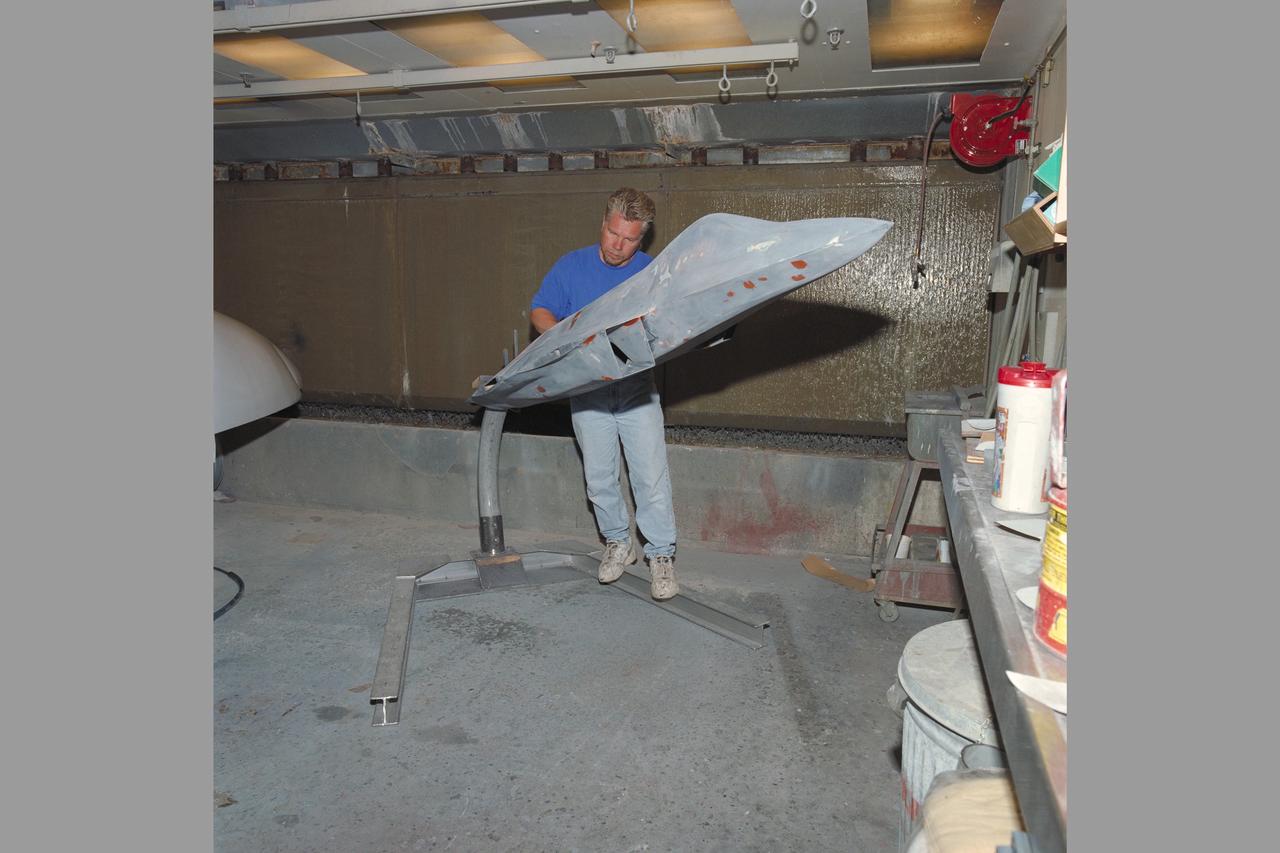
Manufacturing Division (Code JM) Projects. Ron Hovland working on X-36 model in N-212, Model Development & Advanced Composites Br (Code
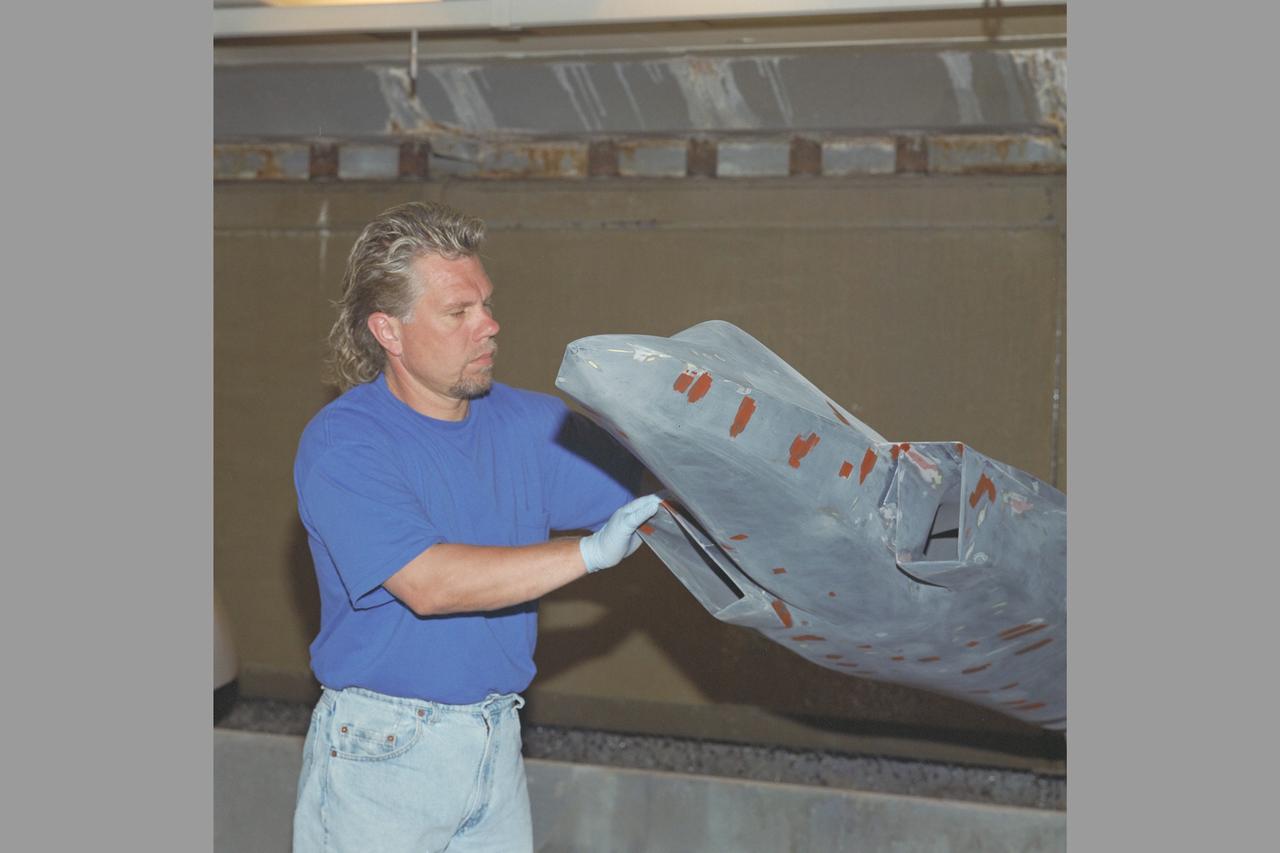
Manufacturing Division (Code JM) Projects. Ron Hovland working on X-36 model in N-212, Model Development & Advanced Composites Br (Code JMC)
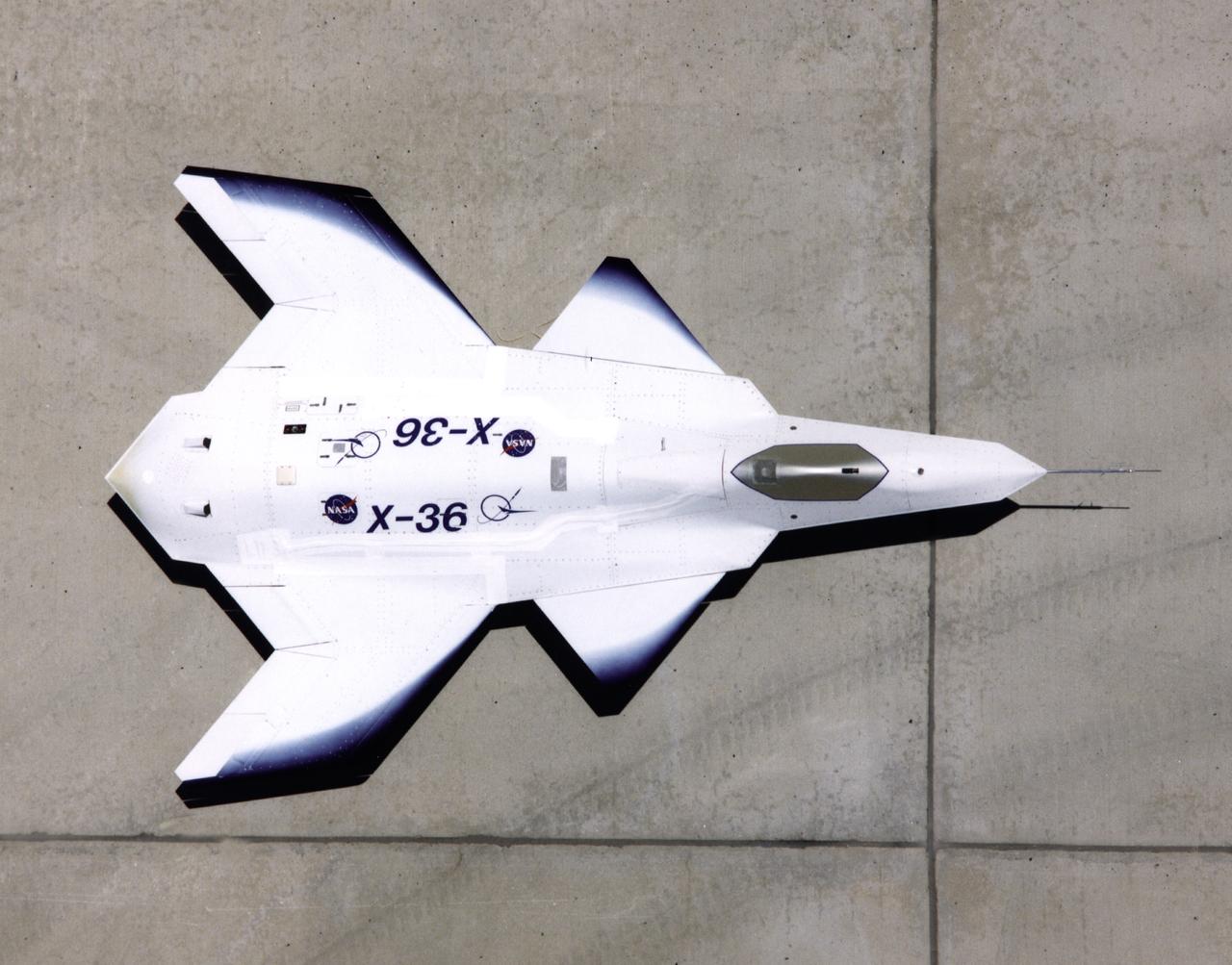
This look-down view of the X-36 Tailless Fighter Agility Research Aircraft on the ramp at NASA’s Dryden Flight Research Center, Edwards, California, clearly shows the unusual wing and canard design of the remotely-piloted aircraft.
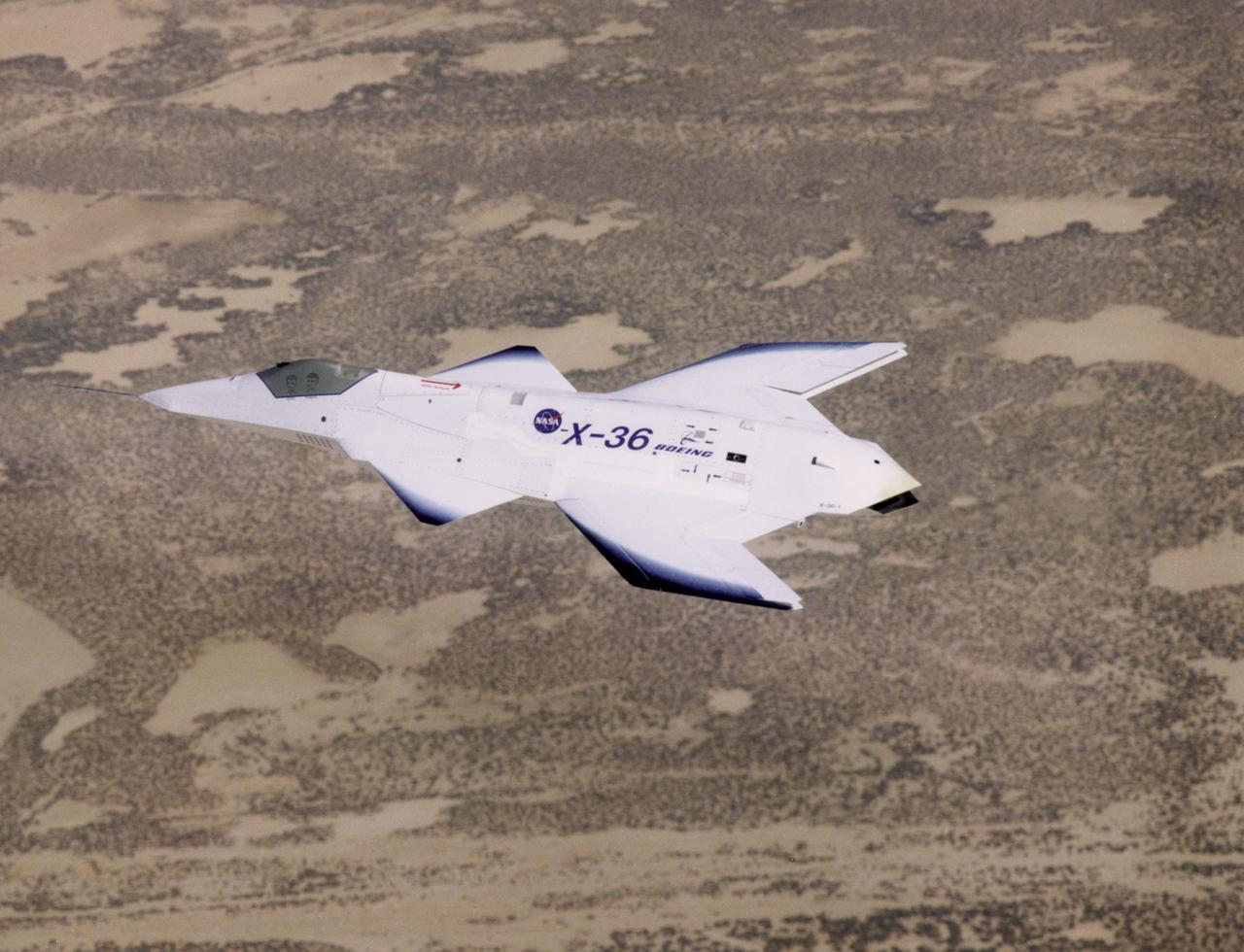
The unusual lines of the X-36 technology demonstrator contrast sharply with the desert floor as the remotely piloted aircraft scoots across the California desert at low altitude during a research flight on October 30, 1997.
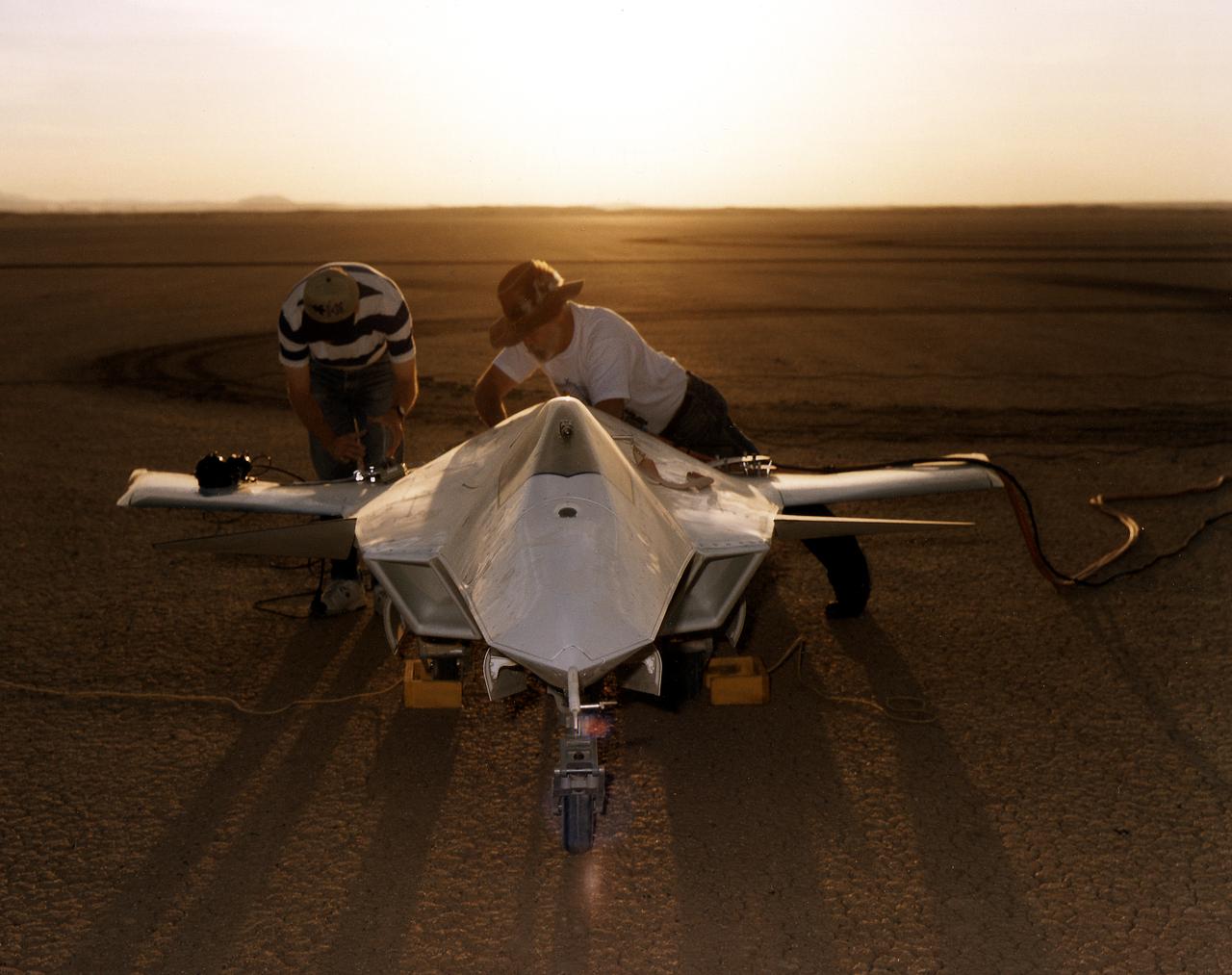
As the sun creeps above the horizon of Rogers Dry Lake at NASA's Dryden Flight Research Center, Edwards, California, technicians make final preparations for the first flight of the X-36 Tailless Fighter Agility Research Aircraft.
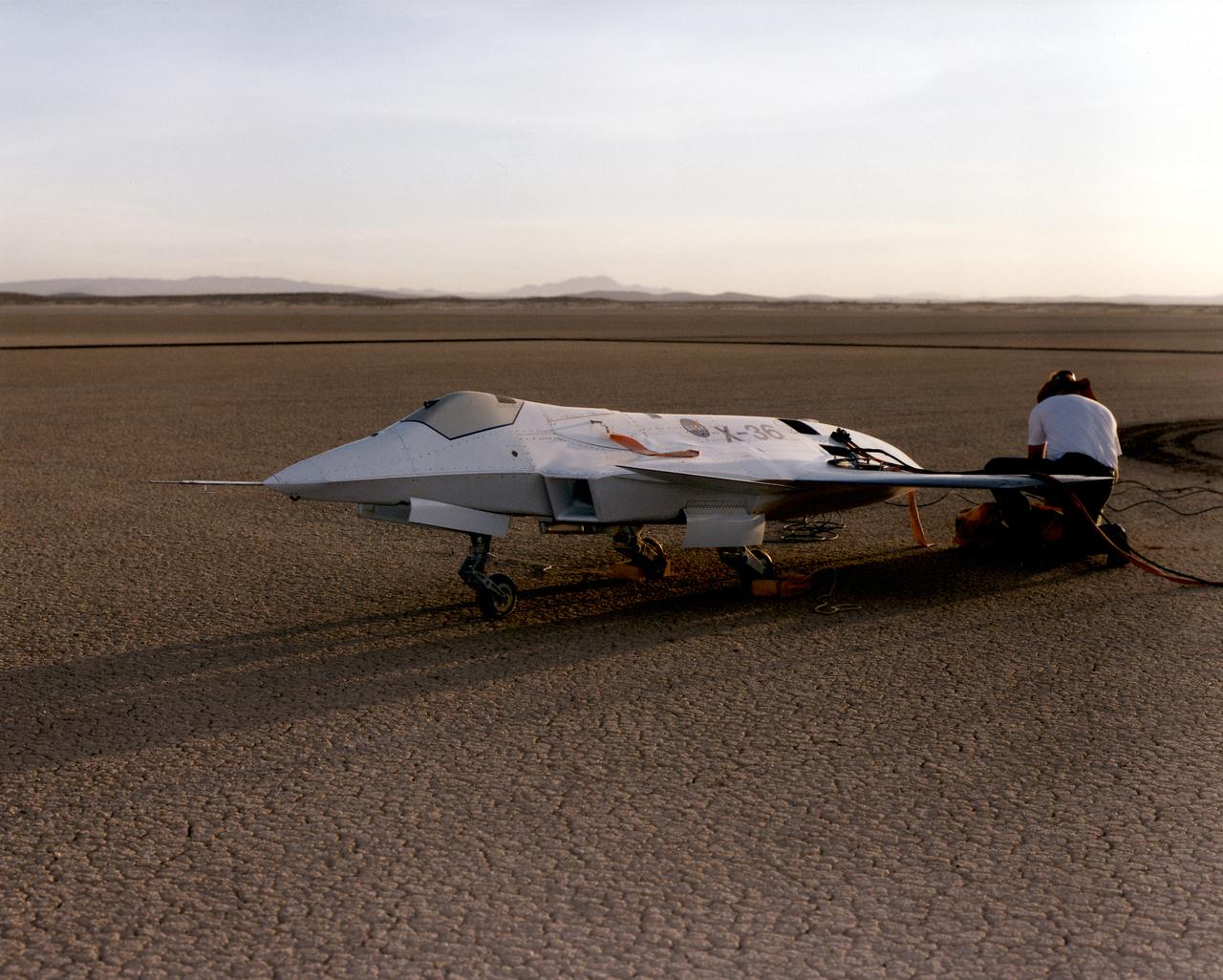
Lit by the rays of the morning sunrise on Rogers Dry Lake, adjacent to NASA's Dryden Flight Research Center, Edwards, California, technicians prepare the remotely-piloted X-36 Tailless Fighter Agility Research Aircraft for its first flight in May 1997.
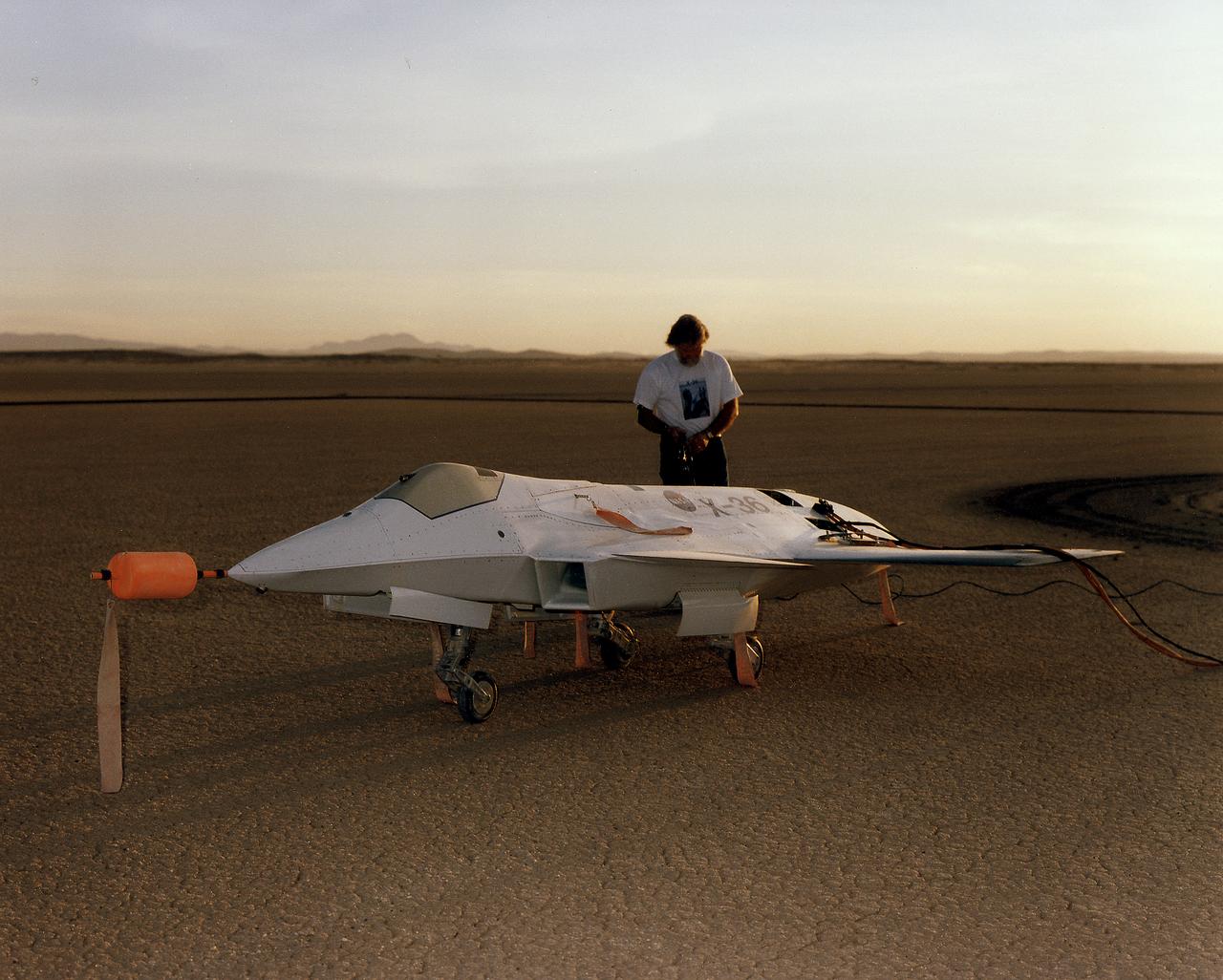
Lit by the rays of the morning sunrise on Rogers Dry Lake, adjacent to NASA's Dryden Flight Research Center, Edwards, California, a technician prepares the remotely-piloted X-36 Tailless Fighter Agility Research Aircraft for its first flight on May 17, 1997.
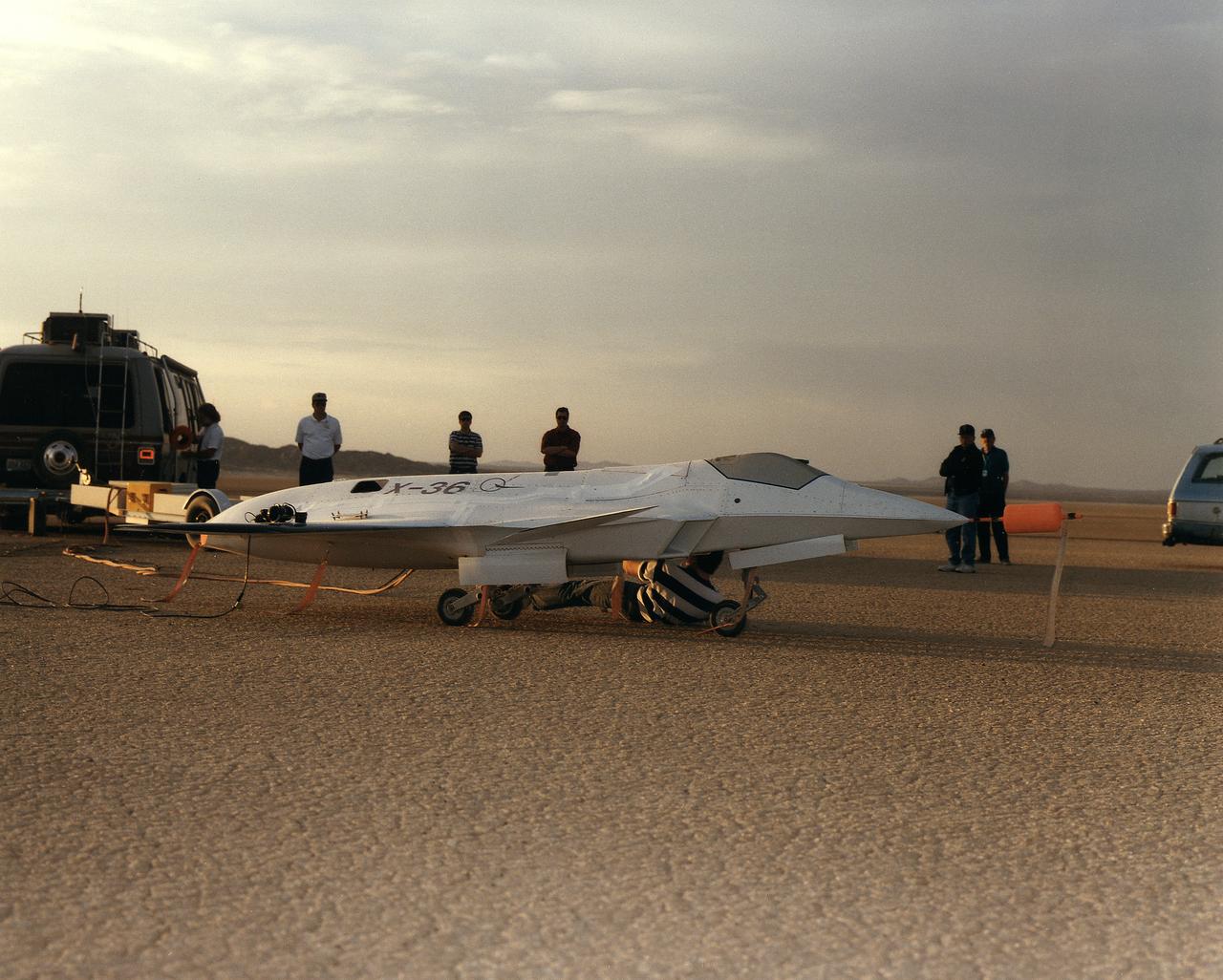
Lit by the rays of the morning sunrise on Rogers Dry Lake, adjacent to NASA's Dryden Flight Research Center, Edwards, California, technicians prepares the remotely-piloted X-36 Tailless Fighter Agility Research Aircraft for its first flight on May 17, 1997.
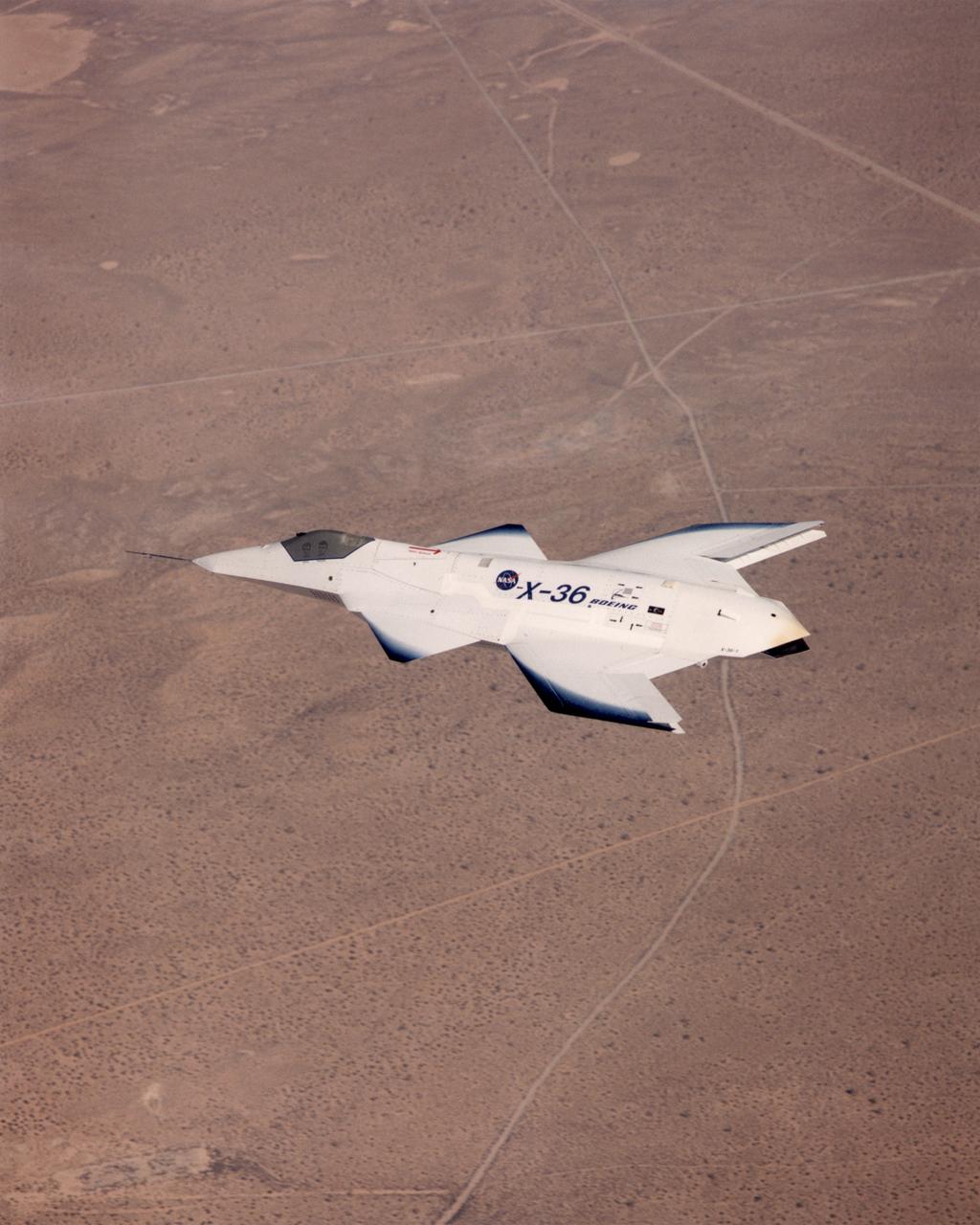
The tailless X-36 technology demonstrator research aircraft cruises over the California desert at low altitude during a 1997 research flight.
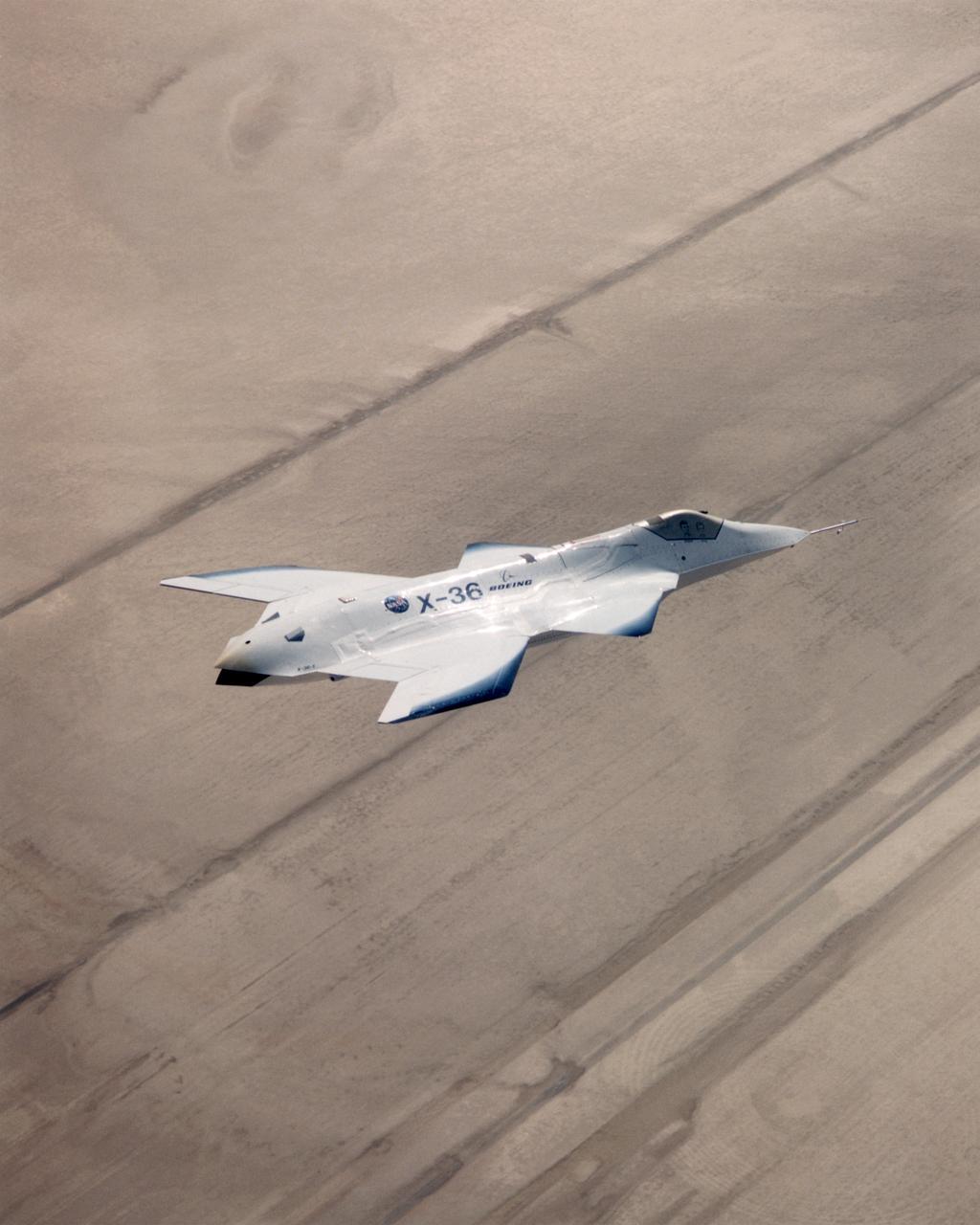
The X-36 technology demonstrator shows off its distinctive shape as the remotely piloted aircraft flies a research mission over the Southern California desert on October 30, 1997.
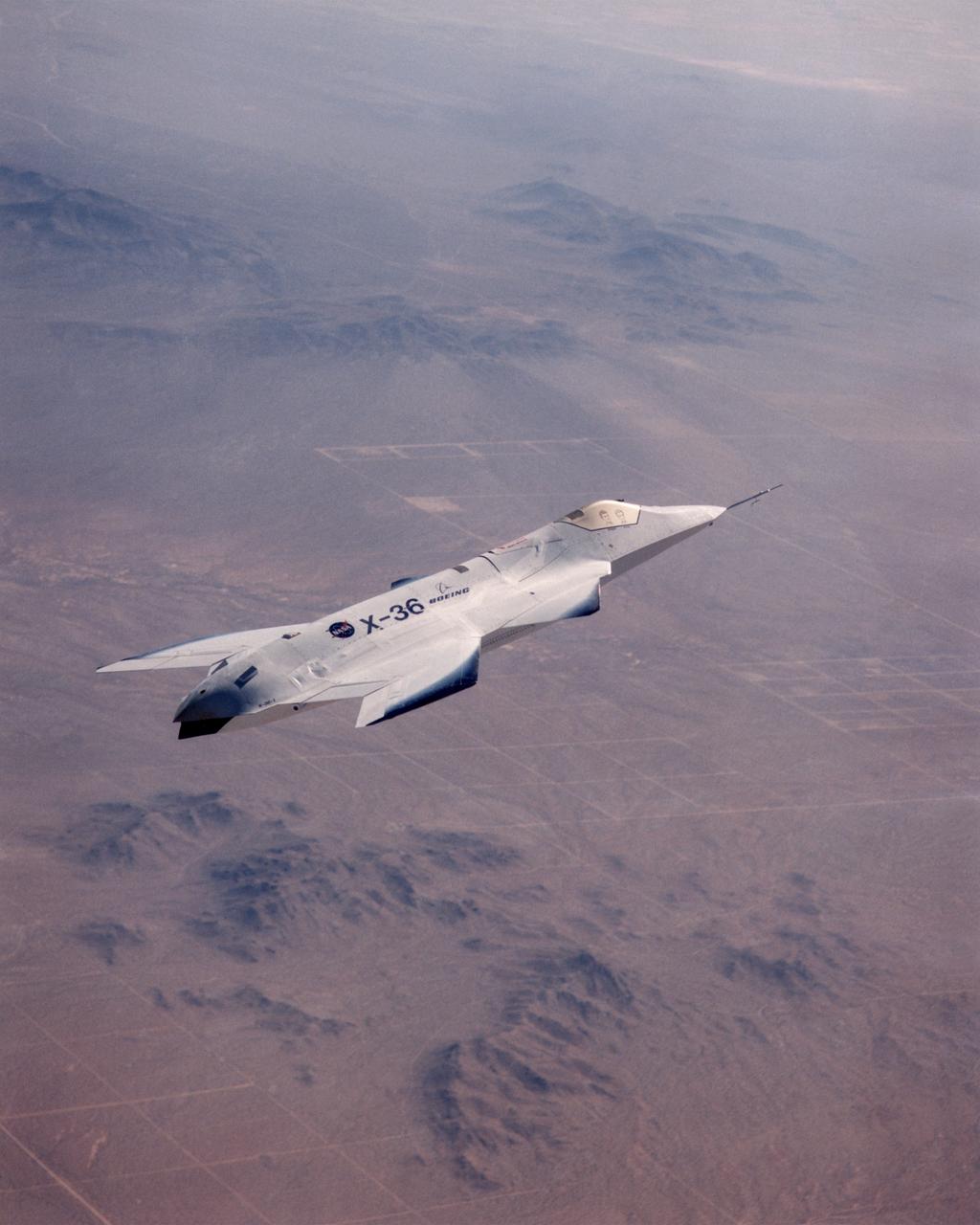
The X-36 technology demonstrator shows off its distinctive shape as the remotely piloted aircraft flies a research mission over the Southern California desert on October 30, 1997.
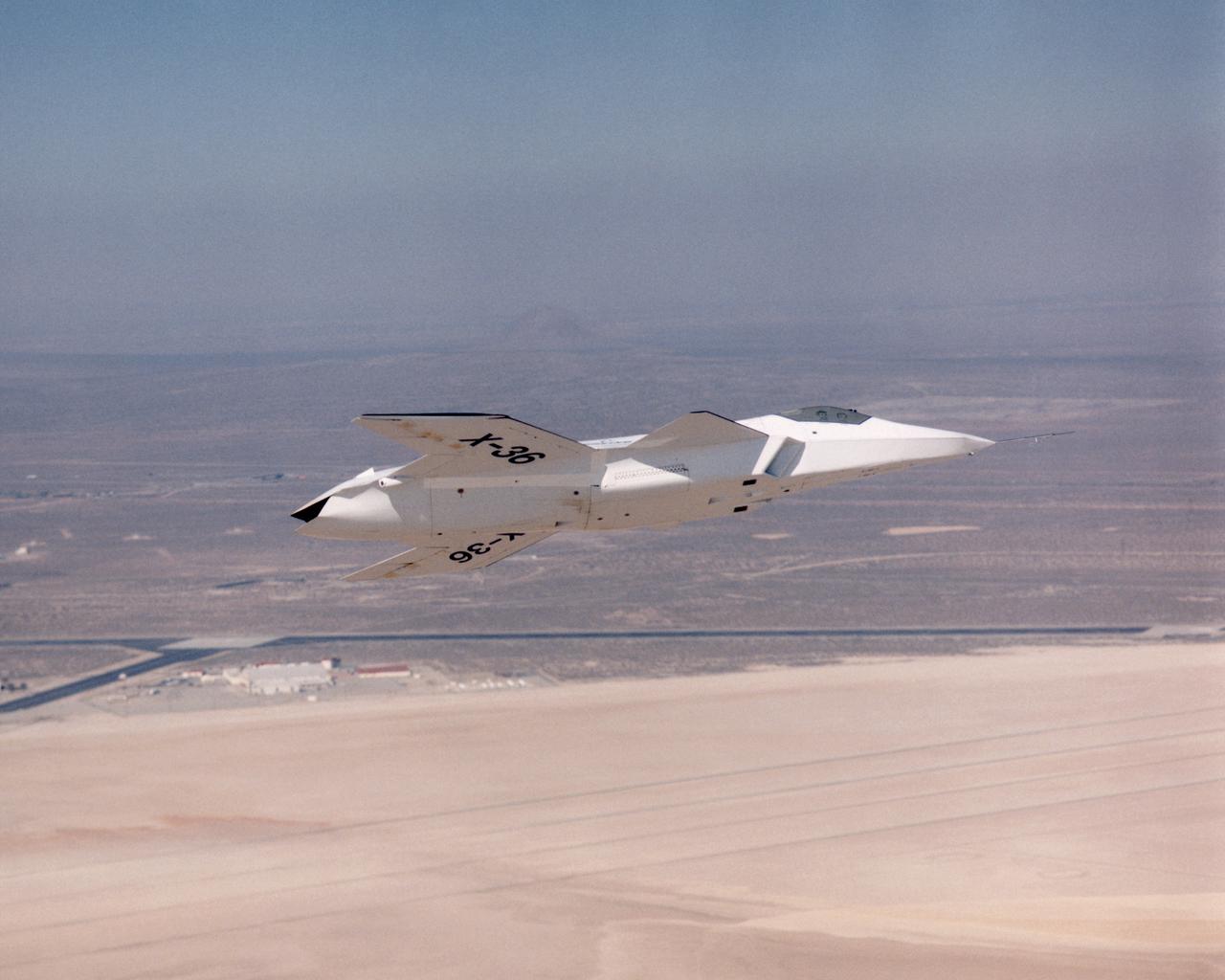
The lack of a vertical tail on the X-36 technology demonstrator is evident as the remotely piloted aircraft flies a low-altitude research flight above Rogers Dry Lake at Edwards Air Force Base in the California desert on October 30, 1997.
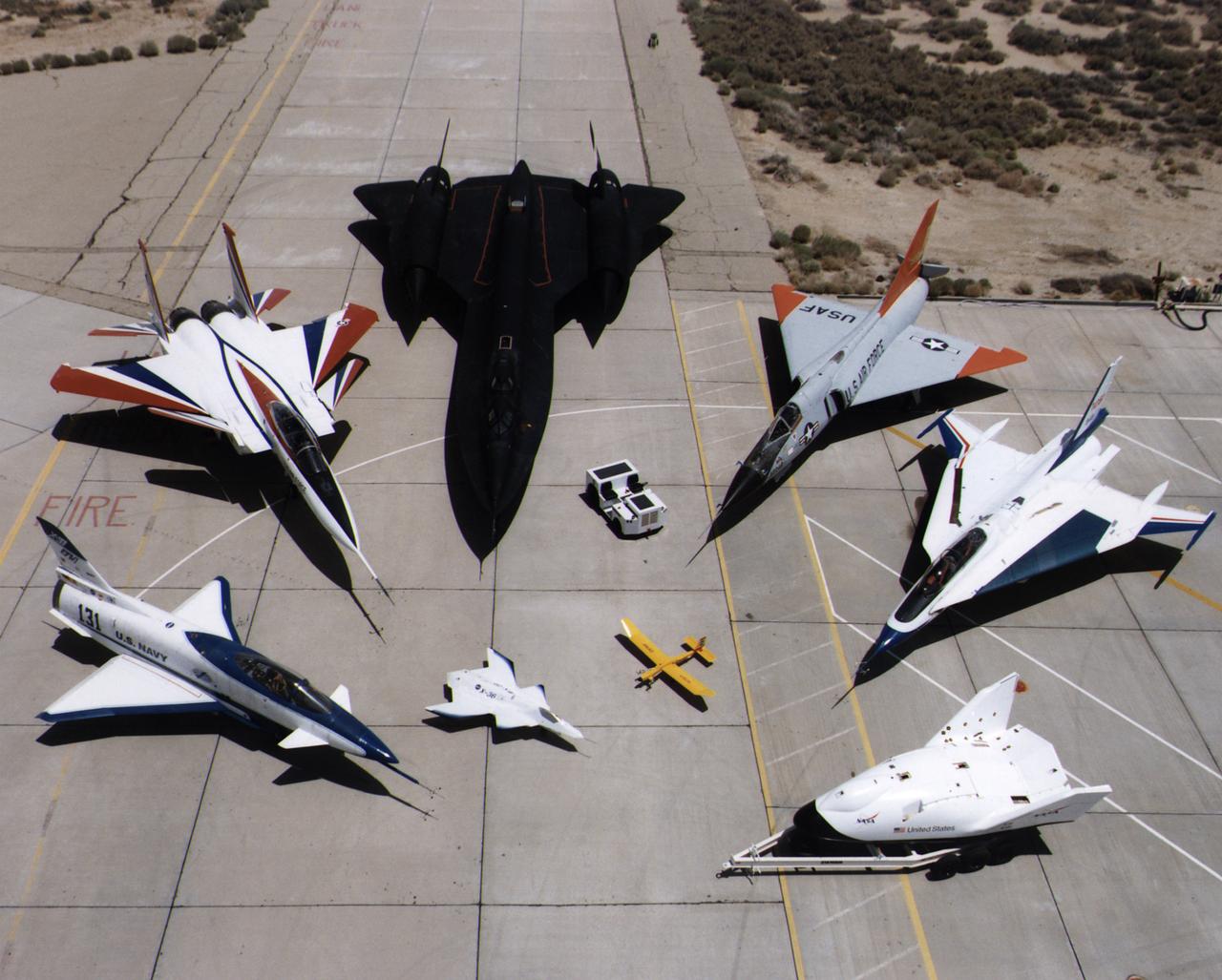
A collection of NASA's research aircraft on the ramp at the Dryden Flight Research Center in July 1997: X-31, F-15 ACTIVE, SR-71, F-106, F-16XL Ship #2, X-38, Radio Controlled Mothership and X-36.

The first stage of the Geostationary Operational Environmental Satellite-M (GOES-M) Atlas II rocket arrives at Complex 36-A, Cape Canaveral Air Force Station. It will be raised and lifted up the gantry for mating with other stages. The last in the current series of advanced geostationary weather satellites in service, GOES-M has a new instrument not on earlier spacecraft, a Solar X-ray Imager that can be used in forecasting space weather, the effects of solar storms that create electromagnetic disturbances on earth that affect other satellites, communications and power grids. GOES-M is scheduled to launch from Launch Complex 36-A, Cape Canaveral Air Force Station July 15
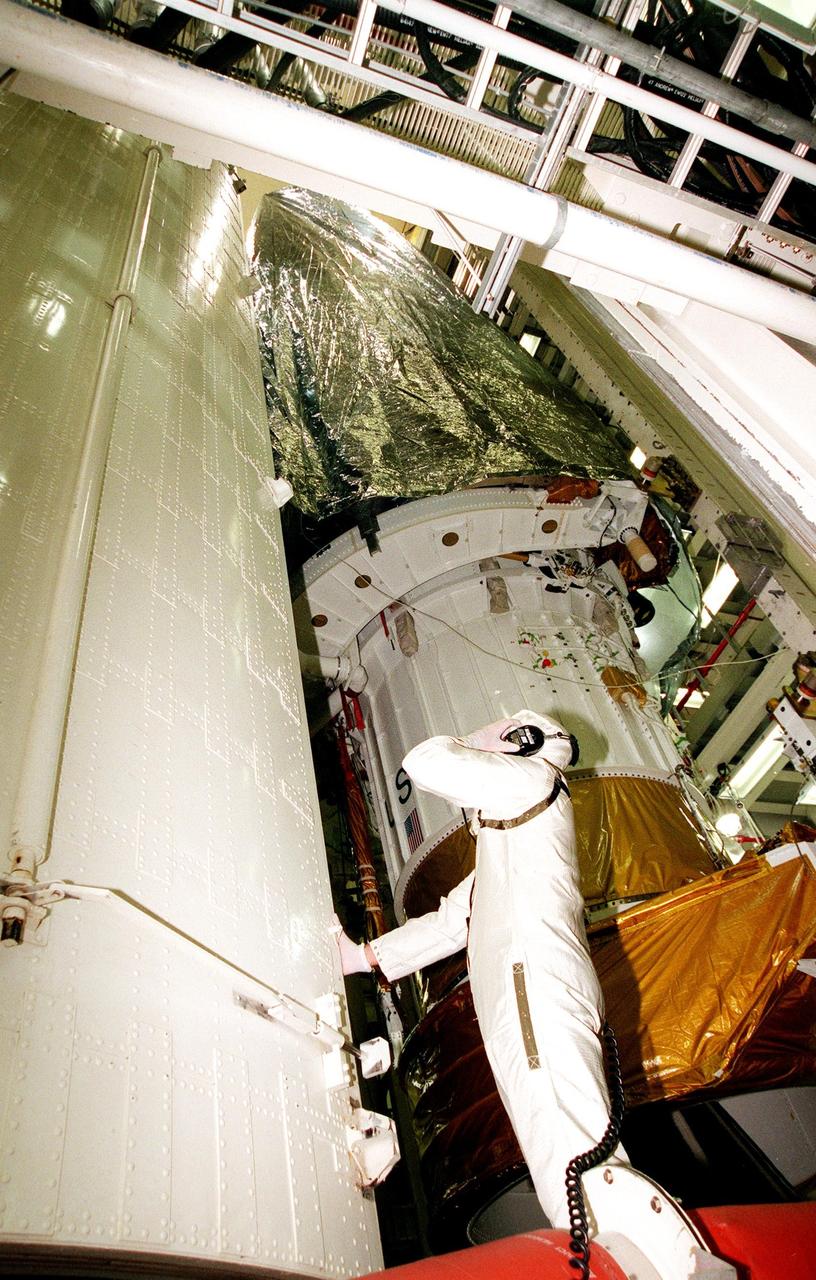
Inside the Vertical Processing Facility, a worker keeps check on the transfer of the Chandra X-ray Observatory (right) as it is transferred to the KSC payload canister transporter (left). The transporter will carry Chandra out to Launch Pad 39B for its scheduled launch, to take place no earlier than July 20 at 12:36 a.m. EDT aboard Space Shuttle Columbia, on mission STS-93. With the world's most powerful X-ray telescope, Chandra will allow scientists from around the world to see previously invisible black holes and high-temperature gas clouds, giving the observatory the potential to rewrite the books on the structure and evolution of our universe
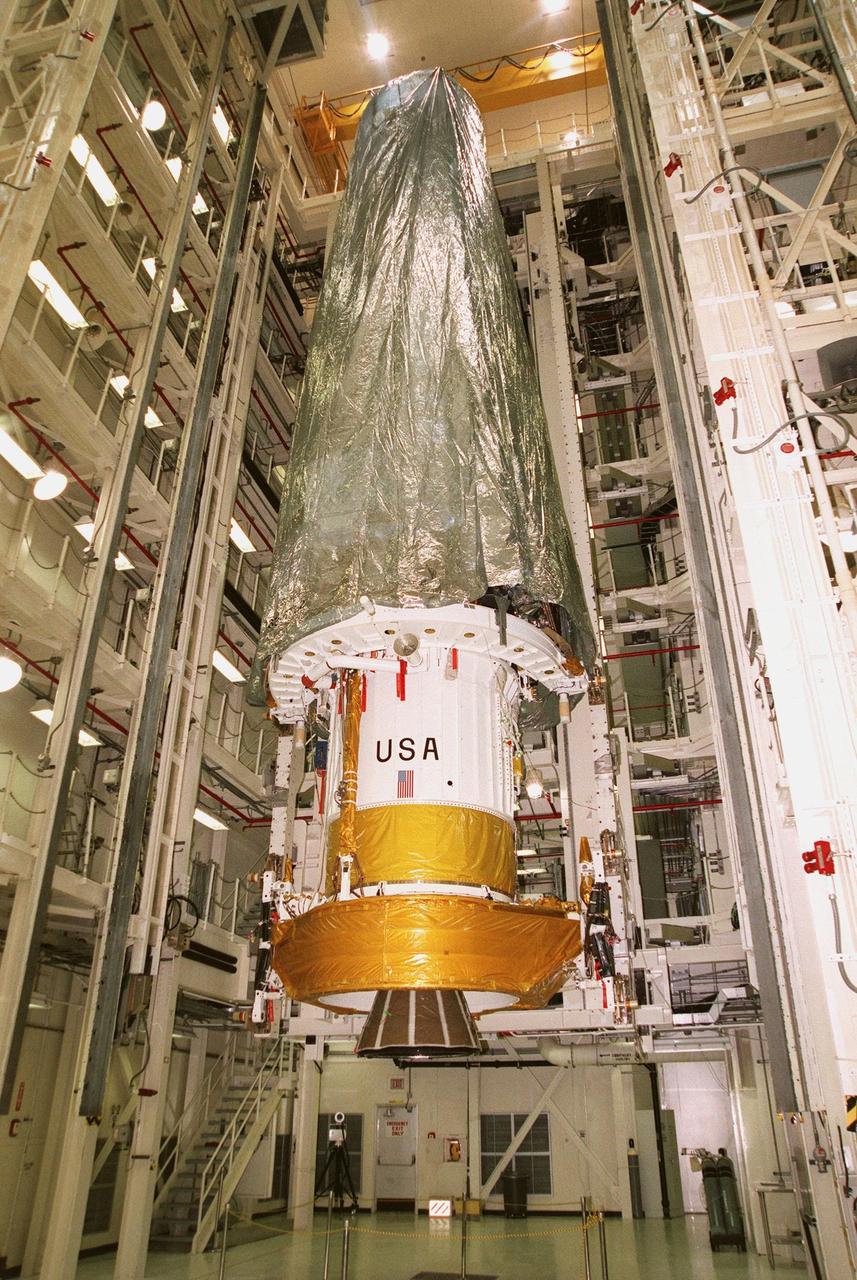
Inside the Vertical Processing Facility, the Chandra X-ray Observatory is lifted by an overhead crane in order to transfer it into the payload canister transporter and out to Launch Pad 39B. Chandra is scheduled to launch no earlier than July 20 at 12:36 a.m. EDT aboard Space Shuttle Columbia, on mission STS-93. With the world's most powerful X-ray telescope, Chandra will allow scientists from around the world to see previously invisible black holes and high-temperature gas clouds, giving the observatory the potential to rewrite the books on the structure and evolution of our universe
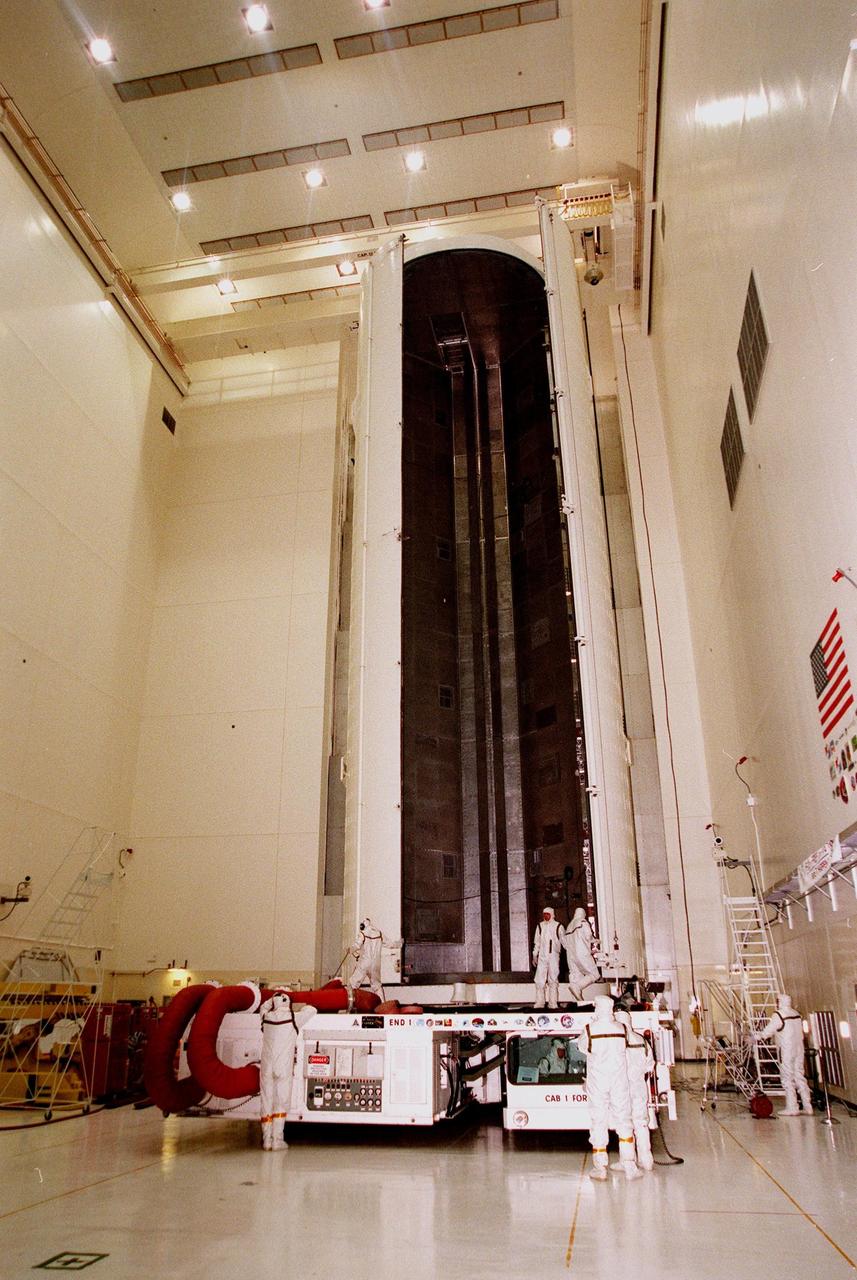
Workers help set up the KSC payload canister transporter as it waits in the Vertical Processing Facility to retrieve the Chandra X-ray Observatory and carry it out to Launch Pad 39B. Chandra is scheduled to launch no earlier than July 20 at 12:36 a.m. EDT aboard Space Shuttle Columbia, on mission STS-93. With the world's most powerful X-ray telescope, Chandra will allow scientists from around the world to see previously invisible black holes and high-temperature gas clouds, giving the observatory the potential to rewrite the books on the structure and evolution of our universe
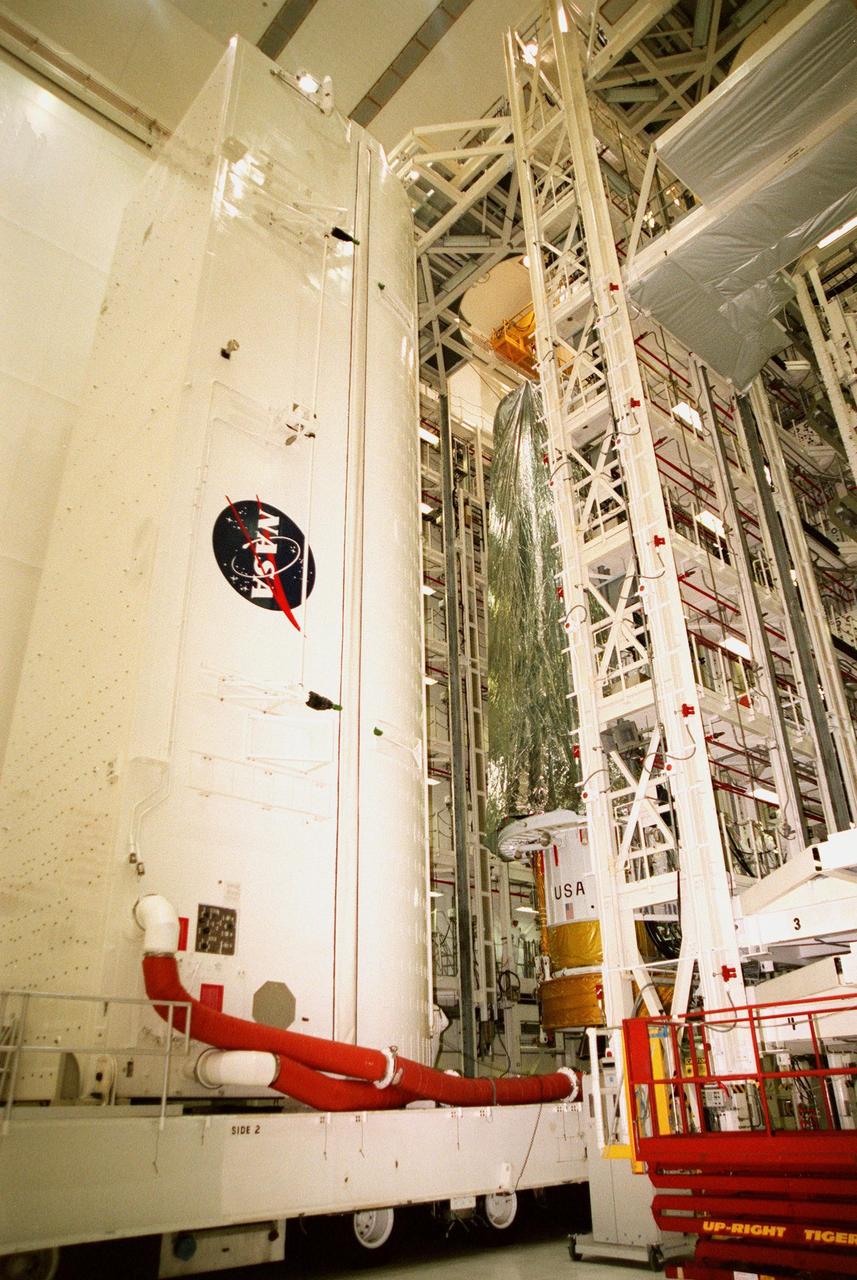
Inside the Vertical Processing Facility, the KSC payload canister transporter (left) backs up to the Chandra X-ray Observatory, stationed within the gridwork at right. The transporter will carry Chandra out to Launch Pad 39B for its scheduled launch, to take place no earlier than July 20 at 12:36 a.m. EDT aboard Space Shuttle Columbia, on mission STS-93. With the world's most powerful X-ray telescope, Chandra will allow scientists from around the world to see previously invisible black holes and high-temperature gas clouds, giving the observatory the potential to rewrite the books on the structure and evolution of our universe
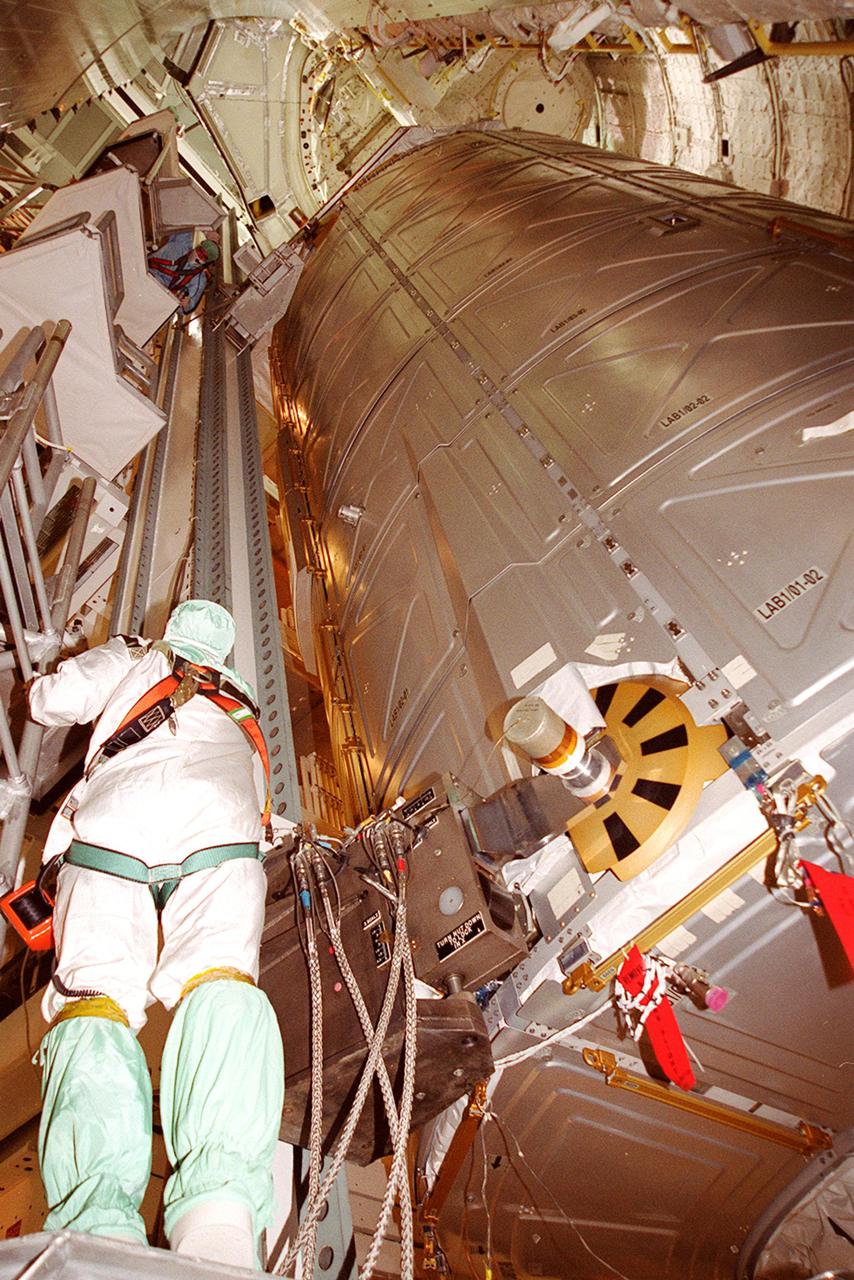
The U.S. Lab Destiny is ready to be moved from Atlantis’ payload bay into the Payload Changeout Room. After the move, Atlantis will roll back to the Vehicle Assembly Building to allow workers to conduct inspections, continuity checks and X-ray analysis on the 36 solid rocket booster cables located inside each booster’s system tunnel. An extensive evaluation of NASA’s SRB cable inventory revealed conductor damage in four (of about 200) cables on the shelf. Shuttle managers decided to prove the integrity of the system tunnel cables already on Atlantis
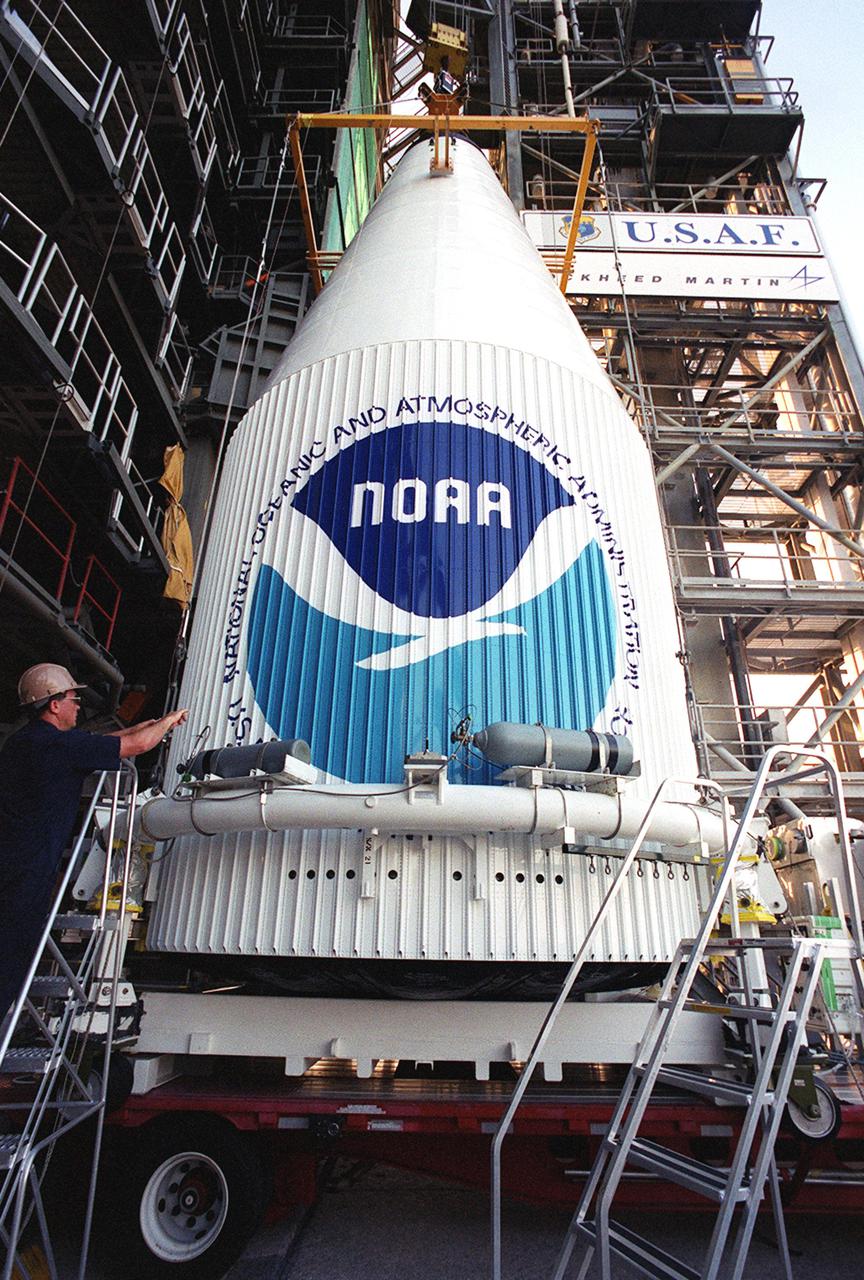
KENNEDY SPACE CENTER, Fla. -- The GOES-M satellite arrives at Complex 36-A, Cape Canaveral Air Force Station. GOES-M is the last in the current series of advanced geostationary weather satellites in service. GOES-M has a new instrument not on earlier spacecraft, a Solar X-ray Imager, which can be used in forecasting space weather and the effects of solar storms. The satellite is scheduled to launch atop an Atlas rocket July 15
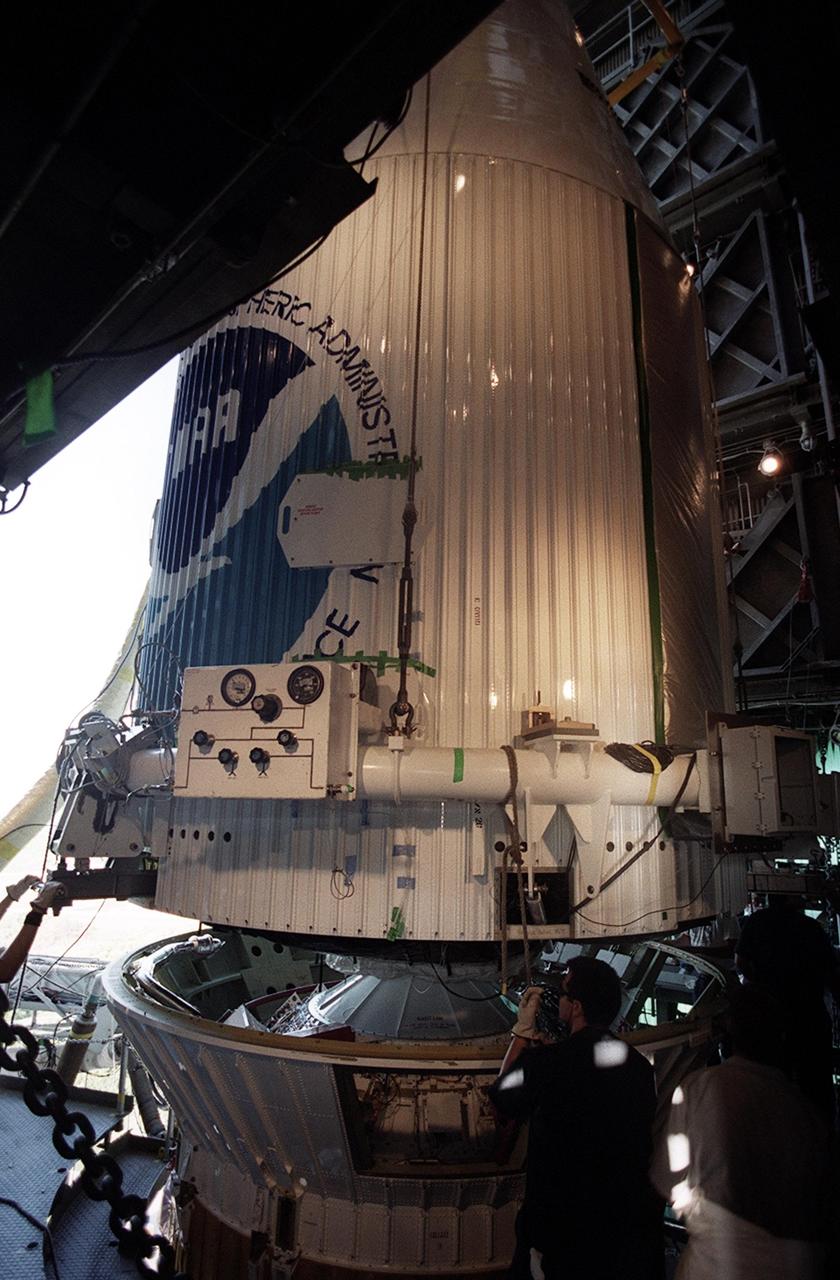
KENNEDY SPACE CENTER, Fla. -- The GOES-M satellite is lowered toward the Atlas rocket in the launch tower at Complex 36-A, Cape Canaveral Air Force Station. GOES-M is the last in the current series of advanced geostationary weather satellites in service. GOES-M has a new instrument not on earlier spacecraft, a Solar X-ray Imager, which can be used in forecasting space weather and the effects of solar storms. The satellite is scheduled to launch atop an Atlas rocket July 15
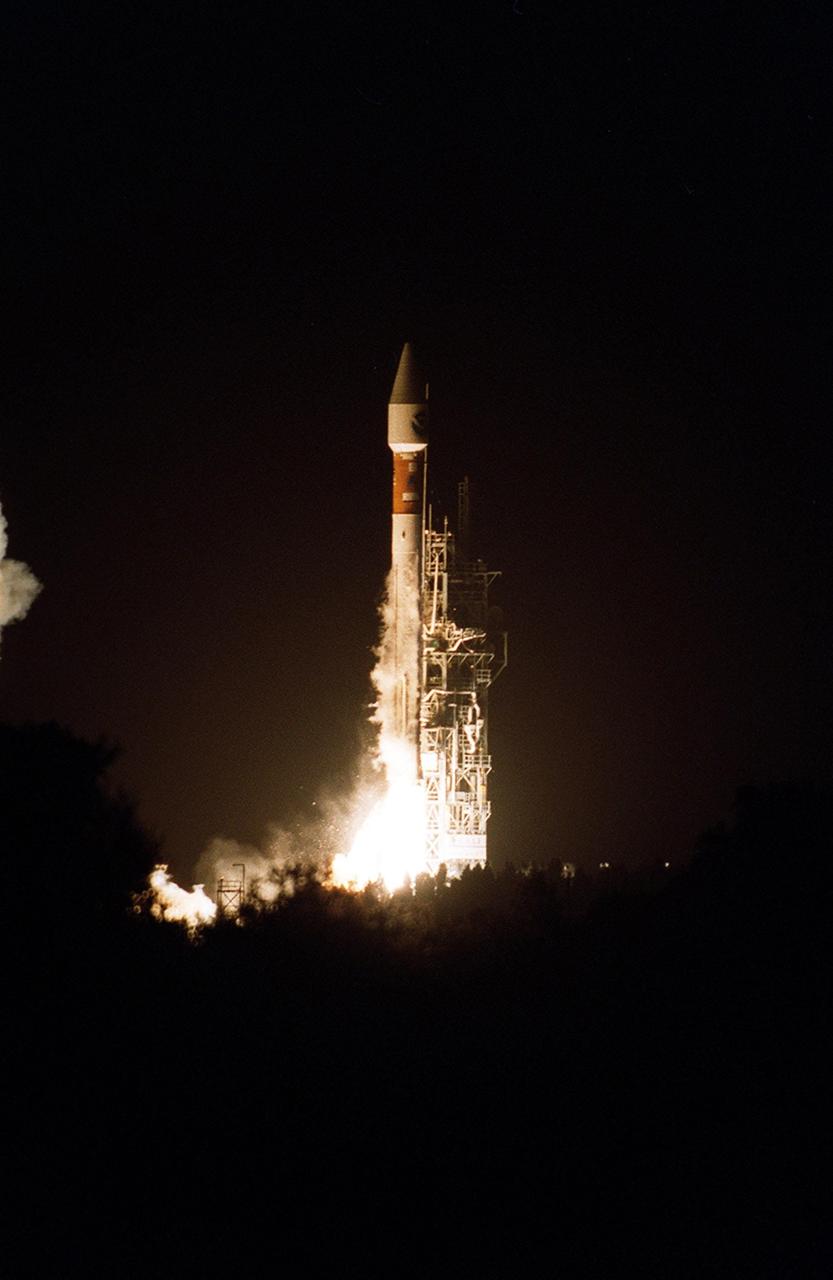
KENNEDY SPACE CENTER, Fla. -- The Atlas II rocket roars into the sky with the GOES-M satellite on top. Liftoff occurred at 3:23:01 a.m. EDT from Launch Complex 36-A, Cape Canaveral Air Force Station. GOES-M is the last in the current series of advanced geostationary weather satellites in service. GOES-M has a new instrument not on earlier spacecraft, a Solar X-ray Imager, which can be used in forecasting space weather and the effects of solar storms
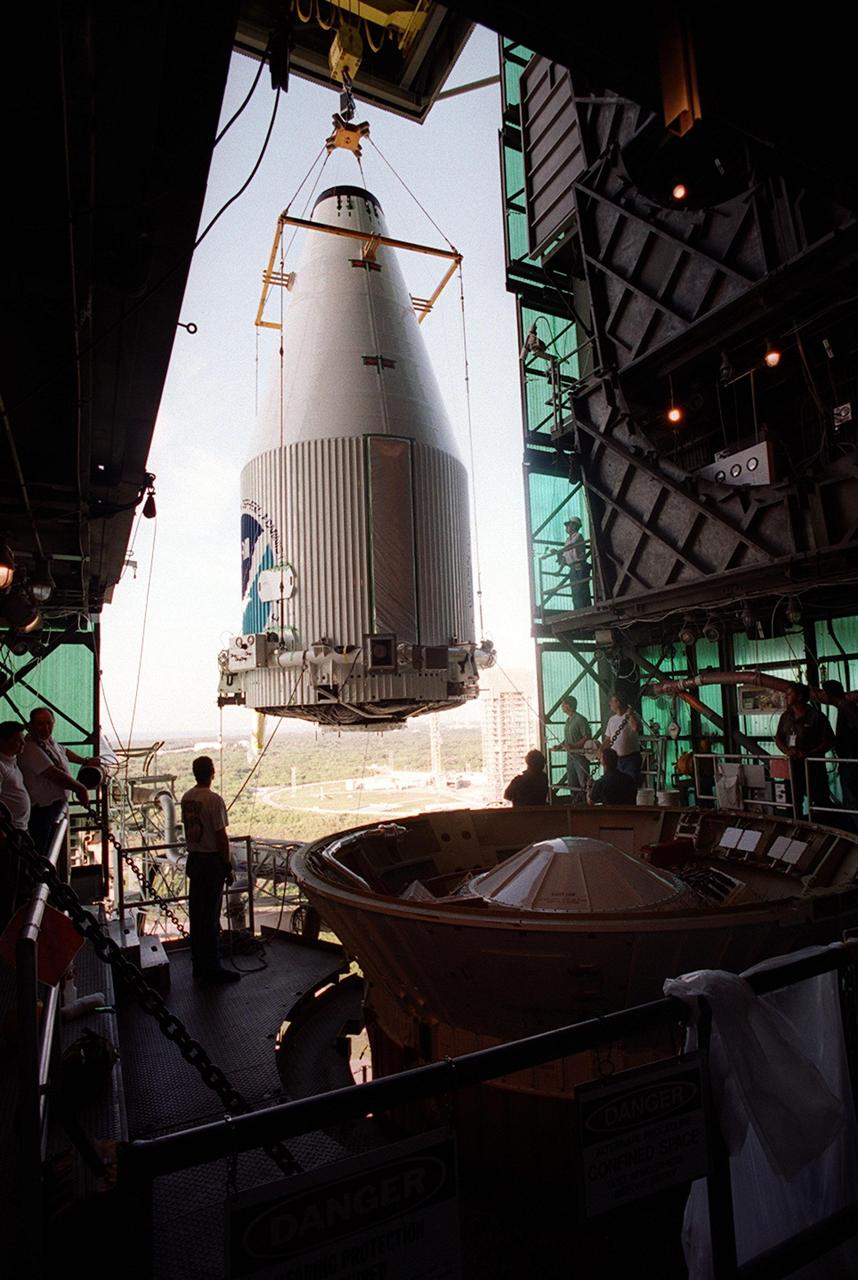
KENNEDY SPACE CENTER, Fla. -- The GOES-M satellite is moved toward the Atlas rocket in the launch tower at Complex 36-A, Cape Canaveral Air Force Station. GOES-M is the last in the current series of advanced geostationary weather satellites in service. GOES-M has a new instrument not on earlier spacecraft, a Solar X-ray Imager, which can be used in forecasting space weather and the effects of solar storms. The satellite is scheduled to launch atop an Atlas rocket July 15.
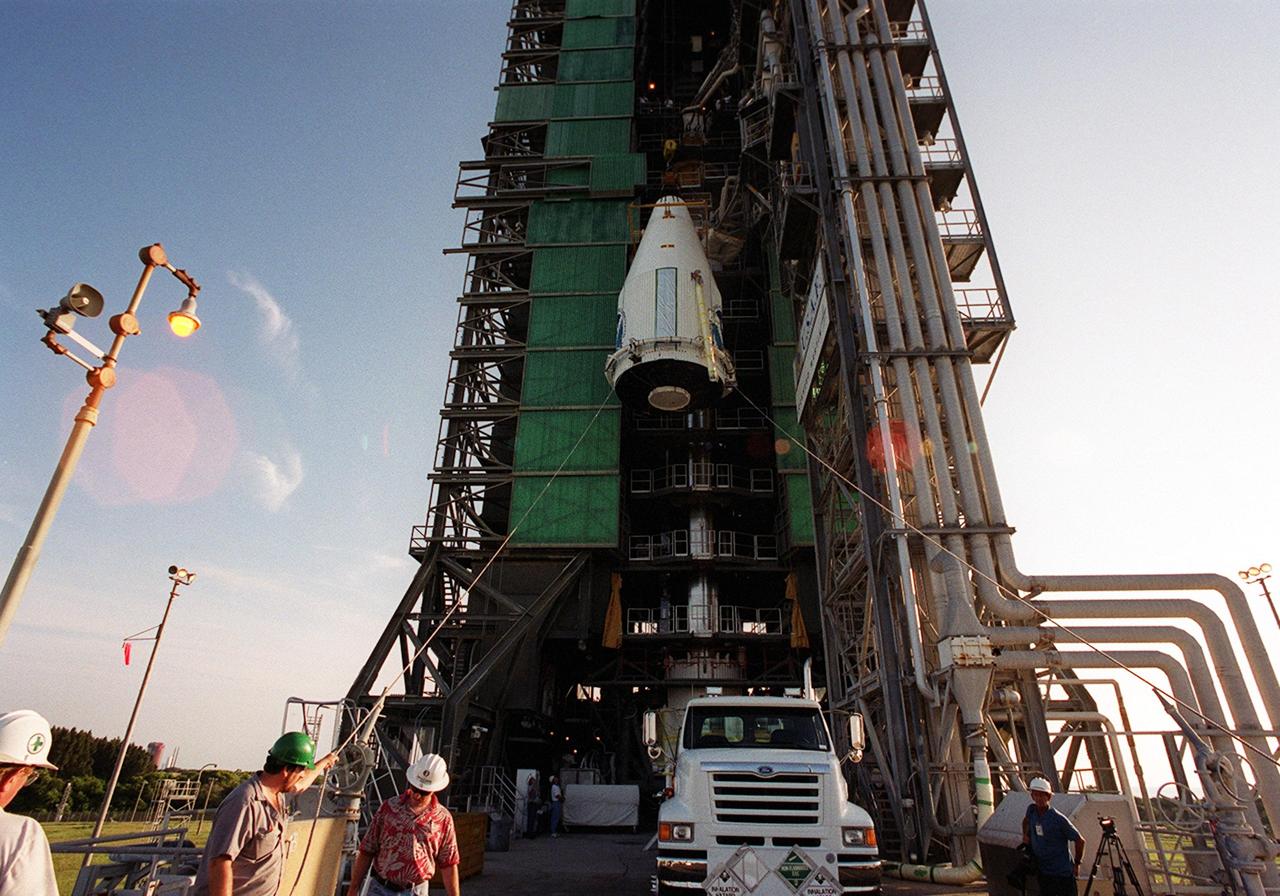
KENNEDY SPACE CENTER, Fla. -- The GOES-M satellite is lifted up the launch tower at Complex 36-A, Cape Canaveral Air Force Station. GOES-M is the last in the current series of advanced geostationary weather satellites in service. GOES-M has a new instrument not on earlier spacecraft, a Solar X-ray Imager, which can be used in forecasting space weather and the effects of solar storms. The satellite is scheduled to launch atop an Atlas rocket July 15
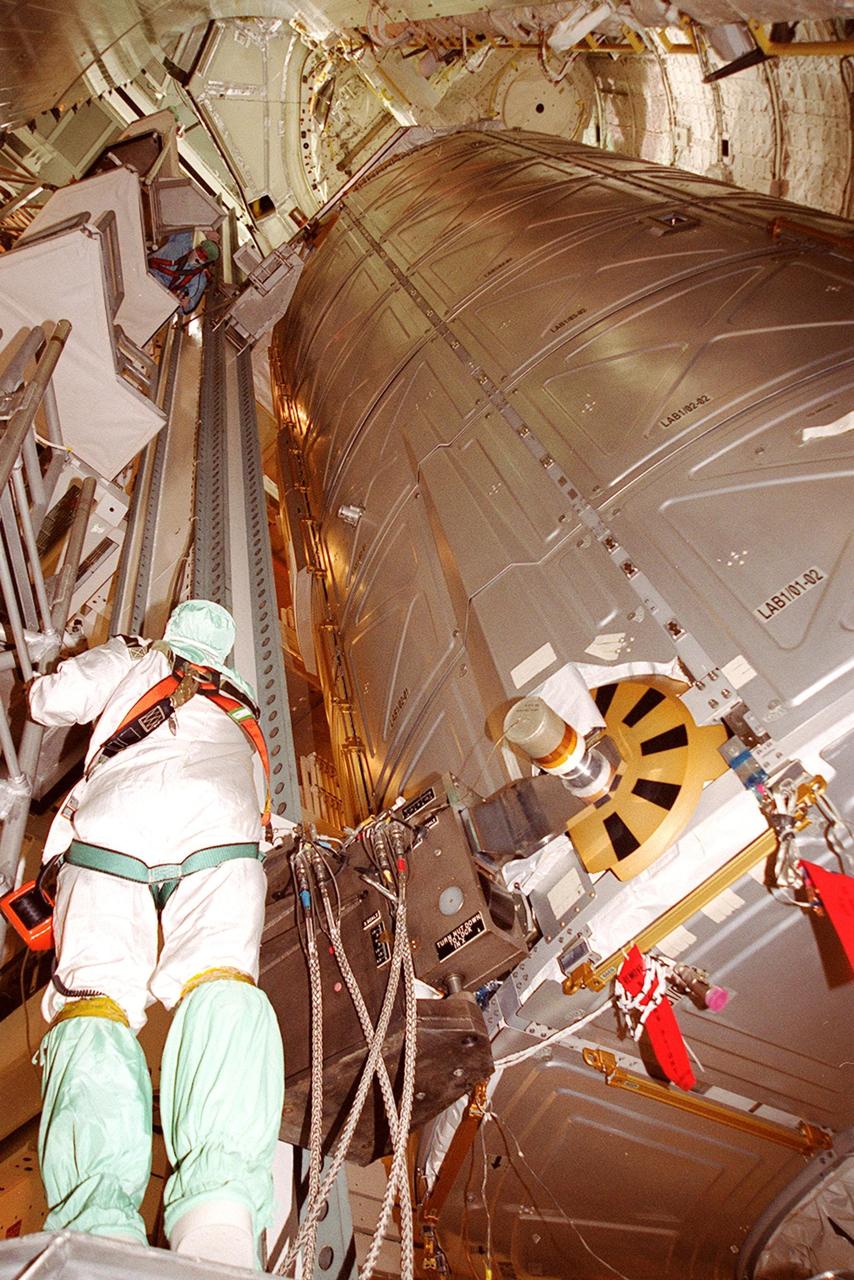
The U.S. Lab Destiny is ready to be moved from Atlantis’ payload bay into the Payload Changeout Room. After the move, Atlantis will roll back to the Vehicle Assembly Building to allow workers to conduct inspections, continuity checks and X-ray analysis on the 36 solid rocket booster cables located inside each booster’s system tunnel. An extensive evaluation of NASA’s SRB cable inventory revealed conductor damage in four (of about 200) cables on the shelf. Shuttle managers decided to prove the integrity of the system tunnel cables already on Atlantis
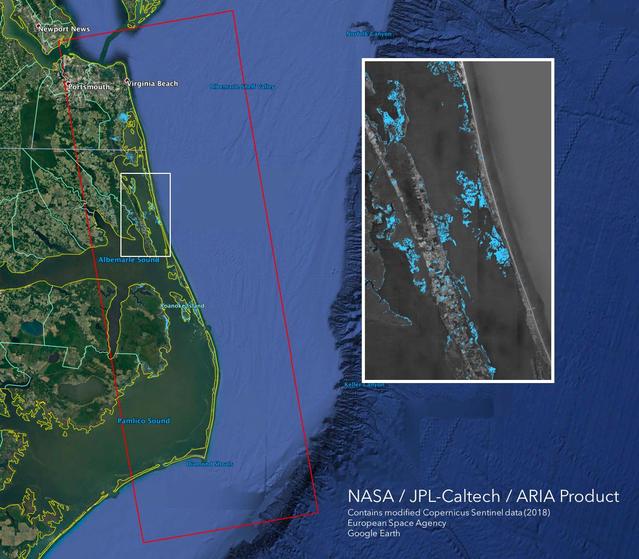
The Advanced Rapid Imaging and Analysis (ARIA) team at NASA's Jet Propulsion Laboratory in Pasadena, California, created this Flood Proxy Map depicting areas of the Carolinas that are likely flooded as a result of Hurricane Florence, shown by light blue pixels. The map is derived from synthetic aperture radar (SAR) images from the Copernicus Sentinel-1 satellites, operated by the European Space Agency (ESA). The images were taken before (September 09, 2018) and 36 hours after the hurricane's landfall (September 15, 2018 18:57 PM local time). The map covers an area of 53 miles x 152 miles (85 km x 245 km), indicated with the big red polygon. Each pixel measures about 33 yards x 33 yards (30 m x 30 m). Media reports provided anecdotal preliminary validation. This flood proxy map should be used as guidance to identify areas that are likely flooded and may be less reliable over urban and vegetated areas. https://photojournal.jpl.nasa.gov/catalog/PIA22704
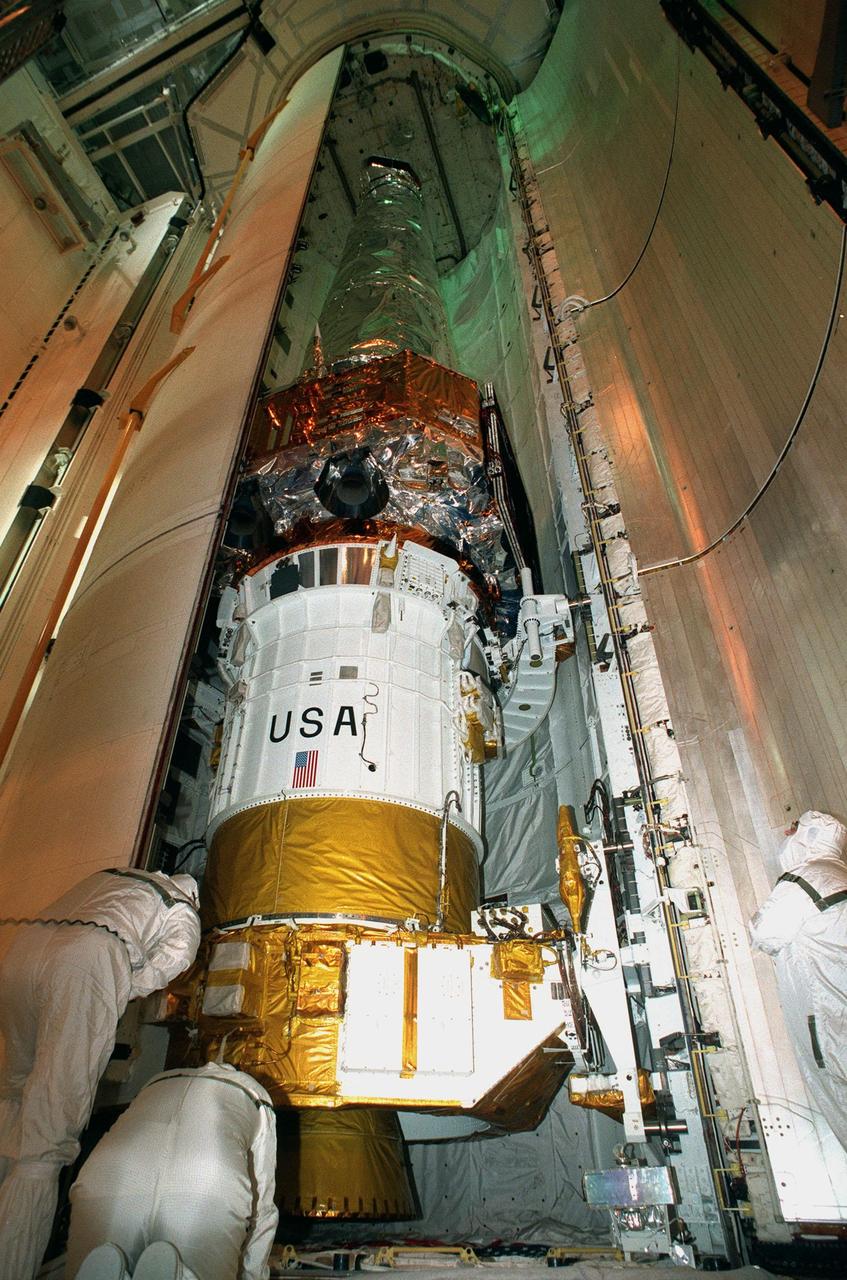
At Launch Pad 39-B, the Space Shuttle Columbia's payload bay doors close around the Chandra X-ray Observatory inside, while workers monitor the activity. Chandra is the primary payload on mission STS-93, scheduled to launch aboard Columbia July 20 at 12:36 a.m. EDT. The combined Chandra/Inertial Upper Stage, seen here, measures 57 feet long and weighs 50,162 pounds. Fully deployed with solar arrays extended, the observatory measures 45.3 feet long and 64 feet wide. The world's most powerful X-ray telescope, Chandra will allow scientists from around the world to see previously invisible black holes and high-temperature gas clouds, giving the observatory the potential to rewrite the books on the structure and evolution of our universe
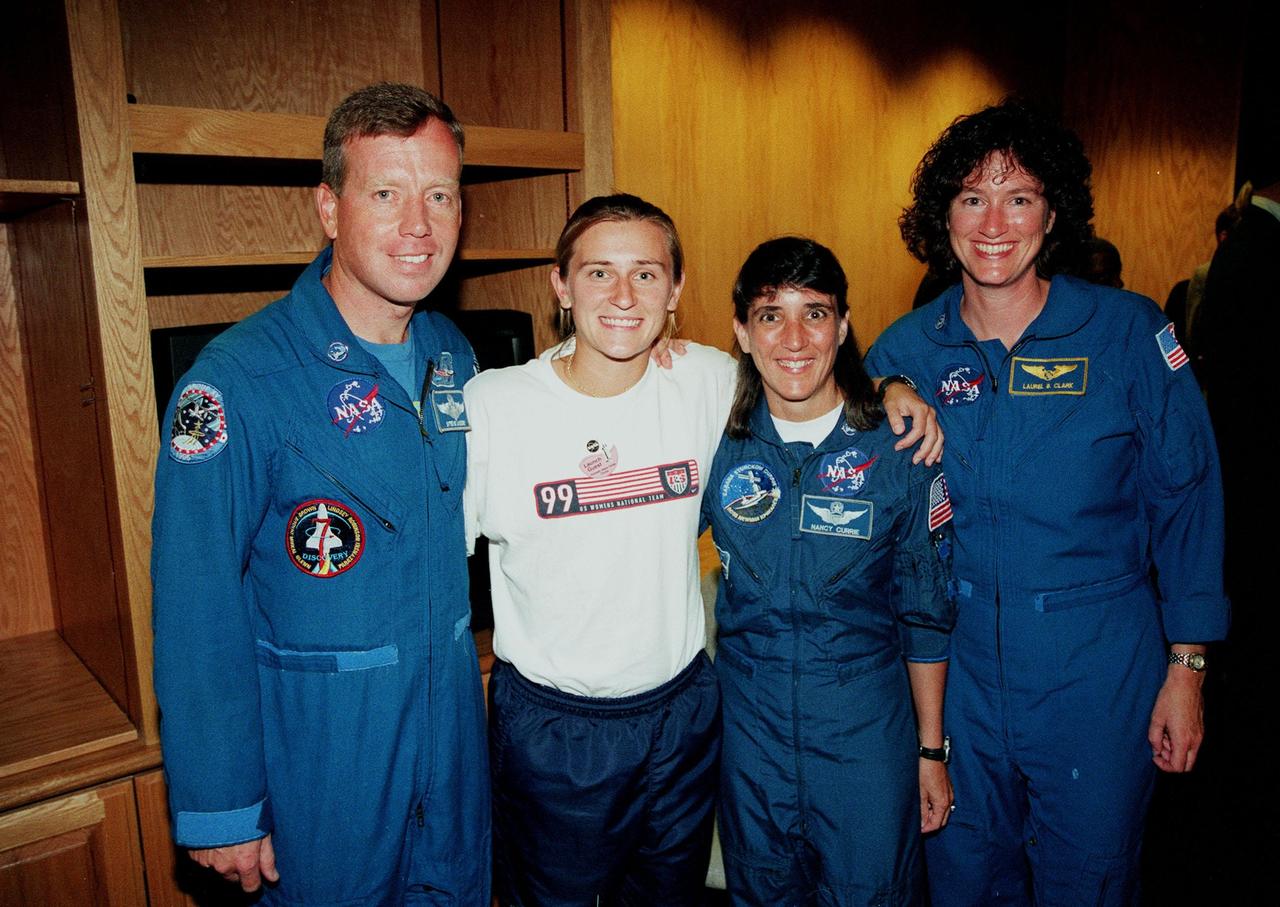
A member of the U.S. Women's World Cup Soccer Team poses with Astronauts (from left) Steven W. Lindsey, Nancy Jane Currie and Laurel B. Clark. The team arrived at the Skid Strip at Cape Canaveral Air Station with First Lady Hillary Rodham Clinton to view the launch of Space Shuttle mission STS-93. Liftoff is scheduled for 12:36 a.m. EDT July 20. Much attention has been generated over the launch due to Commander Eileen M. Collins, the first woman to serve as commander of a Shuttle mission. The primary payload of the five-day mission is the Chandra X-ray Observatory, which will allow scientists from around the world to study some of the most distant, powerful and dynamic objects in the universe. The new telescope is 20 to 50 times more sensitive than any previous X-ray telescope and is expected to unlock the secrets of supernovae, quasars and black holes

Among those gathered at the VIP viewing site for the launch of STS-93 are First Lady Hillary Rodham Clinton (center) and Donna Shalala, secretary , Department of Health and Human Services (far right). Also present is Chelsea Clinton. Much attention has been generated over the launch due to Commander Eileen M. Collins, the first woman to serve as commander of a Shuttle mission. The primary payload of the five-day mission is the Chandra X-ray Observatory, which will allow scientists from around the world to study some of the most distant, powerful and dynamic objects in the universe. The new telescope is 20 to 50 times more sensitive than any previous X-ray telescope and is expected to unlock the secrets of supernovae, quasars and black holes. Liftoff of Space Shuttle Columbia is scheduled for 12:36 a.m. EDT July 20
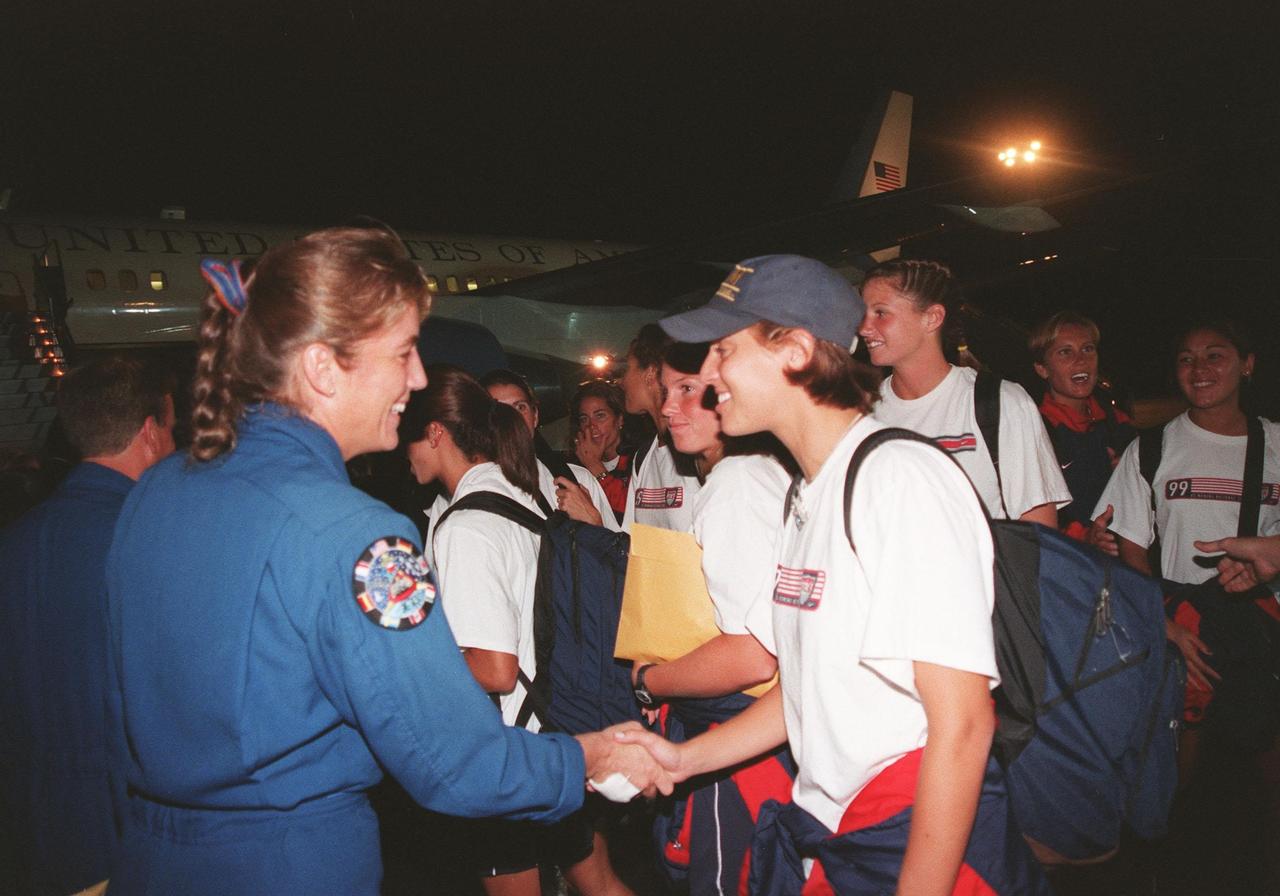
A member of the U.S. Women's World Cup Soccer Team is greeted by NASA Astronaut Heidemarie M. Stefanyshyn-Piper (left) upon her arrival at the Skid Strip at Cape Canaveral Air Station to view the launch of Space Shuttle mission STS-93. Liftoff is scheduled for 12:36 a.m. EDT July 20. Much attention has been generated over the launch due to Commander Eileen M. Collins, the first woman to serve as commander of a Shuttle mission. The primary payload of the five-day mission is the Chandra X-ray Observatory, which will allow scientists from around the world to study some of the most distant, powerful and dynamic objects in the universe. The new telescope is 20 to 50 times more sensitive than any previous X-ray telescope and is expected to unlock the secrets of supernovae, quasars and black holes

A member of the U.S. Women's World Cup Soccer Team is greeted by NASA Astronaut Scott E. Parazynski (left) upon her arrival at the Skid Strip at Cape Canaveral Air Station as her teammates look on. The team is at KSC to view the launch of Space Shuttle mission STS-93 scheduled for liftoff at 12:36 a.m. EDT July 20. Much attention has been generated over the launch due to Commander Eileen M. Collins, the first woman to serve as commander of a Shuttle mission. The primary payload of the five-day mission is the Chandra X-ray Observatory, which will allow scientists from around the world to study some of the most distant, powerful and dynamic objects in the universe. The new telescope is 20 to 50 times more sensitive than any previous X-ray telescope and is expected to unlock the secrets of supernovae, quasars and black holes

First Lady Hillary Rodham Clinton (right) and her daughter, Chelsea, are greeted by NASA Astronaut Scott E. Parazynski (left) upon their arrival at the Skid Strip at Cape Canaveral Air Station to view the launch of Space Shuttle mission STS-93. Liftoff is scheduled for 12:36 a.m. EDT July 20. Much attention has been generated over the launch due to Commander Eileen M. Collins, the first woman to serve as commander of a Shuttle mission. The primary payload of the five-day mission is the Chandra X-ray Observatory, which will allow scientists from around the world to study some of the most distant, powerful and dynamic objects in the universe. The new telescope is 20 to 50 times more sensitive than any previous X-ray telescope and is expected to unlock the secrets of supernovae, quasars and black holes
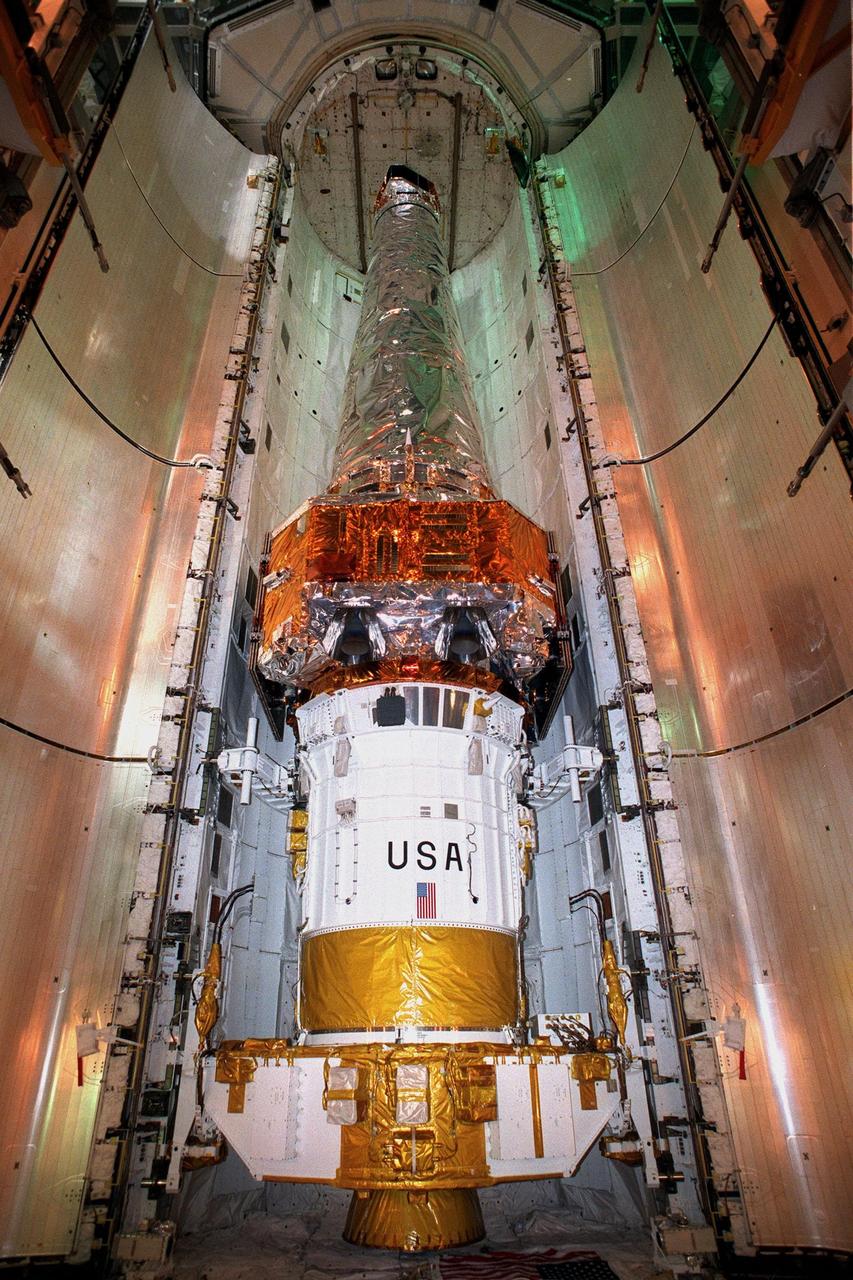
At Launch Pad 39-B, the Chandra X-ray Observatory sits inside the payload bay of Space Shuttle Columbia, waiting for the doors to close. Chandra is the primary payload on mission STS-93, scheduled to launch aboard Columbia July 20 at 12:36 a.m. EDT. The combined Chandra/Inertial Upper Stage, seen here, measures 57 feet long and weighs 50,162 pounds. Fully deployed with solar arrays extended, the observatory measures 45.3 feet long and 64 feet wide. The world's most powerful X-ray telescope, Chandra will allow scientists from around the world to see previously invisible black holes and high-temperature gas clouds, giving the observatory the potential to rewrite the books on the structure and evolution of our universe
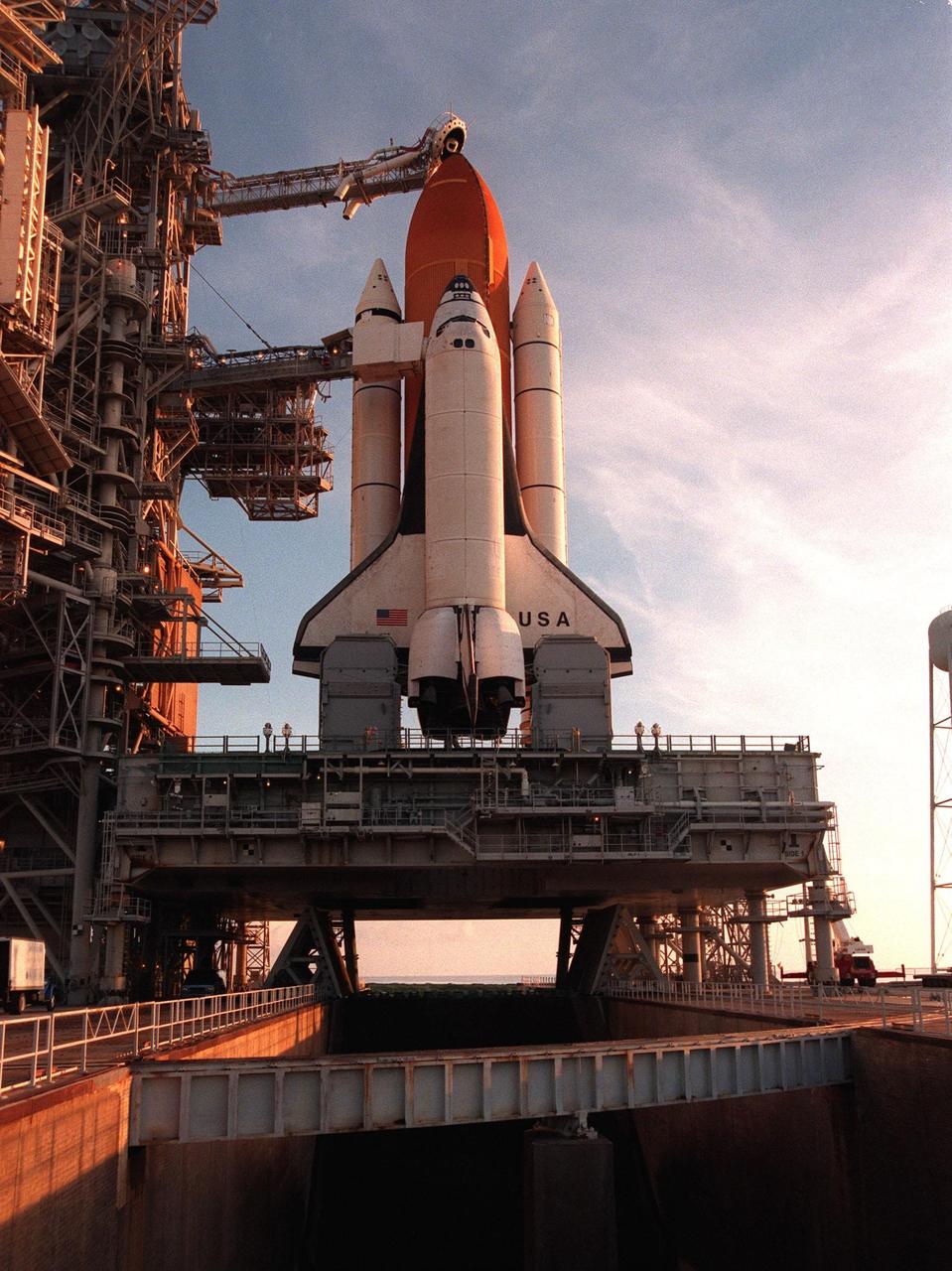
Space Shuttle Columbia, sitting on its mobile launcher platform, is framed against the early morning sky after the rollback of the Rotating Service Structure on Launch Pad 39-B. Columbia waits for the launch of mission STS-93 July 20 at 12:36 a.m. EDT. The primary payload of STS-93 is the Chandra X-ray Observatory, which will allow scientists from around the world to study some of the most distant, powerful and dynamic objects in the universe. The new telescope is 20 to 50 times more sensitive than any previous X-ray telescope and is expected unlock the secrets of supernovae, quasars and black holes. The STS-93 crew numbers five: Commander Eileen M. Collins, Pilot Jeffrey S. Ashby, and Mission Specialists Steven A. Hawley (Ph.D.), Catherine G. Coleman (Ph.D.) and Michel Tognini of France, with the Centre National d'Etudes Spatiales (CNES). Collins is the first woman to serve as commander of a shuttle mission
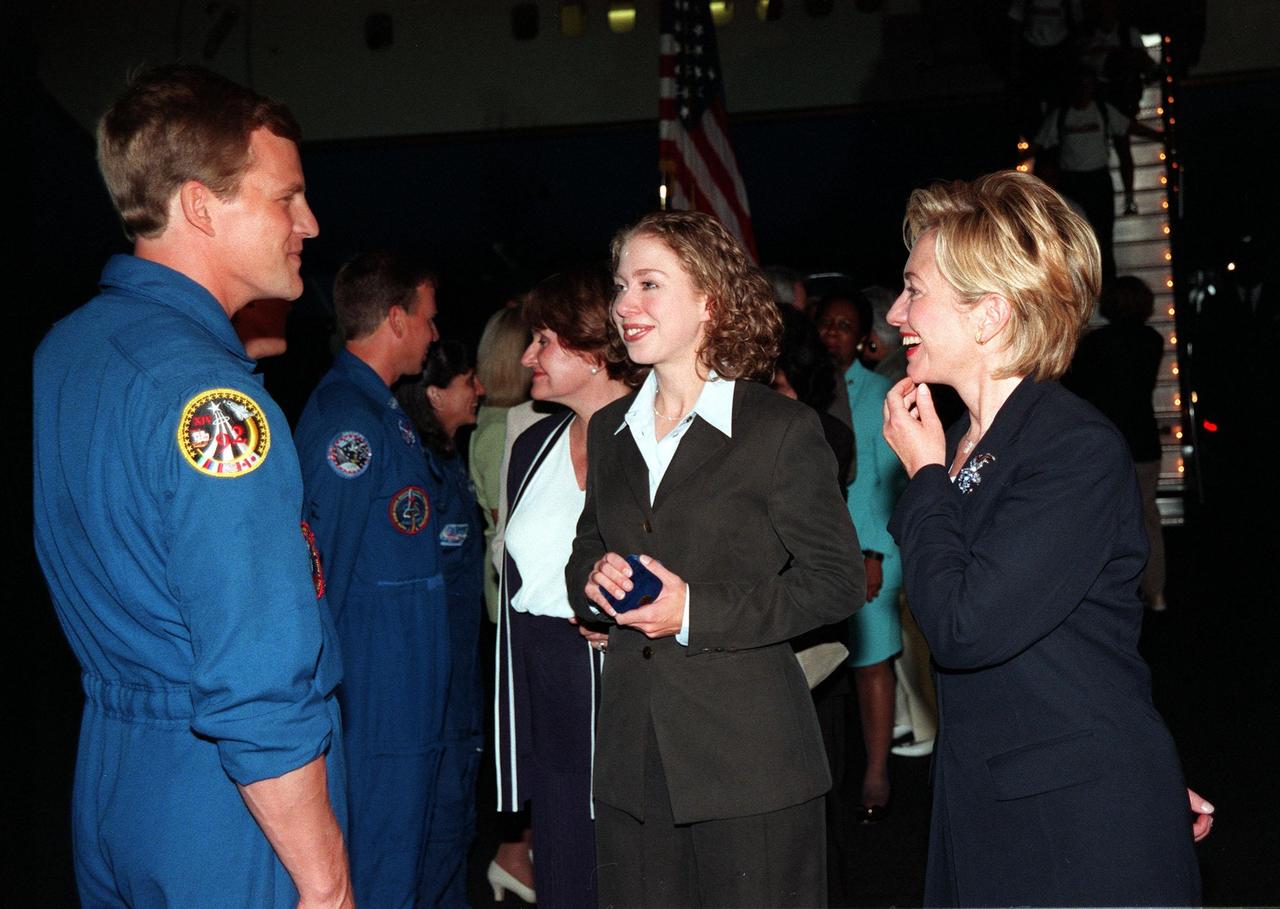
First Lady Hillary Rodham Clinton (right) and her daughter, Chelsea, are greeted by NASA Astronaut Scott E. Parazynski (left) upon their arrival at the Skid Strip at Cape Canaveral Air Station to view the launch of Space Shuttle mission STS-93. Liftoff is scheduled for 12:36 a.m. EDT July 20. Much attention has been generated over the launch due to Commander Eileen M. Collins, the first woman to serve as commander of a Shuttle mission. The primary payload of the five-day mission is the Chandra X-ray Observatory, which will allow scientists from around the world to study some of the most distant, powerful and dynamic objects in the universe. The new telescope is 20 to 50 times more sensitive than any previous X-ray telescope and is expected to unlock the secrets of supernovae, quasars and black holes

KENNEDY SPACE CENTER, FLA. -- In the VIP Lounge, Apollo/Saturn V Center, First Lady Hillary Rodham Clinton gets ready to speak to the group gathered there before the launch of STS-93. At right is NASA Administrator Daniel Goldin. Liftoff of Space Shuttle Columbia is scheduled for 12:36 a.m. EDT July 20. Much attention has been generated over the launch due to Commander Eileen M. Collins, the first woman to serve as commander of a Shuttle mission. The primary payload of the five-day mission is the Chandra X-ray Observatory, which will allow scientists from around the world to study some of the most distant, powerful and dynamic objects in the universe. The new telescope is 20 to 50 times more sensitive than any previous X-ray telescope and is expected to unlock the secrets of supernovae, quasars and black holes
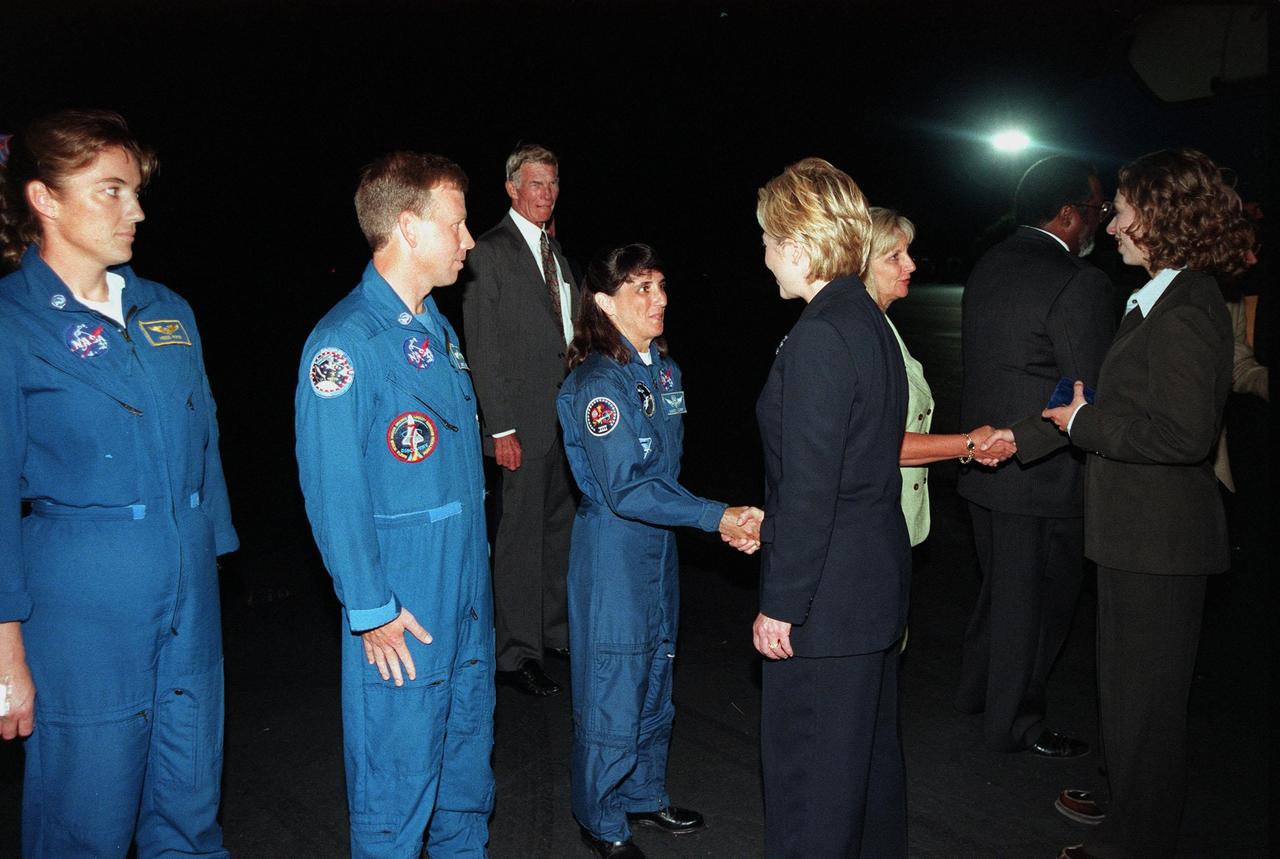
First Lady Hillary Rodham Clinton is greeted by Astronaut Nancy Jane Currie upon Mrs. Clinton's arrival at the Skid Strip at Cape Canaveral Air Station. Waiting at left are Astronauts Heidemarie M. Stefanyshyn-Piper and Steven W. Lindsey. Mrs. Clinton and her daughter, Chelsea (far right) are here to view the launch of Space Shuttle mission STS-93, scheduled for 12:36 a.m. EDT July 20. Much attention has been generated over the launch due to Commander Eileen M. Collins, the first woman to serve as commander of a Shuttle mission. The primary payload of the five-day mission is the Chandra X-ray Observatory, which will allow scientists from around the world to study some of the most distant, powerful and dynamic objects in the universe. The new telescope is 20 to 50 times more sensitive than any previous X-ray telescope and is expected to unlock the secrets of supernovae, quasars and black holes
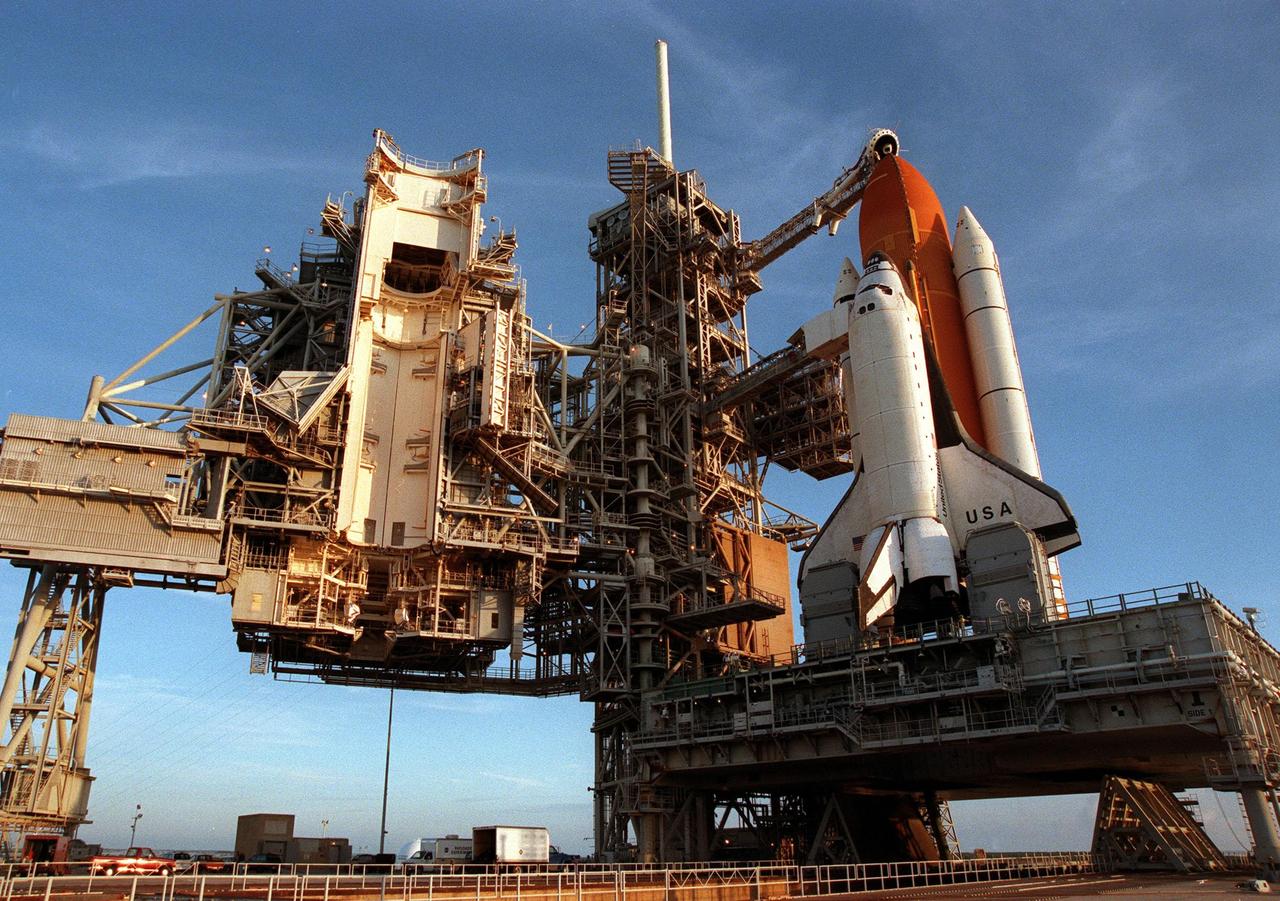
The rollback of the Rotating Service Structure on launch Pad 39-B reveals Space Shuttle Columbia on its mobile launcher platform, waiting for the launch of mission STS-93 on July 20 at 12:36 a.m. EDT. The primary payload of STS-93 is the Chandra X-ray Observatory, which will allow scientists from around the world to study some of the most distant, powerful and dynamic objects in the universe. The new telescope is 20 to 50 times more sensitive than any previous X-ray telescope and is expected unlock the secrets of supernovae, quasars and black holes. The STS-93 crew numbers five: Commander Eileen M. Collins, Pilot Jeffrey S. Ashby, and Mission Specialists Steven A. Hawley (Ph.D.), Catherine G. Coleman (Ph.D.) and Michel Tognini of France, with the Centre National d'Etudes Spatiales (CNES). Collins is the first woman to serve as commander of a shuttle mission

KENNEDY SPACE CENTER, FLA. -- At the Apollo/Saturn V Center, NASA Administrator Daniel Goldin (right) chats with First Lady Hillary Rodham Clinton and others while waiting for the launch of STS-93. Much attention has been generated over STS-93 due to Commander Eileen M. Collins, the first woman to serve as commander of a Shuttle mission. The primary payload of the five-day mission is the Chandra X-ray Observatory, which will allow scientists from around the world to study some of the most distant, powerful and dynamic objects in the universe. The new telescope is 20 to 50 times more sensitive than any previous X-ray telescope and is expected to unlock the secrets of supernovae, quasars and black holes. Liftoff of Space Shuttle Columbia is scheduled for 12:36 a.m. EDT July 20

Members of the U.S. Women's World Cup Soccer Team were greeted upon their arrival at the Skid Strip at Cape Canaveral Air Station by Astronauts (right) Steven W. Lindsey, Heidemarie M. Stefanyshyn-Piper and Scott E. Parzynski. The team are here to view the launch of Space Shuttle mission STS-93, scheduled for 12:36 a.m. EDT July 20. Much attention has been generated over the launch due to Commander Eileen M. Collins, the first woman to serve as commander of a Shuttle mission. The primary payload of the five-day mission is the Chandra X-ray Observatory, which will allow scientists from around the world to study some of the most distant, powerful and dynamic objects in the universe. The new telescope is 20 to 50 times more sensitive than any previous X-ray telescope and is expected to unlock the secrets of supernovae, quasars and black holes
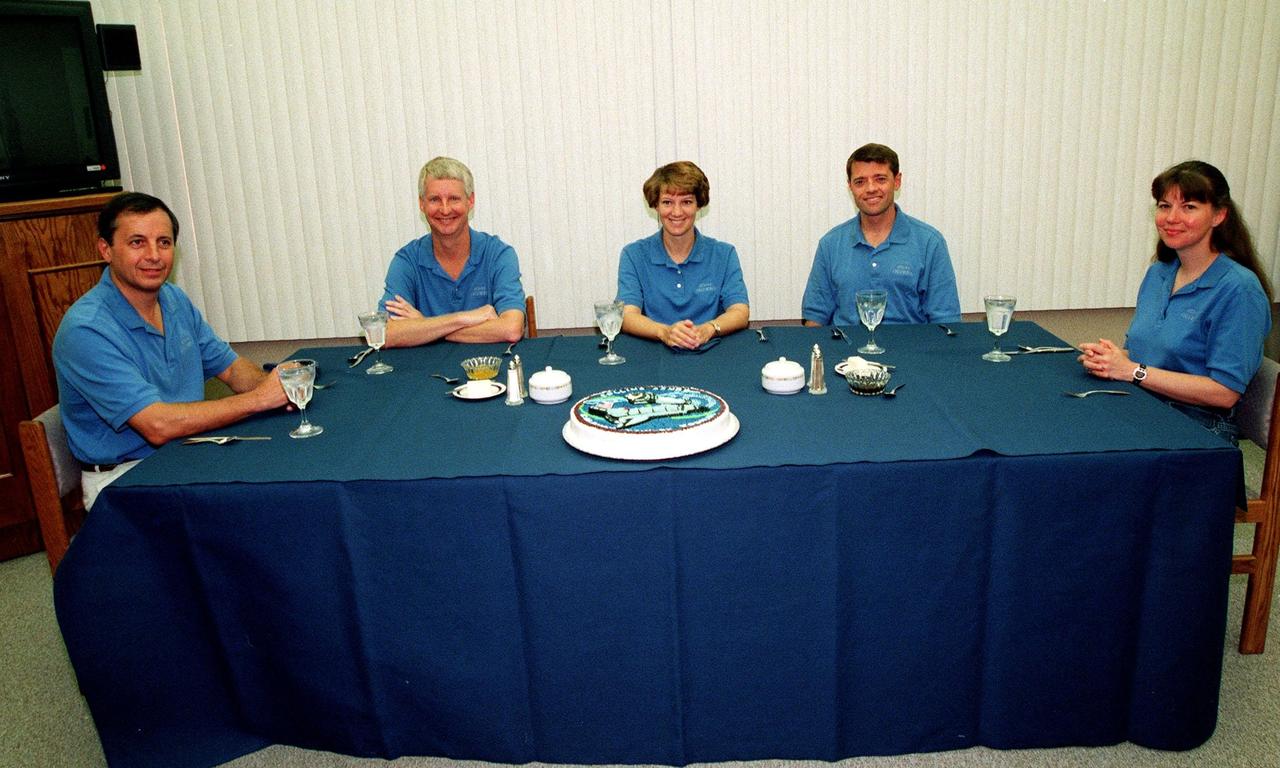
The STS-93 crew gathers for breakfast in the Operations and Checkout Building before suiting up for launch. Space Shuttle Columbia is due to launch Tuesday, July 20, at 12:36 a.m. EDT. Seated from left are Mission Specialists Michel Tognini, of France, who represents the Centre National d'Etudes Spatiales (CNES), and Steven A. Hawley (Ph.D.), Commander Eileen M. Collins, Pilot Jeffrey S. Ashby, and Mission Specialist Catherine G. Coleman (Ph.D.). STS-93 is a five-day mission primarily to release the Chandra X-ray Observatory, which will allow scientists from around the world to study some of the most distant, powerful and dynamic objects in the universe. The new telescope is 20 to 50 times more sensitive than any previous X-ray telescope and is expected unlock the secrets of supernovae, quasars and black holes. Collins is the first woman to serve as commander of a Shuttle mission
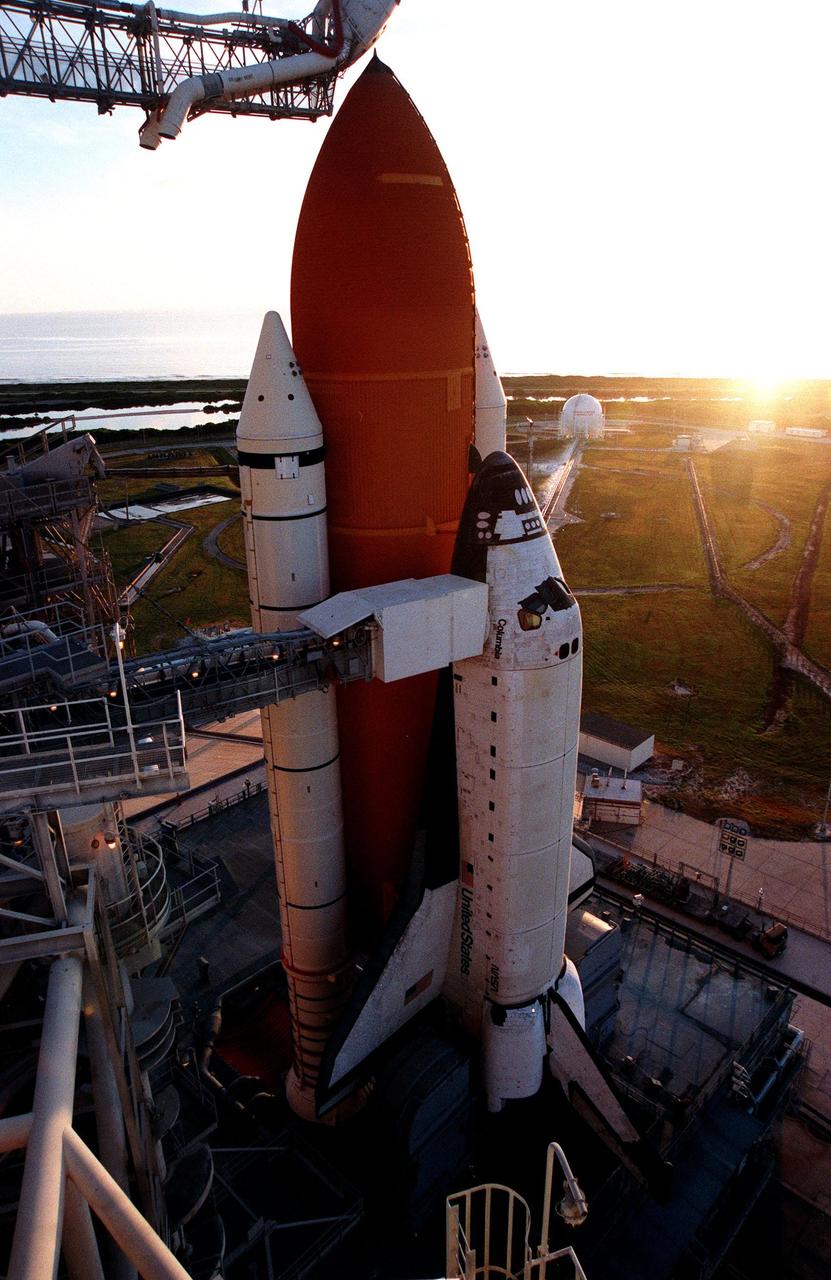
Space Shuttle Columbia catches the rising sun after the rollback of the Rotating Service Structure on Launch Pad 39-B. Columbia waits for the launch of mission STS-93 July 20 at 12:36 a.m. EDT. The primary payload of STS-93 is the Chandra X-ray Observatory, which will allow scientists from around the world to study some of the most distant, powerful and dynamic objects in the universe. The new telescope is 20 to 50 times more sensitive than any previous X-ray telescope and is expected unlock the secrets of supernovae, quasars and black holes. The STS-93 crew numbers five: Commander Eileen M. Collins, Pilot Jeffrey S. Ashby, and Mission Specialists Steven A. Hawley (Ph.D.), Catherine G. Coleman (Ph.D.) and Michel Tognini of France, with the Centre National d'Etudes Spatiales (CNES). Collins is the first woman to serve as commander of a shuttle mission

First Lady Hillary Rodham Clinton is greeted by Astronauts (from left) Heidemarie M. Stefanyshyn-Piper, Steven W. Lindsey, and Nancy Jane Currie upon Mrs. Clinton's arrival at the Skid Strip at Cape Canaveral Air Station. She and her daughter, Chelsea (far right) are here to view the launch of Space Shuttle mission STS-93, scheduled for 12:36 a.m. EDT July 20. Much attention has been generated over the launch due to Commander Eileen M. Collins, the first woman to serve as commander of a Shuttle mission. The primary payload of the five-day mission is the Chandra X-ray Observatory, which will allow scientists from around the world to study some of the most distant, powerful and dynamic objects in the universe. The new telescope is 20 to 50 times more sensitive than any previous X-ray telescope and is expected to unlock the secrets of supernovae, quasars and black holes
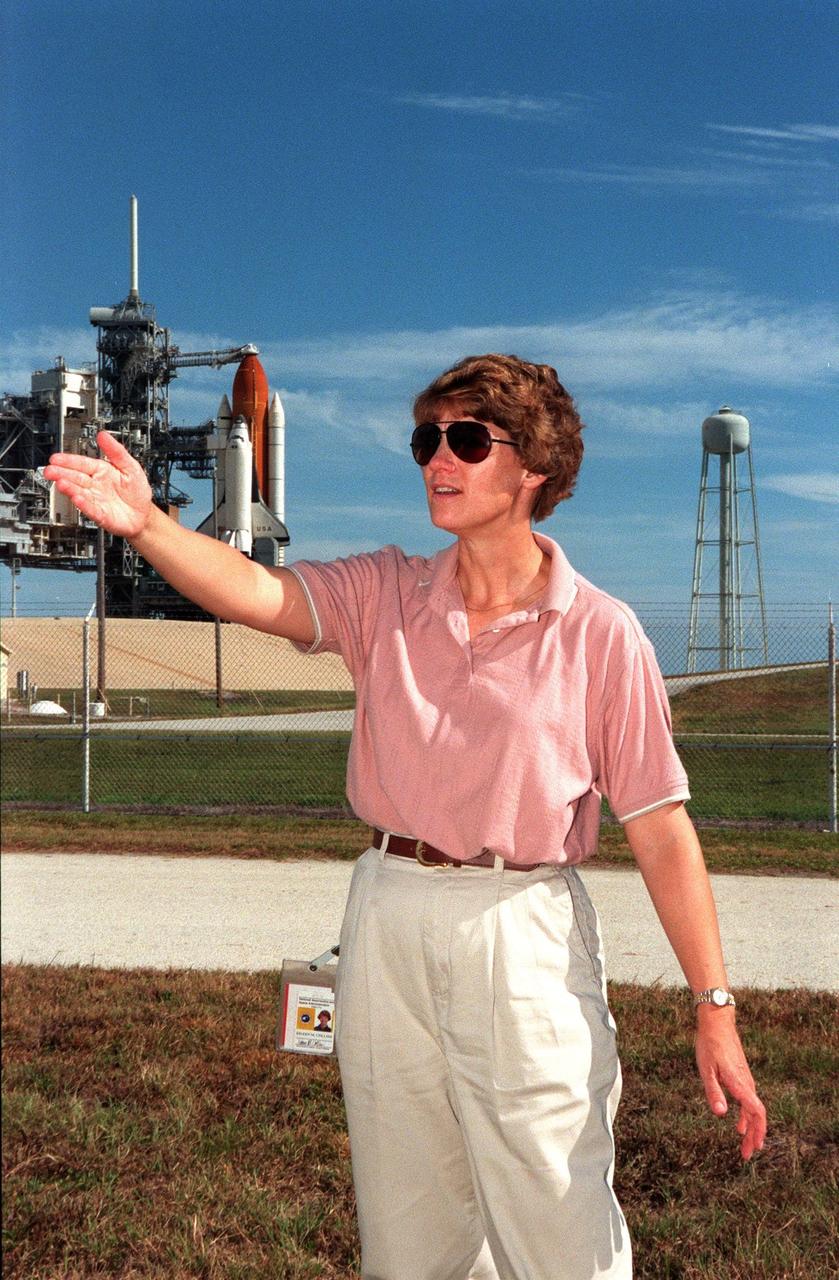
STS-93 Commander Eileen M. Collins waves to her family nearby, a last meeting before launch of mission STS-93 on July 20. Liftoff is scheduled for 12:36 a.m. EDT. The primary mission of STS-93 is the release of the Chandra X-ray Observatory, which will allow scientists from around the world to study some of the most distant, powerful and dynamic objects in the universe. The new telescope is 20 to 50 times more sensitive than any previous X-ray telescope and is expected to unlock the secrets of supernovae, quasars and black holes. The STS-93 crew numbers five: Commander Collins, Pilot Jeffrey S. Ashby, and Mission Specialists Steven A. Hawley (Ph.D.), Catherine G. Coleman (Ph.D.) and Michel Tognini of France, with the Centre National d'Etudes Spatiales (CNES). Collins is the first woman to serve as commander of a shuttle mission
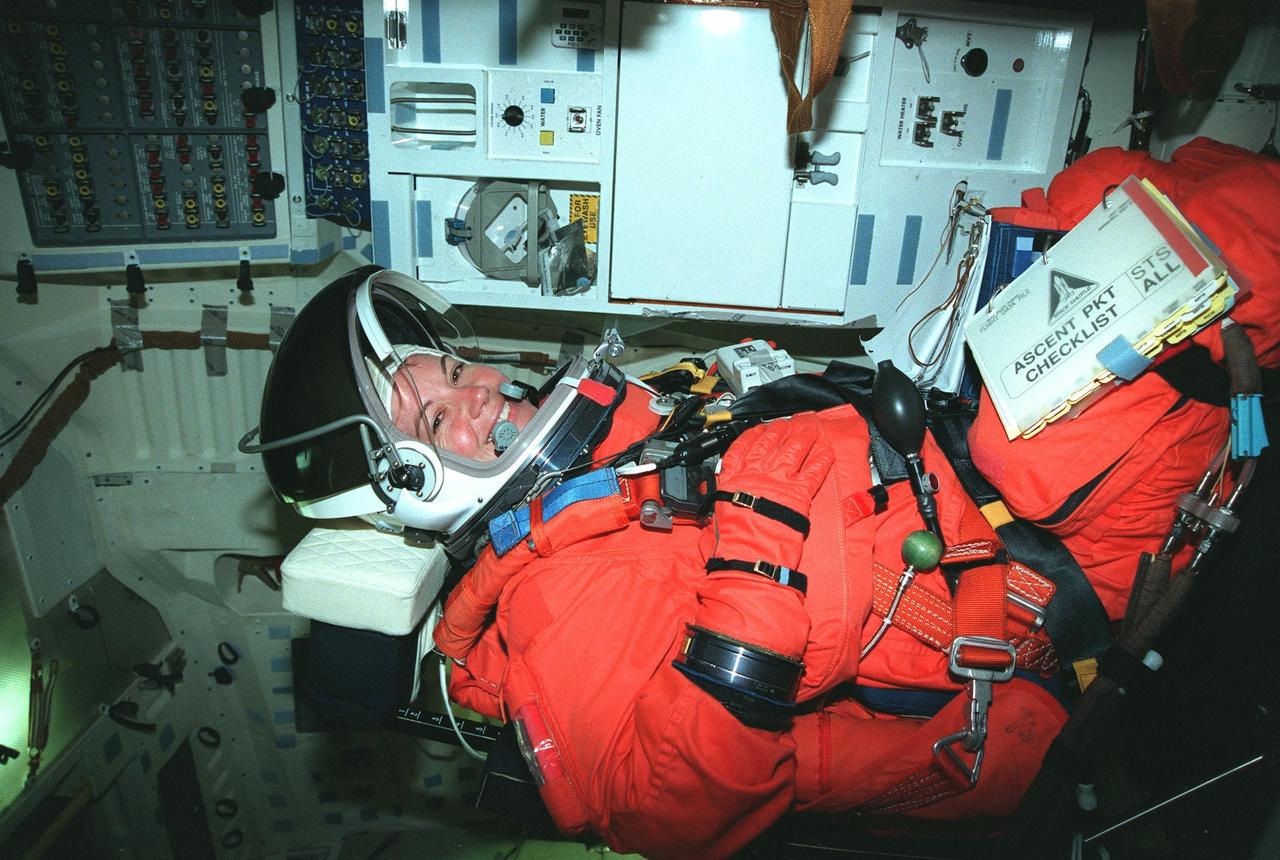
STS-93 Catherine G. Coleman (Ph.D.) sits inside the orbiter Columbia during Terminal Countdown Demonstration Test (TCDT) activities that include emergency exit training and a launch-day dress rehearsal culminating with a simulated main engine cut-off. Other crew members participating are Commander Eileen M. Collins, Pilot Jeffrey S. Ashby, and Mission Specialists Steven A. Hawley (Ph.D.) and Michel Tognini of France, who represents the Centre National d'Etudes Spatiales (CNES). Collins is the first woman to serve as a Shuttle commander. The primary mission of STS-93 is the release of the Chandra X-ray Observatory, which will allow scientists from around the world to obtain unprecedented X-ray images of exotic environments in space to help understand the structure and evolution of the universe. The targeted launch date for STS-93 is no earlier than July 20 at 12:36 a.m. EDT from Launch Pad 39B
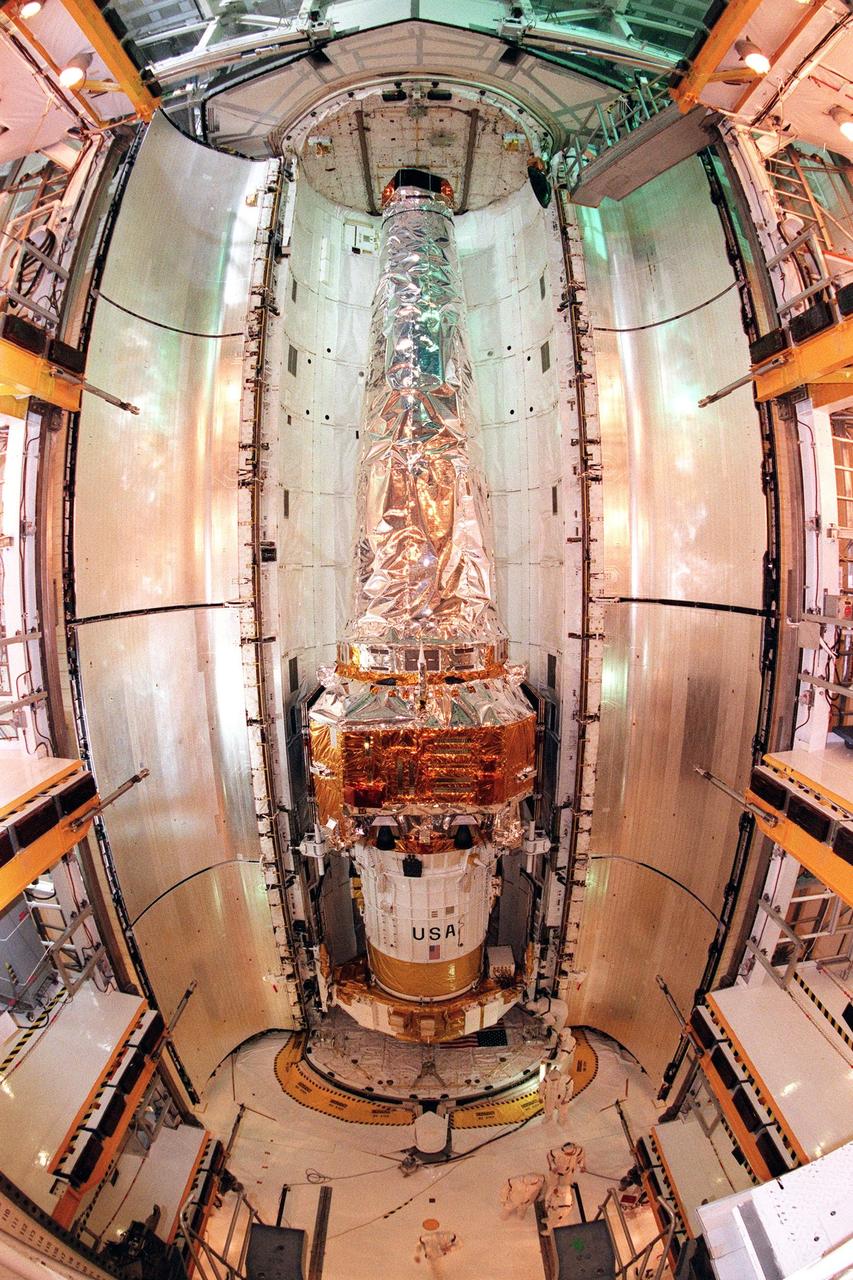
KENNEDY SPACE CENTER, FLA. -- At Launch Pad 39-B, the Chandra X-ray Observatory sits inside the payload bay on mission Space Shuttle Columbia, waiting for the doors to close. Chandra is the primary payload of STS-93, scheduled to launch aboard Columbia July 20 at 12:36 a.m. EDT. The combined Chandra/Inertial Upper Stage, seen here, measures 57 feet long and weighs 50,162 pounds. Fully deployed with solar arrays extended, the observatory measures 45.3 feet long and 64 feet wide. The world's most powerful X-ray telescope, Chandra will allow scientists from around the world to see previously invisible black holes and high-temperature gas clouds, giving the observatory the potential to rewrite the books on the structure and evolution of our universe

Upon their arrival at the Skid Strip at Cape Canaveral Air Station, First Lady Hillary Rodham Clinton and her daughter, Chelsea, are greeted by NASA Administrator Daniel S. Goldin and Mrs. Goldin. Mrs. Clinton and Chelsea are here to view the launch of Space Shuttle mission STS-93, scheduled for 12:36 a.m. EDT July 20. Much attention has been generated over the launch due to Commander Eileen M. Collins, the first woman to serve as commander of a Shuttle mission. The primary payload of the five-day mission is the Chandra X-ray Observatory, which will allow scientists from around the world to study some of the most distant, powerful and dynamic objects in the universe. The new telescope is 20 to 50 times more sensitive than any previous X-ray telescope and is expected to unlock the secrets of supernovae, quasars and black holes
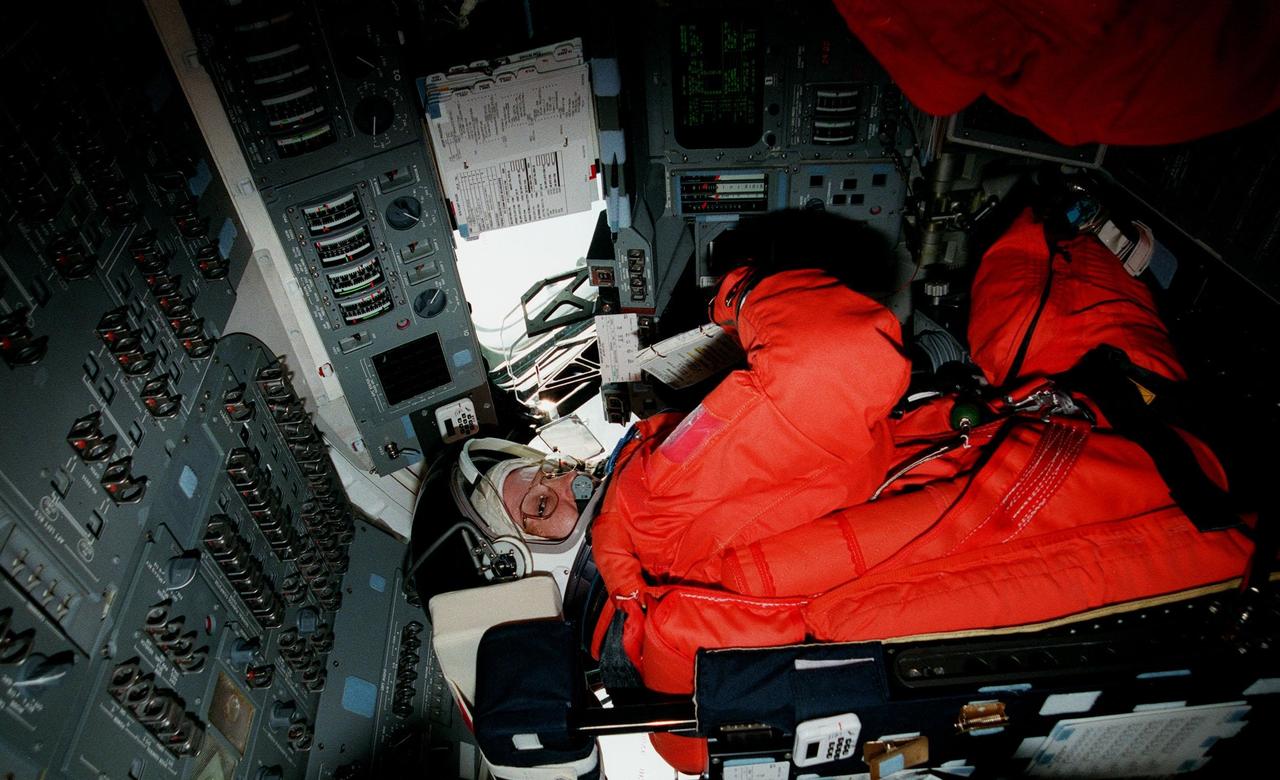
STS-93 Commander Eileen M. Collins sits on the flight deck of the orbiter Columbia during Terminal Countdown Demonstration Test (TCDT) activities that include emergency exit training and a launch-day dress rehearsal culminating with a simulated main engine cut-off. Other crew members participating are Pilot Jeffrey S. Ashby, and Mission Specialists Catherine G. Coleman (Ph.D.), Steven A. Hawley (Ph.D.) and Michel Tognini of France, who represents the Centre National d'Etudes Spatiales (CNES). Collins is the first woman to serve as a Shuttle commander. The primary mission of STS-93 is the release of the Chandra X-ray Observatory, which will allow scientists from around the world to obtain unprecedented X-ray images of exotic environments in space to help understand the structure and evolution of the universe. The targeted launch date for STS-93 is no earlier than July 20 at 12:36 a.m. EDT from Launch Pad 39B
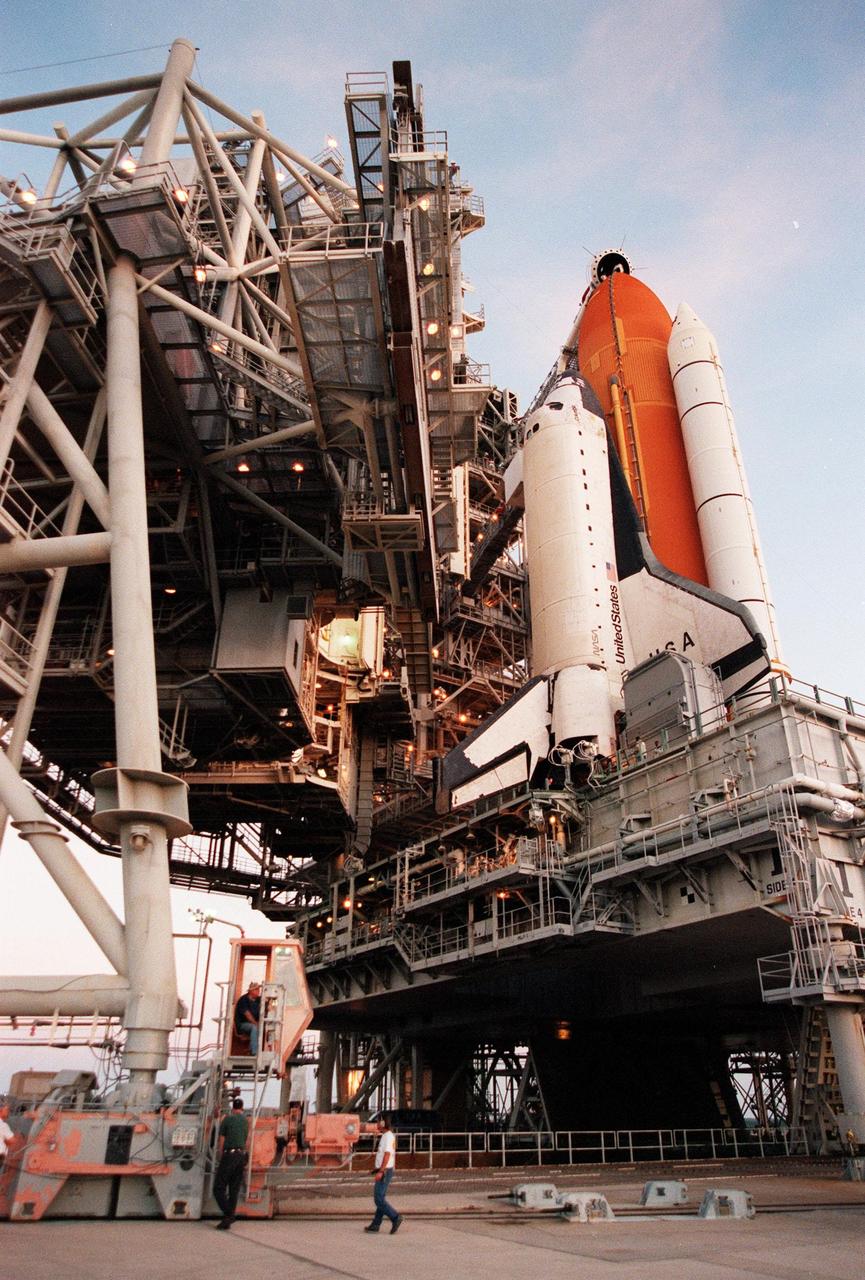
The Rotating Service Structure is rolled back from Space Shuttle Columbia on Launch Pad 39-B, in preparation for launch of mission STS-93 July 20 at 12:36 a.m. EDT. The primary payload of STS-93 is the Chandra X-ray Observatory, which will allow scientists from around the world to study some of the most distant, powerful and dynamic objects in the universe. The new telescope is 20 to 50 times more sensitive than any previous X-ray telescope and is expected unlock the secrets of supernovae, quasars and black holes. The STS-93 crew numbers five: Commander Eileen M. Collins, Pilot Jeffrey S. Ashby, and Mission Specialists Steven A. Hawley (Ph.D.), Catherine G. Coleman (Ph.D.) and Michel Tognini of France, with the Centre National d'Etudes Spatiales (CNES). Collins is the first woman to serve as commander of a shuttle mission
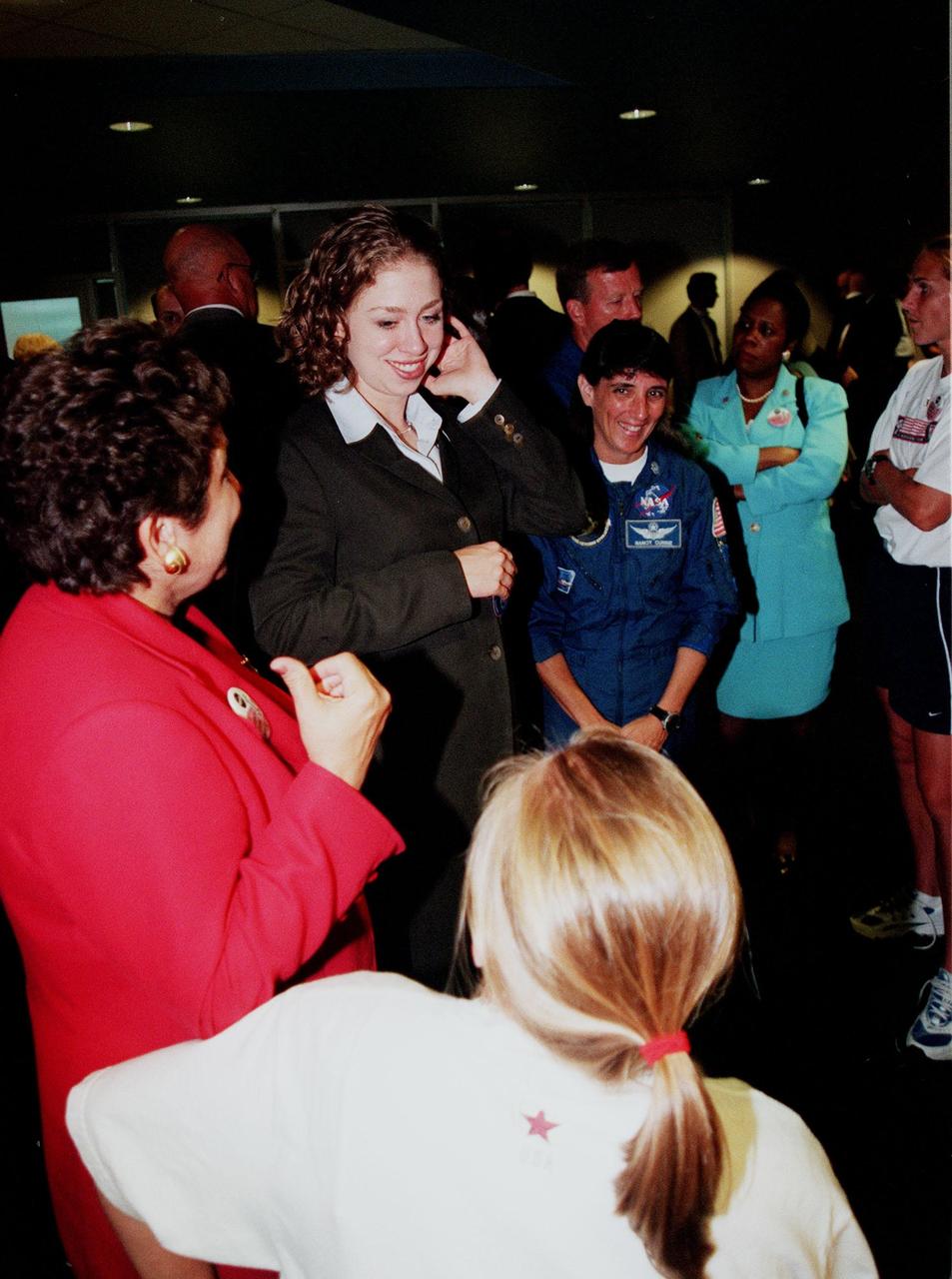
Generating her own attention waiting for the launch of STS-93 at the VIP viewing site is Chelsea Clinton, daughter of the President and Mrs. Clinton. The First Lady and Chelsea arrived earlier to view the launch. Much attention has been generated over STS-93 due to Commander Eileen M. Collins, the first woman to serve as commander of a Shuttle mission. The primary payload of the five-day mission is the Chandra X-ray Observatory, which will allow scientists from around the world to study some of the most distant, powerful and dynamic objects in the universe. The new telescope is 20 to 50 times more sensitive than any previous X-ray telescope and is expected to unlock the secrets of supernovae, quasars and black holes. Liftoff of Space Shuttle Columbia is scheduled for 12:36 a.m. EDT July 20
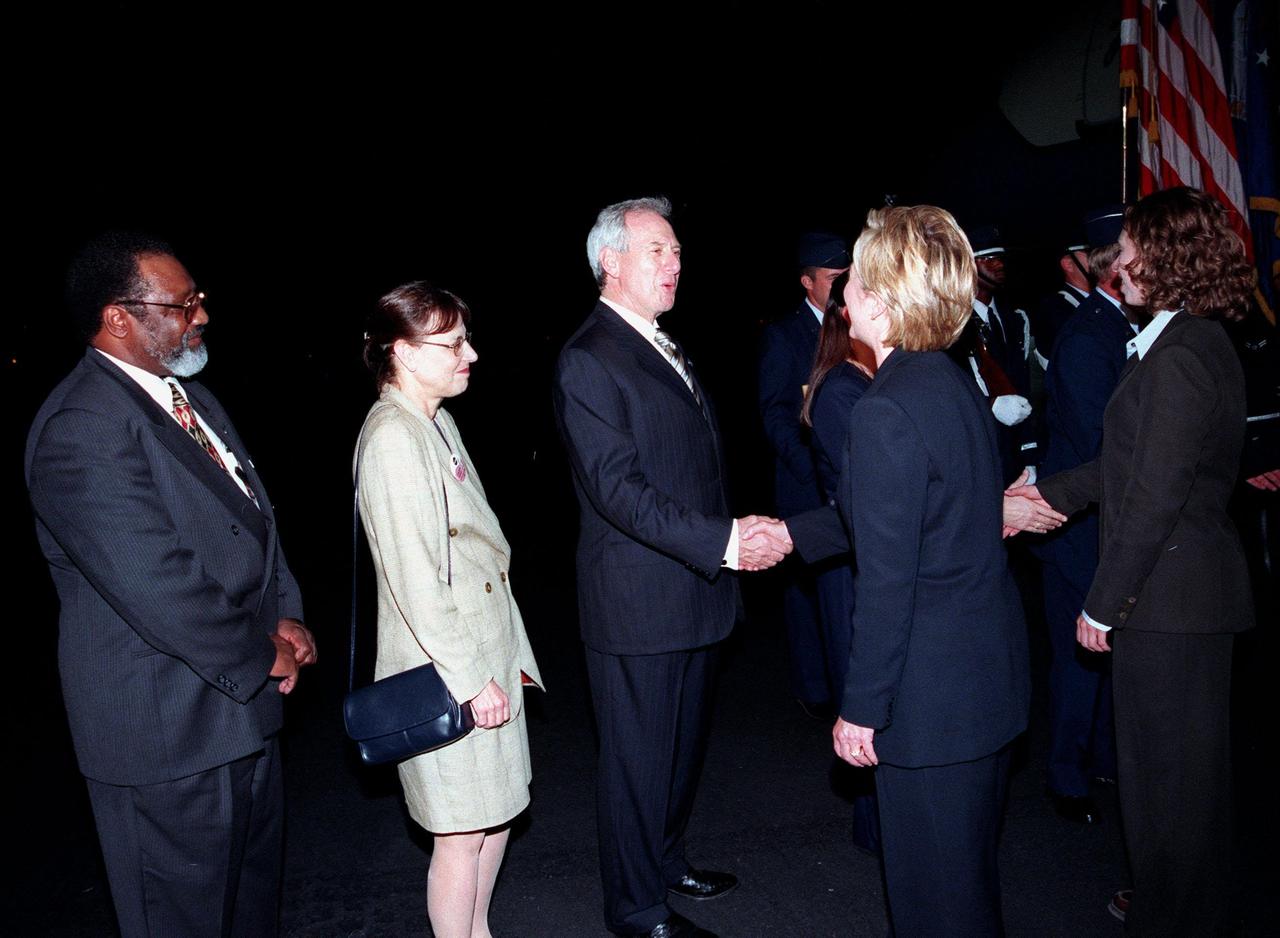
First Lady Hillary Rodham Clinton and her daughter, Chelsea, are greeted by NASA Administrator Daniel S. Goldin upon their arrival at the Skid Strip at Cape Canaveral Air Station. Next to Gold are (from left) Deputy Director for Business Operations Jim Jennings and Mrs. Goldin. Mrs. Clinton and Chelsea are here to view the launch of Space Shuttle mission STS-93, scheduled for 12:36 a.m. EDT July 20. Much attention has been generated over the launch due to Commander Eileen M. Collins, the first woman to serve as commander of a Shuttle mission. The primary payload of the five-day mission is the Chandra X-ray Observatory, which will allow scientists from around the world to study some of the most distant, powerful and dynamic objects in the universe. The new telescope is 20 to 50 times more sensitive than any previous X-ray telescope and is expected to unlock the secrets of supernovae, quasars and black holes
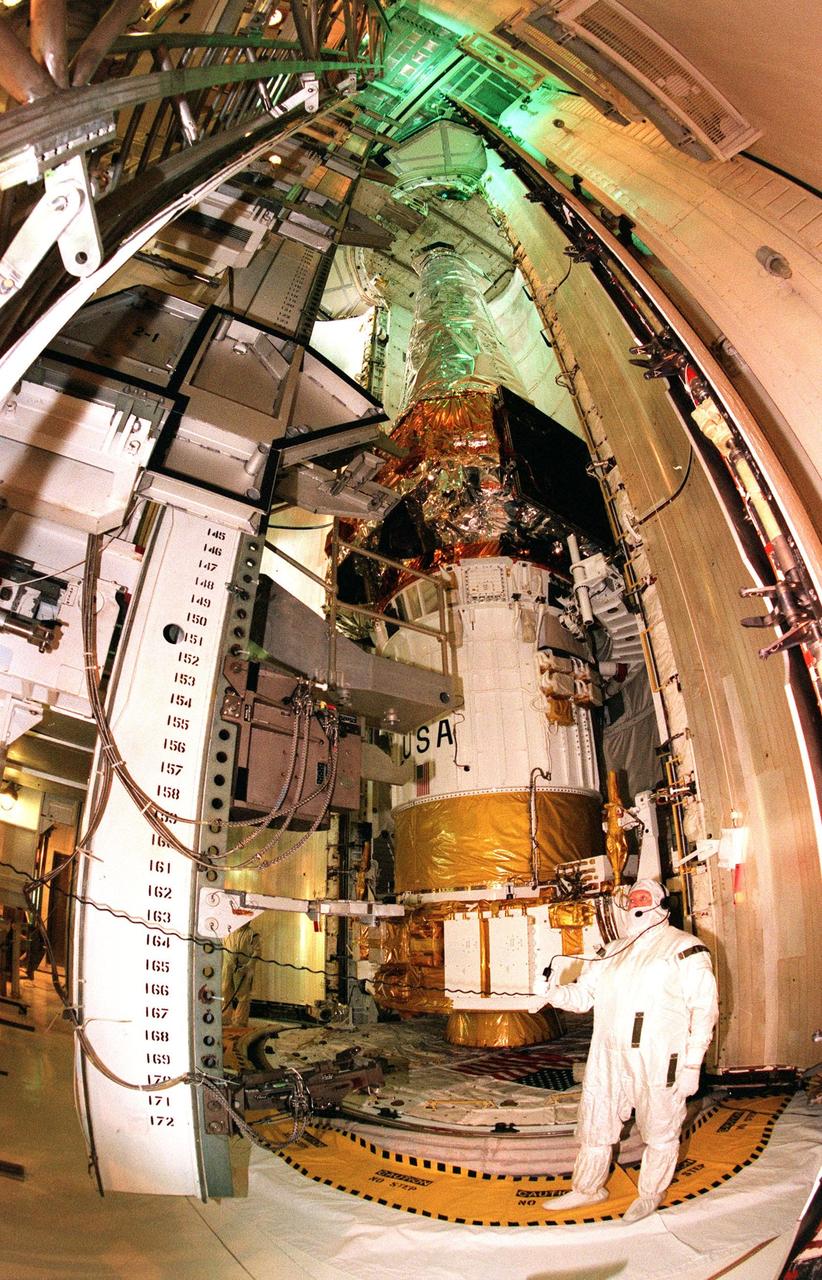
KENNEDY SPACE CENTER, FLA. -- At Launch Pad 39-B, a worker monitors the closing of Space Shuttle Columbia's payload bay doors around the Chandra X-ray Observatory. Chandra is the primary payload on mission STS-93, scheduled to launch aboard Columbia July 20 at 12:36 a.m. EDT. The combined Chandra/Inertial Upper Stage, seen here, measures 57 feet long and weighs 50,162 pounds. Fully deployed with solar arrays extended, the observatory measures 45.3 feet long and 64 feet wide. The world's most powerful X-ray telescope, Chandra will allow scientists from around the world to see previously invisible black holes and high-temperature gas clouds, giving the observatory the potential to rewrite the books on the structure and evolution of our universe

KENNEDY SPACE CENTER, FLA. -- Space Shuttle Atlantis begins rolling back to the Vehicle Assembly Building on the crawler-transporter. In the VAB workers will conduct inspections, make continuity checks and conduct X-ray analysis on the 36 solid rocket booster cables located inside each booster’s system tunnel. An extensive evaluation of NASA’s SRB cable inventory revealed conductor damage in four (of about 200) cables on the shelf. Shuttle managers decided to prove the integrity of the system tunnel cables already on Atlantis before launching Jan. 19. The launch has been rescheduled no earlier than Feb. 6
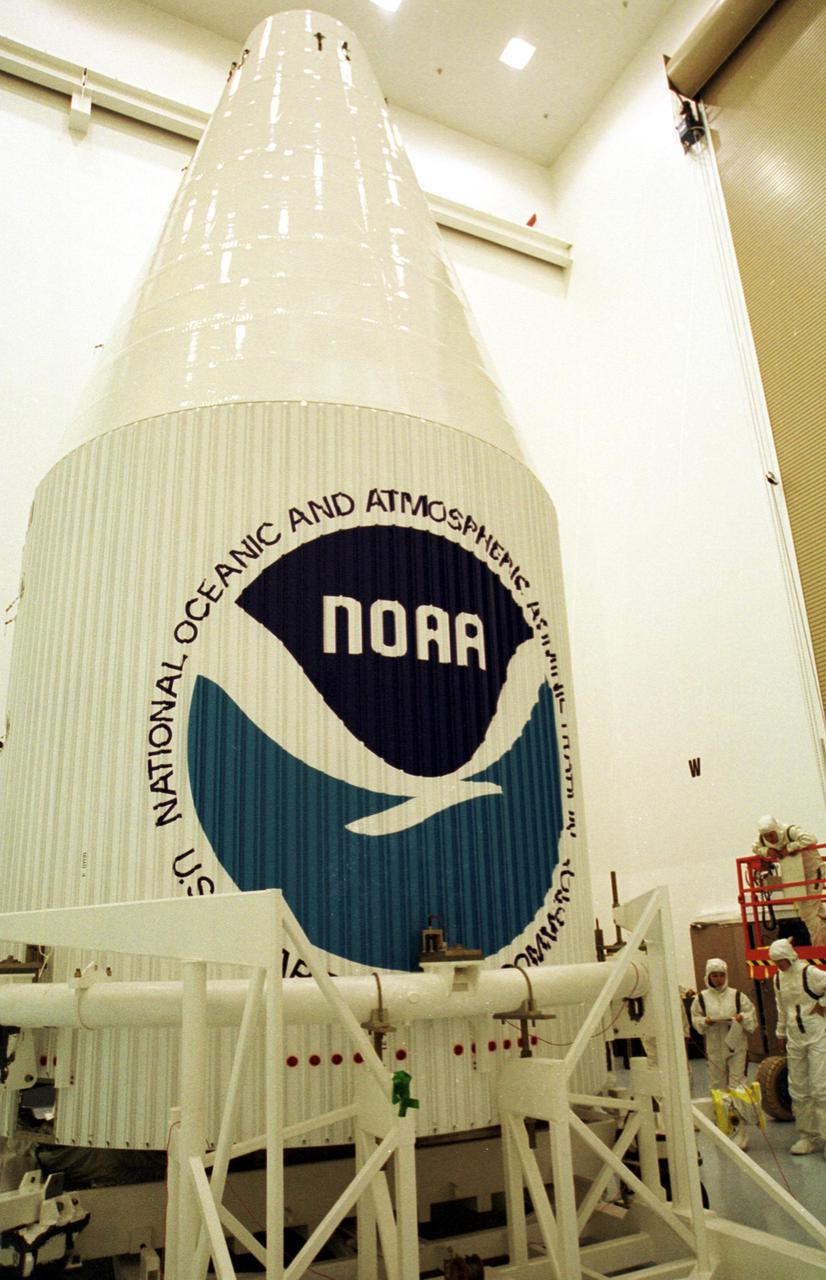
KENNEDY SPACE CENTER, Fla. -- At Astrotech, Titusville, Fla., installation of the fairing around the newest Geostationary Operational Environmental Satellite-M (GOES-M) is complete. The satellite is the last in the current series of advanced geostationary weather satellites in service. GOES-M has a new instrument not on earlier spacecraft, a Solar X-ray Imager that can be used in forecasting space weather, the effects of solar storms that create electromagnetic disturbances on earth that affect other satellites, communications and power grids. GOES is scheduled to launch from Launch Complex 36-A, Cape Canaveral Air Force Station, on an Atlas II rocket July 15
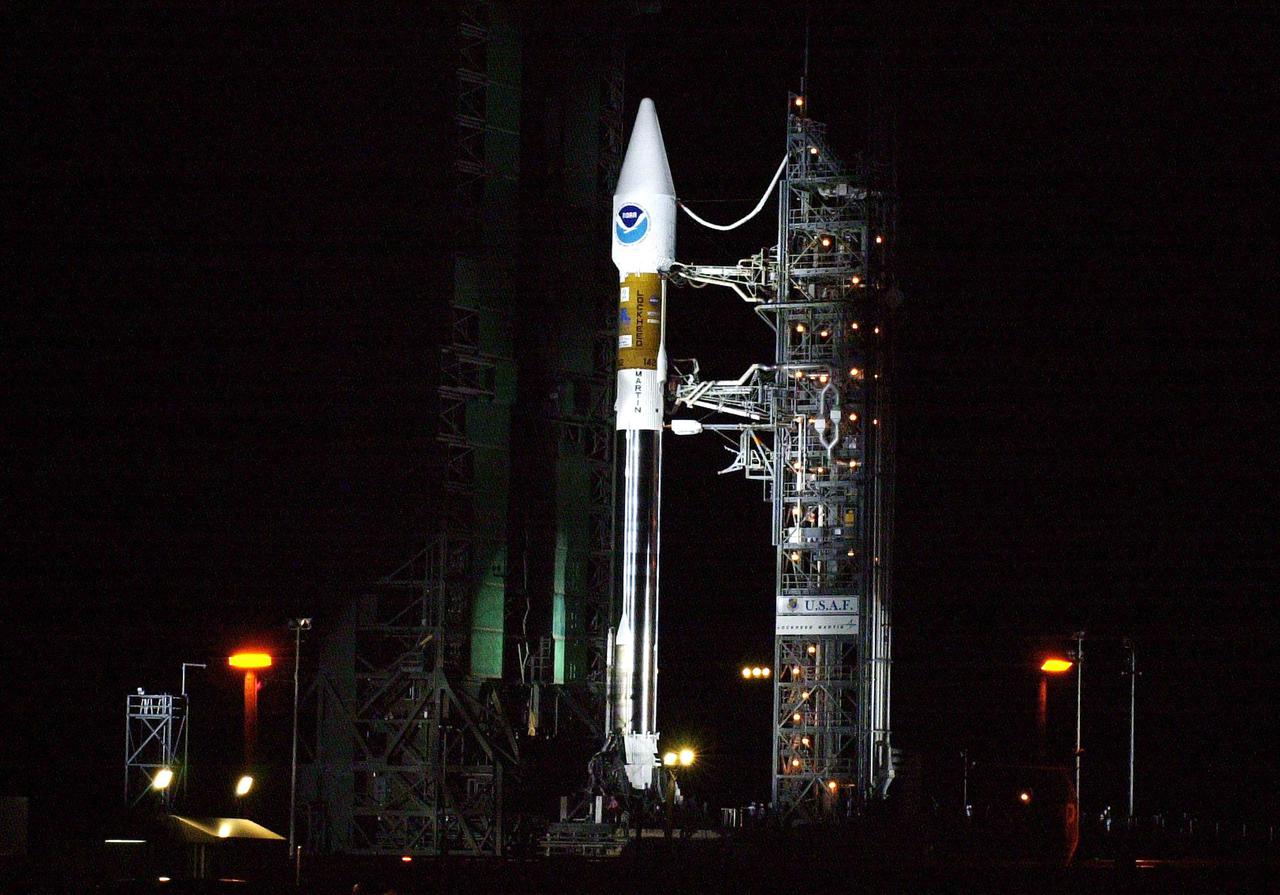
KENNEDY SPACE CENTER, Fla. -- The GOES-M satellite is poised for flight at Launch Complex 36-A, Cape Canaveral Air Force Station, after rollback of the Mobile Service Tower. GOES-M is the last in the current series of advanced geostationary weather satellites in service. GOES-M has a new instrument not on earlier spacecraft, a Solar X-ray Imager, which can be used in forecasting space weather and the effects of solar storms. The satellite is scheduled to launch atop an Atlas rocket on July 23 during a window that extends from 3:02 to 4:26 a.m. EDT
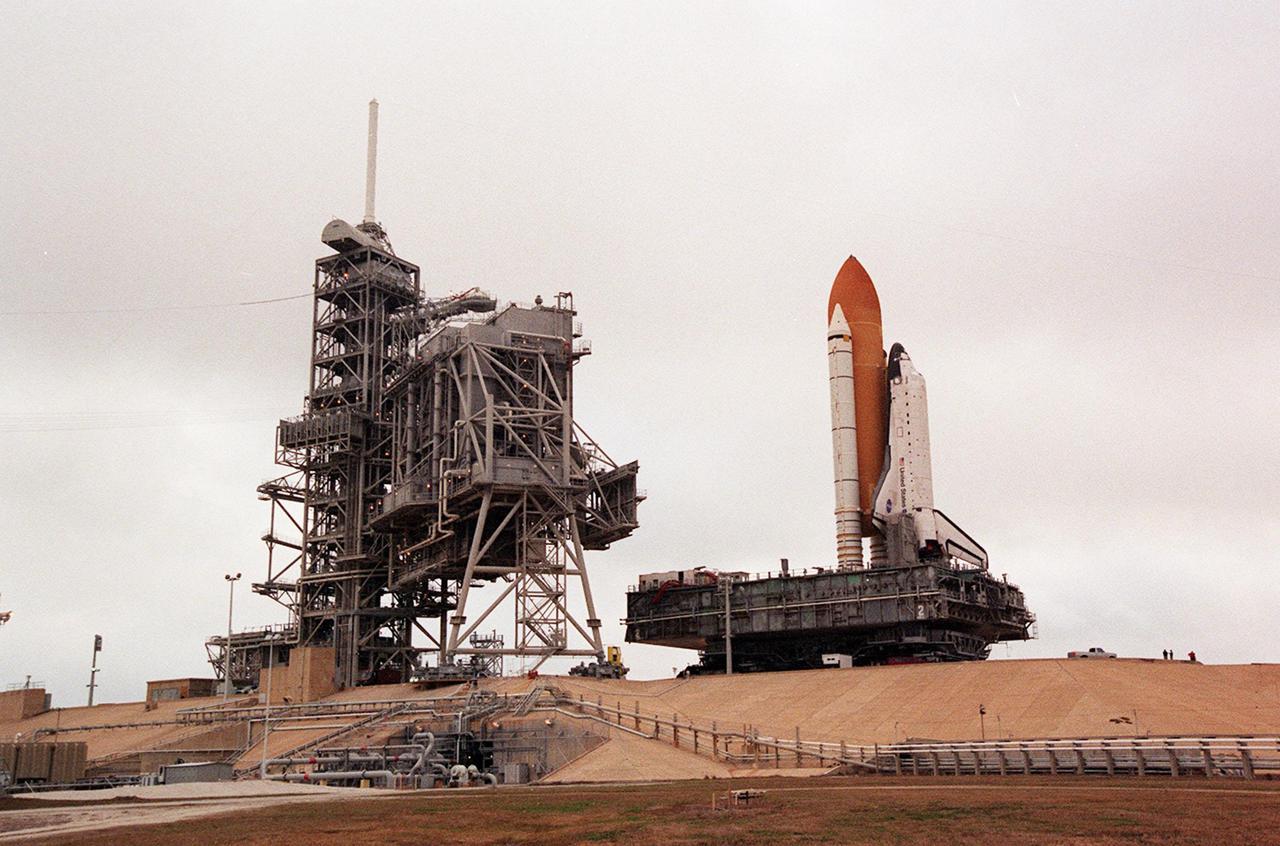
KENNEDY SPACE CENTER, FLA. -- Space Shuttle Atlantis begins rolling back to the Vehicle Assembly Building on the crawler-transporter. In the VAB workers will conduct inspections, make continuity checks and conduct X-ray analysis on the 36 solid rocket booster cables located inside each booster’s system tunnel. An extensive evaluation of NASA’s SRB cable inventory revealed conductor damage in four (of about 200) cables on the shelf. Shuttle managers decided to prove the integrity of the system tunnel cables already on Atlantis before launching Jan. 19. The launch has been rescheduled no earlier than Feb. 6
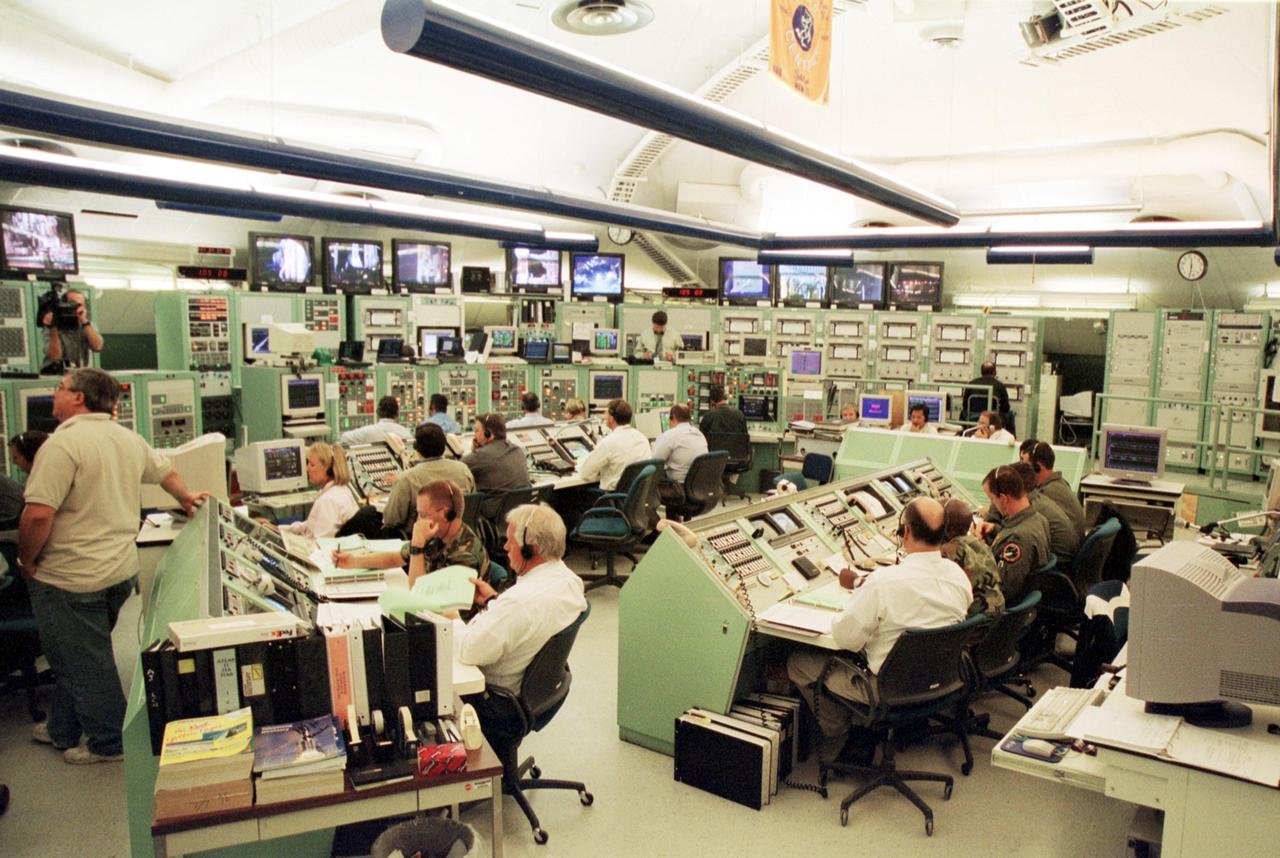
KENNEDY SPACE CENTER, Fla. -- The launch team inside the blockhouse on Launch Complex 36-A, Cape Canaveral Air Force Station makes final checks before launch of the GOES-M satellite. . GOES-M is the last in the current series of advanced geostationary weather satellites in service. GOES-M has a new instrument not on earlier spacecraft, a Solar X-ray Imager, which can be used in forecasting space weather and the effects of solar storms. The satellite is scheduled to launch atop an Atlas rocket on July 23 during a window that extends from 3:02 to 4:26 a.m. EDT
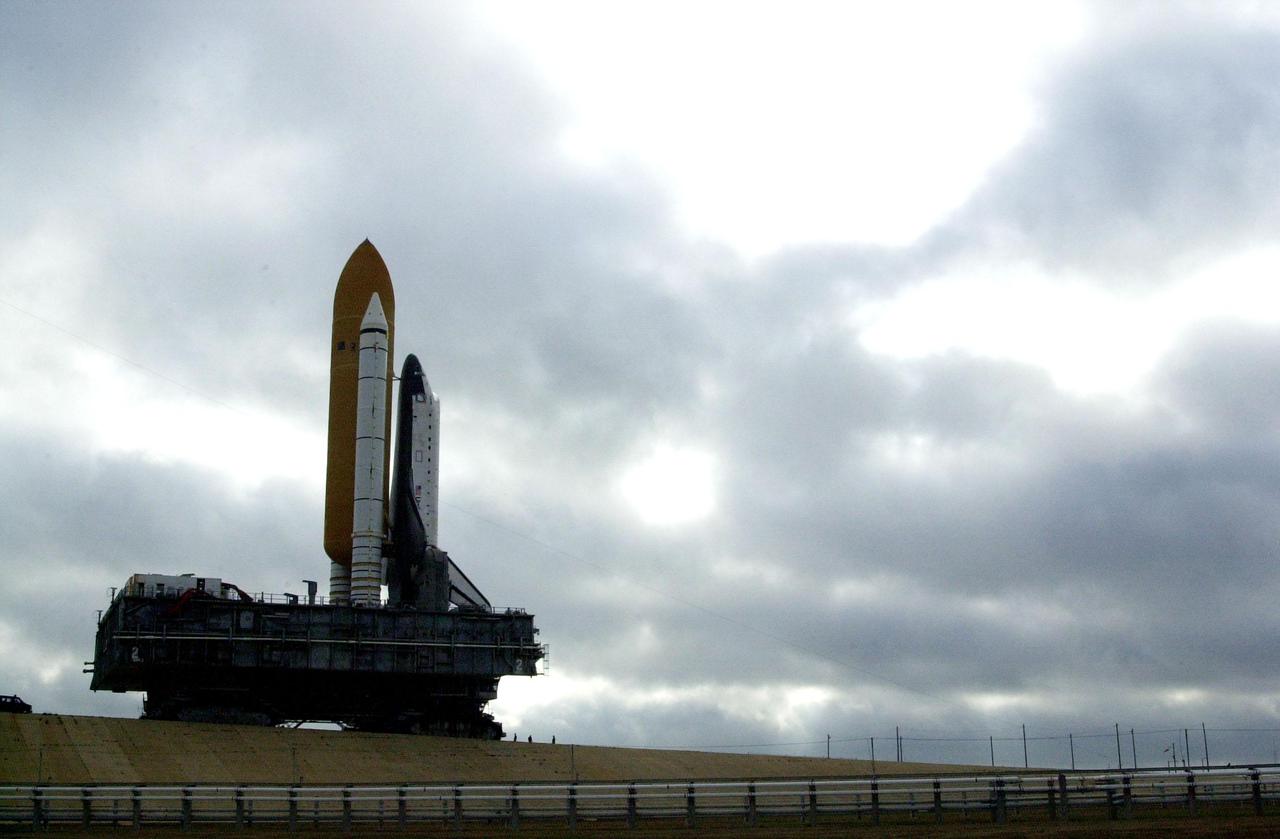
KENNEDY SPACE CENTER, FLA. -- Space Shuttle Atlantis stands out against the fogand cloud-swept sky on its trek aboard the crawler-transporter back to the Vehicle Assembly Building. In the VAB workers will conduct inspections, make continuity checks and conduct X-ray analysis on the 36 solid rocket booster cables located inside each booster’s system tunnel. An extensive evaluation of NASA’s SRB cable inventory revealed conductor damage in four (of about 200) cables on the shelf. Shuttle managers decided to prove the integrity of the system tunnel cables already on Atlantis before launching Jan. 19. The launch has been rescheduled no earlier than Feb. 6
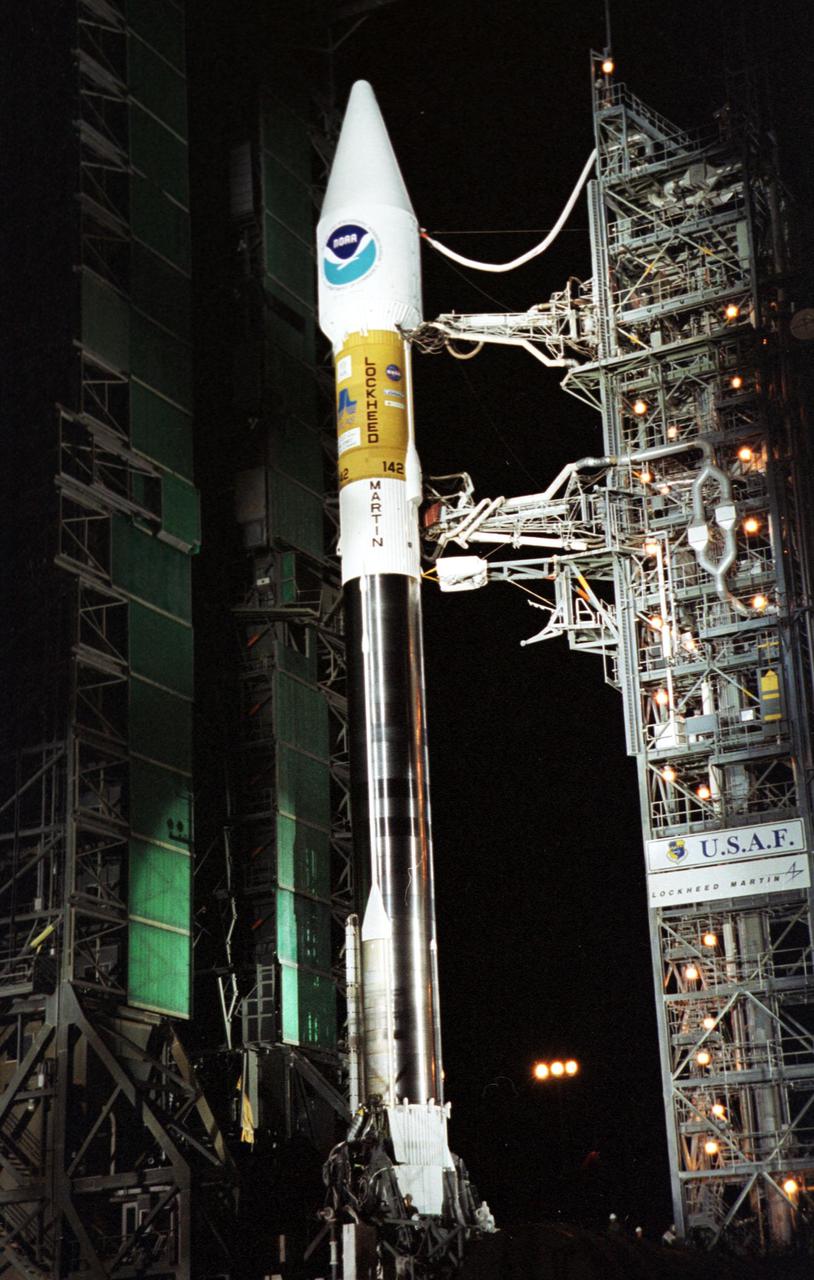
KENNEDY SPACE CENTER, Fla. -- The GOES-M satellite is poised for flight atop an Atlas II rocket at Launch Complex 36-A, Cape Canaveral Air Force Station, after rollback of the Mobile Service Tower (left). GOES-M is the last in the current series of advanced geostationary weather satellites in service. GOES-M has a new instrument not on earlier spacecraft, a Solar X-ray Imager, which can be used in forecasting space weather and the effects of solar storms. The satellite is scheduled to launch atop an Atlas rocket on July 23 during a window that extends from 3:02 to 4:26 a.m. EDT
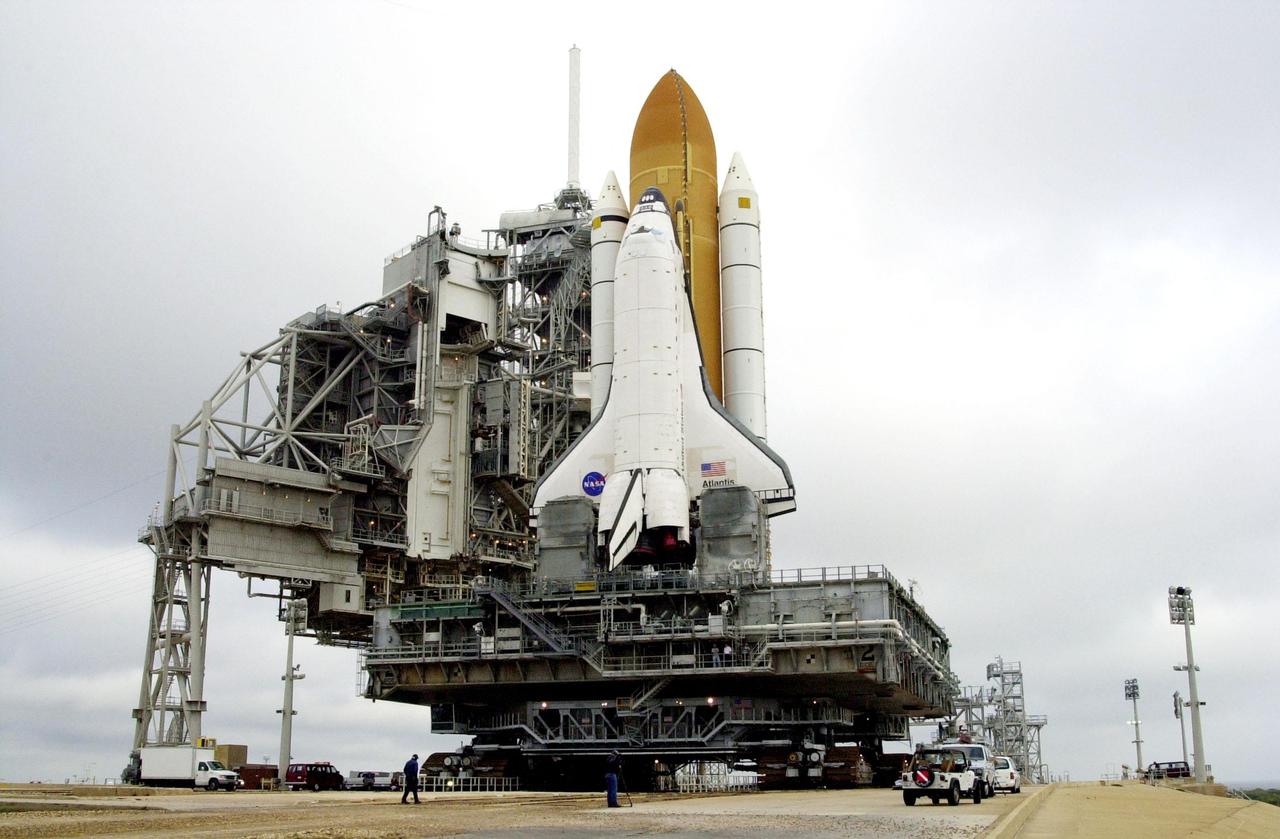
KENNEDY SPACE CENTER, FLA. -- Space Shuttle Atlantis begins moving back to the Vehicle Assembly Building where workers will conduct inspections, make continuity checks and conduct X-ray analysis on the 36 solid rocket booster cables located inside each booster’s system tunnel. An extensive evaluation of NASA’s SRB cable inventory revealed conductor damage in four (of about 200) cables on the shelf. Shuttle managers decided to prove the integrity of the system tunnel cables already on Atlantis before launching Jan. 19. The launch has been rescheduled no earlier than Feb. 6
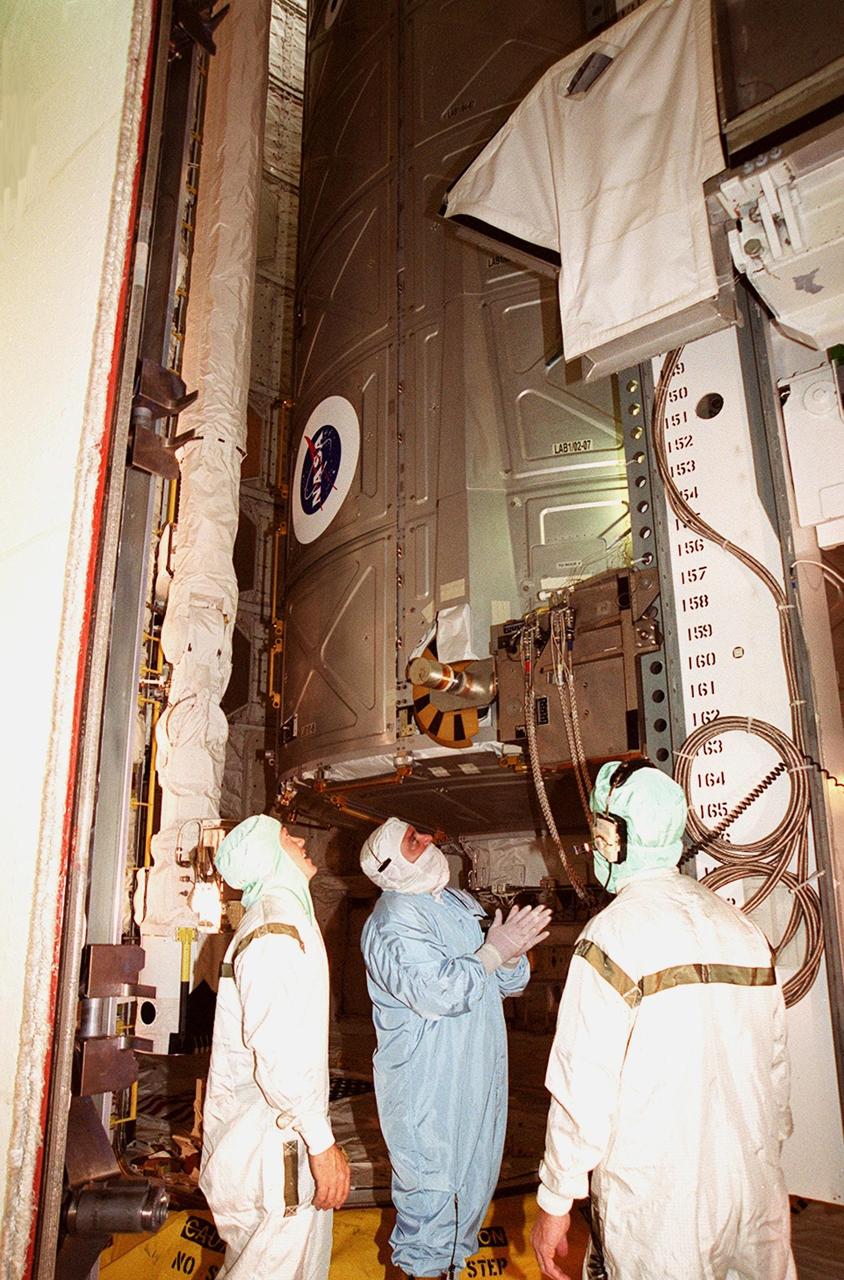
Workers in the Payload Changeout Room check the Payload Ground Handling Mechanism that will move the U.S. Lab Destiny out of Atlantis’ payload bay and into the PCR. After the move, Atlantis will roll back to the Vehicle Assembly Building to allow workers to conduct inspections, continuity checks and X-ray analysis on the 36 solid rocket booster cables located inside each booster’s system tunnel. An extensive evaluation of NASA’s SRB cable inventory revealed conductor damage in four (of about 200) cables on the shelf. Shuttle managers decided to prove the integrity of the system tunnel cables already on Atlantis
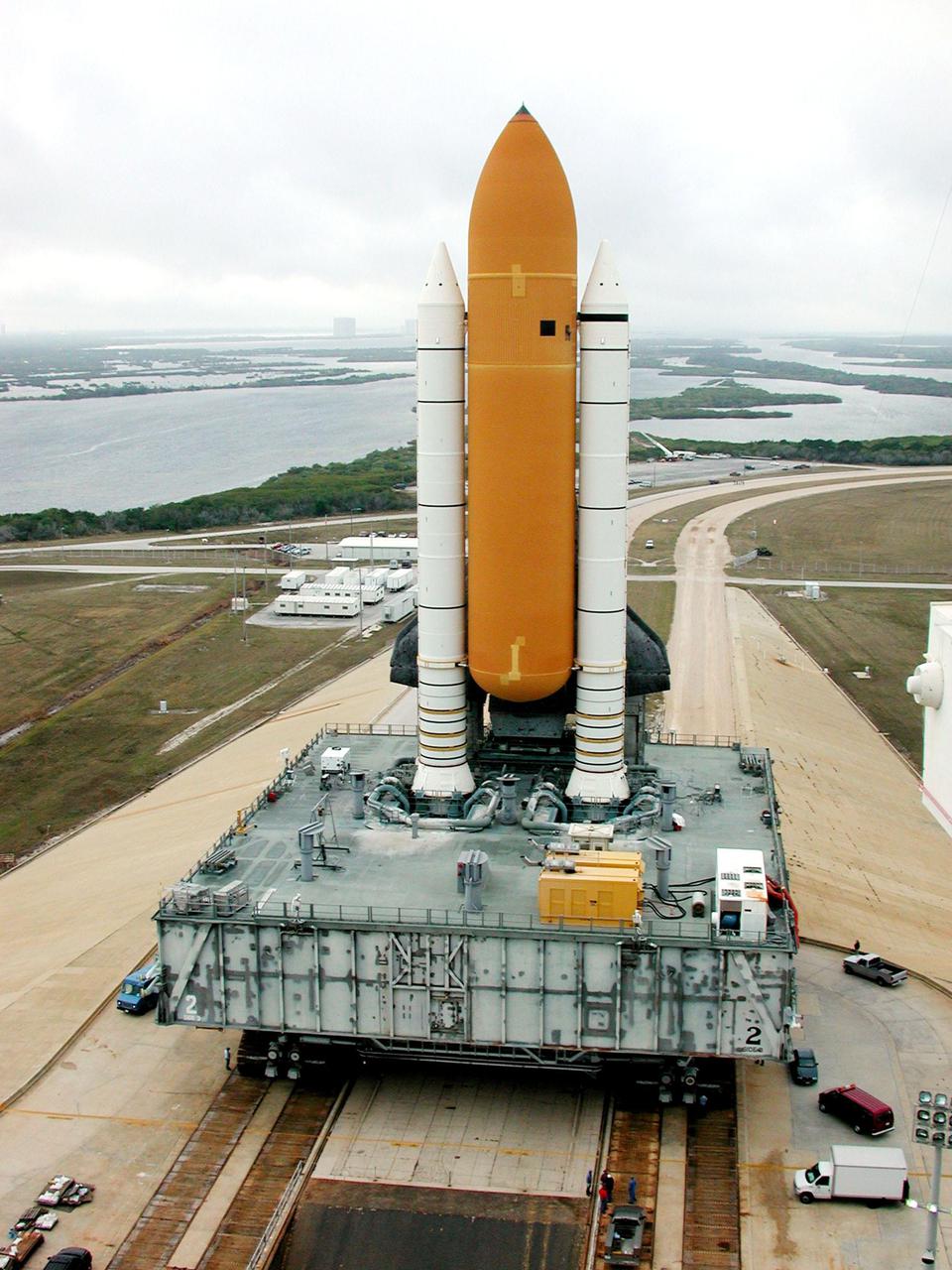
KENNEDY SPACE CENTER, FLA. -- Perched atop its Mobile Launcher Platform, Space Shuttle Atlantis moves back to the Vehicle Assembly Building, via the crawler-transporter underneath, along the crawlerway. The water in the background is part of the Banana River. Atlantis’ return to the VAB was determined by Shuttle managers so that inspections, continuity checks and X-ray analysis can be conducted on the 36 solid rocket booster cables located inside each booster’s system tunnel. An extensive evaluation of NASA’s SRB cable inventory revealed conductor damage in four (of about 200) cables on the shelf. The launch has been rescheduled no earlier than Feb. 6
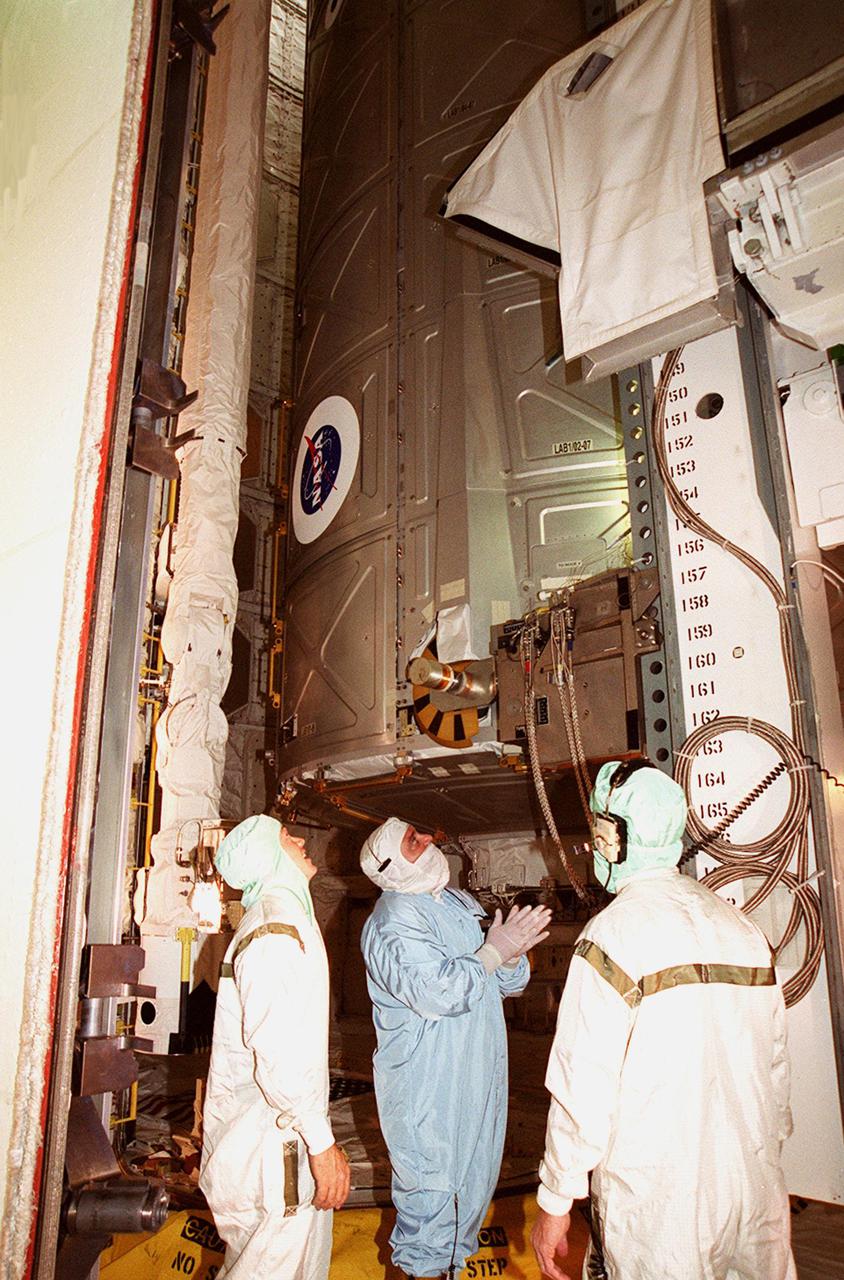
Workers in the Payload Changeout Room check the Payload Ground Handling Mechanism that will move the U.S. Lab Destiny out of Atlantis’ payload bay and into the PCR. After the move, Atlantis will roll back to the Vehicle Assembly Building to allow workers to conduct inspections, continuity checks and X-ray analysis on the 36 solid rocket booster cables located inside each booster’s system tunnel. An extensive evaluation of NASA’s SRB cable inventory revealed conductor damage in four (of about 200) cables on the shelf. Shuttle managers decided to prove the integrity of the system tunnel cables already on Atlantis
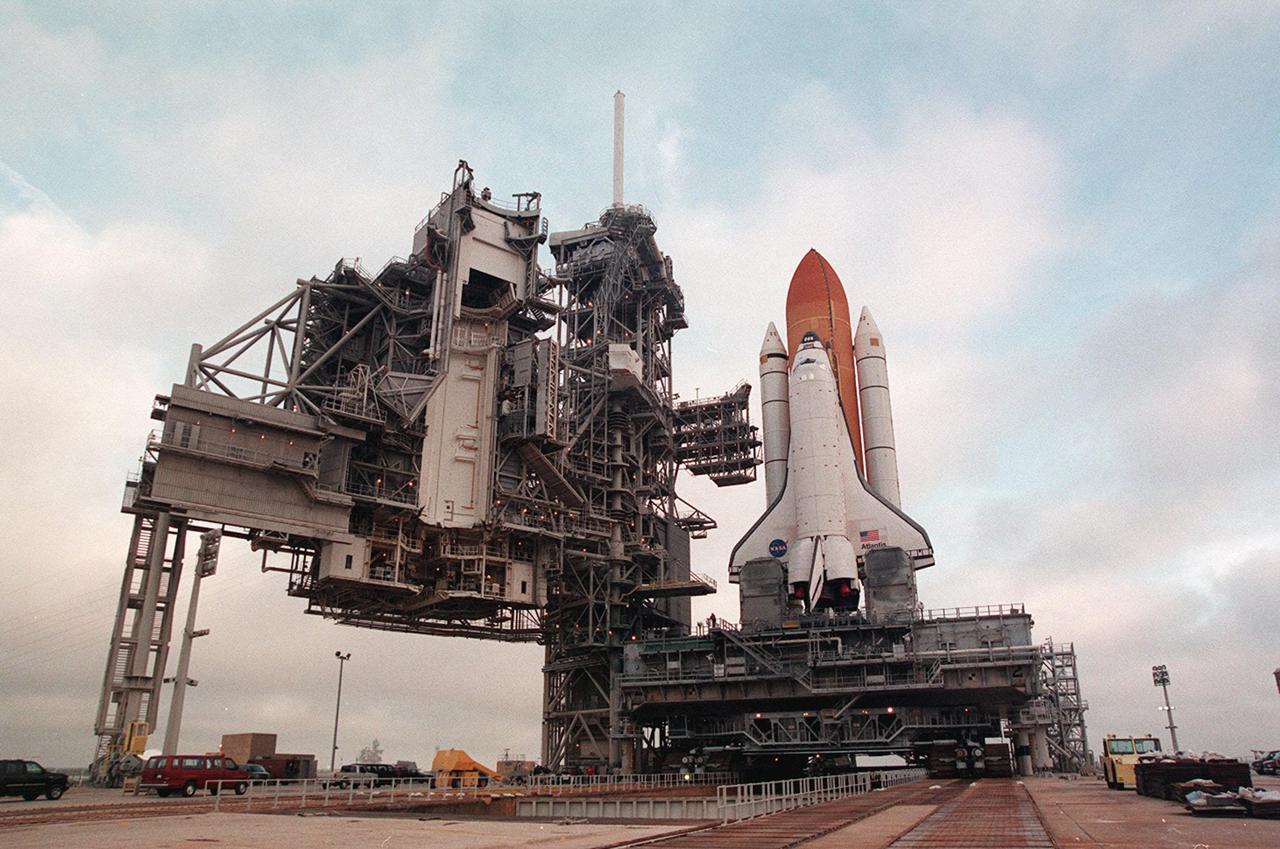
KENNEDY SPACE CENTER, FLA. -- Space Shuttle Atlantis is ready to roll back to the Vehicle Assembly Building via the crawler-transporter. In the VAB workers will conduct inspections, make continuity checks and conduct X-ray analysis on the 36 solid rocket booster cables located inside each booster’s system tunnel. An extensive evaluation of NASA’s SRB cable inventory revealed conductor damage in four (of about 200) cables on the shelf. Shuttle managers decided to prove the integrity of the system tunnel cables already on Atlantis before launching Jan. 19. The launch has been rescheduled no earlier than Feb. 6
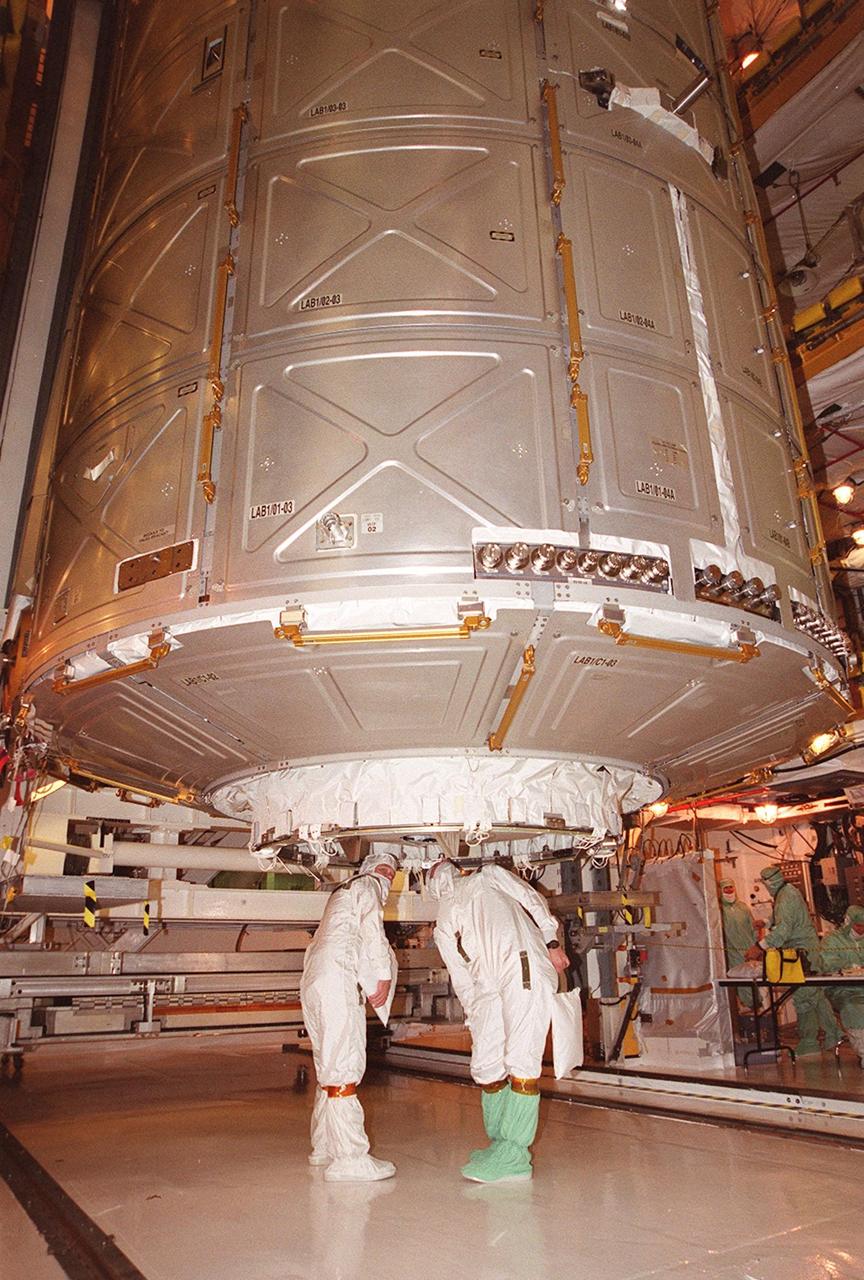
Workers in the Payload Changeout Room check the U.S. Lab Destiny as its moves from Atlantis’ payload bay into the PCR. Destiny will remain in the PCR while Atlantis rolls back to the Vehicle Assembly Building to allow workers to conduct inspections, continuity checks and X-ray analysis on the 36 solid rocket booster cables located inside each booster’s system tunnel. An extensive evaluation of NASA’s SRB cable inventory revealed conductor damage in four (of about 200) cables on the shelf. Shuttle managers decided to prove the integrity of the system tunnel cables already on Atlantis
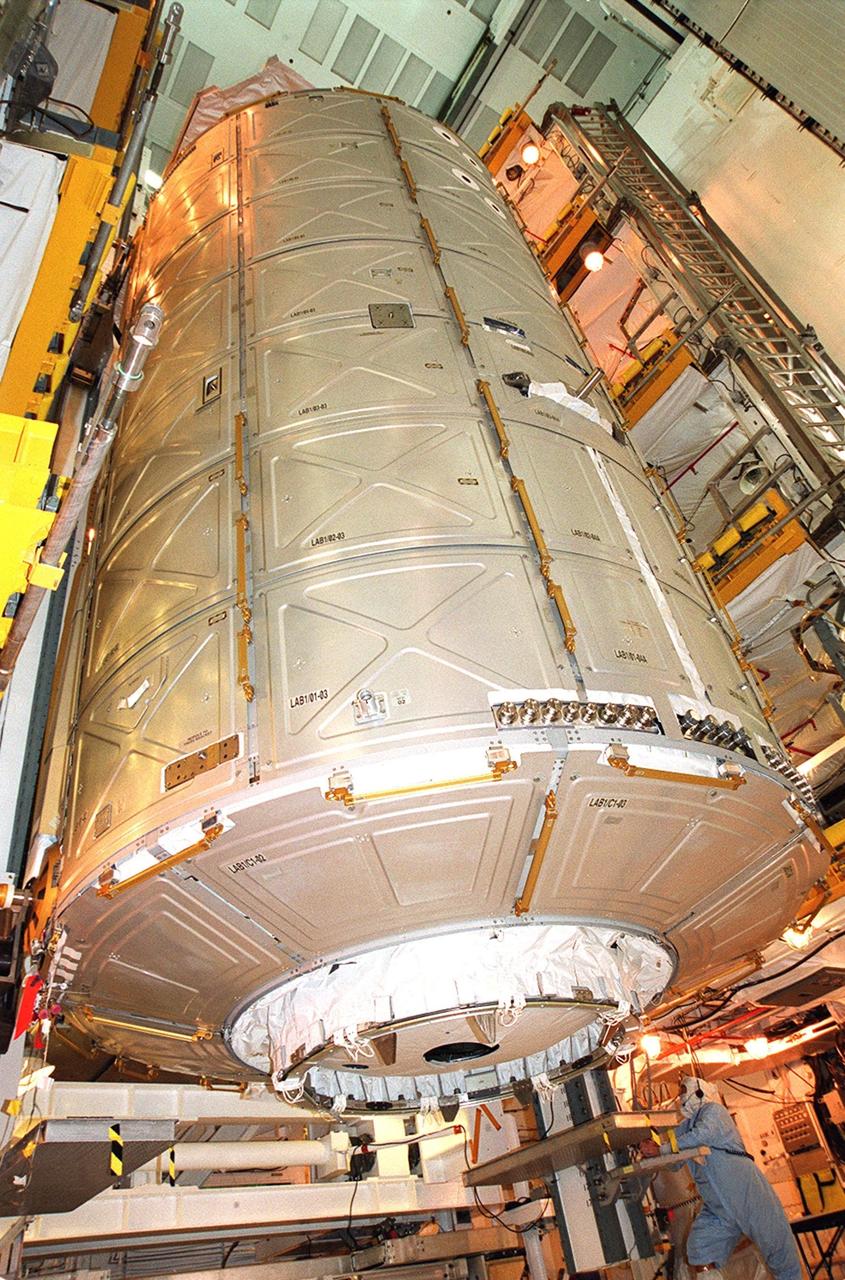
The U.S. Lab Destiny moves out of Atlantis’ payload bay and into the Payload Changeout Room via the Payload Ground Handling Mechanism. Destiny will remain in the PCR while Atlantis rolls back to the Vehicle Assembly Building to allow workers to conduct inspections, continuity checks and X-ray analysis on the 36 solid rocket booster cables located inside each booster’s system tunnel. An extensive evaluation of NASA’s SRB cable inventory revealed conductor damage in four (of about 200) cables on the shelf. Shuttle managers decided to prove the integrity of the system tunnel cables already on Atlantis
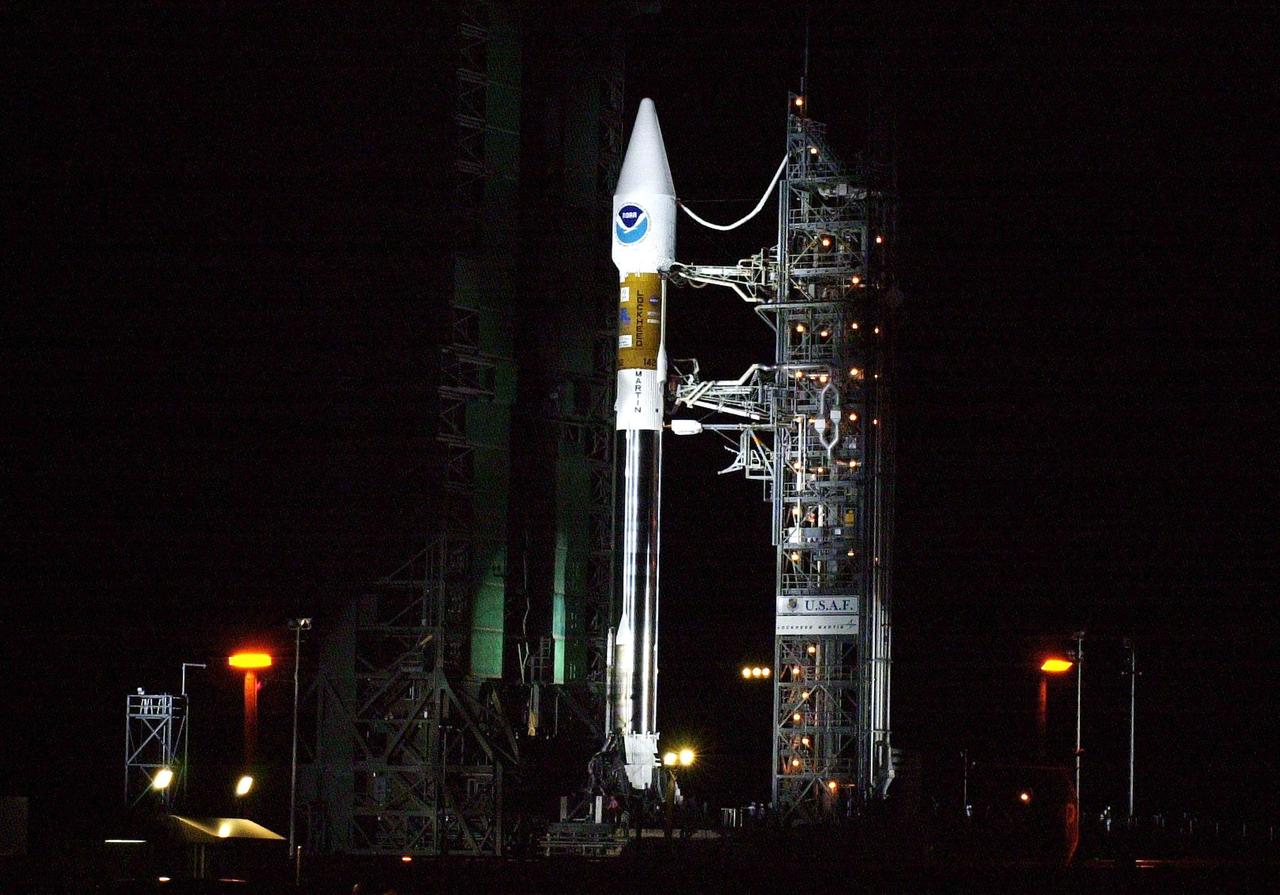
KENNEDY SPACE CENTER, Fla. -- The GOES-M satellite is poised for flight at Launch Complex 36-A, Cape Canaveral Air Force Station, after rollback of the Mobile Service Tower. GOES-M is the last in the current series of advanced geostationary weather satellites in service. GOES-M has a new instrument not on earlier spacecraft, a Solar X-ray Imager, which can be used in forecasting space weather and the effects of solar storms. The satellite is scheduled to launch atop an Atlas rocket on July 23 during a window that extends from 3:02 to 4:26 a.m. EDT

Workers in the Payload Changeout Room check the U.S. Lab Destiny as its moves from Atlantis’ payload bay into the PCR. Destiny will remain in the PCR while Atlantis rolls back to the Vehicle Assembly Building to allow workers to conduct inspections, continuity checks and X-ray analysis on the 36 solid rocket booster cables located inside each booster’s system tunnel. An extensive evaluation of NASA’s SRB cable inventory revealed conductor damage in four (of about 200) cables on the shelf. Shuttle managers decided to prove the integrity of the system tunnel cables already on Atlantis
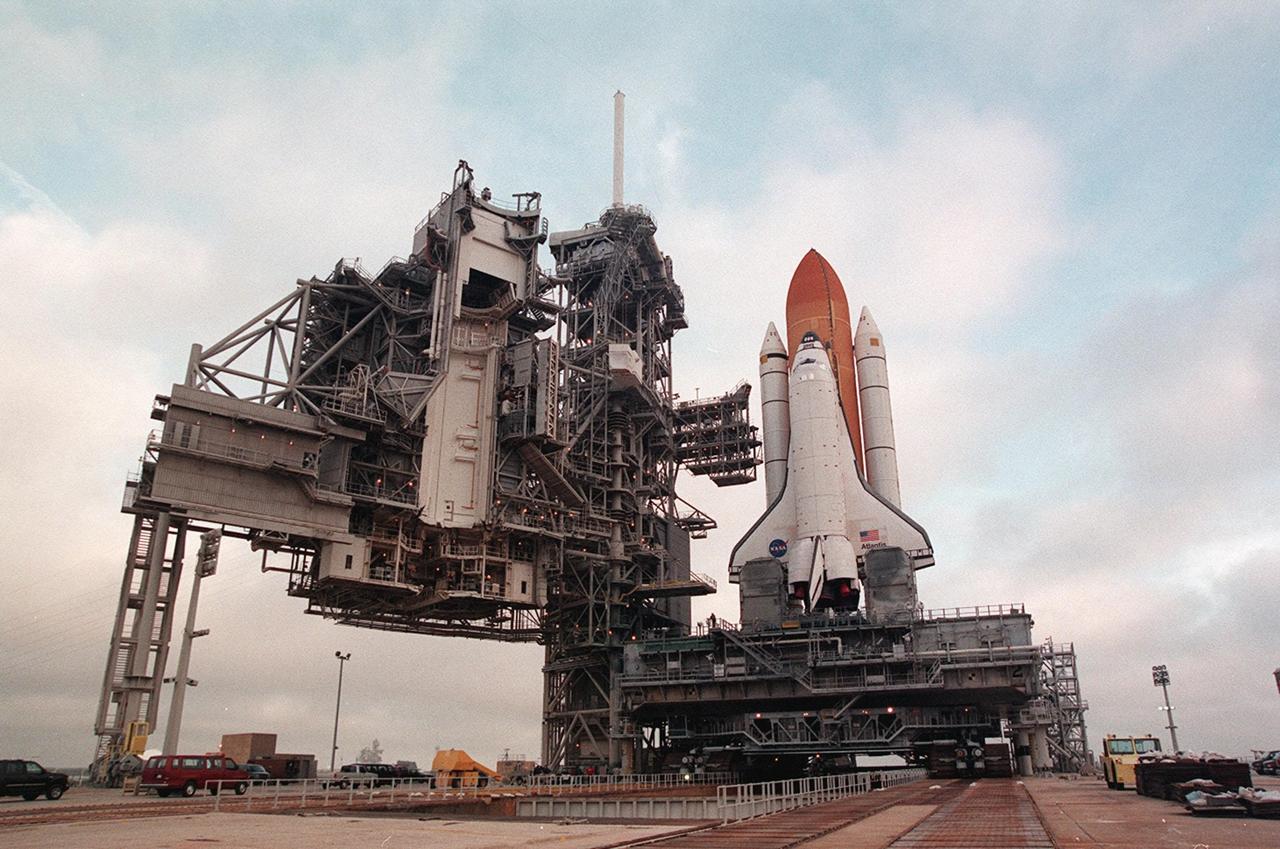
KENNEDY SPACE CENTER, FLA. -- Space Shuttle Atlantis is ready to roll back to the Vehicle Assembly Building via the crawler-transporter. In the VAB workers will conduct inspections, make continuity checks and conduct X-ray analysis on the 36 solid rocket booster cables located inside each booster’s system tunnel. An extensive evaluation of NASA’s SRB cable inventory revealed conductor damage in four (of about 200) cables on the shelf. Shuttle managers decided to prove the integrity of the system tunnel cables already on Atlantis before launching Jan. 19. The launch has been rescheduled no earlier than Feb. 6
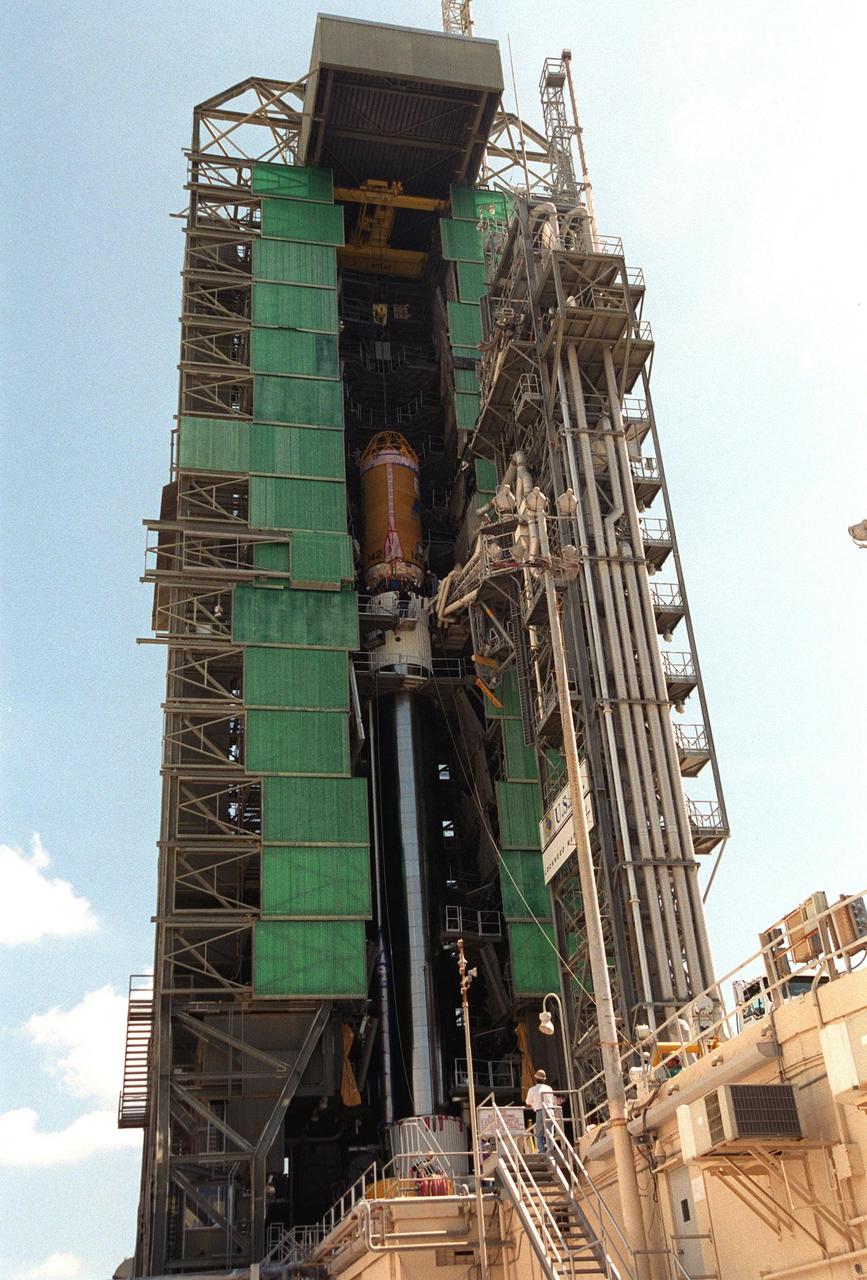
KENNEDY SPACE CENTER, Fla. -- At Complex 36-A, Cape Canaveral Air Force Station, the second stage of the Geostationary Operational Environmental Satellite-M (GOES-M) Atlas II rocket nears the top of the gantry. It will be mated with the first stage. The last in the current series of advanced geostationary weather satellites in service, GOES-M has a new instrument not on earlier spacecraft, a Solar X-ray Imager that can be used in forecasting space weather, the effects of solar storms that create electromagnetic disturbances on earth that affect other satellites, communications and power grids. GOES-M is scheduled to launch from Cape Canaveral Air Force Station July 15
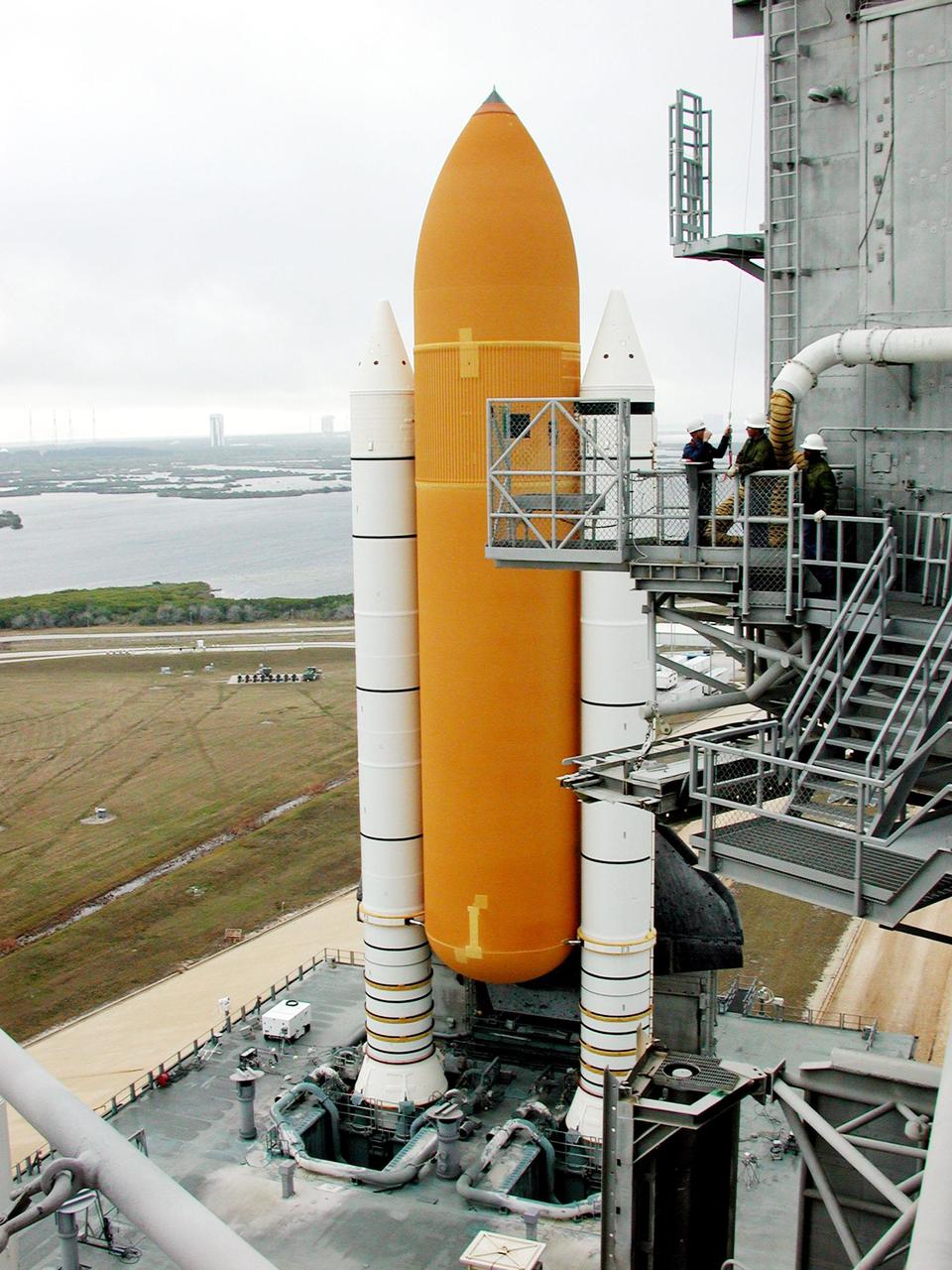
KENNEDY SPACE CENTER, FLA. -- As Space Shuttle Atlantis begins its crawl back to the Vehicle Assembly Building, work continues on the Fixed Service Structure at Launch Pad 39A. Atlantis’ return to the VAB was determined by Shuttle managers so that inspections, continuity checks and X-ray analysis can be conducted on the 36 solid rocket booster cables located inside each booster’s system tunnel. An extensive evaluation of NASA’s SRB cable inventory revealed conductor damage in four (of about 200) cables on the shelf. The launch has been rescheduled no earlier than Feb. 6

Workers in the Payload Changeout Room check the U.S. Lab Destiny as its moves from Atlantis’ payload bay into the PCR. Destiny will remain in the PCR while Atlantis rolls back to the Vehicle Assembly Building to allow workers to conduct inspections, continuity checks and X-ray analysis on the 36 solid rocket booster cables located inside each booster’s system tunnel. An extensive evaluation of NASA’s SRB cable inventory revealed conductor damage in four (of about 200) cables on the shelf. Shuttle managers decided to prove the integrity of the system tunnel cables already on Atlantis
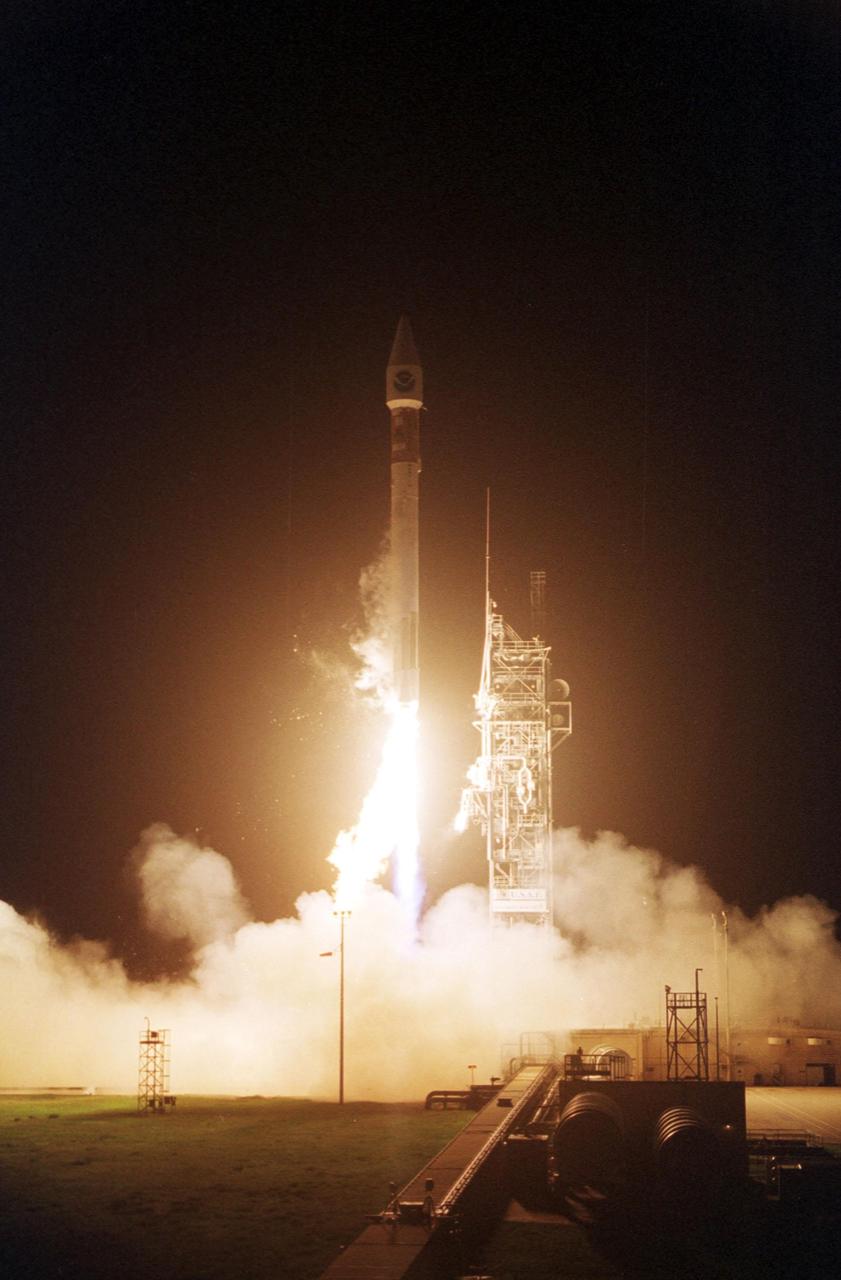
KENNEDY SPACE CENTER, Fla. -- With a burst of light followed by rolling steam clouds, the Atlas II rocket carrying the GOES-M satellite roars into the black sky. Liftoff occurred at 3:23:01EDT. EDT from Launch Complex 36-A, Cape Canaveral Air Force Station. GOES-M is the last in the current series of advanced geostationary weather satellites in service. GOES-M has a new instrument not on earlier spacecraft, a Solar X-ray Imager, which can be used in forecasting space weather and the effects of solar storms
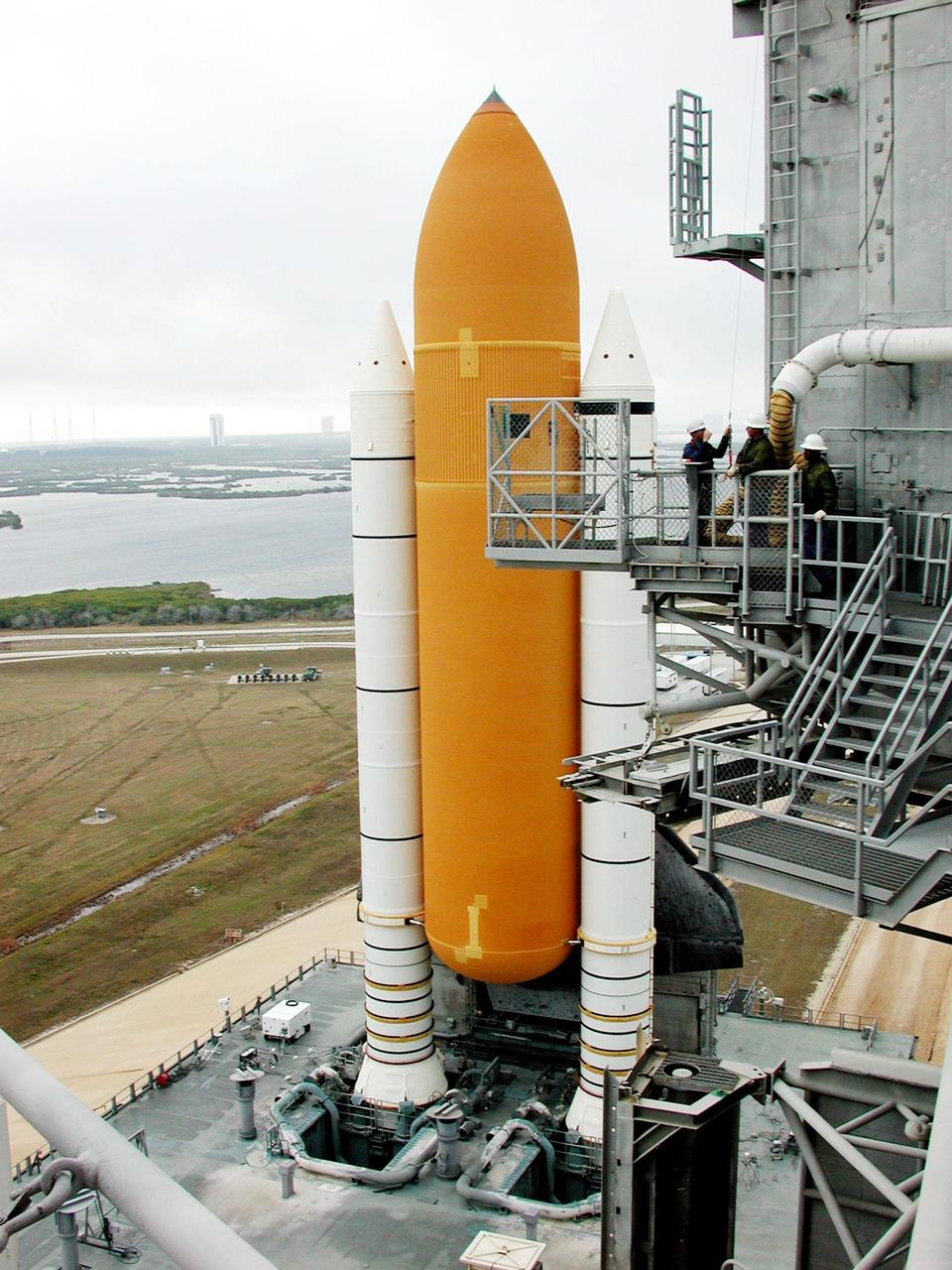
KENNEDY SPACE CENTER, FLA. -- As Space Shuttle Atlantis begins its crawl back to the Vehicle Assembly Building, work continues on the Fixed Service Structure at Launch Pad 39A. Atlantis’ return to the VAB was determined by Shuttle managers so that inspections, continuity checks and X-ray analysis can be conducted on the 36 solid rocket booster cables located inside each booster’s system tunnel. An extensive evaluation of NASA’s SRB cable inventory revealed conductor damage in four (of about 200) cables on the shelf. The launch has been rescheduled no earlier than Feb. 6
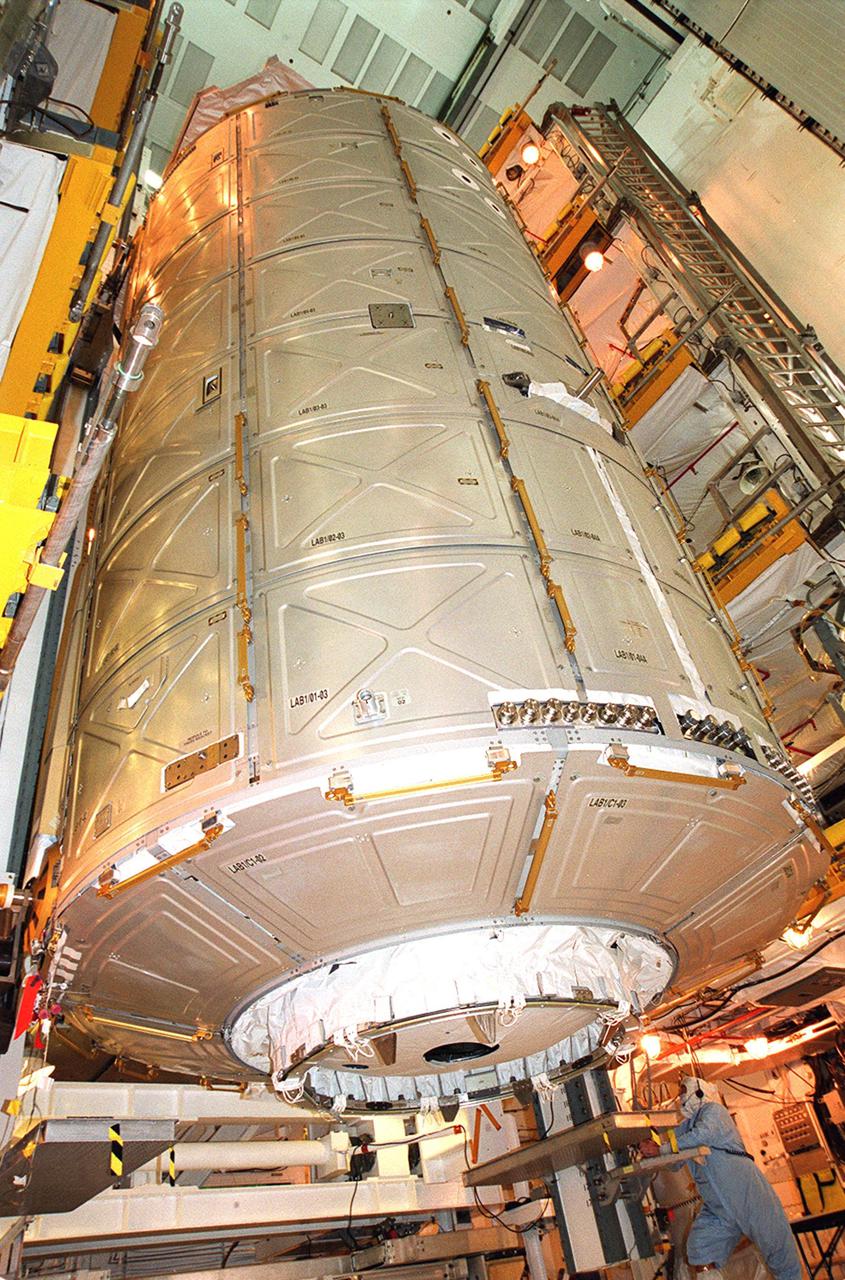
The U.S. Lab Destiny moves out of Atlantis’ payload bay and into the Payload Changeout Room via the Payload Ground Handling Mechanism. Destiny will remain in the PCR while Atlantis rolls back to the Vehicle Assembly Building to allow workers to conduct inspections, continuity checks and X-ray analysis on the 36 solid rocket booster cables located inside each booster’s system tunnel. An extensive evaluation of NASA’s SRB cable inventory revealed conductor damage in four (of about 200) cables on the shelf. Shuttle managers decided to prove the integrity of the system tunnel cables already on Atlantis
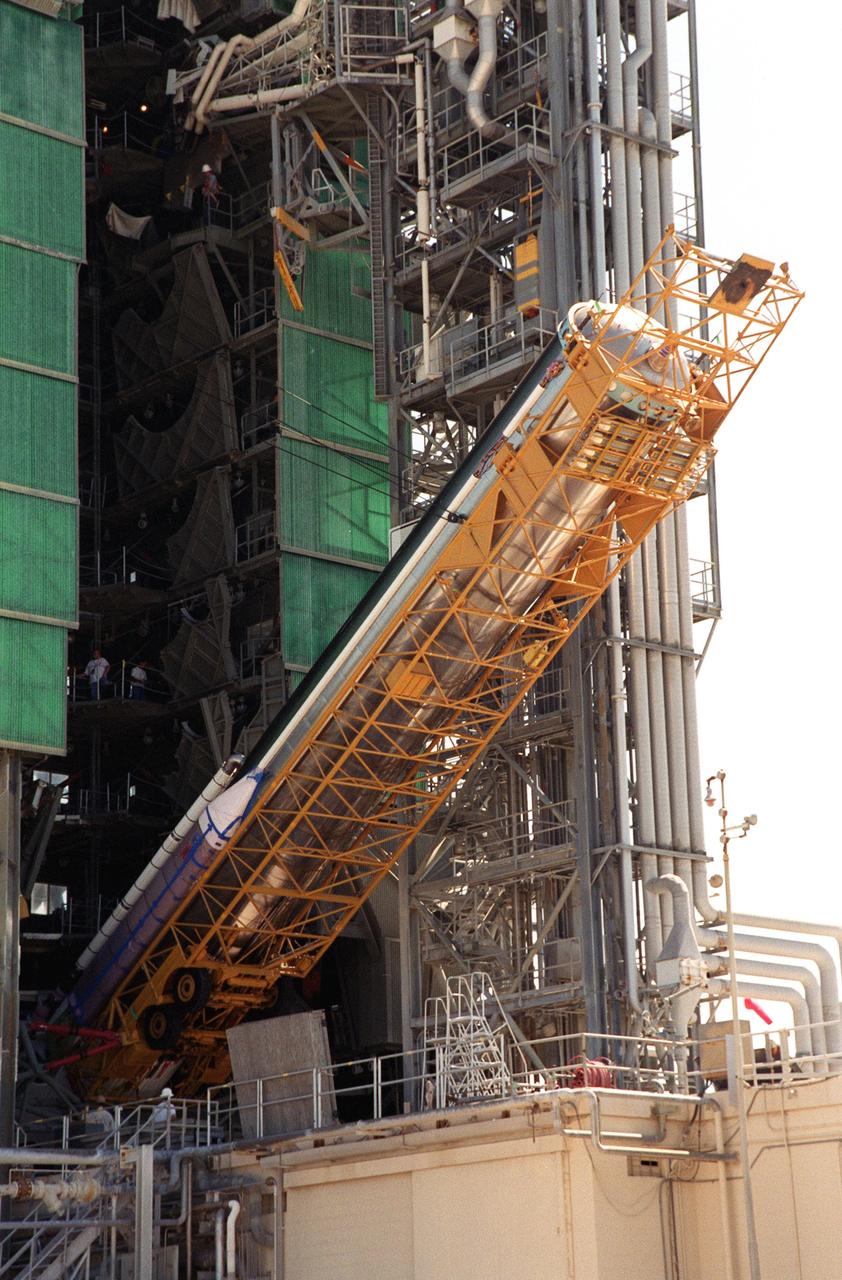
The first stage of the Geostationary Operational Environmental Satellite-M (GOES-M) Atlas II rocket is lifted to a vertical position at the gantry on Complex 36-A, Cape Canaveral Air Force Station. It will be raised and lifted up the gantry for mating with other stages. The last in the current series of advanced geostationary weather satellites in service, GOES-M has a new instrument not on earlier spacecraft, a Solar X-ray Imager that can be used in forecasting space weather, the effects of solar storms that create electromagnetic disturbances on earth that affect other satellites, communications and power grids. GOES-M is scheduled to launch from Cape Canaveral Air Force Station July 15
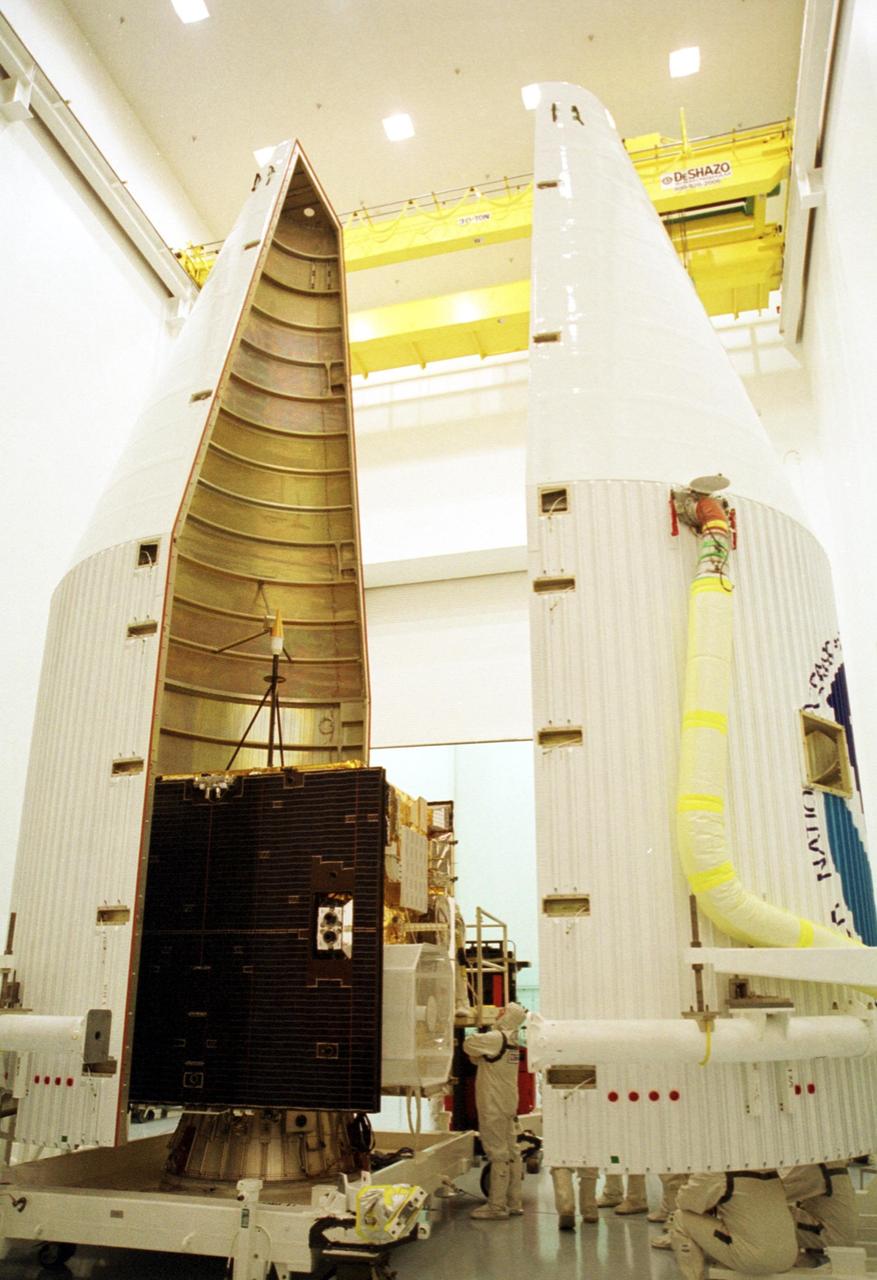
KENNEDY SPACE CENTER, Fla. -- At Astrotech, Titusville, Fla., both halves of the fairing are being installed around the newest Geostationary Operational Environmental Satellite-M (GOES-M). The satellite is the last in the current series of advanced geostationary weather satellites in service. GOES-M has a new instrument not on earlier spacecraft, a Solar X-ray Imager that can be used in forecasting space weather, the effects of solar storms that create electromagnetic disturbances on earth that affect other satellites, communications and power grids. GOES is scheduled to launch from Launch Complex 36-A, Cape Canaveral Air Force Station, on an Atlas II rocket July 15
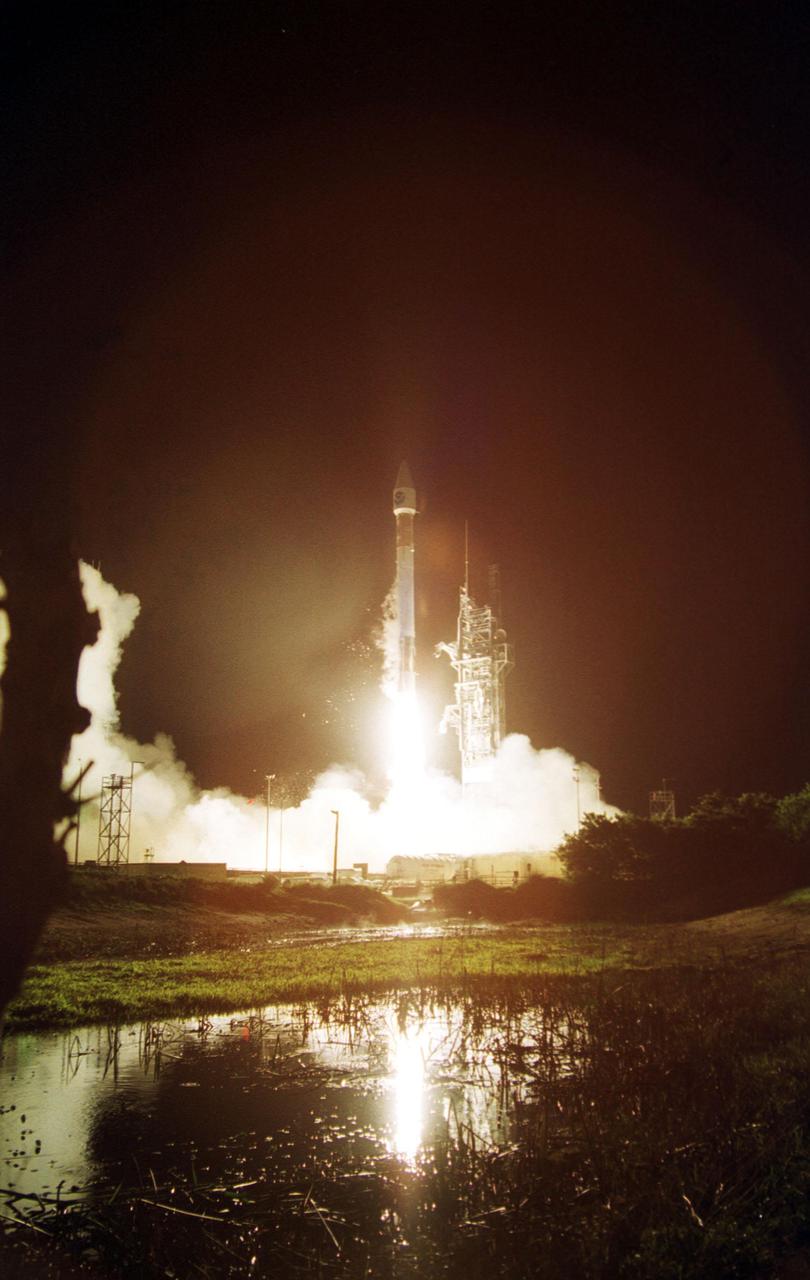
KENNEDY SPACE CENTER, Fla. -- Launch of the Atlas II rocket bearing the GOES-M satellite gives a burst of light to the night sky, even reflected in the nearby water. Liftoff occurred at 3:23:01 EDT from Launch Complex 36-A, Cape Canaveral Air Force Station. GOES-M is the last in the current series of advanced geostationary weather satellites in service. GOES-M has a new instrument not on earlier spacecraft, a Solar X-ray Imager, which can be used in forecasting space weather and the effects of solar storms

KENNEDY SPACE CENTER, Fla. -- At Complex 36-A, Cape Canaveral Air Force Station, the second stage of the Geostationary Operational Environmental Satellite-M (GOES-M) Atlas II rocket is lifted up the gantry for mating with the first stage. The last in the current series of advanced geostationary weather satellites in service, GOES-M has a new instrument not on earlier spacecraft, a Solar X-ray Imager that can be used in forecasting space weather, the effects of solar storms that create electromagnetic disturbances on earth that affect other satellites, communications and power grids. GOES-M is scheduled to launch from Cape Canaveral Air Force Station July 15
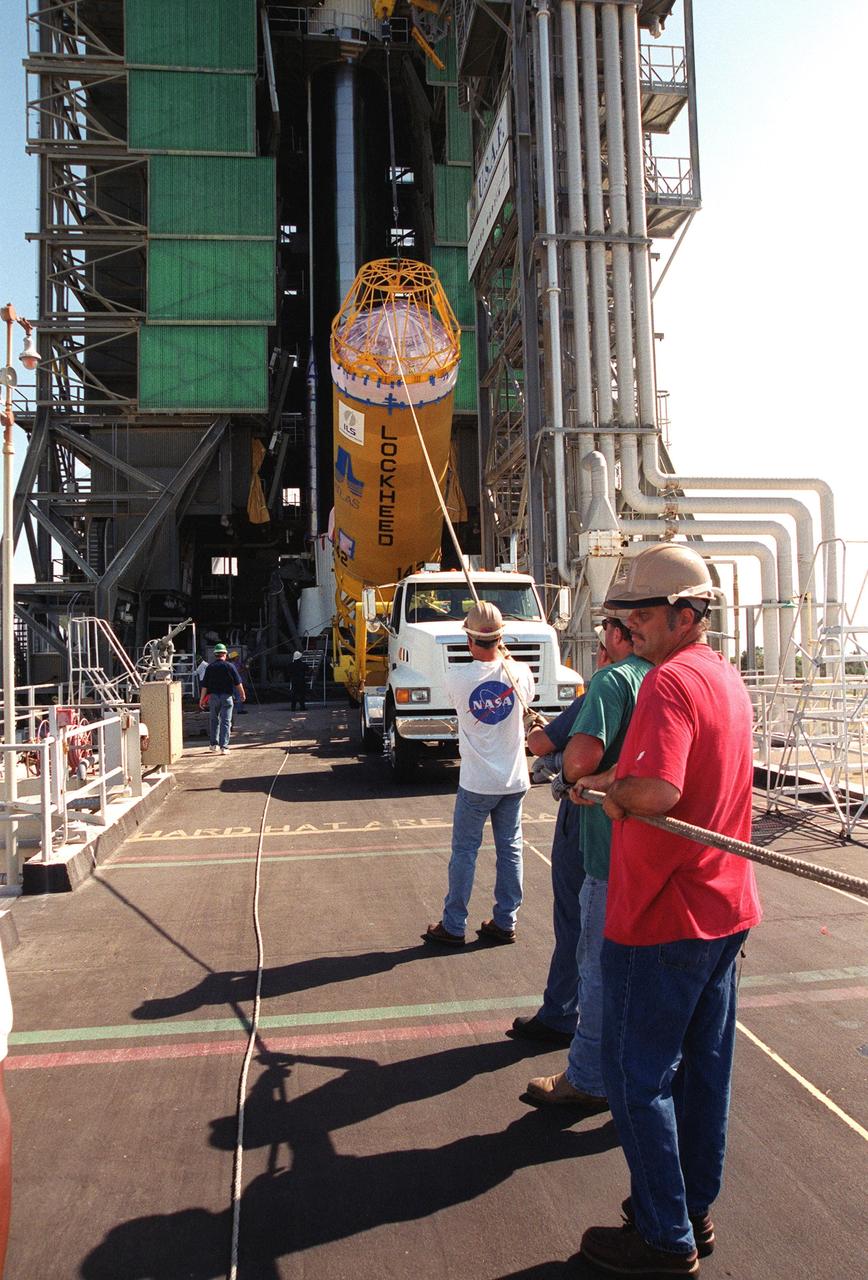
KENNEDY SPACE CENTER, Fla. -- At Complex 36-A, Cape Canaveral Air Force Station, the second stage of the Geostationary Operational Environmental Satellite-M (GOES-M) Atlas II rocket is lifted from the transporter. It will be raised to vertical and lifted up the gantry for mating with the first stage. The last in the current series of advanced geostationary weather satellites in service, GOES-M has a new instrument not on earlier spacecraft, a Solar X-ray Imager that can be used in forecasting space weather, the effects of solar storms that create electromagnetic disturbances on earth that affect other satellites, communications and power grids. GOES-M is scheduled to launch from Cape Canaveral Air Force Station July 15
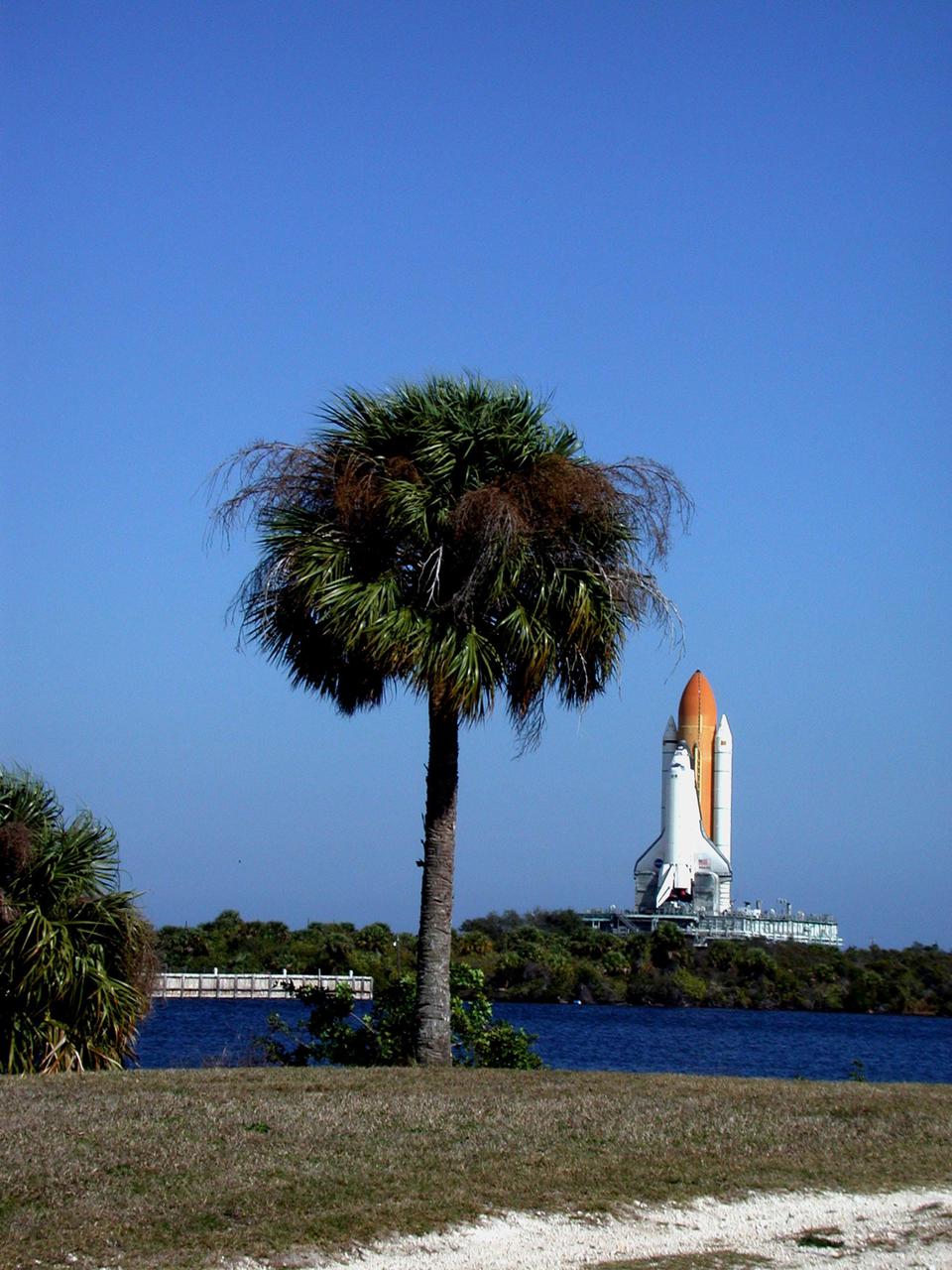
KENNEDY SPACE CENTER, FLA. -- Space Shuttle Atlantis joins blue skies and palm trees on the Florida landscape. Atlantis is rolling back from Launch Pad 39A to the Vehicle Assembly Building so that workers can conduct inspections, make continuity checks and conduct X-ray analysis on the 36 SRB cables located inside each booster’s system tunnel. An extensive evaluation of NASA’s SRB cable inventory revealed conductor damage in four (of about 200) cables on the shelf. Shuttle managers decided to prove the integrity of the system tunnel cables already on Atlantis before launching Jan. 19. The launch has been rescheduled no earlier than Feb. 6

The U.S. Lab Destiny begins moving out of Atlantis’ payload bay and into the Payload Changeout Room via the Payload Ground Handling Mechanism. Destiny will remain in the PCR while Atlantis rolls back to the Vehicle Assembly Building to allow workers to conduct inspections, continuity checks and X-ray analysis on the 36 solid rocket booster cables located inside each booster’s system tunnel. An extensive evaluation of NASA’s SRB cable inventory revealed conductor damage in four (of about 200) cables on the shelf. Shuttle managers decided to prove the integrity of the system tunnel cables already on Atlantis
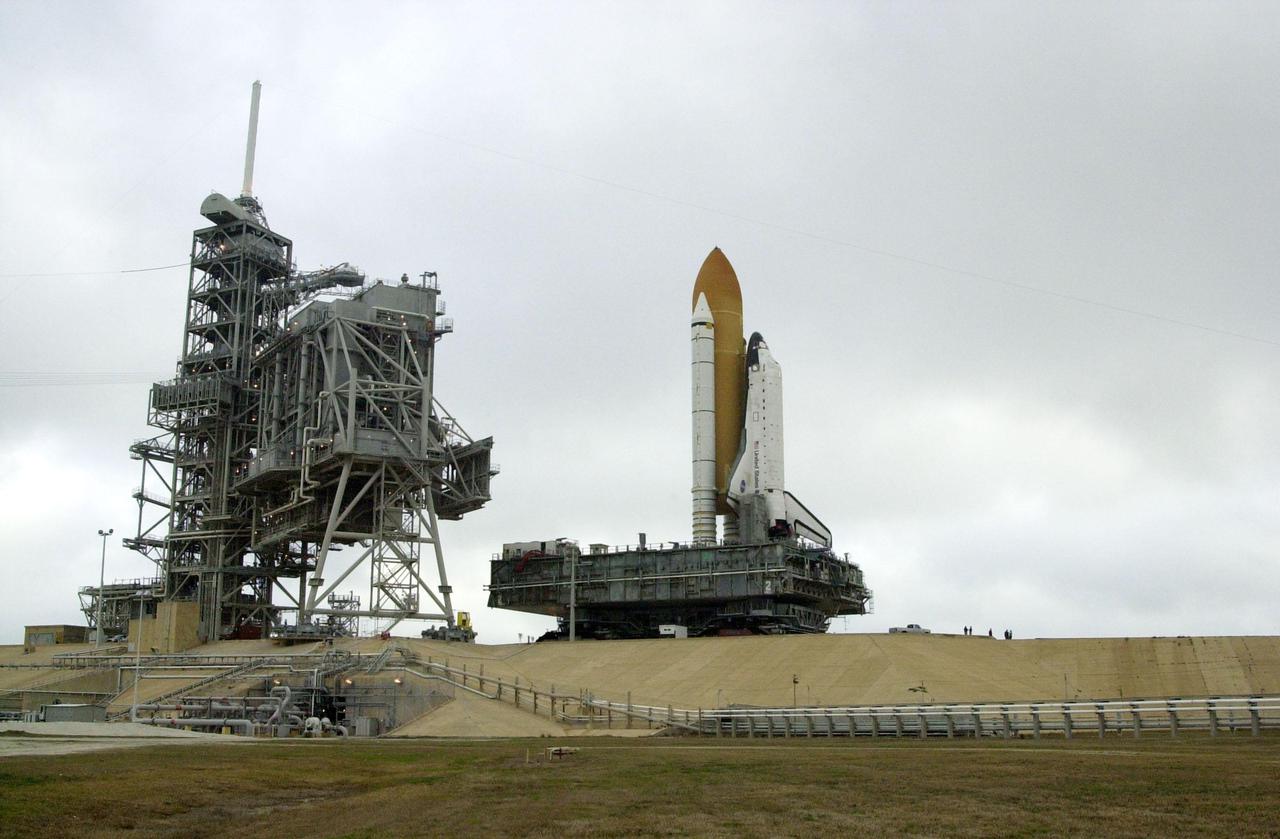
KENNEDY SPACE CENTER, FLA. -- Traveling about 1 mph on the crawler-transporter, Space Shuttle Atlantis begins the 3.4-mile trek back to the Vehicle Assembly Building. In the VAB workers will conduct inspections, make continuity checks and conduct X-ray analysis on the 36 solid rocket booster cables located inside each booster’s system tunnel. An extensive evaluation of NASA’s SRB cable inventory revealed conductor damage in four (of about 200) cables on the shelf. Shuttle managers decided to prove the integrity of the system tunnel cables already on Atlantis before launching Jan. 19. The launch has been rescheduled no earlier than Feb. 6
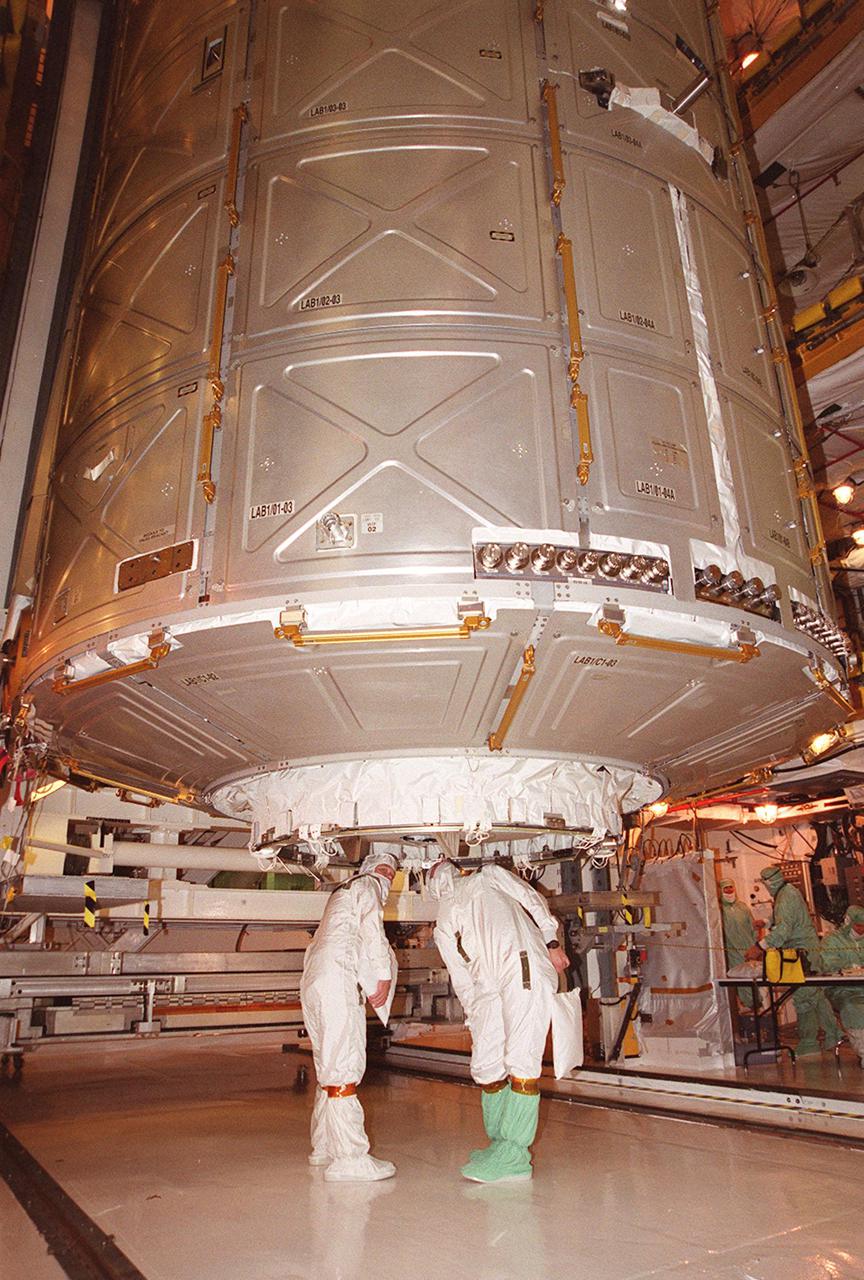
Workers in the Payload Changeout Room check the U.S. Lab Destiny as its moves from Atlantis’ payload bay into the PCR. Destiny will remain in the PCR while Atlantis rolls back to the Vehicle Assembly Building to allow workers to conduct inspections, continuity checks and X-ray analysis on the 36 solid rocket booster cables located inside each booster’s system tunnel. An extensive evaluation of NASA’s SRB cable inventory revealed conductor damage in four (of about 200) cables on the shelf. Shuttle managers decided to prove the integrity of the system tunnel cables already on Atlantis
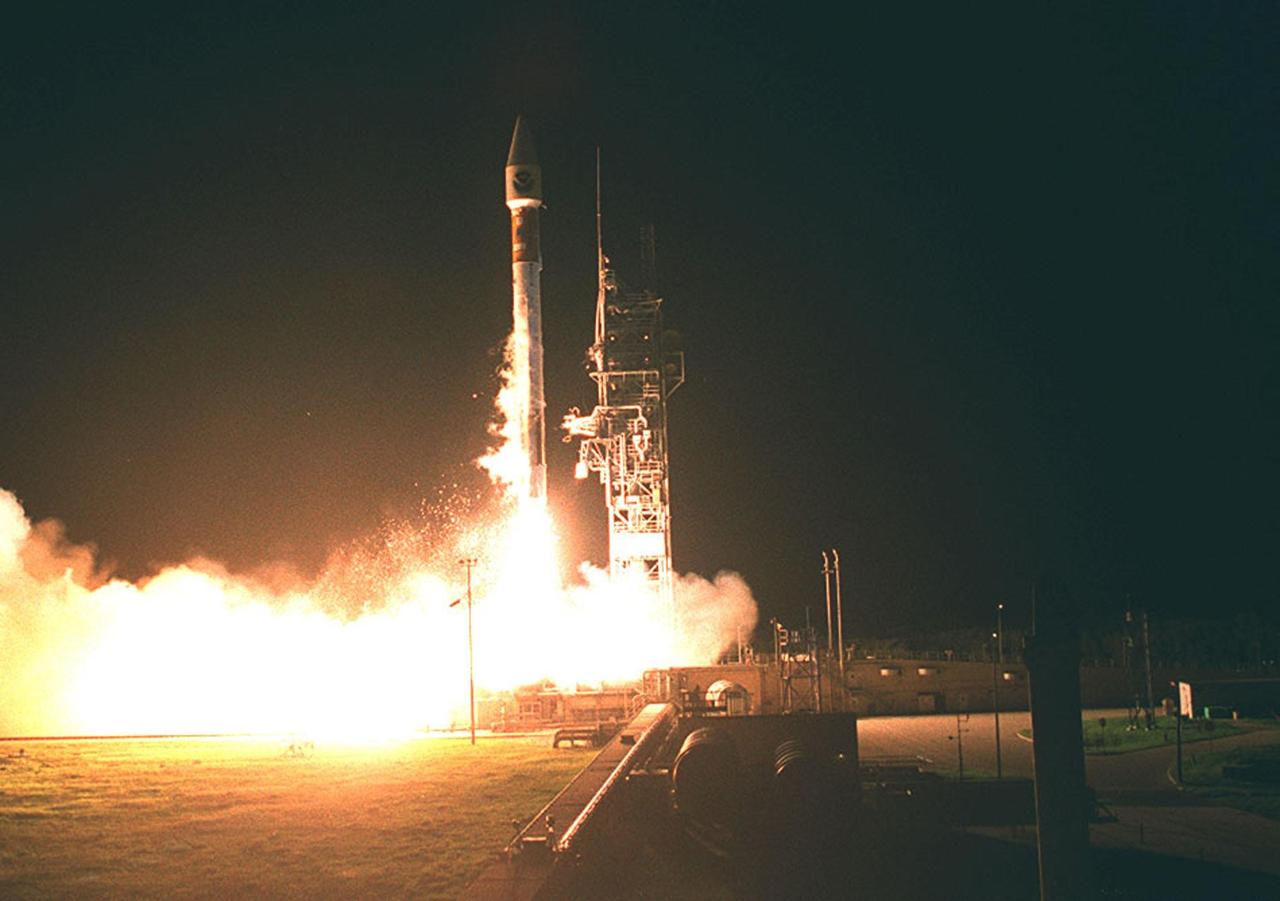
KENNEDY SPACE CENTER, Fla. -- Brightly lit clouds of steam and smoke roll across Launch Complex 36-A, Cape Canaveral Air Force Station, as the Atlas II rocket bearing the GOES-M satellite roars into the night sky. Liftoff occurred at 3:23:01 EDT. GOES-M is the last in the current series of advanced geostationary weather satellites in service. GOES-M has a new instrument not on earlier spacecraft, a Solar X-ray Imager, which can be used in forecasting space weather and the effects of solar storms
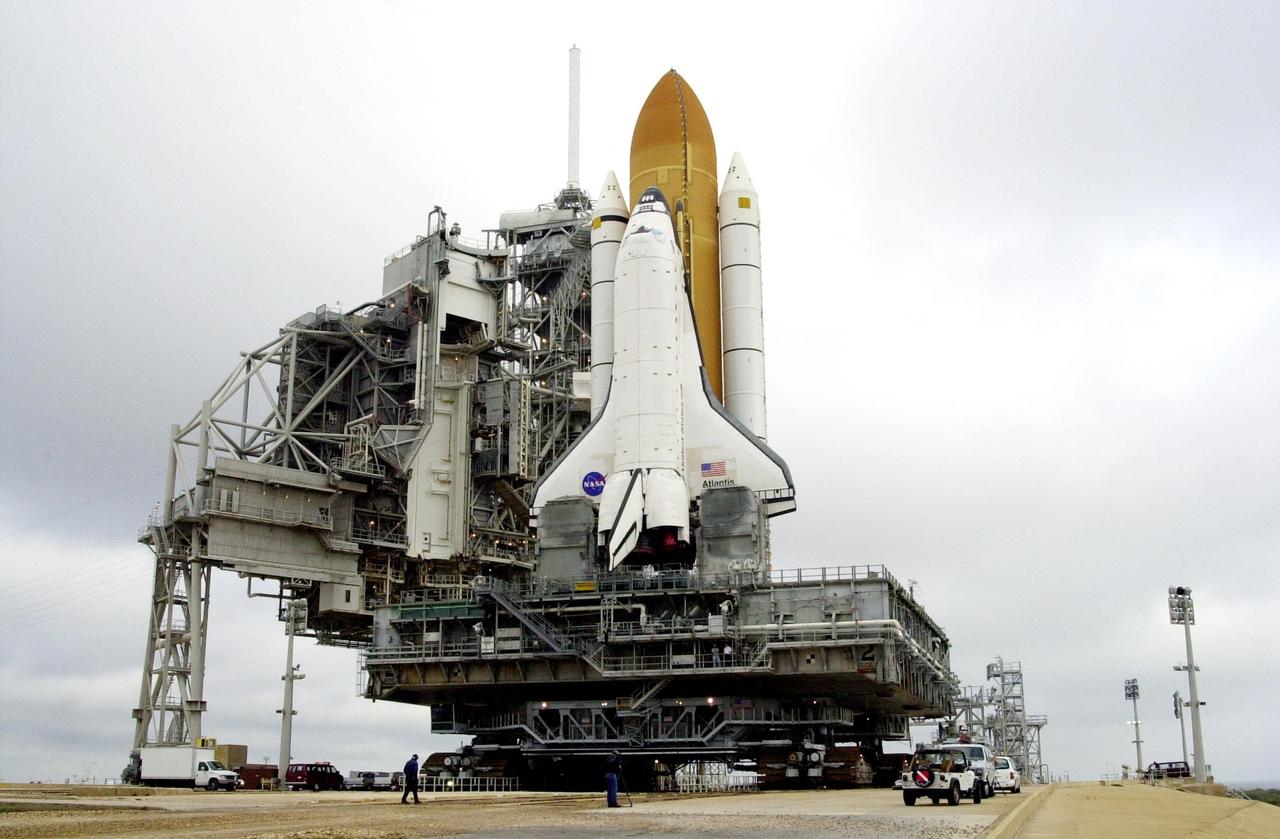
KENNEDY SPACE CENTER, FLA. -- Space Shuttle Atlantis begins moving back to the Vehicle Assembly Building where workers will conduct inspections, make continuity checks and conduct X-ray analysis on the 36 solid rocket booster cables located inside each booster’s system tunnel. An extensive evaluation of NASA’s SRB cable inventory revealed conductor damage in four (of about 200) cables on the shelf. Shuttle managers decided to prove the integrity of the system tunnel cables already on Atlantis before launching Jan. 19. The launch has been rescheduled no earlier than Feb. 6
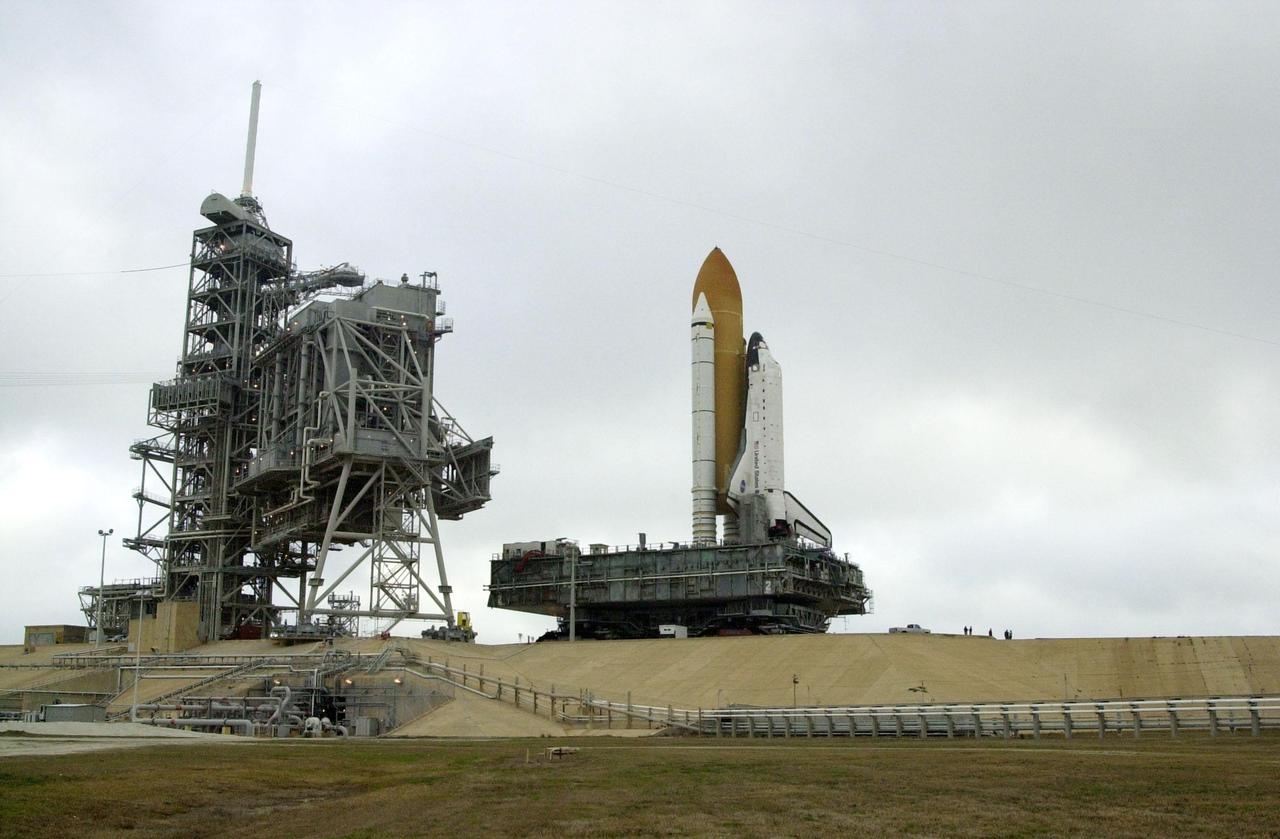
KENNEDY SPACE CENTER, FLA. -- Traveling about 1 mph on the crawler-transporter, Space Shuttle Atlantis begins the 3.4-mile trek back to the Vehicle Assembly Building. In the VAB workers will conduct inspections, make continuity checks and conduct X-ray analysis on the 36 solid rocket booster cables located inside each booster’s system tunnel. An extensive evaluation of NASA’s SRB cable inventory revealed conductor damage in four (of about 200) cables on the shelf. Shuttle managers decided to prove the integrity of the system tunnel cables already on Atlantis before launching Jan. 19. The launch has been rescheduled no earlier than Feb. 6
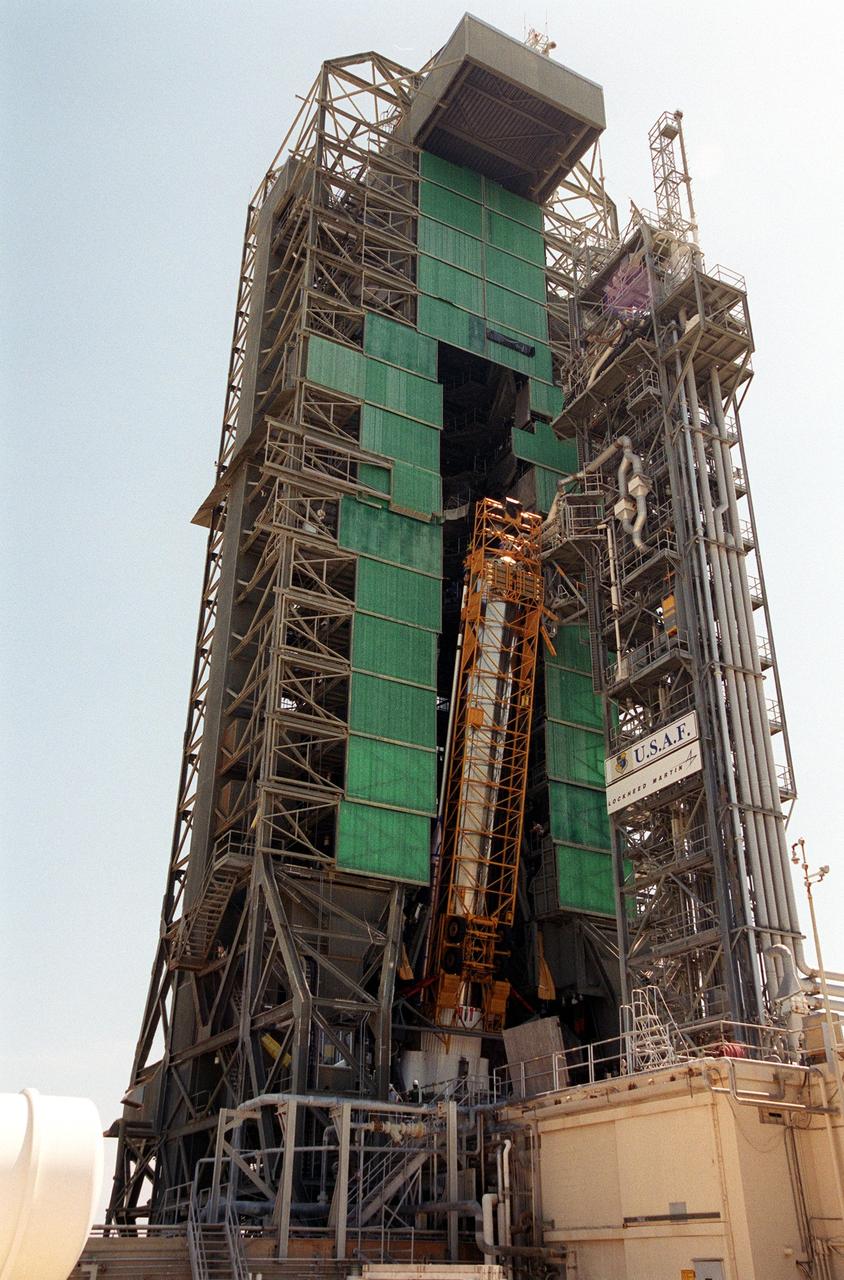
The first stage of the Geostationary Operational Environmental Satellite-M (GOES-M) Atlas II rocket is raised to a nearly vertical position on the gantry on Complex 36-A, Cape Canaveral Air Force Station. It will be raised and lifted up the gantry for mating with other stages. The last in the current series of advanced geostationary weather satellites in service, GOES-M has a new instrument not on earlier spacecraft, a Solar X-ray Imager that can be used in forecasting space weather, the effects of solar storms that create electromagnetic disturbances on earth that affect other satellites, communications and power grids. GOES-M is scheduled to launch from Cape Canaveral Air Force Station July 15

KENNEDY SPACE CENTER, FLA. -- Space Shuttle Atlantis joins blue skies and palm trees on the Florida landscape. Atlantis is rolling back from Launch Pad 39A to the Vehicle Assembly Building so that workers can conduct inspections, make continuity checks and conduct X-ray analysis on the 36 SRB cables located inside each booster’s system tunnel. An extensive evaluation of NASA’s SRB cable inventory revealed conductor damage in four (of about 200) cables on the shelf. Shuttle managers decided to prove the integrity of the system tunnel cables already on Atlantis before launching Jan. 19. The launch has been rescheduled no earlier than Feb. 6

The U.S. Lab Destiny begins moving out of Atlantis’ payload bay and into the Payload Changeout Room via the Payload Ground Handling Mechanism. Destiny will remain in the PCR while Atlantis rolls back to the Vehicle Assembly Building to allow workers to conduct inspections, continuity checks and X-ray analysis on the 36 solid rocket booster cables located inside each booster’s system tunnel. An extensive evaluation of NASA’s SRB cable inventory revealed conductor damage in four (of about 200) cables on the shelf. Shuttle managers decided to prove the integrity of the system tunnel cables already on Atlantis
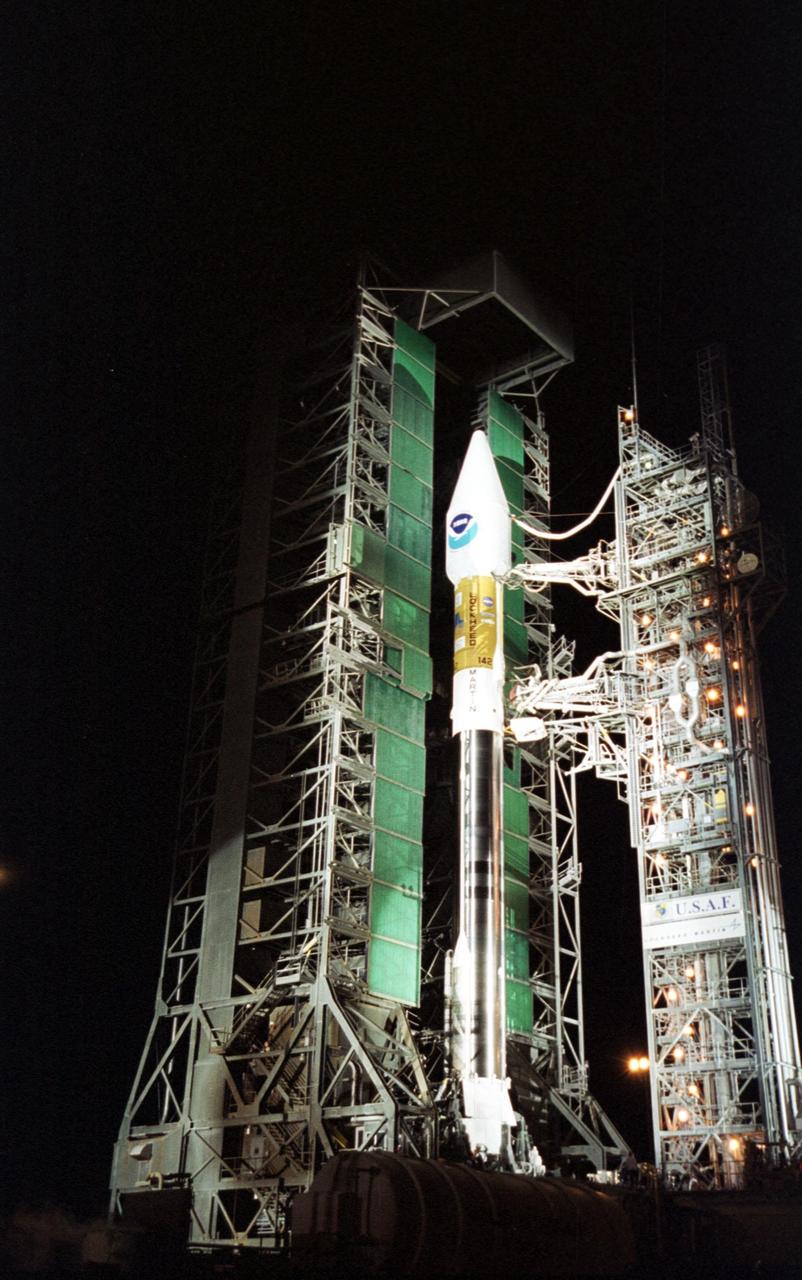
KENNEDY SPACE CENTER, Fla. -- The Mobile Service Tower (left) begins rolling back from the Atlas II rocket with the GOES-M satellite on Launch Complex 36-A, Cape Canaveral Air Force Station. GOES-M is the last in the current series of advanced geostationary weather satellites in service. GOES-M has a new instrument not on earlier spacecraft, a Solar X-ray Imager, which can be used in forecasting space weather and the effects of solar storms. The satellite is scheduled to launch atop an Atlas rocket on July 23 during a window that extends from 3:02 to 4:26 a.m. EDT. EDT
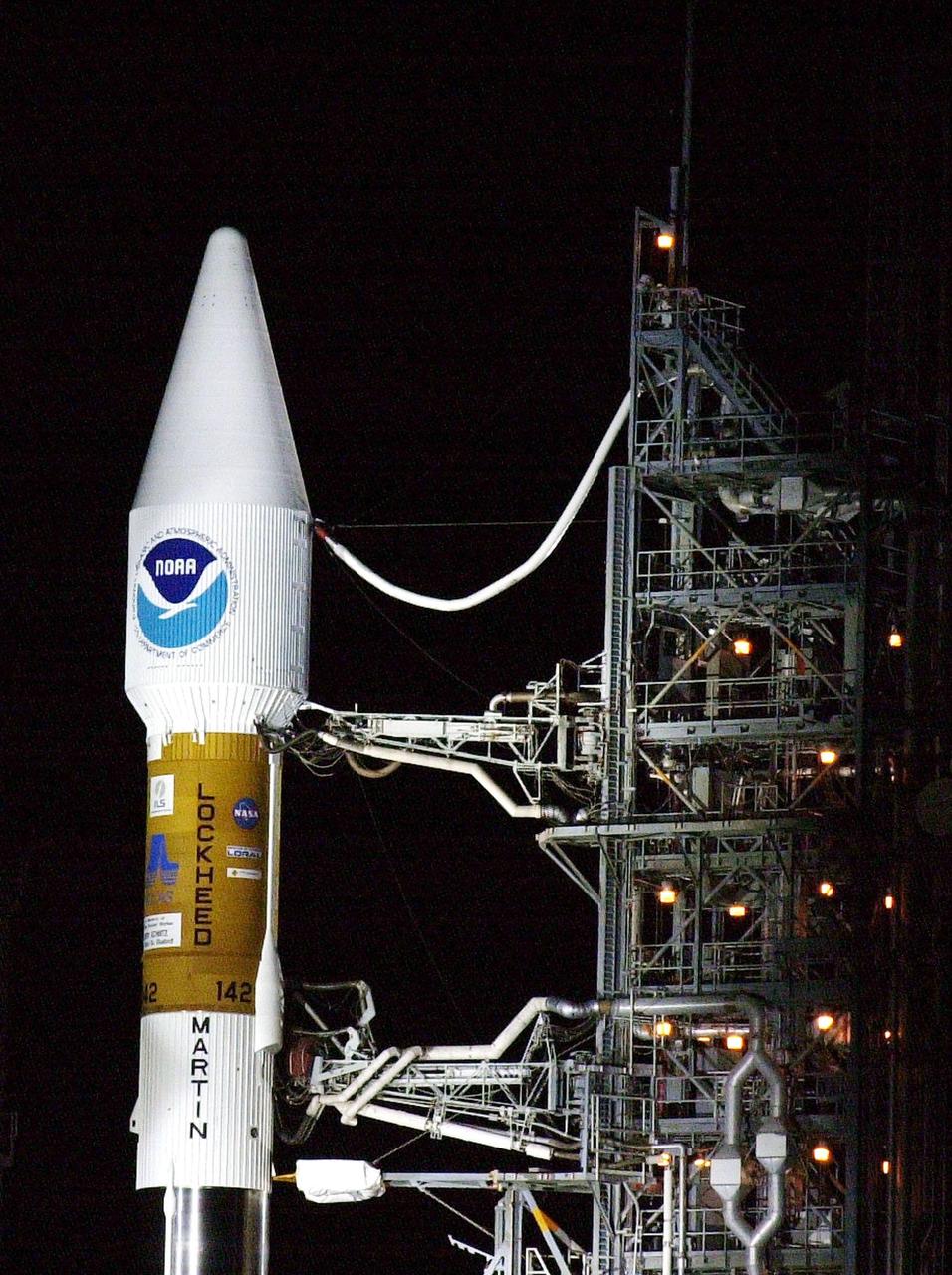
KENNEDY SPACE CENTER, Fla. -- The GOES-M satellite is poised for flight at Launch Complex 36-A, Cape Canaveral Air Force Station, after rollback of the Mobile Service Tower. GOES-M is the last in the current series of advanced geostationary weather satellites in service. GOES-M has a new instrument not on earlier spacecraft, a Solar X-ray Imager, which can be used in forecasting space weather and the effects of solar storms. The satellite is scheduled to launch atop an Atlas rocket on July 23 during a window that extends from 3:02 to 4:26 a.m. EDT
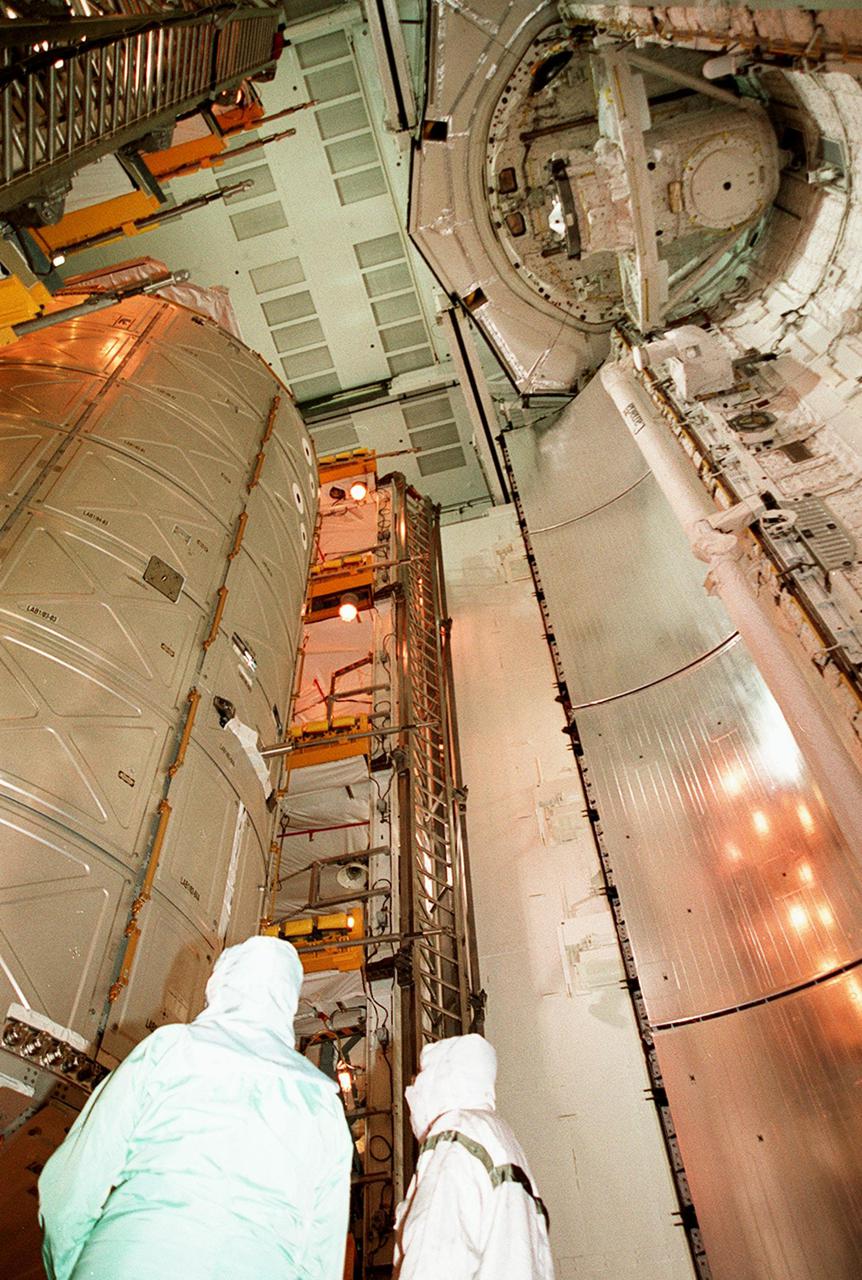
The U.S. Lab Destiny (left) moves away from Atlantis’ payload bay doors (right) into the Payload Changeout Room. Destiny will remain in the PCR while Atlantis rolls back to the Vehicle Assembly Building to allow workers to conduct inspections, continuity checks and X-ray analysis on the 36 solid rocket booster cables located inside each booster’s system tunnel. An extensive evaluation of NASA’s SRB cable inventory revealed conductor damage in four (of about 200) cables on the shelf. Shuttle managers decided to prove the integrity of the system tunnel cables already on Atlantis

KENNEDY SPACE CENTER, Fla. -- At Astrotech, Titusville, Fla., workers look at the fairing being installed around the newest Geostationary Operational Environmental Satellite-M (GOES-M). The satellite is the last in the current series of advanced geostationary weather satellites in service. GOES-M has a new instrument not on earlier spacecraft, a Solar X-ray Imager that can be used in forecasting space weather, the effects of solar storms that create electromagnetic disturbances on earth that affect other satellites, communications and power grids. GOES is scheduled to launch from Launch Complex 36-A, Cape Canaveral Air Force Station, on an Atlas II rocket July 15
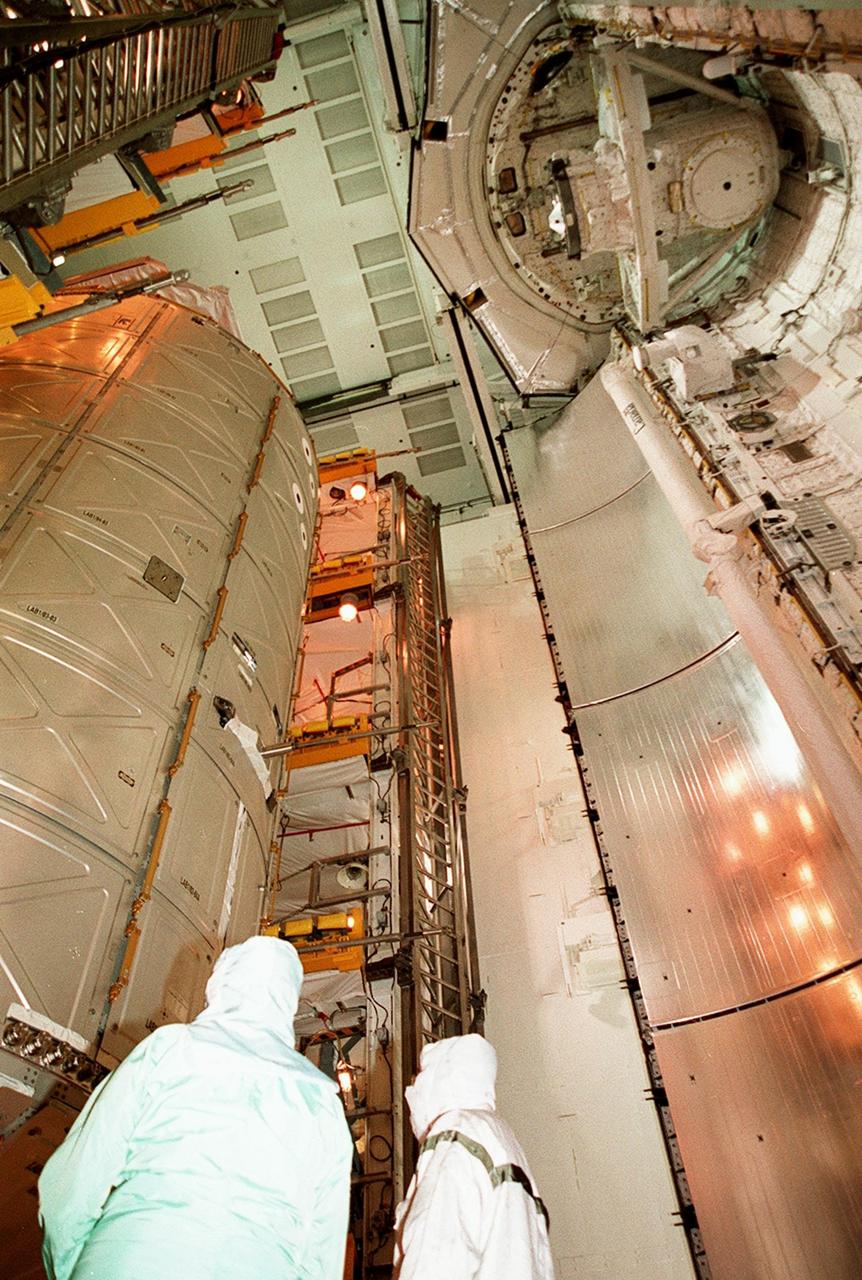
The U.S. Lab Destiny (left) moves away from Atlantis’ payload bay doors (right) into the Payload Changeout Room. Destiny will remain in the PCR while Atlantis rolls back to the Vehicle Assembly Building to allow workers to conduct inspections, continuity checks and X-ray analysis on the 36 solid rocket booster cables located inside each booster’s system tunnel. An extensive evaluation of NASA’s SRB cable inventory revealed conductor damage in four (of about 200) cables on the shelf. Shuttle managers decided to prove the integrity of the system tunnel cables already on Atlantis
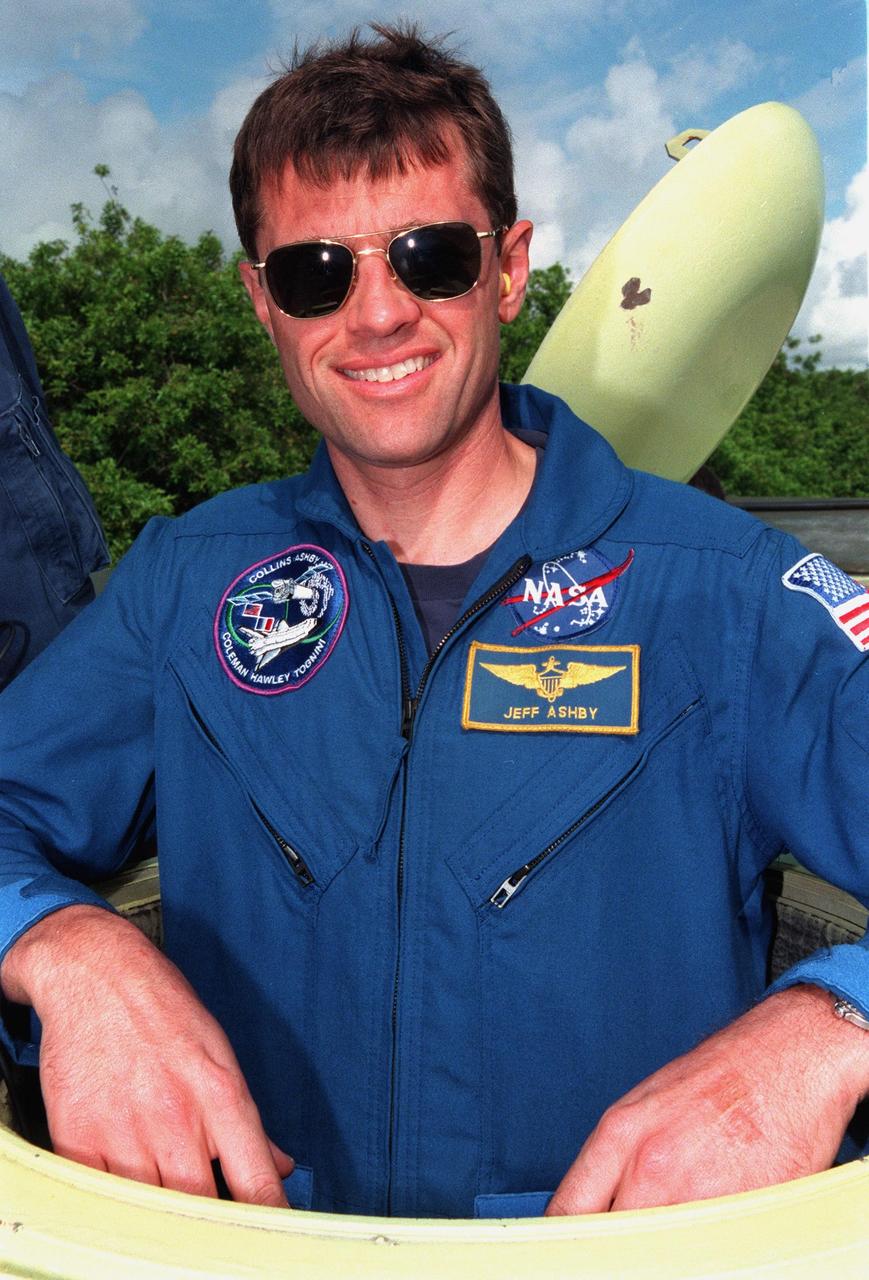
STS-93 Pilot Jeffrey S. Ashby pauses for the photographer before climbing into an M-113 armored personnel carrier at the launch pad to take part in emergency egress training. In preparation for their mission, the STS-93 crew are participating in Terminal Countdown Demonstration Test activities that also include a launch-day dress rehearsal culminating with a simulated main engine cut-off. Others in the crew are Commander Eileen M. Collins and Mission Specialists Steven A. Hawley (Ph.D.), Catherine G. Coleman (Ph.D.), and Michel Tognini of France, who represents the Centre National d'Etudes Spatiales (CNES). Collins is the first woman to serve as a mission commander. The primary mission of STS-93 is the release of the Chandra X-ray Observatory, which will allow scientists from around the world to obtain unprecedented X-ray images of exotic environments in space to help understand the structure and evolution of the universe. Chandra is expected to provide unique and crucial information on the nature of objects ranging from comets in our solar system to quasars at the edge of the observable universe. Since X-rays are absorbed by the Earth's atmosphere, space-based observatories are necessary to study these phenomena and allow scientists to analyze some of the greatest mysteries of the universe. The targeted launch date for STS-93 is no earlier than July 20 at 12:36 a.m. EDT from Launch Pad 39B
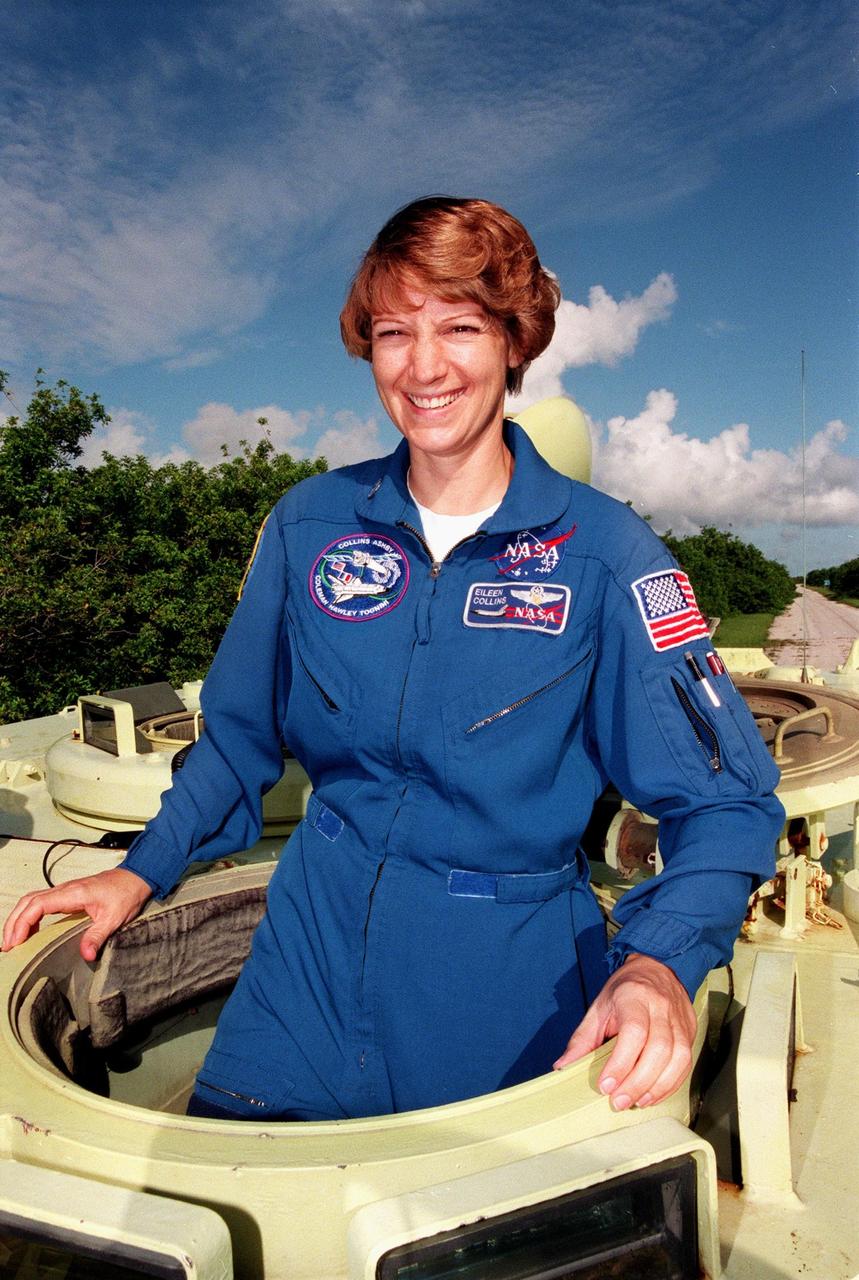
STS-93 Commander Eileen M. Collins climbs into an M-113 armored personnel carrier at the launch pad to take part in emergency egress training. Collins is the first woman to serve as mission commander. In preparation for their mission, the STS-93 crew are participating in Terminal Countdown Demonstration Test activities that also include a launch-day dress rehearsal culminating with a simulated main engine cut-off. Others in the crew are Pilot Jeffrey S. Ashby and Mission Specialists Steven A. Hawley (Ph.D.), Catherine G. Coleman (Ph.D.), and Michel Tognini of France, who represents the Centre National d'Etudes Spatiales (CNES). The primary mission of STS-93 is the release of the Chandra X-ray Observatory, which will allow scientists from around the world to obtain unprecedented X-ray images of exotic environments in space to help understand the structure and evolution of the universe. Chandra is expected to provide unique and crucial information on the nature of objects ranging from comets in our solar system to quasars at the edge of the observable universe. Since X-rays are absorbed by the Earth's atmosphere, space-based observatories are necessary to study these phenomena and allow scientists to analyze some of the greatest mysteries of the universe. The targeted launch date for STS-93 is no earlier than July 20 at 12:36 a.m. EDT from Launch Pad 39B
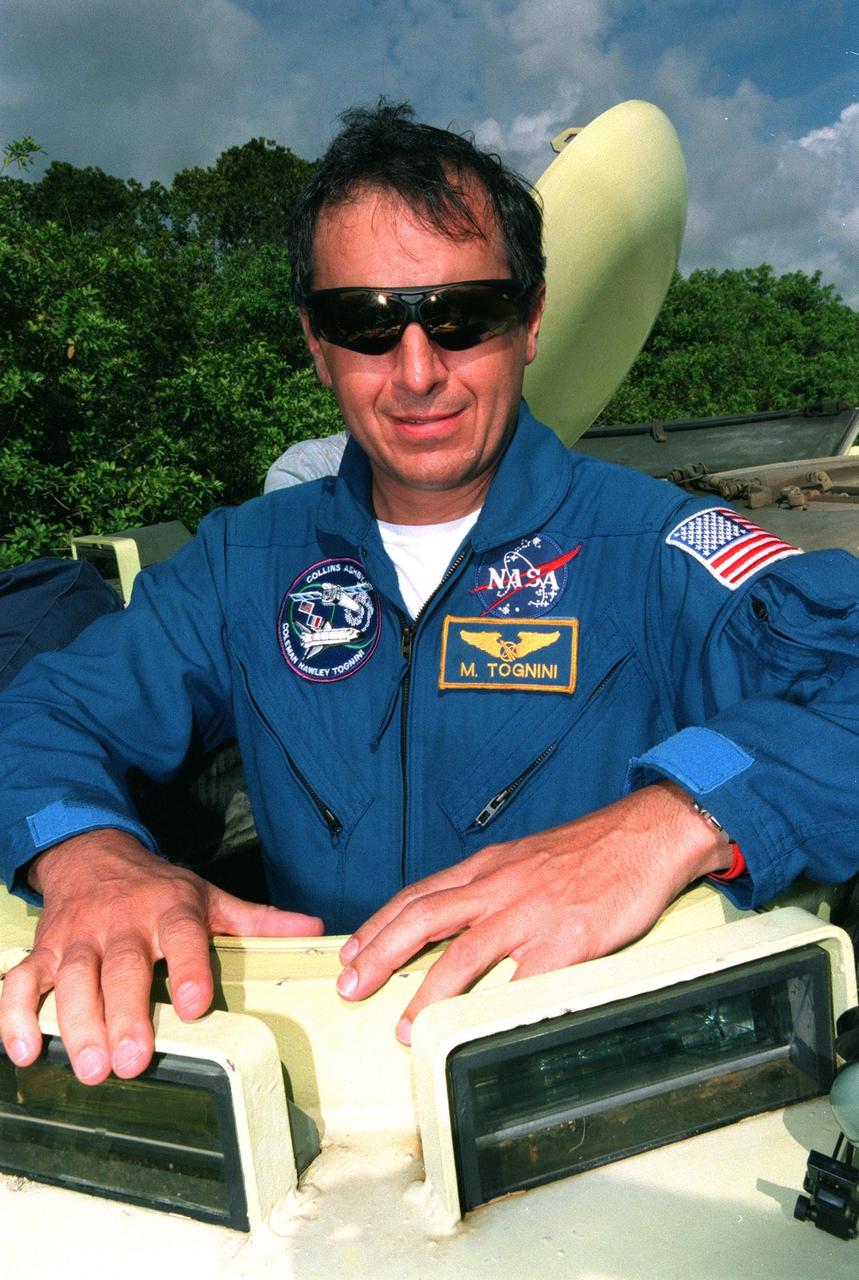
STS-93 Michel Tognini of France, who represents the Centre National d'Etudes Spatiales (CNES), pauses for the photographer before climbing into an M-113 armored personnel carrier at the launch pad to take part in emergency egress training. In preparation for their mission, the STS-93 crew are participating in Terminal Countdown Demonstration Test activities that also include a launch-day dress rehearsal culminating with a simulated main engine cut-off. Others in the crew are Commander Eileen M. Collins, Pilot Jeffrey S. Ashby, and Mission Specialists Steven A. Hawley (Ph.D.) and Catherine G. Coleman (Ph.D.). Collins is the first woman to serve as a mission commander. The primary mission of STS-93 is the release of the Chandra X-ray Observatory, which will allow scientists from around the world to obtain unprecedented X-ray images of exotic environments in space to help understand the structure and evolution of the universe. Chandra is expected to provide unique and crucial information on the nature of objects ranging from comets in our solar system to quasars at the edge of the observable universe. Since X-rays are absorbed by the Earth's atmosphere, space-based observatories are necessary to study these phenomena and allow scientists to analyze some of the greatest mysteries of the universe. The targeted launch date for STS-93 is no earlier than July 20 at 12:36 a.m. EDT from Launch Pad 39B
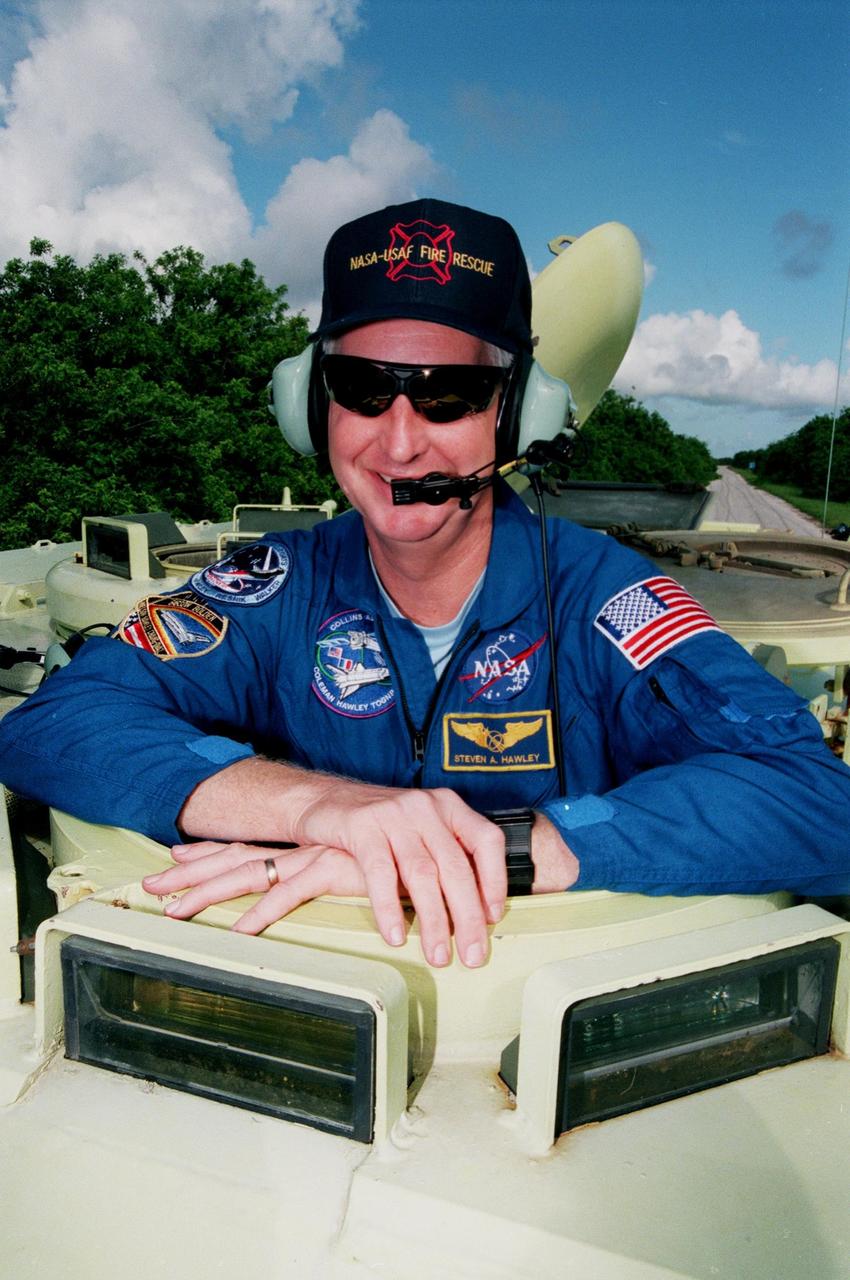
STS-93 Mission Specialist Steven A. Hawley (Ph.D.) smiles for the photographer before climbing into an M-113 armored personnel carrier at the launch pad to take part in emergency egress training. In preparation for their mission, the STS-93 crew are participating in Terminal Countdown Demonstration Test activities that also include a launch-day dress rehearsal culminating with a simulated main engine cut-off. Others in the crew are Commander Eileen M. Collins, Pilot Jeffrey S. Ashby, and Mission Specialists Catherine G. Coleman (Ph.D.) and Michel Tognini of France, who represents the Centre National d'Etudes Spatiales (CNES). Collins is the first woman to serve as a mission commander. The primary mission of STS-93 is the release of the Chandra X-ray Observatory, which will allow scientists from around the world to obtain unprecedented X-ray images of exotic environments in space to help understand the structure and evolution of the universe. Chandra is expected to provide unique and crucial information on the nature of objects ranging from comets in our solar system to quasars at the edge of the observable universe. Since X-rays are absorbed by the Earth's atmosphere, space-based observatories are necessary to study these phenomena and allow scientists to analyze some of the greatest mysteries of the universe. The targeted launch date for STS-93 is no earlier than July 20 at 12:36 a.m. EDT from Launch Pad 39B
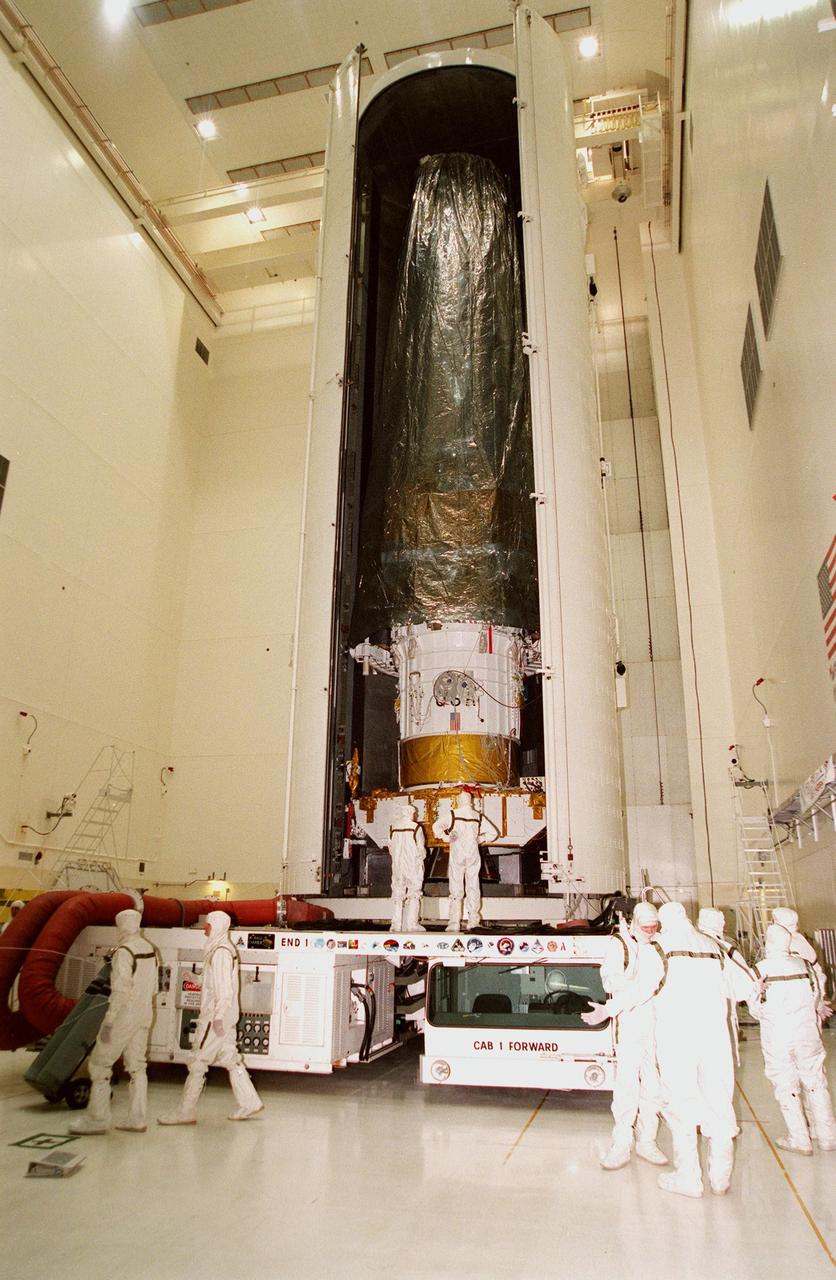
Inside the Vertical Processing Facility, doors on the payload canister begin to close on the Chandra X-ray Observatory inside before being moved to Launch Pad 39B. Liftoff will take place no earlier than July 20 at 12:36 a.m. EDT aboard Space Shuttle Columbia, on mission STS-93. Chandra will allow scientists from around the world to obtain unprecedented X-ray images of exotic environments to help understand the structure and evolution of the universe. Chandra is expected to provide unique and crucial information on the nature of objects ranging from comets in our solar system to quasars at the edge of the observable universe, map the location of dark matter and help to identify it, and probe the faintest of active galaxies, allowing scientists to study not only how their energy output changes with time, but also how these objects produce their intense energy emissions in the first place. Since X-rays are absorbed by the Earth's atmosphere, space-based observatories are necessary to study these phenomena and allow scientists to analyze some of the greatest mysteries of the universe