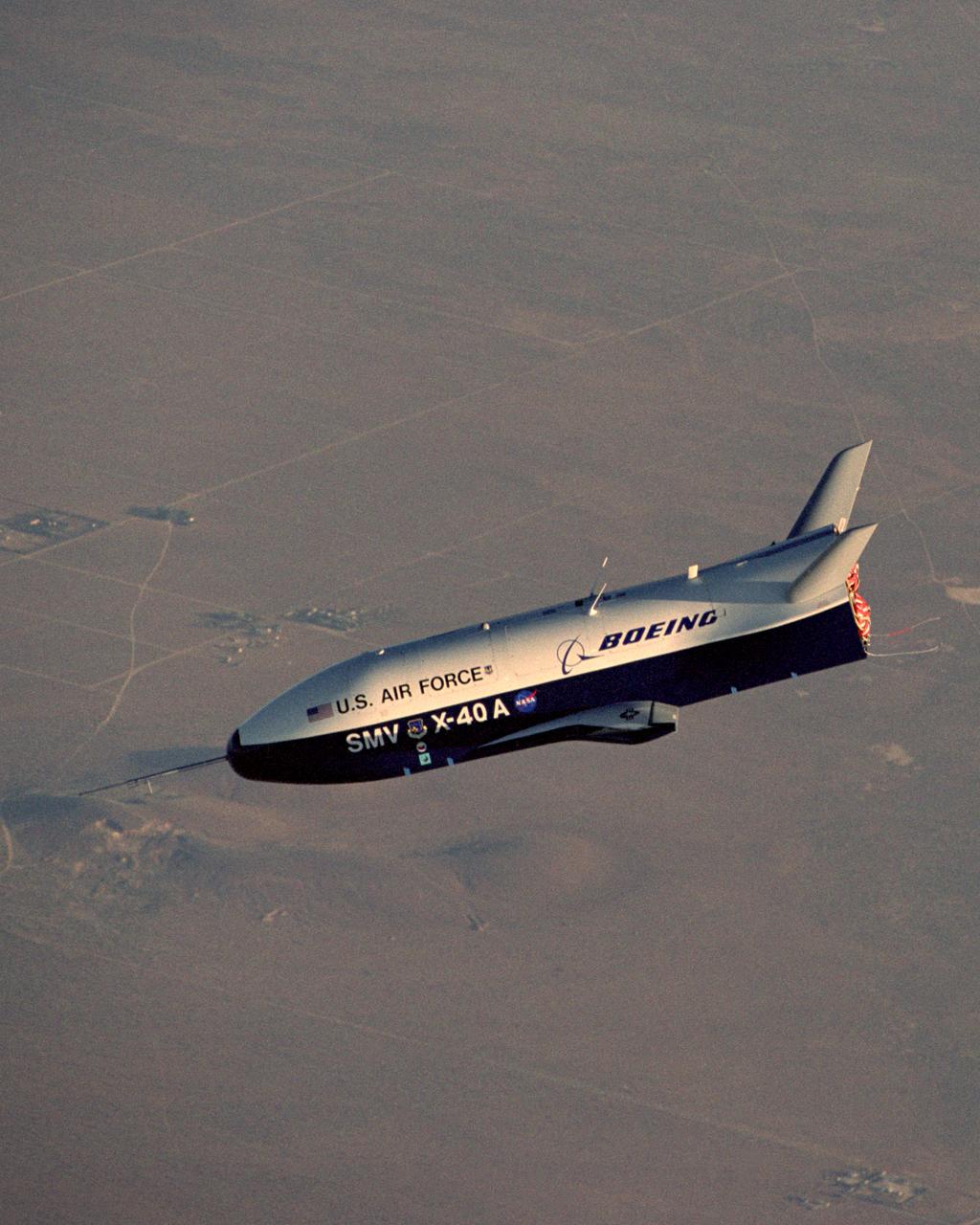
X-40A Free Flight #5. The unpowered X-40A, an 85 percent scale risk reduction version of the proposed X-37, proved the capability of an autonomous flight control and landing system in a series of glide flights at NASA's Dryden Flight Research Center in California. NASA's Marshall Space Flight Center in Huntsville, Alabama, manages the X-37 project. At Dryden, the X-40A underwent a series of ground and air tests to reduce possible risks to the larger X-37, including drop tests from a helicopter to check guidance and navigation systems planned for use in the X-37. The X-37 is designed to demonstrate technologies in the orbital and reentry environments for next-generation reusable launch vehicles that will increase both safety and reliability, while reducing launch costs from $10,000 per pound to $1,000 per pound.
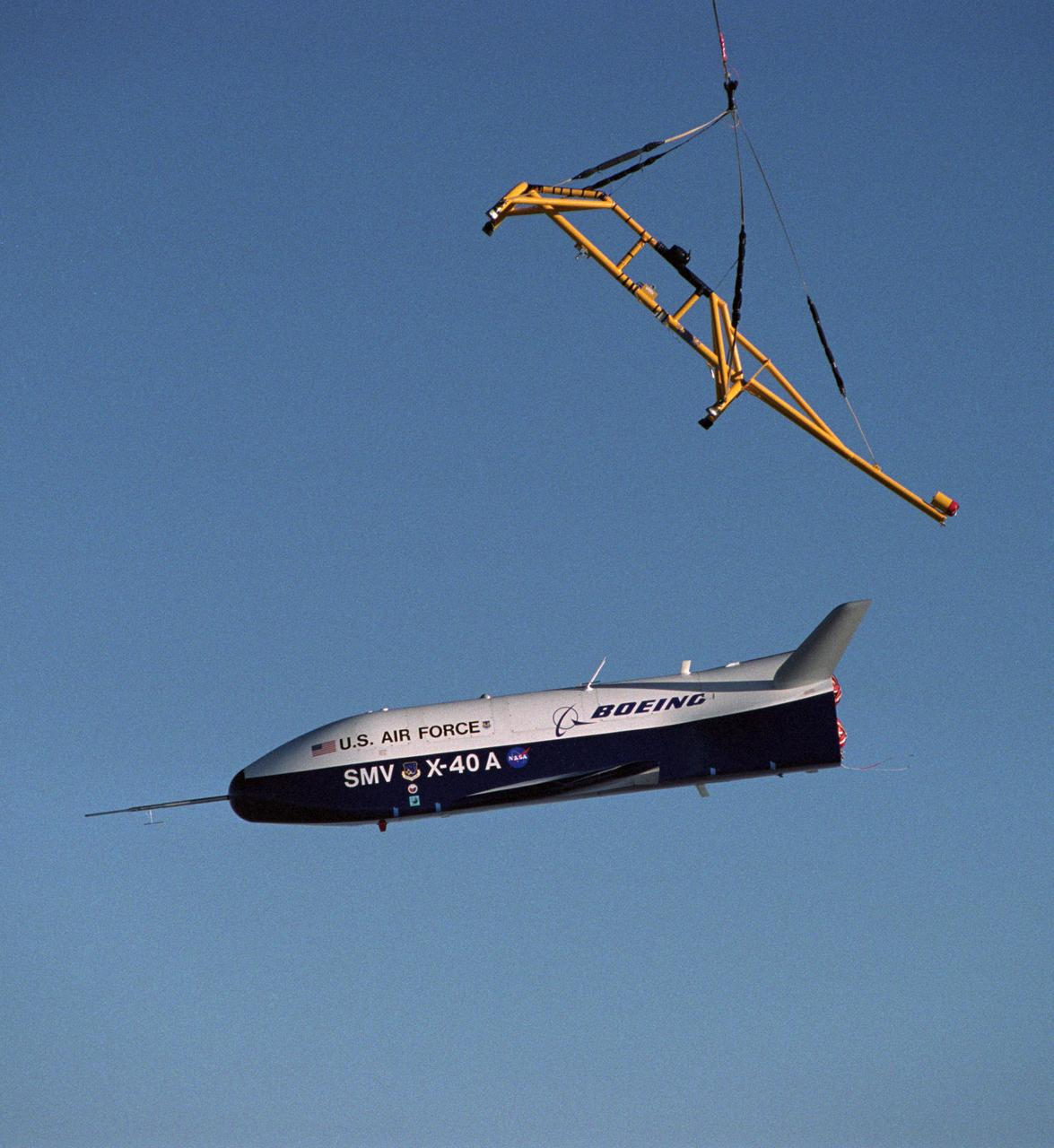
X-40A Free Flight #5. The unpowered X-40A, an 85 percent scale risk reduction version of the proposed X-37, proved the capability of an autonomous flight control and landing system in a series of glide flights at NASA's Dryden Flight Research Center in California. NASA's Marshall Space Flight Center in Huntsville, Alabama, manages the X-37 project. At Dryden, the X-40A underwent a series of ground and air tests to reduce possible risks to the larger X-37, including drop tests from a helicopter to check guidance and navigation systems planned for use in the X-37. The X-37 is designed to demonstrate technologies in the orbital and reentry environments for next-generation reusable launch vehicles that will increase both safety and reliability, while reducing launch costs from $10,000 per pound to $1,000 per pound.
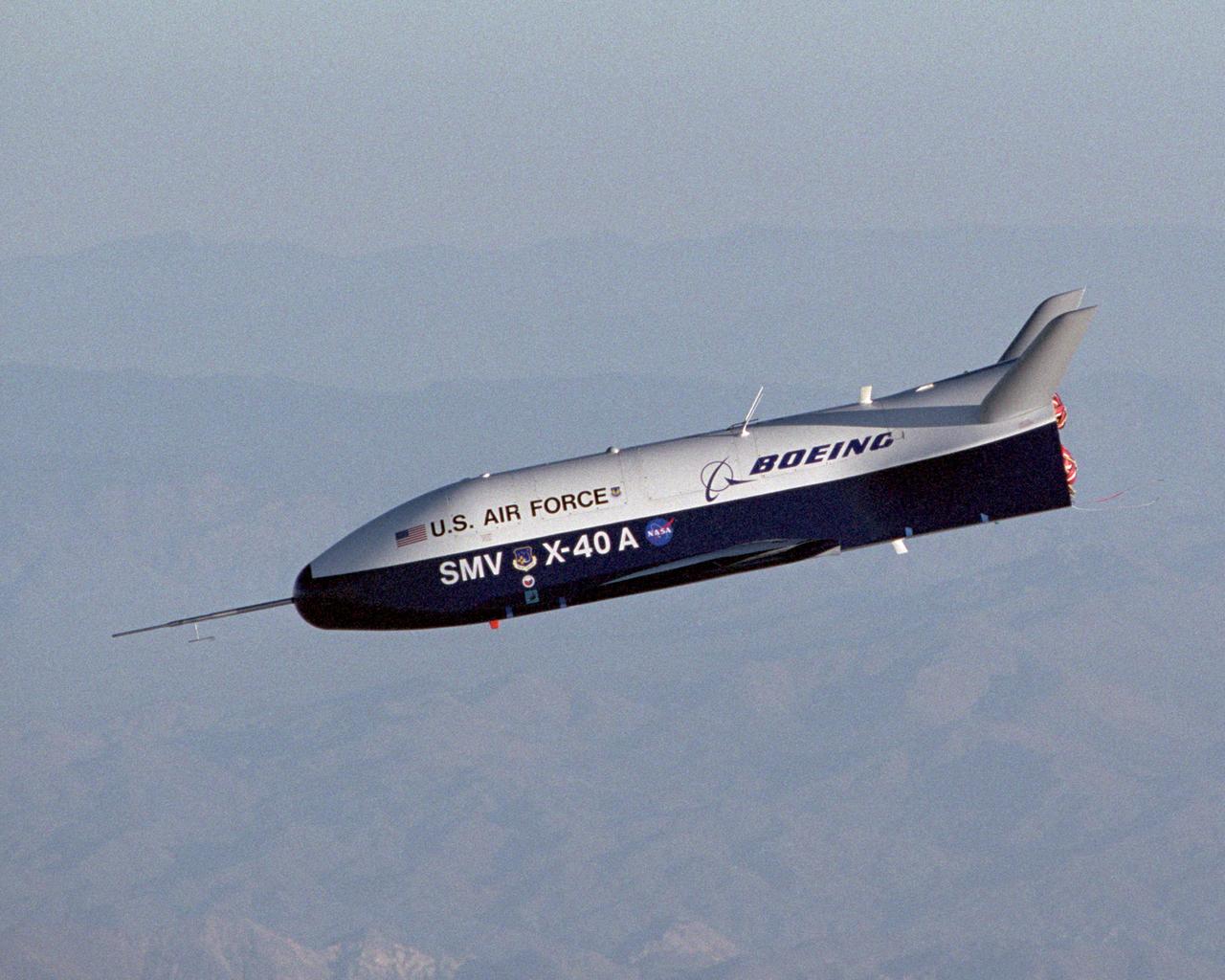
X-40A Free Flight #5. The unpowered X-40A, an 85 percent scale risk reduction version of the proposed X-37, proved the capability of an autonomous flight control and landing system in a series of glide flights at NASA's Dryden Flight Research Center in California. NASA's Marshall Space Flight Center in Huntsville, Alabama, manages the X-37 project. At Dryden, the X-40A underwent a series of ground and air tests to reduce possible risks to the larger X-37, including drop tests from a helicopter to check guidance and navigation systems planned for use in the X-37. The X-37 is designed to demonstrate technologies in the orbital and reentry environments for next-generation reusable launch vehicles that will increase both safety and reliability, while reducing launch costs from $10,000 per pound to $1,000 per pound.
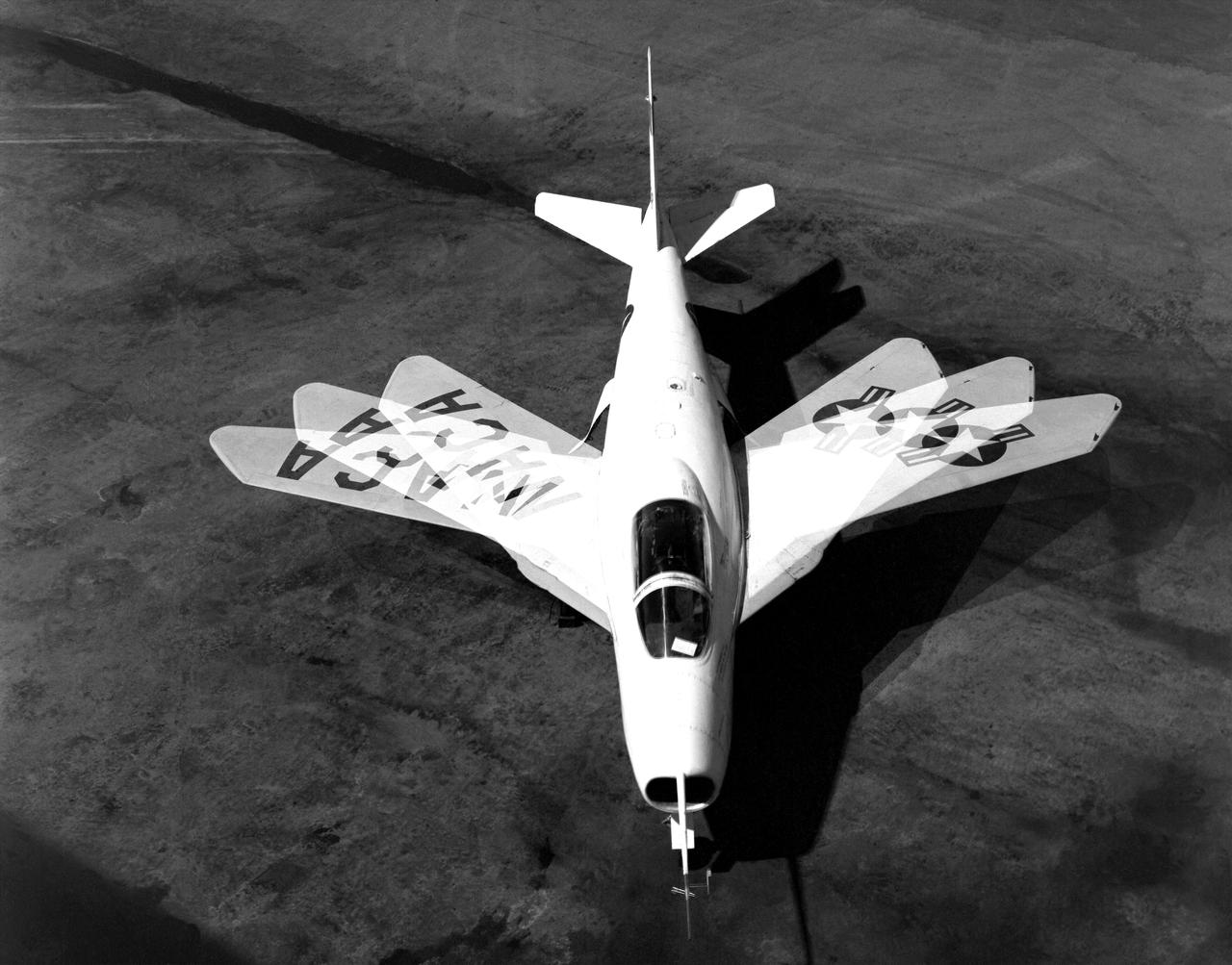
The Bell X-5 swings its wings in this multiple exposure photograph. Variable-sweep wing technology later appeared on the F-111, F-14 and B-1.
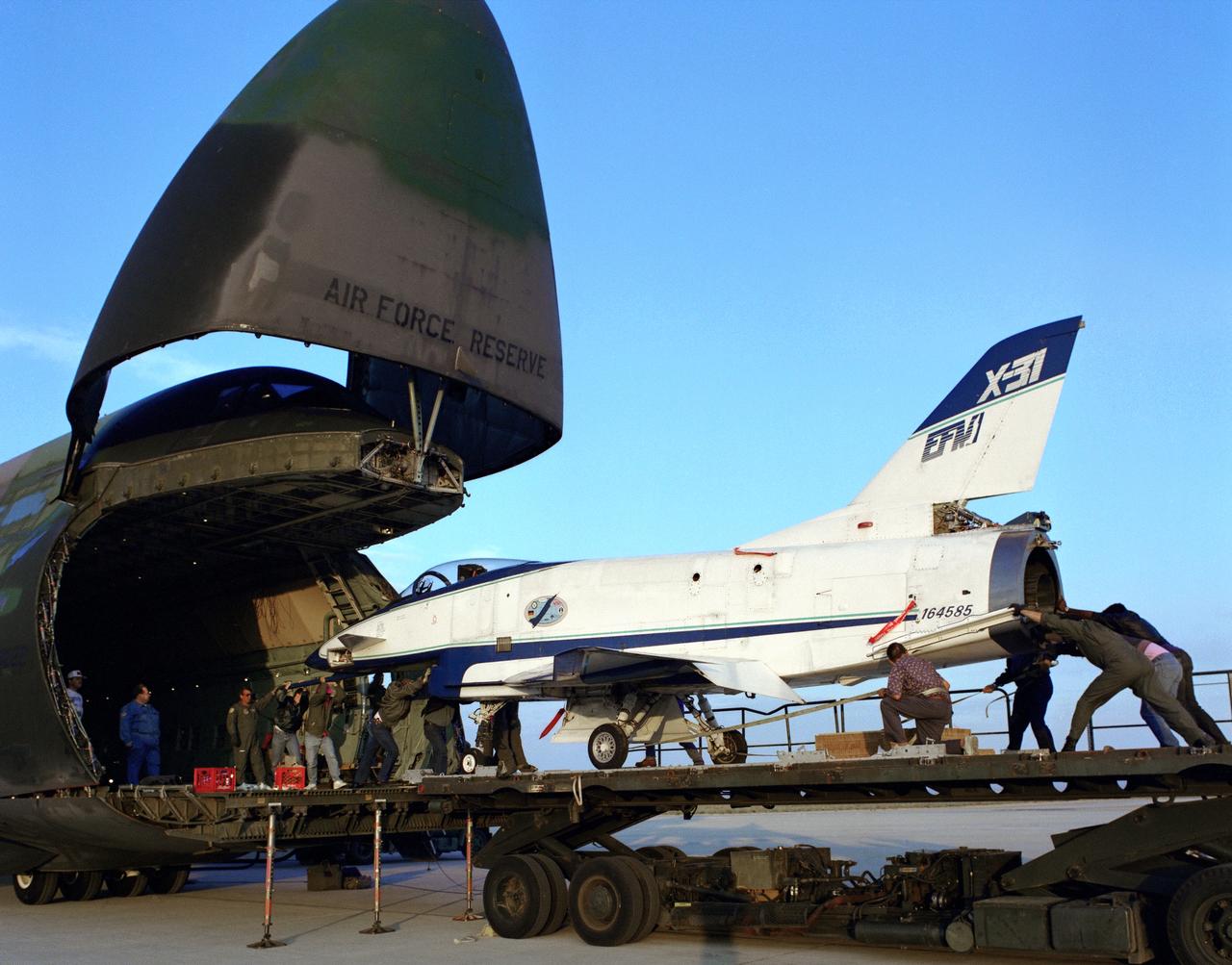
The X-31 Enhanced Fighter Maneuverability Technology Demonstrator Aircraft, based at the NASA Dryden Flight Research Center, Edwards, California, begins rolling aboard an Air Force Reserve C-5 transport which ferried it on May 22, 1995 to Europe where it was flown in the Paris Air Show in June 1995. To fit in the C-5 the right wing of the X-31 had to be removed. At the air show, the X-31 demonstrated the value of using thrust vectoring (directing engine exhaust flow) coupled with advanced flight control systems to provide controlled flight at very high angles of attack.
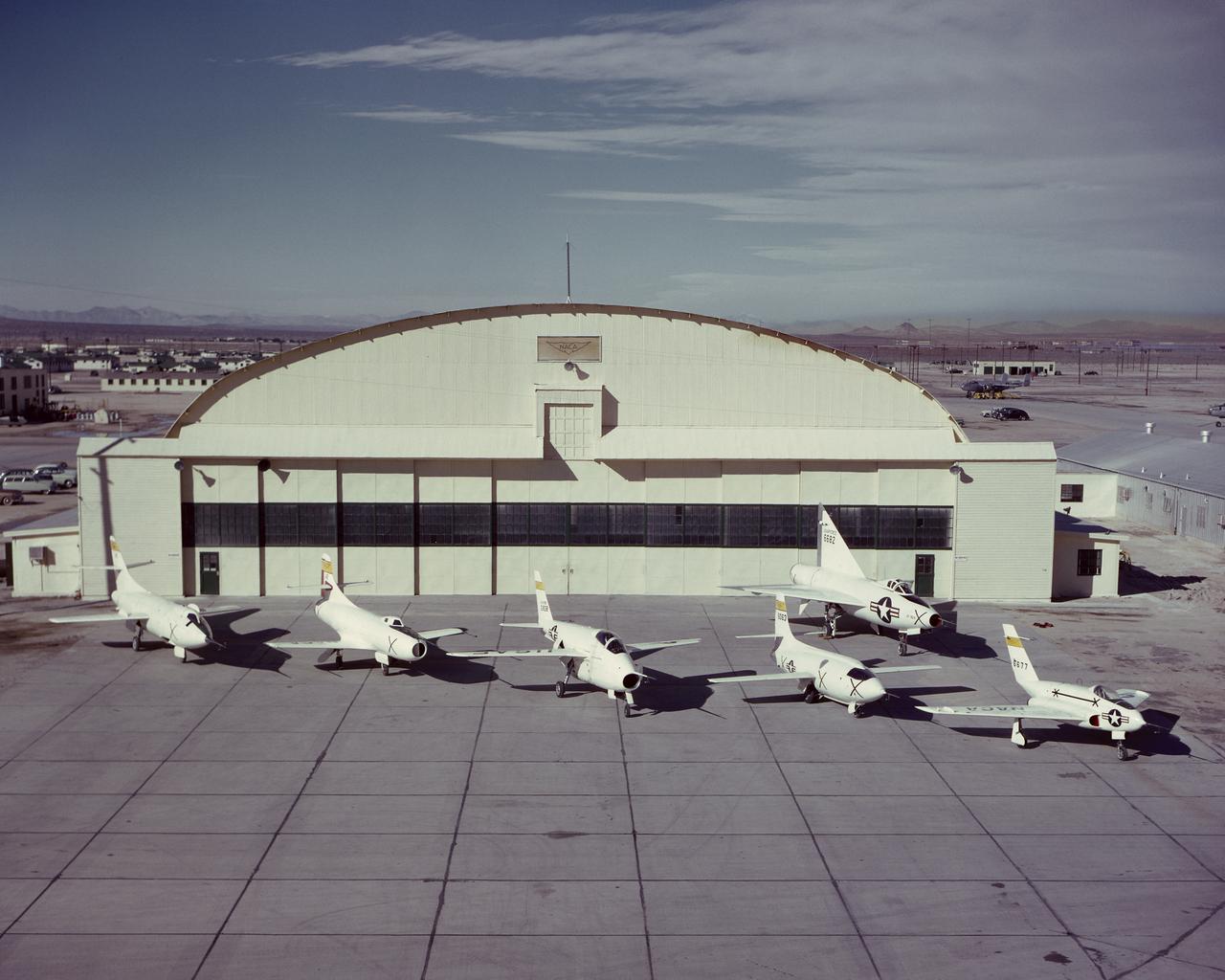
NACA X-Planes on South Base ramp. Northrop X-4, Bell X-1, Bell X-5, Douglas D-558-1, Douglas D-558-2. Back row Convair XF-92A. March 30, 1952
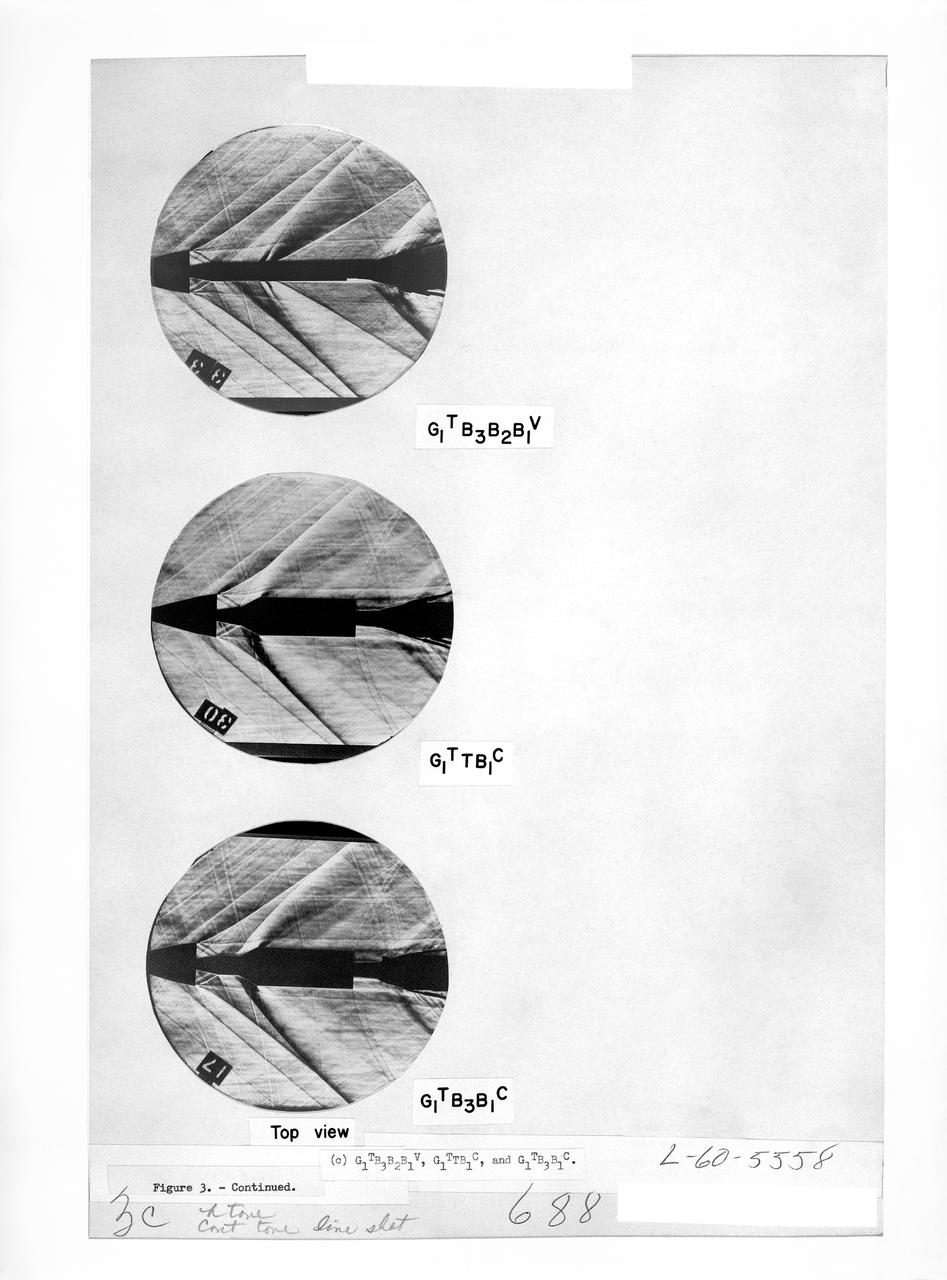
Figure 3-5 for NASA Document TM-X-356
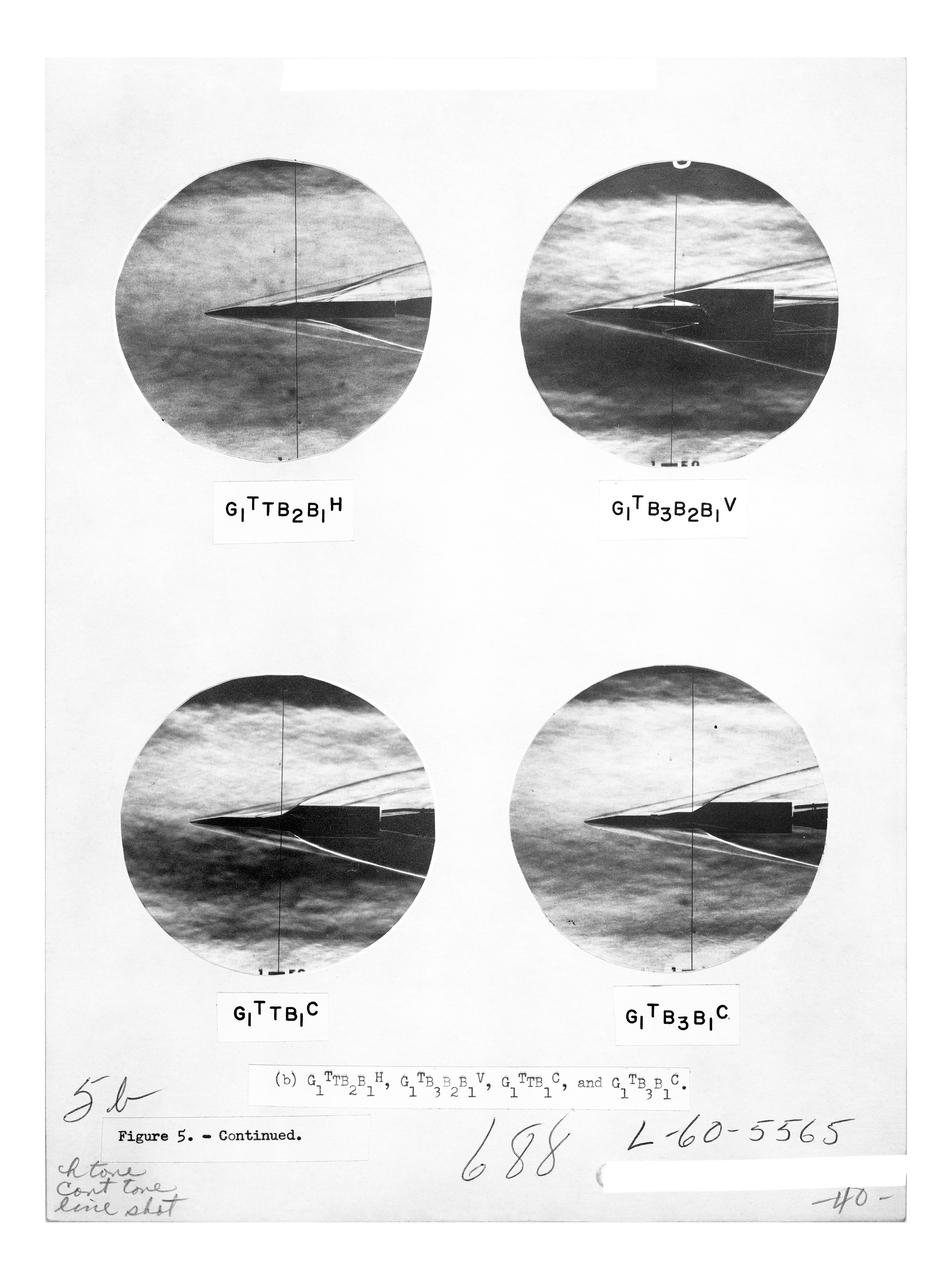
Figure 3-5 for NASA Document TM-X-356
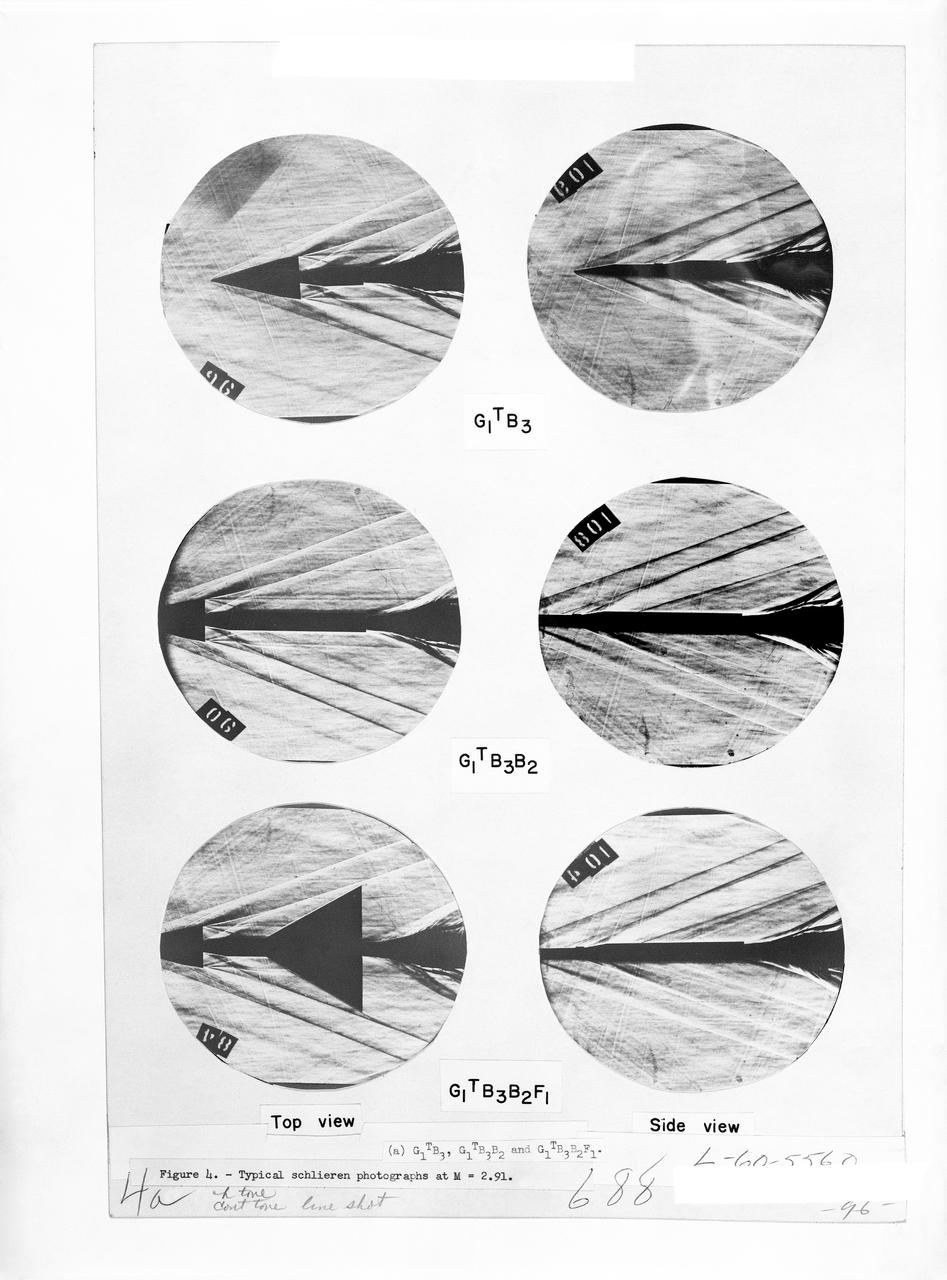
Figure 3-5 for NASA Document TM-X-356
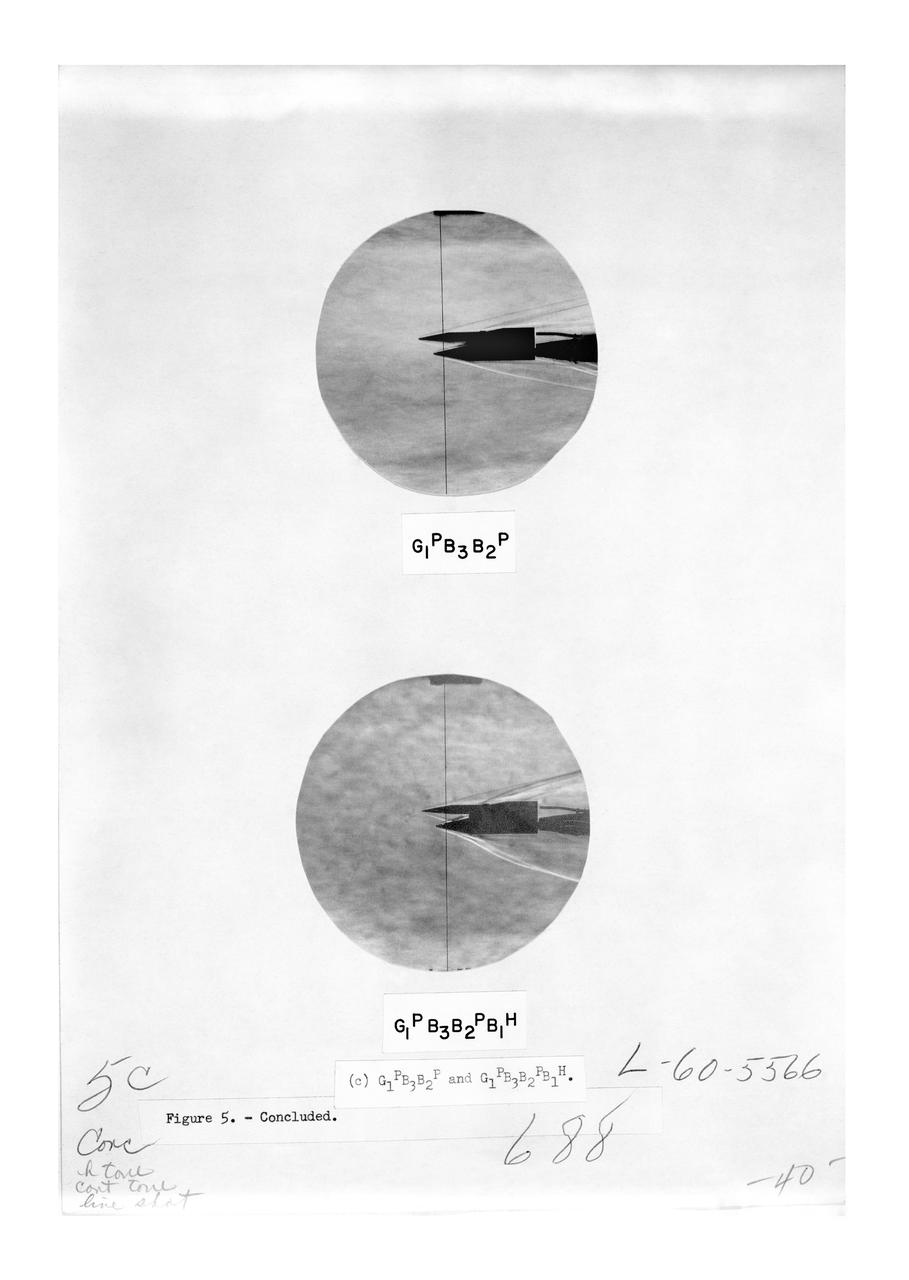
Figure 3-5 for NASA Document TM-X-356
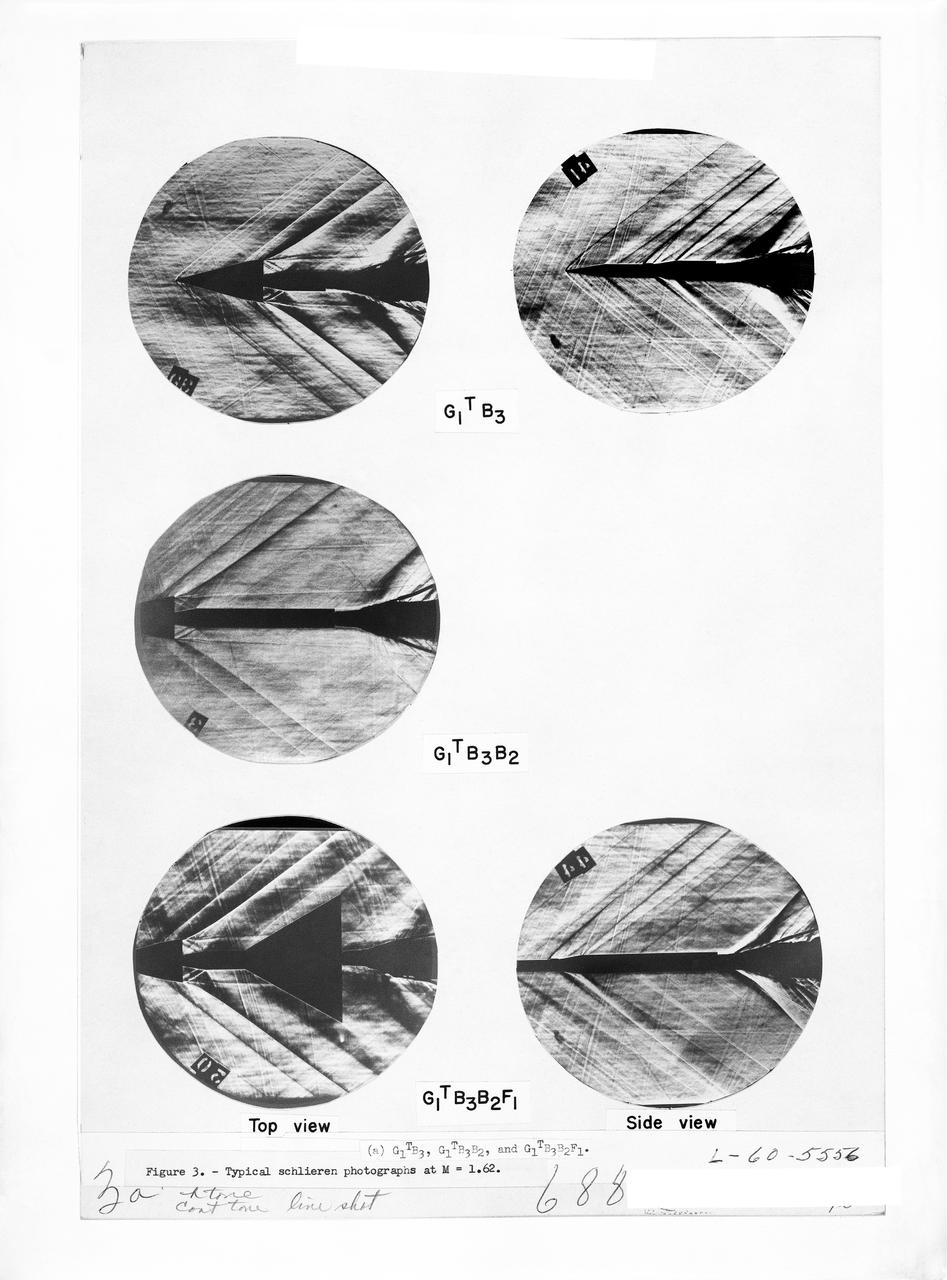
Figure 3-5 for NASA Document TM-X-356
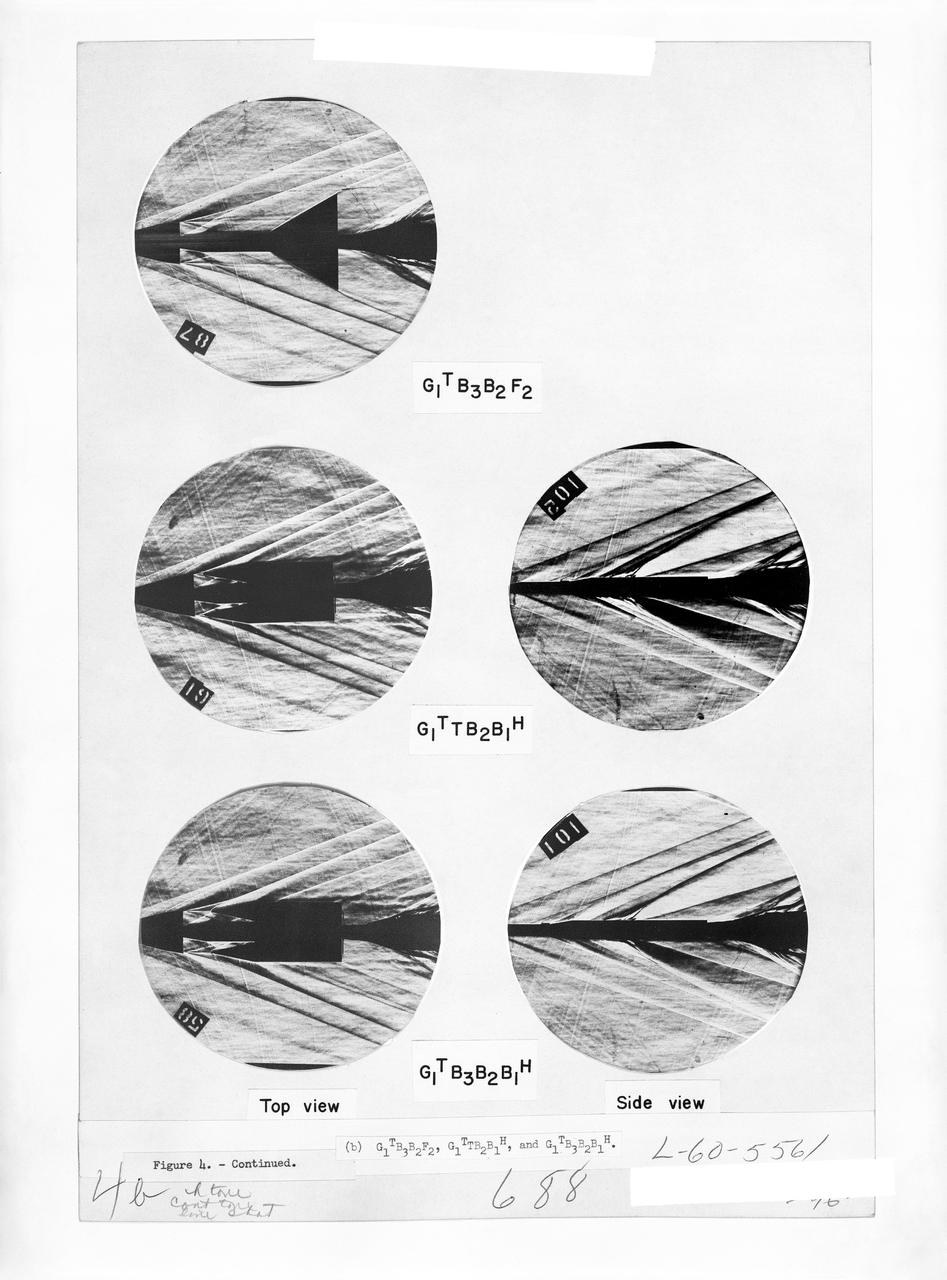
Figure 3-5 for NASA Document TM-X-356
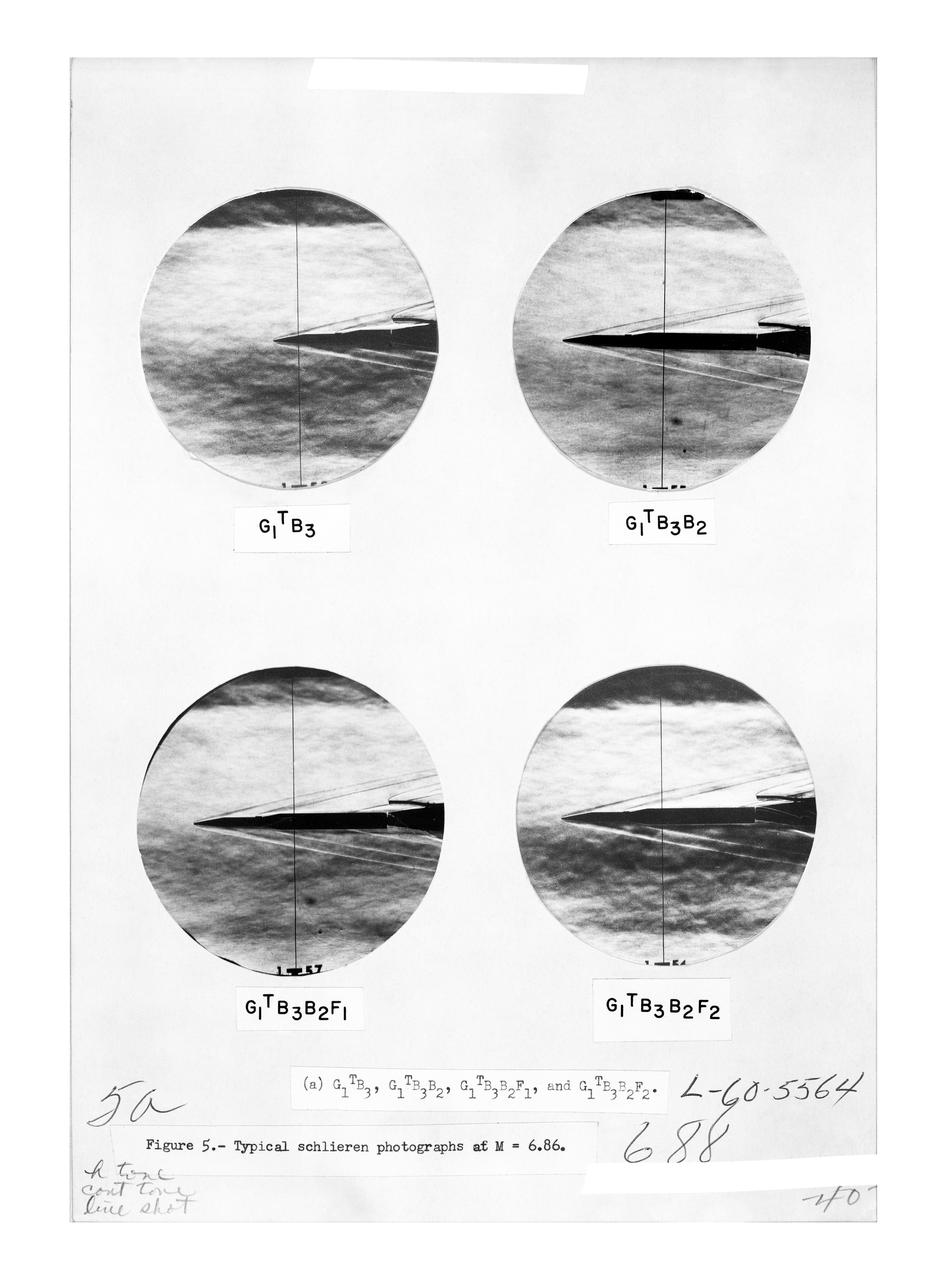
Figure 3-5 for NASA Document TM-X-356
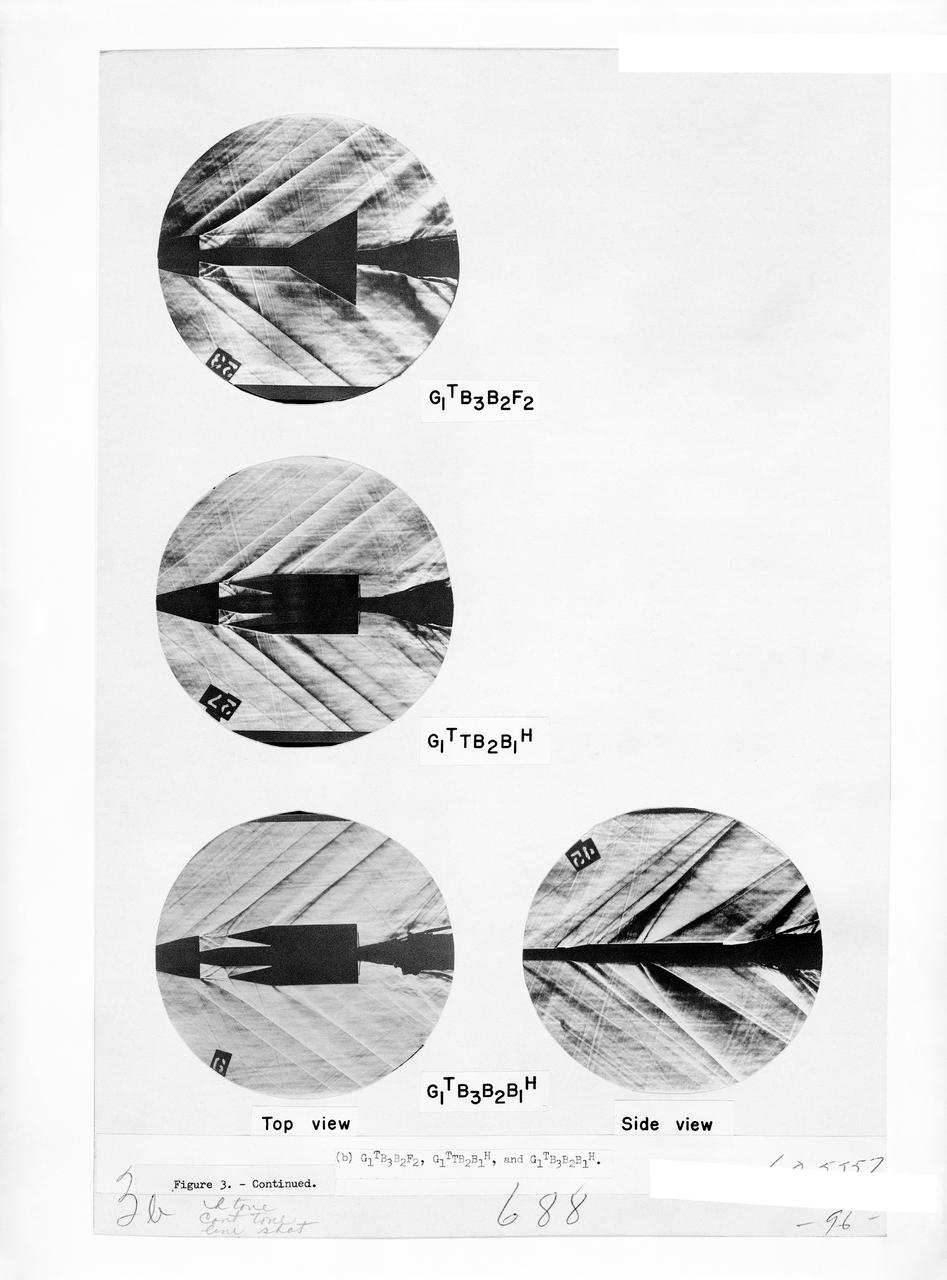
Figure 3-5 for NASA Document TM-X-356
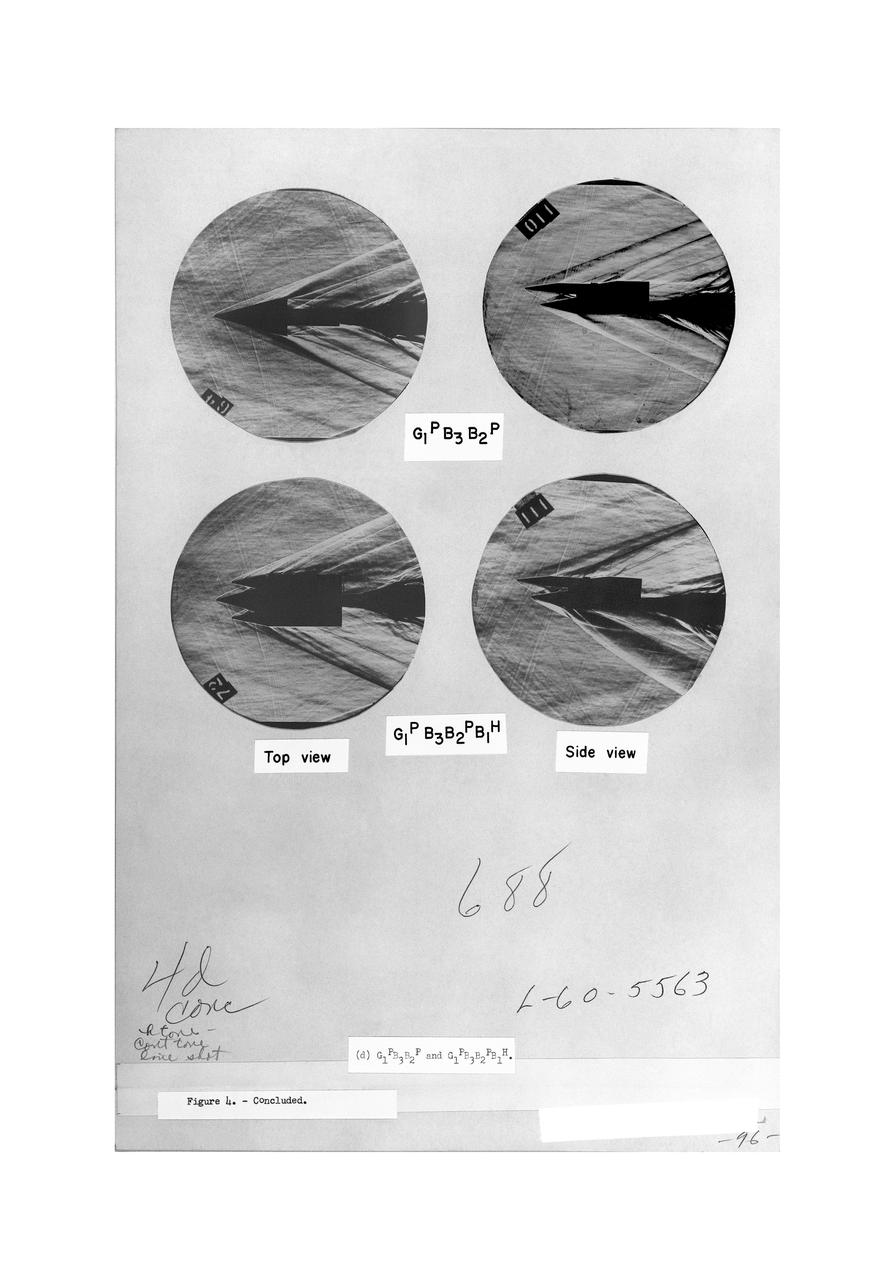
Figure 3-5 for NASA Document TM-X-356

Figure 3-5 for NASA Document TM-X-356
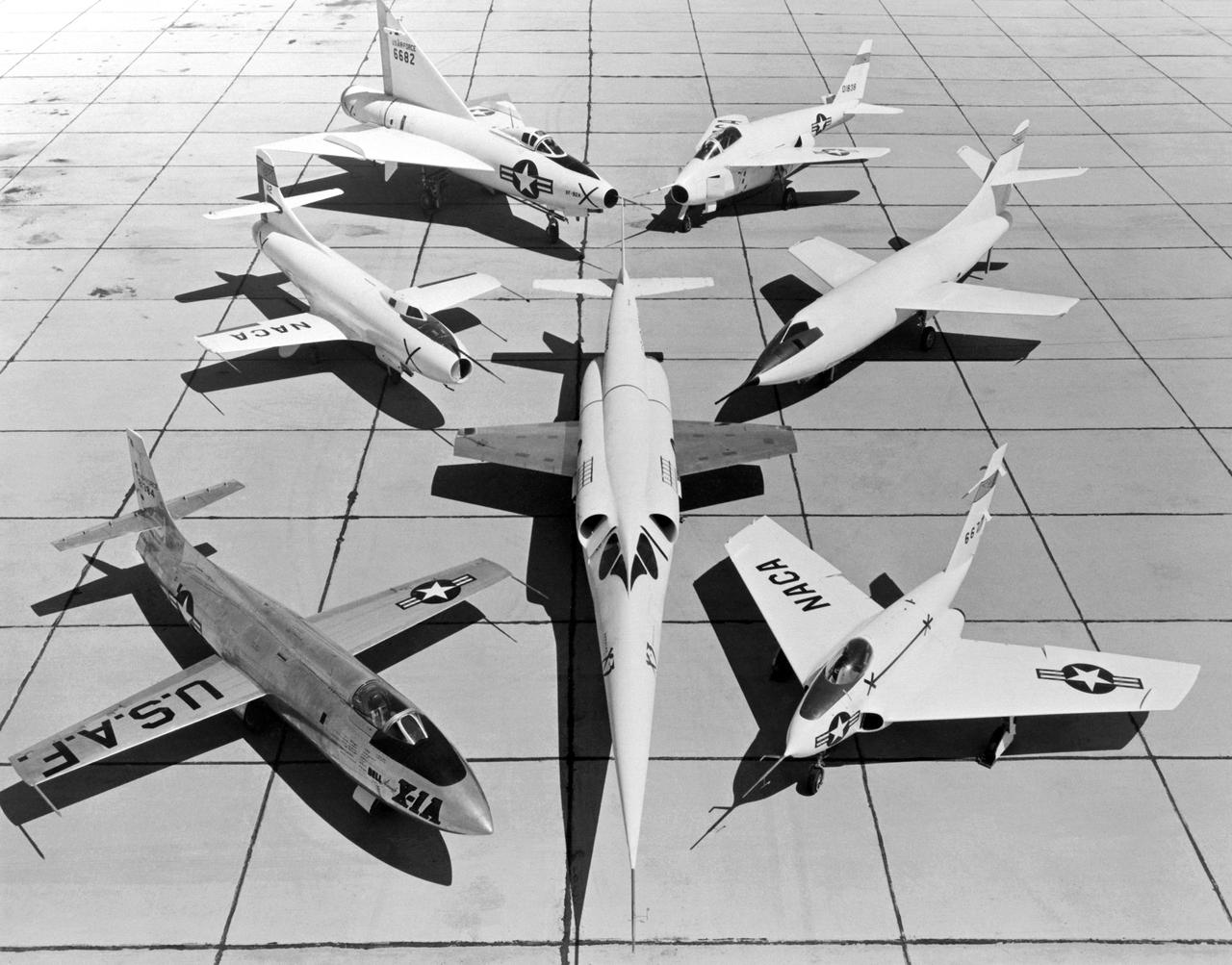
A 1953 photo of some of the research aircraft at the NACA High-Speed Flight Research Station (now known as the the Dryden Flight Research Center). The photo shows the X-3 (center) and, clockwise from left: X-1A (Air Force serial number 48-1384), the third D-558-1 (NACA tail number 142), XF-92A, X-5, D-558-2, and X-4.
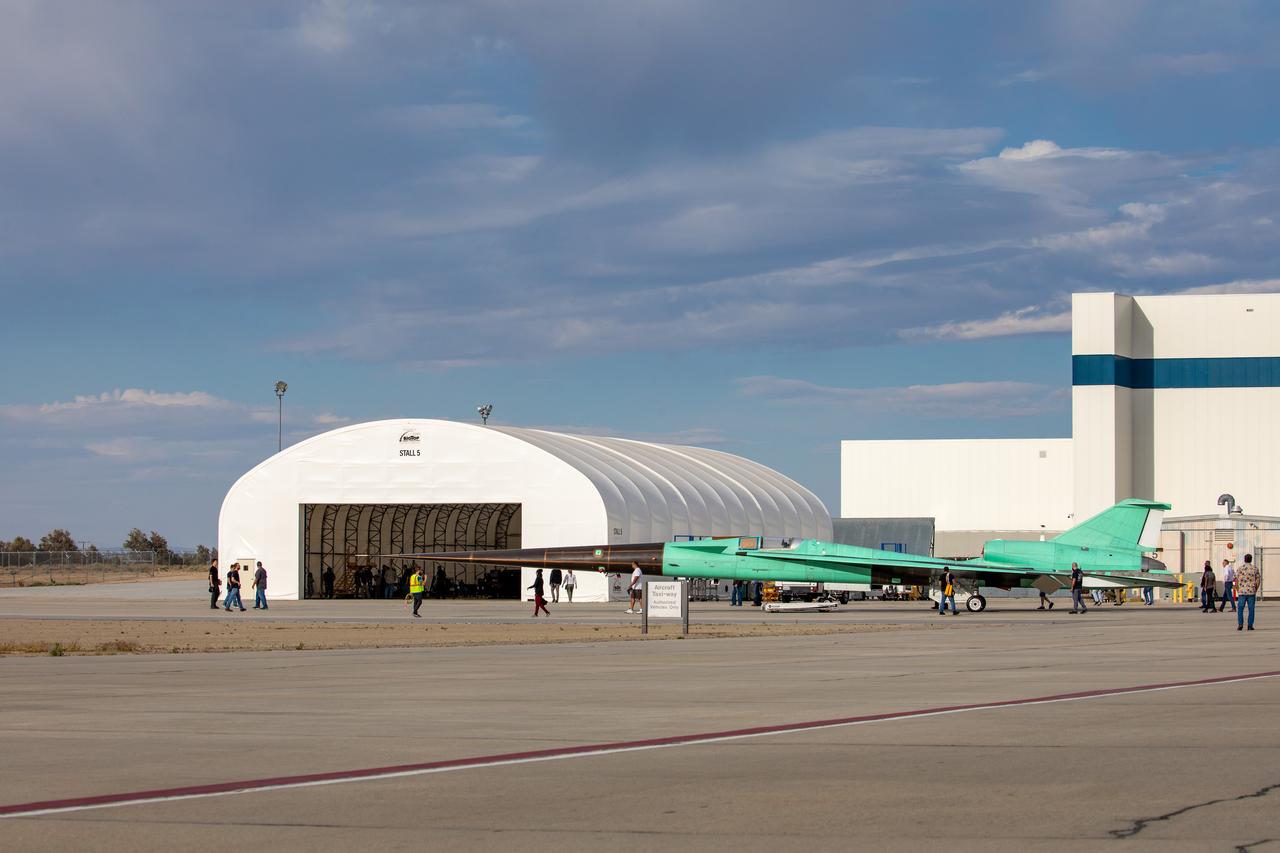
Technicians check out the X-59 aircraft as it sits near the runway at Lockheed Martin Skunk Works in Palmdale, California, on June 19, 2023. Lockheed Martin Photography By Garry Tice 1011 Lockheed Way, Palmdale, Ca. 93599 Event: Move to Run Stall 5 Date: 6/19/2023 Additional Info:
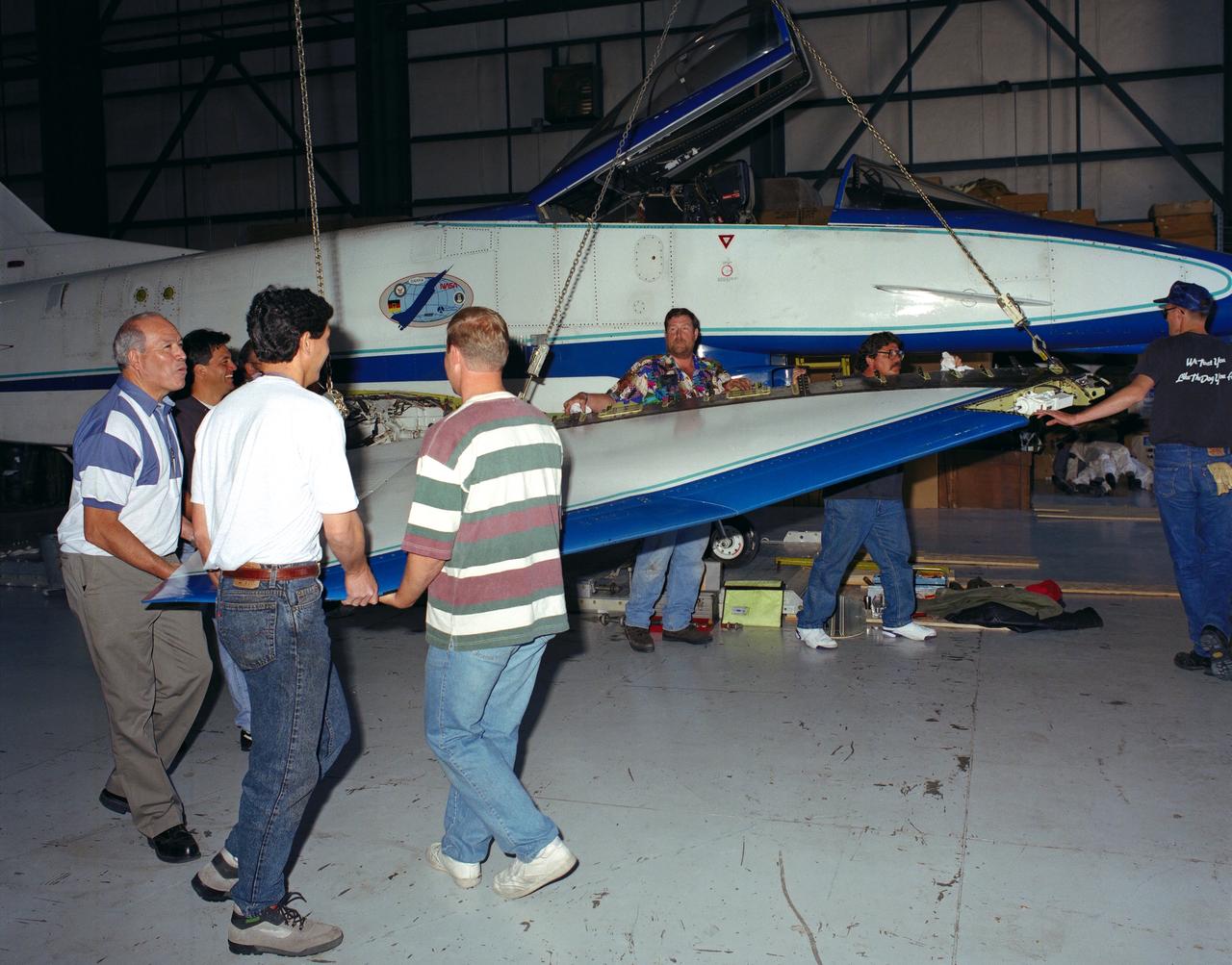
U.S. and German personnel of the X-31 Enhanced Fighter Maneuverability Technology Demonstrator aircraft program removing the right wing of the aircraft, which was ferried from Edwards Air Force Base, California, to Europe on May 22, 1995 aboard an Air Force Reserve C-5 transport. The X-31, based at the NASA Dryden Flight Research Center was ferried to Europe and flown in the Paris Air Show in June. The wing of the X-31 was removed on May 18, 1995, to allow the aircraft to fit inside the C-5 fuselage. Officials of the X-31 project used Manching, Germany, as a staging base to prepare the aircraft for the flight demonstration. At the air show, the X-31 demonstrated the value of using thrust vectoring (directing engine exhaust flow) coupled with advanced flight control systems to provide controlled flight at very high angles of attack. The aircraft arrived back at Edwards in a Air Force Reserve C-5 on June 25, 1995 and off loaded at Dryden June 27. The X-31 aircraft was developed jointly by Rockwell International's North American Aircraft Division (now part of Boeing) and Daimler-Benz Aerospace (formerly Messerschmitt-Bolkow-Blohm), under sponsorship by the U.S. Department of Defense and the German Federal Ministry of Defense.
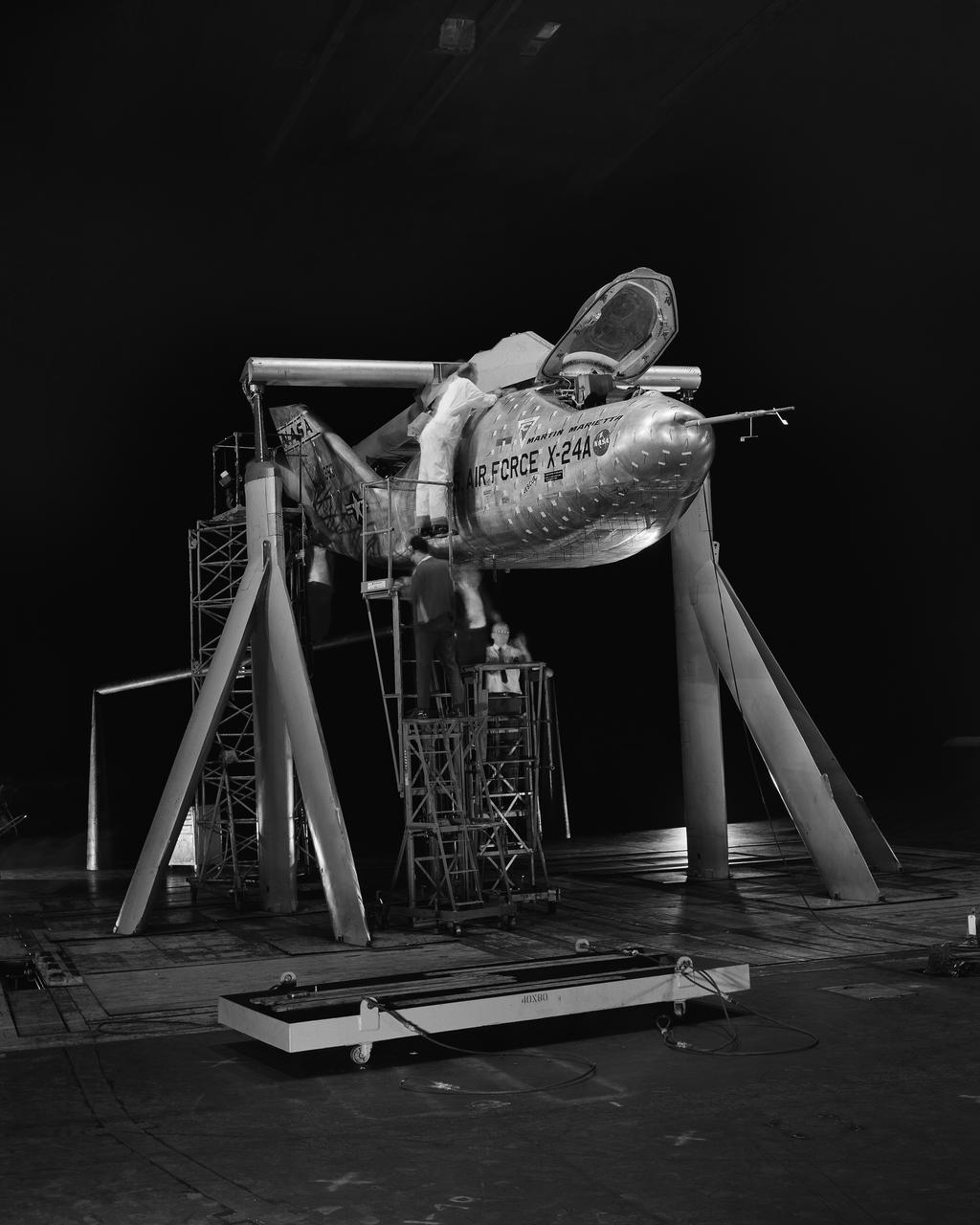
3/4 front view of Martin X-24A lifting body, mounted on B-52 mount.
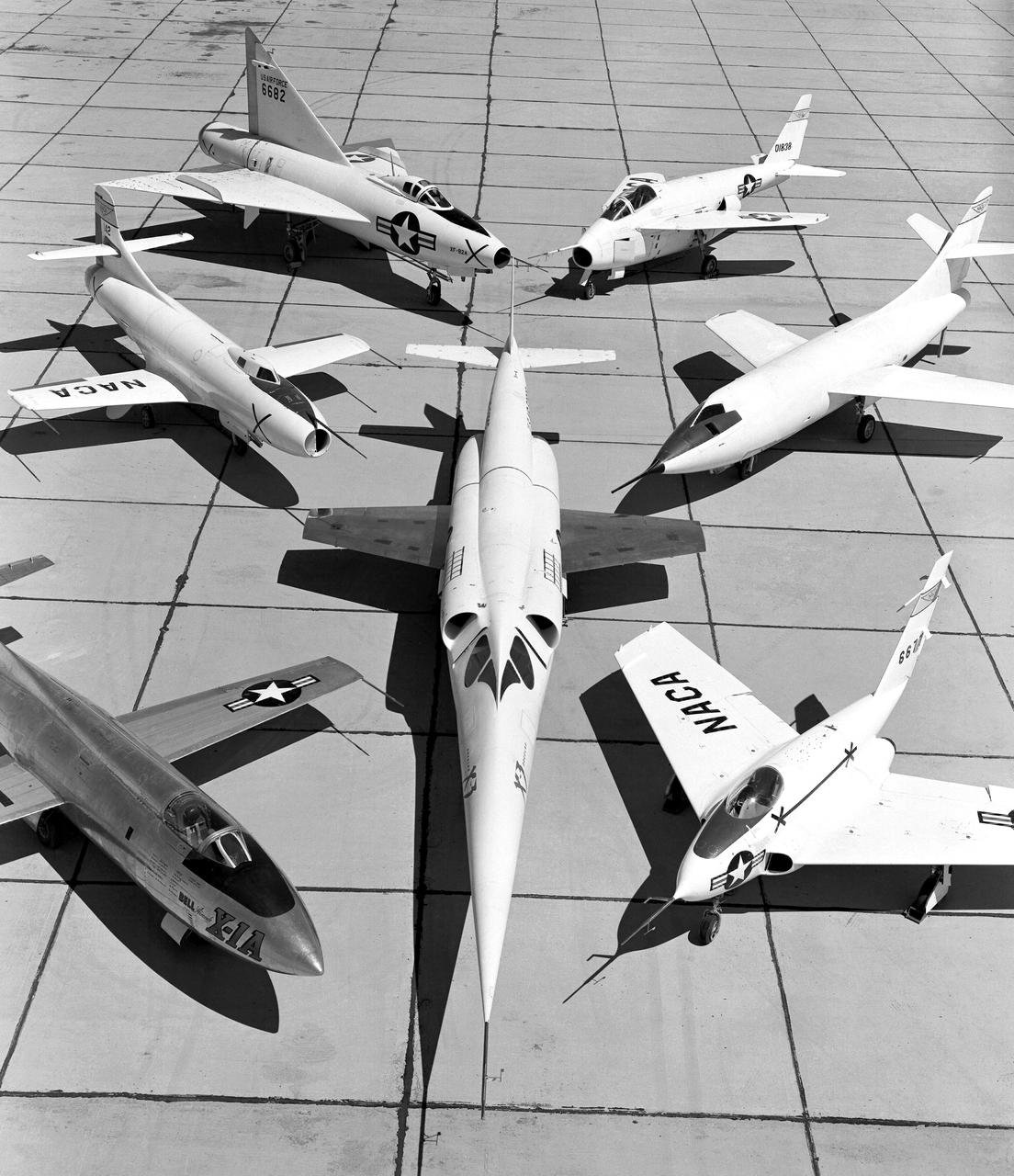
X-3 (center), and clockwise from left: X-1A, D-558-I, XF-92A, X-5, D-558-II, and X-4.
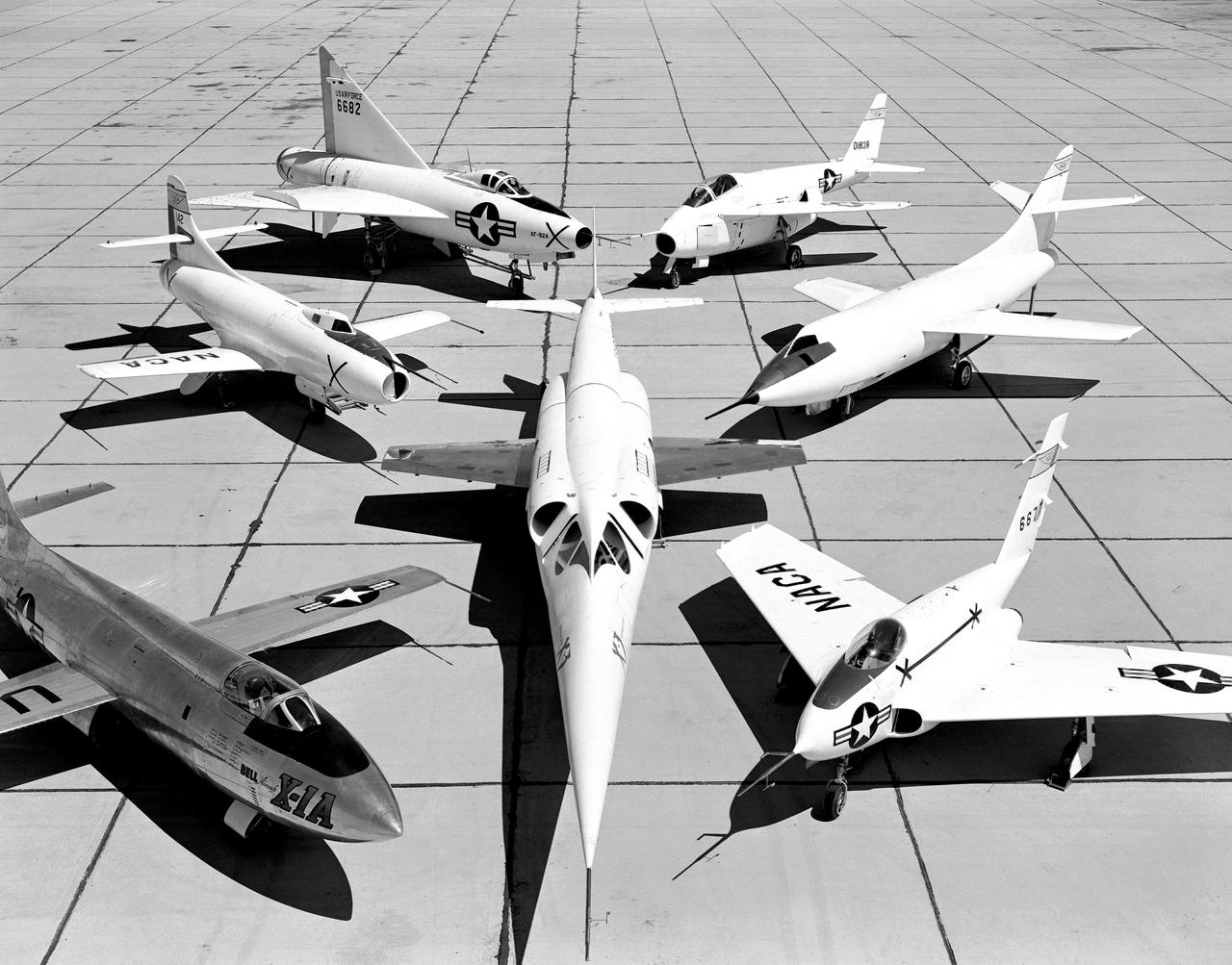
X-3 (center), and clockwise from left: X-1A, D-558-I, XF-92A, X-5, D-558-II, and X-4.
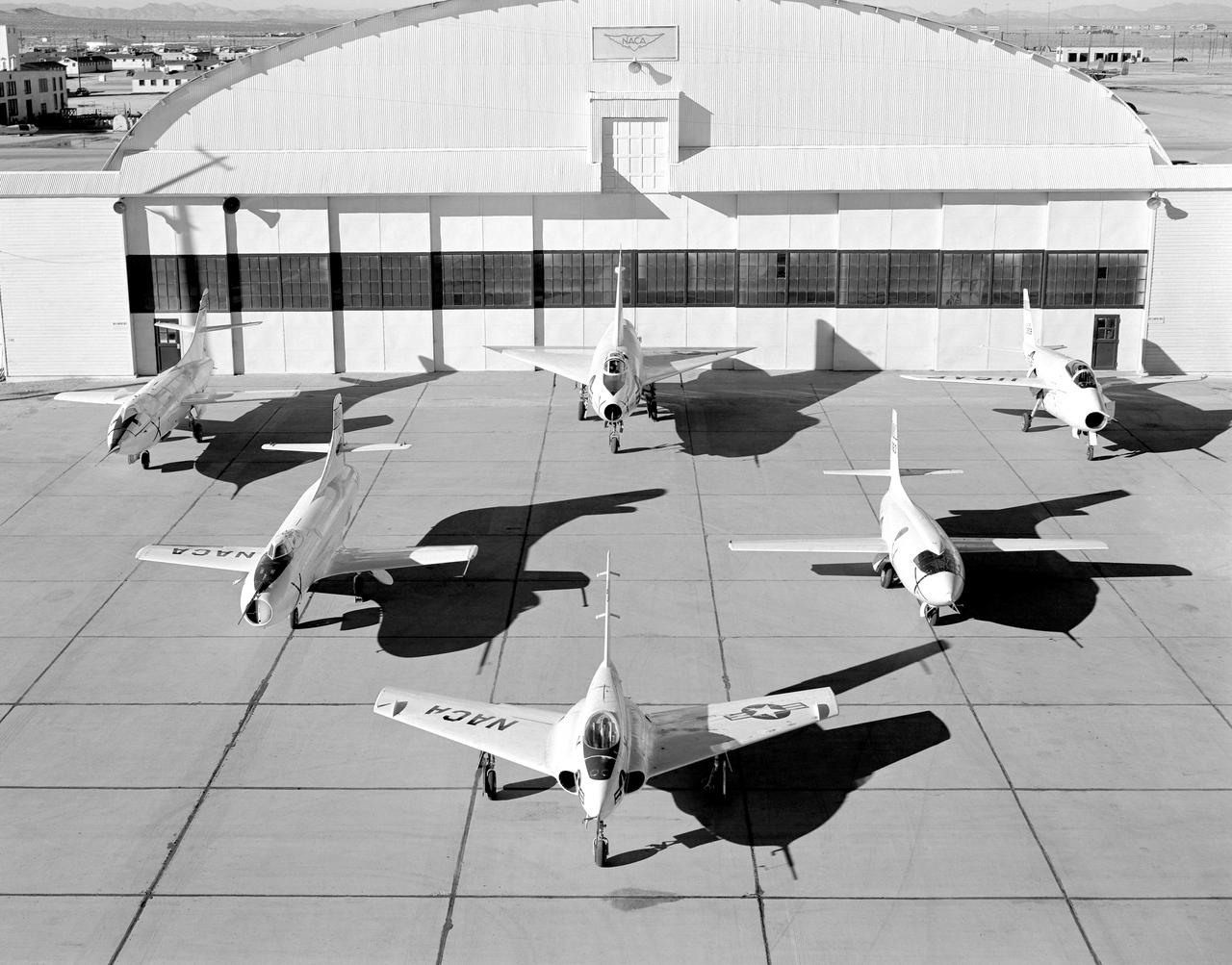
NACA High Speed Flight Station aircraft at South Base. Clockwise from far left: D-558-II, XF-92A, X-5, X-1, X-4, and D-558-I.
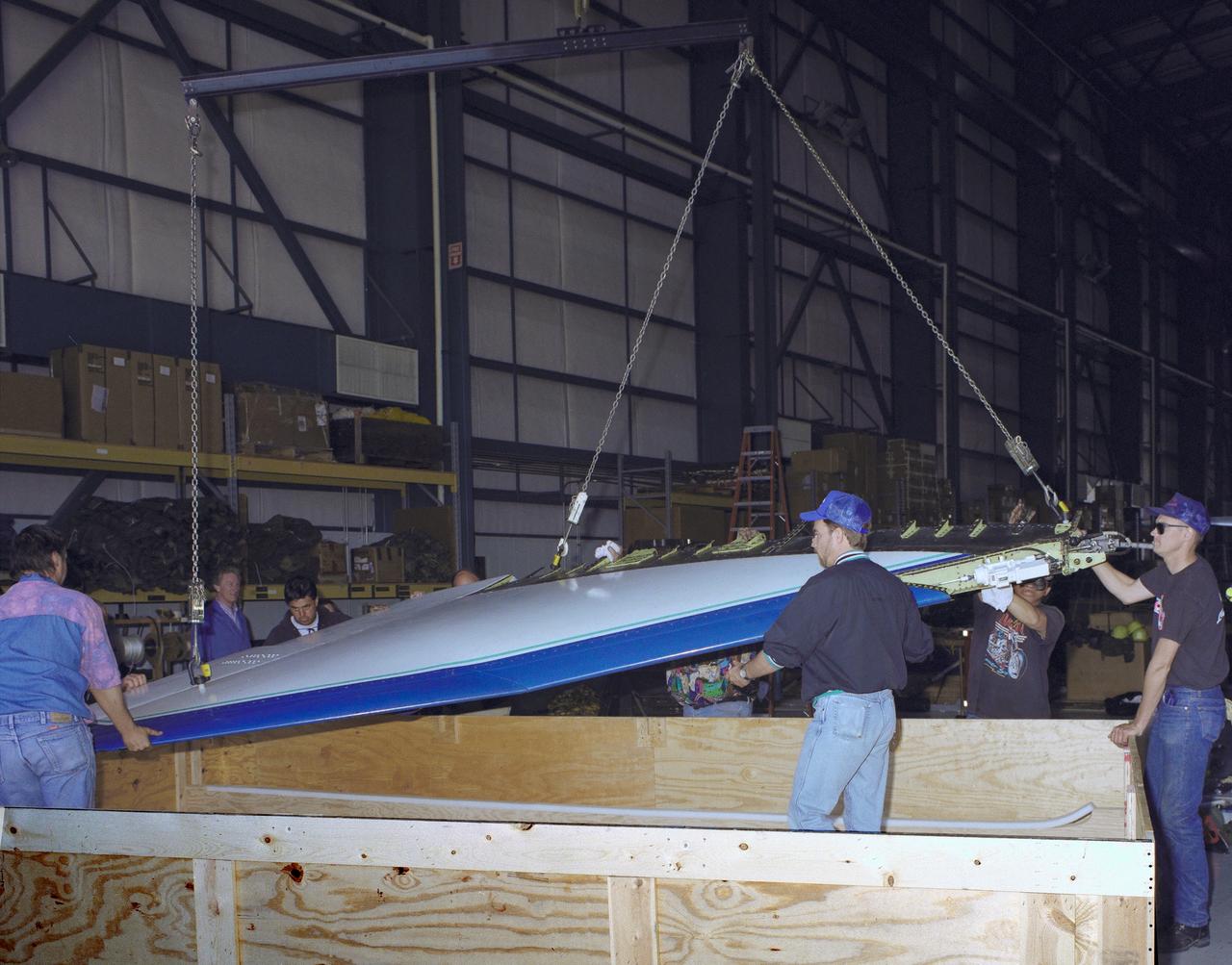
The right wing of the X-31 Enhanced Fighter Maneuverability Technology Demonstrator Aircraft is seen here being put into a shipping container May 18, 1995, at NASA's Dryden Flight Research Center, Edwards, California, by U.S. and German members of the program. To fit inside an Air Force Reserve C-5 transport, which was used to ferry the X-31 to Europe on May 22, 1995, the right wing had to be removed. Manching, Germany, was used as a staging base to prepare the aircraft for participation in the Paris Air Show. At the air show on June 11 through the 18th, the X-31 demonstrated the value of using thrust vectoring (directing engine exhaust flow) coupled with advanced flight control systems to provide controlled flight at very high angles of attack. The aircraft arrived back at Edwards in an Air Force Reserve C-5 on June 25, 1995, and off loaded at Dryden the 27th. The X-31 aircraft was developed jointly by Rockwell International's North American Aircraft Division (now part of Boeing) and Daimler-Benz Aerospace (formerly Messerschmitt-Bolkow-Blohm), under sponsorship by the U.S. Department of Defense and the German Federal Ministry of Defense.
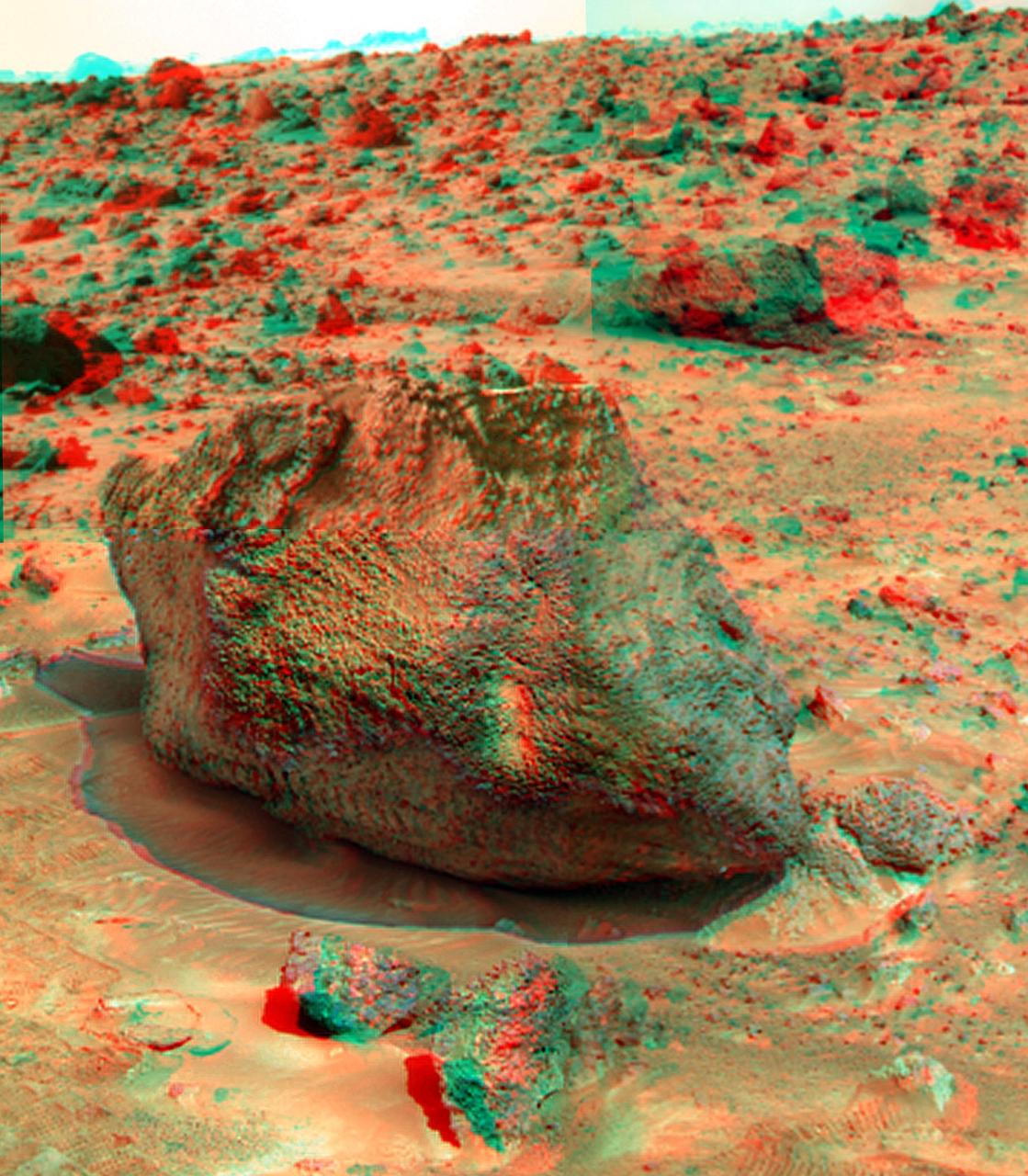
Yogi is a meter-size rock about 5 meters northwest of NASA Mars Pathfinder lander and was the second rock visited by the Sojourner Rover alpha proton X-ray spectrometer APXS instrument. 3D glasses are necessary to identify surface detail.
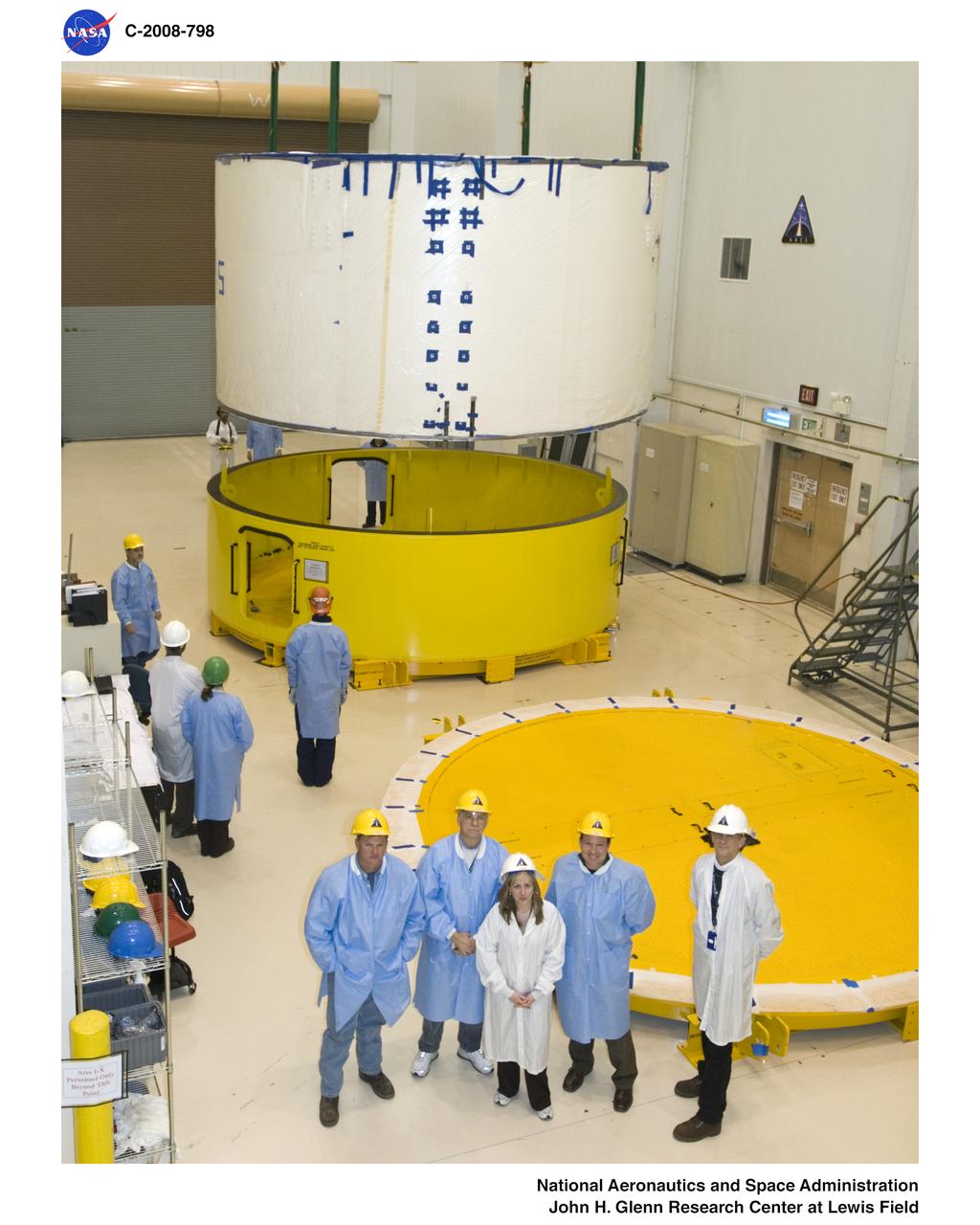
NASA Kennedy lift team observing the movement of Ares 1-X segment US-5 before its critical lift to the Super Stack
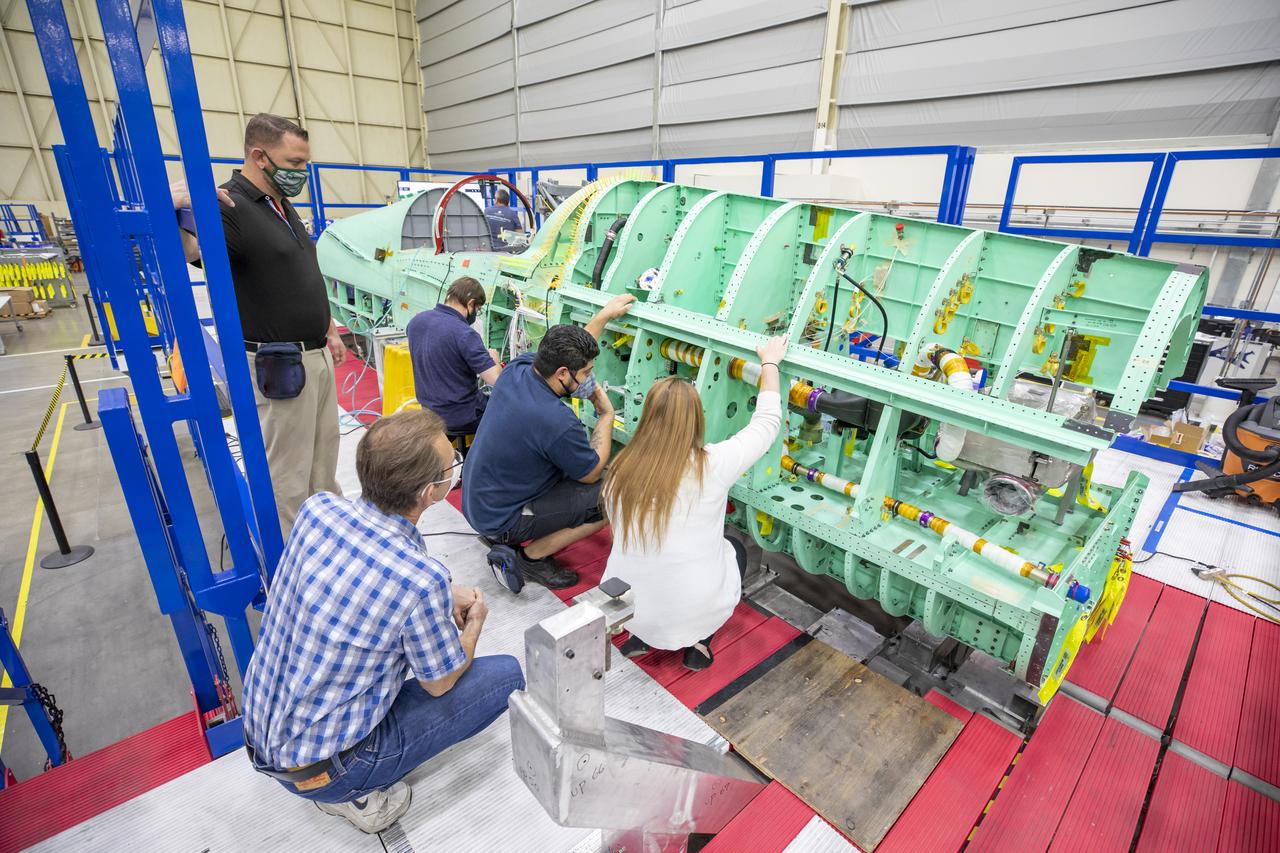
Technicians are shown here working on the X-59 fuselage section of the aircraft. The fuselage contains the cockpit and helps define the distinct shape of the X-59. Lockheed Martin Photography By Garry Tice 1011 Lockheed Way, Palmdale, Ca. 93599 Event: SEG 210 Forebody-Subsystems Date: 5/12/2021
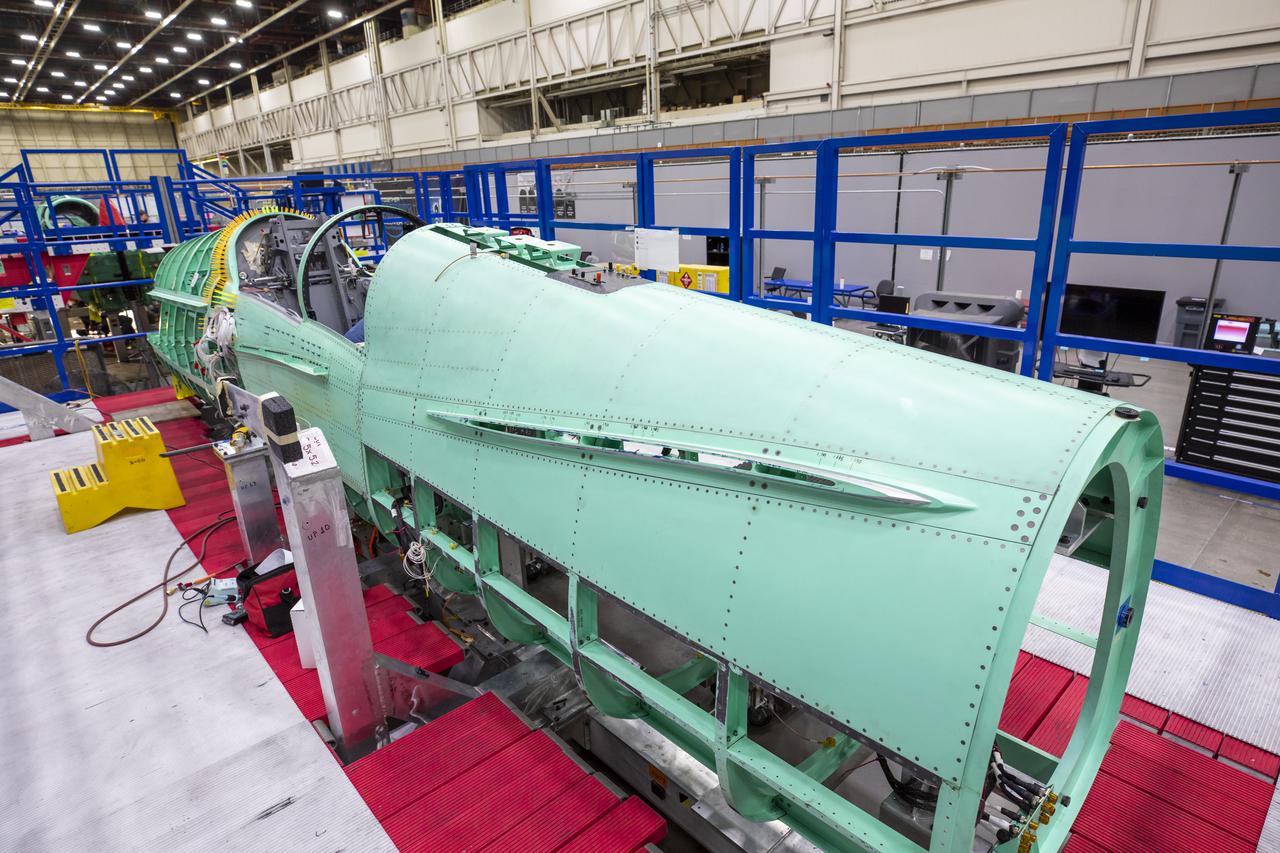
Here is a closer view of the X-59 fuselage section of the aircraft during assembly. The fuselage contains the cockpit and helps define the distinct shape of the X-59. Lockheed Martin Photography By Garry Tice 1011 Lockheed Way, Palmdale, Ca. 93599 Event: SEG 210 Forebody-Subsystems Date: 5/12/2021
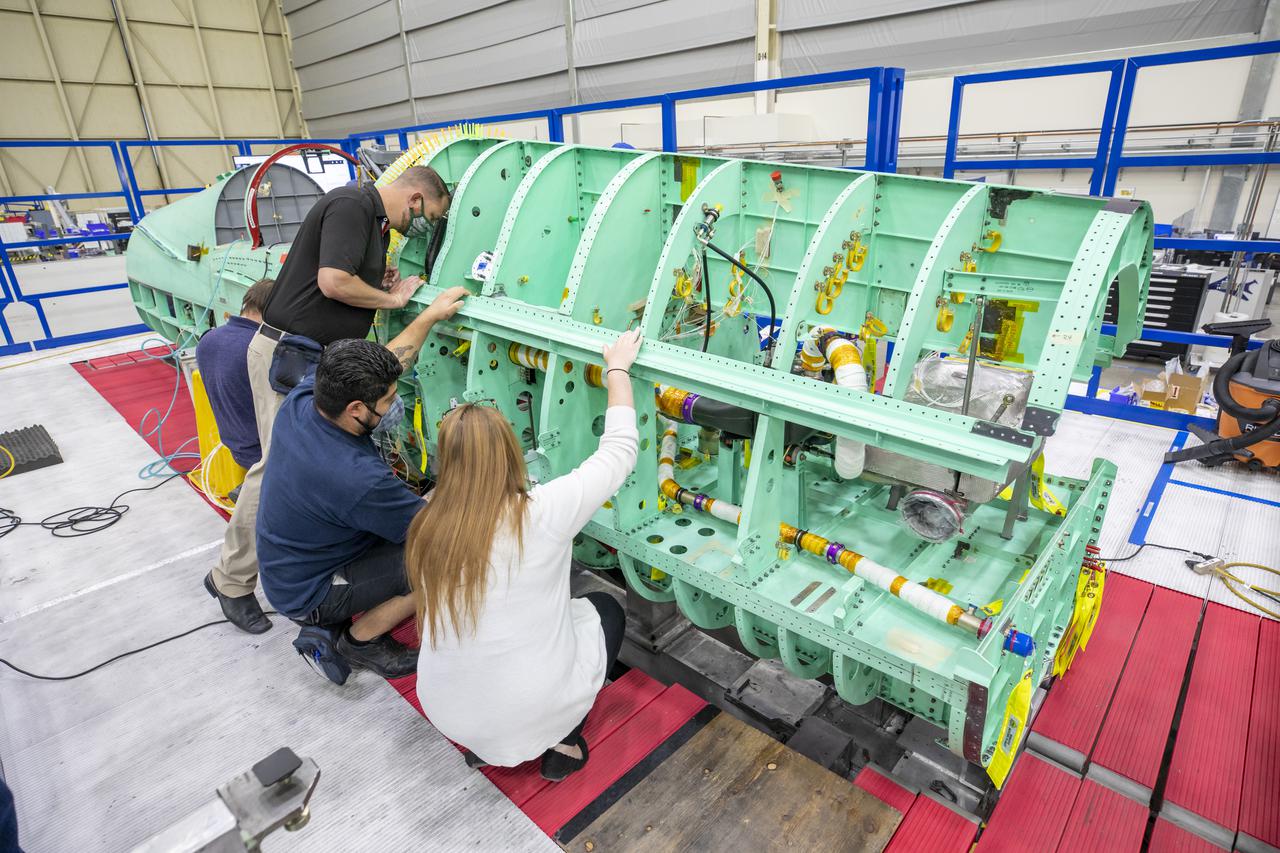
Technicians are shown here working on the X-59 fuselage section of the aircraft. The fuselage contains the cockpit and helps define the distinct shape of the X-59. Lockheed Martin Photography By Garry Tice 1011 Lockheed Way, Palmdale, Ca. 93599 Event: SEG 210 Forebody-Subsystems Date: 5/12/2021
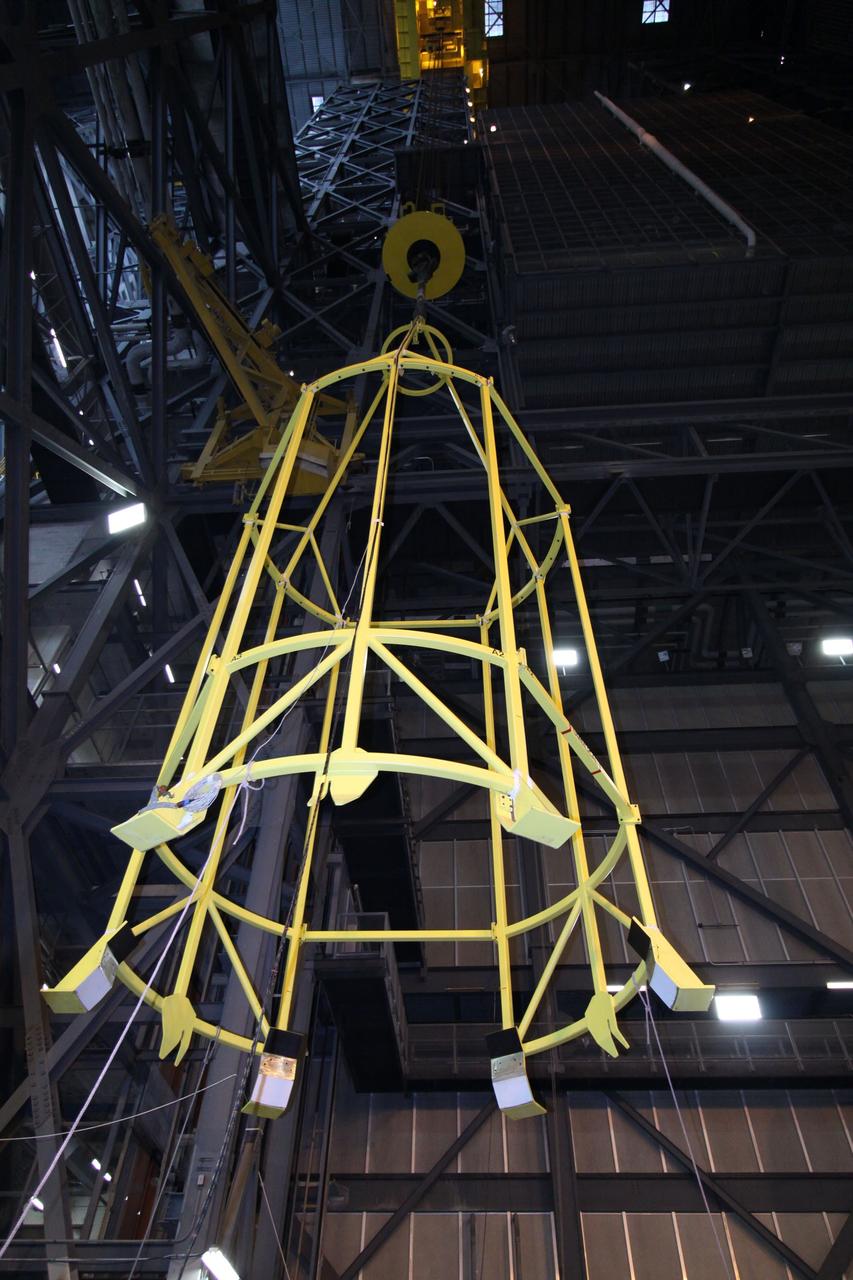
CAPE CANAVERAL, Fla. – In the Vehicle Assembly Building's High Bay 4, assembly of the Ares I-X rocket nears completion. The yellow framework, nicknamed the "birdcage," is lowered by crane toward Super Stack 5. The birdcage has the ability to lift and to stack and de-stack the Ares I-X rocket's Super Stack 5. Next, the stack will be lifted on top of the segments already in place on the mobile launcher platform, completing assembly of the rocket. Five super stacks make up the rocket's upper stage that will be integrated with the four-segment solid rocket booster first stage. Ares I-X is the test vehicle for the Ares I, which is part of the Constellation Program to return men to the moon and beyond. The Ares I-X flight test is targeted for Oct. 31, pending formal NASA Headquarters approval. Photo credit: NASA/Jack Pfaller
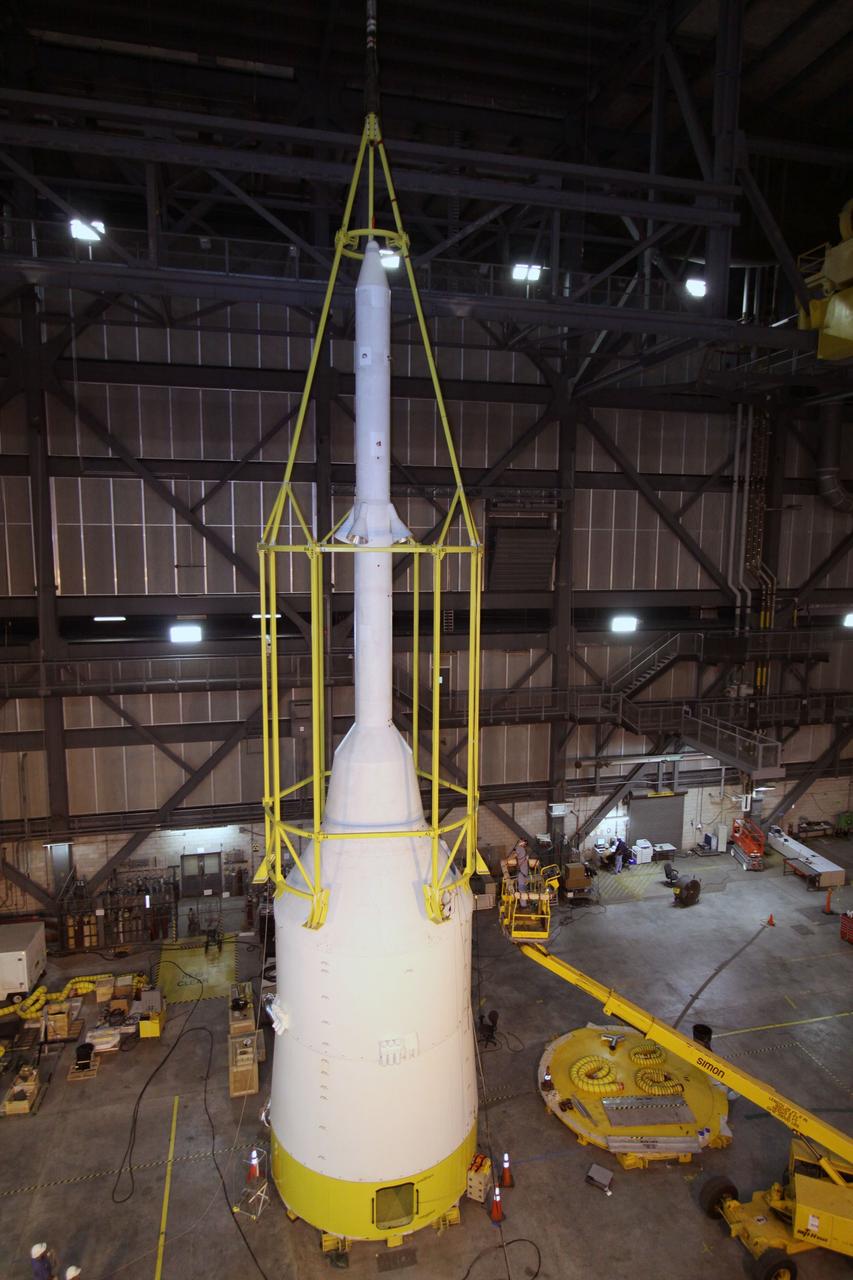
CAPE CANAVERAL, Fla. – In the Vehicle Assembly Building's High Bay 4, assembly of the Ares I-X rocket nears completion. The yellow framework, nicknamed the "birdcage," is lowered by crane over Super Stack 5. The birdcage has the ability to lift and to stack and de-stack the Ares I-X rocket's Super Stack 5. Next, the stack will be lifted on top of the segments already in place on the mobile launcher platform, completing assembly of the rocket. Five super stacks make up the rocket's upper stage that will be integrated with the four-segment solid rocket booster first stage. Ares I-X is the test vehicle for the Ares I, which is part of the Constellation Program to return men to the moon and beyond. The Ares I-X flight test is targeted for Oct. 31, pending formal NASA Headquarters approval. Photo credit: NASA/Jack Pfaller
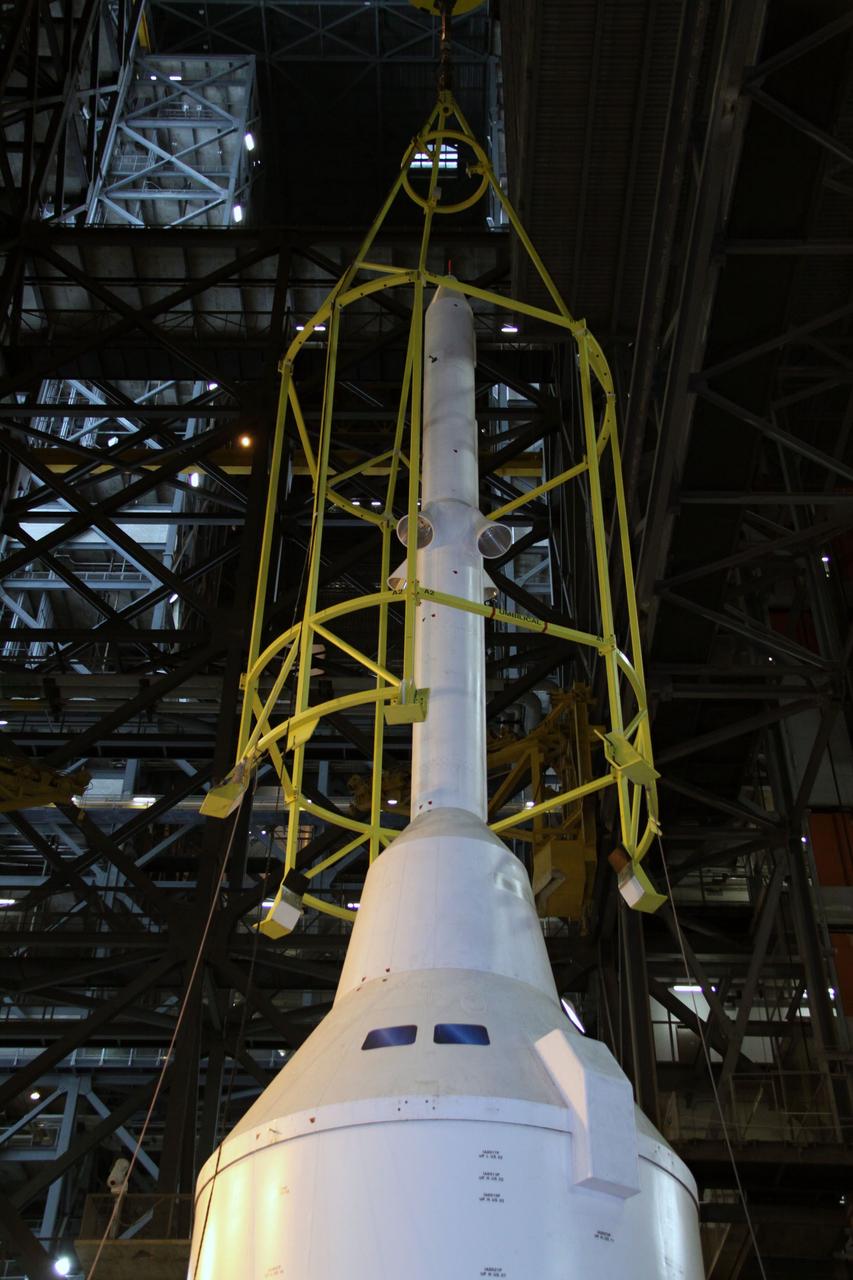
CAPE CANAVERAL, Fla. – In the Vehicle Assembly Building's High Bay 4, assembly of the Ares I-X rocket nears completion. The yellow framework, nicknamed the "birdcage," is lowered by crane over the Launch Abort System, or LAS, of Super Stack 5. The birdcage has the ability to lift and to stack and de-stack the Ares I-X rocket's Super Stack 5. Next, the stack will be lifted on top of the segments already in place on the mobile launcher platform, completing assembly of the rocket. Five super stacks make up the rocket's upper stage that will be integrated with the four-segment solid rocket booster first stage. Ares I-X is the test vehicle for the Ares I, which is part of the Constellation Program to return men to the moon and beyond. The Ares I-X flight test is targeted for Oct. 31, pending formal NASA Headquarters approval. Photo credit: NASA/Jack Pfaller
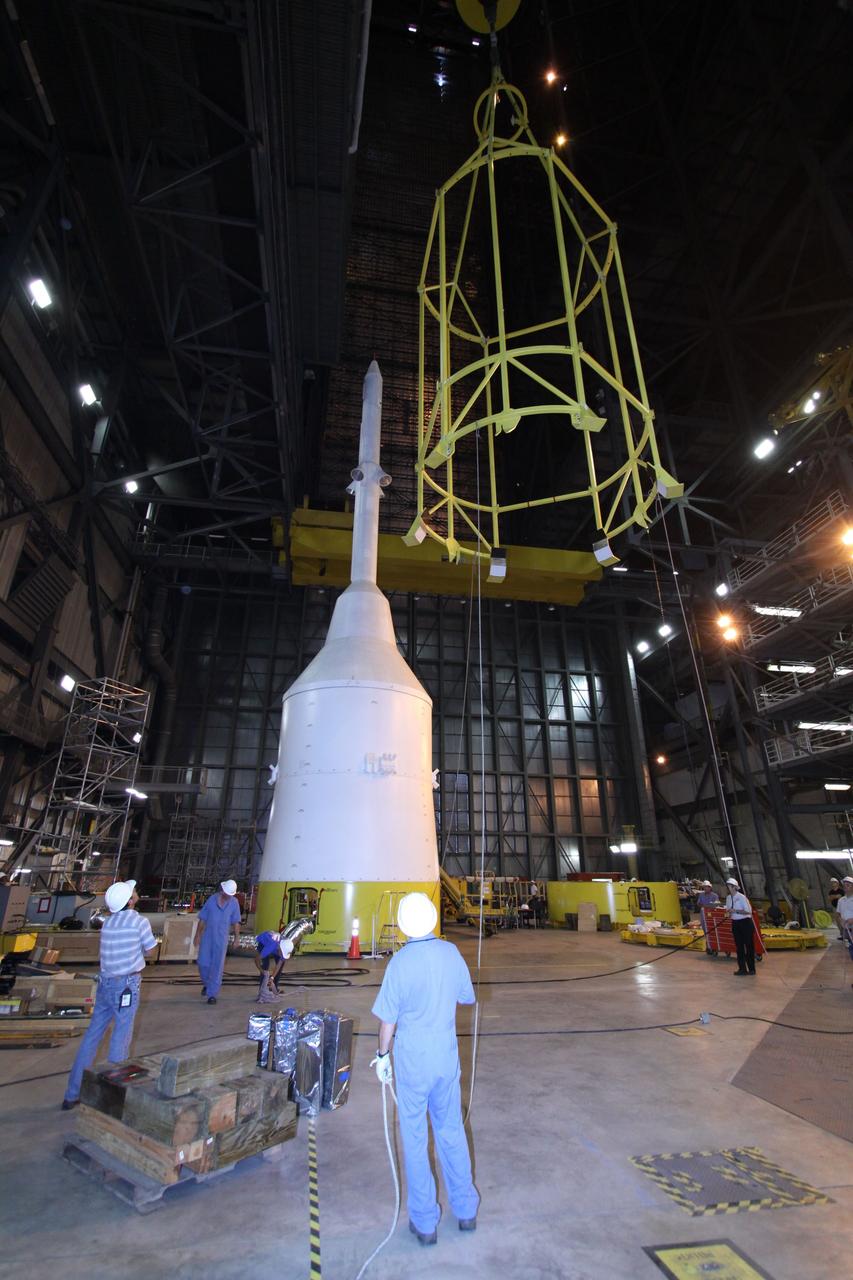
CAPE CANAVERAL, Fla. – In the Vehicle Assembly Building's High Bay 4, assembly of the Ares I-X rocket nears completion. Technicians monitor the yellow framework, nicknamed the "birdcage," as it is lowered by crane toward Super Stack 5. The birdcage has the ability to lift and to stack and de-stack the Ares I-X rocket's Super Stack 5. Next, the stack will be lifted on top of the segments already in place on the mobile launcher platform, completing assembly of the rocket. Five super stacks make up the rocket's upper stage that will be integrated with the four-segment solid rocket booster first stage. Ares I-X is the test vehicle for the Ares I, which is part of the Constellation Program to return men to the moon and beyond. The Ares I-X flight test is targeted for Oct. 31, pending formal NASA Headquarters approval. Photo credit: NASA/Jack Pfaller
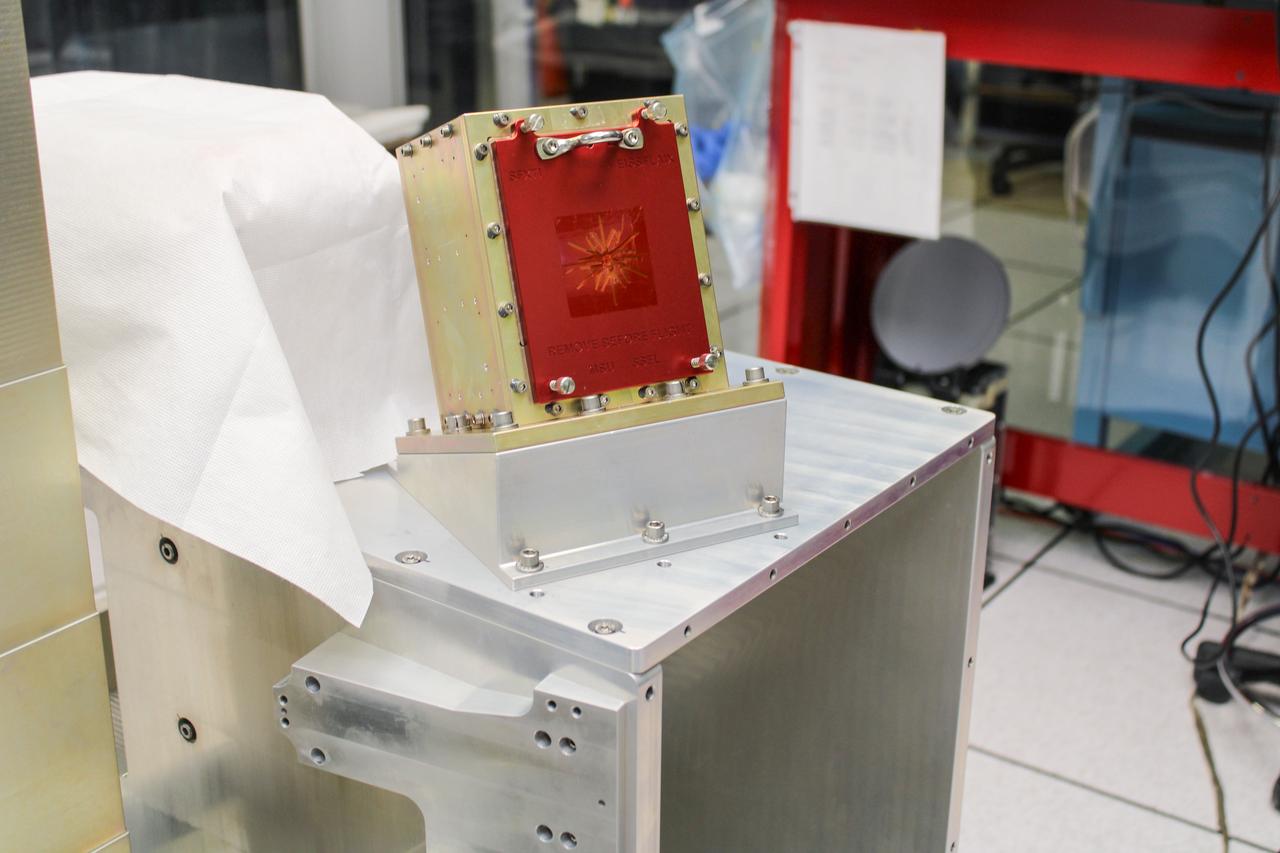
jsc2025e044726 (5/12/2025) --- Solar Flare X-Ray Timing Instrument (SFXTI) integrated on Space Test Program – Houston 10 (STP-H10). STP-H10-SFXTI measures solar hard X-ray energy spectra with high energy and time resolution. These measurements can only be made from space because solar X-rays do not penetrate Earth’s atmosphere. Image courtesy of Montana State University.
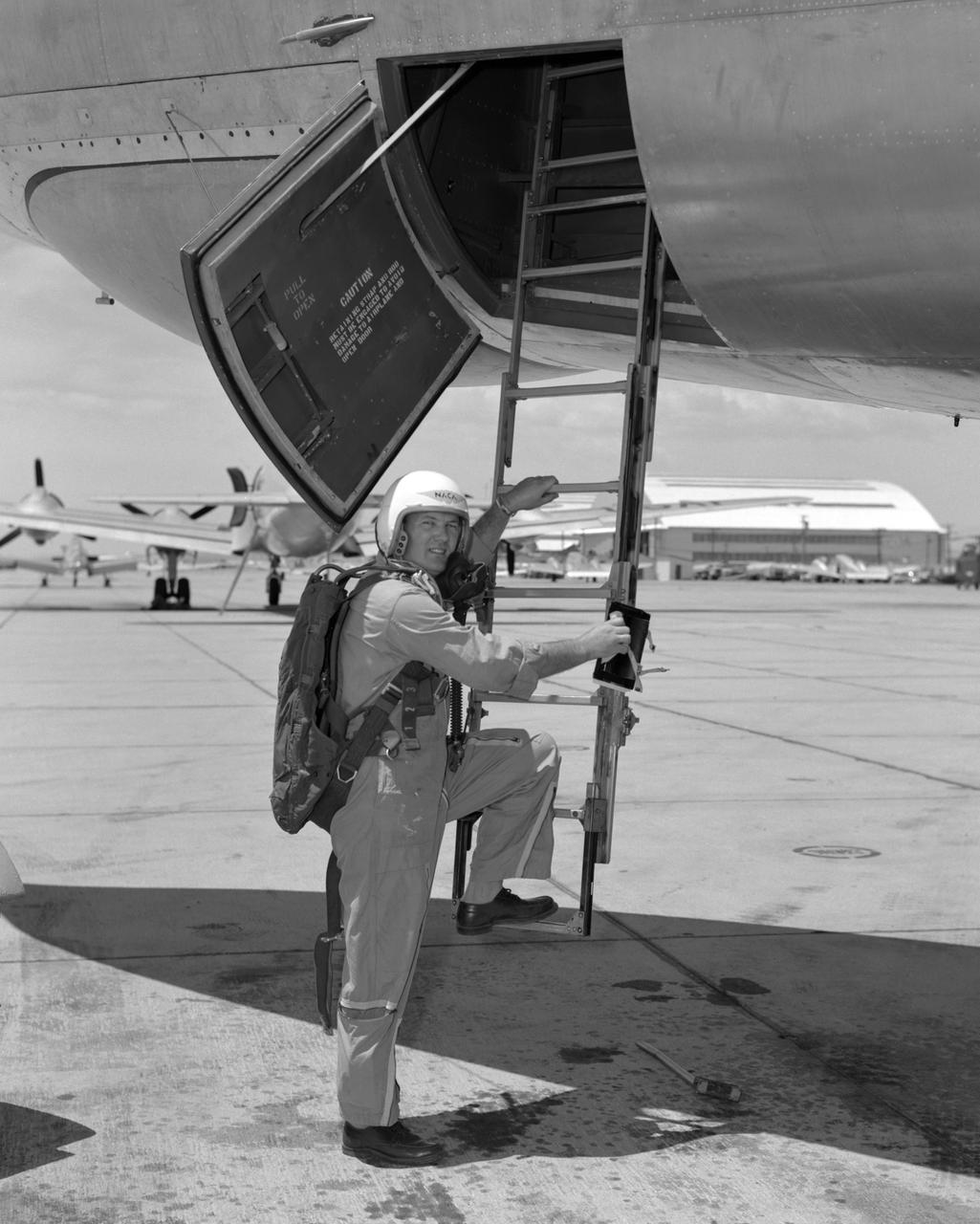
From December 10, 1966, until his retirement on February 27, 1976, Stanley P. Butchart served as Chief (later, Director) of Flight Operations at NASA's Flight Research Center (renamed on March 26, 1976, the Hugh L. Dryden Flight Research Center). Initially, his responsibilities in this position included the Research Pilots Branch, a Maintenance and Manufacturing Branch, and an Operations Engineering Branch, the last of which not only included propulsion and electrical/electronic sections but project engineers for the X-15 and lifting bodies. During his tenure, however, the responsibilities of his directorate came to include not only Flight Test Engineering Support but Flight Systems and Loads laboratories. Before becoming Chief of Flight Operations, Butchart had served since June of 1966 as head of the Research Pilots Branch (Chief Pilot) and then as acting chief of Flight Operations. He had joined the Center (then known as the National Advisory Committee for Aeronautics' High-Speed Flight Research Station) as a research pilot on May 10, 1951. During his career as a research pilot, he flew a great variety of research and air-launch aircraft including the D-558-I, D-558-II, B-29 (plus its Navy version, the P2B), X-4, X-5, KC-135, CV-880, CV-990, B-47, B-52, B-747, F-100A, F-101, F-102, F-104, PA-30 Twin Comanche, JetStar, F-111, R4D, B-720, and B-47. Although previously a single-engine pilot, he became the Center's principal multi-engine pilot during a period of air-launches in which the pilot of the air-launch aircraft (B-29 or P2B) basically directed the operations. It was he who called for the chase planes before each drop, directed the positioning of fire rescue vehicles, and released the experimental aircraft after ensuring that all was ready for the drop. As pilot of the B-29 and P2B, Butchart launched the X-1A once, the X-1B 13 times, the X-1E 22 times, and the D-558-II 102 times. In addition, he towed the M2-F1 lightweight lifting body 14 times behind an R4
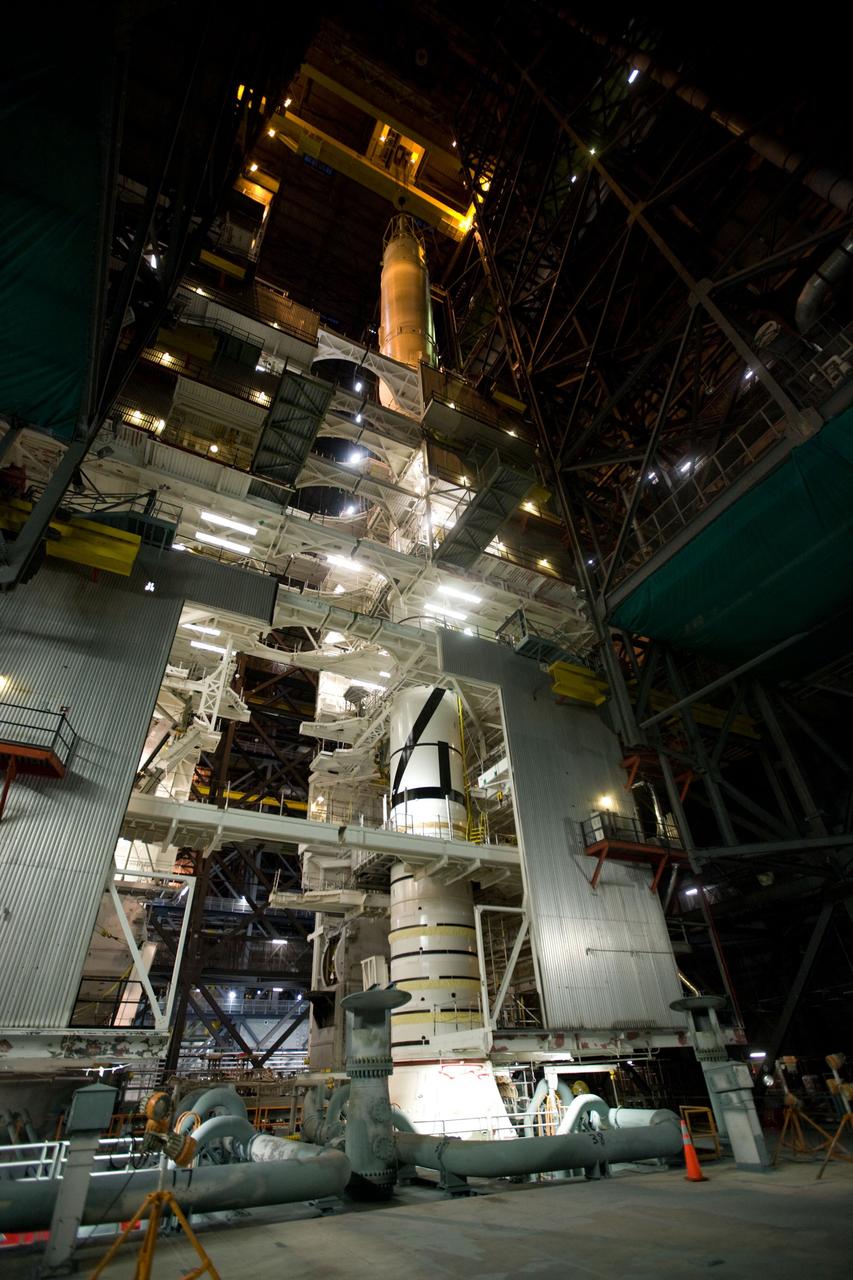
CAPE CANAVERAL, Fla. – In the Vehicle Assembly Building's High Bay 3, assembly of the Ares I-X rocket nears completion. The yellow framework, nicknamed the "birdcage," lowers Super Stack 5 onto the Ares I-X segments already in place on the mobile launcher platform. Once in position, assembly of the Ares I-X rocket will be complete. The 327-foot-tall rocket is one of the largest processed in the bay, rivaling the height of the Apollo Program's 364-foot-tall Saturn V. Five super stacks make up the rocket's upper stage that is integrated with the four-segment solid rocket booster first stage. Ares I-X is the test vehicle for the Ares I, which is part of the Constellation Program to return men to the moon and beyond. The Ares I-X flight test is targeted for Oct. 31, pending formal NASA Headquarters approval. Photo credit: NASA/Dimitri Gerondidakis
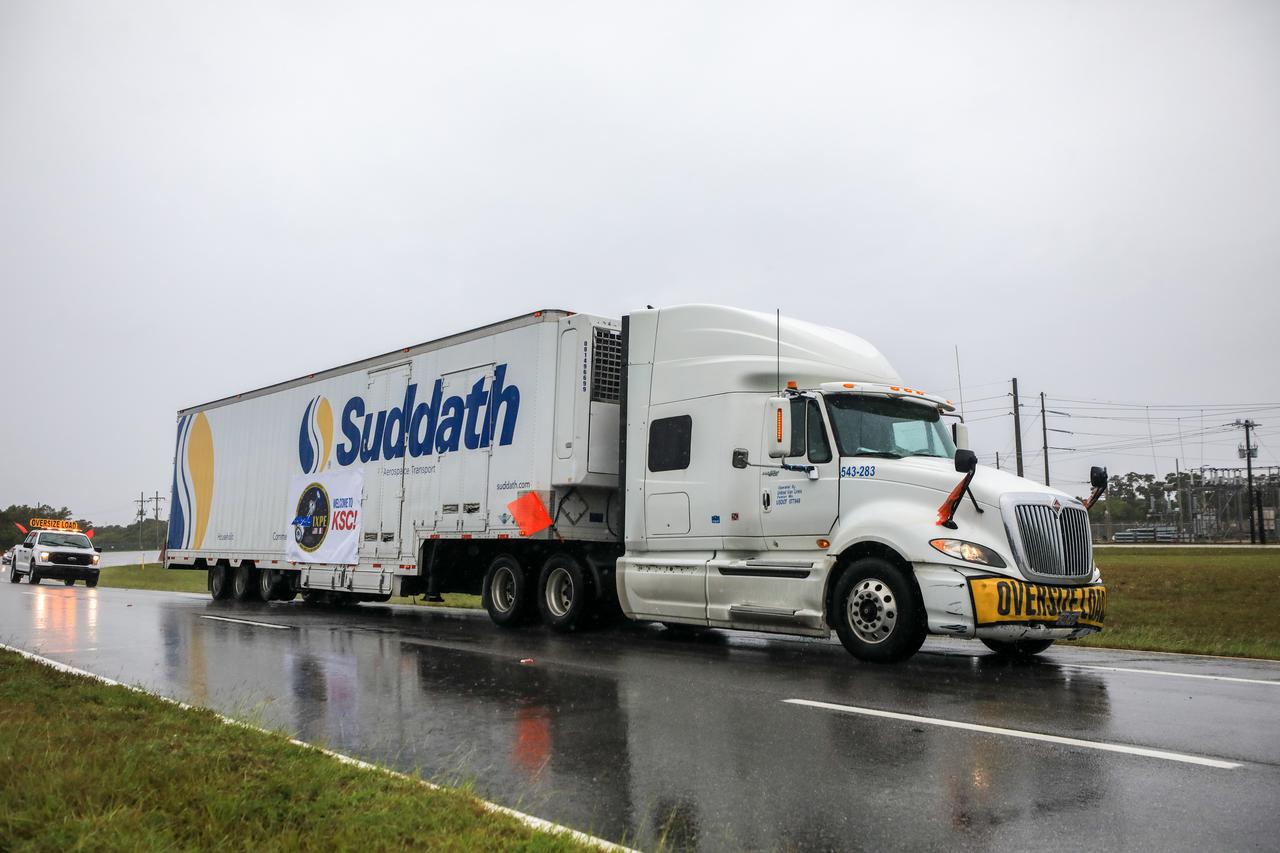
NASA’s Imaging X-Ray Polarimetry Explorer (IXPE) spacecraft – the agency’s first mission dedicated to measuring X-ray polarization – arrives at the Cape Canaveral Space Force Station in Florida on Nov. 5, 2021. IXPE is scheduled to launch aboard a SpaceX Falcon 9 vehicle from Kennedy’s Launch Complex 39A on Dec. 9, 2021. The launch is managed by NASA’s Launch Services Program, based at Kennedy. IXPE will study the polarization of X-rays coming to us from some of the universe’s most extreme sources, including black holes and dead stars known as pulsars.
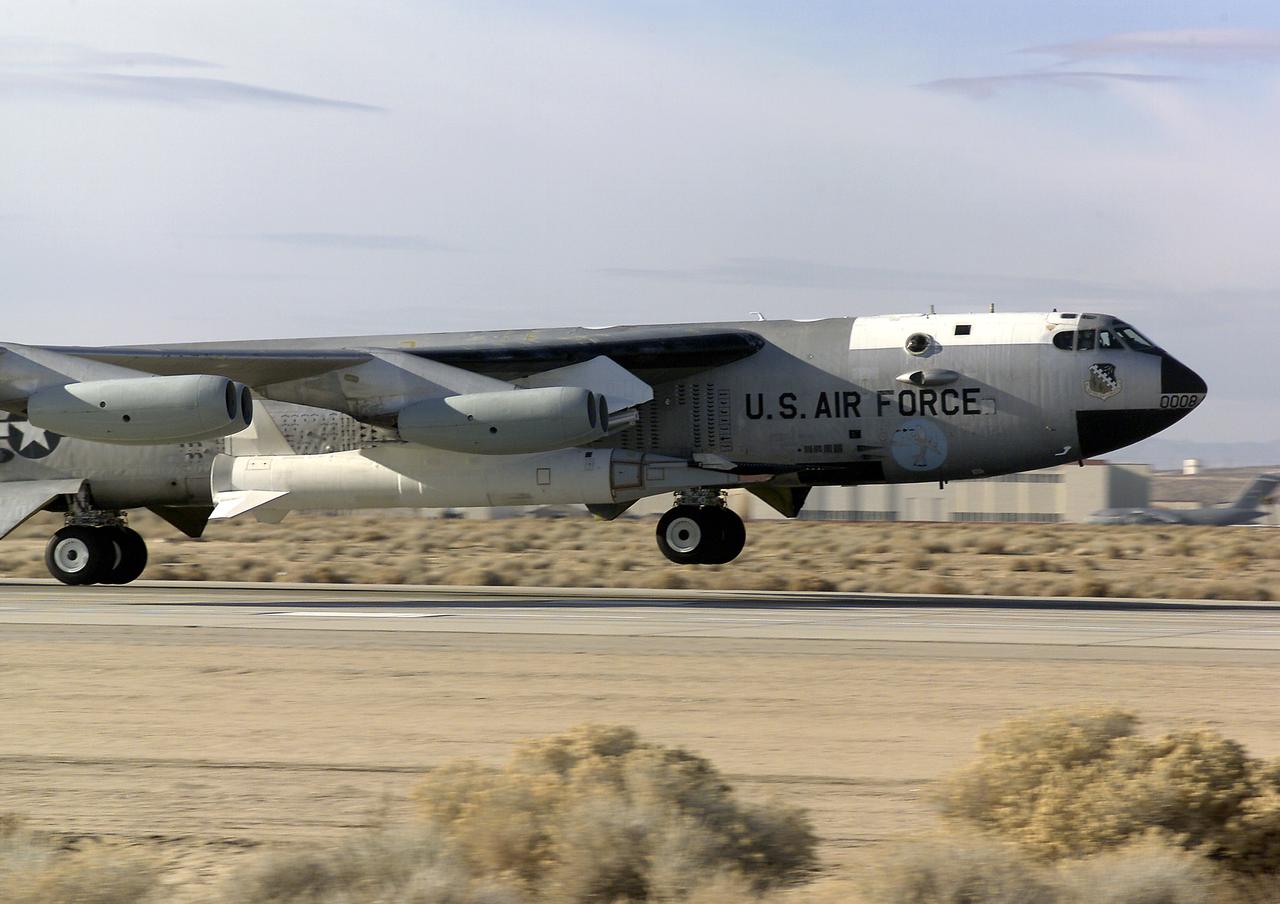
Hitching a ride on the same B-52 mother ship that once launched X-15 research aircraft in the 1960s, NASA's X-43A scramjet and it's Pegasus booster rocket performed a captive carry evaluation flight from Edwards Air Force Base, California, January 26, 2004. The X-43 and it's booster remained mated to the B-52 throughout this mission, intended to check its readiness for launch. The hydrogen-fueled aircraft is autonomous and has a wingspan of approximately 5 feet, measures 12 feet long and weighs about 2,800 pounds.
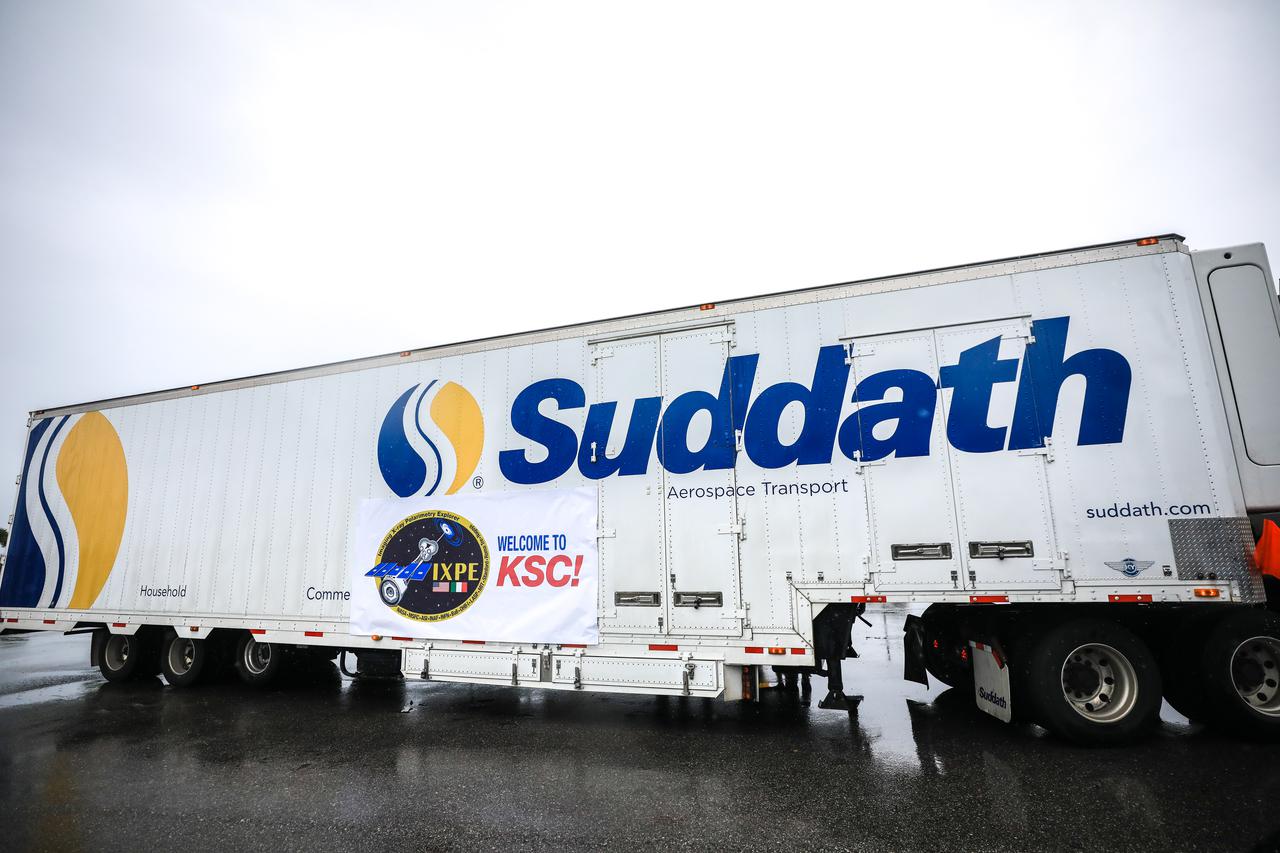
NASA’s Imaging X-Ray Polarimetry Explorer (IXPE) spacecraft – the agency’s first mission dedicated to measuring X-ray polarization – arrives at the Cape Canaveral Space Force Station in Florida on Nov. 5, 2021. IXPE is scheduled to launch aboard a SpaceX Falcon 9 vehicle from Kennedy’s Launch Complex 39A on Dec. 9, 2021. The launch is managed by NASA’s Launch Services Program, based at Kennedy. IXPE will study the polarization of X-rays coming to us from some of the universe’s most extreme sources, including black holes and dead stars known as pulsars.
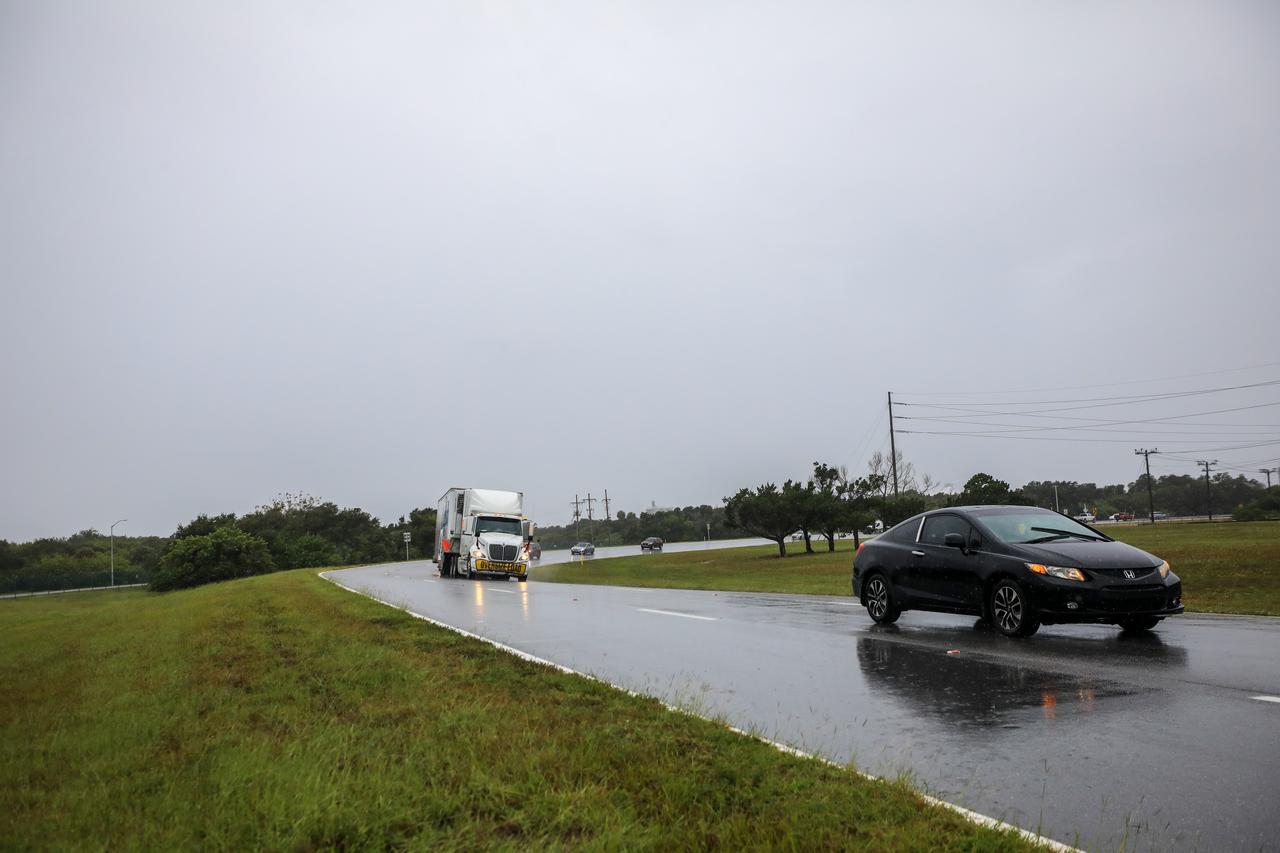
NASA’s Imaging X-Ray Polarimetry Explorer (IXPE) spacecraft – the agency’s first mission dedicated to measuring X-ray polarization – arrives at the Cape Canaveral Space Force Station in Florida on Nov. 5, 2021. IXPE is scheduled to launch aboard a SpaceX Falcon 9 vehicle from Kennedy’s Launch Complex 39A on Dec. 9, 2021. The launch is managed by NASA’s Launch Services Program, based at Kennedy. IXPE will study the polarization of X-rays coming to us from some of the universe’s most extreme sources, including black holes and dead stars known as pulsars.
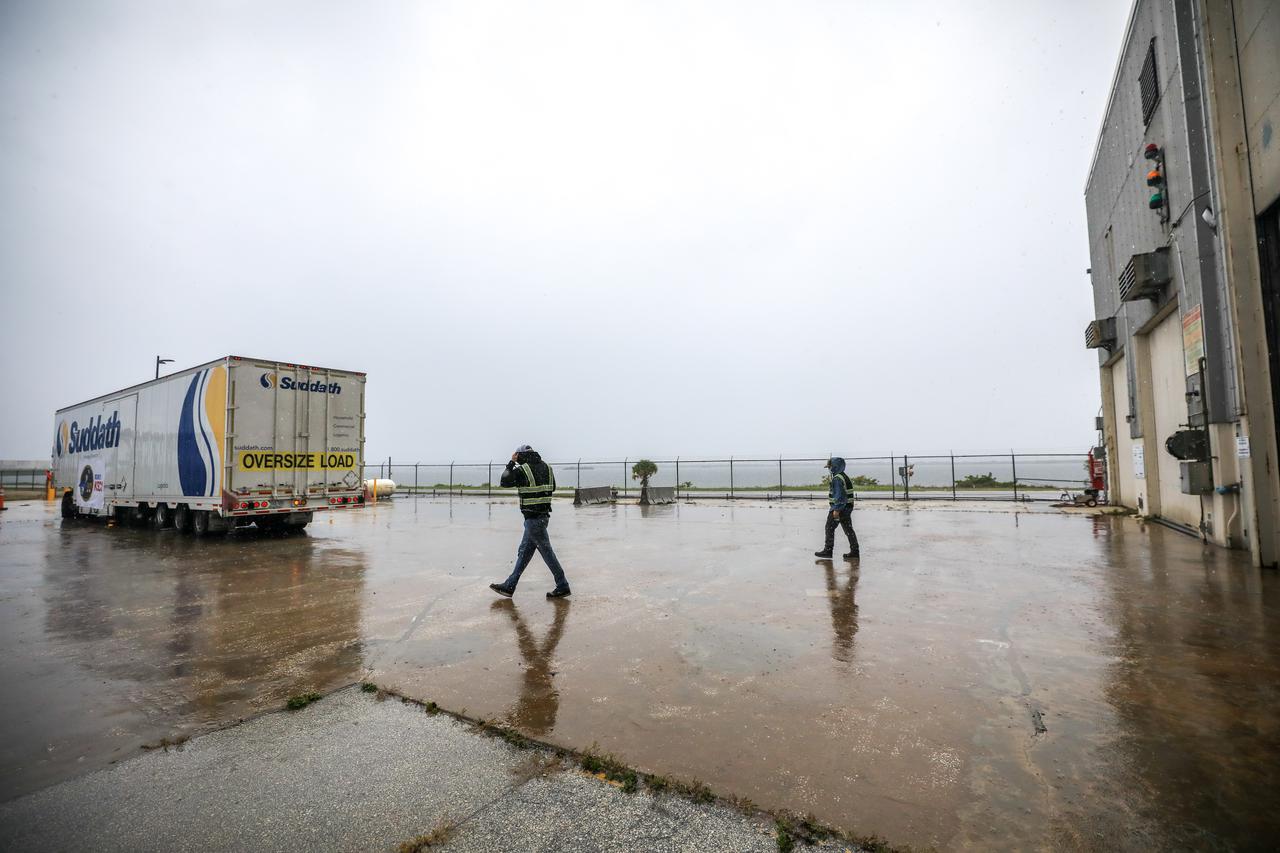
NASA’s Imaging X-Ray Polarimetry Explorer (IXPE) spacecraft – the agency’s first mission dedicated to measuring X-ray polarization – arrives at the Cape Canaveral Space Force Station in Florida on Nov. 5, 2021. IXPE is scheduled to launch aboard a SpaceX Falcon 9 vehicle from Kennedy’s Launch Complex 39A on Dec. 9, 2021. The launch is managed by NASA’s Launch Services Program, based at Kennedy. IXPE will study the polarization of X-rays coming to us from some of the universe’s most extreme sources, including black holes and dead stars known as pulsars.

Chandra X-Ray Observatory provided this composite X-ray (blue and green) and optical (red) image of the active galaxy NGC 1068 showing gas blowing away in a high-speed wind from the vicinity of a central supermassive black hole. Regions of intense star formation in the irner spiral arms of the galaxy are highlighted by both optical and x-ray emissions. A doughnut shaped cloud of cool gas and dust surrounding the black hole, known as the torus, appears as the elongated white spot . It has has a mass of about 5 million suns and is estimated to extend from within a few light years of the black hole out to about 300 light years.
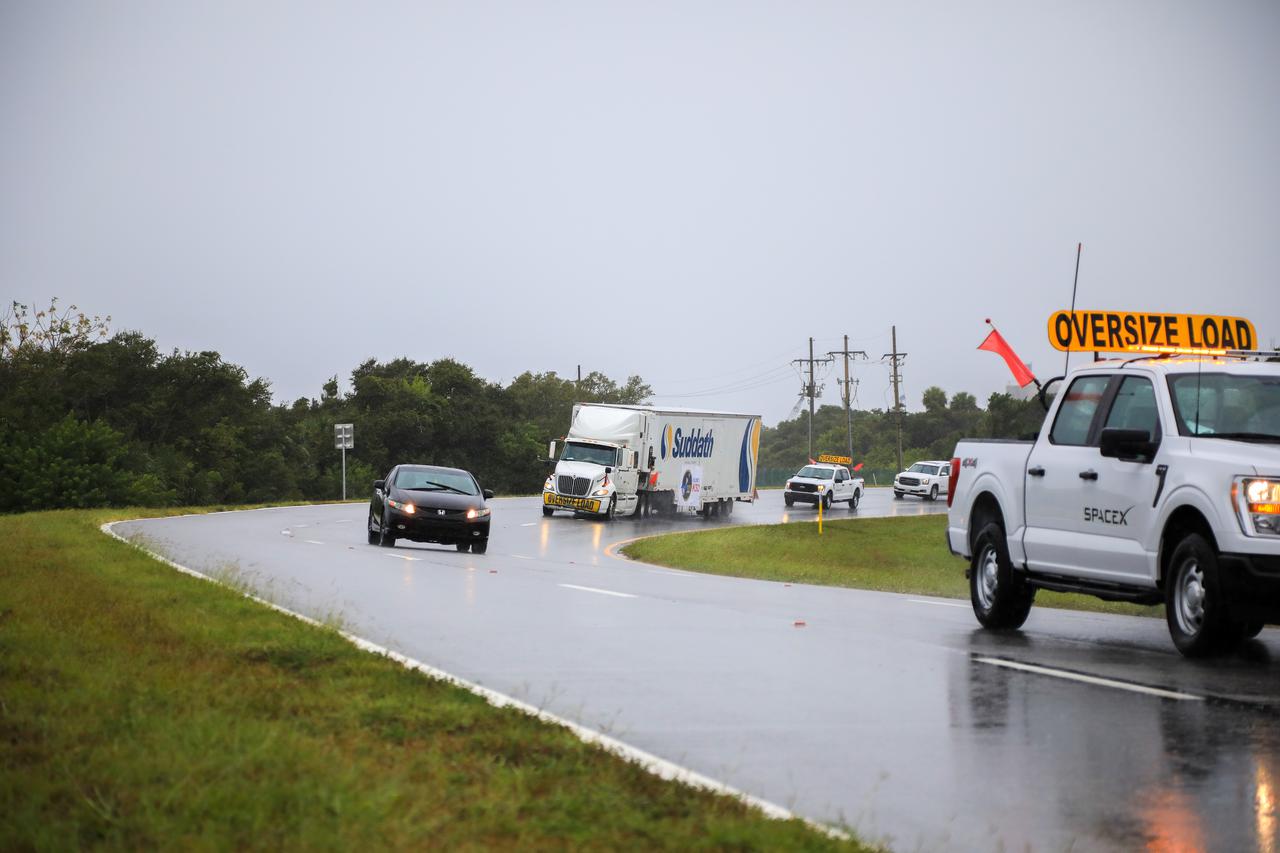
NASA’s Imaging X-Ray Polarimetry Explorer (IXPE) spacecraft – the agency’s first mission dedicated to measuring X-ray polarization – arrives at the Cape Canaveral Space Force Station in Florida on Nov. 5, 2021. IXPE is scheduled to launch aboard a SpaceX Falcon 9 vehicle from Kennedy’s Launch Complex 39A on Dec. 9, 2021. The launch is managed by NASA’s Launch Services Program, based at Kennedy. IXPE will study the polarization of X-rays coming to us from some of the universe’s most extreme sources, including black holes and dead stars known as pulsars.
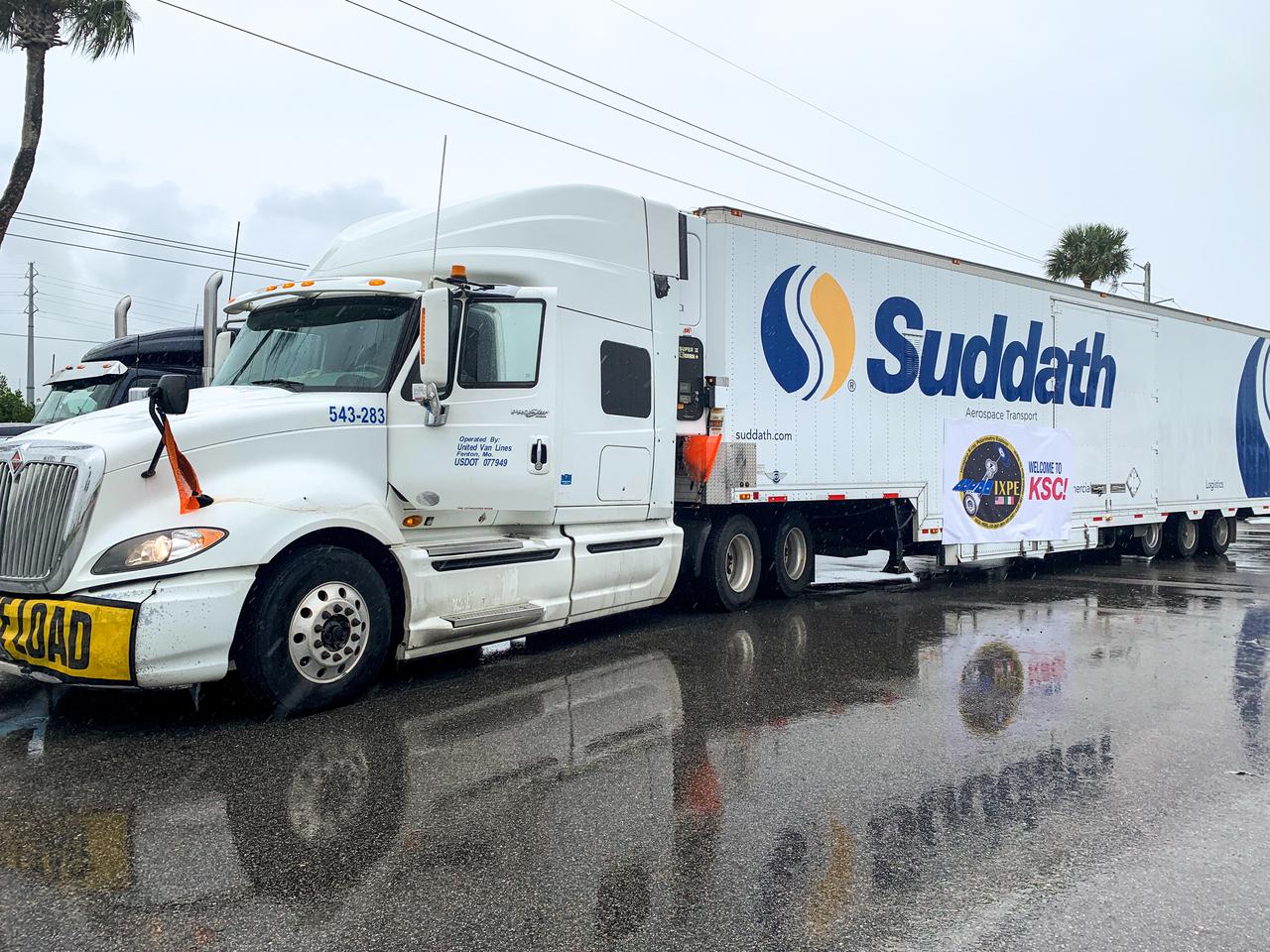
NASA’s Imaging X-Ray Polarimetry Explorer (IXPE) spacecraft – the agency’s first mission dedicated to measuring X-ray polarization – arrives at the Cape Canaveral Space Force Station in Florida on Nov. 5, 2021. IXPE is scheduled to launch aboard a SpaceX Falcon 9 vehicle from Kennedy’s Launch Complex 39A on Dec. 9, 2021. The launch is managed by NASA’s Launch Services Program, based at Kennedy. IXPE will study the polarization of X-rays coming to us from some of the universe’s most extreme sources, including black holes and dead stars known as pulsars.

NASA’s Imaging X-Ray Polarimetry Explorer (IXPE) spacecraft – the agency’s first mission dedicated to measuring X-ray polarization – arrives at the Cape Canaveral Space Force Station in Florida on Nov. 5, 2021. IXPE is scheduled to launch aboard a SpaceX Falcon 9 vehicle from Kennedy’s Launch Complex 39A on Dec. 9, 2021. The launch is managed by NASA’s Launch Services Program, based at Kennedy. IXPE will study the polarization of X-rays coming to us from some of the universe’s most extreme sources, including black holes and dead stars known as pulsars.
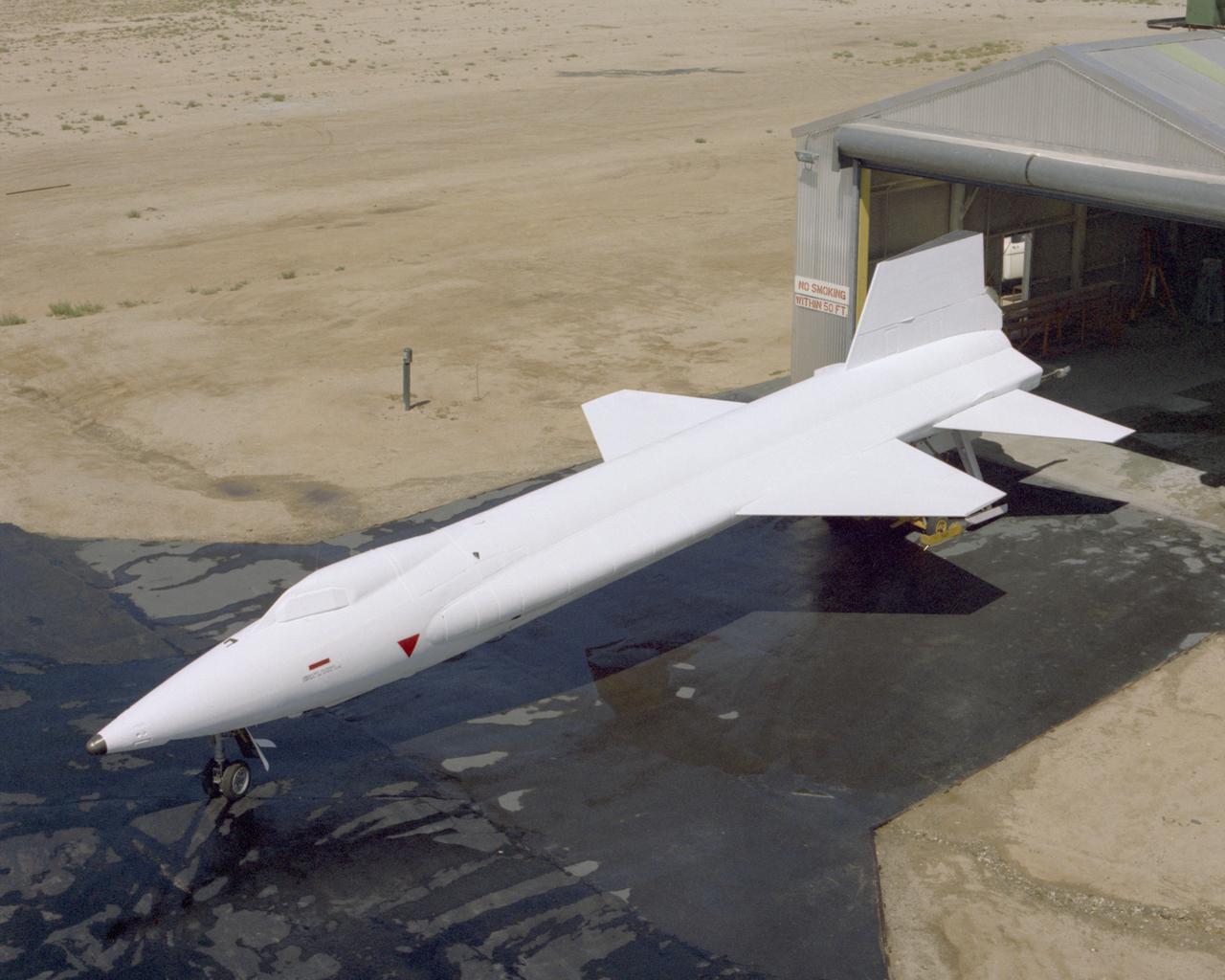
X-15A-2 is rolled out of the paint shop after having the full scale ablative applied. In June 1967, the X-15A-2 rocket-powered research aircraft received a full-scale ablative coating to protect the craft from the high temperatures associated with hypersonic flight (above Mach 5). This pink eraser-like substance, applied to the X-15A-2 aircraft (56-6671), was then covered with a white sealant coat before flight. This coating would help the #2 aircraft reach the record speed of 4,520 mph (Mach 6.7).
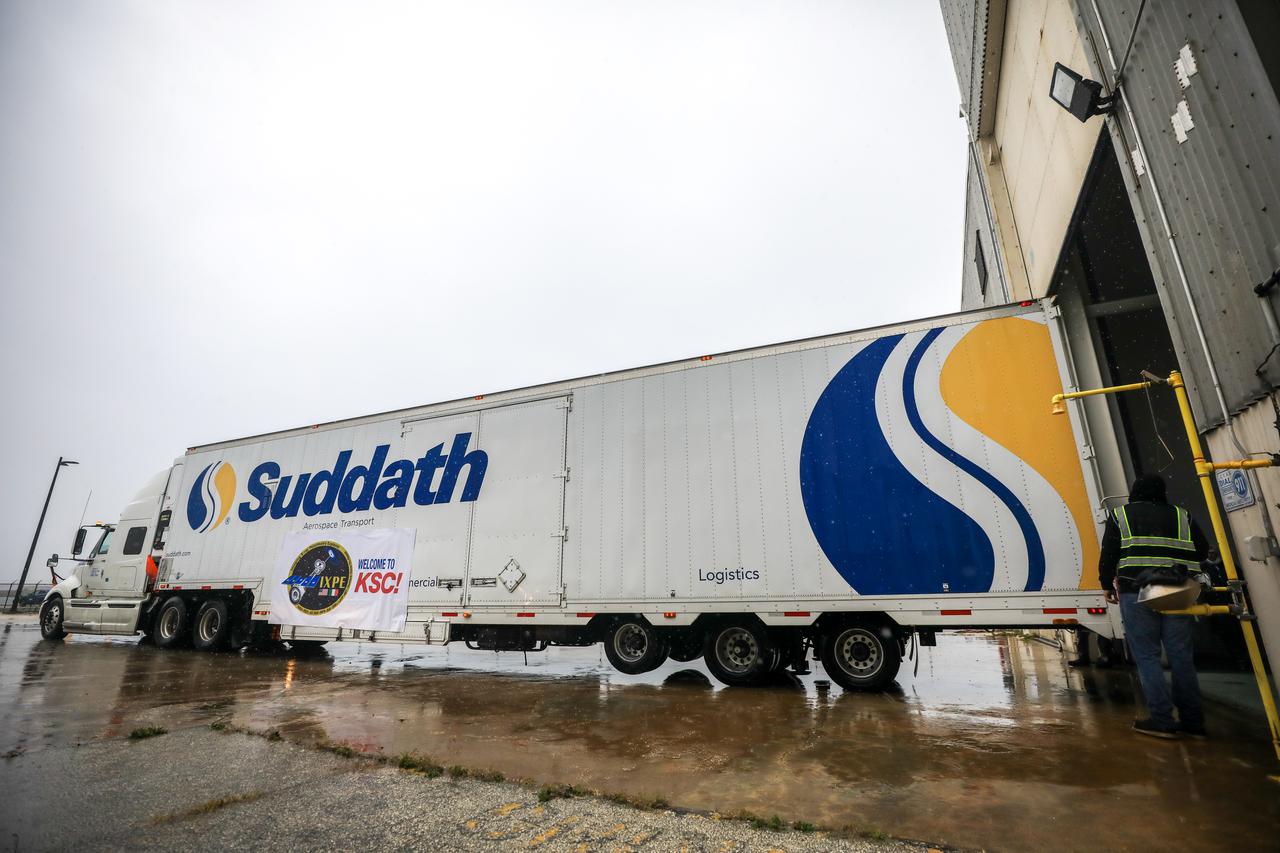
NASA’s Imaging X-Ray Polarimetry Explorer (IXPE) spacecraft – the agency’s first mission dedicated to measuring X-ray polarization – arrives at the Cape Canaveral Space Force Station in Florida on Nov. 5, 2021. IXPE is scheduled to launch aboard a SpaceX Falcon 9 vehicle from Kennedy’s Launch Complex 39A on Dec. 9, 2021. The launch is managed by NASA’s Launch Services Program, based at Kennedy. IXPE will study the polarization of X-rays coming to us from some of the universe’s most extreme sources, including black holes and dead stars known as pulsars.

NASA’s Imaging X-Ray Polarimetry Explorer (IXPE) spacecraft – the agency’s first mission dedicated to measuring X-ray polarization – arrives at the Cape Canaveral Space Force Station in Florida on Nov. 5, 2021. IXPE is scheduled to launch aboard a SpaceX Falcon 9 vehicle from Kennedy’s Launch Complex 39A on Dec. 9, 2021. The launch is managed by NASA’s Launch Services Program, based at Kennedy. IXPE will study the polarization of X-rays coming to us from some of the universe’s most extreme sources, including black holes and dead stars known as pulsars.
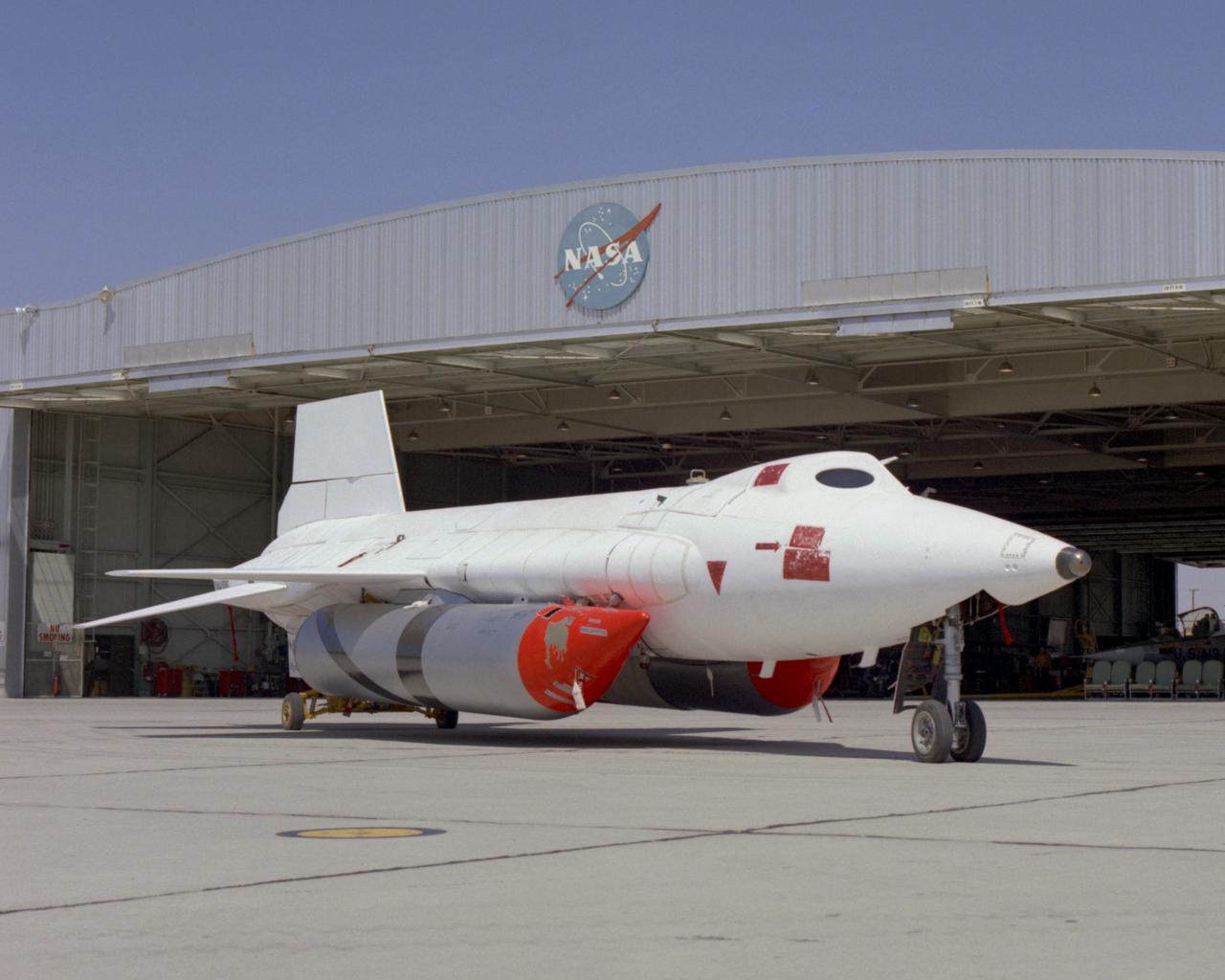
X-15A-2 with full scale ablative and external tanks installed parked in front of hangar. In June 1967, the X-15A-2 rocket-powered research aircraft received a full-scale ablative coating to protect the craft from the high temperatures associated with hypersonic flight (above Mach 5). This pink eraser-like substance, applied to the X-15A-2 aircraft (56-6671), was then covered with a white sealant coat before flight. This coating would help the #2 aircraft reach the record speed of 4,520 mph (Mach 6.7).

NASA’s Imaging X-Ray Polarimetry Explorer (IXPE) spacecraft – the agency’s first mission dedicated to measuring X-ray polarization – arrives at the Cape Canaveral Space Force Station in Florida on Nov. 5, 2021. IXPE is scheduled to launch aboard a SpaceX Falcon 9 vehicle from Kennedy’s Launch Complex 39A on Dec. 9, 2021. The launch is managed by NASA’s Launch Services Program, based at Kennedy. IXPE will study the polarization of X-rays coming to us from some of the universe’s most extreme sources, including black holes and dead stars known as pulsars.
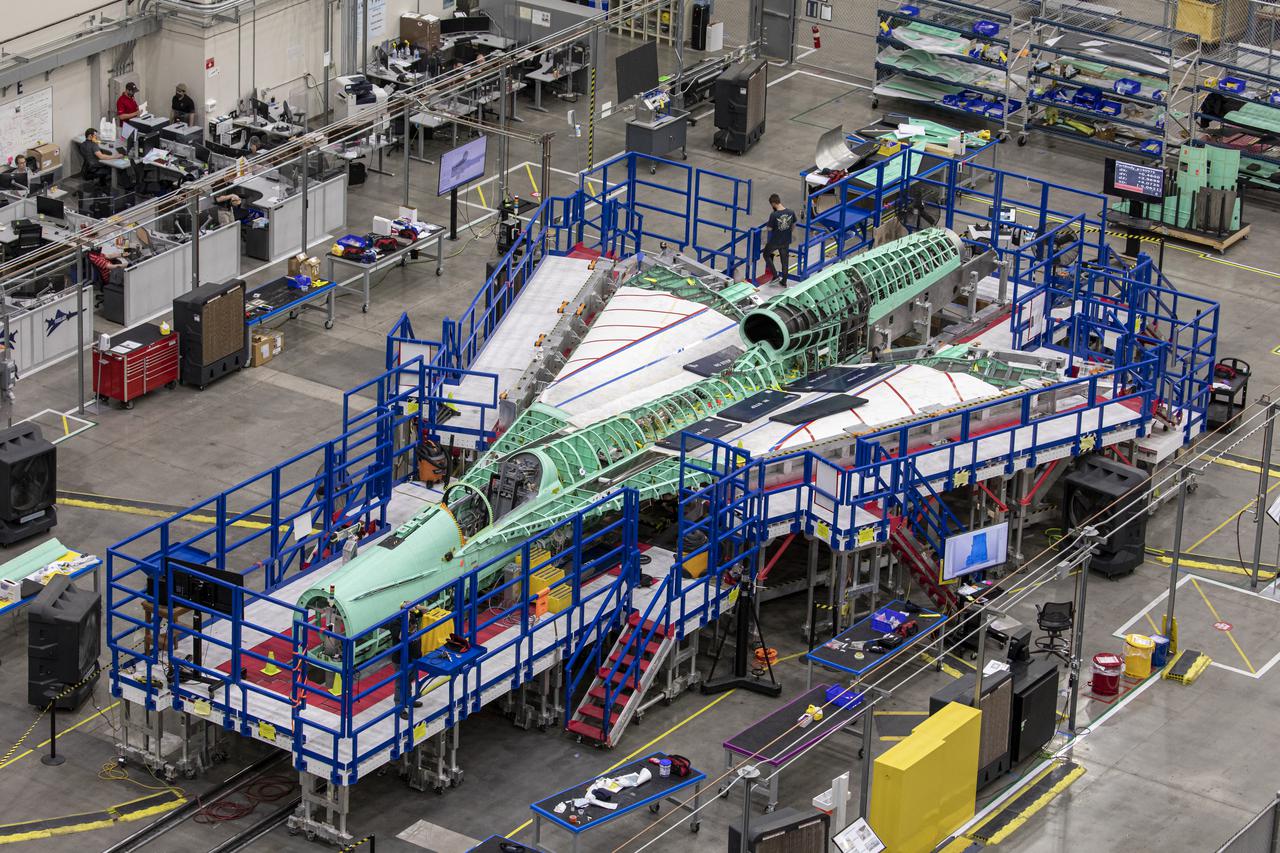
The team at Lockheed Martin Skunk Works in Palmdale, California, merged the major sections of the X-59 Quiet SuperSonic Technology aircraft, which includes the wing, tail assembly, and fuselage or forward section. This marks the first time the X-59 resembles an actual aircraft. (Pictured here is a overhead view of the X-59 as it comes together for the major assembly merger in summer 2021.) Lockheed Martin Photography By Garry Tice 1011 Lockheed Way, Palmdale, Ca. 93599 Event: Manufacturing Area From Above Date: 5/26/2021
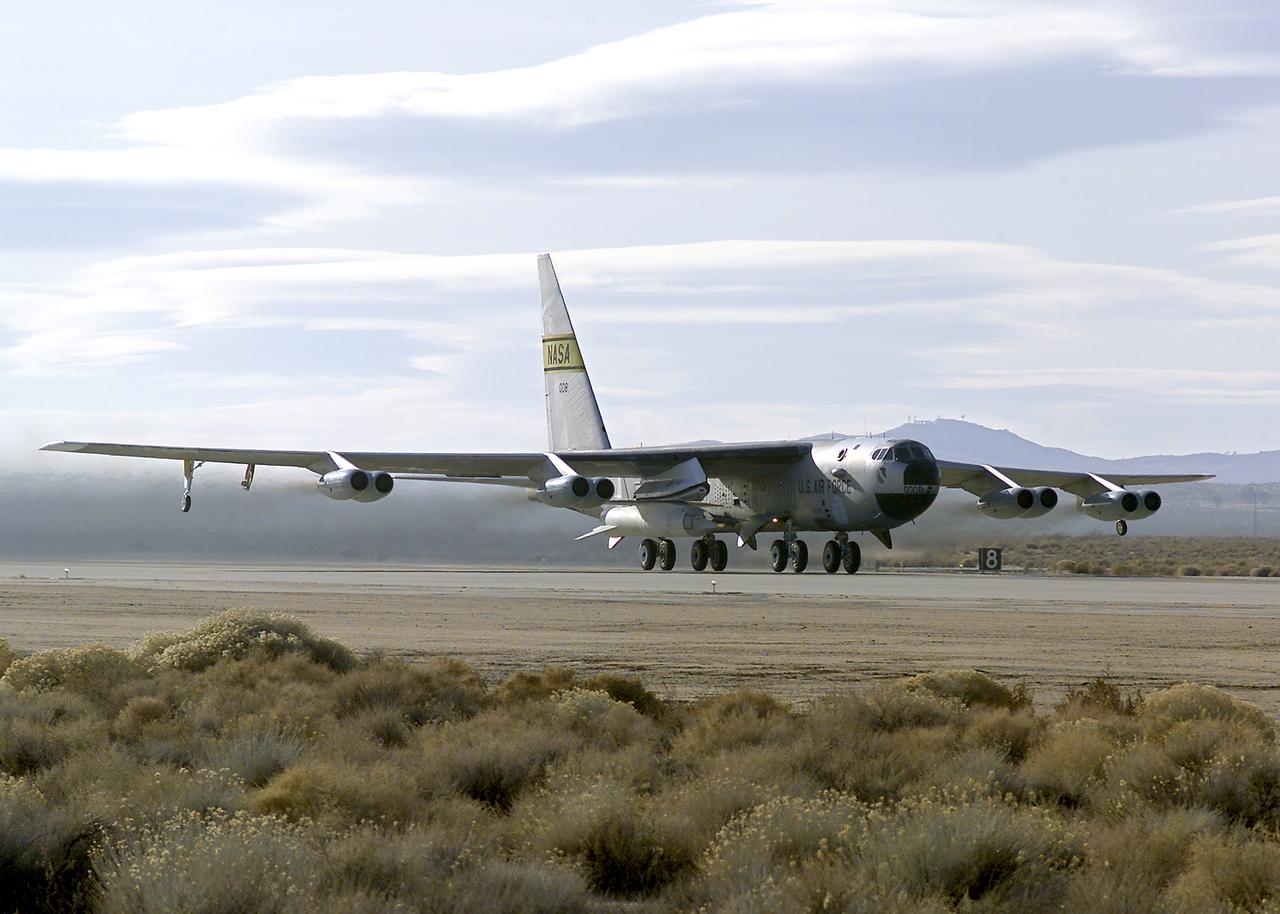
Hitching a ride on the same B-52 mother ship that once launched X-15 research aircraft in the 1960s, NASA's X-43A scramjet and it's Pegasus booster rocket performed a captive carry evaluation flight from Edwards Air Force Base, California, January 26, 2004. The X-43 and it's booster remained mated to the B-52 throughout this mission, intended to check its readiness for launch. The hydrogen-fueled aircraft is autonomous and has a wingspan of approximately 5 feet, measures 12 feet long and weighs about 2,800 pounds.
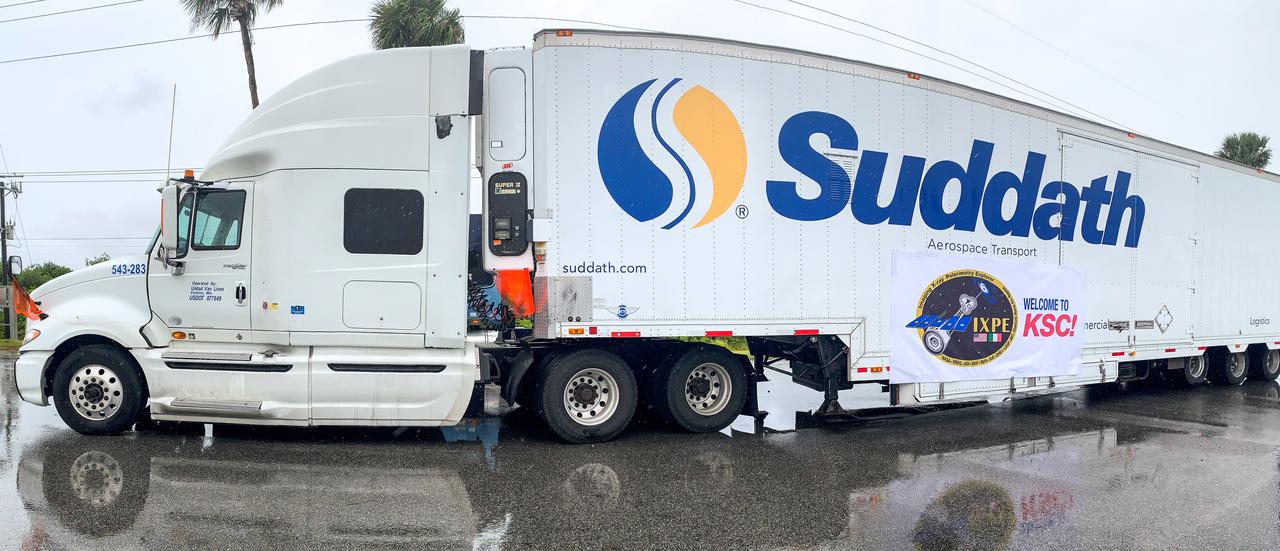
NASA’s Imaging X-Ray Polarimetry Explorer (IXPE) spacecraft – the agency’s first mission dedicated to measuring X-ray polarization – arrives at the Cape Canaveral Space Force Station in Florida on Nov. 5, 2021. IXPE is scheduled to launch aboard a SpaceX Falcon 9 vehicle from Kennedy’s Launch Complex 39A on Dec. 9, 2021. The launch is managed by NASA’s Launch Services Program, based at Kennedy. IXPE will study the polarization of X-rays coming to us from some of the universe’s most extreme sources, including black holes and dead stars known as pulsars.
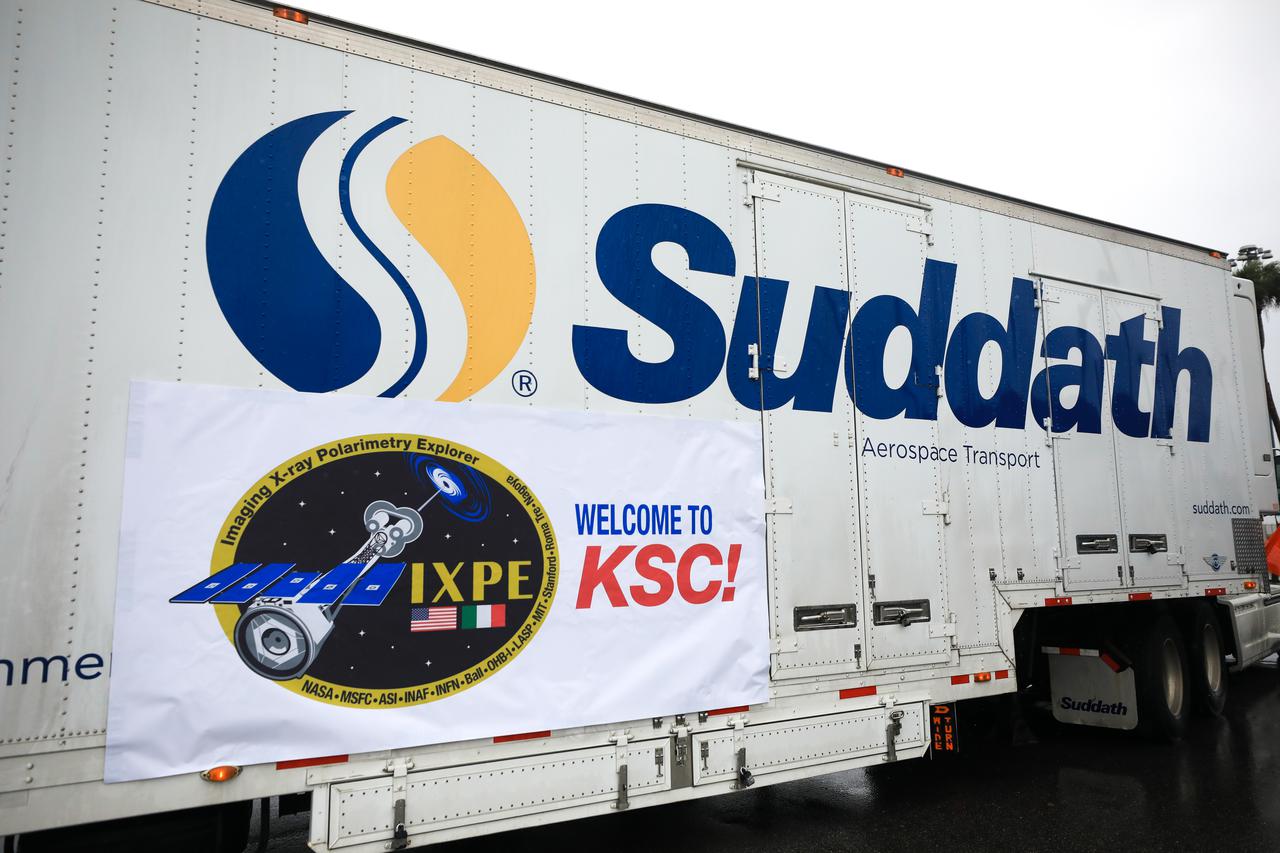
NASA’s Imaging X-Ray Polarimetry Explorer (IXPE) spacecraft – the agency’s first mission dedicated to measuring X-ray polarization – arrives at the Cape Canaveral Space Force Station in Florida on Nov. 5, 2021. IXPE is scheduled to launch aboard a SpaceX Falcon 9 vehicle from Kennedy’s Launch Complex 39A on Dec. 9, 2021. The launch is managed by NASA’s Launch Services Program, based at Kennedy. IXPE will study the polarization of X-rays coming to us from some of the universe’s most extreme sources, including black holes and dead stars known as pulsars.
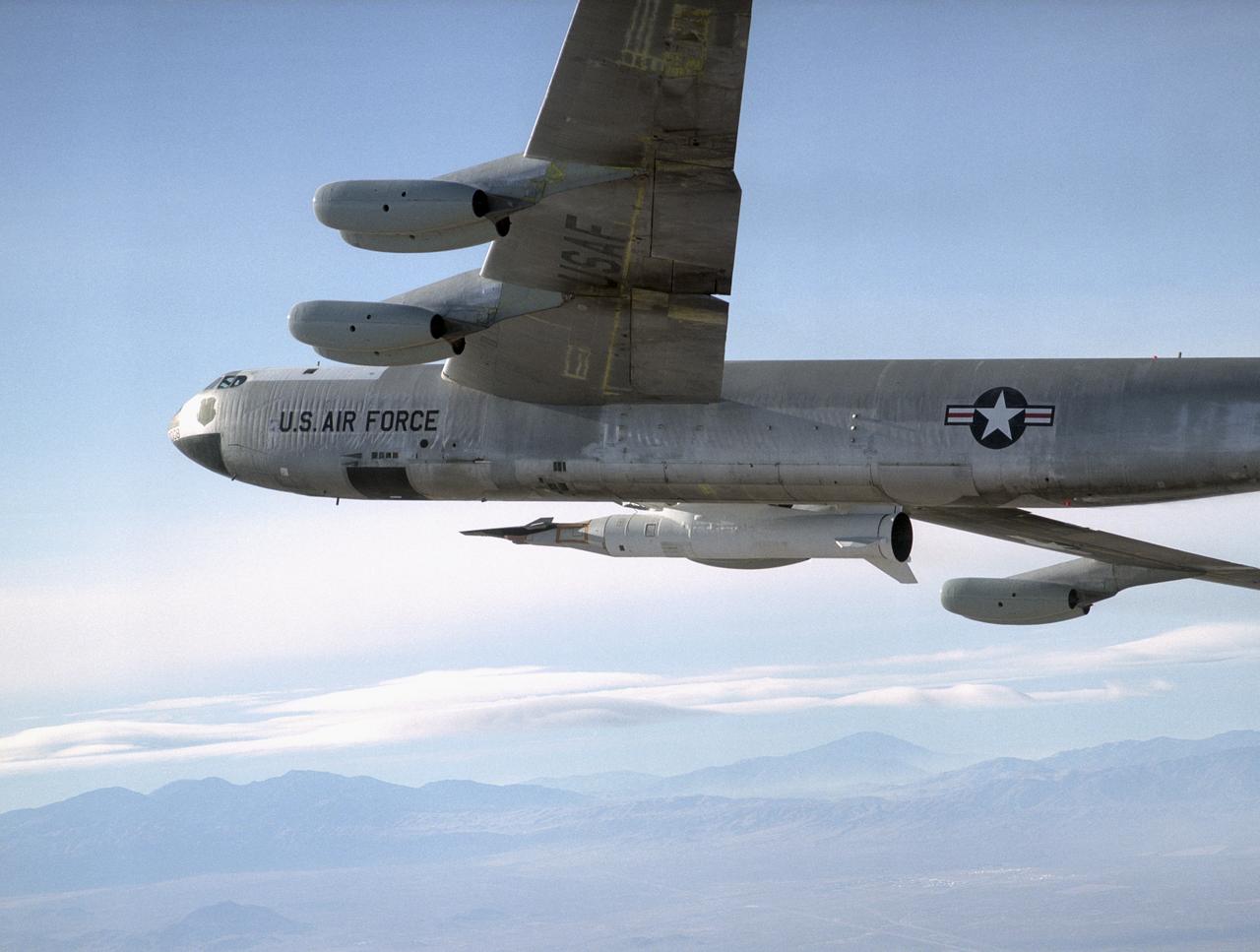
NASA's historic B-52 mother ship carried the X-43A and its Pegasus booster rocket on a captive carry flight from Edwards Air Force Base Jan. 26, 2004. The X-43A and its booster remained mated to the B-52 throughout the two-hour flight, intended to check its readiness for launch. The hydrogen-fueled aircraft is autonomous and has a wingspan of approximately 5 feet, measures 12 feet long and weighs about 2,800 pounds.
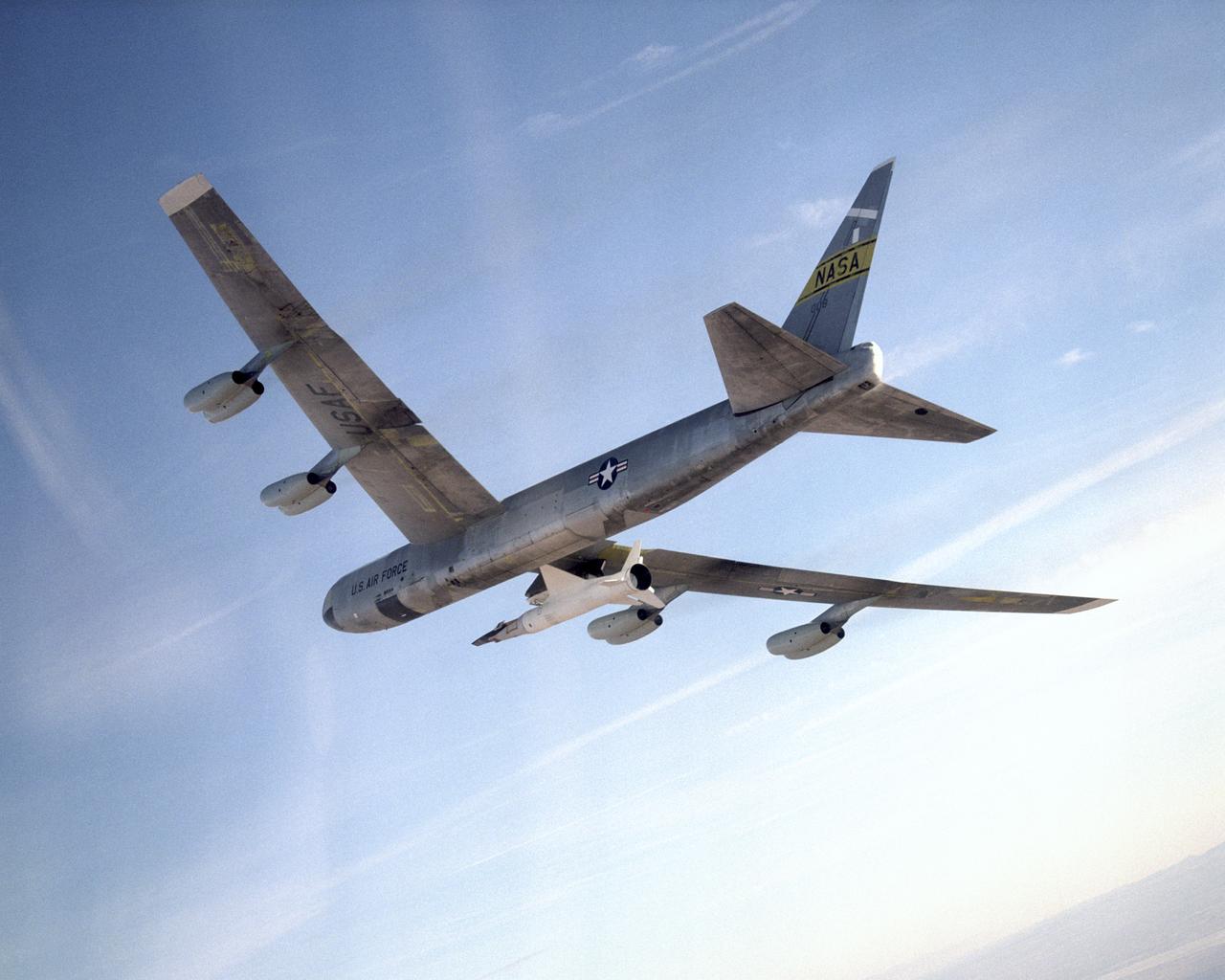
NASA's historic B-52 mother ship carried the X-43A and its Pegasus booster rocket on a captive carry flight from Edwards Air Force Base Jan. 26, 2004. The X-43A and its booster remained mated to the B-52 throughout the two-hour flight, intended to check its readiness for launch. The hydrogen-fueled aircraft is autonomous and has a wingspan of approximately 5 feet, measures 12 feet long and weighs about 2,800 pounds.
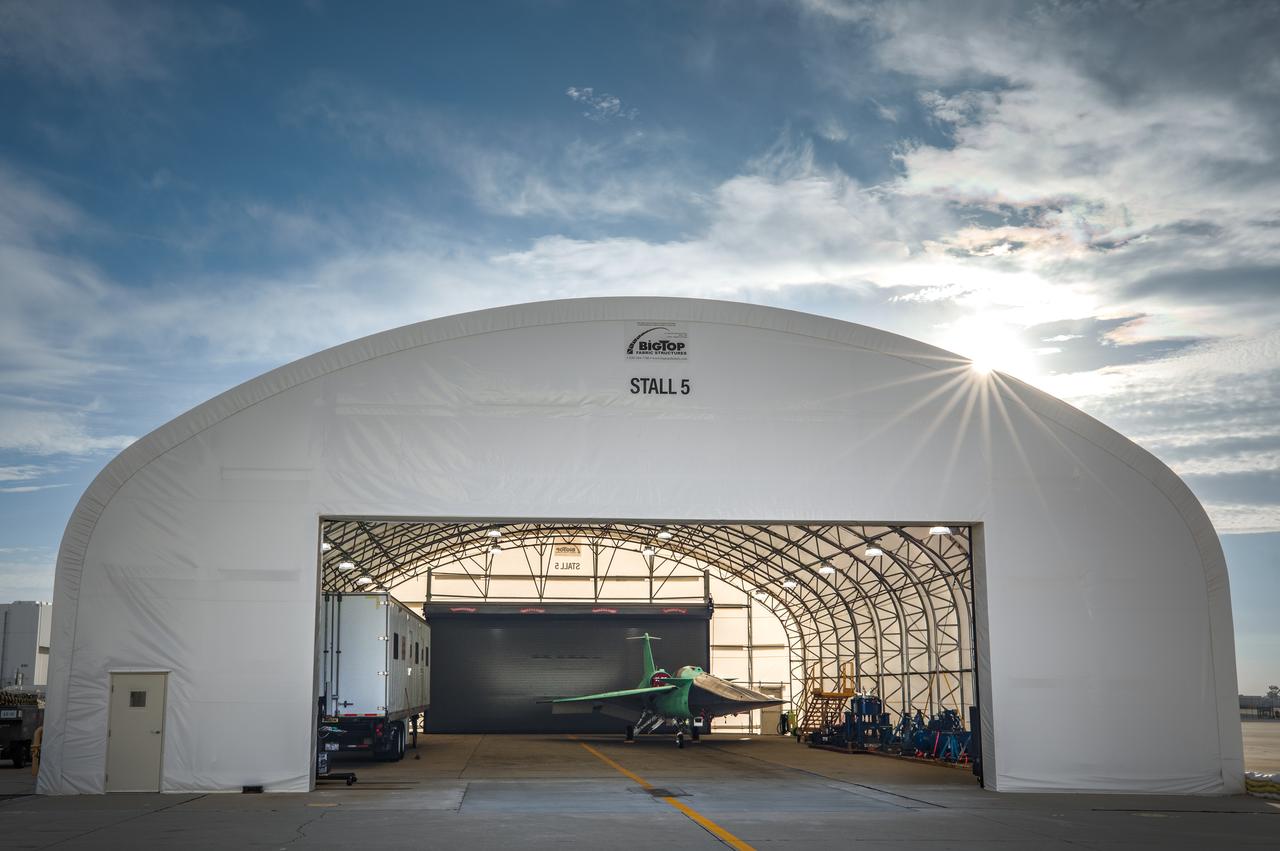
NASA’s X-59 aircraft is parked in stall five near the runway at Lockheed Martin Skunk Works in Palmdale, California, on June 19, 2023. This is where the X-59 will be housed during ground and initial flight tests. Lockheed Martin Photography By Garry Tice 1011 Lockheed Way, Palmdale, Ca. 93599 Event: Move to Run Stall 5 Date: 6/19/2023 Additional Info:
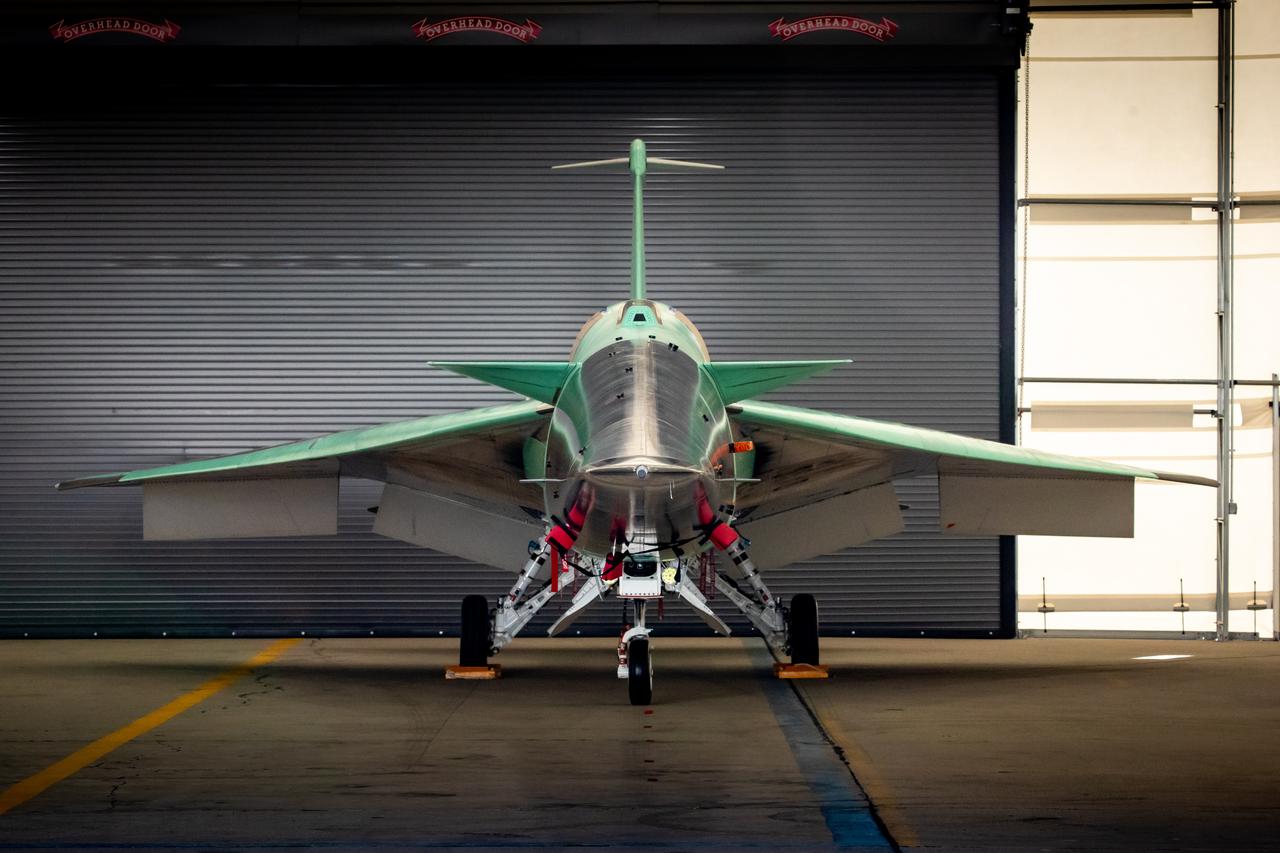
NASA’s X-59 aircraft is parked near the runway at Lockheed Martin Skunk Works in Palmdale, California, on June 19, 2023. This is where the X-59 will be housed during ground and initial flight tests. Lockheed Martin Photography By Garry Tice 1011 Lockheed Way, Palmdale, Ca. 93599 Event: Move to Run Stall 5 Date: 6/19/2023 Additional Info:
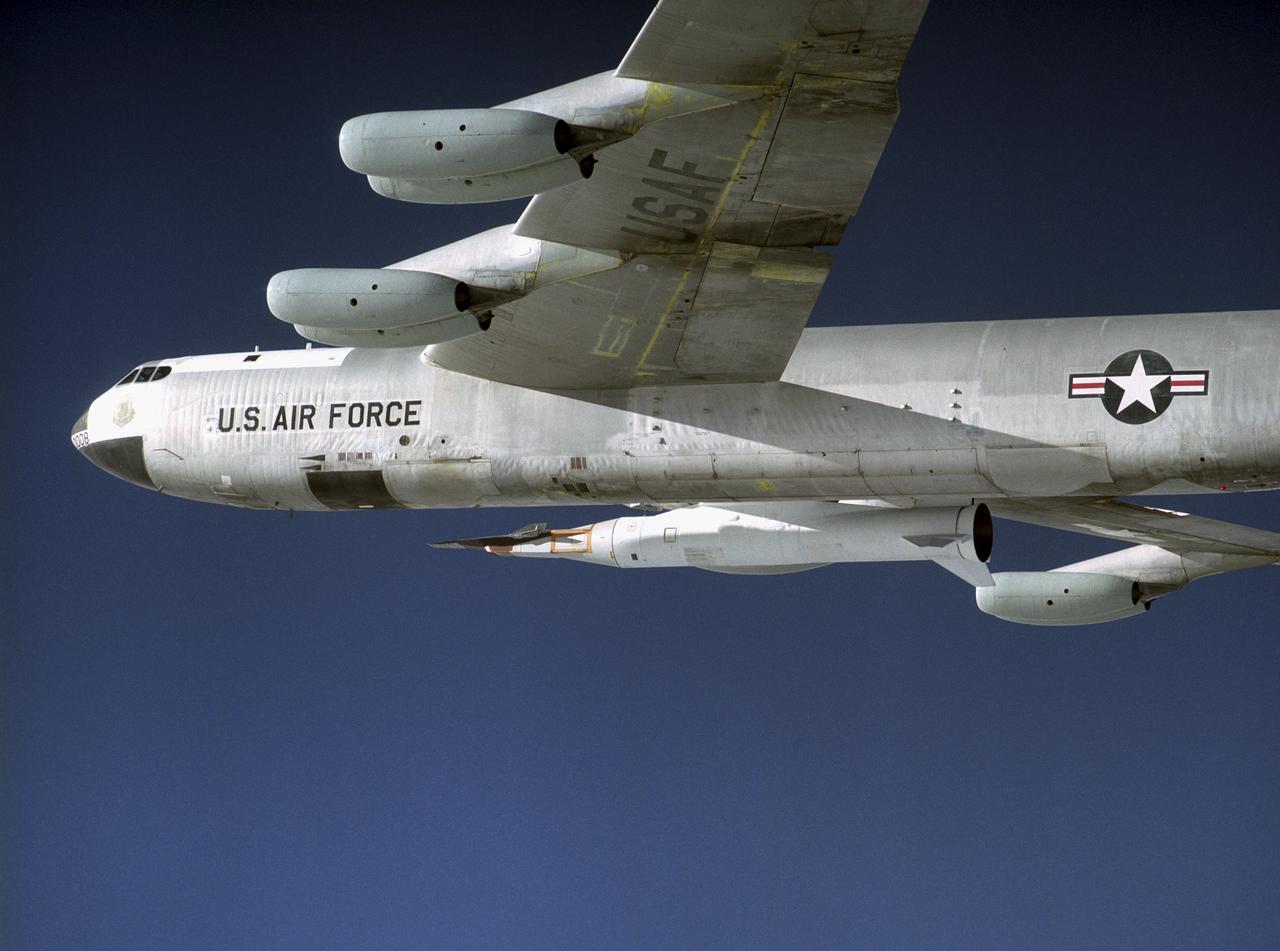
NASA's historic B-52 mother ship carried the X-43A and its Pegasus booster rocket on a captive carry flight from Edwards Air Force Base Jan. 26, 2004. The X-43A and its booster remained mated to the B-52 throughout the two-hour flight, intended to check its readiness for launch. The hydrogen-fueled aircraft is autonomous and has a wingspan of approximately 5 feet, measures 12 feet long and weighs about 2,800 pounds.
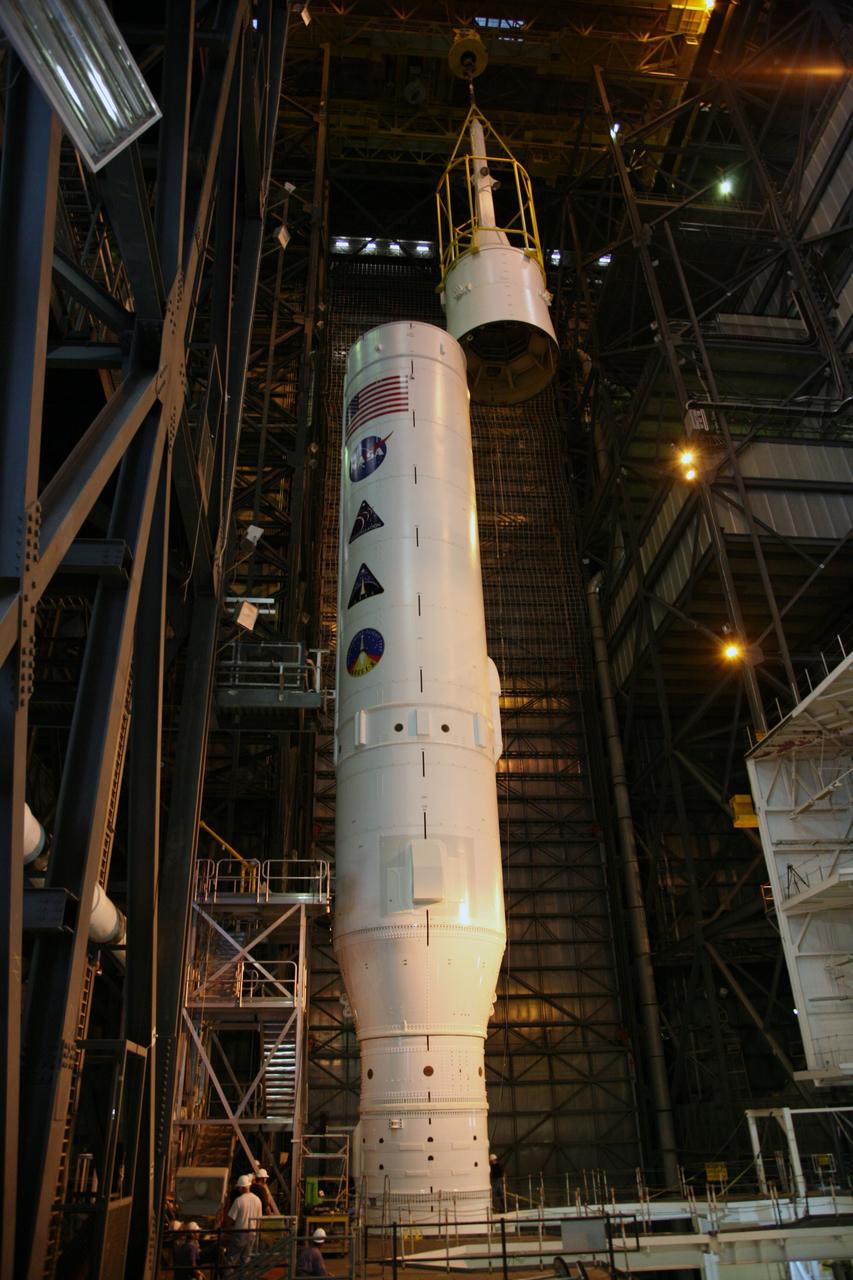
CAPE CANAVERAL, Fla. – In the Vehicle Assembly Building's High Bay 3, the yellow framework, nicknamed the "birdcage," lifts Super Stack 5 to the top of the Ares I-X segments already in place on the mobile launcher platform. Once in position, assembly of the Ares I-X rocket will be complete. The 327-foot-tall rocket is one of the largest processed in the bay, rivaling the height of the Apollo Program's 364-foot-tall Saturn V. Five super stacks make up the rocket's upper stage that is integrated with the four-segment solid rocket booster first stage. Ares I-X is the test vehicle for the Ares I, which is part of the Constellation Program to return men to the moon and beyond. The Ares I-X flight test is targeted for Oct. 31, pending formal NASA Headquarters approval. Photo credit: NASA/Dimitri Gerondidakis
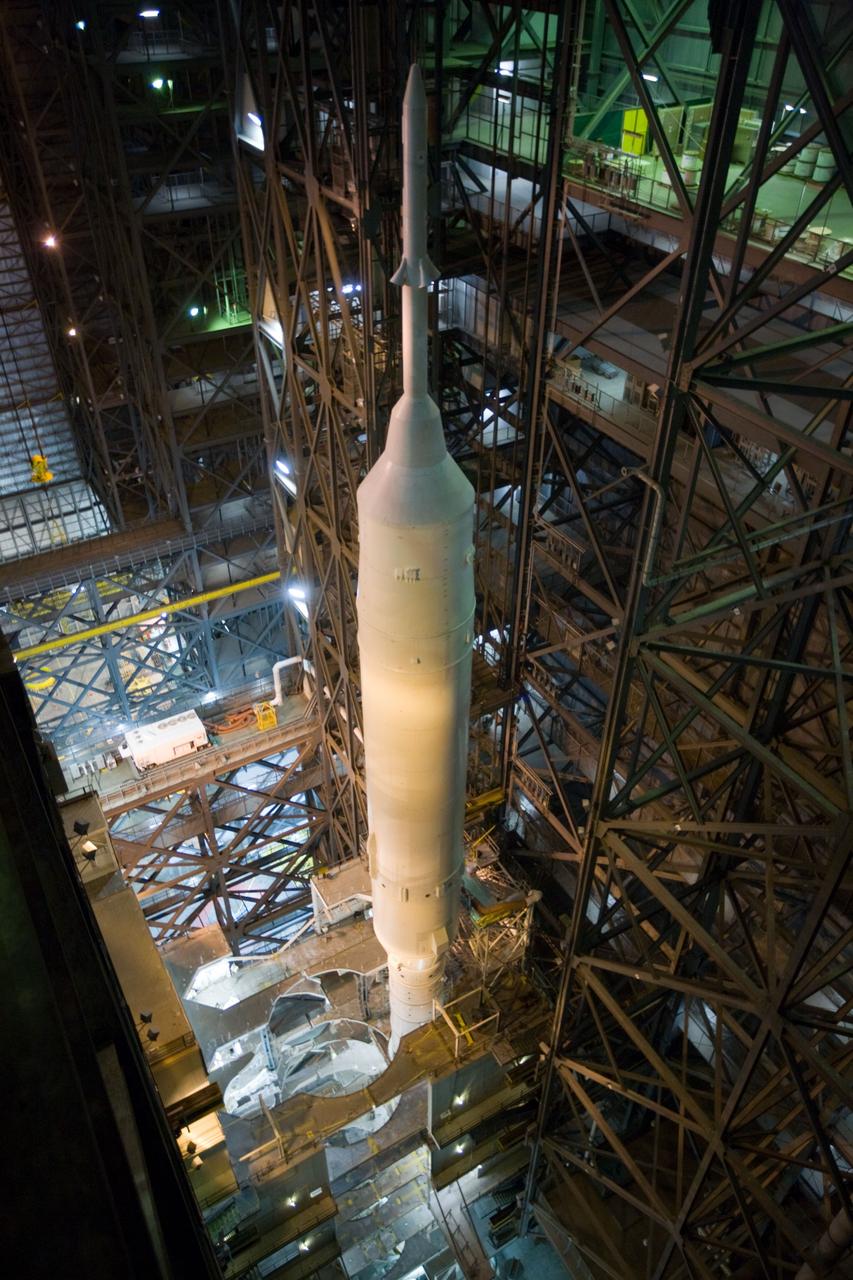
CAPE CANAVERAL, Fla. – In the Vehicle Assembly Building's High Bay 3, Super Stack 5 is secured to the Ares I-X segments already in place on the mobile launcher platform. Assembly of the Ares I-X rocket is complete. The 327-foot-tall rocket is one of the largest processed in the bay, rivaling the height of the Apollo Program's 364-foot-tall Saturn V. Five super stacks make up the rocket's upper stage that is integrated with the four-segment solid rocket booster first stage. Ares I-X is the test vehicle for the Ares I, which is part of the Constellation Program to return men to the moon and beyond. The Ares I-X flight test is targeted for Oct. 31, pending formal NASA Headquarters approval. Photo credit: NASA/Dimitri Gerondidakis
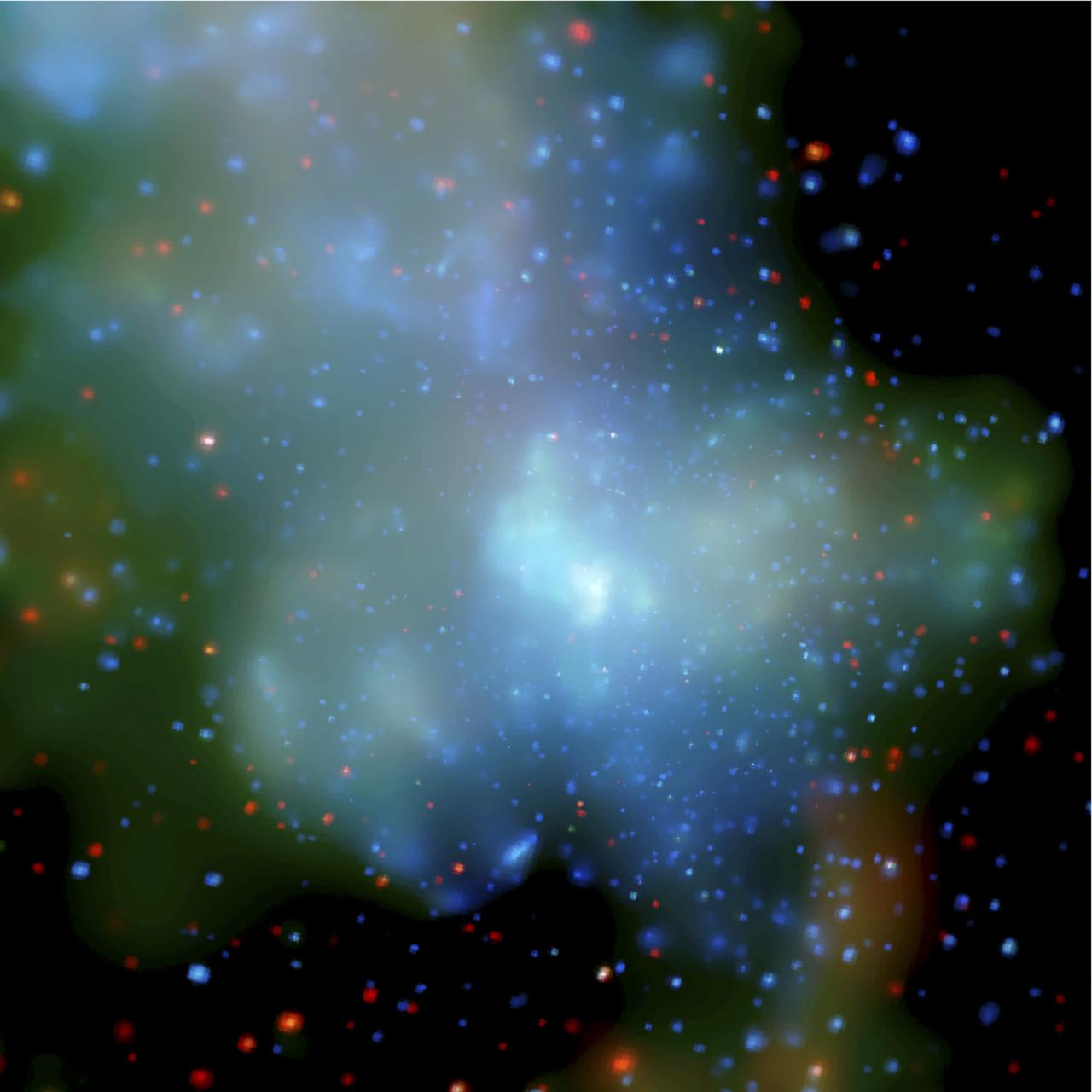
NASA’s Chandra X-Ray Observatory (CXO) was launched July 22, 1999 aboard the Space Shuttle Columbia, STS-93 mission. This image was produced by combining a dozen CXO observations made of a 130 light-year region in the center of the Milky Way over the last 5 years. The colors represent low (red), medium (green) and high (blue) energy x-rays. Thanks to Chandra's unique resolving power, astronomers have now been able to identify thousands of point-like x-ray sources due to neutron stars, black holes, white dwarfs, foreground stars, and background galaxies. What remains is a diffuse x-ray glow extending from the upper left to the lower right, along the direction of the disk of the galaxy. NASA’s Marshall Space Flight Center in Huntsville, Alabama manages the Chandra program. (NASA/CXC/UCLA/M. Muno et al.)
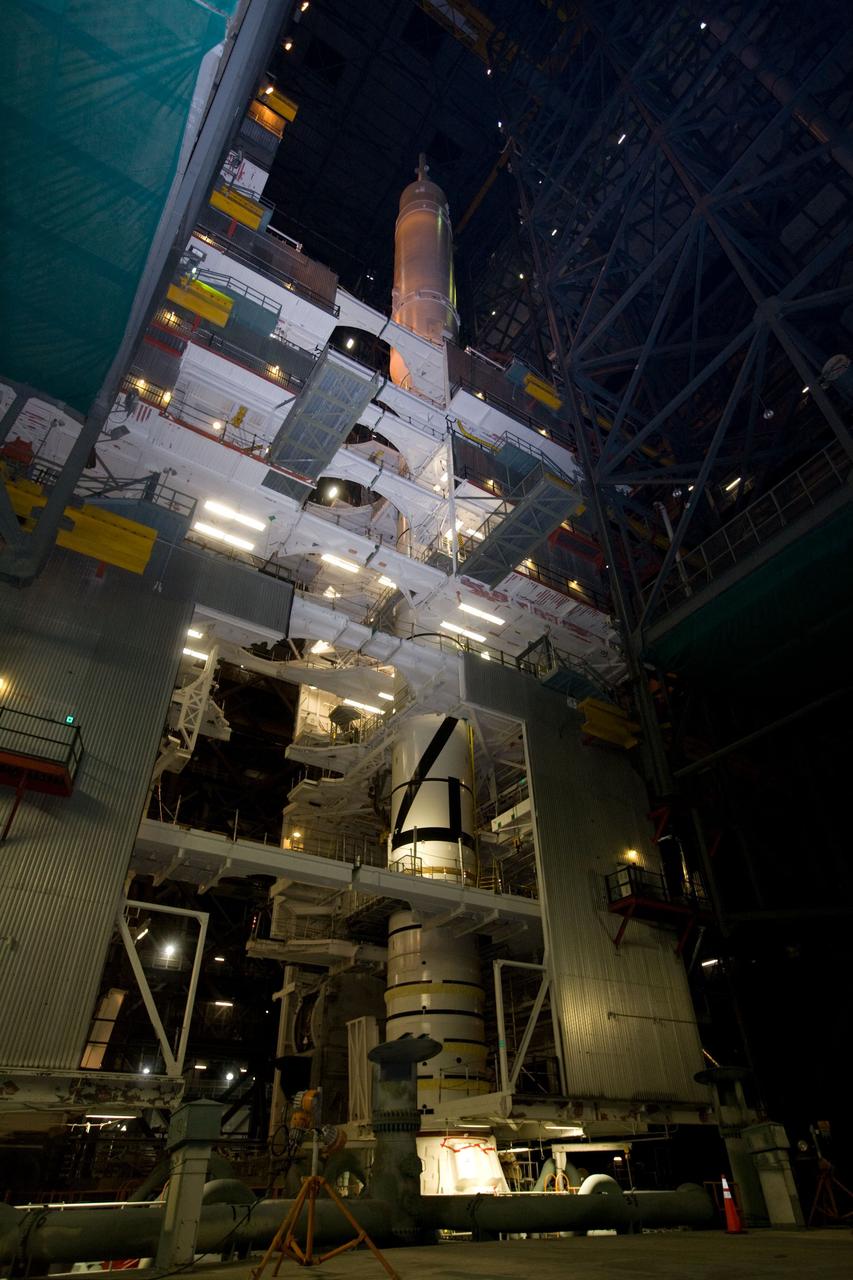
CAPE CANAVERAL, Fla. – In the Vehicle Assembly Building's High Bay 3, Super Stack 5 is secured to the Ares I-X segments already in place on the mobile launcher platform. Assembly of the Ares I-X rocket is complete. The 327-foot-tall rocket is one of the largest processed in the bay, rivaling the height of the Apollo Program's 364-foot-tall Saturn V. Five super stacks make up the rocket's upper stage that is integrated with the four-segment solid rocket booster first stage. Ares I-X is the test vehicle for the Ares I, which is part of the Constellation Program to return men to the moon and beyond. The Ares I-X flight test is targeted for Oct. 31, pending formal NASA Headquarters approval. Photo credit: NASA/Dimitri Gerondidakis
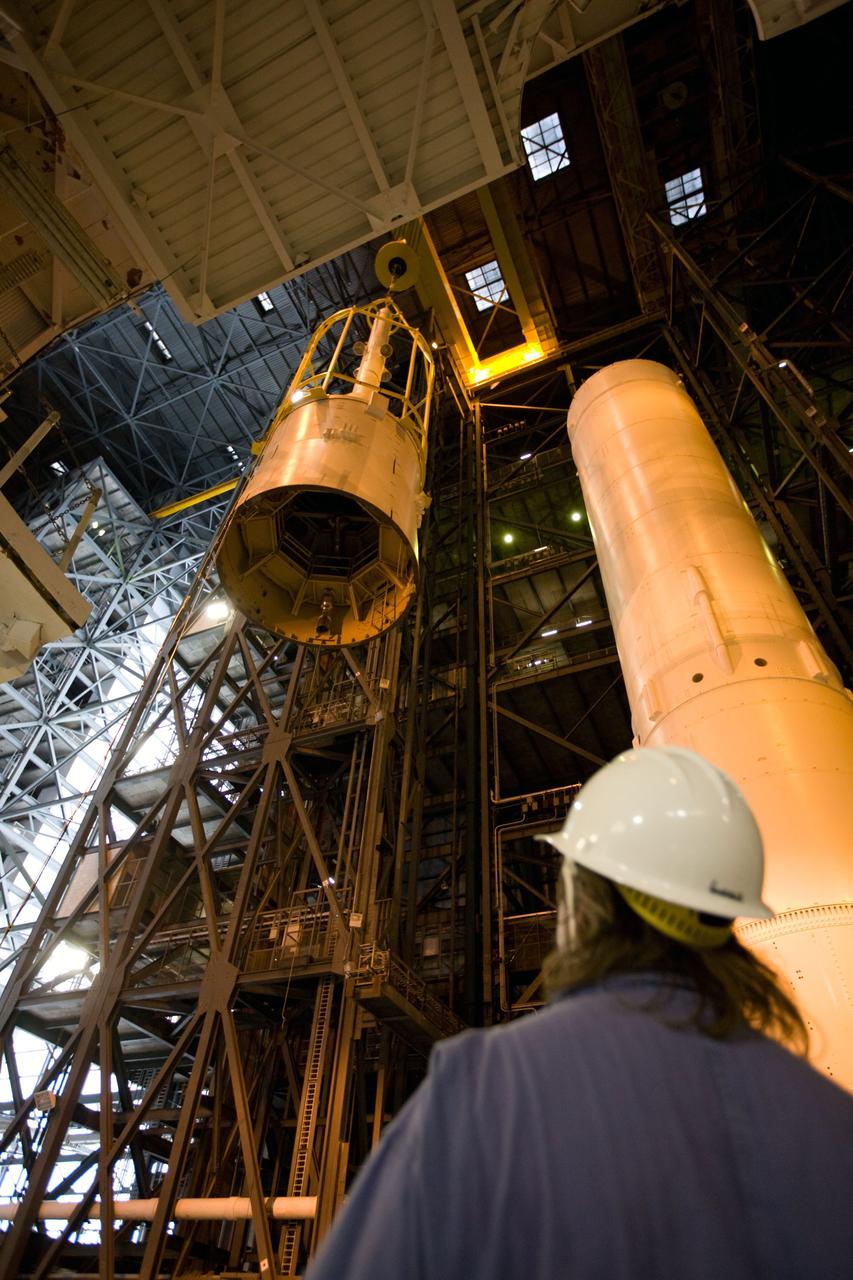
CAPE CANAVERAL, Fla. – In the Vehicle Assembly Building's High Bay 3, a technician monitors the lift of Super Stack 5 by the yellow framework, nicknamed the "birdcage," to the top of the Ares I-X segments already in place on the mobile launcher platform. Once in position, assembly of the Ares I-X rocket will be complete. The 327-foot-tall rocket is one of the largest processed in the bay, rivaling the height of the Apollo Program's 364-foot-tall Saturn V. Five super stacks make up the rocket's upper stage that is integrated with the four-segment solid rocket booster first stage. Ares I-X is the test vehicle for the Ares I, which is part of the Constellation Program to return men to the moon and beyond. The Ares I-X flight test is targeted for Oct. 31, pending formal NASA Headquarters approval. Photo credit: NASA/Dimitri Gerondidakis
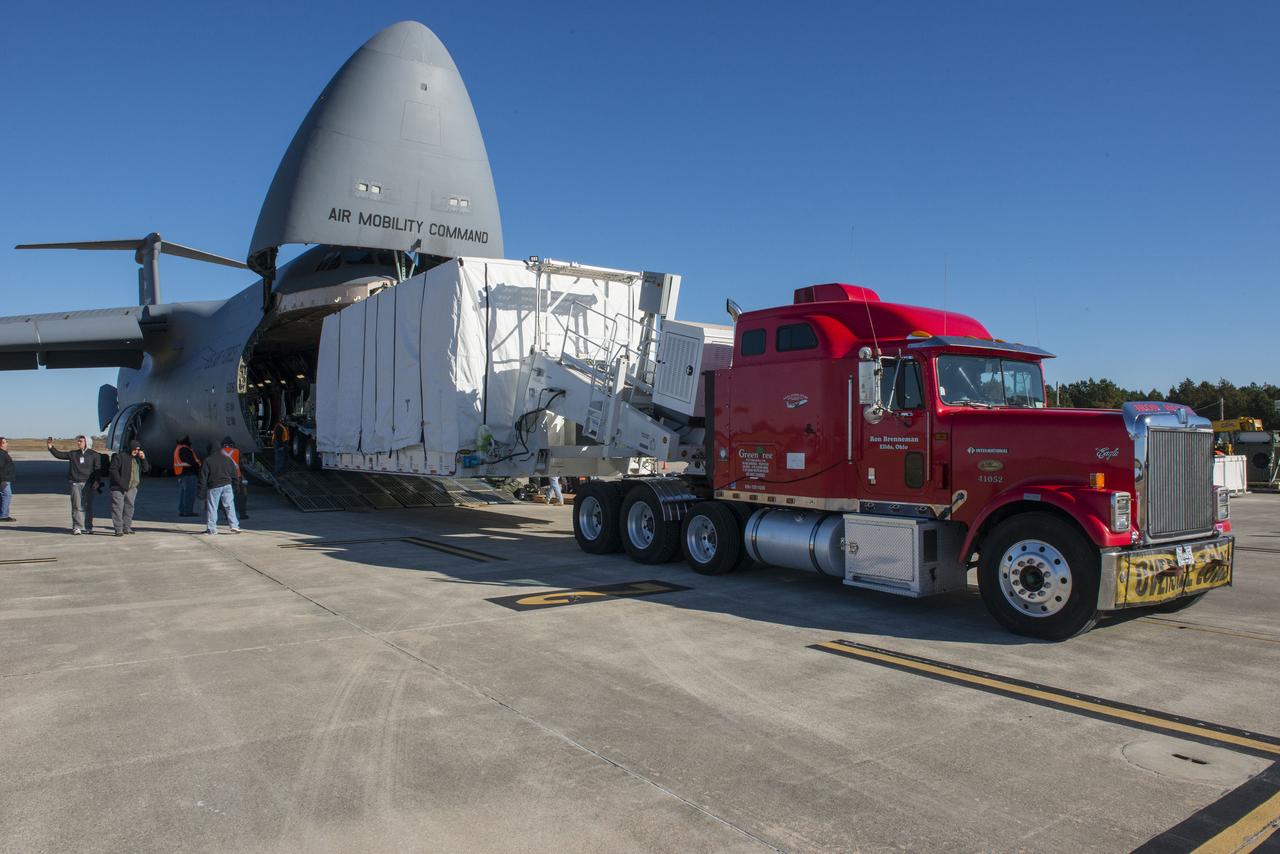
JAMES WEBB SPACE TELESCOPE (JWST) BACKPLANE MOVE FROM MARSHALL SPACE FLIGHT CENTER’S X-RAY CALIBRATION FACILITY (XCRF) TO THE REDSTONE ARSENAL AIRFIELD WHERE THE TEST ARTICLE WAS PLACED IN A USAF C-5 GALAXY FOR IT’S FLIGHT BACK TO THE MANUFACTURER.
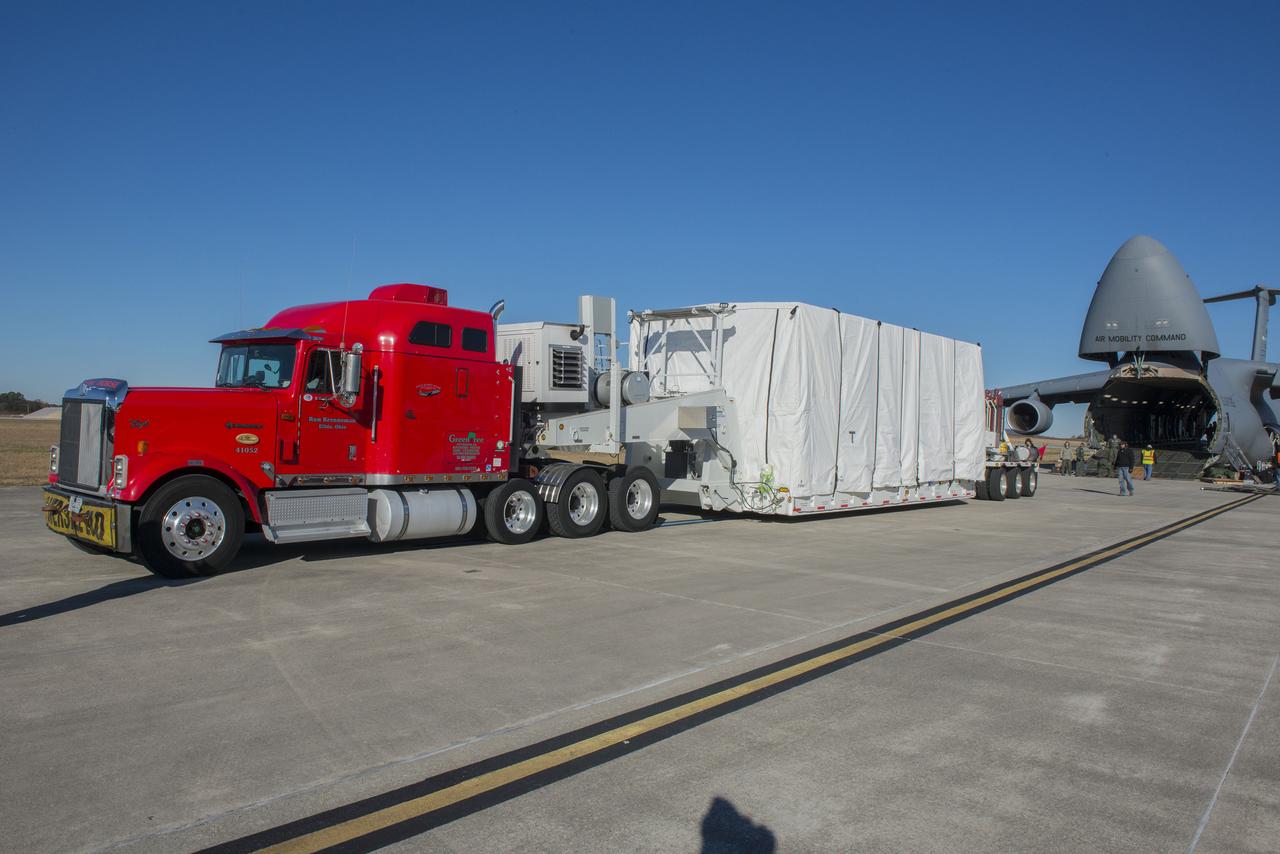
JAMES WEBB SPACE TELESCOPE (JWST) BACKPLANE MOVE FROM MARSHALL SPACE FLIGHT CENTER’S X-RAY CALIBRATION FACILITY (XCRF) TO THE REDSTONE ARSENAL AIRFIELD WHERE THE TEST ARTICLE WAS PLACED IN A USAF C-5 GALAXY FOR IT’S FLIGHT BACK TO THE MANUFACTURER.

Pictured here is an overhead view of the X-59 as it comes together for the major assembly merger in summer 2021. Lockheed Martin Photography By Garry Tice 1011 Lockheed Way, Palmdale, Ca. 93599 Event: Manufacturing Area From Above Date: 5/26/2021
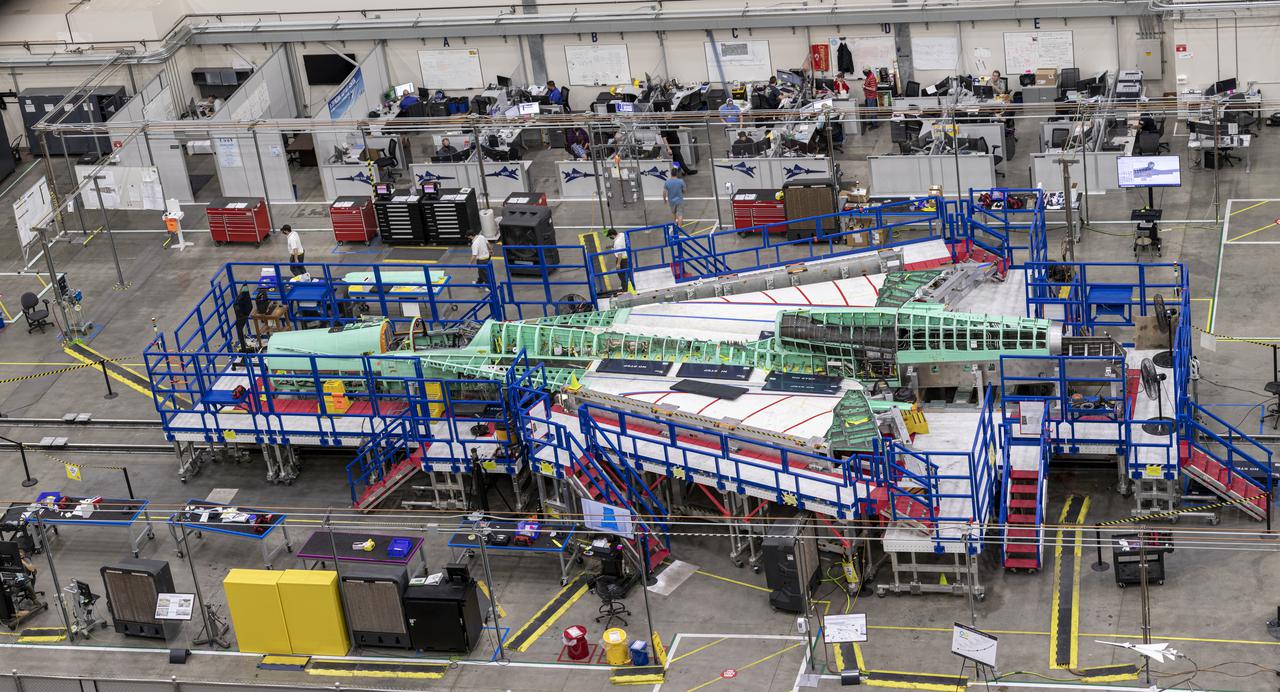
Pictured is an overhead view of the X-59 as it comes together for the major assembly merger in summer 2021. Lockheed Martin Photography By Garry Tice 1011 Lockheed Way, Palmdale, Ca. 93599 Event: Manufacturing Area From Above Date: 5/26/2021
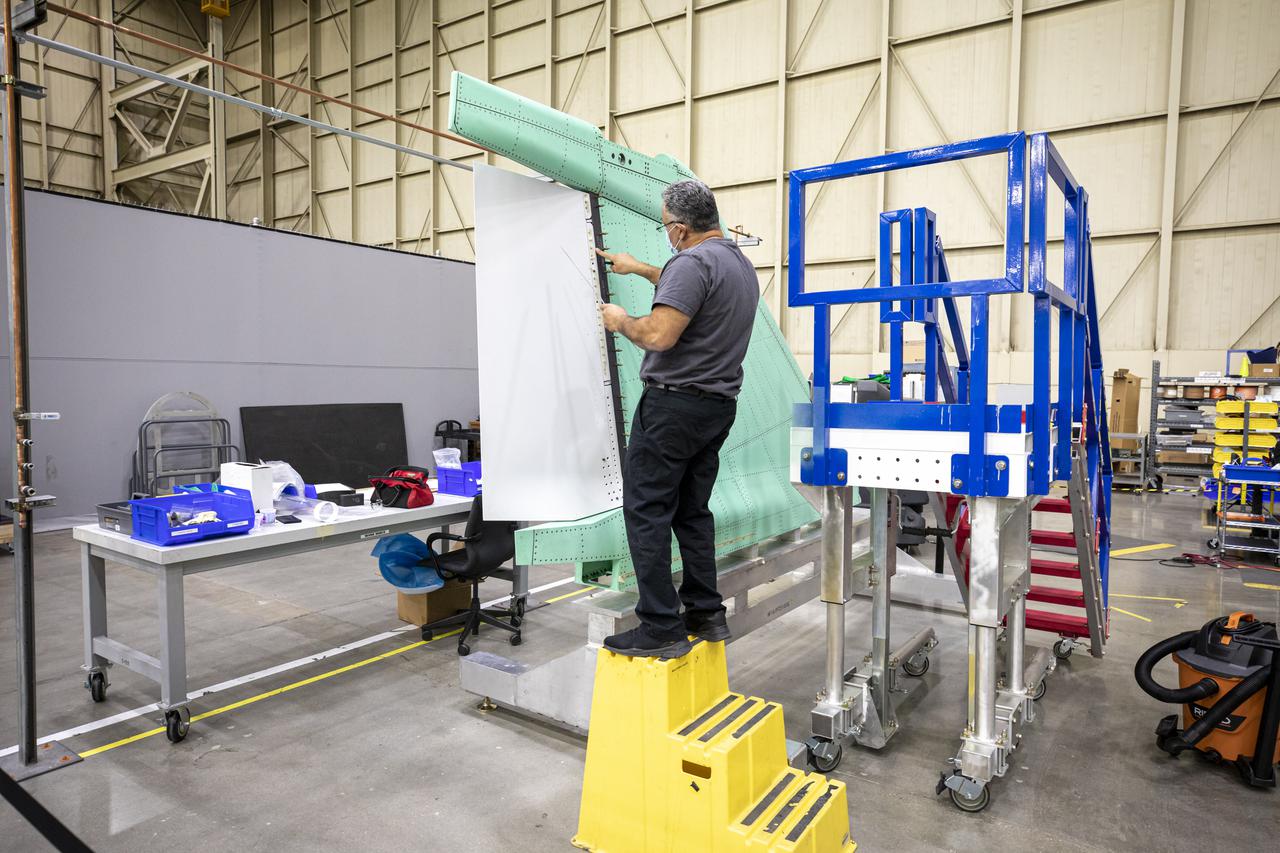
A technician is shown working on the X-59 Quiet SuperSonic Technology or QueSST aircraft’s vertical tail prior to installation. Lockheed Martin Photography By Garry Tice 1011 Lockheed Way, Palmdale, Ca. 93599 Event: SEG 530 Vertical Tail - Rudder Installed Date: 5/12/2021
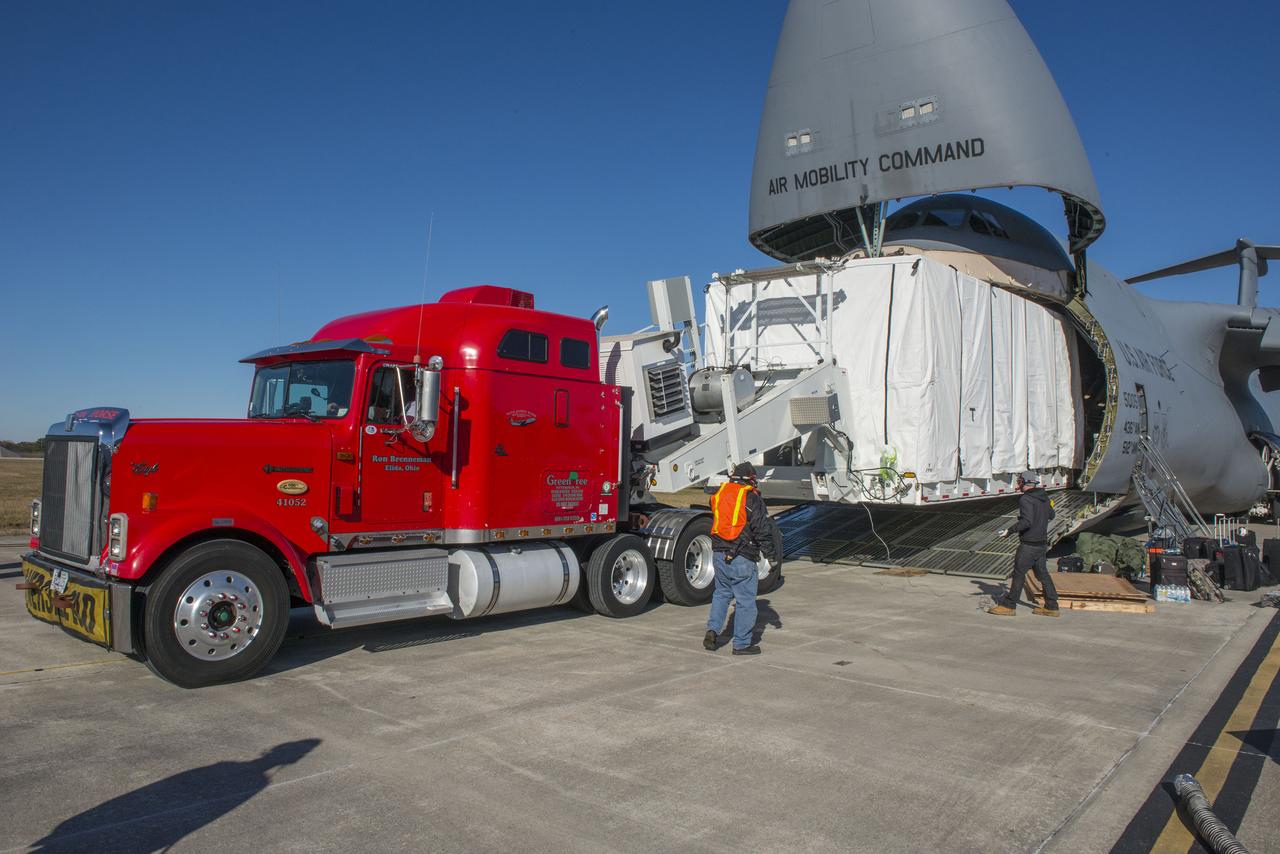
JAMES WEBB SPACE TELESCOPE (JWST) BACKPLANE MOVE FROM MARSHALL SPACE FLIGHT CENTER’S X-RAY CALIBRATION FACILITY (XCRF) TO THE REDSTONE ARSENAL AIRFIELD WHERE THE TEST ARTICLE WAS PLACED IN A USAF C-5 GALAXY FOR IT’S FLIGHT BACK TO THE MANUFACTURER.
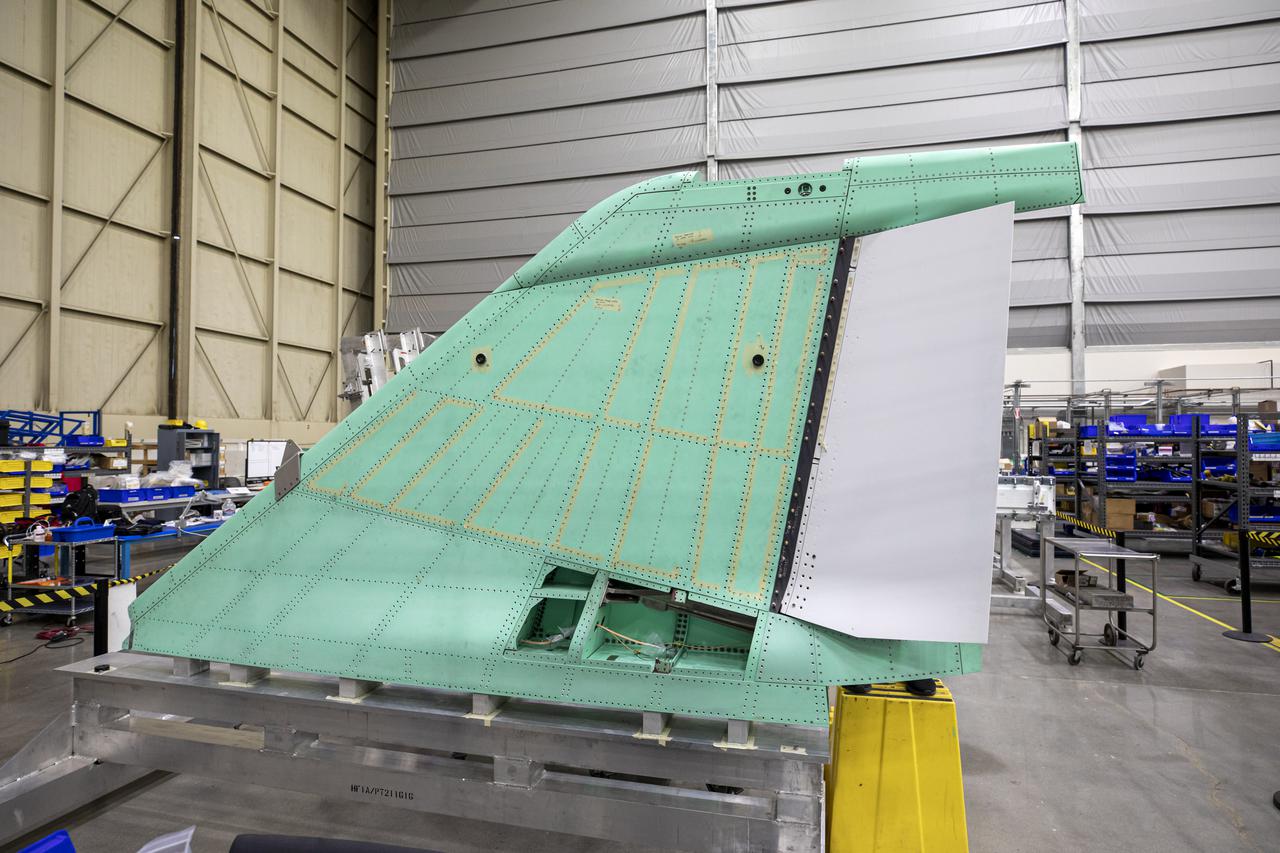
Pictured here is a close up view of the X-59 Quiet SuperSonic Technology or QueSST aircraft’s vertical tail prior to installation. Lockheed Martin Photography By Garry Tice 1011 Lockheed Way, Palmdale, Ca. 93599 Event: SEG 530 Vertical Tail - Rudder Installed Date: 5/12/2021
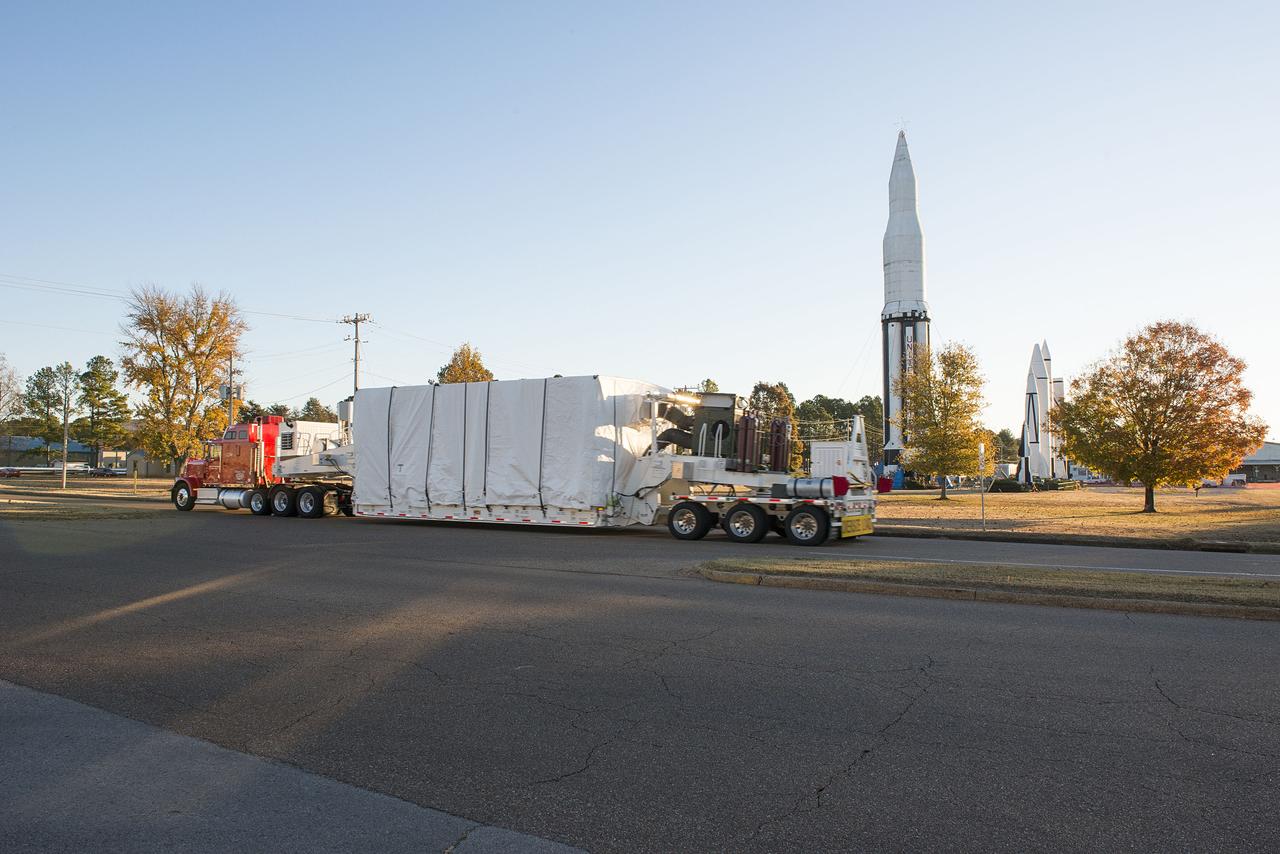
JAMES WEBB SPACE TELESCOPE (JWST) BACKPLANE MOVE FROM MARSHALL SPACE FLIGHT CENTER’S X-RAY CALIBRATION FACILITY (XCRF) TO THE REDSTONE ARSENAL AIRFIELD WHERE THE TEST ARTICLE WAS PLACED IN A USAF C-5 GALAXY FOR IT’S FLIGHT BACK TO THE MANUFACTURER.

JAMES WEBB SPACE TELESCOPE (JWST) BACKPLANE MOVE FROM MARSHALL SPACE FLIGHT CENTER’S X-RAY CALIBRATION FACILITY (XCRF) TO THE REDSTONE ARSENAL AIRFIELD WHERE THE TEST ARTICLE WAS PLACED IN A USAF C-5 GALAXY FOR IT’S FLIGHT BACK TO THE MANUFACTURER.

The first of three X-43A hypersonic research aircraft and its modified Pegasus® booster rocket recently underwent combined systems testing while mounted to NASA's NB-52B carrier aircraft at the Dryden Flight Research Center, Edwards, Calif. The combined systems test was one of the last major milestones in the Hyper-X research program before the first X-43A flight. The X-43A flights will be the first actual flight tests of an aircraft powered by a revolutionary supersonic-combustion ramjet ("scramjet") engine capable of operating at hypersonic speeds (above Mach 5, or five times the speed of sound). The 12-foot, unpiloted research vehicle was developed and built by MicroCraft Inc., Tullahoma, Tenn., under NASA contract. The booster was built by Orbital Sciences Corp., Dulles, Va.,After being air-launched from NASA's venerable NB-52 mothership, the booster will accelerate the X-43A to test speed and altitude. The X-43A will then separate from the rocket and fly a pre-programmed trajectory, conducting aerodynamic and propulsion experiments until it descends into the Pacific Ocean. Three research flights are planned, two at Mach 7 and one at Mach 10.
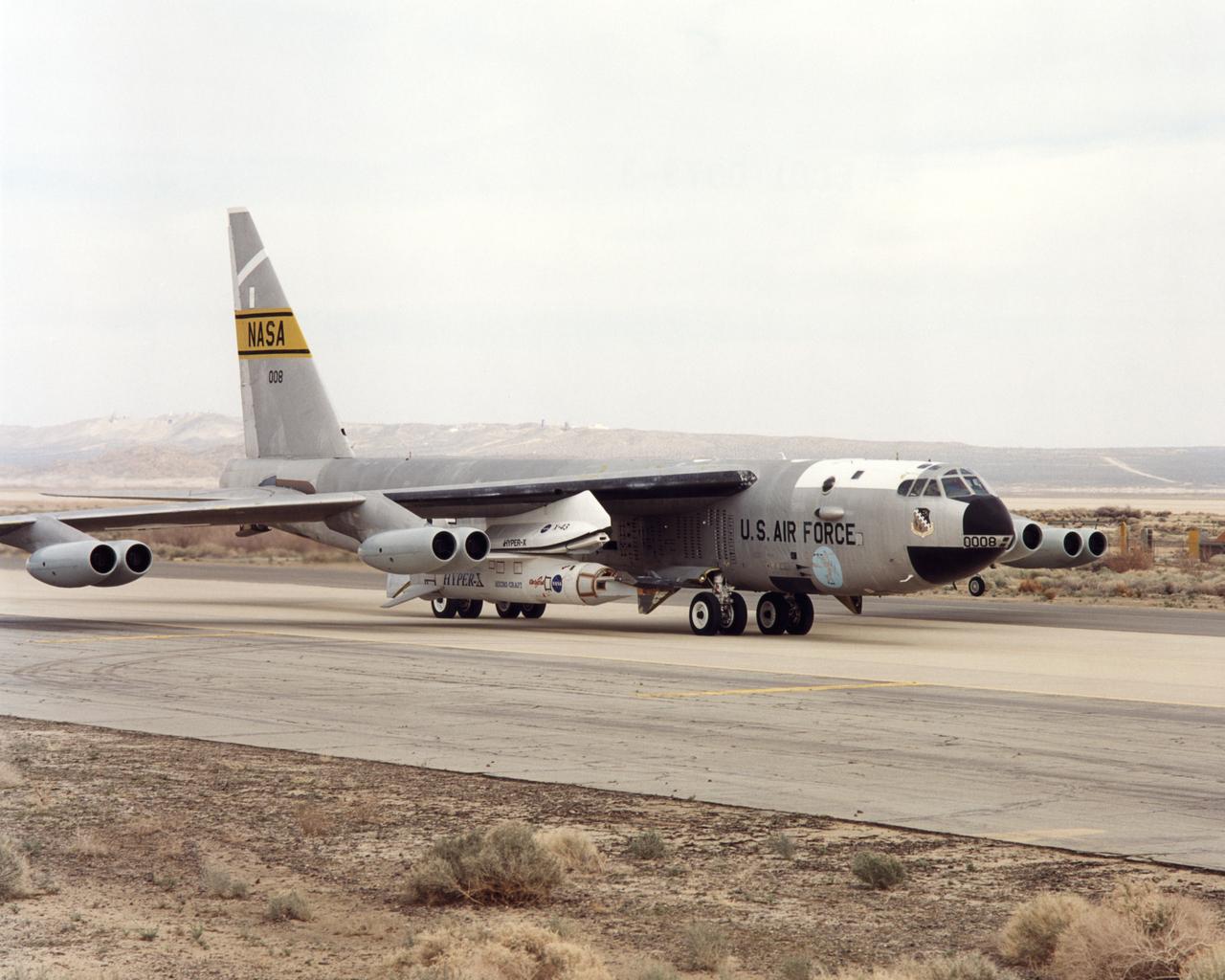
NASA's NB-52B carrier aircraft rolls down a taxiway at Edwards Air Force Base with the X-43A hypersonic research aircraft and its modified Pegasus® booster rocket slung from a pylon under its right wing. Part of a combined systems test conducted by NASA's Dryden Flight Research Center at Edwards, the taxi test was one of the last major milestones in the Hyper-X research program before the first X-43A flight. The X-43A flights will be the first actual flight tests of an aircraft powered by a revolutionary supersonic-combustion ramjet ("scramjet") engine capable of operating at hypersonic speeds (above Mach 5, or five times the speed of sound). The 12-foot, unpiloted research vehicle was developed and built by MicroCraft Inc., Tullahoma, Tenn., under NASA contract. The booster was built by Orbital Sciences Corp., Dulles, Va.,After being air-launched from NASA's venerable NB-52 mothership, the booster will accelerate the X-43A to test speed and altitude. The X-43A will then separate from the rocket and fly a pre-programmed trajectory, conducting aerodynamic and propulsion experiments until it descends into the Pacific Ocean. Three research flights are planned, two at Mach 7 and one at Mach 10, with the first tentatively scheduled for late spring to early summer, 2001.
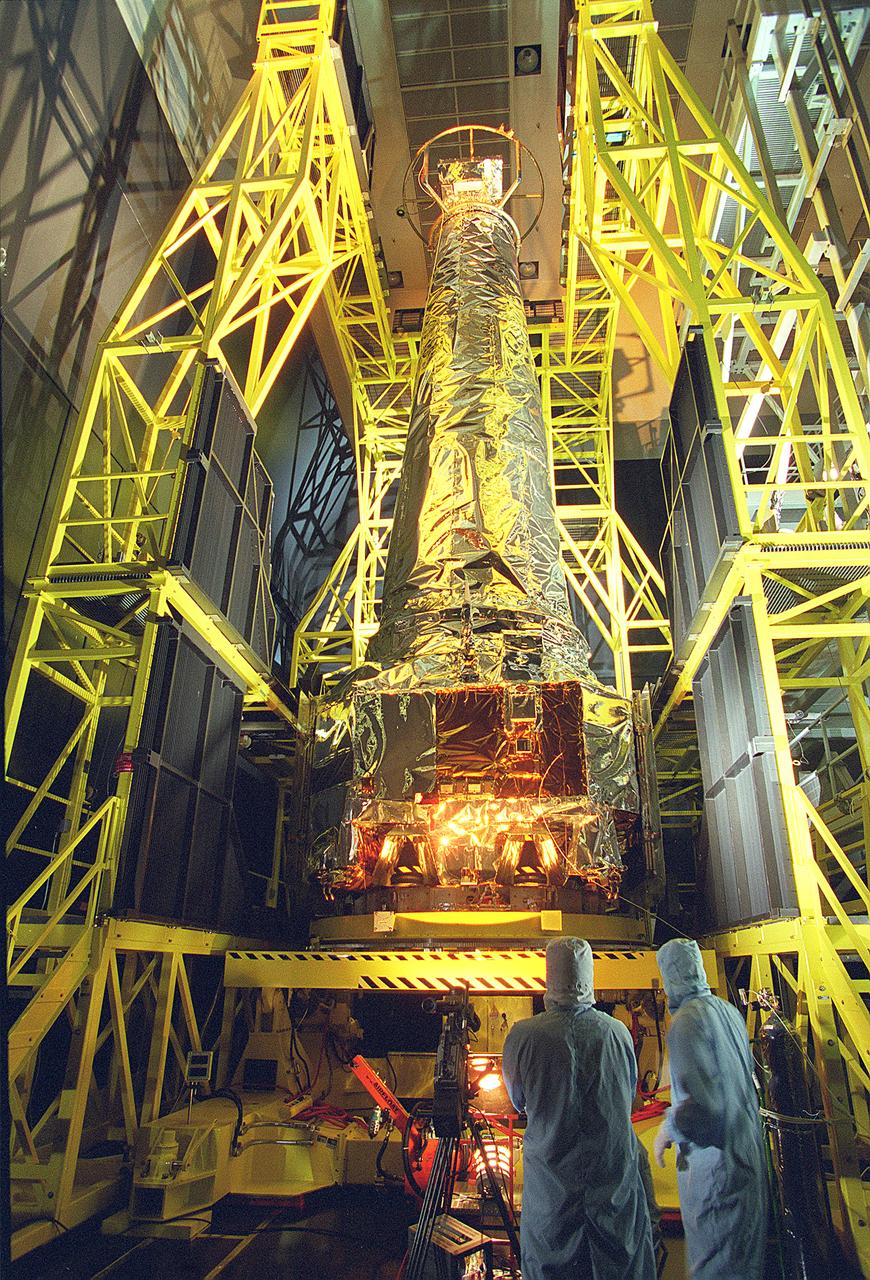
This photograph shows TRW technicians preparing the assembled Chandra X-Ray Observatory (CXO) for an official unveiling at TRW Space and Electronics Group of Redondo Beach, California. The CXO is formerly known as the Advanced X-Ray Astrophysics Facility (AXAF), which was renamed in honor of the late Indian-American Astronomer, Subrahmanyan Chandrasekhar in 1999. The CXO will help astronomers world-wide better understand the structure and evolution of the universe by studying powerful sources of x-rays such as exploding stars, matter falling into black holes, and other exotic celestial objects. X-ray astronomy can only be done from space because Earth's atmosphere blocks x-rays from reaching the surface. The Observatory provides images that are 50 times more detailed than previous x-ray missions. At more than 45 feet in length and weighing more than 5 tons, it will be one of the largest objects ever placed in Earth orbit by the Space Shuttle. TRW, Inc. was the prime contractor and assembled and tested the observatory for NASA. The CXO program is managed by the Marshall Space Flight Center. The Observatory was launched on July 22, 1999 aboard the Space Shuttle Columbia, STS-93 mission. (Image courtesy of TRW)
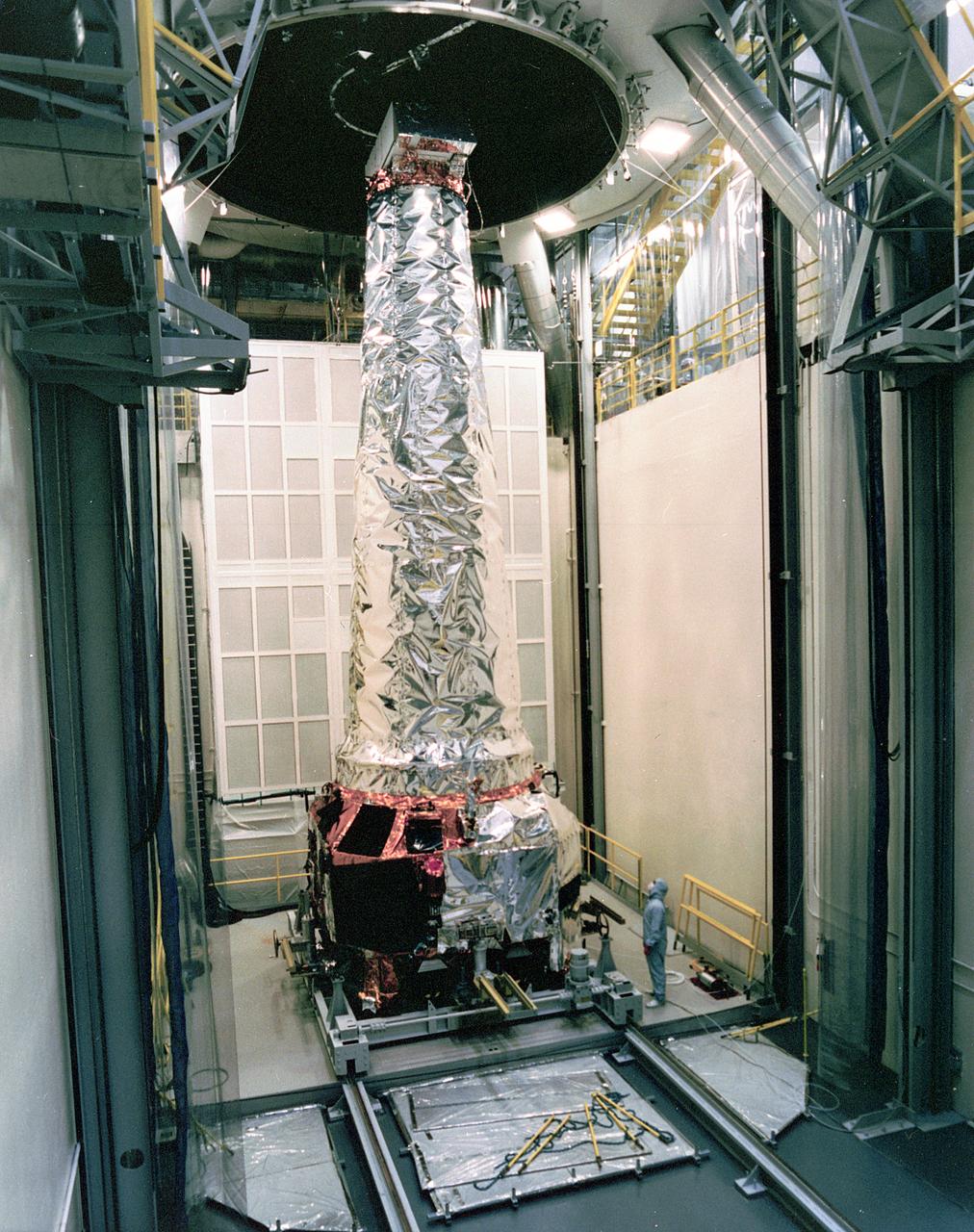
This photograph shows a TRW technician inspecting the completely assembled Chandra X-ray Observatory (CXO) in the Thermal Vacuum Chamber at TRW Space and Electronics Group of Redondo Beach, California. The CXO is formerly known as the Advanced X-Ray Astrophysics Facility (AXAF), which was renamed in honor of the late Indian-American Astronomer, Subrahmanyan Chandrasekhar in 1999. The CXO will help astronomers worldwide better understand the structure and evolution of the universe by studying powerful sources of x-rays such as exploding stars, matter falling into black holes and other exotic celestial objects. X-ray astronomy can only be done from space because Earth's atmosphere blocks x-rays from reaching the surface. The Observatory provides images that are 50 times more detailed than previous x-ray missions. At more than 45 feet in length and weighing more than 5 tons, it will be one of the largest objects ever placed in Earth orbit by the Space Shuttle. TRW, Inc. was the prime contractor and assembled and tested the observatory for NASA. The CXO program is managed by the Marshall Space Flight Center. The Observatory was launched on July 22, 1999 aboard the Space Shuttle Columbia, STS-93 mission. (Image courtesy of TRW)
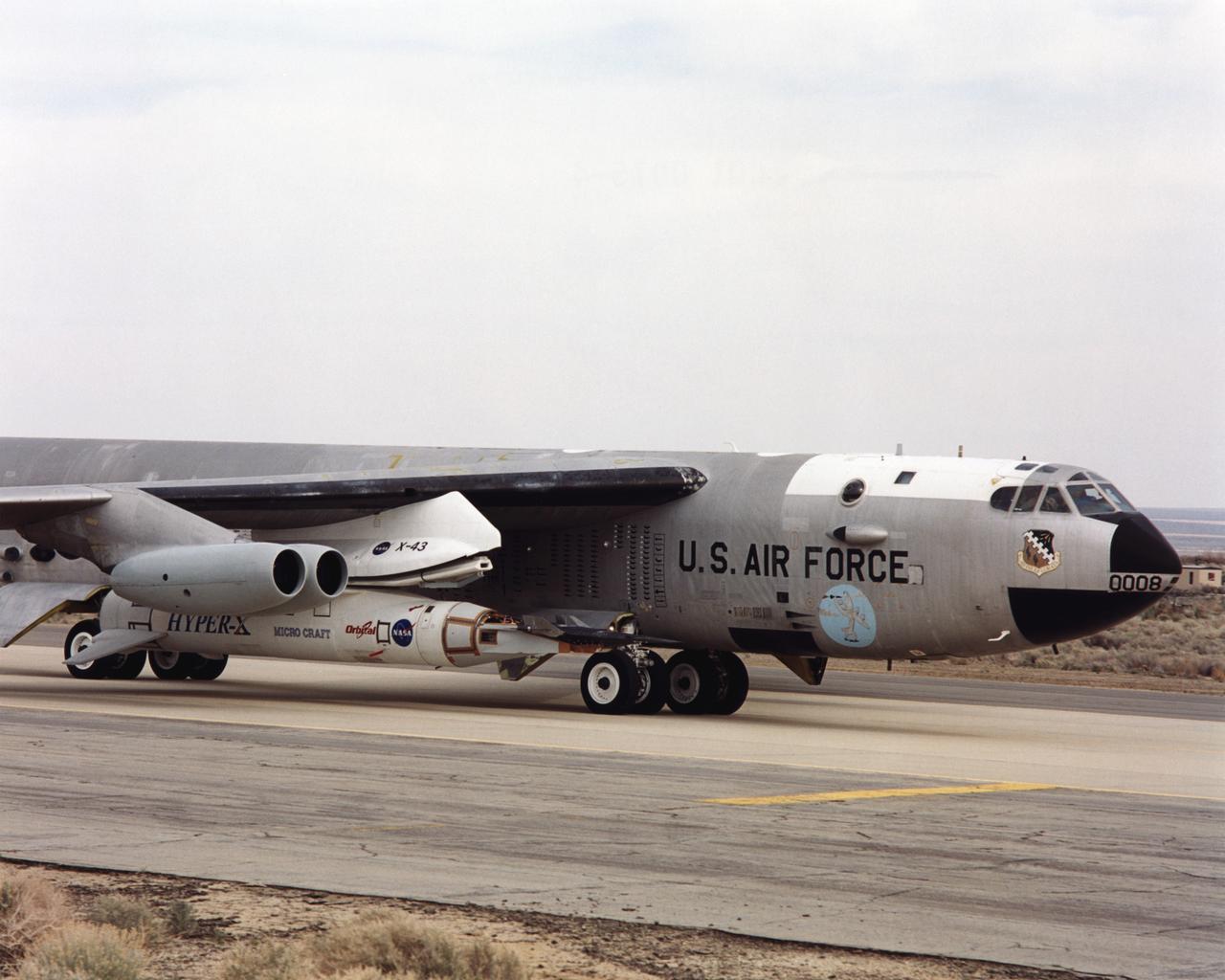
As part of a combined systems test conducted by NASA Dryden Flight Research Center, NASA's NB-52B carrier aircraft rolls down a taxiway at Edwards Air Force Base with the X-43A hypersonic research aircraft and its modified Pegasus® booster rocket attached to a pylon under its right wing. The taxi test was one of the last major milestones in the Hyper-X research program before the first X-43A flight. The X-43A flights will be the first actual flight tests of an aircraft powered by a revolutionary supersonic-combustion ramjet ("scramjet") engine capable of operating at hypersonic speeds (above Mach 5, or five times the speed of sound). The 12-foot, unpiloted research vehicle was developed and built by MicroCraft Inc., Tullahoma, Tenn., under NASA contract. The booster was built by Orbital Sciences Corp., Dulles, Va. After being air-launched from NASA's venerable NB-52 mothership, the booster will accelerate the X-43A to test speed and altitude. The X-43A will then separate from the rocket and fly a pre-programmed trajectory, conducting aerodynamic and propulsion experiments until it descends into the Pacific Ocean. Three research flights are planned, two at Mach 7 and one at Mach 10.
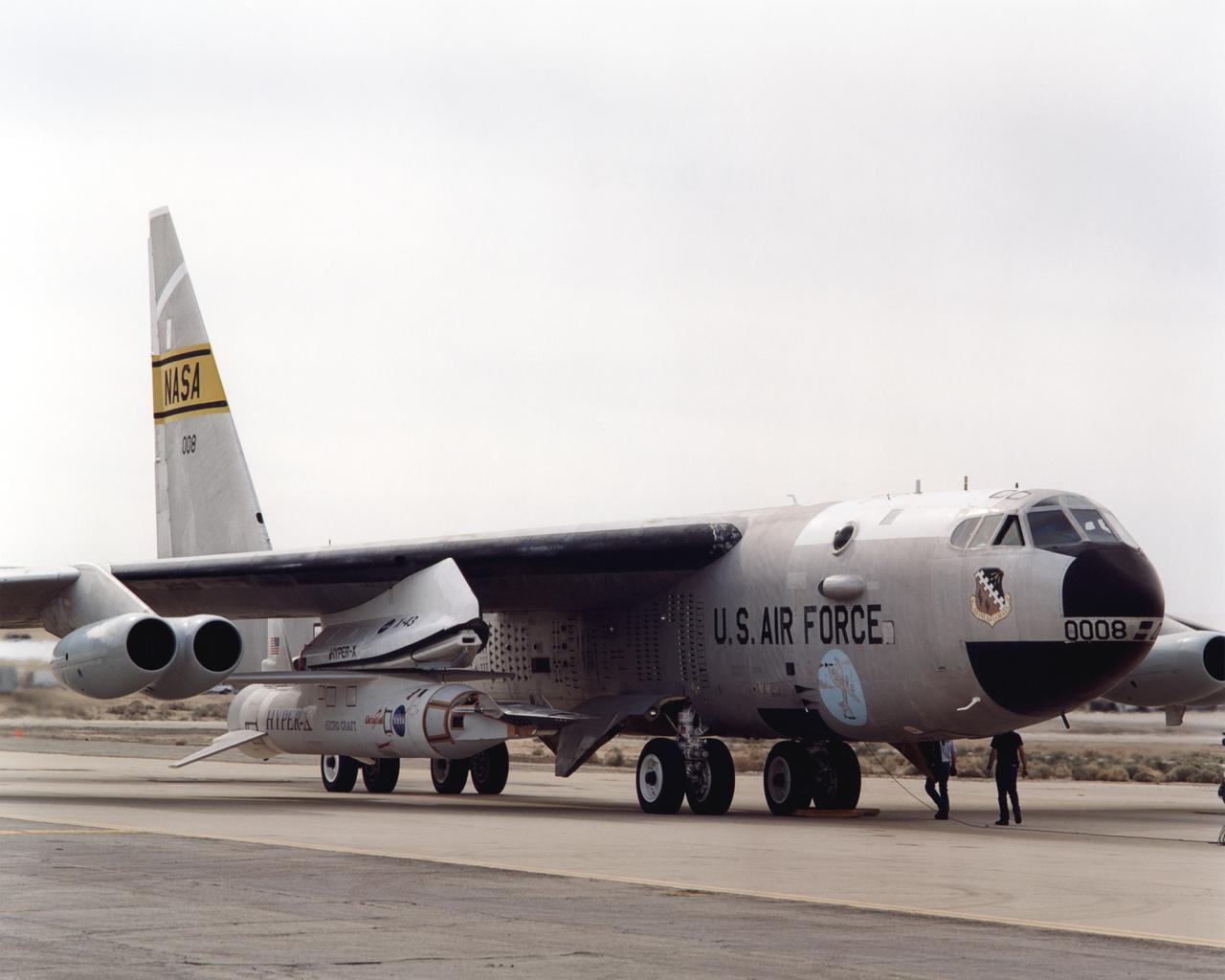
The X-43A hypersonic research aircraft and its modified Pegasus® booster rocket are nestled under the wing of NASA's NB-52B carrier aircraft during pre-flight systems testing at the Dryden Flight Research Center, Edwards, Calif. The combined systems test was one of the last major milestones in the Hyper-X research program before the first X-43A flight. The X-43A flights will be the first actual flight tests of an aircraft powered by a revolutionary supersonic-combustion ramjet ("scramjet") engine capable of operating at hypersonic speeds (above Mach 5, or five times the speed of sound). The 12-foot, unpiloted research vehicle was developed and built by MicroCraft Inc., Tullahoma, Tenn., under NASA contract. The booster was built by Orbital Sciences Corp., Dulles, Va. After being air-launched from NASA's venerable NB-52 mothership, the booster will accelerate the X-43A to test speed and altitude. The X-43A will then separate from the rocket and fly a pre-programmed trajectory, conducting aerodynamic and propulsion experiments until it descends into the Pacific Ocean. Three research flights are planned, two at Mach 7 and one at Mach 10.
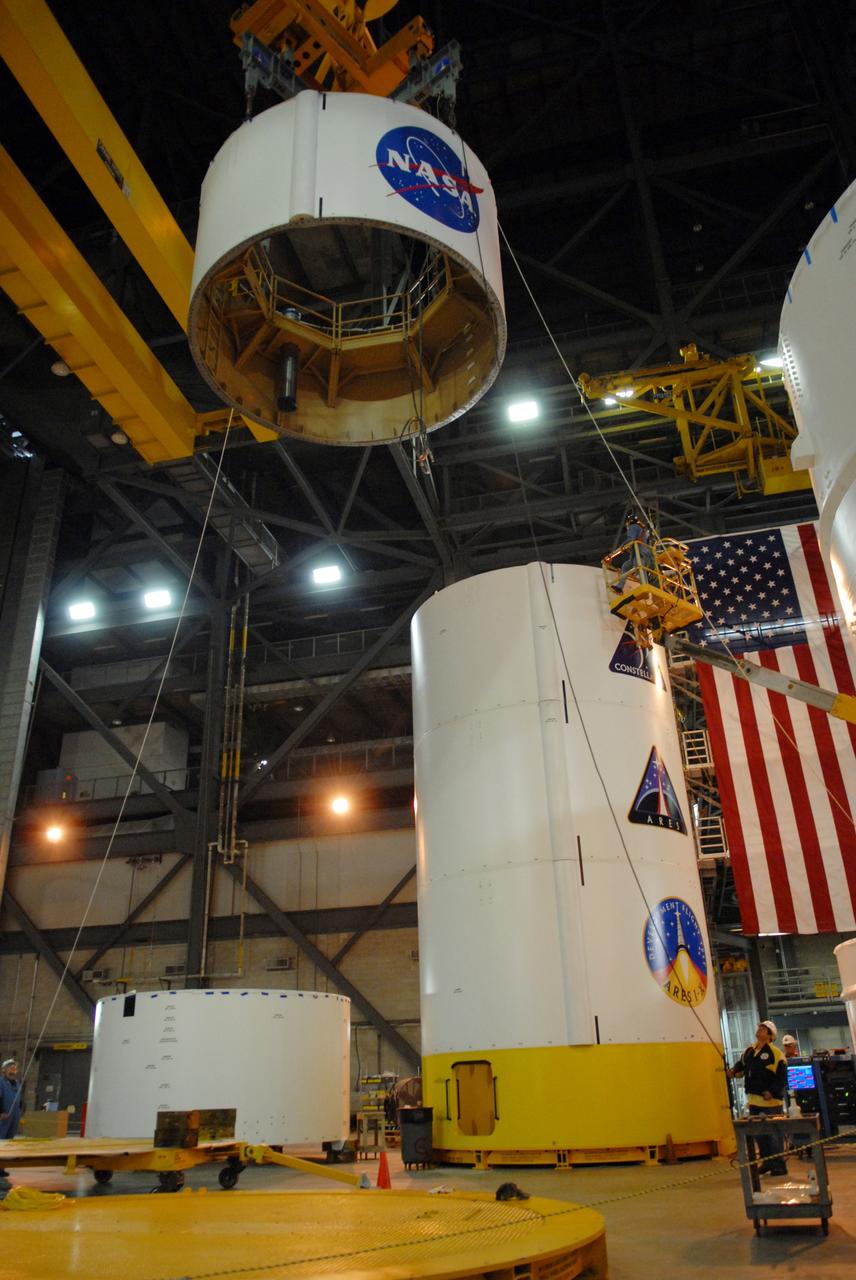
CAPE CANAVERAL, Fla. -- In high bay 4 of the Vehicle Assembly Building at NASA's Kennedy Space Center in Florida, a crane moves segment 5 of the Ares I-X upper stage simulator segments toward the tall stack behind it. Segment 5 will be placed on segment 4, at top of the tall stack. The upper stage simulator comprises 11 segments, each approximately 18 feet in diameter, that will be used in the test flight known as Ares I-X in 2009. The simulator segments will simulate the mass and the outer mold line. The upper stage accounts for nearly one-quarter of the total height of the Ares I. It will take the Ares I on the second phase of its journey from Earth, providing the guidance, navigation and control needed for the second phase of the Ares I ascent flight. Photo credit: NASA/Troy Cryder
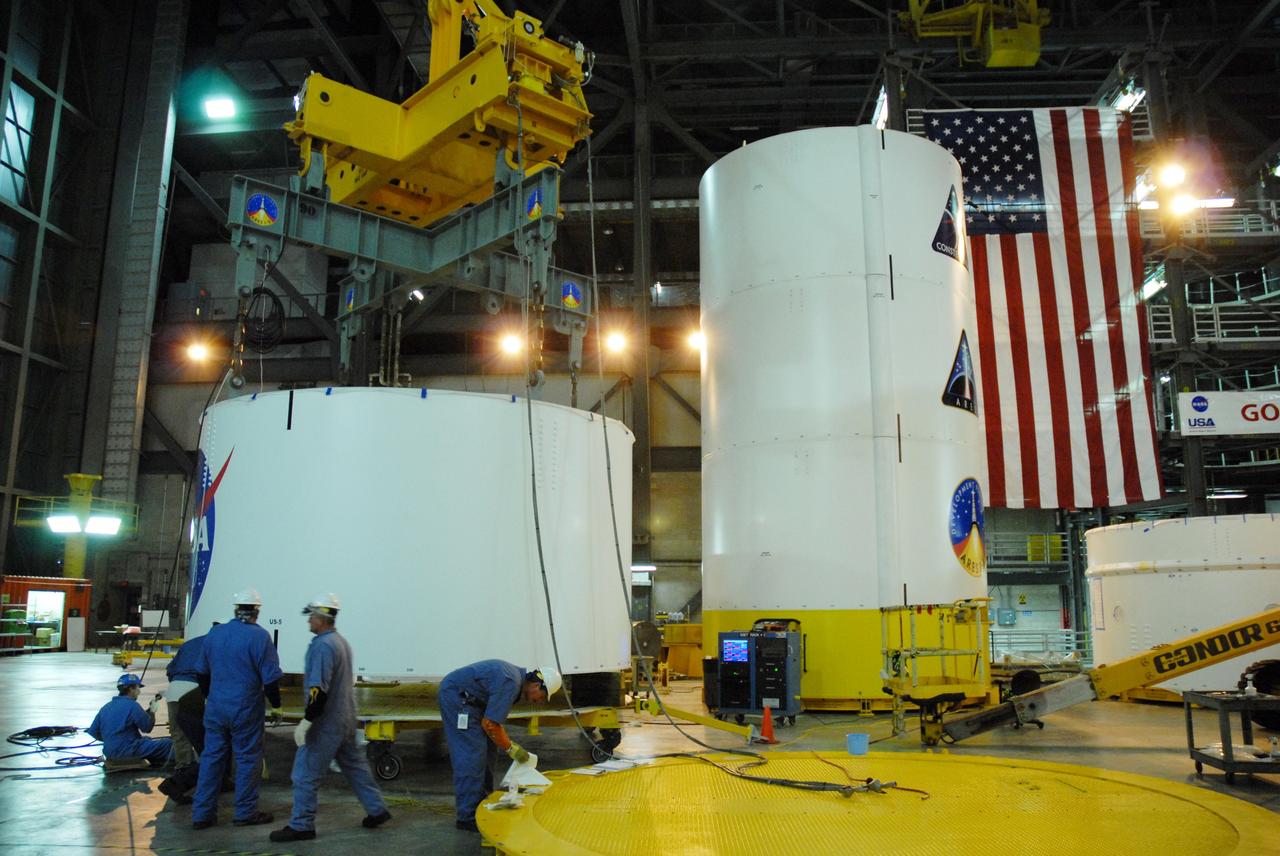
CAPE CANAVERAL, Fla. -- In high bay 4 of the Vehicle Assembly Building at NASA's Kennedy Space Center in Florida, a crane is attached to segment 5 of the Ares I-X upper stage simulator segments to lift it. Segment 5 will be stacked on to segment 4, at the top of the tall stack at right. The upper stage simulator comprises 11 segments, each approximately 18 feet in diameter, that will be used in the test flight known as Ares I-X in 2009. The simulator segments will simulate the mass and the outer mold line. The upper stage accounts for nearly one-quarter of the total height of the Ares I. It will take the Ares I on the second phase of its journey from Earth, providing the guidance, navigation and control needed for the second phase of the Ares I ascent flight. Photo credit: NASA/Jim Grossmann
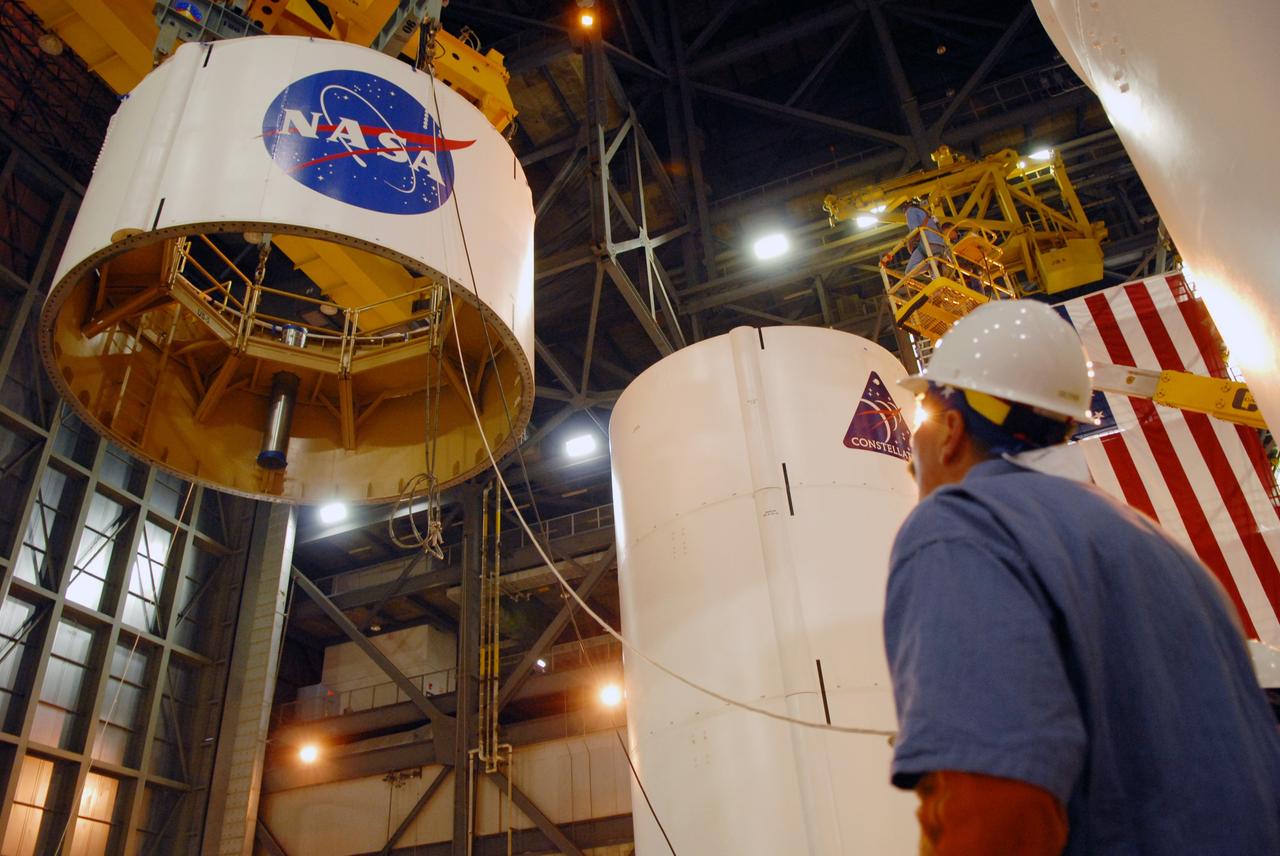
CAPE CANAVERAL, Fla. -- In high bay 4 of the Vehicle Assembly Building at NASA's Kennedy Space Center in Florida, a crane lifts segment 5 of the Ares I-X upper stage simulator segments toward the tall stack behind it. Segment 5 will be placed on segment 4, at top of the tall stack. The upper stage simulator comprises 11 segments, each approximately 18 feet in diameter, that will be used in the test flight known as Ares I-X in 2009. The simulator segments will simulate the mass and the outer mold line. The upper stage accounts for nearly one-quarter of the total height of the Ares I. It will take the Ares I on the second phase of its journey from Earth, providing the guidance, navigation and control needed for the second phase of the Ares I ascent flight. Photo credit: NASA/Troy Cryder
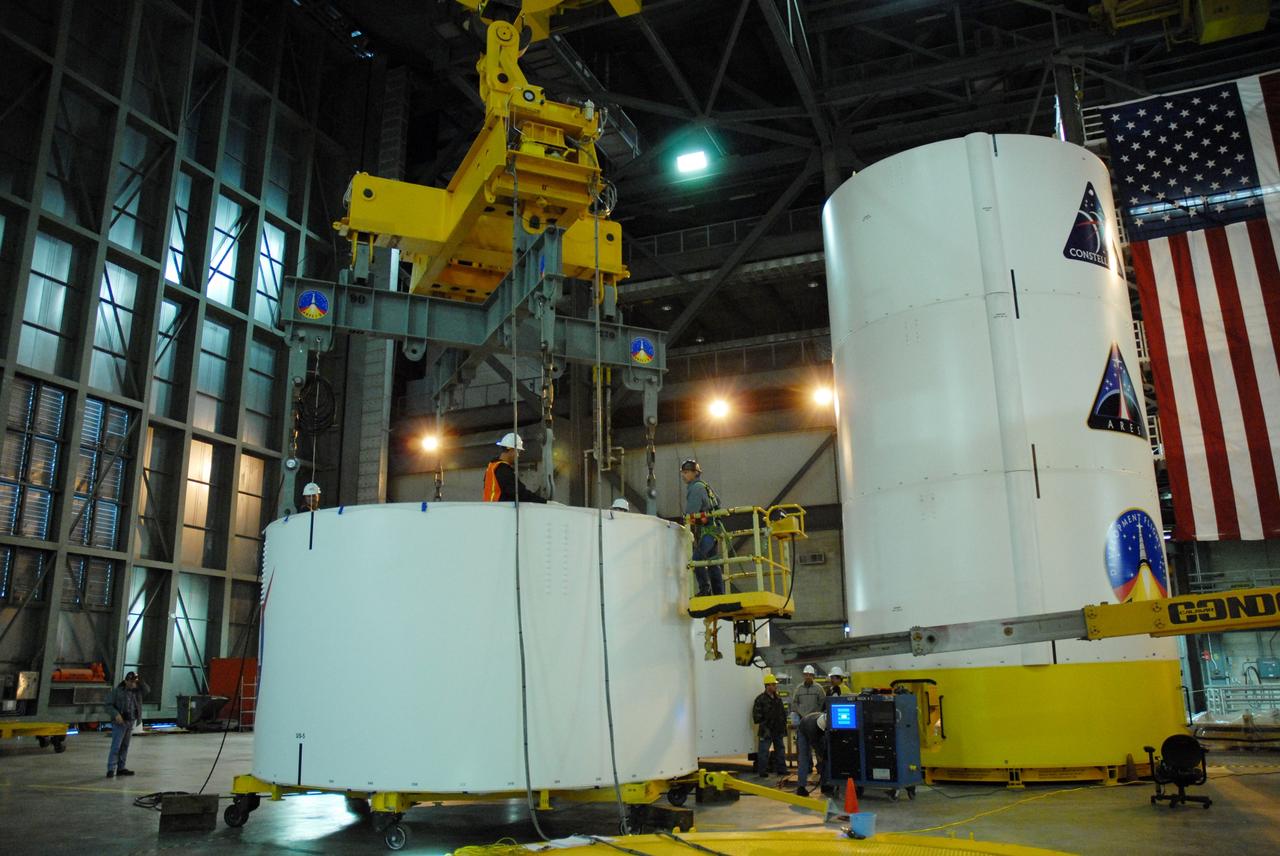
CAPE CANAVERAL, Fla. -- In high bay 4 of the Vehicle Assembly Building at NASA's Kennedy Space Center in Florida, a crane is attached to segment 5 of the Ares I-X upper stage simulator segments to lift it. Segment 5 will be stacked on to segment 4, at the top of the tall stack at right.The upper stage simulator comprises 11 segments, each approximately 18 feet in diameter, that will be used in the test flight known as Ares I-X in 2009. The simulator segments will simulate the mass and the outer mold line. The upper stage accounts for nearly one-quarter of the total height of the Ares I. It will take the Ares I on the second phase of its journey from Earth, providing the guidance, navigation and control needed for the second phase of the Ares I ascent flight. Photo credit: NASA/Jim Grossmann

STS059-86-059 (9-20 April 1994) --- This oblique handheld Hasselblad 70mm photo shows Death Valley, near California's border with Nevada. The valley -- the central feature of Death Valley National Monument -- extends north to south for some 140 miles (225 kilometers). Hemmed in to the east by the Amargosa Range and to the west by the Panamints, its width varies from 5 to 15 miles (8 to 24 kilometers). Using Spaceborne Imaging Radar (SIR-C) and X-band Synthetic Aperture Radar (X-SAR) onboard the Space Shuttle Endeavour, the crew was able to record a great deal of data on this and other sites, as part of NASA's Mission to Planet Earth.
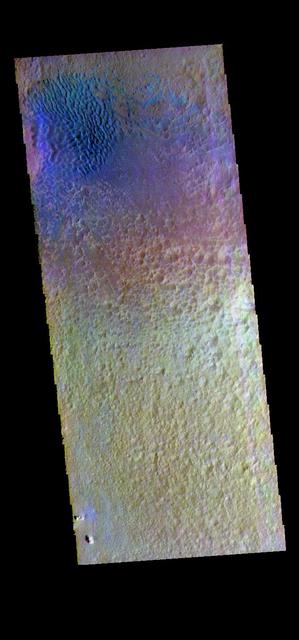
This false color image shows sand dunes on the floor of Hale Crater. This 150 km x 125 km (93 miles x 77 miles) crater is located north of Argyre Planitia. Dark blue in this false color combination usually indicates basaltic sand. The THEMIS VIS camera contains 5 filters. The data from different filters can be combined in multiple ways to create a false color image. These false color images may reveal subtle variations of the surface not easily identified in a single band image. Orbit Number: 66554 Latitude: -35.7883 Longitude: 323.039 Instrument: VIS Captured: 2016-12-14 22:52 https://photojournal.jpl.nasa.gov/catalog/PIA23629
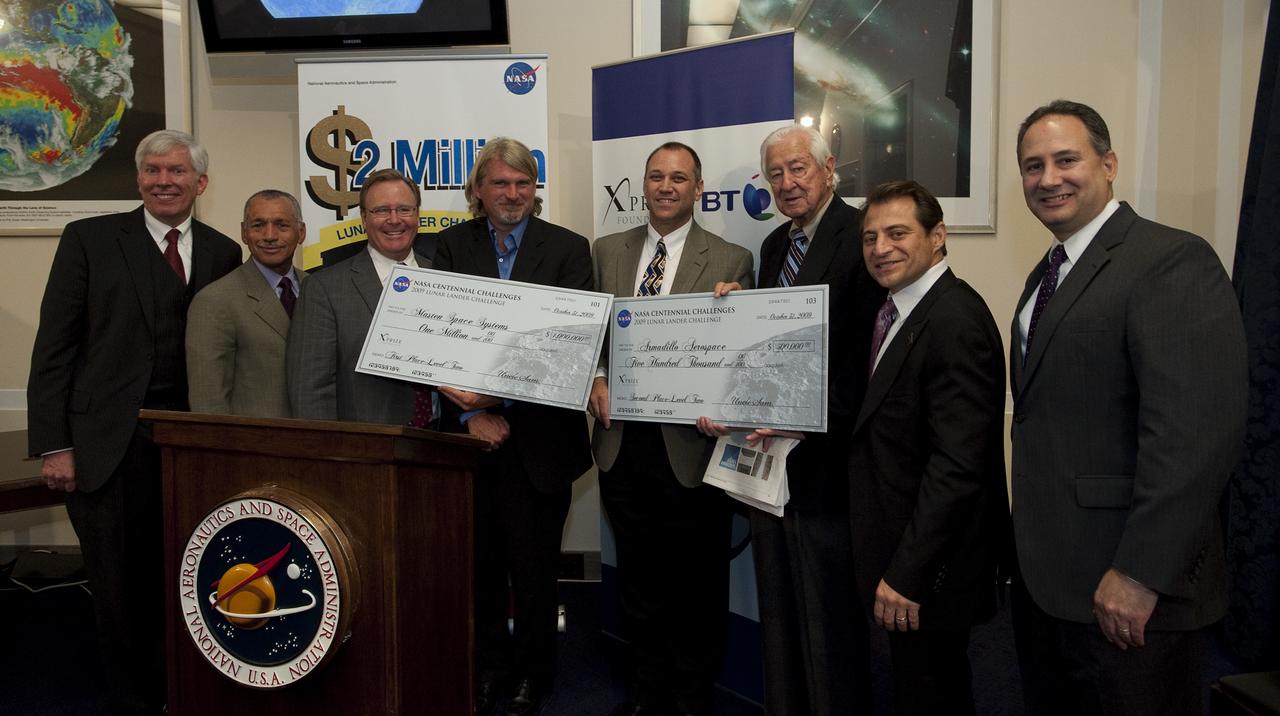
NASA and the X PRIZE Foundation announced the winners of the Northrop Grumman Lunar Lander Challenge at an awards ceremony at the Rayburn House Office Building, Thursday, Nov. 5, 2009 in Washington, DC. From left to right, George Nield, Associate Administrator of Commercial Space Transportation, FAA; Charles Bolden, NASA Administrator; Doug Comstock, Director, Innovative Partnerships Program, NASA; David Masten, CEO, Masten Space Systems; Phil Eaton, VP, Operations, Armadillo Aerospace; U.S. Rep. Ralph Hall (R-TX); Peter Diamandis, Chairman and CEO, X PRIZE Foundation and Mitch Waldman, VP, Advanced Programs & Technology, Northrop Grumman. Photo Credit: (NASA/Carla Cioffi)
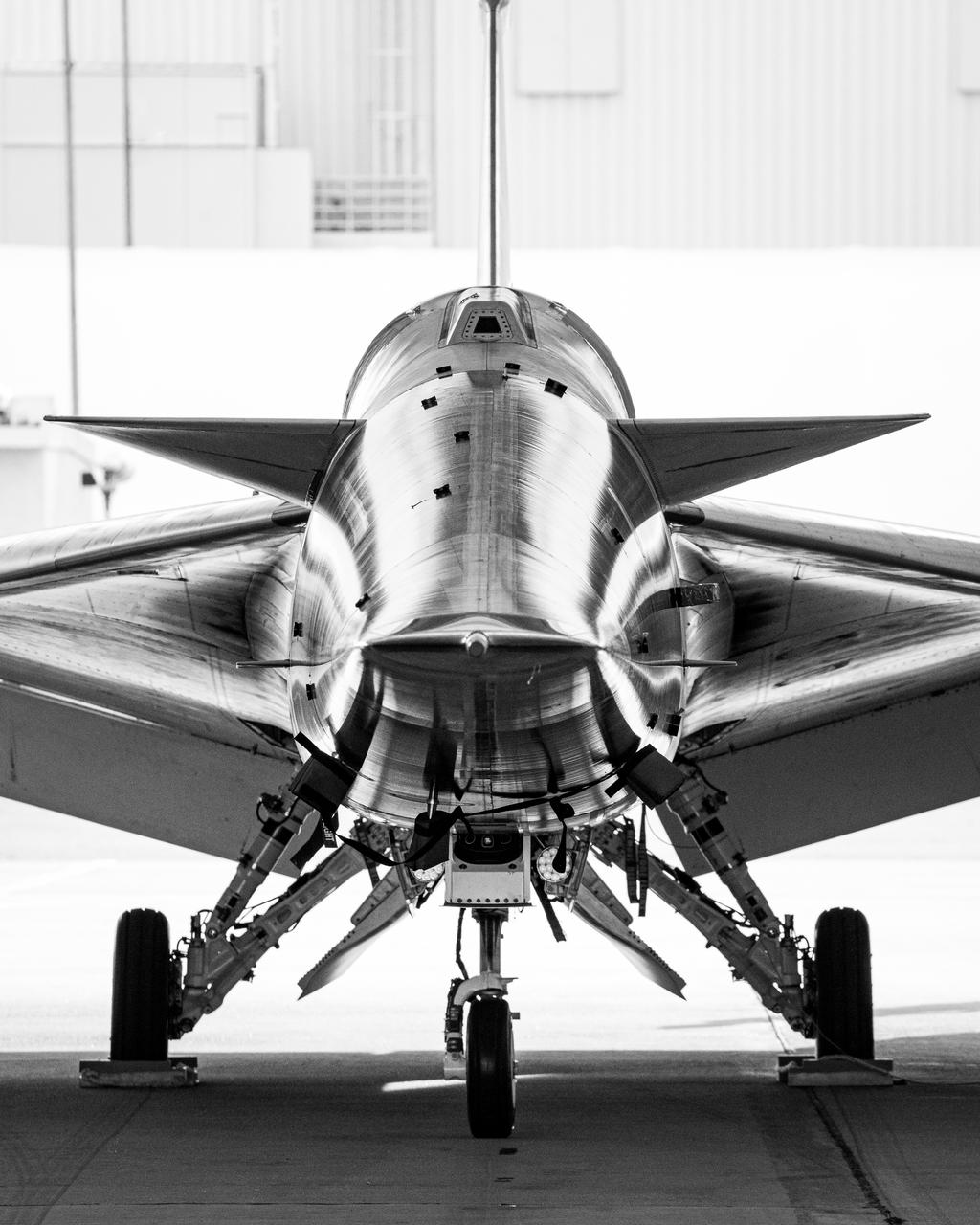
NASA’s X-59 research aircraft moves from its construction site to the flight line – or the space between the hangar and the runway – at Lockheed Martin Skunk Works in Palmdale, California, on June 16, 2023. This milestone kicks off a series of ground tests to ensure the X-59 is safe and ready to fly. The X-59 is designed to fly faster than Mach 1 while reducing the resulting sonic boom to a thump for people on the ground. NASA will evaluate this technology during flight tests as part of the agency’s Quesst mission, which helps enable commercial supersonic air travel over land. Lockheed Martin Photography By Garry Tice 1011 Lockheed Way, Palmdale, Ca. 93599 Event: Move to Run Stall 5 Date: 6/19/2023 Additional Info:

CAPE CANAVERAL, Fla. – A C-5 aircraft arrives at the Shuttle Landing Facility at NASA's Kennedy Space Center in Florida carrying hardware that will be used in the launch of the Ares I-X rocket. The hardware consists of a precisely machined, full-scale simulator crew module and launch abort system to form the tip of NASA's Ares I-X rocket. The launch of the 321-foot-tall, full-scale Ares I-X, targeted for July 2009, will be the first in a series of unpiloted rocket launches from Kennedy. When fully developed, the 16-foot diameter crew module will furnish living space and reentry protection for the astronauts, while their launch abort system will provide safe evacuation if a launch vehicle failure occurs. Photo credit: NASA/Jack Pfaller
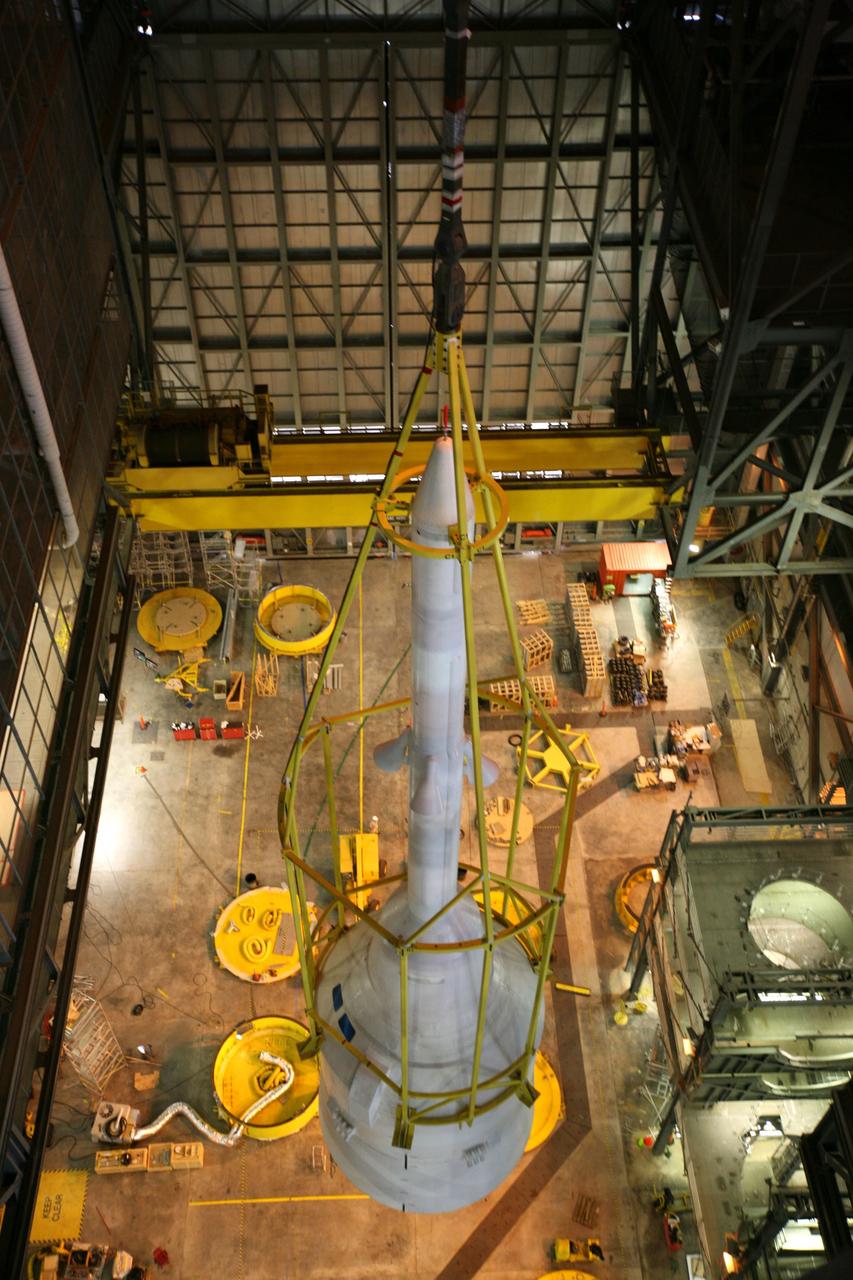
CAPE CANAVERAL, Fla. – In the Vehicle Assembly Building's High Bay 4, assembly of the Ares I-X rocket nears completion. The yellow framework, nicknamed the "birdcage," lifts Super Stack 5. The stack will be positioned on top of the segments already in place on the mobile launcher platform in High Bay 3, completing assembly of the 327-foot-tall rocket. Five super stacks make up the rocket's upper stage that is integrated with the four-segment solid rocket booster first stage. Ares I-X is the test vehicle for the Ares I, which is part of the Constellation Program to return men to the moon and beyond. The Ares I-X flight test is targeted for Oct. 31, pending formal NASA Headquarters approval. Photo credit: NASA/Dimitri Gerondidakis
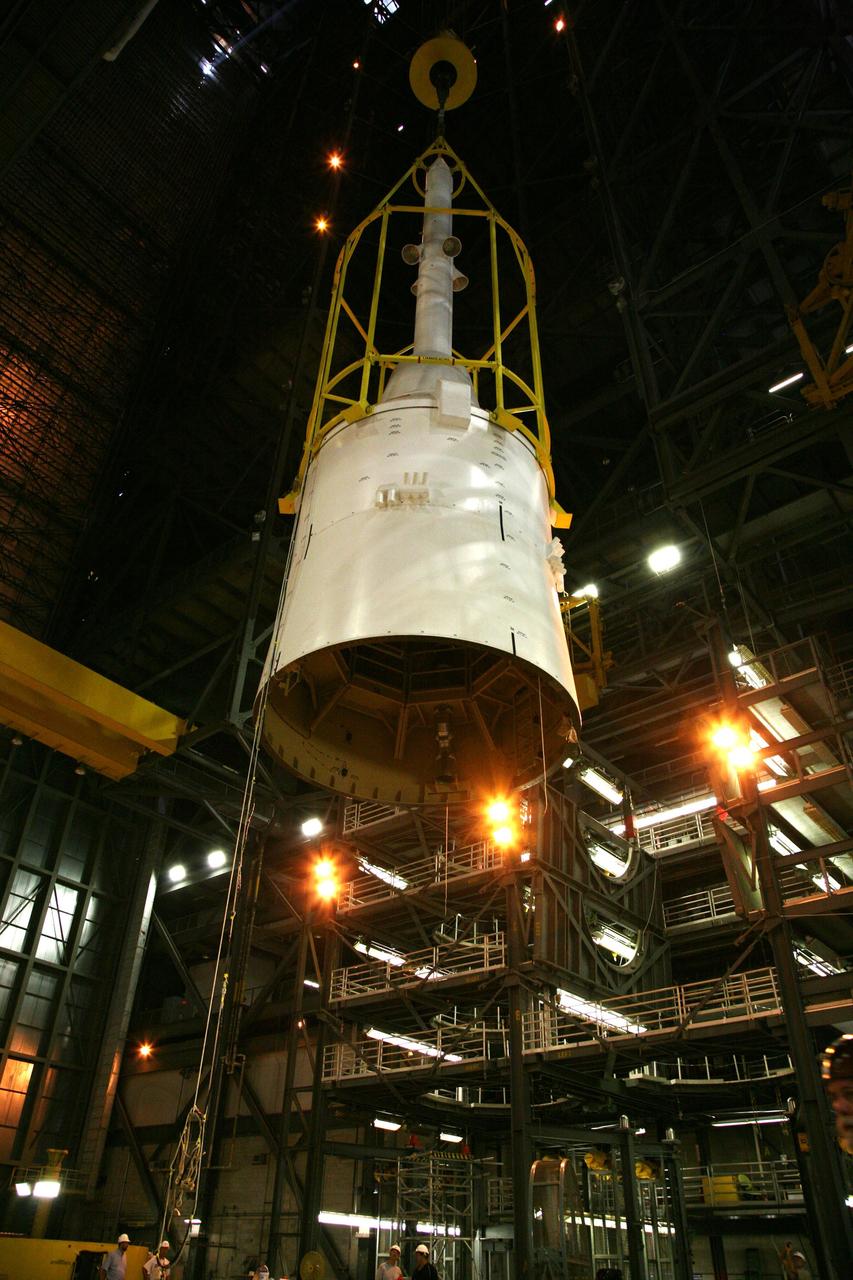
CAPE CANAVERAL, Fla. – In the Vehicle Assembly Building's High Bay 4, assembly of the Ares I-X rocket nears completion. The yellow framework, nicknamed the "birdcage," lifts Super Stack 5. The stack will be positioned on top of the segments already in place on the mobile launcher platform in High Bay 3, completing assembly of the 327-foot-tall rocket. Five super stacks make up the rocket's upper stage that is integrated with the four-segment solid rocket booster first stage. Ares I-X is the test vehicle for the Ares I, which is part of the Constellation Program to return men to the moon and beyond. The Ares I-X flight test is targeted for Oct. 31, pending formal NASA Headquarters approval. Photo credit: NASA/Dimitri Gerondidakis
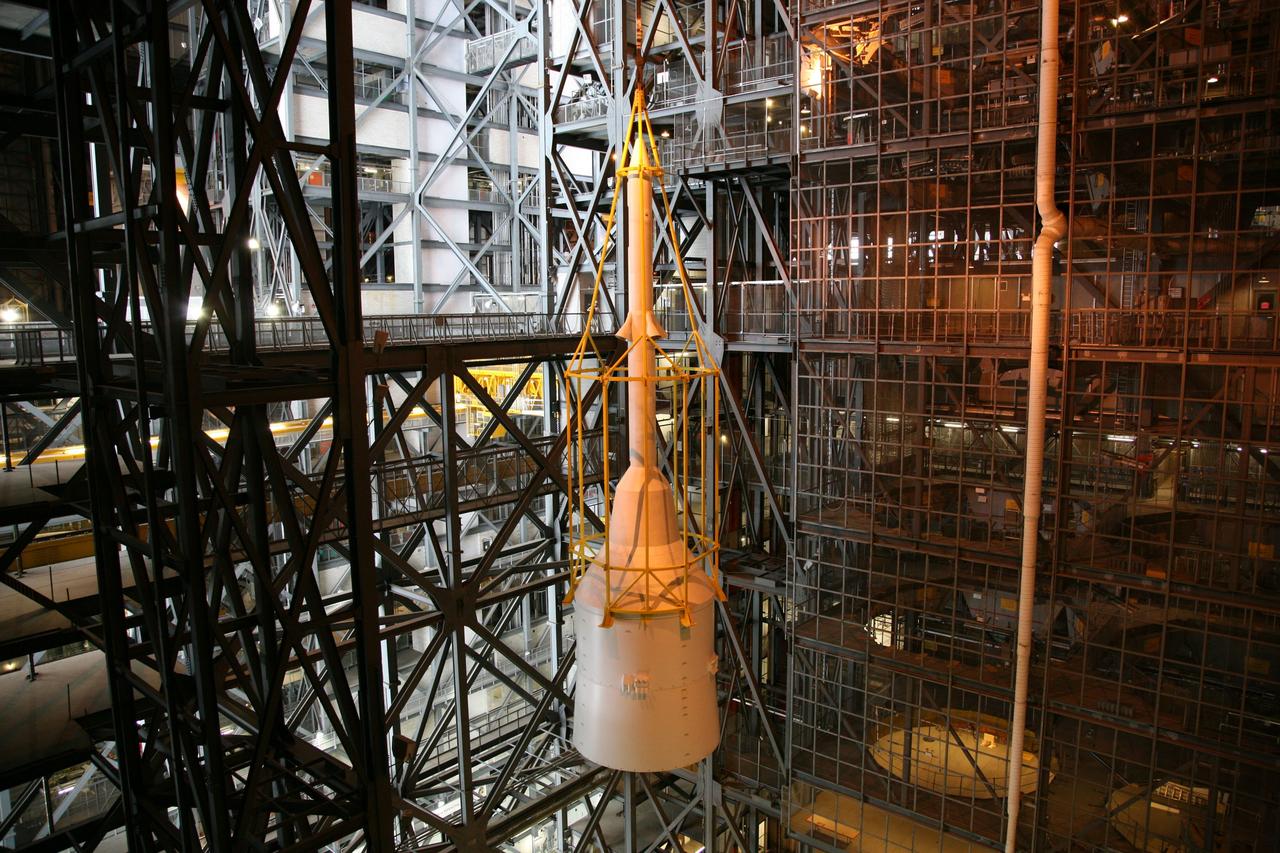
CAPE CANAVERAL, Fla. – In the Vehicle Assembly Building's High Bay 4, assembly of the Ares I-X rocket nears completion. The yellow framework, nicknamed the "birdcage," lifts Super Stack 5 toward an opening at the 16th floor crossover into the transfer aisle. The stack will be positioned on top of the segments already in place on the mobile launcher platform in High Bay 3, completing assembly of the 327-foot-tall rocket. Five super stacks make up the rocket's upper stage that is integrated with the four-segment solid rocket booster first stage. Ares I-X is the test vehicle for the Ares I, which is part of the Constellation Program to return men to the moon and beyond. The Ares I-X flight test is targeted for Oct. 31, pending formal NASA Headquarters approval. Photo credit: NASA/Dimitri Gerondidakis
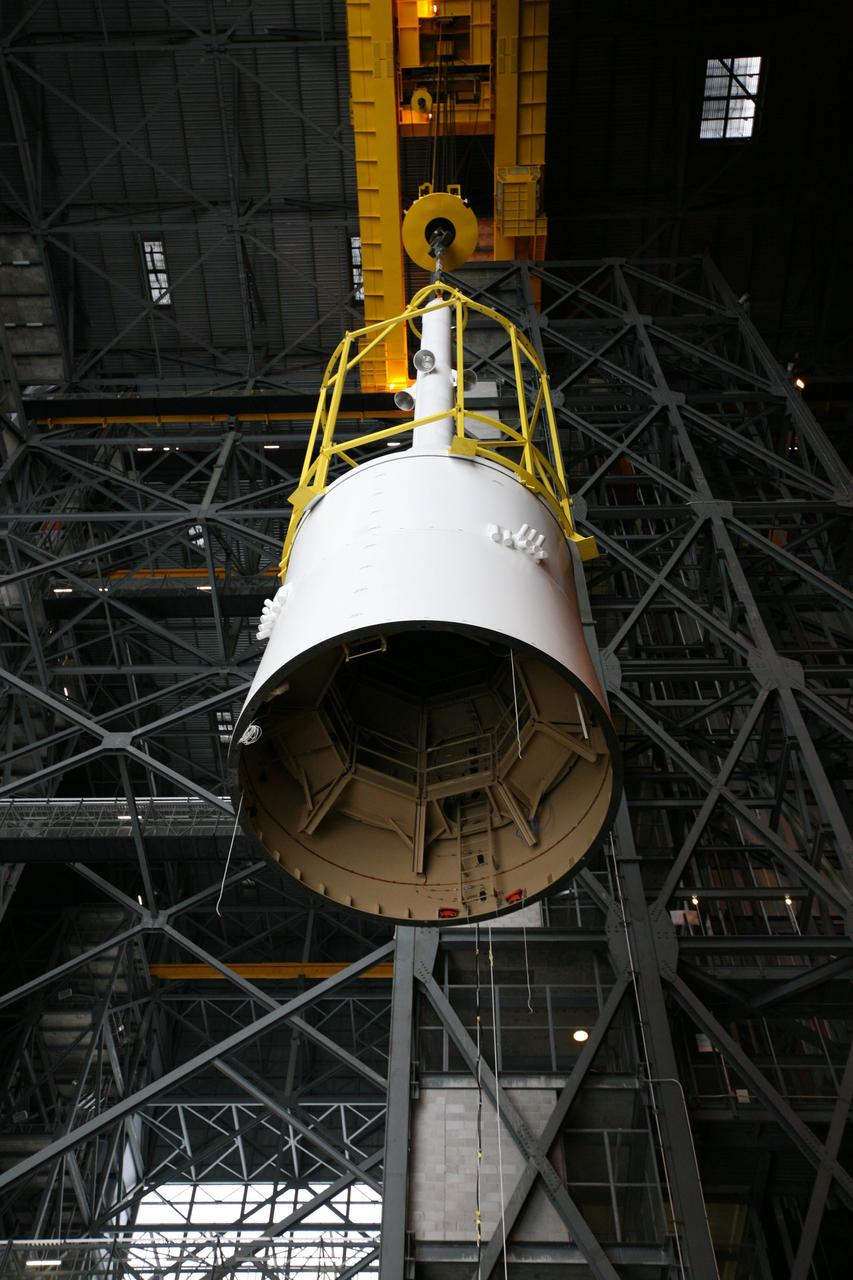
CAPE CANAVERAL, Fla. – In the Vehicle Assembly Building's transfer aisle, assembly of the Ares I-X rocket nears completion. The yellow framework, nicknamed the "birdcage," moves Super Stack 5 from High Bay 4 over the transfer aisle. The stack will be positioned on top of the segments already in place on the mobile launcher platform in High Bay 3, completing assembly of the 327-foot-tall rocket. Five super stacks make up the rocket's upper stage that is integrated with the four-segment solid rocket booster first stage. Ares I-X is the test vehicle for the Ares I, which is part of the Constellation Program to return men to the moon and beyond. The Ares I-X flight test is targeted for Oct. 31, pending formal NASA Headquarters approval. Photo credit: NASA/Dimitri Gerondidakis
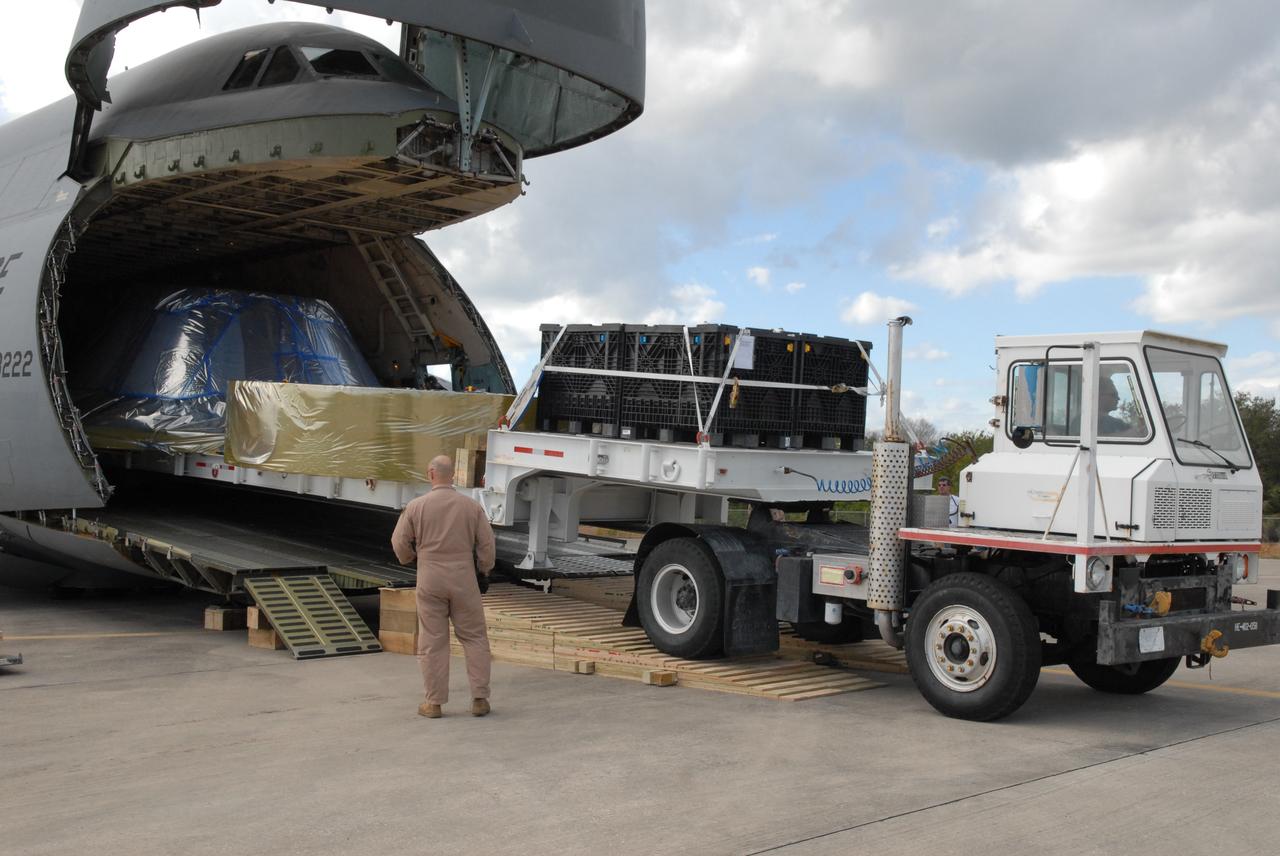
CAPE CANAVERAL, Fla. – At the Shuttle Landing Facility at NASA's Kennedy Space Center in Florida, hardware that will be used in the launch of the Ares I-X rocket is being offloaded from the C-5 aircraft. The hardware consists of a precisely machined, full-scale simulator crew module and launch abort system to form the tip of NASA's Ares I-X rocket. The launch of the 321-foot-tall, full-scale Ares I-X, targeted for July 2009, will be the first in a series of unpiloted rocket launches from Kennedy. When fully developed, the 16-foot diameter crew module will furnish living space and reentry protection for the astronauts, while their launch abort system will provide safe evacuation if a launch vehicle failure occurs. Photo credit: NASA/Jack Pfaller
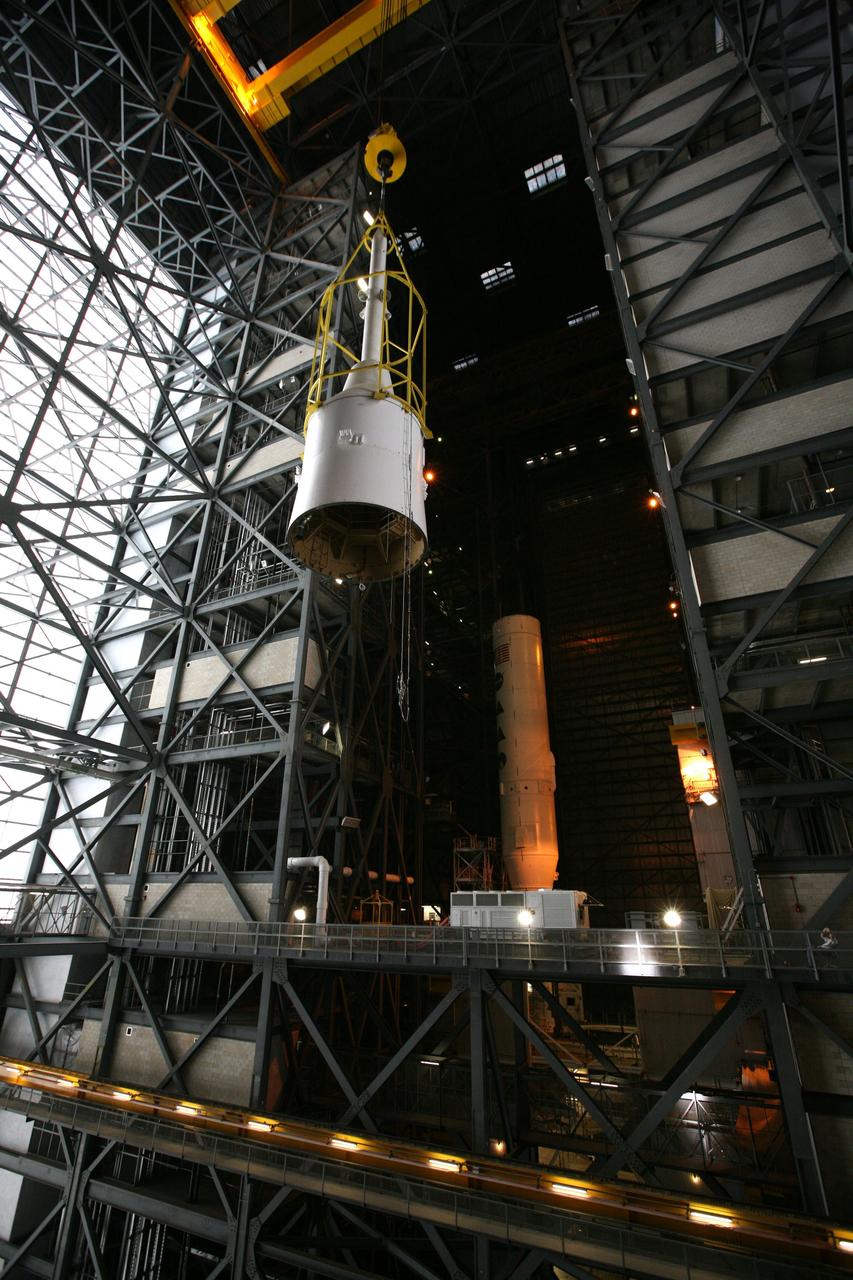
CAPE CANAVERAL, Fla. – In the Vehicle Assembly Building's transfer aisle, assembly of the Ares I-X rocket nears completion. The yellow framework, nicknamed the "birdcage," moves Super Stack 5 from High Bay 4 over the transfer aisle toward an opening at the 16th floor crossover in High Bay 3. The stack will be positioned on top of the segments already in place on the mobile launcher platform in High Bay 3, in the background, completing assembly of the 327-foot-tall rocket. Five super stacks make up the rocket's upper stage that is integrated with the four-segment solid rocket booster first stage. Ares I-X is the test vehicle for the Ares I, which is part of the Constellation Program to return men to the moon and beyond. The Ares I-X flight test is targeted for Oct. 31, pending formal NASA Headquarters approval. Photo credit: NASA/Dimitri Gerondidakis
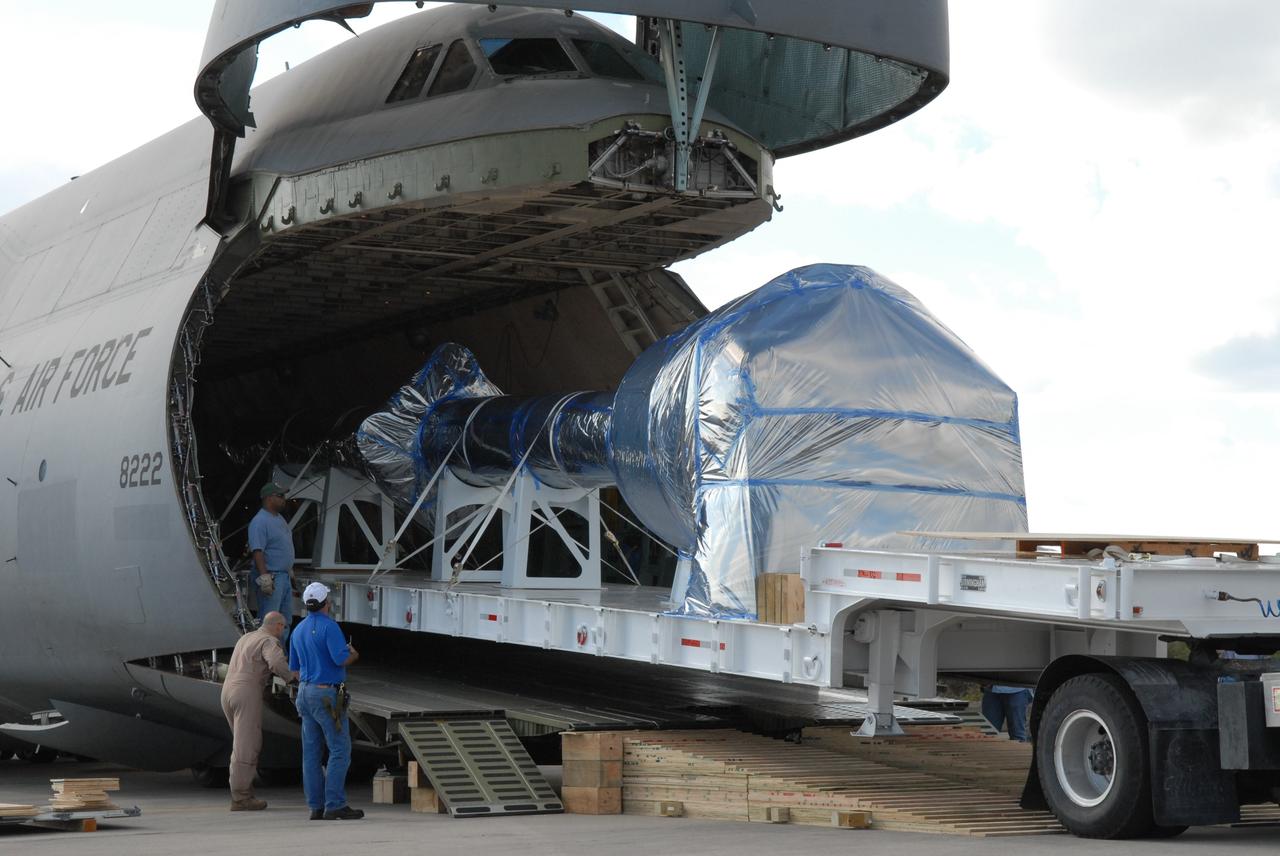
CAPE CANAVERAL, Fla. – At the Shuttle Landing Facility at NASA's Kennedy Space Center in Florida, hardware that will be used in the launch of the Ares I-X rocket is being offloaded from the C-5 aircraft. The hardware consists of a precisely machined, full-scale simulator crew module and launch abort system to form the tip of NASA's Ares I-X rocket. The launch of the 321-foot-tall, full-scale Ares I-X, targeted for July 2009, will be the first in a series of unpiloted rocket launches from Kennedy. When fully developed, the 16-foot diameter crew module will furnish living space and reentry protection for the astronauts, while their launch abort system will provide safe evacuation if a launch vehicle failure occurs. Photo credit: NASA/Jack Pfaller
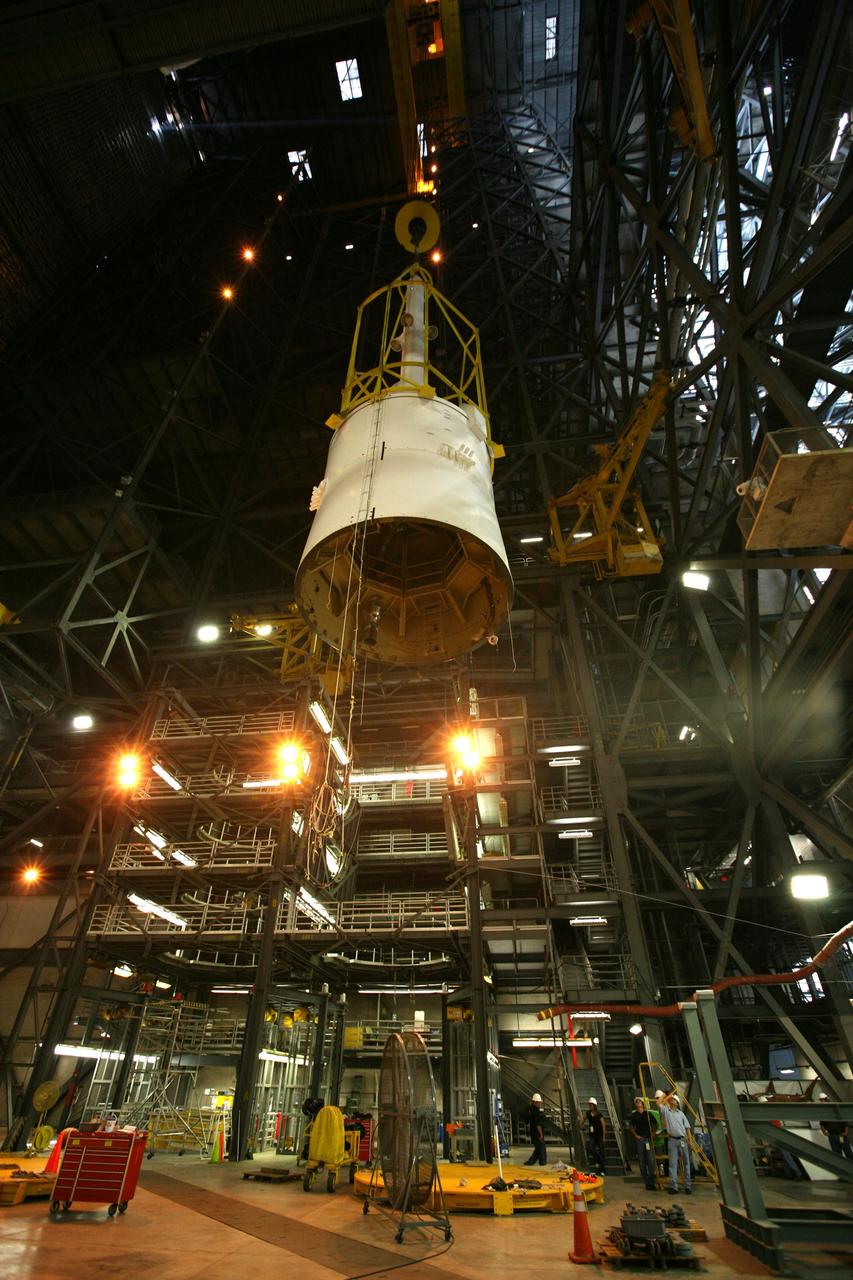
CAPE CANAVERAL, Fla. – In the Vehicle Assembly Building's High Bay 4, assembly of the Ares I-X rocket nears completion. The yellow framework, nicknamed the "birdcage," lifts Super Stack 5. The stack will be positioned on top of the segments already in place on the mobile launcher platform in High Bay 3, completing assembly of the 327-foot-tall rocket. Five super stacks make up the rocket's upper stage that is integrated with the four-segment solid rocket booster first stage. Ares I-X is the test vehicle for the Ares I, which is part of the Constellation Program to return men to the moon and beyond. The Ares I-X flight test is targeted for Oct. 31, pending formal NASA Headquarters approval. Photo credit: NASA/Dimitri Gerondidakis
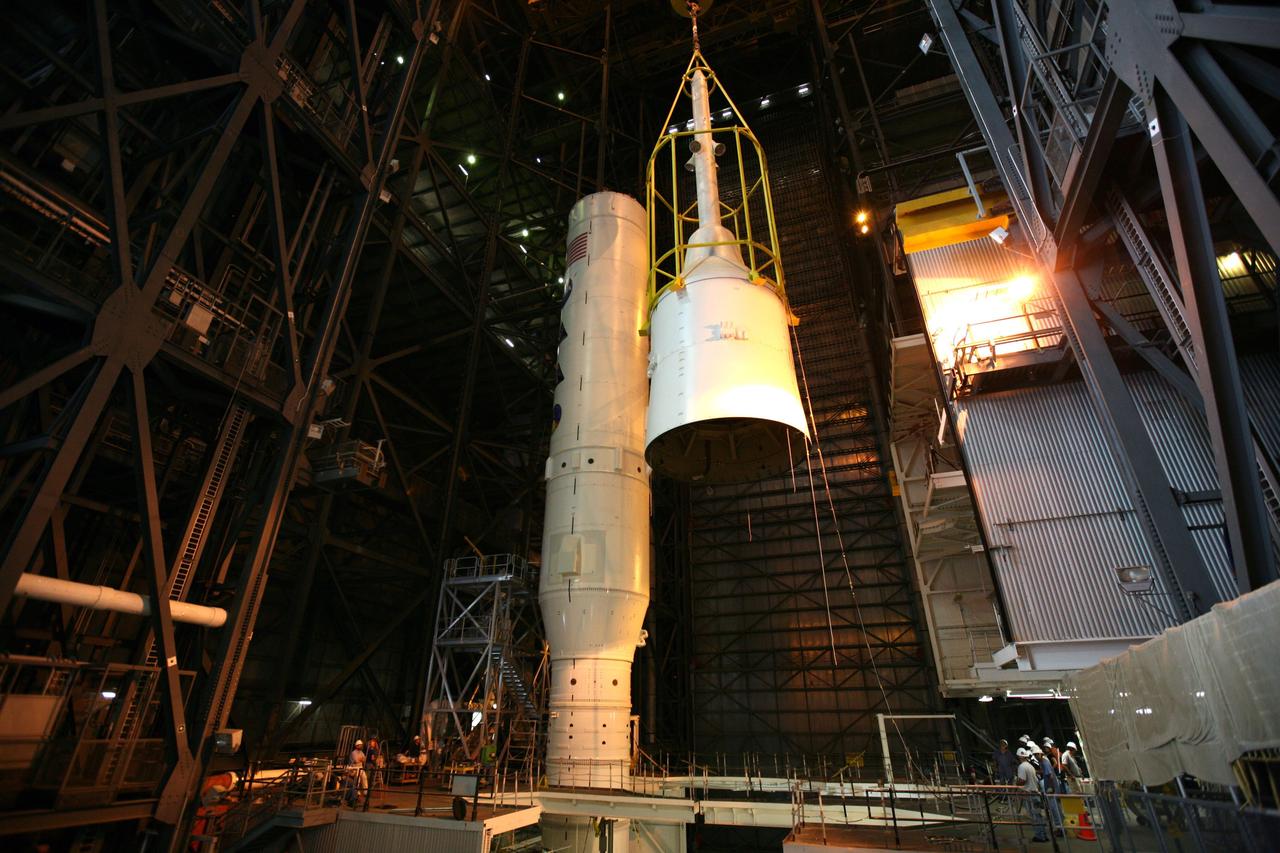
CAPE CANAVERAL, Fla. – In the Vehicle Assembly Building's High Bay 3, assembly of the Ares I-X rocket nears completion. The yellow framework, nicknamed the "birdcage," lifts Super Stack 5 to the top of the segments already in place on the mobile launcher platform. Once in place, assembly of the rocket will be complete. The 327-foot-tall rocket is one of the largest processed in the bay, rivaling the height of the Apollo Program's 364-foot-tall Saturn V. Five super stacks make up the rocket's upper stage that is integrated with the four-segment solid rocket booster first stage. Ares I-X is the test vehicle for the Ares I, which is part of the Constellation Program to return men to the moon and beyond. The Ares I-X flight test is targeted for Oct. 31, pending formal NASA Headquarters approval. Photo credit: NASA/Dimitri Gerondidakis
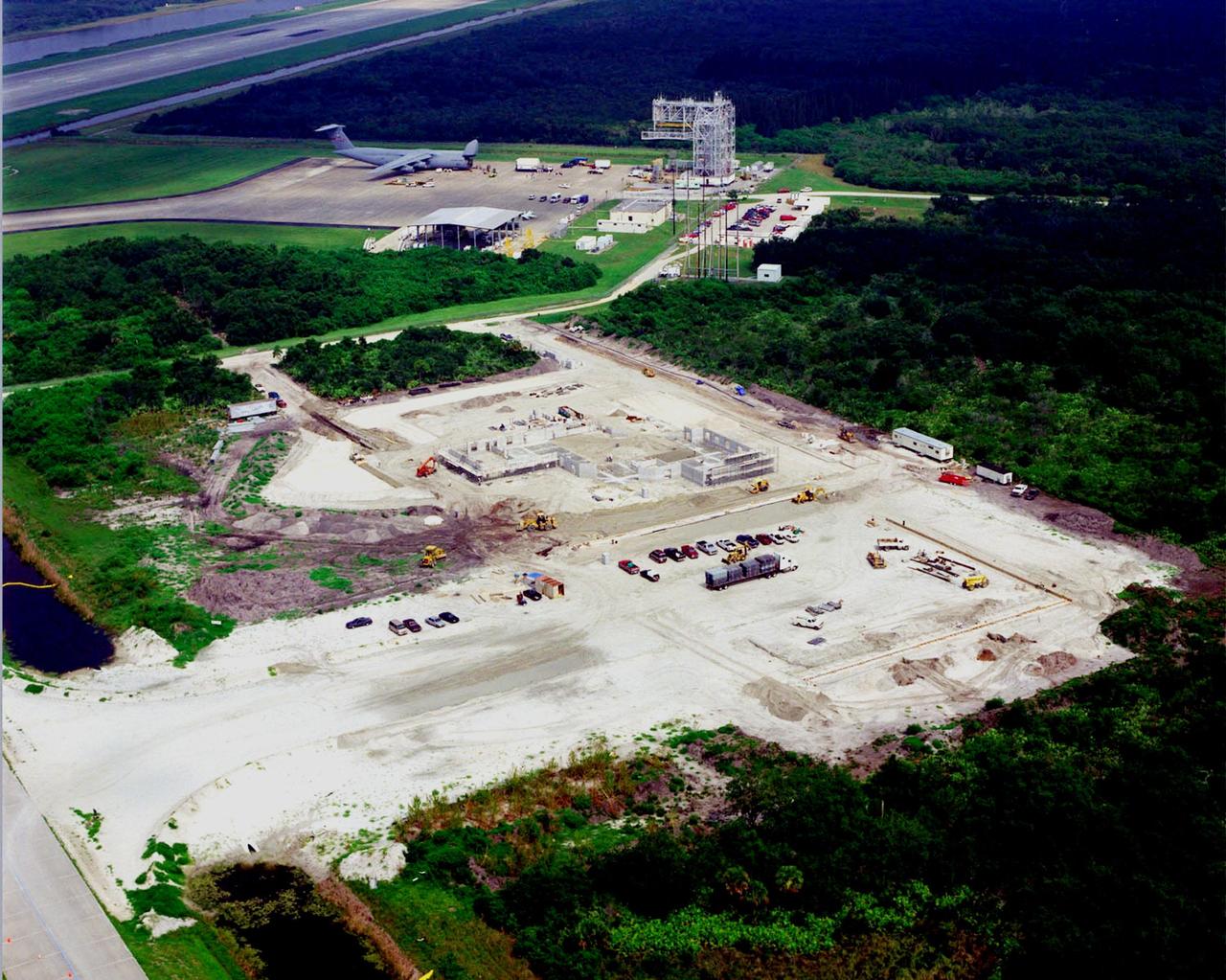
This aerial view shows the construction of a multi-purpose hangar, which is part of the $8 million Reusable Launch Vehicle (RLV) Support Complex at Kennedy Space Center. In the background is the Shuttle Landing Facility, with (left) a C-5 air cargo plane, the offloaded canister in front of it containing the Multi-Purpose Logistics Module Raffaello, and (right) the mate/demate tower that is used when an orbiter is transported to and from KSC atop a modified Boeing 747. The RLV complex will also include facilities for related ground support equipment and administrative/ technical support. It will be available to accommodate the Space Shuttle; the X-34 RLV technology demonstrator; the L-1011 carrier aircraft for Pegasus and X-34; and other RLV and X-vehicle programs. The complex is jointly funded by the Spaceport Florida Authority, NASA's Space Shuttle Program and KSC. The facility will be operational in early 2000.
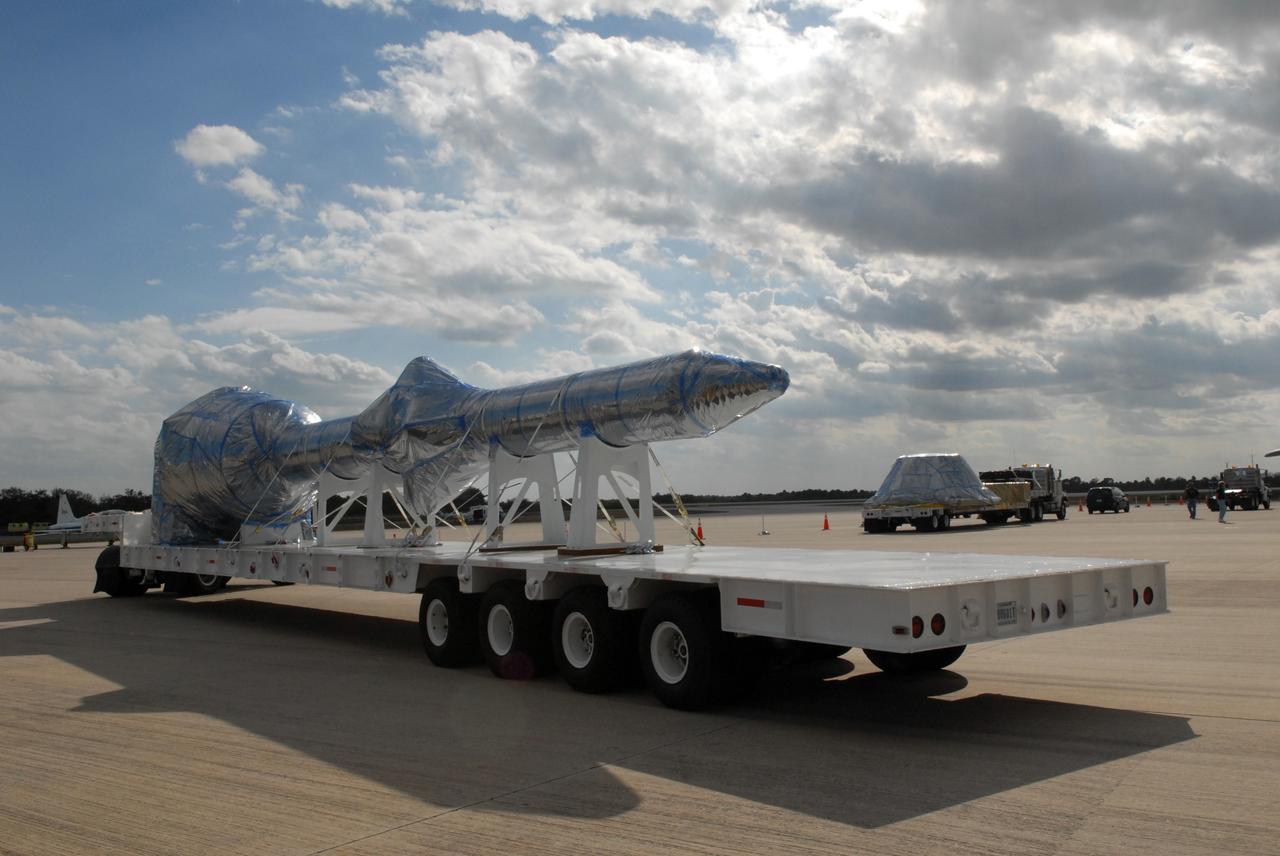
CAPE CANAVERAL, Fla. – At the Shuttle Landing Facility at NASA's Kennedy Space Center in Florida, hardware that will be used in the launch of the Ares I-X rocket is being offloaded from the C-5 aircraft. The hardware consists of a precisely machined, full-scale simulator crew module and launch abort system to form the tip of NASA's Ares I-X rocket. The launch of the 321-foot-tall, full-scale Ares I-X, targeted for July 2009, will be the first in a series of unpiloted rocket launches from Kennedy. When fully developed, the 16-foot diameter crew module will furnish living space and reentry protection for the astronauts, while their launch abort system will provide safe evacuation if a launch vehicle failure occurs. Photo credit: NASA/Jack Pfaller
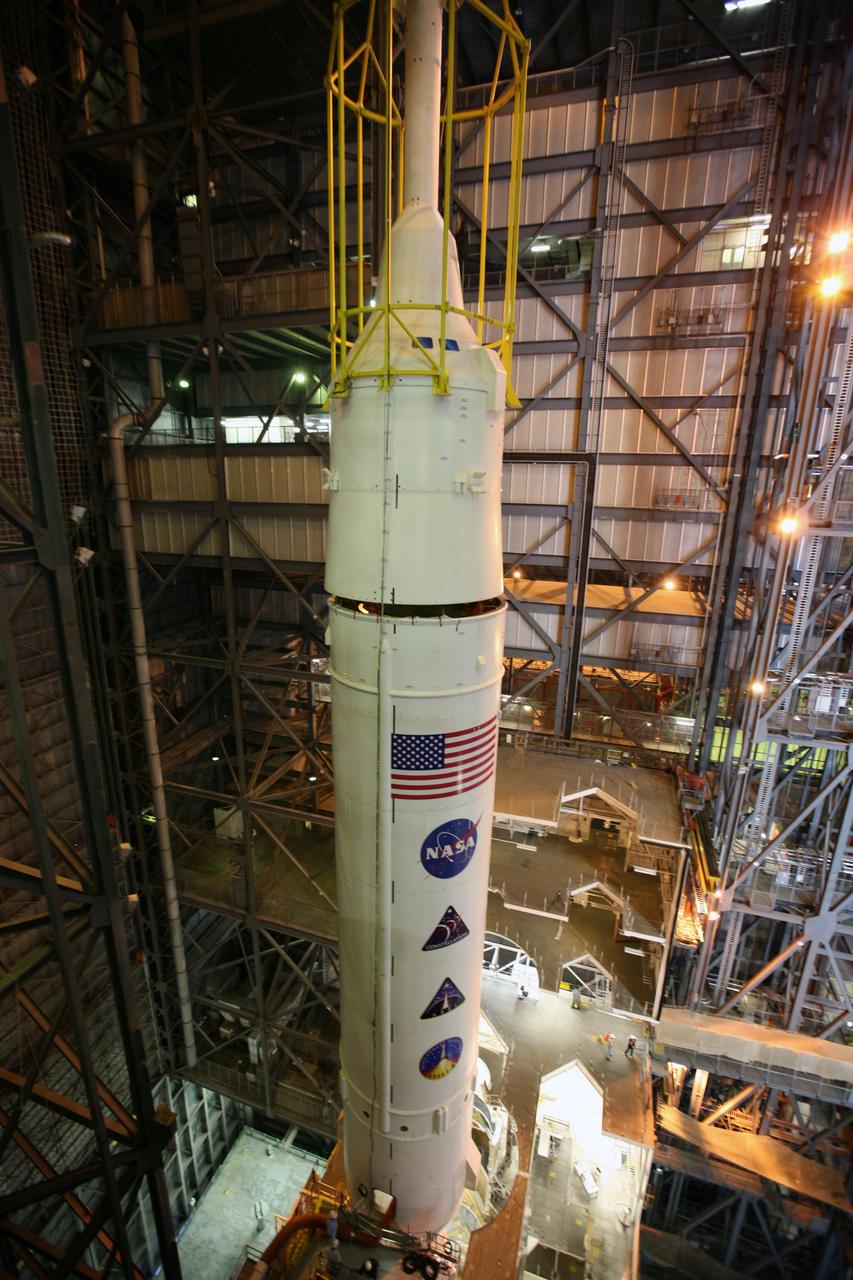
CAPE CANAVERAL, Fla. – In the Vehicle Assembly Building's High Bay 3, the yellow framework, nicknamed the "birdcage," lowers Super Stack 5 onto Super Stack 4. Once in position, assembly of the Ares I-X rocket will be complete. The 327-foot-tall rocket is one of the largest processed in the bay, rivaling the height of the Apollo Program's 364-foot-tall Saturn V. Five super stacks make up the rocket's upper stage that is integrated with the four-segment solid rocket booster first stage. Ares I-X is the test vehicle for the Ares I, which is part of the Constellation Program to return men to the moon and beyond. The Ares I-X flight test is targeted for Oct. 31, pending formal NASA Headquarters approval. Photo credit: NASA/Dimitri Gerondidakis