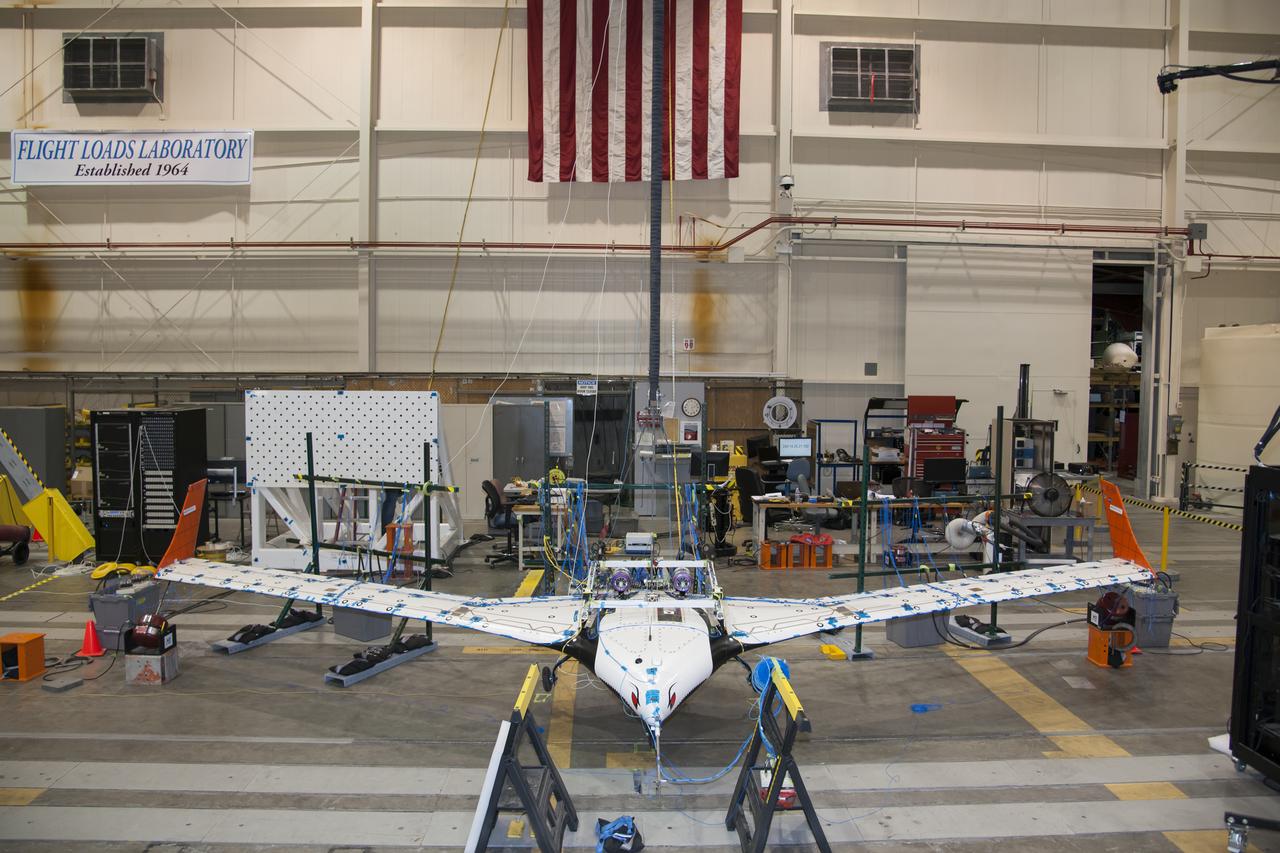
The X-56 Multi-Utility Technology Testbed (MUTT) undergoes ground vibration tests in Armstrong's Flight Loads Laboratory.
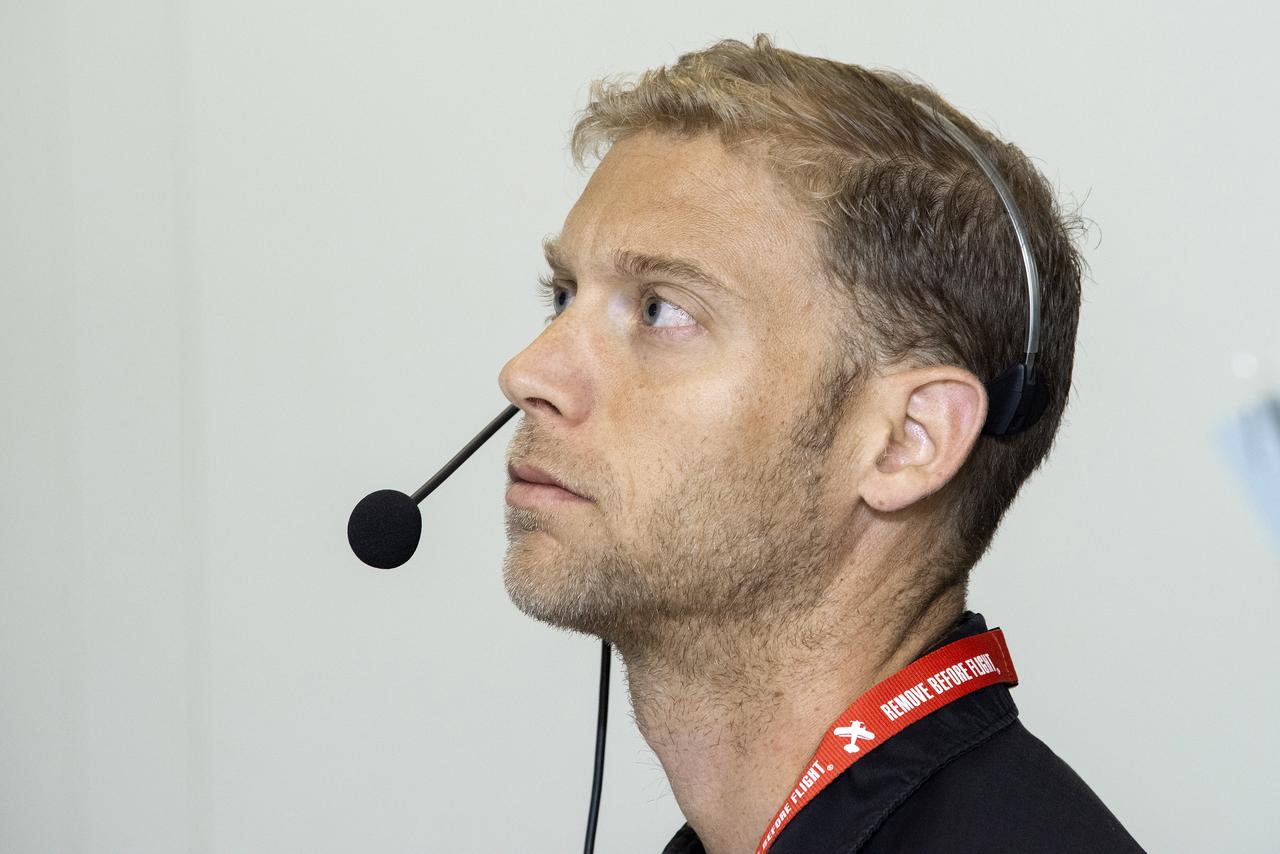
Chris Miller, who was test conductor on this X-56 A flight, prepares for the start of the mission.
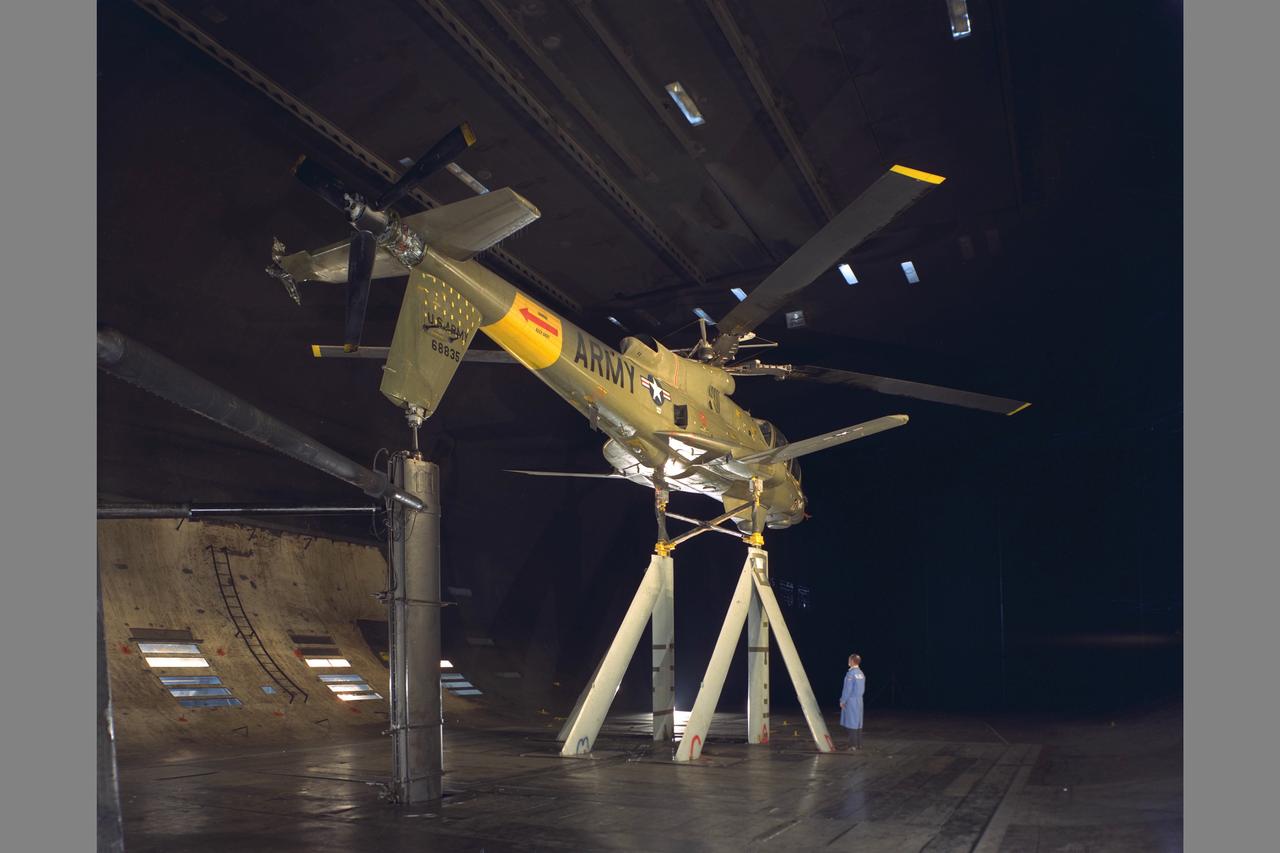
Lockheed AH-56 Helicopter; Cheyenne, 40 x 80 ft. Wind Tunnel. (3/4 rear view)
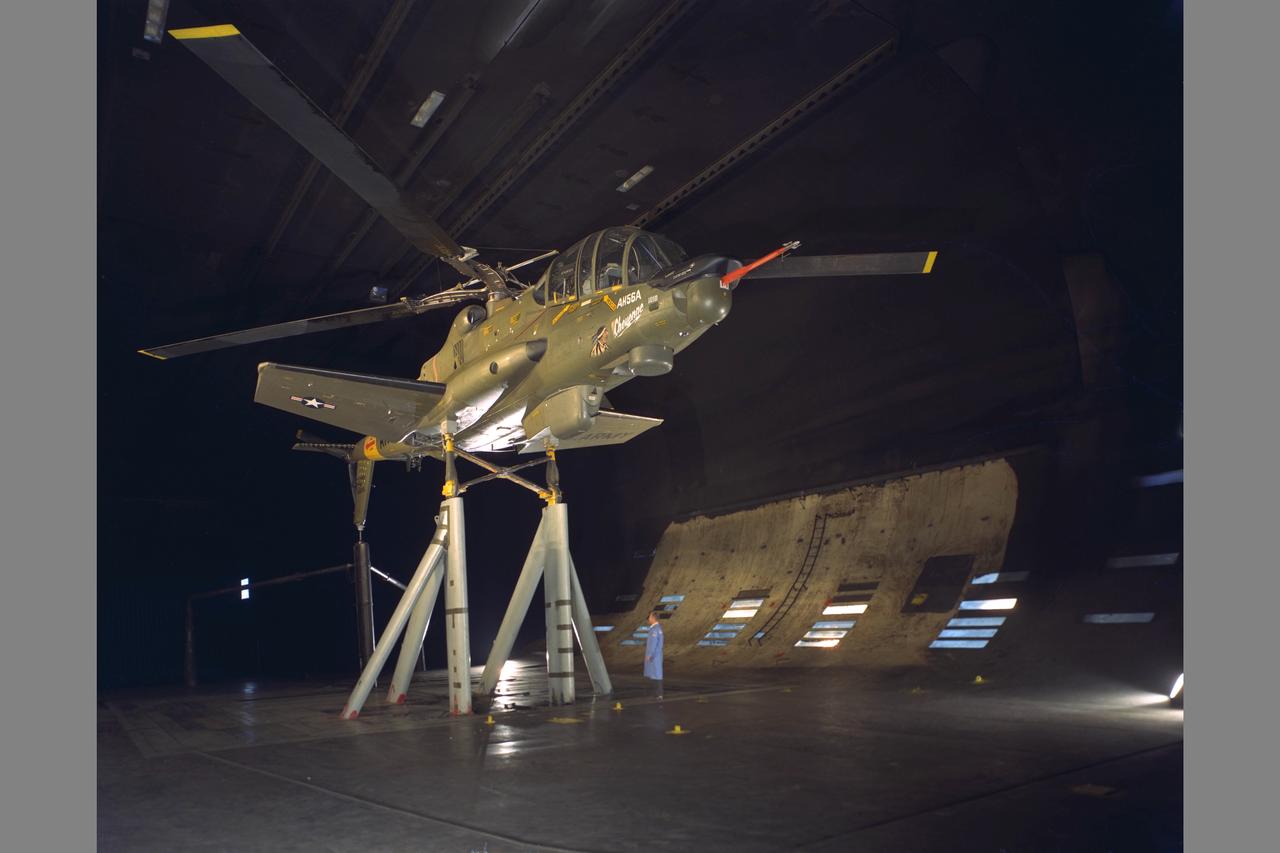
Lockheed AH-56 Helicopter; Cheyenne, 40 x 80 ft. Wind Tunnel. (3/4 front view)
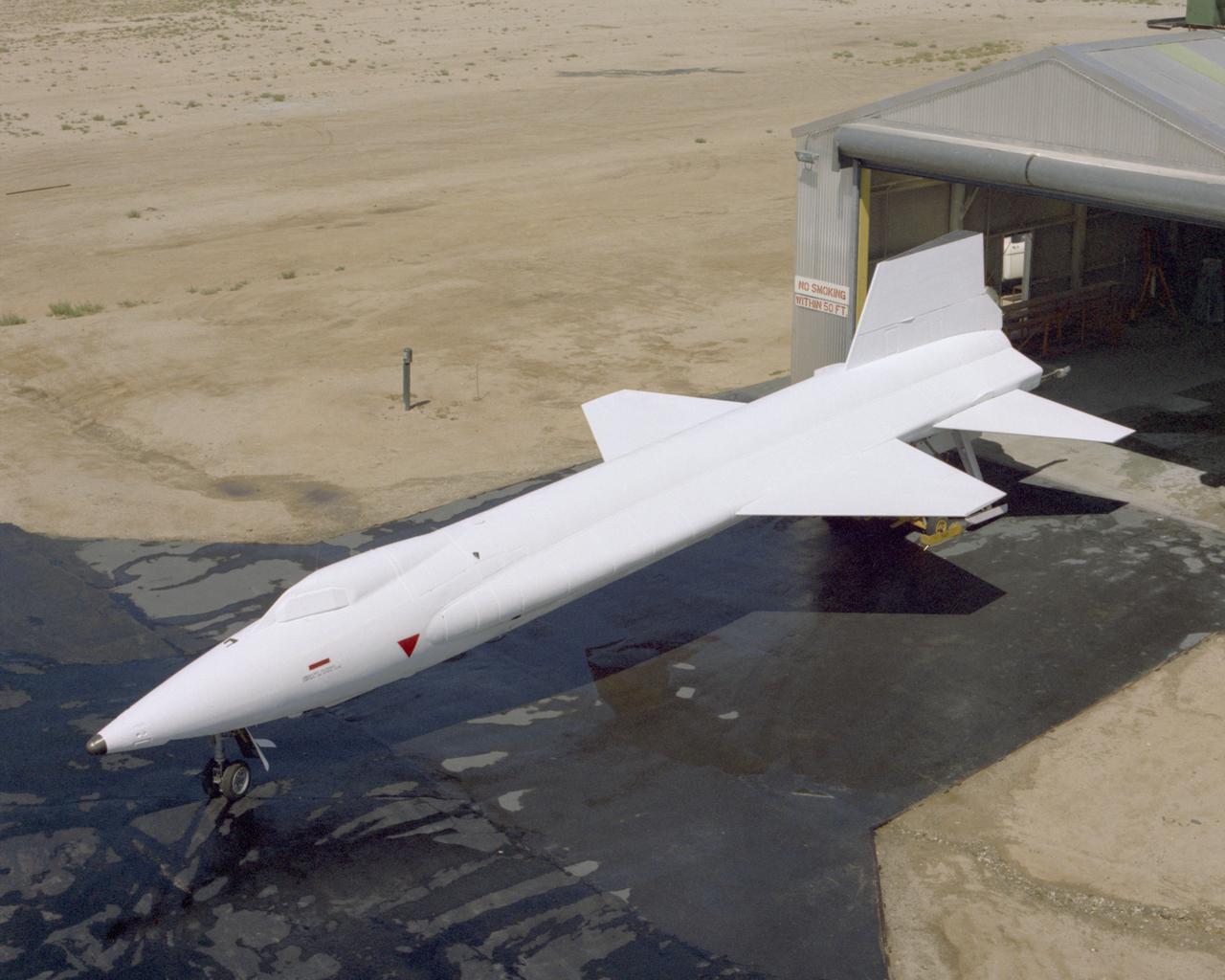
X-15A-2 is rolled out of the paint shop after having the full scale ablative applied. In June 1967, the X-15A-2 rocket-powered research aircraft received a full-scale ablative coating to protect the craft from the high temperatures associated with hypersonic flight (above Mach 5). This pink eraser-like substance, applied to the X-15A-2 aircraft (56-6671), was then covered with a white sealant coat before flight. This coating would help the #2 aircraft reach the record speed of 4,520 mph (Mach 6.7).
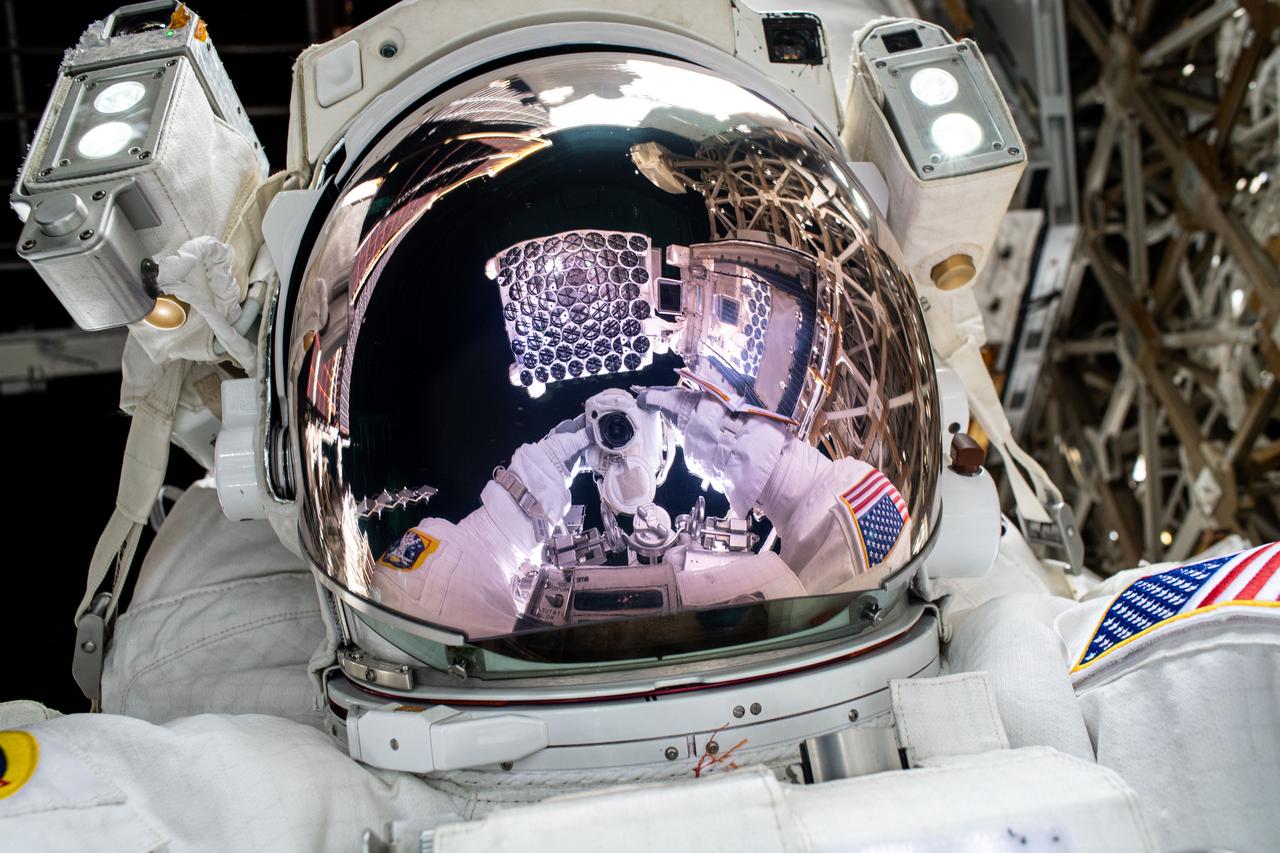
iss072e487911 (Jan. 16, 2025) --- The NICER X-ray telescope is reflected on NASA astronaut and Expedition 72 Flight Engineer Nick Hague's spacesuit helmet visor in this high-flying "space-selfie." Also, visible in Hague's visor is the camera he is pointing toward himself to take this photograph. During the six-hour spacewalk, Hague patched light leaks on some of NICER's 56 X-ray concentrators that block ultraviolet, infrared, and visible light while allowing X-rays to pass through to the mirrors underneath enabling the observation of neutron stars.
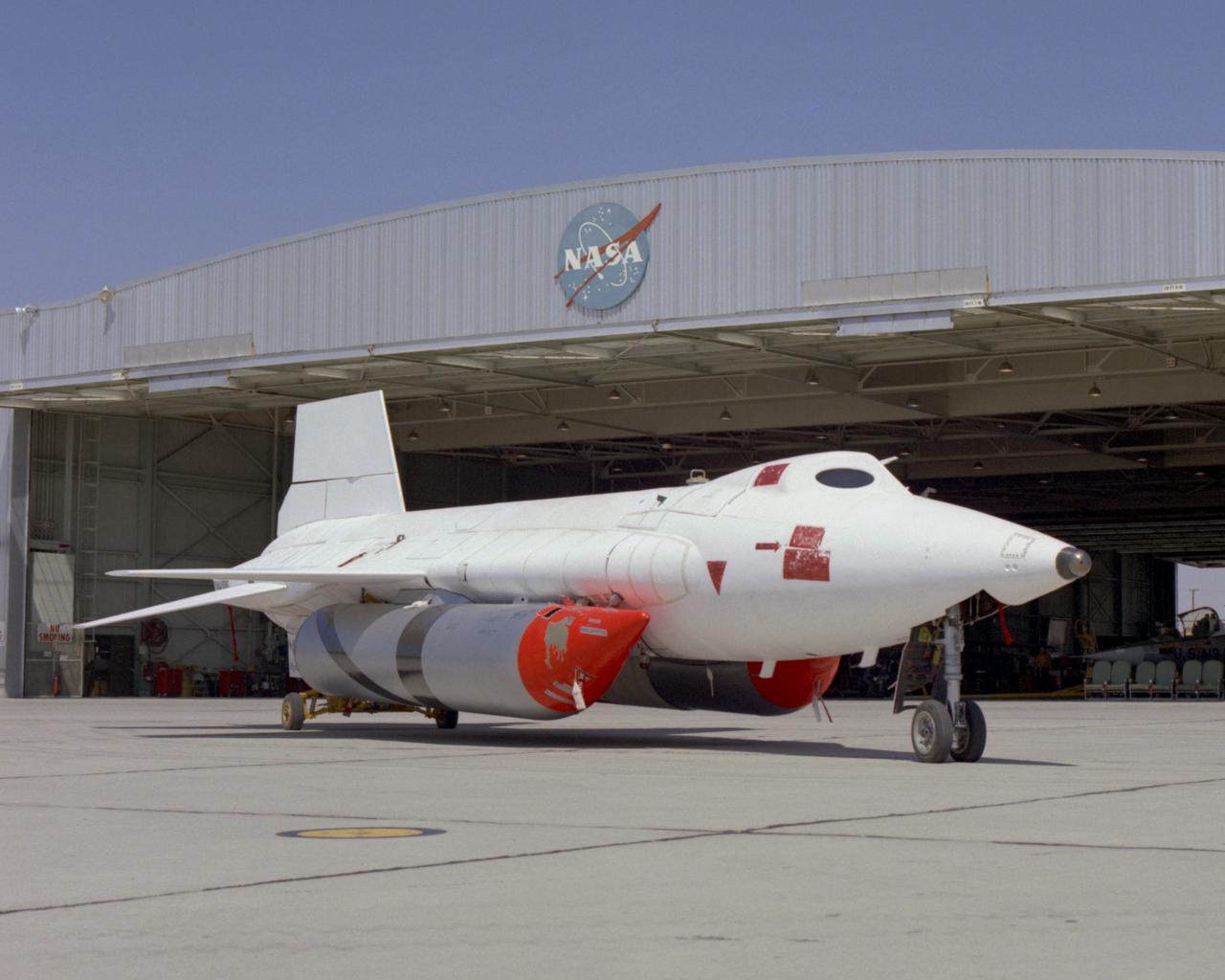
X-15A-2 with full scale ablative and external tanks installed parked in front of hangar. In June 1967, the X-15A-2 rocket-powered research aircraft received a full-scale ablative coating to protect the craft from the high temperatures associated with hypersonic flight (above Mach 5). This pink eraser-like substance, applied to the X-15A-2 aircraft (56-6671), was then covered with a white sealant coat before flight. This coating would help the #2 aircraft reach the record speed of 4,520 mph (Mach 6.7).
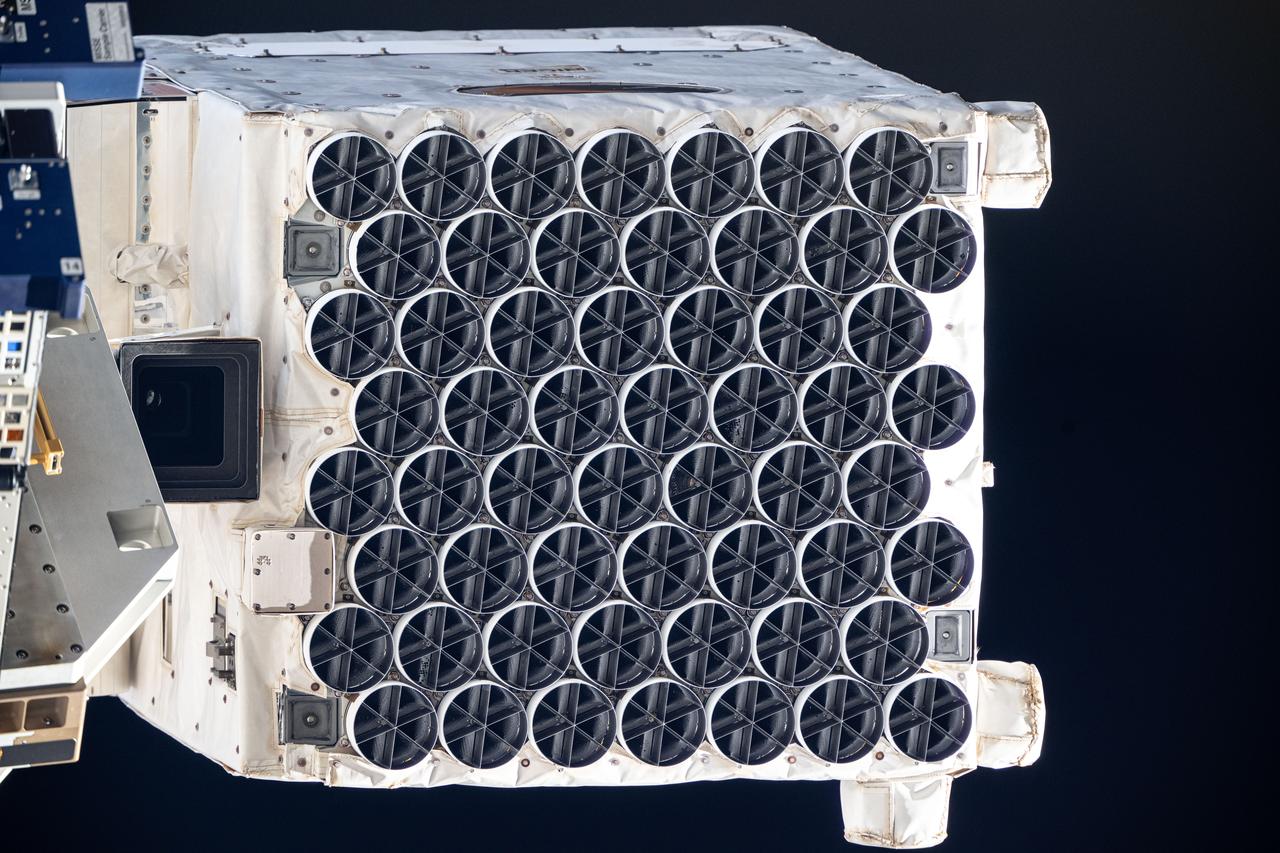
iss072e371351 (Dec. 17, 2024) --- The NICER (Neutron star Interior Composition Explorer) X-ray telescope is pictured installed on the starboard side of the International Space Station's integrated truss segment. NICER's 56 X-ray concentrators are covered by thermal shields, or filters, that block ultraviolet, infrared, and visible light while allowing X-rays to pass through to the mirrors underneath enabling the observation of neutron stars. Several thermal shields have been damaged allowing unwanted sunlight to "leak" into the astrophysics instrument interfering with X-ray measurements. NASA astronauts Nick Hague and Sun Williams will conduct a spacewalk on Jan. 16 to patch the damaged thermal shields and restore NICER for daytime scientific operations.
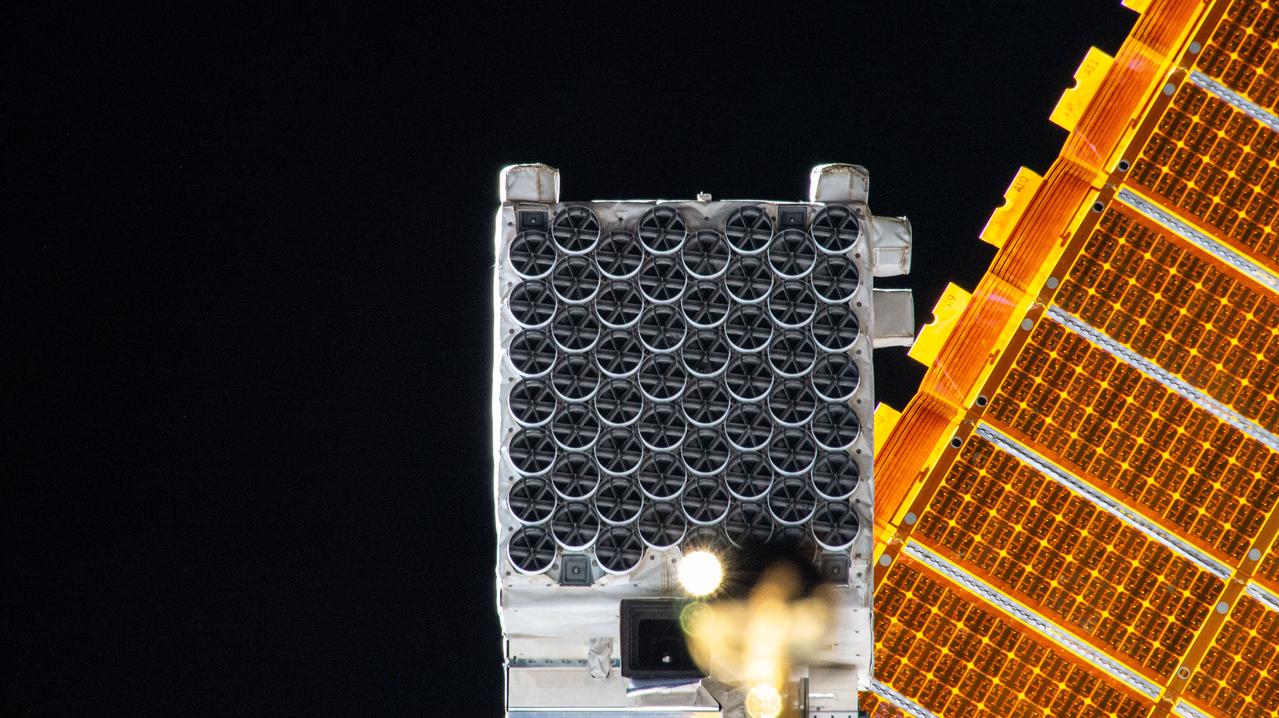
iss072e371305 (Dec. 17, 2024) --- The NICER (Neutron star Interior Composition Explorer) X-ray telescope is pictured installed on the starboard side of the International Space Station's integrated truss segment. NICER's 56 X-ray concentrators are covered by thermal shields, or filters, that block ultraviolet, infrared, and visible light while allowing X-rays to pass through to the mirrors underneath enabling the observation of neutron stars. Several thermal shields have been damaged allowing unwanted sunlight to "leak" into the astrophysics instrument interfering with X-ray measurements. NASA astronauts Nick Hague and Sun Williams will conduct a spacewalk on Jan. 16 to patch the damaged thermal shields and restore NICER for daytime scientific operations.

NICER engineer Steven Kenyon prepares seven of the 56 X-ray concentrators for installation in the NICER instrument. The payload’s 56 mirror assemblies concentrate X-rays onto silicon detectors to gather data that will probe the interior makeup of neutron stars, including those that appear to flash regularly, called pulsars. The Neutron star Interior Composition Explorer (NICER) is a NASA Explorer Mission of Opportunity dedicated to studying the extraordinary environments — strong gravity, ultra-dense matter, and the most powerful magnetic fields in the universe — embodied by neutron stars. An attached payload aboard the International Space Station, NICER will deploy an instrument with unique capabilities for timing and spectroscopy of fast X-ray brightness fluctuations. The embedded Station Explorer for X-ray Timing and Navigation Technology demonstration (SEXTANT) will use NICER data to validate, for the first time in space, technology that exploits pulsars as natural navigation beacons. Credit: NASA/Goddard/ Keith Gendreau <b><a href="http://www.nasa.gov/audience/formedia/features/MP_Photo_Guidelines.html" rel="nofollow">NASA image use policy.</a></b> <b><a href="http://www.nasa.gov/centers/goddard/home/index.html" rel="nofollow">NASA Goddard Space Flight Center</a></b> enables NASA’s mission through four scientific endeavors: Earth Science, Heliophysics, Solar System Exploration, and Astrophysics. Goddard plays a leading role in NASA’s accomplishments by contributing compelling scientific knowledge to advance the Agency’s mission. <b>Follow us on <a href="http://twitter.com/NASAGoddardPix" rel="nofollow">Twitter</a></b> <b>Like us on <a href="http://www.facebook.com/pages/Greenbelt-MD/NASA-Goddard/395013845897?ref=tsd" rel="nofollow">Facebook</a></b> <b>Find us on <a href="http://instagrid.me/nasagoddard/?vm=grid" rel="nofollow">Instagram</a></b>

NICER Optics Lead Takashi Okajima installs one of NICER’s 56 X-ray “concentrators,” each consisting of 24 concentric foils. To minimize the effects of Earth’s gravity on their alignment, the concentrator assemblies were installed from the outside edges toward the center of the plate that houses them. The payload’s 56 mirror assemblies concentrate X-rays onto silicon detectors to gather data that will probe the interior makeup of neutron stars, including those that appear to flash regularly, called pulsars. The Neutron star Interior Composition Explorer (NICER) is a NASA Explorer Mission of Opportunity dedicated to studying the extraordinary environments — strong gravity, ultra-dense matter, and the most powerful magnetic fields in the universe — embodied by neutron stars. An attached payload aboard the International Space Station, NICER will deploy an instrument with unique capabilities for timing and spectroscopy of fast X-ray brightness fluctuations. The embedded Station Explorer for X-ray Timing and Navigation Technology demonstration (SEXTANT) will use NICER data to validate, for the first time in space, technology that exploits pulsars as natural navigation beacons. Credit: NASA/Goddard/ Keith Gendreau <b><a href="http://www.nasa.gov/audience/formedia/features/MP_Photo_Guidelines.html" rel="nofollow">NASA image use policy.</a></b> <b><a href="http://www.nasa.gov/centers/goddard/home/index.html" rel="nofollow">NASA Goddard Space Flight Center</a></b> enables NASA’s mission through four scientific endeavors: Earth Science, Heliophysics, Solar System Exploration, and Astrophysics. Goddard plays a leading role in NASA’s accomplishments by contributing compelling scientific knowledge to advance the Agency’s mission. <b>Follow us on <a href="http://twitter.com/NASAGoddardPix" rel="nofollow">Twitter</a></b> <b>Like us on <a href="http://www.facebook.com/pages/Greenbelt-MD/NASA-Goddard/395013845897?ref=tsd" rel="nofollow">Facebook</a></b> <b>Find us on <a href="http://instagrid.me/nasagoddard/?vm=grid" rel="nofollow">Instagram</a></b>

Many of NICER’s 56 X-ray “concentrators” seen from within the instrument optical bench. Light reflected from the gold surfaces of the 24 concentric foils in each concentrator is focused onto detectors slightly more than 1 meter (3.5 feet) away. The payload’s 56 mirror assemblies concentrate X-rays onto silicon detectors to gather data that will probe the interior makeup of neutron stars, including those that appear to flash regularly, called pulsars. The Neutron star Interior Composition Explorer (NICER) is a NASA Explorer Mission of Opportunity dedicated to studying the extraordinary environments — strong gravity, ultra-dense matter, and the most powerful magnetic fields in the universe — embodied by neutron stars. An attached payload aboard the International Space Station, NICER will deploy an instrument with unique capabilities for timing and spectroscopy of fast X-ray brightness fluctuations. The embedded Station Explorer for X-ray Timing and Navigation Technology demonstration (SEXTANT) will use NICER data to validate, for the first time in space, technology that exploits pulsars as natural navigation beacons. Credit: NASA/Goddard/ Keith Gendreau <b><a href="http://www.nasa.gov/audience/formedia/features/MP_Photo_Guidelines.html" rel="nofollow">NASA image use policy.</a></b> <b><a href="http://www.nasa.gov/centers/goddard/home/index.html" rel="nofollow">NASA Goddard Space Flight Center</a></b> enables NASA’s mission through four scientific endeavors: Earth Science, Heliophysics, Solar System Exploration, and Astrophysics. Goddard plays a leading role in NASA’s accomplishments by contributing compelling scientific knowledge to advance the Agency’s mission. <b>Follow us on <a href="http://twitter.com/NASAGoddardPix" rel="nofollow">Twitter</a></b> <b>Like us on <a href="http://www.facebook.com/pages/Greenbelt-MD/NASA-Goddard/395013845897?ref=tsd" rel="nofollow">Facebook</a></b> <b>Find us on <a href="http://instagrid.me/nasagoddard/?vm=grid" rel="nofollow">Instagram</a></b>

NICER Optics Lead Takashi Okajima makes a fine adjustment to the orientation of one X-ray “concentrator” optic. The 56 optics must point in the same direction in order for NICER to achieve its science goals. The payload’s 56 mirror assemblies concentrate X-rays onto silicon detectors to gather data that will probe the interior makeup of neutron stars, including those that appear to flash regularly, called pulsars. The Neutron star Interior Composition Explorer (NICER) is a NASA Explorer Mission of Opportunity dedicated to studying the extraordinary environments — strong gravity, ultra-dense matter, and the most powerful magnetic fields in the universe — embodied by neutron stars. An attached payload aboard the International Space Station, NICER will deploy an instrument with unique capabilities for timing and spectroscopy of fast X-ray brightness fluctuations. The embedded Station Explorer for X-ray Timing and Navigation Technology demonstration (SEXTANT) will use NICER data to validate, for the first time in space, technology that exploits pulsars as natural navigation beacons. Credit: NASA/Goddard/ Keith Gendreau <b><a href="http://www.nasa.gov/audience/formedia/features/MP_Photo_Guidelines.html" rel="nofollow">NASA image use policy.</a></b> <b><a href="http://www.nasa.gov/centers/goddard/home/index.html" rel="nofollow">NASA Goddard Space Flight Center</a></b> enables NASA’s mission through four scientific endeavors: Earth Science, Heliophysics, Solar System Exploration, and Astrophysics. Goddard plays a leading role in NASA’s accomplishments by contributing compelling scientific knowledge to advance the Agency’s mission. <b>Follow us on <a href="http://twitter.com/NASAGoddardPix" rel="nofollow">Twitter</a></b> <b>Like us on <a href="http://www.facebook.com/pages/Greenbelt-MD/NASA-Goddard/395013845897?ref=tsd" rel="nofollow">Facebook</a></b> <b>Find us on <a href="http://instagrid.me/nasagoddard/?vm=grid" rel="nofollow">Instagram</a></b>
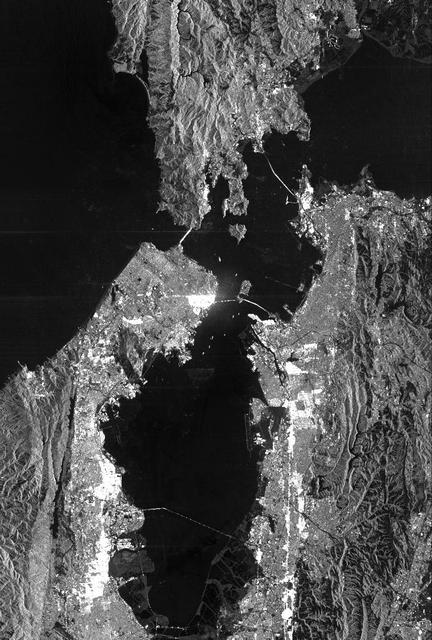
This is a radar image of San Francisco, California, taken on October 3,1994. The image is about 40 kilometers by 55 kilometers (25 miles by 34 miles) with north toward the upper right. Downtown San Francisco is visible in the center of the image with the city of Oakland east (to the right) across San Francisco Bay. Also visible in the image is the Golden Gate Bridge (left center) and the Bay Bridge connecting San Francisco and Oakland. North of the Bay Bridge is Treasure Island. Alcatraz Island appears as a small dot northwest of Treasure Island. This image was acquired by the Spaceborne Imaging Radar-C and X-band Synthetic Aperture Radar (SIR-C/X-SAR) aboard the space shuttle Endeavour on orbit 56. The image is centered at 37 degrees north latitude, 122degrees west longitude. This single-frequency SIR-C image was obtained by the L-band (24 cm) radar channel, horizontally transmitted and received. Portions of the Pacific Ocean visible in this image appear very dark as do other smooth surfaces such as airport runways. Suburban areas, with the low-density housing and tree-lined streets that are typical of San Francisco, appear as lighter gray. Areas with high-rise buildings, such as those seen in the downtown areas, appear in very bright white, showing a higher density of housing and streets which run parallel to the radar flight track. http://photojournal.jpl.nasa.gov/catalog/PIA01751
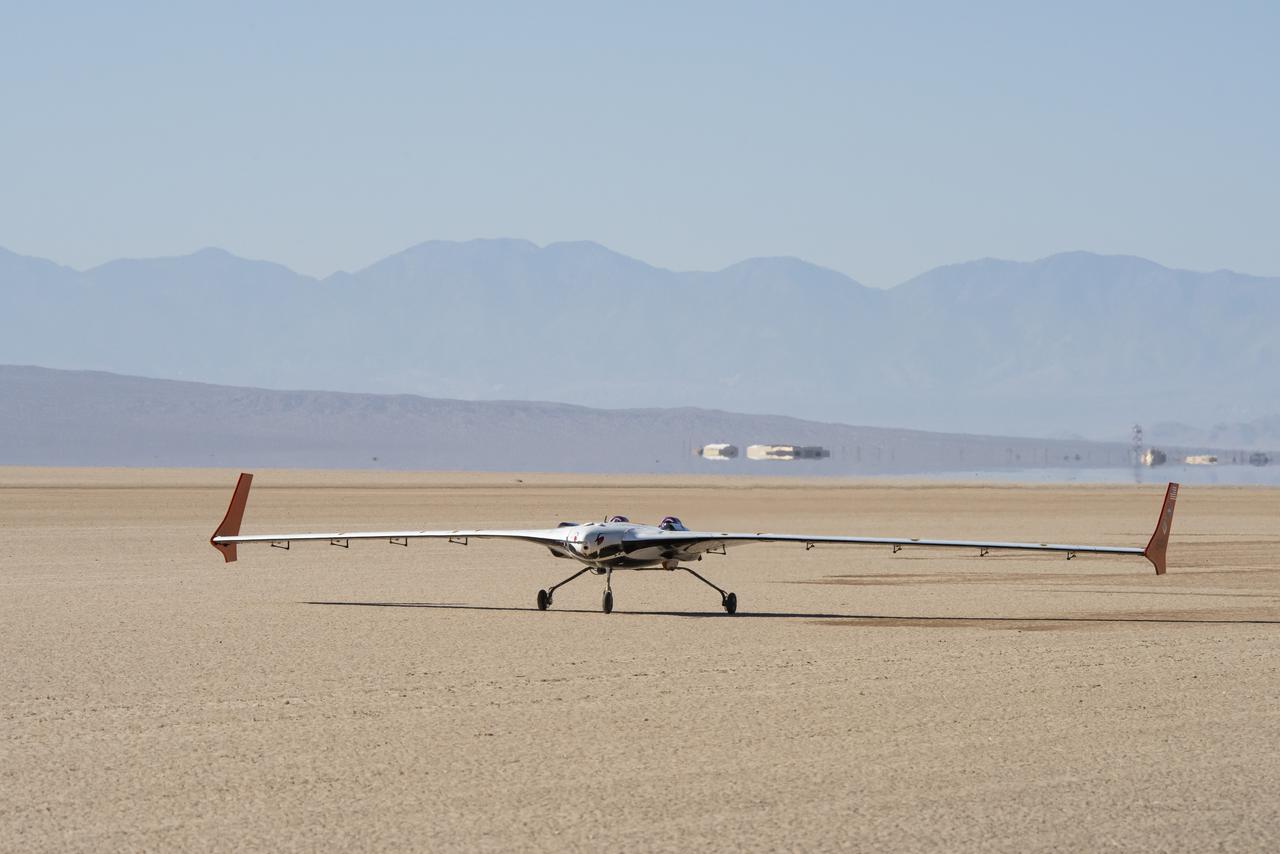
The X-56B remotely piloted aircraft lands following the first of a new flight series. The flight was April 19 at NASA's Armstrong Flight Research Center in Edwards, California, with partner Northrop Grumman.
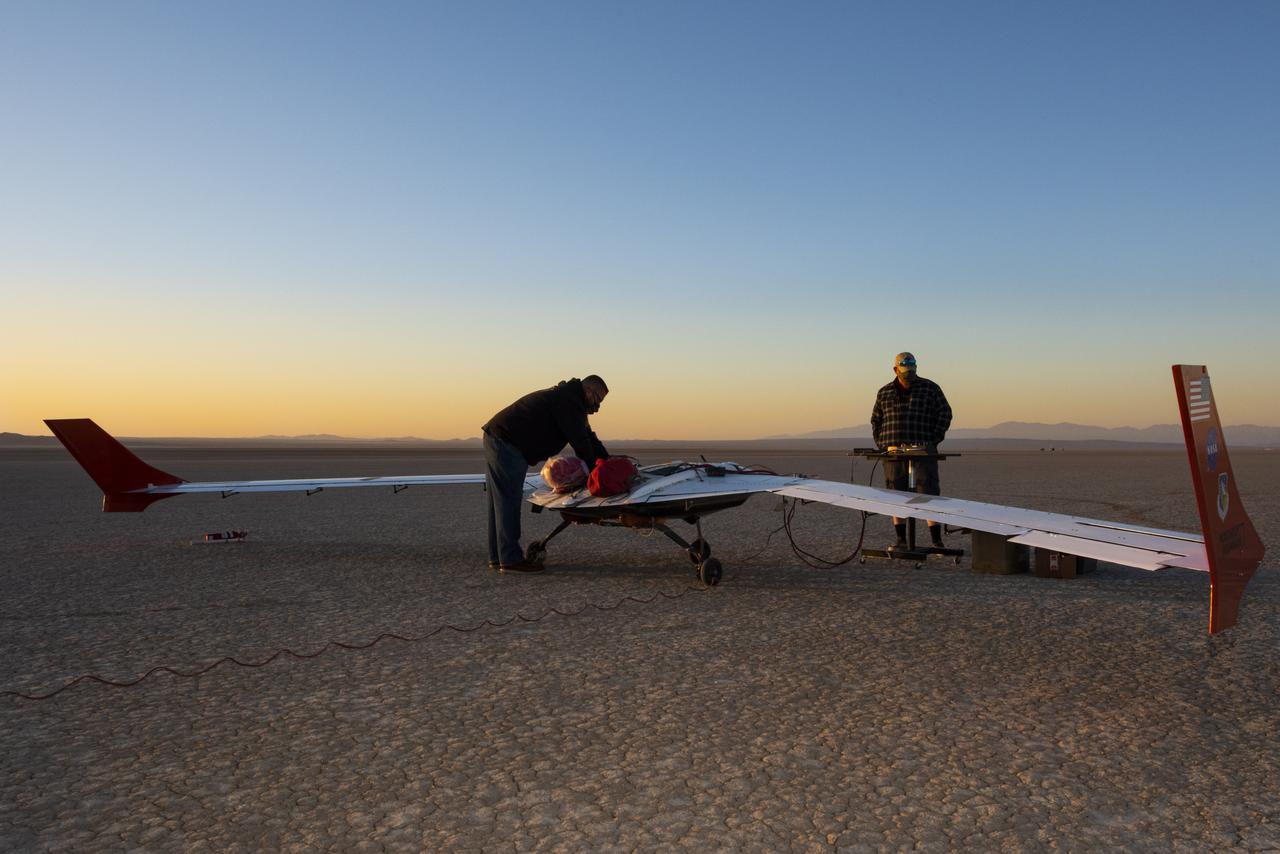
The X-56B remotely piloted aircraft ground crew prepares the aircraft to begin a new flight series. The flight was April 19 at NASA's Armstrong Flight Research Center in Edwards, California, with partner Northrop Grumman.
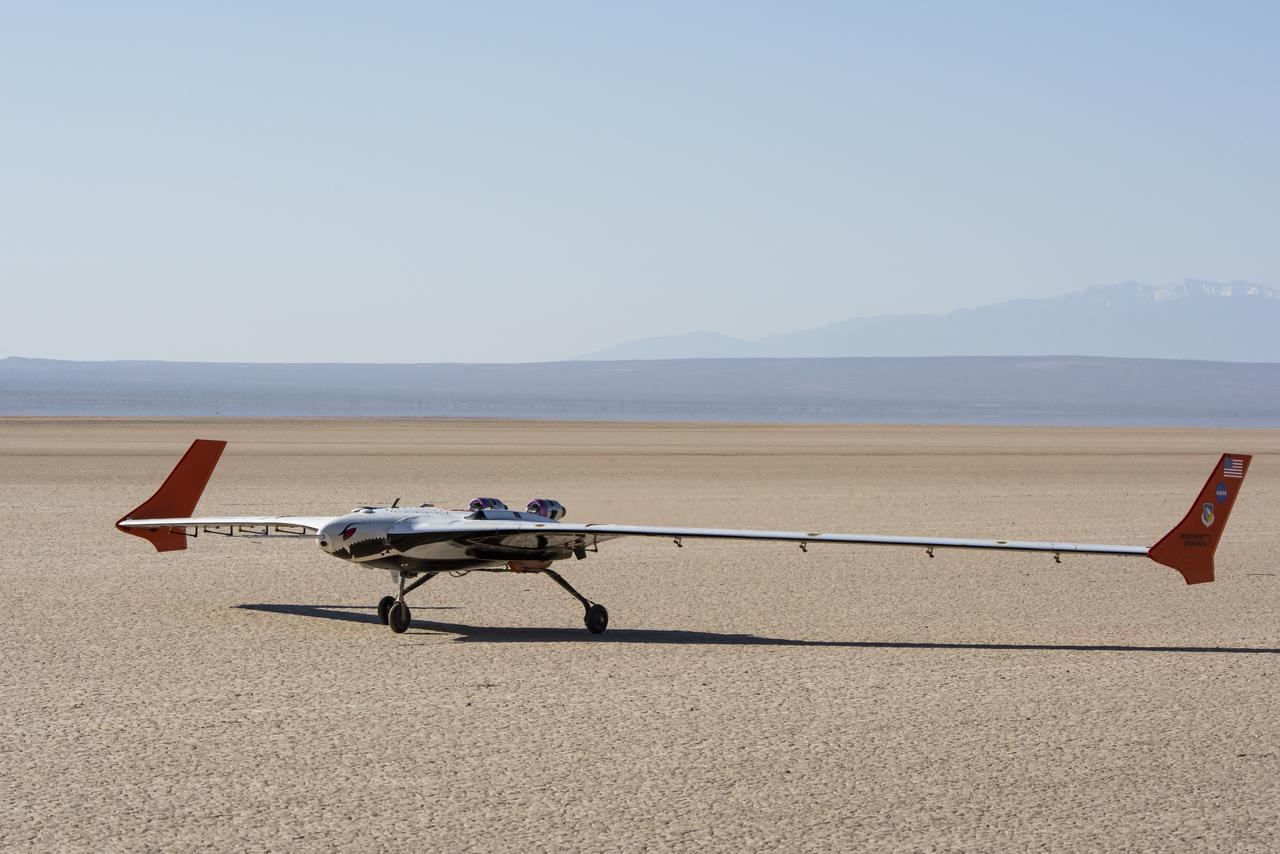
The X-56B remotely piloted aircraft lands following the first of a new flight series. The flight was April 19 at NASA's Armstrong Flight Research Center in Edwards, California, with partner Northrop Grumman.
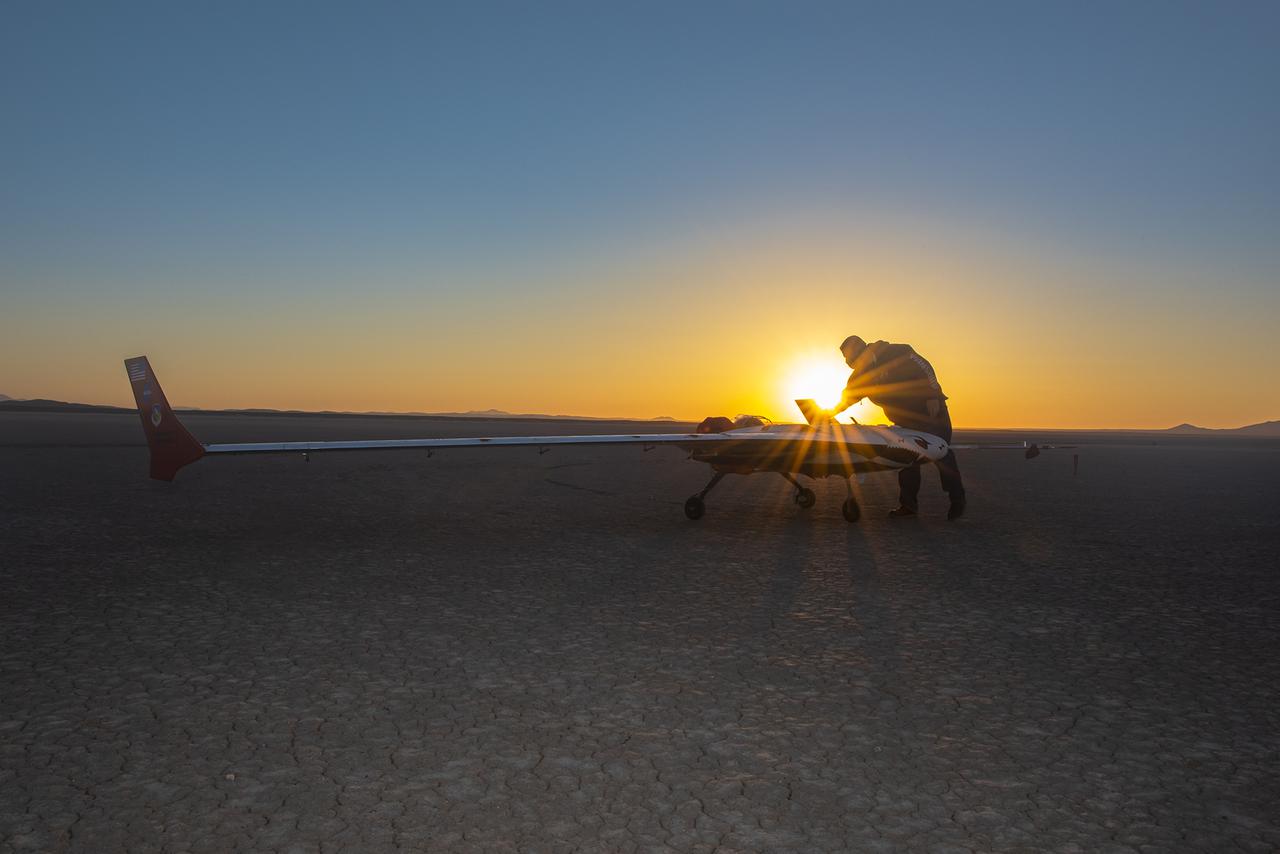
Preparations for the X-56B remotely piloted aircraft to begin a new flight series continue as the sun rises on Rogers Dry Lake. The flight was April 19 at NASA's Armstrong Flight Research Center in Edwards, California, with partner Northrop Grumman.
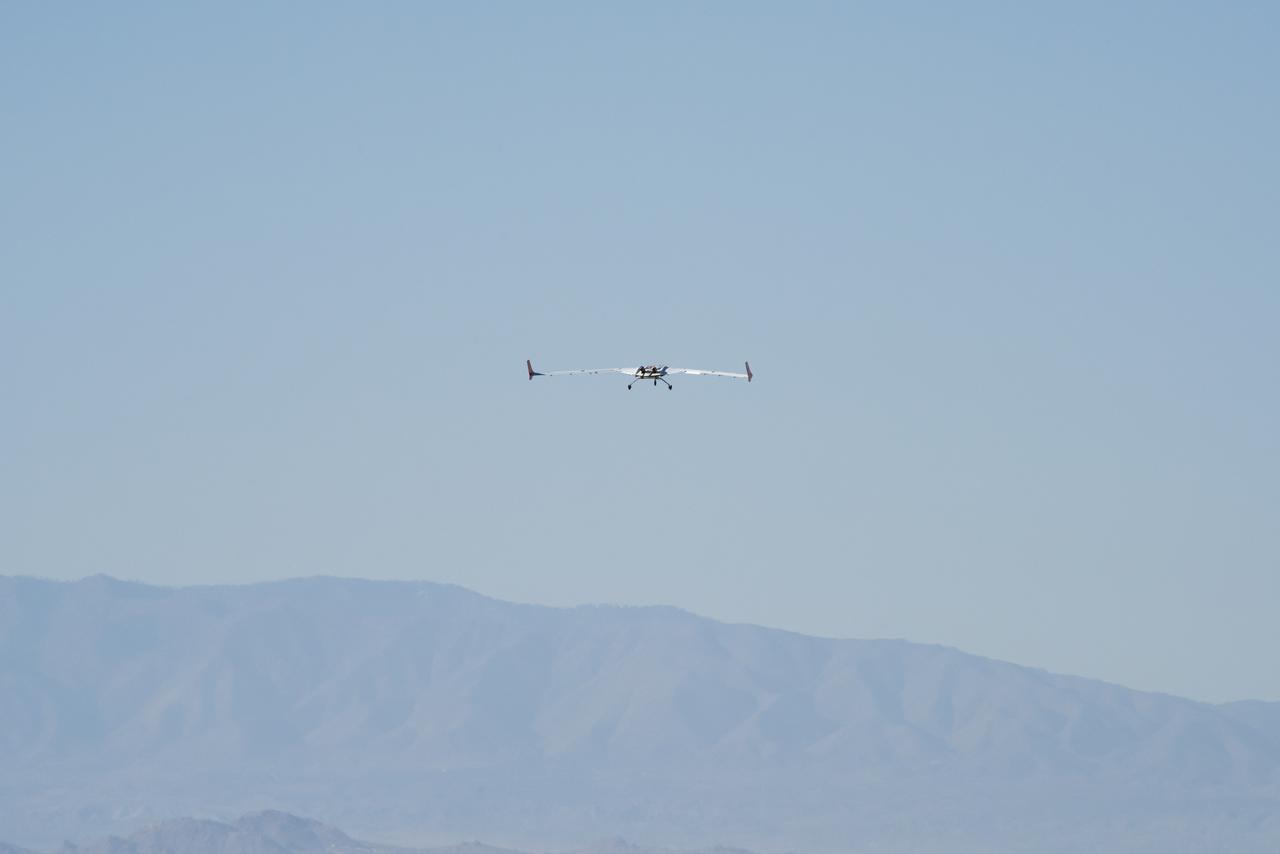
The X-56B remotely piloted aircraft takeoff marks the start of a new flight series. The flight was April 19 at NASA's Armstrong Flight Research Center in Edwards, California, with partner Northrop Grumman.
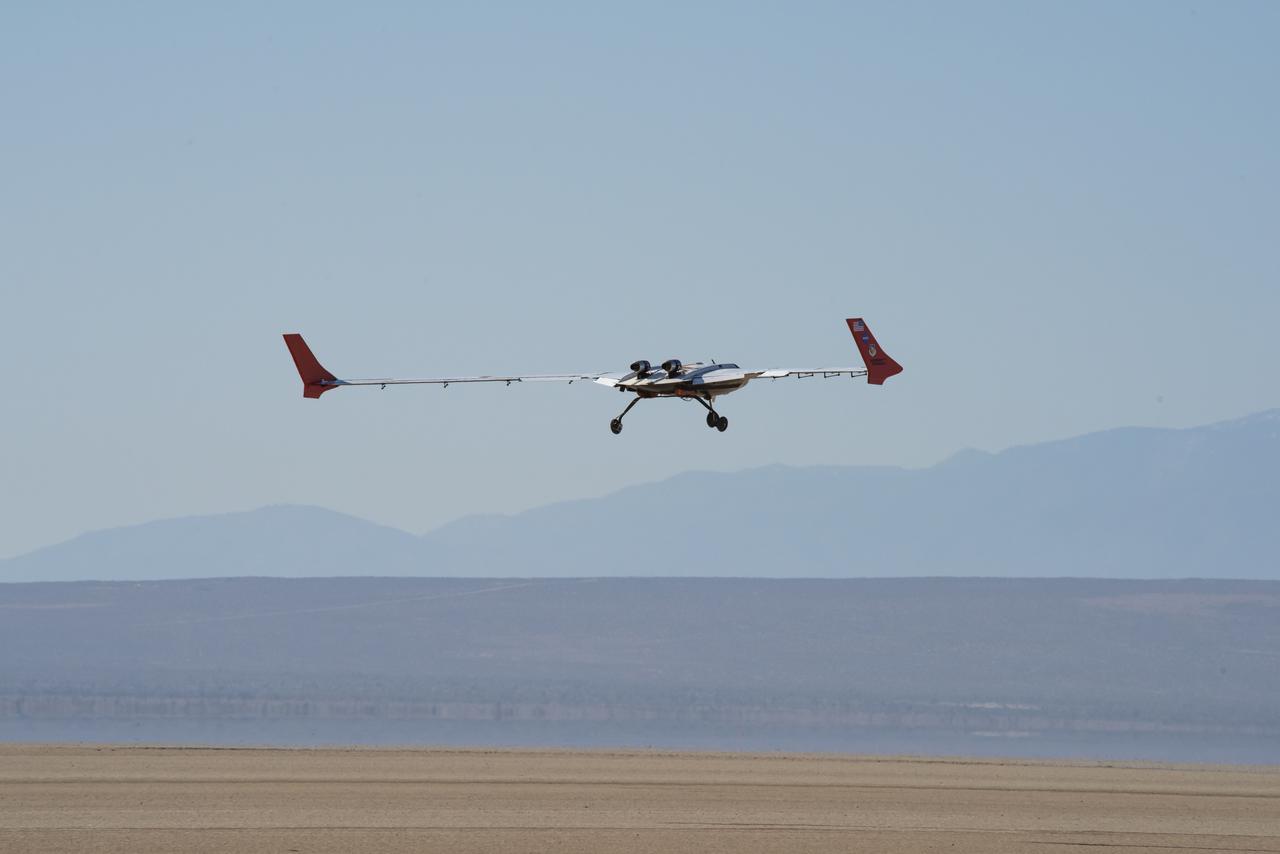
The X-56B remotely piloted aircraft prepares for a landing following the first of a new flight series. The flight was April 19 at NASA’s Armstrong Flight Research Center in Edwards, California, with partner Northrop Grumman.
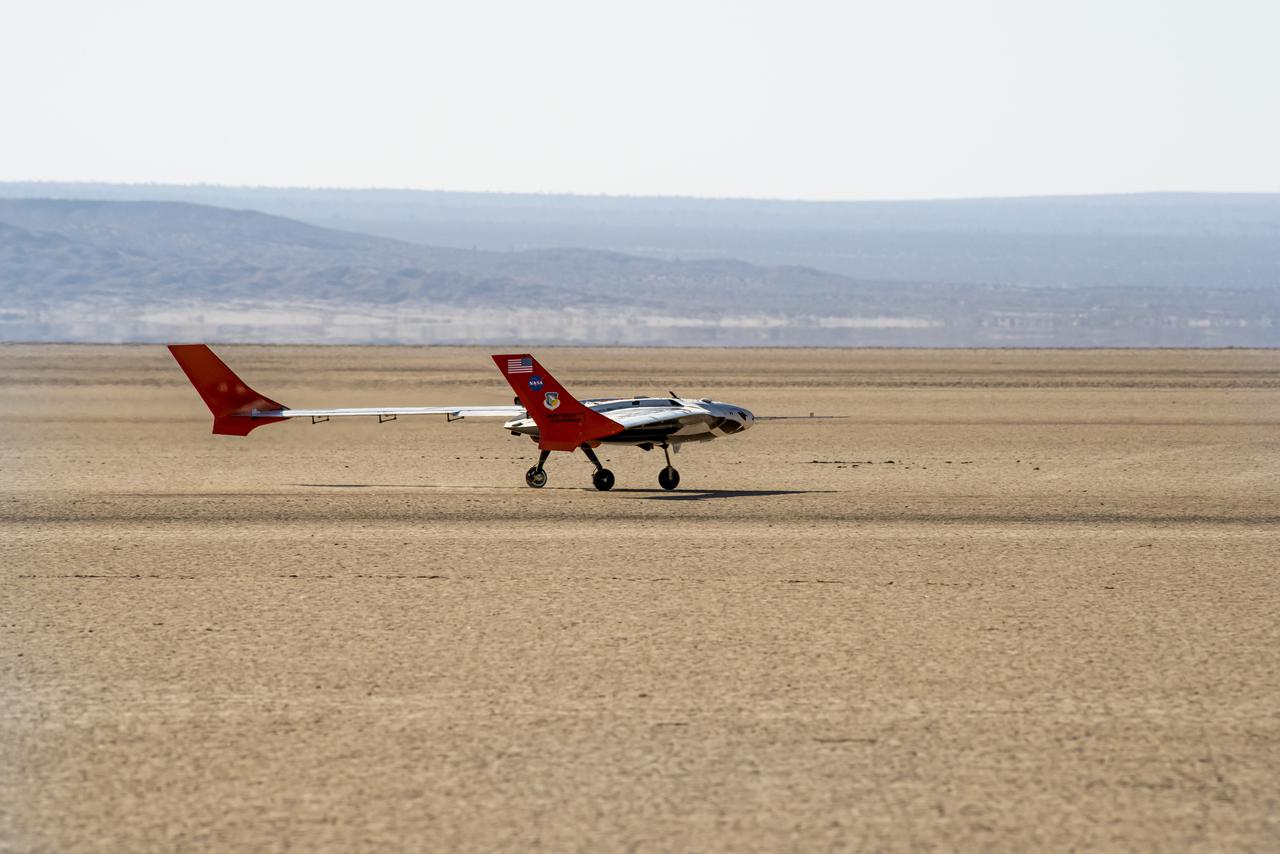
The X-56B remotely piloted aircraft prepares to takeoff to begin a new flight series. The flight was April 19 at NASA's Armstrong Flight Research Center in Edwards, California, with partner Northrop Grumman.
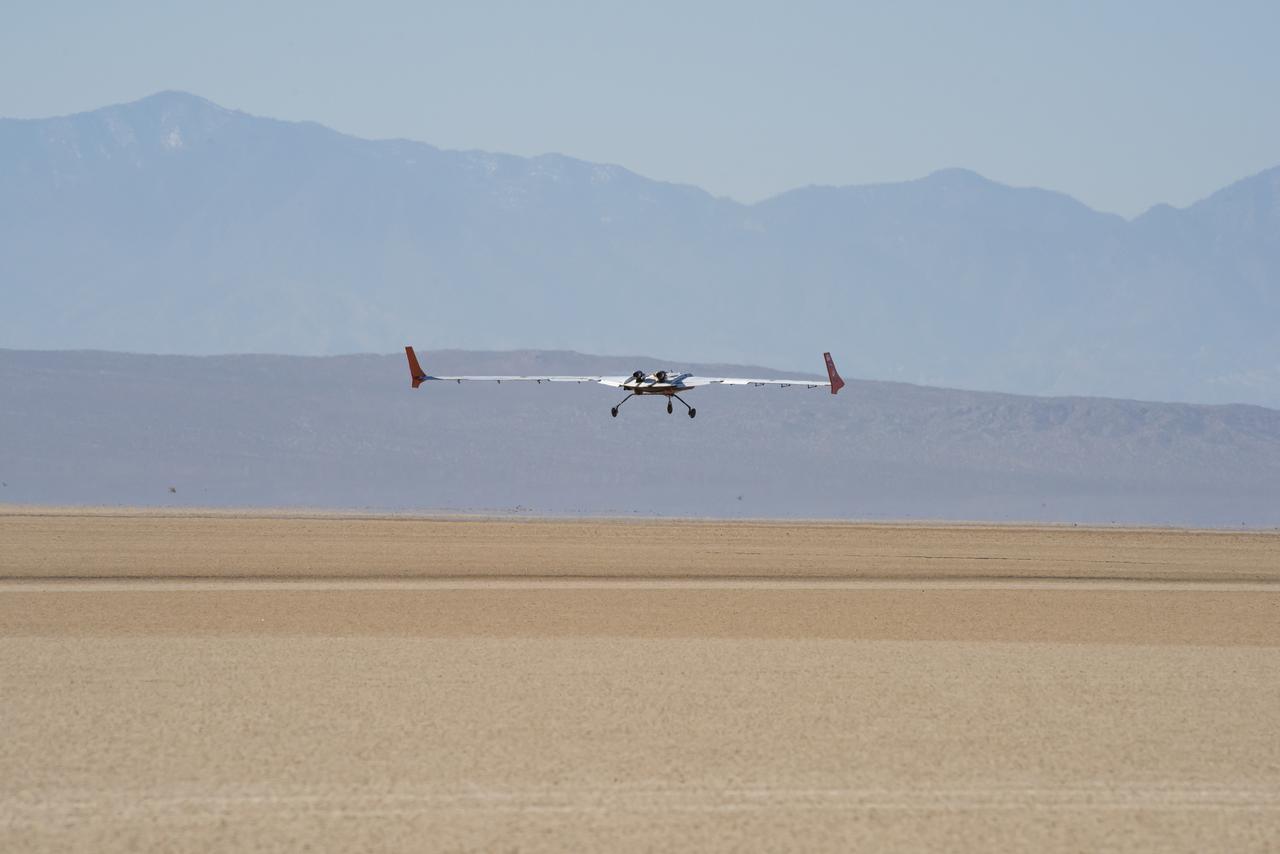
The X-56B remotely piloted aircraft prepares for a landing following the first of a new flight series. The flight was April 19 at NASA's Armstrong Flight Research Center in Edwards, California, with partner Northrop Grumman.
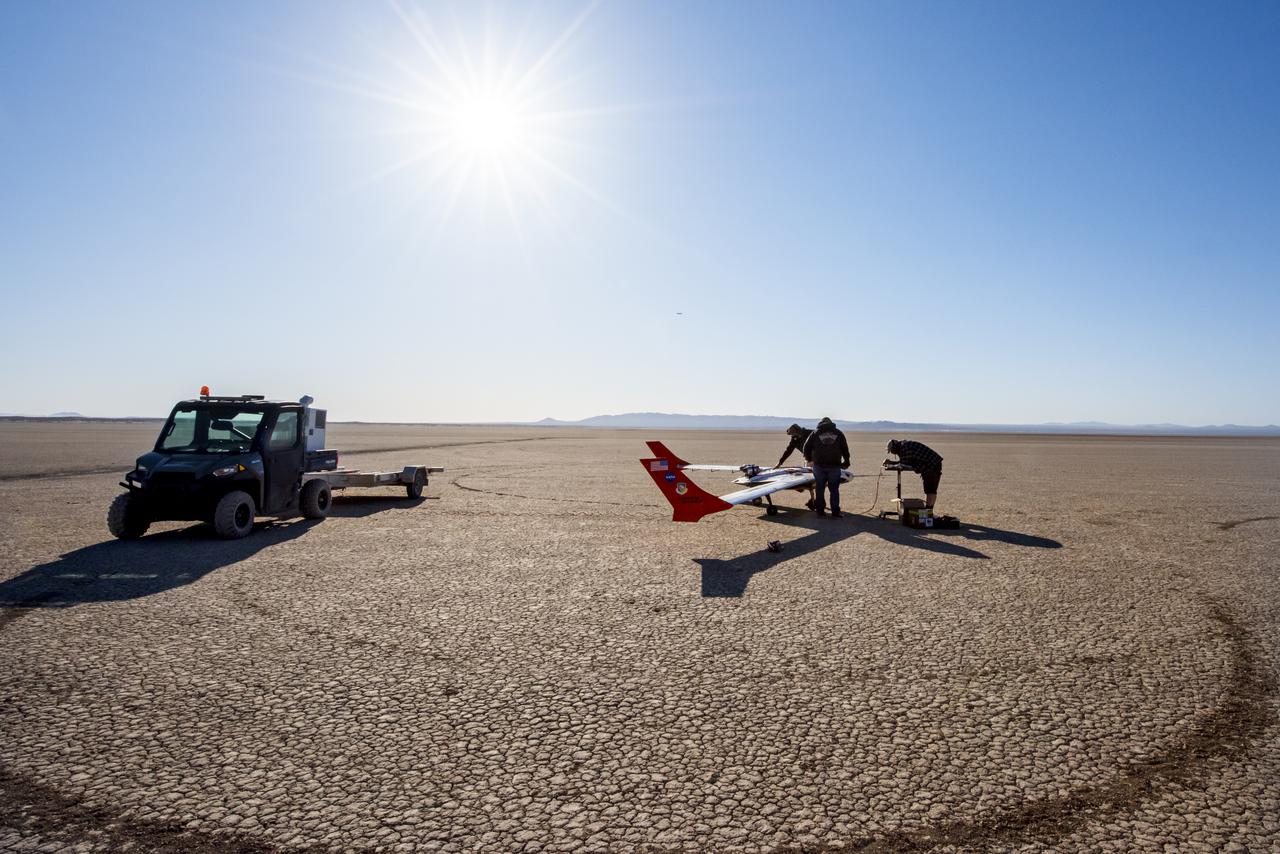
The X-56B remotely piloted aircraft ground crew prepares the aircraft to begin a new flight series. The flight was April 19 at NASA's Armstrong Flight Research Center in Edwards, California, with partner Northrop Grumman.
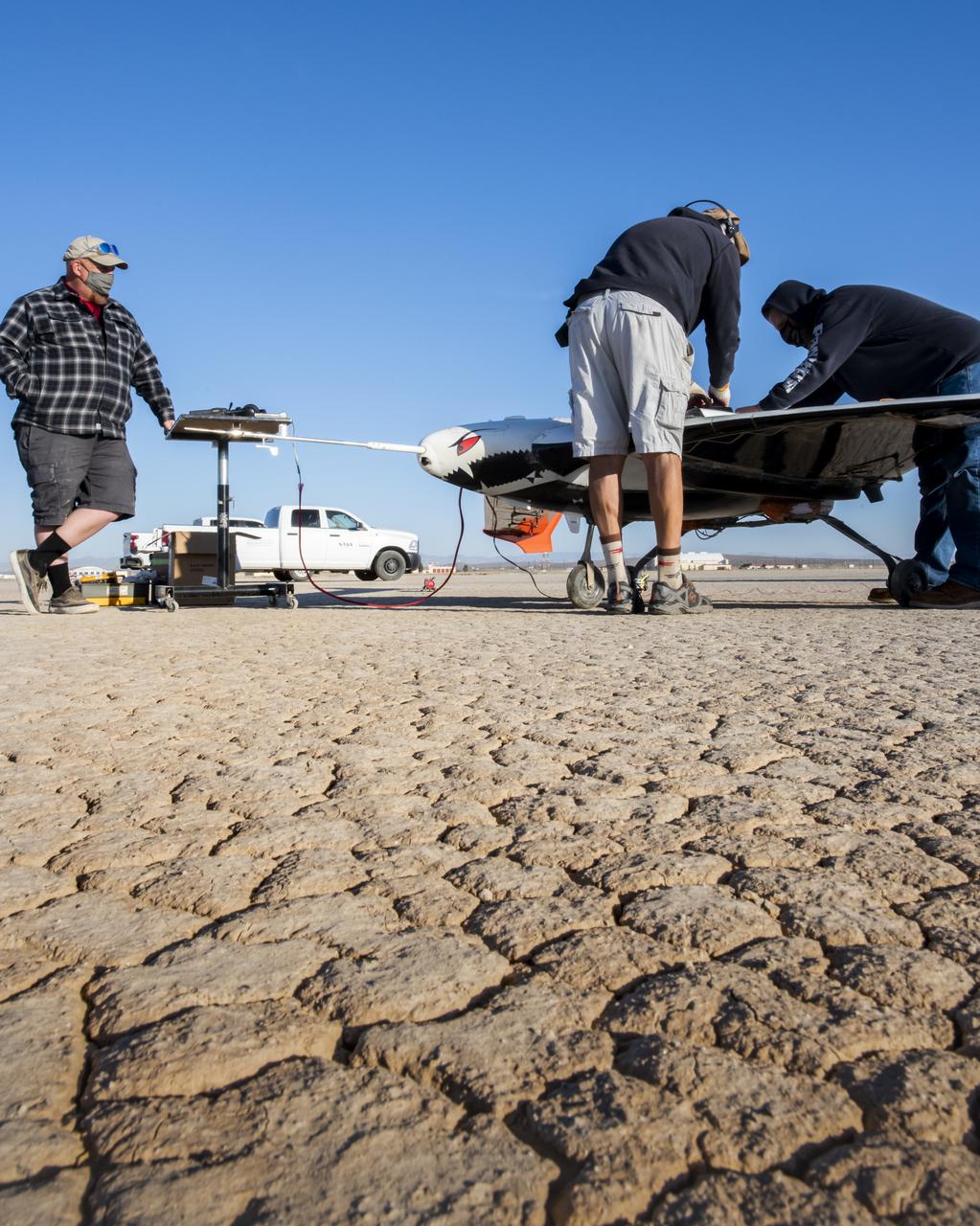
The X-56B remotely piloted aircraft ground crew prepares the aircraft to begin a new flight series. The flight was April 19 at NASA's Armstrong Flight Research Center in Edwards, California, with partner Northrop Grumman.
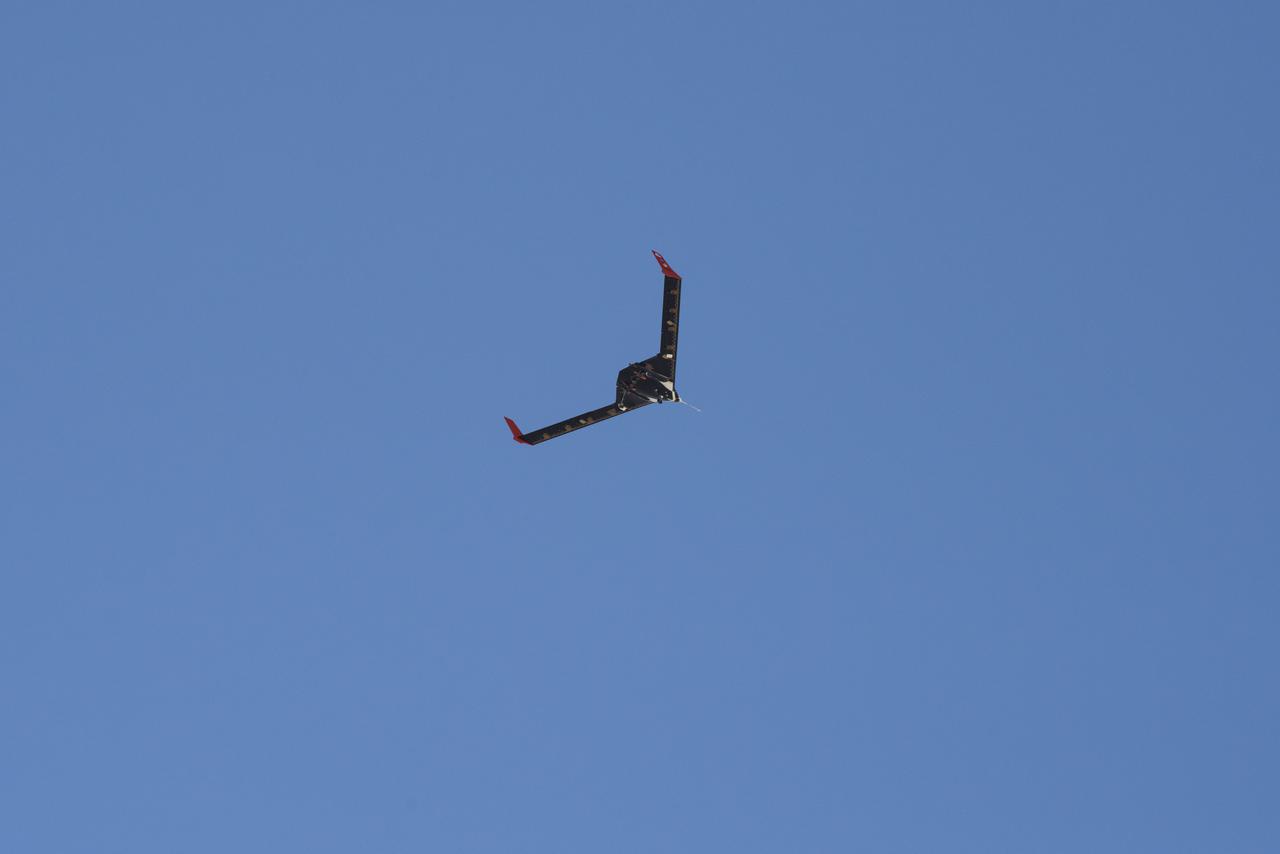
The X-56B remotely piloted aircraft began a new flight series April 19 at NASA's Armstrong Flight Research Center in Edwards, California, with partner Northrop Grumman.
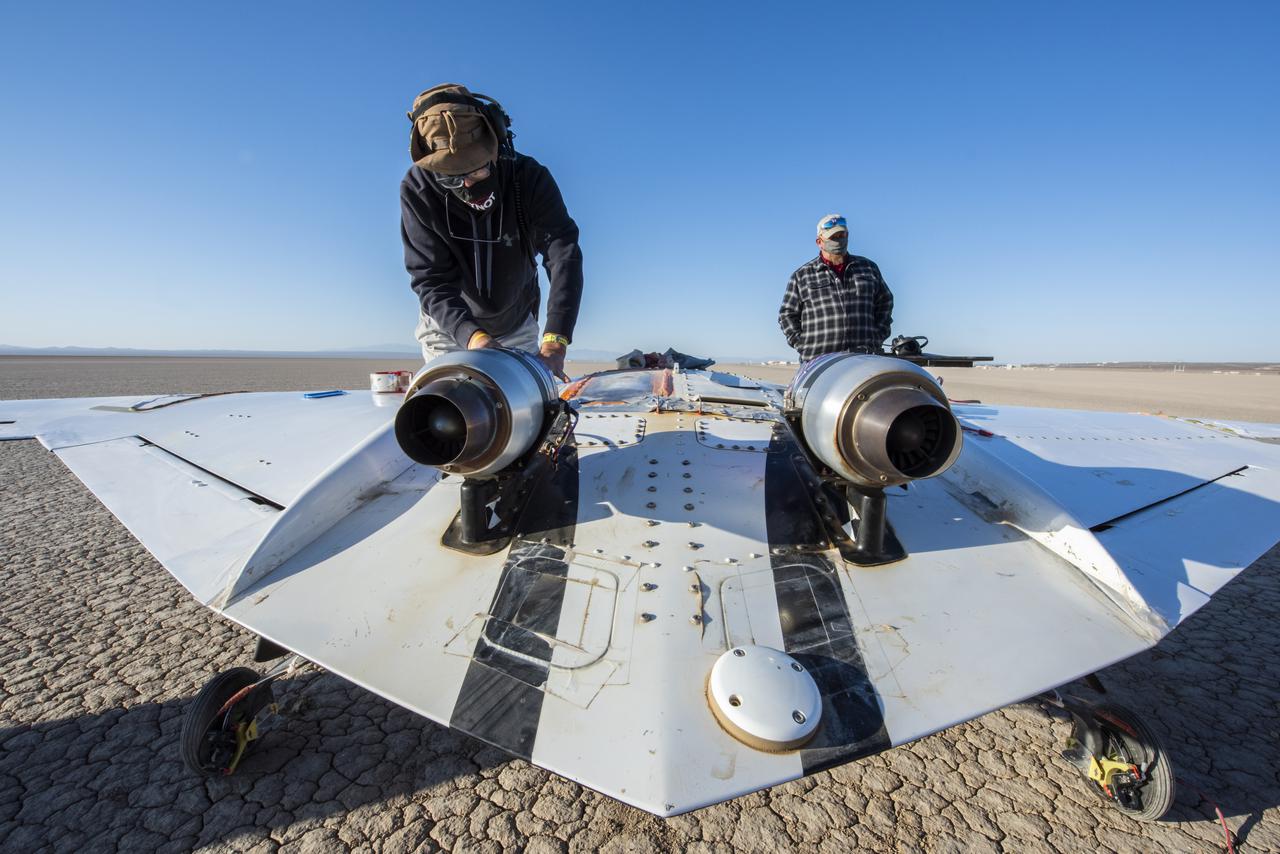
The X-56B remotely piloted aircraft ground crew prepares the aircraft to begin a new flight series. The flight was April 19 at NASA's Armstrong Flight Research Center in Edwards, California, with partner Northrop Grumman.
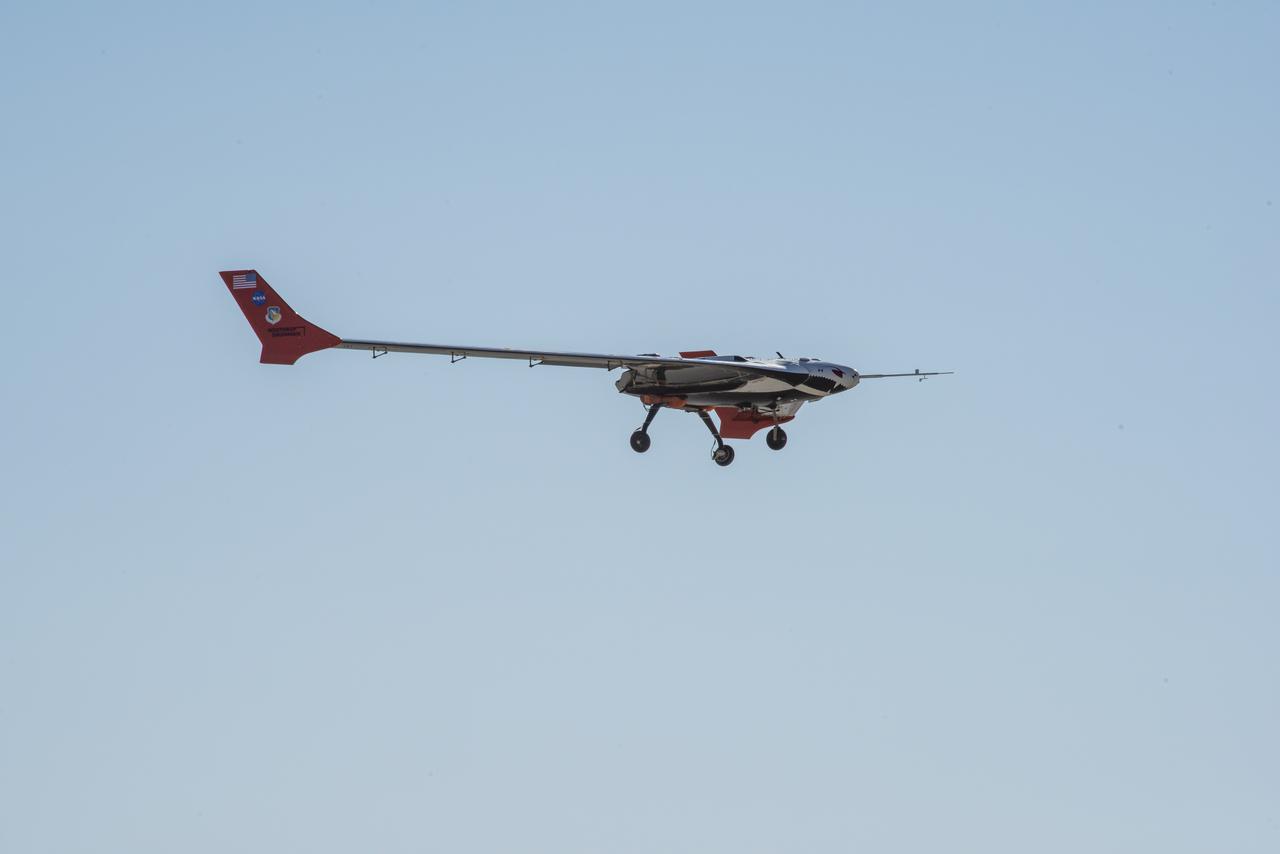
The X-56B remotely piloted aircraft flies the first of a new flight series. The flight was April 19 at NASA's Armstrong Flight Research Center in Edwards, California, with partner Northrop Grumman.
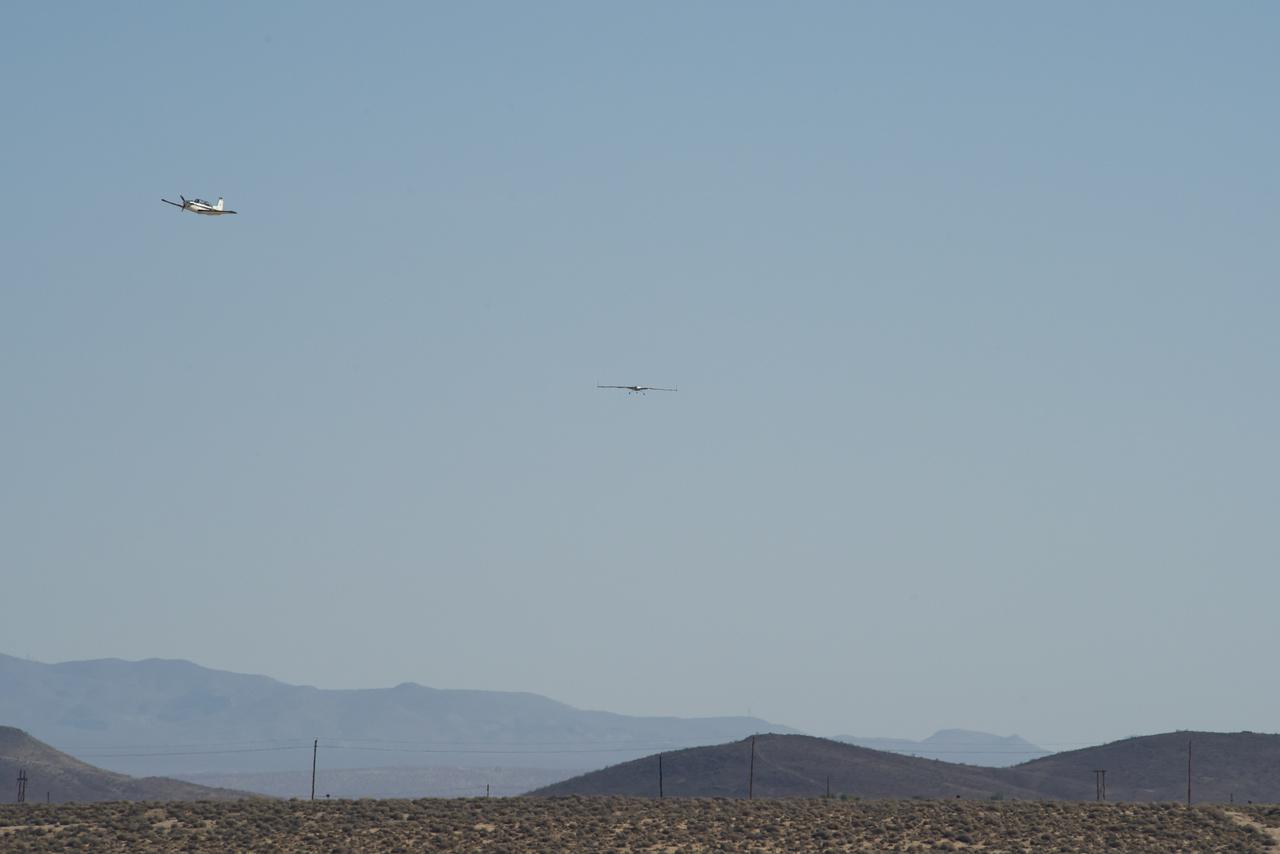
The X-56B remotely piloted aircraft flies the first of a new flight series, as a T-34 observes. The flight was April 19 at NASA's Armstrong Flight Research Center in Edwards, California, with partner Northrop Grumman.
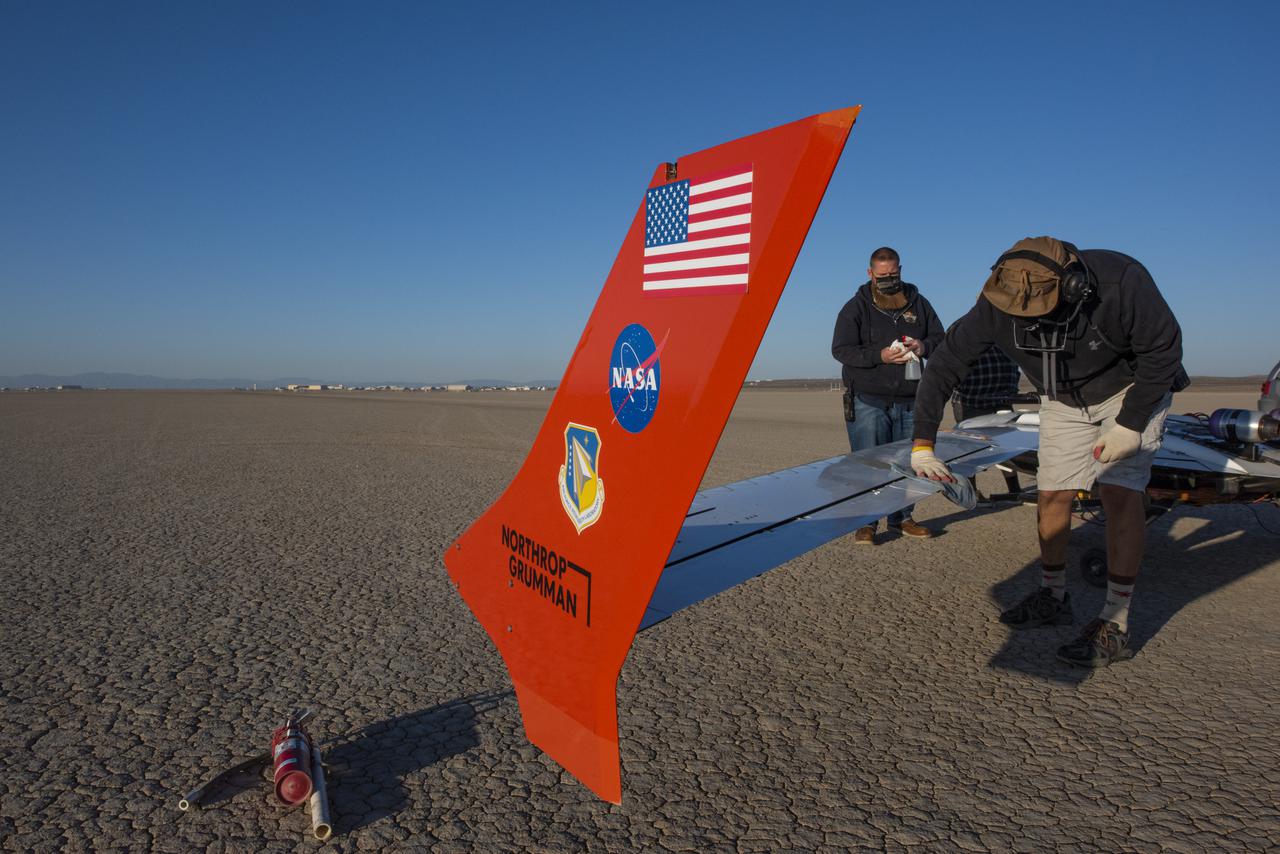
The X-56B remotely piloted aircraft ground crew prepares the aircraft to begin a new flight series. The flight was April 19 at NASA's Armstrong Flight Research Center in Edwards, California, with partner Northrop Grumman.
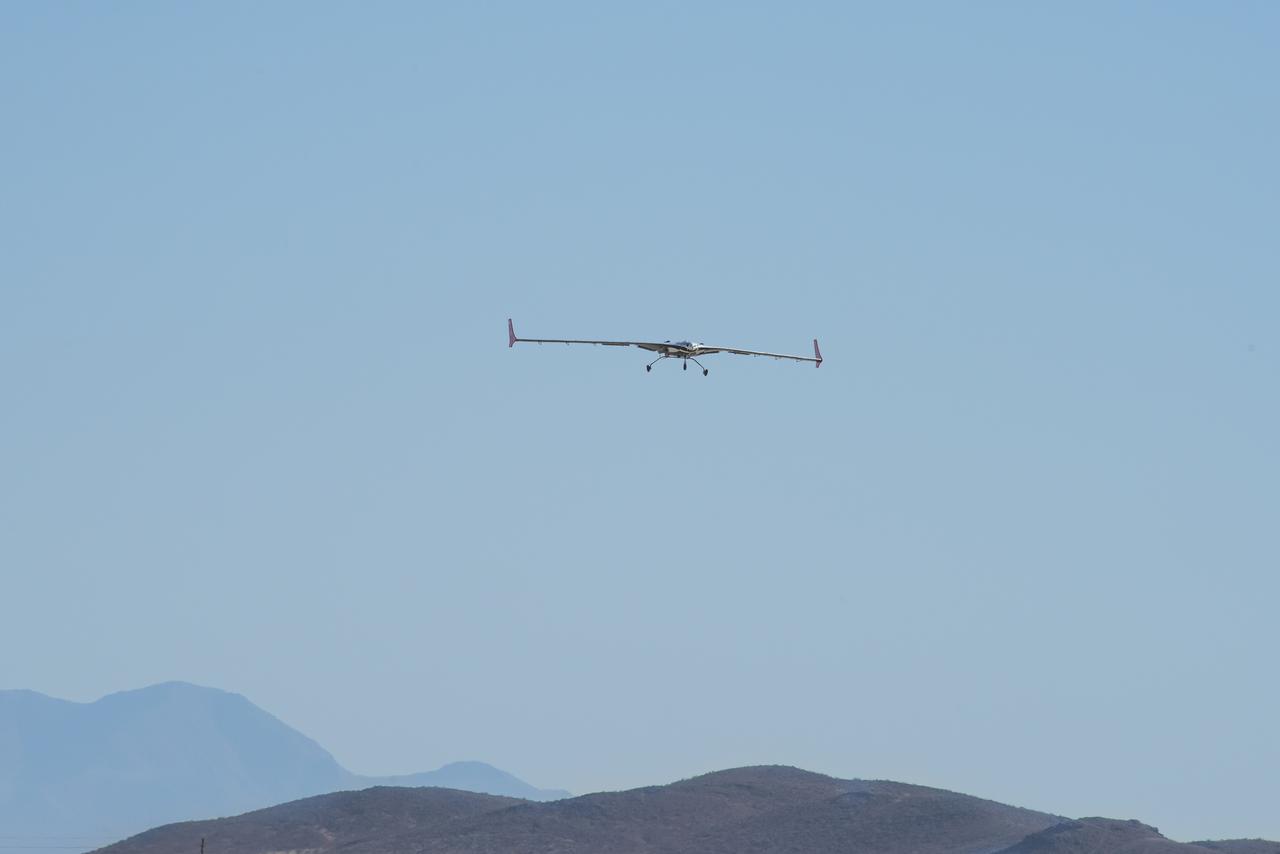
The X-56B remotely piloted aircraft began a new flight series April 19 at NASA's Armstrong Flight Research Center in Edwards, California, with partner Northrop Grumman.
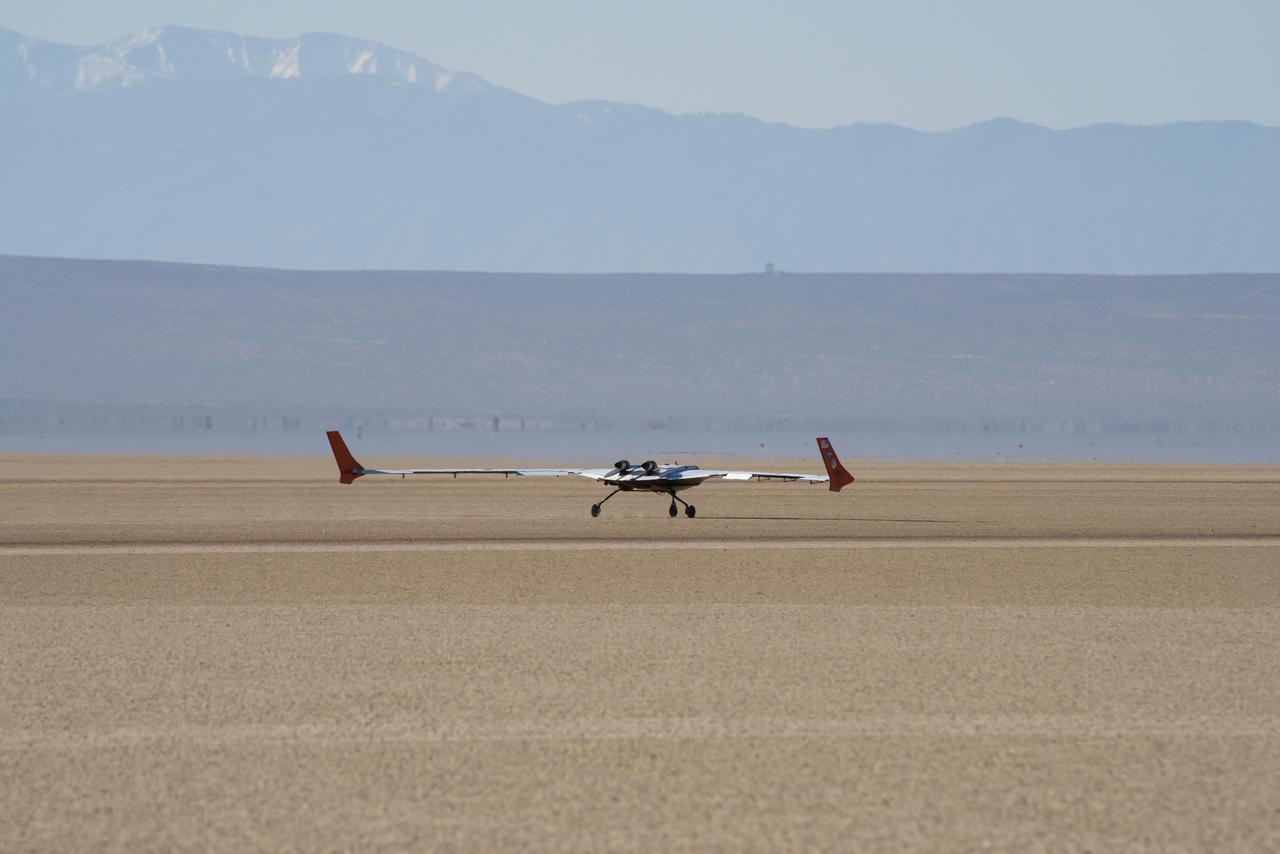
The X-56B remotely piloted aircraft prepares to takeoff to begin a new flight series. The flight was April 19 at NASA's Armstrong Flight Research Center in Edwards, California, with partner Northrop Grumman.
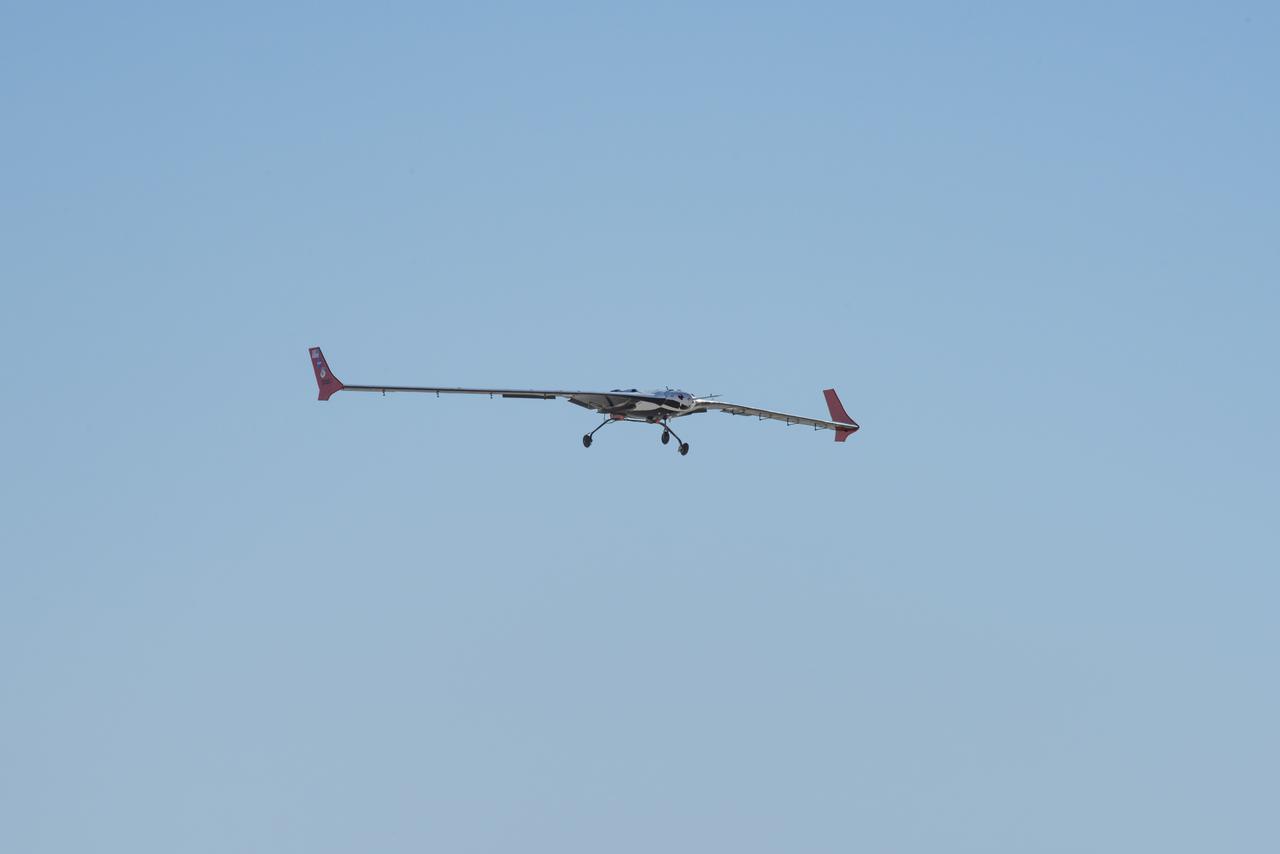
The X-56B remotely piloted aircraft flies the first of a new flight series. The flight was April 19 at NASA's Armstrong Flight Research Center in Edwards, California, with partner Northrop Grumman.
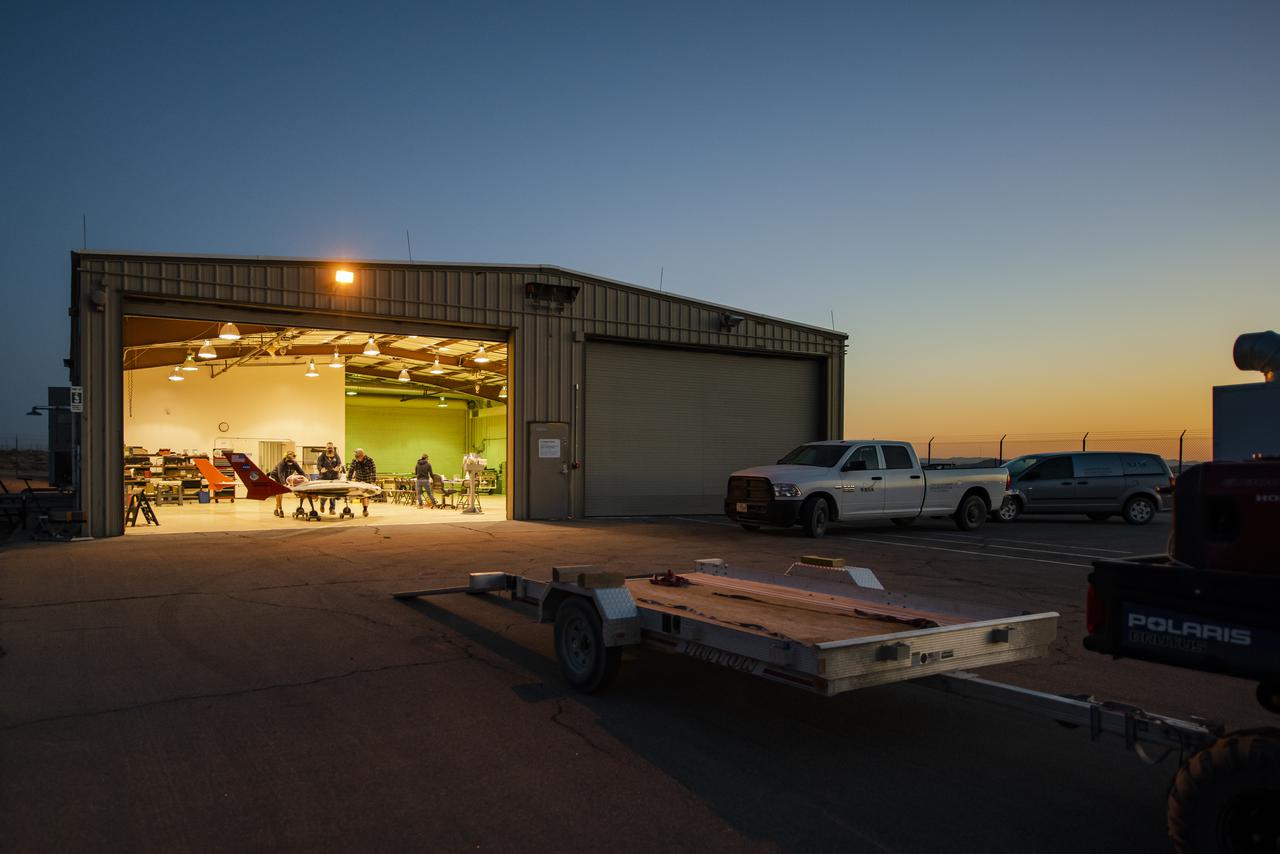
Preparations begin before dawn for the X-56B remotely piloted aircraft for a new flight series. The flight was April 19 at NASA's Armstrong Flight Research Center in Edwards, California, with partner Northrop Grumman.
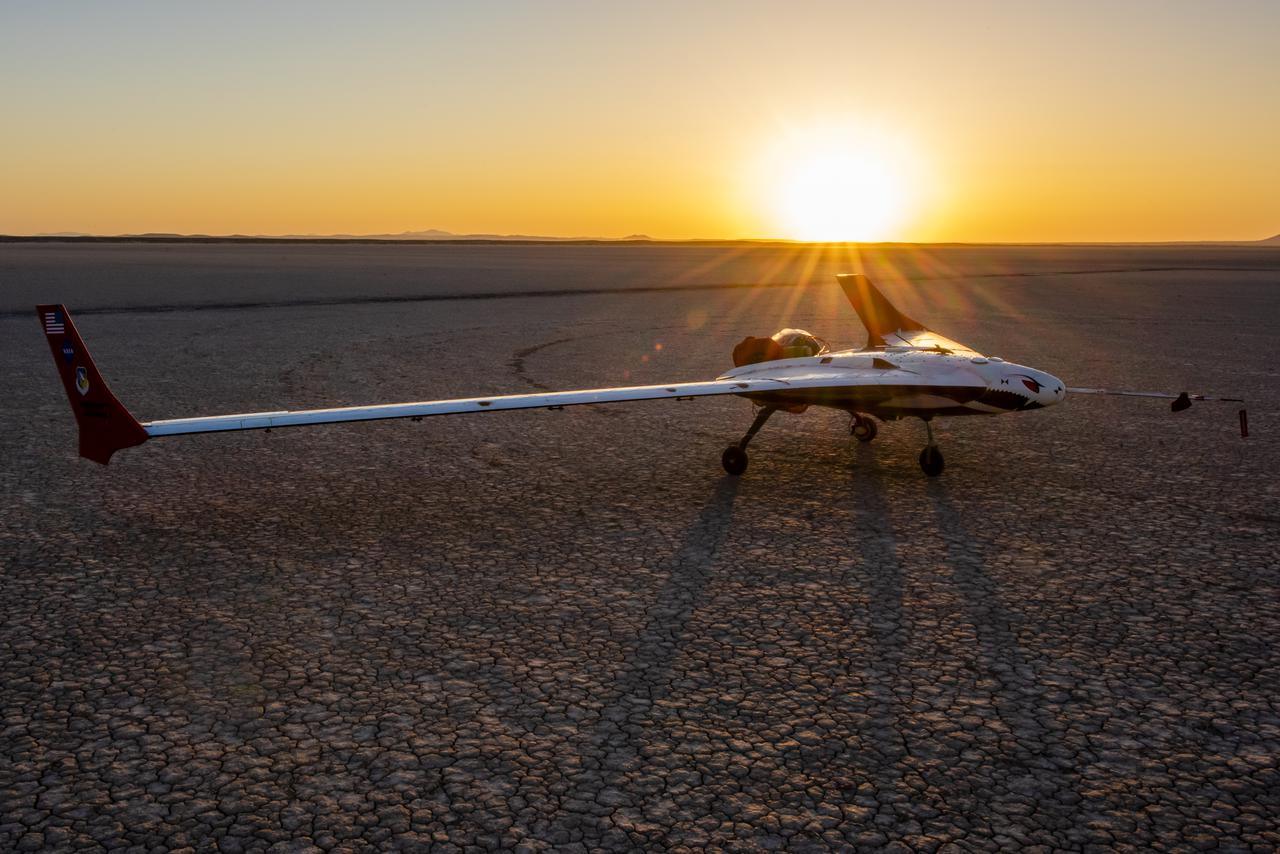
Preparations for the X-56B remotely piloted aircraft to begin a new flight series continue as the sun rises on Rogers Dry Lake. The flight was April 19 at NASA's Armstrong Flight Research Center in Edwards, California, with partner Northrop Grumman.

NICER’s X-ray concentrator optics are inspected under a black light for dust and foreign object debris that could impair functionality once in space. The payload’s 56 mirror assemblies concentrate X-rays onto silicon detectors to gather data that will probe the interior makeup of neutron stars, including those that appear to flash regularly, called pulsars. The Neutron star Interior Composition Explorer (NICER) is a NASA Explorer Mission of Opportunity dedicated to studying the extraordinary environments — strong gravity, ultra-dense matter, and the most powerful magnetic fields in the universe — embodied by neutron stars. An attached payload aboard the International Space Station, NICER will deploy an instrument with unique capabilities for timing and spectroscopy of fast X-ray brightness fluctuations. The embedded Station Explorer for X-ray Timing and Navigation Technology demonstration (SEXTANT) will use NICER data to validate, for the first time in space, technology that exploits pulsars as natural navigation beacons. Credit: NASA/Goddard/ Keith Gendreau <b><a href="http://www.nasa.gov/audience/formedia/features/MP_Photo_Guidelines.html" rel="nofollow">NASA image use policy.</a></b> <b><a href="http://www.nasa.gov/centers/goddard/home/index.html" rel="nofollow">NASA Goddard Space Flight Center</a></b> enables NASA’s mission through four scientific endeavors: Earth Science, Heliophysics, Solar System Exploration, and Astrophysics. Goddard plays a leading role in NASA’s accomplishments by contributing compelling scientific knowledge to advance the Agency’s mission. <b>Follow us on <a href="http://twitter.com/NASAGoddardPix" rel="nofollow">Twitter</a></b> <b>Like us on <a href="http://www.facebook.com/pages/Greenbelt-MD/NASA-Goddard/395013845897?ref=tsd" rel="nofollow">Facebook</a></b> <b>Find us on <a href="http://instagrid.me/nasagoddard/?vm=grid" rel="nofollow">Instagram</a></b>

Optics Lead Takashi Okajima prepares to align NICER’s X-ray optics. The payload’s 56 mirror assemblies concentrate X-rays onto silicon detectors to gather data that will probe the interior makeup of neutron stars, including those that appear to flash regularly, called pulsars. The Neutron star Interior Composition Explorer (NICER) is a NASA Explorer Mission of Opportunity dedicated to studying the extraordinary environments — strong gravity, ultra-dense matter, and the most powerful magnetic fields in the universe — embodied by neutron stars. An attached payload aboard the International Space Station, NICER will deploy an instrument with unique capabilities for timing and spectroscopy of fast X-ray brightness fluctuations. The embedded Station Explorer for X-ray Timing and Navigation Technology demonstration (SEXTANT) will use NICER data to validate, for the first time in space, technology that exploits pulsars as natural navigation beacons. Credit: NASA/Goddard/ Keith Gendreau <b><a href="http://www.nasa.gov/audience/formedia/features/MP_Photo_Guidelines.html" rel="nofollow">NASA image use policy.</a></b> <b><a href="http://www.nasa.gov/centers/goddard/home/index.html" rel="nofollow">NASA Goddard Space Flight Center</a></b> enables NASA’s mission through four scientific endeavors: Earth Science, Heliophysics, Solar System Exploration, and Astrophysics. Goddard plays a leading role in NASA’s accomplishments by contributing compelling scientific knowledge to advance the Agency’s mission. <b>Follow us on <a href="http://twitter.com/NASAGoddardPix" rel="nofollow">Twitter</a></b> <b>Like us on <a href="http://www.facebook.com/pages/Greenbelt-MD/NASA-Goddard/395013845897?ref=tsd" rel="nofollow">Facebook</a></b> <b>Find us on <a href="http://instagrid.me/nasagoddard/?vm=grid" rel="nofollow">Instagram</a></b>

NICER team members Takashi Okajima, Yang Soong, and Steven Kenyon apply epoxy to the X-ray concentrator mounts after alignment. The epoxy holds the optics assemblies fixed in position through the vibrations experienced during launch to the International Space Station. The payload’s 56 mirror assemblies concentrate X-rays onto silicon detectors to gather data that will probe the interior makeup of neutron stars, including those that appear to flash regularly, called pulsars. The Neutron star Interior Composition Explorer (NICER) is a NASA Explorer Mission of Opportunity dedicated to studying the extraordinary environments — strong gravity, ultra-dense matter, and the most powerful magnetic fields in the universe — embodied by neutron stars. An attached payload aboard the International Space Station, NICER will deploy an instrument with unique capabilities for timing and spectroscopy of fast X-ray brightness fluctuations. The embedded Station Explorer for X-ray Timing and Navigation Technology demonstration (SEXTANT) will use NICER data to validate, for the first time in space, technology that exploits pulsars as natural navigation beacons. Credit: NASA/Goddard/ Keith Gendreau <b><a href="http://www.nasa.gov/audience/formedia/features/MP_Photo_Guidelines.html" rel="nofollow">NASA image use policy.</a></b> <b><a href="http://www.nasa.gov/centers/goddard/home/index.html" rel="nofollow">NASA Goddard Space Flight Center</a></b> enables NASA’s mission through four scientific endeavors: Earth Science, Heliophysics, Solar System Exploration, and Astrophysics. Goddard plays a leading role in NASA’s accomplishments by contributing compelling scientific knowledge to advance the Agency’s mission. <b>Follow us on <a href="http://twitter.com/NASAGoddardPix" rel="nofollow">Twitter</a></b> <b>Like us on <a href="http://www.facebook.com/pages/Greenbelt-MD/NASA-Goddard/395013845897?ref=tsd" rel="nofollow">Facebook</a></b> <b>Find us on <a href="http://instagrid.me/nasagoddard/?vm=grid" rel="nofollow">Instagram</a></b>

This is an image of Taal volcano, near Manila on the island of Luzon in the Philippines. The black area in the center is Taal Lake, which nearly fills the 30-kilometer-diameter (18-mile) caldera. The caldera rim consists of deeply eroded hills and cliffs. The large island in Taal Lake, which itself contains a crater lake, is known as Volcano Island. The bright yellow patch on the southwest side of the island marks the site of an explosion crater that formed during a deadly eruption of Taal in 1965. The image was acquired by the Spaceborne Imaging Radar-C/X-band Synthetic Aperture Radar (SIR-C/X-SAR) aboard the space shuttle Endeavour on its 78th orbit on October 5, 1994. The image shows an area approximately 56 kilometers by 112 kilometers (34 miles by 68 miles) that is centered at 14.0 degrees north latitude and 121.0 degrees east longitude. North is toward the upper right of the image. The colors in this image were obtained using the following radar channels: red represents the L-band (horizontally transmitted and received); green represents the L-band (horizontally transmitted and vertically received); blue represents the C-band (horizontally transmitted and vertically received). Since 1572, Taal has erupted at least 34 times. Since early 1991, the volcano has been restless, with swarms of earthquakes, new steaming areas, ground fracturing, and increases in water temperature of the lake. Volcanologists and other local authorities are carefully monitoring Taal to understand if the current activity may foretell an eruption. Taal is one of 15 "Decade Volcanoes" that have been identified by the volcanology community as presenting large potential hazards to population centers. The bright area in the upper right of the image is the densely populated city of Manila, only 50 kilometers (30 miles) north of the central crater. http://photojournal.jpl.nasa.gov/catalog/PIA01768