
Artist illustration of the X-59 in flight over land (with cities and rural areas below). Satellite image from USGS/NASA Landsat.
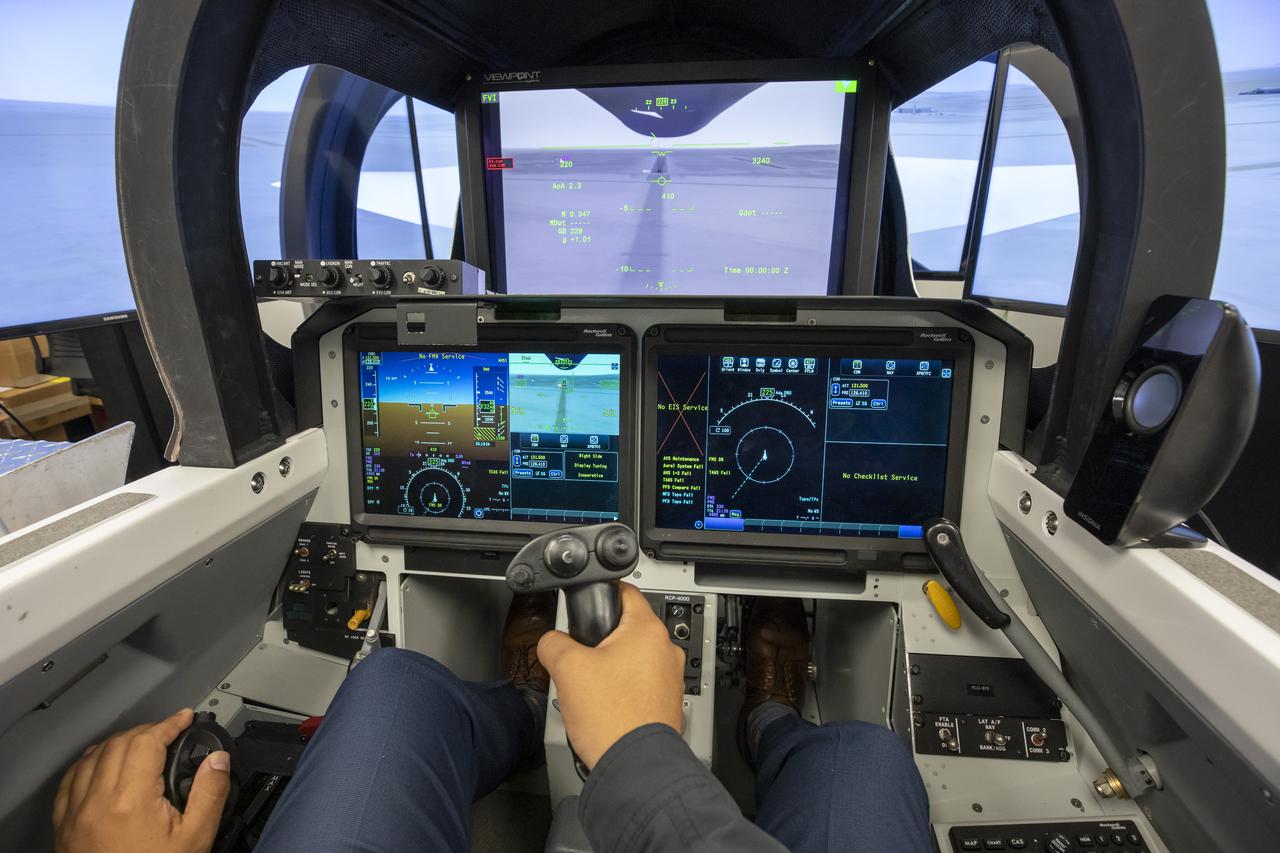
This image shows a close up of the cockpit view of the eXternal Vision System that will be placed in the X-59. Instead of a front facing window, the pilot will use these monitors for forward facing visibility. Lockheed Martin Photography By Garry Tice 1011 Lockheed Way, Palmdale, Ca. 93599 Event: X-59 SIL Round 2 Date: 6/10/2021
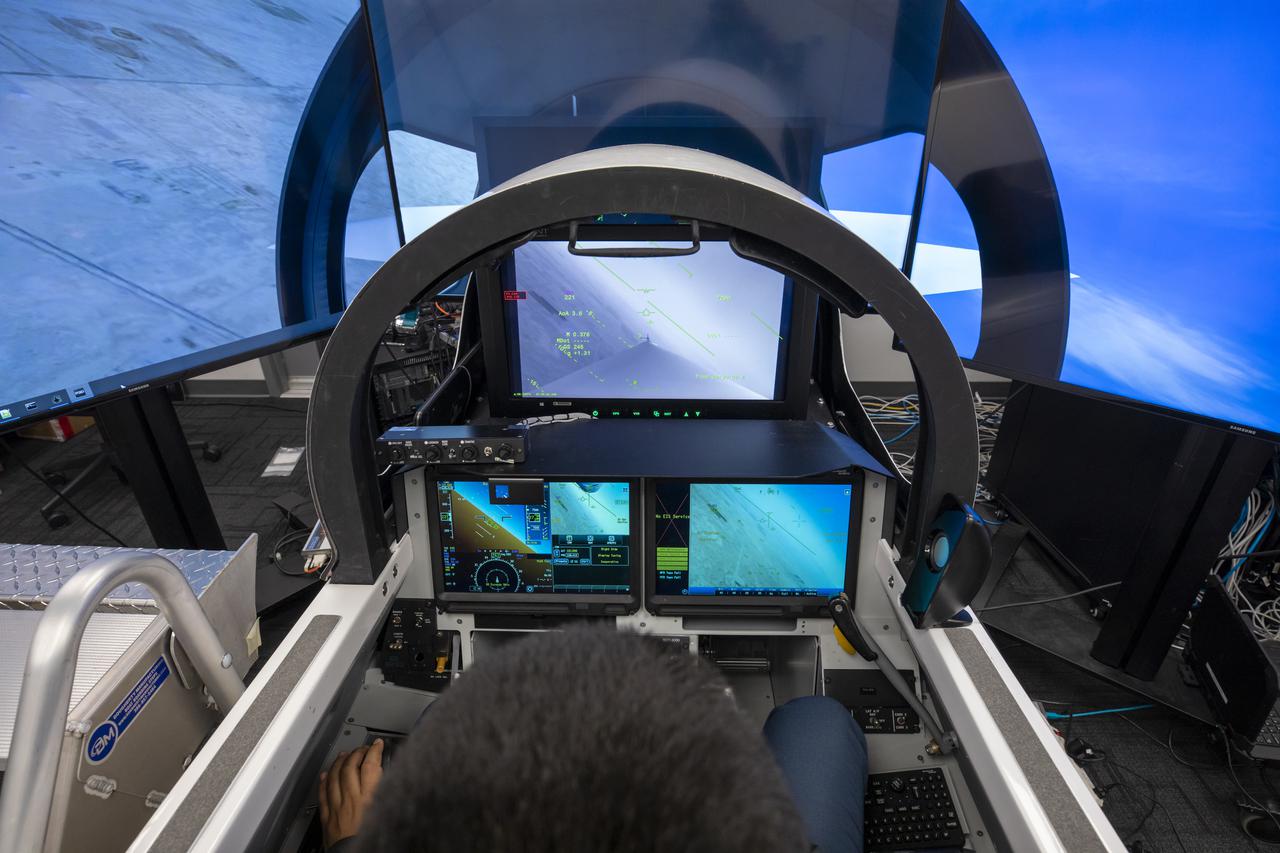
This image shows a close up of the cockpit view of the eXternal Vision System that will be placed in the X-59. Instead of a front facing window, the pilot will use these monitors for forward facing visibility. Lockheed Martin Photography By Garry Tice 1011 Lockheed Way, Palmdale, Ca. 93599 Event: X-59 SIL Round 2 Date: 6/10/2021
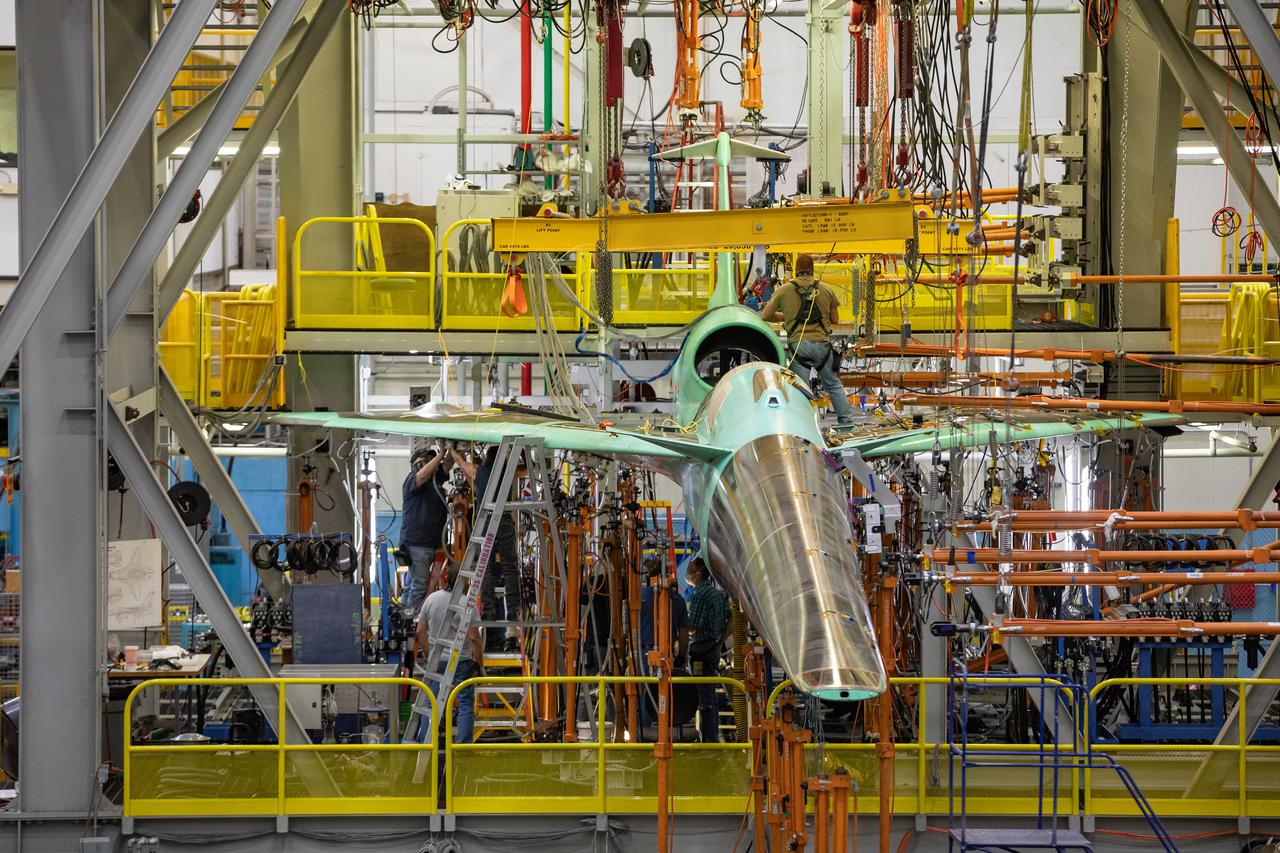
NASA’s X-59 Quiet SuperSonic Technology airplane undergoes structural stress tests at a Lockheed Martin facility in Fort Worth, Texas. Lockheed Martin Aeronautics Company - Fort Worth - Chris Hanoch Subject: X-59 - Various Angles in Test Fixture FP#: 21-03420 POC: Analiese Smith, Chris Higgins Other info: X-59 in Fort Worth, testing; high angle shots in fixture 1-10-22
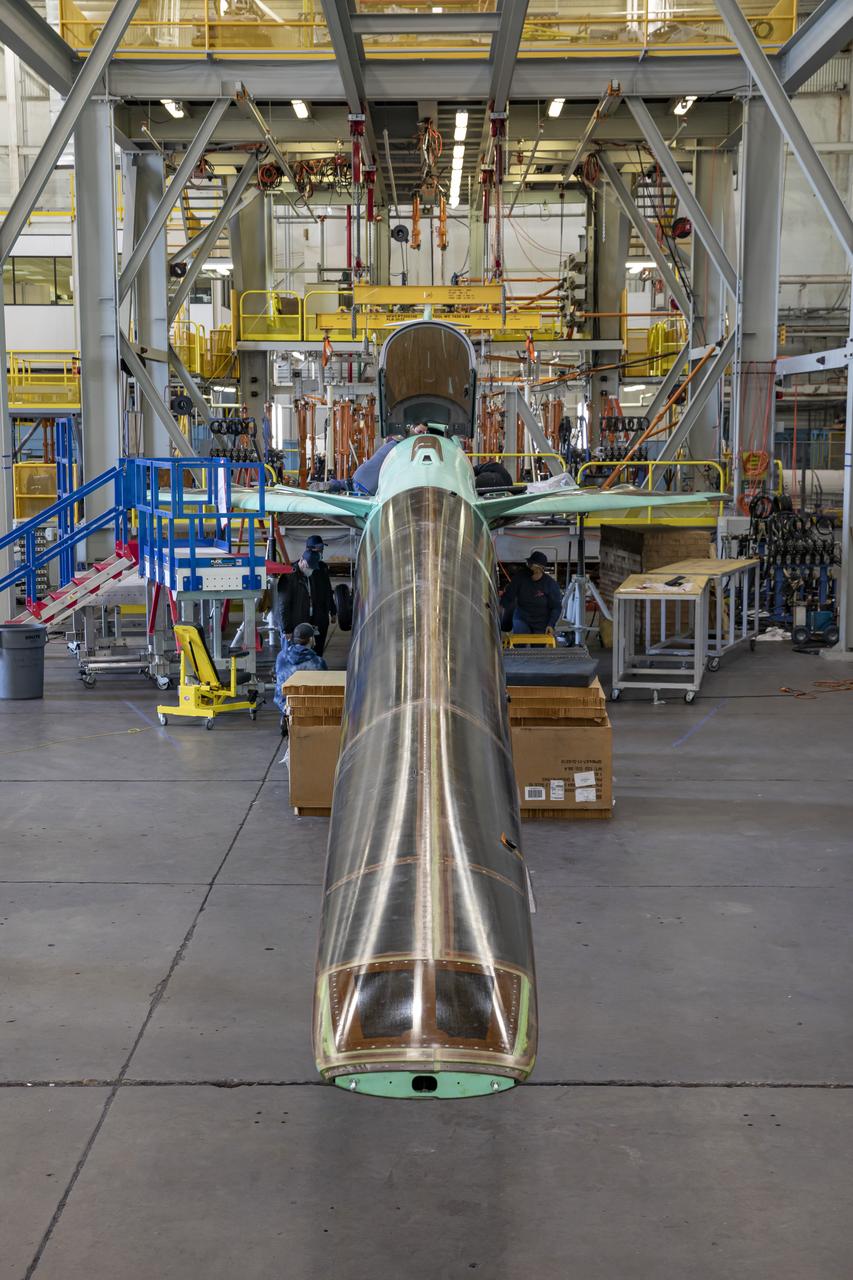
NASA’s X-59 undergoes a structural stress test at a Lockheed Martin facility in Fort Worth, Texas. The X-59’s nose makes up one third of the aircraft, at 38-feet in length. The X-59 is a one-of-a-kind airplane designed to fly at supersonic speeds without making aa startling sonic boom sound for the communities below. This is part of NASA’s Quesst mission which plans to help enable supersonic air travel over land
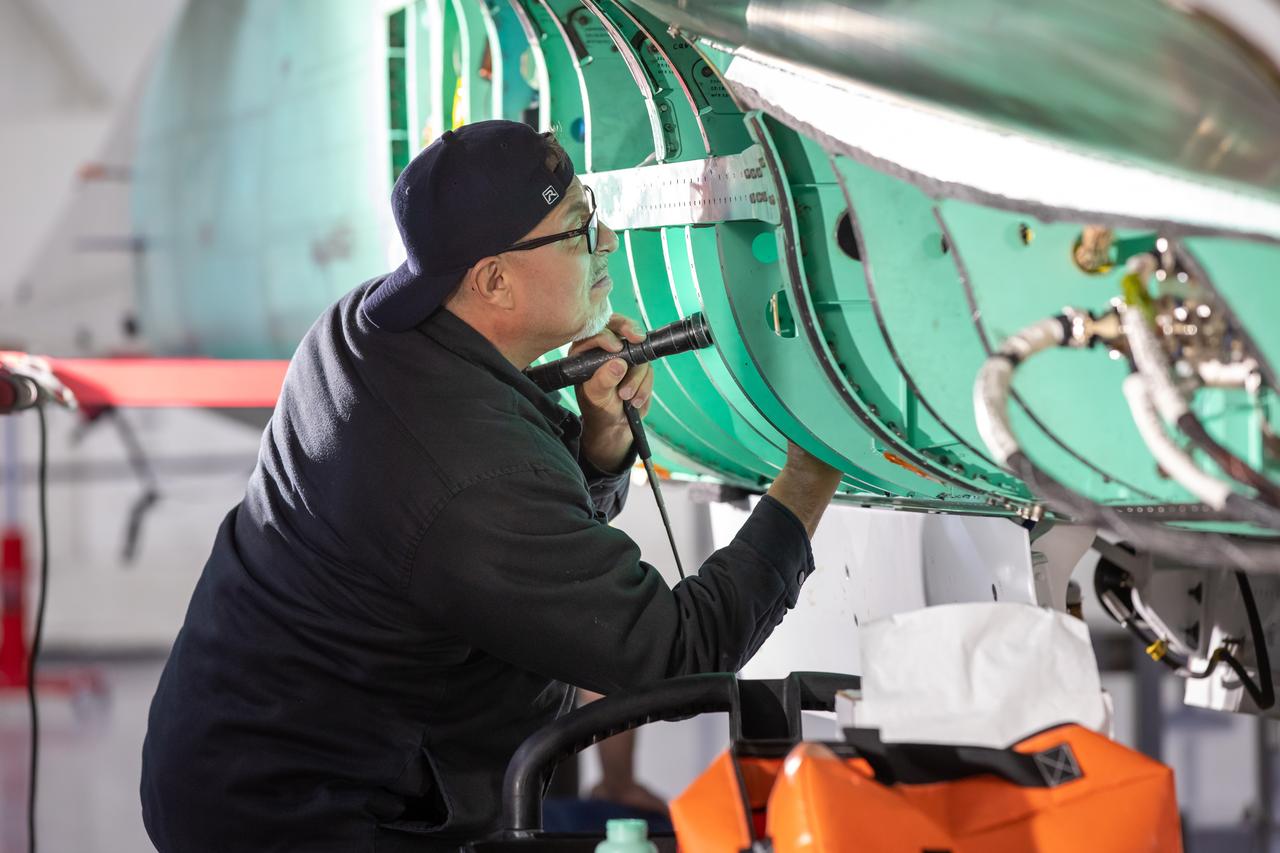
A quality inspector checks NASA’s X-59 aircraft during the construction phase. The X-59 was built in Lockheed Martin’s Skunk Works facility in Palmdale, California. Once the aircraft and ground testing are complete, the X-59 will undergo flight testing, which will demonstrate the plane’s ability to fly supersonic - faster than the speed of sound - while reducing the loud sonic boom. This could enable commercial supersonic air travel over land.
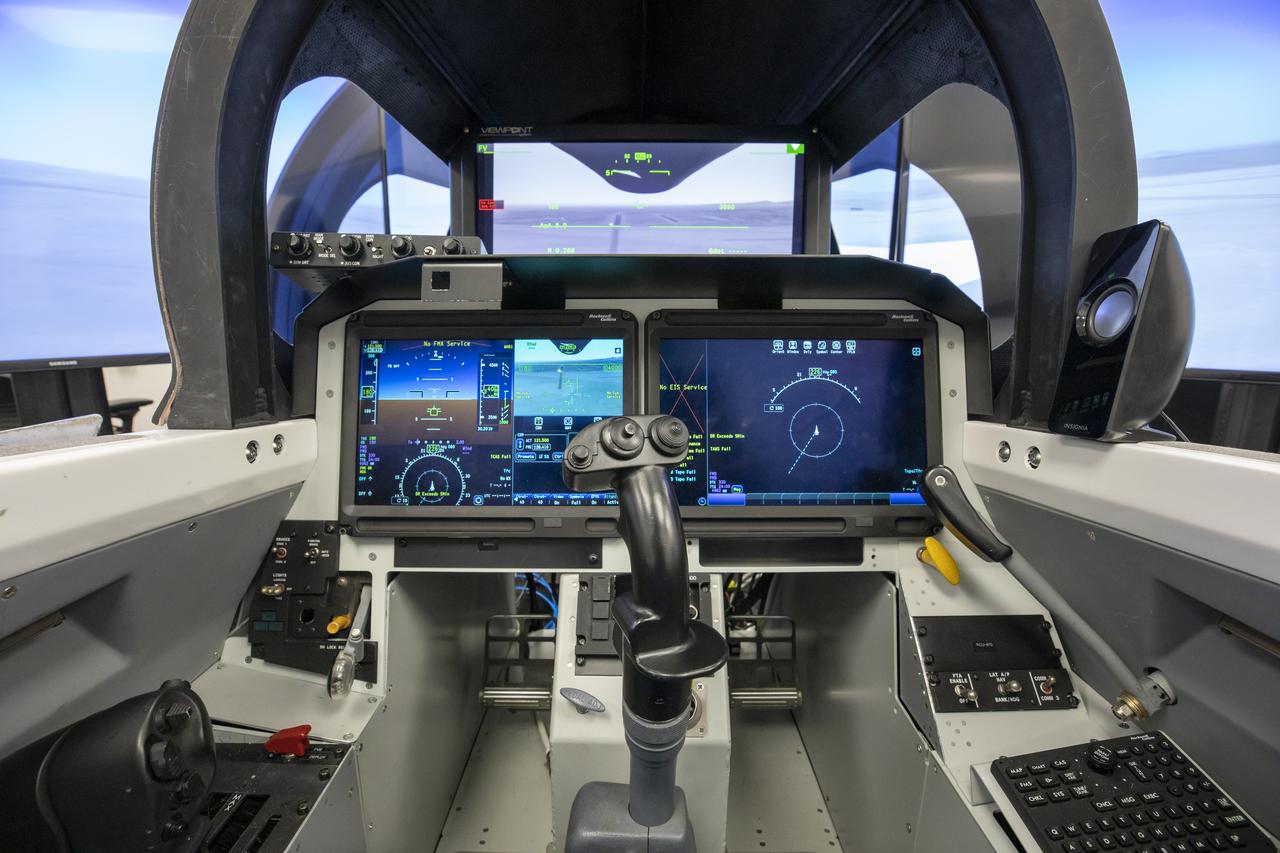
This image shows a close up of the cockpit view of the eXternal Vision System that will be placed in the X-59. Instead of a front facing window, the pilot will use these monitors for forward facing visibility. Lockheed Martin Photography By Garry Tice 1011 Lockheed Way, Palmdale, Ca. 93599 Event: X-59 SIL Round 2 Date: 6/10/2021
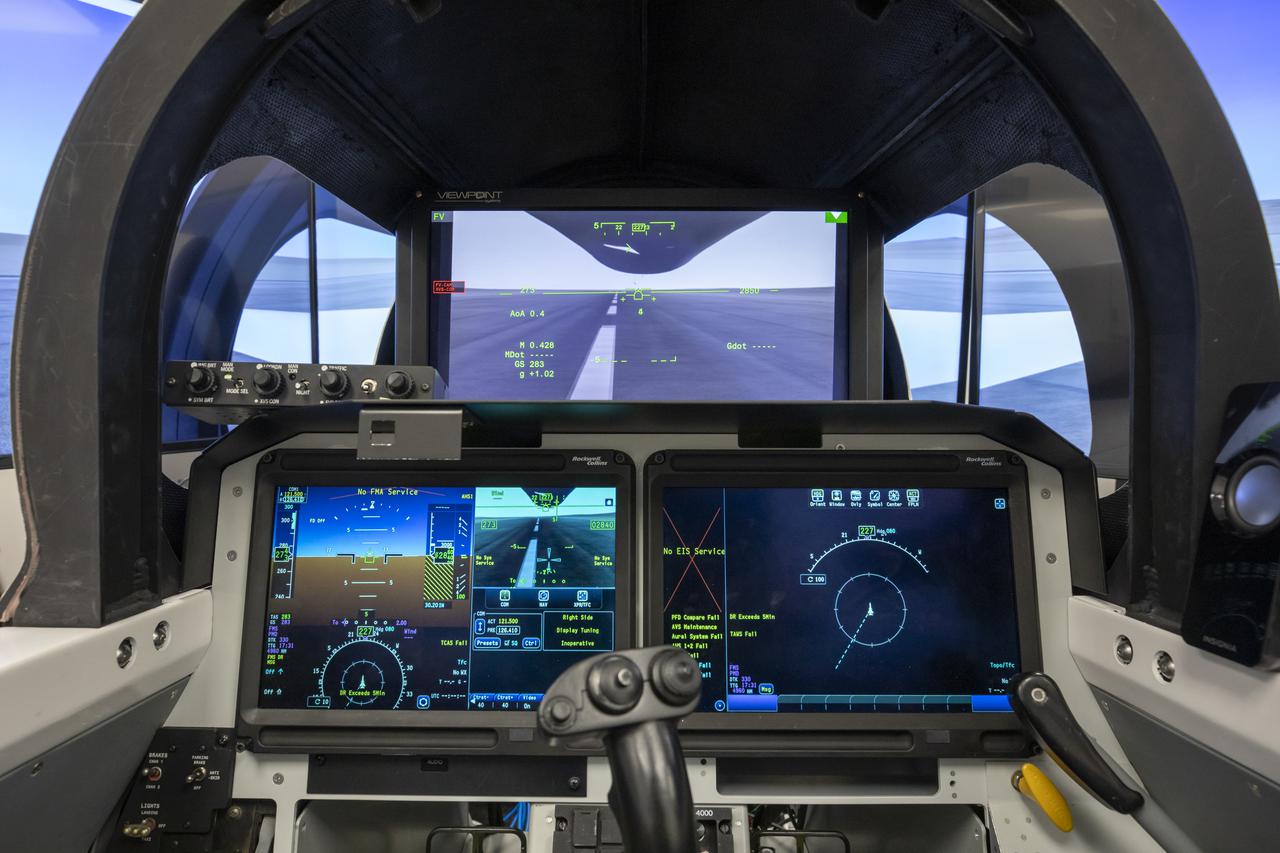
This image shows a close up of the cockpit view of the eXternal Vision System that will be placed in the X-59. Instead of a front facing window, the pilot will use these monitors for forward facing visibility. Lockheed Martin Photography By Garry Tice 1011 Lockheed Way, Palmdale, Ca. 93599 Event: X-59 SIL Round 2 Date: 6/10/2021
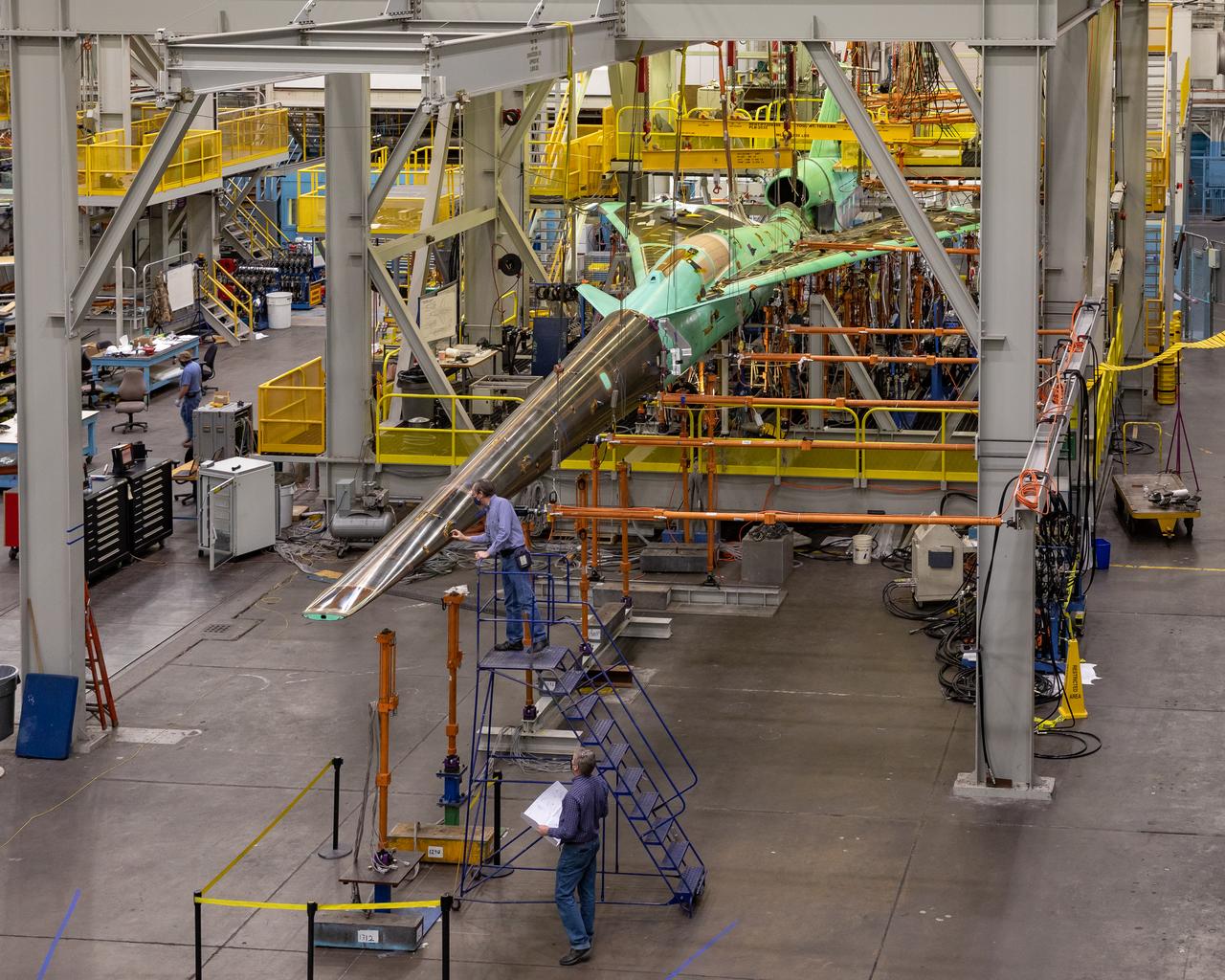
NASA’s X-59 undergoes a structural stress test at Lockheed Martin’s facility in Fort Worth, Texas. The X-59’s nose makes up one third of the aircraft, at 38-feet in length. The X-59 is a one-of-a-kind airplane designed to fly at supersonic speeds without making a startling sonic boom sound for the communities below. This is part of NASA’s Quesst mission, which plans to help enable supersonic air travel over land
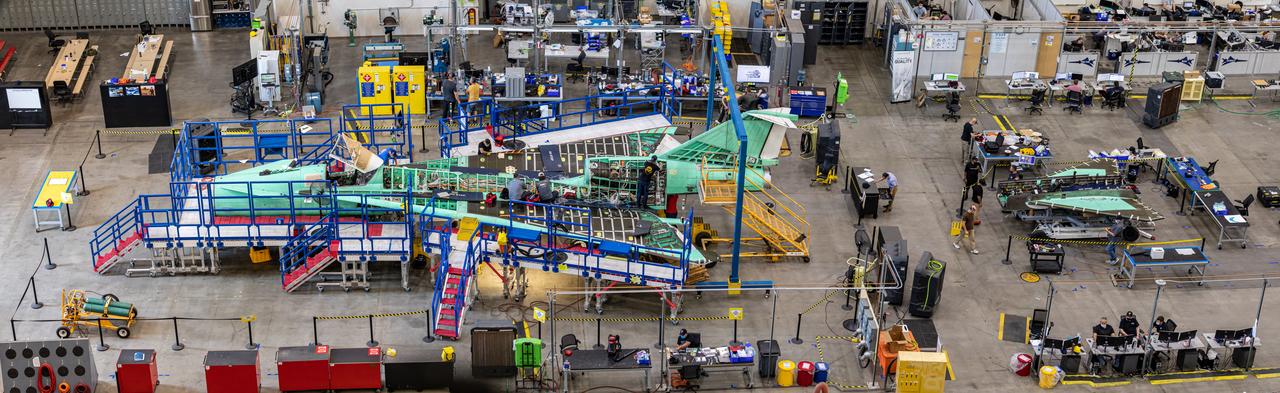
This overhead view of the X-59 shows the aircraft’s current state of assembly at Lockheed Martin Skunk Works in Palmdale, California. Throughout the manufacturing process, the team often removes components to effectively and safely assemble other sections of the aircraft. The X-59’s horizontal tails and lower empennage were recently removed from the aircraft and can be seen behind it as the team prepares for the installation of the engine. The X-59 is the centerpiece of the Quesst mission which plans to help enable commercial supersonic air travel over land.
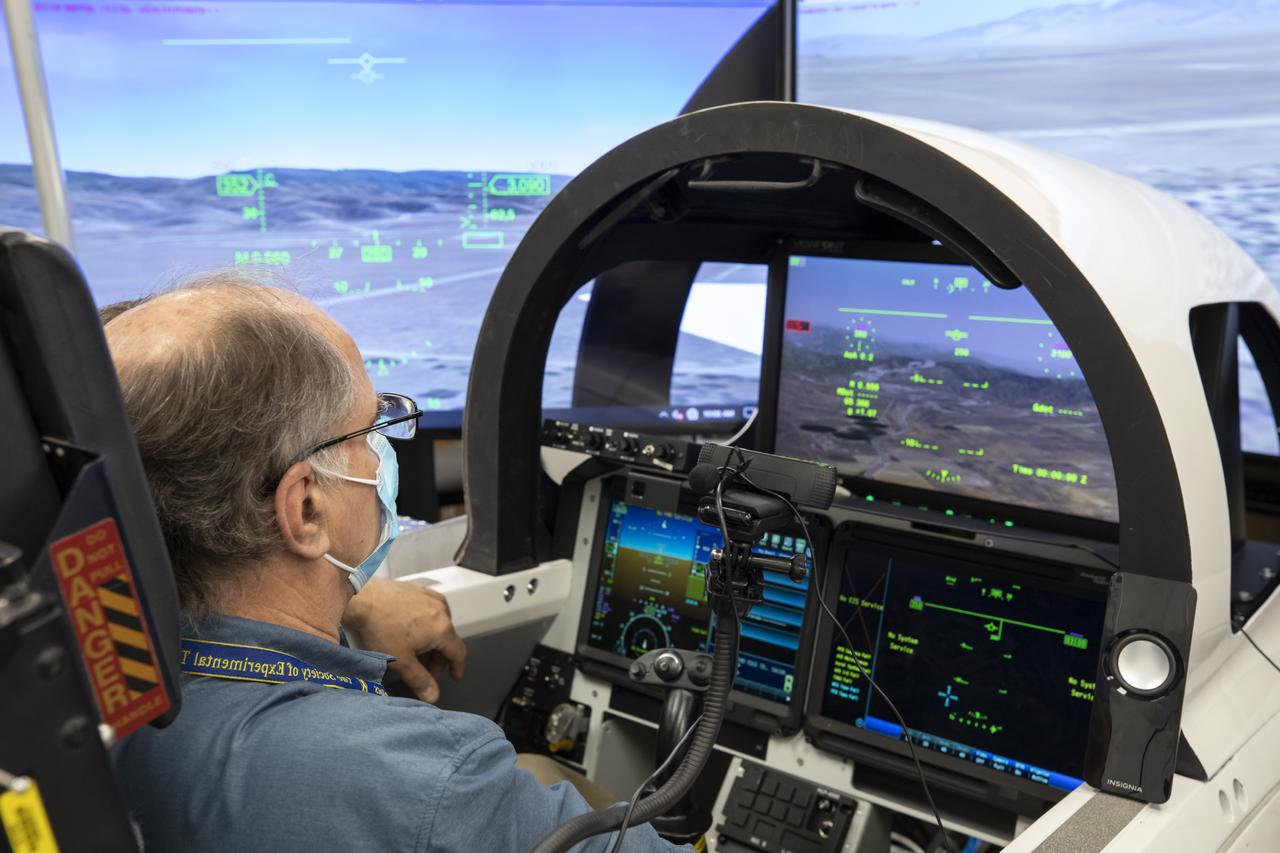
This image shows a close up of the cockpit view of the eXternal Vision System that will be placed in the X-59. Instead of a front facing window, the pilot will use these monitors for forward facing visibility. Lockheed Martin Photography By Garry Tice 1011 Lockheed Way, Palmdale, Ca. 93599 Event: X-59 SIL Date: 6/08/2021
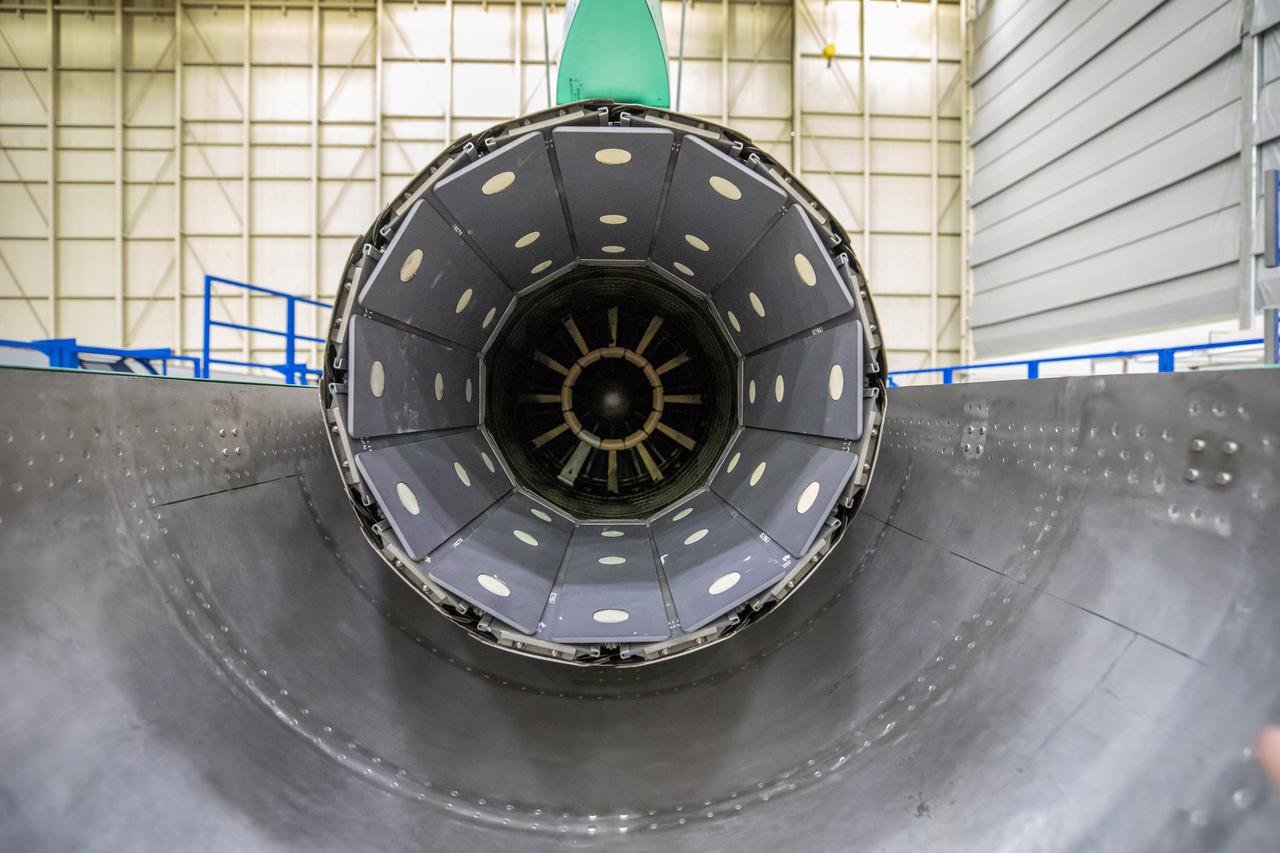
A look at the X-59’s engine nozzle, where the thrust -the force that moves the aircraft- will exit. Once complete, the X-59 is designed to fly supersonic while reducing the loud sonic boom. The Quesst mission could help change the rules for commercial supersonic air travel over land.
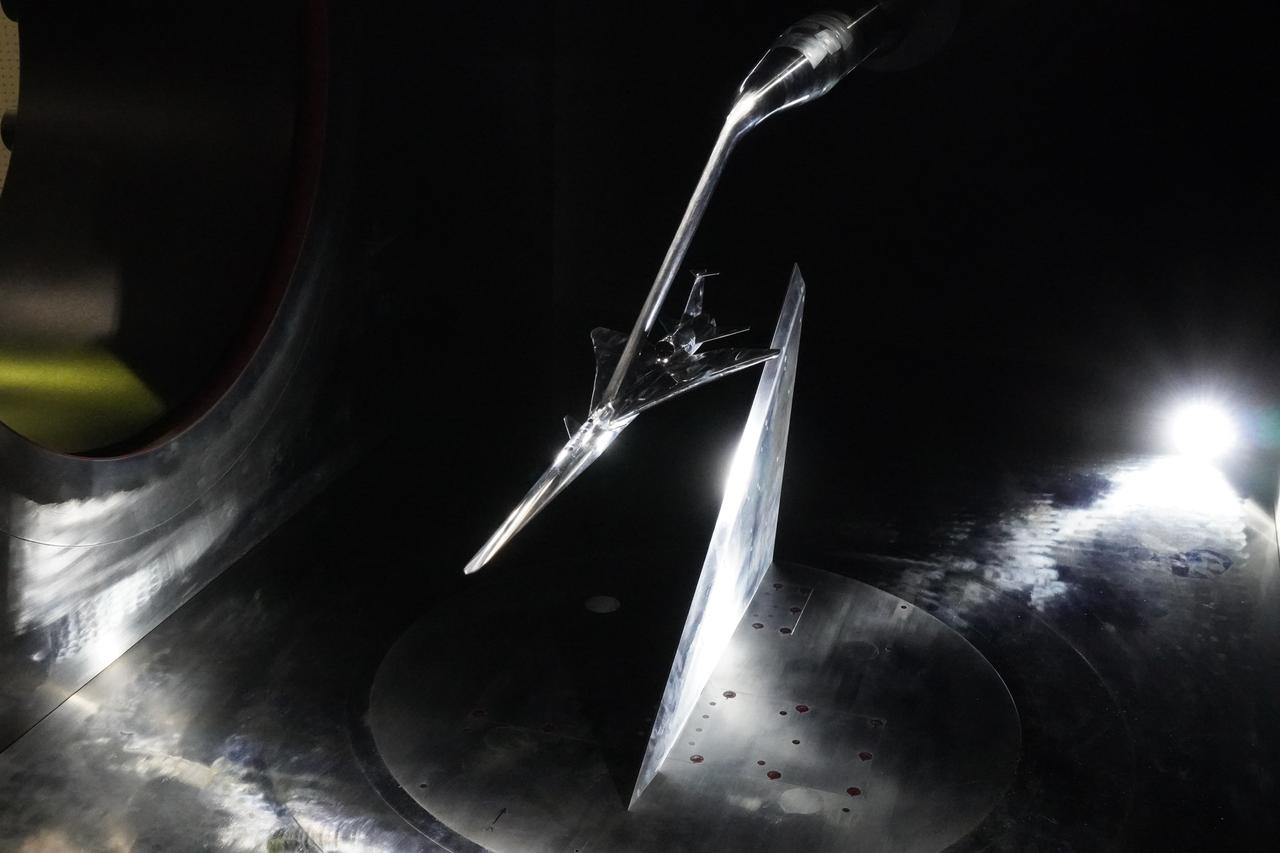
Here you see the X-59 scaled model inside the JAXA supersonic wind tunnel during critical tests related to sound predictions.
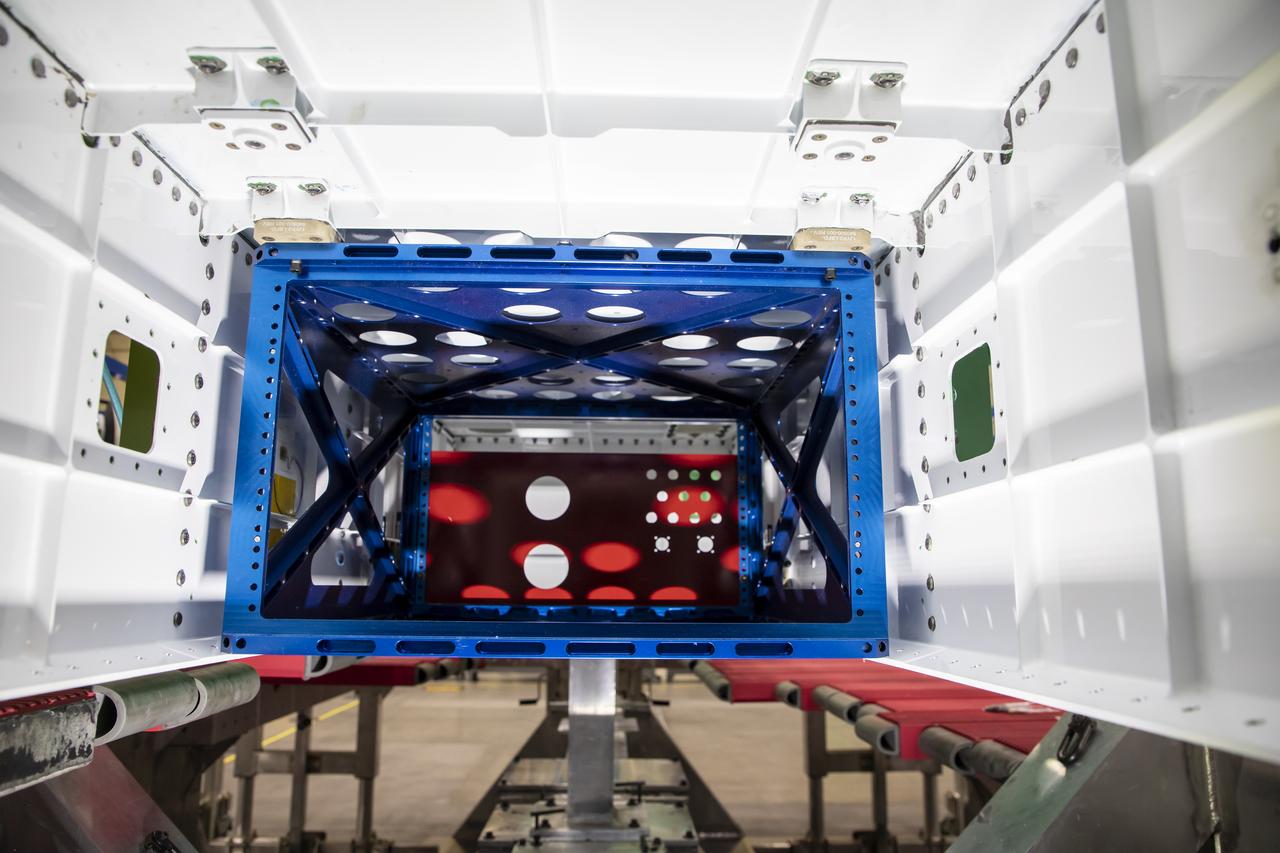
Following the successful installation of mounting brackets, technicians successfully installed the pallet for the eXternal Visibility System, or XVS, onto the X-59 Quiet SuperSonic Technology X-plane, also known as X-59 QueSST. The pallet installation marks an assembly milestone as the first NASA flight systems hardware to be installed onto the vehicle. X-59 will fly to demonstrate the ability to produce quiet thumps at supersonic speeds, instead of the typical, loud sonic booms associated with supersonic flight.
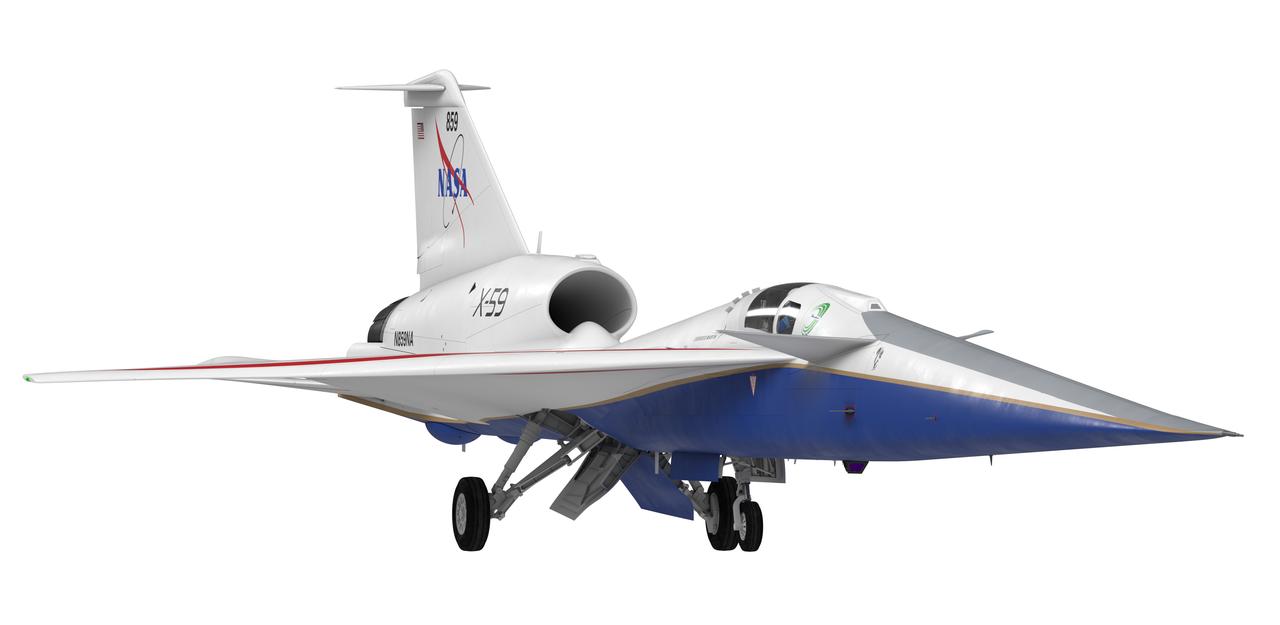
Artist concept of the X-59 three forths view
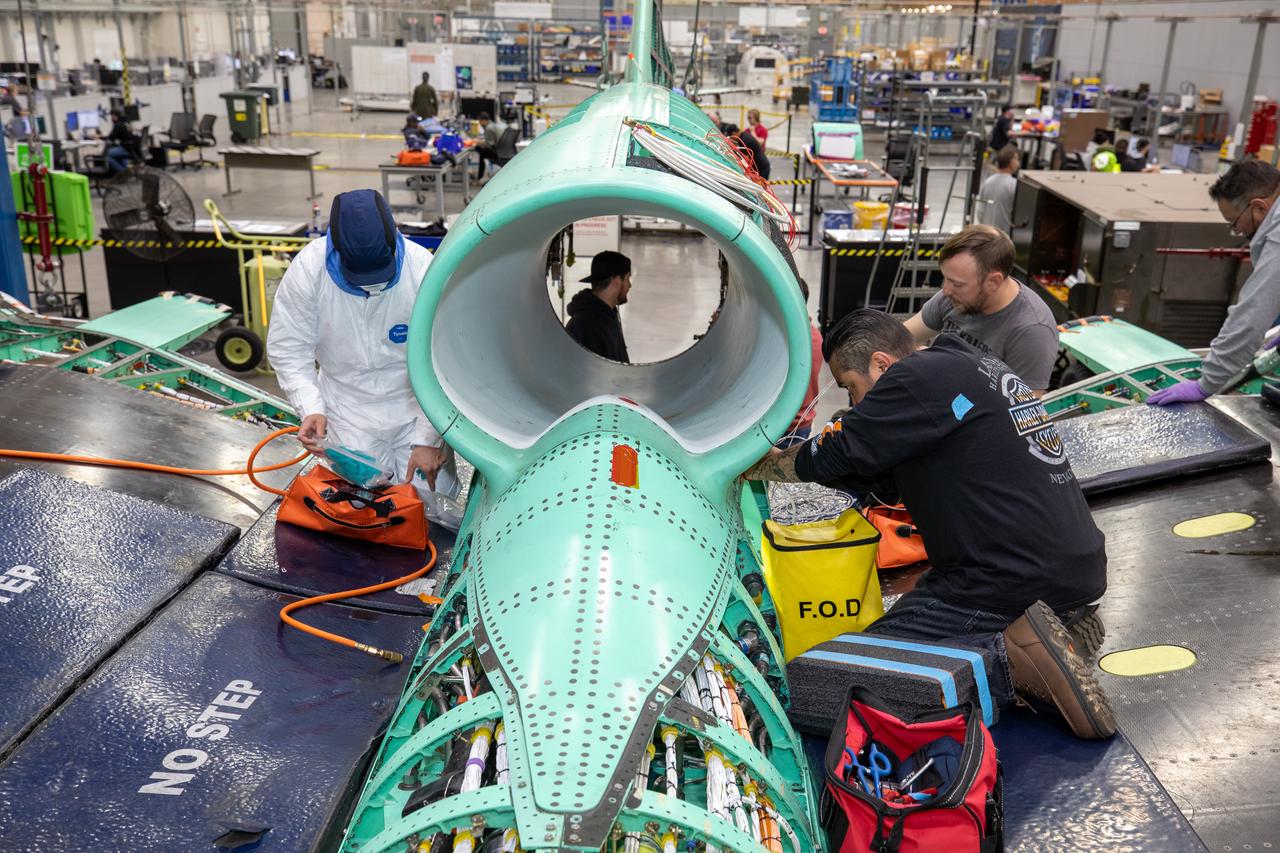
The X-59 team working on the aircraft’s wiring around the engine inlet prior to the engine being installed. Once complete, the X-59 is designed to fly supersonic while reducing the loud sonic boom. The Quesst mission could help change the rules for commercial supersonic air travel over land.
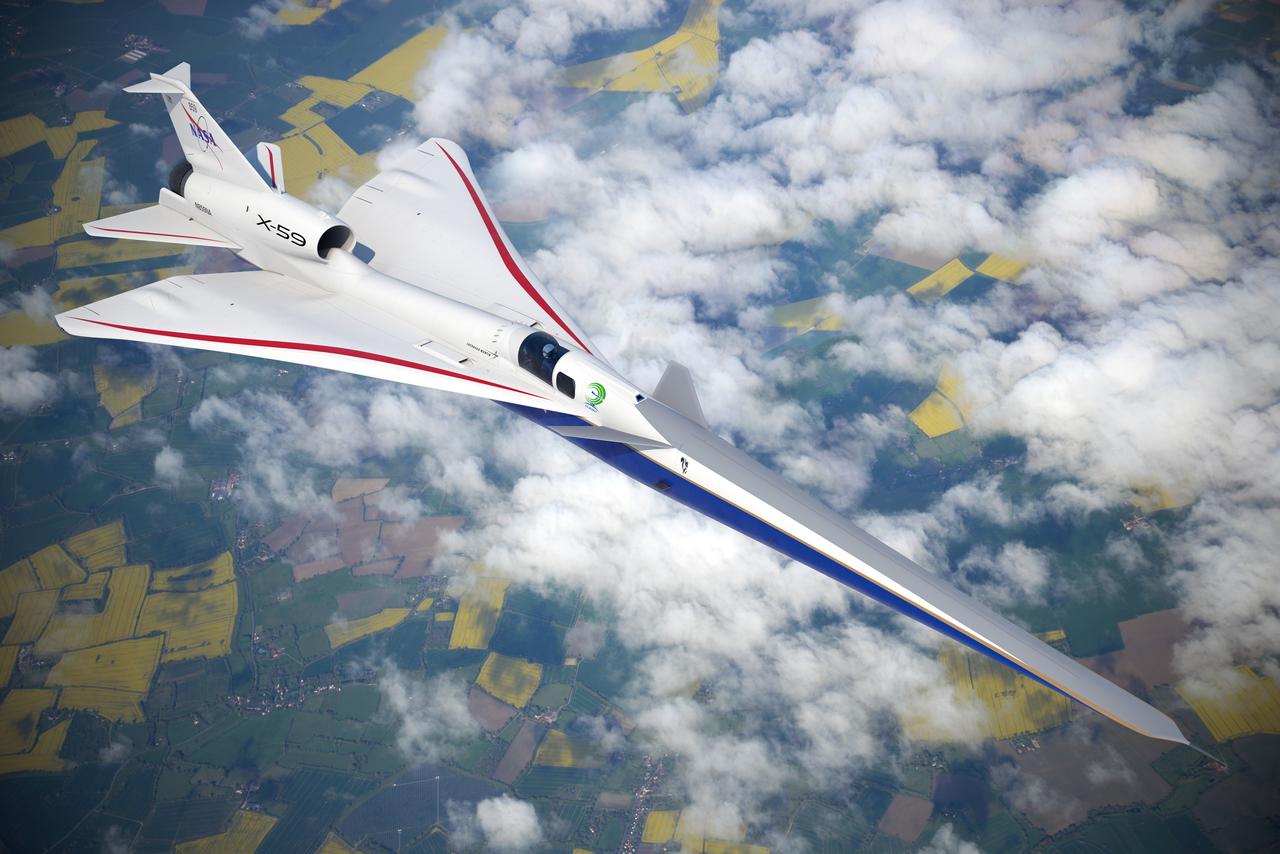
Artist illustration of the X-59 in flight over land.
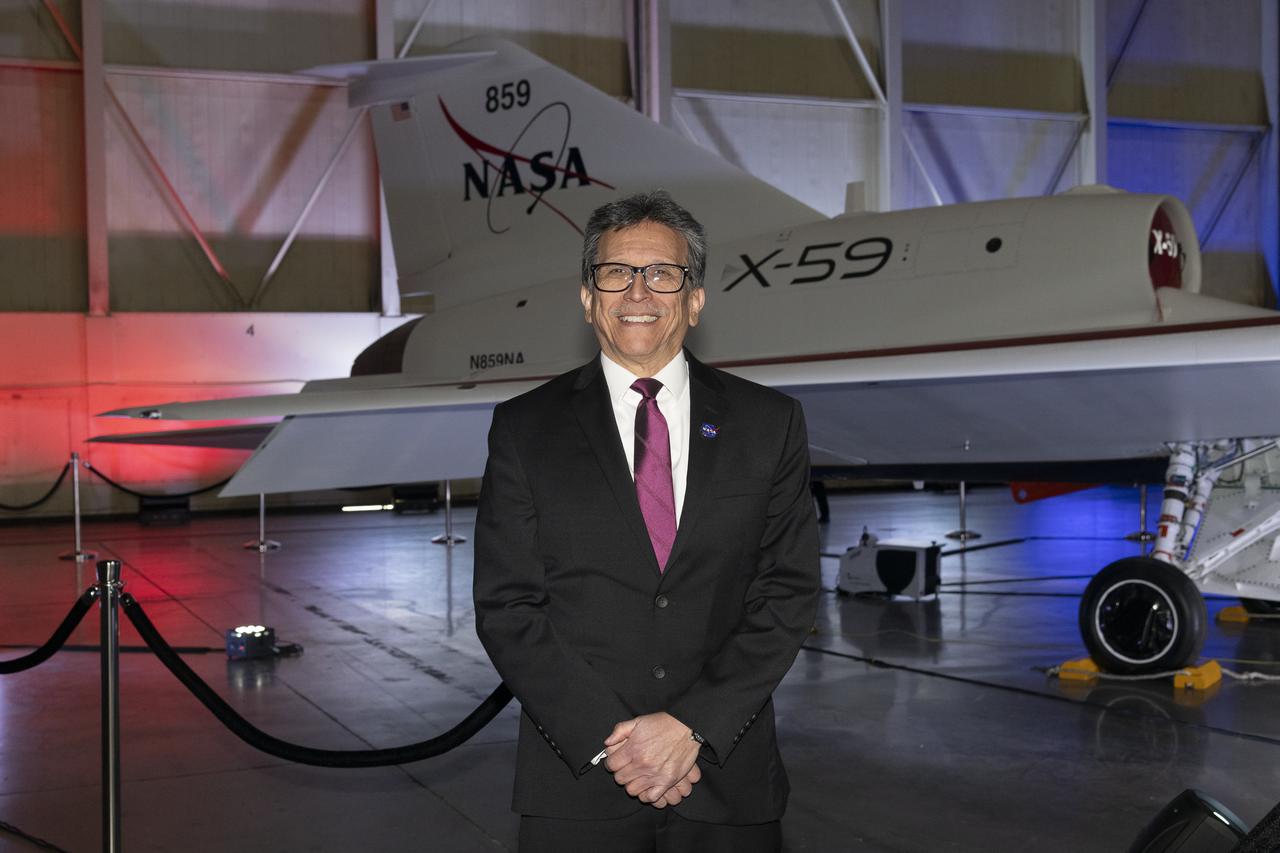
NASA’s structures lead for the X-59, Dr. Walt Silva, poses in front of the agency’s X-59 quiet supersonic research aircraft at a January 12, 2024 event at Lockheed Martin Skunk Works in Palmdale, California. The X-59 is the centerpiece of NASA’s Quesst mission, which seeks to solve one of the major barriers to supersonic flight over land, currently banned in the United States, by making sonic booms quieter.
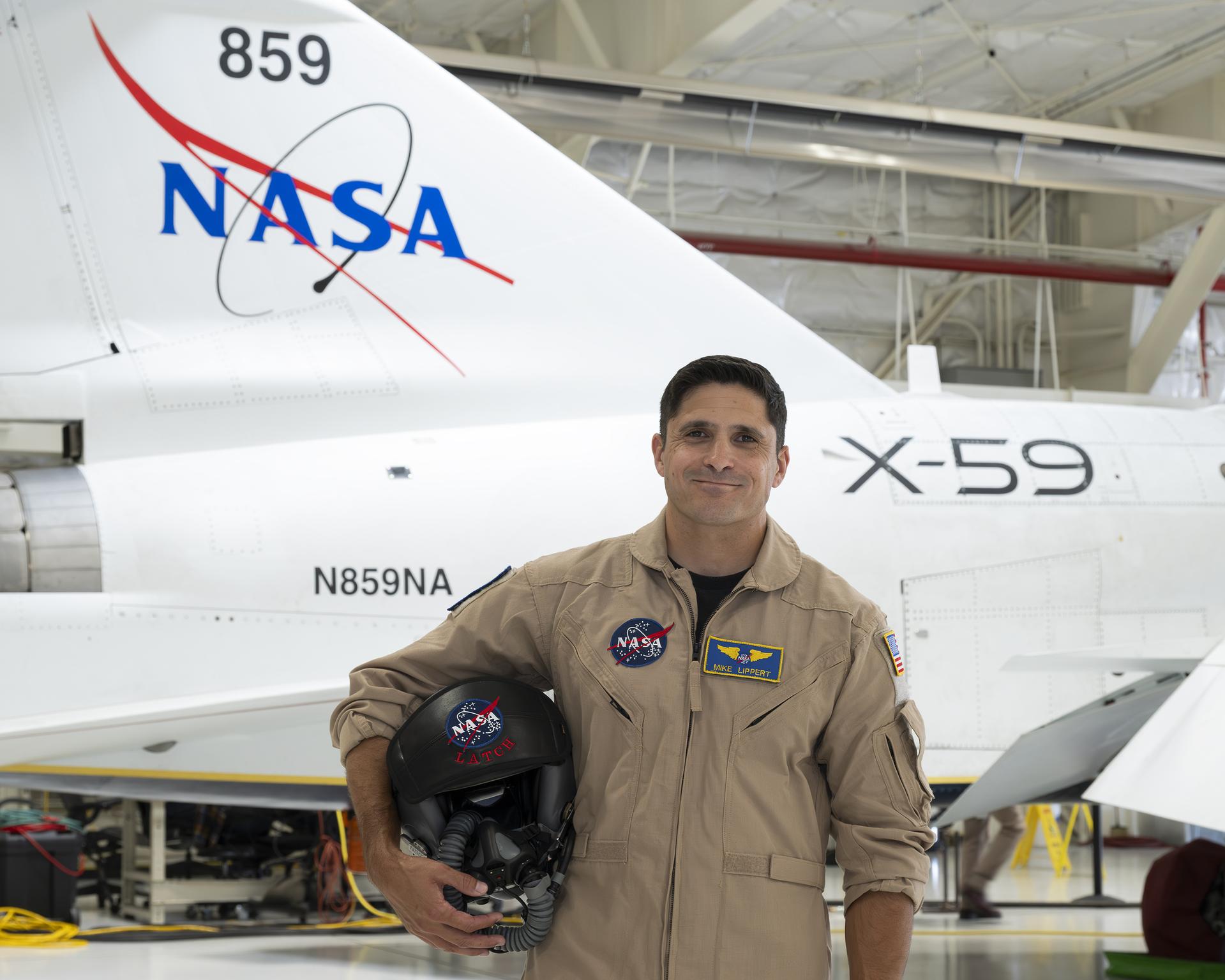
NASA’s X-59 test pilot Mike Lippert stands in front of the agency's X-59 quiet supersonic research aircraft at NASA's Armstrong Flight Research Center in Edwards, California, on Wednesday, June 24, 2026. Lippert joins NASA as the third X-59 pilot supporting the Quesst mission, which will eventually fly over U.S. communities to demonstrate quiet supersonic flight and collect feedback from the public about the aircraft’s quiet sonic “thump.”

NASA’s X-59 undergoes a structural stress test at Lockheed Martin’s facility at Fort Worth, Texas. The X-59 is a one-of-a-kind airplane designed to fly at supersonic speeds without making a startling sonic boom sound for the communities below. This is part of NASA’s Quesst mission, which plans to help enable supersonic air travel over land.
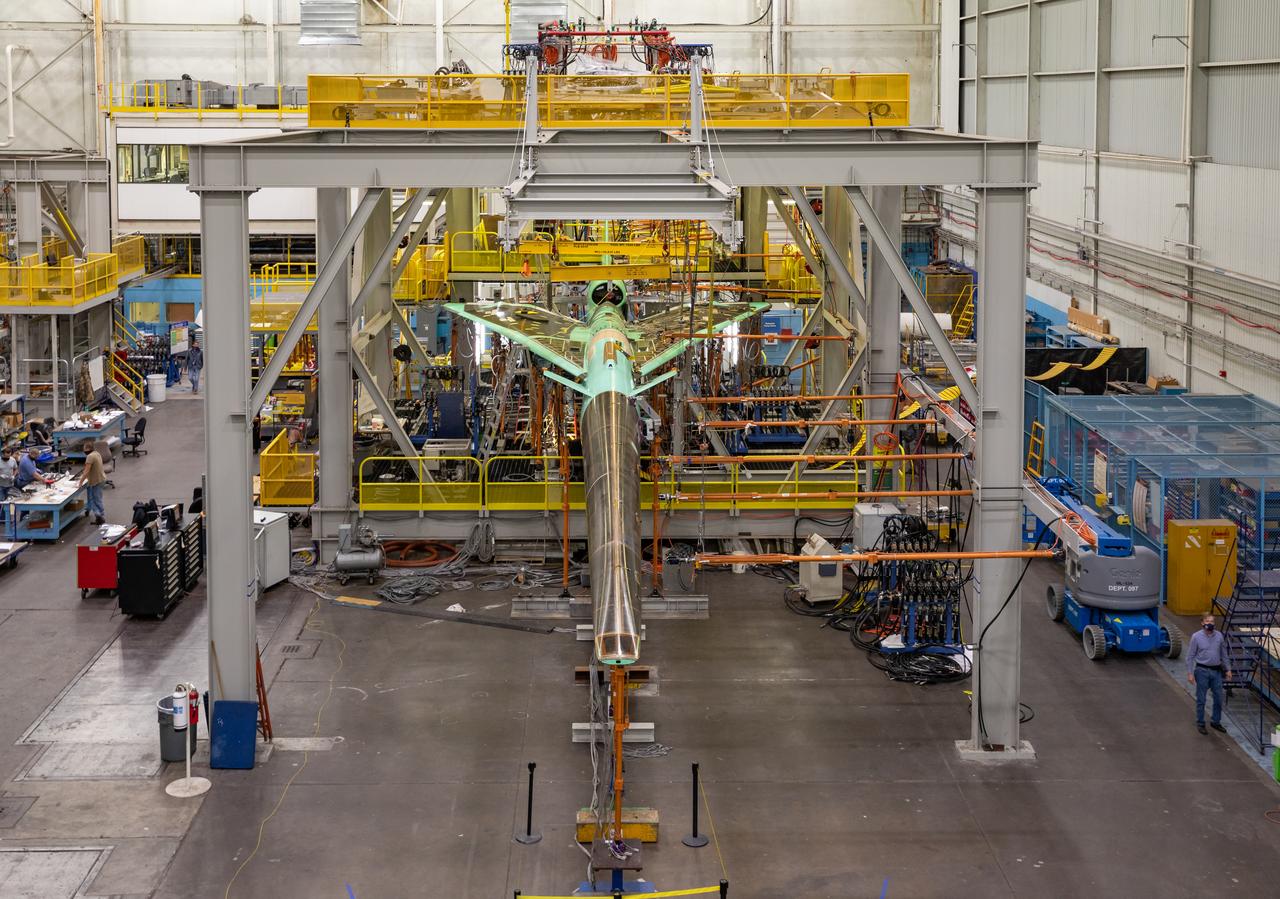
NASA’s X-59 undergoes a structural stress test at Lockheed Martin’s facility at Fort Worth, Texas. The X-59 is a one-of-a-kind airplane designed to fly at supersonic speeds without making a startling sonic boom sound for the communities below. This is part of NASA’s Quesst mission, which plans to help enable supersonic air travel over land.
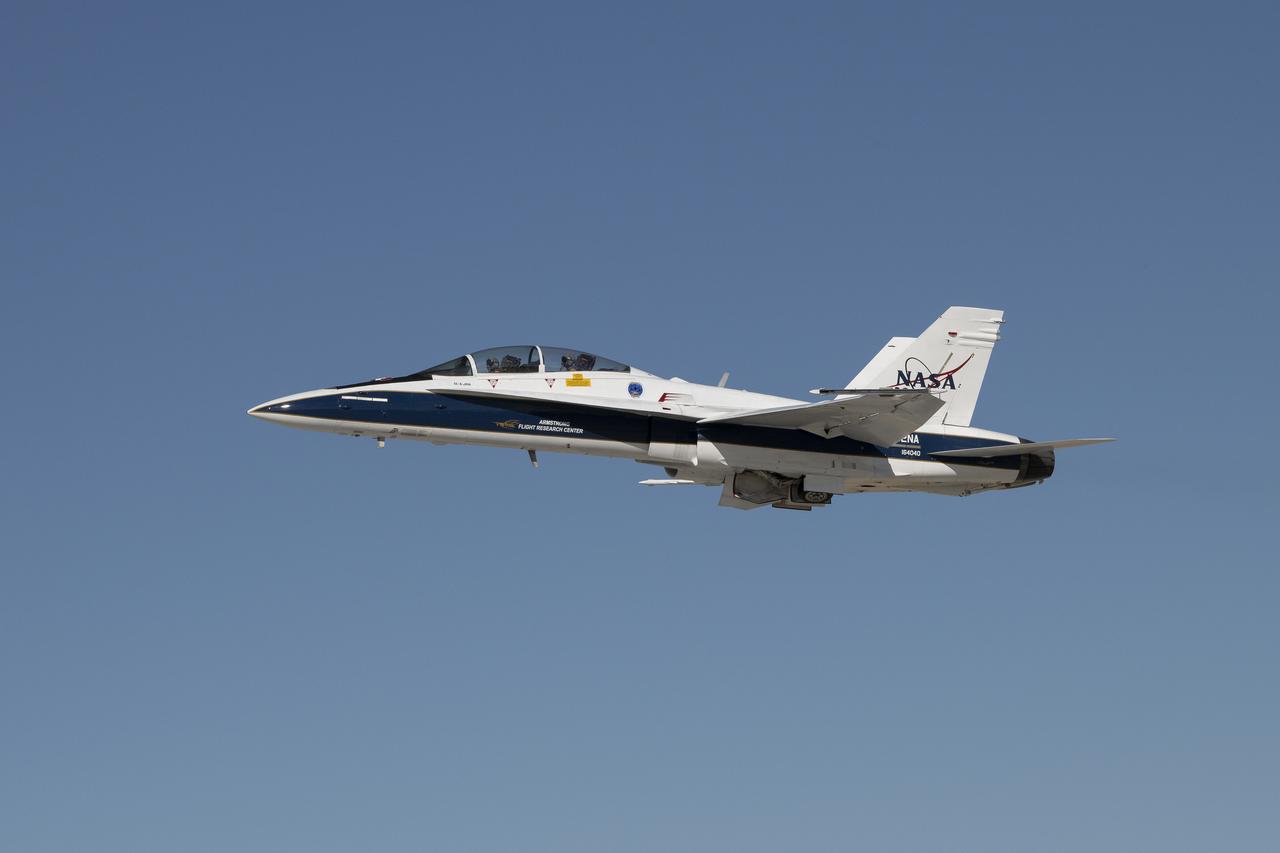
The Quesst mission recently completed testing of operations and equipment to be used in recording the sonic thumps of the X-59. To simulate the sonic thumps expected to be created by the X-59, NASA Armstrong Flight Researcher Center pilot Jim Less performed inverted dive maneuvers in an F-18, shown here, to generate softer sonic booms. The sonic booms were recorded by 10 ground recording stations stretched across 30 miles of desert near Edwards Air Force Base.
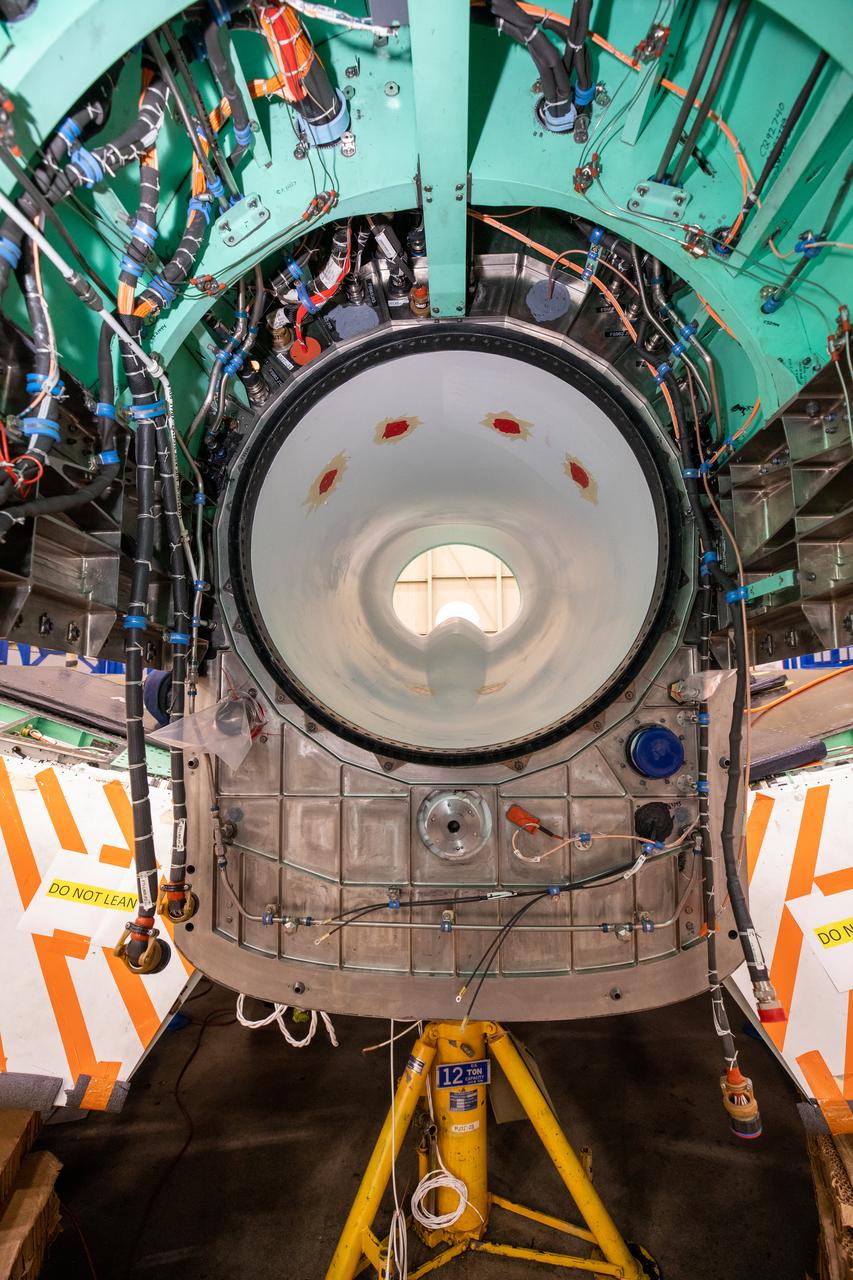
This image shows the X-59’s engine inlet from the aft view, which is the rear of the airplane, looking forward. Once the aircraft and ground testing are complete, the X-59 will undergo flight testing, which will demonstrate the plane’s ability to fly supersonic - faster than the speed of sound - while reducing the loud sonic boom. This could enable commercial supersonic air travel over land again.
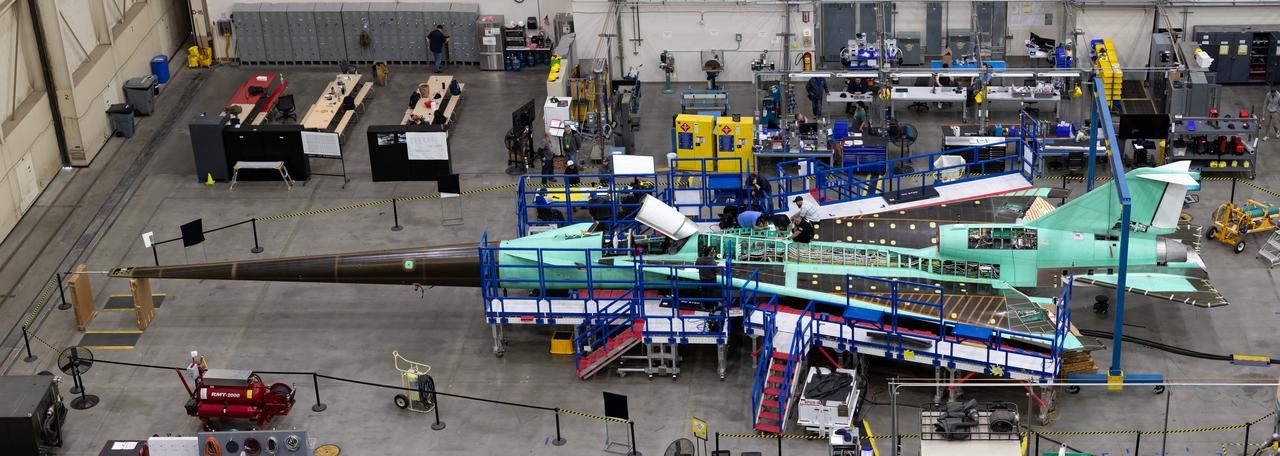
An overhead view of the X-59 during assembly in spring 2023. Assembly took place at Lockheed Martin’s Skunk Works facility in Palmdale, California. Once complete, the X-59 is designed to fly supersonic while reducing the loud sonic boom. The Quesst mission could help change the rules for commercial supersonic air travel over land.
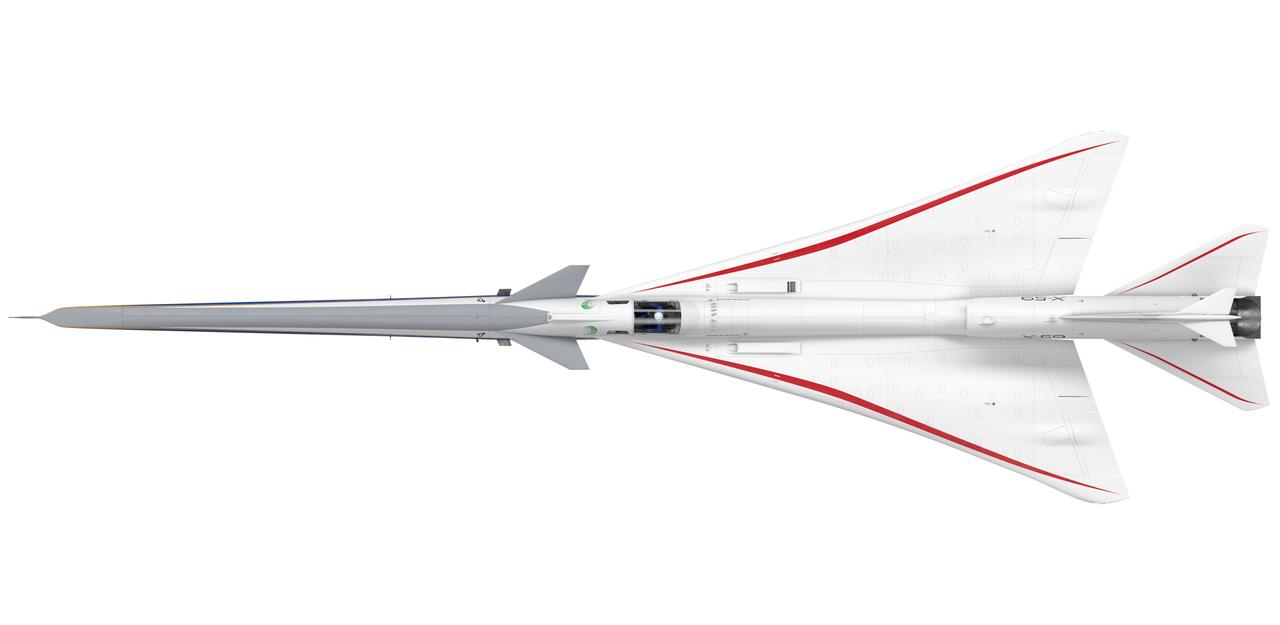
Artist concept of the X-59 top view
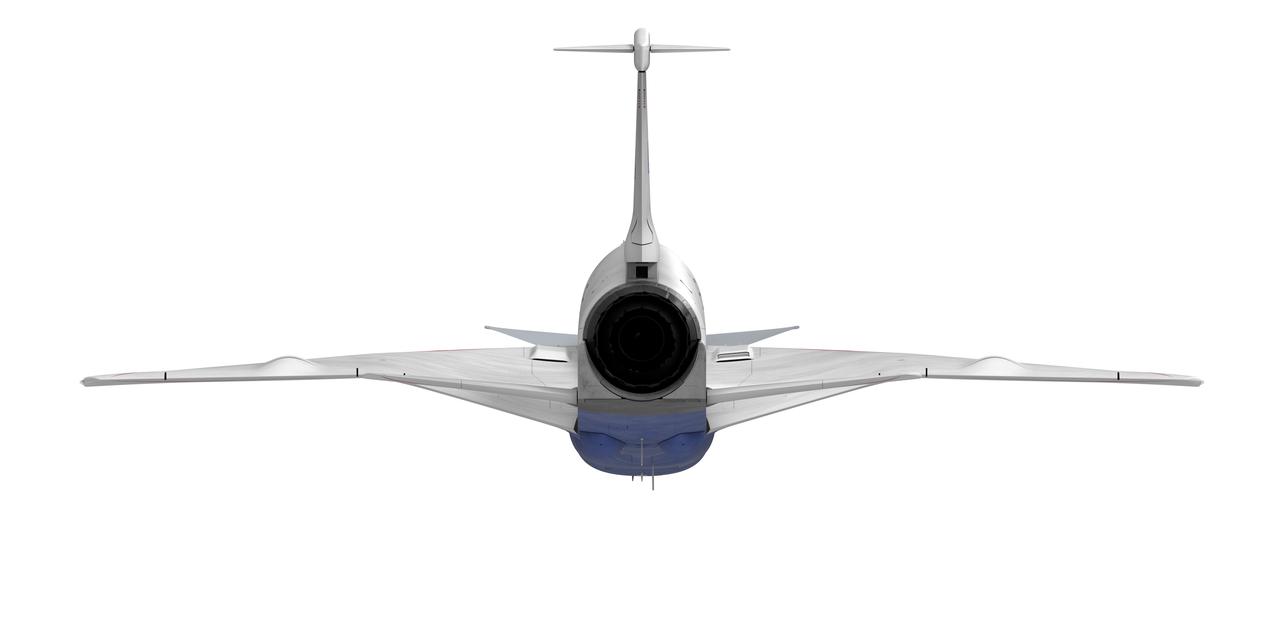
Artist concept of the X-59 configuration views.
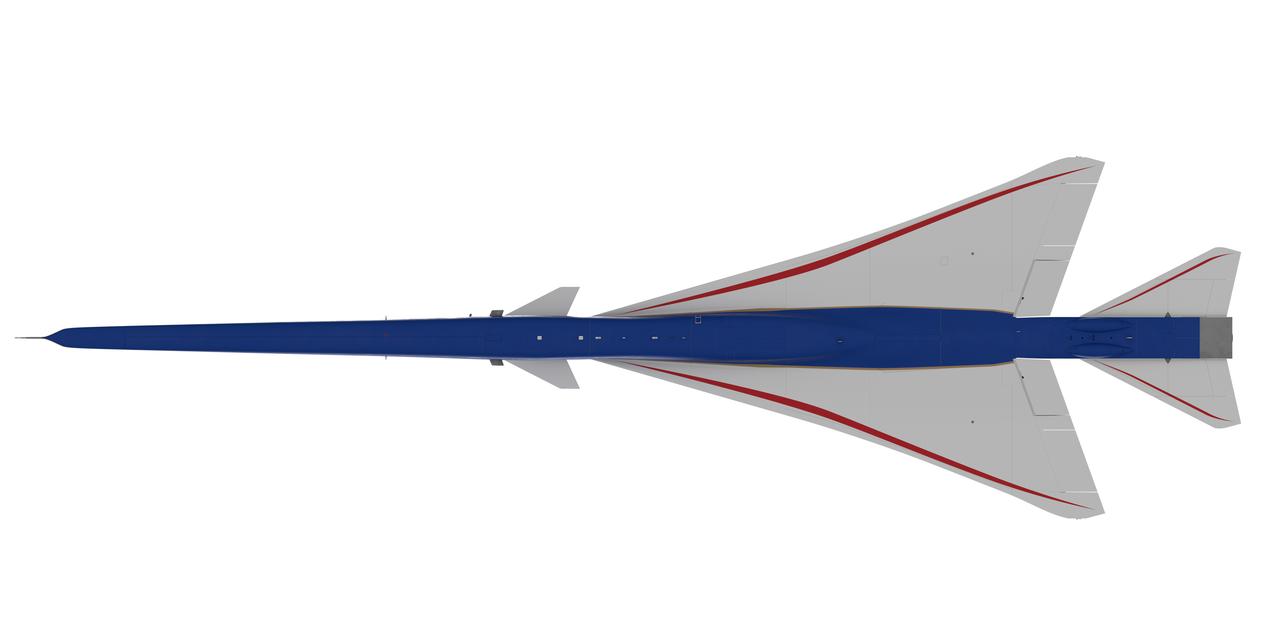
Artist concept of the X-59 configuration views.
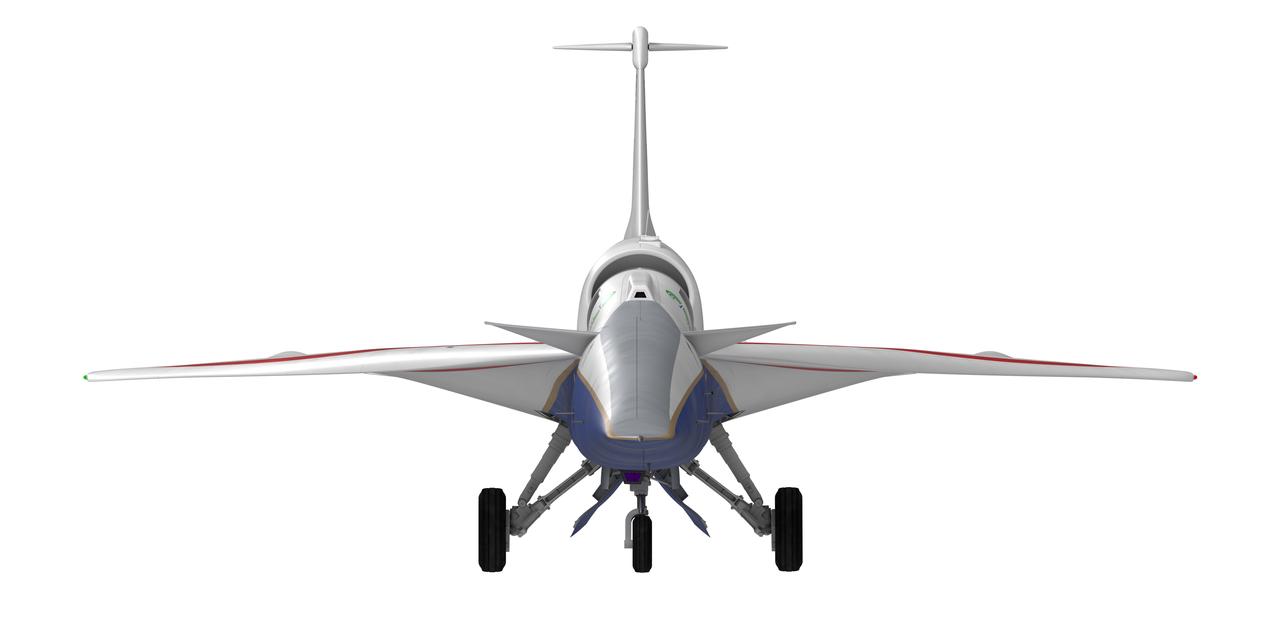
Artist concept of the X-59 front view.

Artist concept of the X-59 in flight overland.
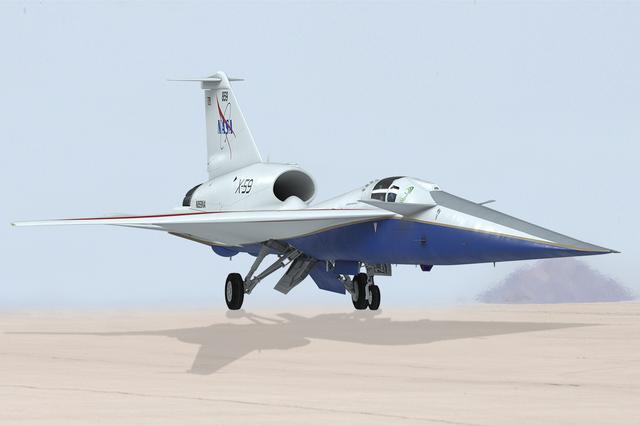
Artist illustration of the X-59 taxiing on the runway.

Artist concept of the X-59 front view.
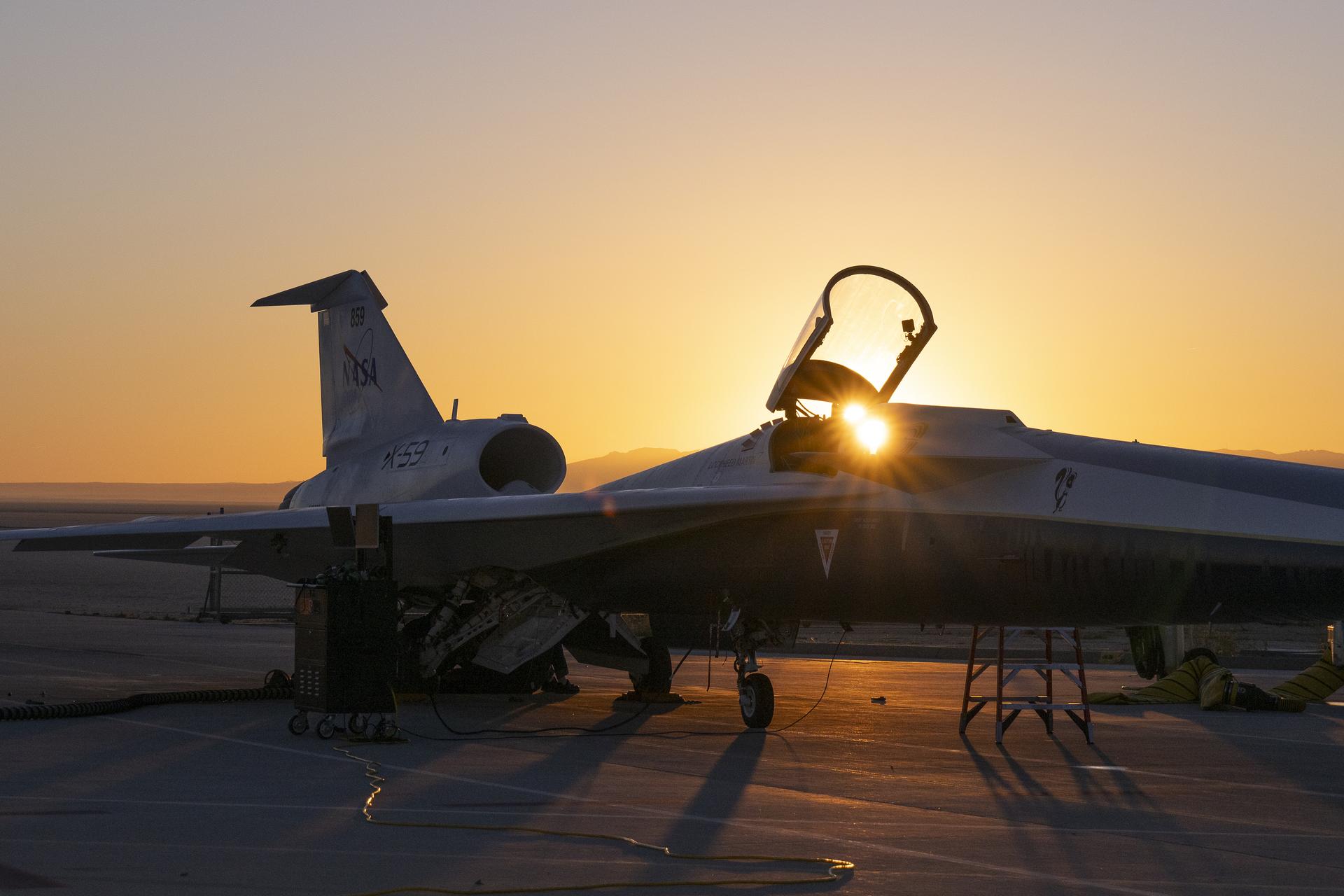
NASA’s X-59 quiet supersonic research aircraft during engine run testing on Thursday, March 12, 2026, at NASA’s Armstrong Flight Research Center in Edwards, California. Engineers and technicians monitored the aircraft’s systems as the engine powered up, gathering data to verify performance and prepare the X-59 for its next series of experimental flights. The X-59 will support NASA’s Quesst mission, which aims to demonstrate technology that can reduce the loud sonic booms of supersonic flight.

NASA’s X-59 in Flight with F/A-18 Research Aircraft Monitoring

NASA’s X-59 in Flight with F/A-18 Research Aircraft Monitoring
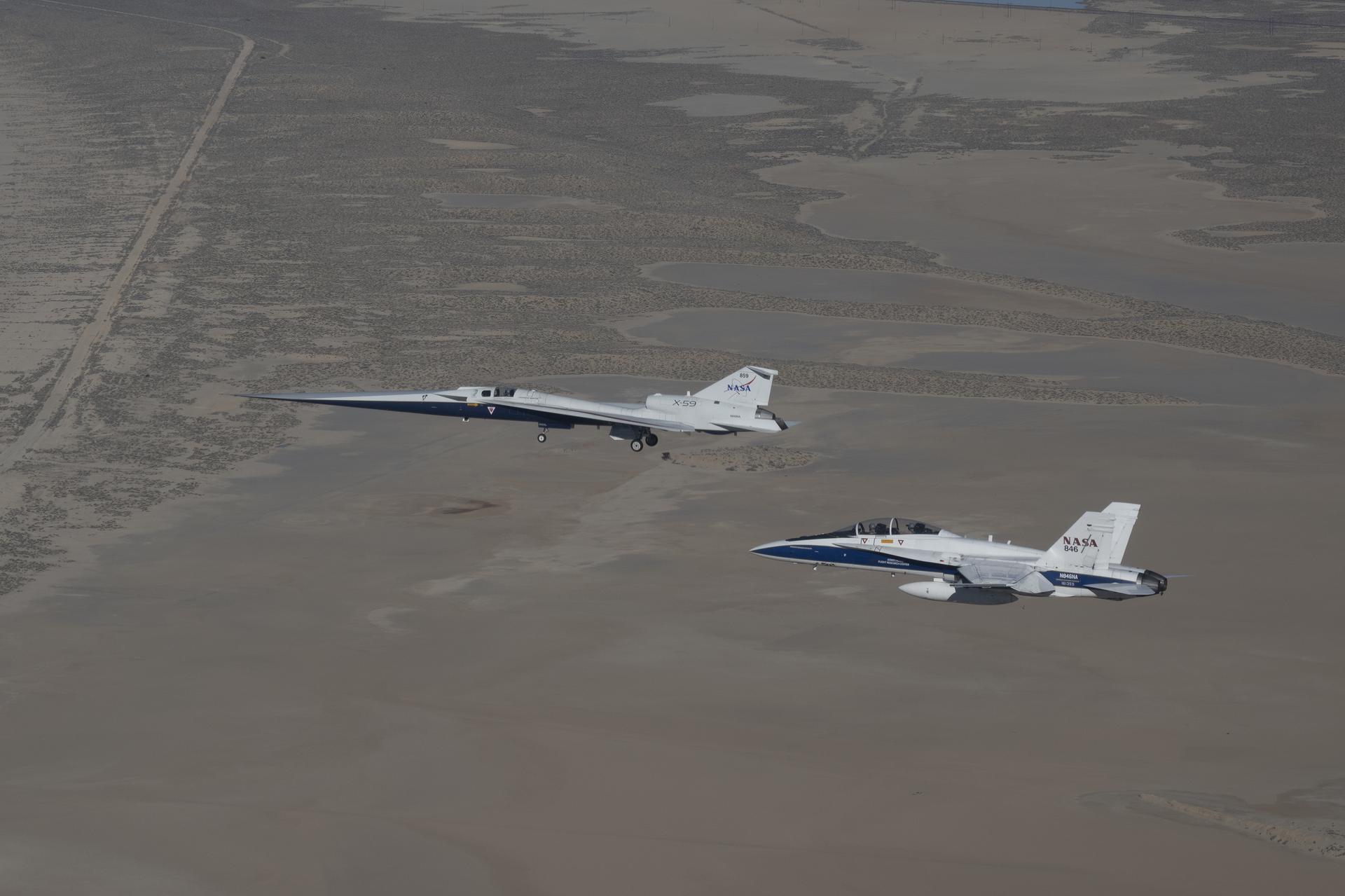
NASA’s X-59 in Flight with F/A-18 Research Aircraft Monitoring

NASA’s X-59 in Flight with F/A-18 Research Aircraft Monitoring

NASA’s X-59 in Flight with F/A-18 Research Aircraft Monitoring
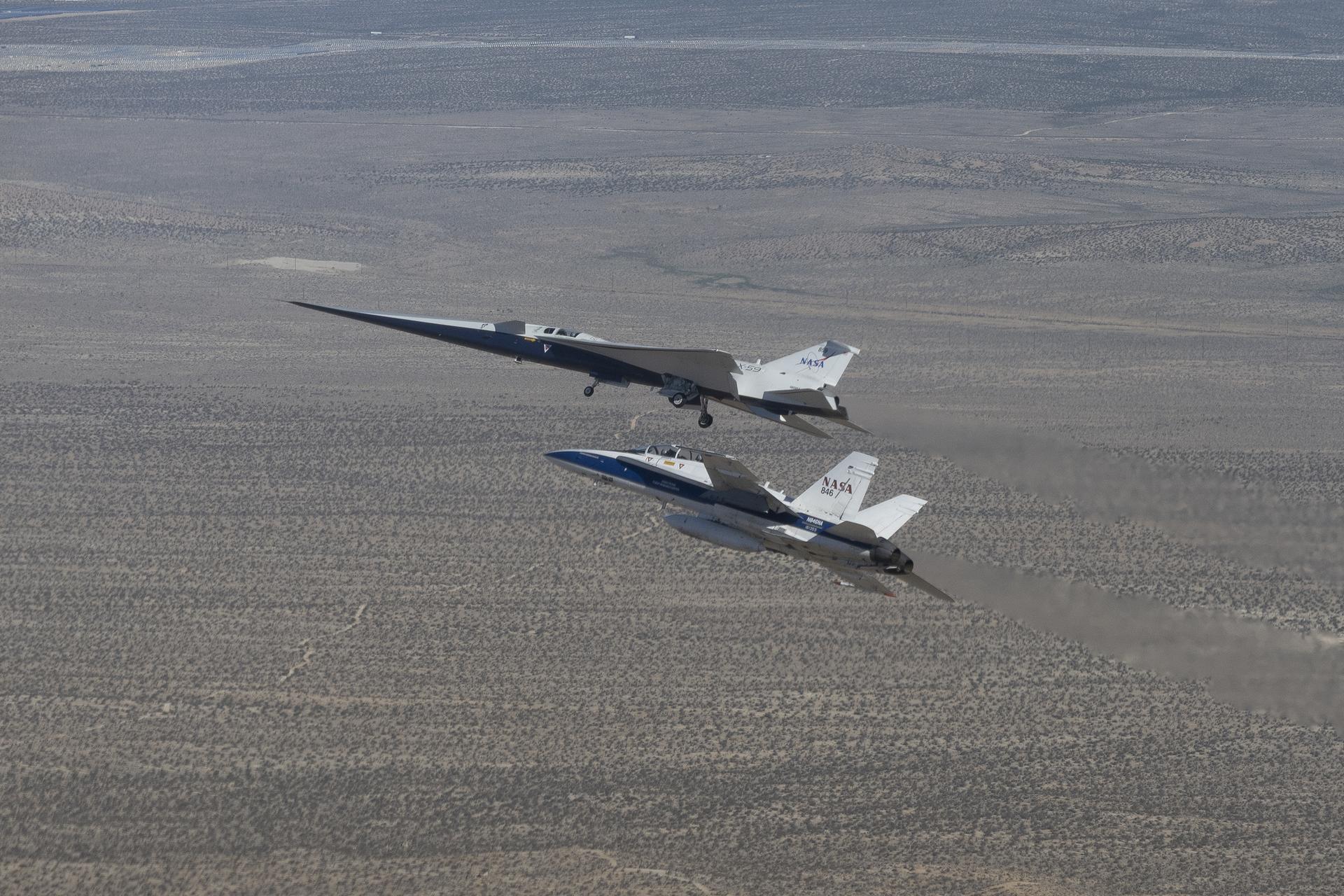
NASA’s X-59 in Flight with F/A-18 Research Aircraft Monitoring

NASA’s X-59 in Flight with F/A-18 Research Aircraft Monitoring

NASA’s X-59 in Flight with F/A-18 Research Aircraft Monitoring
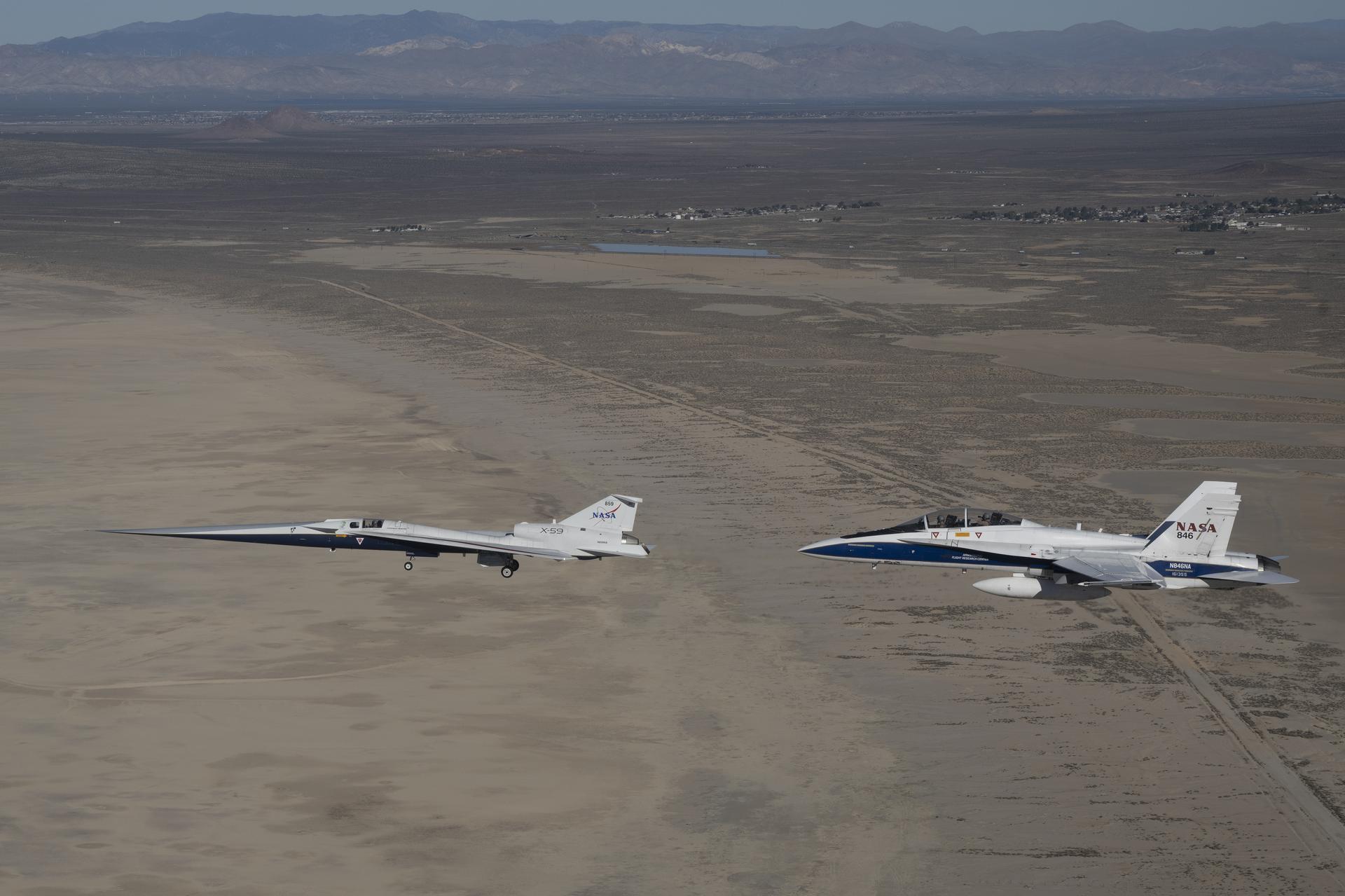
NASA’s X-59 in Flight with F/A-18 Research Aircraft Monitoring

NASA’s X-59 in Flight with F/A-18 Research Aircraft Monitoring
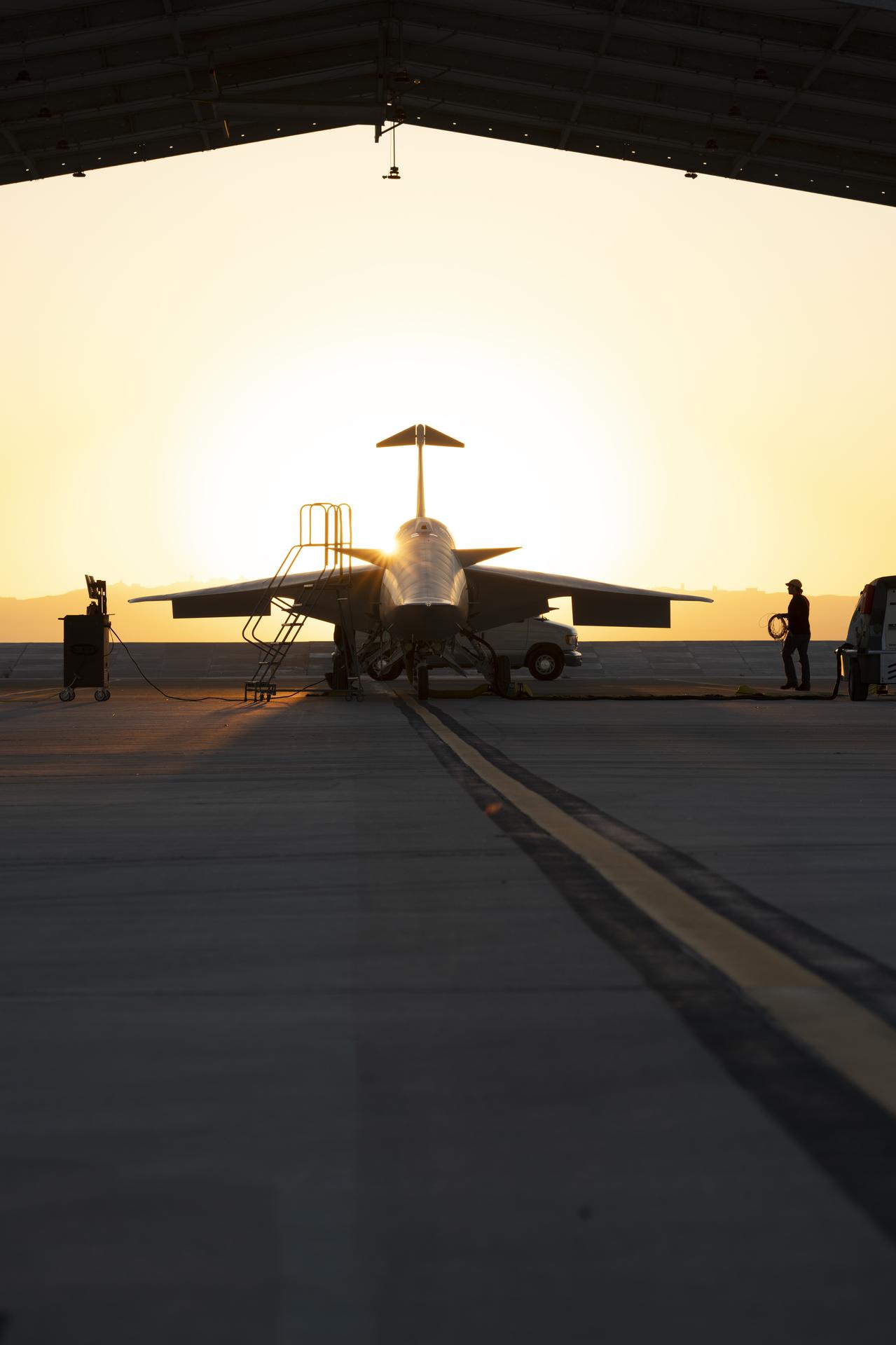
NASA’s X-59 quiet supersonic research aircraft sits in a run stall during sunrise on Tuesday, March 20, 2026, near NASA’s Armstrong Flight Research Center in Edwards, California, ahead of its second flight.
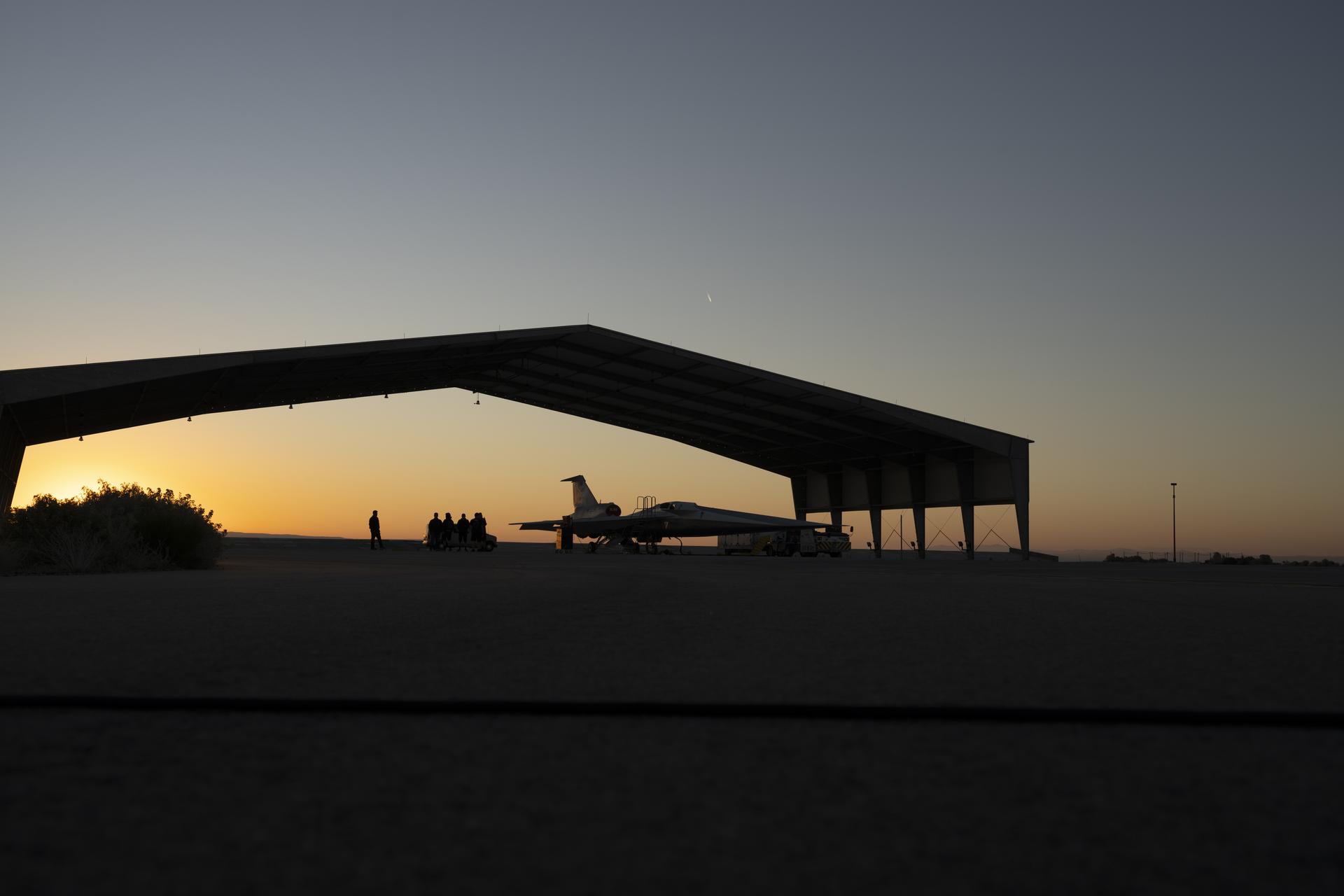
NASA’s X-59 quiet supersonic research aircraft sits in a run stall during sunrise on Tuesday, March 20, 2026, near NASA’s Armstrong Flight Research Center in Edwards, California, ahead of its second flight.
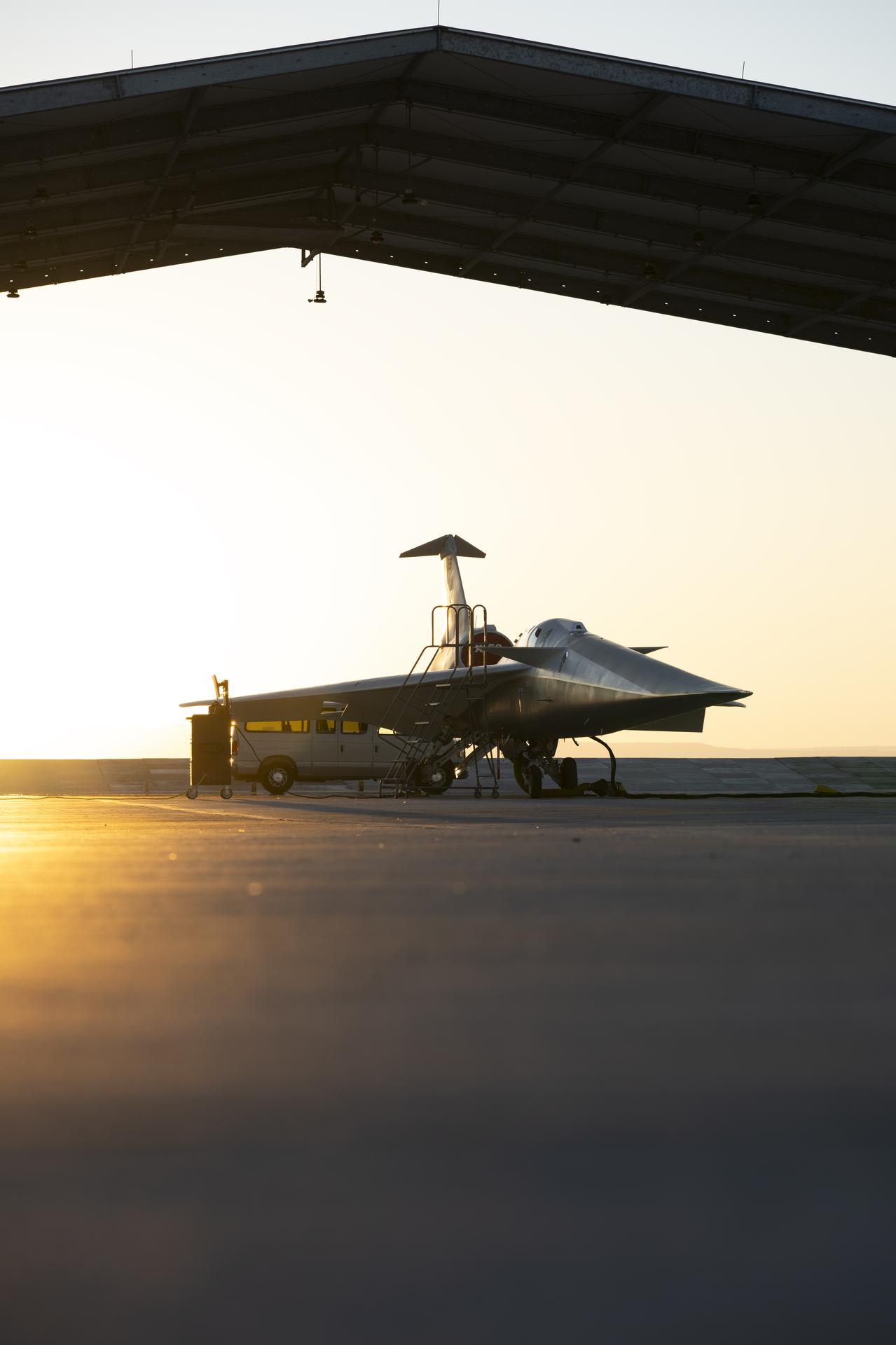
NASA’s X-59 quiet supersonic research aircraft sits in a run stall during sunrise on Tuesday, March 20, 2026, near NASA’s Armstrong Flight Research Center in Edwards, California, ahead of its second flight.
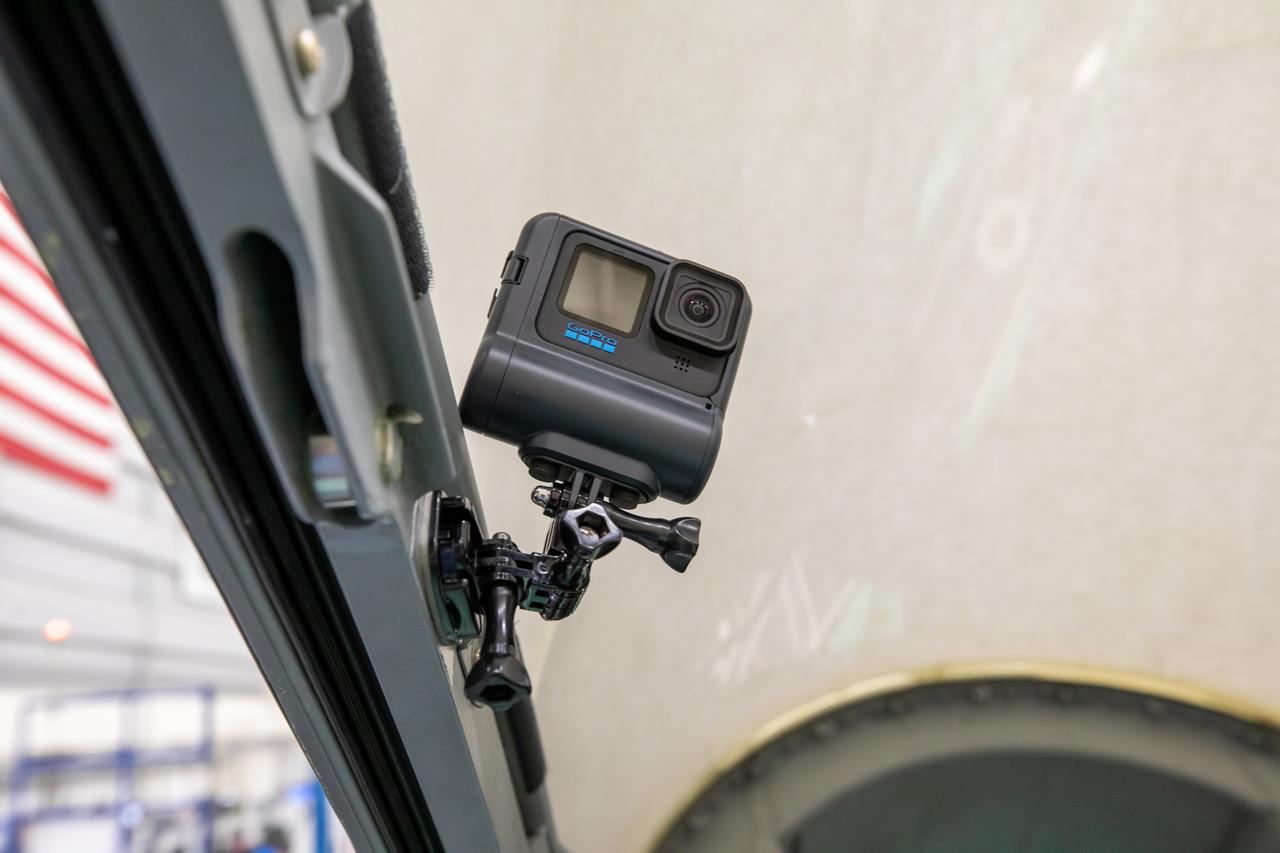
A Go-Pro is mounted on the inside of the X-59’s cockpit to capture the pilots activities during flight.
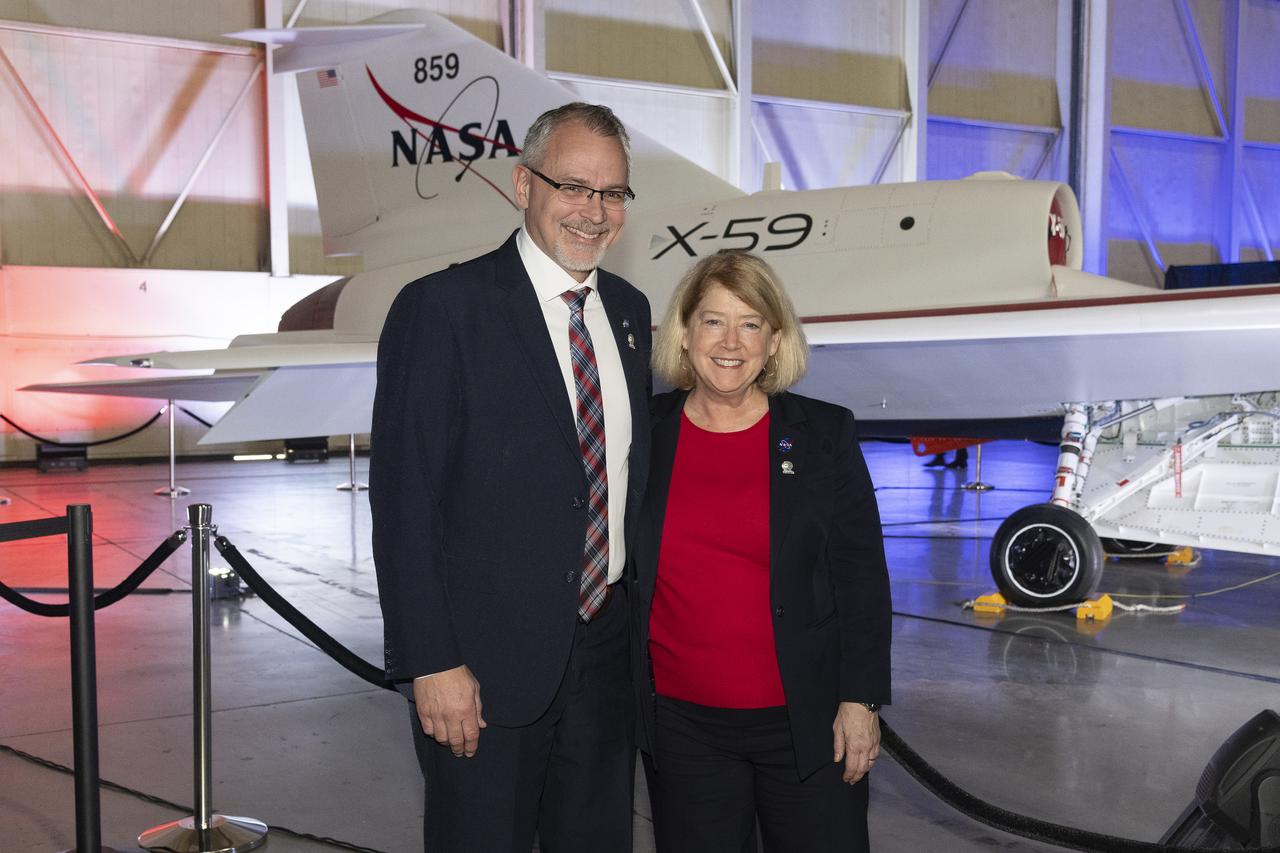
NASA Associate Administrator Jim Free (left) and Deputy Administrator Pam Melroy (right) stand in front of the newly unveiled X-59 quiet supersonic research aircraft at a January 12, 2024 event at Lockheed Martin Skunk Works in Palmdale, California. The X-59 is the centerpiece of NASA’s Quesst mission, which seeks to solve one of the major barriers to supersonic flight over land, currently banned in the United States, by making sonic booms quieter.
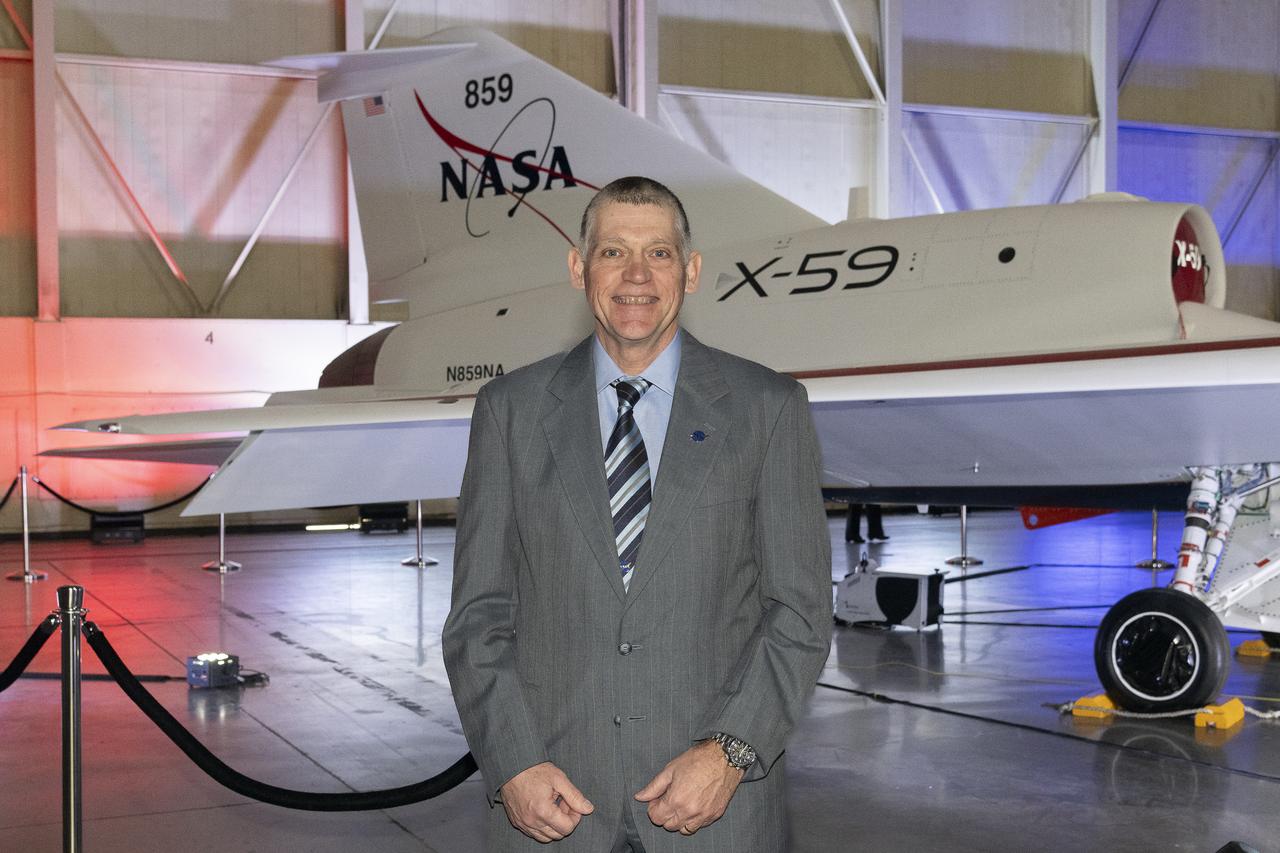
NASA’s chief engineer for the Low Boom Flight Demonstrator project, Jay Brandon, poses in front of the agency’s X-59 quiet supersonic research aircraft at a January 12, 2024 event at Lockheed Martin Skunk Works in Palmdale, California. The X-59 is the centerpiece of NASA’s Quesst mission, which seeks to solve one of the major barriers to supersonic flight over land, currently banned in the United States, by making sonic booms quieter.
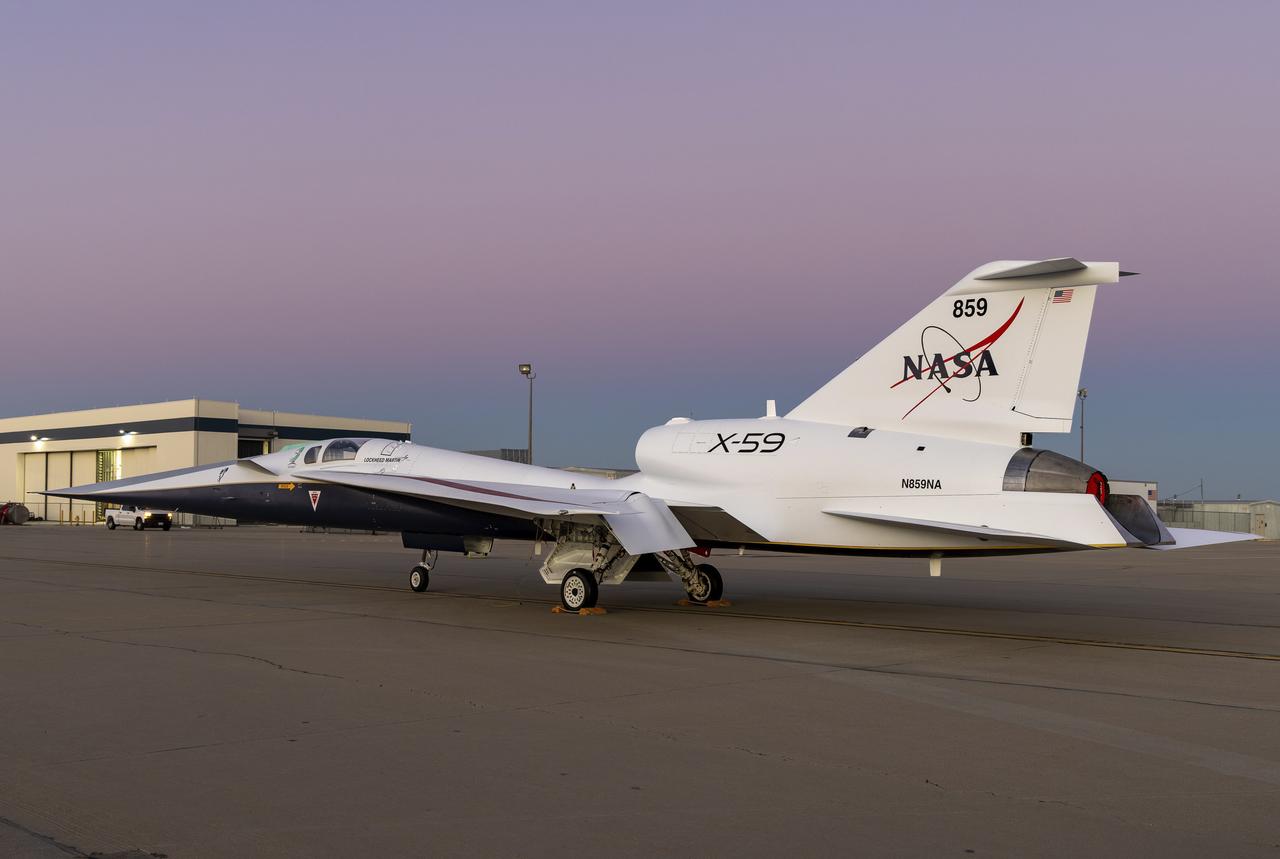
NASA’s X-59 quiet supersonic research aircraft sits on a ramp at Lockheed Martin Skunk Works in Palmdale, California, during sunset. The one-of-a-kind aircraft is powered by a General Electric F414 engine, a variant of the engines used on F/A-18 fighter jets. The engine is mounted above the fuselage to reduce the number of shockwaves that reach the ground. The X-59 is the centerpiece of NASA's Quesst mission, which aims to demonstrate quiet supersonic flight and enable future commercial travel over land – faster than the speed of sound.
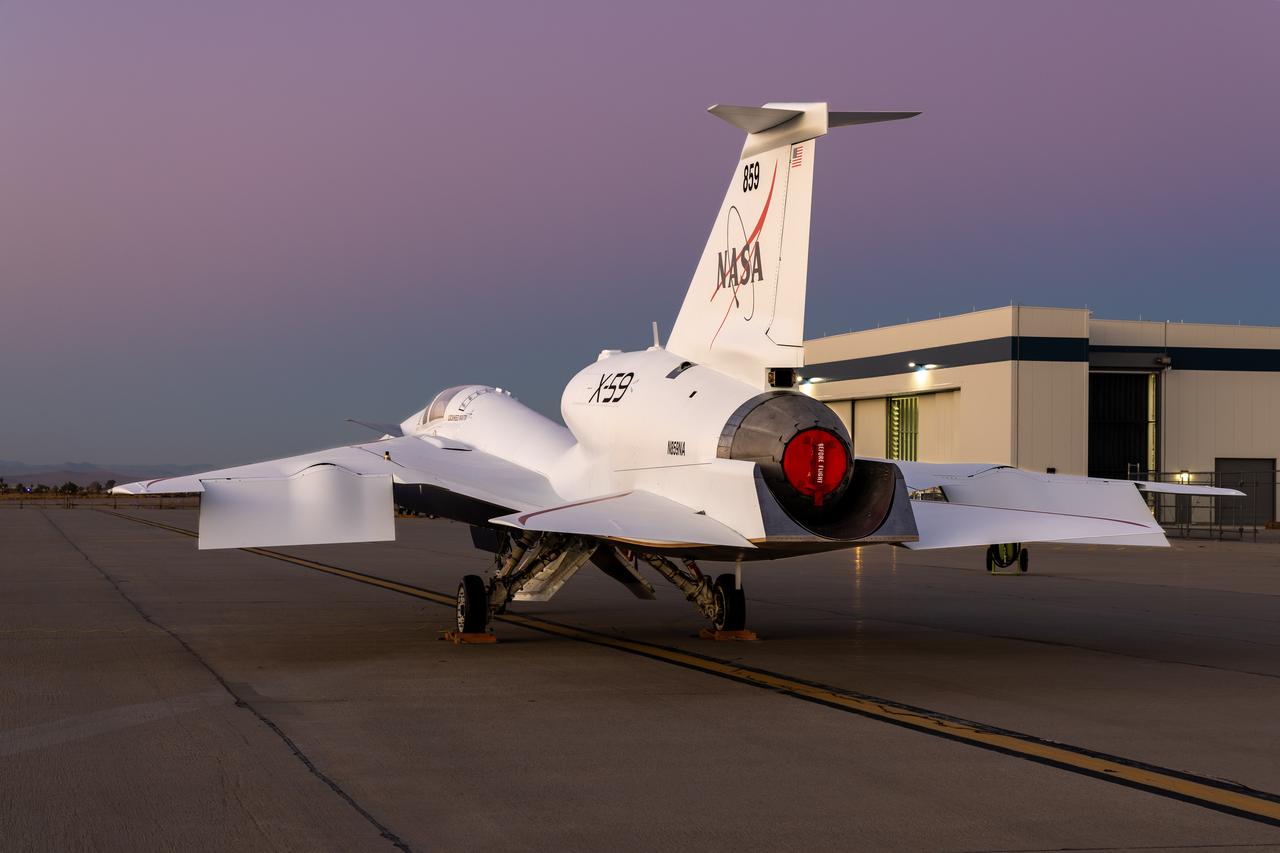
NASA’s X-59 quiet supersonic research aircraft sits on a ramp at Lockheed Martin Skunk Works in Palmdale, California, during sunset. The one-of-a-kind aircraft is powered by a General Electric F414 engine, a variant of the engines used on F/A-18 fighter jets. The engine is mounted above the fuselage to reduce the number of shockwaves that reach the ground. The X-59 is the centerpiece of NASA's Quesst mission, which aims to demonstrate quiet supersonic flight and enable future commercial travel over land – faster than the speed of sound.
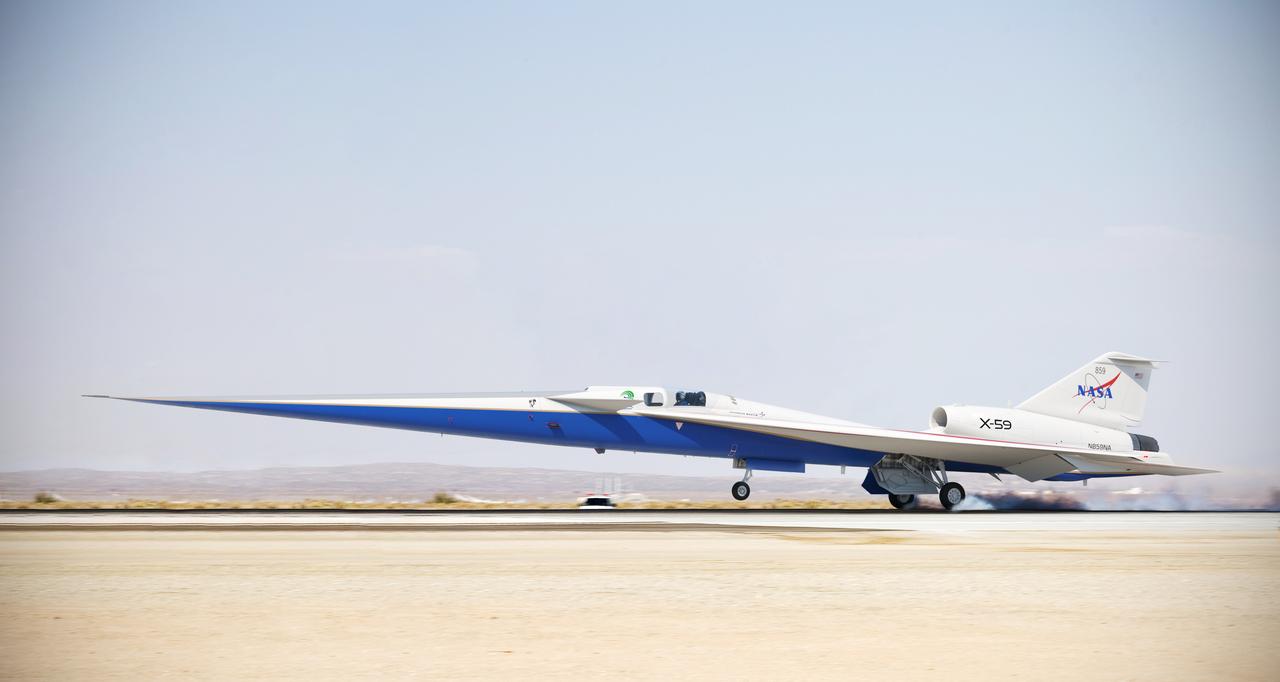
Artist illustration of the X-59 landing on the runway.
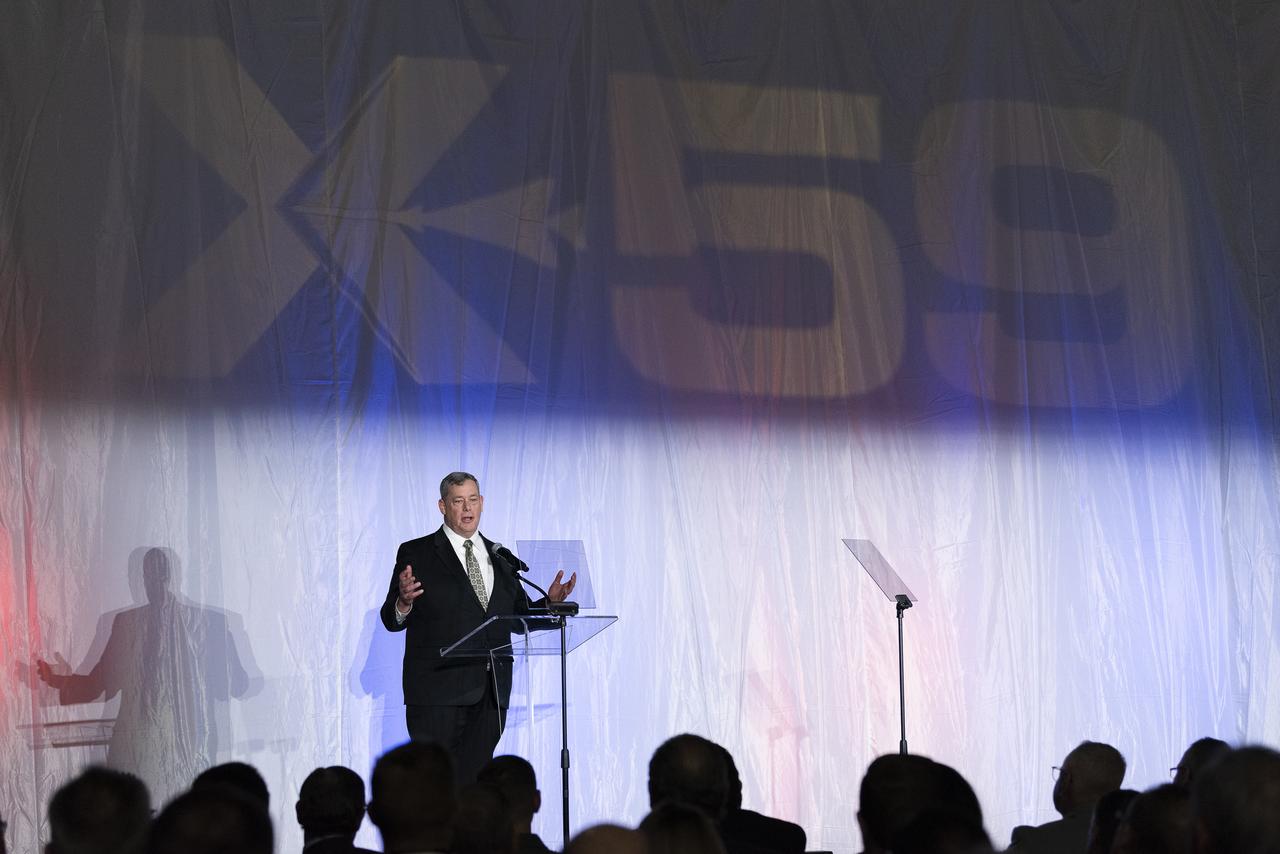
Lockheed Martin Aeronautics Executive Vice President Greg Ulmer speaks on stage prior to the unveiling of the agency’s X-59 quiet supersonic research aircraft at a January 12, 2024 event at Lockheed Martin Skunk Works in Palmdale, California. The X-59 is the centerpiece of NASA’s Quesst mission, which seeks to solve one of the major barriers to supersonic flight over land, currently banned in the United States, by making sonic booms quieter.
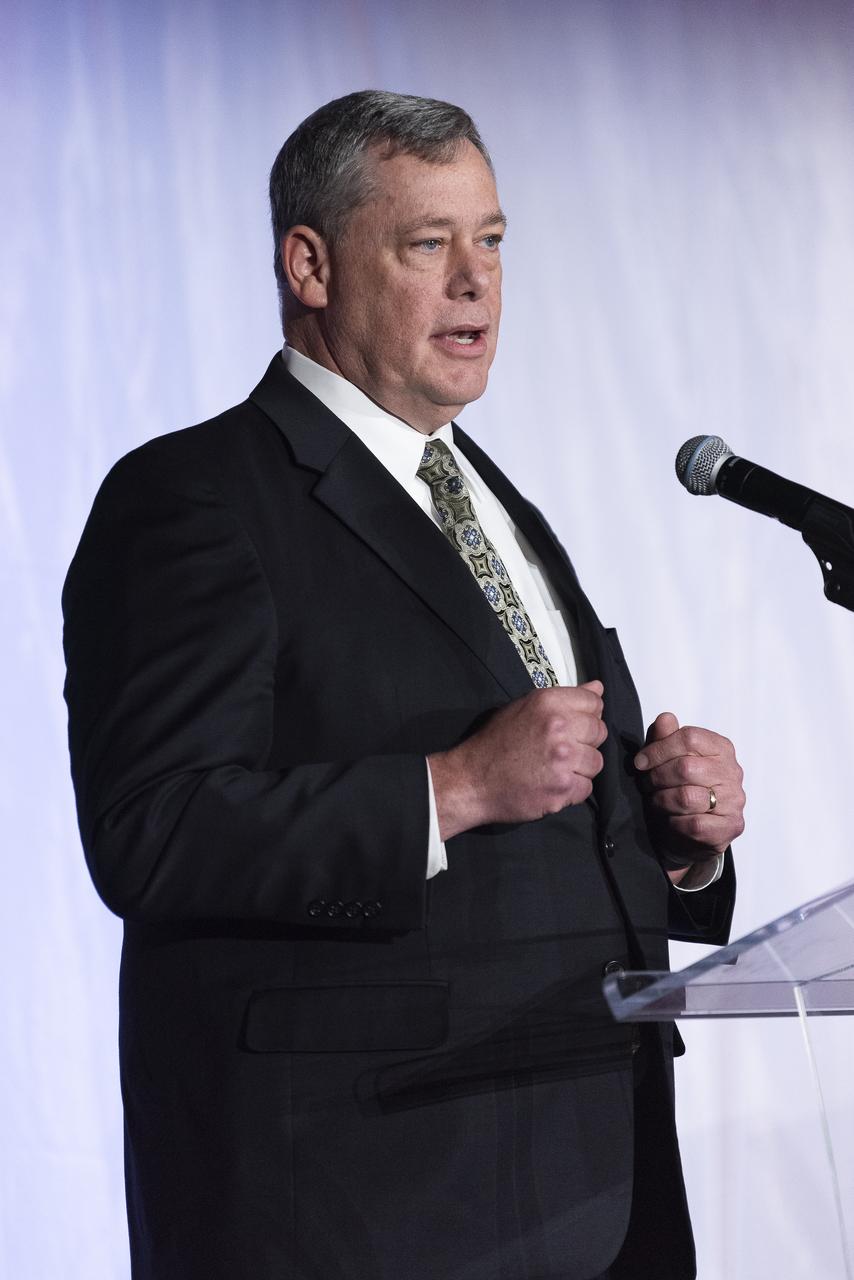
Lockheed Martin Aeronautics Executive Vice President Greg Ulmer speaks on stage prior to the unveiling of the agency’s X-59 quiet supersonic research aircraft at a January 12, 2024 event at Lockheed Martin Skunk Works in Palmdale, California. The X-59 is the centerpiece of NASA’s Quesst mission, which seeks to solve one of the major barriers to supersonic flight over land, currently banned in the United States, by making sonic booms quieter.
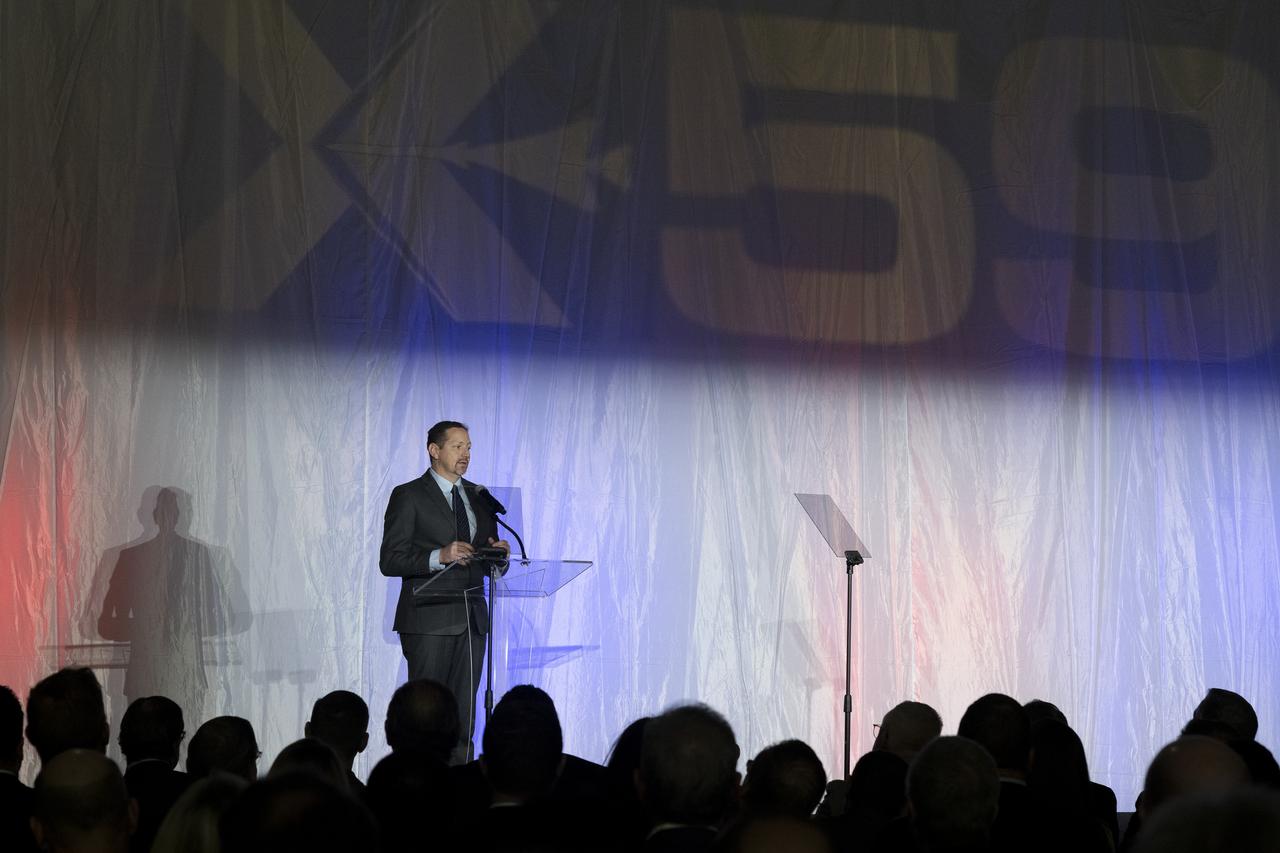
Lockheed Martin Skunk Works Vice President and General Manager John Clark speaks on stage prior to the unveiling of the agency’s X-59 quiet supersonic research aircraft at a January 12, 2024 event at Lockheed Martin Skunk Works in Palmdale, California. The X-59 is the centerpiece of NASA’s Quesst mission, which seeks to solve one of the major barriers to supersonic flight over land, currently banned in the United States, by making sonic booms quieter.
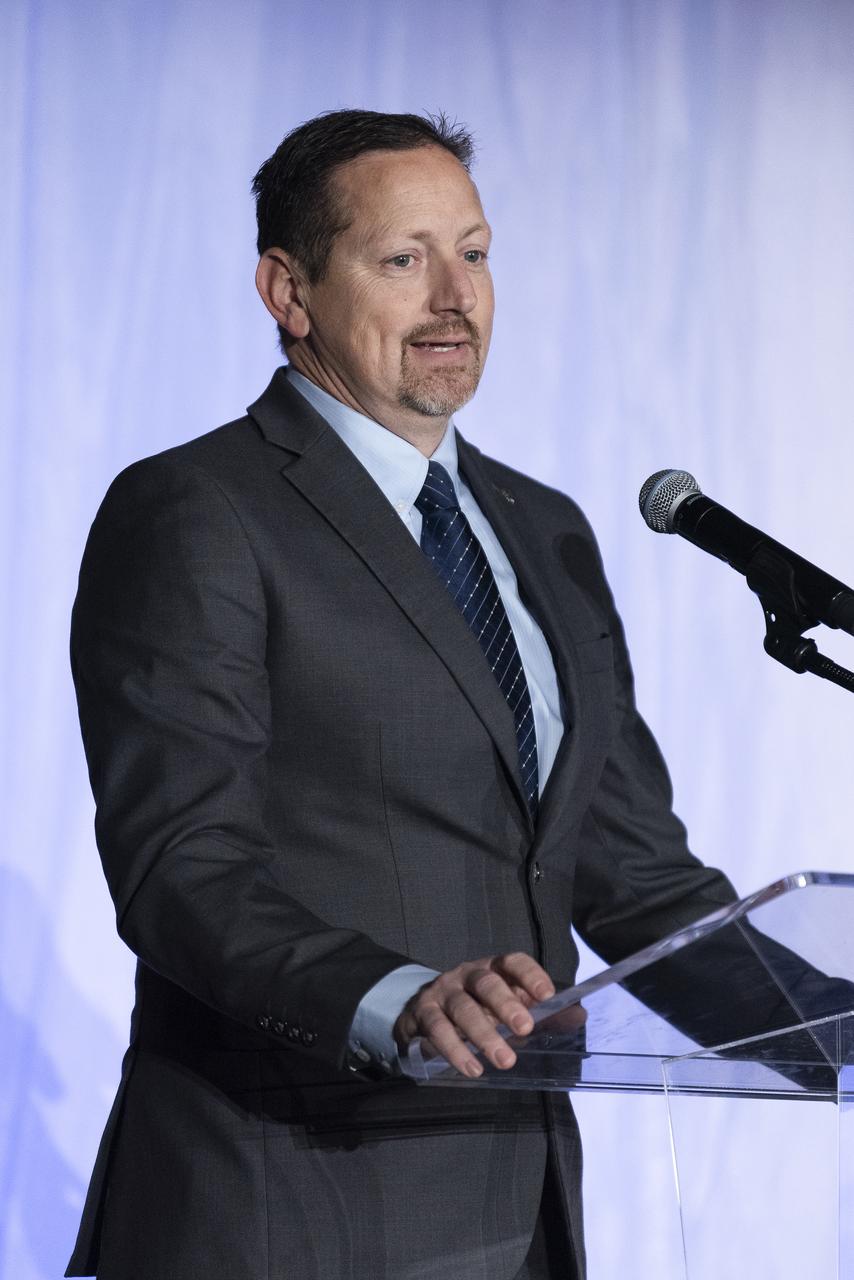
Lockheed Martin Skunk Works Vice President and General Manager John Clark speaks on stage prior to the unveiling of the agency’s X-59 quiet supersonic research aircraft at a January 12, 2024 event at Lockheed Martin Skunk Works in Palmdale, California. The X-59 is the centerpiece of NASA’s Quesst mission, which seeks to solve one of the major barriers to supersonic flight over land, currently banned in the United States, by making sonic booms quieter.
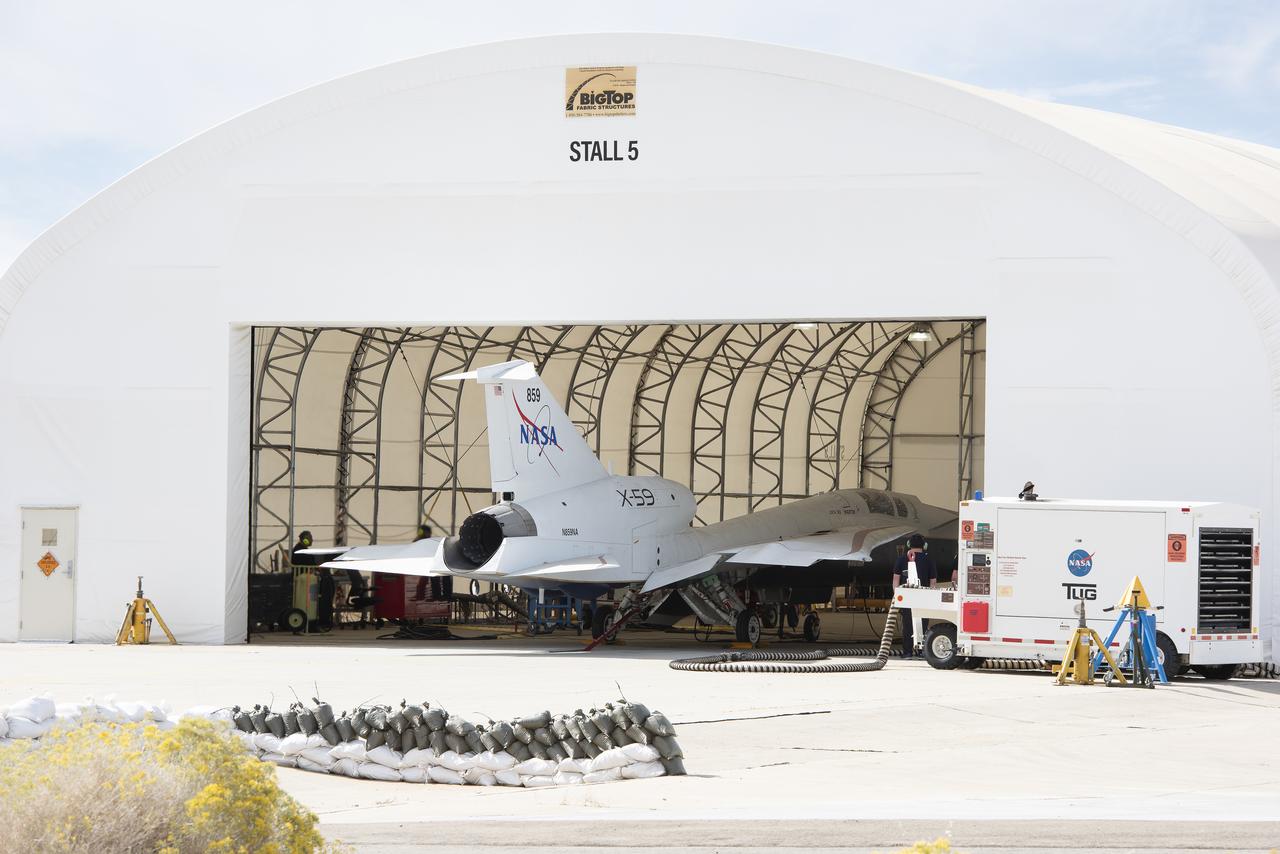
NASA’s X-59 quiet supersonic research aircraft sits in its run stall at Lockheed Martin’s Skunk Works facility in Palmdale, California, firing up its engine for the first time. These engine-run tests start at low power and allow the X-59 team to verify the aircraft’s systems are working together while powered by its own engine. The X-59 is the centerpiece of NASA’s Quesst mission, which seeks to solve one of the major barriers to supersonic flight over land by making sonic booms quieter.
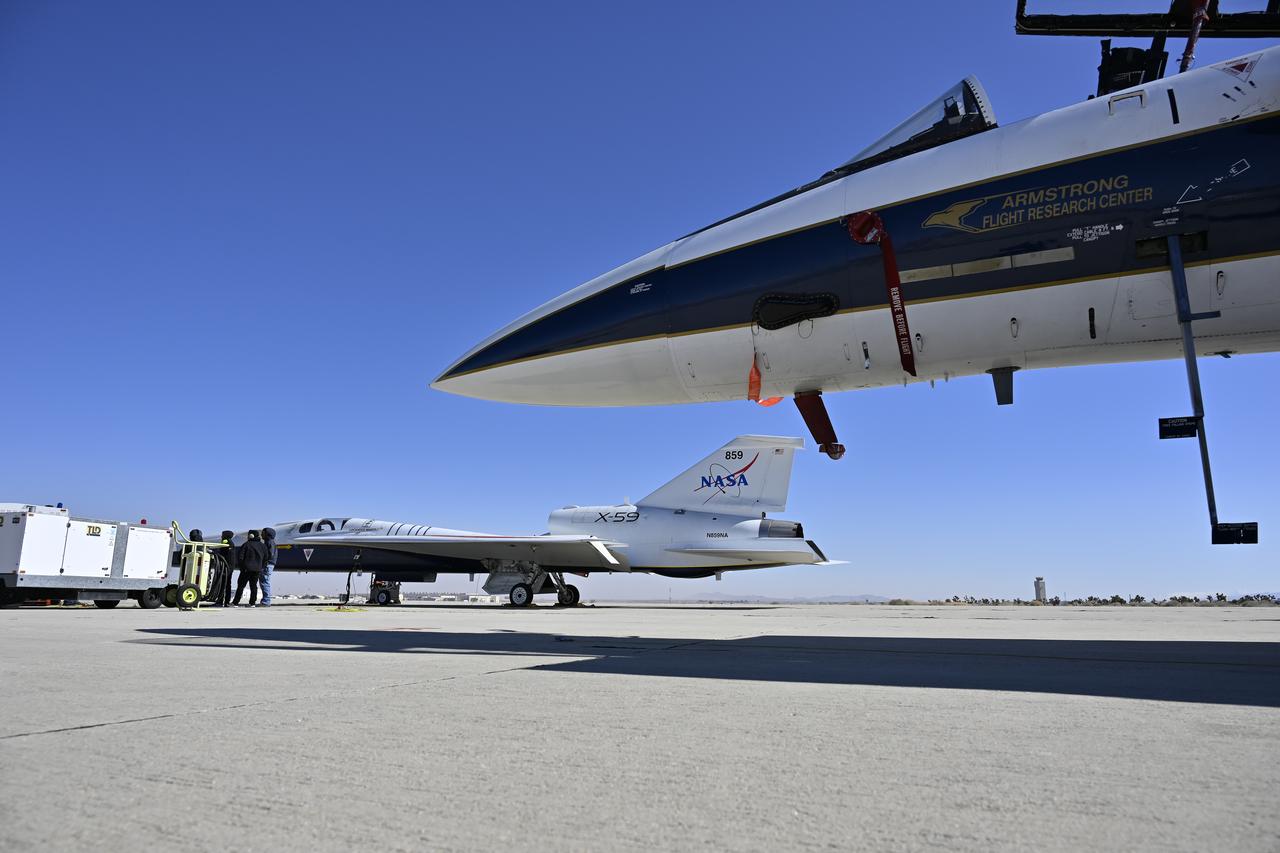
NASA’s X-59 quiet supersonic research aircraft successfully completed electromagnetic interference (EMI) testing at Lockheed Martin Skunk Works in Palmdale, California. During EMI tests, the team examined each of the X-59’s internal electronic systems, ensuring they worked with one another without interference. The X-59 is designed to fly faster than the speed of sound while reducing the loud sonic boom to a quieter sonic thump.
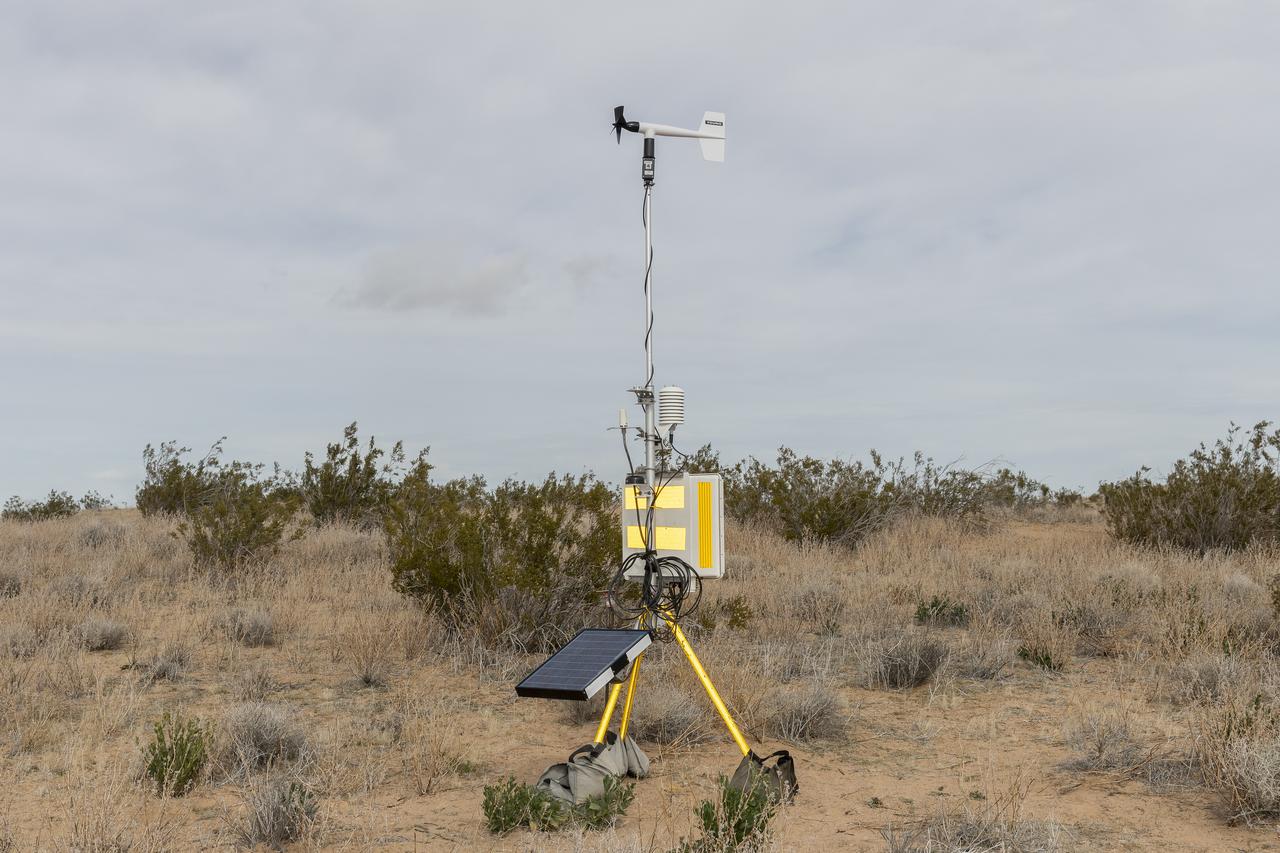
The Quesst mission recently completed testing of operations and equipment to be used in recording the sonic thumps of the X-59. Researchers used three weather towers and a sonic anemometer to collect weather and atmospheric data while recording sonic booms generated by an F-15 and an F-18 from NASA’s Armstrong Flight Research Center.
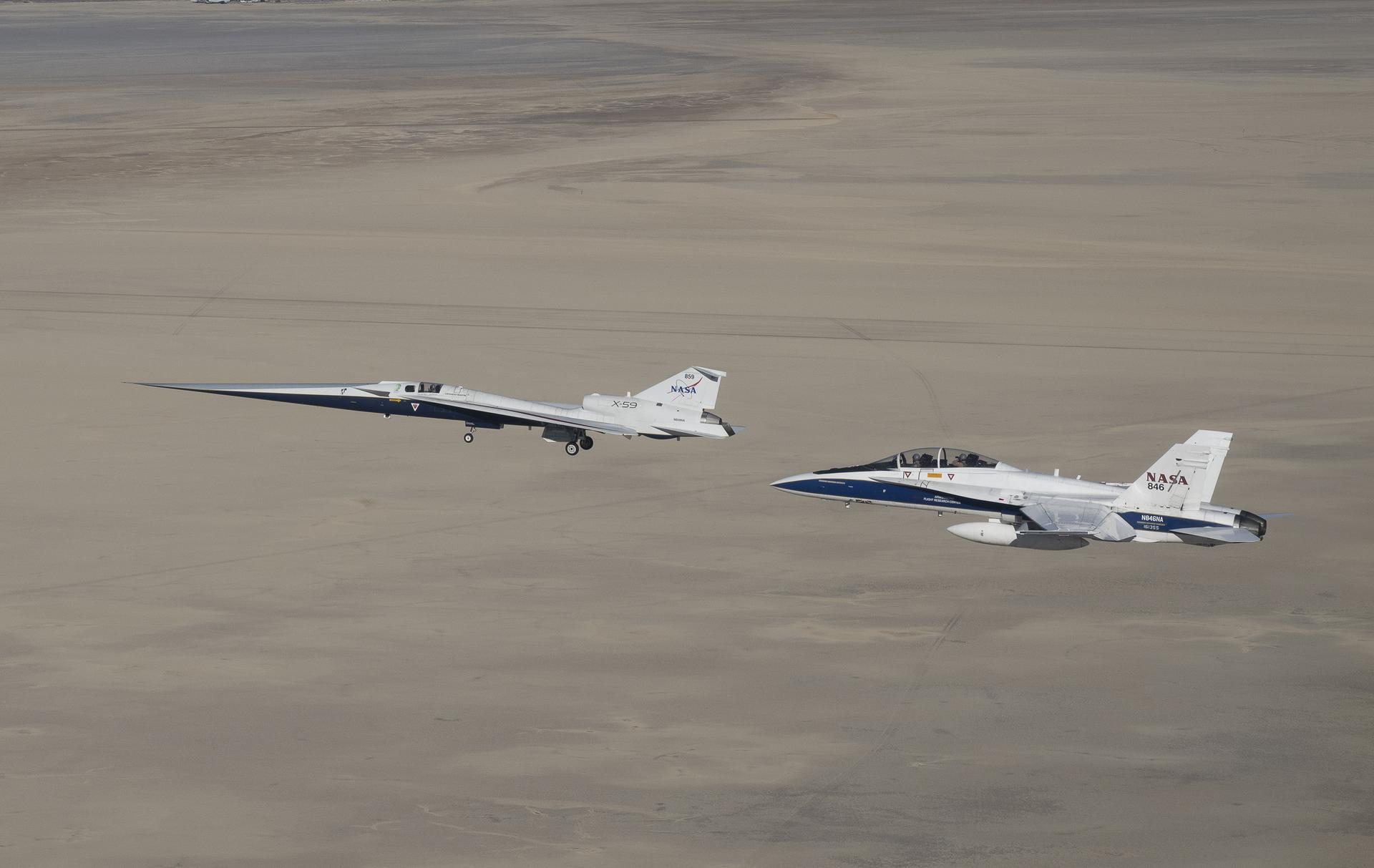
NASA’s X-59 quiet supersonic research aircraft flies above Palmdale and Edwards, California, during its first flight Tuesday, Oct. 28, 2025, accompanied by a NASA F/A-18 research aircraft. A NASA F-15 research aircraft (not pictured) captured the image as the X-59 traveled to NASA’s Armstrong Flight Research Center in Edwards, California, where it will begin flight testing for NASA’s Quesst mission, which aims to demonstrate quiet supersonic flight over land.

The X-59 simulator at NASA's Armstrong Flight Research Center in Edwards, California, will help pilots prepare for Quesst missions. Quesst is NASA's mission to demonstrate how the X-59 can fly supersonic without generating loud sonic booms and then survey what people hear when it flies overhead.
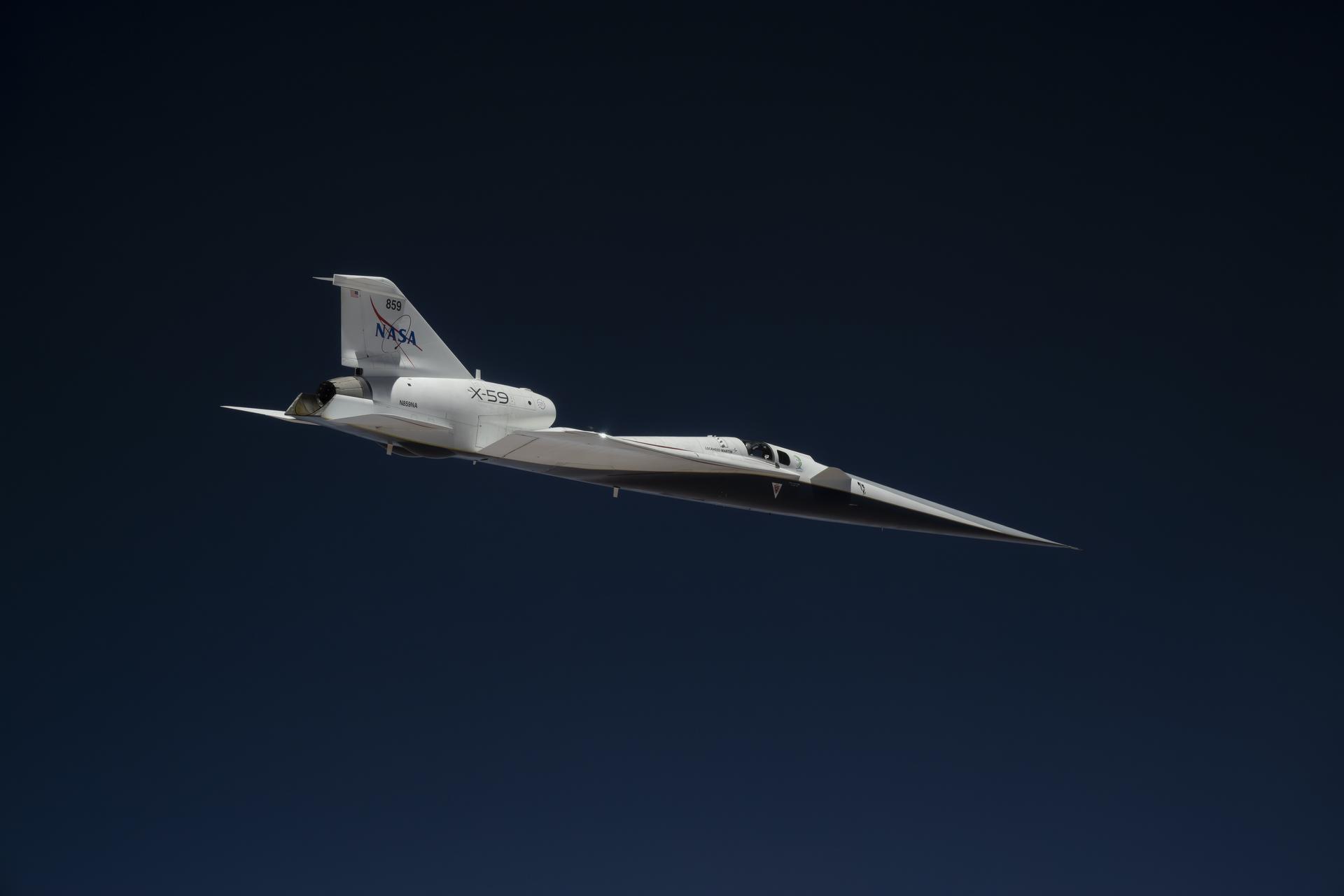
NASA’s X-59 quiet supersonic research aircraft completed its first dual-flight day on Thursday, April 30, at the agency’s Armstrong Flight Research Center in Edwards, California. This image shows the X-59 flying over the Mojave Desert during the aircraft’s second flight of the day, and its 12th overall. The X-59 flew test points at altitudes ranging from 12,000 to 43,000 feet and speeds from approximately 528 to 627 mph, or Mach 0.8 to Mach 0.95. The increased tempo of test flights allows the team to collect more data over a shorter period of time.
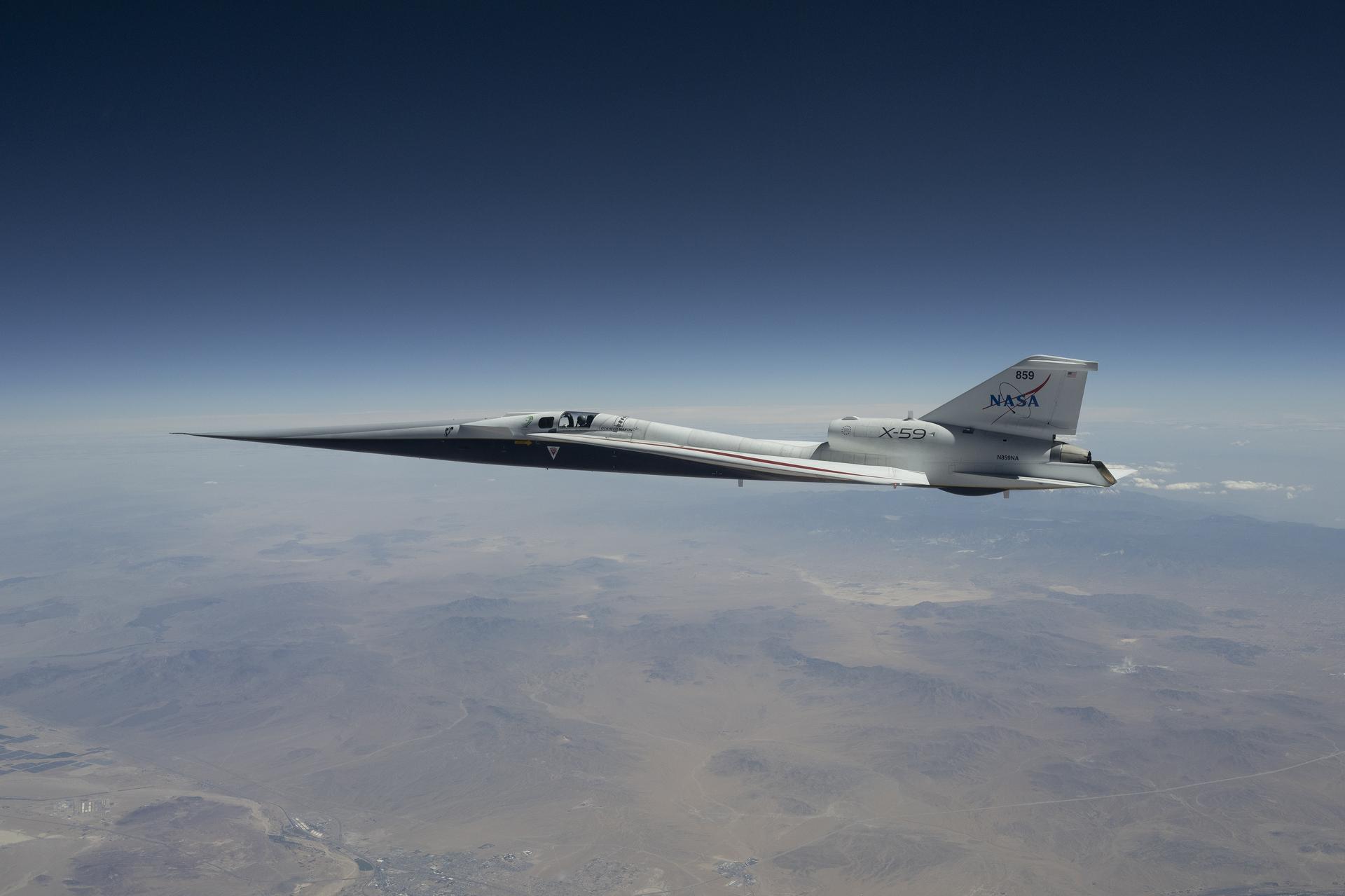
NASA’s X-59 quiet supersonic research aircraft completed its first dual-flight day on Thursday, April 30, at the agency’s Armstrong Flight Research Center in Edwards, California. This image shows the X-59 flying over the Mojave Desert during the aircraft’s second flight of the day, and its 12th overall. The X-59 flew test points at altitudes ranging from 12,000 to 43,000 feet and speeds from approximately 528 to 627 mph, or Mach 0.8 to Mach 0.95. The increased tempo of test flights allows the team to collect more data over a shorter period of time.
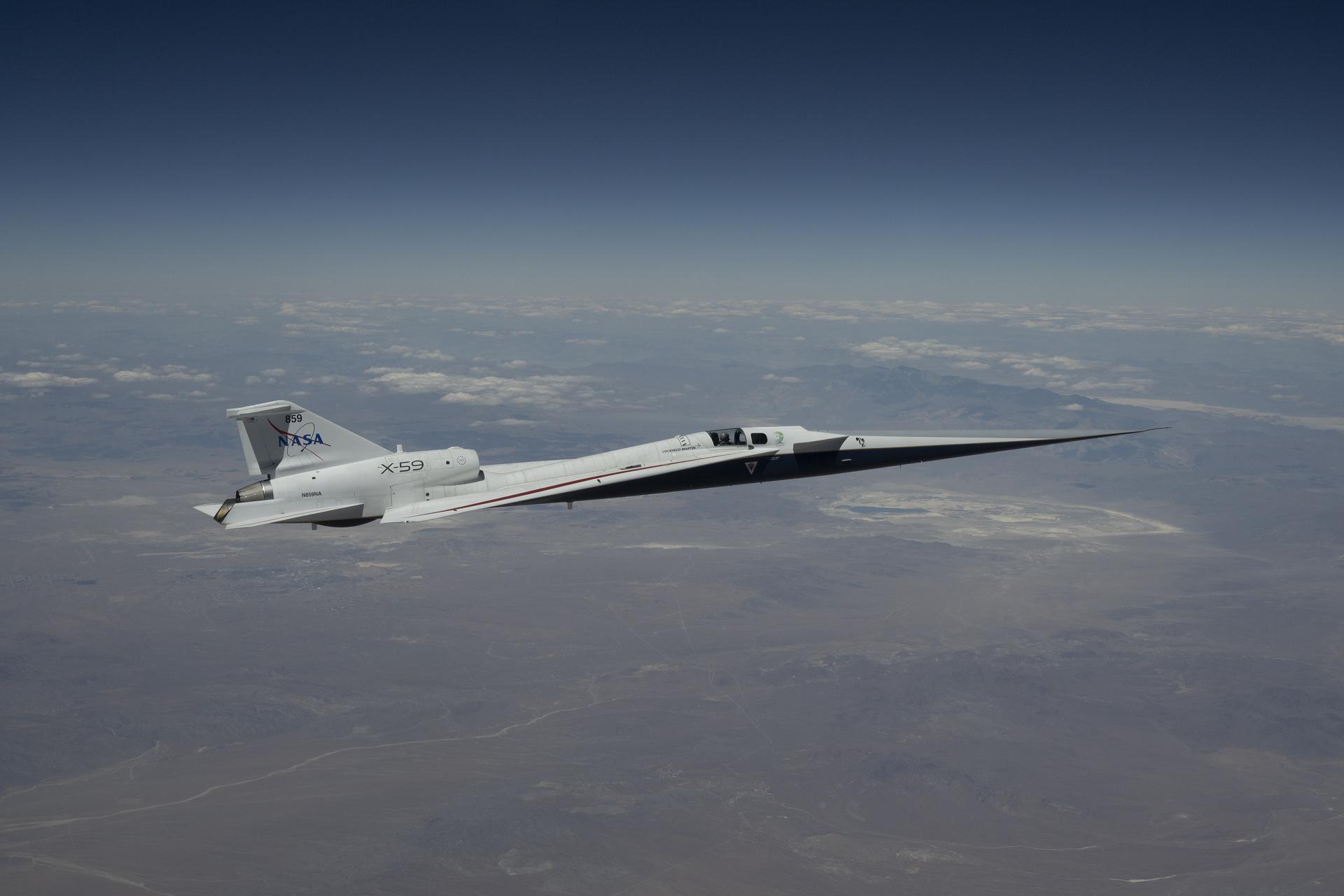
NASA’s X-59 quiet supersonic research aircraft completed its first dual-flight day on Thursday, April 30, at the agency’s Armstrong Flight Research Center in Edwards, California. This image shows the X-59 flying over the Mojave Desert during the aircraft’s second flight of the day, and its 12th overall. The X-59 flew test points at altitudes ranging from 12,000 to 43,000 feet and speeds from approximately 528 to 627 mph, or Mach 0.8 to Mach 0.95. The increased tempo of test flights allows the team to collect more data over a shorter period of time.
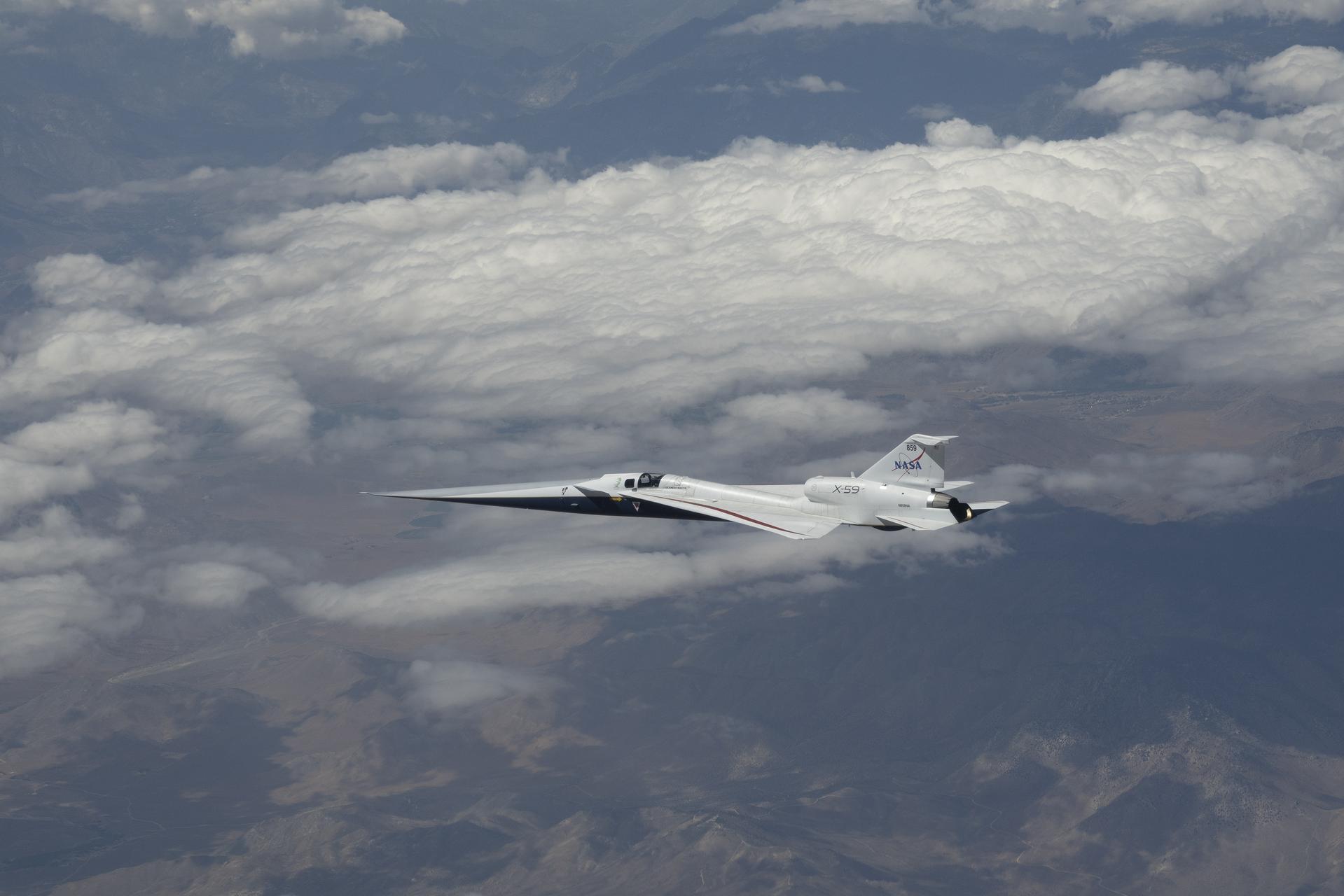
NASA’s X-59 quiet supersonic research aircraft completed its first dual-flight day on Thursday, April 30, at the agency’s Armstrong Flight Research Center in Edwards, California. This image shows the X-59 flying over the Mojave Desert during the aircraft’s second flight of the day, and its 12th overall. The X-59 flew test points at altitudes ranging from 12,000 to 43,000 feet and speeds from approximately 528 to 627 mph, or Mach 0.8 to Mach 0.95. The increased tempo of test flights allows the team to collect more data over a shorter period of time.
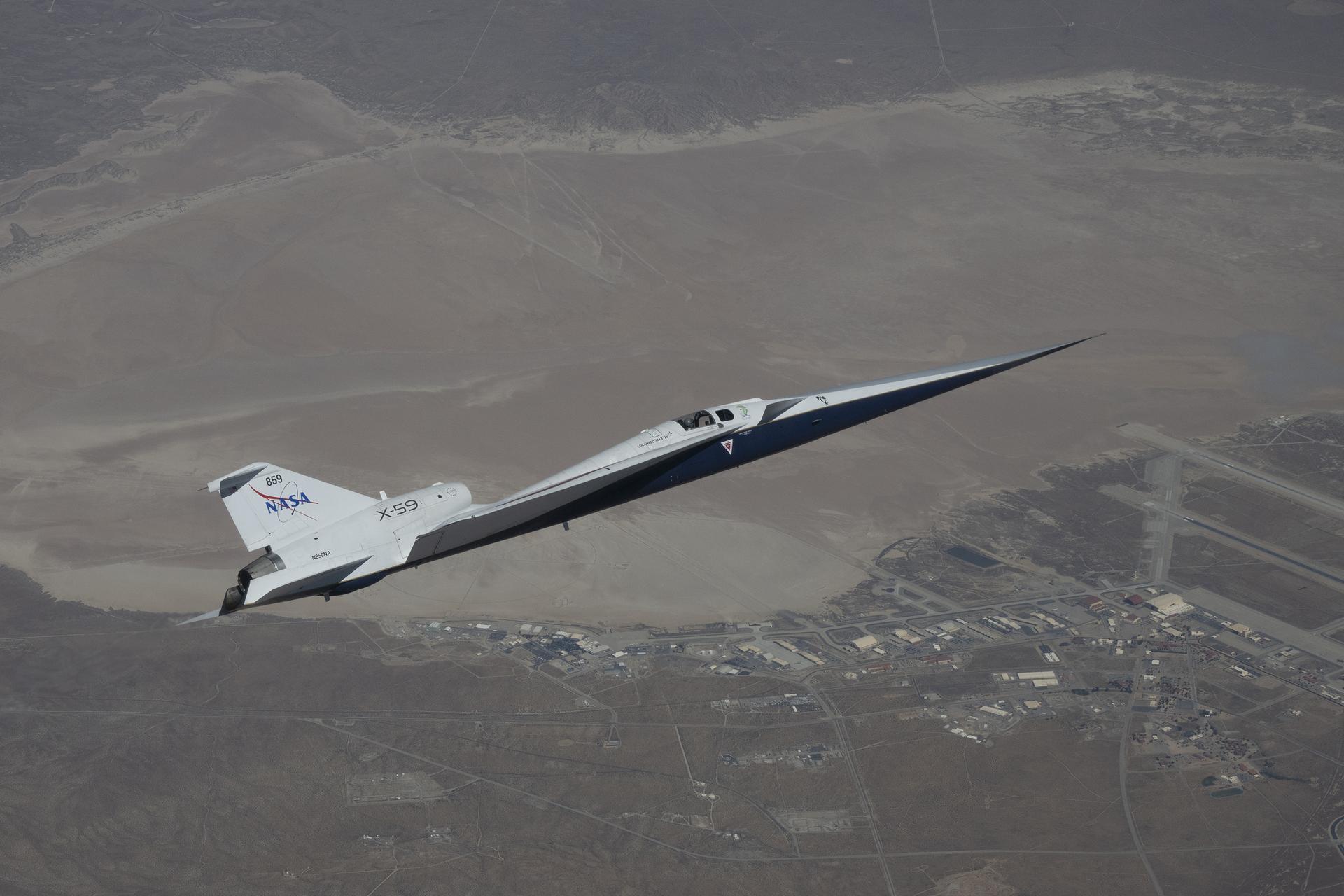
NASA’s X-59 quiet supersonic research aircraft completed its first dual-flight day on Thursday, April 30, at the agency’s Armstrong Flight Research Center in Edwards, California. This image shows the X-59 flying over the Mojave Desert during the aircraft’s second flight of the day, and its 12th overall. The X-59 flew test points at altitudes ranging from 12,000 to 43,000 feet and speeds from approximately 528 to 627 mph, or Mach 0.8 to Mach 0.95. The increased tempo of test flights allows the team to collect more data over a shorter period of time.
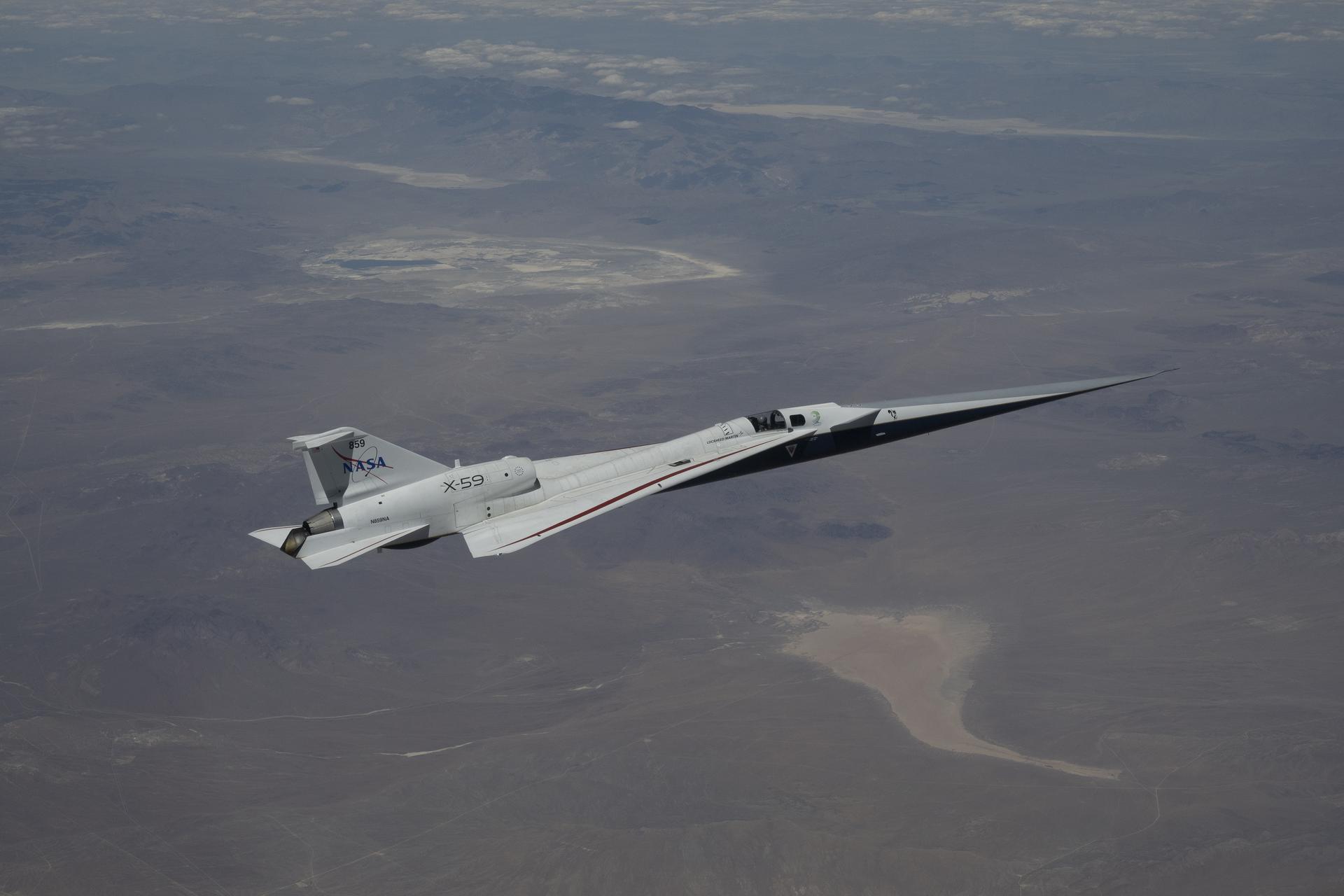
NASA’s X-59 quiet supersonic research aircraft completed its first dual-flight day on Thursday, April 30, at the agency’s Armstrong Flight Research Center in Edwards, California. This image shows the X-59 flying over the Mojave Desert during the aircraft’s second flight of the day, and its 12th overall. The X-59 flew test points at altitudes ranging from 12,000 to 43,000 feet and speeds from approximately 528 to 627 mph, or Mach 0.8 to Mach 0.95. The increased tempo of test flights allows the team to collect more data over a shorter period of time.
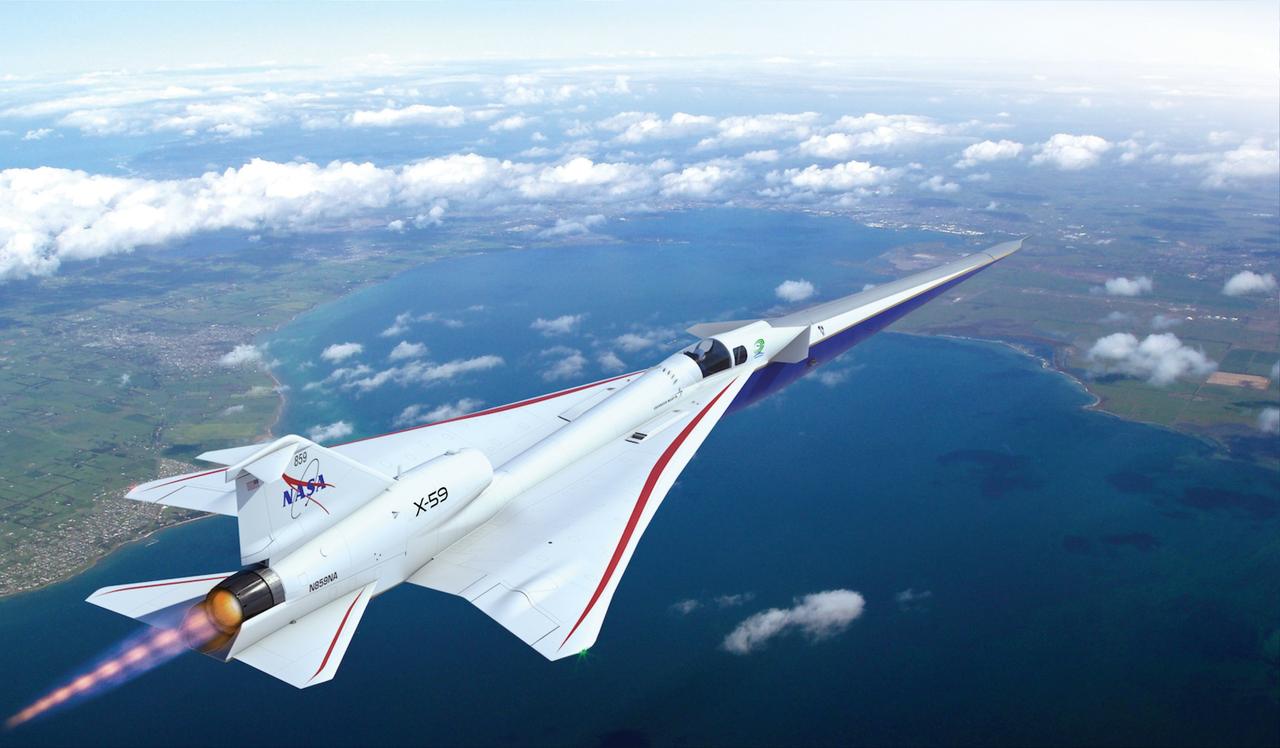
Artist concept of the X-59 in flight overland and water.
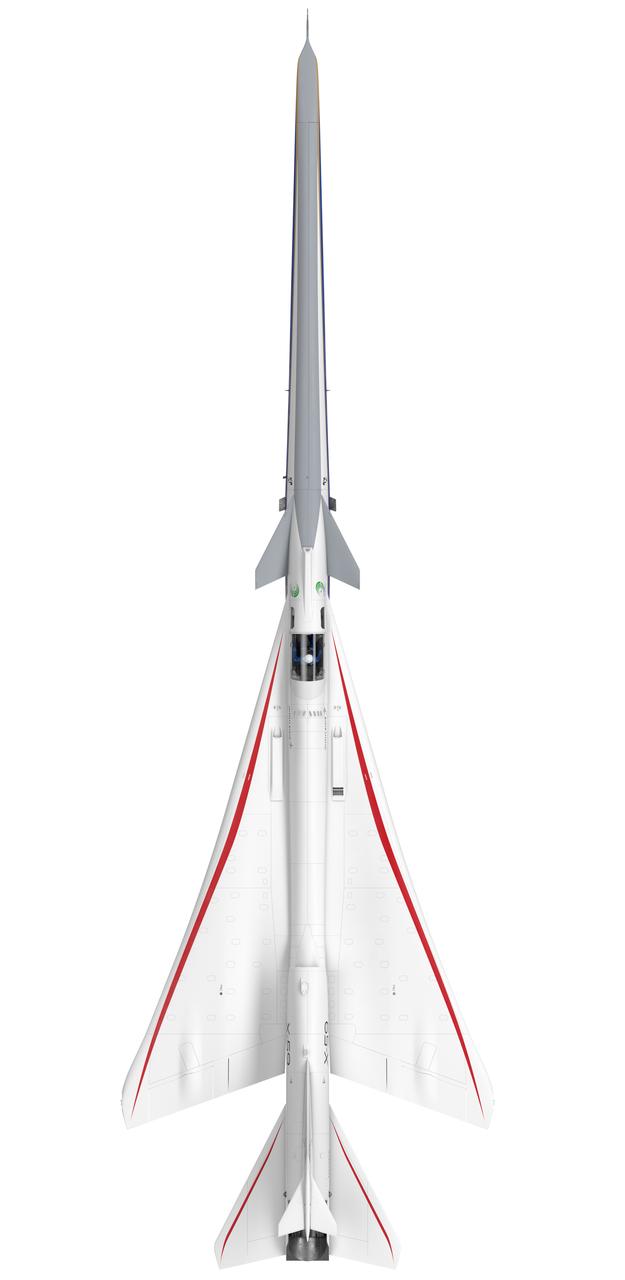
Artist concept of the X-59 top view (pointing up)
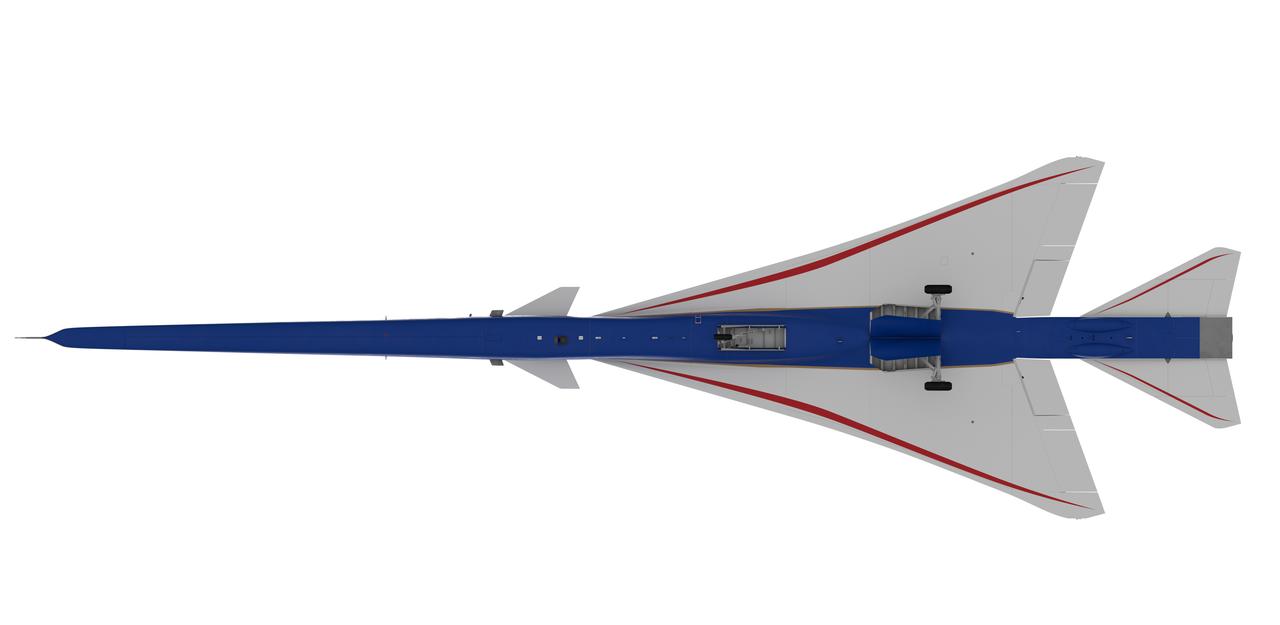
Artist concept of the X-59 bottom view with landing gears down.
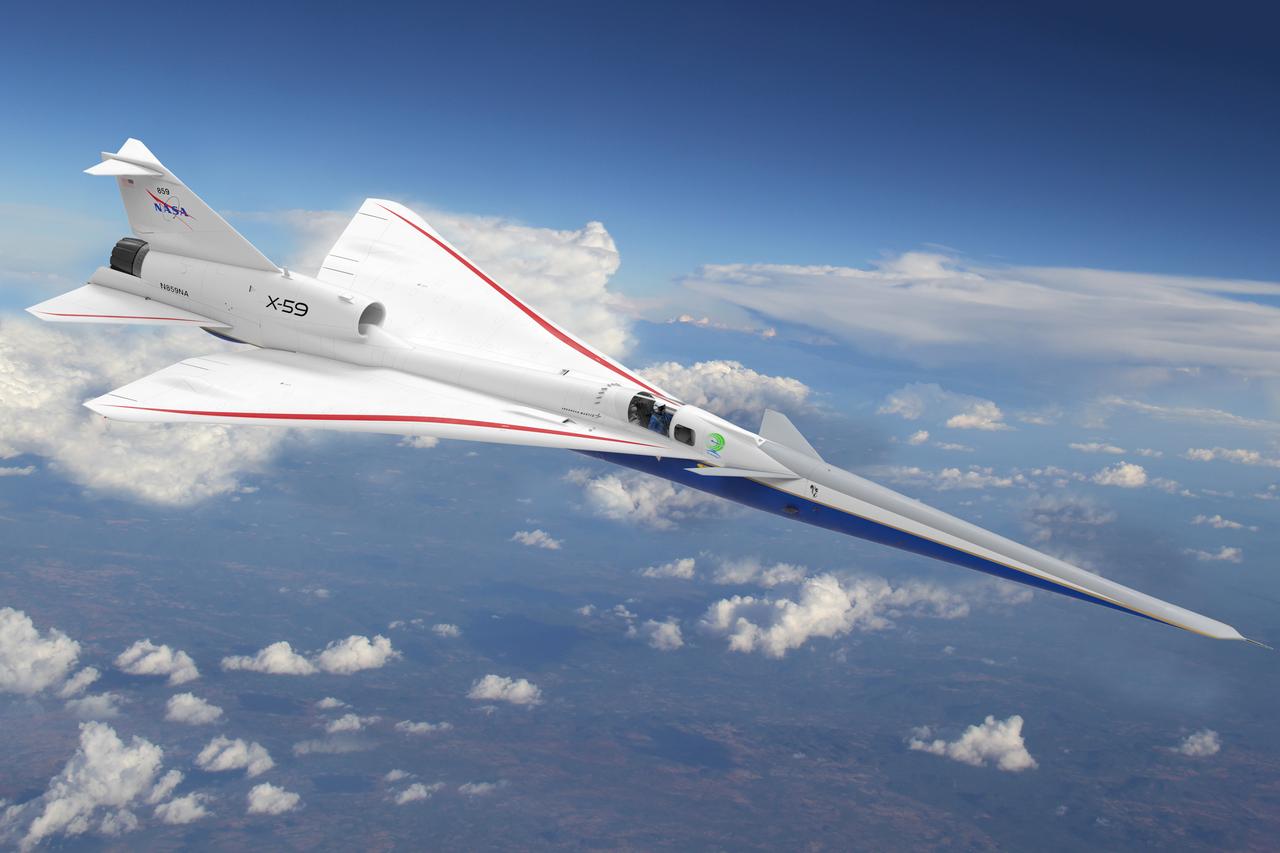
Artist illustration of the X-59 in flight above land and clouds.
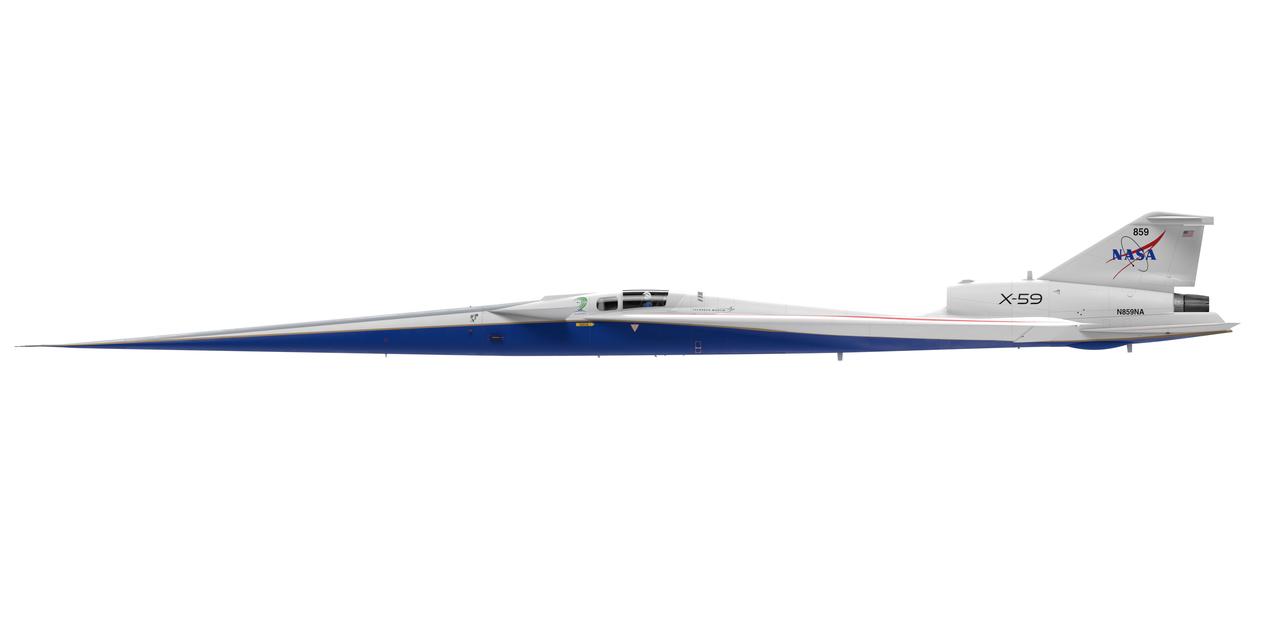
Artist concept of the X-59 side view (left side)
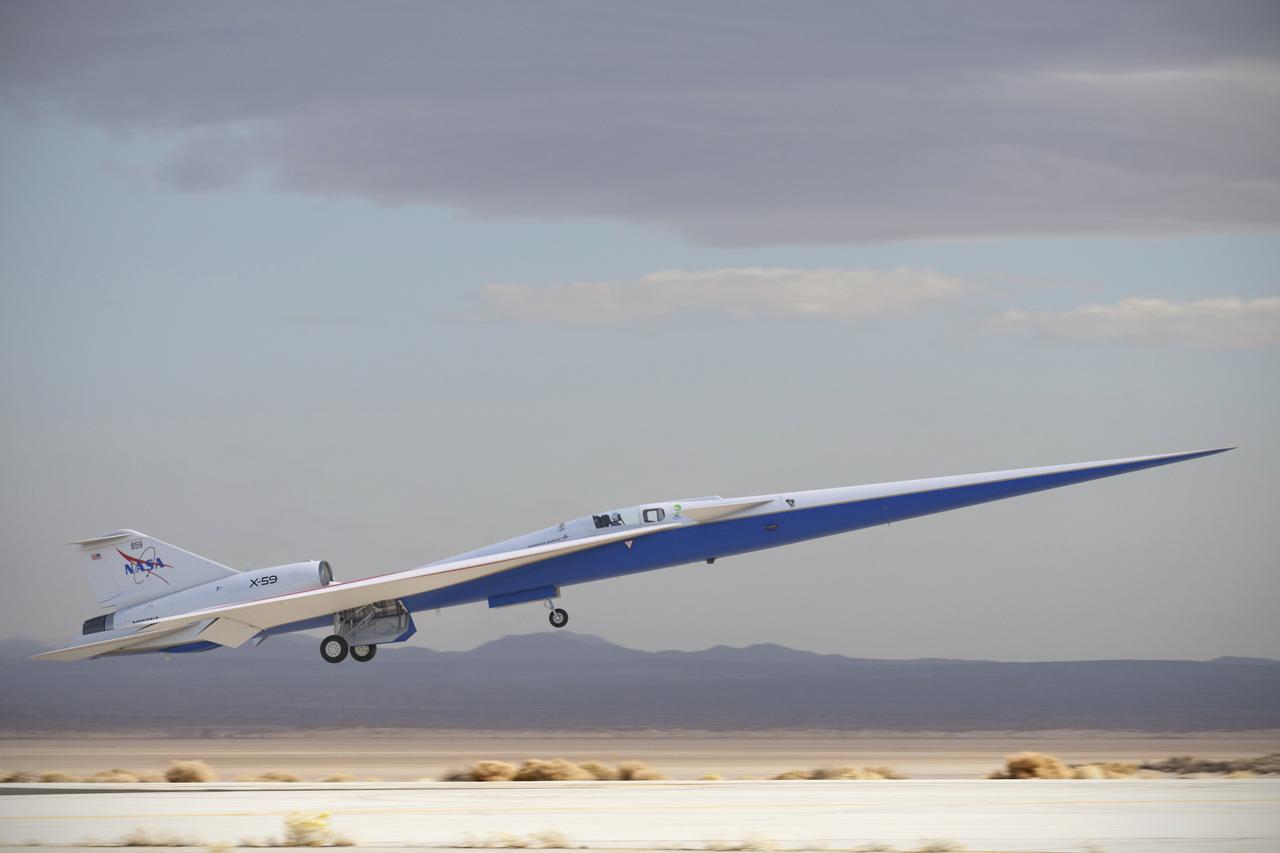
Artist illustration of the X-59 taking off from the runway.
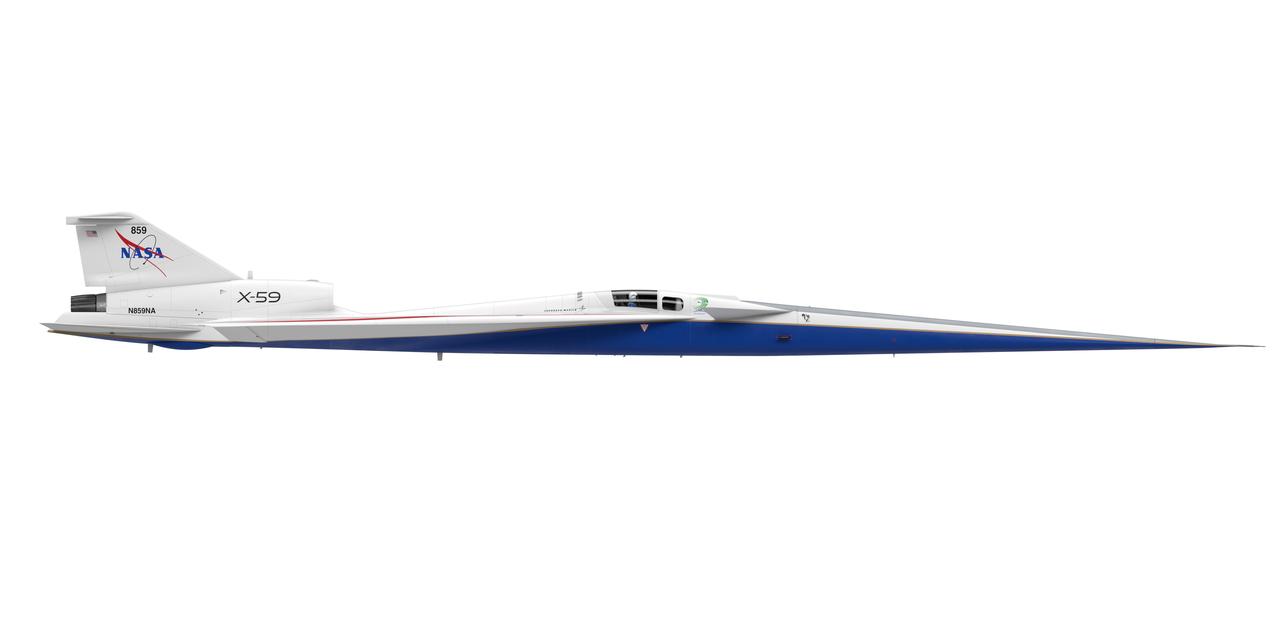
Artist concept of the X-59 side view (right side)
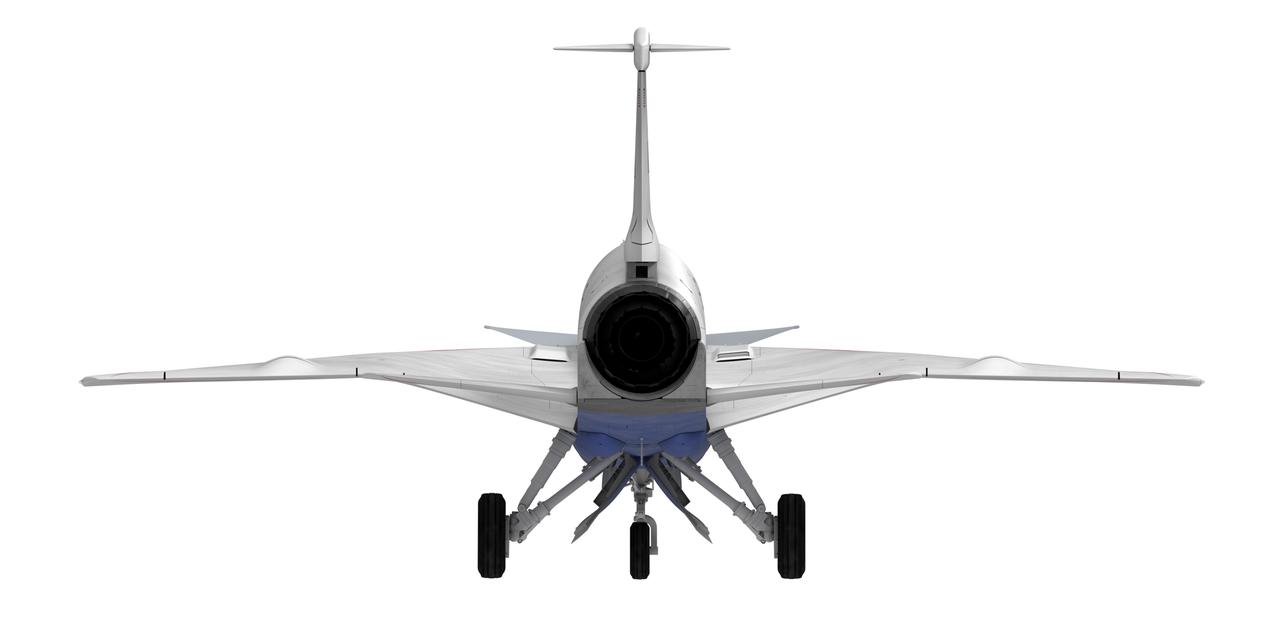
Artist concept of the X-59 view of the back of the vehicle with the landing gears down.
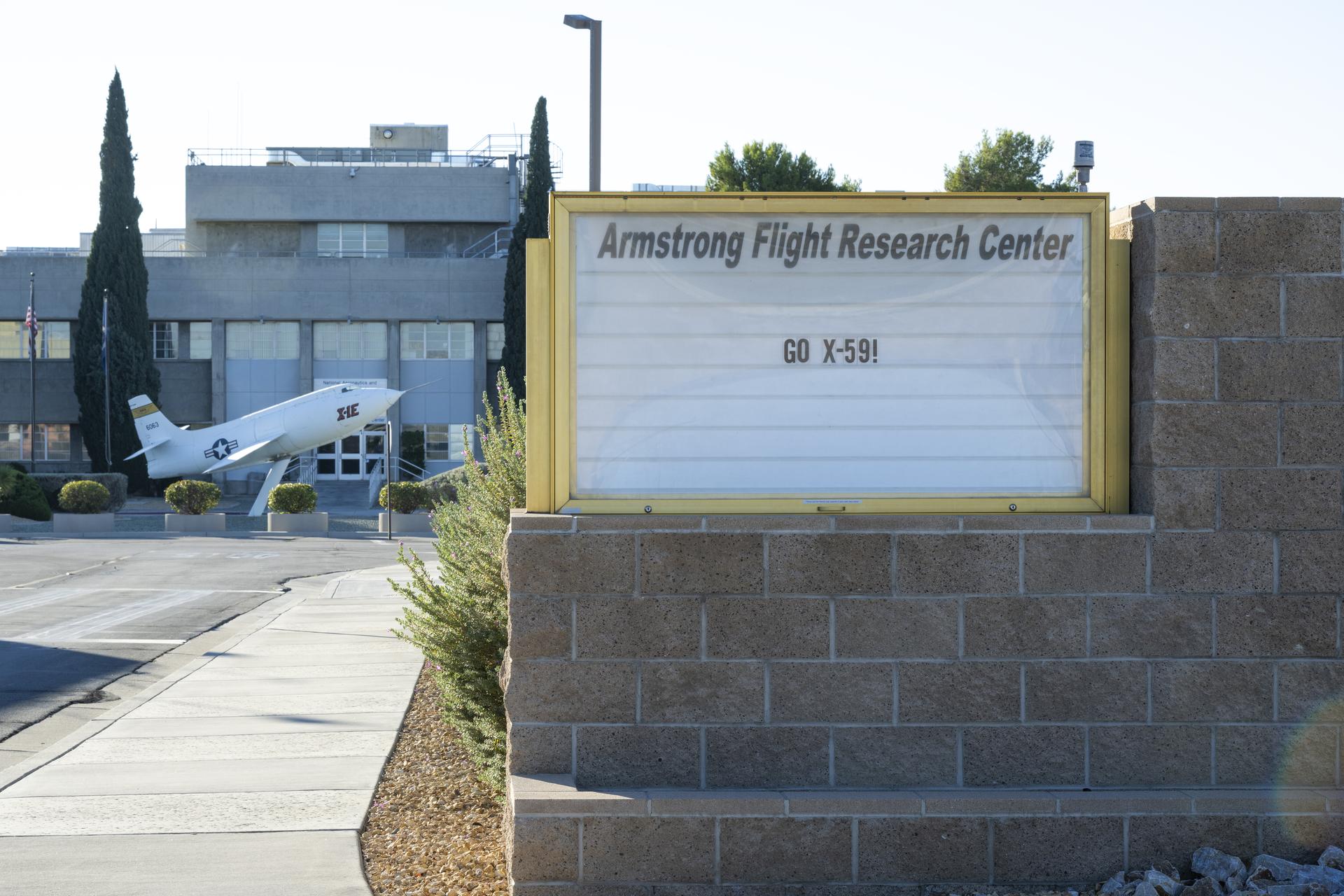
A sign at NASA’s Armstrong Flight Research Center in Edwards, California, reads “GO X-59” ahead of the agency’s quiet supersonic research aircraft’s first flight on Tuesday, Oct. 28, 2025. The X-59 departed from Lockheed Martin’s Skunk Works facility and landed at Edwards Air Force Base after a 67-minute flight, then taxied to Armstrong, completing its historic first flight.
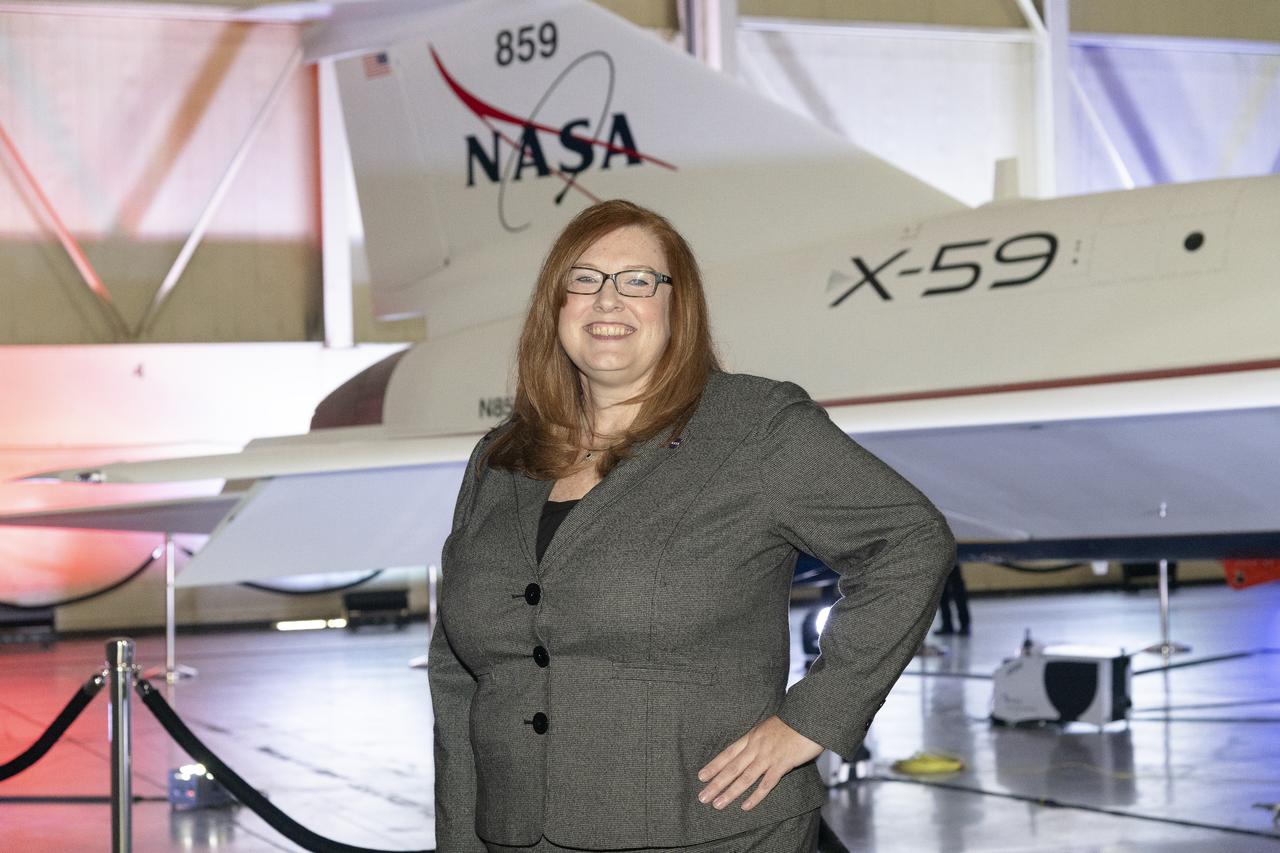
NASA’s project manager for the Low Boom Flight Demonstrator project, Cathy Bahm, poses in front of the agency’s X-59 quiet supersonic research aircraft at a January 12, 2024 event at Lockheed Martin Skunk Works in Palmdale, California. The X-59 is the centerpiece of NASA’s Quesst mission, which seeks to solve one of the major barriers to supersonic flight over land, currently banned in the United States, by making sonic booms quieter.
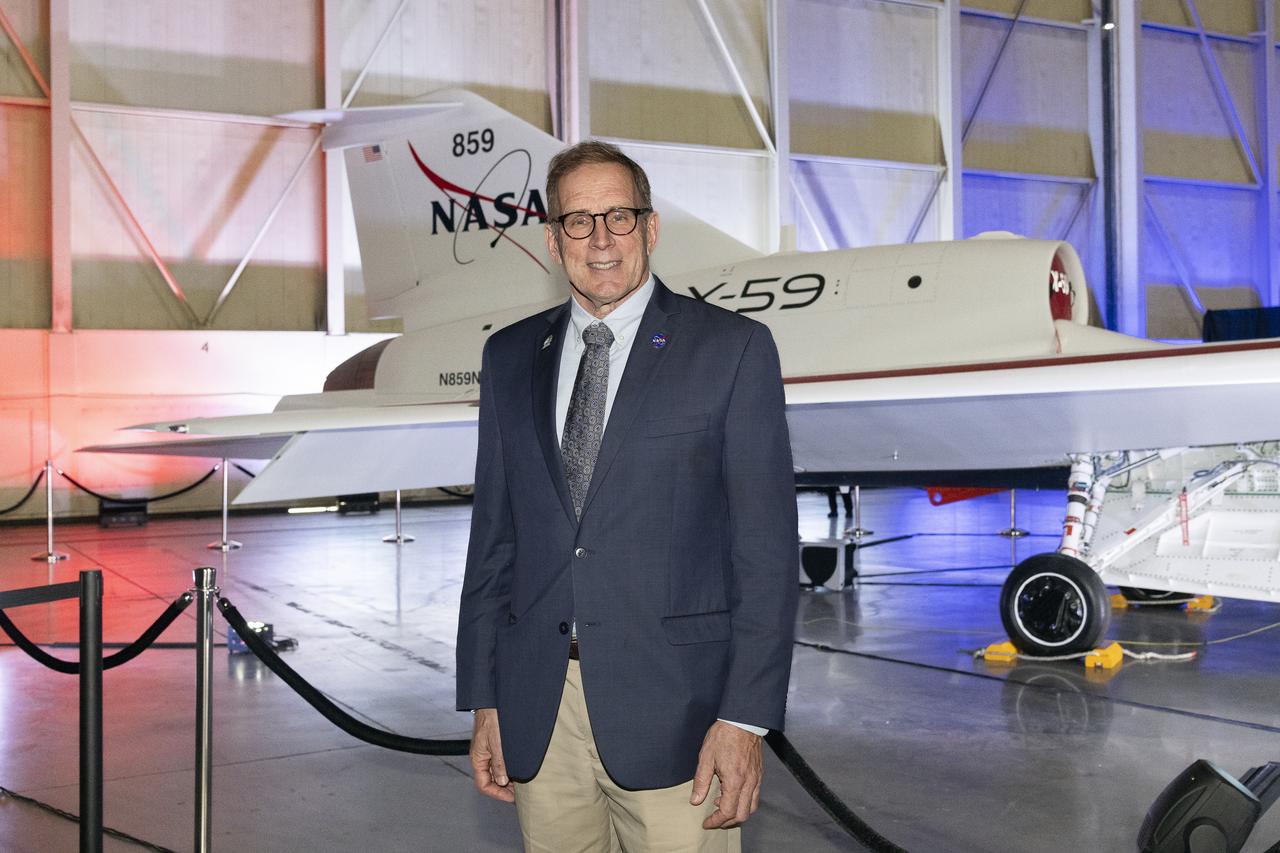
NASA’s mission integration manager for the Quesst mission, Peter Coen, poses in front of the agency’s X-59 quiet supersonic research aircraft at a January 12, 2024 event at Lockheed Martin Skunk Works in Palmdale, California. The X-59 is the centerpiece of NASA’s Quesst mission, which seeks to solve one of the major barriers to supersonic flight over land, currently banned in the United States, by making sonic booms quieter.
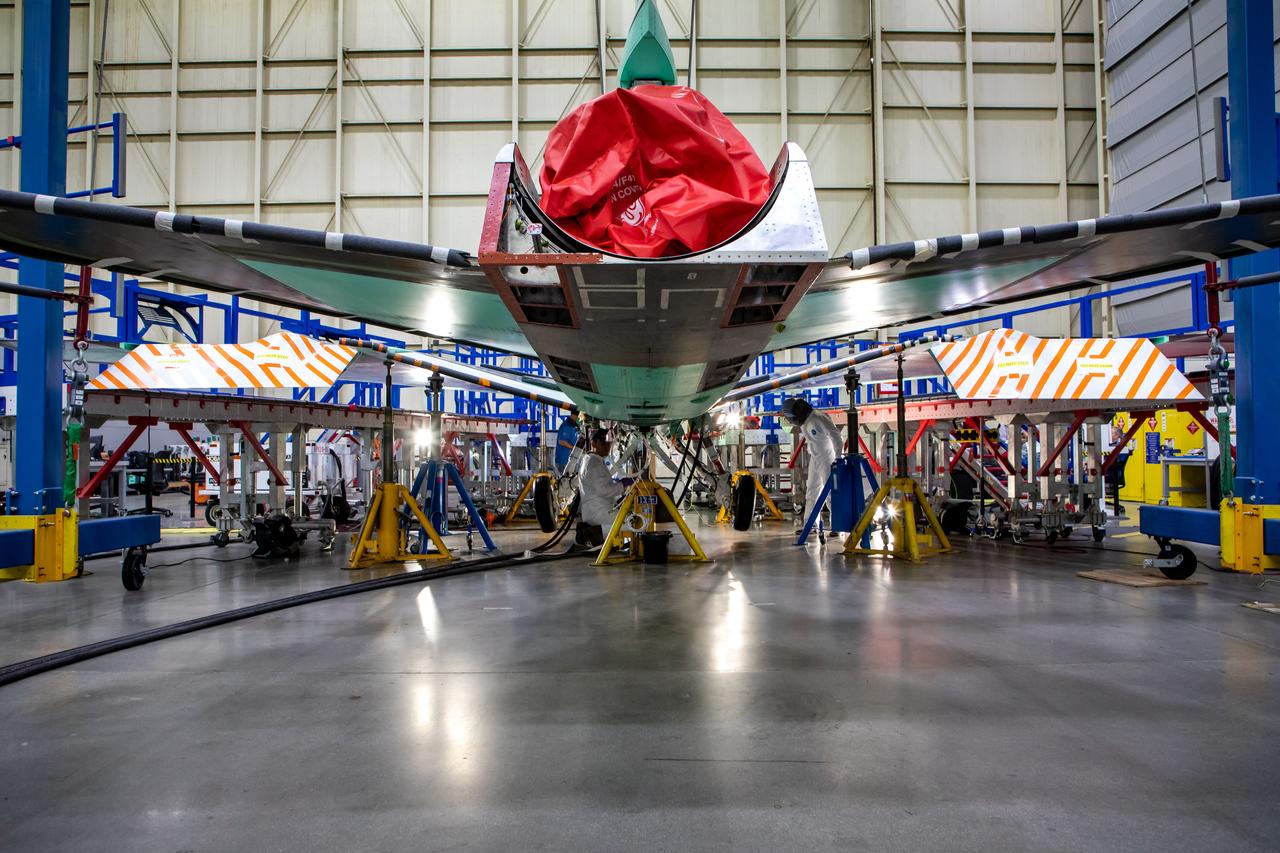
Technicians perform landing gear checkout testing at Lockheed Martin Skunk Works in Palmdale, California. These tests make sure that all the parts of X-59’s landing gear and doors are working in the correct order. The X-59 is the centerpiece of NASA’s Quesst mission, which could help enable commercial supersonic air travel over land.
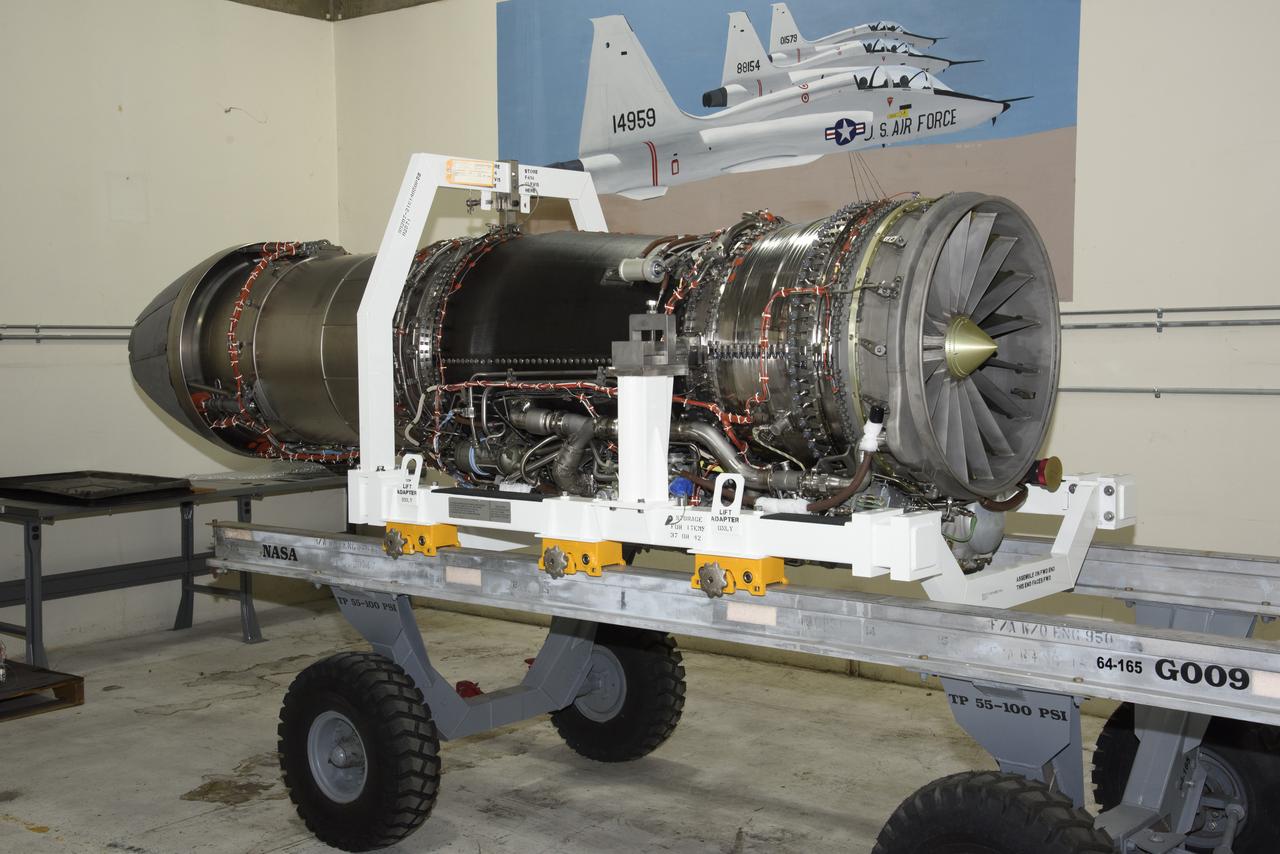
The F414-GE-100 engine, which will power NASA’s X-59 Quiet SuperSonic Technology X-plane (QueSST) in flight, is unboxed at NASA’s Armstrong Flight Research Center in Edwards, California. The engine, one of two delivered by GE, is approximately 13 feet long, and will power X-59 on missions to gather information about how the public perceives the sounds of quieter supersonic flight.
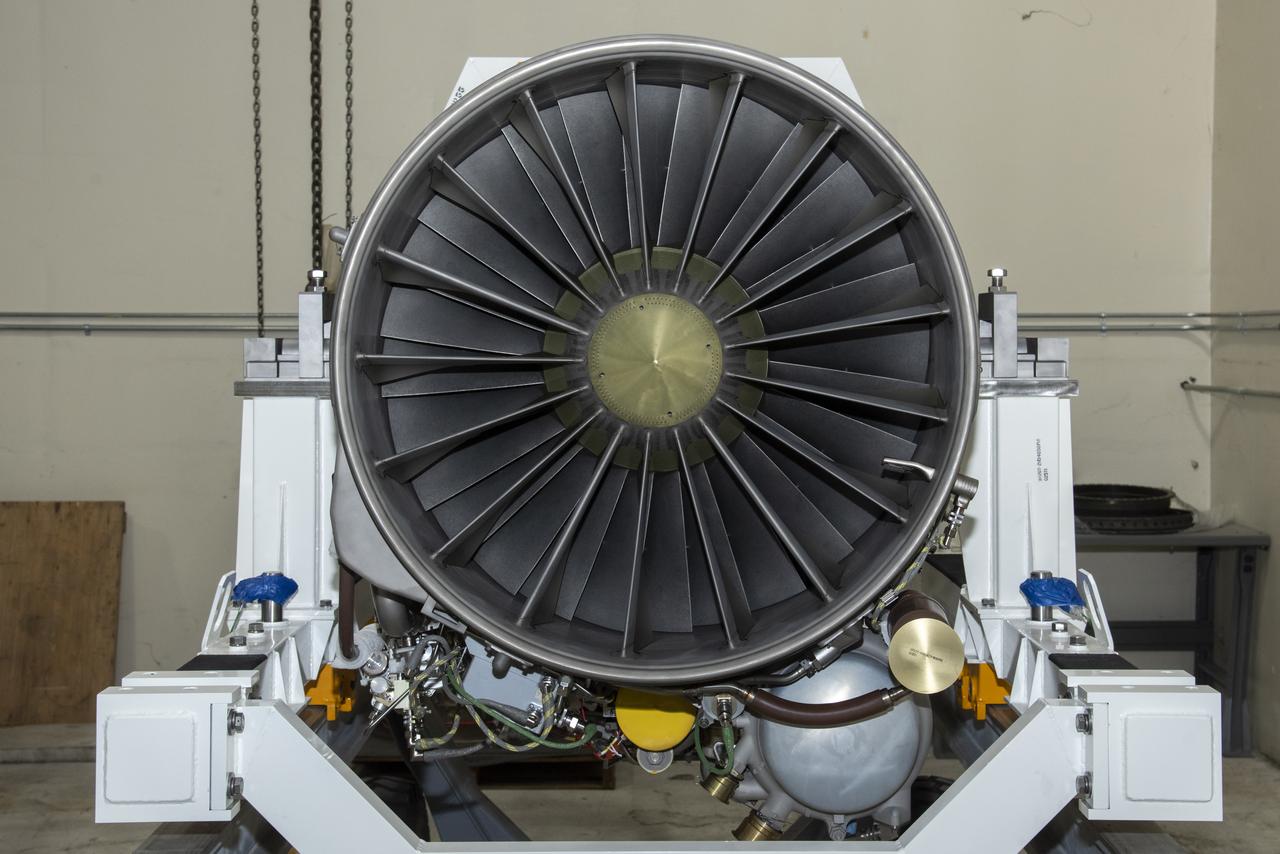
The F414-GE-100 engine, which will power NASA’s X-59 Quiet SuperSonic Technology X-plane (QueSST) in flight, is unboxed at NASA’s Armstrong Flight Research Center in Edwards, California. The engine, one of two delivered by GE, is approximately 13 feet long, and will power X-59 on missions to gather information about how the public perceives the sounds of quieter supersonic flight.

NASA’s X-59 towbar sits in front of a hangar at NASA’s Armstrong Flight Research Center in Edwards, California. Because of the aircraft’s long nose, a long towbar is required, and it is positioned on the tarmac awaiting the X-59’s arrival ahead its first flight.
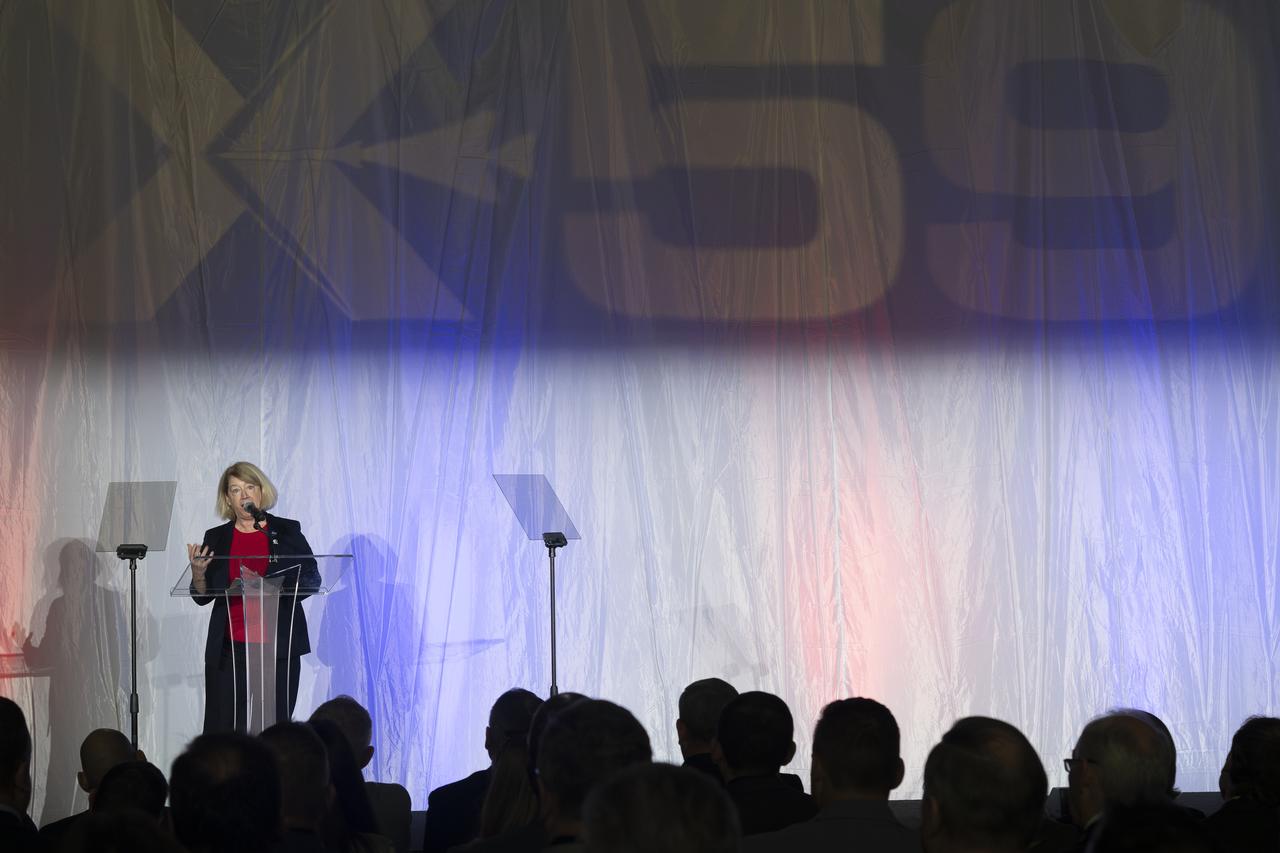
NASA Deputy Administrator Pam Melroy speaks on stage prior to the official unveiling of the agency’s X-59 quiet supersonic research aircraft at a January 12, 2024 event at Lockheed Martin Skunk Works in Palmdale, California. The X-59 is the centerpiece of NASA’s Quesst mission, which seeks to solve one of the major barriers to supersonic flight over land, currently banned in the United States, by making sonic booms quieter.
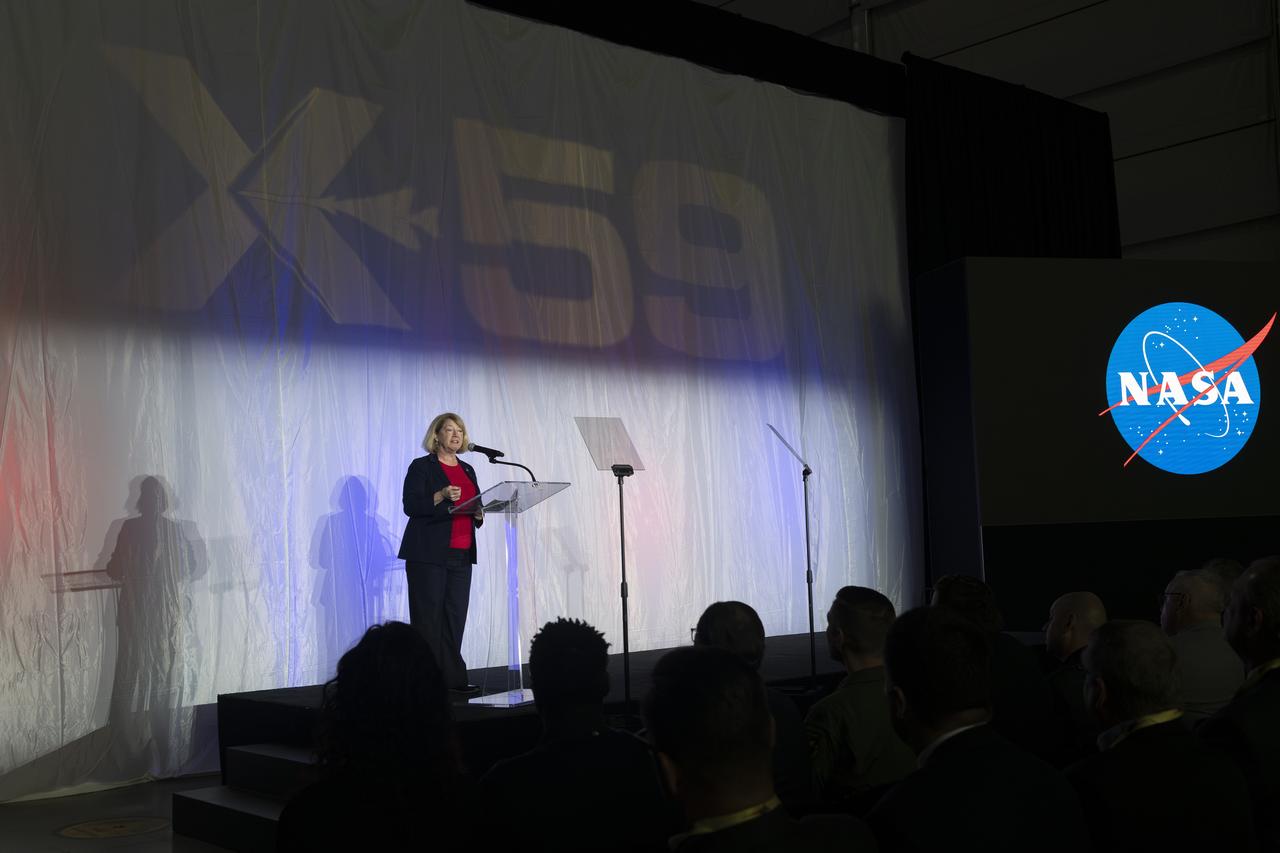
NASA Deputy Administrator Pam Melroy speaks on stage prior to the official unveiling of the agency’s X-59 quiet supersonic research aircraft at a January 12, 2024 event at Lockheed Martin Skunk Works in Palmdale, California. The X-59 is the centerpiece of NASA’s Quesst mission, which seeks to solve one of the major barriers to supersonic flight over land, currently banned in the United States, by making sonic booms quieter.
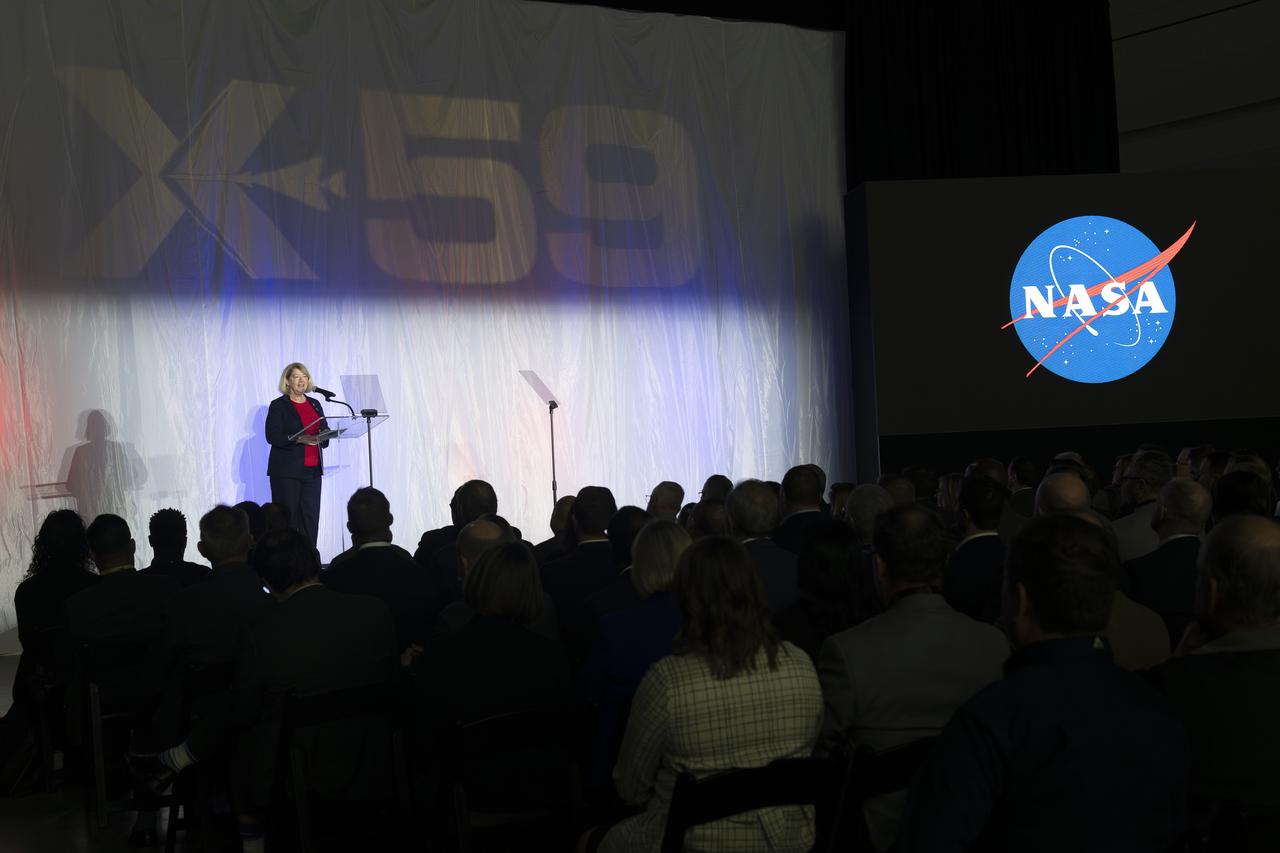
NASA Deputy Administrator Pam Melroy speaks on stage prior to the official unveiling of the agency’s X-59 quiet supersonic research aircraft at a January 12, 2024 event at Lockheed Martin Skunk Works in Palmdale, California. The X-59 is the centerpiece of NASA’s Quesst mission, which seeks to solve one of the major barriers to supersonic flight over land, currently banned in the United States, by making sonic booms quieter.
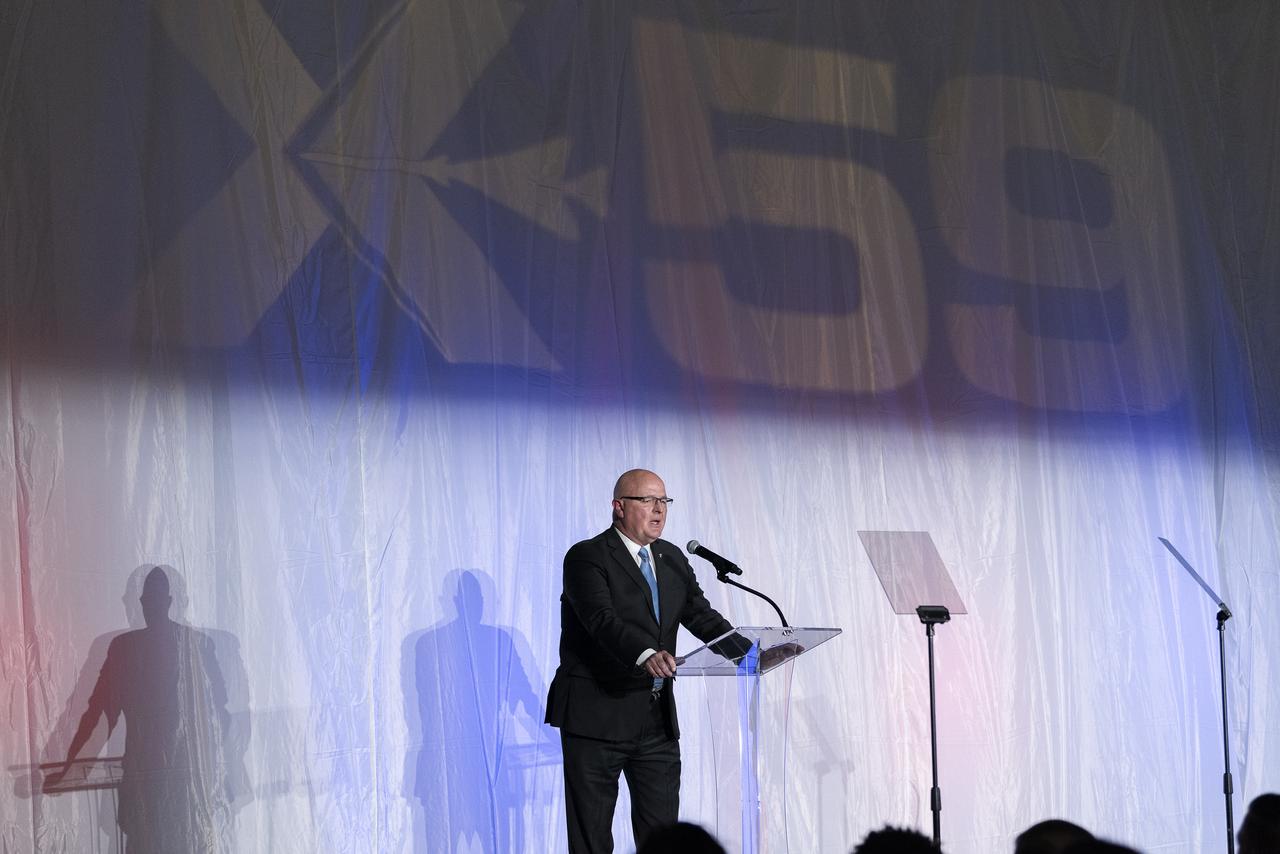
Lockheed Martin Skunk Works Director of Government Affairs Eric Fox speaks on stage prior to the unveiling of the agency’s X-59 quiet supersonic research aircraft at a January 12, 2024 event at Lockheed Martin Skunk Works in Palmdale, California. The X-59 is the centerpiece of NASA’s Quesst mission, which seeks to solve one of the major barriers to supersonic flight over land, currently banned in the United States, by making sonic booms quieter.
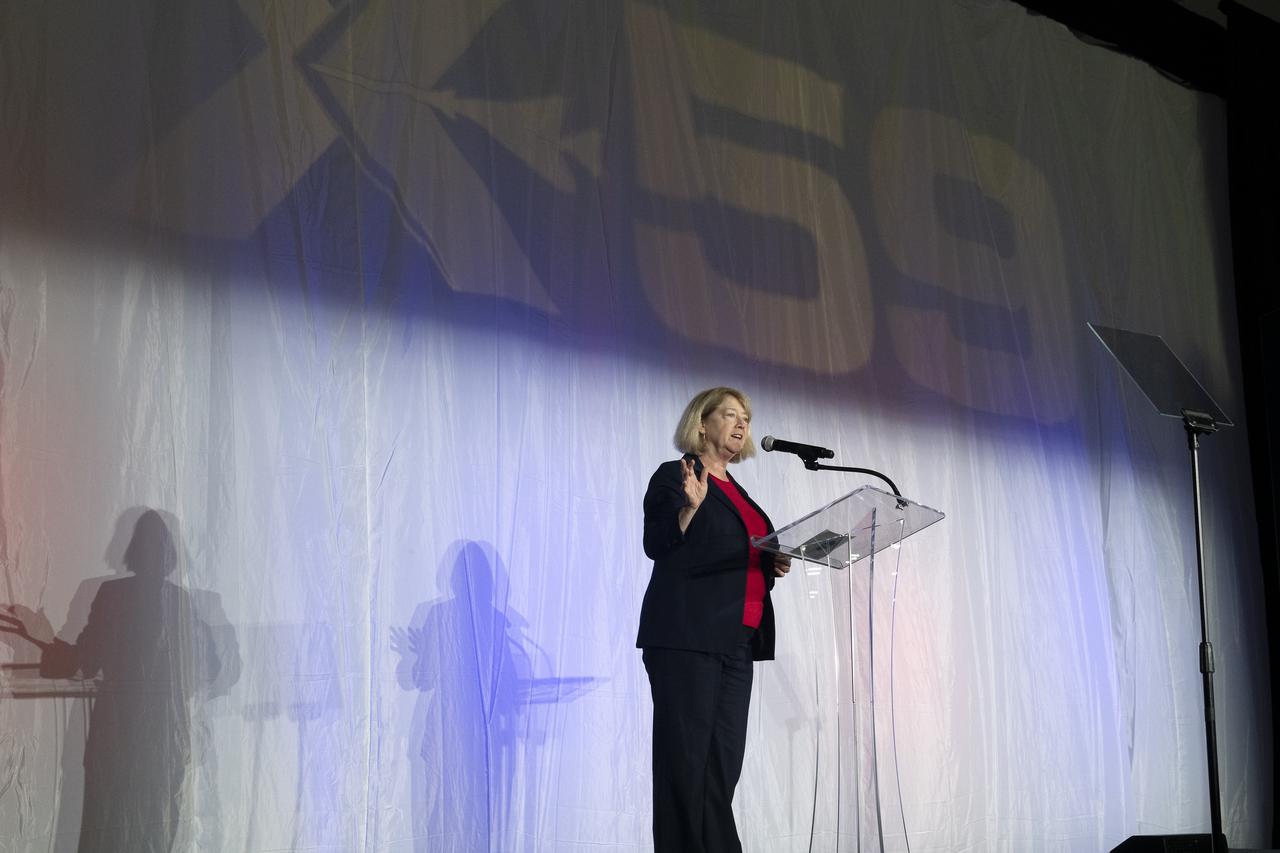
NASA Deputy Administrator Pam Melroy speaks on stage prior to the official unveiling of the agency’s X-59 quiet supersonic research aircraft at a January 12, 2024 event at Lockheed Martin Skunk Works in Palmdale, California. The X-59 is the centerpiece of NASA’s Quesst mission, which seeks to solve one of the major barriers to supersonic flight over land, currently banned in the United States, by making sonic booms quieter.
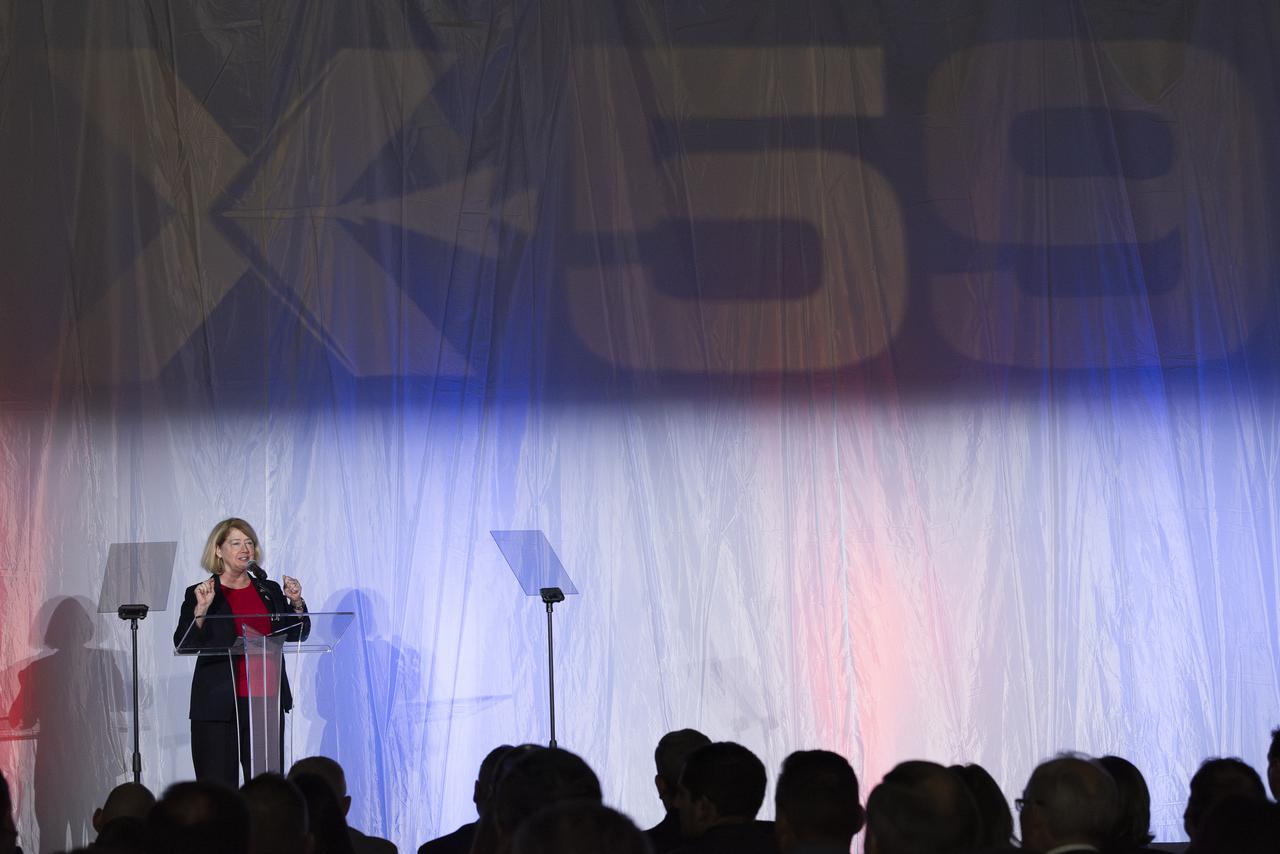
NASA Deputy Administrator Pam Melroy speaks on stage prior to the official unveiling of the agency’s X-59 quiet supersonic research aircraft at a January 12, 2024 event at Lockheed Martin Skunk Works in Palmdale, California. The X-59 is the centerpiece of NASA’s Quesst mission, which seeks to solve one of the major barriers to supersonic flight over land, currently banned in the United States, by making sonic booms quieter.
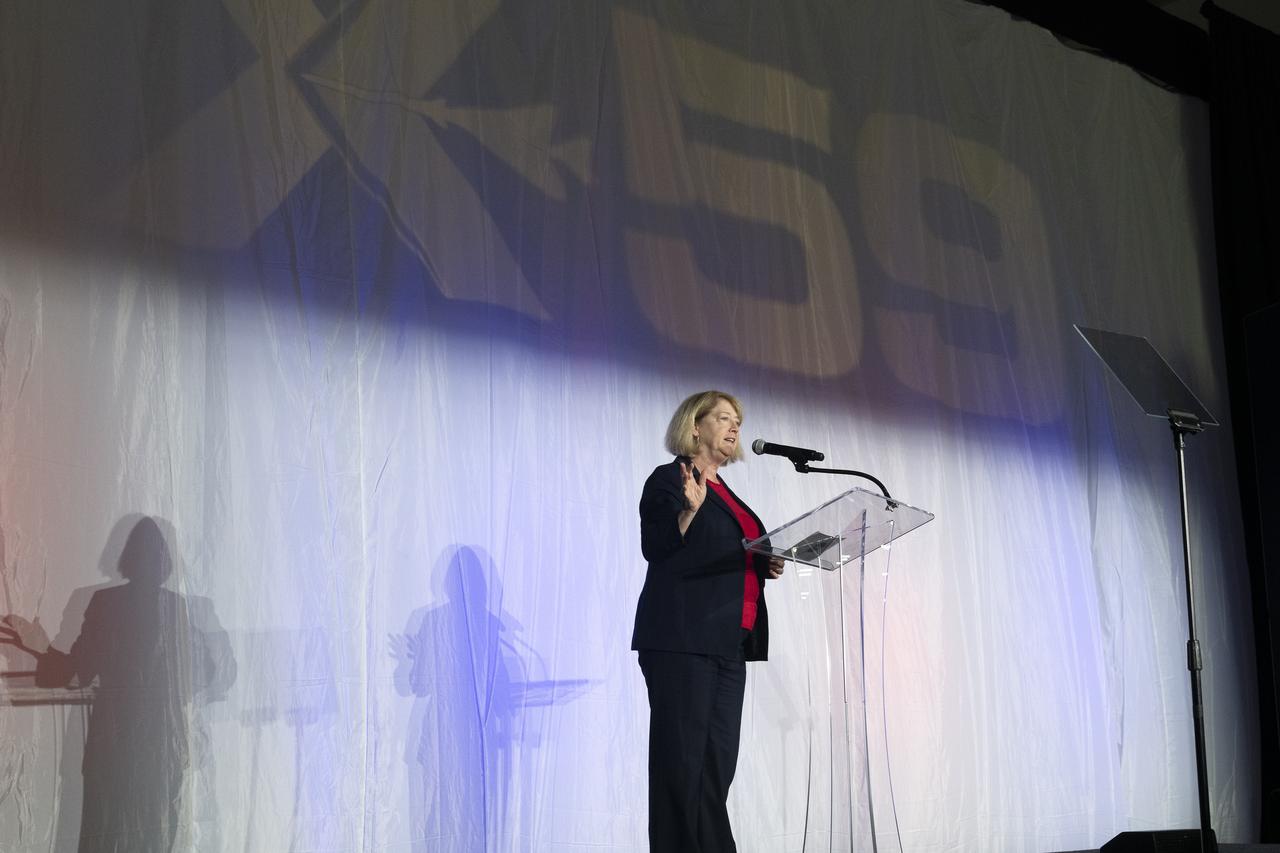
NASA Deputy Administrator Pam Melroy speaks on stage prior to the official unveiling of the agency’s X-59 quiet supersonic research aircraft at a January 12, 2024 event at Lockheed Martin Skunk Works in Palmdale, California. The X-59 is the centerpiece of NASA’s Quesst mission, which seeks to solve one of the major barriers to supersonic flight over land, currently banned in the United States, by making sonic booms quieter.
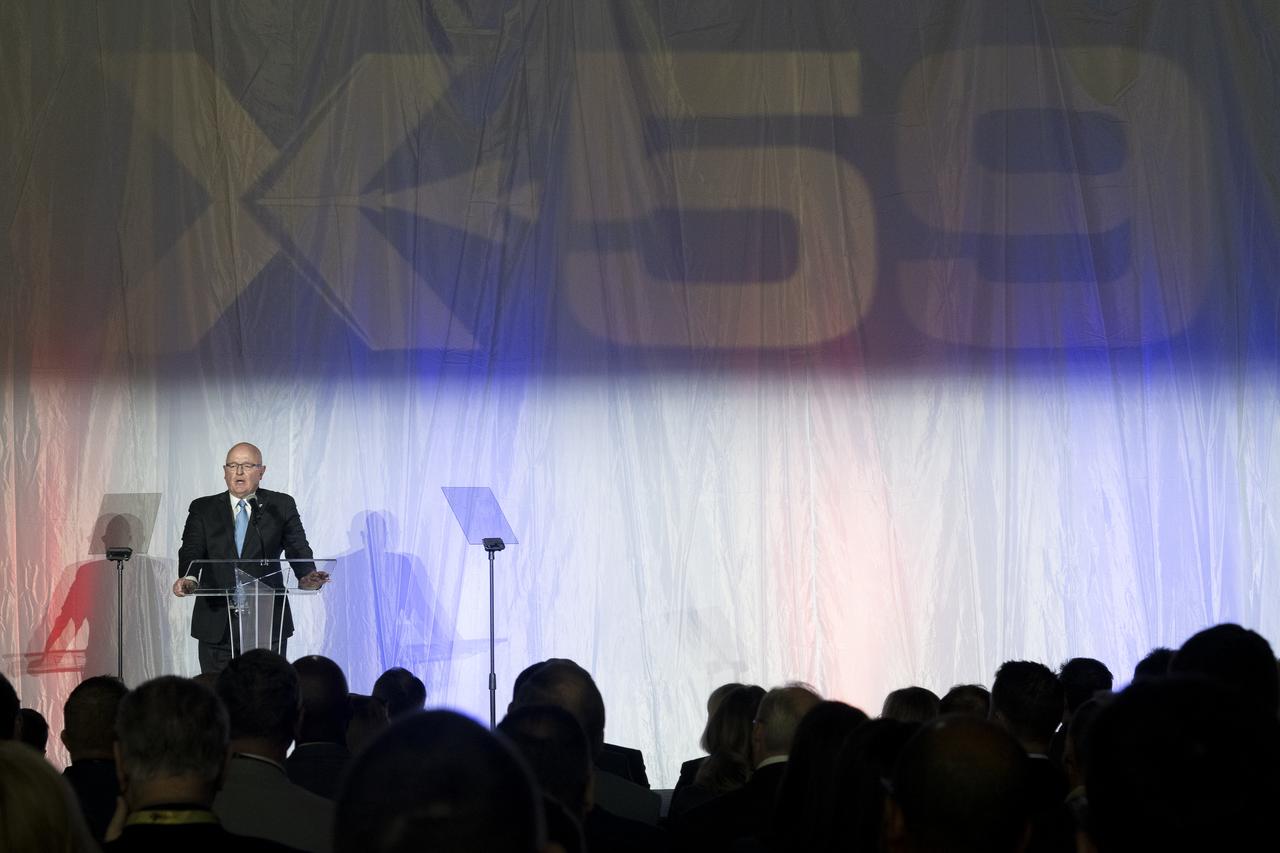
Lockheed Martin Skunk Works Director of Government Affairs Eric Fox speaks on stage prior to the unveiling of the agency’s X-59 quiet supersonic research aircraft at a January 12, 2024 event at Lockheed Martin Skunk Works in Palmdale, California. The X-59 is the centerpiece of NASA’s Quesst mission, which seeks to solve one of the major barriers to supersonic flight over land, currently banned in the United States, by making sonic booms quieter.

Artist illustration of the X-59 in flight in blue skies and white clouds.
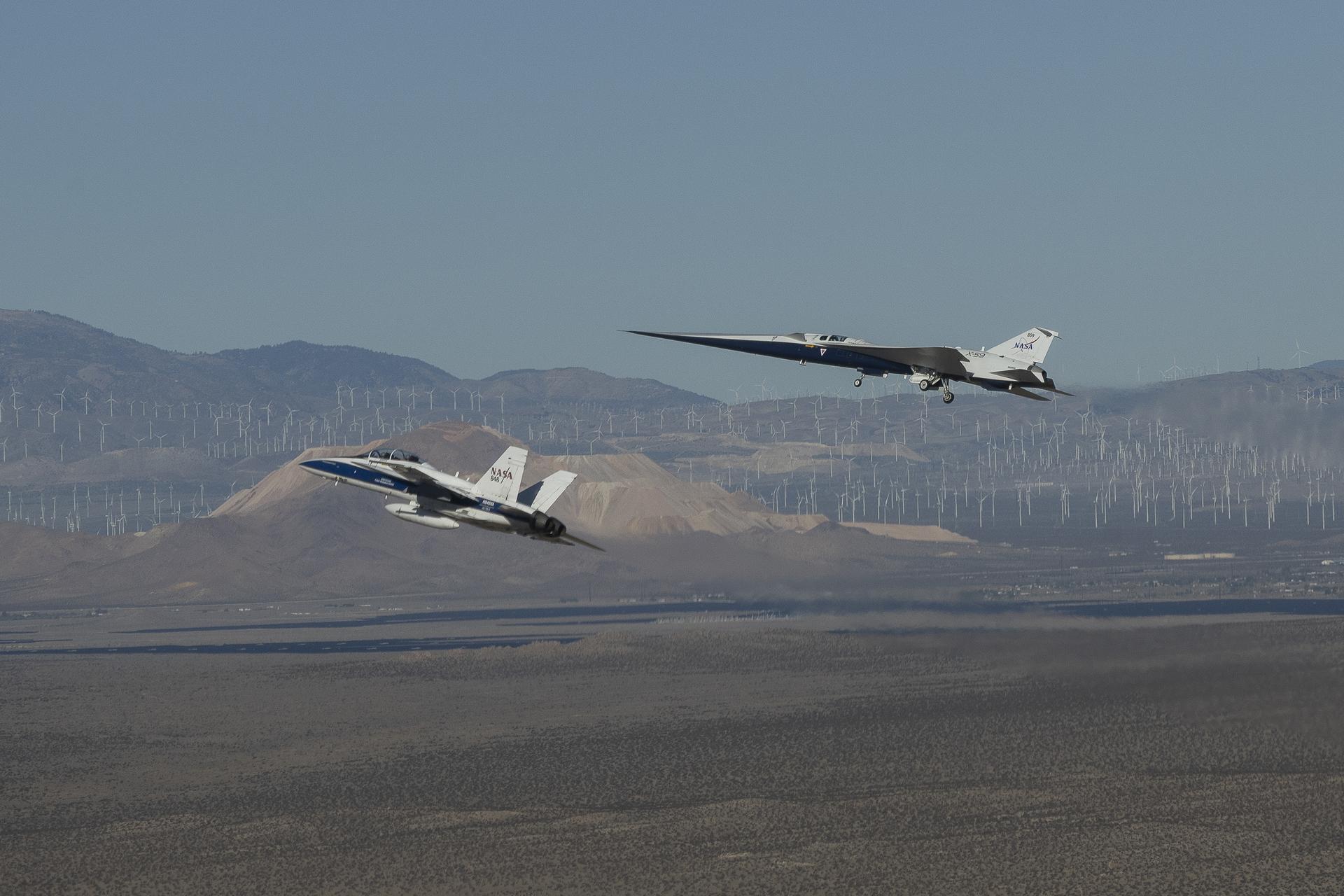
NASA’s X-59 quiet supersonic research aircraft flies above Palmdale and Edwards, California, during its first flight Tuesday, Oct. 28, 2025, accompanied by a NASA F/A-18 research aircraft. A NASA F-15 research aircraft (not pictured) captured the image as the X-59 traveled to NASA’s Armstrong Flight Research Center in Edwards, California, where it will begin flight testing for NASA’s Quesst mission, which aims to demonstrate quiet supersonic flight over land.
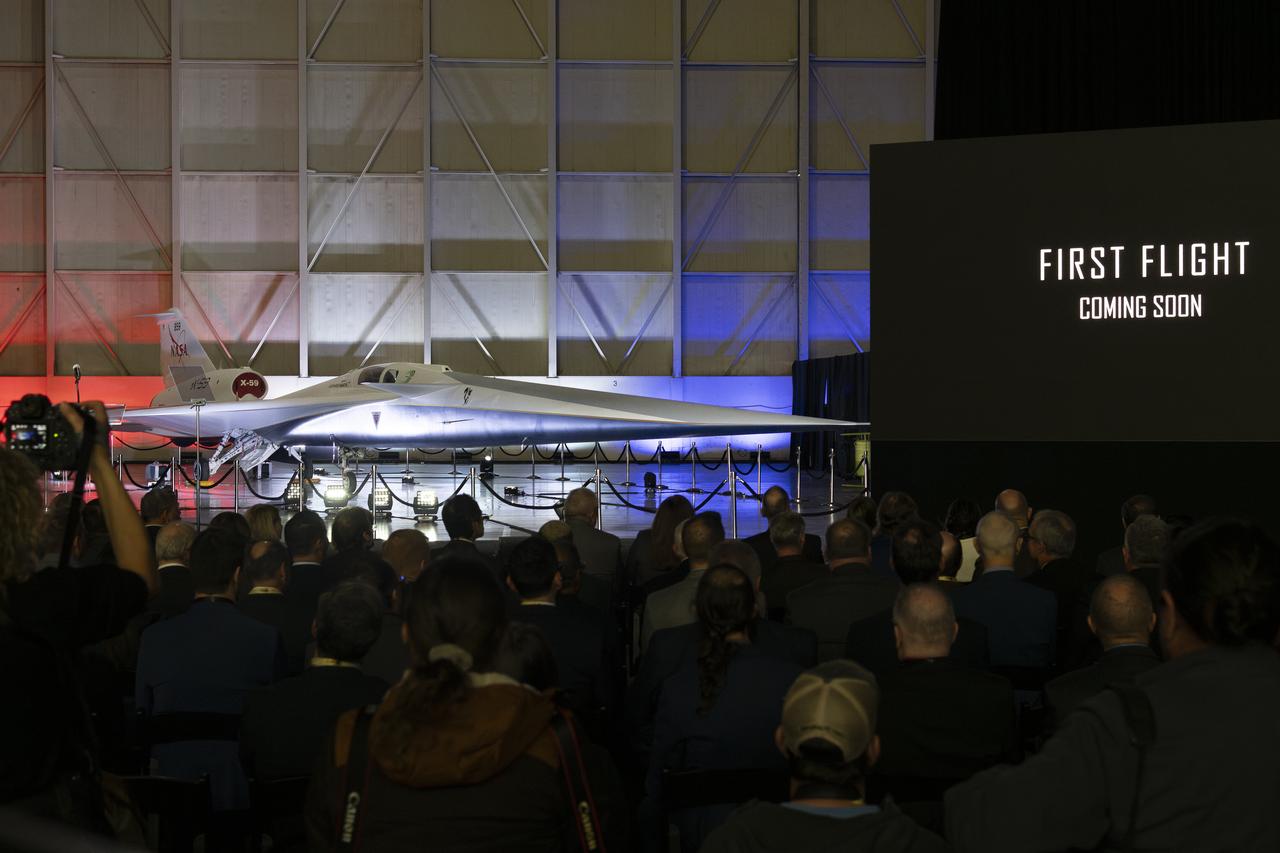
NASA’s X-59 quiet supersonic research aircraft is unveiled at a January 12, 2024 event at Lockheed Martin Skunk Works in Palmdale, California. The X-59 is the centerpiece of NASA’s Quesst mission, which seeks to solve one of the major barriers to supersonic flight over land, currently banned in the United States, by making sonic booms quieter.
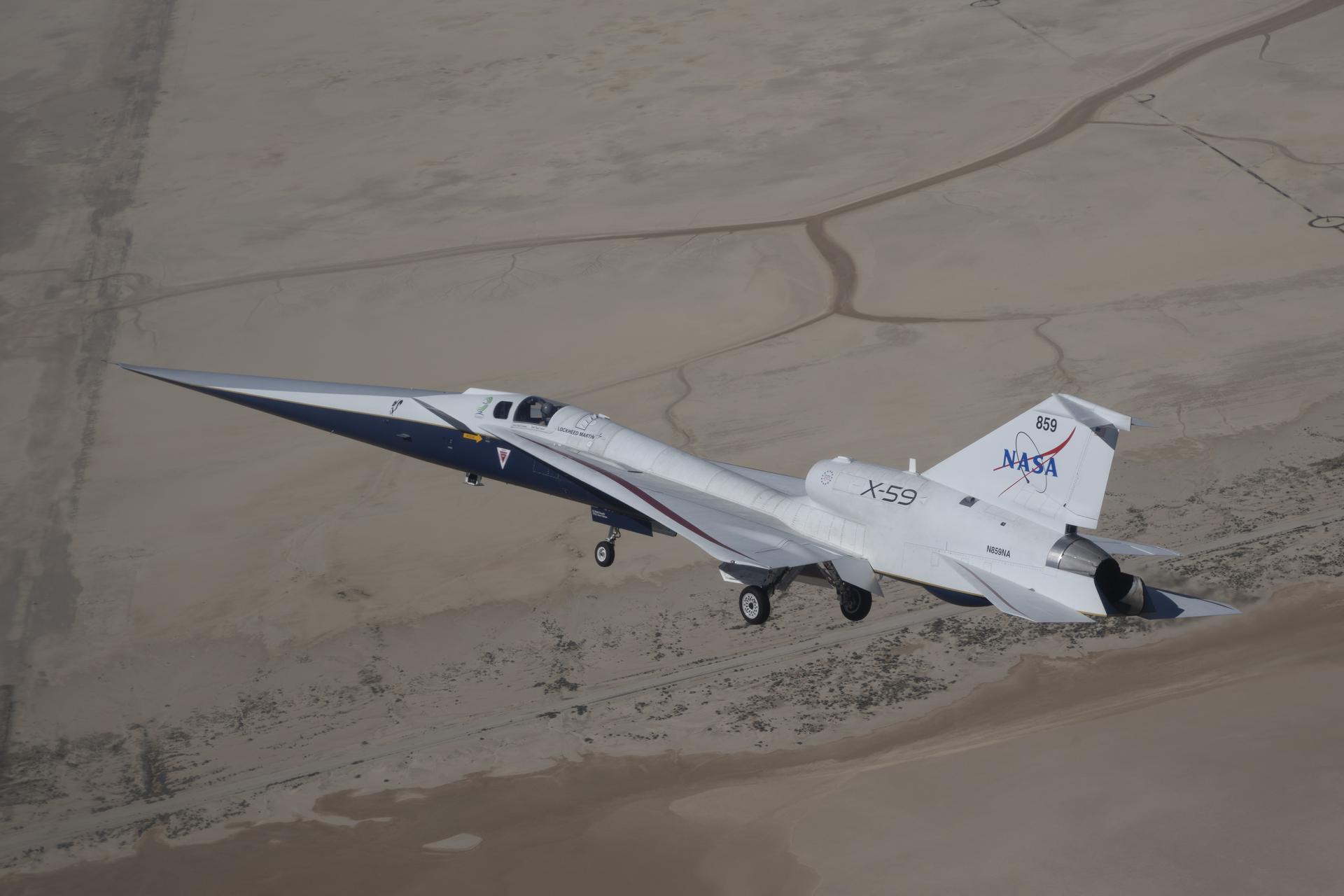
NASA’s X-59 quiet supersonic aircraft flies its second flight Friday, March 20, 2026, near NASA’s Armstrong Flight Research Center in Edwards, California. The X-59 is central to NASA’s Quesst mission, which aims to demonstrate quiet supersonic flight by reducing the loud sonic boom to a softer sonic “thump,” potentially enabling faster commercial air travel over land.
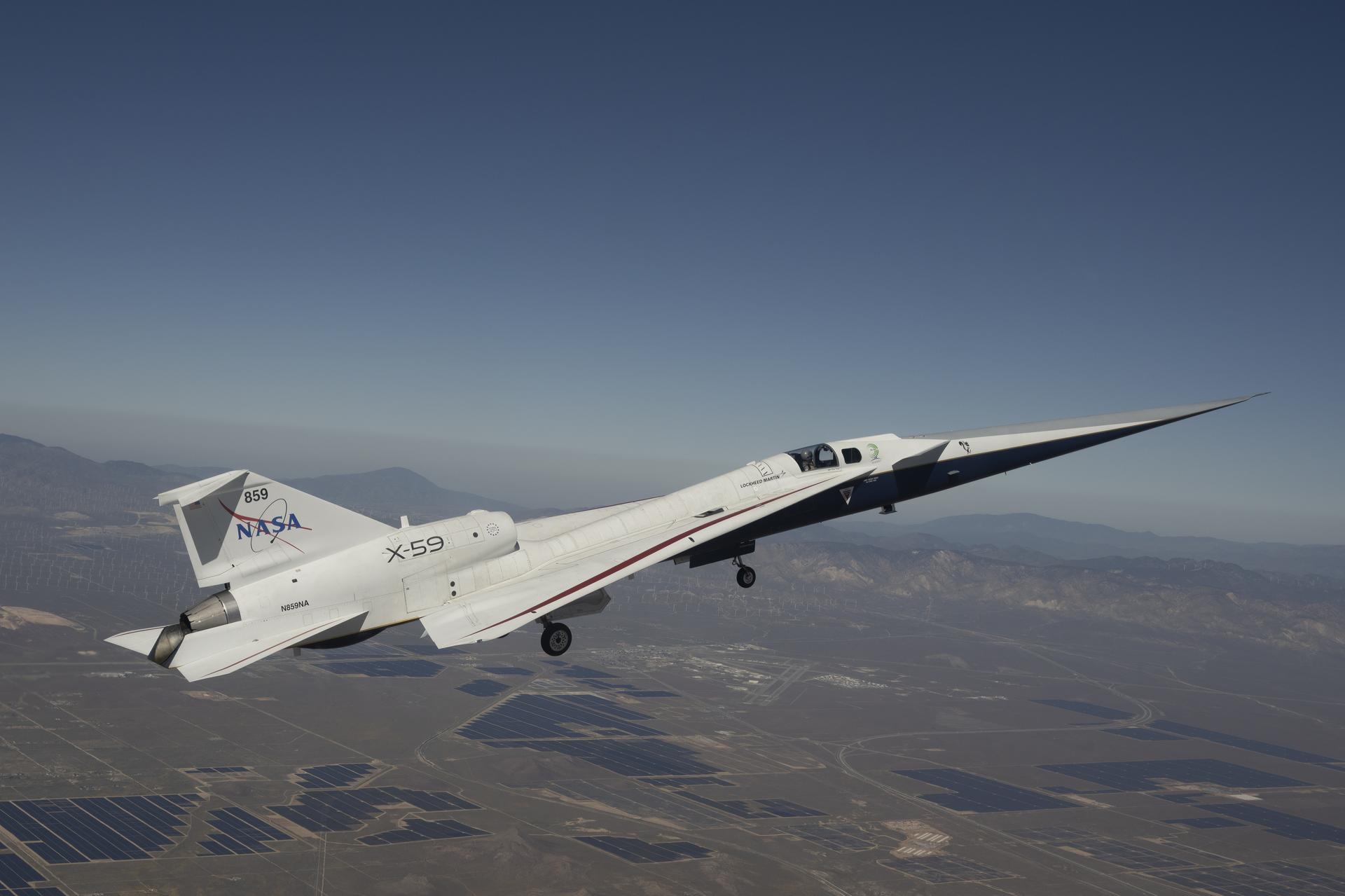
NASA’s X-59 quiet supersonic aircraft flies its second flight Friday, March 20, 2026, near NASA’s Armstrong Flight Research Center in Edwards, California. The X-59 is central to NASA’s Quesst mission, which aims to demonstrate quiet supersonic flight by reducing the loud sonic boom to a softer sonic “thump,” potentially enabling faster commercial air travel over land.
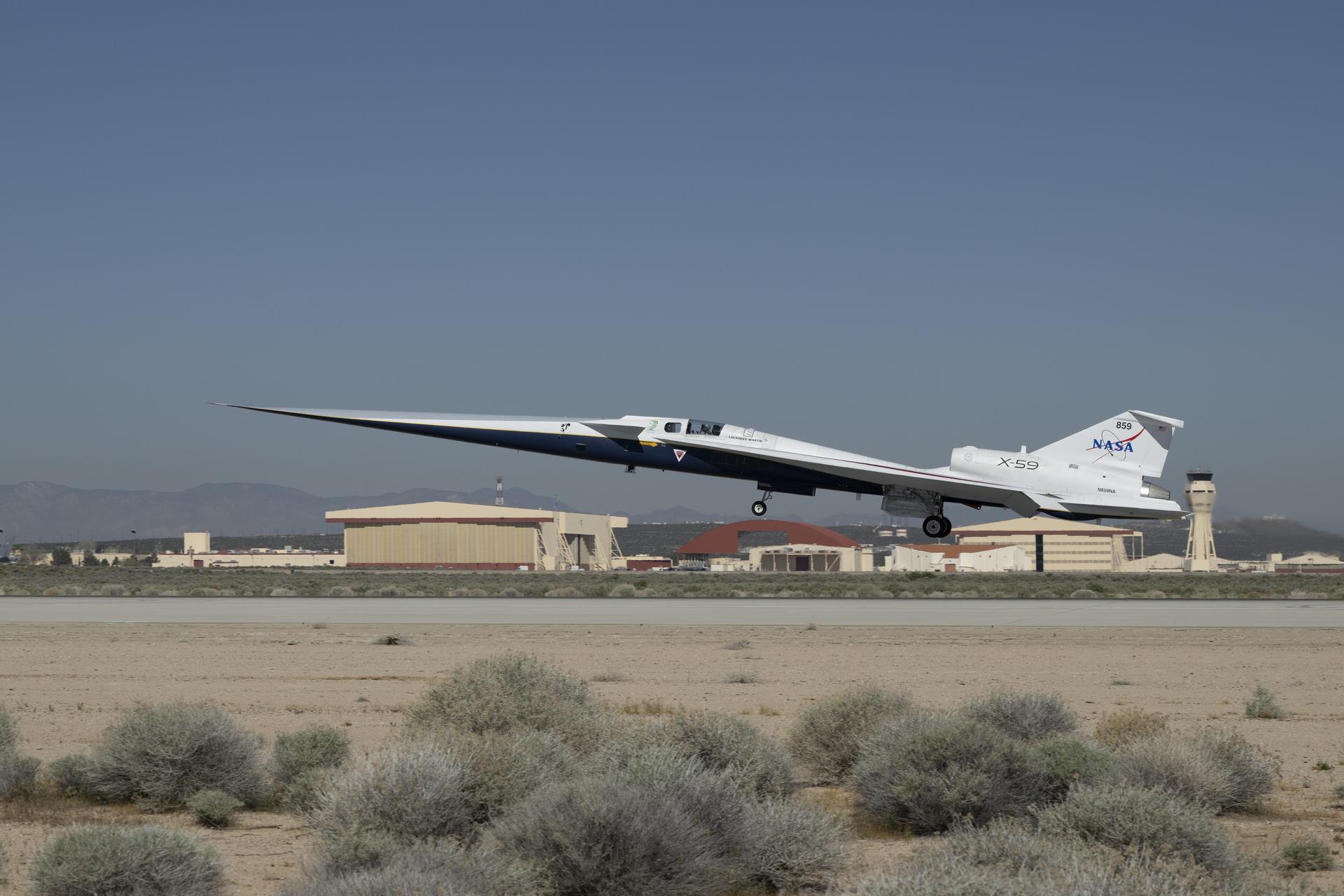
NASA’s X-59 quiet supersonic aircraft takes off for its second flight Friday, March 20, 2026, near NASA’s Armstrong Flight Research Center in Edwards, California. The X-59 is central to NASA’s Quesst mission, which aims to demonstrate quiet supersonic flight by reducing the loud sonic boom to a softer sonic “thump,” potentially enabling faster commercial air travel over land.
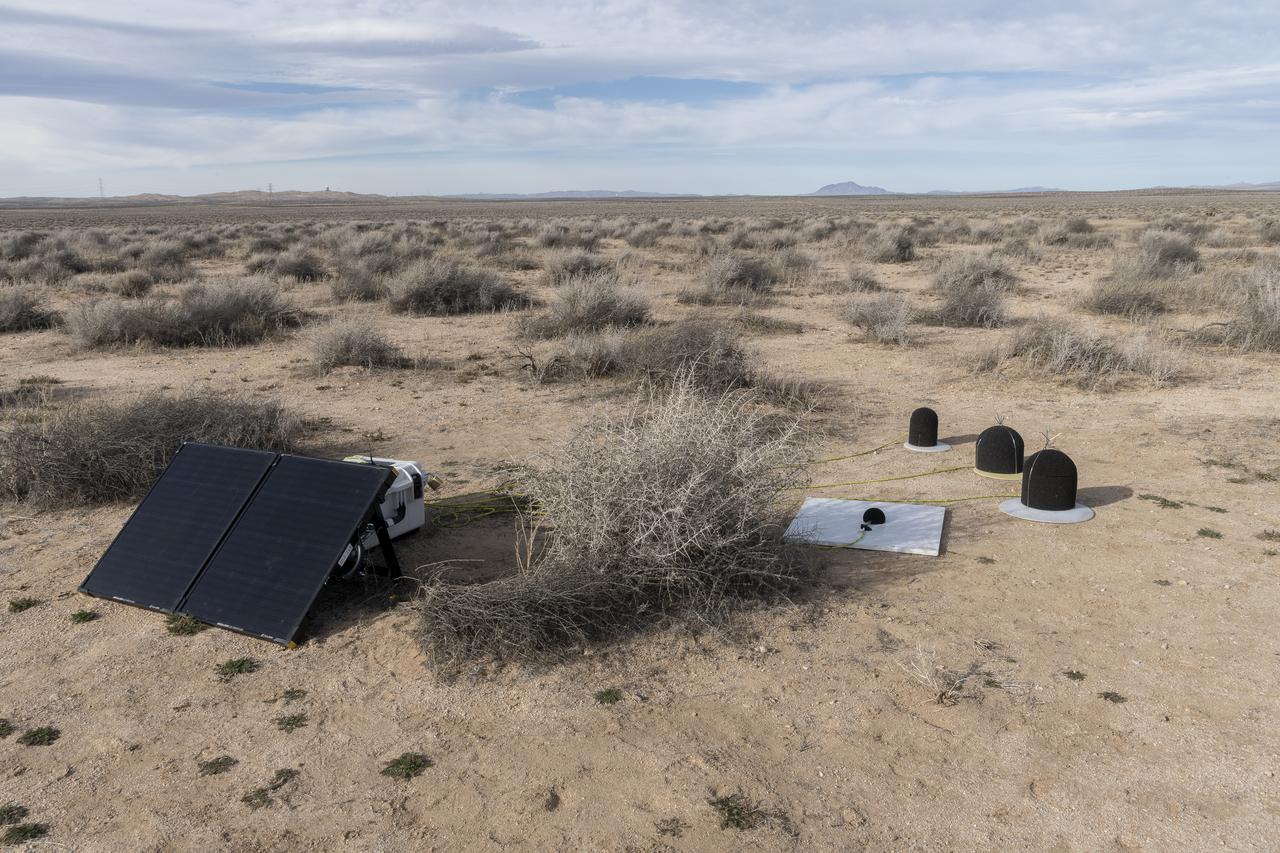
The Quesst mission recently completed testing of operations and equipment to be used in recording the sonic thumps of the X-59. Shown is one of 10 ground recording stations set up along a 30-mile stretch of desert to record sonic booms during the third phase of the of CarpetDIEM, Carpet Determination in Entirety Measurements flights. An F-15 and an F-18 from NASA’s Armstrong Flight Research Center created sonic booms, both loud and soft, to verify the operations of ground recording systems.
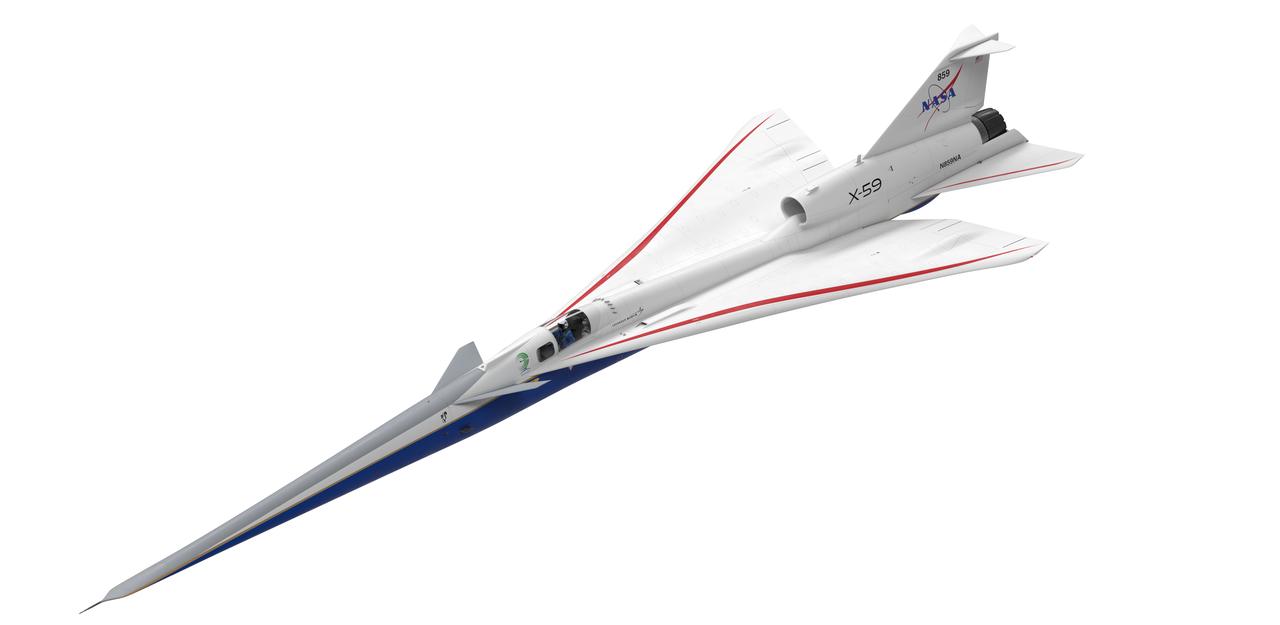
Artist concept of the X-59 three forths view top
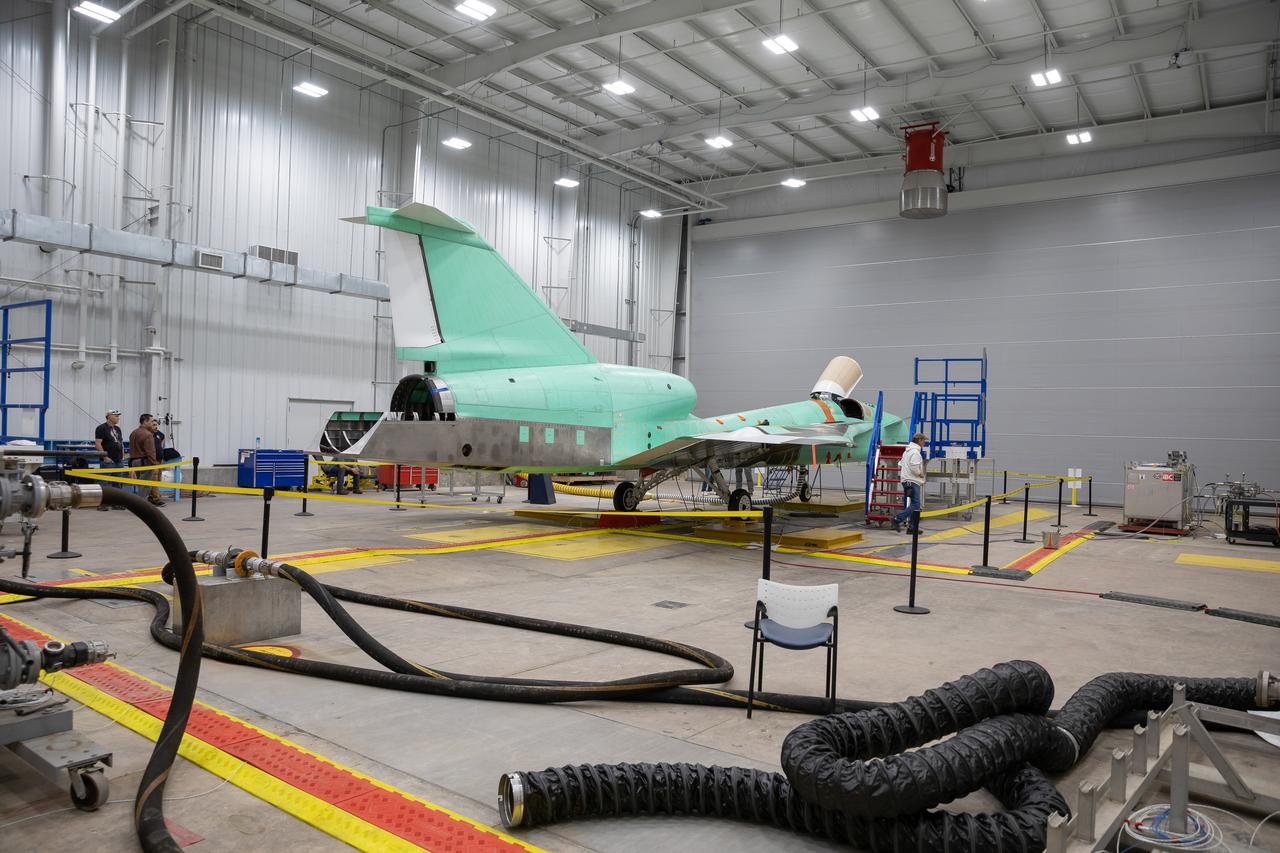
The X-59 sits in the fuel barn at Lockheed Martin in Fort Worth, Texas. While in the fuel barn, the X-59 underwent fuel tank calibration tests. During this phase, the X-59’s gas tanks were filled and fuel-remaining sensors inside the aircraft were checked.
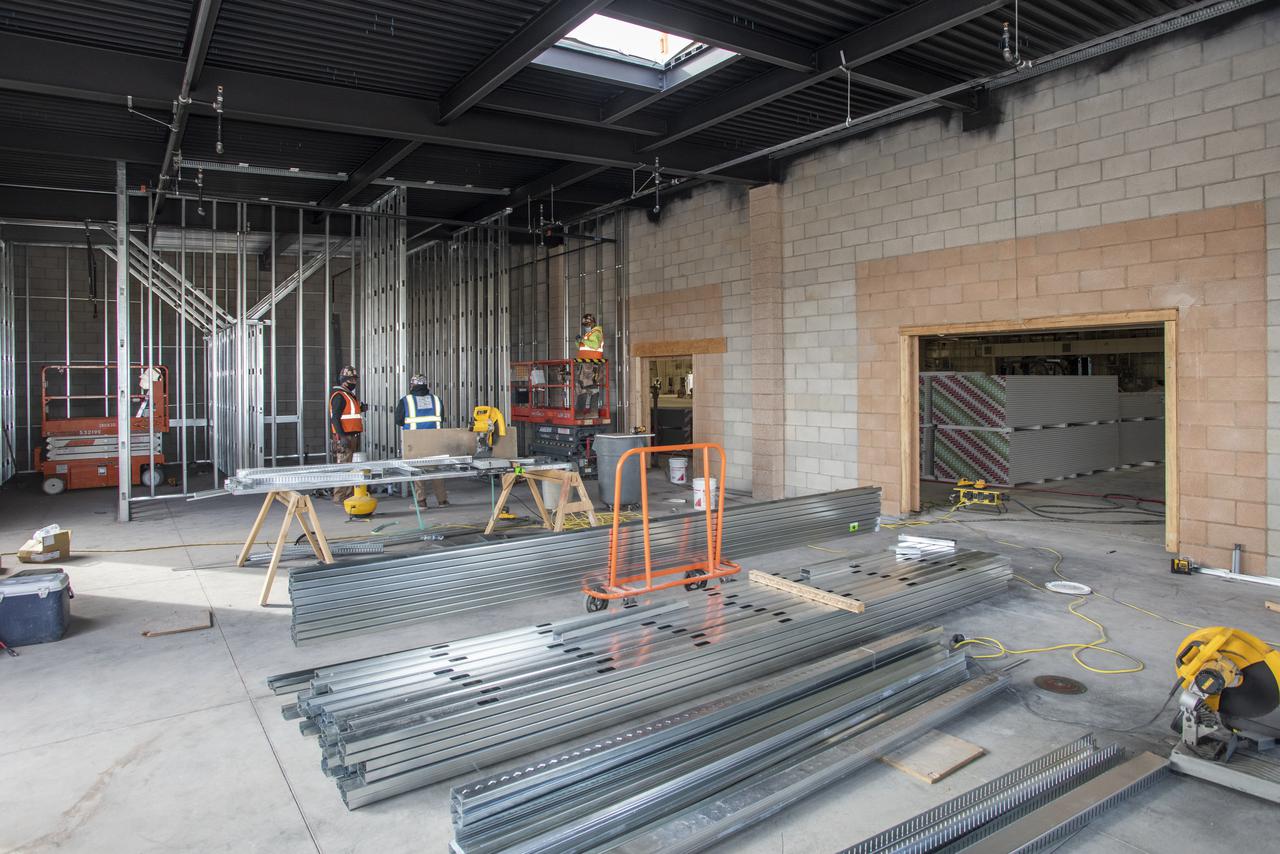
Work continues at Building 4826, the future home of the X-59 Quiet SuperSonic Technology aircraft, at NASA's Armstrong Flight Research Center in Edwards, California.
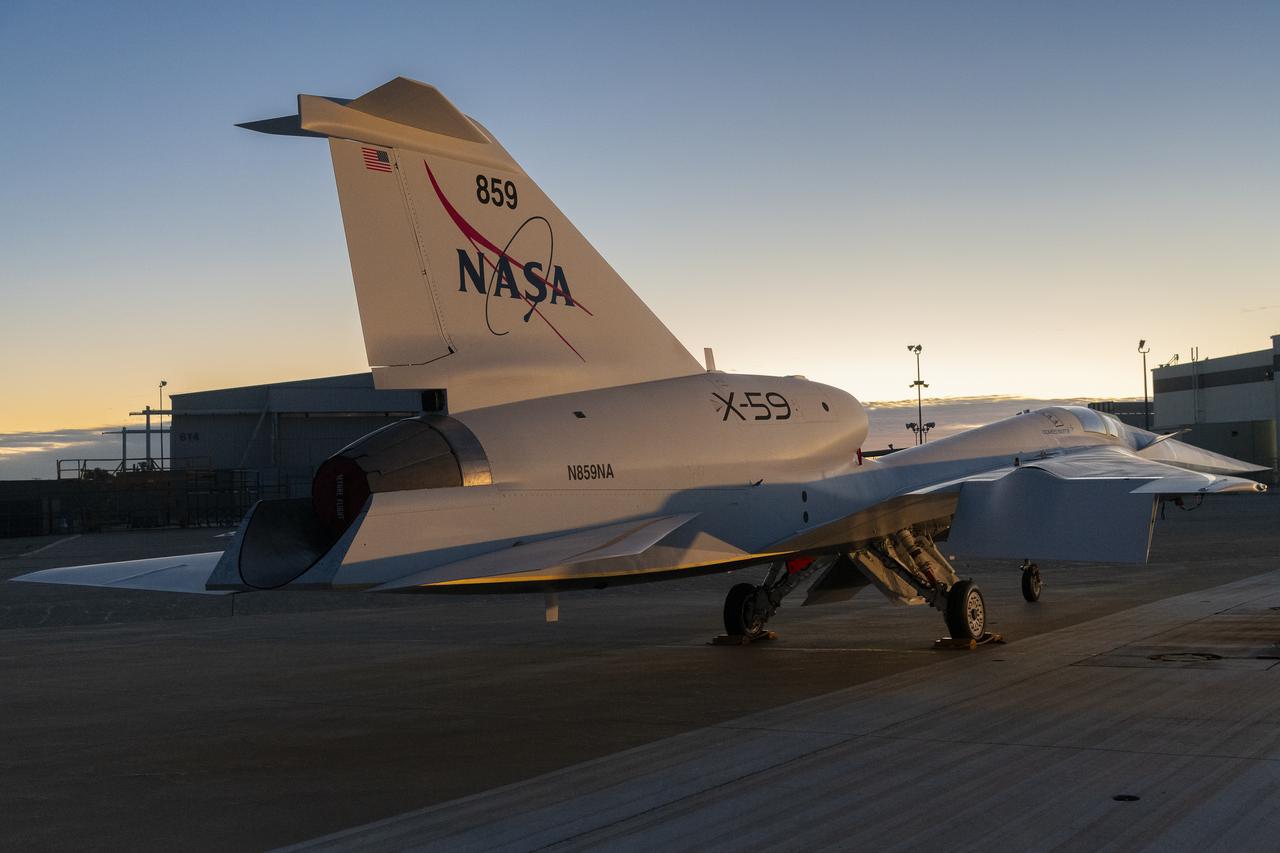
NASA’s X-59 quiet supersonic research aircraft sits on the ramp at Lockheed Martin Skunk Works in Palmdale, California during sunrise, shortly after completion of painting. With its unique design, including a 38-foot-long nose, the X-59 was built to demonstrate the ability to fly supersonic, or faster than the speed of sound, while reducing the typically loud sonic boom produced by aircraft at such speeds to a quieter sonic “thump”. The X-59 is the centerpiece of NASA’s Quesst mission, which seeks to solve one of the major barriers to supersonic flight over land, currently banned in the United States, by making sonic booms quieter.