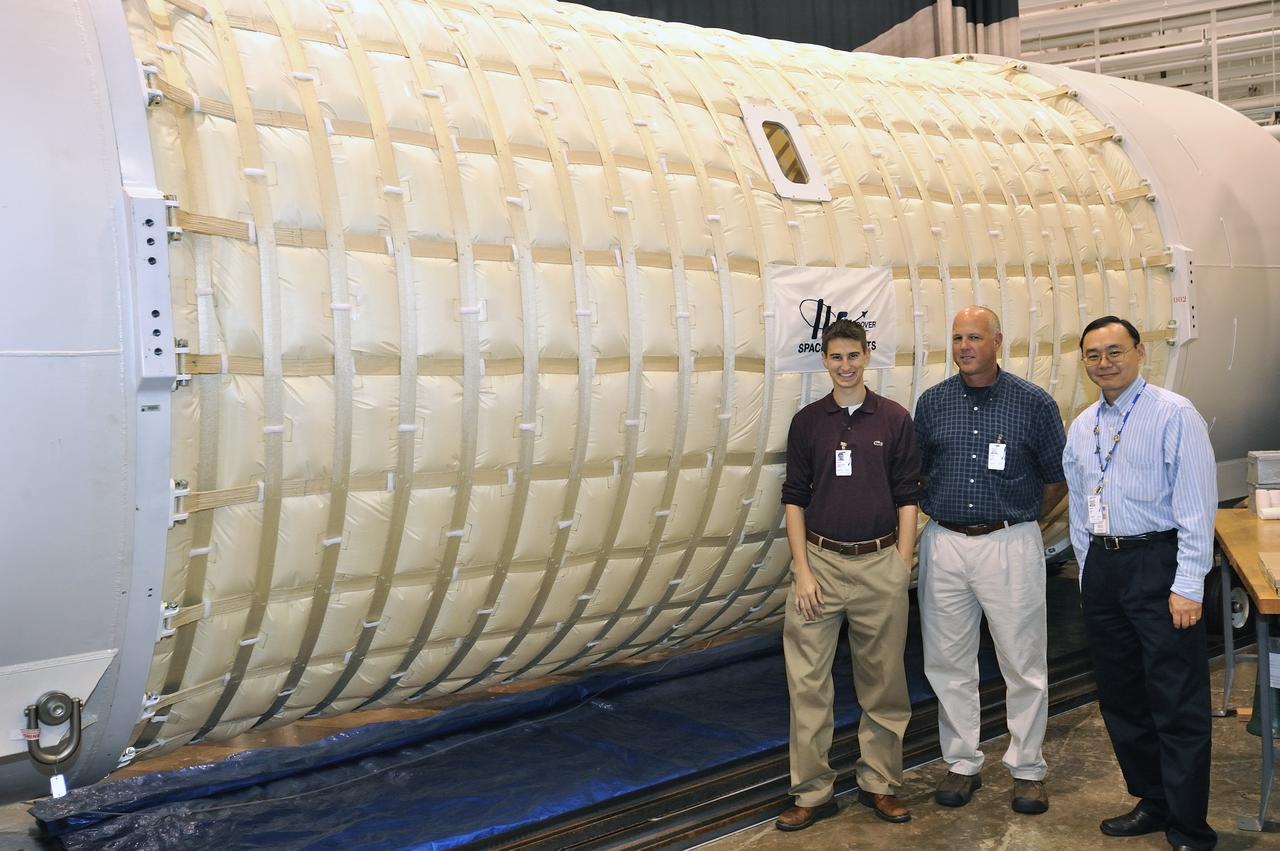
Expandable Lunar Habitat (X-Hab).ILC Dover, under contract by NASA Langley Research Center, and in cooperation with NASA Johnson Space Center has designed and manufactured an expandable lunar habitat. This cylindrical habitat, or Expandable Lunar Habitat (X-Hab) is a hybrid system with two hard end caps and a deployable softgoods section in the center.
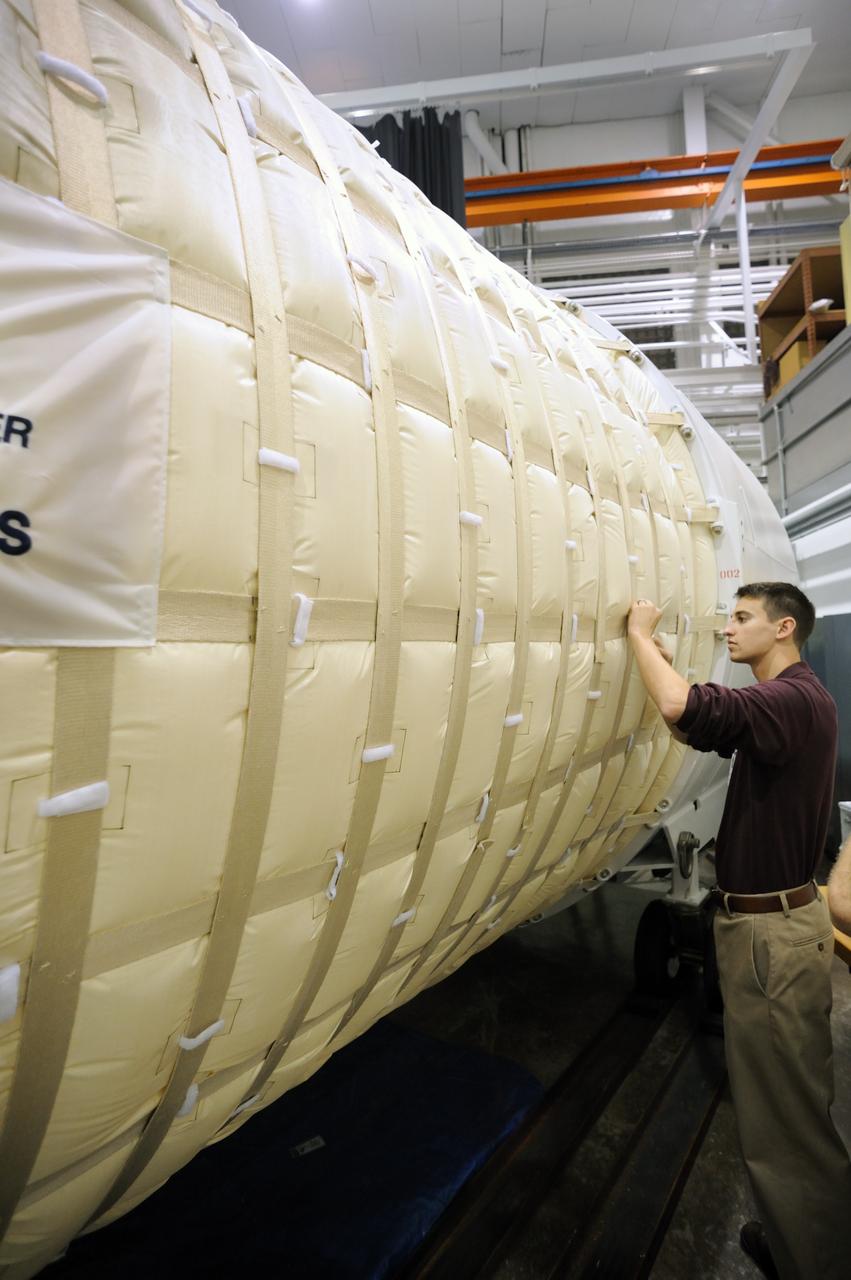
Expandable Lunar Habitat (X-Hab).ILC Dover, under contract by NASA Langley Research Center, and in cooperation with NASA Johnson Space Center has designed and manufactured an expandable lunar habitat. This cylindrical habitat, or Expandable Lunar Habitat (X-Hab) is a hybrid system with two hard end caps and a deployable softgoods section in the center.
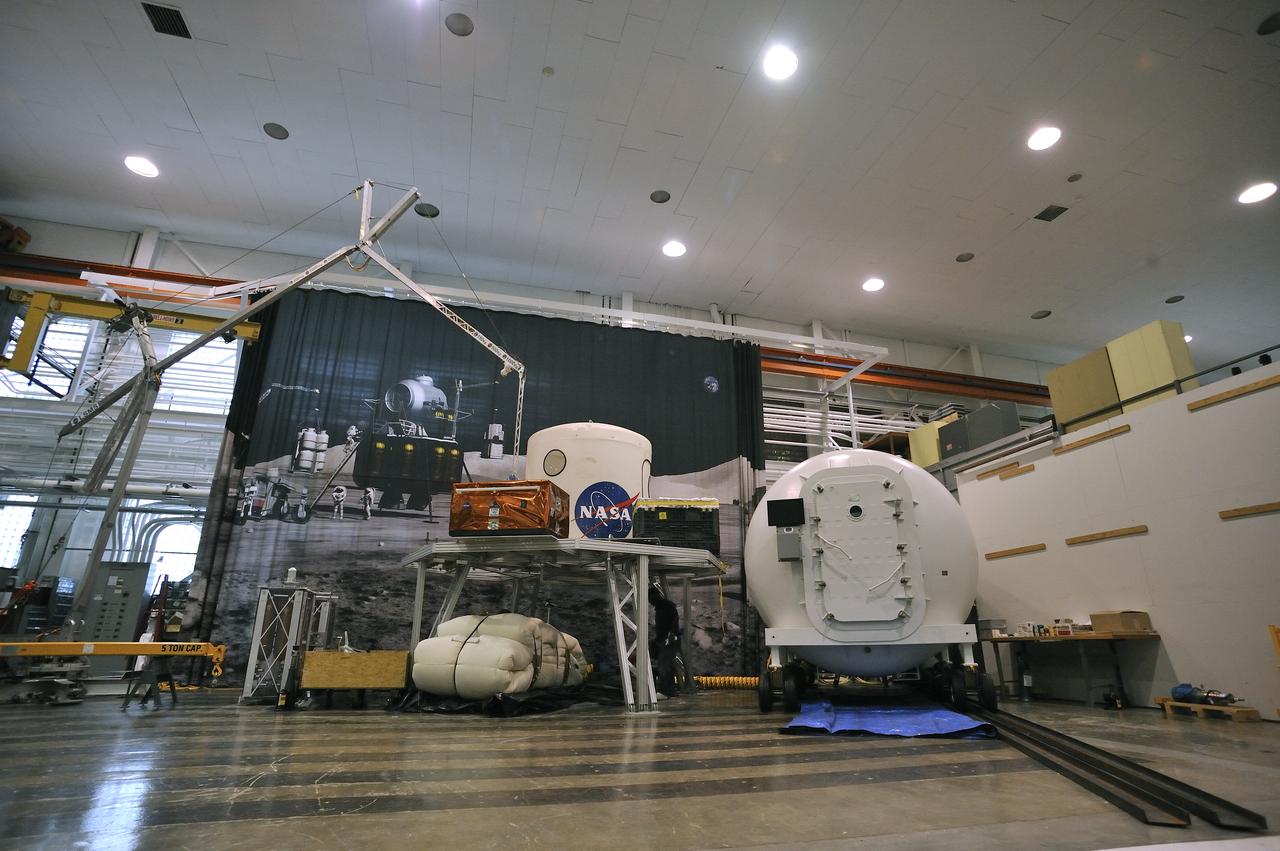
Expandable Lunar Habitat (X-Hab).ILC Dover, under contract by NASA Langley Research Center, and in cooperation with NASA Johnson Space Center has designed and manufactured an expandable lunar habitat. This cylindrical habitat, or Expandable Lunar Habitat (X-Hab) is a hybrid system with two hard end caps and a deployable softgoods section in the center.
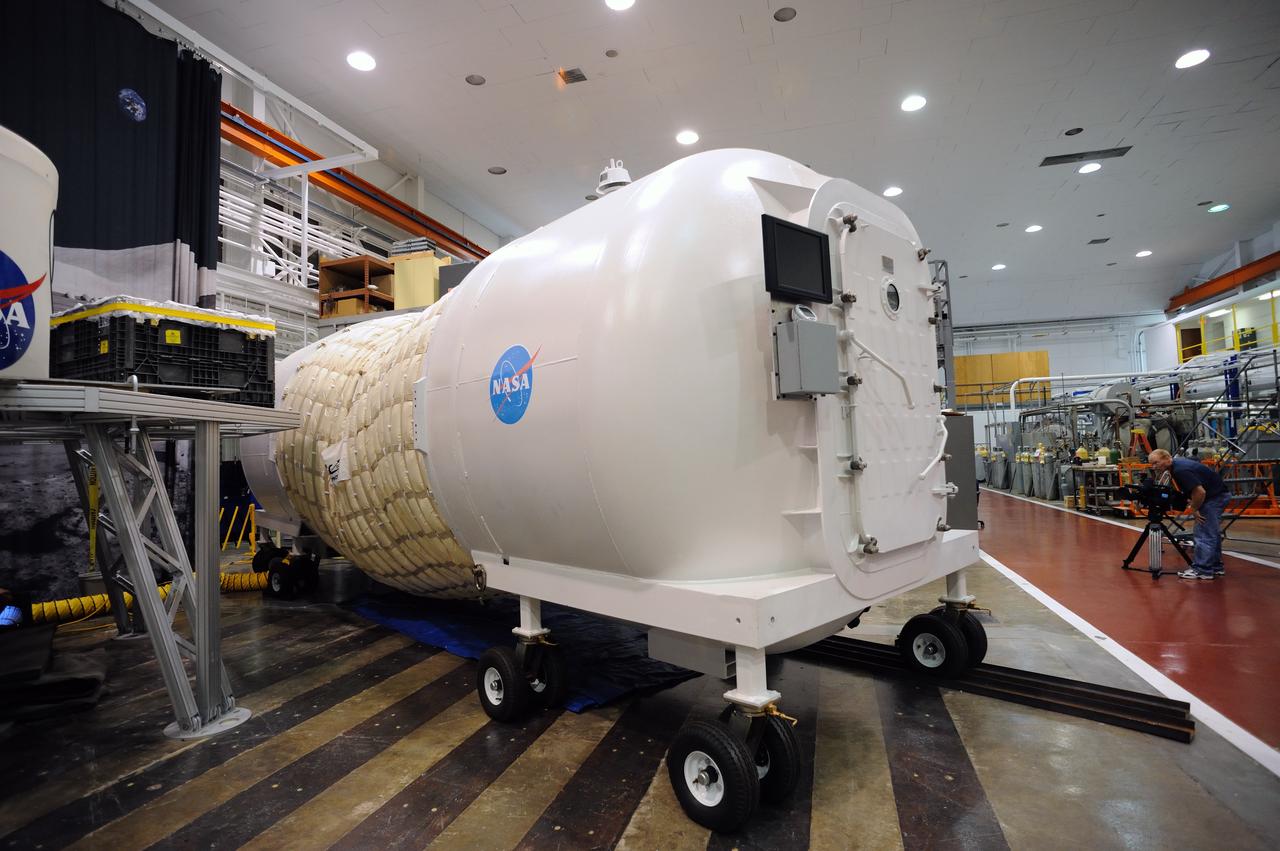
Expandable Lunar Habitat (X-Hab).ILC Dover, under contract by NASA Langley Research Center, and in cooperation with NASA Johnson Space Center has designed and manufactured an expandable lunar habitat. This cylindrical habitat, or Expandable Lunar Habitat (X-Hab) is a hybrid system with two hard end caps and a deployable softgoods section in the center.
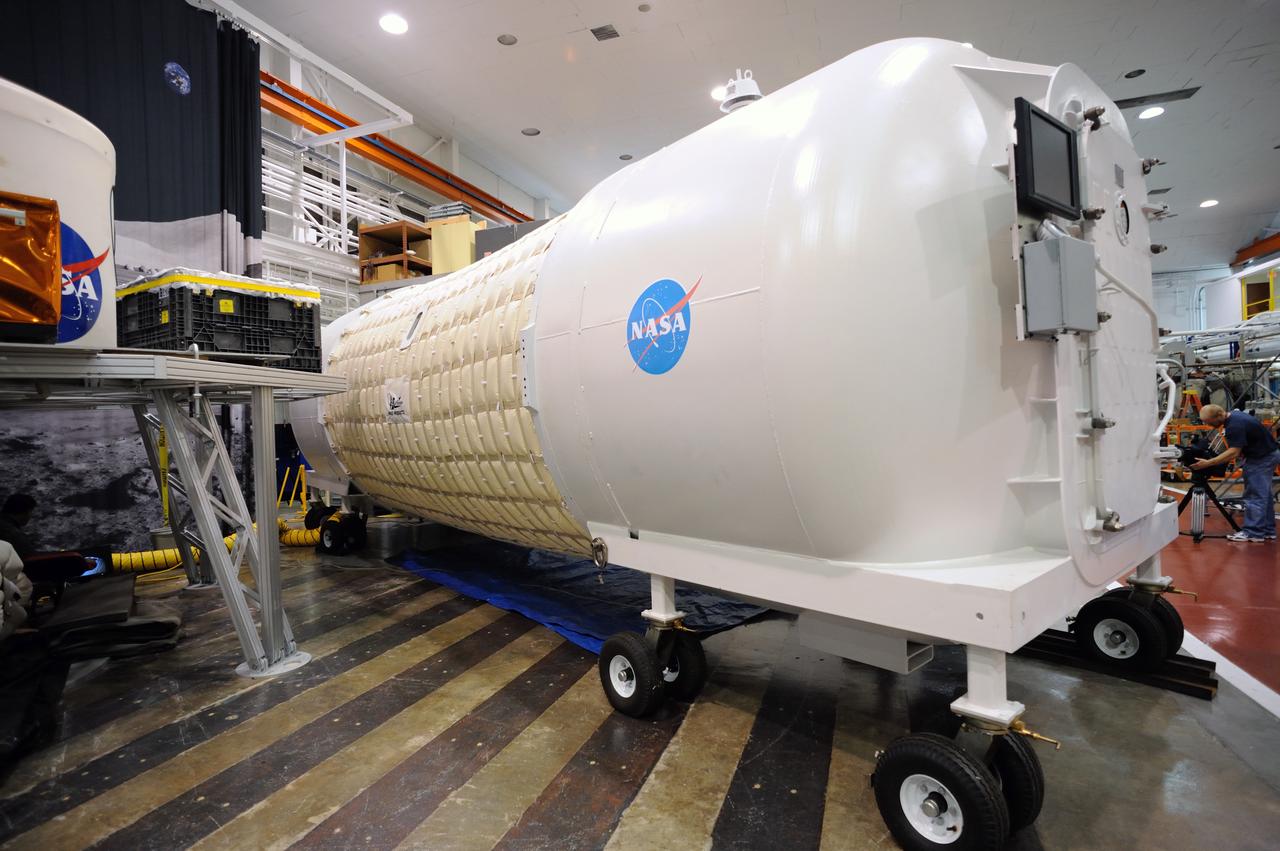
Expandable Lunar Habitat (X-Hab).ILC Dover, under contract by NASA Langley Research Center, and in cooperation with NASA Johnson Space Center has designed and manufactured an expandable lunar habitat. This cylindrical habitat, or Expandable Lunar Habitat (X-Hab) is a hybrid system with two hard end caps and a deployable softgoods section in the center.
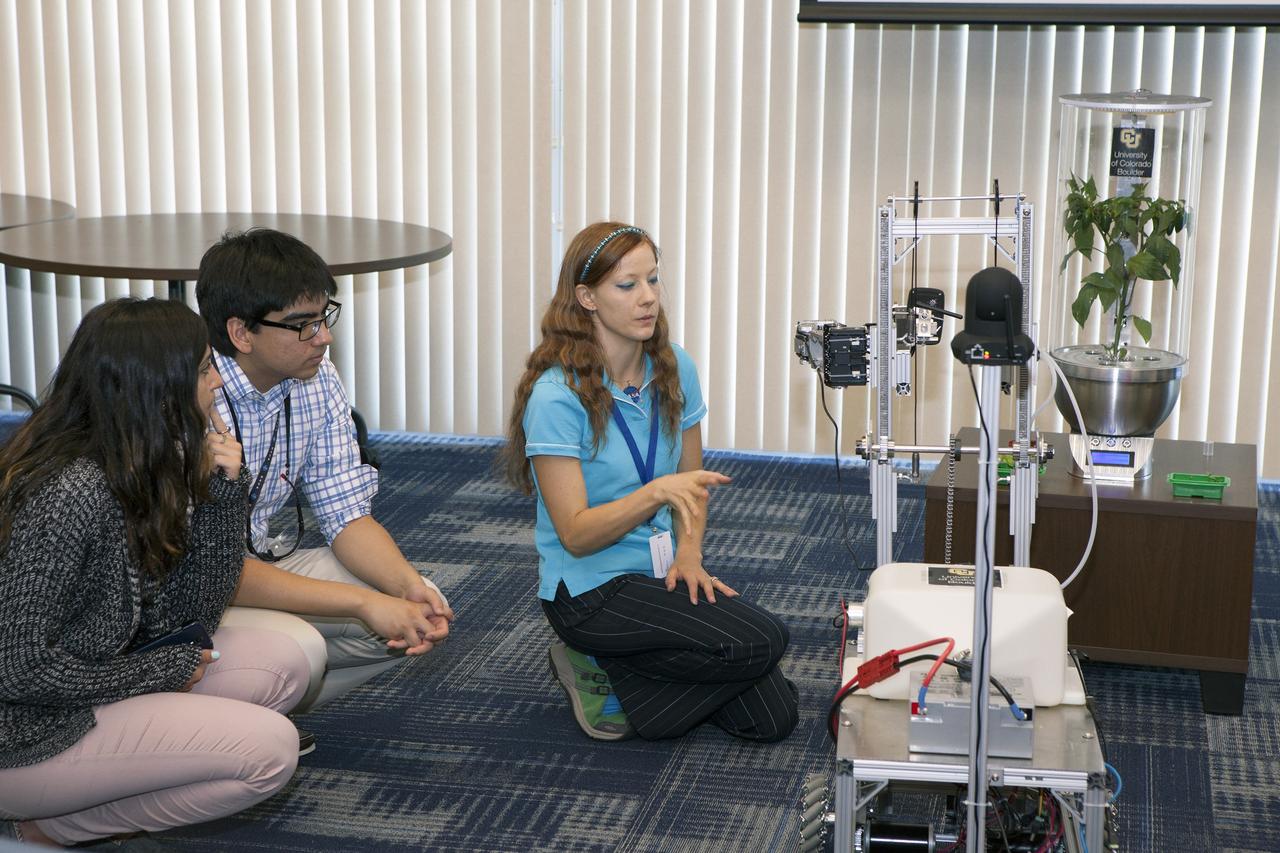
CAPE CANAVERAL, Fla. -- At the Kennedy Space Center in Florida, Heather Hava, who is working on a doctorate in aerospace engineering sciences at the University of Colorado Boulder, describes a Remotely Operated Gardening Rover, or ROGR, which could tend to plants grown in one of the SmartPots, or SPOTS seen on the right. The system is being developed by the graduate students participating in the eXploration HABitat X-Hab Academic Innovation Challenge. X-Hab Academic Innovation Challenge is a university-level activity designed to engage and retain students in science, technology, engineering and math, or STEM, disciplines. NASA will directly benefit from the effort by sponsoring the development of innovative habitat concepts from universities which may result in innovative ideas and solutions that could be applied to exploration habitats. For more: http://www.nasa.gov/exploration/technology/deep_space_habitat/xhab/ Photo credit: NASA/Daniel Casper
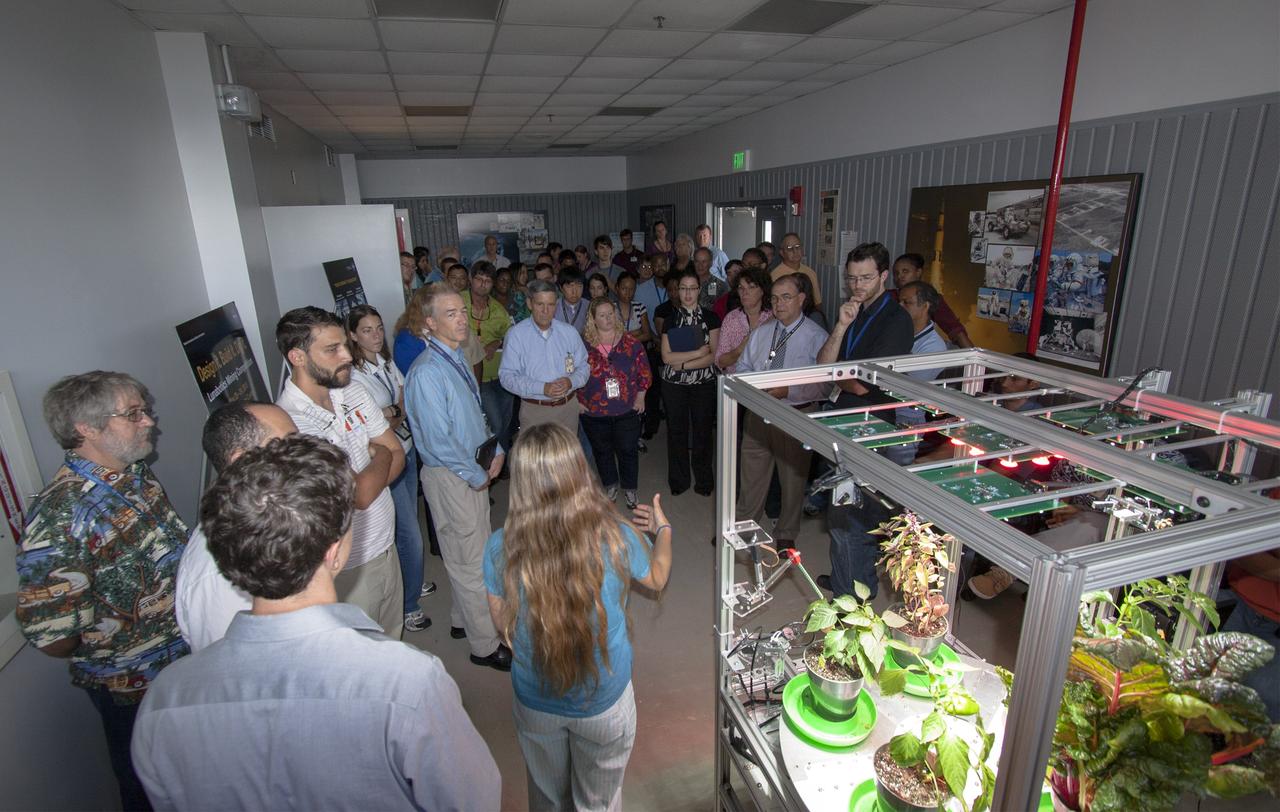
CAPE CANAVERAL, Fla. -- At the Kennedy Space Center in Florida, students from University of Colorado describe a robotic capability for growing a variety of plants, both for consumption as well as the benefit of oxygen-carbon dioxide cycling. Considerations range from monitoring and nutrient supply to selection of plants and autonomy. The activity is part of the eXploration Habitat, or X-Hab, Academic Innovation Challenge. X-Hab Academic Innovation Challenge is a university-level activity designed to engage and retain students in Science, Technology, Engineering and Math, or STEM, disciplines. NASA will directly benefit from the effort by sponsoring the development of innovative habitat concepts from universities which may result in innovative ideas and solutions that could be applied to exploration habitats. For more: http://www.nasa.gov/exploration/technology/deep_space_habitat/xhab/ Photo credit: NASA/Jim Grossmann
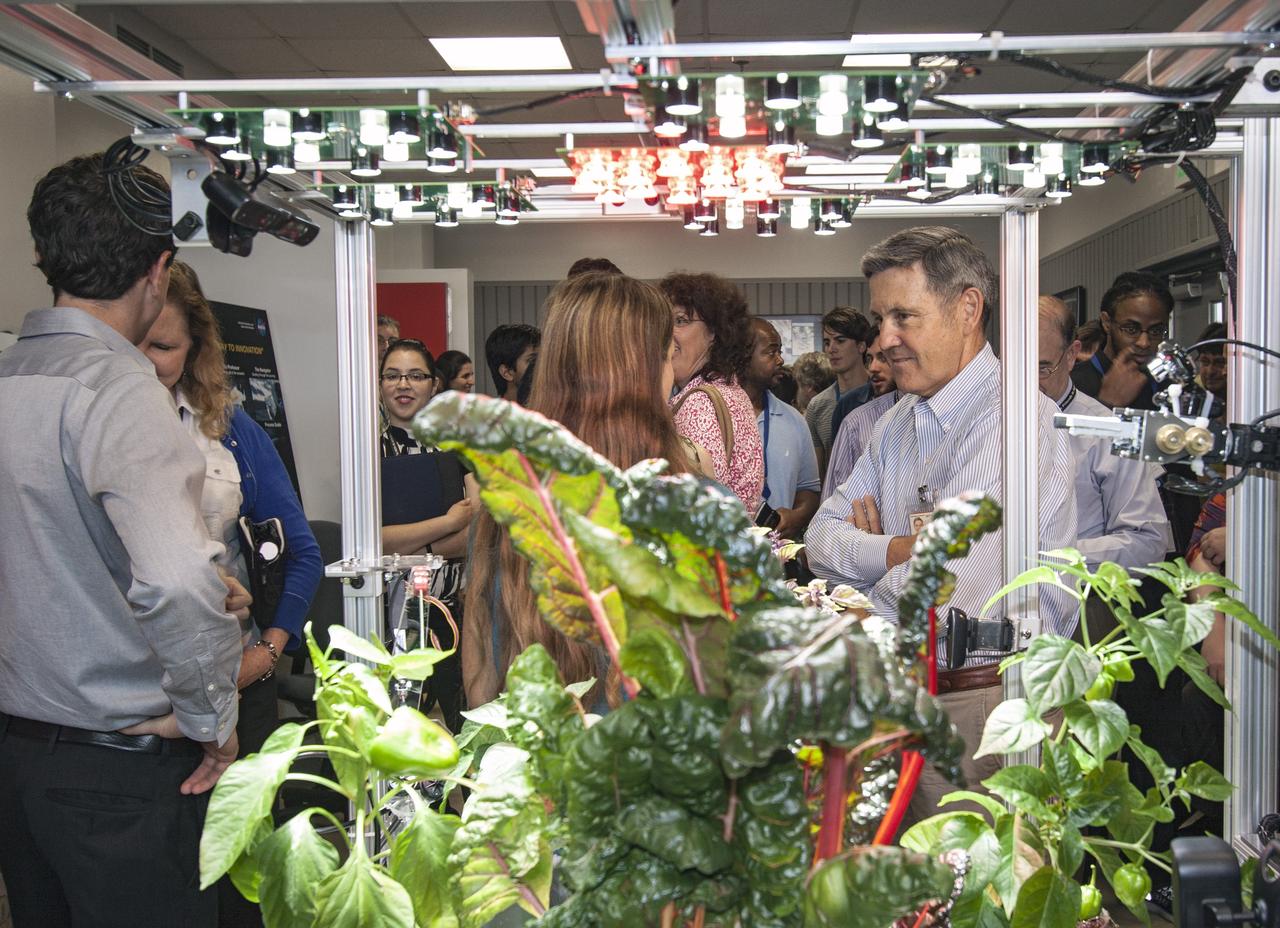
CAPE CANAVERAL, Fla. -- Kennedy Space Center Director Bob Cabana listens as a student from University of Colorado describes a robotic capability for growing a variety of plants, both for consumption as well as the benefit of oxygen-carbon dioxide cycling. Considerations range from monitoring and nutrient supply to selection of plants and autonomy. The activity is part of the eXploration Habitat, or X-Hab, Academic Innovation Challenge. X-Hab Academic Innovation Challenge is a university-level activity designed to engage and retain students in Science, Technology, Engineering and Math, or STEM, disciplines. NASA will directly benefit from the effort by sponsoring the development of innovative habitat concepts from universities which may result in innovative ideas and solutions that could be applied to exploration habitats. For more: http://www.nasa.gov/exploration/technology/deep_space_habitat/xhab/ Photo credit: NASA/Jim Grossmann
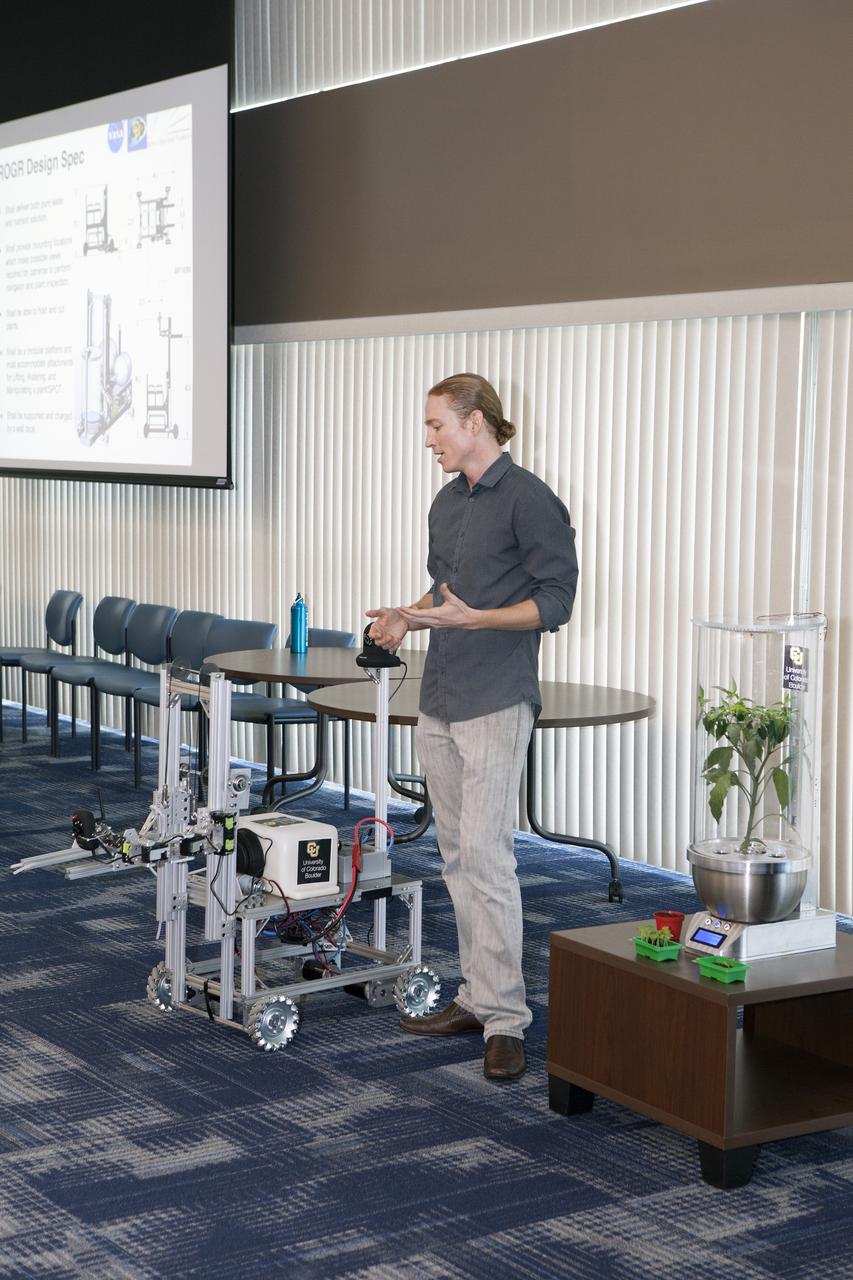
CAPE CANAVERAL, Fla. -- At the Kennedy Space Center in Florida, Daniel Zukowski, a University of Colorado Boulder graduate student, describes a Remotely Operated Gardening Rover, or ROGR, which could tend to plants grown in one of the SmartPots, or SPOTS, seen on the right. The system is being developed by the graduate students participating in the eXploration HABitation X-Hab Academic Innovation Challenge. X-Hab Academic Innovation Challenge is a university-level activity designed to engage and retain students in science, technology, engineering and math, or STEM, disciplines. NASA will directly benefit from the effort by sponsoring the development of innovative habitat concepts from universities which may result in innovative ideas and solutions that could be applied to exploration habitats. For more: http://www.nasa.gov/exploration/technology/deep_space_habitat/xhab/ Photo credit: NASA/Daniel Casper
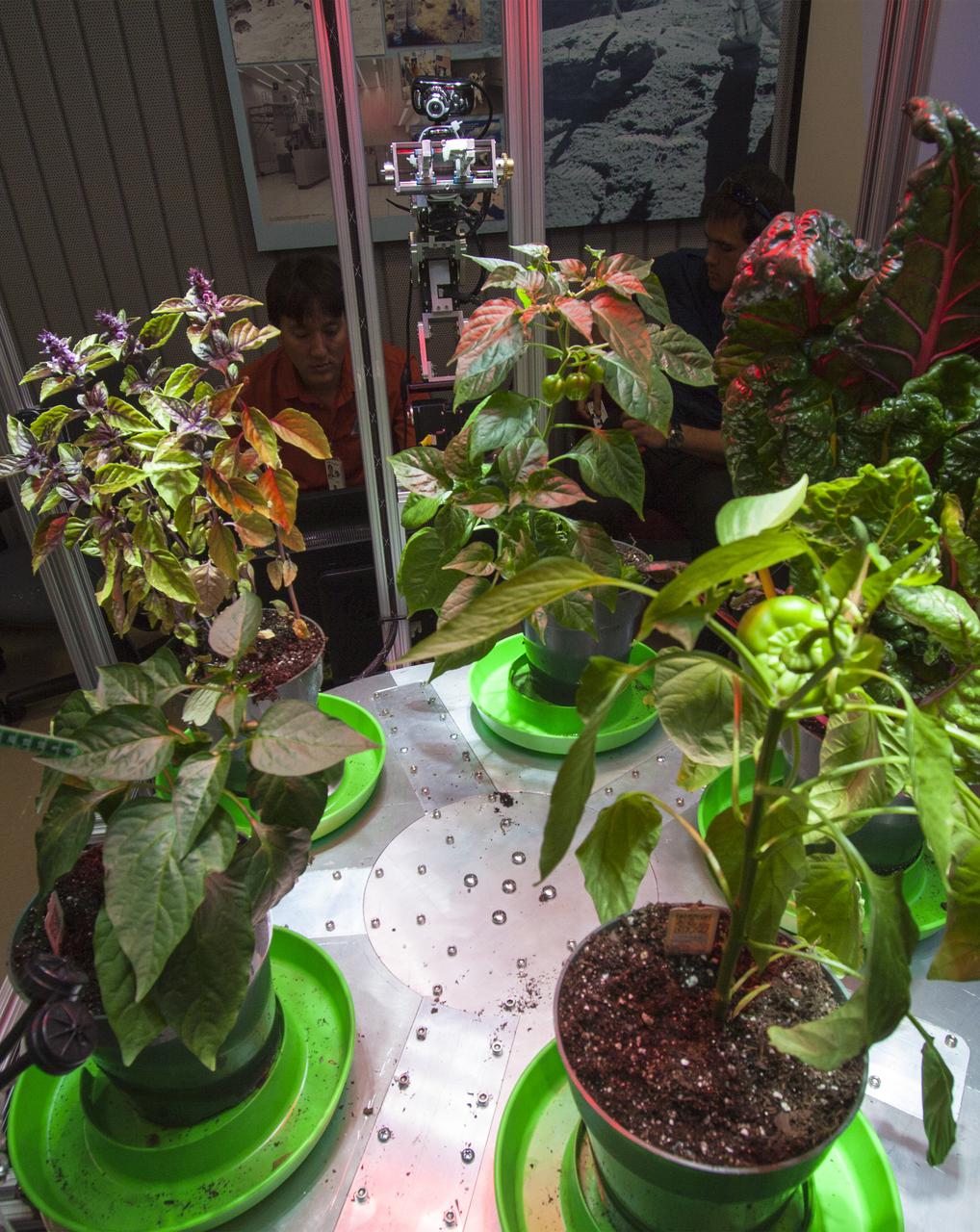
CAPE CANAVERAL, Fla. -- At the Kennedy Space Center in Florida, students from University of Colorado demonstrated a robotic capability for growing a variety of plants, both for consumption as well as the benefit of oxygen-carbon dioxide cycling. Considerations range from monitoring and nutrient supply to selection of plants and autonomy. The activity is part of the eXploration Habitat, or X-Hab, Academic Innovation Challenge. X-Hab Academic Innovation Challenge is a university-level activity designed to engage and retain students in Science, Technology, Engineering and Math, or STEM, disciplines. NASA will directly benefit from the effort by sponsoring the development of innovative habitat concepts from universities which may result in innovative ideas and solutions that could be applied to exploration habitats. For more: http:__www.nasa.gov_exploration_technology_deep_space_habitat_xhab_ Photo credit: NASA_Jim Grossmann
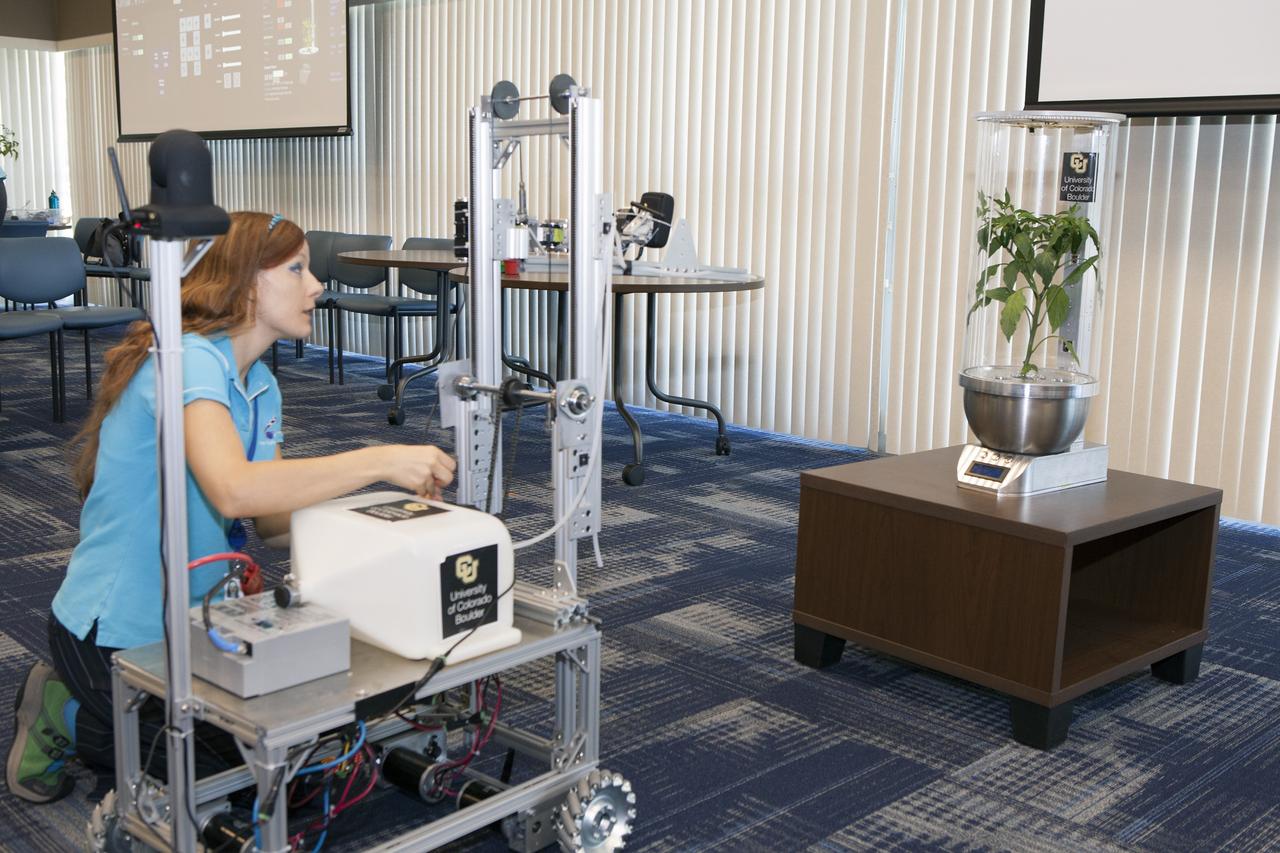
CAPE CANAVERAL, Fla. -- At the Kennedy Space Center in Florida, Heather Hava, who is working on a doctorate in aerospace engineering sciences at the University of Colorado Boulder, makes adjustments on a Remotely Operated Gardening Rover, or ROGR, which could tend to plants grown in one of the SmartPots, or SPOTS seen on the right. The system is being developed by the graduate students participating in the eXploration HABitat X-Hab Academic Innovation Challenge. X-Hab Academic Innovation Challenge is a university-level activity designed to engage and retain students in science, technology, engineering and math, or STEM, disciplines. NASA will directly benefit from the effort by sponsoring the development of innovative habitat concepts from universities which may result in innovative ideas and solutions that could be applied to exploration habitats. For more: http://www.nasa.gov/exploration/technology/deep_space_habitat/xhab/ Photo credit: NASA/Daniel Casper
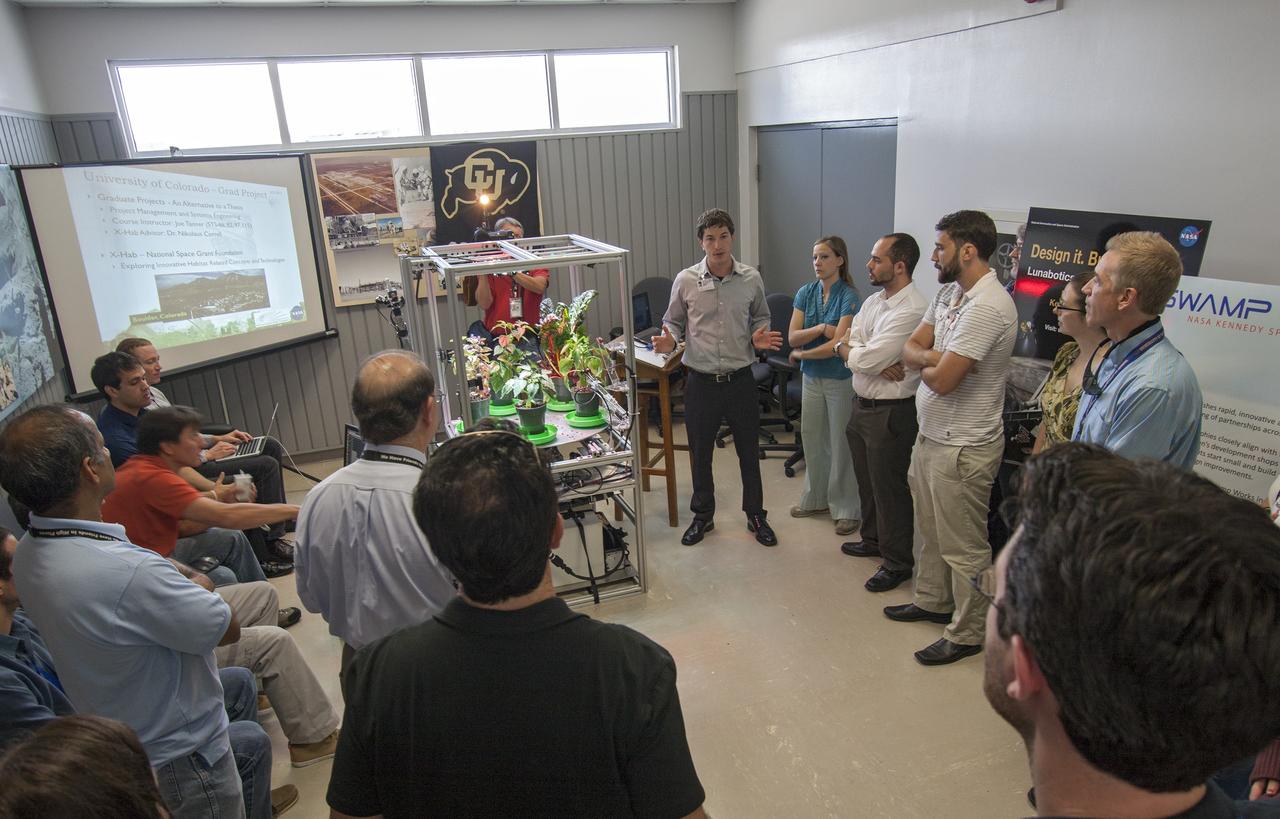
CAPE CANAVERAL, Fla. -- At the Kennedy Space Center in Florida, students from University of Colorado describe a robotic capability for growing a variety of plants, both for consumption as well as the benefit of oxygen-carbon dioxide cycling. Considerations range from monitoring and nutrient supply to selection of plants and autonomy. The activity is part of the eXploration Habitat, or X-Hab, Academic Innovation Challenge. X-Hab Academic Innovation Challenge is a university-level activity designed to engage and retain students in Science, Technology, Engineering and Math, or STEM, disciplines. NASA will directly benefit from the effort by sponsoring the development of innovative habitat concepts from universities which may result in innovative ideas and solutions that could be applied to exploration habitats. For more: http://www.nasa.gov/exploration/technology/deep_space_habitat/xhab/ Photo credit: NASA/Jim Grossmann
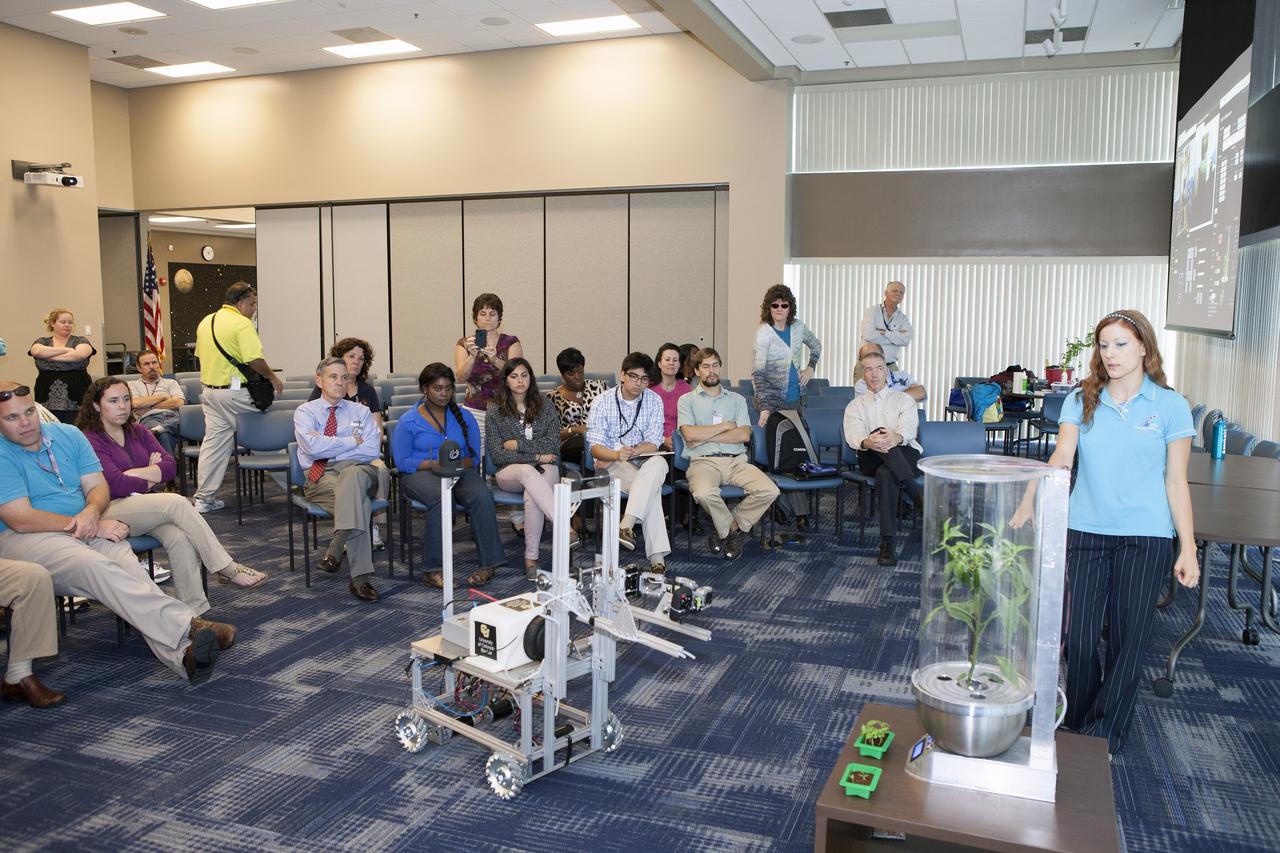
CAPE CANAVERAL, Fla. -- At the Kennedy Space Center in Florida, Heather Hava, right, who is working on a doctorate in aerospace engineering sciences at the University of Colorado Boulder, describes a computerized SmartPot, or SPOT, which could be used to grow plants in a deep-space habitat. The SPOTs could be tended by a Remotely Operated Gardening Rover, or ROGR, seen on the left. The system is being developed by the graduate students participating in the eXploration HABitat X-Hab Academic Innovation Challenge. X-Hab Academic Innovation Challenge is a university-level activity designed to engage and retain students in science, technology, engineering and math, or STEM, disciplines. NASA will directly benefit from the effort by sponsoring the development of innovative habitat concepts from universities which may result in innovative ideas and solutions that could be applied to exploration habitats. For more: http://www.nasa.gov/exploration/technology/deep_space_habitat/xhab/ Photo credit: NASA/Daniel Casper
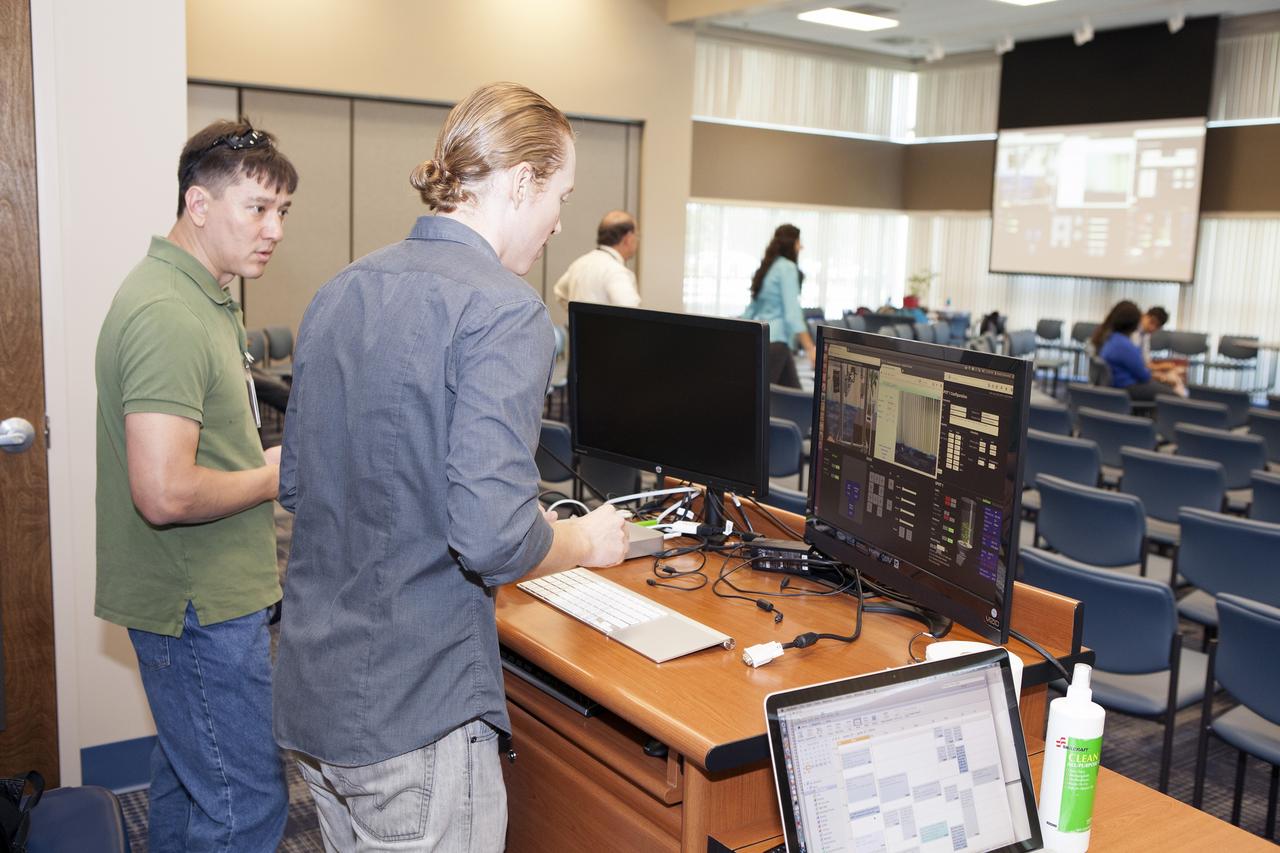
CAPE CANAVERAL, Fla. -- At the Kennedy Space Center in Florida, students from the University of Colorado Boulder demonstrated a robotic capability for growing a variety of plants in a deep-space habitat. Daniel Zukowski, a University of Colorado Boulder graduate student, right, and Morgan Simpson of the NASA Ground Processing Directorate, check computer displays during a presentation of the team's entry in the eXploration HABitat X-Hab Academic Innovation Challenge. In their concept called "Plants Anywhere: Plants Growing in Free Habitat Spaces," their approach calls for robotically tended plants to be scattered in any available space in a deep-space habitat instead of an area set aside just for vegetation. X-Hab Academic Innovation Challenge is a university-level activity designed to engage and retain students in science, technology, engineering and math, or STEM, disciplines. NASA will directly benefit from the effort by sponsoring the development of innovative habitat concepts from universities which may result in innovative ideas and solutions that could be applied to exploration habitats. For more: http://www.nasa.gov/exploration/technology/deep_space_habitat/xhab/ Photo credit: NASA/Daniel Casper
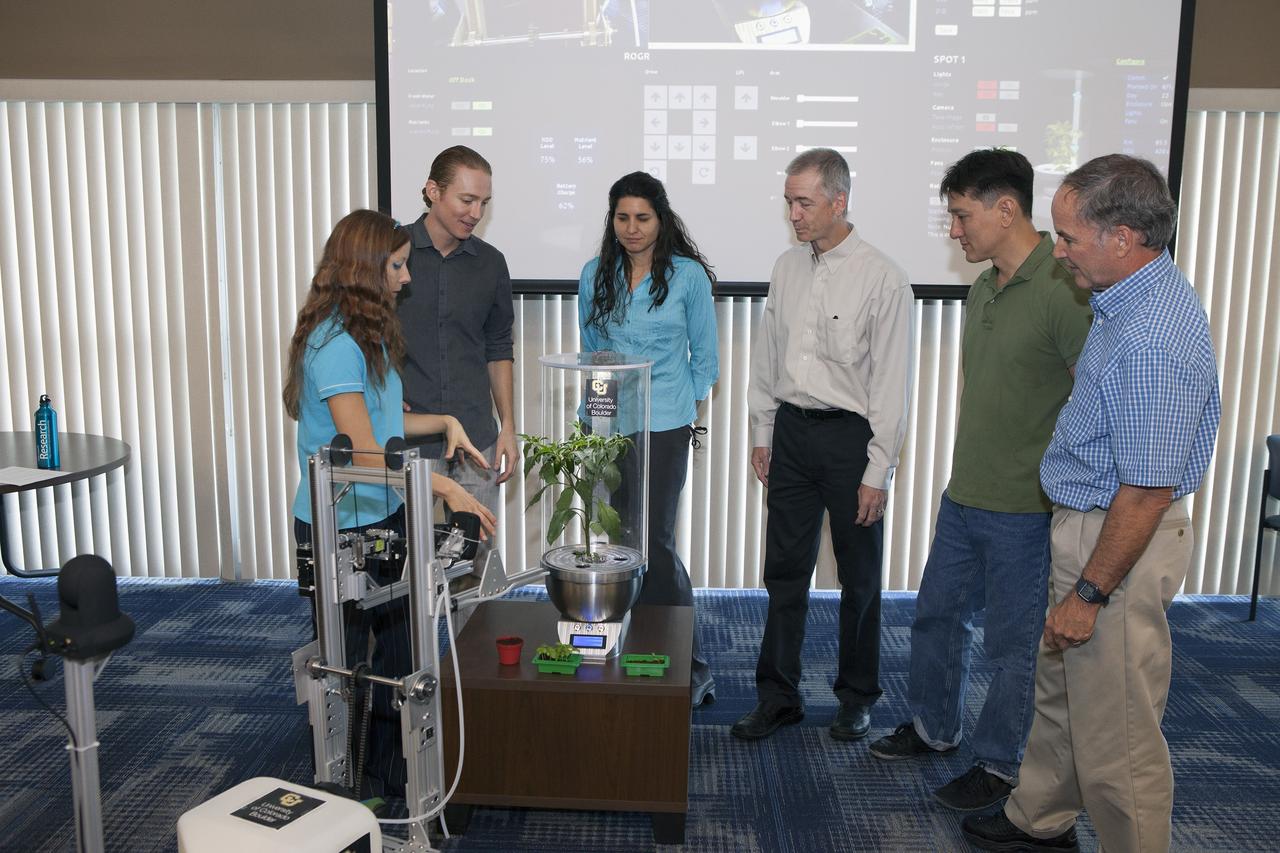
CAPE CANAVERAL, Fla. -- At the Kennedy Space Center in Florida, University of Colorado Boulder graduate students Heather Hava, far left, and Daniel Zukowski, second from the left, describe a computerized SmartPot, or SPOT, which could be used to grow plants in a deep-space habitat. The SPOTs could be tended by a Remotely Operated Gardening Rover, or ROGR, seen on the left. The system is being developed by the graduate students participating in the eXploration HABitat X-Hab Academic Innovation Challenge. From the left are Hava, Zukowski, Gioia Massa of the NASA International Space Station Ground Processing and Research Project Office, Tracy Gill of the NASA Center Planning and Development Directorate, Morgan Simpson of the NASA Ground Processing Directorate, and Ray Wheeler of the NASA Engineering and Technology Directorate. X-Hab Academic Innovation Challenge is a university-level activity designed to engage and retain students in science, technology, engineering and math, or STEM, disciplines. NASA will directly benefit from the effort by sponsoring the development of innovative habitat concepts from universities which may result in innovative ideas and solutions that could be applied to exploration habitats. For more: http://www.nasa.gov/exploration/technology/deep_space_habitat/xhab/ Photo credit: NASA/Daniel Casper
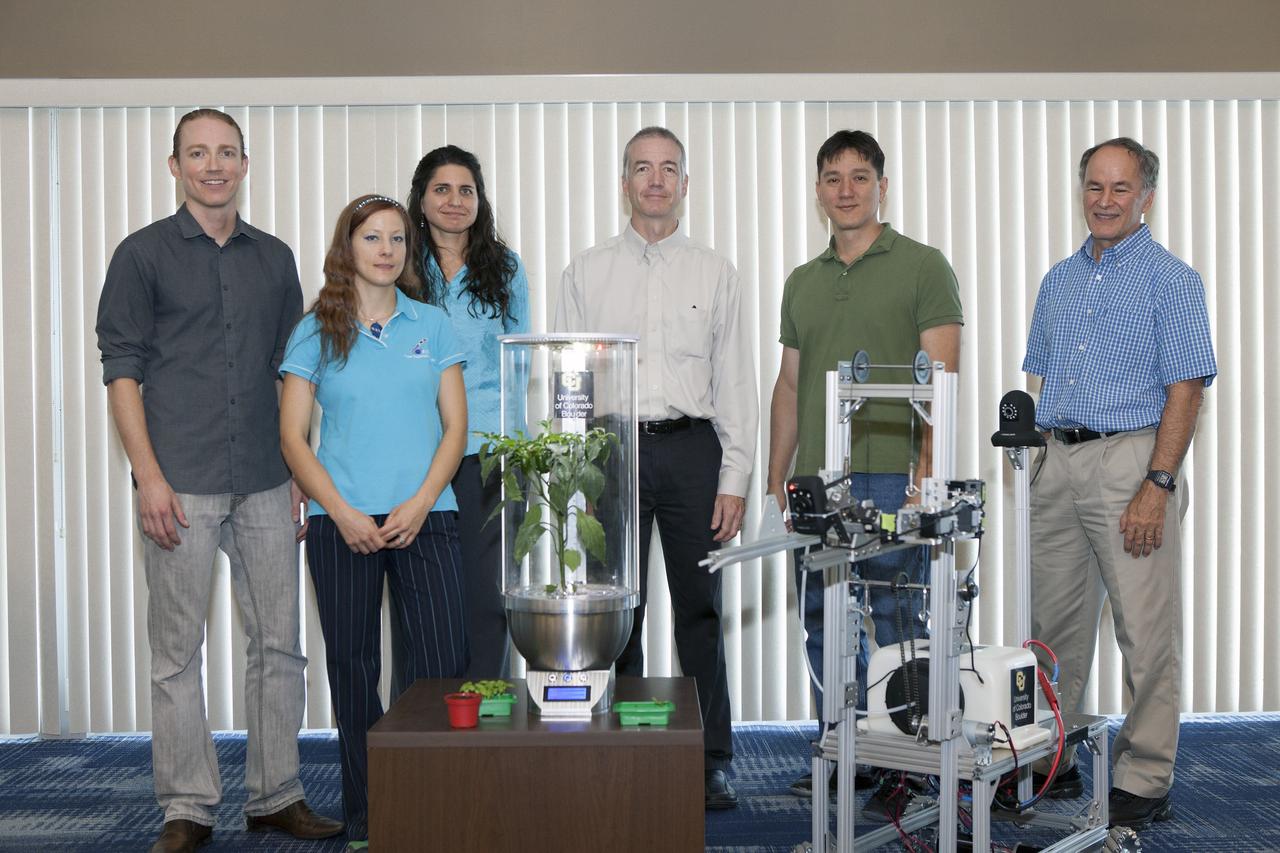
CAPE CANAVERAL, Fla. -- At the Kennedy Space Center in Florida, University of Colorado Boulder graduate students Heather Hava, far left, and Daniel Zukowski, second from the left, pose with a computerized SmartPot, or SPOT, which could be used to grow plants in a deep-space habitat. To the right of the SPOT is a Remotely Operated Gardening Rover, or ROGR. The system is being developed by the graduate students participating in the eXploration HABitat X-Hab Academic Innovation Challenge. From the left are Zukowski, Hava, Gioia Massa of the NASA International Space Station Ground Processing and Research Project Office, Tracy Gill of the NASA Center Planning and Development Directorate, Morgan Simpson of the NASA Ground Processing Directorate, and Ray Wheeler of the NASA Engineering and Technology Directorate. X-Hab Academic Innovation Challenge is a university-level activity designed to engage and retain students in science, technology, engineering and math, or STEM, disciplines. NASA will directly benefit from the effort by sponsoring the development of innovative habitat concepts from universities which may result in innovative ideas and solutions that could be applied to exploration habitats. For more: http://www.nasa.gov/exploration/technology/deep_space_habitat/xhab/ Photo credit: NASA/Daniel Casper
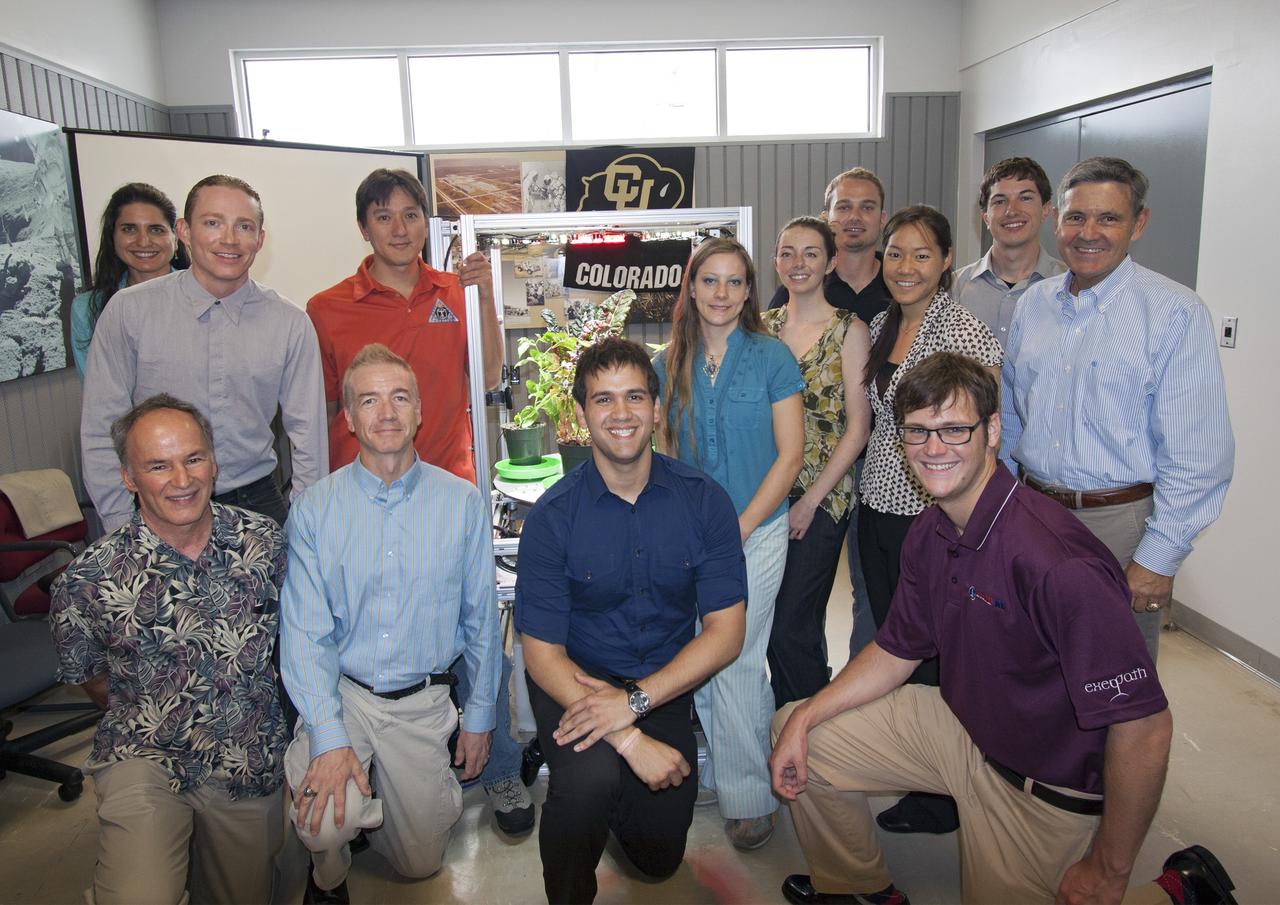
CAPE CANAVERAL, Fla. -- At the Kennedy Space Center in Florida, students from University of Colorado are working with NASA mentors in developing a robotic capability for growing a variety of plants, both for consumption as well as the benefit of oxygen-carbon dioxide cycling. Considerations range from monitoring and nutrient supply to selection of plants and autonomy. The activity is part of the eXploration Habitat, or X-Hab, Academic Innovation Challenge. Standing, left to right, are Gioia Massa of the NASA ISS Ground Processing and Research Project Office, Daniel Zukowski, Morgan Simpson of the NASA Ground Processing Directorate, Heather Hava, Keira Havens, Matthew Carton, Christine Fanchiang, Jordan Holquist and Kennedy Director Bob Cabana. Kneeling, left to right, are Ray Wheeler of the NASA Engineering and Technology Directorate, Tracy Gill of the NASA Center Planning and Development Directorate, Scott Mishra and Robert Griffin Hale. Hab Academic Innovation Challenge is a university-level activity designed to engage and retain students in Science, Technology, Engineering and Math, or STEM, disciplines. NASA will directly benefit from the effort by sponsoring the development of innovative habitat concepts from universities which may result in innovative ideas and solutions that could be applied to exploration habitats. For more: http://www.nasa.gov/exploration/technology/deep_space_habitat/xhab/ Photo credit: NASA/Jim Grossmann

CAPE CANAVERAL, Fla. -- At the Kennedy Space Center in Florida, Heather Hava, who is working on a doctorate in aerospace engineering sciences at the University of Colorado Boulder, makes adjustments on a Remotely Operated Gardening Rover, or ROGR, which could tend plants on a deep-space habitat. X-Hab Academic Innovation Challenge is a university-level activity designed to engage and retain students in science, technology, engineering and math, or STEM, disciplines. NASA will directly benefit from the effort by sponsoring the development of innovative habitat concepts from universities which may result in innovative ideas and solutions that could be applied to exploration habitats. For more: http://www.nasa.gov/exploration/technology/deep_space_habitat/xhab/ Photo credit: NASA/Daniel Casper