
CAPE CANAVERAL, Fla. – In Port Canaveral, Fla., the crane is removed from the X-band radar after installation on the deck of the U.S. Army landing craft utility ship Brandy Station. The radar will provide critical support during launch of space shuttle Atlantis on the STS-125 mission. The radar will work with smaller X-band radars placed on the solid rocket booster retrieval ship Liberty Star to provide extremely high-resolution images of any debris that might be created during Atlantis' launch. Photo credit: NASA/Kim Shiflett
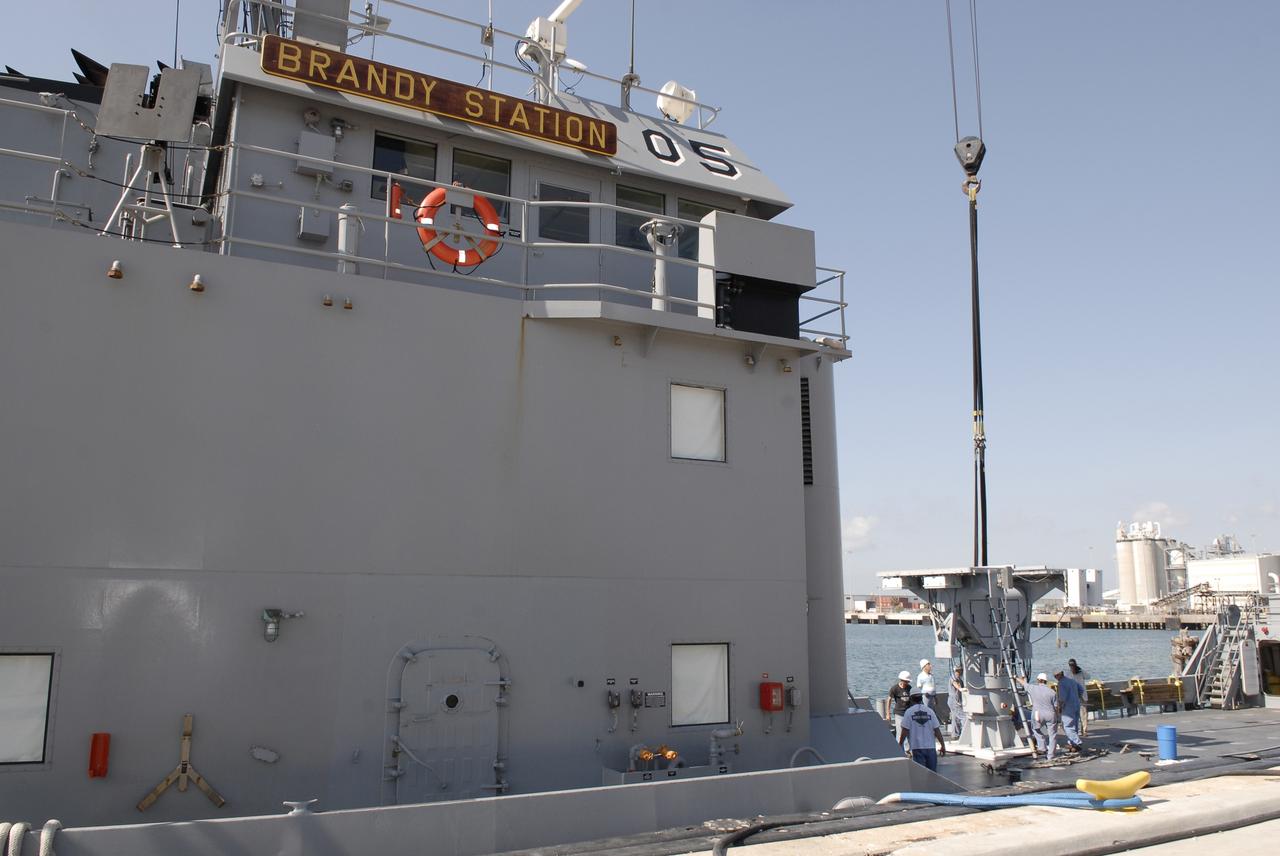
CAPE CANAVERAL, Fla. – In Port Canaveral, Fla., technicians complete installation of the X-band radar (right) on the deck of the U.S. Army landing craft utility ship Brandy Station. The radar will provide critical support during launch of space shuttle Atlantis on the STS-125 mission. The radar will work with smaller X-band radars placed on the solid rocket booster retrieval ship Liberty Star to provide extremely high-resolution images of any debris that might be created during Atlantis' launch. Photo credit: NASA/Kim Shiflett
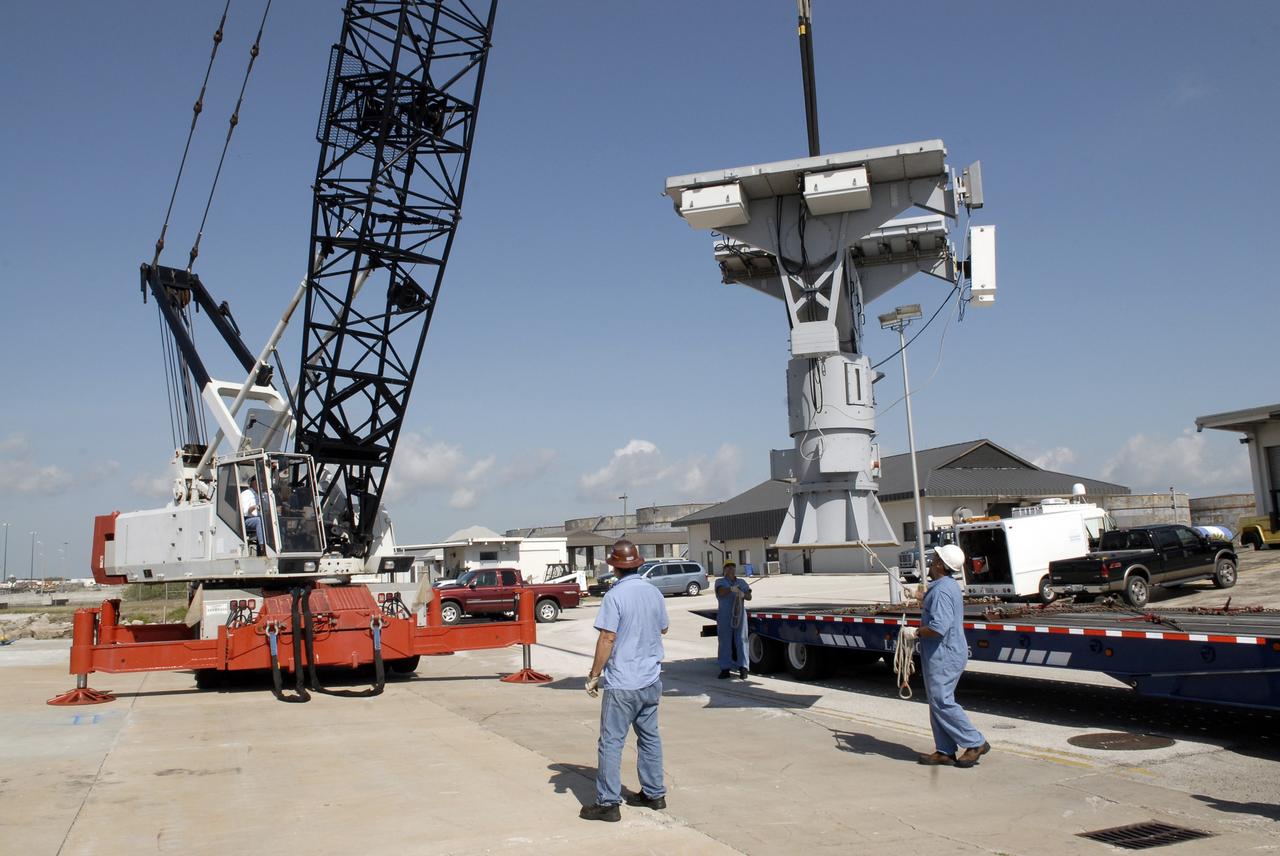
CAPE CANAVERAL, Fla. – In Port Canaveral, Fla., a crane lifts the X-band radar from its transporter to move it onto the U.S. Army landing craft utility ship Brandy Station. The radar will provide critical support during launch of space shuttle Atlantis on the STS-125 mission. The radar will work with smaller X-band radars placed on the solid rocket booster retrieval ship Liberty Star to provide extremely high-resolution images of any debris that might be created during Atlantis' launch. Photo credit: NASA/Kim Shiflett
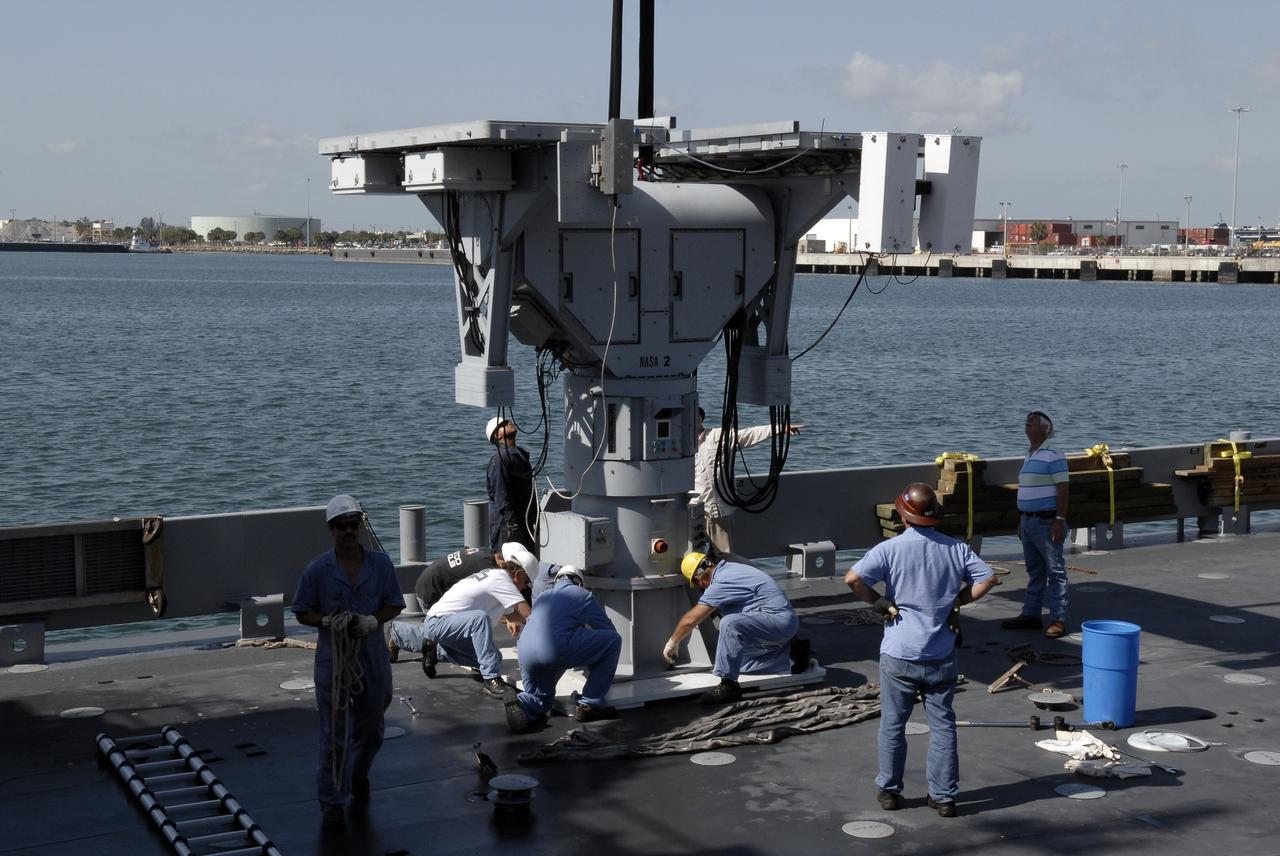
CAPE CANAVERAL, Fla. – In Port Canaveral, Fla., technicians help install the X-band radar on the deck of the U.S. Army landing craft utility ship Brandy Station. The radar will provide critical support during launch of space shuttle Atlantis on the STS-125 mission. The radar will work with smaller X-band radars placed on the solid rocket booster retrieval ship Liberty Star to provide extremely high-resolution images of any debris that might be created during Atlantis' launch. Photo credit: NASA/Kim Shiflett
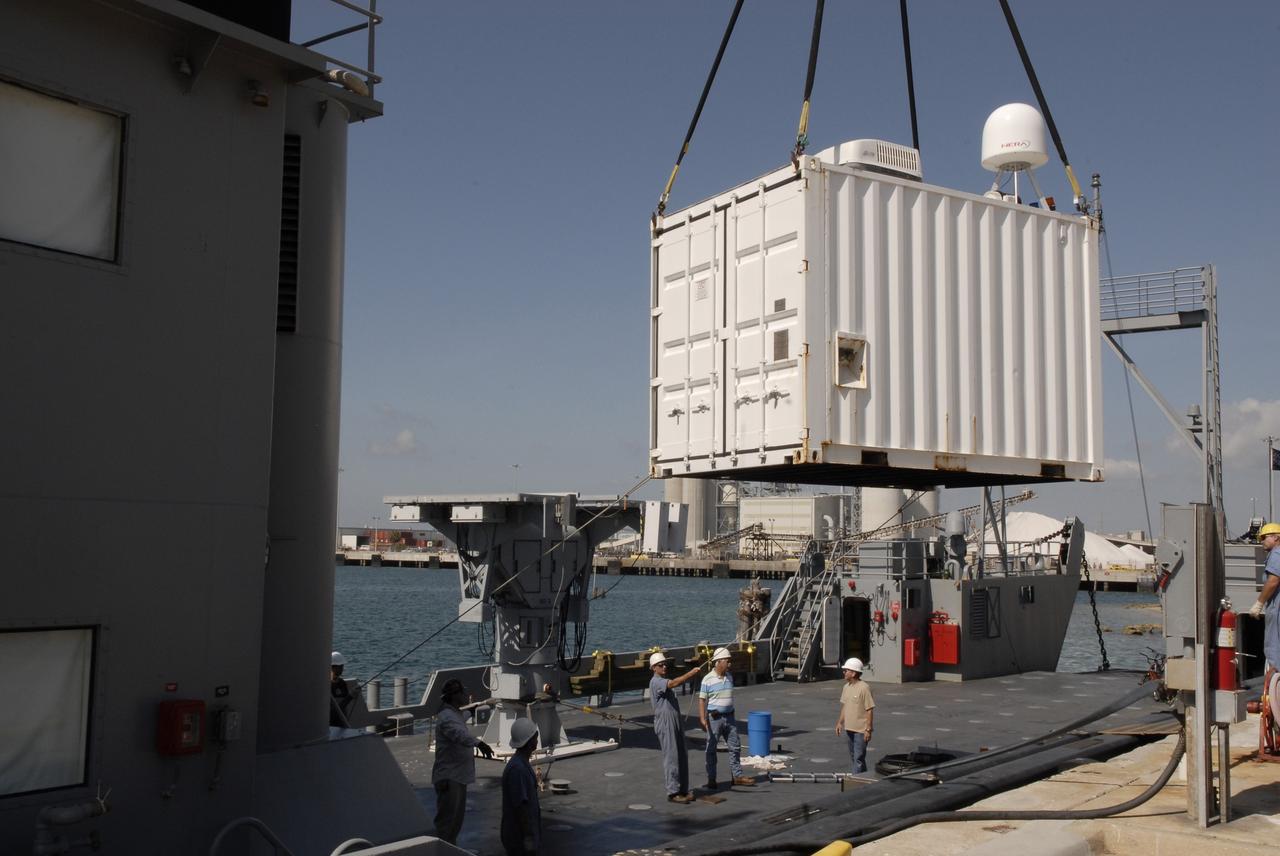
CAPE CANAVERAL, Fla. – In Port Canaveral, Fla., a crane moves a container toward the deck of the U.S. Army landing craft utility ship Brandy Station. Inside is the control center for the X-band radar installed on the deck of the ship. The radar will provide critical support during launch of space shuttle Atlantis on the STS-125 mission. The radar will work with smaller X-band radars placed on the solid rocket booster retrieval ship Liberty Star to provide extremely high-resolution images of any debris that might be created during Atlantis' launch. Photo credit: NASA/Kim Shiflett
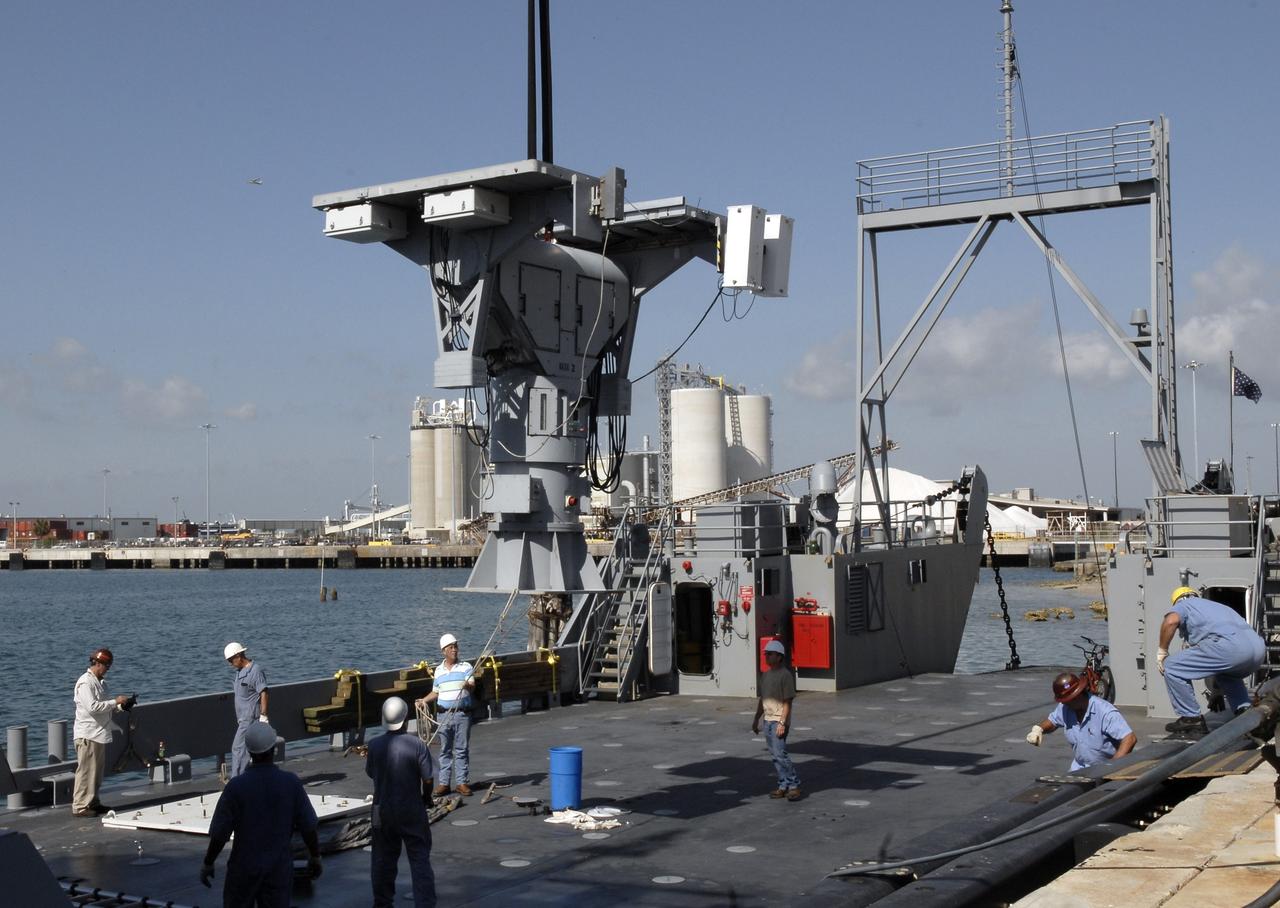
CAPE CANAVERAL, Fla. – In Port Canaveral, Fla., a crane lowers the X-band radar onto the U.S. Army landing craft utility ship Brandy Station. The radar will provide critical support during launch of space shuttle Atlantis on the STS-125 mission. The radar will work with smaller X-band radars placed on the solid rocket booster retrieval ship Liberty Star to provide extremely high-resolution images of any debris that might be created during Atlantis' launch. Photo credit: NASA/Kim Shiflett
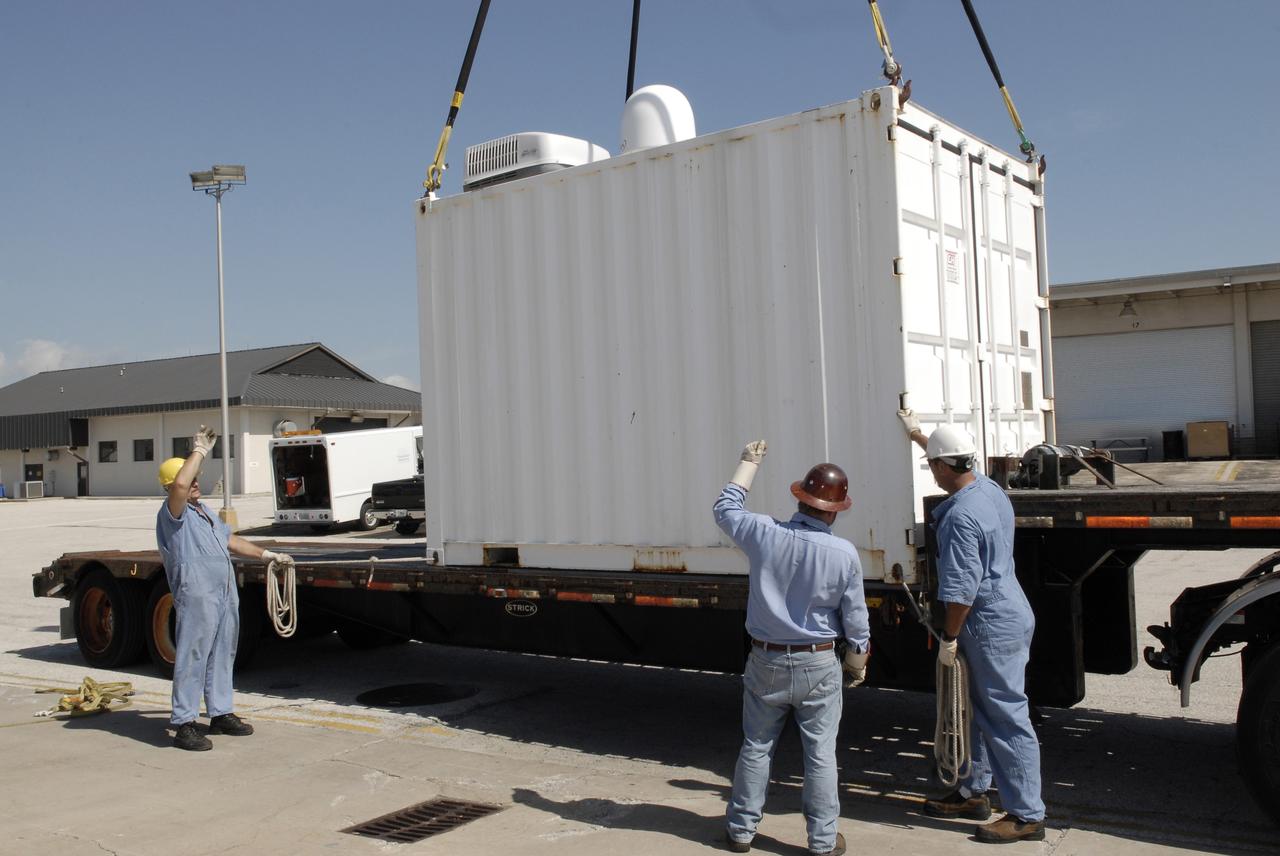
CAPE CANAVERAL, Fla. – In Port Canaveral, Fla., a container is lifted from the transporter for transfer to the U.S. Army landing craft utility ship Brandy Station. Inside is the control center for the X-band radar installed on the deck of the ship. The radar will provide critical support during launch of space shuttle Atlantis on the STS-125 mission. The radar will work with smaller X-band radars placed on the solid rocket booster retrieval ship Liberty Star to provide extremely high-resolution images of any debris that might be created during Atlantis' launch. Photo credit: NASA/Kim Shiflett
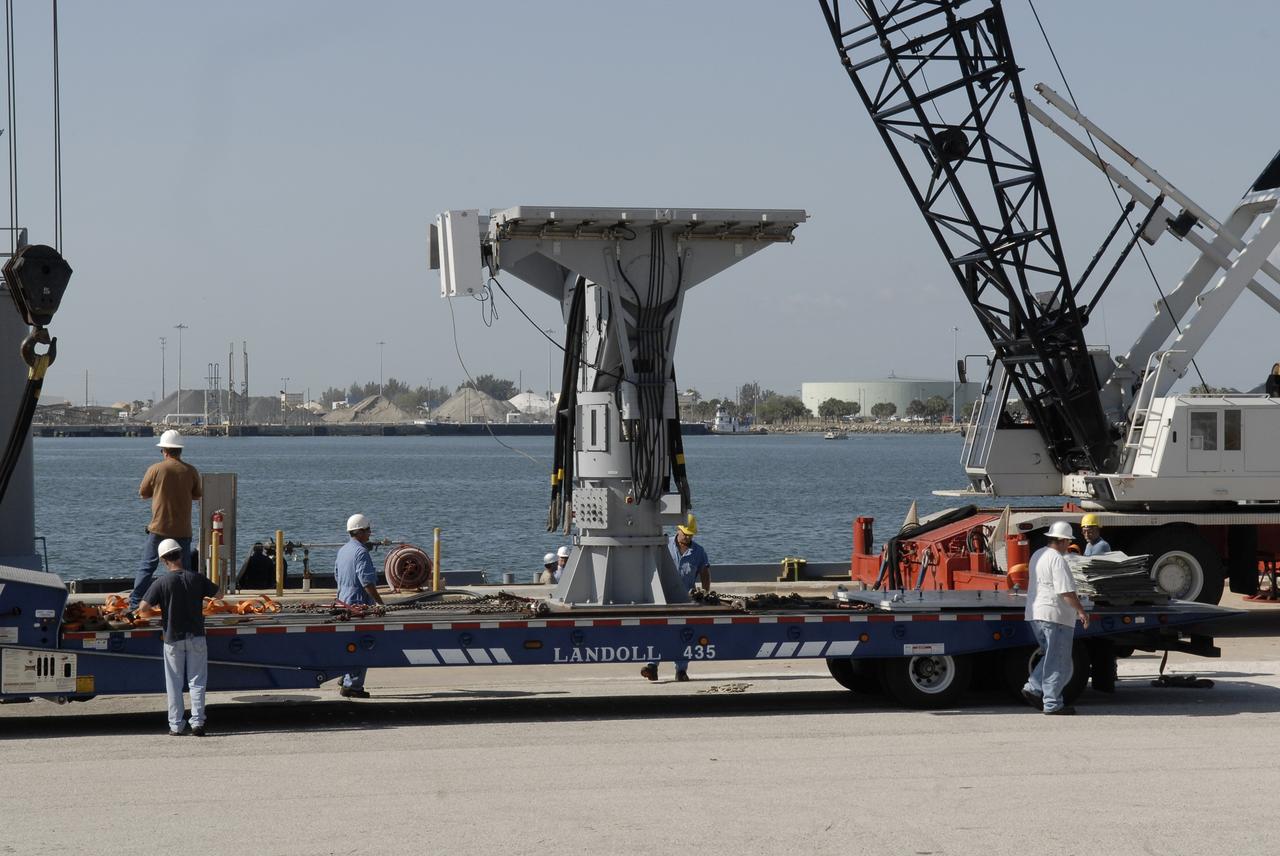
CAPE CANAVERAL, Fla. – An X-band radar waits to be installed on the U.S. Army landing craft utility ship Brandy Station in Port Canaveral, Fla. The radar will provide critical support during launch of space shuttle Atlantis on the STS-125 mission. The radar will work with smaller X-band radars placed on the solid rocket booster retrieval ship Liberty Star to provide extremely high-resolution images of any debris that might be created during Atlantis' launch. Photo credit: NASA/Kim Shiflett
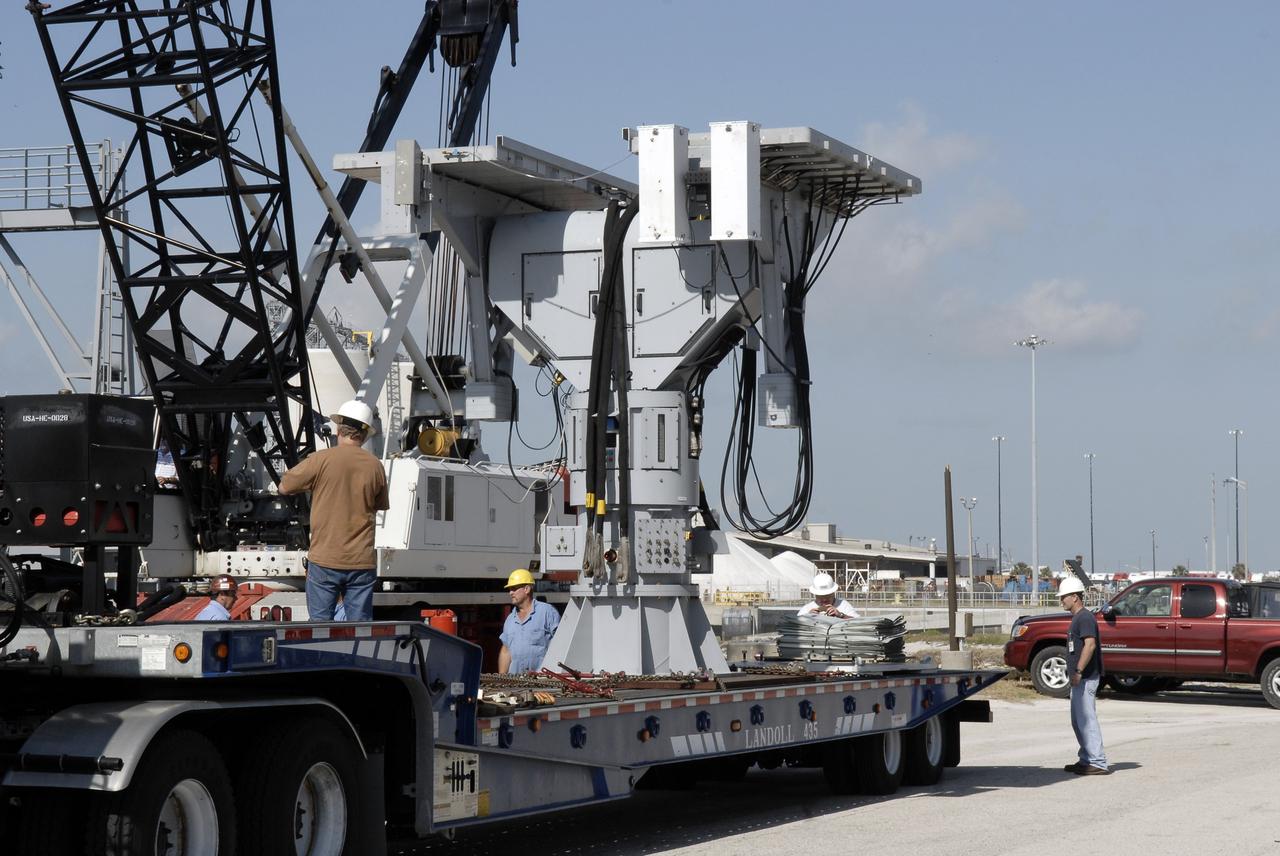
CAPE CANAVERAL, Fla. – In Port Canaveral, Fla., a crane is moved into position to lift the X-band radar onto the U.S. Army landing craft utility ship Brandy Station. The radar will provide critical support during launch of space shuttle Atlantis on the STS-125 mission. The radar will work with smaller X-band radars placed on the solid rocket booster retrieval ship Liberty Star to provide extremely high-resolution images of any debris that might be created during Atlantis' launch. Photo credit: NASA/Kim Shiflett
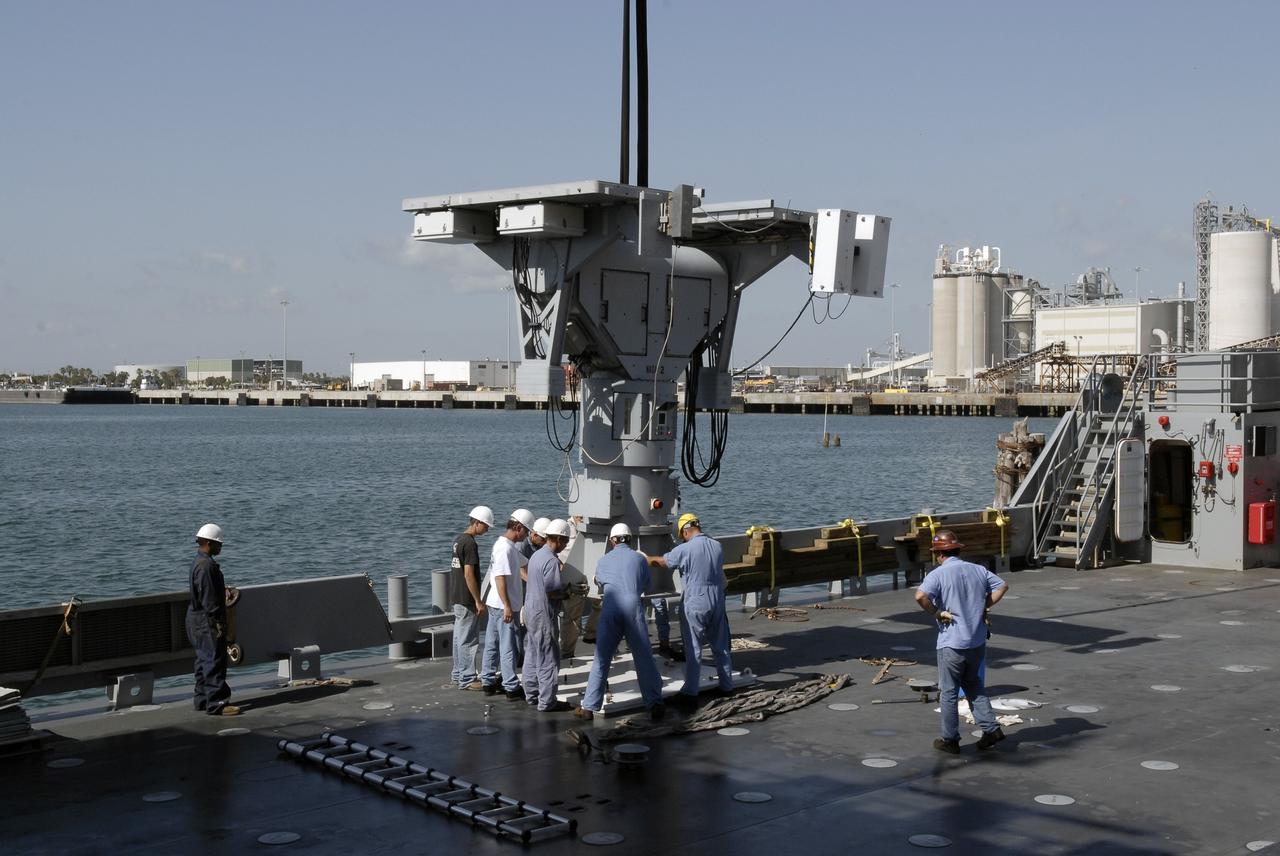
CAPE CANAVERAL, Fla. – In Port Canaveral, Fla., technicians help place the X-band radar on the deck of the U.S. Army landing craft utility ship Brandy Station. The radar will provide critical support during launch of space shuttle Atlantis on the STS-125 mission. The radar will work with smaller X-band radars placed on the solid rocket booster retrieval ship Liberty Star to provide extremely high-resolution images of any debris that might be created during Atlantis' launch. Photo credit: NASA/Kim Shiflett
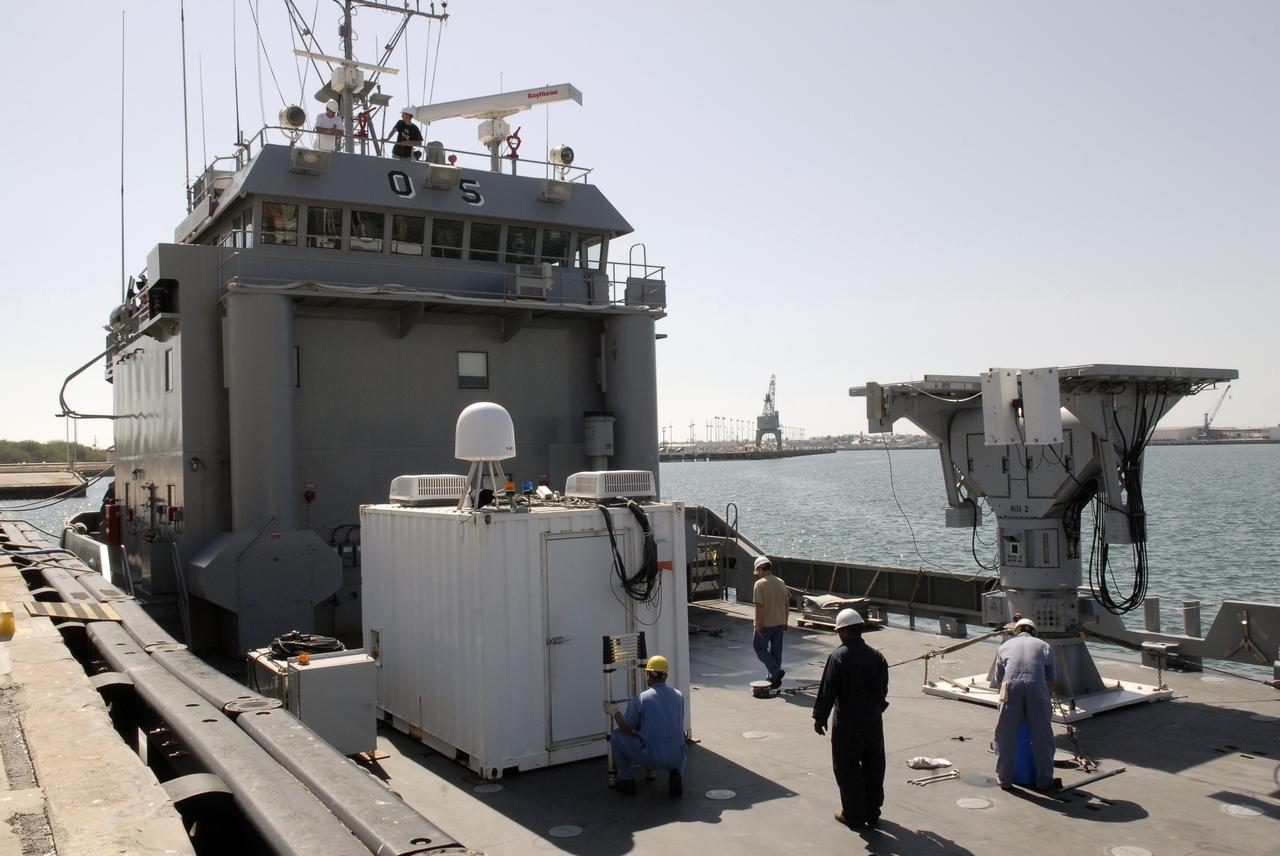
CAPE CANAVERAL, Fla. – In Port Canaveral, Fla., workers prepare the container that holds the control center for the X-band radar, at right, installed on the U.S. Army landing craft utility ship Brandy Station. The radar will provide critical support during launch of space shuttle Atlantis on the STS-125 mission. The radar will work with smaller X-band radars placed on the solid rocket booster retrieval ship Liberty Star to provide extremely high-resolution images of any debris that might be created during Atlantis' launch. Photo credit: NASA/Kim Shiflett
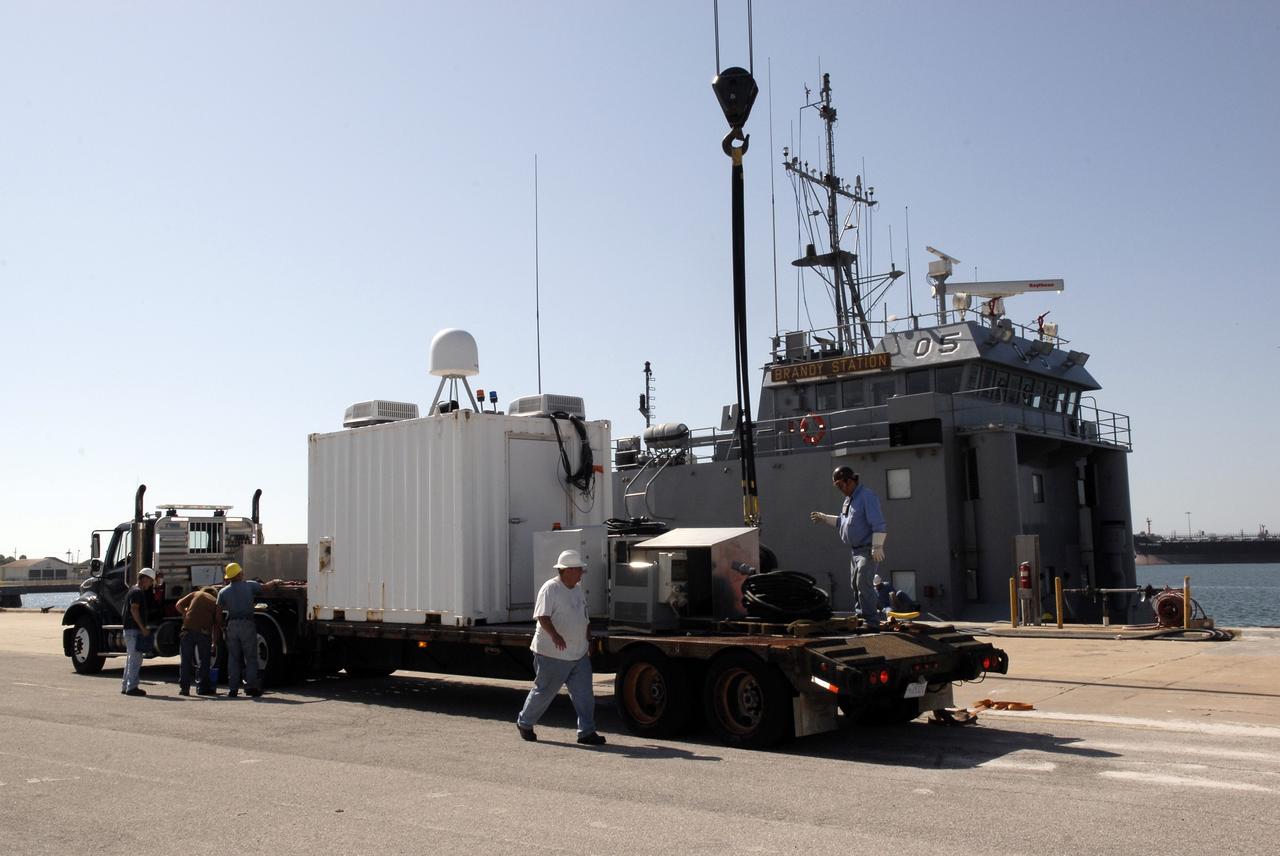
CAPE CANAVERAL, Fla. – In Port Canaveral, Fla., a container is prepared for transfer to the U.S. Army landing craft utility ship Brandy Station. Inside is the control center for the X-band radar installed on the deck of the ship. The radar will provide critical support during launch of space shuttle Atlantis on the STS-125 mission. The radar will work with smaller X-band radars placed on the solid rocket booster retrieval ship Liberty Star to provide extremely high-resolution images of any debris that might be created during Atlantis' launch. Photo credit: NASA/Kim Shiflett
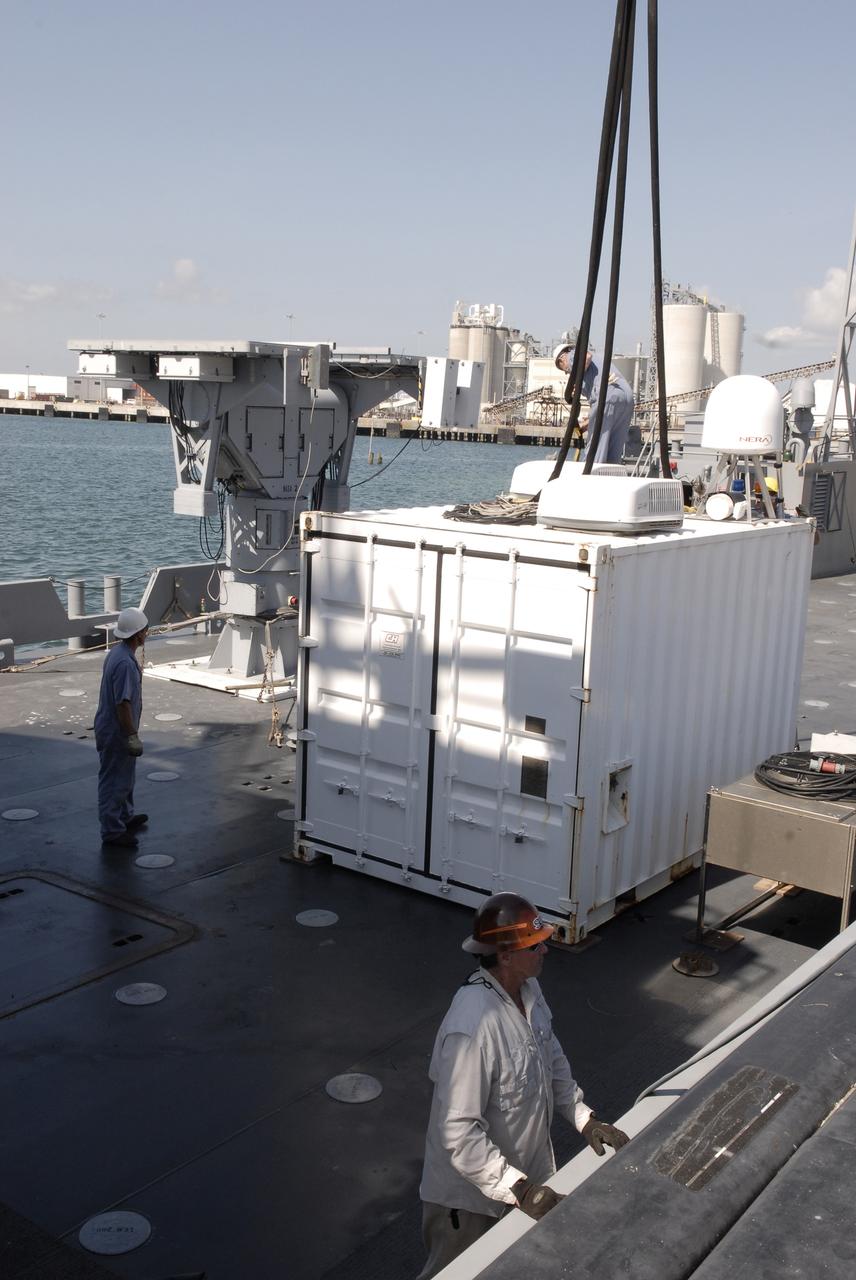
CAPE CANAVERAL, Fla. – In Port Canaveral, Fla., a crane lowers a container toward the deck of the U.S. Army landing craft utility ship Brandy Station. Inside is the control center for the X-band radar installed on the deck of the ship. The radar will provide critical support during launch of space shuttle Atlantis on the STS-125 mission. The radar will work with smaller X-band radars placed on the solid rocket booster retrieval ship Liberty Star to provide extremely high-resolution images of any debris that might be created during Atlantis' launch. Photo credit: NASA/Kim Shiflett
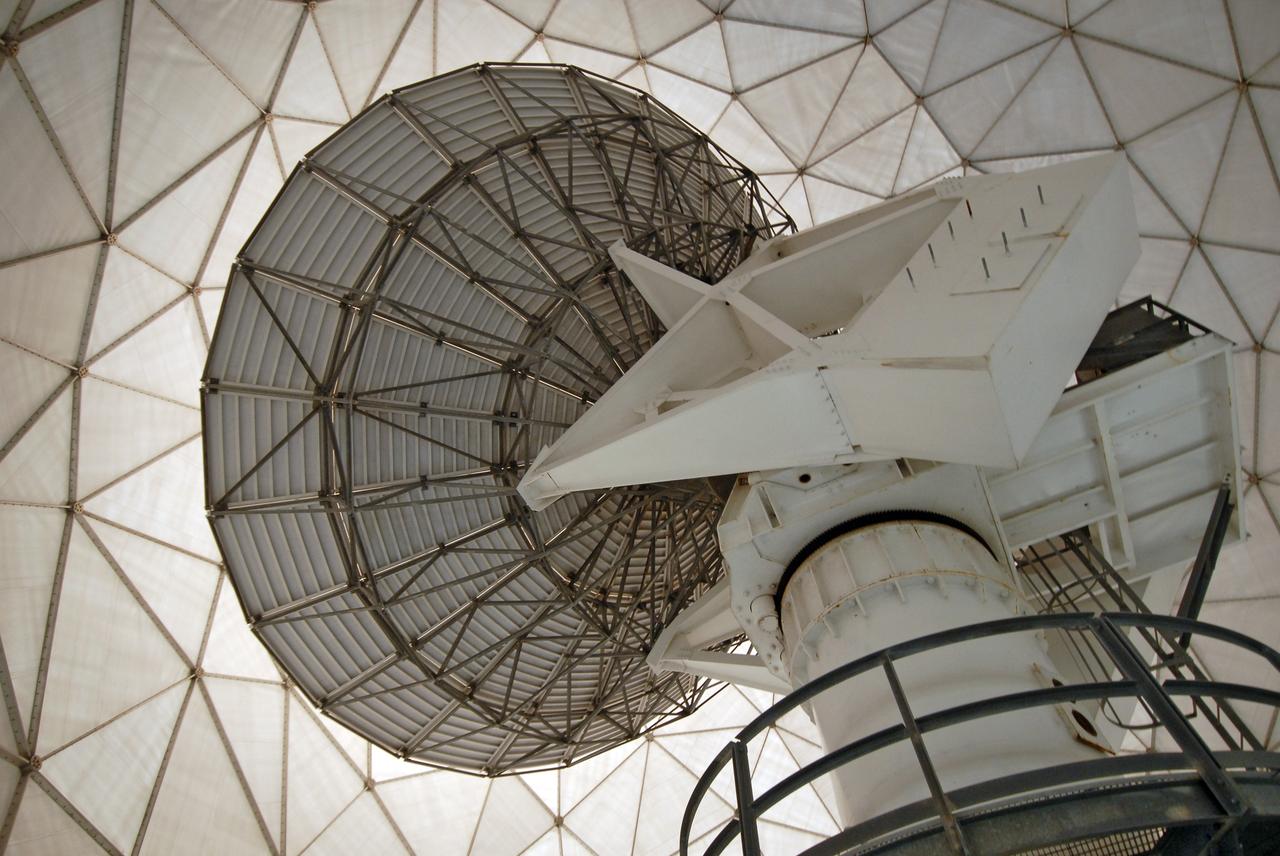
CAPE CANAVERAL, Fla. – This view is NASA's C-band, Debris Radar antenna inside the radome at a site on North Merritt Island in Florida. One of the largest of its kind in the world, the C-band radar provided critical support to pinpoint debris during the launch of space shuttle Atlantis on the STS-125 mission. The need for this radar was identified after the Columbia tragedy. It worked together with smaller X-band radars placed on the solid rocket booster ship Liberty Star and the U.S. Army landing craft utility ship Brandy Station. Together they provided extremely high resolution images of any debris that created by Atlantis during launch. Photo credit: NASA/Troy Cryder
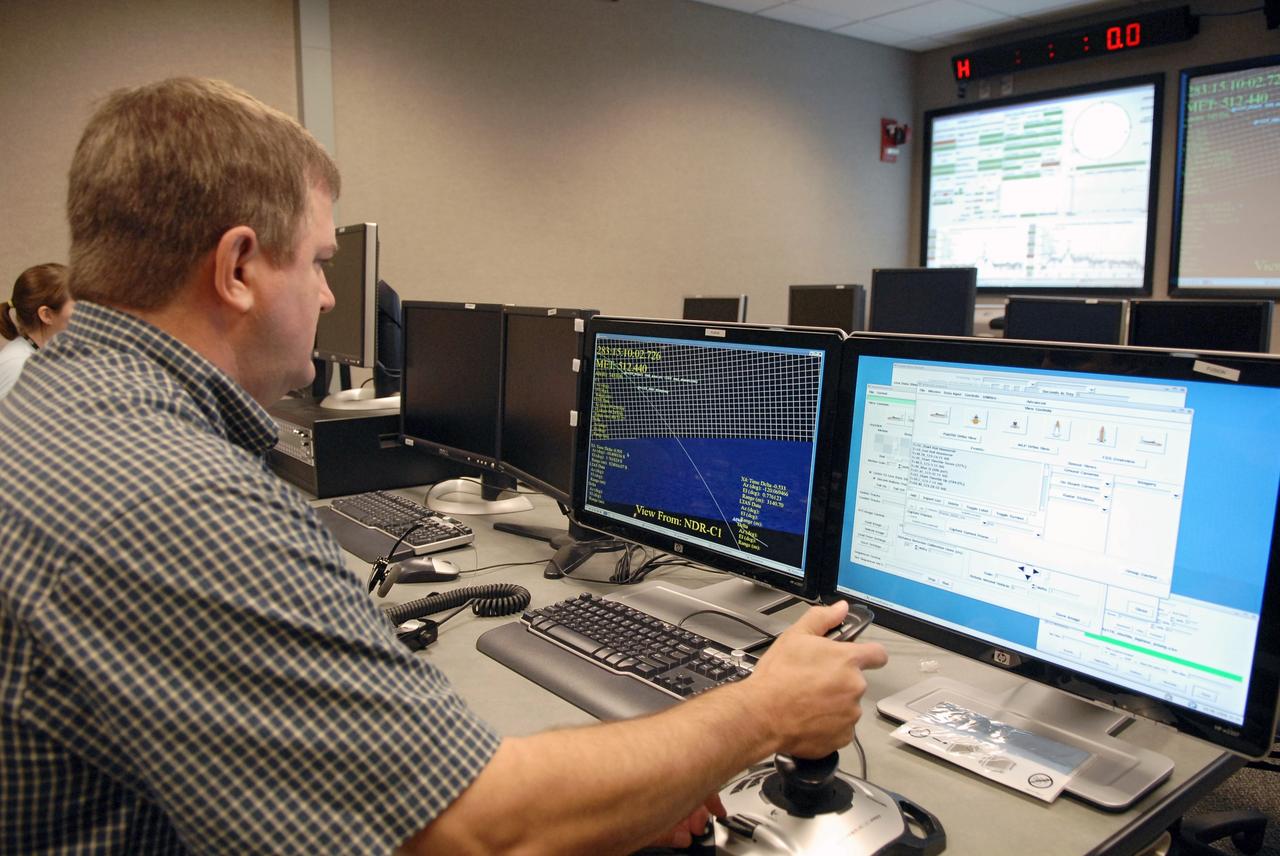
CAPE CANAVERAL, Fla. – An engineer analyzes data from NASA's C-band Debris Radar antenna at a site on North Merritt Island in Florida. One of the largest of its kind in the world, the C-band radar provided critical support to pinpoint debris during the launch of space shuttle Atlantis on the STS-125 mission. The need for this radar was identified after the Columbia tragedy. It worked together with smaller X-band radars placed on the solid rocket booster ship Liberty Star and the U.S. Army landing craft utility ship Brandy Station. Together they provided extremely high resolution images of any debris that created by Atlantis during launch. Photo credit: NASA/Troy Cryder
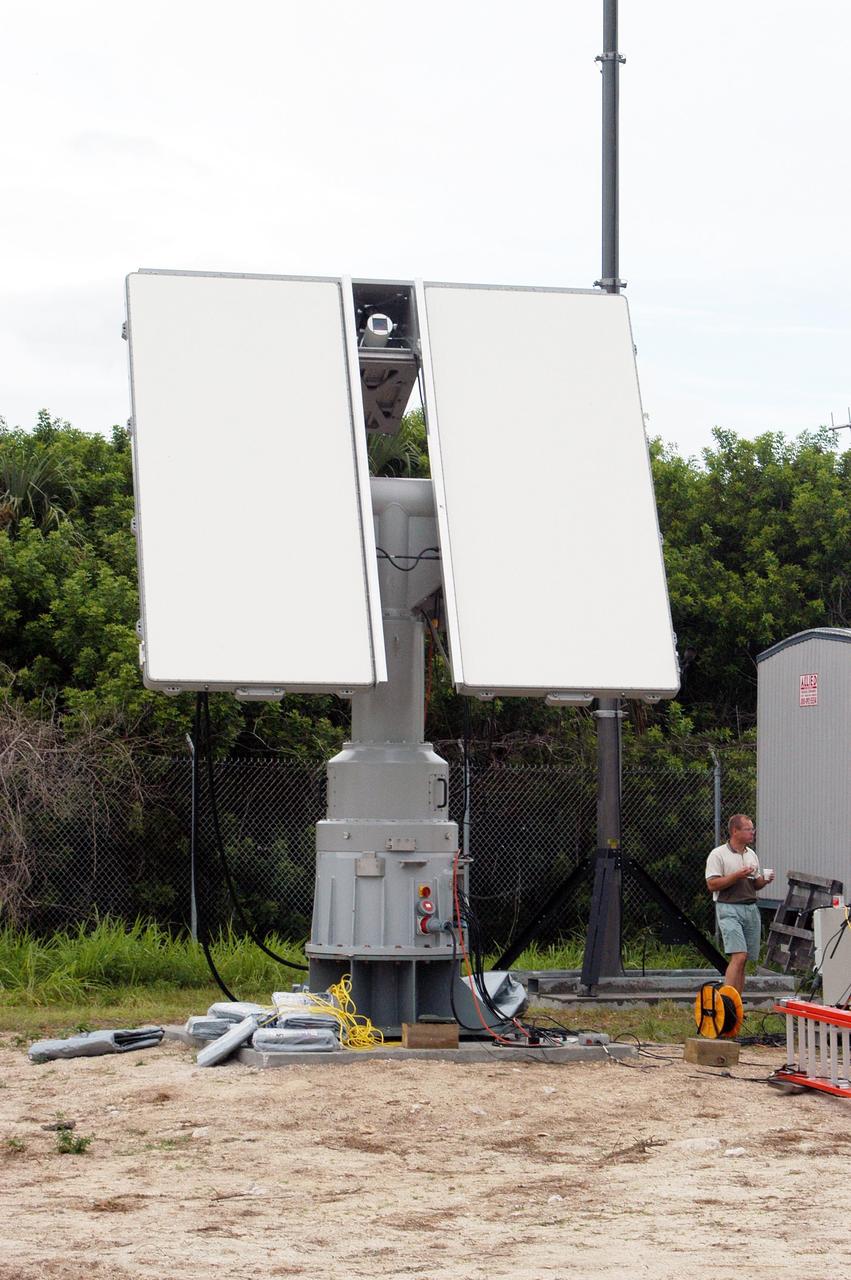
KENNEDY SPACE CENTER, FLA. - An X-band radar antenna is in place to observe the MESSENGER (Mercury Surface, Space Environment, Geochemistry and Ranging) launch. This antenna and a C-band radar antenna are on loan to KSC from the USNS Pathfinder, a U.S. Navy instrumentation ship. They have been installed at site north of Haulover Canal where the National Center for Atmospheric Research previously had a radar for thunderstorm research. NASA is evaluating the pair of radars for their ability to observe possible debris coming from the Space Shuttle during launch, part of NASA’s initiative to return the Space Shuttle to flight.
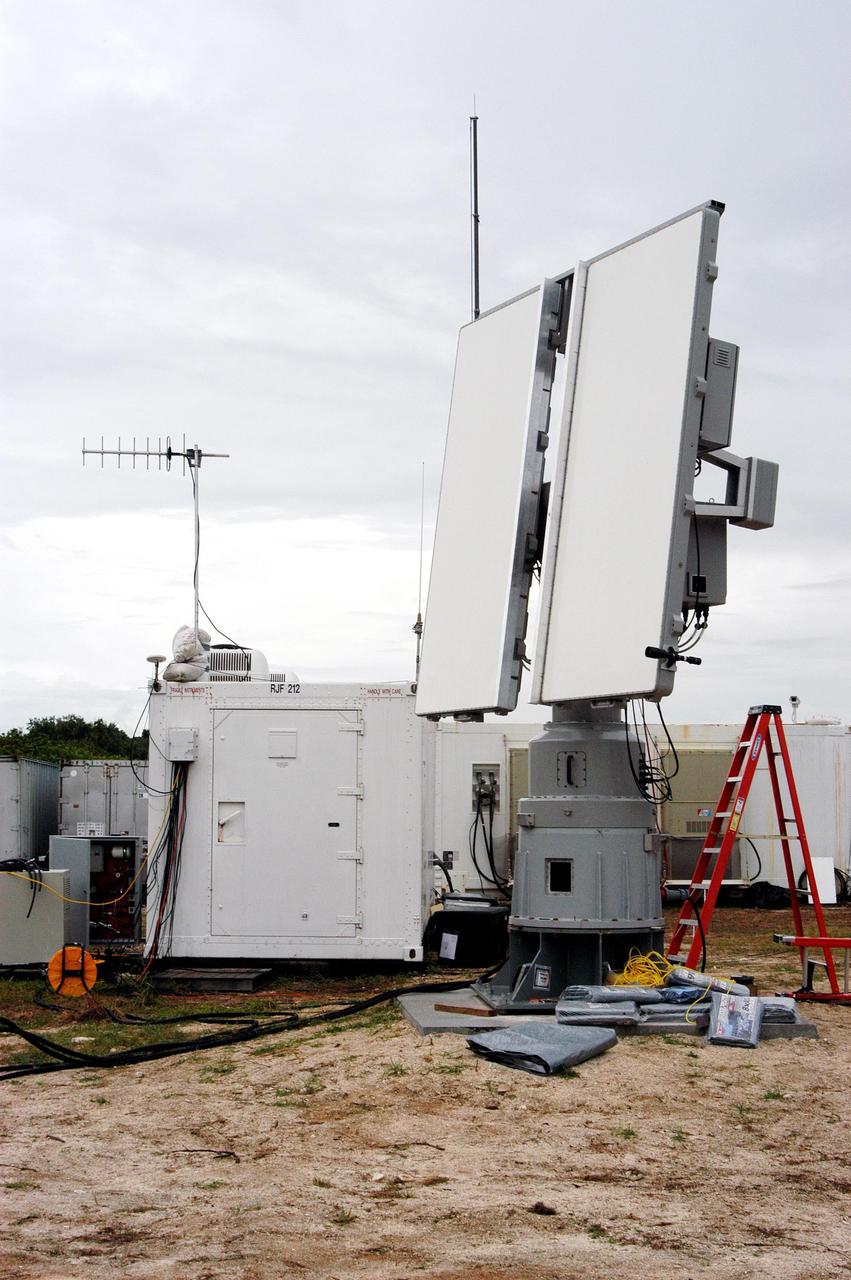
KENNEDY SPACE CENTER, FLA. - An X-band radar antenna is prepared to observe the MESSENGER (Mercury Surface, Space Environment, Geochemistry and Ranging) launch. This antenna and a C-band radar antenna are on loan to KSC from the USNS Pathfinder, a U.S. Navy instrumentation ship. They have been installed at site north of Haulover Canal where the National Center for Atmospheric Research previously had a radar for thunderstorm research. NASA is evaluating the pair of radars for their ability to observe possible debris coming from the Space Shuttle during launch, part of NASA’s initiative to return the Space Shuttle to flight.
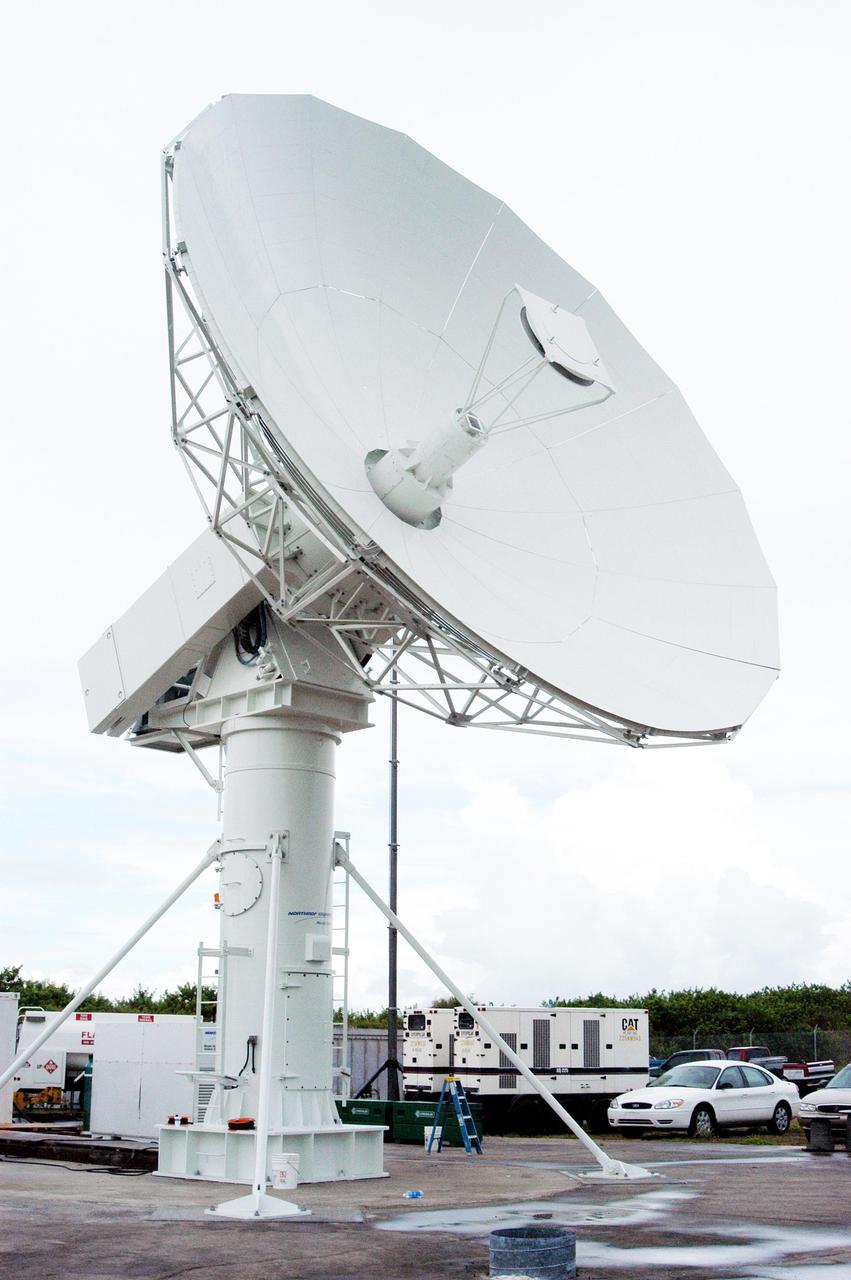
KENNEDY SPACE CENTER, FLA. - A C-band radar antenna stands ready to observe the MESSENGER (Mercury Surface, Space Environment, Geochemistry and Ranging) launch. This antenna and an X-band radar antenna are on loan to KSC from the USNS Pathfinder, a U.S. Navy instrumentation ship. They have been installed at site north of Haulover Canal where the National Center for Atmospheric Research previously had a radar for thunderstorm research. NASA is evaluating the pair of radars for their ability to observe possible debris coming from the Space Shuttle during launch, part of NASA’s initiative to return the Space Shuttle to flight.
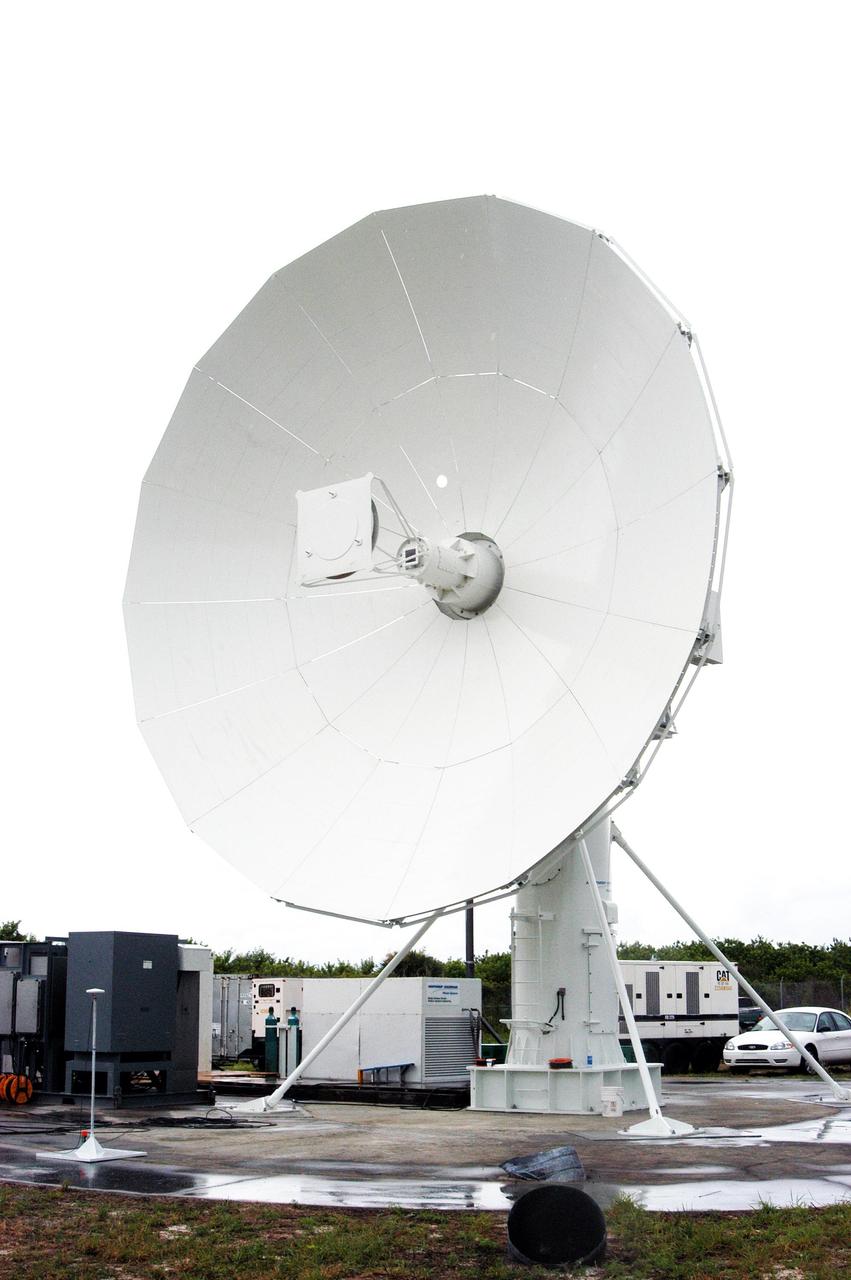
KENNEDY SPACE CENTER, FLA. - A C-band radar antenna is prepared to observe the MESSENGER (Mercury Surface, Space Environment, Geochemistry and Ranging) launch. This antenna and an X-band radar antenna are on loan to KSC from the USNS Pathfinder, a U.S. Navy instrumentation ship. They have been installed at site north of Haulover Canal where the National Center for Atmospheric Research previously had a radar for thunderstorm research. NASA is evaluating the pair of radars for their ability to observe possible debris coming from the Space Shuttle during launch, part of NASA’s initiative to return the Space Shuttle to flight.
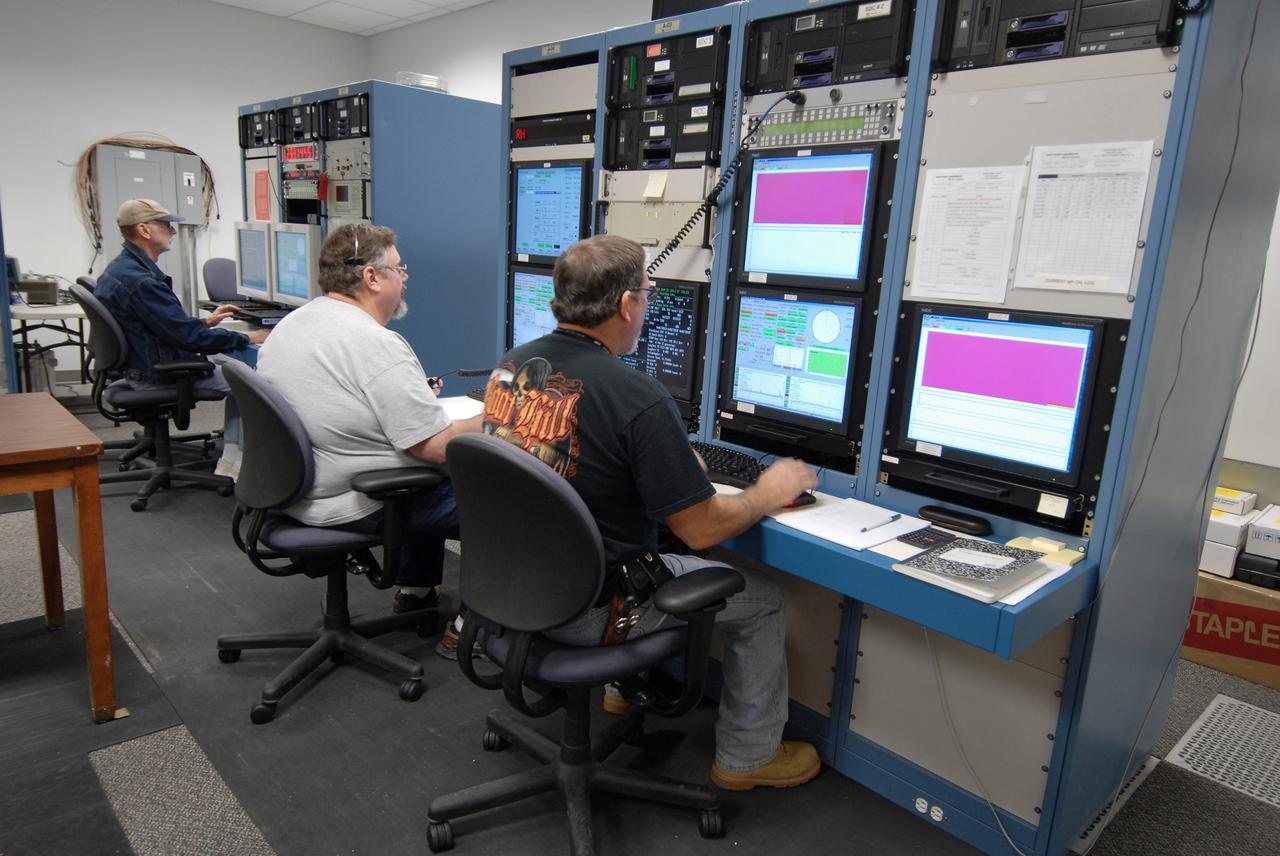
CAPE CANAVERAL, Fla. – Technicians work the console collecting data from NASA's C-band Debris Radar antenna at a site on North Merritt Island in Florida. One of the largest of its kind in the world, the C-band radar provided critical support to pinpoint debris during the launch of space shuttle Atlantis on the STS-125 mission. The need for this radar was identified after the Columbia tragedy. It worked together with smaller X-band radars placed on the solid rocket booster ship Liberty Star and the U.S. Army landing craft utility ship Brandy Station. Together they provided extremely high resolution images of any debris that created by Atlantis during launch. Photo credit: NASA/Troy Cryder
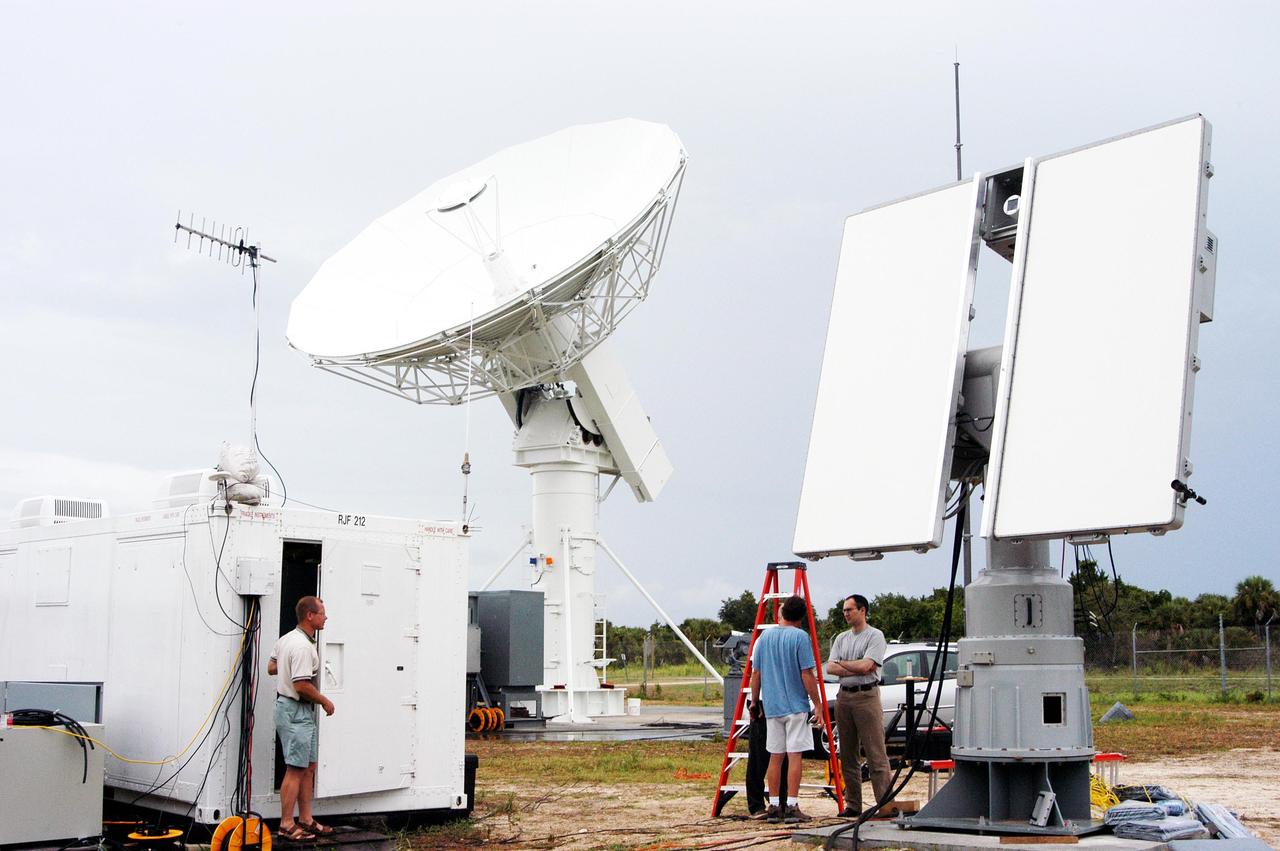
KENNEDY SPACE CENTER, FLA. - A C-band (left) and an X-band radar antenna are positioned to observe the MESSENGER (Mercury Surface, Space Environment, Geochemistry and Ranging) launch. The antennas are on loan to KSC from the USNS Pathfinder, a U.S. Navy instrumentation ship. They have been installed at site north of Haulover Canal where the National Center for Atmospheric Research previously had a radar for thunderstorm research. NASA is evaluating the pair of radars for their ability to observe possible debris coming from the Space Shuttle during launch, part of NASA’s initiative to return the Space Shuttle to flight.
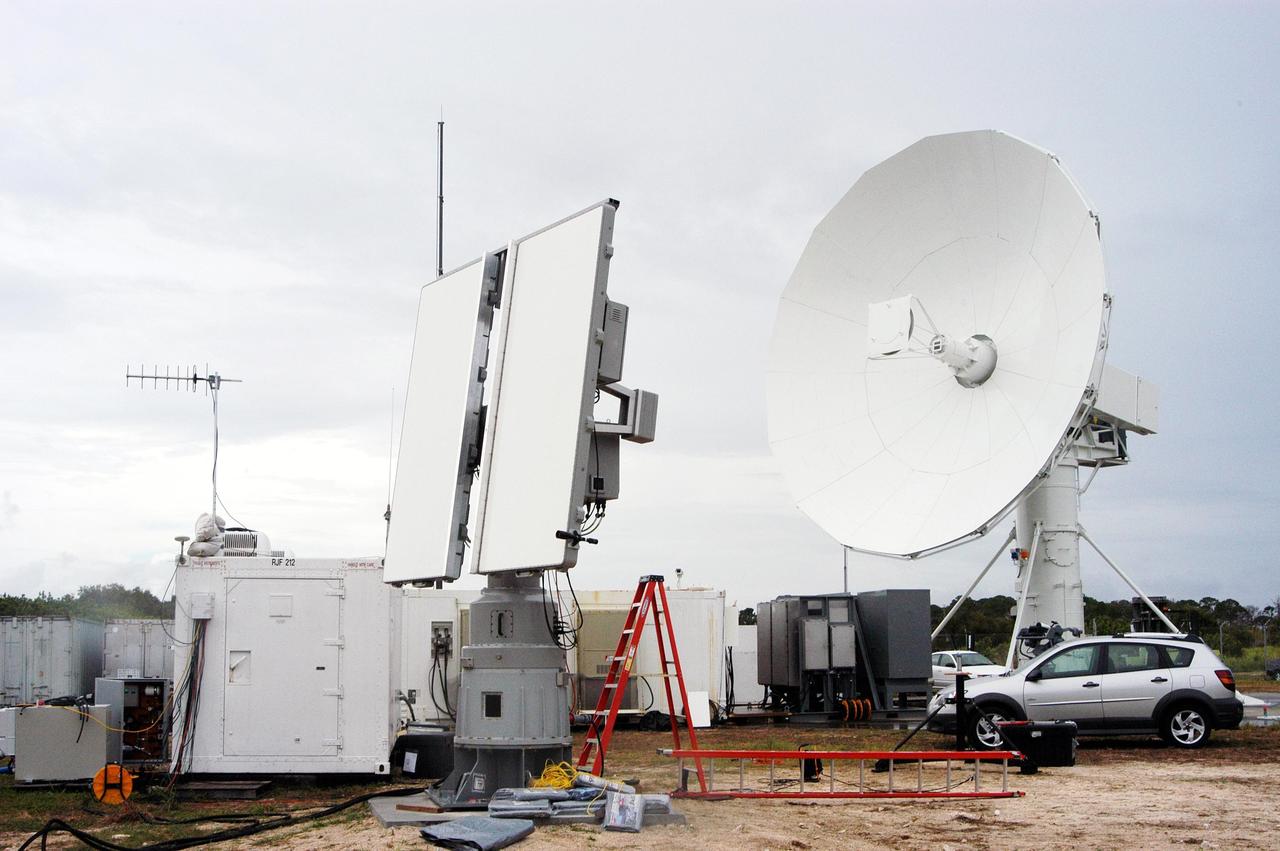
KENNEDY SPACE CENTER, FLA. - An X-band (left) and a C-band radar antenna are prepared to observe the MESSENGER (Mercury Surface, Space Environment, Geochemistry and Ranging) launch. The antennas are on loan to KSC from the USNS Pathfinder, a U.S. Navy instrumentation ship. They have been installed at site north of Haulover Canal where the National Center for Atmospheric Research previously had a radar for thunderstorm research. NASA is evaluating the pair of radars for their ability to observe possible debris coming from the Space Shuttle during launch, part of NASA’s initiative to return the Space Shuttle to flight.
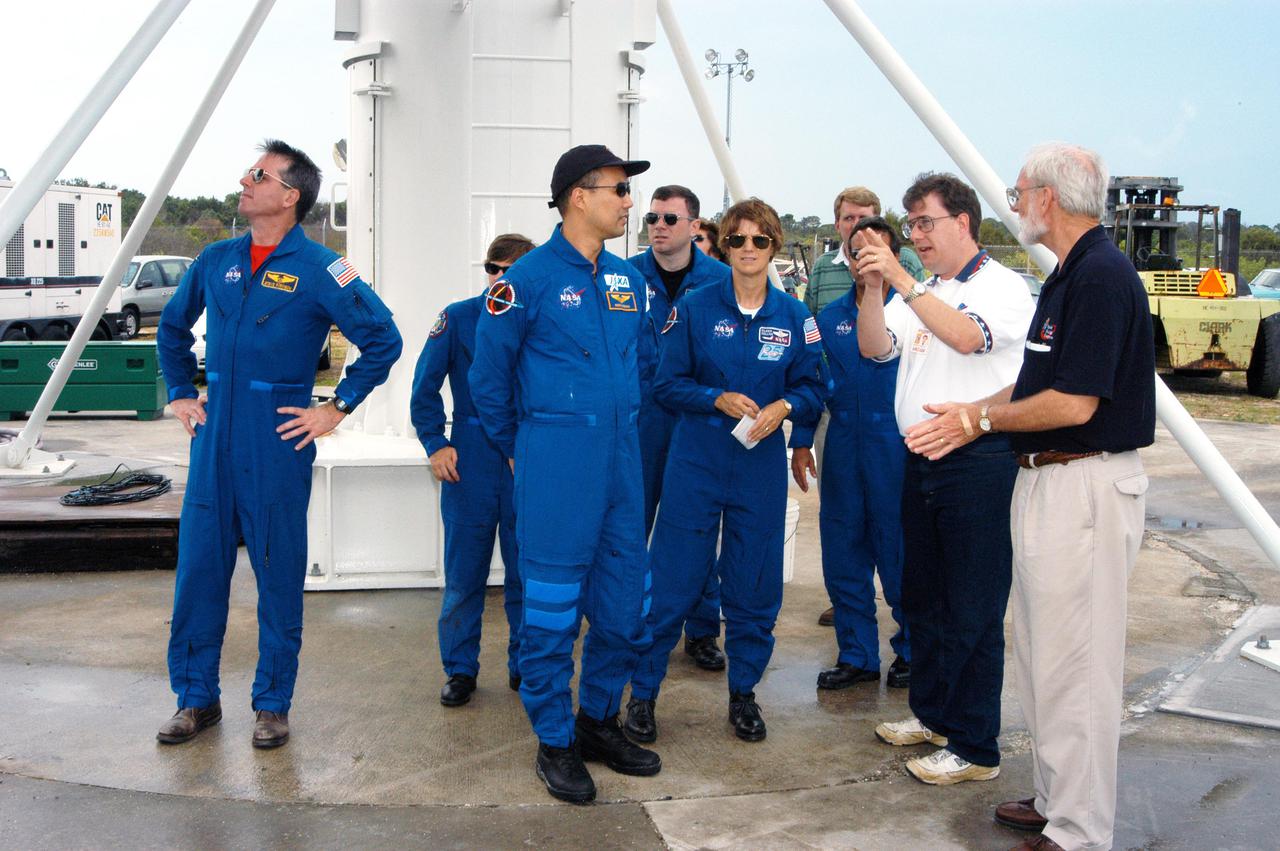
KENNEDY SPACE CENTER, FLA. - Members of the STS-114 crew learn about a 30-foot-diameter C-band antenna (above them) and smaller X-band antenna being installed at KSC, north of the Haulover Canal. From left are Mission Specialists Stephen Robinson, Wendy Lawrence (partially hidden) and Soichi Noguchi; Pilot James Kelly; Commander Eileen Collins; and Mission Specialist Charles Camarda (partially hidden). At far right is Denny Kross, deputy Space Shuttle Program manager. Next to him is Tony Griffith, JSC project manager for the Ascent Debris Radar Working Group. The antennas are being tested during the launch of a Delta II rocket carrying NASA’s MESSENGER spacecraft bound for the planet Mercury that will work together to create an image of the Delta rocket in flight. The test will evaluate the use of the radars as part of NASA’s Return to Flight program for the Space Shuttle to observe possible debris coming from the Shuttle during launch. If successful, the radar configuration could be used on ships downrange, including on one of the solid rocket booster retrieval ships. And it may enable the return to launching Space Shuttles at night. The launch window for Return to Flight mission STS-114 is May 12 through June 3, 2005.
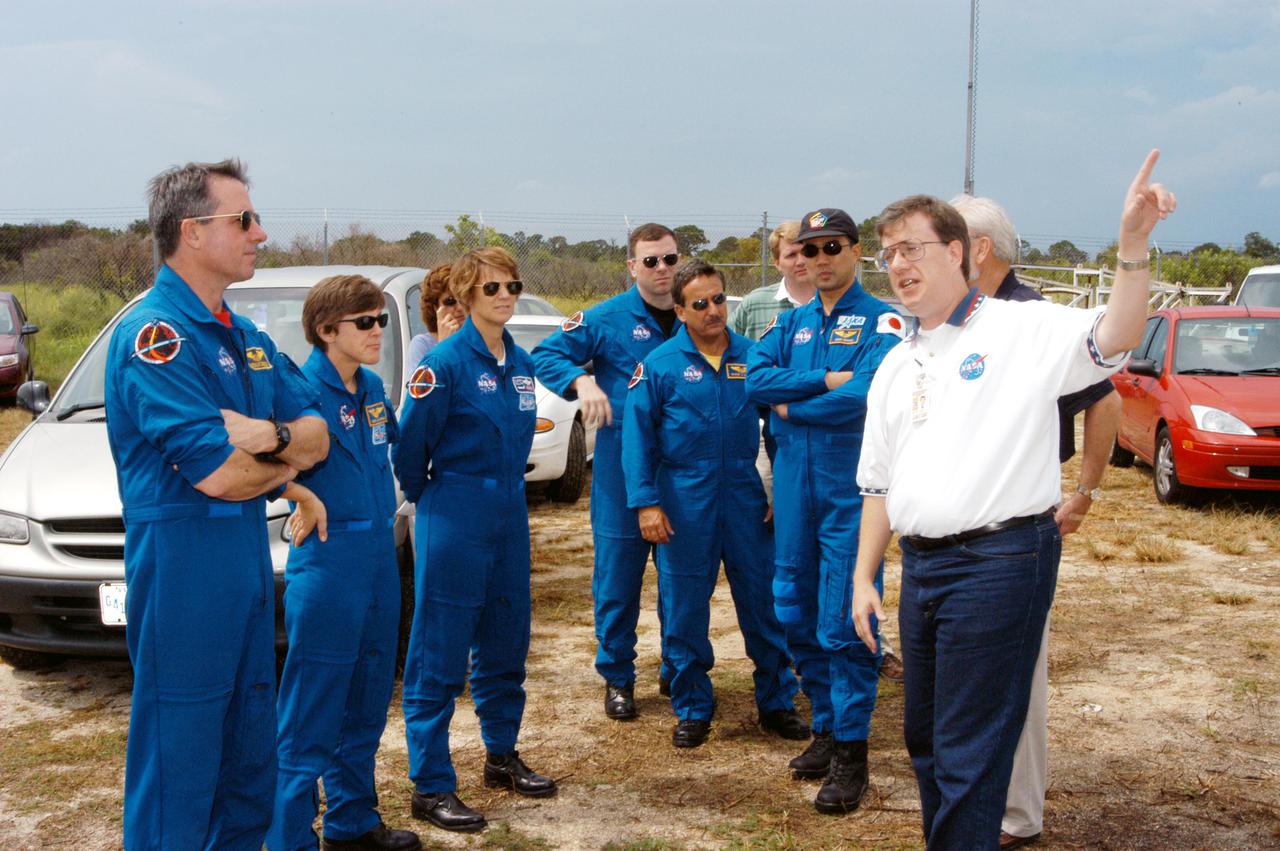
KENNEDY SPACE CENTER, FLA. - Members of the STS-114 crew learn about a 30-foot-diameter C-band antenna and smaller X-band antenna being installed at KSC, north of the Haulover Canal, from Tony Griffith, JSC project manager for the Ascent Debris Radar Working Group. From left are Mission Specialists Stephen Robinson and Wendy Lawrence; Commander Eileen Collins and Pilot James Kelly, and Mission Specialists Charles Camarda and Soichi Noguchi. The antennas are being tested during the launch of a Delta II rocket carrying NASA’s MESSENGER spacecraft bound for the planet Mercury that will work together to create an image of the Delta rocket in flight. The test will evaluate the use of the radars as part of NASA’s Return to Flight program for the Space Shuttle to observe possible debris coming from the Shuttle during launch. If successful, the radar configuration could be used on ships downrange, including on one of the solid rocket booster retrieval ships. And it may enable the return to launching Space Shuttles at night. The launch window for Return to Flight mission STS-114 is May 12 through June 3, 2005.
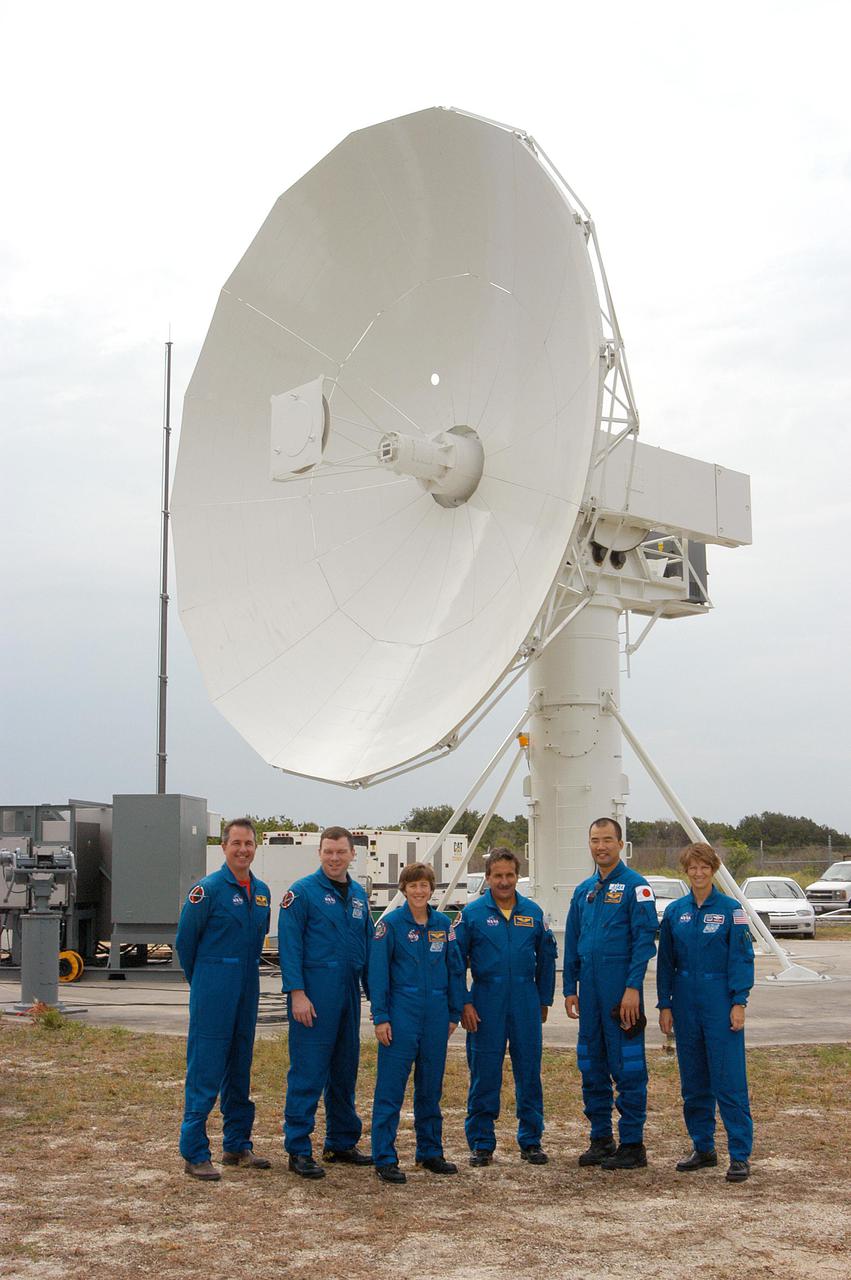
KENNEDY SPACE CENTER, FLA. - Members of the STS-114 crew pose for a photo in front of the 30-foot-diameter C-band antenna installed north of the Haulover Canal. A smaller X-band antenna was also installed. From left are Mission Specialist Stephen Robinson, Pilot James Kelly, Mission Specialists Wendy Lawrence, Charles Camarda and Soichi Noguchi, and Commander Eileen Collins. The antennas are being tested during the launch of a Delta II rocket carrying NASA’s MESSENGER spacecraft bound for the planet Mercury that will work together to create an image of the Delta rocket in flight. The test will evaluate the use of the radars as part of NASA’s Return to Flight program for the Space Shuttle to observe possible debris coming from the Shuttle during launch. If successful, the radar configuration could be used on ships downrange, including on one of the solid rocket booster retrieval ships. And it may enable the return to launching Space Shuttles at night. The launch window for Return to Flight mission STS-114 is May 12 through June 3, 2005.
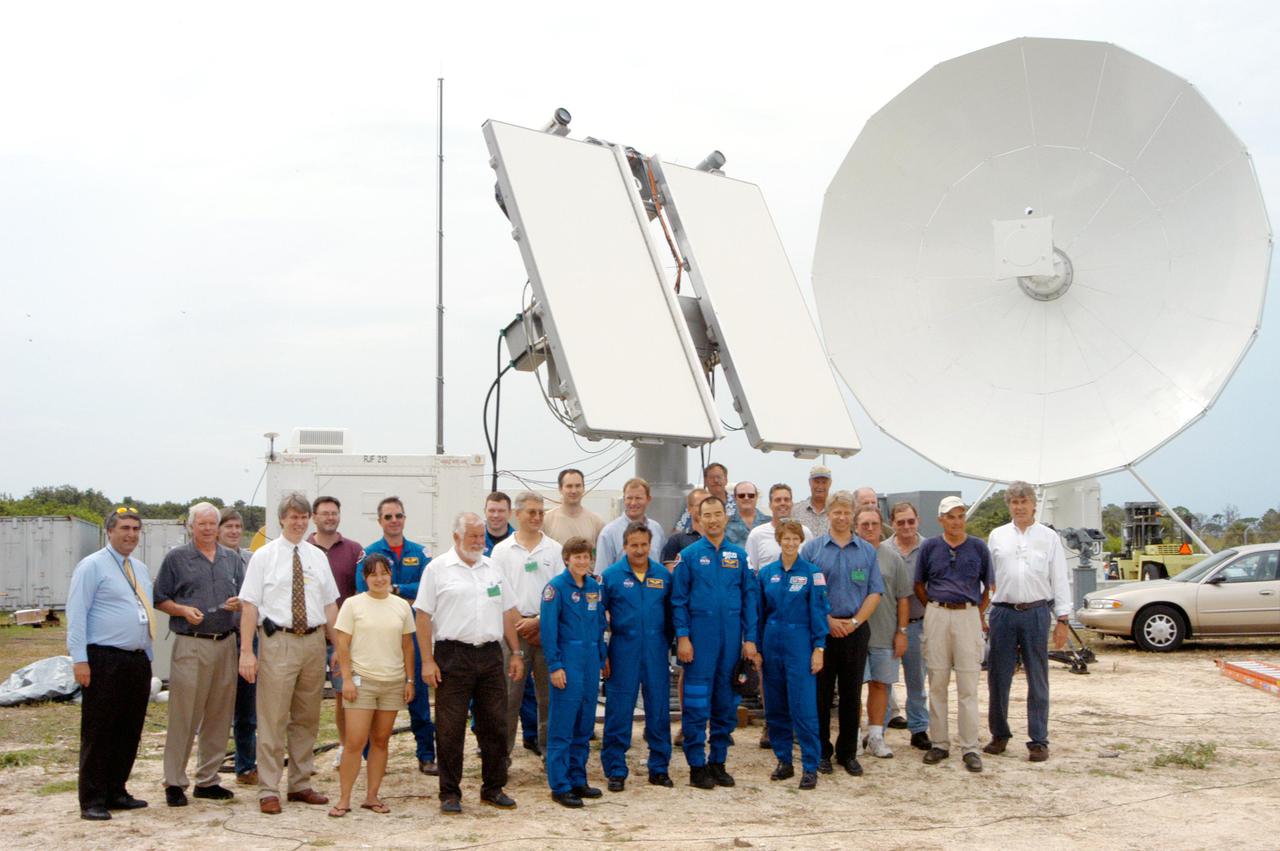
KENNEDY SPACE CENTER, FLA. - Members of the STS-114 crew pose for a photo with workers installing the 30-foot-diameter C-band antenna and a smaller X-band antenna (behind them) north of the Haulover Canal. The astronauts are Mission Specialist Stephen Robinson and Pilot James Kelly, in the back row at left; and in front, Mission Specialists Wendy Lawrence, Charles Camarda and Soichi Noguchi, and Commander Eileen Collins. The antennas are being tested during the launch of a Delta II rocket carrying NASA’s MESSENGER spacecraft bound for the planet Mercury that will work together to create an image of the Delta rocket in flight. The test will evaluate the use of the radars as part of NASA’s Return to Flight program for the Space Shuttle to observe possible debris coming from the Shuttle during launch. If successful, the radar configuration could be used on ships downrange, including on one of the solid rocket booster retrieval ships. And it may enable the return to launching Space Shuttles at night. The launch window for Return to Flight mission STS-114 is May 12 through June 3, 2005.
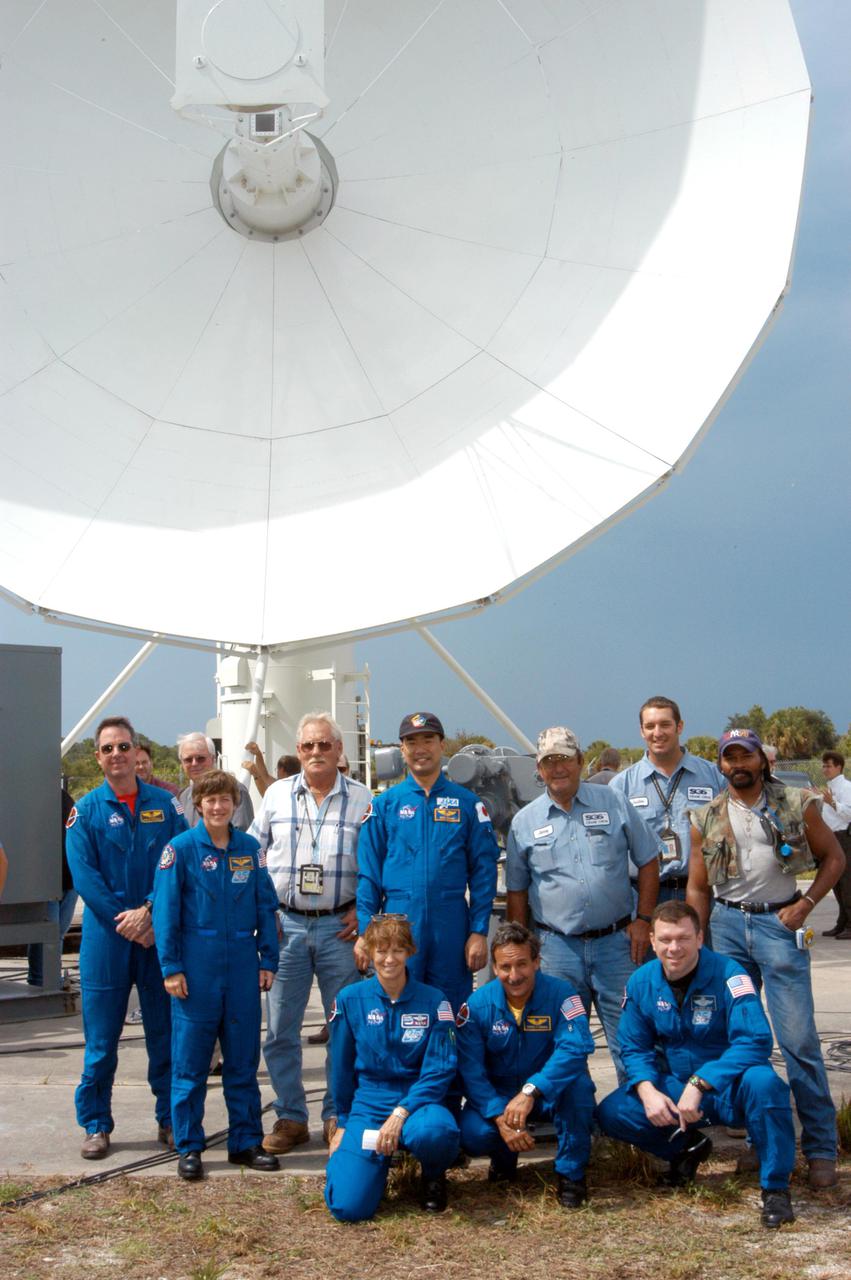
KENNEDY SPACE CENTER, FLA. - Members of the STS-114 crew pose for a photo with workers installing the 30-foot-diameter C-band antenna (above them) and a smaller X-band antenna north of the Haulover Canal. The astronauts are, standing from left, Mission Specialists Stephen Robinson, Wendy Lawrence and Soichi Noguchi; kneeling from left are Commander Eileen Collins, Mission Specialist Charles Camarda and Pilot James Kelly. The antennas are being tested during the launch of a Delta II rocket carrying NASA’s MESSENGER spacecraft bound for the planet Mercury that will work together to create an image of the Delta rocket in flight. The test will evaluate the use of the radars as part of NASA’s Return to Flight program for the Space Shuttle to observe possible debris coming from the Shuttle during launch. If successful, the radar configuration could be used on ships downrange, including on one of the solid rocket booster retrieval ships. And it may enable the return to launching Space Shuttles at night. The launch window for Return to Flight mission STS-114 is May 12 through June 3, 2005.