Crash of Douglas  XSB2D-1 (Bu. No. 03552) airplane in a Sunnyvale , CA prune orchard caused by engine failure. Note the spectator crawling into the rear cockpit to remove the clock .  Note:  Used in publication Flight Research at Ames;  57 Years of Development and Validation of Aeronautical Technology NASA SP-1998-3300 fig.19
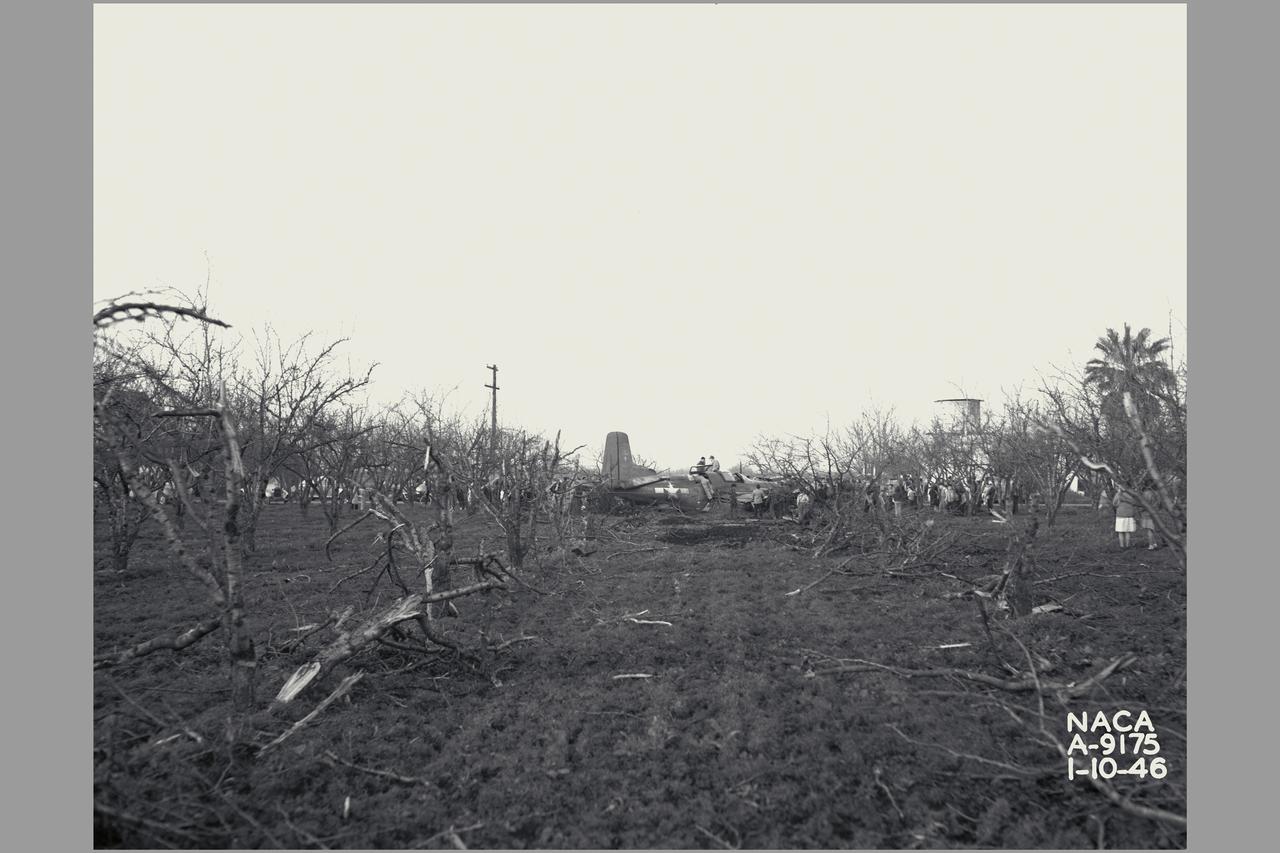
ARC-1969-A-9175
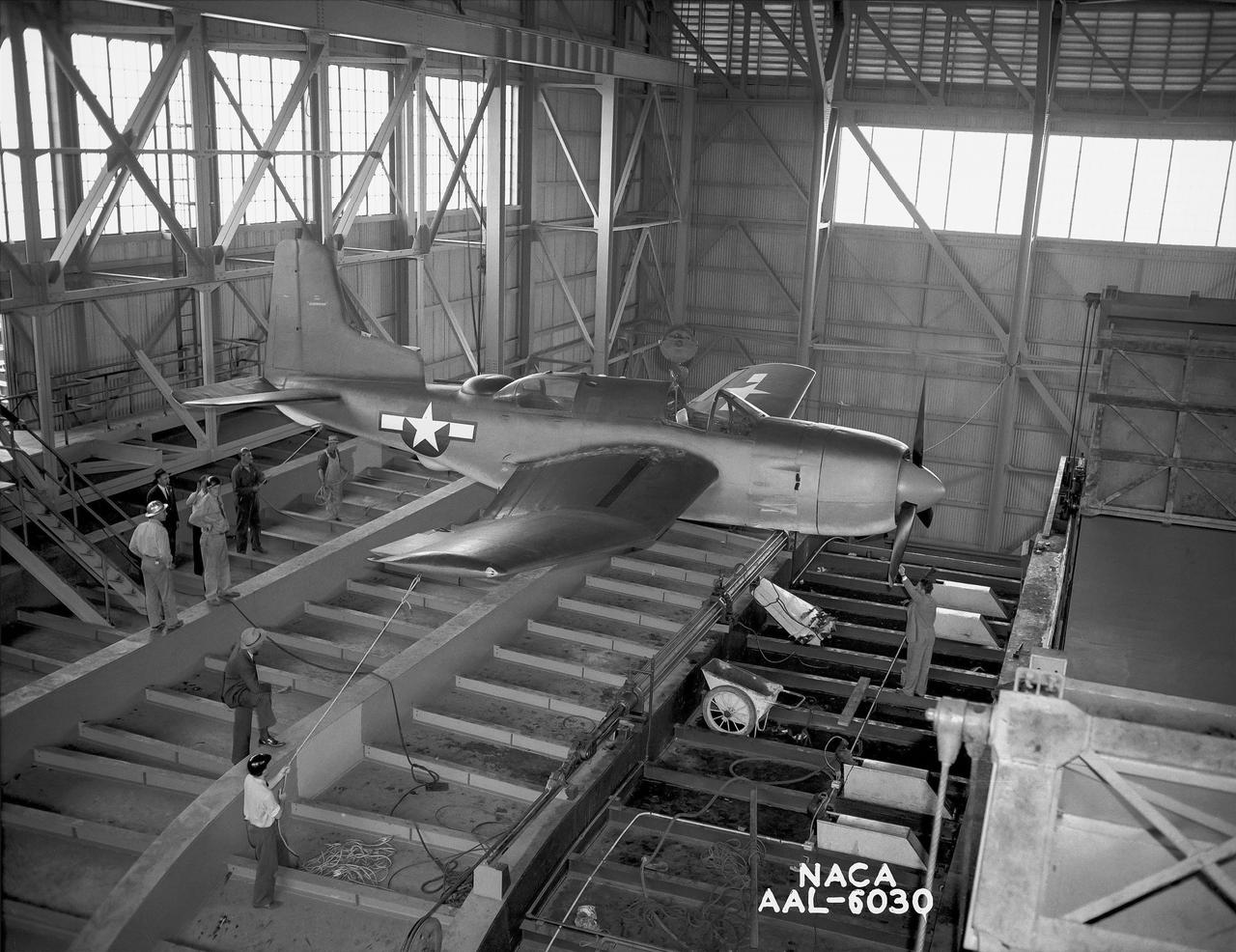
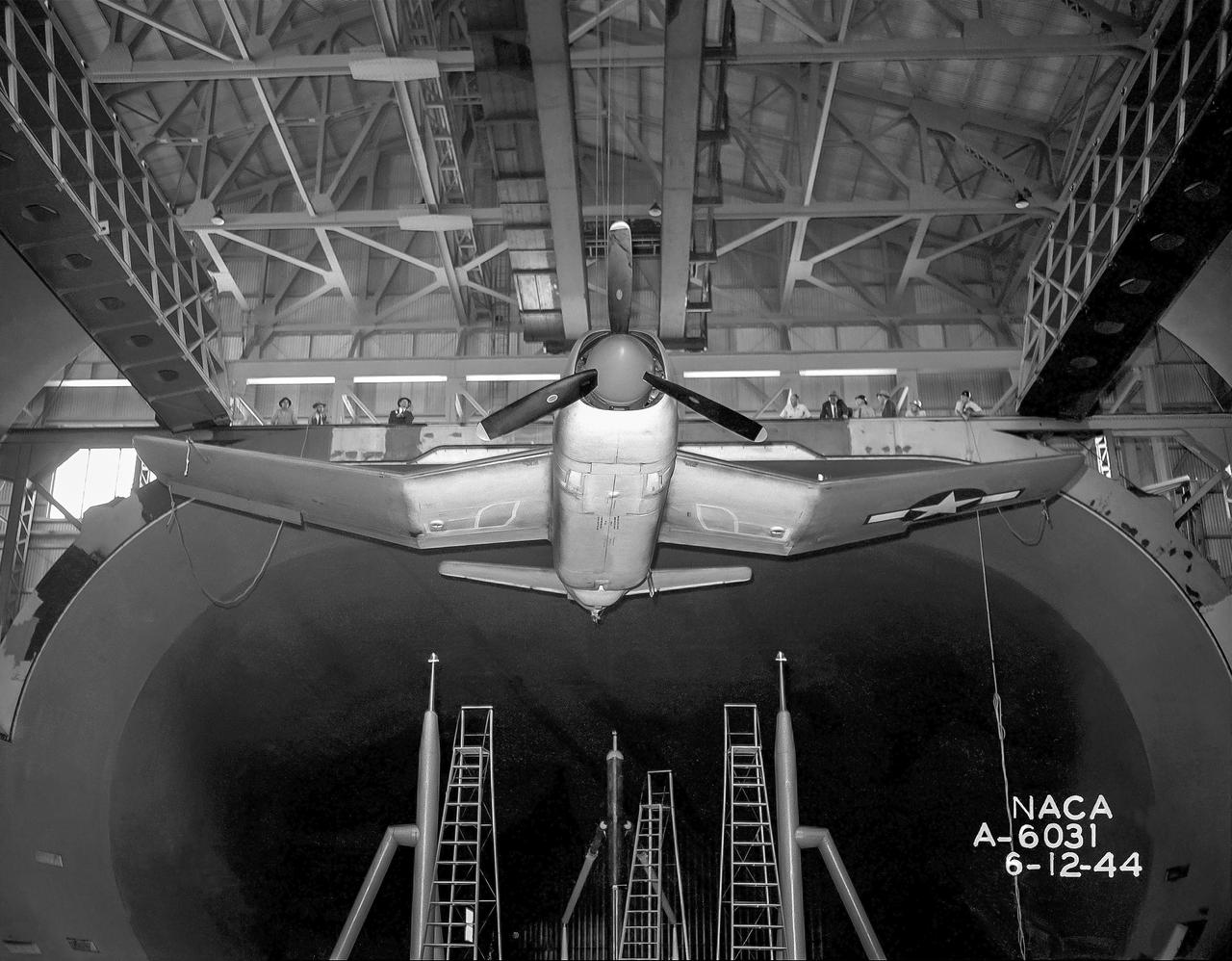
First airplane tested in the ames 40 x 80 foot wind tunnel. Douglas XSB2D-1 (Destroyer)  hanging from overhead crane above the test section.
Mounting Douglas XSB2D-1 Airplane In 40x80 Foot Wind Tunnel.
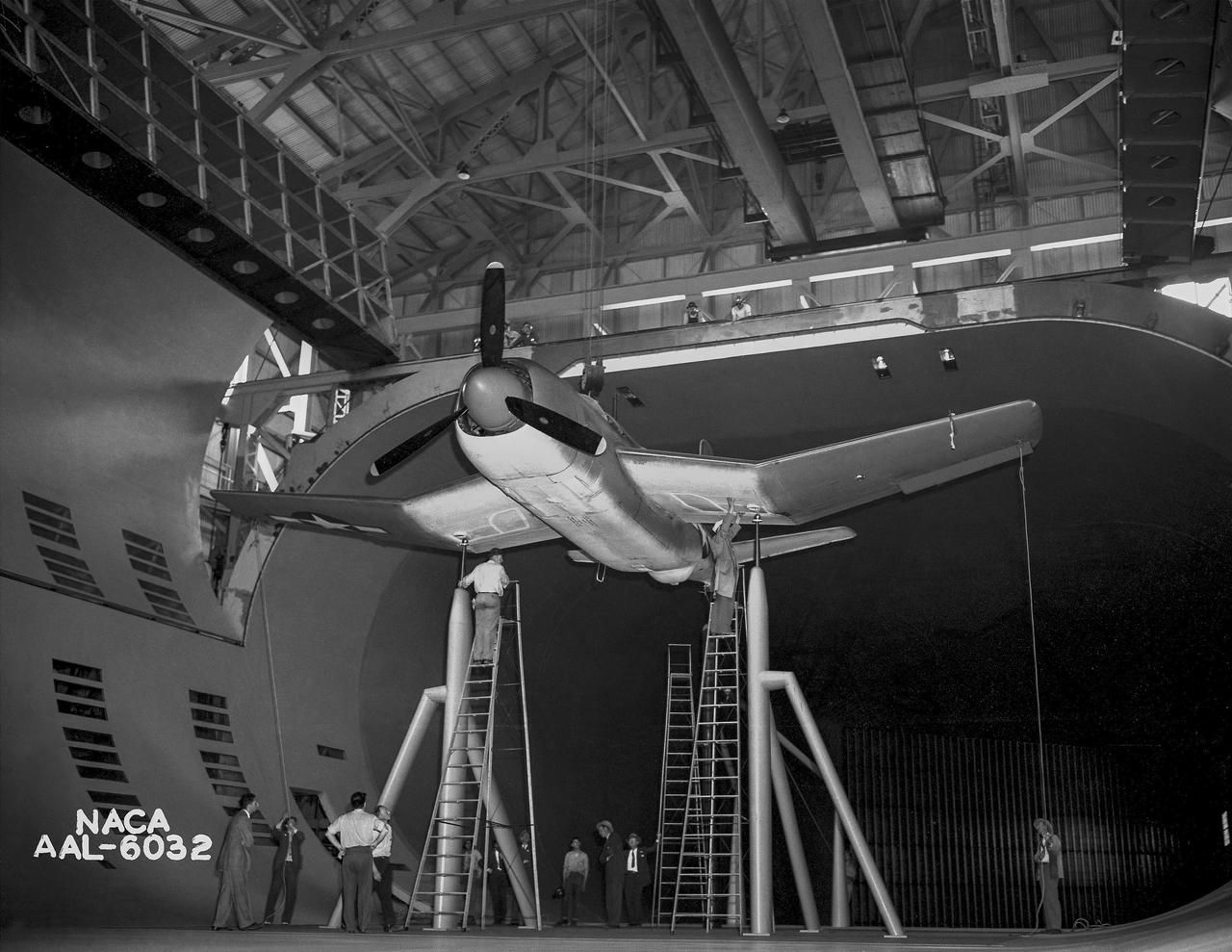
Test section of the Ames 40 x 80 foot wind tunnel with the overhead doors open.  XSB2D-1 airplane being lowered onto the struts by the overhead crane. Mechanics and engineers on orchard ladders aligning the model with ball sockets on the struts. The Douglas BTD Destroyer was an American dive/ torpedo bomber developed for the United States Navy during World War II.
Installation of the Douglas XSB2D-1 in the Test Section of the 40x80 Foot Wind Tunnel at Ames.
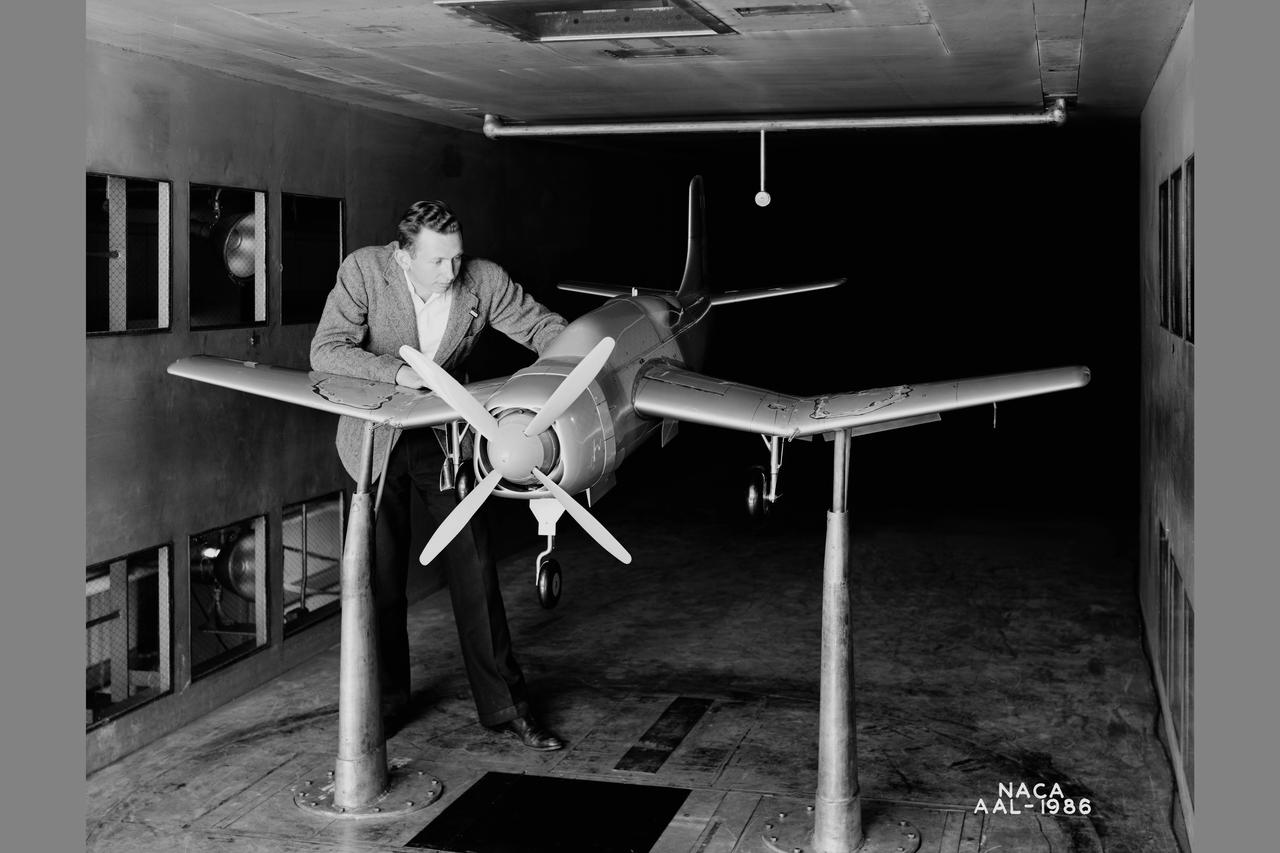
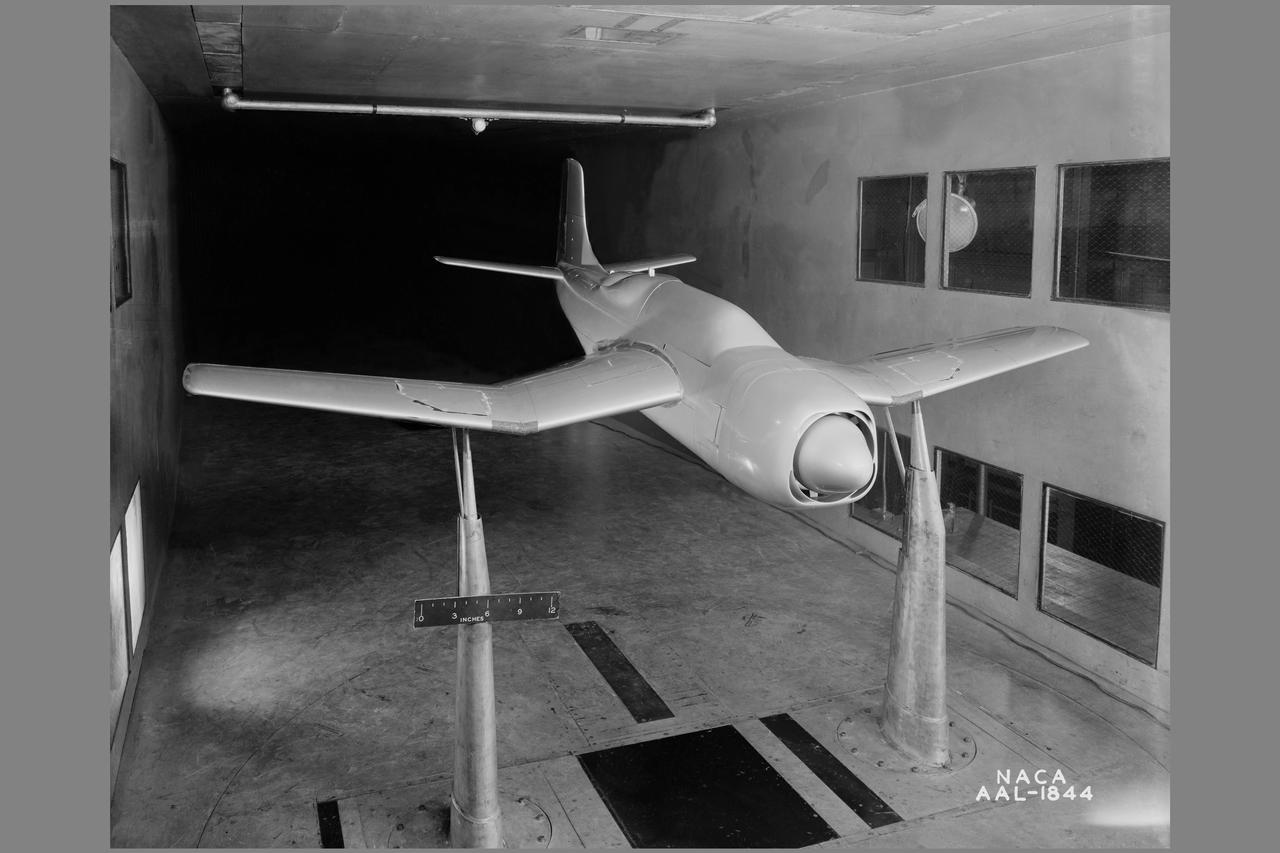
NACA Ames Research Center 7x10_foot Wind Tunnel test of the Douglas XSB2D-1 model
ARC-1942-AAL-1986
NACA Photographer Douglas XSB2D-1 model WBHV-t in 7x10ft w.t. at Ames Research Center, CA 3/4 right front view
ARC-1942-AAL-1844
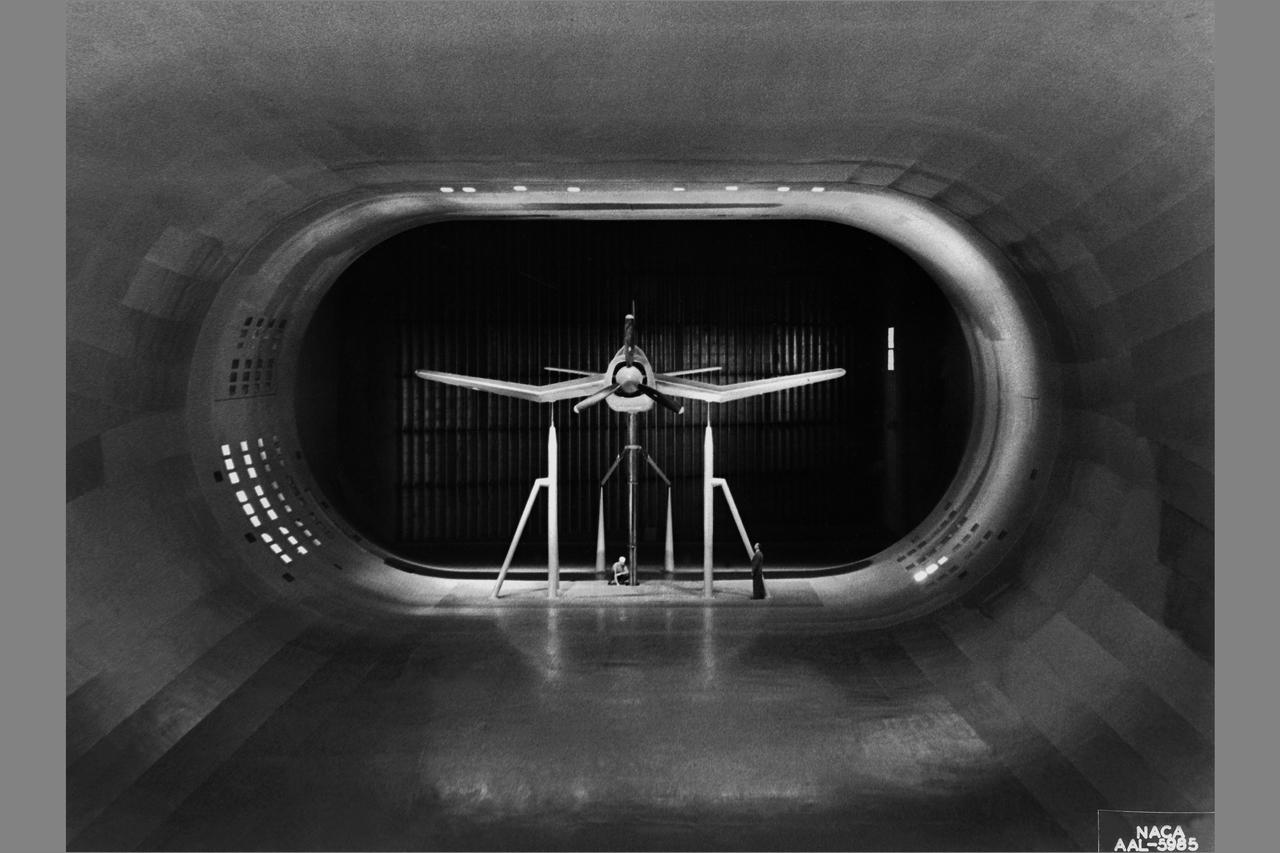
NACA Photographer XSB2D-1 Navy/Douglas Airplane mounted in 40x80ft .w.t. viewed from centerpoint in guide vanes. First model tested in 40x80ft w.t.
ARC-1944-AAL-5985
XSB2D-1 First test (no number) Aerodynamic test to forecast the take off distance. George Cooper was the A1:H73 pilot.  Orchard ladders were used to access the ball socket attachments on the struts.
Mounting Douglas SB-2D Airplane in 40x80 foot Wind Tunnel at NACA Ames Research Center.