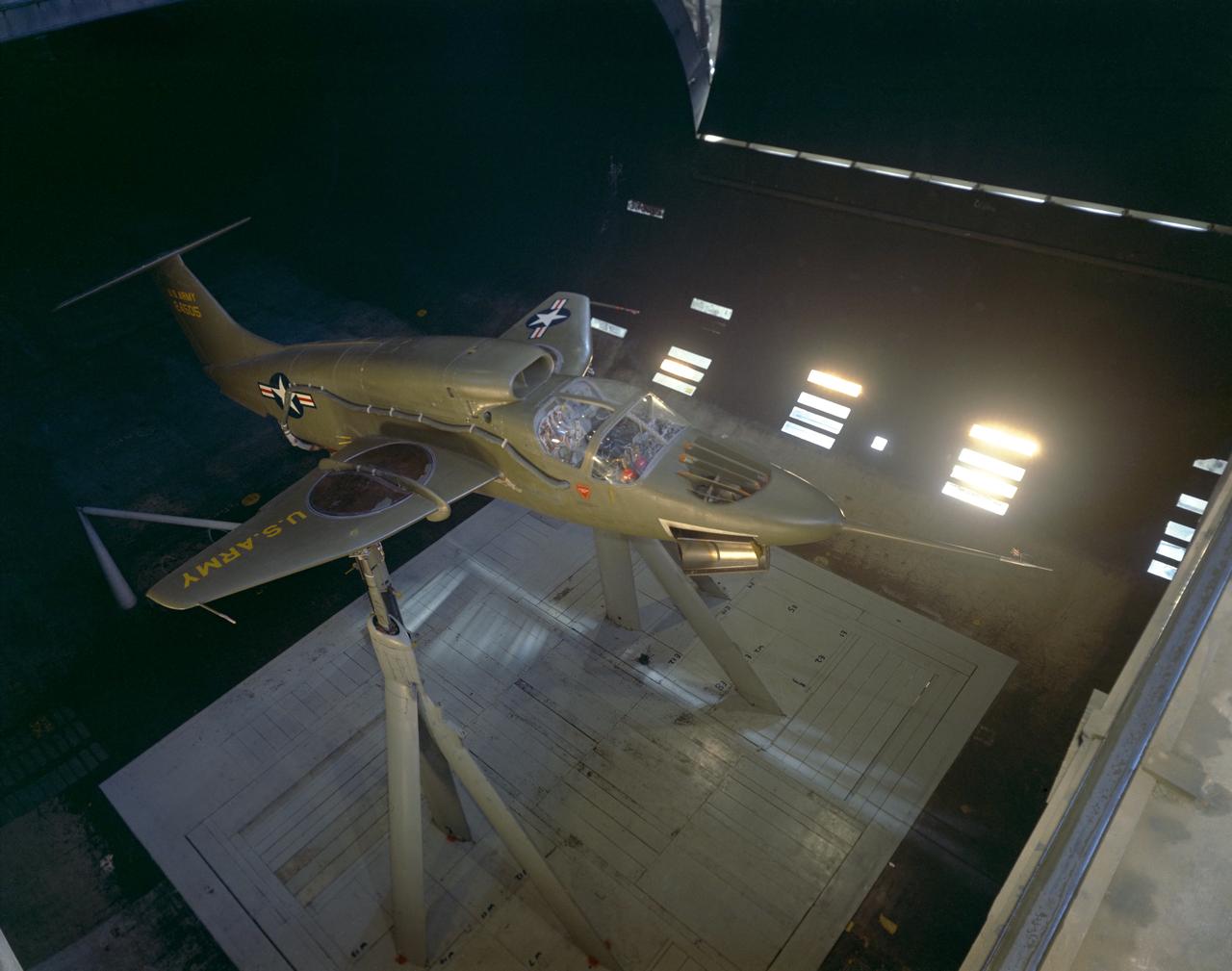
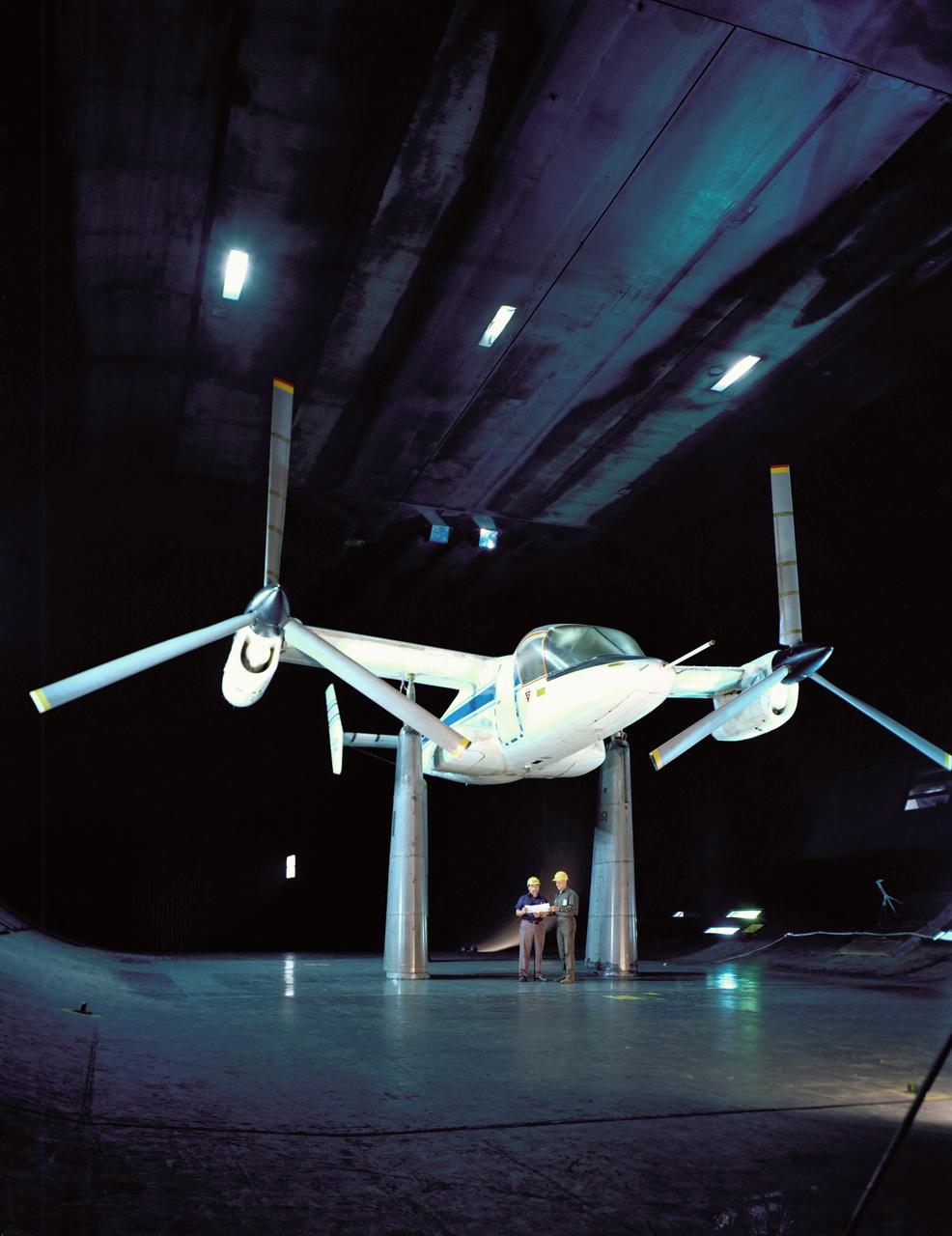
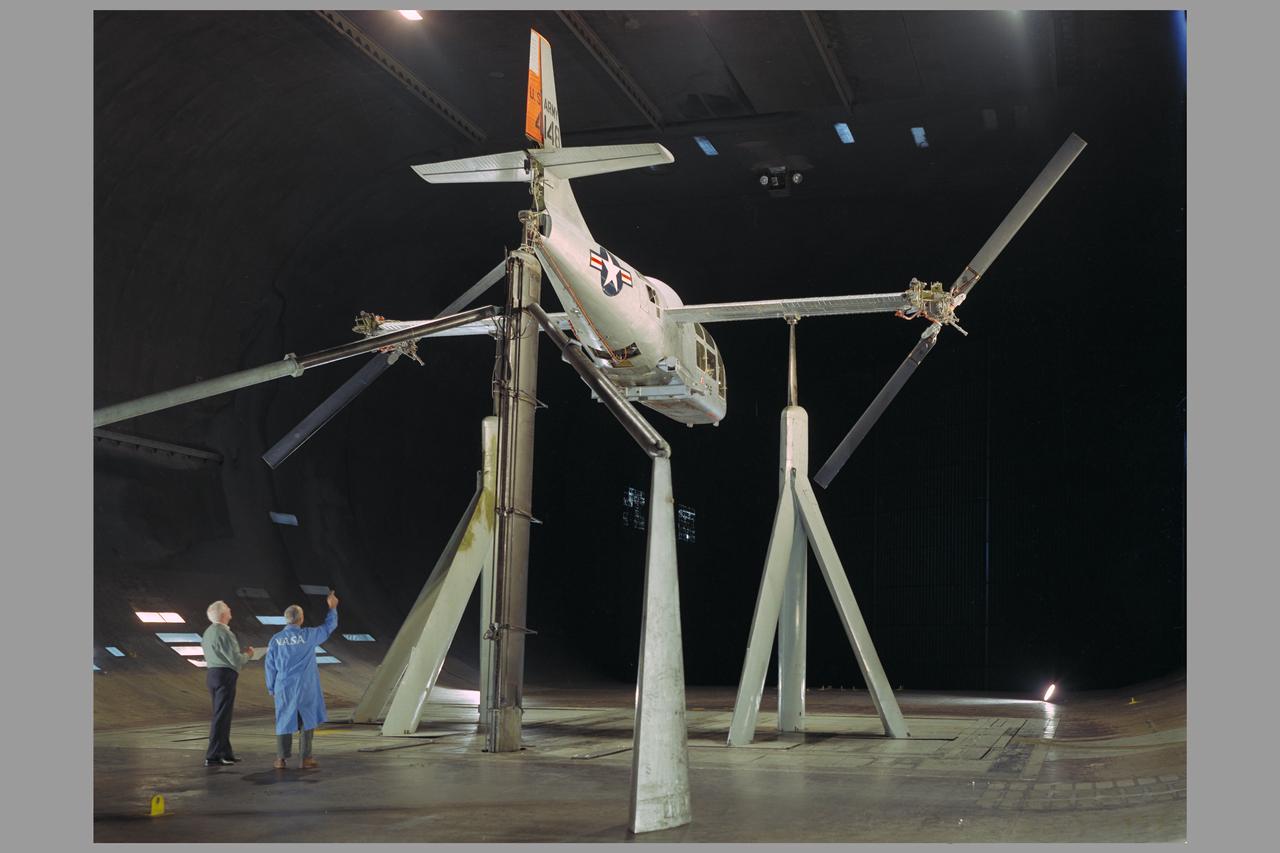
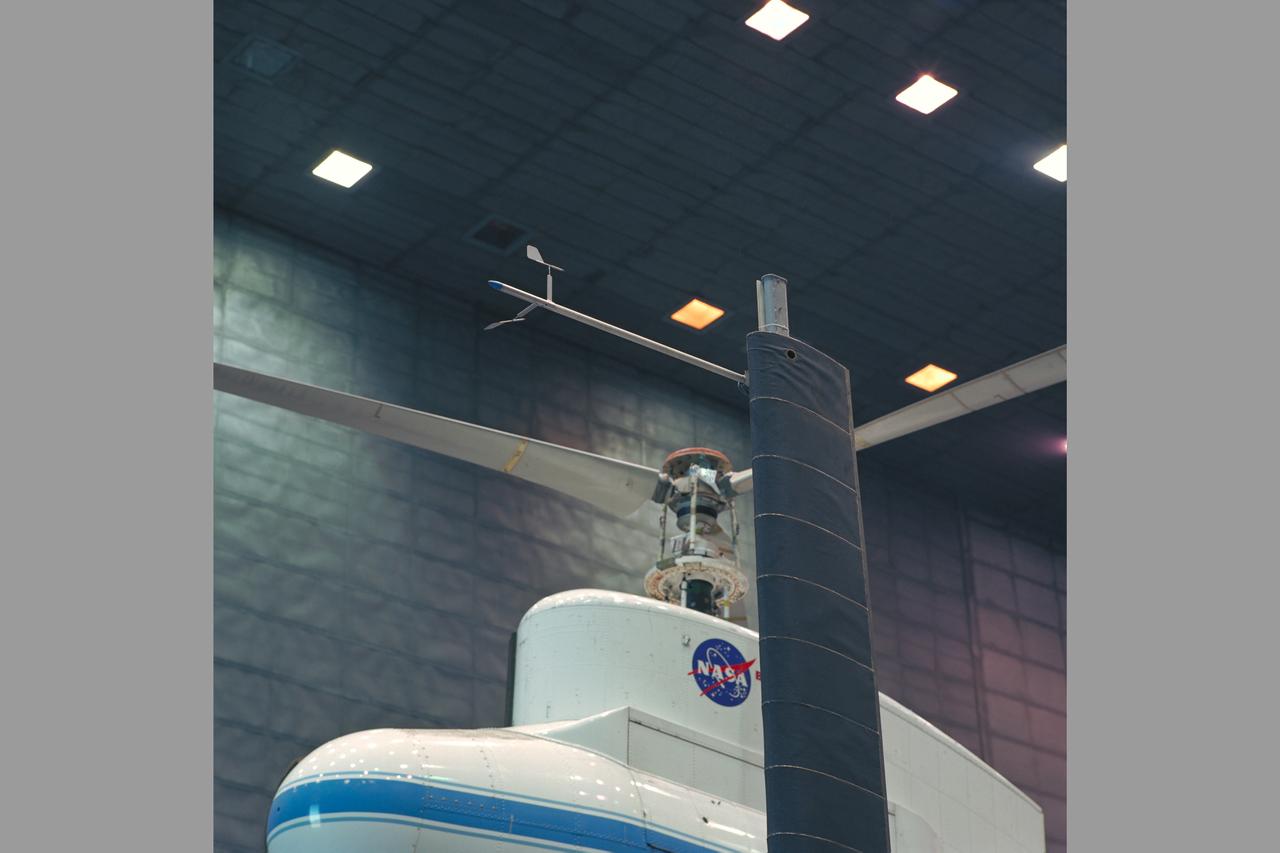
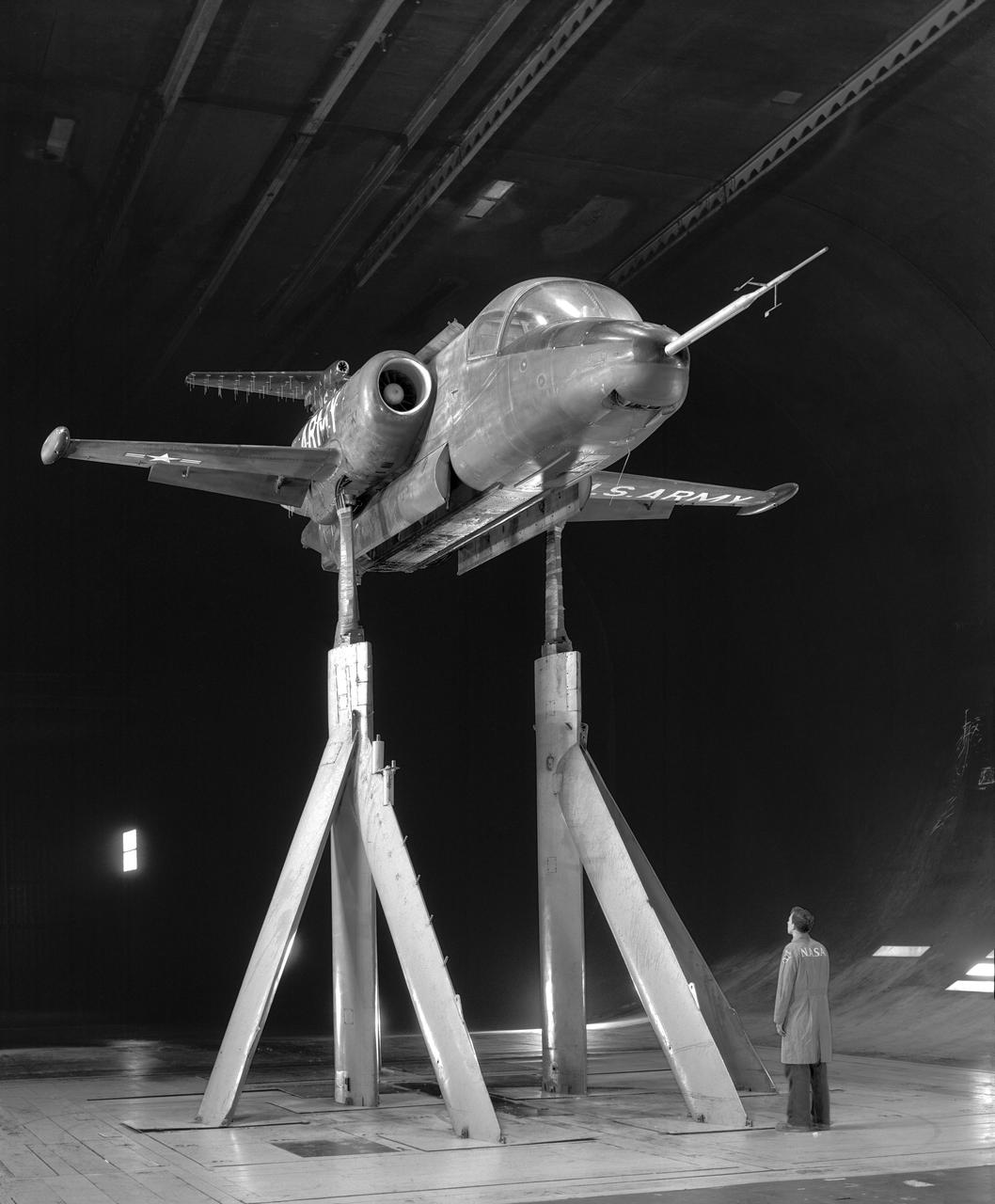
3/4 front view of XV-4A Hummingbird VTOL Research Vehicle in Ames 40x80 wind tunnel with Tom Wills in Photo.
XV-4A Hummingbird VTOL Research Vehicle in Ames 40x80 Wind Tunnel.
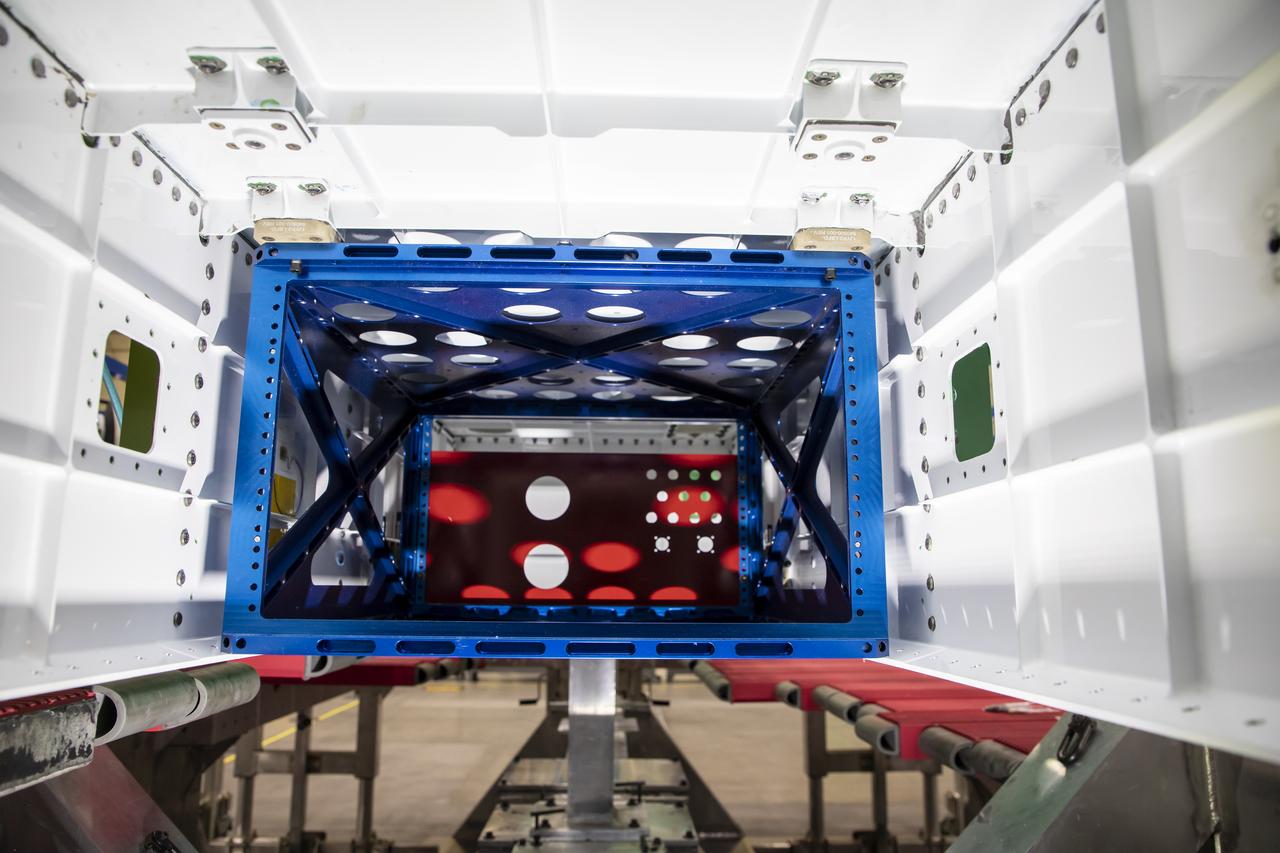
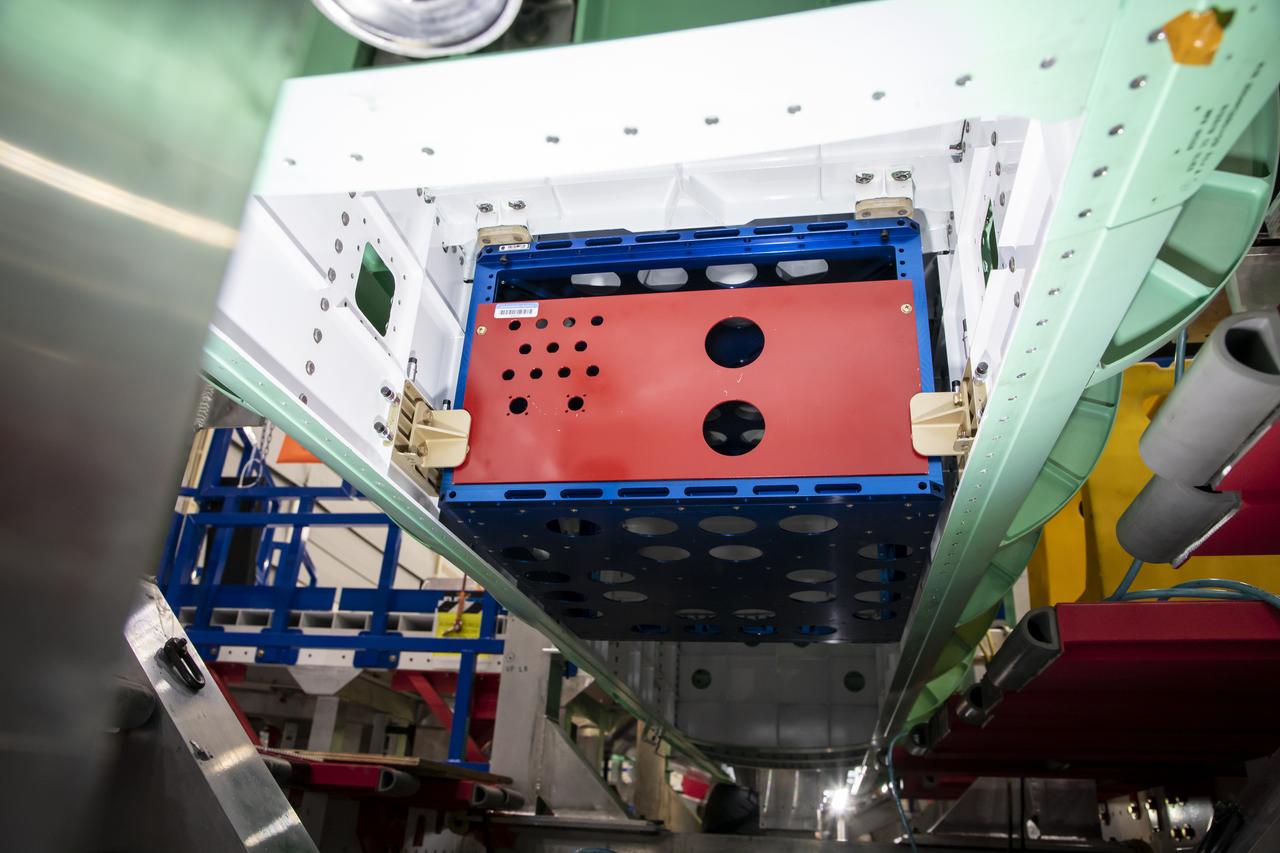
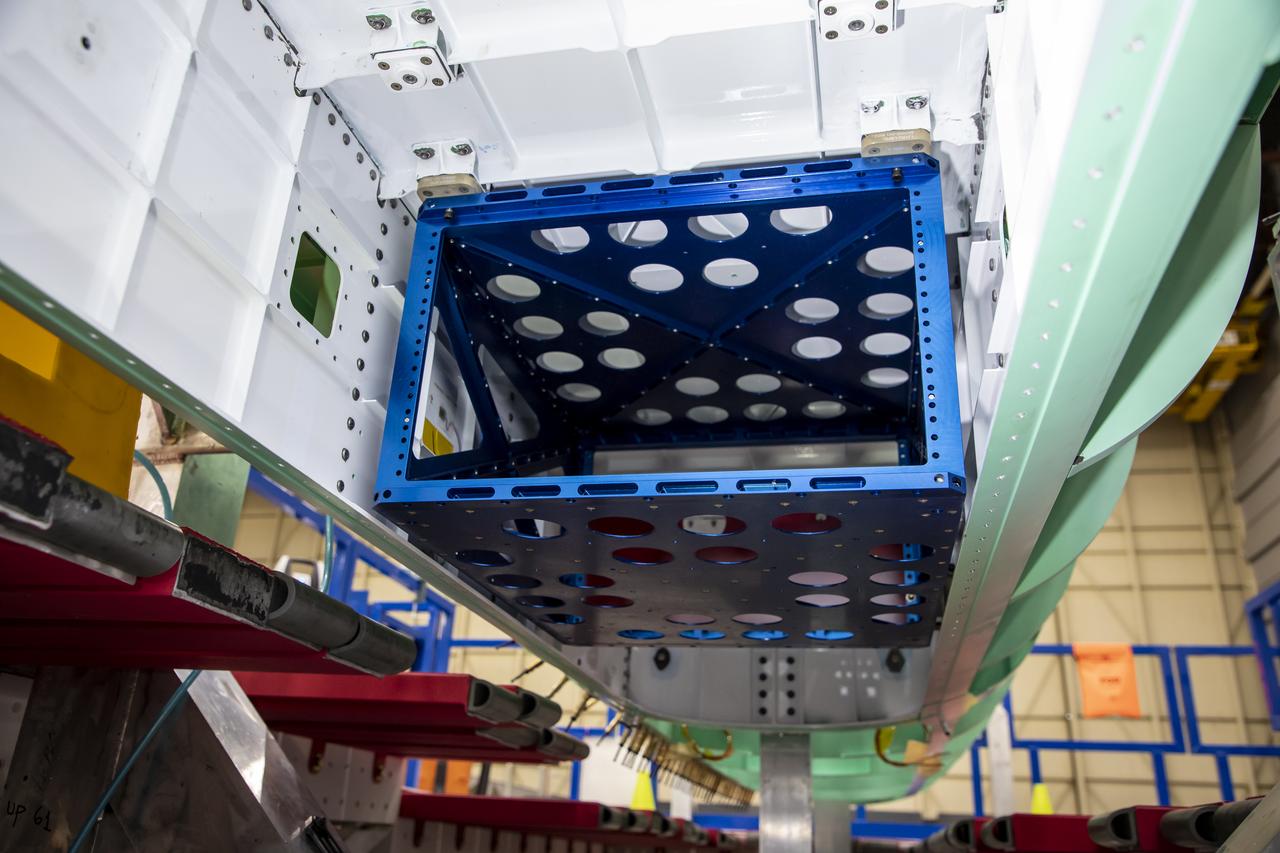
Following the successful installation of mounting brackets, technicians successfully installed the pallet for the eXternal Visibility System, or XVS, onto the X-59 Quiet SuperSonic Technology X-plane, also known as X-59 QueSST. The pallet installation marks an assembly milestone as the first NASA flight systems hardware to be installed onto the vehicle. X-59 will fly to demonstrate the ability to produce quiet thumps at supersonic speeds, instead of the typical, loud sonic booms associated with supersonic flight.
Assembly Milestone Reached as XVS Pallet Installed onto X-59
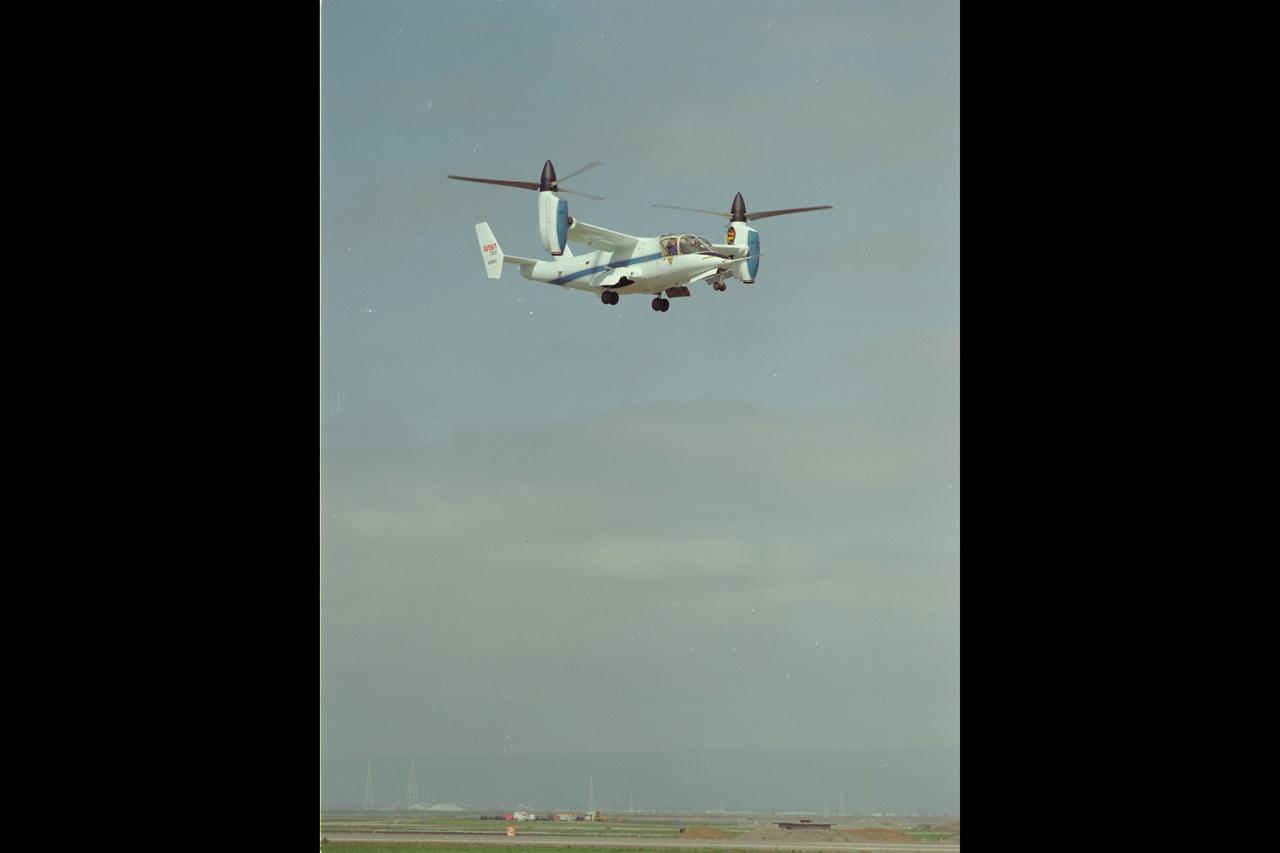
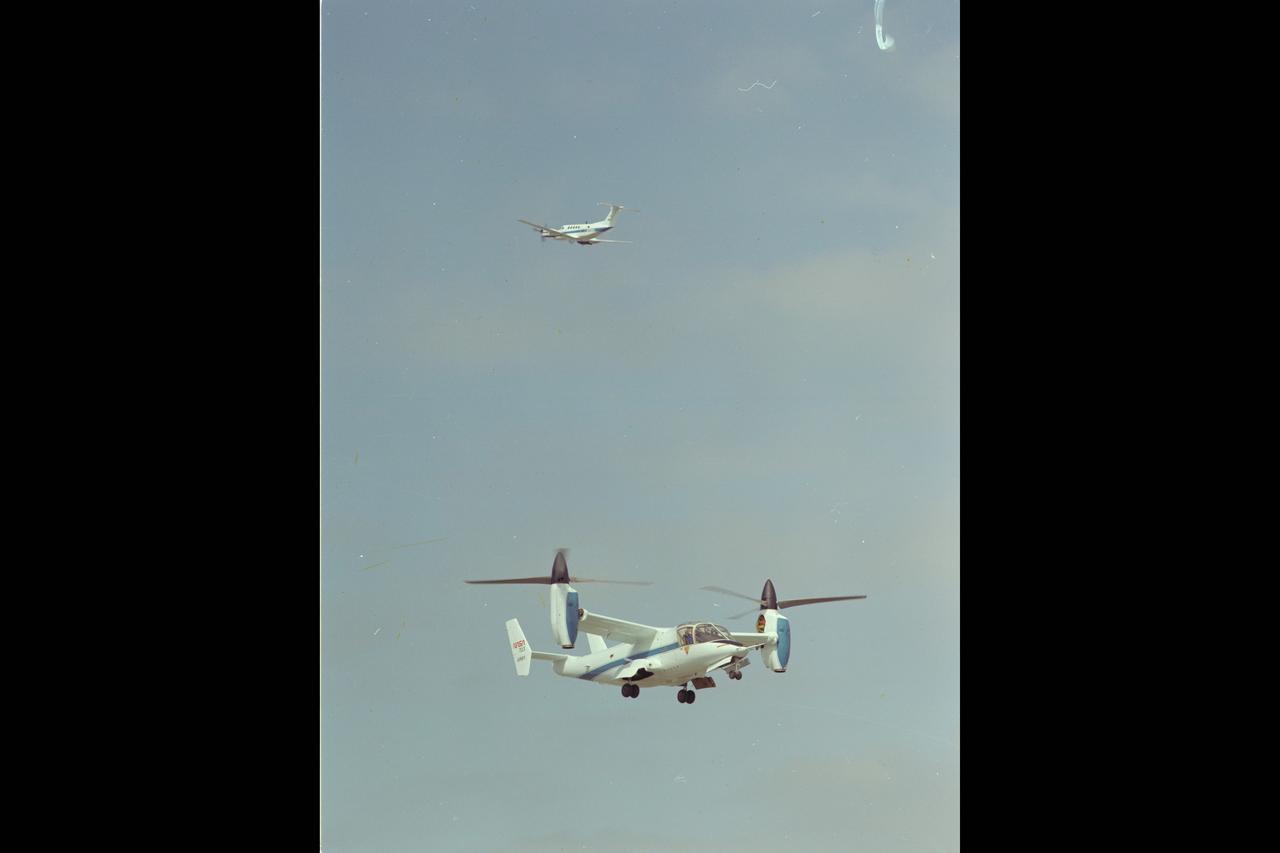
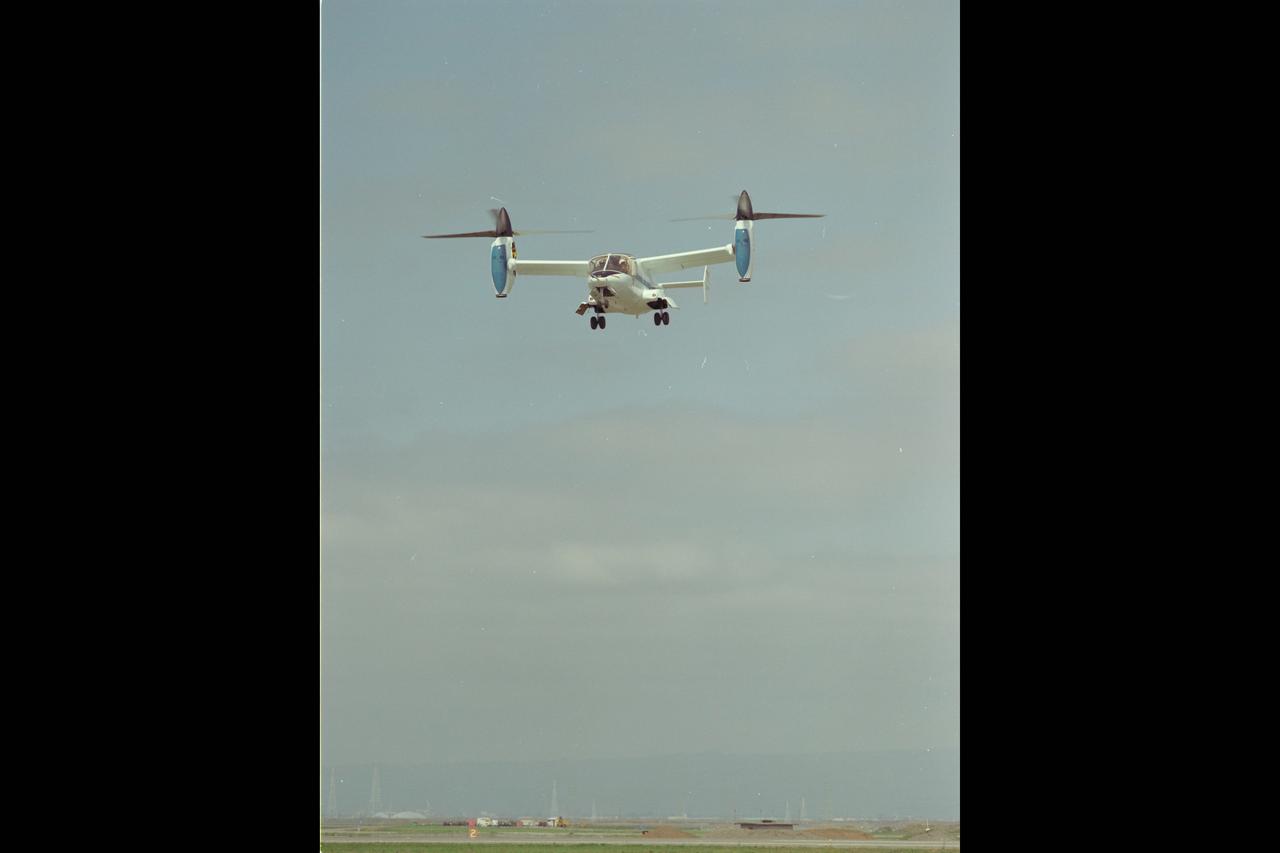
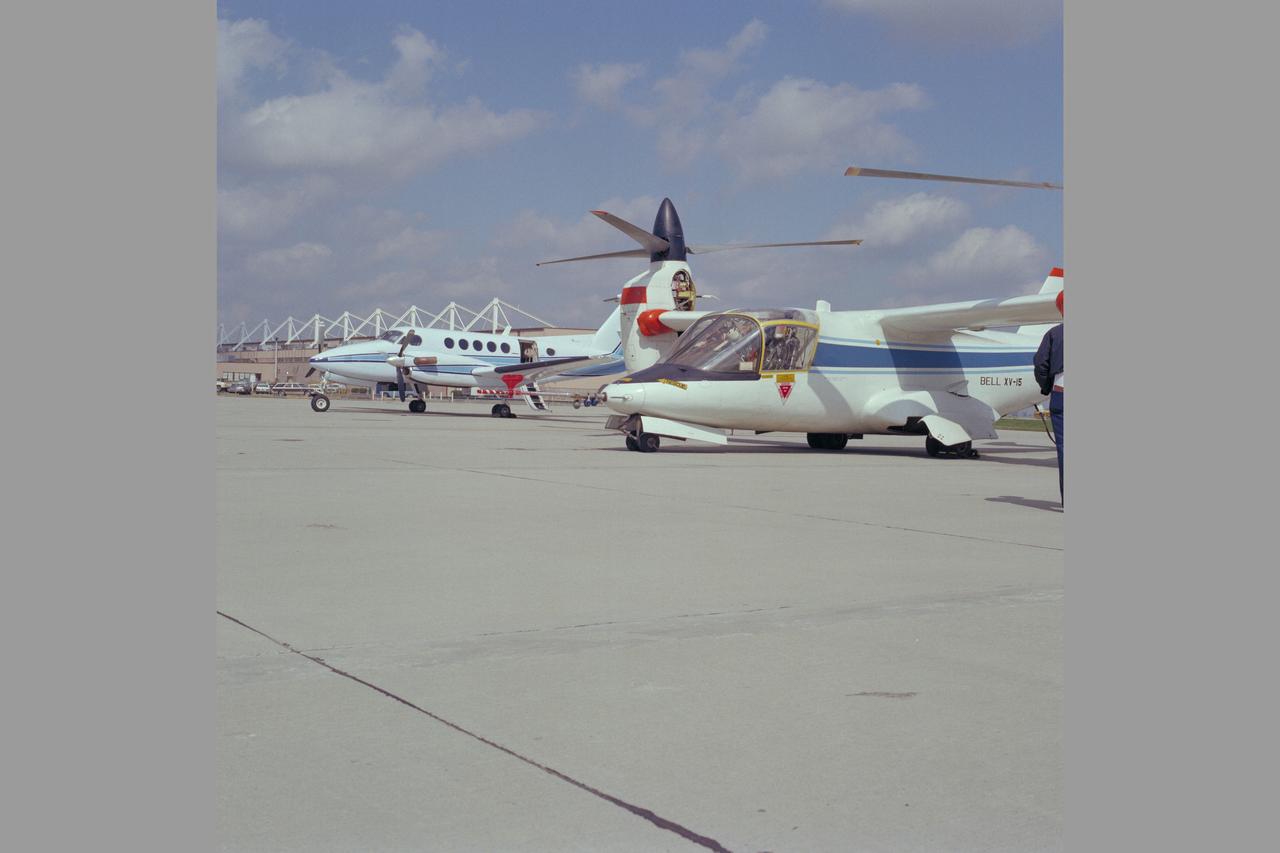
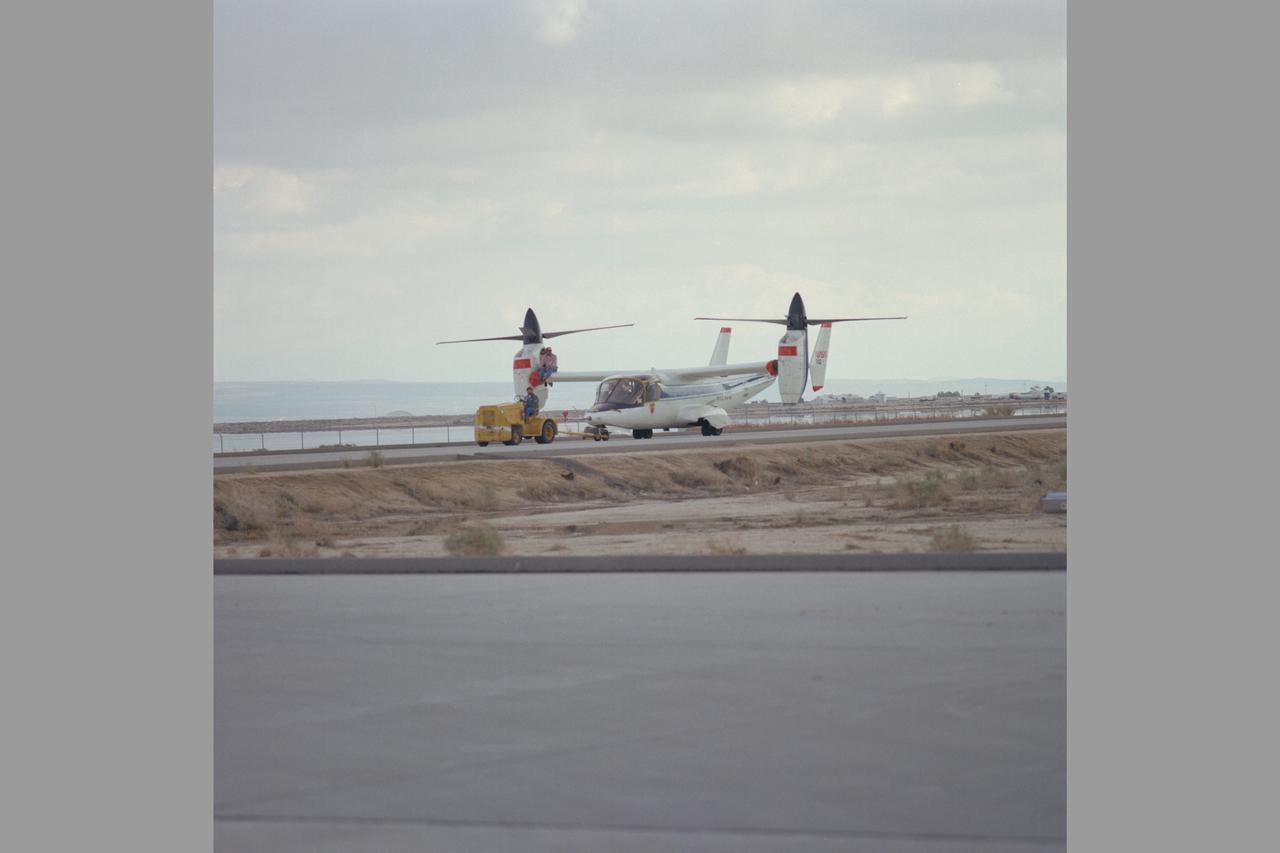
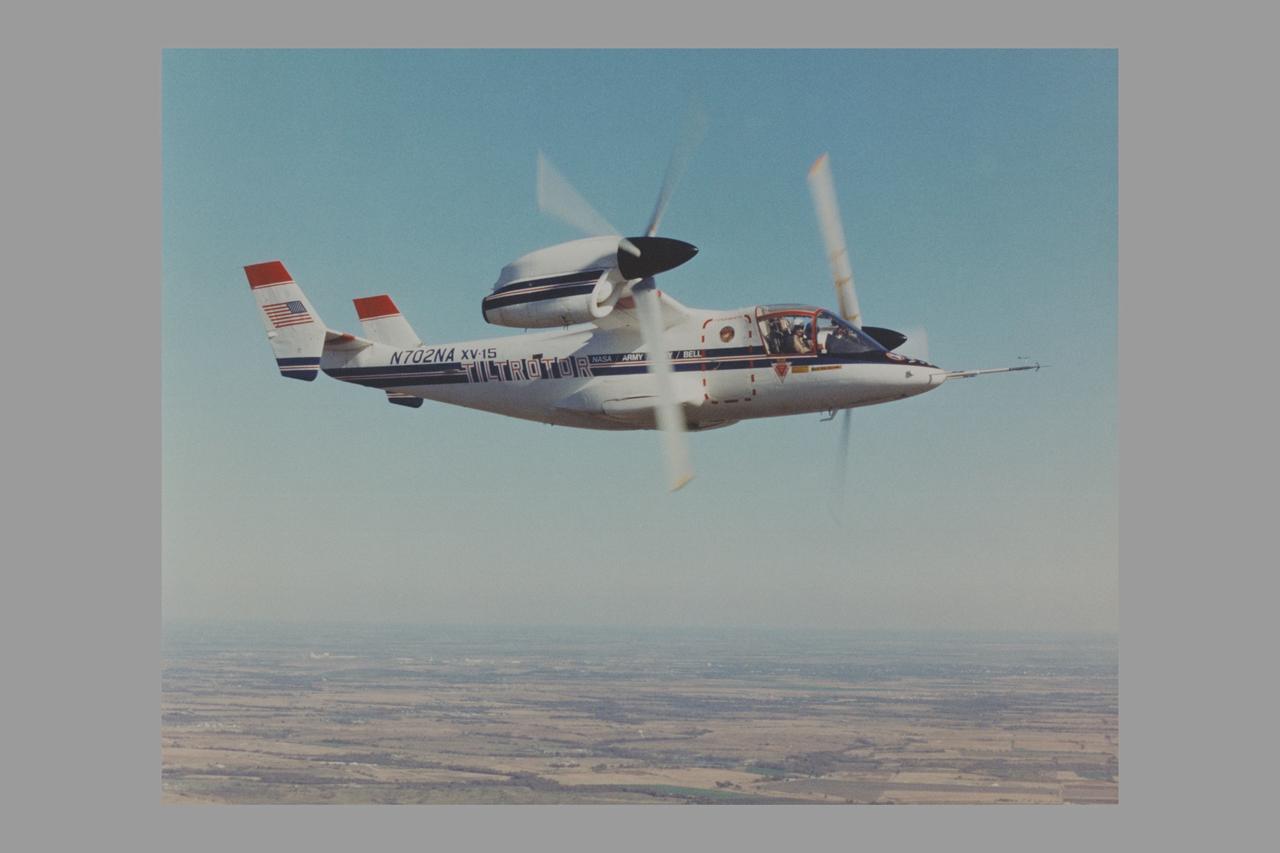
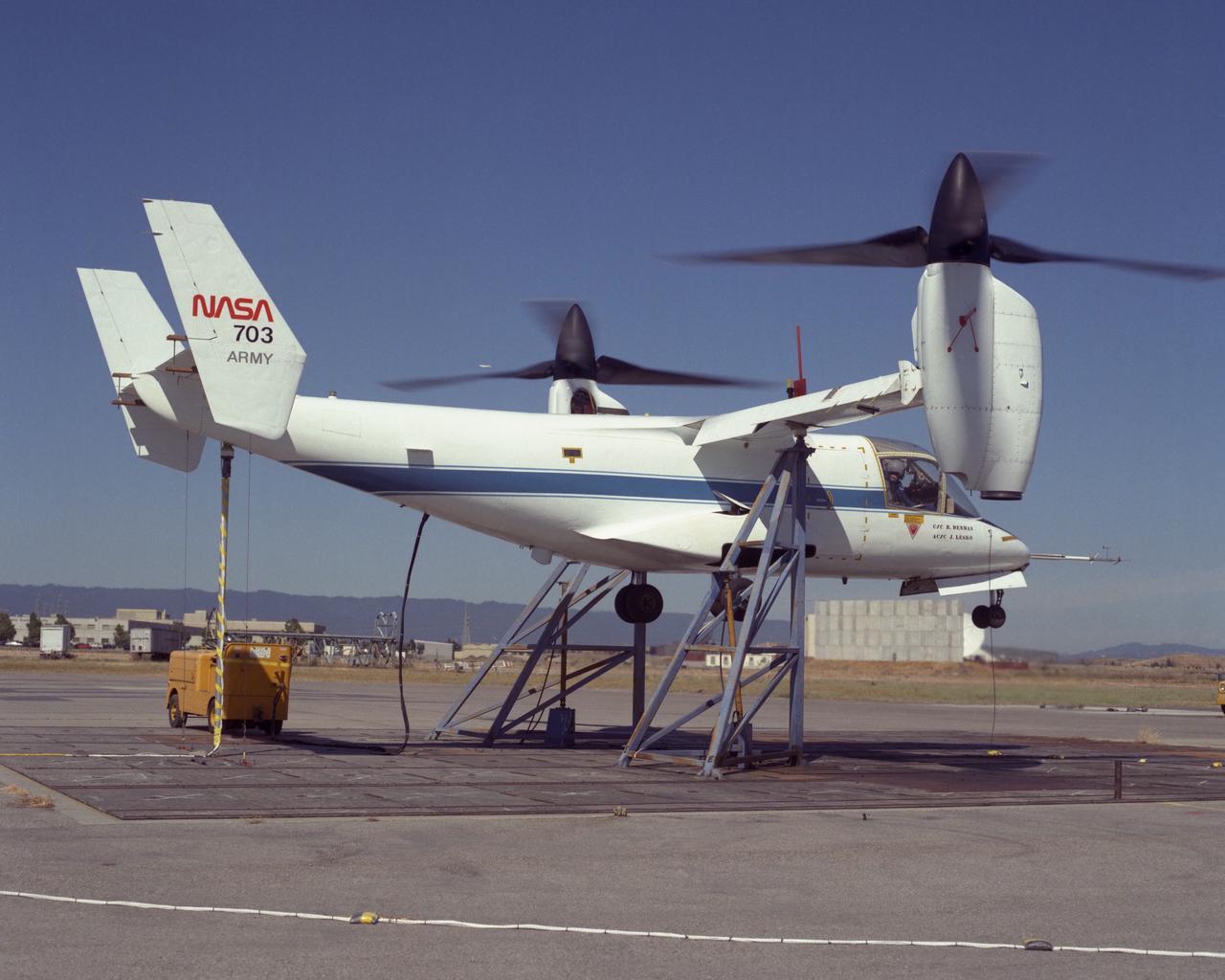
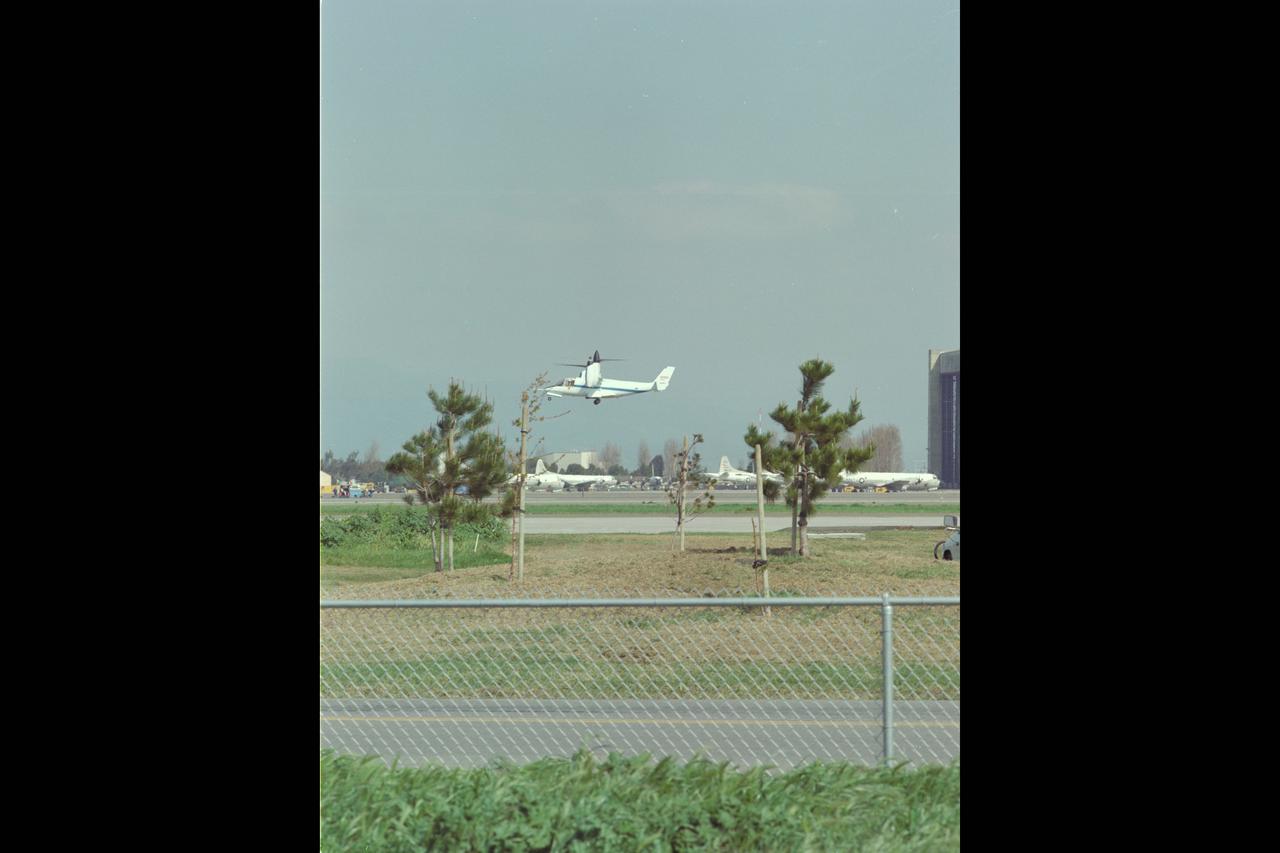
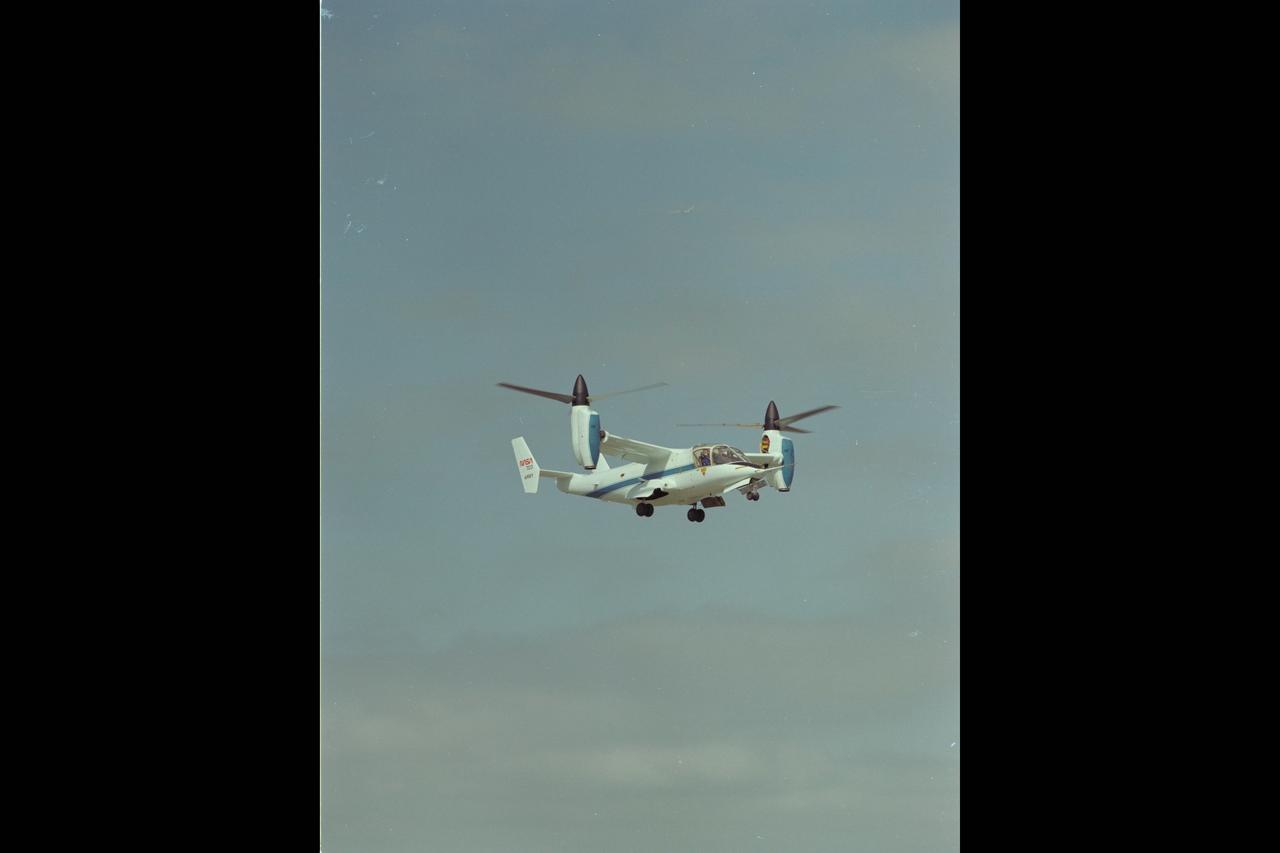
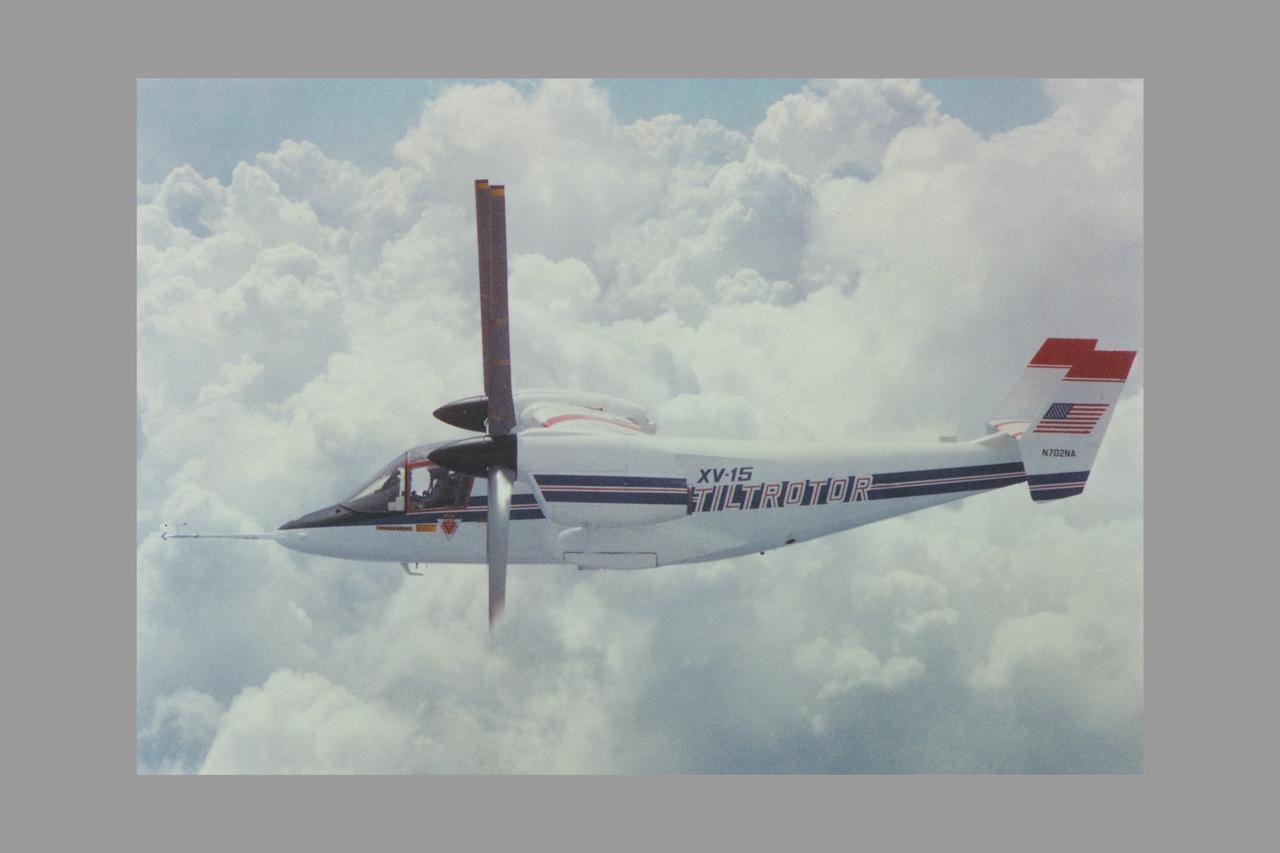
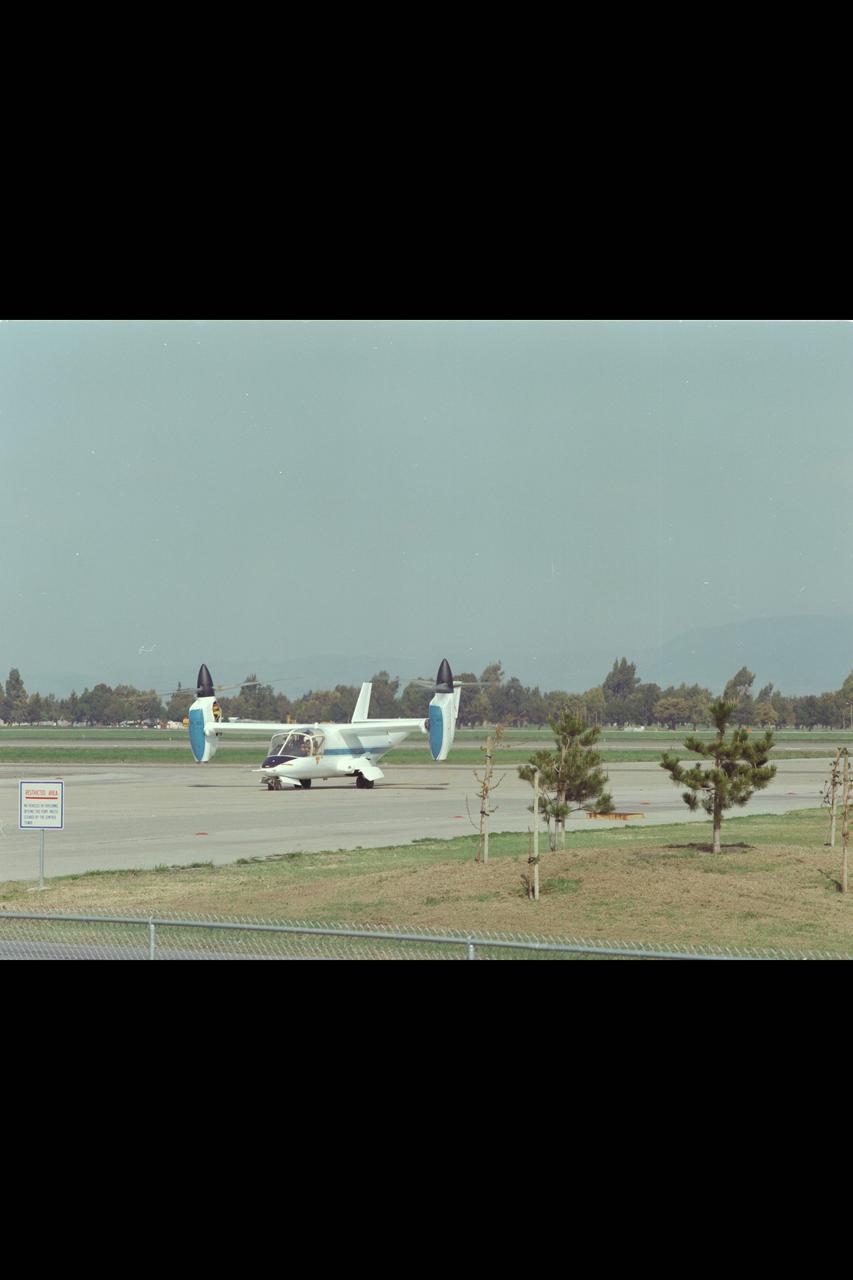
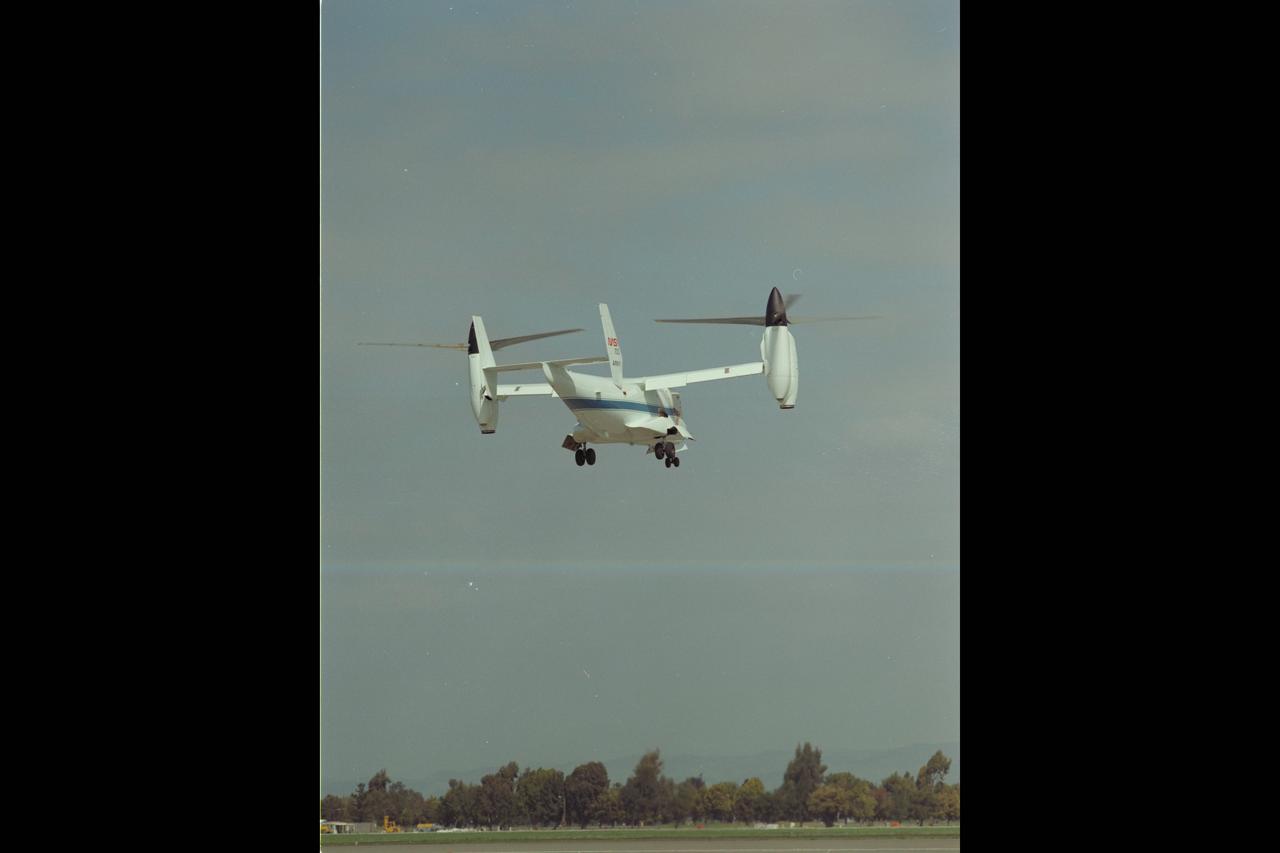
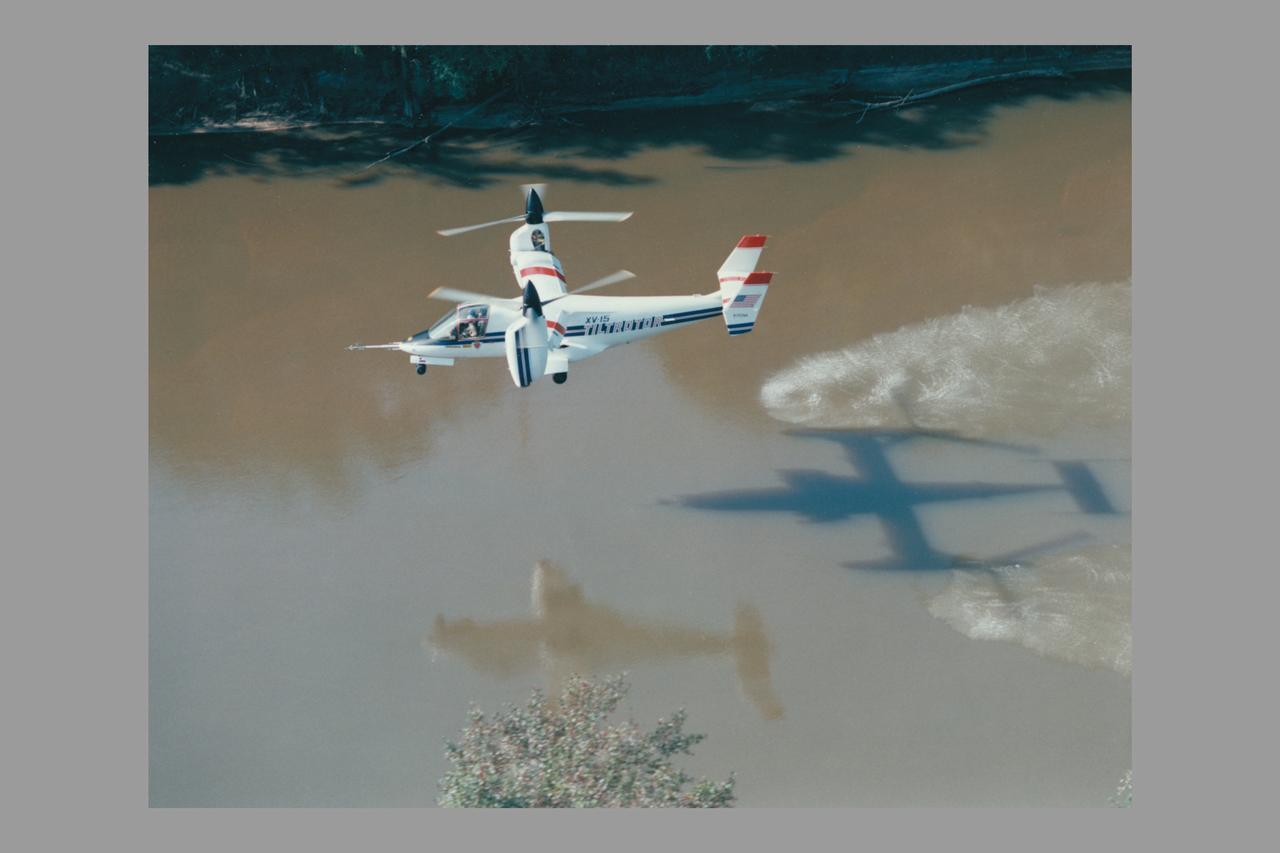
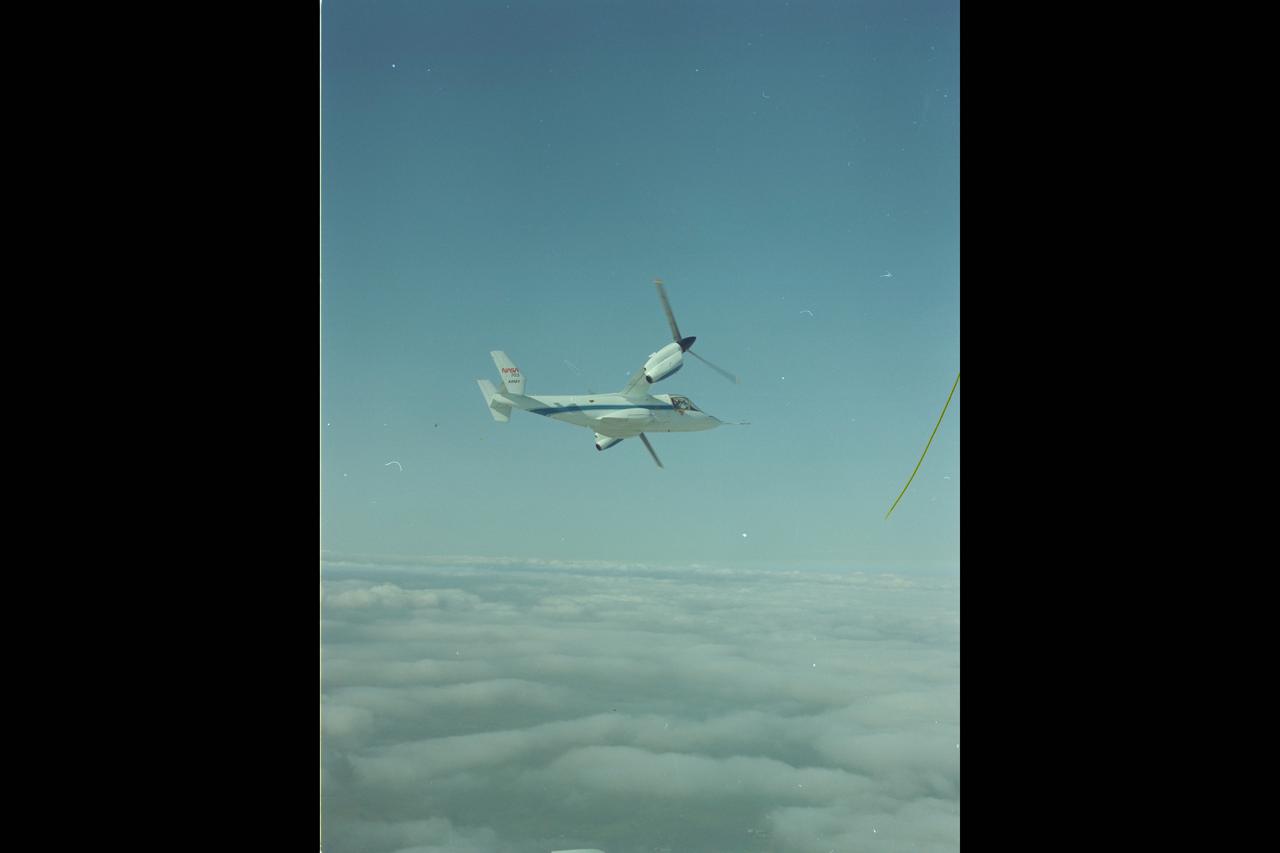
The XV-15 tilt rotor ships #1 and #2 parked on the NASA Dryden Flight Research Center ramp. The XV-15s, manufactured by Bell, were involved in limited research at Dryden in 1980 and 1981. The development of the XV-15 Tiltrotor research aircraft was initiated in 1973 with joint Army/NASA funding as a "proof of concept", or "technology demonstrator" program, with two aircraft being built by Bell Helicopter Textron (BHT) in 1977.  The aircraft are powered by twin Lycoming T-53 turboshaft engines that are connected by a cross-shaft and drive three-bladed, 25 ft diameter metal rotors (the size extensively tested in a wind tunnel). The engines and main transmissions are located in wingtip nacelles to minimize the operational loads on the cross-shaft system and, with the rotors, tilt as a single unit.  For takeoff, the proprotors and their engines are used in the straight-up position where the thrust is directed downward. The XV-15 then climbs vertically into the air like a helicopter. In this VTOL mode, the vehicle can lift off and hover for approximately one hour.  Once off the ground, the XV-15 has the ability to fly in one of two different modes. It can fly as a helicopter, in the partially converted airplane mode. The XV-15 can also then convert from the helicopter mode to the airplane mode. This is accomplished by continuous rotation of the proprotors from the helicopter rotor position to the conventional airplane propeller position. During the ten to fifteen second conversion period, the aircraft speed increases and lift is transferred from the rotors to the wing. To land, the proprotors are rotated up to the helicopter rotor position and flown as a helicopter to a vertical landing.
XV-15 tilt rotor ship #1 and #2 parked on NASA ramp
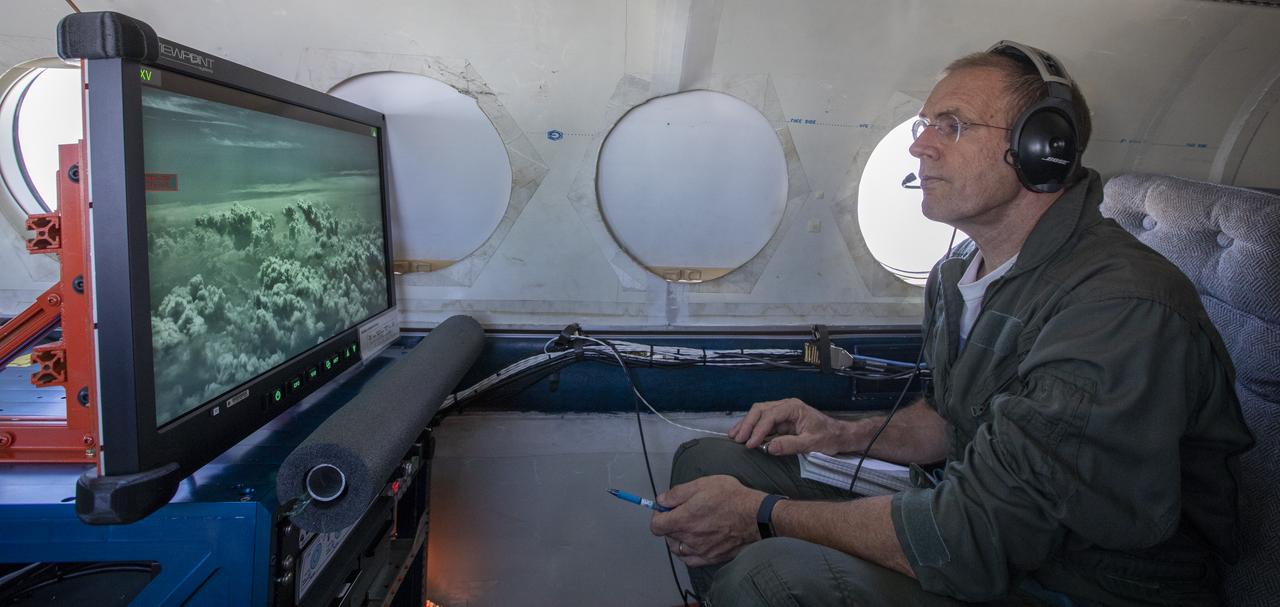
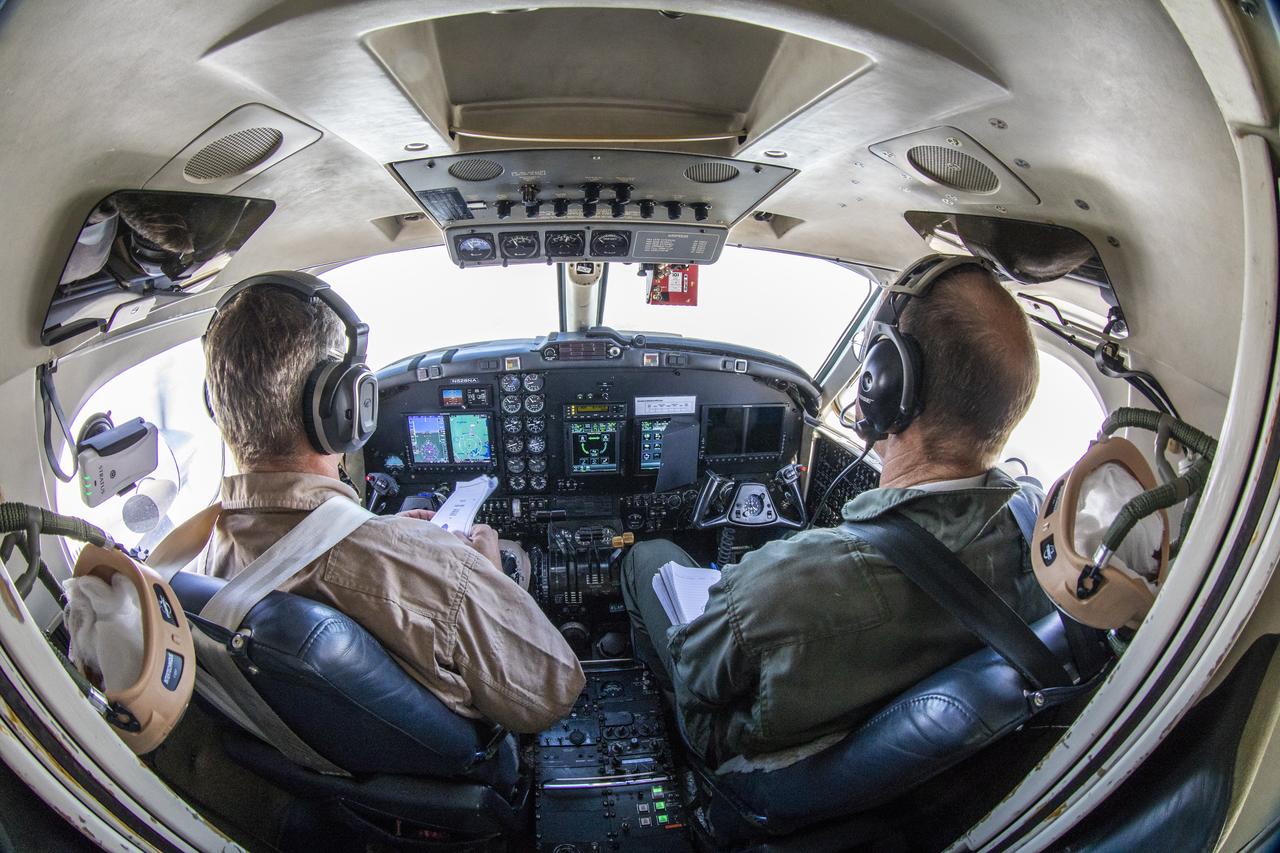
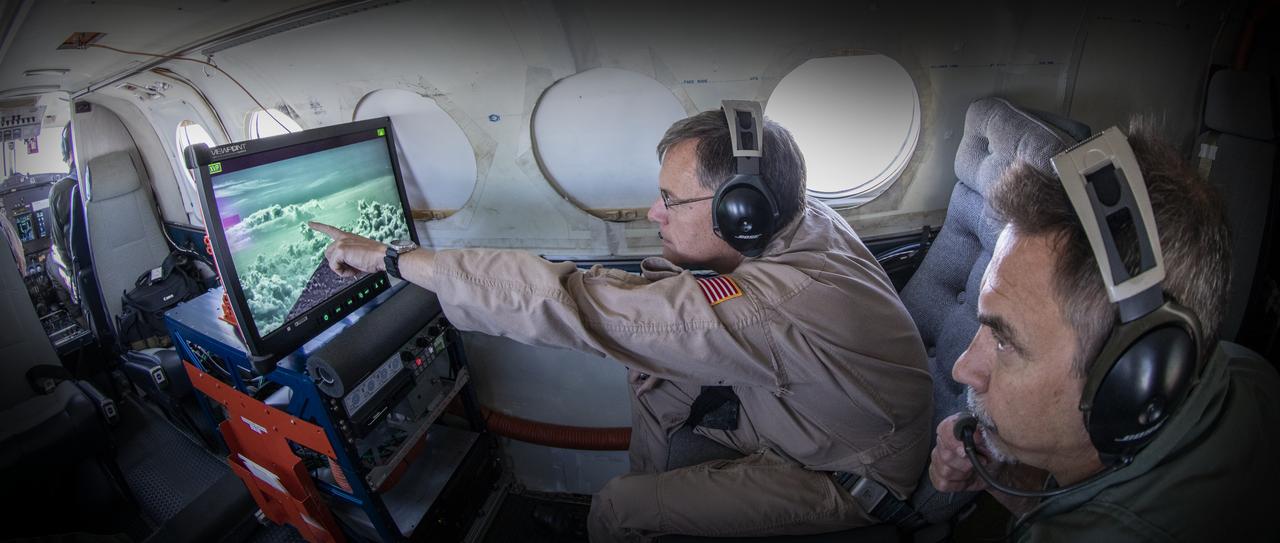
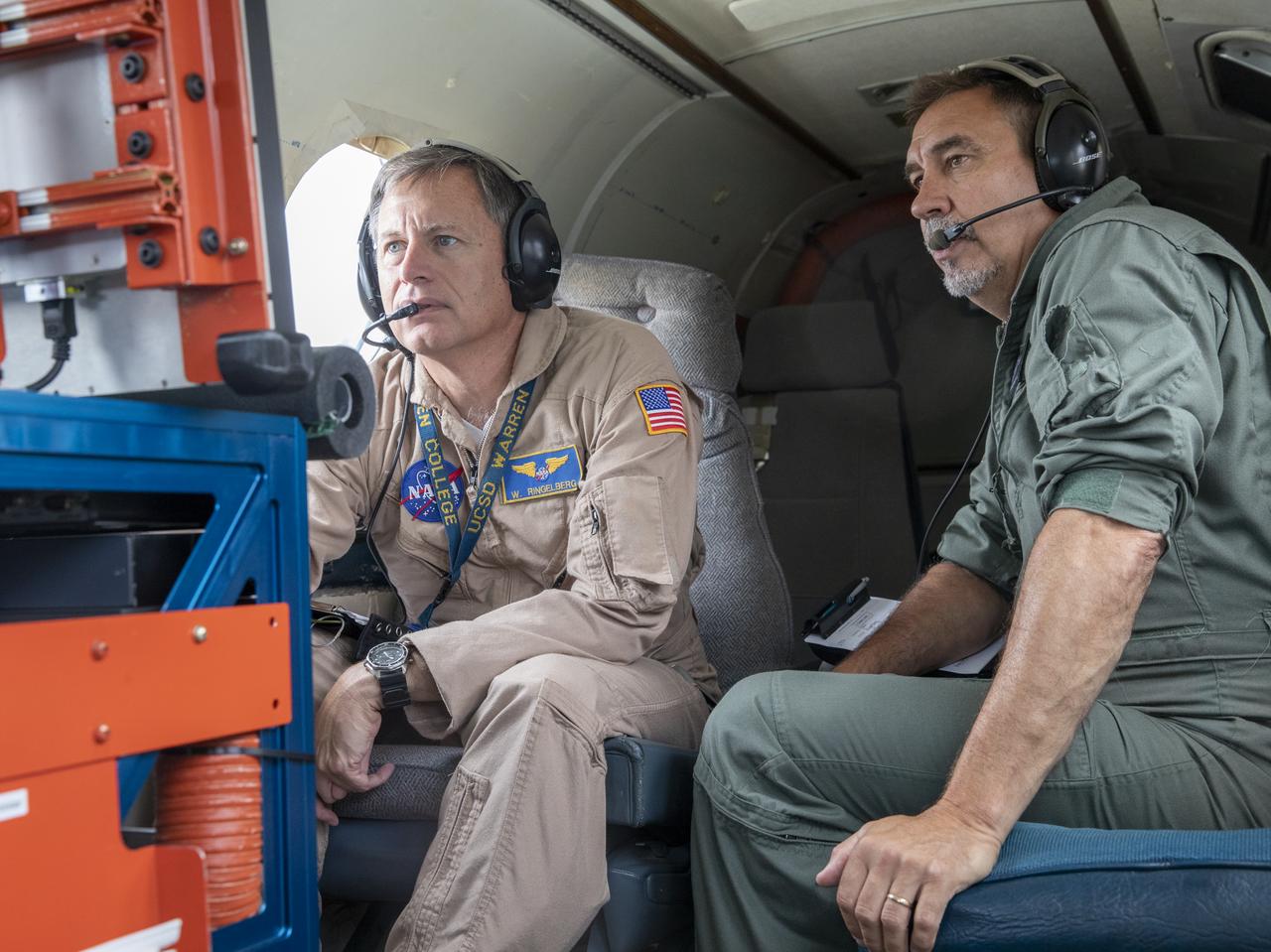
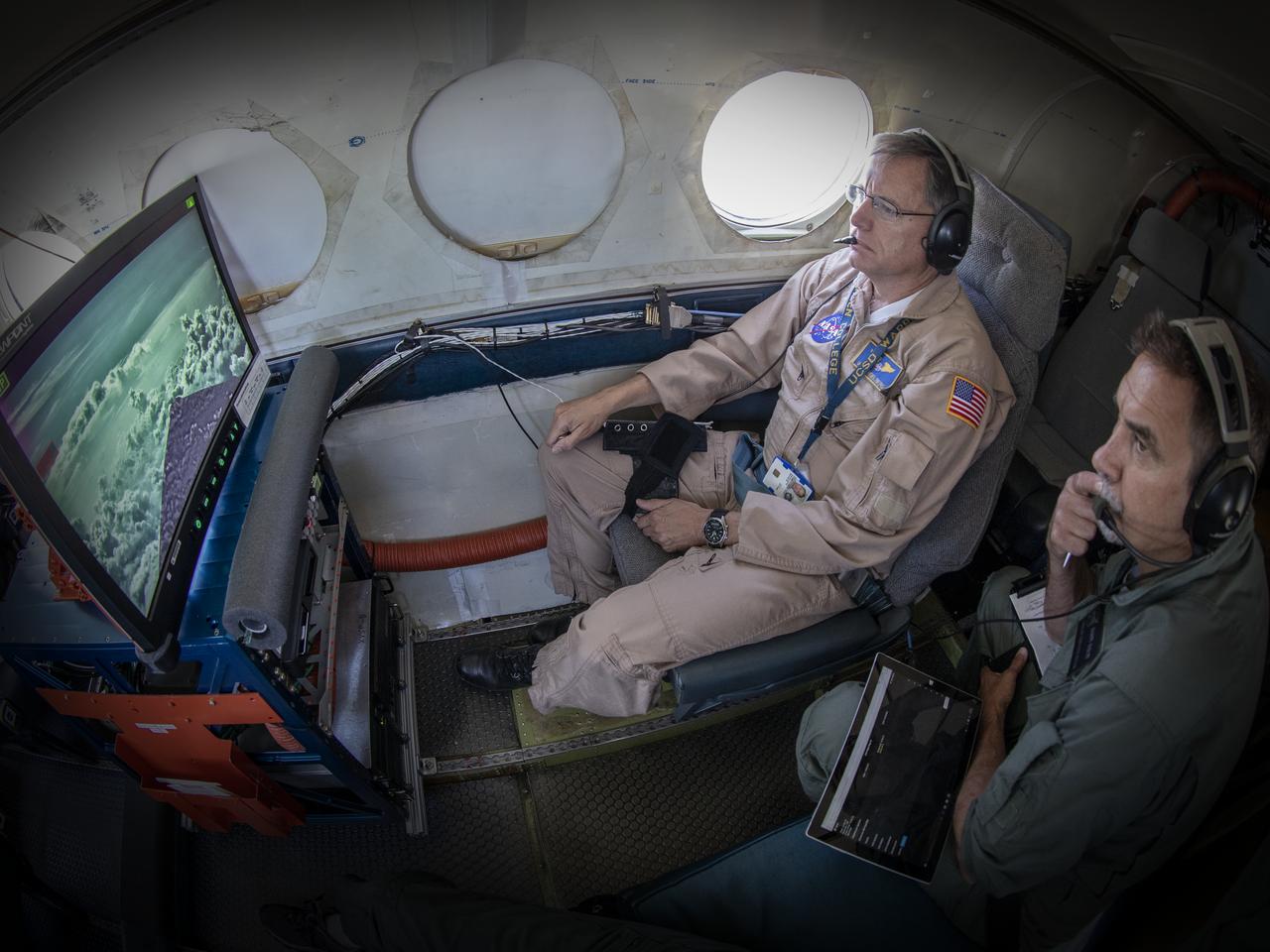
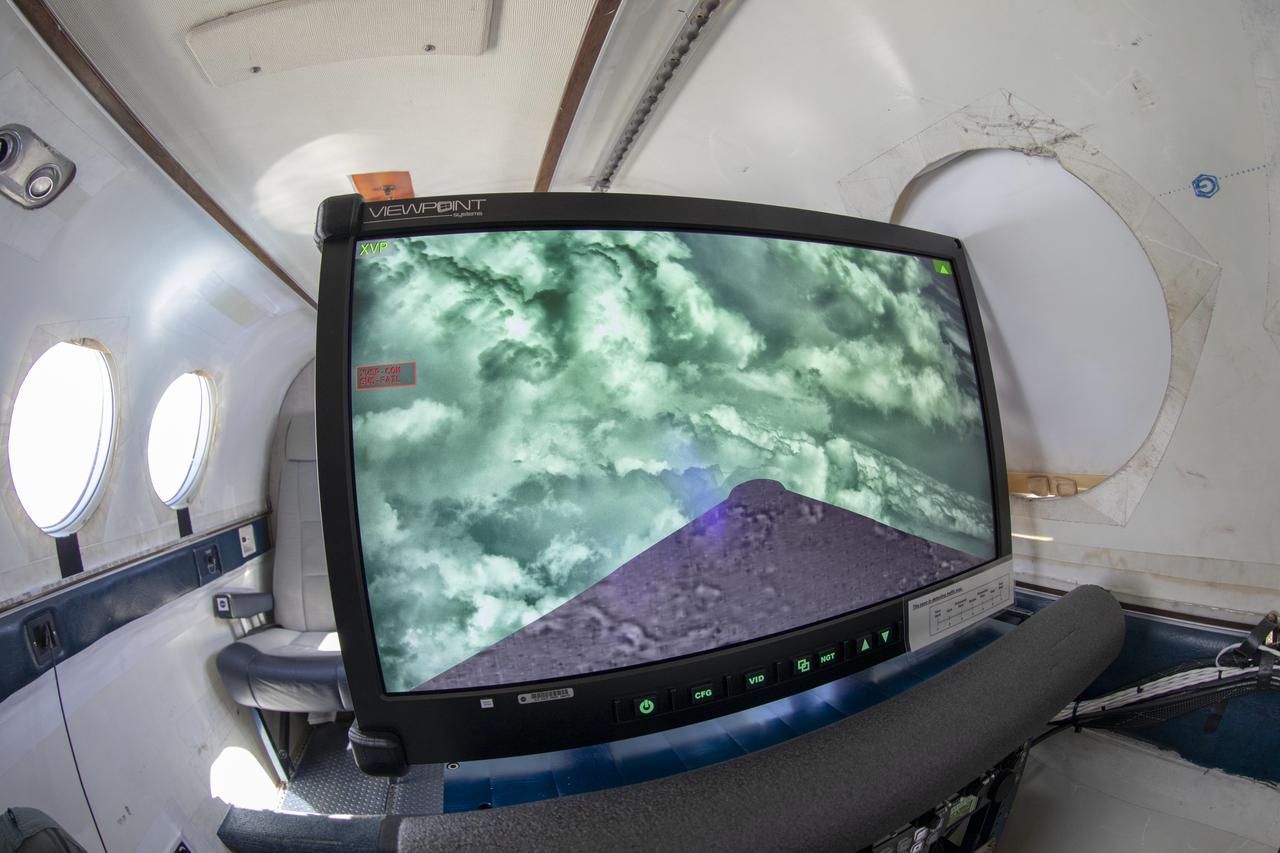
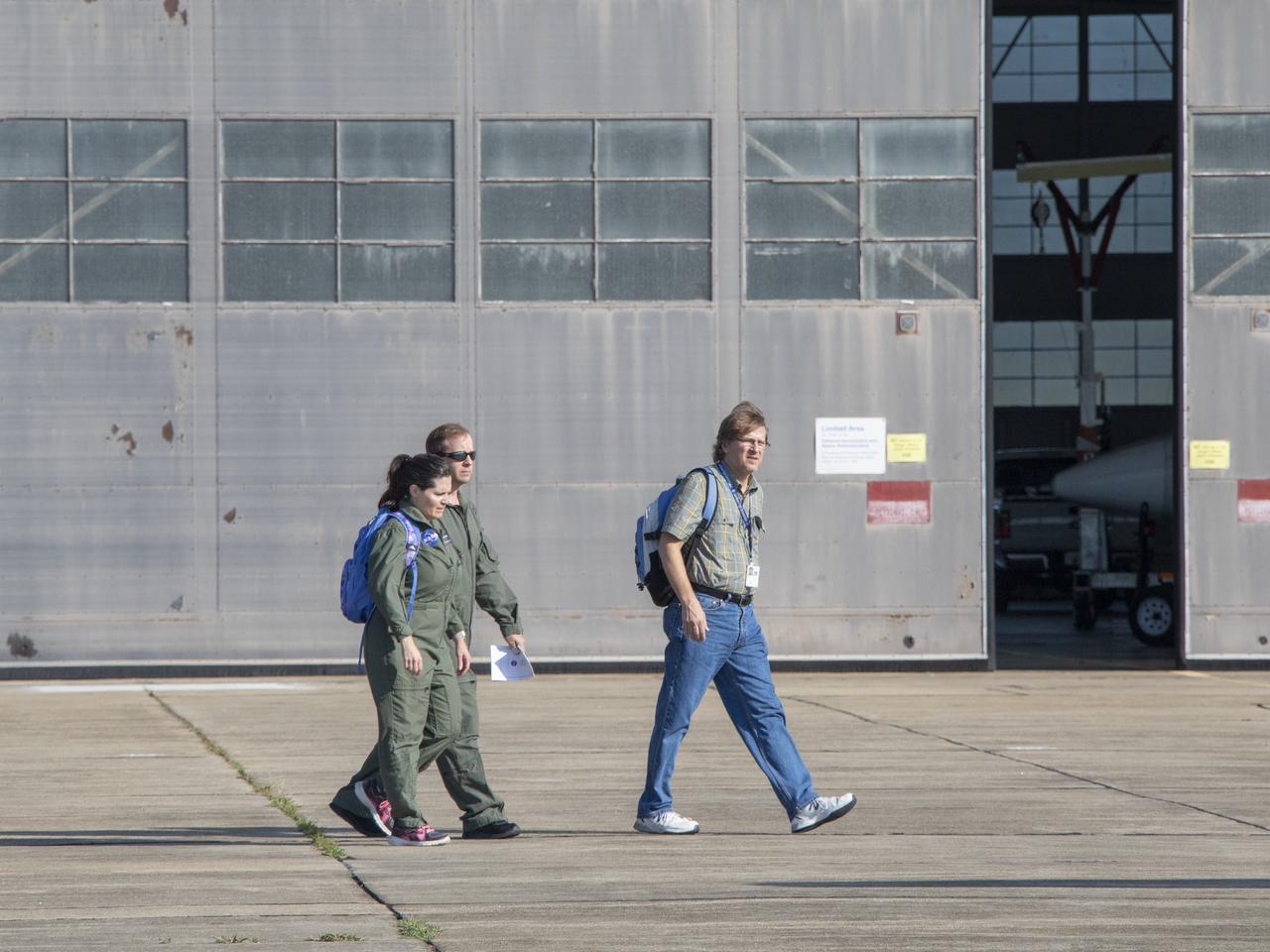
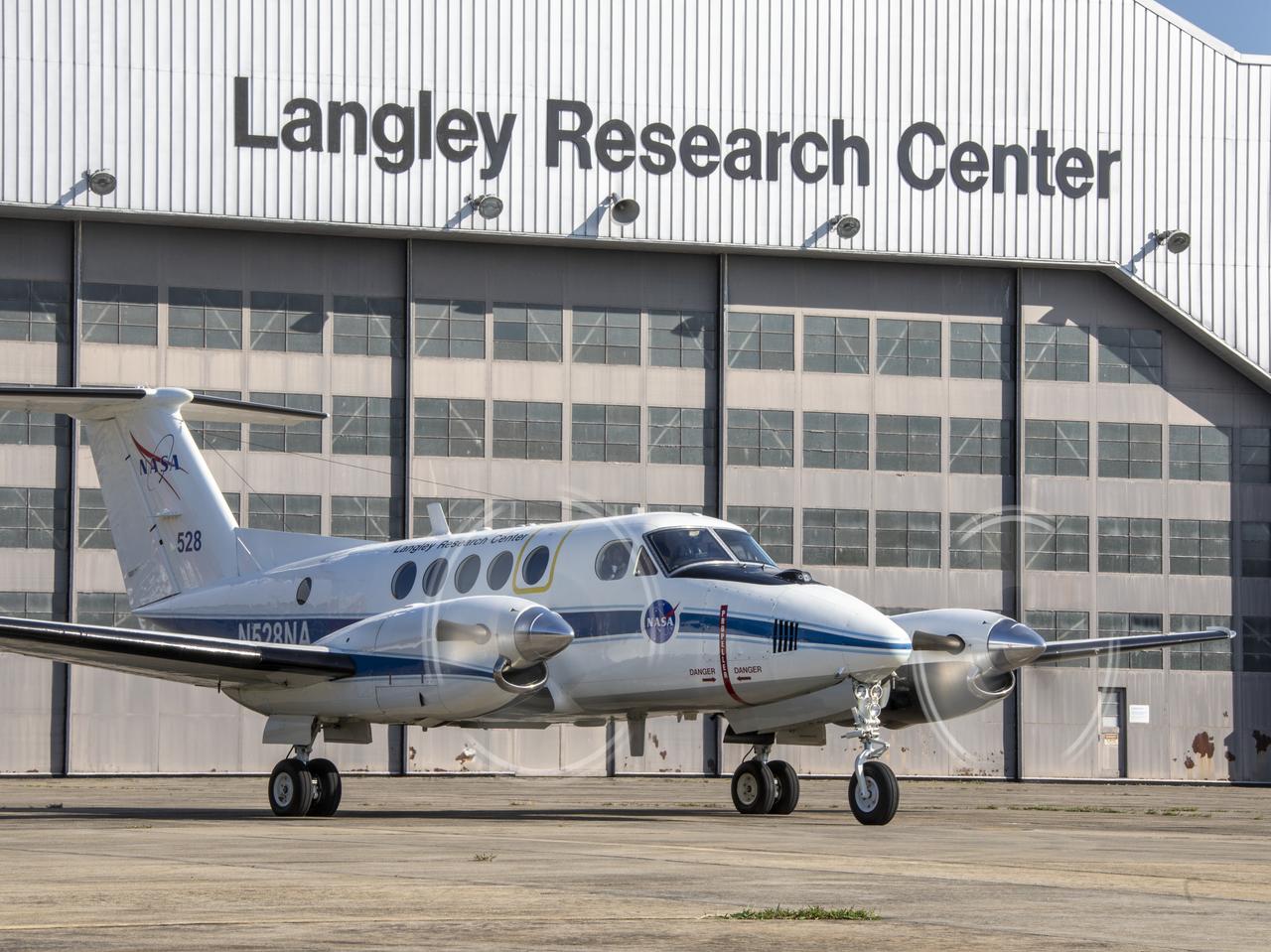
Testing the External Vision System (XVS) software on the B200 King Air. Pilots, Peter Coen and Wayne Ringelberg attempt to spot an incoming aircraft on the XVS monitor.
Testing of the External Vision System (XVS) Software on the B200 King Air
Testing the External Vision System (XVS) software on the B200 King Air. Pilots, Peter Coen and Wayne Ringelberg attempt to spot an incoming aircraft on the XVS monitor.
Testing of the External Vision System (XVS) Software on the B200 King Air
Testing the External Vision System (XVS) software on the B200 King Air. Pilots, Peter Coen and Wayne Ringelberg attempt to spot an incoming aircraft on the XVS monitor.
Testing of the External Vision System (XVS) Software on the B200 King Air
Testing the External Vision System (XVS) software on the B200 King Air. Pilots, Peter Coen and Wayne Ringelberg attempt to spot an incoming aircraft on the XVS monitor.
Testing of the External Vision System (XVS) Software on the B200 King Air
Testing the External Vision System (XVS) software on the B200 King Air. Pilots, Peter Coen and Wayne Ringelberg attempt to spot an incoming aircraft on the XVS monitor.
Testing of the External Vision System (XVS) Software on the B200 King Air
Testing the External Vision System (XVS) software on the B200 King Air. Pilots, Peter Coen and Wayne Ringelberg attempt to spot an incoming aircraft on the XVS monitor.
Testing of the External Vision System (XVS) Software on the B200 King Air
Testing the External Vision System (XVS) software on the B200 King Air. Pilots, Peter Coen and Wayne Ringelberg attempt to spot an incoming aircraft on the XVS monitor.
Testing of the External Vision System (XVS) Software on the B200 King Air
Testing the External Vision System (XVS) software on the B200 King Air. Pilots, Peter Coen and Wayne Ringelberg attempt to spot an incoming aircraft on the XVS monitor.
Testing of the External Vision System (XVS) Software on the B200 King Air
Testing the External Vision System (XVS) software on the B200 King Air. Pilots, Peter Coen and Wayne Ringelberg attempt to spot an incoming aircraft on the XVS monitor.
Testing of the External Vision System (XVS) Software on the B200 King Air
Testing the External Vision System (XVS) software on the B200 King Air. Pilots, Peter Coen and Wayne Ringelberg attempt to spot an incoming aircraft on the XVS monitor.
Testing of the External Vision System (XVS) Software on the B200 King Air
Testing the External Vision System (XVS) software on the B200 King Air. Pilots, Peter Coen and Wayne Ringelberg attempt to spot an incoming aircraft on the XVS monitor.
Testing of the External Vision System (XVS) Software on the B200 King Air
Testing the External Vision System (XVS) software on the B200 King Air. Pilots, Peter Coen and Wayne Ringelberg attempt to spot an incoming aircraft on the XVS monitor.
Testing of the External Vision System (XVS) Software on the B200 King Air
Testing the External Vision System (XVS) software on the B200 King Air. Pilots, Peter Coen and Wayne Ringelberg attempt to spot an incoming aircraft on the XVS monitor.
Testing of the External Vision System (XVS) Software on the B200 King Air
Testing the External Vision System (XVS) software on the B200 King Air. Pilots, Peter Coen and Wayne Ringelberg attempt to spot an incoming aircraft on the XVS monitor.
Testing of the External Vision System (XVS) Software on the B200 King Air
Overhead view of Bell XV-3 Convertiplane. First tilt rotor tested in the 40 x 80 wind tunnel.  Transition aerodynamics studied; shown in hover mode.
Overhead view of Bell XV-3 Convertiplane
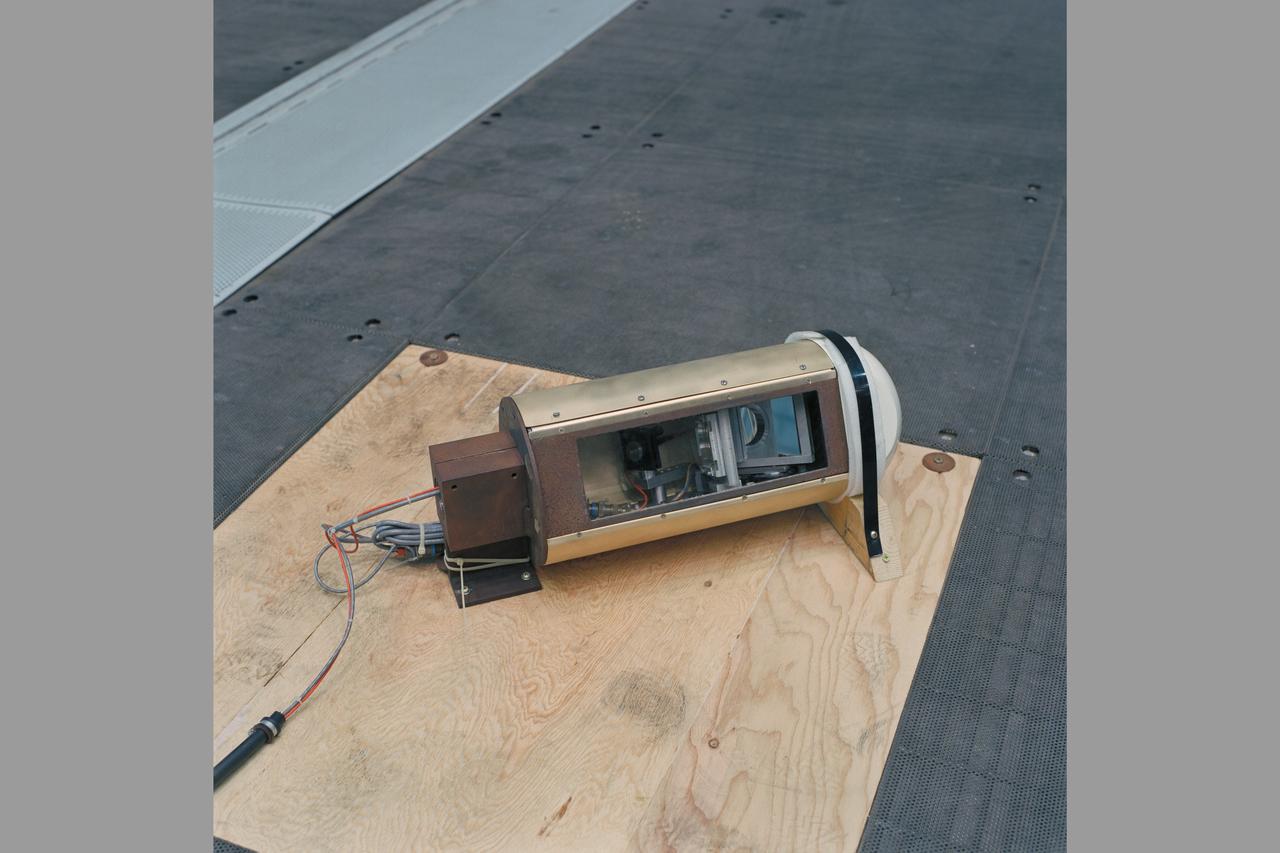
Lockheed Martin Photography By Garry Tice 1011 Lockheed Way, Palmdale, Ca. 93599 Event: NASA Payload Pallet XVS Mock-Up Date: 7/01/2020 Additional Info:
NASA Payload Pallet XVS Mock-Up
Overhead view of Ryan XV-5A lift-fan VSTOL airplane.
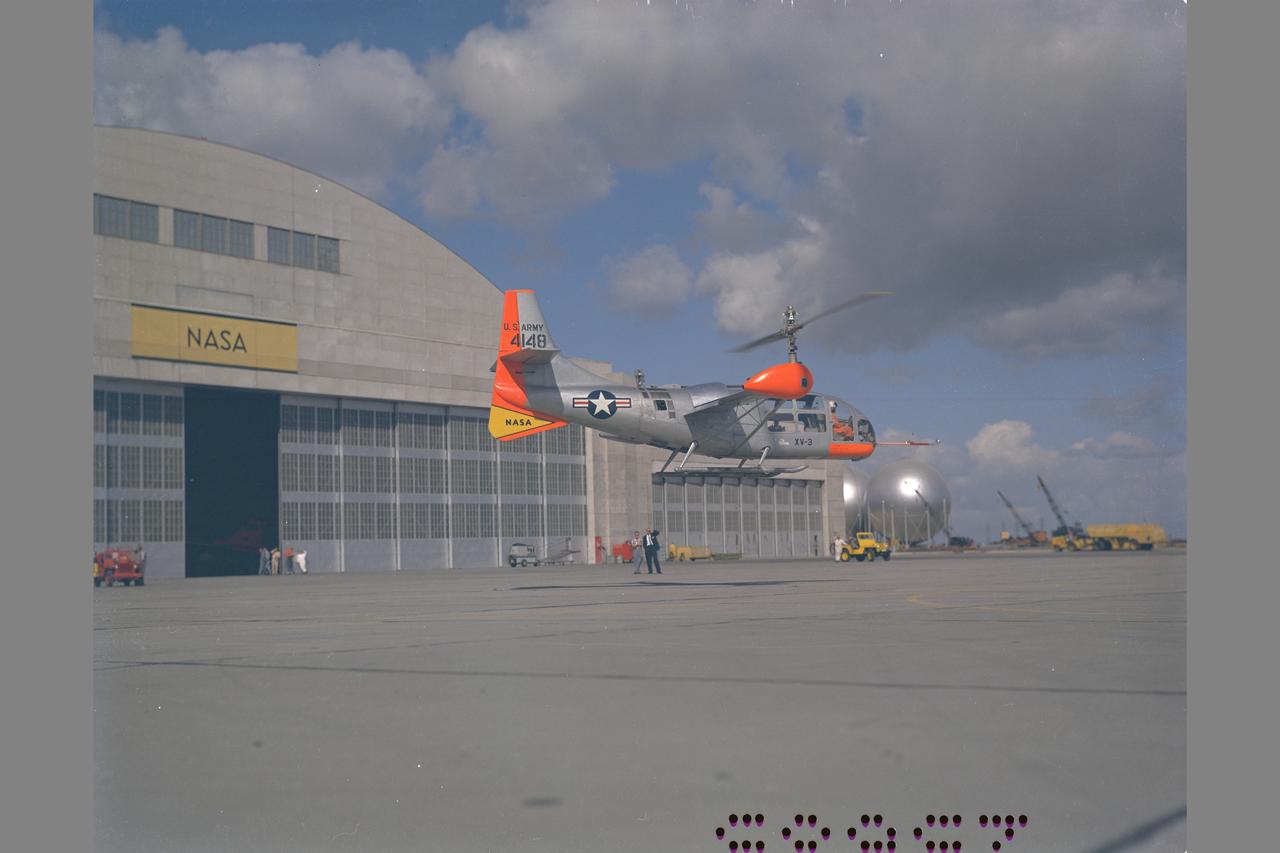
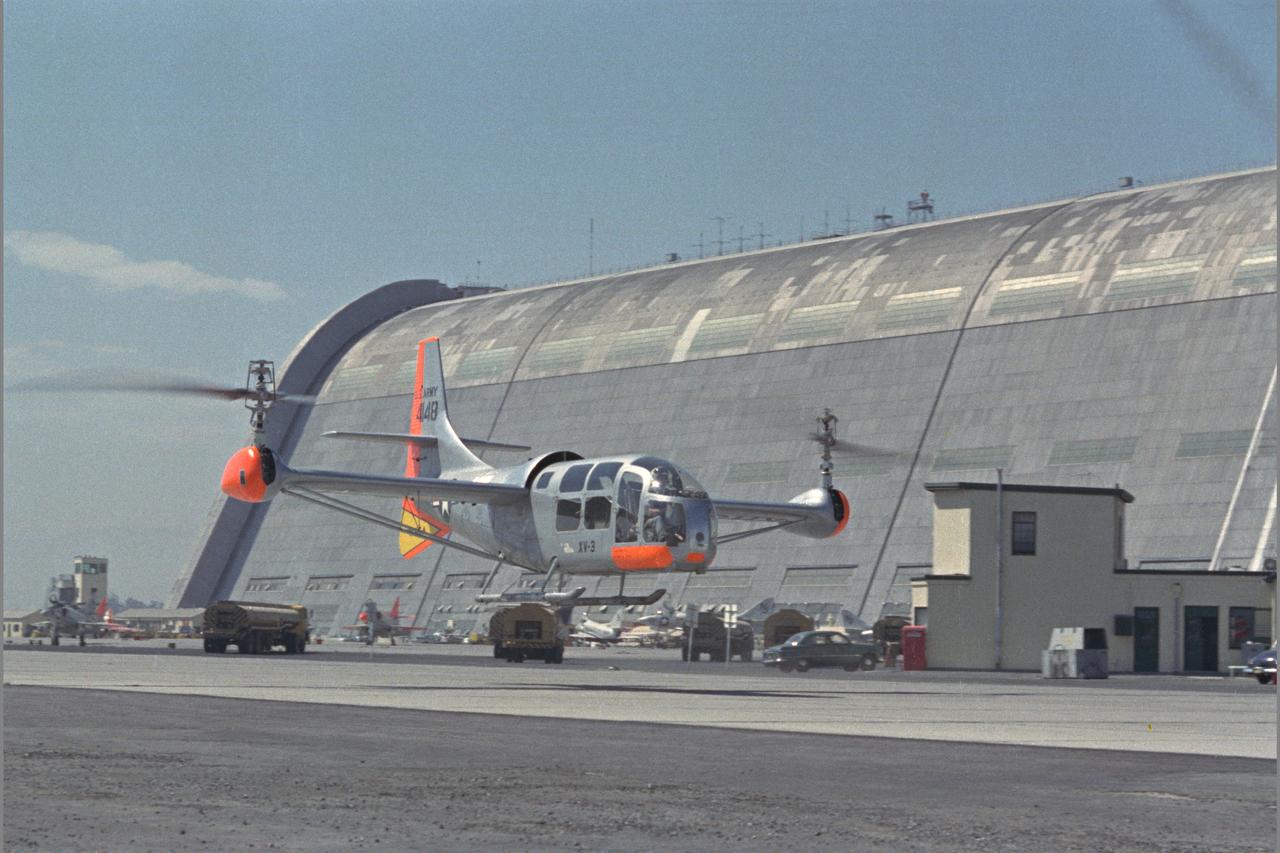
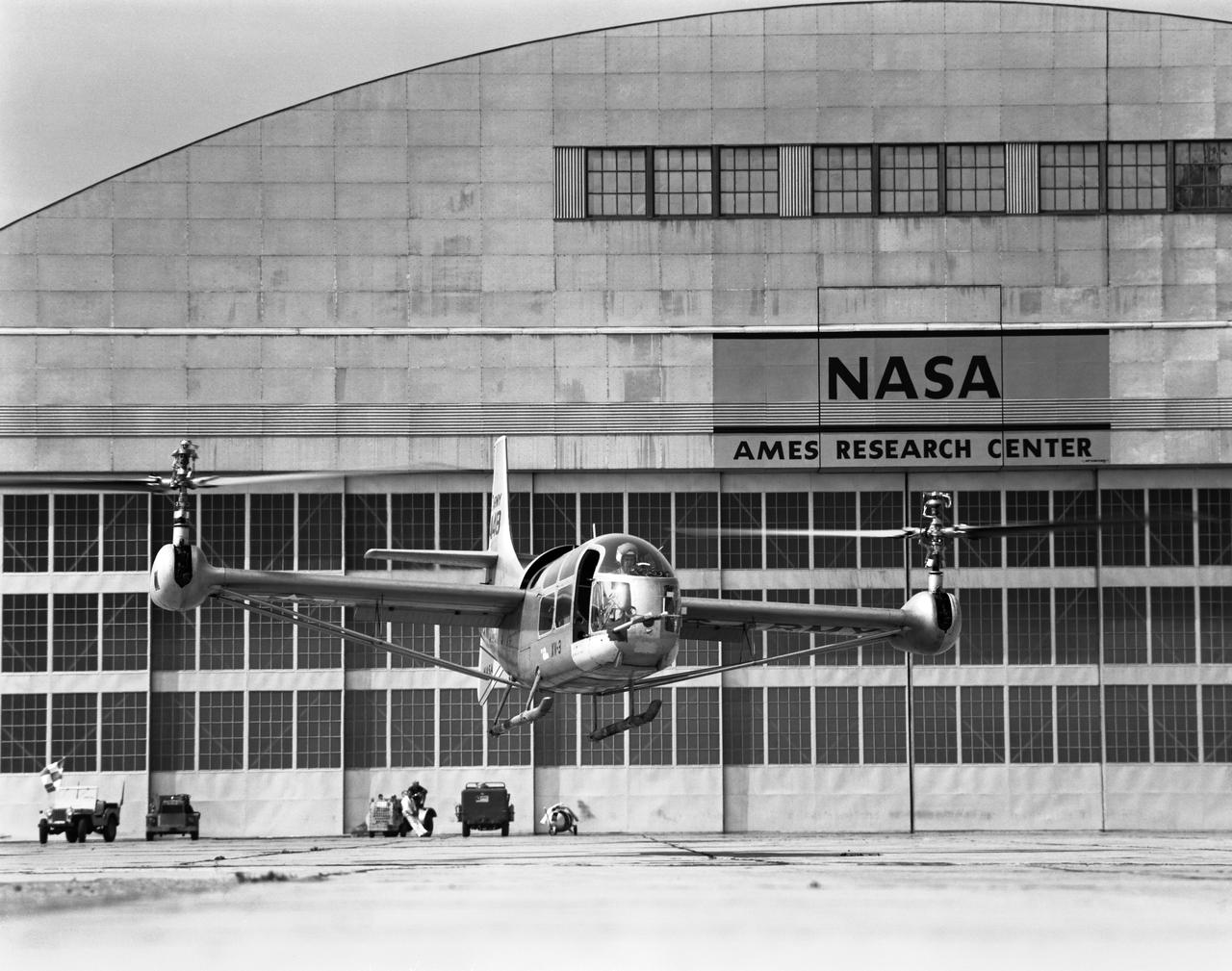
XV-3 HOVERING ON RAMP.  Flight Test of Bell XV-3 Convertiplane.  Bell VTOL tilt-rotor aircraft hovering in front of building N-211 at Moffett Field. The XV-3 design combined a helicopter rotor and a wing. A 450 horsepower Pratt & Whitney piston engine drove the two rotors. The XV-3, first flown in 1955 , was the first tilt-rotor to achieve 100% tilting of rotors. The vehicle was underpowered, however, and could not hover out of ground effect. Note the large ventral fin, which was added to imrpove directional stability in cruse (Oct 1962)
ARC-1959-AC-25685
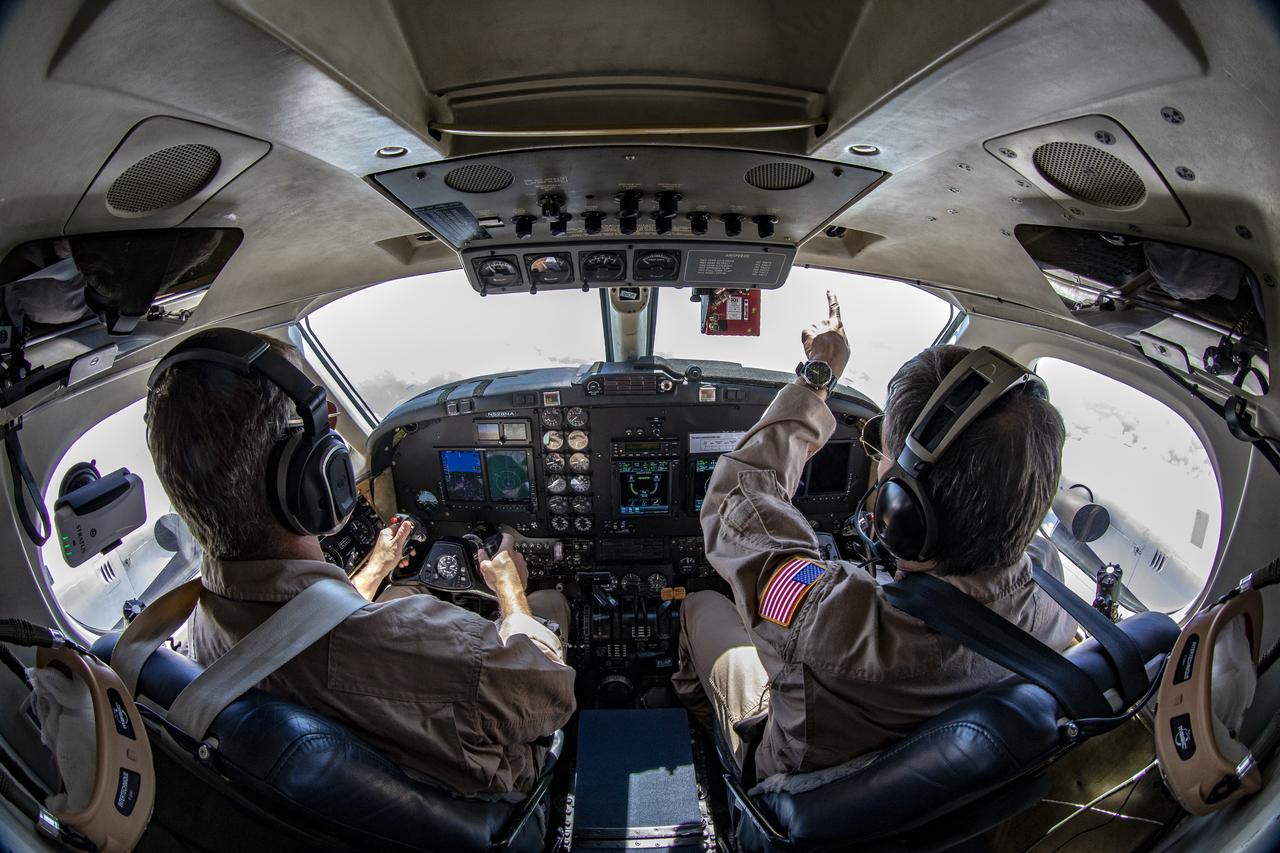
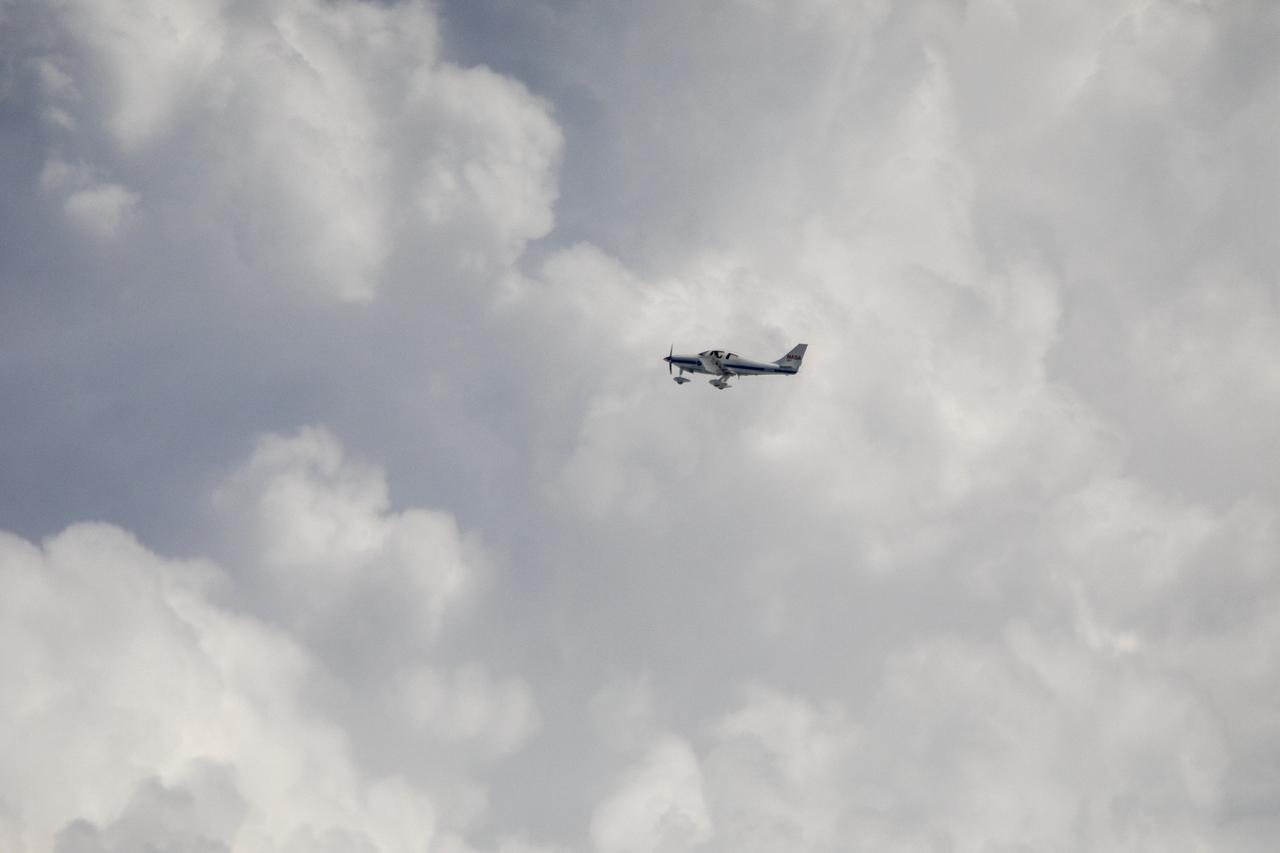
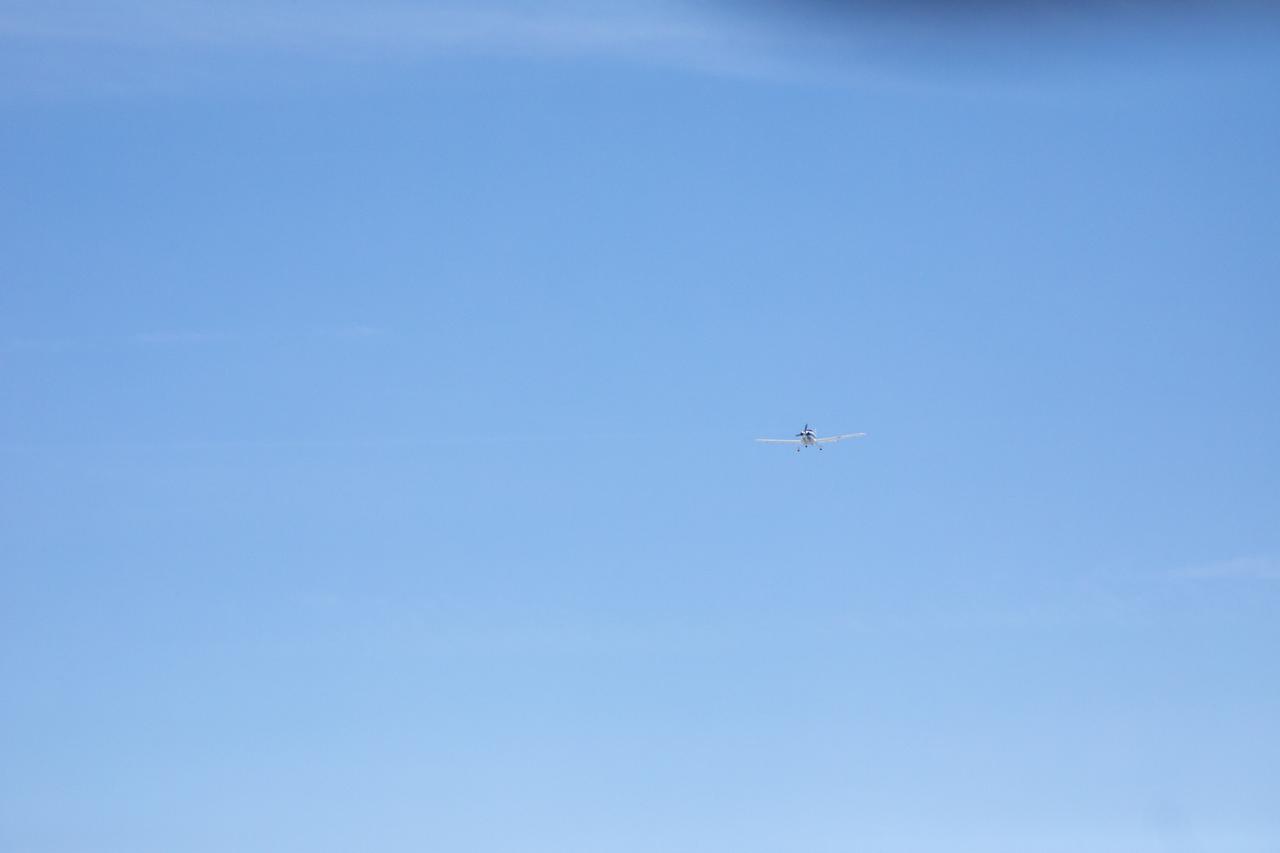
First test flight testing the visual display for the X59. The XVS display is aboard the B200 and the LC40 will be interacting as part of the test.
Testing of the External Vision System (XVS) Software on the B200 King Air
Debriefing before the first test flight testing the visual display for the X59. The XVS display is aboard the B200.
Testing of the External Vision System (XVS) Software on the B200 King Air
First test flight testing the visual display for the X59. The XVS display is aboard the B200 and the LC40 will be interacting as part of the test.
Testing of the External Vision System (XVS) Software on the B200 King Air
First test flight testing the visual display for the X59. The XVS display is aboard the B200 and the LC40 will be interacting as part of the test.
Testing of the External Vision System (XVS) Software on the B200 King Air
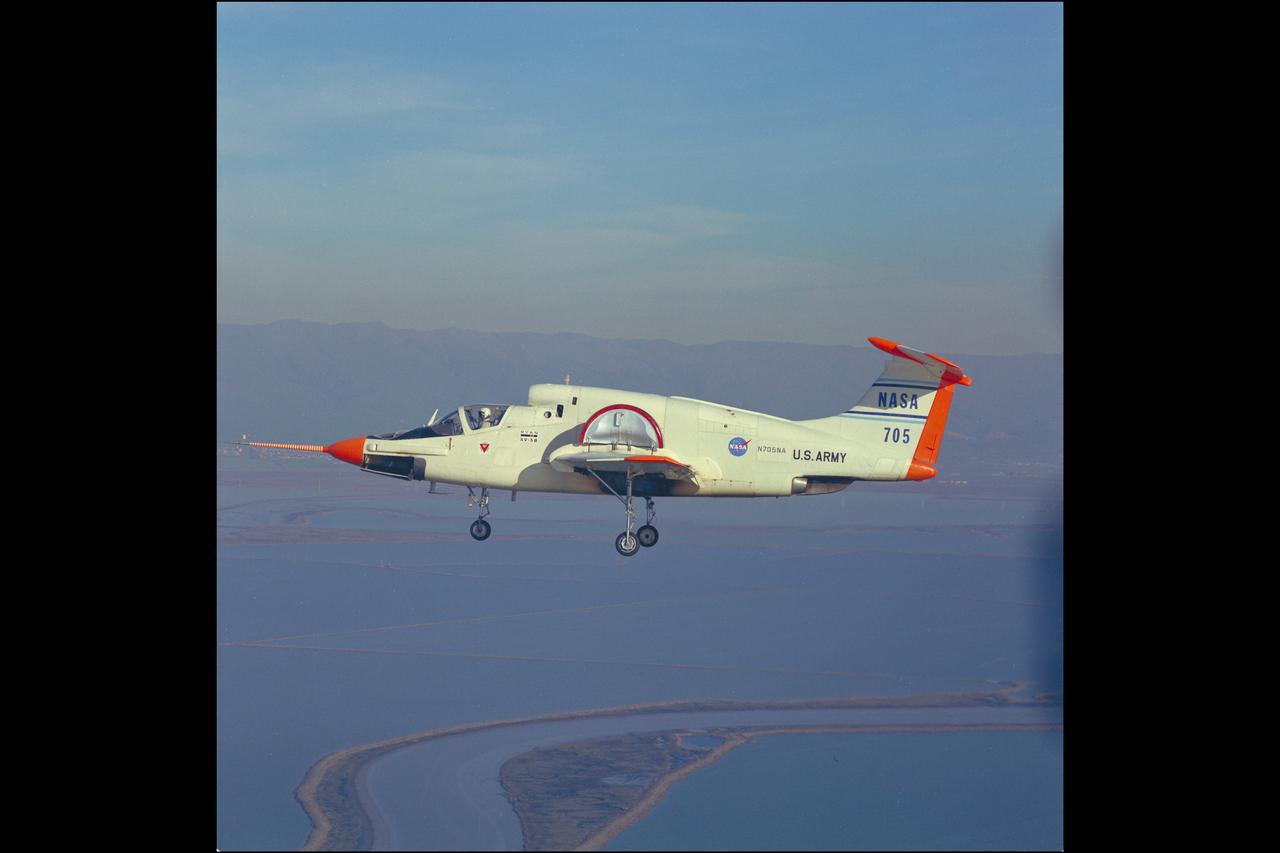
XV-5B (NASA 705) fan in wing airplane in flight
ARC-1971-AC71-2429
XV-15 Navy Sea Trials, Carrier Landing.  Ref.:  024506.
ARC-1982-AC82-0612
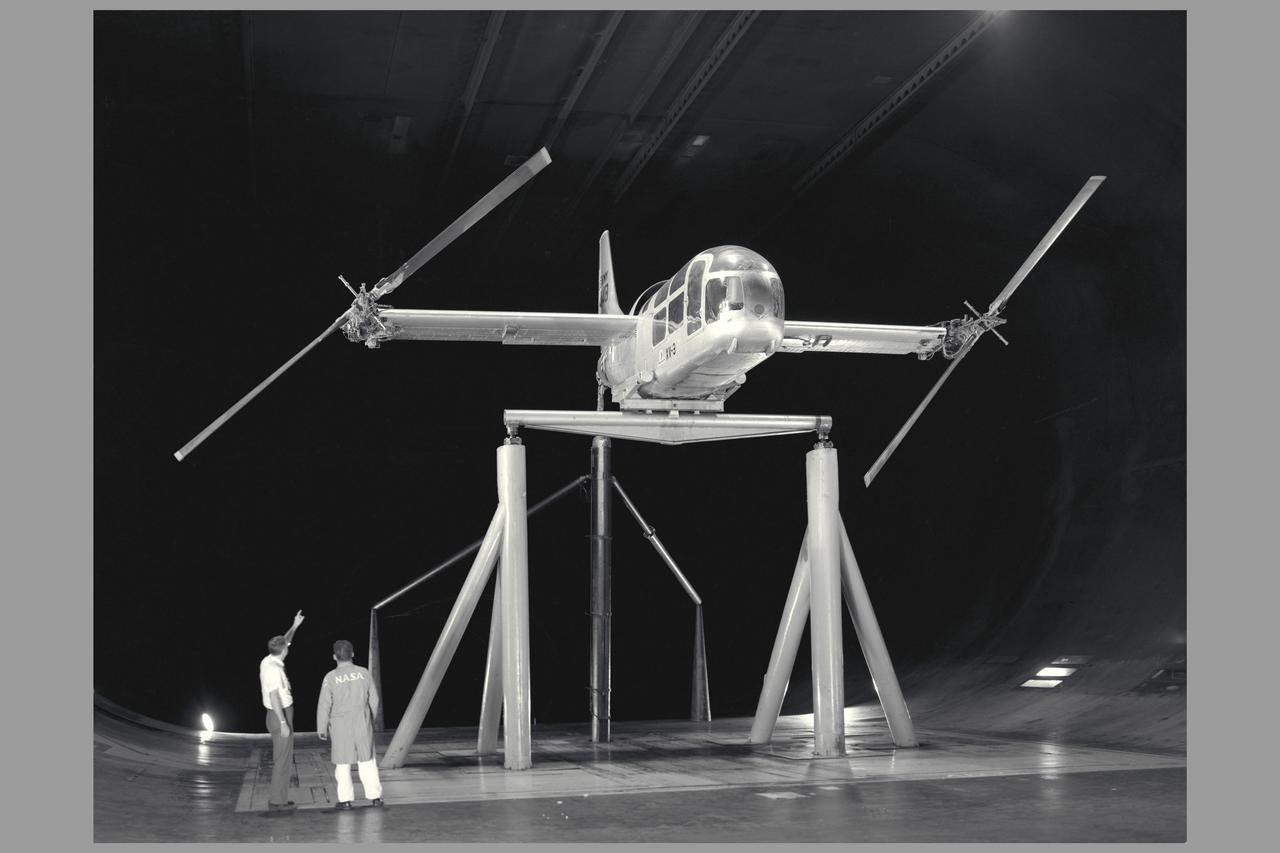
XV-3 in Ames Reseach Center 40x80ft wind tunnel with K. Edenborough and B. Ramsey, engineers Published in The History of the XV-15 Tilt Rotor Research Aircraft (from Concept to Flight NASA SP-2000-4517)
ARC-1966-A-37017
First test flight testing the visual display for the X59. The XVS display is aboard the B200 and the camera is mounted on the nose of the aircraft and inside the cockpit.
Testing of the External Vision System (XVS) Software on the B200 King Air
First test flight testing the visual display for the X59. The XVS display is aboard the B200 and the camera is mounted on the nose of the aircraft and inside the cockpit.
Testing of the External Vision System (XVS) Software on the B200 King Air
XV-3 HOVERING ON RAMP.  Flight Test of Bell XV-3 Convertiplane.  Bell VTOL tilt-rotor aircraft hovering along side Hangar One at Moffett Field. The XV-3 design combined a helicopter rotor and a wing. A 450 horsepower Pratt & Whitney piston engine drove the two rotors. The XV-3, first flown in 1955 , was the first tilt-rotor to achieve 100% tilting of rotors. The vehicle was underpowered, however, and could not hover out of ground effect. Note the large ventral fin, which was added to imrpove directional stability in cruse (Oct 1962)
ARC-1959-A-25685-14
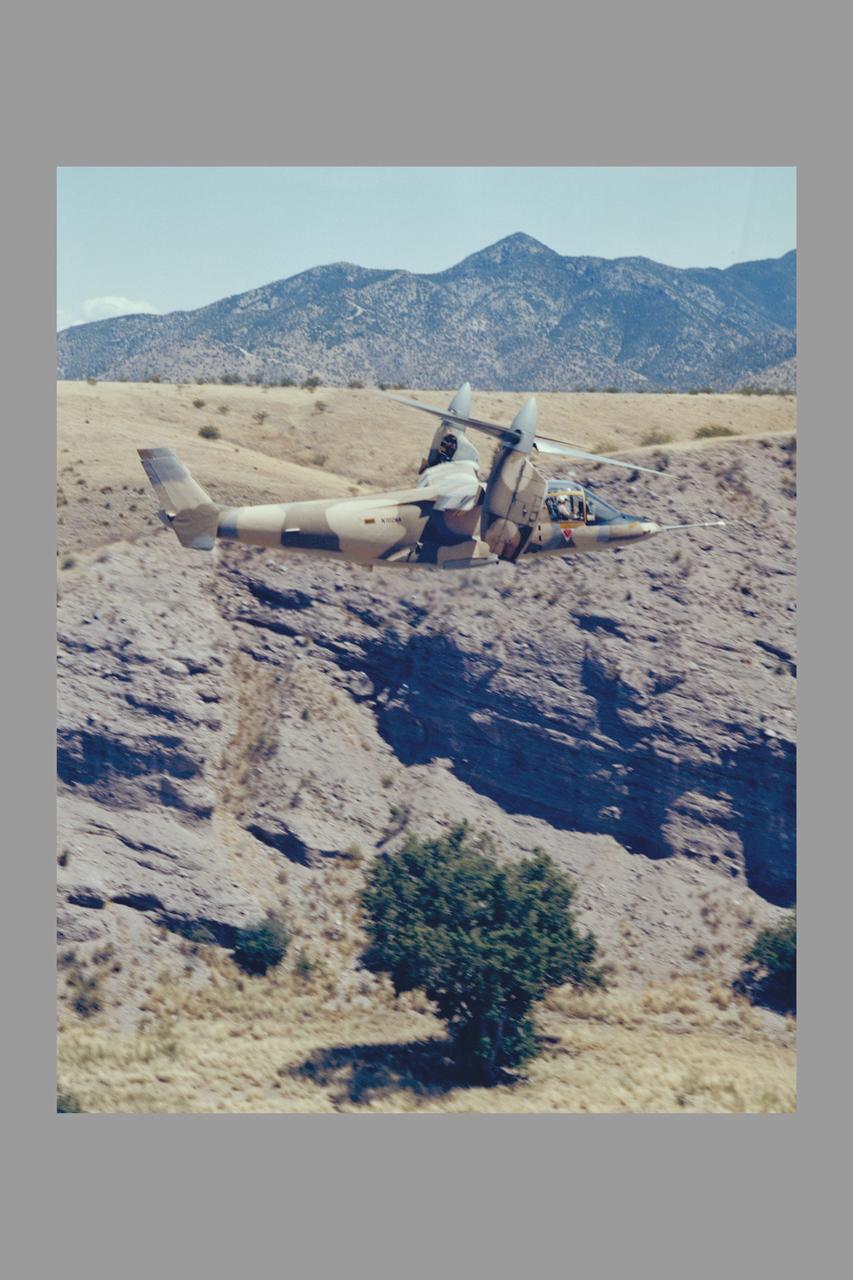
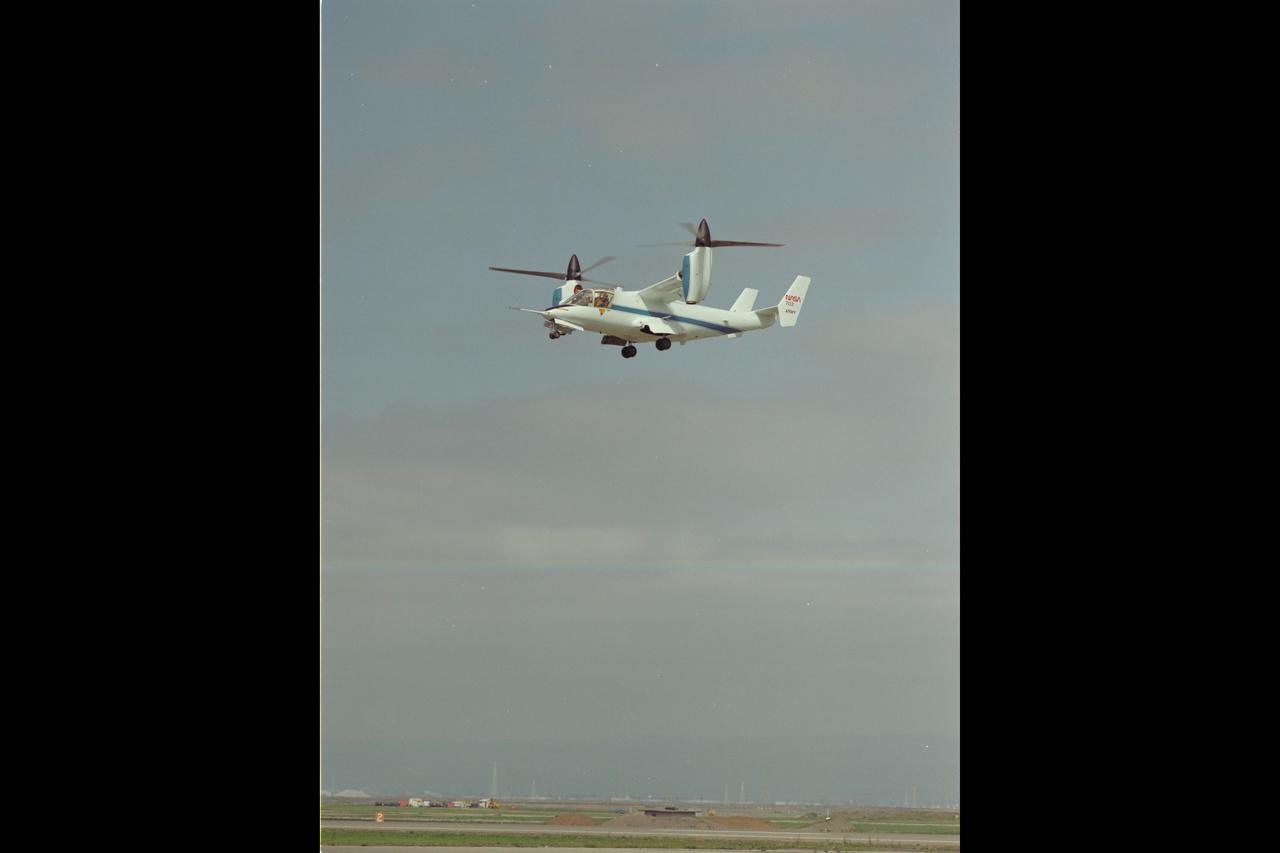
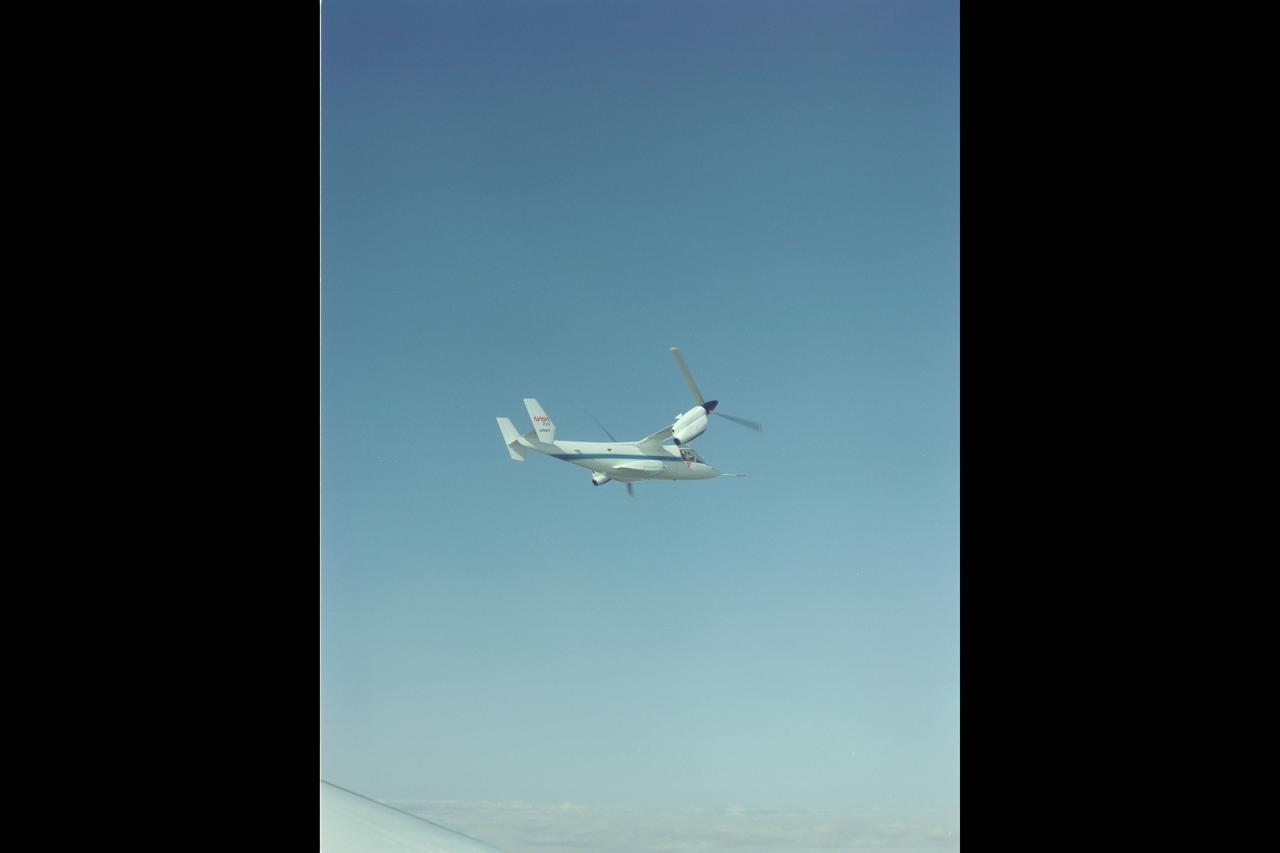
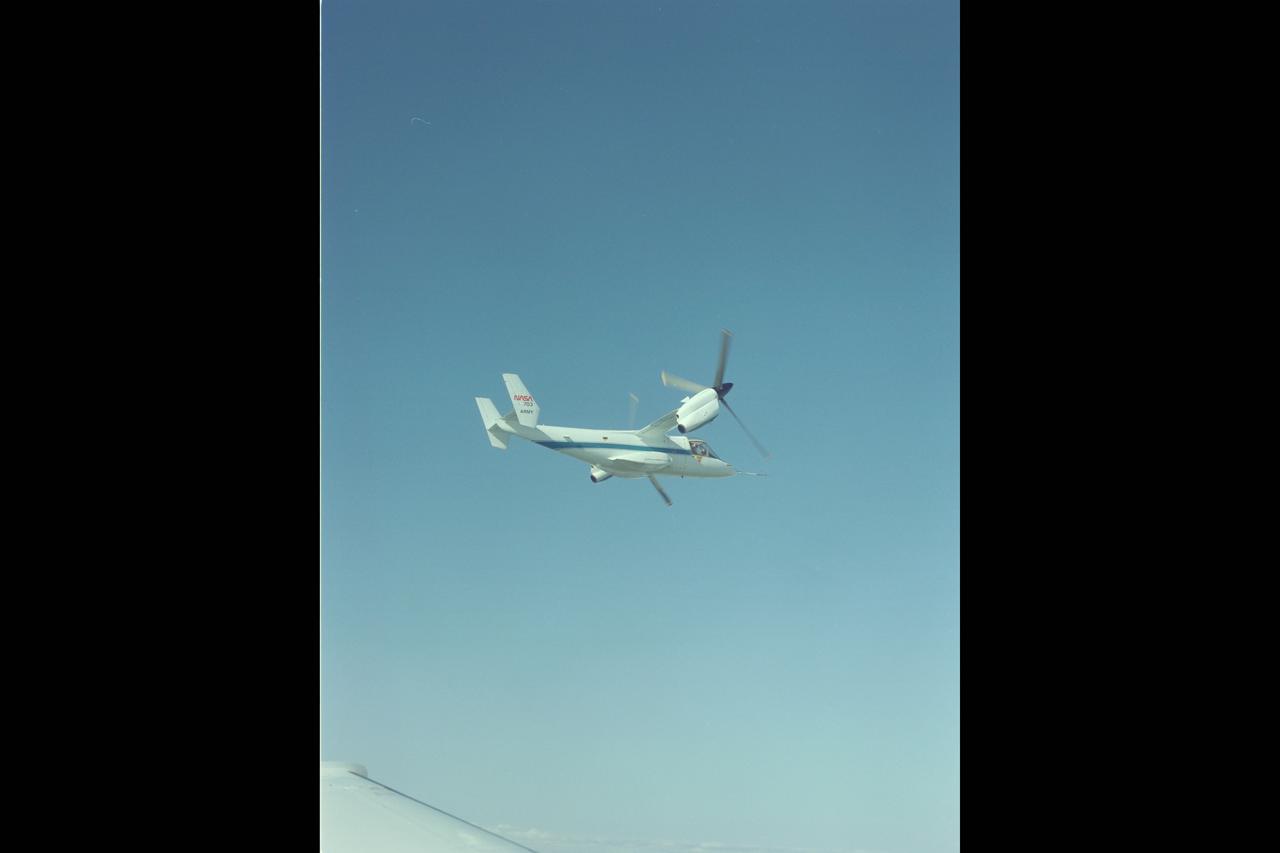
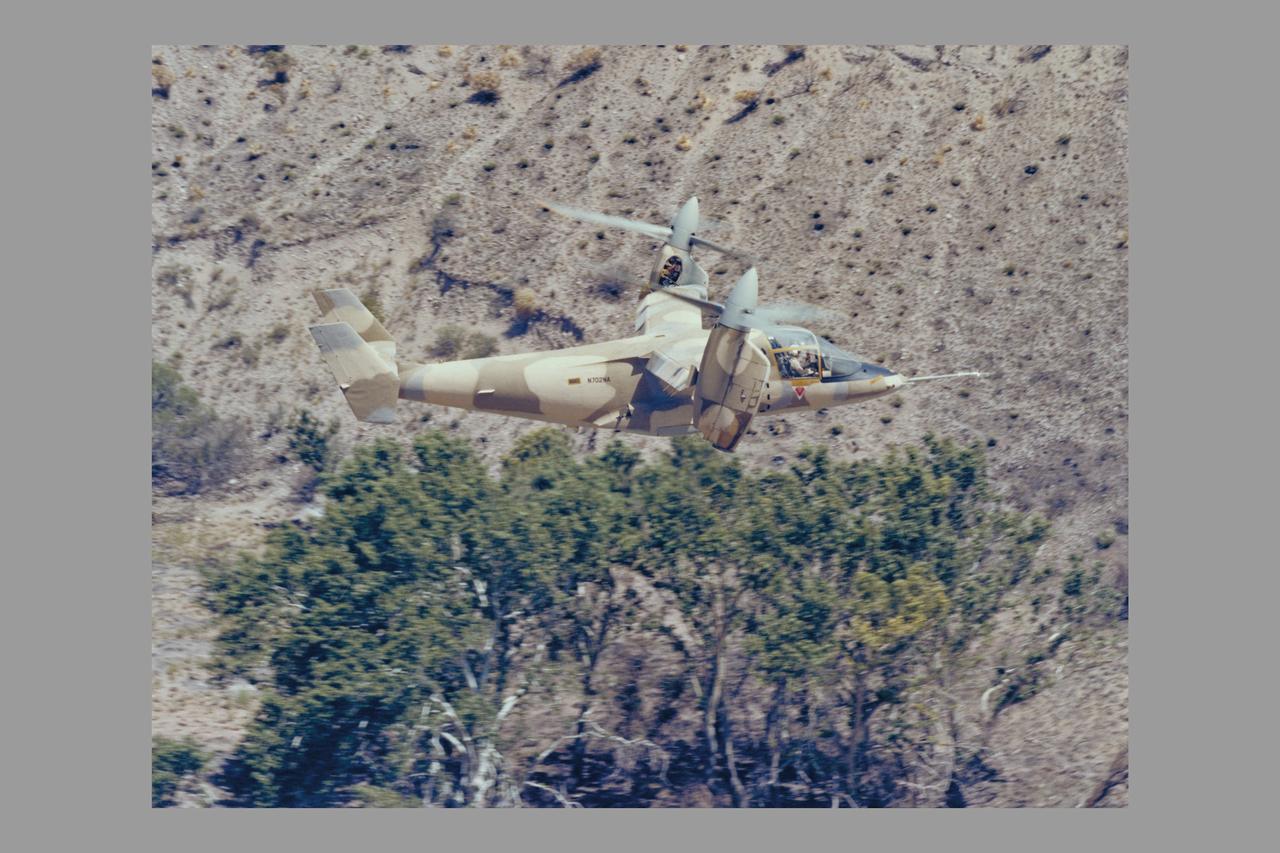
Army Camouflaged XV-15 flying NOE (nap-of-the-earth) tests (ref# 024398_
ARC-1982-AC82-0601
Army Camouflaged XV-15 flying NOE (nap-of-the-earth) tests (ref# 024398_
ARC-1982-AC82-0601-1
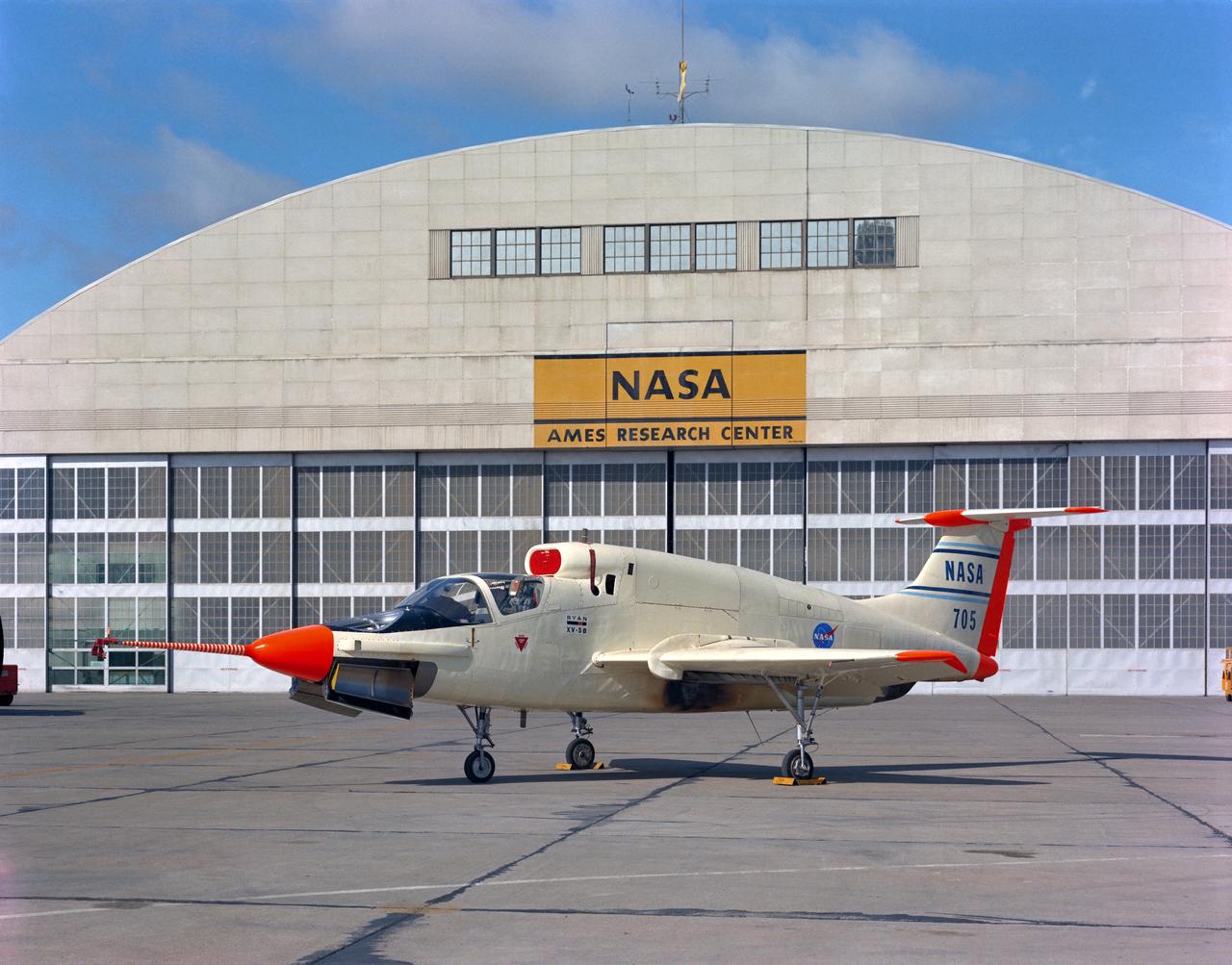
XV-5B (NASA-705) on Flight Line at Ames Research Center with hangar in the background.
ARC-1969-AC-41358
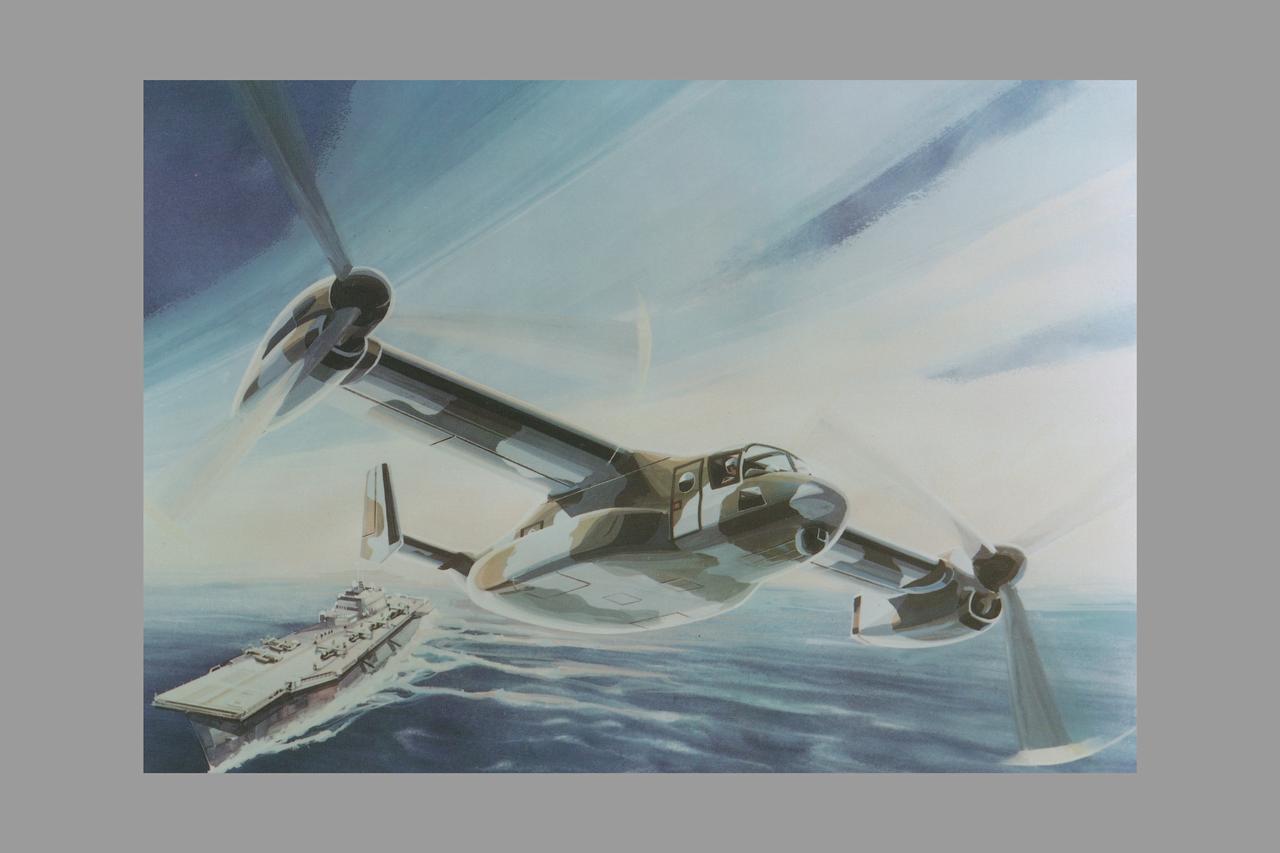
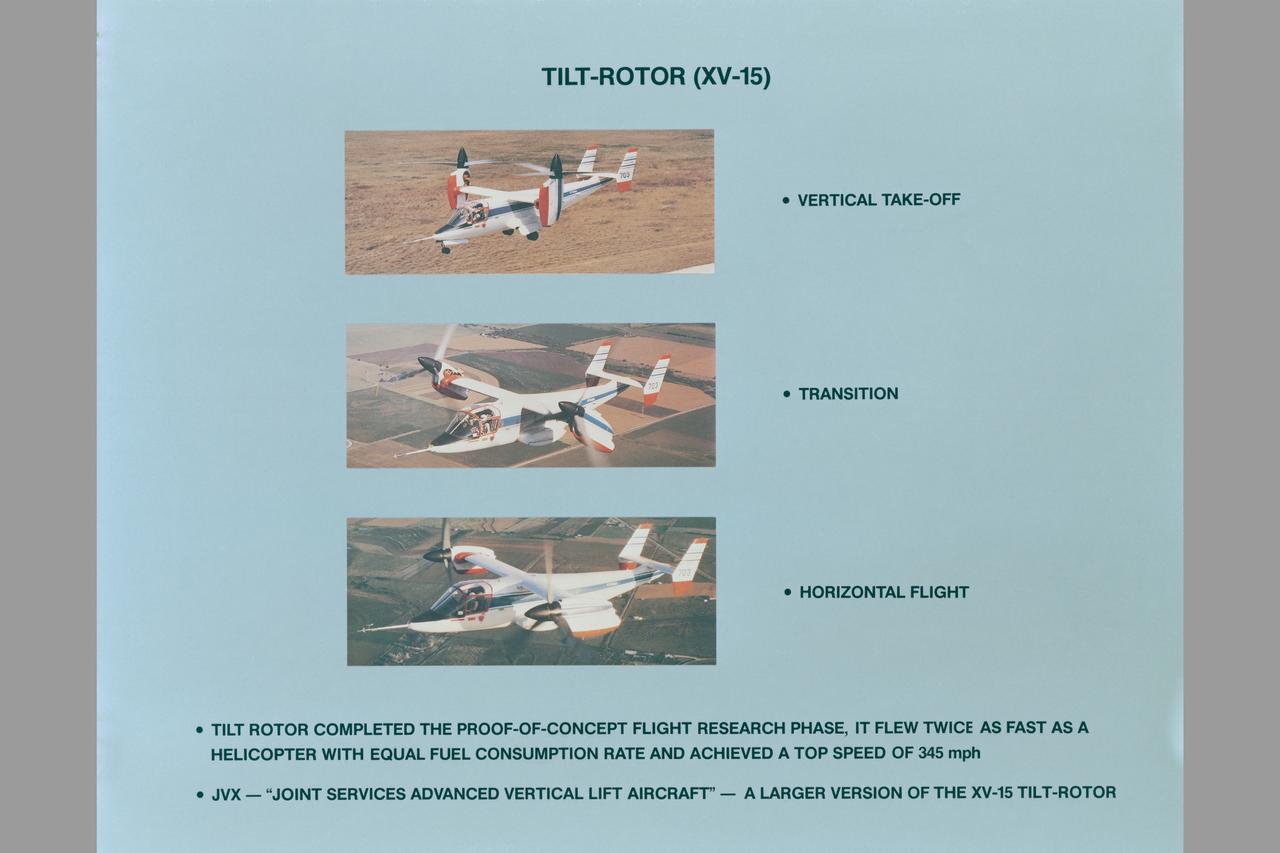
composite art Tilt Rotor  (XV-15) JVX composite; vertical, transition & horizontal flight; artwork.
ARC-1985-AC85-0231
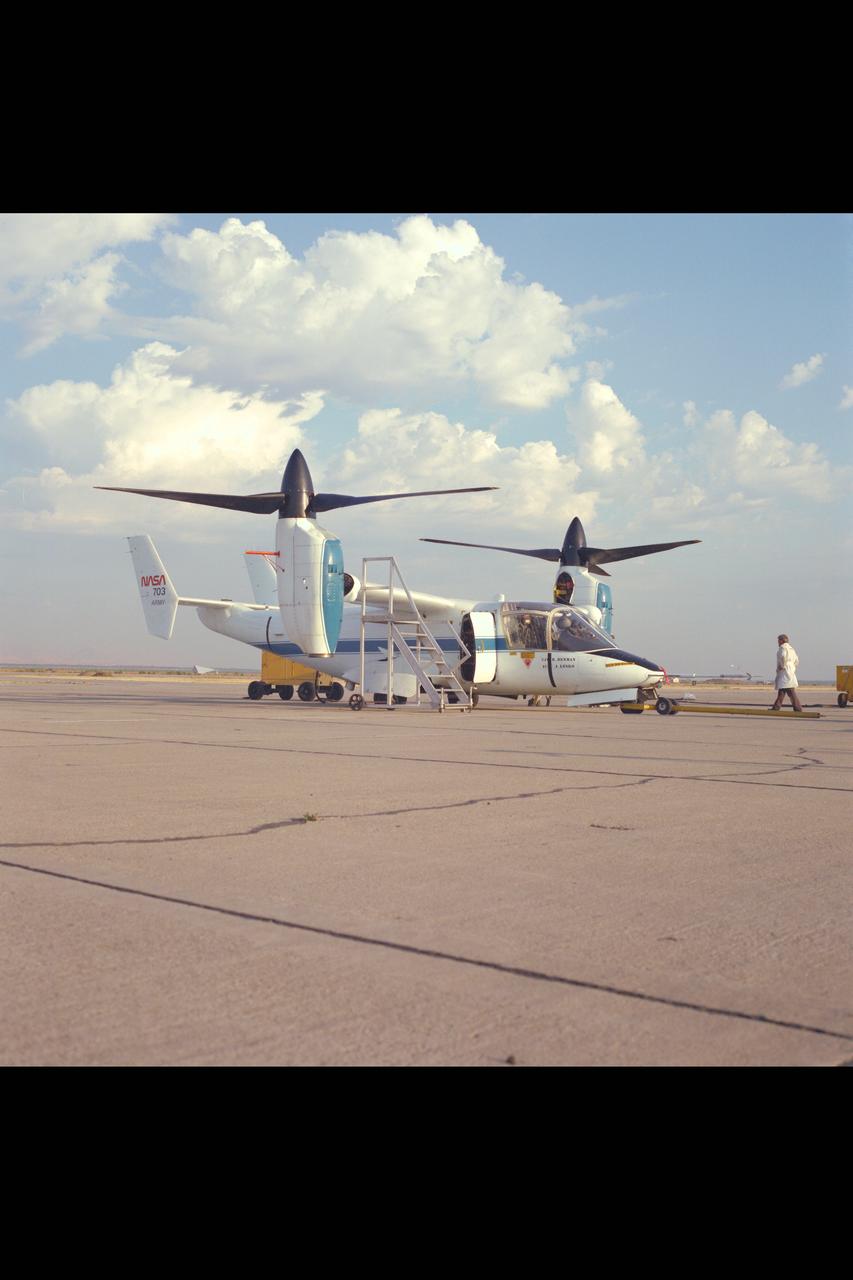
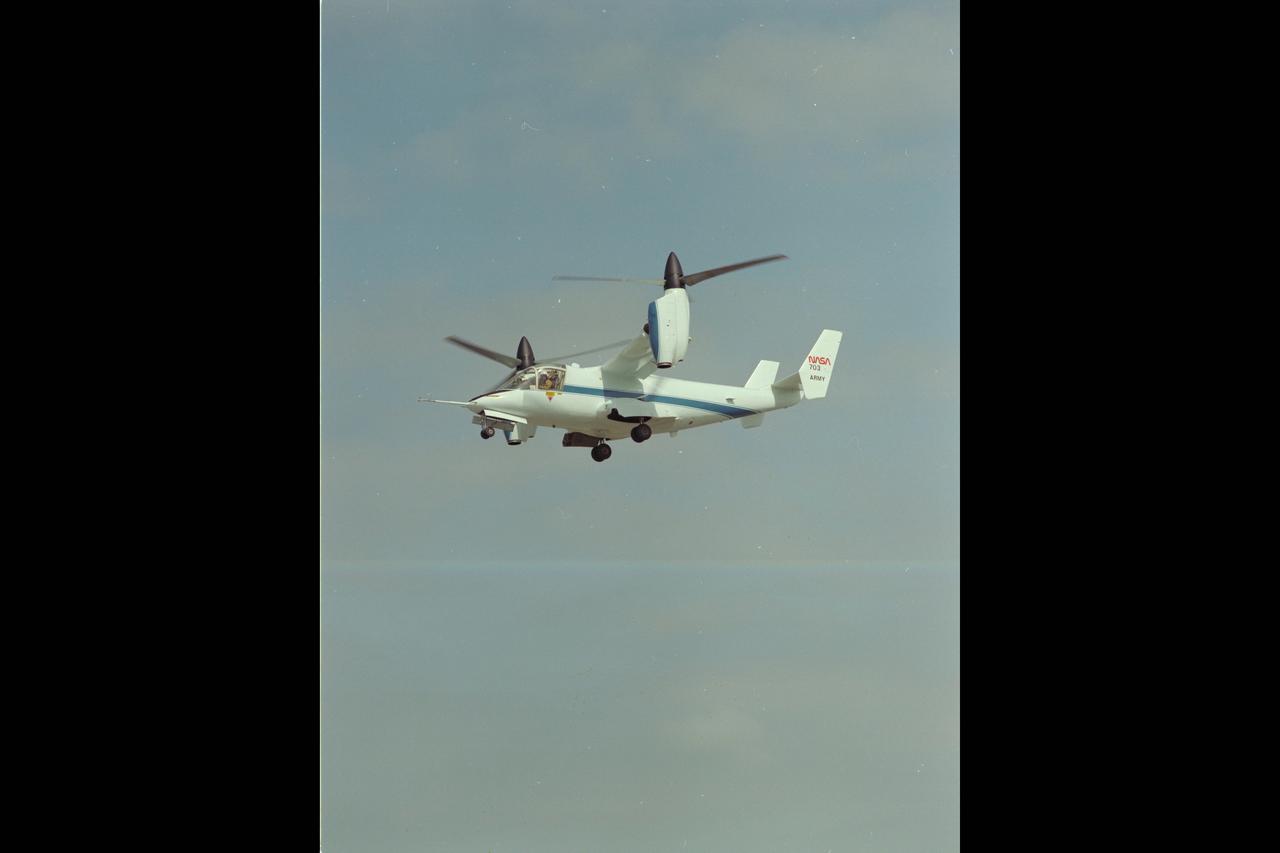
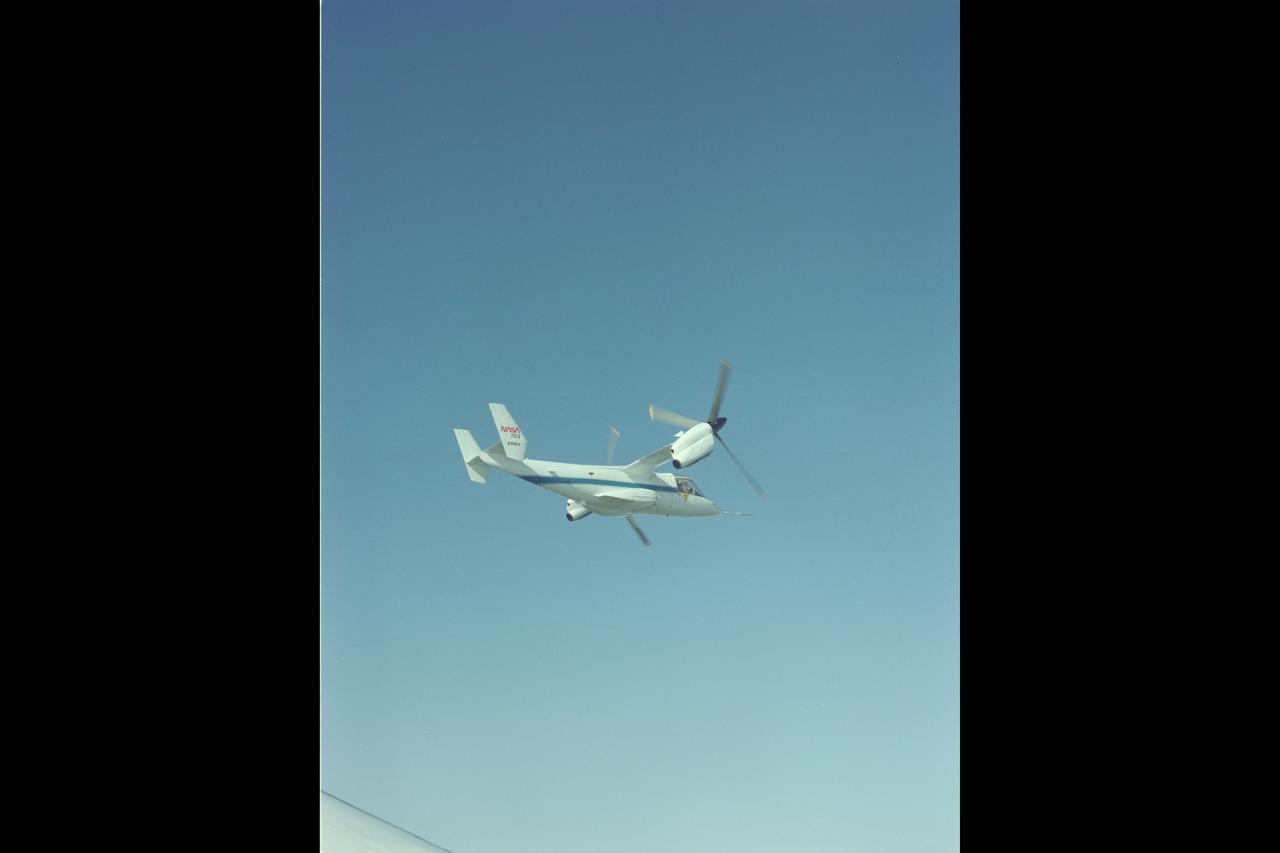
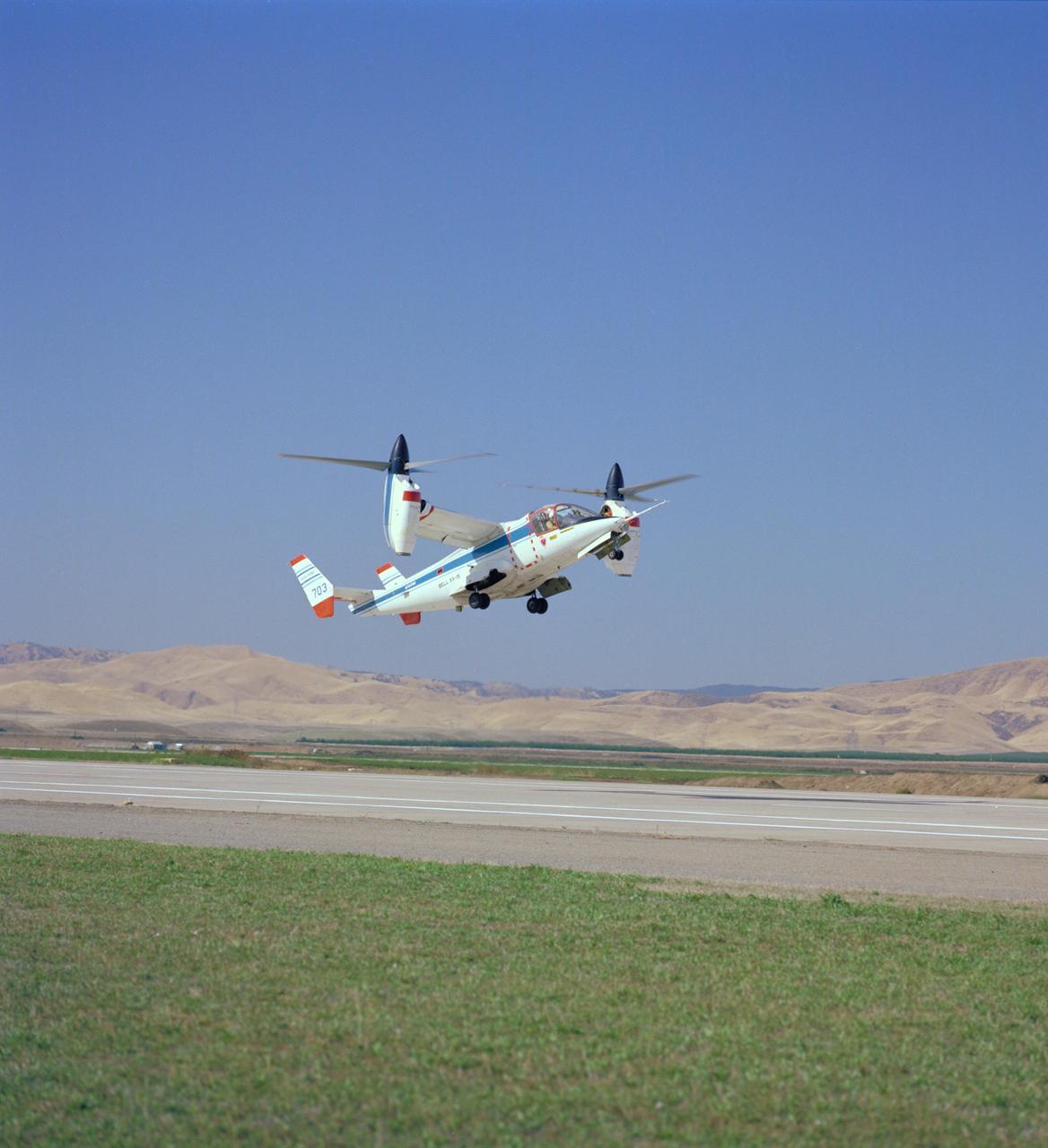
XV-15 (NASA-703) Evaluation Flight @ Ames
ARC-1985-AC85-0186-23
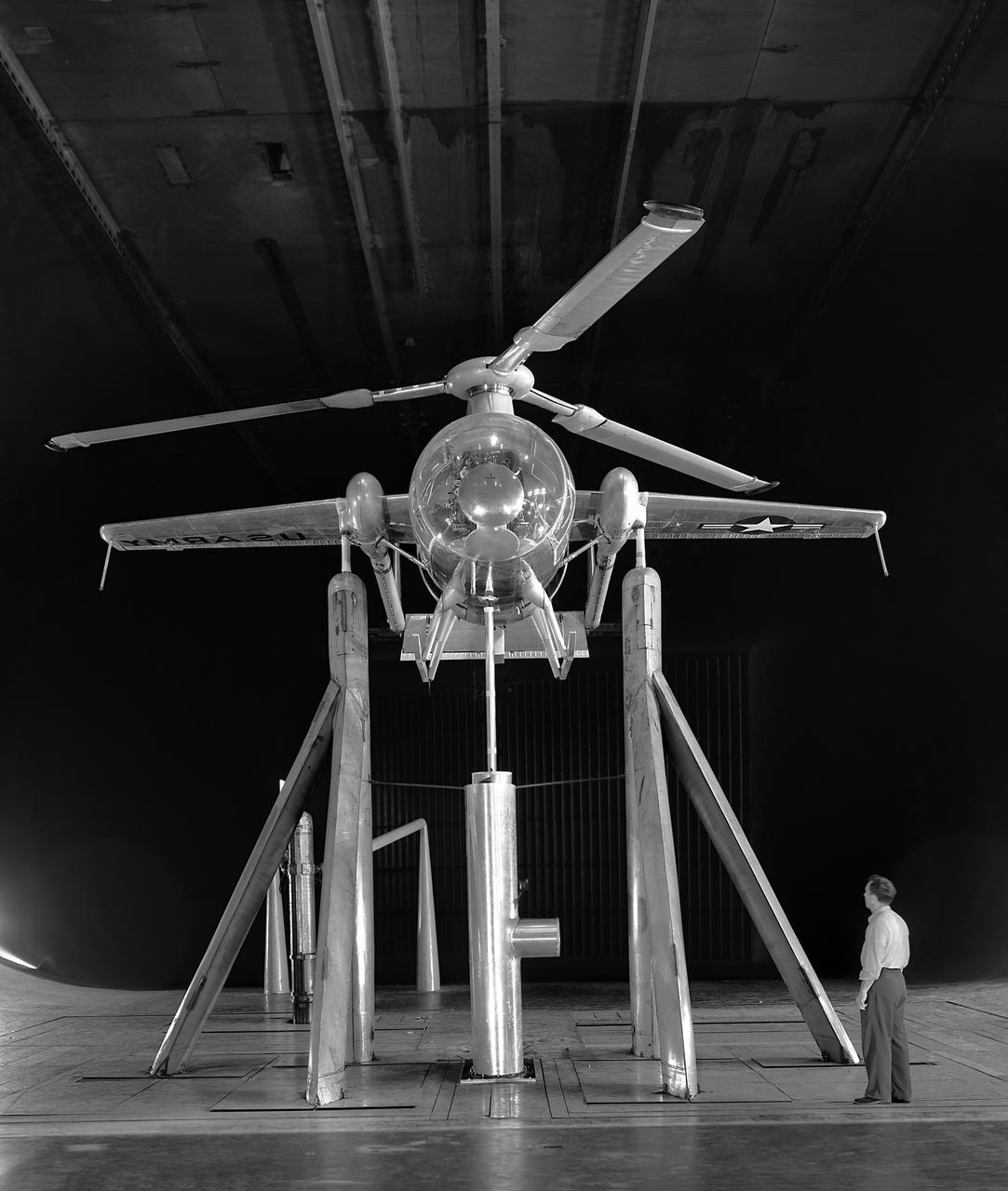
Foreword, front view of McDonnell Model XV-1 Convertiplane in the Ames 40x80 Foot Wind Tunnel.  The McDonnell XV-1 was an experimental compound gyroplane developed for a joint research program between the United States Air Force and the United States Army to explore technologies to develop an aircraft that could take off and land like a helicopter but fly at faster airspeeds, similar to a conventional airplane. The XV-1 would reach a speed of 200 mph (322 km/h), faster than any previous rotorcraft, but the program was terminated due to the tip-jet noise and complexity of the technology which gave only a modest gain in performance.
McDonnell Model XV-1 Convertiplane in the Ames 40x80 Foot Wind Tunnel.
Bell XV-15 Tilt Rotor Army Configurations; Combat
ARC-1966-AC83-0652-1
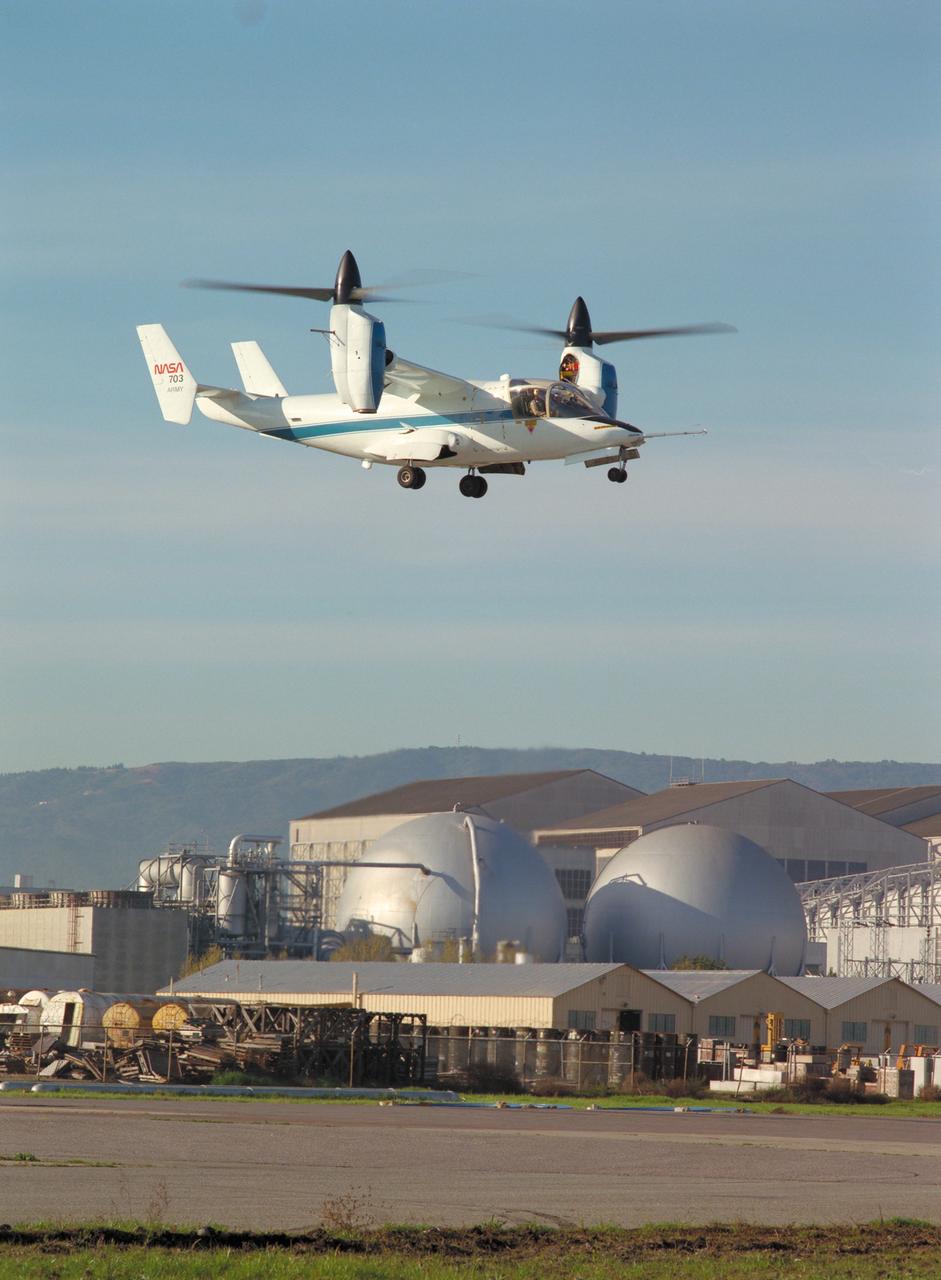
XV-15 Tilt Rotor (NASA-703) hovers at Ames Research Center
ARC-1985-AC85-0186-33
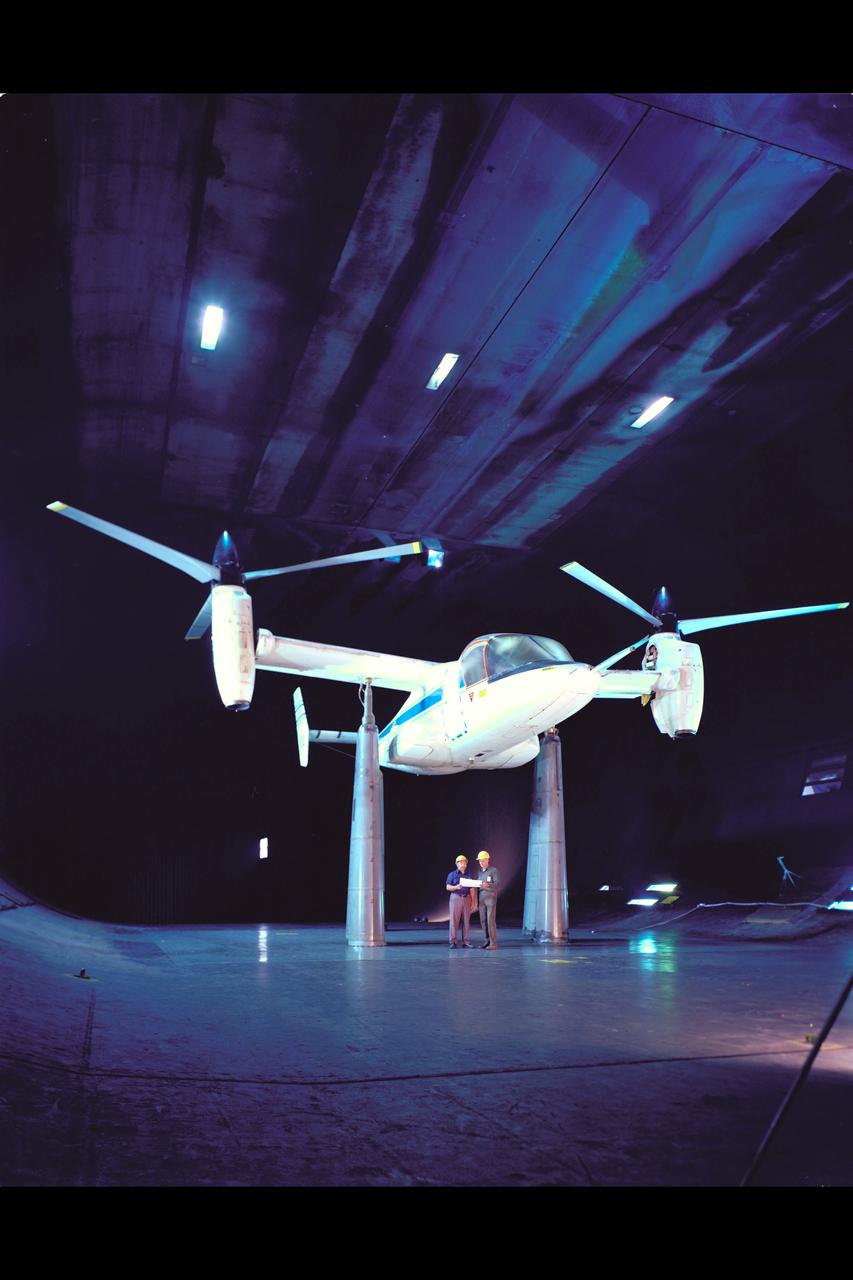
XV-15 Tiltrotor Aircraft in 40x80ft w.t. -  helicopter (take-off) mode
ARC-1978-AC78-0579-1
XV-15 Tilt Rotor (NASA-703) hovers at Ames Research Center
ARC-1985-AC85-0186-36
XV-15 Tilt Rotor Aricraft at lamore Naval Air Station
ARC-1981-AC81-0178-1
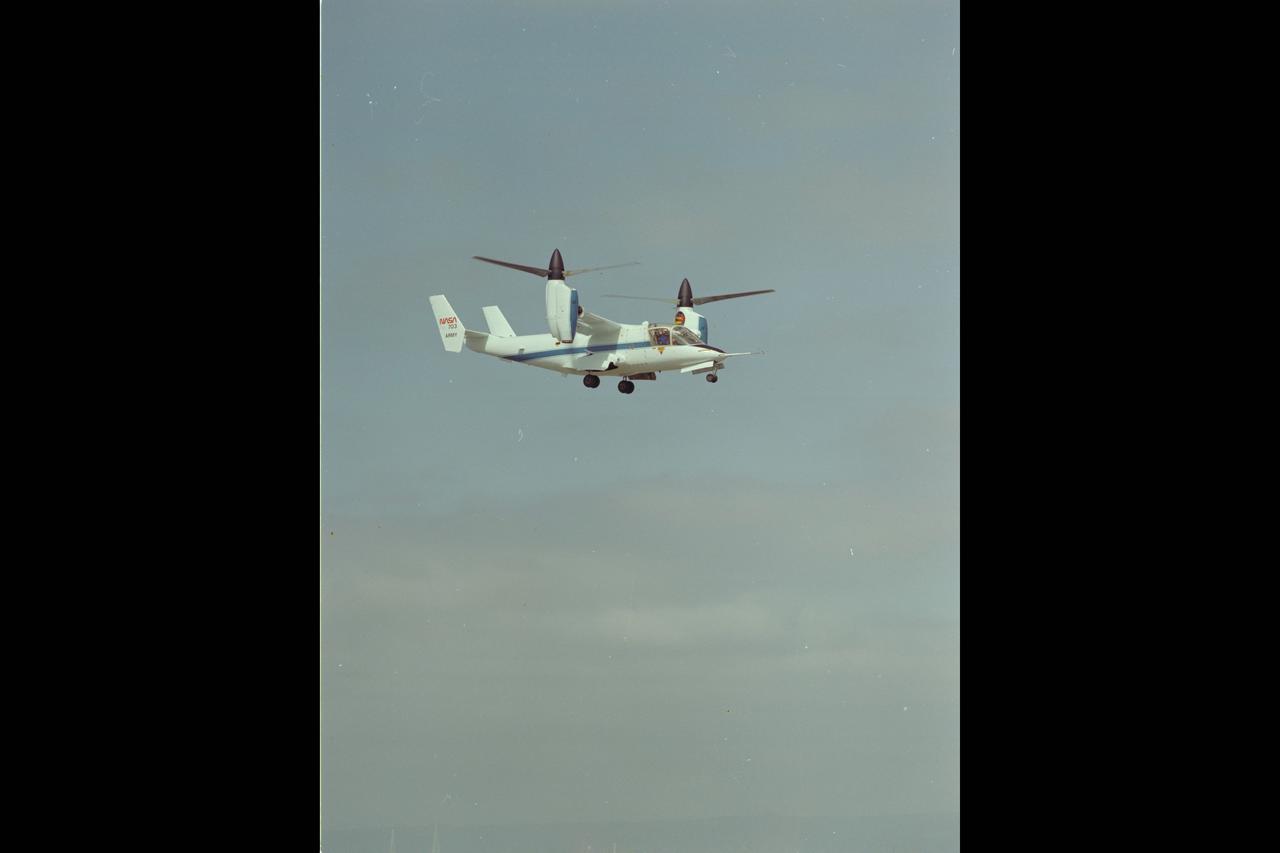
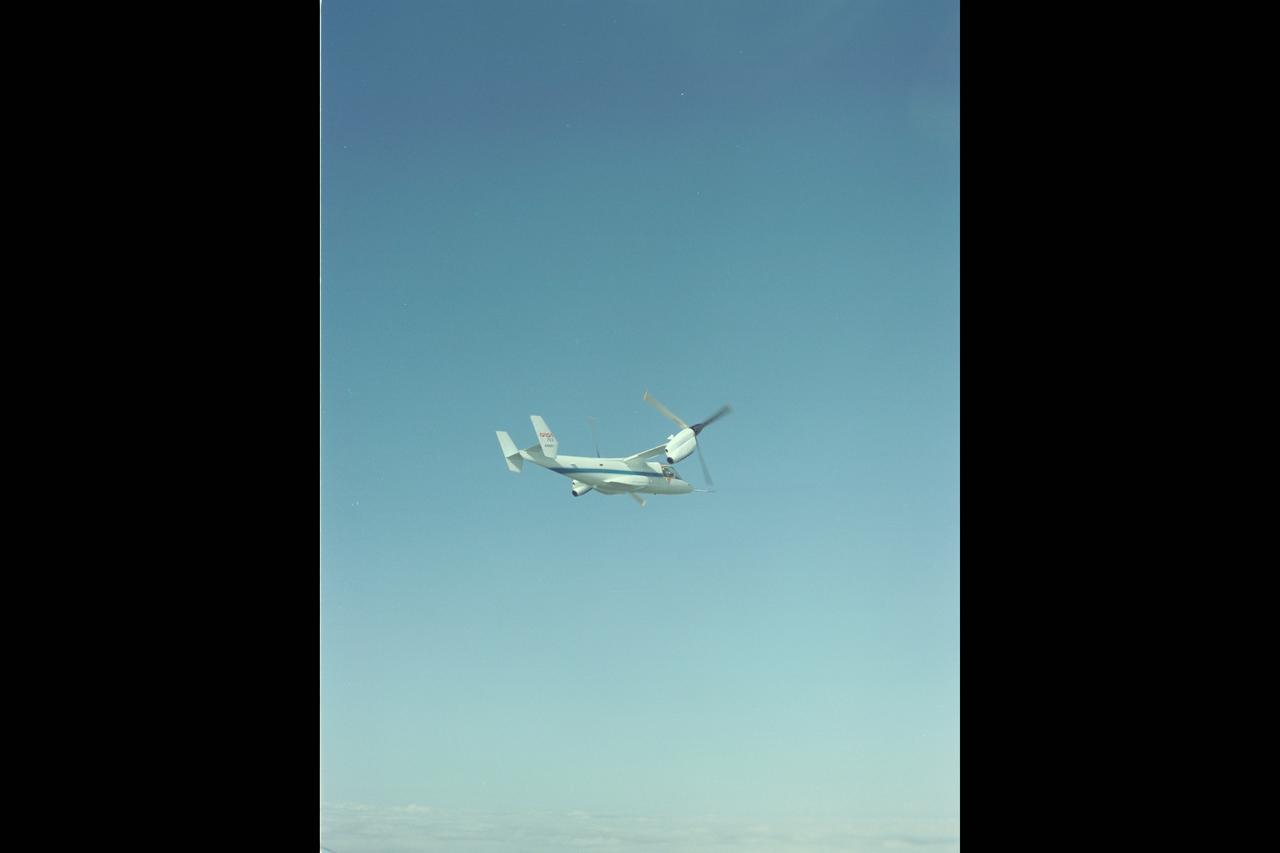
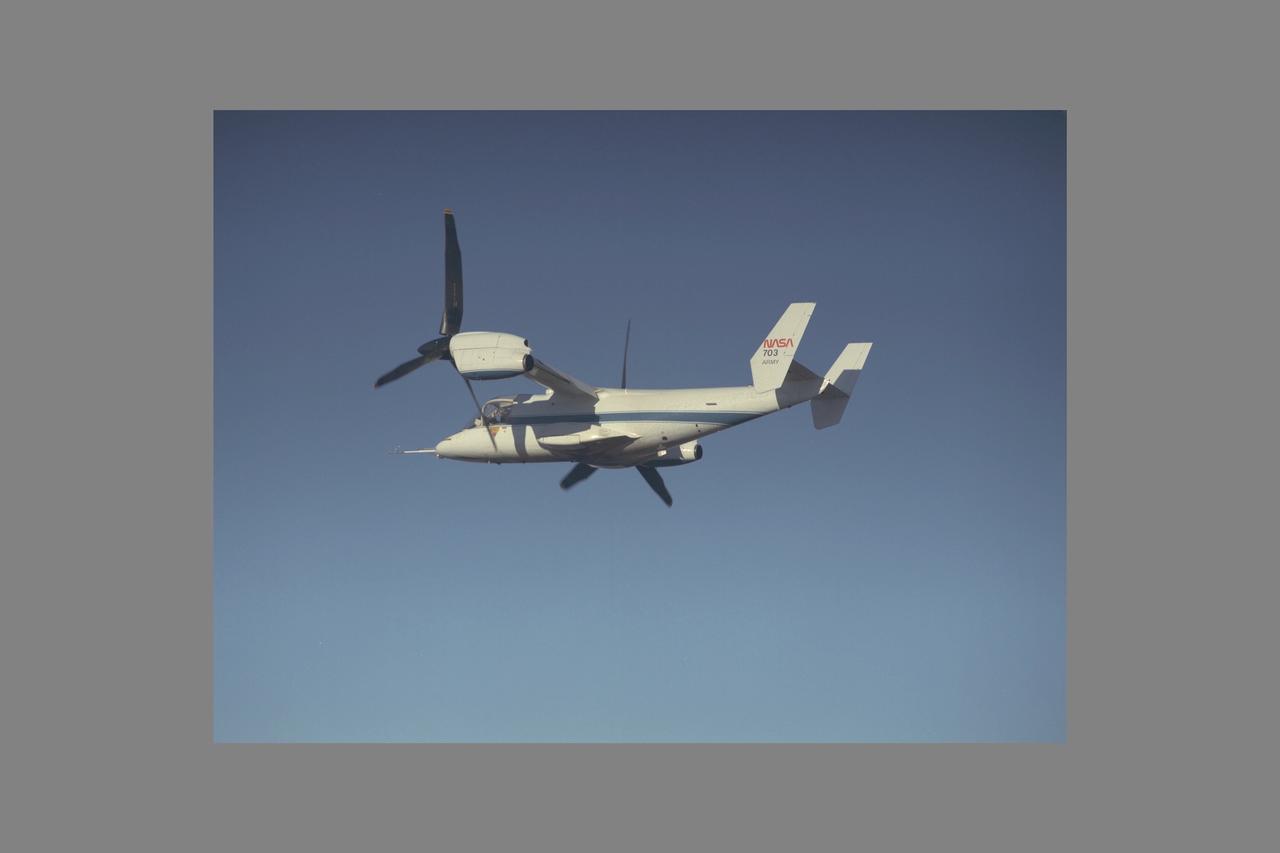
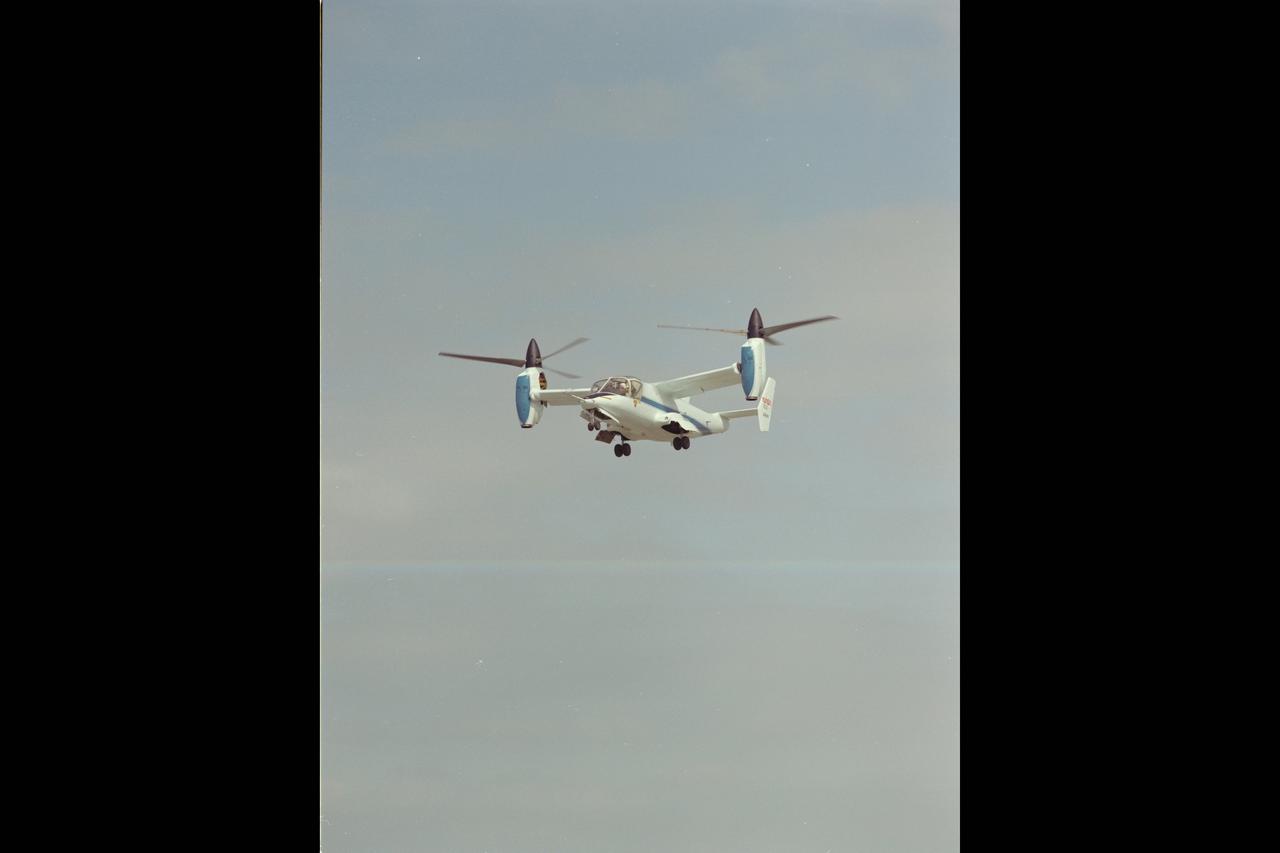
XV-15 Tilt Rotor (NASA-703) in flight at Ames Research Center
ARC-1985-AC85-0186-40
XV-15 (NASA-703) ATB Rotor Hub on trumack
ARC-1969-AC91-0521-20
XV-15 Tilt Rotor Aricraft at lamore Naval Air Station
ARC-1981-AC81-0178-4
XV-15 Tilt Rotor (NASA-703) in flight at Ames Research Center
ARC-1985-AC85-0186-42
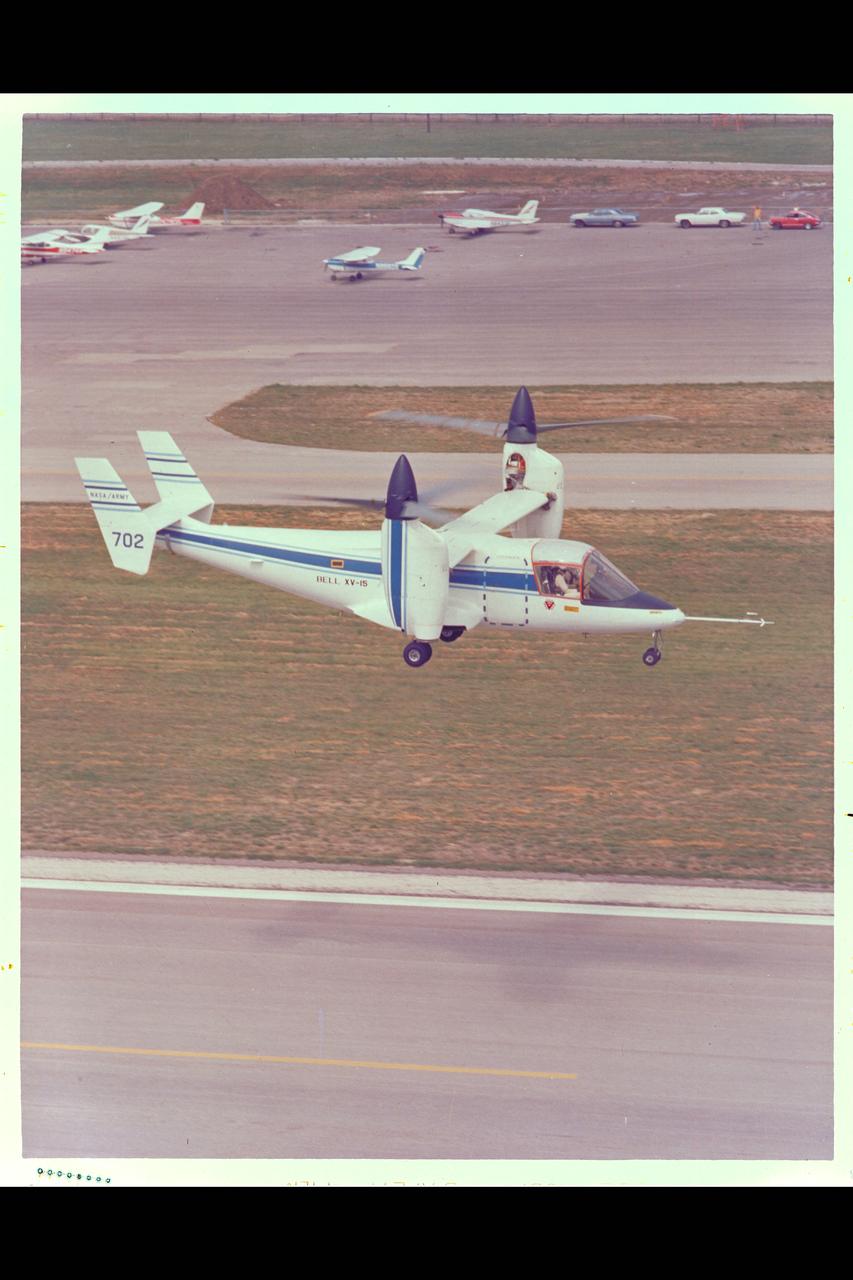
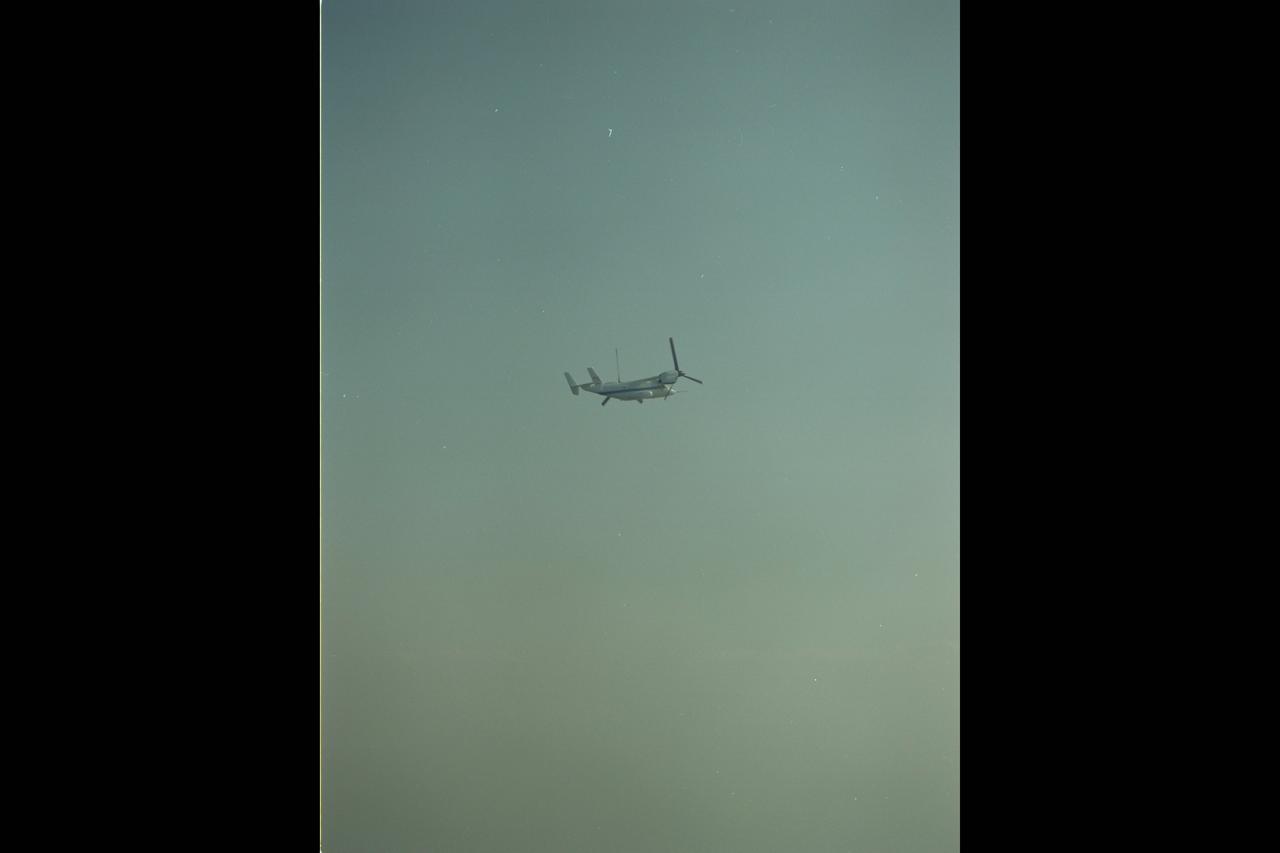
XV-15 (NASA 702) Tilt Rotor flight to DFRC-  (at Dryden)
ARC-1981-AC81-0178-6
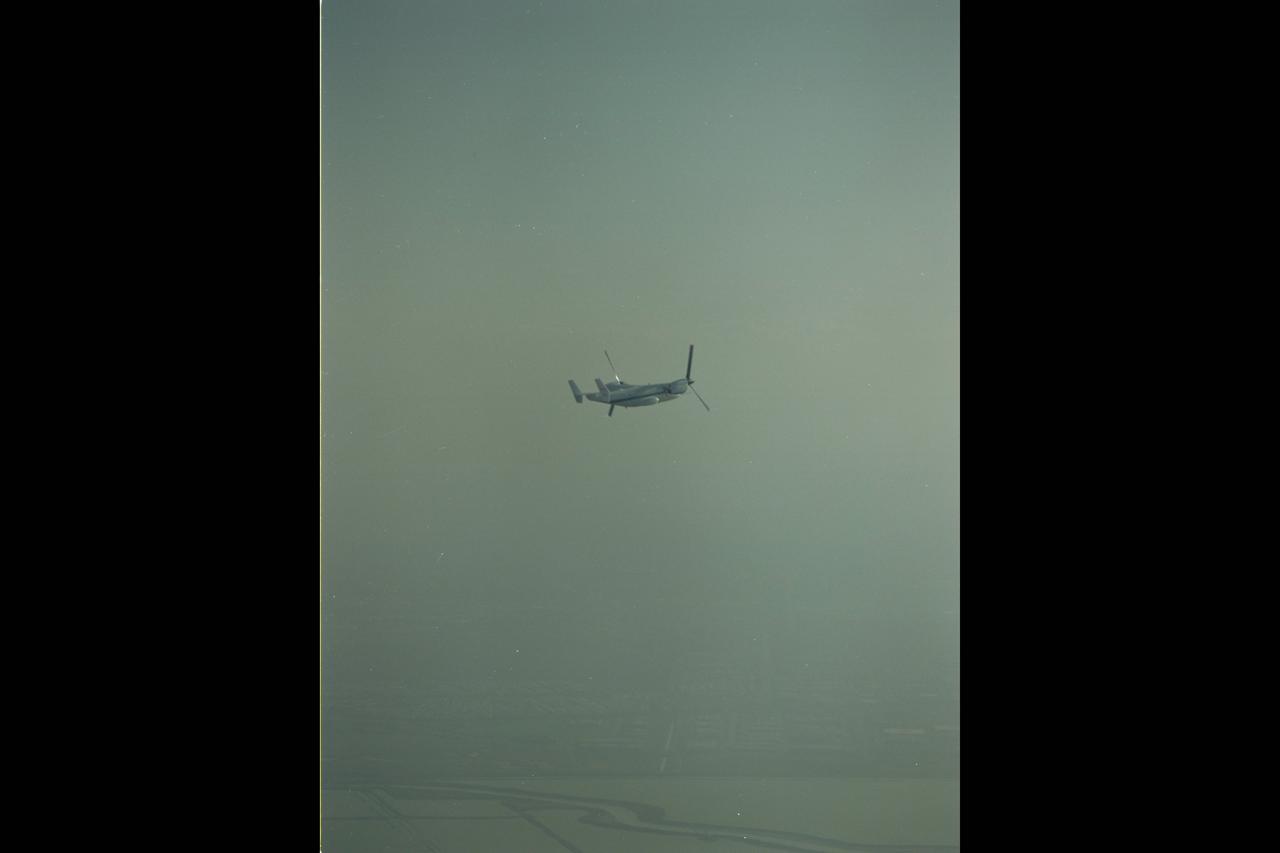
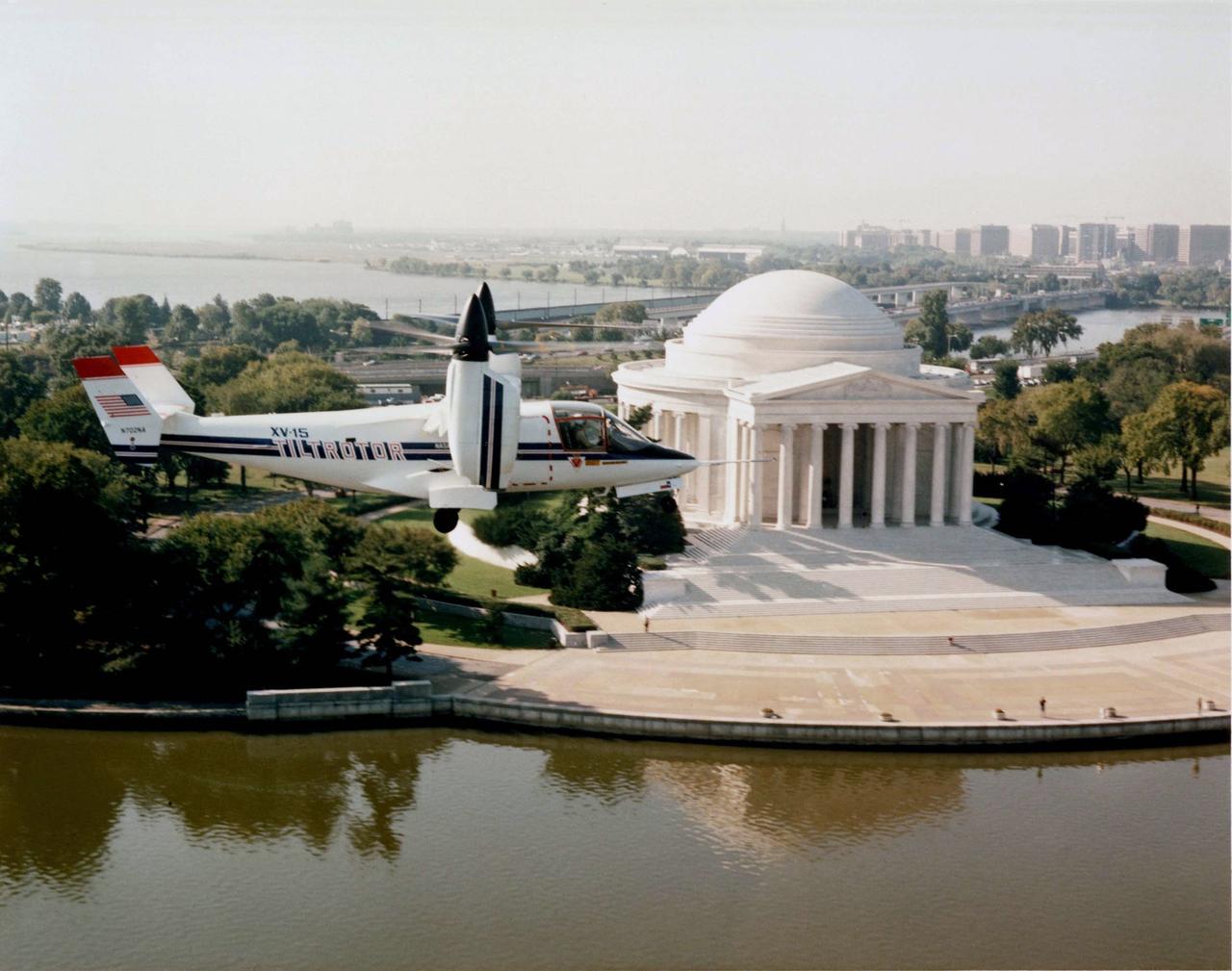
XV-15 Tilt Rotor in flight by Jefferson Memorial, Washington D.C.
ARC-1986-AC86-0410-3
XV-15 Tiltrotor Aircraft in 40x80ft w.t. -  flight mode
ARC-1978-AC78-0579-3
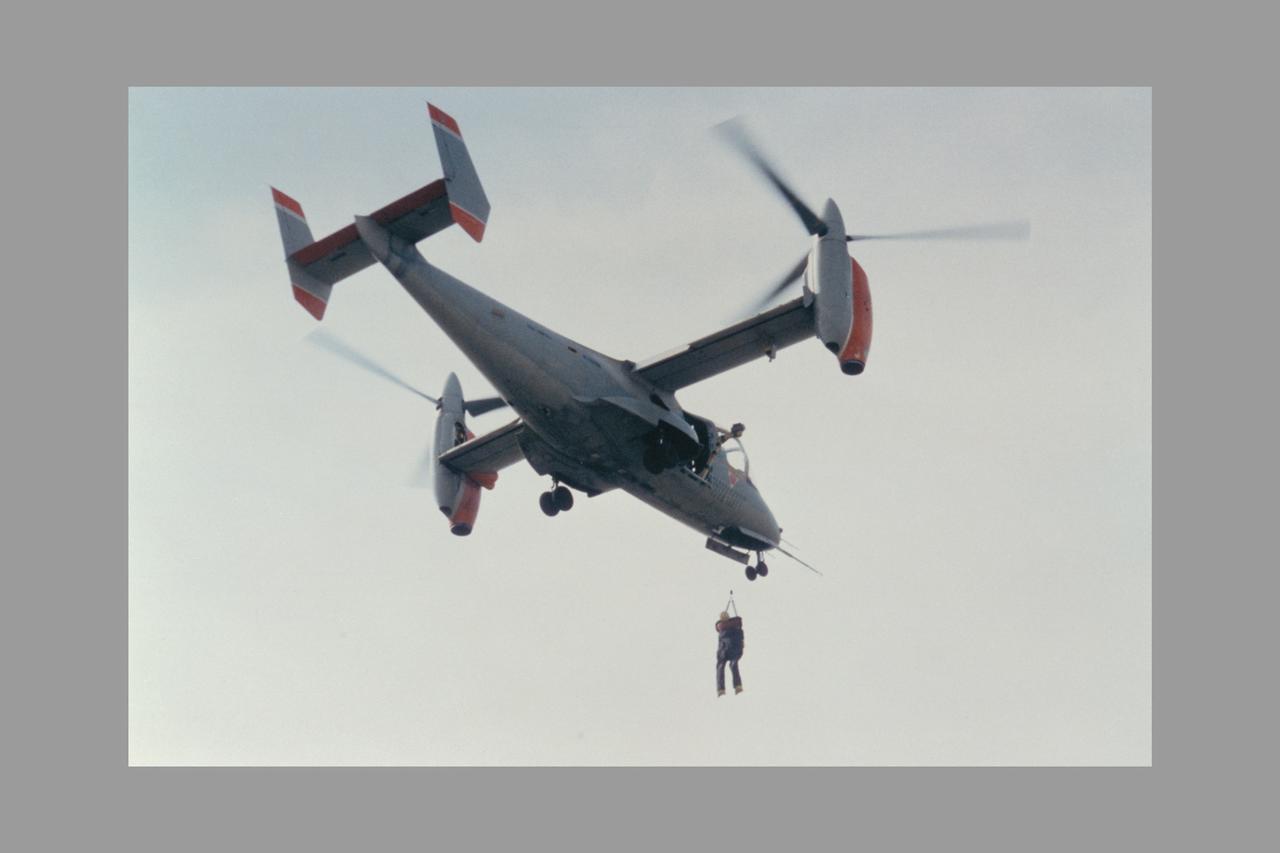
Bell XV-15 Tilt Rotor Army Configurations;  Rescue
ARC-1966-AC83-0652-3
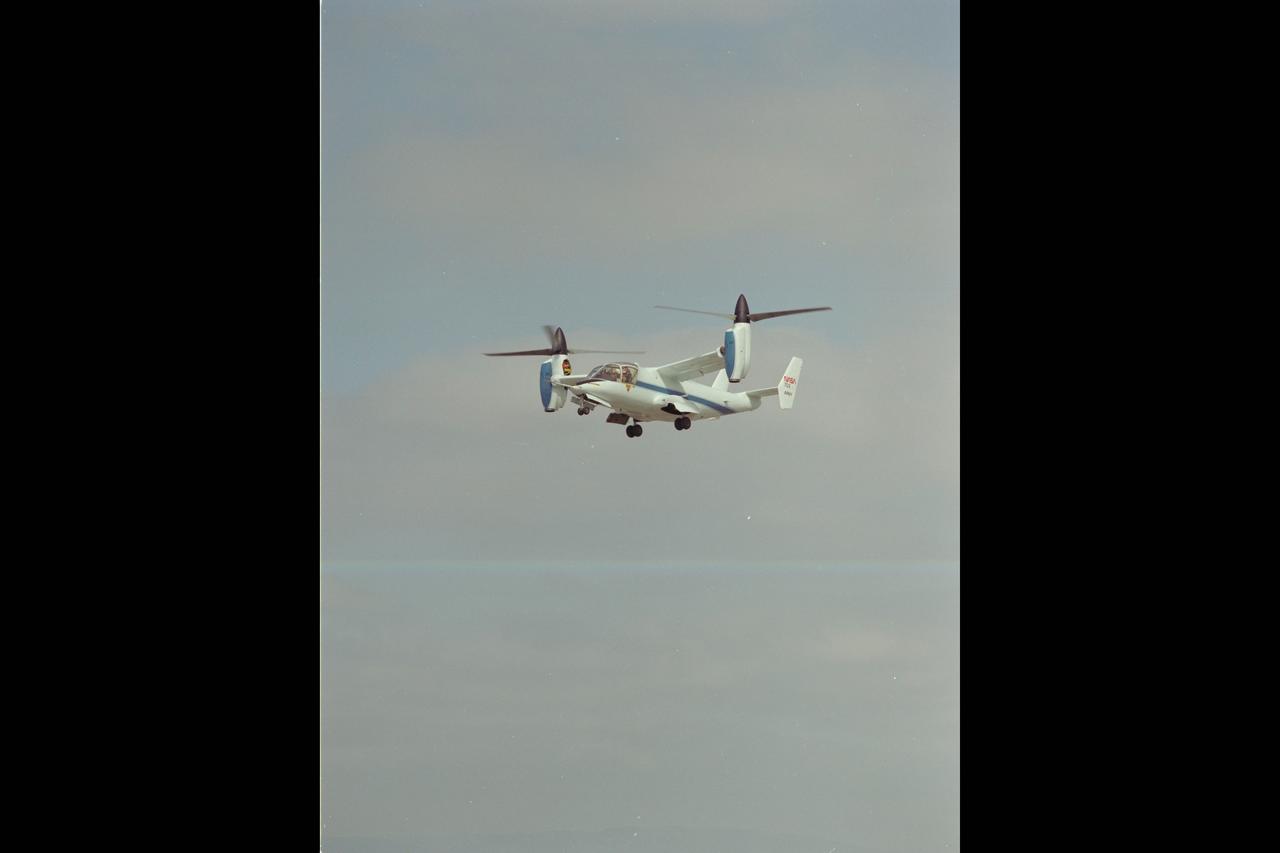
XV-15 Tilt Rotor (NASA-703) in flight at Ames Research Center
ARC-1985-AC85-0186-41
XV-15 (NASA-703) in flight at Ames static test site
ARC-1986-AC86-0384-7
XV-15 Tilt Rotor Aircraft in flight at Bell helicopter
ARC-1977-AC77-1046
XV-15 Tilt Rotor (NASA-703) hovers at Ames Research Center
ARC-1985-AC85-0186-34
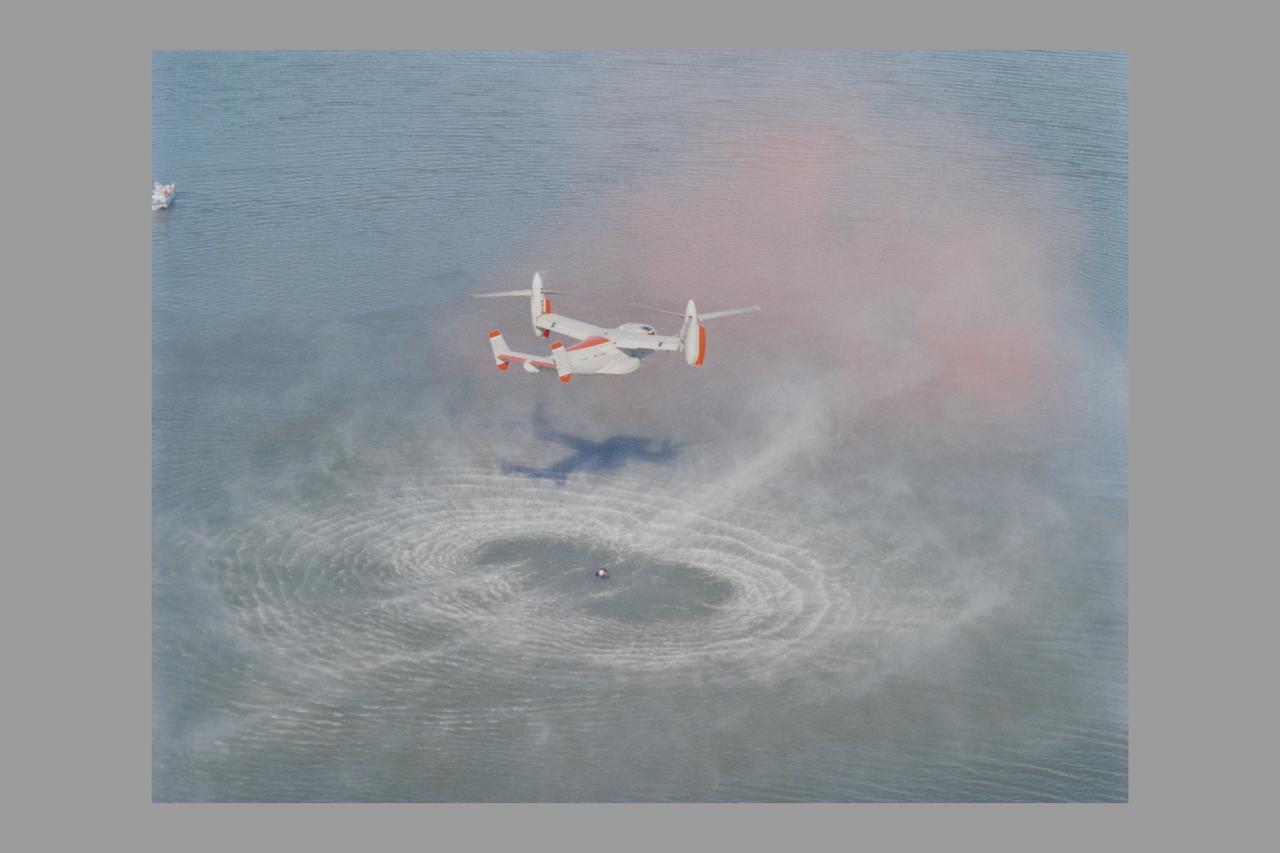
Bell XV-15 Tilt Rotor Army Configurations;  Rescue at sea
ARC-1966-AC83-0652-2
XV-15 Tilt Rotor (NASA-703) hovers at Ames Research Center
ARC-1985-AC85-0186-37
XV-15 (NASA-703) Evaluation Flight @ Ames;  Helicopter Mode
ARC-1985-AC85-0186-31
XV-3 airplane helicopter hovering  VTOLin front of the NASA Ames Research Center, Moffett Field, CA hangar N-211
ARC-1961-A-27738
Following the successful installation of mounting brackets, technicians successfully installed the pallet for the eXternal Visibility System, or XVS, onto the X-59 Quiet SuperSonic Technology X-plane, also known as X-59 QueSST. The pallet installation marks an assembly milestone as the first NASA flight systems hardware to be installed onto the vehicle. X-59 will fly to demonstrate the ability to produce quiet thumps at supersonic speeds, instead of the typical, loud sonic booms associated with supersonic flight.
NASA Payload Pallet XVS Mock-Up
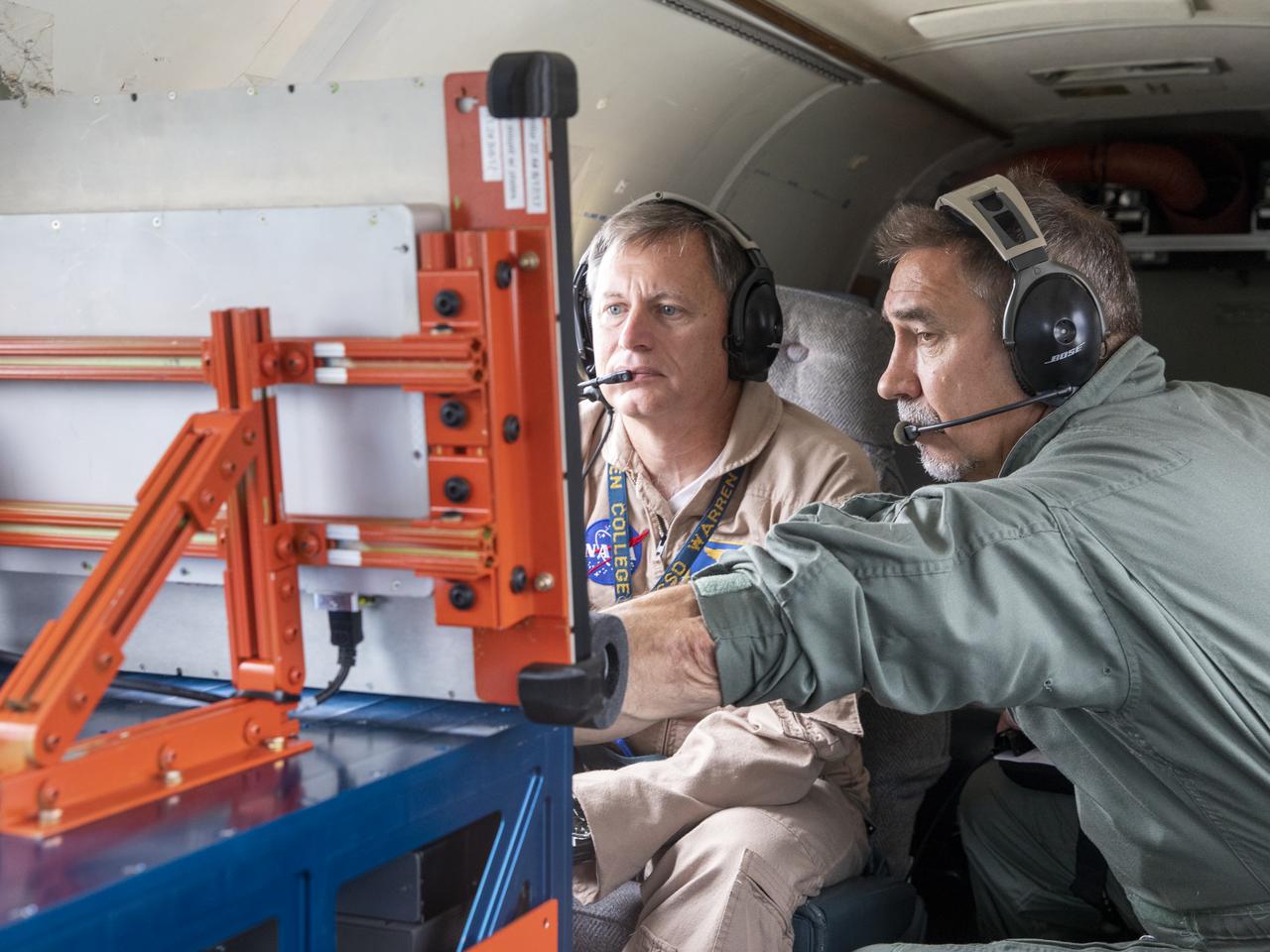
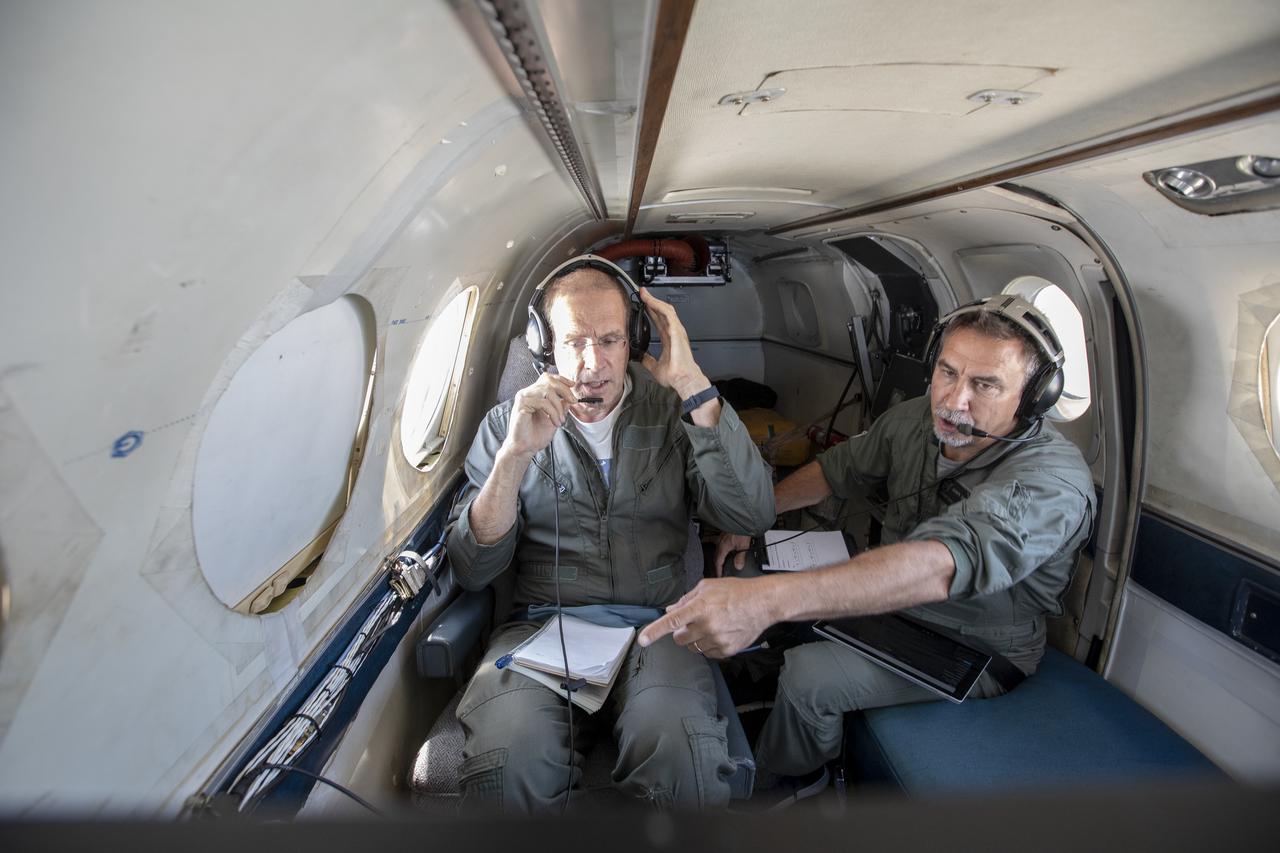
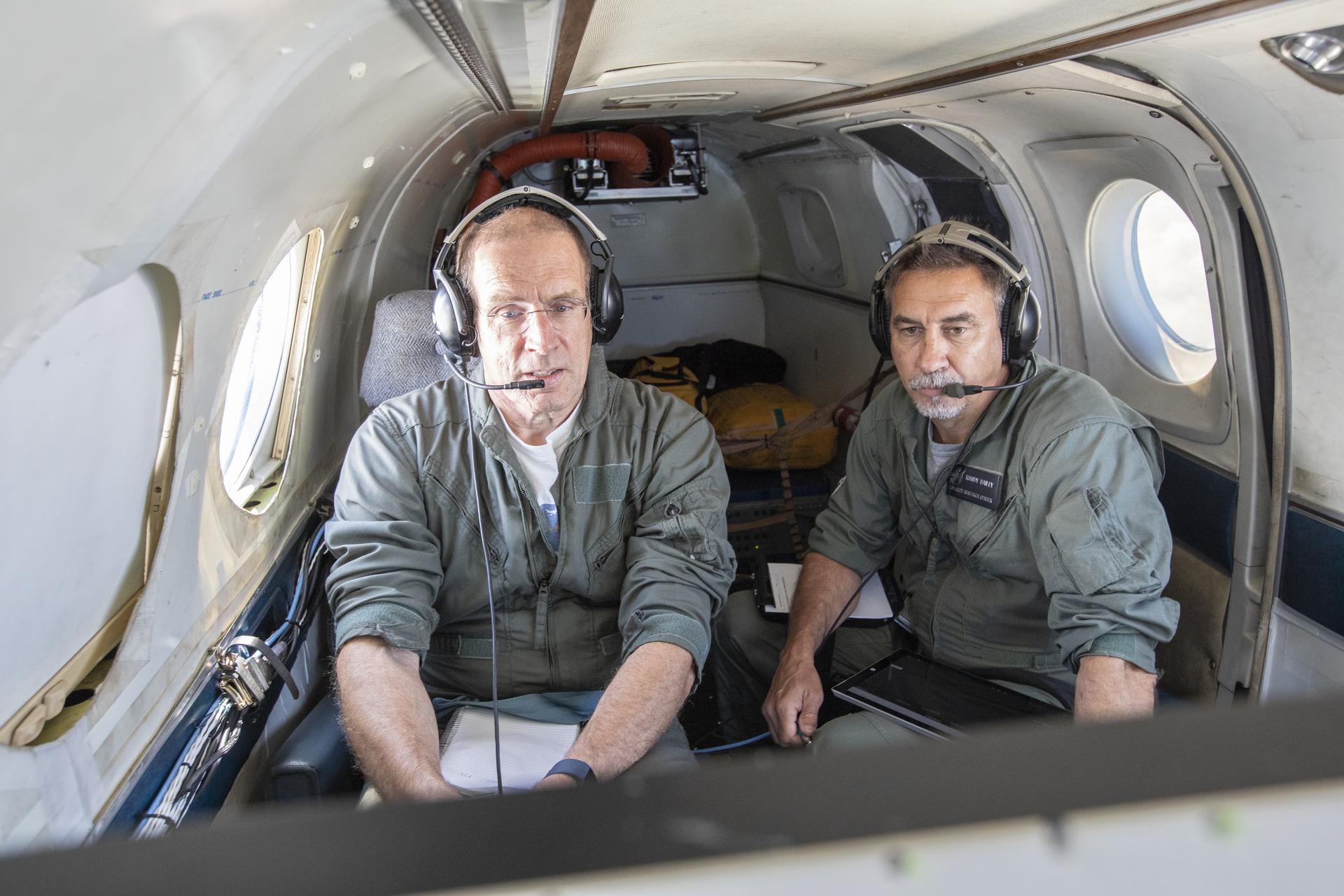
Aerospace Engineers, “from left to right” Peter Coen and Randy Bailey attempt to spot an incoming aircraft on the monitor while performing tests on the External Vision System (XVS) Software. The software testing is being conducted on the B200 King Air Beechcraft airplane.
Testing of the External Vision System (XVS) Software on the B200 King Air
Tilt Rotor and Tilt Wing Concepts: Bell-Boeing and Bell-Textron: showen is the NASA/ARMY/Navy XV-15
ARC-1986-AC96-0140-23
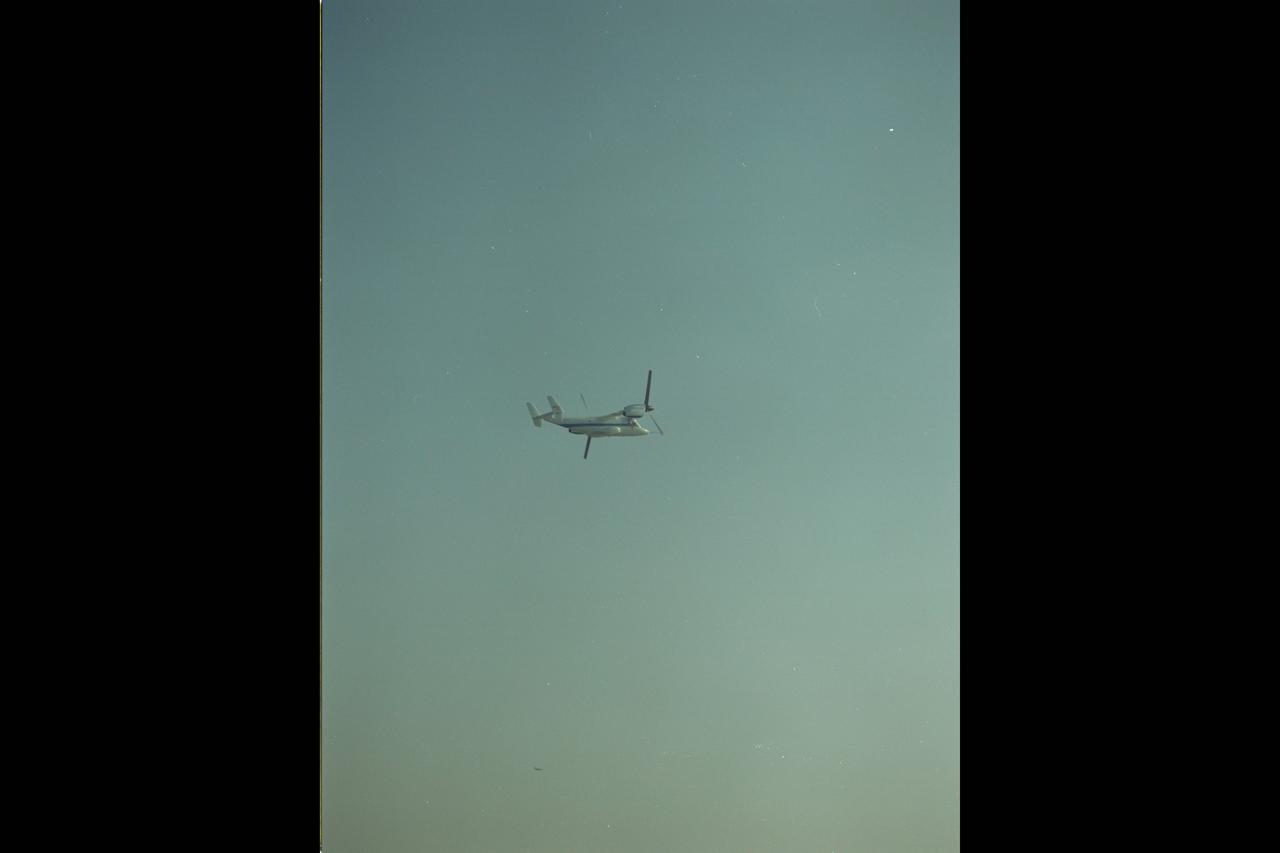
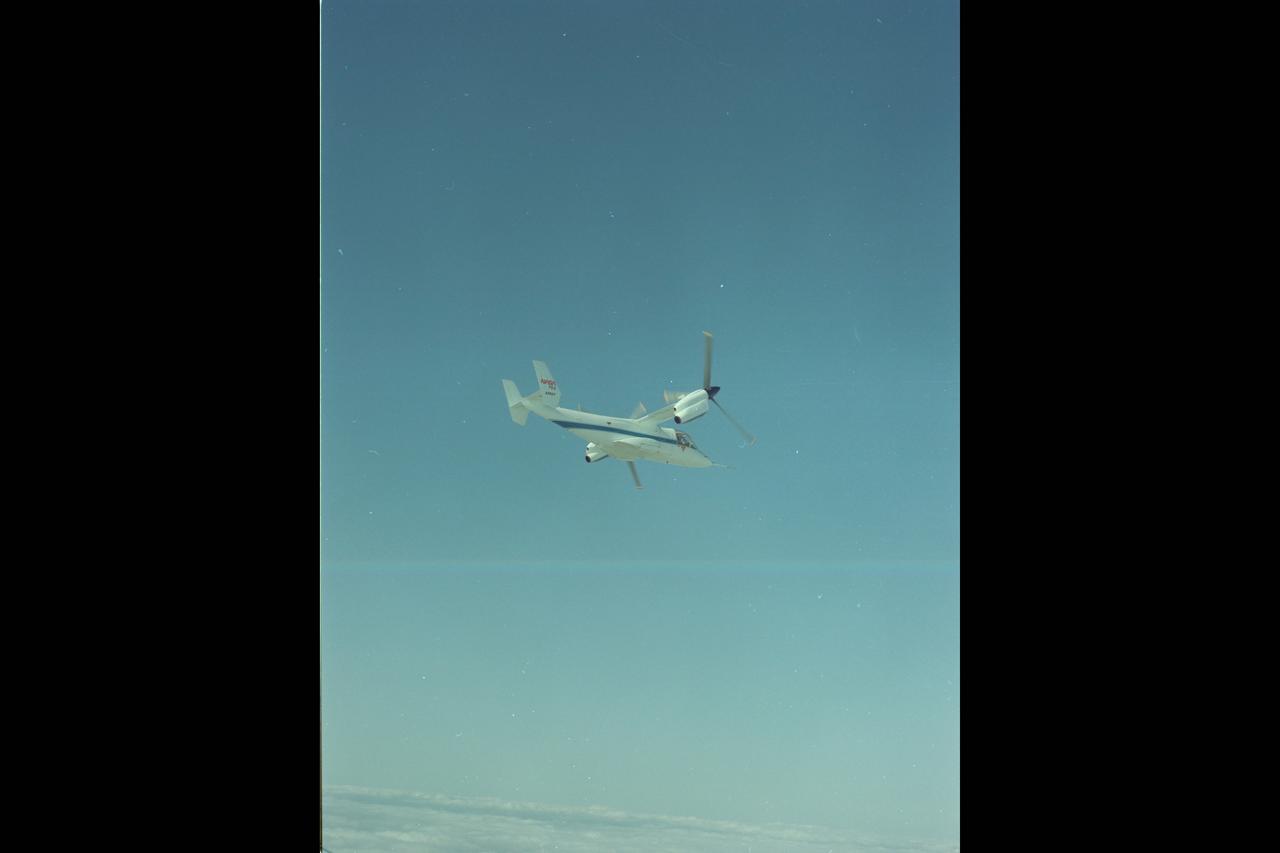
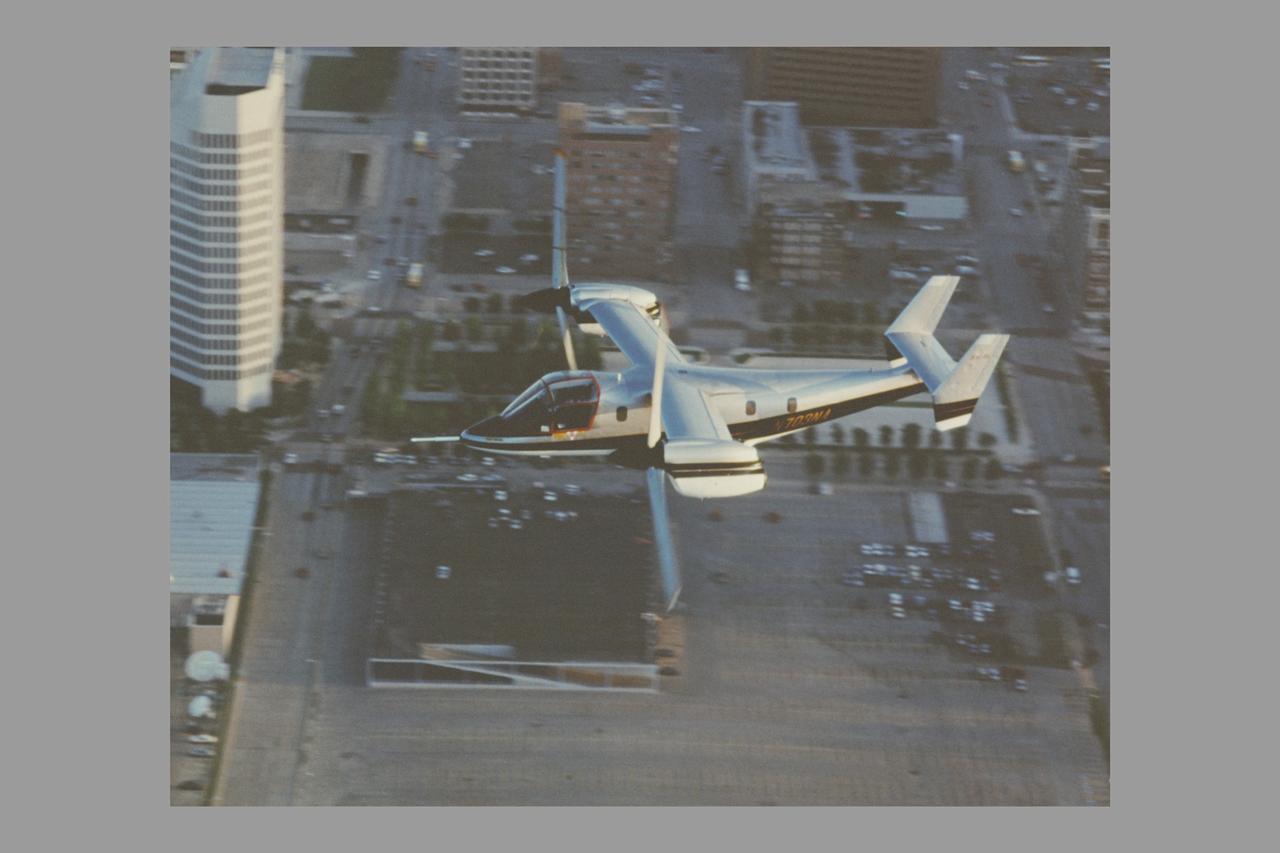
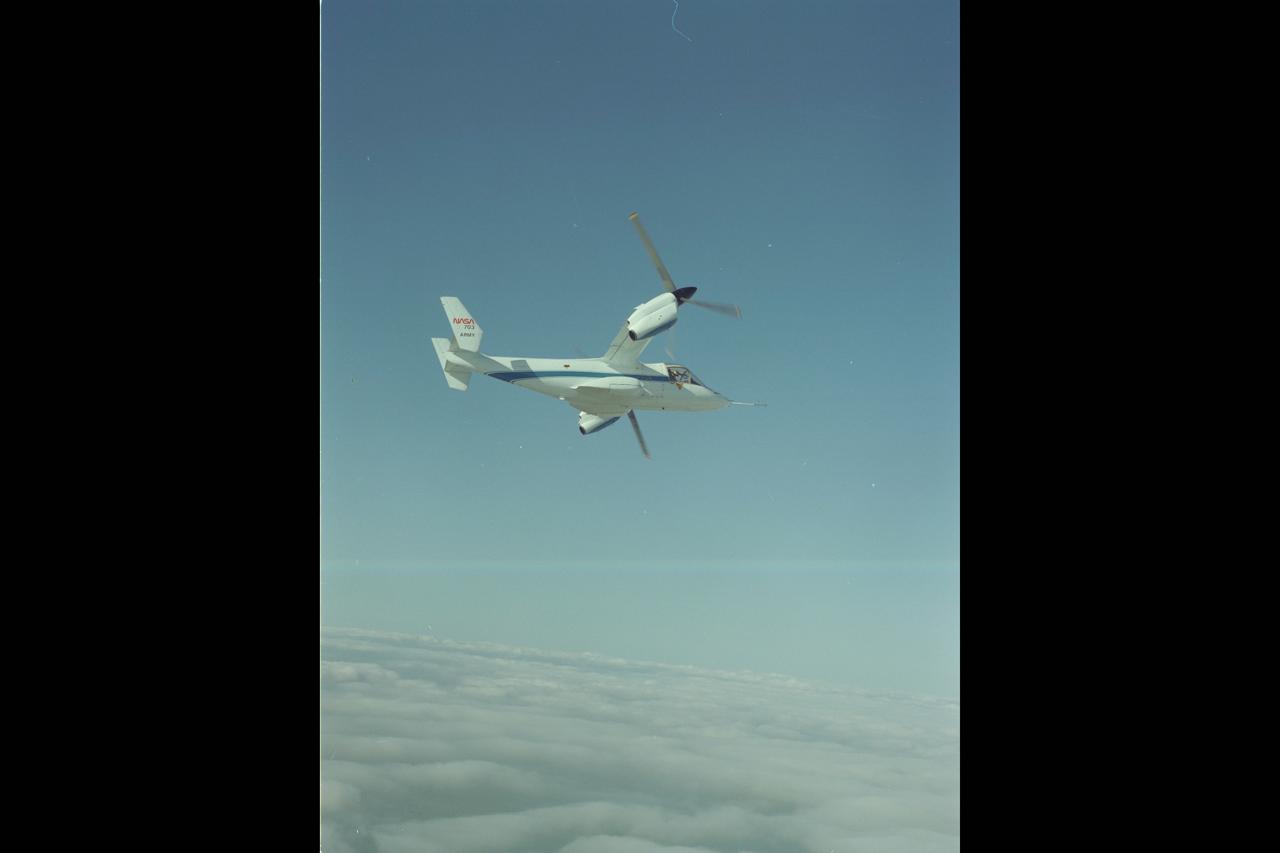
XV-15 Tilt Rotor (NASA-703) in conversion flight at Ames Research Center
ARC-1985-AC85-0186-16
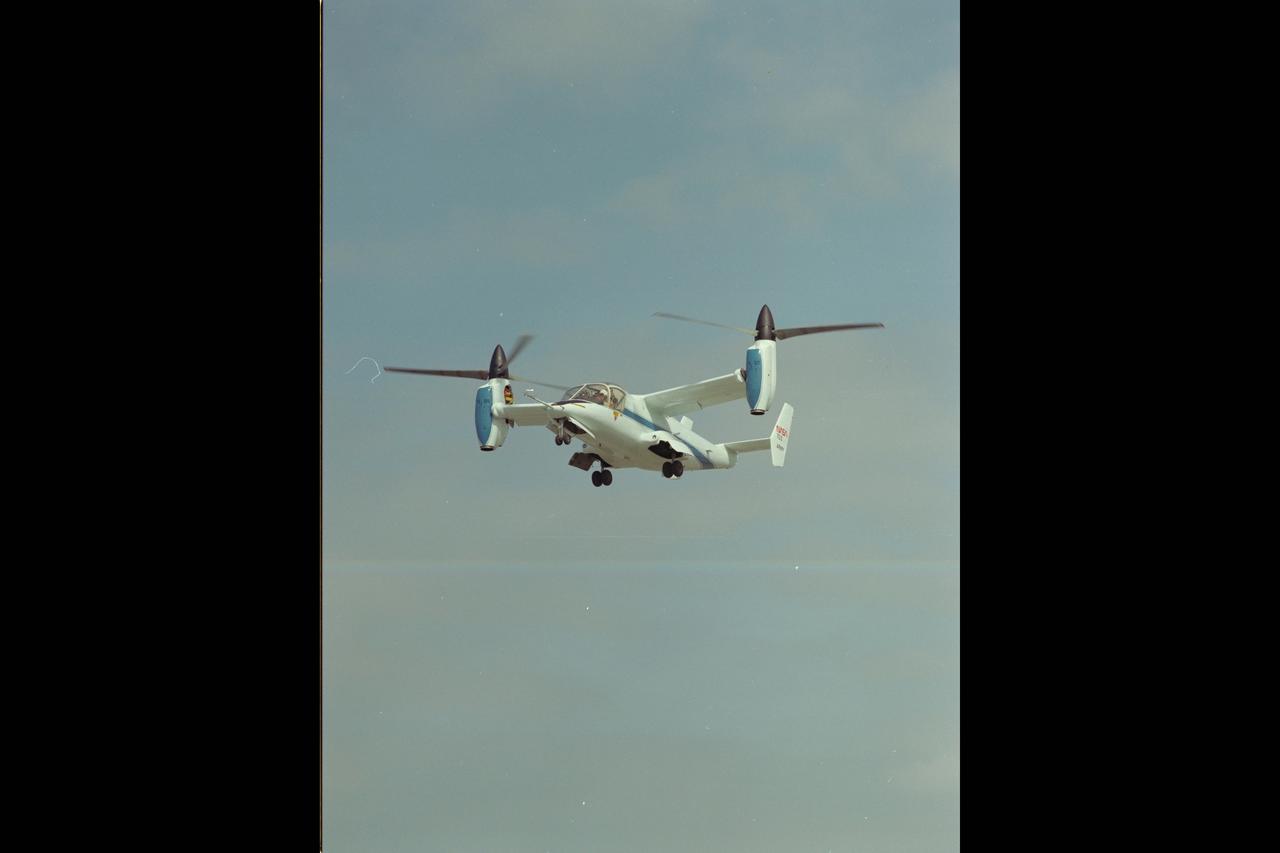
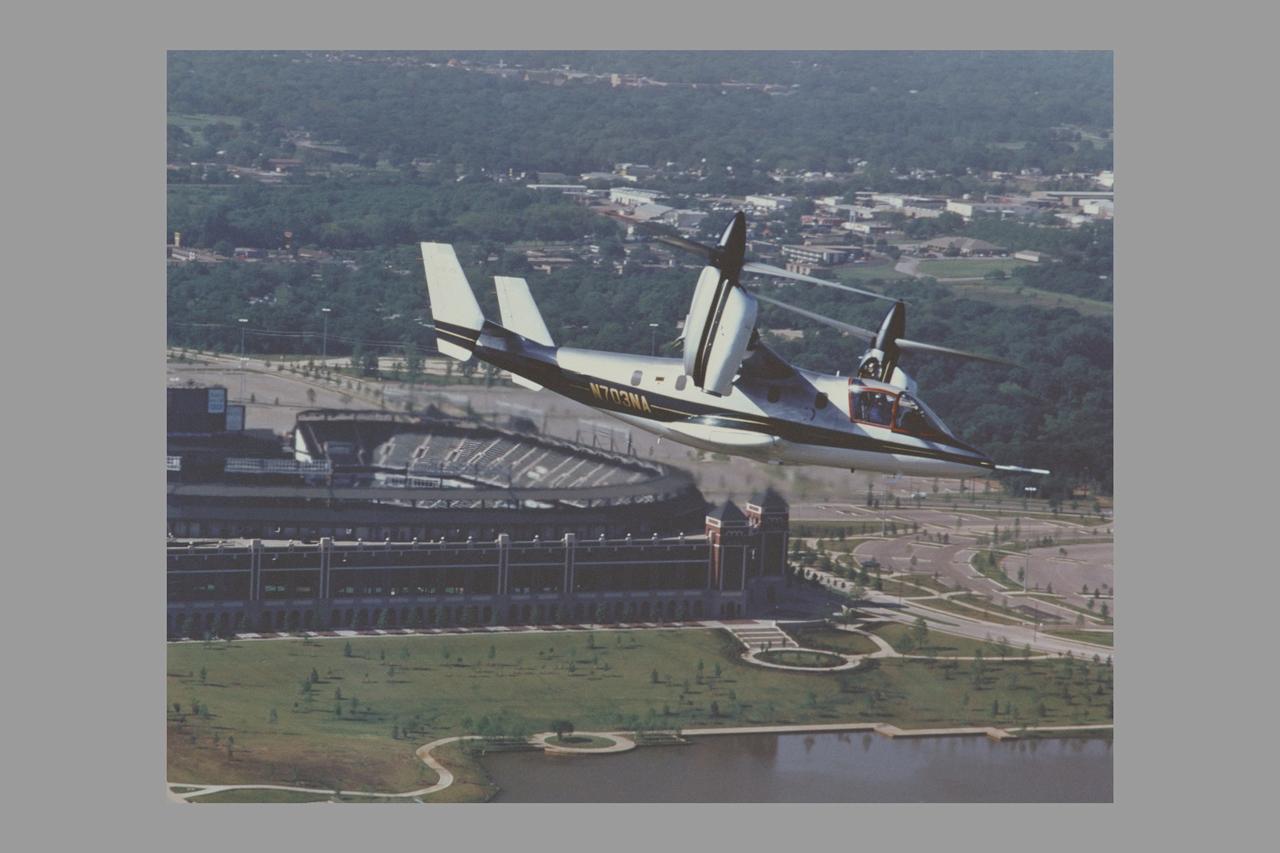
XV-15 (N703NA) Tiltrotor in hover - conversion flight at Bell Helicopter Co. Bell Photo number 043443
ARC-1997-AC97-0145-5
XV-15 (NASA-703) Evaluation Flight @ Ames; Above Title and Helicopter Mode
ARC-1985-AC85-0186-27
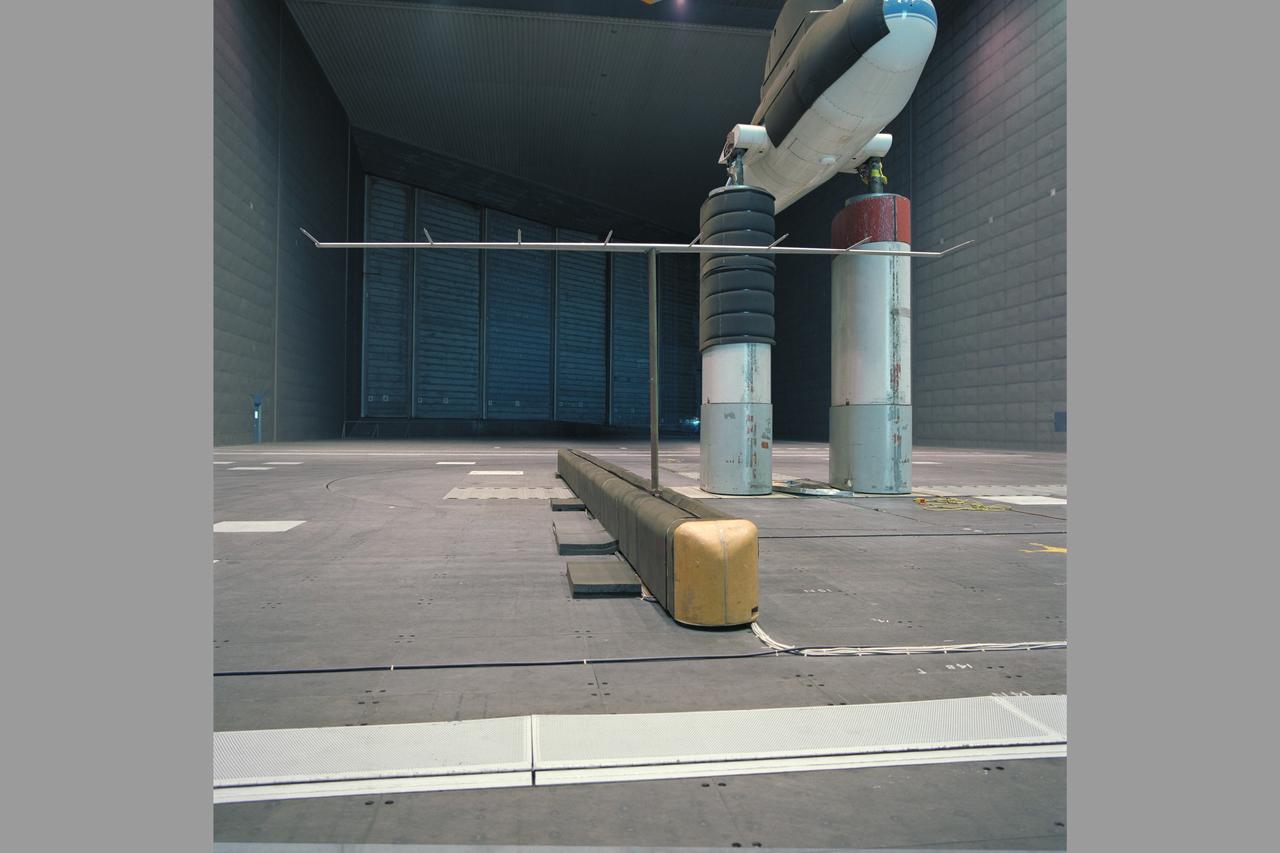
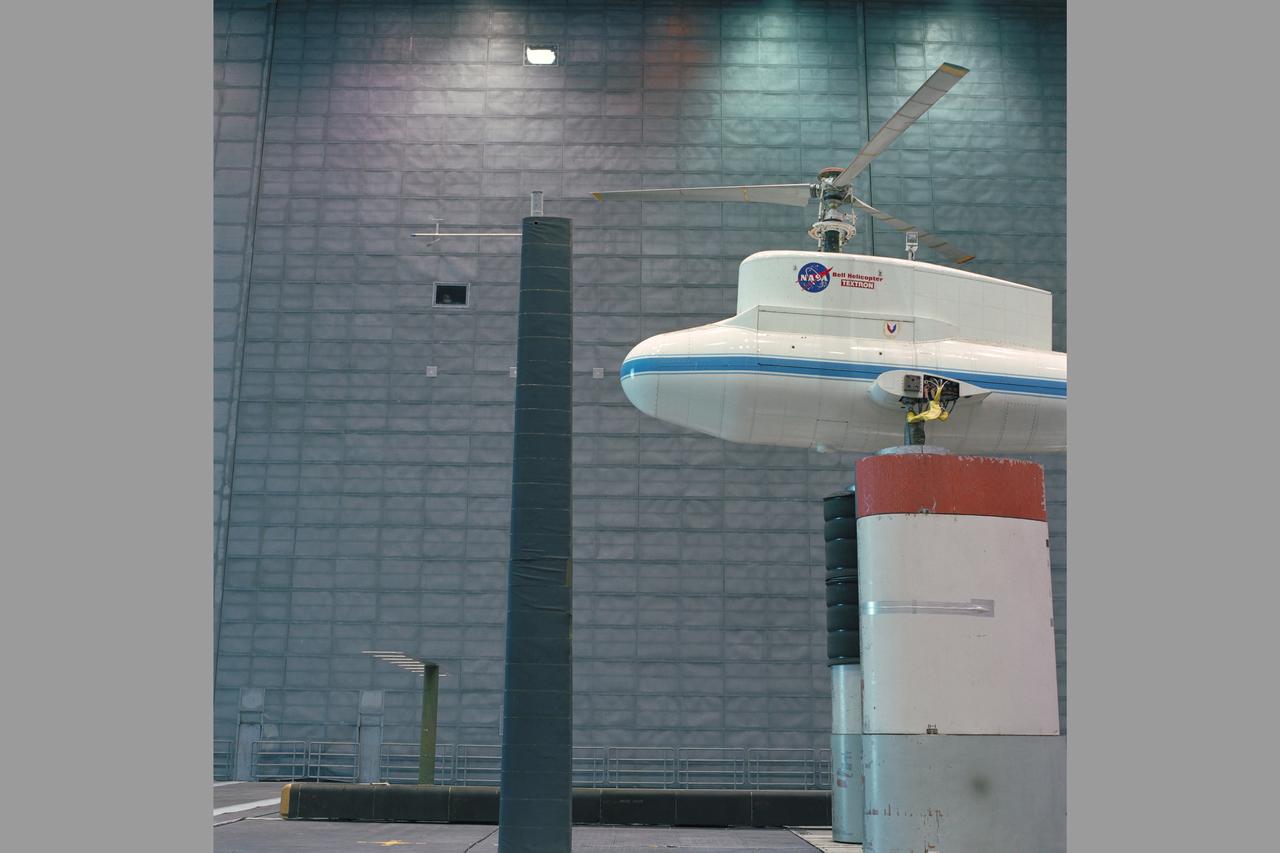
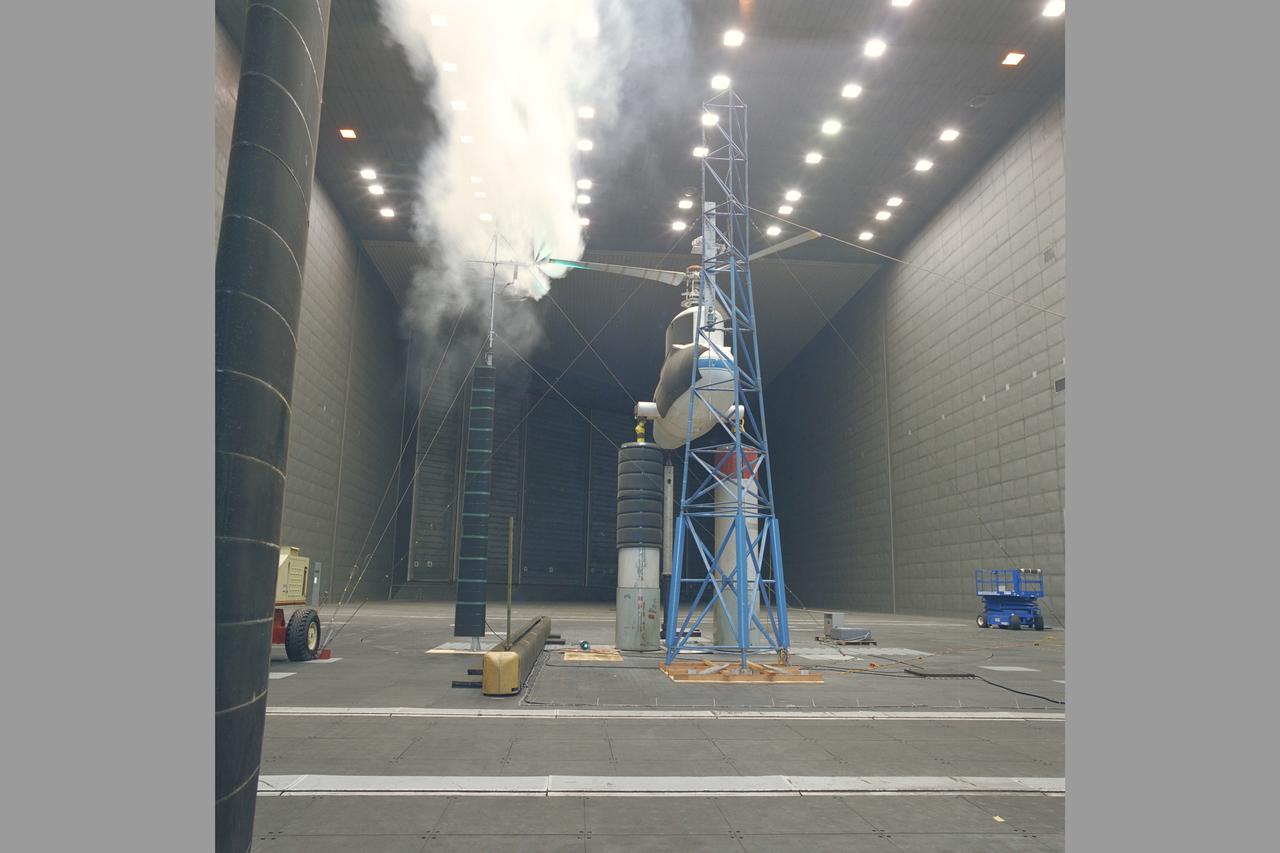
XV-15 Rotor Installation in 80X120 ft. Wind Tunnel Test-0048. Noise Reduction
ARC-1998-AC98-0261-2
XV-15 (NASA-703) Evaluation Flight @ Ames; Above Title, Conversion Mode, and Helicopter Mode
ARC-1985-AC85-0186-25
XV-15 Tilt Rotor (NASA-703) in conversion flight at Ames Research Center
ARC-1985-AC85-0186-17
XV-15 Rotor Installation in 80X120 ft. Wind Tunnel Test-0048. Noise Reduction
ARC-1998-AC98-0261-6
Bell XV-15 Tilt Rotor Army Configurations; Combat, Rescue, and JVX artist renderings
ARC-1966-AC83-0652-6
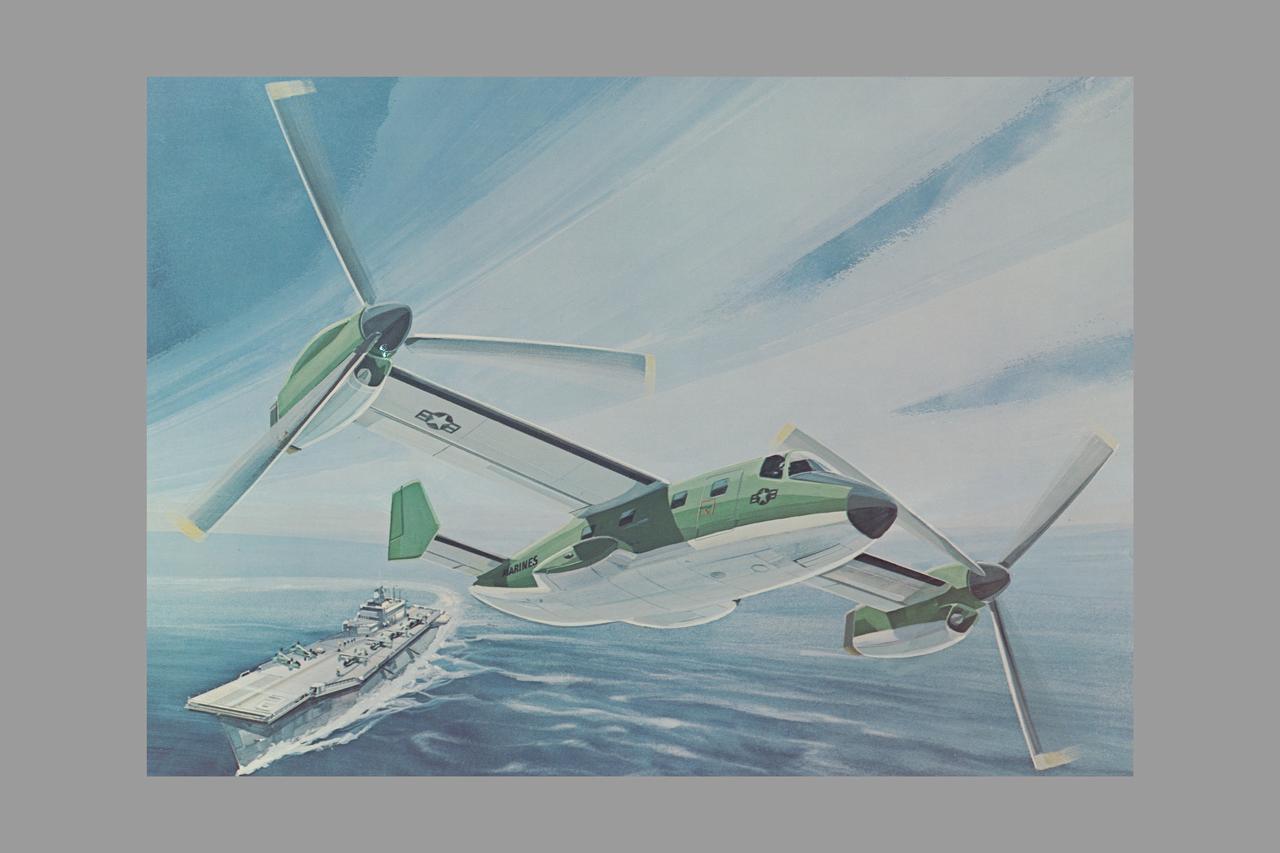
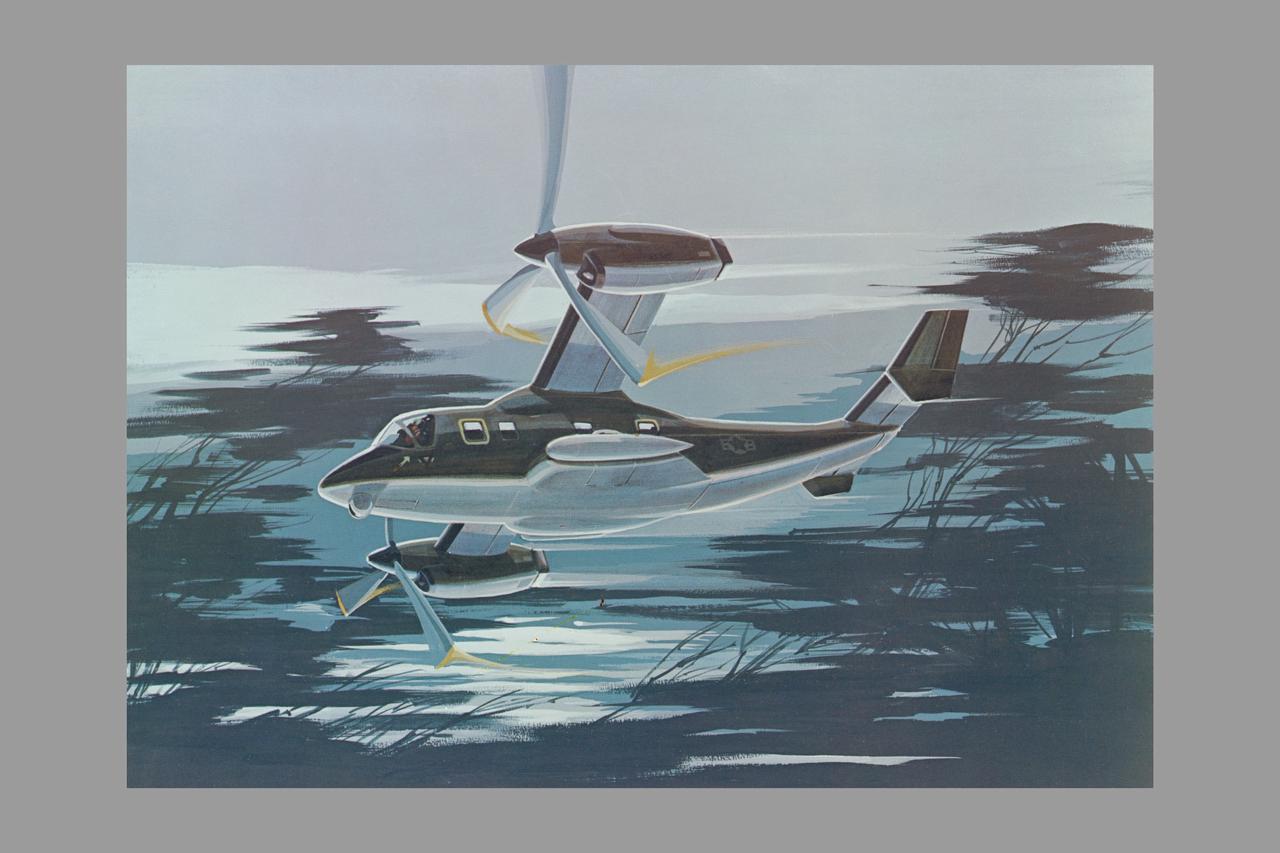
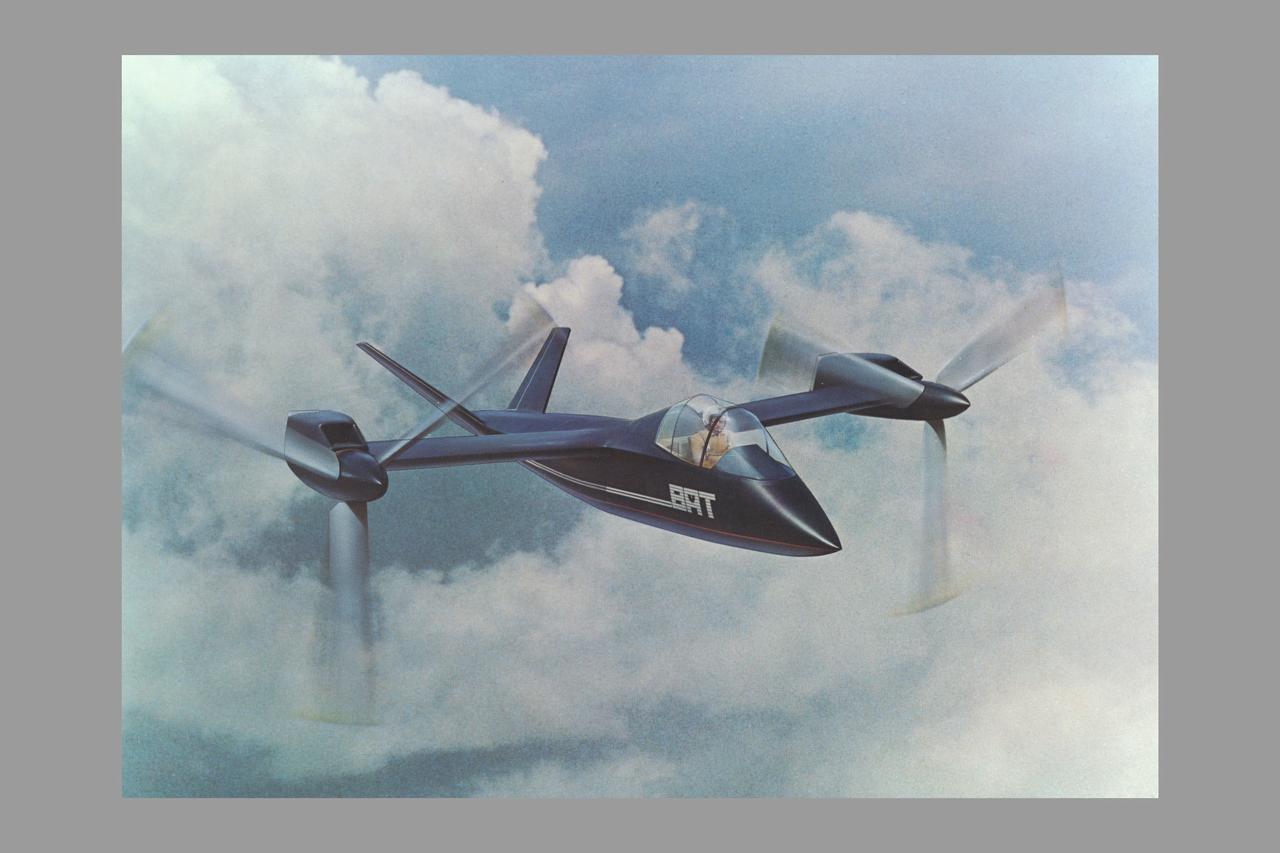
XV-15 prototypes: Multi-Mission BAT-LHX design, Search & Rescue, Marine assault
ARC-1984-AC84-0382-4
XV-15 prototypes: Multi-Mission BAT-LHX design, Search & Rescue, Marine assault
ARC-1984-AC84-0382-5
XV-15 prototypes: Multi-Mission BAT-LHX design, Search & Rescue, Marine assault
ARC-1984-AC84-0382-7
XV-15 Tilt Rotor (NASA-703) in conversion flight at Ames Research Center
ARC-1985-AC85-0186-19
XV-3 from rear in Ames Reseach Center 40x80ft wind tunnel with K Edenborough and B. Ramsey
ARC-1966-A-37019
XV-15 Tilt Rotor (NASA-703) in conversion flight at Ames Research Center
ARC-1985-AC85-0186-21
XV-15 Tilt Rotor (NASA-703) in conversion flight at Ames Research Center
ARC-1985-AC85-0186-18
XV-15 Tilt Rotor (NASA-703) in conversion flight at Ames Research Center
ARC-1985-AC85-0186-20
XV-15 (NASA-703) Evaluation Flight @ Ames; Above Title and Helicopter Mode
ARC-1985-AC85-0186-30
XV-15 prototypes: Multi-Mission BAT-LHX design, Search & Rescue, Marine assault
ARC-1984-AC84-0382-1
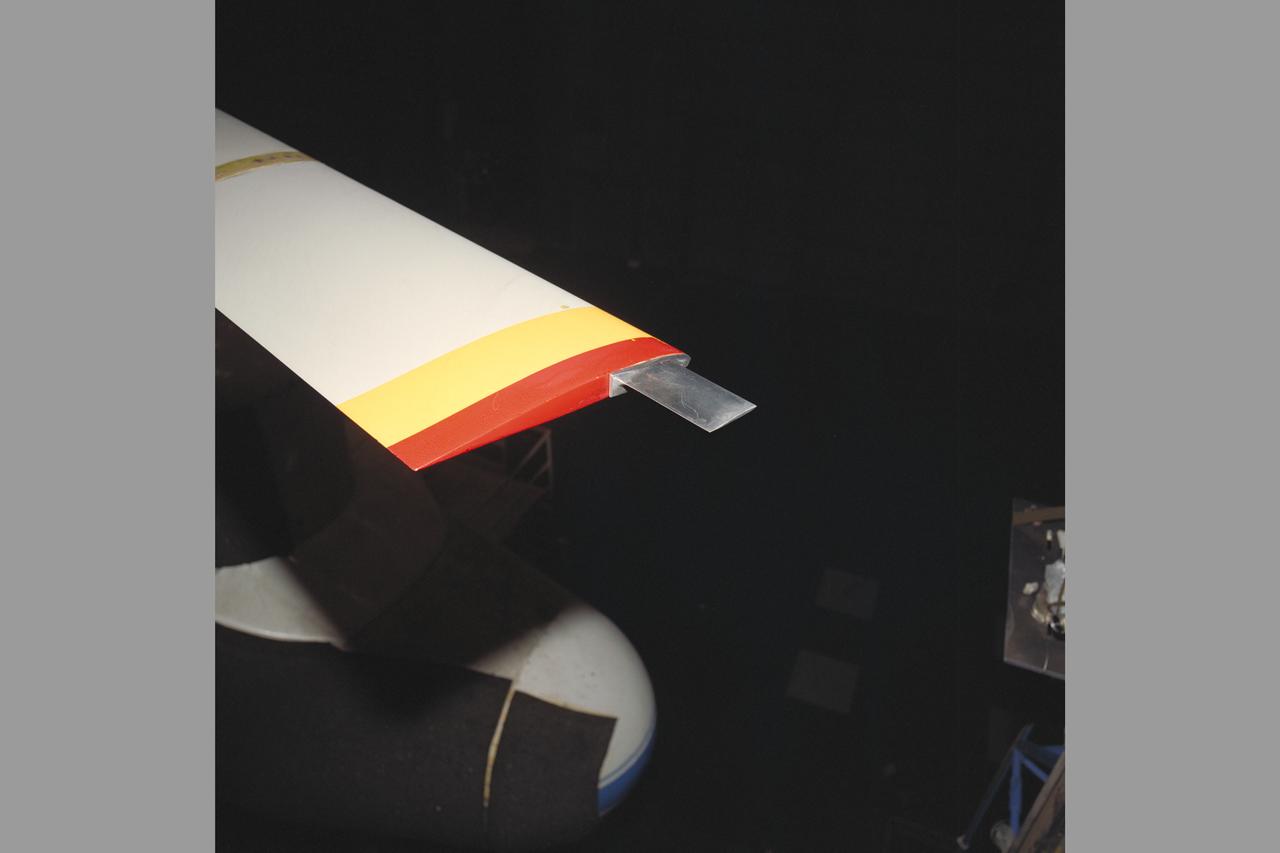
XV-15 Rotor Installation in 80X120 ft. Wind Tunnel Test-0048. Noise Reduction
ARC-1998-AC98-0261-4
XV-15 Rotor Test Apparatus (RTA) flow visualization Hover test-80-0021 in 80x120ft w.t.
ARC-1996-AC96-0357-15
XV-15 prototypes: Multi-Mission BAT-LHX design, Search & Rescue, Marine assault
ARC-1984-AC84-0382-2
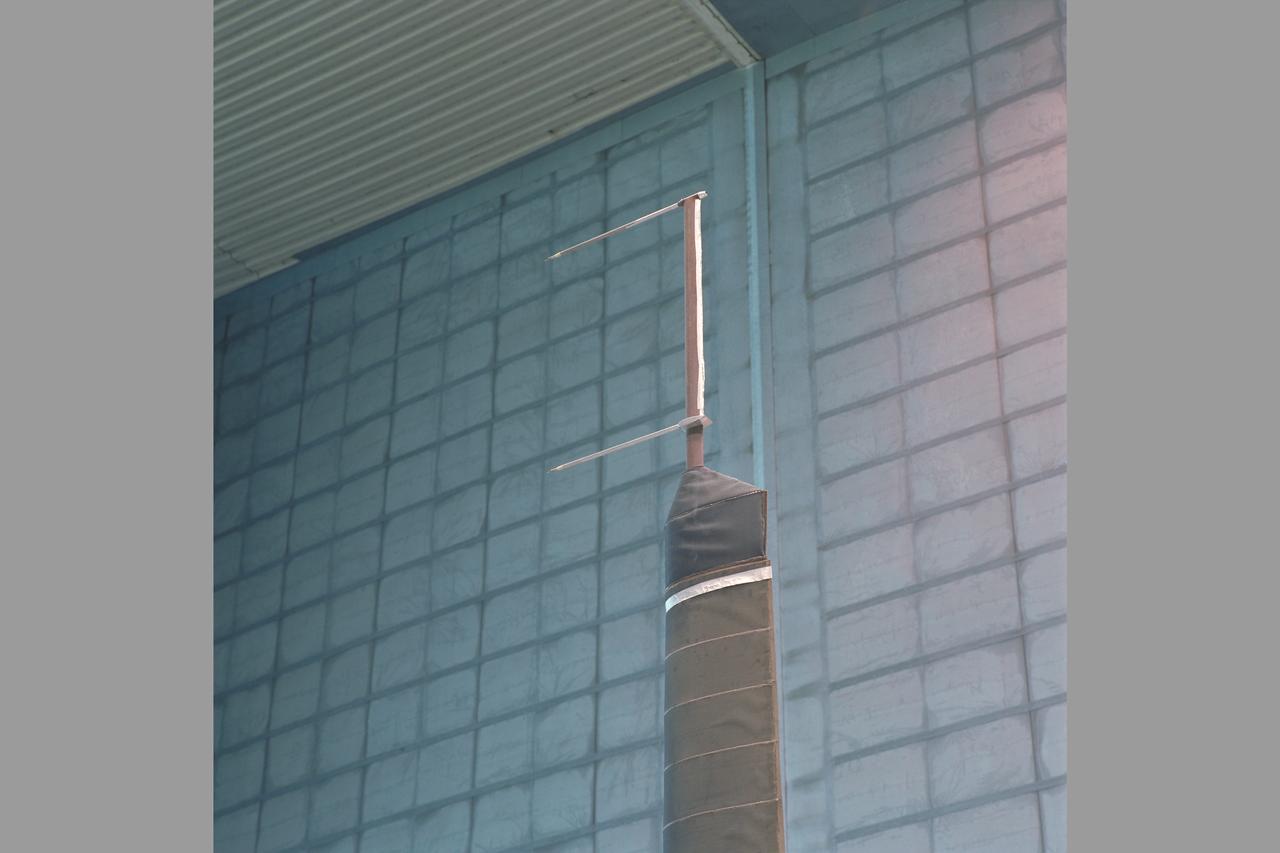
XV-15 Rotor Installation in 80X120 ft. Wind Tunnel Test-0048. (microphone set up) Noise Reduction
ARC-1998-AC98-0261-7
XV-15 (NASA 702) Tiltrotor in airplane flight at Bell Helicopter Co. Bell Photo number 029552
ARC-1997-AC97-0145-8
XV-15 Rotor Installation in 80X120 ft. Wind Tunnel Test-0048. Noise Reduction
ARC-1998-AC98-0261-5
XV-15 Rotor Test Apparatus (RTA) flow visualization Hover test-80-0021 in 80x120ft w.t.  (rotor tip)
ARC-1996-AC96-0357-16
XV-15 Rotor Installation in 80X120 ft. Wind Tunnel Test-0048. Noise Reduction
ARC-1998-AC98-0261-3
XV-15 (NASA-703) Evaluation Flight @ Ames; Above Title and Helicopter Mode from East Side Runway
ARC-1985-AC85-0186-12
XV-15 (NASA 703) in flight with ATB (Advanced Tiltrotor Blades), Conventional mode
ARC-1990-AC90-0448-20
XV-15 Tilt Rotor (NASA-703) hovers at Ames Research Center with Navy P-3 Orion overhead
ARC-1985-AC85-0186-32
XV-15 Tilt Rotor (NASA-703) in conversion flight at Ames Research Center
ARC-1985-AC85-0186-22
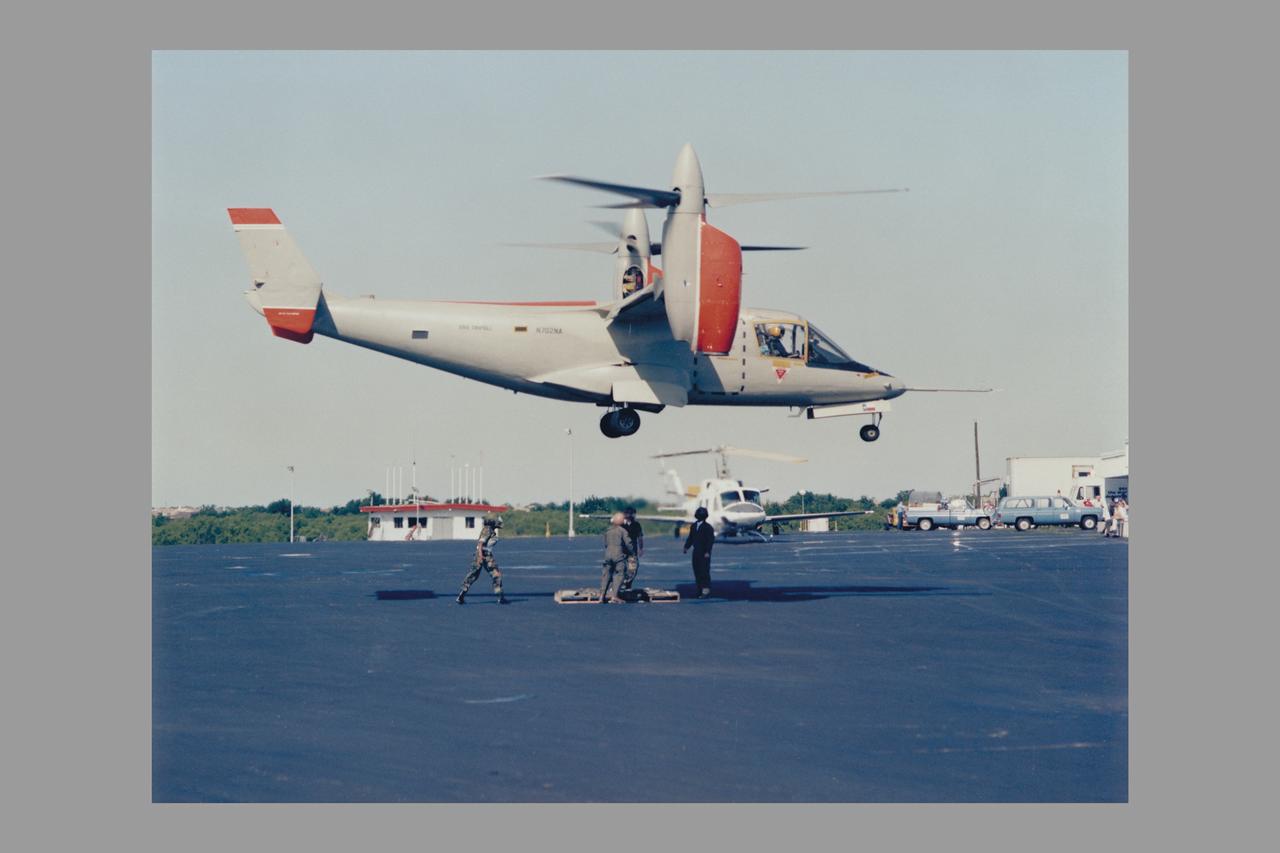
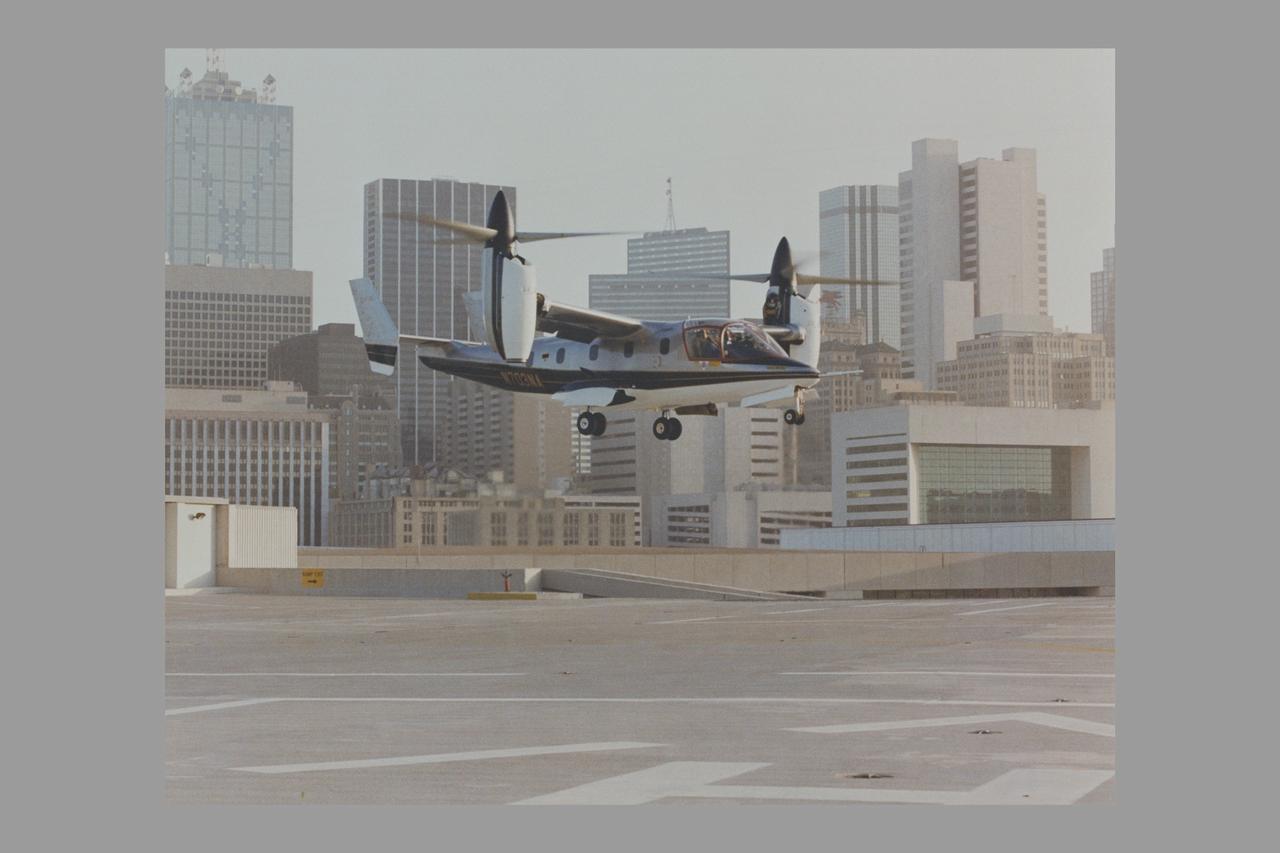
XV-15 (N703NA) Tiltrotor in hover flight landing on rooftop. Bell Photo number 042669
ARC-1997-AC97-0145-6
XV-15 (NASA-703) Evaluation Flight @ Ames; Above Title and Helicopter Mode
ARC-1985-AC85-0186-26
XV-15 prototypes: Multi-Mission BAT-LHX design, Search & Rescue, Marine assault
ARC-1984-AC84-0382-8
XV-15 (NASA 703) ATB Blade baseline tie down test with RADS
ARC-1989-AC89-0355-24
XV-3 in Ames Reseach Center 40x80ft wind tunnel; Rotor dynamic stability tests
ARC-1966-A-37006-6
XV-15 (NASA-703) Evaluation Flight @ Ames; Above Title and Helicopter Mode
ARC-1985-AC85-0186-28
XV-15 (NASA-703) Evaluation Flight @ Ames; Above Title and Conversion Mode
ARC-1985-AC85-0186-24
XV-15 prototypes: Multi-Mission BAT-LHX design, Search & Rescue, Marine assault
ARC-1984-AC84-0382-3
Tilt Rotor and Tilt Wing Concepts: Bell-Boeing and Bell-Textron: show is the NASA/ARMY/Navy XV-15
ARC-1986-AC86-0140-24