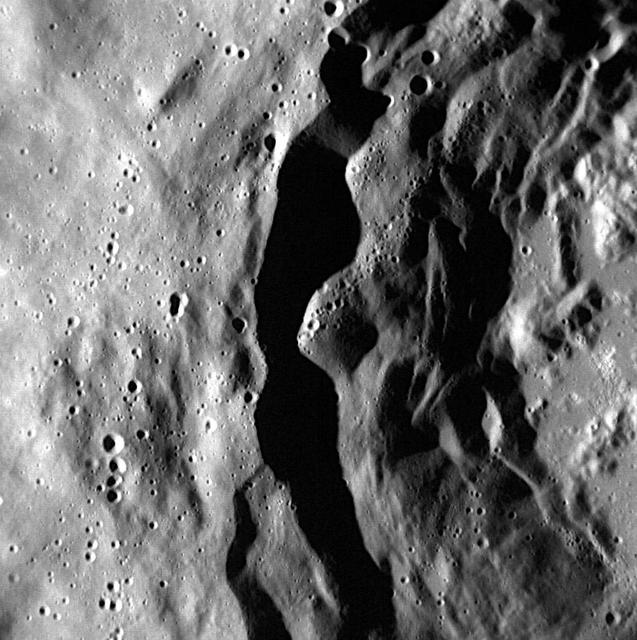
Young Terraces
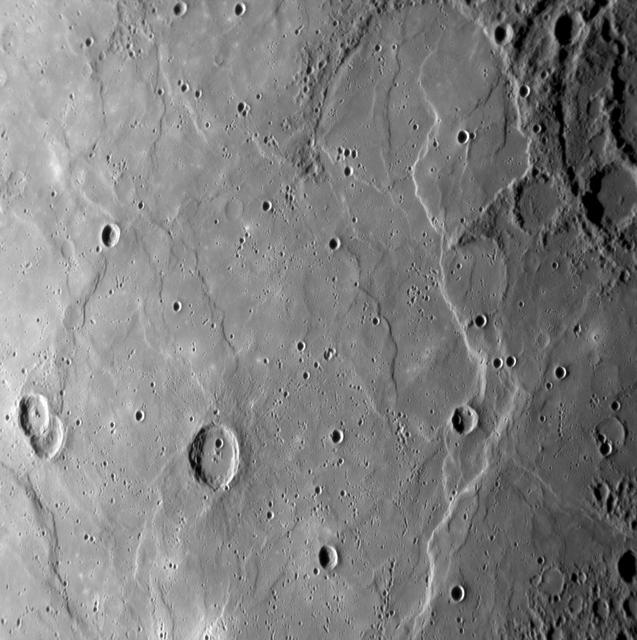
Young and Wrinkled
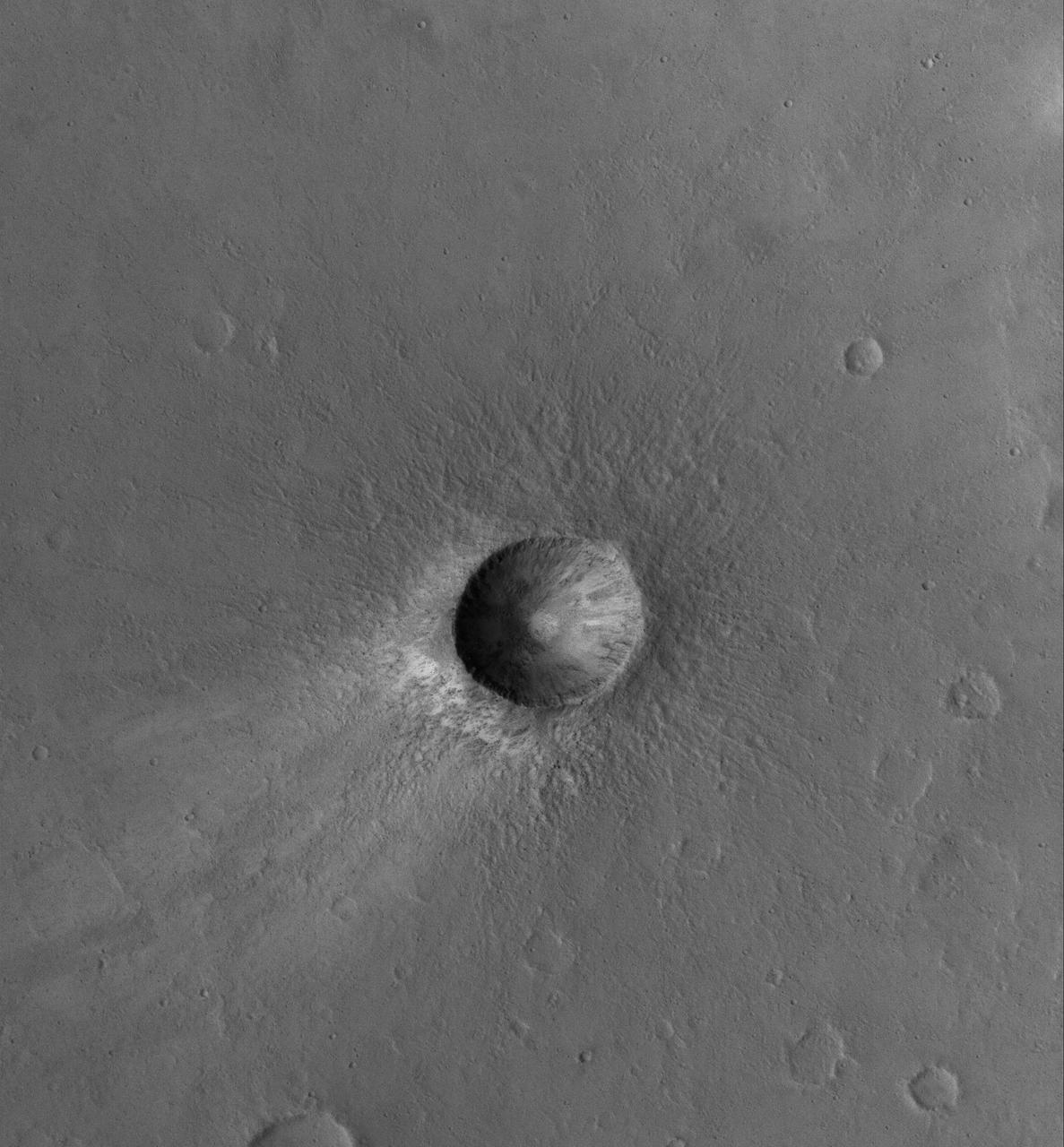
Young Impact

Young Channel, Old Crater

Young and Old Flows
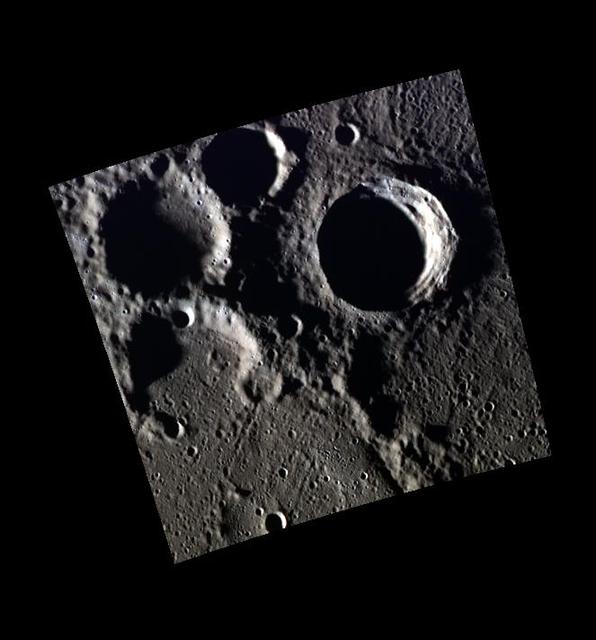
Craters Young and Old
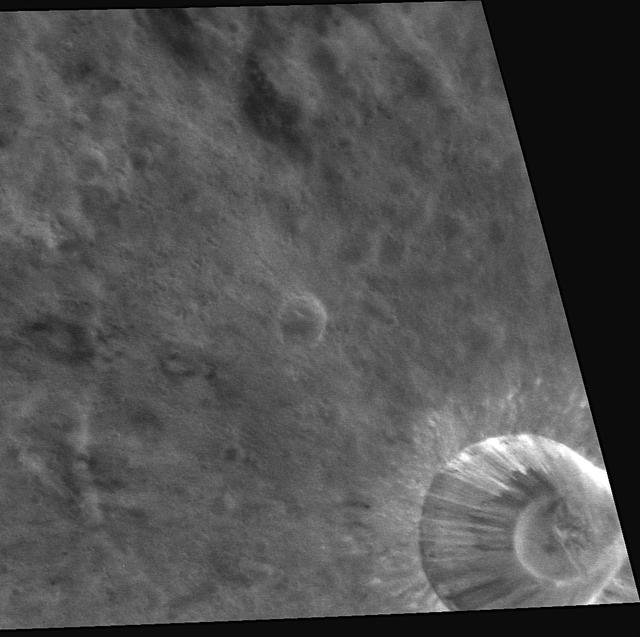
To Be Young and Rayed on Mercury
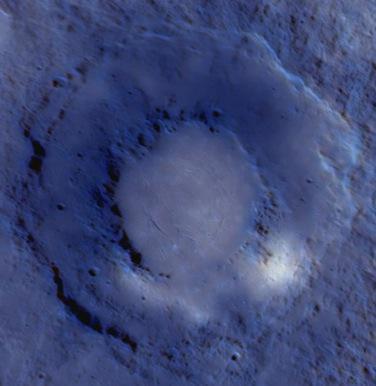
Young Volcanism on Mercury

Students explore aeronautical concepts during the 23rd Annual Young Astronaut Day Event held at NASA Glenn Research Center.

NASA astronaut John Young was remembered in a ceremony at the Heroes and Legends exhibit at the Kennedy Space Center Visitor Complex. The brief memorial took place on the afternoon of Jan. 11, 2018. Young died Jan. 5, 2018, in Houston at the age of 87. He was the only astronaut to fly in NASA's Gemini, Apollo and Space Shuttle Programs.
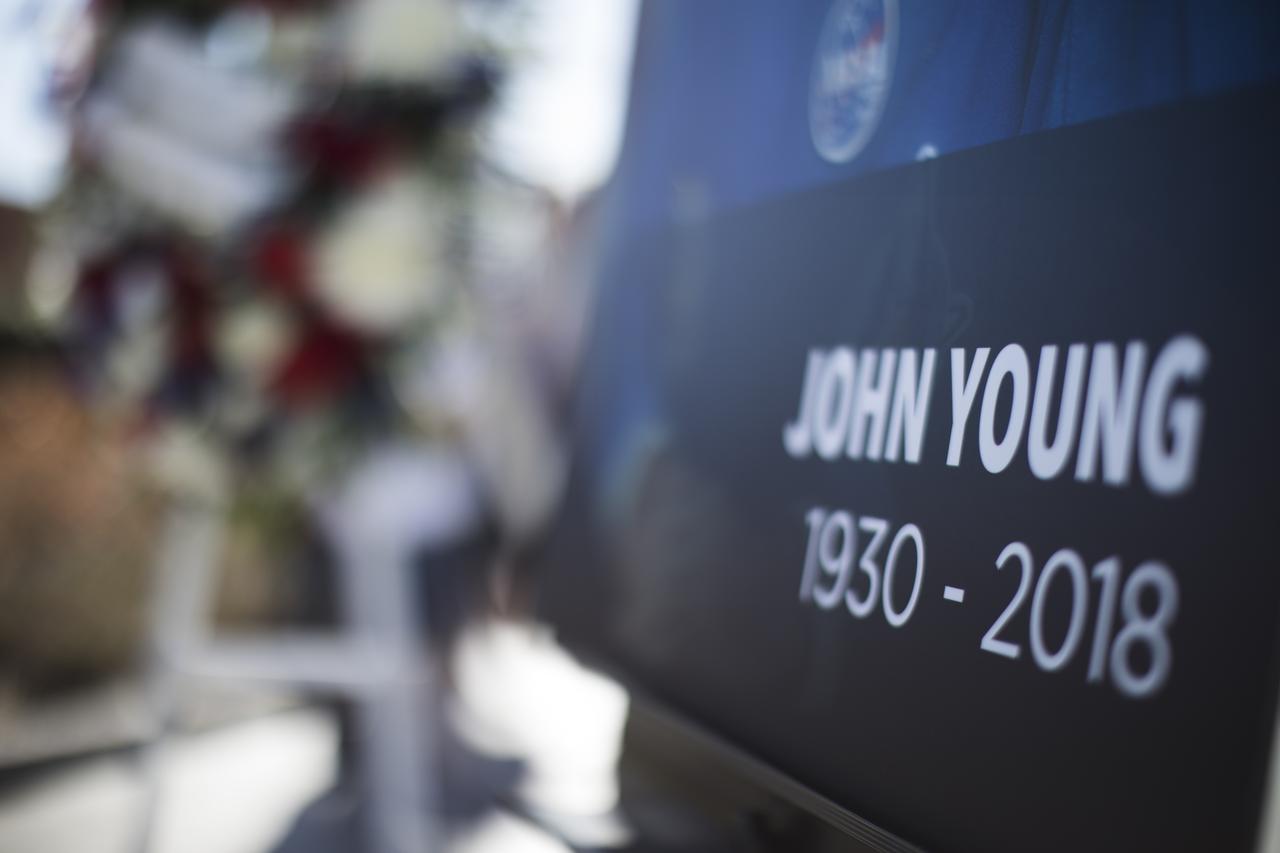
NASA astronaut John Young was remembered in a ceremony at the Heroes and Legends exhibit at the Kennedy Space Center Visitor Complex. The brief memorial took place on the afternoon of Jan. 11, 2018. Young died Jan. 5, 2018, in Houston at the age of 87. He was the only astronaut to fly in NASA's Gemini, Apollo and Space Shuttle Programs.

NASA astronaut John Young was remembered in a ceremony at the Heroes and Legends exhibit at the Kennedy Space Center Visitor Complex. The brief memorial took place on the afternoon of Jan. 11, 2018. Young died Jan. 5, 2018, in Houston at the age of 87. He was the only astronaut to fly in NASA's Gemini, Apollo and Space Shuttle Programs.
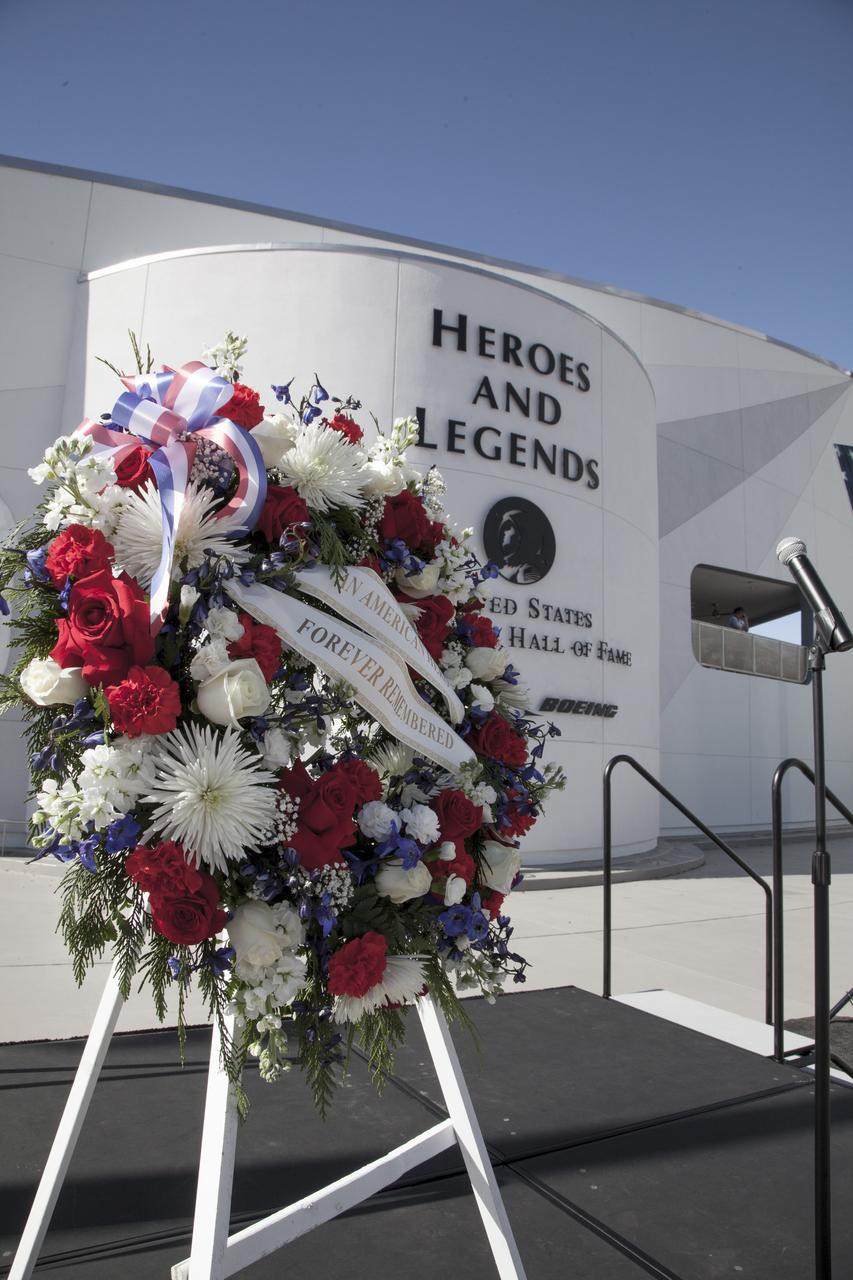
NASA astronaut John Young was remembered in a ceremony at the Heroes and Legends exhibit at the Kennedy Space Center Visitor Complex. The brief memorial took place on the afternoon of Jan. 11, 2018. Young died Jan. 5, 2018, in Houston at the age of 87. He was the only astronaut to fly in NASA's Gemini, Apollo and Space Shuttle Programs.

NASA astronaut John Young was remembered in a ceremony at the Heroes and Legends exhibit at the Kennedy Space Center Visitor Complex. The brief memorial took place on the afternoon of Jan. 11, 2018. Young died Jan. 5, 2018, in Houston at the age of 87. He was the only astronaut to fly in NASA's Gemini, Apollo and Space Shuttle Programs.

Delaware North COO Therrin Protze speaks during a ceremony at the Heroes and Legends exhibit at the Kennedy Space Center Visitor Complex. The brief memorial honoring NASA astronaut John Young took place on the afternoon of Jan. 11, 2018. Young died Jan. 5, 2018, in Houston at the age of 87. He was the only astronaut to fly in NASA's Gemini, Apollo and Space Shuttle Programs.
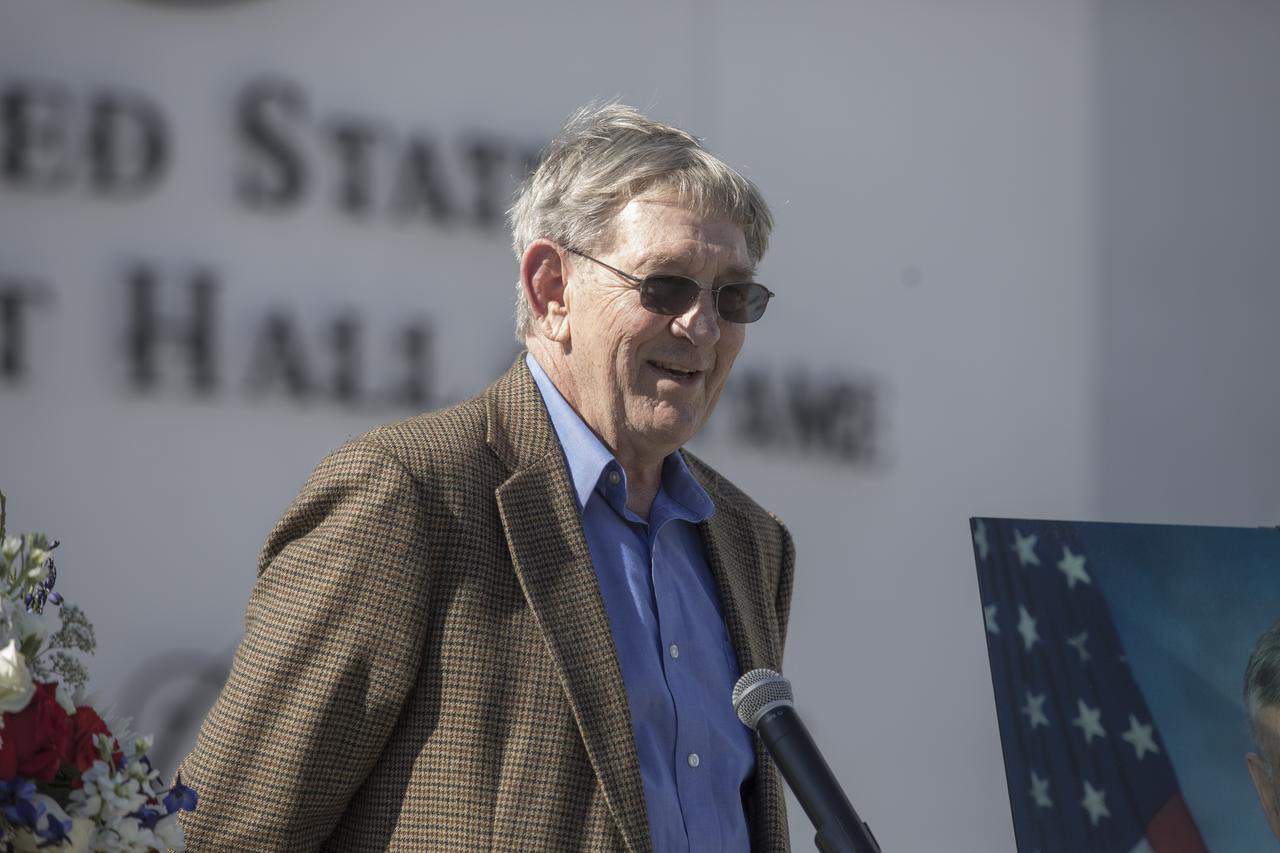
Former NASA astronaut Mike McCulley speaks during a ceremony at the Heroes and Legends exhibit at the Kennedy Space Center Visitor Complex. The brief memorial honoring NASA astronaut John Young took place on the afternoon of Jan. 11, 2018. Young died Jan. 5, 2018, in Houston at the age of 87.He was the only astronaut to fly in NASA's Gemini, Apollo and Space Shuttle Programs.

Former NASA astronaut Jon McBride places a wreath at the Heroes and Legends exhibit at the Kennedy Space Center Visitor Complex. The brief memorial honoring NASA astronaut John Young took place on the afternoon of Jan. 11, 2018. Young died Jan. 5, 2018, in Houston at the age of 87. He was the only astronaut to fly in NASA's Gemini, Apollo and Space Shuttle Programs.
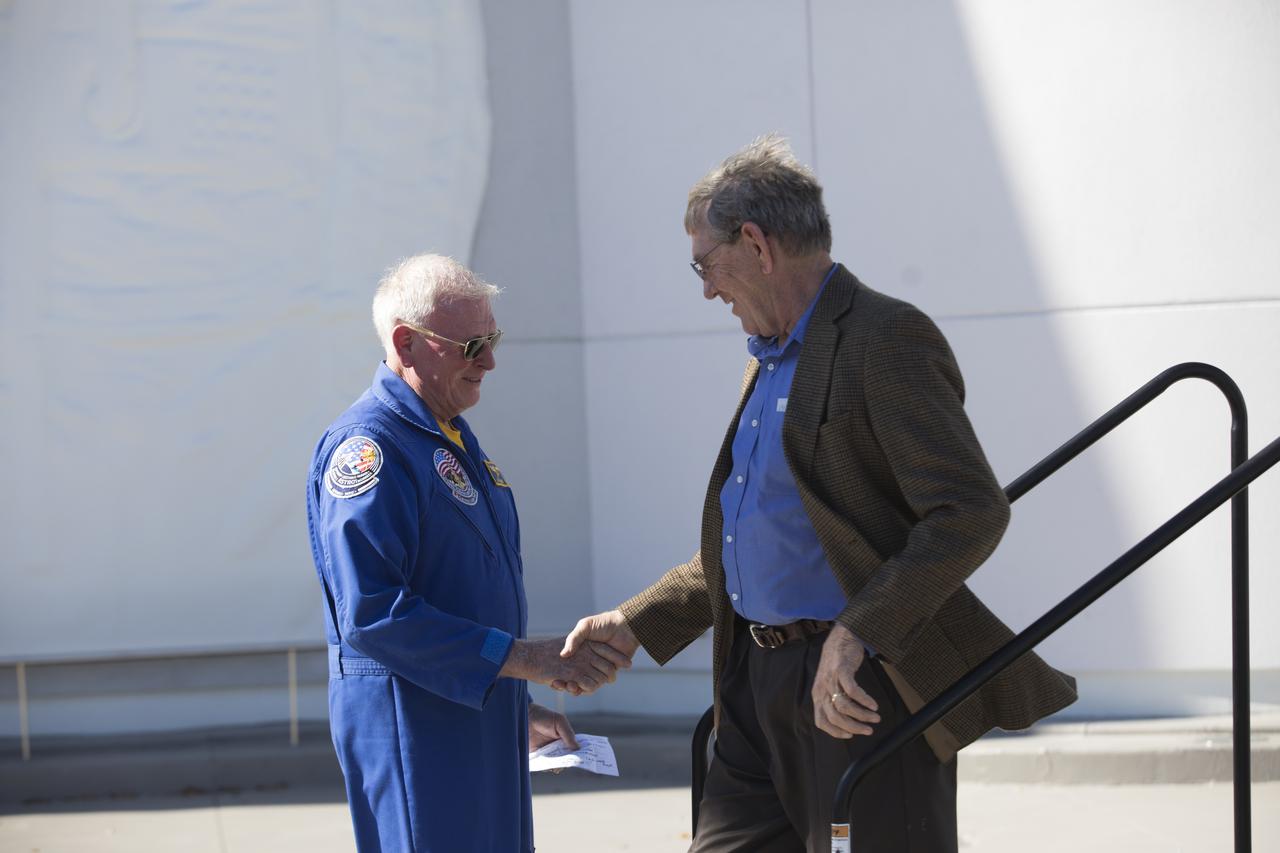
Former NASA astronaut Jon McBride, left, greets Mike McCulley during a ceremony at the Heroes and Legends exhibit at the Kennedy Space Center Visitor Complex. The brief memorial honoring NASA astronaut John Young took place on the afternoon of Jan. 11, 2018. Young died Jan. 5, 2018, in Houston at the age of 87. He was the only astronaut to fly in NASA's Gemini, Apollo and Space Shuttle Programs.
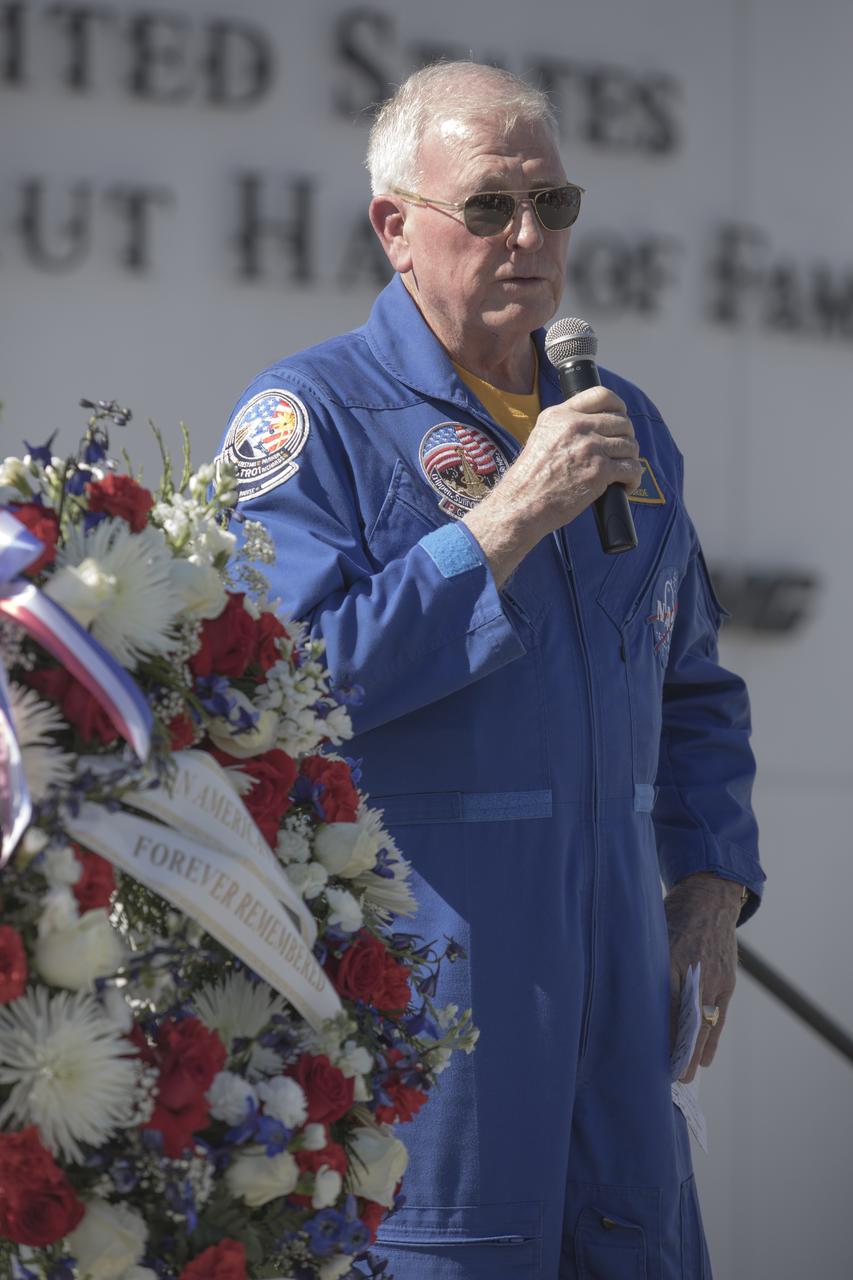
Former NASA astronaut Jon McBride speaks during a ceremony at the Heroes and Legends exhibit at the Kennedy Space Center Visitor Complex. The brief memorial honoring NASA astronaut John Young took place on the afternoon of Jan. 11, 2018. Young died Jan. 5, 2018, in Houston at the age of 87. He was the only astronaut to fly in NASA's Gemini, Apollo and Space Shuttle Programs.
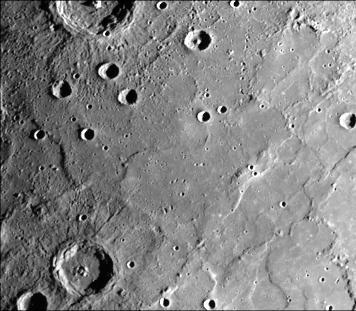
This image, from NASA Mariner 10 spacecraft which launched in 1974, shows young craters superposed on smooth plains. Larger young craters have central peaks, flat floors, terraced walls, and radial ejecta deposits.
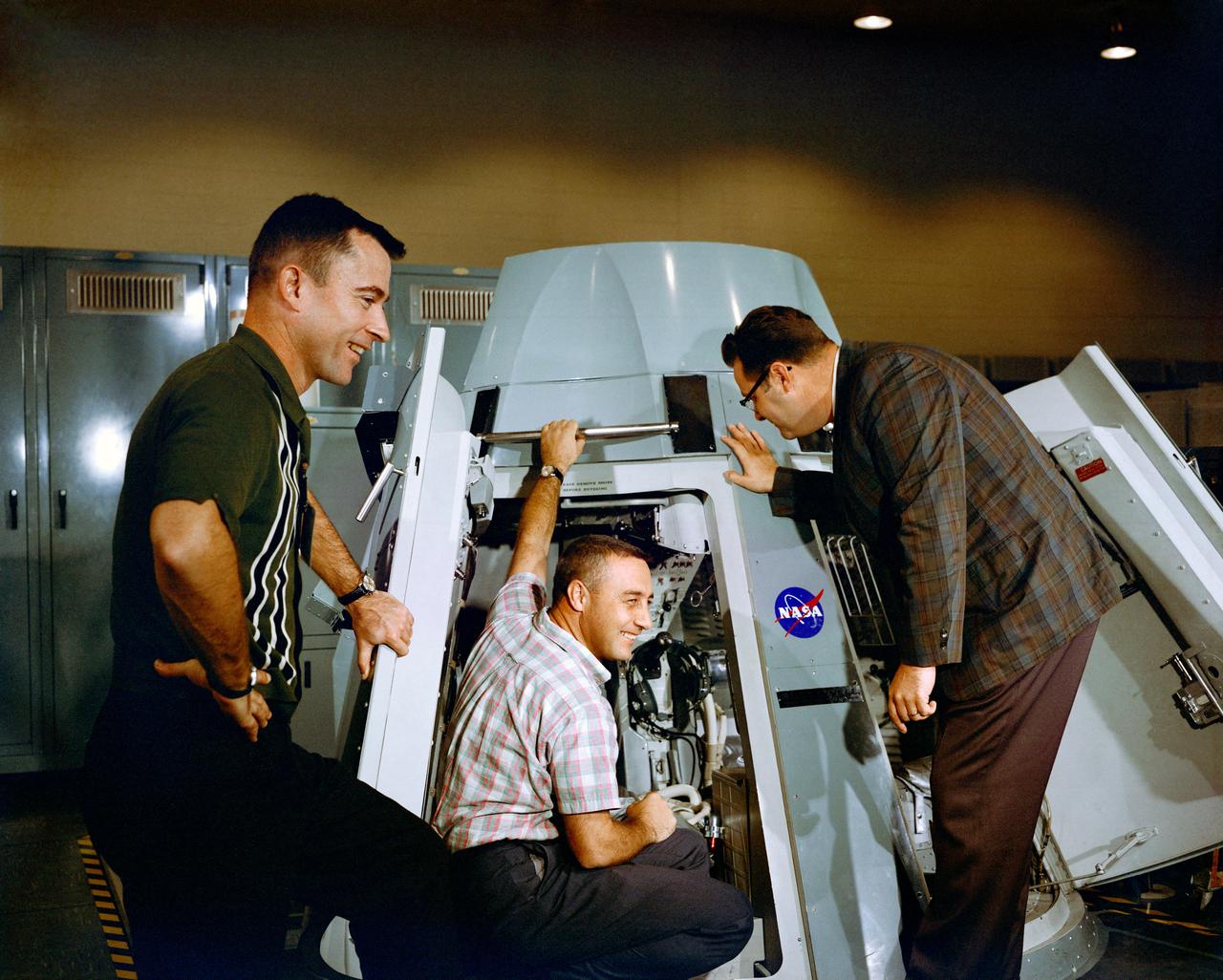
S64-40294 (19 Nov. 1964) --- Astronauts Virgil I. Grissom (center) and John W. Young (left), prime crew for the Gemini-Titan 3 mission, are shown inspecting the inside of Gemini spacecraft at the Mission Control Center at Cape Kennedy, Florida. Riley D. McCafferty is at right. Photo credit: NASA
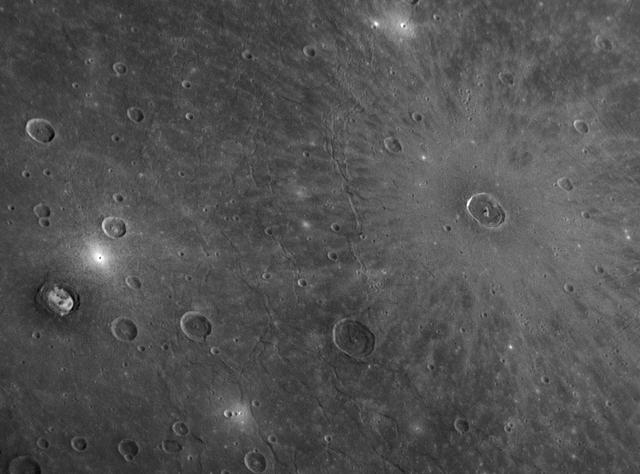
Young Cunningham Crater in Old Caloris Basin
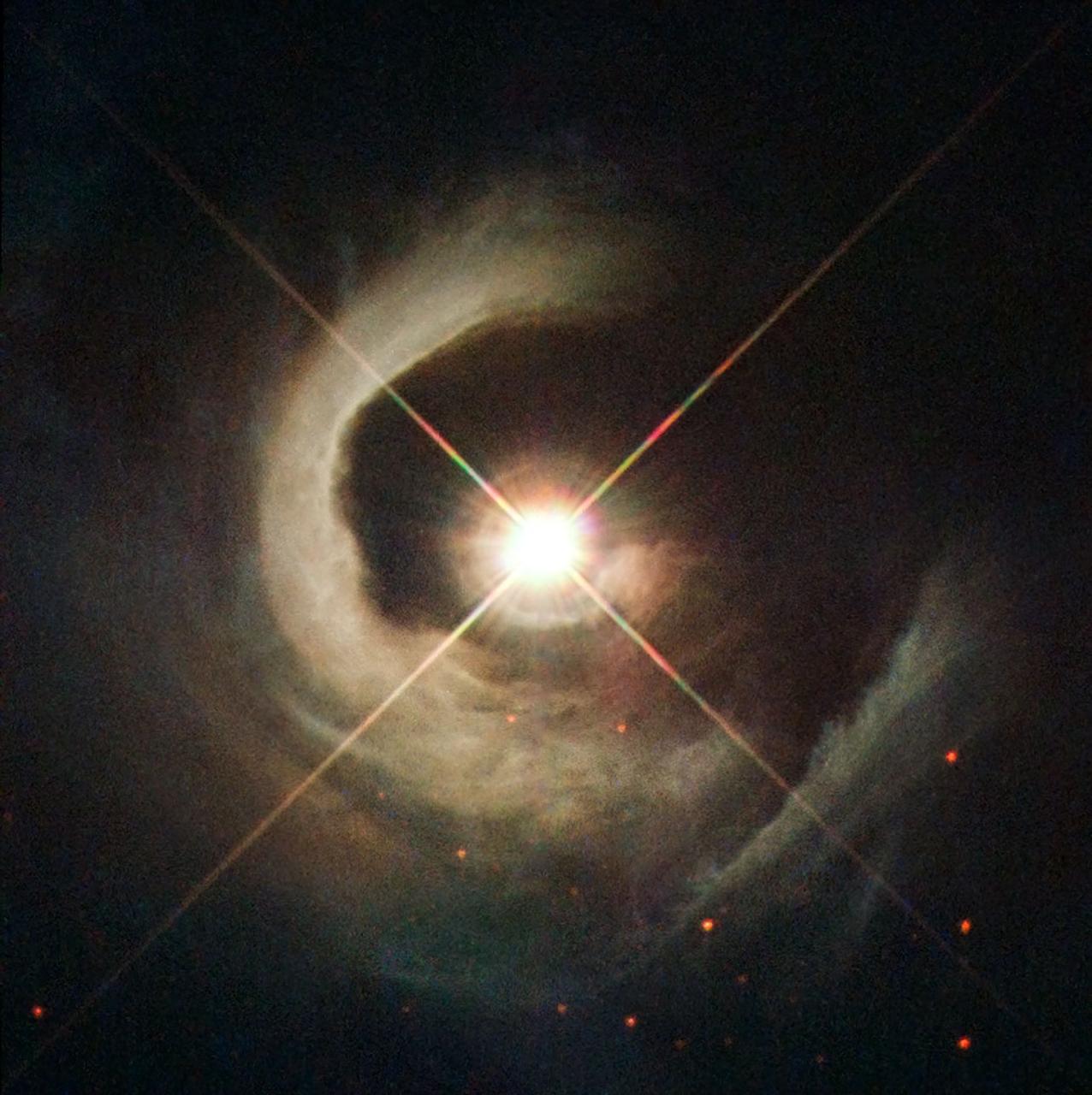
With its helical appearance resembling a snail’s shell, this reflection nebula seems to spiral out from a luminous central star in this new NASA/ESA Hubble Space Telescope image. The star in the centre, known as V1331 Cyg and located in the dark cloud LDN 981 — or, more commonly, Lynds 981 — had previously been defined as a T Tauri star. A T Tauri is a young star — or Young Stellar Object — that is starting to contract to become a main sequence star similar to the Sun. What makes V1331Cyg special is the fact that we look almost exactly at one of its poles. Usually, the view of a young star is obscured by the dust from the circumstellar disc and the envelope that surround it. However, with V1331Cyg we are actually looking in the exact direction of a jet driven by the star that is clearing the dust and giving us this magnificent view. This view provides an almost undisturbed view of the star and its immediate surroundings allowing astronomers to study it in greater detail and look for features that might suggest the formation of a verylow-mass object in the outer circumstellar disc.
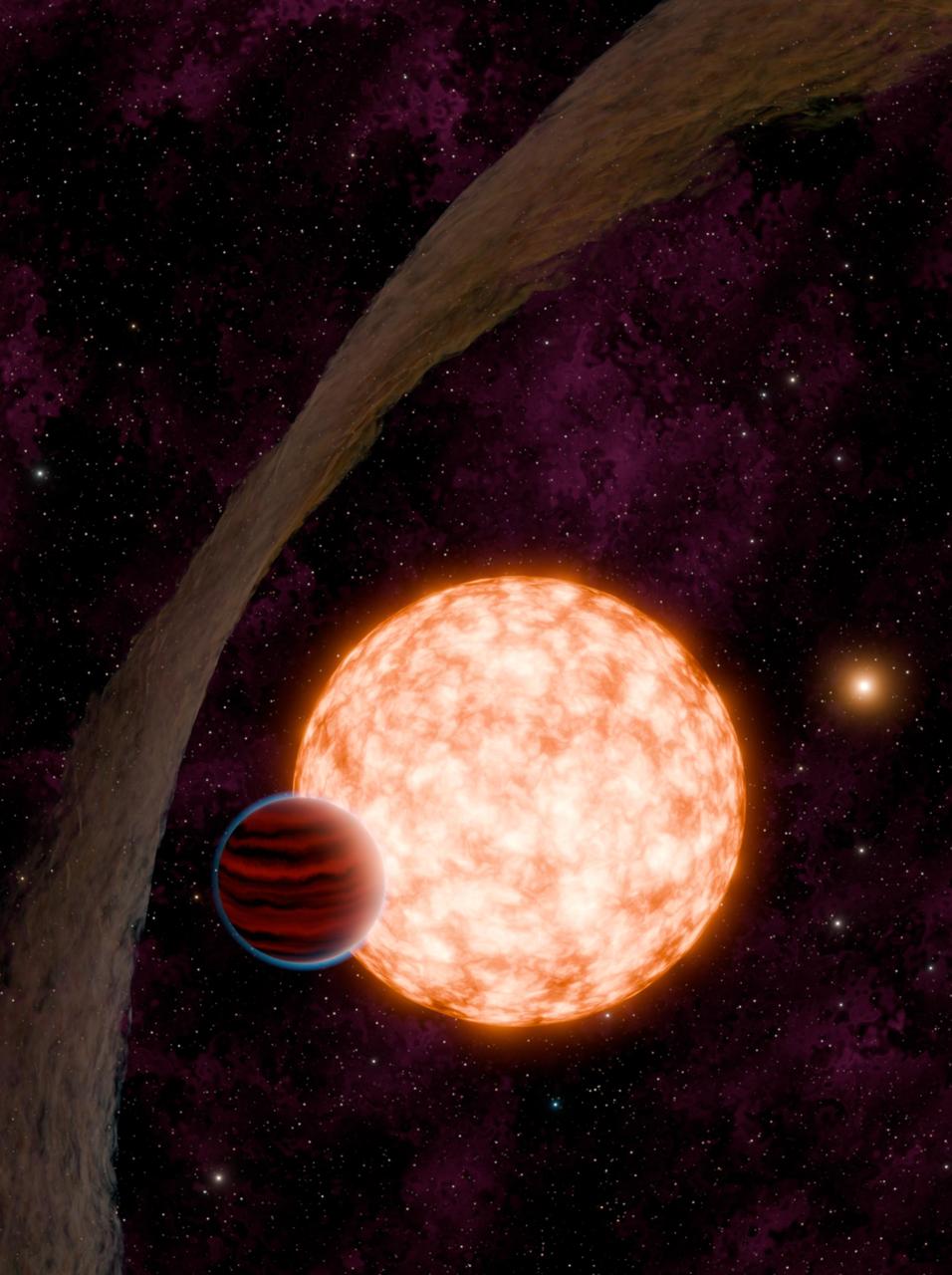
Artist's concept of a young, newly discovered planet, exposed to observation by a warped debris disk. https://photojournal.jpl.nasa.gov/catalog/PIA26601
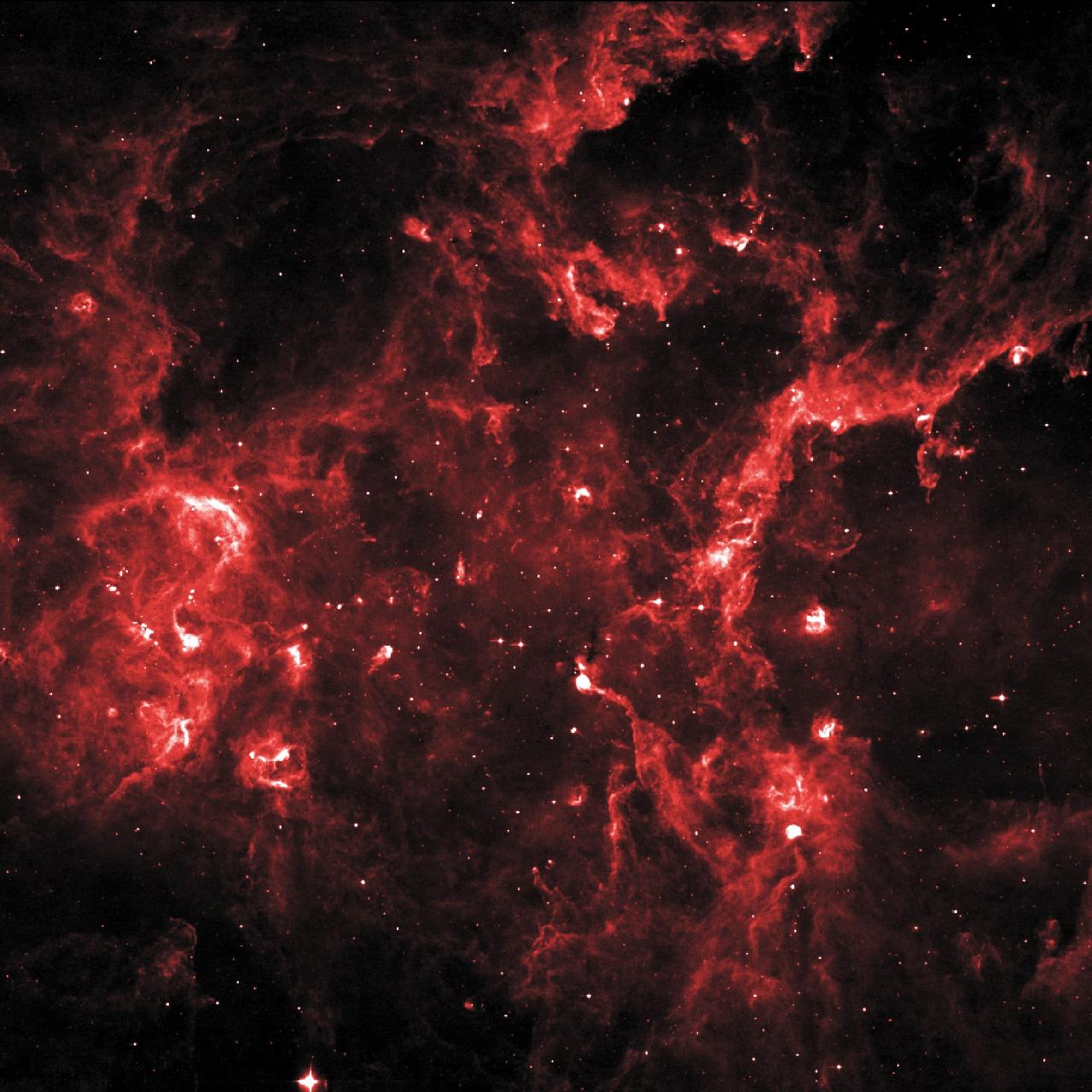
Cygnus X hosts many young stellar groupings. The combined outflows and ultraviolet radiation from the region's numerous massive stars have heated and pushed gas away from the clusters, producing cavities of hot, lower-density gas. In this 8-micron infrared image, ridges of denser gas mark the boundaries of the cavities. Bright spots within these ridges show where stars are forming today. Credit: NASA/IPAC/MSX To read more go to: <a href="http://www.nasa.gov/mission_pages/GLAST/news/cygnus-cocoon.html" rel="nofollow">www.nasa.gov/mission_pages/GLAST/news/cygnus-cocoon.html</a> <b><a href="http://www.nasa.gov/audience/formedia/features/MP_Photo_Guidelines.html" rel="nofollow">NASA image use policy.</a></b> <b><a href="http://www.nasa.gov/centers/goddard/home/index.html" rel="nofollow">NASA Goddard Space Flight Center</a></b> enables NASA’s mission through four scientific endeavors: Earth Science, Heliophysics, Solar System Exploration, and Astrophysics. Goddard plays a leading role in NASA’s accomplishments by contributing compelling scientific knowledge to advance the Agency’s mission. <b>Follow us on <a href="http://twitter.com/NASAGoddardPix" rel="nofollow">Twitter</a></b> <b>Like us on <a href="http://www.facebook.com/pages/Greenbelt-MD/NASA-Goddard/395013845897?ref=tsd" rel="nofollow">Facebook</a></b> <b>Find us on <a href="http://instagrid.me/nasagoddard/?vm=grid" rel="nofollow">Instagram</a></b>
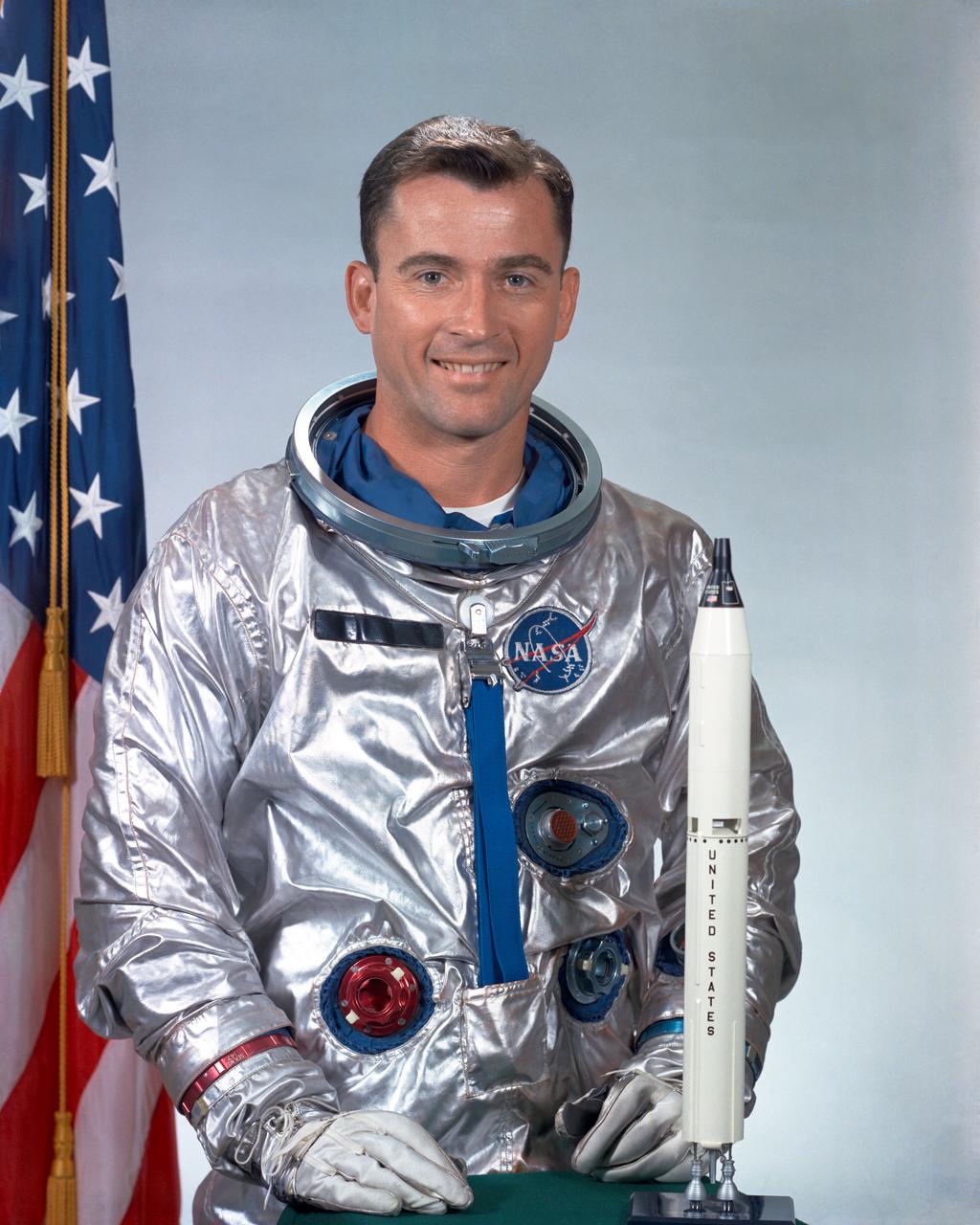
S64-29940 (1964) --- Astronaut John W. Young.
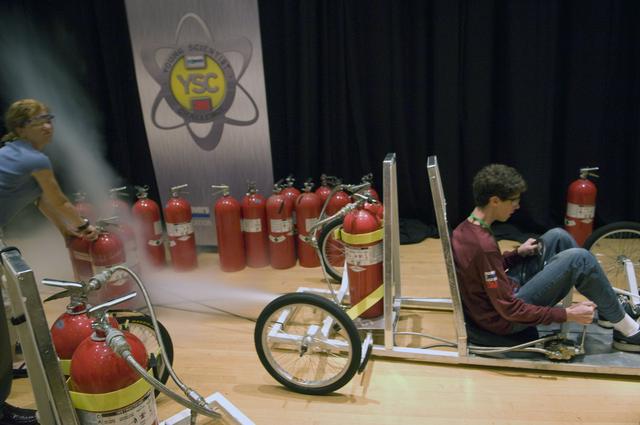
Young Scientist Challenge YSC was held at Goddard on October 5, 2008 sponsored by 3M company. It gave students the opportunity to demonstrate their scientific and engineering skills with challenges.
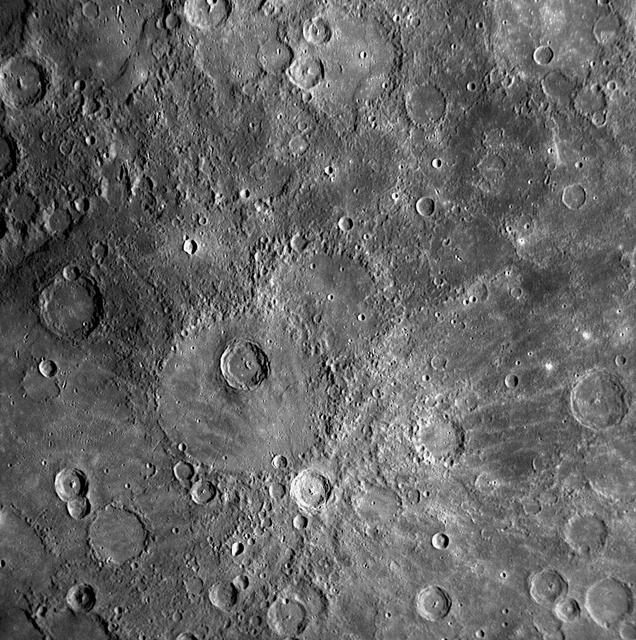
Enwonwu: A Young Crater on Mercury Named for an African Modernist Artist
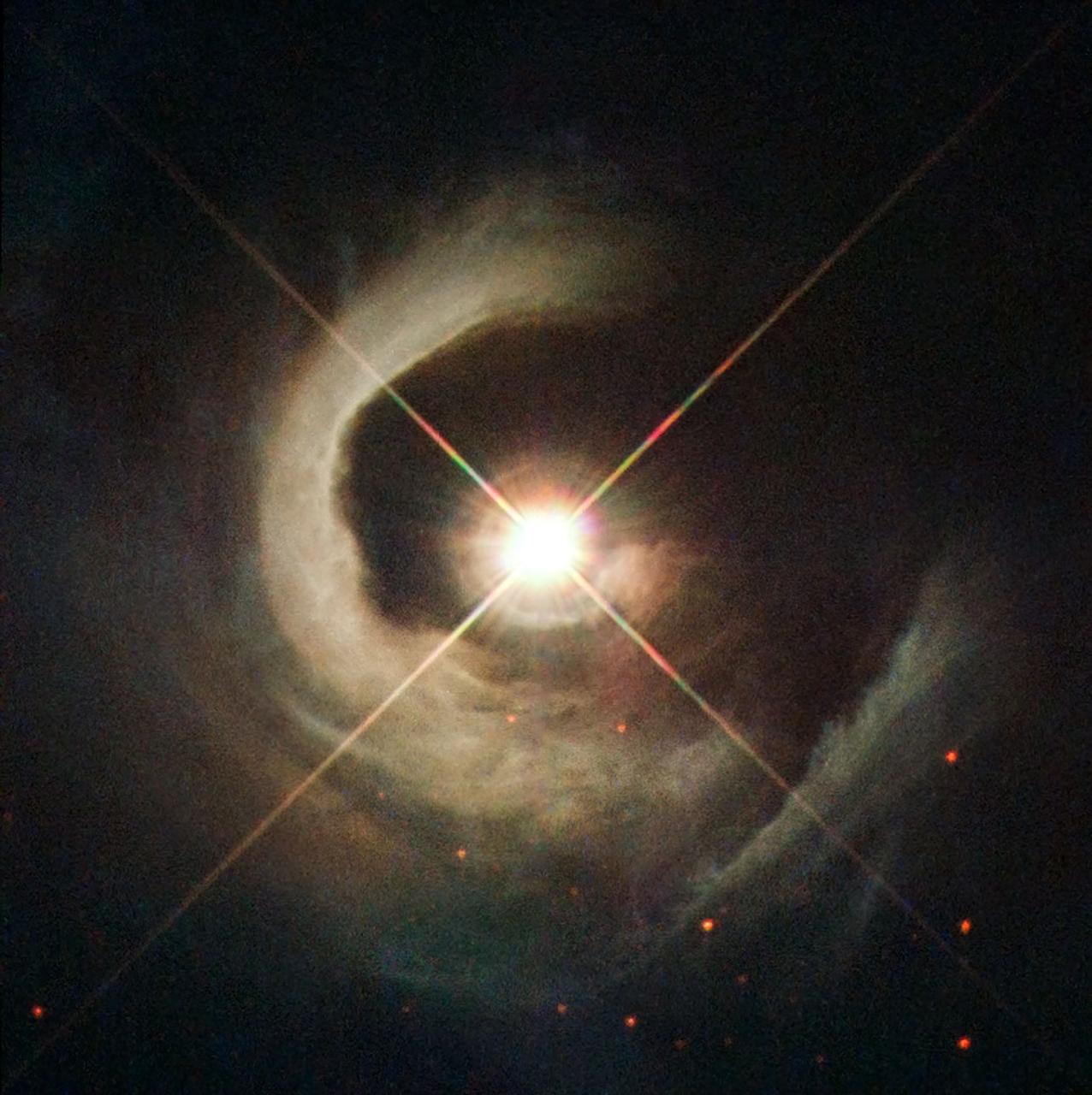
With its helical appearance resembling a snail’s shell, this reflection nebula seems to spiral out from a luminous central star in this NASA/ESA Hubble Space Telescope image. The star in the center, known as V1331 Cyg and located in the dark cloud LDN 981 — or, more commonly, Lynds 981 — had previously been defined as a T Tauri star. A T Tauri is a young star — or Young Stellar Object — that is starting to contract to become a main sequence star similar to the sun. What makes V1331Cyg special is the fact that we look almost exactly at one of its poles. Usually, the view of a young star is obscured by the dust from the circumstellar disc and the envelope that surround it. However, with V1331Cyg we are actually looking in the exact direction of a jet driven by the star that is clearing the dust and giving us this magnificent view. This view provides an almost undisturbed view of the star and its immediate surroundings allowing astronomers to study it in greater detail and look for features that might suggest the formation of a very low-mass object in the outer circumstellar disk. <b><a href="http://www.nasa.gov/audience/formedia/features/MP_Photo_Guidelines.html" rel="nofollow">NASA image use policy.</a></b> <b><a href="http://www.nasa.gov/centers/goddard/home/index.html" rel="nofollow">NASA Goddard Space Flight Center</a></b> enables NASA’s mission through four scientific endeavors: Earth Science, Heliophysics, Solar System Exploration, and Astrophysics. Goddard plays a leading role in NASA’s accomplishments by contributing compelling scientific knowledge to advance the Agency’s mission. <b>Follow us on <a href="http://twitter.com/NASAGoddardPix" rel="nofollow">Twitter</a></b> <b>Like us on <a href="http://www.facebook.com/pages/Greenbelt-MD/NASA-Goddard/395013845897?ref=tsd" rel="nofollow">Facebook</a></b> <b>Find us on <a href="http://instagram.com/nasagoddard?vm=grid" rel="nofollow">Instagram</a></b>
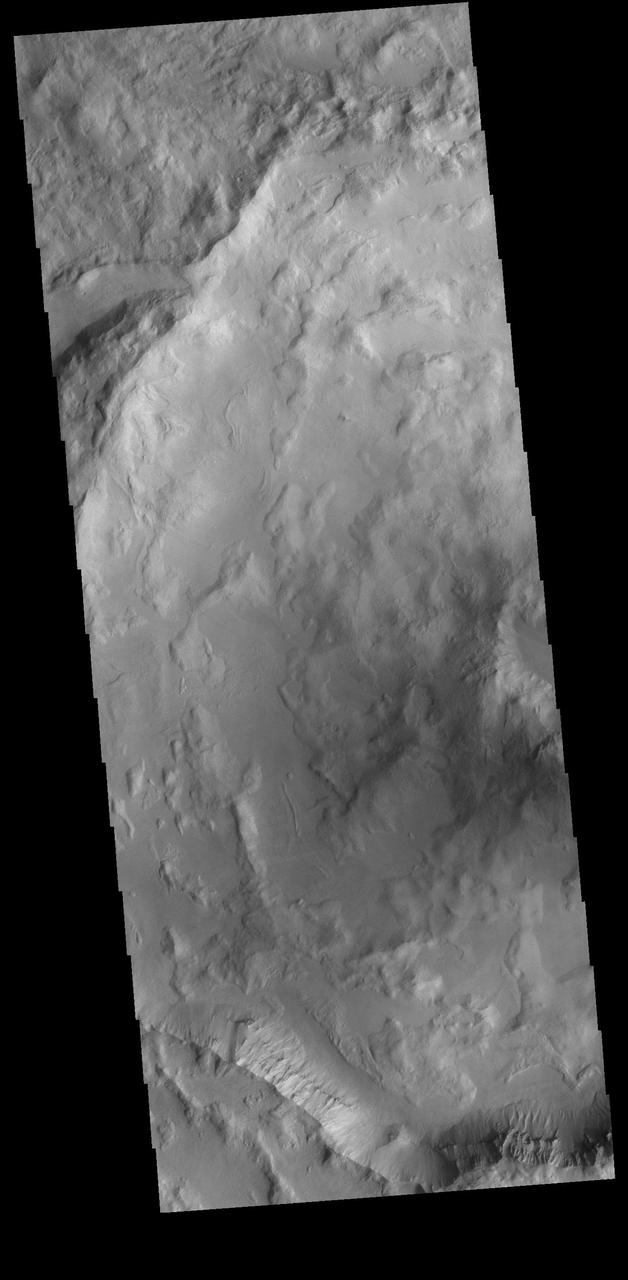
This VIS image shows half of an unnamed crater in Noachis Terra. The complex rim and rough floor are indicative of a relatively young crater. With time and erosion, craters fill in with sediment, creating flatter floors and smoothing the overall topography. Orbit Number: 74609 Latitude: -41.686 Longitude: 16.3177 Instrument: VIS Captured: 2018-10-09 13:27 https://photojournal.jpl.nasa.gov/catalog/PIA22859
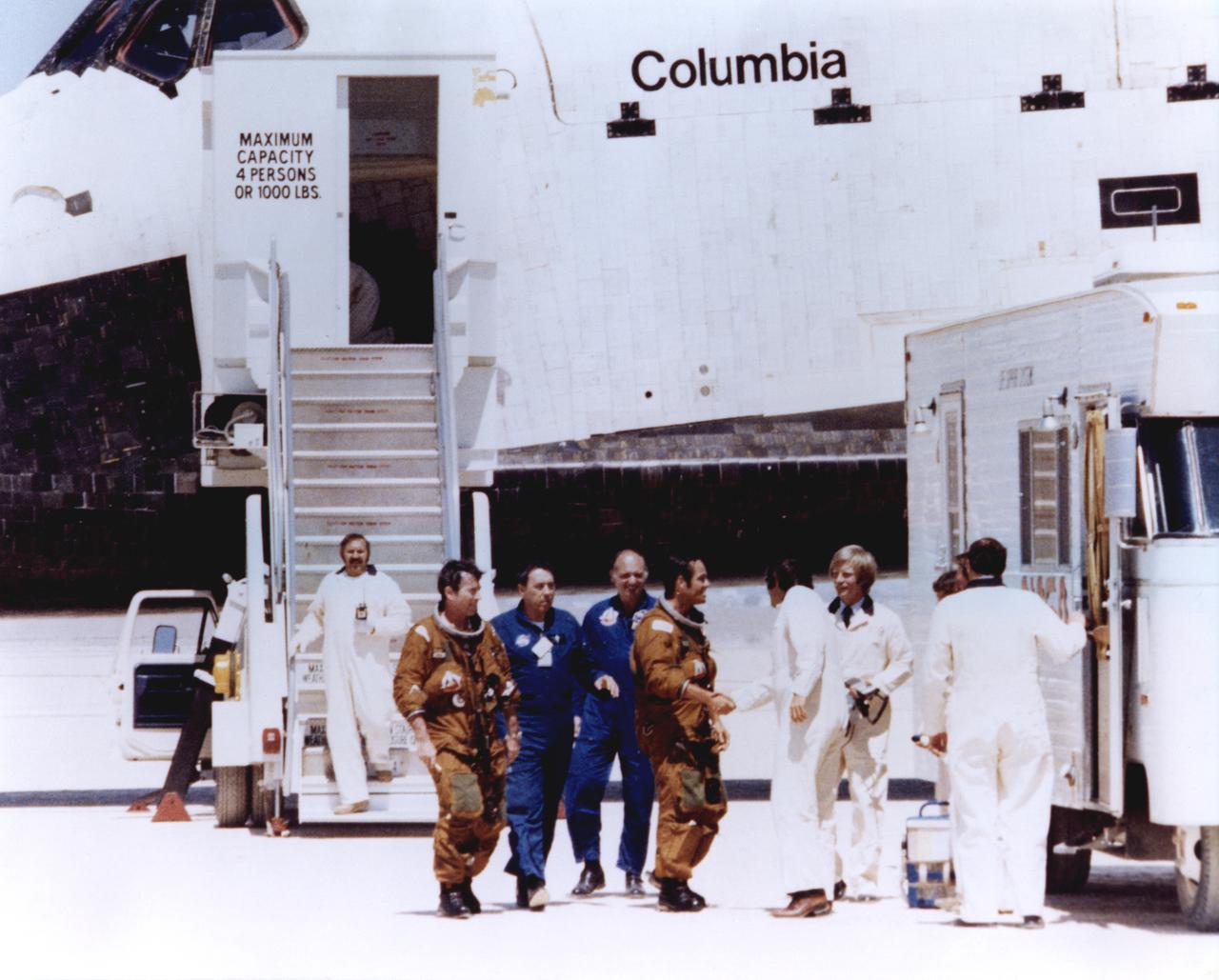
WELCOME HOME -- Space Shuttle astronauts John Young and Robert Crippen (in tan space suits) are greeted by members of the ground crew moments after stepping off the shuttle Columbia following its first landing at Edwards Air Force Base, Calif. Young and Crippen had piloted the Columbia on its first orbital space mission, April 12 - 14, 1981.
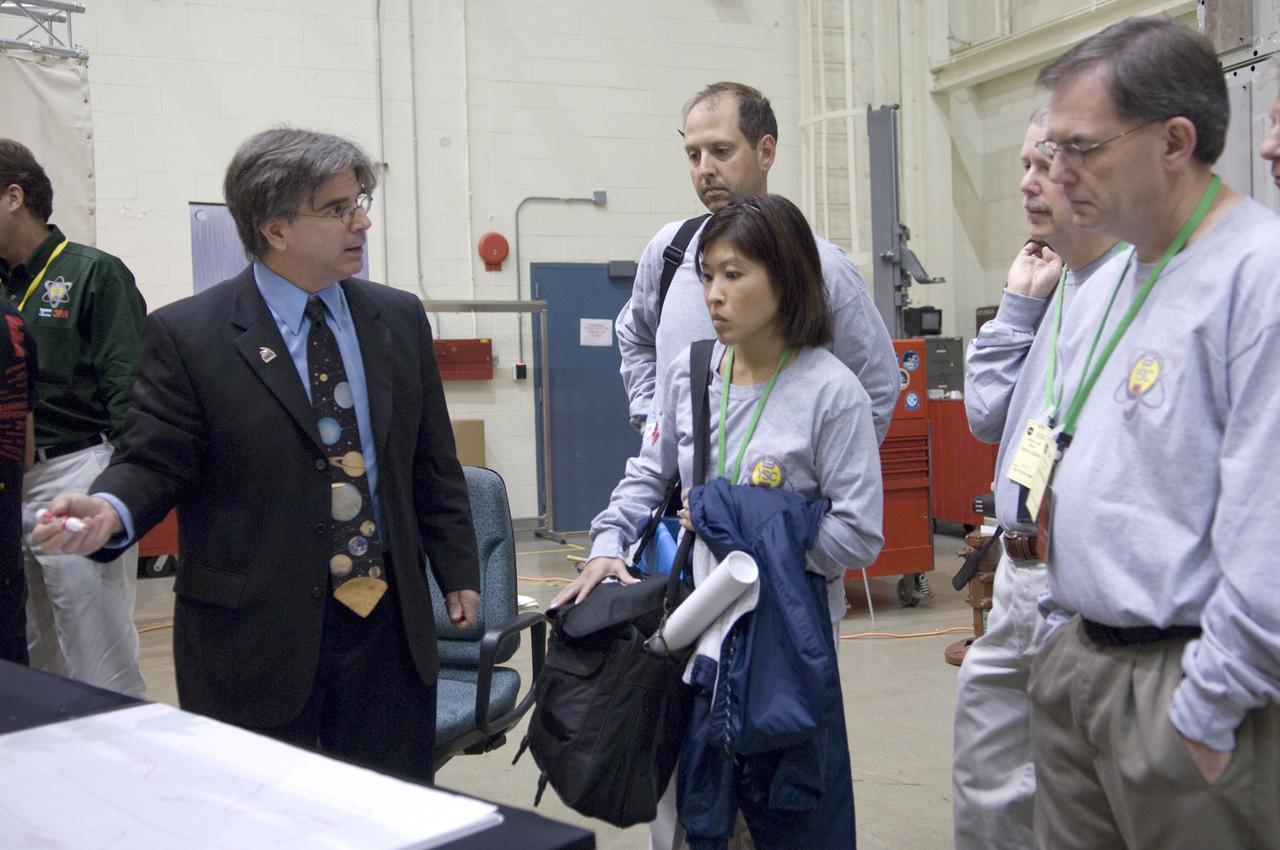
Young Scientist Challenge YSC was held at Goddard on October 5-6, 2008 sponsored by 3M. It gave students the opportunity to demonstrate their scientific and engineering skills by participating in live demonstrations. Jim Garvin explains Mars
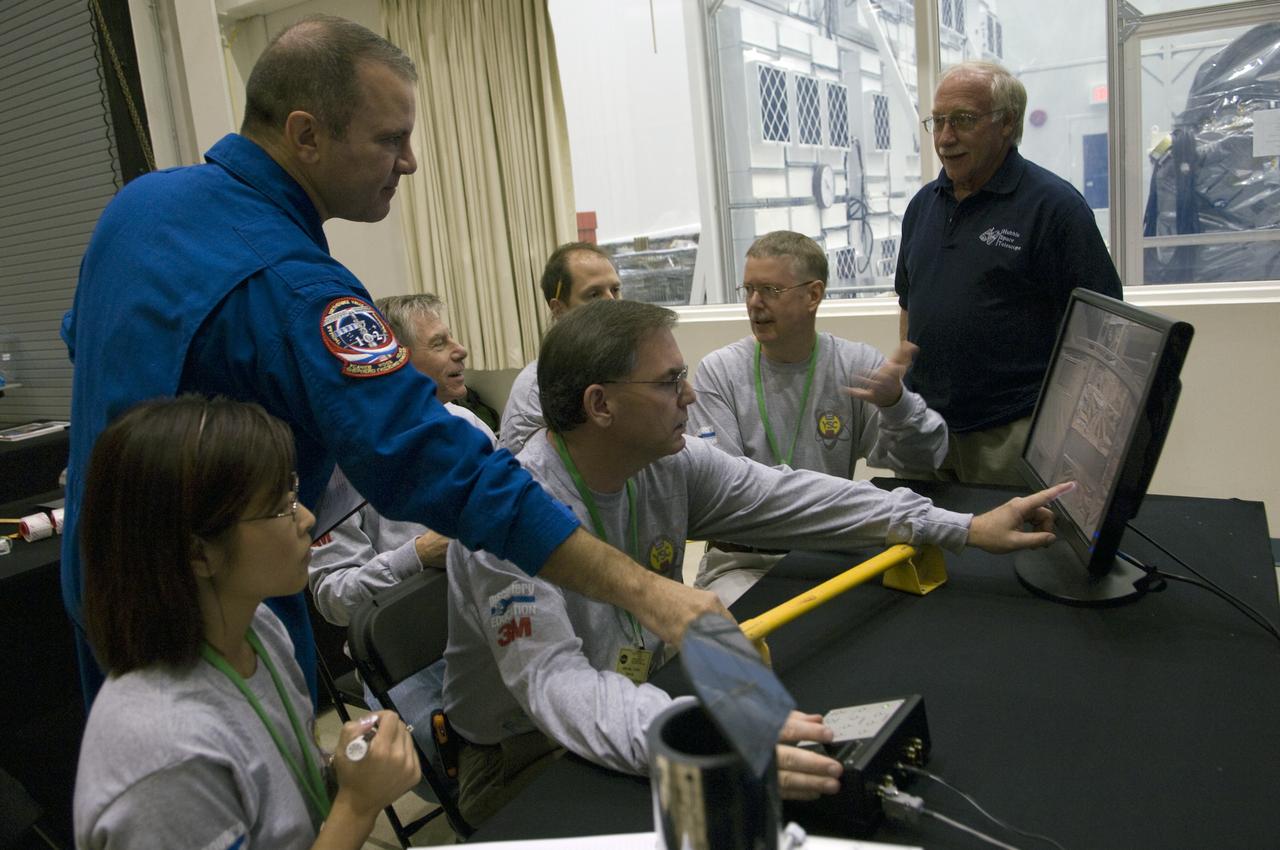
Young Scientist challenge YSC was held at Goddard on October 6, 2008 sponsored by 3M. Students were given the opportunity to demonstrate scientific and engineering skills by live demonstrations.
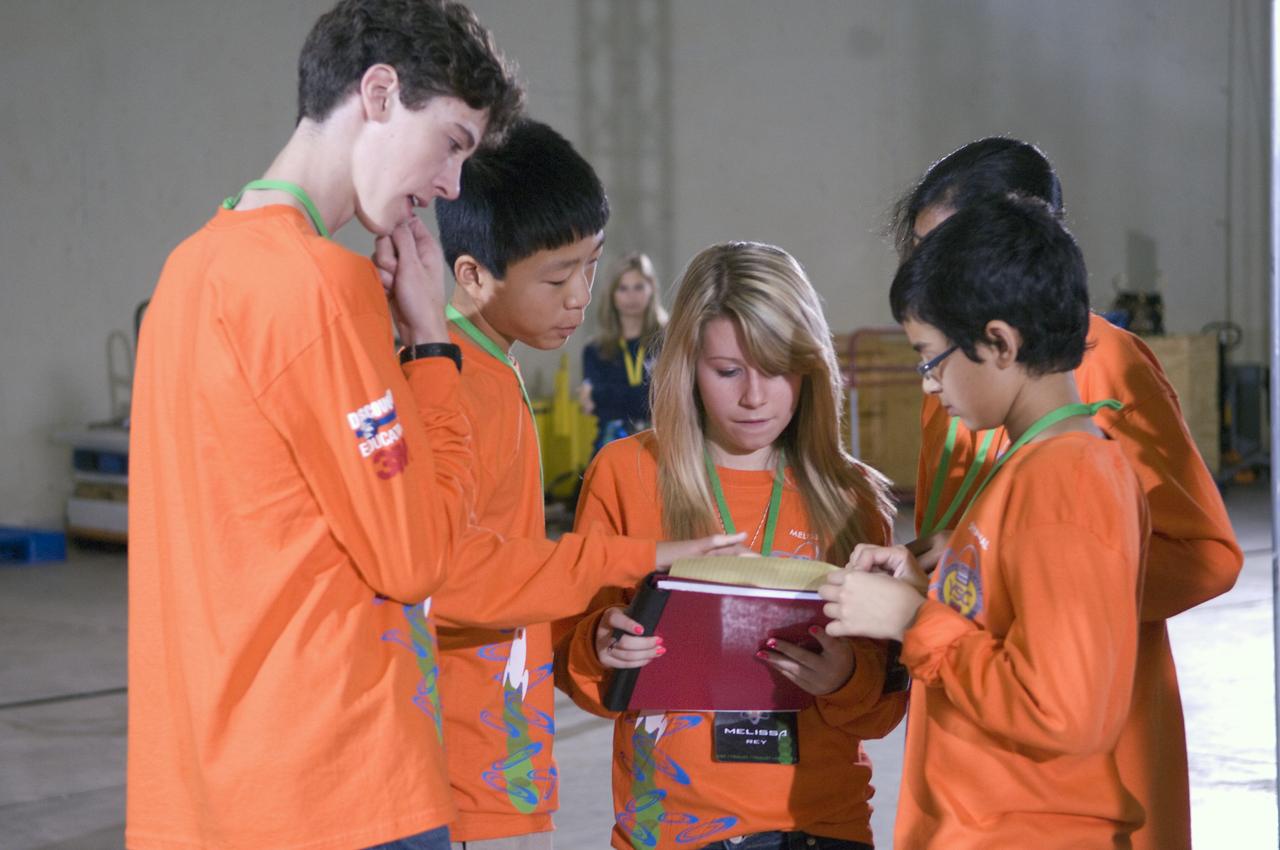
Young Scientist Challenge YSC was held at Goddard on October 5-6, 2008 sponsored by 3M. It gave students the opportunity to demonstrate their scientific and engineering skills by participating in live demonstrations. Melissa Rey (Center) was the grand prize winner.
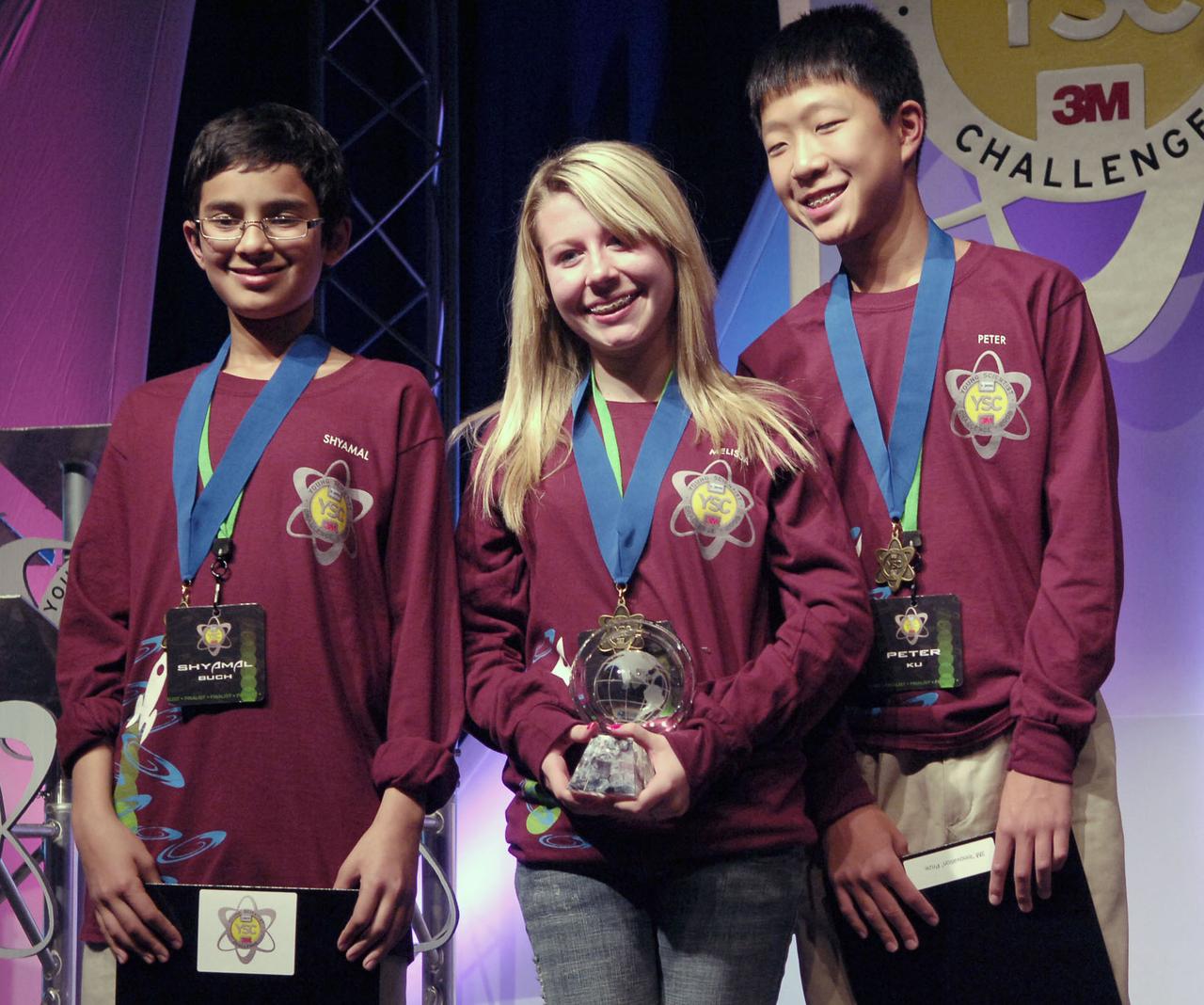
Young Scientist Challenge YSC was held at Goddard on October 5-6, 2008 sponsored by 3M. It gave students the opportunity to demonstrate their scientific and engineering skills by participating in live demonstrations. Top 3 winners
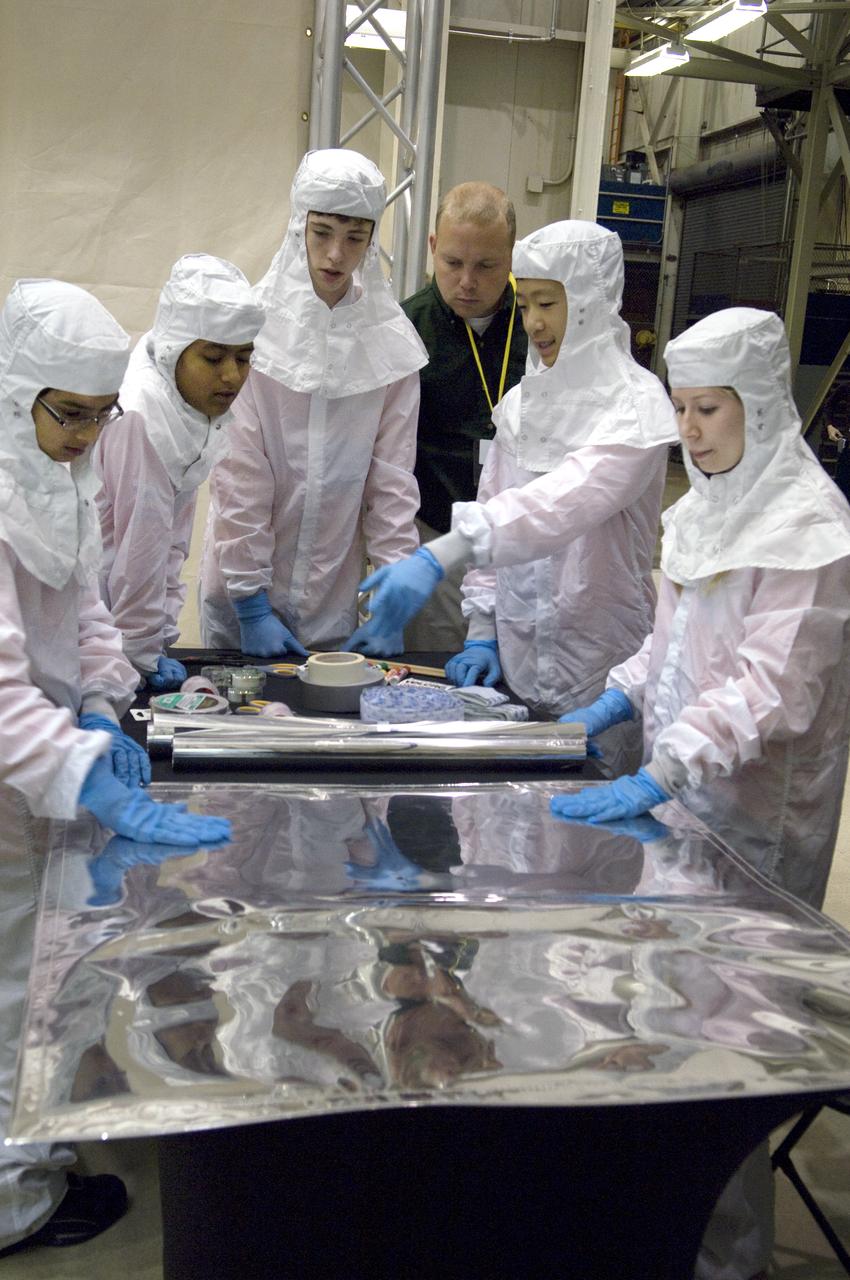
Young Scientist Challenge YSC was held at Goddard on October 5-6, 2008 sponsored by 3M. It gave students an opportunity to demonstrate their engineering and scientific skills by participating in live demonstrations.
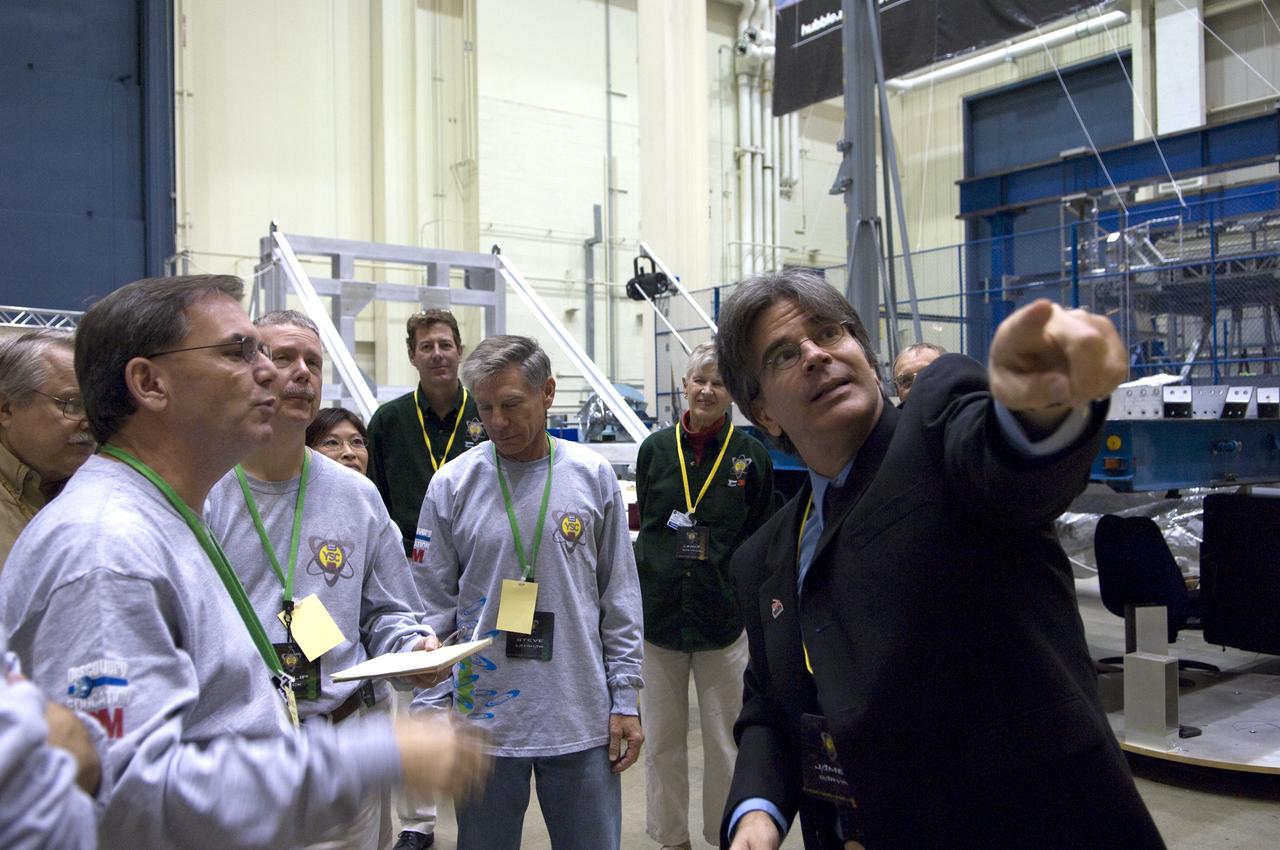
Young Scientist Challenge YSC was held on October 6, 2008 at Goddard sponsored by 3M. It gave students opportunity to demonstrate their scientific/engineering skills by participating in live demonstrations.
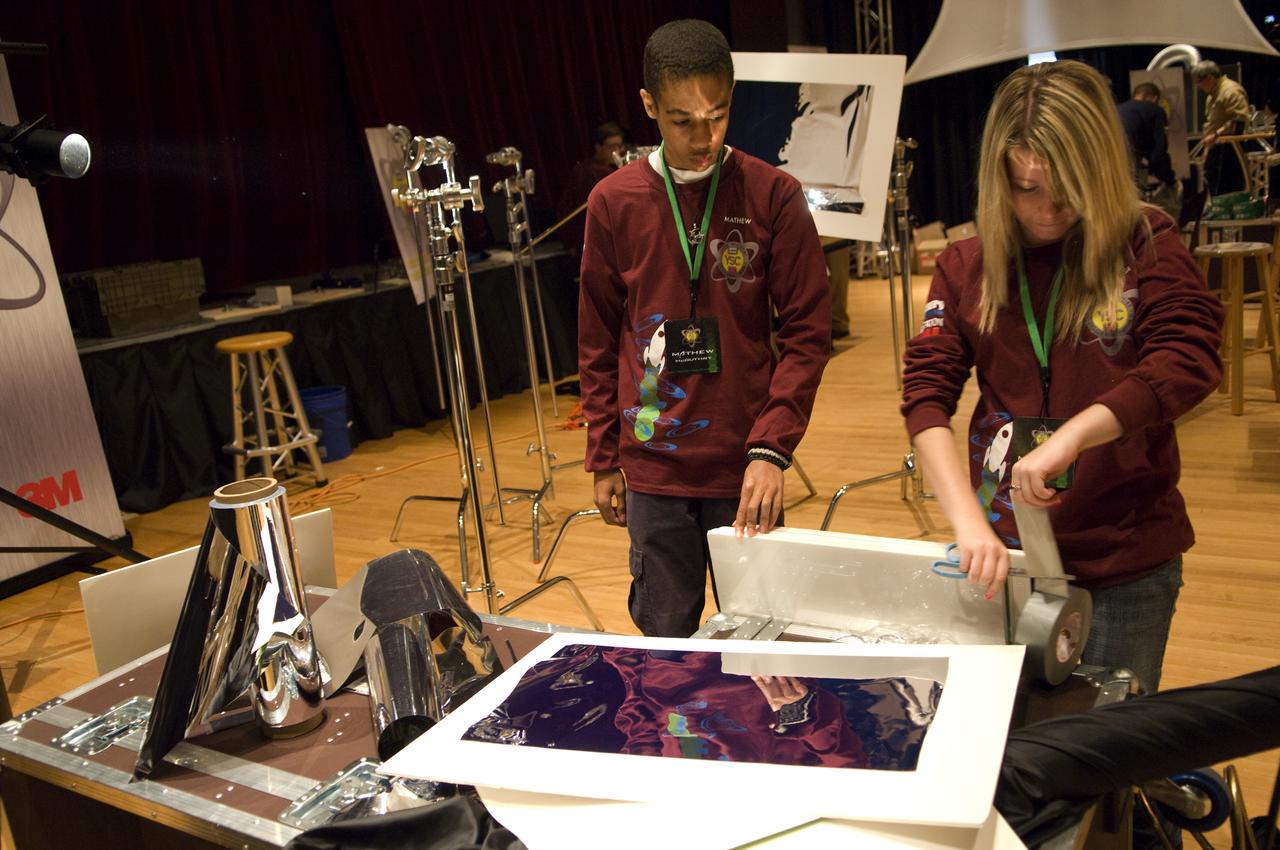
Young Scientist Challenge YSC was held at Goddard on October 5-6, 2008 sponsored by 3M. It gave students the opportunity to demonstrate their scientific and engineering skills by participating in live demonstrations.
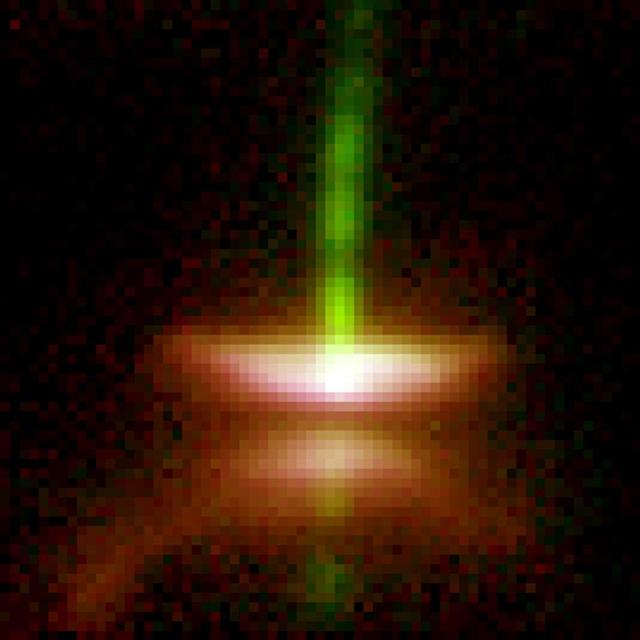
This image from NASA Hubble Space Telescope shows Herbig-Haro 30, the prototype of a gas-rich young stellar object disk around a star.
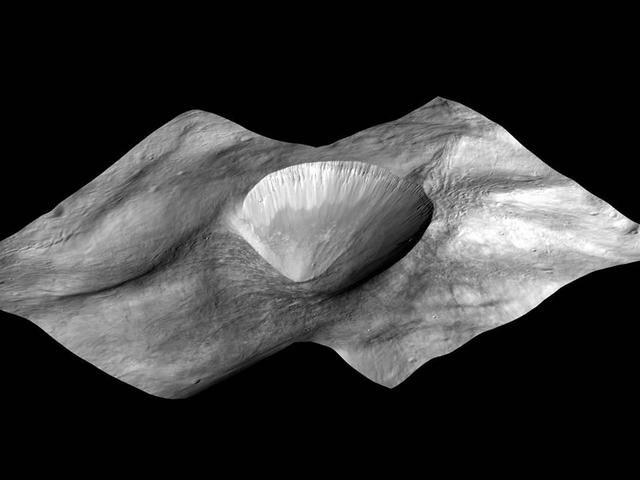
This image, made from data obtained by NASA Dawn spacecraft, shows a perspective view of a layered young crater in the Rheasilvia basin at asteroid Vesta.
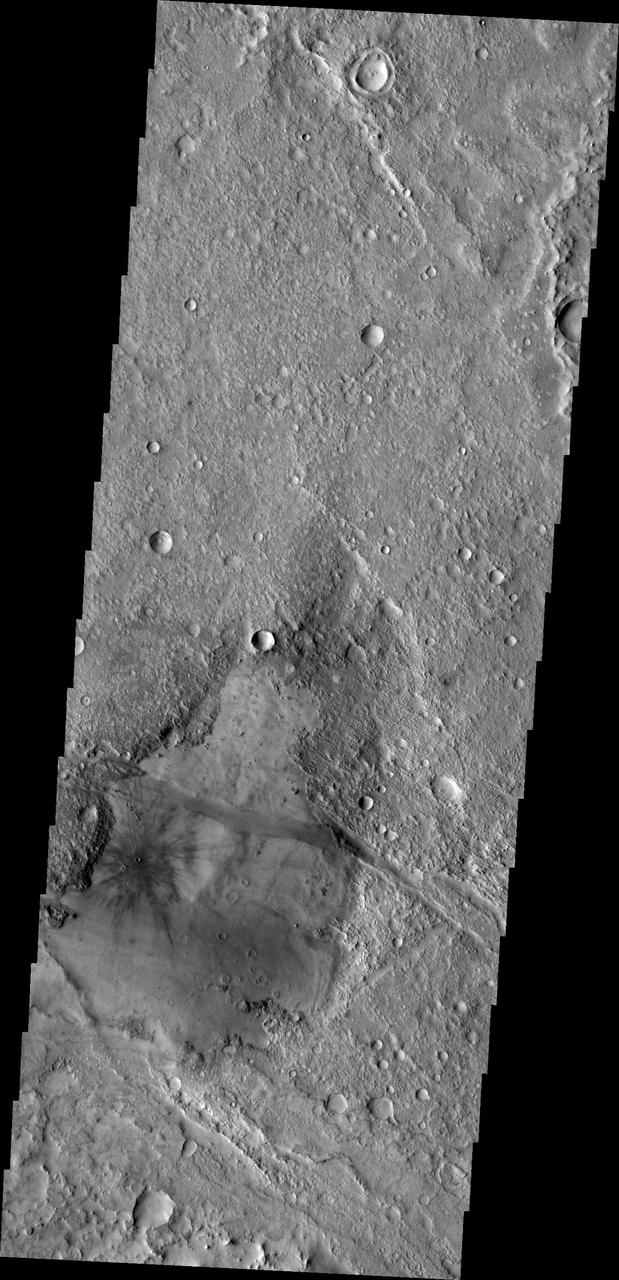
This image from NASA 2001 Mars Odyssey spacecraft shows a young crater. Dark radial spokes are created by the explosive blast of an impact event. With time, only thick ejecta near the rim of the crater will be visible, and dark spokes will disappear.
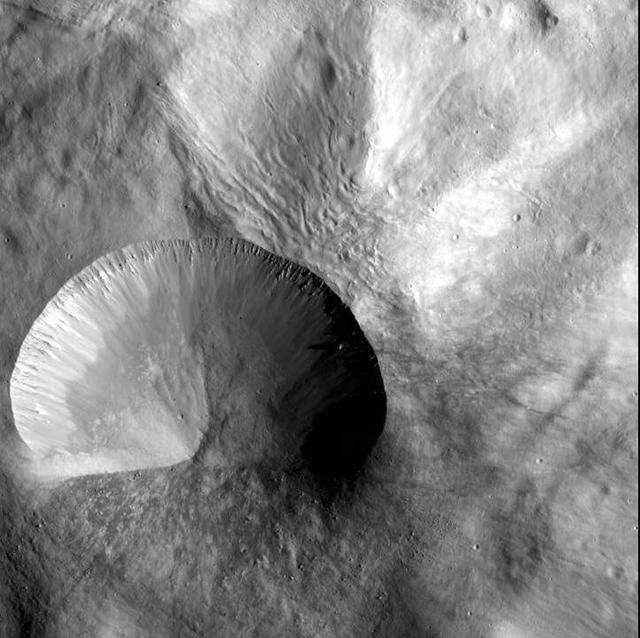
This image from NASA Dawn spacecraft shows a young crater on asteroid Vesta. Layering is visible in the crater walls, as are large boulders that were thrown out in the material ejected from the impact.
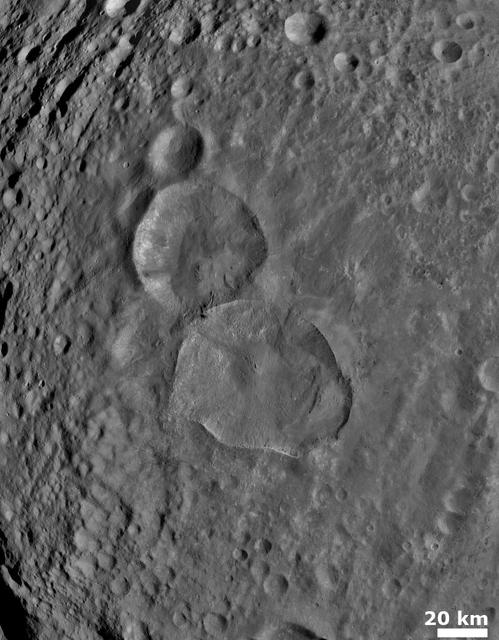
NASA Dawn spacecraft obtained this image of two large, young craters on Vesta with its framing camera on August 6, 2011. This image was taken through the framing camera clear filter aboard the spacecraft.
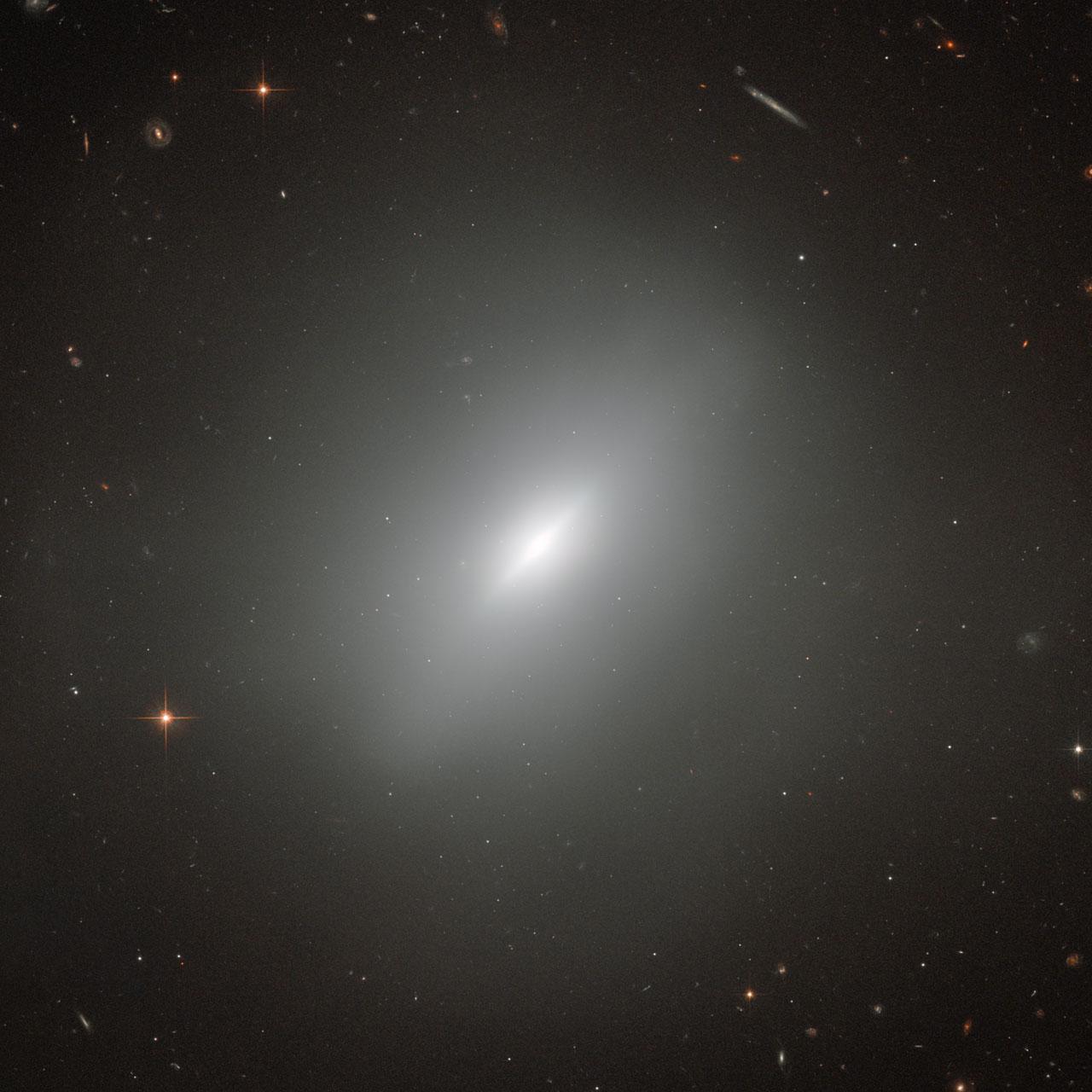
At the centre of this amazing image is the elliptical galaxy NGC 3610. Surrounding the galaxy are a wealth of other galaxies of all shapes. There are spiral galaxies, galaxies with a bar in their central regions, distorted galaxies and elliptical galaxies, all visible in the background. In fact, almost every bright dot in this image is a galaxy — the few foreground stars are clearly distinguishable due to the diffraction spikes that overlay their images. NGC 3610 is of course the most prominent object in this image — and a very interesting one at that! Discovered in 1793 by William Herschel, it was later found that this elliptical galaxy contains a disc. This is very unusual, as discs are one of the main distinguishing features of a spiral galaxy. And NGC 3610 even hosts a memarkable bright disc. The reason for the peculiar shape of NGC 3610 stems from its formation history. When galaxies form, they usually resemble our galaxy, the Milky Way, with flat discs and spiral arms where star formation rates are high and which are therefore very bright. An elliptical galaxy is a much more disordered object which results from the merging of two or more disc galaxies. During these violent mergers most of the internal structure of the original galaxies is destroyed. The fact that NGC 3610 still shows some structure in the form of a bright disc implies that it formed only a short time ago. The galaxy’s age has been put at around four billion years and it is an important object for studying the early stages of evolution in elliptical galaxies.
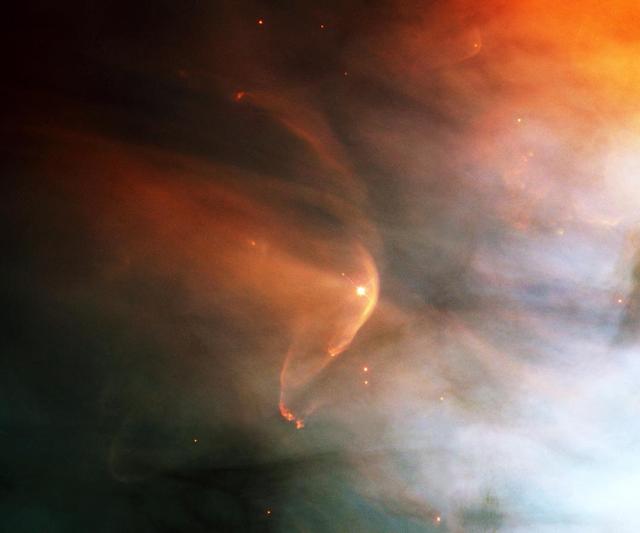
This image, taken by the Hubble Space Telescope, shows a bow shock around a very young star, LL Ori. The bow shock shows where the star's heliosphere collides with the interstellar medium. Our star, the Sun, is also surrounded by a heliosphere. https://photojournal.jpl.nasa.gov/catalog/PIA22914
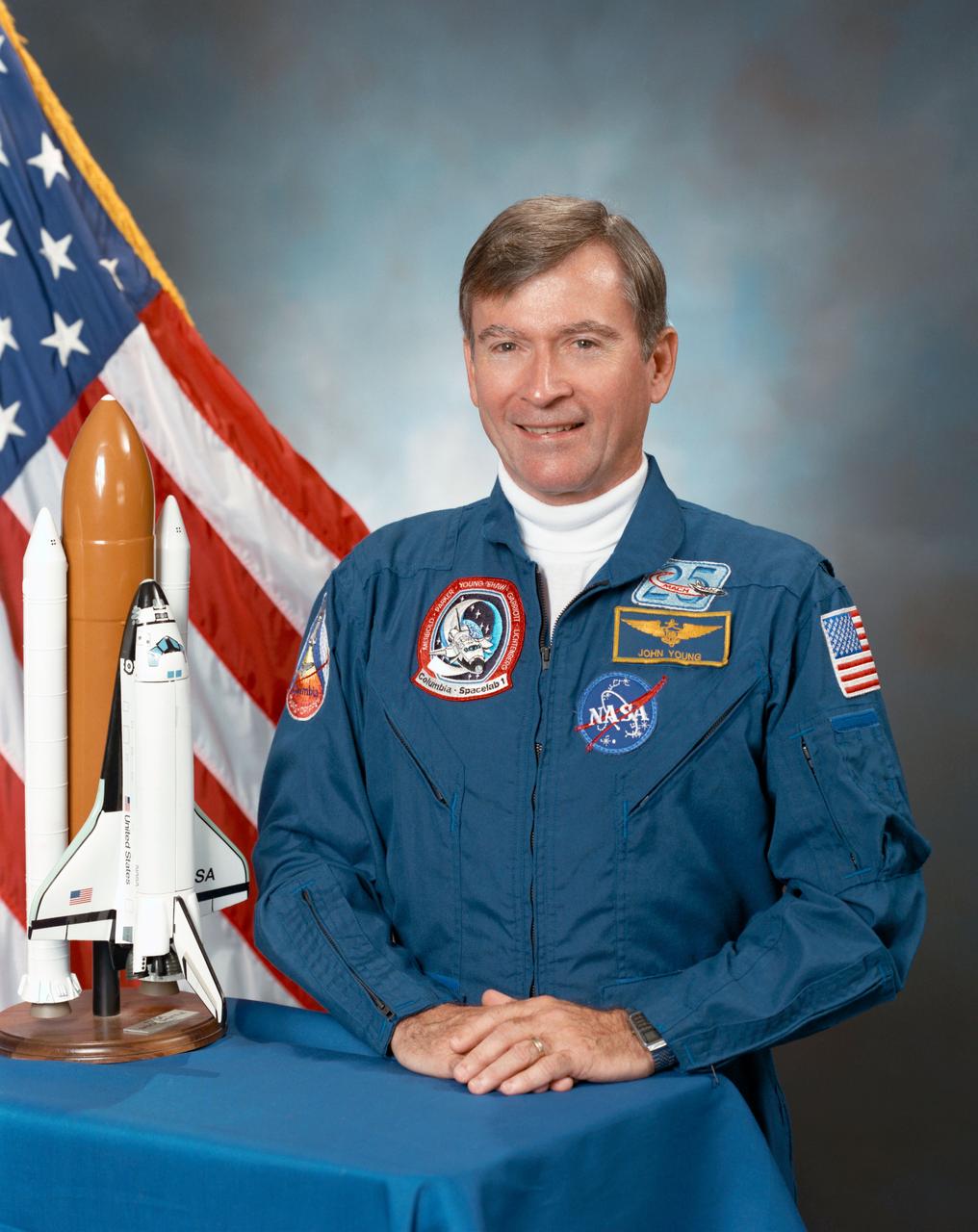
S86-38018 (1986) --- Astronaut John W. Young.
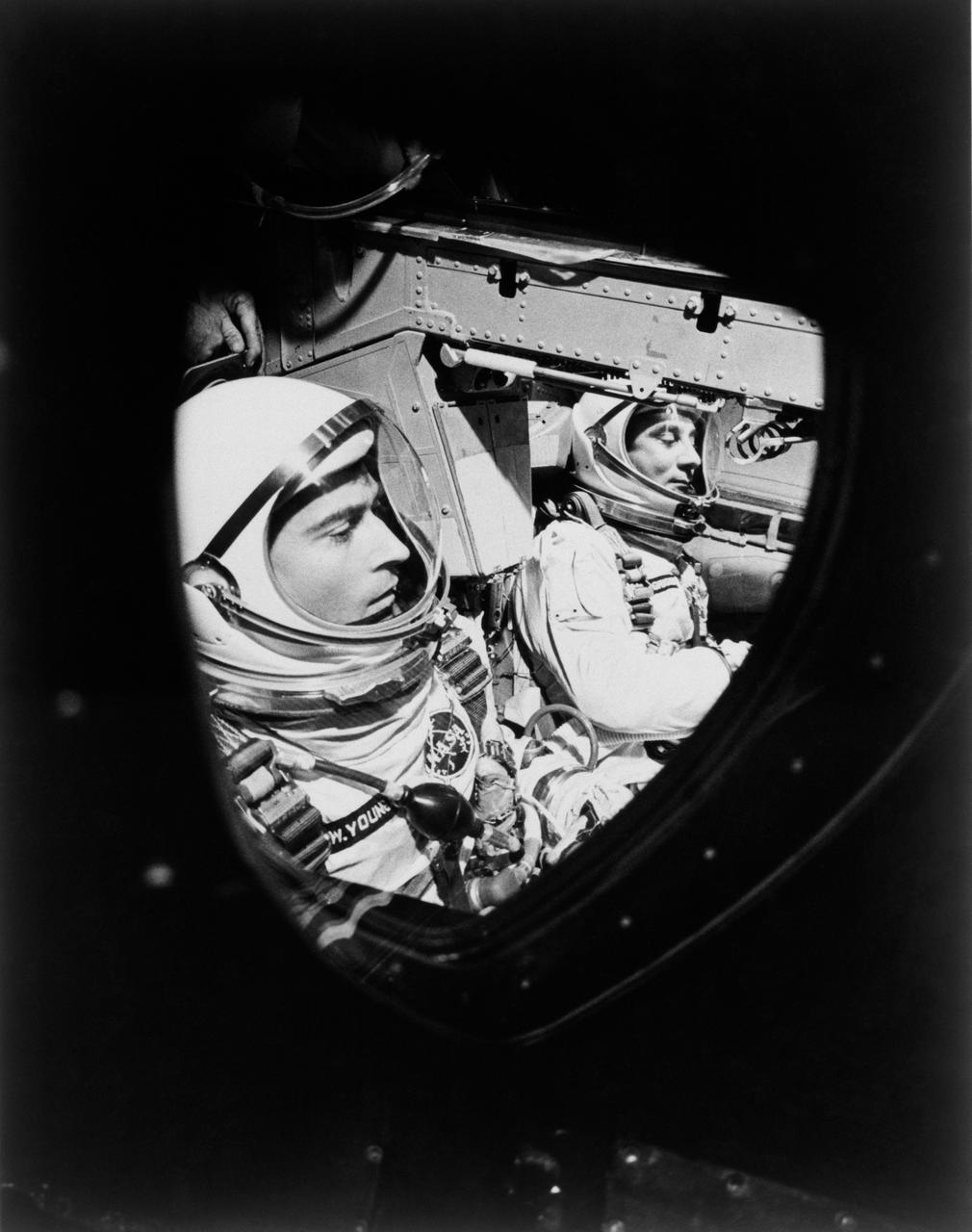
S65-19225 (23 March 1965) --- This view of astronauts John W. Young (left), pilot, and Virgil I. Grissom, command pilot, was taken through the window of the open hatch on Young's side of the Gemini-Titan 3 spacecraft just before the hatches were closed in readiness for their three-orbit flight.
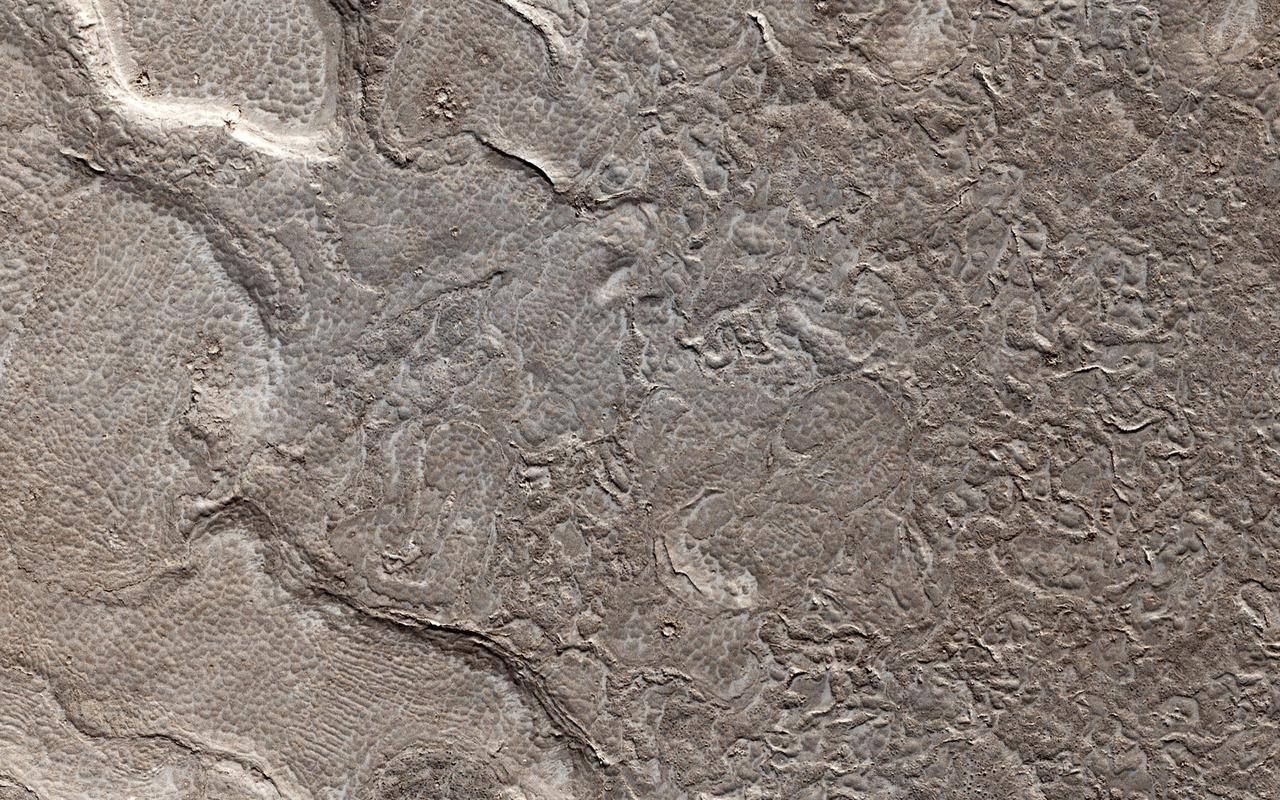
This image from NASA's Mars Reconnaissance Orbiter (MRO) shows remarkably young lava flows in Elysium Planitia. There are almost no impact craters over this flow, indicating that it is probably only a few million years old -- practically an infant in geologic time. For more information see https://photojournal.jpl.nasa.gov/catalog/PIA22432
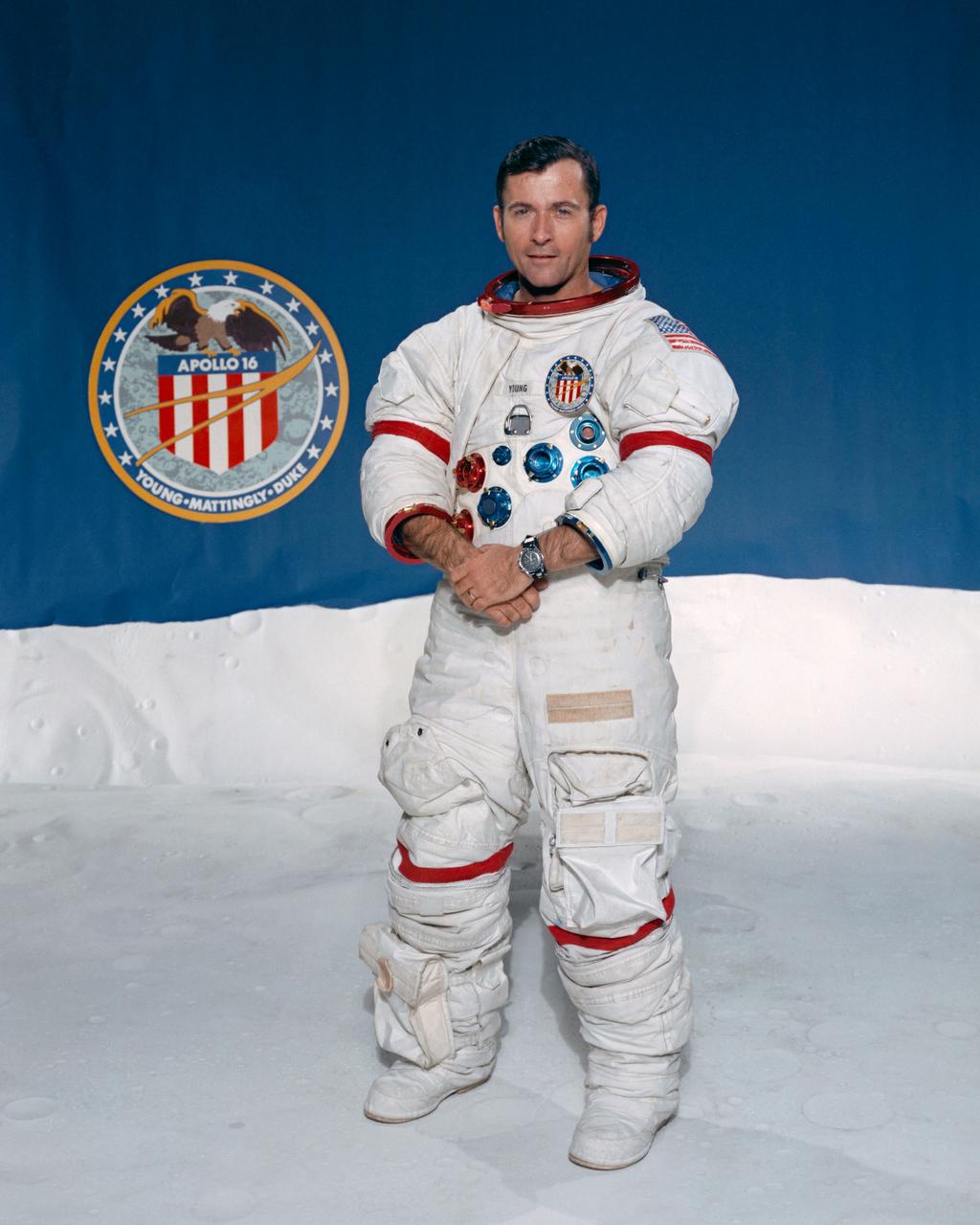
S72-16661 (January 1972) --- Astronaut John W. Young

Artist impression of a firestorm of star birth deep inside core of young, growing elliptical galaxy.

The bright streak of glowing gas and stars in this NASA/ESA Hubble Space Telescope image is known as PGC 51017, or SBSG 1415+437. It is type of galaxy known as a blue compact dwarf. This particular dwarf is well studied and has an interesting star formation history. Astronomers initially thought that SBS 1415+437 was a very young galaxy currently undergoing its very first burst of star formation, but more recent studies have suggested that the galaxy is in fact a little older, containing stars over 1.3 billion years old. Starbursts are an area of ongoing research for astronomers — short-lived and intense periods of star formation, during which huge amounts of gas within a galaxy are hungrily used up to form newborn stars. They have been seen in gas-rich disc galaxies, and in some lower-mass dwarfs. However, it is still unclear whether all dwarf galaxies experience starbursts as part of their evolution. It is possible that dwarf galaxies undergo a star formation cycle, with bursts occurring repeatedly over time. SBS 1415+437 is an interesting target for another reason. Dwarf galaxies like this are thought to have formed early in the Universe, producing some of the very first stars before merging together to create more massive galaxies. Dwarf galaxies which contain very few of the heavier elements formed from having several generations of stars, like SBS 1415+437, remain some of the best places to study star-forming processes similar to those thought to occur in the early Universe. However, it seems that our nearby patch of the Universe may not contain any galaxies that are currently undergoing their first burst of star formation. A version of this image was entered into the Hubble’s Hidden Treasures image processing competition by contestant Nick Rose.
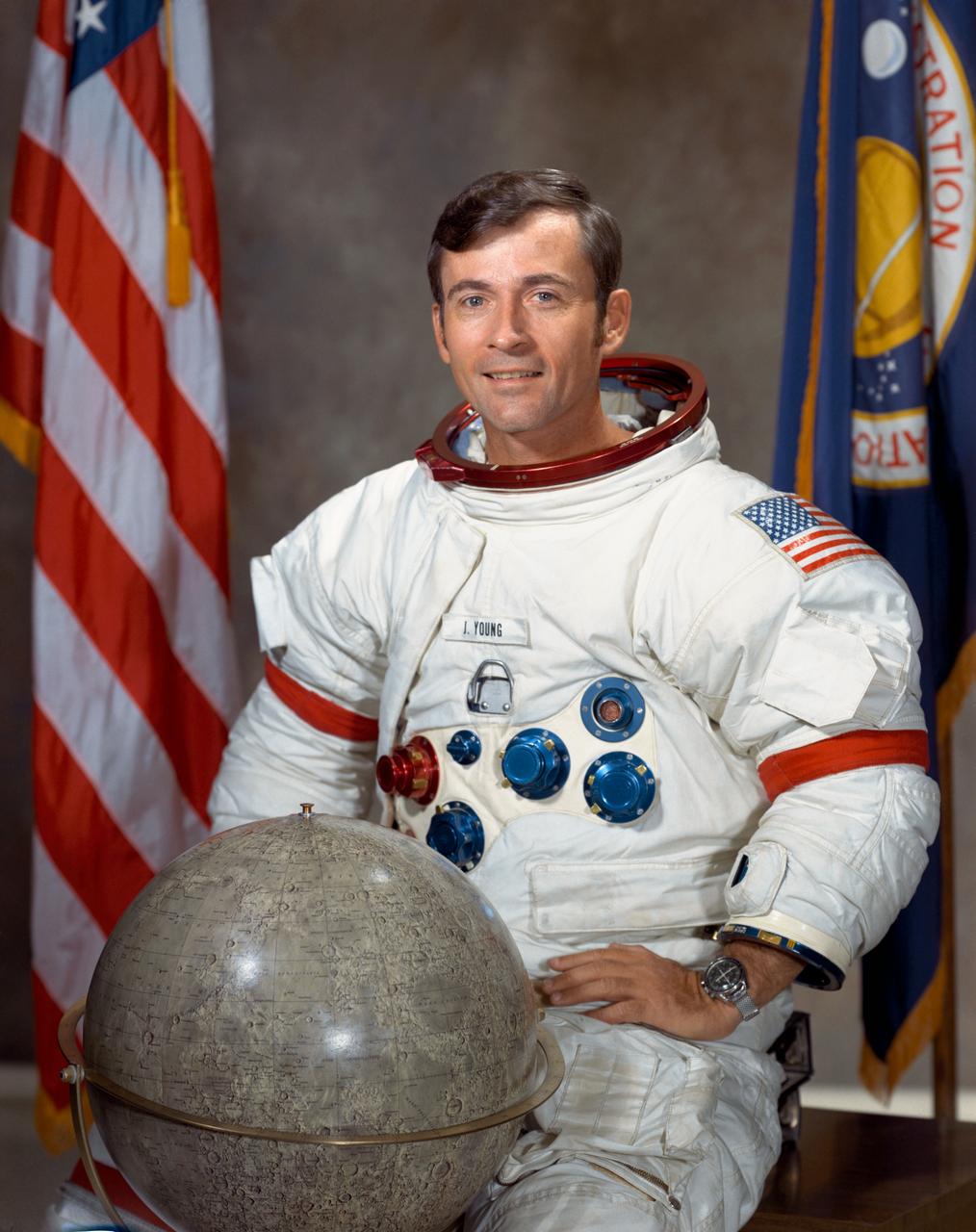
S71-51261 (October 1971) --- Astronaut John W. Young

S68-33194 (1968) --- Astronaut John W. Young in military uniform.
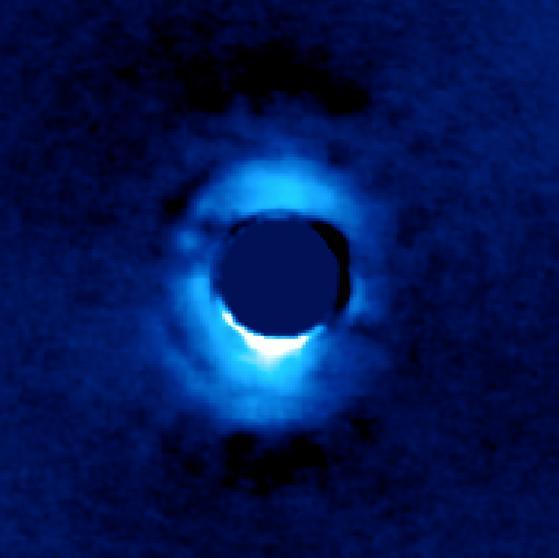
This image shows the dusty disk of planetary material surrounding the young star HD 141569, located 380 light-years away from Earth. It was taken using the vortex coronagraph on the W.M. Keck Observatory. The vortex suppressed light from the star in the center, revealing light from the innermost ring of planetary material around the star (blue). The disk around the star, made of olivine particles, extends from 23 to 70 astronomical units from the star. By comparison, Uranus is over 19 astronomical units from our sun, and Neptune about 30 astronomical units. One astronomical unit is the distance between Earth and our sun. http://photojournal.jpl.nasa.gov/catalog/PIA21090
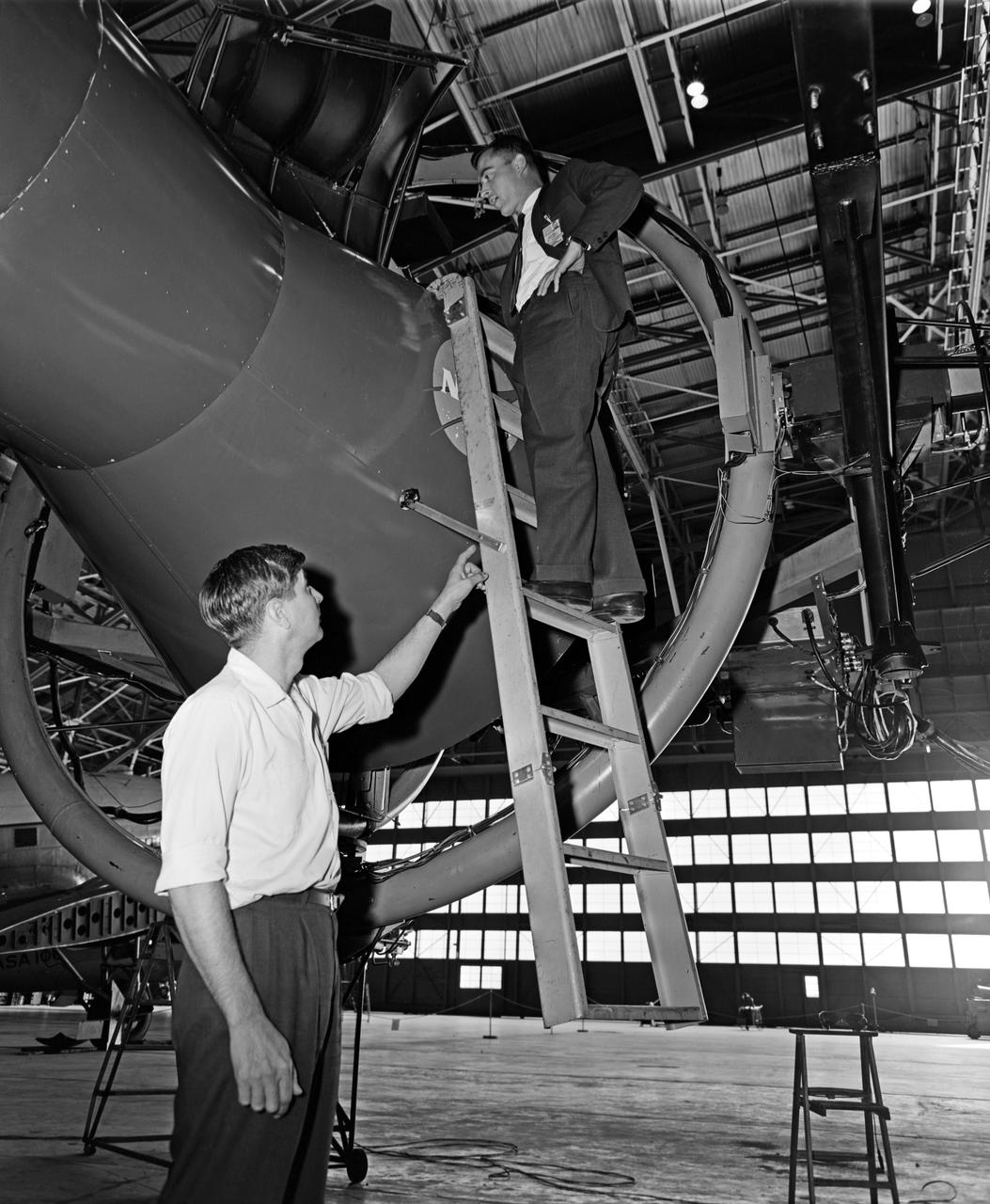
Astronaut John Young (above) was one of 14 astronauts, 8 NASA test pilots, and 2 McDonnell test pilots who took part in simulator studies. Young piloted the simulator on November 12, 1963 Arthur Vogeley wrote: "Many of the astronauts have flown this simulator in support of the Gemini studies and they, without exception, appreciated the realism of the visual scene. The simulator has also been used in the development of pilot techniques to handle certain jet malfunctions in order that aborts could be avoided. In these situations large attitude changes are sometimes necessary and the false motion cues that were generated due to earth gravity were somewhat objectionable; however, the pilots were readily able to overlook these false motion cues in favor of the visual realism." Roy F. Brissenden wrote: "The basic Gemini control studies developed the necessary techniques and demonstrated the ability of human pilots to perform final space docking with the specified Gemini-Agena systems using only visual references. ... Results... showed that trained astronauts can effect the docking with direct acceleration control and even with jet malfunctions as long as good visual conditions exist.... Probably more important than data results was the early confidence that the astronauts themselves gained in their ability to perform the maneuver in the ultimate flight mission." -- Published in Barton C. Hacker and James M. Grimwood, On the Shoulders of Titans: A History of Project Gemini, NASA SP-4203; A.W. Vogeley, "Discussion of Existing and Planned Simulators For Space Research," Paper presented at the Conference on the Role of Simulation in Space Technology, August 17-21, 1964; Roy F. Brissenden, "Initial Operations with Langley's Rendezvous Docking Facility," Langley Working Paper, LWP-21, 1964.
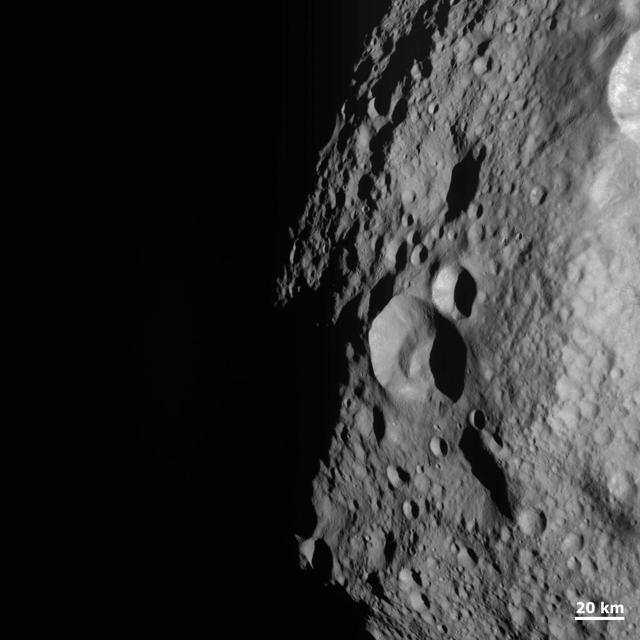
NASA Dawn spacecraft obtained this image of a young and old crater at the night and day boundary on asteroid Vesta. The image has a resolution of about 260 meters per pixel.
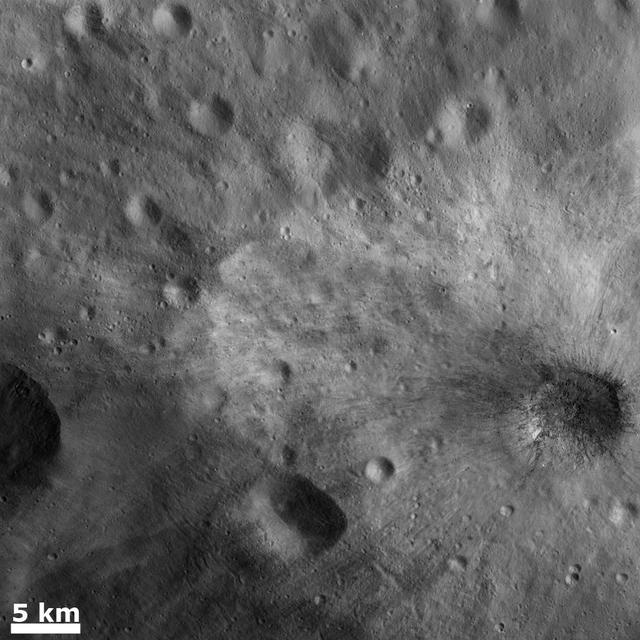
This image from NASA Dawn spacecraft shows a young, fresh crater, which is about 7 km in diameter, on asteroid Vesta. This crater has both dark and bright rays fanning out from it.
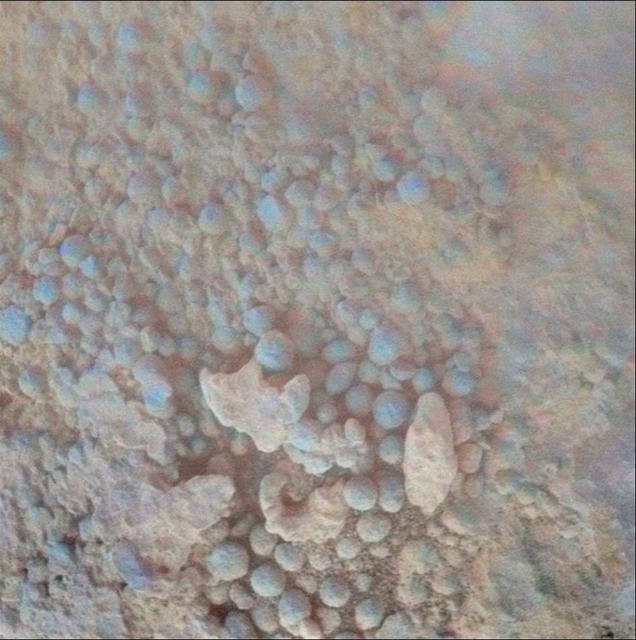
This image from the microscopic imager on NASA Mars Exploration Rover Opportunity shows details of the coating on a rock called Chocolate Hills, which the rover found and examined at the edge of a young crater called Concepción.
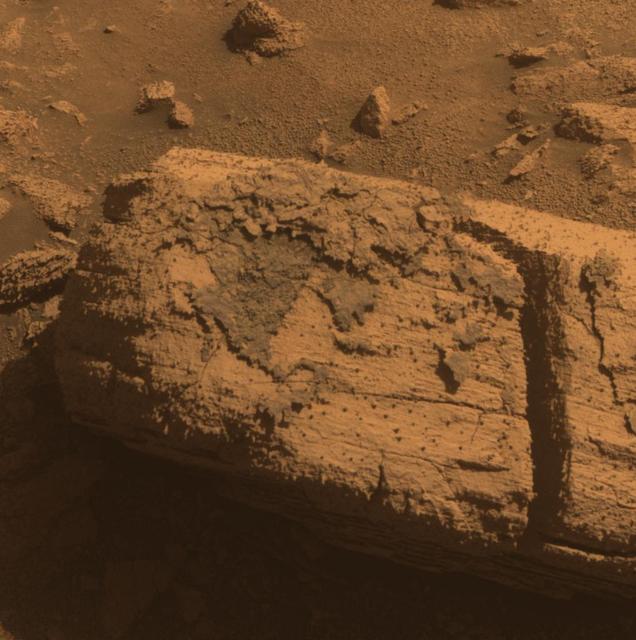
This image from the panoramic camera on NASA Mars Exploration Rover Opportunity shows a rock called Chocolate Hills, which the rover found and examined at the edge of a young crater called Concepción.
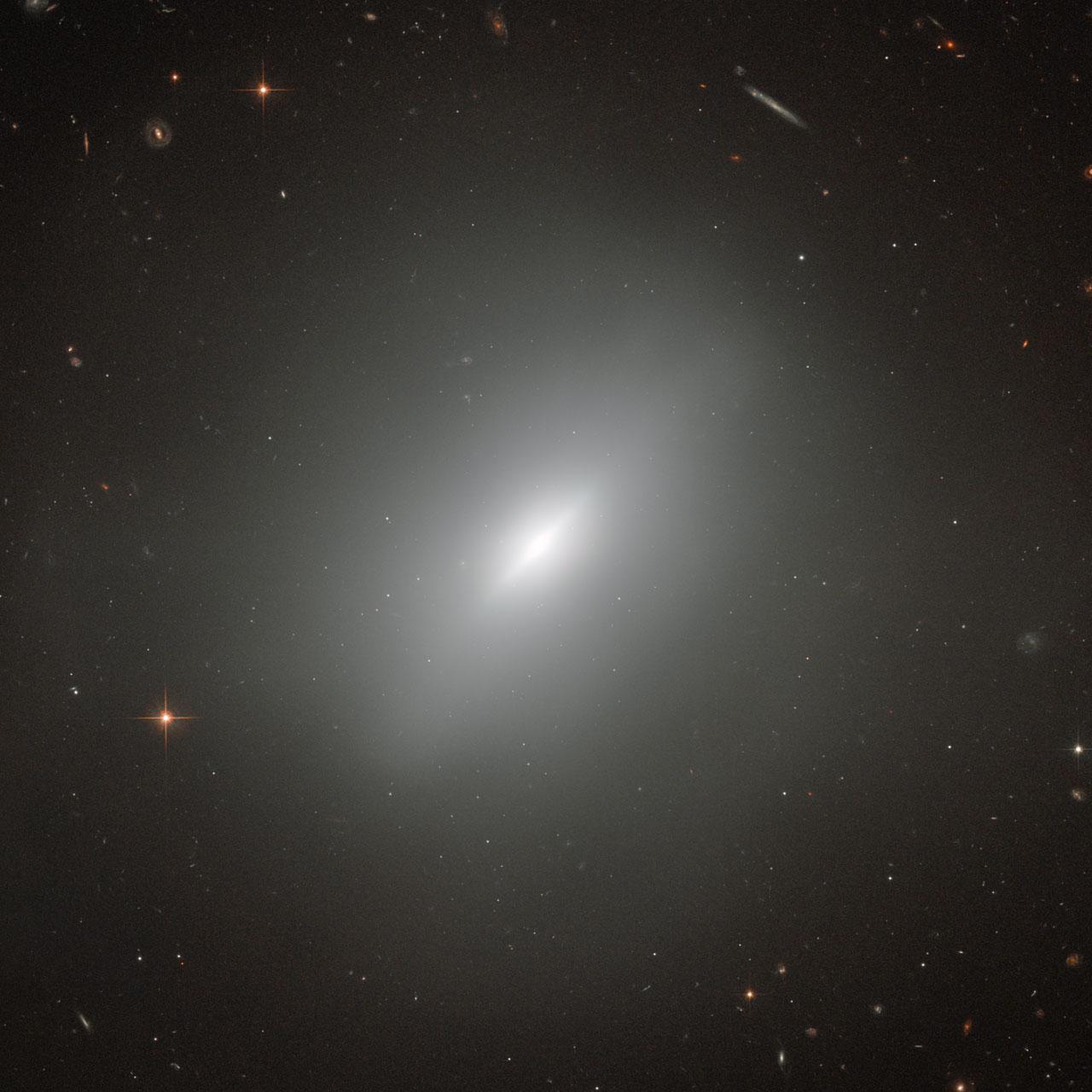
At the center of this amazing Hubble image is the elliptical galaxy NGC 3610. Surrounding the galaxy are a wealth of other galaxies of all shapes. There are spiral galaxies, galaxies with a bar in their central regions, distorted galaxies and elliptical galaxies, all visible in the background. In fact, almost every bright dot in this image is a galaxy — the few foreground stars are clearly distinguishable due to the diffraction spikes (lines radiating from bright light sources in reflecting telescope images) that overlay their images. NGC 3610 is of course the most prominent object in this image — and a very interesting one at that! Discovered in 1793 by William Herschel, it was later found that this elliptical galaxy contains a disk. This is very unusual, as disks are one of the main distinguishing features of a spiral galaxy. And the disk in NGC 3610 is remarkably bright. The reason for the peculiar shape of NGC 3610 stems from its formation history. When galaxies form, they usually resemble our galaxy, the Milky Way, with flat disks and spiral arms where star formation rates are high and which are therefore very bright. An elliptical galaxy is a much more disordered object which results from the merging of two or more disk galaxies. During these violent mergers most of the internal structure of the original galaxies is destroyed. The fact that NGC 3610 still shows some structure in the form of a bright disk implies that it formed only a short time ago. The galaxy’s age has been put at around four billion years and it is an important object for studying the early stages of evolution in elliptical galaxies. Image credit: ESA/Hubble & NASA, Acknowledgement: Judy Schmidt <b><a href="http://www.nasa.gov/audience/formedia/features/MP_Photo_Guidelines.html" rel="nofollow">NASA image use policy.</a></b> <b><a href="http://www.nasa.gov/centers/goddard/home/index.html" rel="nofollow">NASA Goddard Space Flight Center</a></b> enables NASA’s mission through four scientific endeavors: Earth Science, Heliophysics, Solar System Exploration, and Astrophysics. Goddard plays a leading role in NASA’s accomplishments by contributing compelling scientific knowledge to advance the Agency’s mission. <b>Follow us on <a href="http://twitter.com/NASAGoddardPix" rel="nofollow">Twitter</a></b> <b>Like us on <a href="http://www.facebook.com/pages/Greenbelt-MD/NASA-Goddard/395013845897?ref=tsd" rel="nofollow">Facebook</a></b> <b>Find us on <a href="http://instagrid.me/nasagoddard/?vm=grid" rel="nofollow">Instagram</a></b>
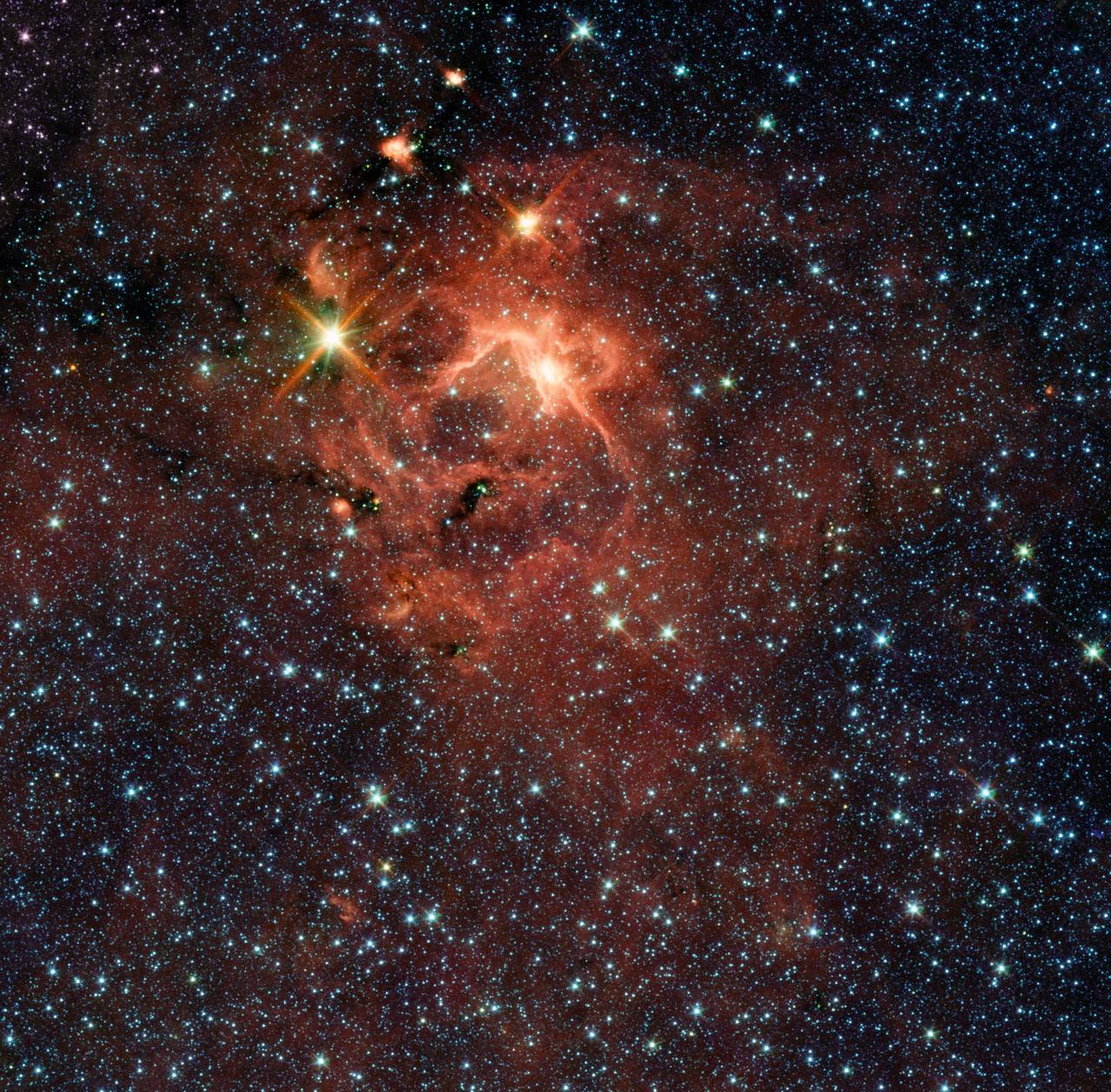
This star-forming region, captured by NASA Spitzer Space Telescope, is dominated by the bright, young star IRAS 13481-6124; it is the first massive baby star for which astronomers could obtain a detailed look at the dusty disk closely encircling it.
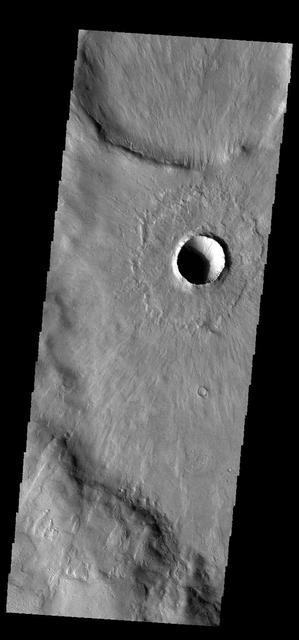
This image from NASA 2001 Mars Odyssey spacecraft shows the same young crater from earlier this week. In this image we can see how the thin radial ejecta has lapped up and over the ridge at the bottom of the image. Orbit Number: 66654 Latitude: -44.4179 Longitude: 139.201 Instrument: VIS Captured: 2016-12-23 04:04 http://photojournal.jpl.nasa.gov/catalog/PIA21303
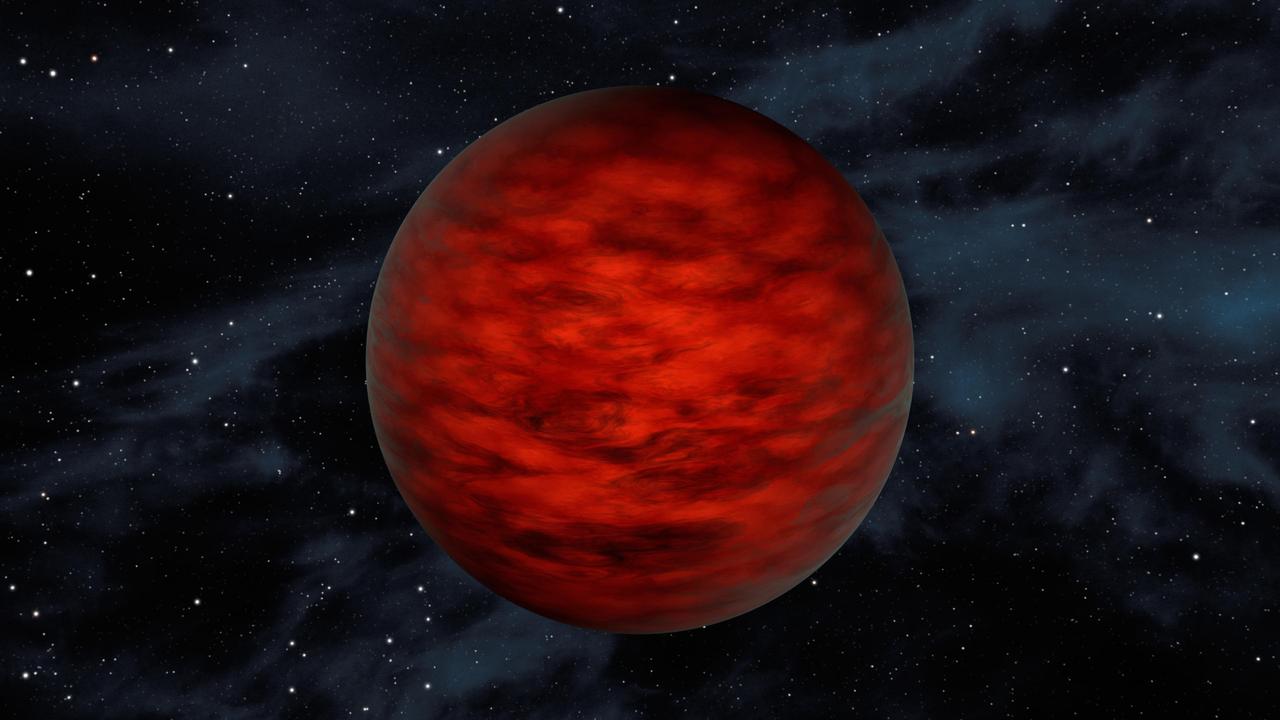
A young, free-floating world sits alone in space in this illustration. The object, called WISEA J114724.10-204021.3, is thought to be an exceptionally low-mass brown dwarf.
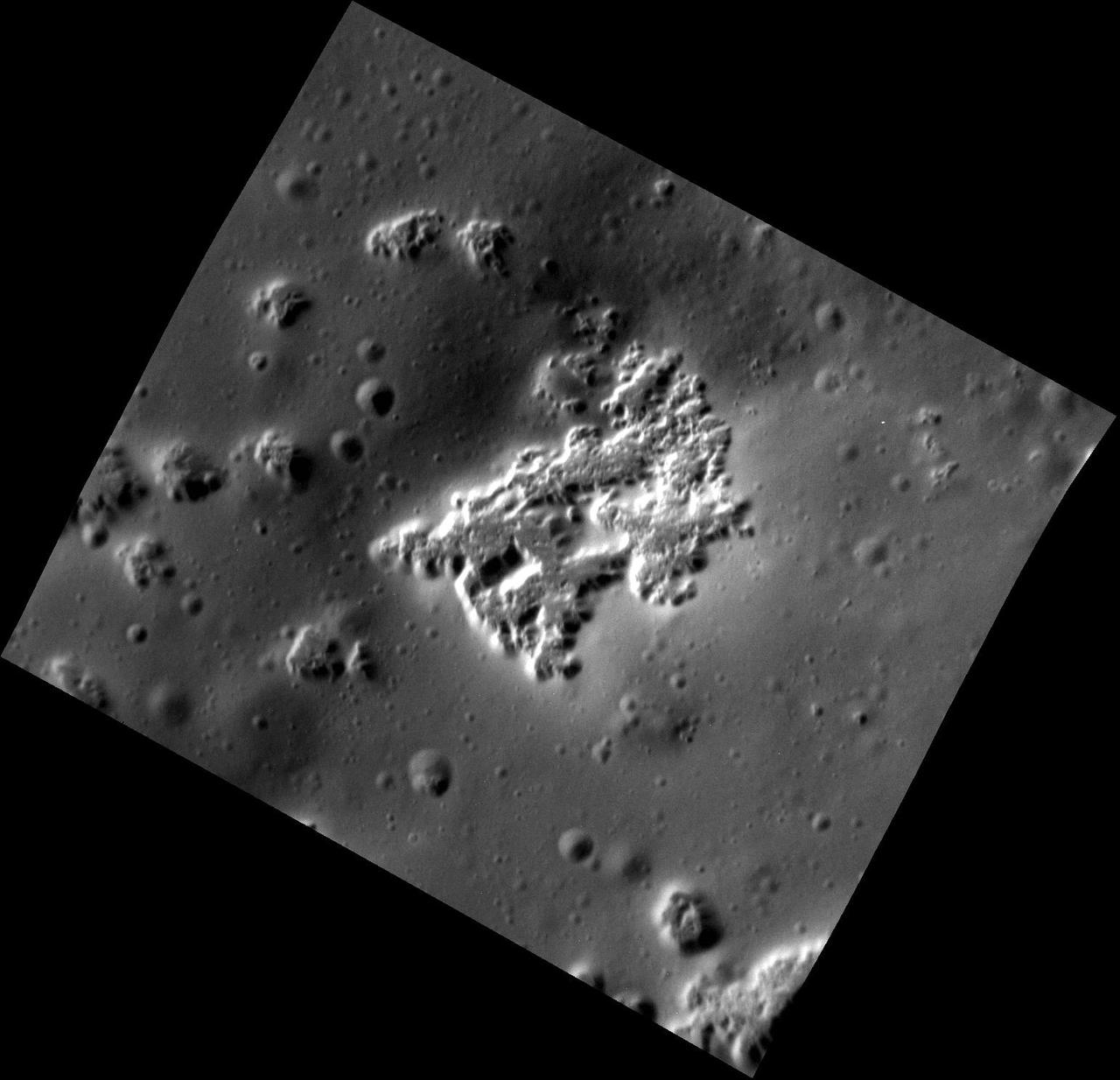
This high-resolution view shows hollows on the southwestern peak ring of the Scarlatti basin. The hollows are the irregularly shaped, flat-floored depressions. The image is striking because it shows that there are abundant small impact craters on the surface surrounding the hollows. But there are few if any within the hollows themselves. Since impacts occur randomly over Mercury's surface and accumulate with time, the lack of craters on the hollows indicates that they must be very young relative to the rest of Mercury's surface. http://photojournal.jpl.nasa.gov/catalog/PIA19246
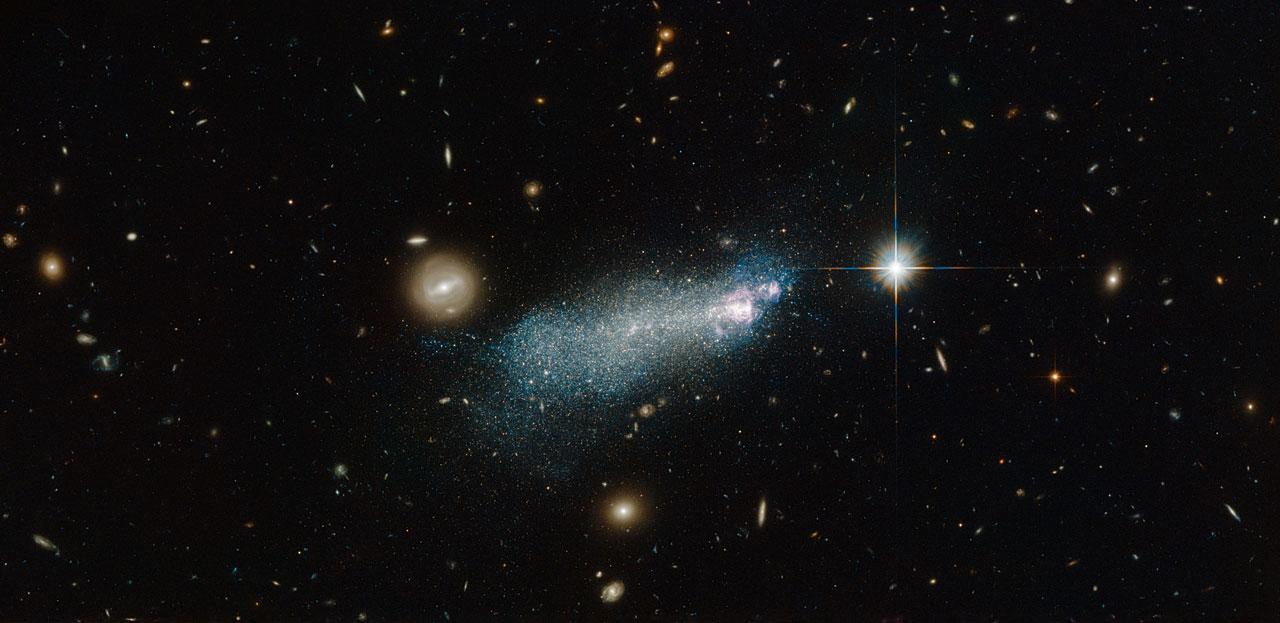
The bright streak of glowing gas and stars in this NASA/ESA Hubble Space Telescope image is known as PGC 51017, or SBSG 1415+437. It is a type of galaxy known as a blue compact dwarf. This particular dwarf is well studied and has an interesting star formation history. Astronomers initially thought that SBS 1415+437 was a very young galaxy currently undergoing its very first burst of star formation, but more recent studies have suggested that the galaxy is in fact a little older, containing stars over 1.3 billion years old. Starbursts are an area of ongoing research for astronomers — short-lived and intense periods of star formation, during which huge amounts of gas within a galaxy are hungrily used up to form newborn stars. Read more: <a href="http://1.usa.gov/1ExsNx0" rel="nofollow">1.usa.gov/1ExsNx0</a> Credit: ESA/Hubble and NASA Acknowledgement: Alessandra Aloisi (STScI) and Nick Rose <b><a href="http://www.nasa.gov/audience/formedia/features/MP_Photo_Guidelines.html" rel="nofollow">NASA image use policy.</a></b> <b><a href="http://www.nasa.gov/centers/goddard/home/index.html" rel="nofollow">NASA Goddard Space Flight Center</a></b> enables NASA’s mission through four scientific endeavors: Earth Science, Heliophysics, Solar System Exploration, and Astrophysics. Goddard plays a leading role in NASA’s accomplishments by contributing compelling scientific knowledge to advance the Agency’s mission. <b>Follow us on <a href="http://twitter.com/NASAGoddardPix" rel="nofollow">Twitter</a></b> <b>Like us on <a href="http://www.facebook.com/pages/Greenbelt-MD/NASA-Goddard/395013845897?ref=tsd" rel="nofollow">Facebook</a></b> <b>Find us on <a href="http://instagrid.me/nasagoddard/?vm=grid" rel="nofollow">Instagram</a></b>
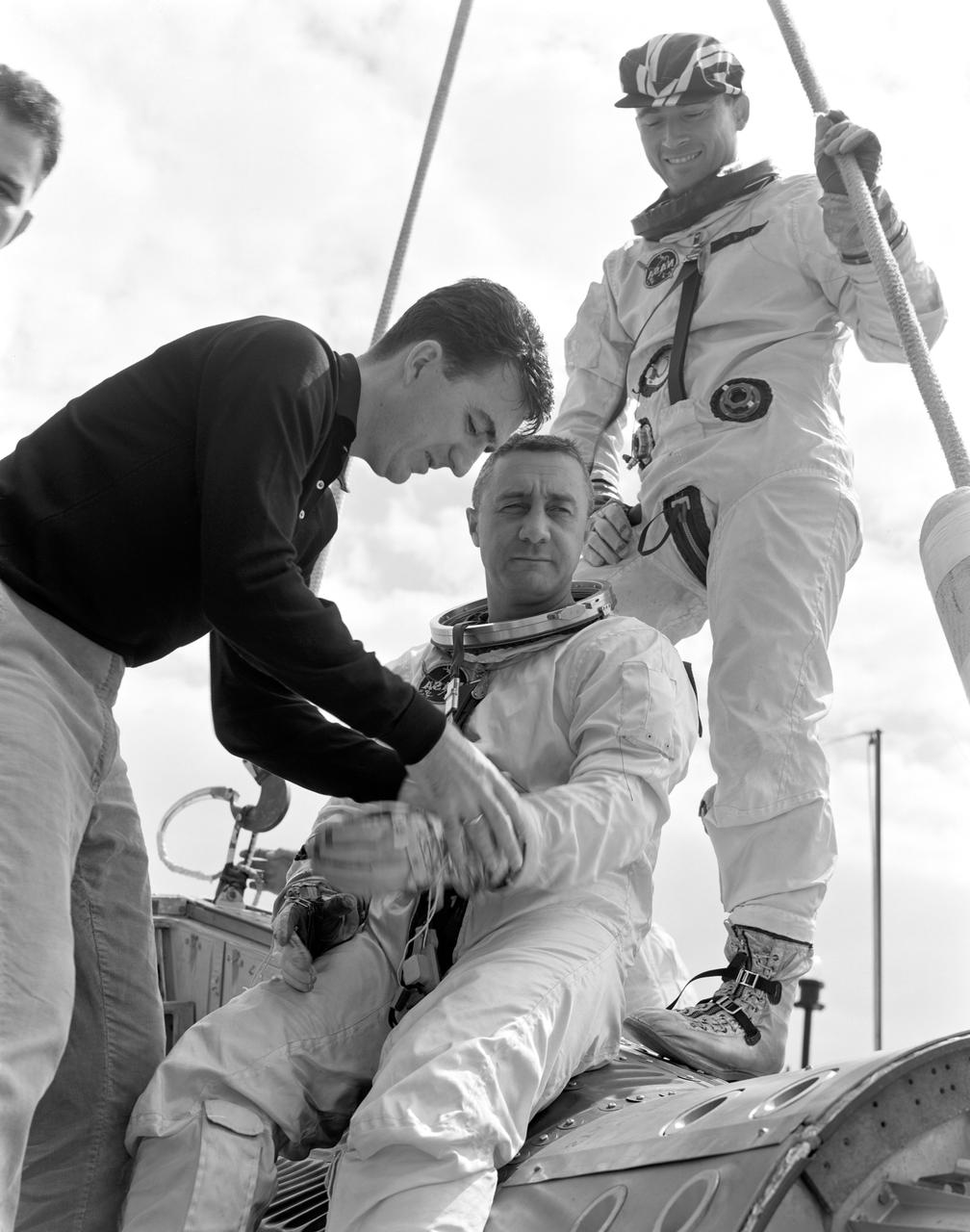
S65-14454 (23 Feb. 1965) --- A technician adjusts the suit of astronaut Virgil I. Grissom during water egress training operations in the Gulf of Mexico. Astronaut John W. Young (standing) observes. Grissom and Young are the prime crew for the Gemini-Titan 3 flight scheduled this spring.
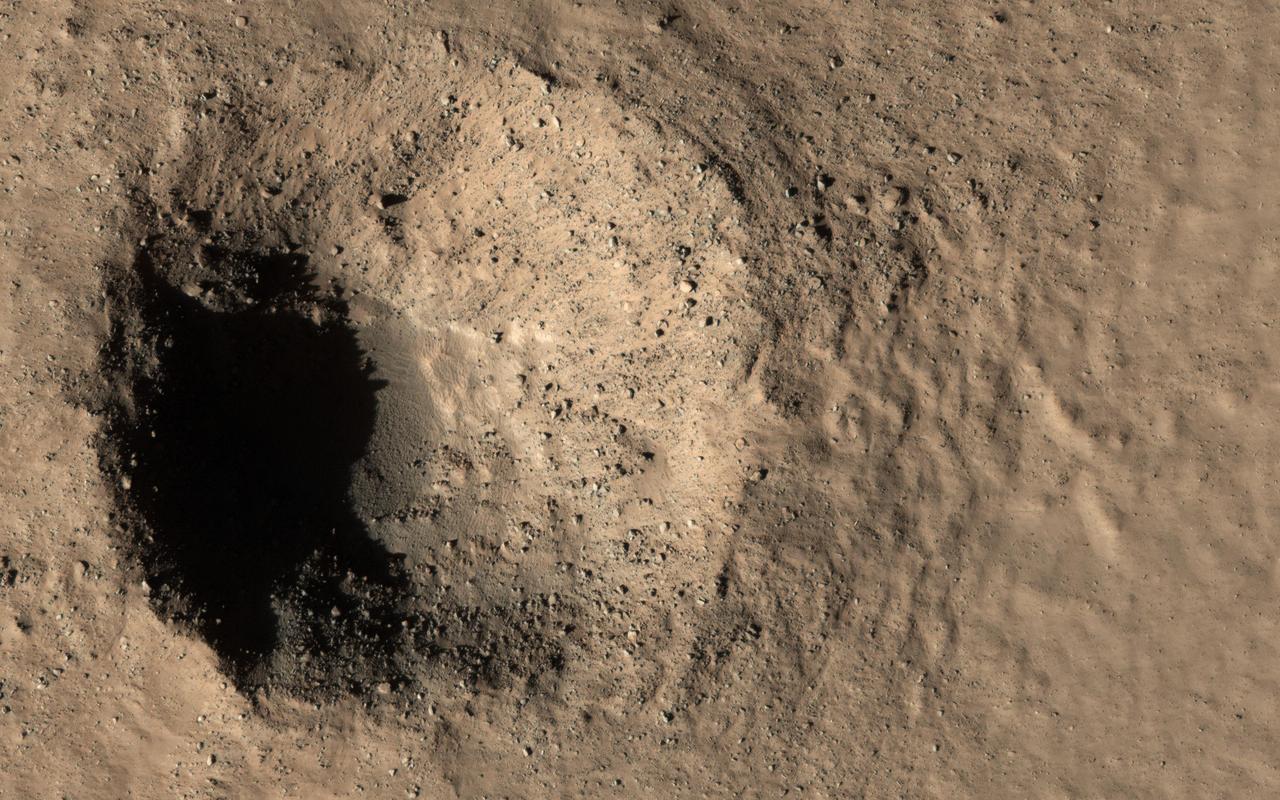
This image caught two different targets at once! In the top (northern) part there is a geologically-young crater about 300 meters in diameter, with rocky ejecta. The crater looks very fresh and steep and is not buried or filled in with the smooth deposits that cover the region. Craters like this tell us what is in the shallow subsurface and are very valuable for understanding the geology. In the bottom (southern) part is a smaller crater, only about 15 meters across. This one is even younger, having formed between 2008 and 2010, when it was detected by MRO's Context Camera. The smaller crater exposed subsurface ice, and HiRISE has been re-imaging it to see how it changes as the ice slowly sublimates away. Compare this image to ESP_017926_2310 to see what has happened in the last decade! https://photojournal.jpl.nasa.gov/catalog/PIA23852
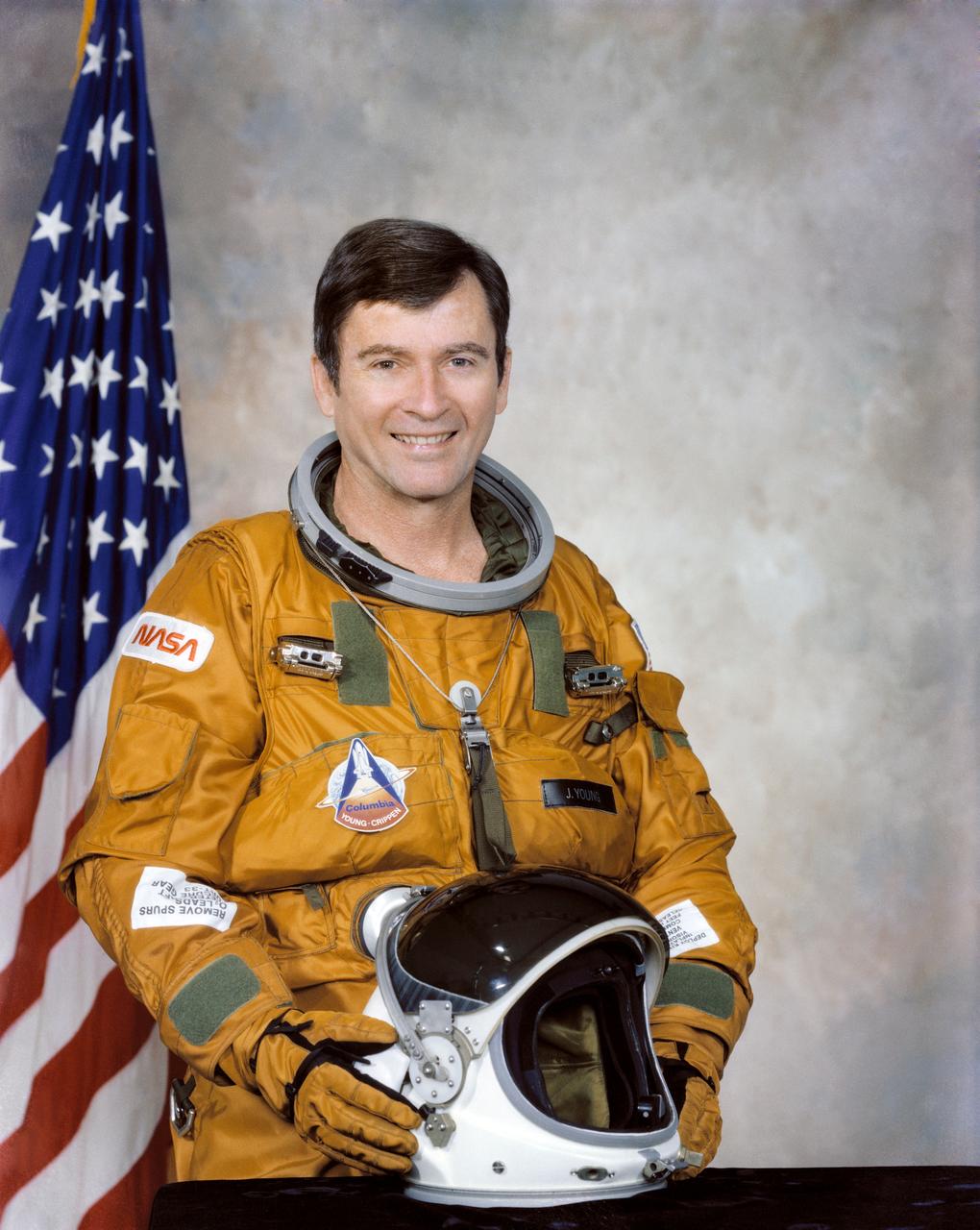
S79-31776 (29 April 1979) - Astronaut John W. Young, STS-1 Commander.
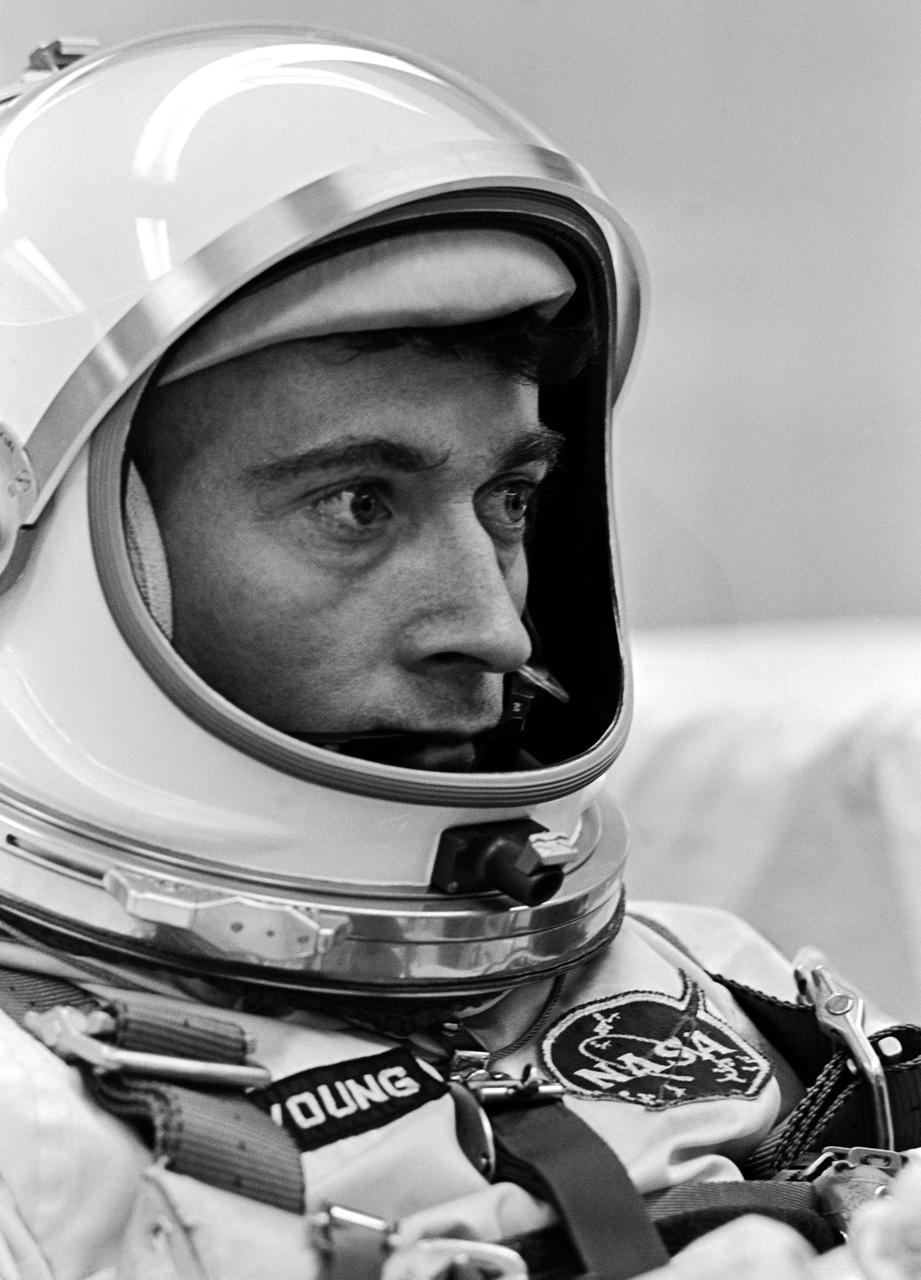
Closeup of Astronaut John W. Young, Pilot for the Gemini-III Spaceflight. CAPE KENNEDY, FL
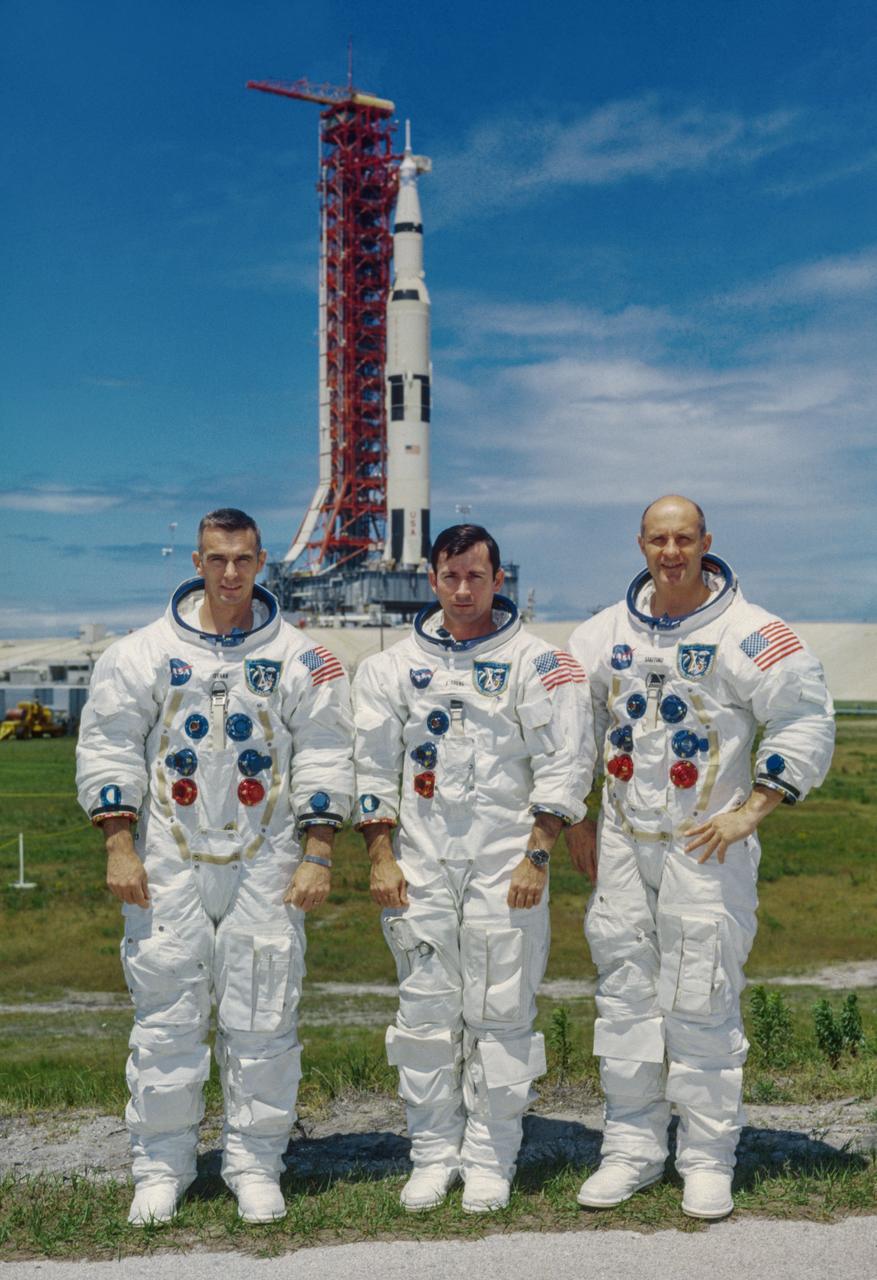
S69-34385 (13 May 1969) --- These three astronauts are the prime crew of the Apollo 10 lunar orbit mission. Left to right, are Eugene A. Cernan, lunar module pilot; John W. Young, command module pilot; and Thomas P. Stafford, commander. In the background is the Apollo 10 space vehicle on Pad B, Launch Complex 39, Kennedy Space Center, Florida.
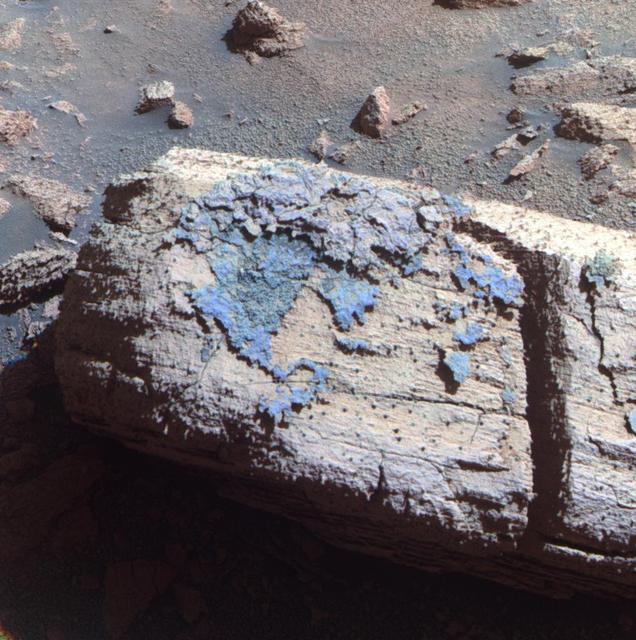
This false color image from the panoramic camera on NASA Mars Exploration Rover Opportunity shows a rock called Chocolate Hills, which the rover found and examined at the edge of a young crater called Concepción.

Artemis II science officer Kelsey Young monitors science operations at the new SCIENCE console in NASA's Mission Control Center. Credits: NASA/Bill Stafford

Artemis II science officer Kelsey Young monitors science operations at the new SCIENCE console in NASA's Mission Control Center. Credits: NASA/Bill Stafford
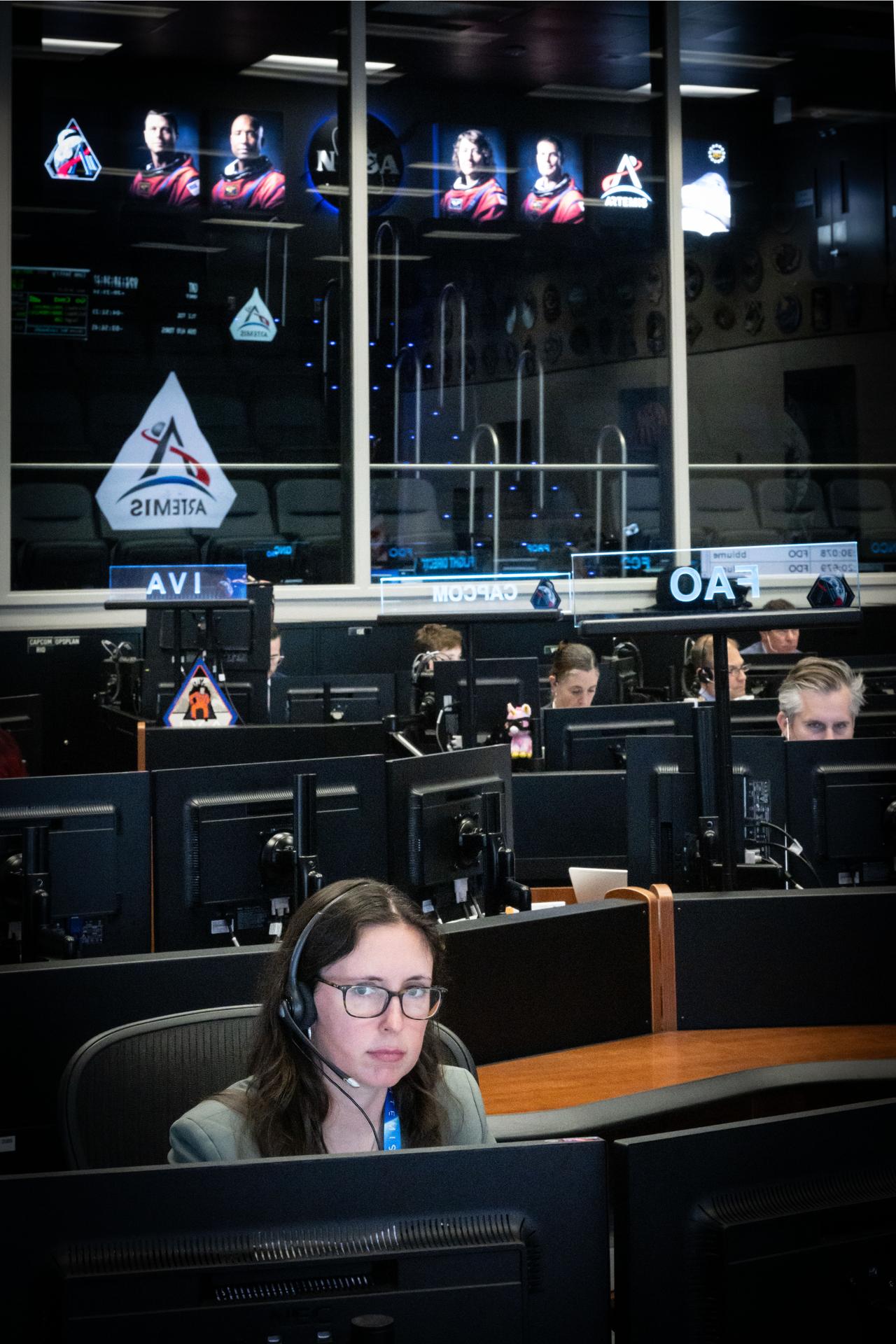
Artemis II science officer Kelsey Young monitors science operations at the new SCIENCE console in NASA's Mission Control Center. Credits: NASA/Bill Stafford

STS009-128-858 (28 Nov-8 Dec 1983) --- Astronaut John W. Young takes notes in the commander?s station on the flight deck of the Columbia. The cathode ray tube (CRT) among the forward panels displays the orbiter?s position in relation to the Earth on its monitor. Astronaut Brewster H. Shaw Jr., pilot, took this photograph.
![Astronauts Charles Conrad (left) and John W. Young (right) at the controls of the Visual Docking Simulator. From A.W. Vogeley, "Piloted Space-Flight Simulation at Langley Research Center," Paper presented at the American Society of Mechanical Engineers 1966 Winter Meeting, New York, NY, November 27-December 1, 1966. "This facility was [later known as the Visual-Optical Simulator.] It presents to the pilot an out-the-window view of his target in correct 6 degrees of freedom motion. The scene is obtained by a television camera pick-up viewing a small-scale gimbaled model of the target." "For docking studies, the docking target picture was projected onto the surface of a 20-foot-diameter sphere and the pilot could, effectively, maneuver into contract. this facility was used in a comparison study with the Rendezvous Docking Simulator - one of the few comparison experiments in which conditions were carefully controlled and a reasonable sample of pilots used. All pilots preferred the more realistic RDS visual scene. The pilots generally liked the RDS angular motion cues although some objected to the false gravity cues that these motions introduced. Training time was shorter on the RDS, but final performance on both simulators was essentially equal. " "For station-keeping studies, since close approach is not required, the target was presented to the pilot through a virtual-image system which projects his view to infinity, providing a more realistic effect. In addition to the target, the system also projects a star and horizon background. "](https://images-assets.nasa.gov/image/LRC-1963-B701_P-09520/LRC-1963-B701_P-09520~medium.jpg)
Astronauts Charles Conrad (left) and John W. Young (right) at the controls of the Visual Docking Simulator. From A.W. Vogeley, "Piloted Space-Flight Simulation at Langley Research Center," Paper presented at the American Society of Mechanical Engineers 1966 Winter Meeting, New York, NY, November 27-December 1, 1966. "This facility was [later known as the Visual-Optical Simulator.] It presents to the pilot an out-the-window view of his target in correct 6 degrees of freedom motion. The scene is obtained by a television camera pick-up viewing a small-scale gimbaled model of the target." "For docking studies, the docking target picture was projected onto the surface of a 20-foot-diameter sphere and the pilot could, effectively, maneuver into contract. this facility was used in a comparison study with the Rendezvous Docking Simulator - one of the few comparison experiments in which conditions were carefully controlled and a reasonable sample of pilots used. All pilots preferred the more realistic RDS visual scene. The pilots generally liked the RDS angular motion cues although some objected to the false gravity cues that these motions introduced. Training time was shorter on the RDS, but final performance on both simulators was essentially equal. " "For station-keeping studies, since close approach is not required, the target was presented to the pilot through a virtual-image system which projects his view to infinity, providing a more realistic effect. In addition to the target, the system also projects a star and horizon background. "
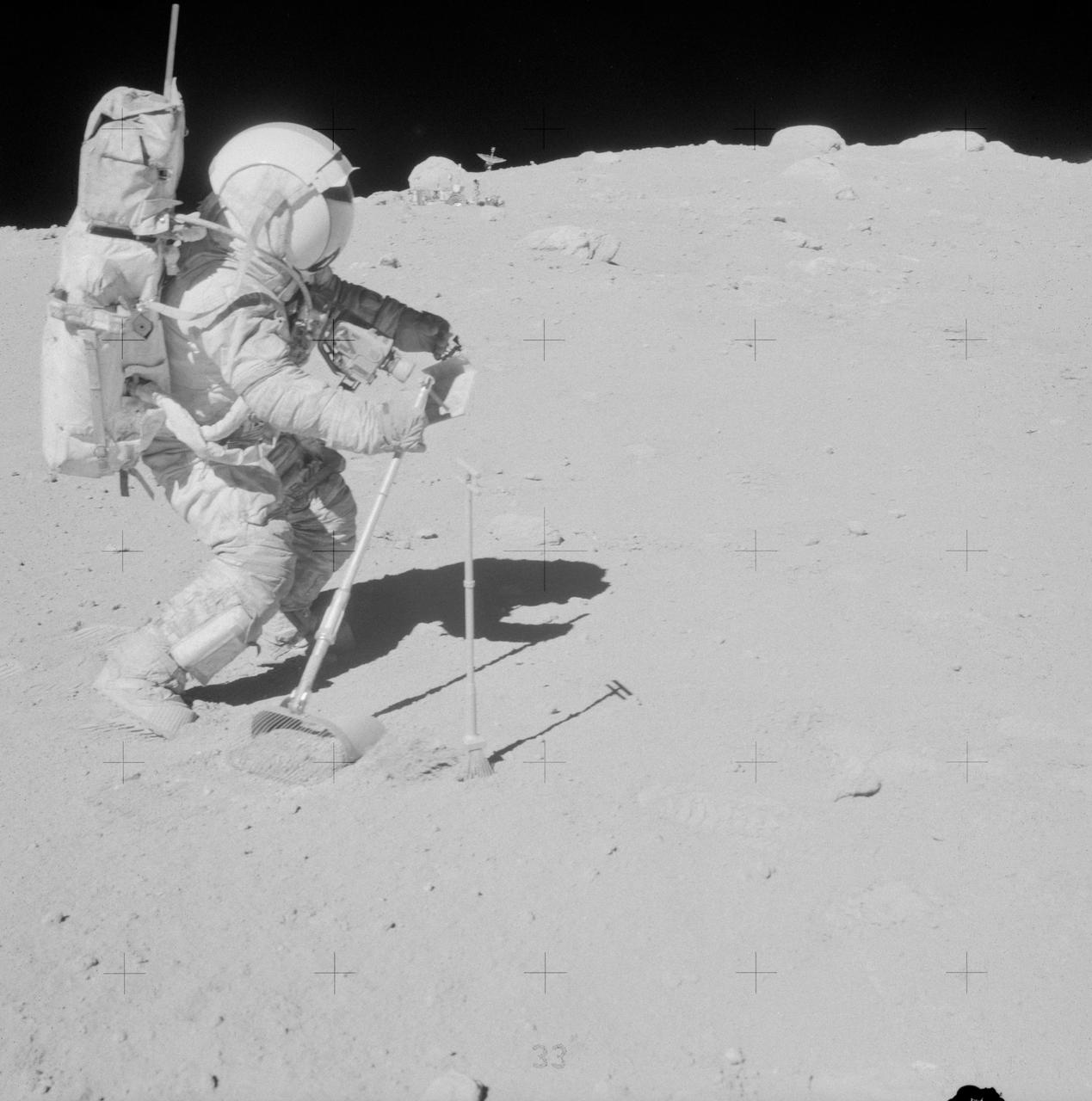
AS16-106-17340 (23 April 1972) --- Astronaut John W. Young, commander of the Apollo 16 lunar landing mission, is photographed collecting lunar samples near North Ray Crater during the third Apollo 16 extravehicular activity (EVA) at the Descartes landing site. This picture was taken by astronaut Charles M. Duke Jr., lunar module pilot. Young is using the lunar surface rake and a set of tongs. The Lunar Roving Vehicle (LRV) is parked in the field of large boulders in the background. While astronauts Young and Duke descended in the Lunar Module (LM) "Orion" to explore the moon, astronaut Thomas K. Mattingly II, command module pilot, remained with the Command and Service Modules (CSM) in lunar orbit.

A. Thomas Young, retired Executive Vice President, Lockheed Martin, appears before the U.S. House of Representatives' Committee on Science and Technology, Subcommittee on Space and Aeronautics to discuss proposed changes to NASA's exploration program on Wednesday, March 24, 2010, on Capitol Hill in Washington. Photo Credit: (NASA/Carla Cioffi)

NASA image release February 8, 2012 Looking like a hoard of gems fit for an emperor's collection, this deep sky object called NGC 6752 is in fact far more worthy of admiration. It is a globular cluster, and at over 10 billion years old is one the most ancient collections of stars known. It has been blazing for well over twice as long as our solar system has existed. NGC 6752 contains a high number of "blue straggler'' stars, some of which are visible in this image. These stars display characteristics of stars younger than their neighbors, despite models suggesting that most of the stars within globular clusters should have formed at approximately the same time. Their origin is therefore something of a mystery. Studies of NGC 6752 may shed light on this situation. It appears that a very high number -- up to 38 percent -- of the stars within its core region are binary systems. Collisions between stars in this turbulent area could produce the blue stragglers that are so prevalent. Lying 13,000 light-years distant, NGC 6752 is far beyond our reach, yet the clarity of Hubble's images brings it tantalizingly close. Credit: ESA/Hubble & NASA <b><a href="http://www.nasa.gov/audience/formedia/features/MP_Photo_Guidelines.html" rel="nofollow">NASA image use policy.</a></b> <b><a href="http://www.nasa.gov/centers/goddard/home/index.html" rel="nofollow">NASA Goddard Space Flight Center</a></b> enables NASA’s mission through four scientific endeavors: Earth Science, Heliophysics, Solar System Exploration, and Astrophysics. Goddard plays a leading role in NASA’s accomplishments by contributing compelling scientific knowledge to advance the Agency’s mission. <b>Follow us on <a href="http://twitter.com/NASA_GoddardPix" rel="nofollow">Twitter</a></b> <b>Like us on <a href="http://www.facebook.com/pages/Greenbelt-MD/NASA-Goddard/395013845897?ref=tsd" rel="nofollow">Facebook</a></b> <b>Find us on <a href="http://instagrid.me/nasagoddard/?vm=grid" rel="nofollow">Instagram</a></b>
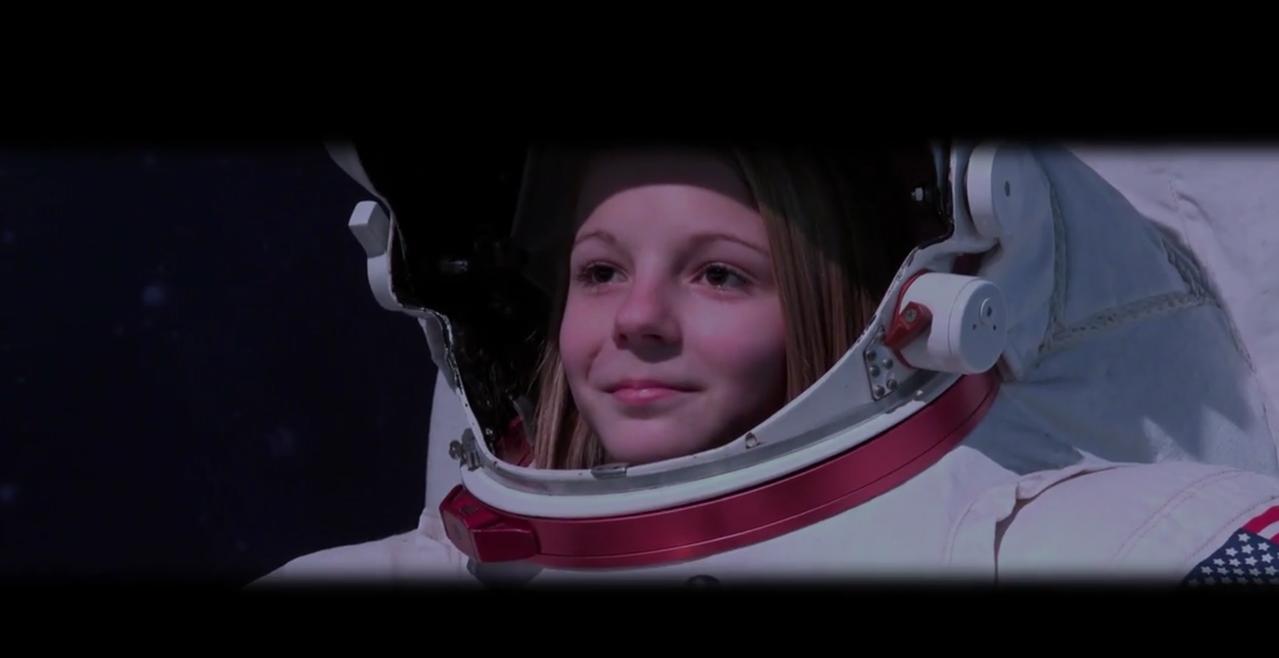
Young girl in astronaut suit, looking out into space.
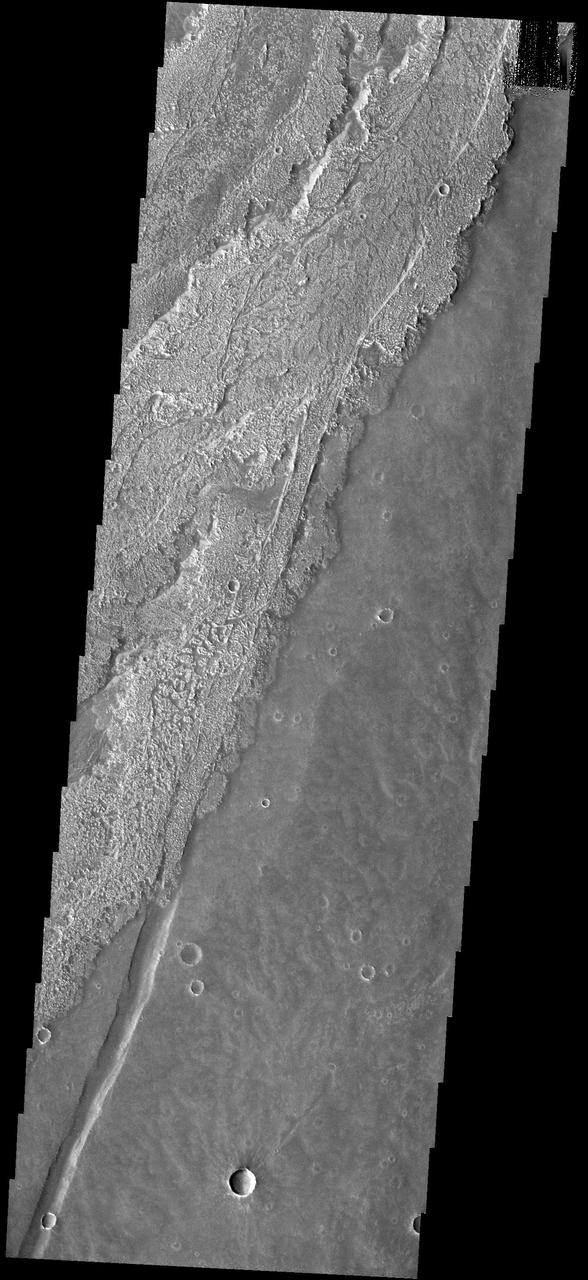
These relatively young lava flows are part of Arsia Mons
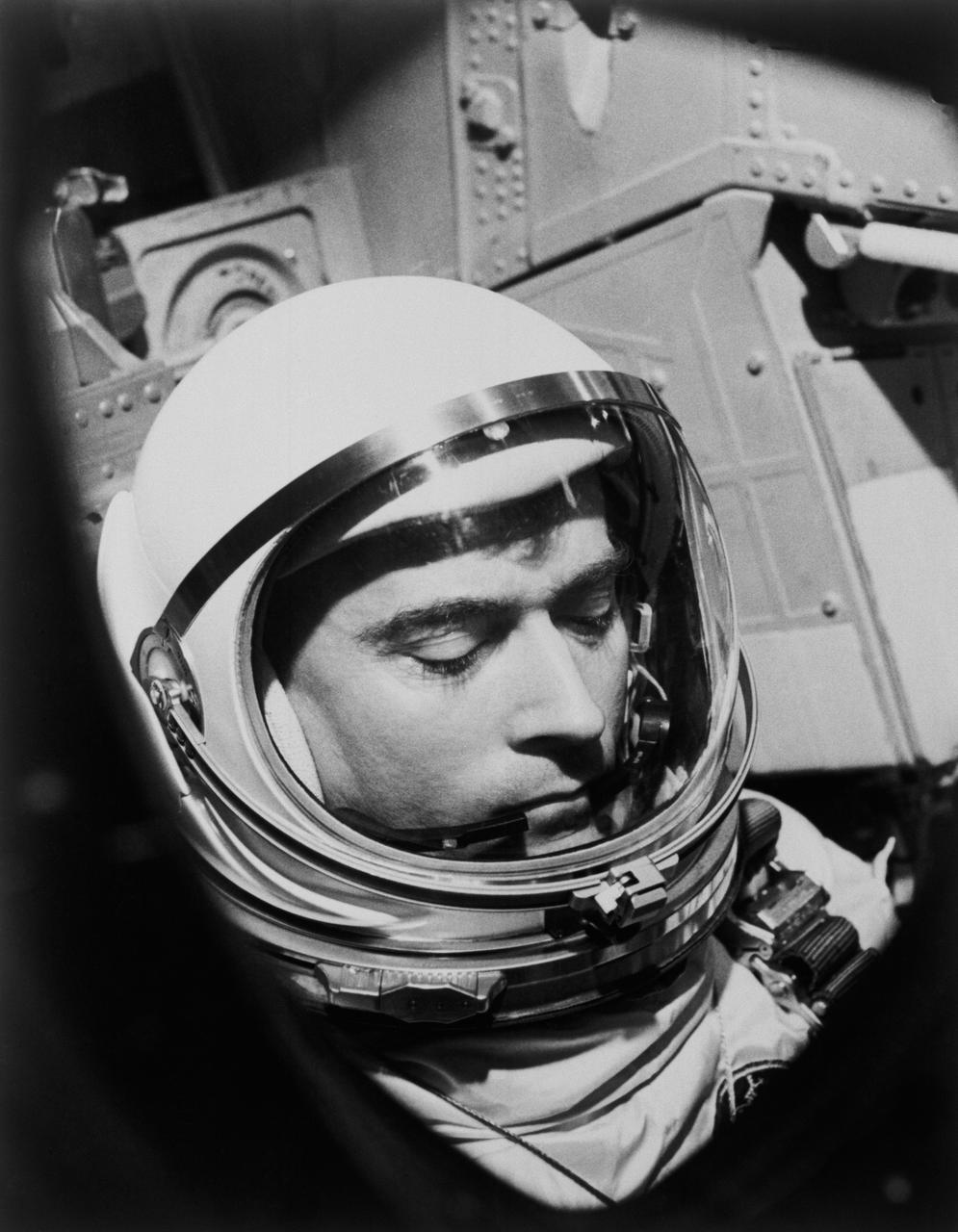
S65-19228 (23 March 1965) --- Astronaut John W. Young, the pilot of the Gemini-Titan 3 mission, is shown going through last minute checks before the hatch is closed on the spacecraft. The window frames Young just before the launch.
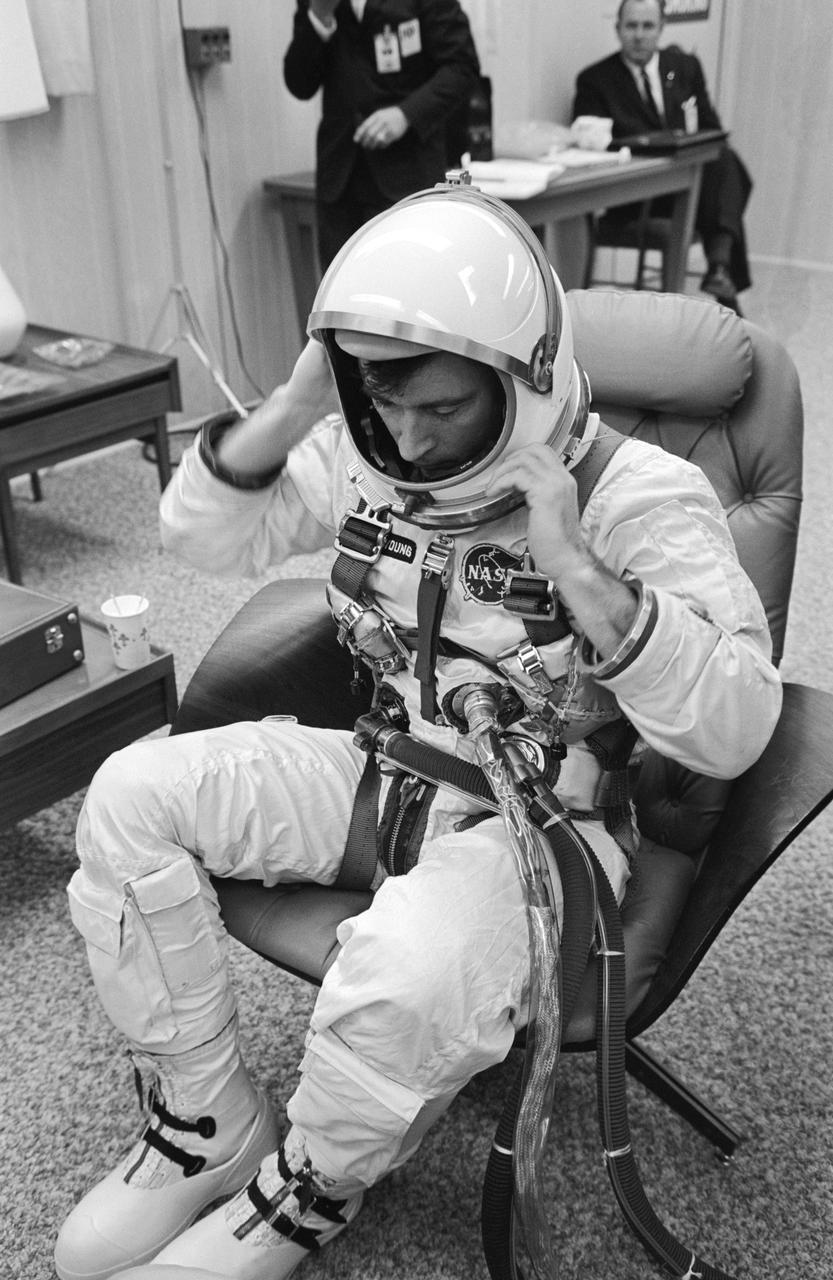
S65-20602 (23 March 1965) --- Astronaut John W. Young, the pilot of the GT-3 three-orbit mission, adjusts his helmet in the Gemini ready room at Pad 16 during the suiting for the flight.
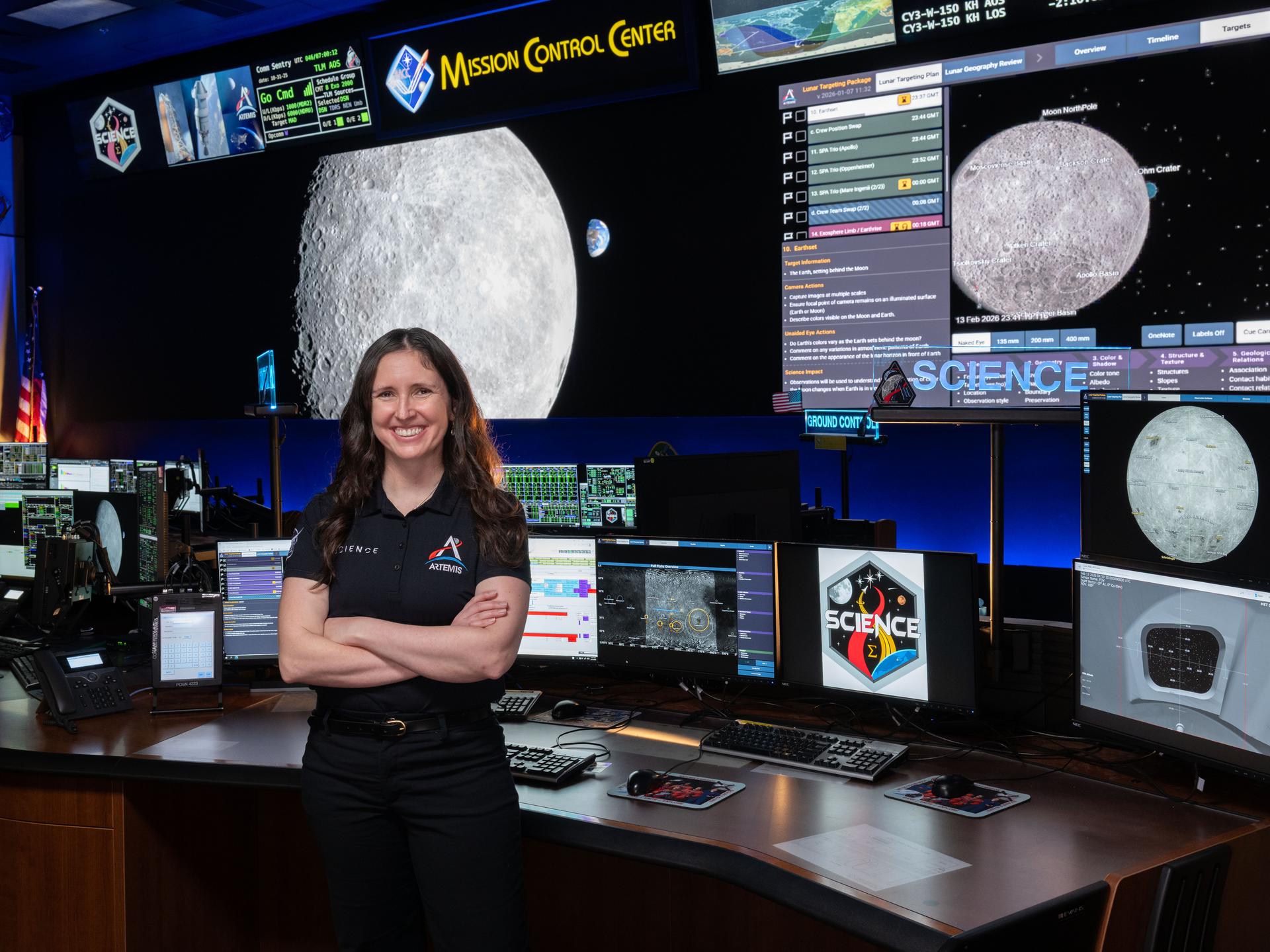
Artemis science officer, Kelsey Young, stands at the new SCIENCE console in the Mission Control Center at NASA’s Johnson Space Center in Houston. Credits: NASA/Josh Valcarcel
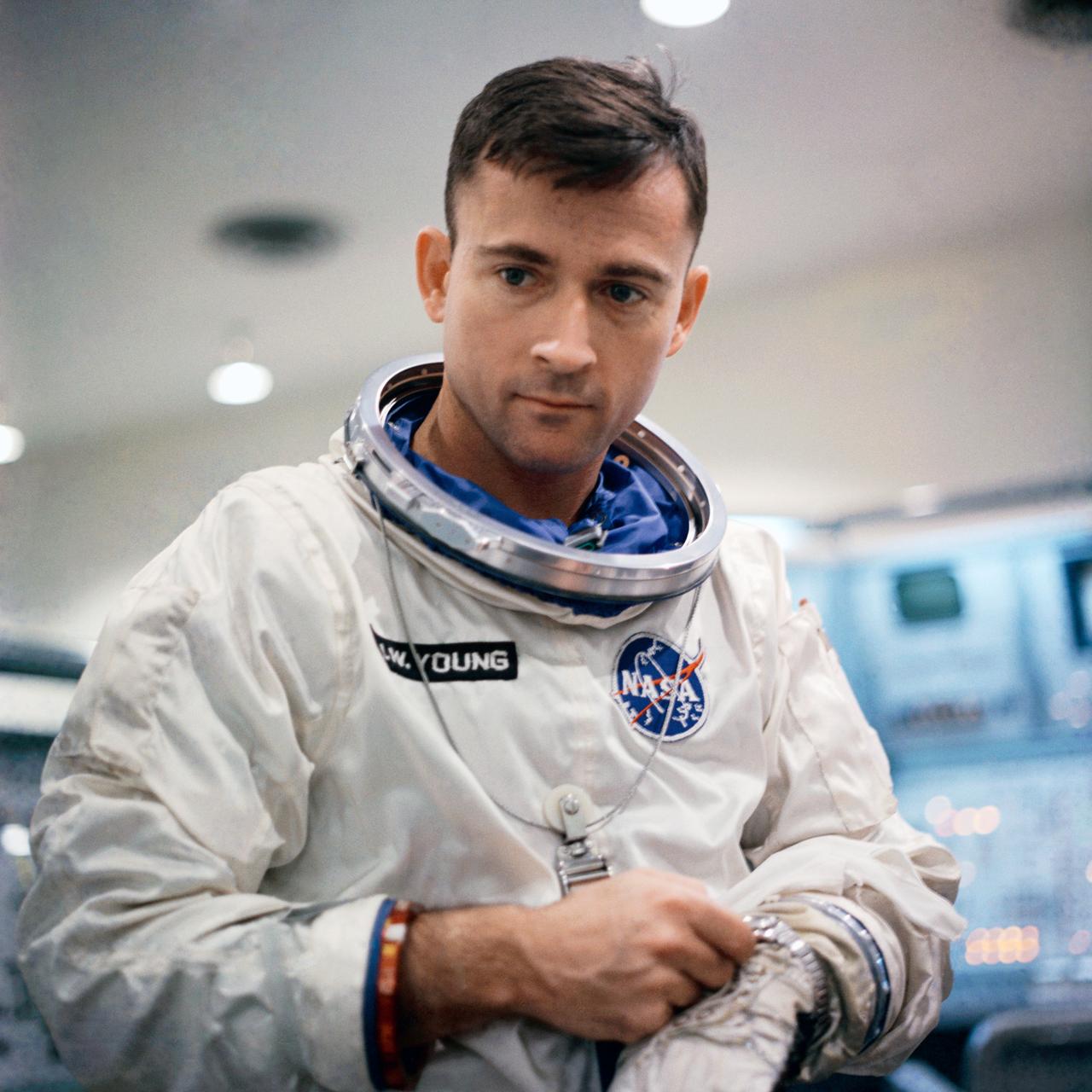
S65-22670 (8 March 1965) --- Astronaut John W. Young, the pilot of the Gemini-Titan 3 prime crew, is shown suited up for GT-3 prelaunch test exercises.
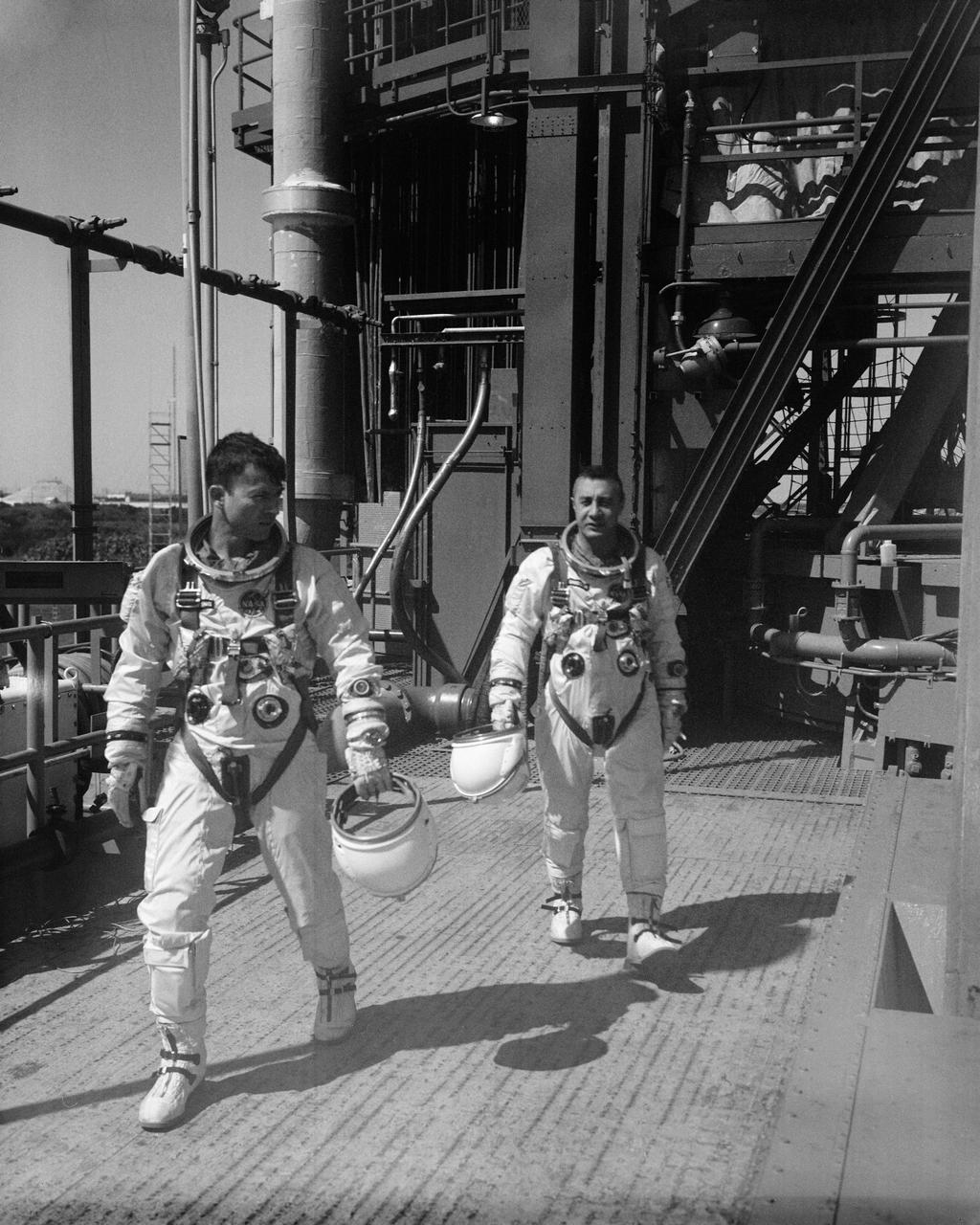
S65-20636 (1965) --- Astronauts John W. Young (left), pilot, and Virgil I. Grissom, command pilot, for the Gemini-Titan 3 flight, are shown leaving the launch pad after simulations in the Gemini-3 spacecraft.
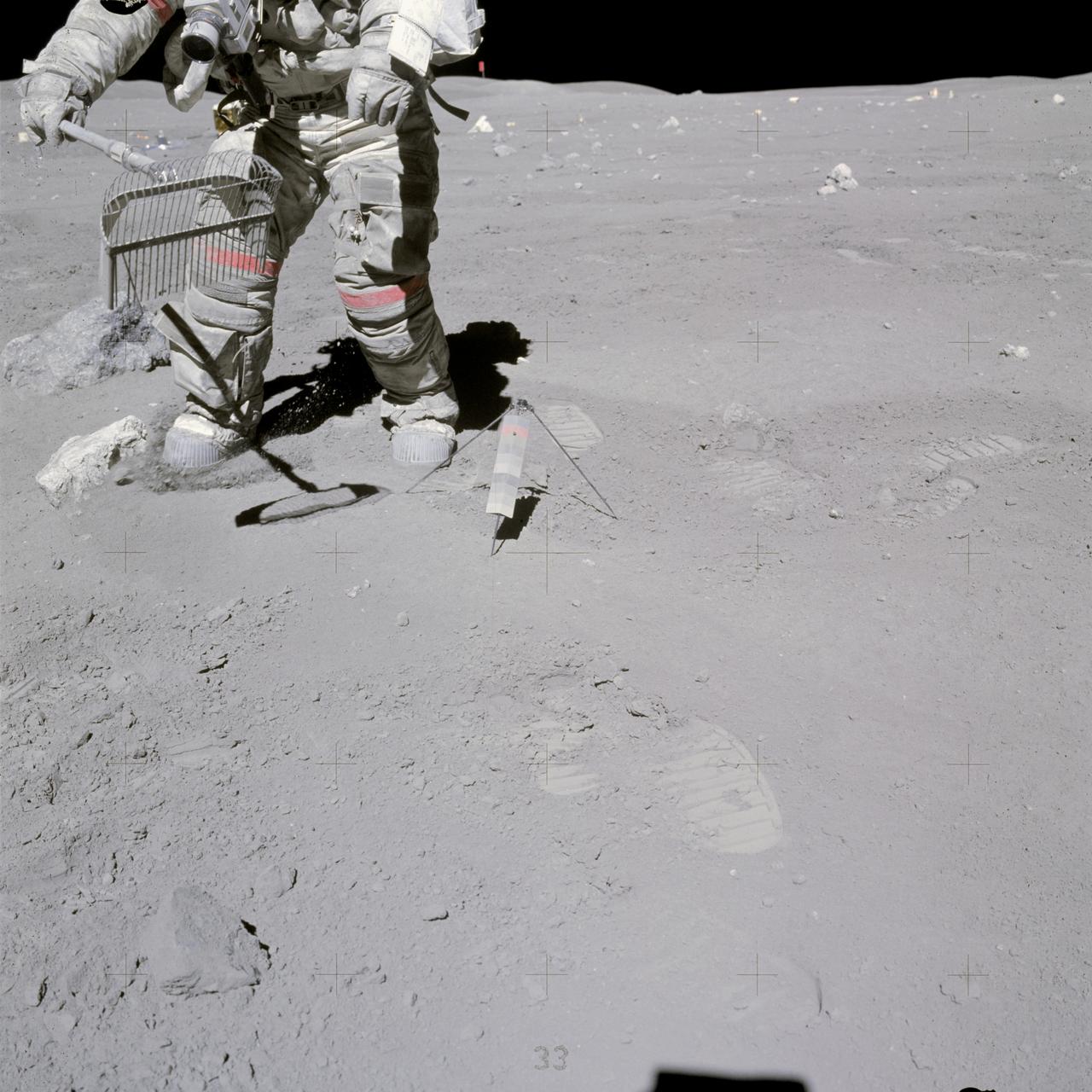
AS16-117-18826 (23 April 1972) --- Astronaut John W. Young collects samples at the North Ray Crater geological site during the mission's third and final Apollo 16 extravehicular activity (EVA). He has a rake in his hand, and the gnomon is near his foot. Note how soiled Young's Extravehicular Mobility Unit (EMU) is. While astronauts Young, commander; and Charles M. Duke Jr., lunar module pilot; descended in the Apollo 16 Lunar Module (LM) "Orion" to explore the Descartes highlands landing site on the moon, astronaut Thomas K. Mattingly II, command module pilot, remained with the Command and Service Modules (CSM) "Casper" in lunar orbit.
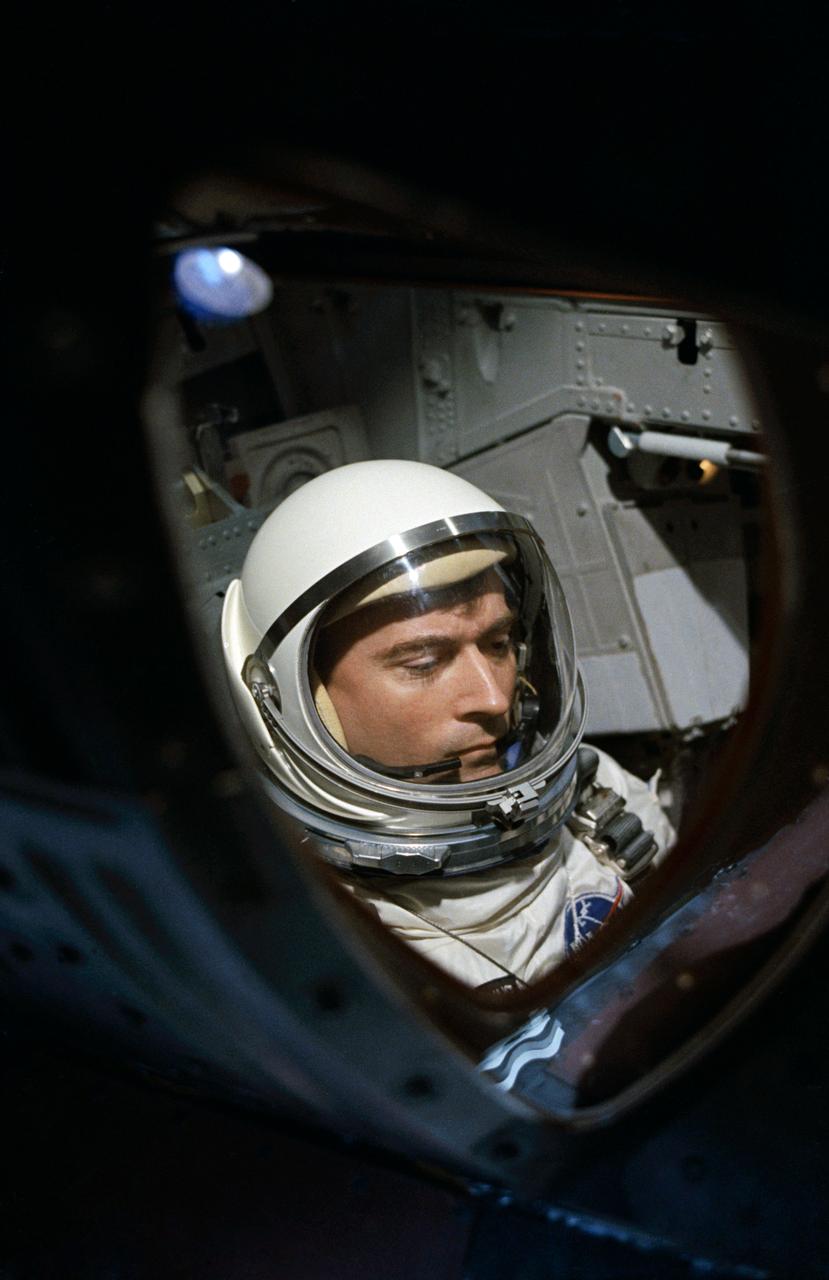
View of Astronaut John W. Young through spacecraft window prior to launch of Gemini-Titan 3 mission.
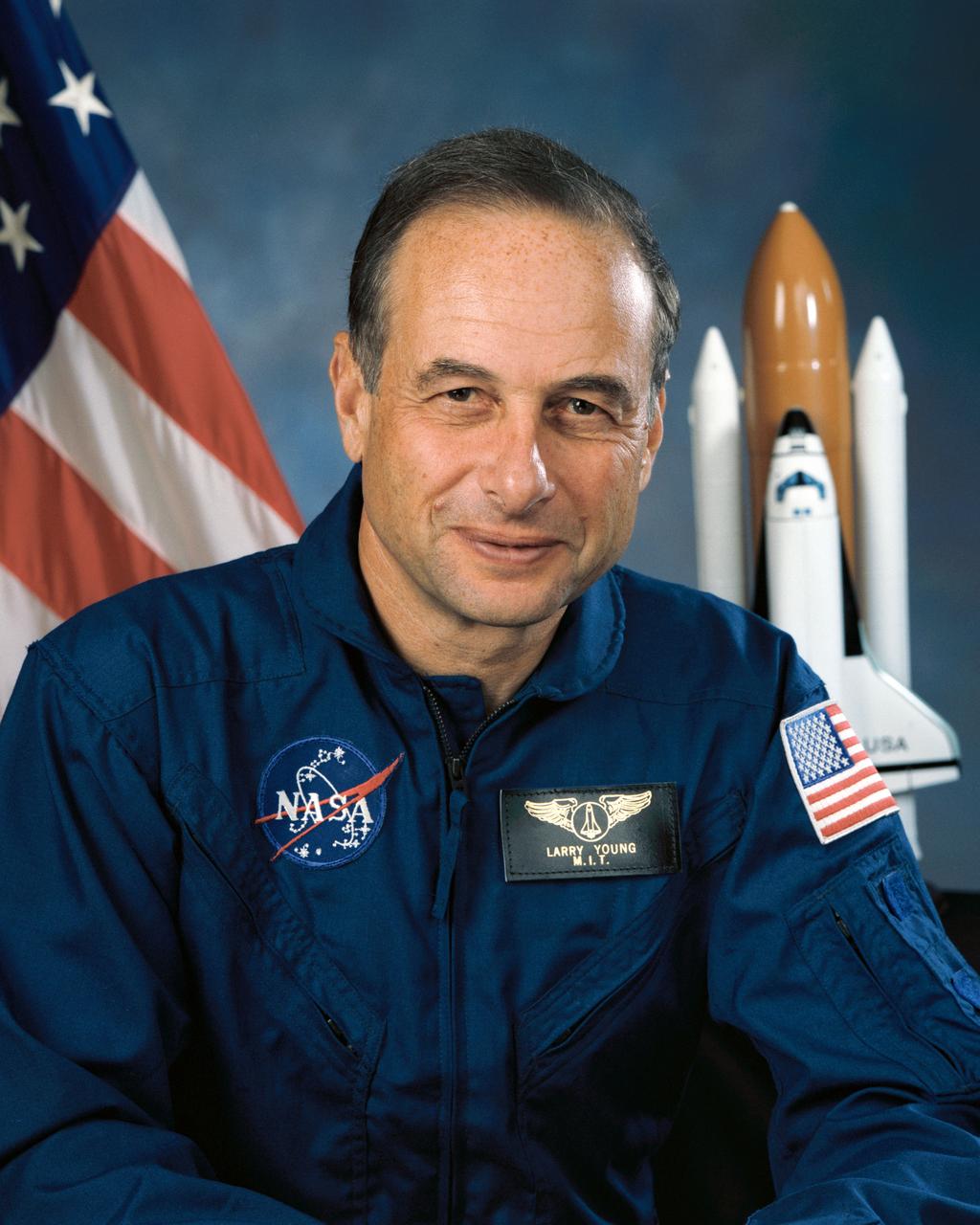
S92-49243 (November 1992) --- Astronaut Laurence Young, Sc. D., Massachusetts Institute of Technology, payload specialist
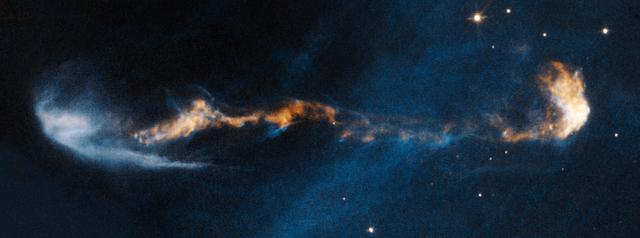
AUGUST 31, 2011: A team of scientists has collected enough high-resolution Hubble Space Telescope images over a 14-year period to stitch together time-lapse movies of powerful jets ejected from three young stars. The jets, a byproduct of gas accretion around newly forming stars, shoot off at supersonic speeds in opposite directions through space. These phenomena are providing clues about the final stages of a star’s birth, offering a peek at how our Sun came into existence 4.5 billion years ago. Hubble’s unprecedented sharpness allows astronomers to see changes in the jets over just a few years’ time. Most astronomical processes change over timescales that are much longer than a human lifetime. To read more go to: <a href="http://www.nasa.gov/mission_pages/hubble/science/supersonic-jets.html" rel="nofollow">www.nasa.gov/mission_pages/hubble/science/supersonic-jets...</a> Object Name: HH 47 Image Type: Astronomical Credit: NASA, ESA, and P. Hartigan (Rice University)..<b><a href="http://www.nasa.gov/centers/goddard/home/index.html" rel="nofollow">NASA Goddard Space Flight Center</a></b> enables NASA’s mission through four scientific endeavors: Earth Science, Heliophysics, Solar System Exploration, and Astrophysics. Goddard plays a leading role in NASA’s accomplishments by contributing compelling scientific knowledge to advance the Agency’s mission. <b>Follow us on <a href="http://twitter.com/NASA_GoddardPix" rel="nofollow">Twitter</a></b> <b>Like us on <a href="http://www.facebook.com/pages/Greenbelt-MD/NASA-Goddard/395013845897?ref=tsd" rel="nofollow">Facebook</a></b> <b>Find us on <a href="http://instagrid.me/nasagoddard/?vm=grid" rel="nofollow">Instagram</a></b>
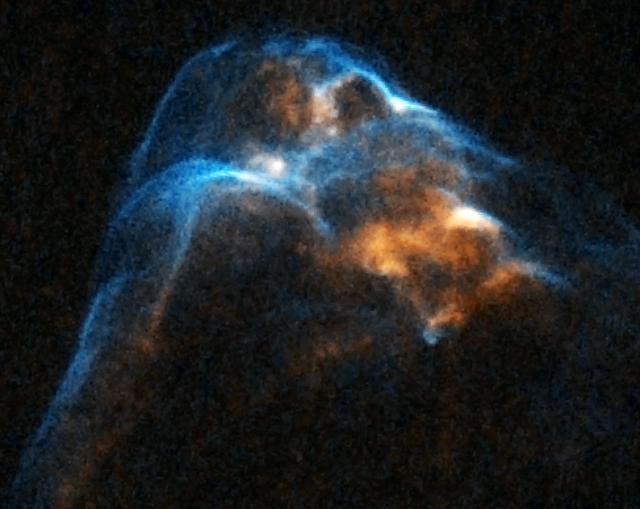
AUGUST 31, 2011: A team of scientists has collected enough high-resolution Hubble Space Telescope images over a 14-year period to stitch together time-lapse movies of powerful jets ejected from three young stars. The jets, a byproduct of gas accretion around newly forming stars, shoot off at supersonic speeds in opposite directions through space. These phenomena are providing clues about the final stages of a star’s birth, offering a peek at how our Sun came into existence 4.5 billion years ago. Hubble’s unprecedented sharpness allows astronomers to see changes in the jets over just a few years’ time. Most astronomical processes change over timescales that are much longer than a human lifetime. To read more go to: <a href="http://www.nasa.gov/mission_pages/hubble/science/supersonic-jets.html" rel="nofollow">www.nasa.gov/mission_pages/hubble/science/supersonic-jets...</a> Object Name: HH 34 Bow Shock Image Type: Astronomical Credit: NASA, ESA, and P. Hartigan (Rice University)..<b><a href="http://www.nasa.gov/centers/goddard/home/index.html" rel="nofollow">NASA Goddard Space Flight Center</a></b> enables NASA’s mission through four scientific endeavors: Earth Science, Heliophysics, Solar System Exploration, and Astrophysics. Goddard plays a leading role in NASA’s accomplishments by contributing compelling scientific knowledge to advance the Agency’s mission. <b>Follow us on <a href="http://twitter.com/NASA_GoddardPix" rel="nofollow">Twitter</a></b> <b>Like us on <a href="http://www.facebook.com/pages/Greenbelt-MD/NASA-Goddard/395013845897?ref=tsd" rel="nofollow">Facebook</a></b> <b>Find us on <a href="http://instagrid.me/nasagoddard/?vm=grid" rel="nofollow">Instagram</a></b>
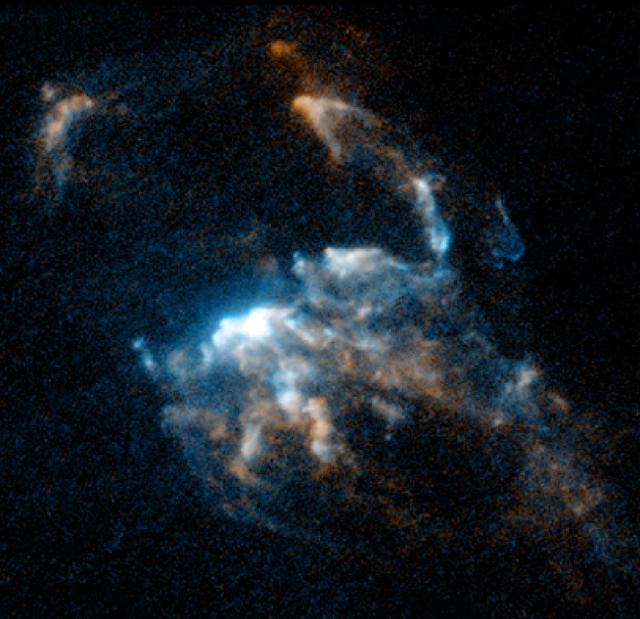
AUGUST 31, 2011: A team of scientists has collected enough high-resolution Hubble Space Telescope images over a 14-year period to stitch together time-lapse movies of powerful jets ejected from three young stars. The jets, a byproduct of gas accretion around newly forming stars, shoot off at supersonic speeds in opposite directions through space. These phenomena are providing clues about the final stages of a star’s birth, offering a peek at how our Sun came into existence 4.5 billion years ago. Hubble’s unprecedented sharpness allows astronomers to see changes in the jets over just a few years’ time. Most astronomical processes change over timescales that are much longer than a human lifetime. To read more go to: <a href="http://www.nasa.gov/mission_pages/hubble/science/supersonic-jets.html" rel="nofollow">www.nasa.gov/mission_pages/hubble/science/supersonic-jets...</a> Object Name: HH 2 Image Type: Astronomical Credit: NASA, ESA, and P. Hartigan (Rice University)..<b><a href="http://www.nasa.gov/centers/goddard/home/index.html" rel="nofollow">NASA Goddard Space Flight Center</a></b> enables NASA’s mission through four scientific endeavors: Earth Science, Heliophysics, Solar System Exploration, and Astrophysics. Goddard plays a leading role in NASA’s accomplishments by contributing compelling scientific knowledge to advance the Agency’s mission. <b>Follow us on <a href="http://twitter.com/NASA_GoddardPix" rel="nofollow">Twitter</a></b> <b>Like us on <a href="http://www.facebook.com/pages/Greenbelt-MD/NASA-Goddard/395013845897?ref=tsd" rel="nofollow">Facebook</a></b> <b>Find us on <a href="http://instagrid.me/nasagoddard/?vm=grid" rel="nofollow">Instagram</a></b>
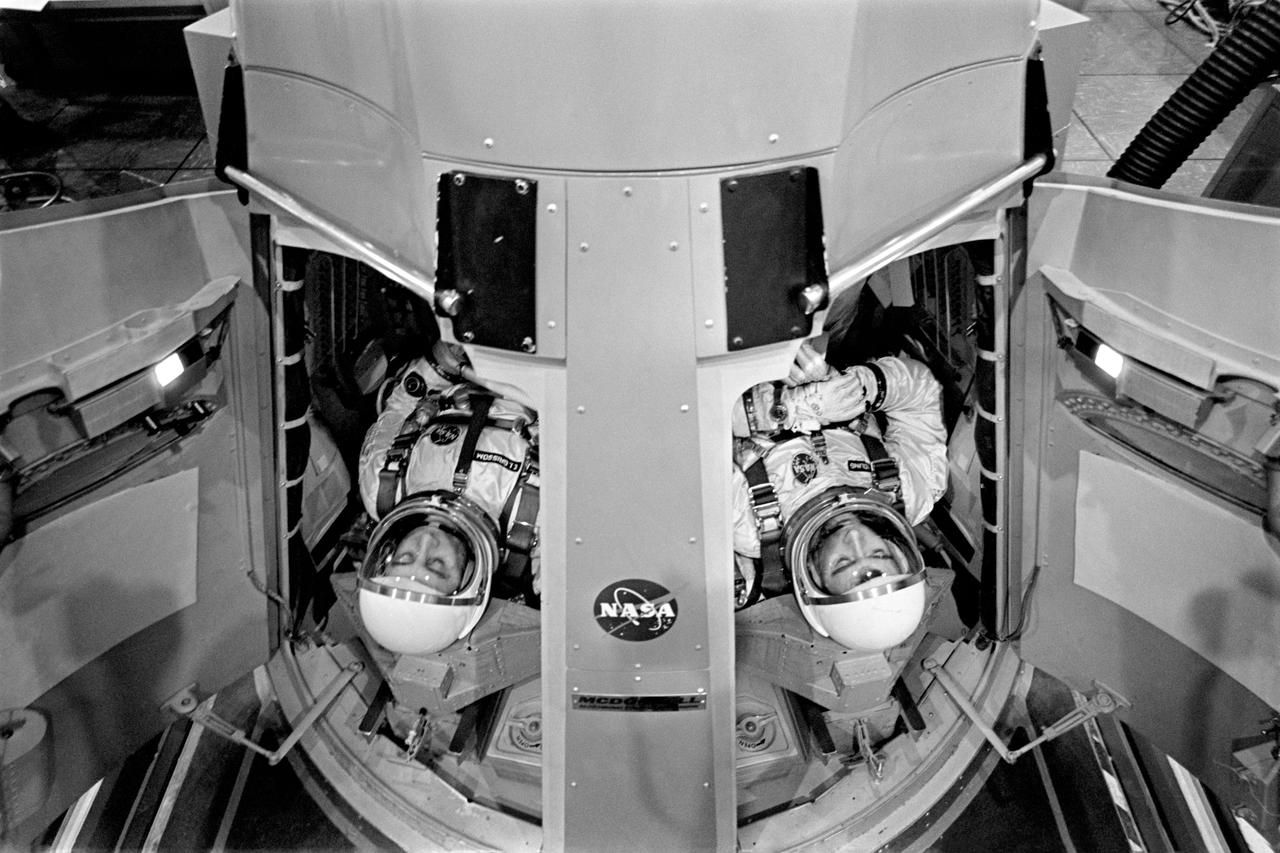
S65-21864 (19 March 1965) --- Astronauts Virgil I. Grissom (left), command pilot; and John W. Young, pilot, prepare to run Gemini-Titan 3 simulations in the Gemini mission simulator at Cape Kennedy, Florida. The NASA GT-3 flight was scheduled for March 23, 1965.
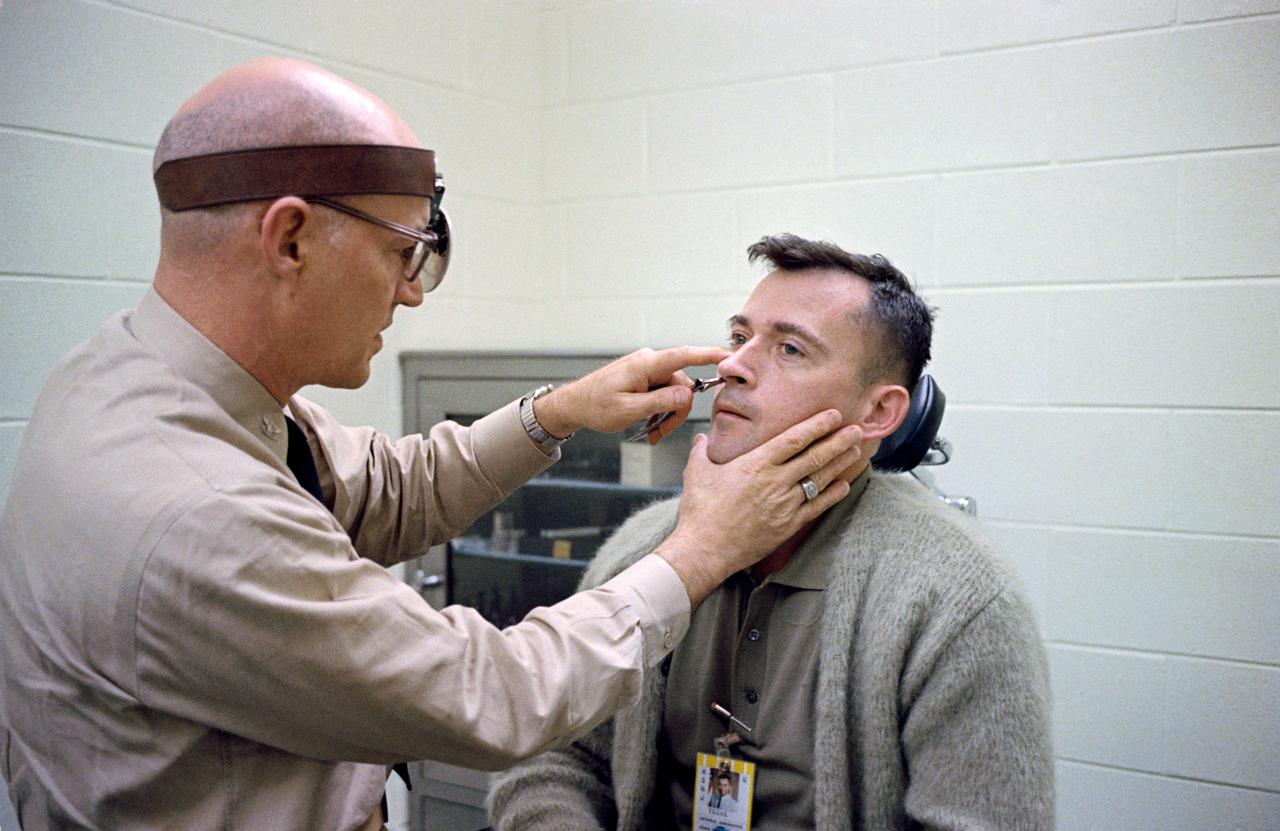
S65-22672 (21 March 1965) --- Astronaut John W. Young, pilot for the Gemini-Titan 3 mission, undergoes an ear, nose and throat examination by Dr. L. Ballenberger, U.S. Navy captain. The examination took place during the physical given to the GT-3 crew two days before launch.
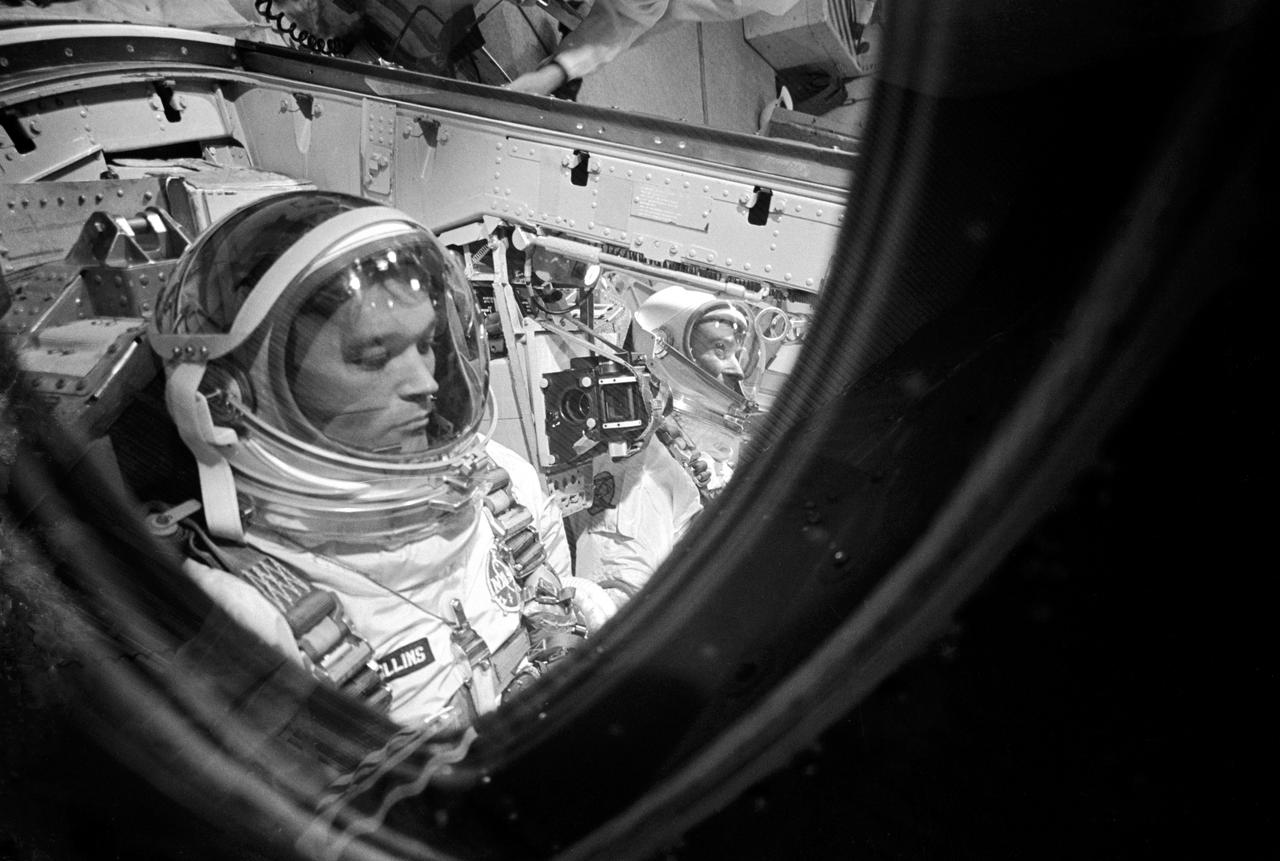
S66-46477 (18 July 1966) --- Close-up of astronaut Michael Collins, Gemini-10 pilot, making final adjustments and checks in the Gemini spacecraft during prelaunch countdown. In right background is astronaut John W. Young, command pilot. Photo credit: NASA
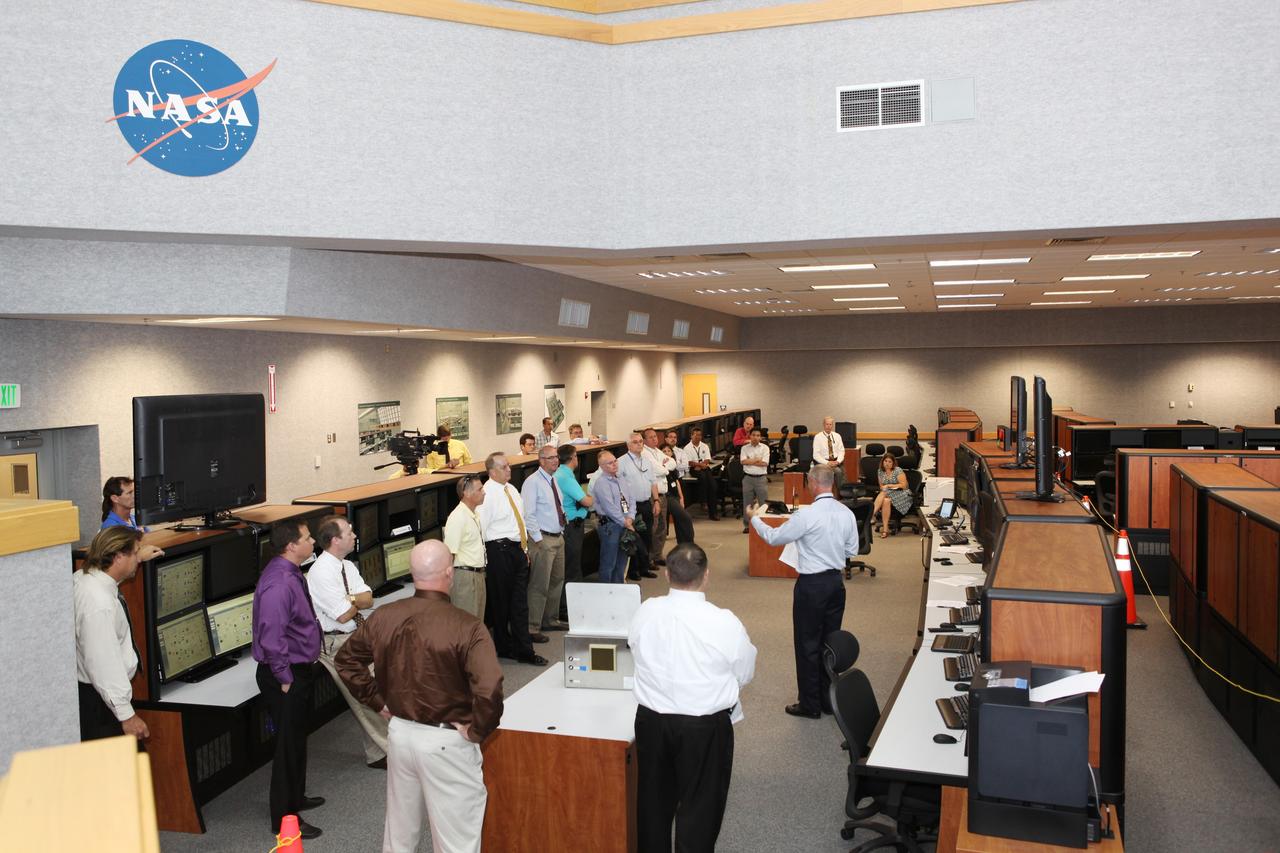
CAPE CANAVERAL, Fla. – Workers at NASA's Kennedy Space Center watch a demonstration of new systems installed in the Young-Crippen Firing Room, also known as Firing Room 1, inside the Launch Control Center. The renovation has been led by the Ground Systems Development and Operations Program based at Kennedy. The new systems are designed to be flexible so controllers can process and launch multiple types of rockets and spacecraft, whether they are government or commercial models. Photo credit: NASA/Dmitri Gerondidakis

CAPE CANAVERAL, Fla. – Robert Cabana, director of NASA's Kennedy Space Center and a former astronaut, takes a look inside new systems installed in the Young-Crippen Firing Room, also known as Firing Room 1, inside the Launch Control Center. The renovation has been led by the Ground Systems Development and Operations Program based at Kennedy. The new systems are designed to be flexible so controllers can process and launch multiple types of rockets and spacecraft, whether they are government or commercial models. Photo credit: NASA/Dmitri Gerondidakis
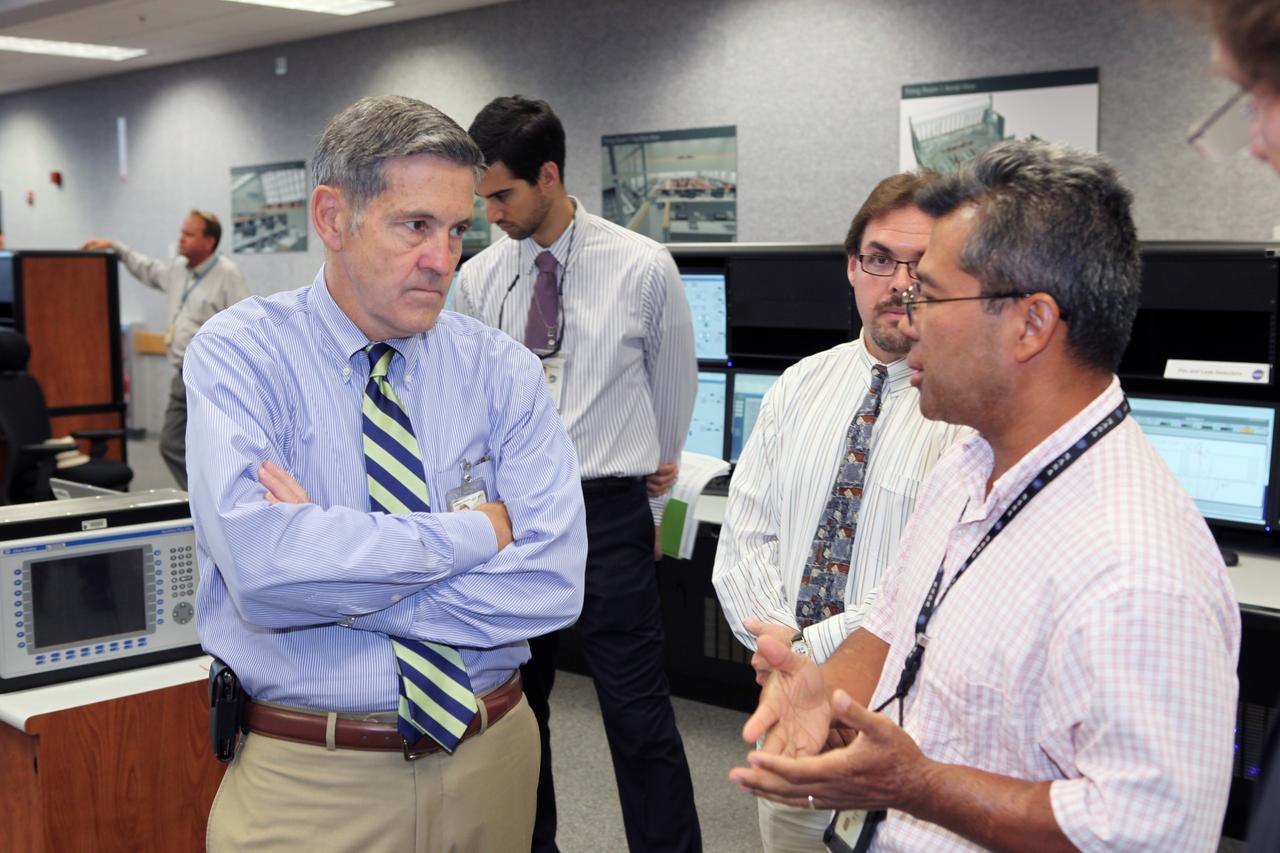
CAPE CANAVERAL, Fla. – Robert Cabana, director of NASA's Kennedy Space Center and a former astronaut, listens to a presentation of new systems installed in the Young-Crippen Firing Room, also known as Firing Room 1, inside the Launch Control Center. The renovation has been led by the Ground Systems Development and Operations Program based at Kennedy. The new systems are designed to be flexible so controllers can process and launch multiple types of rockets and spacecraft, whether they are government or commercial models. Photo credit: NASA/Dmitri Gerondidakis
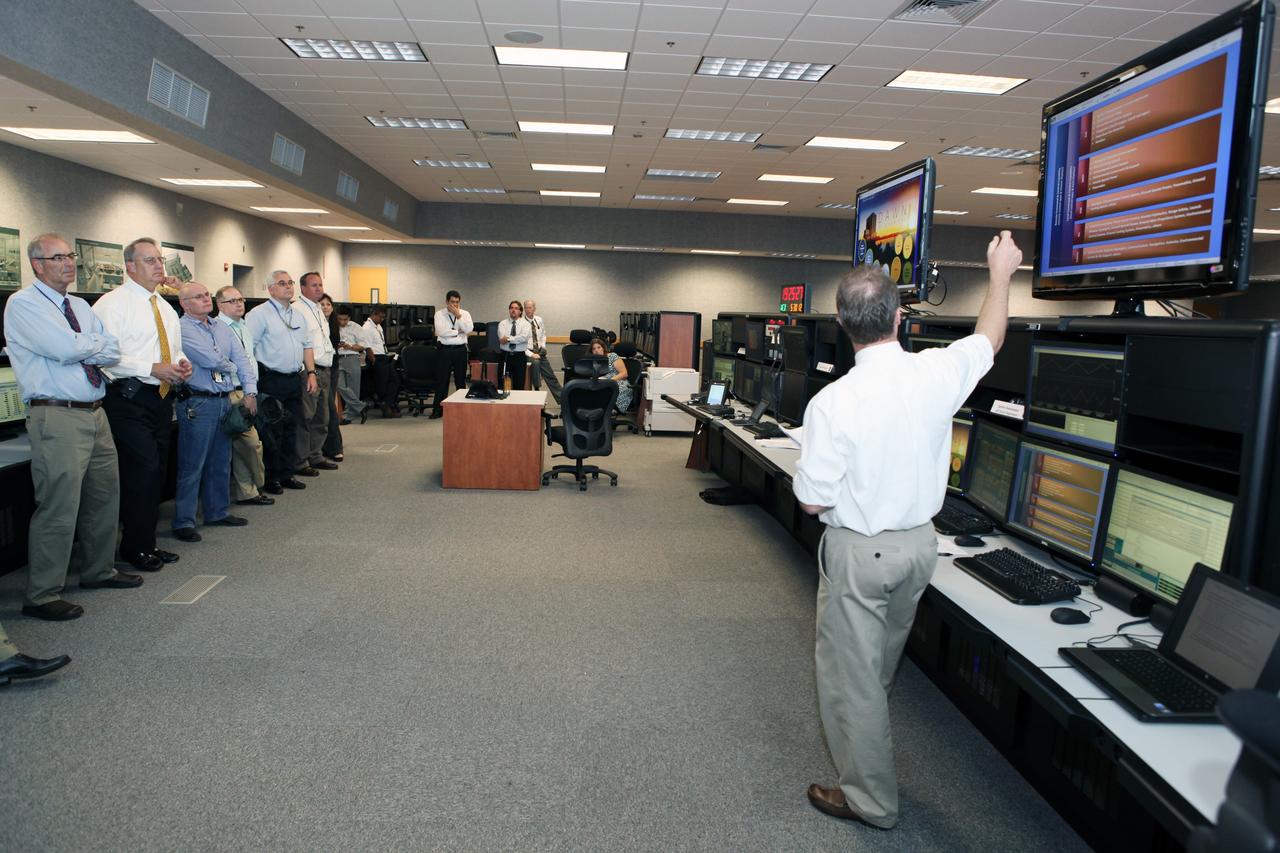
CAPE CANAVERAL, Fla. – Workers at NASA's Kennedy Space Center watch a demonstration of new systems installed in the Young-Crippen Firing Room, also known as Firing Room 1, inside the Launch Control Center. The renovation has been led by the Ground Systems Development and Operations Program based at Kennedy. The new systems are designed to be flexible so controllers can process and launch multiple types of rockets and spacecraft, whether they are government or commercial models. Photo credit: NASA/Dmitri Gerondidakis
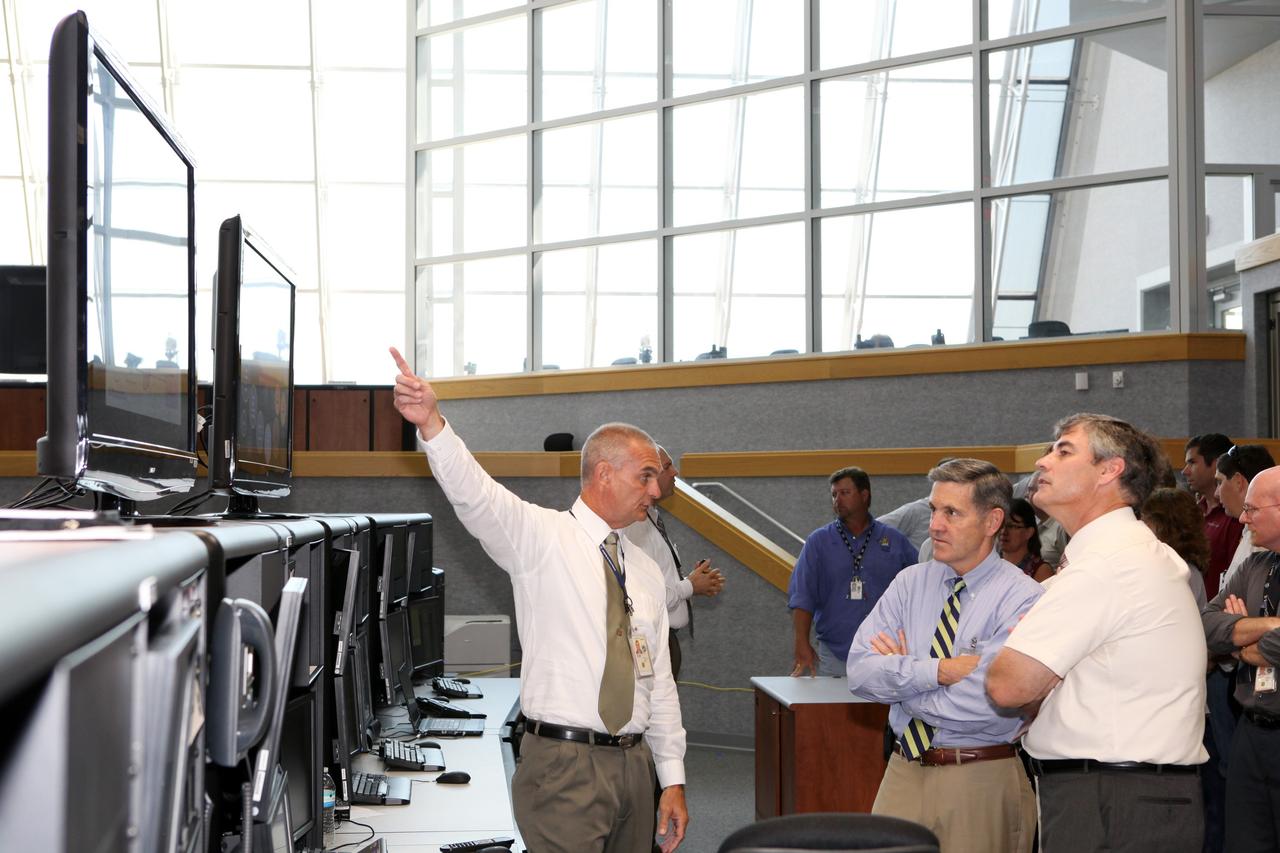
CAPE CANAVERAL, Fla. – Robert Cabana, director of NASA's Kennedy Space Center and a former astronaut, watches a demonstration of new systems installed in the Young-Crippen Firing Room, also known as Firing Room 1, inside the Launch Control Center. The renovation has been led by the Ground Systems Development and Operations Program based at Kennedy. The new systems are designed to be flexible so controllers can process and launch multiple types of rockets and spacecraft, whether they are government or commercial models. Photo credit: NASA/Dmitri Gerondidakis