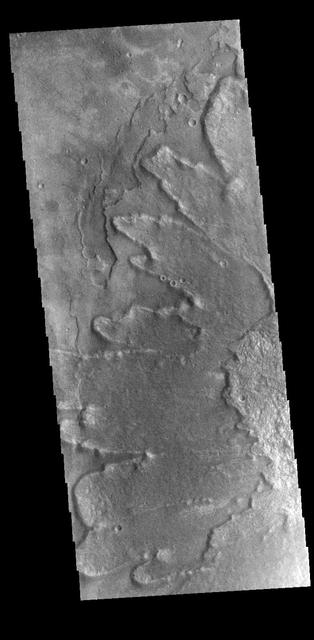
This VIS image shows part of the ejecta around Yuty Crater. The ejecta, with the raised outer margin, is called a rampart. Orbit Number: 65269 Latitude: 22.3058 Longitude: 325.442 Instrument: VIS Captured: 2016-08-31 02:31 http://photojournal.jpl.nasa.gov/catalog/PIA21007
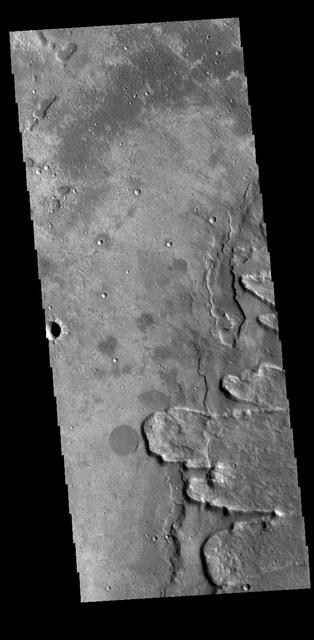
This image captured by NASA 2001 Mars Odyssey spacecraft shows a small portion of Yuty Crater ejecta blanket.

Off the image to the right is Yuty Crater, located between Simud and Tiu Valles. The crater ejcta forms the large lobes along the right side of this VIS image. This type of ejecta was created by surface flow rather than air fall. It is thought that the near surface materials contained volatiles (like water) which mixed with the ejecta at the time of the impact. Orbit Number: 68736 Latitude: 22.247 Longitude: 325.213 Instrument: VIS Captured: 2017-06-12 17:57 https://photojournal.jpl.nasa.gov/catalog/PIA22303
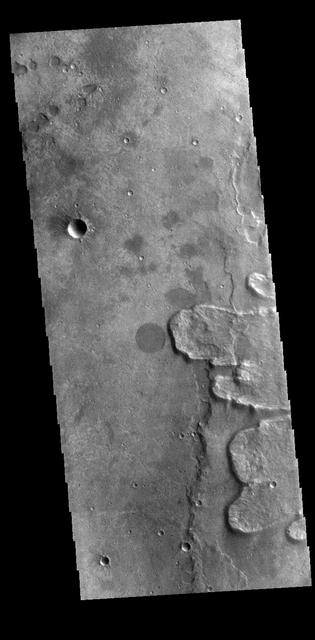
This VIS image shows a portion of the ejecta deposit of Yuty Crater. The raised edge of the ejecta is termed a rampart, and indicates that a volatile like water may have been present. The ejecta edge looks like a flow front and much different from air fall ejecta emplacement. Orbit Number: 68736 Latitude: 22.247 Longitude: 325.213 Instrument: VIS Captured: 2017-06-12 17:57 https://photojournal.jpl.nasa.gov/catalog/PIA22171
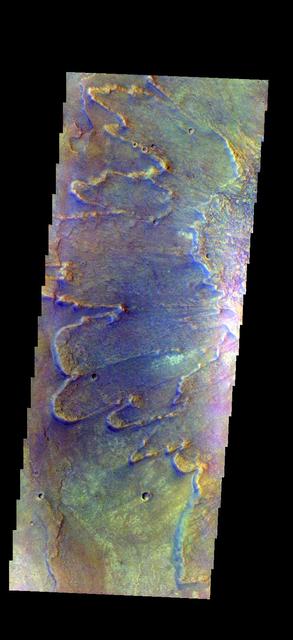
The THEMIS camera contains 5 filters. The data from different filters can be combined in multiple ways to create a false color image. This image from NASA 2001 Mars Odyssey spacecraft shows part of the ejecta from Yuty Crater.