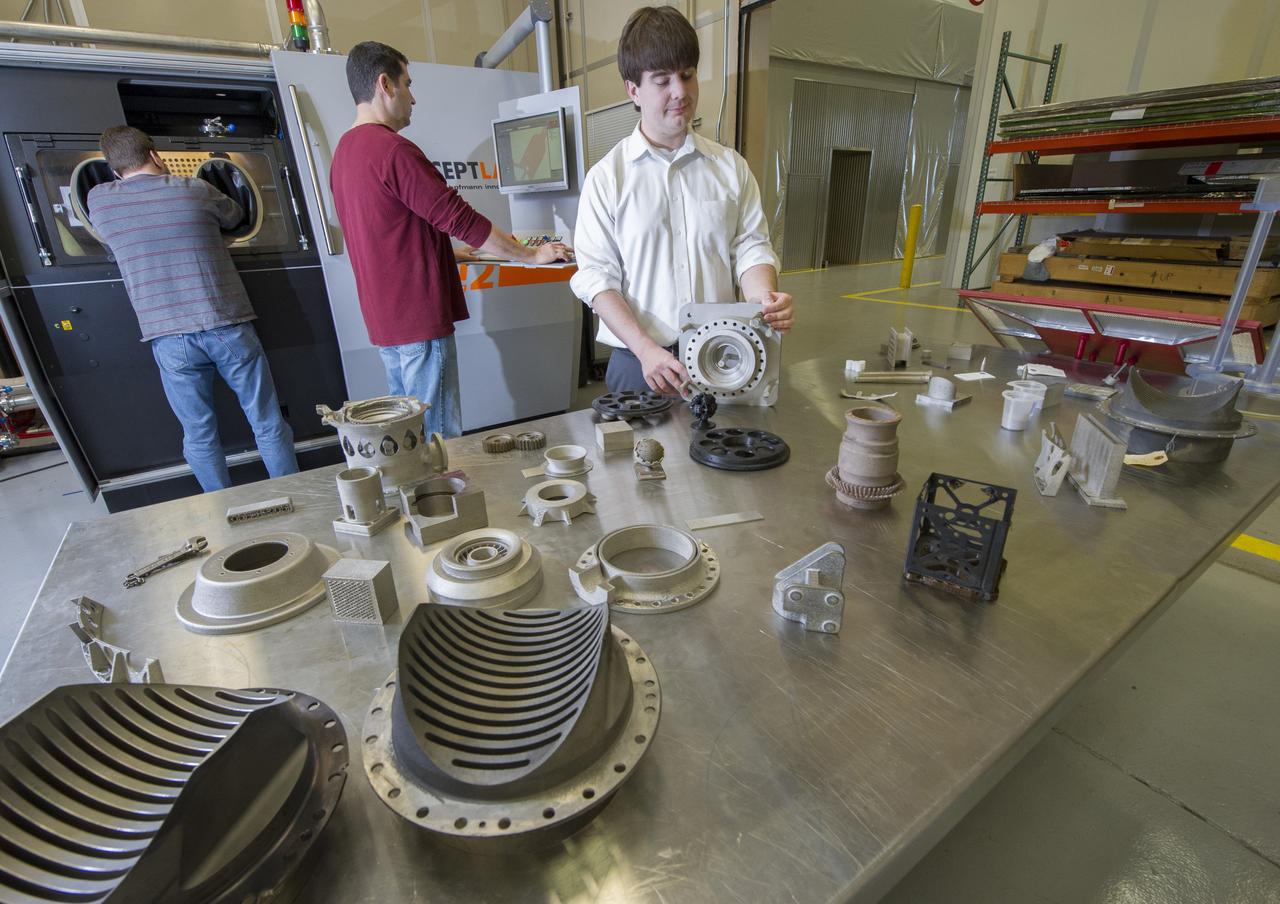
QUINCY BEAN, JIM LYDON, AND ZACK JONES OF MSFC’S ADVANCED MANUFACTURING TEAM, WITH MSFC’S M2 SELECTIVE LASER MELTING SYSTEM. THE M2 IS CURRENTLY DEDICATED TO ADVANCED COPPER MATERIAL DEVELOPMENT FOR THE LOW COST UPPER STAGE PROGRAM.
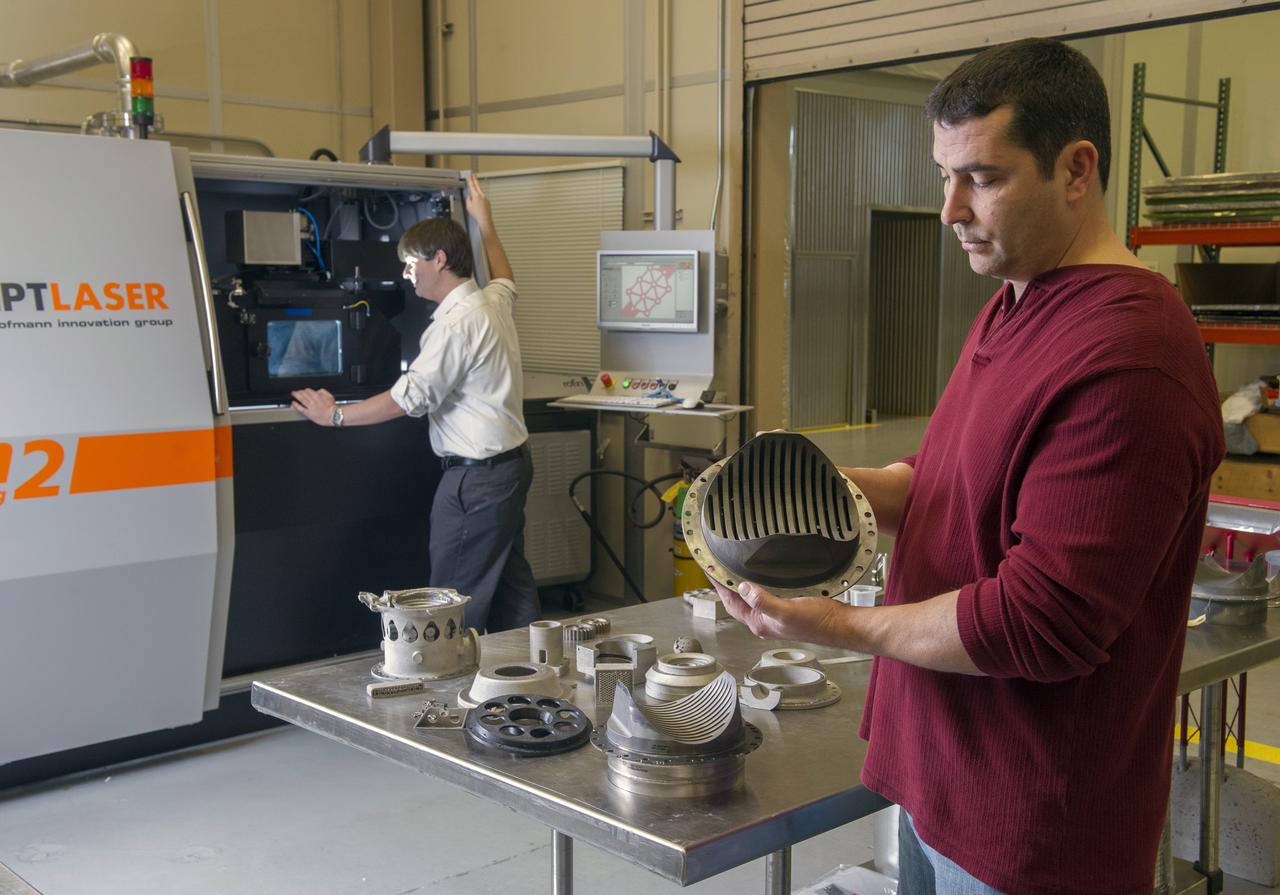
ZACK JONES AND JIM LYDON OF MSFC’S ADVANCED MANUFACTURING TEAM, WITH MSFC’S M2 SELECTIVE LASER MELTING SYSTEM. THE M2 IS CURRENTLY DEDICATED TO ADVANCED COPPER MATERIAL DEVELOPMENT FOR THE LOW COST UPPER STAGE PROGRAM.
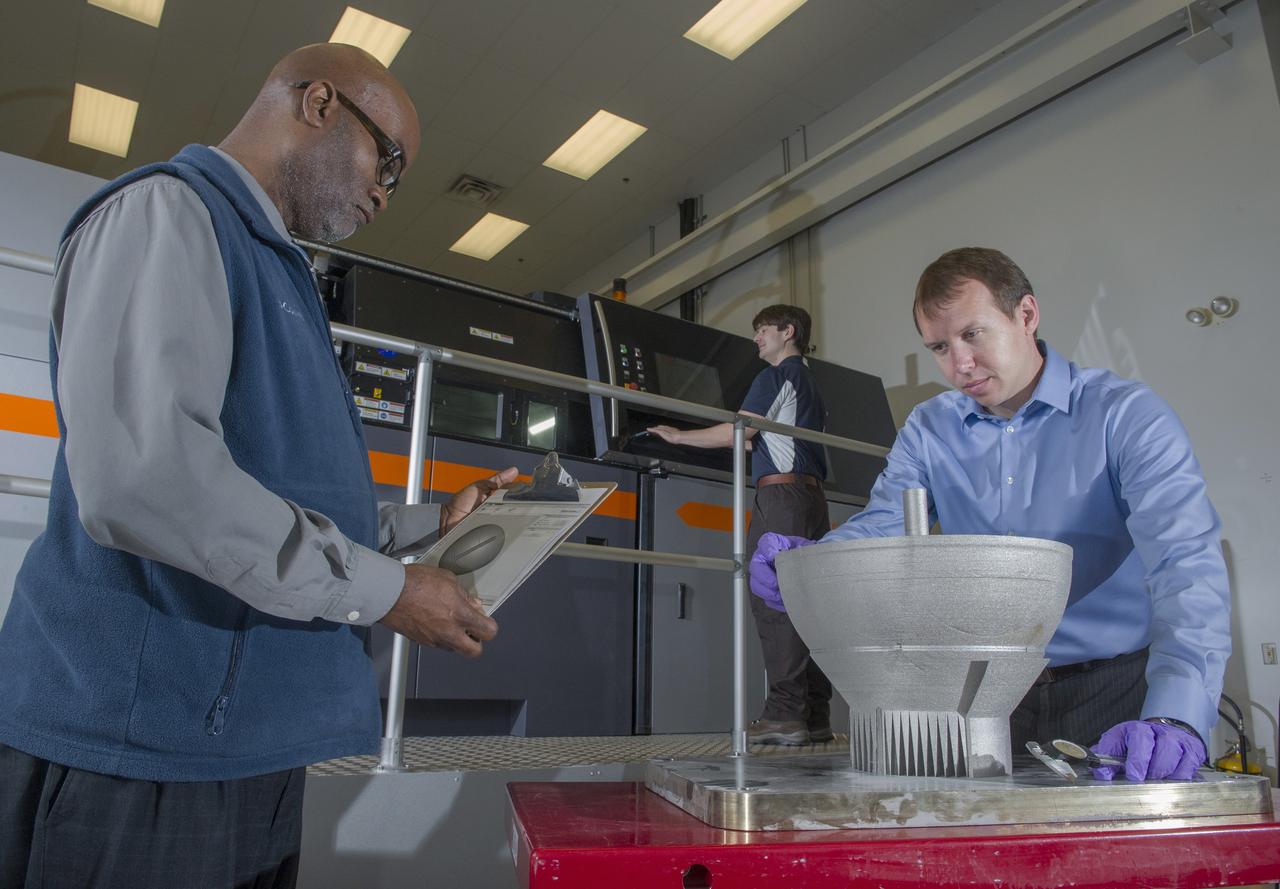
JOHNNIE CLARK, BRIAN WEST, AND ZACK JONES OF MSFC’S ADVANCED MANUFACTURING TEAM, WITH MSFC’S XLINE SELECTIVE LASER MELTING SYSTEM. CURRENTLY ONE OF THE LARGEST METAL 3D PRINTERS, THE XLINE AT MARSHALL IS BEING USED TO DEVELOP AND CERTIFY NICKEL ALLOY 718 MATERIAL PROPERTIES AND LARGE MANUFACTURING TECH DEMOS FOR THE RS25 ENGINE AND THE COMMERCIAL CREWED VEHICLE PROJECTS.
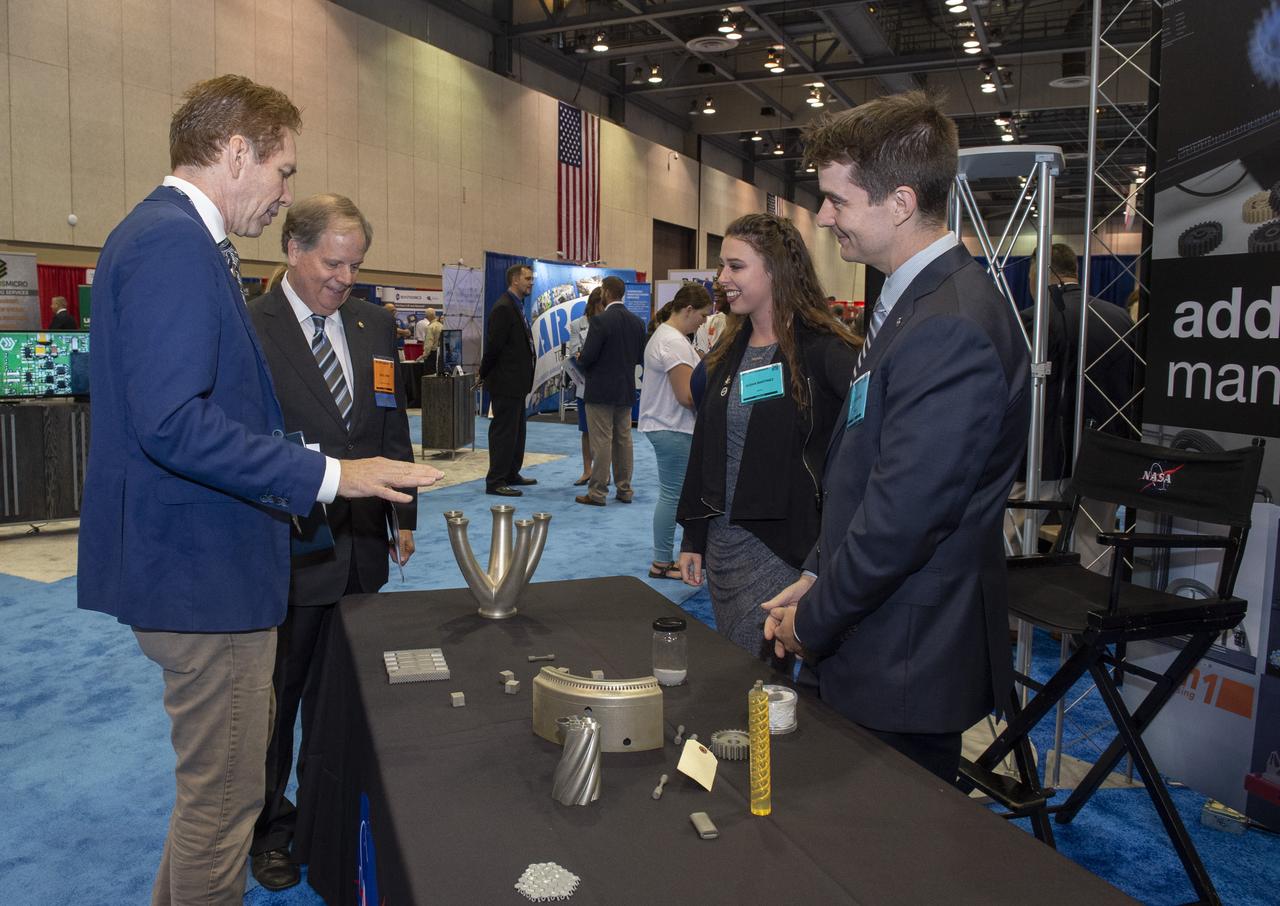
Marshall Space Flight Center Deputy Director Paul McConnaughey, left, discusses advanced manufacturing capabilities with Sen. Doug Jones of Alabama, second from left, Aug. 7 at the annual Space & Missile Defense Symposium in Huntsville, Alabama. The NASA exhibit, staffed by materials engineers Susan Barber, center, and Zack Jones, right, showcased some of the technologies, missions and hardware that will help enable humans to return to the Moon through the agency’s Artemis program.
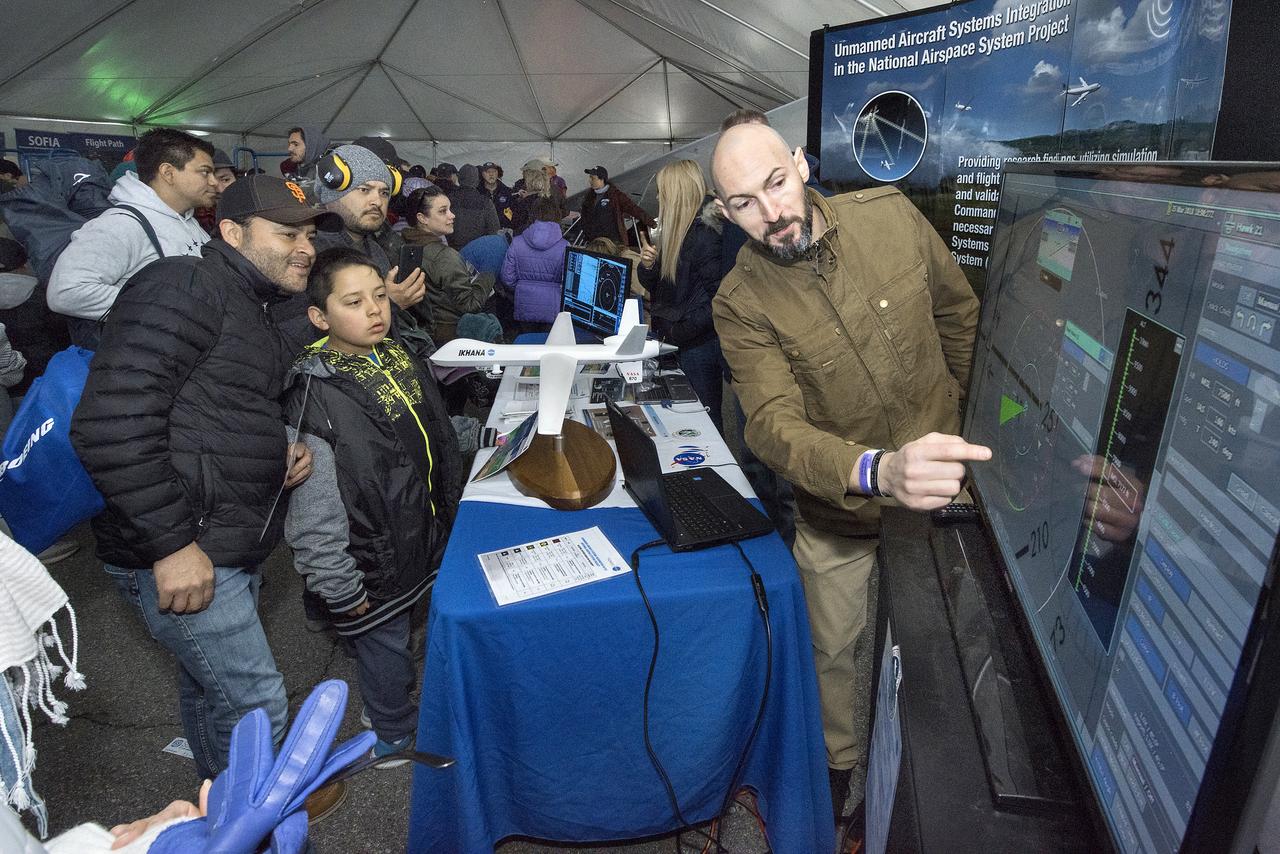
Zack Roberts from NASA’s Ames Research Center explains elements of the Unmanned Aircraft Systems Integration into the National Airspace System.
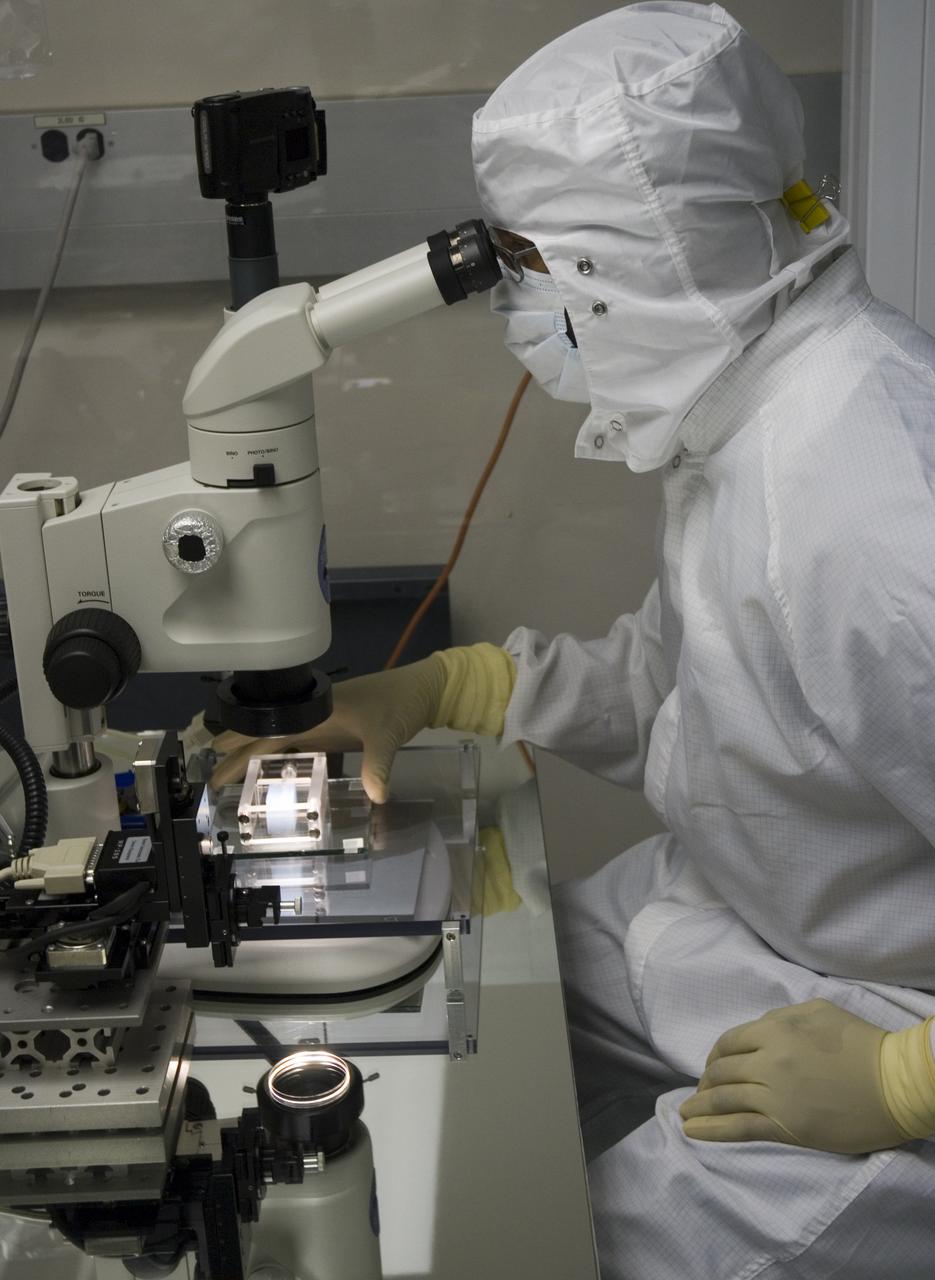
Stardust sample analysis @ UC Berkeley clean room with Dr Scott Sandford, NASA Ames Astrophysicist - mission samples provided to UC Berkeley for analysis by NASA Berkeley researcher Zack Gainsforth working with sample encased in aerogel
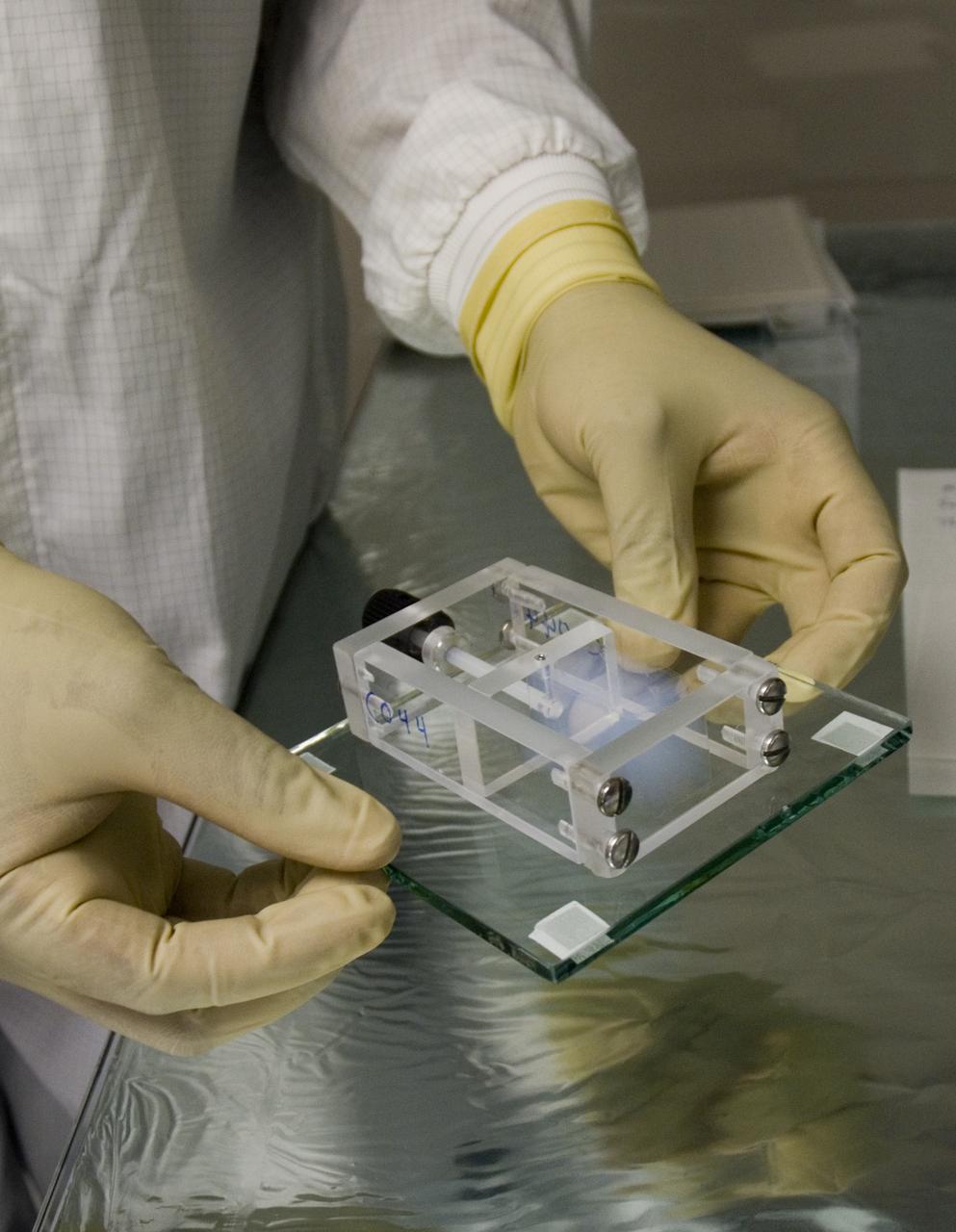
Stardust sample analysis @ UC Berkeley clean room with Dr Scott Sandford, NASA Ames Astrophysicist - mission samples provided to UC Berkeley for analysis by NASABerkeley researcher Zack Gainsforth working with sample encased in aerogel
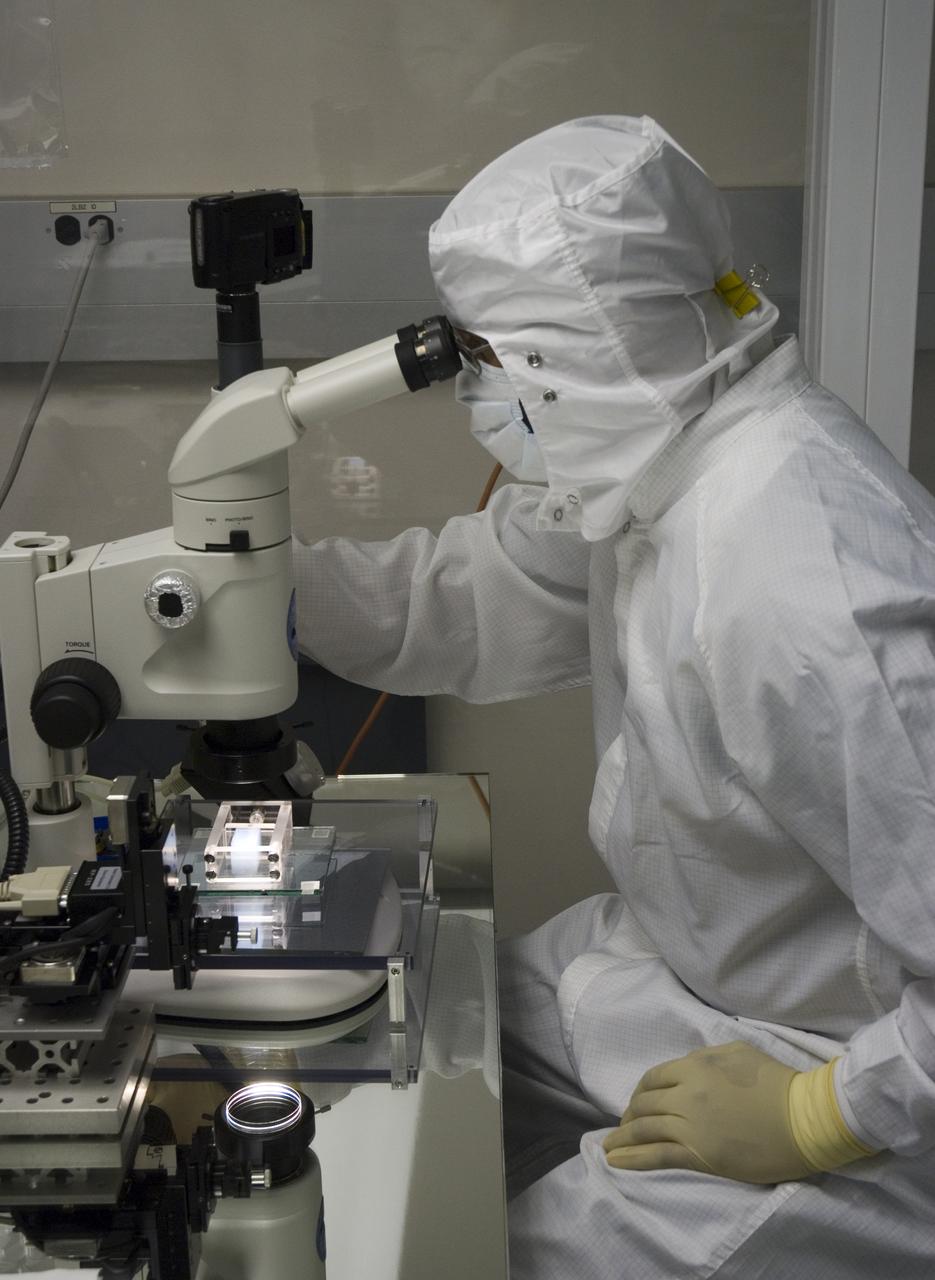
Stardust sample analysis @ UC Berkeley clean room with Dr Scott Sandford, NASA Ames Astrophysicist - mission samples provided to UC Berkeley for analysis by NASA Berkeley researcher Zack Gainsforth working with sample encased in aerogel

Stardust sample analysis @ UC Berkeley clean room with Dr Scott Sandford, NASA Ames Astrophysicist - mission samples provided to UC Berkeley for analysis by NASA Berkeley researchers Zack Gainsforth working with sample encased in aerogel

Stardust sample analysis @ UC Berkeley clean room with Dr Scott Sandford, NASA Ames Astrophysicist - mission samples provided to UC Berkeley for analysis by NASA Berkeley researcher Zack Gainsforth working with sample encased in aerogel
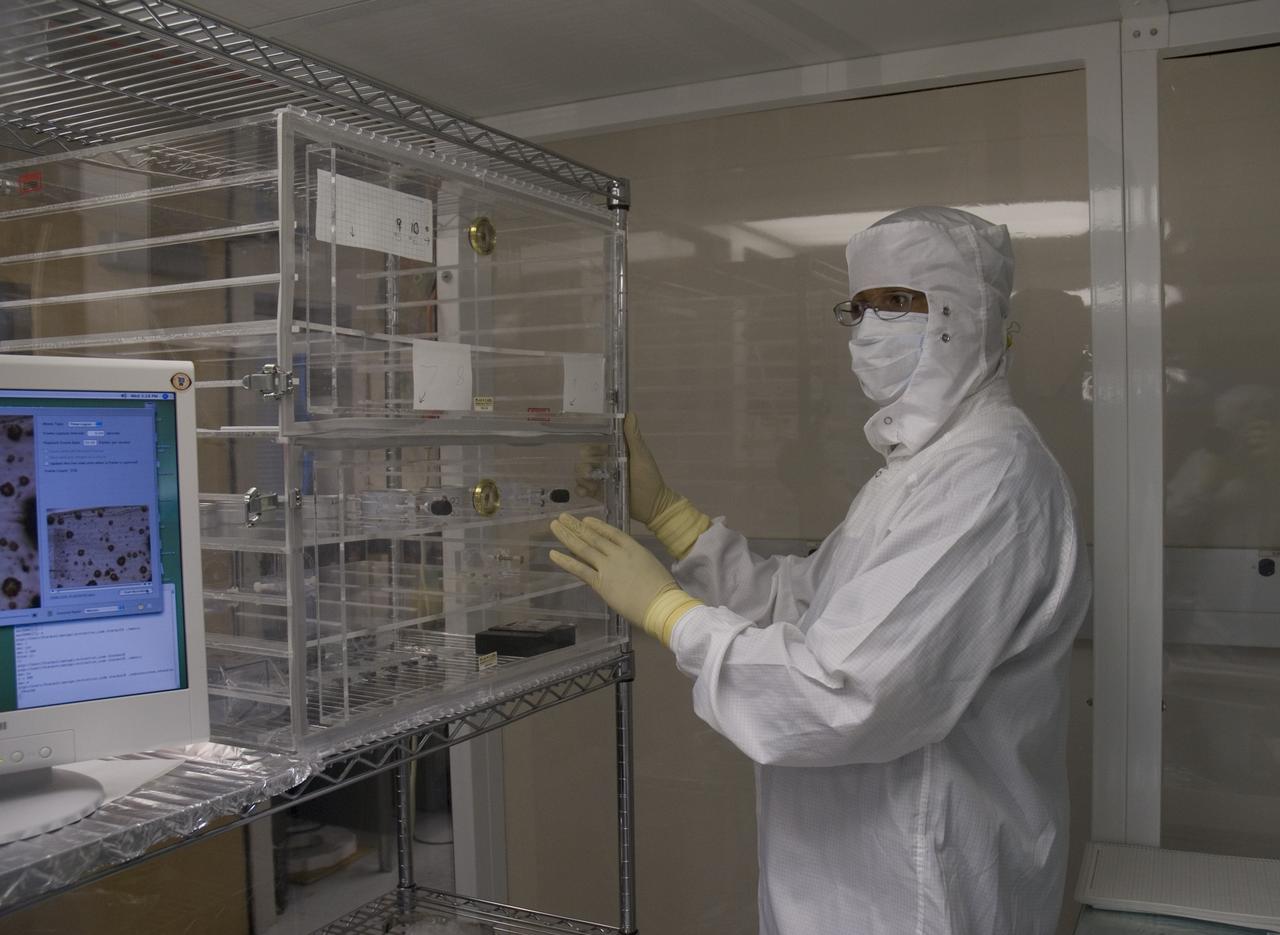
Stardust sample analysis @ UC Berkeley clean room with Dr Scott Sandford, NASA Ames Astrophysicist - mission samples provided to UC Berkeley for analysis by NASABerkeley researcher Zack Gainsforth working with sample encased in aerogel
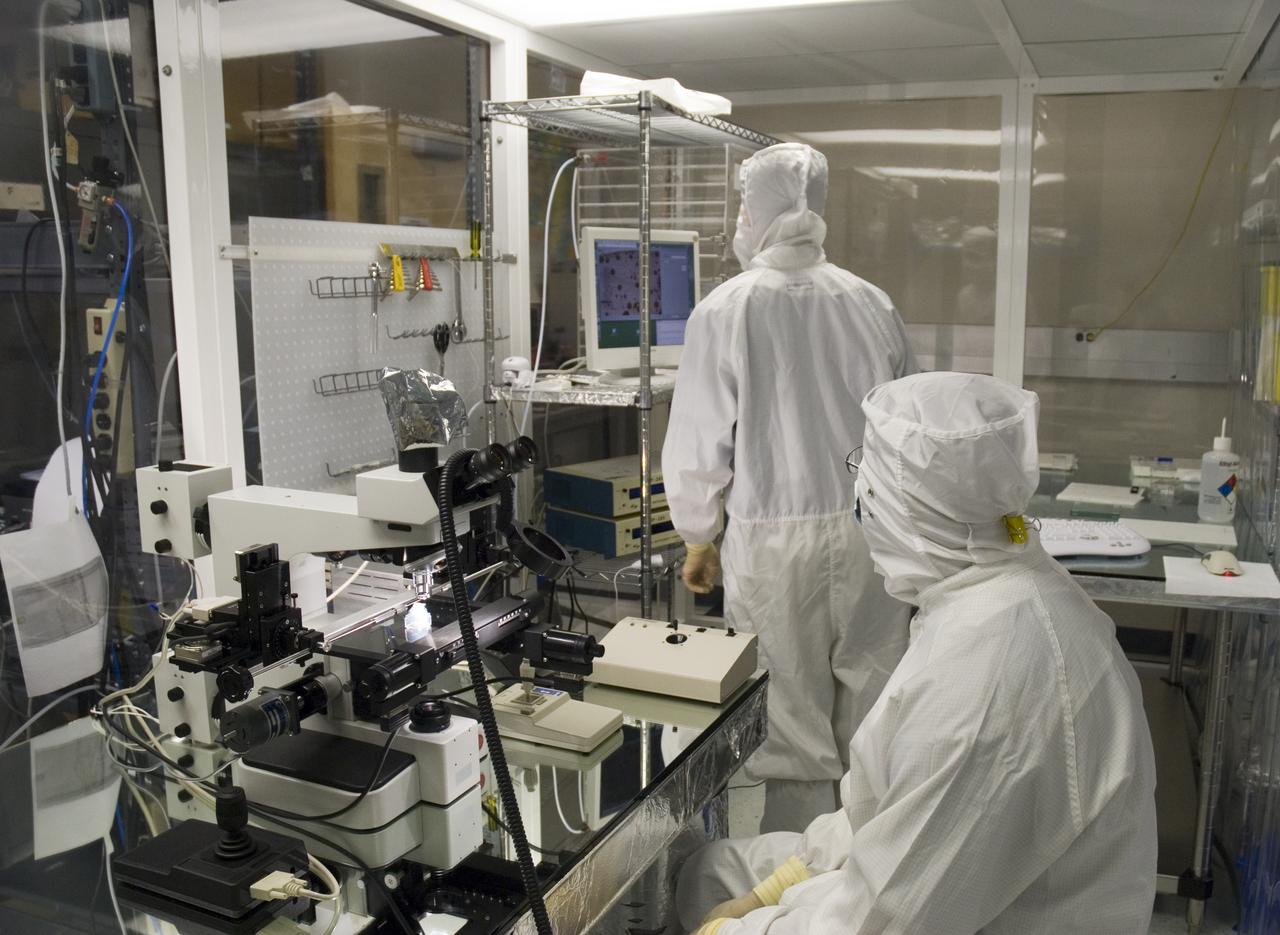
Stardust sample analysis @ UC Berkeley clean room with Dr Scott Sandford, NASA Ames Astrophysicist - mission samples provided to UC Berkeley for analysis by NASA Berkeley researchers Zack Gainsforth (seated) and Chris Snead working with sample encased in aerogel
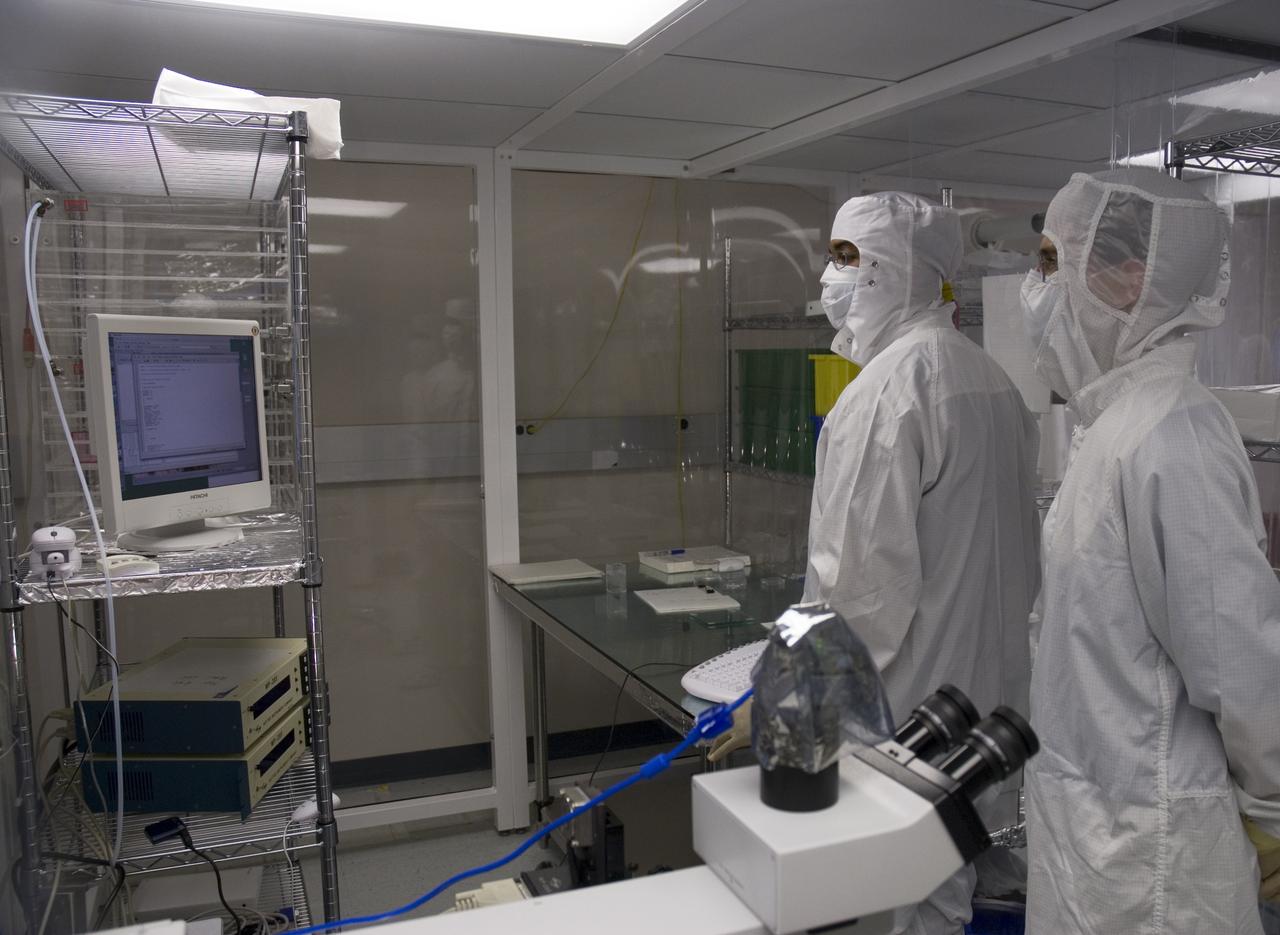
Stardust sample analysis @ UC Berkeley clean room with Dr Scott Sandford, NASA Ames Astrophysicist - mission samples provided to UC Berkeley for analysis by NASA Berkeley researchers Zack Gainsforth (seated) and Chris Snead working with sample encased in aerogel
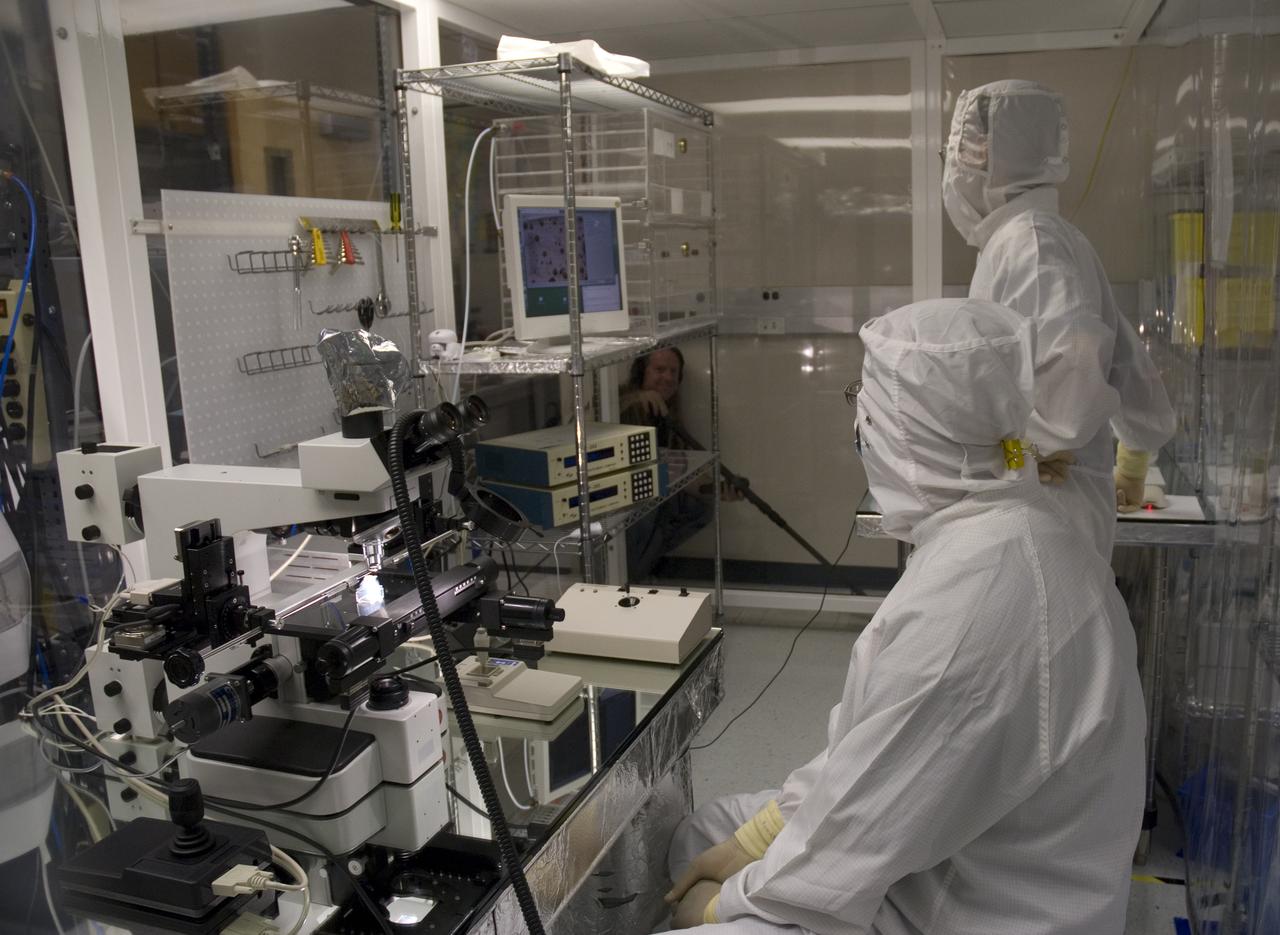
Stardust sample analysis @ UC Berkeley clean room with Dr Scott Sandford, NASA Ames Astrophysicist - mission samples provided to UC Berkeley for analysis by NASA Berkeley researchers Zack Gainsforth (seated) and Chris Snead working with sample encased in aerogel Note: Eric Land of NASA/AMES video crew in lower left corner providing sound support for event
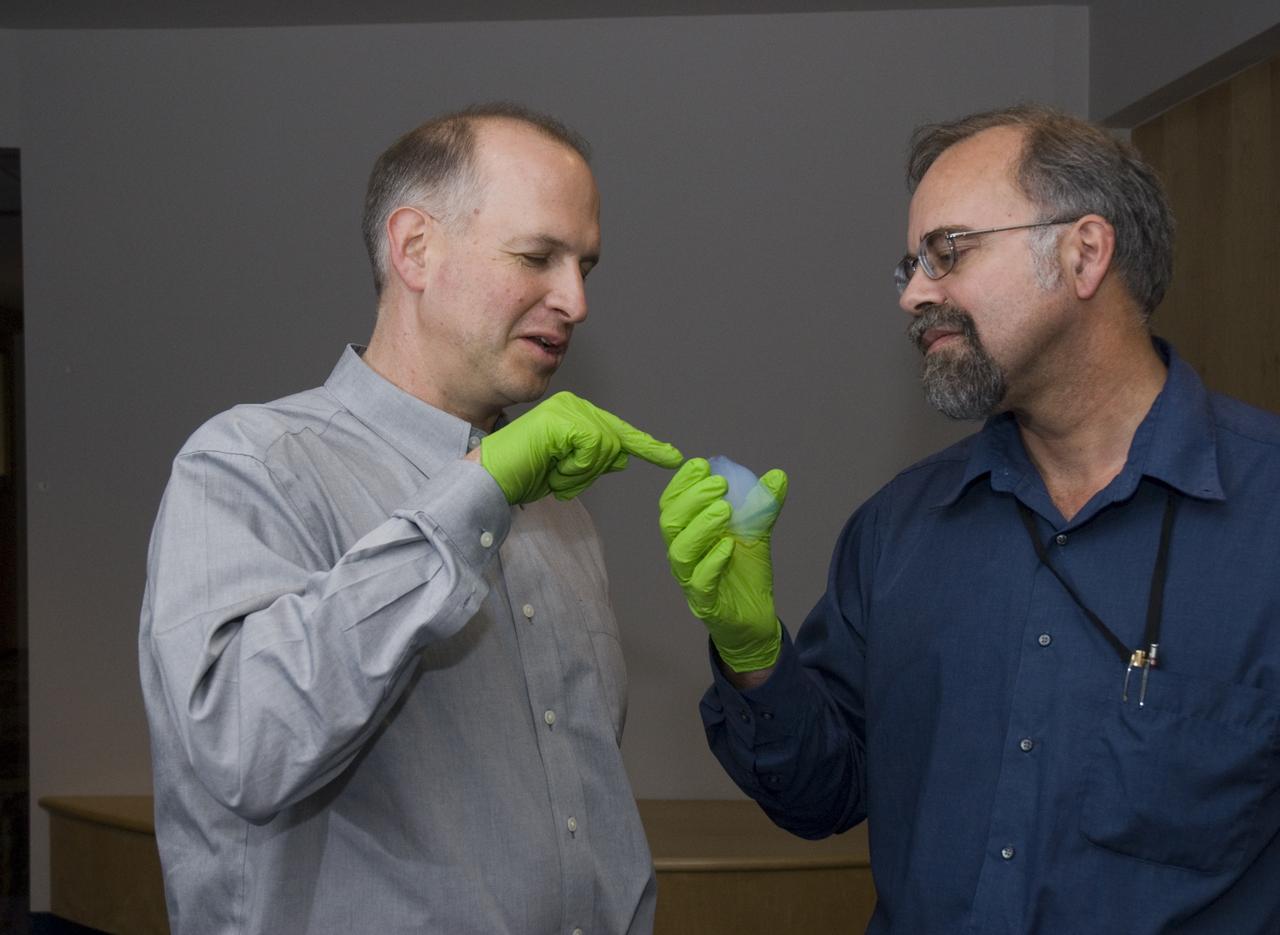
Stardust sample analysis @ UC Berkeley clean room - mission samples provided to UC Berkeley for analysis by NASA: Dr Andrew Westphal, Berkeley Physicist with Dr Scott Sandford, NASA Ames Astrophysicist holding a (aerogel) sample (Dr Sandford reports that 'My Colleagues Andrew Westphal, Christopher Snead and Zack Gainsforth have produced over 100 keystones from the Stardust comet aerogel
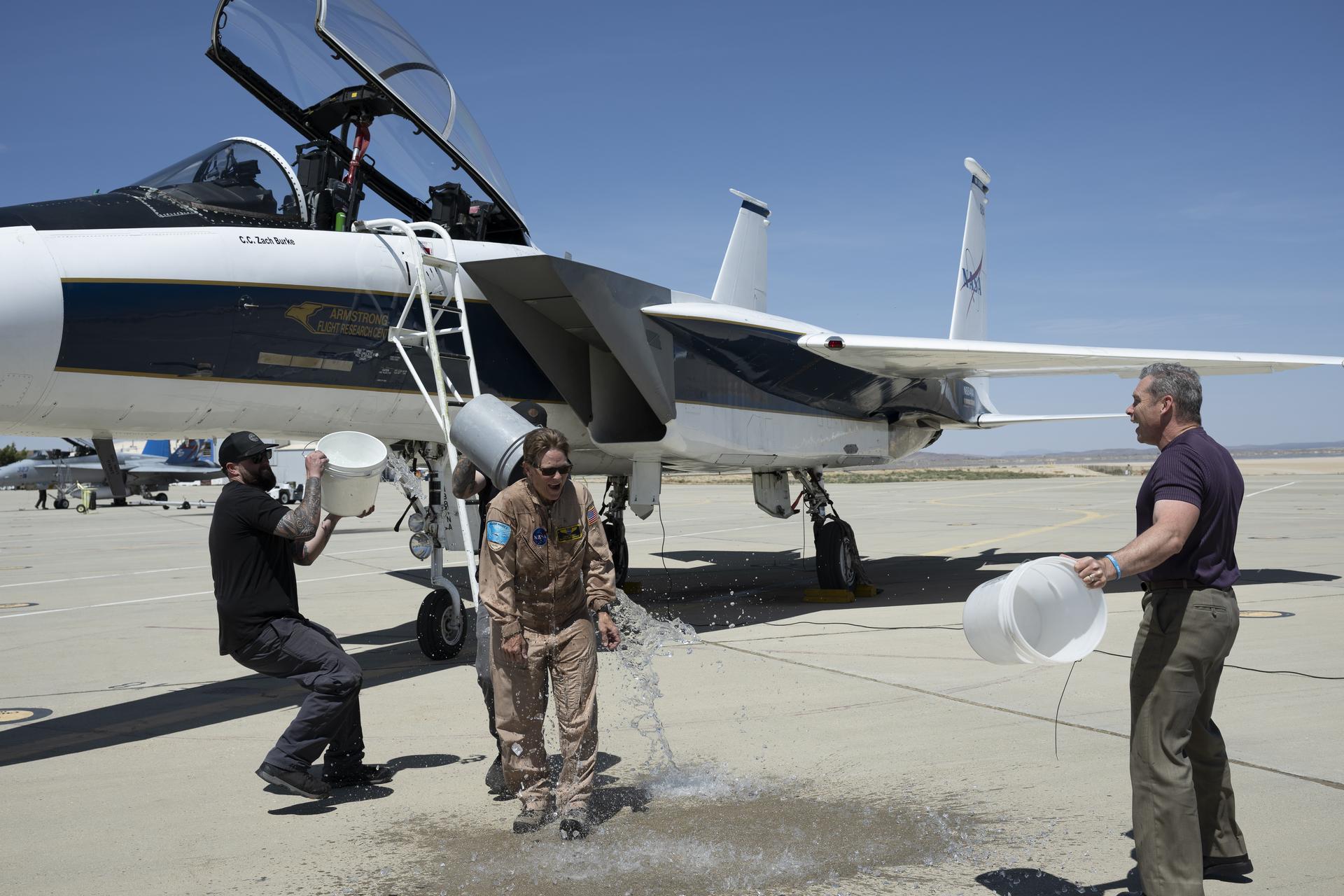
F-15 aircraft crew chief Zack Burke, left, and X-59 mechanic Jamie Trescott, center back, splash buckets of ice water on NASA aerial photographer Carla Thomas in celebration of her 1,000th flight at NASA’s Armstrong Flight Research Center in Edwards, California, on Monday, April 20, 2026. Tim Krall, NASA Armstrong support aircraft fleet manager, watches. Thomas completed her flight in the backseat of a NASA F-15 aircraft flown by NASA Armstrong chief pilot Wayne Ringelberg. For 38 years, Thomas has captured aerial photographs of research and science flights.
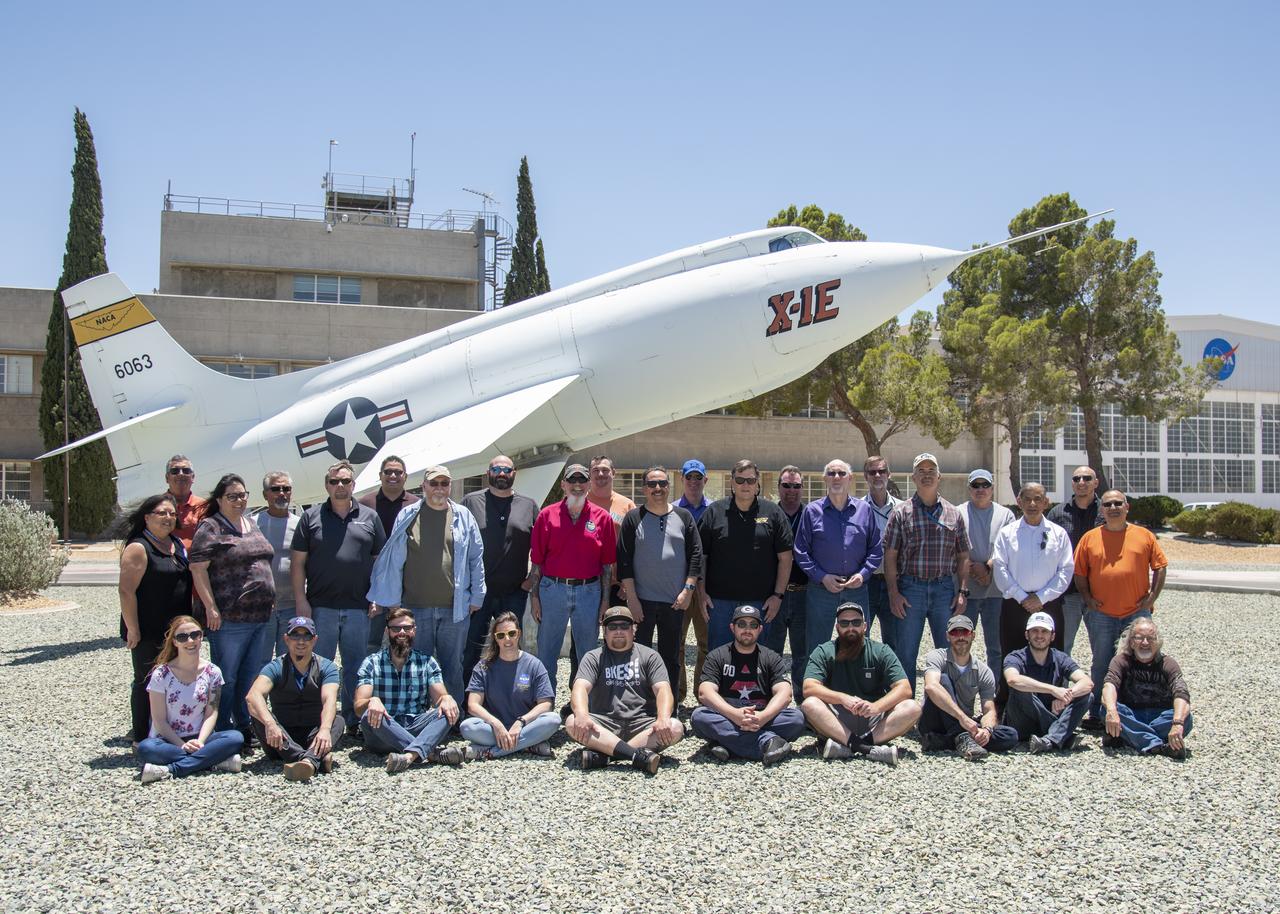
The Dryden Aeronautical Test Range staff at NASA’s Armstrong Flight Research Center in California monitor all aircraft flights from the center as well as supporting the International Space Station and Russian Soyuz missions. Sitting from left to right are Bailey Cook, Lucio Ortiz, Matt Kearns, Sonja Belcher, John Batchelor, Jeff Koenig, Will Peters, Russ Franz, Zack Springer and Mike Webb. Standing left to right are Joy Bland, Doug Boston, April Norcross, Randy Torres, Robert Racicot, Jesus Vazquez, Jim Abercromby, Steve Simison, Tracy Ackeret, Chris Birkinbine, Darryl Burkes, Joe Innis, Bruce Lipe, Pat Ray, Kevin Knutson, Greg Strombo, Bart Rusnak, Tim Burt, Al Guajardo, Feras, Abu-Issa and Hector Rodriquez.

NASA held a prelaunch news conference for the National Oceanic and Atmospheric Administration’s (NOAA) Joint Polar Satellite System-2 (JPSS-2) and the agency’s Low-Earth Orbit Flight Test of an Inflatable Decelerator (LOFTID) technology demonstration at Vandenberg Space Force Base in California on Oct. 28, 2022. Participants from left are: Megan Cruz, NASA Communications; John Gagosian, director, NASA’s Joint Agency Satellite Division; Omar Baez, launch director, NASA’s Launch Services Program; Gary Wentz, vice president, Government and Commercial Programs, ULA; Irene Parker, deputy assistant administrator, NOAA Systems, National Environmental Satellite, Data, and Services; Tim Walsh, director, NOAA’s JPSS Program Office, NOAA; Jim Reuter, associate administrator for NASA’s Space Technology Mission Directorate; Capt. Zack Zounes, launch weather officer, U.S. Space Force. JPSS-2 is the third satellite in the polar satellite series and is expected to capture data to improve weather forecasts, helping scientists predict and prepare for extreme weather events and climate change. JPSS-2 is scheduled to launch at 2:25 a.m. PDT Tuesday, Nov. 1, on a United Launch Alliance (ULA) Atlas V 401 rocket from Space Launch Complex 3 at Vandenberg Space Force Base in California. Launching with JPSS-2 is NASA’s LOFTID technology demonstration. After JPSS-2 safely reaches orbit, LOFTID will follow a re-entry trajectory from low-Earth orbit to demonstrate the inflatable heat shield’s ability to slow down and survive re-entry. LOFTID is a partnership with ULA and is dedicated to the memory of Bernard Kutter, one of the company’s engineers who played a key role in developing the technology. LOFTID will demonstrate how the inflatable aeroshell, or heat shield, can slow down and survive re-entry in conditions relevant to many potential applications, whether landing humans on Mars, new missions to Venus and Titan, or returning heavier payloads and samples from low-Earth or
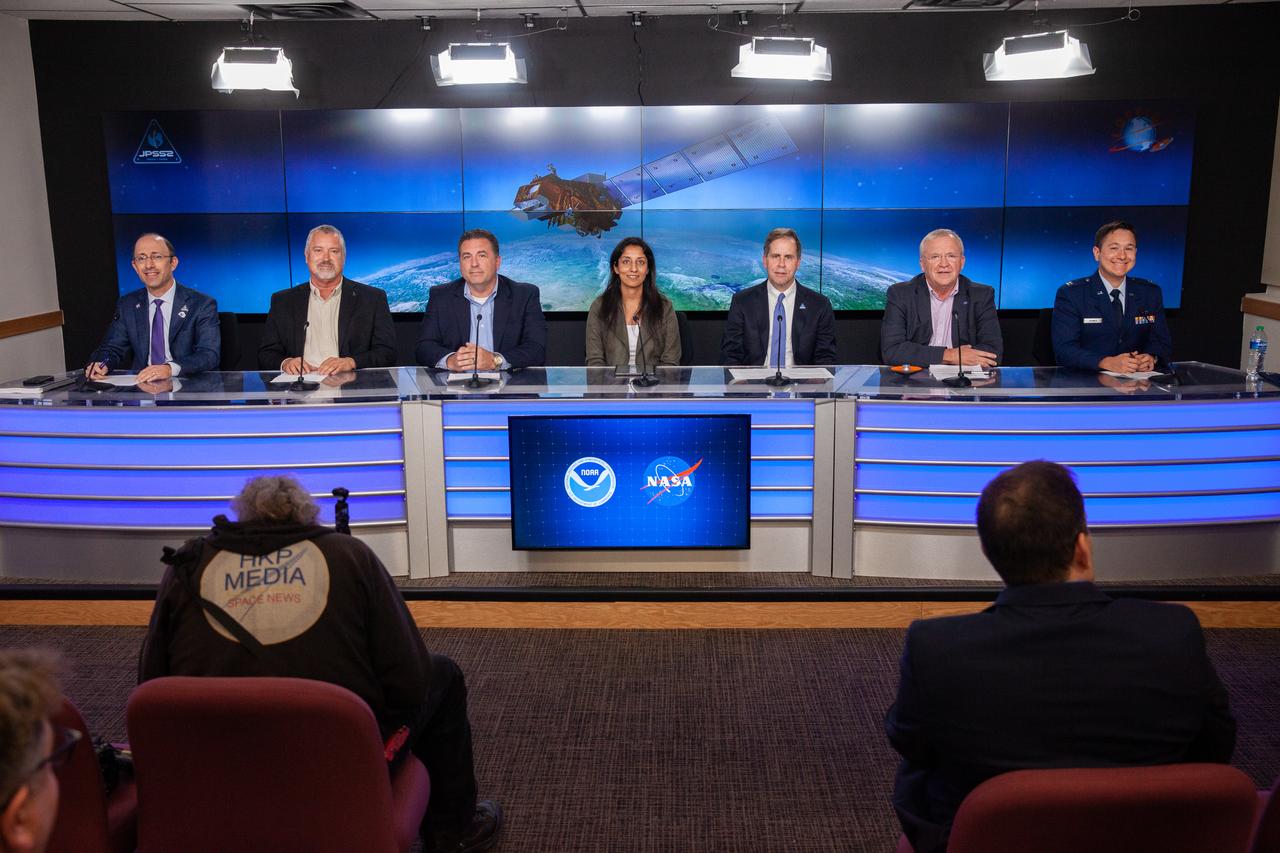
NASA held a prelaunch news conference for the National Oceanic and Atmospheric Administration’s (NOAA) Joint Polar Satellite System-2 (JPSS-2) and the agency’s Low-Earth Orbit Flight Test of an Inflatable Decelerator (LOFTID) technology demonstration at Vandenberg Space Force Base in California on Oct. 28, 2022. Participants from left are: John Gagosian, director, NASA’s Joint Agency Satellite Division; Omar Baez, launch director, NASA’s Launch Services Program; Gary Wentz, vice president, Government and Commercial Programs, ULA; Irene Parker, deputy assistant administrator, NOAA Systems, National Environmental Satellite, Data, and Services; Tim Walsh, director, NOAA’s JPSS Program Office, NOAA; Jim Reuter, associate administrator for NASA’s Space Technology Mission Directorate; Capt. Zack Zounes, launch weather officer, U.S. Space Force. JPSS-2 is the third satellite in the polar satellite series and is expected to capture data to improve weather forecasts, helping scientists predict and prepare for extreme weather events and climate change. JPSS-2 is scheduled to launch at 2:25 a.m. PDT Tuesday, Nov. 1, on a United Launch Alliance (ULA) Atlas V 401 rocket from Space Launch Complex 3 at Vandenberg Space Force Base in California. Launching with JPSS-2 is NASA’s LOFTID technology demonstration. After JPSS-2 safely reaches orbit, LOFTID will follow a re-entry trajectory from low-Earth orbit to demonstrate the inflatable heat shield’s ability to slow down and survive re-entry. LOFTID is a partnership with ULA and is dedicated to the memory of Bernard Kutter, one of the company’s engineers who played a key role in developing the technology. LOFTID will demonstrate how the inflatable aeroshell, or heat shield, can slow down and survive re-entry in conditions relevant to many potential applications, whether landing humans on Mars, new missions to Venus and Titan, or returning heavier payloads and samples from low-Earth orbit.
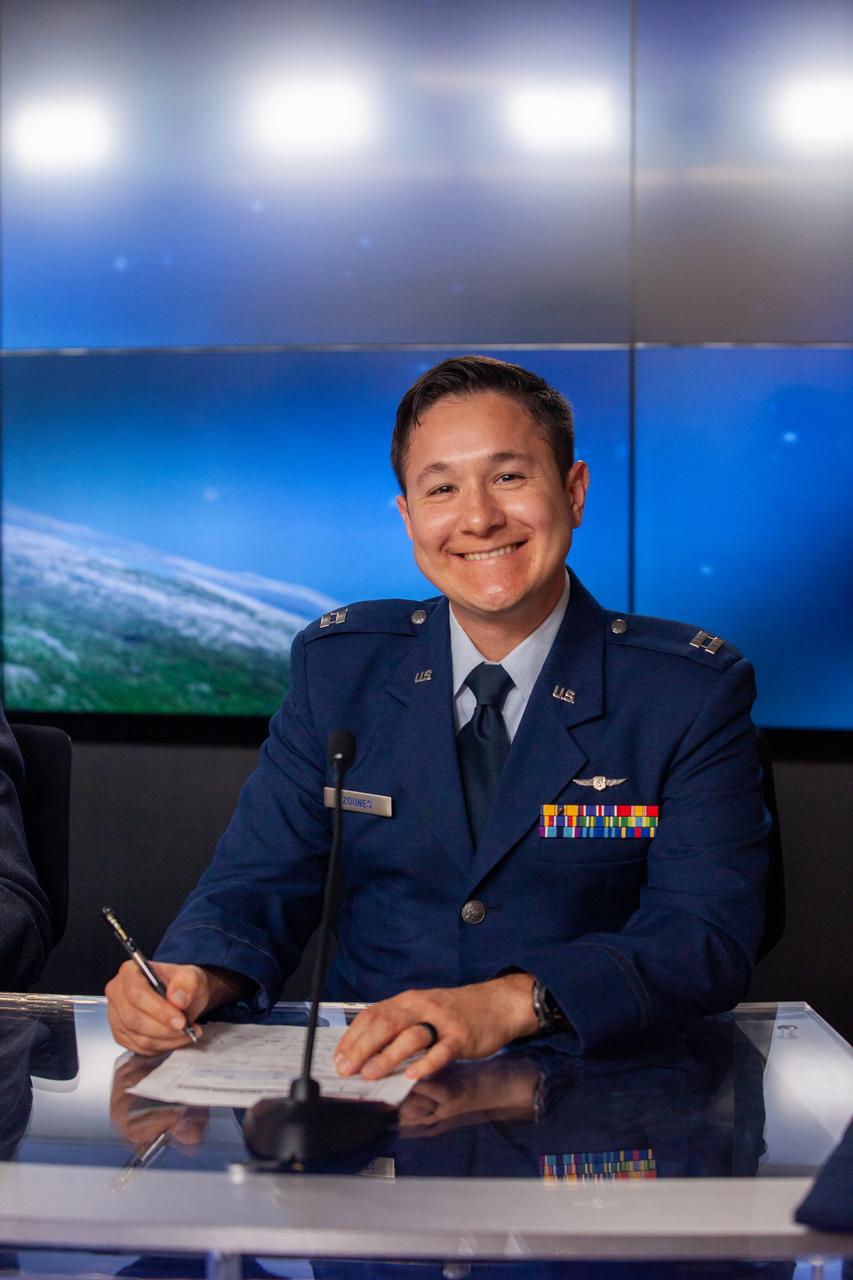
Capt. Zack Zounes, launch weather officer, U.S. Space Force, participates in a prelaunch news conference for the National Oceanic and Atmospheric Administration’s (NOAA) Joint Polar Satellite System-2 (JPSS-2) and NASA Low-Earth Orbit Flight Test of an Inflatable Decelerator (LOFTID) technology demonstration at Vandenberg Space Force Base in California on Oct. 28, 2022. JPSS-2 is the third satellite in the polar satellite series and is expected to capture data to improve weather forecasts, helping scientists predict and prepare for extreme weather events and climate change. JPSS-2 is scheduled to launch at 2:25 a.m. PDT Tuesday, Nov. 1, on a United Launch Alliance (ULA) Atlas V 401 rocket from Space Launch Complex 3 at Vandenberg Space Force Base in California. Launching with JPSS-2 is NASA’s LOFTID technology demonstration. After JPSS-2 safely reaches orbit, LOFTID will follow a re-entry trajectory from low-Earth orbit to demonstrate the inflatable heat shield’s ability to slow down and survive re-entry. LOFTID is a partnership with ULA and is dedicated to the memory of Bernard Kutter, one of the company’s engineers who played a key role in developing the technology. LOFTID will demonstrate how the inflatable aeroshell, or heat shield, can slow down and survive re-entry in conditions relevant to many potential applications, whether landing humans on Mars, new missions to Venus and Titan, or returning heavier payloads and samples from low-Earth orbit.