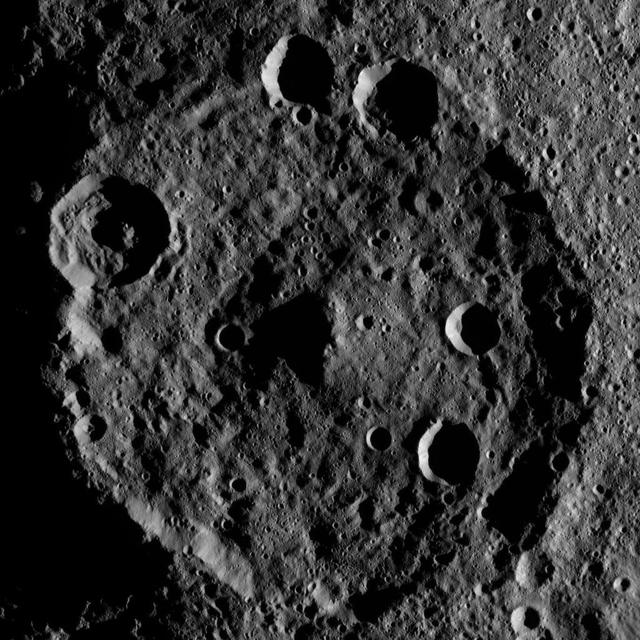
Zadeni Crater on Ceres is featured in this image from NASA's Dawn spacecraft. This large southern-hemisphere crater is 79.5 miles (128 kilometers) in diameter and is named for an ancient Georgian god of bountiful harvest. Dawn took this image on Oct. 19 from its second extended-mission science orbit (XMO2), at a distance of about 920 miles (1,480 kilometers) above the surface. The image resolution is about 460 feet (140 meters) per pixel. http://photojournal.jpl.nasa.gov/catalog/PIA21229
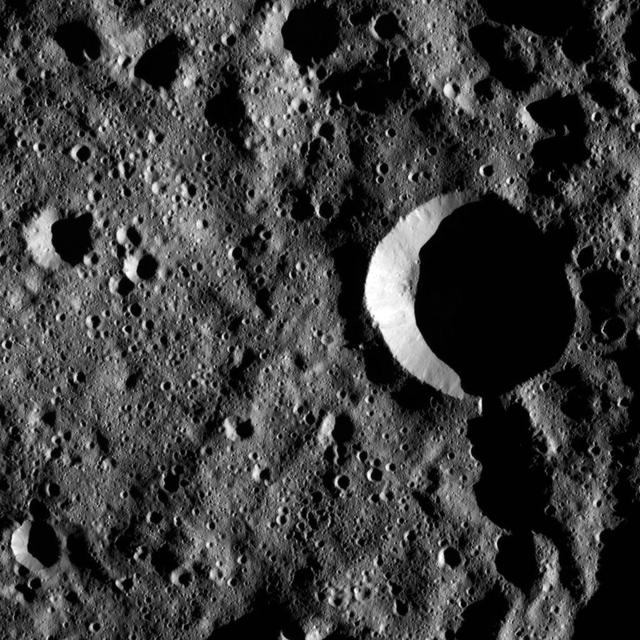
Zadeni Crater, at 80 miles 128 kilometers wide, is a prominent impact feature in the southern hemisphere of Ceres. This image from NASA Dawn spacecraft shows terrain in Zadeni interior, which hosts numerous smaller craters.

This moody scene on Ceres is located within Zadeni Crater, named for the ancient Georgian god of bountiful harvest. Zadeni is approximately 76 miles (120 kilometers) in diameter. NASA's Dawn spacecraft took this image on June 15, 2016, from its low-altitude mapping orbit, at a distance of about 240 miles (385 kilometers) above the surface. The image resolution is 120 feet (35 meters) per pixel. http://photojournal.jpl.nasa.gov/catalog/PIA20830
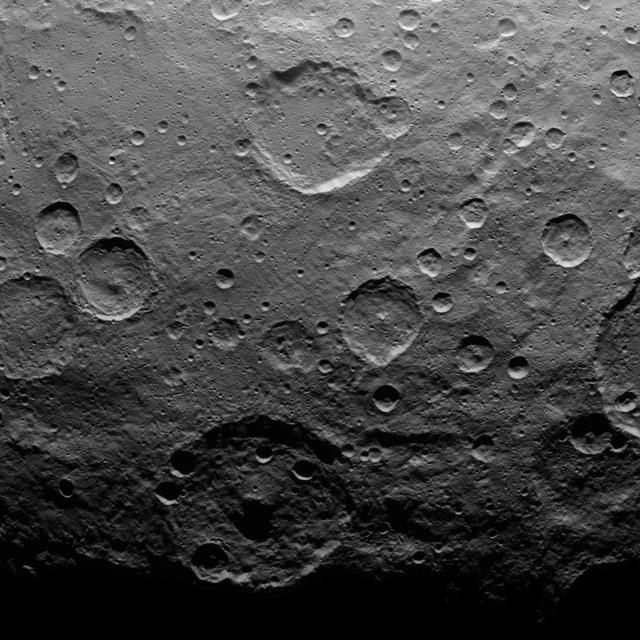
This image, taken by NASA's Dawn spacecraft, shows a portion of the southern hemisphere of dwarf planet Ceres from an altitude of 2,700 miles (4,400 kilometers). The image, with a resolution of 1,400 feet (410 meters) per pixel, was taken on June 25, 2015. The large crater with a central peak at bottom is Zadeni crater, measuring about 80 miles (129 kilometers) across. http://photojournal.jpl.nasa.gov/catalog/PIA19614
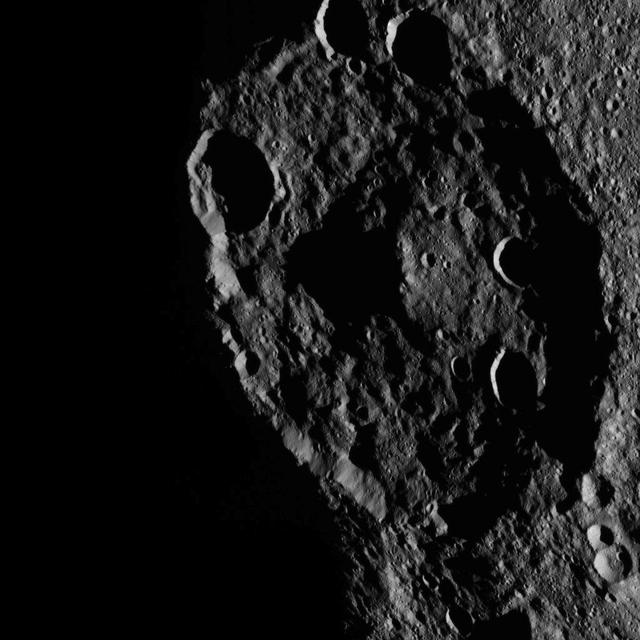
This image, taken by NASA's Dawn spacecraft, shows a portion of the southern hemisphere of dwarf planet Ceres from an altitude of 915 miles (1,470 kilometers). The image was taken on Sept. 22, 2015, and has a resolution of 450 feet (140 meters) per pixel. Zadeni crater, named for the ancient Georgian god of bountiful harvest, is featured in this image. Its diameter is about 80 miles (129 kilometers). http://photojournal.jpl.nasa.gov/catalog/PIA19988
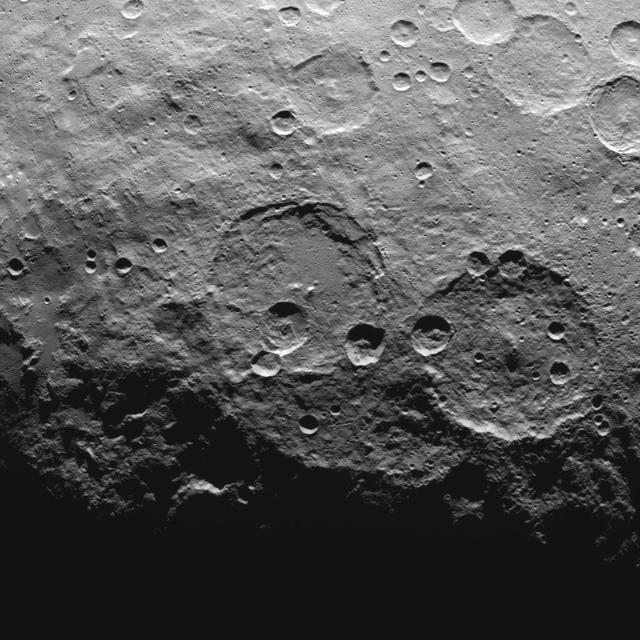
This image, taken by NASA's Dawn spacecraft, shows high southern latitudes on Ceres from an altitude of 2,700 miles (4,400 kilometers). The image, with a resolution of 1,400 feet (410 meters) per pixel, was taken on June 25, 2015. Zadeni crater, measuring about 80 miles (130 kilometers) across, is on the right side of the image. http://photojournal.jpl.nasa.gov/catalog/PIA19634
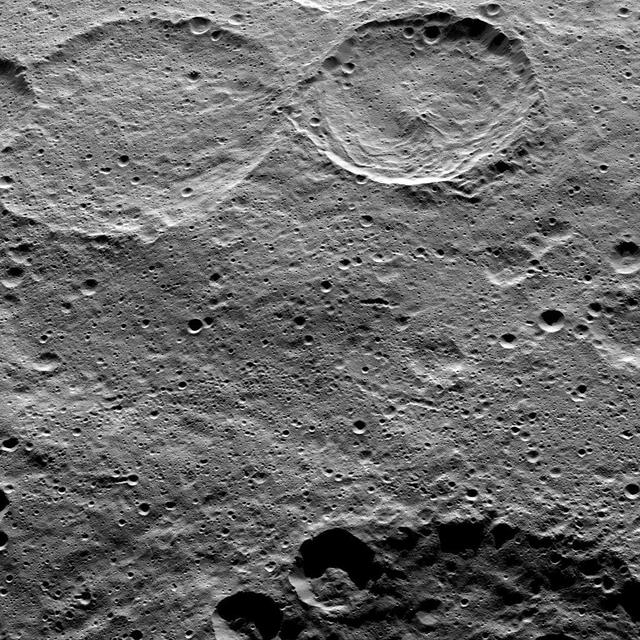
This image of Ceres, taken by NASA's Dawn spacecraft, shows Sintana Crater (36 miles, 58 kilometers wide) at top, just right of center. The rim of a large crater called Zadeni (80 miles, 128 kilometers wide), is seen at the bottom of the image. Dawn took this image from an altitude of 915 miles (1,470 kilometers) during its High Altitude Mapping Orbit (HAMO) phase on Oct. 20, 2015. Image resolution is 450 feet (140 meters) per pixel. The scene is located in the southern hemisphere of Ceres at approximately 55 degrees south latitude, 40 degrees east longitude. http://photojournal.jpl.nasa.gov/catalog/PIA20149
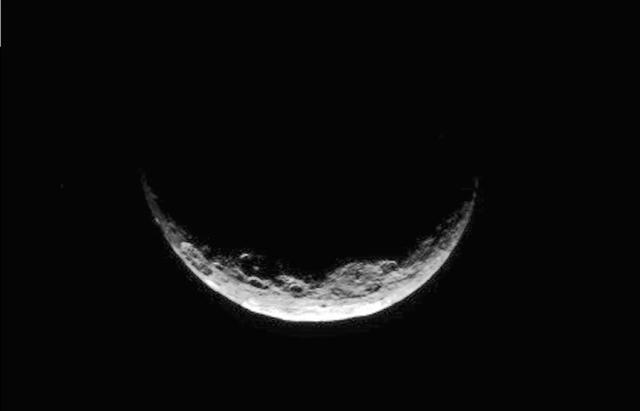
NASA's Dawn spacecraft took this image of Ceres' south polar region on May 17, 2017, from an altitude of about 26,400 miles (42,500 kilometers). The image scale is about 2.5 miles (4 kilometers) per pixel. Dawn took this image to help navigators refine their measurements of the spacecraft's position in orbit. Ceres appears as a crescent as Dawn is on the night side of the dwarf planet. Zadeni Crater, which is 80 miles (128 kilometers) wide, is recognizable on the bottom left side of the crescent. The large crater seen on the right side is Urvara Crater, which is 101 miles (163 kilometers) wide. Large fractures scarring Ceres' surface can also be distinguished here. Dawn captured a similar scene (Figure 1) at higher resolution, although with a slightly different geometry, on April 26, 2015, from its RC3 orbit at an altitude of about 8,450 miles (13,600 kilometers) and an image scale of about 0.81 miles (1.3 kilometers) per pixel. The geology of Ceres' polar regions is very rough in comparison to that generally found at lower latitudes. This is because colder temperatures near the poles allow craters to hold their original shapes over longer periods of time. Features found on Ceres are named after gods and goddesses of agriculture, as well as harvest festivals, from around the world. Zadeni is named for the ancient Georgian god of bountiful harvest, while Urvara is an Indian and Iranian deity of plants and fields. https://photojournal.jpl.nasa.gov/catalog/PIA21407
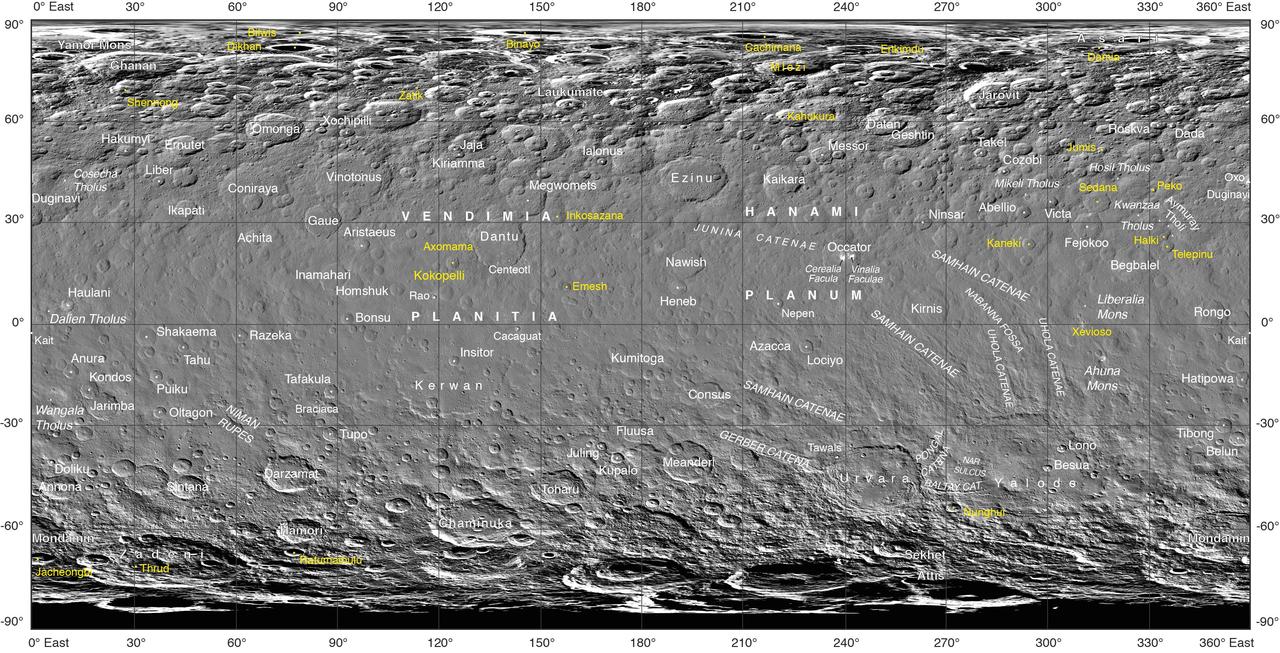
Often, the names of features on planetary bodies are connected through a specific theme -- for example, many features on the Moon have been named after famous scientists. NASA's Dawn mission, together with the International Astronomical Union, established that craters on Ceres would be named for agricultural deities from all over the world, and other features would be named for agricultural festivals. Ceres itself was named after the Roman goddess of corn and harvests by its discoverer, Giuseppe Piazzi, who spotted it with his telescope in 1801. Since March 2015, Dawn has been orbiting Ceres and sending back many intriguing images and other data about its features. Using suggestions from the Dawn team, the IAU recently approved 25 new Ceres feature names tied to theme of agricultural deities, marked in yellow on the map. Emesh Crater, for example, is named for the Sumerian god of vegetation and agriculture. Jumi is the Latvian god of fertility of the field. The newly named surface features vary in size. Thrud, for example, is a crater with a diameter of 4.8 miles (7.8 kilometers) within the larger crater Zadeni, while Mlezi has a diameter of 28 miles (42 kilometers). For more information, the characteristics of these and other features on Ceres can be found in the IAU's Gazetteer of Planetary Nomenclature. https://photojournal.jpl.nasa.gov/catalog/PIA21755
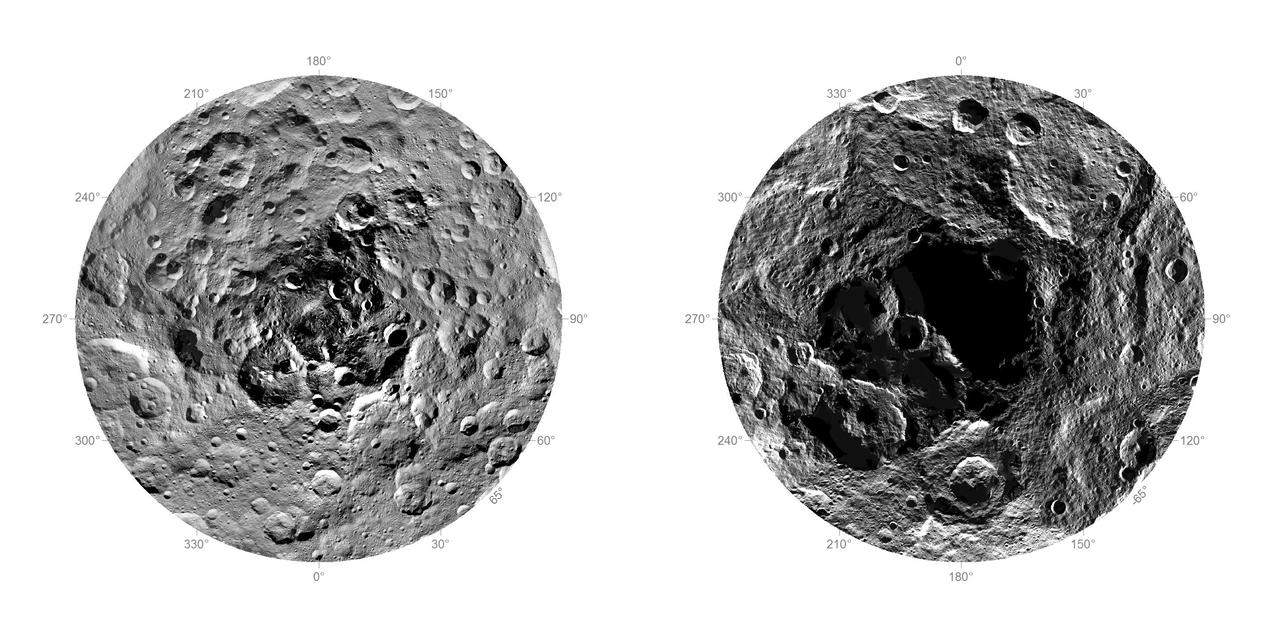
Researchers from NASA's Dawn mission have composed the first comprehensive views of the north (left) and south pole regions (right) of dwarf planet Ceres, using images obtained by the Dawn spacecraft. The images were taken between Aug. 17 and Oct. 23, 2015, from an altitude of 915 miles (1,470 kilometers). The region around the south pole appears black in this view because this area has been in shade ever since Dawn's arrival on March 6, 2015, and is therefore not visible. At the north polar region, craters Jarovit, Ghanan and Asari are visible, as well as the mountain Ysolo Mons. Near the south pole, craters Attis and Zadeni can be seen. Detailed maps of the polar regions allow researchers to study the craters in this area and compare them to those covering other parts of Ceres. Variations in shape and complexity can point to different surface compositions. In addition, the bottoms of some craters located close to the poles receive no sunlight throughout Ceres' orbit around the sun. Scientists want to investigate whether surface ice can be found there. http://photojournal.jpl.nasa.gov/catalog/PIA20126