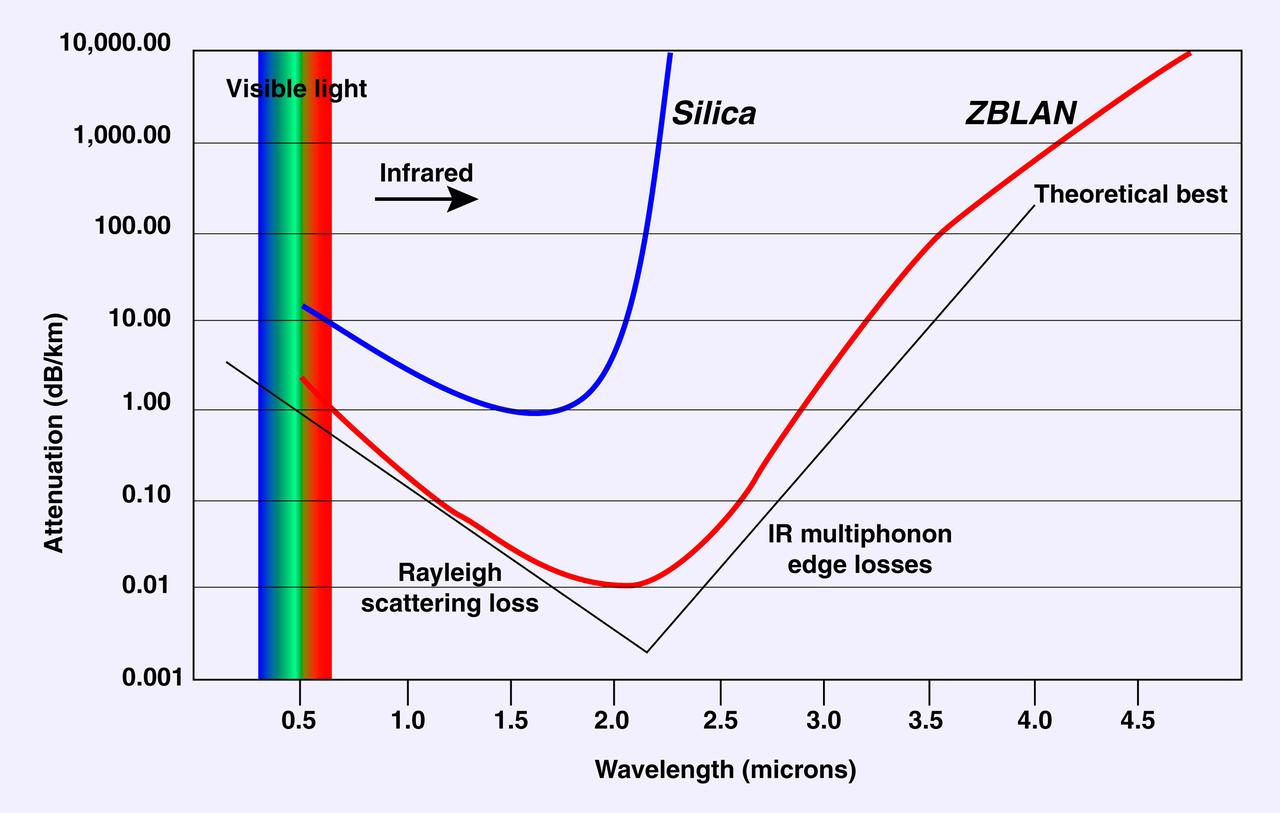
This graph depicts the increased signal quality possible with optical fibers made from ZBLAN, a family of heavy-metal fluoride glasses (fluorine combined zirconium, barium, lanthanum, aluminum, and sodium) as compared to silica fibers. NASA is conducting research on pulling ZBLAN fibers in the low-g environment of space to prevent crystallization that limits ZBLAN's usefulness in optical fiber-based communications. In the graph, a line closer to the black theoretical maximum line is better. Photo credit: NASA/Marshall Space Flight Center
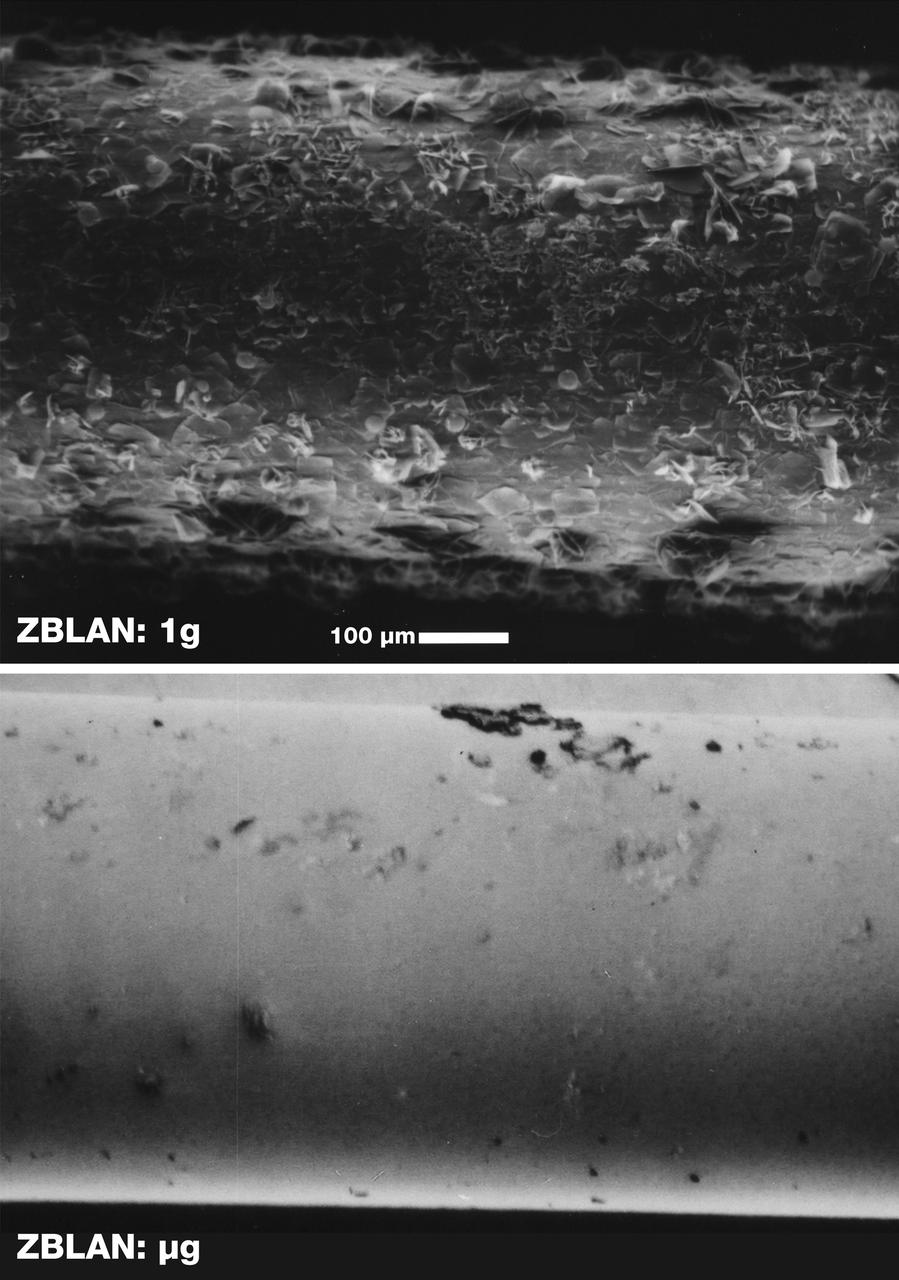
Scarning electron microscope images of the surface of ZBLAN fibers pulled in microgravity (ug) and on Earth (1g) show the crystallization that normally occurs in ground-based processing. The face of each crystal will reflect or refract a portion of the optical signal, thus degrading its quality. NASA is conducting research on pulling ZBLAN fibers in the low-g environment of space to prevent crystallization that limits ZBLAN's usefulness in optical fiber-based communications. ZBLAN is a heavy-metal fluoride glass that shows exdeptional promise for high-throughput communications with infrared lasers. Photo credit: NASA/Marshall Space Flight Center
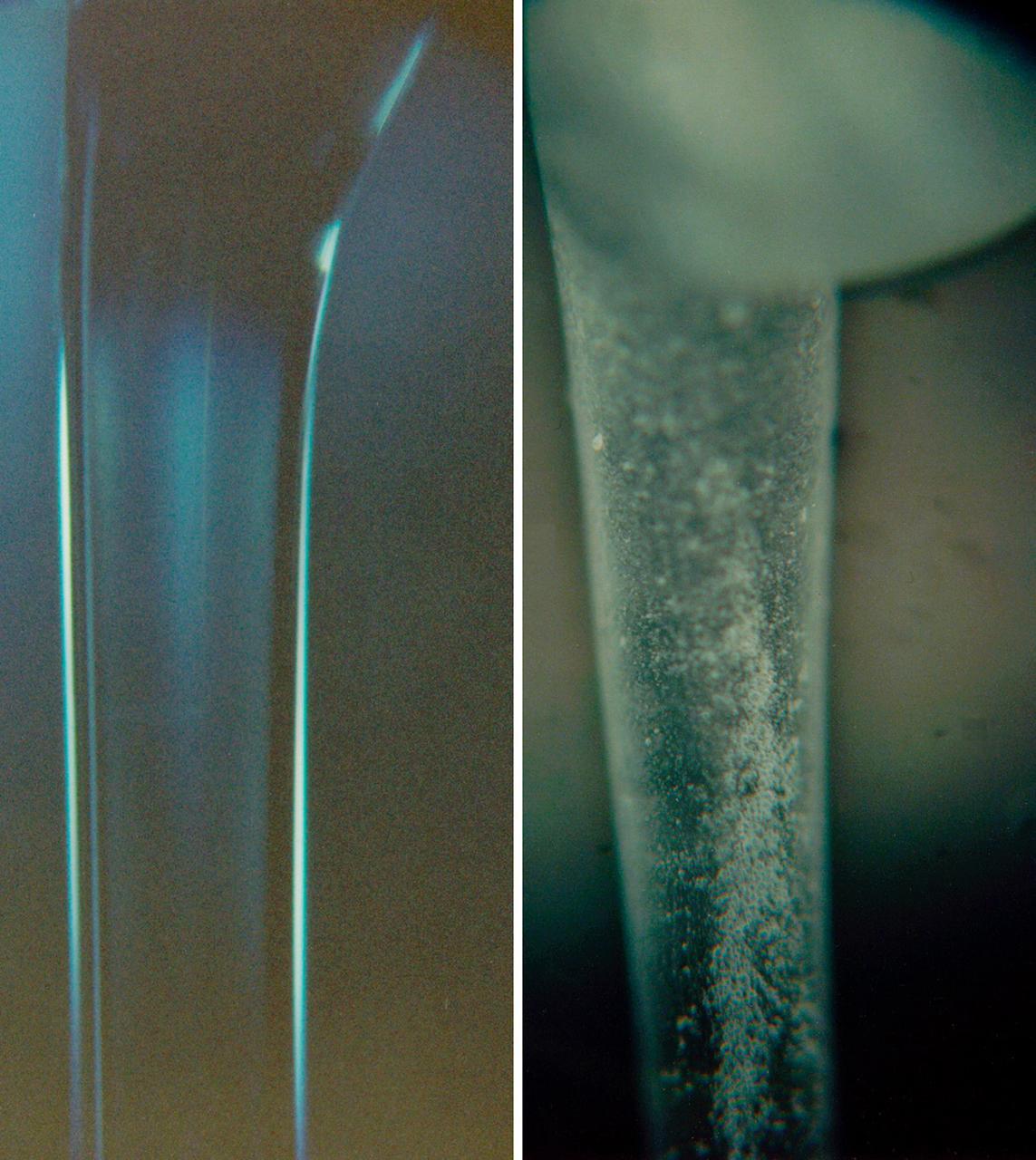
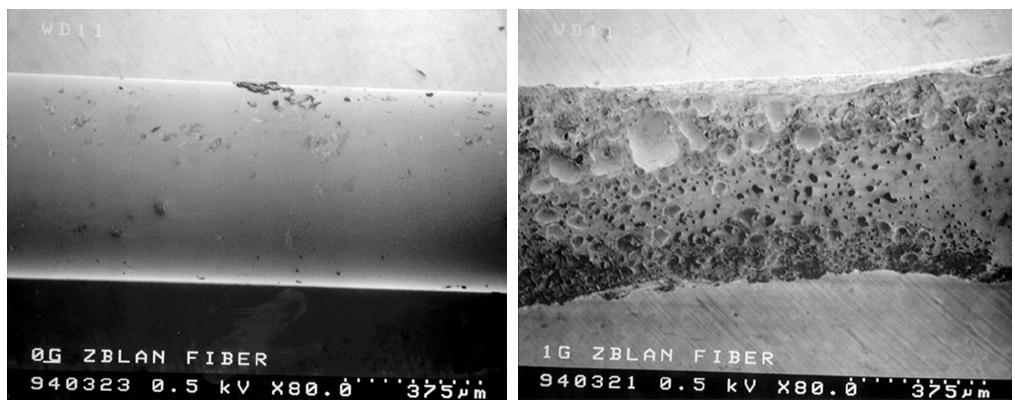
Sections of ZBLAN fibers pulled in a conventional 1-g process (right) and in experiments aboard NASA's KC-135 low-gravity aircraft (left). The rough surface of the 1-g fiber indicates surface defects that would scatter an optical signal and greatly degrade its quality. ZBLAN is part of the family of heavy-metal fluoride glasses (fluorine combined zirconium, barium, lanthanum, aluminum, and sodium). NASA is conducting research on pulling ZBLAN fibers in the low-g environment of space to prevent crystallization that limits ZBLAN's usefulness in optical fiber-based communications. ZBLAN is a heavy-metal fluoride glass that shows exceptional promise for high-throughput communications with infrared lasers. Photo credit: NASA/Marshall Space Flight Center
Marshall Space Flight Center's researchers have conducted suborbital experiments with ZBLAN, an optical material capable of transmitting 100 times more signal and information than silica fibers. The next step is to process ZBLAN in a microgravity environment to stop the formation of crystallites, small crystals caused by a chemical imbalances. Scientists want to find a way to make ZBLAN an amorphous (without an internal shape) material. Producing a material such as this will have far-reaching implications on advanced communications, medical and manufacturing technologies using lasers, and a host of other products well into the 21st century.
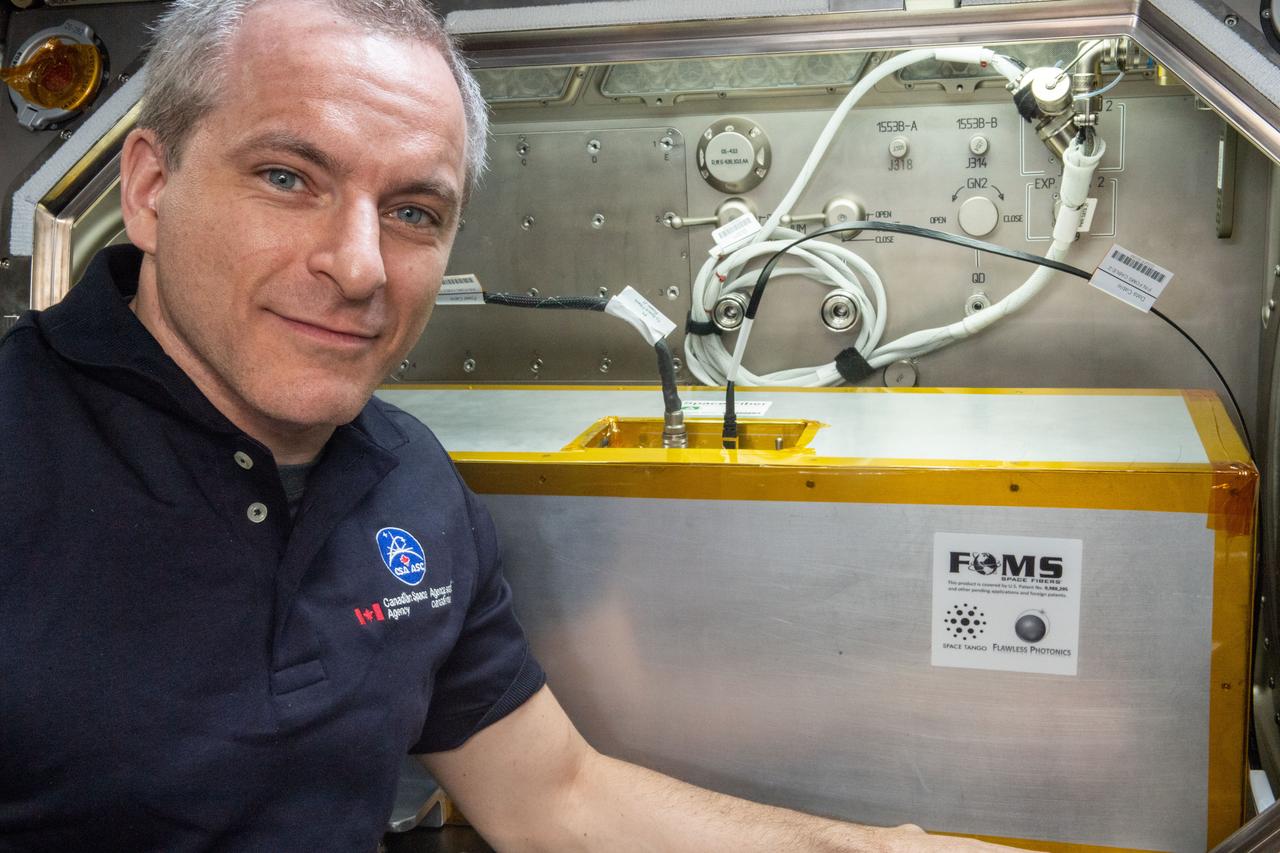
iss059e034721 (4/23/2019) --- Canadian Space Agency (CSA) astronaut David Saint-Jacques is photographed in front of the Microgravity Science Glovebox (MSG) during the installation of the Space Fibers experiment hardware into the MSG work volume. Manufacturing Fiber Optic Cable in Microgravity (Space Fibers) evaluates a method for producing fiber optic cable from a blend of zirconium, barium, lanthanum, sodium and aluminum, called ZBLAN, in space. ZBLAN produces glass one hundred times more transparent than silica-based glass, exceptional for fiber optics. Microgravity suppresses two mechanisms that commonly degrade fiber, and previous studies showed improved properties in fiber drawn in microgravity compared to that fabricated on the ground.
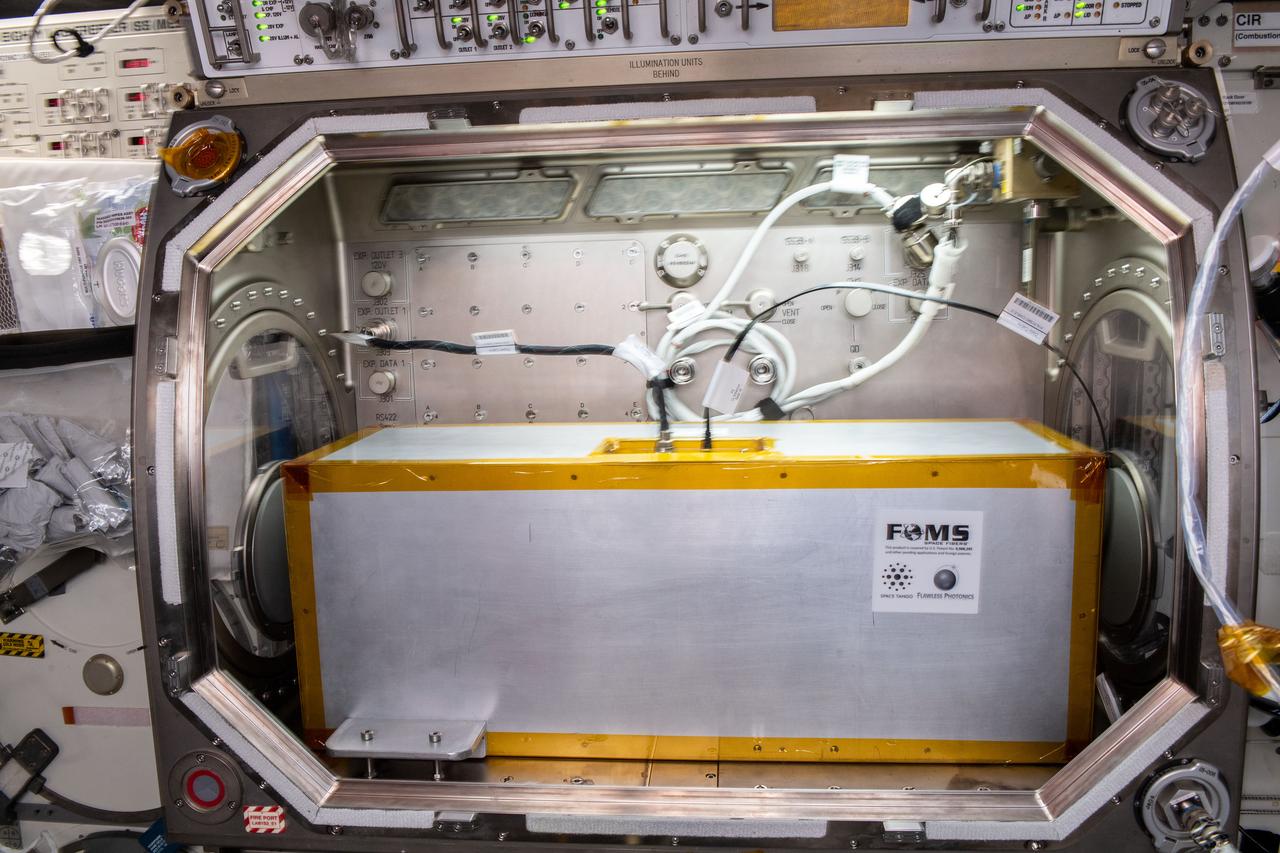
iss059e034705 (4/23/2019) --- A view taken during the installation of the Space Fibers experiment hardware into the Microgravity Science Glovebox (MSG) in the Destiny module aboard the International Space Station (ISS). Manufacturing Fiber Optic Cable in Microgravity (Space Fibers) evaluates a method for producing fiber optic cable from a blend of zirconium, barium, lanthanum, sodium and aluminum, called ZBLAN, in space. ZBLAN produces glass one hundred times more transparent than silica-based glass, exceptional for fiber optics. Microgravity suppresses two mechanisms that commonly degrade fiber, and previous studies showed improved properties in fiber drawn in microgravity compared to that fabricated on the ground.
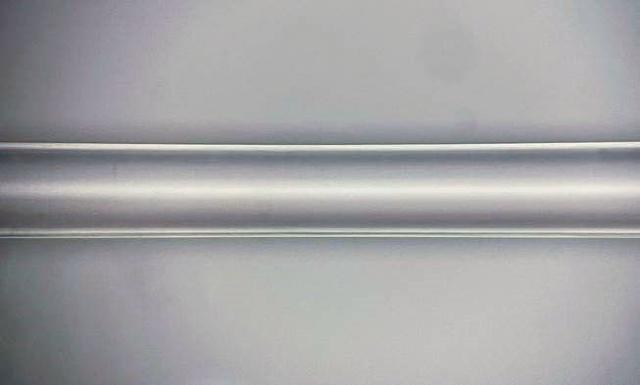
jsc2021e044608 (9/23/2021) --- A microscopic image of a section of ZBLAN optical fiber produced by the second iteration of Fiber Optic Production (FOP1.5) aboard the International Space station (ISS). Image courtesy of Mercury Systems.

NASA astronaut and Expedition 64 Flight Engineer Victor Glover performs a sample exchange in the Microgravity Science Glovebox (MSG) as part of the Fiber Optic Production (FOP) experiment. FOP produces fiber optic cable in microgravity from a blend of elements called ZBLAN. Previous research suggests optical fibers produced in microgravity should exhibit superior qualities to those produced on Earth.