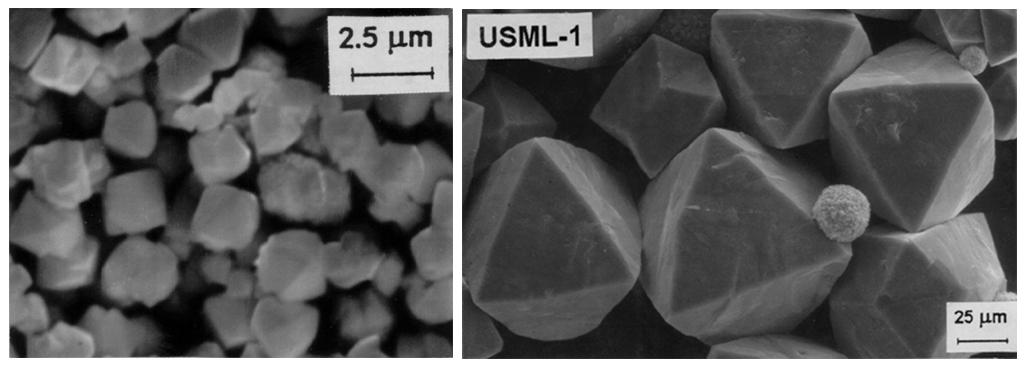
Zeolites are crystalline aluminosilicates that have complex framework structures. However, there are several features of zeolite crystals that make unequivocal structure determinations difficult. The acquisition of reliable structural information on zeolites is greatly facilitated by the availability of high-quality specimens. For structure determinations by conventional diffraction techniques, large single-crystal specimens are essential. Alternatively, structural determinations by powder profile refinement methods relax the constraints on crystal size, but still require materials with a high degree of crystalline perfection. Studies conducted at CAMMP (Center for Advanced Microgravity Materials Processing) have demonstrated that microgravity processing can produce larger crystal sizes and fewer structural defects relative to terrestrial crystal growth. Principal Investigator: Dr. Albert Sacco
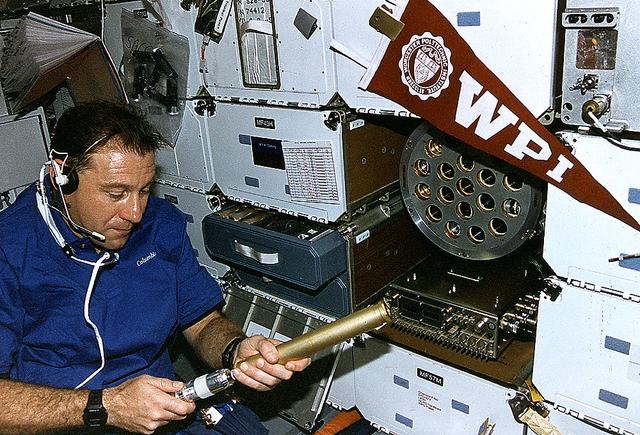
Onboard Space Shuttle Columbia (STS-73) Payload Specialist Albert Sacco loads autoclaves using a power screwdriver into the Zeolite Crystal Growth (ZCG) experiment in the middeck for the United States Microgravity Laboratory 2 (USML-2) Spacelab mission.
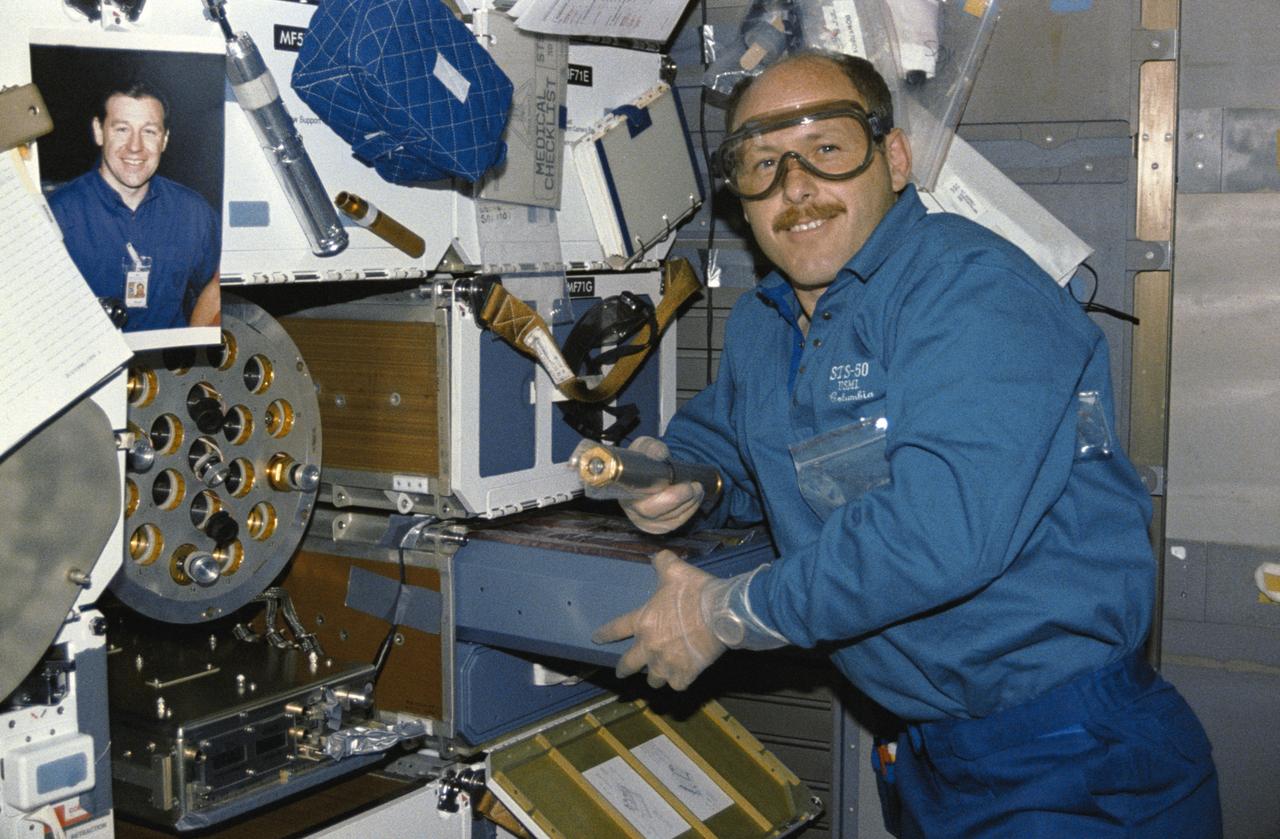
STS50-262-004 (25 June-9 July 1992) --- Astronaut Kenneth D. Bowersox, STS-50 pilot, holds an autoclave used in the growing of zeolite crystals on the middeck of the Earth-orbiting Space Shuttle Columbia. He is standing near the Zeolite Crystal Growth (ZCG) furnace, which is housed in the space of two stowage lockers. On the 14-day U.S. Microgravity Laboratory mission, zeolite crystals were grown in 38 individual autoclaves, which were joined in pairs to be inserted into the 19 furnace orifices. While the autoclaves appear the same externally, there are several types of internal arrangements that were tested to determine which one provides the best mixing of the component solutions. The portrait of alternate payload specialist Albert Sacco, Jr. is mounted nearby. Sacco, serving as a ground controller at Marshall Space Flight Center in Alabama, worked in conjunction with the red shift crew in the science module.
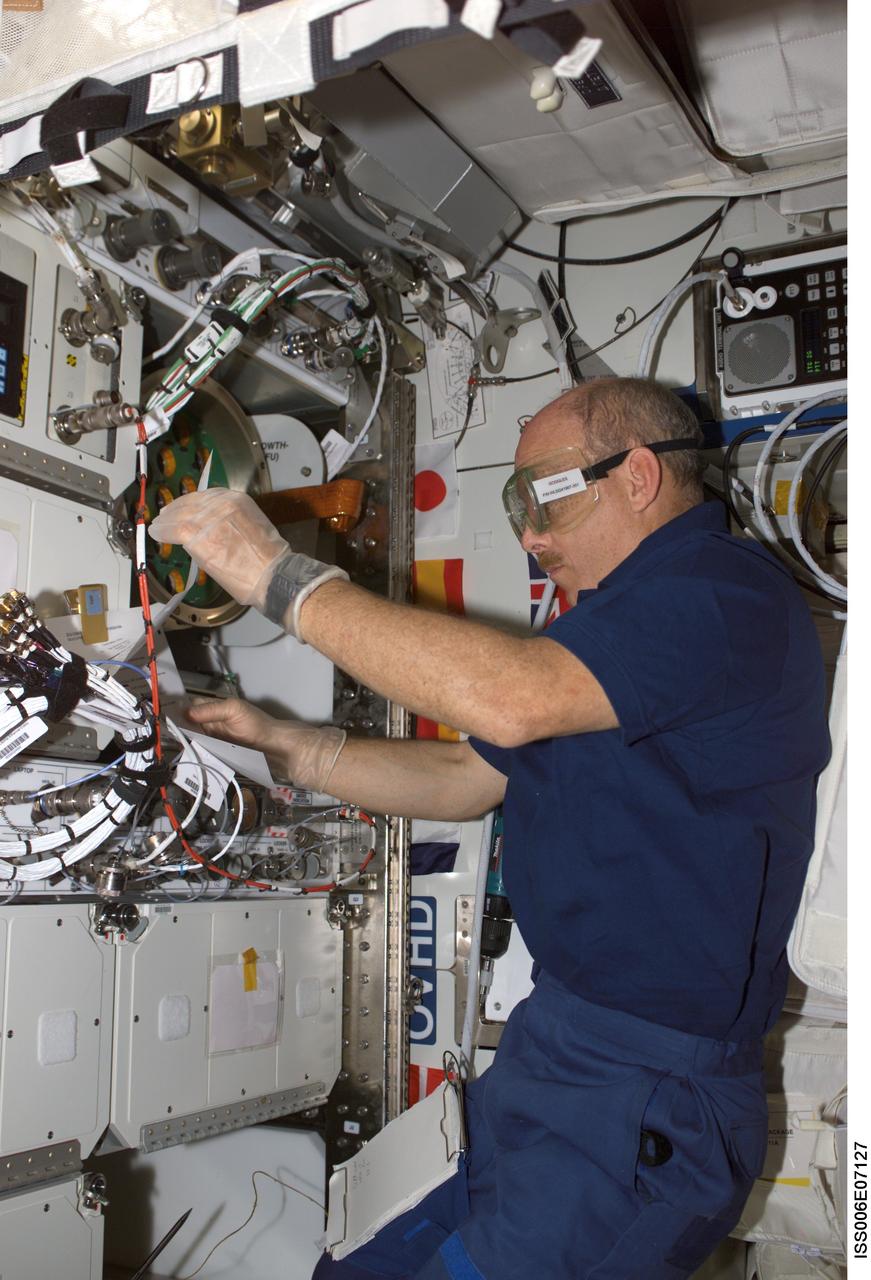
ISS006-E-07127 (5 December 2002) --- Astronaut Kenneth D. Bowersox, Expedition Six mission commander, works with the Zeolite Crystal Growth (ZCG) experiment in the Destiny laboratory on the International Space Station (ISS).
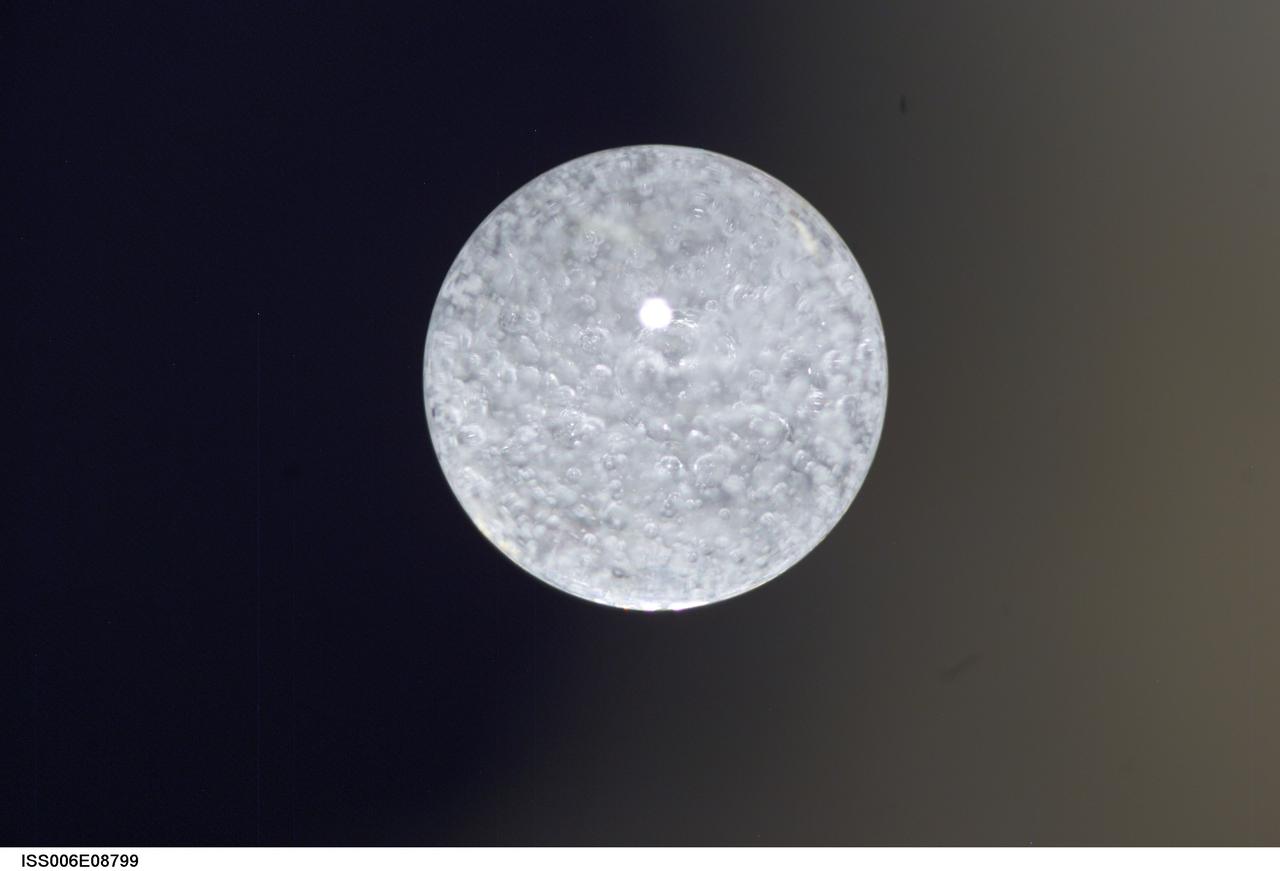
ISS006-E-08799 (14 December 2002) --- View of a bubble formed as a result of a Zeolite Crystal Growth (ZCG) experiment in the Destiny laboratory on the International Space Station (ISS). Expedition Six Commander Kenneth D. Bowersox used a Space Station drill to mix 12 Zeolite samples in clear tubes. Scientists on the ground watching on TV noticed bubbles in the samples. Bowersox used a modified mixing procedure to process autoclaves to isolate bubbles. He re-inserted the samples in the ZCG furnace in Express Rack 2 in the U.S. laboratory/Destiny. This experiment has shown that the bubbles could cause larger number of smaller deformed crystals to grow. Bowersox rotated the samples so that the heavier fluid was thrown to the outside while the lighter bubbles stayed on the inside.
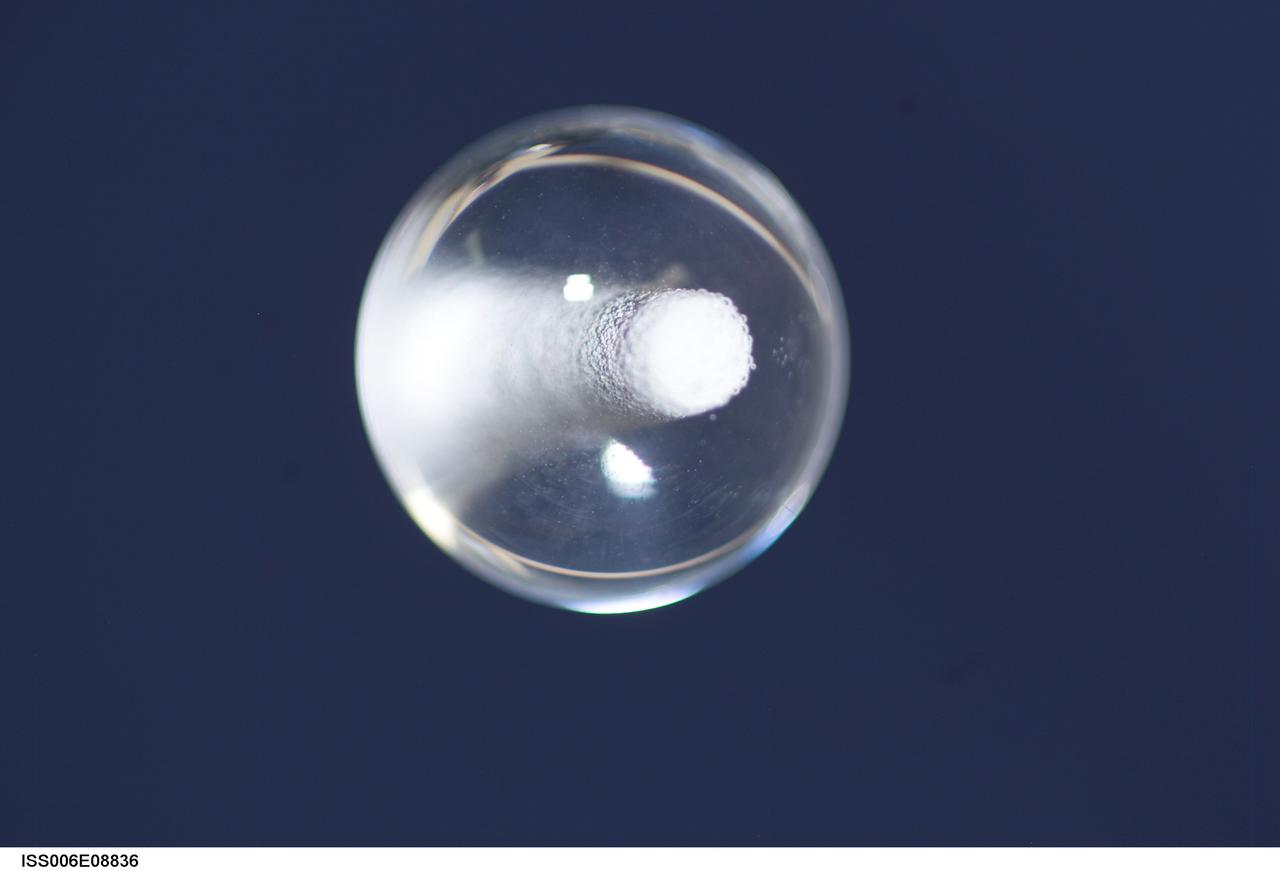
ISS006-E-08836 (14 December 2002) --- View of a bubble formed as a result of a Zeolite Crystal Growth (ZCG) experiment in the Destiny laboratory on the International Space Station (ISS). Expedition Six Commander Kenneth D. Bowersox used a Space Station drill to mix 12 Zeolite samples in clear tubes. Scientists on the ground watching on TV noticed bubbles in the samples. Bowersox used a modified mixing procedure to process autoclaves to isolate bubbles. He re-inserted the samples in the ZCG furnace in Express Rack 2 in the U.S. laboratory/Destiny. This experiment has shown that the bubbles could cause larger number of smaller deformed crystals to grow. Bowersox rotated the samples so that the heavier fluid was thrown to the outside while the lighter bubbles stayed on the inside.
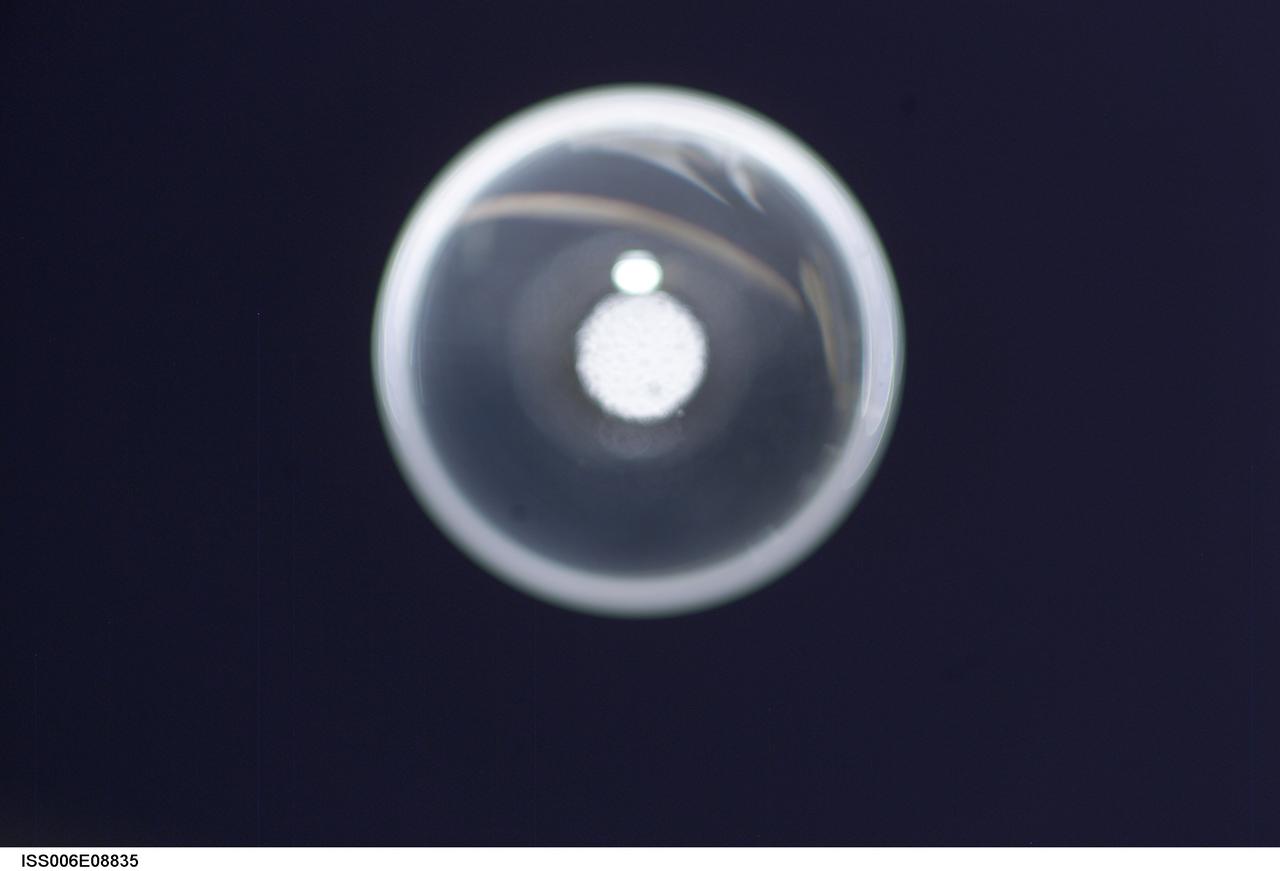
ISS006-E-08835 (14 December 2002) --- View of a bubble formed as a result of a Zeolite Crystal Growth (ZCG) experiment in the Destiny laboratory on the International Space Station (ISS). Expedition Six Commander Kenneth D. Bowersox used a Space Station drill to mix 12 Zeolite samples in clear tubes. Scientists on the ground watching on TV noticed bubbles in the samples. Bowersox used a modified mixing procedure to process autoclaves to isolate bubbles. He re-inserted the samples in the ZCG furnace in Express Rack 2 in the U.S. laboratory/Destiny. This experiment has shown that the bubbles could cause larger number of smaller deformed crystals to grow. Bowersox rotated the samples so that the heavier fluid was thrown to the outside while the lighter bubbles stayed on the inside.
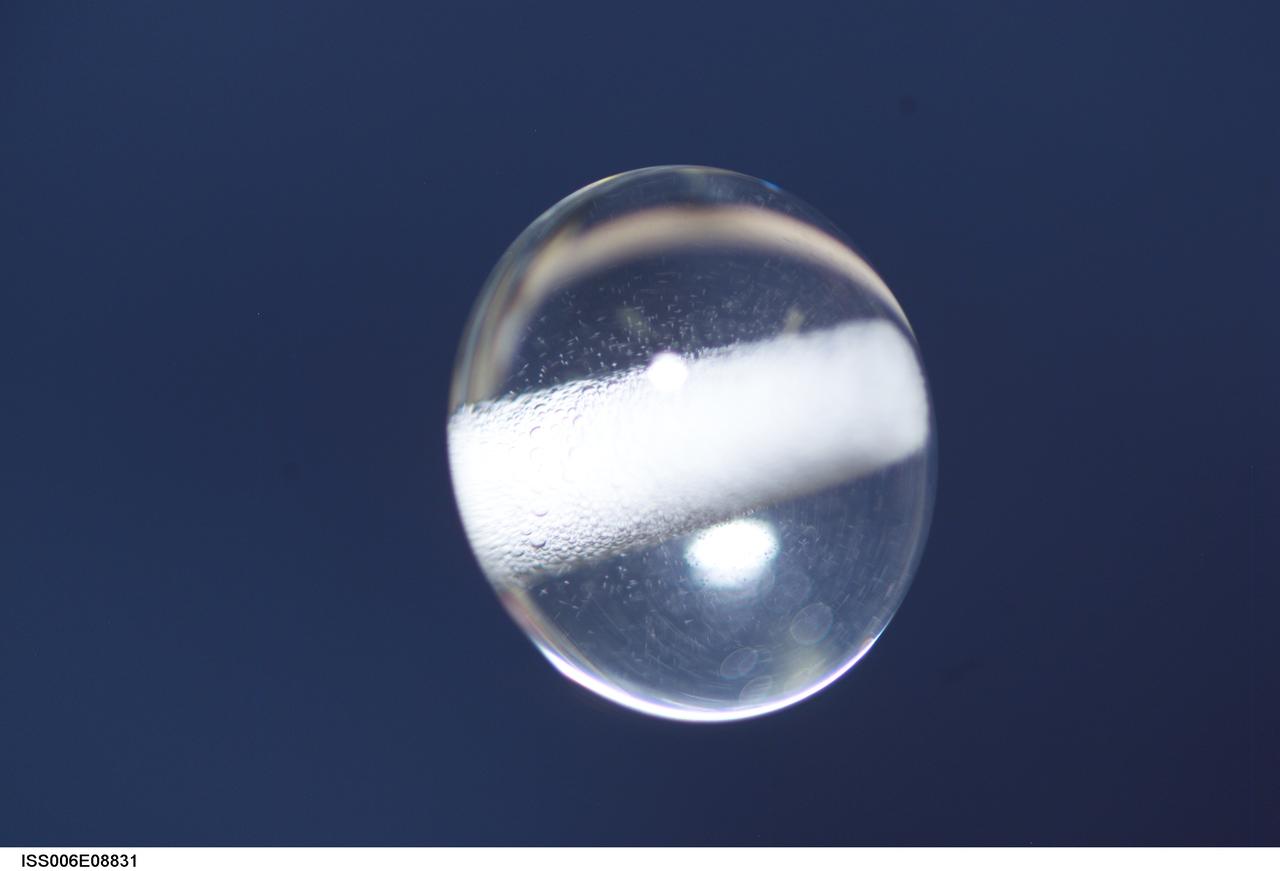
ISS006-E-08831 (14 December 2002) --- View of a bubble formed as a result of a Zeolite Crystal Growth (ZCG) experiment in the Destiny laboratory on the International Space Station (ISS). Expedition Six Commander Kenneth D. Bowersox used a Space Station drill to mix 12 Zeolite samples in clear tubes. Scientists on the ground watching on TV noticed bubbles in the samples. Bowersox used a modified mixing procedure to process autoclaves to isolate bubbles. He re-inserted the samples in the ZCG furnace in Express Rack 2 in the U.S. laboratory/Destiny. This experiment has shown that the bubbles could cause larger number of smaller deformed crystals to grow. Bowersox rotated the samples so that the heavier fluid was thrown to the outside while the lighter bubbles stayed on the inside.
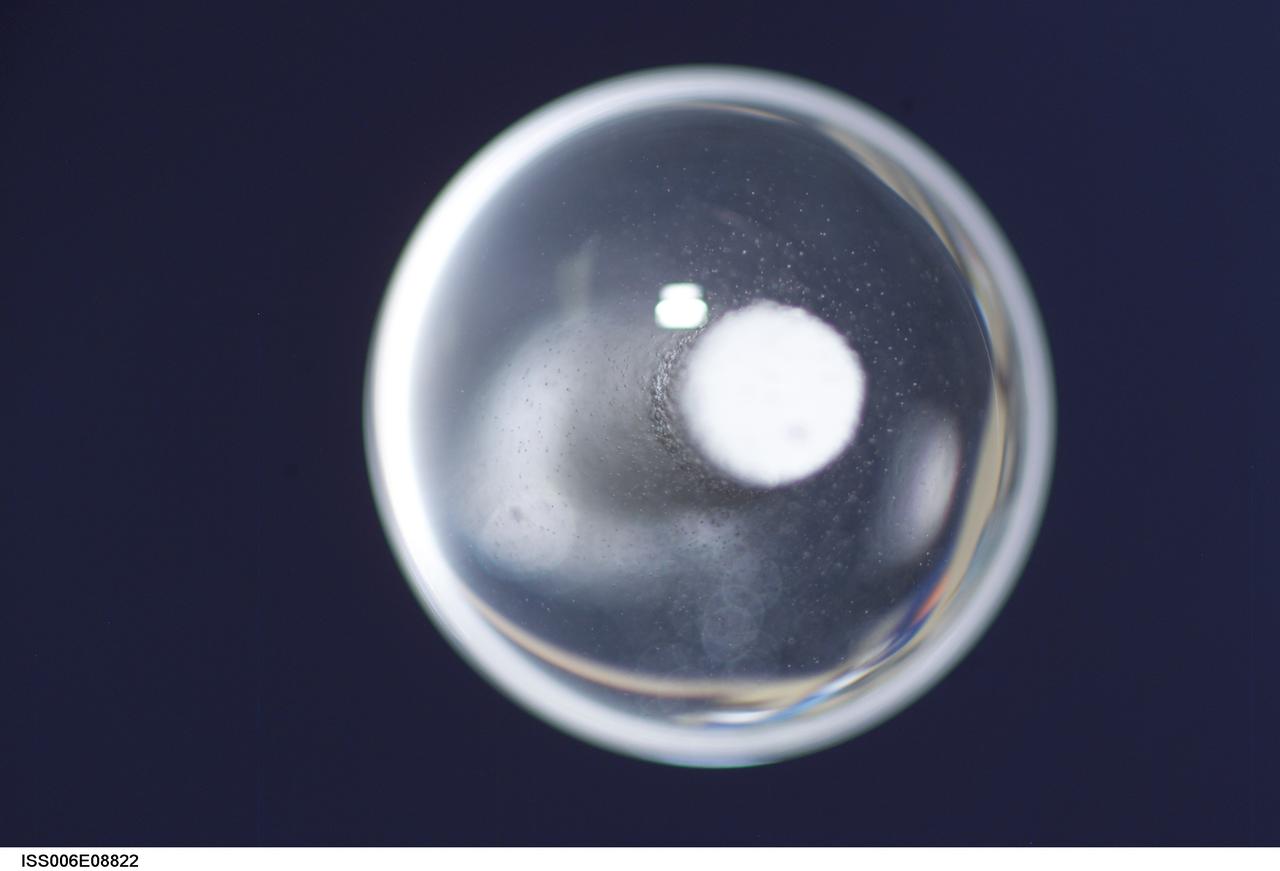
ISS006-E-08822 (14 December 2002) --- View of a bubble formed as a result of a Zeolite Crystal Growth (ZCG) experiment in the Destiny laboratory on the International Space Station (ISS). Expedition Six Commander Kenneth D. Bowersox used a Space Station drill to mix 12 Zeolite samples in clear tubes. Scientists on the ground watching on TV noticed bubbles in the samples. Bowersox used a modified mixing procedure to process autoclaves to isolate bubbles. He re-inserted the samples in the ZCG furnace in Express Rack 2 in the U.S. laboratory/Destiny. This experiment has shown that the bubbles could cause larger number of smaller deformed crystals to grow. Bowersox rotated the samples so that the heavier fluid was thrown to the outside while the lighter bubbles stayed on the inside.
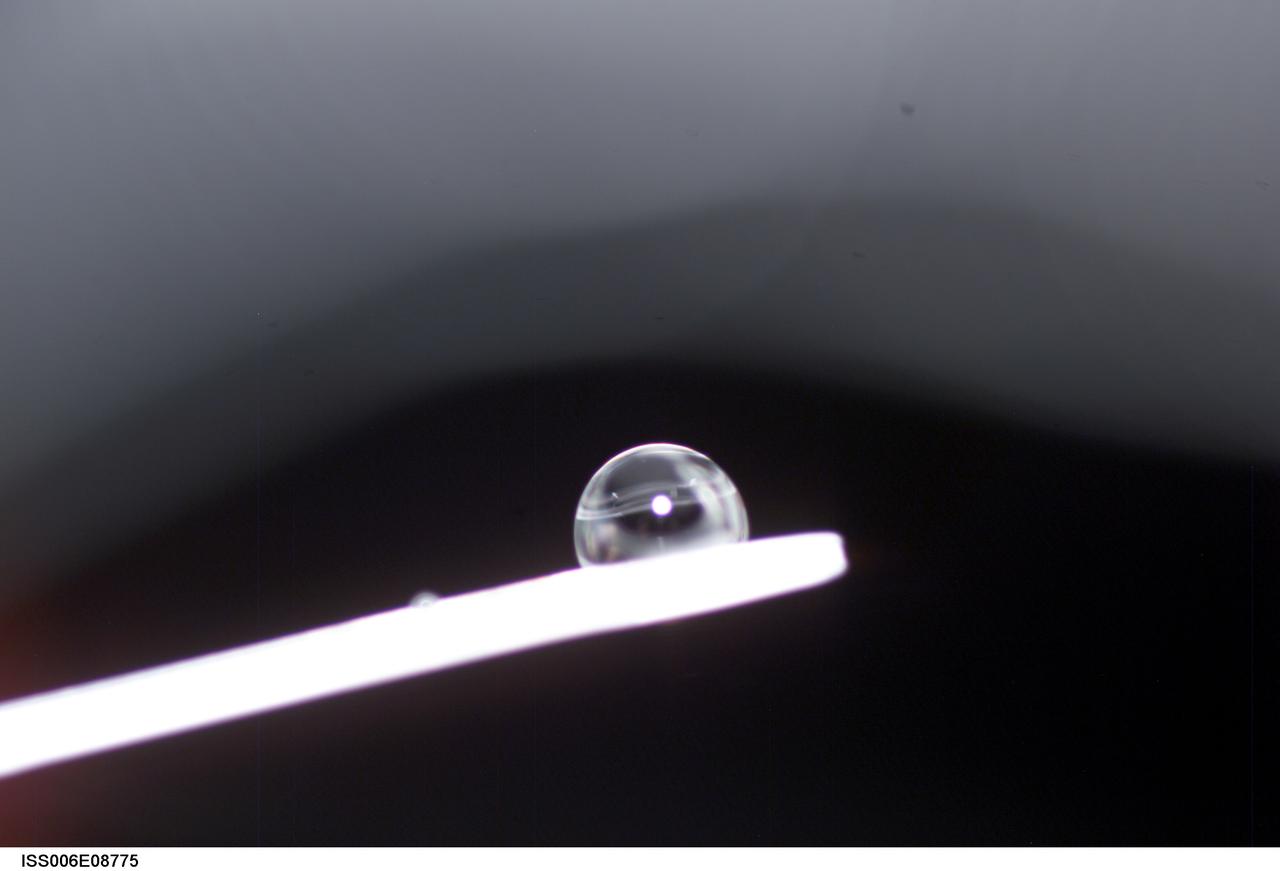
ISS006-E-08775 (14 December 2002) --- View of a bubble formed as a result of a Zeolite Crystal Growth (ZCG) experiment in the Destiny laboratory on the International Space Station (ISS). Expedition Six Commander Kenneth D. Bowersox used a Space Station drill to mix 12 Zeolite samples in clear tubes. Scientists on the ground watching on TV noticed bubbles in the samples. Bowersox used a modified mixing procedure to process autoclaves to isolate bubbles. He re-inserted the samples in the ZCG furnace in Express Rack 2 in the U.S. laboratory/Destiny. This experiment has shown that the bubbles could cause larger number of smaller deformed crystals to grow. Bowersox rotated the samples so that the heavier fluid was thrown to the outside while the lighter bubbles stayed on the inside.
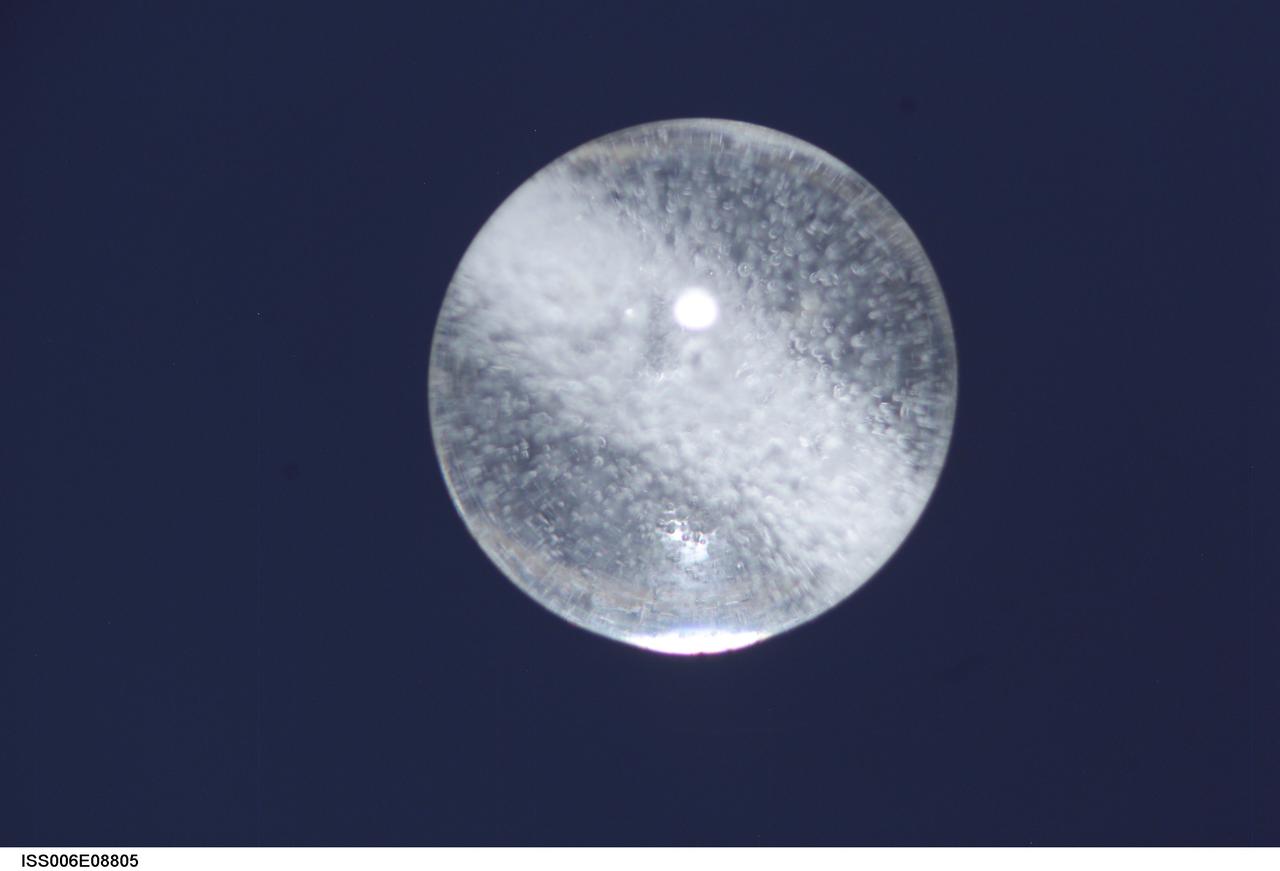
ISS006-E-08805 (14 December 2002) --- View of a bubble formed as a result of a Zeolite Crystal Growth (ZCG) experiment in the Destiny laboratory on the International Space Station (ISS). Expedition Six Commander Kenneth D. Bowersox used a Space Station drill to mix 12 Zeolite samples in clear tubes. Scientists on the ground watching on TV noticed bubbles in the samples. Bowersox used a modified mixing procedure to process autoclaves to isolate bubbles. He re-inserted the samples in the ZCG furnace in Express Rack 2 in the U.S. laboratory/Destiny. This experiment has shown that the bubbles could cause larger number of smaller deformed crystals to grow. Bowersox rotated the samples so that the heavier fluid was thrown to the outside while the lighter bubbles stayed on the inside.
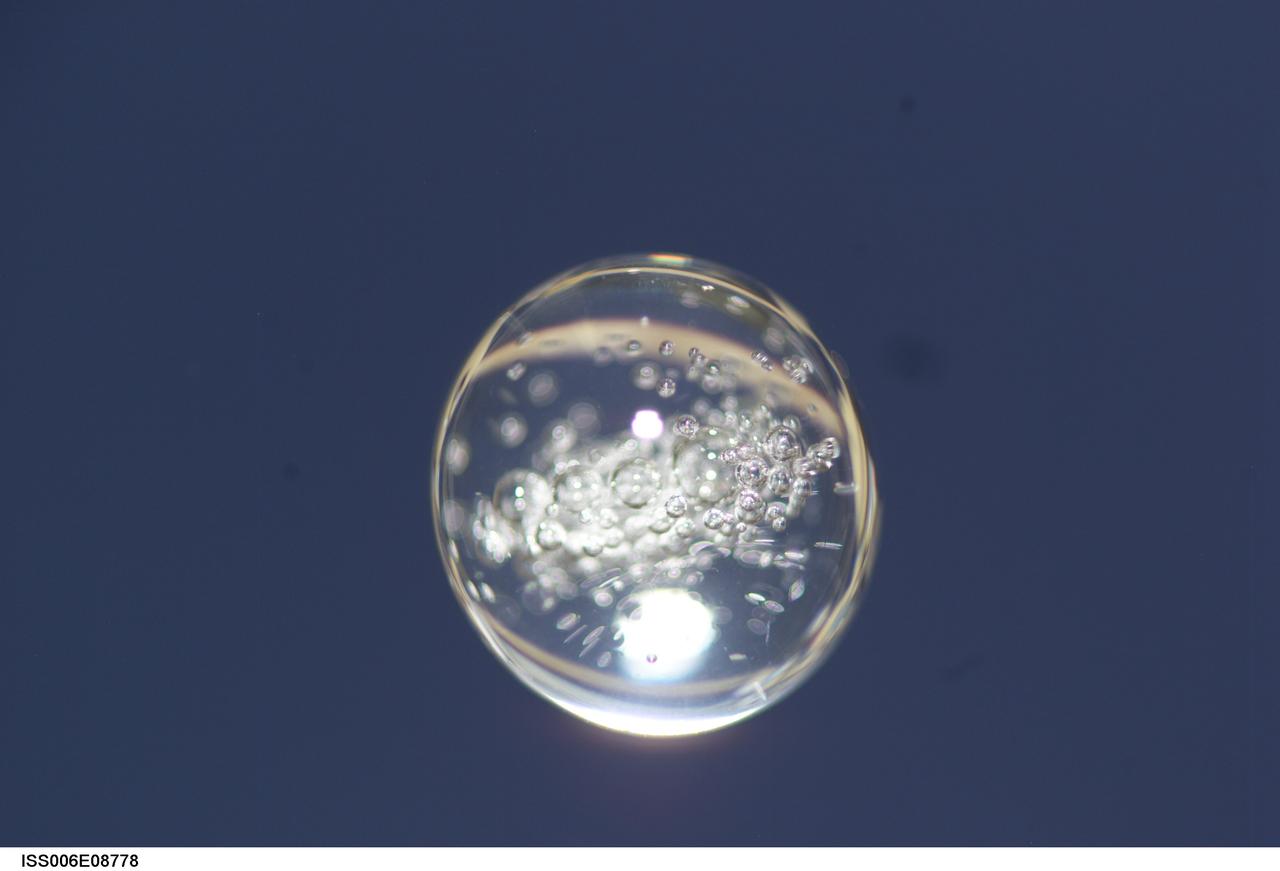
ISS006-E-08778 (14 December 2002) --- View of a bubble formed as a result of a Zeolite Crystal Growth (ZCG) experiment in the Destiny laboratory on the International Space Station (ISS). Expedition Six Commander Kenneth D. Bowersox used a Space Station drill to mix 12 Zeolite samples in clear tubes. Scientists on the ground watching on TV noticed bubbles in the samples. Bowersox used a modified mixing procedure to process autoclaves to isolate bubbles. He re-inserted the samples in the ZCG furnace in Express Rack 2 in the U.S. laboratory/Destiny. This experiment has shown that the bubbles could cause larger number of smaller deformed crystals to grow. Bowersox rotated the samples so that the heavier fluid was thrown to the outside while the lighter bubbles stayed on the inside.
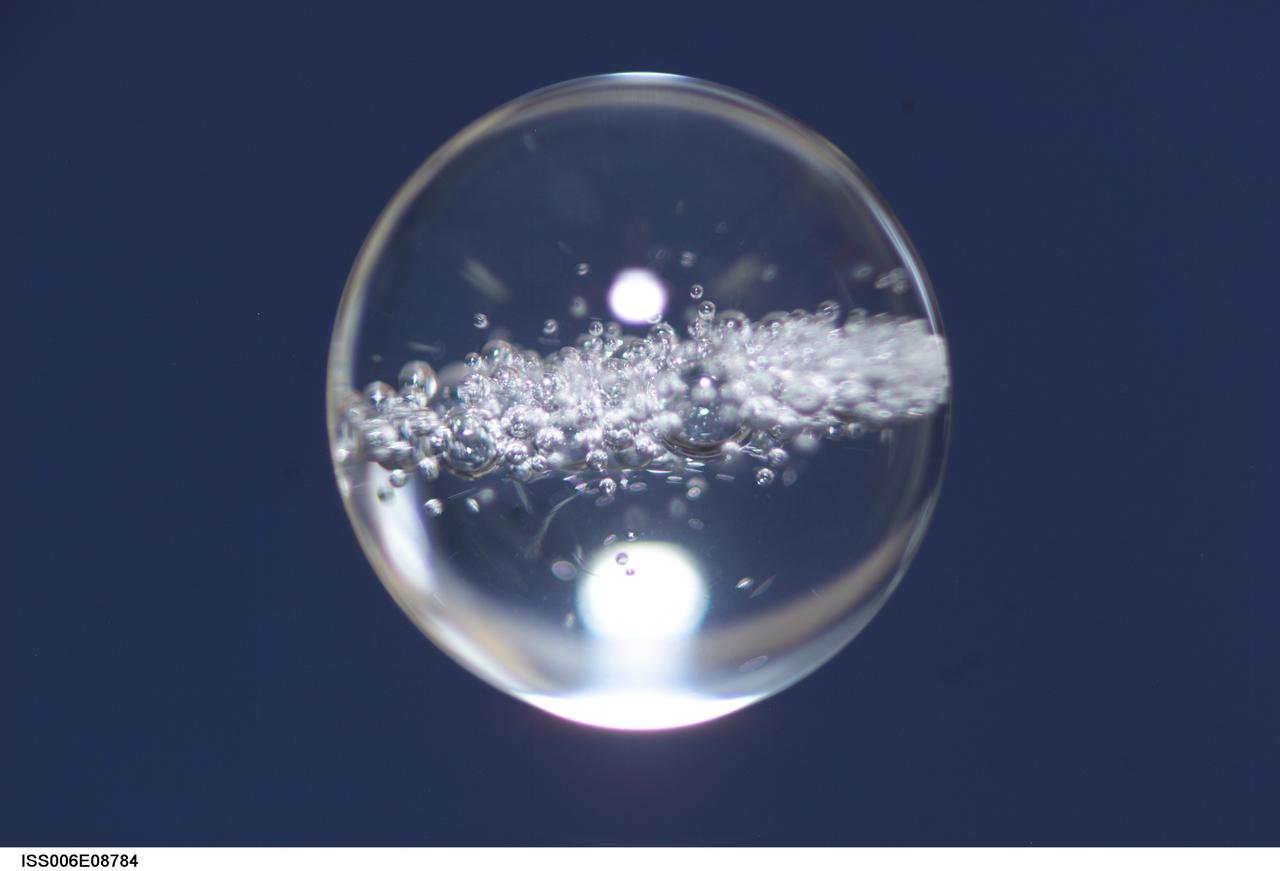
ISS006-E-08784 (14 December 2002) --- View of a bubble formed as a result of a Zeolite Crystal Growth (ZCG) experiment in the Destiny laboratory on the International Space Station (ISS). Expedition Six Commander Kenneth D. Bowersox used a Space Station drill to mix 12 Zeolite samples in clear tubes. Scientists on the ground watching on TV noticed bubbles in the samples. Bowersox used a modified mixing procedure to process autoclaves to isolate bubbles. He re-inserted the samples in the ZCG furnace in Express Rack 2 in the U.S. laboratory/Destiny. This experiment has shown that the bubbles could cause larger number of smaller deformed crystals to grow. Bowersox rotated the samples so that the heavier fluid was thrown to the outside while the lighter bubbles stayed on the inside.
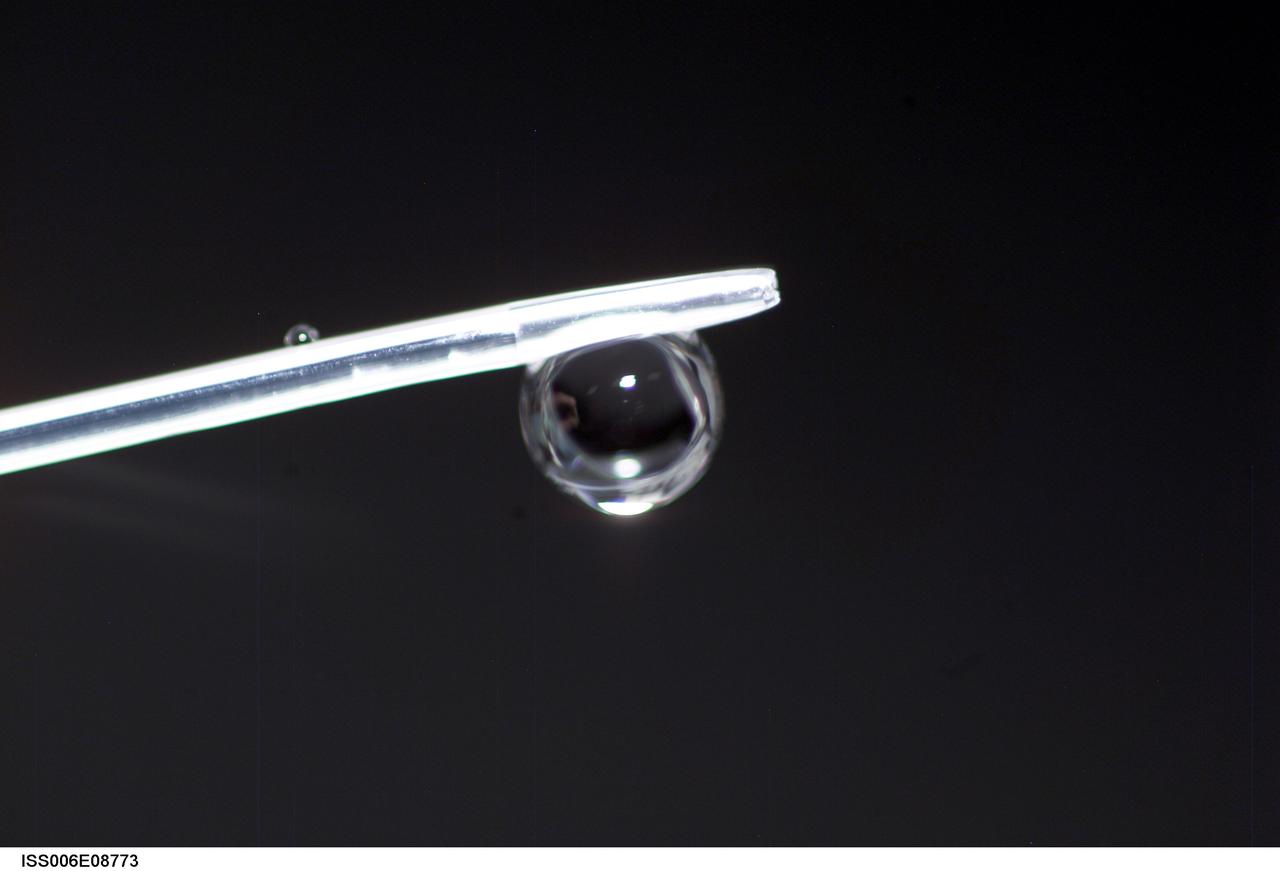
ISS006-E-08773 (14 December 2002) --- View of a bubble formed as a result of a Zeolite Crystal Growth (ZCG) experiment in the Destiny laboratory on the International Space Station (ISS). Expedition Six Commander Kenneth D. Bowersox used a Space Station drill to mix 12 Zeolite samples in clear tubes. Scientists on the ground watching on TV noticed bubbles in the samples. Bowersox used a modified mixing procedure to process autoclaves to isolate bubbles. He re-inserted the samples in the ZCG furnace in Express Rack 2 in the U.S. laboratory/Destiny. This experiment has shown that the bubbles could cause larger number of smaller deformed crystals to grow. Bowersox rotated the samples so that the heavier fluid was thrown to the outside while the lighter bubbles stayed on the inside.
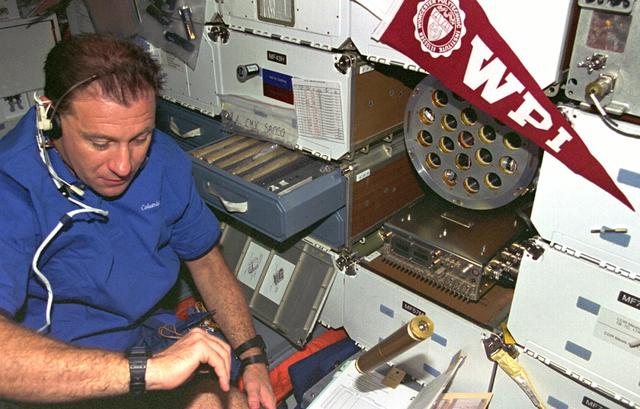
STS073-353-010 (20 October - 5 November 1995) --- Payload specialist Albert Sacco Jr. checks out the Zeolite Crystal Growth (ZCG) on the middeck of the Earth-orbiting Space Shuttle Columbia. ZCG evaluated Zeolite crystallization and growth in the microgravity environment aboard Columbia in order to achieve high yields of large, nearly perfect crystals in space. Zeolites are complex arrangements of silica and alumina that occur naturally as well as synthetically.

Payload Commander, Bornie Dunbar activating ZCG autoclave onboard STS-50, USML-1
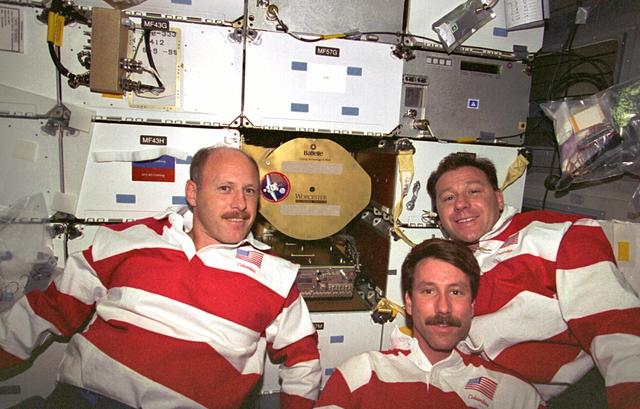
STS073-337-021 (20 October - 5 November 1995) --- Three members of the crew check out the Zeolite Crystal Growth (ZCG) on the middeck of the Earth-orbiting Space Shuttle Columbia. Left to right are astronauts Kenneth D. Bowersox and Kent V. Rominger, mission commander and pilot, respectively, and payload specialist Albert Sacco Jr. ZCG evaluated Zeolite crystallization and growth in the microgravity environment aboard Columbia in order to achieve high yields of large, nearly perfect crystals in space. Zeolites are complex arrangements of silica and alumina that occur naturally as well as synthetically.
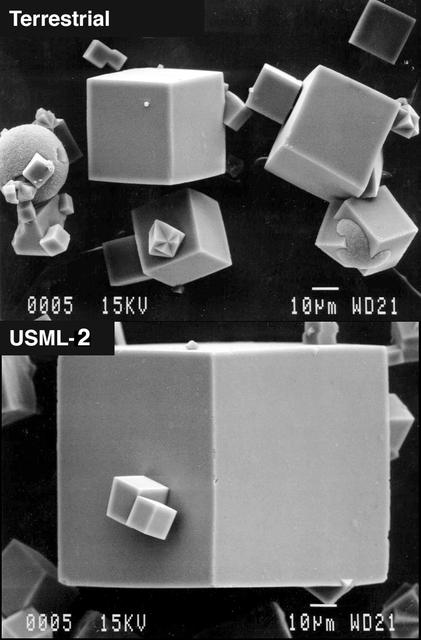
The Center for Advanced Microgravity Materials Processing (CAMMP), a NASA-sponsored Research Partnership Center, is working to improve zeolite materials for storing hydrogen fuel. CAMMP is also applying zeolites to detergents, optical cables, gas and vapor detection for environmental monitoring and control, and chemical production techniques that significantly reduce by-products that are hazardous to the environment. Shown here are zeolite crystals (top) grown in a ground control experiment and grown in microgravity on the USML-2 mission (bottom). Zeolite experiments have also been conducted aboard the International Space Station.
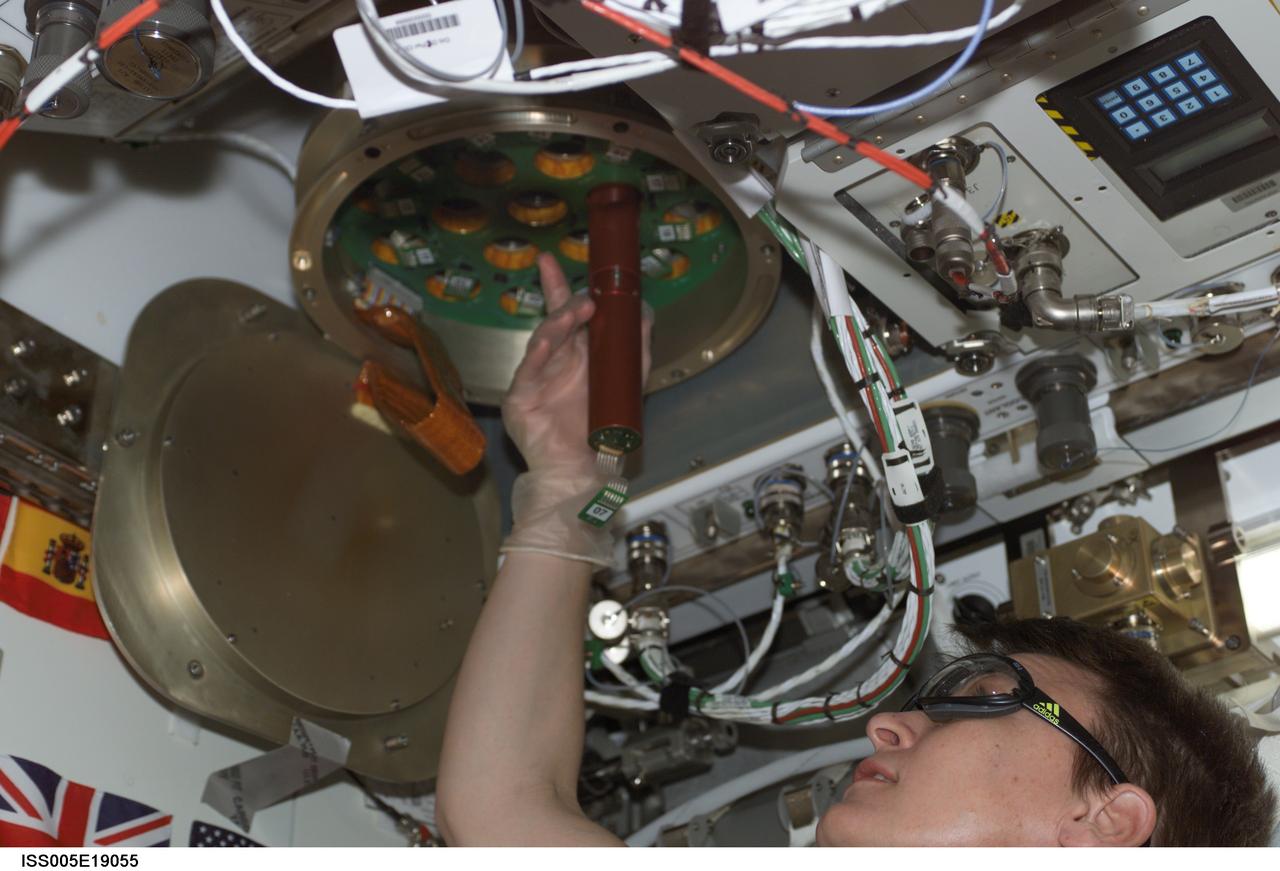
ISS005-E-19055 (29 October 2002) --- Astronaut Peggy A. Whitson, Expedition Five flight engineer, inserts an experiment cartridge in the autoclave for the Zeolite Crystal Growth (ZCG) experiment in Destiny laboratory on the International Space Station (ISS).
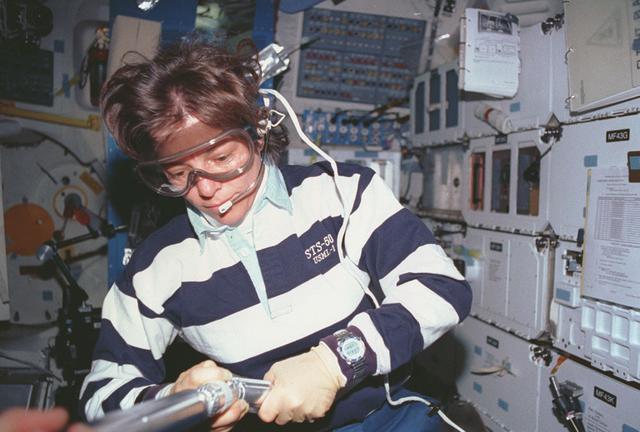
Space Shuttle Columbia (STS-50) astronaut Bornie Dunbar wears protective goggles to assemble a zeolite sample cartridge for the Crystal Growth Furnace (CGF) in the United States Microgravity Laboratory-1 (USML-1) science module.
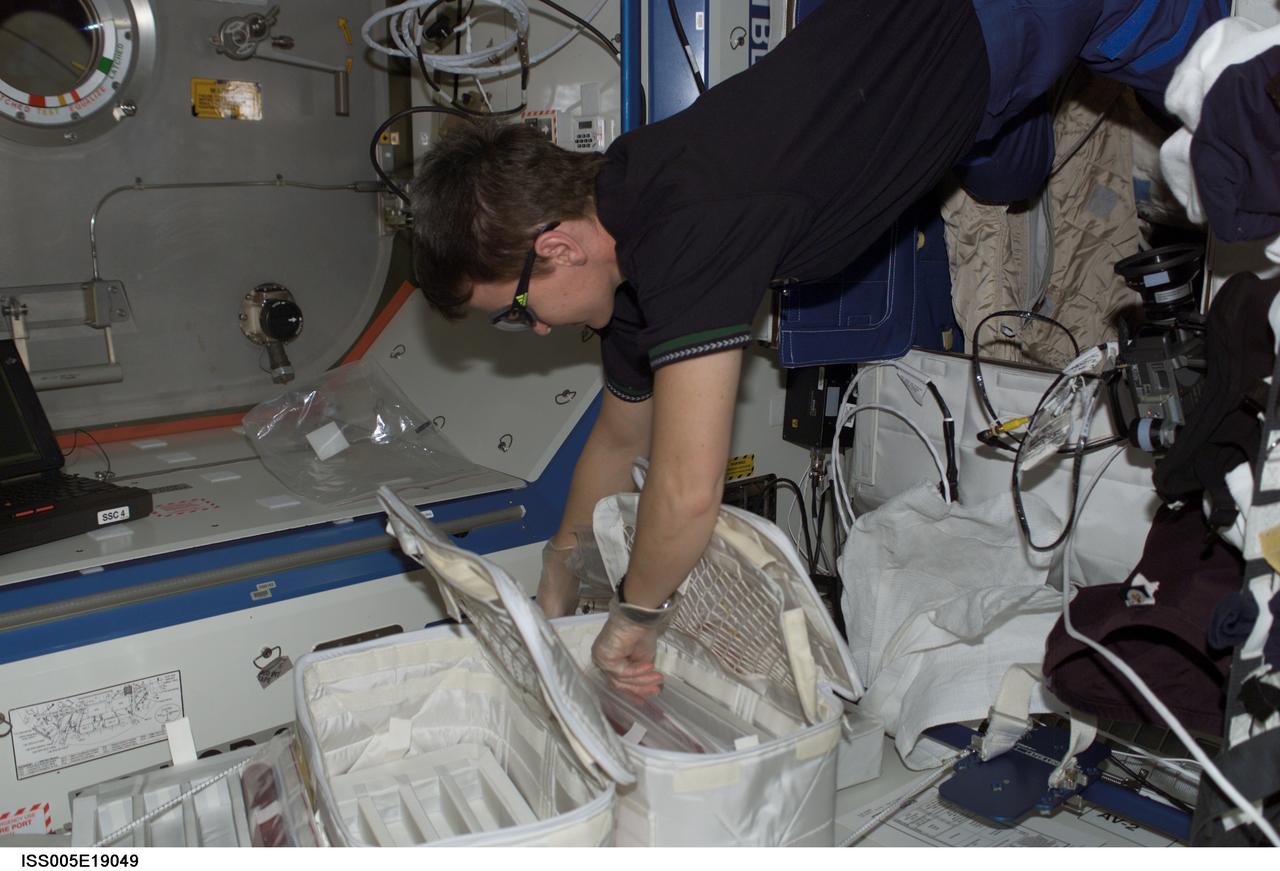
ISS005-E-19049 (29 October 2002) --- Astronaut Peggy A. Whitson, Expedition Five flight engineer, retrieves an experiment cartridge for the Zeolite Crystal Growth (ZCG) experiment in Destiny laboratory on the International Space Station (ISS).
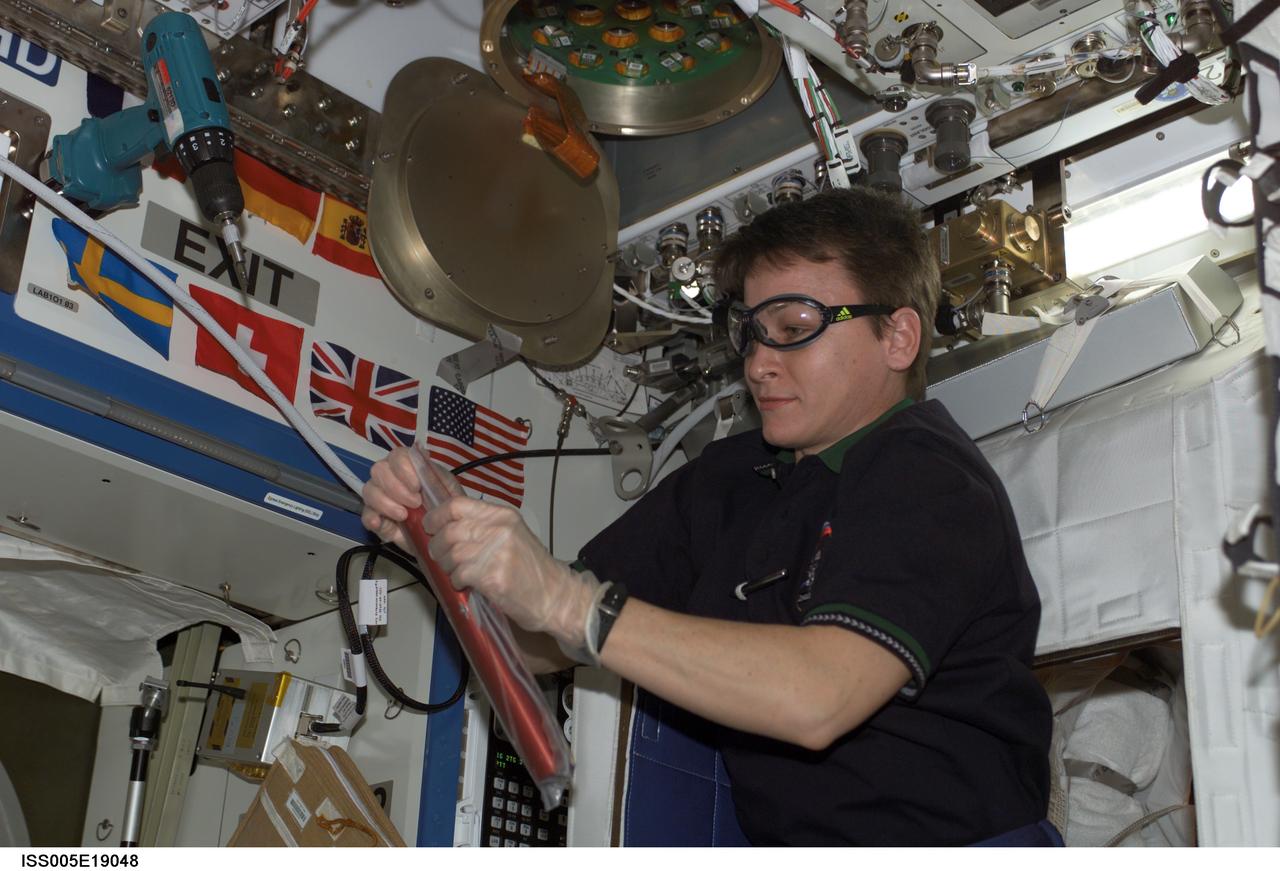
ISS005-E-19048 (29 October 2002) --- Astronaut Peggy A. Whitson, Expedition Five flight engineer, works with an experiment cartridge for the Zeolite Crystal Growth (ZCG) experiment in Destiny laboratory on the International Space Station (ISS). The autoclave for the ZCG is visible above.
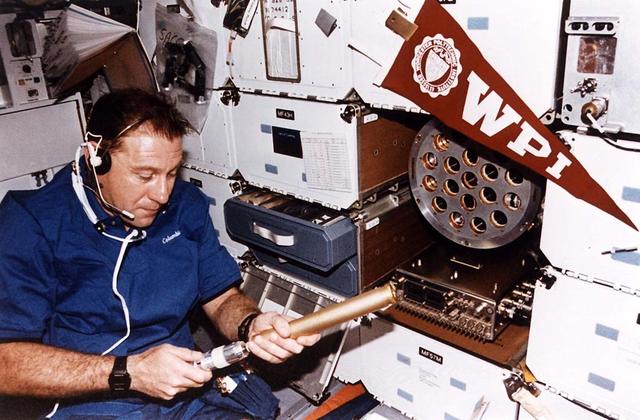
Payload specialist Albert Sacco Jr. inspects a crystal in a cylindrical autoclave on the mid-deck of the earth-orbiting space shuttle Columbia. This Zeolite Crystal Growth (ZCG) experiment was one of a few U.S. Microgravity Laboratory (USML-2) experiments that were conducted in both the Shuttle proper and its primary cargo's science module in the payload bay. Most of the experiments were conducted solely in the science module. Sacco was one of two guest researchers who joined five NASA astronauts for 16 days of Earth-orbit.
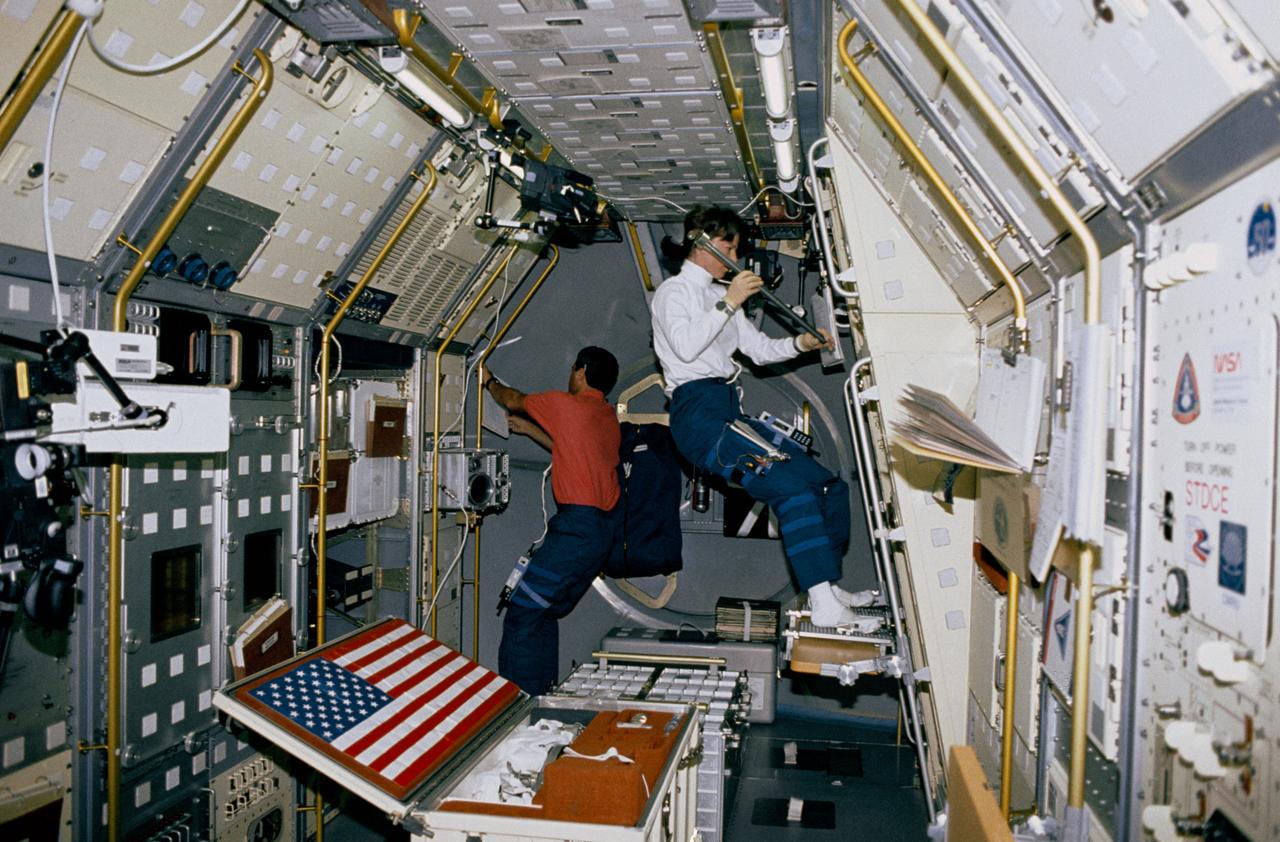
STS050-02-001 (9 July 1992) --- View showing Payload Specialists Bonnie Dunbar and Larry DeLucas in the aft section of the U. S. Microgravity Laboratory-1. Dunbar is preparing to load a sample in the Crystal Growth Furnace (CGF) Integrated Furnace Experiment Assembly (IFEA) in rack 9 of the Microgravity Laboratory. DeLucas is checking out the multipurpose Glovebox Facility.
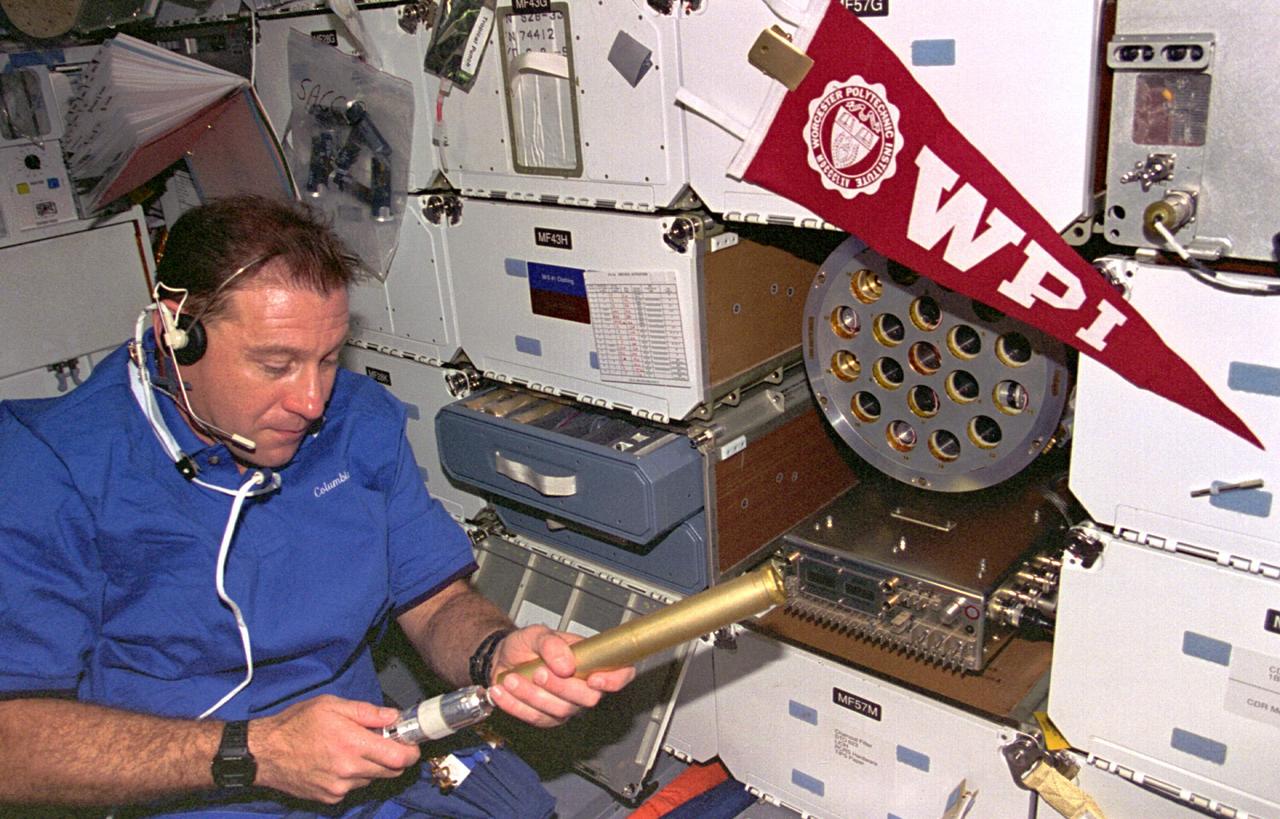
STS073-353-018 (20 October - 5 November 1995) --- Payload specialist Albert Sacco Jr. inspects a crystal in a cylindrical autoclave on the middeck of the Earth-orbiting Space Shuttle Columbia. This Zeolite Crystal Growth (ZCG) experiment was one of a few U.S. Microgravity Laboratory (USML-2) experiments that were conducted in both the Shuttle proper and its primary cargo's science module in the payload bay. Most of the experiments were conducted solely in the science module. Sacco was one of two guest researchers who joined five NASA astronauts for 16 days of Earth-orbit research in support of USML-2.