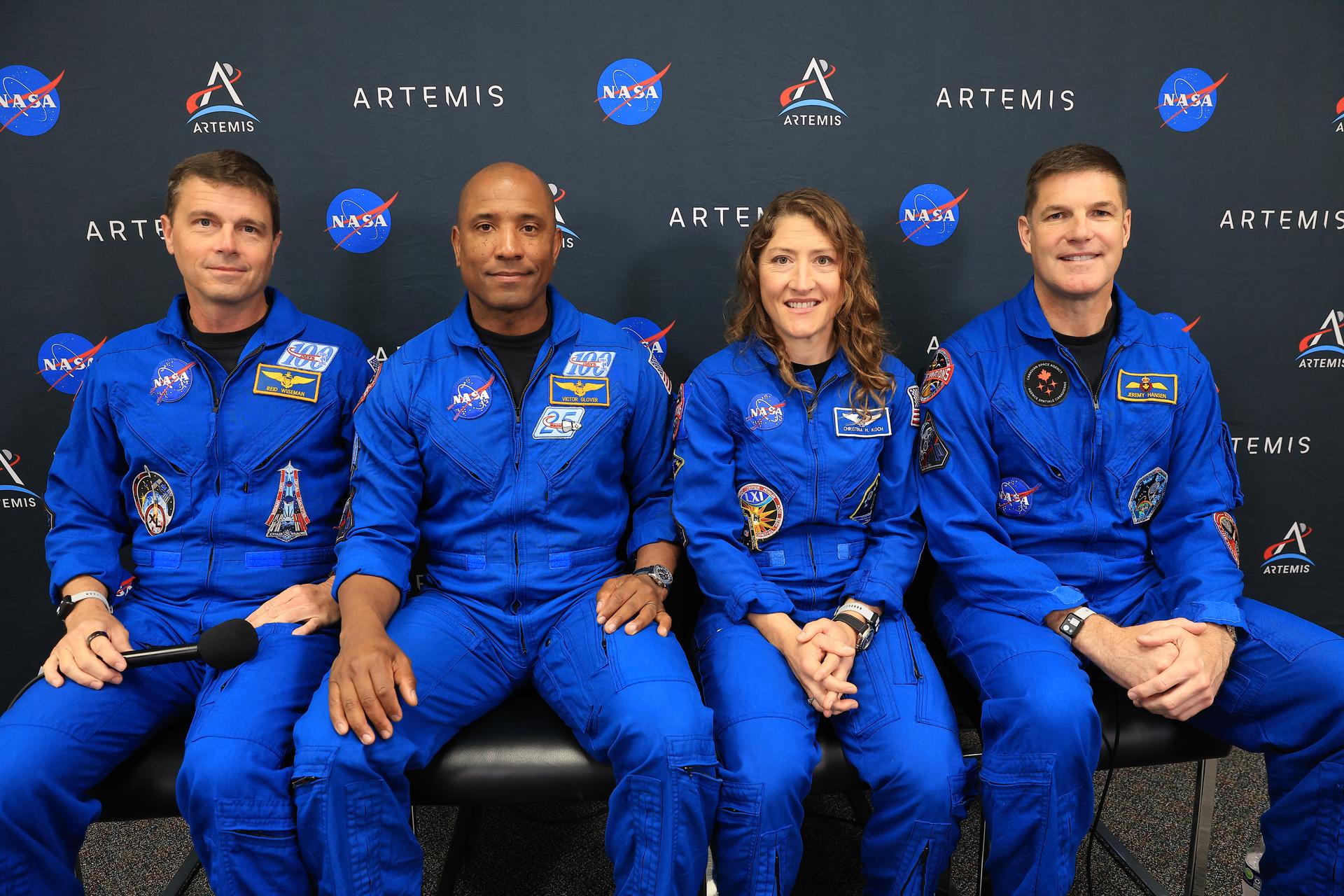
Artemis II Crew Q and A and Zero Gravity Indicator
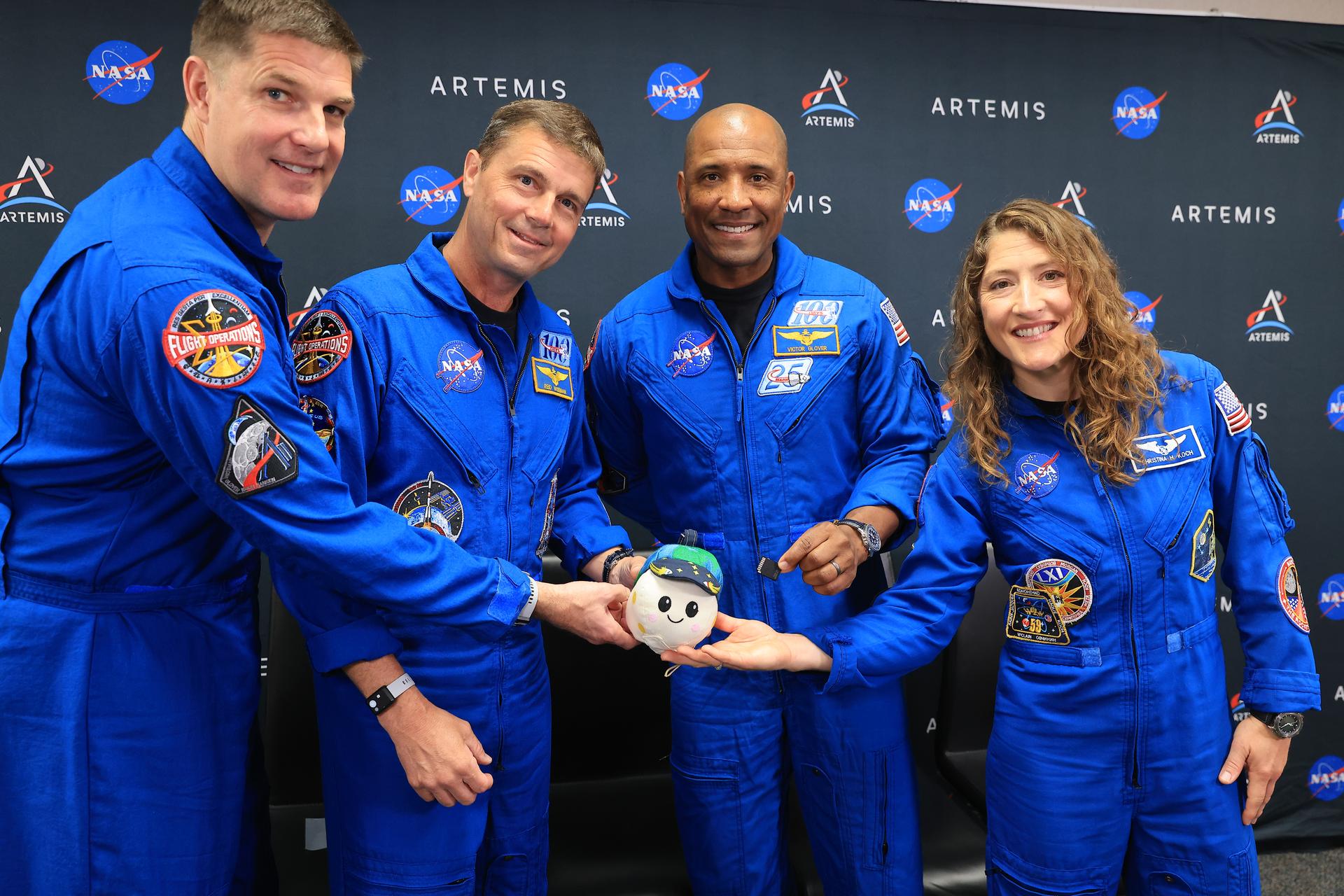
The Artemis II crew pose with the zero gravity indicator named Rise that also holds a SD card containing the names of millions who will fly with the crew around the Moon. “Rise” was inspired by the iconic Earthrise moment from the Apollo 8 mission. A zero gravity indicator is a small plush item that typically rides with a crew to visually indicate when they are in space. The Artemis II mission will take Artemis II Commander Reid Wiseman, Pilot Victor Glover, and Mission Specialist Christina Koch from NASA, and Mission Specialist Jeremy Hansen from the CSA (Canadian Space Agency) on a 10-day journey around the Moon and back aboard NASA’s SLS (Space Launch System) rocket and Orion spacecraft from Launch Complex 39B no earlier than 6:24 p.m. EDT on Wednesday, April 1.
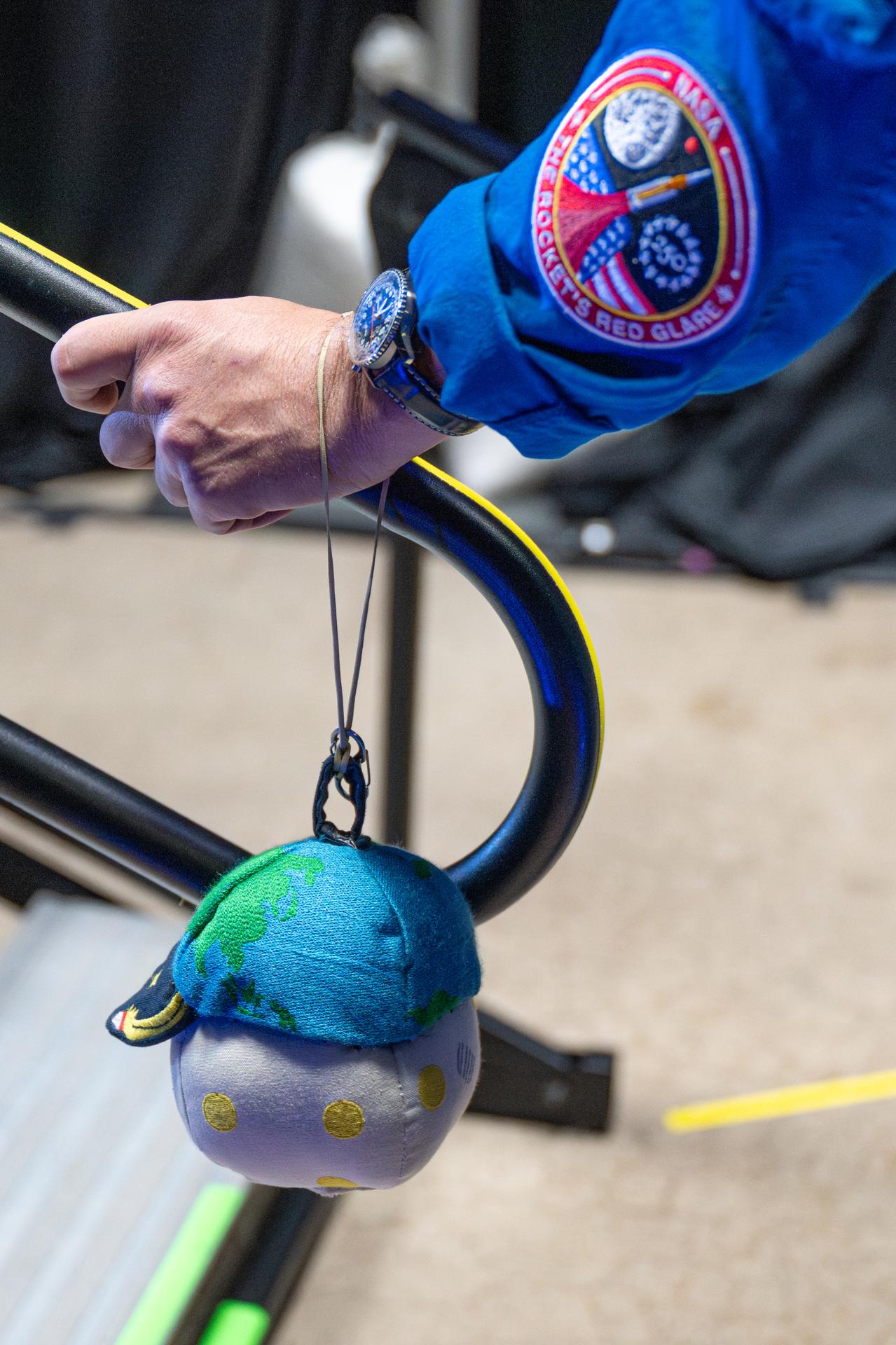
The Artemis II zero gravity indicator, "Rise," is seen looped around the wrist of NASA astronaut Reid Wiseman, Artemis II commander, before the Artemis II crew appeared on stage for a crew return event, Saturday, Apr. 11, 2026, at Ellington Field in Houston, Texas. NASA’s Artemis II test flight took Commander Reid Wiseman, Pilot Victor Glover, and Mission Specialist Christina Koch from NASA, and Mission Specialist Jeremy Hansen from the CSA (Canadian Space Agency) on an approximately nine-day mission around the Moon and back to Earth. Photo Credit: (NASA/John Kraus)

“Rise,” the Artemis II zero-gravity indicator, is seen sitting on the dais as NASA astronauts Reid Wiseman, commander; Victor Glover, pilot; Christina Koch, mission specialist; and CSA (Canadian Space Agency) astronaut Jeremy Hansen, mission specialist; speak with congressional staff, Tuesday, May 12, 2026, in Washington. NASA’s Artemis II mission took Wiseman, Glover, Koch, and Hansen on a nearly 10-day journey around the Moon and back to Earth in April 2026. Photo Credit: (NASA/Joel Kowsky)

Visitors at an Artemis II event at the Dirksen Senate Office Building, hold Rise, the zero gravity indicator that flew on the Artemis II mission, Tuesday, May 12, 2026, in Washington. NASA’s Artemis II mission took NASA astronauts Reid Wiseman, commander; Victor Glover, pilot; Christina Koch, mission specialist; and CSA (Canadian Space Agency) astronaut Jeremy Hansen, mission specialist on a nearly 10-day journey around the Moon and back to Earth in April 2026. Photo Credit: (NASA/Aubrey Gemignani)

“Rise,” the Artemis II zero-gravity indicator, is seen sitting on the dais as NASA astronauts Reid Wiseman, commander; Victor Glover, pilot; Christina Koch, mission specialist; and CSA (Canadian Space Agency) astronaut Jeremy Hansen, mission specialist; speak with congressional staff, Tuesday, May 12, 2026, in Washington. NASA’s Artemis II mission took Wiseman, Glover, Koch, and Hansen on a nearly 10-day journey around the Moon and back to Earth in April 2026. Photo Credit: (NASA/Joel Kowsky)
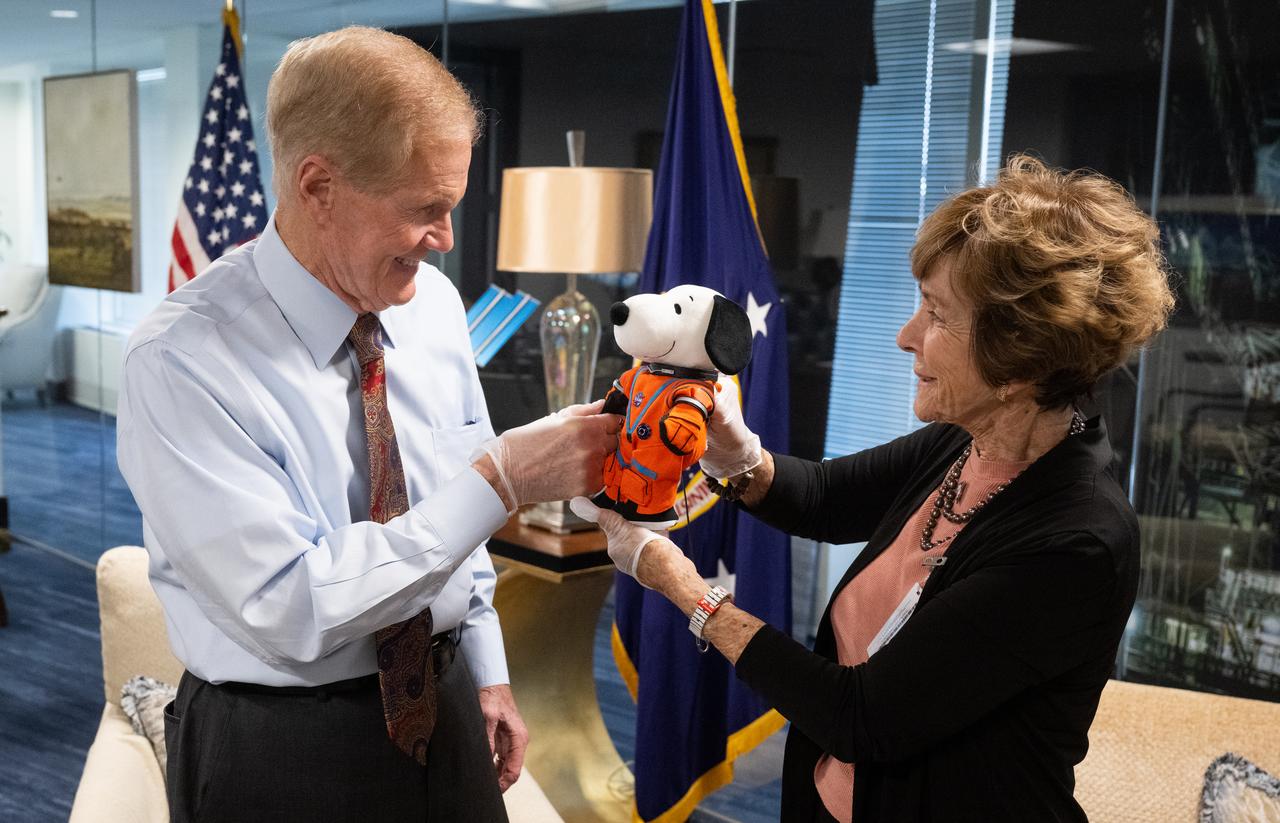
NASA Administrator Bill Nelson, left, is seen with Jeannie Schulz, widow of Peanuts gang creator Charles M. Schulz, right, holding the Artemis I Snoopy zero gravity indicator, Wednesday, April 5, 2023, during a visit to the Mary W. Jackson NASA Headquarters building in Washington. Schulz awarded a NASA Exceptional Achievement Medal by Administrator Nelson at an “Our Blue Planet” concert at the John F. Kennedy Center for the Performing Arts. Snoopy rode along as the zero gravity indicator on NASA’s Artemis I mission as part of a partnership with the agency and continues to help NASA inspire kids of all ages to follow along with Artemis missions. As part of the visit, Schulz showed the flown Artemis I Snoopy zero gravity indicator before it goes to its final home for display at the Schulz Museum in Santa Rosa, California. Photo Credit: (NASA/Joel Kowsky)
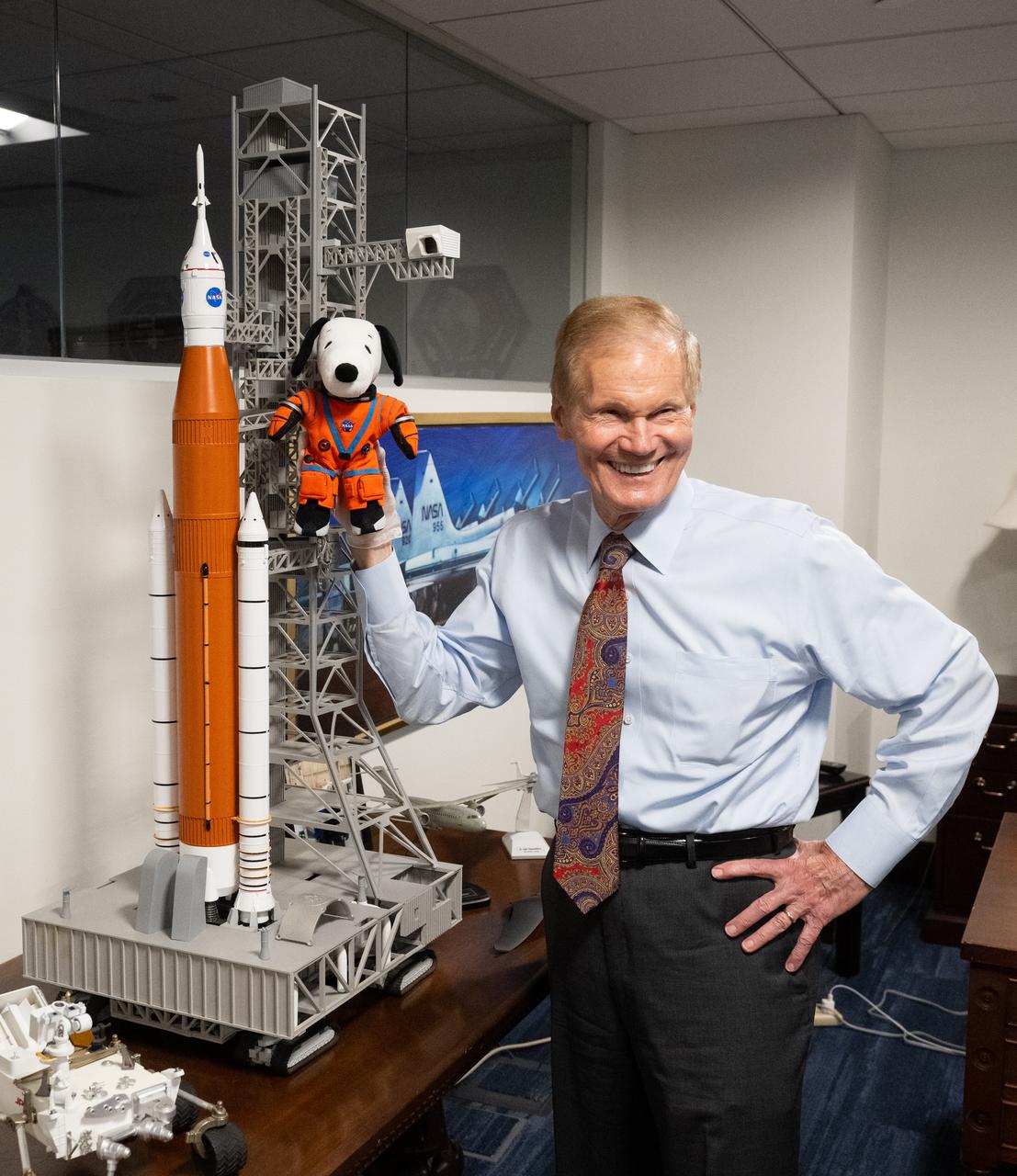
NASA Administrator Bill Nelson, holding the Artemis I Snoopy zero gravity indicator, is seen during a visit with Jeannie Schulz, widow of Peanuts gang creator Charles M. Schulz, Wednesday, April 5, 2023, at the Mary W. Jackson NASA Headquarters building in Washington. Schulz awarded a NASA Exceptional Achievement Medal by Administrator Nelson at an “Our Blue Planet” concert at the John F. Kennedy Center for the Performing Arts. Snoopy rode along as the zero gravity indicator on NASA’s Artemis I mission as part of a partnership with the agency and continues to help NASA inspire kids of all ages to follow along with Artemis missions. As part of the visit, Schulz showed the flown Artemis I Snoopy zero gravity indicator before it goes to its final home for display at the Schulz Museum in Santa Rosa, California. Photo Credit: (NASA/Joel Kowsky)
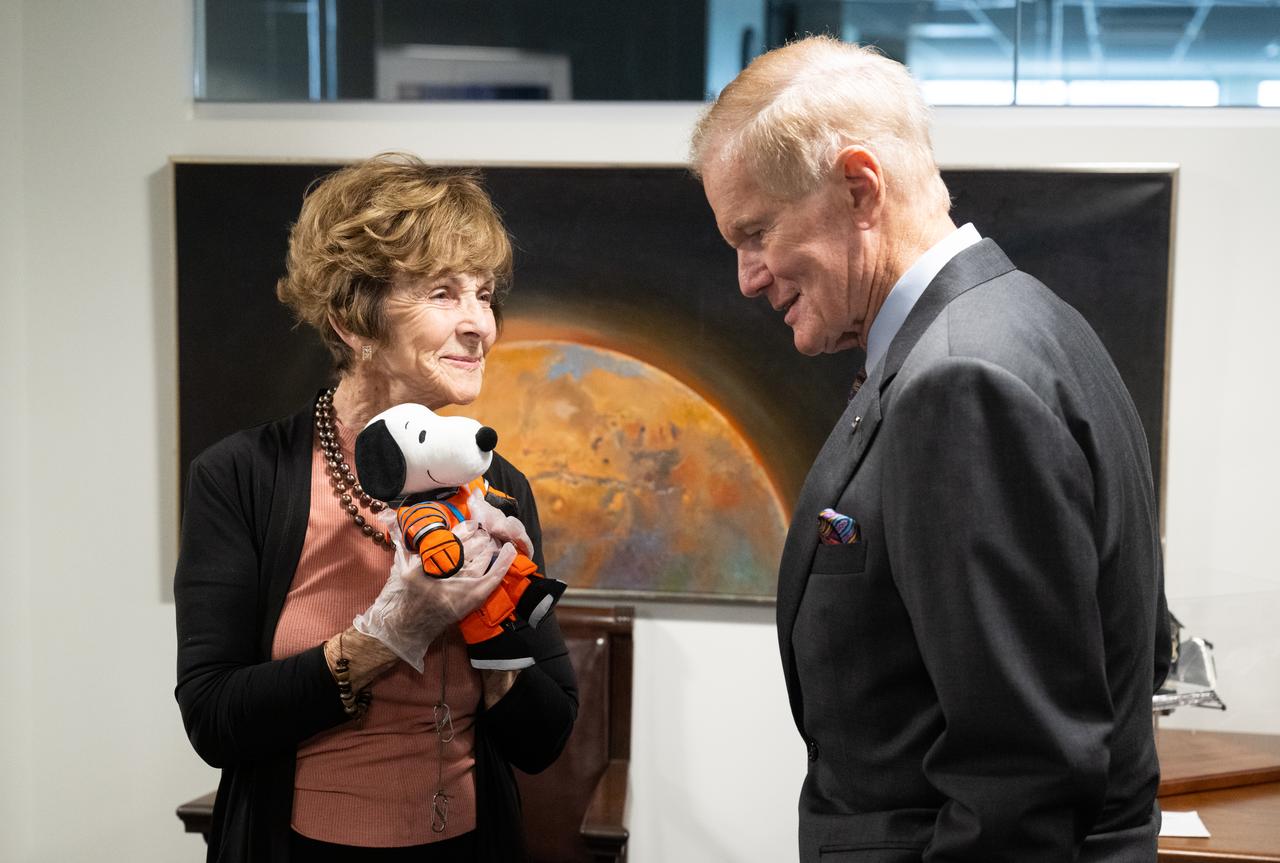
NASA Administrator Bill Nelson, right, is seen with Jeannie Schulz, widow of Peanuts gang creator Charles M. Schulz, left, holding the Artemis I Snoopy zero gravity indicator, Wednesday, April 5, 2023, during a visit to the Mary W. Jackson NASA Headquarters building in Washington. Schulz awarded a NASA Exceptional Achievement Medal by Administrator Nelson at an “Our Blue Planet” concert at the John F. Kennedy Center for the Performing Arts. Snoopy rode along as the zero gravity indicator on NASA’s Artemis I mission as part of a partnership with the agency and continues to help NASA inspire kids of all ages to follow along with Artemis missions. As part of the visit, Schulz showed the flown Artemis I Snoopy zero gravity indicator before it goes to its final home for display at the Schulz Museum in Santa Rosa, California. Photo Credit: (NASA/Joel Kowsky)
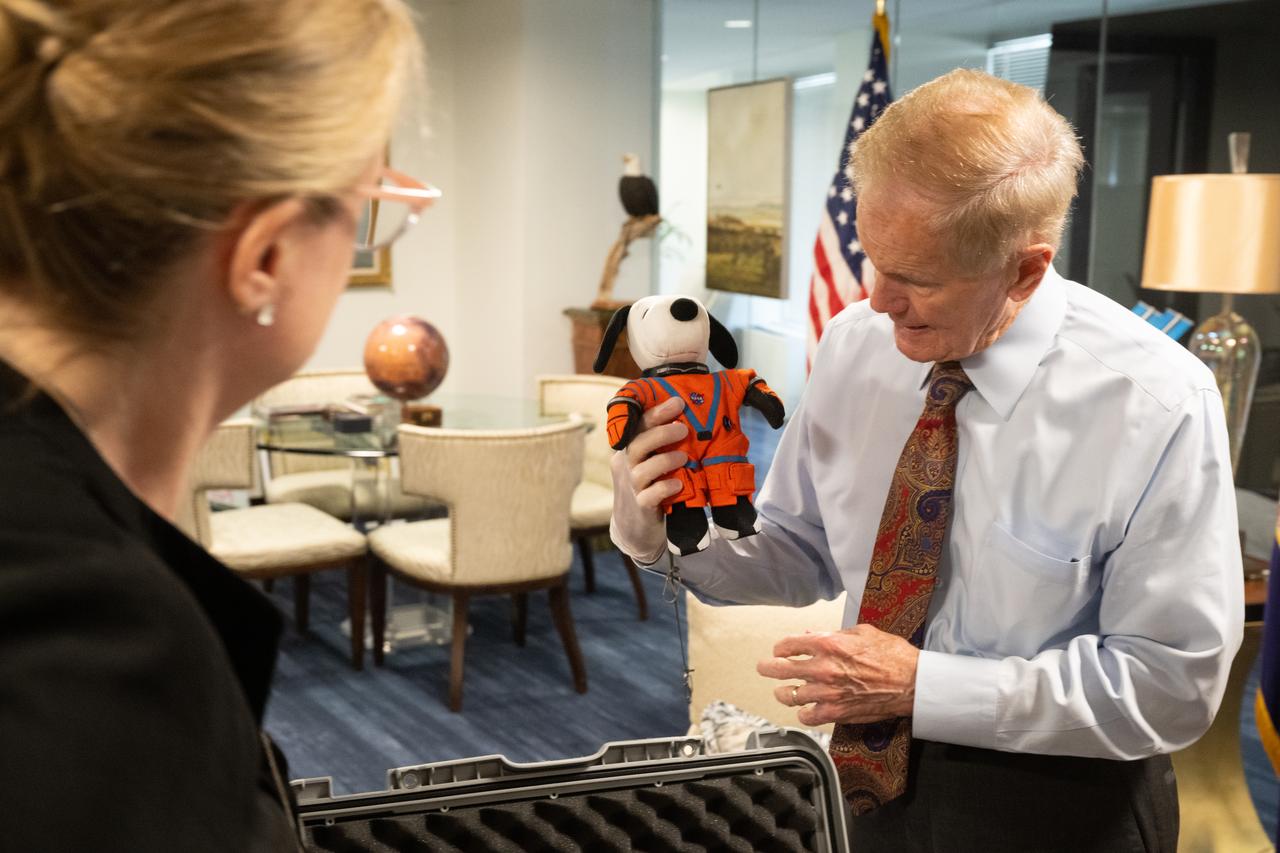
NASA Administrator Bill Nelson, holding the Artemis I Snoopy zero gravity indicator, is seen during a visit with Jeannie Schulz, widow of Peanuts gang creator Charles M. Schulz, Wednesday, April 5, 2023, at the Mary W. Jackson NASA Headquarters building in Washington. Schulz awarded a NASA Exceptional Achievement Medal by Administrator Nelson at an “Our Blue Planet” concert at the John F. Kennedy Center for the Performing Arts. Snoopy rode along as the zero gravity indicator on NASA’s Artemis I mission as part of a partnership with the agency and continues to help NASA inspire kids of all ages to follow along with Artemis missions. As part of the visit, Schulz showed the flown Artemis I Snoopy zero gravity indicator before it goes to its final home for display at the Schulz Museum in Santa Rosa, California. Photo Credit: (NASA/Joel Kowsky)
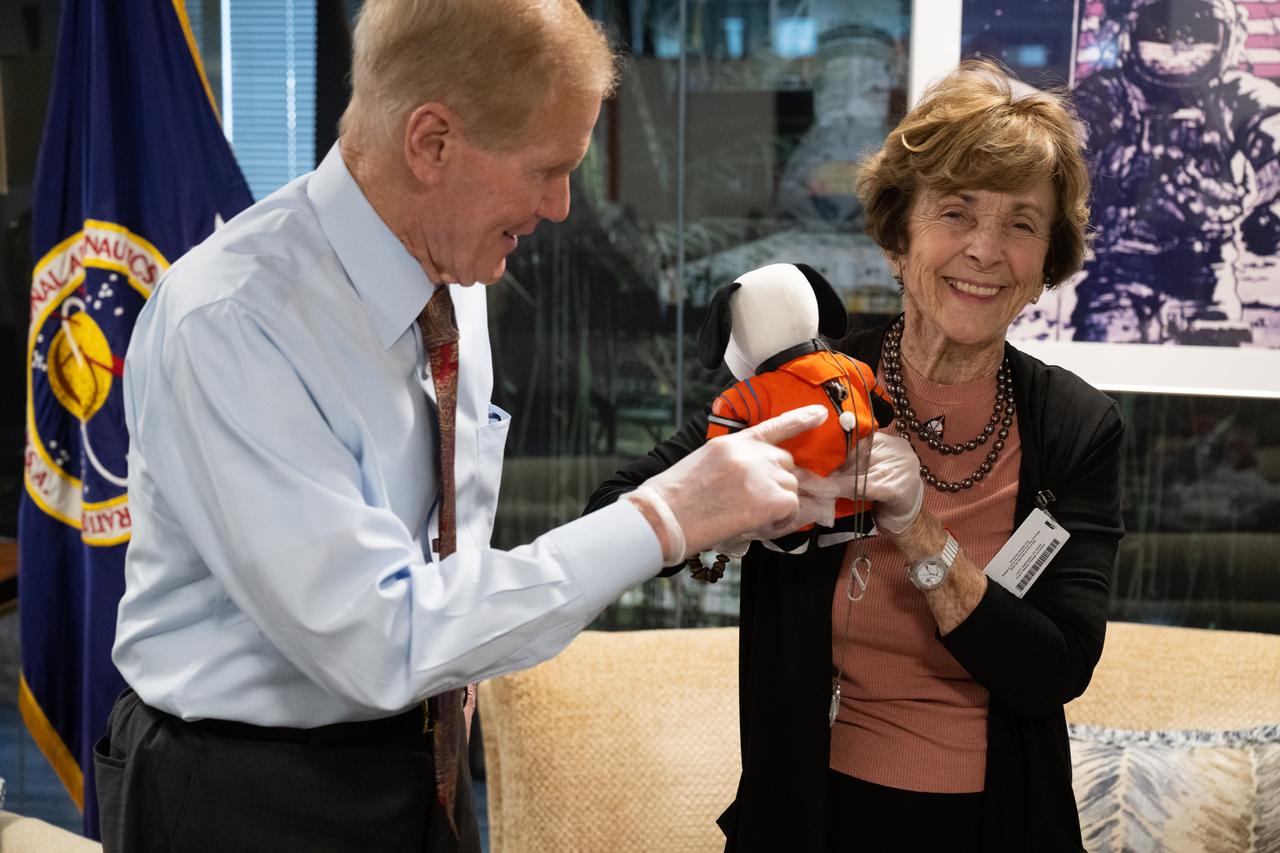
NASA Administrator Bill Nelson, left, is seen with Jeannie Schulz, widow of Peanuts gang creator Charles M. Schulz, right, holding the Artemis I Snoopy zero gravity indicator, Wednesday, April 5, 2023, during a visit to the Mary W. Jackson NASA Headquarters building in Washington. Schulz awarded a NASA Exceptional Achievement Medal by Administrator Nelson at an “Our Blue Planet” concert at the John F. Kennedy Center for the Performing Arts. Snoopy rode along as the zero gravity indicator on NASA’s Artemis I mission as part of a partnership with the agency and continues to help NASA inspire kids of all ages to follow along with Artemis missions. As part of the visit, Schulz showed the flown Artemis I Snoopy zero gravity indicator before it goes to its final home for display at the Schulz Museum in Santa Rosa, California. Photo Credit: (NASA/Joel Kowsky)
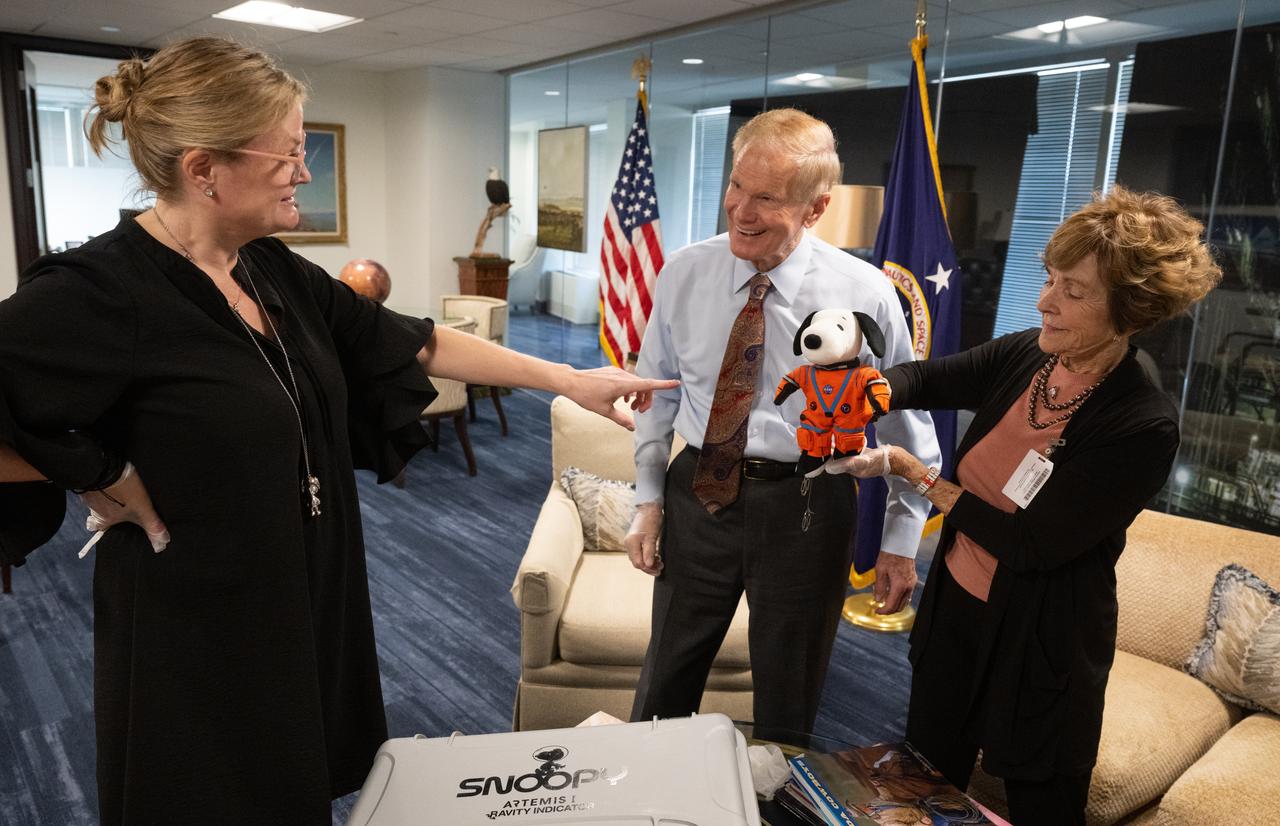
Melissa Menta, executive vice president at Peanuts Worldwide, left, NASA Administrator Bill Nelson, center, and Jeannie Schulz, widow of Peanuts gang creator Charles M. Schulz, left, holding the Artemis I Snoopy zero gravity indicator, are seen, Wednesday, April 5, 2023, during a visit to the Mary W. Jackson NASA Headquarters building in Washington. Schulz awarded a NASA Exceptional Achievement Medal by Administrator Nelson at an “Our Blue Planet” concert at the John F. Kennedy Center for the Performing Arts. Snoopy rode along as the zero gravity indicator on NASA’s Artemis I mission as part of a partnership with the agency and continues to help NASA inspire kids of all ages to follow along with Artemis missions. As part of the visit, Schulz showed the flown Artemis I Snoopy zero gravity indicator before it goes to its final home for display at the Schulz Museum in Santa Rosa, California. Photo Credit: (NASA/Joel Kowsky)
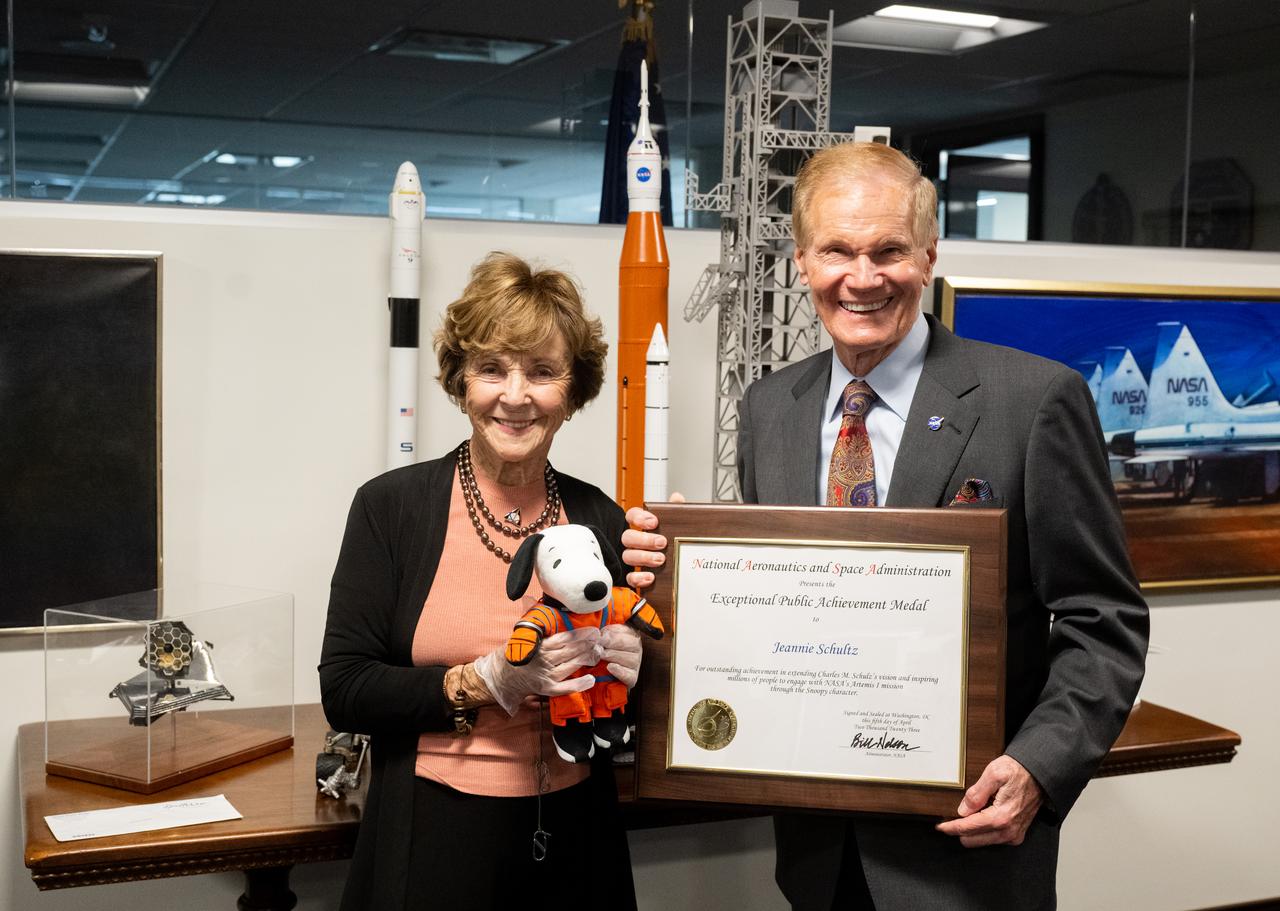
NASA Administrator Bill Nelson, right, and Jeannie Schulz, widow of Peanuts gang creator Charles M. Schulz, holding the Artemis I Snoopy zero gravity indicator, left, pose for a picture with the NASA Exceptional Achievement Medal plaque, Wednesday, April 5, 2023, at the Mary W. Jackson NASA Headquarters building in Washington. Schulz was awarded a NASA Exceptional Achievement Medal by Administrator Nelson at an “Our Blue Planet” concert at the John F. Kennedy Center for the Performing Arts. Snoopy rode along as the zero gravity indicator on NASA’s Artemis I mission as part of a partnership with the agency and continues to help NASA inspire kids of all ages to follow along with Artemis missions. As part of the visit, Schulz showed the flown Artemis I Snoopy zero gravity indicator before it goes to its final home for display at the Schulz Museum in Santa Rosa, California. Photo Credit: (NASA/Joel Kowsky)
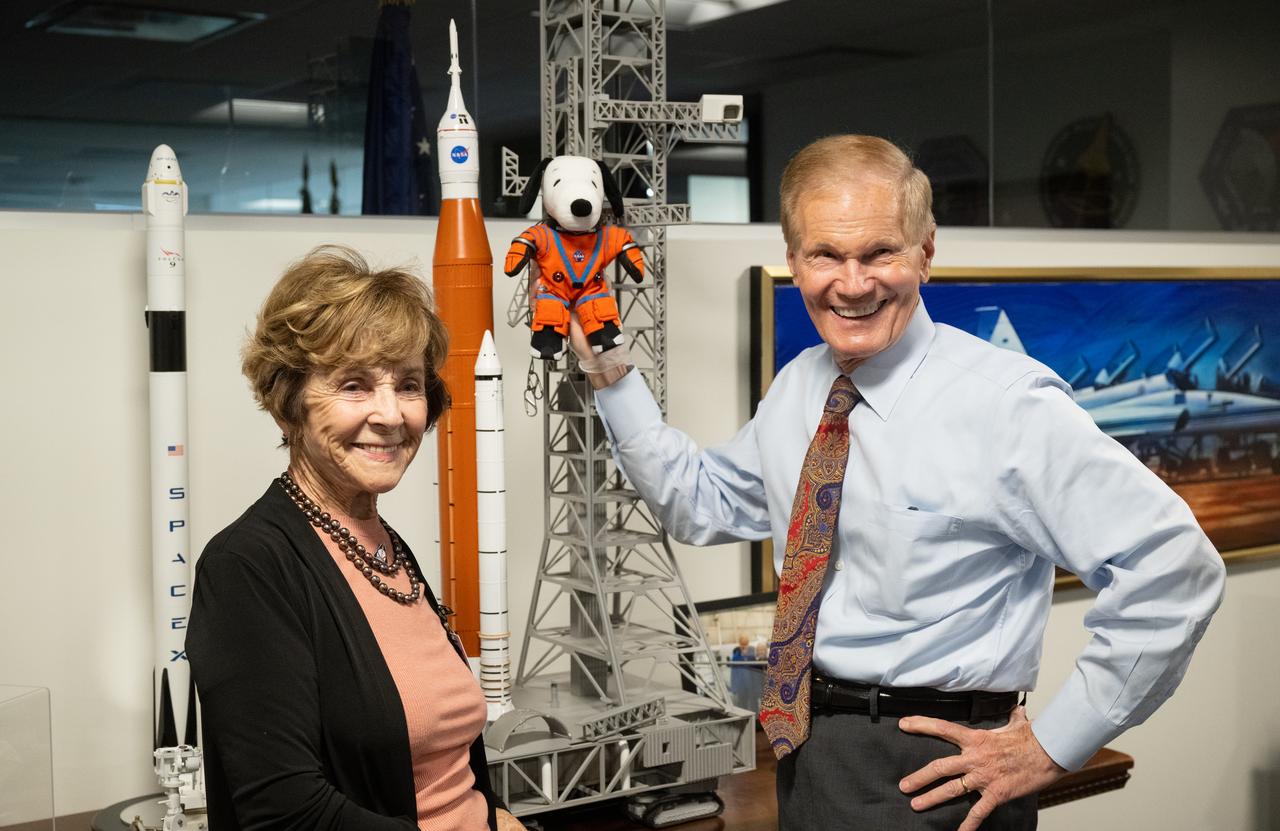
NASA Administrator Bill Nelson, right, holding the Artemis I Snoopy zero gravity indicator, is seen with Jeannie Schulz, widow of Peanuts gang creator Charles M. Schulz, left, Wednesday, April 5, 2023, during a visit to the Mary W. Jackson NASA Headquarters building in Washington. Schulz awarded a NASA Exceptional Achievement Medal by Administrator Nelson at an “Our Blue Planet” concert at the John F. Kennedy Center for the Performing Arts. Snoopy rode along as the zero gravity indicator on NASA’s Artemis I mission as part of a partnership with the agency and continues to help NASA inspire kids of all ages to follow along with Artemis missions. As part of the visit, Schulz showed the flown Artemis I Snoopy zero gravity indicator before it goes to its final home for display at the Schulz Museum in Santa Rosa, California. Photo Credit: (NASA/Joel Kowsky)
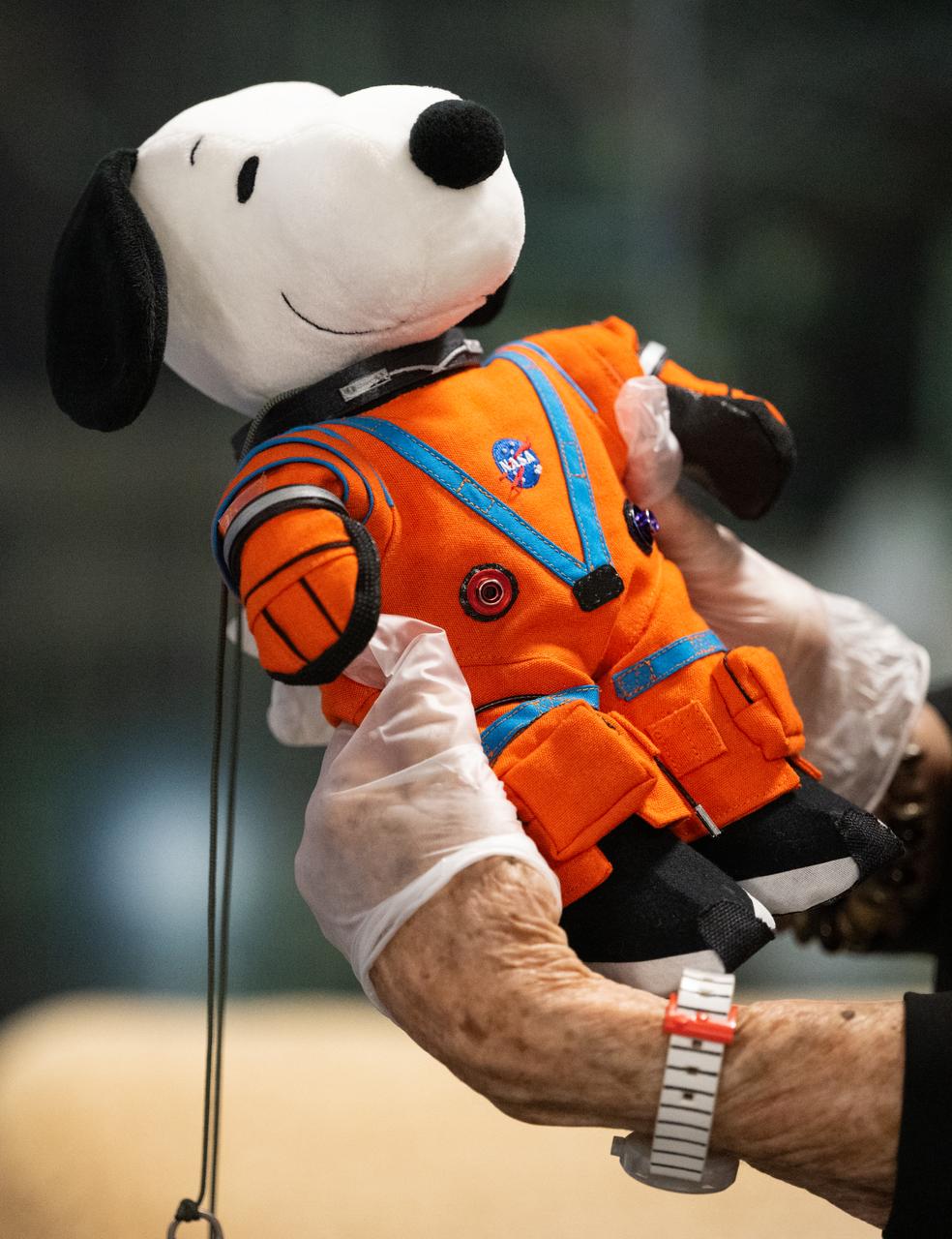
Jeannie Schulz, widow of Peanuts gang creator Charles M. Schulz, holds the Artemis I Snoopy zero gravity indicator, Wednesday, April 5, 2023, during visit to the Mary W. Jackson NASA Headquarters building in Washington. Schulz was awarded a NASA Exceptional Achievement Medal by Administrator Nelson at an Our Blue Planet concert at the Kennedy Center for the Performing Arts. Snoopy rode along as the zero gravity indicator on NASA’s Artemis I mission as part of a partnership with the agency and continues to help NASA inspire kids of all ages to follow along with Artemis missions. As part of the visit, Schulz showed the flown Artemis I Snoopy zero gravity indicator before it goes to its final home for display at the Schulz Museum in Santa Rosa, California. Photo Credit: (NASA/Joel Kowsky)
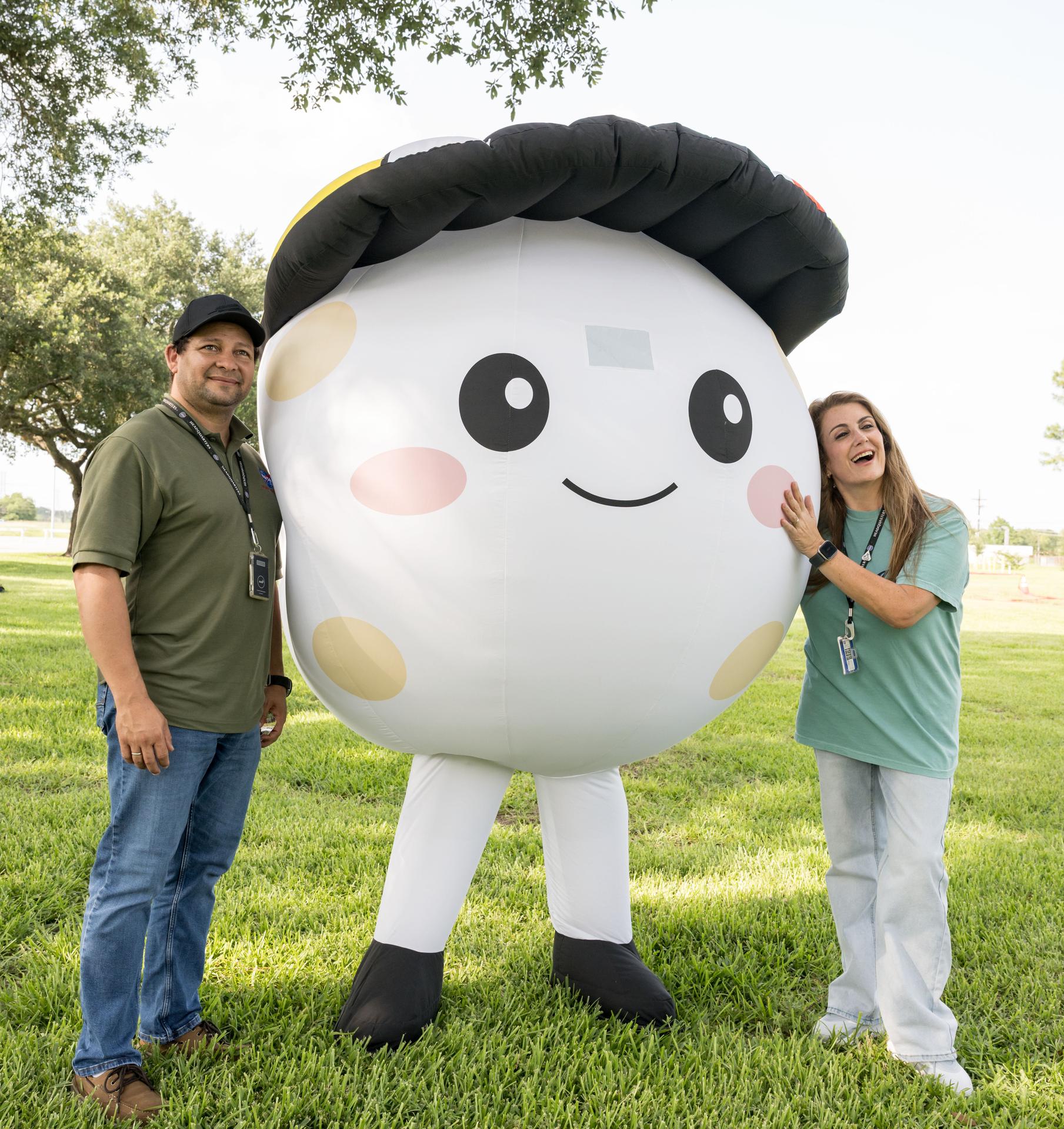
jsc2026e396713 (June 25, 2026) - Attendees pose with Rise, a representation of the zero gravity indicator of the Artemis II mission, during an Artemis II employee celebration event at NASA's Johnson Space Center. Credit: NASA
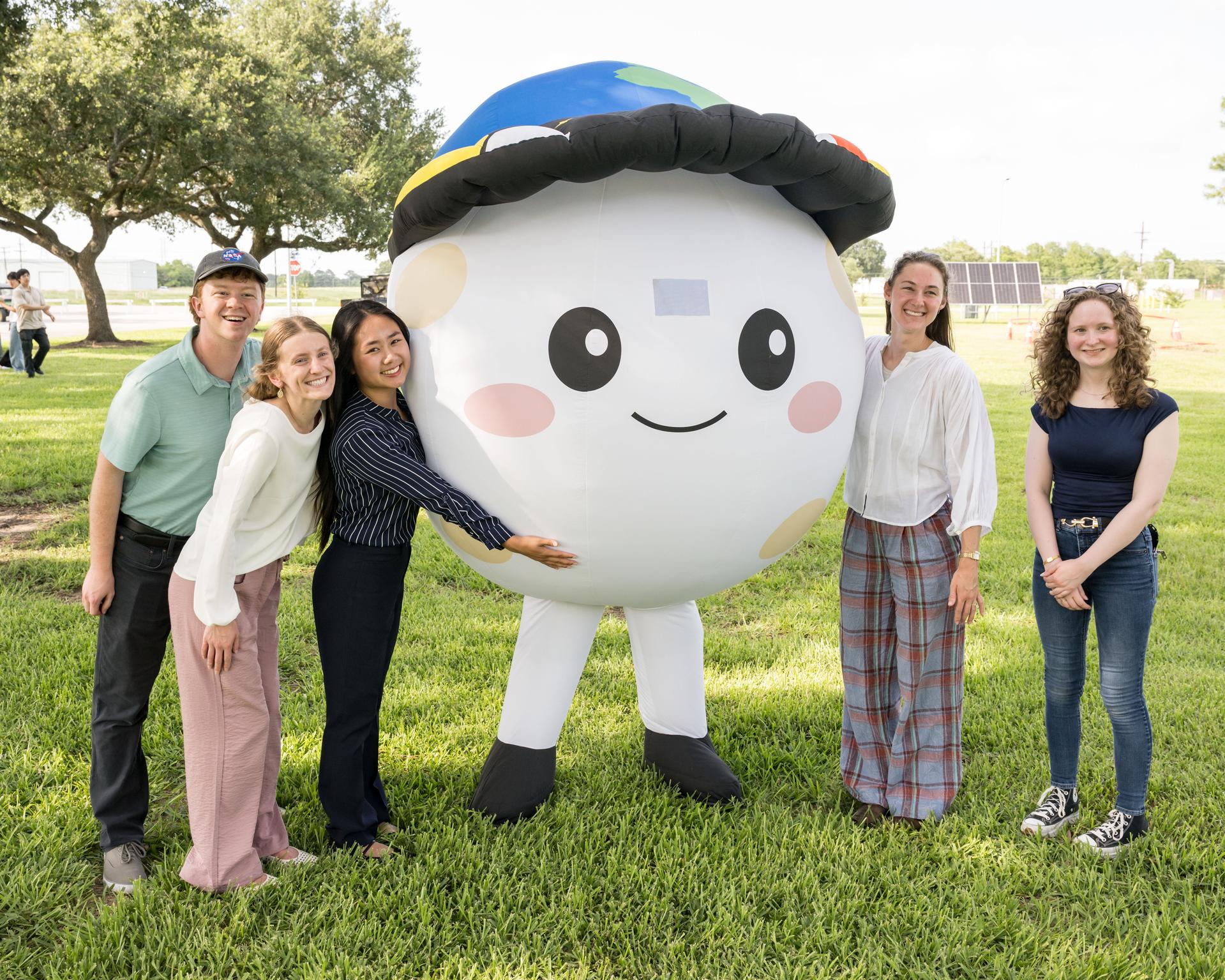
jsc2026e396712 (June 25, 2026) - Attendees pose with Rise, a representation of the zero gravity indicator of the Artemis II mission, during an Artemis II employee celebration event at NASA's Johnson Space Center. Credit: NASA
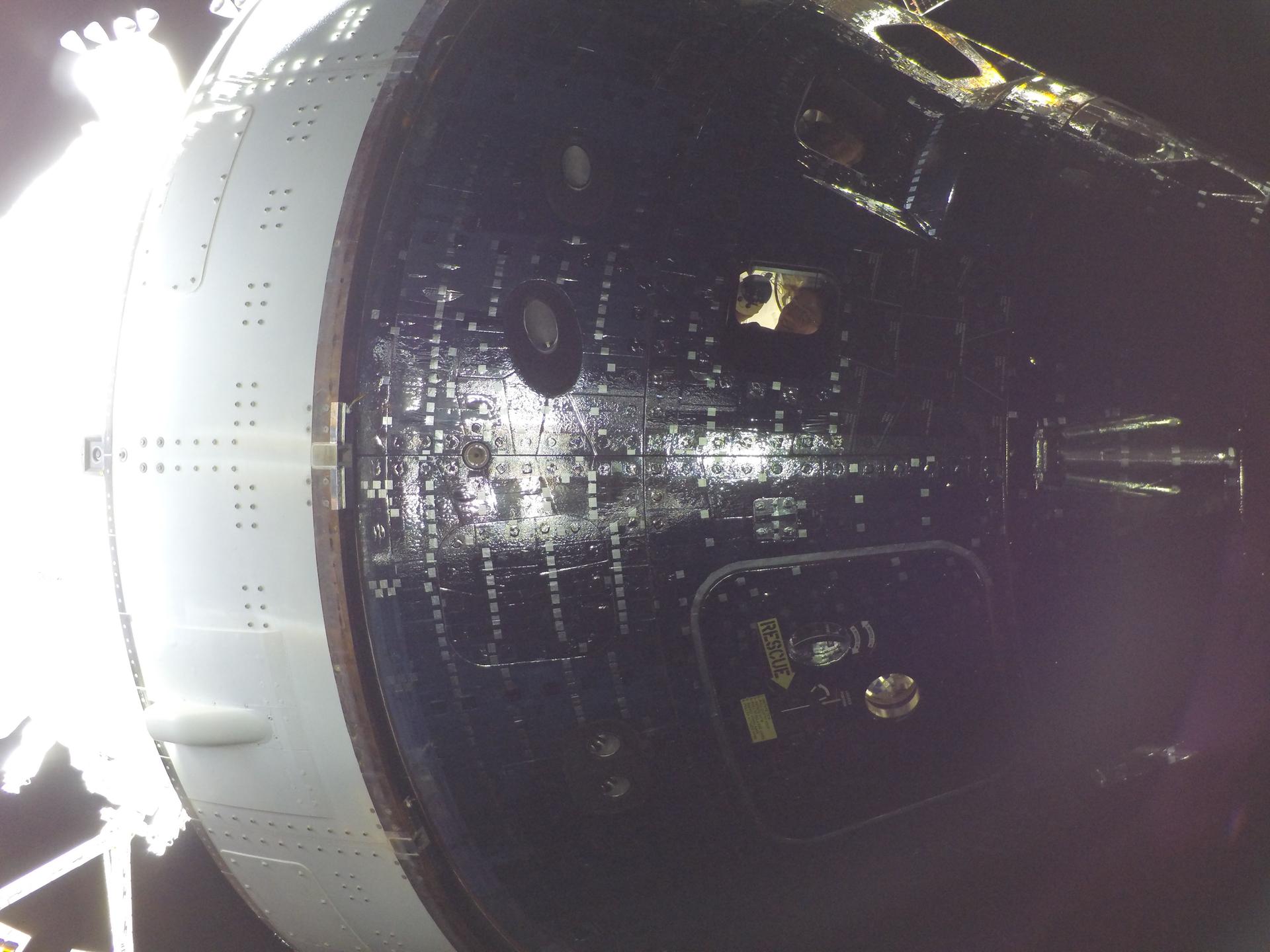
art002e009013 (April 4, 2026) - Artemis II Mission Specialist Christina Koch is seen through a window of the Orion spacecraft while on her way to the Moon. This selfie-style photo was taken using a camera on the end of one of Orion's solar array wings on flight day 4 of the approximately 10-day test flight, when Orion was more than halfway to the Moon. Koch is holding "Rise", the zero gravity indicator that launched with the crew after being selected from more than 2,600 original designs that were submitted from countries around the world. A zero gravity indicator is a small plush item that typically rides with a crew to visually indicate when they are in space. “Rise” was inspired by the iconic Earthrise moment from the Apollo 8 mission.
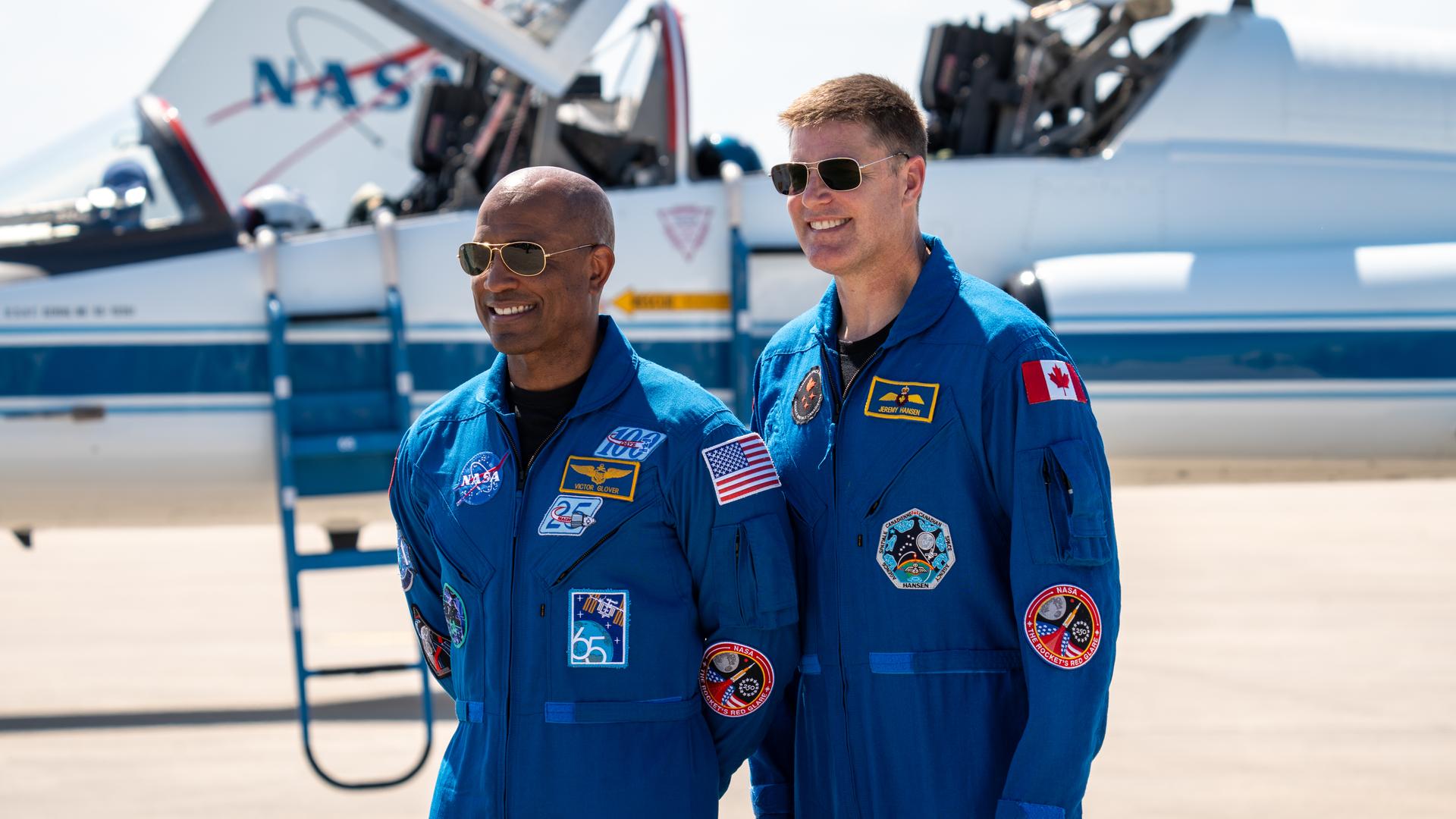
DESCRIPTION: These images show the moments shortly after the arrival of the Artemis II crew to NASA’s Kennedy Space Center on March 27, 2026 ahead of the launch. The four astronauts, Victor Glover, Reid Wiseman, Christina Koch, and Jeremy Hansen, arrived on a T38, which can be seen behind them. They took turns speaking to the crowd as they also announced the zero-gravity indicator they would be taking with them on their journey.
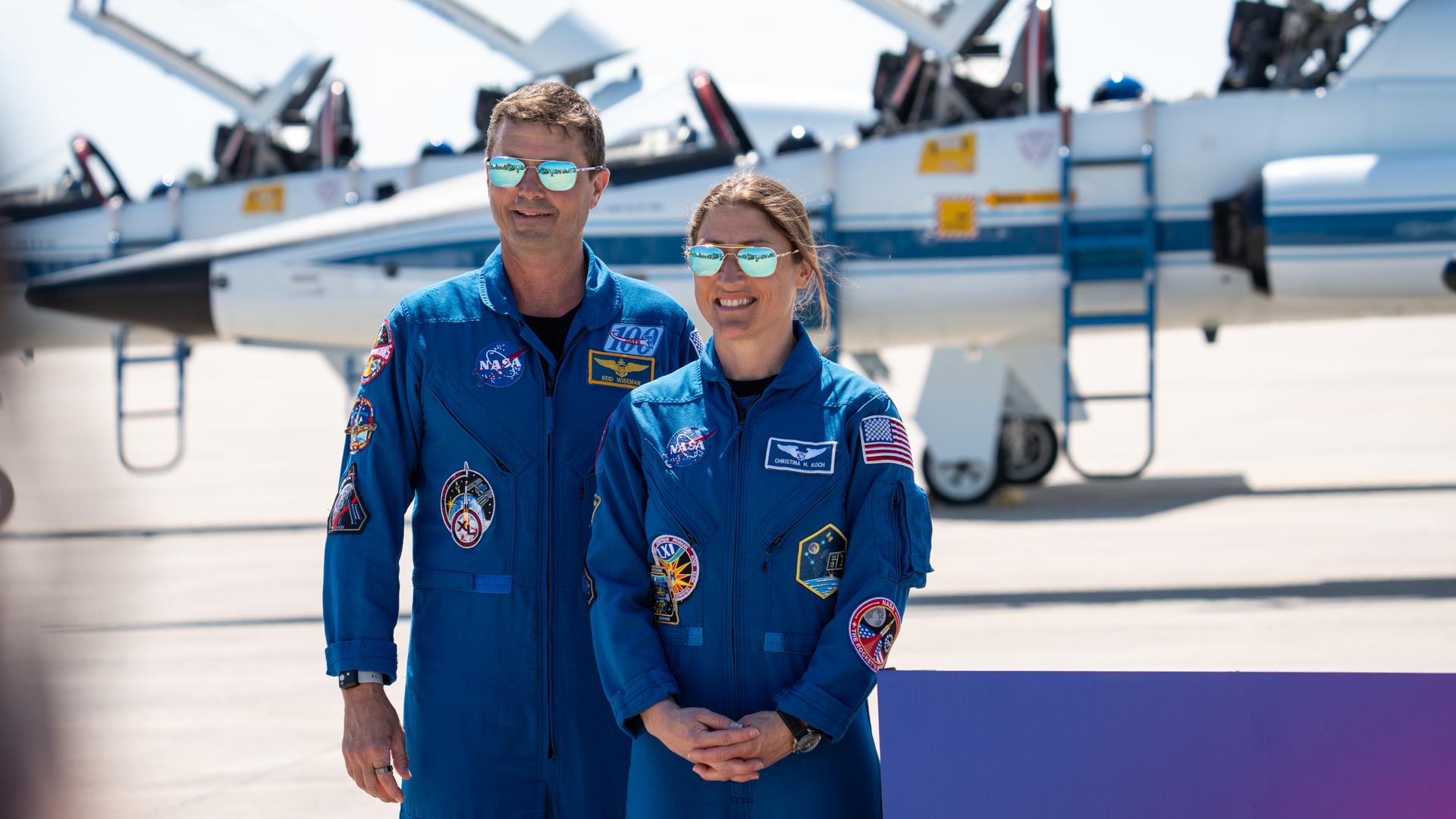
These images show the moments shortly after the arrival of the Artemis II crew to NASA’s Kennedy Space Center on March 27, 2026 ahead of the launch. The four astronauts, Victor Glover, Reid Wiseman, Christina Koch, and Jeremy Hansen, arrived on a T38, which can be seen behind them. They took turns speaking to the crowd as they also announced the zero-gravity indicator they would be taking with them on their journey.
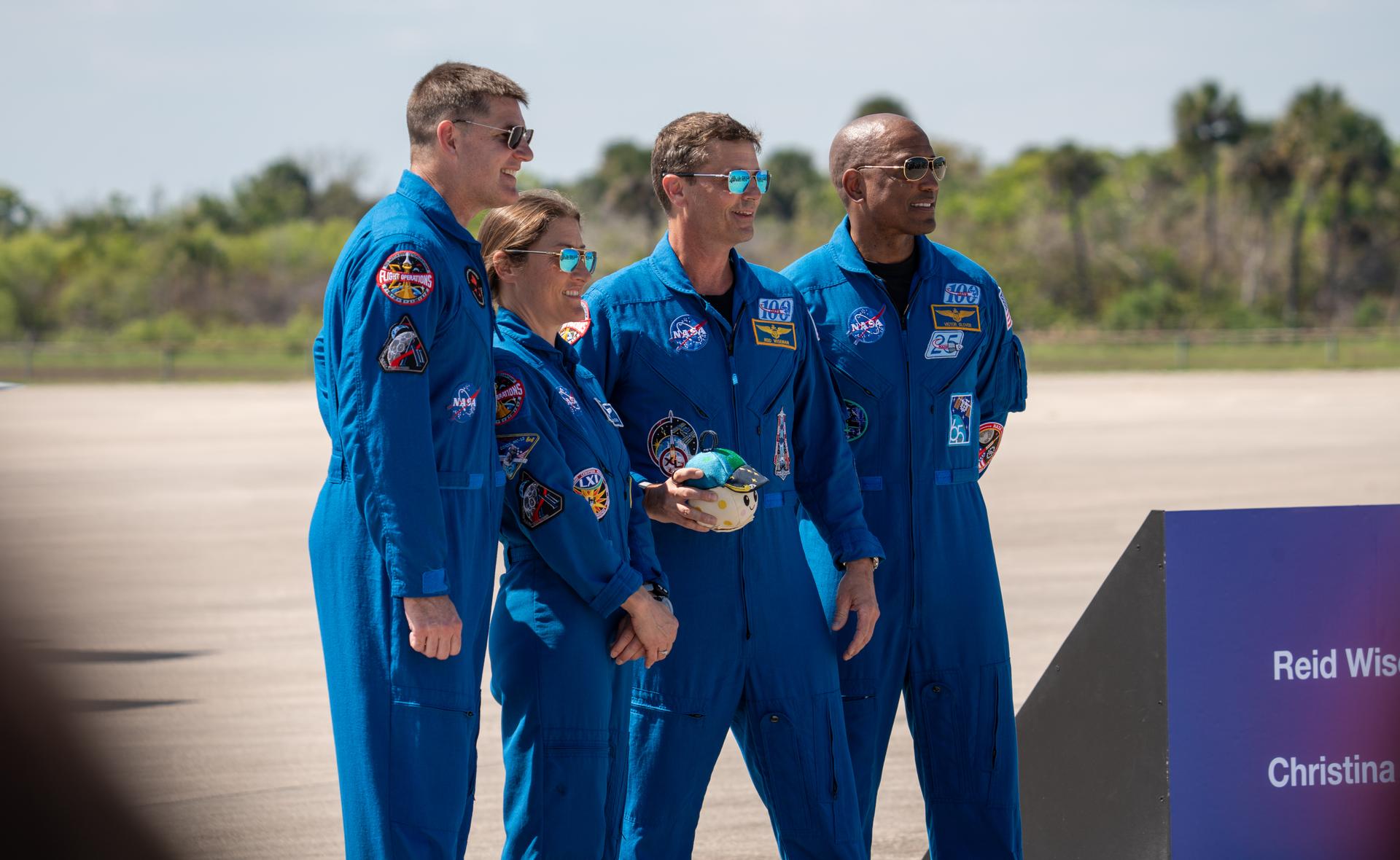
These images show the moments shortly after the arrival of the Artemis II crew to NASA’s Kennedy Space Center on March 27, 2026 ahead of the launch. The four astronauts, Victor Glover, Reid Wiseman, Christina Koch, and Jeremy Hansen, arrived on a T38, which can be seen behind them. They took turns speaking to the crowd as they also announced the zero-gravity indicator they would be taking with them on their journey.
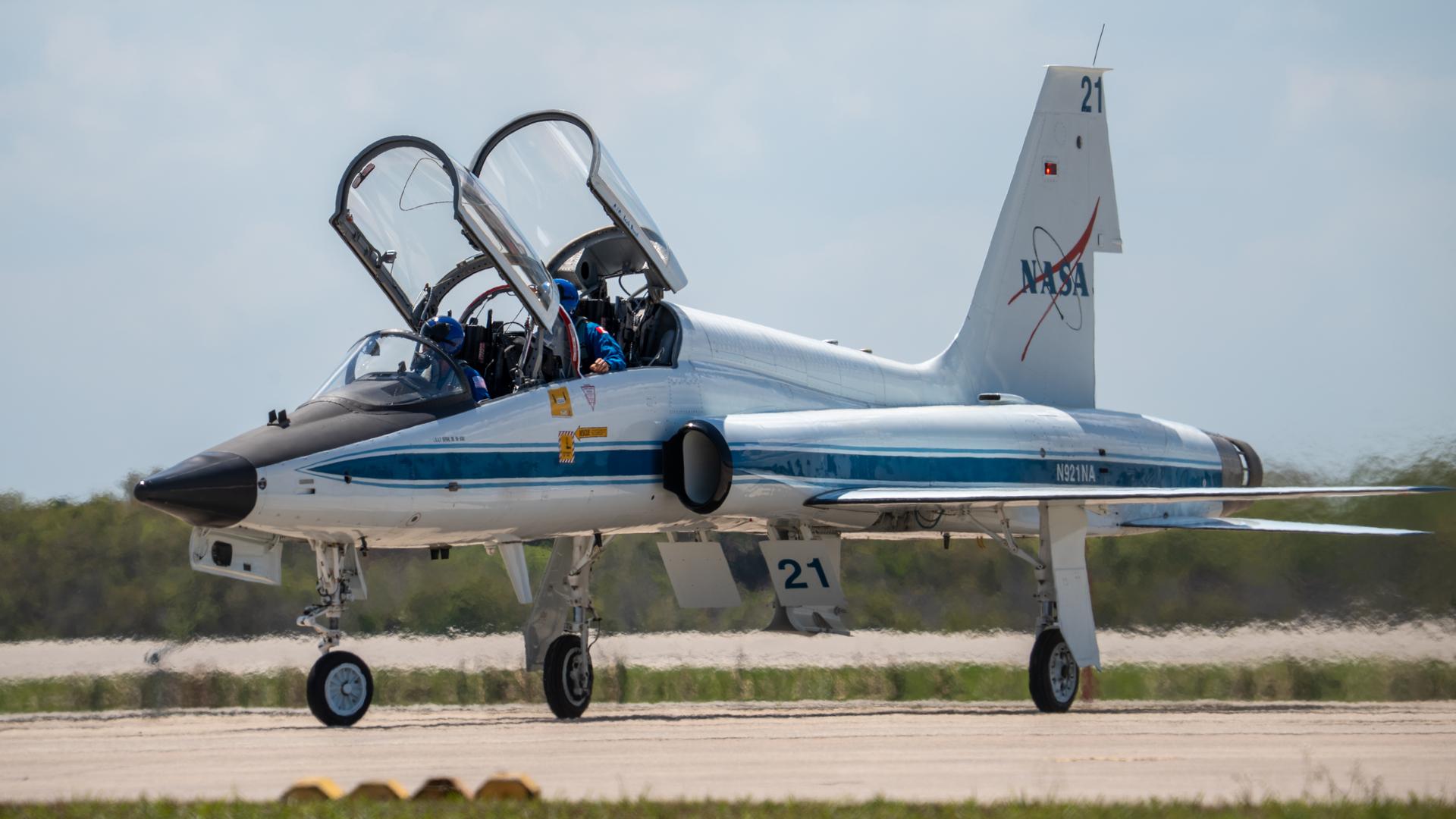
These images show the moments shortly after the arrival of the Artemis II crew to NASA’s Kennedy Space Center on March 27, 2026 ahead of the launch. The four astronauts, Victor Glover, Reid Wiseman, Christina Koch, and Jeremy Hansen, arrived on a T38, which can be seen behind them. They took turns speaking to the crowd as they also announced the zero-gravity indicator they would be taking with them on their journey.
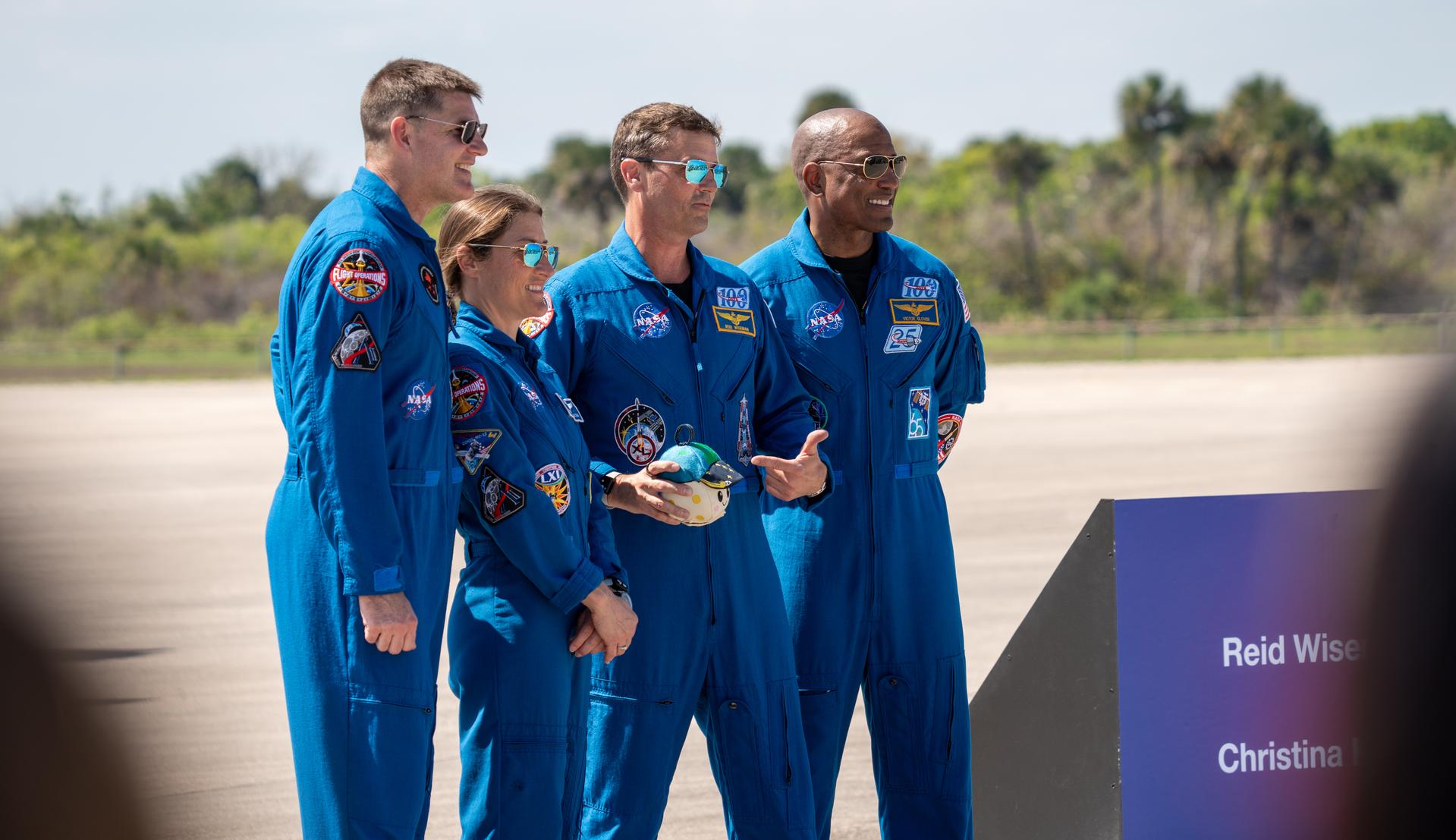
These images show the moments shortly after the arrival of the Artemis II crew to NASA’s Kennedy Space Center on March 27, 2026 ahead of the launch. The four astronauts, Victor Glover, Reid Wiseman, Christina Koch, and Jeremy Hansen, arrived on a T38, which can be seen behind them. They took turns speaking to the crowd as they also announced the zero-gravity indicator they would be taking with them on their journey.
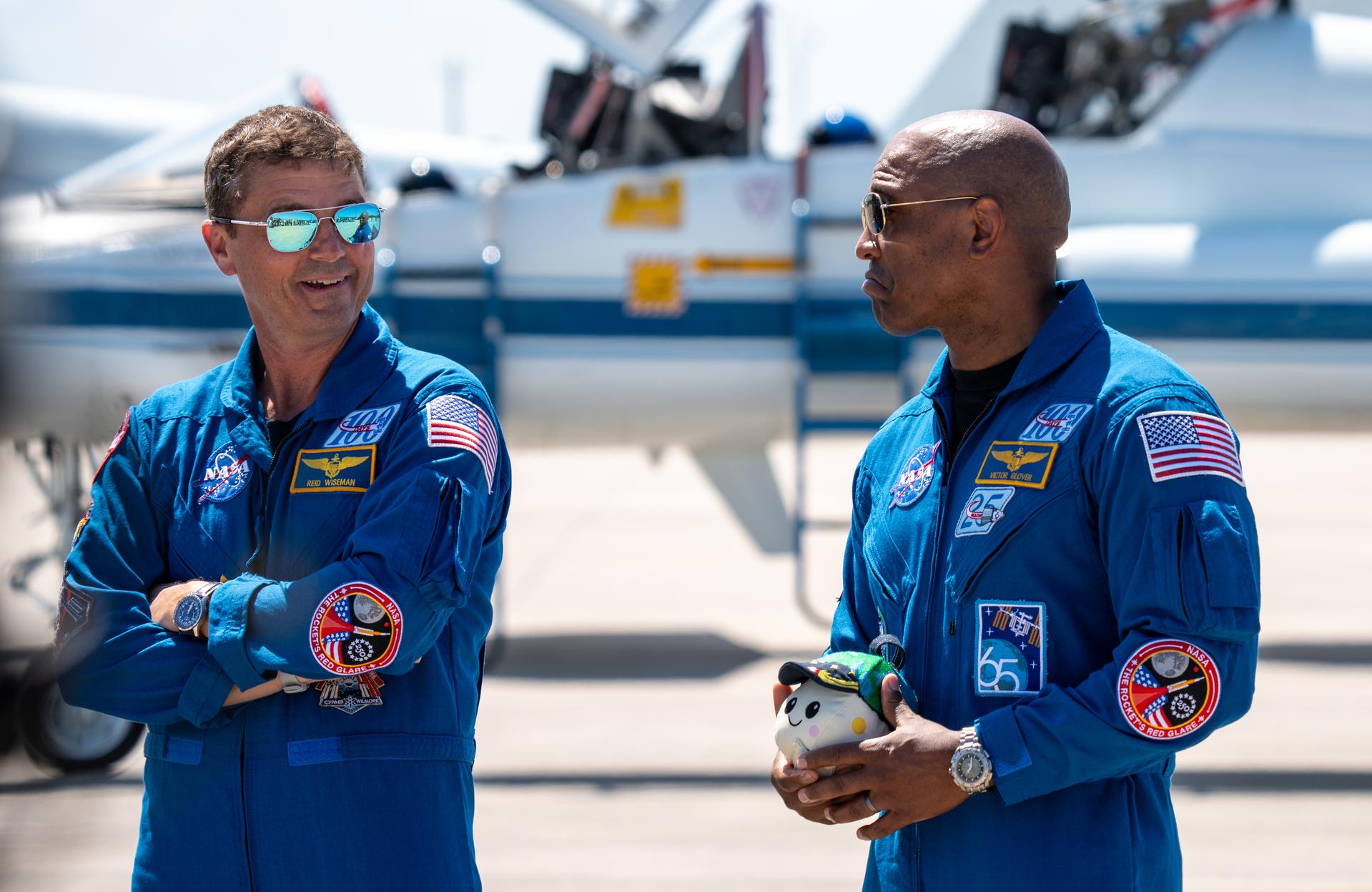
These images show the moments shortly after the arrival of the Artemis II crew to NASA’s Kennedy Space Center on March 27, 2026 ahead of the launch. The four astronauts, Victor Glover, Reid Wiseman, Christina Koch, and Jeremy Hansen, arrived on a T38, which can be seen behind them. They took turns speaking to the crowd as they also announced the zero-gravity indicator they would be taking with them on their journey.
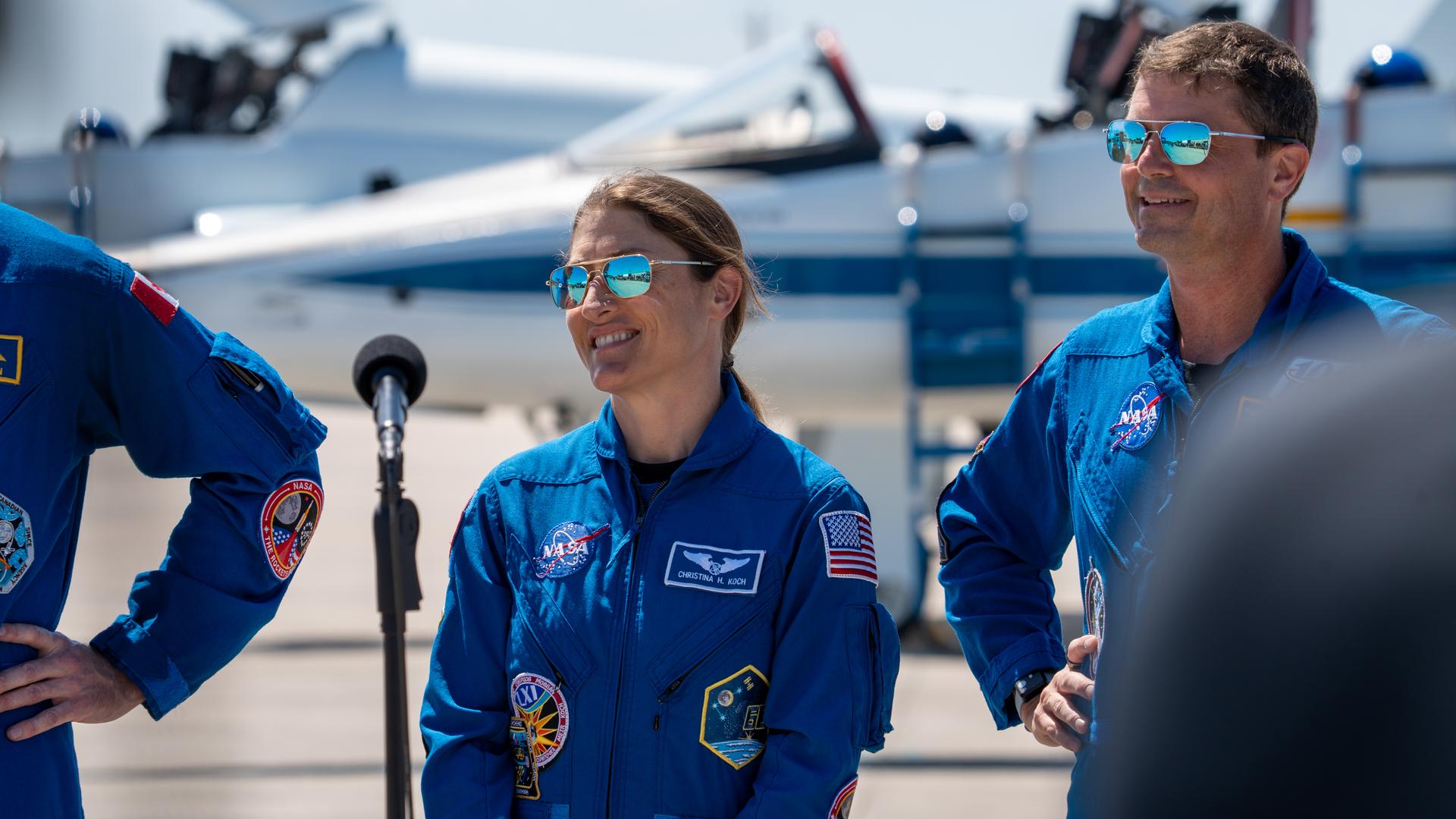
These images show the moments shortly after the arrival of the Artemis II crew to NASA’s Kennedy Space Center on March 27, 2026 ahead of the launch. The four astronauts, Victor Glover, Reid Wiseman, Christina Koch, and Jeremy Hansen, arrived on a T38, which can be seen behind them. They took turns speaking to the crowd as they also announced the zero-gravity indicator they would be taking with them on their journey.
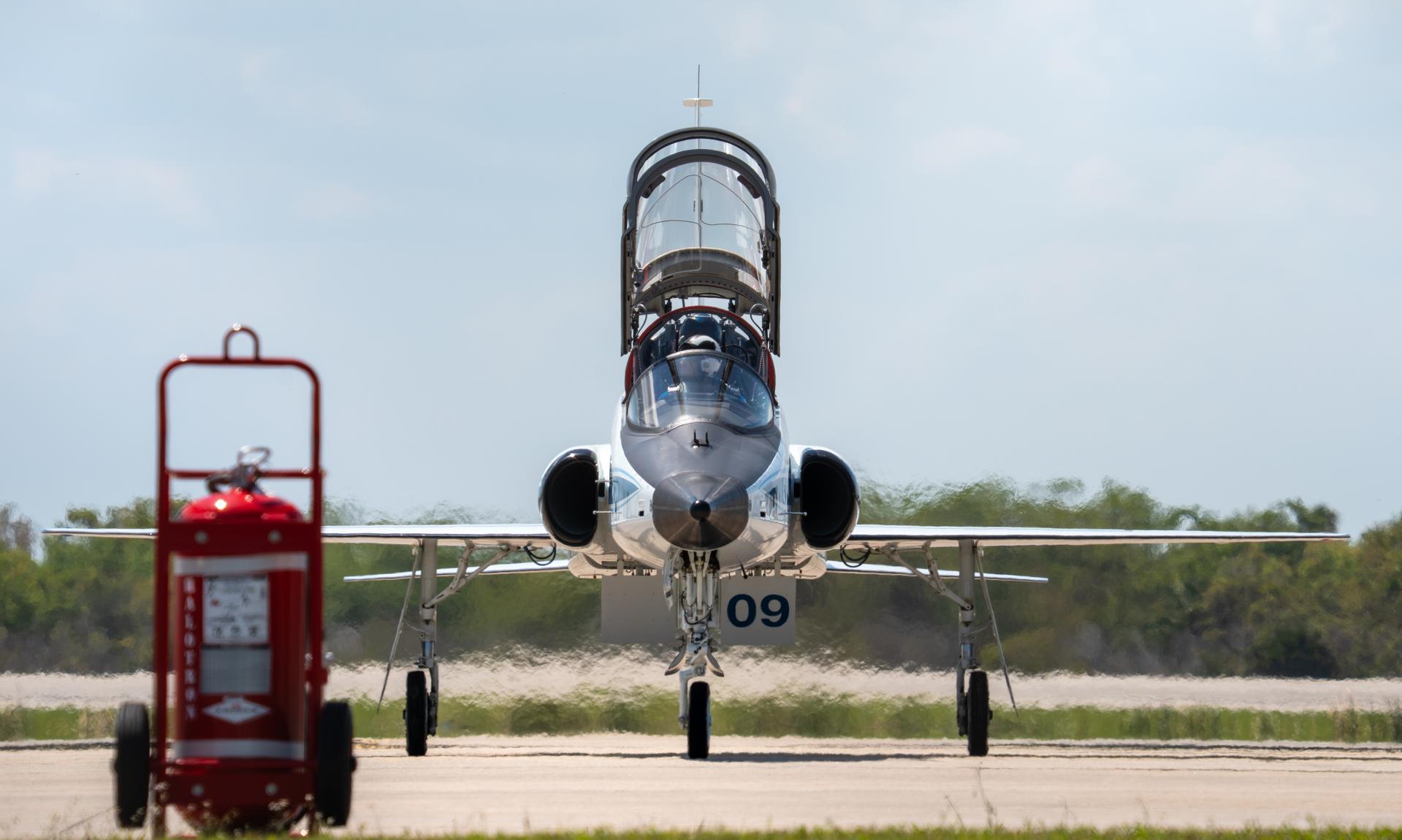
These images show the moments shortly after the arrival of the Artemis II crew to NASA’s Kennedy Space Center on March 27, 2026 ahead of the launch. The four astronauts, Victor Glover, Reid Wiseman, Christina Koch, and Jeremy Hansen, arrived on a T38, which can be seen behind them. They took turns speaking to the crowd as they also announced the zero-gravity indicator they would be taking with them on their journey.
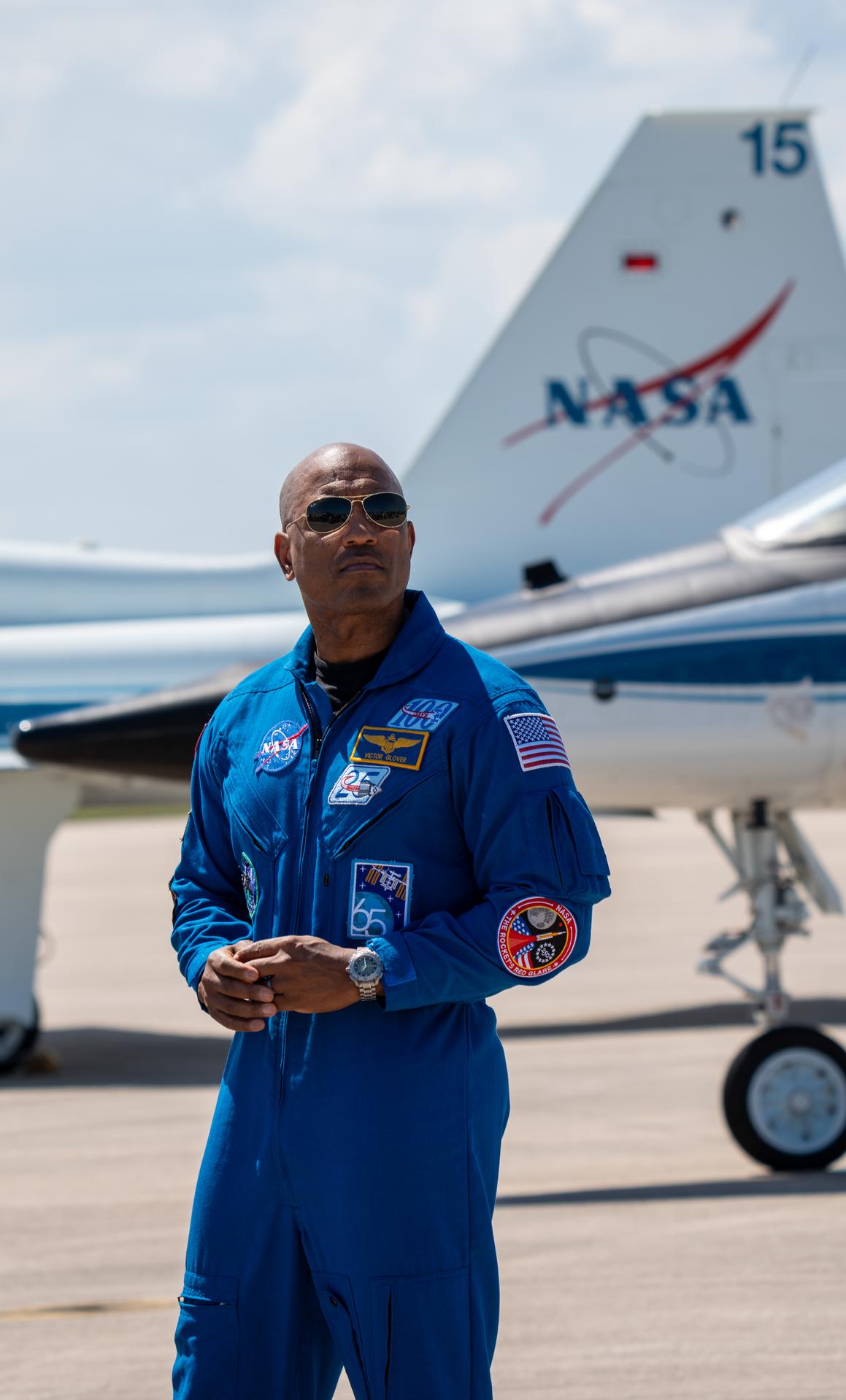
These images show the moments shortly after the arrival of the Artemis II crew to NASA’s Kennedy Space Center on March 27, 2026 ahead of the launch. The four astronauts, Victor Glover, Reid Wiseman, Christina Koch, and Jeremy Hansen, arrived on a T38, which can be seen behind them. They took turns speaking to the crowd as they also announced the zero-gravity indicator they would be taking with them on their journey.
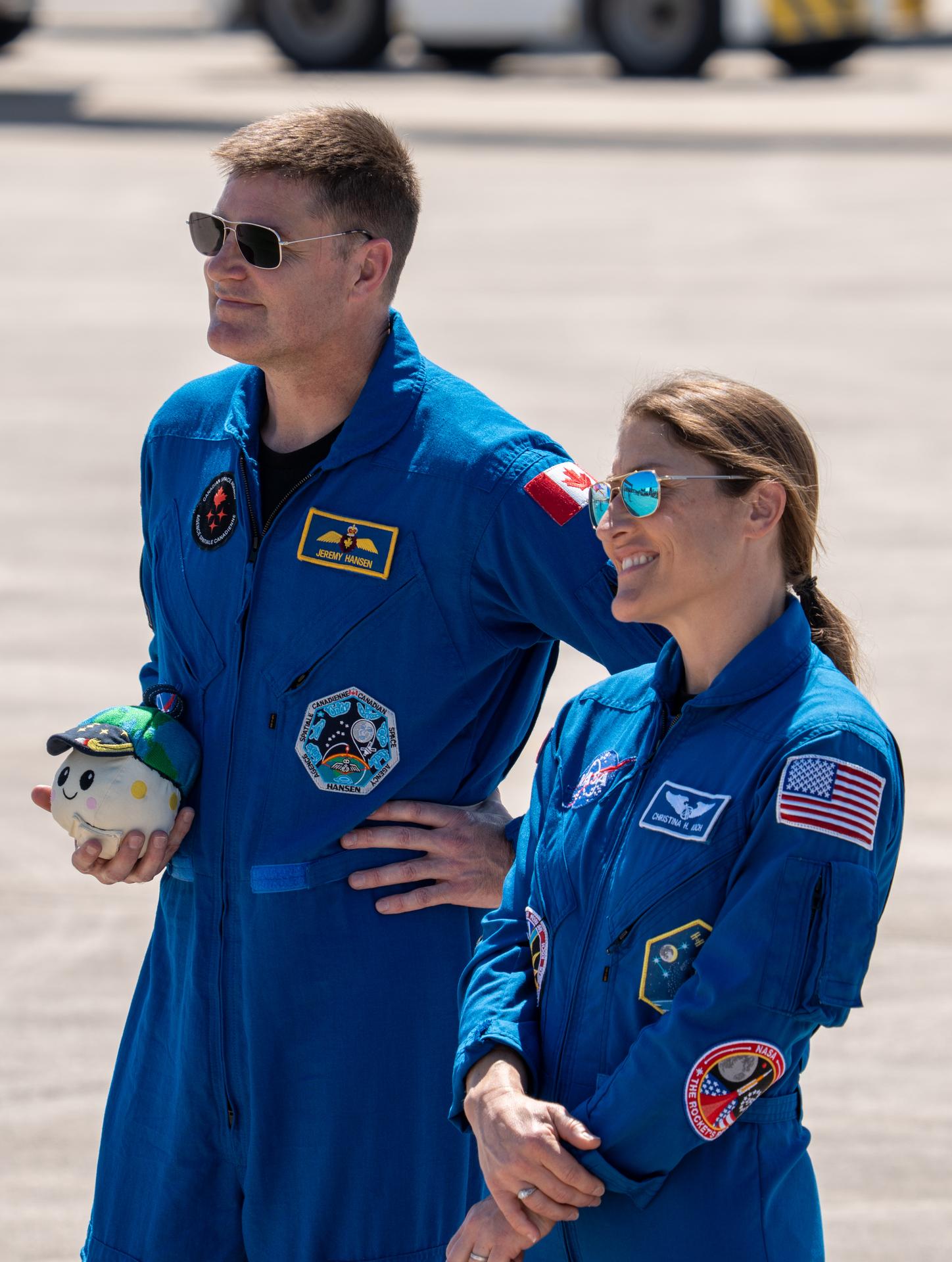
These images show the moments shortly after the arrival of the Artemis II crew to NASA’s Kennedy Space Center on March 27, 2026 ahead of the launch. The four astronauts, Victor Glover, Reid Wiseman, Christina Koch, and Jeremy Hansen, arrived on a T38, which can be seen behind them. They took turns speaking to the crowd as they also announced the zero-gravity indicator they would be taking with them on their journey.
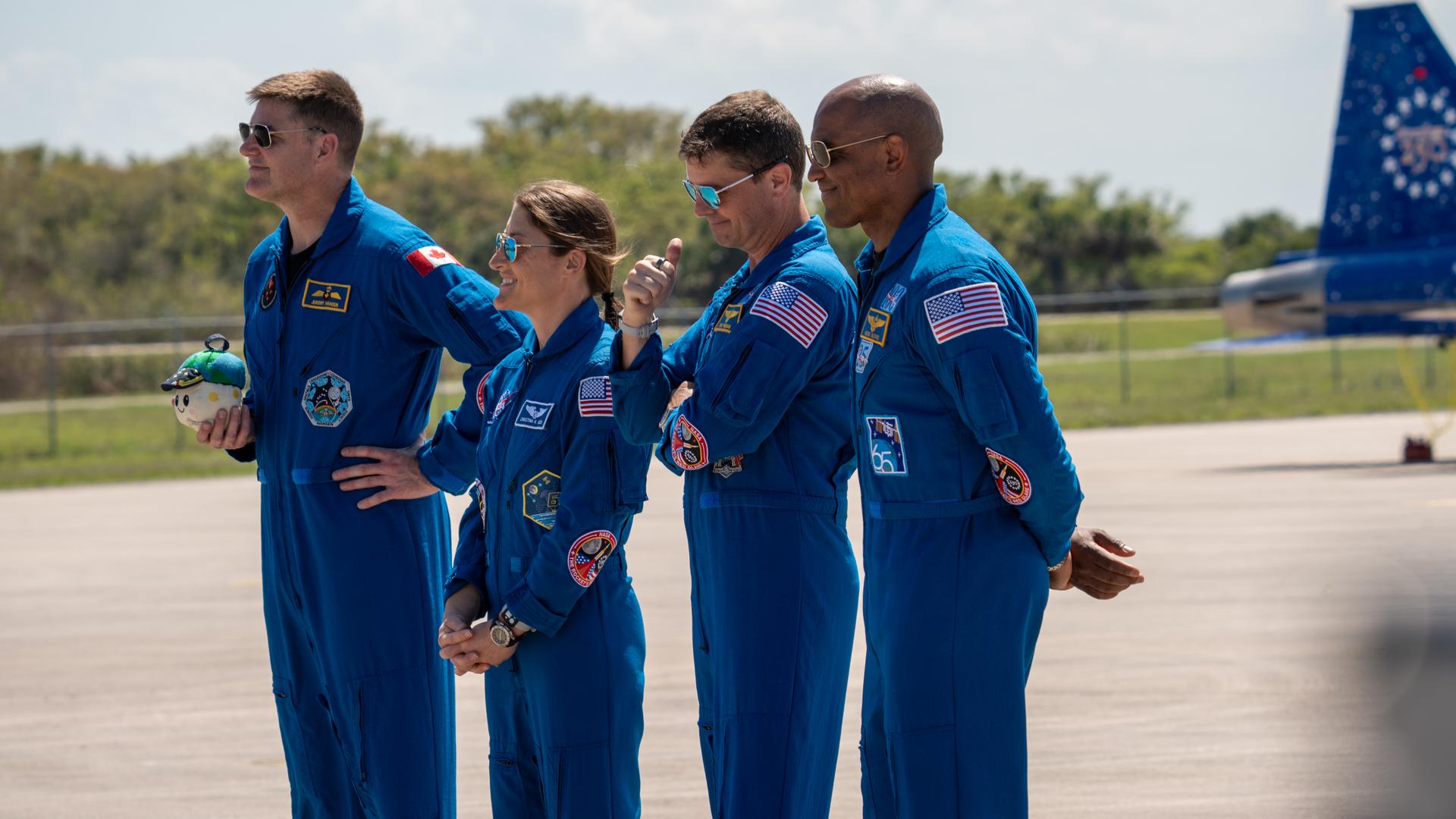
These images show the moments shortly after the arrival of the Artemis II crew to NASA’s Kennedy Space Center on March 27, 2026 ahead of the launch. The four astronauts, Victor Glover, Reid Wiseman, Christina Koch, and Jeremy Hansen, arrived on a T38, which can be seen behind them. They took turns speaking to the crowd as they also announced the zero-gravity indicator they would be taking with them on their journey.
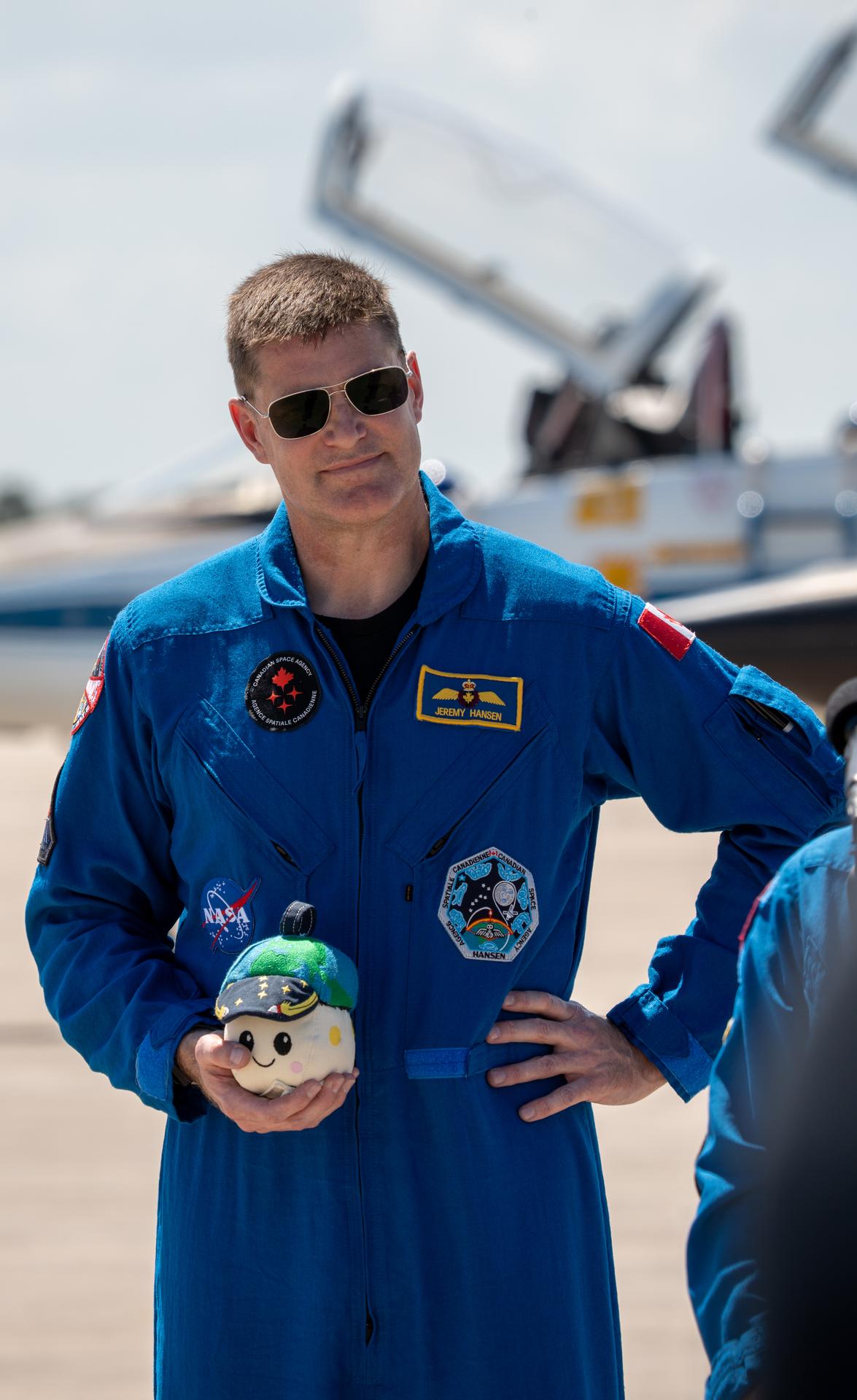
These images show the moments shortly after the arrival of the Artemis II crew to NASA’s Kennedy Space Center on March 27, 2026 ahead of the launch. The four astronauts, Victor Glover, Reid Wiseman, Christina Koch, and Jeremy Hansen, arrived on a T38, which can be seen behind them. They took turns speaking to the crowd as they also announced the zero-gravity indicator they would be taking with them on their journey.
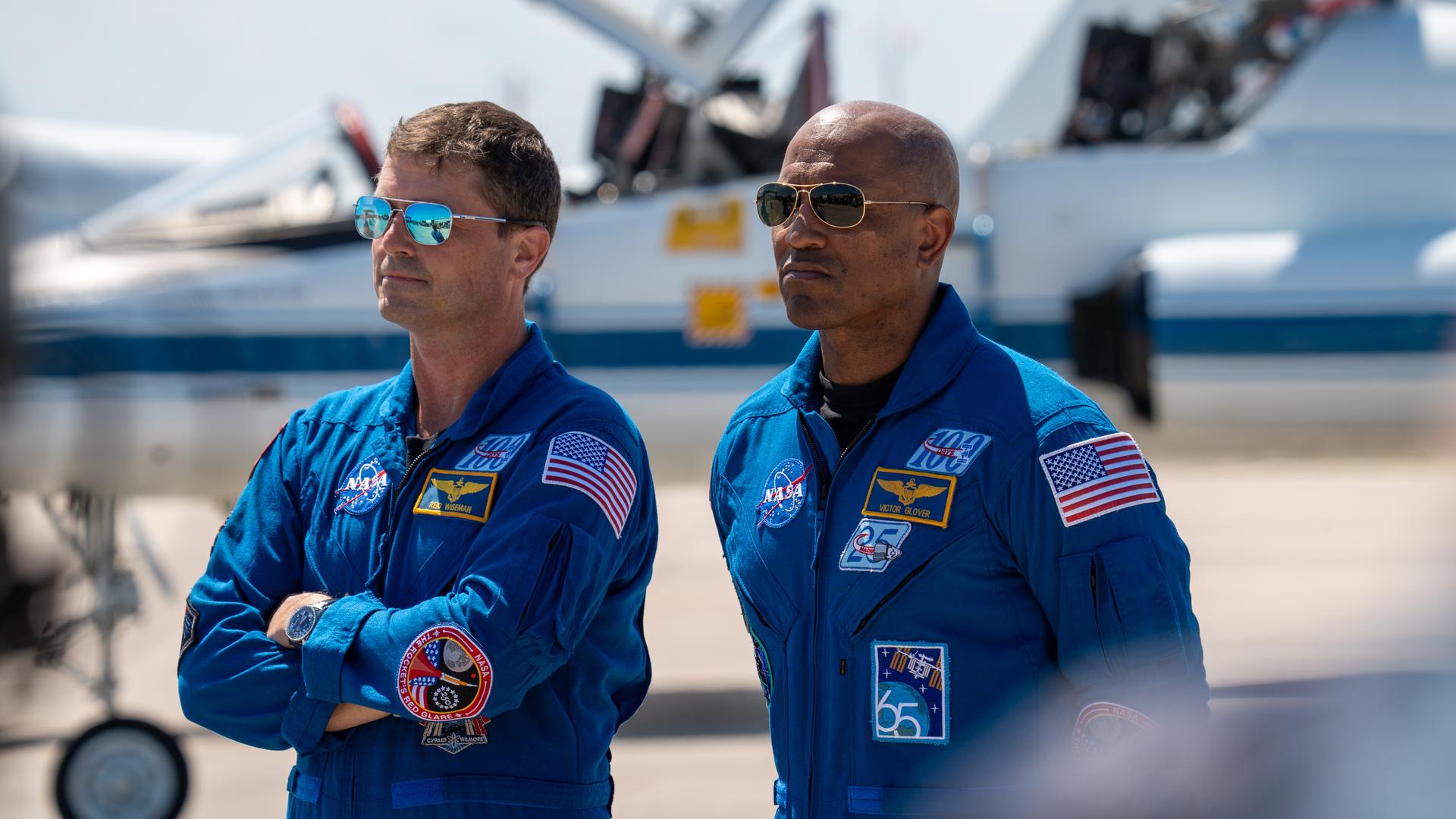
These images show the moments shortly after the arrival of the Artemis II crew to NASA’s Kennedy Space Center on March 27, 2026 ahead of the launch. The four astronauts, Victor Glover, Reid Wiseman, Christina Koch, and Jeremy Hansen, arrived on a T38, which can be seen behind them. They took turns speaking to the crowd as they also announced the zero-gravity indicator they would be taking with them on their journey.
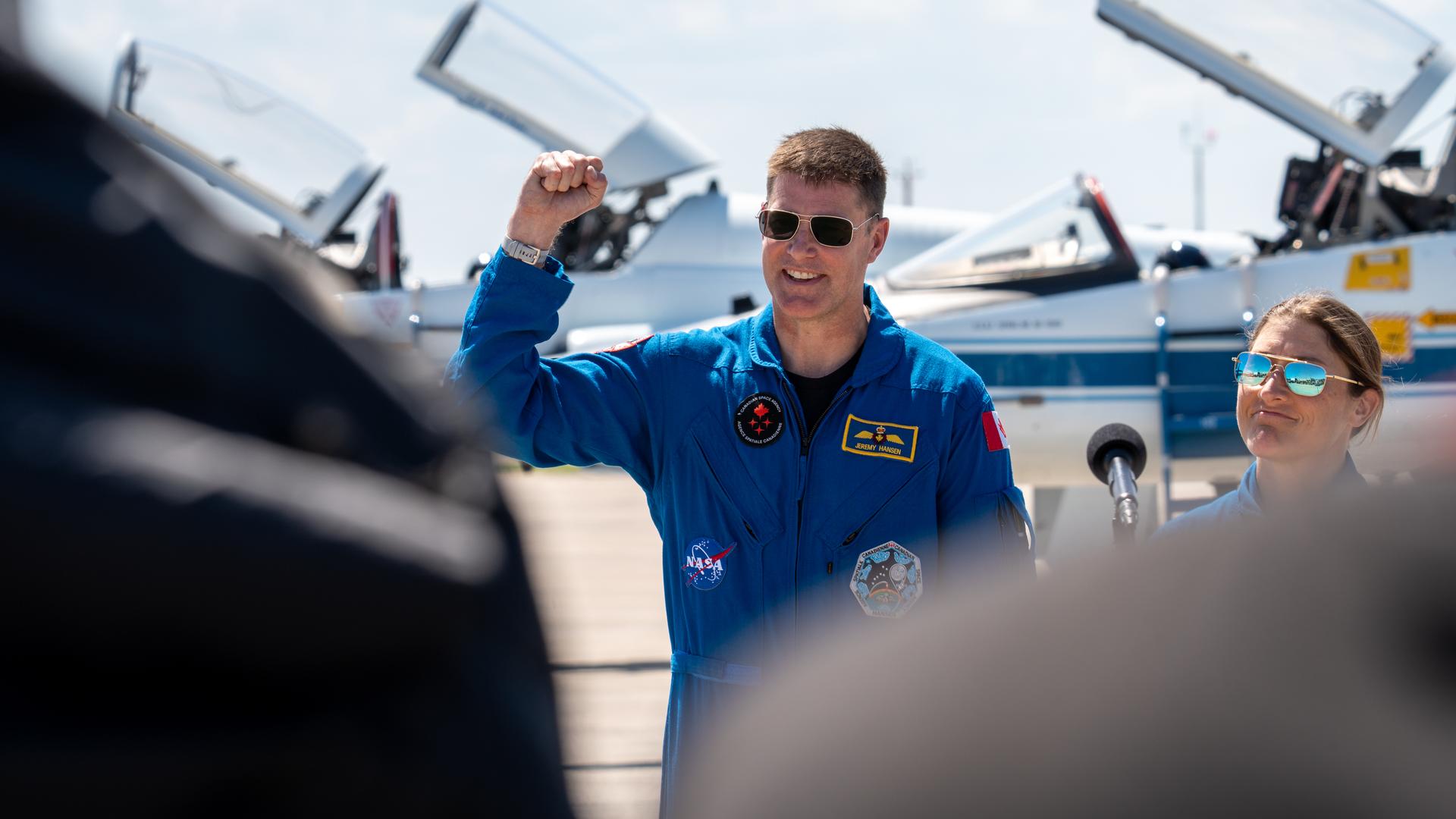
These images show the moments shortly after the arrival of the Artemis II crew to NASA’s Kennedy Space Center on March 27, 2026 ahead of the launch. The four astronauts, Victor Glover, Reid Wiseman, Christina Koch, and Jeremy Hansen, arrived on a T38, which can be seen behind them. They took turns speaking to the crowd as they also announced the zero-gravity indicator they would be taking with them on their journey.
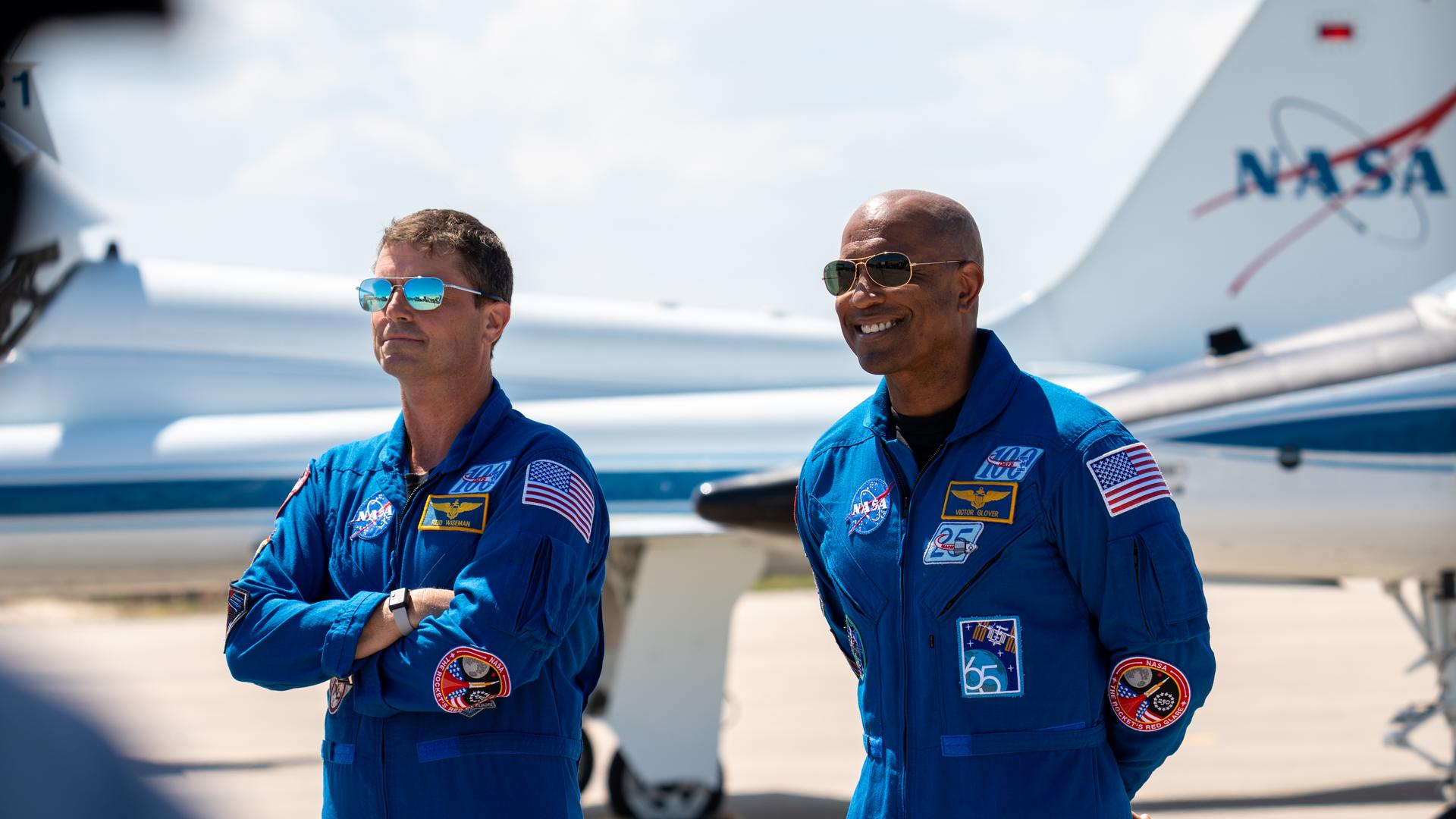
These images show the moments shortly after the arrival of the Artemis II crew to NASA’s Kennedy Space Center on March 27, 2026 ahead of the launch. The four astronauts, Victor Glover, Reid Wiseman, Christina Koch, and Jeremy Hansen, arrived on a T38, which can be seen behind them. They took turns speaking to the crowd as they also announced the zero-gravity indicator they would be taking with them on their journey.
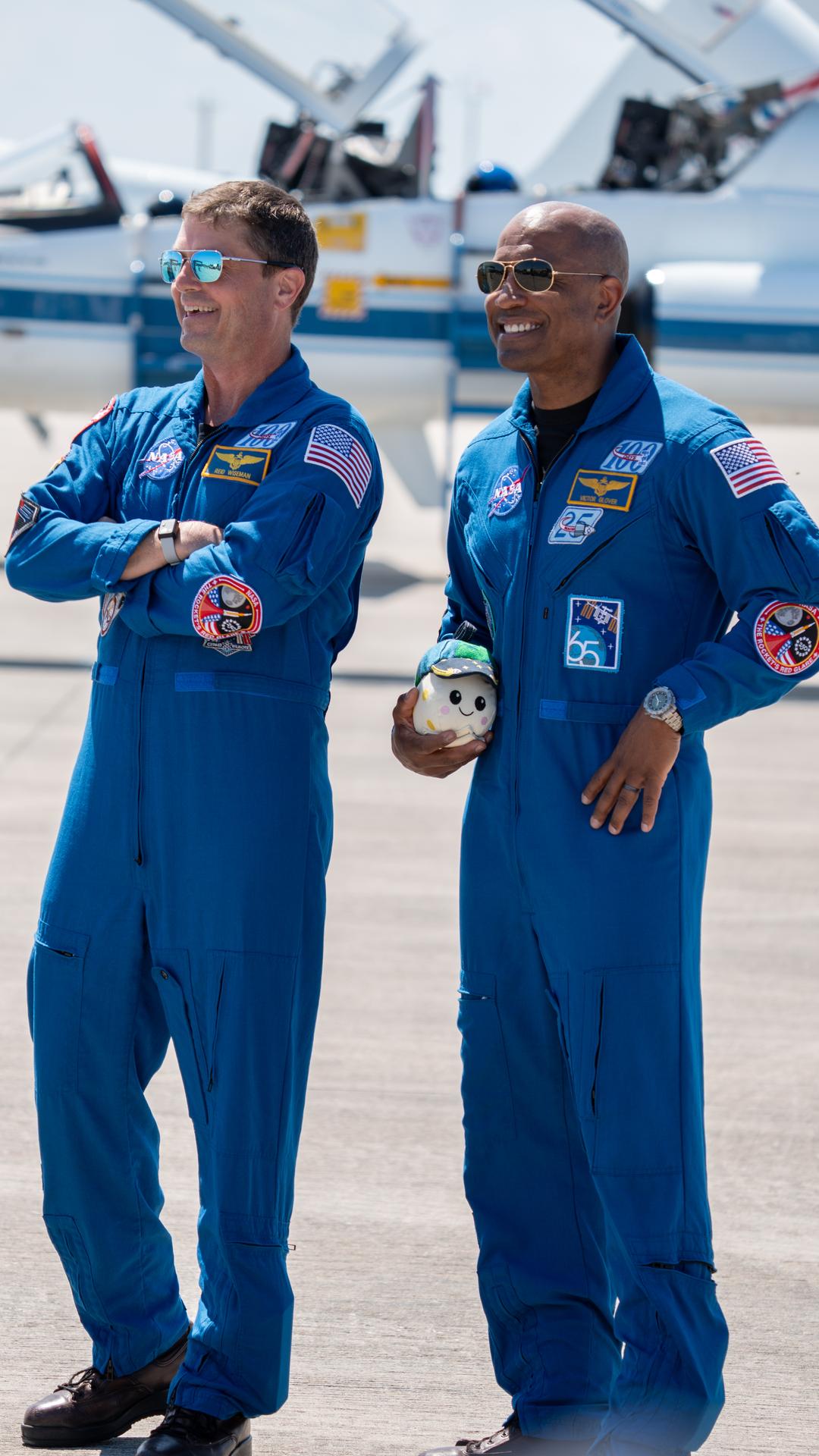
These images show the moments shortly after the arrival of the Artemis II crew to NASA’s Kennedy Space Center on March 27, 2026 ahead of the launch. The four astronauts, Victor Glover, Reid Wiseman, Christina Koch, and Jeremy Hansen, arrived on a T38, which can be seen behind them. They took turns speaking to the crowd as they also announced the zero-gravity indicator they would be taking with them on their journey.
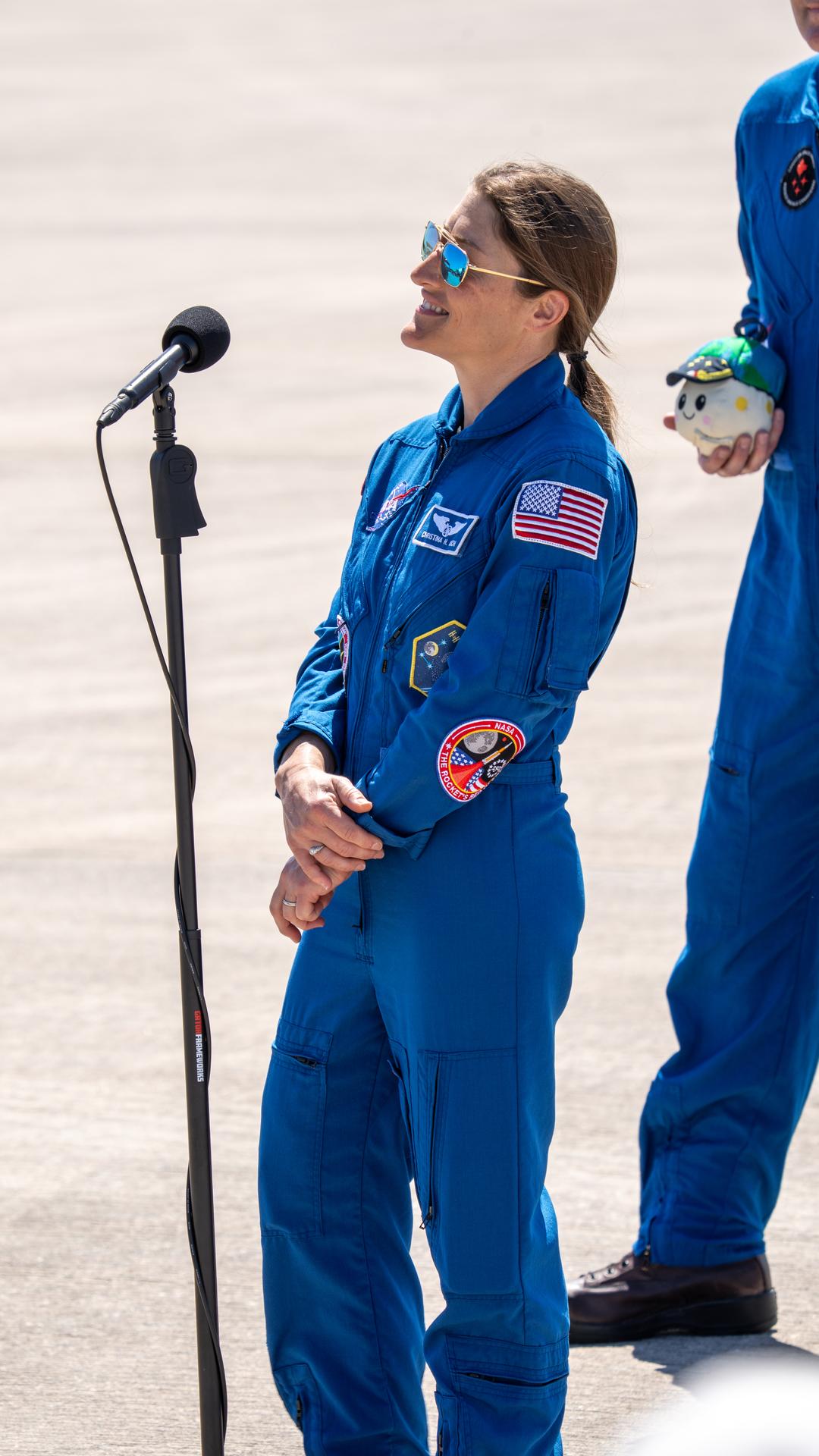
These images show the moments shortly after the arrival of the Artemis II crew to NASA’s Kennedy Space Center on March 27, 2026 ahead of the launch. The four astronauts, Victor Glover, Reid Wiseman, Christina Koch, and Jeremy Hansen, arrived on a T38, which can be seen behind them. They took turns speaking to the crowd as they also announced the zero-gravity indicator they would be taking with them on their journey.
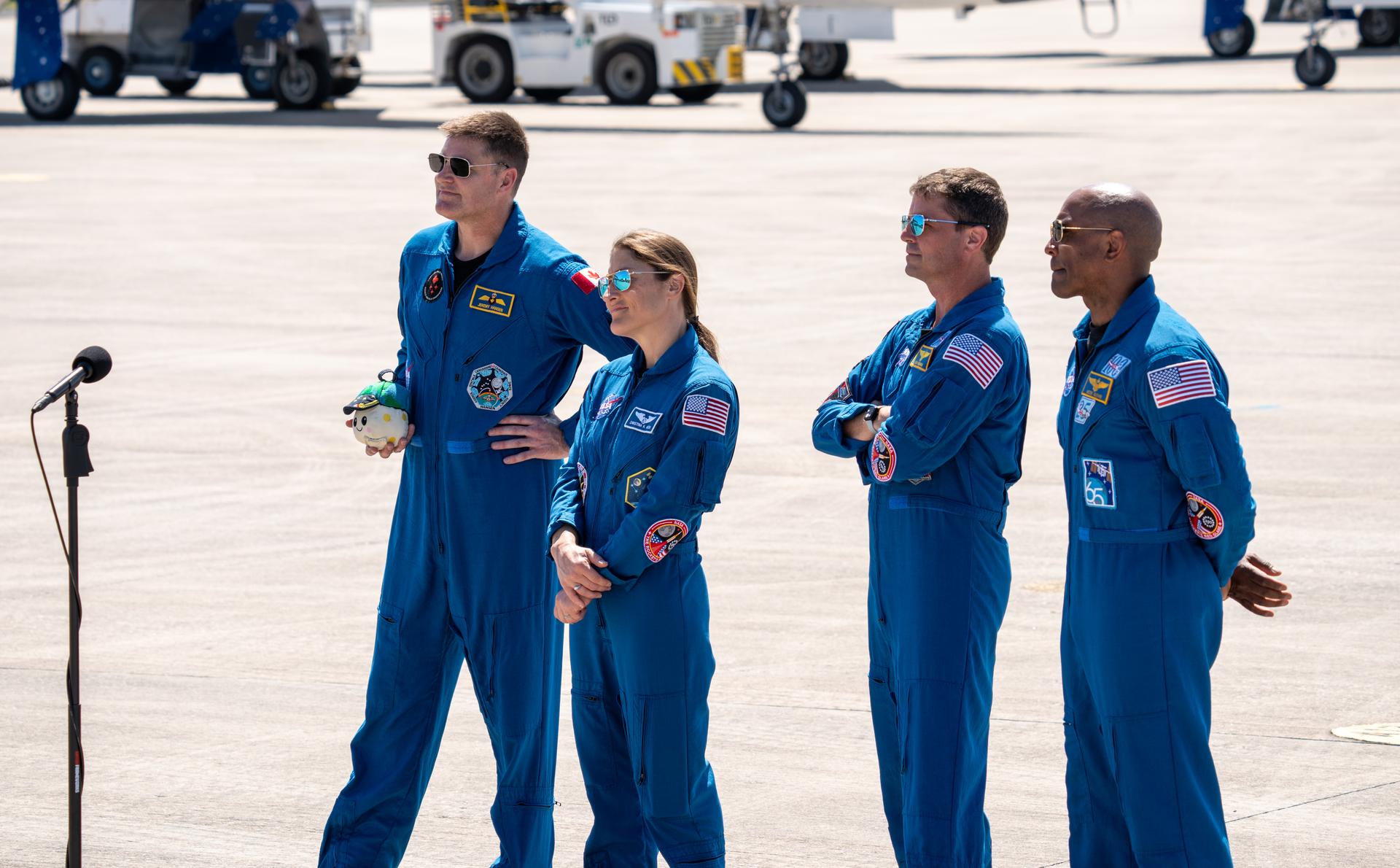
These images show the moments shortly after the arrival of the Artemis II crew to NASA’s Kennedy Space Center on March 27, 2026 ahead of the launch. The four astronauts, Victor Glover, Reid Wiseman, Christina Koch, and Jeremy Hansen, arrived on a T38, which can be seen behind them. They took turns speaking to the crowd as they also announced the zero-gravity indicator they would be taking with them on their journey.
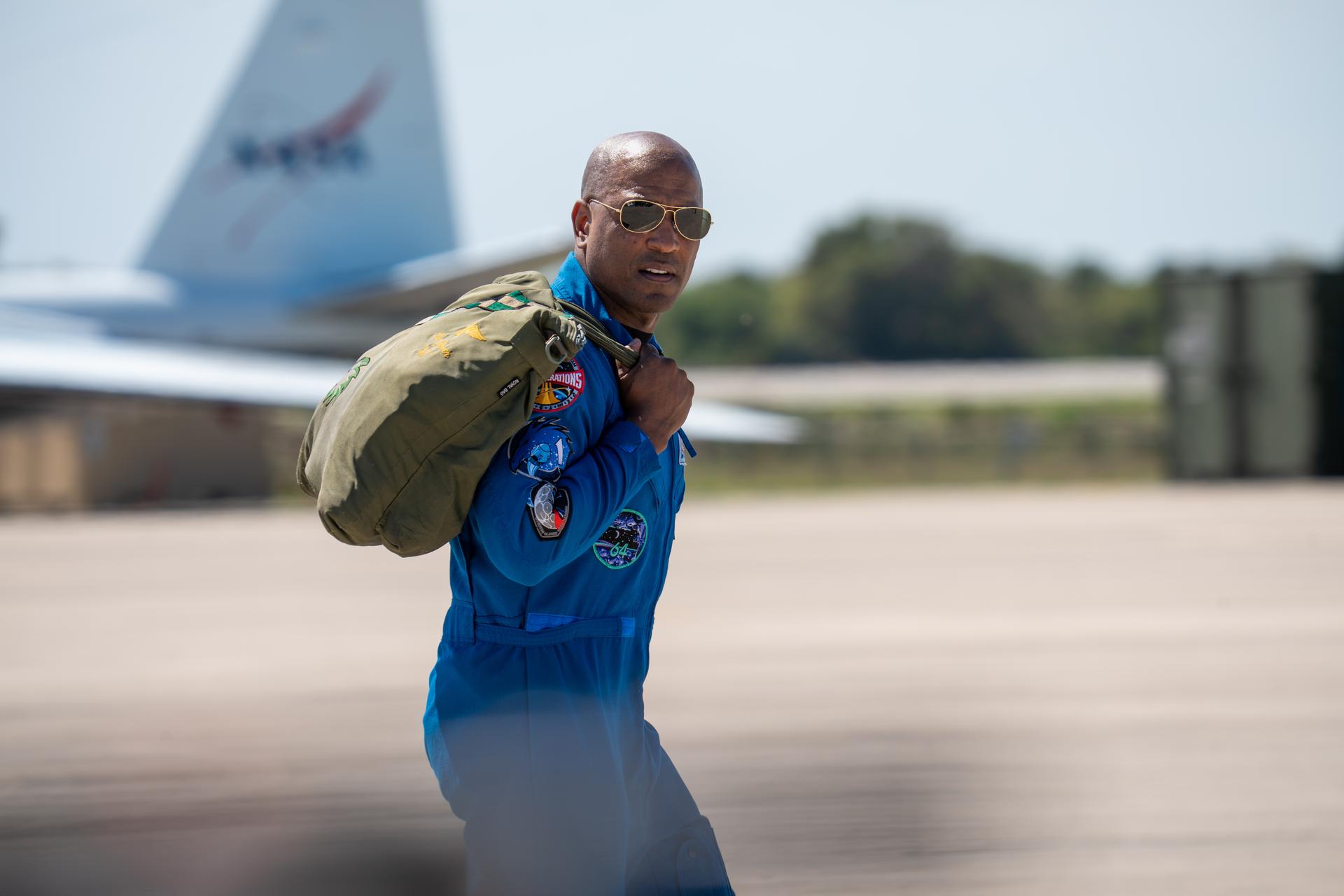
These images show the moments shortly after the arrival of the Artemis II crew to NASA’s Kennedy Space Center on March 27, 2026 ahead of the launch. The four astronauts, Victor Glover, Reid Wiseman, Christina Koch, and Jeremy Hansen, arrived on a T38, which can be seen behind them. They took turns speaking to the crowd as they also announced the zero-gravity indicator they would be taking with them on their journey.
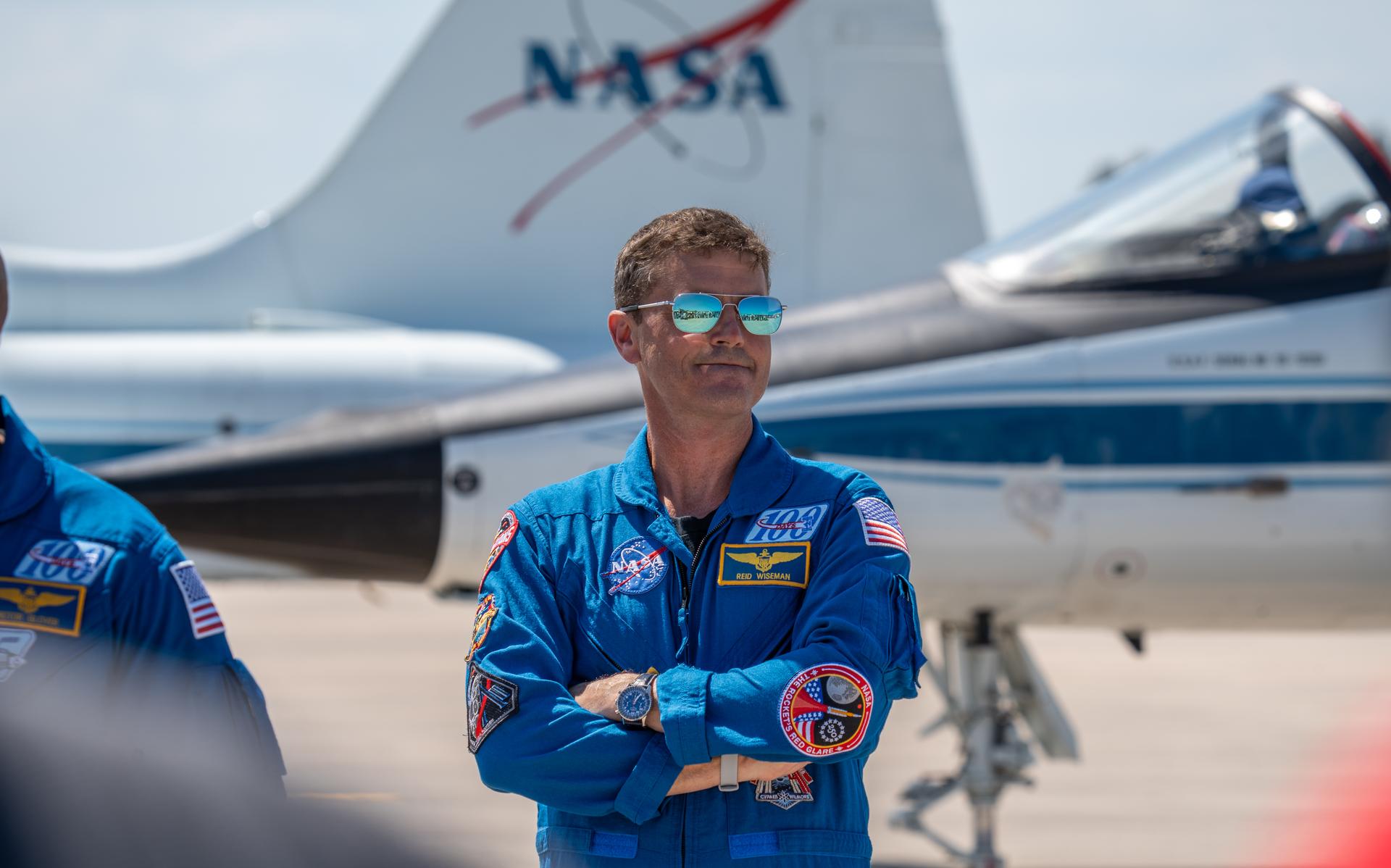
These images show the moments shortly after the arrival of the Artemis II crew to NASA’s Kennedy Space Center on March 27, 2026 ahead of the launch. The four astronauts, Victor Glover, Reid Wiseman, Christina Koch, and Jeremy Hansen, arrived on a T38, which can be seen behind them. They took turns speaking to the crowd as they also announced the zero-gravity indicator they would be taking with them on their journey.
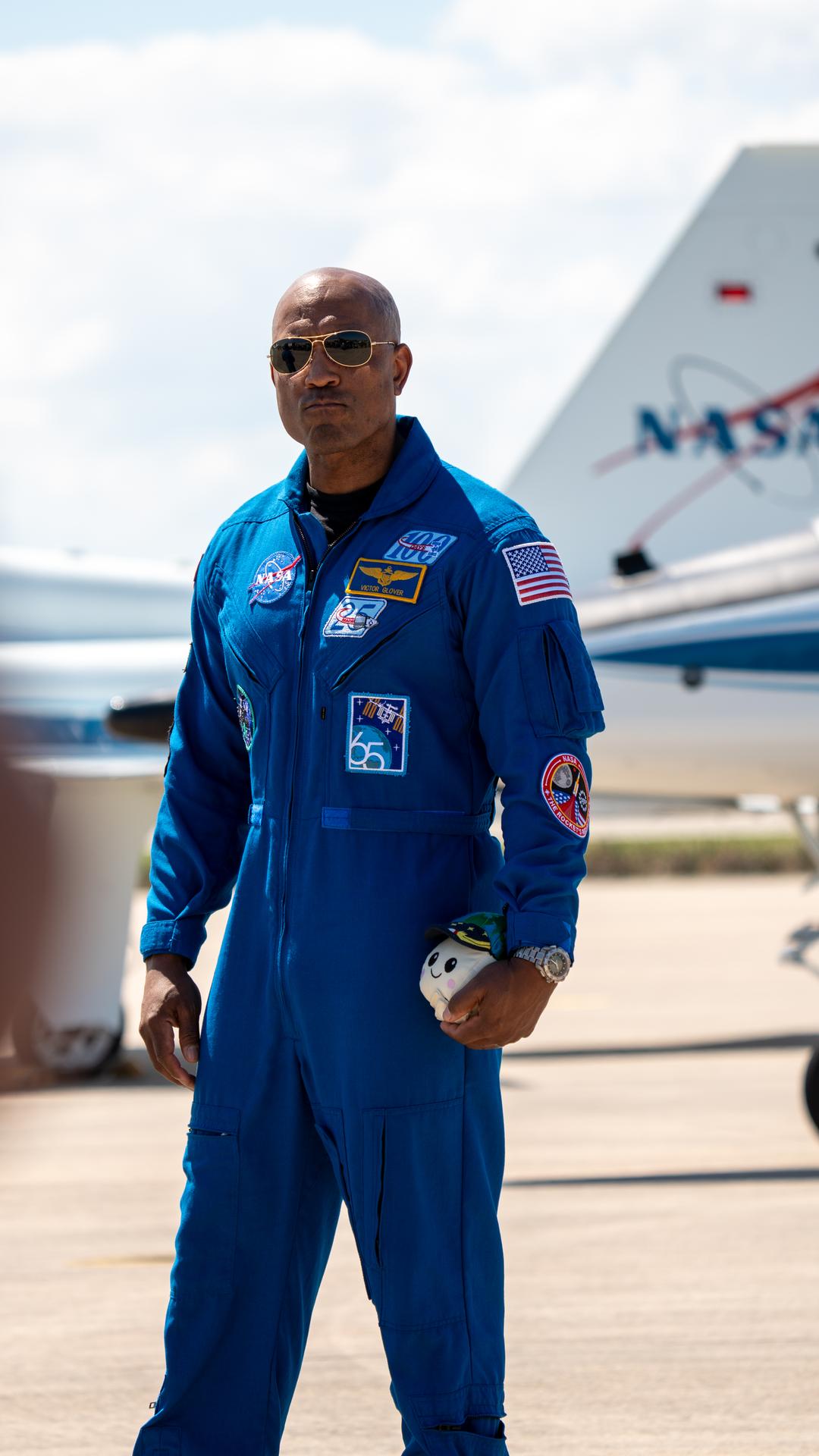
These images show the moments shortly after the arrival of the Artemis II crew to NASA’s Kennedy Space Center on March 27, 2026 ahead of the launch. The four astronauts, Victor Glover, Reid Wiseman, Christina Koch, and Jeremy Hansen, arrived on a T38, which can be seen behind them. They took turns speaking to the crowd as they also announced the zero-gravity indicator they would be taking with them on their journey.
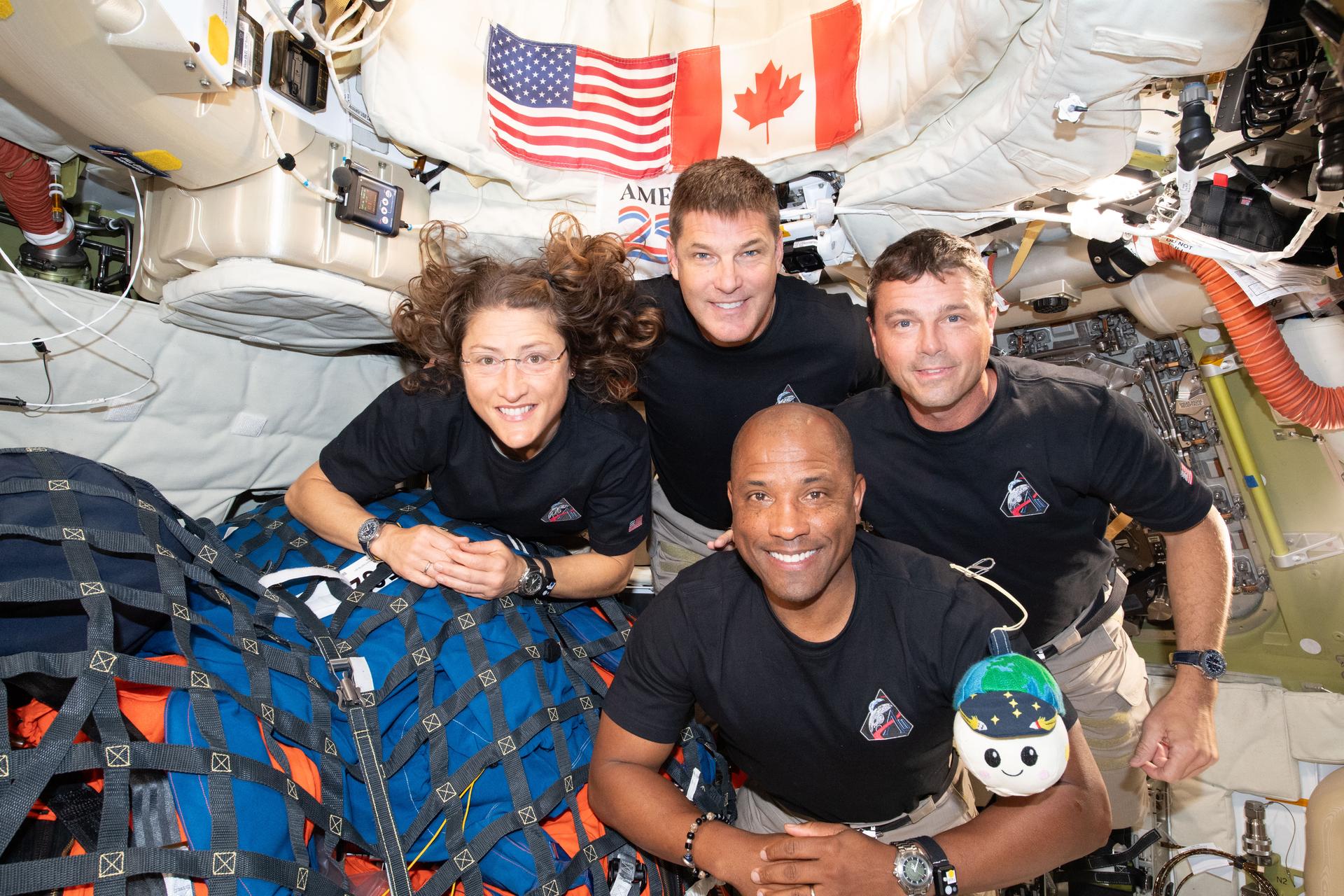
art002e013365 (April 7, 2026) – The Artemis II crew – (clockwise from left) Mission Specialist Christina Koch, Mission Specialist Jeremy Hansen, Commander Reid Wiseman, and Pilot Victor Glover – pause for a group photo with their zero gravity indicator "Rise," inside the Orion spacecraft on their way home. Following a swing around the far side of the Moon on April 6, 2026, the crew exited the lunar sphere of influence (the point at which the Moon's gravity has a stronger pull on Orion than the Earth's) on April 7, and are headed back to Earth for a splashdown in the Pacific Ocean on April 10.
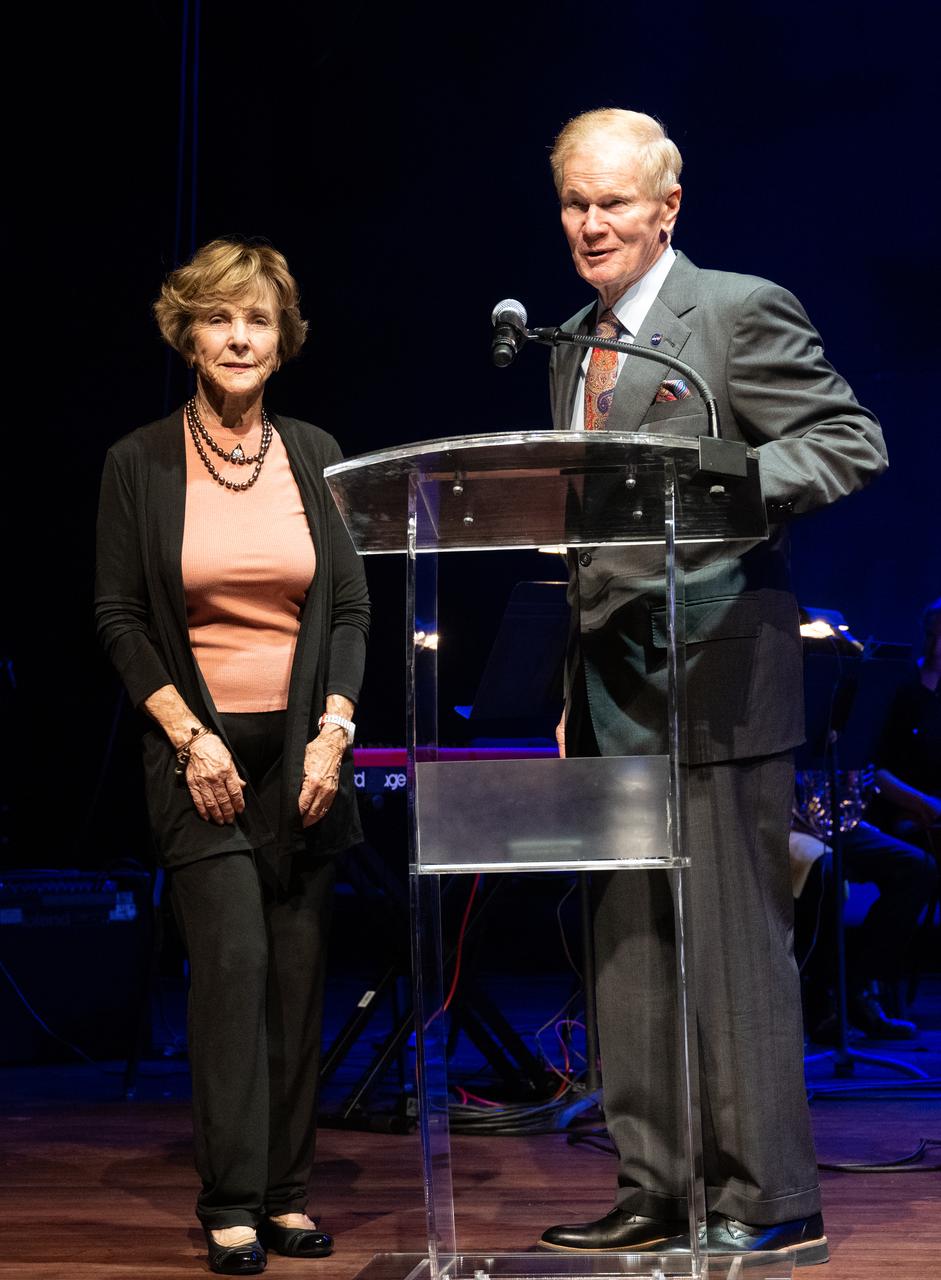
NASA Administrator Bill Nelson, right, and Jeannie Schulz, widow of Peanuts gang creator Charles M. Schulz, left, are seen, Wednesday, April 5, 2023, Our Blue Planet concert at the John F. Kennedy Center for the Performing Arts in Washington. Snoopy rode along as the zero gravity indicator on NASA’s Artemis I mission as part of a partnership with the agency and continues to help NASA inspire kids of all ages to follow along with Artemis missions. Photo Credit: (NASA/Joel Kowsky)
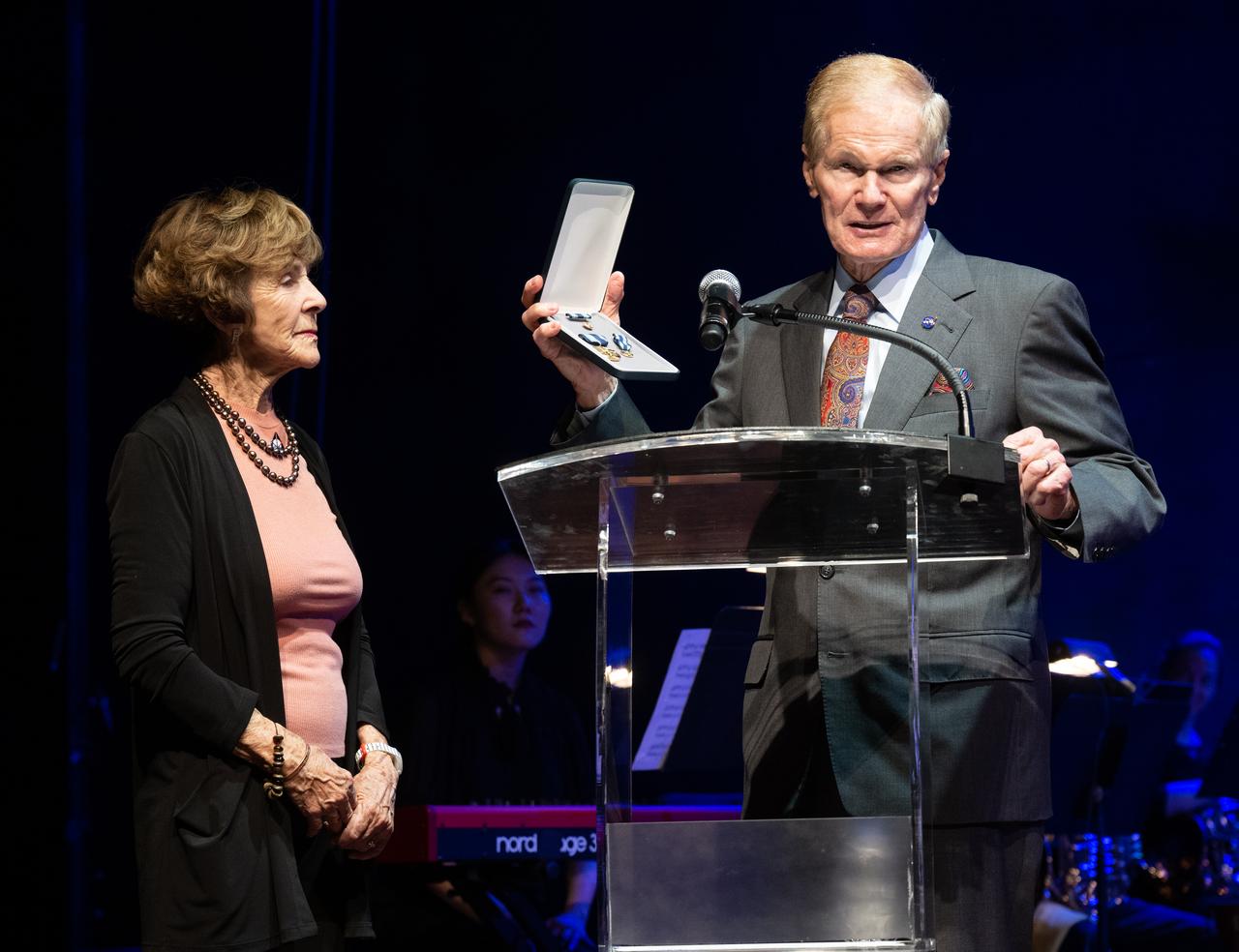
NASA Administrator Bill Nelson, right, presents Jeannie Schulz, widow of Peanuts gang creator Charles M. Schulz, with a NASA Exceptional Achievement Medal, Wednesday, April 5, 2023, at the “Our Blue Planet” concert at the John F. Kennedy Center for the Performing Arts in Washington. Snoopy rode along as the zero gravity indicator on NASA’s Artemis I mission as part of a partnership with the agency and continues to help NASA inspire kids of all ages to follow along with Artemis missions. Photo Credit: (NASA/Joel Kowsky)
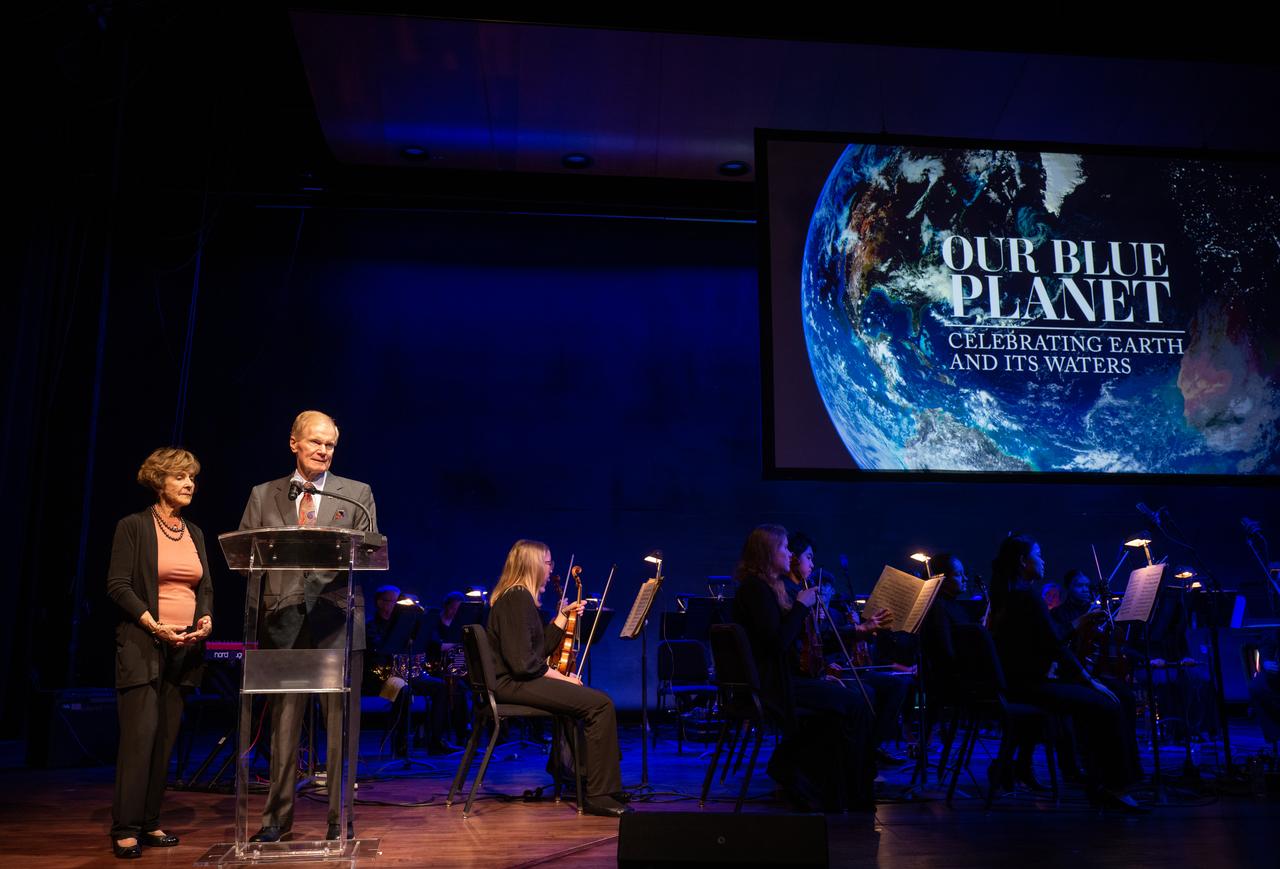
NASA Administrator Bill Nelson, right, and Jeannie Schulz, widow of Peanuts gang creator Charles M. Schulz, left, are seen, Wednesday, April 5, 2023, Our Blue Planet concert at the John F. Kennedy Center for the Performing Arts in Washington. Snoopy rode along as the zero gravity indicator on NASA’s Artemis I mission as part of a partnership with the agency and continues to help NASA inspire kids of all ages to follow along with Artemis missions. Photo Credit: (NASA/Joel Kowsky)

jsc2026e034371 (April 28, 2026) --- Preflight image of TIGERS-X experiment payload cube during delivery and final handover at ICE Cubes Service facility with all identification barcode and decal applied. This investigation tests a mixer in a space environment aboard the International Space Station. The mission mascot and zero-gravity indicator is also presented at the bottom left corner. Credit: Chulabhorn Royal Academy.
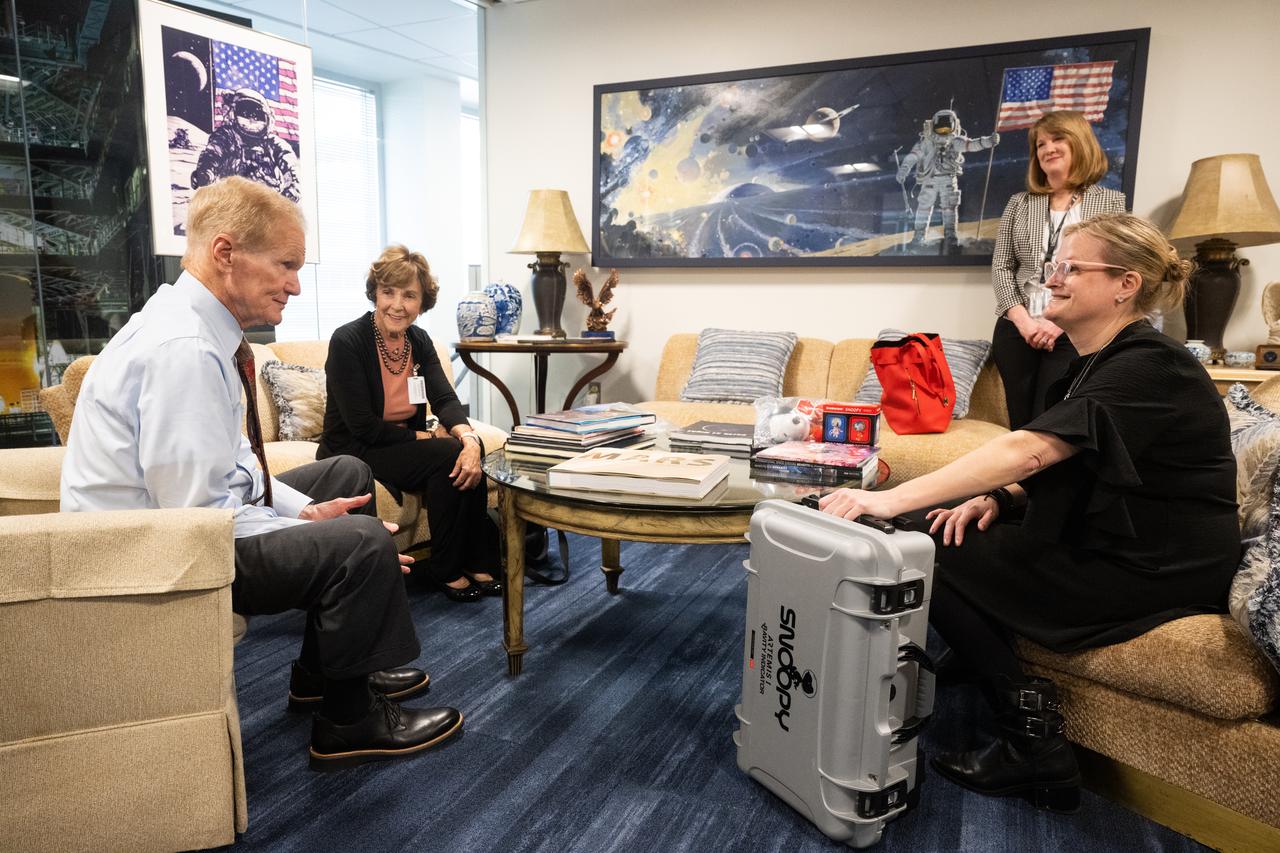
NASA Administrator Bill Nelson, left, Jeannie Schulz, widow of Peanuts gang creator Charles M. Schulz, second from left, Maureen O’Brien, manager of strategic alliances at NASA Headquarters, second from right, and Melissa Menta, executive vice president at Peanuts Worldwide, right, are seen Wednesday, April 5, 2023, at the Mary W. Jackson NASA Headquarters building in Washington. Schulz was awarded a NASA Exceptional Achievement Medal by Administrator Nelson at an Our Blue Planet concert at the Kennedy Center for the Performing Arts. Snoopy rode along as the zero gravity indicator on NASA’s Artemis I mission as part of a partnership with the agency and continues to help NASA inspire kids of all ages to follow along with Artemis missions. As part of the visit, Schulz showed the flown Artemis I Snoopy zero gravity indicator before it goes to its final home for display at the Schulz Museum in Santa Rosa, California. Photo Credit: (NASA/Joel Kowsky)
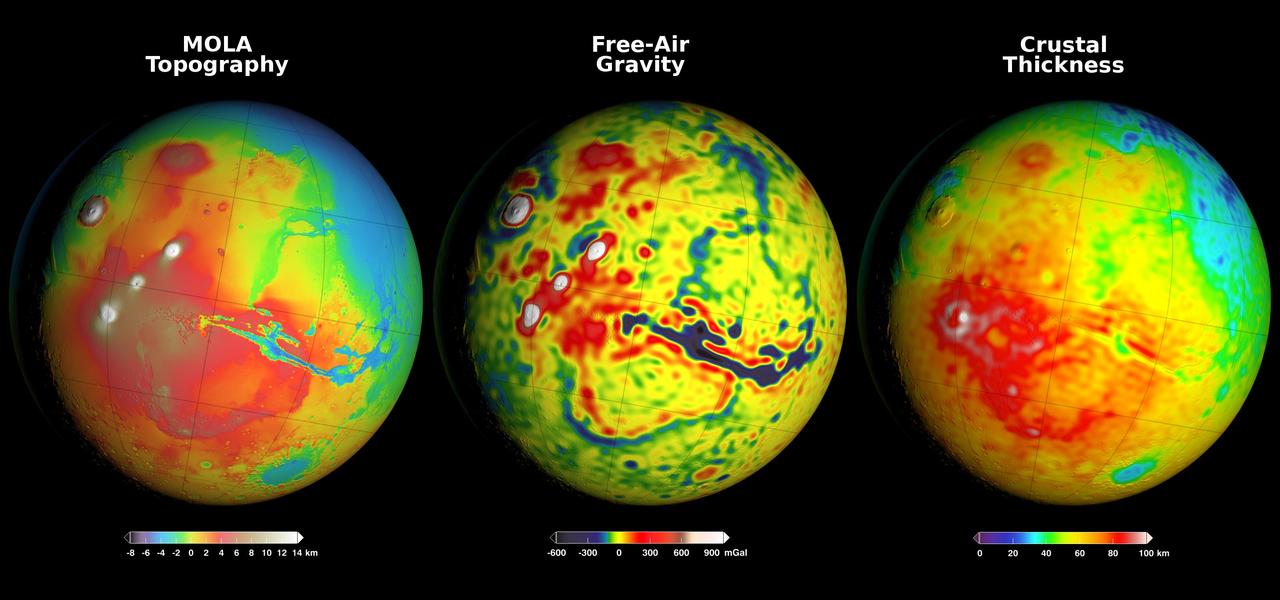
Newly detailed mapping of local variations in Mars' gravitational pull on orbiters (center), combined with topographical mapping of the planet's mountains and valleys (left) yields the best-yet mapping of Mars' crustal thickness (right). These three views of global mapping are centered at 90 degrees west longitude, showing portions of the planet that include tall volcanoes on the left and the deep Valles Marineris canyon system just right of center. Additional views of these global maps are available at http://svs.gsfc.nasa.gov/goto?4436. The new map of Mars' gravity (center) results from analysis of the planet's gravitational effects on orbiters passing over each location on the globe. The data come from many years of using NASA's Deep Space Network to track positions and velocities of NASA's Mars Global Surveyor, Mars Odyssey and Mars Reconnaissance Orbiter. If Mars were a perfectly smooth sphere of uniform density, the gravity experienced by the spacecraft would be exactly the same everywhere. But like other rocky bodies in the solar system, including Earth, Mars has both a bumpy surface and a lumpy interior. As the spacecraft fly in their orbits, they experience slight variations in gravity caused by both of these irregularities, variations which show up as small changes in the velocity and altitude of the three spacecraft. The "free-air" gravity map presents the results without any adjustment for the known bumpiness of Mars' surface. Local gravitational variations in acceleration are expressed in units called gals or galileos. The color-coding key beneath the center map indicates how colors on the map correspond to mGal (milligal) values. The map on the left shows the known bumpiness, or topography, of the Martian surface, using data from the Mars Orbiter Laser Altimeter (MOLA) instrument on Mars Global Surveyor. Mars has no actual "sea level," but does have a defined zero elevation level. The color-coding key beneath this map indicates how the colors correspond to elevations above or below zero, in kilometers. Analysis that subtracts effects of the surface topography from the free-air gravity mapping, combined with an assumption that crust material has a uniform density, leads to the derived mapping of crustal thickness -- or subsurface "lumpiness" -- on the right. Highs in gravity indicate places where the denser mantle material beneath the crust is closer to the surface, and hence where the crust is thinner. The color-coding key for this map indicates how the colors on the map correspond to the thickness of the crust, in kilometers. http://photojournal.jpl.nasa.gov/catalog/PIA20277
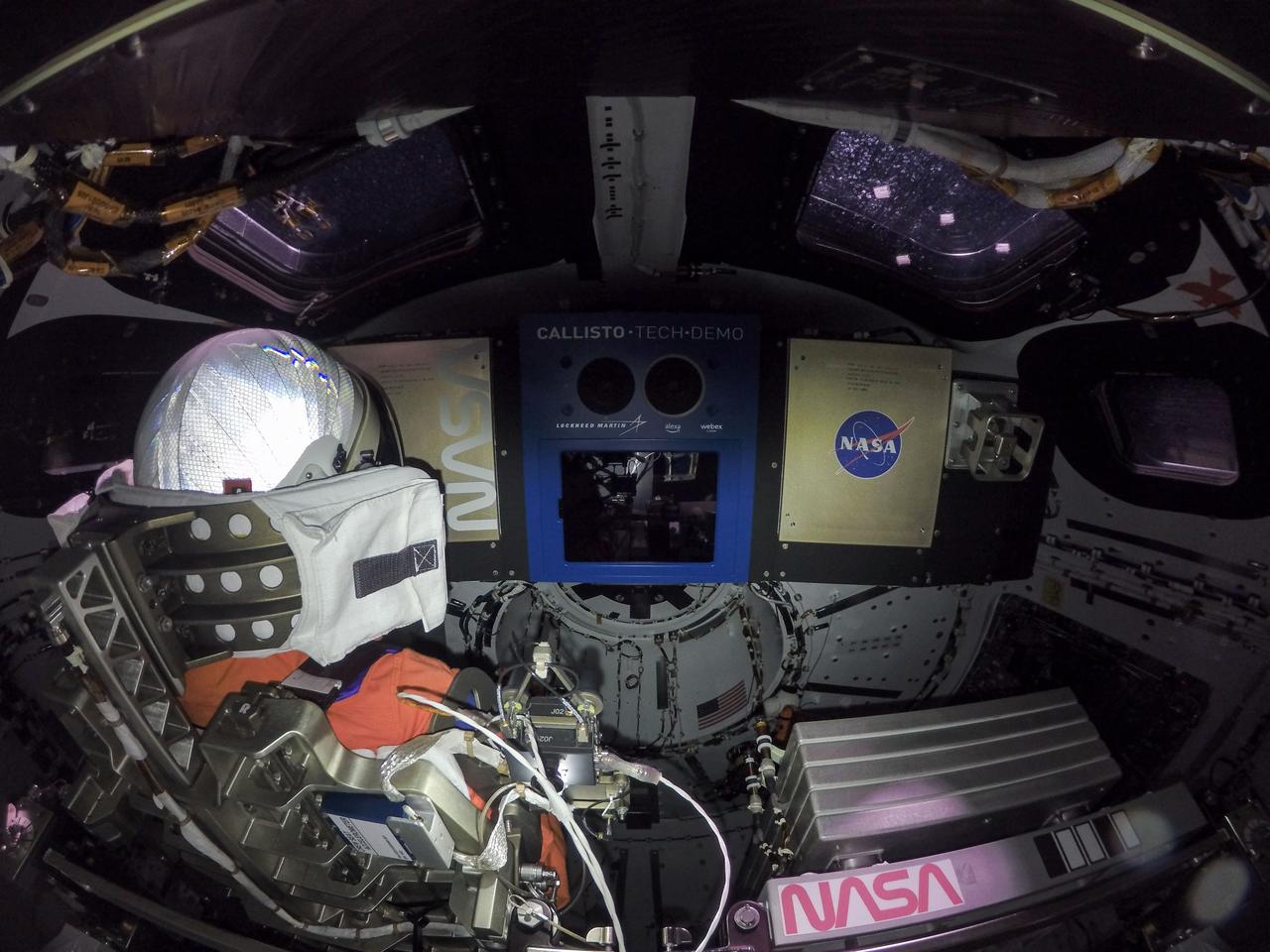
This high-resolution image captures the inside of the Orion crew module on flight day one of the Artemis I mission. At left is Commander Moonikin Campos, a purposeful passenger equipped with sensors to collect data that will help scientists and engineers understand the deep-space environment for future Artemis missions. At center is the Callisto payload, a technology demonstration of voice-activated audio and video technology from Lockheed Martin in collaboration with Amazon and Cisco. Callisto could assist future astronauts on deep-space missions. Below and to the right of Callisto is the Artemis I zero-gravity indicator, astronaut Snoopy.
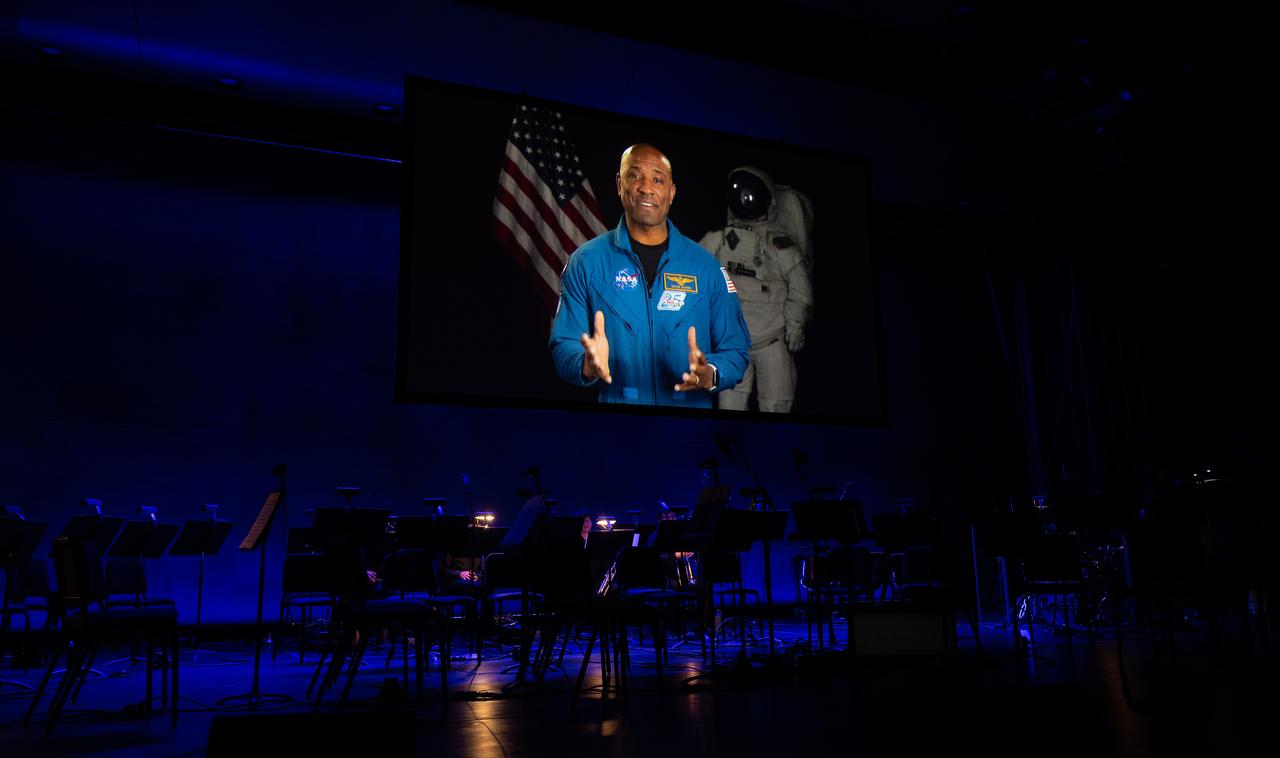
NASA astronaut Victor Glover is seen on screen in a video, Wednesday, April 5, 2023, during the “Our Blue Planet” concert at the John F. Kennedy Center for the Performing Arts in Washington. Jeannie Schulz, widow of Peanuts gang creator Charles M. Schulz, was awarded a NASA Exceptional Achievement Medal by NASA Administrator Bill Nelson at the concert. Snoopy rode along as the zero gravity indicator on NASA’s Artemis I mission as part of a partnership with the agency and continues to help NASA inspire kids of all ages to follow along with Artemis missions. Photo Credit: (NASA/Joel Kowsky)

Howard University’s Afro Blue perform, Wednesday, April 5, 2023, during the “Our Blue Planet” concert at the John F. Kennedy Center for the Performing Arts in Washington. Jeannie Schulz, widow of Peanuts gang creator Charles M. Schulz, was awarded a NASA Exceptional Achievement Medal by NASA Administrator Bill Nelson at the concert. Snoopy rode along as the zero gravity indicator on NASA’s Artemis I mission as part of a partnership with the agency and continues to help NASA inspire kids of all ages to follow along with Artemis missions. Photo Credit: (NASA/Joel Kowsky)
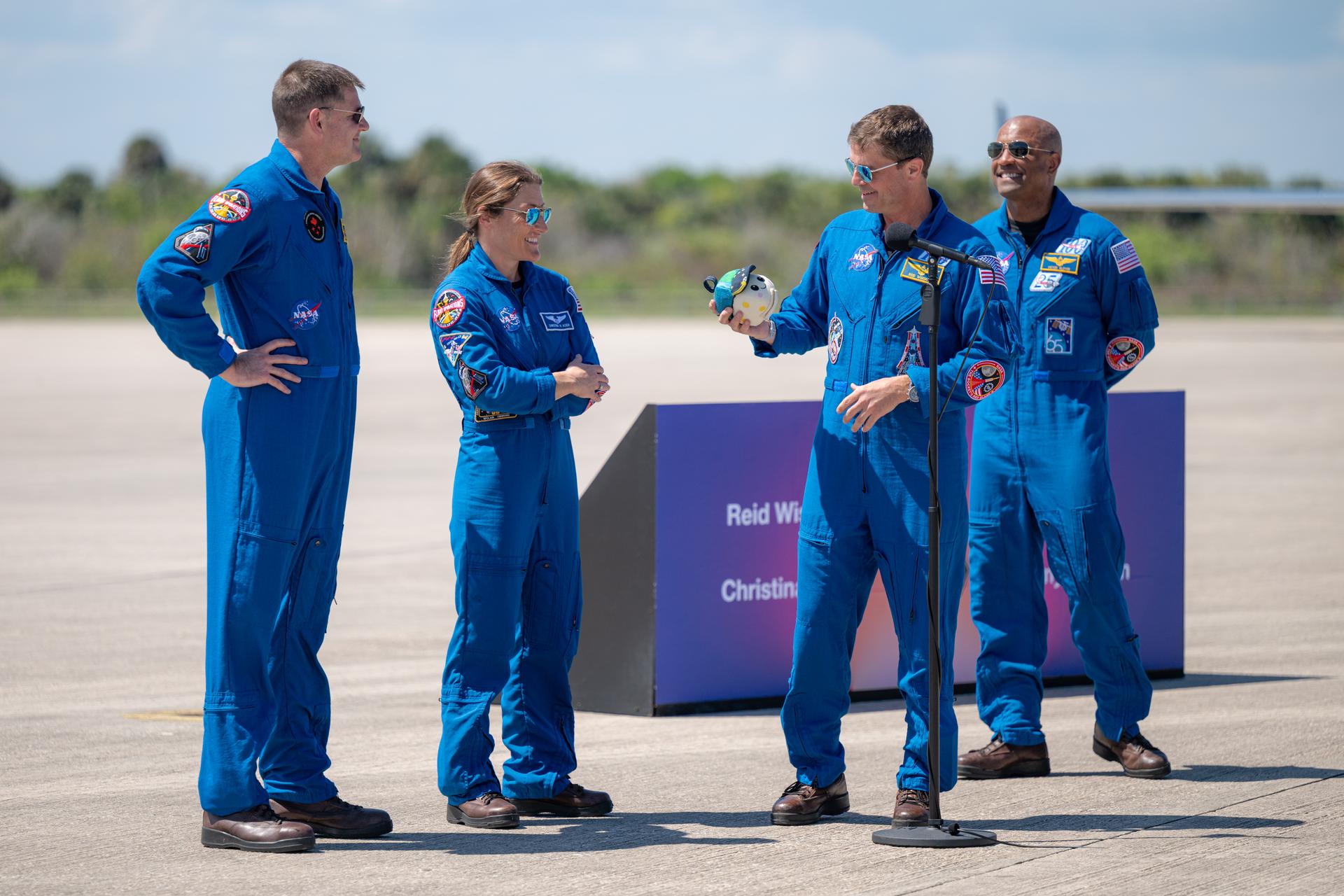
The Artemis II crew of CSA (Canadian Space Agency) astronaut Jeremy Hansen, Artemis II mission specialist; NASA astronaut Christina Koch, Artemis II mission specialist; NASA astronaut Reid Wiseman, Artemis II commander; and NASA astronaut Victor Glover, Artemis II pilot, introduce their zero gravity indicator, a plush toy named "Rise," during a press conference, Friday, March 27, 2026, after arriving at the Launch and Landing Facility at NASA’s Kennedy Space Center in Florida. The Artemis II mission will launch the crew on a 10-day journey around the Moon and back no earlier than April 1. Photo Credit: (NASA/John Kraus)

Emil de Cou conducts the Catholic University Orchestra, Wednesday, April 5, 2023, during the “Our Blue Planet” concert at the John F. Kennedy Center for the Performing Arts in Washington. Jeannie Schulz, widow of Peanuts gang creator Charles M. Schulz, was awarded a NASA Exceptional Achievement Medal by NASA Administrator Bill Nelson at the concert. Snoopy rode along as the zero gravity indicator on NASA’s Artemis I mission as part of a partnership with the agency and continues to help NASA inspire kids of all ages to follow along with Artemis missions. Photo Credit: (NASA/Joel Kowsky)

Emil de Cou and the Catholic University Orchestra are seen Wednesday, April 5, 2023, during the “Our Blue Planet” concert at the John F. Kennedy Center for the Performing Arts in Washington. Jeannie Schulz, widow of Peanuts gang creator Charles M. Schulz, was awarded a NASA Exceptional Achievement Medal by NASA Administrator Bill Nelson at the concert. Snoopy rode along as the zero gravity indicator on NASA’s Artemis I mission as part of a partnership with the agency and continues to help NASA inspire kids of all ages to follow along with Artemis missions. Photo Credit: (NASA/Joel Kowsky)
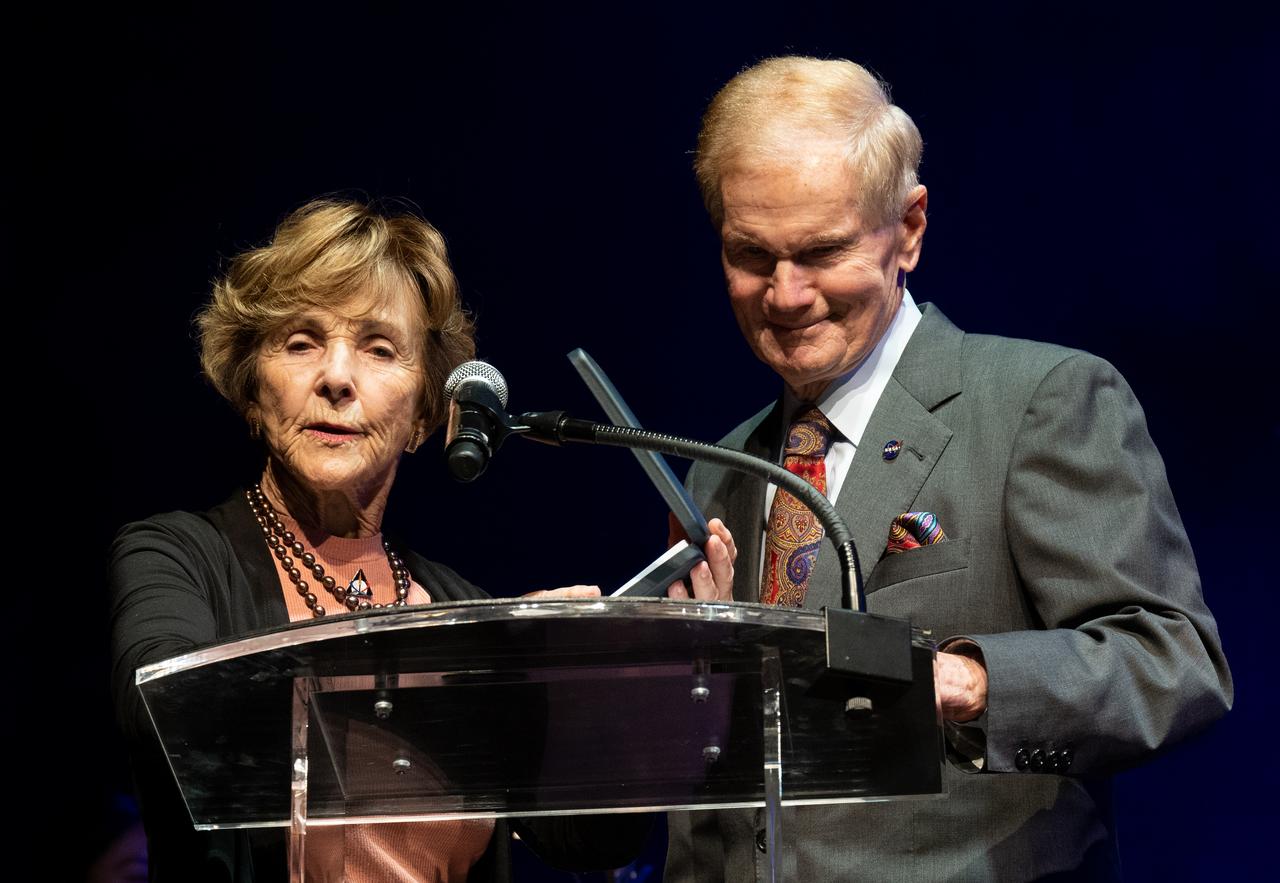
Jeannie Schulz, widow of Peanuts gang creator Charles M. Schulz, left, speaks after being presented with a NASA Exceptional Achievement Medal by NASA Administrator Bill Nelson, Wednesday, April 5, 2023, at the “Our Blue Planet” concert at the John F. Kennedy Center for the Performing Arts in Washington. Snoopy rode along as the zero gravity indicator on NASA’s Artemis I mission as part of a partnership with the agency and continues to help NASA inspire kids of all ages to follow along with Artemis missions. Photo Credit: (NASA/Joel Kowsky)
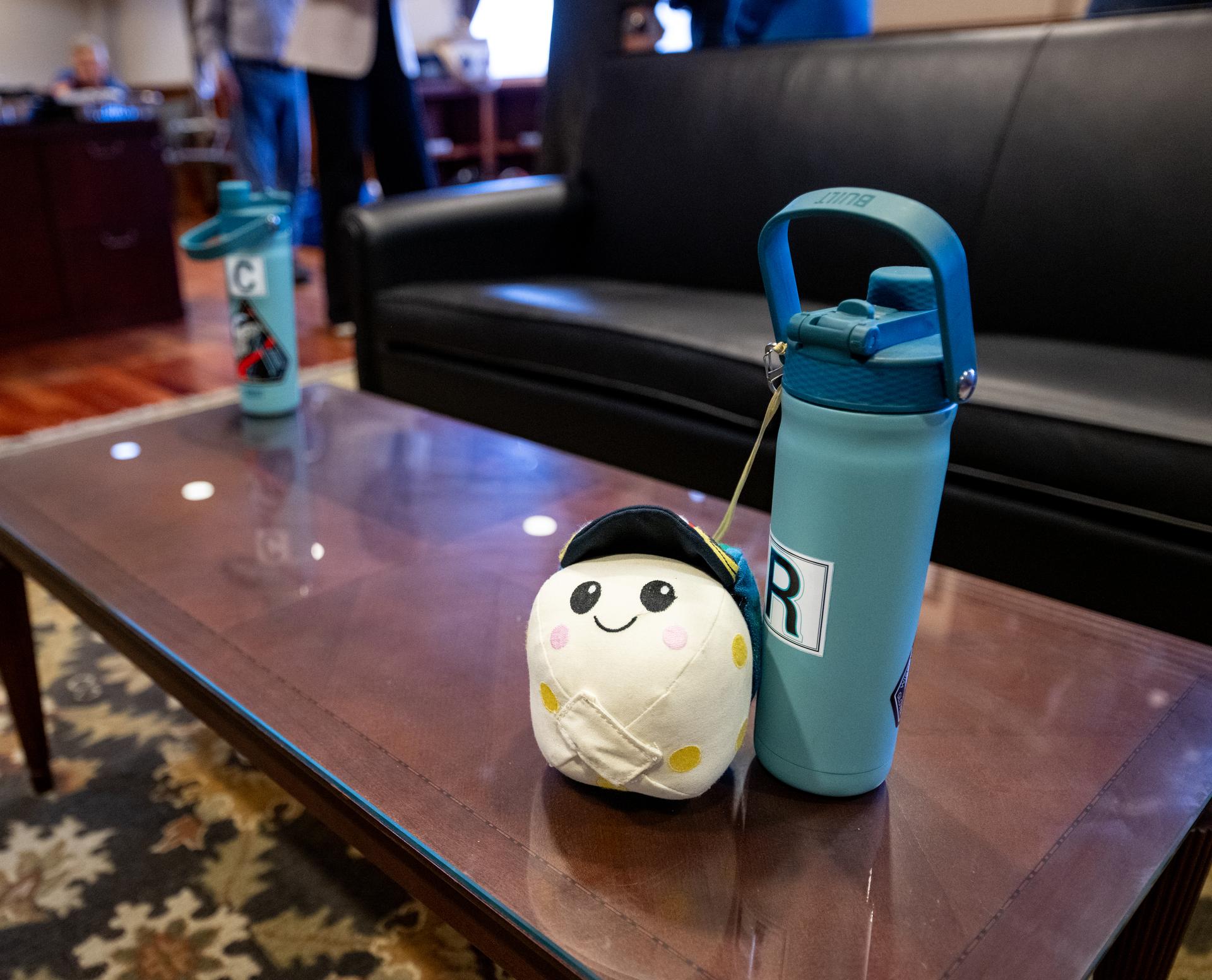
Artemis II mission zero gravity indicator “Rise” is seen at Naval Air Station North Island, Saturday, April 11, 2026, following a splashdown in the Pacific Ocean off the coast of California at 5:07 p.m. PDT (8:07 p.m. EDT) on April 10. NASA’s Artemis II mission took NASA astronauts Reid Wiseman, commander; Victor Glover, pilot; Christina Koch, mission specialist; and CSA (Canadian Space Agency) astronaut Jeremy Hansen, mission specialist on a nearly ten day journey around the Moon and back to Earth. Photo Credit: (NASA/Keegan Barber)

NASA’s Artemis II commander Reid Wiseman, holds ‘Rise’ the zero gravity indicator, up for a photograph in Times Square, New York, after ringing the closing bell of the Nasdaq market session, with fellow crewmembers; CSA (Canadian Space Agency) astronaut Jeremy Hansen, mission specialist; and NASA astronauts Victor Glover, pilot; Christina Koch, mission specialist, Thursday, April 30, 2026. NASA’s Artemis II mission took Wiseman, Glover, Koch, and Hansen on a nearly 10-day journey around the Moon and back to Earth earlier in April 2026. Photo Credit: (NASA/Bill Ingalls)

NASA’s Artemis II commander Reid Wiseman, poses for a photograph, in Times Square, New York, while holding ‘Rise’ the zero gravity indicator, soon after ringing the closing bell of the Nasdaq market session, with fellow crewmembers; CSA (Canadian Space Agency) astronaut Jeremy Hansen, mission specialist; and NASA astronauts Victor Glover, pilot; Christina Koch, mission specialist, Thursday, April 30, 2026. NASA’s Artemis II mission took Wiseman, Glover, Koch, and Hansen on a nearly 10-day journey around the Moon and back to Earth earlier in April 2026. Photo Credit: (NASA/Bill Ingalls)

NASA astronaut Reid Wiseman, Artemis II commander shows Rise, the zero gravity indicator that flew on the Artemis II mission, to U.S. Senator Susan Collins (R-ME) at an event at the Dirksen Senate Office Building, Tuesday, May 12, 2026, in Washington. NASA’s Artemis II mission took Wiseman, and crewmates NASA astronauts Victor Glover, pilot; Christina Koch, mission specialist; and CSA (Canadian Space Agency) astronaut Jeremy Hansen, mission specialist on a nearly 10-day journey around the Moon and back to Earth in April 2026. Photo Credit: (NASA/Aubrey Gemignani)
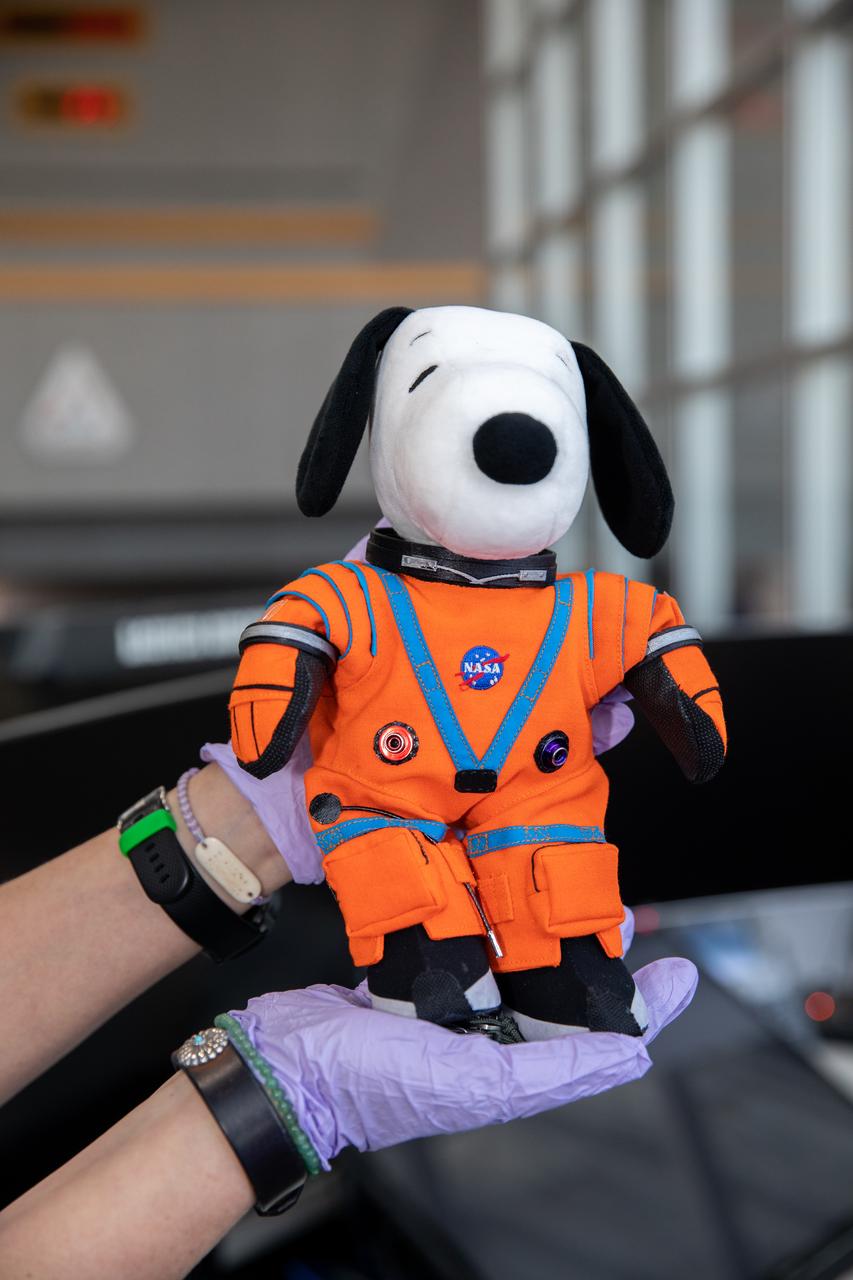
Snoopy is officially handed over to Melissa Menta, senior vice president with Peanuts Worldwide LLC, inside Launch Control Center Firing Room 1 at NASA’s Kennedy Space Center in Florida on Jan. 18, 2023. Snoopy served as the zero-gravity indicator during the Artemis I mission. Snoopy was secured inside Orion during the mission, a journey beyond the Moon and back to prepare for crewed missions to the Moon. Artemis I launched atop the Space Launch System rocket on Nov. 16, 2022 from Kennedy’s Launch Complex 39B. Orion returned to Earth for a splashdown in the Pacific Ocean on Dec. 11, 2022 after traveling more than 1.4 million miles. NASA has held an association with Snoopy since the Apollo Era – the character has contributed to the excitement for NASA human spaceflight missions, helping inspire generations to dream big, and is a symbol of NASA’s safety culture and mission success.

Inside the lobby of the Neil Armstrong Operations and Checkout Building at NASA’s Kennedy Space Center in Florida, Snoopy, the zero-gravity indicator that flew aboard Orion during the Artemis I mission, is shown on Jan. 5, 2023, after being unpacked from his transport case. Snoopy was secured inside Orion during the Artemis I mission, a journey beyond the Moon and back to prepare for crewed missions to the Moon. Artemis I launched atop the Space Launch System rocket on Nov. 16, 2022 from Kennedy’s Launch Complex 39B. Orion returned to Earth for a splashdown in the Pacific Ocean on Dec. 11, 2022 after traveling more than 1.4 million miles. NASA has held an association with Snoopy since the Apollo Era – the character has contributed to the excitement for NASA human spaceflight missions, helping inspire generations to dream big, and is a symbol of NASA’s safety culture and mission success.
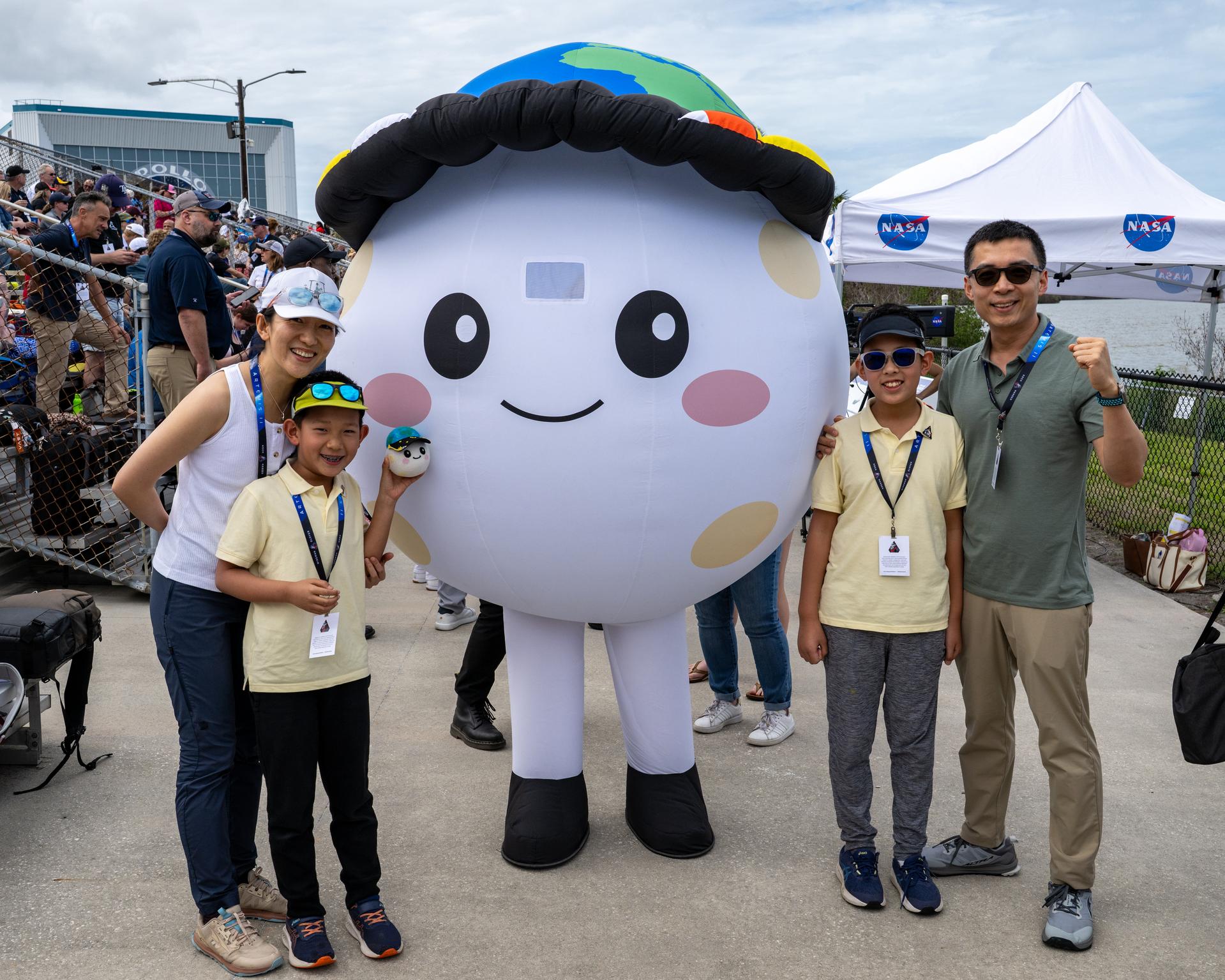
Lucas Ye, designer of zero gravity indicator “Rise,” and his family pose for a photo at the Banana Creek viewing site as the countdown progresses for the launch of NASA’s Space Launch System (SLS) rocket and Orion spacecraft with Commander Reid Wiseman, Pilot Victor Glover, and Mission Specialist Christina Koch from NASA, and Mission Specialist Jeremy Hansen from the CSA (Canadian Space Agency) on the Artemis II mission, Wednesday, April 1, 2026, at NASA’s Kennedy Space Center in Florida. NASA’s Artemis II mission will take Wiseman, Glover, Koch, and Hansen on a 10-day journey around the Moon and back aboard SLS rocket and Orion spacecraft from Launch Complex 39B with launch window opening at 6:24 p.m. EDT. Photo Credit: (NASA/Keegan Barber)

Lucas Ye, designer of zero gravity indicator “Rise,” participates in an interview with members of the NASA Broadcast team at the Banana Creek viewing site as the countdown progresses for the launch of NASA’s Space Launch System (SLS) rocket and Orion spacecraft with Commander Reid Wiseman, Pilot Victor Glover, and Mission Specialist Christina Koch from NASA, and Mission Specialist Jeremy Hansen from the CSA (Canadian Space Agency) on the Artemis II mission, Wednesday, April 1, 2026, at NASA’s Kennedy Space Center in Florida. NASA’s Artemis II mission will take Wiseman, Glover, Koch, and Hansen on a 10-day journey around the Moon and back aboard SLS rocket and Orion spacecraft from Launch Complex 39B with launch window opening at 6:24 p.m. EDT. Photo Credit: (NASA/Keegan Barber)
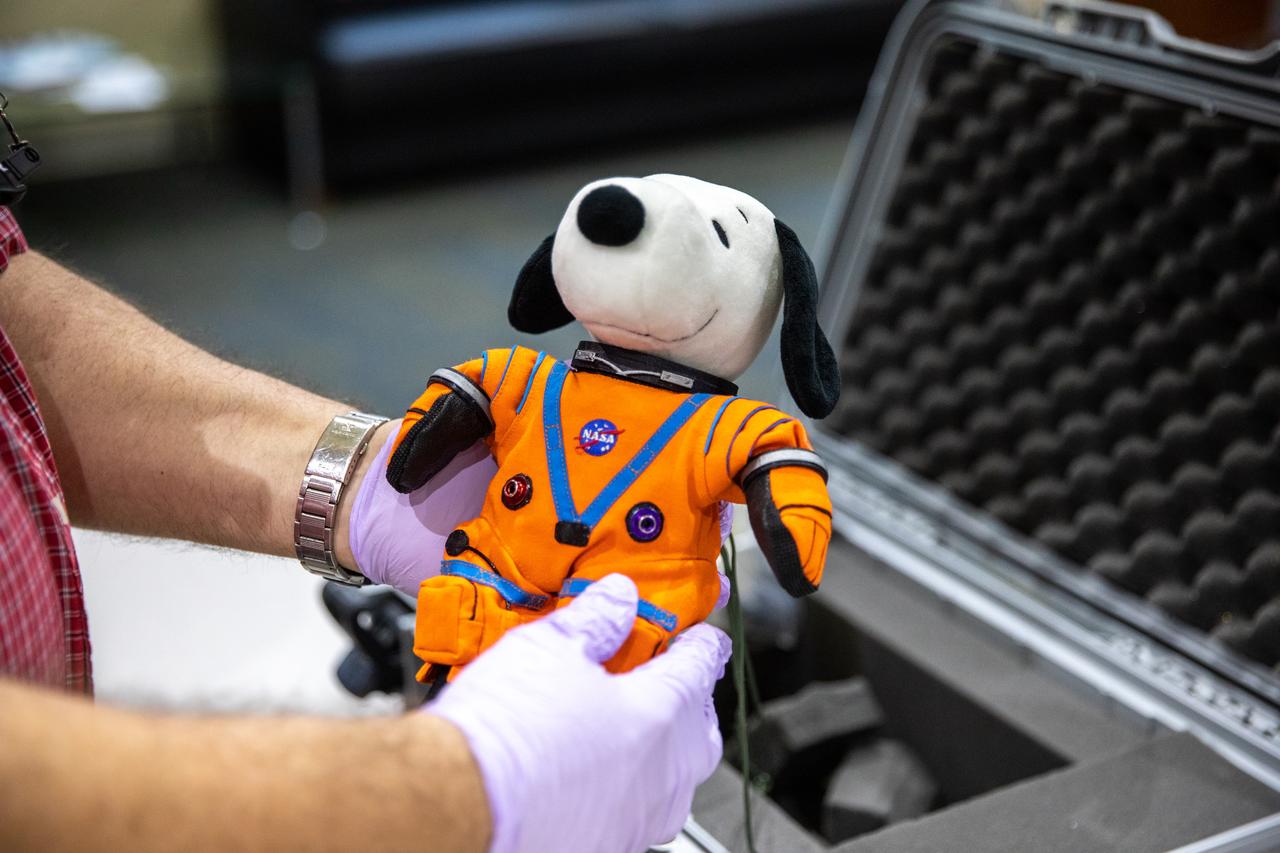
Inside the lobby of the Neil Armstrong Operations and Checkout Building at NASA’s Kennedy Space Center in Florida, Snoopy, the zero-gravity indicator that flew aboard Orion during the Artemis I mission, is shown on Jan. 5, 2023, after being unpacked from his transport case. Snoopy was secured inside Orion during the Artemis I mission, a journey beyond the Moon and back to prepare for crewed missions to the Moon. Artemis I launched atop the Space Launch System rocket on Nov. 16, 2022 from Kennedy’s Launch Complex 39B. Orion returned to Earth for a splashdown in the Pacific Ocean on Dec. 11, 2022 after traveling more than 1.4 million miles. NASA has held an association with Snoopy since the Apollo Era – the character has contributed to the excitement for NASA human spaceflight missions, helping inspire generations to dream big, and is a symbol of NASA’s safety culture and mission success.
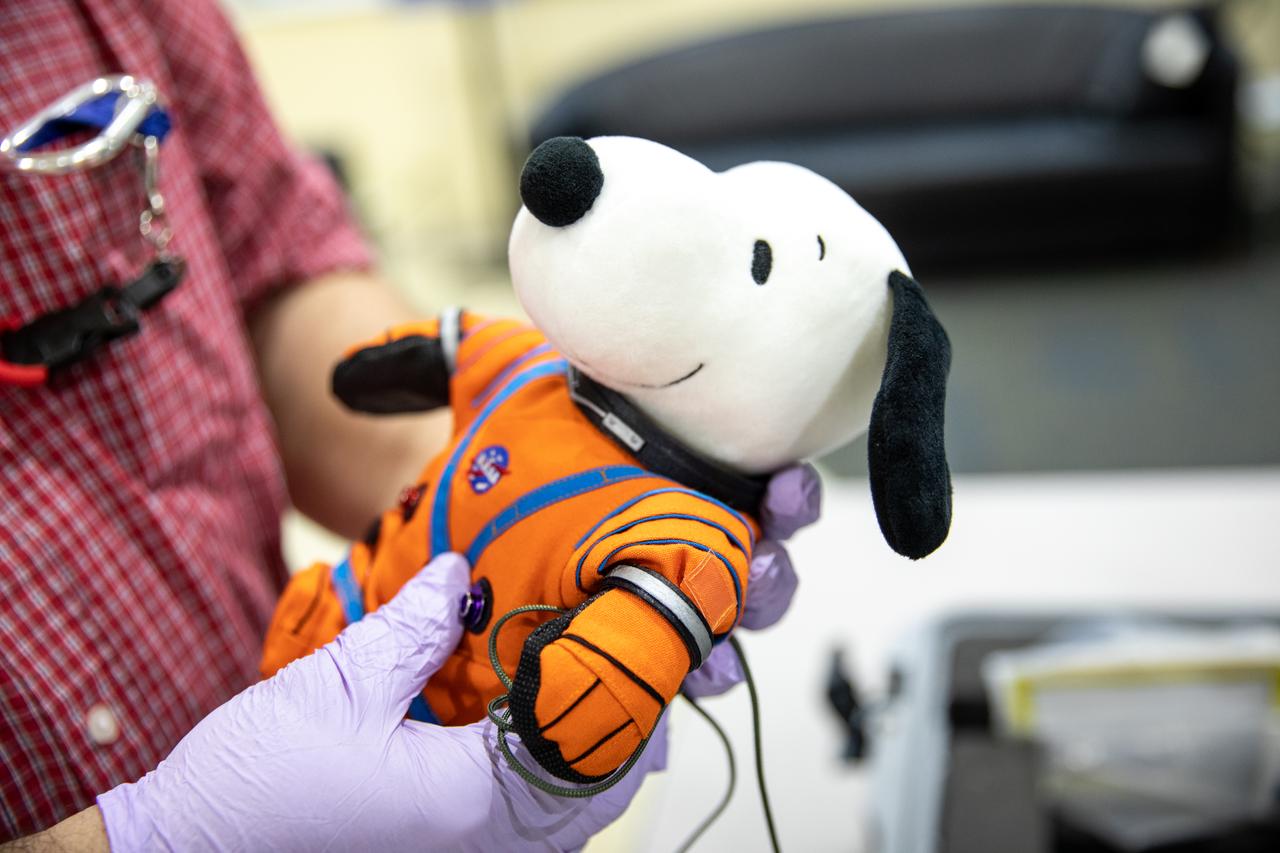
Inside the lobby of the Neil Armstrong Operations and Checkout Building at NASA’s Kennedy Space Center in Florida, Snoopy, the zero-gravity indicator that flew aboard Orion during the Artemis I mission, is shown on Jan. 5, 2023, after being unpacked from his transport case. Snoopy was secured inside Orion during the Artemis I mission, a journey beyond the Moon and back to prepare for crewed missions to the Moon. Artemis I launched atop the Space Launch System rocket on Nov. 16, 2022 from Kennedy’s Launch Complex 39B. Orion returned to Earth for a splashdown in the Pacific Ocean on Dec. 11, 2022 after traveling more than 1.4 million miles. NASA has held an association with Snoopy since the Apollo Era – the character has contributed to the excitement for NASA human spaceflight missions, helping inspire generations to dream big, and is a symbol of NASA’s safety culture and mission success.
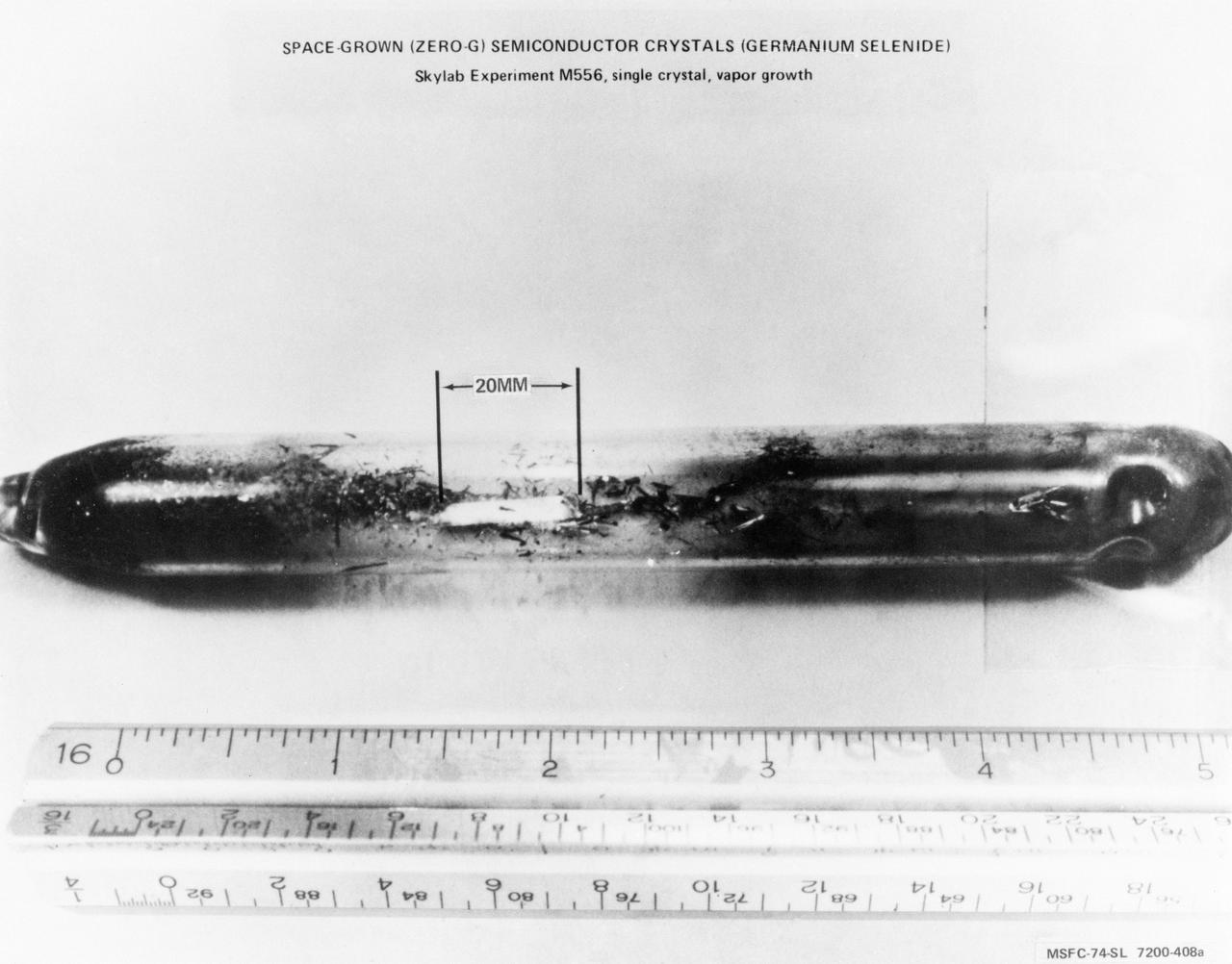
S74-19677 (April 1974) --- This crystal of Germanium Selenide (GeSe) was grown under weightless conditions in an electric furnace aboard the Skylab space station. Experiment M556, Vapor Growth of IV-VI Compounds, was conducted as a comparative test of GeSe crystals grown on Earth and those grown in a weightless environment. Skylab postflight results indicate that crystals grown in a zero-gravity situation demonstrate greater growth and better composite structure than those grown in ground-bases laboratories. The GeSe crystal shown here is 20 millimeters long, the largest crystal ever grown on Earth or in space. Principal Investigator for Experiment M556 is Dr. Harry Wiedemaier, Rensselaer Polytechnic Institute, Troy, New York. (See NASA photograph S74-19676 for an example of an Earth-grown Germanium Selenide crystal.) Photo credit: NASA
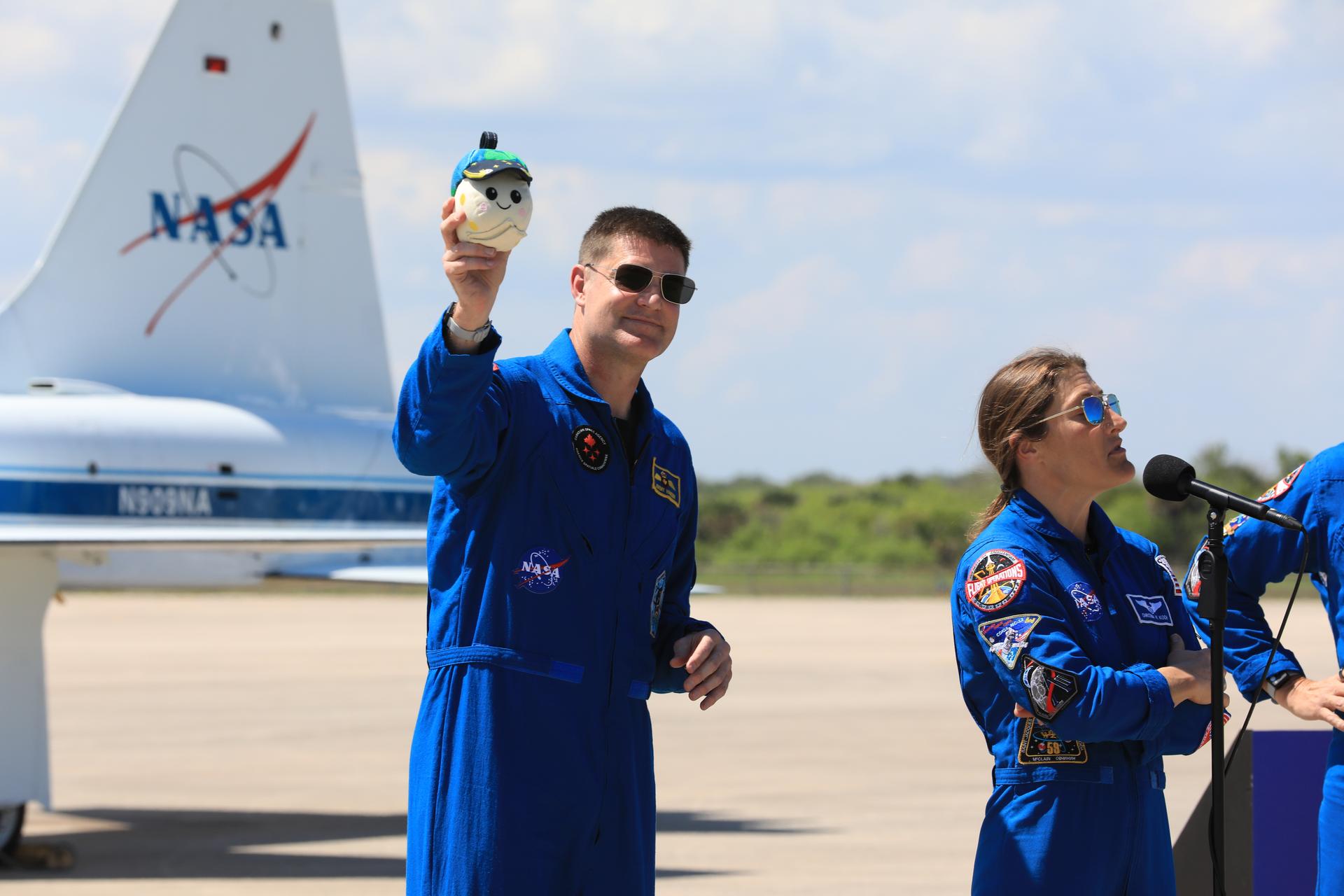
From left to right, CSA (Canadian Space Agency) Jeremy Hansen and NASA astronaut Christina Koch arrive on Friday, March 27, 2026, at the Launch and Landing Facility at the agency’s Kennedy Space Center in Florida in preparation for the Artemis II test flight. Hansen is holding the Moon Mascot, Rise, which is the zero gravity indicator that will fly on the Artemis II test flight. Hansen, Koch, and NASA astronauts Commander Reid Wiseman and Pilot Victor Glover launch on a 10-day journey around the Moon and back aboard the agency’s SLS (Space Launch System) rocket and Orion spacecraft from Launch Complex 39B no earlier than 6:24 p.m. EDT on Wednesday, April 1.
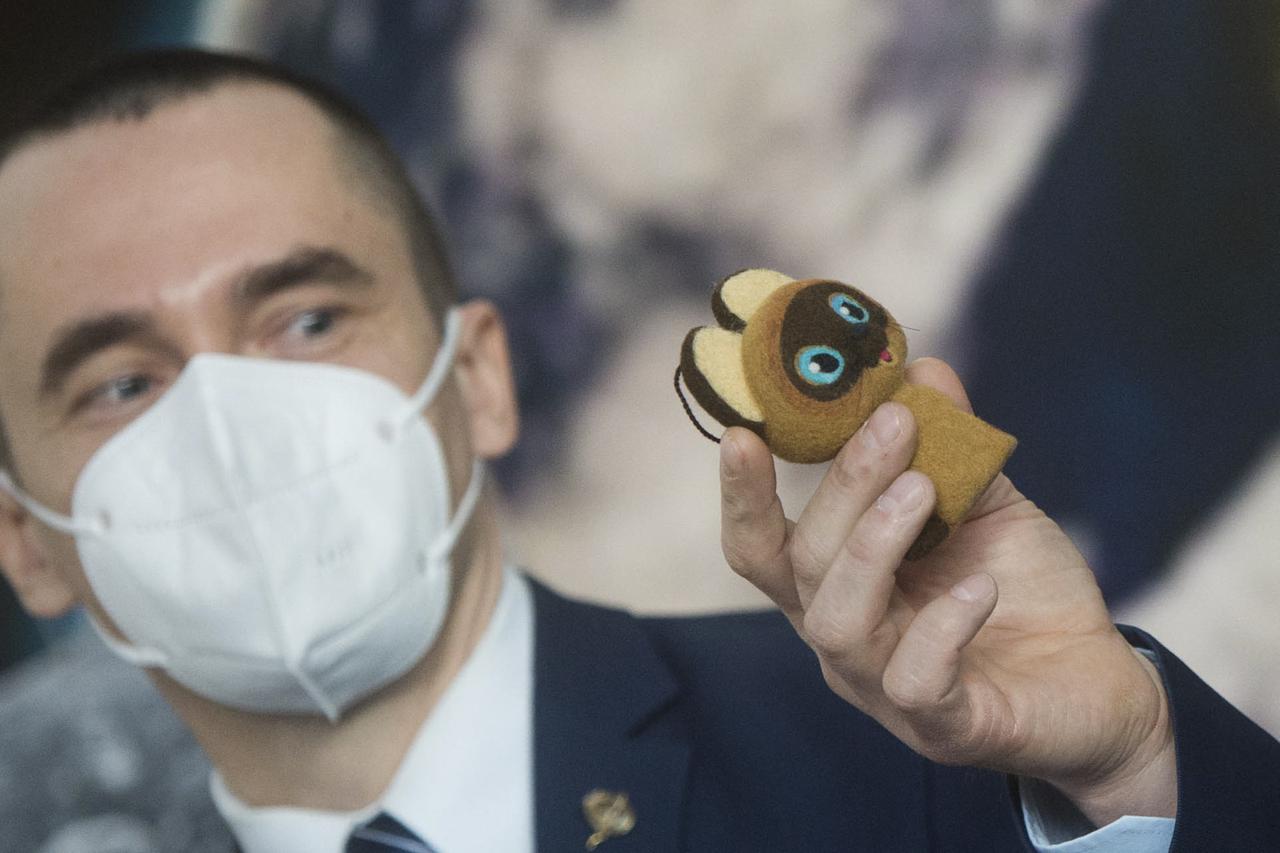
Expedition 65 prime crew member Oleg Novitskiy of Roscosmos, holds up a toy cat that will be used in the Soyuz capsule to help indicate the start of weightlessness after leaving the Earth’s atmosphere, Wednesday, March 24, 2021 at the Gagarin Cosmonaut Training Center (GCTC) in Star City, Russia. Photo Credit: (NASA/GCTC/Andrey Shelepin)
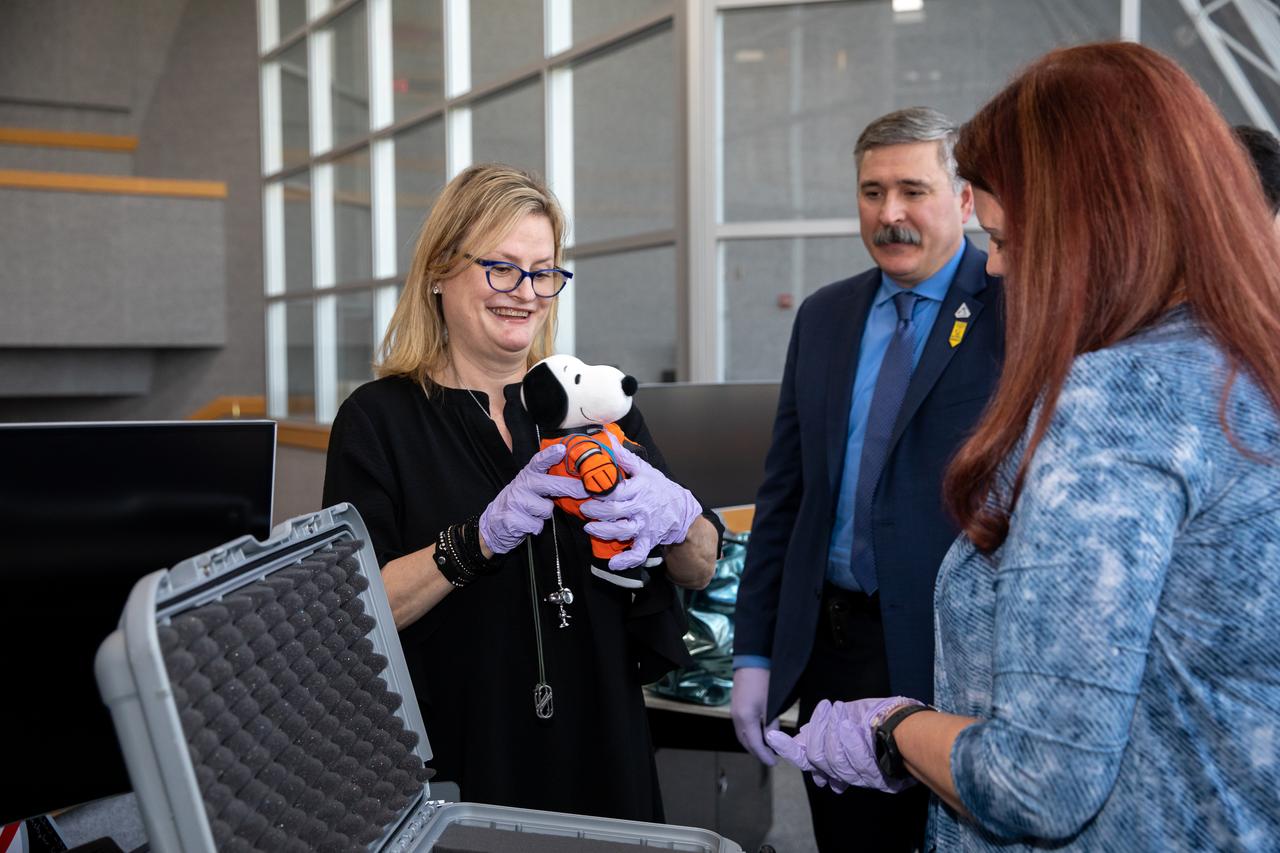
Melissa Menta, at left, senior vice president with Peanuts Worldwide LLC, accepts Snoopy during an official handover from Artemis Launch Director Charlie Blackwell-Thompson inside Launch Control Center Firing Room 1 at NASA’s Kennedy Space Center in Florida on Jan. 18, 2023. To the left of Charlie is Mike Sarafin, Artemis I mission manager. Snoopy served as the zero-gravity indicator during the Artemis I mission. Snoopy was secured inside Orion during the mission, a journey beyond the Moon and back to prepare for crewed missions to the Moon. Artemis I launched atop the Space Launch System rocket on Nov. 16, 2022 from Kennedy’s Launch Complex 39B. Orion returned to Earth for a splashdown in the Pacific Ocean on Dec. 11, 2022 after traveling more than 1.4 million miles. NASA has held an association with Snoopy since the Apollo Era – the character has contributed to the excitement for NASA human spaceflight missions, helping inspire generations to dream big, and is a symbol of NASA’s safety culture and mission success.
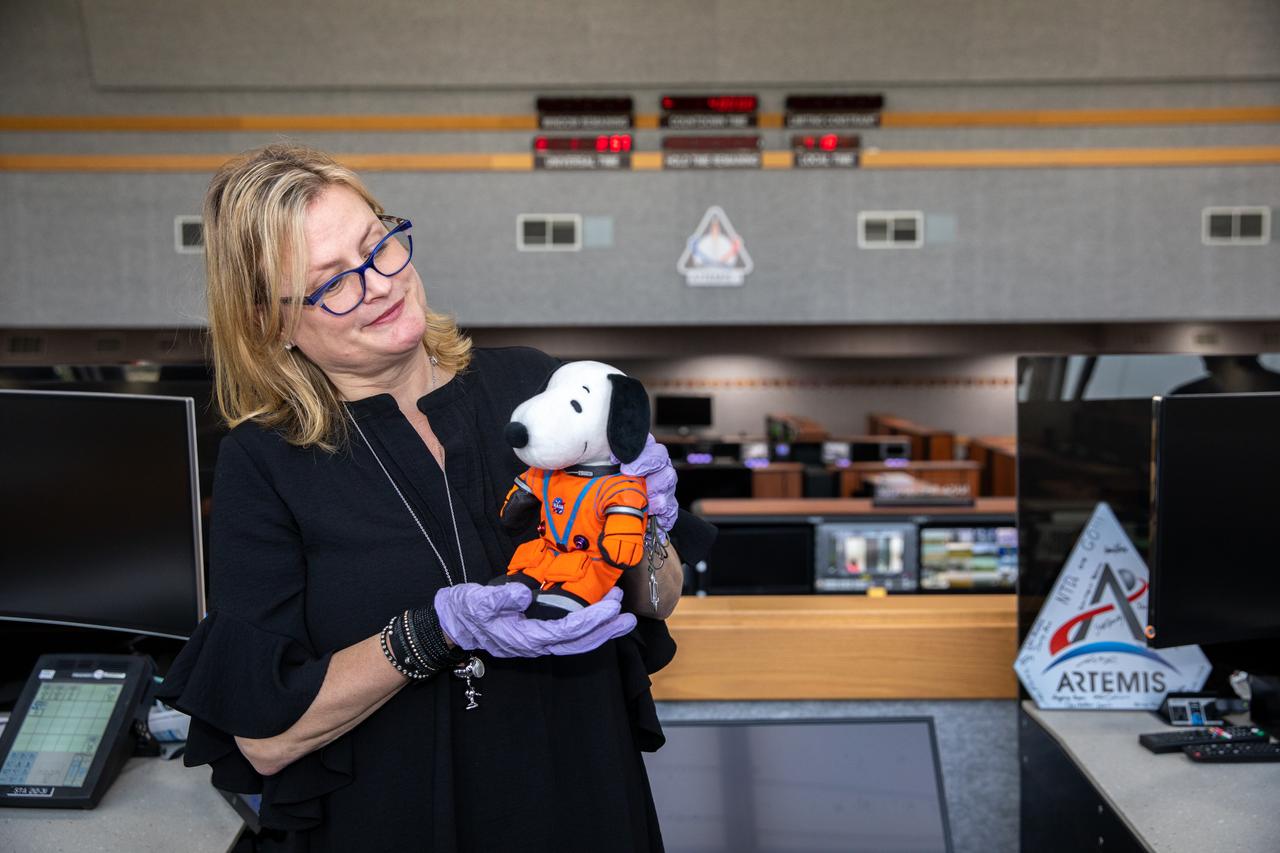
Melissa Menta, senior vice president with Peanuts Worldwide LLC, accepts Snoopy during an official handover from Artemis Launch Director Charlie Blackwell-Thompson inside Launch Control Center Firing Room 1 at NASA’s Kennedy Space Center in Florida on Jan. 18, 2023. Snoopy served as the zero-gravity indicator during the Artemis I mission. Snoopy was secured inside Orion during the mission, a journey beyond the Moon and back to prepare for crewed missions to the Moon. Artemis I launched atop the Space Launch System rocket on Nov. 16, 2022 from Kennedy’s Launch Complex 39B. Orion returned to Earth for a splashdown in the Pacific Ocean on Dec. 11, 2022 after traveling more than 1.4 million miles. NASA has held an association with Snoopy since the Apollo Era – the character has contributed to the excitement for NASA human spaceflight missions, helping inspire generations to dream big, and is a symbol of NASA’s safety culture and mission success.
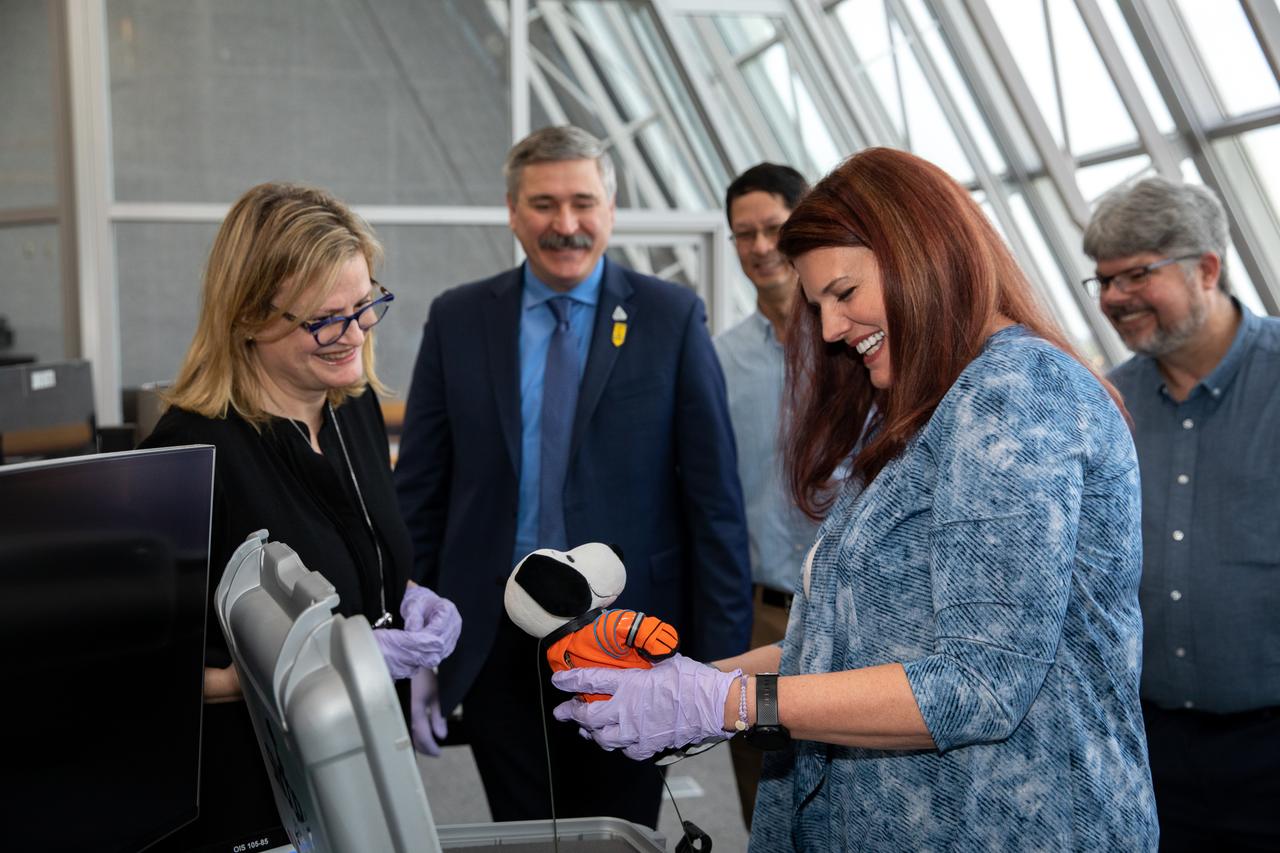
Artemis Launch Director Charlie Blackwell-Thompson, in the center, performs the official turnover of Snoopy to Melissa Menta, far left, senior vice president with Peanuts Worldwide LLC, inside Launch Control Center Firing Room 1 at NASA’s Kennedy Space Center in Florida on Jan. 18, 2023. From left, behind Charlie are Mike Sarafin, Artemis I mission manager; Glenn Chin, deputy manager, Orion Production Operations Office, Exploration Ground Systems; and Kevin Ash, payload and flight crew equipment project lead with Jacobs. Snoopy served as the zero-gravity indicator during the Artemis I mission. Snoopy was secured inside Orion during the mission, a journey beyond the Moon and back to prepare for crewed missions to the Moon. Artemis I launched atop the Space Launch System rocket on Nov. 16, 2022 from Kennedy’s Launch Complex 39B. Orion returned to Earth for a splashdown in the Pacific Ocean on Dec. 11, 2022 after traveling more than 1.4 million miles. NASA has held an association with Snoopy since the Apollo Era – the character has contributed to the excitement for NASA human spaceflight missions, helping inspire generations to dream big, and is a symbol of NASA’s safety culture and mission success.
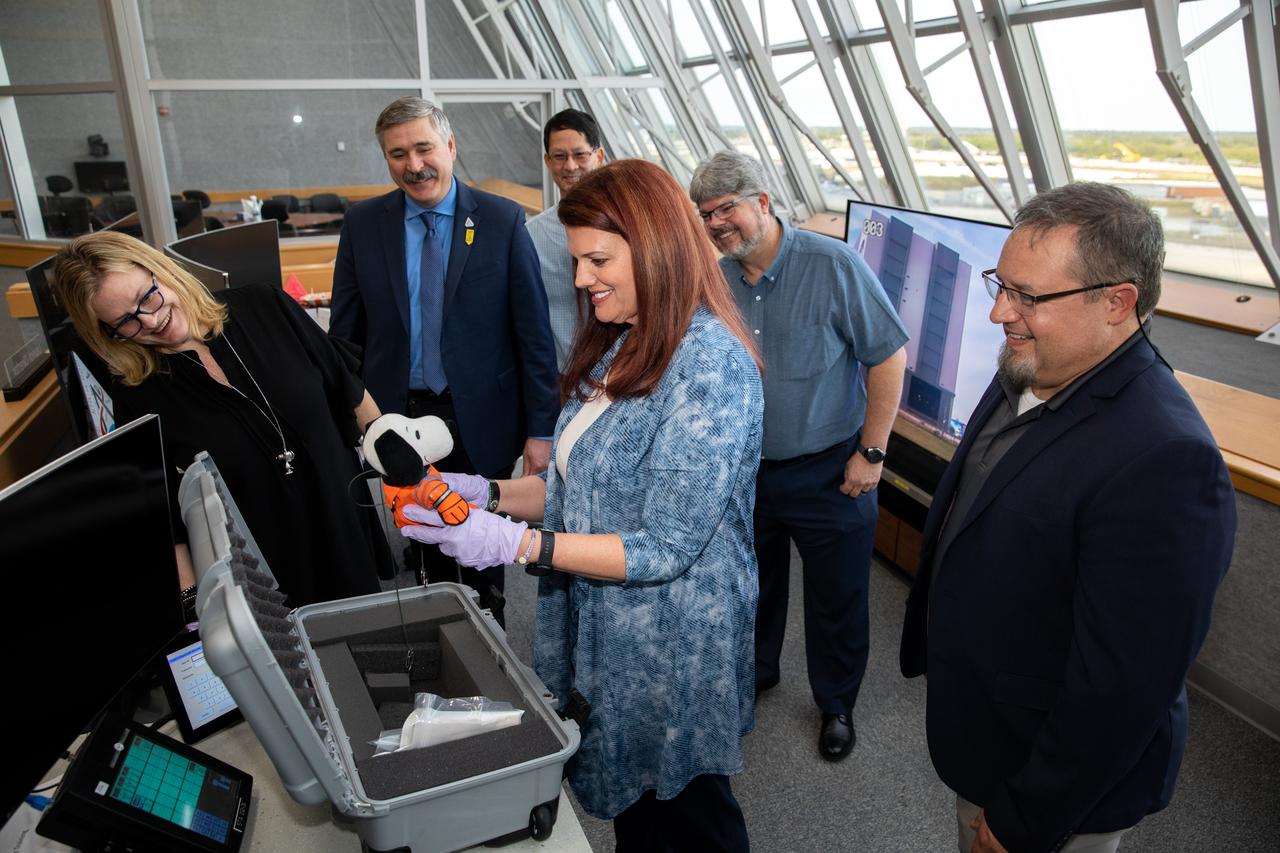
Artemis Launch Director Charlie Blackwell-Thompson, in the center, performs the official turnover of Snoopy to Melissa Menta, far left, senior vice president with Peanuts Worldwide LLC, inside Launch Control Center Firing Room 1 at NASA’s Kennedy Space Center in Florida on Jan. 18, 2023. From left, behind Charlie are Mike Sarafin, Artemis I mission manager; Glenn Chin, deputy manager, Orion Production Operations Office, Exploration Ground Systems; Kevin Ash, payload and flight crew equipment project lead with Jacobs; and Joe LeBlanc, Orion payload and cargo manager with Lockheed Martin. Snoopy served as the zero-gravity indicator during the Artemis I mission. Snoopy was secured inside Orion during the mission, a journey beyond the Moon and back to prepare for crewed missions to the Moon. Artemis I launched atop the Space Launch System rocket on Nov. 16, 2022 from Kennedy’s Launch Complex 39B. Orion returned to Earth for a splashdown in the Pacific Ocean on Dec. 11, 2022 after traveling more than 1.4 million miles. NASA has held an association with Snoopy since the Apollo Era – the character has contributed to the excitement for NASA human spaceflight missions, helping inspire generations to dream big, and is a symbol of NASA’s safety culture and mission success.