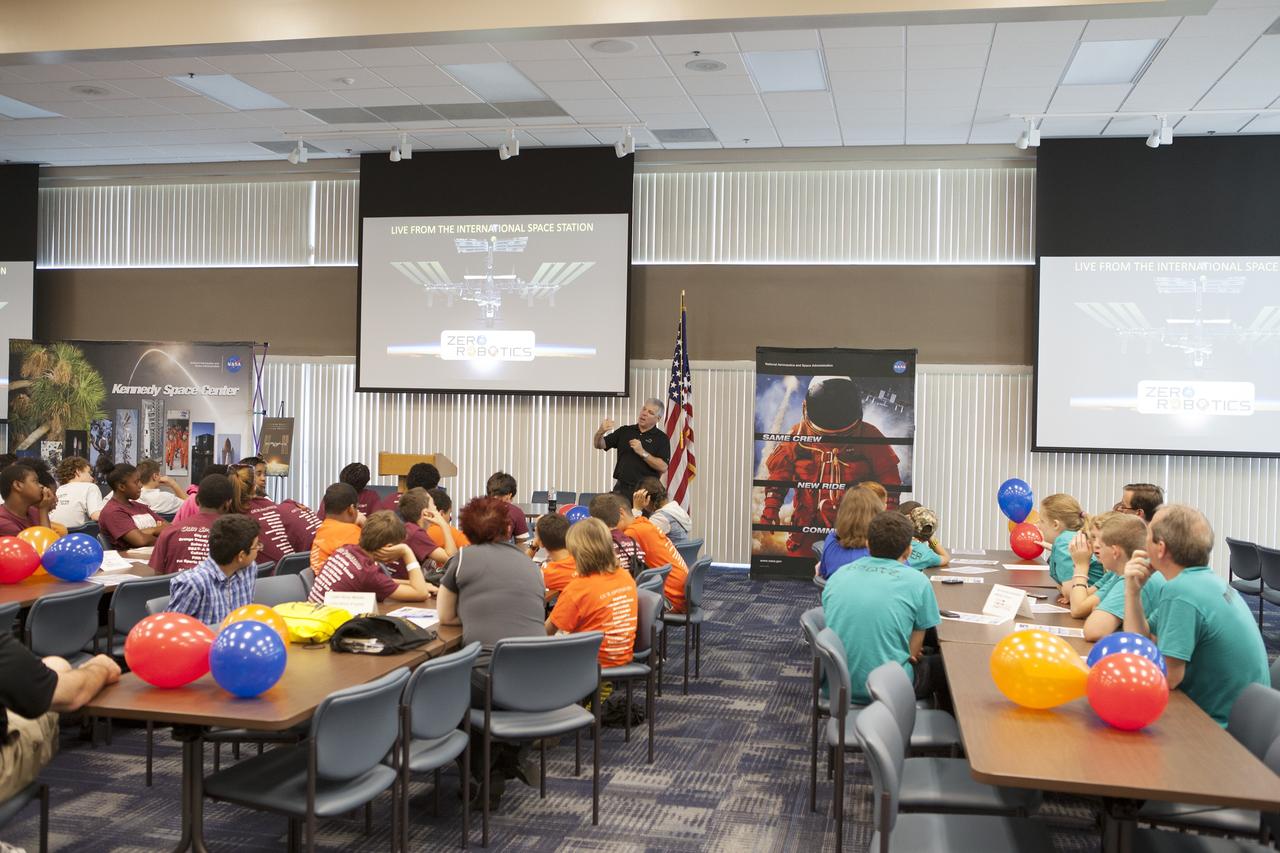
CAPE CANAVERAL, Fla. – Former astronaut Greg Johnson, executive director of the Center for the Advancement of Science in Space, talks to Florida middle school students and their teachers before the start of the Zero Robotics finals competition at NASA Kennedy Space Center's Space Station Processing Facility in Florida. Students designed software to control Synchronized Position Hold Engage and Reorient Experimental Satellites, or SPHERES, and competed with other teams locally. The Zero Robotics is a robotics programming competition where the robots are SPHERES. The competition starts online, where teams program the SPHERES to solve an annual challenge. After several phases of virtual competition in a simulation environment that mimics the real SPHERES, finalists are selected to compete in a live championship aboard the space station. Students compete to win a technically challenging game by programming their strategies into the SPHERES satellites. The programs are autonomous and the students cannot control the satellites during the test. Photo credit: NASA/Daniel Casper
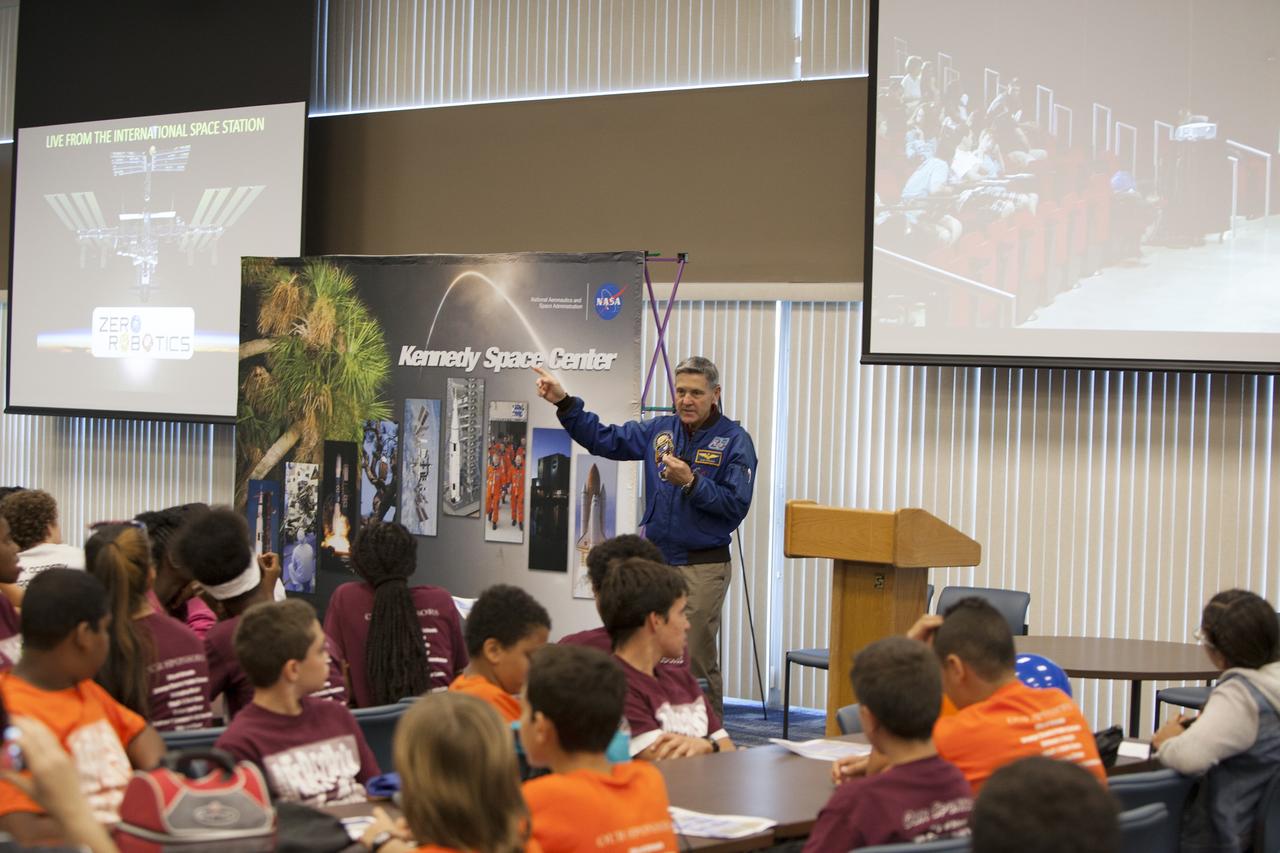
CAPE CANAVERAL, Fla. – Kennedy Space Center Director and former astronaut Bob Cabana, talks to Florida middle school students and their teachers during the Zero Robotics finals competition at the center's Space Station Processing Facility in Florida. Students designed software to control Synchronized Position Hold Engage and Reorient Experimental Satellites, or SPHERES, and competed with other teams locally. The Zero Robotics is a robotics programming competition where the robots are SPHERES. The competition starts online, where teams program the SPHERES to solve an annual challenge. After several phases of virtual competition in a simulation environment that mimics the real SPHERES, finalists are selected to compete in a live championship aboard the space station. Students compete to win a technically challenging game by programming their strategies into the SPHERES satellites. The programs are autonomous and the students cannot control the satellites during the test. Photo credit: NASA/Daniel Casper
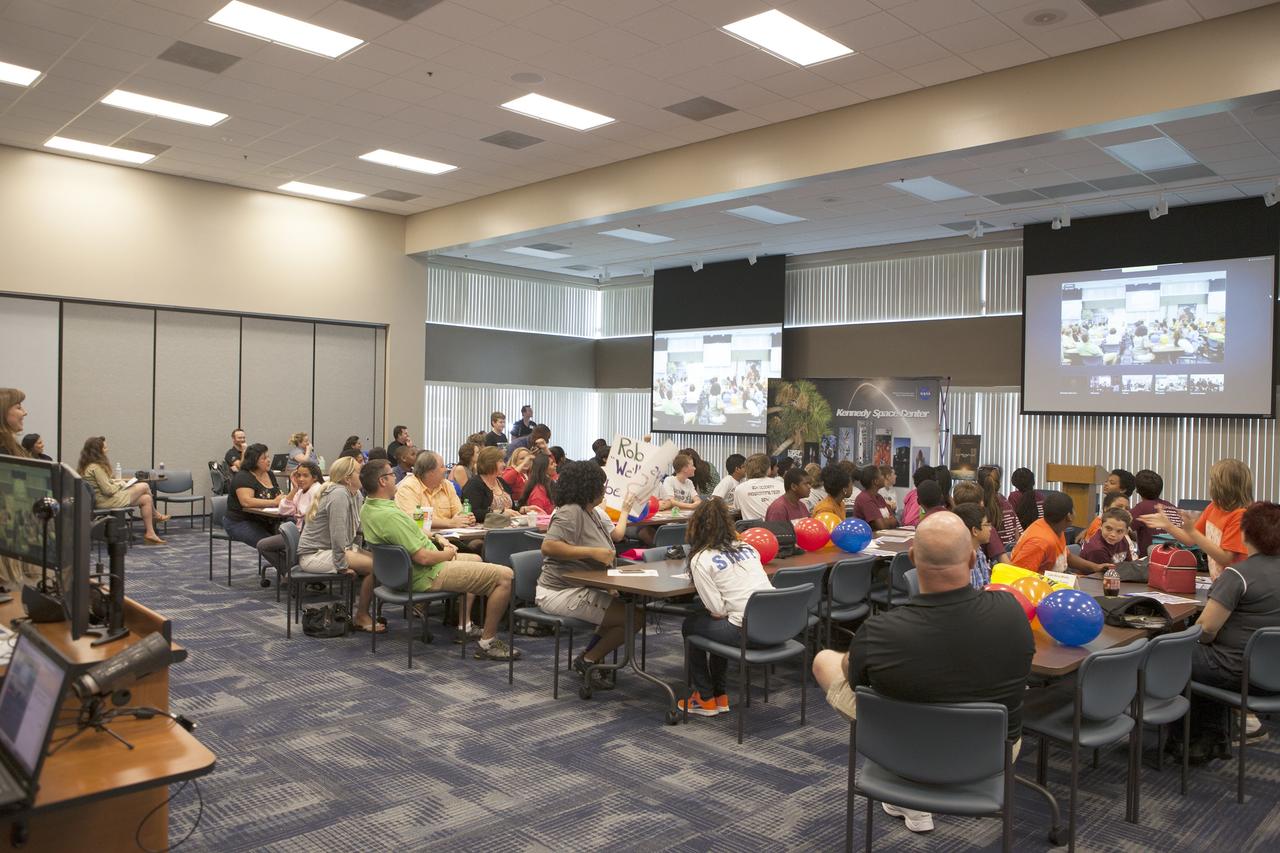
CAPE CANAVERAL, Fla. – Florida middle school students and their teachers greet students from other locations via webex before the start of the Zero Robotics finals competition. The Florida teams are at the Space Station Processing Facility at NASA's Kennedy Space Center in Florida. Students designed software to control Synchronized Position Hold Engage and Reorient Experimental Satellites, or SPHERES, and competed with other teams locally. The Zero Robotics is a robotics programming competition where the robots are SPHERES. The competition starts online, where teams program the SPHERES to solve an annual challenge. After several phases of virtual competition in a simulation environment that mimics the real SPHERES, finalists are selected to compete in a live championship aboard the space station. Students compete to win a technically challenging game by programming their strategies into the SPHERES satellites. The programs are autonomous and the students cannot control the satellites during the test. Photo credit: NASA/Daniel Casper
CAPE CANAVERAL, Fla. – Former astronaut Greg Johnson, executive director of the Center for the Advancement of Science in Space, talks to Florida middle school students and their teachers before the start of the Zero Robotics finals competition at NASA Kennedy Space Center's Space Station Processing Facility in Florida. Students designed software to control Synchronized Position Hold Engage and Reorient Experimental Satellites, or SPHERES, and competed with other teams locally. The Zero Robotics is a robotics programming competition where the robots are SPHERES. The competition starts online, where teams program the SPHERES to solve an annual challenge. After several phases of virtual competition in a simulation environment that mimics the real SPHERES, finalists are selected to compete in a live championship aboard the space station. Students compete to win a technically challenging game by programming their strategies into the SPHERES satellites. The programs are autonomous and the students cannot control the satellites during the test. Photo credit: NASA/Daniel Casper
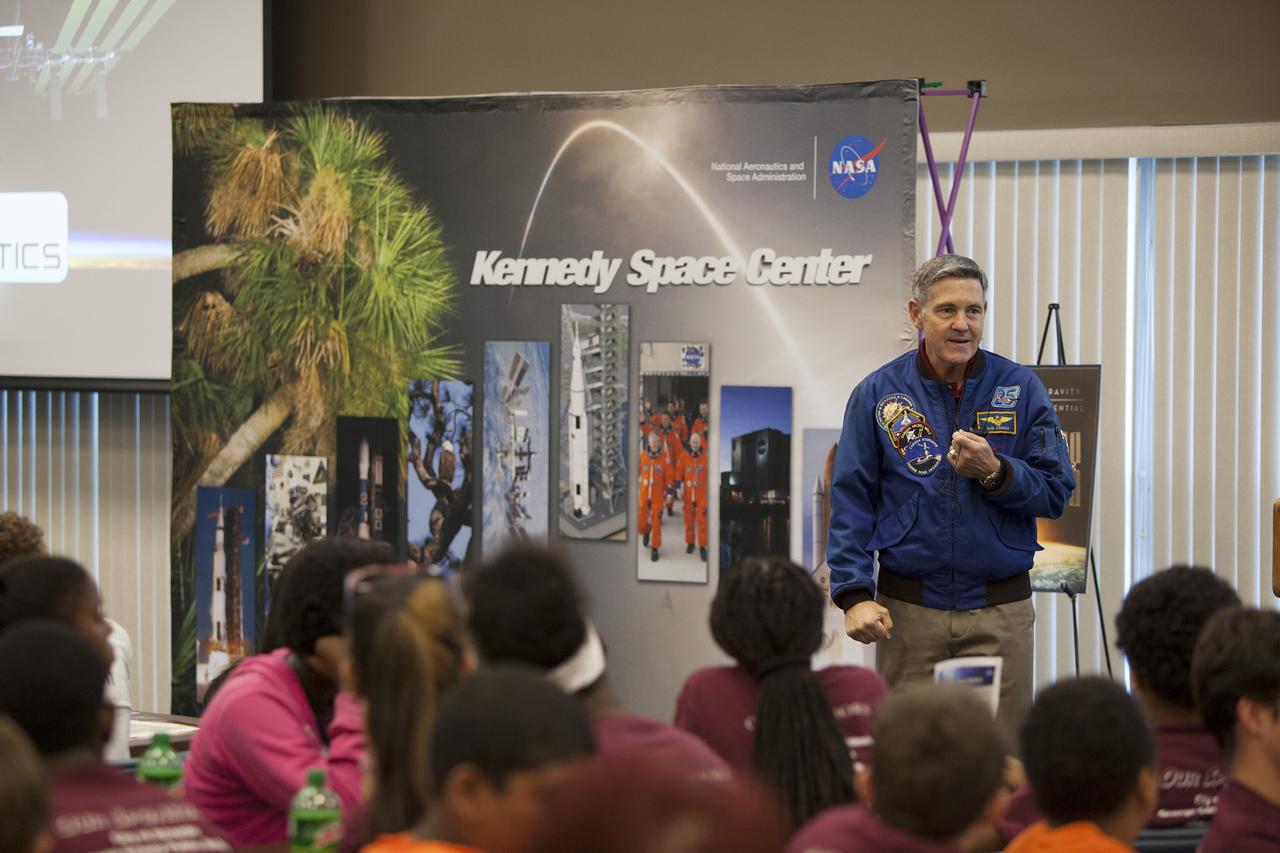
CAPE CANAVERAL, Fla. – Kennedy Space Center Director and former astronaut Bob Cabana, talks to Florida middle school students and their teachers during the Zero Robotics finals competition at the center's Space Station Processing Facility in Florida. Students designed software to control Synchronized Position Hold Engage and Reorient Experimental Satellites, or SPHERES, and competed with other teams locally. The Zero Robotics is a robotics programming competition where the robots are SPHERES. The competition starts online, where teams program the SPHERES to solve an annual challenge. After several phases of virtual competition in a simulation environment that mimics the real SPHERES, finalists are selected to compete in a live championship aboard the space station. Students compete to win a technically challenging game by programming their strategies into the SPHERES satellites. The programs are autonomous and the students cannot control the satellites during the test. Photo credit: NASA/Daniel Casper
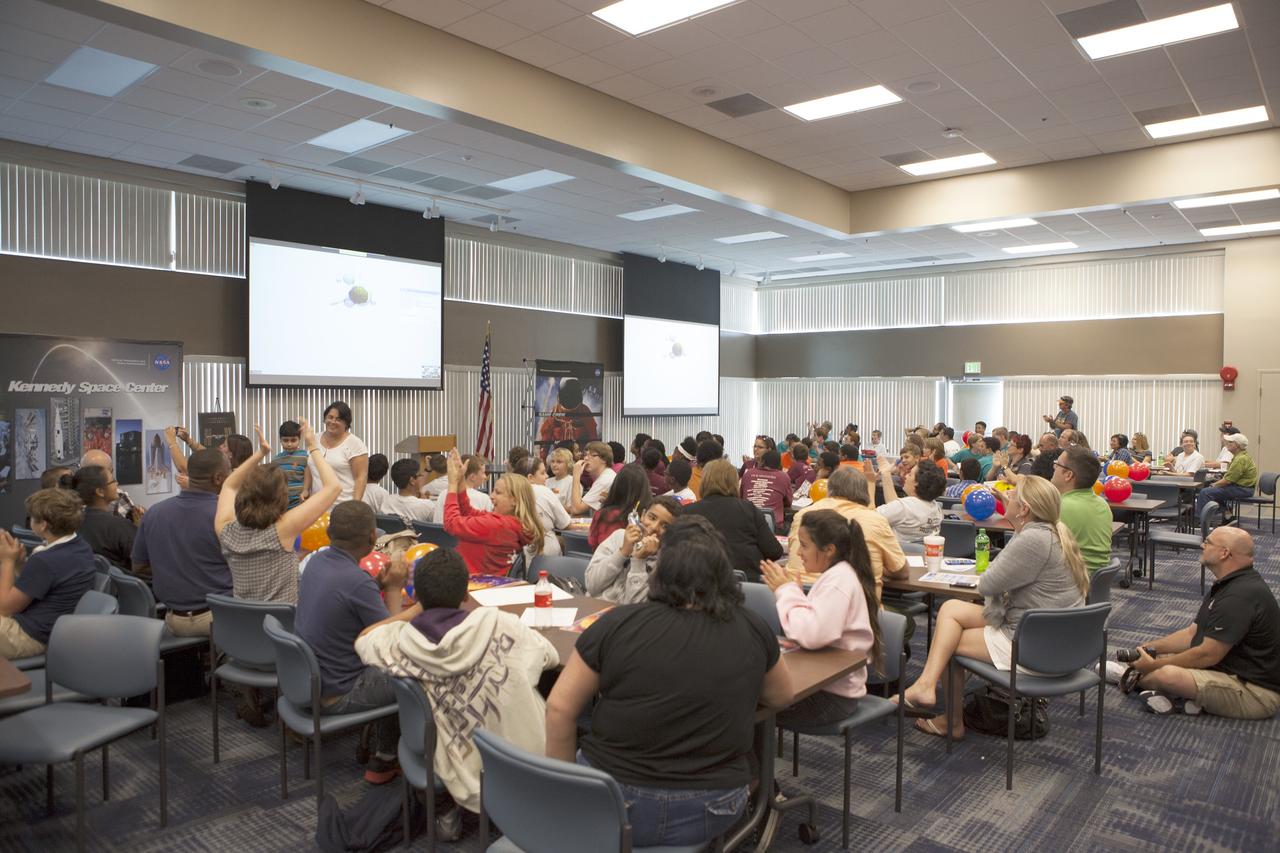
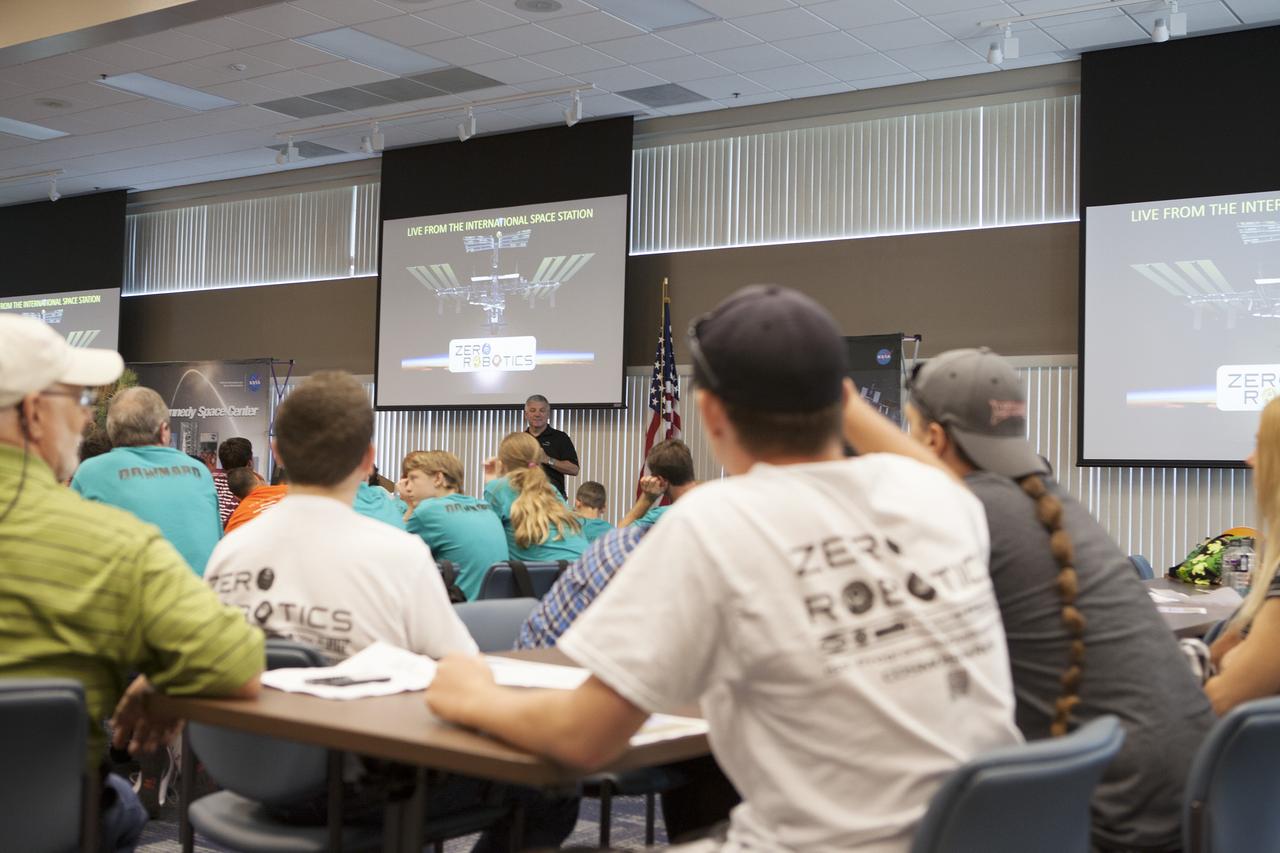
CAPE CANAVERAL, Fla. – Florida middle school students and their teachers watch the Zero Robotics finals competition broadcast live via webex from the International Space Station. The Florida teams are at the Space Station Processing Facility at NASA's Kennedy Space Center in Florida. Students designed software to control Synchronized Position Hold Engage and Reorient Experimental Satellites, or SPHERES, and competed with other teams locally. The Zero Robotics is a robotics programming competition where the robots are SPHERES. The competition starts online, where teams program the SPHERES to solve an annual challenge. After several phases of virtual competition in a simulation environment that mimics the real SPHERES, finalists are selected to compete in a live championship aboard the space station. Students compete to win a technically challenging game by programming their strategies into the SPHERES satellites. The programs are autonomous and the students cannot control the satellites during the test. Photo credit: NASA/Daniel Casper
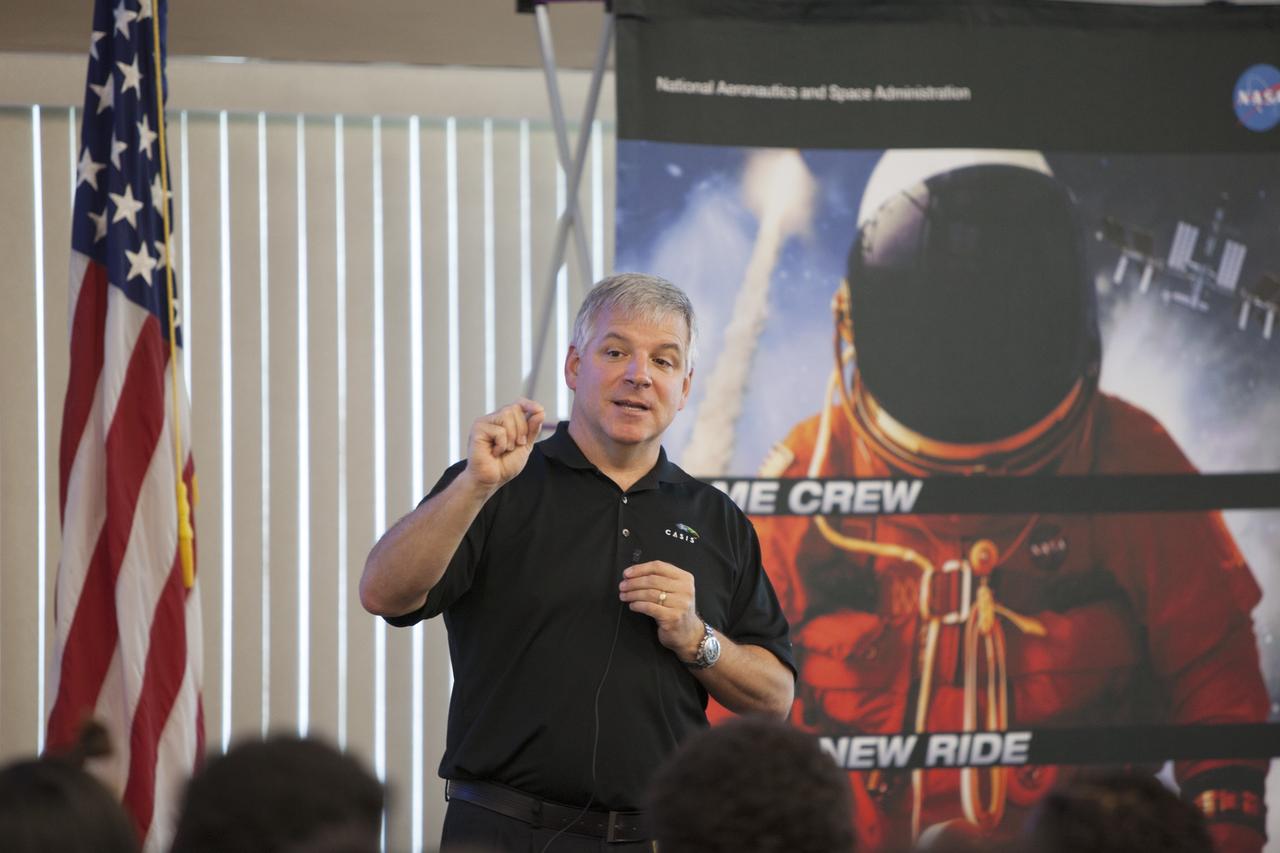
CAPE CANAVERAL, Fla. – Former astronaut Greg Johnson, executive director of the Center for the Advancement of Science in Space, talks to Florida middle school students and their teachers before the start of the Zero Robotics finals competition at NASA Kennedy Space Center's Space Station Processing Facility in Florida. Students designed software to control Synchronized Position Hold Engage and Reorient Experimental Satellites, or SPHERES, and competed with other teams locally. The Zero Robotics is a robotics programming competition where the robots are SPHERES. The competition starts online, where teams program the SPHERES to solve an annual challenge. After several phases of virtual competition in a simulation environment that mimics the real SPHERES, finalists are selected to compete in a live championship aboard the space station. Students compete to win a technically challenging game by programming their strategies into the SPHERES satellites. The programs are autonomous and the students cannot control the satellites during the test. Photo credit: NASA/Daniel Casper
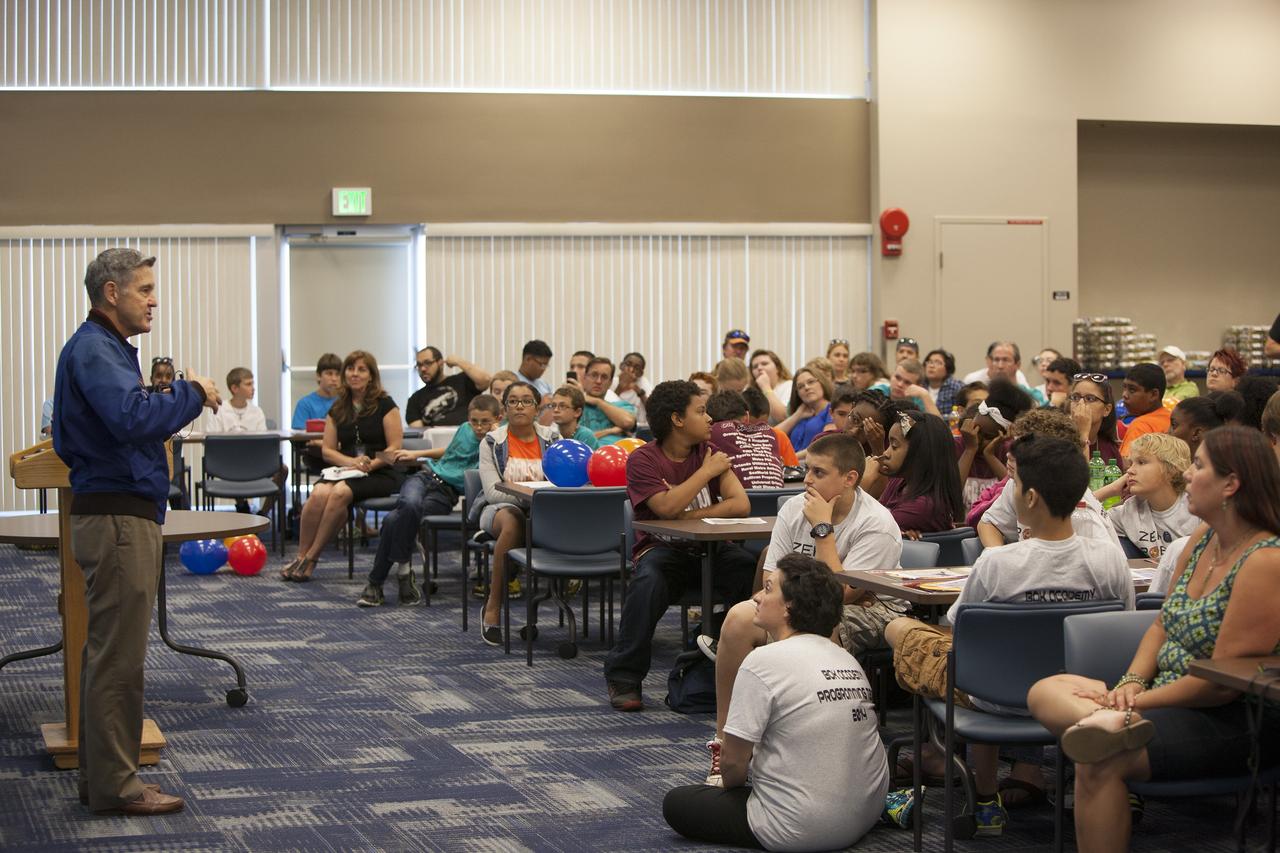
CAPE CANAVERAL, Fla. – Kennedy Space Center Director and former astronaut Bob Cabana, talks to Florida middle school students and their teachers during the Zero Robotics finals competition at the center's Space Station Processing Facility in Florida. Students designed software to control Synchronized Position Hold Engage and Reorient Experimental Satellites, or SPHERES, and competed with other teams locally. The Zero Robotics is a robotics programming competition where the robots are SPHERES. The competition starts online, where teams program the SPHERES to solve an annual challenge. After several phases of virtual competition in a simulation environment that mimics the real SPHERES, finalists are selected to compete in a live championship aboard the space station. Students compete to win a technically challenging game by programming their strategies into the SPHERES satellites. The programs are autonomous and the students cannot control the satellites during the test. Photo credit: NASA/Daniel Casper
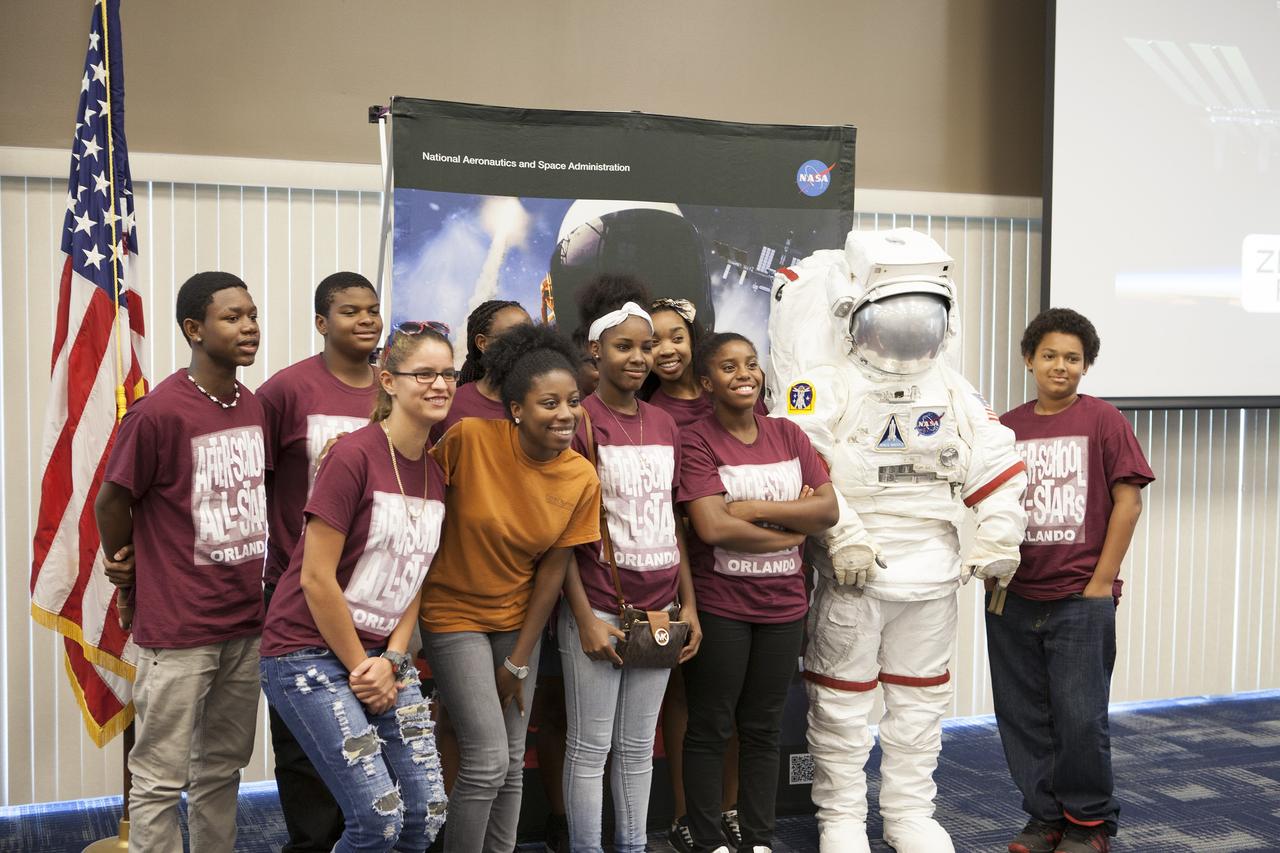
CAPE CANAVERAL, Fla. – The Kennedy Space Center Visitor Complex Spaceperson poses for a photo with Carver Middle School students and their teacher from Orlando, Florida, during the Zero Robotics finals competition at NASA Kennedy Space Center's Space Station Processing Facility in Florida. The team, members of the After School All-Stars, were regional winners and advanced to the final competition. For the competition, students designed software to control Synchronized Position Hold Engage and Reorient Experimental Satellites, or SPHERES, and competed with other teams locally. The Zero Robotics is a robotics programming competition where the robots are SPHERES. The competition starts online, where teams program the SPHERES to solve an annual challenge. After several phases of virtual competition in a simulation environment that mimics the real SPHERES, finalists are selected to compete in a live championship aboard the space station. Students compete to win a technically challenging game by programming their strategies into the SPHERES satellites. The programs are autonomous and the students cannot control the satellites during the test. Photo credit: NASA/Daniel Casper
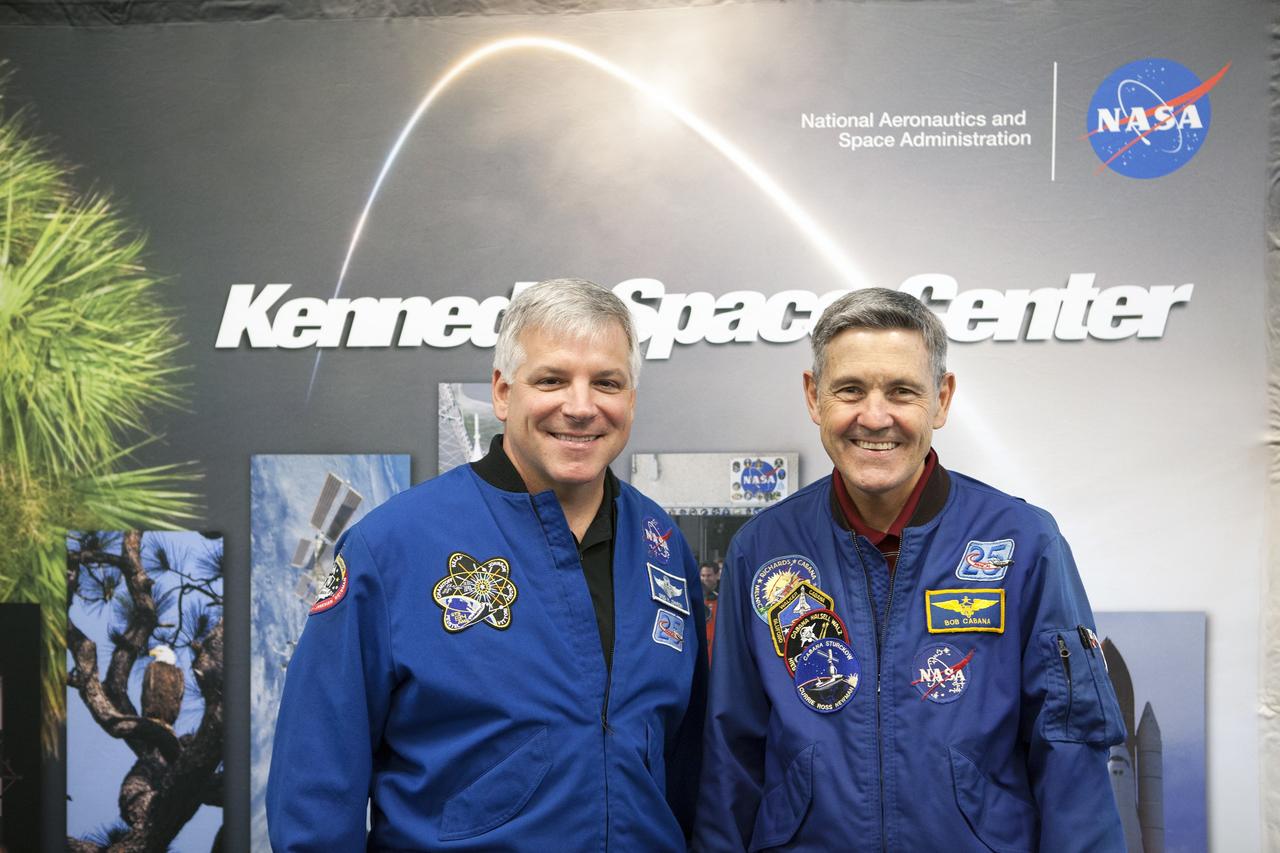
CAPE CANAVERAL, Fla. – Former astronaut Greg Johnson, at left, executive director of the Center for the Advancement of Science in Space, and NASA Kennedy Space Center Director Bob Cabana, visit with Florida middle school students and their teachers before the start of the Zero Robotics finals competition at NASA Kennedy Space Center's Space Station Processing Facility in Florida. Students designed software to control Synchronized Position Hold Engage and Reorient Experimental Satellites, or SPHERES, and competed with other teams locally. The Zero Robotics is a robotics programming competition where the robots are SPHERES. The competition starts online, where teams program the SPHERES to solve an annual challenge. After several phases of virtual competition in a simulation environment that mimics the real SPHERES, finalists are selected to compete in a live championship aboard the space station. Students compete to win a technically challenging game by programming their strategies into the SPHERES satellites. The programs are autonomous and the students cannot control the satellites during the test. Photo credit: NASA/Daniel Casper
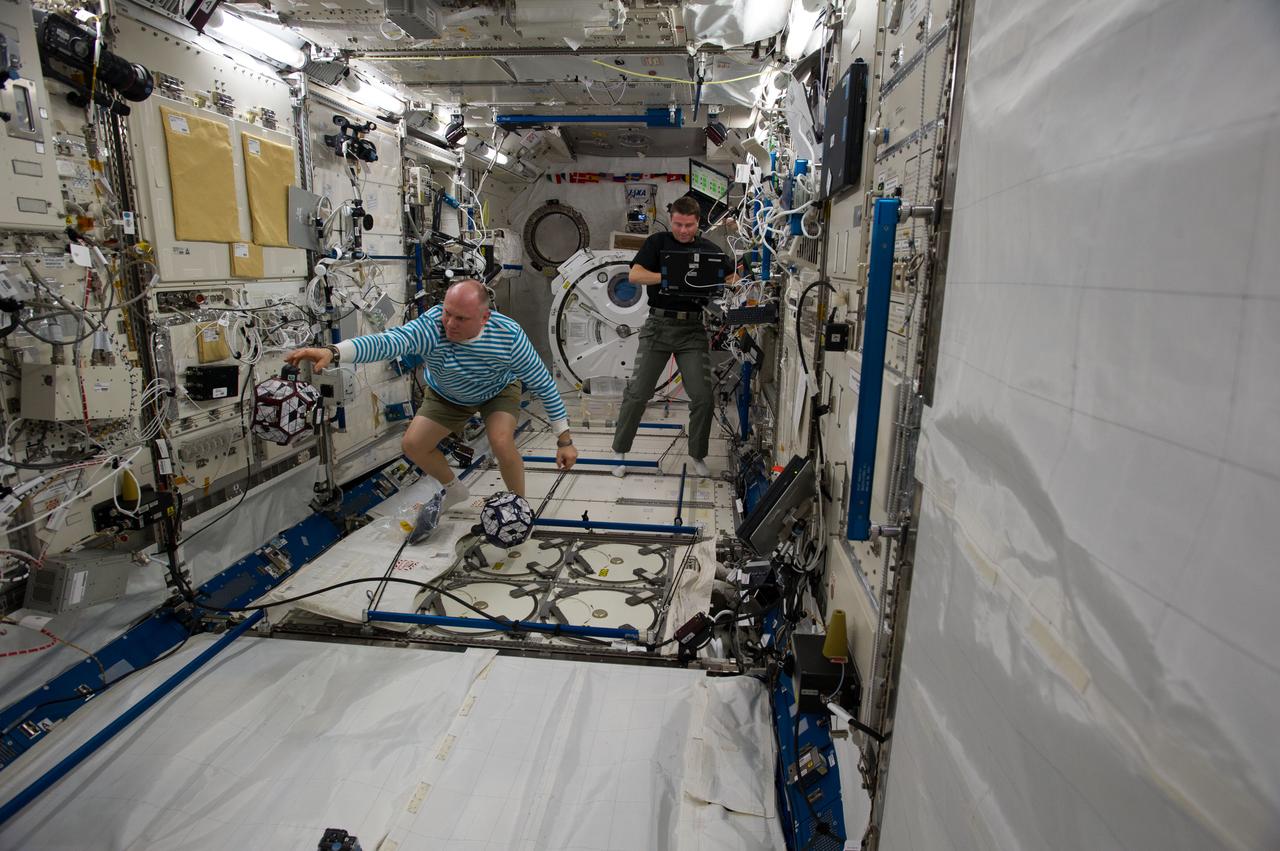
ISS040-E-018466 (24 June 2014) --- Russian cosmonaut Oleg Artemyev (left) and NASA astronaut Reid Wiseman, both Expedition 40 flight engineers, conduct a session of the Synchronized Position Hold, Engage, Reorient, Experimental Satellites Zero Robotics (SPHERES ZR) program in the Kibo laboratory of the International Space Station.
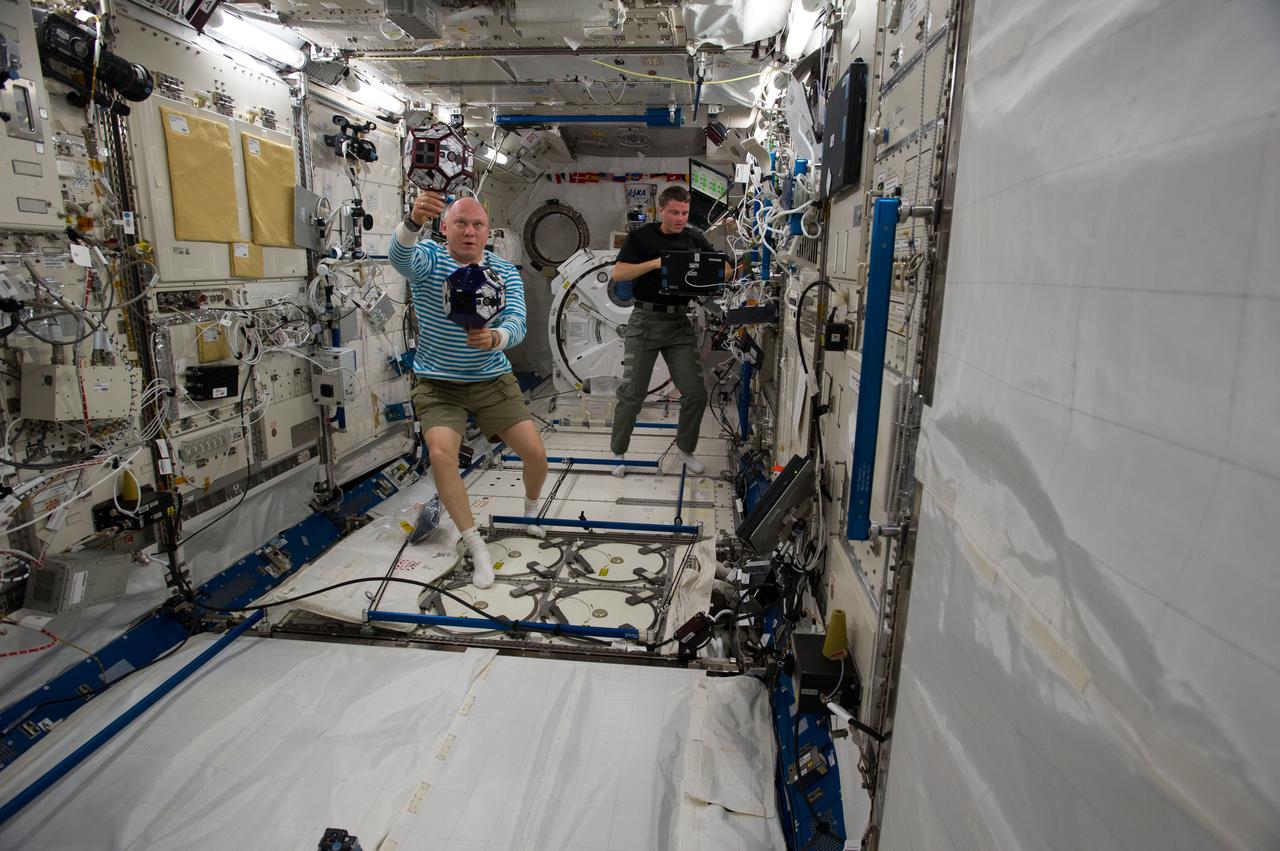
ISS040-E-018417 (24 June 2014) --- Russian cosmonaut Oleg Artemyev (left) and NASA astronaut Reid Wiseman, both Expedition 40 flight engineers, conduct a session of the Synchronized Position Hold, Engage, Reorient, Experimental Satellites Zero Robotics (SPHERES ZR) program in the Kibo laboratory of the International Space Station.
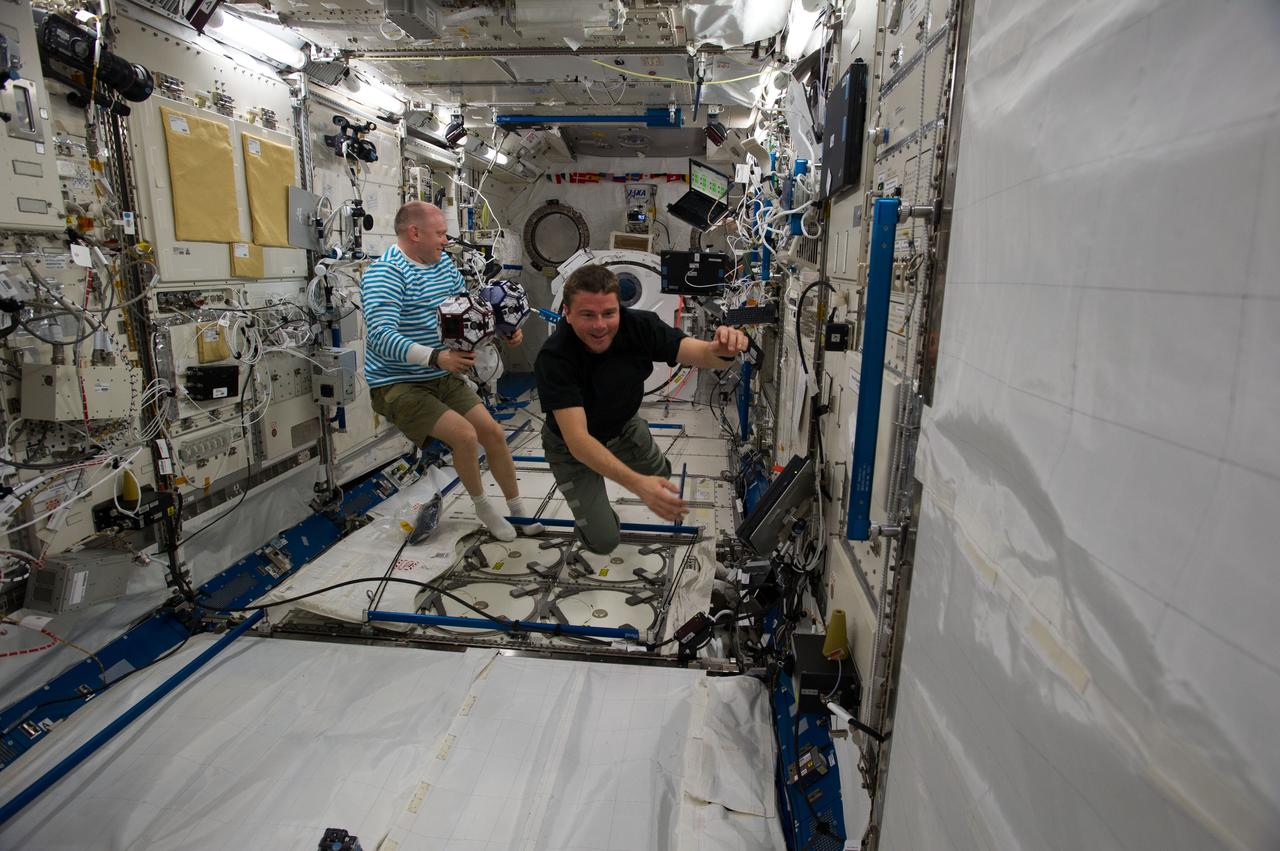
ISS040-E-018486 (24 June 2014) --- Russian cosmonaut Oleg Artemyev (left) and NASA astronaut Reid Wiseman, both Expedition 40 flight engineers, conduct a session of the Synchronized Position Hold, Engage, Reorient, Experimental Satellites Zero Robotics (SPHERES ZR) program in the Kibo laboratory of the International Space Station.
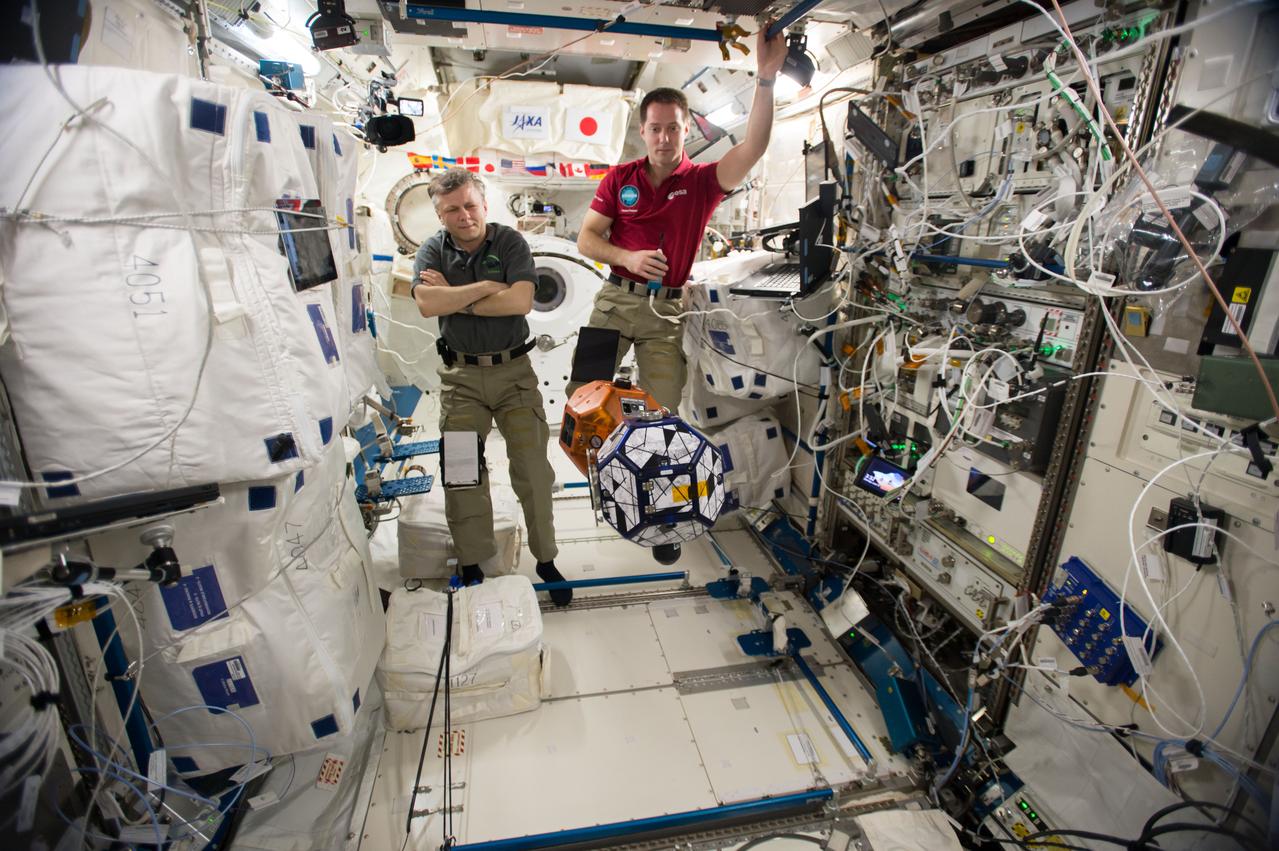
iss050e031138 (1/16/2017) --- A view of Cosmonaut Andrei Borisenko, and European Space Agency (ESA) astronaut Thomas Pesquet during set up and execution of Synchronized Position Hold, Engage, Reorient, Experimental Satellites (SPHERES) hardware dry run for the Zero Robotics, in the Japanese Experiment Module (JEM) Pressurized Module.
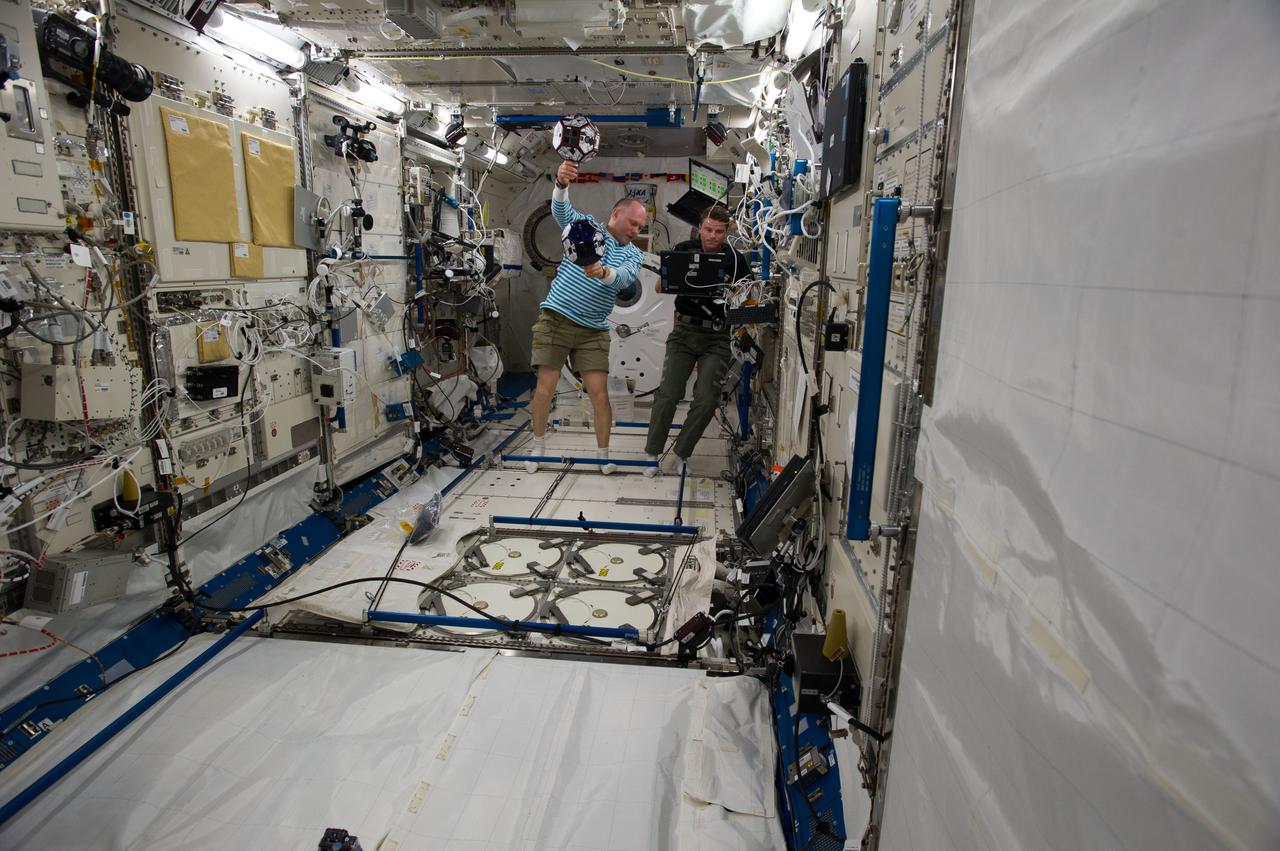
ISS040-E-018390 (24 June 2014) --- Russian cosmonaut Oleg Artemyev (left) and NASA astronaut Reid Wiseman, both Expedition 40 flight engineers, conduct a session of the Synchronized Position Hold, Engage, Reorient, Experimental Satellites Zero Robotics (SPHERES ZR) program in the Kibo laboratory of the International Space Station.
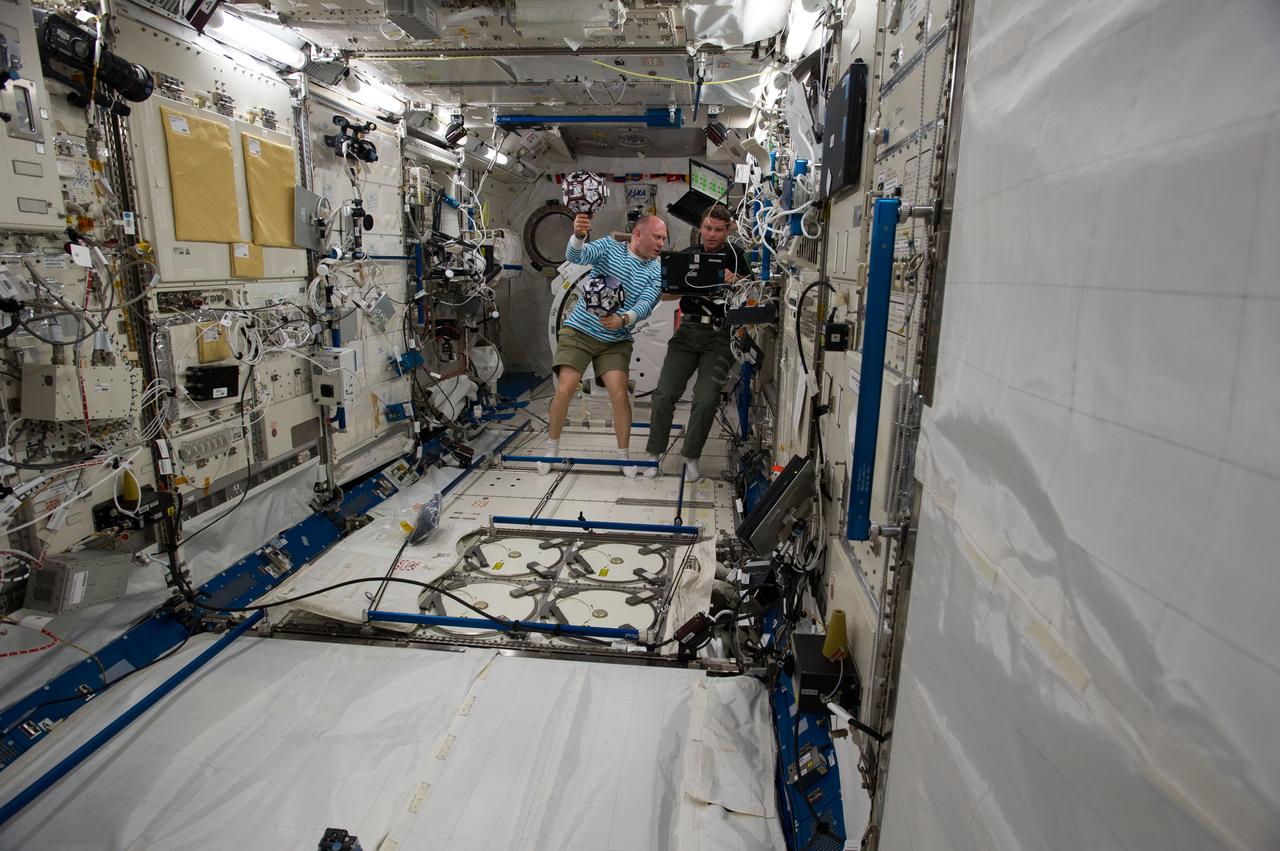
ISS040-E-018383 (24 June 2014) --- Russian cosmonaut Oleg Artemyev (left) and NASA astronaut Reid Wiseman, both Expedition 40 flight engineers, conduct a session of the Synchronized Position Hold, Engage, Reorient, Experimental Satellites Zero Robotics (SPHERES ZR) program in the Kibo laboratory of the International Space Station.
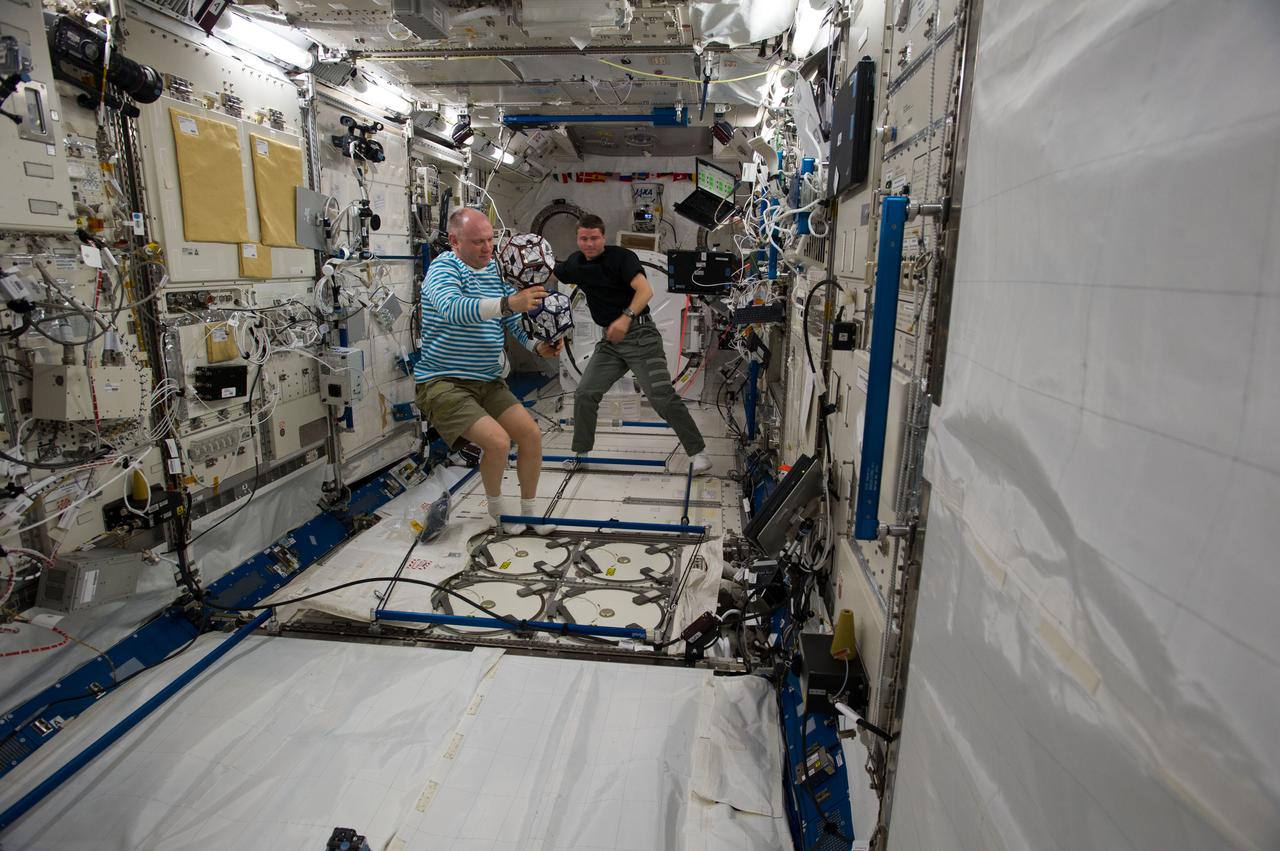
ISS040-E-018572 (24 June 2014) --- Russian cosmonaut Oleg Artemyev (left) and NASA astronaut Reid Wiseman, both Expedition 40 flight engineers, conduct a session of the Synchronized Position Hold, Engage, Reorient, Experimental Satellites Zero Robotics (SPHERES ZR) program in the Kibo laboratory of the International Space Station.
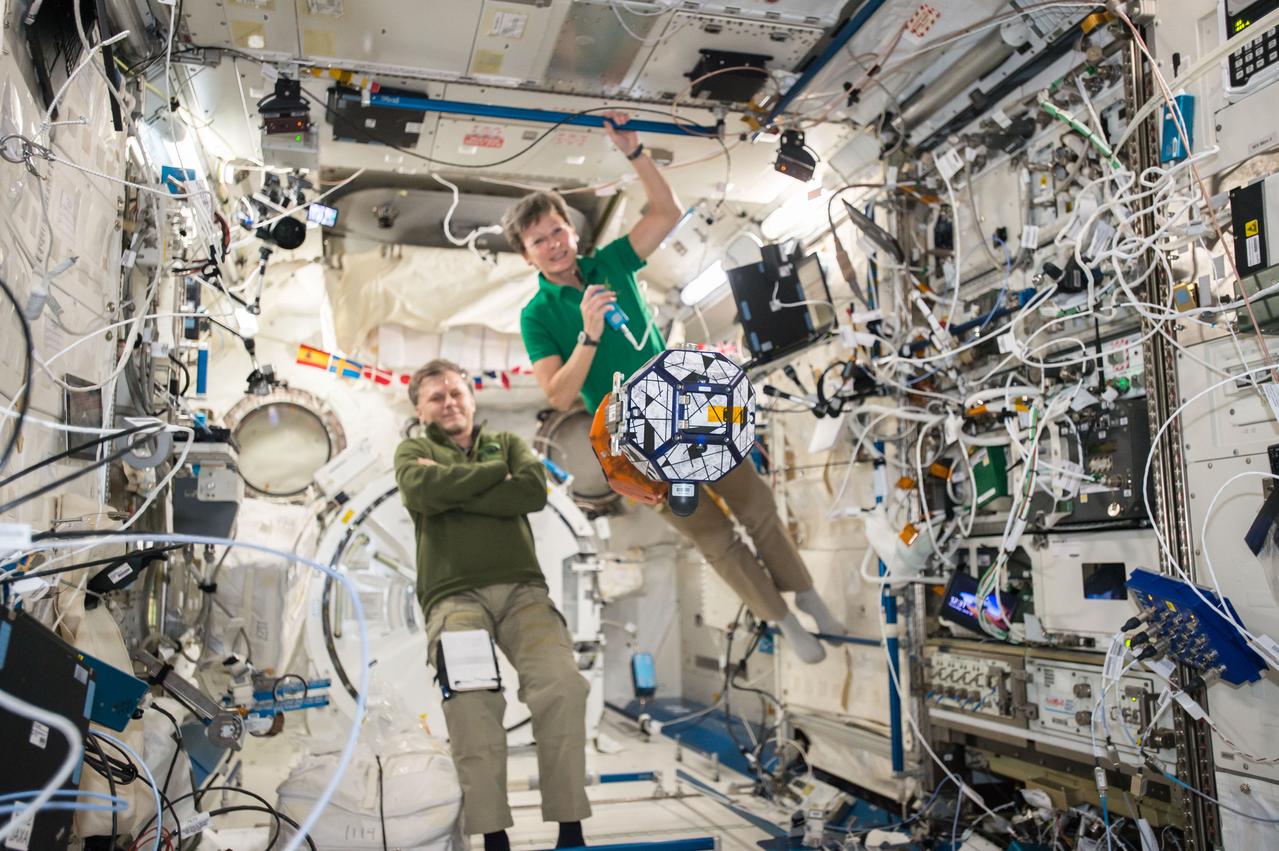
iss050e036008 (1/27/2017) --- NASA astronaut Peggy Whitson, and Cosmonaut Andrei Borisenko setting up cameras and performing Synchronized Position Hold, Engage, Reorient, Experimental Satellites (SPHERES) Zero Robotics tests, in the Japanese Experiment Module (JEM) Pressurized Module (JPM).
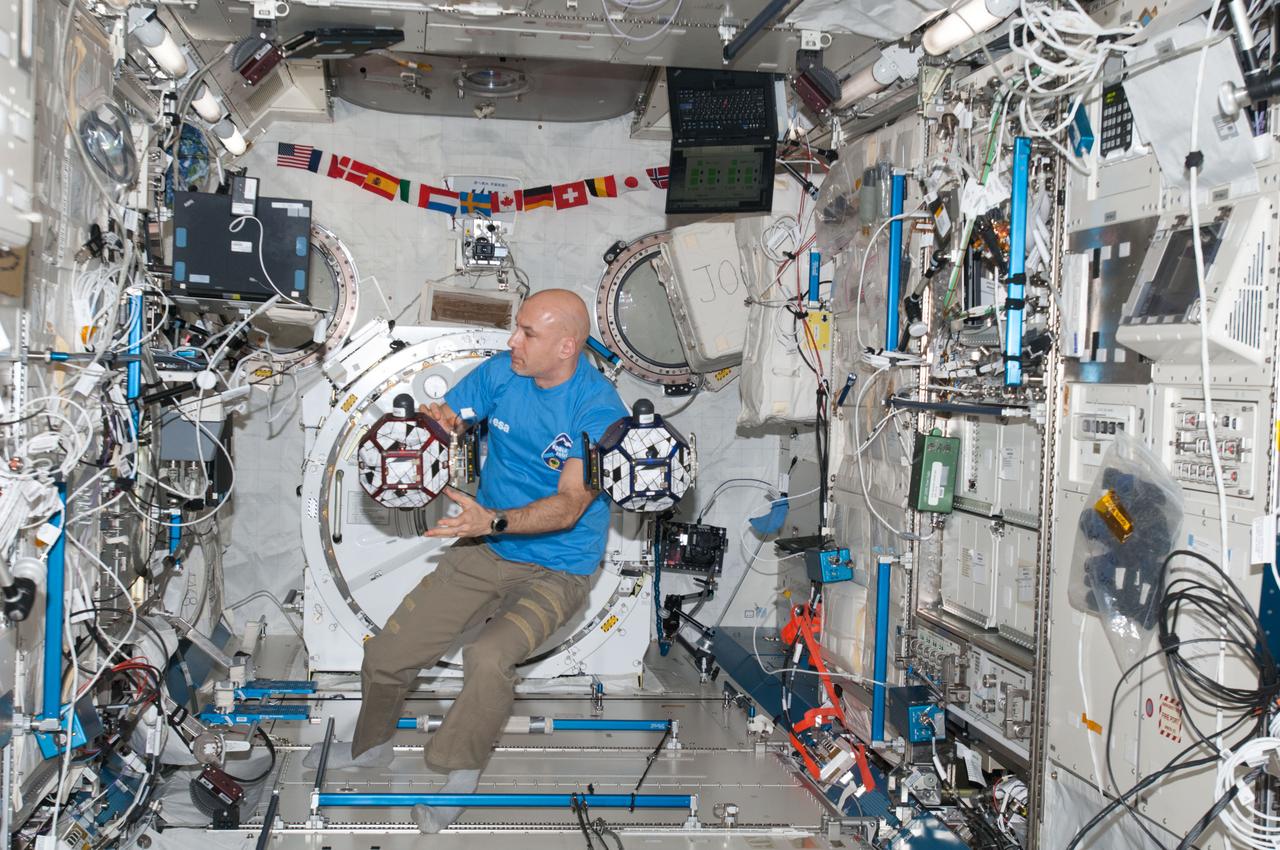
ISS036-E-039697 (4 Sept. 2013) --- In the International Space Station's Kibo laboratory, European Space Agency astronaut Luca Parmitano, Expedition 36 flight engineer, conducts a session with a pair of bowling-ball-sized free-flying satellites known as Synchronized Position Hold, Engage, Reorient, Experimental Satellites, or SPHERES.
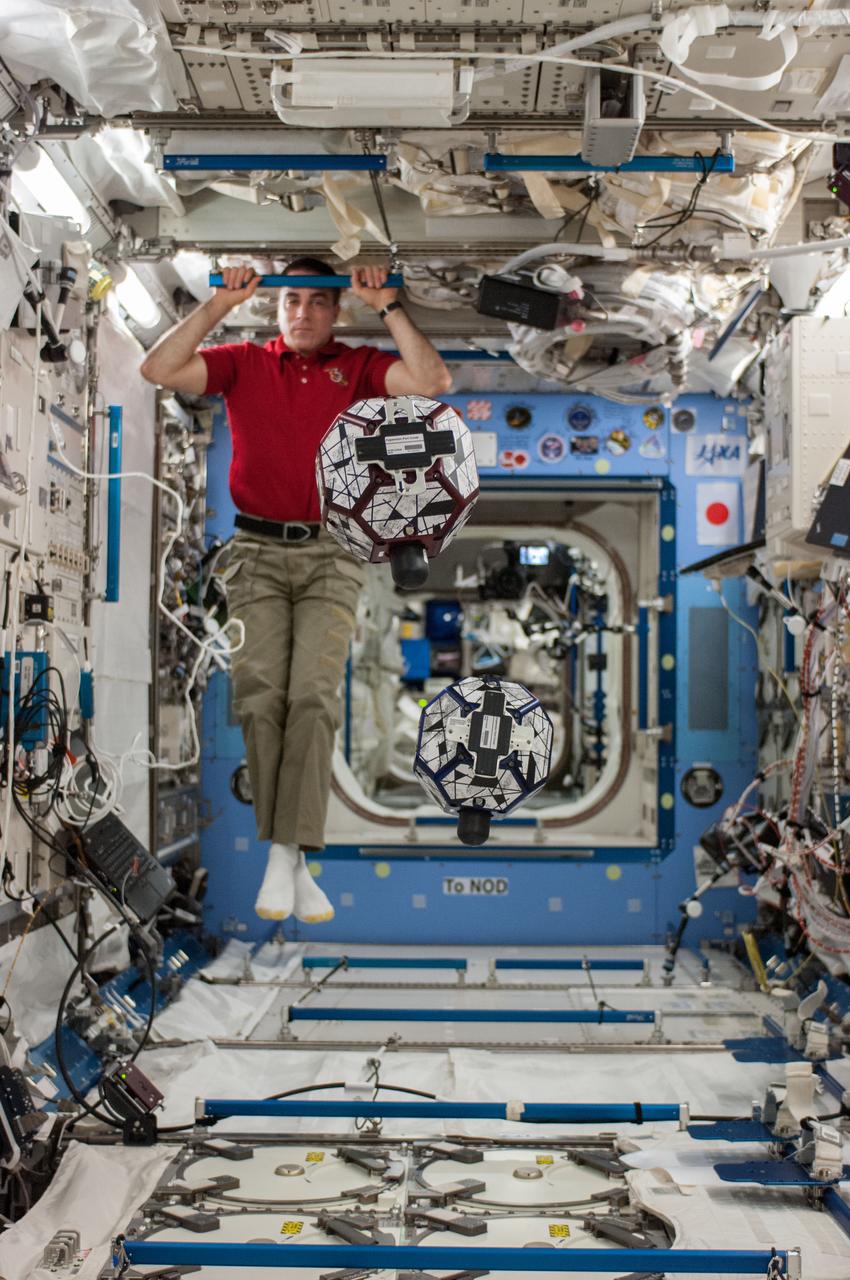
ISS036-E-032180 (13 Aug. 2013) --- In the International Space Station?s Kibo laboratory, NASA astronaut Chris Cassidy, Expedition 36 flight engineer, conducts a session with a pair of bowling-ball-sized free-flying satellites known as Synchronized Position Hold, Engage, Reorient, Experimental Satellites, or SPHERES.
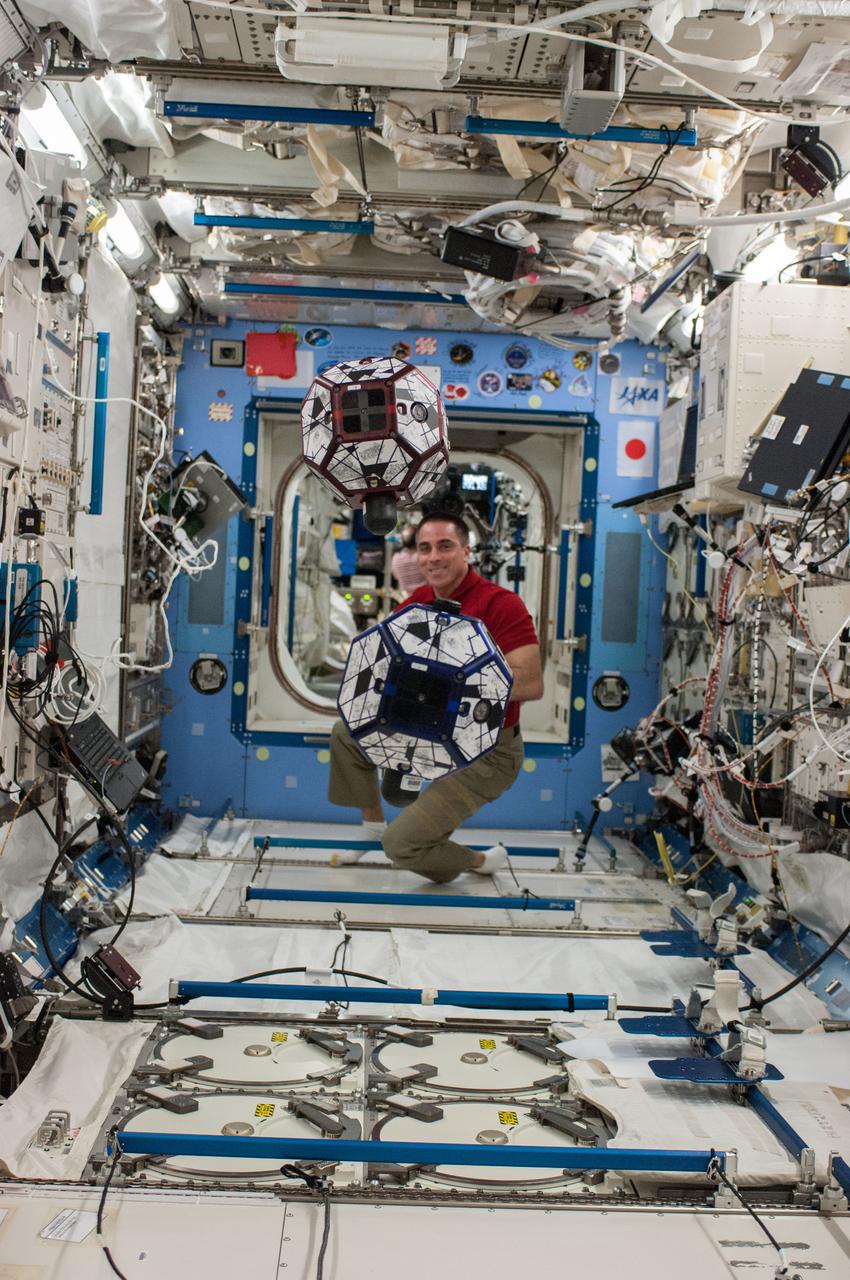
ISS036-E-032138 (13 Aug. 2013) --- In the International Space Station?s Kibo laboratory, NASA astronaut Chris Cassidy, Expedition 36 flight engineer, conducts a session with a pair of bowling-ball-sized free-flying satellites known as Synchronized Position Hold, Engage, Reorient, Experimental Satellites, or SPHERES.
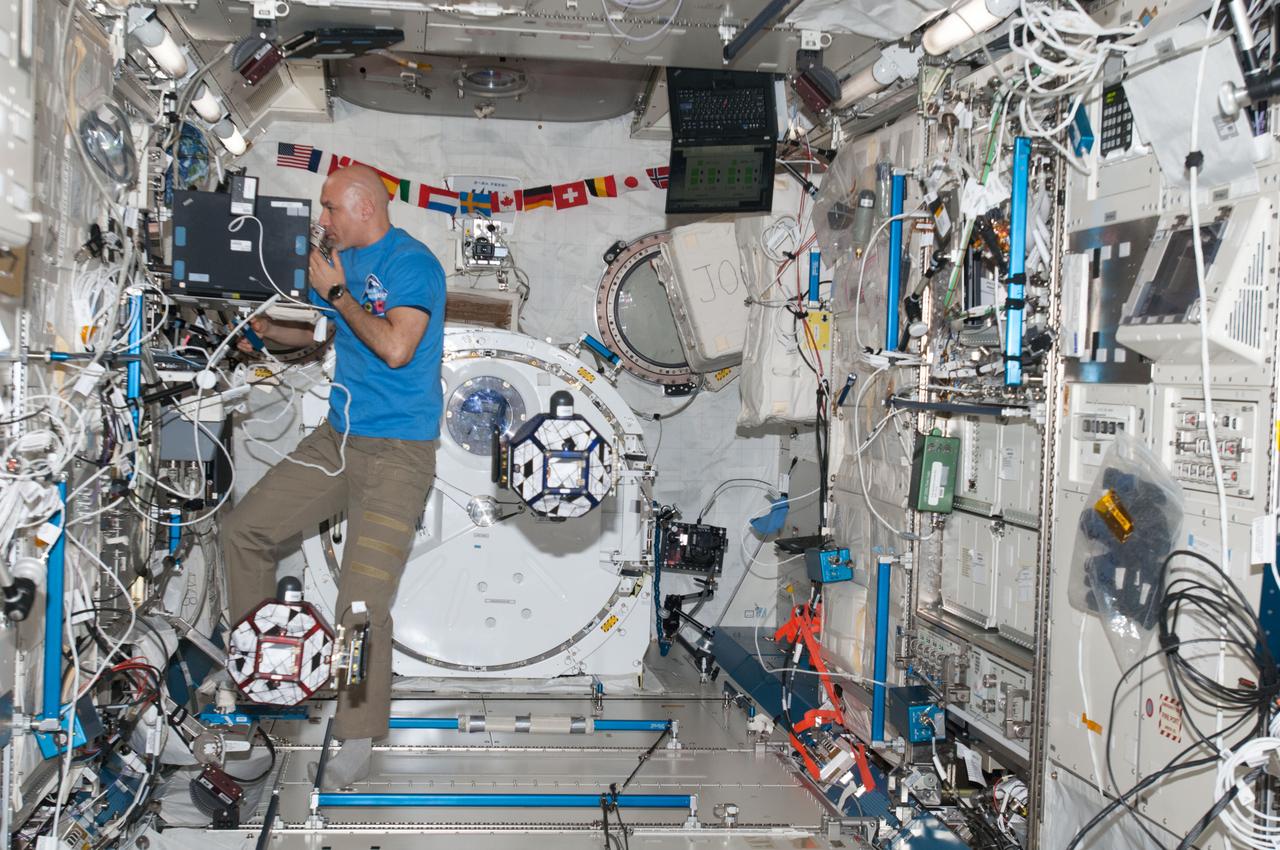
ISS036-E-039743 (4 Sept. 2013) --- In the International Space Station's Kibo laboratory, European Space Agency astronaut Luca Parmitano, Expedition 36 flight engineer, conducts a session with a pair of bowling-ball-sized free-flying satellites known as Synchronized Position Hold, Engage, Reorient, Experimental Satellites, or SPHERES.

ISS036-E-032134 (13 Aug. 2013) --- In the International Space Station?s Kibo laboratory, NASA astronaut Chris Cassidy, Expedition 36 flight engineer, conducts a session with a pair of bowling-ball-sized free-flying satellites known as Synchronized Position Hold, Engage, Reorient, Experimental Satellites, or SPHERES.
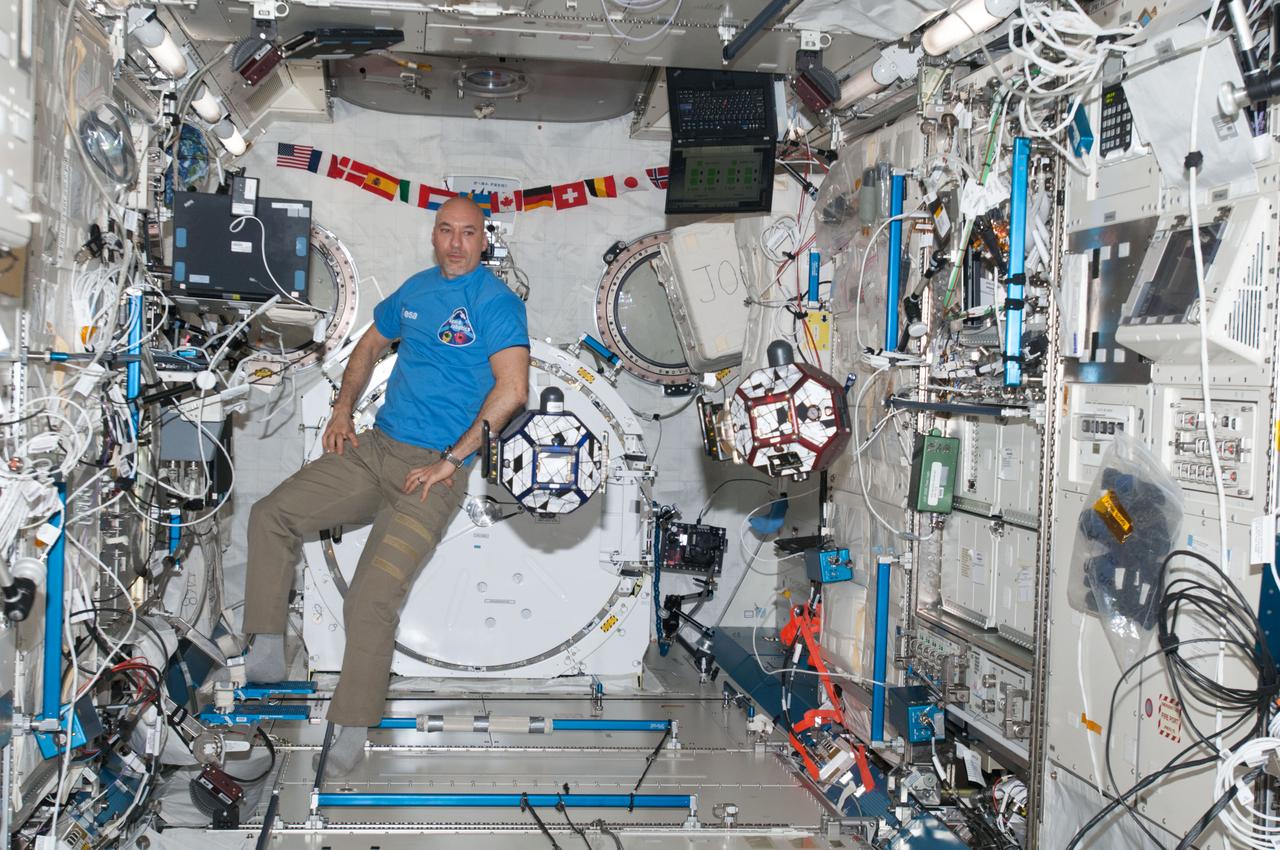
ISS036-E-039685 (4 Sept. 2013) --- In the International Space Station's Kibo laboratory, European Space Agency astronaut Luca Parmitano, Expedition 36 flight engineer, conducts a session with a pair of bowling-ball-sized free-flying satellites known as Synchronized Position Hold, Engage, Reorient, Experimental Satellites, or SPHERES.
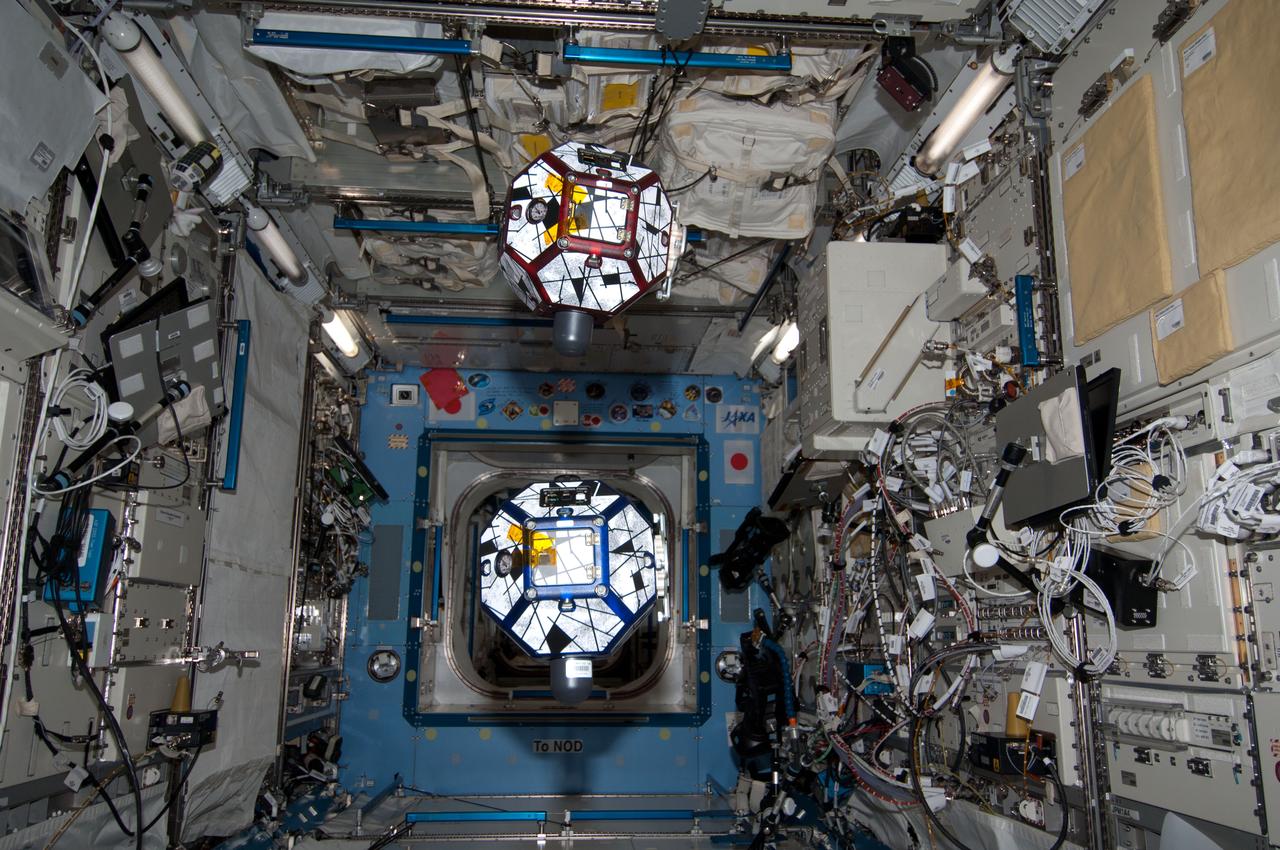
ISS036-E-003308(23 May 2013) --- Onboard the International Space Station, Expedition 36 Flight Engineer Chris Cassidy, NASA astronaut, watches from just out of frame as he devotes some time with the long-running SPHERES experiment, also known as Synchronized Position Hold Engage and Reorient Experimental Satellites. The experiment is run in conjunction with students who program bowling ball-sized satellites using algorithms. The free-floating satellites are programmed to perform maneuvers potentially influencing the design of future missions.
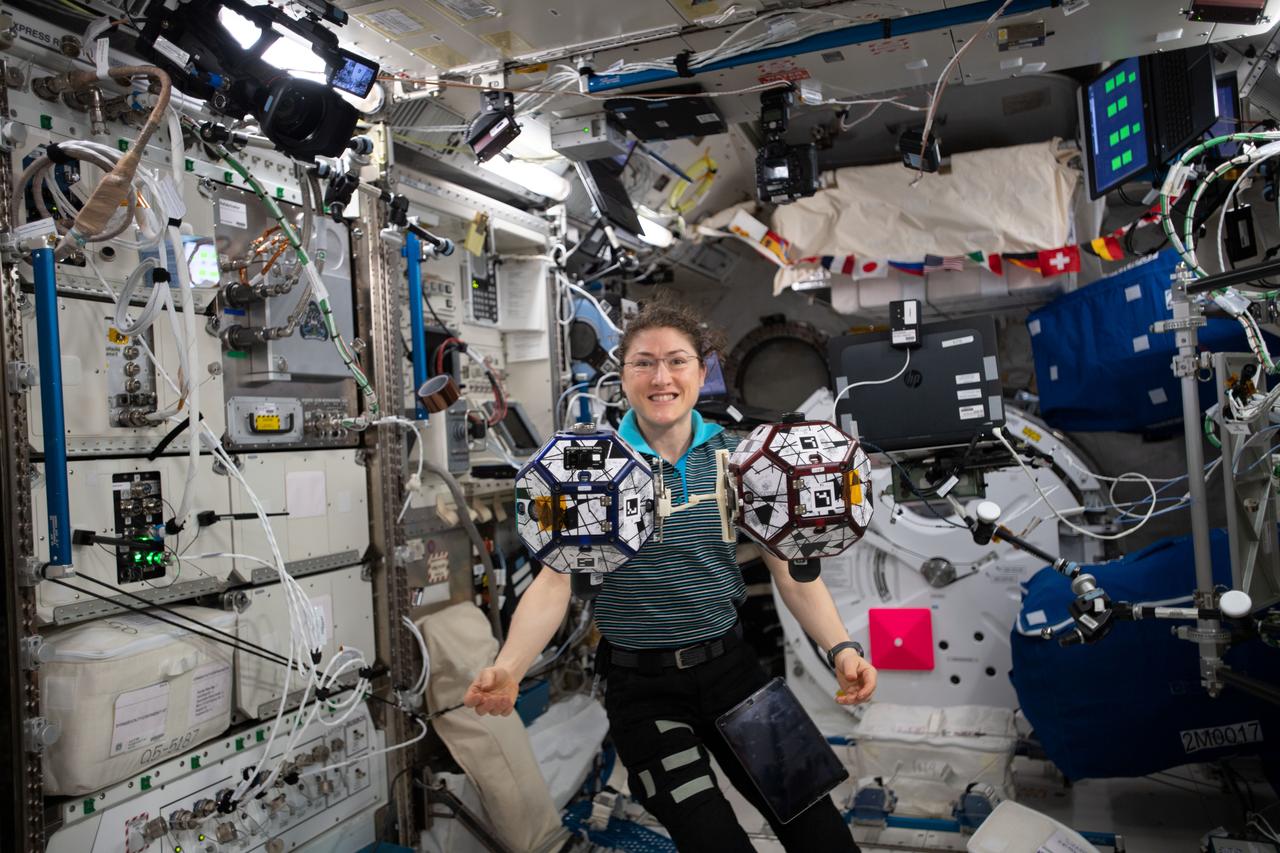
iss060e020172 (July 29, 2019) --- With advances in propulsion, swarms of small spacecraft are expected to become feasible in the near future. Expedition 60 Flight Engineer Christina Koch of NASA can be seen here floating with the SPHERES robots which are putting some of these technologies to the test. The crew was preparing to run code from participants of the SPHERES Zero Robotics (ZR) 2019 Middle School Summer Program. The SPHERES team tests algorithms developed by students and selects the best designs for the competition to operate the robots on board the space station.

ISS038-E-014012 (9 Dec. 2013) --- In the International Space Station's Kibo laboratory, NASA astronauts Rick Mastracchio (left) and Michael Hopkins, both Expedition 38 flight engineers, conduct a session with a pair of bowling-ball-sized free-flying satellites known as Synchronized Position Hold, Engage, Reorient, Experimental Satellites, or SPHERES.
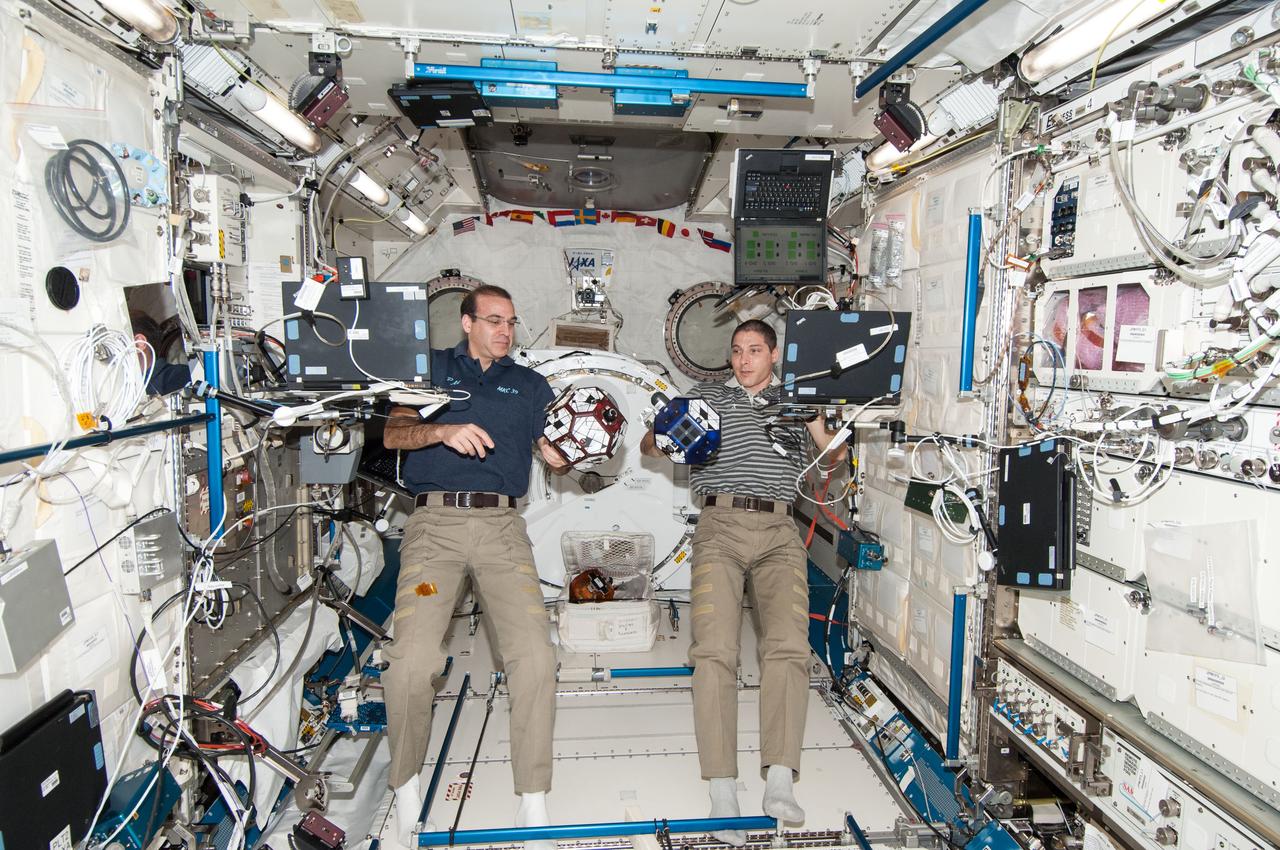
ISS038-E-014008 (9 Dec. 2013) --- In the International Space Station's Kibo laboratory, NASA astronauts Rick Mastracchio (left) and Michael Hopkins, both Expedition 38 flight engineers, conduct a session with a pair of bowling-ball-sized free-flying satellites known as Synchronized Position Hold, Engage, Reorient, Experimental Satellites, or SPHERES.
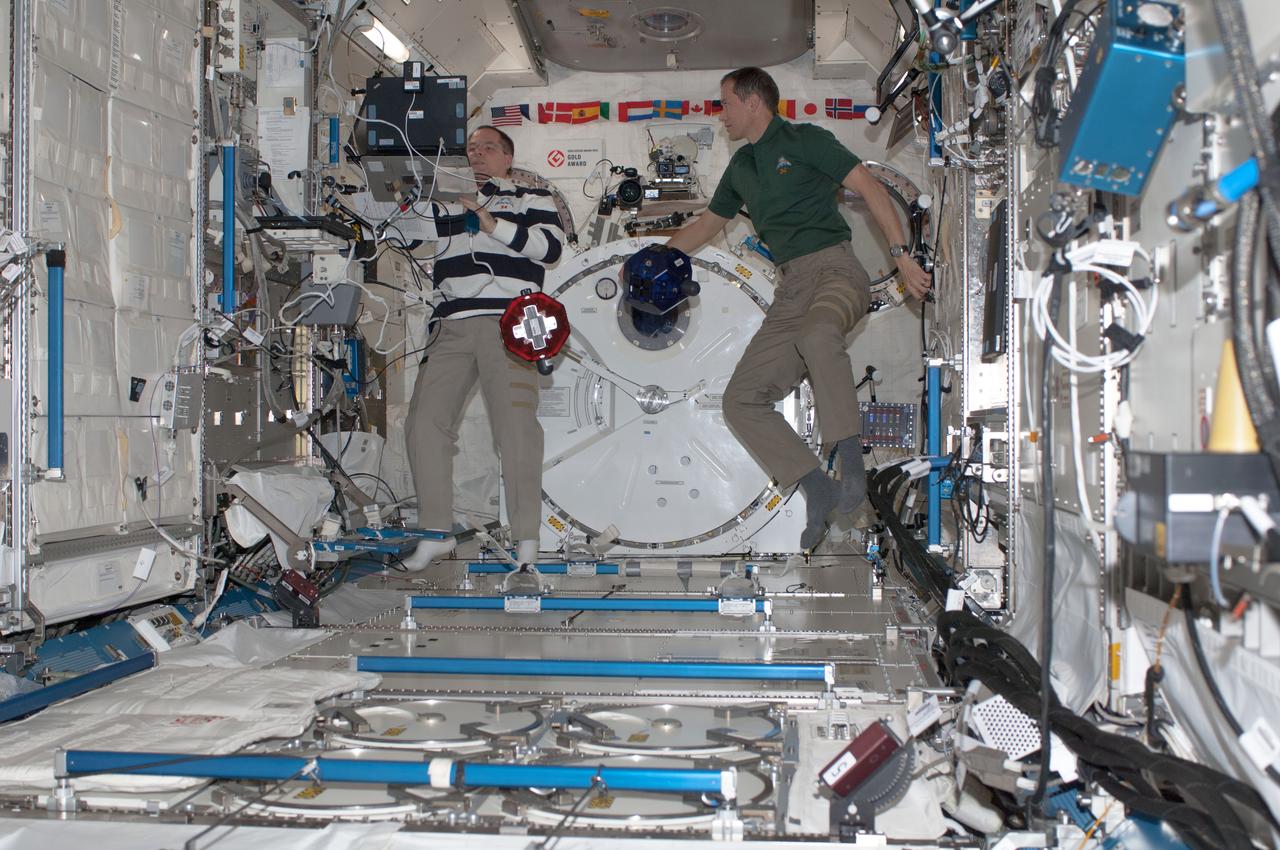
ISS034-E-028342 (11 Jan. 2013) --- NASA astronauts Kevin Ford (left), Expedition 34 commander; and Tom Marshburn, flight engineer, conduct a session of the Synchronized Position Hold, Engage, Reorient, Experimental Satellites Zero Robotics (SPHERES ZR) program in the Kibo laboratory of the International Space Station.
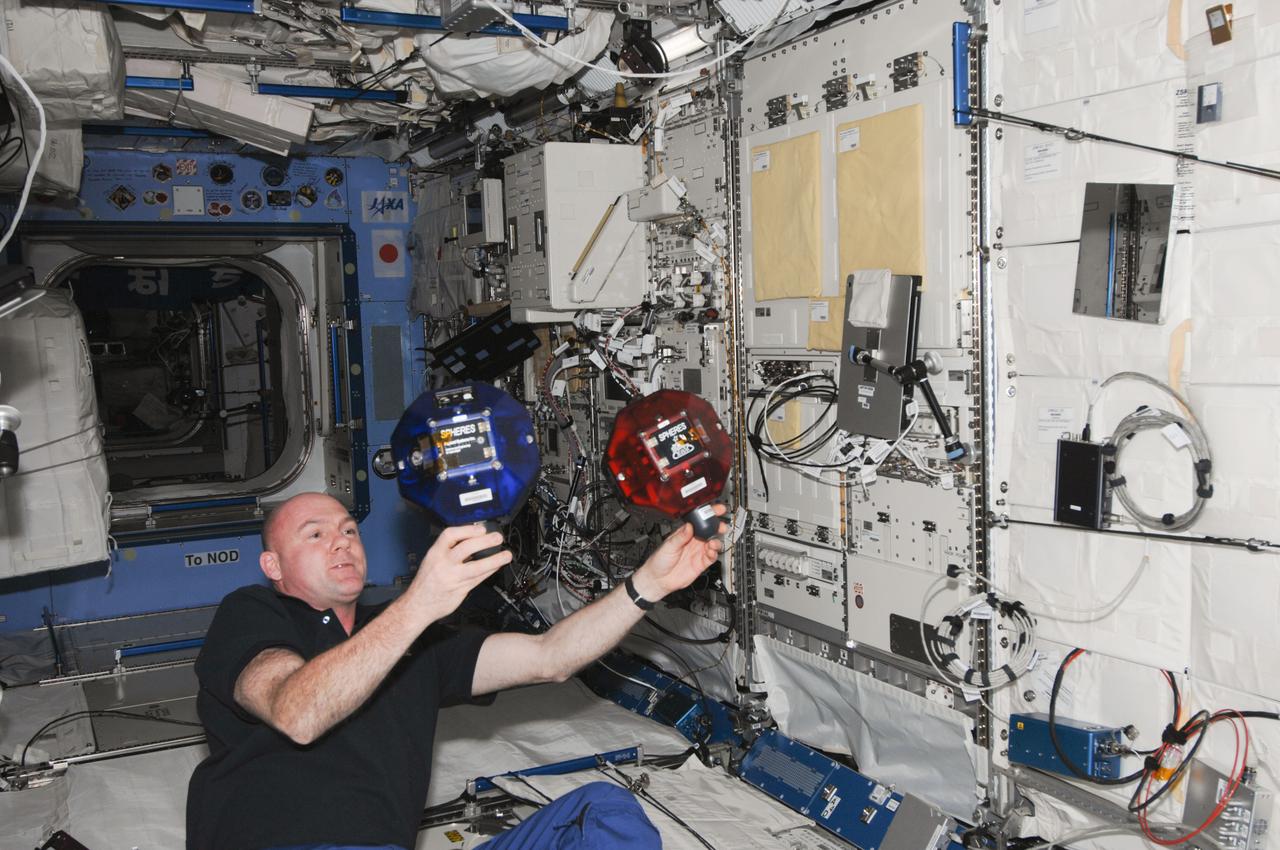
ISS030-E-156313 (23 Jan. 2012) --- European Space Agency astronaut Andre Kuipers, Expedition 30 flight engineer, works with the Synchronized Position Hold, Engage, Reorient, Experimental Satellites Zero Robotics (SPHERES ZR) experiment in the Kibo laboratory of the International Space Station.
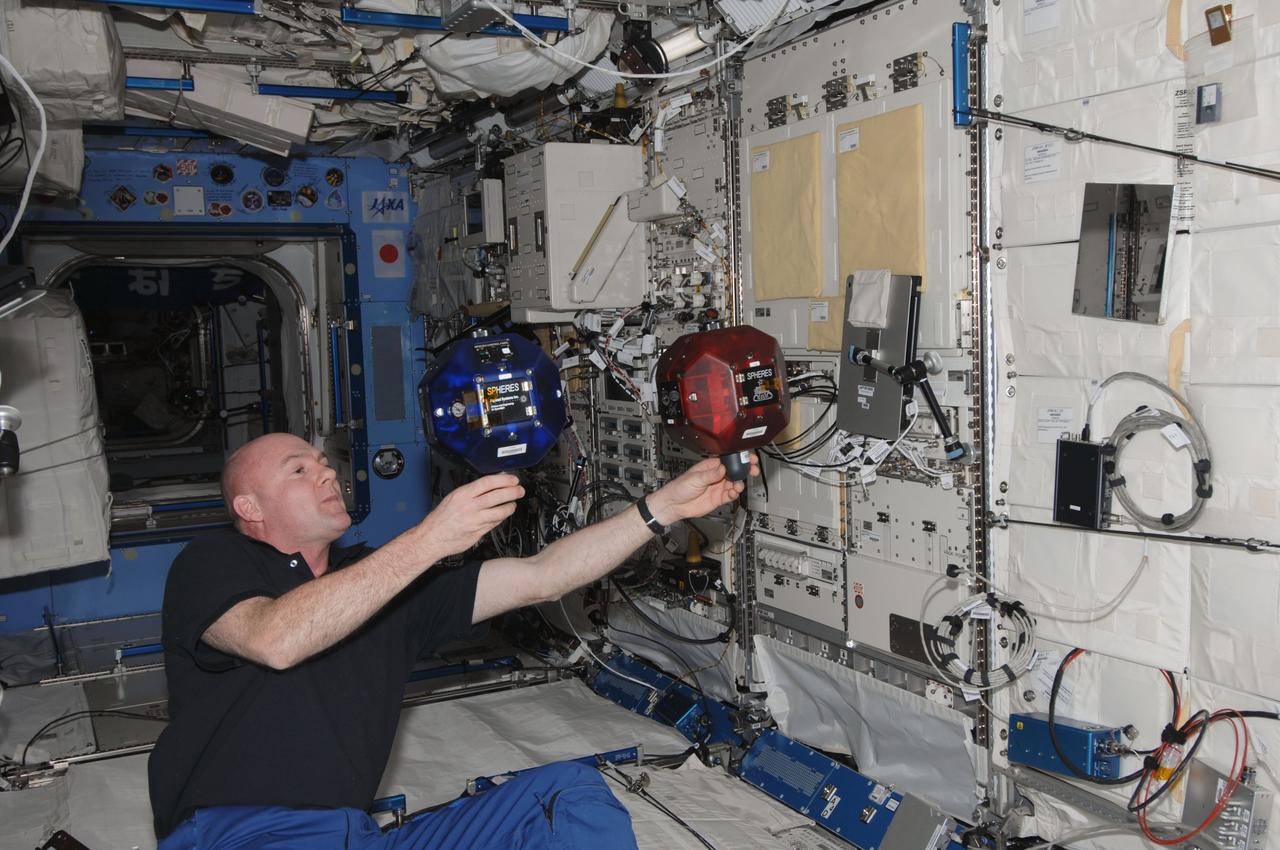
ISS030-E-156310 (23 Jan. 2012) --- European Space Agency astronaut Andre Kuipers, Expedition 30 flight engineer, works with the Synchronized Position Hold, Engage, Reorient, Experimental Satellites Zero Robotics (SPHERES ZR) experiment in the Kibo laboratory of the International Space Station.
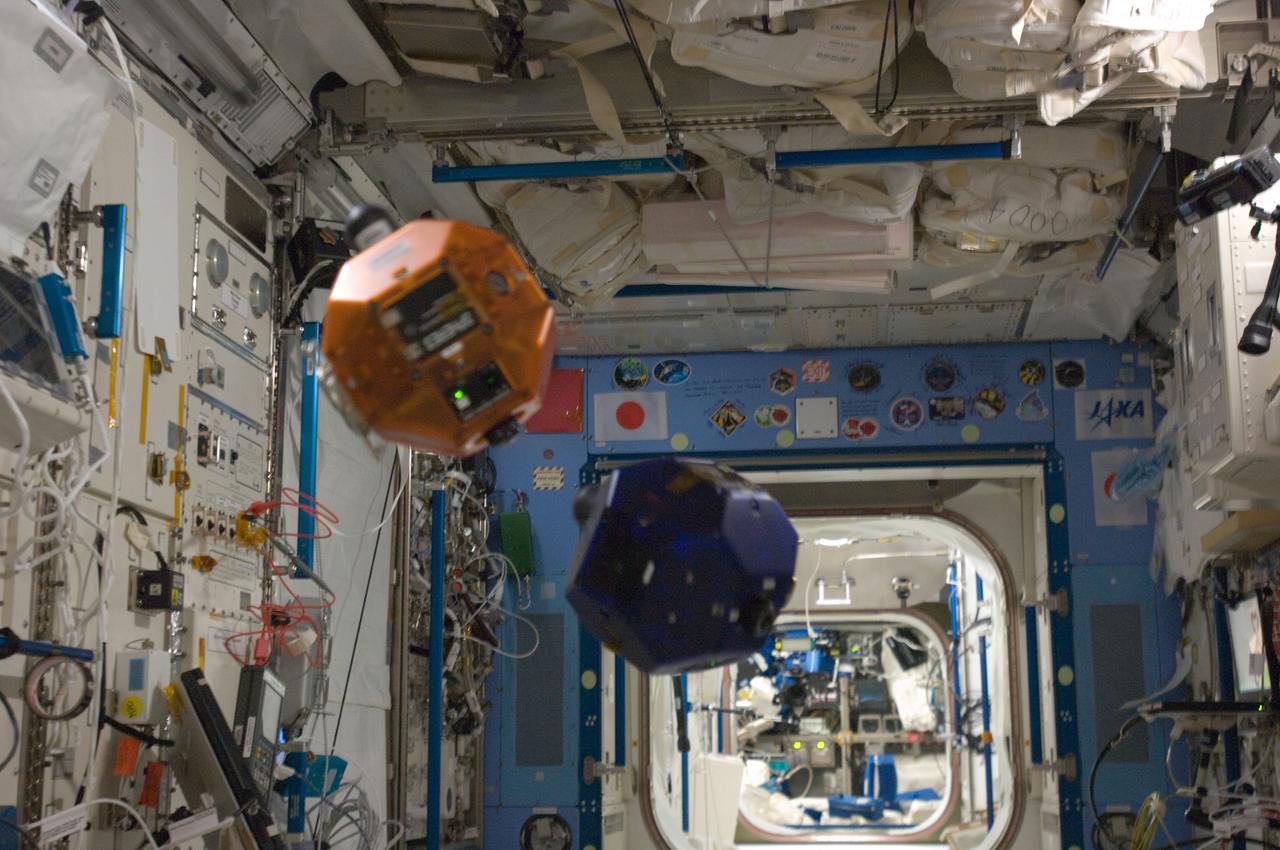
ISS031-E-140676 (22 June 2012) --- Two bowling-ball-sized free-flying satellites called Synchronized Position Hold, Engage, Reorient, Experimental Satellites Zero Robotics (SPHERES ZR) are pictured during a test session in the Kibo laboratory of the International Space Station.
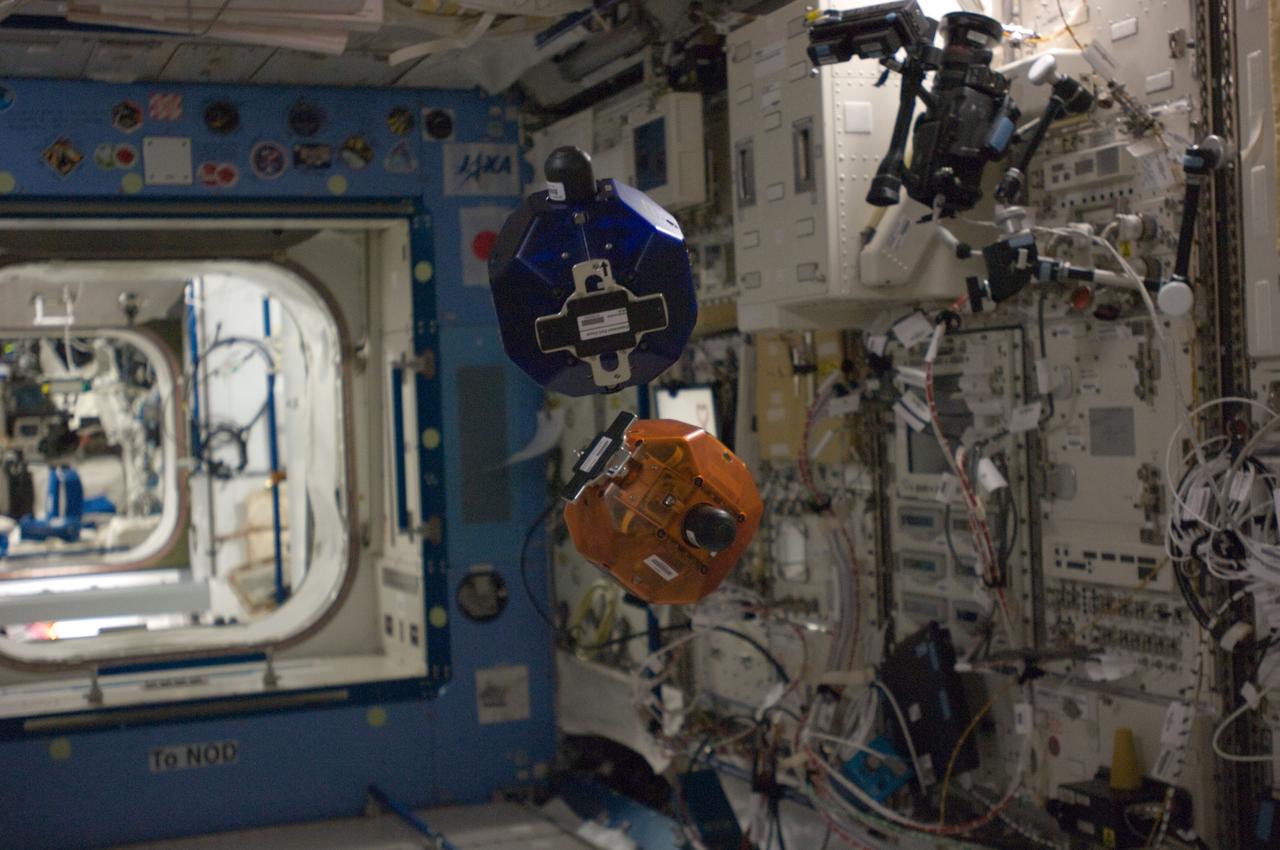
ISS031-E-140672 (22 June 2012) --- Two bowling-ball-sized free-flying satellites called Synchronized Position Hold, Engage, Reorient, Experimental Satellites Zero Robotics (SPHERES ZR) are pictured during a test session in the Kibo laboratory of the International Space Station.
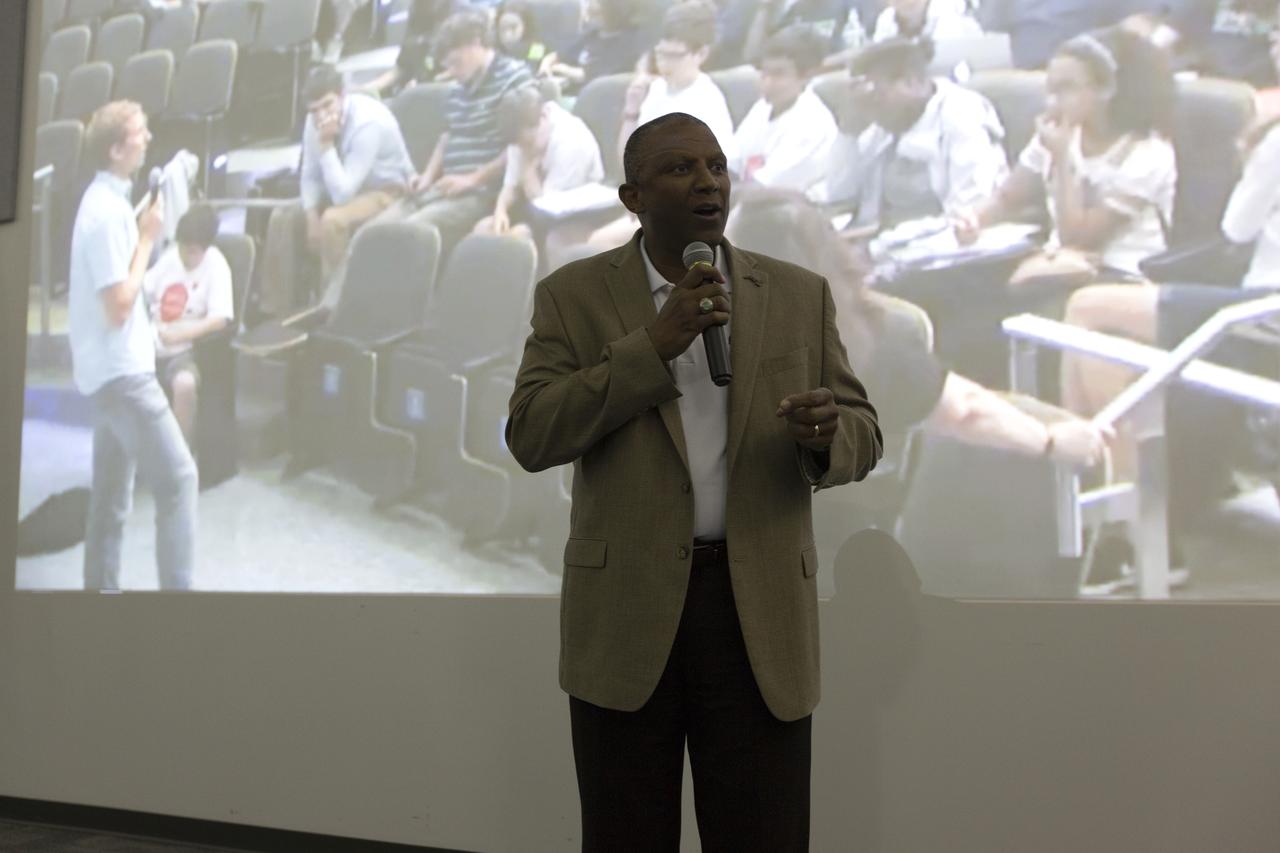
NASA Kennedy Space Center Associate Director Kelvin Manning speaks to students and sponsors in the spaceport’s Center for Space Education. Teams from across the state of Florida were gathered at Kennedy for the finals of the Zero Robotics Middle School Summer Program national championship. The five-week program allows rising sixth- through ninth-graders to write programs for small satellites called SPHERES (Synchronized, Position, Hold, Engage, Reorient, Experimental Satellites). Finalists saw their code tested aboard the International Space Station.
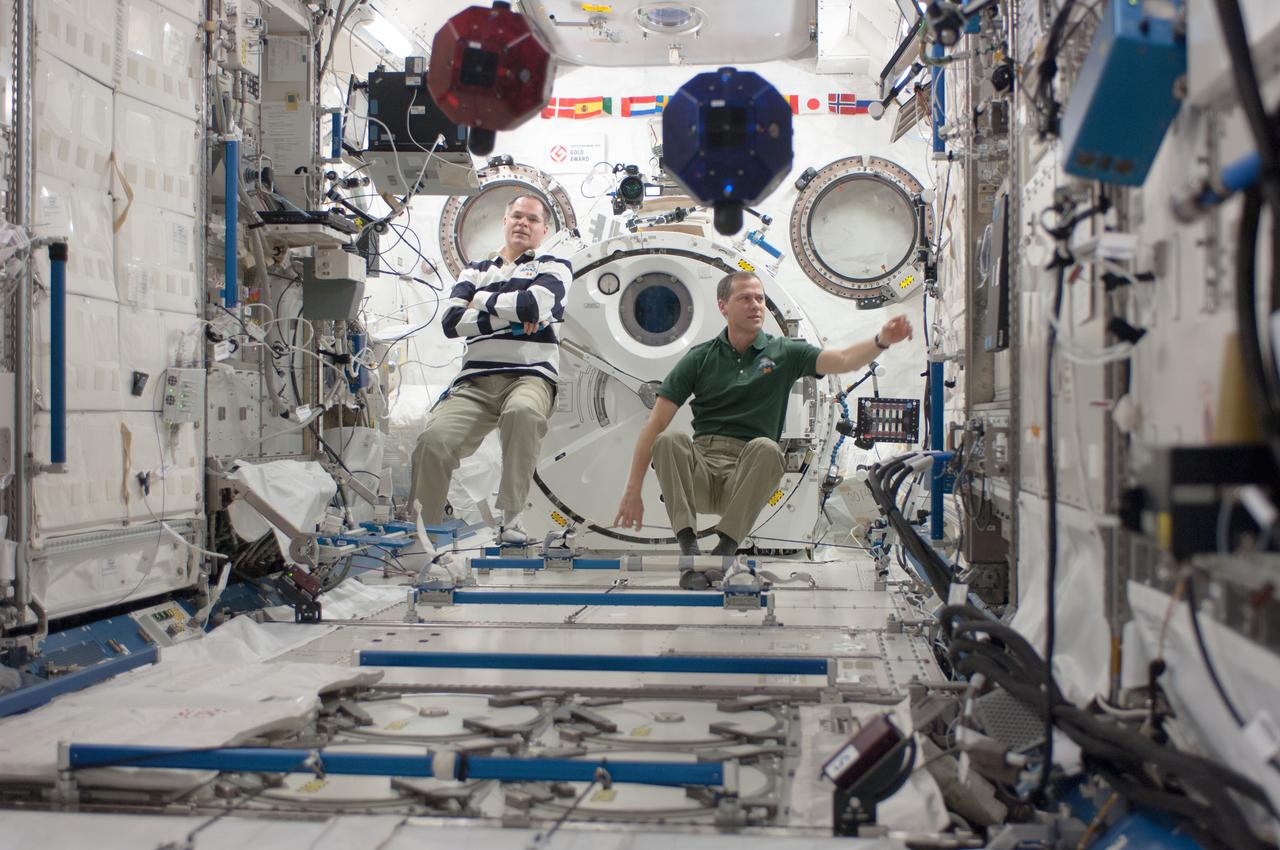
ISS034-E-028409 (11 Jan. 2013) --- With their feet anchored in floor restraints, NASA astronauts Kevin Ford (left), Expedition 34 commander; and Tom Marshburn, flight engineer, conduct a session of the Synchronized Position Hold, Engage, Reorient, Experimental Satellites Zero Robotics (SPHERES ZR) program in the Kibo laboratory of the International Space Station.
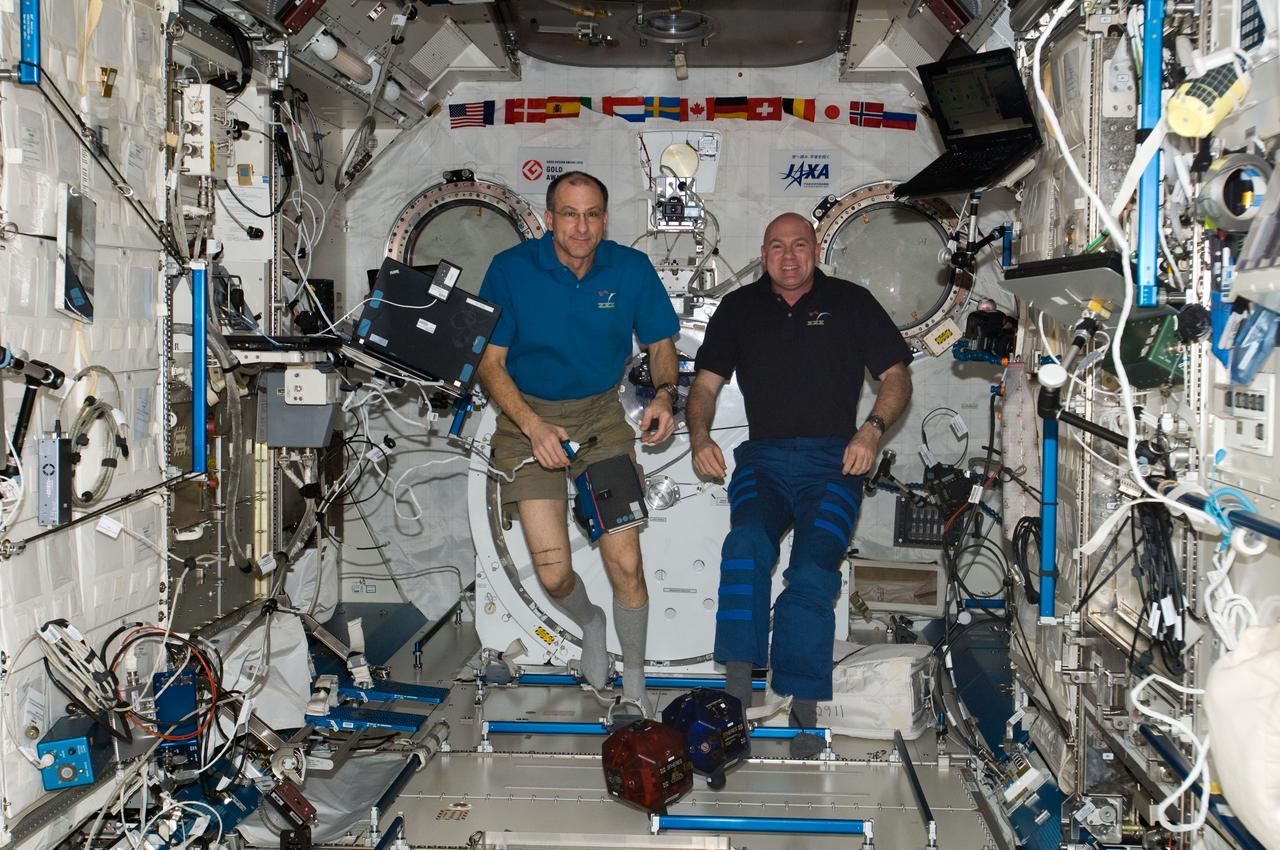
ISS030-E-047176 (23 Jan. 2012) --- In the International Space Station?s Kibo laboratory, NASA astronaut Don Pettit (left) and European Space Agency astronaut Andre Kuipers, both Expedition 30 flight engineers, support competing students on the ground in a run of the Synchronized Position Hold, Engage, Reorient, Experimental Satellites Zero Robotics (SPHERES ZR) experiment.
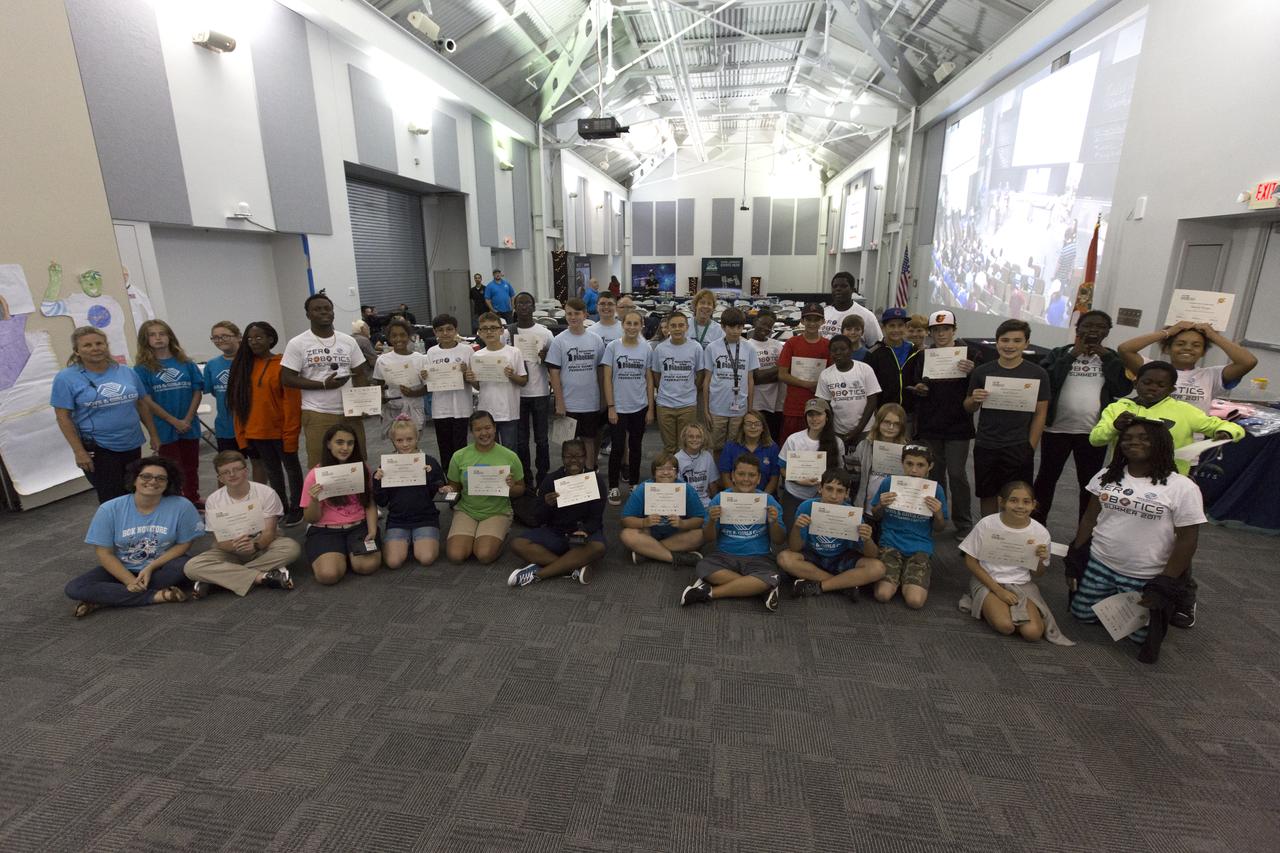
Students and their sponsors gather for a commemorative photo in the Center for Space Education at NASA’s Kennedy Space Center in Florida after participating in the finals of the Zero Robotics Middle School Summer Program national championship. The five-week program allows rising sixth- through ninth-graders to write programs for small satellites called SPHERES (Synchronized, Position, Hold, Engage, Reorient, Experimental Satellites). Finalists saw their code tested aboard the International Space Station.
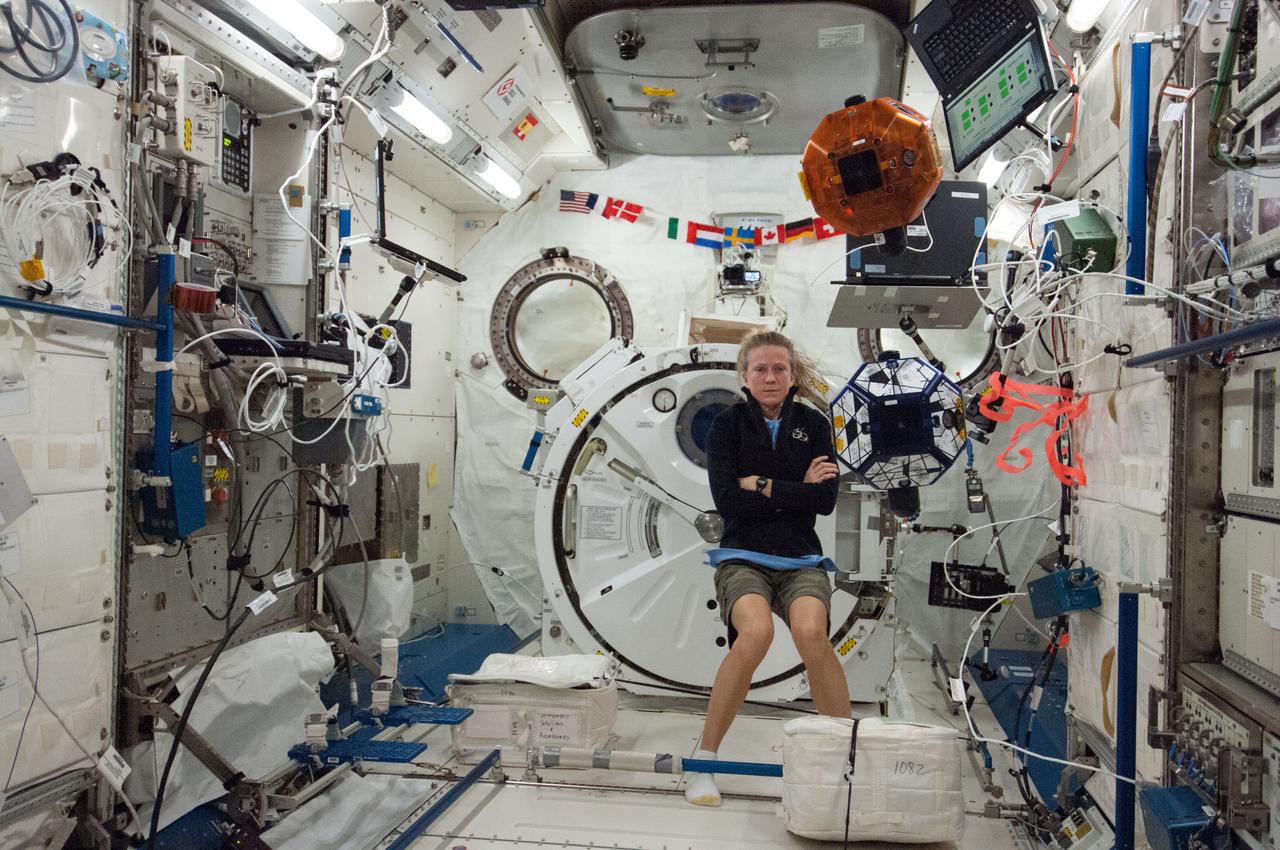
ISS036-E-029522 (7 Aug. 2013) --- In the International Space Station’s Kibo laboratory, NASA astronaut Karen Nyberg, Expedition 36 flight engineer, conducts a session with a pair of bowling-ball-sized free-flying satellites known as Synchronized Position Hold, Engage, Reorient, Experimental Satellites, or SPHERES. Nyberg and NASA astronaut Chris Cassidy (not pictured) put the miniature satellites through their paces for a dry run of the SPHERES Zero Robotics tournament scheduled for Aug. 13. Teams of middle school students from Florida, Georgia, Idaho and Massachusetts will gather at the Massachusetts Institute of Technology in Cambridge to see which teams’ algorithms do the best job of commanding the free-flying robots through a series of maneuvers and objectives.
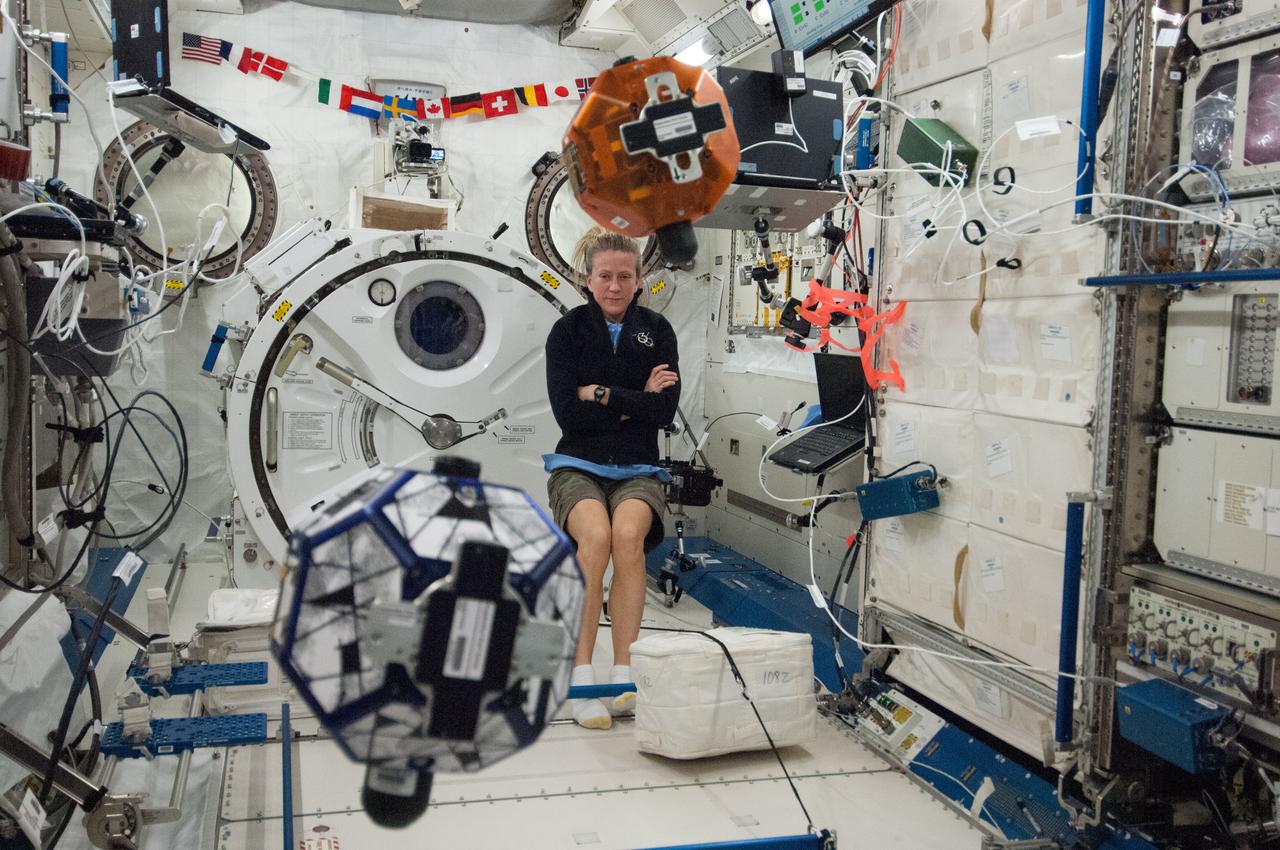
ISS036-E-029539 (7 Aug. 2013) --- In the International Space Station’s Kibo laboratory, NASA astronaut Karen Nyberg, Expedition 36 flight engineer, conducts a session with a pair of bowling-ball-sized free-flying satellites known as Synchronized Position Hold, Engage, Reorient, Experimental Satellites, or SPHERES. Nyberg and NASA astronaut Chris Cassidy (not pictured) put the miniature satellites through their paces for a dry run of the SPHERES Zero Robotics tournament scheduled for Aug. 13. Teams of middle school students from Florida, Georgia, Idaho and Massachusetts will gather at the Massachusetts Institute of Technology in Cambridge to see which teams’ algorithms do the best job of commanding the free-flying robots through a series of maneuvers and objectives.
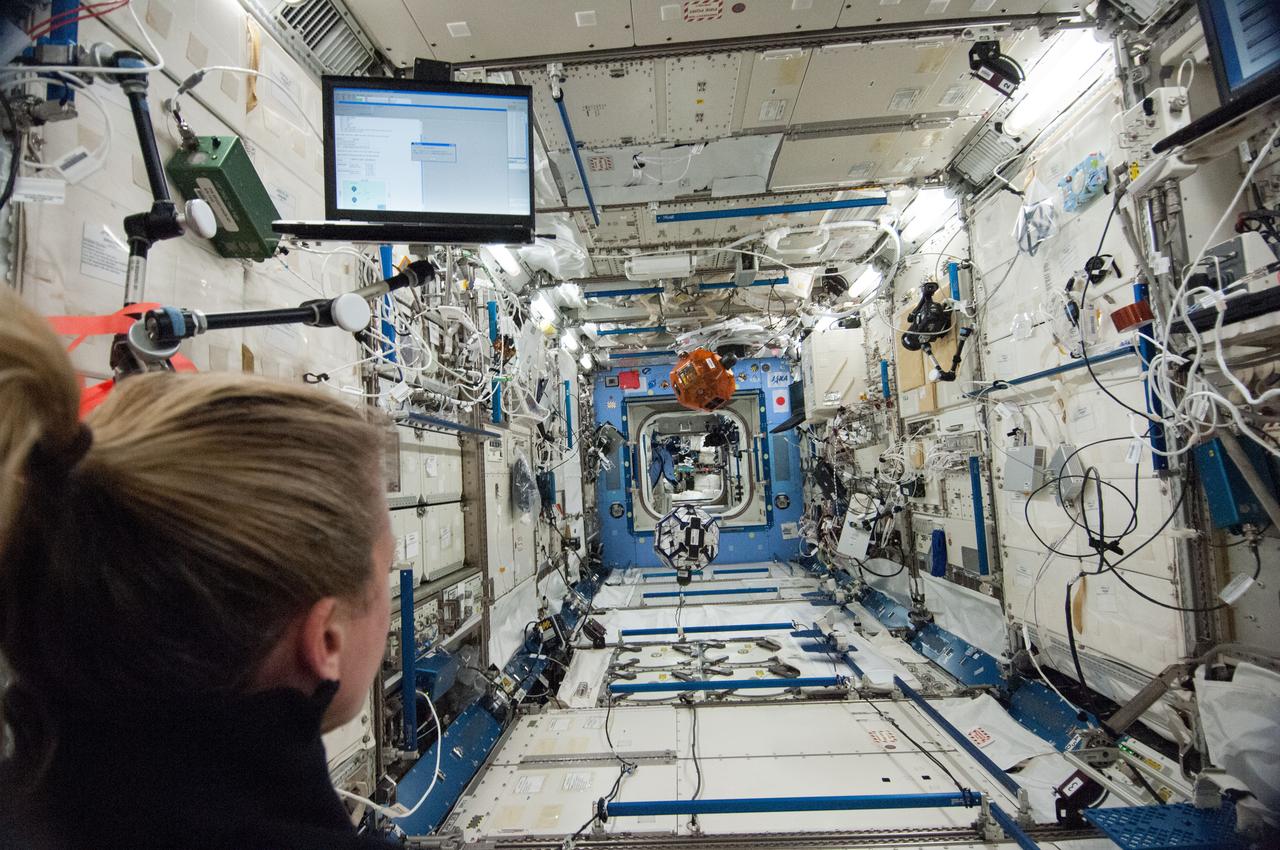
ISS036-E-029521 (7 Aug. 2013) --- In the International Space Station’s Kibo laboratory, NASA astronaut Karen Nyberg, Expedition 36 flight engineer, conducts a session with a pair of bowling-ball-sized free-flying satellites known as Synchronized Position Hold, Engage, Reorient, Experimental Satellites, or SPHERES. Nyberg and NASA astronaut Chris Cassidy (not pictured) put the miniature satellites through their paces for a dry run of the SPHERES Zero Robotics tournament scheduled for Aug. 13. Teams of middle school students from Florida, Georgia, Idaho and Massachusetts will gather at the Massachusetts Institute of Technology in Cambridge to see which teams’ algorithms do the best job of commanding the free-flying robots through a series of maneuvers and objectives.
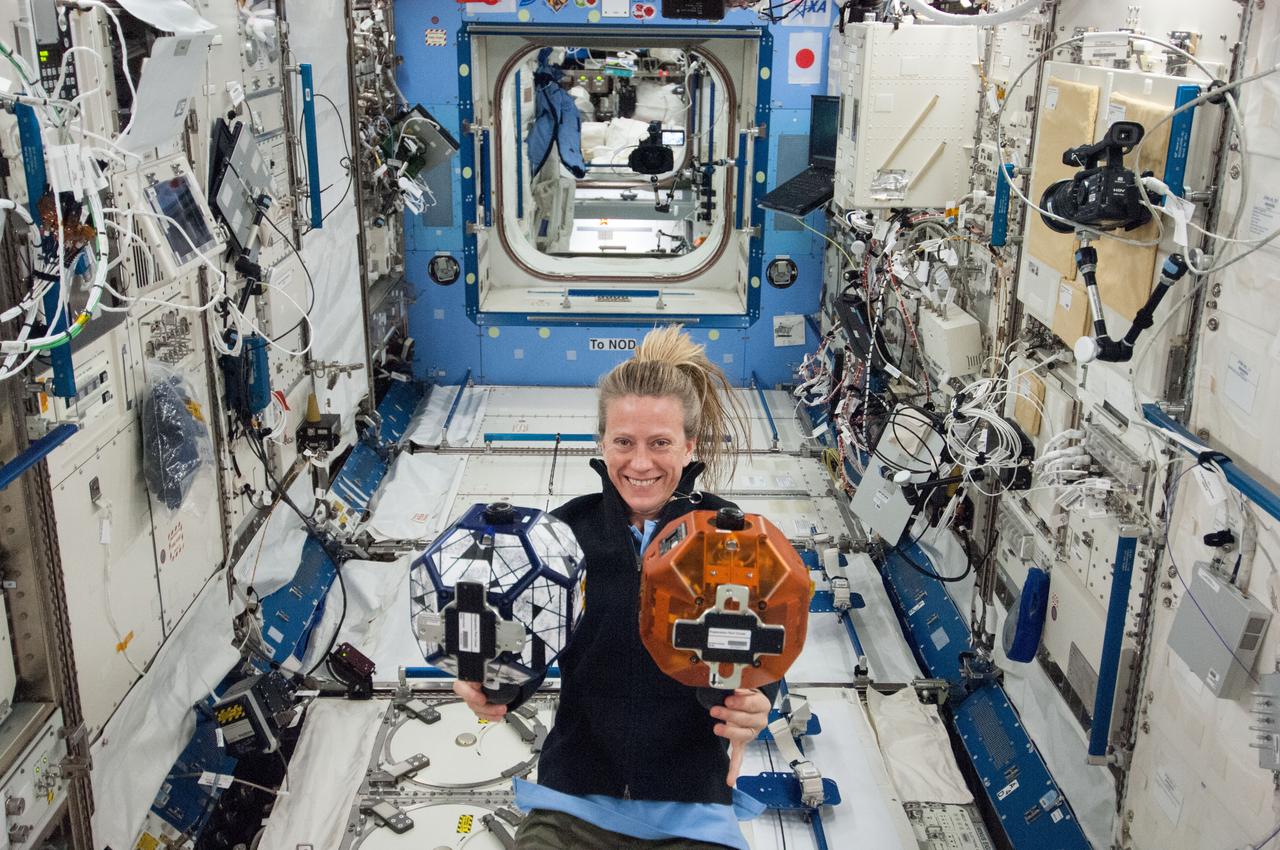
ISS036-E-029545 (7 Aug. 2013) --- In the International Space Station’s Kibo laboratory, NASA astronaut Karen Nyberg, Expedition 36 flight engineer, conducts a session with a pair of bowling-ball-sized free-flying satellites known as Synchronized Position Hold, Engage, Reorient, Experimental Satellites, or SPHERES. Nyberg and NASA astronaut Chris Cassidy (not pictured) put the miniature satellites through their paces for a dry run of the SPHERES Zero Robotics tournament scheduled for Aug. 13. Teams of middle school students from Florida, Georgia, Idaho and Massachusetts will gather at the Massachusetts Institute of Technology in Cambridge to see which teams’ algorithms do the best job of commanding the free-flying robots through a series of maneuvers and objectives.
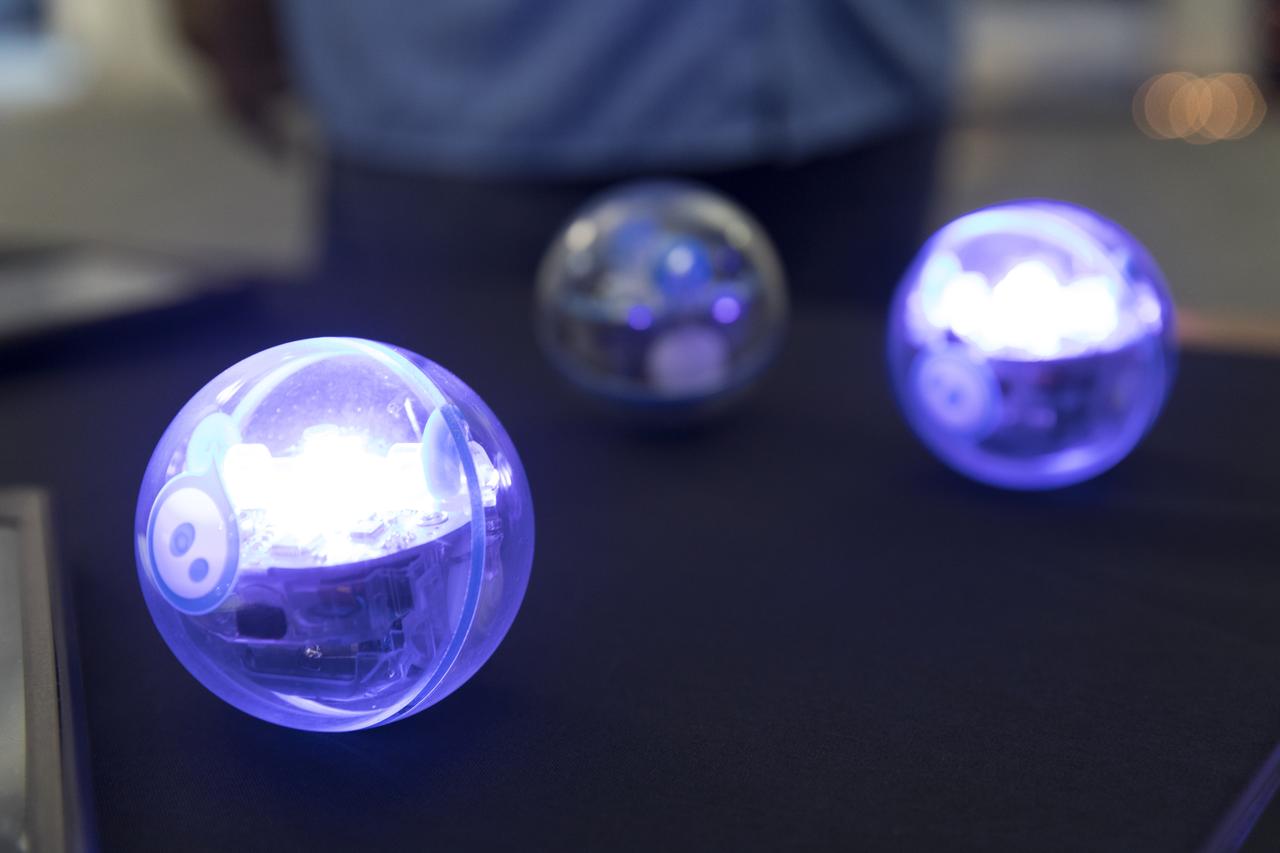
A trio of programmable off-the-shelf Sphero robots are shown at the Center for Space Education at NASA's Kennedy Space Center in Florida. The Spheros were available for students to practice their programming skills during "loss of signal" times when the connection to the International Space Station was temporarily unavailable. Teams from across the state of Florida were gathered at Kennedy for the finals of the Zero Robotics Middle School Summer Program national championship. The five-week program allows rising sixth- through ninth-graders to write programs for small satellites called SPHERES (Synchronized, Position, Hold, Engage, Reorient, Experimental Satellites). Finalists saw their code tested aboard the orbiting laboratory.
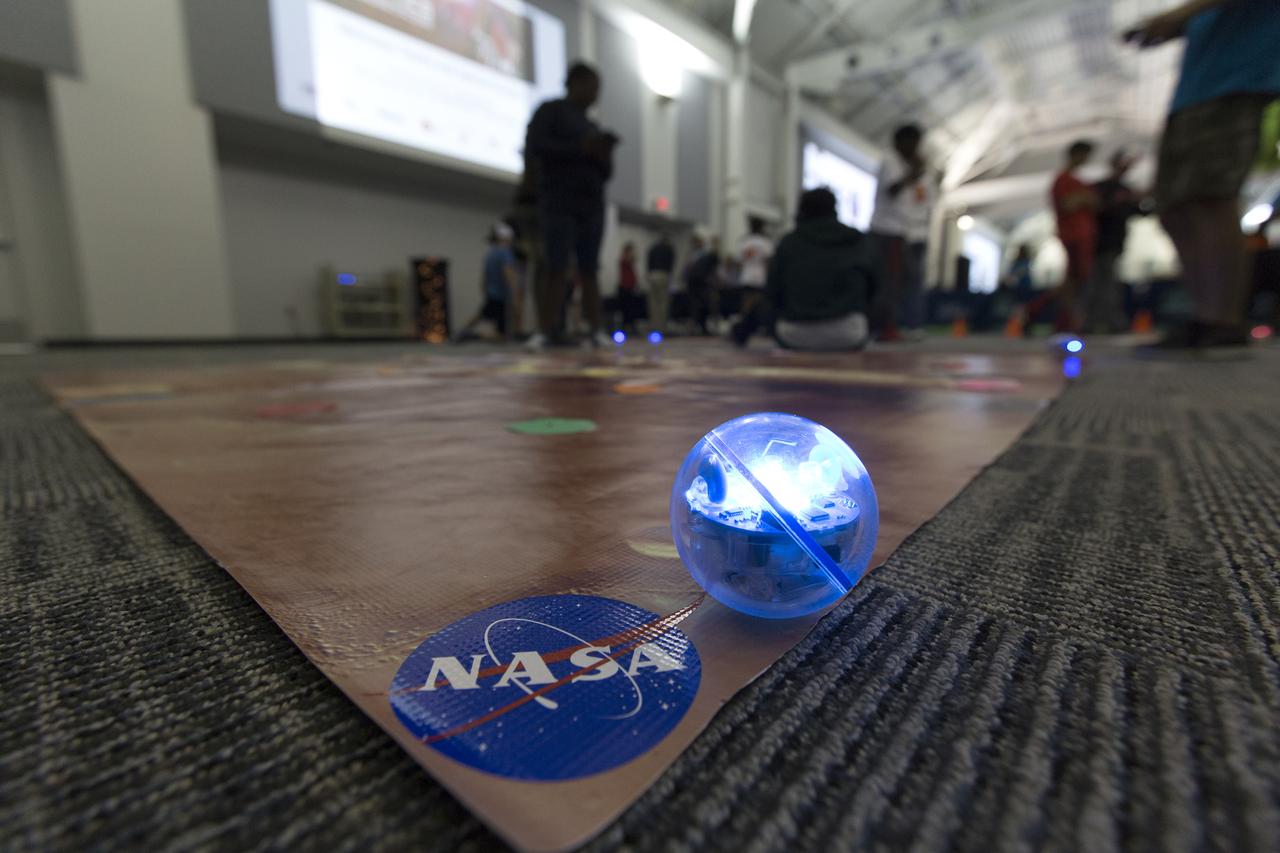
A programmable off-the-shelf Sphero robot is shown on a Mars mat at the Center for Space Education at NASA's Kennedy Space Center in Florida. The Spheros were available for students to practice their programming skills by navigating the robots around a challenge course on the mat. Students used the mat and Sphero robots during "loss of signal" times when the connection to the International Space Station was temporarily unavailable. Teams from across the state of Florida were gathered at Kennedy for the finals of the Zero Robotics Middle School Summer Program national championship. The five-week program allows rising sixth- through ninth-graders to write programs for small satellites called SPHERES (Synchronized, Position, Hold, Engage, Reorient, Experimental Satellites). Finalists saw their code tested aboard the orbiting laboratory.
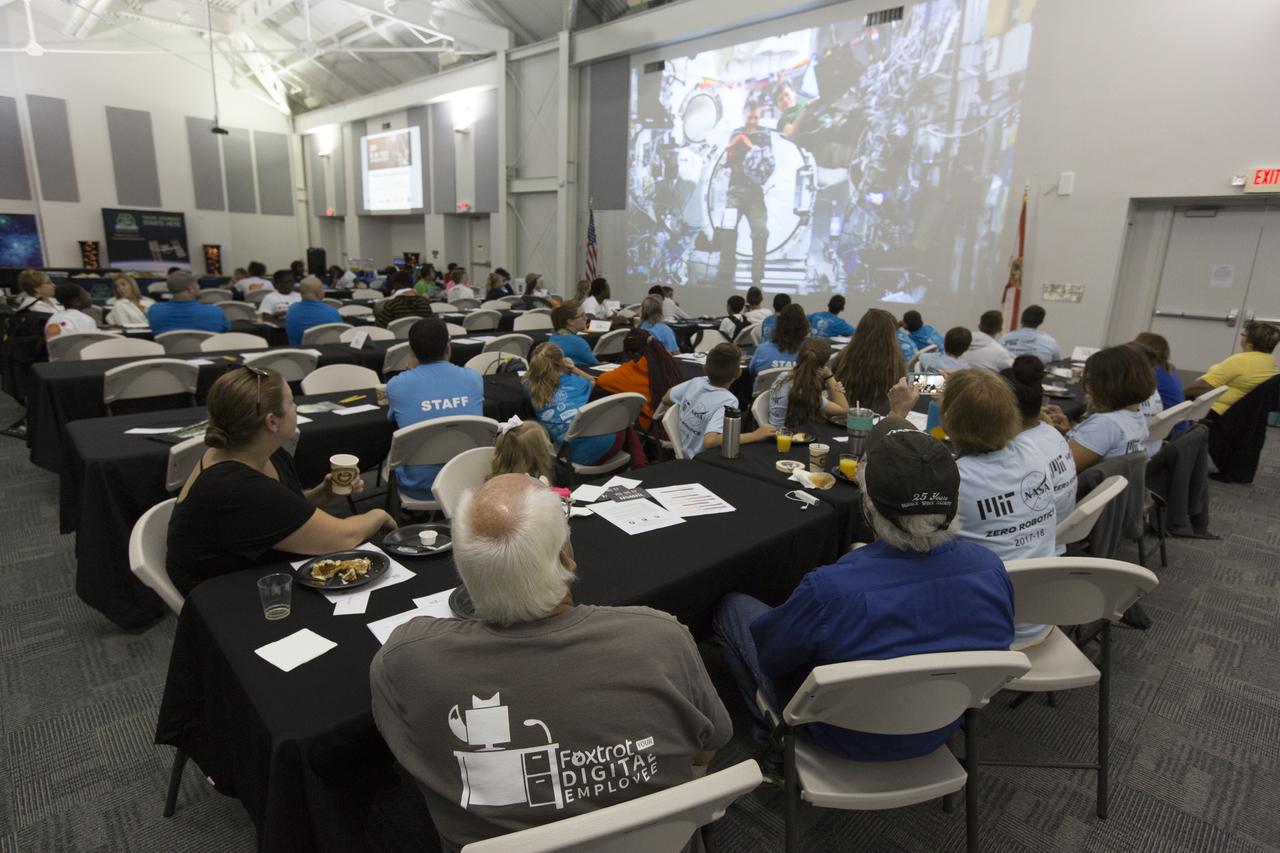
Students and sponsors hear from astronauts aboard the International Space Station on a big screen in the Center for Space Education at NASA’s Kennedy Space Center in Florida. Teams from across the state of Florida were gathered at Kennedy for the finals of the Zero Robotics Middle School Summer Program national championship. The five-week program allows rising sixth- through ninth-graders to write programs for small satellites called SPHERES (Synchronized, Position, Hold, Engage, Reorient, Experimental Satellites). Finalists saw their code tested aboard the orbiting laboratory.
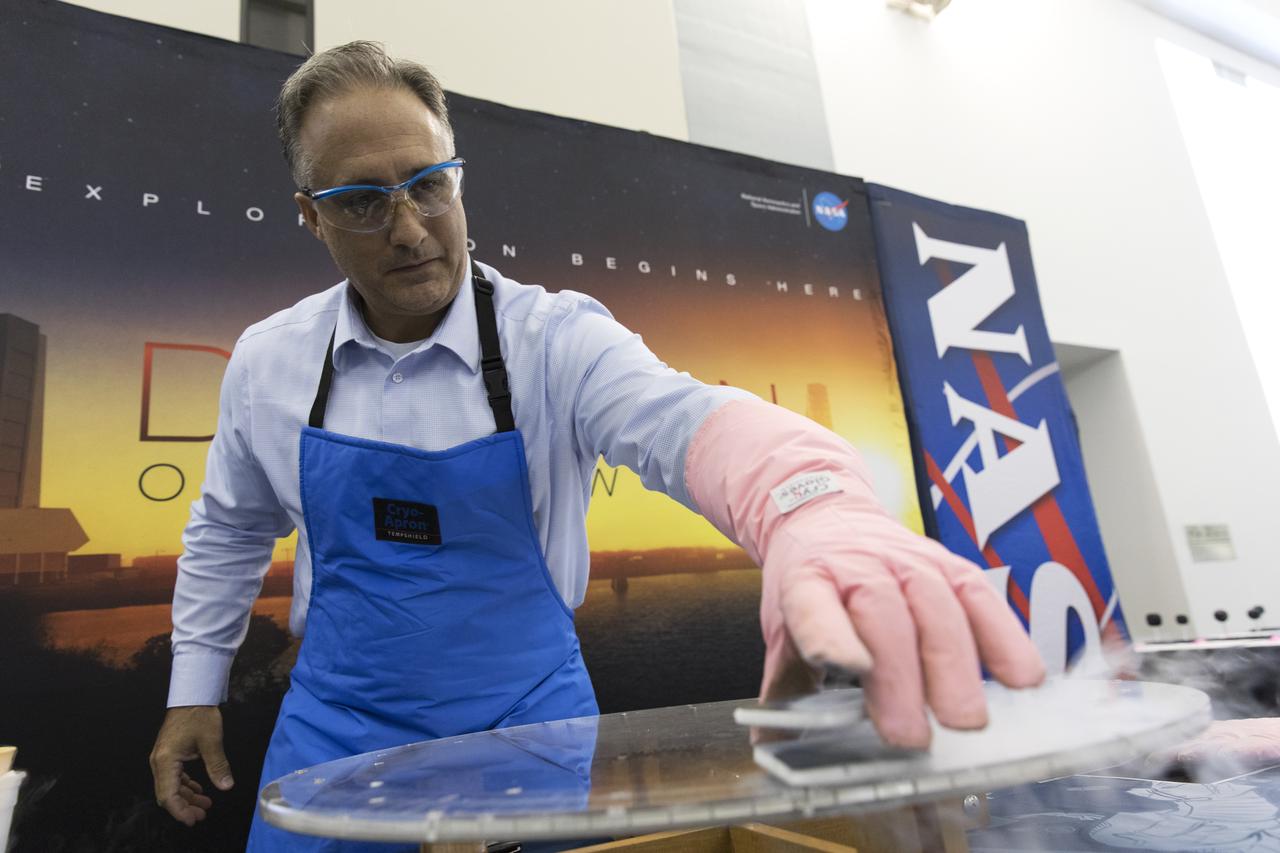
NASA Kennedy Space Center's Trent Smith conducts a quantum levitation demonstration, using liquid nitrogen, metal and a magnetic track, for students and their sponsors in the Center for Space Education at NASA’s Kennedy Space Center in Florida. Teams from across the state of Florida were gathered at Kennedy for the finals of the Zero Robotics Middle School Summer Program national championship. The five-week program allows rising sixth- through ninth-graders to write programs for small satellites called SPHERES (Synchronized, Position, Hold, Engage, Reorient, Experimental Satellites). Finalists saw their code tested aboard the International Space Station.
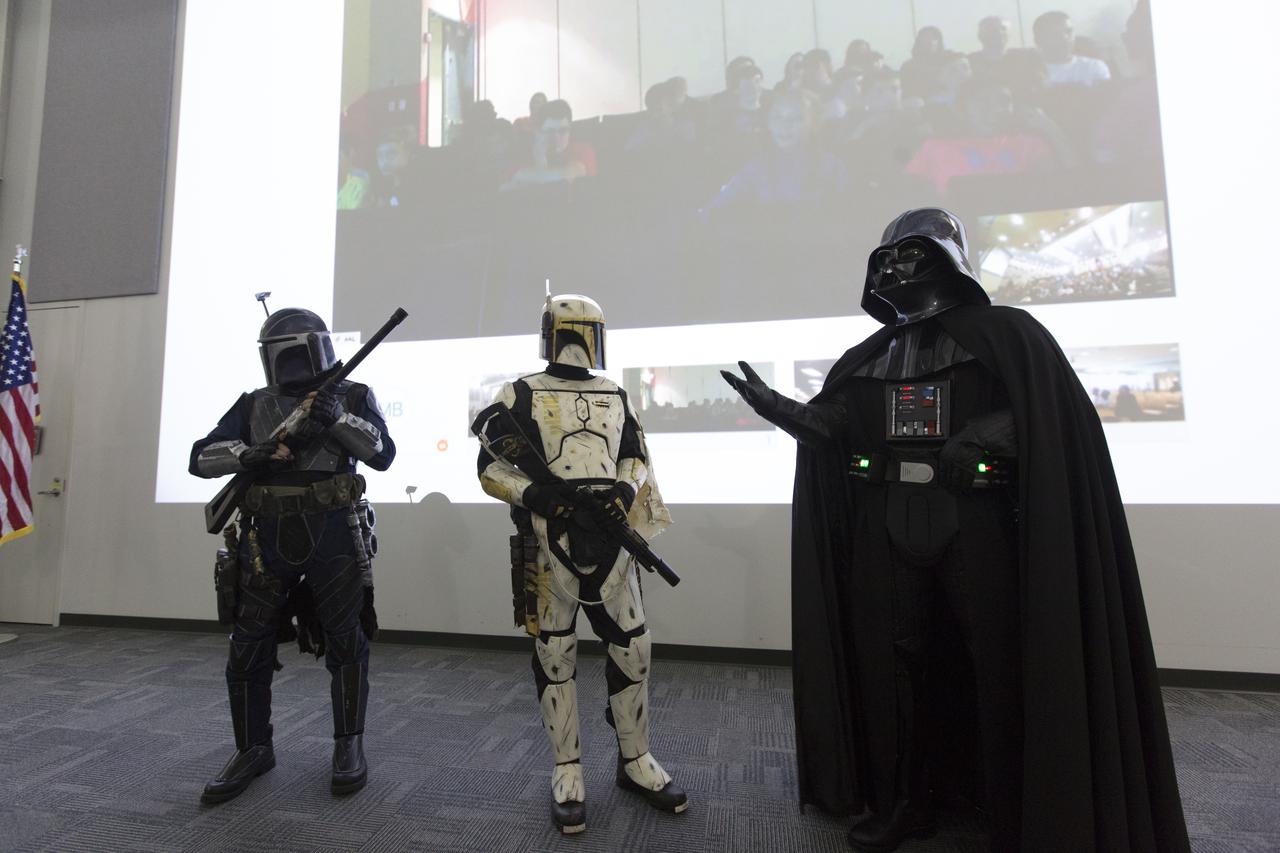
Darth Vader and other Star Wars characters from the 501st Legion address students and sponsors in the Center for Space Education at NASA’s Kennedy Space Center in Florida. Teams from across the state of Florida were gathered at Kennedy for the finals of the Zero Robotics Middle School Summer Program national championship. The five-week program allows rising sixth- through ninth-graders to write programs for small satellites called SPHERES (Synchronized, Position, Hold, Engage, Reorient, Experimental Satellites). Finalists saw their code tested aboard the International Space Station.
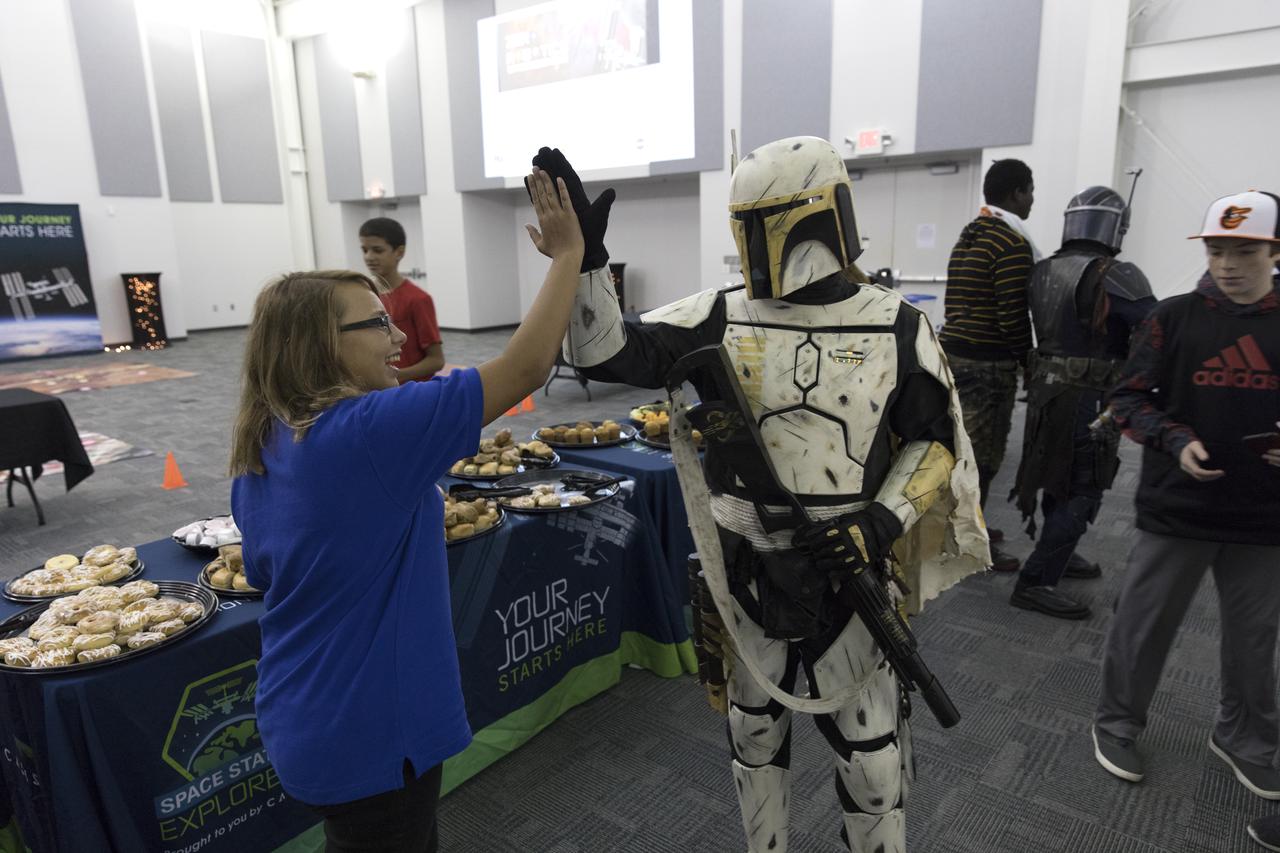
A middle-school student high-fives a Star Wars character from the 501st Legion in the Center for Space Education at NASA’s Kennedy Space Center in Florida. Teams from across the state of Florida were gathered at Kennedy for the finals of the Zero Robotics Middle School Summer Program national championship. The five-week program allows rising sixth- through ninth-graders to write programs for small satellites called SPHERES (Synchronized, Position, Hold, Engage, Reorient, Experimental Satellites). Finalists saw their code tested aboard the International Space Station.
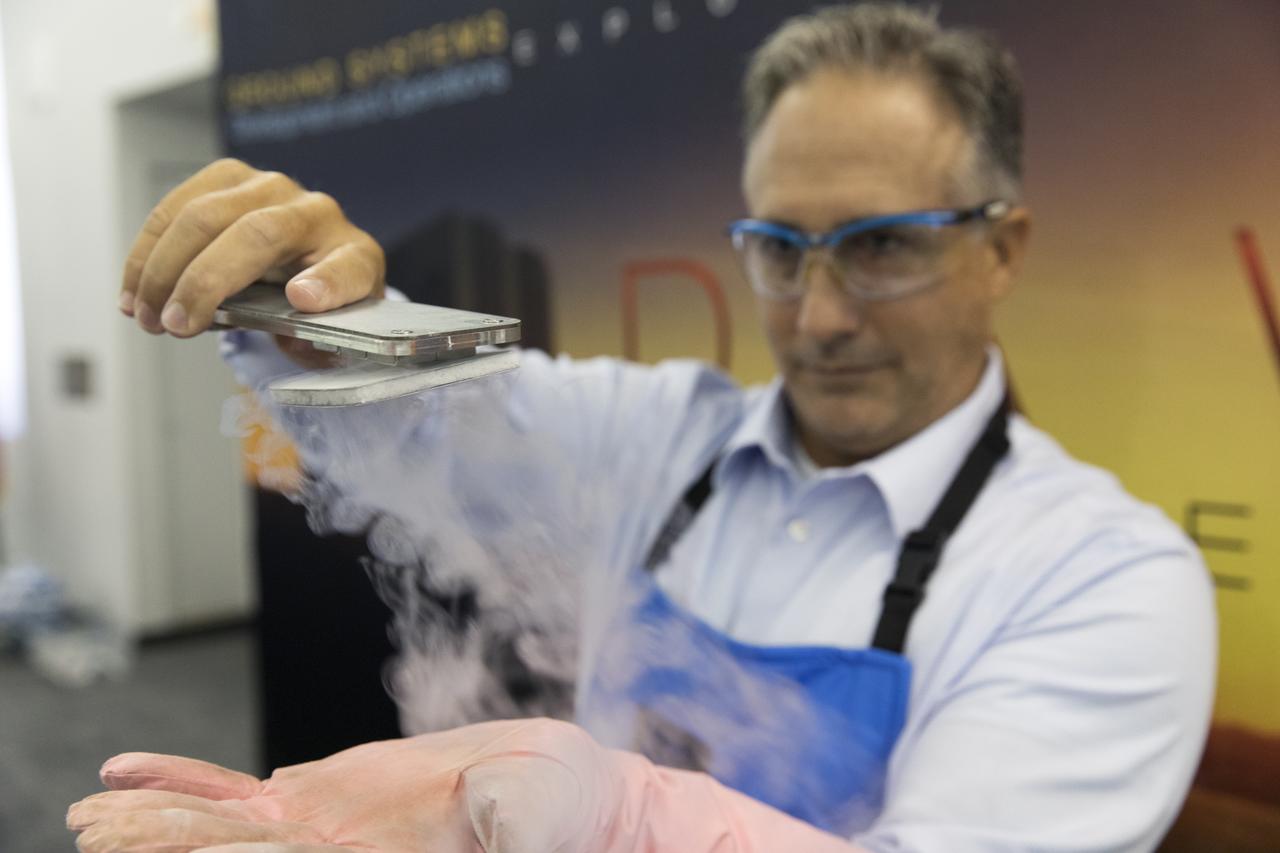
NASA Kennedy Space Center's Trent Smith conducts a quantum levitation demonstration, using liquid nitrogen, metal and a magnetic track, for students and their sponsors in the Center for Space Education at NASA’s Kennedy Space Center in Florida. Teams from across the state of Florida were gathered at Kennedy for the finals of the Zero Robotics Middle School Summer Program national championship. The five-week program allows rising sixth- through ninth-graders to write programs for small satellites called SPHERES (Synchronized, Position, Hold, Engage, Reorient, Experimental Satellites). Finalists saw their code tested aboard the International Space Station.
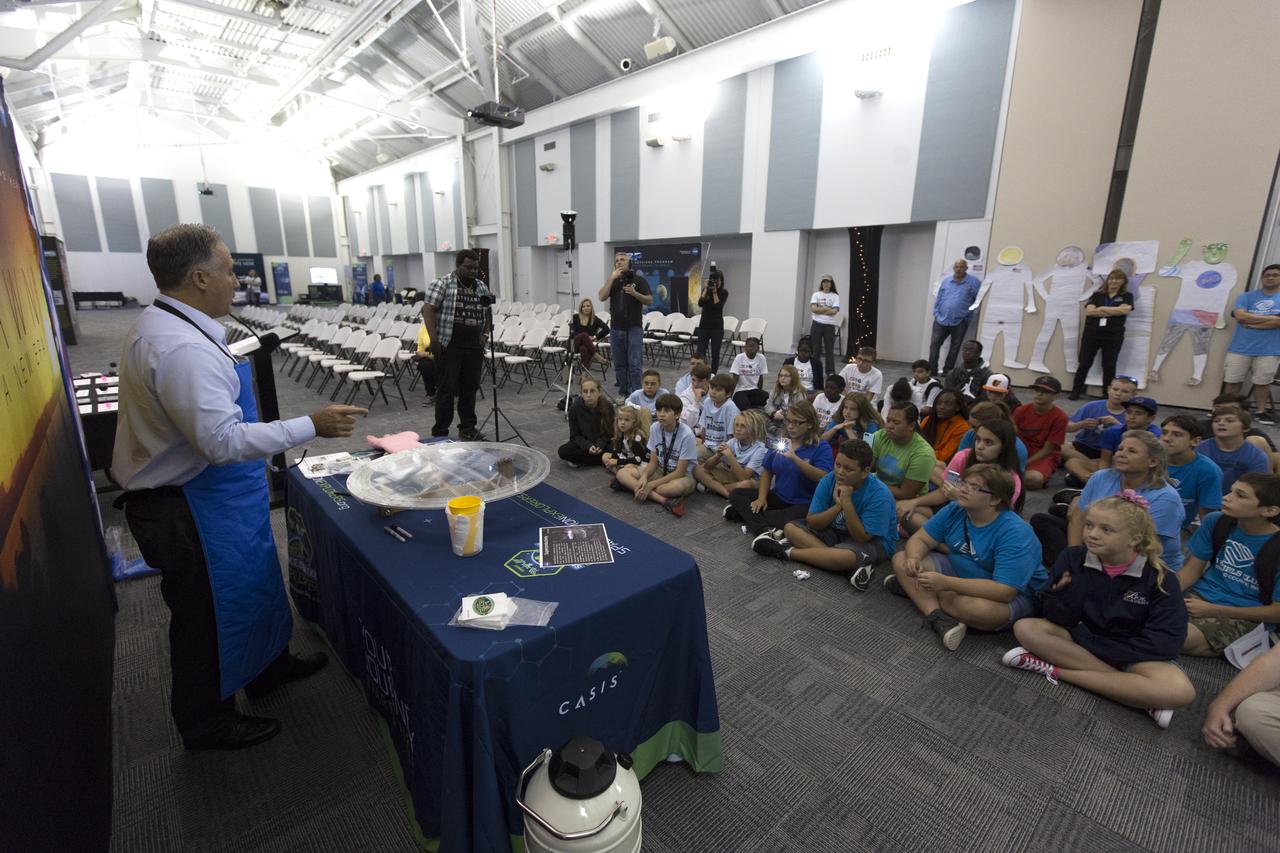
NASA Kennedy Space Center's Trent Smith conducts a quantum levitation demonstration, using liquid nitrogen, metal and a magnetic track, for students and their sponsors in the Center for Space Education at NASA’s Kennedy Space Center in Florida. Teams from across the state of Florida were gathered at Kennedy for the finals of the Zero Robotics Middle School Summer Program national championship. The five-week program allows rising sixth- through ninth-graders to write programs for small satellites called SPHERES (Synchronized, Position, Hold, Engage, Reorient, Experimental Satellites). Finalists saw their code tested aboard the International Space Station.