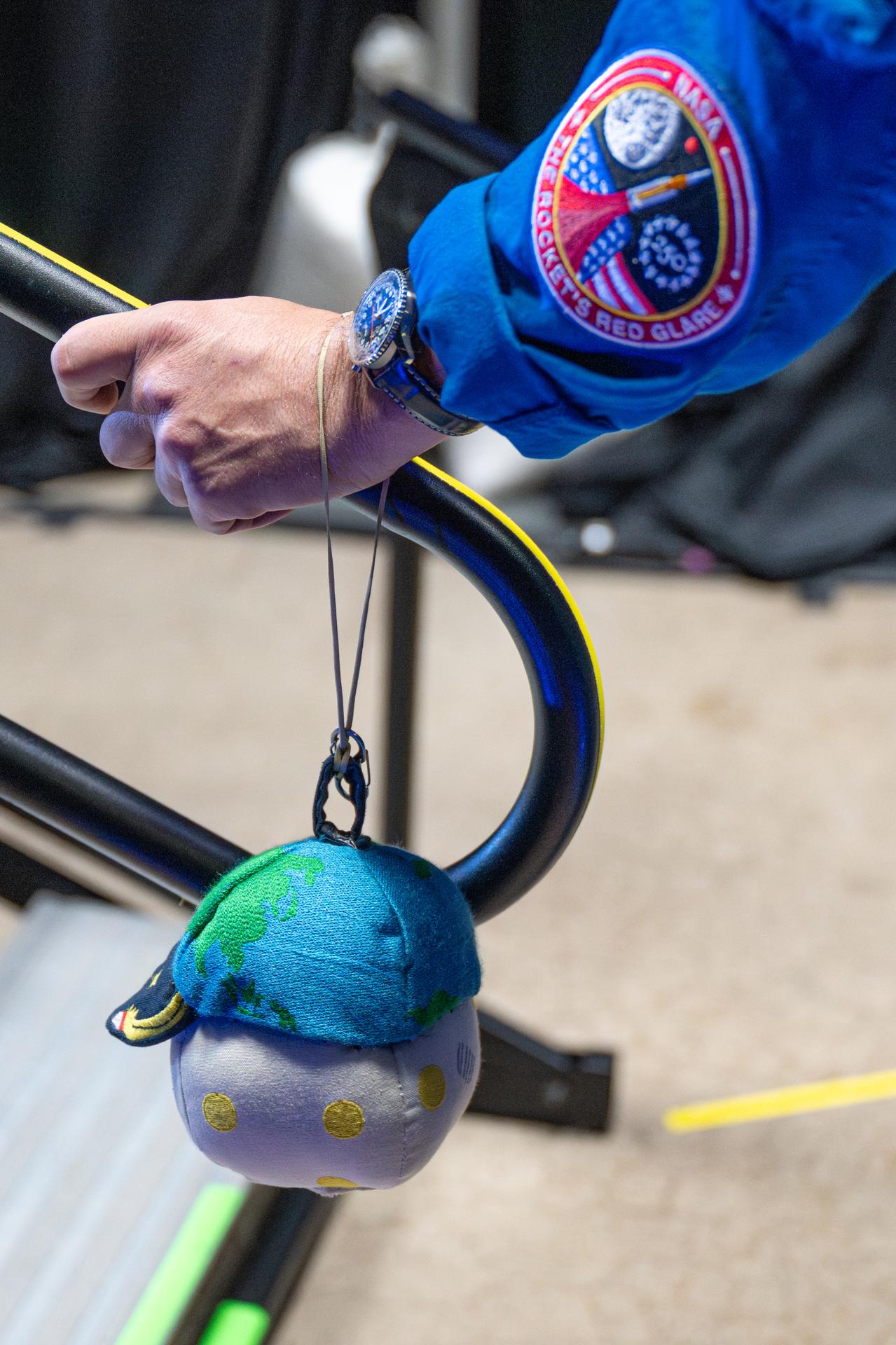
The Artemis II zero gravity indicator, "Rise," is seen looped around the wrist of NASA astronaut Reid Wiseman, Artemis II commander, before the Artemis II crew appeared on stage for a crew return event, Saturday, Apr. 11, 2026, at Ellington Field in Houston, Texas. NASA’s Artemis II test flight took Commander Reid Wiseman, Pilot Victor Glover, and Mission Specialist Christina Koch from NASA, and Mission Specialist Jeremy Hansen from the CSA (Canadian Space Agency) on an approximately nine-day mission around the Moon and back to Earth. Photo Credit: (NASA/John Kraus)
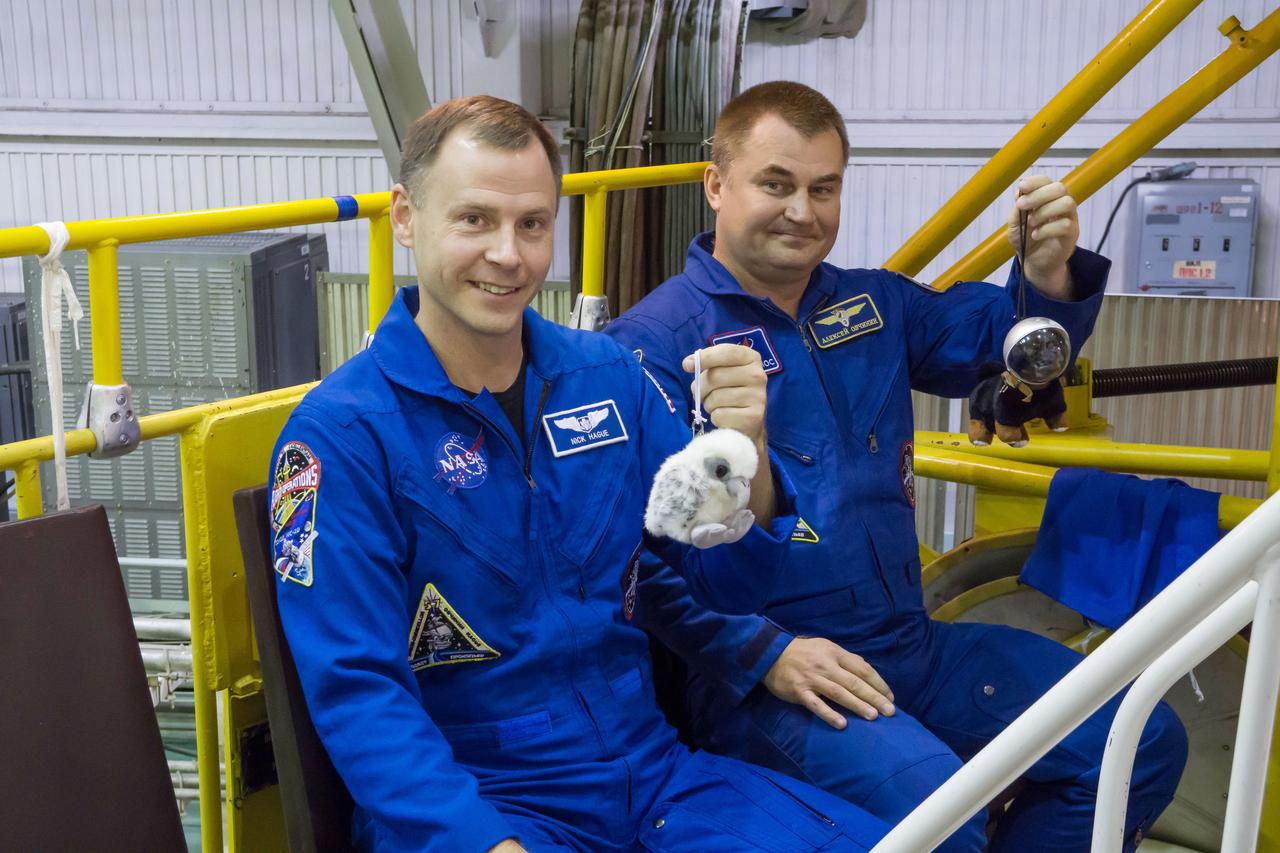
At the Baikonur Cosmodrome in Kazakhstan, Expedition 57 crewmembers Nick Hague of NASA (left) and Alexey Ovchinin of Roscosmos (right) hold up toy mascots Oct. 6 during final fit check activities prior to launch. The mascots will be mounted over their heads in the Soyuz MS-10 spacecraft to serve as “zero-G” indicators when they launch Oct. 11 for a six-month mission on the International Space Station...NASA/Victor Zelentsov.

jsc2017e096664 (July 17, 2017) --- In the Integration Facility at the Baikonur Cosmodrome in Kazakhstan, unidentified Expedition 52-53 crewmembers display toys from their children July 17 outside their Soyuz MS-05 spacecraft during a fit check dress rehearsal. The toys are hung above the crewmembers’ heads in the Soyuz’ descent module compartment as weightless, or “zero-g” indicators during the launch phase of the mission. Randy Bresnik of NASA, Sergey Ryazanskiy of the Russian Federal Space Agency (Roscosmos) and Paolo Nespoli of the European Space Agency will launch July 28 on the Soyuz MS-05 spacecraft for a five-month mission on the International Space Station. Credit: Andrey Shelepin/Gagarin Cosmonaut Training Center
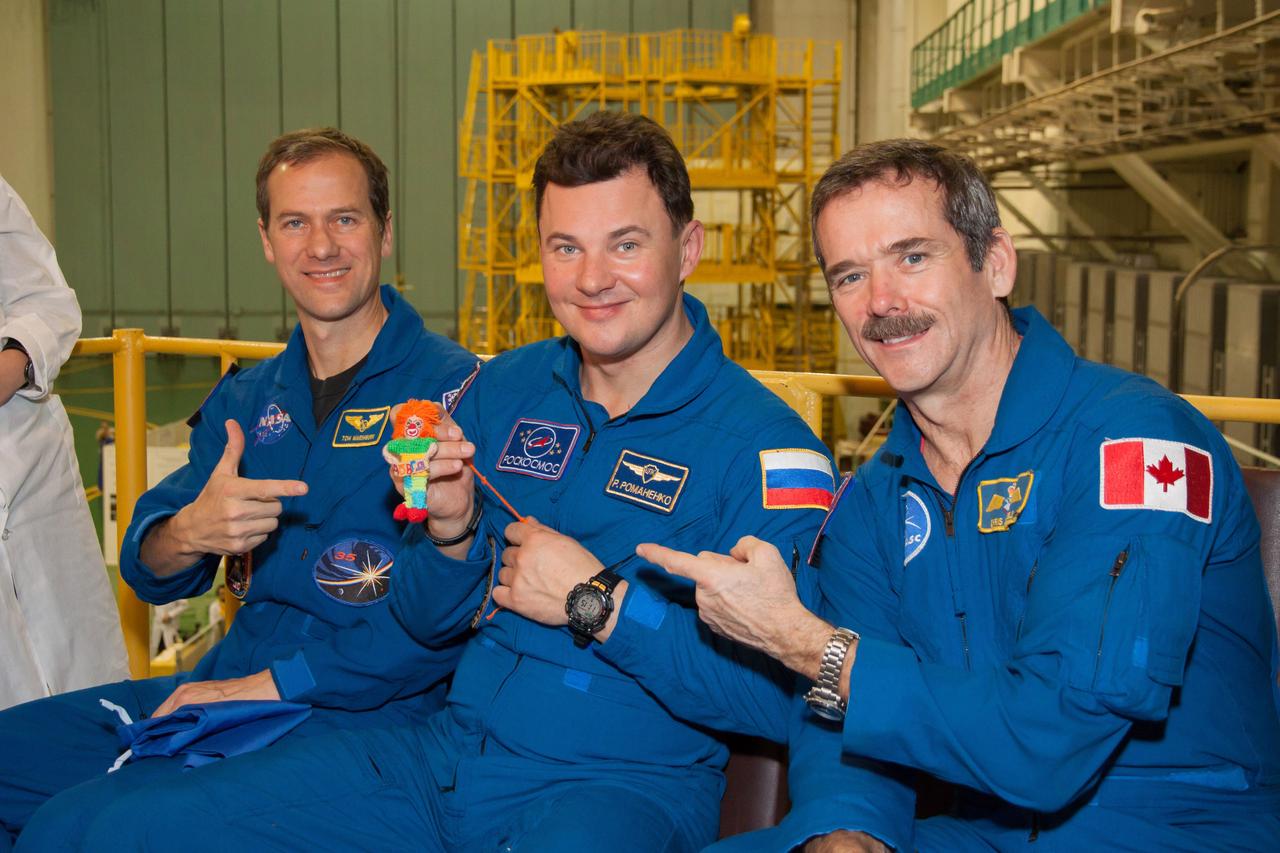
At the Baikonur Cosmodrome in Kazakhstan, Expedition 34/35 Soyuz Commander Roman Romanenko (center) holds a toy “talisman” that his 9-year old daughter, Anastasia, gave him to hang over his seat in the Soyuz TMA-07M spacecraft as a zero-G indicator during launch with his crewmates, Flight Engineer Tom Marshburn of NASA (left) and Flight Engineer Chris Hadfield of the Canadian Space Agency (right). The toy, named “Klyopa” for the Egyptian queen Cleopatra, was unveiled during a “fit check” dress rehearsal Dec. 7, 2012 in Baikonur leading to the crew’s launch Dec. 19 for a five-month mission on the International Space Station. Photo Credit: NASA/Victor Zelentsov
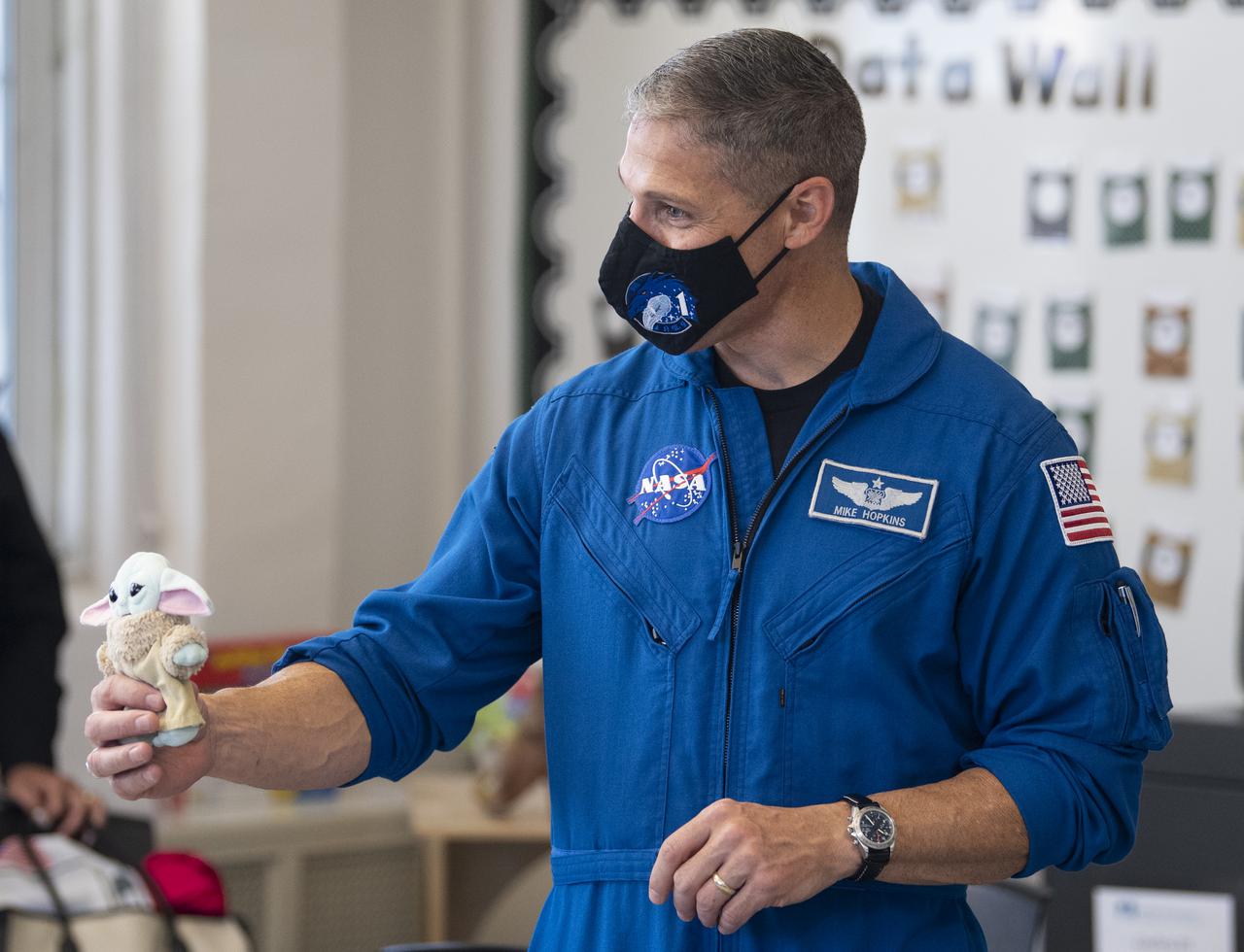
NASA astronaut Mike Hopkins shows his crew’s “zero-G indicator” as he speaks with students about his time aboard the International Space Station during the Crew-1 mission, Thursday, Nov. 18, 2021, at Garfield Elementary School in Washington, DC. Hopkins and fellow NASA astronauts Shannon Walker, Victor Glover, and Japan Aerospace Exploration Agency (JAXA) astronaut Soichi Noguchi launched on the first crew rotation mission to the International Space Station for SpaceX’s Falcon 9 and Crew Dragon spacecraft as part of the agency’s Commercial Crew Program and spent 168 days in space across Expeditions 64 and 65. Photo Credit: (NASA/Joel Kowsky)
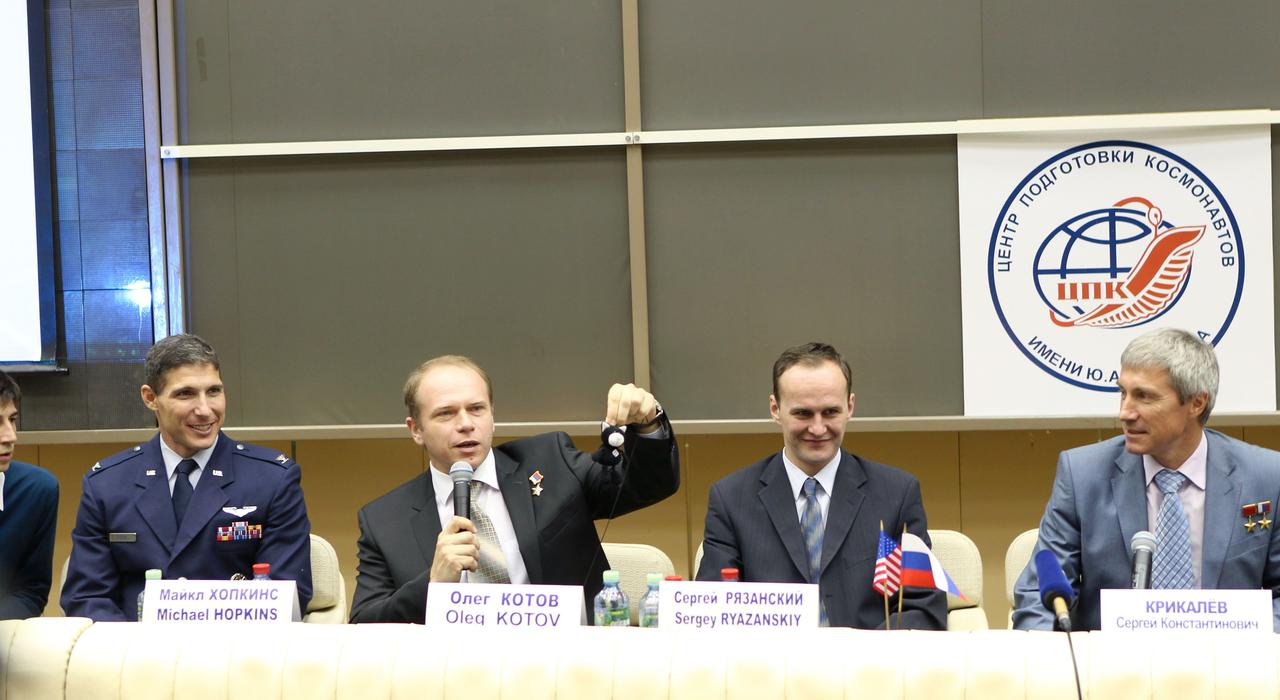
At the Gagarin Cosmonaut Training Center in Star City, Russia, Expedition 37/38 Soyuz Commander Oleg Kotov (second from left) holds a toy cat mascot during a pre-launch news conference Sept. 6 as his crewmates, Flight Engineer Michael Hopkins of NASA (far left) and Flight Engineer Sergey Ryazanskiy (second from the right) look on. Also participating in the news conference was the head of the Cosmonaut Training Center, Sergei Krikalev (far right). The mascot will be mounted inside the crew’s Soyuz TMA-10M spacecraft over Kotov’s head as a “zero-g indicator” once the crew launches. Their launch to the International Space Station is set for Sept. 26, Kazakh time, from the Baikonur Cosmodrome in Kazakhstan. NASA/Stephanie Stoll
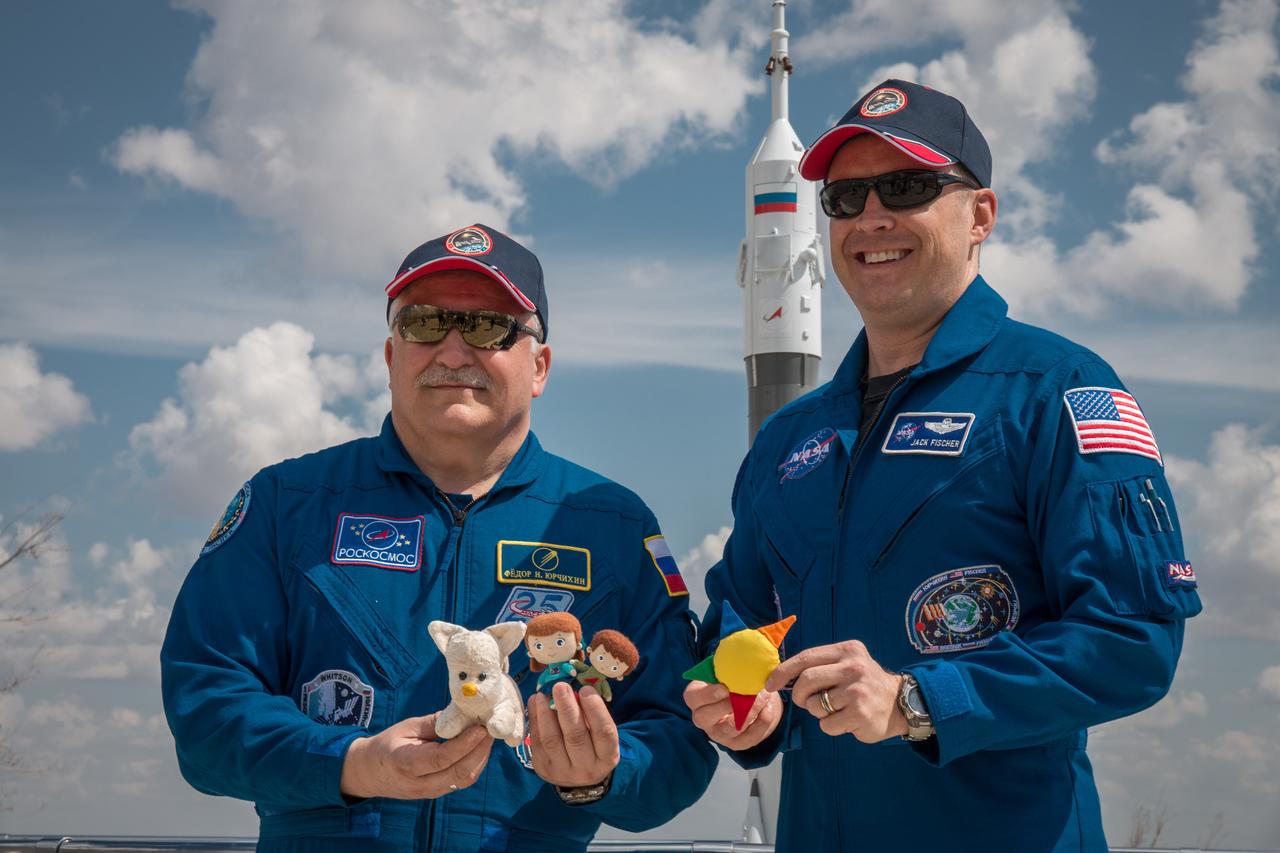
jsc2017e043083 (April 13, 2017) --- At the Cosmonaut Hotel crew quarters in Baikonur, Kazakhstan, Expedition 51 crewmembers Fyodor Yurchikhin of the Russian Federal Space Agency (Roscosmos, left) and Jack Fischer of NASA (right) display commemorative items April 13 that will be used as “zero-G” mascot indicators in the Soyuz MS-04 descent module over their heads during launch and their ascent to orbit. Yurchikhin is holding several toys from his children and Fischer is holding an emblem of the MD Anderson Cancer Center in Houston, where his daughter, Sariah was treated. Fischer and Yurchikhin will liftoff April 20 from the Baikonur Cosmodrome on the Soyuz MS-04 spacecraft for a four and a half month mission on the International Space Station. NASA/Victor Zelentsov
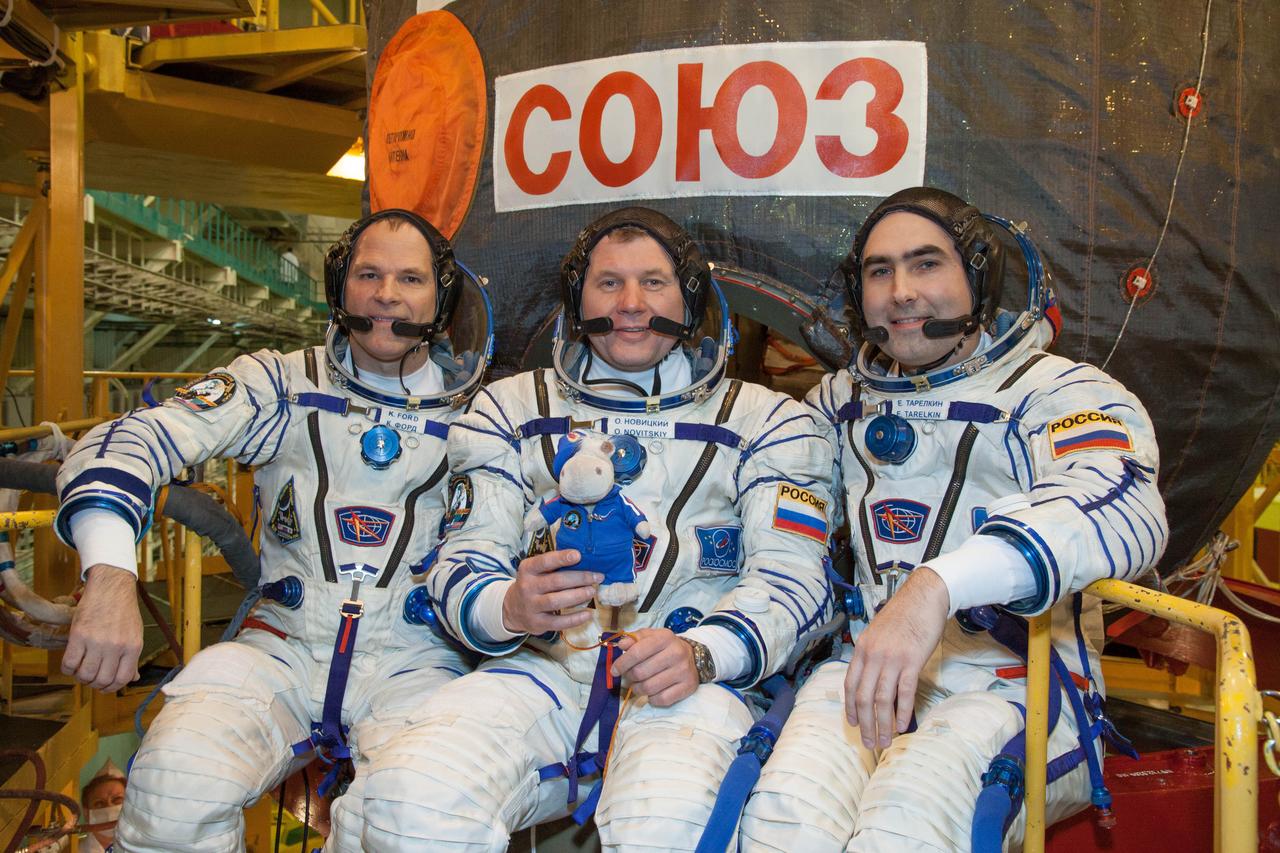
At the Baikonur Cosmodrome in Kazakhstan, the Expedition 33/34 crew posed for pictures October 10, 2012 in front of their Soyuz TMA-06M spacecraft during the first of two “fit check” dress rehearsal sessions. NASA Flight Engineer Kevin Ford (left), Soyuz Commander Oleg Novitskiy (center) and Flight Engineer Evgeny Tarelkin (right) are in the final phase of their training for launch October 23 for a five-month mission on the International Space Station. Novitskiy is holding a toy hippopotamus that will serve as a “zero-g” indicator over his head while he is strapped into the center seat of the descent module section of the Soyuz during its nine minute climb from the launch pad to orbit. NASA/Victor Zelentsov