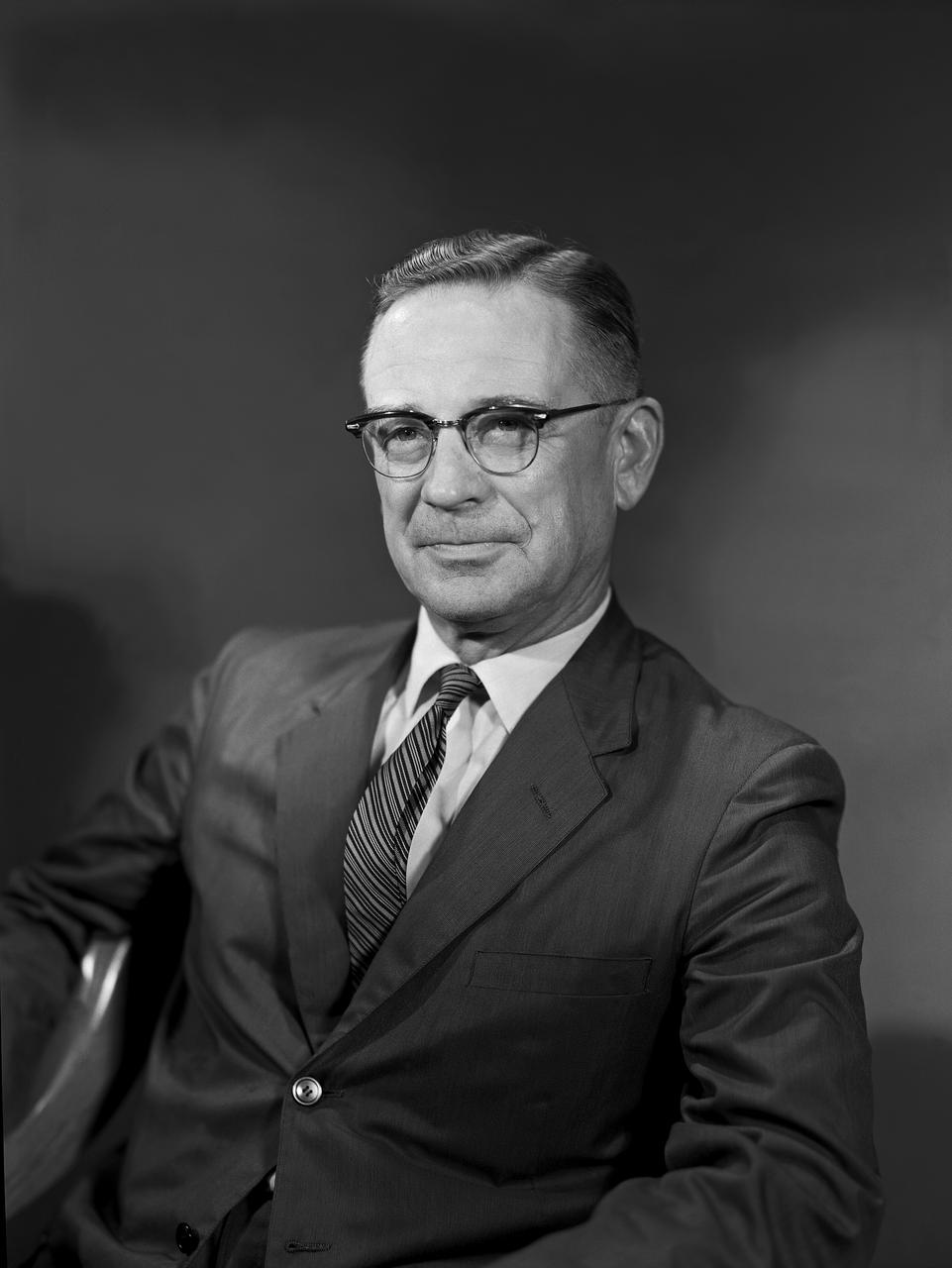
Portrait of Charles H. Zimmerman Associate Chief, Aero-Space Mechanics Division
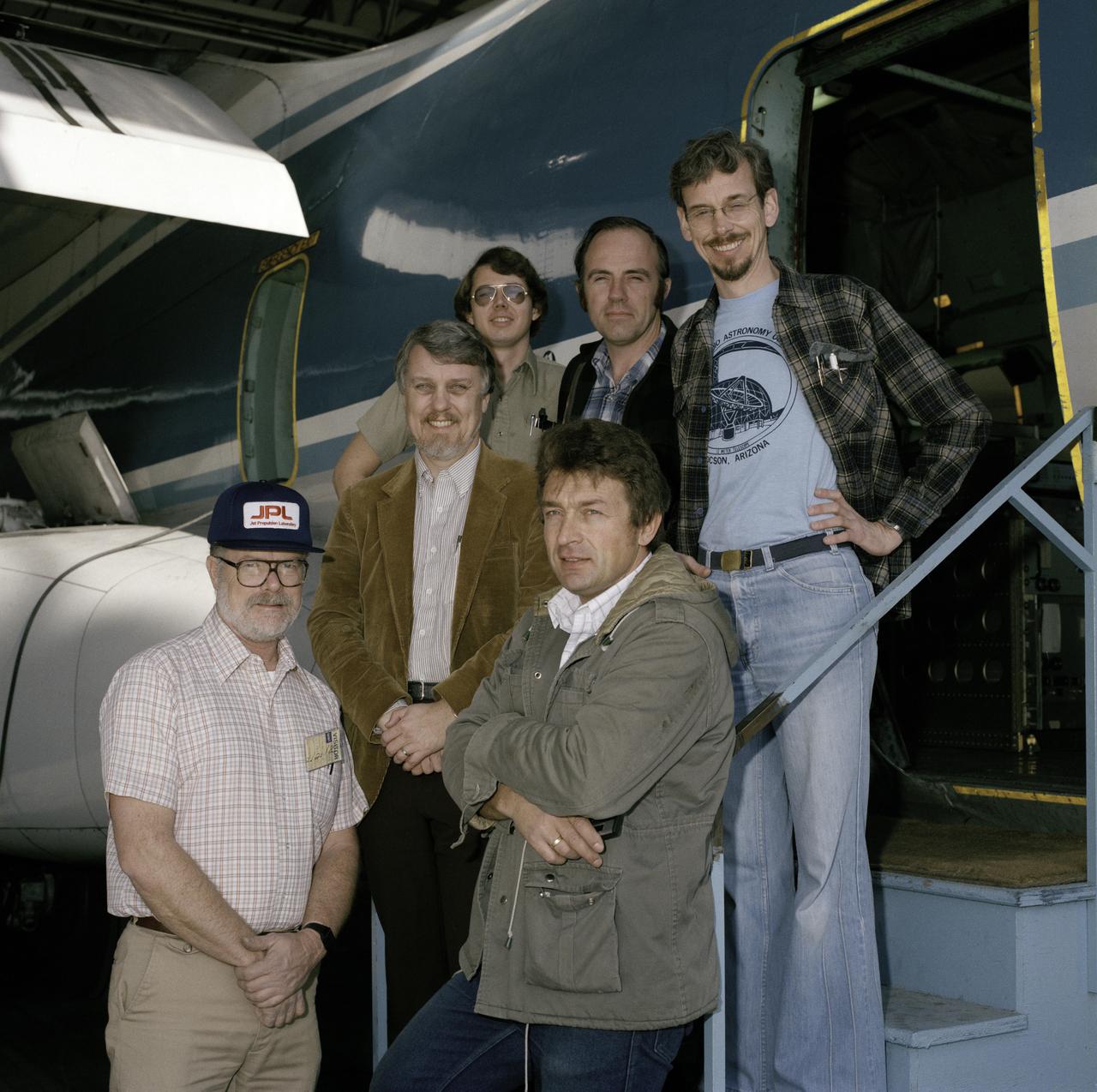
C-141 KAO JPL RESEARCH TEAM-183/380 with in no particular order are Zimmerman, Kuiper, Klein, Shcaeffer, Pickett, Batelaan
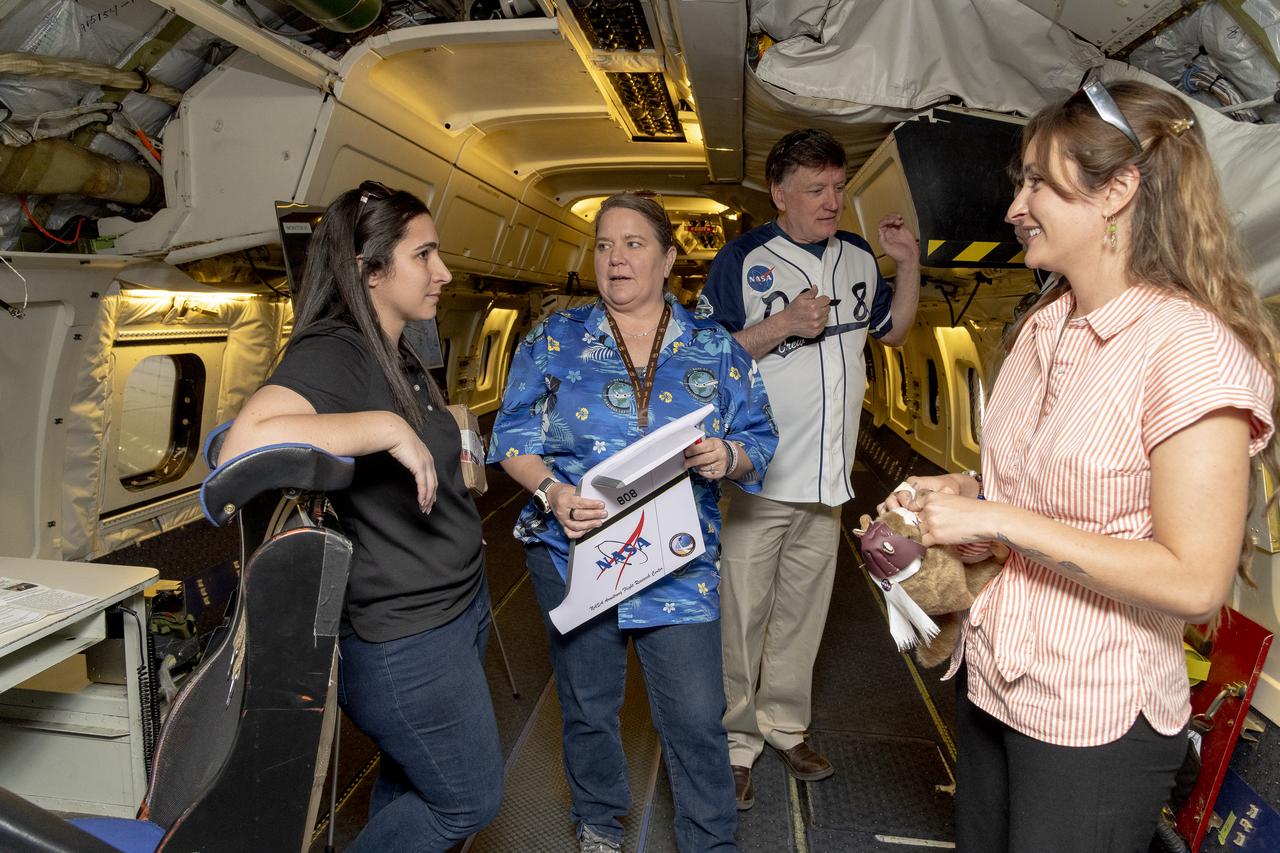
Members of the DC-8 program team tour an empty aircraft and recall past missions. Usually the DC-8 has between 15 and 30 instrument racks installed for a given science mission. The aircraft was spacious by comparison on May 2, 2024, when NASA personnel, friends, and family gathered at NASA’s Armstrong Flight Research Center Building 703 in Palmdale, California to celebrate the DC-8 staff, aircraft, and science campaigns. Conversing here are DC-8 aircraft deputy manager Kirsten Boogaard, left, with NASA Armstrong pilot Carrie Worth, Mike Zimmerman, and NASA Armstrong public affairs specialist for airborne science, Erica Heim.
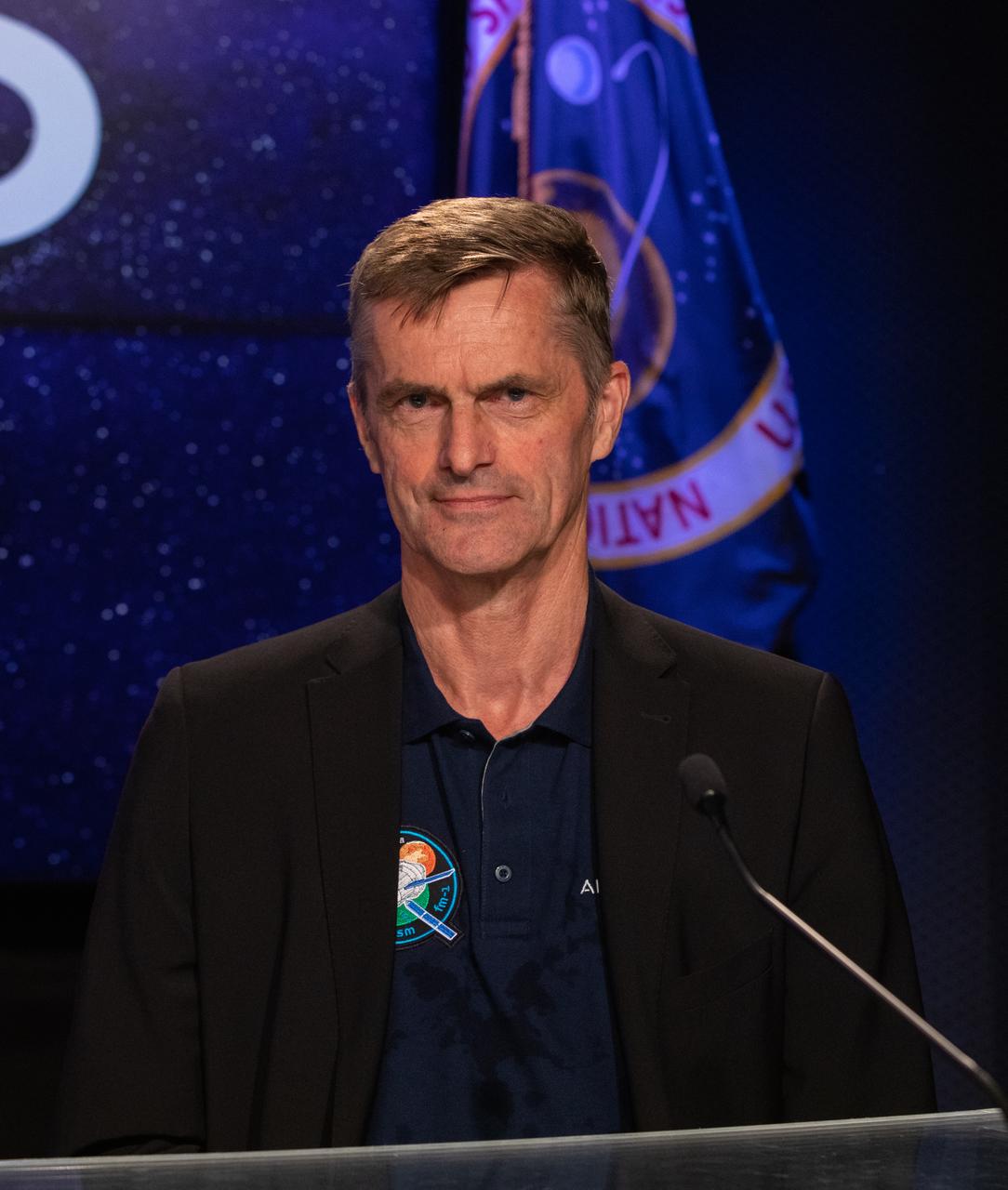
Ralf Zimmerman, head of Moon programs and Orion European Service Module, Airbus, participates in a prelaunch media briefing on the role of industry in advancing human exploration on Aug. 26, 2022, at NASA’s Kennedy Space Center in Florida, as the agency prepares for launch of Artemis I scheduled for Aug. 29, at 8:33 a.m. EDT from Kennedy’s Launch Complex 39B. The first in a series of increasingly complex missions, Artemis I will provide a foundation for human deep space exploration and demonstrate our commitment and capability to extend human presence to the Moon and beyond. The primary goal of Artemis I is to thoroughly test the integrated systems before crewed missions by operating the spacecraft in a deep space environment, testing Orion’s heat shield, and recovering the crew module after reentry, descent, and splashdown.
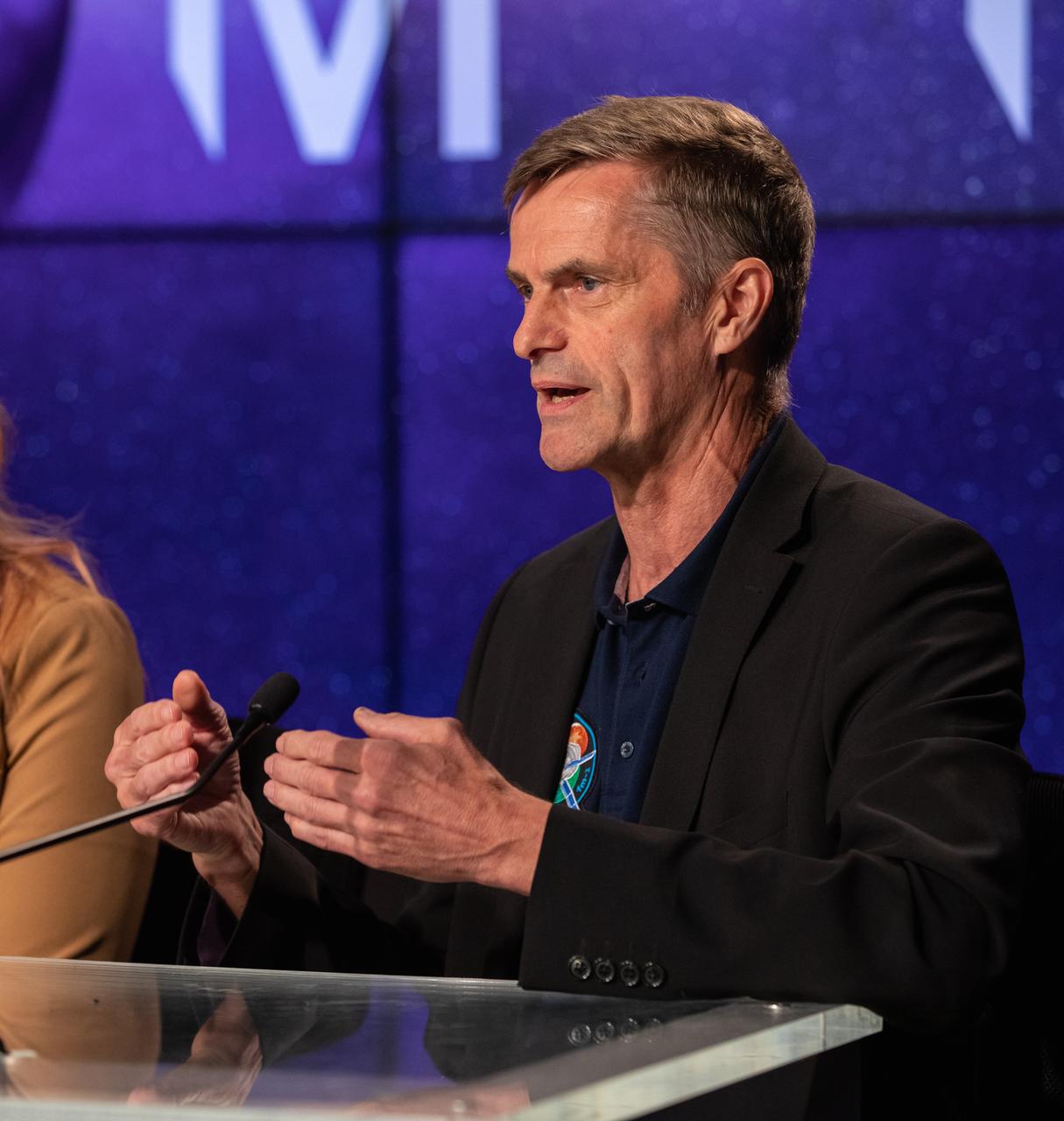
Ralf Zimmerman, head of Moon programs and Orion European Service Module, Airbus, participates in a prelaunch media briefing on the role of industry in advancing human exploration on Aug. 26, 2022, at NASA’s Kennedy Space Center in Florida, as the agency prepares for launch of Artemis I scheduled for Aug. 29, at 8:33 a.m. EDT from Kennedy’s Launch Complex 39B. The first in a series of increasingly complex missions, Artemis I will provide a foundation for human deep space exploration and demonstrate our commitment and capability to extend human presence to the Moon and beyond. The primary goal of Artemis I is to thoroughly test the integrated systems before crewed missions by operating the spacecraft in a deep space environment, testing Orion’s heat shield, and recovering the crew module after reentry, descent, and splashdown.

NASA holds a prelaunch media briefing on the role of industry in advancing human exploration on Aug. 26, 2022, at NASA’s Kennedy Space Center in Florida, as the agency prepares for launch of Artemis I scheduled for Aug. 29, at 8:33 a.m. EDT from Kennedy’s Launch Complex 39B. Participants, from left are Kathryn Hambleton, NASA Communications; Jim Free, association administrator, Exploration Systems Development Mission Directorate, NASA Headquarters; Randy Lycans, vice president/general manager of NASA Enterprise Solutions, Jacobs; Jeff Zotti, RS-25 program director, Aerojet Rocketdyne; Jennifer Boland-Masterson, director of operations, Michoud Assembly Facility, Boeing; Doug Hurley, senior director of business development, Northrop Grumman; Kelly DeFazio, director of Orion production, Lockheed Martin; and Ralf Zimmerman, head of Moon programs and Orion European Service Module, Airbus. The first in a series of increasingly complex missions, Artemis I will provide a foundation for human deep space exploration and demonstrate our commitment and capability to extend human presence to the Moon and beyond. The primary goal of Artemis I is to thoroughly test the integrated systems before crewed missions by operating the spacecraft in a deep space environment, testing Orion’s heat shield, and recovering the crew module after reentry, descent, and splashdown.

NASA holds a prelaunch media briefing on the role of industry in advancing human exploration on Aug. 26, 2022, at NASA’s Kennedy Space Center in Florida, as the agency prepares for launch of Artemis I scheduled for Aug. 29, at 8:33 a.m. EDT from Kennedy’s Launch Complex 39B. Participants, from left are Kathryn Hambleton, NASA Communications; Jim Free, association administrator, Exploration Systems Development Mission Directorate, NASA Headquarters; Randy Lycans, vice president/general manager of NASA Enterprise Solutions, Jacobs; Jeff Zotti, RS-25 program director, Aerojet Rocketdyne; Jennifer Boland-Masterson, director of operations, Michoud Assembly Facility, Boeing; Doug Hurley, senior director of business development, Northrop Grumman; Kelly DeFazio, director of Orion production, Lockheed Martin; and Ralf Zimmerman, head of Moon programs and Orion European Service Module, Airbus. The first in a series of increasingly complex missions, Artemis I will provide a foundation for human deep space exploration and demonstrate our commitment and capability to extend human presence to the Moon and beyond. The primary goal of Artemis I is to thoroughly test the integrated systems before crewed missions by operating the spacecraft in a deep space environment, testing Orion’s heat shield, and recovering the crew module after reentry, descent, and splashdown.

CAPE CANAVERAL, Fla. -- Japan Aerospace Exploration Agency and International Space Station Program Manager Tetsuro Yokoyama addresses attendees of the American Astronautical Society's 2010 National Conference held at the Radisson Resort at the Port in Cape Canaveral, Fla. The panel of speakers seated from left to right are, International Space Services President James Zimmerman; International Space Station Program Manager Michael Suffredini; Canadian Space Agency Director of Space Exploration Operations and Infrastructure Pierre Jean; European Space Agency Directorate of Human Spaceflight and International Space Station Programme Department Bernado Patti and Roskosmos Piloted Space Programs Department Director Alexey Krasnov. This year's conference was titled: International Space Station: The Next Decade - Utilization and Research. The conference was organized with the support of Kennedy and sponsored by The Boeing Company, Honeywell International Inc., Northrop Grumman Corp., Space Florida and the Universities Space Research Association (USRA). Photo credit: NASA/Jim Grossmann