
A close-up view of a zinnia flower grown in the Veggie Laboratory in the Space Station Processing Facility (SSPF) at NASA's Kennedy Space Center in Florida, on Nov. 27, 2018. Seeds from zinnias growing on the space station were returned to Earth. Researchers in the SSPF planted the seeds in the Veggie control unit and grew the colorful flowers.
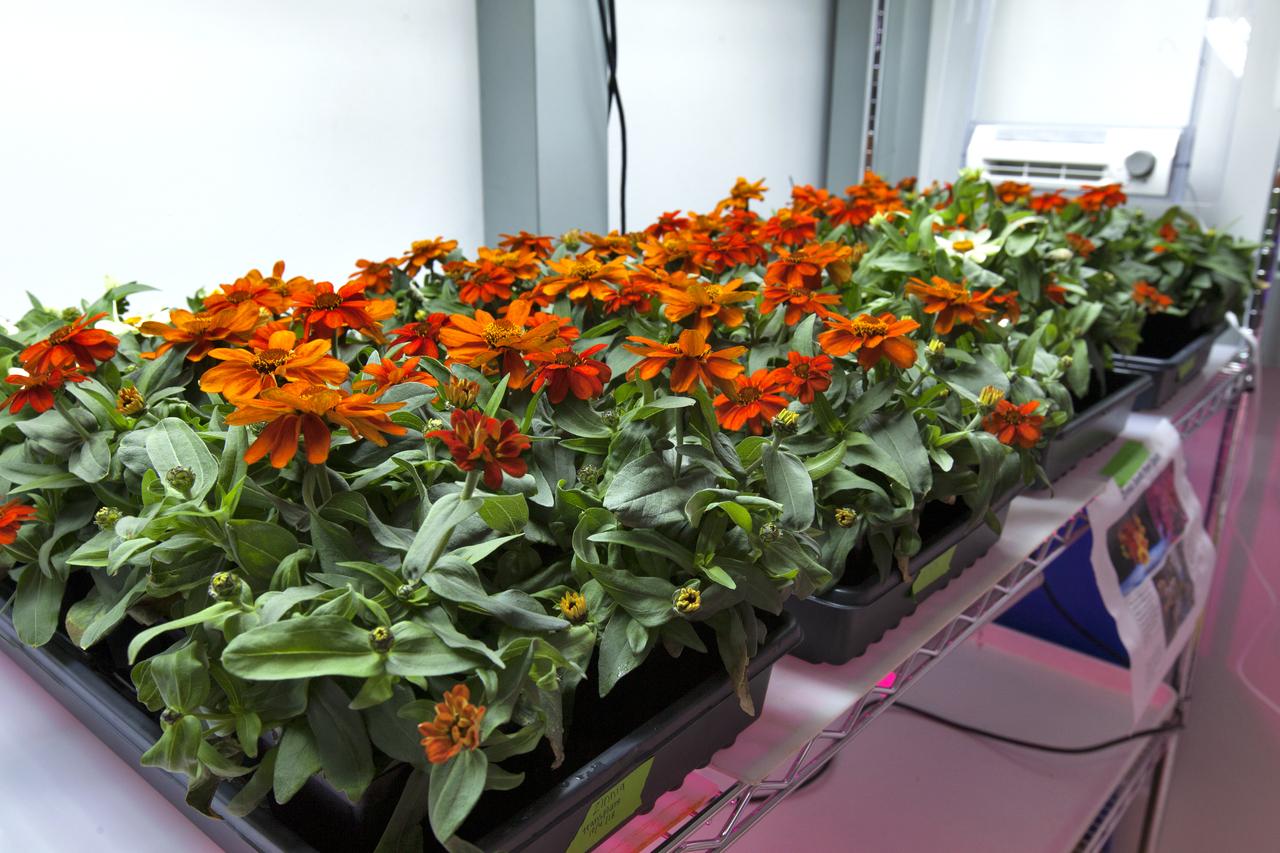
Zinnia seeds grown in the Veggie plant growth system on the International Space Station were planted and are growing in the Veggie Laboratory in the Space Station Processing Facility (SSPF) at NASA's Kennedy Space Center in Florida on Nov. 27, 2018.
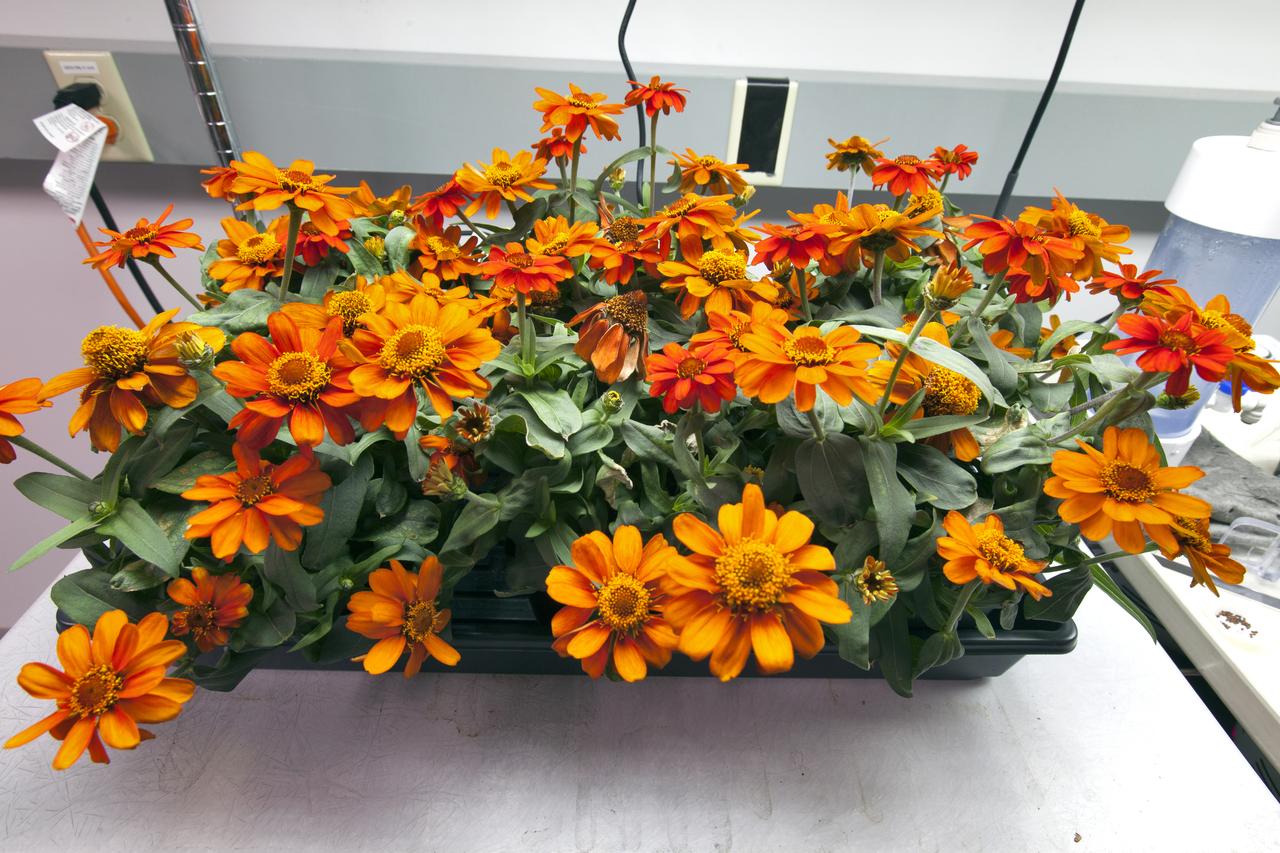
Zinnia seeds grown in the Veggie plant growth system on the International Space Station were planted and are growing in the Veggie Laboratory in the Space Station Processing Facility (SSPF) at NASA's Kennedy Space Center in Florida on Nov. 27, 2018.
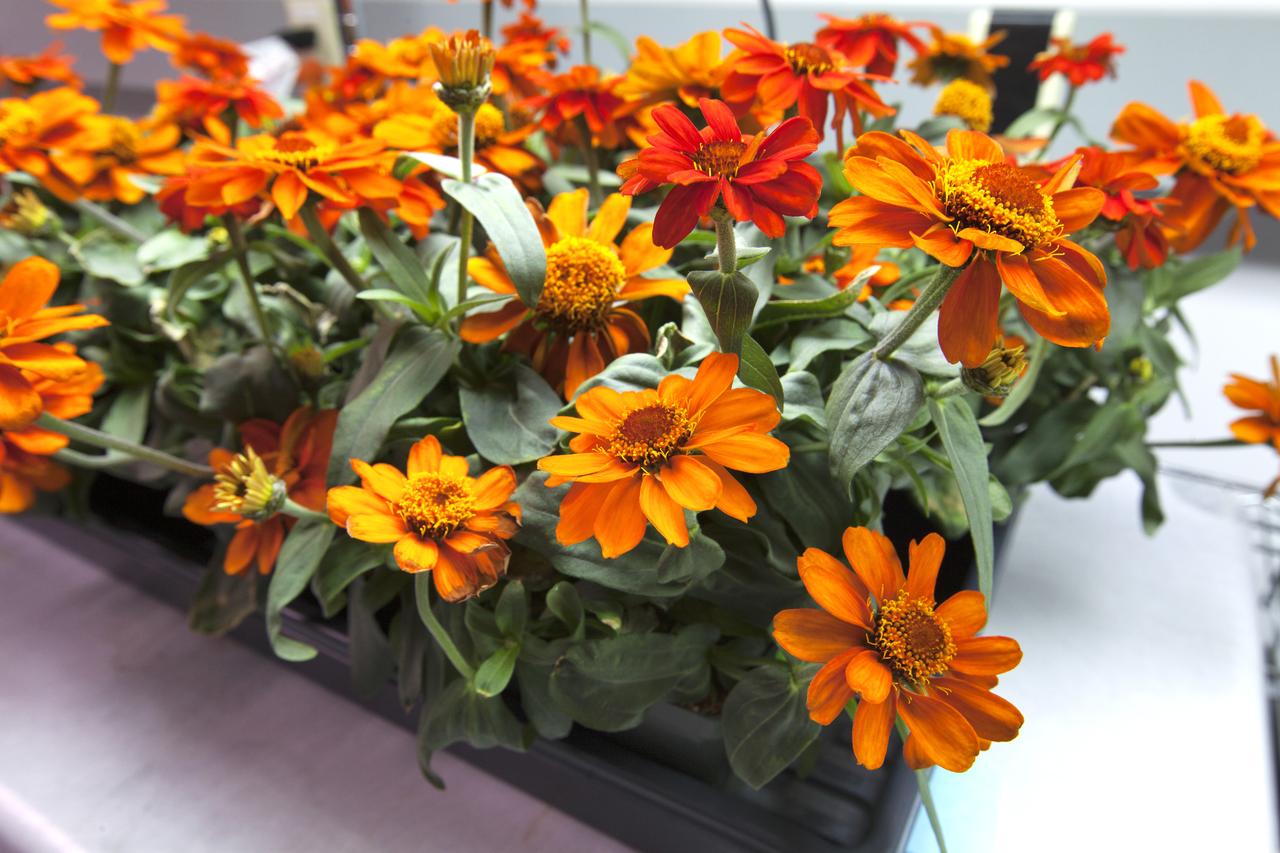
Zinnia seeds grown in the Veggie plant growth system on the International Space Station were planted and are growing in the Veggie Laboratory in the Space Station Processing Facility (SSPF) at NASA's Kennedy Space Center in Florida on Nov. 27, 2018.
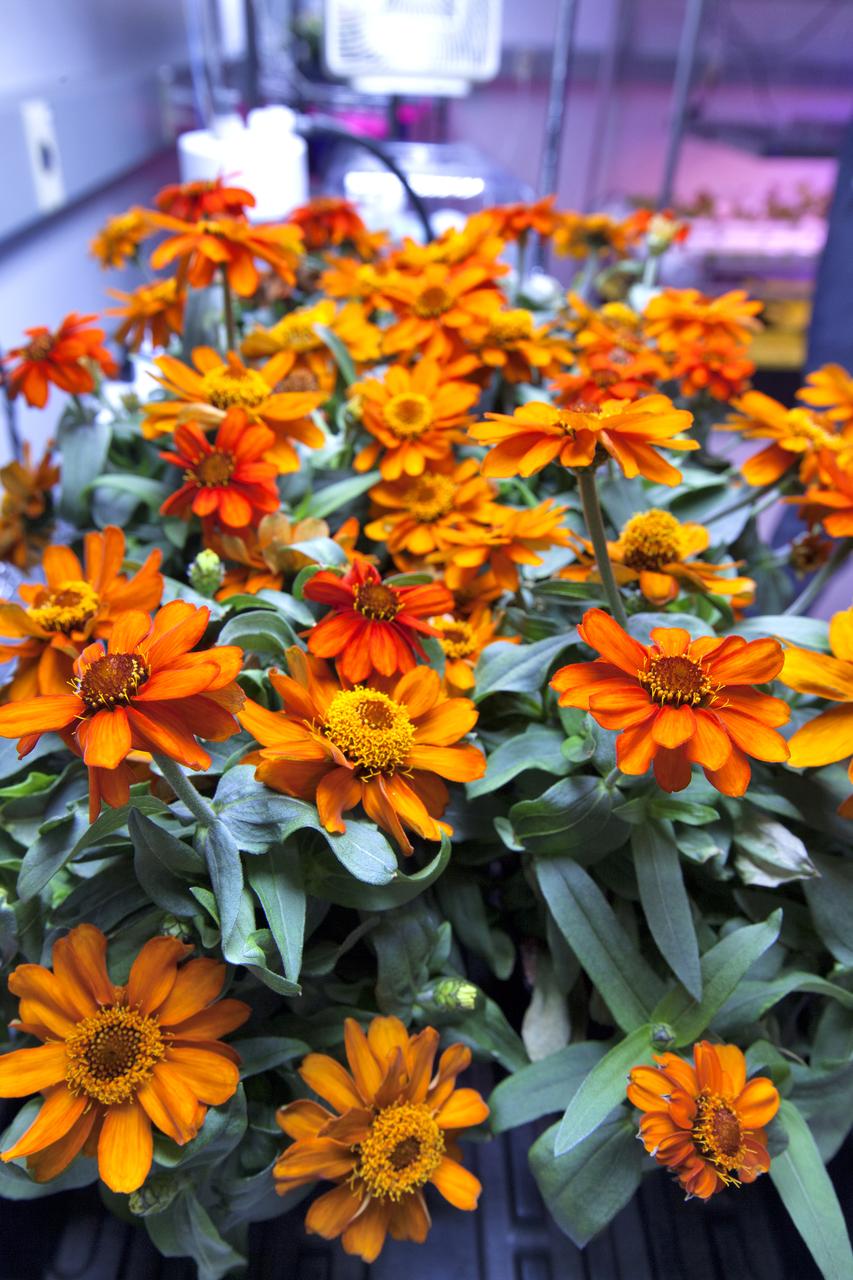
Zinnia seeds grown in the Veggie plant growth system on the International Space Station were planted and are growing in the Veggie Laboratory in the Space Station Processing Facility (SSPF) at NASA's Kennedy Space Center in Florida on Nov. 27, 2018.
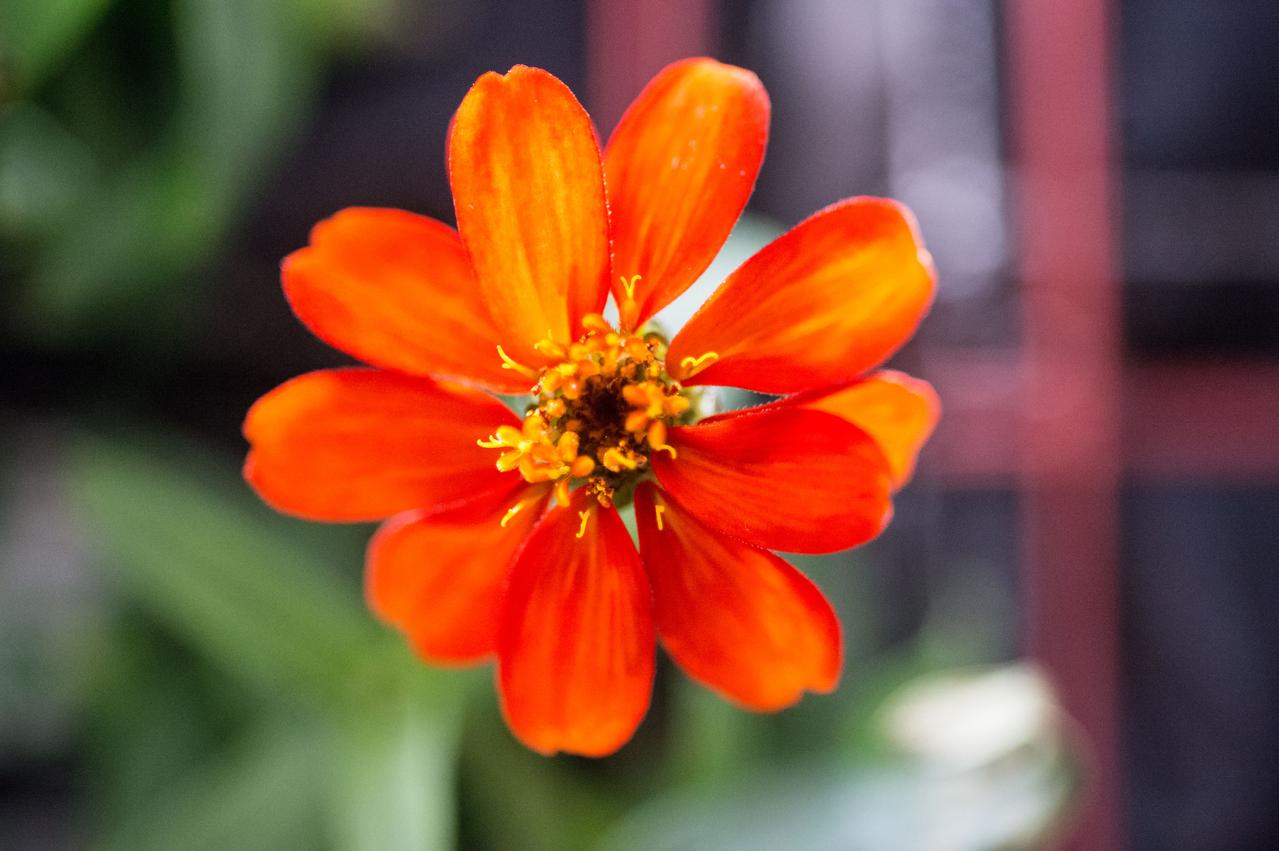
iss046e017204 (1/22/2016) --- Close-up view of Zinnia grown as part of VEG-01 experiment in the Columbus module aboard the International Space Station (ISS). The Veg-01 investigation is used to assess on-orbit function and performance of the Veggie facility, focusing on the growth and development of seedlings in the spaceflight environment and the composition of microbial flora on the plants and the facility. For this run, Zinnias were grown for 60 days and produced flowers.
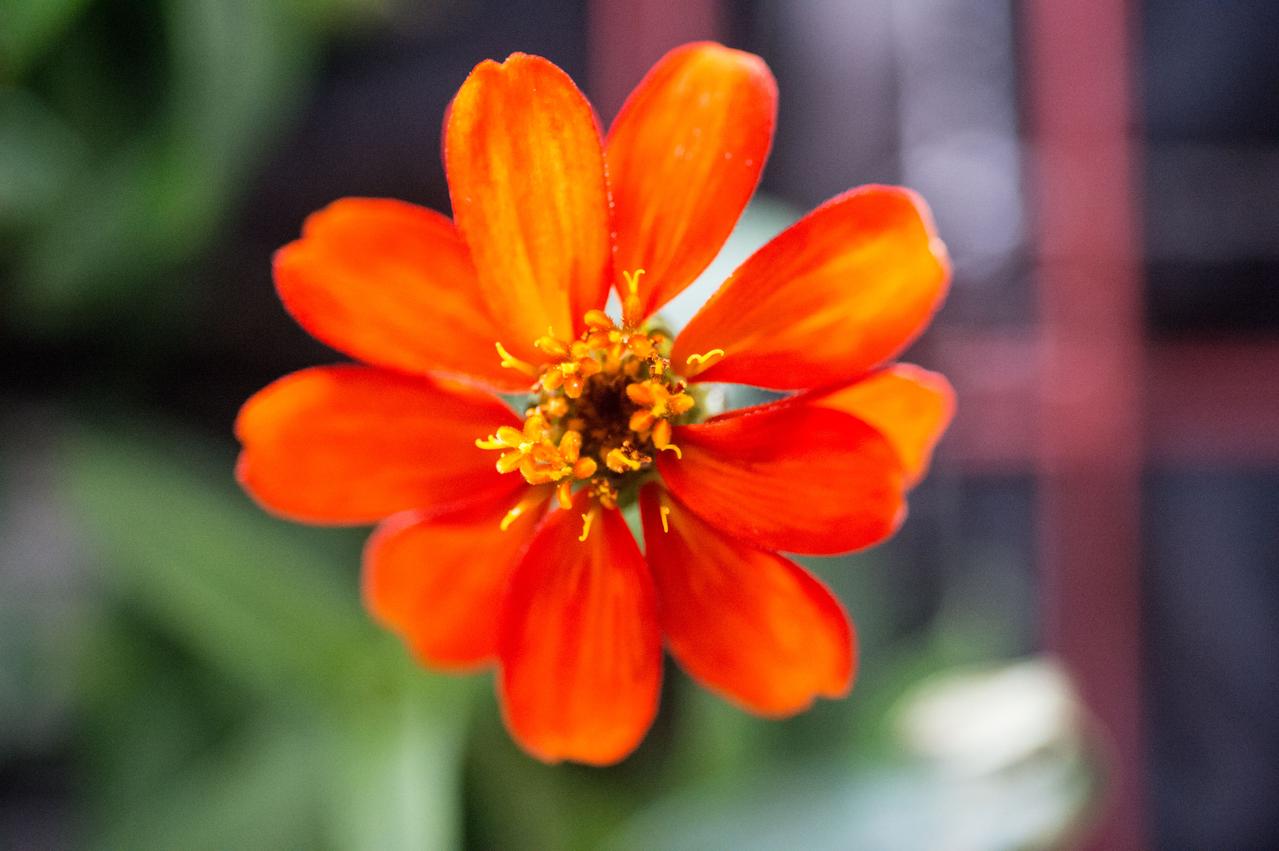
Close-up view of Zinnia grown as part of VEG-01 experiment floating Columbus module. The Veg-01 investigation is used to assess on-orbit function and performance of the Veggie facility, focusing on the growth and development of seedlings in the spaceflight environment and the composition of microbial flora on the plants and the facility. For this run, Zinnias will be grown for 60 days and are expected to produce flowers.
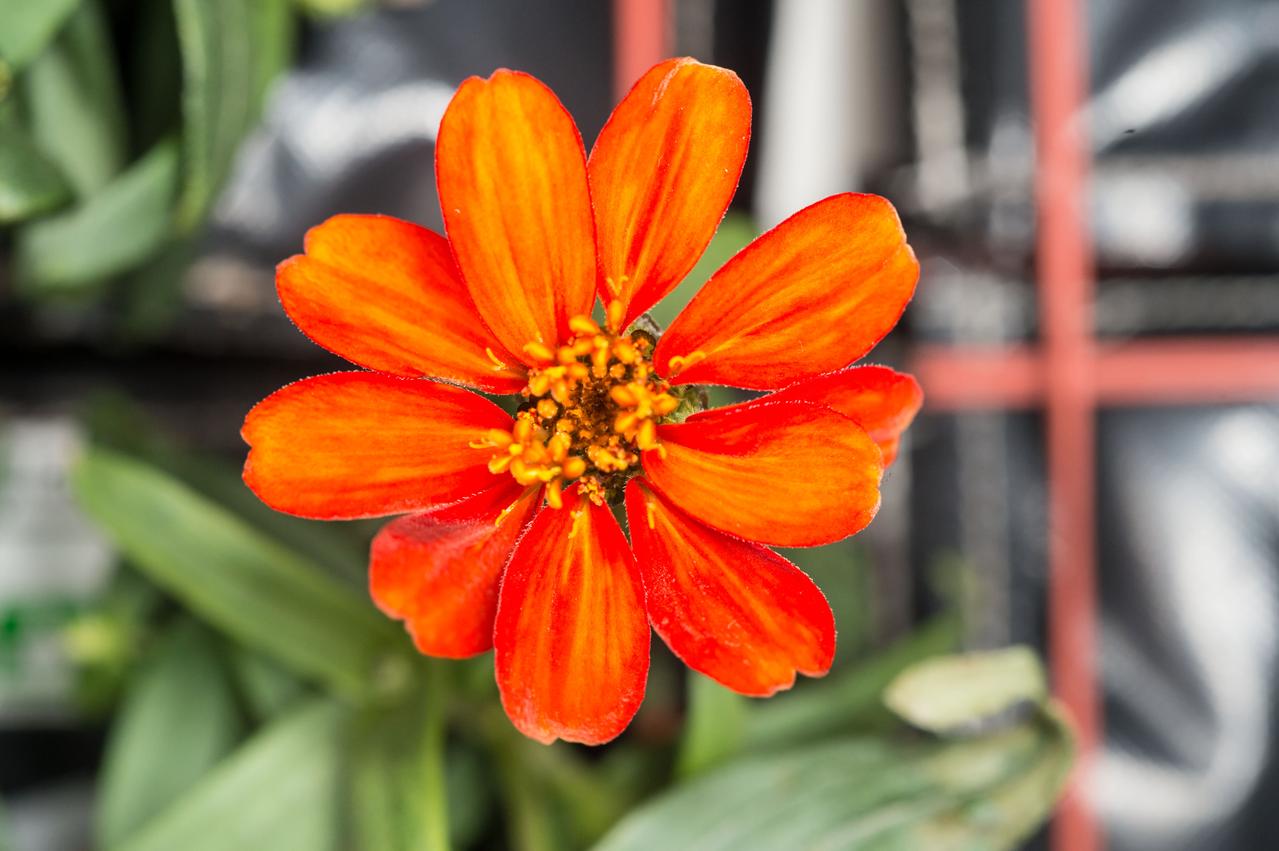
iss046e017198 (1/22/2016) --- Close-up view of Zinnia grown as part of VEG-01 experiment in the Columbus module aboard the International Space Station (ISS). The Veg-01 investigation is used to assess on-orbit function and performance of the Veggie facility, focusing on the growth and development of seedlings in the spaceflight environment and the composition of microbial flora on the plants and the facility. For this run, Zinnias were grown for 60 days and produced flowers.
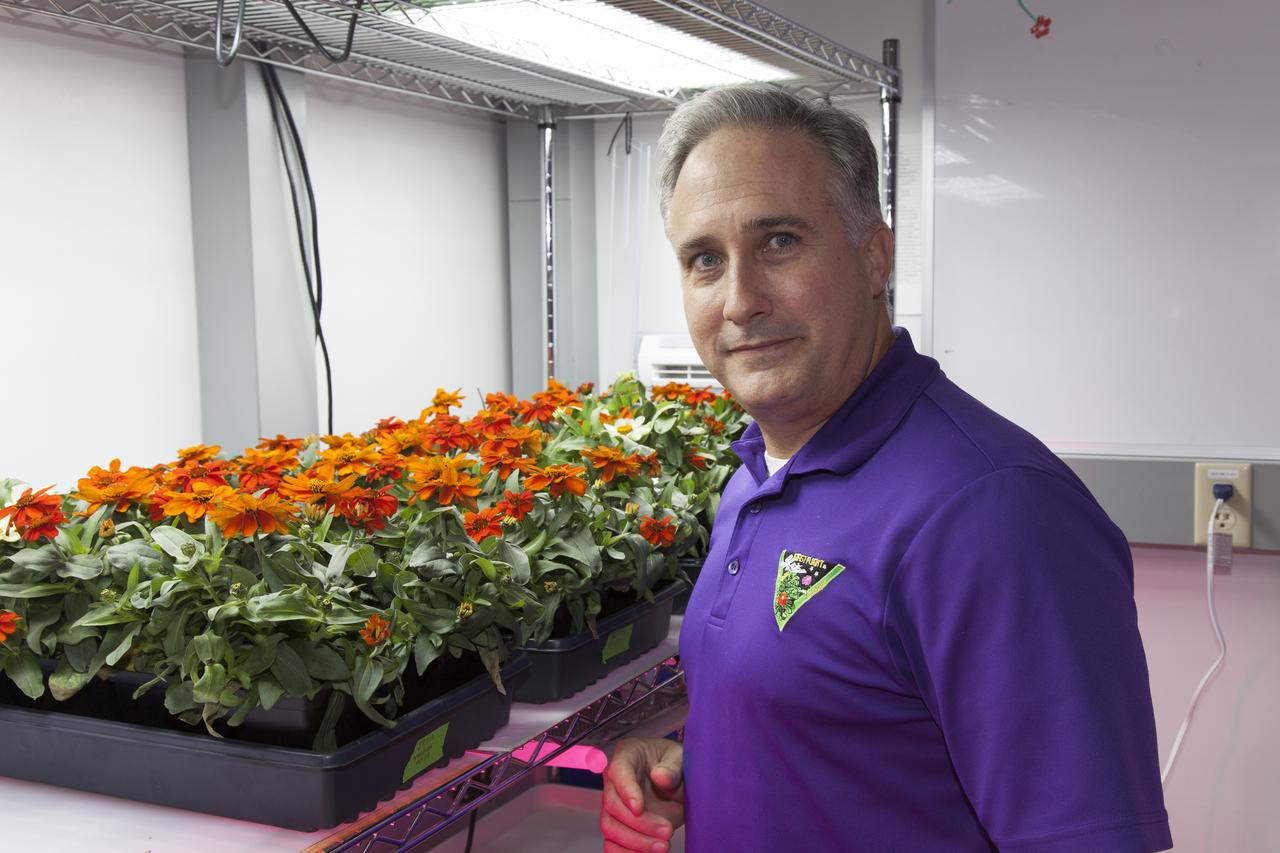
Trent Smith, Veggie project manager, Exploration Research and Technology Programs, is in the Veggie Laboratory in the Space Station Processing Facility (SSPF) at NASA's Kennedy Space Center in Florida on Nov. 27, 2018. Next to him are zinnia flowers grown from seeds germinated in the Veggie plant growth system on the International Space Station. The seeds were returned to Earth and researchers in the SSPF planted them in the Veggie control unit and grew the colorful flowers.
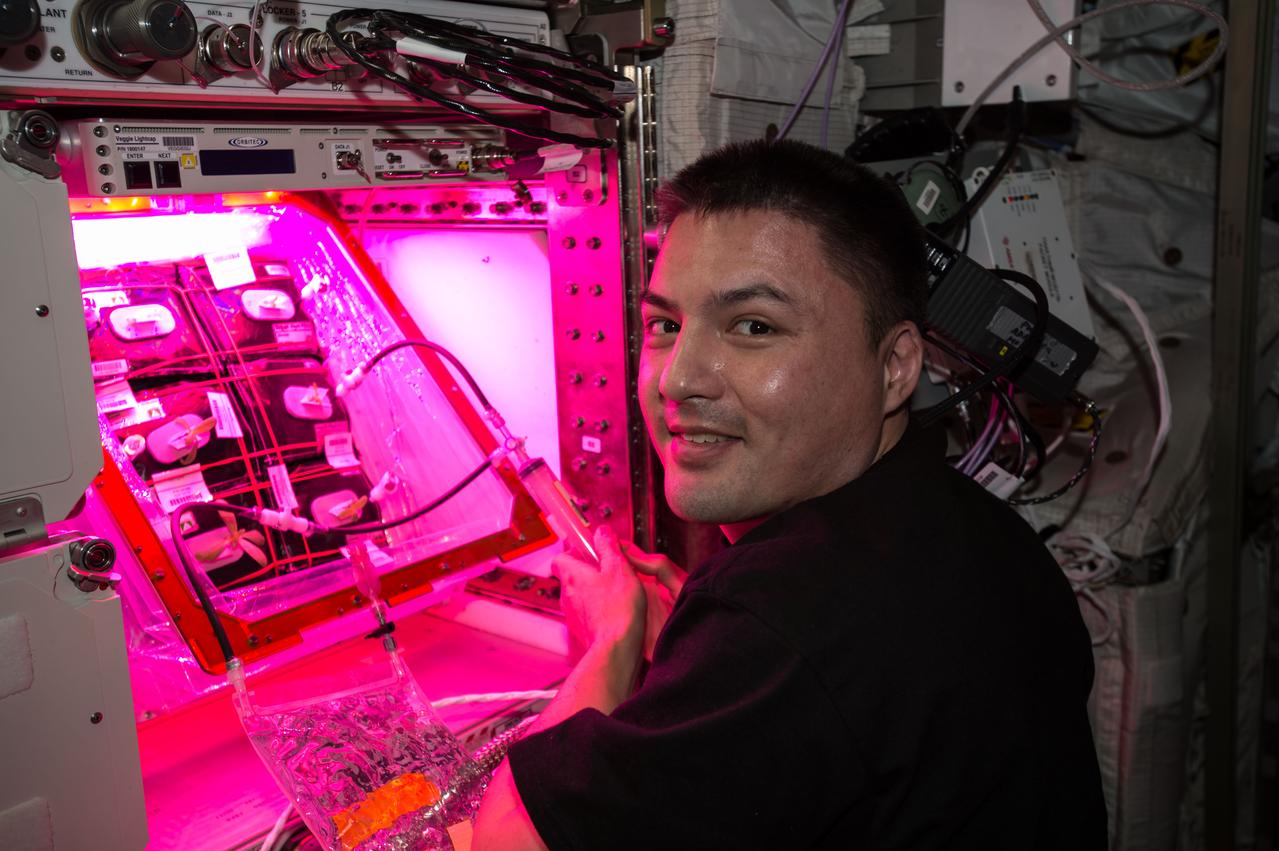
Flight engineer Kjell Lindgren poses with zinnia plants in the Veggie facility during Plant Pillow water refill operations. Image was taken in the Columbus European Laboratory and released by Lindgren on social media. "Our zinnias are looking good! #SpaceGardener"
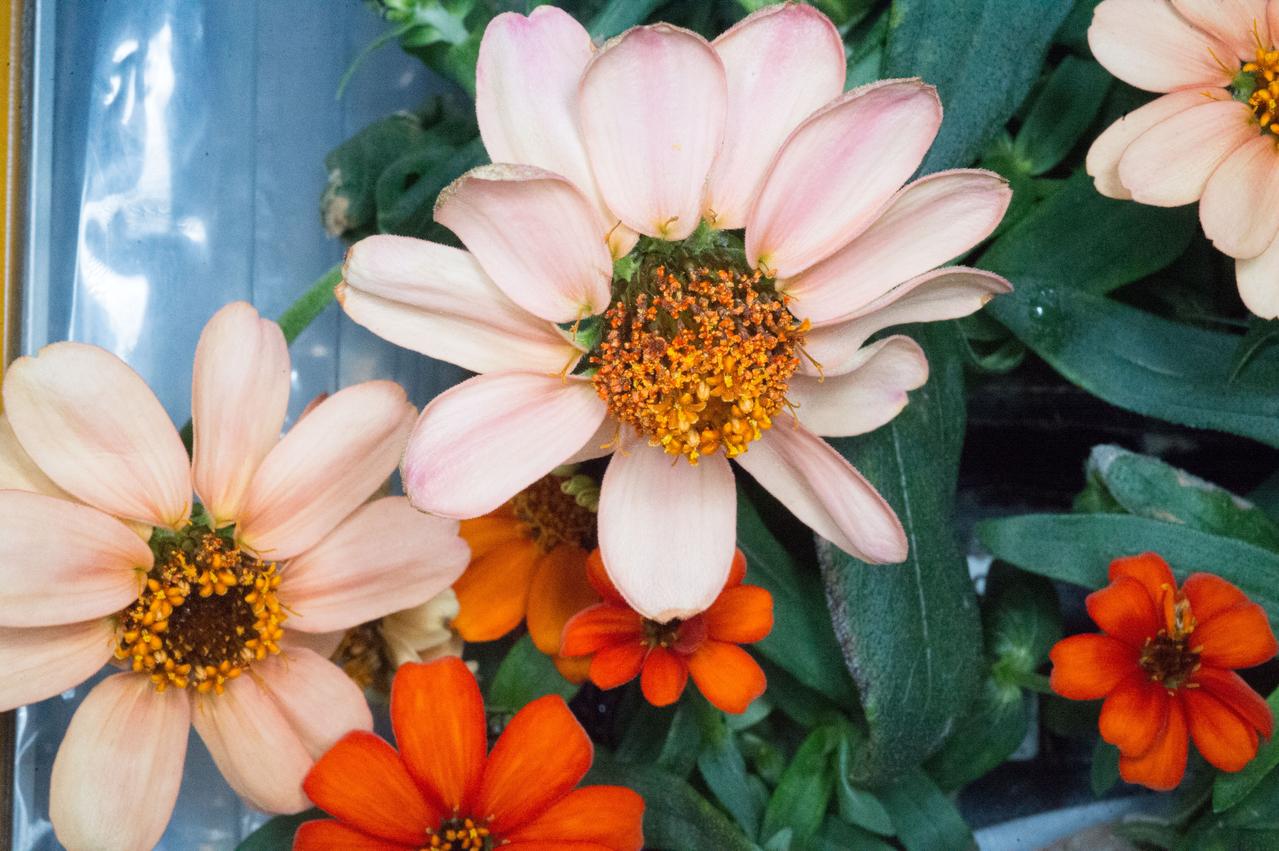
Photographic documentation of VEG-01 flowers taken by the Expedition 46 crew. The Veg-01 investigation is used to assess on-orbit function and performance of the Veggie facility, focusing on the growth and development of seedlings in the spaceflight environment and the composition of microbial flora on the plants and the facility. For this run, Zinnias will be grown for 60 days and are expected to produce flowers.
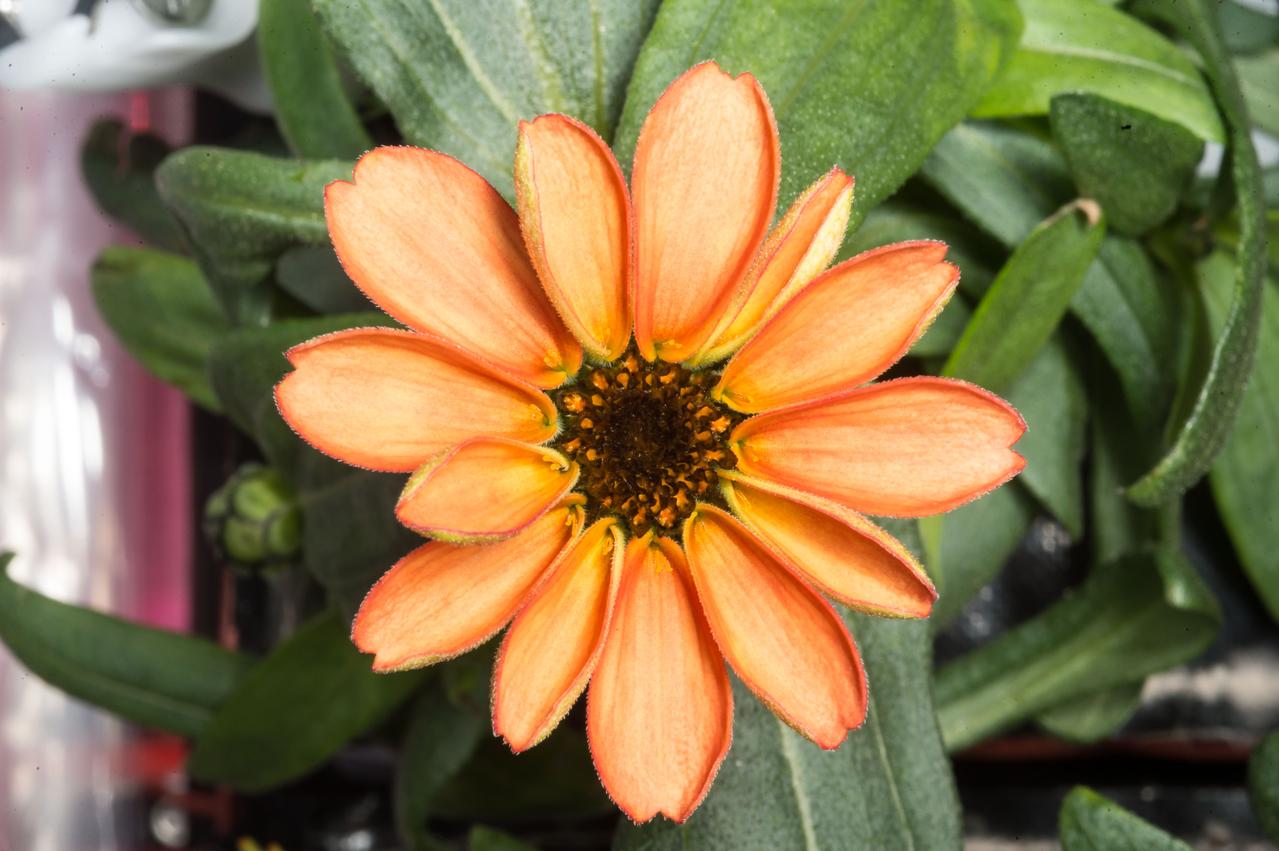
Photographic documentation of VEG-01 taken by the Expedition 46 crew. The Veg-01 investigation is used to assess on-orbit function and performance of the Veggie facility, focusing on the growth and development of seedlings in the spaceflight environment and the composition of microbial flora on the plants and the facility. For this run, Zinnias were grown for 60 days and produced these flowers.
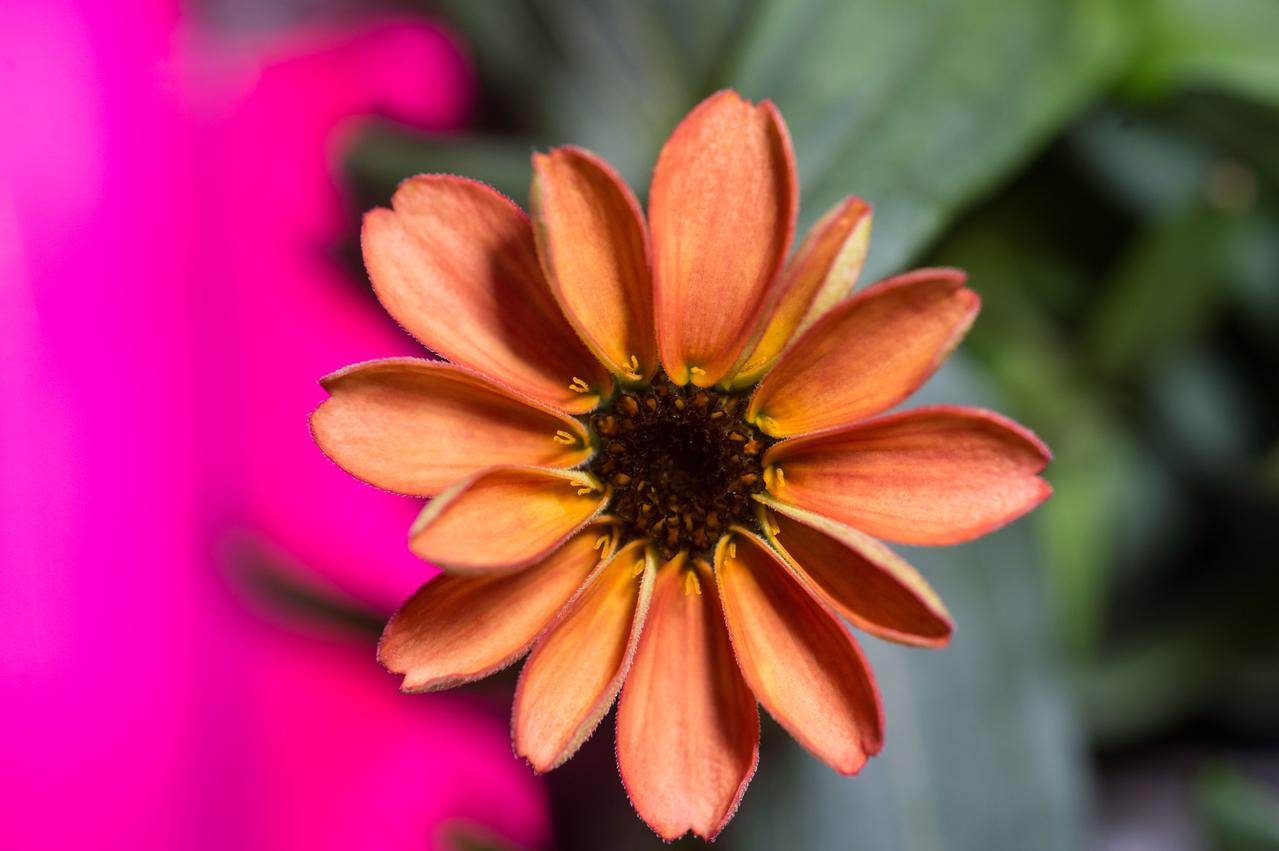
Photographic documentation of VEG-01 taken by the Expedition 46 crew. The Veg-01 investigation is used to assess on-orbit function and performance of the Veggie facility, focusing on the growth and development of seedlings in the spaceflight environment and the composition of microbial flora on the plants and the facility. For this run, Zinnias were grown for 60 days and produced these flowers.
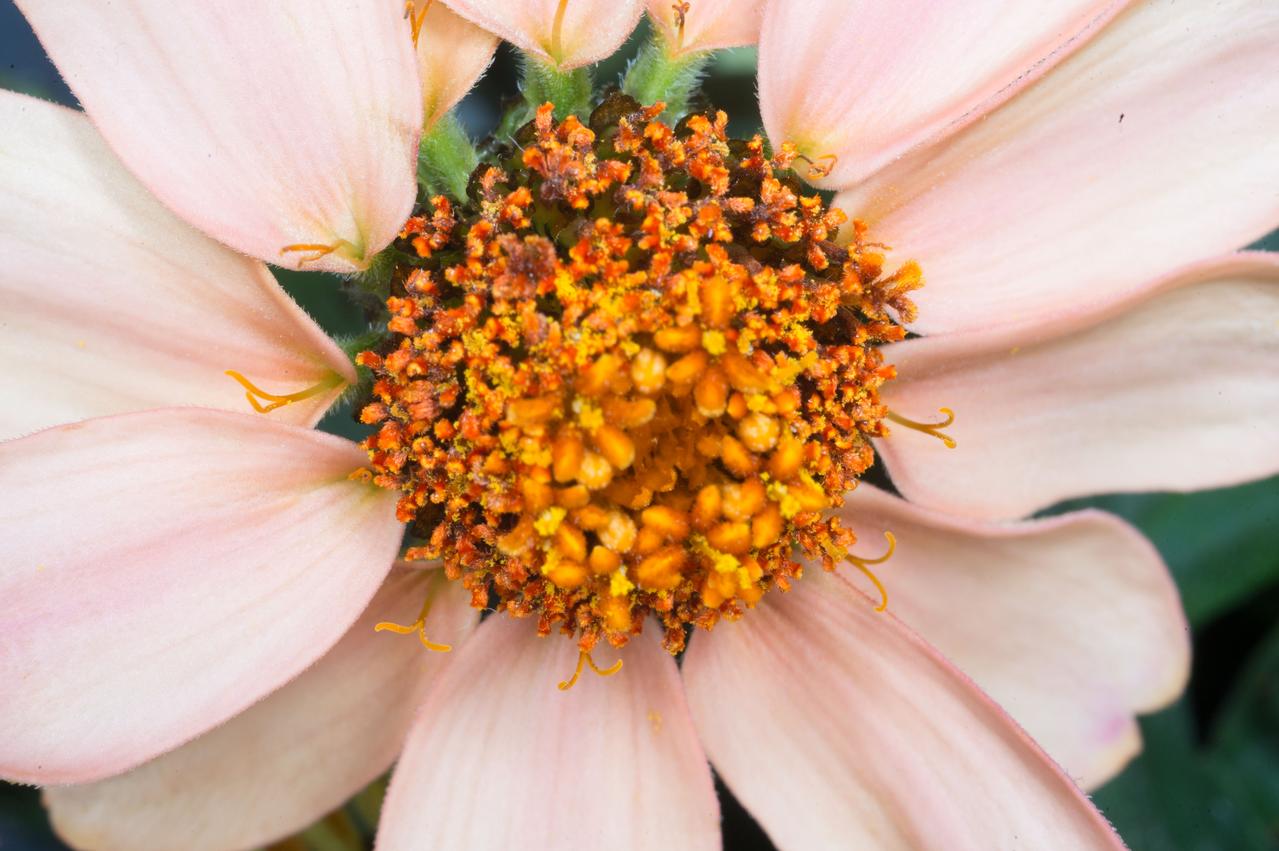
Photographic documentation of VEG-01 flowers taken by the Expedition 46 crew. The Veg-01 investigation is used to assess on-orbit function and performance of the Veggie facility, focusing on the growth and development of seedlings in the spaceflight environment and the composition of microbial flora on the plants and the facility. For this run, Zinnias will be grown for 60 days and are expected to produce flowers.
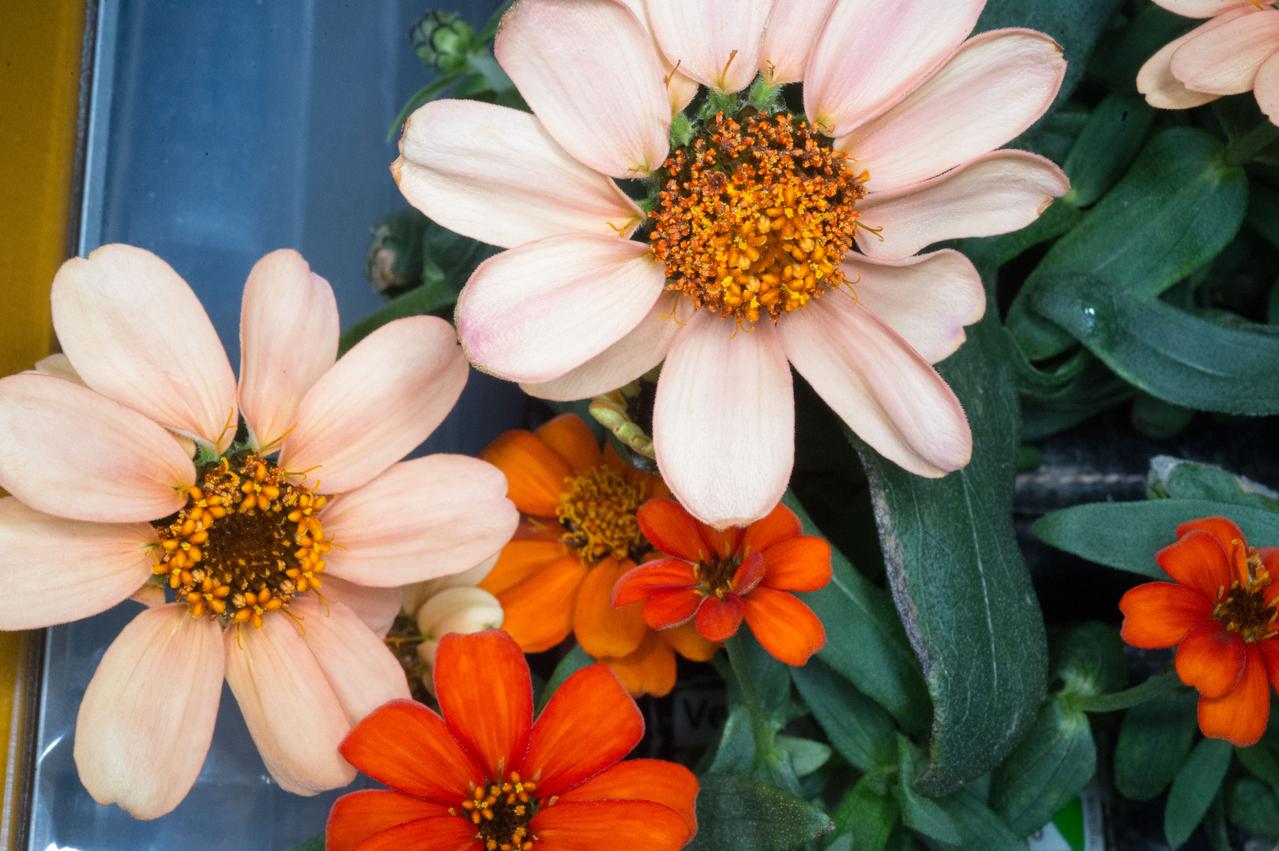
Photographic documentation of VEG-01 flowers taken by the Expedition 46 crew. The Veg-01 investigation is used to assess on-orbit function and performance of the Veggie facility, focusing on the growth and development of seedlings in the spaceflight environment and the composition of microbial flora on the plants and the facility. For this run, Zinnias will be grown for 60 days and are expected to produce flowers.
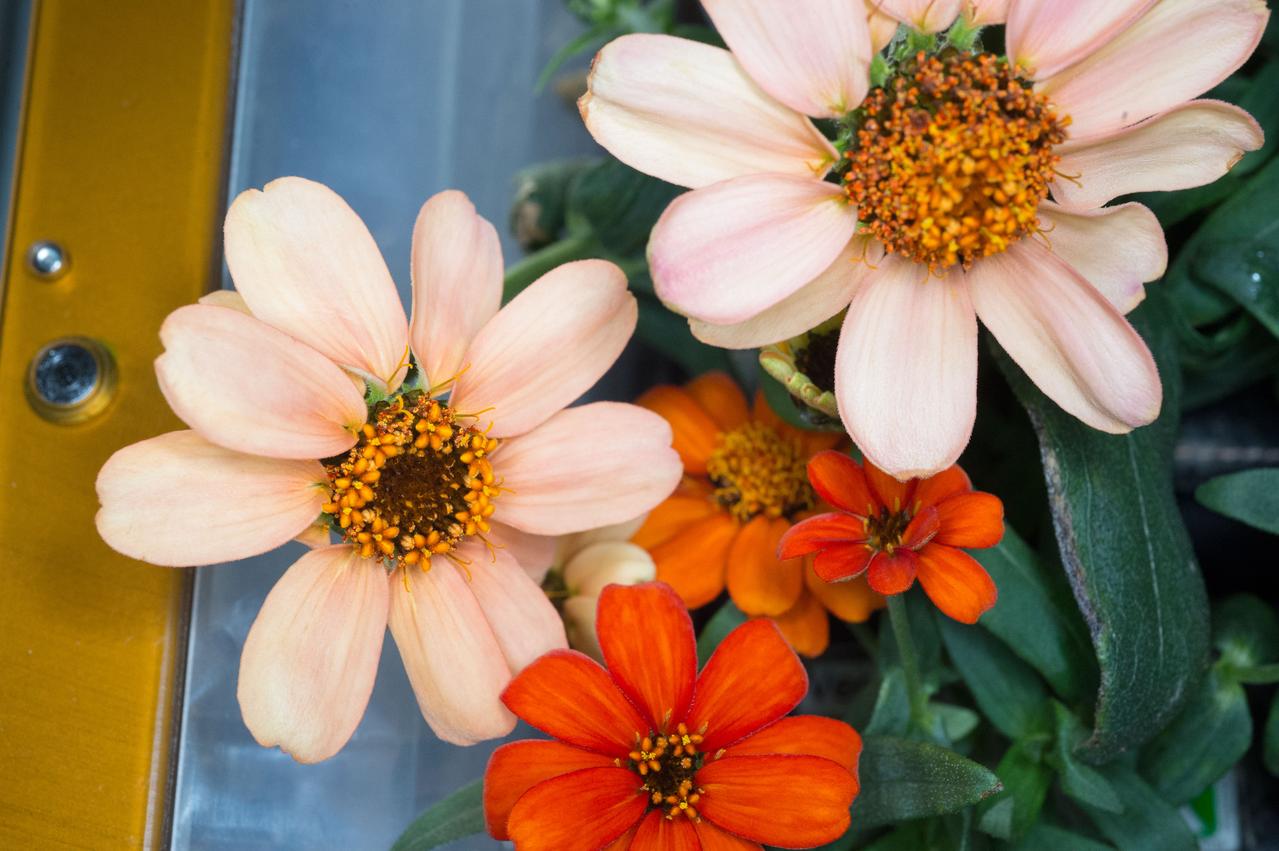
Photographic documentation of VEG-01 flowers taken by the Expedition 46 crew. The Veg-01 investigation is used to assess on-orbit function and performance of the Veggie facility, focusing on the growth and development of seedlings in the spaceflight environment and the composition of microbial flora on the plants and the facility. For this run, Zinnias will be grown for 60 days and are expected to produce flowers.
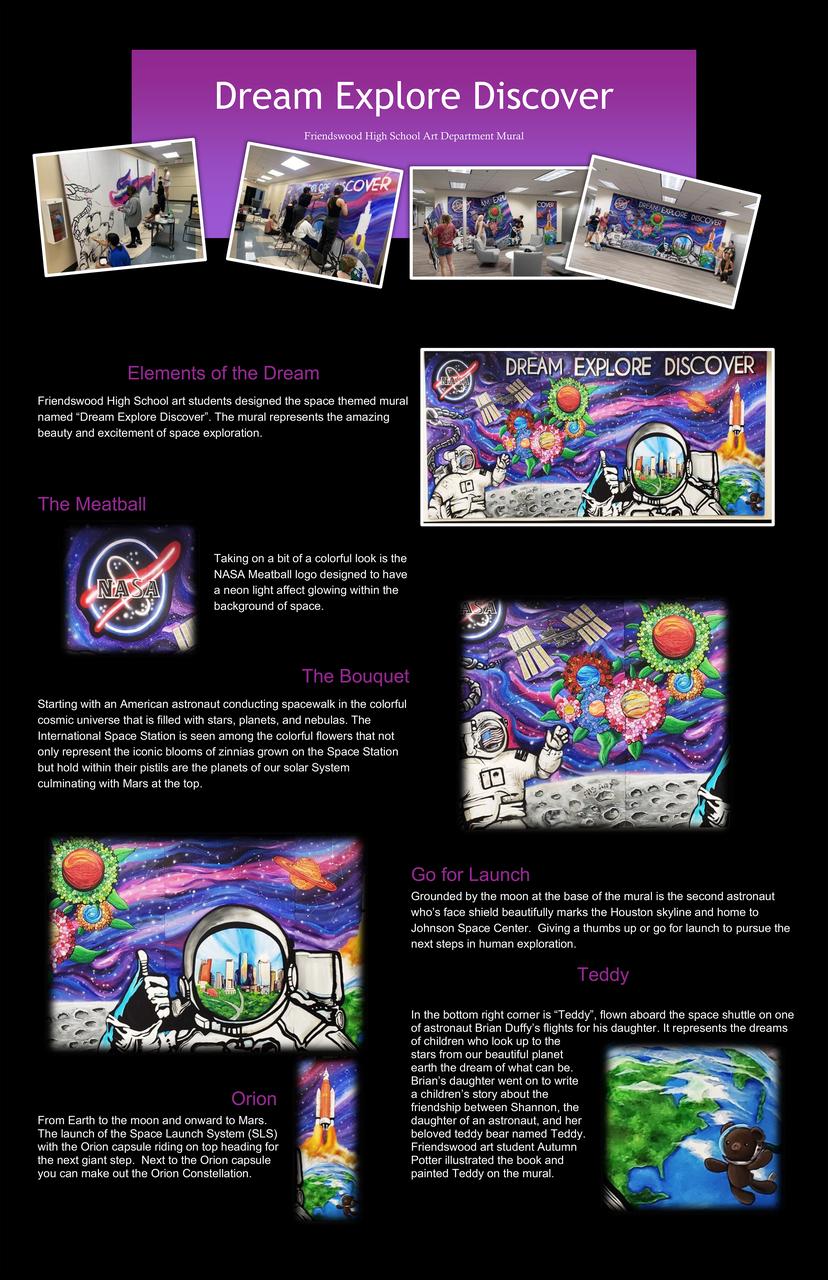
jsc2022e060871_Alt ( 6/22/2022) Friendswood High School art students designed the space themed mural named “Dream Explore Discover”. The mural represents the amazing beauty and excitement of space exploration. Taking on a bit of a colorful look is the NASA Meatball logo designed to have a neon light affect glowing within the background of space. Starting with an American astronaut conducting spacewalk in the colorful cosmic universe that is filled with stars, planets, and nebulas. The International Space Station is seen among the colorful flowers that not only represent the iconic blooms of zinnias grown on the Space Station but hold within their pistils are the planets of our solar System culminating with Mars at the top. Grounded by the moon at the base of the mural is the second astronaut who’s face shield beautifully marks the Houston skyline and home to Johnson Space Center. Giving a thumbs up or go for launch to pursue the next steps in human exploration. From Earth to the moon and onward to Mars. The launch of the Space Launch System (SLS) with the Orion capsule riding on top heading for the next giant step. Next to the Orion capsule you can make out the Orion Constellation. In the bottom right corner is “Teddy”, flown aboard the space shuttle on one of astronaut Brian Duffy’s flights for his daughter. It represents the dreams of children who look up to the stars from our beautiful planet earth the dream of what can be. Brian’s daughter went on to write a children’s story about the friendship between Shannon, the daughter of an astronaut, and her beloved teddy bear named Teddy. Friendswood art student Autumn Potter illustrated the book and painted Teddy on the mural.