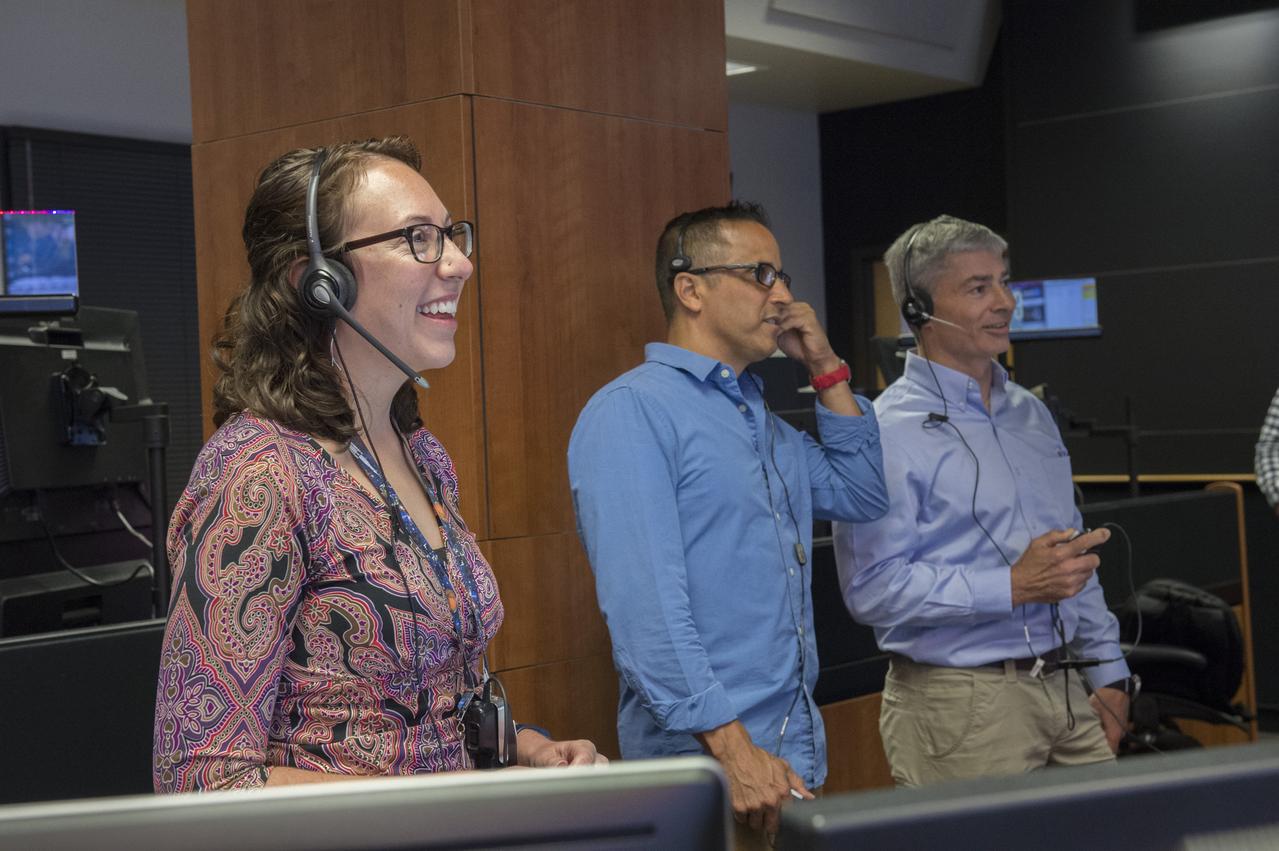
Stephanie Shelton, a payload communications manager at NASA's Marshall Space Flight Center, joins NASA astronauts Joe Acaba and Mark Vande Hei for a call to the onboard crew of the International Space Station. Vande Hei and Acaba visited Marshall April 11 for their honorary Expedition 54 plaque hanging ceremony and to provide valuable feedback of their on-orbit science investigations with the Payload Operations and Integration Center team..
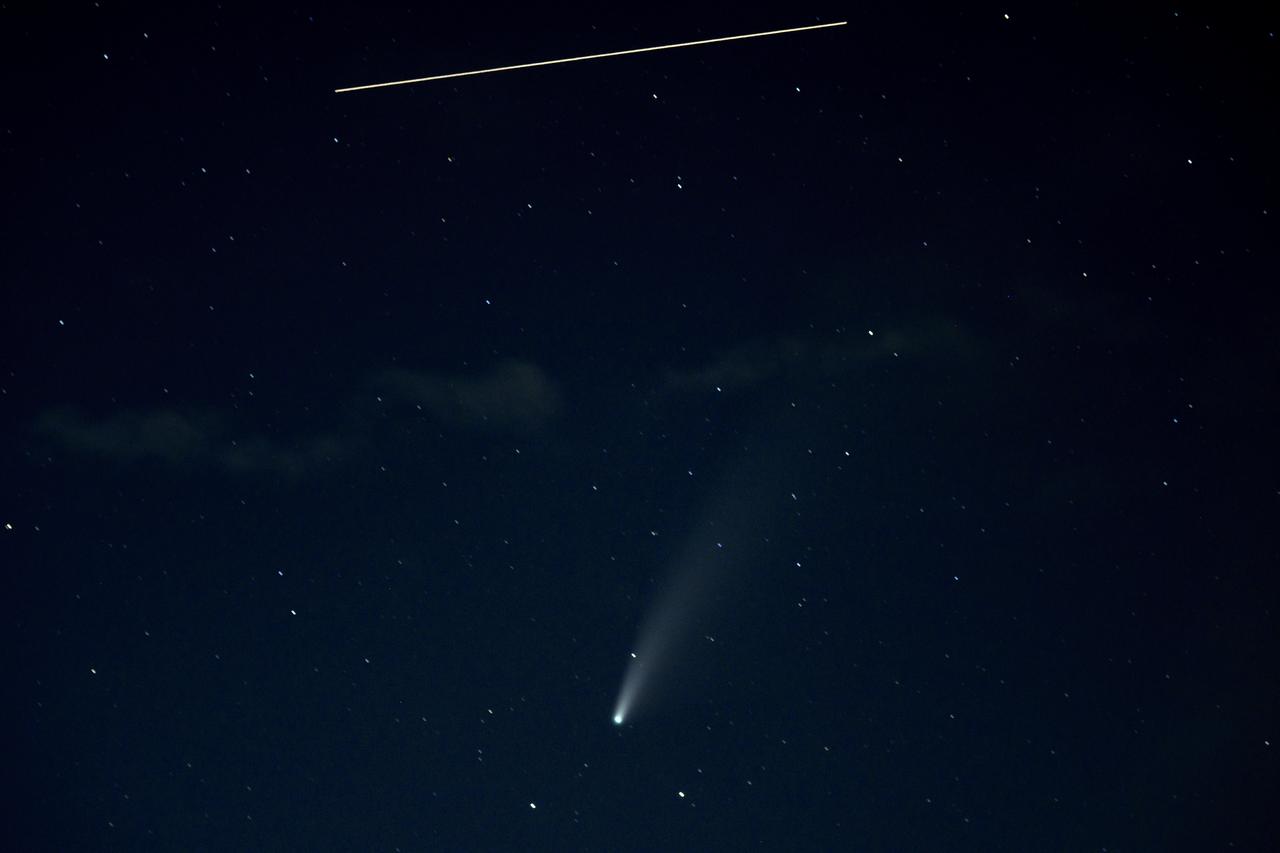
The International Space Station, with a crew of five onboard, is seen in this 10 second exposure above comet NEOWISE, Saturday, July 18, 2020 from Keys Gap, W.Va. The comet was discovered by NASA’s Near-Earth Object Wide-field Infrared Survey Explorer, or NEOWISE, on March 27. Since then, the comet — called comet C/2020 F3 NEOWISE and nicknamed comet NEOWISE — has been spotted by several NASA spacecraft, including Parker Solar Probe, NASA’s Solar and Terrestrial Relations Observatory, the ESA/NASA Solar and Heliospheric Observatory, and astronauts aboard the International Space Station. Onboard the International Space Station are Expedition 63 NASA astronauts Chris Cassidy, Douglas Hurley, Robert Behnken, and Roscosmos cosmonauts Anatoly Ivanishin and Ivan Vagner. Photo Credit: (NASA/Bill Ingalls)

STS057-30-021 (21 June-1 July 1993) --- Astronaut Brian Duffy, pilot, handles a soldering tool onboard the Earth-orbiting Space Shuttle Endeavour. The Soldering Experiment (SE) called for a crew member to solder on a printed circuit board containing 45 connection points, then de-solder 35 points on a similar board. The SE was part of a larger project called the Tools and Diagnostic Systems (TDS), sponsored by the Space and Life Sciences Directorate at Johnson Space Center (JSC). TDS represents a group of equipment selected from the tools and diagnostic hardware to be supported by the International Space Station program. TDS was designed to demonstrate the maintenance of experiment hardware on-orbit and to evaluate the adequacy of its design and the crew interface. Duffy and five other NASA astronauts spent almost ten days aboard the Space Shuttle Endeavour in Earth-orbit supporting the SpaceHab mission, retrieving the European Retrievable Carrier (EURECA) and conducting various experiments.
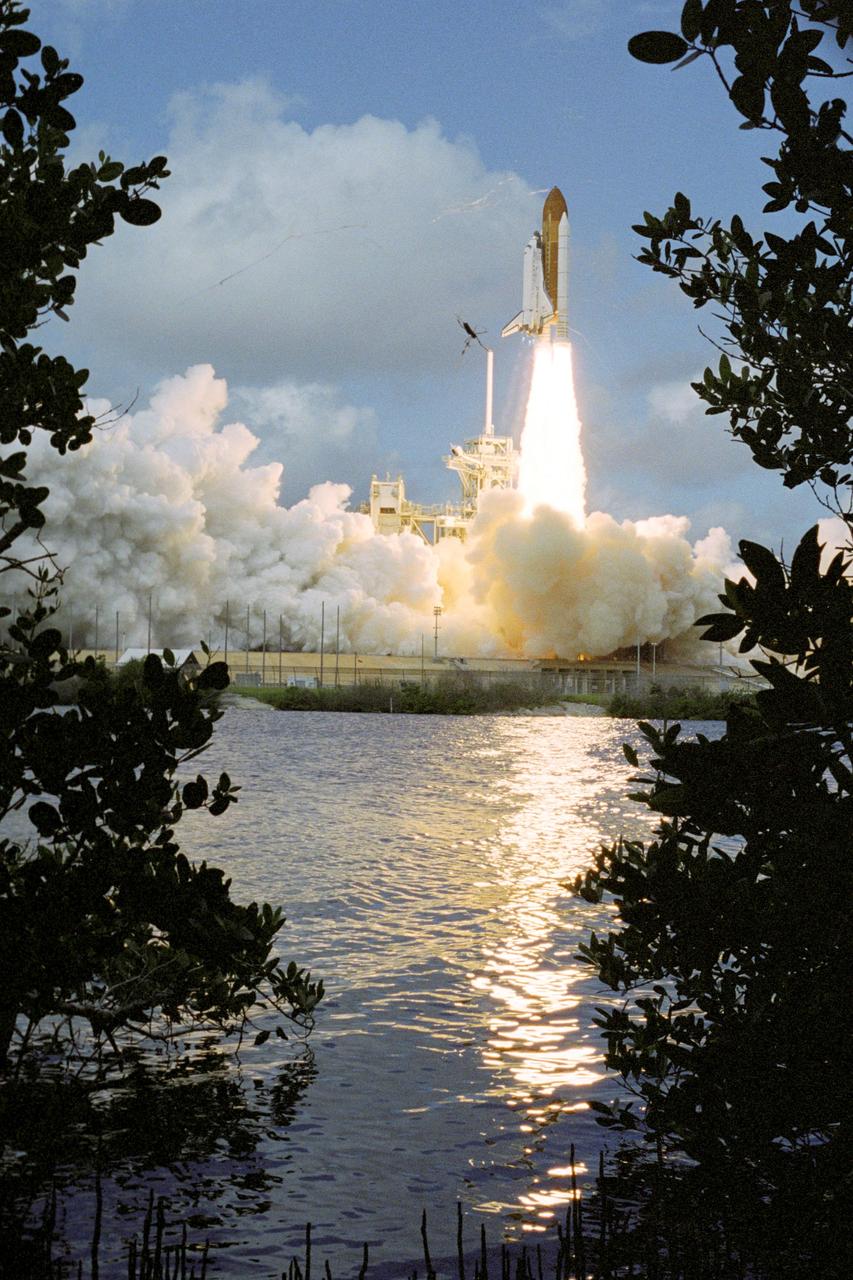
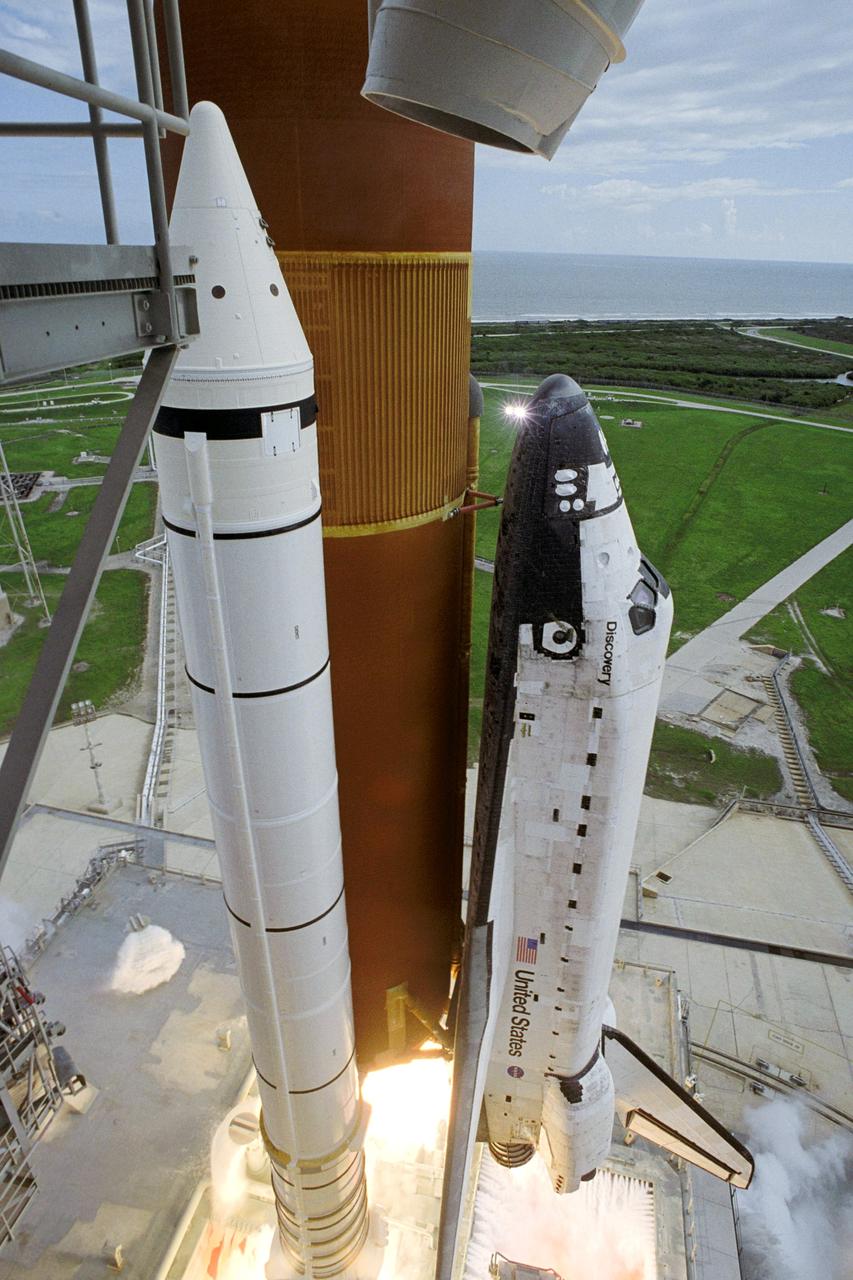
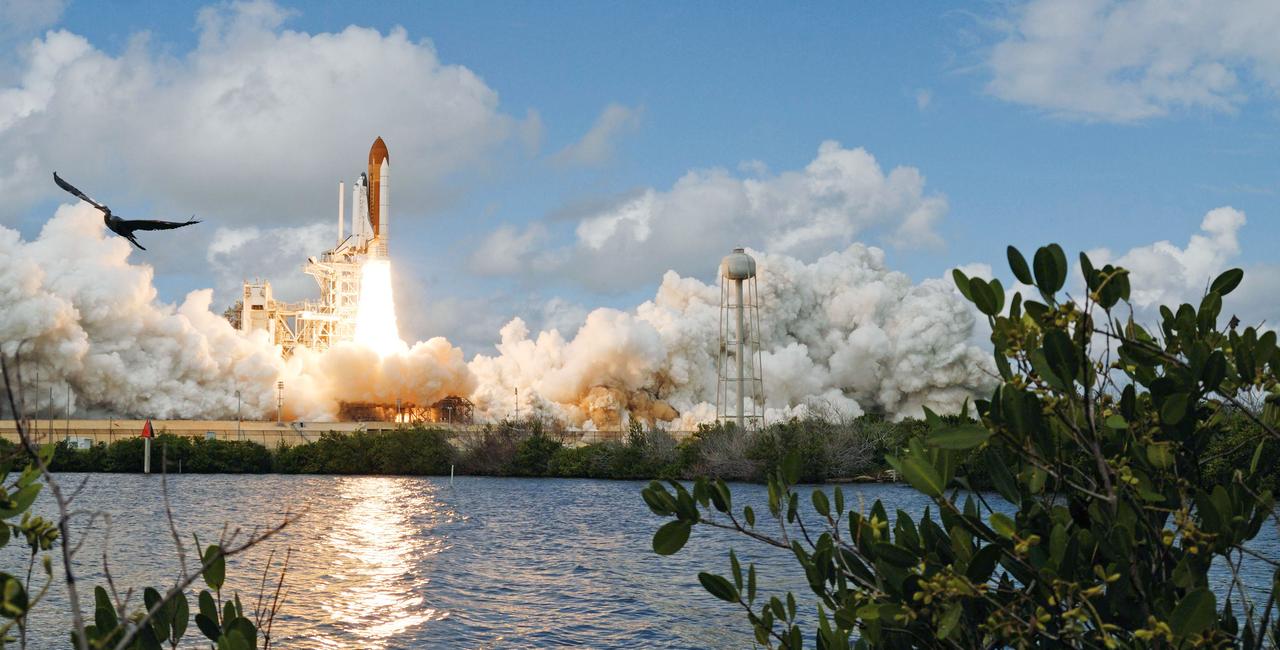
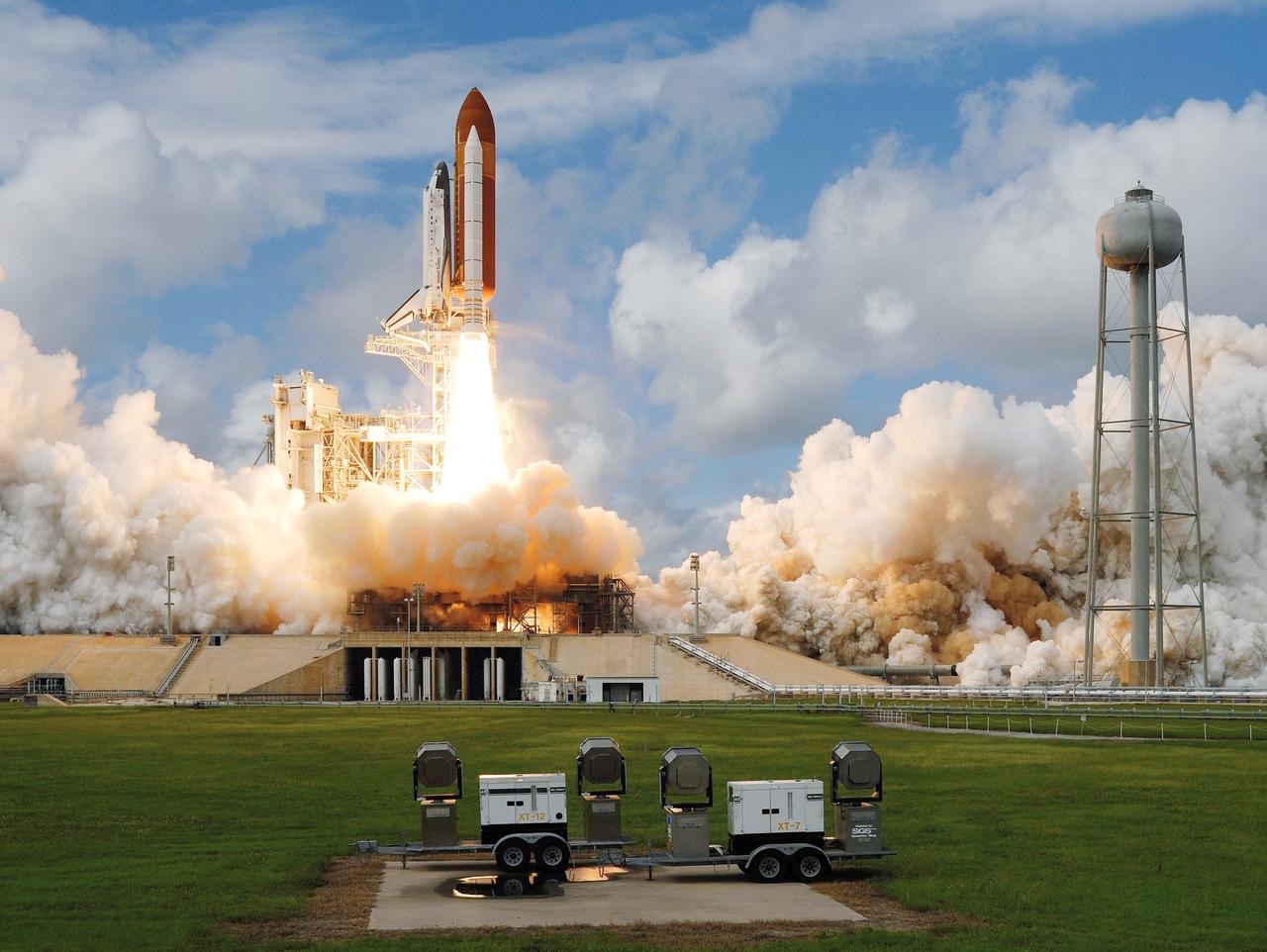
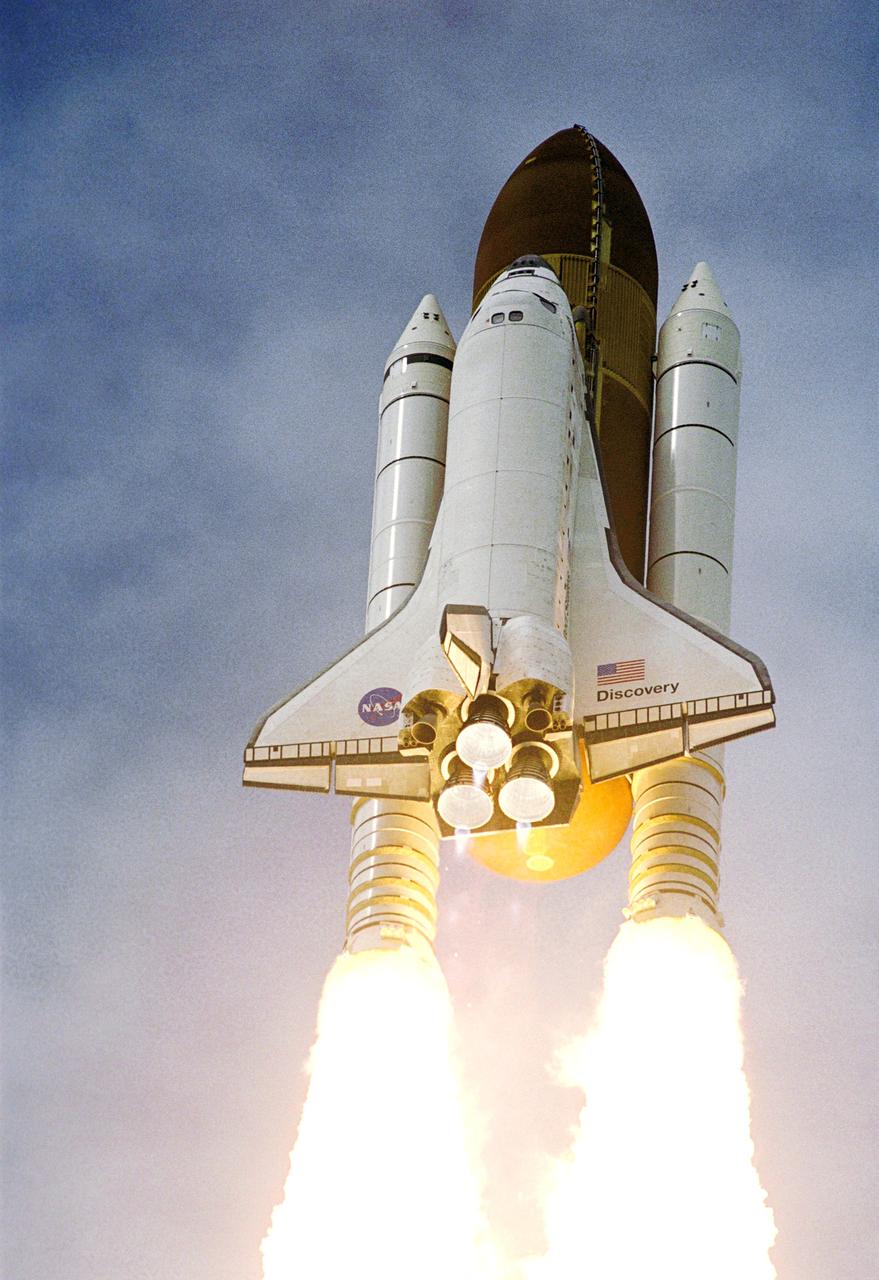
STS120-S-051 (23 Oct. 2007) --- The Space Shuttle Discovery and its seven-member STS-120 crew head toward Earth-orbit and a scheduled link-up with the International Space Station. Liftoff from Kennedy Space Center's launch pad 39A occurred at 11:38:19 a.m. (EDT). Onboard are astronauts Pam Melroy, commander; George Zamka, pilot; Scott Parazynski, Stephanie Wilson, Doug Wheelock, European Space Agency's (ESA) Paolo Nespoli and Daniel Tani, all mission specialists. Discovery will link up with the station on Thursday, Oct. 25, to begin a joint mission to continue construction by delivering the Italian-built U.S. Node 2, called Harmony. During the 14-day mission, the crew will install Harmony and move the P6 solar arrays to their permanent position and deploy them.
STS120-S-050 (23 Oct. 2007) --- The Space Shuttle Discovery and its seven-member STS-120 crew head toward Earth-orbit and a scheduled link-up with the International Space Station. Liftoff from Kennedy Space Center's launch pad 39A occurred at 11:38:19 a.m. (EDT). Onboard are astronauts Pam Melroy, commander; George Zamka, pilot; Scott Parazynski, Stephanie Wilson, Doug Wheelock, European Space Agency's (ESA) Paolo Nespoli and Daniel Tani, all mission specialists. Discovery will link up with the station on Thursday, Oct. 25, to begin a joint mission to continue construction by delivering the Italian-built U.S. Node 2, called Harmony. During the 14-day mission, the crew will install Harmony and move the P6 solar arrays to their permanent position and deploy them.
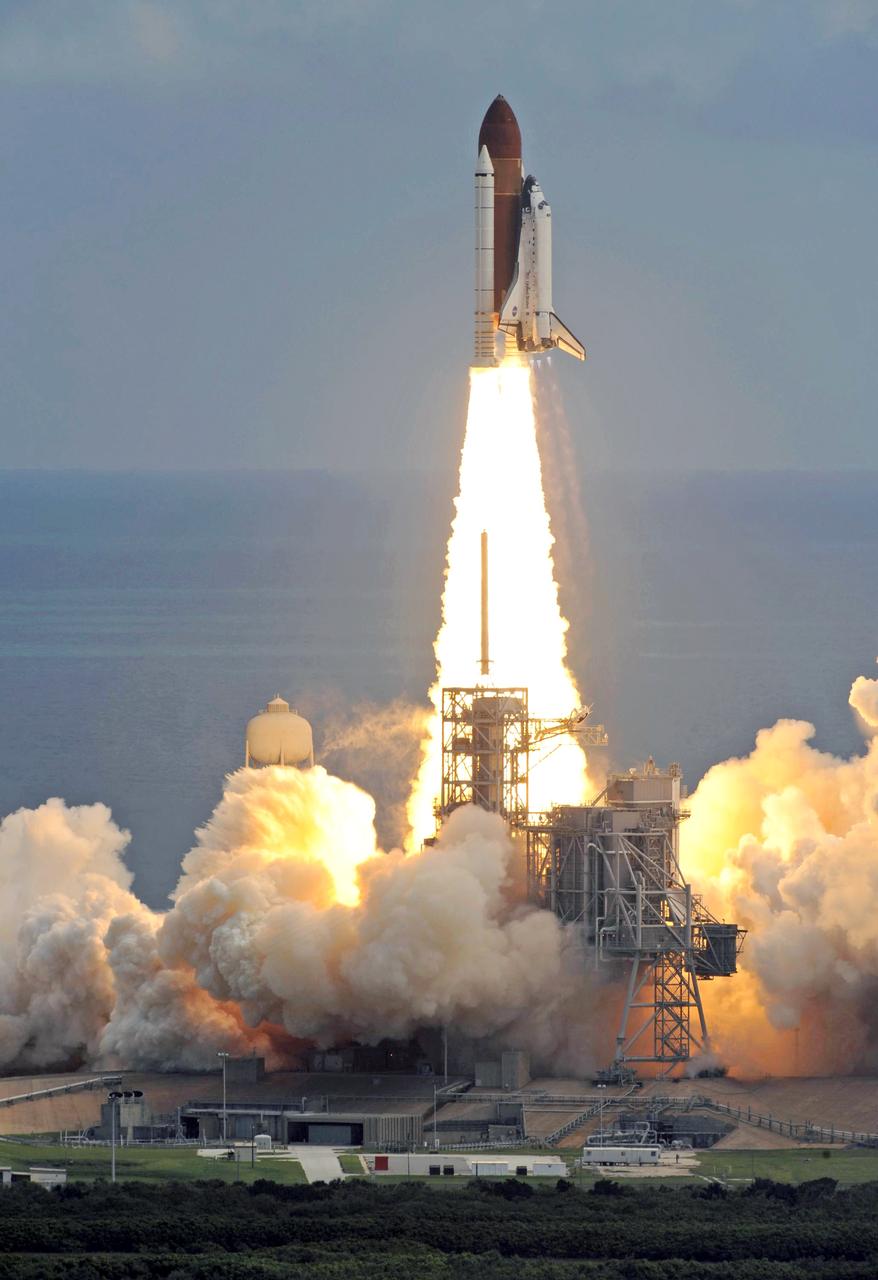
STS120-S-021 (23 Oct. 2007) --- The Space Shuttle Discovery and its seven-member STS-120 crew head toward Earth-orbit and a scheduled link-up with the International Space Station. Liftoff from Kennedy Space Center's launch pad 39A occurred at 11:38:19 a.m. (EDT). Onboard are astronauts Pam Melroy, commander; George Zamka, pilot; Scott Parazynski, Stephanie Wilson, Doug Wheelock, European Space Agency's (ESA) Paolo Nespoli and Daniel Tani, all mission specialists. Discovery will link up with the station on Thursday, Oct. 25, to begin a joint mission to continue construction by delivering the Italian-built U.S. Node 2, called Harmony. During the 14-day mission, the crew will install Harmony and move the P6 solar arrays to their permanent position and deploy them.
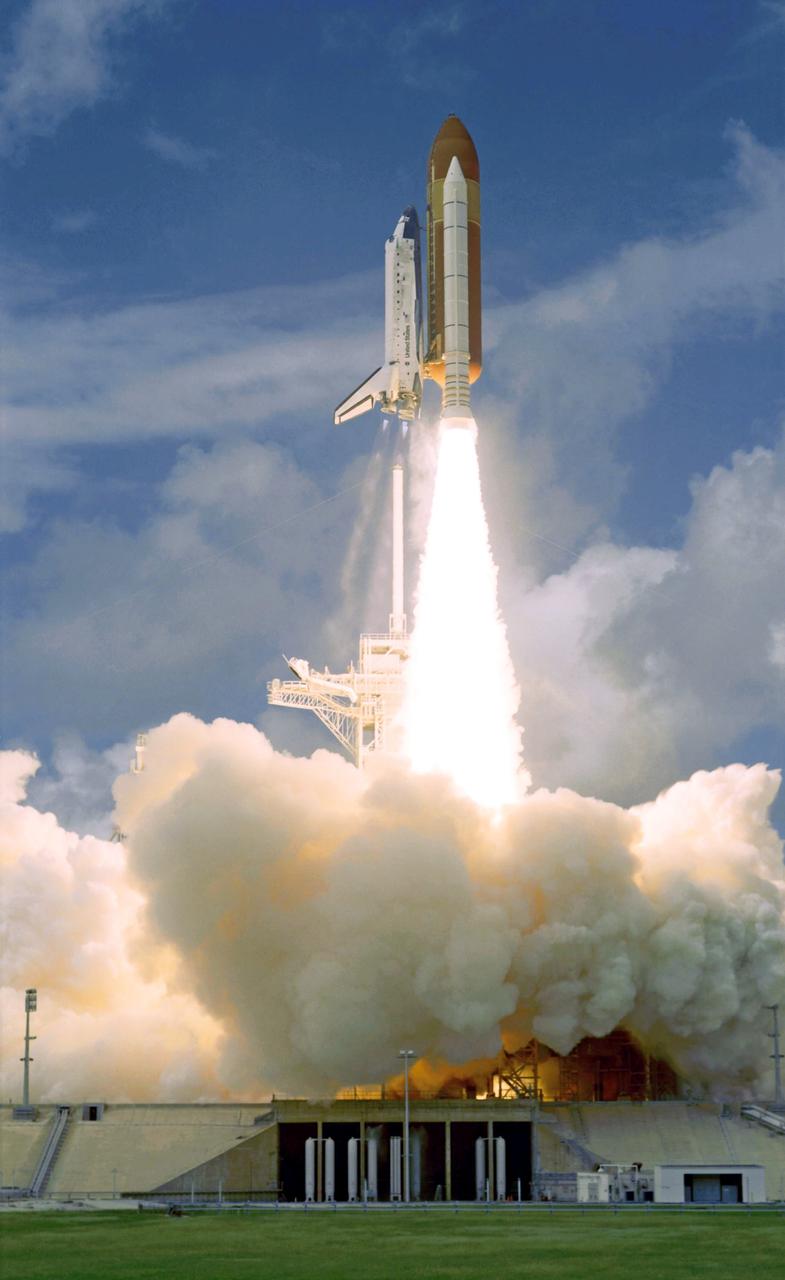
STS120-S-046 (23 Oct. 2007) --- The Space Shuttle Discovery and its seven-member STS-120 crew head toward Earth-orbit and a scheduled link-up with the International Space Station. Liftoff from Kennedy Space Center's launch pad 39A occurred at 11:38:19 a.m. (EDT). Onboard are astronauts Pam Melroy, commander; George Zamka, pilot; Scott Parazynski, Stephanie Wilson, Doug Wheelock, European Space Agency's (ESA) Paolo Nespoli and Daniel Tani, all mission specialists. Discovery will link up with the station on Thursday, Oct. 25, to begin a joint mission to continue construction by delivering the Italian-built U.S. Node 2, called Harmony. During the 14-day mission, the crew will install Harmony and move the P6 solar arrays to their permanent position and deploy them.
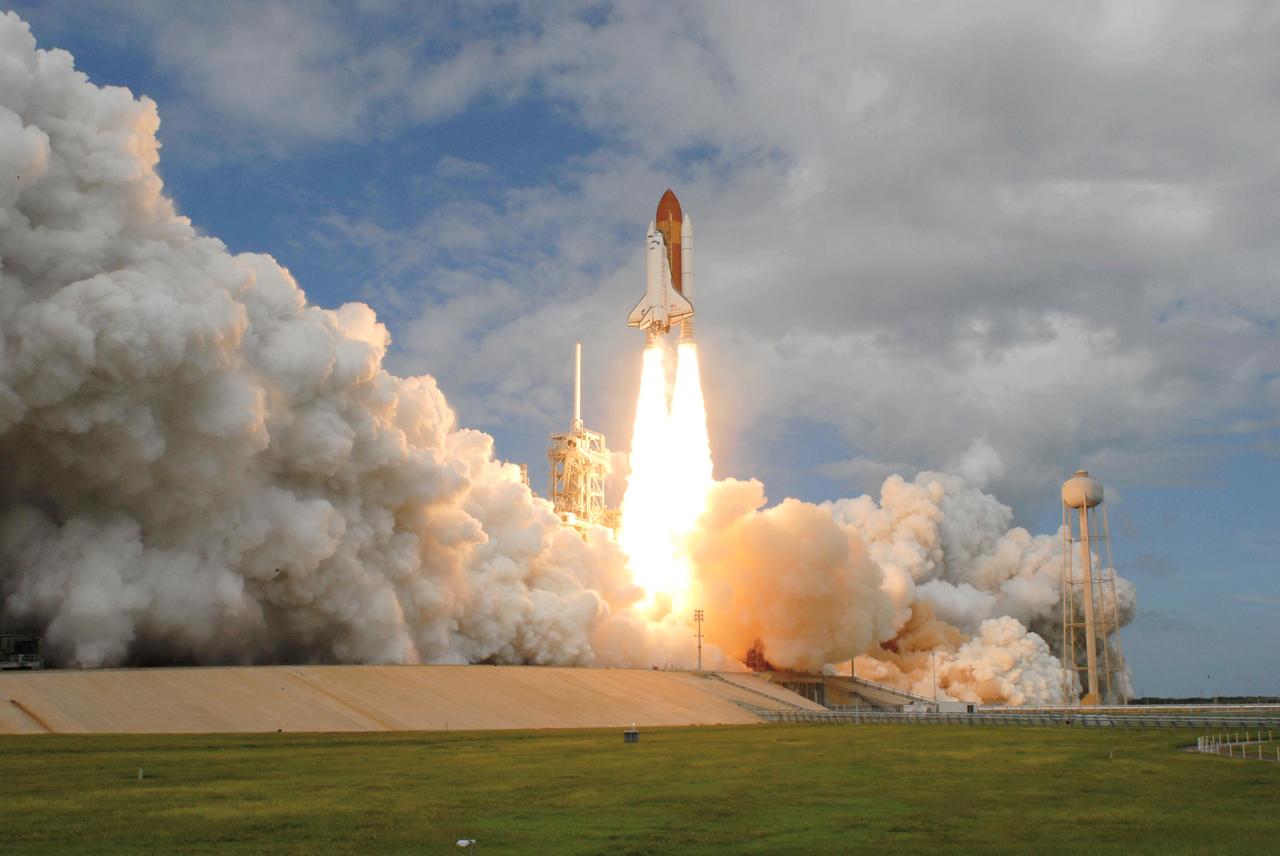
STS120-S-024 (23 Oct. 2007) --- The Space Shuttle Discovery and its seven-member STS-120 crew head toward Earth-orbit and a scheduled link-up with the International Space Station. Liftoff from Kennedy Space Center's launch pad 39A occurred at 11:38:19 a.m. (EDT). Onboard are astronauts Pam Melroy, commander; George Zamka, pilot; Scott Parazynski, Stephanie Wilson, Doug Wheelock, European Space Agency's (ESA) Paolo Nespoli and Daniel Tani, all mission specialists. Discovery will link up with the station on Thursday, Oct. 25, to begin a joint mission to continue construction by delivering the Italian-built U.S. Node 2, called Harmony. During the 14-day mission, the crew will install Harmony and move the P6 solar arrays to their permanent position and deploy them.
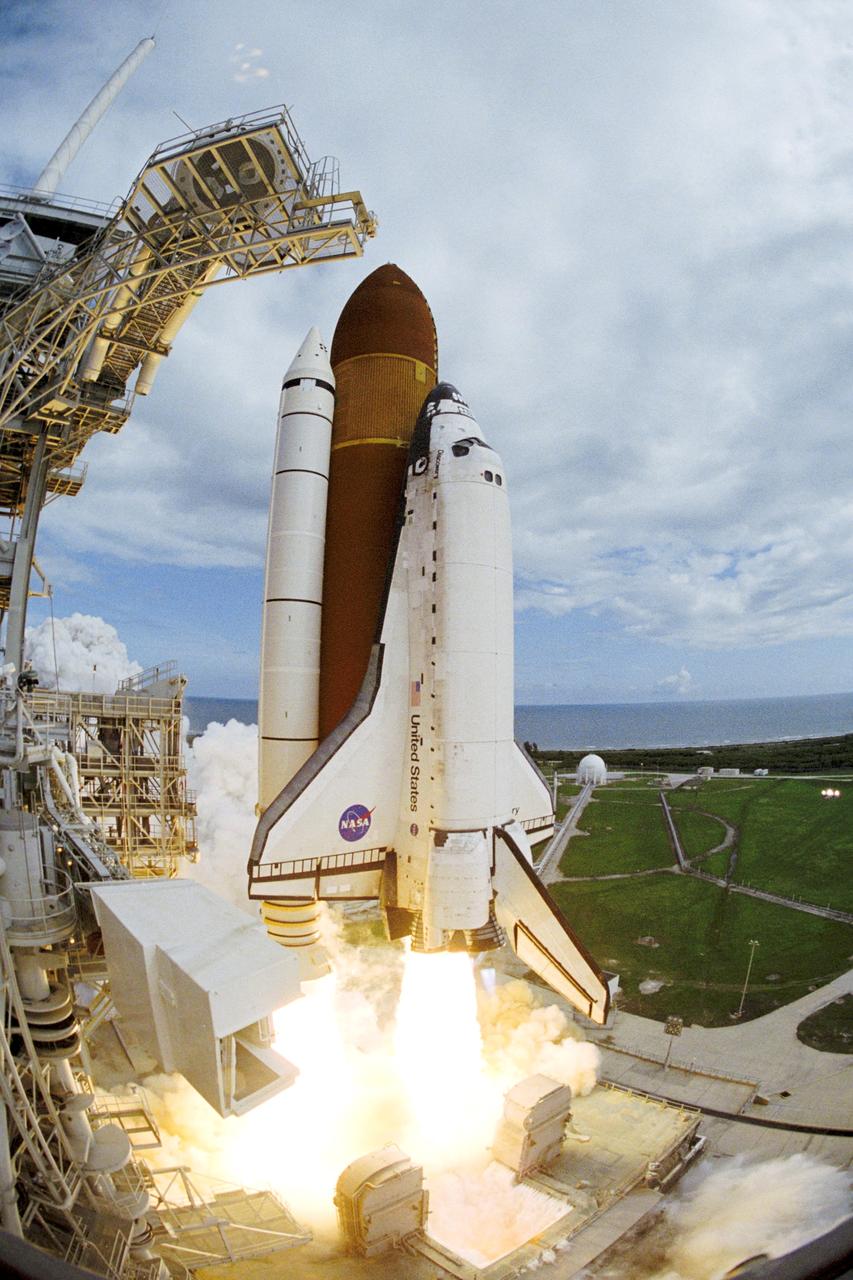
STS120-S-047 (23 Oct. 2007) --- The Space Shuttle Discovery and its seven-member STS-120 crew head toward Earth-orbit and a scheduled link-up with the International Space Station. Liftoff from Kennedy Space Center's launch pad 39A occurred at 11:38:19 a.m. (EDT). Onboard are astronauts Pam Melroy, commander; George Zamka, pilot; Scott Parazynski, Stephanie Wilson, Doug Wheelock, European Space Agency's (ESA) Paolo Nespoli and Daniel Tani, all mission specialists. Discovery will link up with the station on Thursday, Oct. 25, to begin a joint mission to continue construction by delivering the Italian-built U.S. Node 2, called Harmony. During the 14-day mission, the crew will install Harmony and move the P6 solar arrays to their permanent position and deploy them.
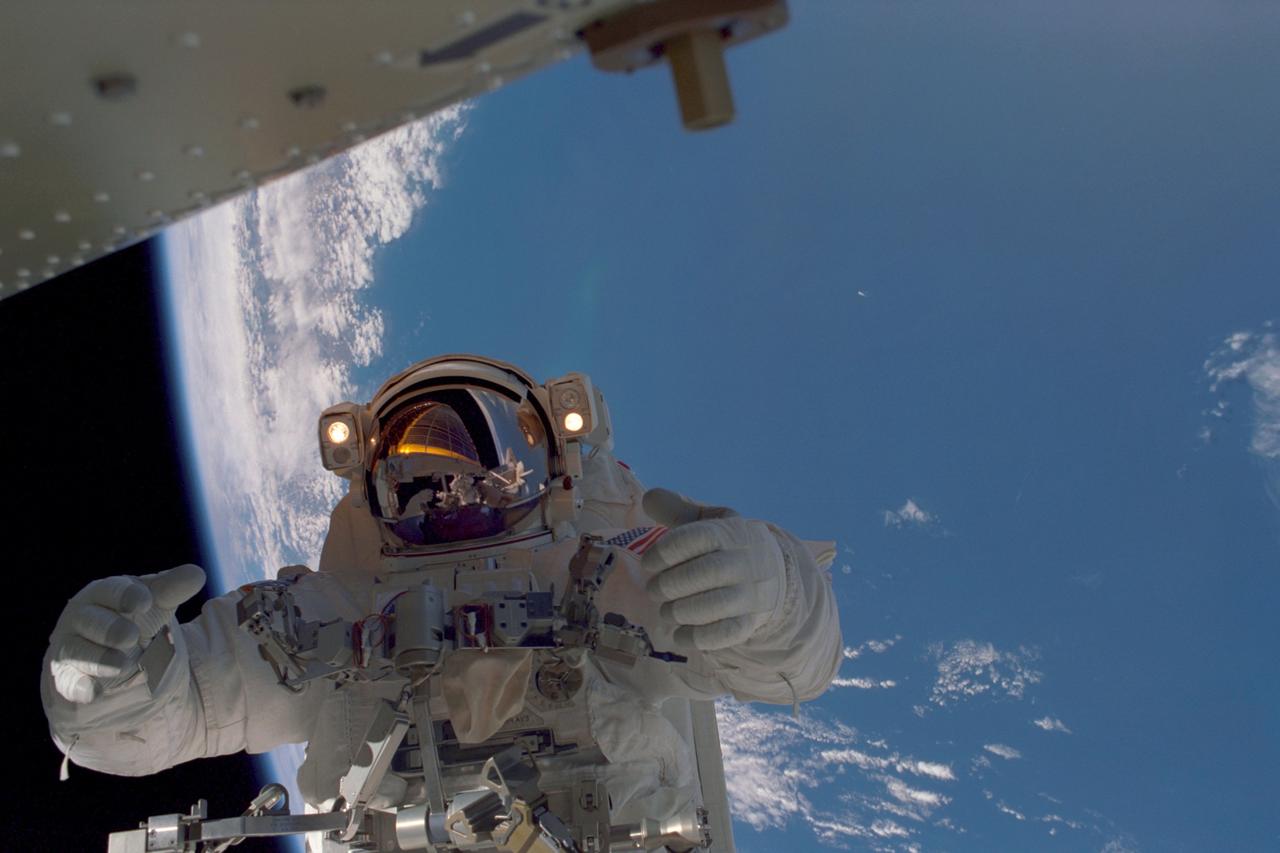
In this image, planet Earth, some 235 statute miles away, forms the back drop for this photo of STS-97 astronaut and mission specialist Joseph R. Tanner, taken during the third of three space walks. The mission's goal was to perform the delivery, assembly, and activation of the U.S. electrical power system onboard the International Space Station (ISS). The electrical power system, which is built into a 73-meter (240-foot) long solar array structure consists of solar arrays, radiators, batteries, and electronics. The entire 15.4-metric ton (17-ton) package is called the P6 Integrated Truss Segment, and is the heaviest and largest element yet delivered to the station aboard a space shuttle. The electrical system will eventually provide the power necessary for the first ISS crews to live and work in the U.S. segment. The STS-97 crew of five launched aboard the Space Shuttle Orbiter Endeavor on November 30, 2000 for an 11 day mission.
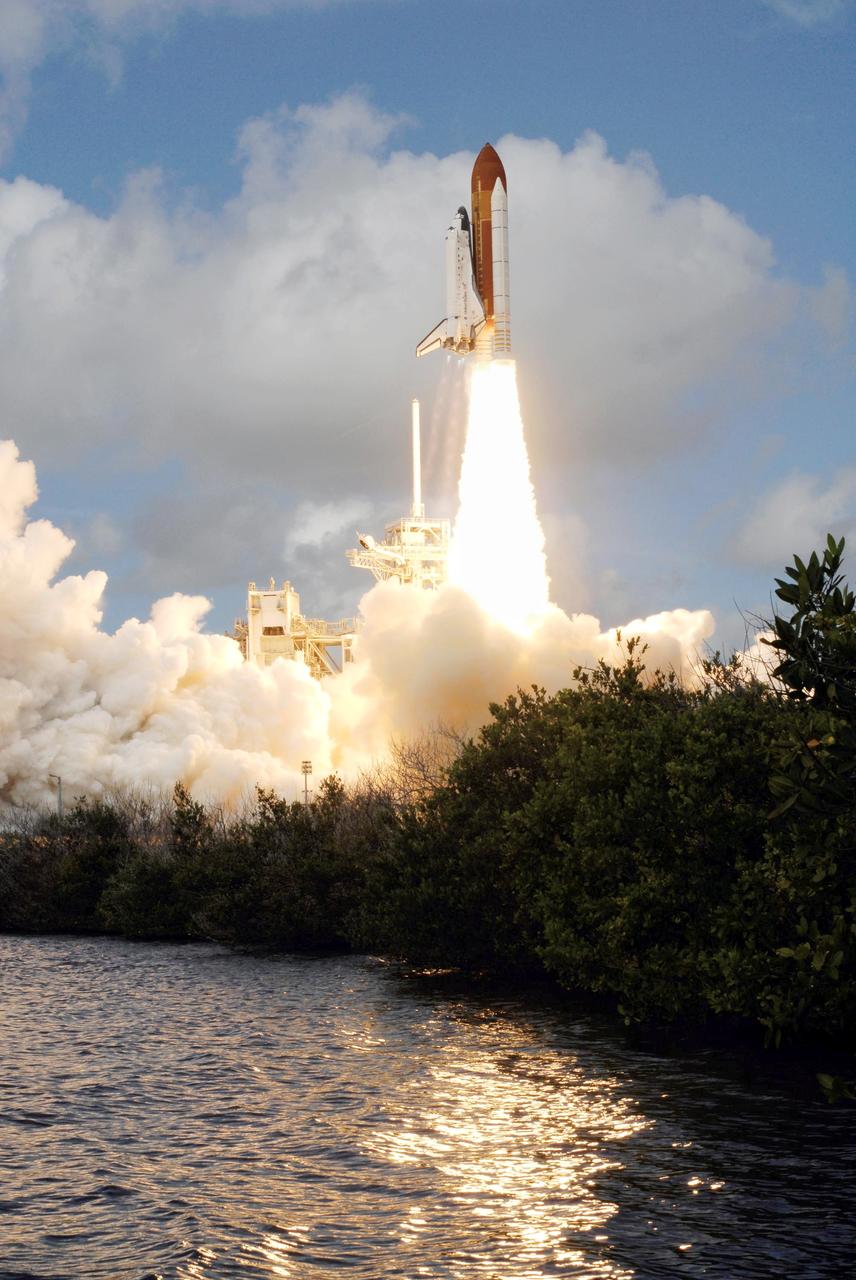
STS120-S-017 (23 Oct. 2007) --- The Space Shuttle Discovery and its seven-member STS-120 crew head toward Earth-orbit and a scheduled link-up with the International Space Station. Liftoff from Kennedy Space Center's launch pad 39A occurred at 11:38:19 a.m. (EDT). Onboard are astronauts Pam Melroy, commander; George Zamka, pilot; Scott Parazynski, Stephanie Wilson, Doug Wheelock, European Space Agency's (ESA) Paolo Nespoli and Daniel Tani, all mission specialists. Discovery will link up with the station on Thursday, Oct. 25, to begin a joint mission to continue construction by delivering the Italian-built U.S. Node 2, called Harmony. During the 14-day mission, the crew will install Harmony and move the P6 solar arrays to their permanent position and deploy them.
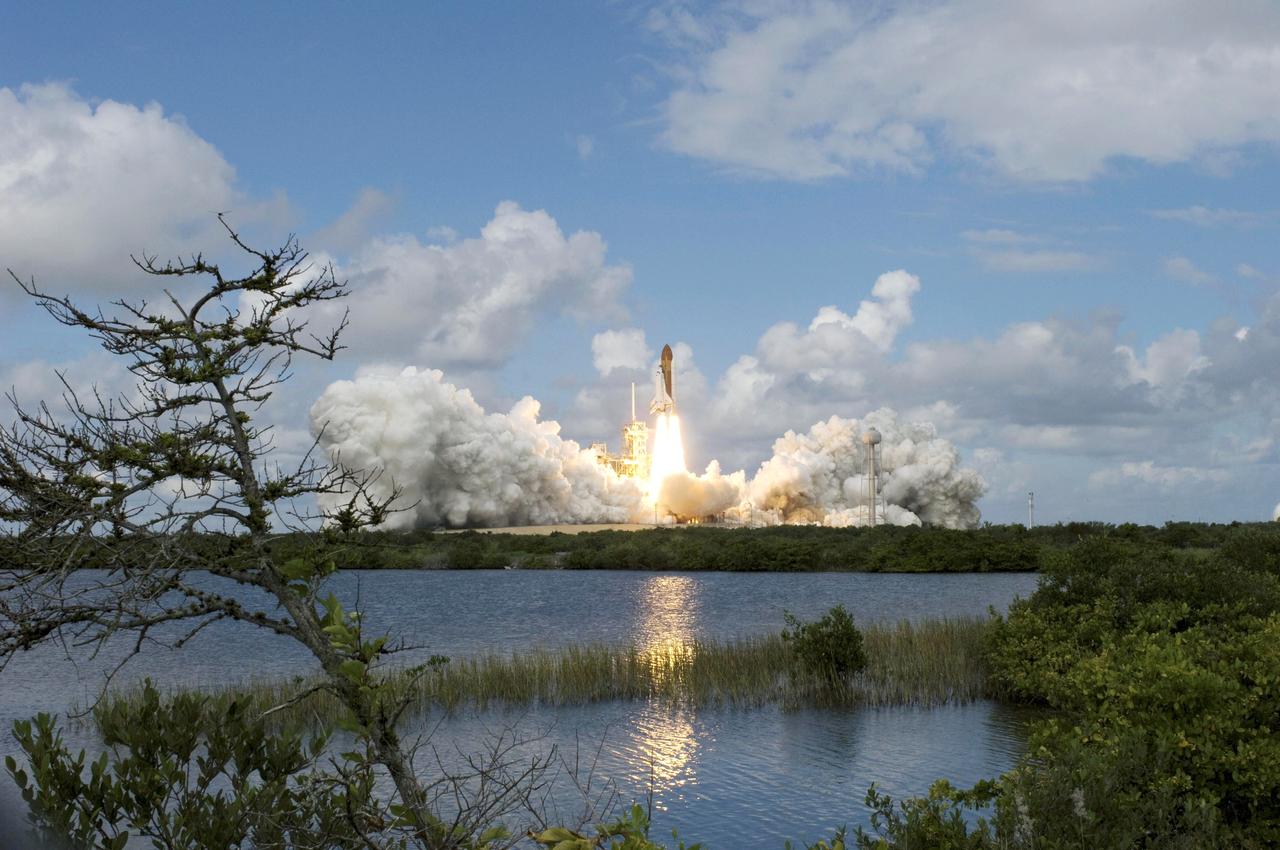
STS120-S-016 (23 Oct. 2007) --- The Space Shuttle Discovery and its seven-member STS-120 crew head toward Earth-orbit and a scheduled link-up with the International Space Station. Liftoff from Kennedy Space Center's launch pad 39A occurred at 11:38:19 a.m. (EDT). Onboard are astronauts Pam Melroy, commander; George Zamka, pilot; Scott Parazynski, Stephanie Wilson, Doug Wheelock, European Space Agency's (ESA) Paolo Nespoli and Daniel Tani, all mission specialists. Discovery will link up with the station on Thursday, Oct. 25, to begin a joint mission to continue construction by delivering the Italian-built U.S. Node 2, called Harmony. During the 14-day mission, the crew will install Harmony and move the P6 solar arrays to their permanent position and deploy them.
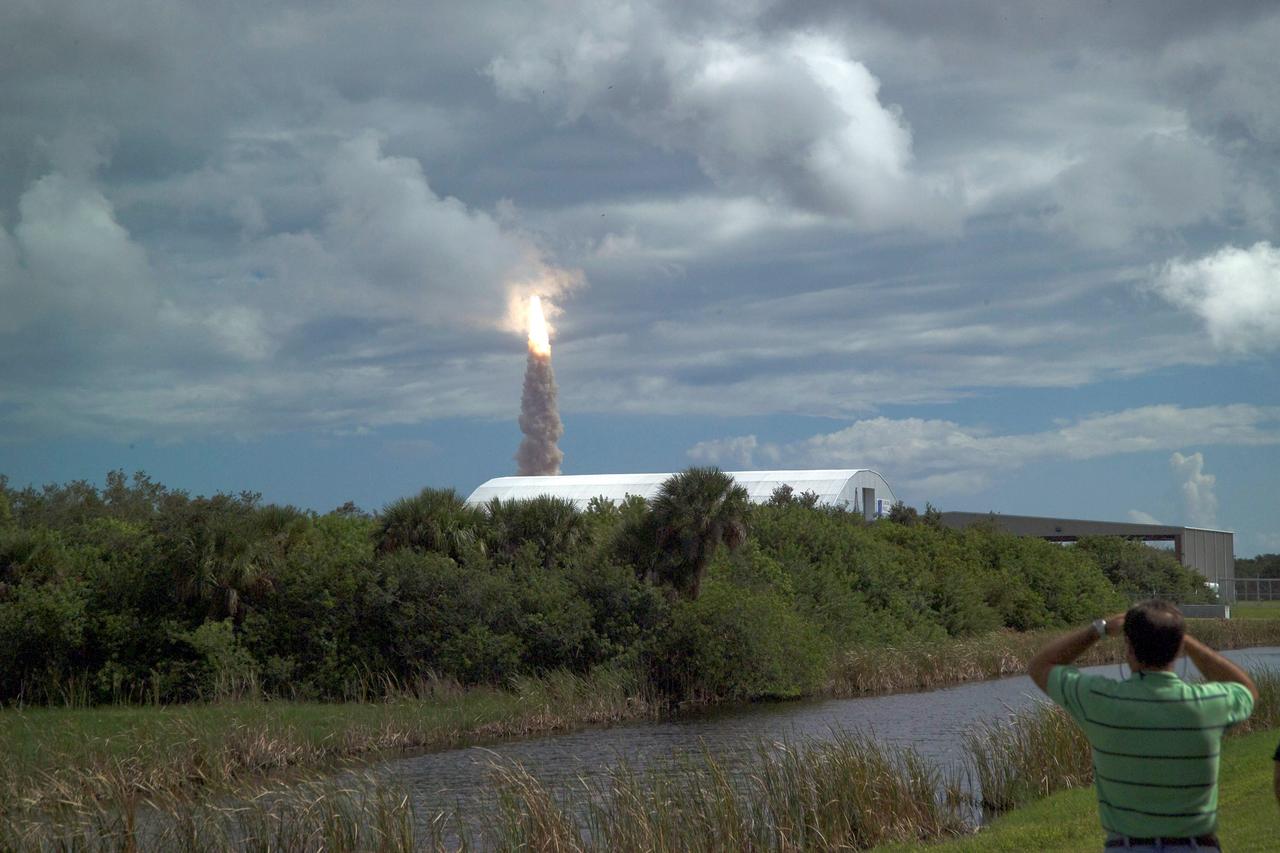
STS120-S-013 (23 Oct. 2007) --- The Space Shuttle Discovery and its seven-member STS-120 crew head toward Earth-orbit and a scheduled link-up with the International Space Station. Liftoff from Kennedy Space Center's launch pad 39A occurred at 11:38:19 a.m. (EDT). Onboard are astronauts Pam Melroy, commander; George Zamka, pilot; Scott Parazynski, Stephanie Wilson, Doug Wheelock, European Space Agency's (ESA) Paolo Nespoli and Daniel Tani, all mission specialists. Discovery will link up with the station on Thursday, Oct. 25, to begin a joint mission to continue construction by delivering the Italian-built U.S. Node 2, called Harmony. During the 14-day mission, the crew will install Harmony and move the P6 solar arrays to their permanent position and deploy them.
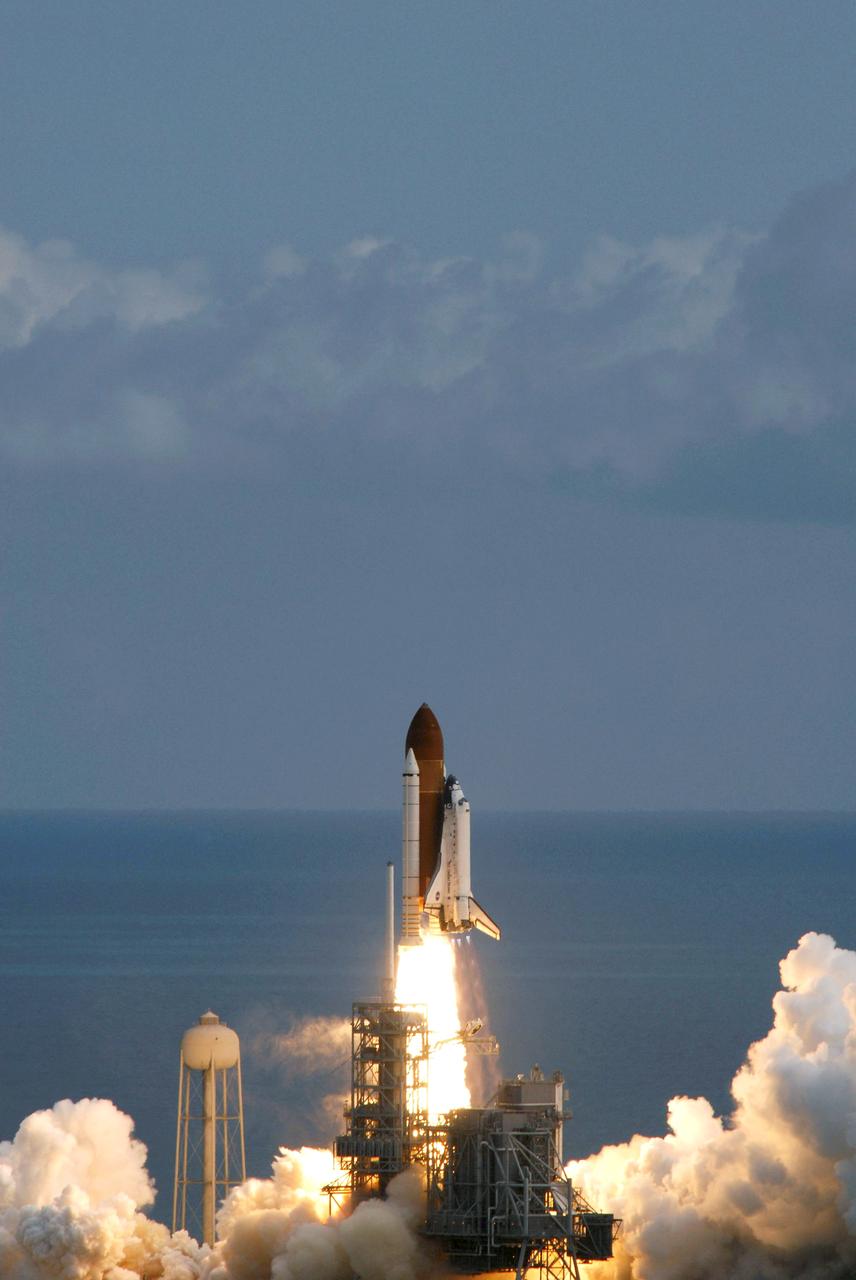
STS120-S-011 (23 Oct. 2007) --- The Space Shuttle Discovery and its seven-member STS-120 crew head toward Earth-orbit and a scheduled link-up with the International Space Station. Liftoff from Kennedy Space Center's launch pad 39A occurred at 11:38:19 a.m. (EDT). Onboard are astronauts Pam Melroy, commander; George Zamka, pilot; Scott Parazynski, Stephanie Wilson, Doug Wheelock, European Space Agency's (ESA) Paolo Nespoli and Daniel Tani, all mission specialists. Discovery will link up with the station on Thursday, Oct. 25, to begin a joint mission to continue construction by delivering the Italian-built U.S. Node 2, called Harmony. During the 14-day mission, the crew will install Harmony and move the P6 solar arrays to their permanent position and deploy them.
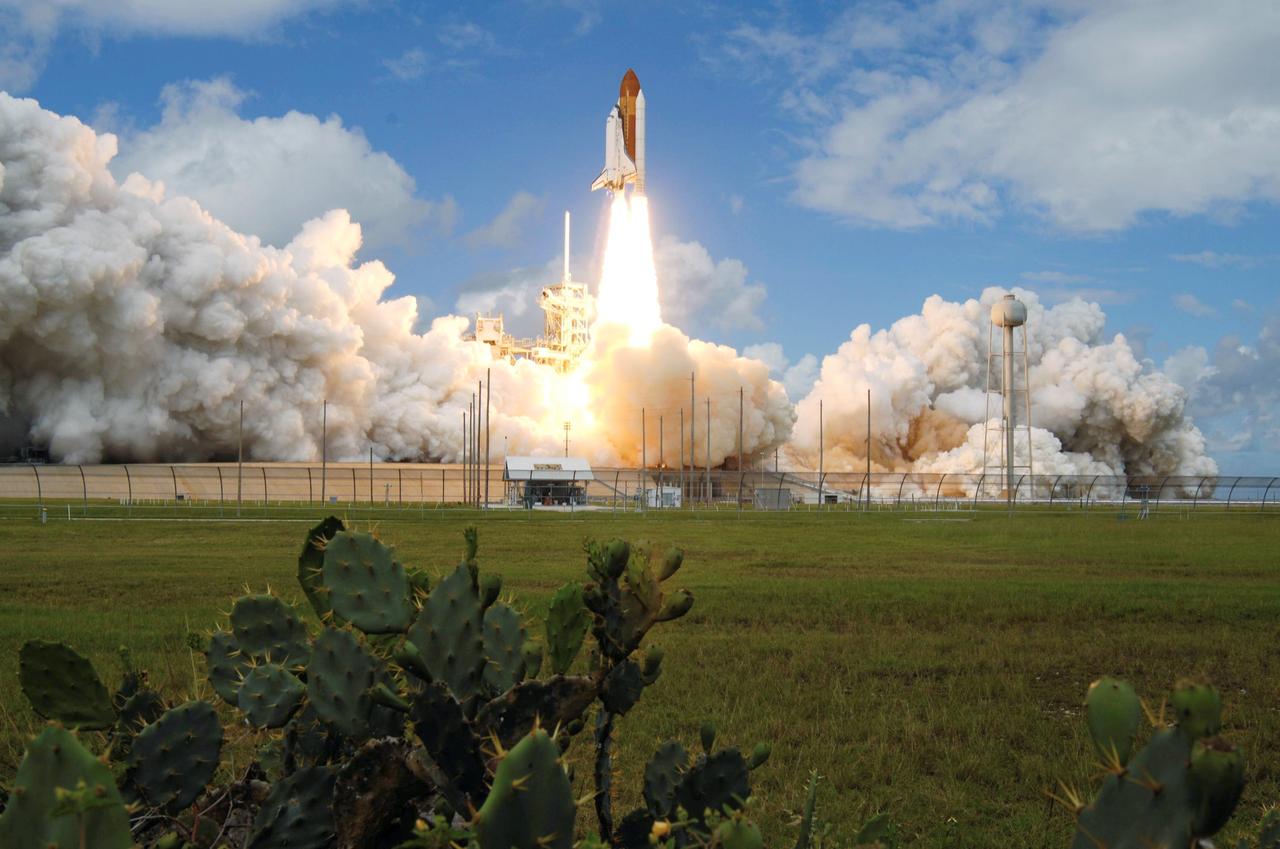
STS120-S-032 (23 Oct. 2007) --- The Space Shuttle Discovery and its seven-member STS-120 crew head toward Earth-orbit and a scheduled link-up with the International Space Station. Liftoff from Kennedy Space Center's launch pad 39A occurred at 11:38:19 a.m. (EDT). Onboard are astronauts Pam Melroy, commander; George Zamka, pilot; Scott Parazynski, Stephanie Wilson, Doug Wheelock, European Space Agency's (ESA) Paolo Nespoli and Daniel Tani, all mission specialists. Discovery will link up with the station on Thursday, Oct. 25, to begin a joint mission to continue construction by delivering the Italian-built U.S. Node 2, called Harmony. During the 14-day mission, the crew will install Harmony and move the P6 solar arrays to their permanent position and deploy them.
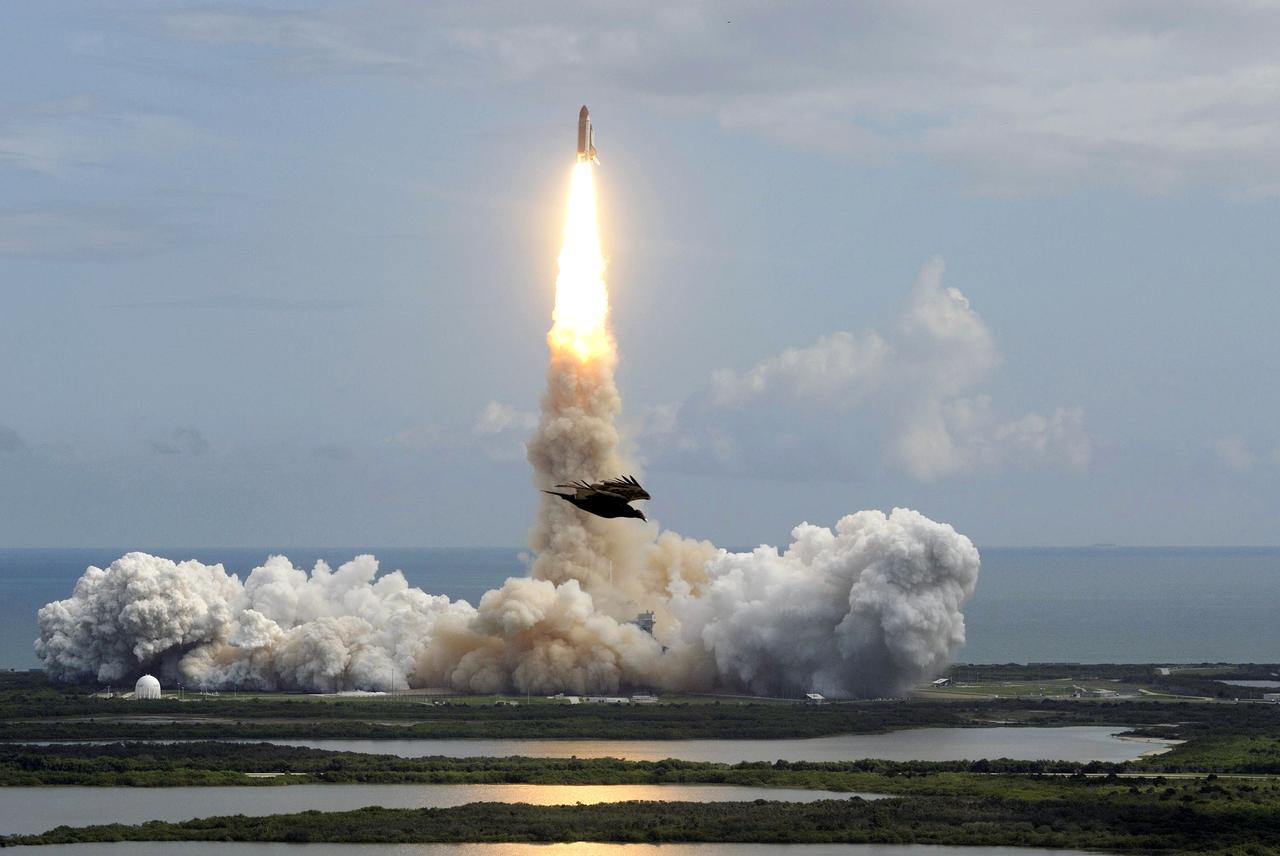
STS120-S-020 (23 Oct. 2007) --- The Space Shuttle Discovery and its seven-member STS-120 crew head toward Earth-orbit and a scheduled link-up with the International Space Station. Liftoff from Kennedy Space Center's launch pad 39A occurred at 11:38:19 a.m. (EDT). Onboard are astronauts Pam Melroy, commander; George Zamka, pilot; Scott Parazynski, Stephanie Wilson, Doug Wheelock, European Space Agency's (ESA) Paolo Nespoli and Daniel Tani, all mission specialists. Discovery will link up with the station on Thursday, Oct. 25, to begin a joint mission to continue construction by delivering the Italian-built U.S. Node 2, called Harmony. During the 14-day mission, the crew will install Harmony and move the P6 solar arrays to their permanent position and deploy them.
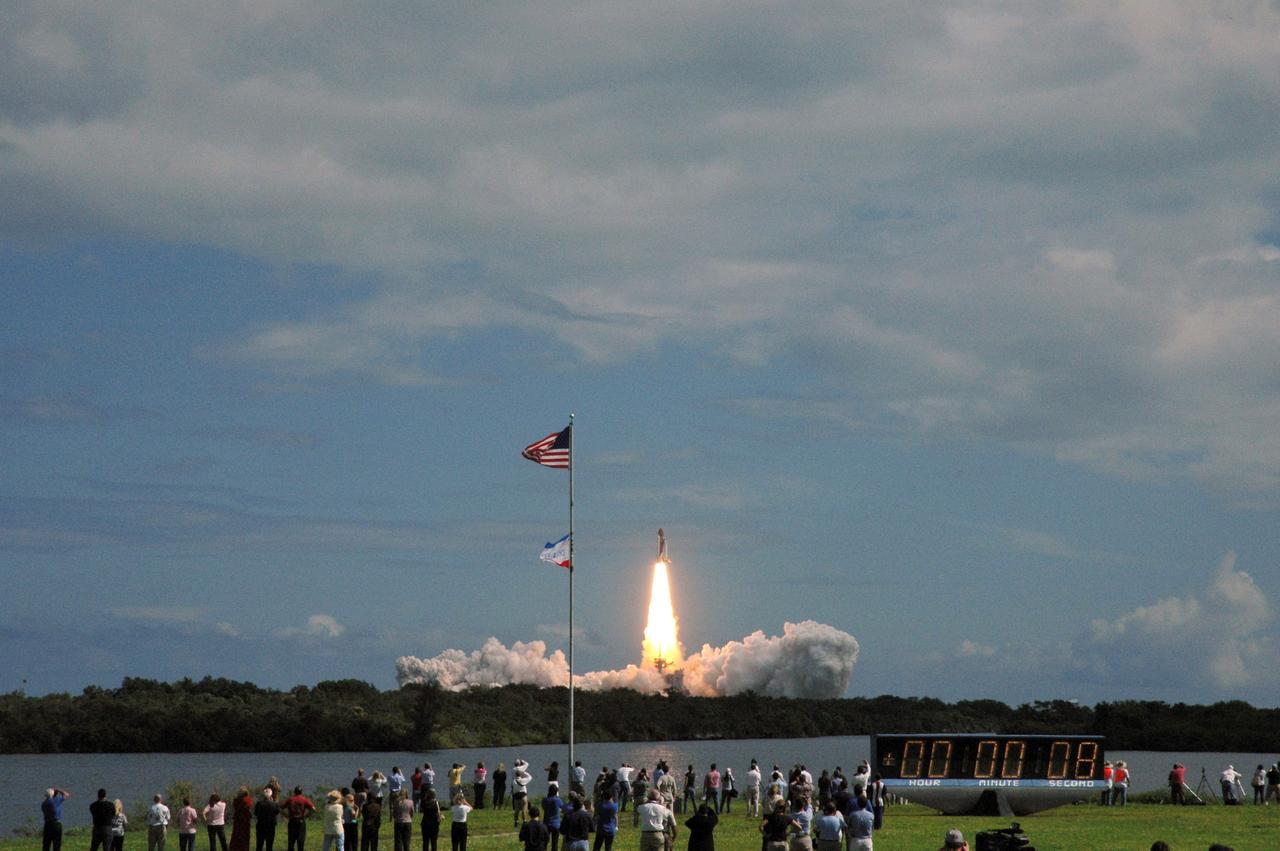
STS120-S-008 (23 Oct. 2007) --- The Space Shuttle Discovery and its seven-member STS-120 crew head toward Earth-orbit and a scheduled link-up with the International Space Station. Liftoff from Kennedy Space Center's launch pad 39A occurred at 11:38:19 a.m. (EDT). Onboard are astronauts Pam Melroy, commander; George Zamka, pilot; Scott Parazynski, Stephanie Wilson, Doug Wheelock, European Space Agency's (ESA) Paolo Nespoli and Daniel Tani, all mission specialists. Discovery will link up with the station on Thursday, Oct. 25, to begin a joint mission to continue construction by delivering the Italian-built U.S. Node 2, called Harmony. During the 14-day mission, the crew will install Harmony and move the P6 solar arrays to their permanent position and deploy them.
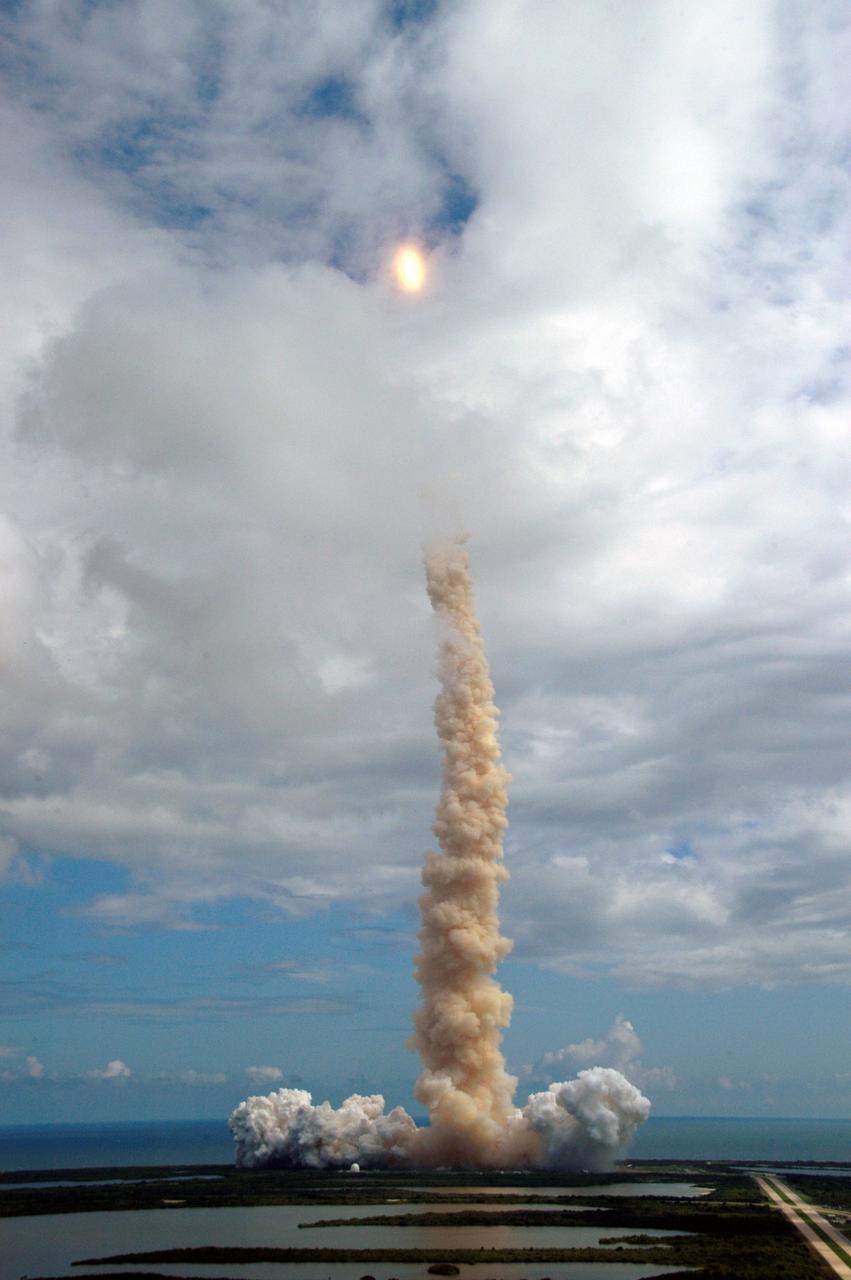
STS120-S-010 (23 Oct. 2007) --- The Space Shuttle Discovery and its seven-member STS-120 crew head toward Earth-orbit and a scheduled link-up with the International Space Station. Liftoff from Kennedy Space Center's launch pad 39A occurred at 11:38:19 a.m. (EDT). Onboard are astronauts Pam Melroy, commander; George Zamka, pilot; Scott Parazynski, Stephanie Wilson, Doug Wheelock, European Space Agency's (ESA) Paolo Nespoli and Daniel Tani, all mission specialists. Discovery will link up with the station on Thursday, Oct. 25, to begin a joint mission to continue construction by delivering the Italian-built U.S. Node 2, called Harmony. During the 14-day mission, the crew will install Harmony and move the P6 solar arrays to their permanent position and deploy them.
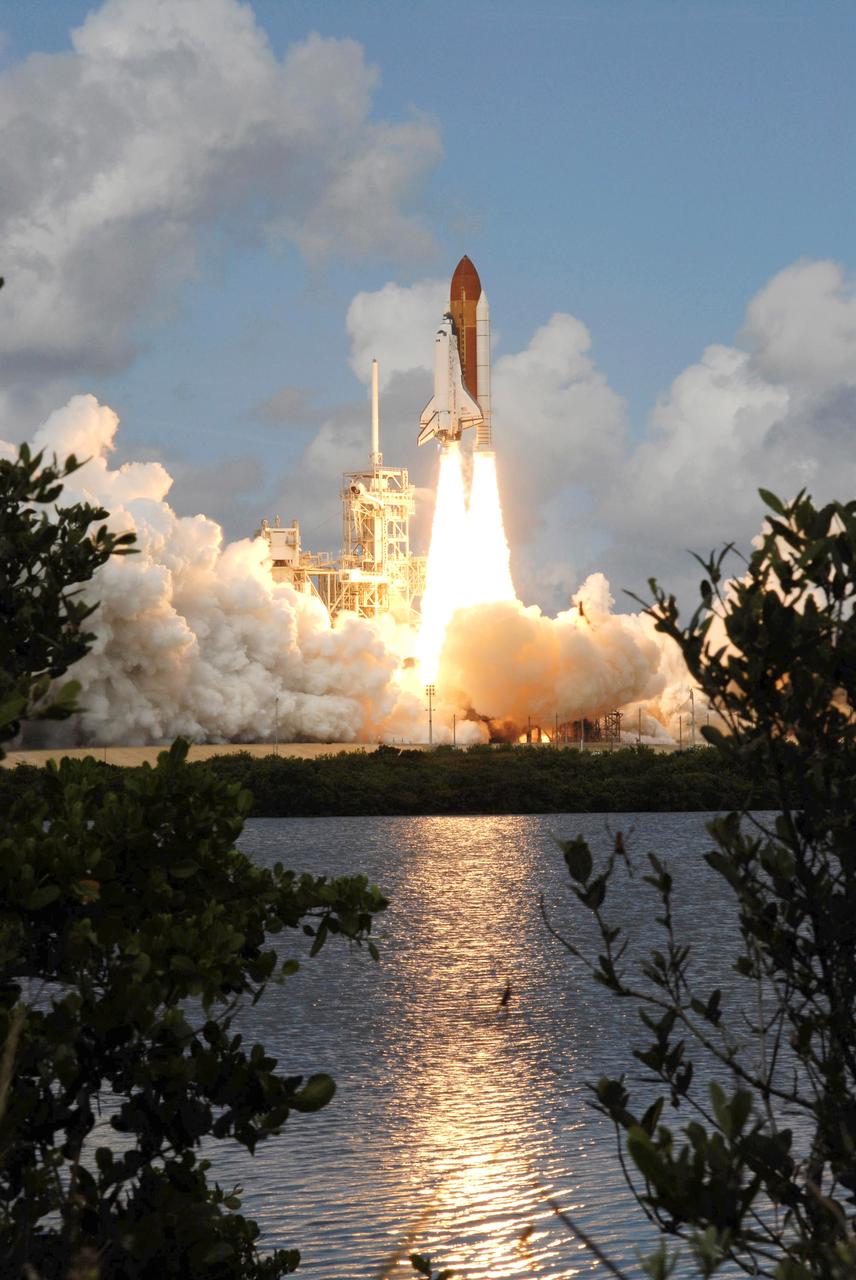
STS120-S-022 (23 Oct. 2007) --- The Space Shuttle Discovery and its seven-member STS-120 crew head toward Earth-orbit and a scheduled link-up with the International Space Station. Liftoff from Kennedy Space Center's launch pad 39A occurred at 11:38:19 a.m. (EDT). Onboard are astronauts Pam Melroy, commander; George Zamka, pilot; Scott Parazynski, Stephanie Wilson, Doug Wheelock, European Space Agency's (ESA) Paolo Nespoli and Daniel Tani, all mission specialists. Discovery will link up with the station on Thursday, Oct. 25, to begin a joint mission to continue construction by delivering the Italian-built U.S. Node 2, called Harmony. During the 14-day mission, the crew will install Harmony and move the P6 solar arrays to their permanent position and deploy them.
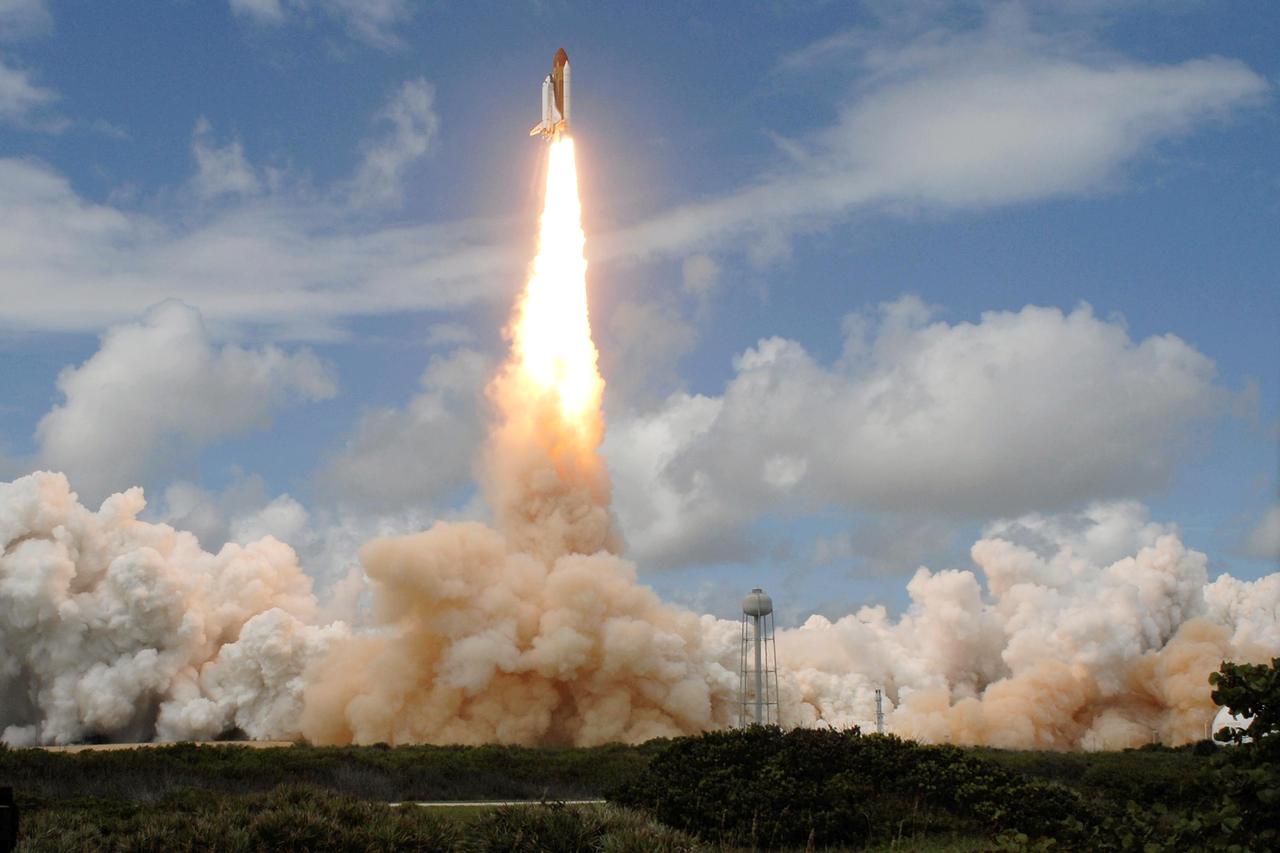
STS120-S-018 (23 Oct. 2007) --- The Space Shuttle Discovery and its seven-member STS-120 crew head toward Earth-orbit and a scheduled link-up with the International Space Station. Liftoff from Kennedy Space Center's launch pad 39A occurred at 11:38:19 a.m. (EDT). Onboard are astronauts Pam Melroy, commander; George Zamka, pilot; Scott Parazynski, Stephanie Wilson, Doug Wheelock, European Space Agency's (ESA) Paolo Nespoli and Daniel Tani, all mission specialists. Discovery will link up with the station on Thursday, Oct. 25, to begin a joint mission to continue construction by delivering the Italian-built U.S. Node 2, called Harmony. During the 14-day mission, the crew will install Harmony and move the P6 solar arrays to their permanent position and deploy them.
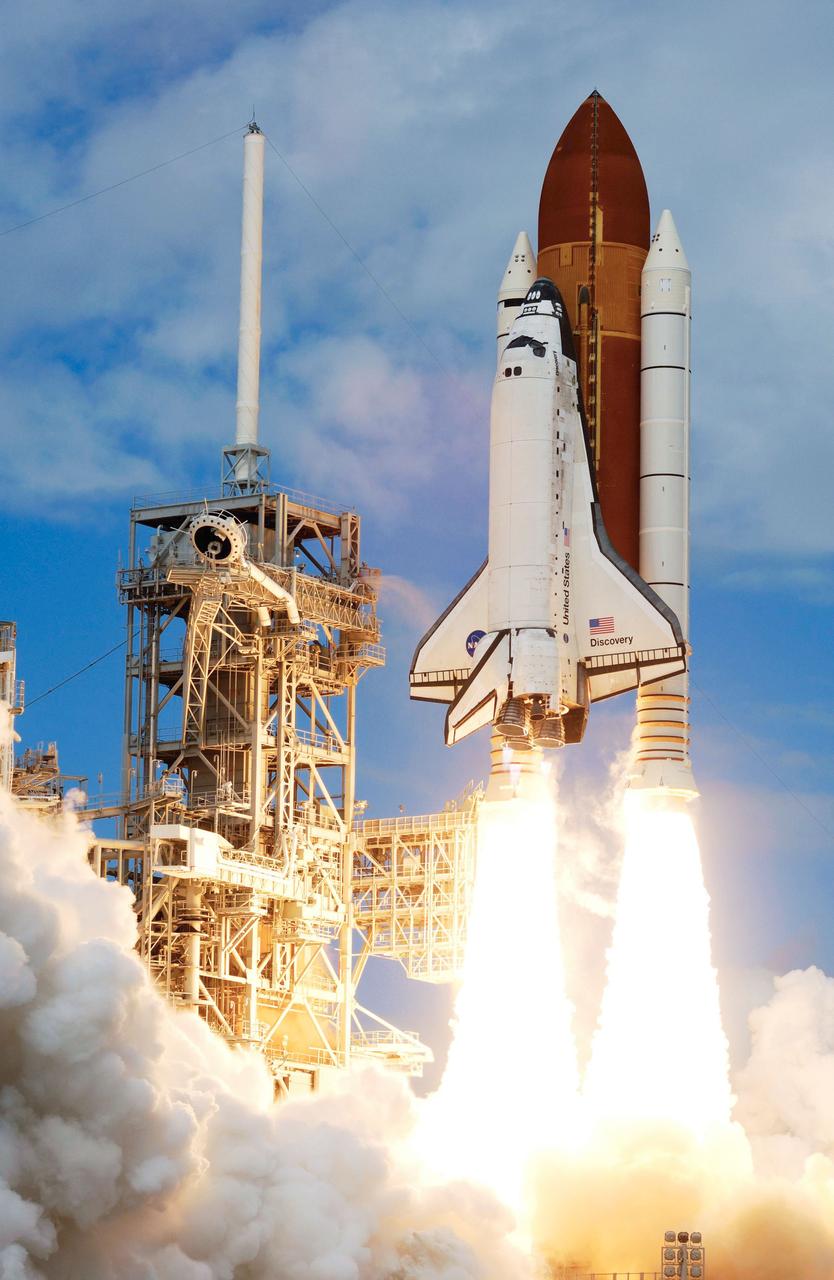
STS120-S-028 (23 Oct. 2007) --- The Space Shuttle Discovery and its seven-member STS-120 crew head toward Earth-orbit and a scheduled link-up with the International Space Station. Liftoff from Kennedy Space Center's launch pad 39A occurred at 11:38:19 a.m. (EDT). Onboard are astronauts Pam Melroy, commander; George Zamka, pilot; Scott Parazynski, Stephanie Wilson, Doug Wheelock, European Space Agency's (ESA) Paolo Nespoli and Daniel Tani, all mission specialists. Discovery will link up with the station on Thursday, Oct. 25, to begin a joint mission to continue construction by delivering the Italian-built U.S. Node 2, called Harmony. During the 14-day mission, the crew will install Harmony and move the P6 solar arrays to their permanent position and deploy them.
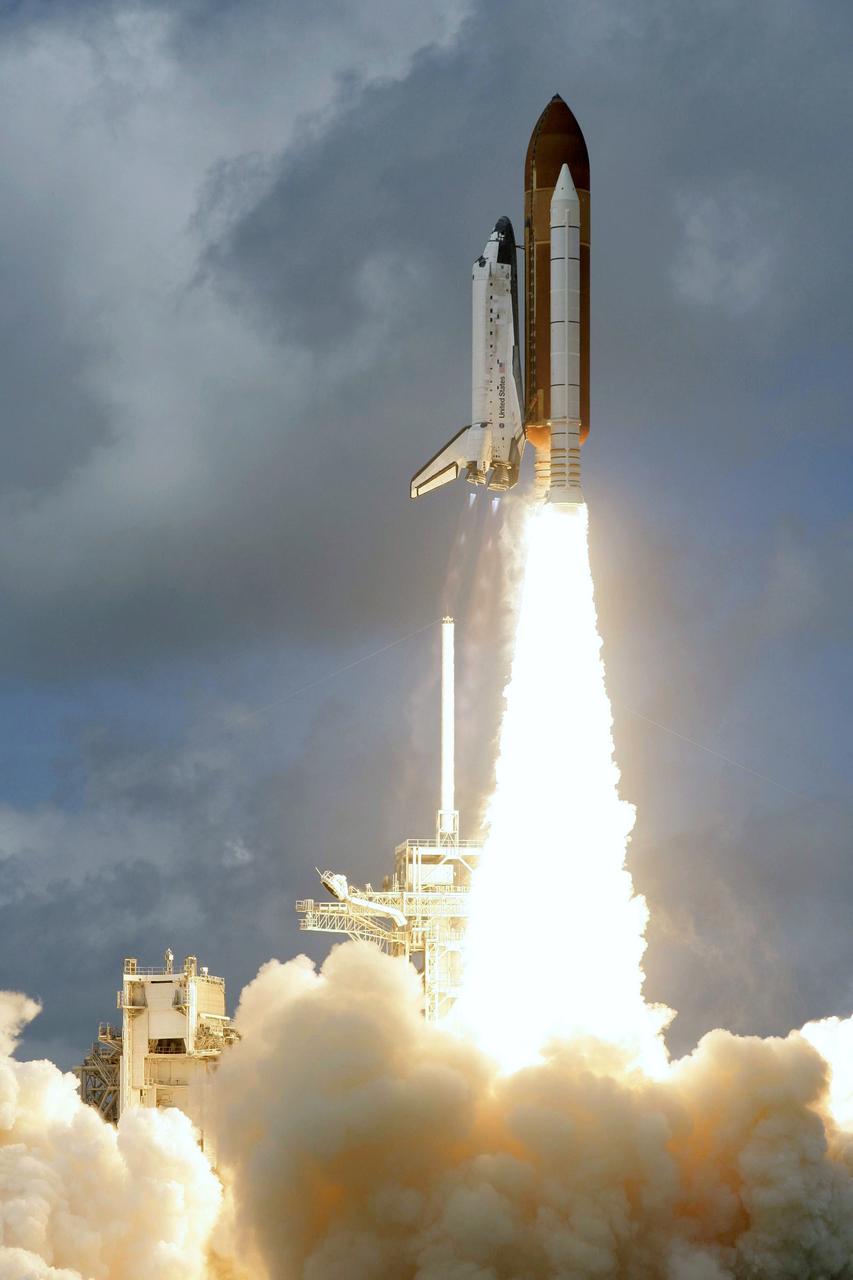
STS120-S-009 (23 Oct. 2007) --- The Space Shuttle Discovery and its seven-member STS-120 crew head toward Earth-orbit and a scheduled link-up with the International Space Station. Liftoff from Kennedy Space Center's launch pad 39A occurred at 11:38:19 a.m. (EDT). Onboard are astronauts Pam Melroy, commander; George Zamka, pilot; Scott Parazynski, Stephanie Wilson, Doug Wheelock, European Space Agency's (ESA) Paolo Nespoli and Daniel Tani, all mission specialists. Discovery will link up with the station on Thursday, Oct. 25, to begin a joint mission to continue construction by delivering the Italian-built U.S. Node 2, called Harmony. During the 14-day mission, the crew will install Harmony and move the P6 solar arrays to their permanent position and deploy them.
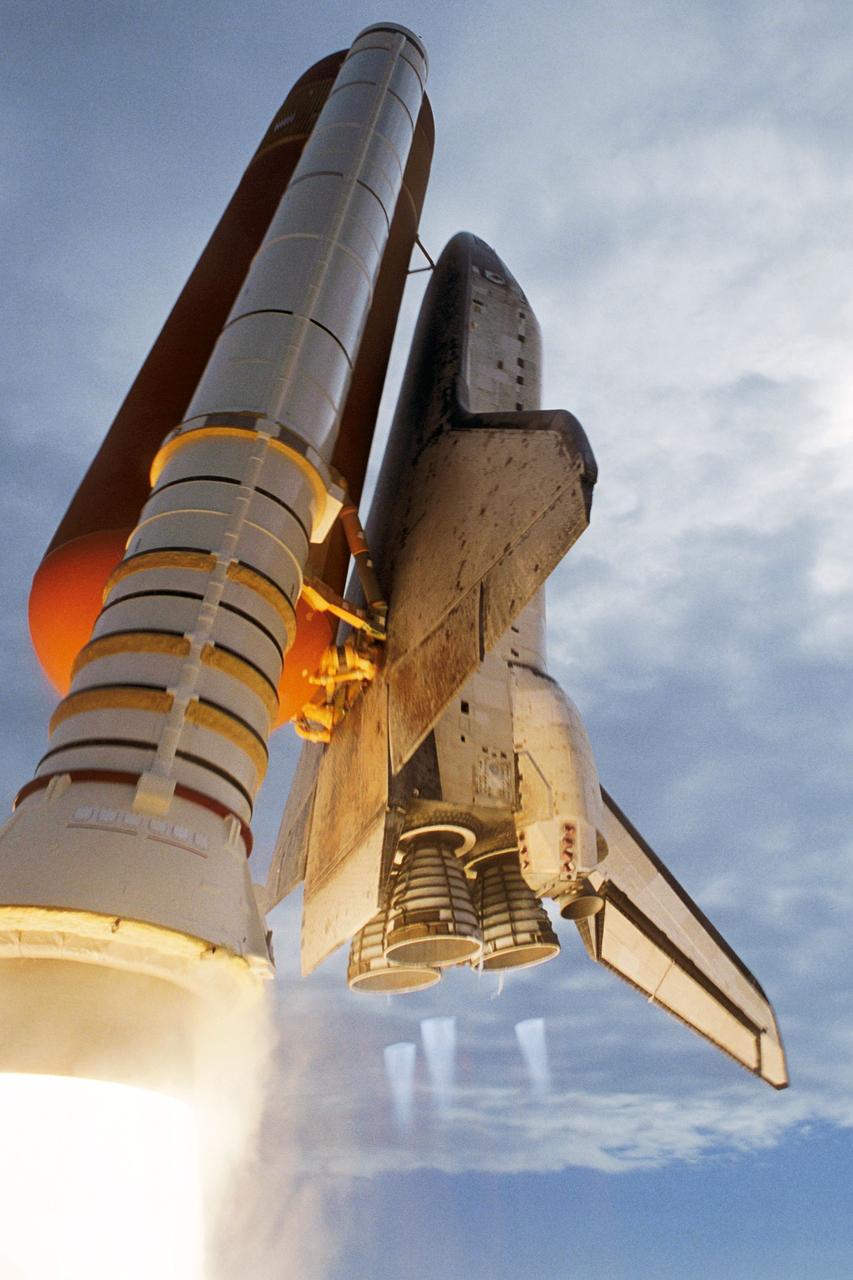
STS120-S-045 (23 Oct. 2007) --- The Space Shuttle Discovery and its seven-member STS-120 crew head toward Earth-orbit and a scheduled link-up with the International Space Station. Liftoff from Kennedy Space Center's launch pad 39A occurred at 11:38:19 a.m. (EDT). Onboard are astronauts Pam Melroy, commander; George Zamka, pilot; Scott Parazynski, Stephanie Wilson, Doug Wheelock, European Space Agency's (ESA) Paolo Nespoli and Daniel Tani, all mission specialists. Discovery will link up with the station on Thursday, Oct. 25, to begin a joint mission to continue construction by delivering the Italian-built U.S. Node 2, called Harmony. During the 14-day mission, the crew will install Harmony and move the P6 solar arrays to their permanent position and deploy them.
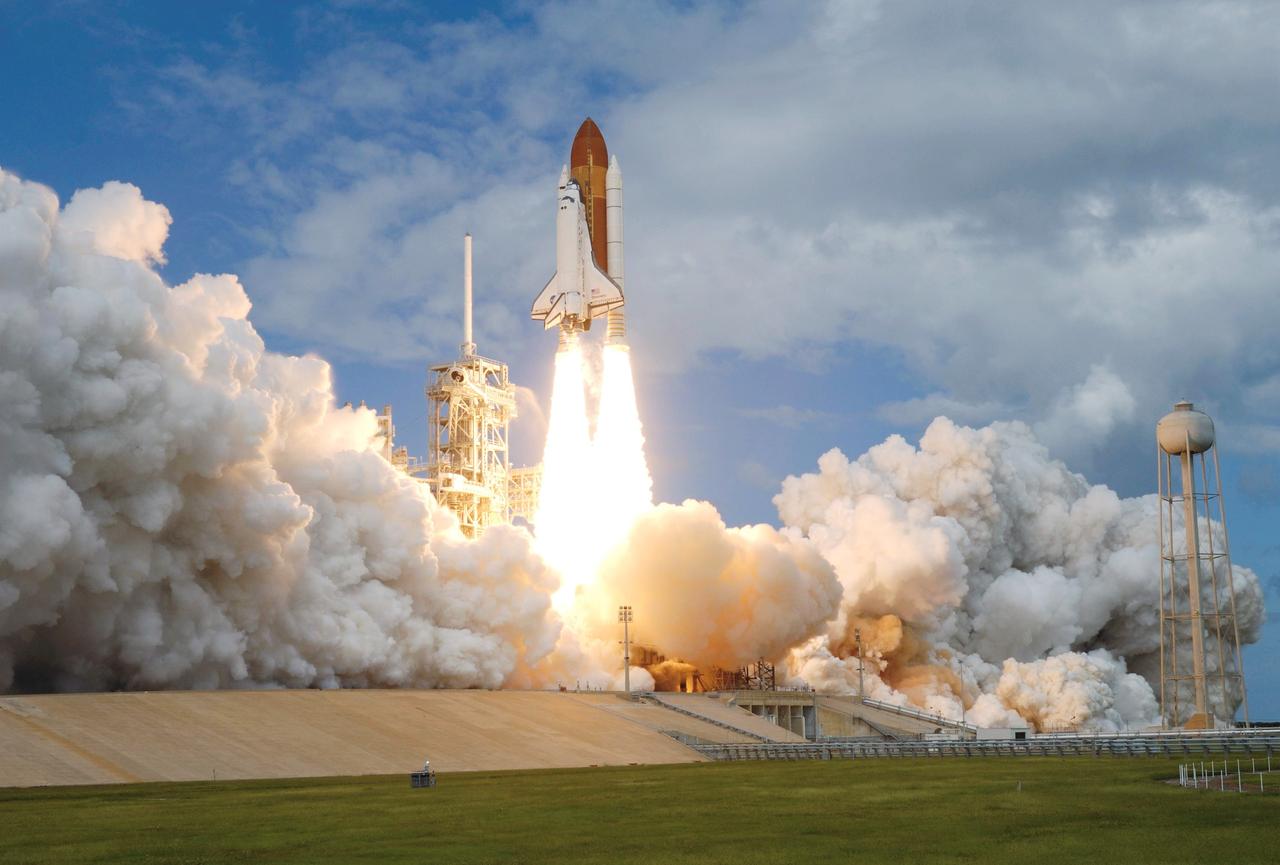
STS120-S-033 (23 Oct. 2007) --- The Space Shuttle Discovery and its seven-member STS-120 crew head toward Earth-orbit and a scheduled link-up with the International Space Station. Liftoff from Kennedy Space Center's launch pad 39A occurred at 11:38:19 a.m. (EDT). Onboard are astronauts Pam Melroy, commander; George Zamka, pilot; Scott Parazynski, Stephanie Wilson, Doug Wheelock, European Space Agency's (ESA) Paolo Nespoli and Daniel Tani, all mission specialists. Discovery will link up with the station on Thursday, Oct. 25, to begin a joint mission to continue construction by delivering the Italian-built U.S. Node 2, called Harmony. During the 14-day mission, the crew will install Harmony and move the P6 solar arrays to their permanent position and deploy them.
STS120-S-048 (23 Oct. 2007) --- The Space Shuttle Discovery and its seven-member STS-120 crew head toward Earth-orbit and a scheduled link-up with the International Space Station. Liftoff from Kennedy Space Center's launch pad 39A occurred at 11:38:19 a.m. (EDT). Onboard are astronauts Pam Melroy, commander; George Zamka, pilot; Scott Parazynski, Stephanie Wilson, Doug Wheelock, European Space Agency's (ESA) Paolo Nespoli and Daniel Tani, all mission specialists. Discovery will link up with the station on Thursday, Oct. 25, to begin a joint mission to continue construction by delivering the Italian-built U.S. Node 2, called Harmony. During the 14-day mission, the crew will install Harmony and move the P6 solar arrays to their permanent position and deploy them.
STS120-S-044 (23 Oct. 2007) --- The Space Shuttle Discovery and its seven-member STS-120 crew head toward Earth-orbit and a scheduled link-up with the International Space Station. Liftoff from Kennedy Space Center's launch pad 39A occurred at 11:38:19 a.m. (EDT). Onboard are astronauts Pam Melroy, commander; George Zamka, pilot; Scott Parazynski, Stephanie Wilson, Doug Wheelock, European Space Agency's (ESA) Paolo Nespoli and Daniel Tani, all mission specialists. Discovery will link up with the station on Thursday, Oct. 25, to begin a joint mission to continue construction by delivering the Italian-built U.S. Node 2, called Harmony. During the 14-day mission, the crew will install Harmony and move the P6 solar arrays to their permanent position and deploy them.
STS120-S-031 (23 Oct. 2007) --- The Space Shuttle Discovery and its seven-member STS-120 crew head toward Earth-orbit and a scheduled link-up with the International Space Station. Liftoff from Kennedy Space Center's launch pad 39A occurred at 11:38:19 a.m. (EDT). Onboard are astronauts Pam Melroy, commander; George Zamka, pilot; Scott Parazynski, Stephanie Wilson, Doug Wheelock, European Space Agency's (ESA) Paolo Nespoli and Daniel Tani, all mission specialists. Discovery will link up with the station on Thursday, Oct. 25, to begin a joint mission to continue construction by delivering the Italian-built U.S. Node 2, called Harmony. During the 14-day mission, the crew will install Harmony and move the P6 solar arrays to their permanent position and deploy them.
STS120-S-029 (23 Oct. 2007) --- The Space Shuttle Discovery and its seven-member STS-120 crew head toward Earth-orbit and a scheduled link-up with the International Space Station. Liftoff from Kennedy Space Center's launch pad 39A occurred at 11:38:19 a.m. (EDT). Onboard are astronauts Pam Melroy, commander; George Zamka, pilot; Scott Parazynski, Stephanie Wilson, Doug Wheelock, European Space Agency's (ESA) Paolo Nespoli and Daniel Tani, all mission specialists. Discovery will link up with the station on Thursday, Oct. 25, to begin a joint mission to continue construction by delivering the Italian-built U.S. Node 2, called Harmony. During the 14-day mission, the crew will install Harmony and move the P6 solar arrays to their permanent position and deploy them.
STS120-S-043 (23 Oct. 2007) --- The Space Shuttle Discovery and its seven-member STS-120 crew head toward Earth-orbit and a scheduled link-up with the International Space Station. Liftoff from Kennedy Space Center's launch pad 39A occurred at 11:38:19 a.m. (EDT). Onboard are astronauts Pam Melroy, commander; George Zamka, pilot; Scott Parazynski, Stephanie Wilson, Doug Wheelock, European Space Agency's (ESA) Paolo Nespoli and Daniel Tani, all mission specialists. Discovery will link up with the station on Thursday, Oct. 25, to begin a joint mission to continue construction by delivering the Italian-built U.S. Node 2, called Harmony. During the 14-day mission, the crew will install Harmony and move the P6 solar arrays to their permanent position and deploy them.
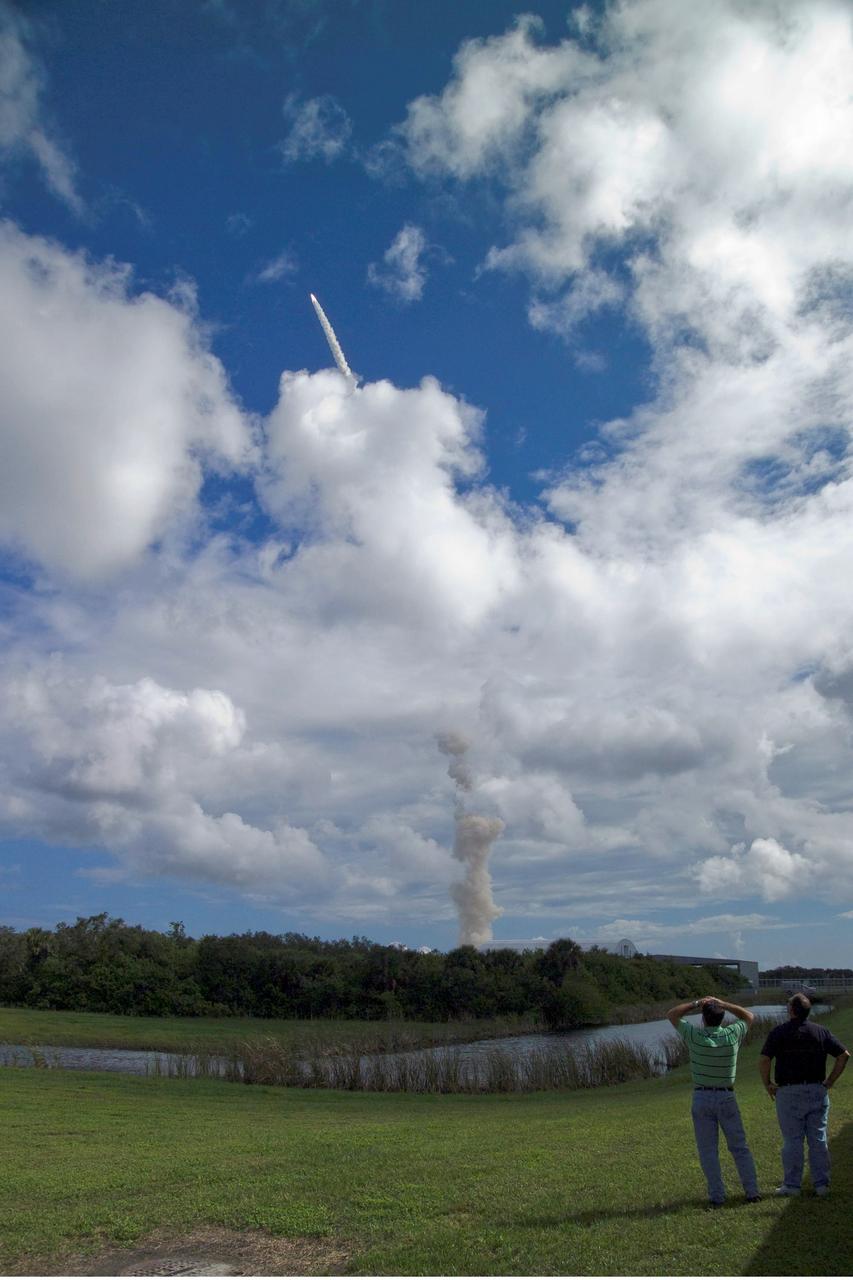
STS120-S-014 (23 Oct. 2007) --- The Space Shuttle Discovery and its seven-member STS-120 crew head toward Earth-orbit and a scheduled link-up with the International Space Station. Liftoff from Kennedy Space Center's launch pad 39A occurred at 11:38:19 a.m. (EDT). Onboard are astronauts Pam Melroy, commander; George Zamka, pilot; Scott Parazynski, Stephanie Wilson, Doug Wheelock, European Space Agency's (ESA) Paolo Nespoli and Daniel Tani, all mission specialists. Discovery will link up with the station on Thursday, Oct. 25, to begin a joint mission to continue construction by delivering the Italian-built U.S. Node 2, called Harmony. During the 14-day mission, the crew will install Harmony and move the P6 solar arrays to their permanent position and deploy them.
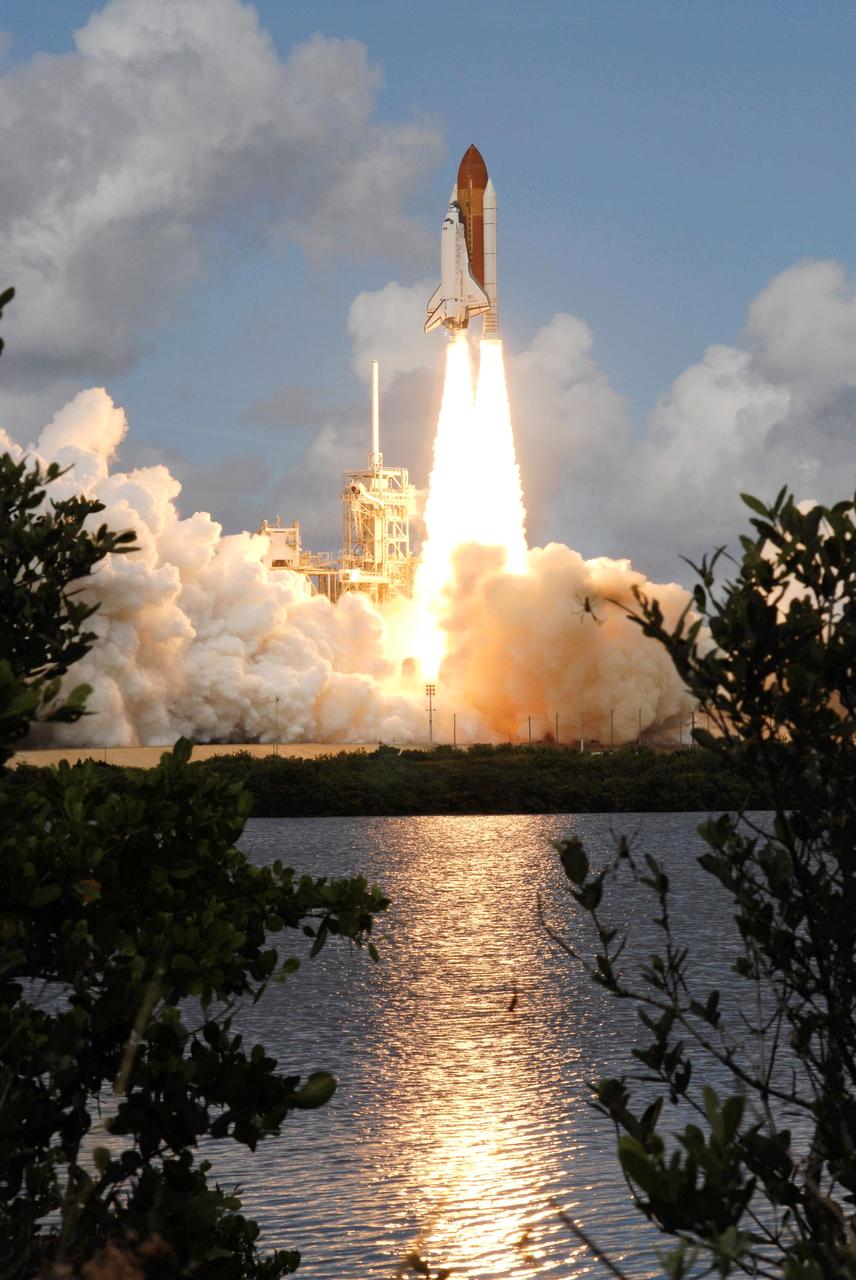
STS120-S-019 (23 Oct. 2007) --- The Space Shuttle Discovery and its seven-member STS-120 crew head toward Earth-orbit and a scheduled link-up with the International Space Station. Liftoff from Kennedy Space Center's launch pad 39A occurred at 11:38:19 a.m. (EDT). Onboard are astronauts Pam Melroy, commander; George Zamka, pilot; Scott Parazynski, Stephanie Wilson, Doug Wheelock, European Space Agency's (ESA) Paolo Nespoli and Daniel Tani, all mission specialists. Discovery will link up with the station on Thursday, Oct. 25, to begin a joint mission to continue construction by delivering the Italian-built U.S. Node 2, called Harmony. During the 14-day mission, the crew will install Harmony and move the P6 solar arrays to their permanent position and deploy them.
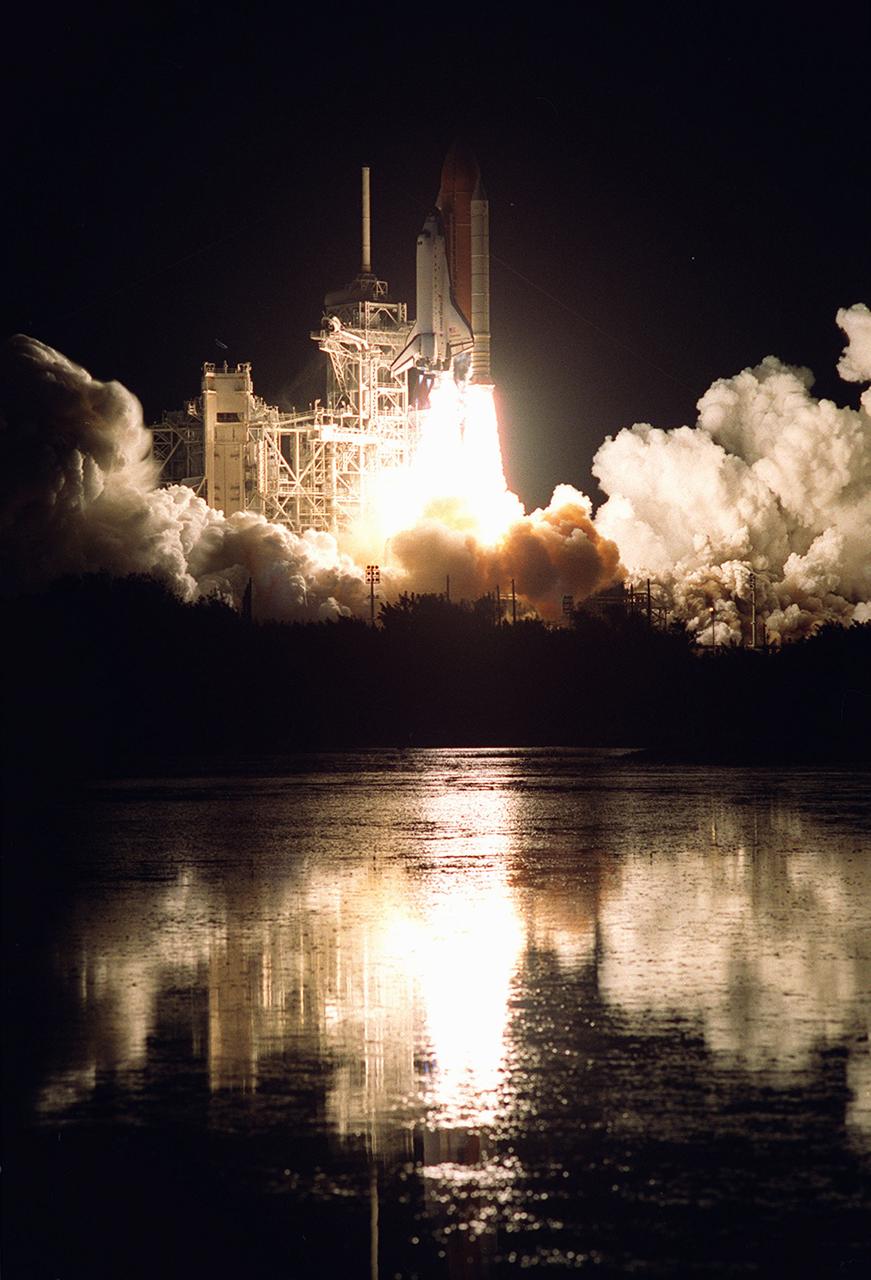
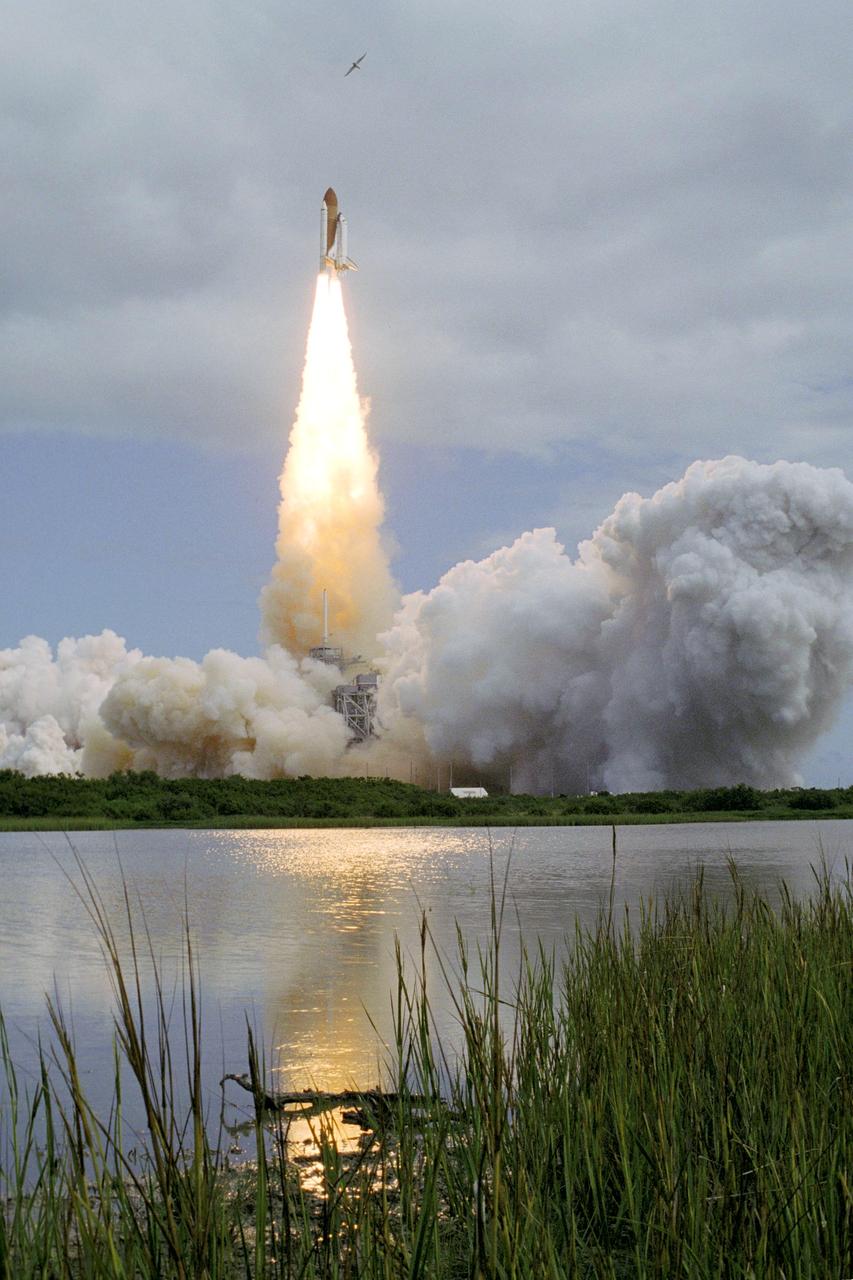
Nearby waters reflect the flames of the Space Shuttle Endeavor as she lifts off November 30, 2000, carrying the STS-97 crew of five. The STS-97 mission's primary objective was the delivery, assembly, and activation of the U.S. electrical power system onboard the International Space Station (ISS). The electrical power system, which is built into a 73-meter (240-foot) long solar array structure, consists of solar arrays, radiators, batteries, and electronics. The entire 15.4-metric ton (17-ton) package is called the P6 Integrated Truss Segment and is the heaviest and largest element yet delivered to the station aboard a space shuttle. The electrical system will eventually provide the power necessary for the first ISS crews to live and work in the U.S. segment.
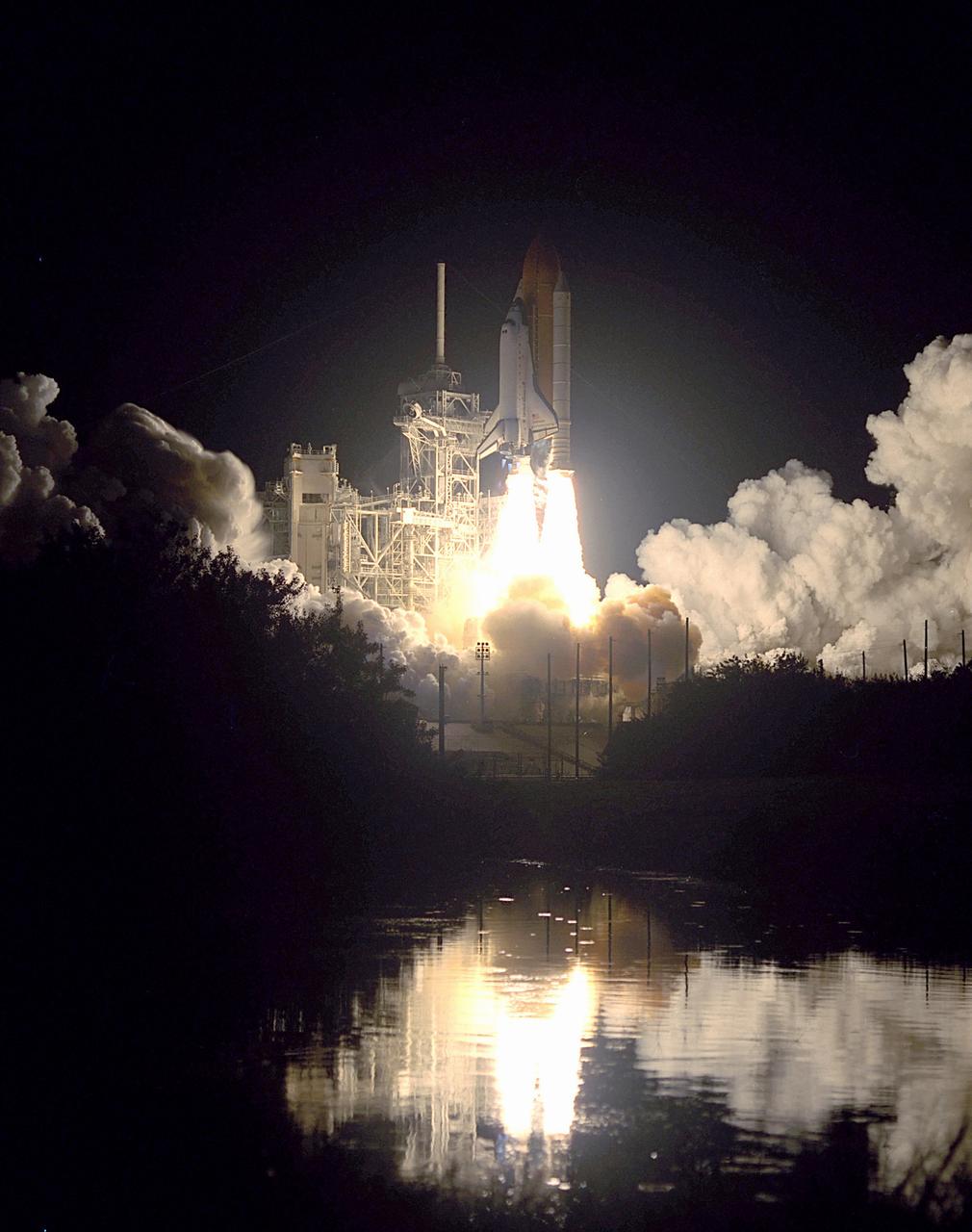
Nearby waters reflect the flames of the Space Shuttle Endeavor as she lifts off November 30, 2000 carrying the STS-97 crew of five. The STS-97 mission's primary objective was the delivery, assembly, and activation of the U.S. electrical power system onboard the International Space Station (ISS). The electrical power system, which is built into a 73-meter (240-foot) long solar array structure, consists of solar arrays, radiators, batteries, and electronics. The entire 15.4-metric ton (17-ton) package is called the P6 Integrated Truss Segment, and is the heaviest and largest element yet delivered to the station aboard a space shuttle. The electrical system will eventually provide the power necessary for the first ISS crews to live and work in the U.S. segment.
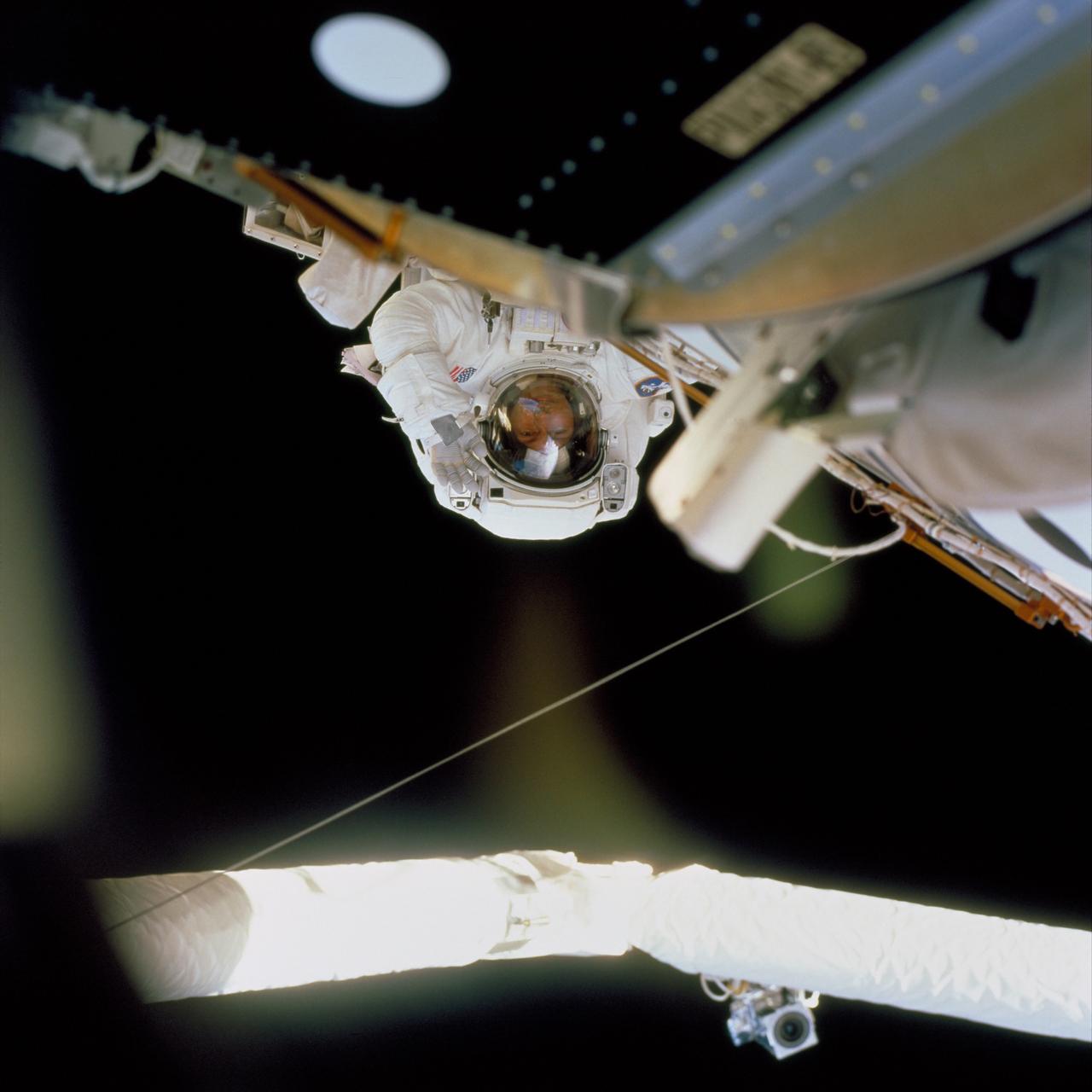
In this image, STS-97 astronaut and mission specialist Carlos I. Noriega waves at a crew member inside Endeavor's cabin during the mission's final session of Extravehicular Activity (EVA). Launched aboard the Space Shuttle Orbiter Endeavor on November 30, 2000, the STS-97 mission's primary objective was the delivery, assembly, and activation of the U.S. electrical power system onboard the International Space Station (ISS). The electrical power system, which is built into a 73-meter (240-foot) long solar array structure consists of solar arrays, radiators, batteries, and electronics. The entire 15.4-metric ton (17-ton) package is called the P6 Integrated Truss Segment, and is the heaviest and largest element yet delivered to the station aboard a space shuttle. The electrical system will eventually provide the power necessary for the first ISS crews to live and work in the U.S. segment.
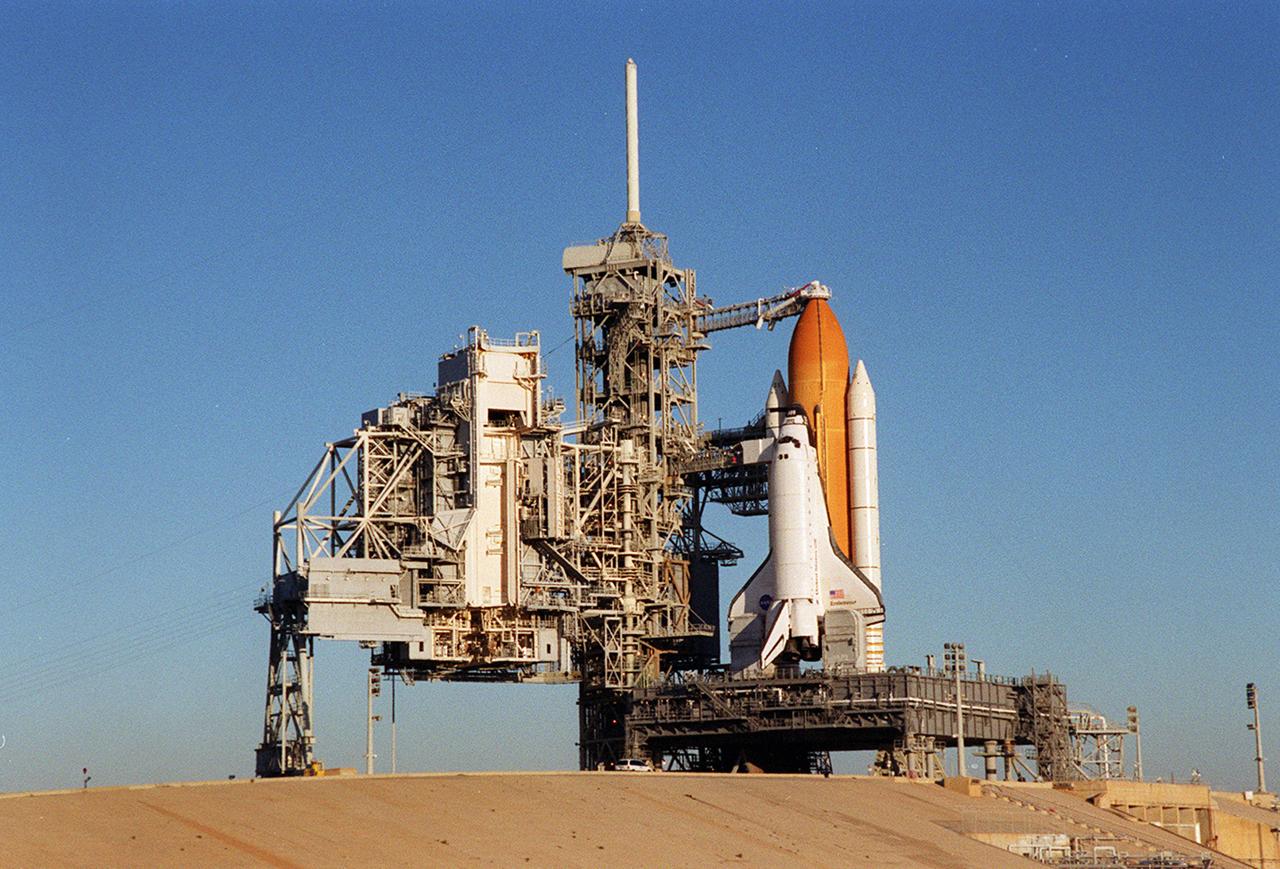
Back dropped by a cloudless blue sky, Space Shuttle Endeavor stands ready for launch after the rollback of the Rotating Service Structure, at left. The orbiter launched that night carrying the STS-97 crew of five. The STS-97 mission's primary objective was the delivery, assembly, and activation of the U.S. electrical power system onboard the International Space Station (ISS). The electrical power system, which is built into a 73-meter (240-foot) long solar array structure, consists of solar arrays, radiators, batteries, and electronics. The entire 15.4-metric ton (17-ton) package is called the P6 Integrated Truss Segment, and is the heaviest and largest element yet delivered to the station aboard a space shuttle. The electric system will eventually provide the power necessary for the first ISS crews to live and work in the U.S. segment.
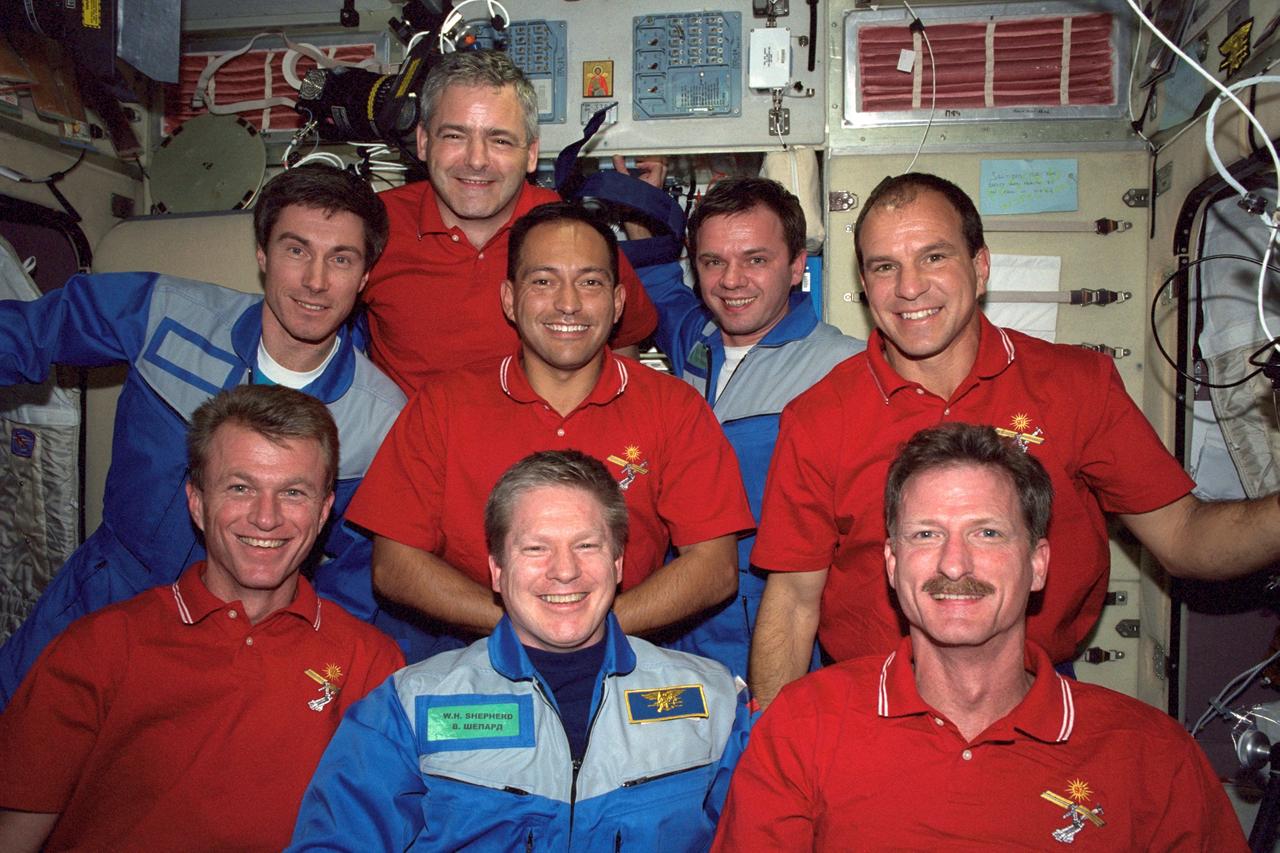
In this image, the five STS-97 crew members pose with the 3 members of the Expedition One crew onboard the International Space Station (ISS) for the first ever traditional onboard portrait taken in the Zvezda Service Module. On the front row, left to right, are astronauts Brent W. Jett, Jr., STS-97 commander; William M. Shepherd, Expedition One mission commander; and Joseph R. Tarner, STS-97 mission specialist. On the second row, from the left are Cosmonaut Sergei K. Krikalev, Expedition One flight engineer; astronaut Carlos I. Noriega, STS-97 mission specialist; cosmonaut Yuri P. Gidzenko, Expedition One Soyuz commander; and Michael J. Bloomfield, STS-97 pilot. Behind them is astronaut Marc Garneau, STS-97 mission specialist representing the Canadian Space Agency (CSA). The primary objective of the STS-97 mission was the delivery, assembly, and activation of the U.S. electrical power system onboard the International Space Station (ISS). The electrical power system, which is built into a 73-meter (240-foot) long solar array structure consists of solar arrays, radiators, batteries, and electronics. The entire 15.4-metric ton (17-ton) package is called the P6 Integrated Truss Segment, and is the heaviest and largest element yet delivered to the station aboard a space shuttle. The electrical system will eventually provide the power necessary for the first ISS crews to live and work in the U.S. segment. The STS-97 crew of five launched aboard the Space Shuttle Orbiter Endeavor on November 30, 2000 for an 11 day mission.
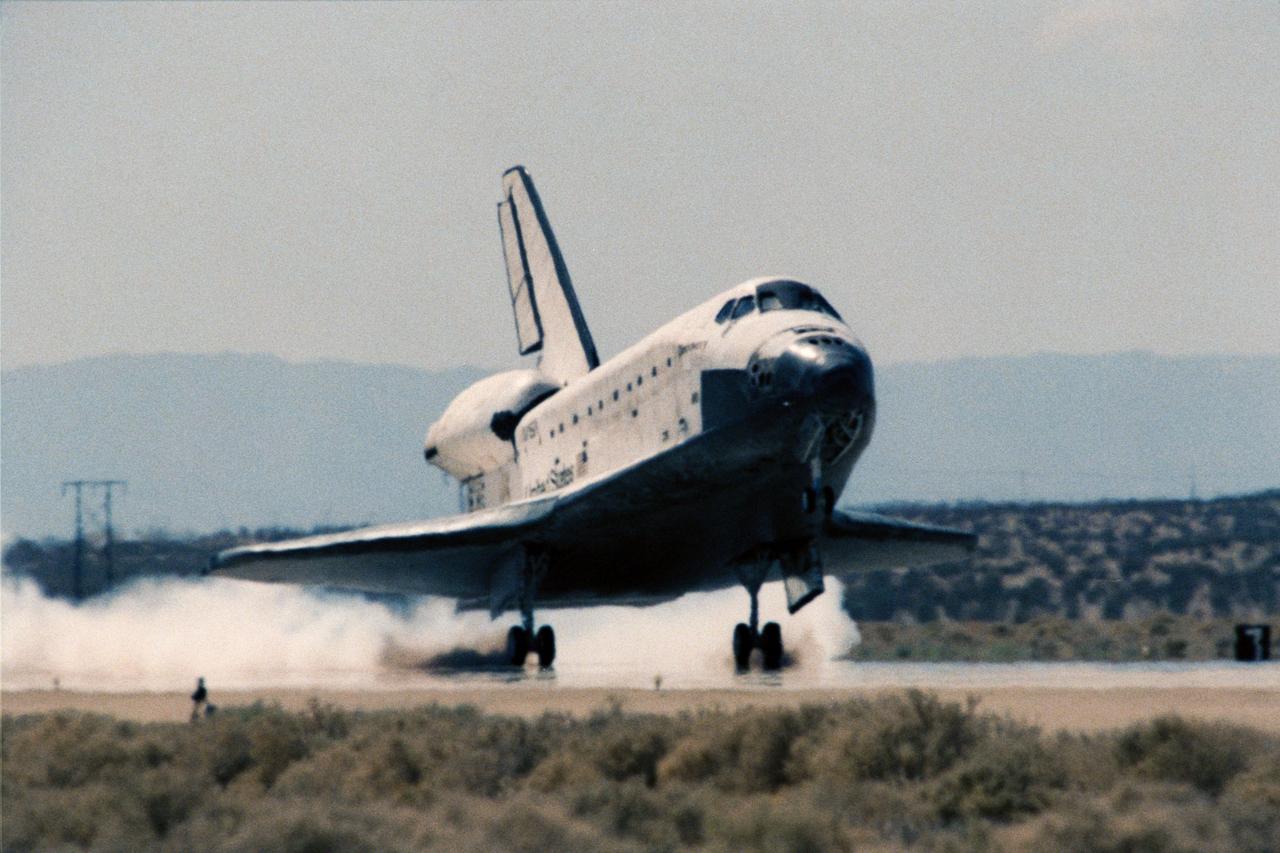
STS64-S-094 (20 Sept. 1994) --- The space shuttle Discovery, with a crew of six NASA astronauts aboard, touches down on Runway 04 at Edwards Air Force Base (EAFB), completing a 10-day, 22-hour and 50-minute mission. Following a de-orbit engine firing at 1:14 p.m. (PDT), Sept. 20, 1994. Touchdown was at 2:12:59 p.m., and the nose wheel touched down at 2:13:03 p.m., with wheel stop at 2:13:52 p.m. Bad weather in Florida called for an "eleventh hour" shift to the California landing site. Onboard for the flight, whose mission was to study Earth's atmosphere and to test tools and procedures for the International Space Station, were astronauts Richard N. Richards, L. Blaine Hammond Jr., Mark C. Lee, Carl J. Meade, Susan J. Helms and Jerry M. Linenger. Photo credit: NASA or National Aeronautics and Space Administration
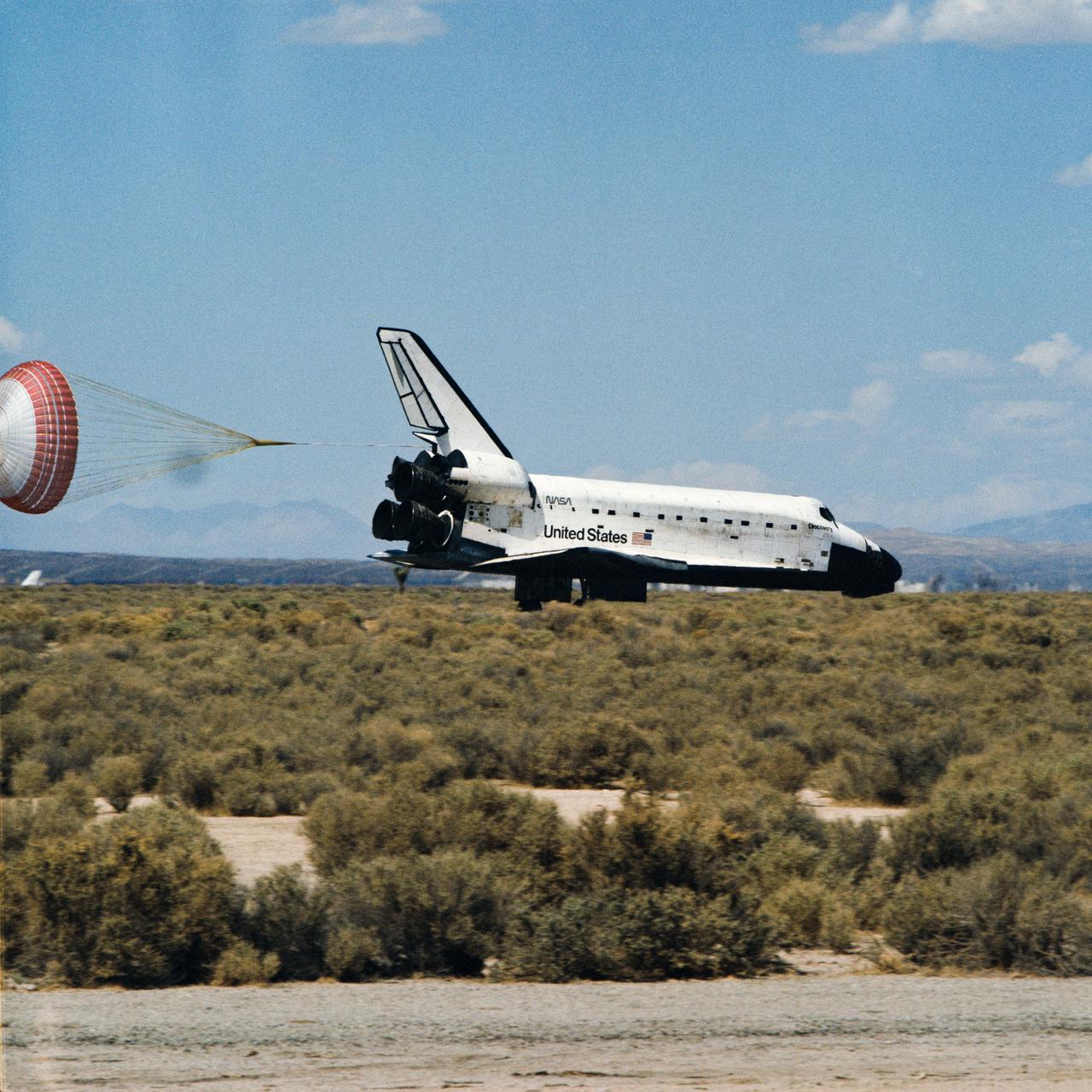
STS64-S-073 (20 Sept. 1994) --- The drag chute for the space shuttle Discovery is deployed as NASA's most-heavily flown spacecraft completes a 10-day, 22-hour and 50-minute mission. Discovery, with a crew of six NASA astronauts aboard, fired its de-orbit engine at 1:14 p.m. (PDT), Sept. 20, 1994. Touchdown was at 2:12:59 p.m. and the nose wheel touched down at 2:13:03 p.m., with wheel stop at 2:13:52 p.m. Bad weather in Florida called for an "eleventh hour" shift to the California landing site. Onboard for the flight, whose mission was to study Earth's atmosphere and to test tools and procedures for the International Space Station (ISS), were astronauts Richard N. Richards, L. Blaine Hammond, Mark C. Lee, Carl J. Meade, Susan J. Helms and Jerry M. Linenger. Photo credit: NASA or National Aeronautics and Space Administration
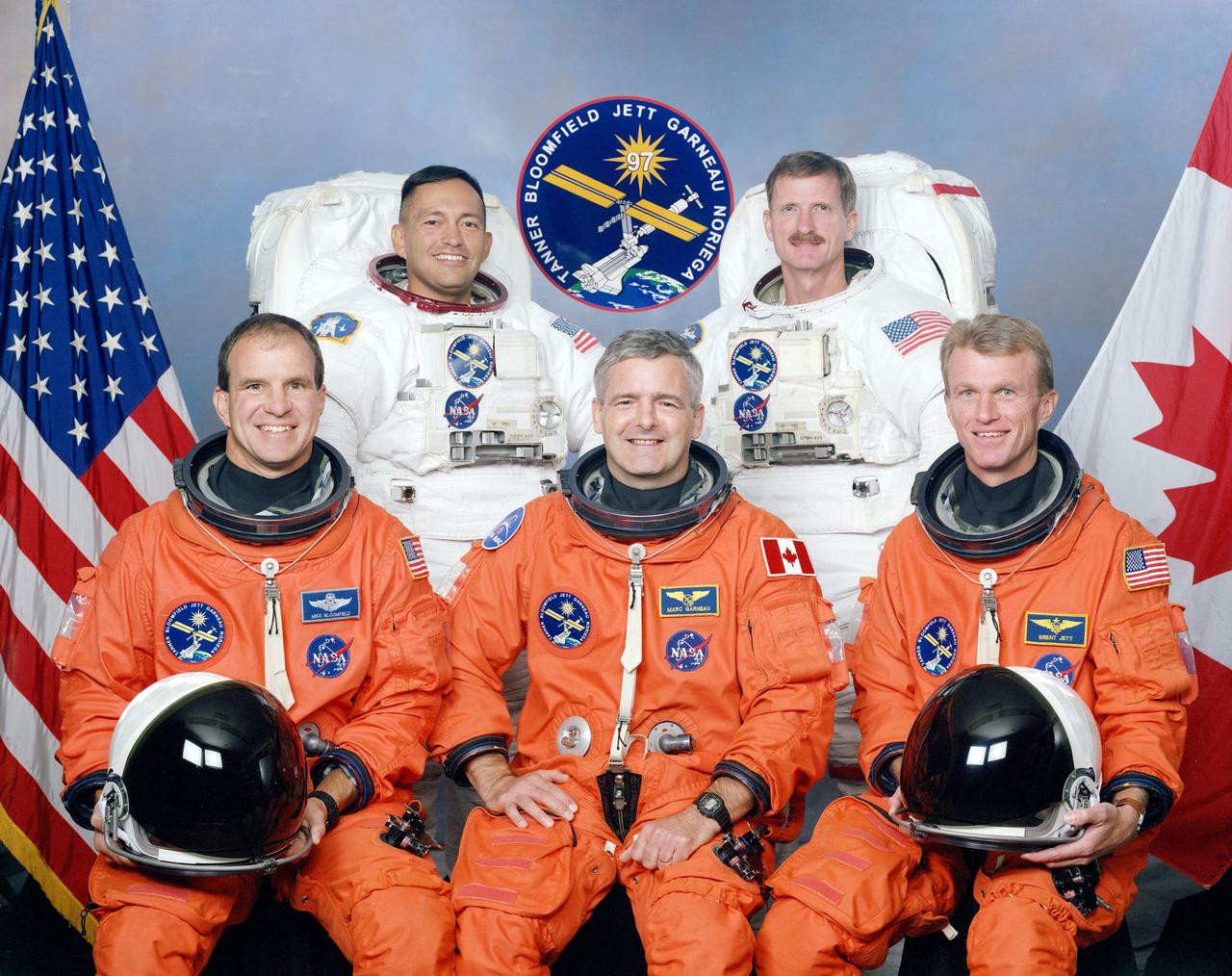
These five STS-97 crew members posed for a traditional portrait during training. On the front row, left to right, are astronauts Michael J. Bloomfield, pilot; Marc Garneau, mission specialist representing the Canadian Space Agency (CSA); and Brent W. Jett, Jr., commander. In the rear, wearing training versions of the extravehicular mobility unit (EMU) space suits, (left to right) are astronauts Carlos I. Noriega, and Joseph R. Tarner, both mission specialists. The primary objective of the STS-97 mission was the delivery, assembly, and activation of the U.S. electrical power system onboard the International Space Station (ISS). The electrical power system, which is built into a 73-meter (240-foot) long solar array structure consists of solar arrays, radiators, batteries, and electronics. The entire 15.4-metric ton (17-ton) package is called the P6 Integrated Truss Segment and is the heaviest and largest element yet delivered to the station aboard a space shuttle. The electrical system will eventually provide the power necessary for the first ISS crews to live and work in the U.S. segment. The STS-97 crew of five launched aboard the Space Shuttle Orbiter Endeavor on November 30, 2000 for an 11 day mission.
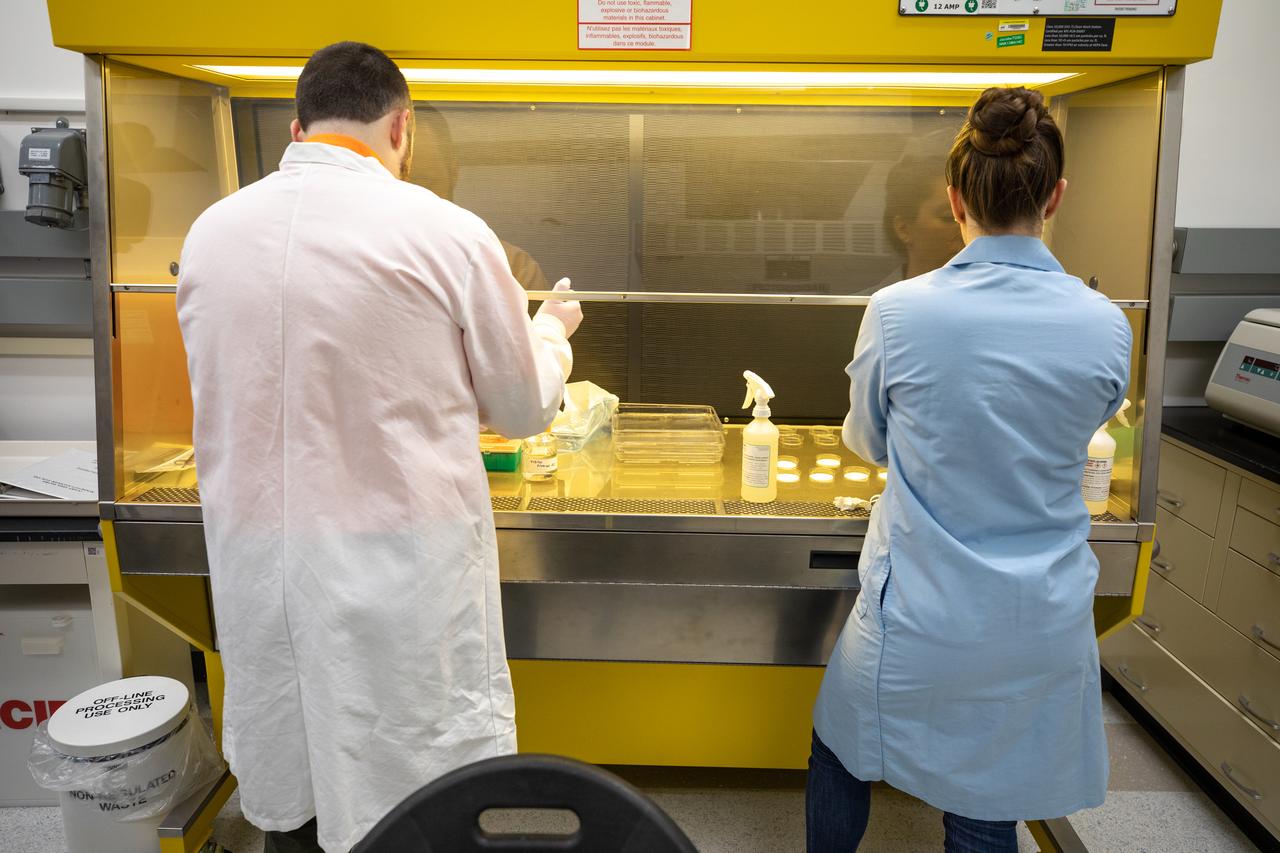
Aaron Curry, left, a research scientist with the Laboratory Support Services and Operations (LASSO) contract, and Jess Bunchek, a pseudonaut and associate scientist at NASA’s Kennedy Space Center in Florida, are preparing a new seed handling material for testing inside the Space Station Processing Facility on Jan. 15, 2020. The new material, called seed film, and similar in appearance to a breath freshener strip, is a water-soluble, dissolving film that addresses the challenge of handling seeds in a microgravity environment. The seed film experiment, titled VEG-03 J, involves sending seed film containing red romaine lettuce seeds to the International Space Station and monitoring the plant’s growth in space. As part of the experiment, crew onboard the orbiting laboratory will plant the seeds into plant pillows – a common method used to grow plants in the space station – themselves for the first time ever. VEG-03 J will launch aboard a Northrop Grumman Antares rocket and Cygnus spacecraft on the company’s 13th resupply services mission. Liftoff is scheduled for Feb. 9, 2020, at 5:39 p.m. EST from the agency’s Wallops Flight Facility in Virginia.
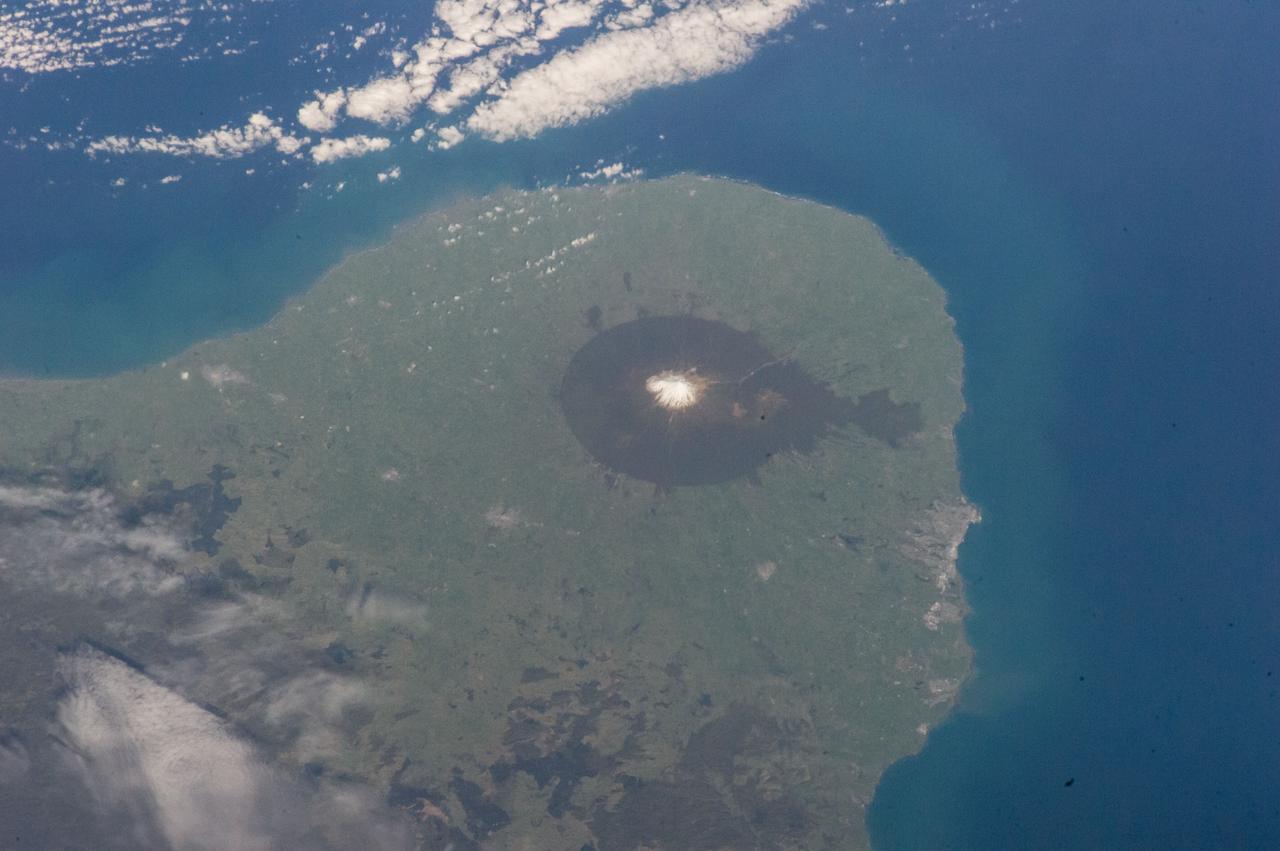
ISS041-E-049111 (30 Sept. 2014) --- One of the Expedition 41 crew members onboard the International Space Station, flying at an altitude of 226 nautical miles, exposed this image of Mount Egmont Volcano, New Zealand, using a focal length setting of 200mm. Sometimes referred to as Mount Taranaki, the land feature is a young stratovolcano that began to form 70,000 years ago, according to volcanists. Located in southwest North Island, New Zealand, Mount Egmont, at 8,261 feet (2,518 meters) is the second tallest volcanic mountain in New Zealand. Perpetually snow-capped, the volcano last erupted in 1755. Mount Egmont has a history of a major size eruption occurring every 340 years, with numerous minor ones in between. The volcano has had three major cone collapses in the last 25,000 years with the last collapse occurring 6,970 years ago. With each collapse, thick layers of ash and lava crumbled into thick, muddy avalanches called lahars. These lahars have reached the coastline 25 miles (40 kilometers) to the west and north of the volcano. Egmont is surrounded by forest, especially on its lower flanks, which is part of a National Park. The pastureland that circles the park is used for dairy farming.
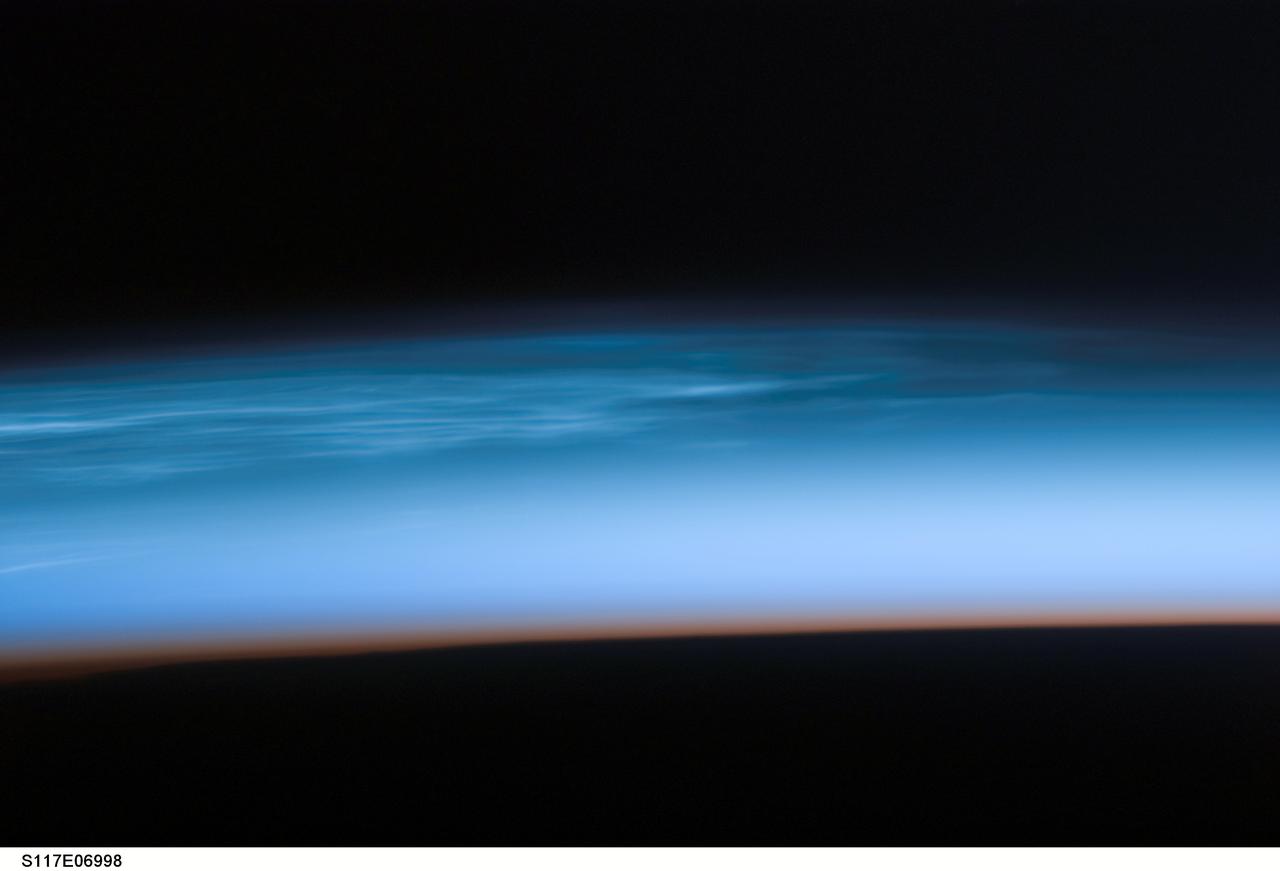
S117-E-06998 (10 June 2007) --- Polar Mesospheric Clouds are featured in this image photographed by a STS-117 crewmember onboard Space Shuttle Atlantis. Sometimes in the summertime in the far northern (or southern) latitudes, high in the Earth's atmosphere at the edge of space, thin silvery clouds form and are observed just after sunset. These high clouds, occurring at altitudes of about 80 kilometers (50 miles), are called Polar Mesospheric Clouds (PMC) or noctilucent clouds, and are the subject of new studies to determine whether their occurrence is related to global climate change. Observations over the past few years suggest that PMC are now observed more frequently and at lower latitudes than historical observations. Several studies related to the International Polar Year (IPY), and the AIM (Aeronomy of Ice in the Mesosphere) spacecraft are underway to collect relevant data on the chemistry and physics of the mesosphere that might explain the occurrence of PMC. Astronauts in orbiting spacecraft frequently observe PMC over Canada, northern Europe and Asia during June, July and August. While PMC also occur over the high latitudes in the southern hemisphere in December, January and February, astronaut observations of southern PMC are less frequent. Earlier in June 2007, the shuttle crew visiting the International Space Station observed spectacular PMC over north-central Asia. This image was taken looking north while the shuttle and station were docking and flying over the border between western China, Mongolia and Kazakhstan. The red-to-dark region at the bottom of the image is the dense part of the Earth's atmosphere. Because this image was taken with a long lens (180mm), the entire profile of the Earth's limb is not captured. To support IPY research over the next 2 years, station crewmembers will be looking for and documenting PMC in both hemispheres.
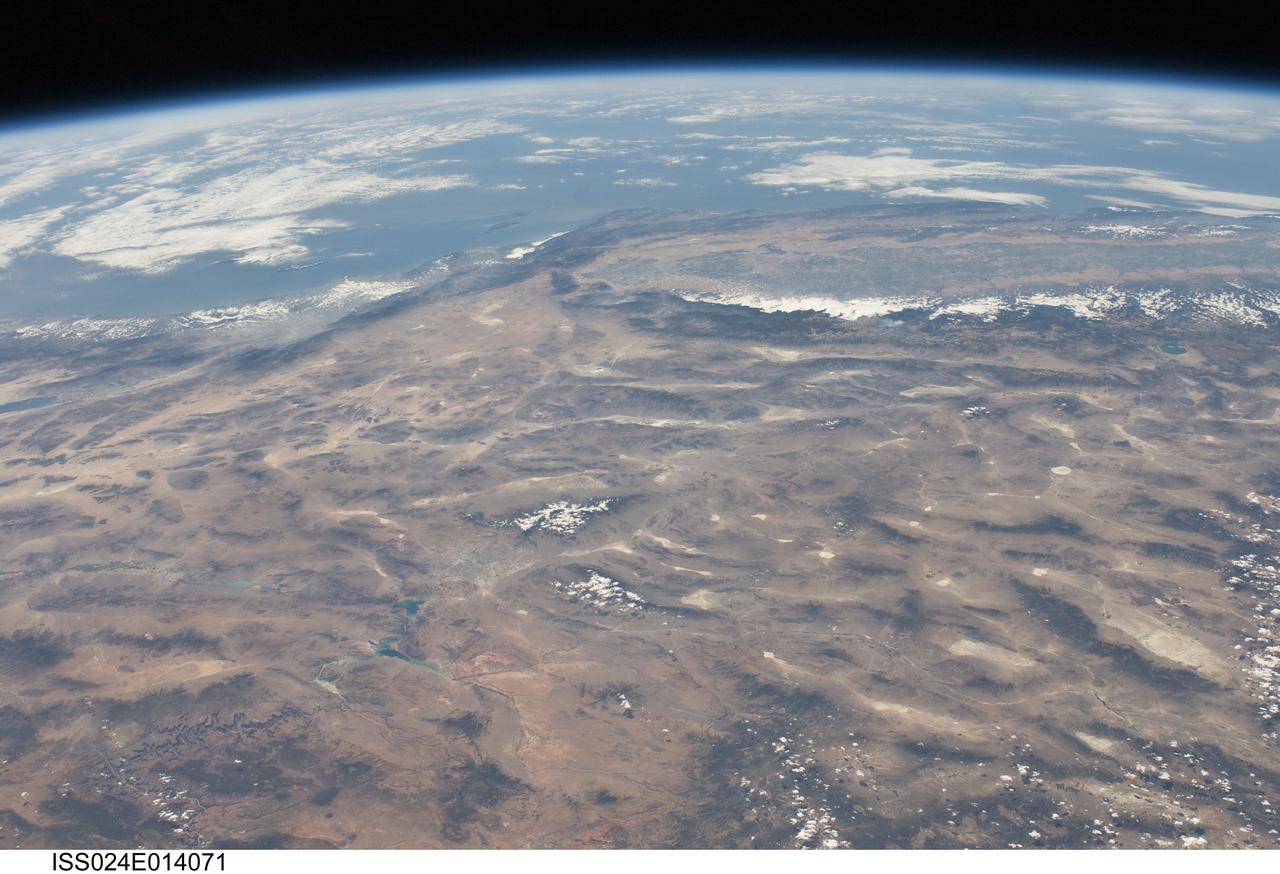
ISS024-E-014071 (9 Sept. 2010) --- This striking panoramic view of the southwestern USA and Pacific Ocean is an oblique image photographed by an Expedition 24 crew member looking outwards at an angle from the International Space Station (ISS). While most unmanned orbital satellites view Earth from a nadir perspective?in other words, collecting data with a ?straight down? viewing geometry?crew members onboard the space station can acquire imagery at a wide range of viewing angles using handheld digital cameras. The ISS nadir point (the point on Earth?s surface directly below the spacecraft) was located in northwestern Arizona, approximately 260 kilometers to the east-southeast, when this image was taken. The image includes parts of the States of Arizona, Nevada, Utah, and California together with a small segment of the Baja California, Mexico coastline at center left. Several landmarks and physiographic features are readily visible. The Las Vegas, NV metropolitan area appears as a gray region adjacent to the Spring Mountains and Sheep Range (both covered by white clouds). The Grand Canyon, located on the Colorado Plateau in Arizona, is visible (lower left) to the east of Las Vegas with the blue waters of Lake Mead in between. The image also includes the Mojave Desert, stretching north from the Salton Sea (left) to the Sierra Nevada mountain range. The Sierra Nevada range is roughly 640 kilometers long (north-south) and forms the boundary between the Central Valley of California and the adjacent Basin and Range. The Basin and Range is so called due to the pattern of long linear valleys separated by parallel linear mountain ranges ? this landscape, formed by extension and thinning of Earth?s crust, is particularly visible at right.

ISS030-E-254011 (21 April 2012) --- The Ouarkziz Impact Crater is featured in this image photographed by an Expedition 30 crew member on the International Space Station. The Ouarkziz Impact Crater is located in northwestern Algeria close to the border with Morocco. According to scientists, the crater was formed by a meteor impact less than 70 million years ago during the late Cretaceous Period of the Mesozoic Era or “Age of Dinosaurs”. Originally called Tindouf, the 3.5-kilometer in diameter impact crater (center) has been heavily eroded since its formation; however its circular morphology is highlighted by exposures of older sedimentary rock layers that form roughly northwest-to-southeast-trending ridgelines to the north and south. From the vantage point of a crew member onboard the space station, the impact crater is clearly visible with a magnifying camera lens. A geologist interpreting this image to build a working geological history of the region would conclude that the Ouarkziz impact crater is younger than the sedimentary rocks, as the rock layers had to be already present for the meteor to hit them. Likewise, a stream channel is visible cutting across the center of the impact structure (center), indicating that the channel formed after the impact had occurred. This Principal of Cross-Cutting Relationships, usually attributed to the famous 19th century geologist Charles Lyell, is a basic logic tool used by geologists to build relative sequence and history of events when investigating a region.
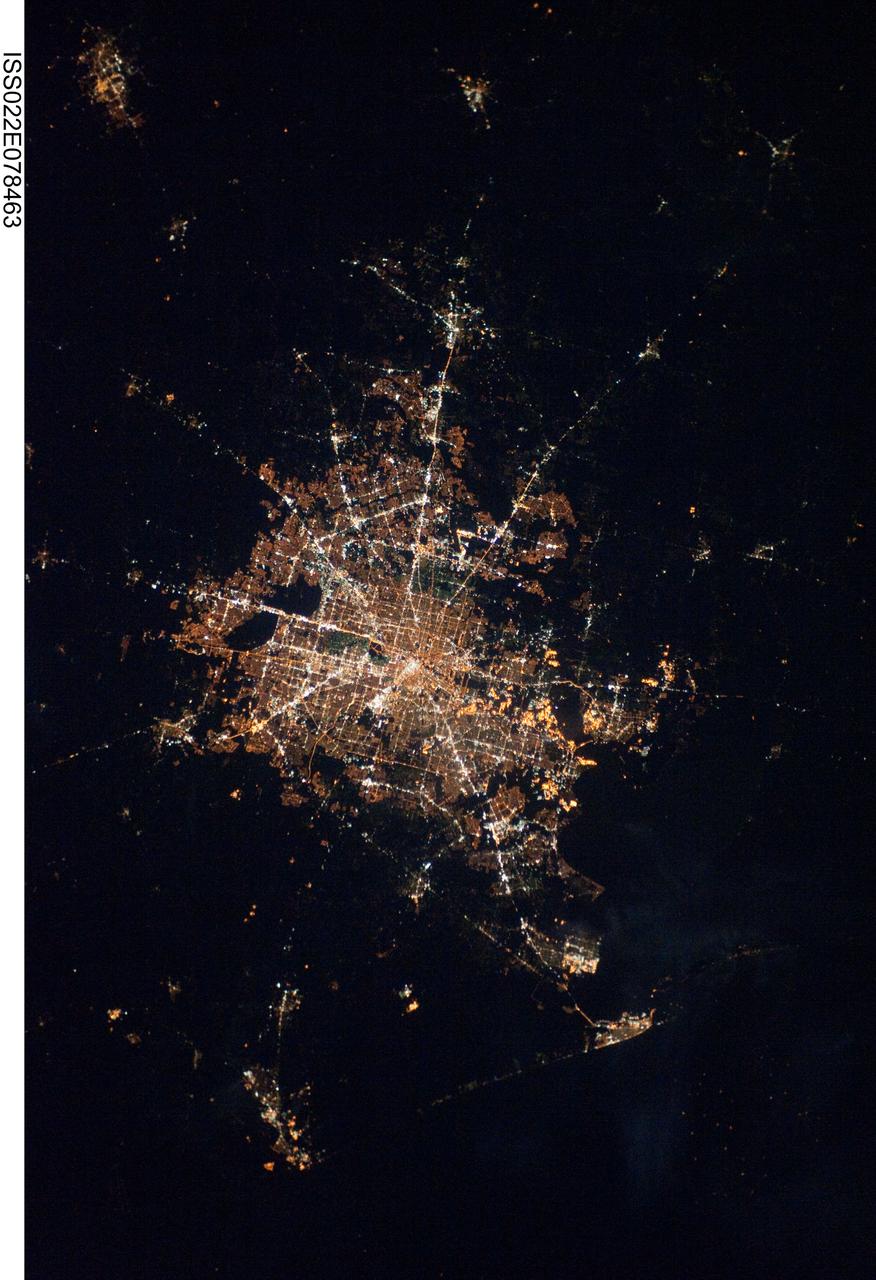
ISS022-E-078463 (28 Feb. 2010) ---The Houston metropolitan area at night is featured in this image photographed by an Expedition 22 crew member on the International Space Station. Houston, Texas has been called the ?energy capital of the world? due to its role as a major hub of the petroleum and other energy resource industries. The image is oriented with north toward the top. The Houston metropolitan area covers almost 2,331,000 hectares (approximately 9,000 square miles) along the southeast Texas coastline, with an average elevation of 13 meters (approximately 43 feet) above sea level and a population of over 5 million (2006 US Census estimate). The Houston metropolitan area is also noteworthy as being the largest in the US without formal zoning restrictions. This has lead to a highly diverse pattern of land use at the neighborhood scale; nevertheless, more general spatial patterns of land use can be recognized in remotely sensed data. This is particularly evident in night time photography of the urban area taken by crew members onboard the space station. The image depicts the roughly 100 kilometers (approximately 62 miles) east-west extent of the Houston metropolitan area. Houston proper is at center, indicated by a ?bull?s-eye? of elliptical white to orange-lighted beltways and brightly lit white freeways radiating outwards from the central downtown area. Suburban and primarily residential urban land use is indicated by both reddish-brown and gray-green lighted regions that reflect a higher proportion of tree cover and lower light density. Petroleum refineries along the Houston Ship Channel are recognized by densely lit areas of golden yellow light. Rural and undeveloped land circles the metropolitan area, and Galveston Bay to the southeast (lower right) provides access to the Gulf of Mexico. Both types of non-urban surface appear dark in the image.
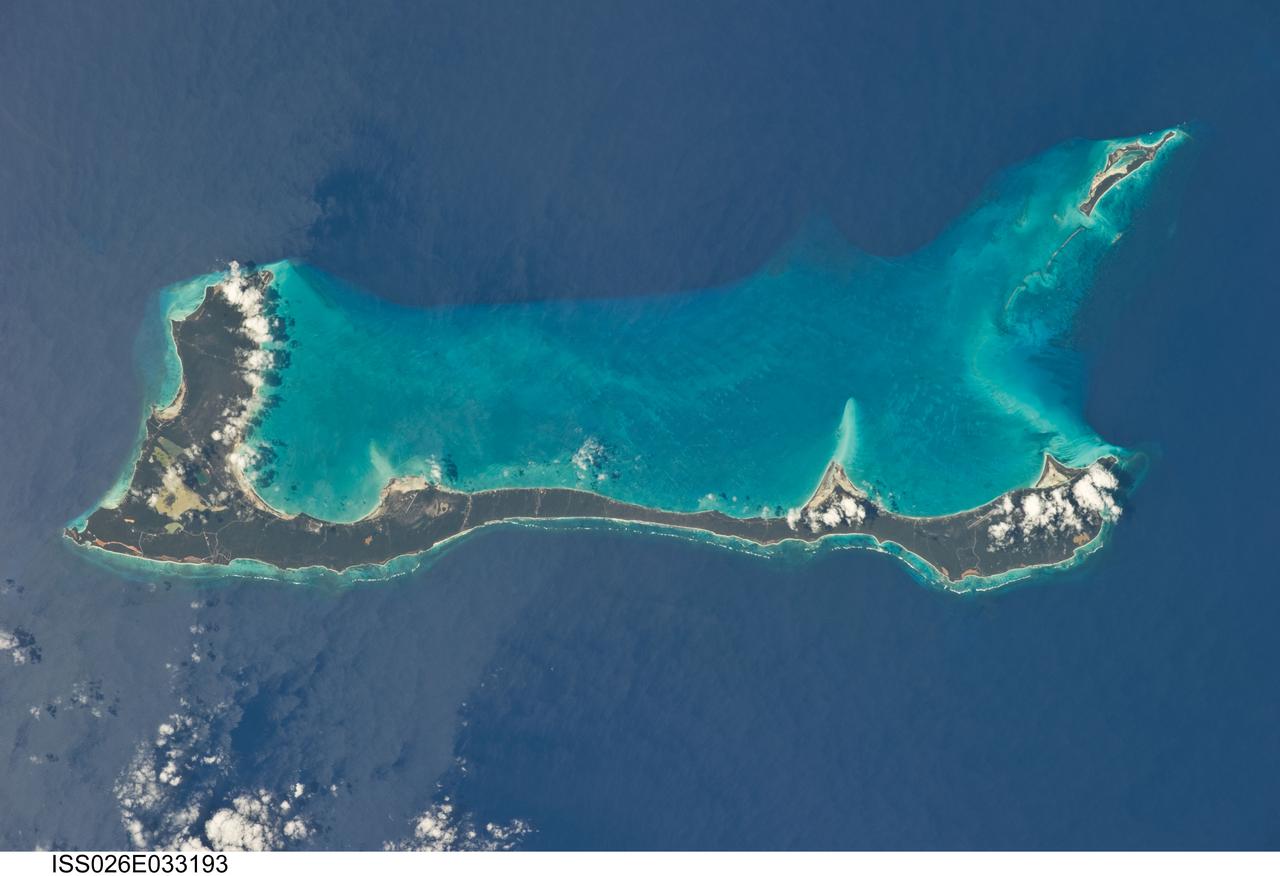
ISS026-E-033193 (10 March 2011) --- Cat Island, Commonwealth of the Bahamas, is featured in this image photographed by an Expedition 26 crew member on the International Space Station. Cat Island is one of 29 islands, 661 cays, and 2,387 islets that form the Commonwealth of the Bahamas. Mount Alvernia, the highest point in the Bahamas at an elevation of approximately 63 meters above sea level, is located on the southeastern part of the island. Like most other islands in the Bahamas, Cat Island is located on a large depositional platform that is composed mainly of carbonate sediments and surrounding reefs. The approximately 77-kilometers-long island is the part of the platform continuously exposed above the water surface; this allows for soil development (brown to tan areas) and establishment of vegetation (green areas) to occur. Shallow water to the west-southwest of the island appears bright blue in this photograph (center) in contrast to the deeper ocean waters to the north, east, and south. The ocean surface near the southeastern half of the island has a slight grey tinge; this is due to sunglint, or light reflecting off of the water surface backs towards the observer onboard the space station. Small white cumulus clouds obscure some parts of the island. Named San Salvador prior to 1925, the island has been put forward as a candidate for Christopher Columbus’ first landfall in the Americas. Cat Island is inhabited, and had a total population of 1,647 in 2000 according to the Department of Statistics of the Bahamas. The smaller island of Little San Salvador to the west is privately owned and used as a port of call for cruise ships.