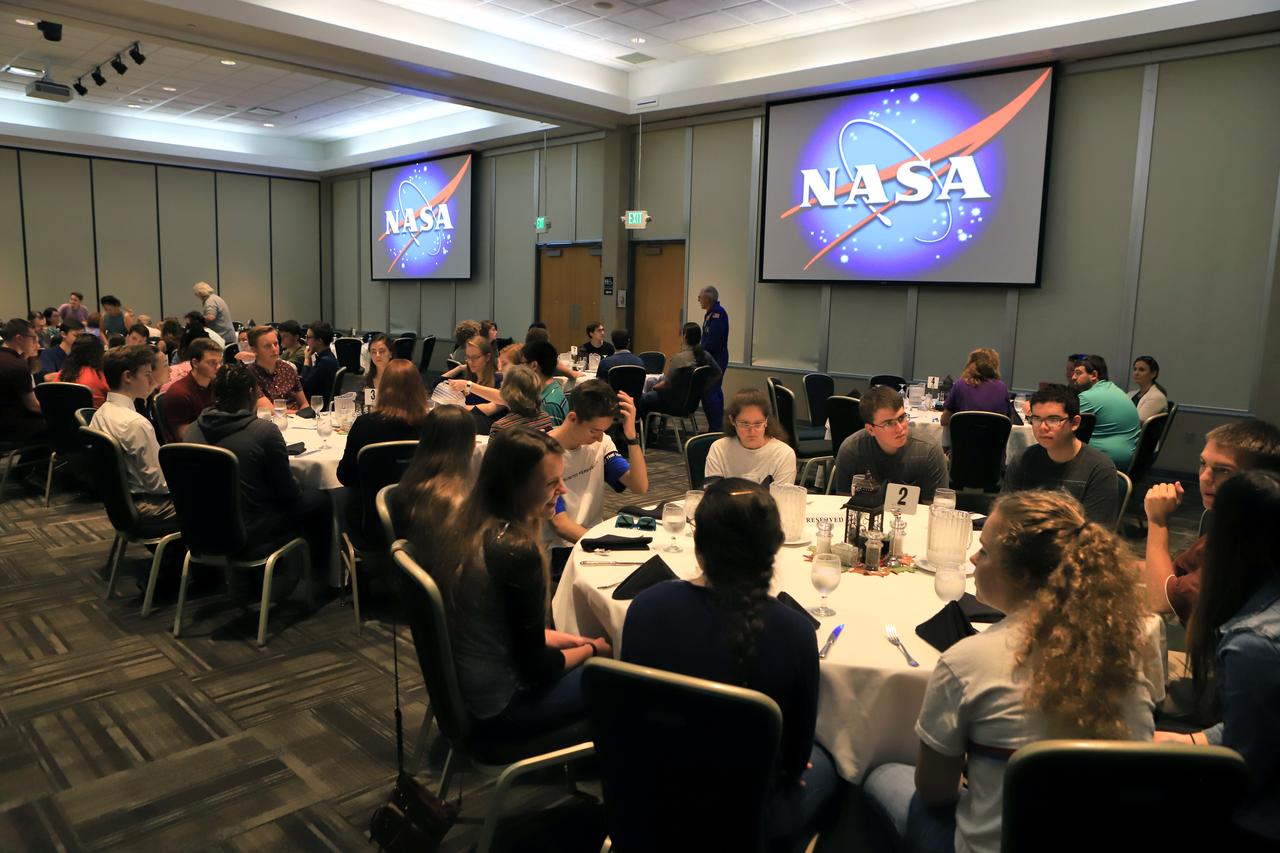
Retired NASA astronaut Bob Springer, standing in front, talks to high school students during "Lunch with an Astronaut" on Nov. 7, 2018, at the NASA Kennedy Space Center Visitor Complex in Florida. Top scholars from Brevard County public high schools were invited to Kennedy Space Center for a tour of facilities, lunch and a roundtable discussion with engineers, scientists and business experts at the center. The 2018 Brevard Top Scholars event was hosted by the center's Academic Engagement Office to honor the top three scholars of the 2018-2019 graduating student class from each of Brevard County’s public high schools. The students received a personalized certificate of recognition at the end of the day.
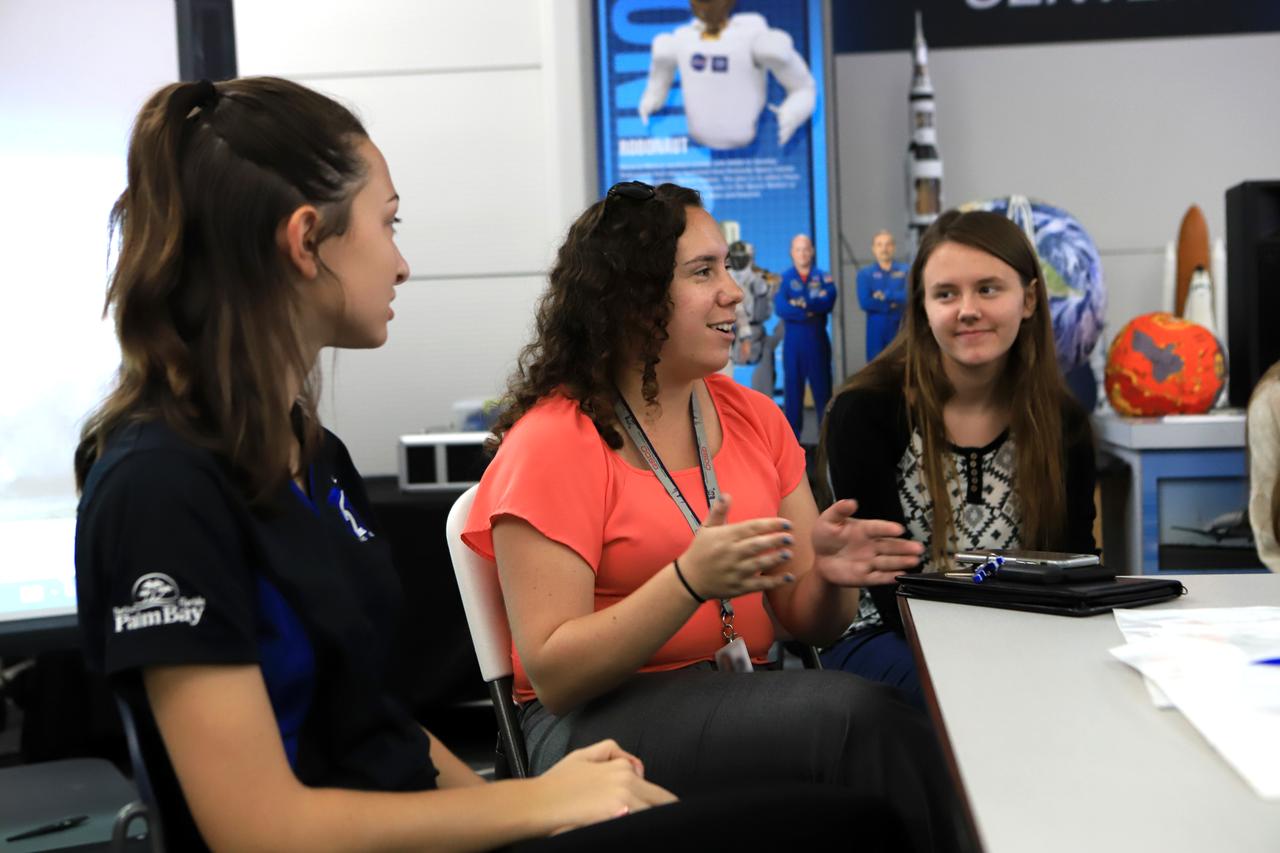
Rebecca Baturin, center, a project engineer in Exploration Ground Systems, speaks to students from Brevard County high schools during a panel discussion session at the NASA Kennedy Space Center Visitor Complex in Florida, on Nov. 7, 2018. The high school seniors were invited to Kennedy Space Center for a tour of facilities, lunch and a roundtable discussion with engineers, scientists and business experts at the center. The 2018 Brevard Top Scholars event was hosted by the center's Academic Engagement Office to honor the top three scholars of the 2018-2019 graduating student class from each of Brevard County’s public high schools. The students received a personalized certificate of recognition at the end of the day.
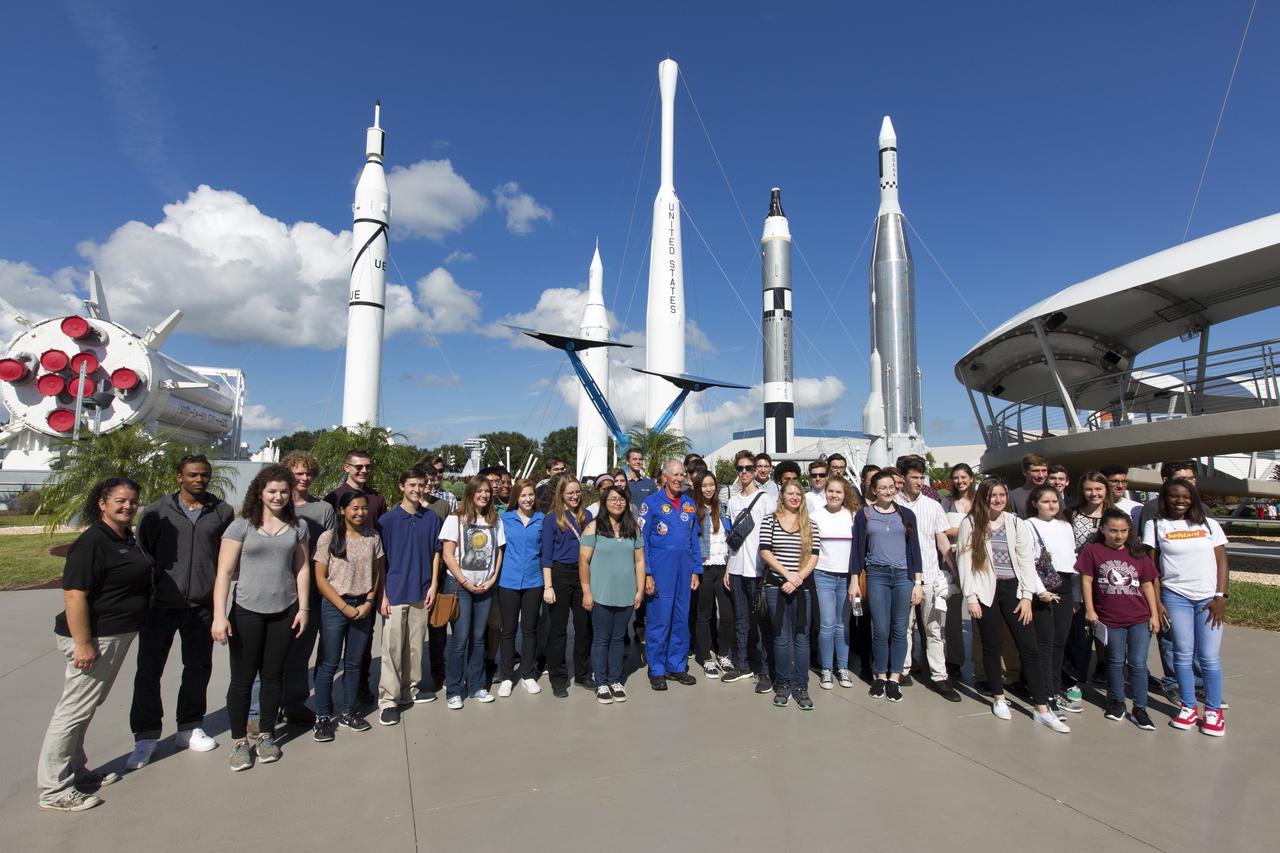
Retired NASA astronaut Bob Springer, center, takes a photograph with top scholars from Brevard County high schools near the Rocket Garden at the NASA Kennedy Space Center Visitor Complex in Florida, on Nov. 7, 2018. The high school seniors were invited to Kennedy Space Center for a tour of facilities, lunch and a roundtable discussion with engineers, scientists and business experts at the center. The 2018 Brevard Top Scholars event was hosted by the center's Academic Engagement Office to honor the top three scholars of the 2018-2019 graduating student class from each of Brevard County’s public high schools. The students received a personalized certificate of recognition at the end of the day.

Retired NASA astronaut Bob Springer is the presenter during "Lunch with an Astronaut" on Nov. 7, 2018, at the NASA Kennedy Space Center Visitor Complex in Florida. Top scholars from Brevard County public high schools were invited to Kennedy Space Center for a tour of facilities, lunch and a roundtable discussion with engineers, scientists and business experts at the center. The 2018 Brevard Top Scholars event was hosted by the center's Academic Engagement Office to honor the top three scholars of the 2018-2019 graduating student class from each of Brevard County’s public high schools. The students received a personalized certificate of recognition at the end of the day.

Retired NASA astronaut Bob Springer, at left, talks with students from Brevard County high schools during "Lunch with an Astronaut" at the NASA Kennedy Space Center Visitor Complex in Florida, on Nov. 7, 2018. The high school seniors were invited to Kennedy Space Center for a tour of facilities, lunch and a roundtable discussion with engineers, scientists and business experts at the center. The 2018 Brevard Top Scholars event was hosted by the center's Academic Engagement Office to honor the top three scholars of the 2018-2019 graduating student class from each of Brevard County’s public high schools. The students received a personalized certificate of recognition at the end of the day.
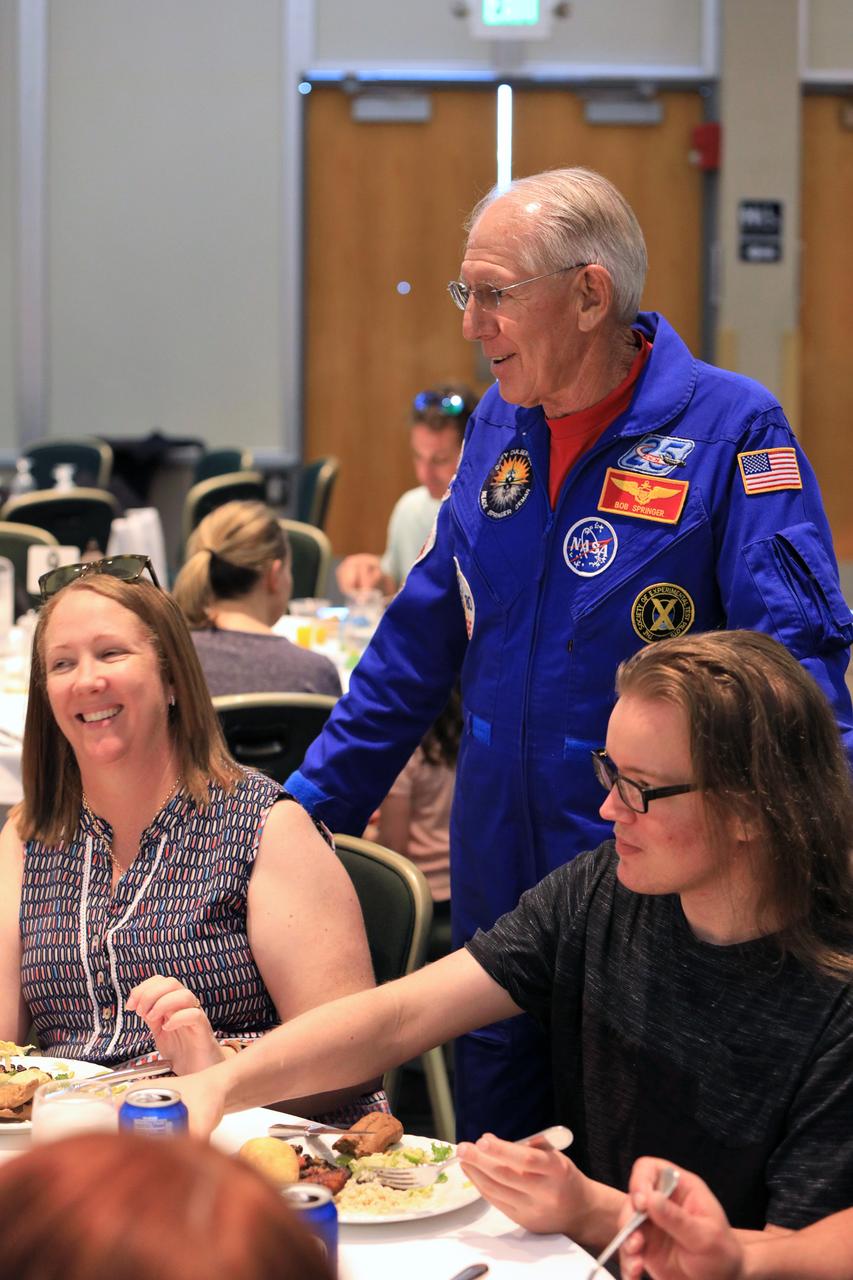
Retired NASA astronaut Bob Springer talks with students from Brevard County high schools during "Lunch with an Astronaut" at the NASA Kennedy Space Center Visitor Complex in Florida, on Nov. 7, 2018. The high school seniors were invited to Kennedy Space Center for a tour of facilities, lunch and a roundtable discussion with engineers, scientists and business experts at the center. The 2018 Brevard Top Scholars event was hosted by the center's Academic Engagement Office to honor the top three scholars of the 2018-2019 graduating student class from each of Brevard County’s public high schools. The students received a personalized certificate of recognition at the end of the day.
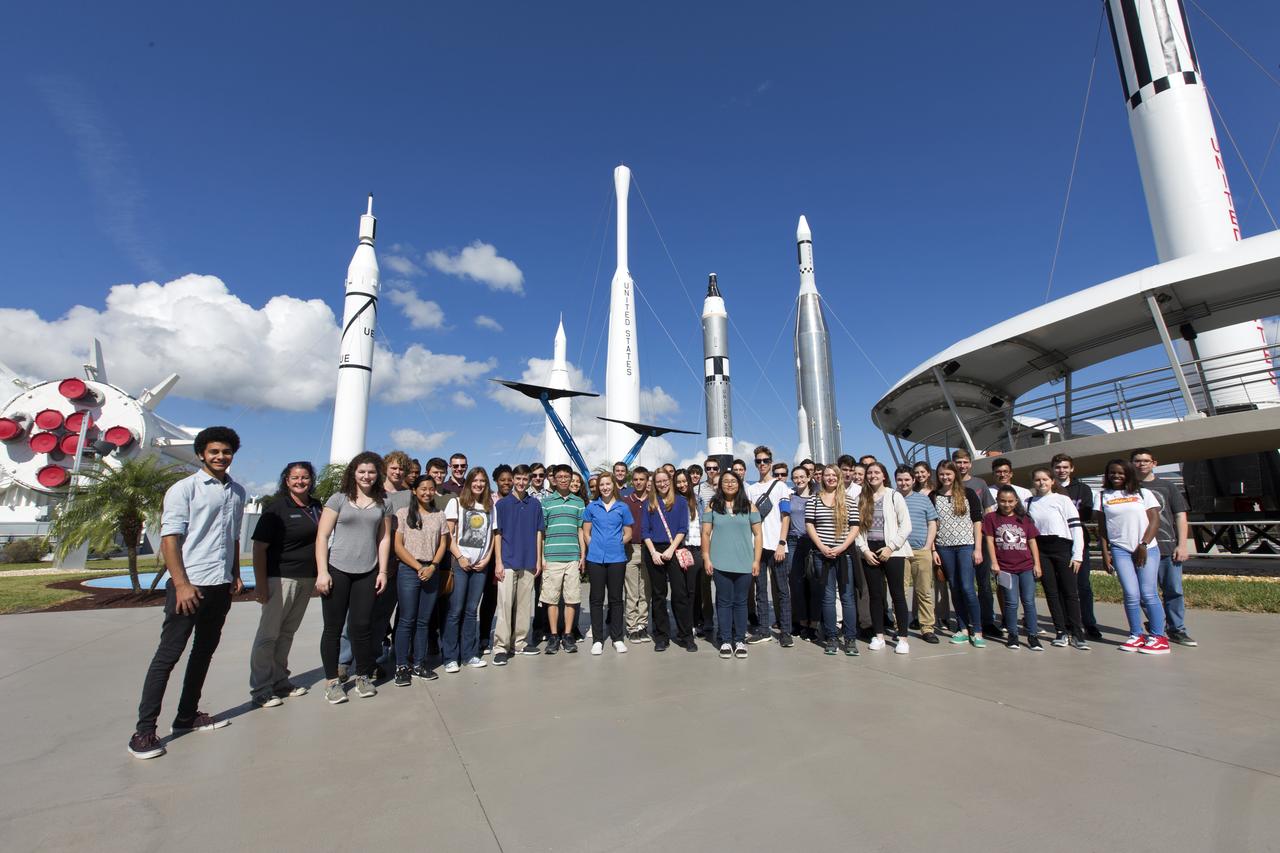
Top scholars from Brevard County high schools gather near the Rocket Garden at the NASA Kennedy Space Center Visitor Complex in Florida, on Nov. 7, 2018. The high school seniors were invited to Kennedy Space Center for a tour of facilities, lunch and a roundtable discussion with engineers, scientists and business experts at the center. The 2018 Brevard Top Scholars event was hosted by the center's Academic Engagement Office to honor the top three scholars of the 2018-2019 graduating student class from each of Brevard County’s public high schools. The students received a personalized certificate of recognition at the end of the day.
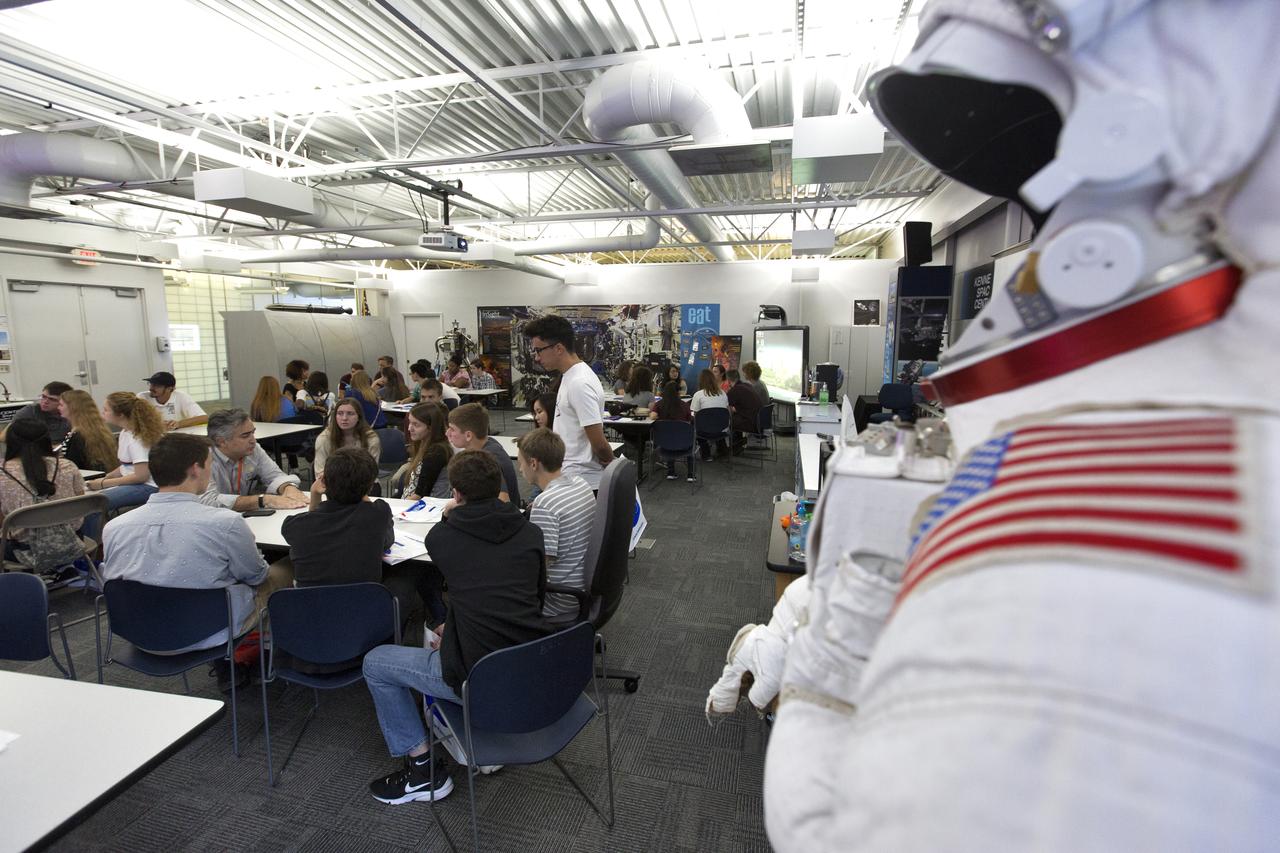
Students from Brevard County high schools participate in a roundtable discussion with engineers, scientists and business experts at the NASA Kennedy Space Center Visitor Complex in Florida, on Nov. 7, 2018. The high school seniors were invited to Kennedy Space Center for a tour of facilities, lunch and a roundtable discussion. The 2018 Brevard Top Scholars event was hosted by the center's Academic Engagement Office to honor the top three scholars of the 2018-2019 graduating student class from each of Brevard County’s public high schools. The students received a personalized certificate of recognition at the end of the day.
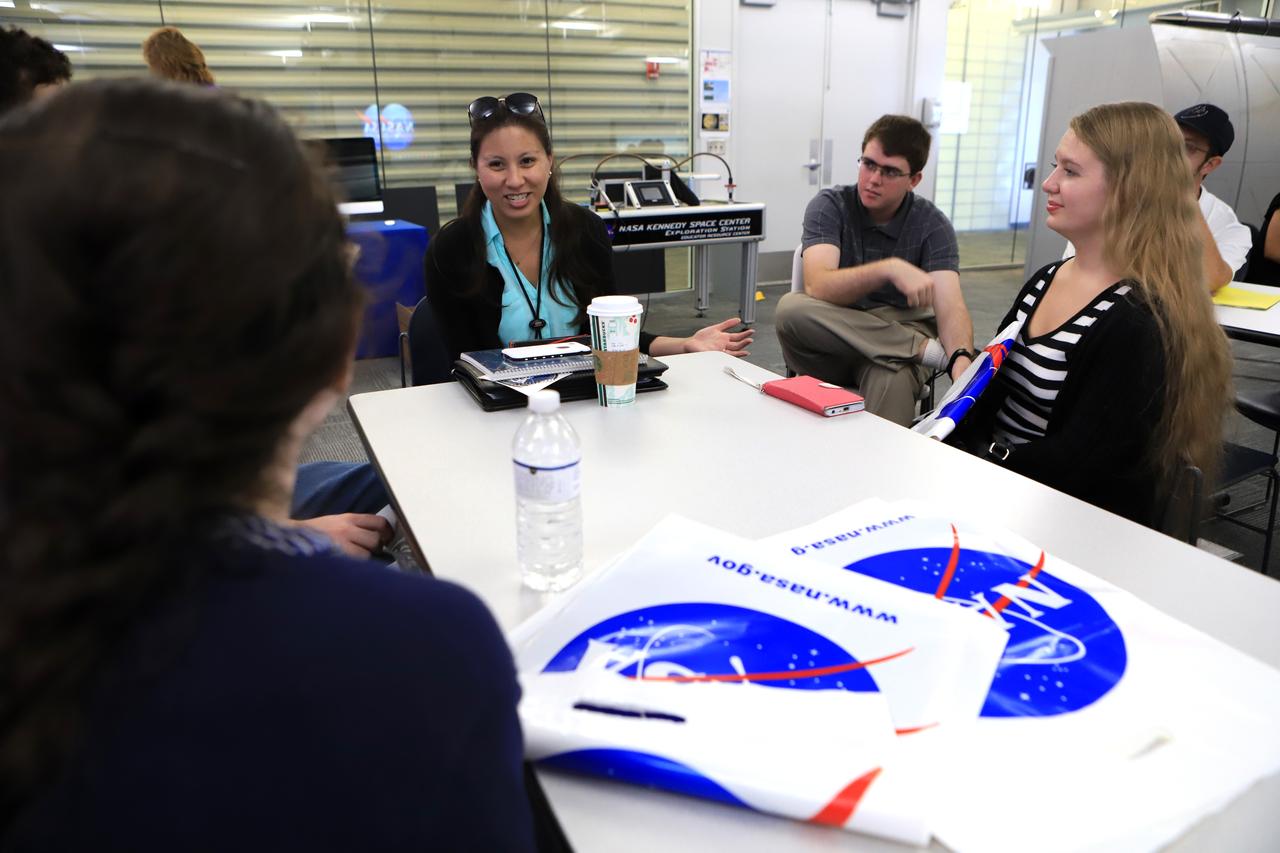
Jo Pereira, center, deputy Human Resources Integration and Pathways Program supervisor, speaks to students from Brevard County high schools during a panel discussion session at the NASA Kennedy Space Center Visitor Complex in Florida, on Nov. 7, 2018. The high school seniors were invited to Kennedy Space Center for a tour of facilities, lunch and a roundtable discussion with engineers, scientists and business experts at the center. The 2018 Brevard Top Scholars event was hosted by the center's Academic Engagement Office to honor the top three scholars of the 2018-2019 graduating student class from each of Brevard County’s public high schools. The students received a personalized certificate of recognition at the end of the day.

Dr. Jose Nunez, at right, Flight Technology Branch chief in the Exploration Research and Technology Directorate, speaks to students from Brevard County high schools during a panel discussion session at the NASA Kennedy Space Center Visitor Complex in Florida, on Nov. 7, 2018. The high school seniors were invited to Kennedy Space Center for a tour of facilities, lunch and a roundtable discussion with engineers, scientists and business experts at the center. The 2018 Brevard Top Scholars event was hosted by the center's Academic Engagement Office to honor the top three scholars of the 2018-2019 graduating student class from each of Brevard County’s public high schools. The students received a personalized certificate of recognition at the end of the day.

Retired NASA astronaut Bob Springer talks with guests during "Lunch with an Astronaut" at the NASA Kennedy Space Center Visitor Complex in Florida, on Nov. 7, 2018. Top scholars from Brevard County high schools also had a chance to talk with Springer and hear his presentation. The seniors were invited to Kennedy Space Center for a tour of facilities, lunch and a roundtable discussion with engineers, scientists and business experts at the center. The 2018 Brevard Top Scholars event was hosted by the center's Academic Engagement Office to honor the top three scholars of the 2018-2019 graduating student class from each of Brevard County’s public high schools. The students received a personalized certificate of recognition at the end of the day.
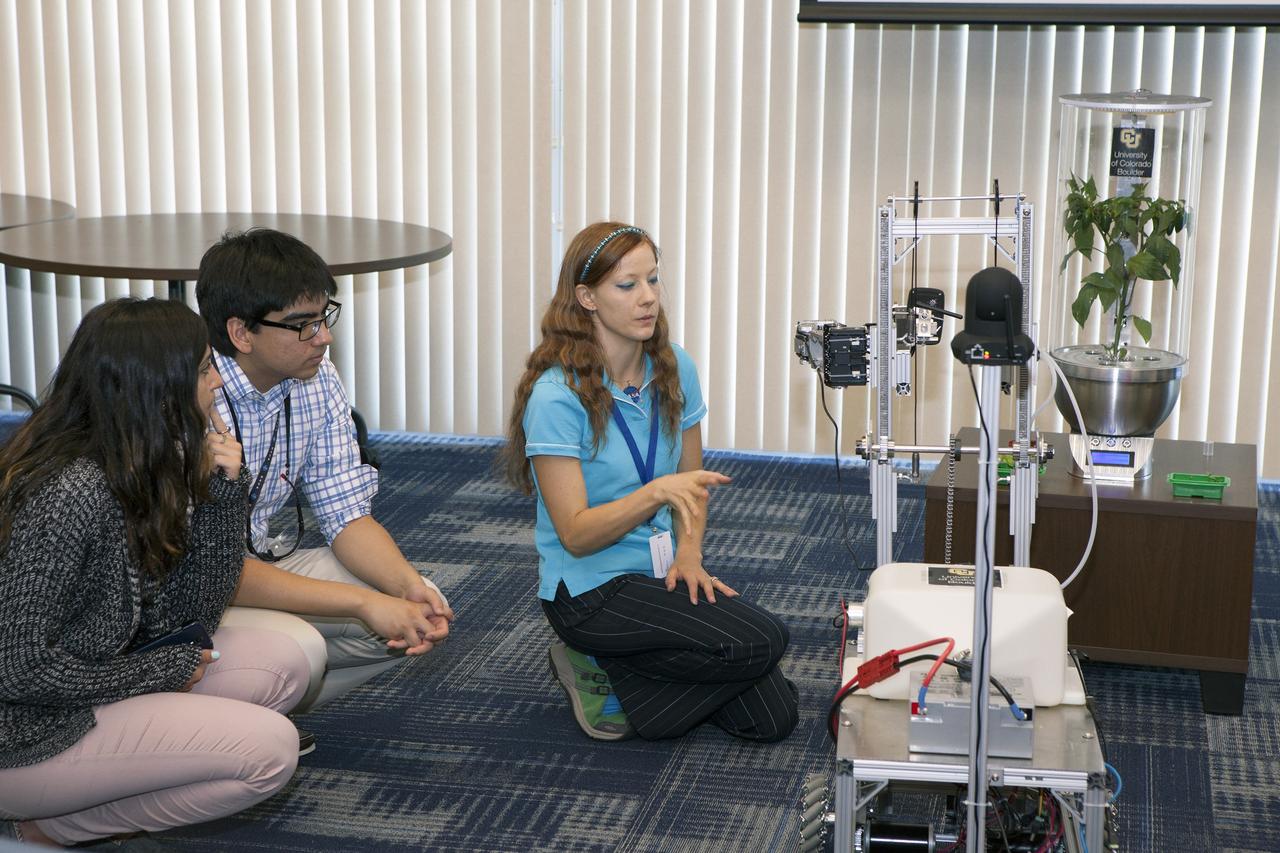
CAPE CANAVERAL, Fla. -- At the Kennedy Space Center in Florida, Heather Hava, who is working on a doctorate in aerospace engineering sciences at the University of Colorado Boulder, describes a Remotely Operated Gardening Rover, or ROGR, which could tend to plants grown in one of the SmartPots, or SPOTS seen on the right. The system is being developed by the graduate students participating in the eXploration HABitat X-Hab Academic Innovation Challenge. X-Hab Academic Innovation Challenge is a university-level activity designed to engage and retain students in science, technology, engineering and math, or STEM, disciplines. NASA will directly benefit from the effort by sponsoring the development of innovative habitat concepts from universities which may result in innovative ideas and solutions that could be applied to exploration habitats. For more: http://www.nasa.gov/exploration/technology/deep_space_habitat/xhab/ Photo credit: NASA/Daniel Casper
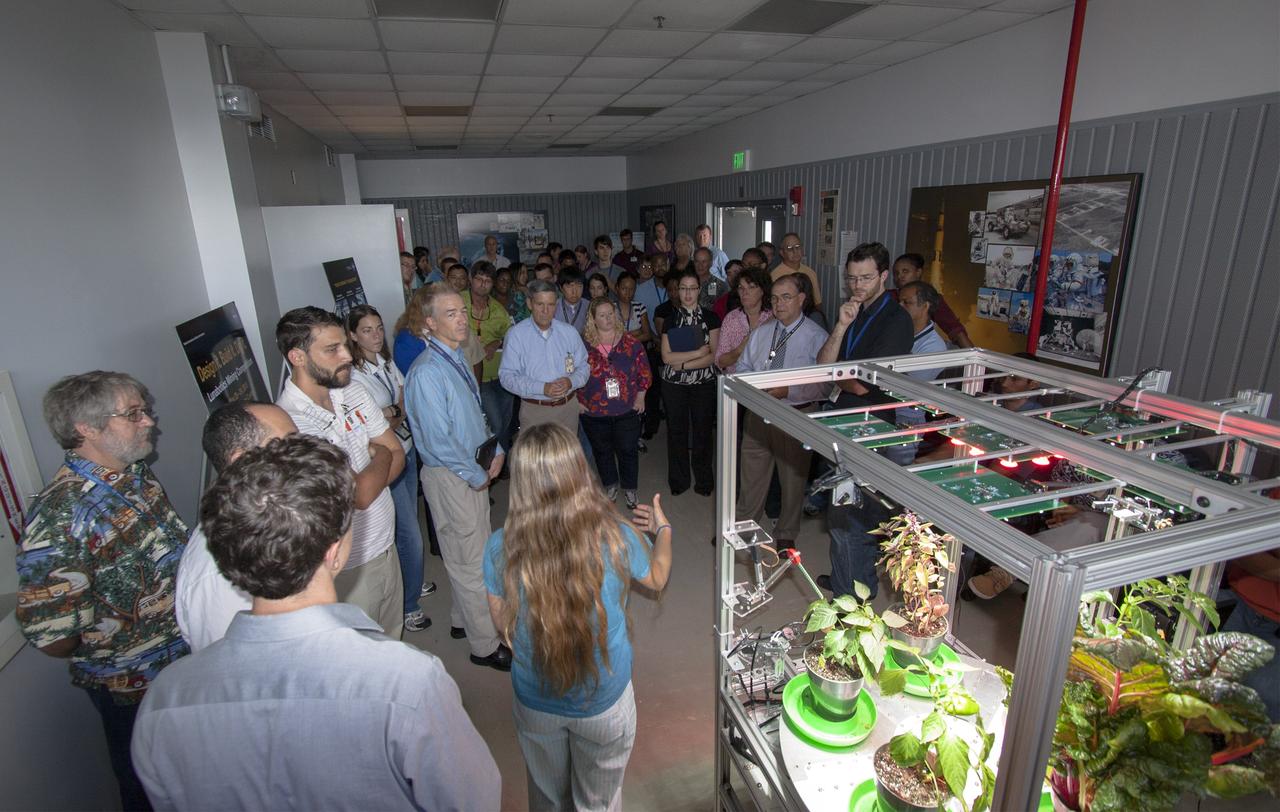
CAPE CANAVERAL, Fla. -- At the Kennedy Space Center in Florida, students from University of Colorado describe a robotic capability for growing a variety of plants, both for consumption as well as the benefit of oxygen-carbon dioxide cycling. Considerations range from monitoring and nutrient supply to selection of plants and autonomy. The activity is part of the eXploration Habitat, or X-Hab, Academic Innovation Challenge. X-Hab Academic Innovation Challenge is a university-level activity designed to engage and retain students in Science, Technology, Engineering and Math, or STEM, disciplines. NASA will directly benefit from the effort by sponsoring the development of innovative habitat concepts from universities which may result in innovative ideas and solutions that could be applied to exploration habitats. For more: http://www.nasa.gov/exploration/technology/deep_space_habitat/xhab/ Photo credit: NASA/Jim Grossmann
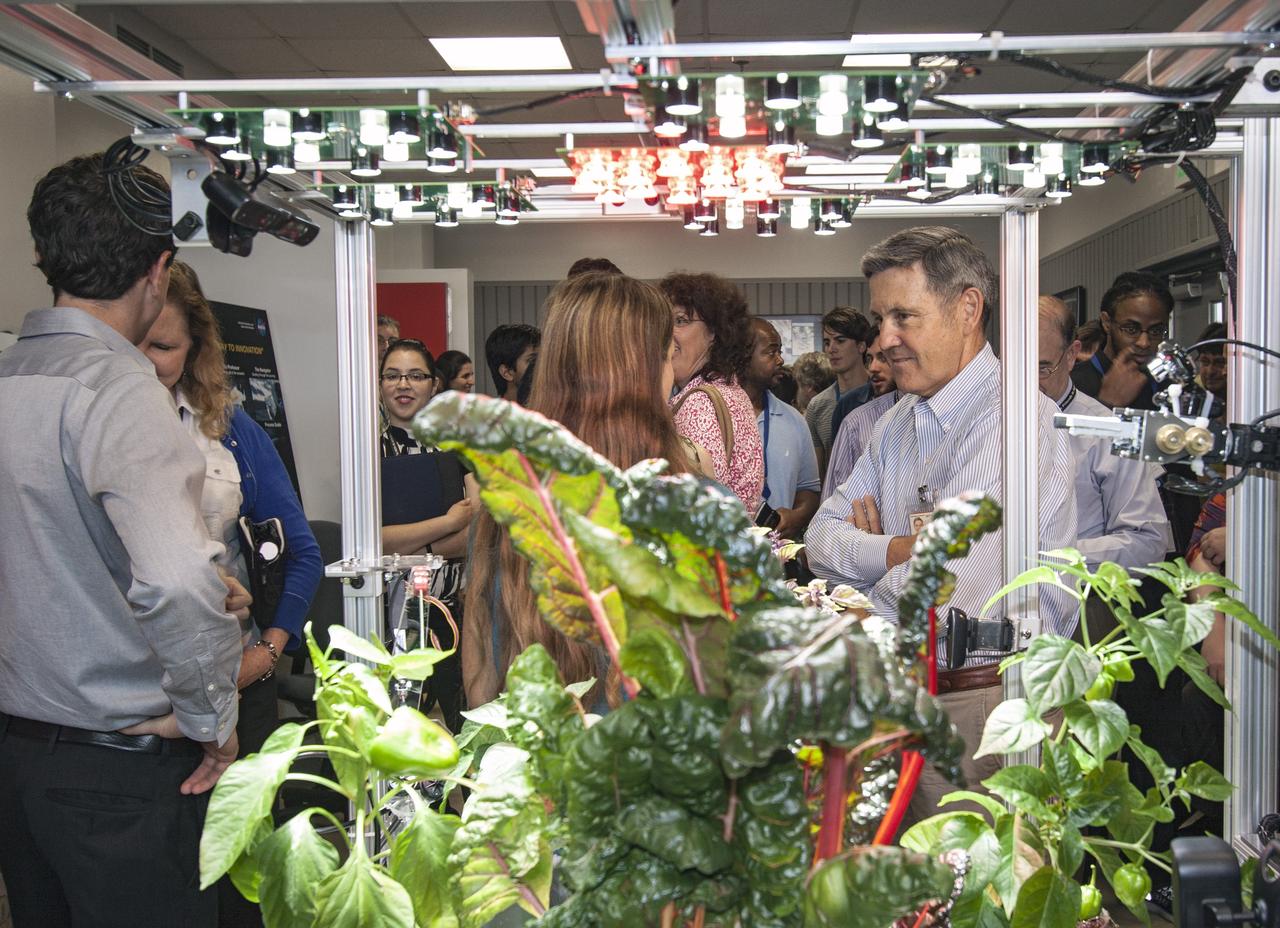
CAPE CANAVERAL, Fla. -- Kennedy Space Center Director Bob Cabana listens as a student from University of Colorado describes a robotic capability for growing a variety of plants, both for consumption as well as the benefit of oxygen-carbon dioxide cycling. Considerations range from monitoring and nutrient supply to selection of plants and autonomy. The activity is part of the eXploration Habitat, or X-Hab, Academic Innovation Challenge. X-Hab Academic Innovation Challenge is a university-level activity designed to engage and retain students in Science, Technology, Engineering and Math, or STEM, disciplines. NASA will directly benefit from the effort by sponsoring the development of innovative habitat concepts from universities which may result in innovative ideas and solutions that could be applied to exploration habitats. For more: http://www.nasa.gov/exploration/technology/deep_space_habitat/xhab/ Photo credit: NASA/Jim Grossmann
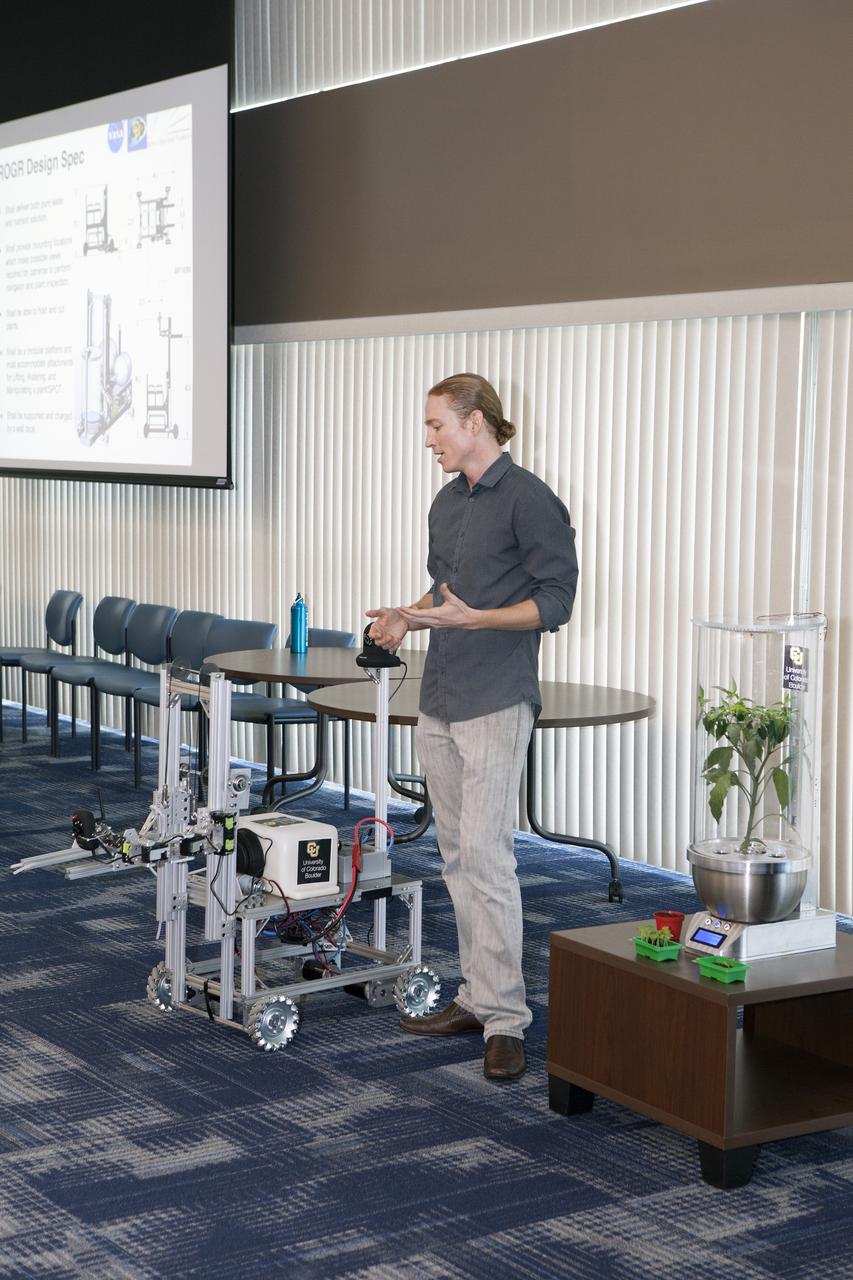
CAPE CANAVERAL, Fla. -- At the Kennedy Space Center in Florida, Daniel Zukowski, a University of Colorado Boulder graduate student, describes a Remotely Operated Gardening Rover, or ROGR, which could tend to plants grown in one of the SmartPots, or SPOTS, seen on the right. The system is being developed by the graduate students participating in the eXploration HABitation X-Hab Academic Innovation Challenge. X-Hab Academic Innovation Challenge is a university-level activity designed to engage and retain students in science, technology, engineering and math, or STEM, disciplines. NASA will directly benefit from the effort by sponsoring the development of innovative habitat concepts from universities which may result in innovative ideas and solutions that could be applied to exploration habitats. For more: http://www.nasa.gov/exploration/technology/deep_space_habitat/xhab/ Photo credit: NASA/Daniel Casper
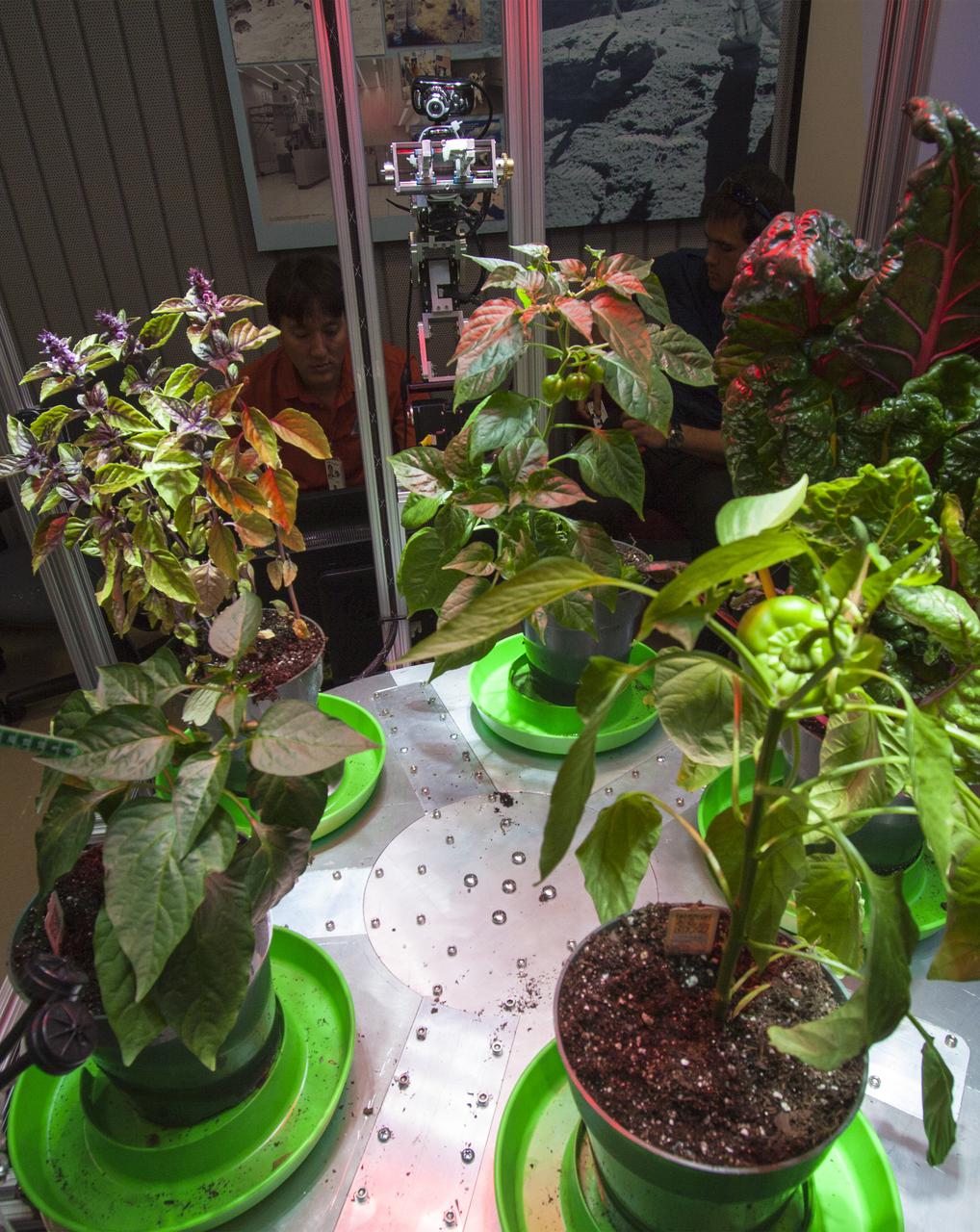
CAPE CANAVERAL, Fla. -- At the Kennedy Space Center in Florida, students from University of Colorado demonstrated a robotic capability for growing a variety of plants, both for consumption as well as the benefit of oxygen-carbon dioxide cycling. Considerations range from monitoring and nutrient supply to selection of plants and autonomy. The activity is part of the eXploration Habitat, or X-Hab, Academic Innovation Challenge. X-Hab Academic Innovation Challenge is a university-level activity designed to engage and retain students in Science, Technology, Engineering and Math, or STEM, disciplines. NASA will directly benefit from the effort by sponsoring the development of innovative habitat concepts from universities which may result in innovative ideas and solutions that could be applied to exploration habitats. For more: http:__www.nasa.gov_exploration_technology_deep_space_habitat_xhab_ Photo credit: NASA_Jim Grossmann
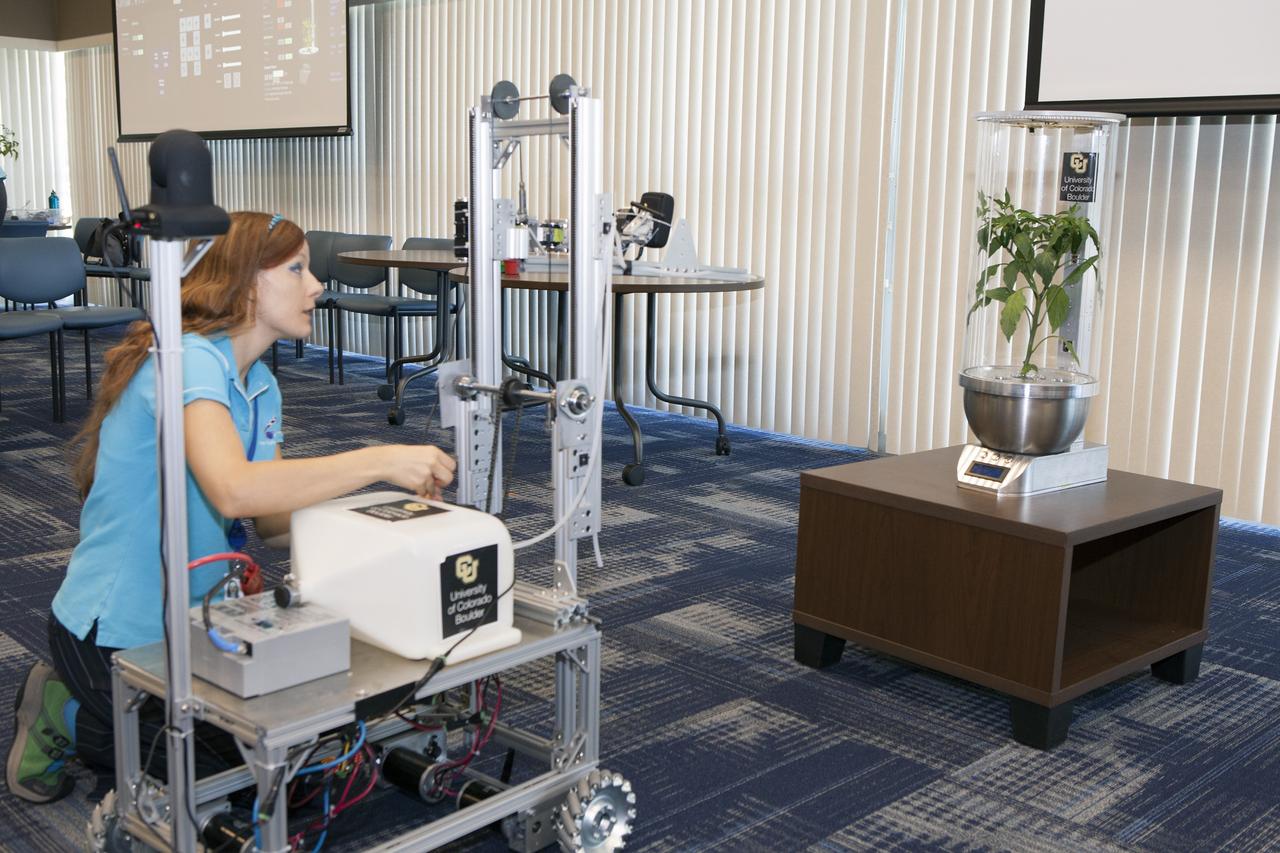
CAPE CANAVERAL, Fla. -- At the Kennedy Space Center in Florida, Heather Hava, who is working on a doctorate in aerospace engineering sciences at the University of Colorado Boulder, makes adjustments on a Remotely Operated Gardening Rover, or ROGR, which could tend to plants grown in one of the SmartPots, or SPOTS seen on the right. The system is being developed by the graduate students participating in the eXploration HABitat X-Hab Academic Innovation Challenge. X-Hab Academic Innovation Challenge is a university-level activity designed to engage and retain students in science, technology, engineering and math, or STEM, disciplines. NASA will directly benefit from the effort by sponsoring the development of innovative habitat concepts from universities which may result in innovative ideas and solutions that could be applied to exploration habitats. For more: http://www.nasa.gov/exploration/technology/deep_space_habitat/xhab/ Photo credit: NASA/Daniel Casper
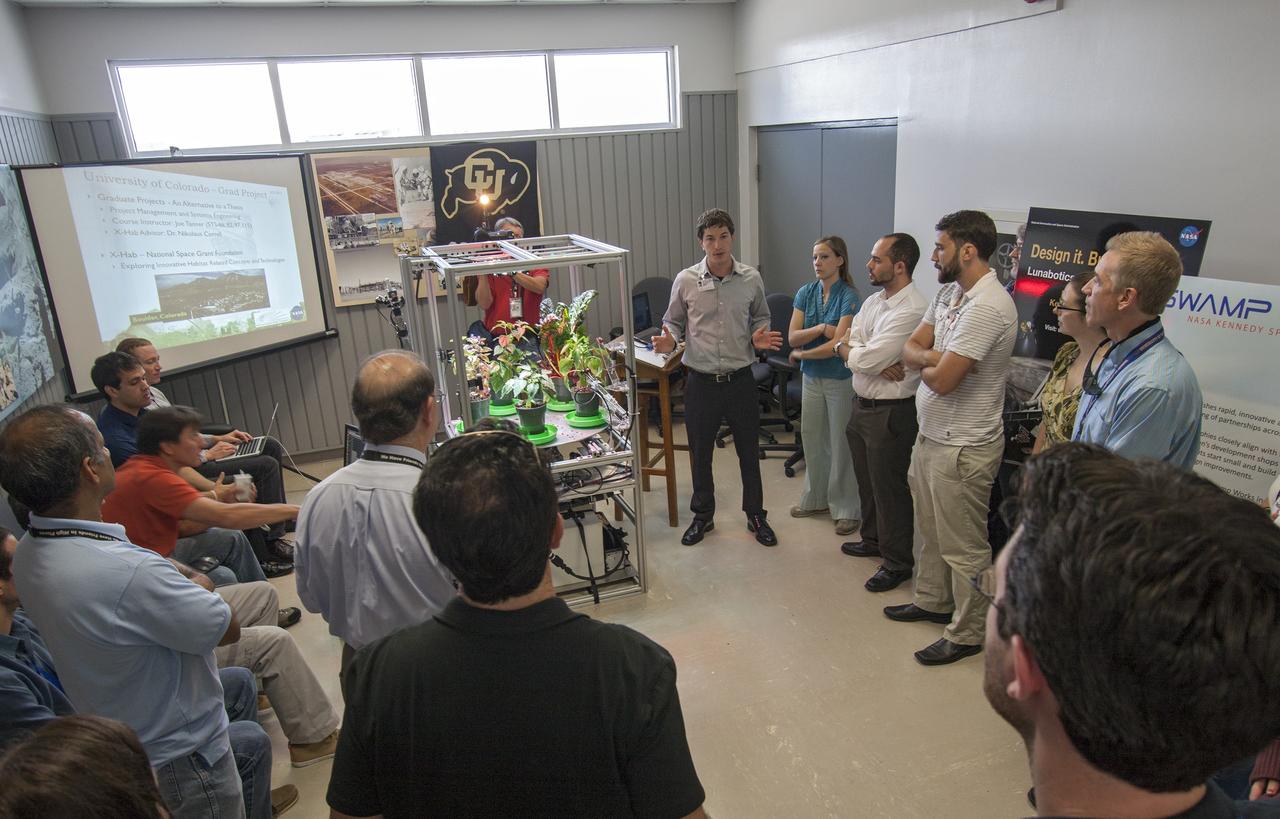
CAPE CANAVERAL, Fla. -- At the Kennedy Space Center in Florida, students from University of Colorado describe a robotic capability for growing a variety of plants, both for consumption as well as the benefit of oxygen-carbon dioxide cycling. Considerations range from monitoring and nutrient supply to selection of plants and autonomy. The activity is part of the eXploration Habitat, or X-Hab, Academic Innovation Challenge. X-Hab Academic Innovation Challenge is a university-level activity designed to engage and retain students in Science, Technology, Engineering and Math, or STEM, disciplines. NASA will directly benefit from the effort by sponsoring the development of innovative habitat concepts from universities which may result in innovative ideas and solutions that could be applied to exploration habitats. For more: http://www.nasa.gov/exploration/technology/deep_space_habitat/xhab/ Photo credit: NASA/Jim Grossmann
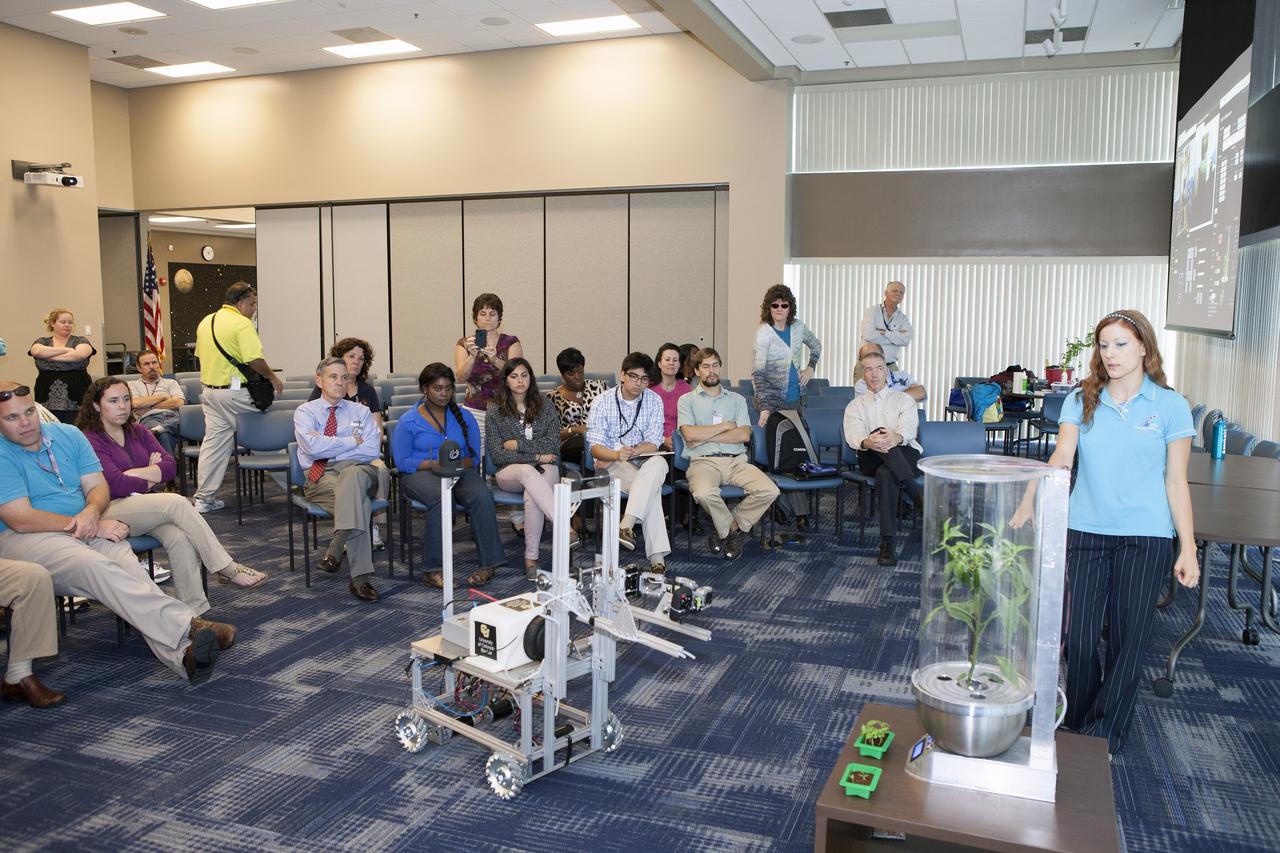
CAPE CANAVERAL, Fla. -- At the Kennedy Space Center in Florida, Heather Hava, right, who is working on a doctorate in aerospace engineering sciences at the University of Colorado Boulder, describes a computerized SmartPot, or SPOT, which could be used to grow plants in a deep-space habitat. The SPOTs could be tended by a Remotely Operated Gardening Rover, or ROGR, seen on the left. The system is being developed by the graduate students participating in the eXploration HABitat X-Hab Academic Innovation Challenge. X-Hab Academic Innovation Challenge is a university-level activity designed to engage and retain students in science, technology, engineering and math, or STEM, disciplines. NASA will directly benefit from the effort by sponsoring the development of innovative habitat concepts from universities which may result in innovative ideas and solutions that could be applied to exploration habitats. For more: http://www.nasa.gov/exploration/technology/deep_space_habitat/xhab/ Photo credit: NASA/Daniel Casper
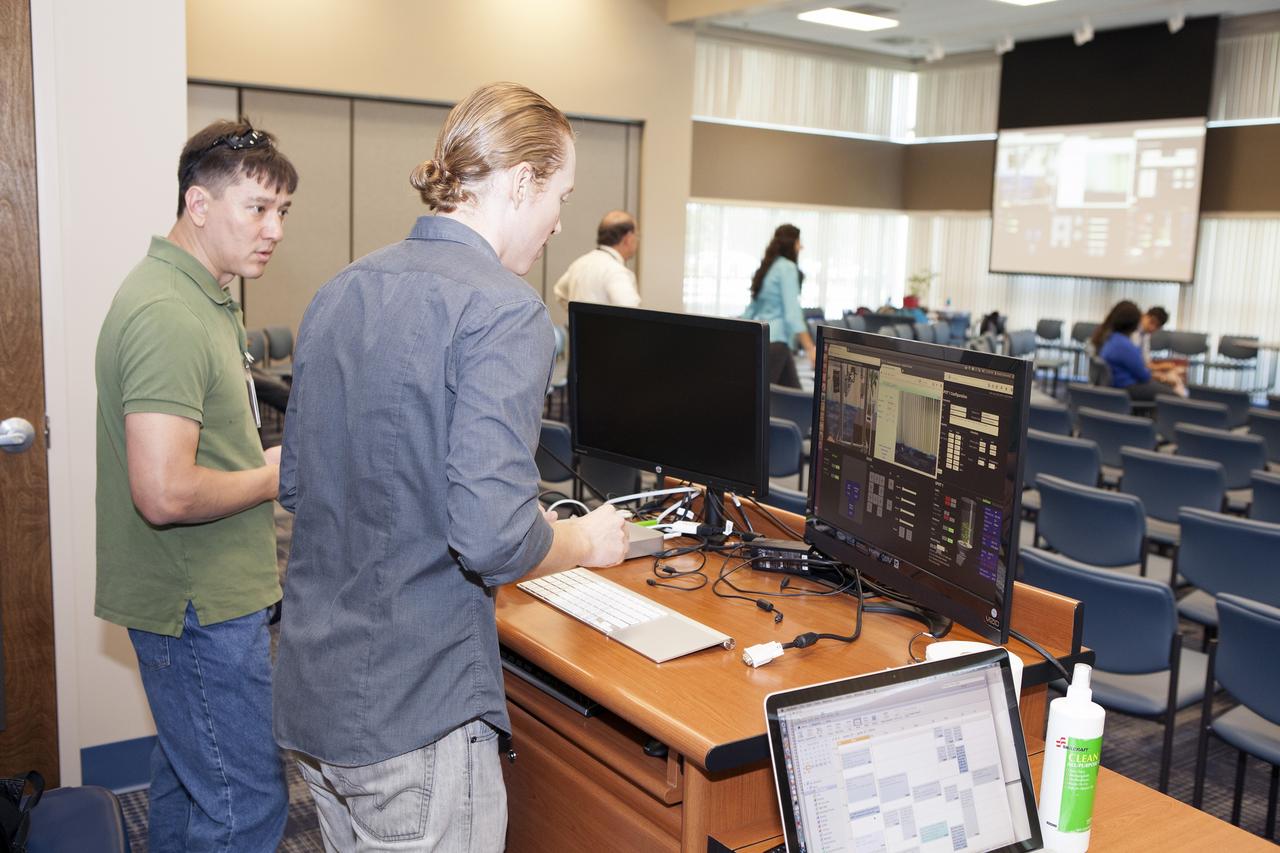
CAPE CANAVERAL, Fla. -- At the Kennedy Space Center in Florida, students from the University of Colorado Boulder demonstrated a robotic capability for growing a variety of plants in a deep-space habitat. Daniel Zukowski, a University of Colorado Boulder graduate student, right, and Morgan Simpson of the NASA Ground Processing Directorate, check computer displays during a presentation of the team's entry in the eXploration HABitat X-Hab Academic Innovation Challenge. In their concept called "Plants Anywhere: Plants Growing in Free Habitat Spaces," their approach calls for robotically tended plants to be scattered in any available space in a deep-space habitat instead of an area set aside just for vegetation. X-Hab Academic Innovation Challenge is a university-level activity designed to engage and retain students in science, technology, engineering and math, or STEM, disciplines. NASA will directly benefit from the effort by sponsoring the development of innovative habitat concepts from universities which may result in innovative ideas and solutions that could be applied to exploration habitats. For more: http://www.nasa.gov/exploration/technology/deep_space_habitat/xhab/ Photo credit: NASA/Daniel Casper
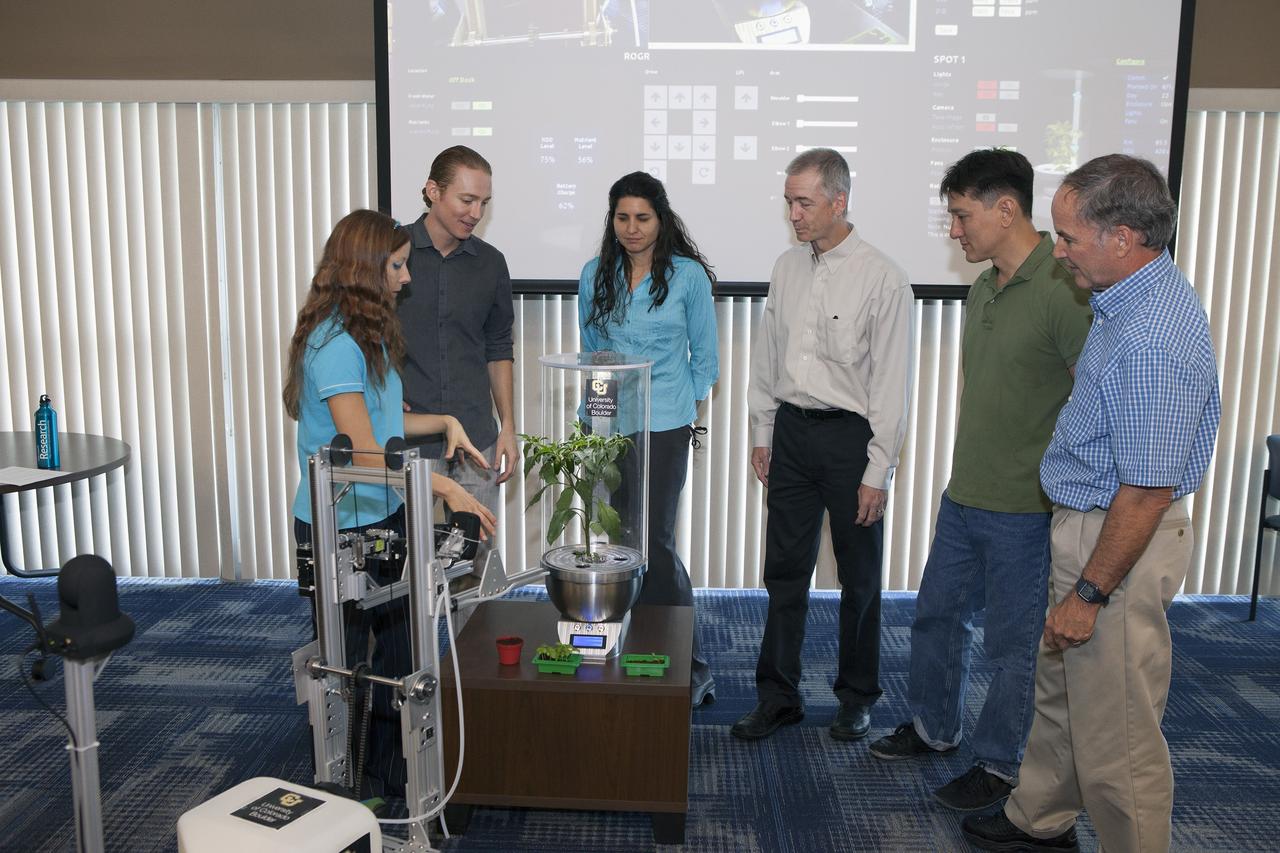
CAPE CANAVERAL, Fla. -- At the Kennedy Space Center in Florida, University of Colorado Boulder graduate students Heather Hava, far left, and Daniel Zukowski, second from the left, describe a computerized SmartPot, or SPOT, which could be used to grow plants in a deep-space habitat. The SPOTs could be tended by a Remotely Operated Gardening Rover, or ROGR, seen on the left. The system is being developed by the graduate students participating in the eXploration HABitat X-Hab Academic Innovation Challenge. From the left are Hava, Zukowski, Gioia Massa of the NASA International Space Station Ground Processing and Research Project Office, Tracy Gill of the NASA Center Planning and Development Directorate, Morgan Simpson of the NASA Ground Processing Directorate, and Ray Wheeler of the NASA Engineering and Technology Directorate. X-Hab Academic Innovation Challenge is a university-level activity designed to engage and retain students in science, technology, engineering and math, or STEM, disciplines. NASA will directly benefit from the effort by sponsoring the development of innovative habitat concepts from universities which may result in innovative ideas and solutions that could be applied to exploration habitats. For more: http://www.nasa.gov/exploration/technology/deep_space_habitat/xhab/ Photo credit: NASA/Daniel Casper
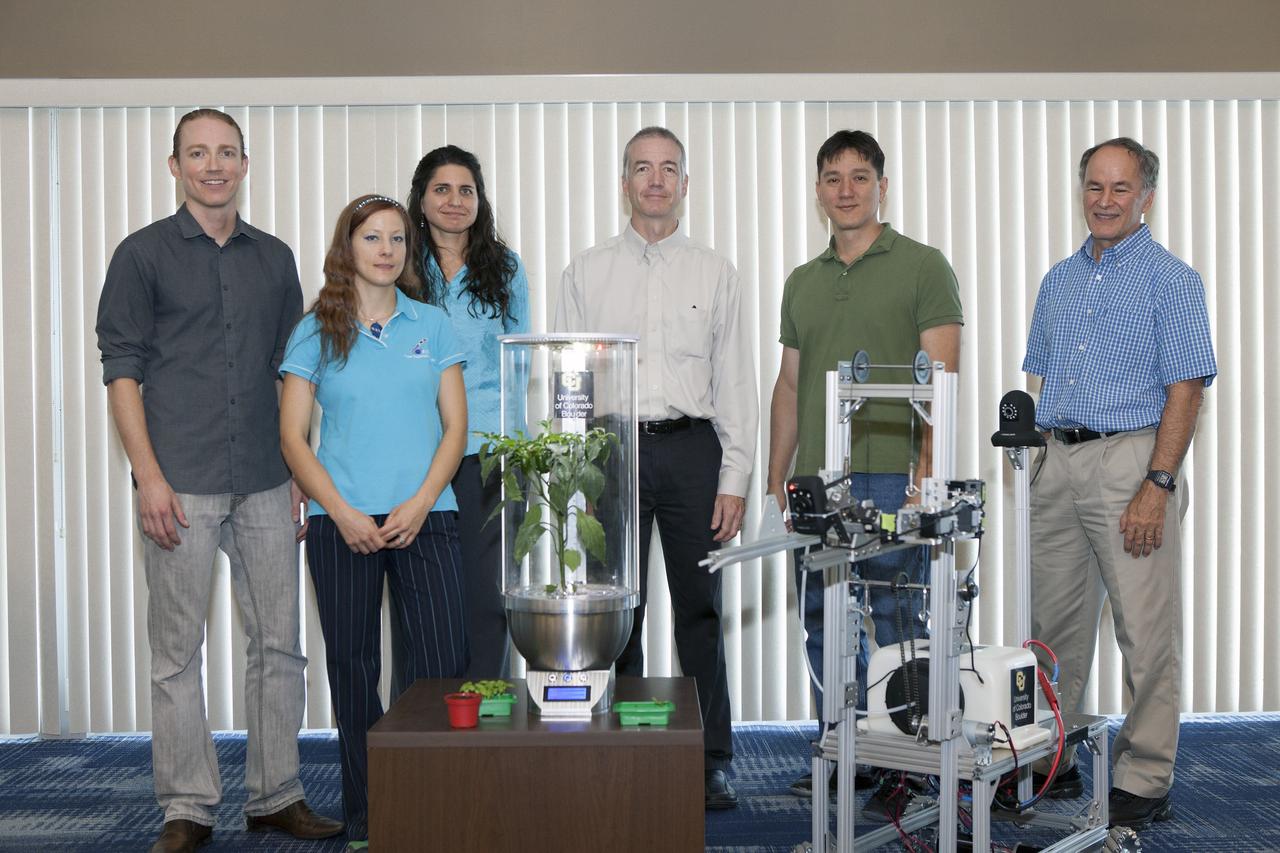
CAPE CANAVERAL, Fla. -- At the Kennedy Space Center in Florida, University of Colorado Boulder graduate students Heather Hava, far left, and Daniel Zukowski, second from the left, pose with a computerized SmartPot, or SPOT, which could be used to grow plants in a deep-space habitat. To the right of the SPOT is a Remotely Operated Gardening Rover, or ROGR. The system is being developed by the graduate students participating in the eXploration HABitat X-Hab Academic Innovation Challenge. From the left are Zukowski, Hava, Gioia Massa of the NASA International Space Station Ground Processing and Research Project Office, Tracy Gill of the NASA Center Planning and Development Directorate, Morgan Simpson of the NASA Ground Processing Directorate, and Ray Wheeler of the NASA Engineering and Technology Directorate. X-Hab Academic Innovation Challenge is a university-level activity designed to engage and retain students in science, technology, engineering and math, or STEM, disciplines. NASA will directly benefit from the effort by sponsoring the development of innovative habitat concepts from universities which may result in innovative ideas and solutions that could be applied to exploration habitats. For more: http://www.nasa.gov/exploration/technology/deep_space_habitat/xhab/ Photo credit: NASA/Daniel Casper
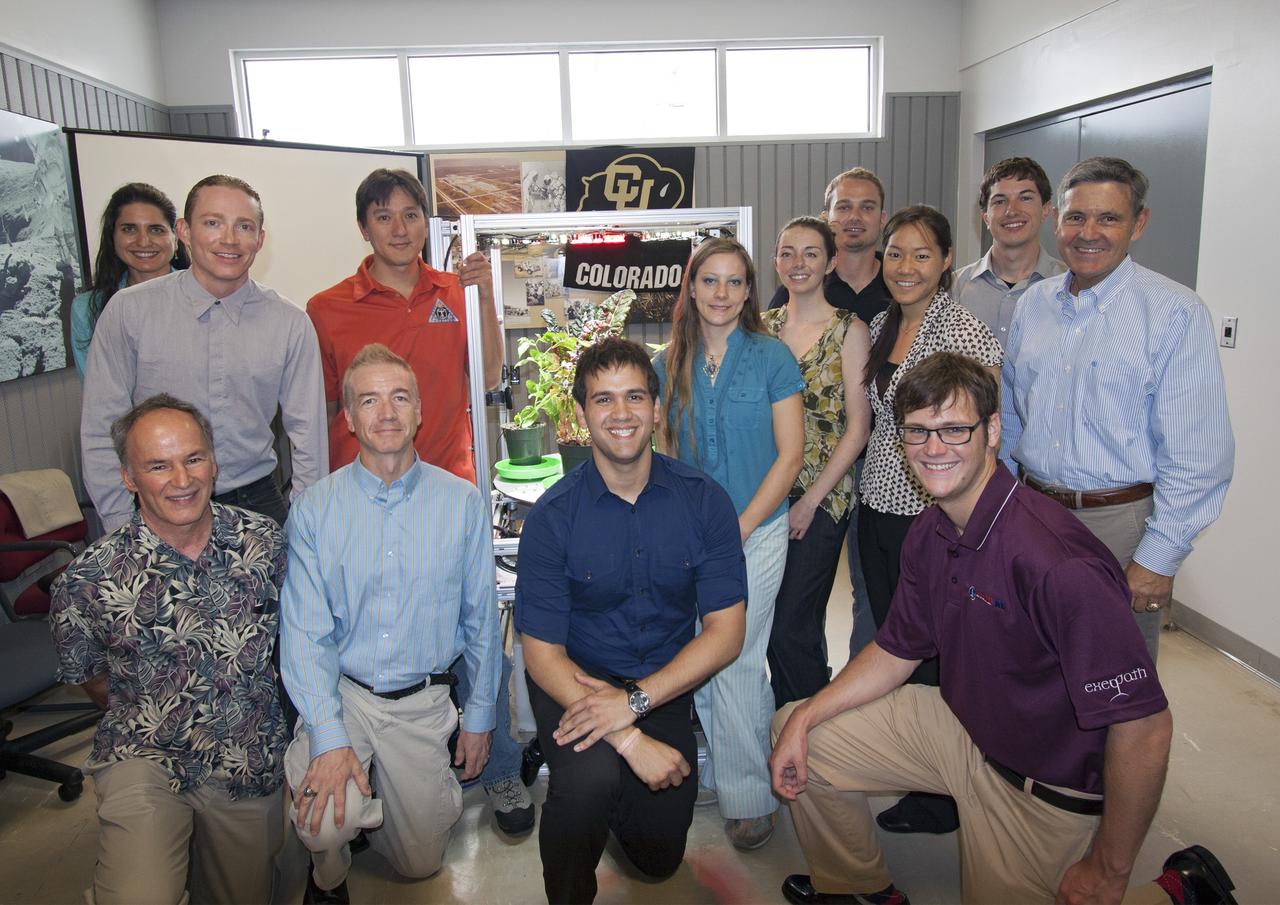
CAPE CANAVERAL, Fla. -- At the Kennedy Space Center in Florida, students from University of Colorado are working with NASA mentors in developing a robotic capability for growing a variety of plants, both for consumption as well as the benefit of oxygen-carbon dioxide cycling. Considerations range from monitoring and nutrient supply to selection of plants and autonomy. The activity is part of the eXploration Habitat, or X-Hab, Academic Innovation Challenge. Standing, left to right, are Gioia Massa of the NASA ISS Ground Processing and Research Project Office, Daniel Zukowski, Morgan Simpson of the NASA Ground Processing Directorate, Heather Hava, Keira Havens, Matthew Carton, Christine Fanchiang, Jordan Holquist and Kennedy Director Bob Cabana. Kneeling, left to right, are Ray Wheeler of the NASA Engineering and Technology Directorate, Tracy Gill of the NASA Center Planning and Development Directorate, Scott Mishra and Robert Griffin Hale. Hab Academic Innovation Challenge is a university-level activity designed to engage and retain students in Science, Technology, Engineering and Math, or STEM, disciplines. NASA will directly benefit from the effort by sponsoring the development of innovative habitat concepts from universities which may result in innovative ideas and solutions that could be applied to exploration habitats. For more: http://www.nasa.gov/exploration/technology/deep_space_habitat/xhab/ Photo credit: NASA/Jim Grossmann

CAPE CANAVERAL, Fla. -- At the Kennedy Space Center in Florida, Heather Hava, who is working on a doctorate in aerospace engineering sciences at the University of Colorado Boulder, makes adjustments on a Remotely Operated Gardening Rover, or ROGR, which could tend plants on a deep-space habitat. X-Hab Academic Innovation Challenge is a university-level activity designed to engage and retain students in science, technology, engineering and math, or STEM, disciplines. NASA will directly benefit from the effort by sponsoring the development of innovative habitat concepts from universities which may result in innovative ideas and solutions that could be applied to exploration habitats. For more: http://www.nasa.gov/exploration/technology/deep_space_habitat/xhab/ Photo credit: NASA/Daniel Casper
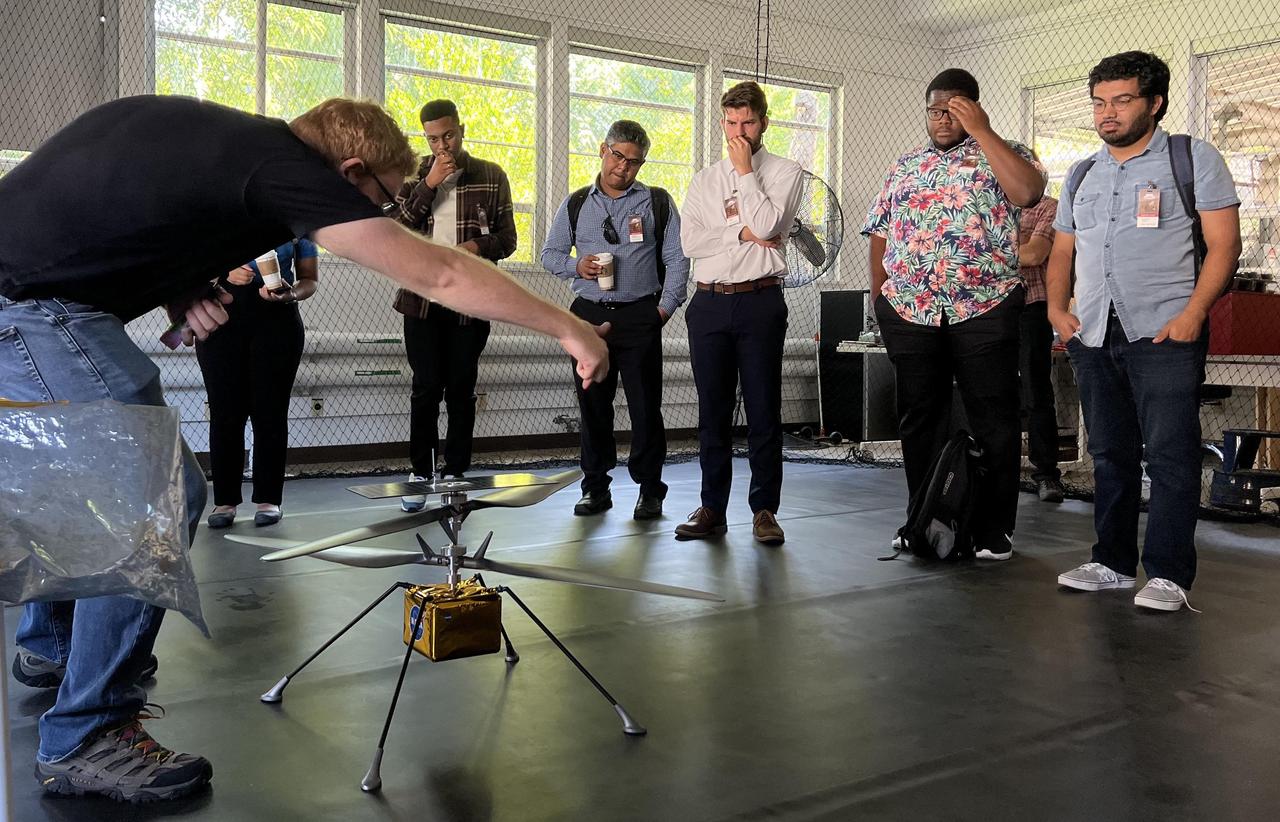
Participants in NASA's Minority Serving Institutions Space Accelerator program surround a full-scale model of NASA's Mars Ingenuity Helicopter as engineer Michael Starch discusses the mission. The group was visiting NASA's Jet Propulsion Laboratory on Aug. 18, 2022. These participants were members of three teams named as awardees in the first-of-its-kind accelerator program, a competition to advance the NASA's goals and meet its needs in the areas of machine learning, artificial intelligence, and development of autonomous systems while also engaging underrepresented academic institutions and reducing barriers for them to submit ideas to the agency. The program provides funding, business training through a 10-week accelerator course, and mentorship to help the teams develop ideas for systems that can operate without human oversight for future science missions in space and on Earth. The teams were made up of professors and students from Fayetteville State University in North Carolina, University of Massachusetts Boston, and California State University, Northridge. At the conclusion of the accelerator, participants arrived in Southern California for a variety of events, including two days at JPL. The program is a partnership between NASA's Science Mission Directorate, its Earth Science Technology Office, the Minority University Research Education Project within the agency's Office of STEM Engagement, JPL, and Starburst, a global aerospace accelerator company based in Los Angeles. https://photojournal.jpl.nasa.gov/catalog/PIA25315

"Engineers and scientists are inherently creative souls. I mean, that’s what we’re doing. We’re creating things. In a lot of instances, we’re creating something literally from an idea to reality. And there is something incredibly exciting about that. So when I talk about the work we do in STEM, I try to focus on the fact that it’s creative. We’re innovators. We’re trying to do something totally new. And when you do that work, it’s usually with other people who are just as excited as you are. We’re bringing all of these creative souls together to pull off something that you couldn’t imagine was possible before. …Yes, you have to be good at math and do the academic work to prepare you to do the kind of work we do. But in the end, it really comes down to unleashing this creativity and bringing minds together to achieve something that hasn’t been done before." NASA Deputy Associate Administrator for STEM Engagement, Kris Brown, poses for a portrait, Monday, February 8, 2021 at the Mary W. Jackson NASA Headquarters building in Washington. Photo Credit: (NASA/Aubrey Gemignani)