/Gateway - Intermodule Element Adaptor (IEA)~medium.jpg)
The Intermodule Element Adaptor (IEA) is attached to the aft bulkhead of the Habitation Element (HE) to support mechanical integration of HALO and PPE. The IEA is also used to provide an enclosure to protect the HALO batteries.
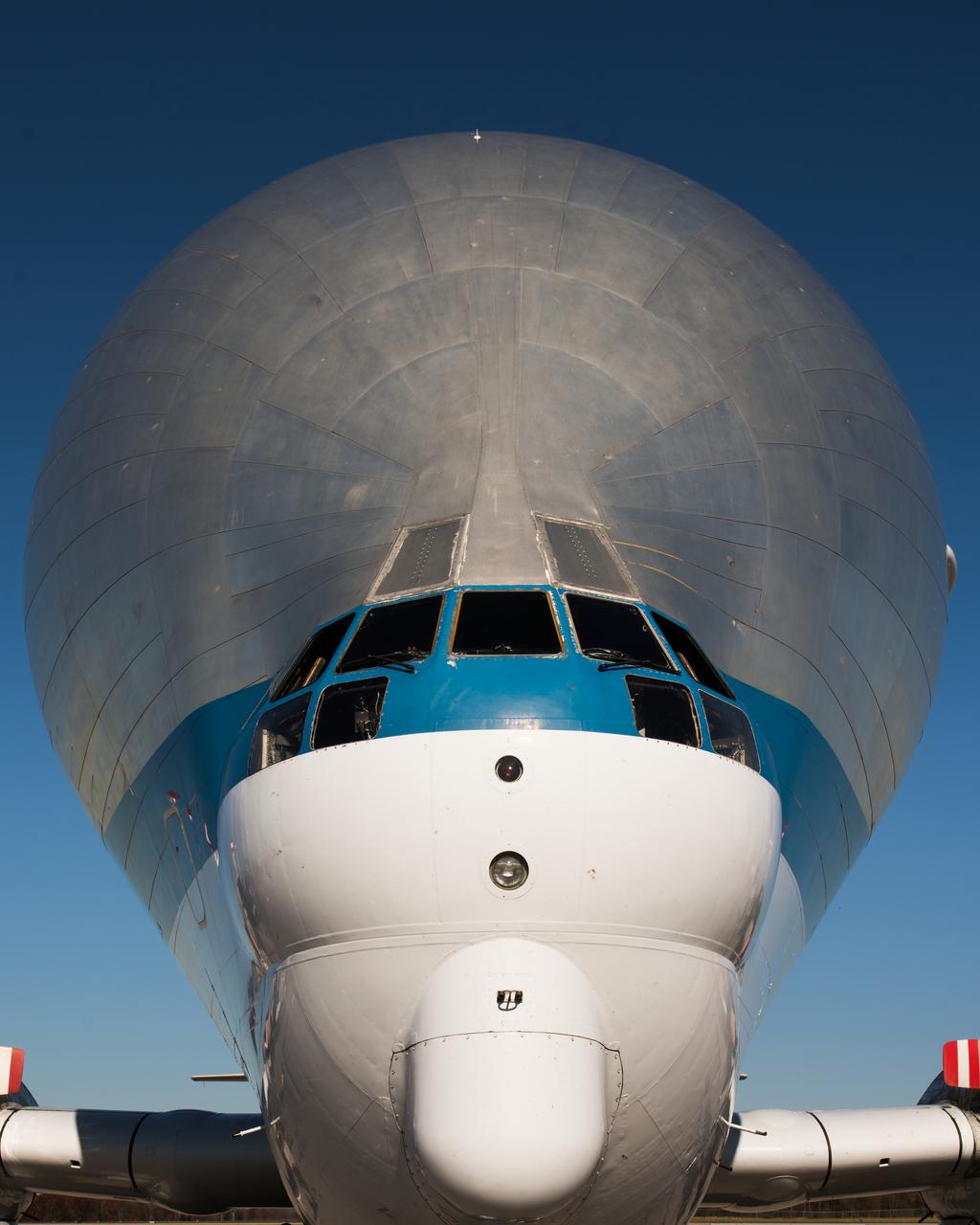
Front view of NASA’s Super Guppy aircraft after it touched down at Mansfield’s Lahm Airport in November, 2015. The crew delivered the crew module adaptor for Orion’s testing at NASA's Plum Brook Station next year.
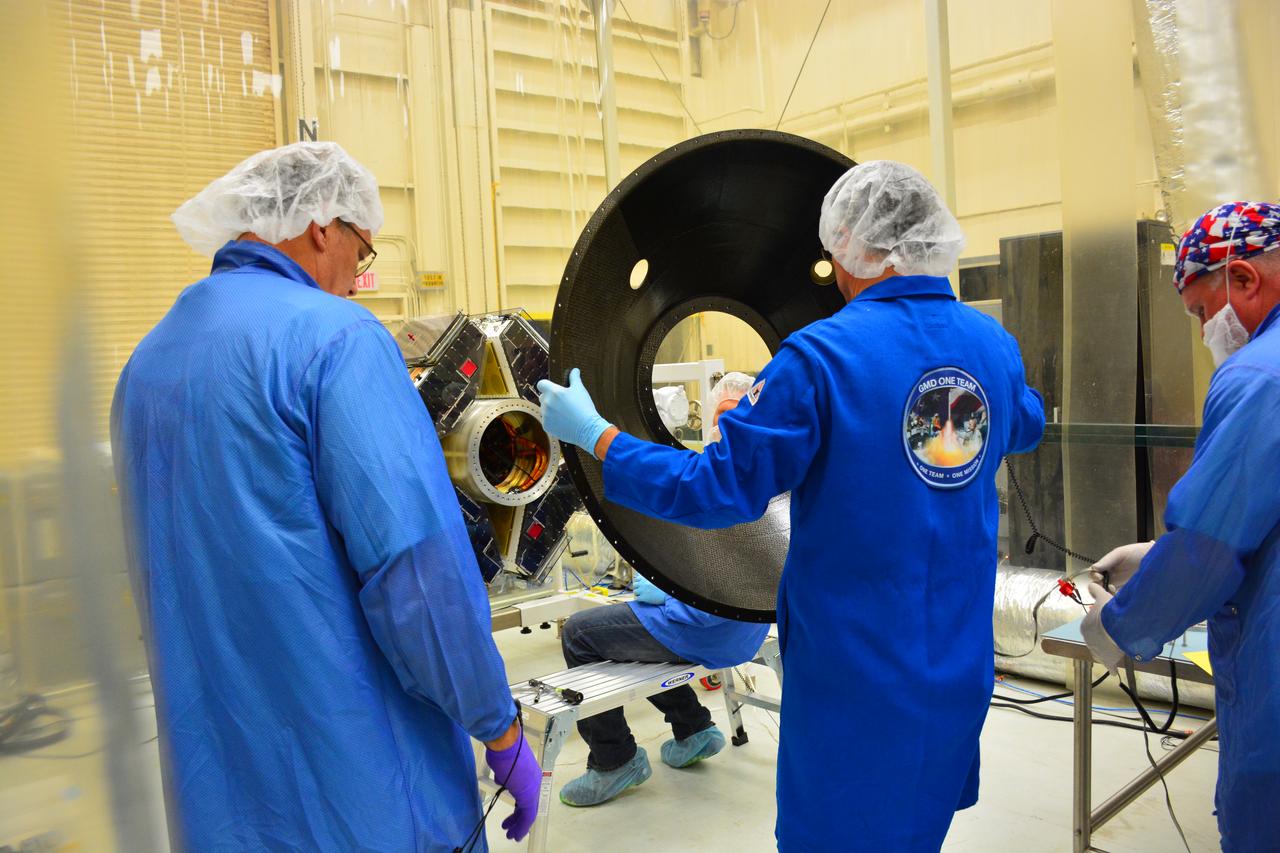
Technicians with Orbital ATK prepare to install the payload adapter to the deployment module that contains the micro satellites for NASA’s Cyclone Global Navigation Satellite System (CYGNSS) in Building 1555 at Vandenberg Air Force Base in California. CYGNSS is being prepared at Vandenberg, and then will be transported to NASA’s Kennedy Space Center in Florida aboard the Orbital ATK Pegasus XL rocket which will be attached to the Orbital ATK L-1011 carrier aircraft. CYGNSS will launch on the Pegasus XL rocket from the Skid Strip at Cape Canaveral Air Force Station. CYGNSS will make frequent and accurate measurements of ocean surface winds throughout the life cycle of tropical storms and hurricanes. The data that CYGNSS provides will enable scientists to probe key air-sea interaction processes that take place near the core of storms, which are rapidly changing and play a critical role in the beginning and intensification of hurricanes.

RICK BURT, RIGHT, DIRECTOR OF SAFETY AND MISSION ASSURANCE TALKS WITH ANDY SCHORR, ASSISTANT MANAGER OF THE SPACE LAUNCH SYSTEM'S SPACECRAFT PAYLOAD INTEGRATION AND EVOLUTION OFFICE. BEHIND THEM IS THE LAUNCH VEHICLE STAGE ADAPTOR, WHICH WAS DESIGNED AND MANUFACTURED AT MARSHALL AND WILL CONNECT TWO MAJOR SLS UPPER SECTIONS
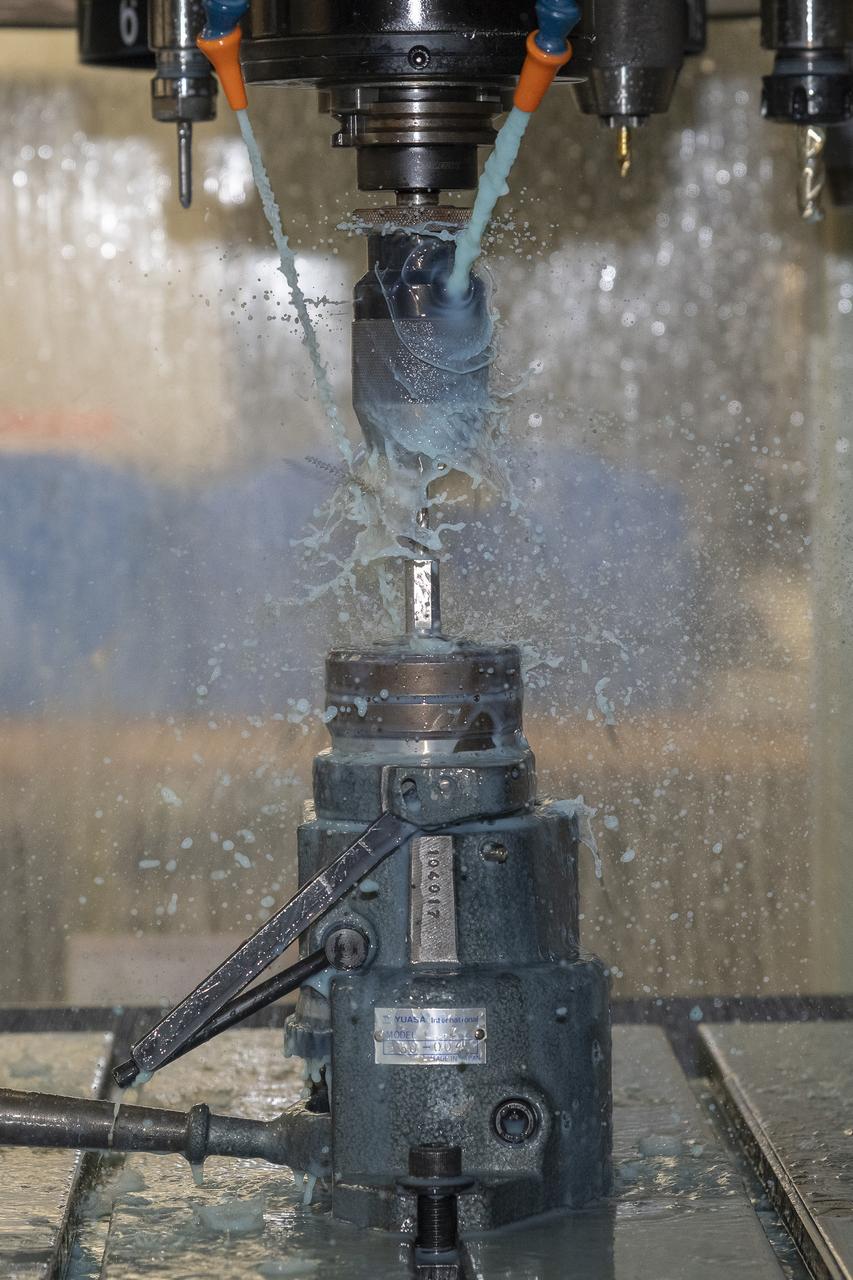
A jury strut adaptor is created for a 10-foot model of the Transonic Truss-Braced Wing at NASA’s Armstrong Flight Research Center, in Edwards, California. The aircraft concept involves a wing braced on an aircraft using diagonal struts that also add lift and could result in significantly improved aerodynamics.
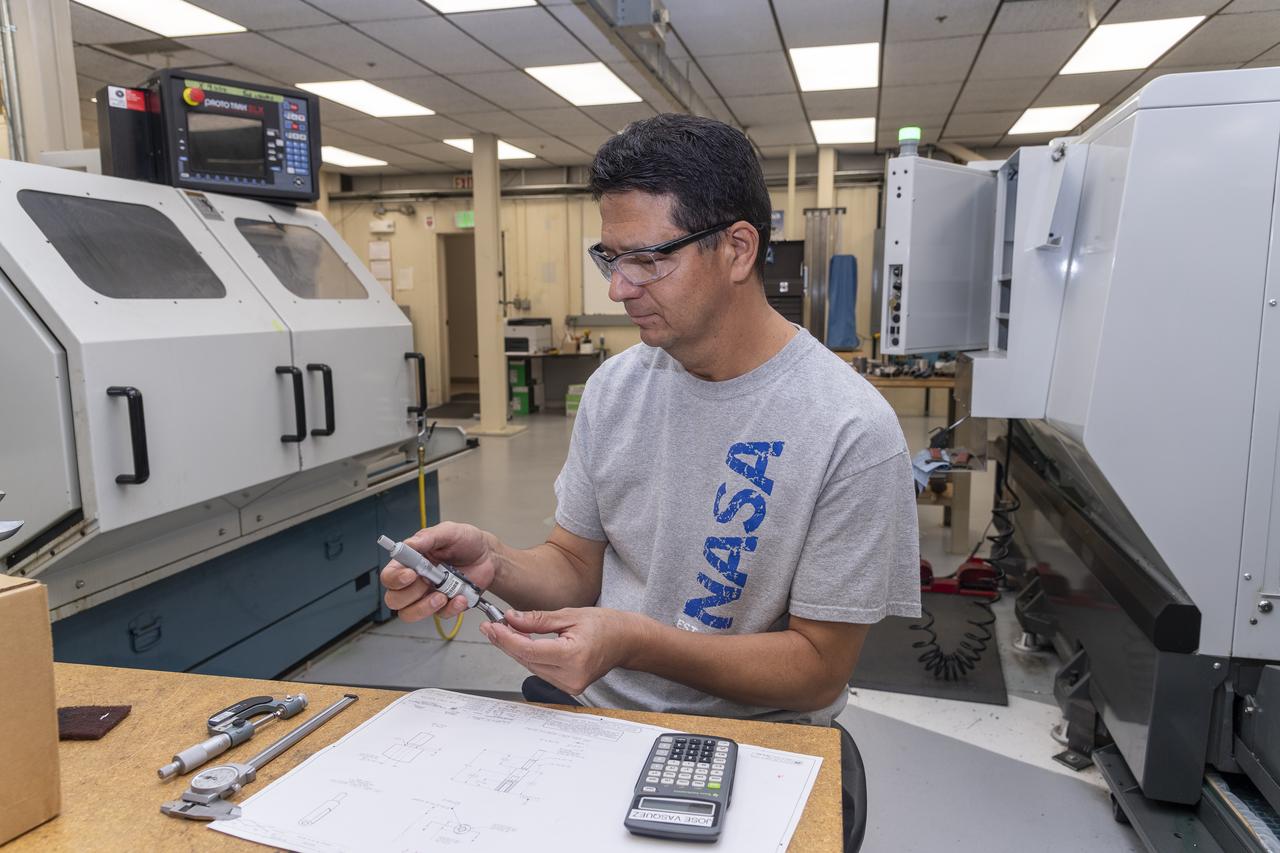
Jose Vasquez verifies a jury strut adaptor created for a 10-foot model of the Transonic Truss-Braced Wing at NASA’s Armstrong Flight Research Center, in Edwards, California. The aircraft concept involves a wing braced on an aircraft using diagonal struts that also add lift and could result in significantly improved aerodynamics.
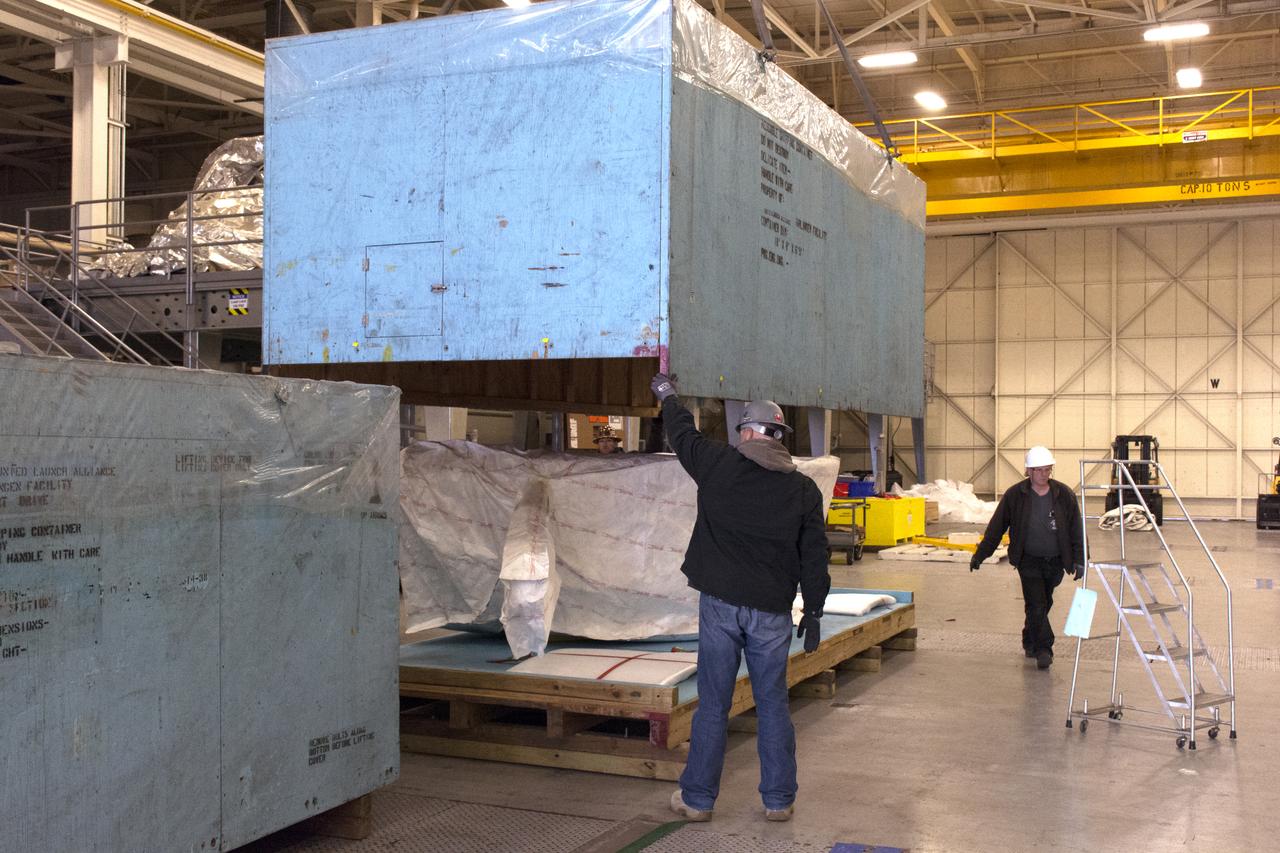
At Vandenberg Air Force Base in California, the boattail adaptor interface that will connect the Centaur upper stage to the payload fairing is offloaded for NASA's upcoming Interior Exploration using Seismic Investigations, Geodesy and Heat Transport, or InSight, mission to land on Mars. InSight will liftoff atop a United Launch Alliance Atlas V rocket to send the spacecraft on the first mission to explore the Red Planet's deep interior. It will investigate processes that shaped the rocky planets of the inner solar system including Earth. Liftoff from Vandenberg is scheduled for May 5, 2018.

iss072e423785 (1/3/2025) — A view of the CLINGERS Cubesat connection mechanism aboard the International Space Station (ISS). Flight Tech Demo of Docking/Undocking Cubesats Inside ISS (CLINGERS) uses the International Space Station’s Astrobee robots to demonstrate an adaptor for docking and close approach sensing to connect both active and passive objects in space. These are critical functions to enable applications such as satellite servicing, orbital refueling, spacecraft repair and upgrade, and in-orbit manufacturing.
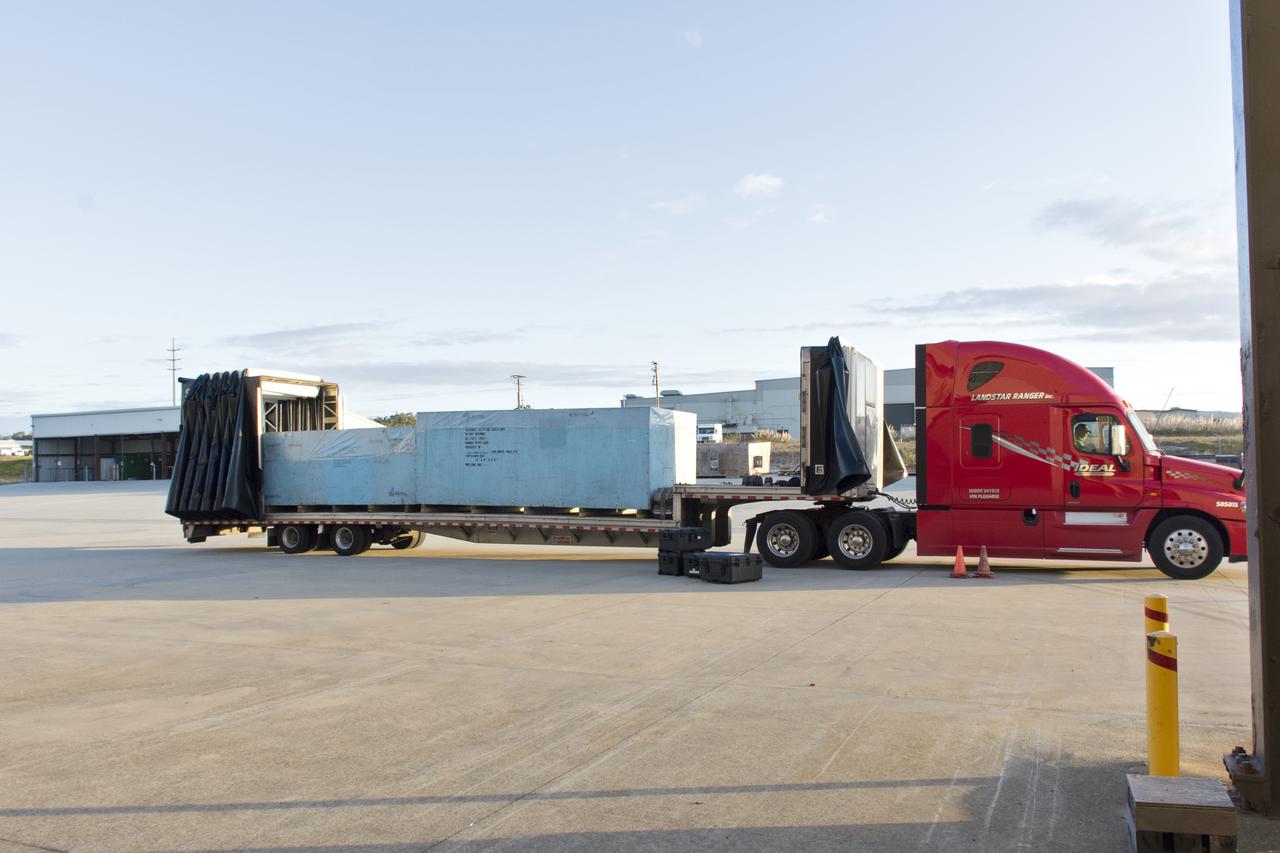
At Vandenberg Air Force Base in California, the boattail adaptor interface that will connect the Centaur upper stage to the payload fairing arrives for NASA's upcoming Interior Exploration using Seismic Investigations, Geodesy and Heat Transport, or InSight, mission to land on Mars. InSight will liftoff atop a United Launch Alliance Atlas V rocket to send the spacecraft on the first mission to explore the Red Planet's deep interior. It will investigate processes that shaped the rocky planets of the inner solar system including Earth. Liftoff from Vandenberg is scheduled for May 5, 2018.

iss072e747124 (March 18, 2025) --- NASA astronaut and Expedition 72 Flight Engineer Nichole Ayers works inside the International Space Station's Kibo laboratory module loading software onto an Astrobee robotic free-flyer. The software is part of a technology investigation demonstrating an adaptor for docking and close approach sensing to connect both active and passive objects in space. Results may enable applications such as satellite servicing, orbital refueling, spacecraft repair and upgrade, and in-orbit manufacturing.
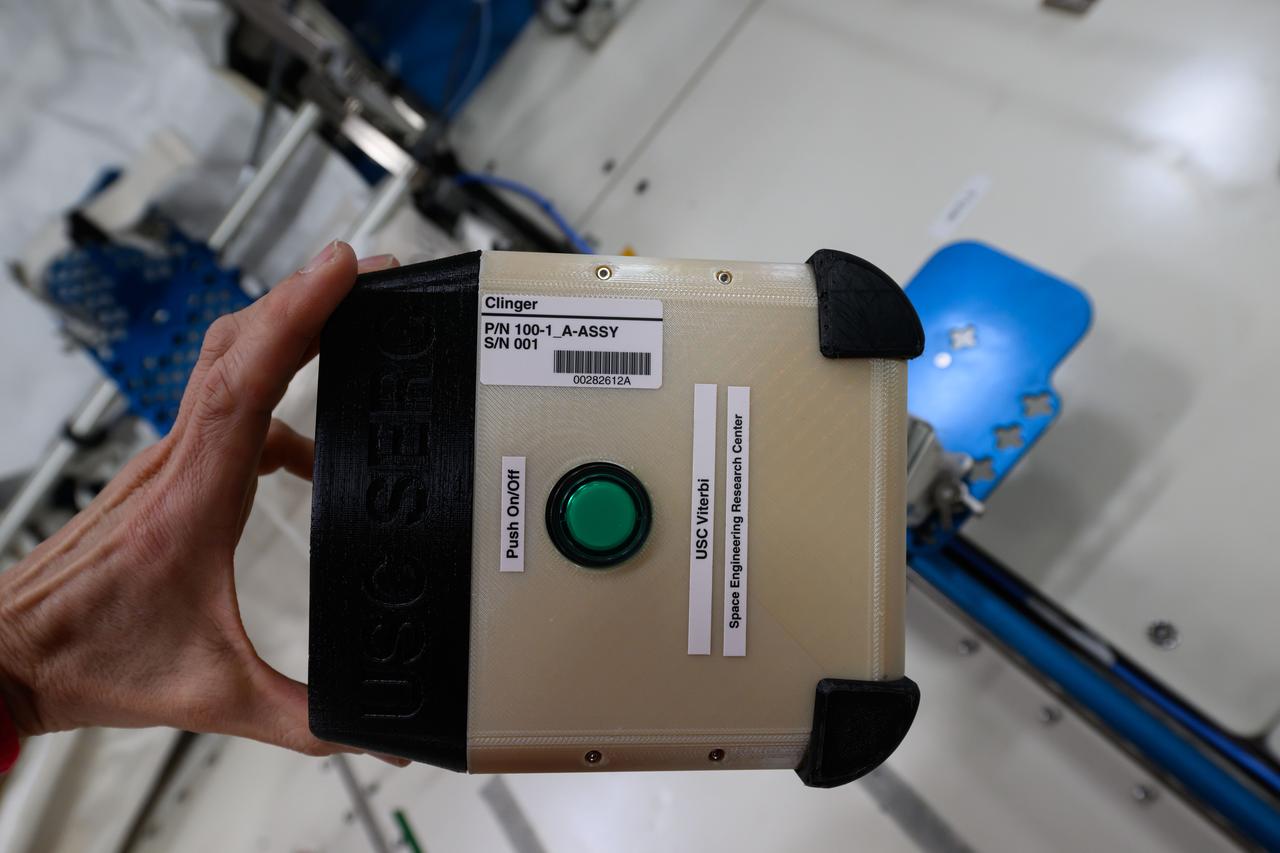
iss072e423784 (1/3/2025) — A view of the CLINGERS Cubesat aboard the International Space Station (ISS). Flight Tech Demo of Docking/Undocking Cubesats Inside ISS (CLINGERS) uses the International Space Station’s Astrobee robots to demonstrate an adaptor for docking and close approach sensing to connect both active and passive objects in space. These are critical functions to enable applications such as satellite servicing, orbital refueling, spacecraft repair and upgrade, and in-orbit manufacturing.

Jose Vasquez programed a machine to cut, rotate and turn a block of steel to form a jury strut adaptor for a 10-foot model of the Transonic Truss-Braced Wing at NASA’s Armstrong Flight Research Center, in Edwards, California. The aircraft concept involves a wing braced on an aircraft using diagonal struts that also add lift and could result in significantly improved aerodynamics.
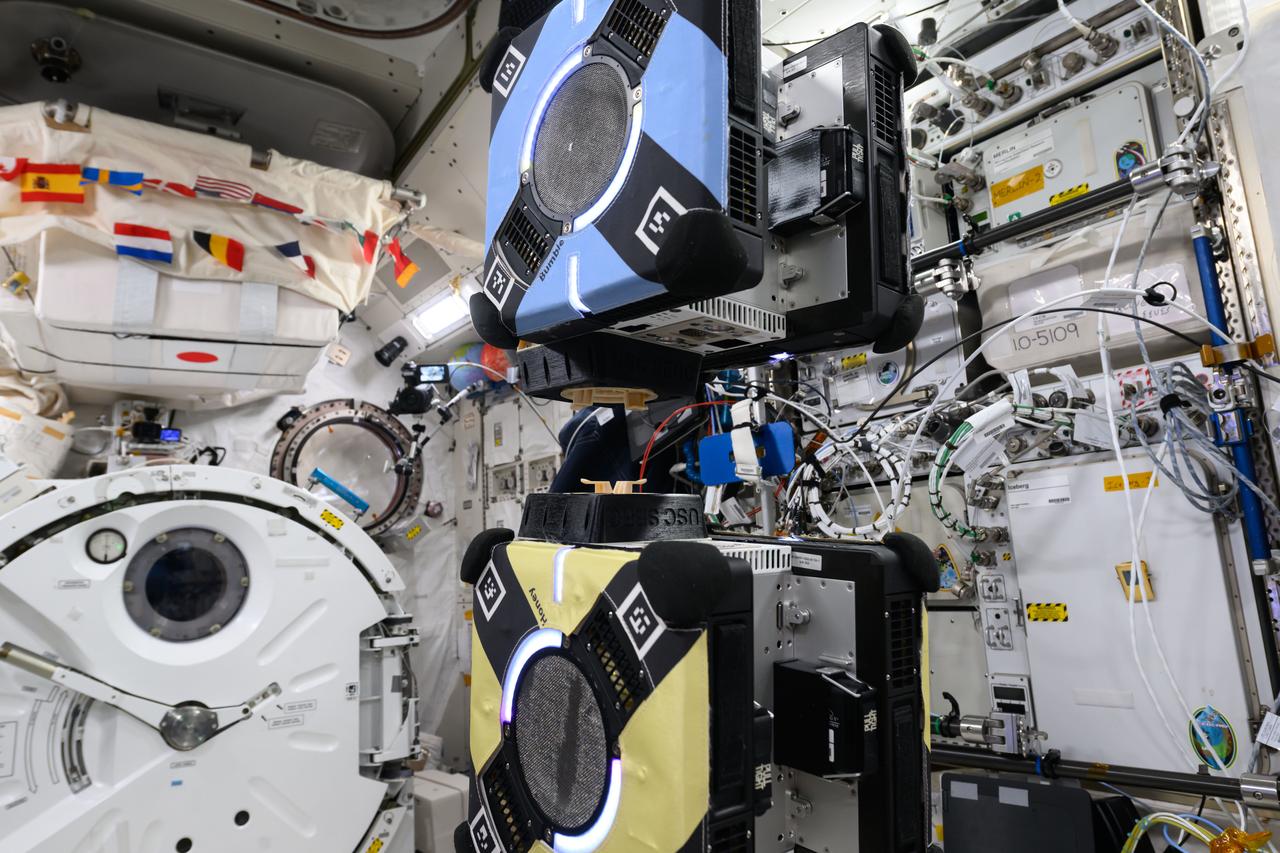
iss072e423875 (1/3/2025) — A view of the CLINGERS Cubesats attached to Astrobee aboard the International Space Station (ISS). Flight Tech Demo of Docking/Undocking Cubesats Inside ISS (CLINGERS) uses the International Space Station’s Astrobee robots to demonstrate an adaptor for docking and close approach sensing to connect both active and passive objects in space. These are critical functions to enable applications such as satellite servicing, orbital refueling, spacecraft repair and upgrade, and in-orbit manufacturing.
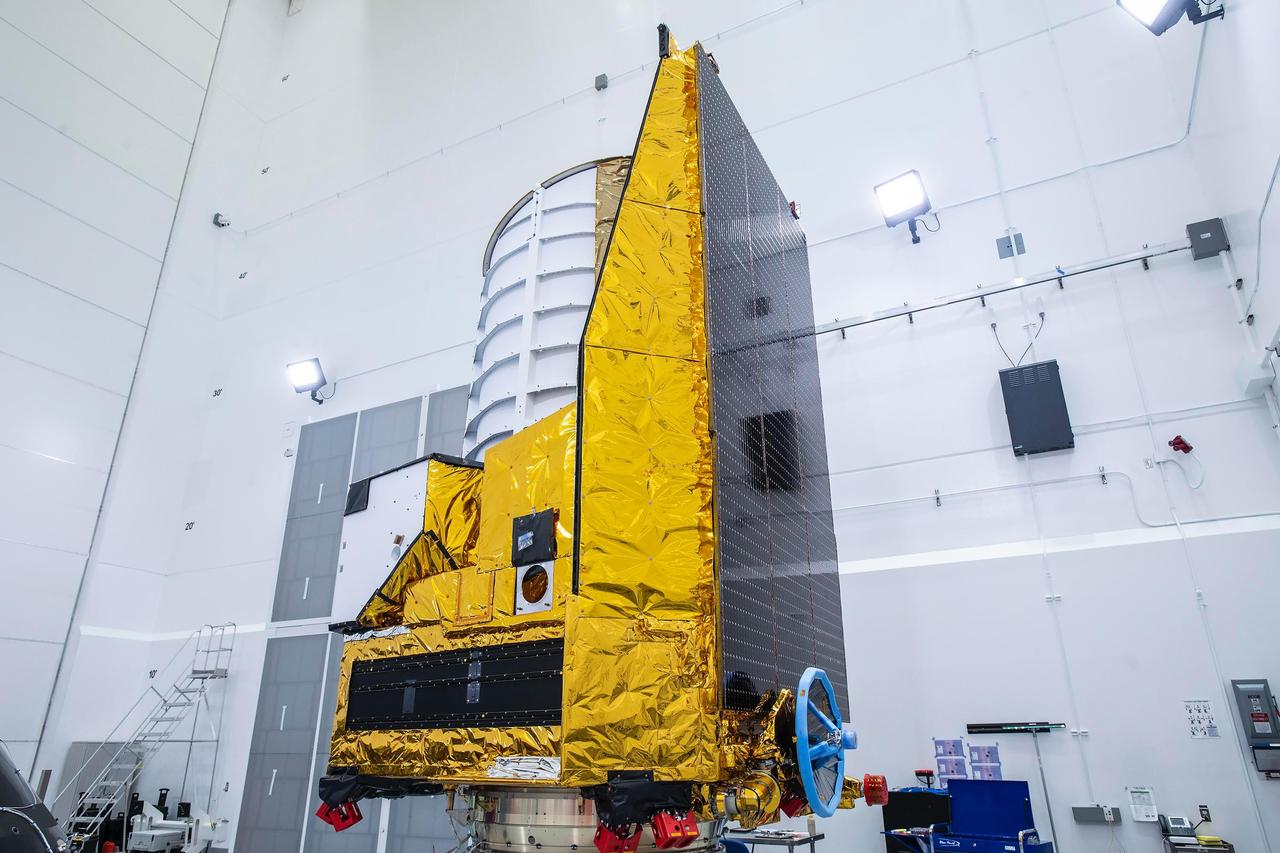
The ESA (European Space Agency) Euclid telescope, with contributions from NASA, is shown here on Friday 23 June, being secured to the adaptor of a SpaceX Falcon 9 rocket before launch. Black solar panels line the right side of the spacecraft. The telescope will view the cosmos through the top of the white cylinder that sits above the spacecraft's instruments. https://photojournal.jpl.nasa.gov/catalog/PIA25783
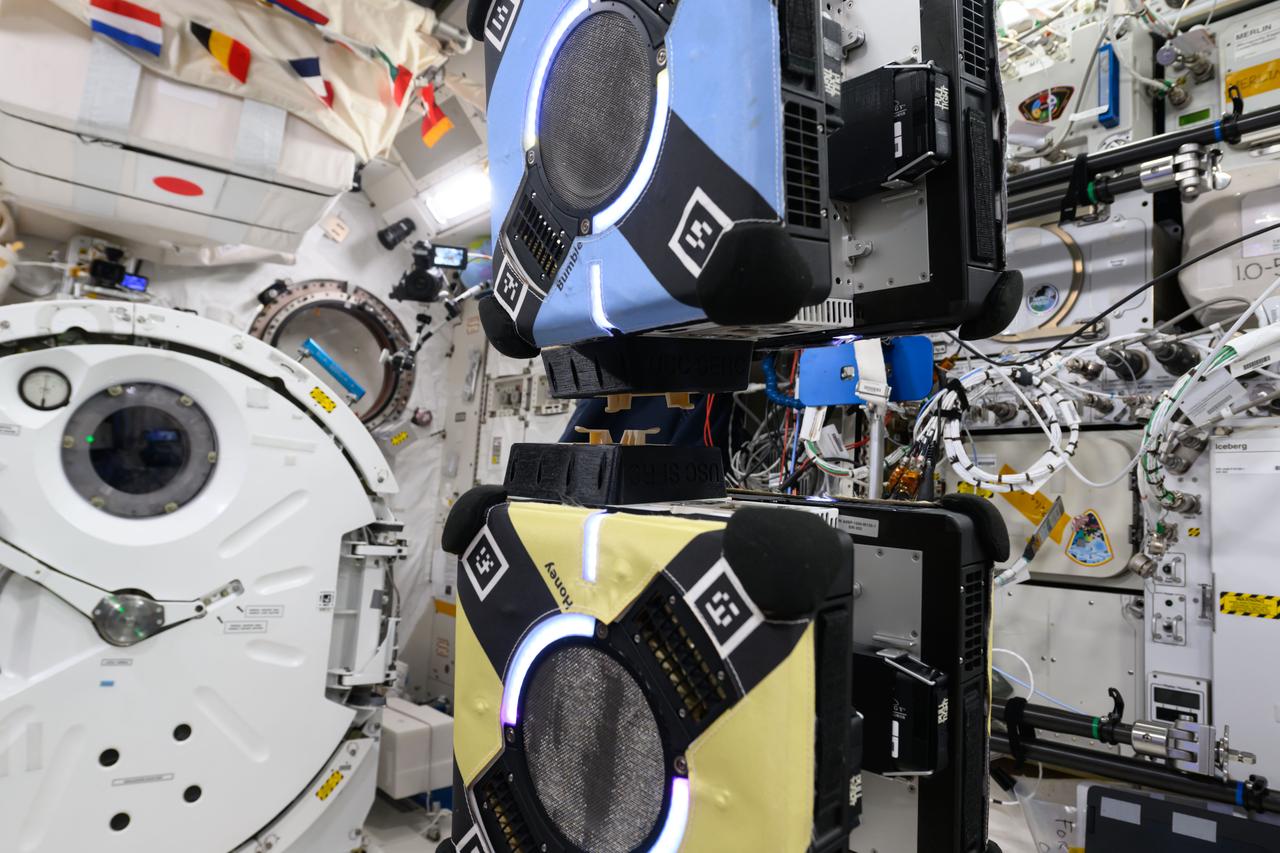
iss072e423864 (1/3/2025) — A view of the CLINGERS Cubesats attached to Astrobee aboard the International Space Station (ISS). Flight Tech Demo of Docking/Undocking Cubesats Inside ISS (CLINGERS) uses the International Space Station’s Astrobee robots to demonstrate an adaptor for docking and close approach sensing to connect both active and passive objects in space. These are critical functions to enable applications such as satellite servicing, orbital refueling, spacecraft repair and upgrade, and in-orbit manufacturing.
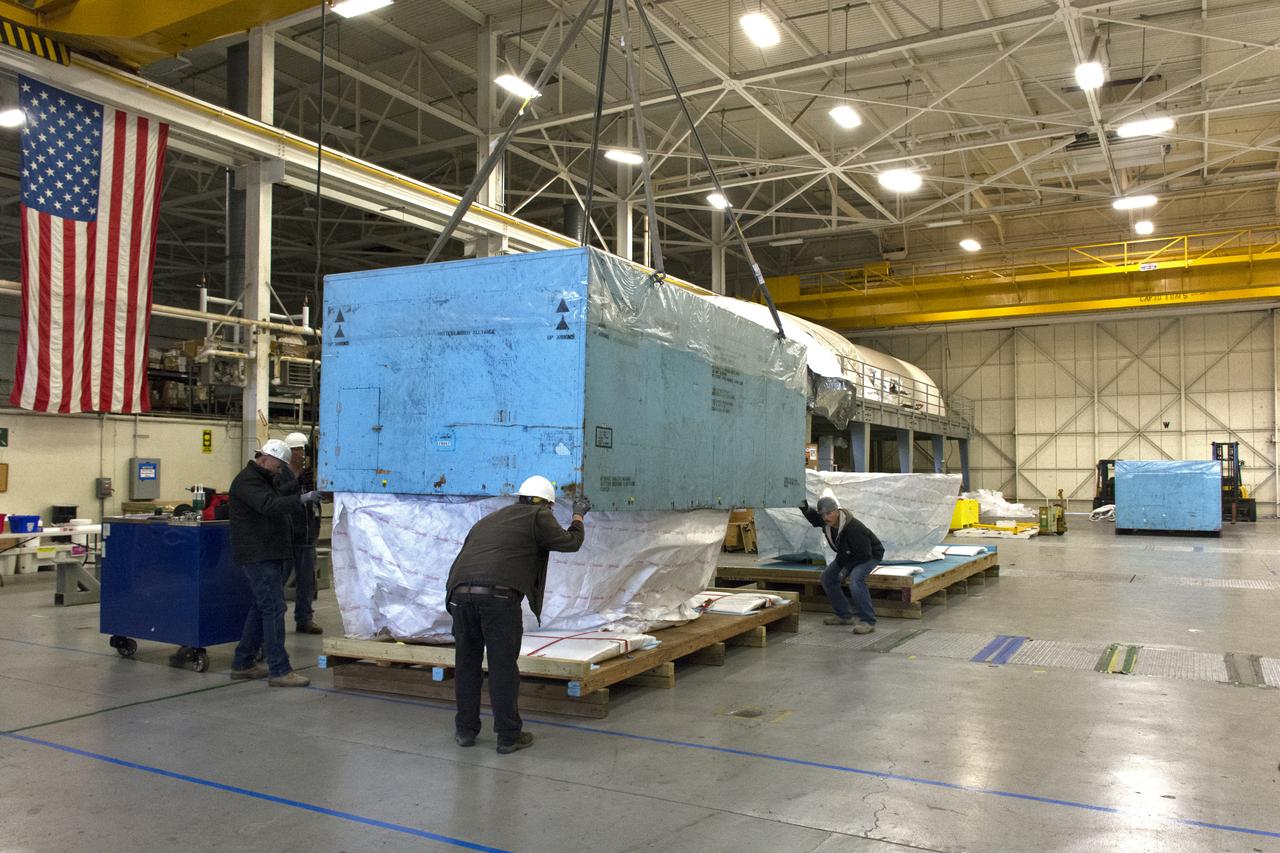
At Vandenberg Air Force Base in California, the boattail adaptor interface that will connect the Centaur upper stage to the payload fairing is offloaded for NASA's upcoming Interior Exploration using Seismic Investigations, Geodesy and Heat Transport, or InSight, mission to land on Mars. InSight will liftoff atop a United Launch Alliance Atlas V rocket to send the spacecraft on the first mission to explore the Red Planet's deep interior. It will investigate processes that shaped the rocky planets of the inner solar system including Earth. Liftoff from Vandenberg is scheduled for May 5, 2018.
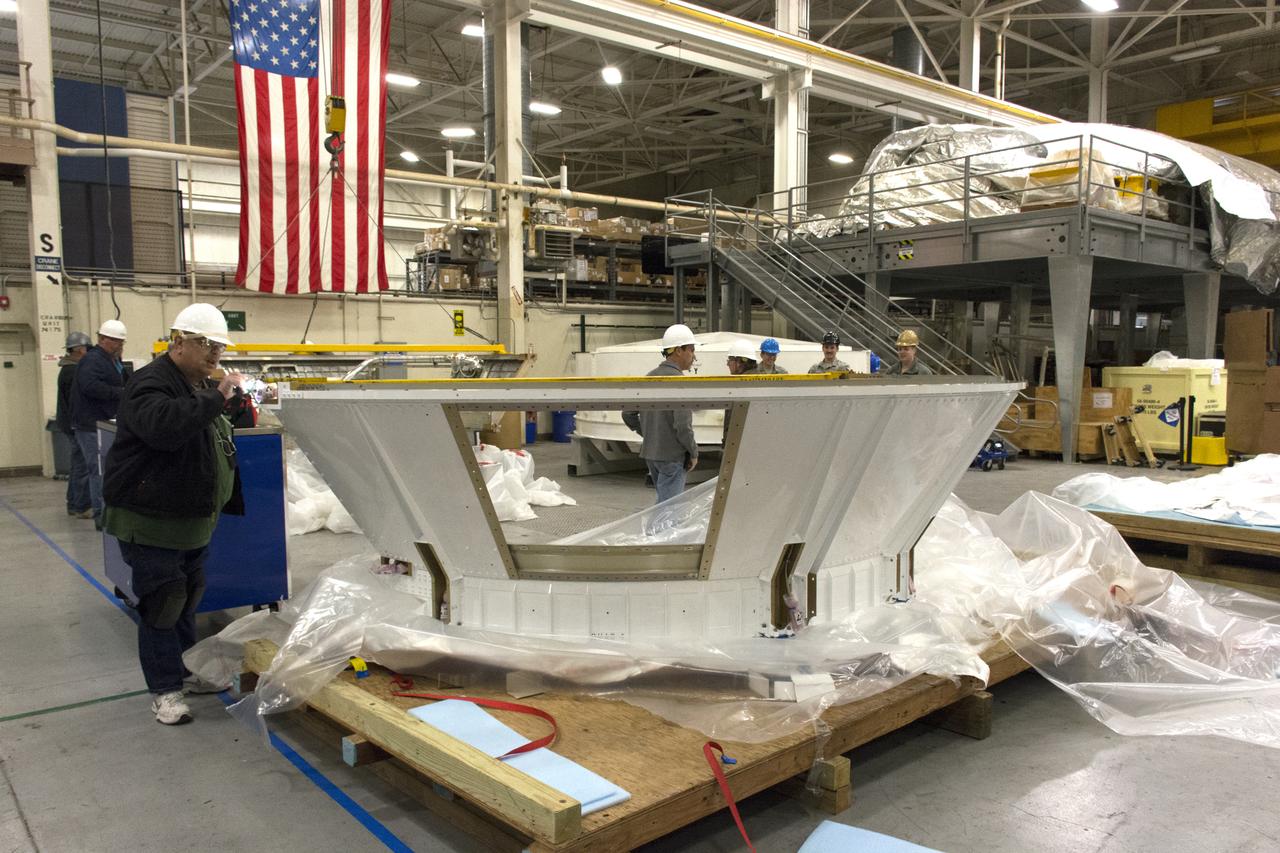
At Vandenberg Air Force Base in California, technicians inspect the boattail adaptor interface that will connect the Centaur upper stage to the payload fairing for NASA's upcoming Interior Exploration using Seismic Investigations, Geodesy and Heat Transport, or InSight, mission to land on Mars. InSight will liftoff atop a United Launch Alliance Atlas V rocket to send the spacecraft on the first mission to explore the Red Planet's deep interior. It will investigate processes that shaped the rocky planets of the inner solar system including Earth. Liftoff from Vandenberg is scheduled for May 5, 2018.
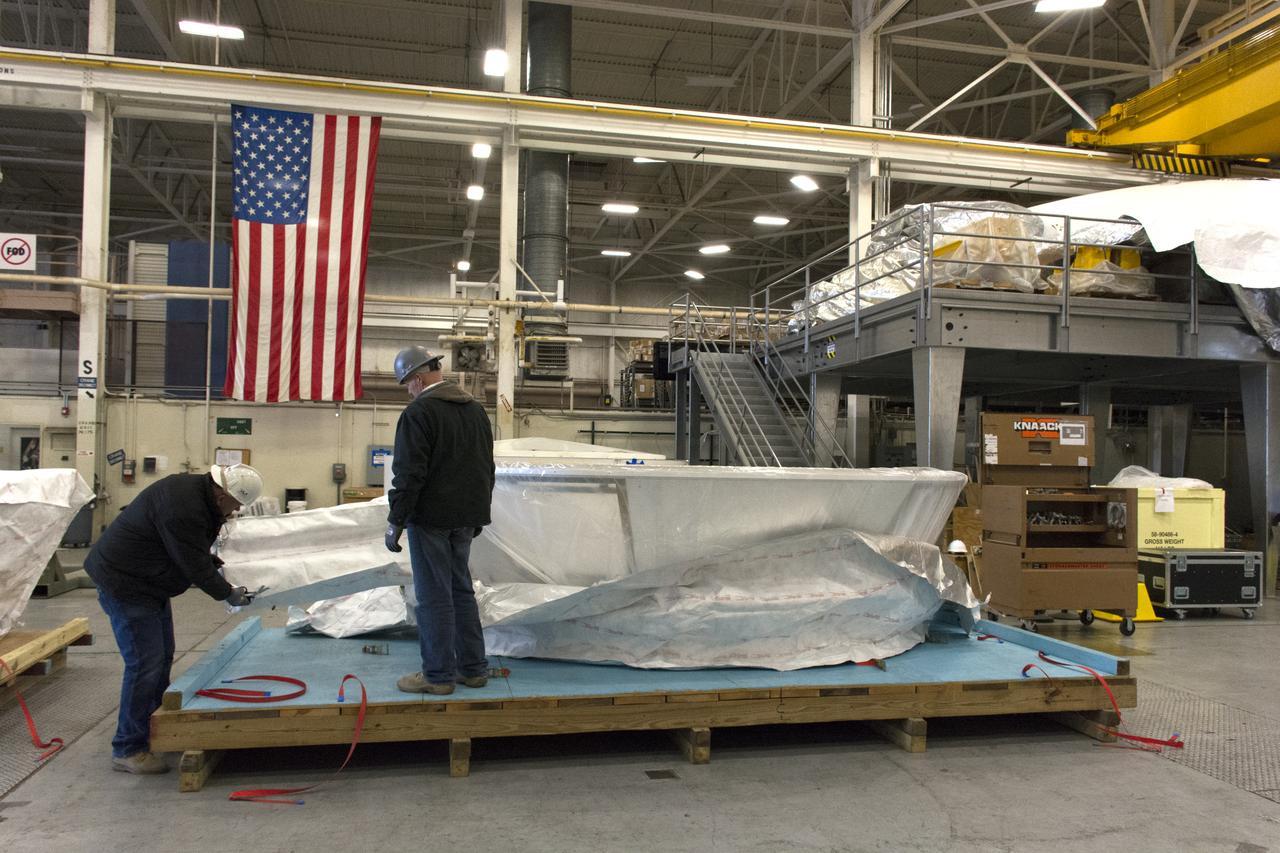
At Vandenberg Air Force Base in California, technicians inspect the boattail adaptor interface that will connect the Centaur upper stage to the payload fairing for NASA's upcoming Interior Exploration using Seismic Investigations, Geodesy and Heat Transport, or InSight, mission to land on Mars. InSight will liftoff atop a United Launch Alliance Atlas V rocket to send the spacecraft on the first mission to explore the Red Planet's deep interior. It will investigate processes that shaped the rocky planets of the inner solar system including Earth. Liftoff from Vandenberg is scheduled for May 5, 2018.
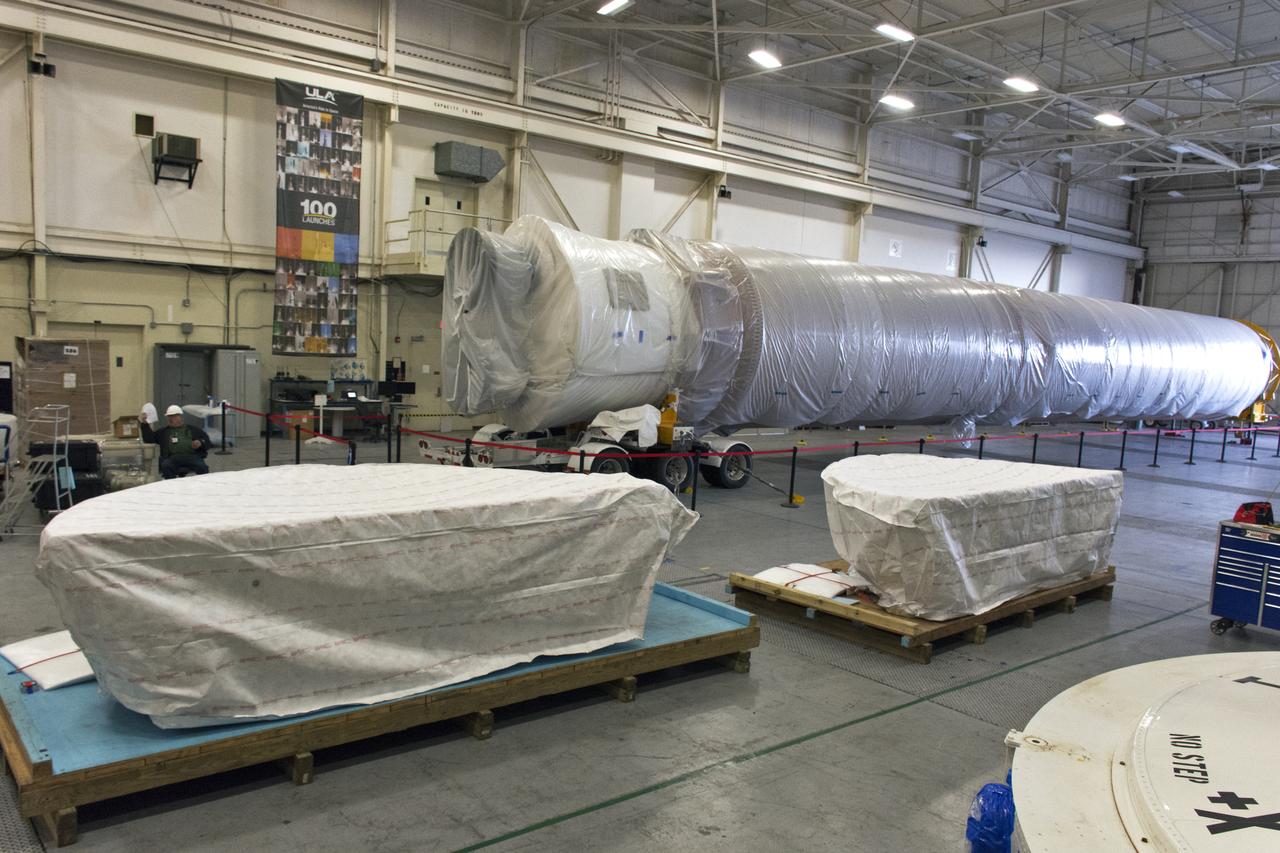
At Vandenberg Air Force Base in California, the boattail adaptor interface that will connect the Centaur upper stage to the payload fairing has been offloaded for NASA's upcoming Interior Exploration using Seismic Investigations, Geodesy and Heat Transport, or InSight, mission to land on Mars. InSight will liftoff atop a United Launch Alliance Atlas V rocket to send the spacecraft on the first mission to explore the Red Planet's deep interior. It will investigate processes that shaped the rocky planets of the inner solar system including Earth. Liftoff from Vandenberg is scheduled for May 5, 2018.
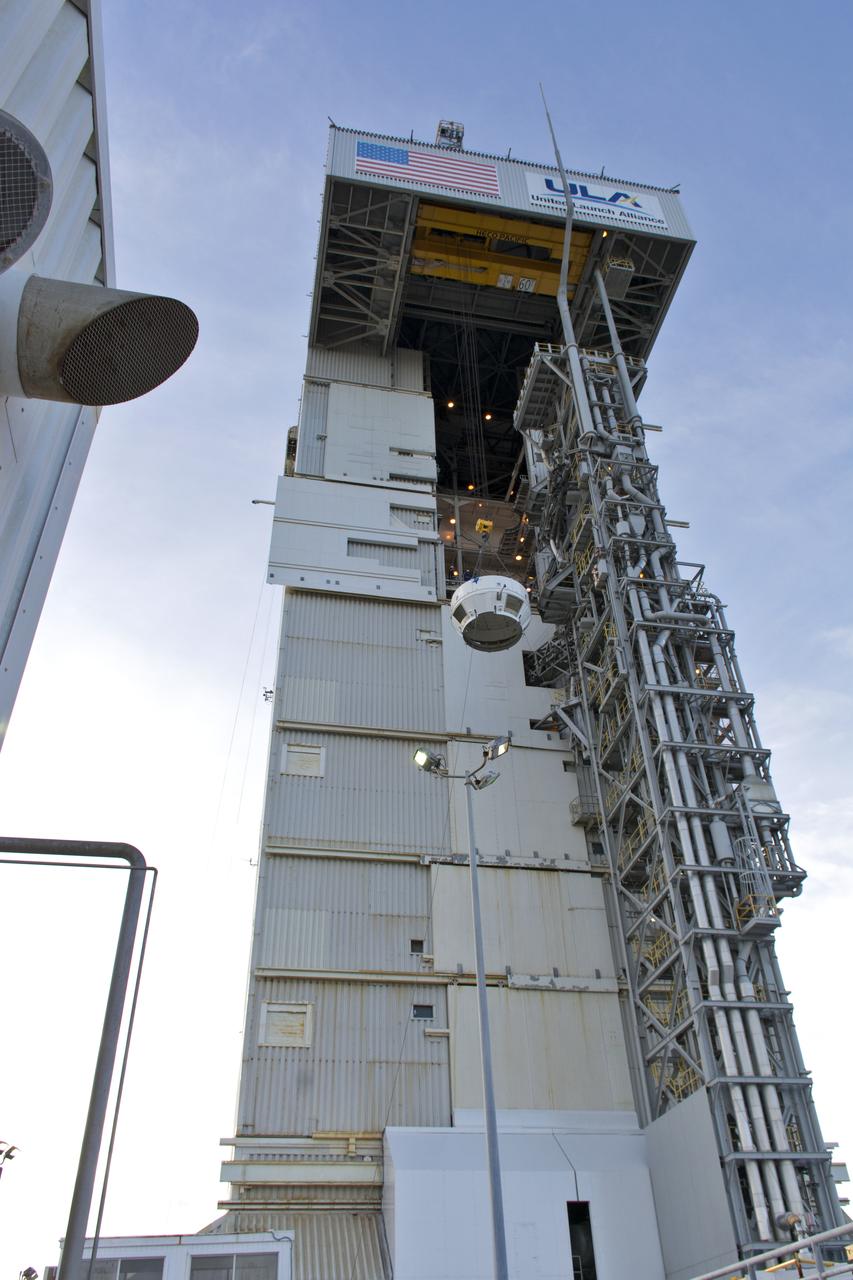
At Space Launch Complex 3 at Vandenberg Air Force Base in California, a boattail fairing is lifted by a crane for mating atop a United Launch Alliance (ULA) Centaur upper stage. The boattail is an adaptor providing an interface between the Centaur and the payload fairing encapsulating NASA's Interior Exploration using Seismic Investigations, Geodesy and Heat Transport, or InSight, spacecraft. A ULA Atlas V rocket is scheduled to liftoff on May 5, 2018, launching InSight the first mission to explore the deep interior of Mars. It will investigate processes that shaped the rocky planets of the inner solar system including Earth.
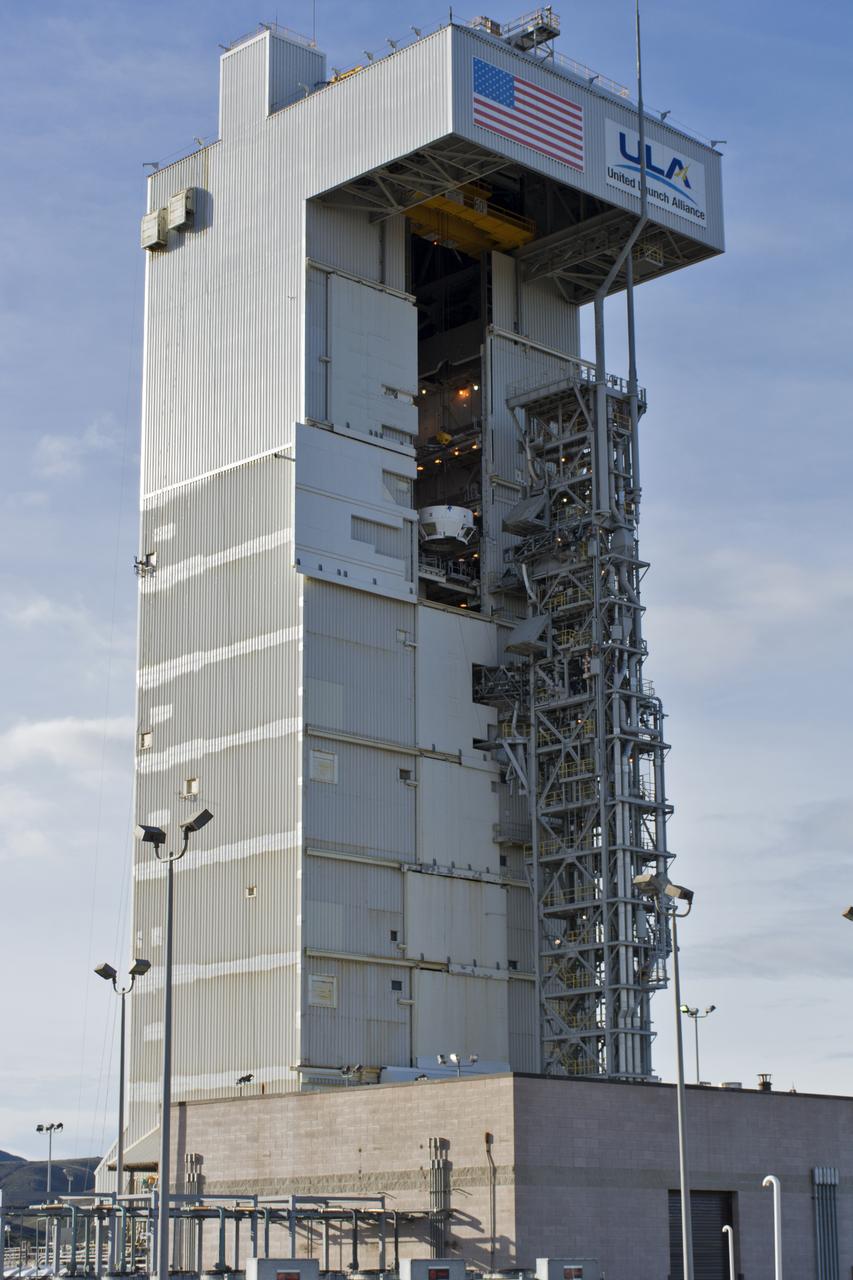
At Space Launch Complex 3 at Vandenberg Air Force Base in California, a boattail fairing is lifted by a crane for mating atop a United Launch Alliance (ULA) Centaur upper stage. The boattail is an adaptor providing an interface between the Centaur and the payload fairing encapsulating NASA's Interior Exploration using Seismic Investigations, Geodesy and Heat Transport, or InSight, spacecraft. A ULA Atlas V rocket is scheduled to liftoff on May 5, 2018, launching InSight the first mission to explore the deep interior of Mars. It will investigate processes that shaped the rocky planets of the inner solar system including Earth.
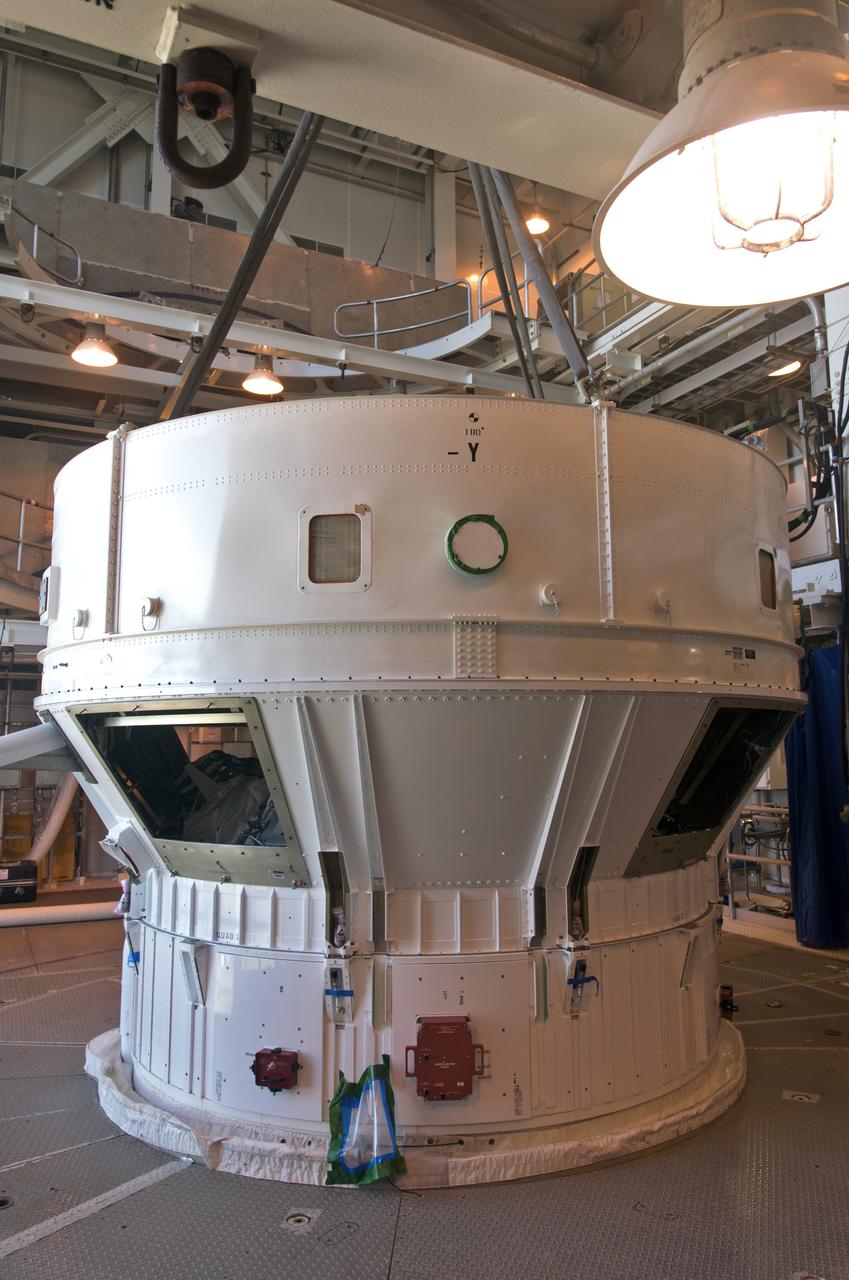
At Space Launch Complex 3 at Vandenberg Air Force Base in California, a boattail fairing has been mated atop a United Launch Alliance (ULA) Centaur upper stage. The boattail is an adaptor providing an interface between the Centaur and the payload fairing encapsulating NASA's Interior Exploration using Seismic Investigations, Geodesy and Heat Transport, or InSight, spacecraft. A ULA Atlas V rocket is scheduled to liftoff on May 5, 2018, launching InSight the first mission to explore the deep interior of Mars. It will investigate processes that shaped the rocky planets of the inner solar system including Earth.
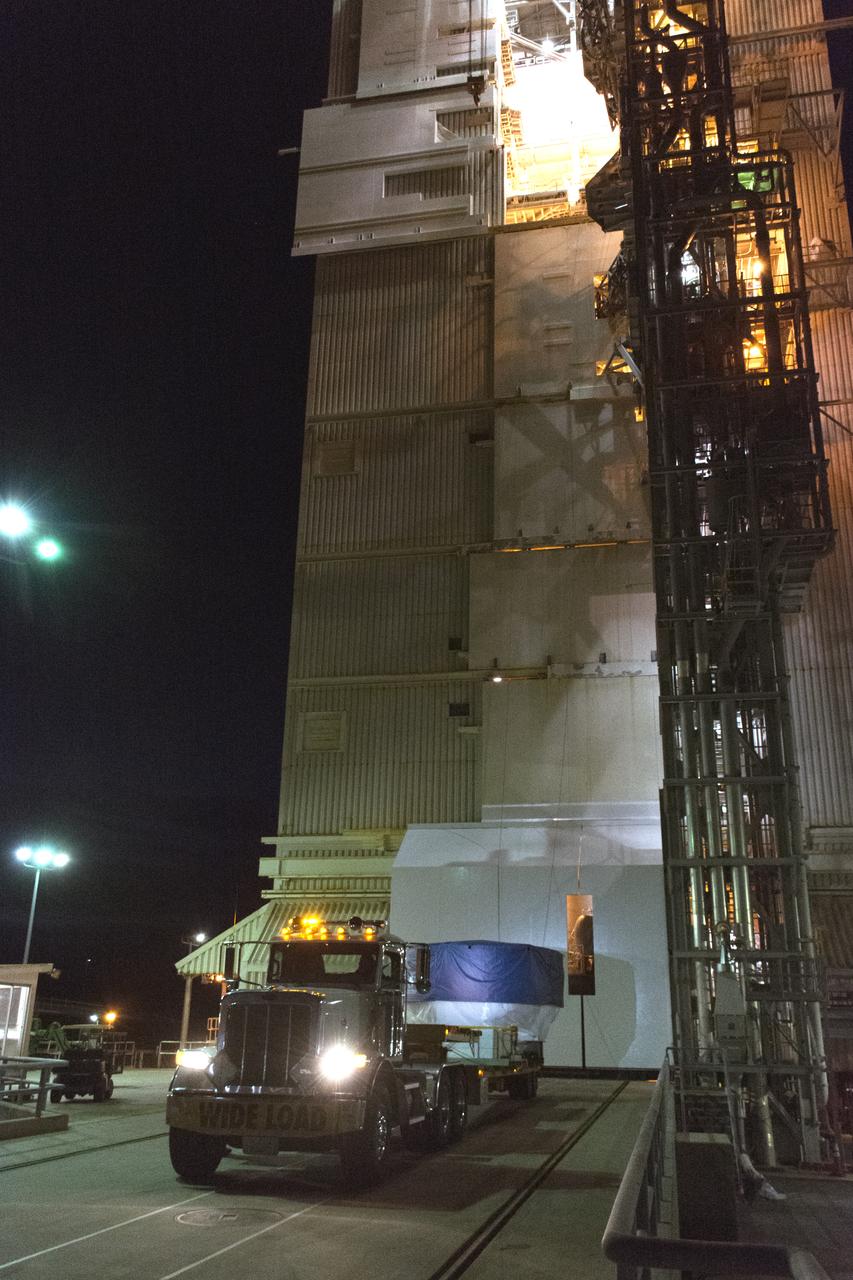
At Vandenberg Air Force Base in California, a boattail fairing arrives at Space Launch Complex 3. The boattail is an adaptor providing an interface between the United Launch Alliance (ULA) Centaur upper stage and the payload fairing encapsulating NASA's Interior Exploration using Seismic Investigations, Geodesy and Heat Transport, or InSight, spacecraft. A ULA Atlas V rocket is scheduled to liftoff on May 5, 2018, launching InSight the first mission to explore the deep interior of Mars. It will investigate processes that shaped the rocky planets of the inner solar system including Earth.
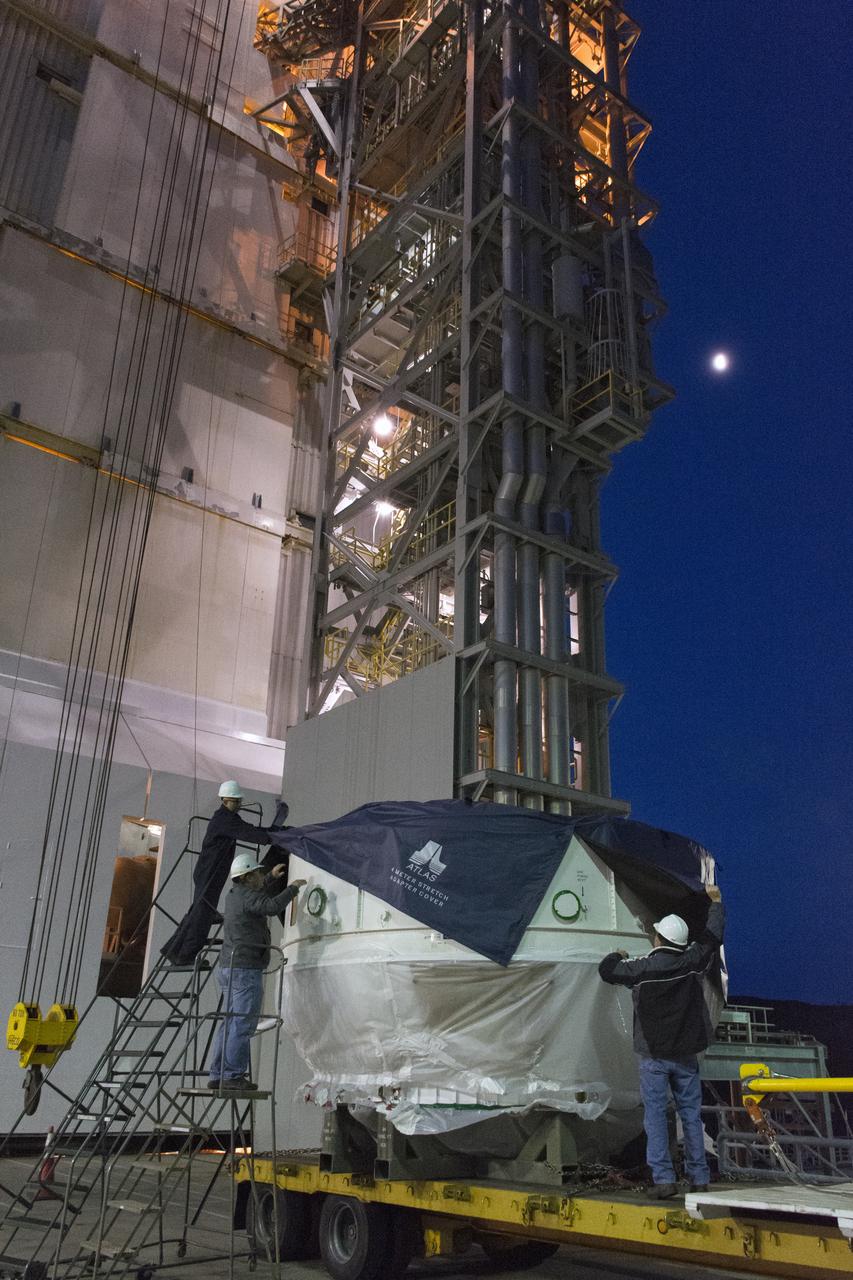
At Vandenberg Air Force Base in California, technicians prepare a boattail fairing for lifting atop a United Launch Alliance (ULA) Centaur upper stage at Space Launch Complex 3. The boattail is an adaptor providing an interface between the Centaur and the payload fairing encapsulating NASA's Interior Exploration using Seismic Investigations, Geodesy and Heat Transport, or InSight, spacecraft. A ULA Atlas V rocket is scheduled to liftoff on May 5, 2018, launching InSight the first mission to explore the deep interior of Mars. It will investigate processes that shaped the rocky planets of the inner solar system including Earth.
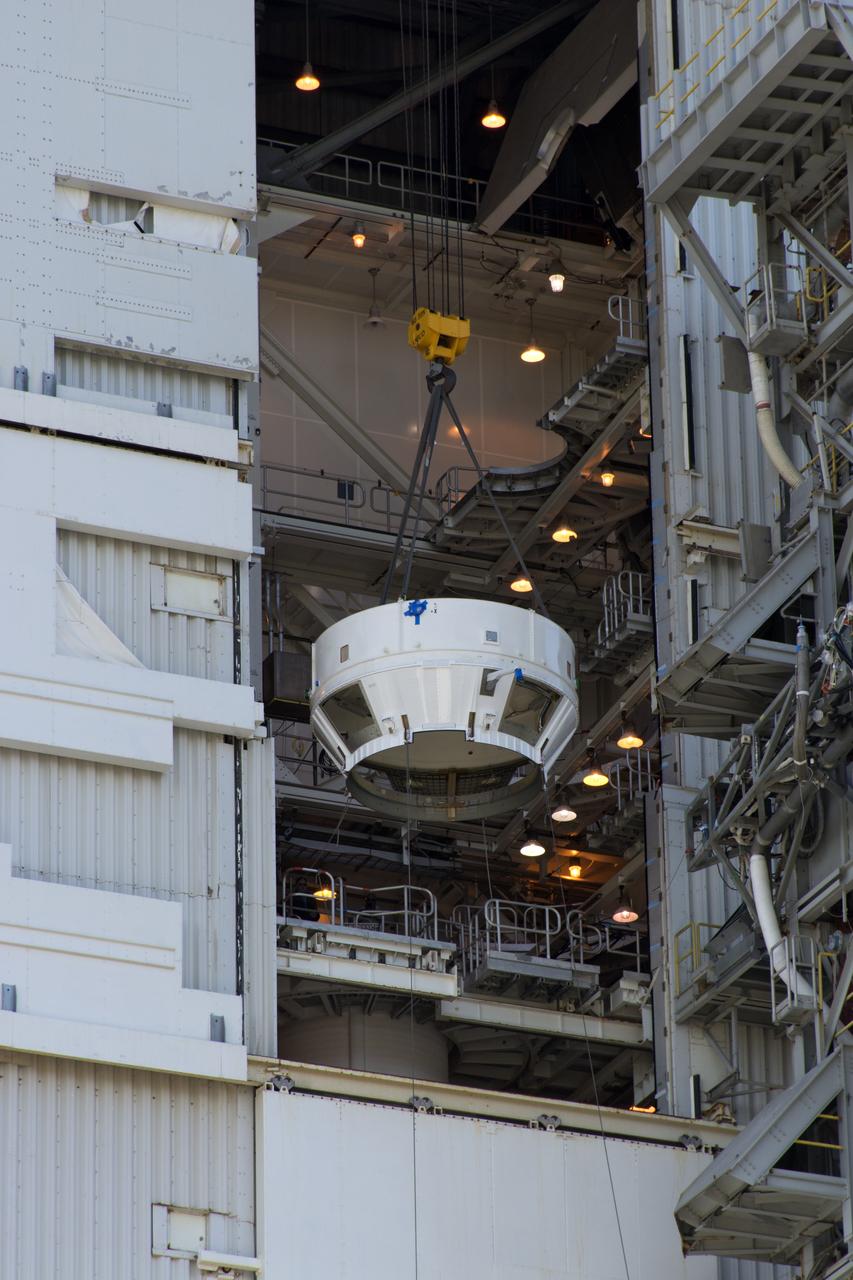
At Space Launch Complex 3 at Vandenberg Air Force Base in California, a boattail fairing is lifted by a crane for mating atop a United Launch Alliance (ULA) Centaur upper stage. The boattail is an adaptor providing an interface between the Centaur and the payload fairing encapsulating NASA's Interior Exploration using Seismic Investigations, Geodesy and Heat Transport, or InSight, spacecraft. A ULA Atlas V rocket is scheduled to liftoff on May 5, 2018, launching InSight the first mission to explore the deep interior of Mars. It will investigate processes that shaped the rocky planets of the inner solar system including Earth.
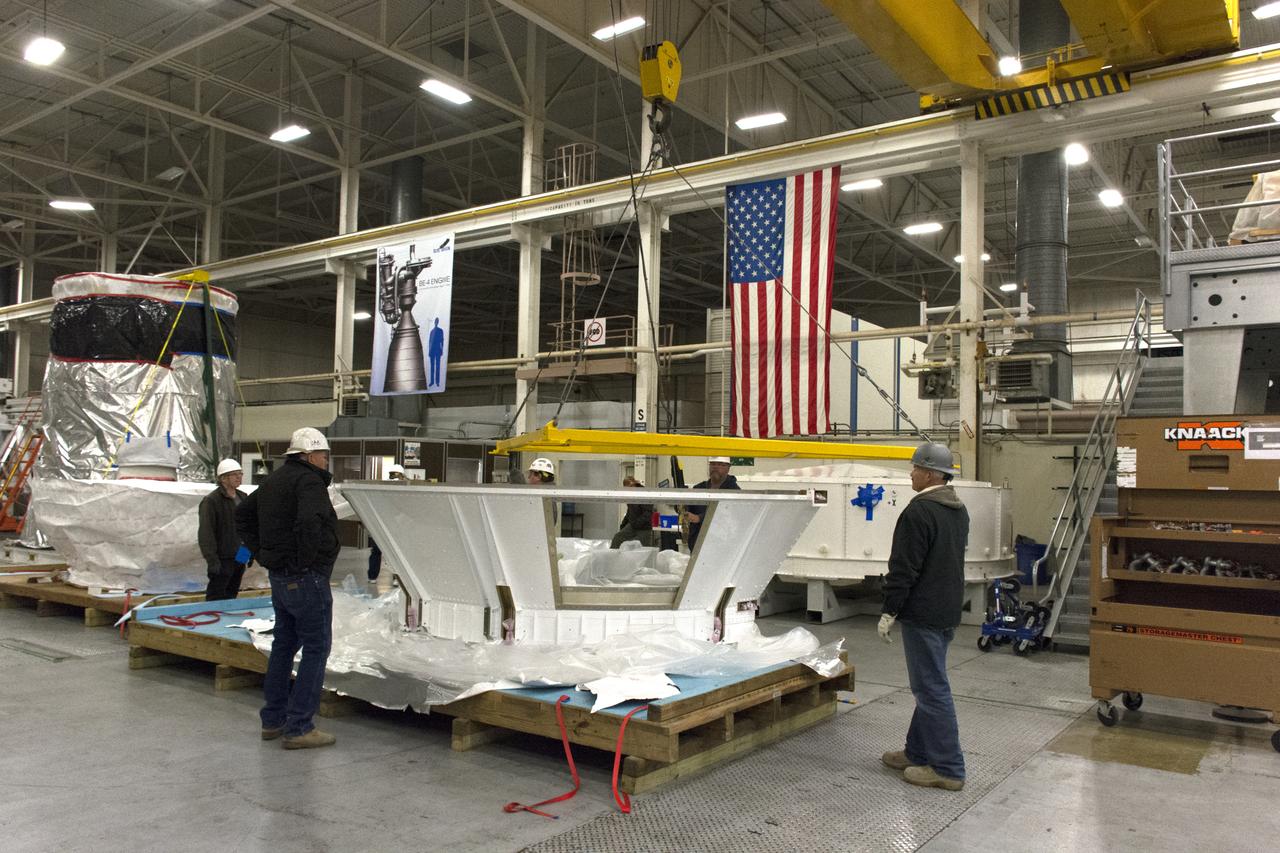
At Vandenberg Air Force Base in California, technicians inspect the boattail adaptor interface that will connect the Centaur upper stage to the payload fairing for NASA's upcoming Interior Exploration using Seismic Investigations, Geodesy and Heat Transport, or InSight, mission to land on Mars. InSight will liftoff atop a United Launch Alliance Atlas V rocket to send the spacecraft on the first mission to explore the Red Planet's deep interior. It will investigate processes that shaped the rocky planets of the inner solar system including Earth. Liftoff from Vandenberg is scheduled for May 5, 2018.
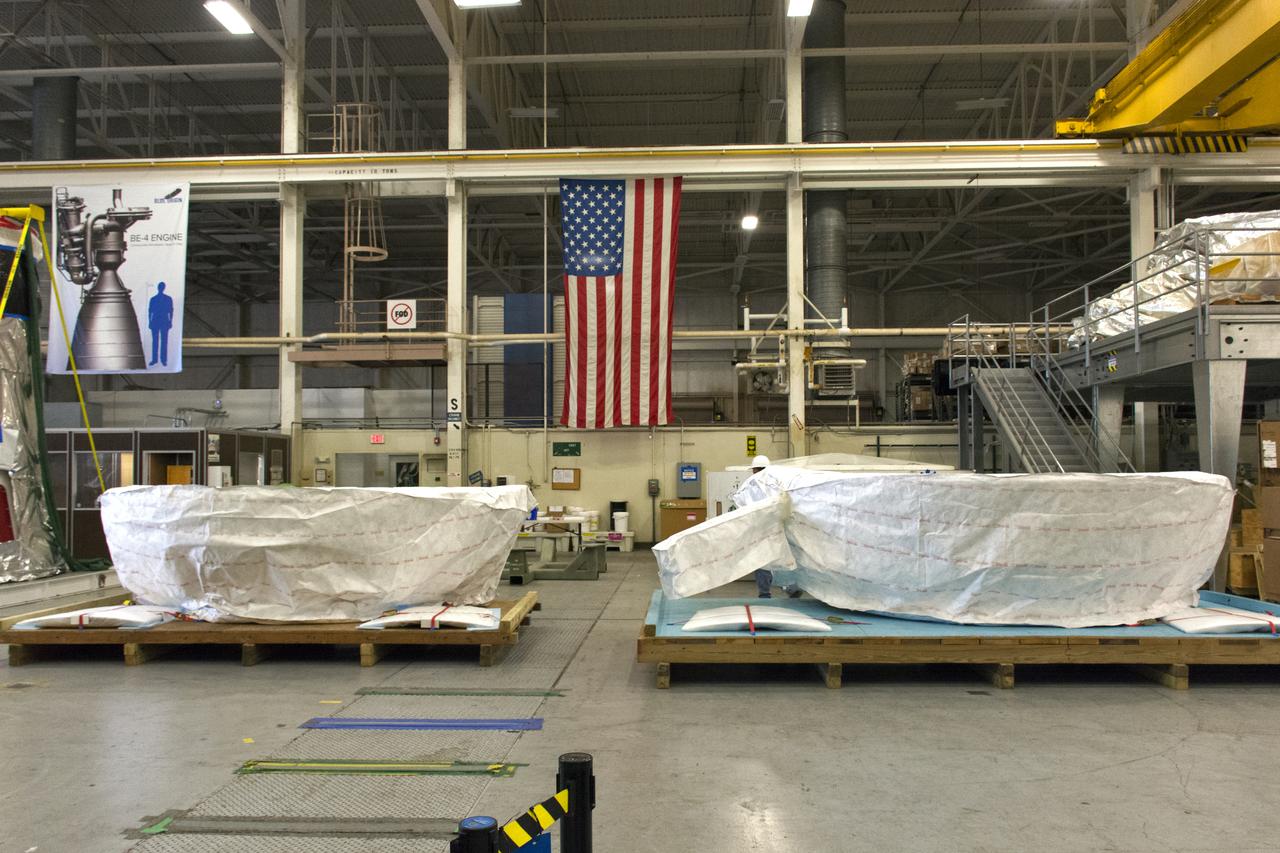
At Vandenberg Air Force Base in California, the boattail adaptor interface that will connect the Centaur upper stage to the payload fairing has been offloaded for NASA's upcoming Interior Exploration using Seismic Investigations, Geodesy and Heat Transport, or InSight, mission to land on Mars. InSight will liftoff atop a United Launch Alliance Atlas V rocket to send the spacecraft on the first mission to explore the Red Planet's deep interior. It will investigate processes that shaped the rocky planets of the inner solar system including Earth. Liftoff from Vandenberg is scheduled for May 5, 2018.
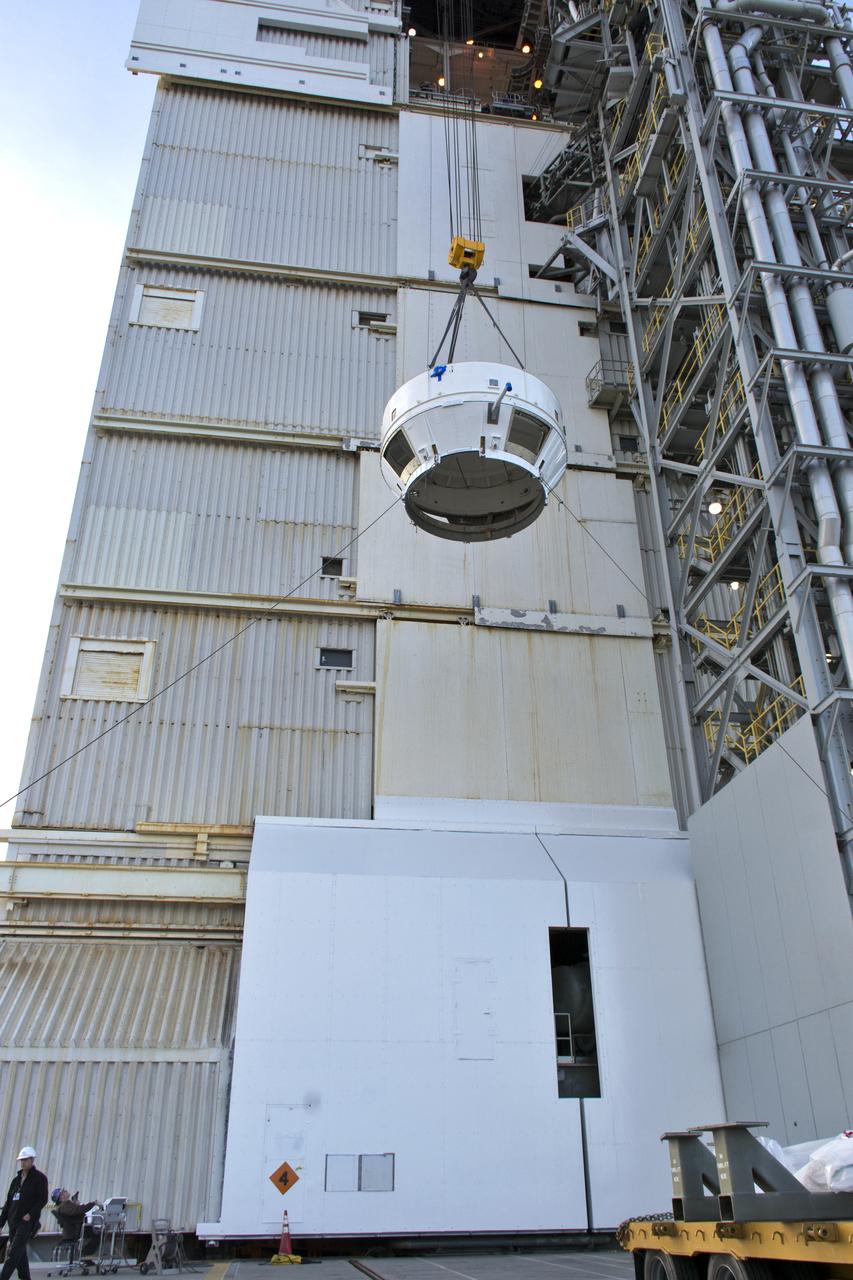
At Space Launch Complex 3 at Vandenberg Air Force Base in California, a boattail fairing is lifted by a crane for mating atop a United Launch Alliance (ULA) Centaur upper stage. The boattail is an adaptor providing an interface between the Centaur and the payload fairing encapsulating NASA's Interior Exploration using Seismic Investigations, Geodesy and Heat Transport, or InSight, spacecraft. A ULA Atlas V rocket is scheduled to liftoff on May 5, 2018, launching InSight the first mission to explore the deep interior of Mars. It will investigate processes that shaped the rocky planets of the inner solar system including Earth.
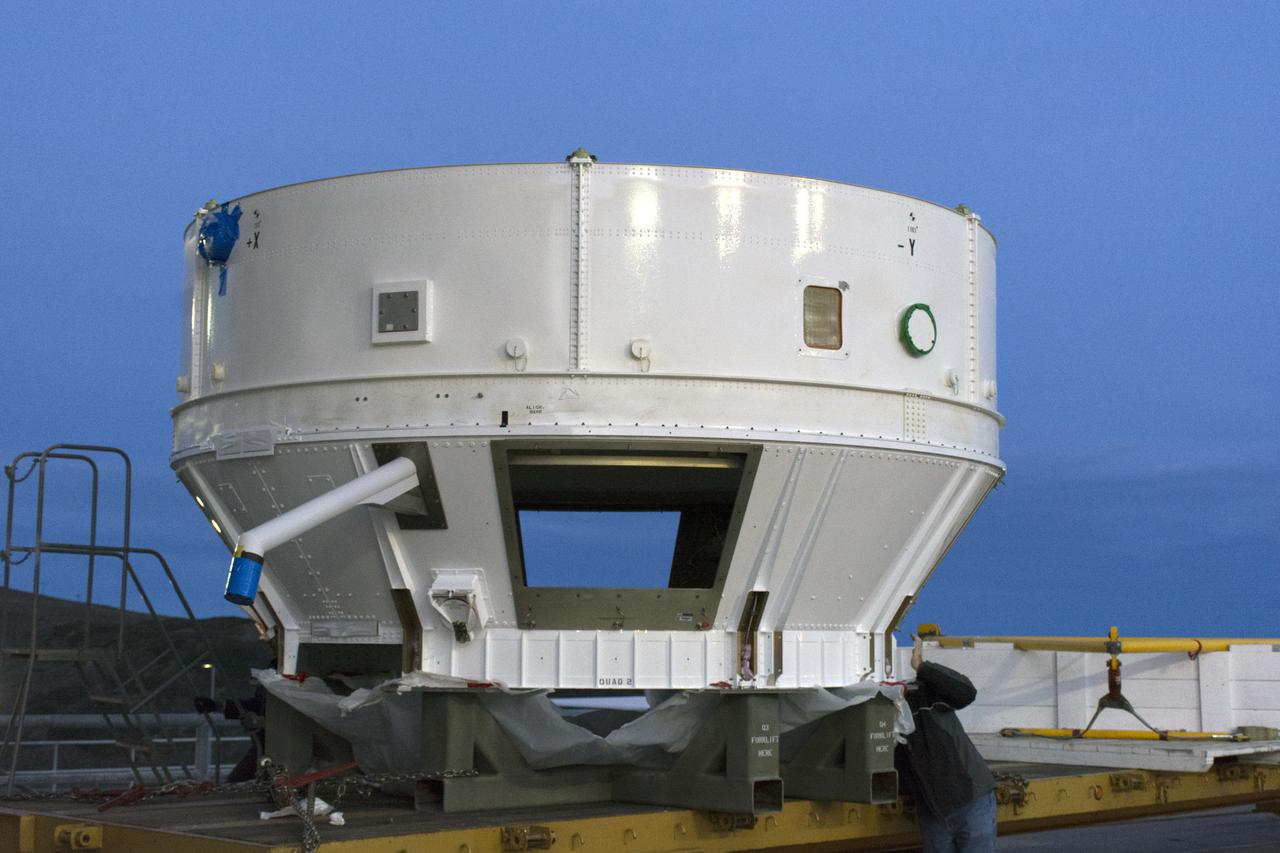
At Vandenberg Air Force Base in California, a boattail fairing is ready for lifting atop a United Launch Alliance (ULA) Centaur upper stage at Space Launch Complex 3. The boattail is an adaptor providing an interface between the Centaur and the payload fairing encapsulating NASA's Interior Exploration using Seismic Investigations, Geodesy and Heat Transport, or InSight, spacecraft. A ULA Atlas V rocket is scheduled to liftoff on May 5, 2018, launching InSight the first mission to explore the deep interior of Mars. It will investigate processes that shaped the rocky planets of the inner solar system including Earth.
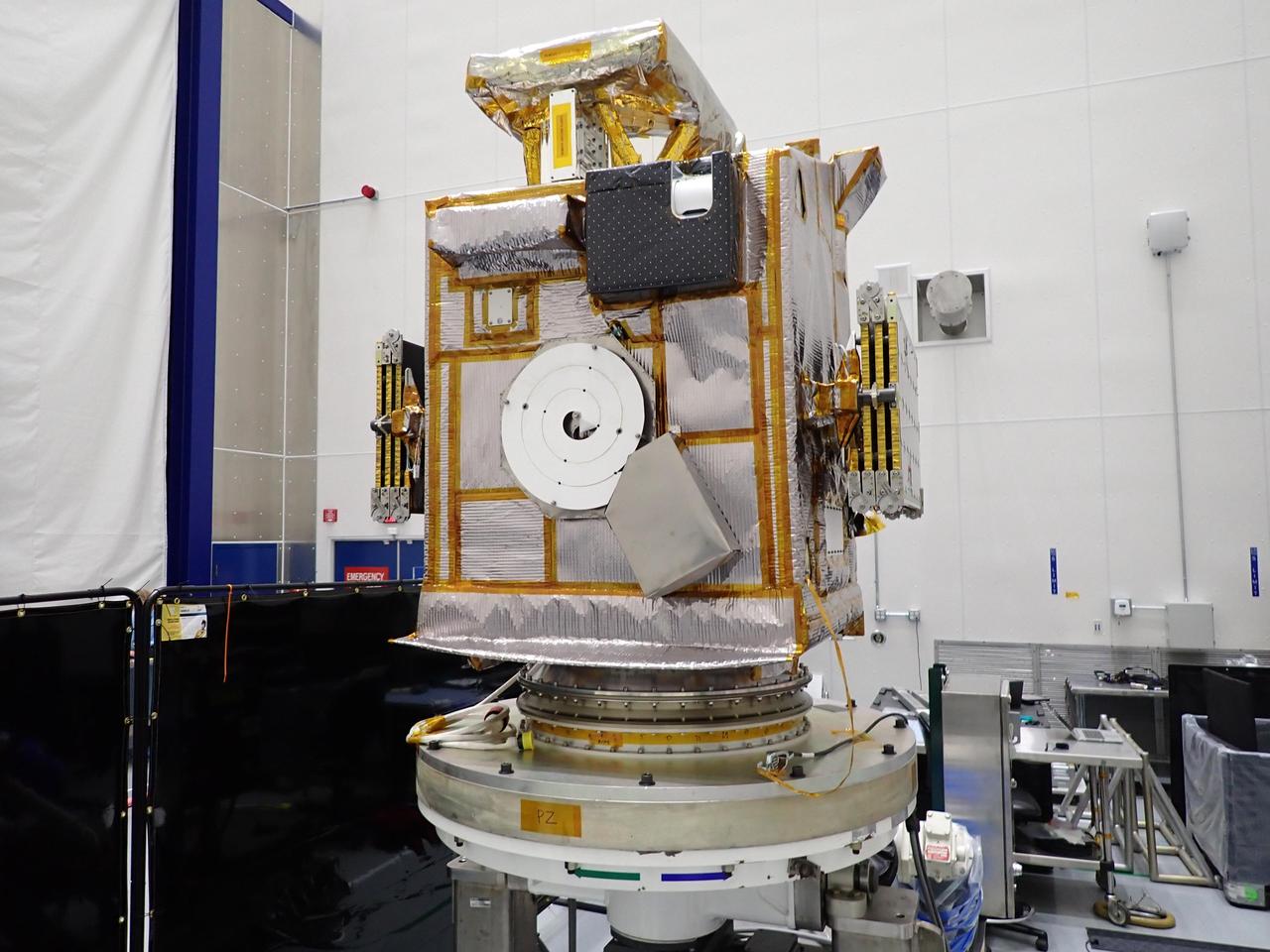
NASA's Lunar Trailblazer sits on its rotation fixture after being fueled and prior to being installed to the EELV Secondary Payload Adapter (ESPA) ring at SpaceX's payload processing facility in NASA's Kennedy Space Center in Florida in early February 2025. The ESPA ring is an adaptor used for launching secondary payloads on launch vehicles. Figure A shows the spacecraft mounted horizontally, in its launch configuration, to the ESPA ring. The mission's two science instruments are visible. The High-resolution Volatiles and Minerals Moon Mapper (HVM³) is the angular structure atop the spacecraft; the Lunar Thermal Mapper (LTM) is the black square on the upper right of the front facing panel. https://photojournal.jpl.nasa.gov/catalog/PIA26460
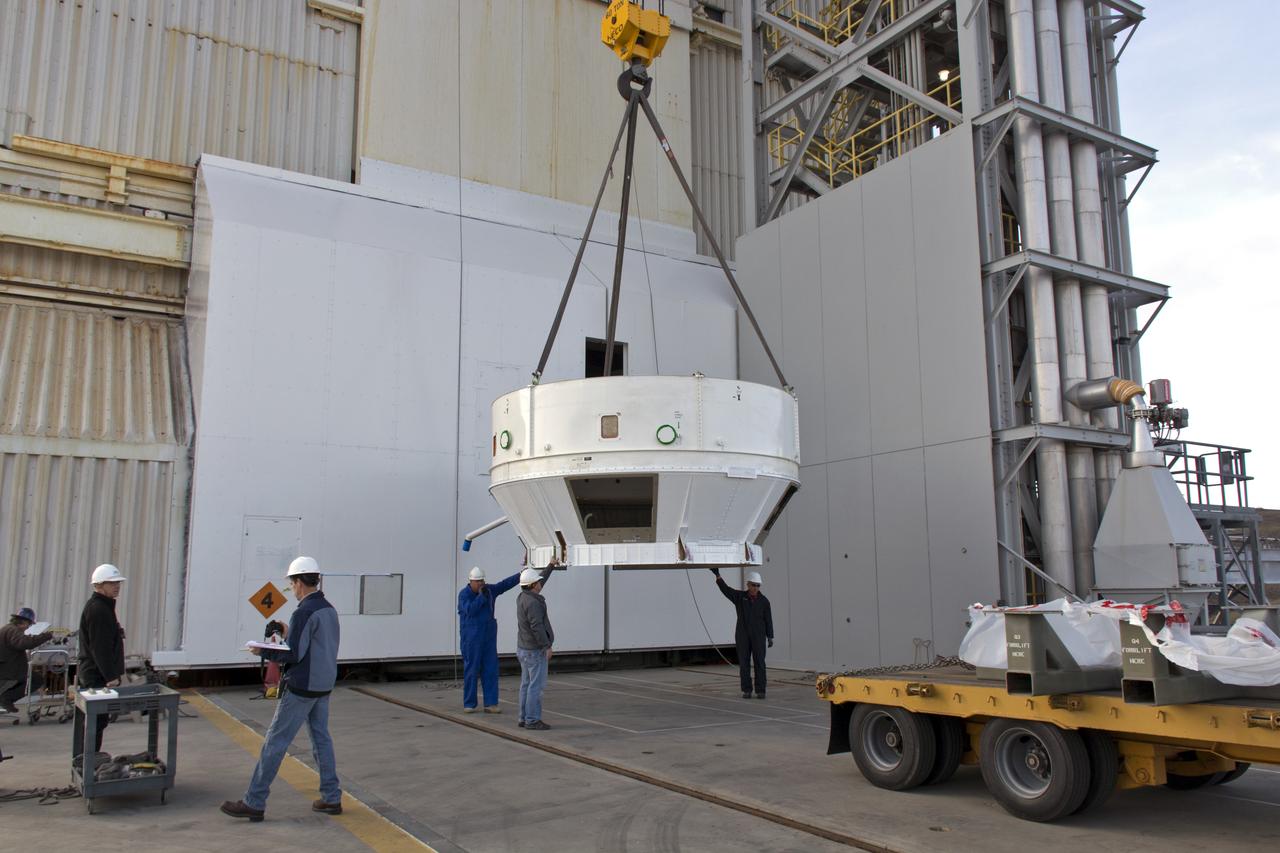
At Space Launch Complex 3 at Vandenberg Air Force Base in California, a boattail fairing is lifted by a crane for mating atop a United Launch Alliance (ULA) Centaur upper stage. The boattail is an adaptor providing an interface between the Centaur and the payload fairing encapsulating NASA's Interior Exploration using Seismic Investigations, Geodesy and Heat Transport, or InSight, spacecraft. A ULA Atlas V rocket is scheduled to liftoff on May 5, 2018, launching InSight the first mission to explore the deep interior of Mars. It will investigate processes that shaped the rocky planets of the inner solar system including Earth.
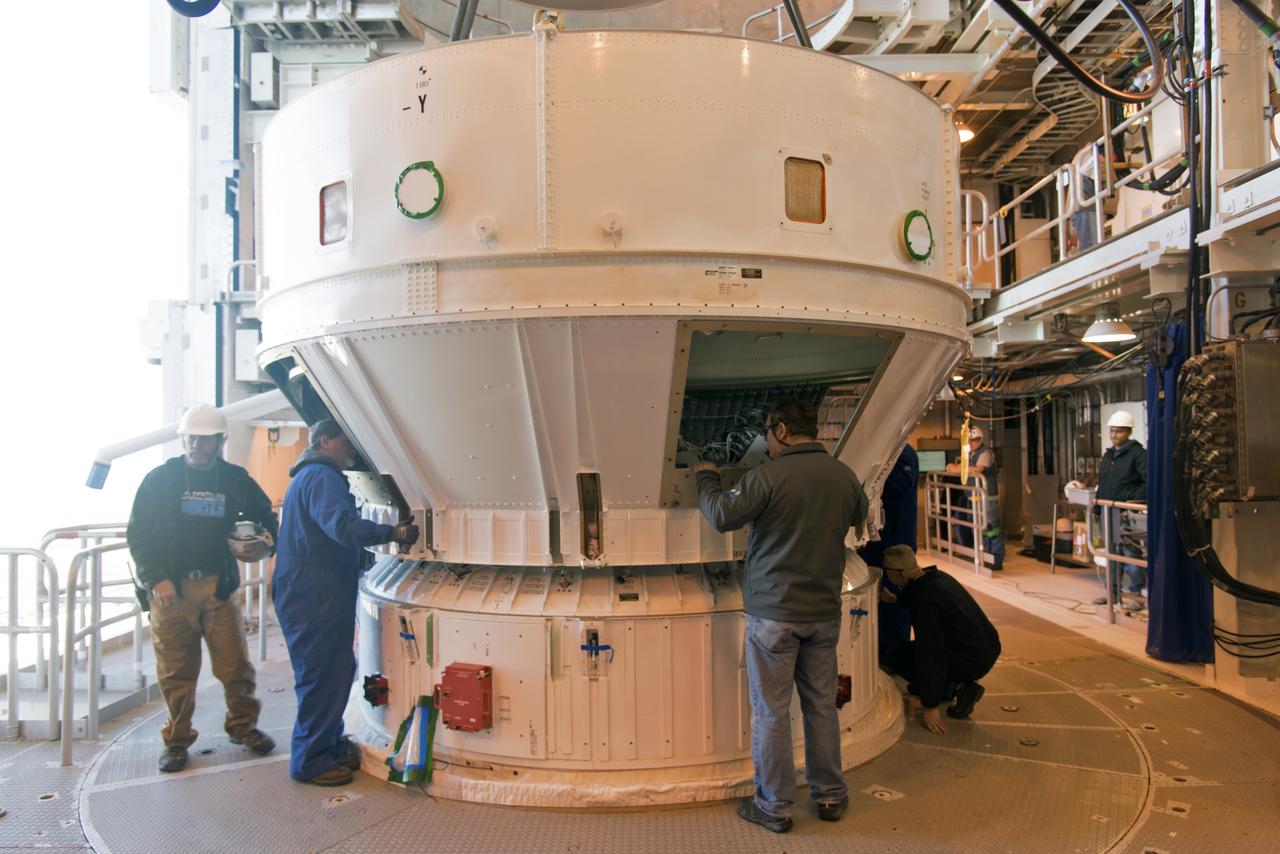
At Space Launch Complex 3 at Vandenberg Air Force Base in California, a boattail fairing is mated atop a United Launch Alliance (ULA) Centaur upper stage. The boattail is an adaptor providing an interface between the Centaur and the payload fairing encapsulating NASA's Interior Exploration using Seismic Investigations, Geodesy and Heat Transport, or InSight, spacecraft. A ULA Atlas V rocket is scheduled to liftoff on May 5, 2018, launching InSight the first mission to explore the deep interior of Mars. It will investigate processes that shaped the rocky planets of the inner solar system including Earth.
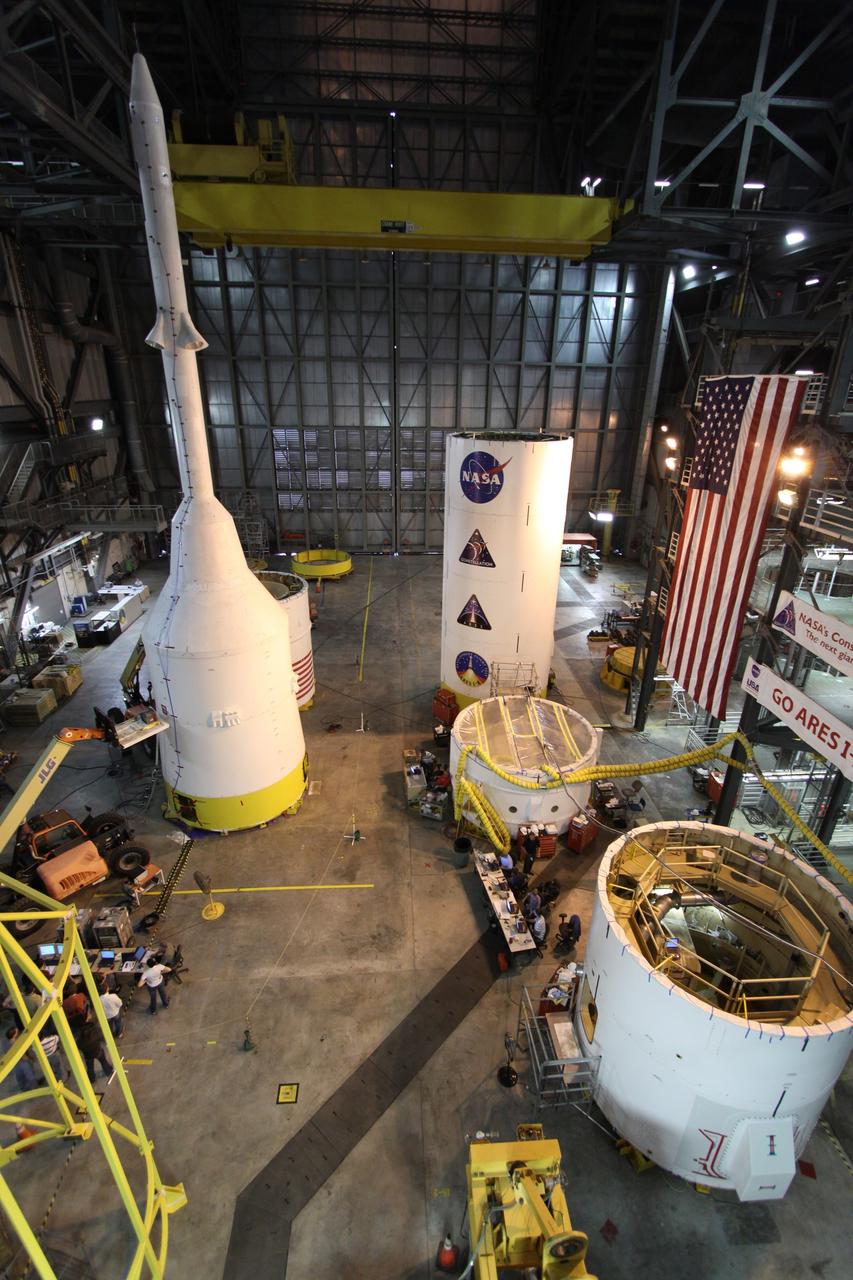
CAPE CANAVERAL, Fla. – In high bay 4 of the Vehicle Assembly Building at NASA's Kennedy Space Center in Florida, technicians begin the modal survey testing on the top part of the Ares I-X (upper left) after sensors were placed on the stack. The top consists of the launch abort tower, crew module, service module and spacecraft adaptor. Other segments are stacked nearby. Shakers will impose random loads/vibrations to determine the flight test vehicle’s first several bending modes and the strategically located sensors throughout the stacks will measure the amount, acceleration and direction of movement. The purpose of the testing is to confirm that Ares I-X will behave as predicted as it lifts off the pad and powers through the initial stage of flight in a demonstration flight later this year. Photo credit: NASA/Jack Pfaller

S129-E-007227 (21 Nov. 2009) --- Astronaut Randy Bresnik (near the Columbus laboratory), STS-129 mission specialist, participates in the mission's second session of extravehicular activity (EVA) as construction and maintenance continue on the International Space Station. During the six-hour, eight-minute spacewalk, Bresnik and astronaut Mike Foreman (out of frame), mission specialist, installed a Grappling Adaptor to On-Orbit Railing Assembly, or GATOR, on the Columbus laboratory. GATOR contains a ship-tracking antenna system and a HAM radio antenna. They relocated a floating potential measurement unit that gauges electric charges that build up on the station, deployed a Payload Attach System on the space-facing side of the Starboard 3 truss segment and installed a wireless video system that allows spacewalkers to transmit video to the station and relay it to Earth.
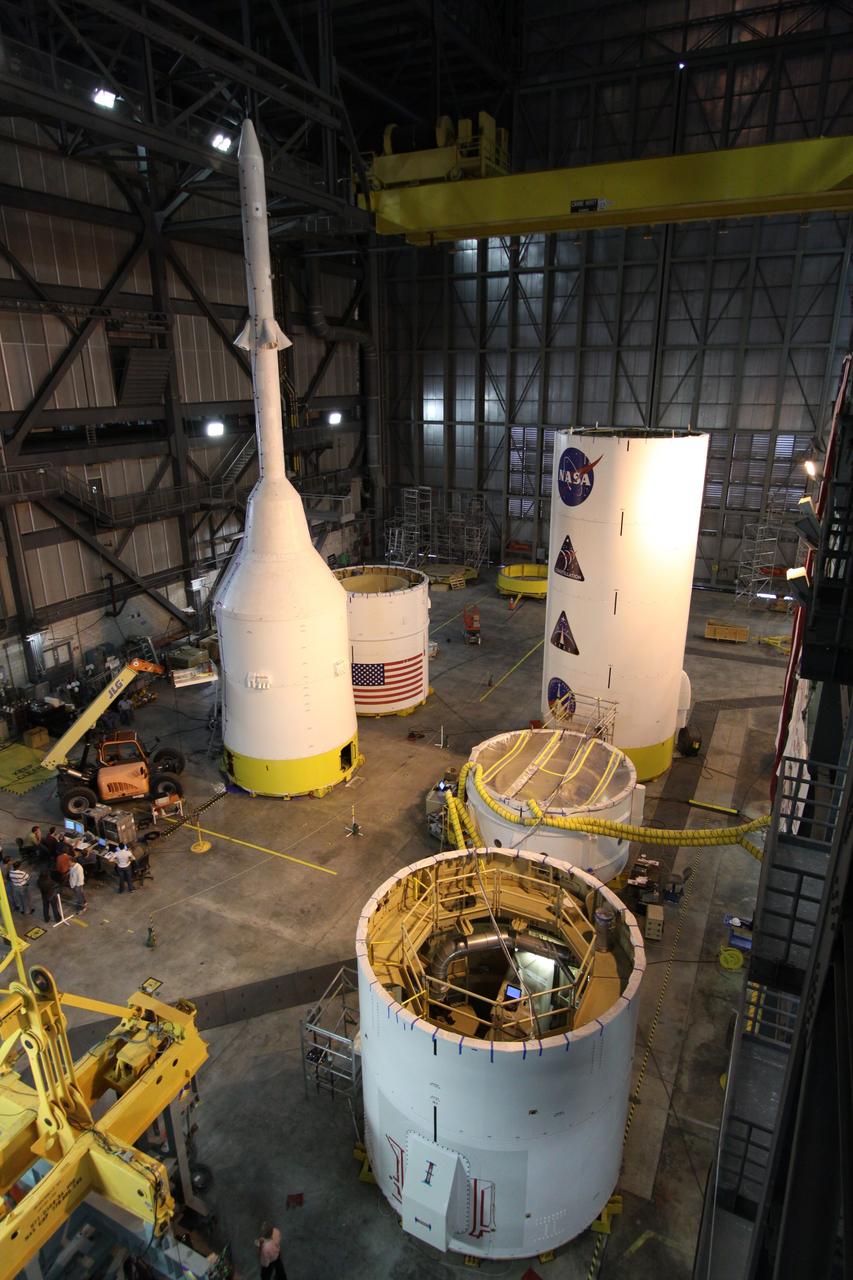
CAPE CANAVERAL, Fla. – In high bay 4 of the Vehicle Assembly Building at NASA's Kennedy Space Center in Florida, the top part of the Ares I-X (upper left) undergoes modal survey testing after sensors were placed on the stack. The top consists of the launch abort tower, crew module, service module and spacecraft adaptor. Other segments are stacked nearby. Shakers will impose random loads/vibrations to determine the flight test vehicle’s first several bending modes and the strategically located sensors throughout the stacks will measure the amount, acceleration and direction of movement. The purpose of the testing is to confirm that Ares I-X will behave as predicted as it lifts off the pad and powers through the initial stage of flight in a demonstration flight later this year. Photo credit: NASA/Jack Pfaller
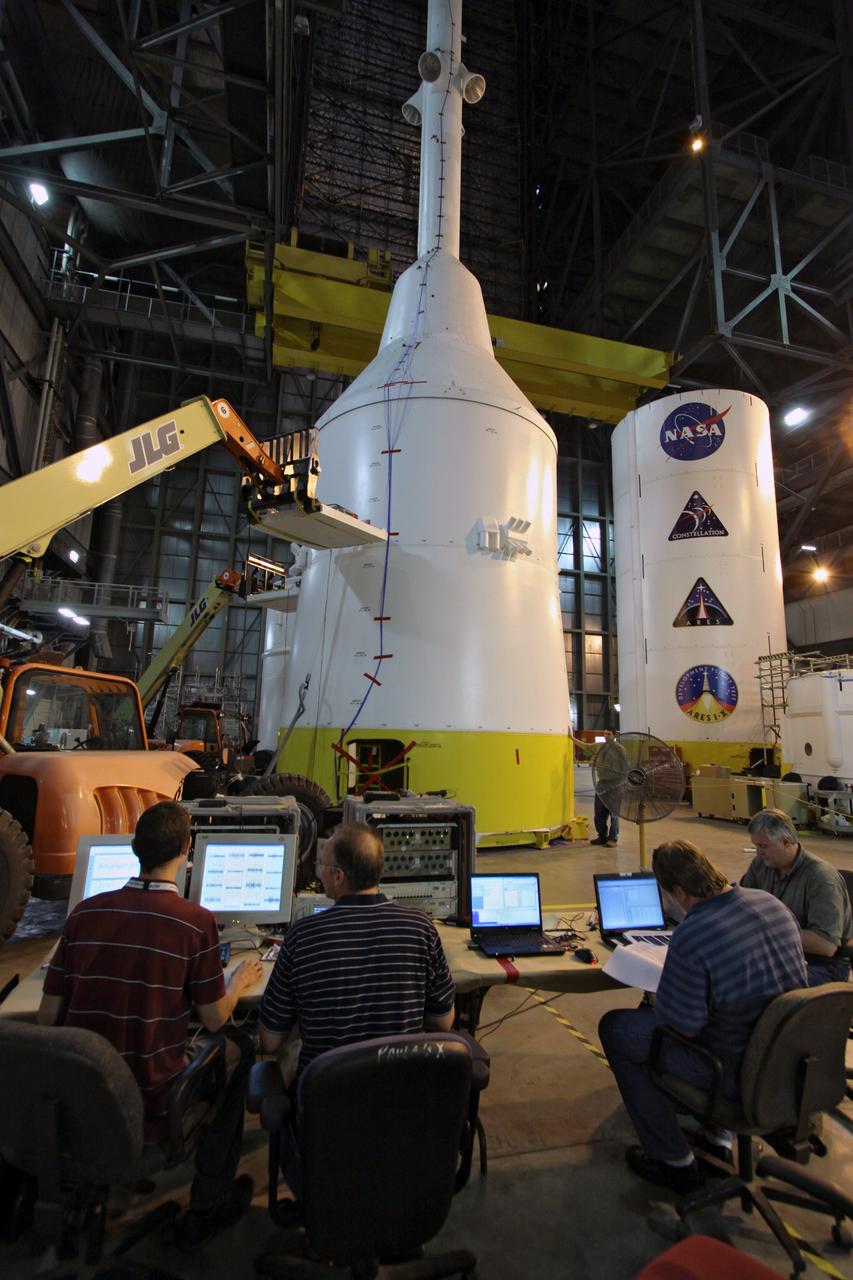
CAPE CANAVERAL, Fla. – In high bay 4 of the Vehicle Assembly Building at NASA's Kennedy Space Center in Florida, technicians begin the modal survey testing on the top part of the Ares I-X (center) after sensors were placed on the stack. The top consists of the launch abort tower, crew module, service module and spacecraft adaptor. Shakers will impose random loads/vibrations to determine the flight test vehicle’s first several bending modes and the strategically located sensors throughout the stacks will measure the amount, acceleration and direction of movement. The purpose of the testing is to confirm that Ares I-X will behave as predicted as it lifts off the pad and powers through the initial stage of flight in a demonstration flight later this year. Photo credit: NASA/Jack Pfaller
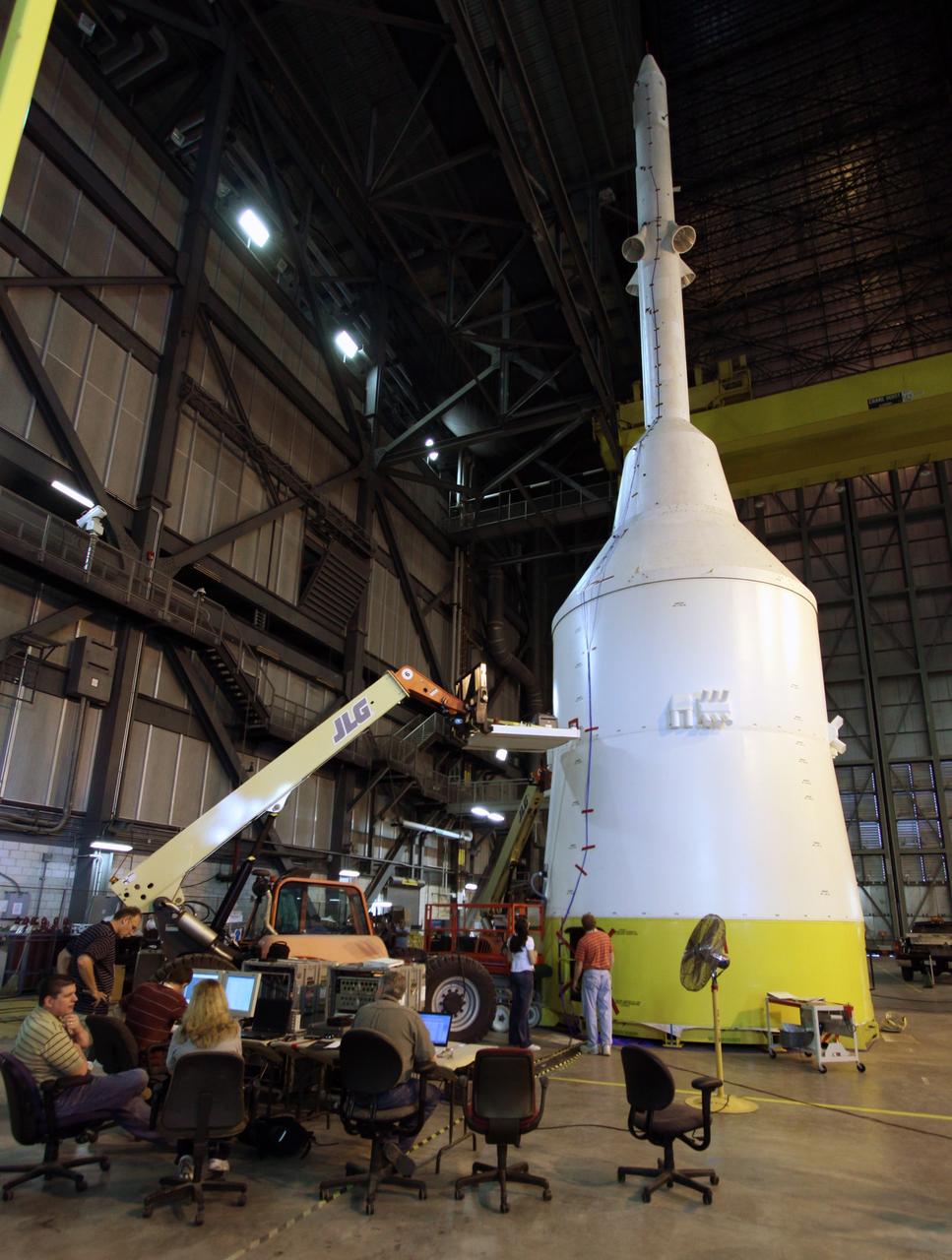
CAPE CANAVERAL, Fla. – In high bay 4 of the Vehicle Assembly Building at NASA's Kennedy Space Center in Florida, technicians place sensors on the top part of the Ares I-X for modal survey testing. The top consists of the launch abort tower, crew module, service module and spacecraft adaptor. Shakers will impose random loads/vibrations to determine the flight test vehicle’s first several bending modes and the strategically located sensors throughout the stacks will measure the amount, acceleration and direction of movement. The purpose of the testing is to confirm that Ares I-X will behave as predicted as it lifts off the pad and powers through the initial stage of flight in a demonstration flight later this year. Photo credit: NASA/Jack Pfaller
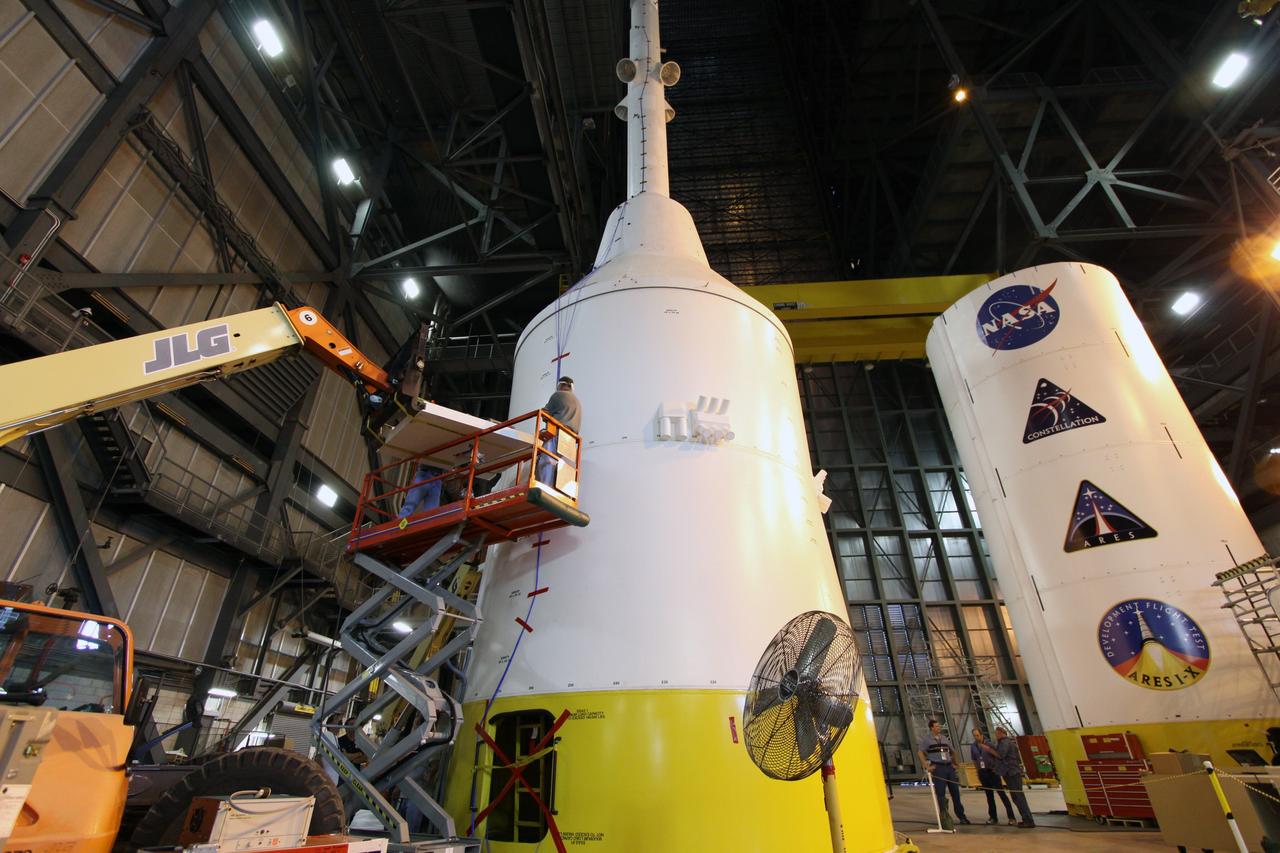
CAPE CANAVERAL, Fla. – In high bay 4 of the Vehicle Assembly Building at NASA's Kennedy Space Center in Florida, technicians place sensors on the top part of the Ares I-X for modal survey testing. The top consists of the launch abort tower, crew module, service module and spacecraft adaptor. Shakers will impose random loads/vibrations to determine the flight test vehicle’s first several bending modes and the strategically located sensors throughout the stacks will measure the amount, acceleration and direction of movement. The purpose of the testing is to confirm that Ares I-X will behave as predicted as it lifts off the pad and powers through the initial stage of flight in a demonstration flight later this year. Photo credit: NASA/Jack Pfaller
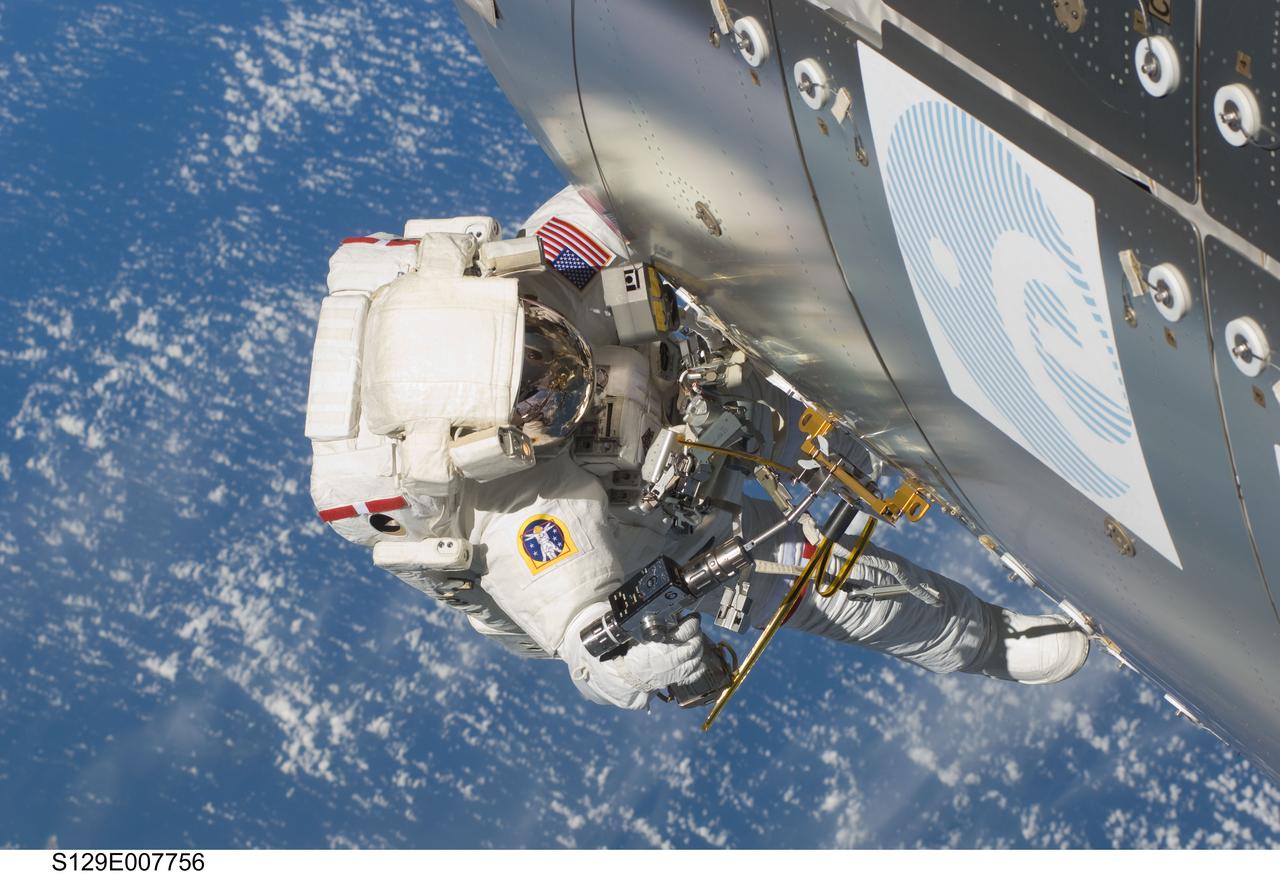
S129-E-007756 (21 Nov. 2009) --- Astronaut Randy Bresnik (near the Columbus laboratory), STS-129 mission specialist, participates in the mission's second session of extravehicular activity (EVA) as construction and maintenance continue on the International Space Station. During the six-hour, eight-minute spacewalk, Bresnik and astronaut Mike Foreman (out of frame), mission specialist, installed a Grappling Adaptor to On-Orbit Railing Assembly, or GATOR, on the Columbus laboratory. GATOR contains a ship-tracking antenna system and a HAM radio antenna. They relocated a floating potential measurement unit that gauges electric charges that build up on the station, deployed a Payload Attach System on the space-facing side of the Starboard 3 truss segment and installed a wireless video system that allows spacewalkers to transmit video to the station and relay it to Earth.
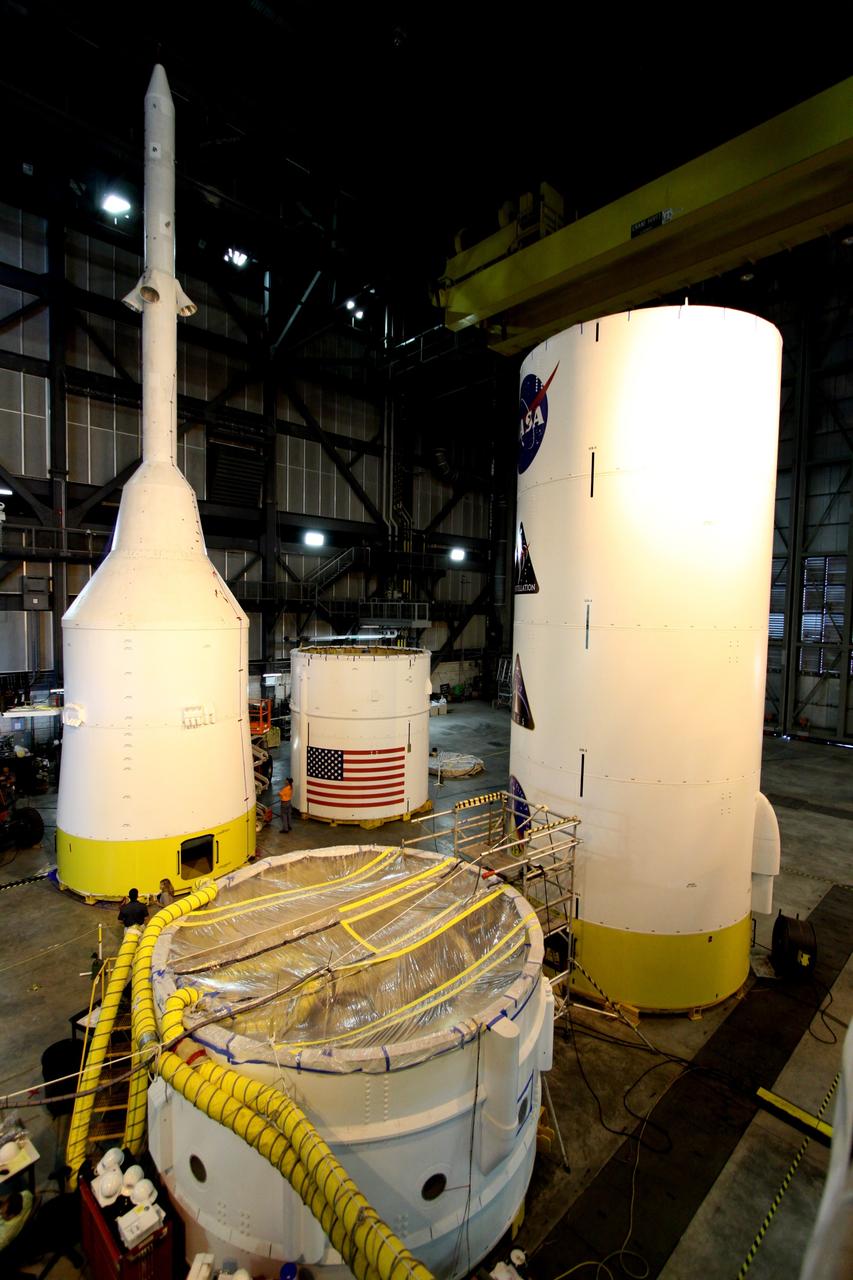
CAPE CANAVERAL, Fla. – In high bay 4 of the Vehicle Assembly Building at NASA's Kennedy Space Center in Florida, the top part of the Ares I-X (upper left) is ready for modal survey testing. The top consists of the launch abort tower, crew module, service module and spacecraft adaptor. Other segments are stacked nearby. Shakers will impose random loads/vibrations to determine the flight test vehicle’s first several bending modes and the strategically located sensors throughout the stacks will measure the amount, acceleration and direction of movement. The purpose of the testing is to confirm that Ares I-X will behave as predicted as it lifts off the pad and powers through the initial stage of flight in a demonstration flight later this year. Photo credit: NASA/Jack Pfaller
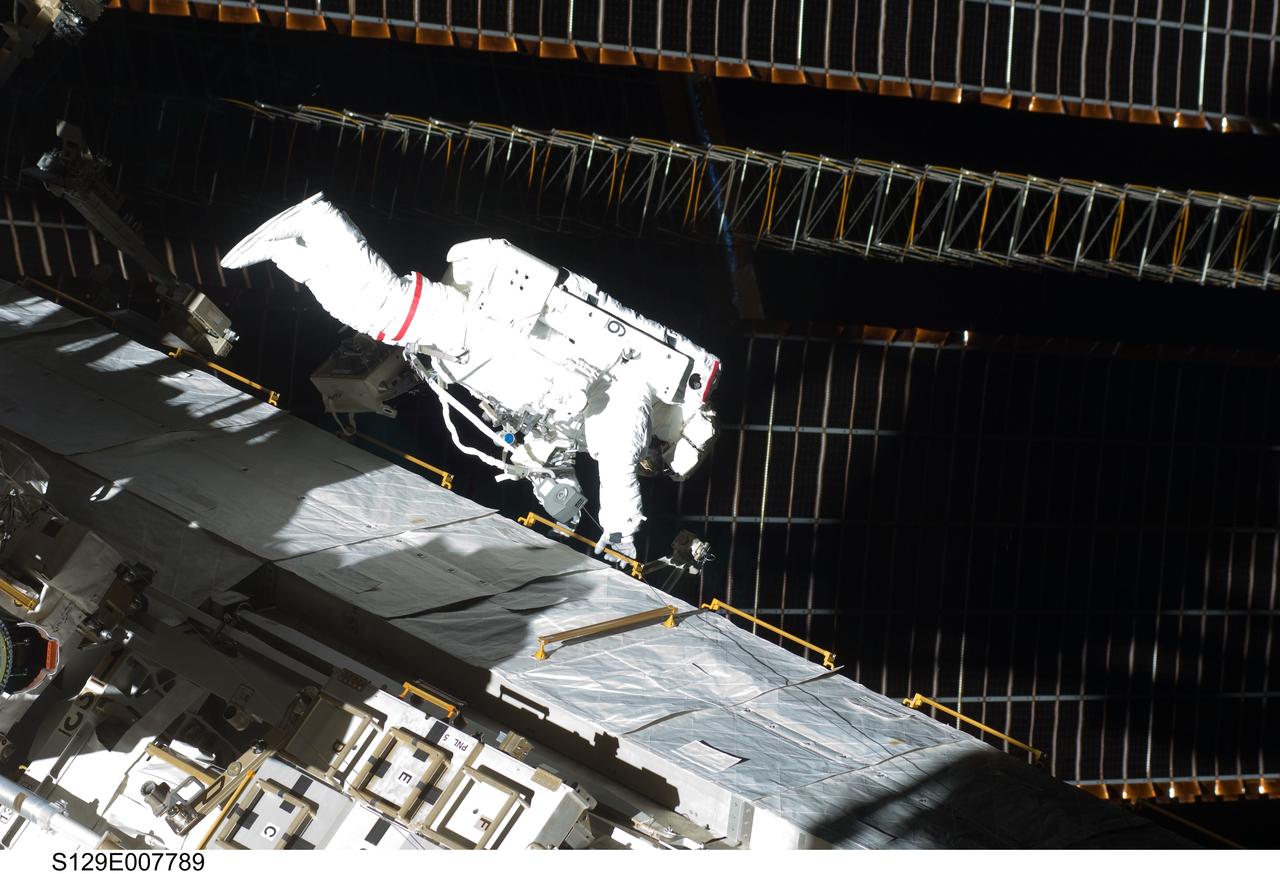
S129-E-007789 (21 Nov. 2009) --- Astronaut Mike Foreman, STS-129 mission specialist, participates in the mission's second session of extravehicular activity (EVA) as construction and maintenance continue on the International Space Station. During the six-hour, eight-minute spacewalk, Foreman and astronaut Randy Bresnik (out of frame), mission specialist, installed a Grappling Adaptor to On-Orbit Railing Assembly, or GATOR, on the Columbus laboratory. GATOR contains a ship-tracking antenna system and a HAM radio antenna. They relocated a floating potential measurement unit that gauges electric charges that build up on the station, deployed a Payload Attach System on the space-facing side of the Starboard 3 truss segment and installed a wireless video system that allows spacewalkers to transmit video to the station and relay it to Earth.
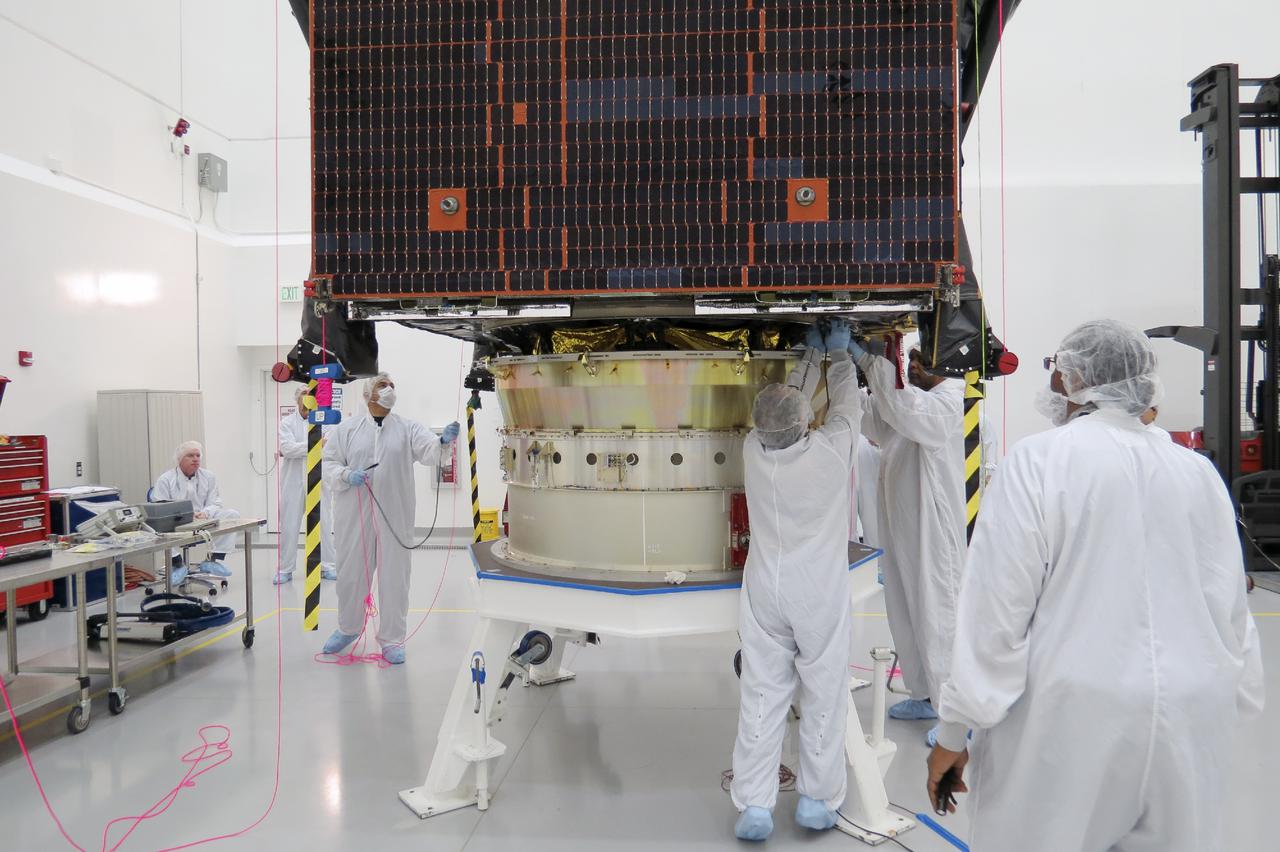
CAPE CANAVERAL, Fla. – Inside the Astrotech payload processing facility in Titusville, engineers and technicians place NASA's Tracking and Data Relay Satellite, or TDRS-L, spacecraft to an Atlas V payload adaptor in preparation for launch. The TDRS-L spacecraft is the second of three new satellites designed to ensure vital operational continuity for NASA by expanding the lifespan of the Tracking and Data Relay Satellite System TDRSS fleet, which consists of eight satellites in geosynchronous orbit. The spacecraft provide tracking, telemetry, command and high bandwidth data return services for numerous science and human exploration missions orbiting Earth. These include NASA's Hubble Space Telescope and the International Space Station. TDRS-L has a high-performance solar panel designed for more spacecraft power to meet the growing S-band communications requirements. TDRSS is one of NASA Space Communication and Navigation’s SCaN three networks providing space communications to NASA’s missions. For more information more about TDRS-L, visit: http:__www.nasa.gov_tdrs To learn more about SCaN, visit: www.nasa.gov_scan Photo credit: Boeing
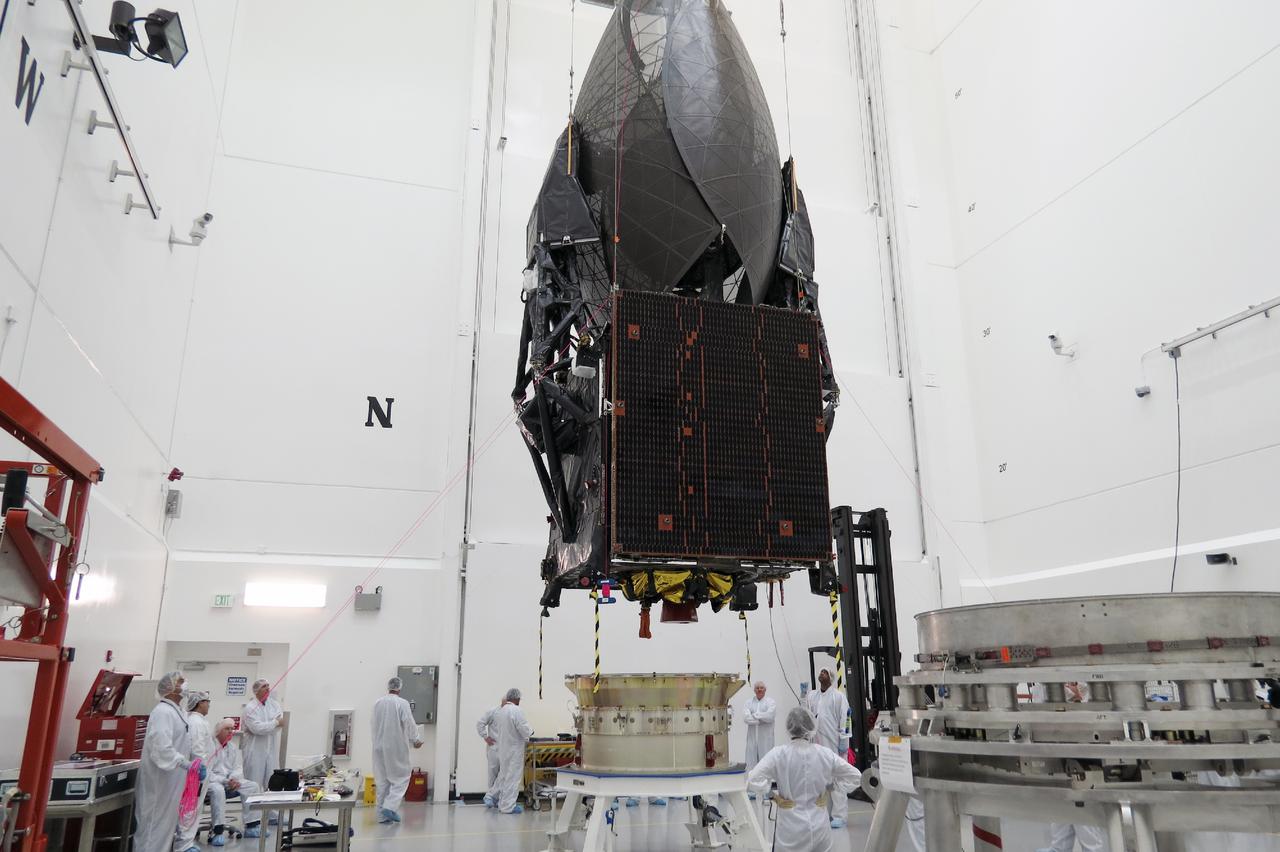
CAPE CANAVERAL, Fla. – Inside the Astrotech payload processing facility in Titusville, engineers and technicians use a crane to move NASA's Tracking and Data Relay Satellite, or TDRS-L, spacecraft to an Atlas V payload adaptor in preparation for launch. The TDRS-L spacecraft is the second of three new satellites designed to ensure vital operational continuity for NASA by expanding the lifespan of the Tracking and Data Relay Satellite System TDRSS fleet, which consists of eight satellites in geosynchronous orbit. The spacecraft provide tracking, telemetry, command and high bandwidth data return services for numerous science and human exploration missions orbiting Earth. These include NASA's Hubble Space Telescope and the International Space Station. TDRS-L has a high-performance solar panel designed for more spacecraft power to meet the growing S-band communications requirements. TDRSS is one of NASA Space Communication and Navigation’s SCaN three networks providing space communications to NASA’s missions. For more information more about TDRS-L, visit: http:__www.nasa.gov_tdrs To learn more about SCaN, visit: www.nasa.gov_scan Photo credit: Boeing