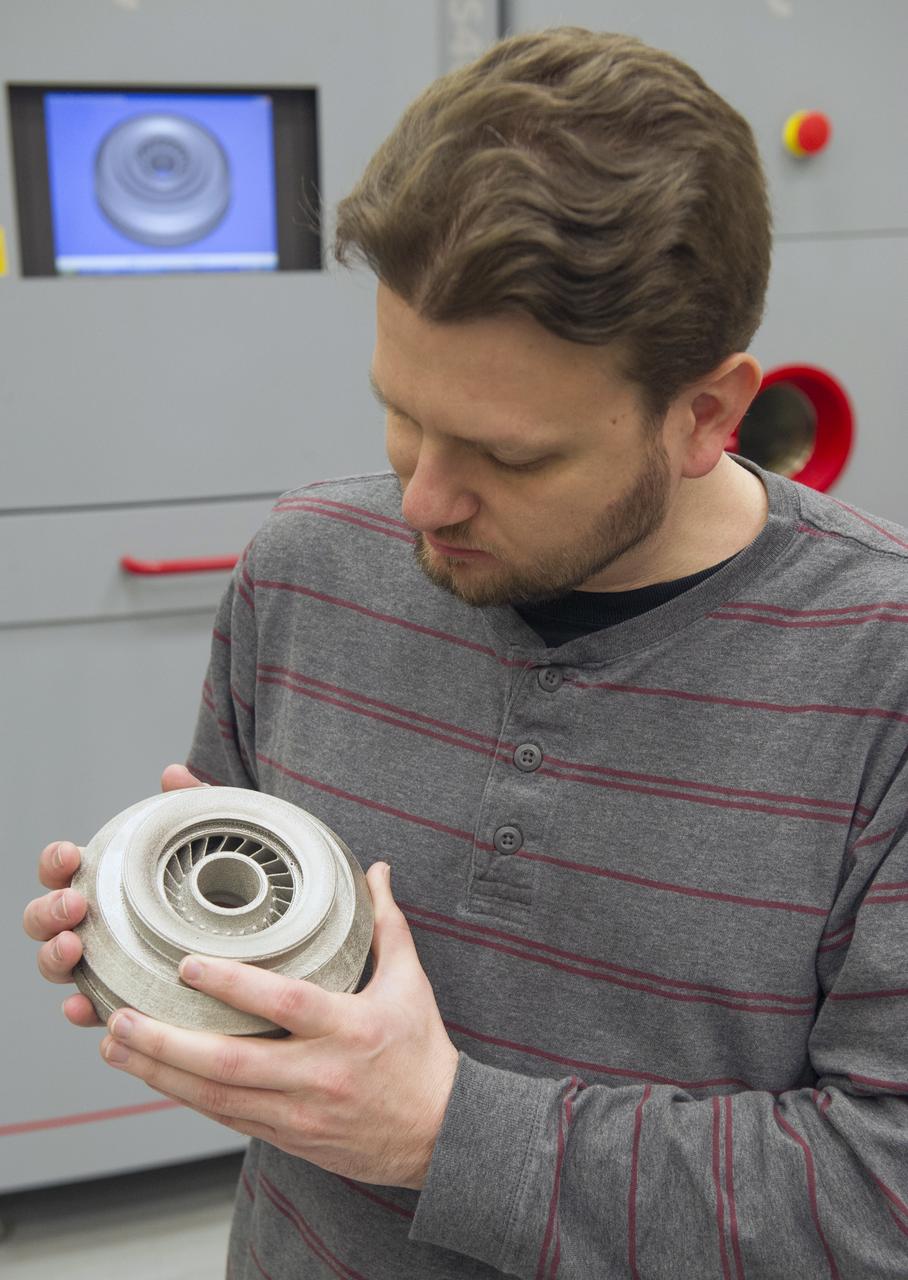
QUINCY BEAN OF MSFC’S ADVANCED MANUFACTURING TEAM, WITH TITANIUM ALLOY TURBOPUMP COMPONENT FABRICATED WITH MSFC’S ELECTRON BEAM MELTING SYSTEM (BACKGROUND).
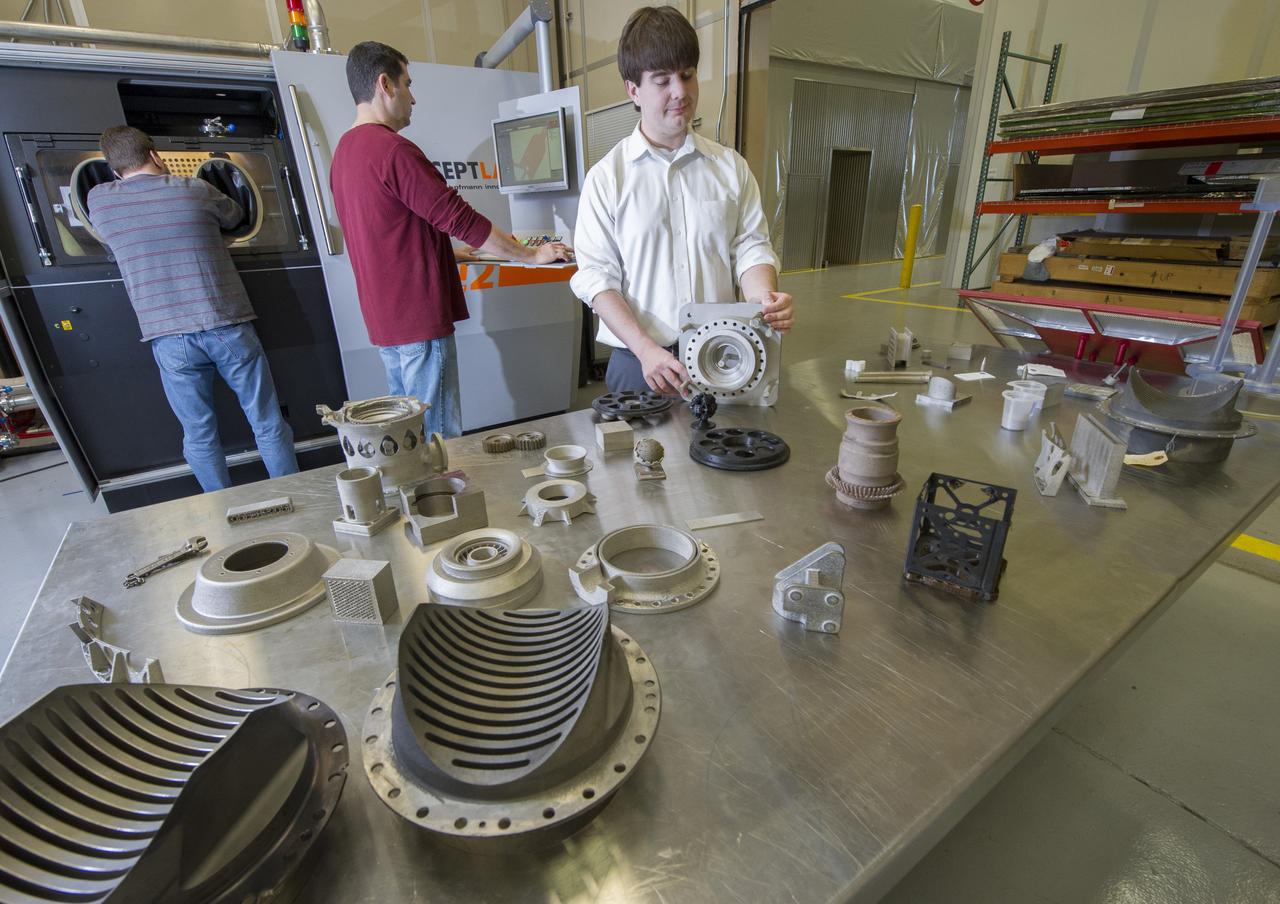
QUINCY BEAN, JIM LYDON, AND ZACK JONES OF MSFC’S ADVANCED MANUFACTURING TEAM, WITH MSFC’S M2 SELECTIVE LASER MELTING SYSTEM. THE M2 IS CURRENTLY DEDICATED TO ADVANCED COPPER MATERIAL DEVELOPMENT FOR THE LOW COST UPPER STAGE PROGRAM.
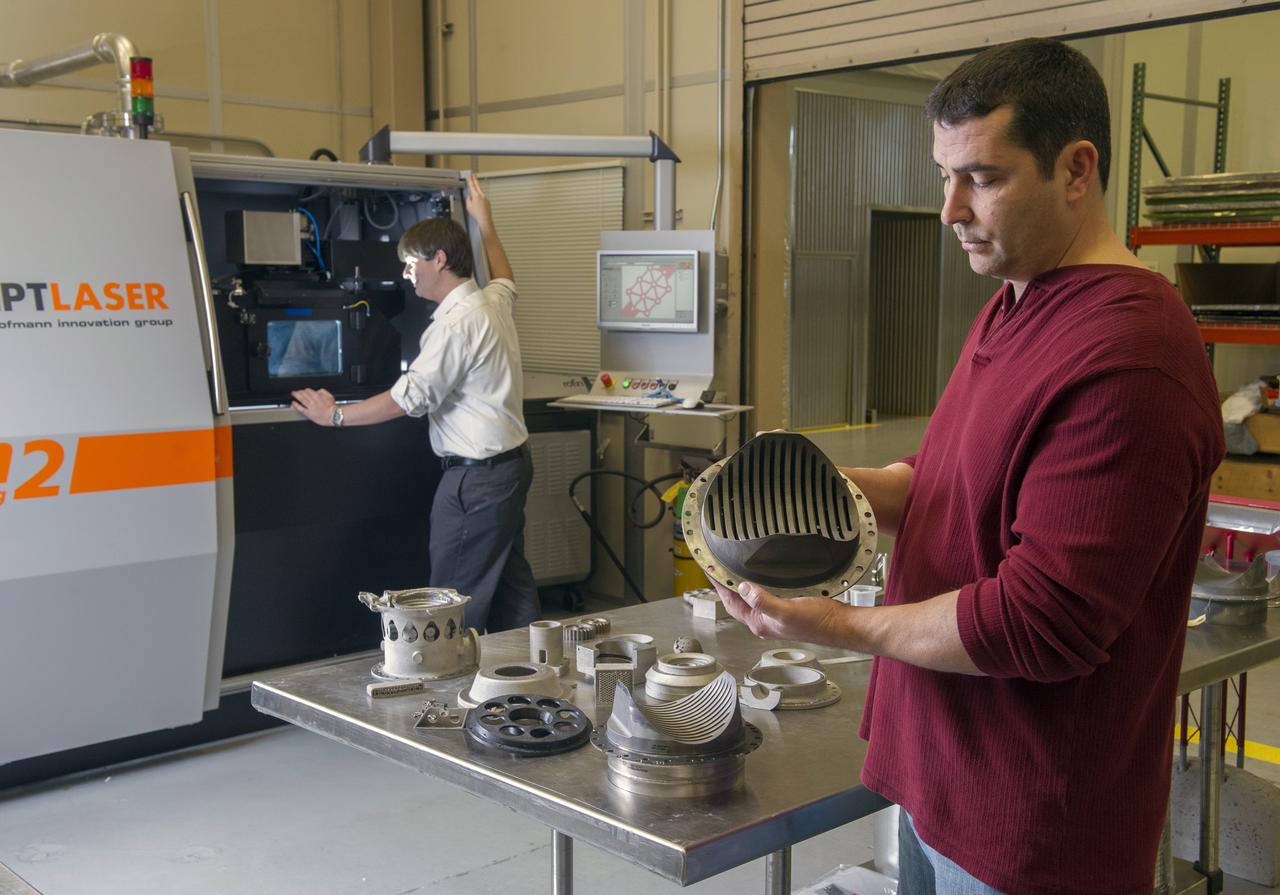
ZACK JONES AND JIM LYDON OF MSFC’S ADVANCED MANUFACTURING TEAM, WITH MSFC’S M2 SELECTIVE LASER MELTING SYSTEM. THE M2 IS CURRENTLY DEDICATED TO ADVANCED COPPER MATERIAL DEVELOPMENT FOR THE LOW COST UPPER STAGE PROGRAM.
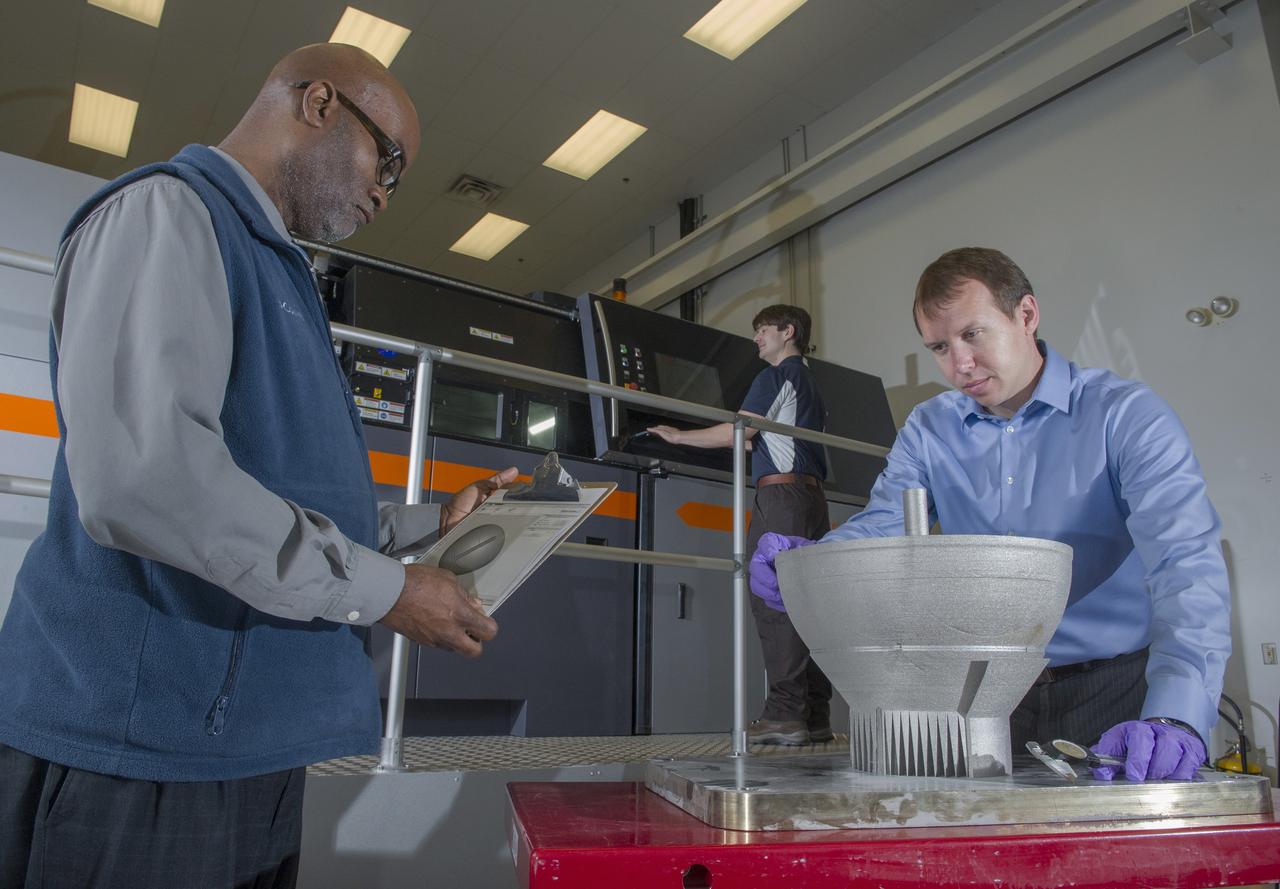
JOHNNIE CLARK, BRIAN WEST, AND ZACK JONES OF MSFC’S ADVANCED MANUFACTURING TEAM, WITH MSFC’S XLINE SELECTIVE LASER MELTING SYSTEM. CURRENTLY ONE OF THE LARGEST METAL 3D PRINTERS, THE XLINE AT MARSHALL IS BEING USED TO DEVELOP AND CERTIFY NICKEL ALLOY 718 MATERIAL PROPERTIES AND LARGE MANUFACTURING TECH DEMOS FOR THE RS25 ENGINE AND THE COMMERCIAL CREWED VEHICLE PROJECTS.
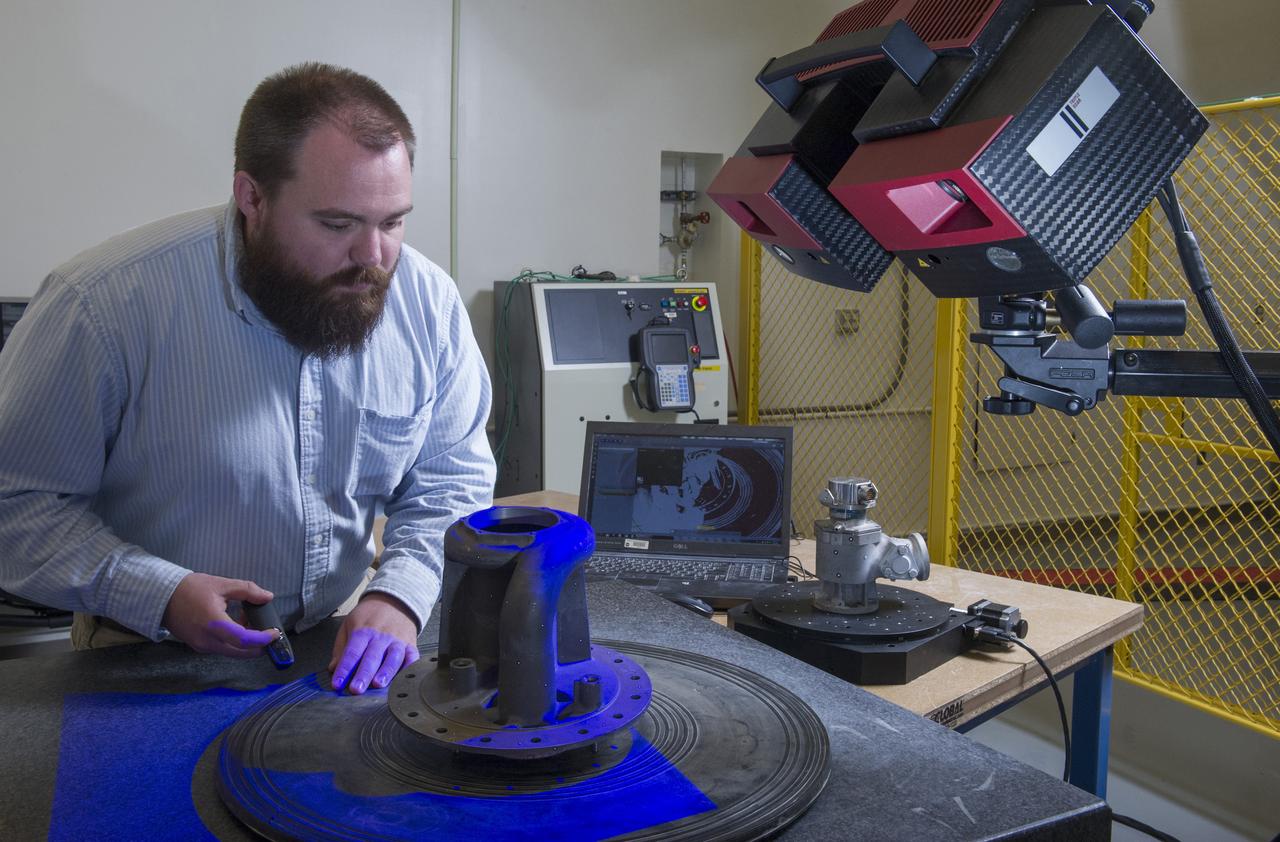
JOHN IVESTER PERFORMING STRUCTURED LIGHT SCANNING OF HERITAGE HARDWARE TO CAPTURE THE AS-BUILT GEOMETRY.
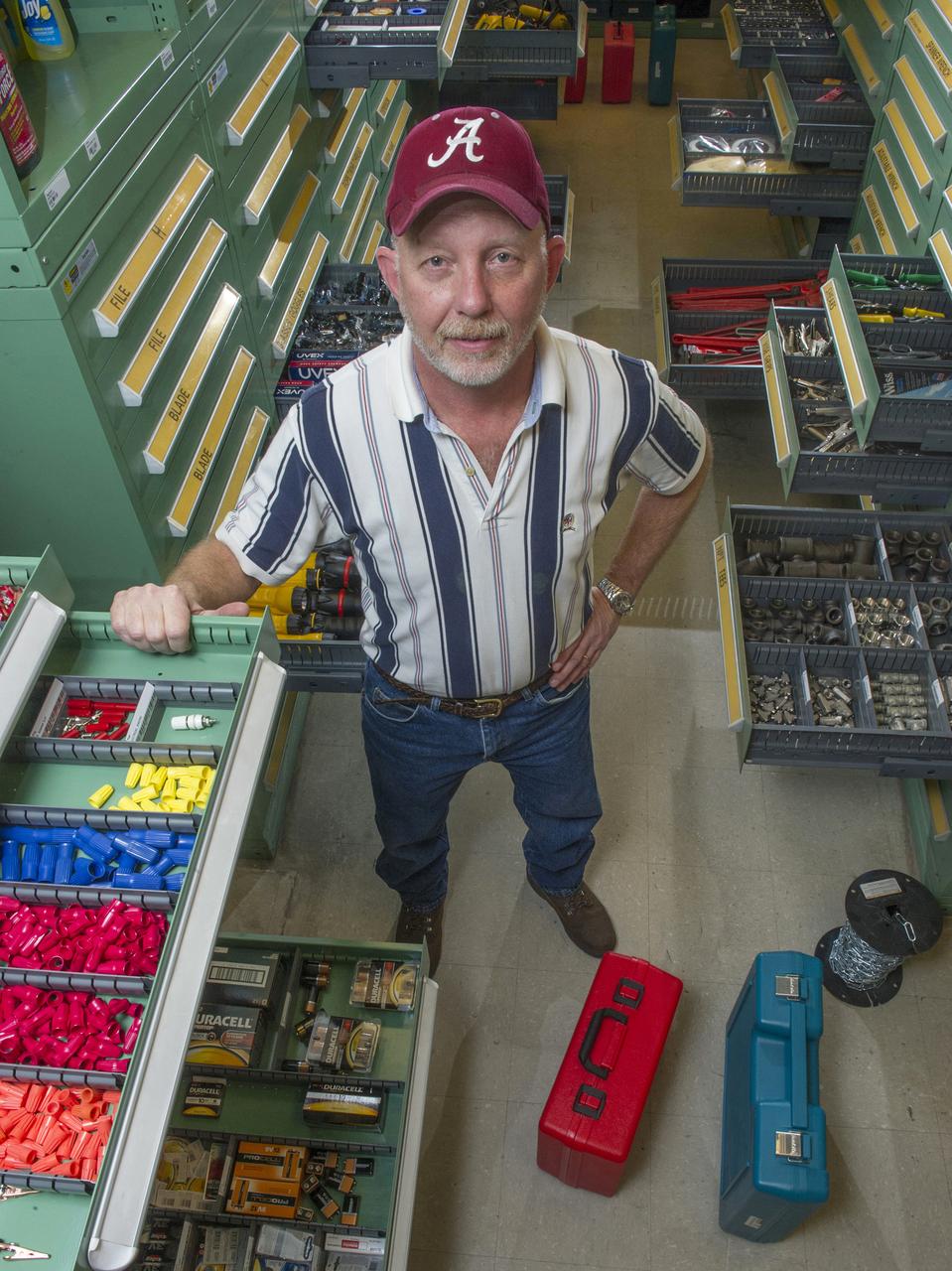
RON LEE MANAGES THE 900 SQUARE FOOT TOOL CRIB IN BLDG. 4707
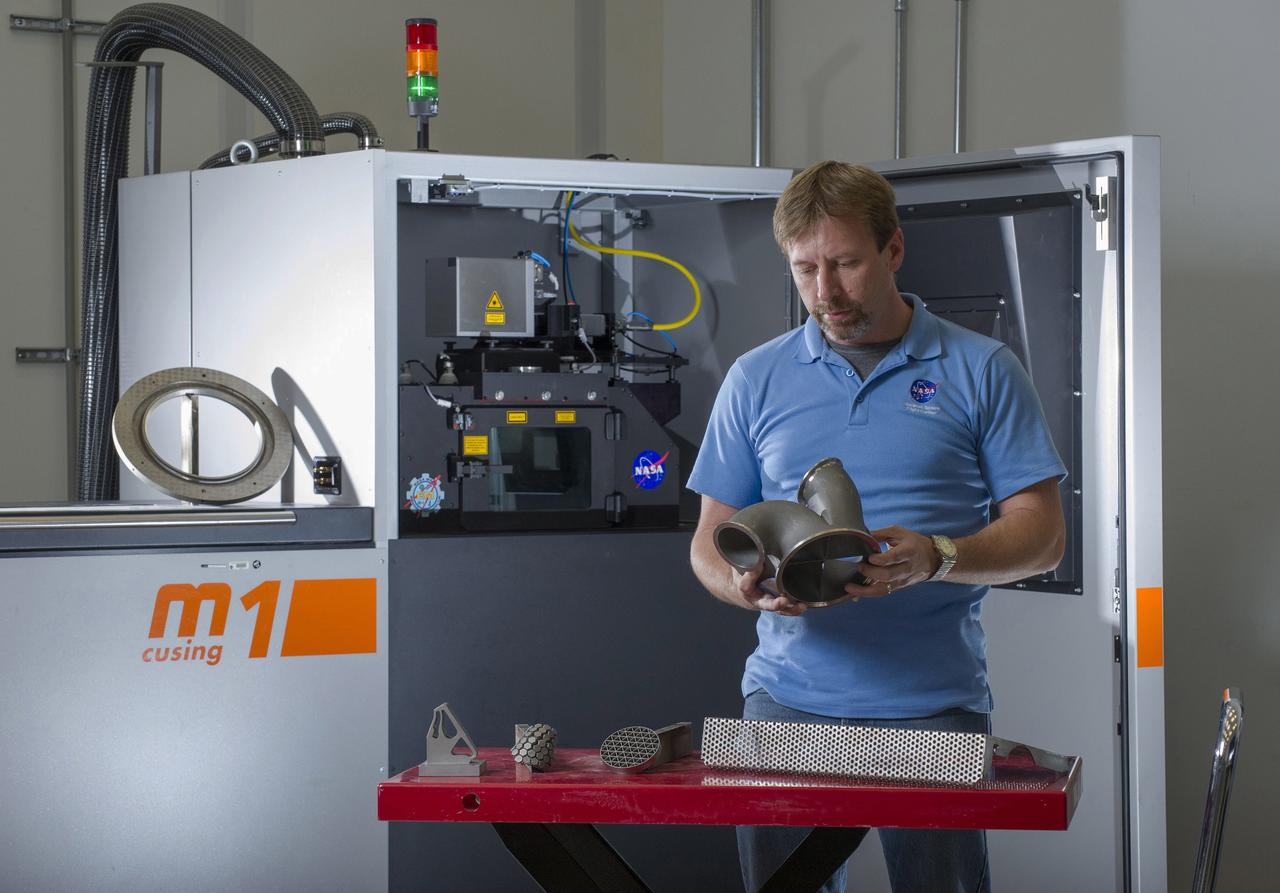
KEN COOPER, TEAM LEAD OF MSFC’S ADVANCED MANUFACTURING TEAM, WITH NICKEL ALLOY 718 PARTS FABRICATED USING THE M1 SELECTIVE LASER MELTING SYSTEM. THE M1 MACHINE IS DEDICATED TO BUILDING QUALIFICATION SAMPLES AND HARDWARE DEMONSTRATORS FOR THE RS25 ENGINE PROJECT.
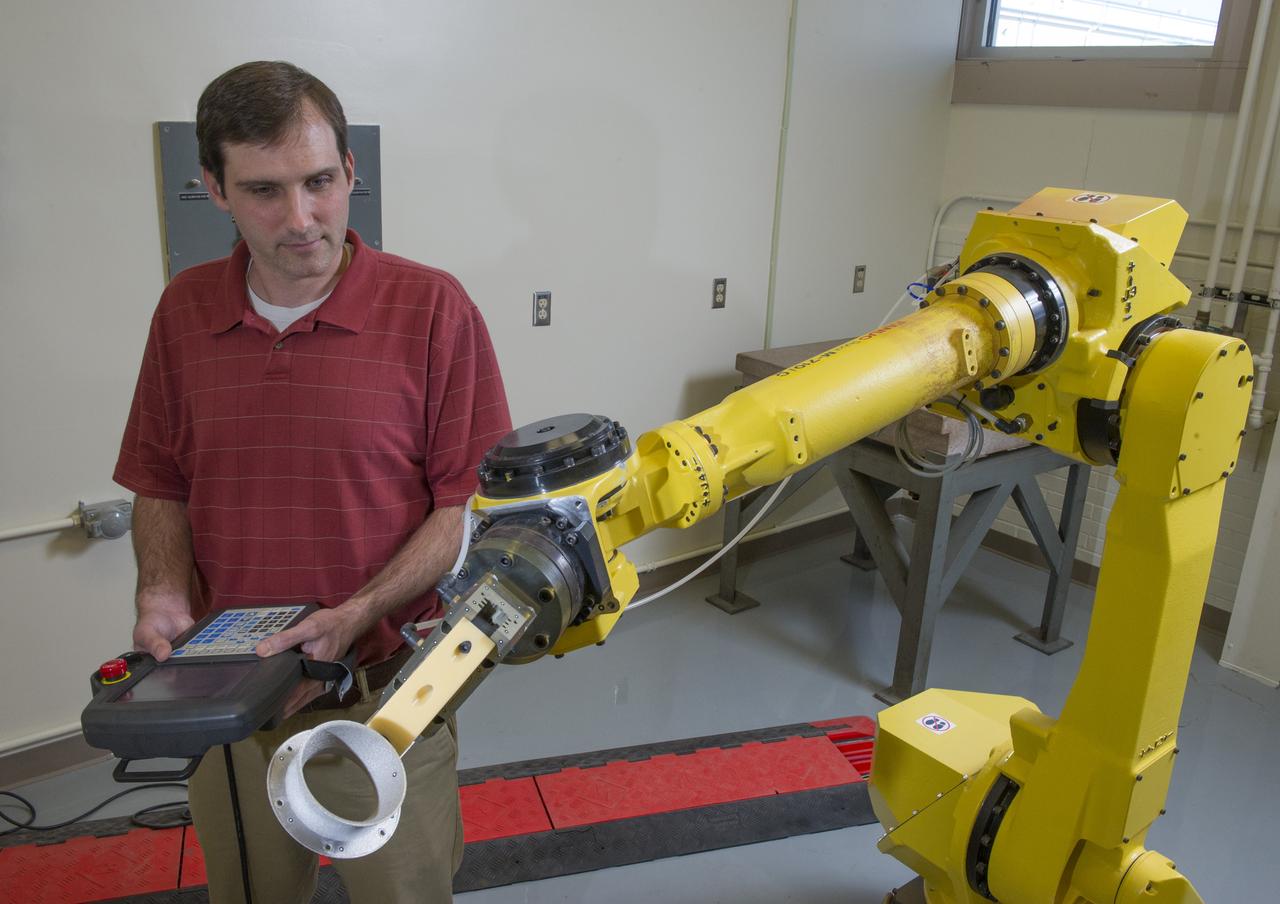
JOSH WHITE DEMONSTRATING THE CAPABILITIES OF THE SYSTEM TO AUTONOMOUSLY INSPECT AND MACHINE ADDITIVELY MANUFACTURED PARTS (SAIMAP).
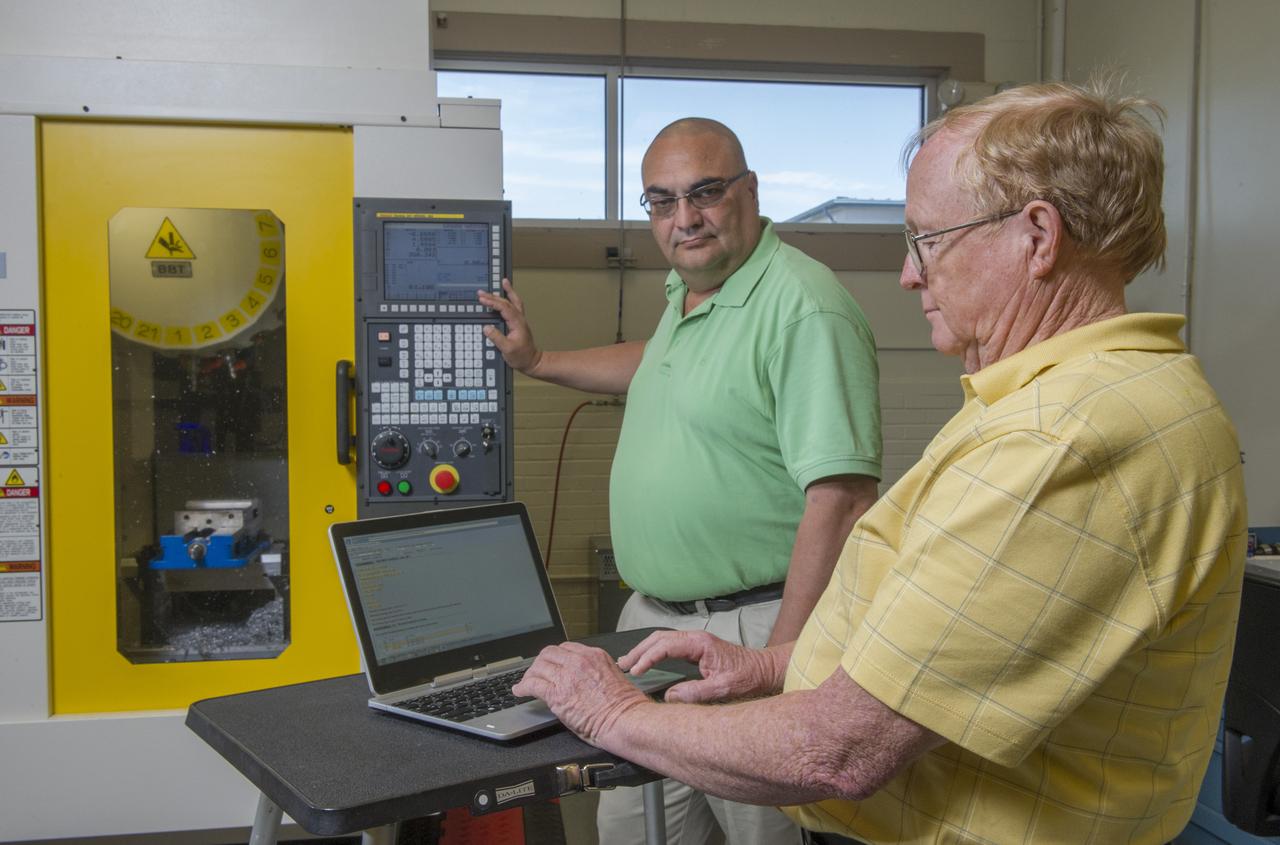
RON BROOKS (FOREGROUND) AND DON JAMES (BACKGROUND) USING THE SOLUMINA MANUFACTURING EXECUTION SYSTEM TO DELIVER AND EXECUTE WORK INSTRUCTIONS ON THE SHOP FLOOR.
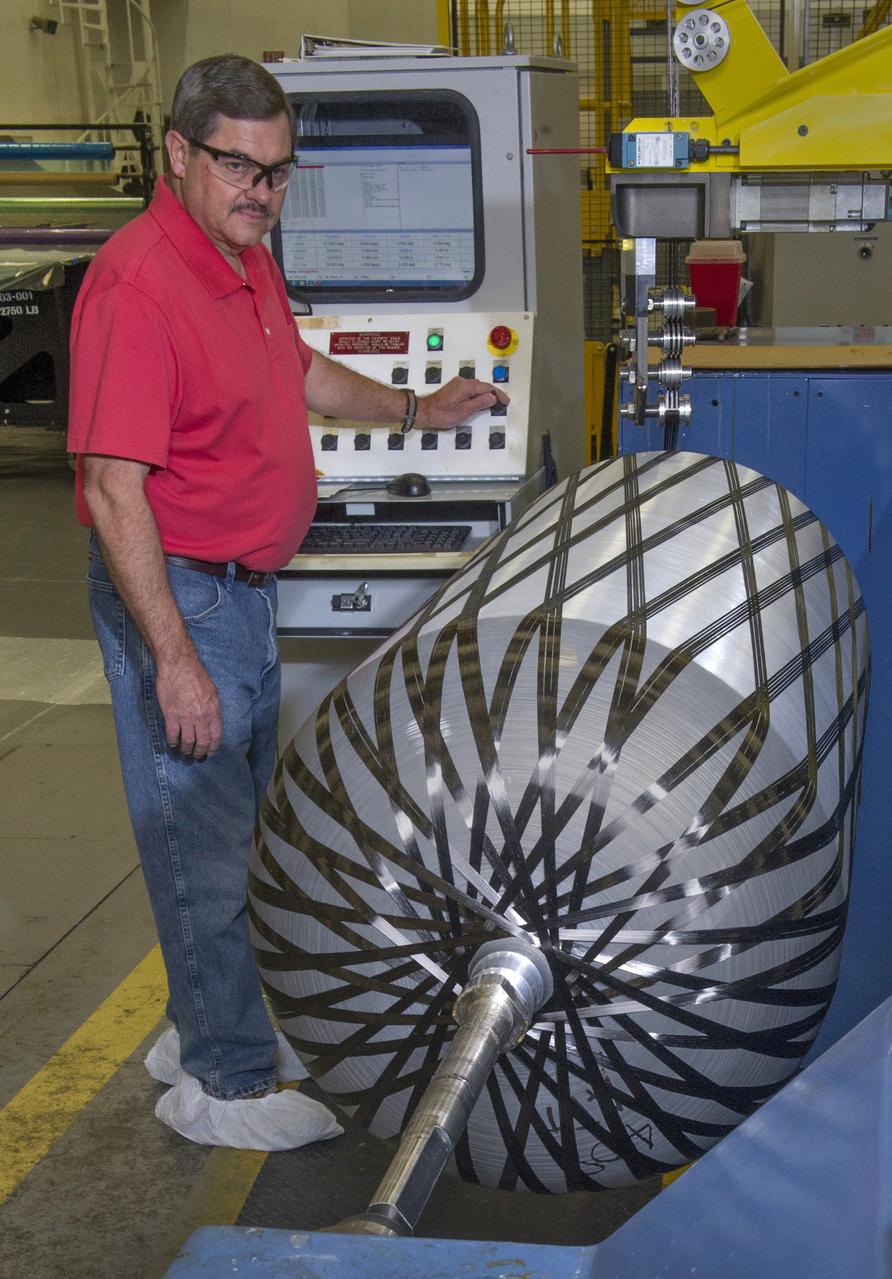
PHILLIP THOMPSON WRAPS PRESSURE VESSEL WITH COMPOSITE MATERIAL
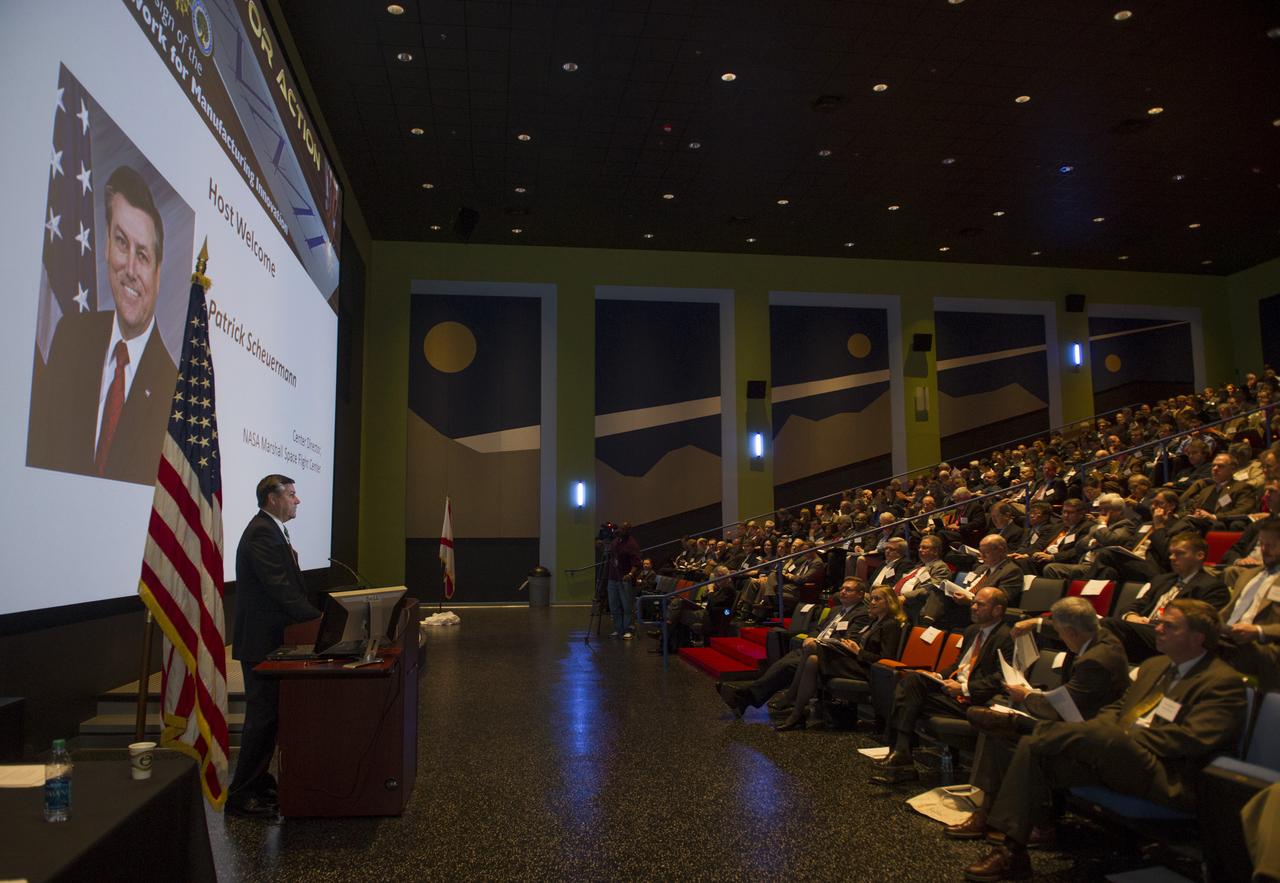
MSFC DIRECTOR SCHEUERMANN WELCOMES ATTENDEES TO ADVANCED MANUFACTURING WORKSHOP AT DAVIDSON CENTER
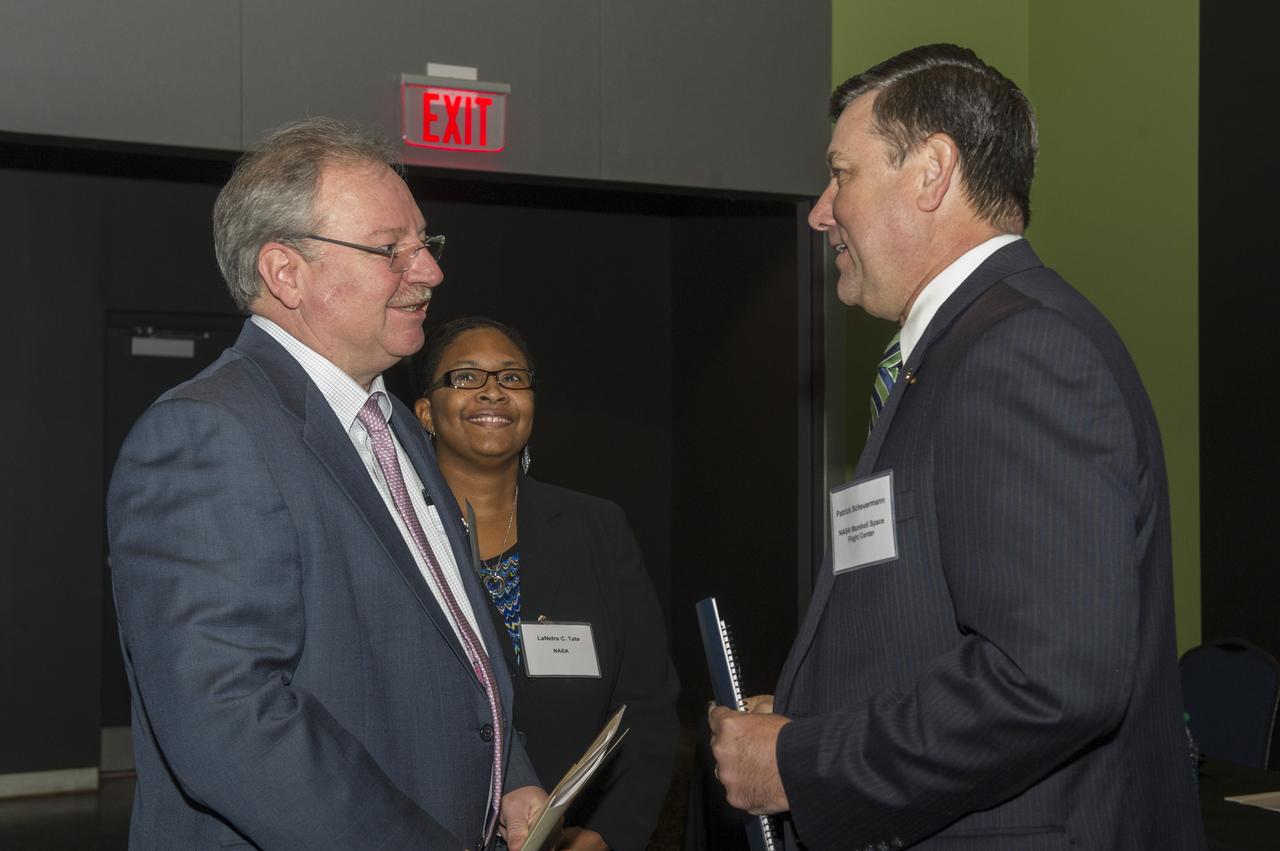
JOHN VICKERS, LANETRA TATE (NASA HQ), AND PATRICK SCHEUERMANN CHAT BEFORE OPENING OF ADVANCED MANUFACTURING WORKSHOP AT DAVIDSON CENTER

Advanced Manufacturing, Inc., Low Impact Docking System (LIDS) Equipment Delivery and Installation by Crane

Advanced Manufacturing, Inc., Low Impact Docking System (LIDS) Equipment Delivery and Installation by Crane
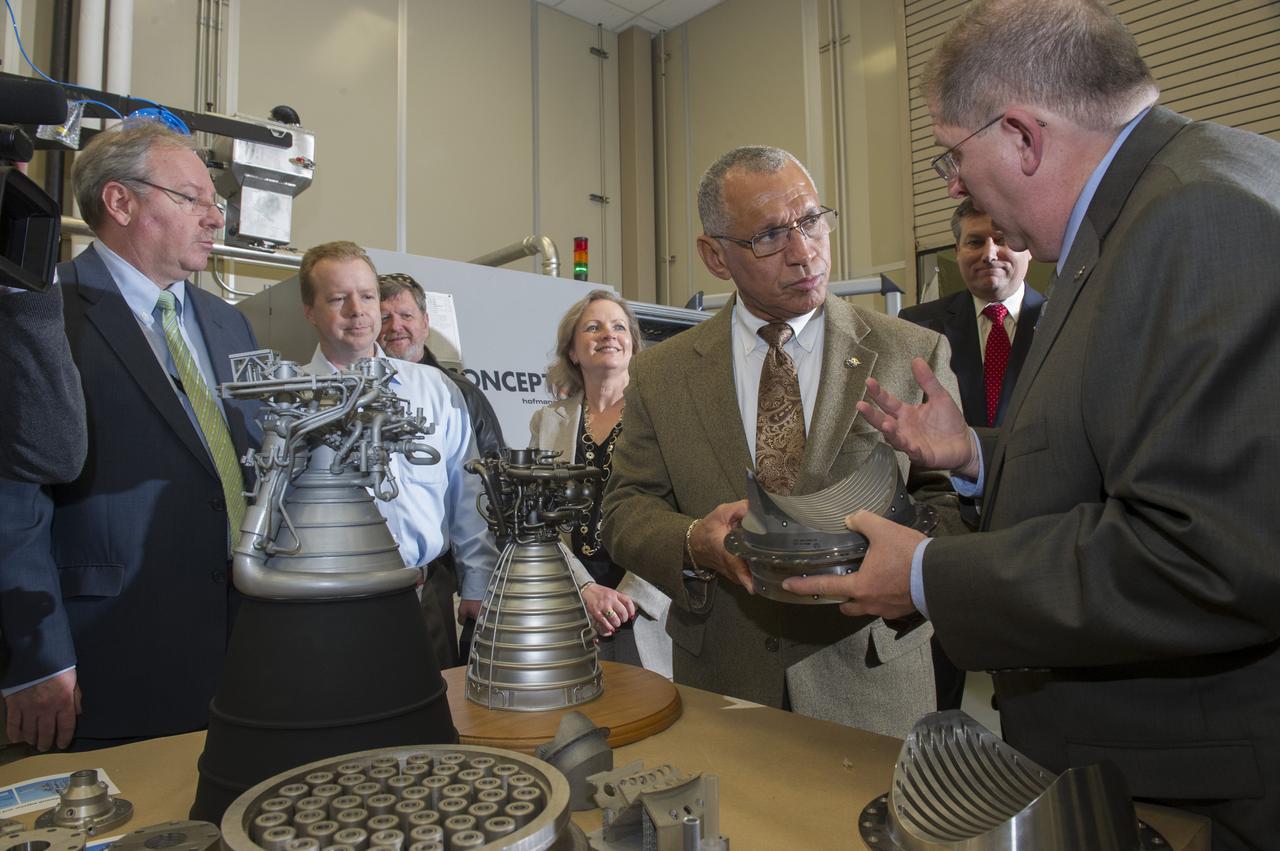
DURING HIS FEB. 22 VISIT TO THE NATIONAL CENTER FOR ADVANCED MANUFACTURING RAPID PROTOTYPING FACILITY AT NASA'S MARSHALL SPACE FLIGHT CENTER, NASA ADMINISTRATOR CHARLES BOLDEN, CENTER, TALKS WITH FRANK LEDBETTER, RIGHT, CHIEF OF THE NONMETALLIC MATERIALS AND MANUFACTURING DIVISION AT MARSHALL, ABOUT THE USE OF 3-D PRINTING AND PROTOTYPING TECHNOLOGY TO CREATE PARTS FOR THE SPACE LAUNCH SYSTEM. ALSO PARTICIPATING IN THE TOUR ARE, FROM BACK RIGHT, MARSHALL CENTER DIRECTOR PATRICK SCHEUERMANN; SHERRY KITTREDGE, DEPUTY MANAGER OF THE SLS LIQUID ENGINES OFFICE; MARSHALL FLIGHT SYSTEMS DESIGN ENGINEER ROB BLACK; AND JOHN VICKERS, MANAGER OF THE NATIONAL CENTER FOR ADVANCED MANUFACTURING.

Archival pictures of the Integrated Structural Assembly of Advanced Composites (ISAAC) In Clean Room in Building 1232A. Integrated Structural Assembly of Advanced Composites (ISAAC) is a state of the art composite manufacturing robot. ISAAC was purchased from Electroimpact and installed in 2015. NASA Langley was the first NASA Center to receive this technology and the third manufacturing facility in the world to receive an ISAAC. The robot has 8 degrees of freedom and an accuracy rate of +/- .05". ISAAC also has several detachable end effectors, making it a versatile machine. Similar robots have become very popular in the automotive and commercial flight industries. At NASA Langley Research Center, ISAAC supports research on the design and manufacturing of composite parts.
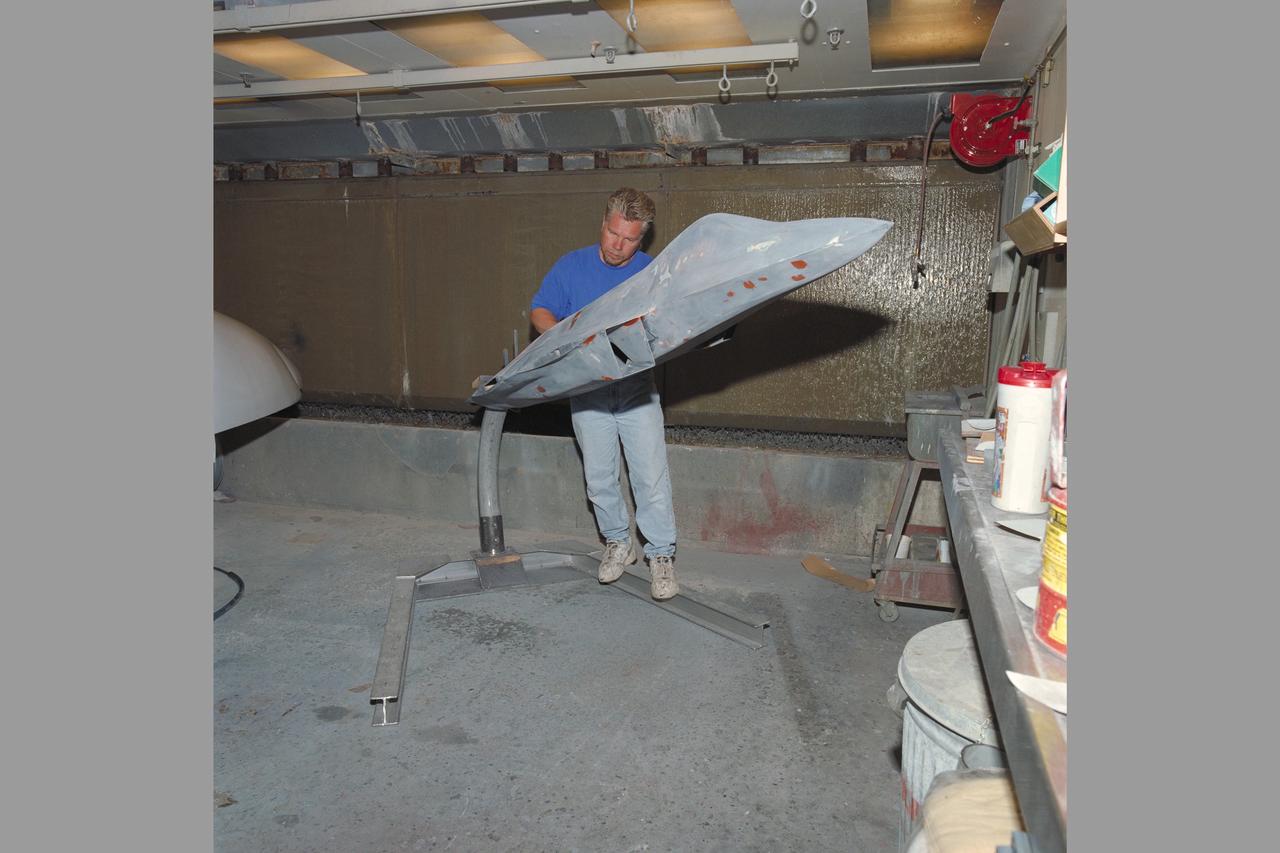
Manufacturing Division (Code JM) Projects. Ron Hovland working on X-36 model in N-212, Model Development & Advanced Composites Br (Code
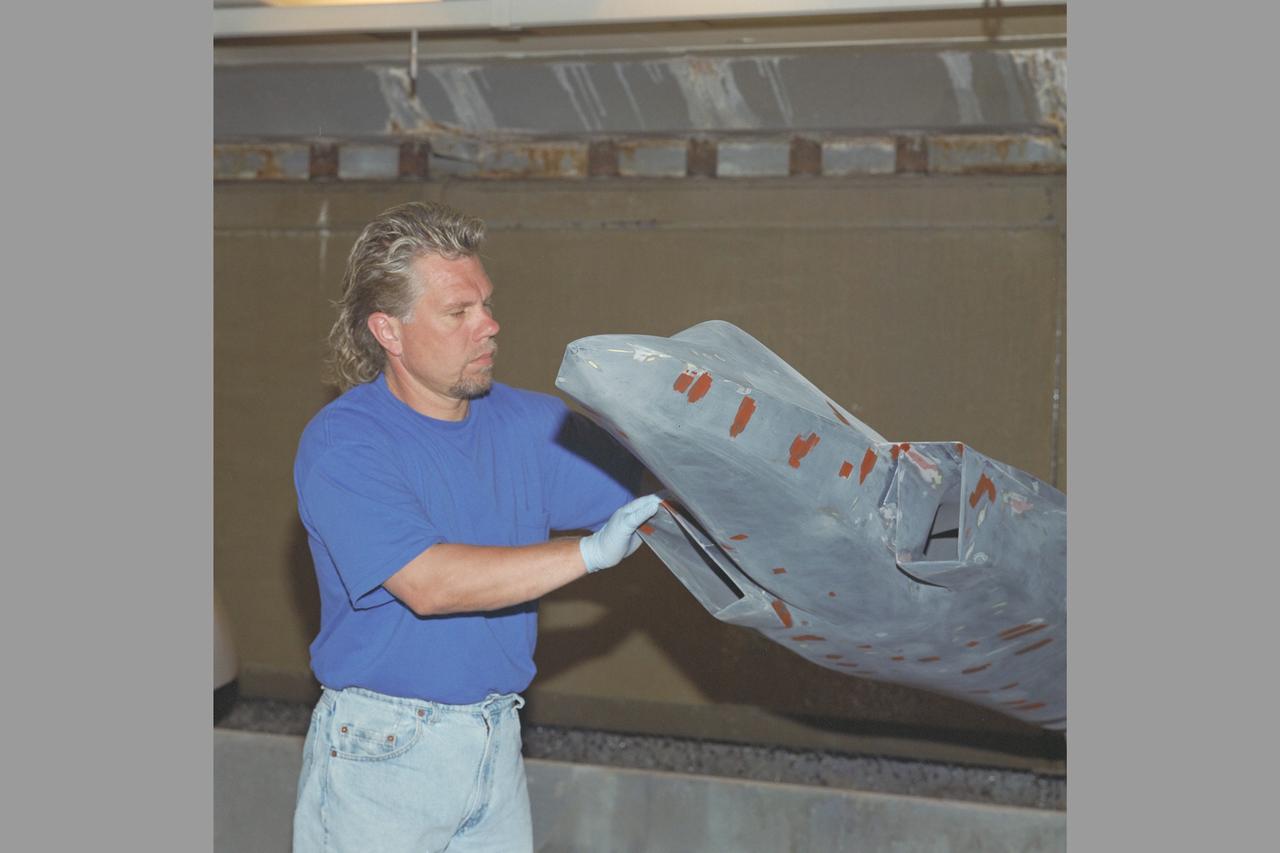
Manufacturing Division (Code JM) Projects. Ron Hovland working on X-36 model in N-212, Model Development & Advanced Composites Br (Code JMC)
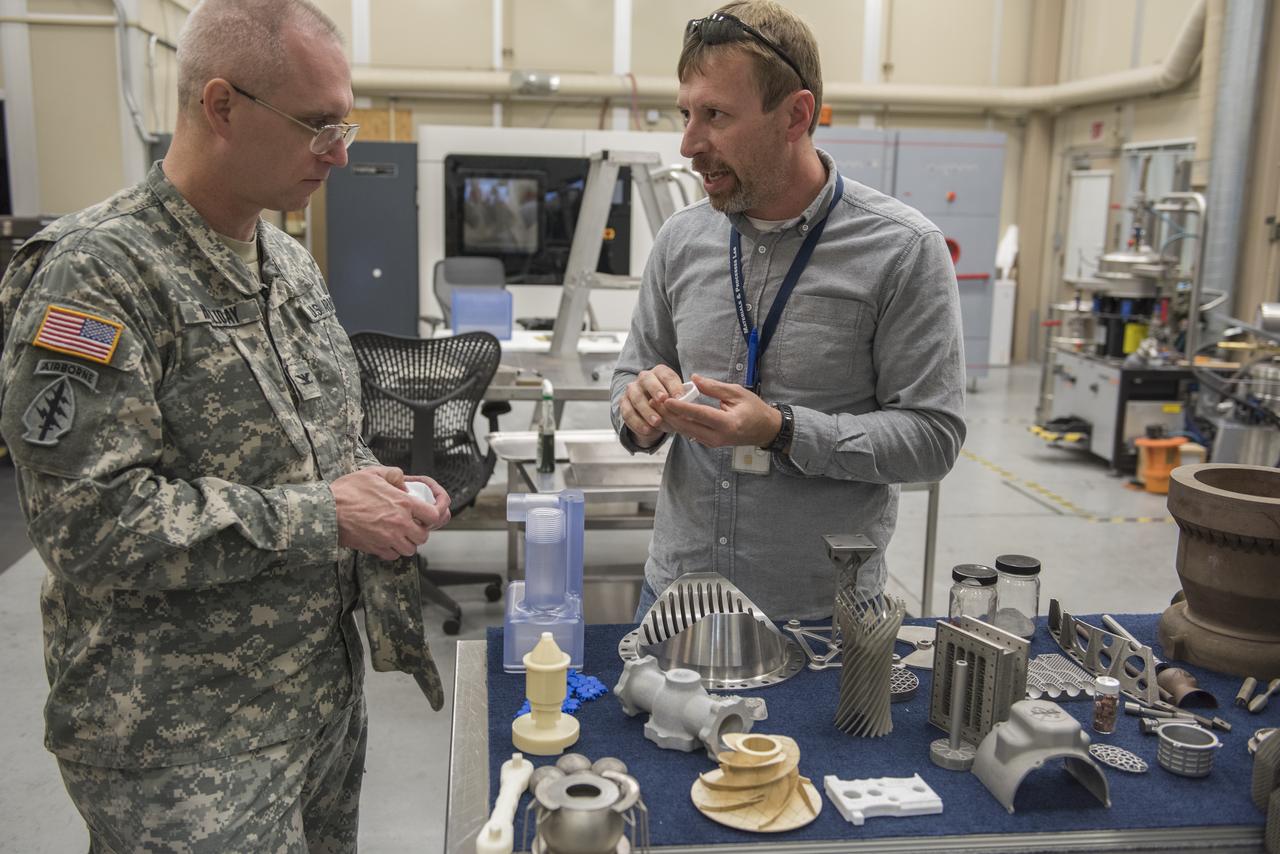
REDSTONE ARSENAL GARRISON COMMANDER COL. THOMAS "DOC" HOLLIDAY, LEFT, DISCUSSES THE PROCESSES AND HARDWARE USED IN NASA IN-SPACE MANUFACTURING TECHNIQUES WITH KEN COOPER, A STRUCTURAL MATERIALS ENGINEER AT NASA'S MARSHALL SPACE FLIGHT CENTER. COOPER, PART OF THE MARSHALL ENGINEERING DIRECTORATE'S ADVANCED MANUFACTURING AND DIGITAL SOLUTIONS TEAM, WAS AMONG NUMEROUS SUBJECT-MATTER EXPERTS WHO SHARED KEY MARSHALL CAPABILITIES DURING HOLLIDAY'S MARCH 3 MARSHALL TOUR. HOLLIDAY, A DECORATED OFFICER WHOSE MILITARY CAREER BEGAN IN 1992, GAINED FIRSTHAND INSIGHT INTO MARSHALL'S ADVANCED MANUFACTURING AND 3-D PRINTING TECHNIQUES; ROUND-THE-CLOCK INTERNATIONAL SPACE STATION SCIENCE AND COMMUNICATIONS SUPPORT BY THE PAYLOAD OPERATIONS INTEGRATION CENTER TEAM; AND THE LATEST UPGRADES TO MARSHALL TEST STANDS IN SUPPORT OF NEXT-GENERATION LAUNCH VEHICLE AND FLIGHT HARDWARE DEVELOPMENT. MARSHALL, A REDSTONE ARSENAL TENANT, ROUTINELY SHARES CUTTING-EDGE RESEARCH AND MANUFACTURING ADVANCES WITH ITS MILITARY AND FEDERAL AGENCY COUNTERPARTS, WORKING IN PARTNERSHIP TO ADVANCE NASA'S MISSION AND MAINTAIN THE NATION'S TECHNOLOGICAL LEADERSHIP.
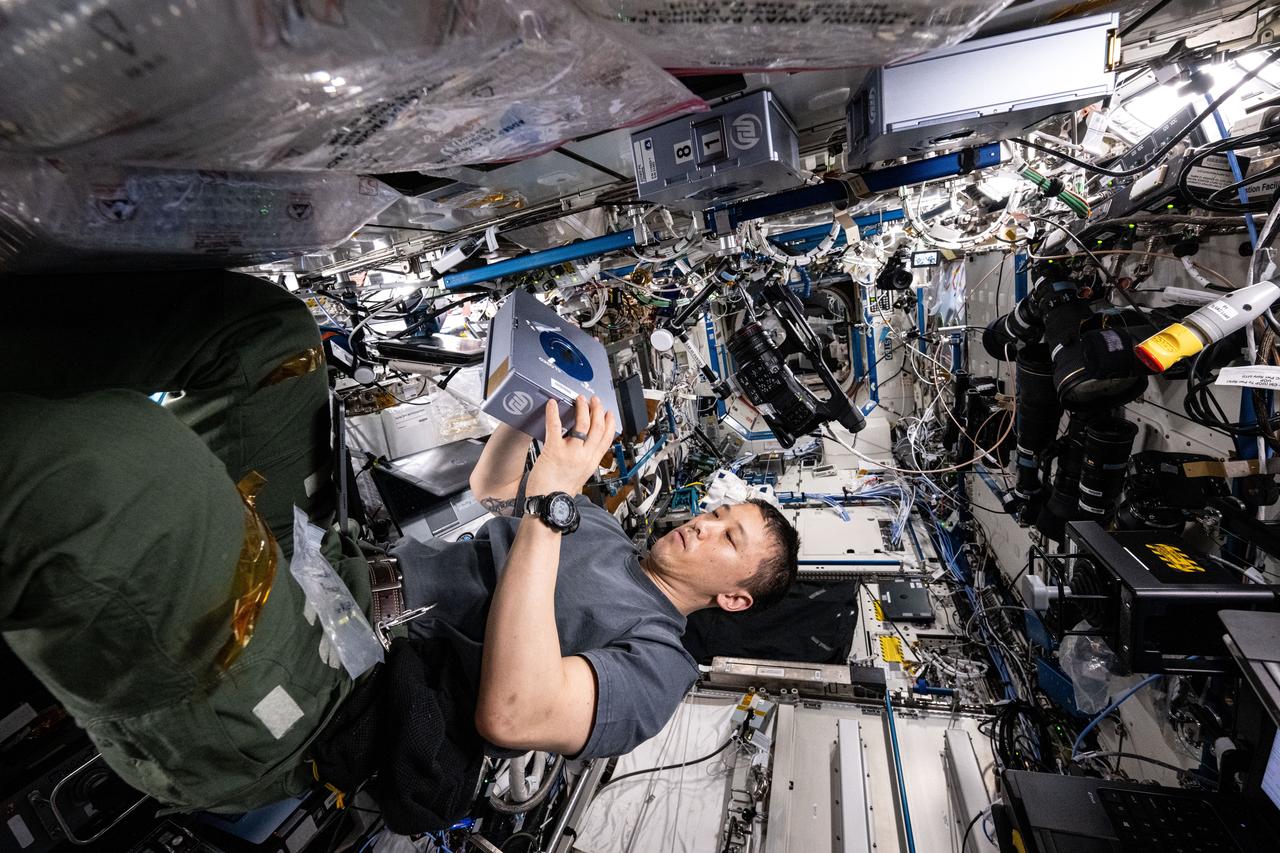
iss073e0548824 (Aug. 29, 2025) --- NASA astronaut and Expedition 73 Flight Engineer Jonny Kim services a sample processor, also known as the Advanced Space Experiment Processor-4 (ADSEP-4), for an investigation that explores advanced pharmaceutical manufacturing techniques for both Earth and space industries.
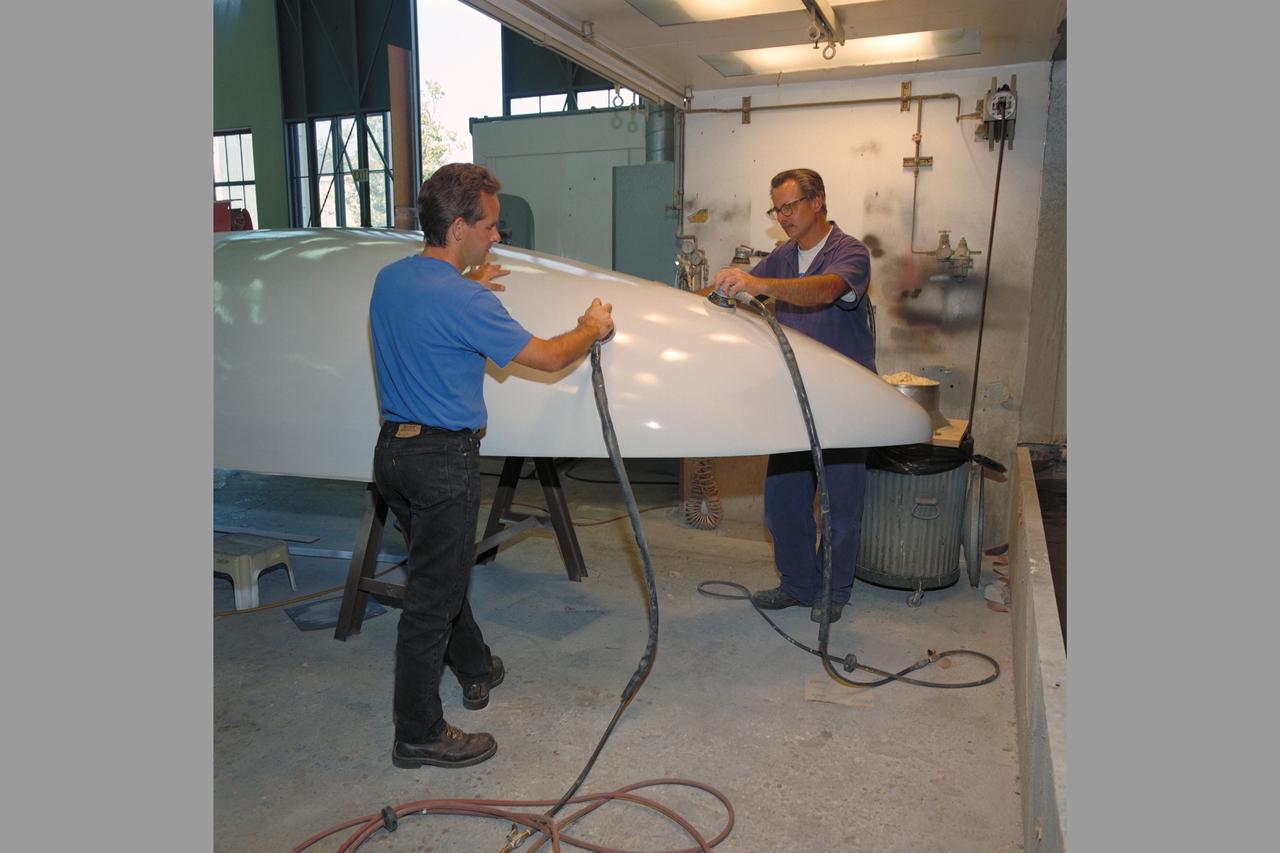
Manufacturing Division (Code JM) Projects. David Leskovsky & Gary Panola working on STAR (Subsonic Transport Aeronautic Research) model in N-212, Model Development & Advanced Composites Br (Code JMC)
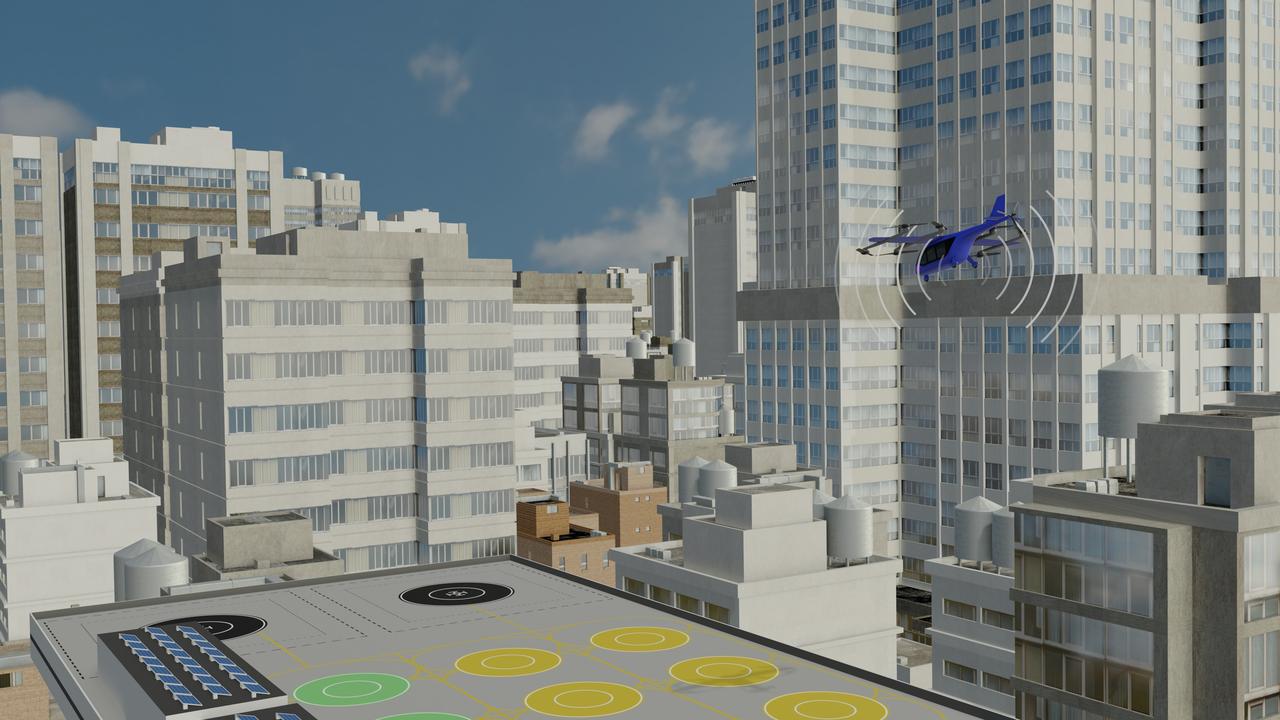
Several projects supporting NASA's Advanced Air Mobility, or AAM mission, are working on different elements to help make AAM a reality. One focus area is developing design tools manufacturers can use to reduce noise impacts.
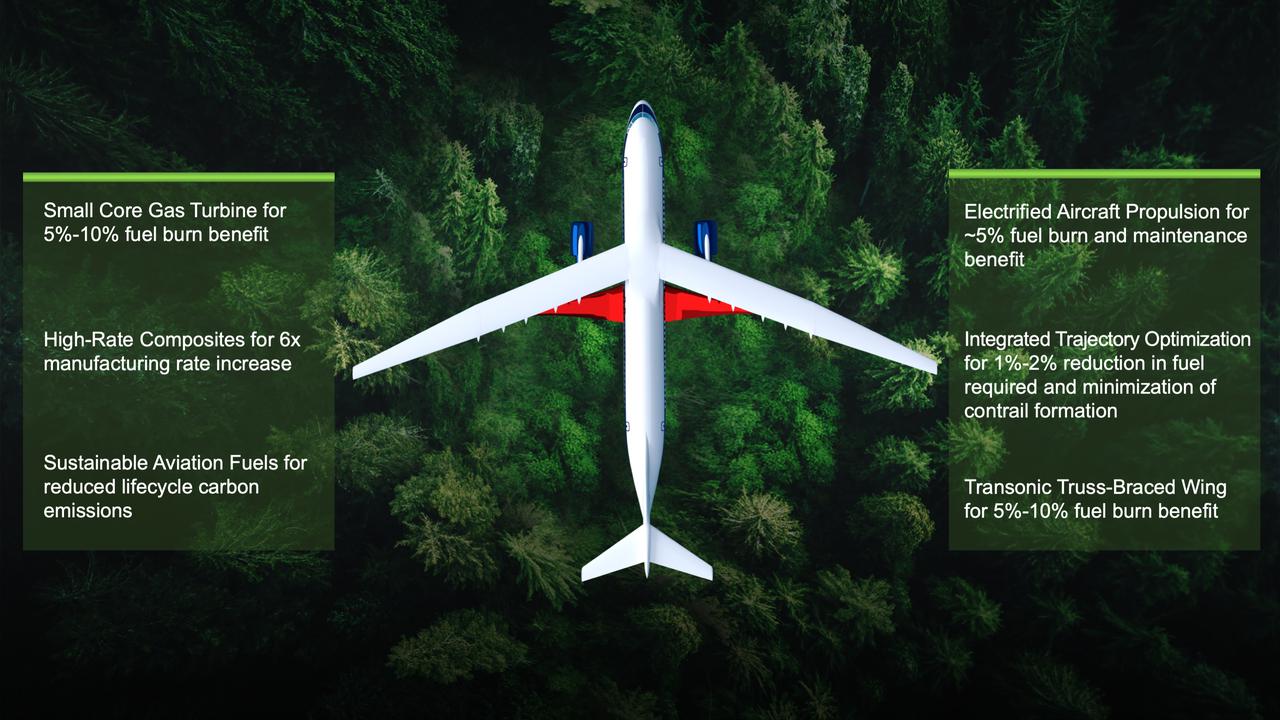
NASA will demonstrate high-risk, high-payoff technology advancements critical for U.S. aerospace manufacturers to bring to market innovative, cost-effective, and sustainable products and services demanded by airlines and customers.

Fiber-Reinforced-Foam (FRF) Core Composite Sandwich Panel Concept for Advanced Composites Technologies Project - Preliminary Manufacturing Demonstration Articles for Ares V Payload Shroud Barrel Acreage Structure
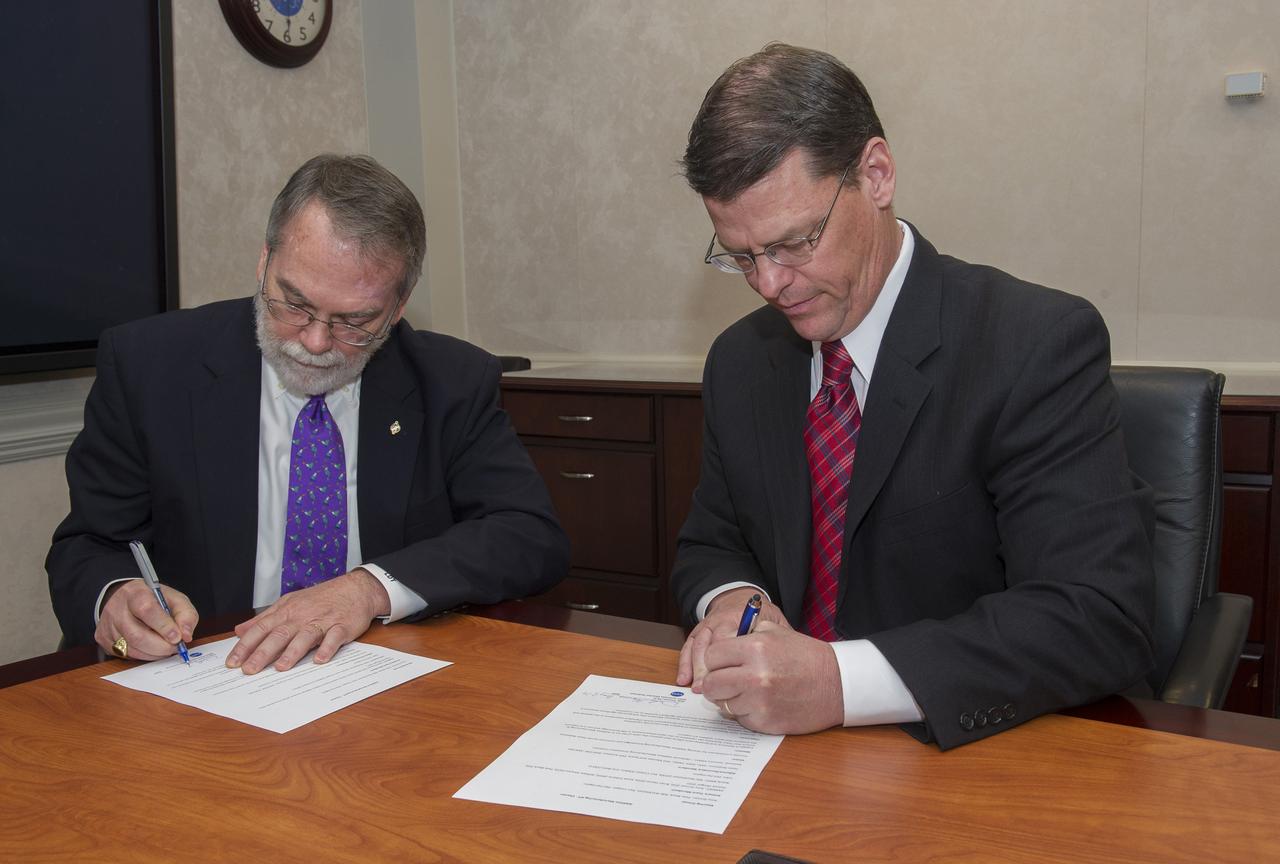
DALE THOMAS, LEFT, MARSHALL AA FOR TECHNICAL WORK AND JAMES LACKEY, RIGHT, ACTING DIRECTOR FOR AMRDEC SIGNED AN AGREEMENT ON MAY 2, 2014 TO ENGAGE IN RESEARCH & DEVELOPMENT EFFORTS THAT ADVANCE THE STATE OF THE ART IN ADDITIVE MANUFACTURING
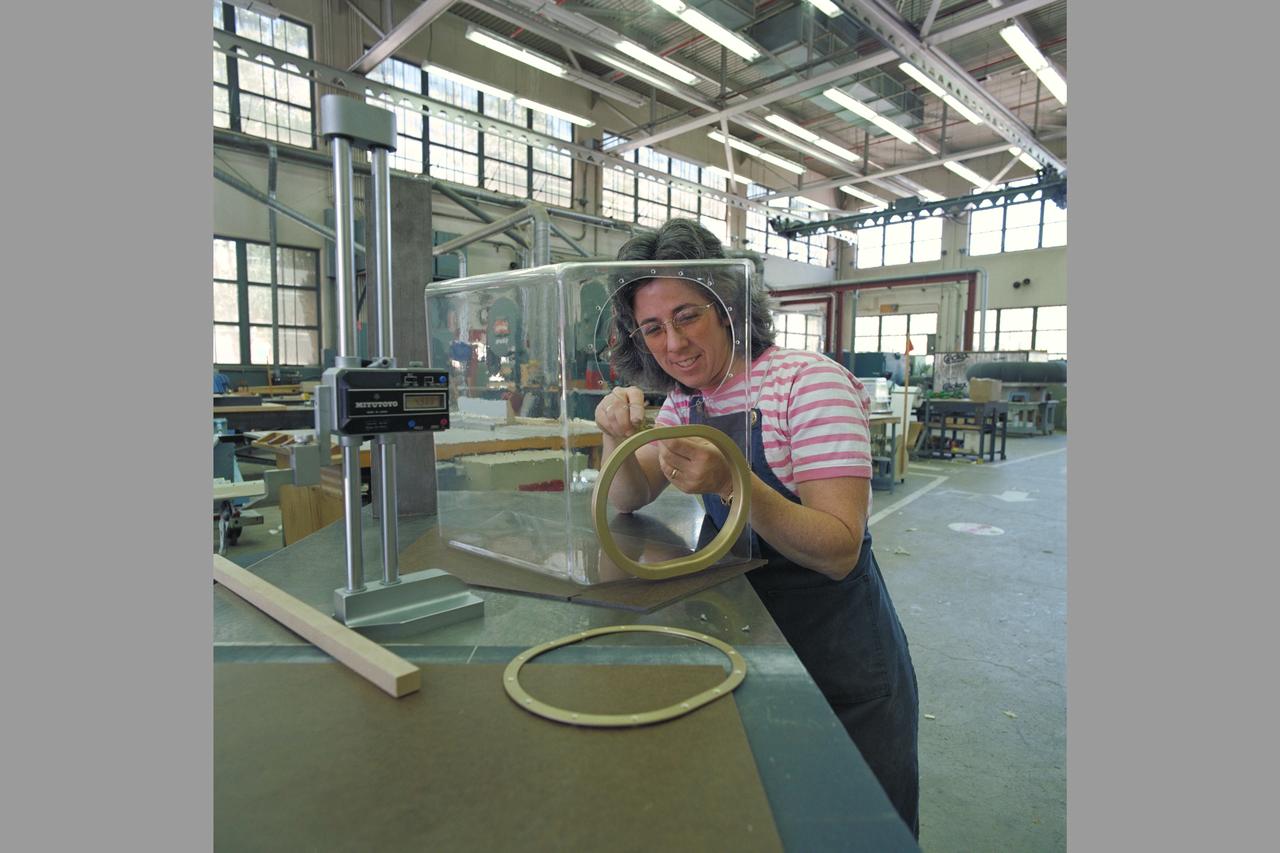
Manufacturing Division (Code JM) Projects. Susan Suffel working on AEM (Animal Enclosure Module) in N-212, Model Development & Advanced Composites Br. (Code JMC)

iss065e148265 (June 28, 2021) --- NASA astronaut and Expedition 65 Flight Engineer Shane Kimbrough sets up the Microgravity Science Glovebox for the InSpace-4 physics study that will explore advanced materials and manufacturing techniques.
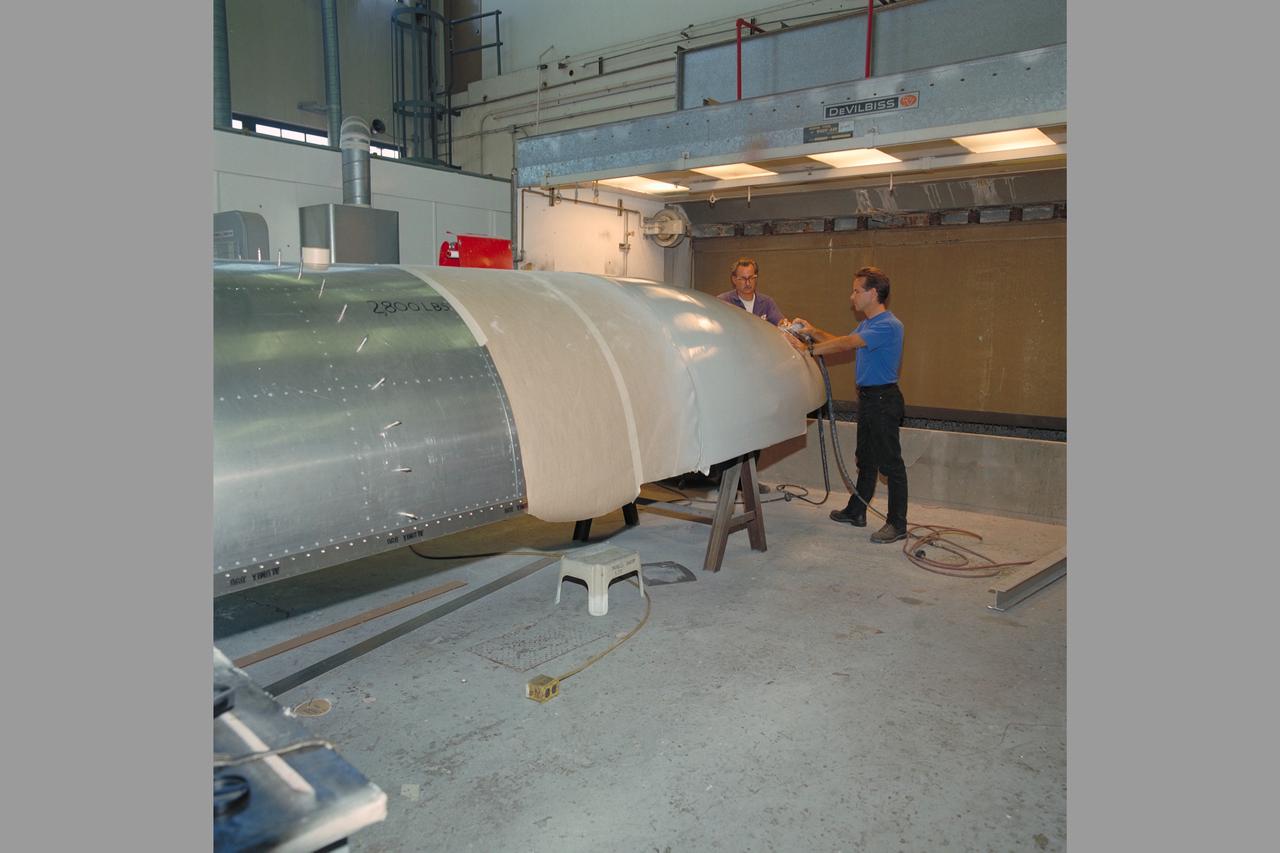
Manufacturing Division (Code JM) Projects. David Leskovsky & Gary Panola working on STAR (Subsonic Transport Aeronautic Research) model in N-212, Model Development & Advanced Composites Br (Code JMC)

Fiber-Reinforced-Foam (FRF) Core Composite Sandwich Panel Concept for Advanced Composites Technologies Project - Preliminary Manufacturing Demonstration Articles for Ares V Payload Shroud Barrel Acreage Structure

Fiber-Reinforced-Foam (FRF) Core Composite Sandwich Panel Concept for Advanced Composites Technologies Project - Preliminary Manufacturing Demonstration Articles for Ares V Payload Shroud Barrel Acreage Structure
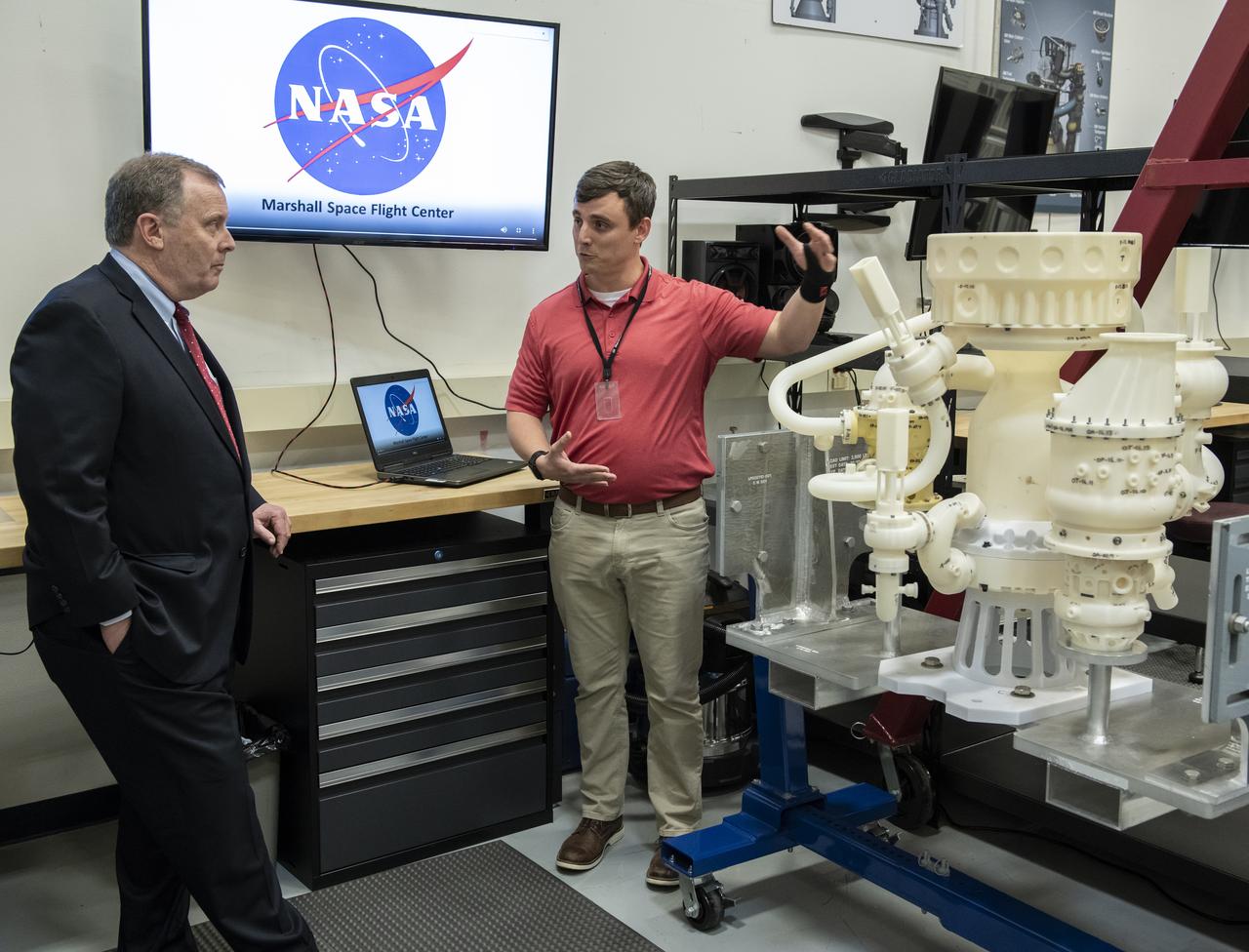
NASA Deputy Administrator Jim Morhard, left, visits the Combustion Lab at Marshall Space Flight Center on March 25, where Michael Allison shares the advancements being made in additive manufacturing of rocket engine parts at Marshall. Allison leads the assembly and integration lead for the MC2 engine model, shown here, which is an additively manufactured liquid engine designed and developed at Marshall. During his tour of the center, Morhard also saw the work being done by Marshall to advance deep space exploration at the Liquid Hydrogen Test Stand, Deep Space Habitat, Payload Operations Integration Center and the Systems Integration Lab.
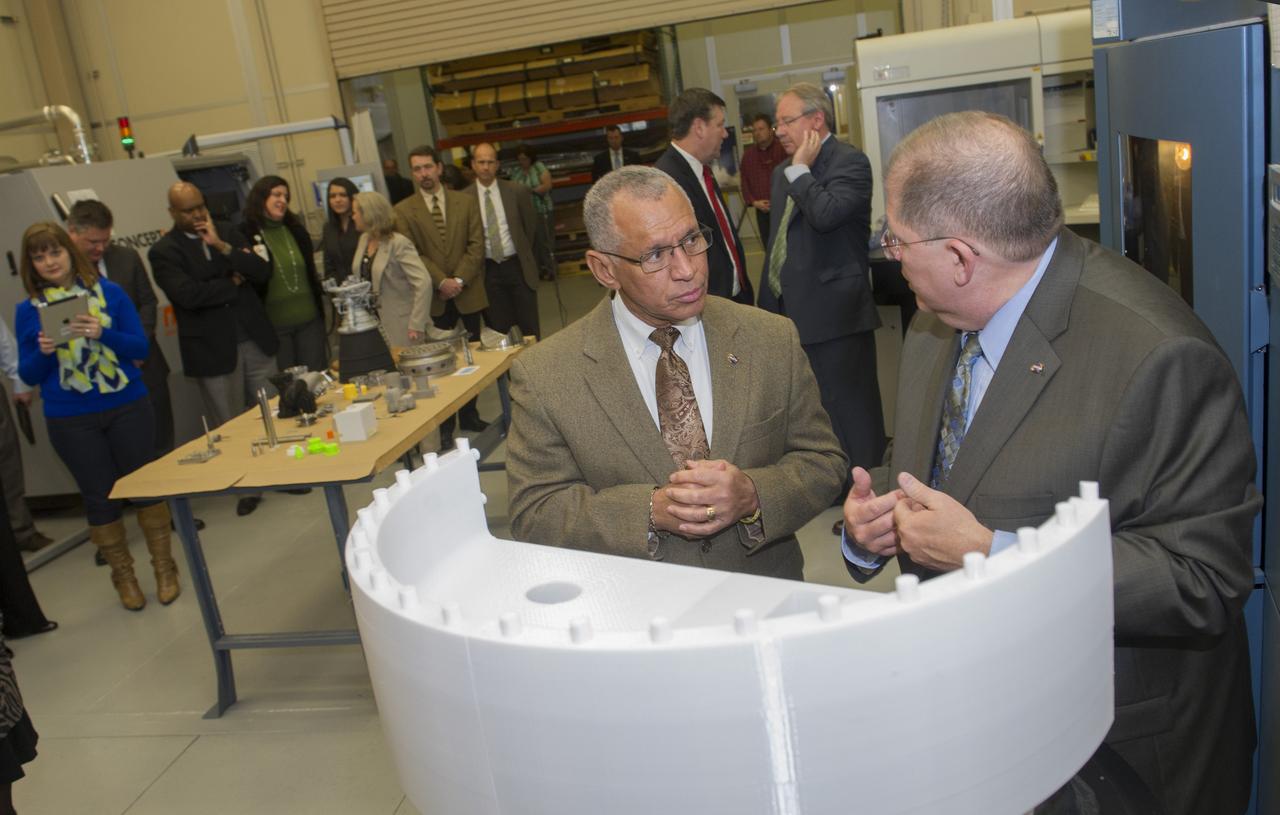
NASA ADMINISTRATOR CHARLES BOLDEN, LEFT, TALKS WITH FRANK LEDBETTER, CHIEF OF THE NONMETALLIC MATERIALS AND MANUFACTURING DIVISION AT MARSHALL, ABOUT A PART OF A PROTOTYPE FOR THE CORE STAGE-TO-BOOSTER ATTACH FITTING DURING BOLDEN'S FEB. 22 VISIT TO THE NATIONAL CENTER FOR ADVANCED MANUFACTURING RAPID PROTOTYPING FACILITY AT MARSHALL. DURING HIS TOUR, BOLDEN WATCHED RESEARCHERS EMPLOY A 3-D PRINTING PROCESS CALLED "SELECTIVE LASER MELTING" TO CREATE COMPLEX PARTS FOR THE J-2X AND RS-25 ROCKET ENGINES -- WITHOUT WELDING.
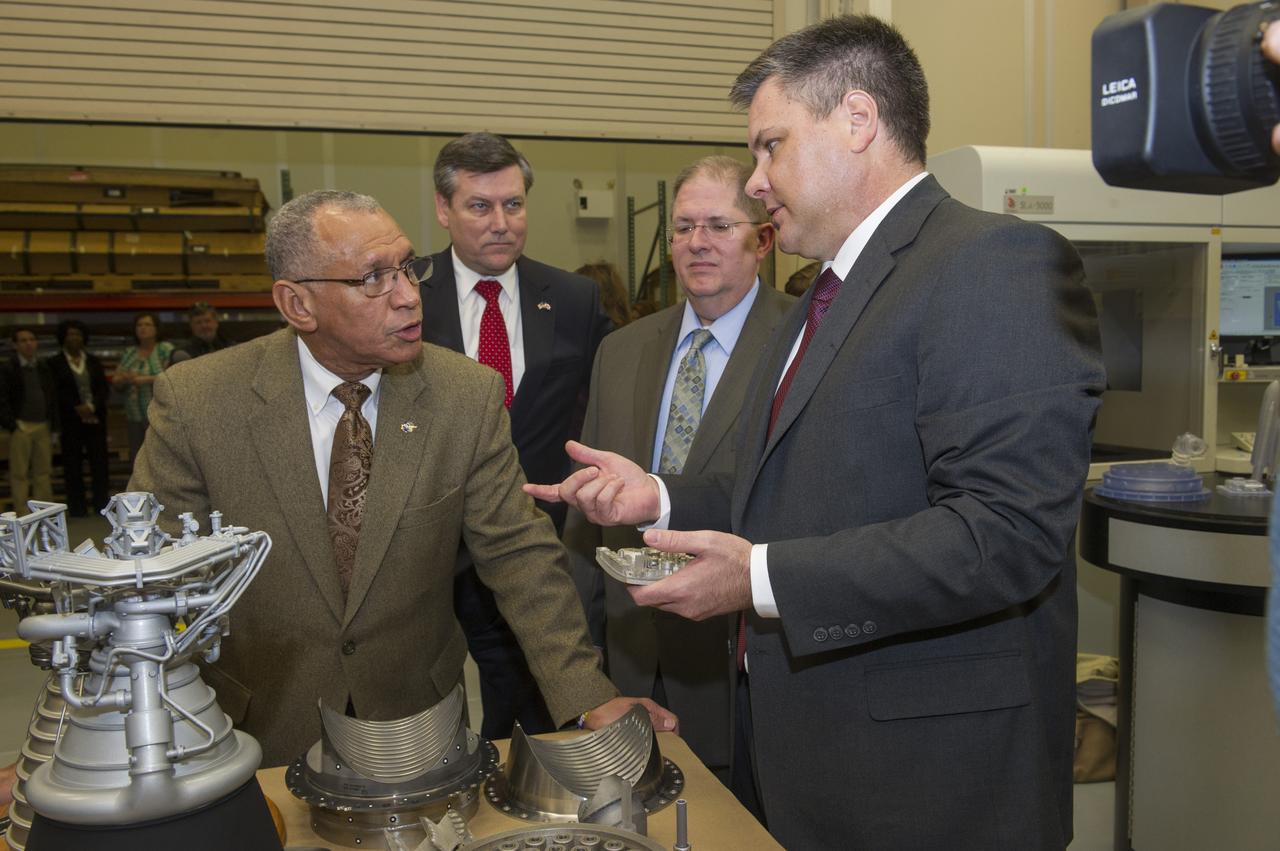
FROM LEFT, NASA ADMINISTRATOR CHARLES BOLDEN IS JOINED BY PATRICK SCHEUERMANN, NASA MARSHALL SPACE FLIGHT CENTER DIRECTOR; FRANK LEDBETTER, CHIEF OF NONMETALLIC MATERIALS AND MANUFACTURING DIVISION AT THE MARSHALL CENTER; AND ANDY HARDIN, NASA'S SPACE LAUNCH SYSTEM SUBSYSTEM MANAGER FOR LIQUID ENGINES DURING BOLDEN'S TOUR OF THE NATIONAL CENTER FOR ADVANCED MANUFACTURING RAPID PROTOTYPING FACILITY AT THE MARSHALL CENTER ON FRIDAY, FEB. 22.
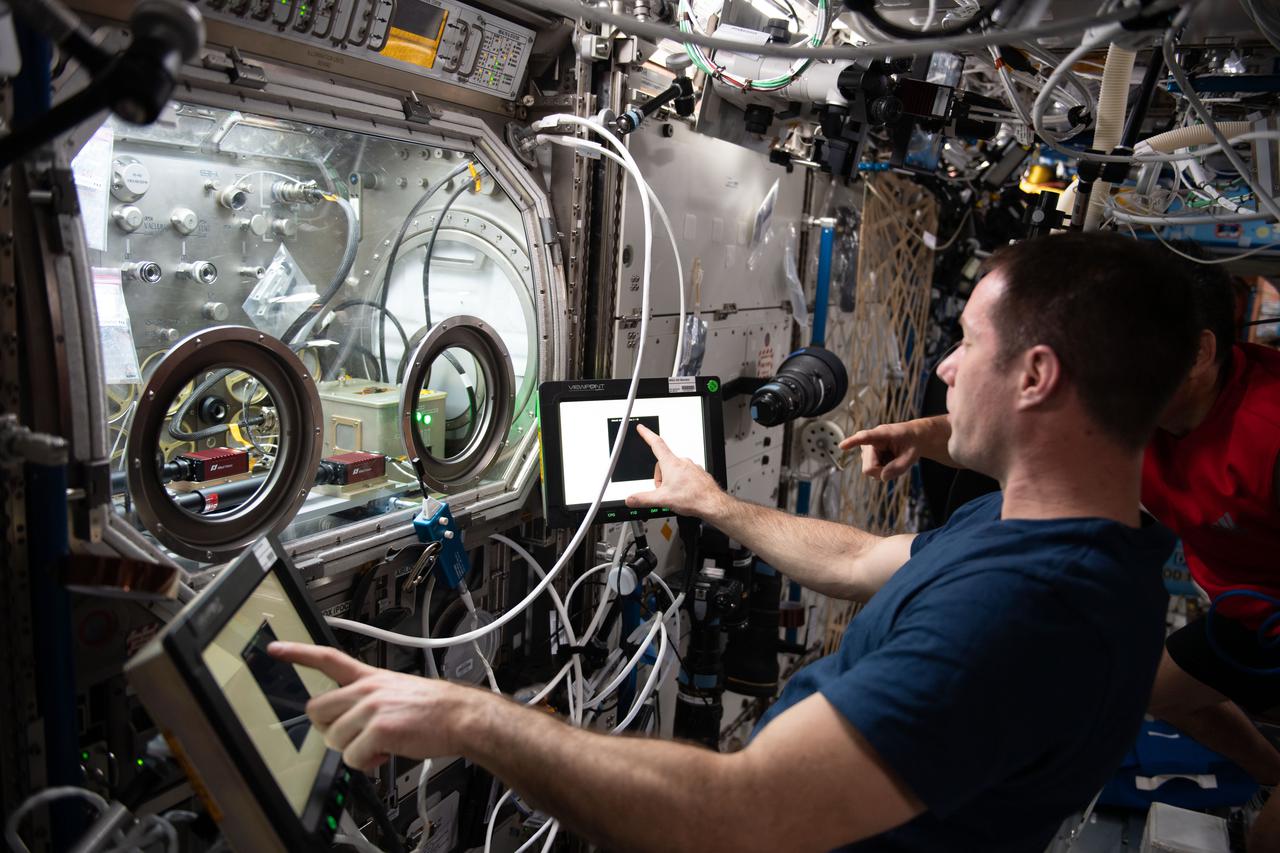
iss065e163214 (June 9, 2021) --- Expedition 65 Flight Engineer Thomas Pesquet of ESA (European Space Agency) conducts a session for the InSPACE-4 physics study. The space manufacturing investigation takes place inside the Microgravity Science Glovebox and explores ways to harness nanoparticles to fabricate new and advanced materials.
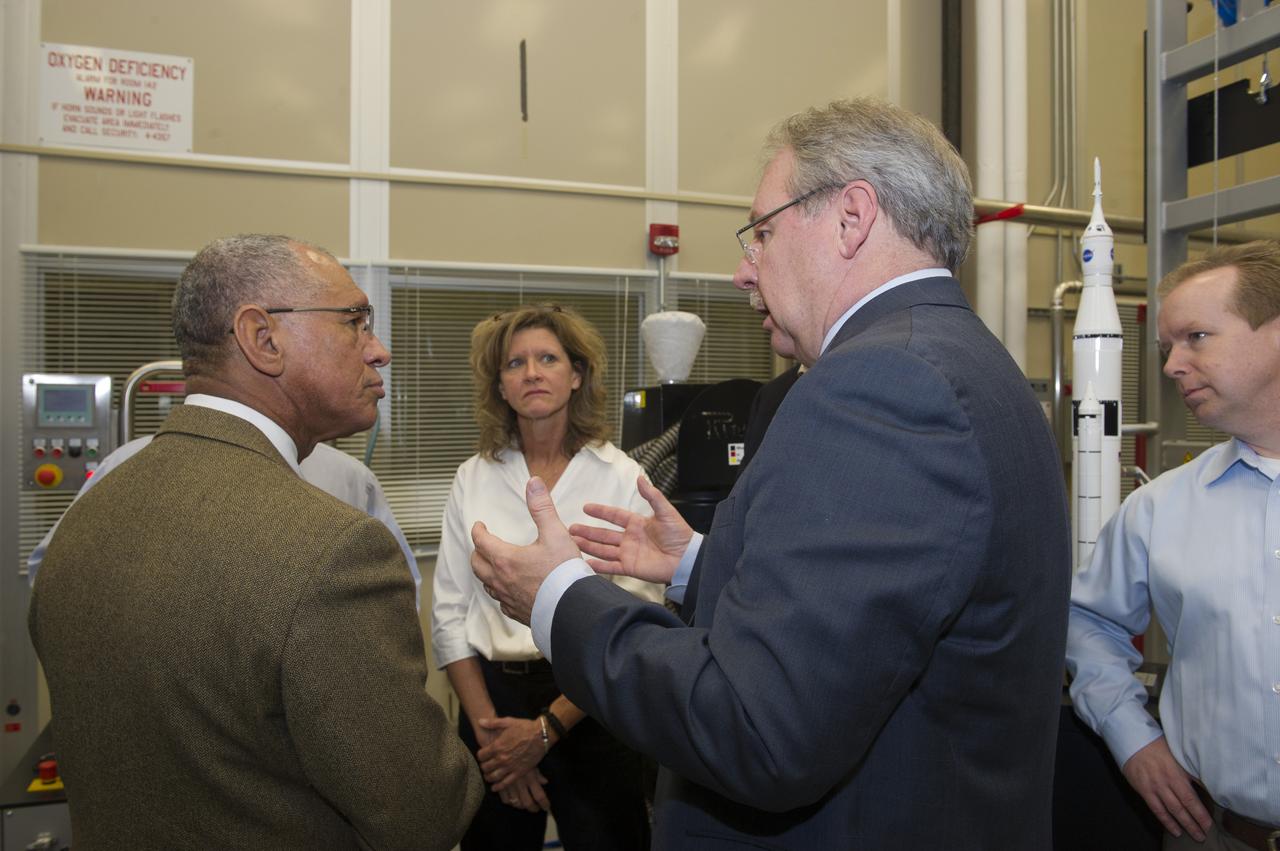
FROM LEFT, NASA ADMINISTRATOR CHARLES BOLDEN LISTENS TO MARSHALL MATERIALS ENGINEER NANCY TOLLIVER; JOHN VICKERS, MANAGER OF THE NATIONAL CENTER FOR ADVANCED MANUFACTURING; AND MARSHALL FLIGHT SYSTEMS DESIGN ENGINEER ROB BLACK AS THEY BRIEF HIM ON THE USE OF 3-D PRINTING AND PROTOTYPING TECHNOLOGY TO CREATE PARTS FOR THE SPACE LAUNCH SYSTEM
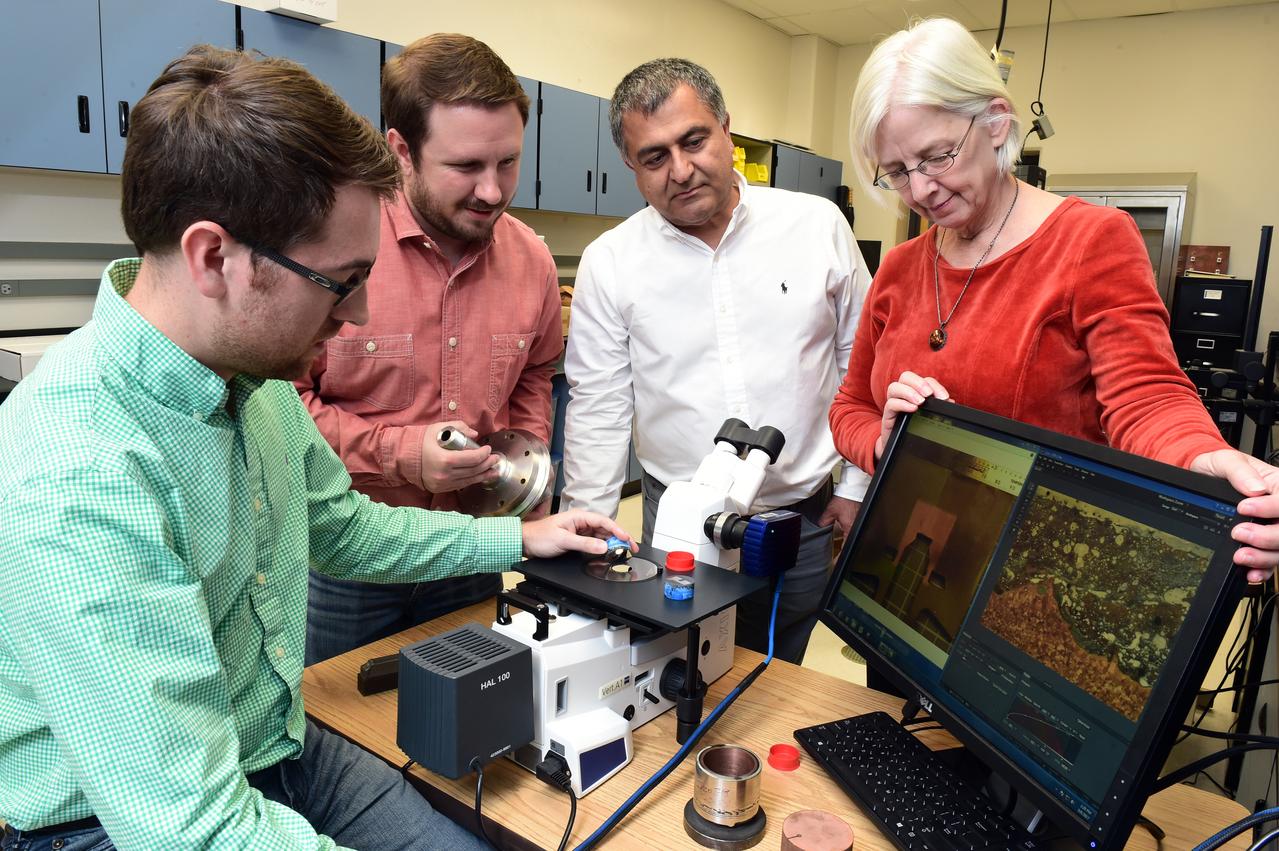
Majid Babai along with Dr. Judy Schneider, and graduate students Chris Hill and Ryan Anderson examine a cross section of the prototype rocket engine igniter created by an innovative bi-metallic 3-D printing advanced manufacturing process under a microscope.

jsc2024e005974 (10/3/2023) --- The production module for Redwire's Manufacturing of Semiconductors and Thin-film Integrated Coating (MSTIC) facility is pictured on the ground. MSTIC produces semiconductors, metallic films, and crystals using advanced techniques in 3D printing. Image courtesy of Redwire.
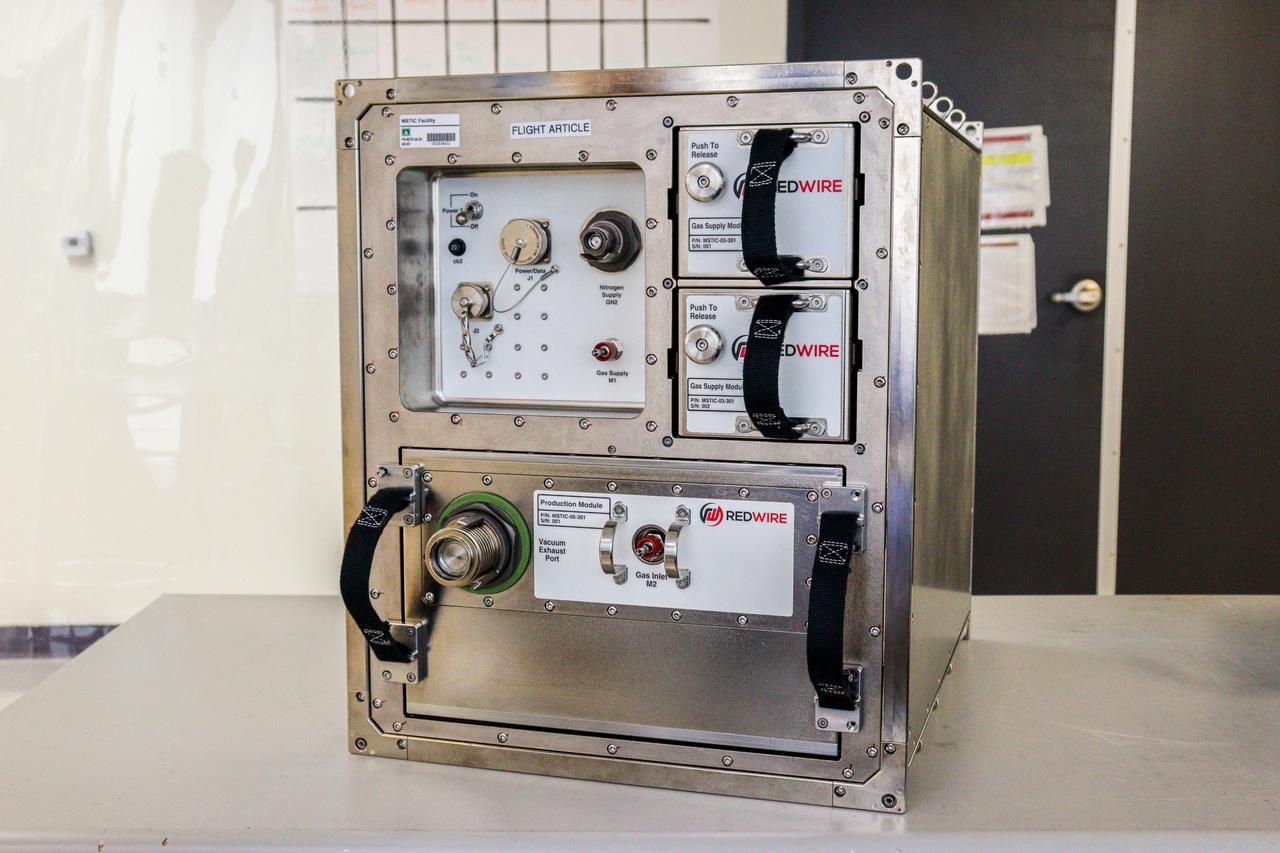
jsc2024e005973 (10/3/2023) --- The gas supply modules and production module for Redwire's Manufacturing of Semiconductors and Thin-film Integrated Coating (MSTIC) facility are pictured on the ground. Redwire's MSTIC facility is an innovative pilot program aimed at advancing the production of semiconductors, metallic films, and crystals aboard the International Space Station. Image courtesy of Redwire.
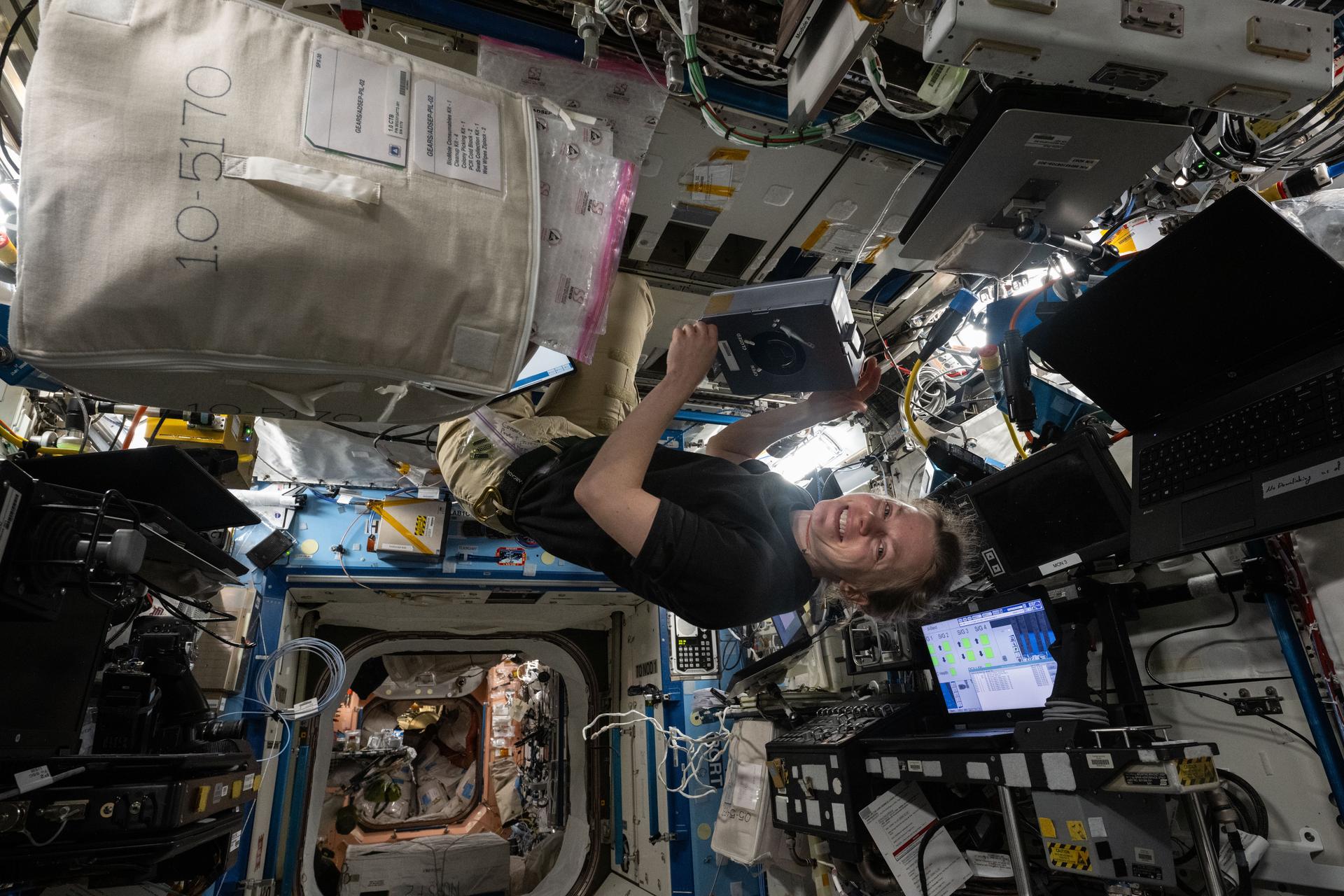
iss073e0817247 (Sept. 30, 2025) --- NASA astronaut and Expedition 73 Flight Engineer Zena Cardman installs sample cassettes into the ADSEP-4 (Advanced Space Experiment Processor) located inside the International Space Station's Destiny laboratory module. She was conducting research operations for the Pharmaceutical In-space Laboratory biotechnology experiment, which is investigating methods to advance pharmaceutical manufacturing in microgravity.
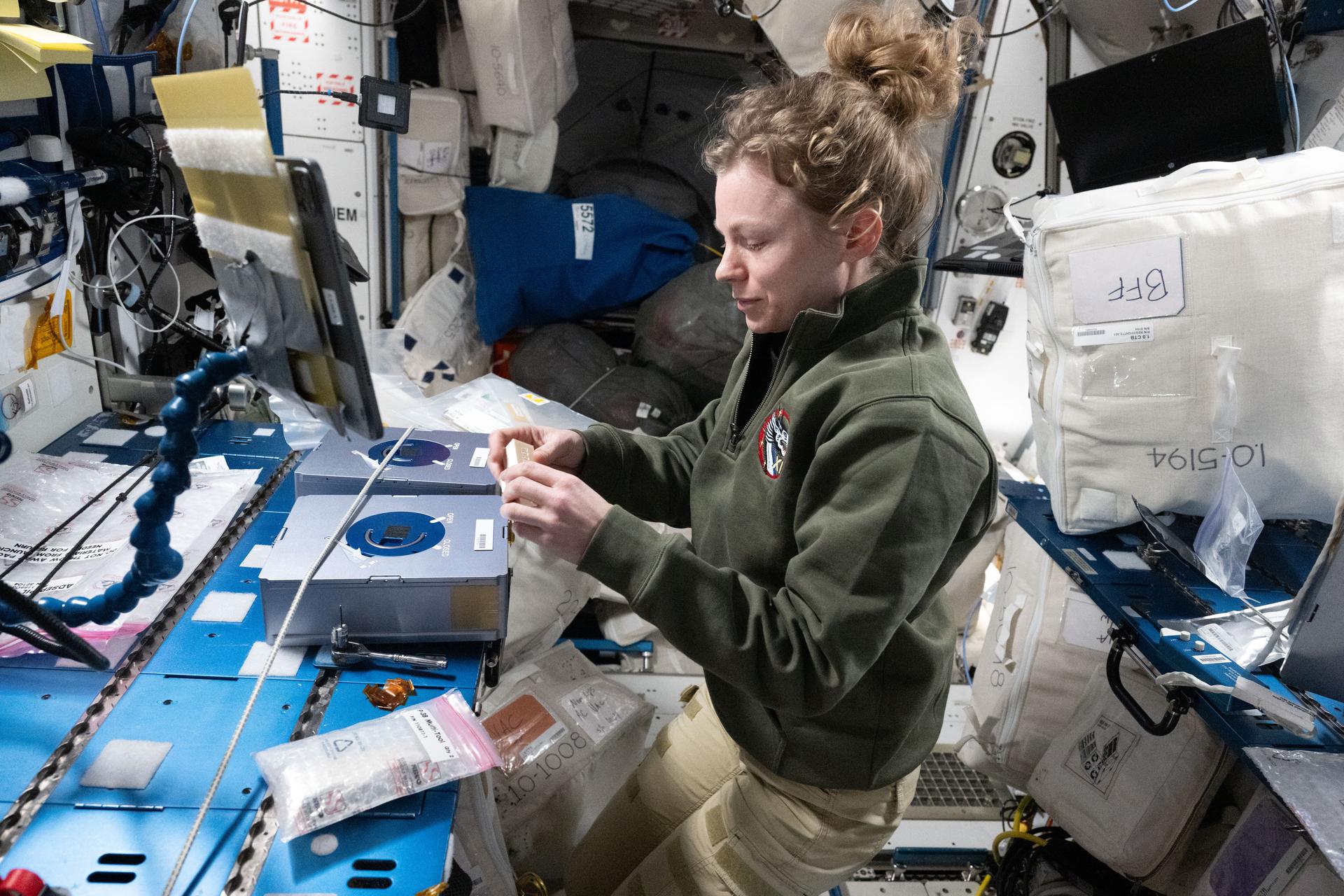
iss073e0865452 (Oct. 7, 2025) --- NASA astronaut and Expedition 73 Flight Engineer Zena Cardman inspects sample cassettes for installation into the Advanced Space Experiment Processor-4 (ADSEP-4) at the maintenance work area inside the International Space Station's Harmony module. She was conducting research operations for the Pharmaceutical In-space Laboratory biotechnology experiment, which is investigating methods to advance pharmaceutical manufacturing in microgravity.
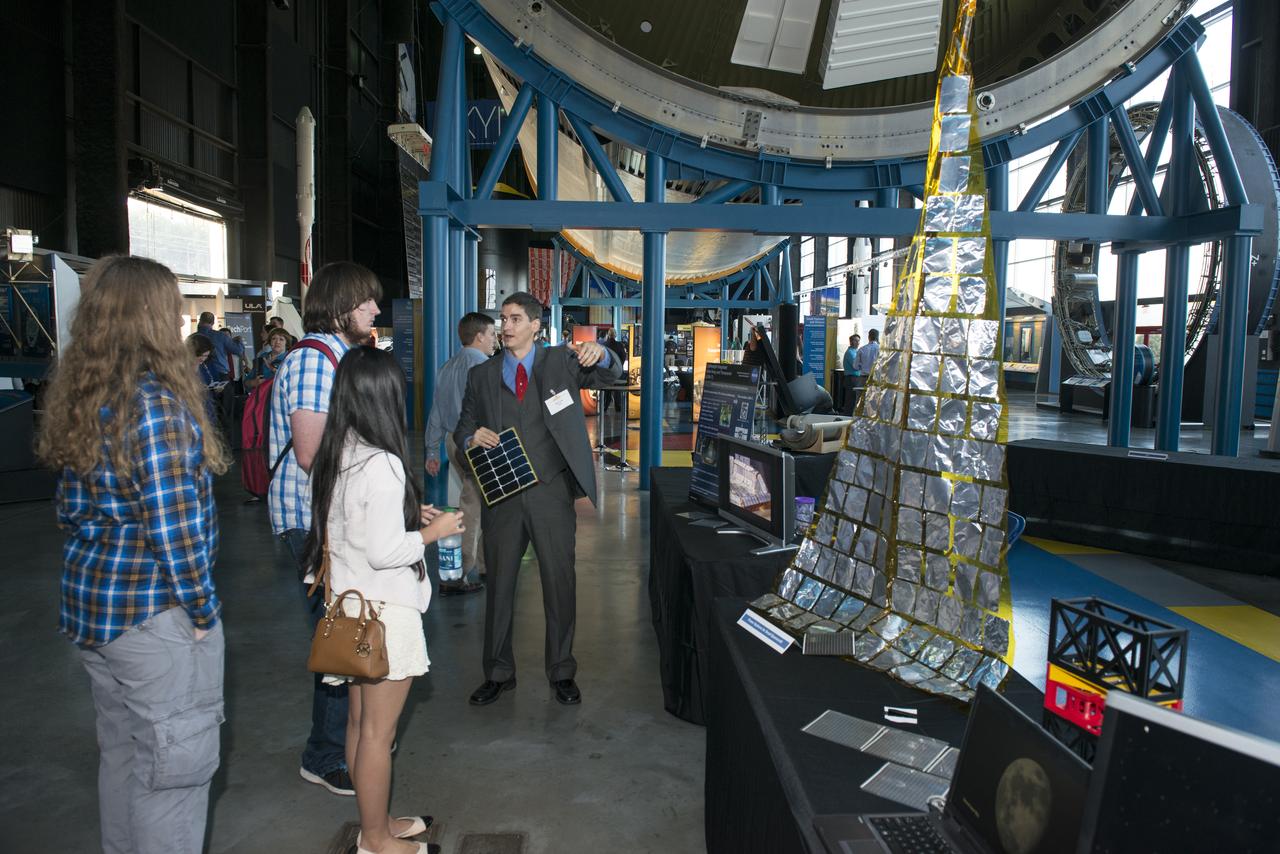
DURING THE MARSHALL TECHNOLOGY EXPO, HELD AT THE DAVIDSON CENTER FOR SPACE EXPLORATION, HUNDREDS OF PARTICIPANTS -- INCLUDING AREA HIGH SCHOOL STUDENTS –VISITED DOZENS OF BOOTHS AND EXHIBITS SHOWCASING EMERGING TECHNOLOGIES AND IN-HOUSE CAPABILITIES OF THE MARSHALL CENTER. EXPO PARTICIPANTS INCLUDED NASA TEAM MEMBERS, ALONG WITH AEROSPACE PROFESSIONALS FROM GOVERNMENT, INDUSTRY AND ACADEMIA, ALL INTERESTED IN ADVANCEMENTS WITH PROPULSION, AVIONICS, ADVANCED MANUFACTURING AND MORE.
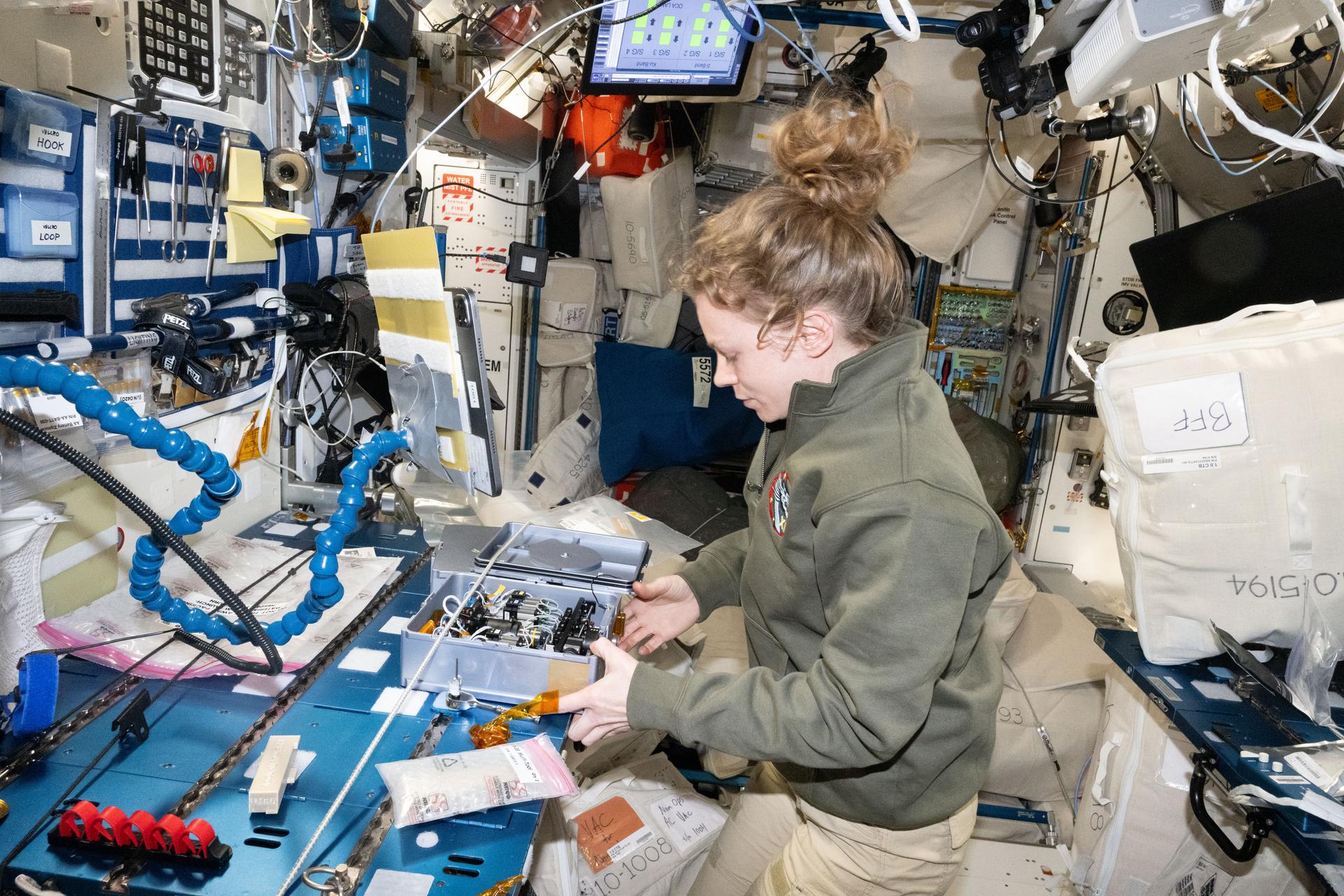
iss073e0865458 (Oct. 7, 2025) --- NASA astronaut and Expedition 73 Flight Engineer Zena Cardman inspects sample cassettes for installation into the Advanced Space Experiment Processor-4 (ADSEP-4) at the maintenance work area inside the International Space Station's Harmony module. She was conducting research operations for the Pharmaceutical In-space Laboratory biotechnology experiment, which is investigating methods to advance pharmaceutical manufacturing in microgravity.
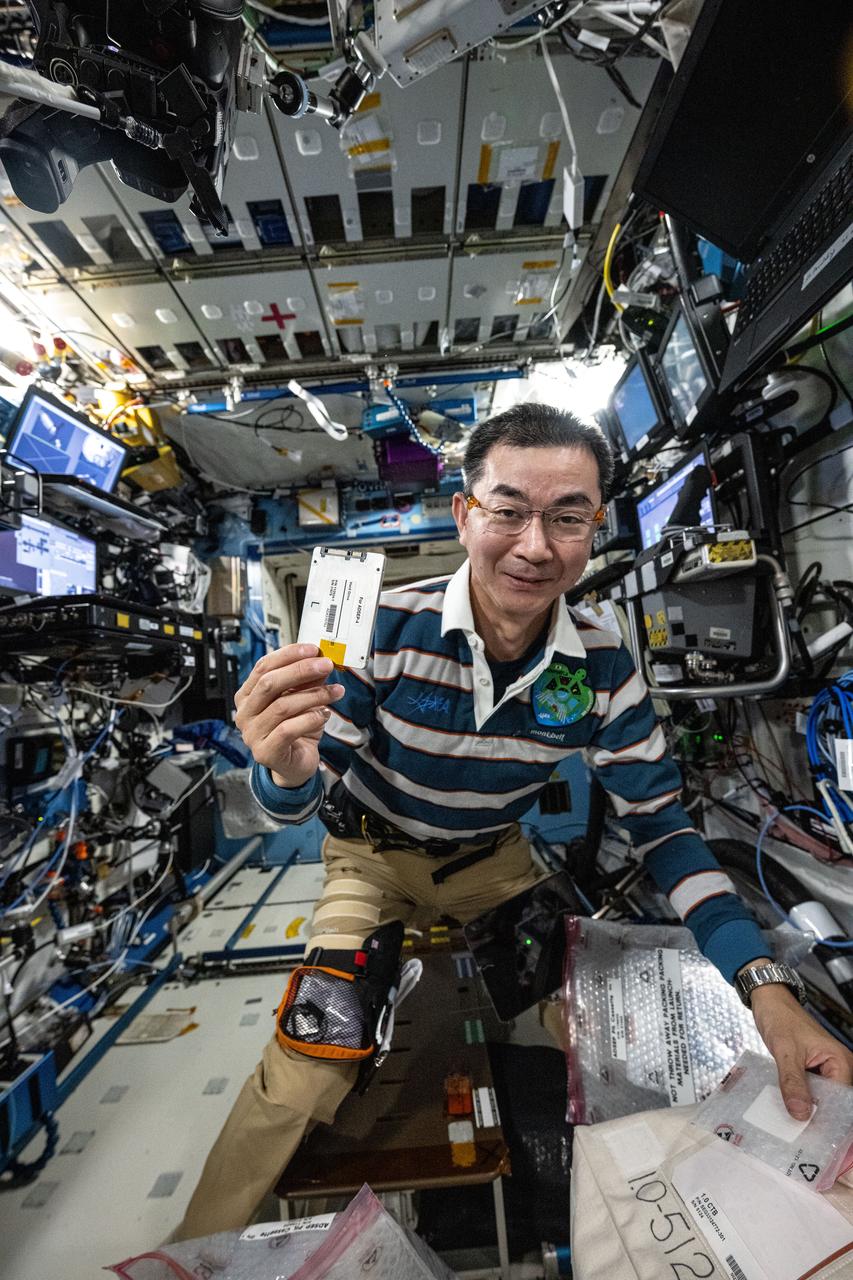
iss073e0704127 (Sept. 19, 2025) --- JAXA (Japan Aerospace Exploration Agency) astronaut and Expedition 73 Flight Engineer Kimiya Yui shows off a research hard drive for an investigation exploring how to manufacture advanced pharmaceuticals off the Earth. The hard drive is part of the International Space Station's Advanced Space Experiment Processor-4 (ADSEP-4) that process samples for a variety of biology and physics experiments in microgravity.
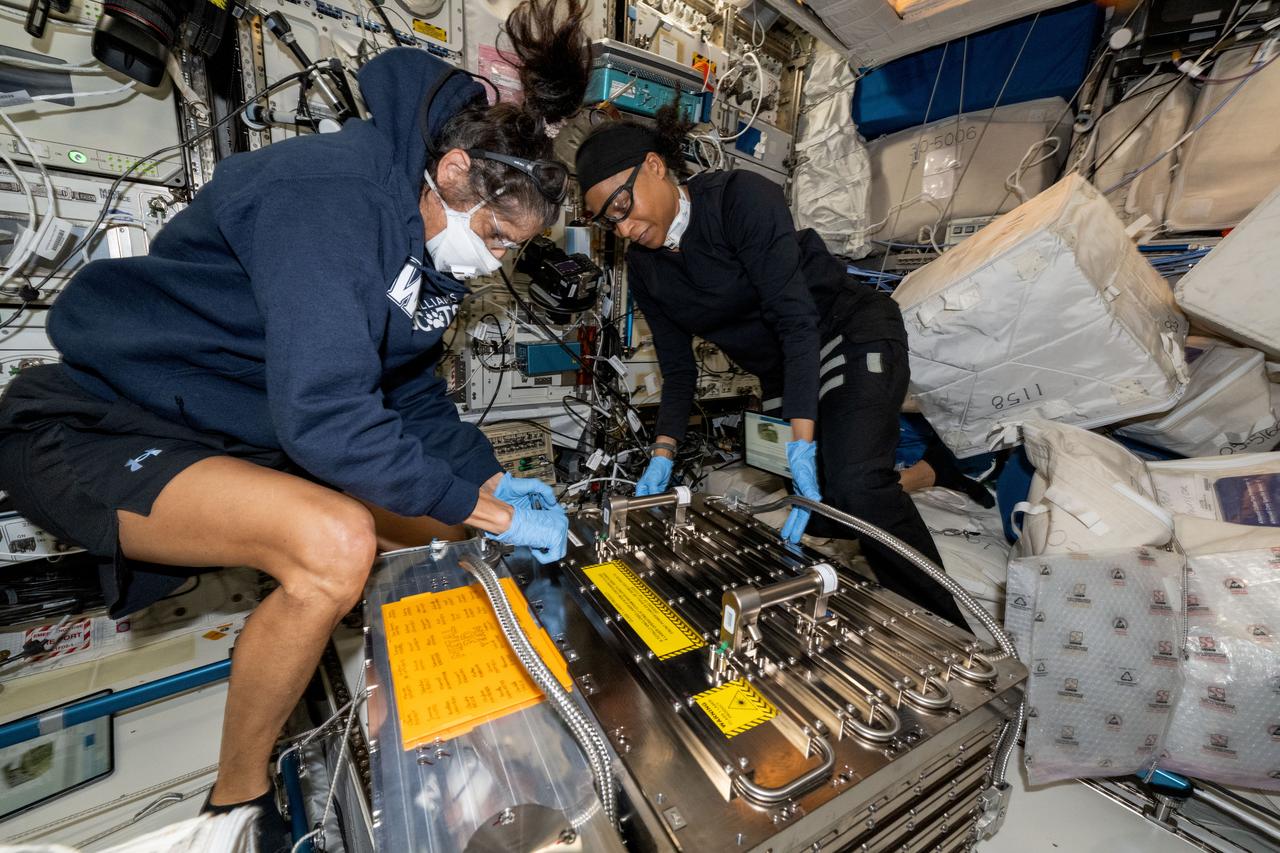
iss071e523326 (Aug. 21, 2024) --- NASA astronauts (from left) Suni Williams, Pilot for Boeing's Crew Flight Test, and Jeanette Epps, Expedition 71 Flight Engineer, configure the Metal 3D printer inside the Columbus laboratory module. They retrieved an experimental sample printed with stainless steel, replaced a substrate in the advanced manufacturing hardware, then reinstalled the 3D printer back in Columbus' European Drawer Rack-2. Researchers are exploring how the Metal 3D printer operates in the microgravity conditions of weightlessness and radiation as well as its ability to manufacture tools and parts on demand during space missions.
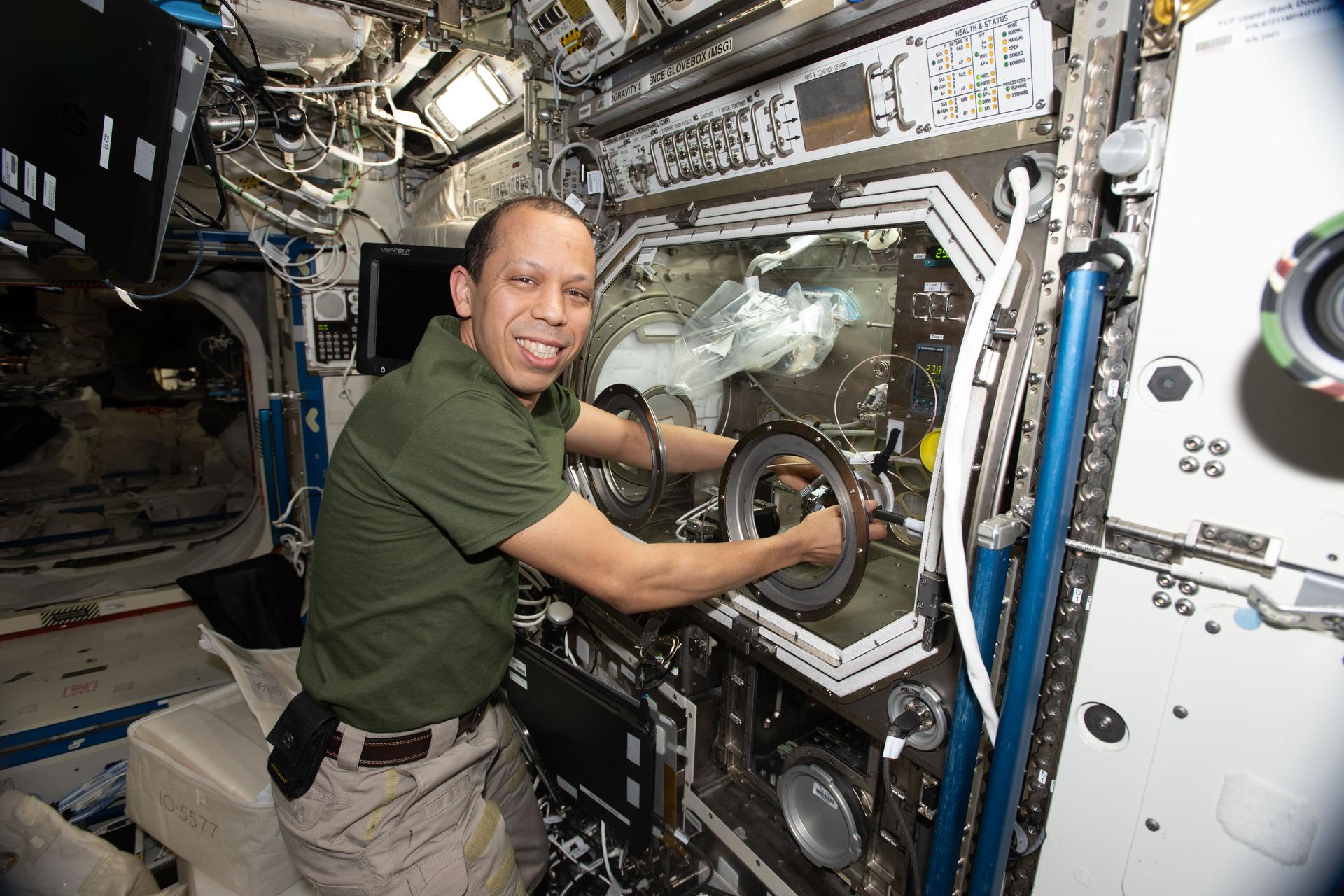
iss074e0620142 (May 28, 2026) --- NASA astronaut and Expedition 74 Flight Engineer Chris Williams replaces sample hardware inside the Destiny laboratory module’s Microgravity Science Glovebox aboard the International Space Station to support semiconductor crystal research. Growing crystals in weightlessness may enable future large-scale semiconductor manufacturing, advancing the commercial space economy and supporting Earth-based industries. Credit: NASA/Jack Hathaway
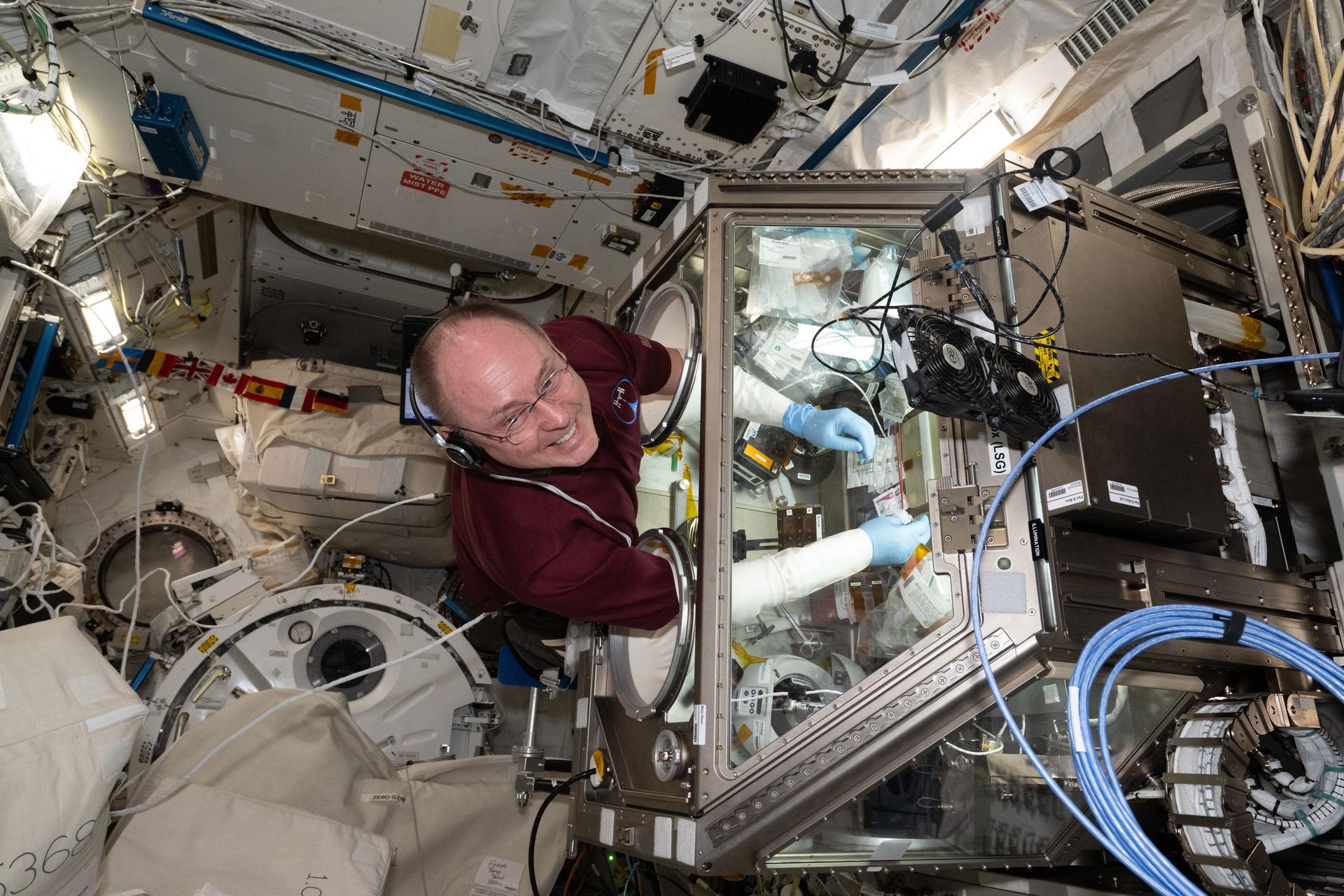
iss073e1046752 (Oct. 31, 2025) --- NASA astronaut and Expedition 73 Flight Engineer Mike Fincke conducts research operations inside the Life Science Glovebox aboard the International Space Station’s Kibo laboratory module. Fincke was assisting scientists in studying the behavior, growth, and differentiation of stem cells, and how they can be converted into brain or heart cells in microgravity. The results could lead to advancements in crew health monitoring and drug manufacturing in space, as well as new treatments for heart and neurodegenerative diseases on Earth.
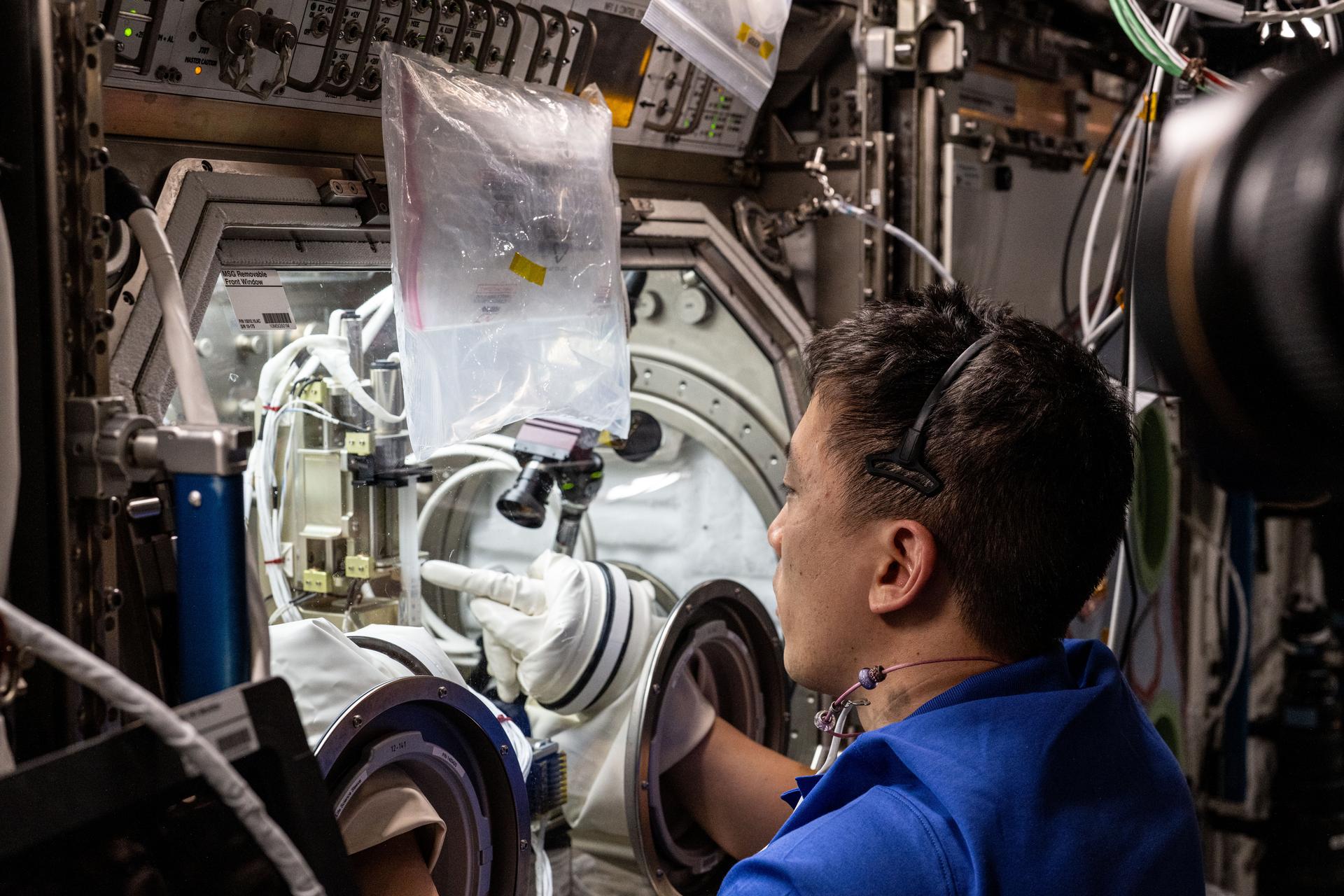
iss073e0177558 (June 12, 2025) -- NASA astronaut Jonny Kim works in the International Space Station’s Microgravity Science Glovebox on Ring Sheared Drop-IBP-2. This investigation studies the behavior of high-concentration protein fluids in microgravity using a special device that holds liquid protein solutions without containers, eliminating interference from interactions with container walls. Results could help advance manufacturing processes and 3D printing in space and for production of medicines, microelectronics, foods, and medical devices on Earth.
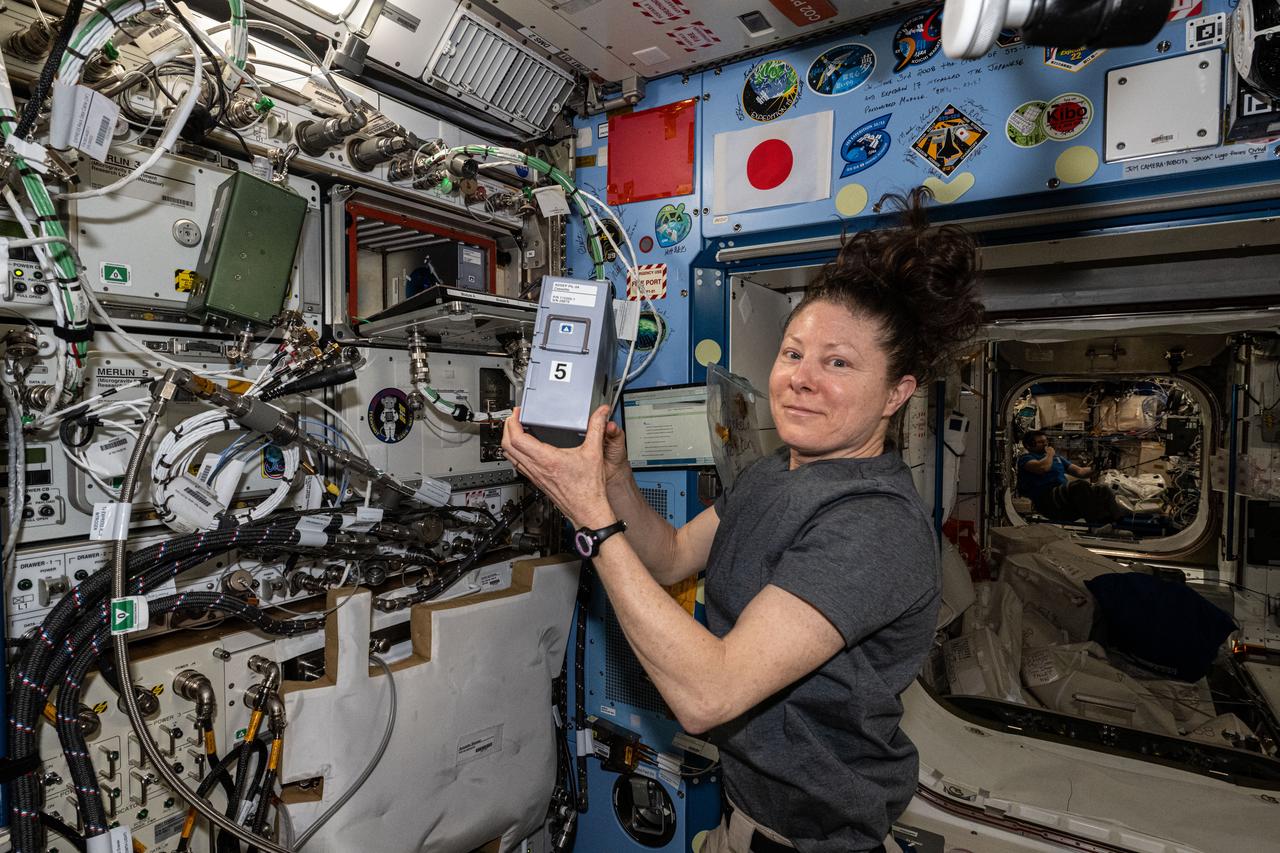
iss071e515505 (Aug. 20, 2024) --- NASA astronaut and Expedition 71 Flight Engineer Tracy C. Dyson displays a sample processor for the Pharmaceutical In-space Laboratory experiment that is exploring the production and manufacturing of medicines to benefit astronauts in space and humans on Earth. She installed the processor in the Advanced Space Experiment Processor, or ADSEP, that can house a variety of research samples and be delivered to the International Space Station and returned to Earth aboard the SpaceX Dragon cargo craft.
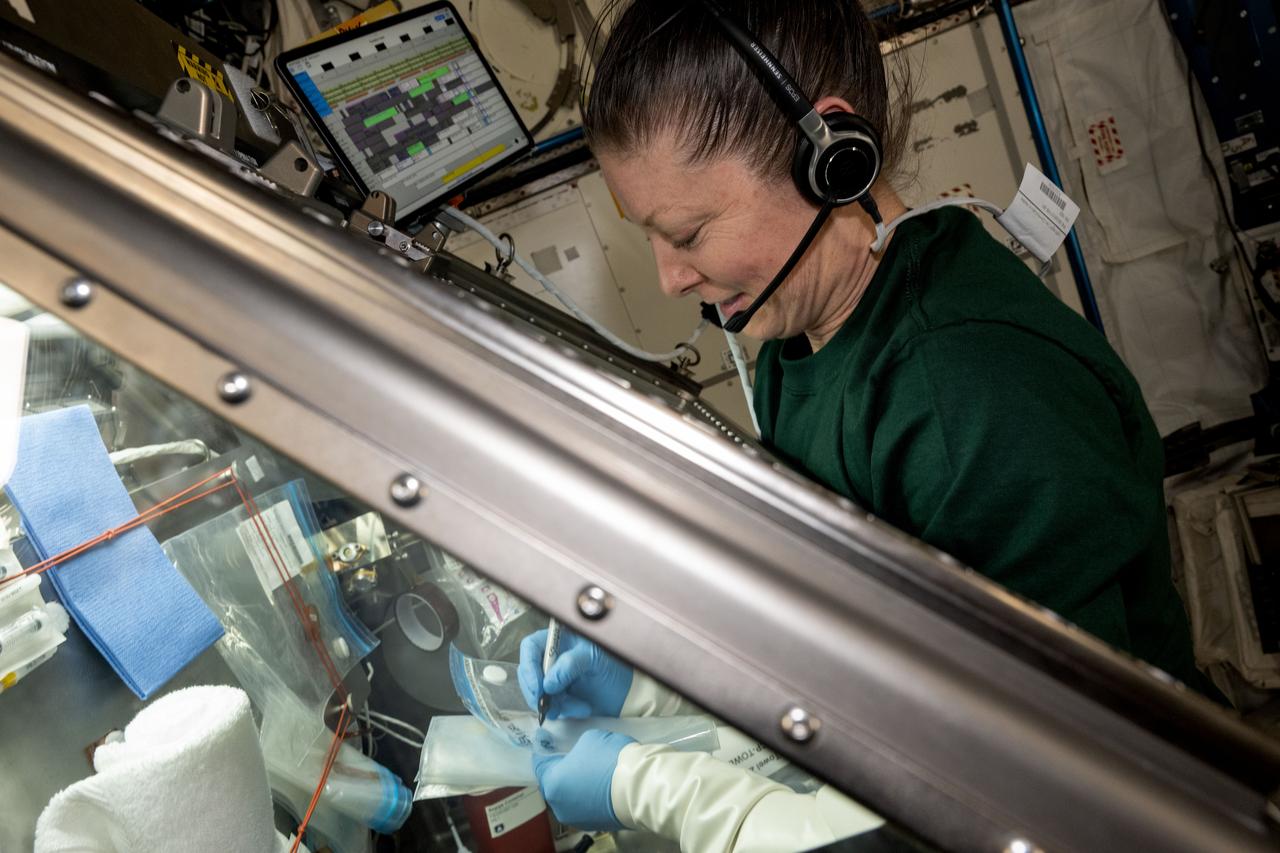
iss071e485590 (Aug. 14, 2024) --- NASA astronaut and Expedition 71 Flight Engineer Tracy C. Dyson cleans the inside of the Life Science Glovebox located aboard the International Space Station's Kibo laboratory. Dyson had earlier completed stem cell research operations exploring ways to advance cellular manufacturing and improve human health.
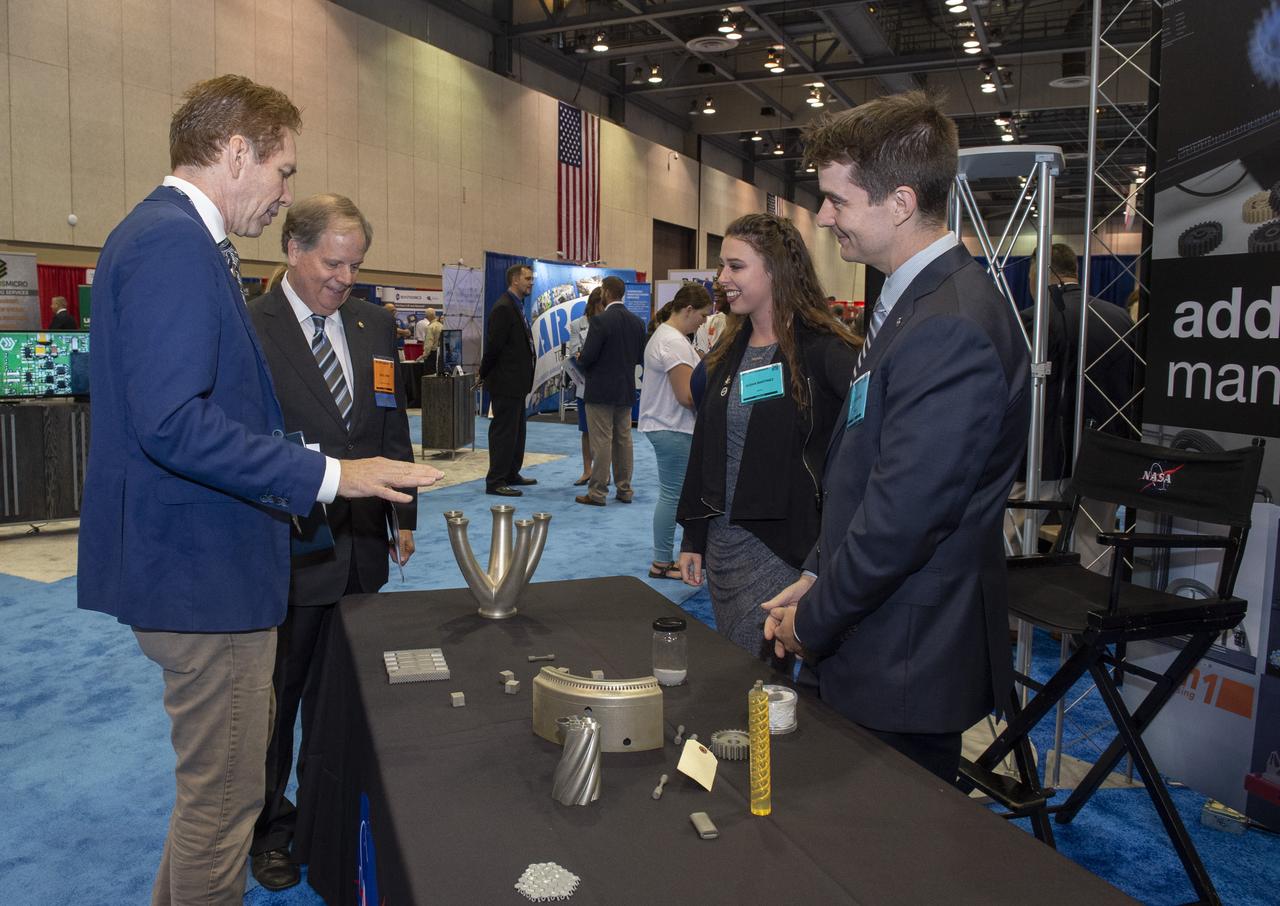
Marshall Space Flight Center Deputy Director Paul McConnaughey, left, discusses advanced manufacturing capabilities with Sen. Doug Jones of Alabama, second from left, Aug. 7 at the annual Space & Missile Defense Symposium in Huntsville, Alabama. The NASA exhibit, staffed by materials engineers Susan Barber, center, and Zack Jones, right, showcased some of the technologies, missions and hardware that will help enable humans to return to the Moon through the agency’s Artemis program.
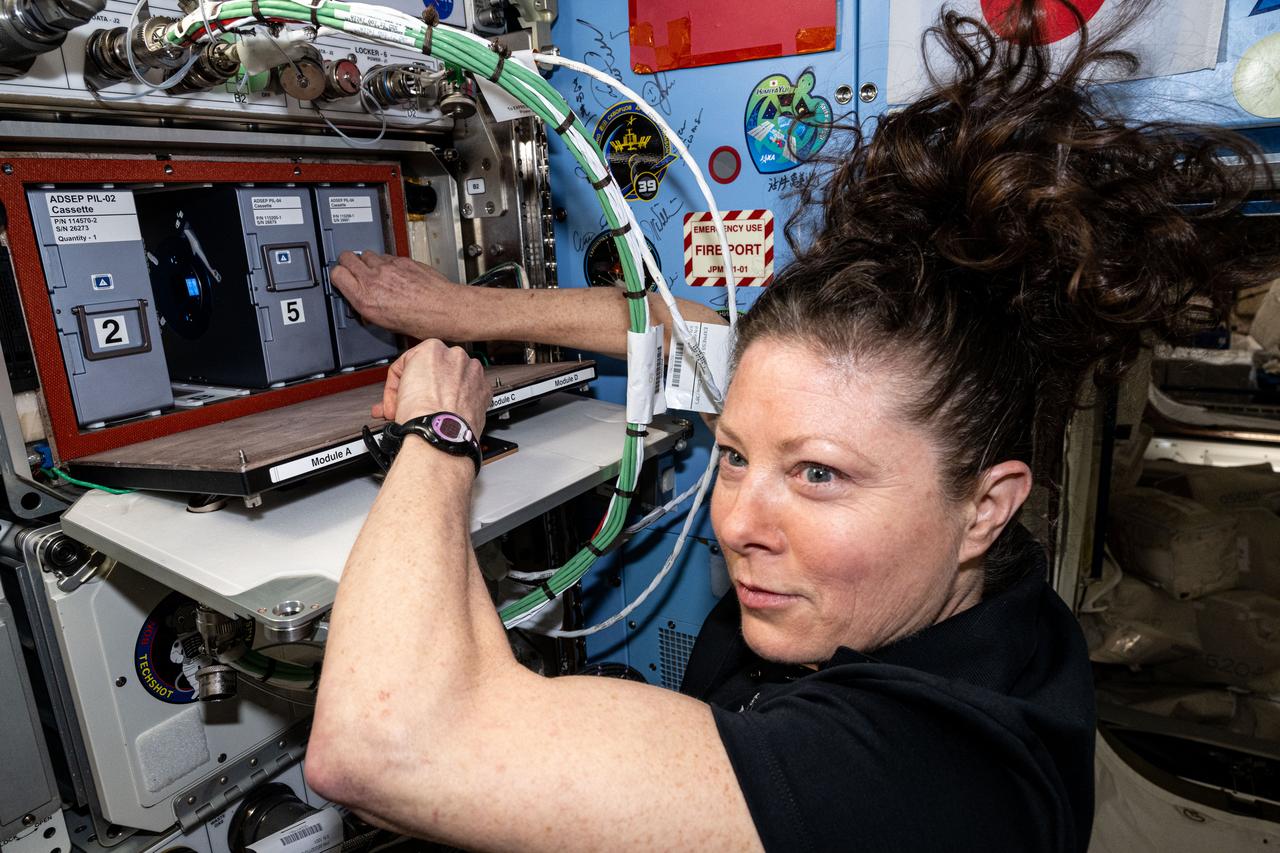
iss071e486706 (Aug. 15, 2024) --- NASA astronaut and Expedition 71 Flight Engineer Tracy C. Dyson swaps out sample processors for the Pharmaceutical In-space Laboratory experiment that is exploring the production and manufacturing of medicines to benefit astronauts in space and humans on Earth. The processors were installed in the Advanced Space Experiment Processor, or ADSEP, that can process a variety of research samples and be delivered to the International Space Station and returned to Earth aboard the SpaceX Dragon cargo craft.
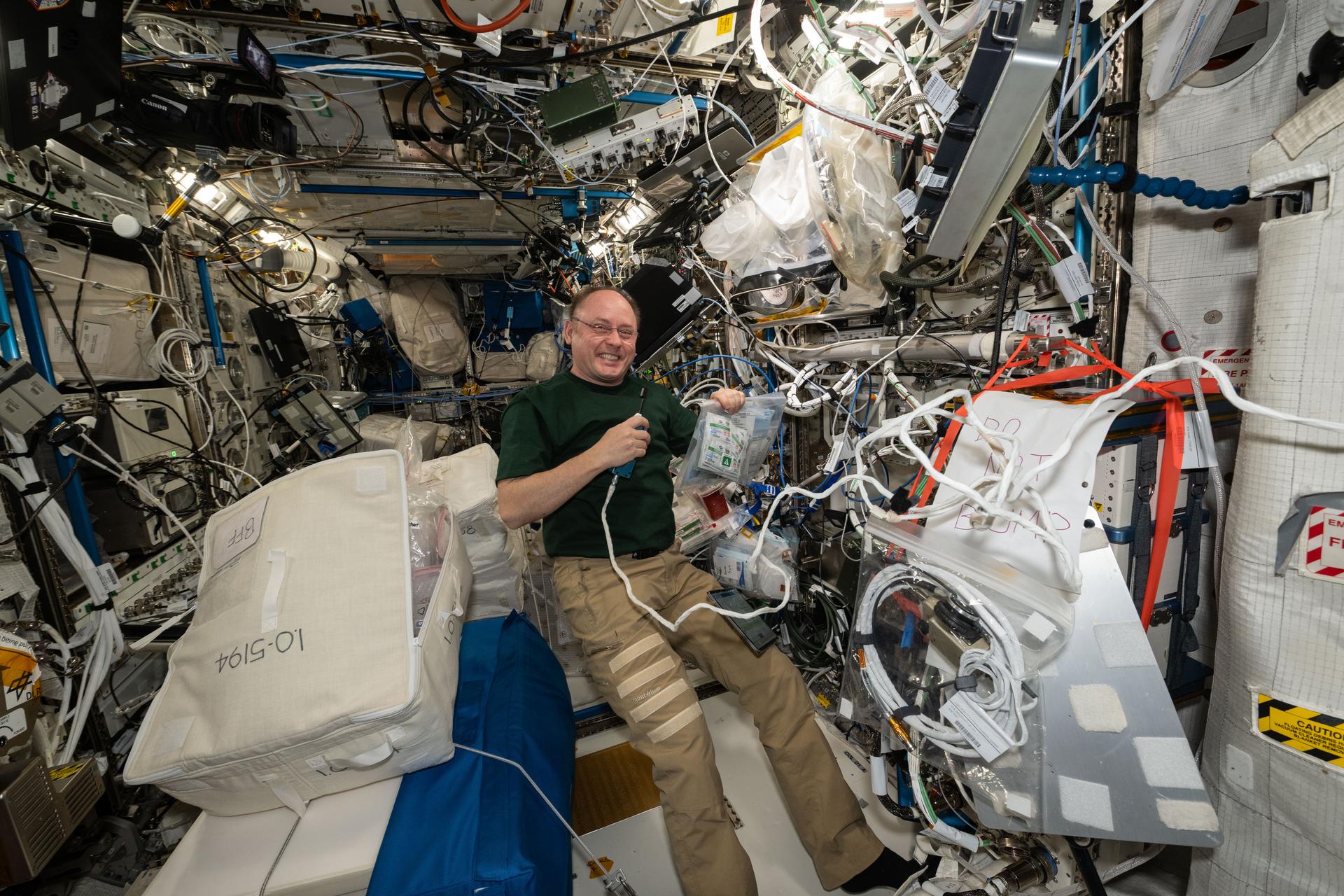
iss073e0880232 (Oct. 14, 2025) --- NASA astronaut and Expedition 73 Flight Engineer Mike Fincke smiles for a portrait during maintenance on the BioFabrication Facility inside the International Space Station's Columbus laboratory module. This advanced 3D bioprinter is designed to print organ-like tissues in microgravity, demonstrating the potential to manufacture fully functional human organs using a patient’s own cells.
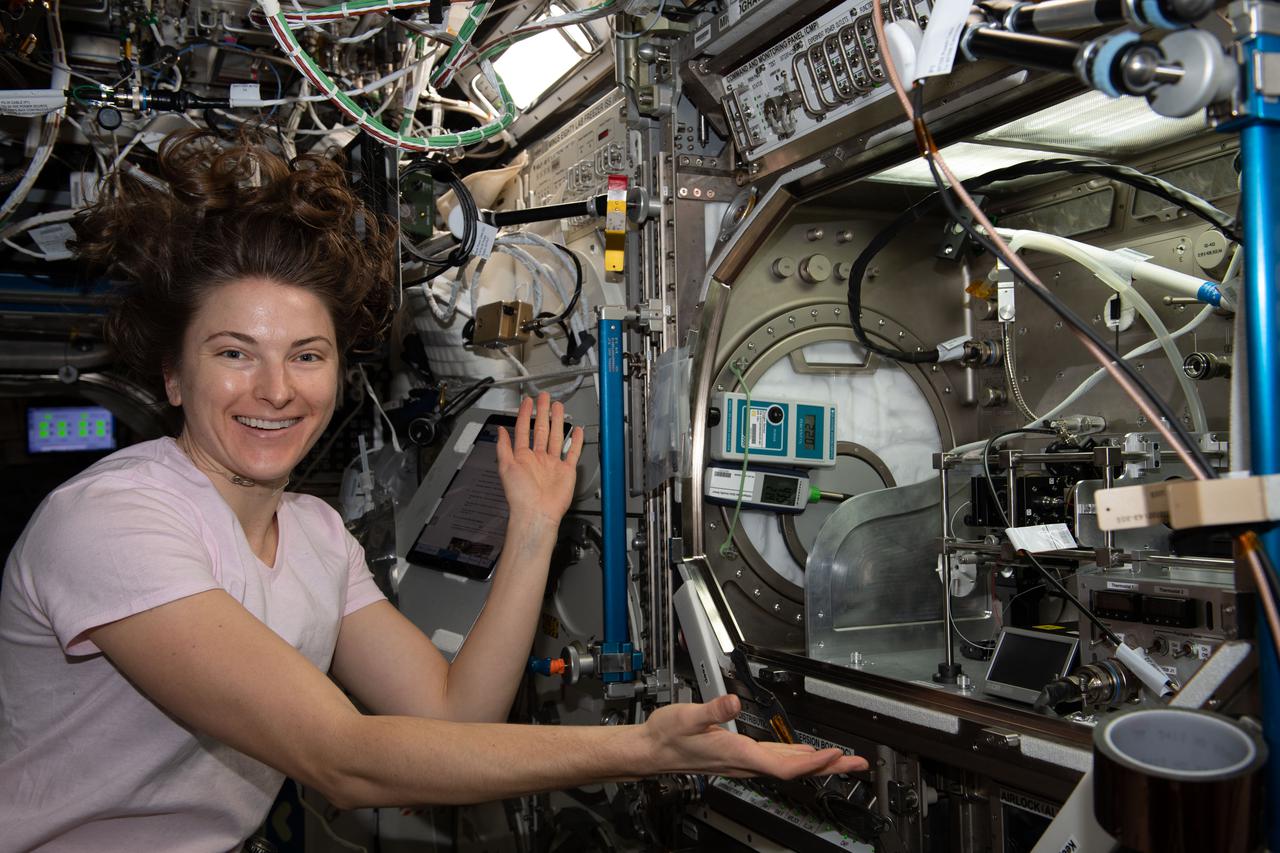
iss066e156064 (March 2, 2022) --- NASA astronaut and Expediiton 66 Flight Engineer Kayla Barron sets up hardware for the Intelligent Glass Optics investigation in the International Space Station's Microgravity Science Glovebox located in the U.S. Destiny laboratory. The advanced physics study may provide insights into manufacturing systems for Earth and space including communications, aerospace, and medical diagnostics.
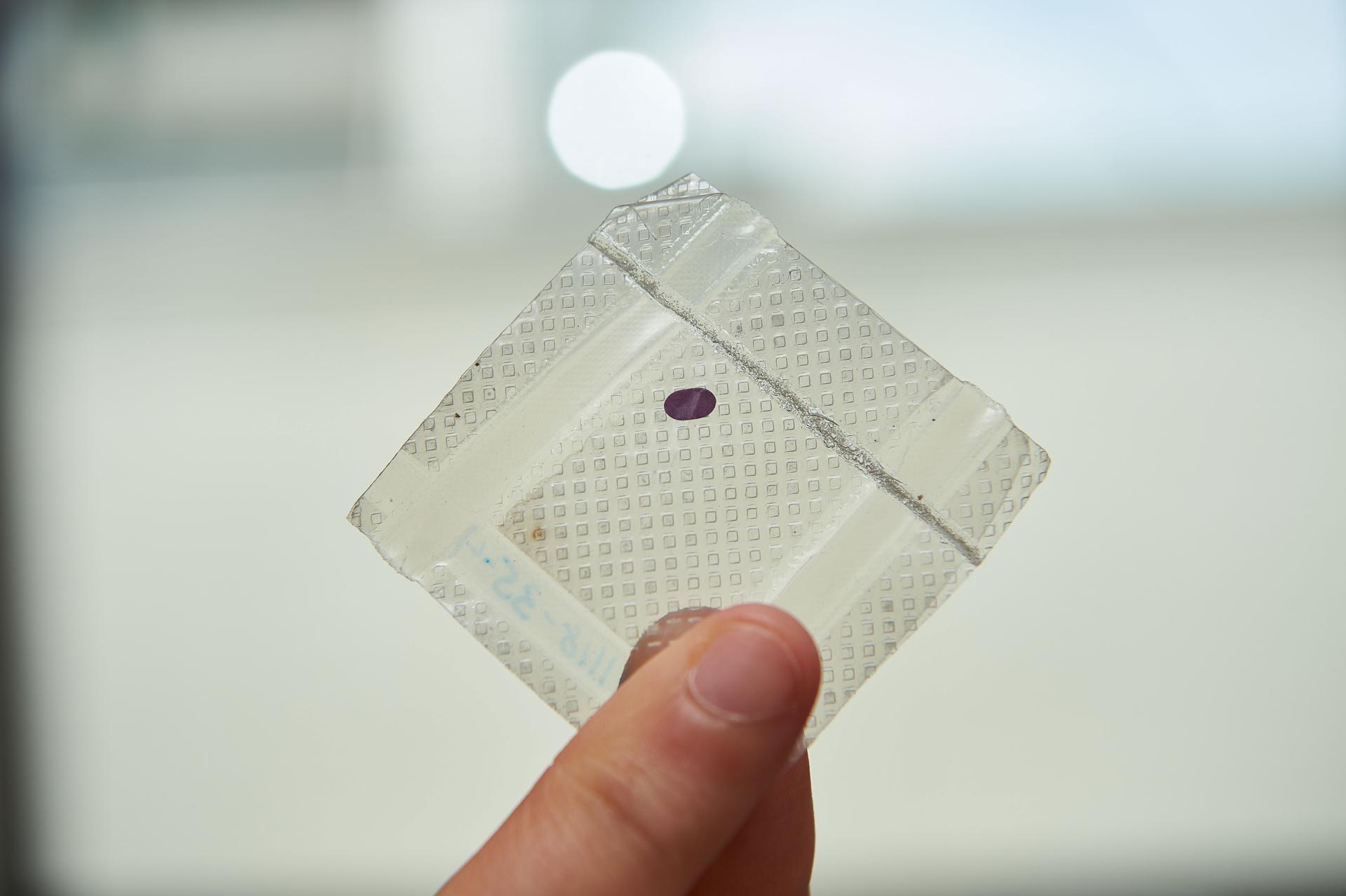
jsc2026e416054 (September 15, 2026) --- Image of an artificial retina produced on Earth for comparison to a space construct as part of LambdaVision-1. This investigation demonstrates optimized flight hardware and successful layering of artificial retinas to to assess microgravity production. Investigation results could advance manufacturing approaches for retinal implants and support technologies aimed at restoring vision for patients with degenerative eye diseases. Credit: LambdaVision.
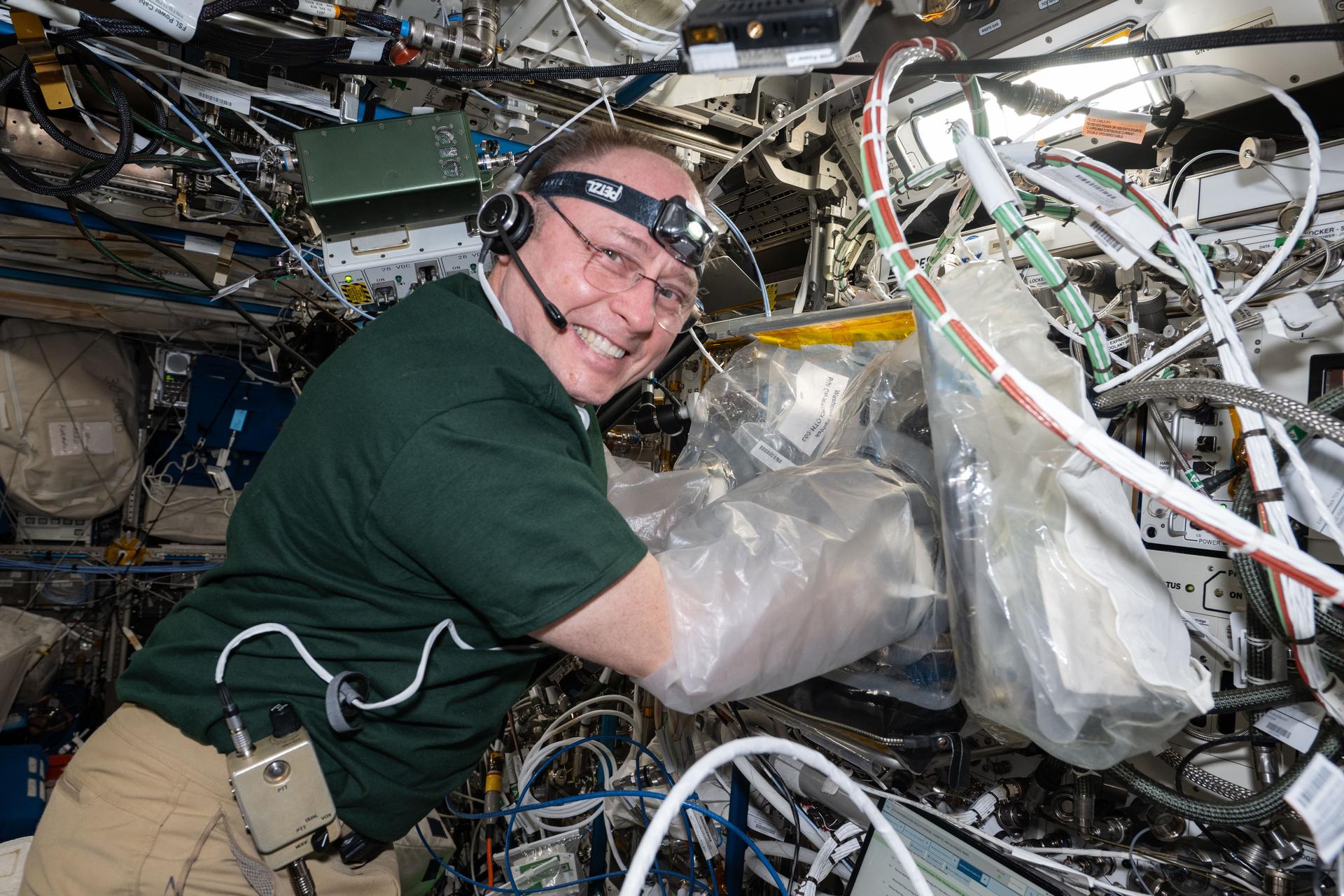
iss073e0880239 (Oct. 14, 2025) --- NASA astronaut and Expedition 73 Flight Engineer Mike Fincke conducts maintenance on the BioFabrication Facility inside the International Space Station's Columbus laboratory module. The advanced 3D bioprinter is designed to print organ-like tissues in microgravity, demonstrating the potential to manufacture fully functional human organs using a patient’s own cells.
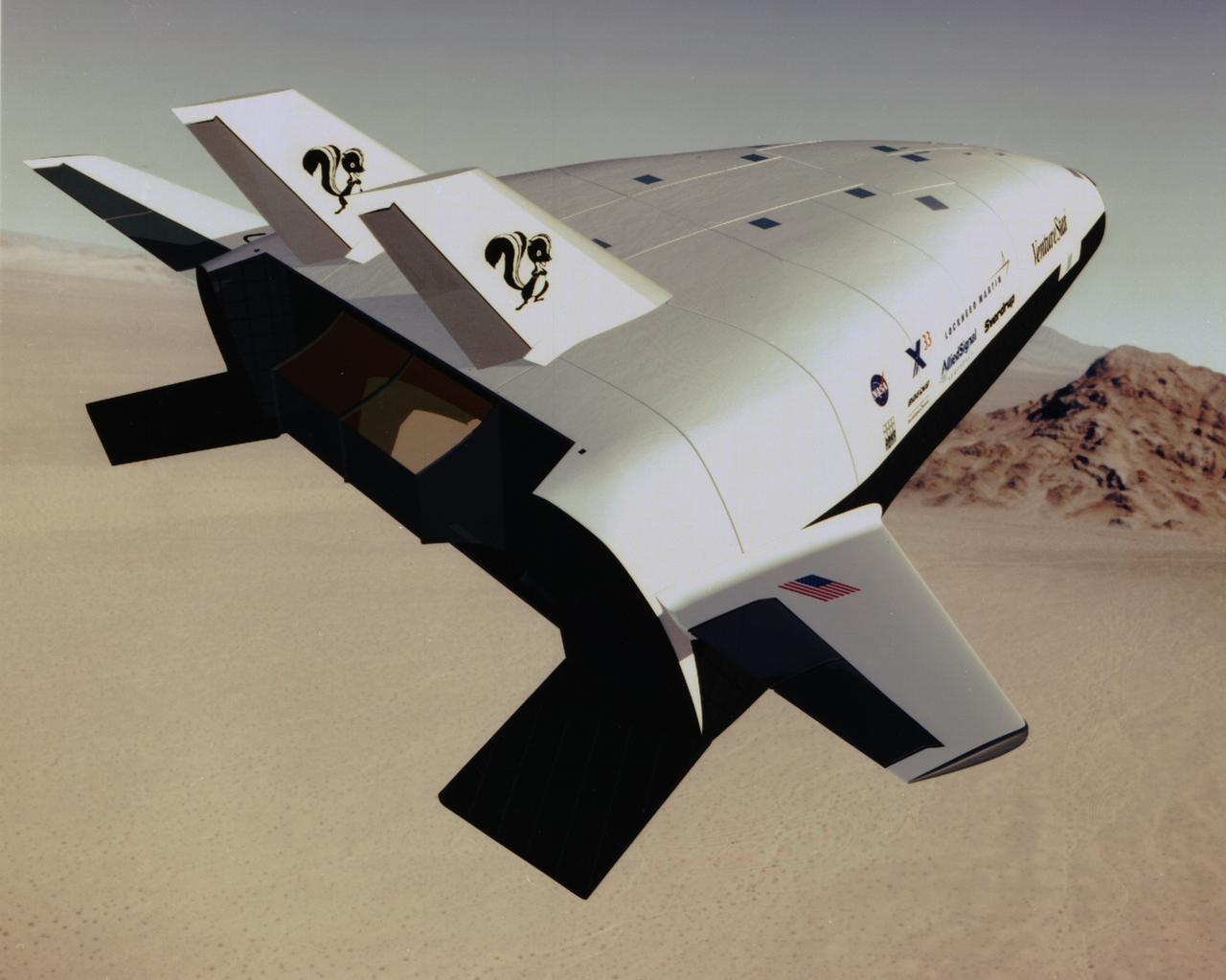
This artist’s concept is of the X-33 Advanced Technology Demonstrator, a subscale prototype Reusable Launch Vehicle (RLV), in its 1997 configuration. Named the Venture Star, this vehicle manufactured by Lockheed Martin Skunk Works, is shown in orbit with a deployed payload. The Venture Star was one of the earliest versions of the RLV’s developed in attempt to replace the aging shuttle fleet. The X-33 program has been discontinued.
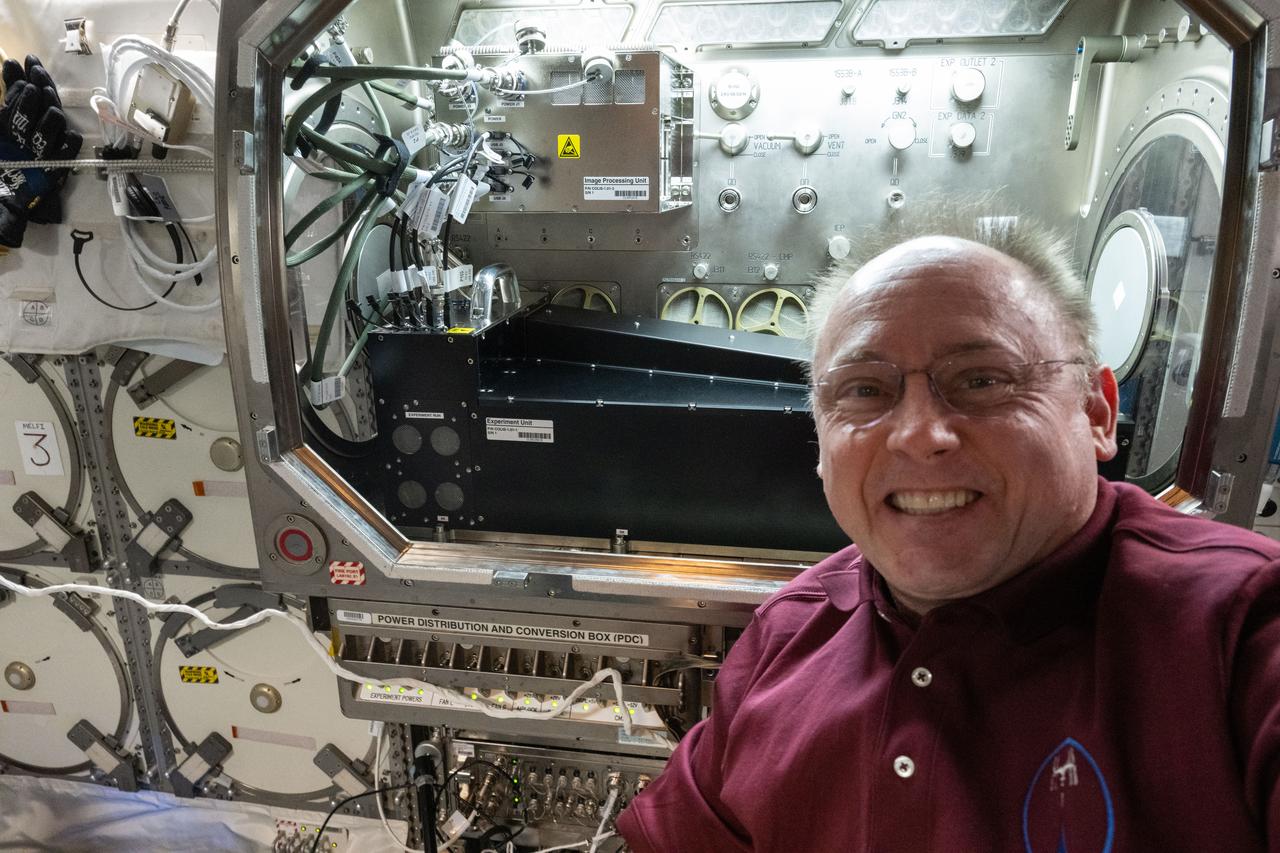
iss073e0606547 (Sept. 4, 2025) --- NASA astronaut and Expedition 73 Flight Engineer Mike Fincke poses for a portrait in front of the Microgravity Science Glovebox (MSG) inside the International Space Station’s Destiny laboratory. Fincke installed the Colloidal Solids research hardware in the MSG to explore pharmaceutical manufacturing and 3D printing techniques in microgravity—research that could advance human health both in space and on Earth.

iss068e045093 (Feb. 3, 2023) --- NASA astronaut and Expedition 68 Flight Engineer Frank Rubio sets up the new Particle Vibration experiment inside the Destiny laboratory module’s Microgravity Science Glovebox. The physics study will investigate how particles organize themselves in fluids possibly advancing manufacturing techniques and providing new insights on astrophysics.
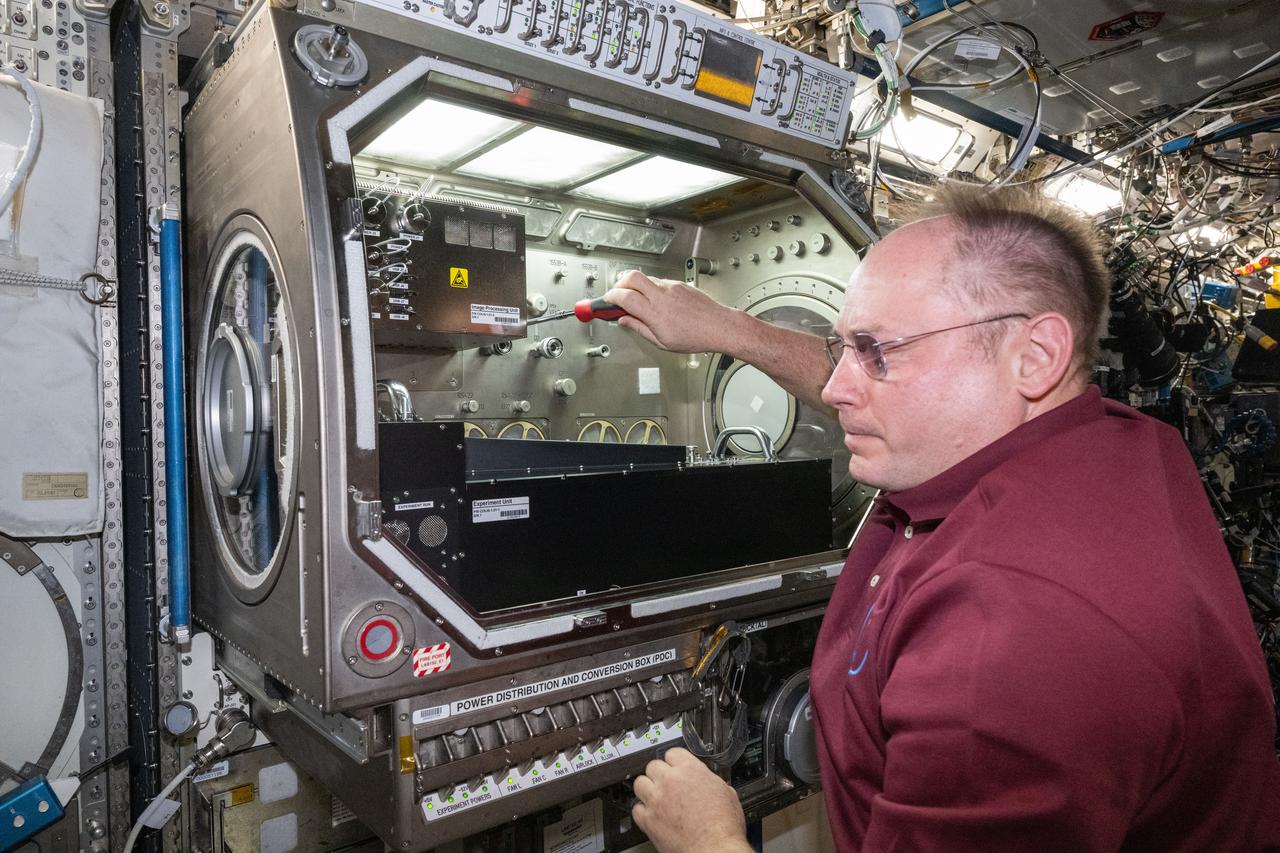
iss073e0606528 (Sept. 4, 2025) --- NASA astronaut and Expedition 73 Flight Engineer Mike Fincke sets up the Colloidal Solids research hardware inside the Destiny laboratory module’s Microgravity Science Glovebox aboard the International Space Station. The physics study is investigating pharmaceutical manufacturing and 3D printing techniques in space potentially advancing human health on and off the Earth.
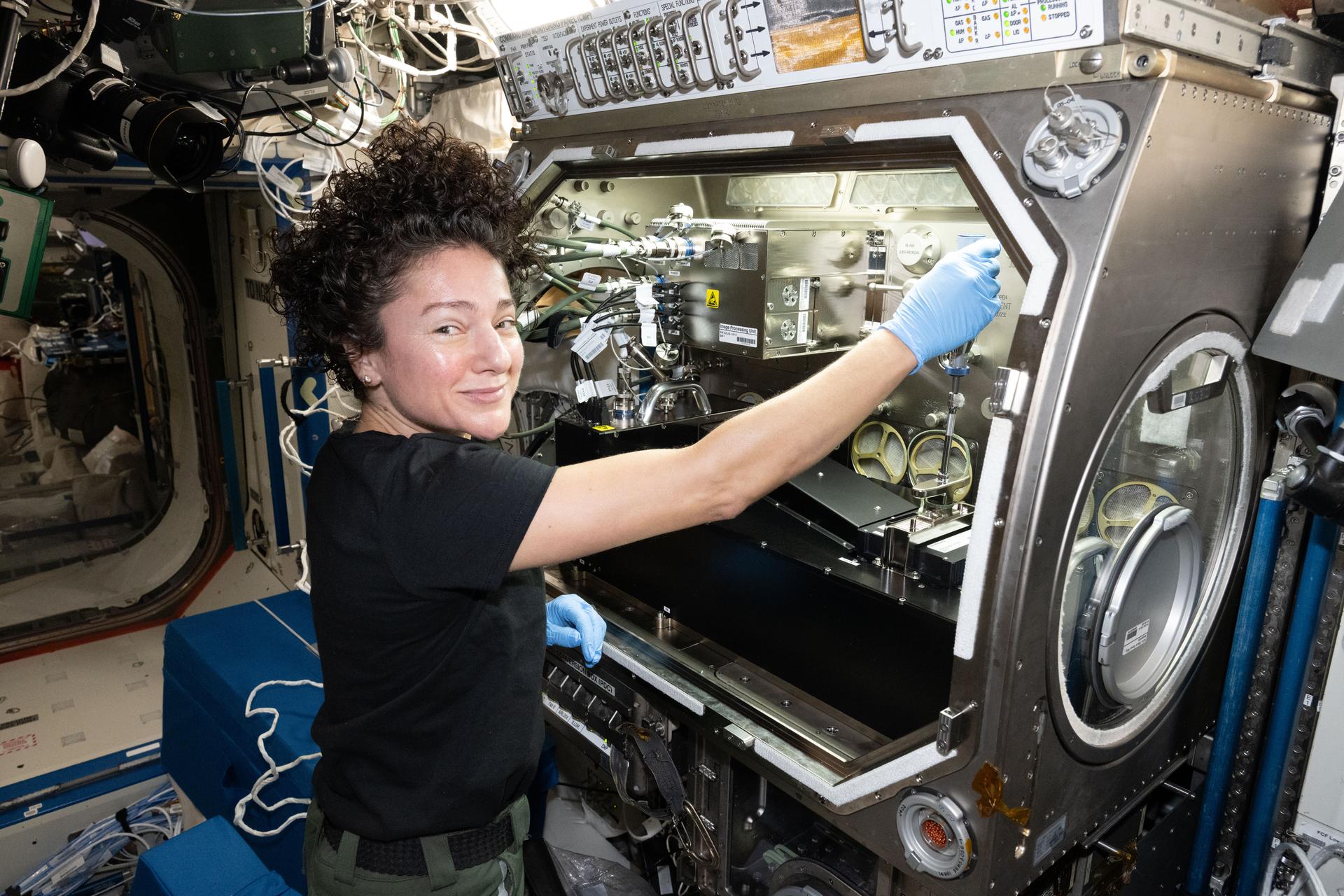
iss074e0541212 (April 29, 2026) --- NASA astronaut and Expedition 74 flight engineer Jessica Meir configures research gear inside the Destiny laboratory module's Microgravity Science Glovebox aboard the International Space Station. Meir was exploring how weightlessness affects tiny particles floating in a gelatin-like substance, known as a colloidal solid. Results may lead to advanced manufacturing techniques leading to new medicines, better food textures, and improved personal care products on Earth and in space. Credit: NASA/Jessica Meir
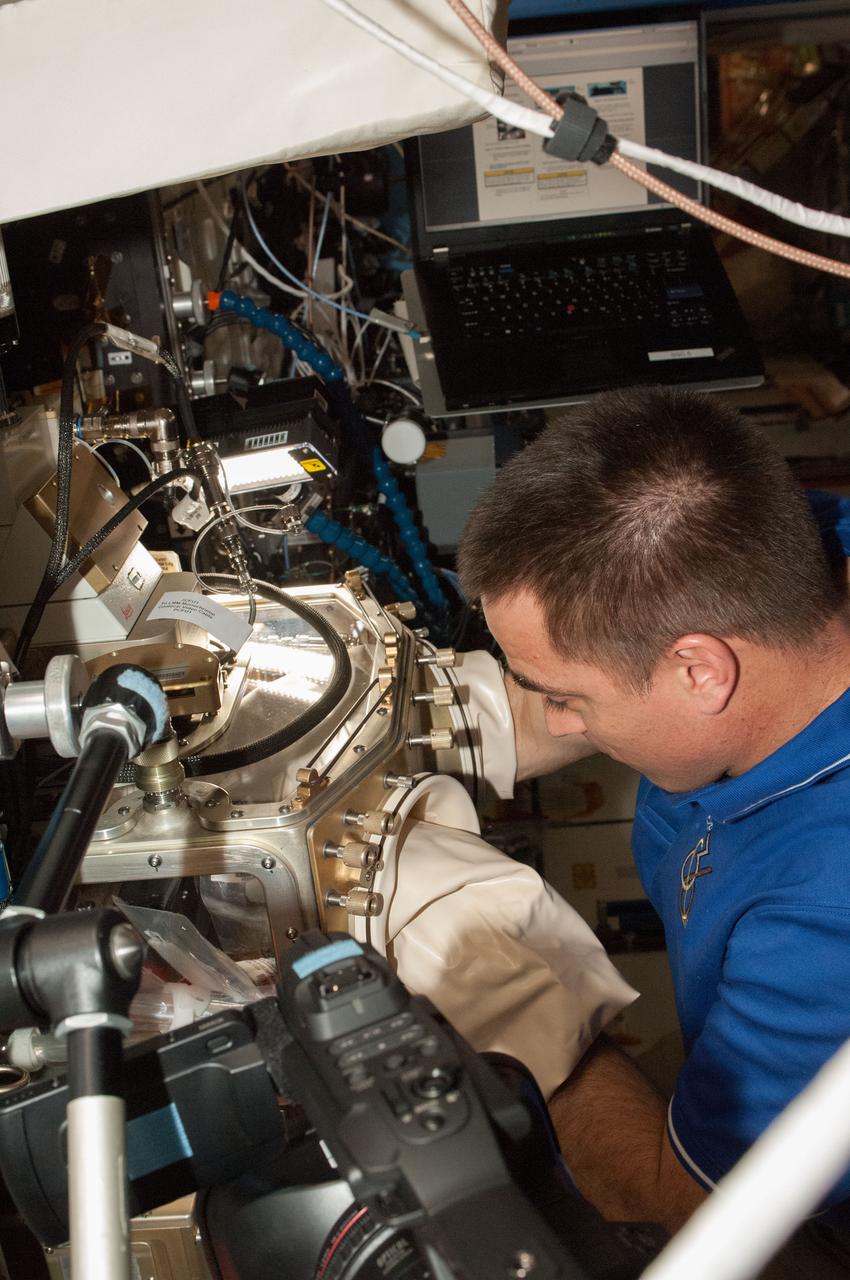
ISS036-E-023770 (22 July 2013) --- NASA astronaut Chris Cassidy, Expedition 36 flight engineer, conducts science work with the ongoing experiment Advanced Colloids Experiment-1 (ACE-1) inside the Fluids Integrated Rack. The experiment observes colloids, microscopic particles evenly dispersed throughout materials, with the potential for manufacturing improved materials and products on Earth. Cassidy is working at the Light Microscopy Module (LMM) in the Destiny laboratory of the International Space Station.
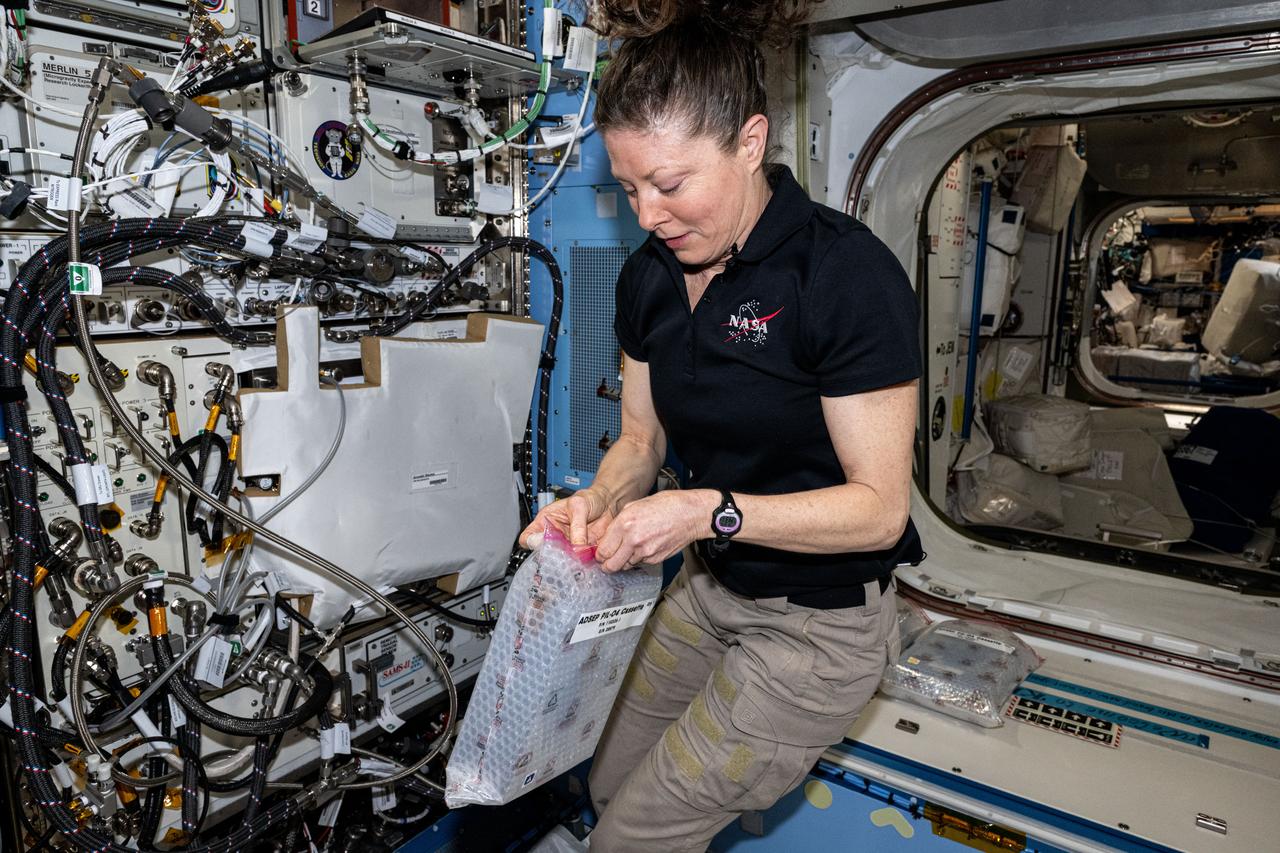
iss071e486657 (Aug. 15, 2024) --- NASA astronaut and Expedition 71 Flight Engineer Tracy C. Dyson swaps out sample processors for the Pharmaceutical In-space Laboratory experiment that is exploring the production and manufacturing of medicines to benefit astronauts in space and humans on Earth. The processors were installed in the Advanced Space Experiment Processor, or ADSEP, that can process a variety of research samples and be delivered to the International Space Station and returned to Earth aboard the SpaceX Dragon cargo craft.
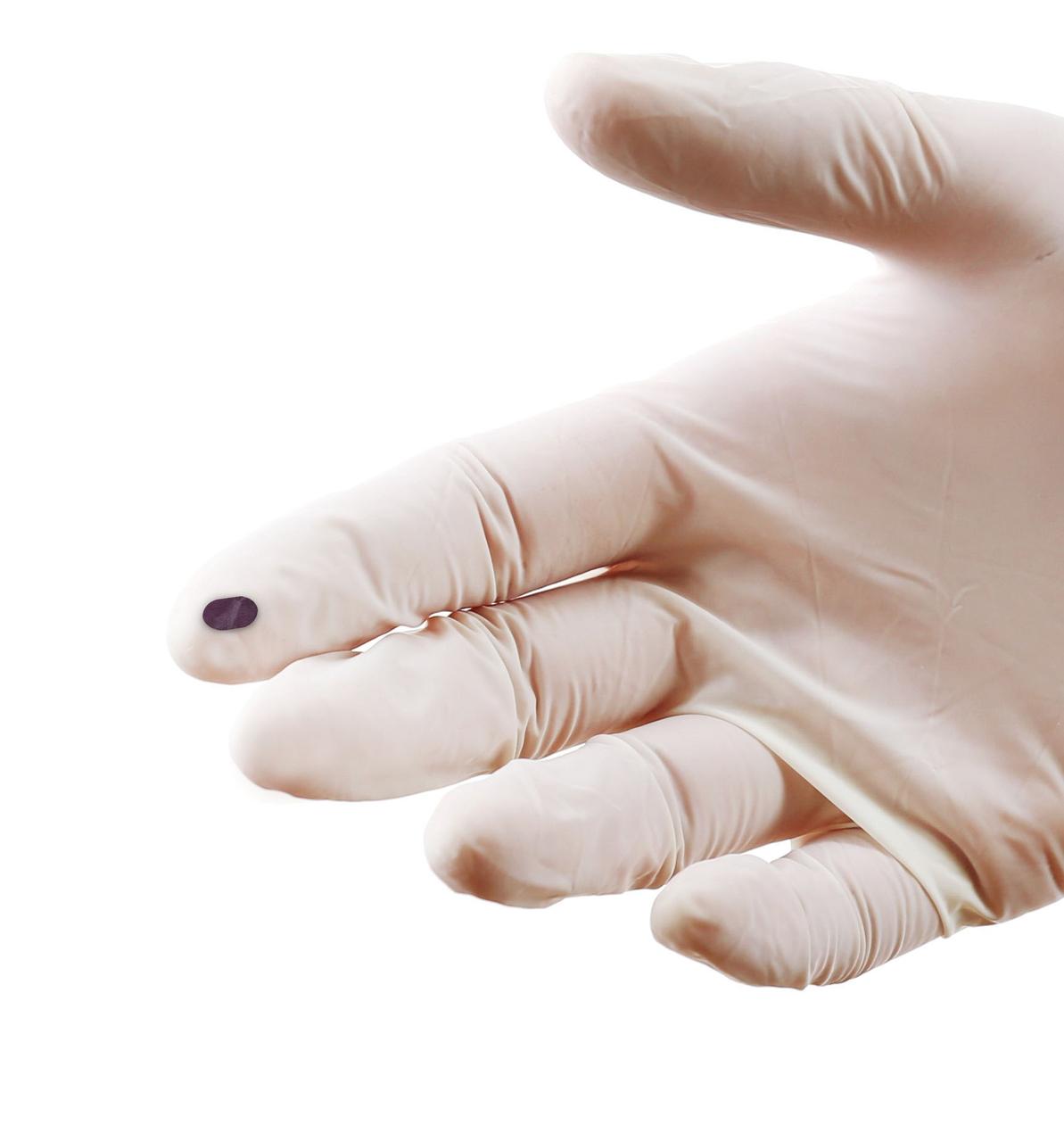
jsc2026e416053 (September 15, 2026) --- Preflight image of an artificial retina successfully produced as part of LambdaVision-1. This investigation produces several films to compare how artificial retinas form in terrestrial versus microgravity conditions. Investigation results could advance manufacturing approaches for next generation retinal implants and support technologies aimed at restoring vision for patients with degenerative eye diseases. Credit: LambdaVision.

jsc2024e005976 (10/32023) --- Pictured is the Gas Supply Module for the Manufacturing of Semiconductors and Thin-film Integrated Coating (MSTIC) investigation. The MSTIC facility uses advanced vapor deposition systems that enable precise control over material production. This program is designed to produce samples for comparative analysis between Earth-produced and space-produced thin films. Image courtesy of Redwire.
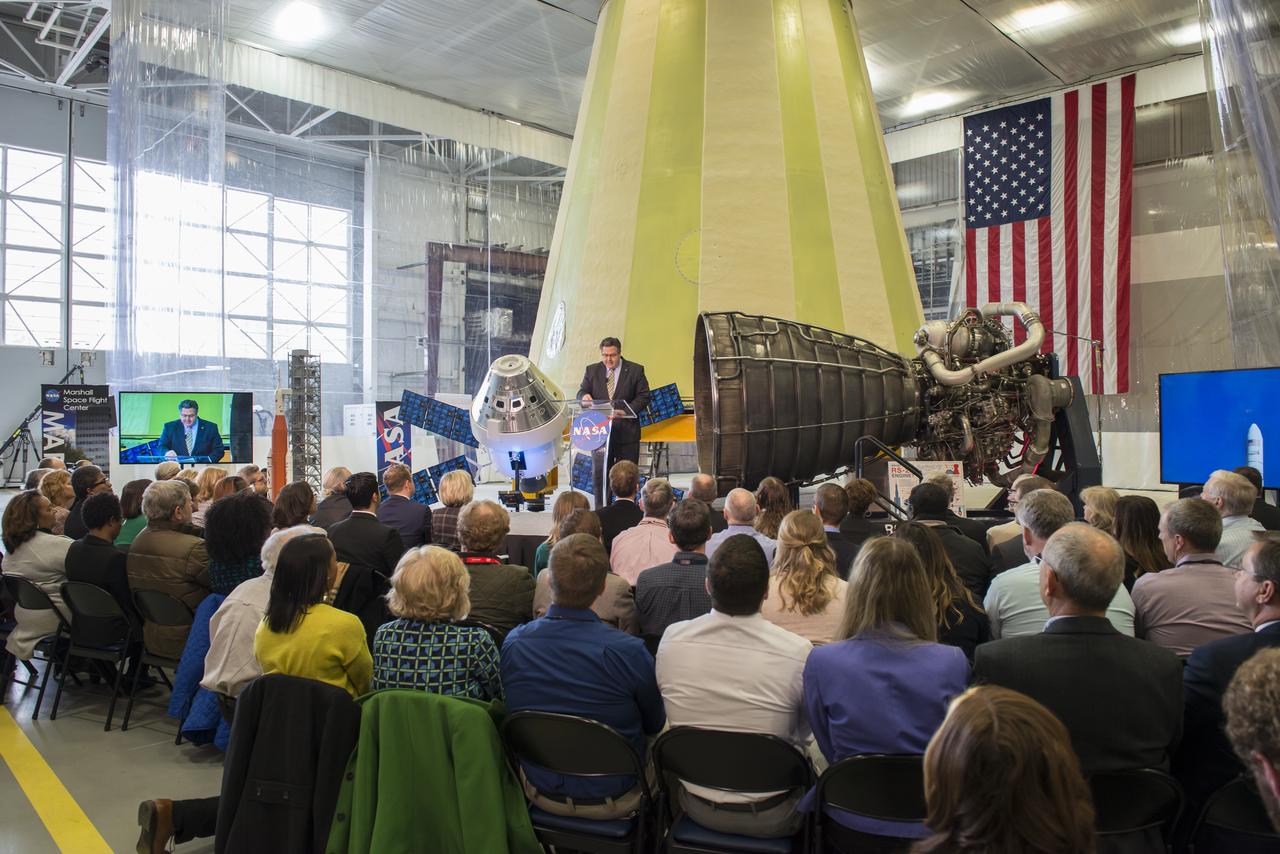
Marshall Space Flight Center Director Todd May introduces NASA Acting Adminstrator Robert Lightfoot prior to his delivery of the "State of NASA", February 12, 2018, at the Marshall Space Flight Center in Huntsville, Alabama. In his address, Lightfoot discussed what the President's Fiscal Year 2019 budget request means for America's space agency. According to Lightfoot, it "reflects the administration's confidence that America will lead the way back to the Moon and take the next giant leap". Lightfoot delivered the "State of NASA" address in Marshall's Center for Advanced Manufacturing where engineers are pushing boundaries in the fields of additive manufacturing, 3D printing, and more. Hardware for NASA's Space Launch System and a model of the agency's Orion spacecraft served as a backdrop for the annual event. SLS, which is managed by Marshall, will enable a new era of exploration beyond Earth's orbit by launching astronauts on missions to deep-space destinations including the Moon and Mars.
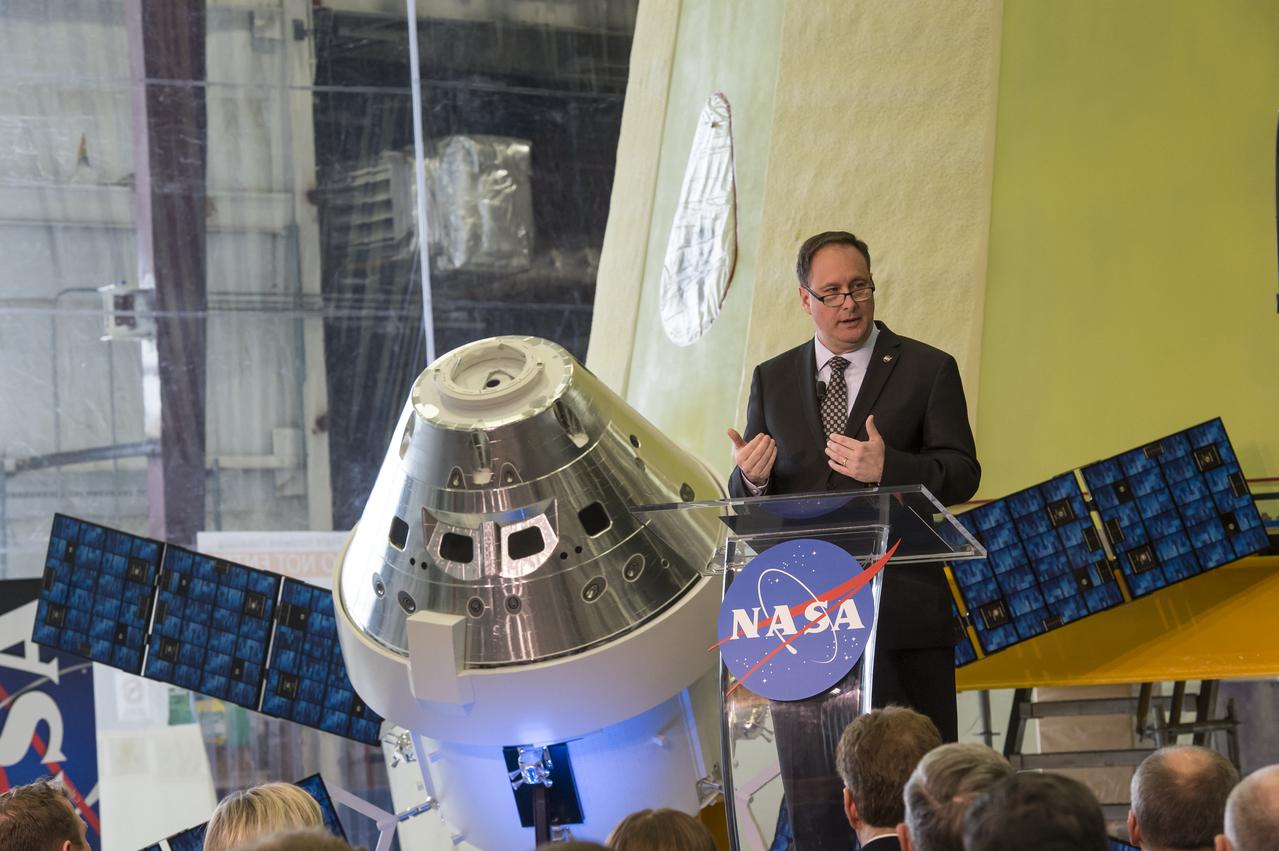
NASA Acting Administrator Robert Lightfoot delivers the "State of NASA", February 12, 2018, at the Marshall Space Flight Center in Huntsville, Alabama. In his address, Lightfoot discussed what the President's Fiscal Year 2019 budget request means for America's space agency. According to Lightfoot, it "reflects the administration's confidence that America will lead the way back to the Moon and take the next giant leap". Lightfoot delivered the "State of NASA" address in Marshall's Center for Advanced Manufacturing where engineers are pushing boundaries in the fields of additive manufacturing, 3D printing, and more. Hardware for NASA's Space Launch System and a model of the agency's Orion spacecraft served as a backdrop for the annual event. SLS, which is managed by Marshall, will enable a new era of exploration beyond Earth's orbit by launching astronauts on missions to deep-space destinations including the Moon and Mars.
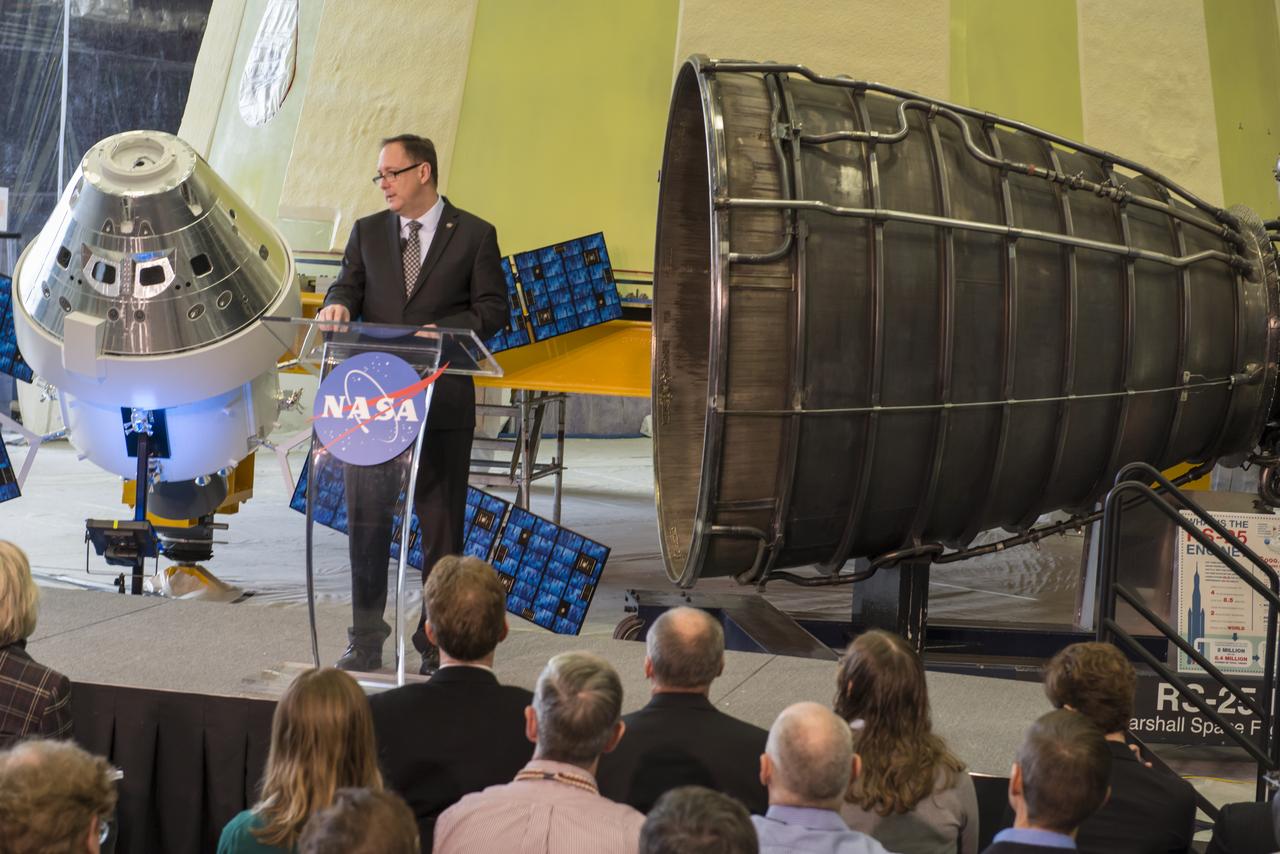
NASA Acting Administrator Robert Lightfoot delivers the "State of NASA", February 12, 2018, at the Marshall Space Flight Center in Huntsville, Alabama. In his address, Lightfoot discussed what the President's Fiscal Year 2019 budget request means for America's space agency. According to Lightfoot, it "reflects the administration's confidence that America will lead the way back to the Moon and take the next giant leap". Lightfoot delivered the "State of NASA" address in Marshall's Center for Advanced Manufacturing where engineers are pushing boundaries in the fields of additive manufacturing, 3D printing, and more. Hardware for NASA's Space Launch System and a model of the agency's Orion spacecraft served as a backdrop for the annual event. SLS, which is managed by Marshall, will enable a new era of exploration beyond Earth's orbit by launching astronauts on missions to deep-space destinations including the Moon and Mars.
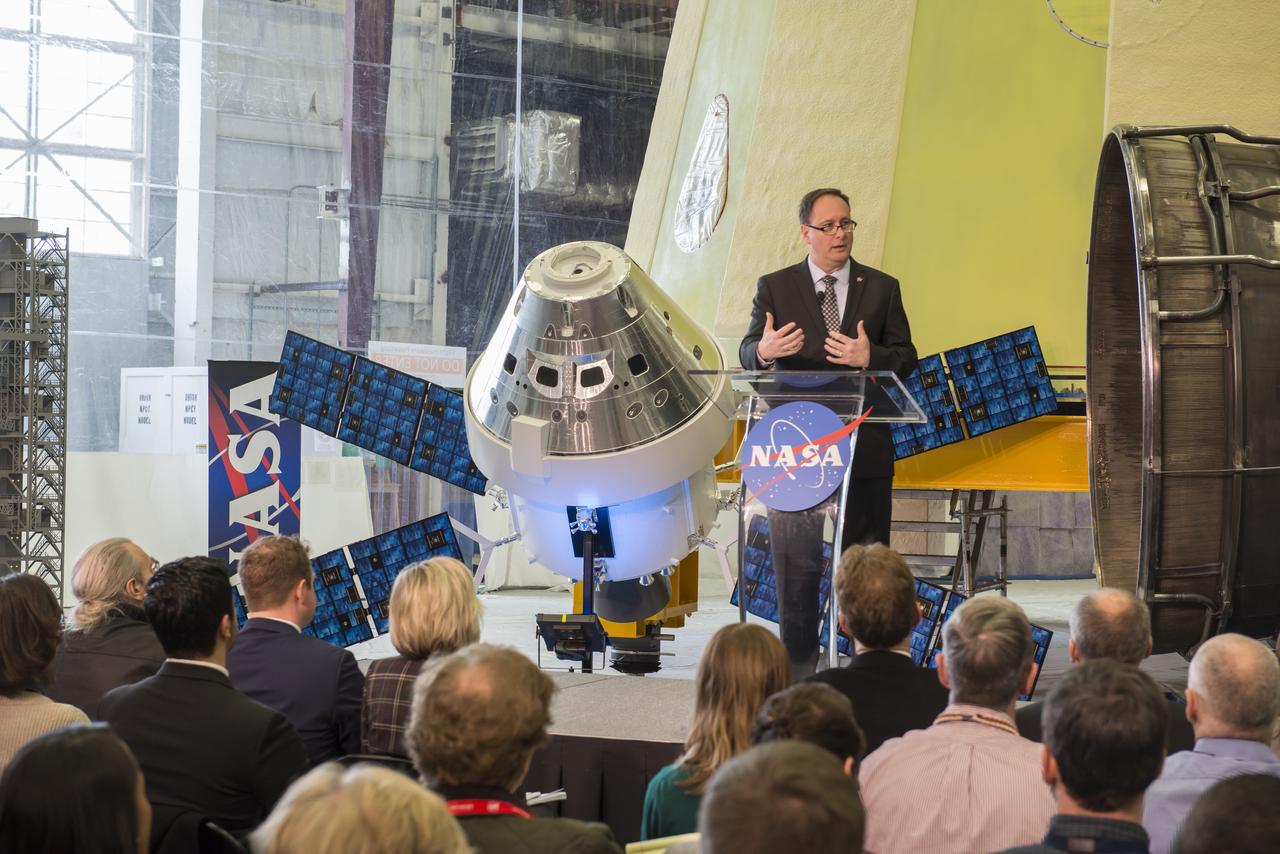
NASA Acting Administrator Robert Lightfoot delivers the "State of NASA", February 12, 2018, at the Marshall Space Flight Center in Huntsville, Alabama. In his address, Lightfoot discussed what the President's Fiscal Year 2019 budget request means for America's space agency. According to Lightfoot, it "reflects the administration's confidence that America will lead the way back to the Moon and take the next giant leap". Lightfoot delivered the "State of NASA" address in Marshall's Center for Advanced Manufacturing where engineers are pushing boundaries in the fields of additive manufacturing, 3D printing, and more. Hardware for NASA's Space Launch System and a model of the agency's Orion spacecraft served as a backdrop for the annual event. SLS, which is managed by Marshall, will enable a new era of exploration beyond Earth's orbit by launching astronauts on missions to deep-space destinations including the Moon and Mars.
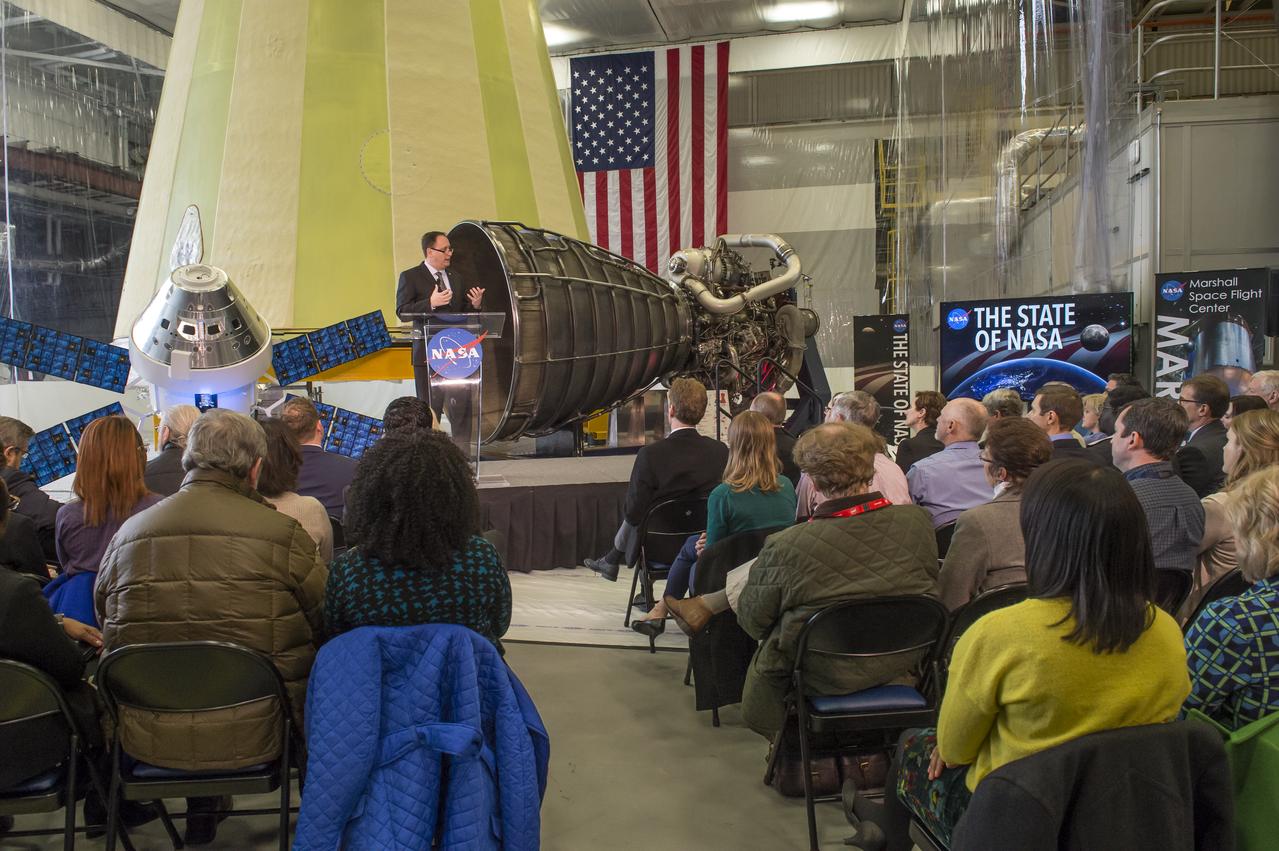
NASA Acting Administrator Robert Lightfoot delivers the "State of NASA", February 12, 2018, at the Marshall Space Flight Center in Huntsville, Alabama. In his address, Lightfoot discussed what the President's Fiscal Year 2019 budget request means for America's space agency. According to Lightfoot, it "reflects the administration's confidence that America will lead the way back to the Moon and take the next giant leap". Lightfoot delivered the "State of NASA" address in Marshall's Center for Advanced Manufacturing where engineers are pushing boundaries in the fields of additive manufacturing, 3D printing, and more. Hardware for NASA's Space Launch System and a model of the agency's Orion spacecraft served as a backdrop for the annual event. SLS, which is managed by Marshall, will enable a new era of exploration beyond Earth's orbit by launching astronauts on missions to deep-space destinations including the Moon and Mars.
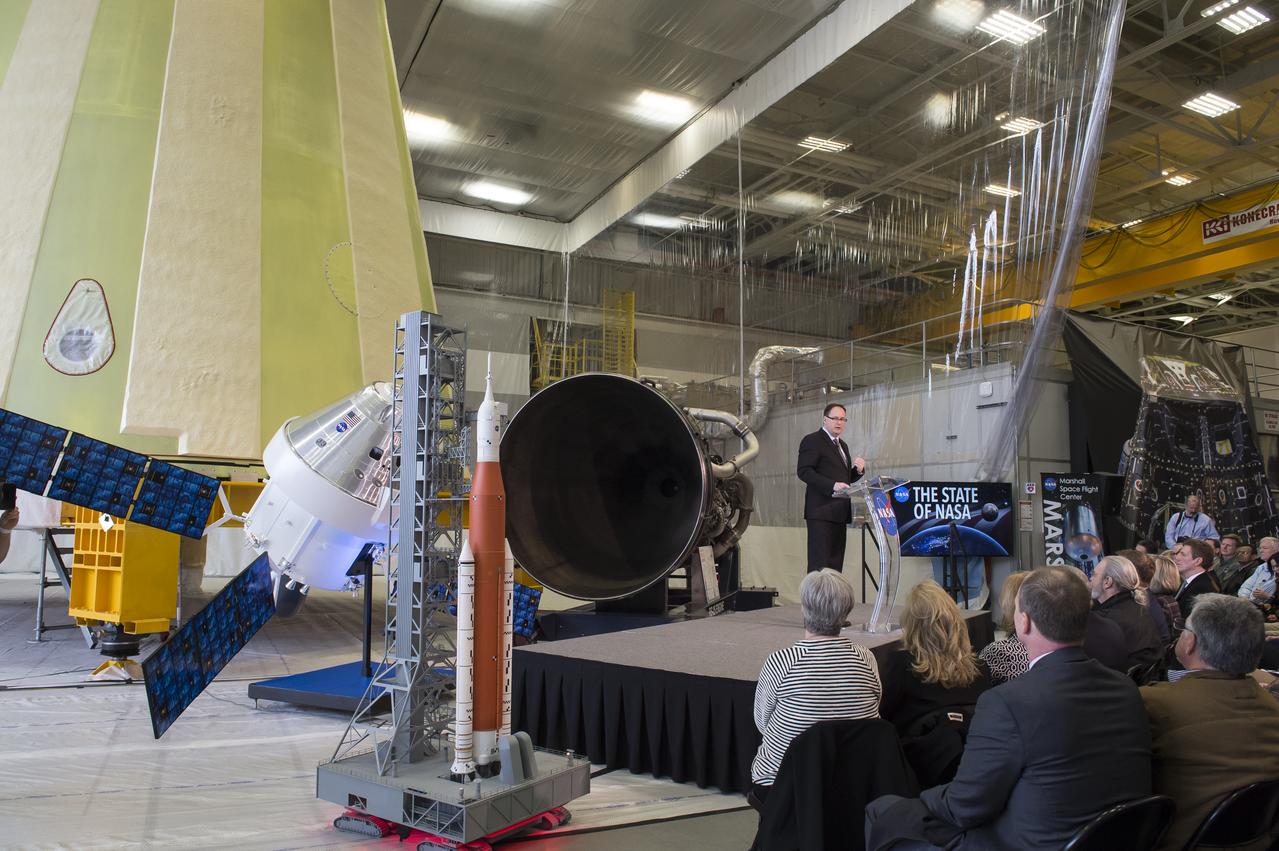
NASA Acting Administrator Robert Lightfoot delivers the "State of NASA", February 12, 2018, at the Marshall Space Flight Center in Huntsville, Alabama. In his address, Lightfoot discussed what the President's Fiscal Year 2019 budget request means for America's space agency. According to Lightfoot, it "reflects the administration's confidence that America will lead the way back to the Moon and take the next giant leap". Lightfoot delivered the "State of NASA" address in Marshall's Center for Advanced Manufacturing where engineers are pushing boundaries in the fields of additive manufacturing, 3D printing, and more. Hardware for NASA's Space Launch System and a model of the agency's Orion spacecraft served as a backdrop for the annual event. SLS, which is managed by Marshall, will enable a new era of exploration beyond Earth's orbit by launching astronauts on missions to deep-space destinations including the Moon and Mars.
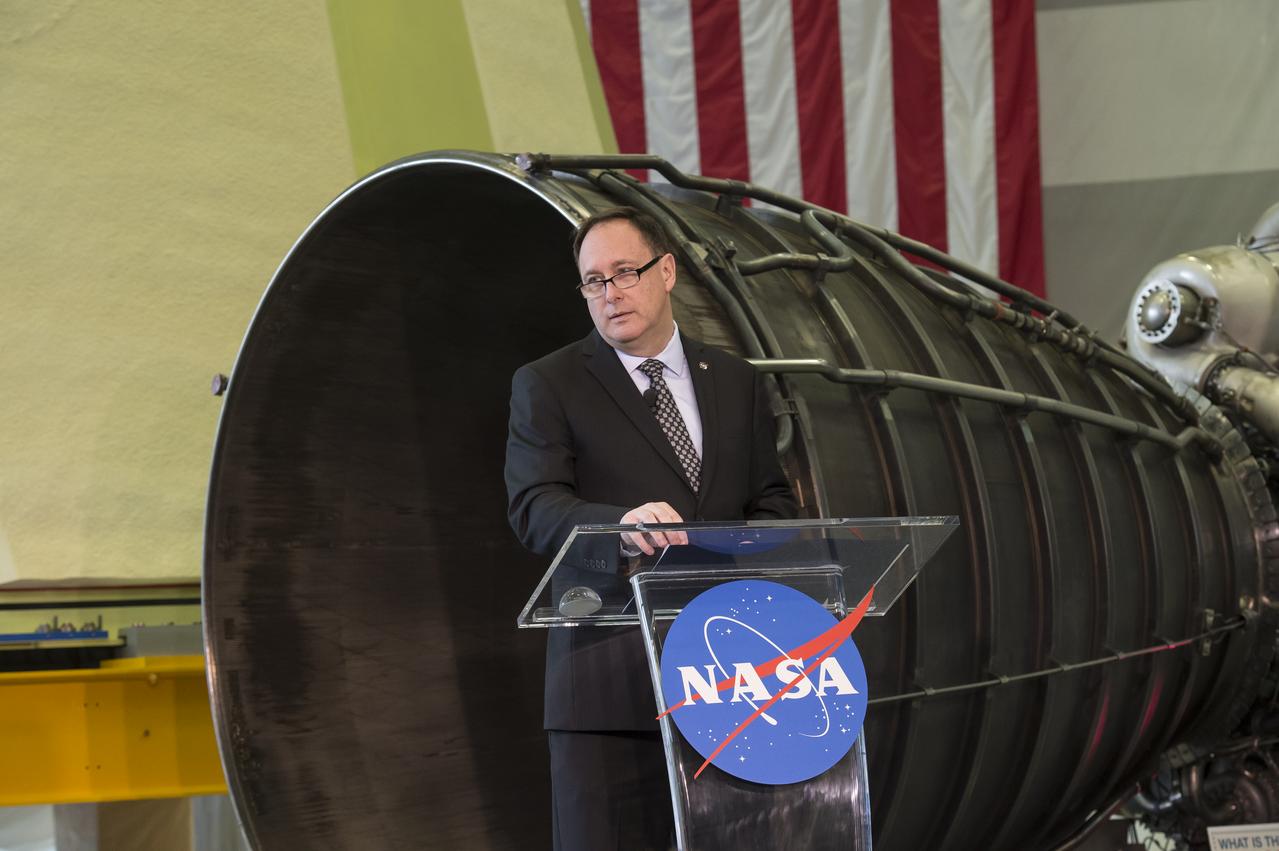
NASA Acting Administrator Robert Lightfoot delivers the "State of NASA", February 12, 2018, at the Marshall Space Flight Center in Huntsville, Alabama. In his address, Lightfoot discussed what the President's Fiscal Year 2019 budget request means for America's space agency. According to Lightfoot, it "reflects the administration's confidence that America will lead the way back to the Moon and take the next giant leap". Lightfoot delivered the "State of NASA" address in Marshall's Center for Advanced Manufacturing where engineers are pushing boundaries in the fields of additive manufacturing, 3D printing, and more. Hardware for NASA's Space Launch System and a model of the agency's Orion spacecraft served as a backdrop for the annual event. SLS, which is managed by Marshall, will enable a new era of exploration beyond Earth's orbit by launching astronauts on missions to deep-space destinations including the Moon and Mars.
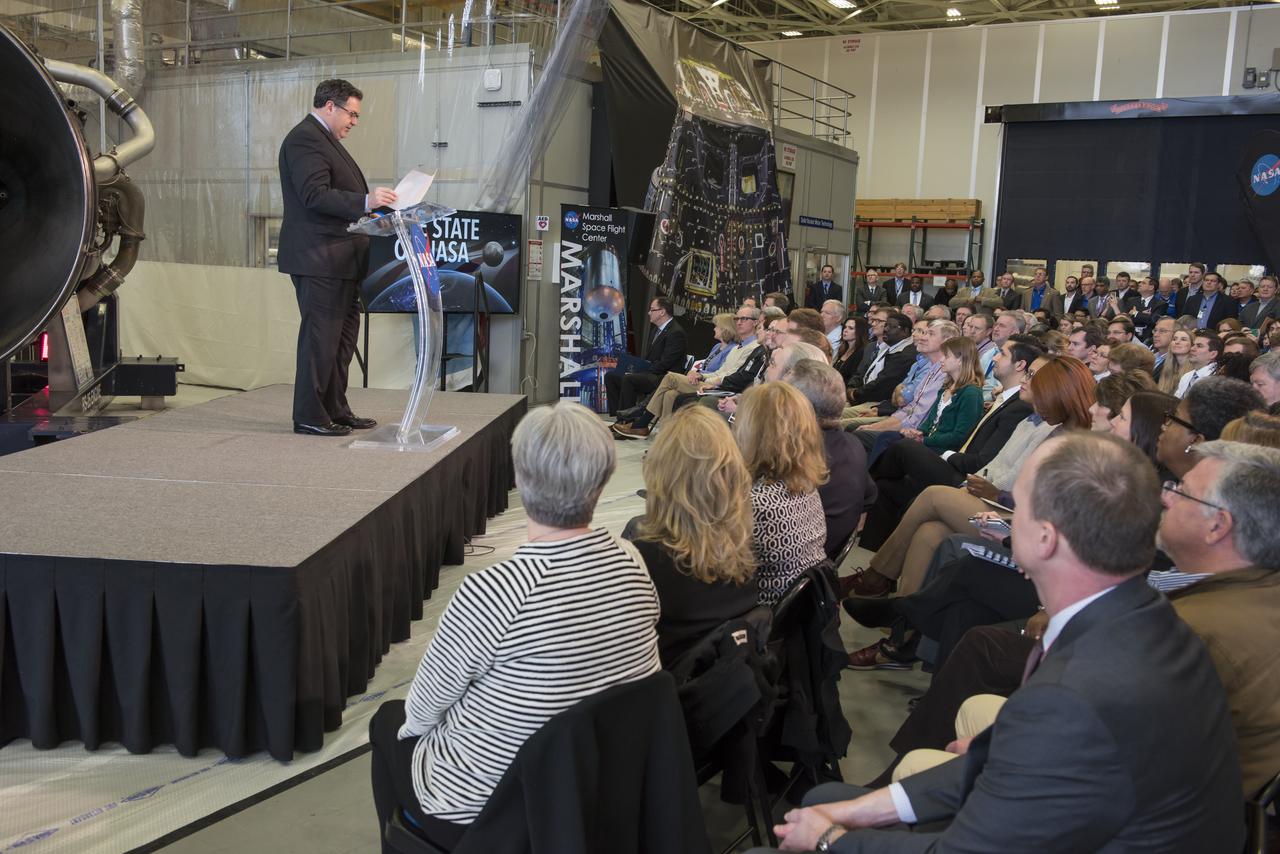
Marshall Space Flight Center Director Todd May introduces NASA Acting Adminstrator Robert Lightfoot prior to his delivery of the "State of NASA", February 12, 2018, at the Marshall Space Flight Center in Huntsville, Alabama. In his address, Lightfoot discussed what the President's Fiscal Year 2019 budget request means for America's space agency. According to Lightfoot, it "reflects the administration's confidence that America will lead the way back to the Moon and take the next giant leap". Lightfoot delivered the "State of NASA" address in Marshall's Center for Advanced Manufacturing where engineers are pushing boundaries in the fields of additive manufacturing, 3D printing, and more. Hardware for NASA's Space Launch System and a model of the agency's Orion spacecraft served as a backdrop for the annual event. SLS, which is managed by Marshall, will enable a new era of exploration beyond Earth's orbit by launching astronauts on missions to deep-space destinations including the Moon and Mars.
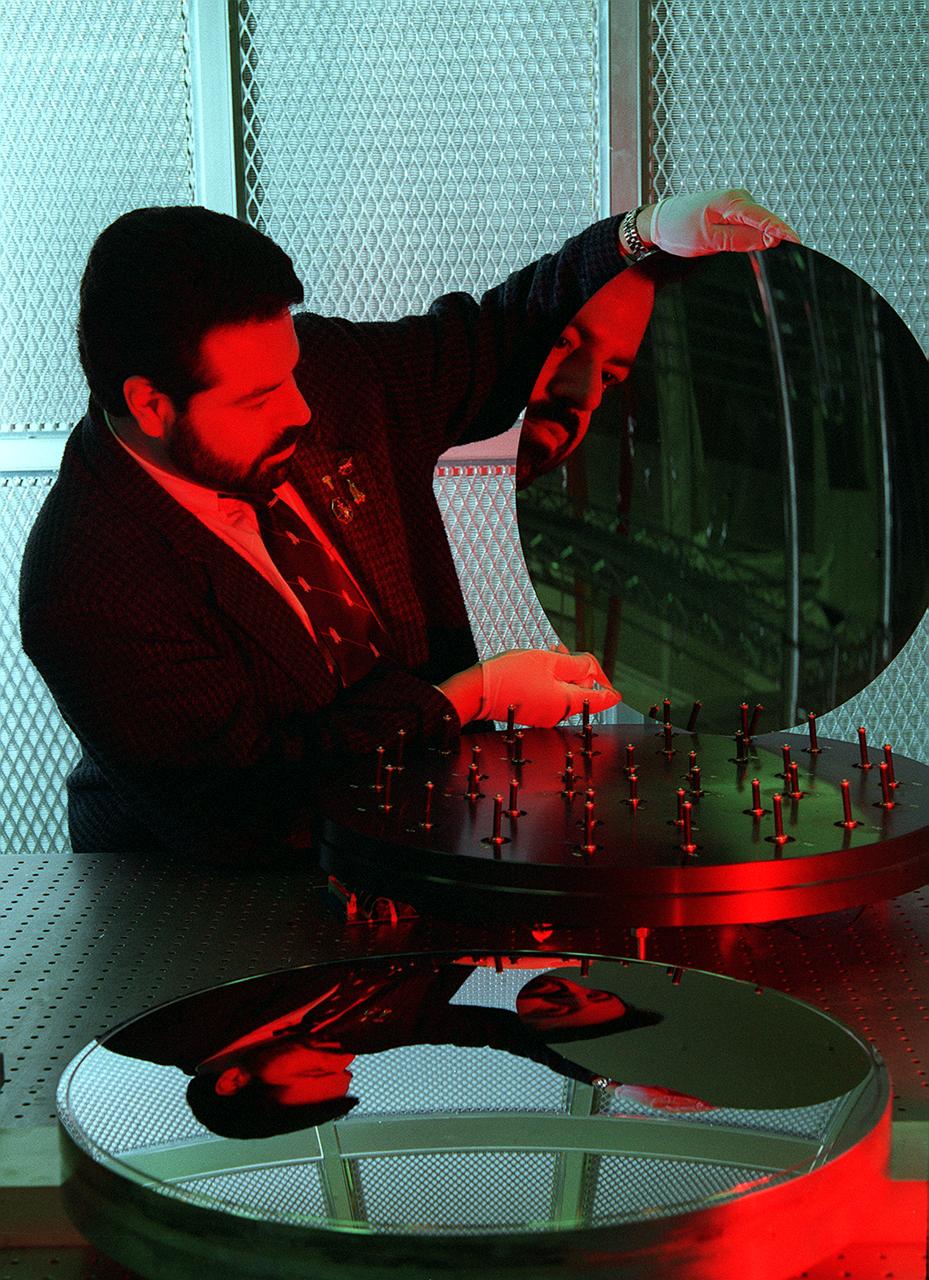
NASA's Space Optics Manufacturing Center has been working to expand our view of the universe via sophisticated new telescopes. The Optics Center's goal is to develop low-cost, advanced space optics technologies for the NASA program in the 21st century - including the long-term goal of imaging Earth-like planets in distant solar systems. To reduce the cost of mirror fabrication, Marshall Space Flight Center (MSFC) has developed replication techniques, the machinery, and materials to replicate electro-formed nickel mirrors. The process allows fabricating precisely shaped mandrels to be used and reused as masters for replicating high-quality mirrors. Dr. Joe Ritter examines a replicated electro-formed nickel-alloy mirror which exemplifies the improvements in mirror fabrication techniques, with benefits such as dramtic weight reduction that have been achieved at the Marshall Space Flight Center's Space Optics Manufacturing Technology Center (SOMTC).
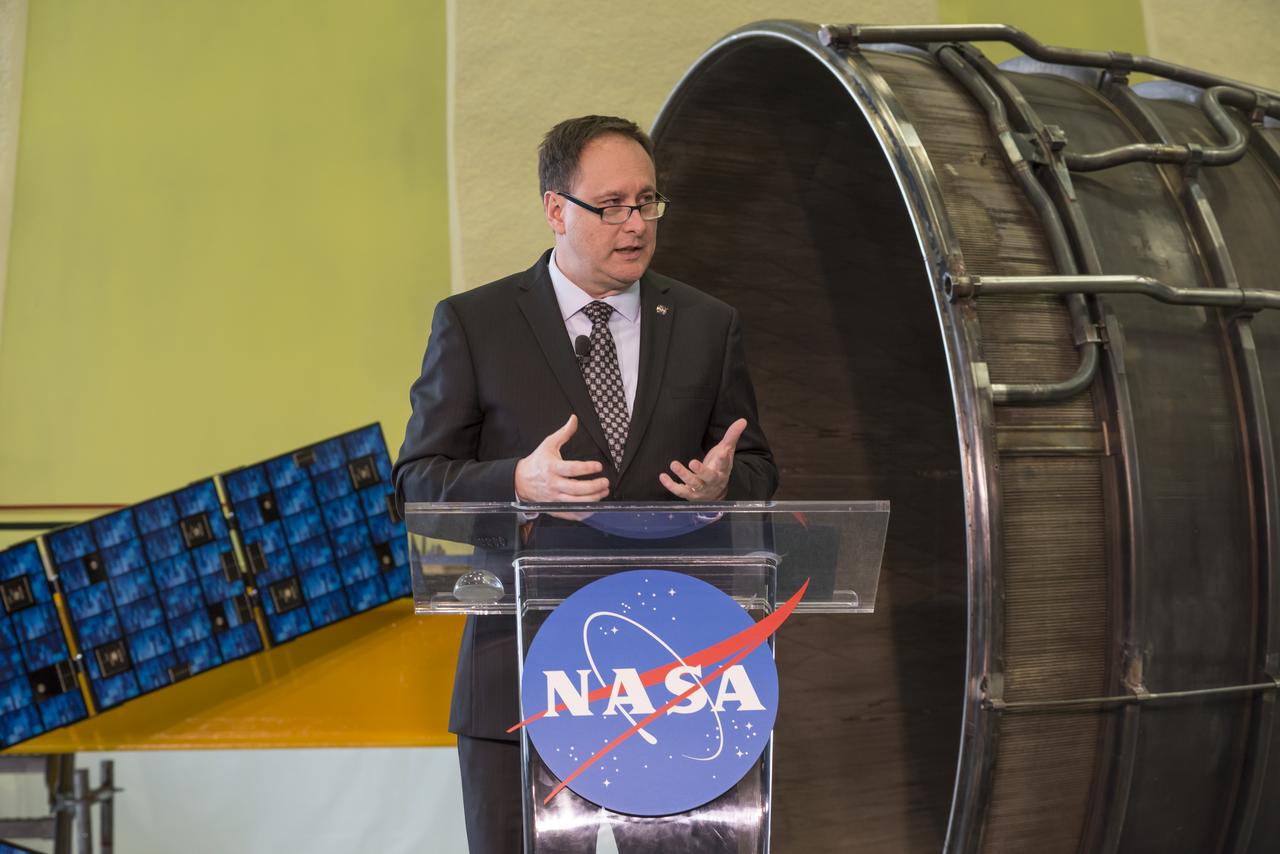
NASA Acting Administrator Robert Lightfoot delivers the "State of NASA", February 12, 2018, at the Marshall Space Flight Center in Huntsville, Alabama. In his address, Lightfoot discussed what the President's Fiscal Year 2019 budget request means for America's space agency. According to Lightfoot, it "reflects the administration's confidence that America will lead the way back to the Moon and take the next giant leap". Lightfoot delivered the "State of NASA" address in Marshall's Center for Advanced Manufacturing where engineers are pushing boundaries in the fields of additive manufacturing, 3D printing, and more. Hardware for NASA's Space Launch System and a model of the agency's Orion spacecraft served as a backdrop for the annual event. SLS, which is managed by Marshall, will enable a new era of exploration beyond Earth's orbit by launching astronauts on missions to deep-space destinations including the Moon and Mars.
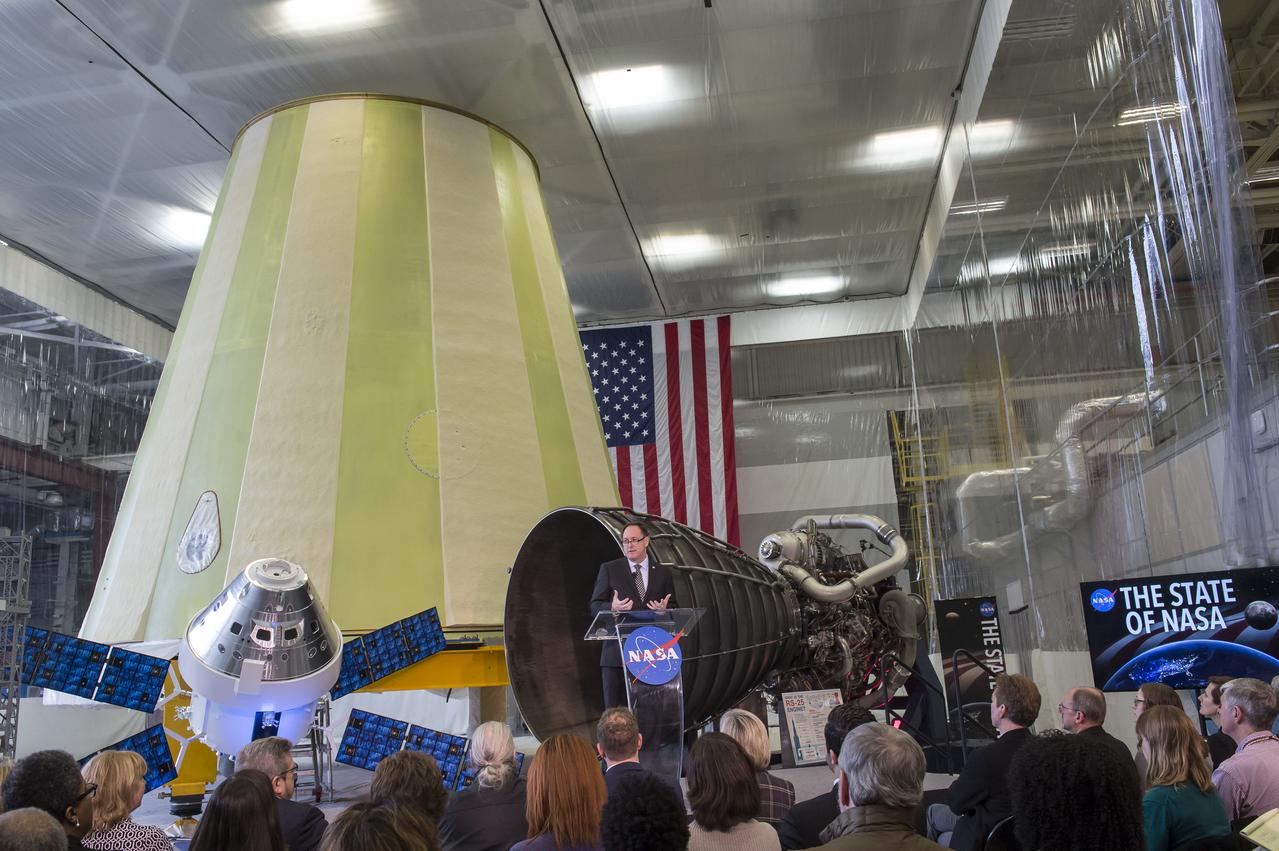
NASA Acting Administrator Robert Lightfoot delivers the "State of NASA", February 12, 2018, at the Marshall Space Flight Center in Huntsville, Alabama. In his address, Lightfoot discussed what the President's Fiscal Year 2019 budget request means for America's space agency. According to Lightfoot, it "reflects the administration's confidence that America will lead the way back to the Moon and take the next giant leap". Lightfoot delivered the "State of NASA" address in Marshall's Center for Advanced Manufacturing where engineers are pushing boundaries in the fields of additive manufacturing, 3D printing, and more. Hardware for NASA's Space Launch System and a model of the agency's Orion spacecraft served as a backdrop for the annual event. SLS, which is managed by Marshall, will enable a new era of exploration beyond Earth's orbit by launching astronauts on missions to deep-space destinations including the Moon and Mars.
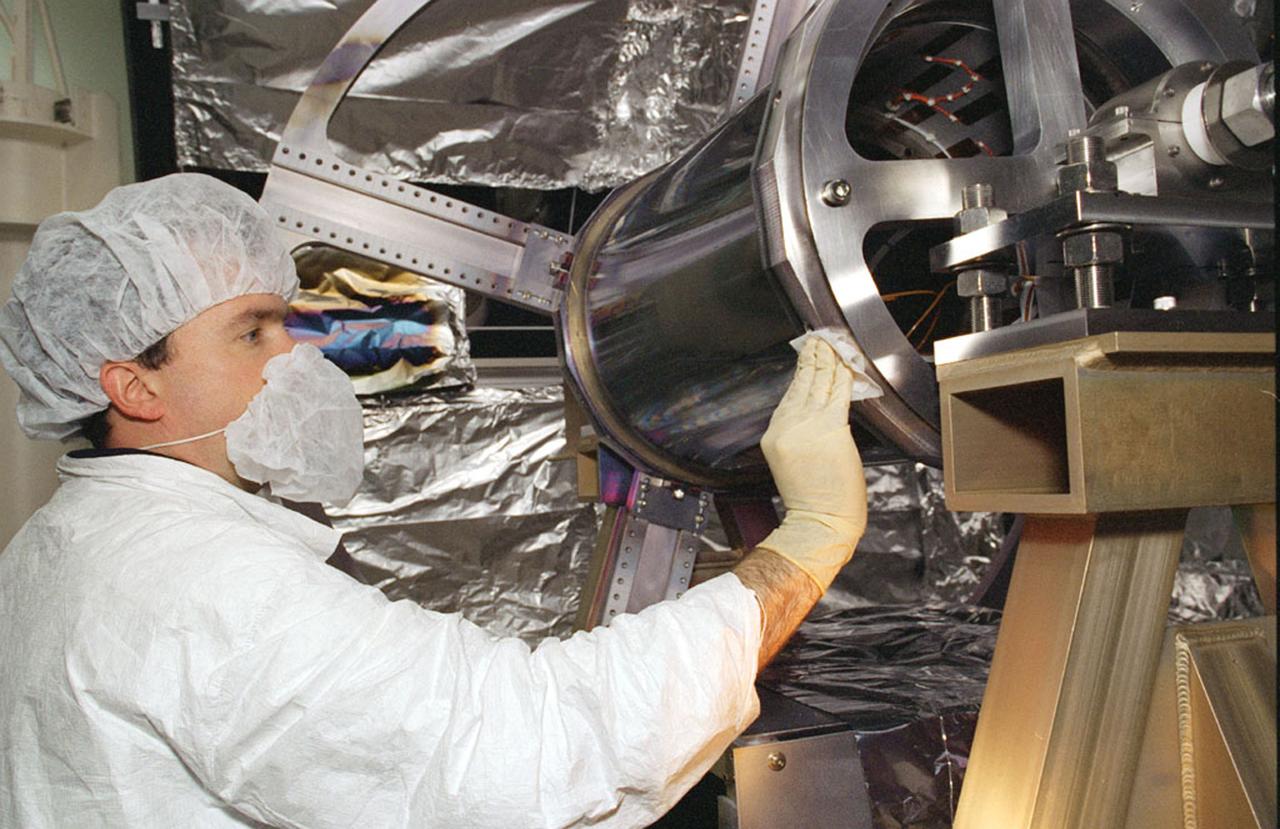
NASA's Space Optics Manufacturing Center has been working to expand our view of the universe via sophisticated new telescopes. The Optics Center's goal is to develop low-cost, advanced space optics technologies for the NASA program in the 21st century - including the long-term goal of imaging Earth-like planets in distant solar systems. To reduce the cost of mirror fabrication, Marshall Space Flight Center (MSFC) has developed replication techniques, the machinery, and materials to replicate electro-formed nickel mirrors. The process allows fabricating precisely shaped mandrels to be used and reused as masters for replicating high-quality mirrors. Image shows Dr. Alan Shapiro cleaning mirror mandrel to be applied with highly reflective and high-density coating in the Large Aperture Coating Chamber, MFSC Space Optics Manufacturing Technology Center (SOMTC).
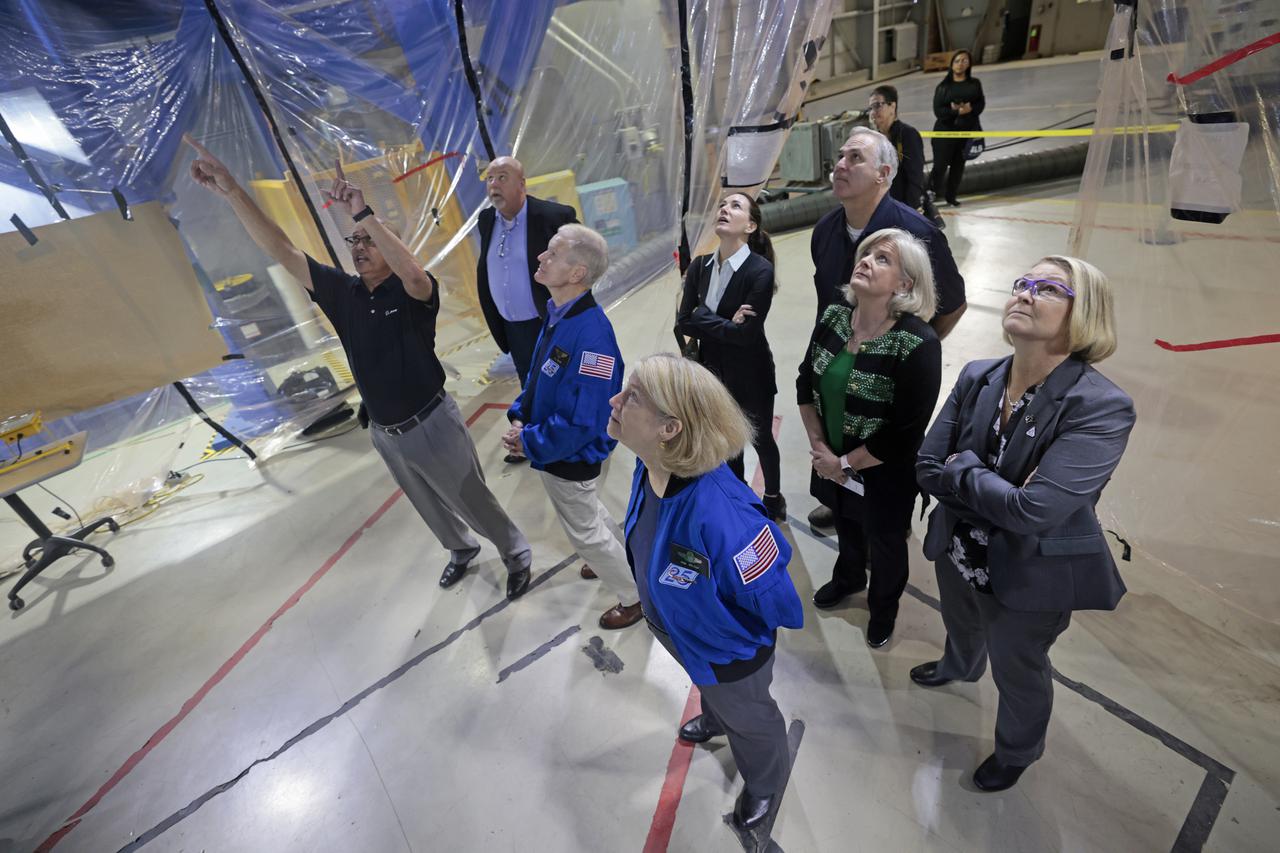
NASA Administrator Bill Nelson and Deputy Administrator Pam Melroy visited the agency’s Michoud Assembly Facility in New Orleans on Dec. 8, 2021 for tours and briefings on Michoud’s role in the Artemis program and other capabilities that enrich many facets of the nation’s space exploration endeavors. Image credit: NASA/Michael DeMocker
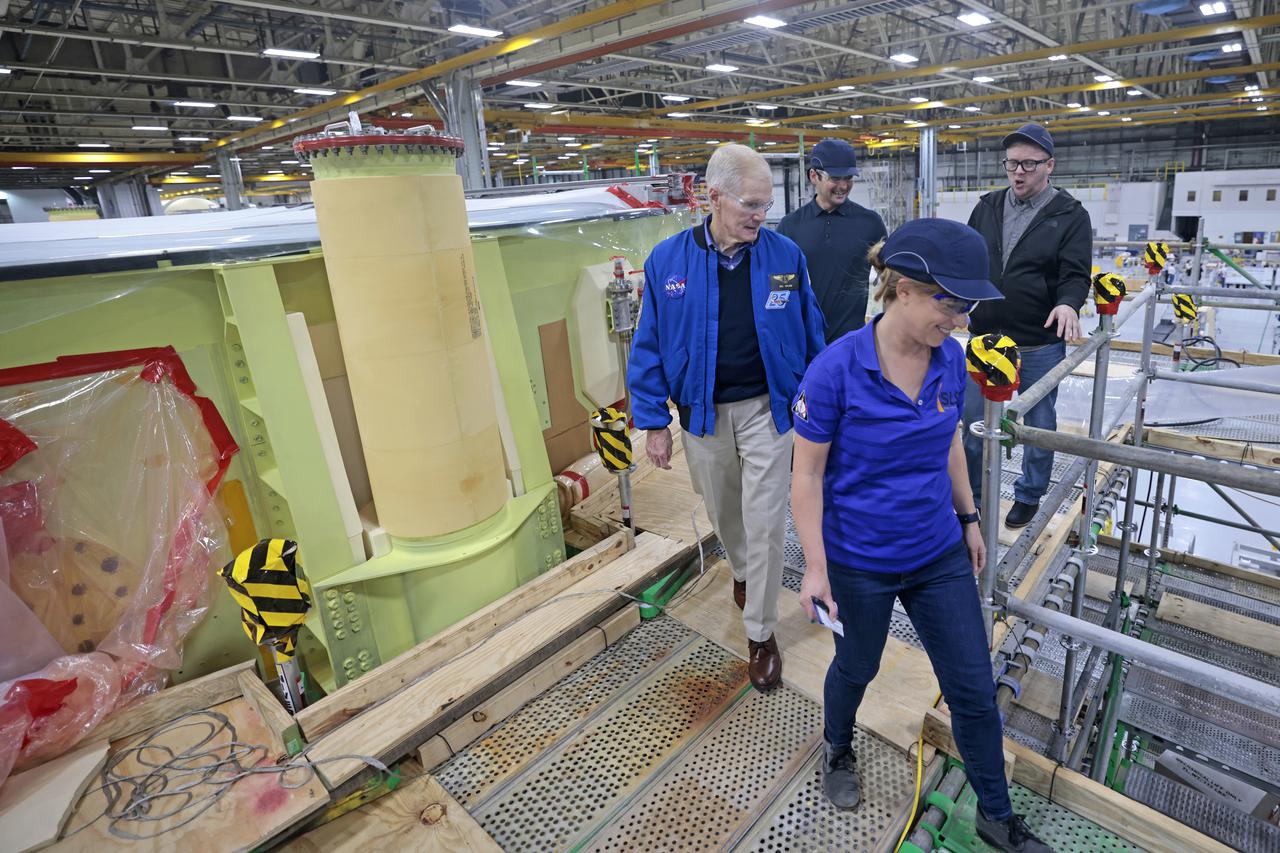
NASA Administrator Bill Nelson and Deputy Administrator Pam Melroy visited the agency’s Michoud Assembly Facility in New Orleans on Dec. 8, 2021 for tours and briefings on Michoud’s role in the Artemis program and other capabilities that enrich many facets of the nation’s space exploration endeavors. Image credit: NASA/Michael DeMocker
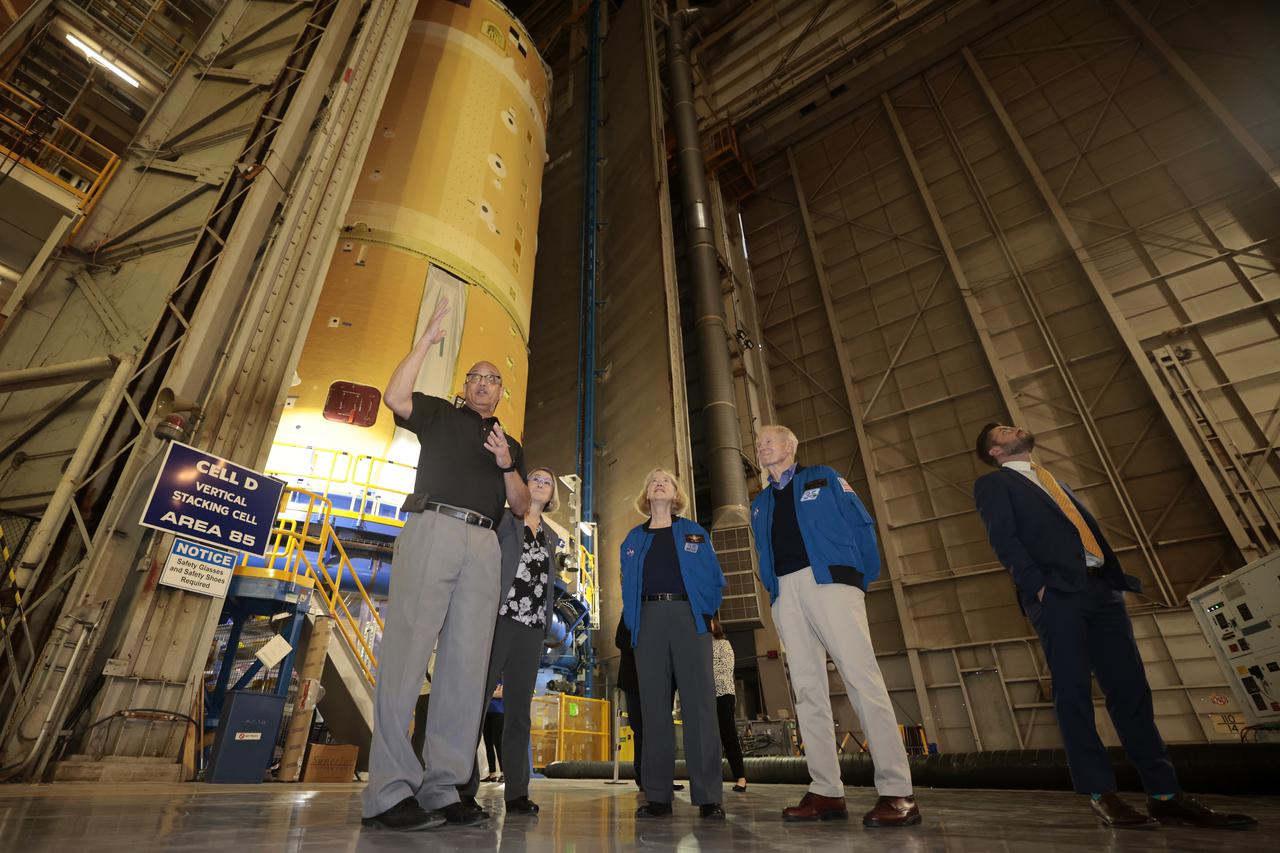
NASA Administrator Bill Nelson and Deputy Administrator Pam Melroy visited the agency’s Michoud Assembly Facility in New Orleans on Dec. 8, 2021 for tours and briefings on Michoud’s role in the Artemis program and other capabilities that enrich many facets of the nation’s space exploration endeavors. Image credit: NASA/Michael DeMocker
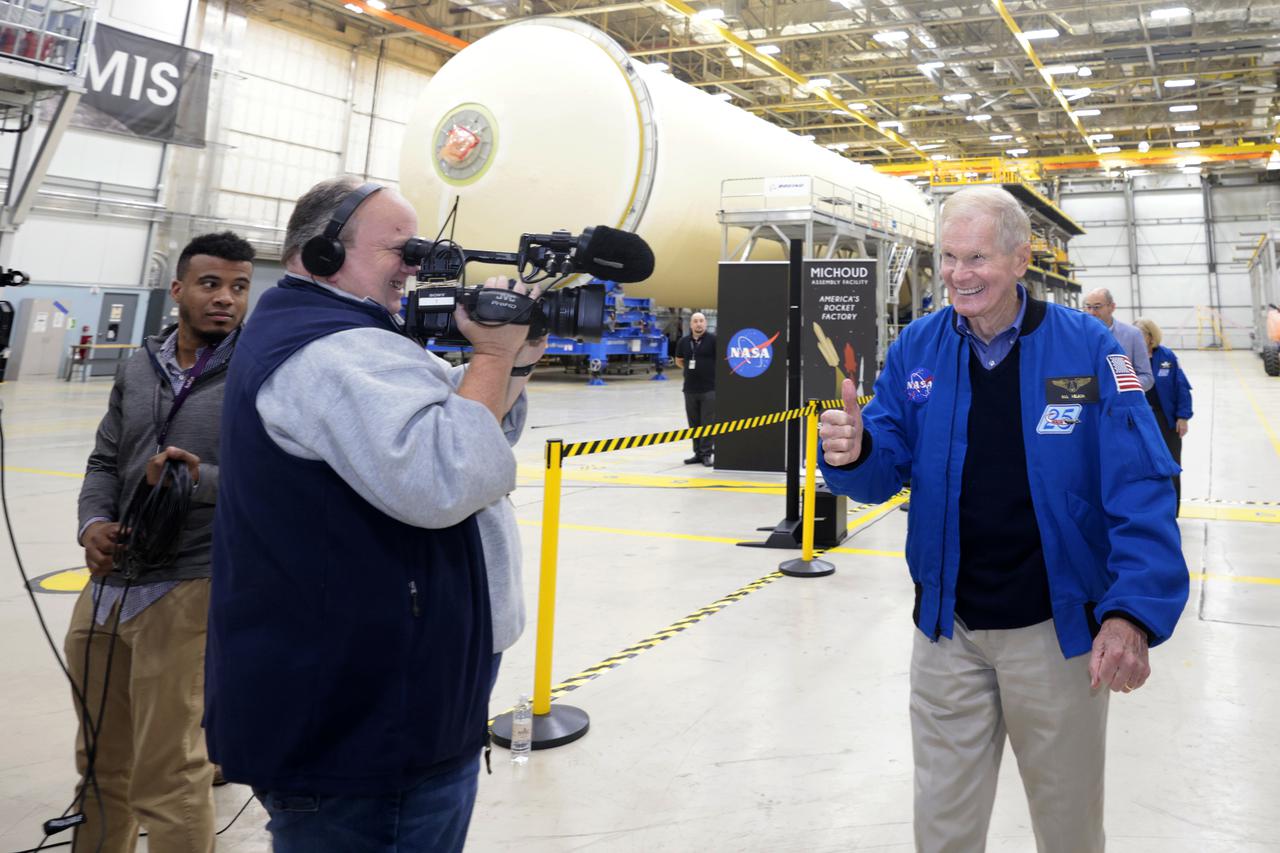
NASA Administrator Bill Nelson and Deputy Administrator Pam Melroy visited the agency’s Michoud Assembly Facility in New Orleans on Dec. 8, 2021 for tours and briefings on Michoud’s role in the Artemis program and other capabilities that enrich many facets of the nation’s space exploration endeavors. Image credit: NASA/Michael DeMocker
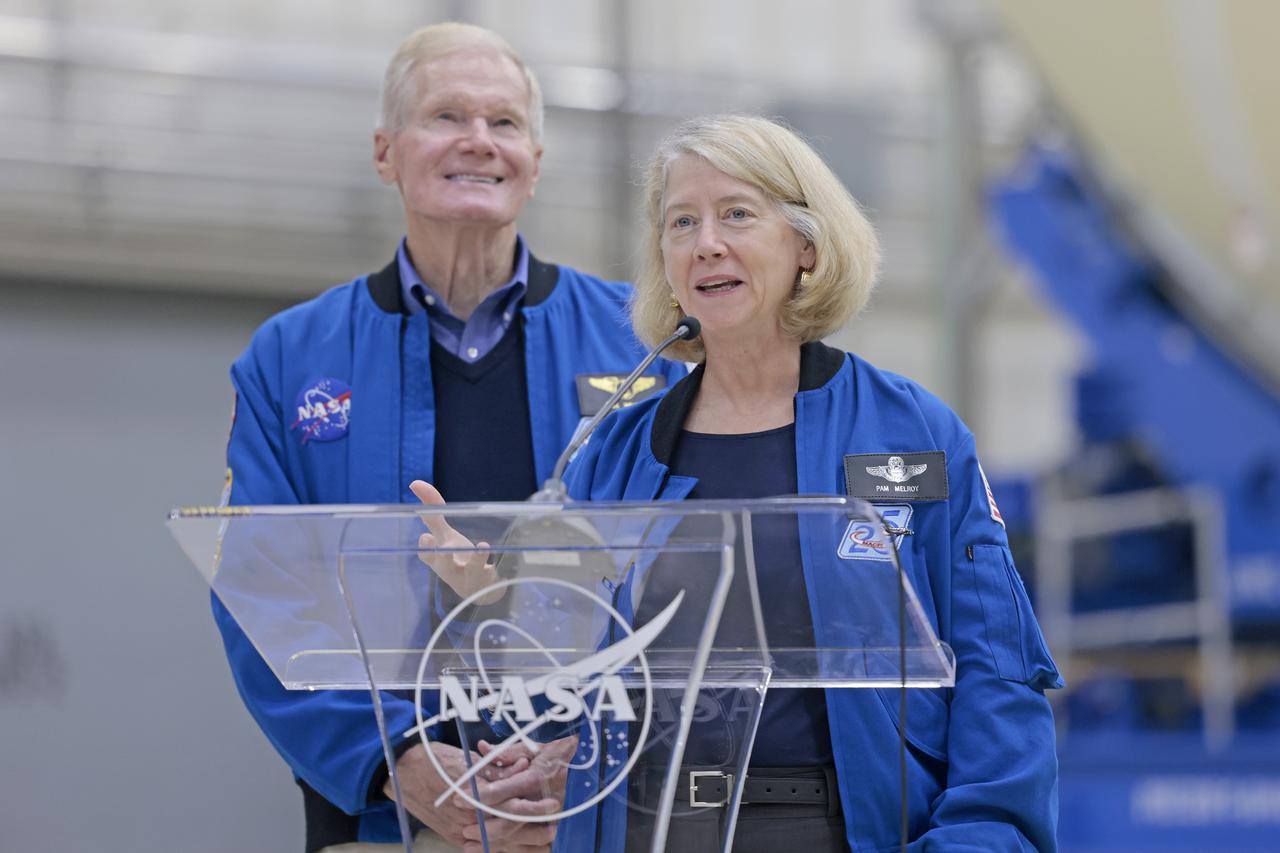
NASA Administrator Bill Nelson and Deputy Administrator Pam Melroy visited the agency’s Michoud Assembly Facility in New Orleans on Dec. 8, 2021 for tours and briefings on Michoud’s role in the Artemis program and other capabilities that enrich many facets of the nation’s space exploration endeavors. Image credit: NASA/Michael DeMocker
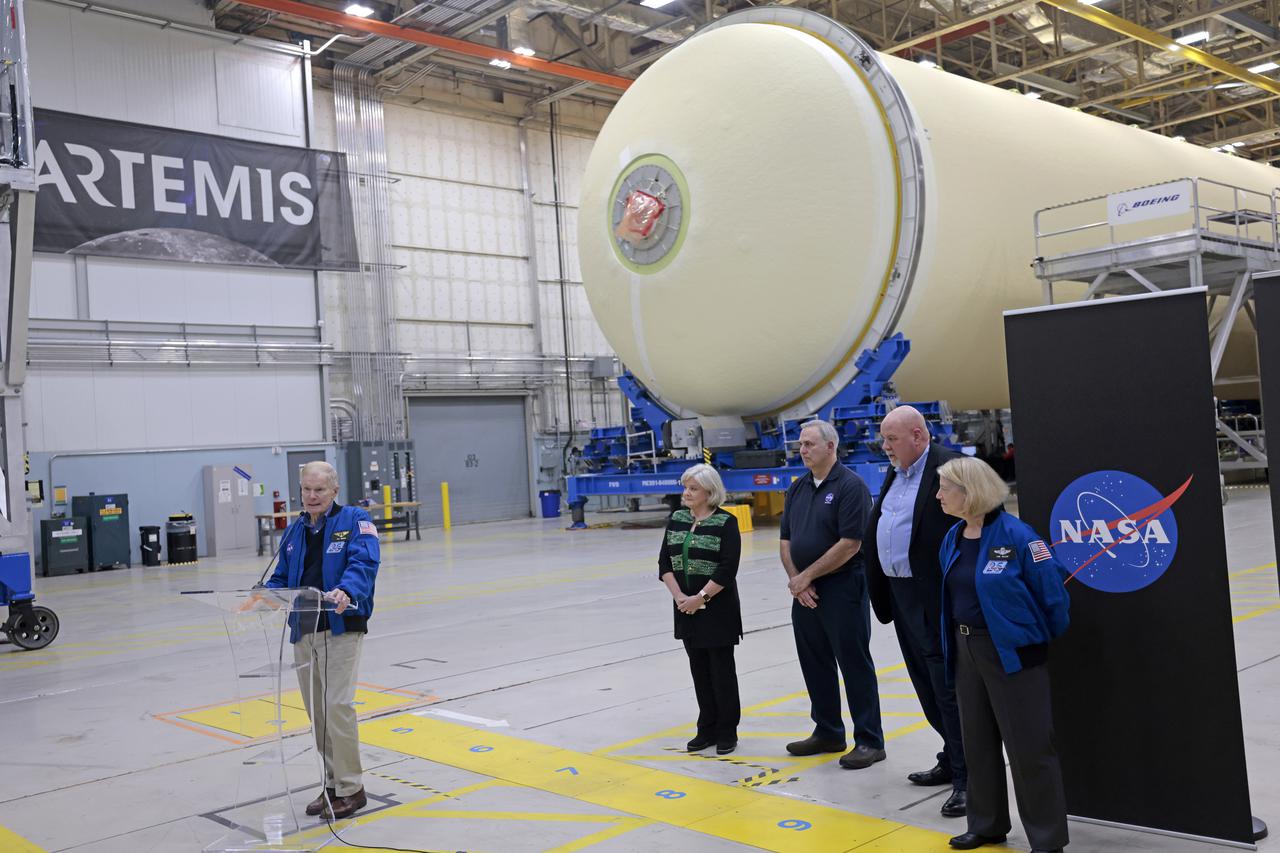
NASA Administrator Bill Nelson and Deputy Administrator Pam Melroy visited the agency’s Michoud Assembly Facility in New Orleans on Dec. 8, 2021 for tours and briefings on Michoud’s role in the Artemis program and other capabilities that enrich many facets of the nation’s space exploration endeavors. Image credit: NASA/Michael DeMocker
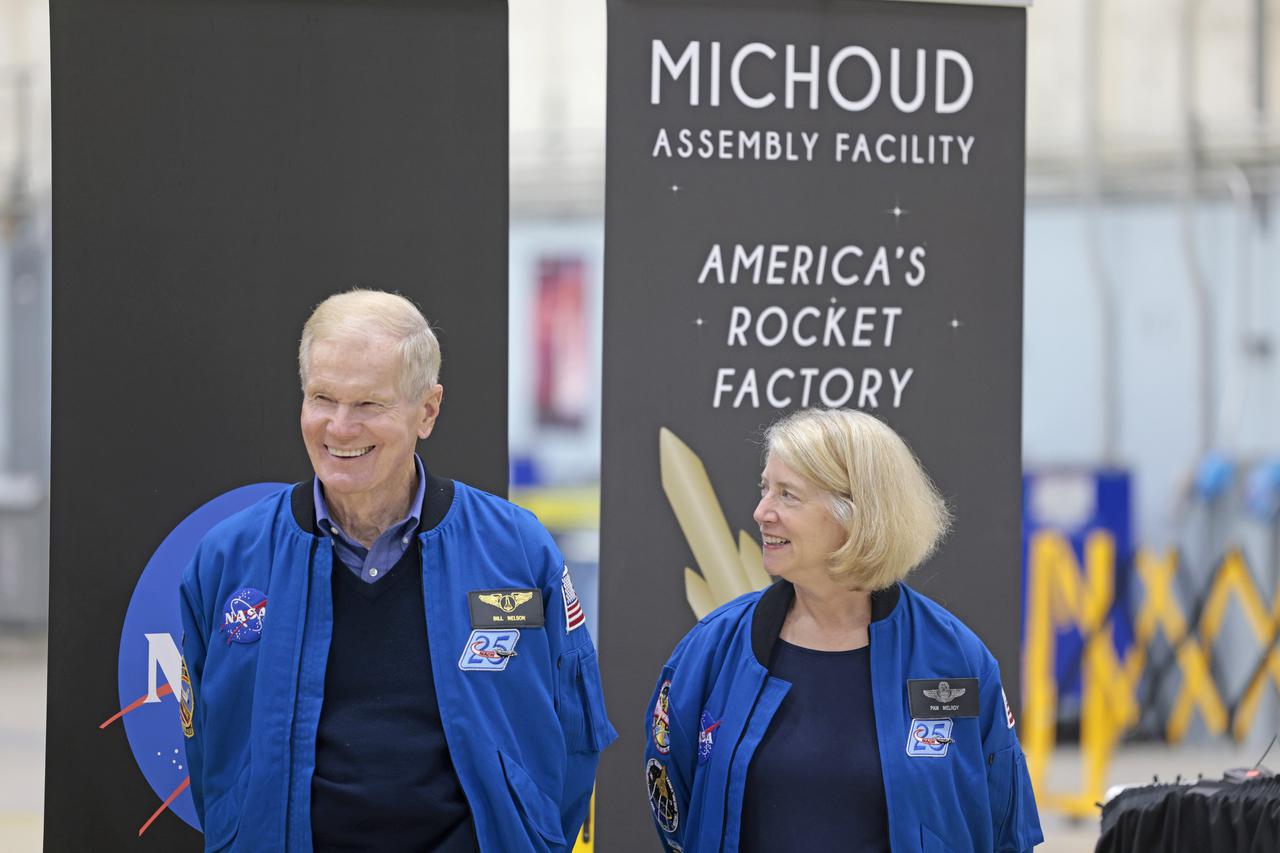
NASA Administrator Bill Nelson and Deputy Administrator Pam Melroy visited the agency’s Michoud Assembly Facility in New Orleans on Dec. 8, 2021 for tours and briefings on Michoud’s role in the Artemis program and other capabilities that enrich many facets of the nation’s space exploration endeavors. Image credit: NASA/Michael DeMocker
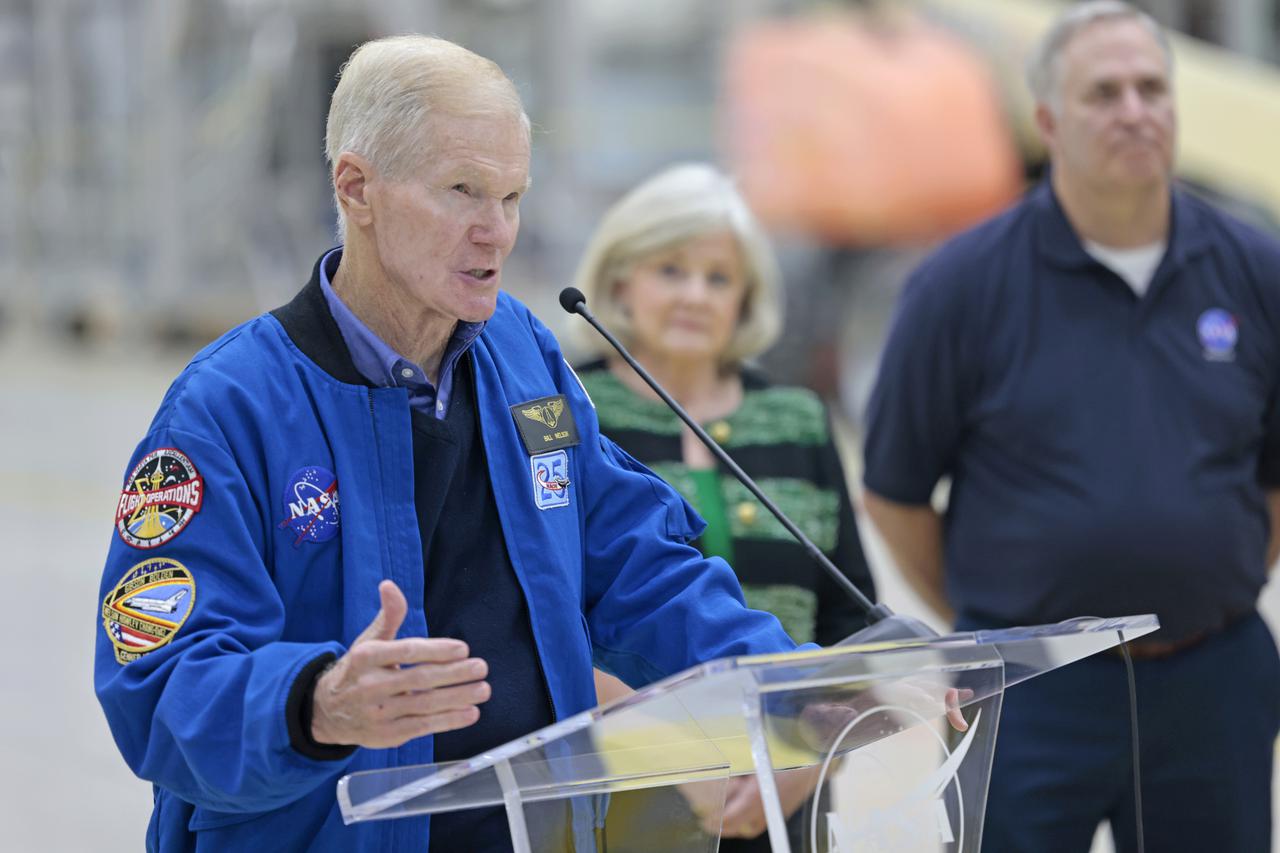
NASA Administrator Bill Nelson and Deputy Administrator Pam Melroy visited the agency’s Michoud Assembly Facility in New Orleans on Dec. 8, 2021 for tours and briefings on Michoud’s role in the Artemis program and other capabilities that enrich many facets of the nation’s space exploration endeavors. Image credit: NASA/Michael DeMocker
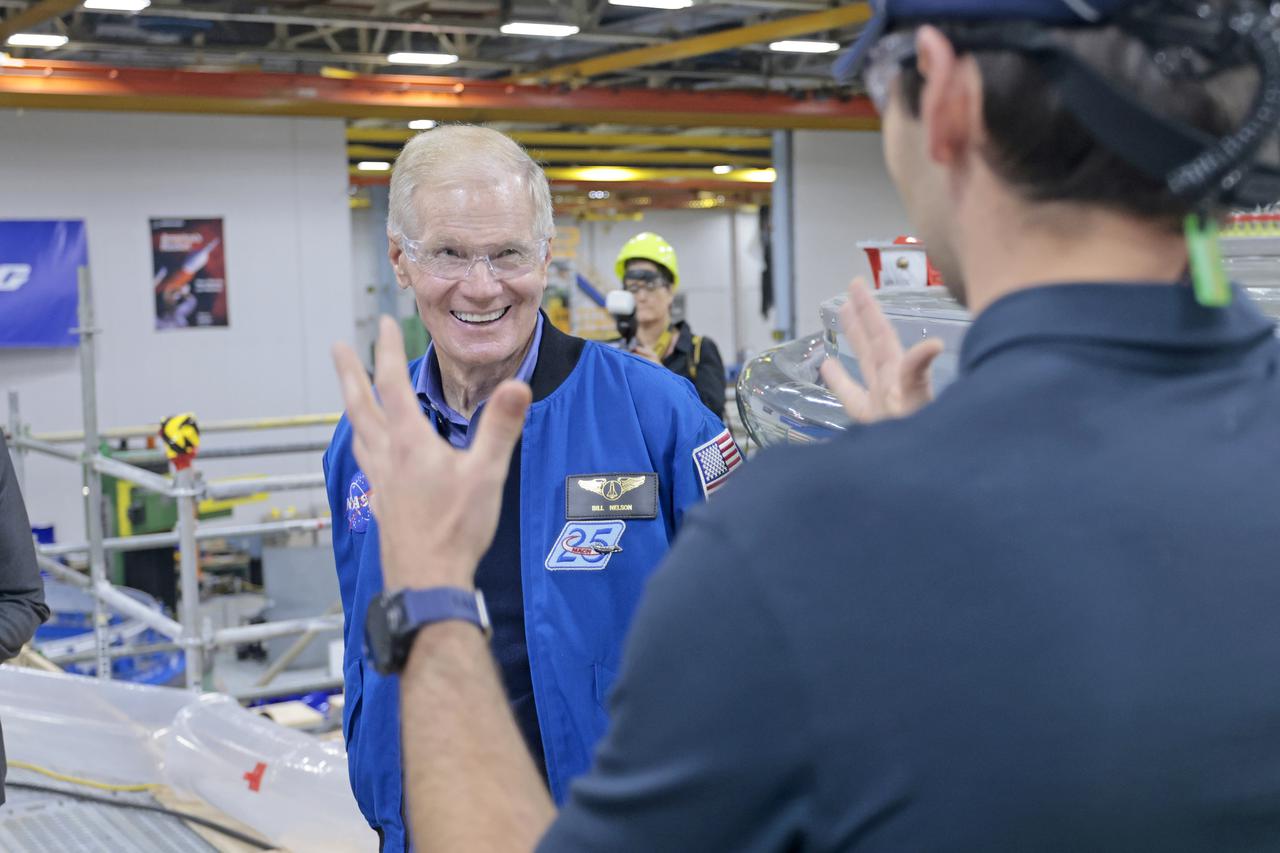
NASA Administrator Bill Nelson and Deputy Administrator Pam Melroy visited the agency’s Michoud Assembly Facility in New Orleans on Dec. 8, 2021 for tours and briefings on Michoud’s role in the Artemis program and other capabilities that enrich many facets of the nation’s space exploration endeavors. Image credit: NASA/Michael DeMocker

NASA Administrator Bill Nelson and Deputy Administrator Pam Melroy visited the agency’s Michoud Assembly Facility in New Orleans on Dec. 8, 2021 for tours and briefings on Michoud’s role in the Artemis program and other capabilities that enrich many facets of the nation’s space exploration endeavors. Image credit: NASA/Michael DeMocker

NASA Administrator Bill Nelson and Deputy Administrator Pam Melroy visited the agency’s Michoud Assembly Facility in New Orleans on Dec. 8, 2021 for tours and briefings on Michoud’s role in the Artemis program and other capabilities that enrich many facets of the nation’s space exploration endeavors. Image credit: NASA/Michael DeMocker
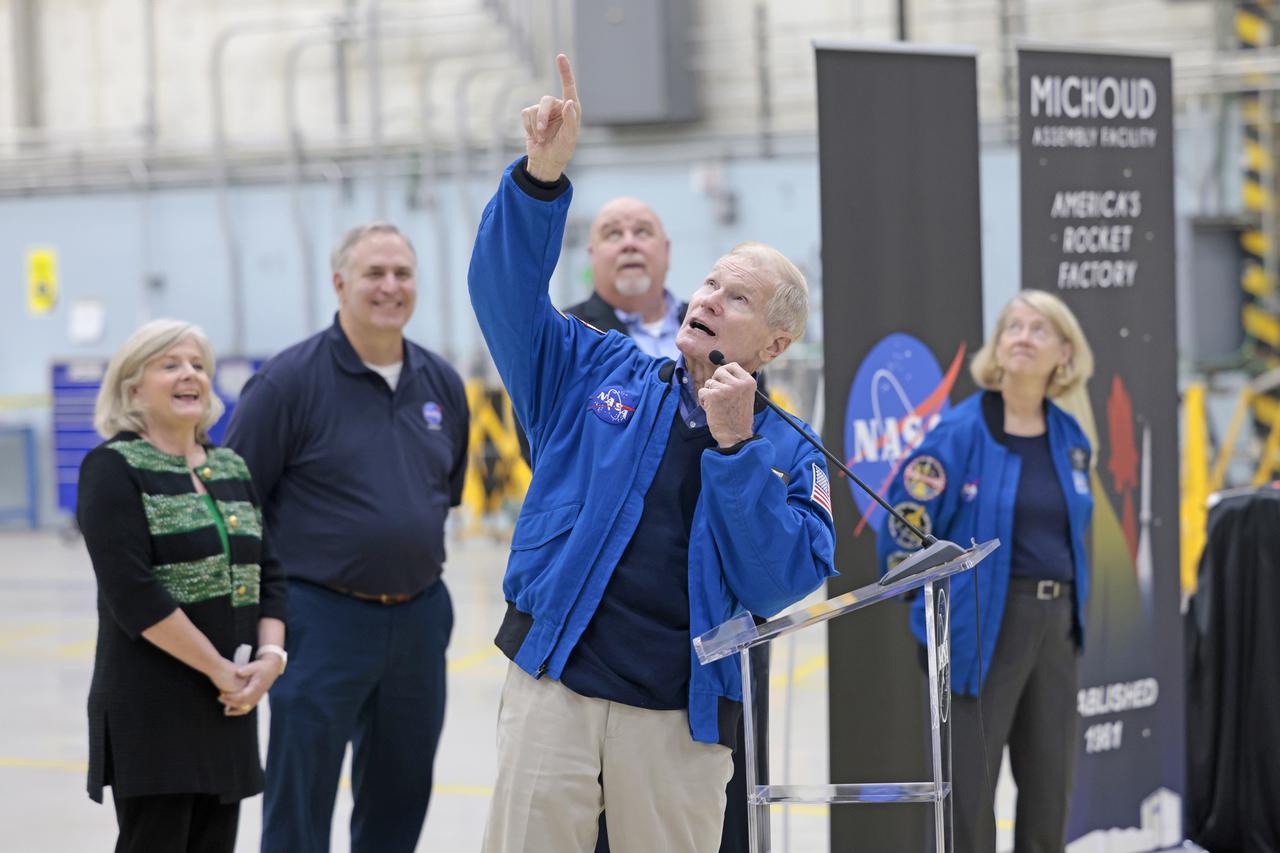
NASA Administrator Bill Nelson and Deputy Administrator Pam Melroy visited the agency’s Michoud Assembly Facility in New Orleans on Dec. 8, 2021 for tours and briefings on Michoud’s role in the Artemis program and other capabilities that enrich many facets of the nation’s space exploration endeavors. Image credit: NASA/Michael DeMocker
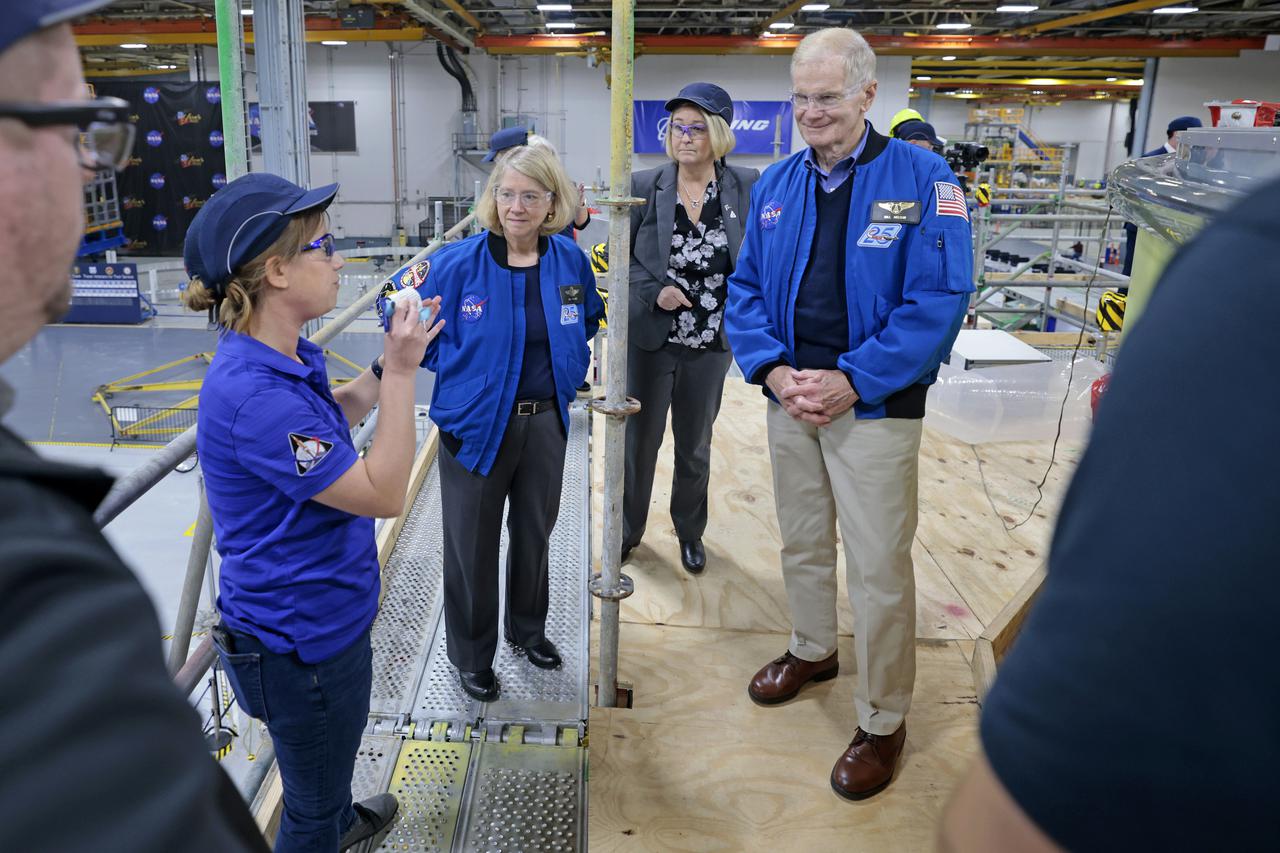
NASA Administrator Bill Nelson and Deputy Administrator Pam Melroy visited the agency’s Michoud Assembly Facility in New Orleans on Dec. 8, 2021 for tours and briefings on Michoud’s role in the Artemis program and other capabilities that enrich many facets of the nation’s space exploration endeavors. Image credit: NASA/Michael DeMocker
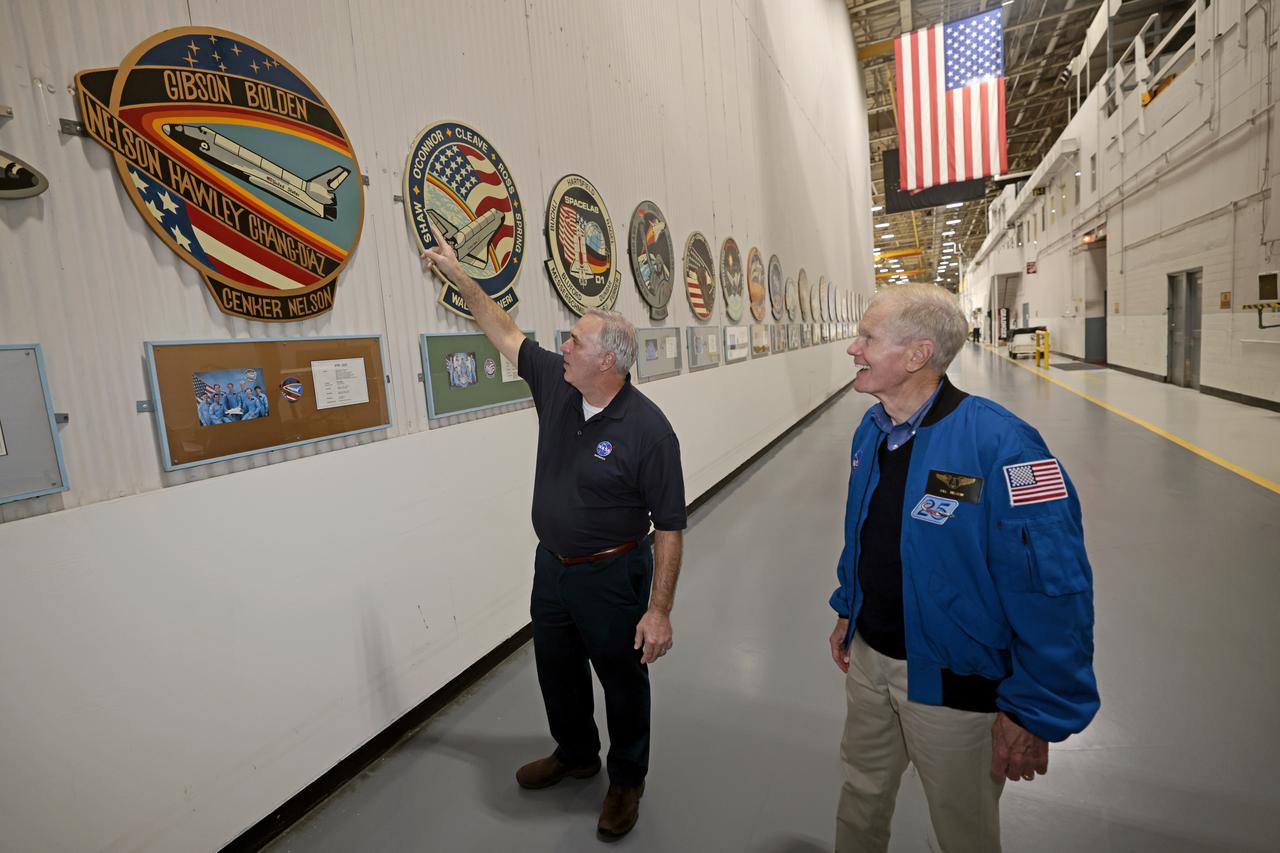
NASA Administrator Bill Nelson and Deputy Administrator Pam Melroy visited the agency’s Michoud Assembly Facility in New Orleans on Dec. 8, 2021 for tours and briefings on Michoud’s role in the Artemis program and other capabilities that enrich many facets of the nation’s space exploration endeavors. Image credit: NASA/Michael DeMocker

NASA Administrator Bill Nelson and Deputy Administrator Pam Melroy visited the agency’s Michoud Assembly Facility in New Orleans on Dec. 8, 2021 for tours and briefings on Michoud’s role in the Artemis program and other capabilities that enrich many facets of the nation’s space exploration endeavors. Image credit: NASA/Michael DeMocker
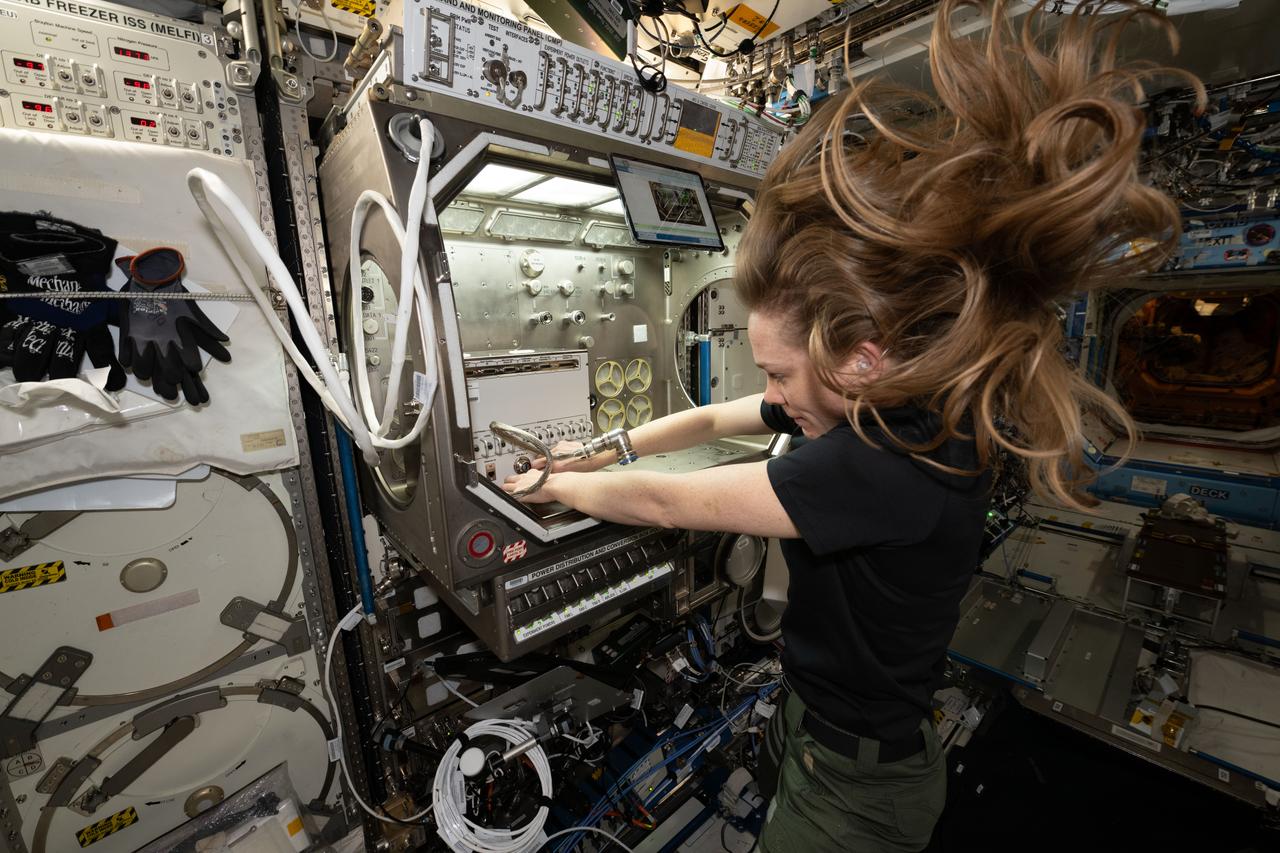
iss073e0134929 (6/9/2025) ---NASA astronaut Nichole Ayers sets up the station’s Ring Sheared Drop module. This system makes it possible to study liquid protein solutions without using containers, eliminating interactions between the solutions and container walls that can affect results. Ring Sheared Drop-IBP-2 studies the behavior of protein fluids in microgravity and tests computer models to predict that fluid’s behavior. Better models could help could advance manufacturing processes in space and on Earth for producing next-generation medicines for treating cancers and other diseases.NASA astronaut Nichole Ayers sets up the station’s Ring Sheared Drop module. This system makes it possible to study liquid protein solutions without using containers, eliminating interactions between the solutions and container walls that can affect results. Ring Sheared Drop-IBP-2 studies the behavior of protein fluids in microgravity and tests computer models to predict that fluid’s behavior. Better models could help could advance manufacturing processes in space and on Earth for producing next-generation medicines for treating cancers and other diseases.
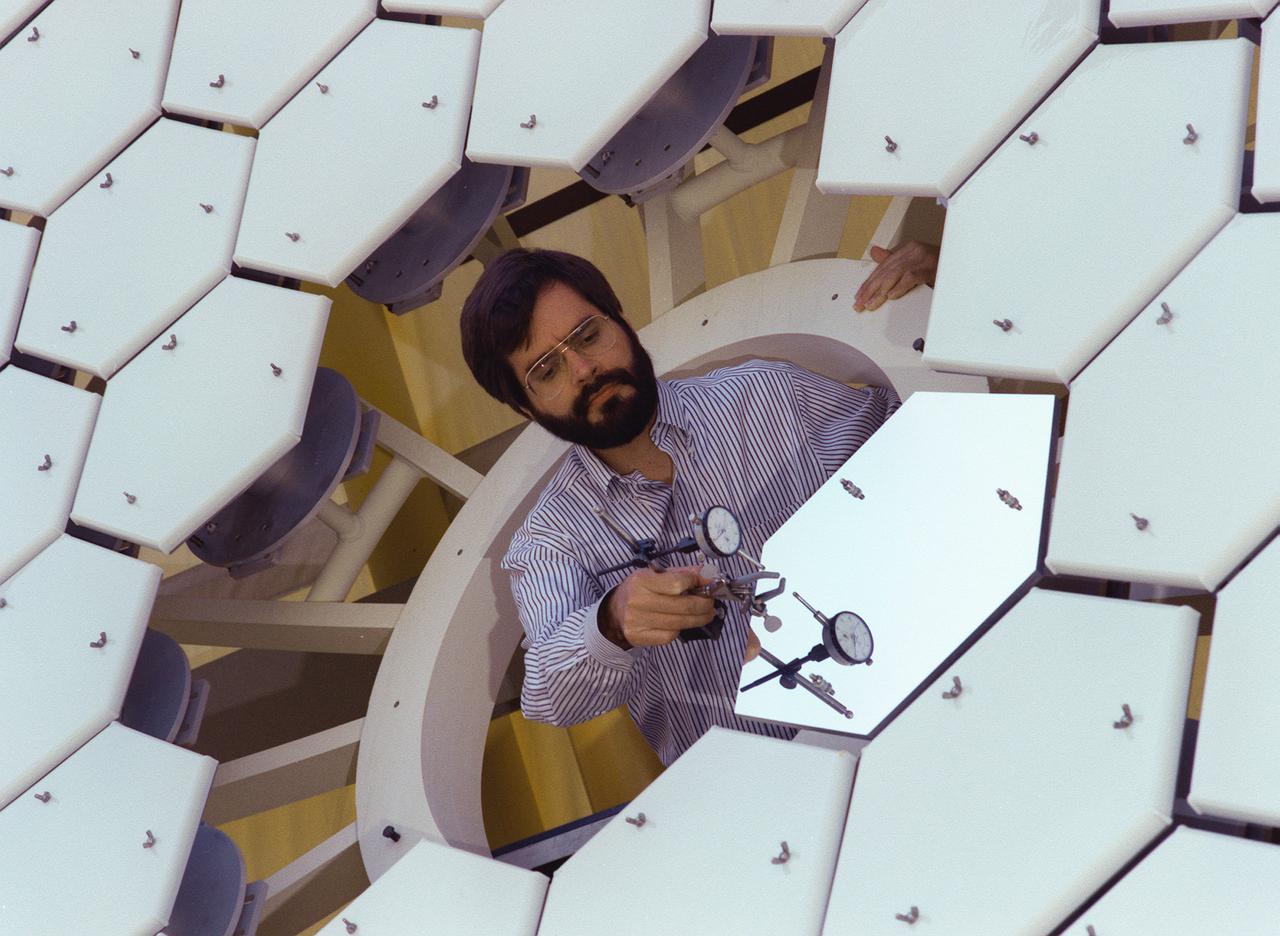
NASA's Space Optics Manufacturing Technology Center has been working to expand our view of the universe via sophisticated new telescopes. The Optics Center's goal is to develop low-cost, advanced space optics technologies for the NASA program in the 21st century, including the long-term goal of imaging Earth-like planets in distant solar systems. A segmented array of mirrors was designed by the Space Optics Manufacturing Technology Center for the solar concentrator test stand at the Marshall Space Flight Center (MSFC) for powering solar thermal propulsion engines. Each hexagon mirror has a spherical surface to approximate a parabolic concentrator when combined into the entire 18-foot diameter array. The aluminum mirrors were polished with a diamond turning machine that creates a glass-like reflective finish on metal. The precision fabrication machinery at the Space Optics Manufacturing Technology Center at MSFC can polish specialized optical elements to a world class quality of smoothness. This image shows optics physicist, Vince Huegele, examining one of the 144-segment hexagonal mirrors of the 18-foot diameter array at the MSFC solar concentrator test stand.
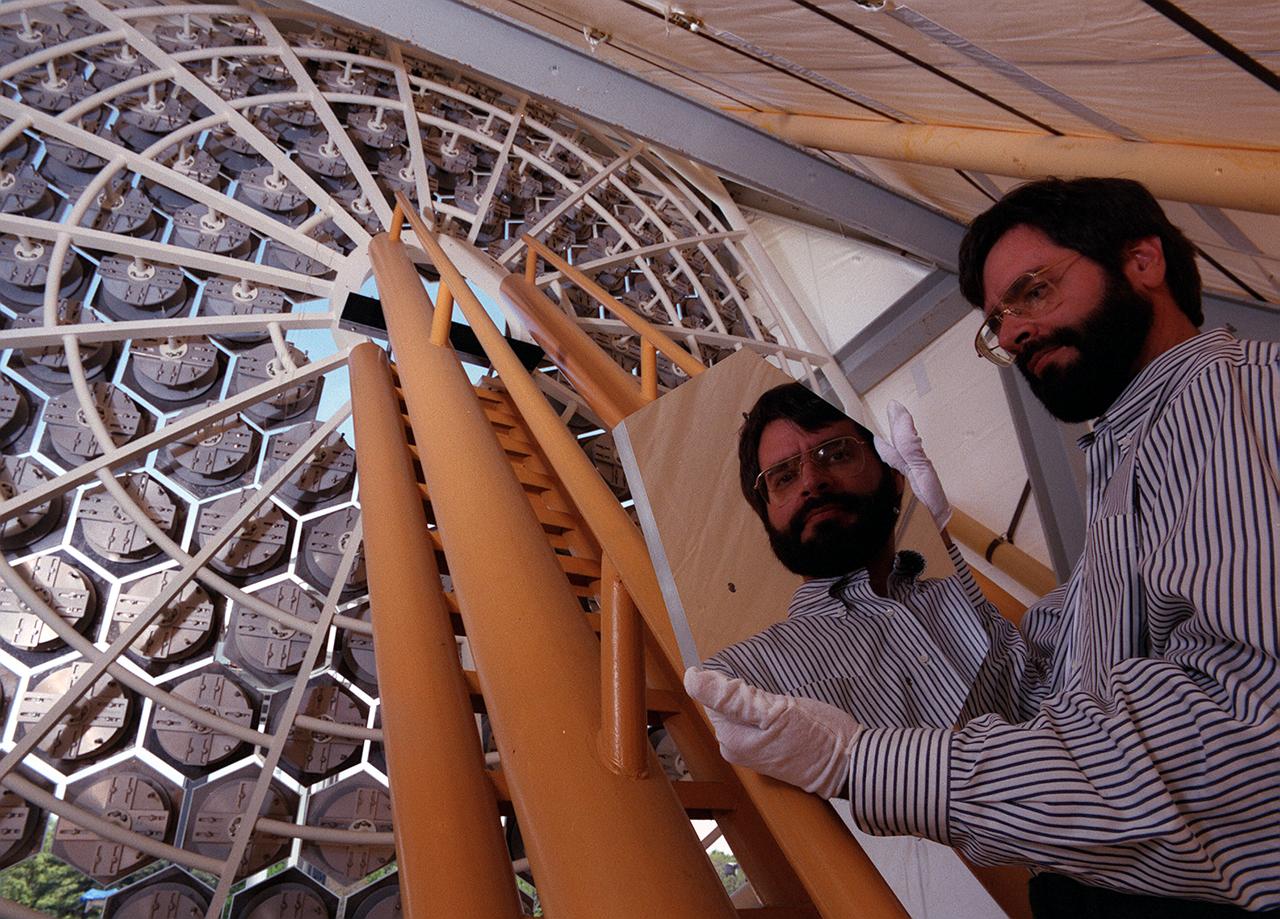
NASA's Space Optics Manufacturing Technology Center has been working to expand our view of the universe via sophisticated new telescopes. The Optics Center's goal is to develop low-cost, advanced space optics technologies for the NASA program in the 21st century, including the long-term goal of imaging Earth-like planets in distant solar systems. A segmented array of mirrors was designed by the Space Optics Manufacturing Technology Center for solar the concentrator test stand at the Marshall Space Flight Center (MSFC) for powering solar thermal propulsion engines. Each hexagon mirror has a spherical surface to approximate a parabolic concentrator when combined into the entire 18-foot diameter array. The aluminum mirrors were polished with a diamond turning machine, that creates a glass-like reflective finish on metal. The precision fabrication machinery at the Space Optics Manufacturing Technology Center at MSFC can polish specialized optical elements to a world class quality of smoothness. This image shows optics physicist, Vince Huegele, examining one of the 144-segment hexagonal mirrors of the 18-foot diameter array at the MSFC solar concentrator test stand.
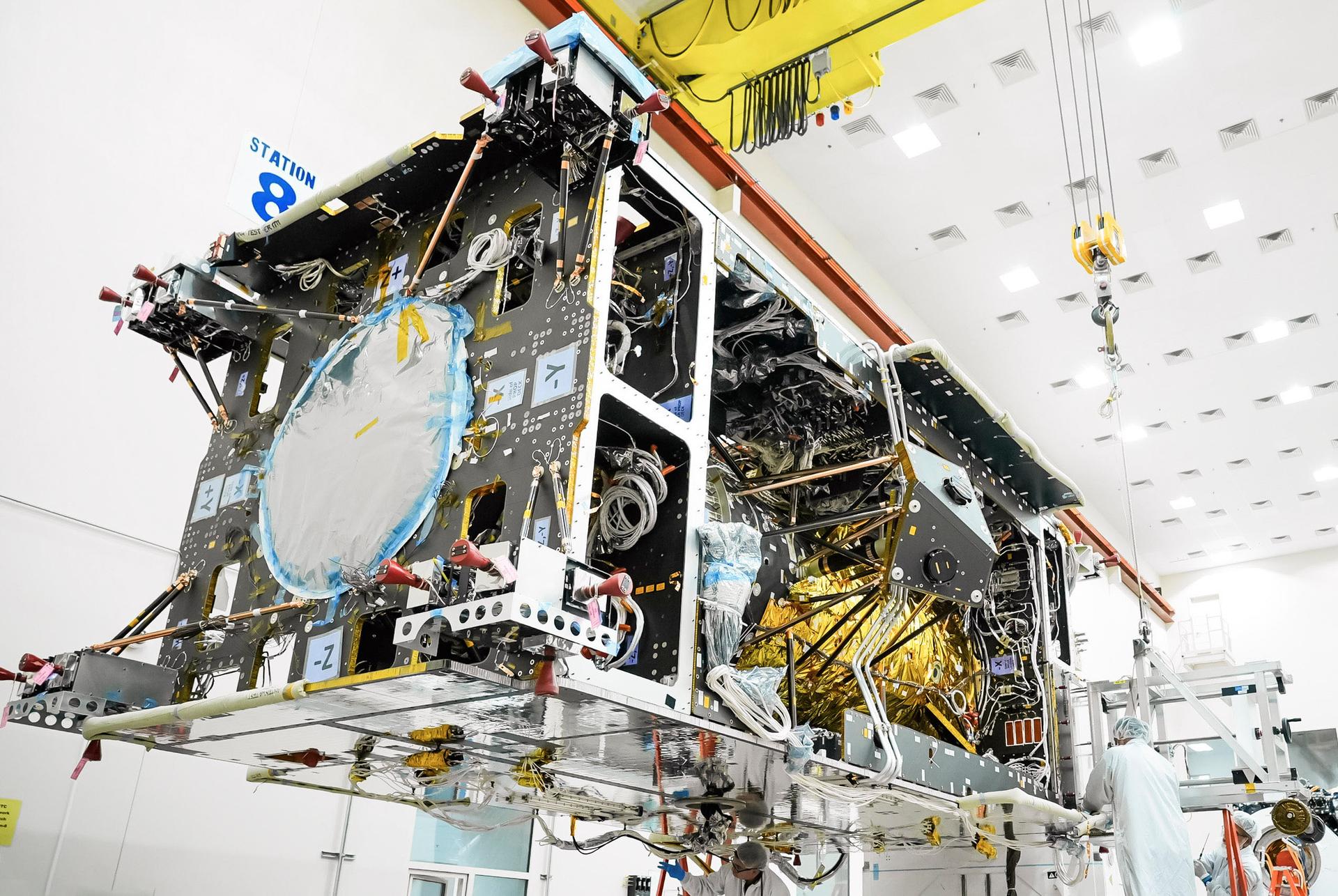
Gateway’s Power and Propulsion Element (PPE) undergoes battery installations at Lanteris Space Systems in Palo Alto, California, in January 2026. PPE is a 60-kilowatt solar electric propulsion spacecraft that will supply the lunar space station with power, high-rate communications, attitude control, orbit maintenance, and orbit transfer capabilities. Its design is based on Lanteris Space Systems’ commercial 1300 bus, enhanced with the most powerful Advanced Electric Propulsion System (AEPS) thrusters and the largest roll-out solar arrays (ROSAs) ever developed. Lanteris Space Systems is the lead industry partner for PPE’s design, manufacturing, and integration.
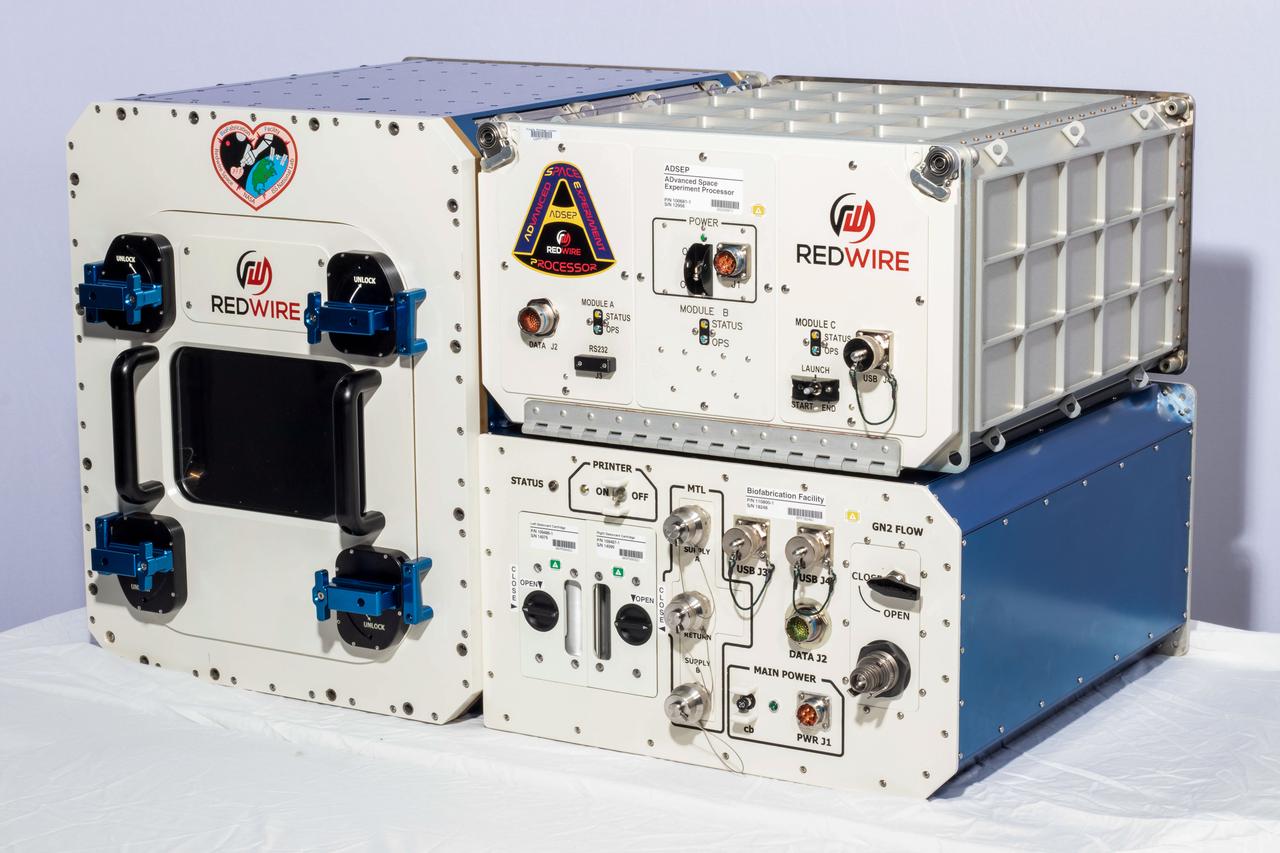
jsc2022e072969 (8/12/2022) --- The BioFabrication Facility (BFF) and the ADvanced Space Experiment Processor (ADSEP) together comprise a system capable of manufacturing human tissue in the microgravity environment of space. BFF is returning to the International Space Station after coming back to Earth for upgrades in 2020. The first investigation to be conducted in the upgraded facility is BioFabrication Facility Assembled Next-gen Development of Collagenous Allograft Meniscal Prosthetics aboard the International Space Station (BFF-Meniscus-2). The study attempts to 3D print a meniscus, also known as knee cartilage tissue, using only bioinks and cells. Image courtesy of Redwire.
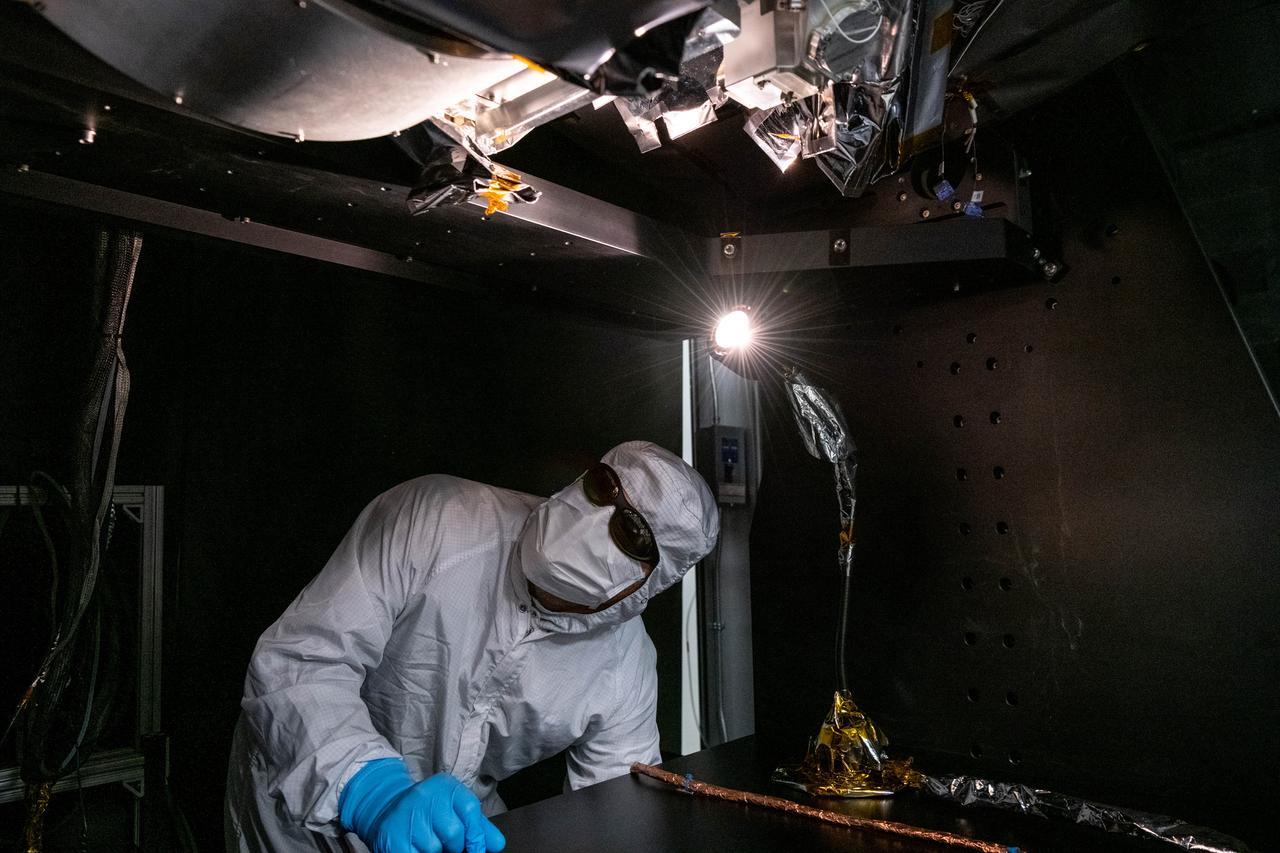
Manufacturing engineer, Roman Nilov, inspects flight hardware after technicians install the Short Wave Infrared (SWIR) Pulse Calibration Assembly (SPCA) fold mirror assembly to the Ocean Color Instrument (OCI). OCI is a highly advanced optical spectrometer that will be used to measure properties of light over portions of the electromagnetic spectrum. It will enable continuous measurement of light at finer wavelength resolution than previous NASA satellite sensors, extending key system ocean color data records for climate studies. OCI is PACE's (Plankton, Aerosol, Cloud, ocean Ecosystem) primary sensor built at Goddard Space Flight Center in Greenbelt, MD.
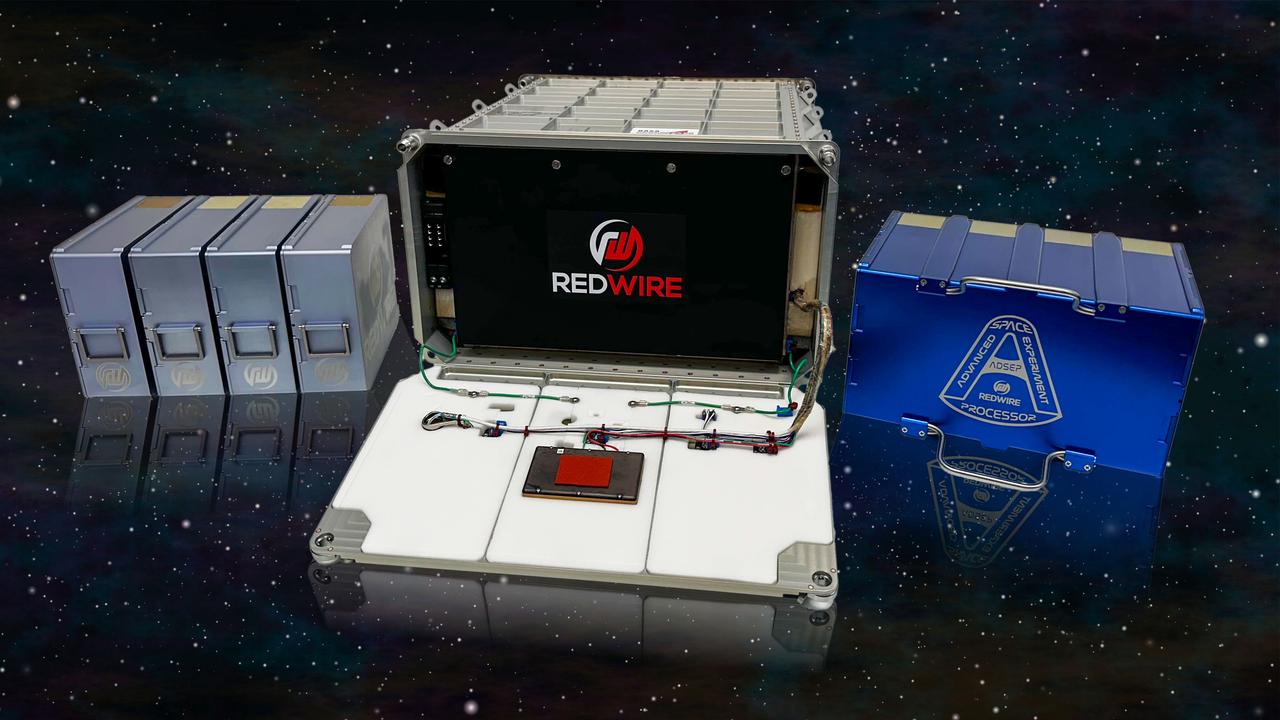
jsc2025e036384 (4/4/2025) --- A lineup of Redwire hardware. Left: Redwire’s in-space pharmaceutical manufacturing system (PIL-BOX) system are chambers that allow crystal growth in small batches. Middle: The Redwire Advanced Space Experiment Processor (ADSEP) in a close configuration onto which either the PIL-BOX or ICC can be installed. Right: The Redwire Industrial Crystallization Cassette (ICC), a facility capable of larger quantities of crystal growth than the PIL-BOX. The ADSEP Industrial Crystallization Cassette Technology Demonstration (ADSEP-ICC) investigation validates the ICC’s capability to grow large quantities of crystals in its high-volume crystal growth chambers aboard the International Space Station. Image courtesy of Redwire.
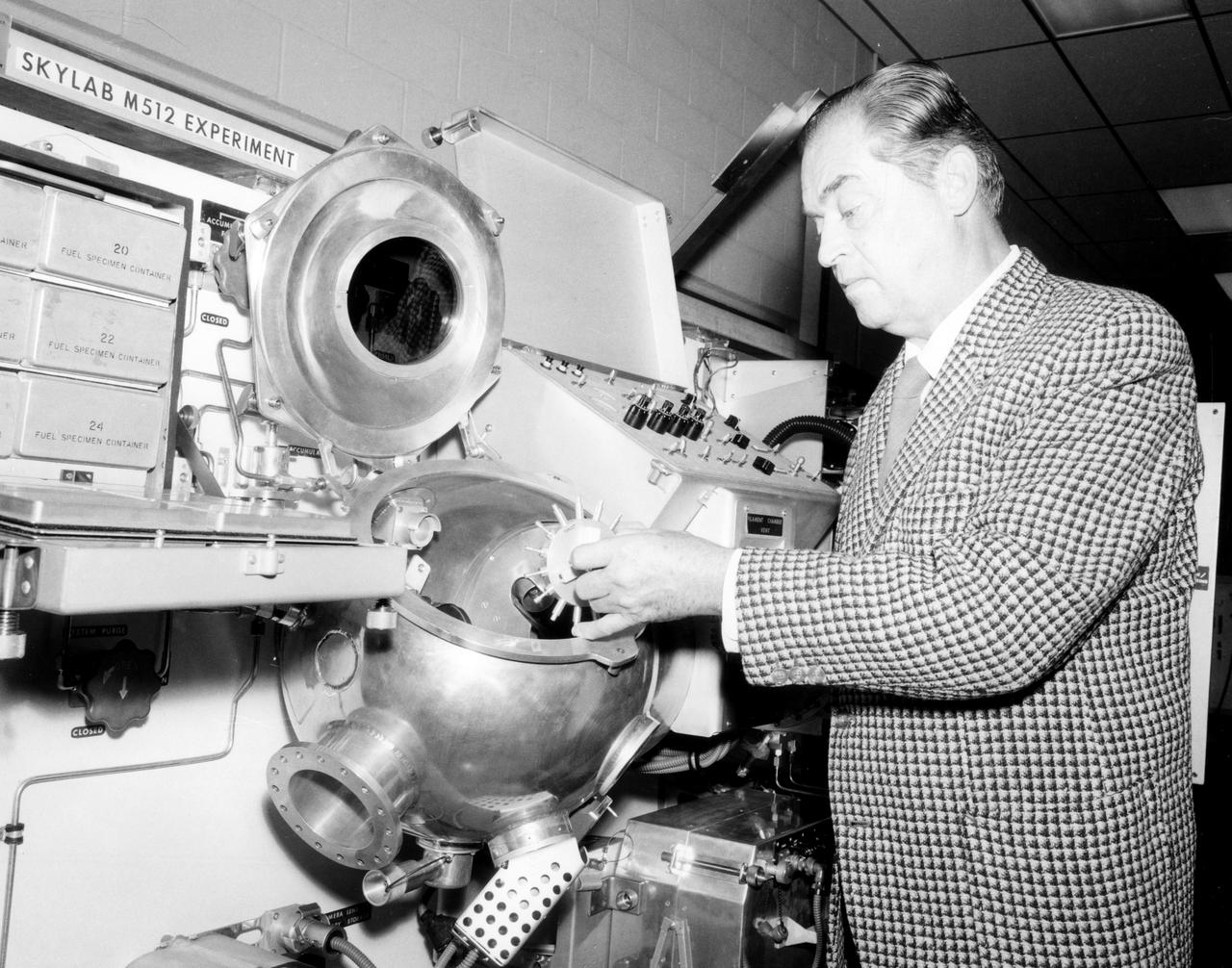
Hans F. Wuenscher, assistant director for Advanced Space Projects Engineering Laboratory at Marshall Space Flight Center (MSFC), examined the facility to be used by Skylab astronauts in performing a number of experiments in material science and manufacturing in space. The equipment shown here is a duplicate of the M512 Experiment hardware flown in the Multiple Docking Adapter section of the Sky lab. This equipment, itself an experiment, was be used for conducting 5 other experiments in the round vacuum chamber. Inside was a cavity which held the M518 Multipurpose Electric Furnace, a facility which was used for conducting other experiments. In all, a total of 17 experiments were conducted using this facility and furnace.
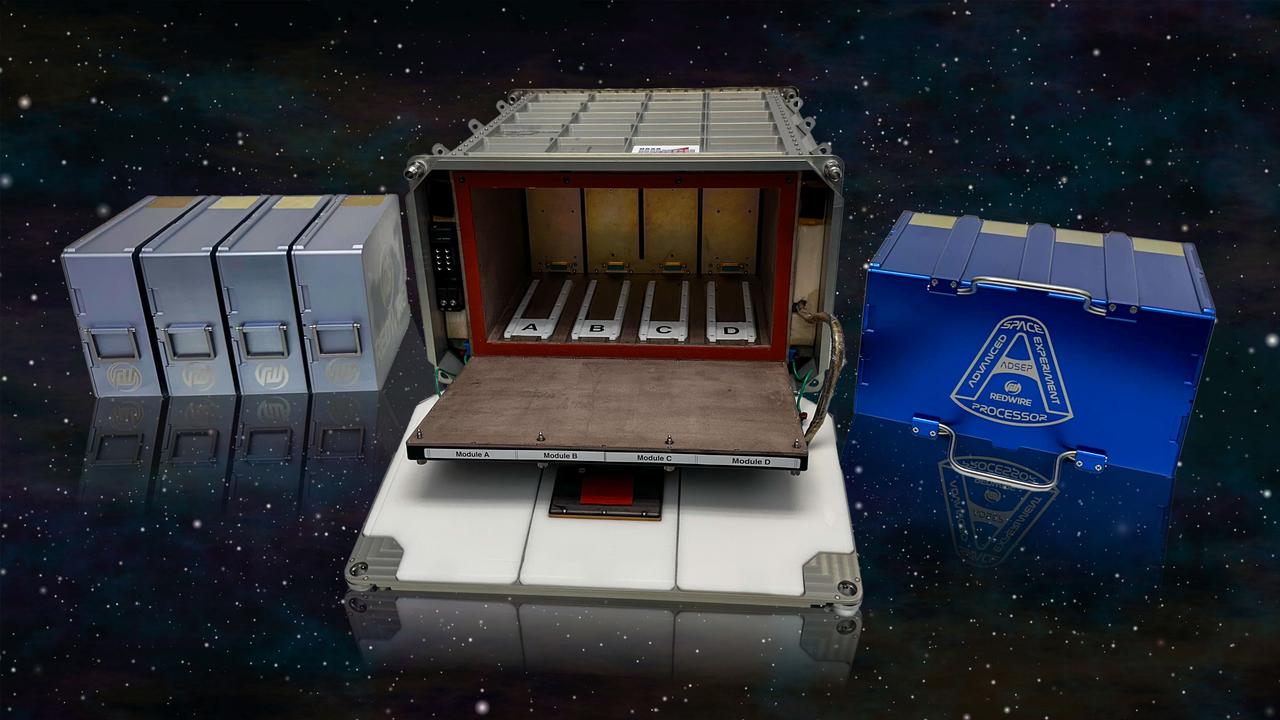
jsc2025e036385 (4/4/2025) --- A lineup of Redwire hardware. Left: Redwire’s in-space pharmaceutical manufacturing system (PIL-BOX) system are chambers that allow crystal growth in small batches. Middle: The Redwire Advanced Space Experiment Processor (ADSEP) in an open configuration onto which either the PIL-BOX or ICC can be installed. Right: The Redwire Industrial Crystallization Cassette (ICC), a facility capable of larger quantities of crystal growth than the PIL-BOX. The ADSEP Industrial Crystallization Cassette Technology Demonstration (ADSEP-ICC) investigation validates the ICC’s capability to grow large quantities of crystals in its high-volume crystal growth chambers aboard the International Space Station. Image courtesy of Redwire.