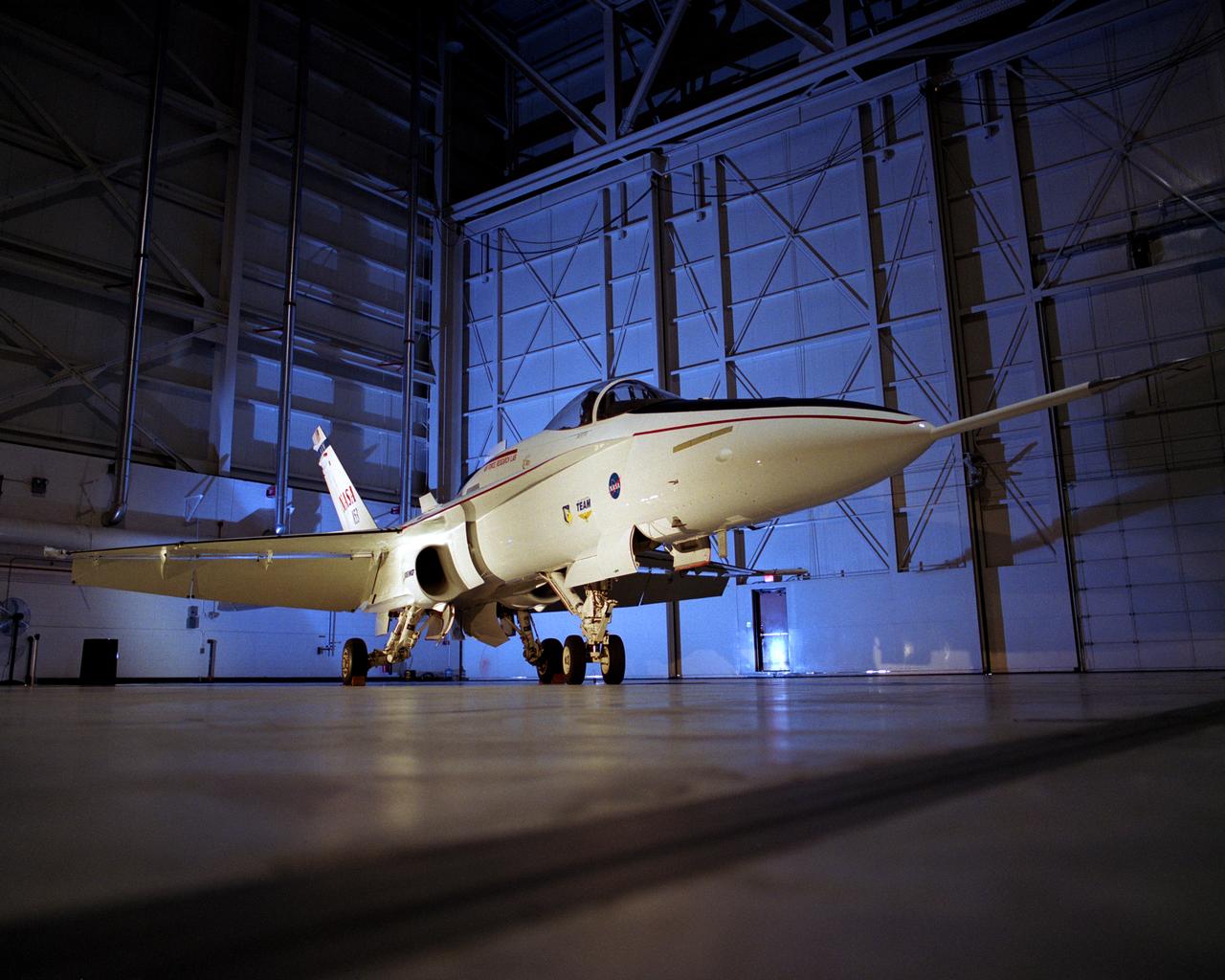
A modified F/A-18 in a distinctive red, white and blue paint scheme was showcased during formal rollout ceremonies for the Active Aeroelastic Wing flight research program.
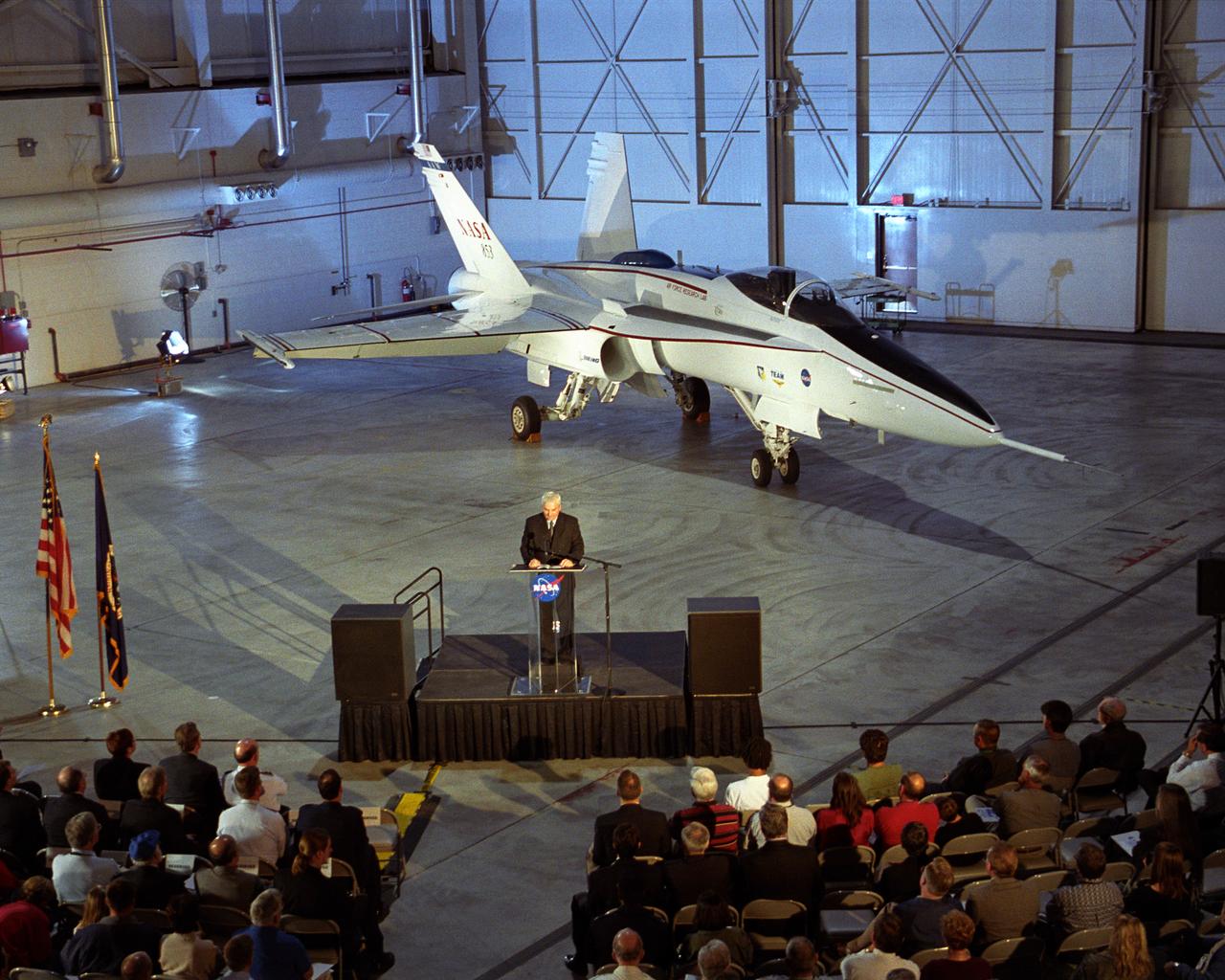
With the modified F/A-18 showcased behind him, Kevin Petersen, director of NASA Dryden Flight Research Center, addressed the audience attending the rollout ceremonies for the Active Aeroelastic Wing flight research project.
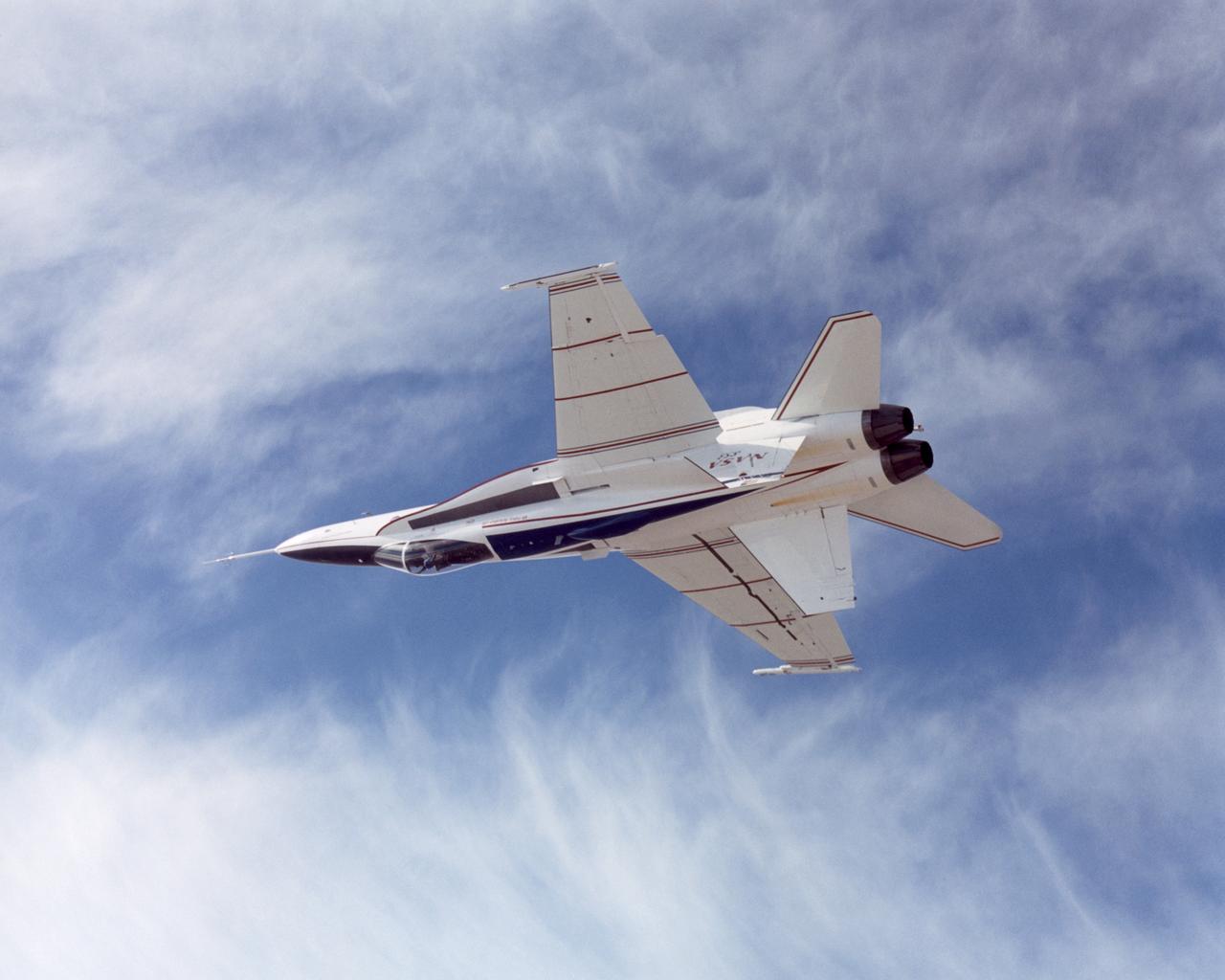
NASA's Active Aeroelastic Wing F/A-18A research aircraft rolls upside down during a 360-degree aileron roll on a test mission.
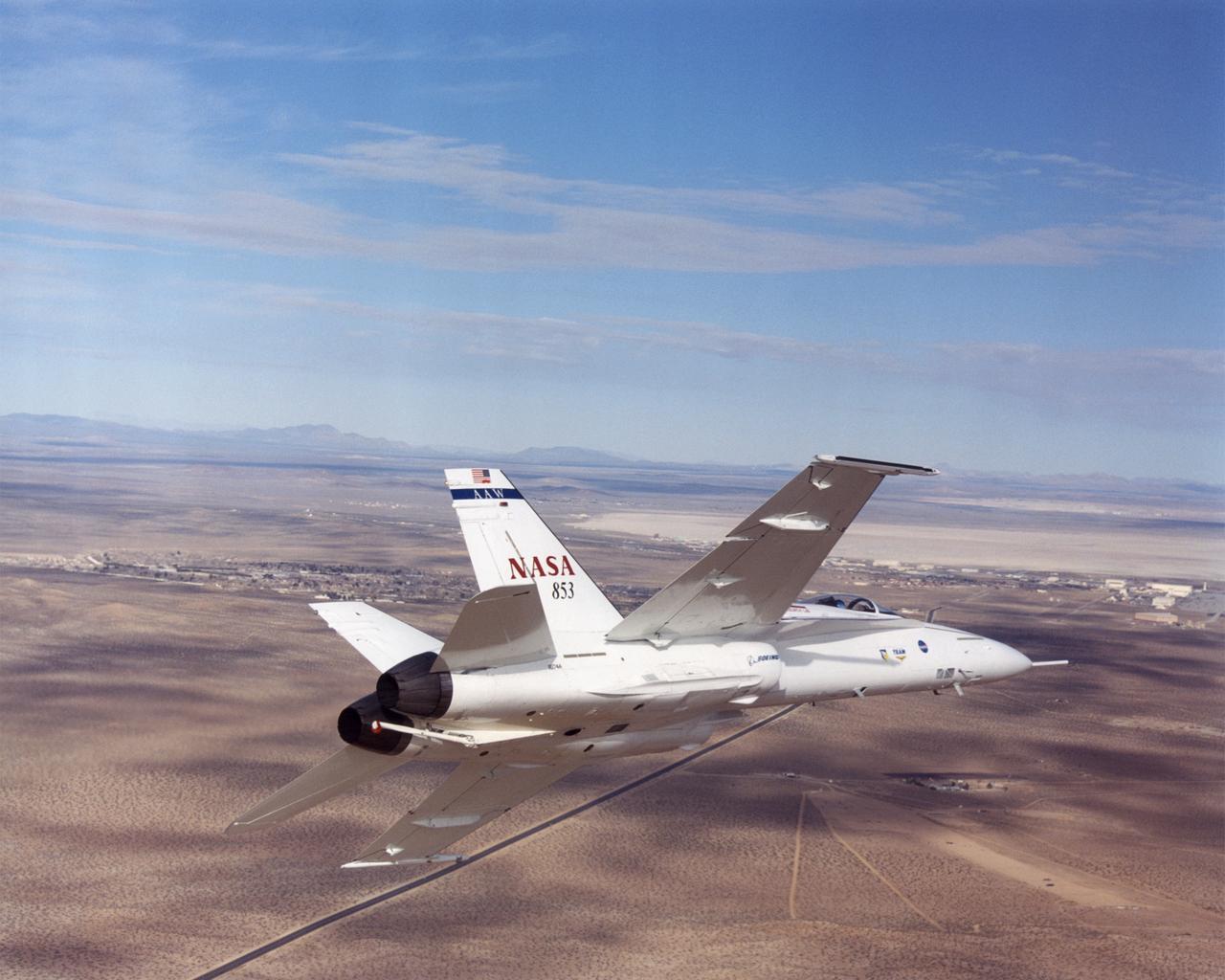
NASA 853, a modified former Navy F/A-18A fighter plane, is now performing research duties in the Active Aeroelastic Wing project at NASA Dryden Flight Research Center, Edwards AFB, California.
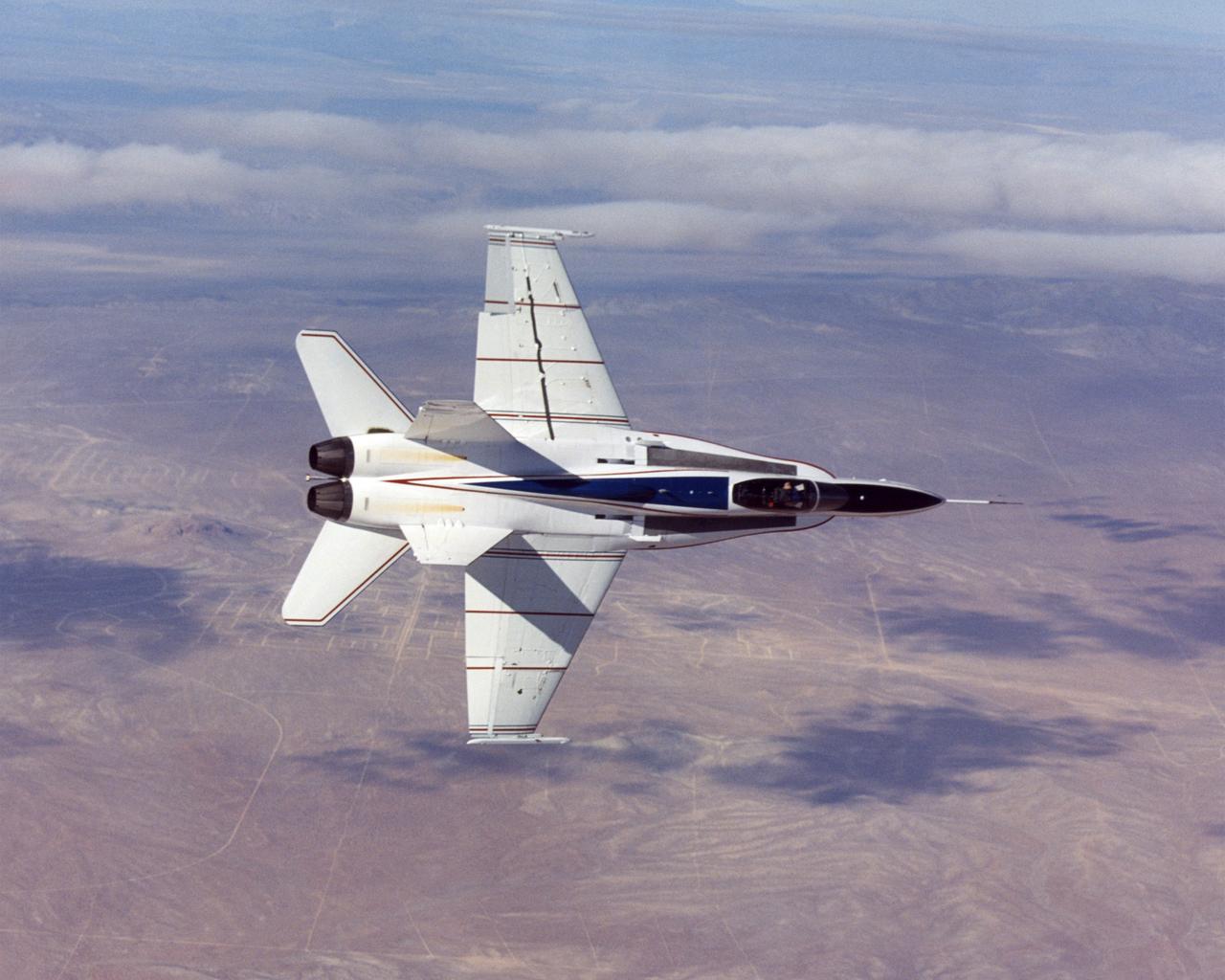
NASA Dryden's highly-modified Active Aeroelastic Wing F/A-18A shows off its form during a 360-degree aileron roll during a research flight.

How differential deflection of the inboard and outboard leading-edge flaps affected the handling qualities of this modified F/A-18A was evaluated during the first check flight in the Active Aeroelastic Wing program at NASA's Dryden Flight Research Center.
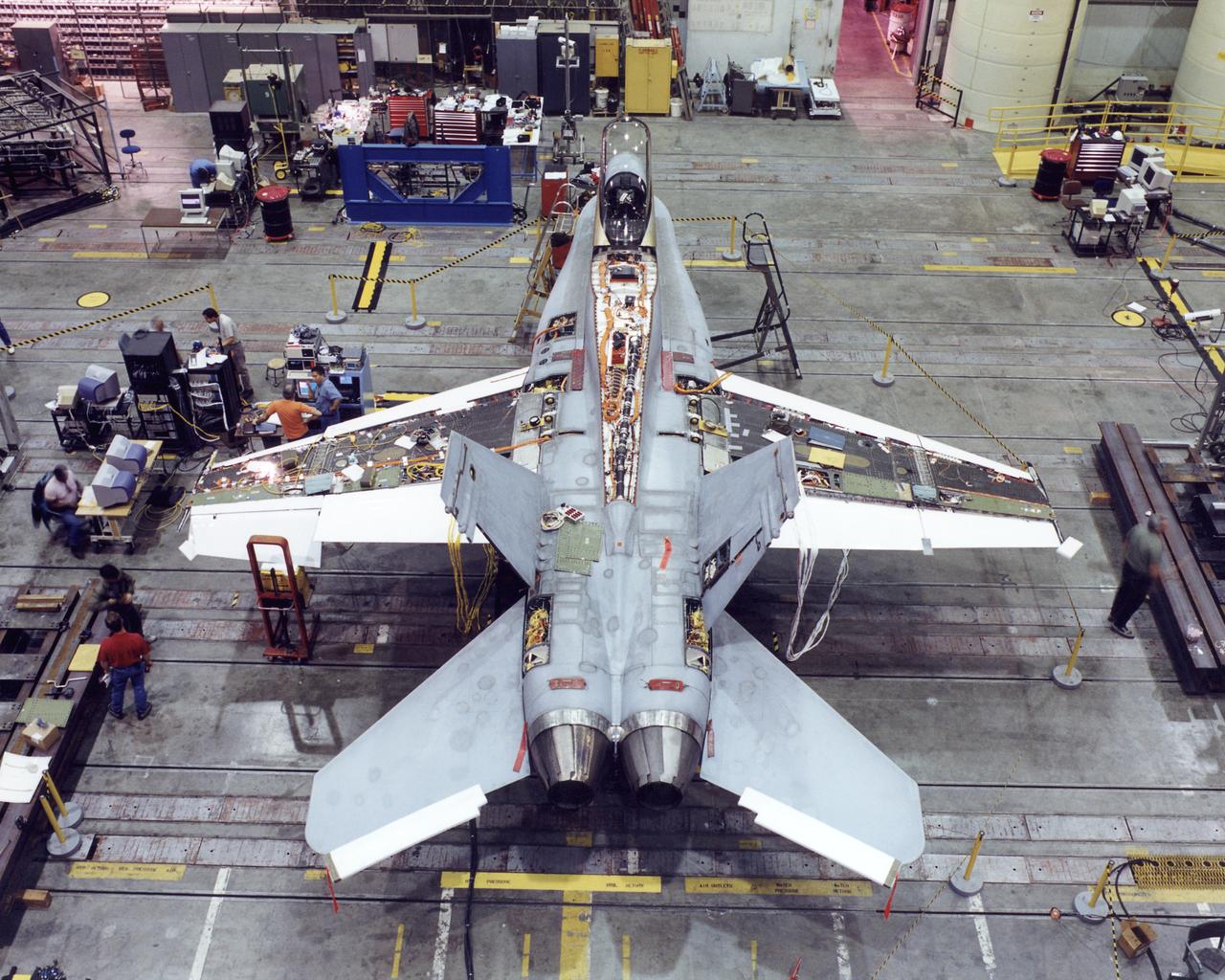
Structural loads testing on the Active Aeroelastic Wing F-18 in the Flight Loads Laboratory at NASA's Dryden flight Research Center, Edwards, California
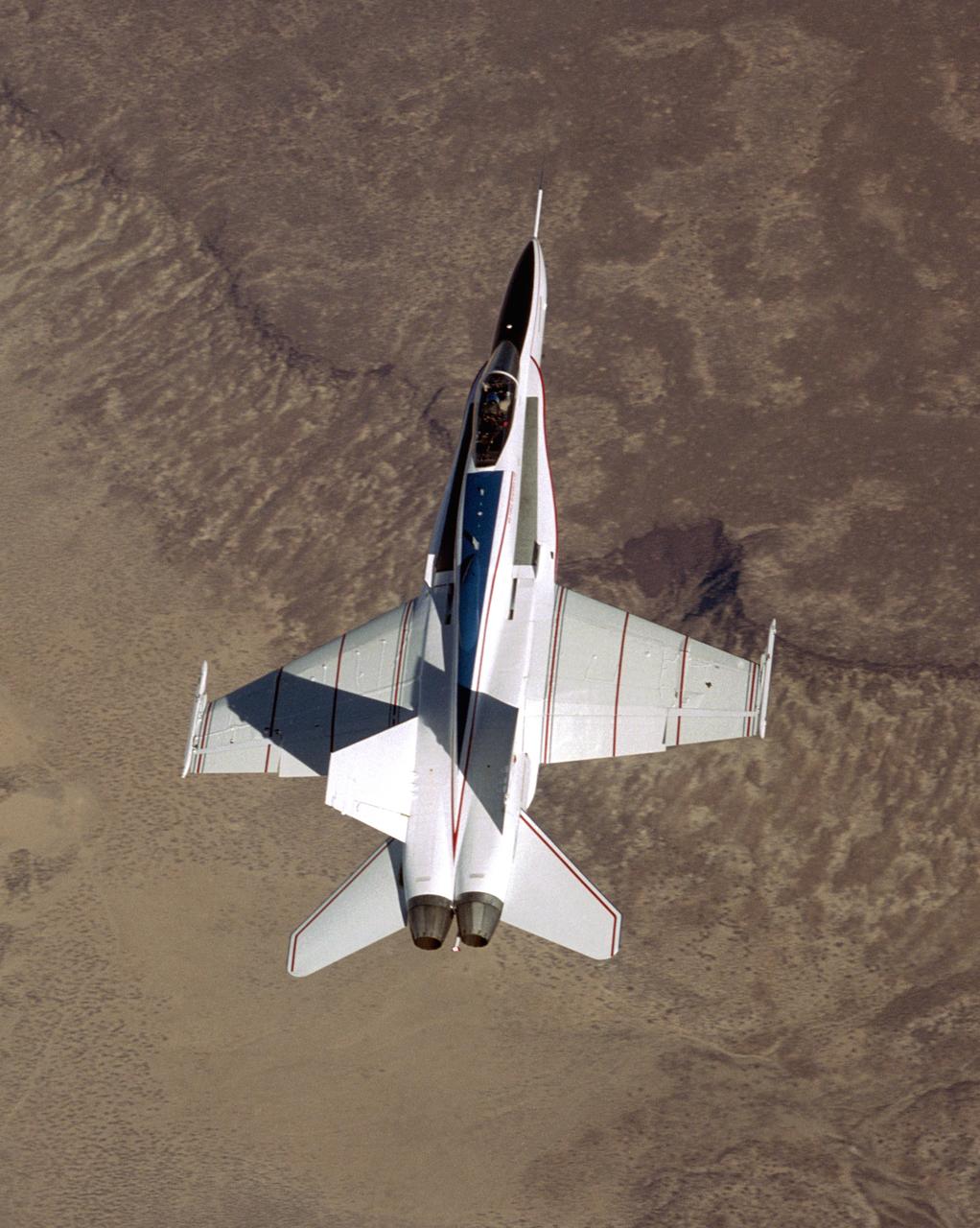
The modified F/A-18 being flown in the joint NASA/Air Force Active Aeroelastic Wing research program shows off its colors during its first checkout flight from NASA's Dryden Flight Research Center.
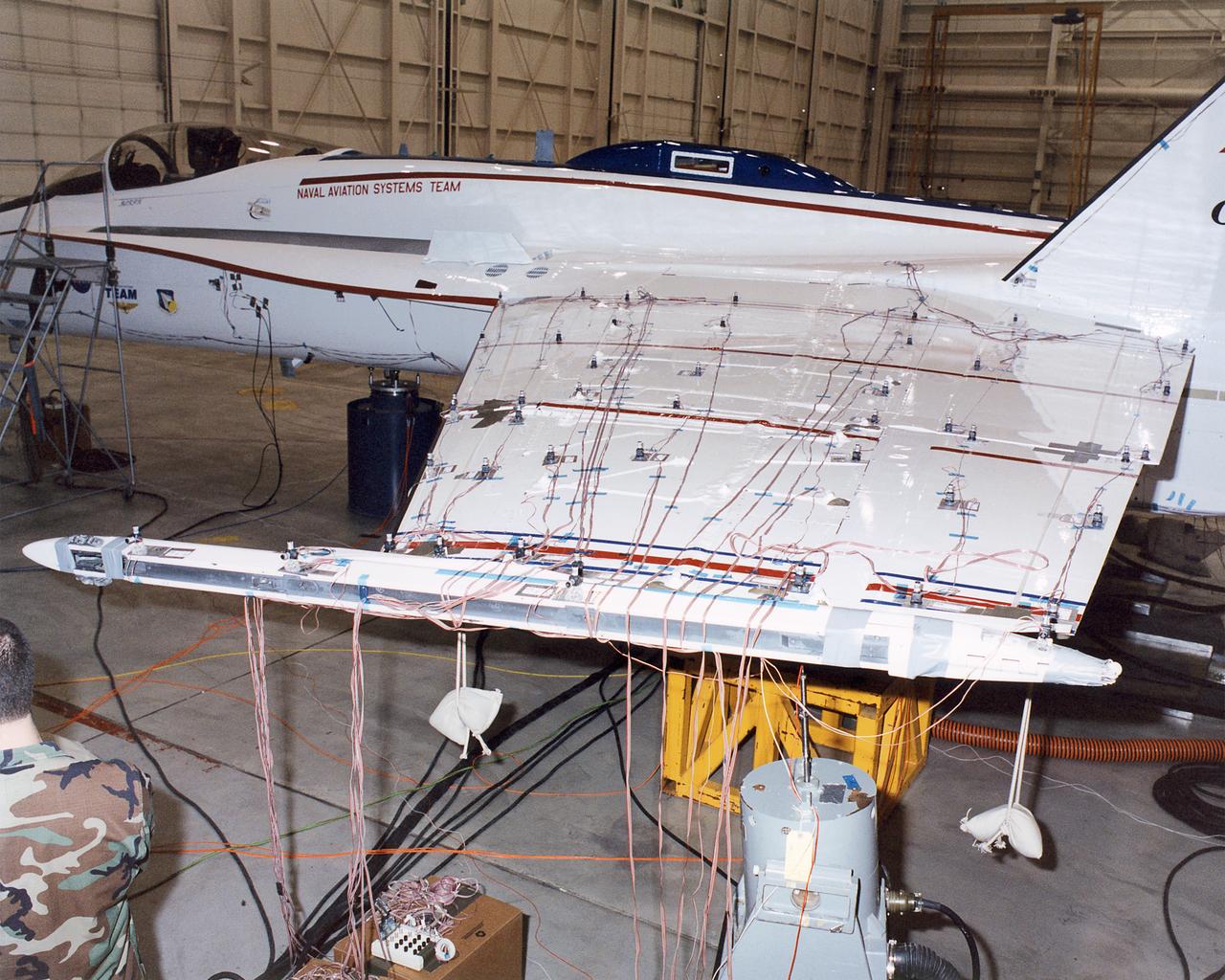
The upper wing surfaces of the Active Aeroelastic Wing F/A-18 test aircraft are covered with accelerometers and other sensors during ground vibration tests at NASA Dryden Flight Research Center.
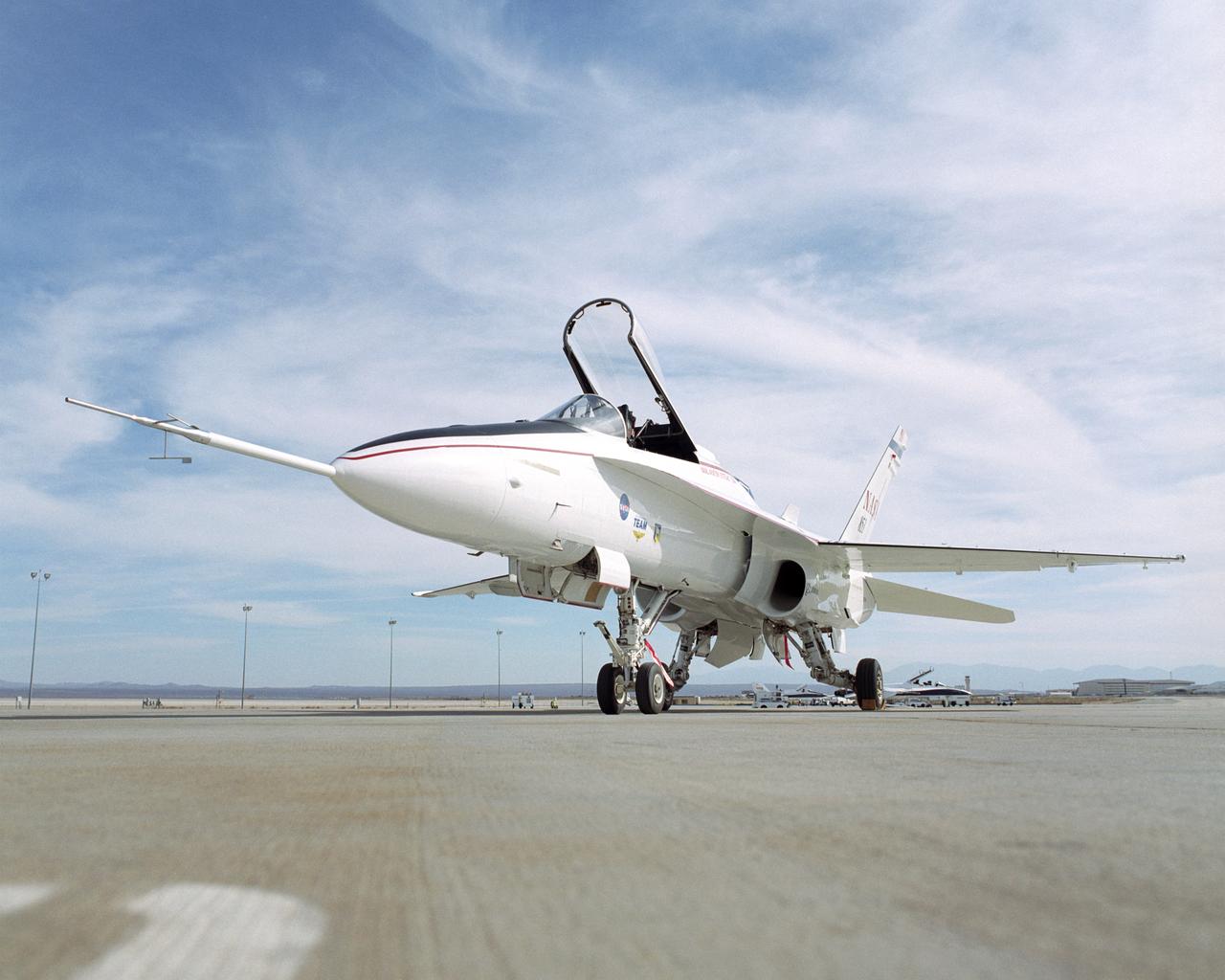
This modified F/A-18A is the test aircraft for the Active Aeroelastic Wing (AAW) project at NASA's Dryden Flight Research Center, Edwards, California.
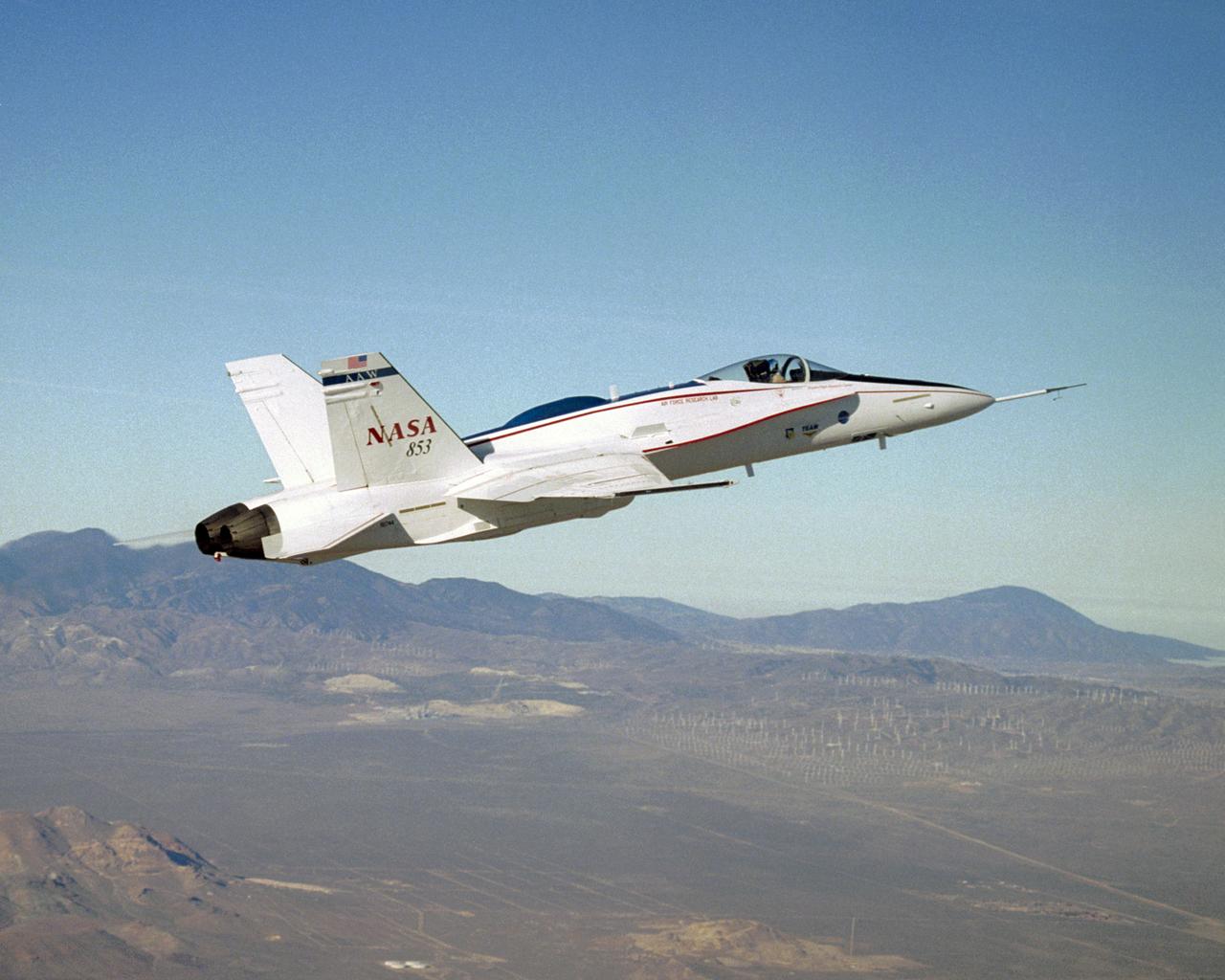
NASA's Active Aeroelastic Wing F/A-18 resumed flight tests in the second phase of the program at the Dryden Flight Research Center in early December 2004.
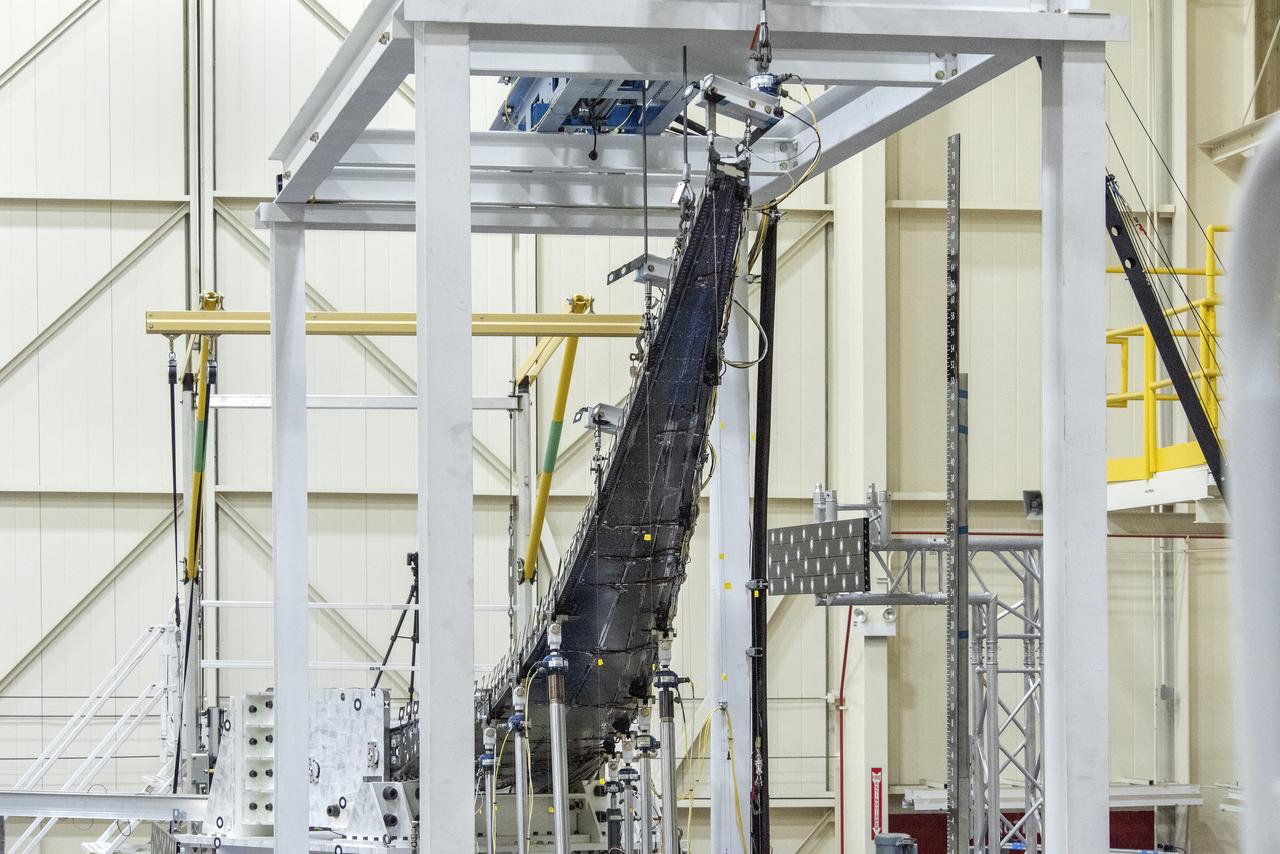
The Passive Aeroelastic Tailored (PAT) wing bends under pressure from the highest loads applied during testing at NASA’s Armstrong Flight Research Center in California.
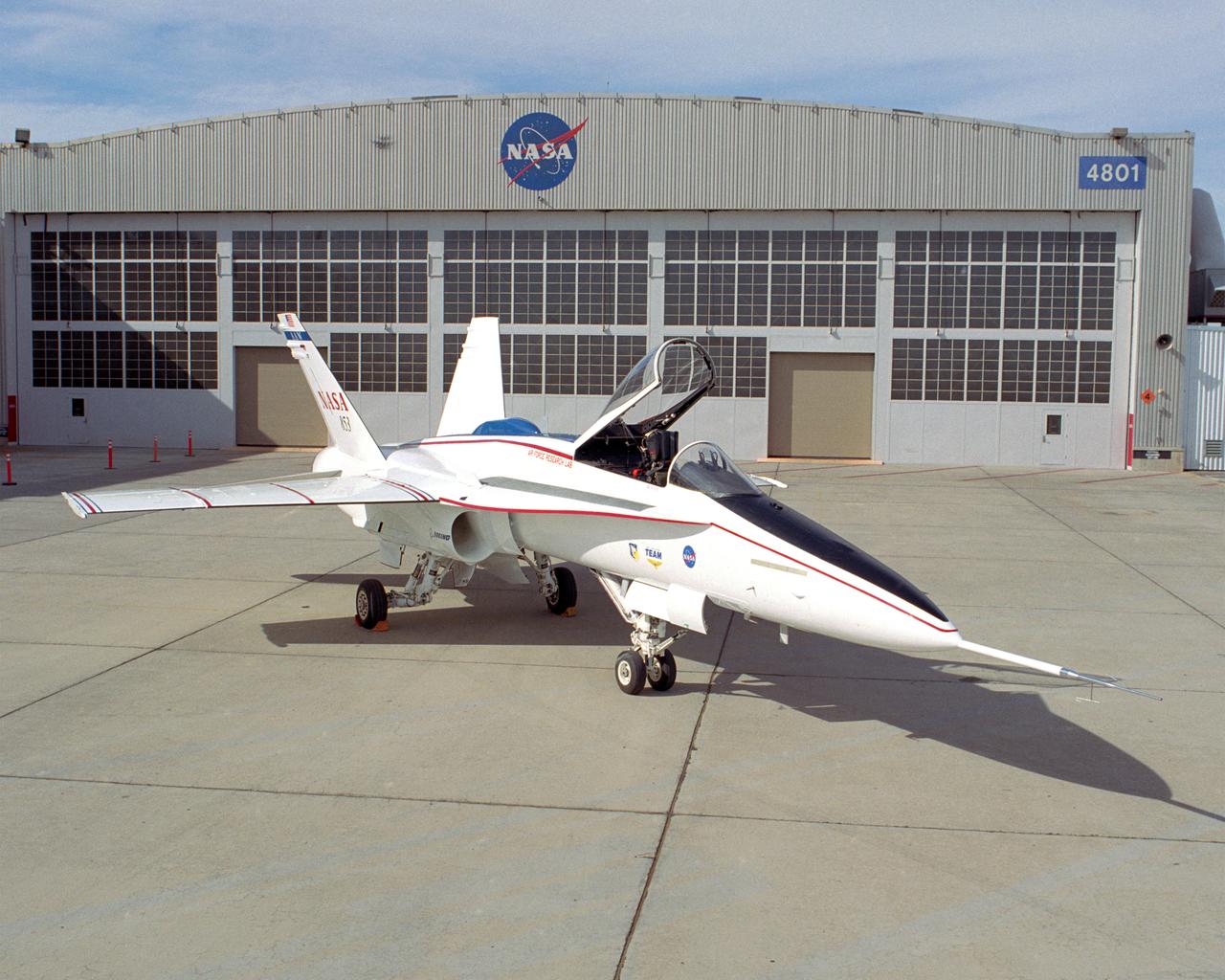
This modified F/A-18A is the test aircraft for the Active Aeroelastic Wing (AAW) project at NASA's Dryden Flight Research Center, Edwards, California.
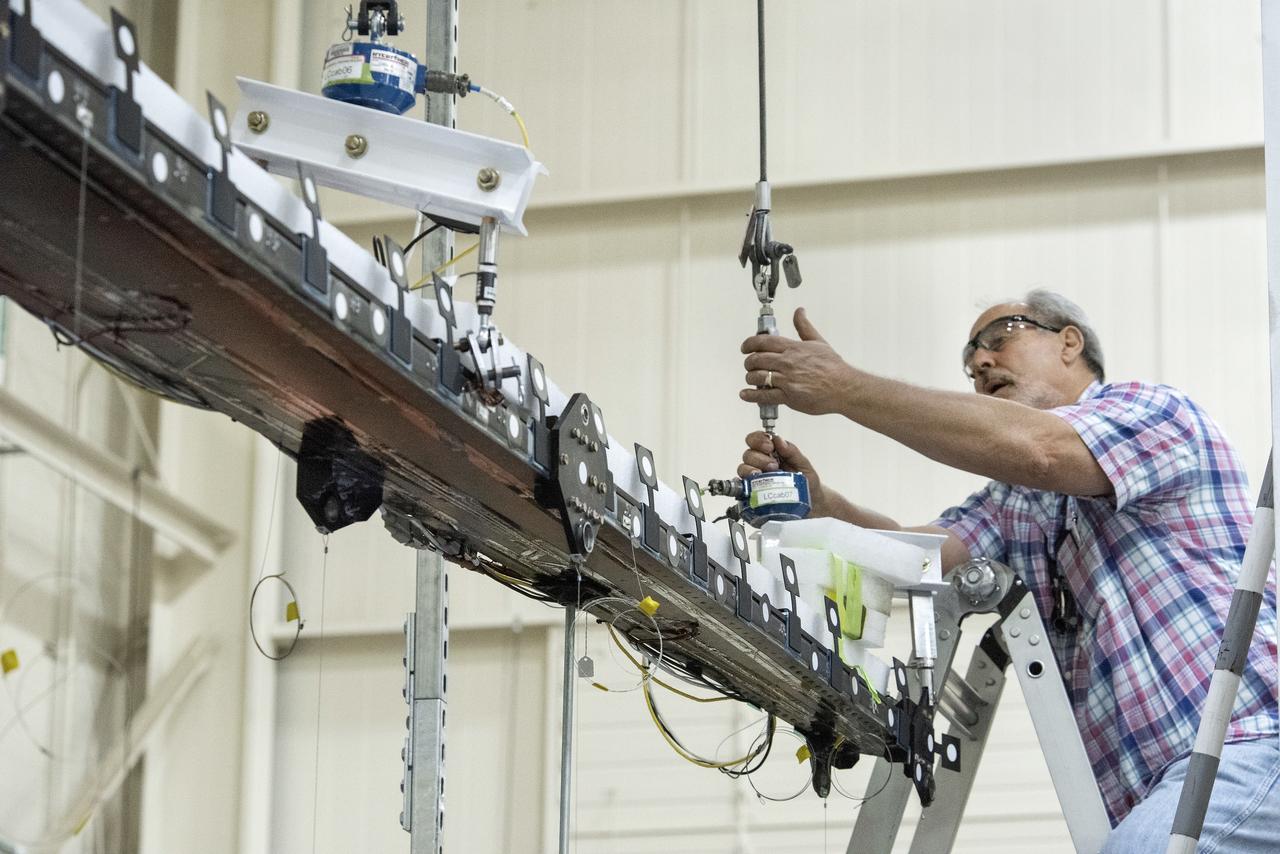
Ted Powers makes an adjustment to the Passive Aeroelastic Tailored (PAT) wing testing apparatus at NASA’s Armstrong Flight Research Center in California.
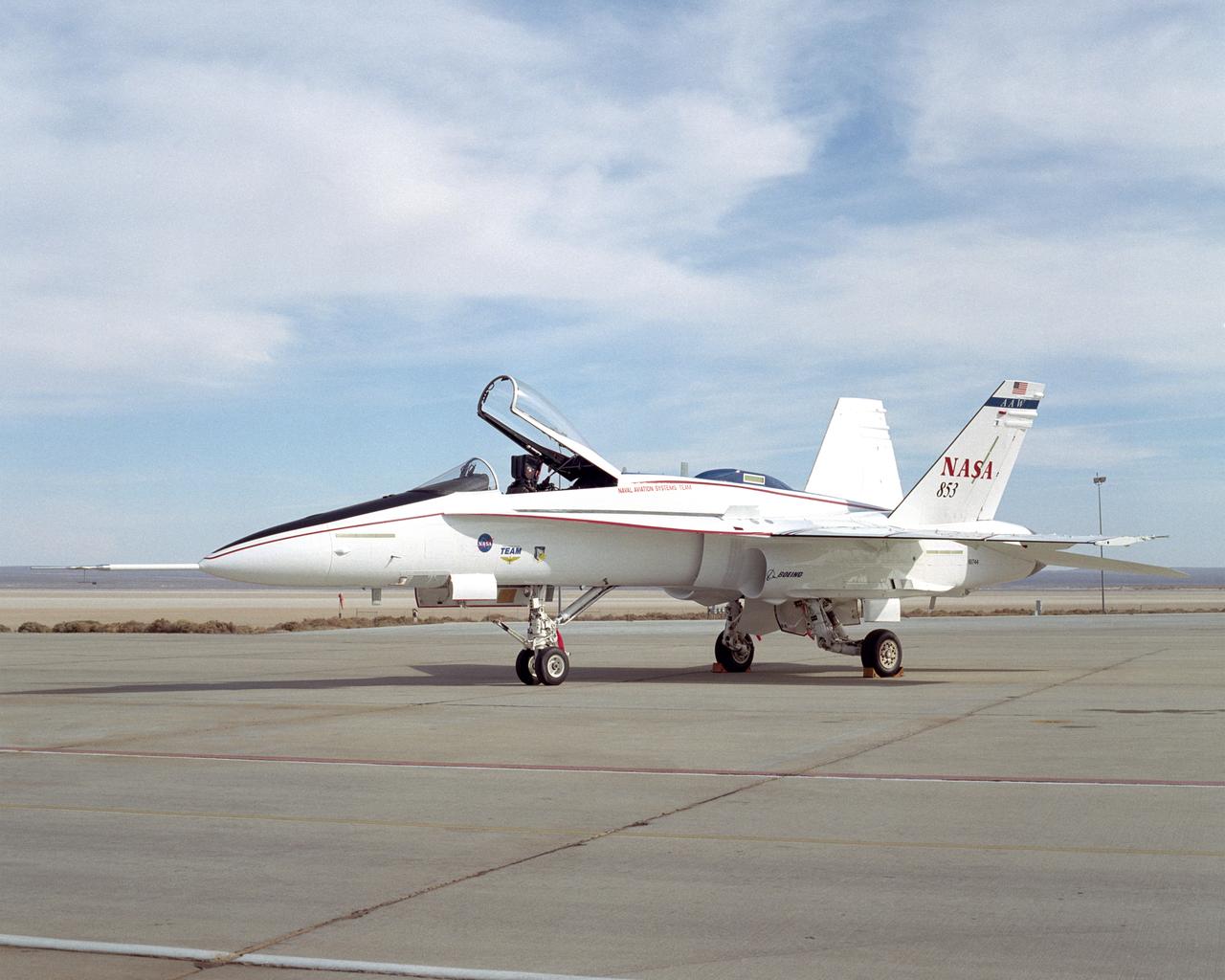
This modified F/A-18A is the test aircraft for the Active Aeroelastic Wing (AAW) project at NASA's Dryden Flight Research Center, Edwards, California.
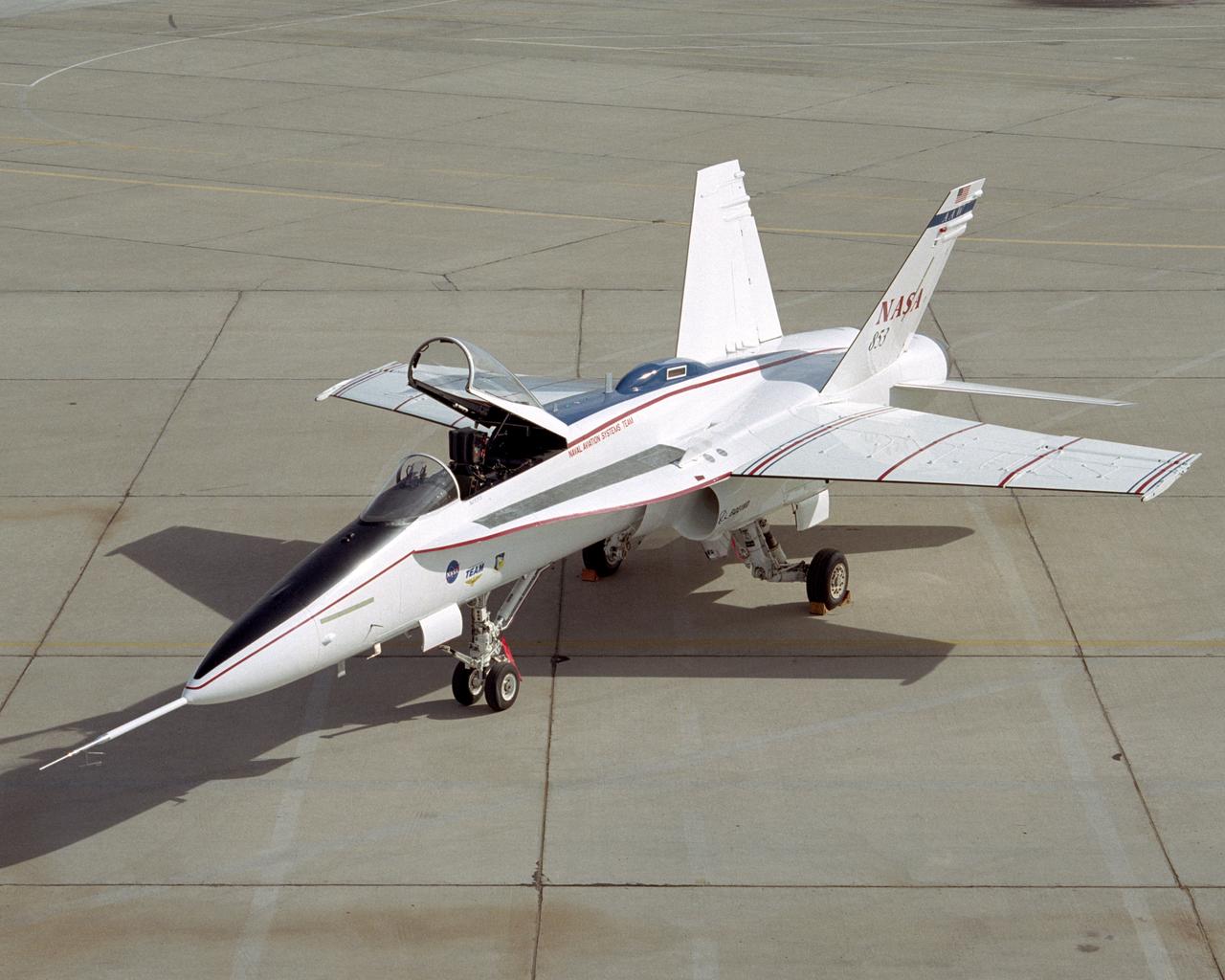
This modified F/A-18A is the test aircraft for the Active Aeroelastic Wing (AAW) project at NASA's Dryden Flight Research Center, Edwards, California.
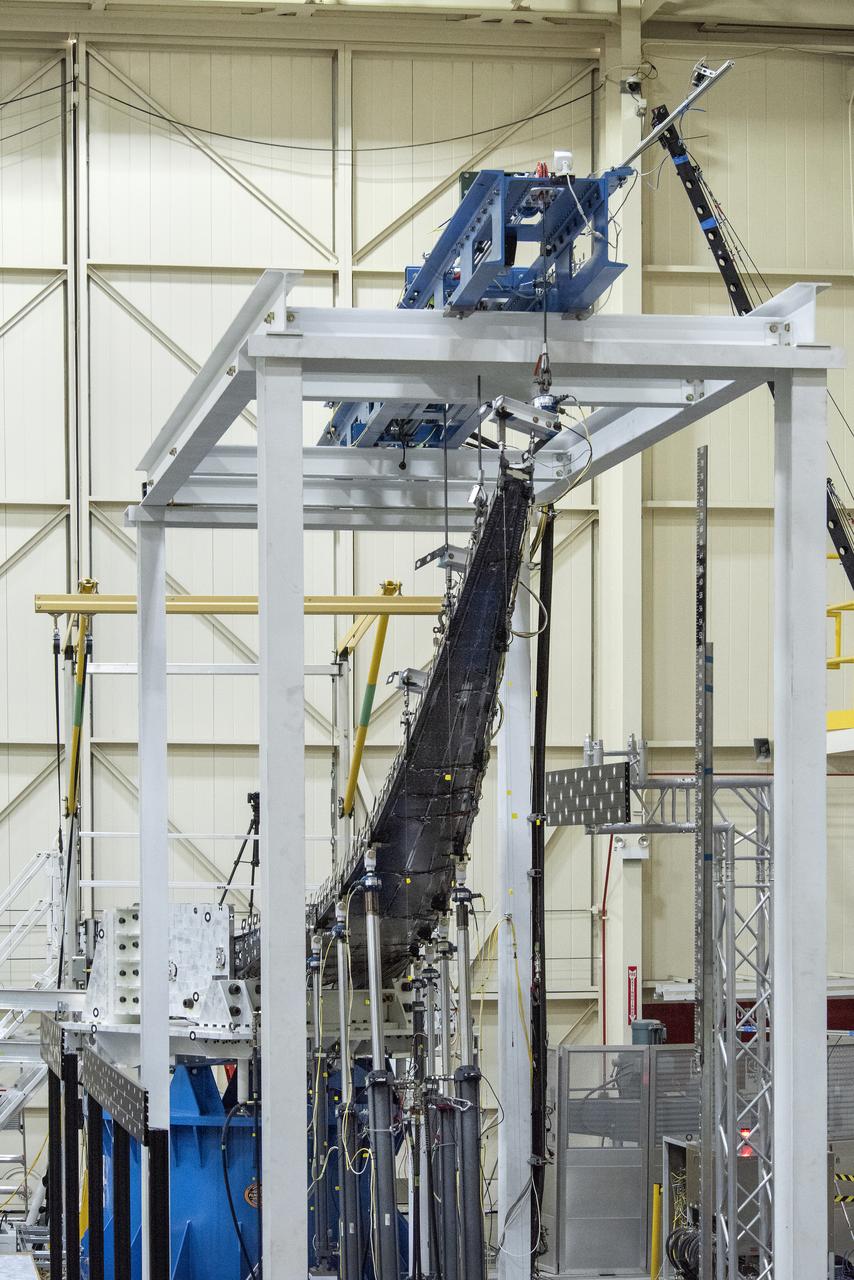
The Passive Aeroelastic Tailored (PAT) wing bends under pressure from the highest loads applied during testing at NASA’s Armstrong Flight Research Center in California.
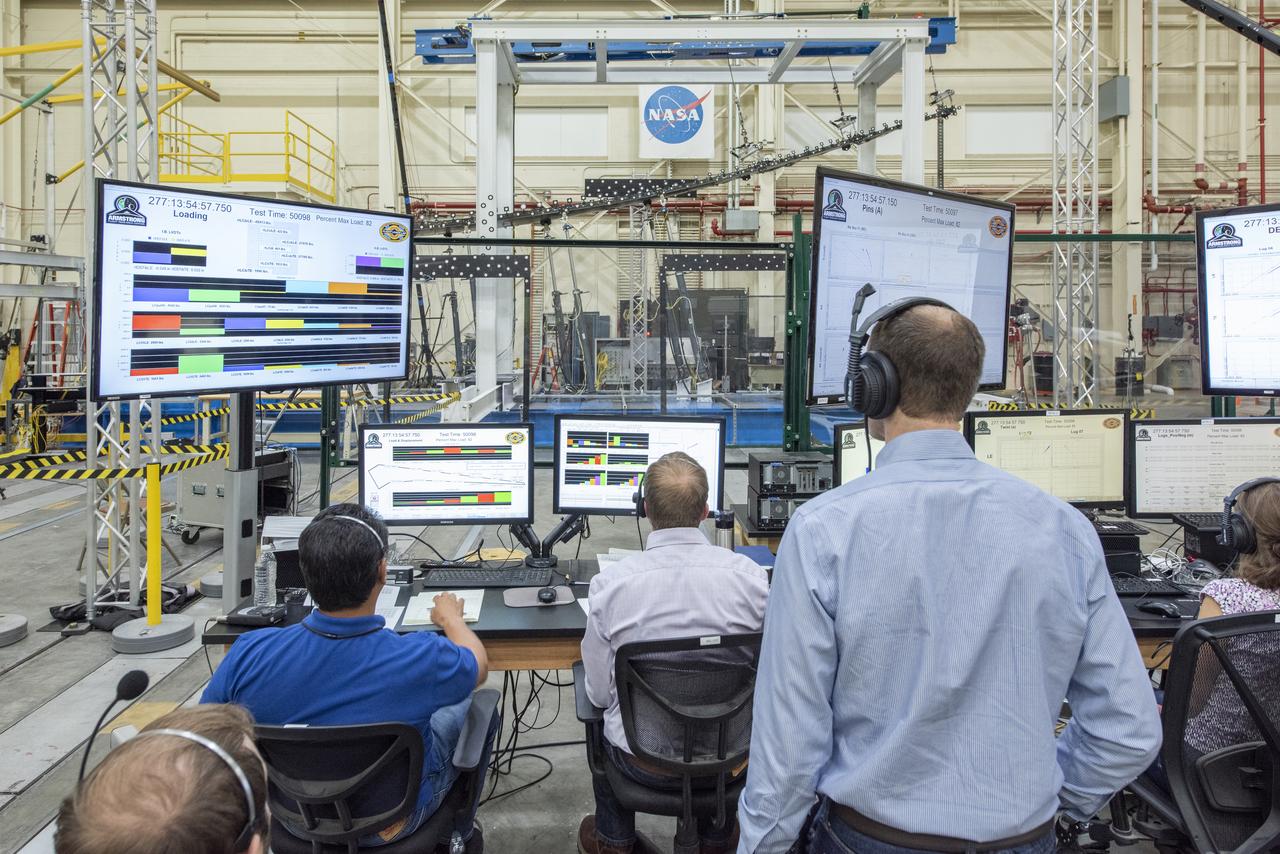
NASA’s Armstrong Flight Research Center and Langley Research Center staff members monitor a test of the Passive Aeroelastic Tailored (PAT) wing at NASA’s Armstrong Flight Research Center in California.
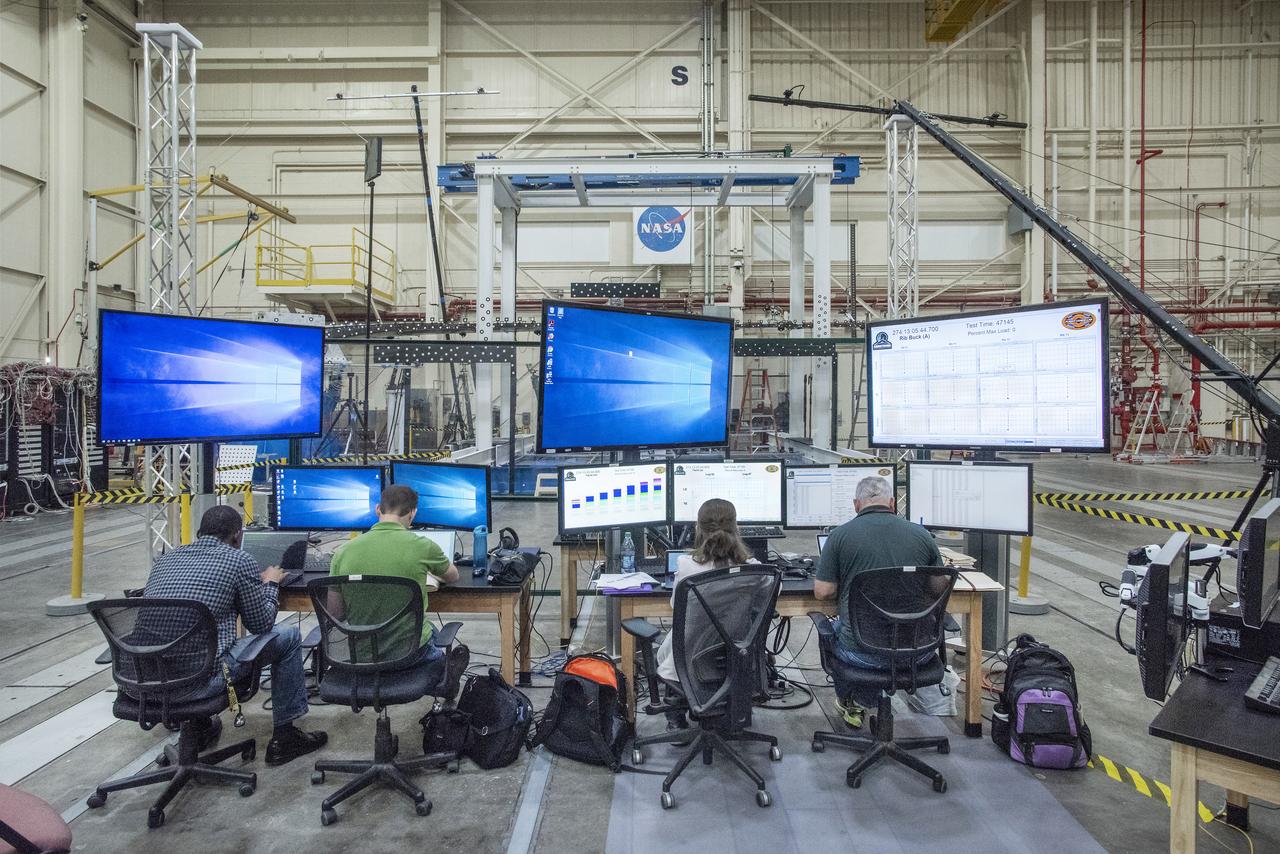
NASA’s Armstrong Flight Research Center and Langley Research Center staff members monitor a test of the Passive Aeroelastic Tailored (PAT) wing at NASA’s Armstrong Flight Research Center in California.
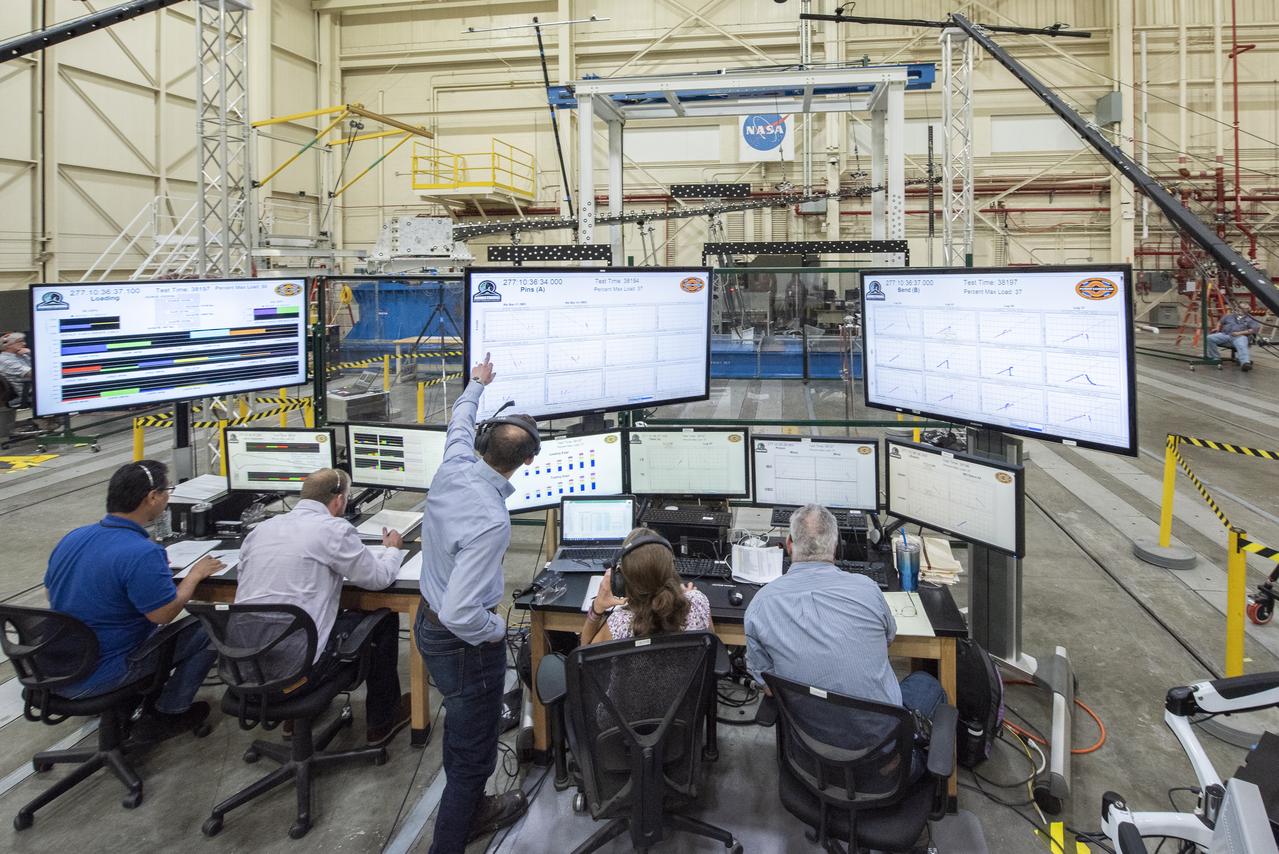
NASA’s Armstrong Flight Research Center and Langley Research Center staff members monitor a test of the Passive Aeroelastic Tailored (PAT) wing at NASA’s Armstrong Flight Research Center in California.
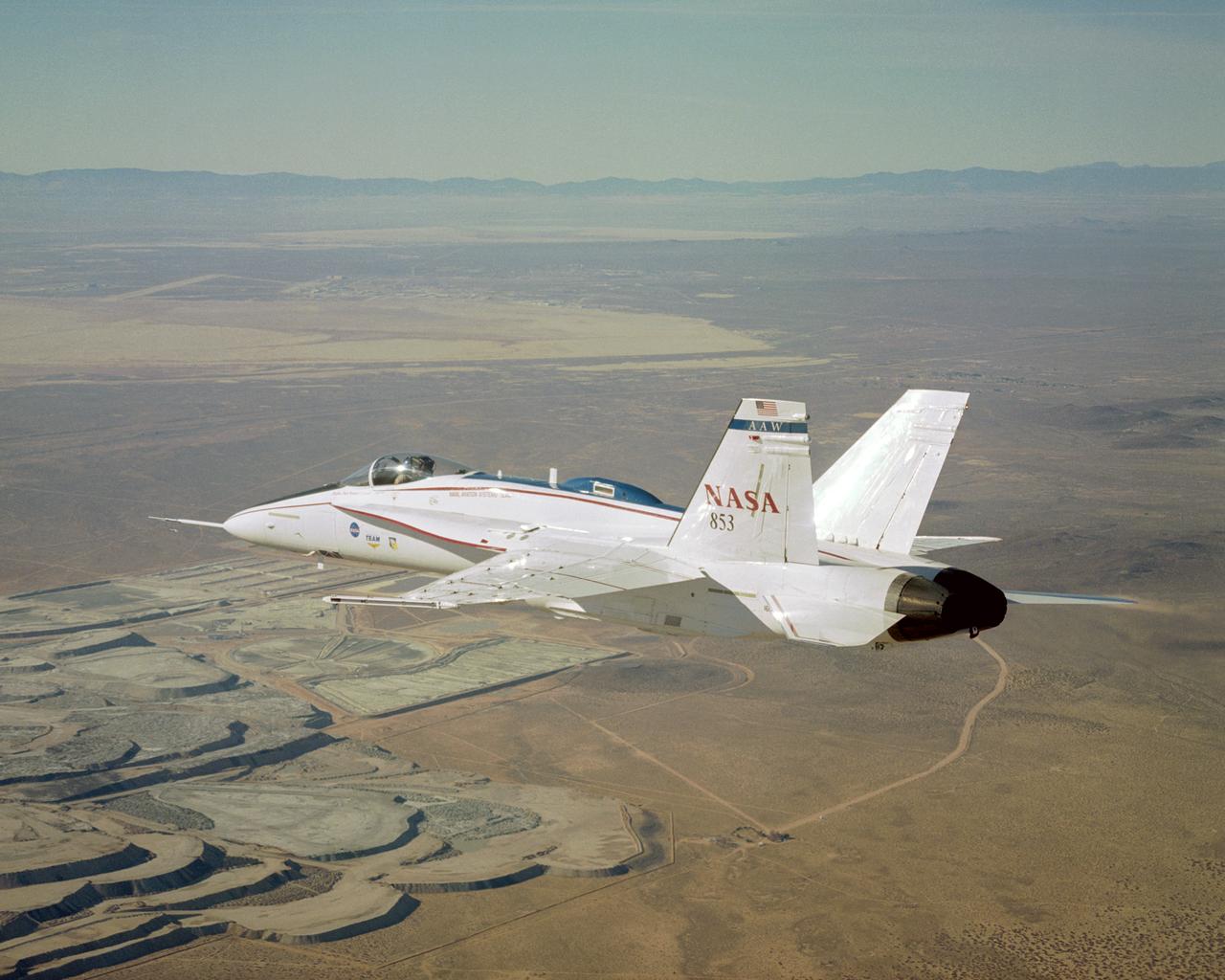
NASA's modified Active Aeroelastic Wing F/A-18 skims over portions of the U.S. Borax mine during a recent mission from the Dryden Flight Research Center.
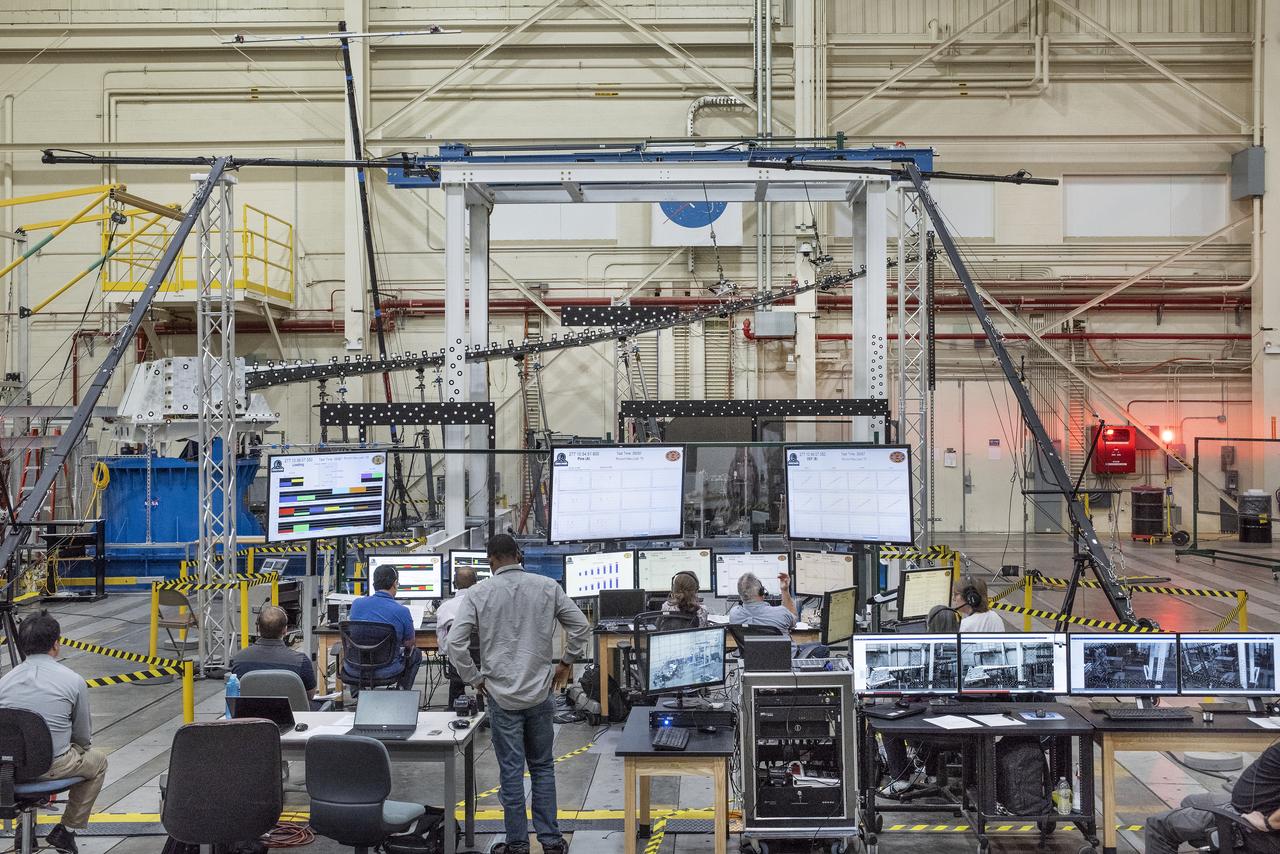
NASA’s Armstrong Flight Research Center and Langley Research Center staff members monitor a test of the Passive Aeroelastic Tailored (PAT) wing at NASA’s Armstrong Flight Research Center in California.
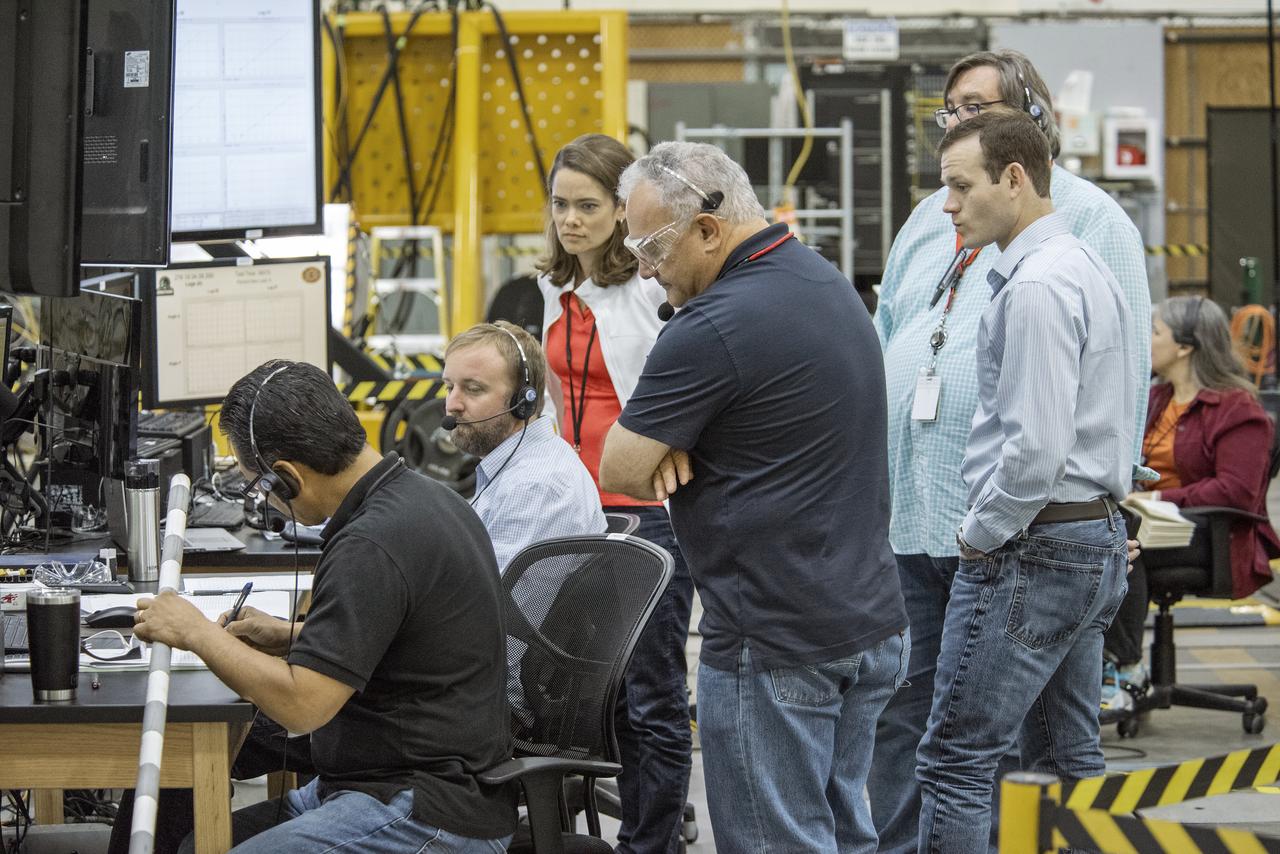
NASA’s Armstrong Flight Research Center and Langley Research Center staff members monitor a test of the Passive Aeroelastic Tailored (PAT) wing at NASA’s Armstrong Flight Research Center in California.
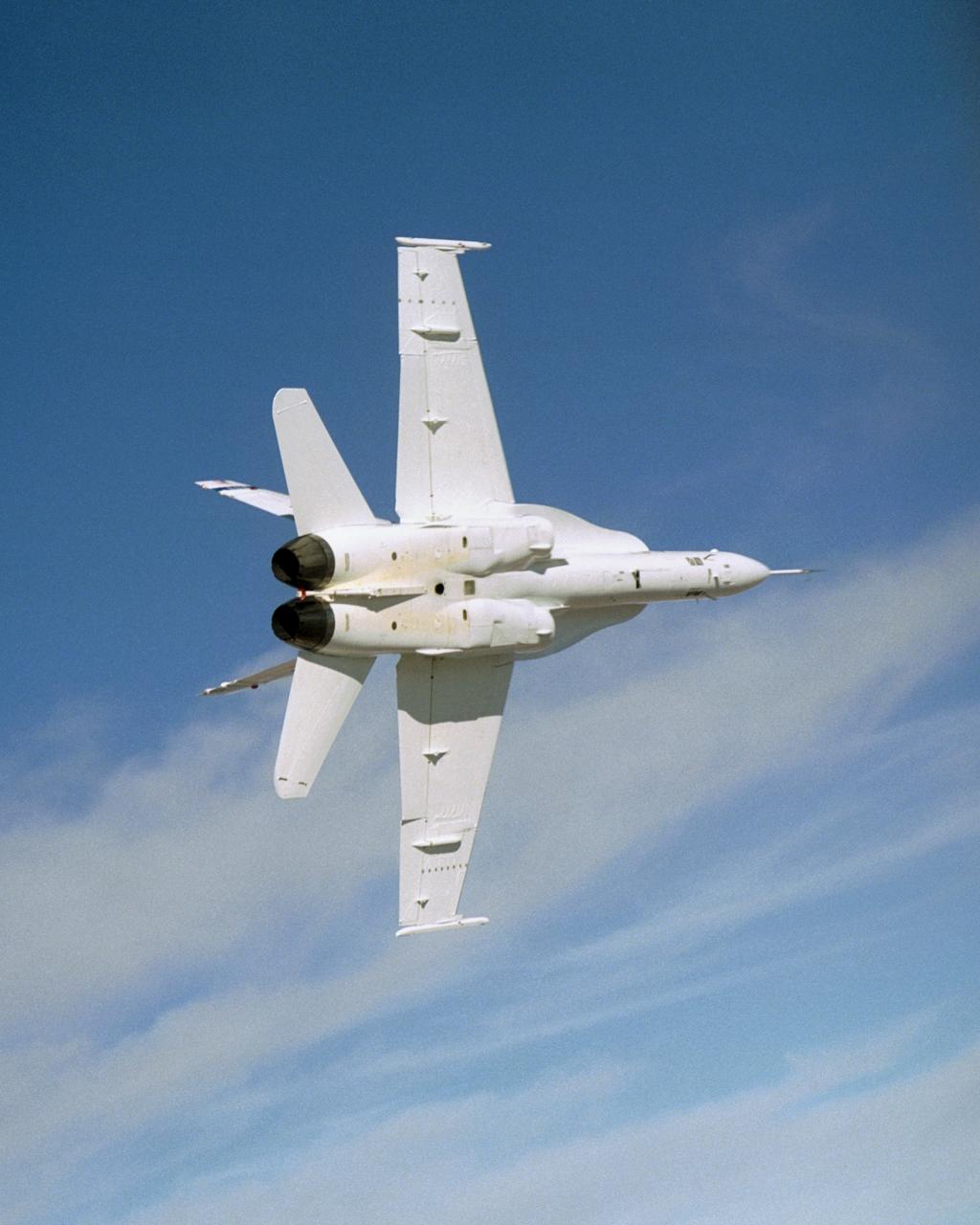
NASA's Active Aeroelastic Wing F/A-18 rolls into a hard left turn during a research flight in early December 2004 from the Dryden Flight Research Center.
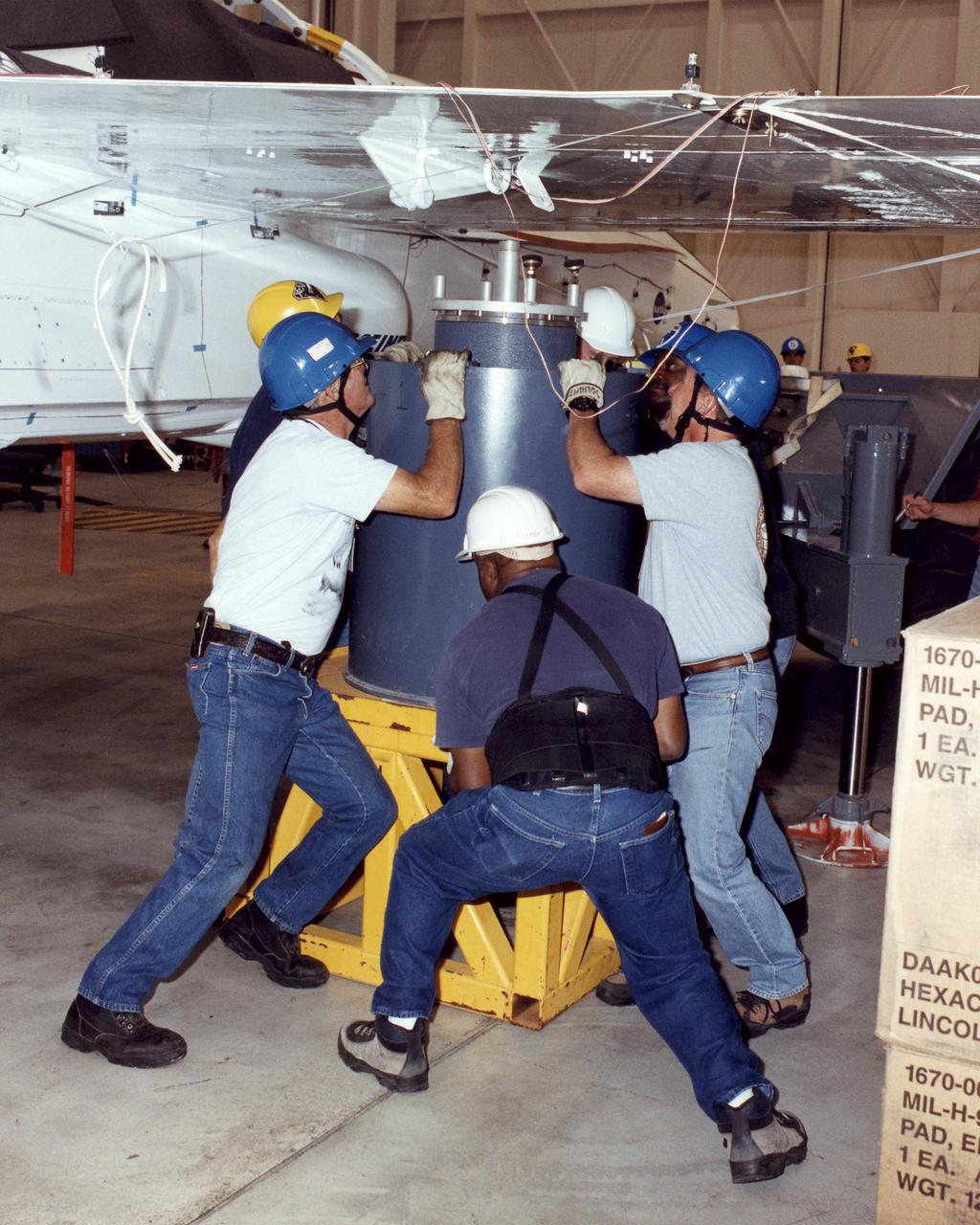
NASA Dryden technicians (Dave Dennis, Freddy Green and Jeff Doughty) position a support cylinder under the right wing of the Active Aeroelastic Wing F/A-18 test aircraft prior to ground vibration tests.
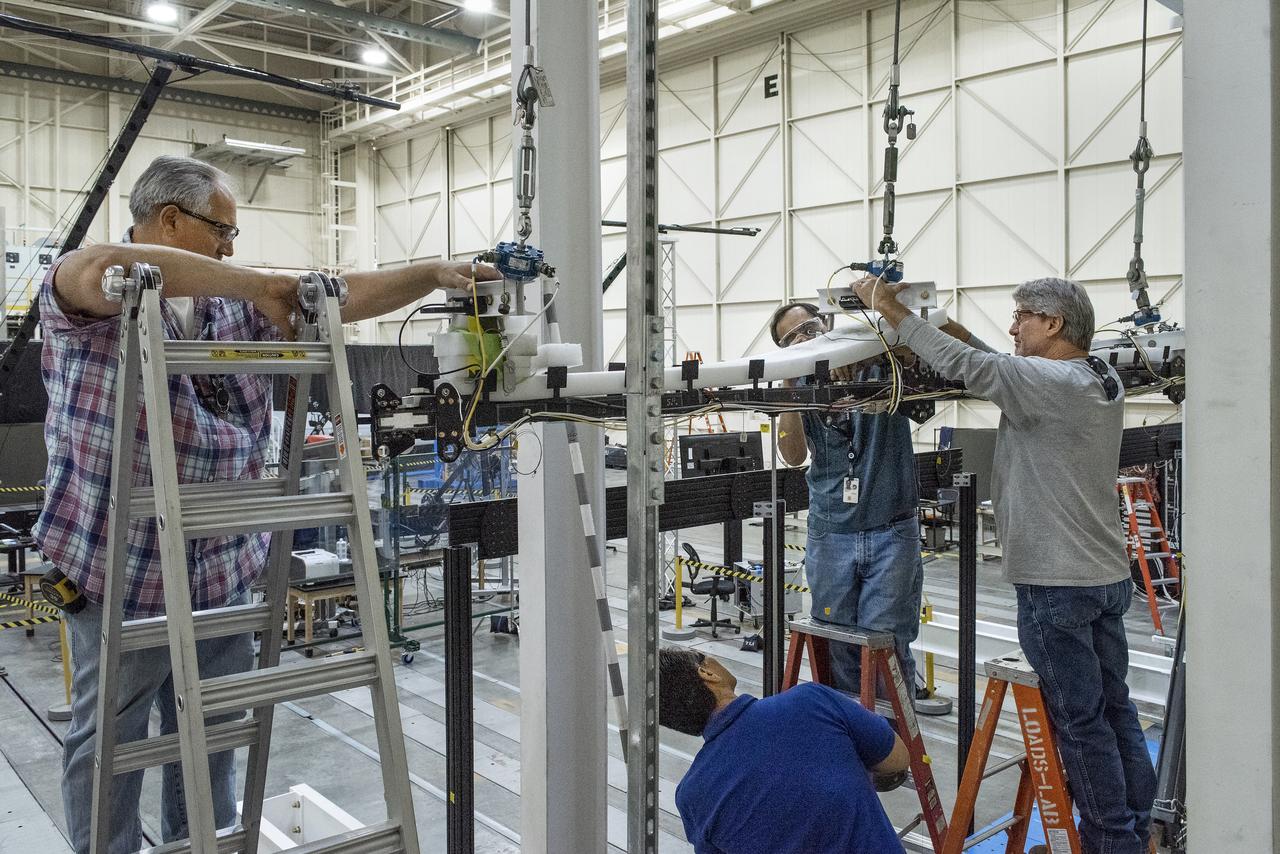
Ted Powers, from left, Larry Hudson, Ron Haraguchi and Walter Hargis make adjustments to the Passive Aeroelastic Tailored (PAT) wing testing apparatus at NASA’s Armstrong Flight Research Center in California.
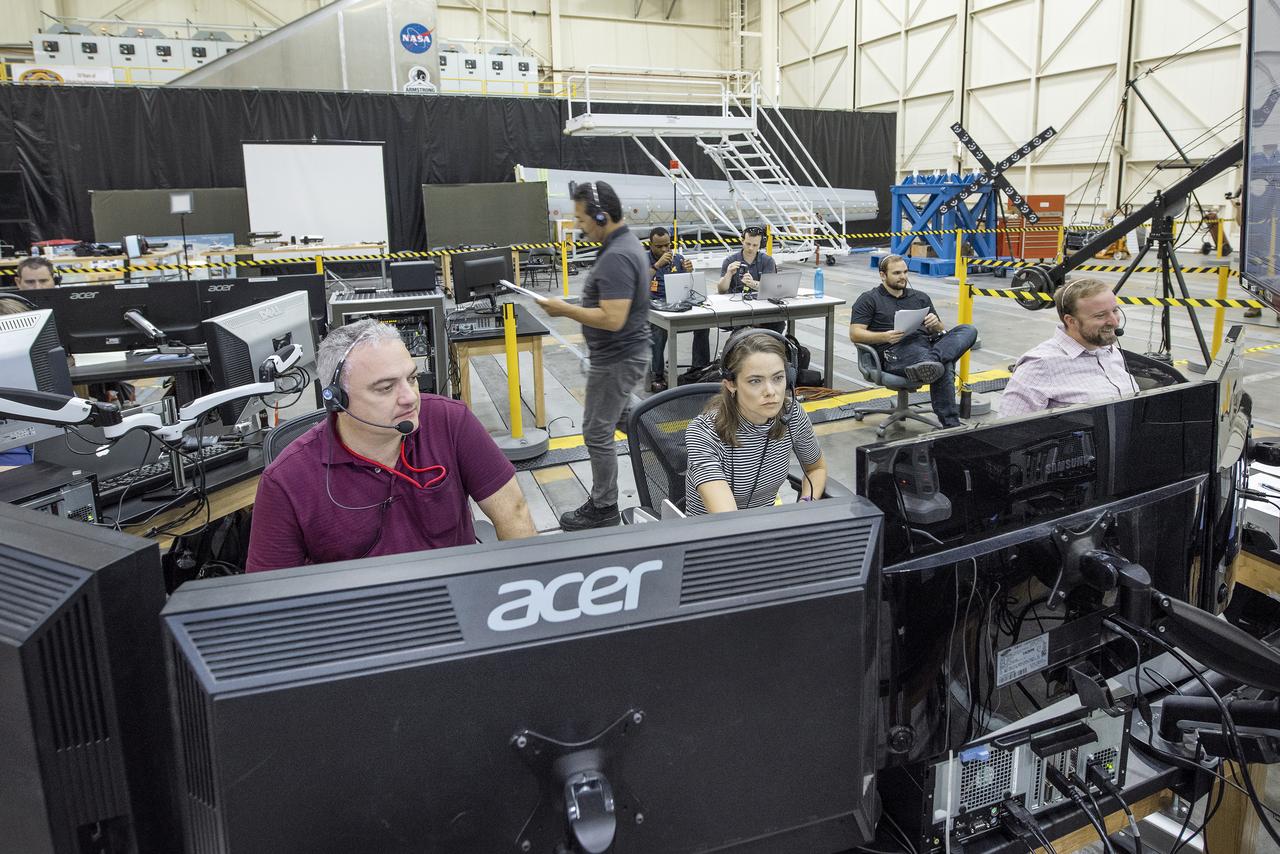
NASA’s Armstrong Flight Research Center and Langley Research Center staff members monitor a test of the Passive Aeroelastic Tailored (PAT) wing at NASA’s Armstrong Flight Research Center in California.
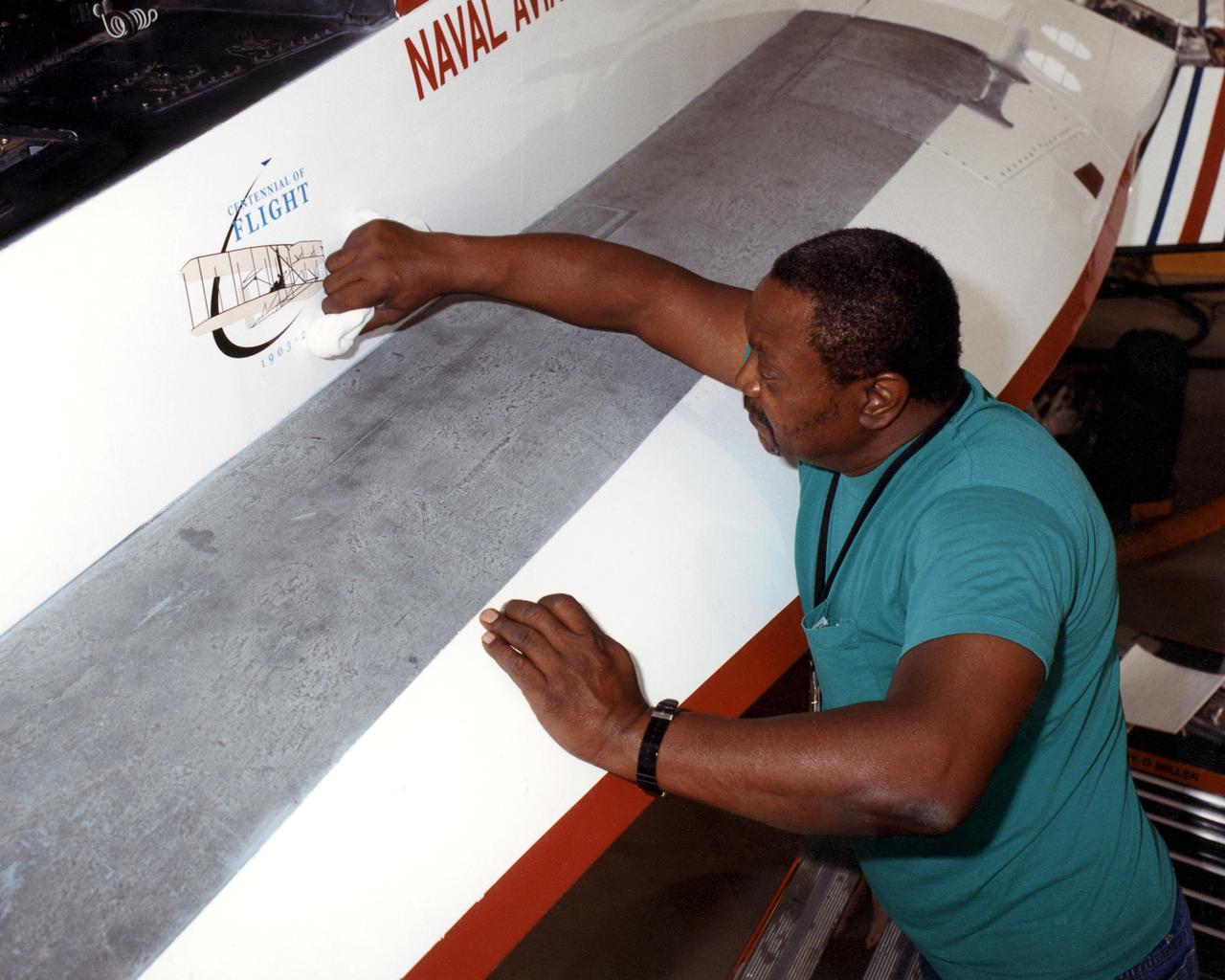
NASA aircraft technician Donte Warren completes placement of the first official U.S. Centennial of Flight Commission logo on an aircraft, Dryden's Active Aeroelastic Wing (AAW) F/A-18.
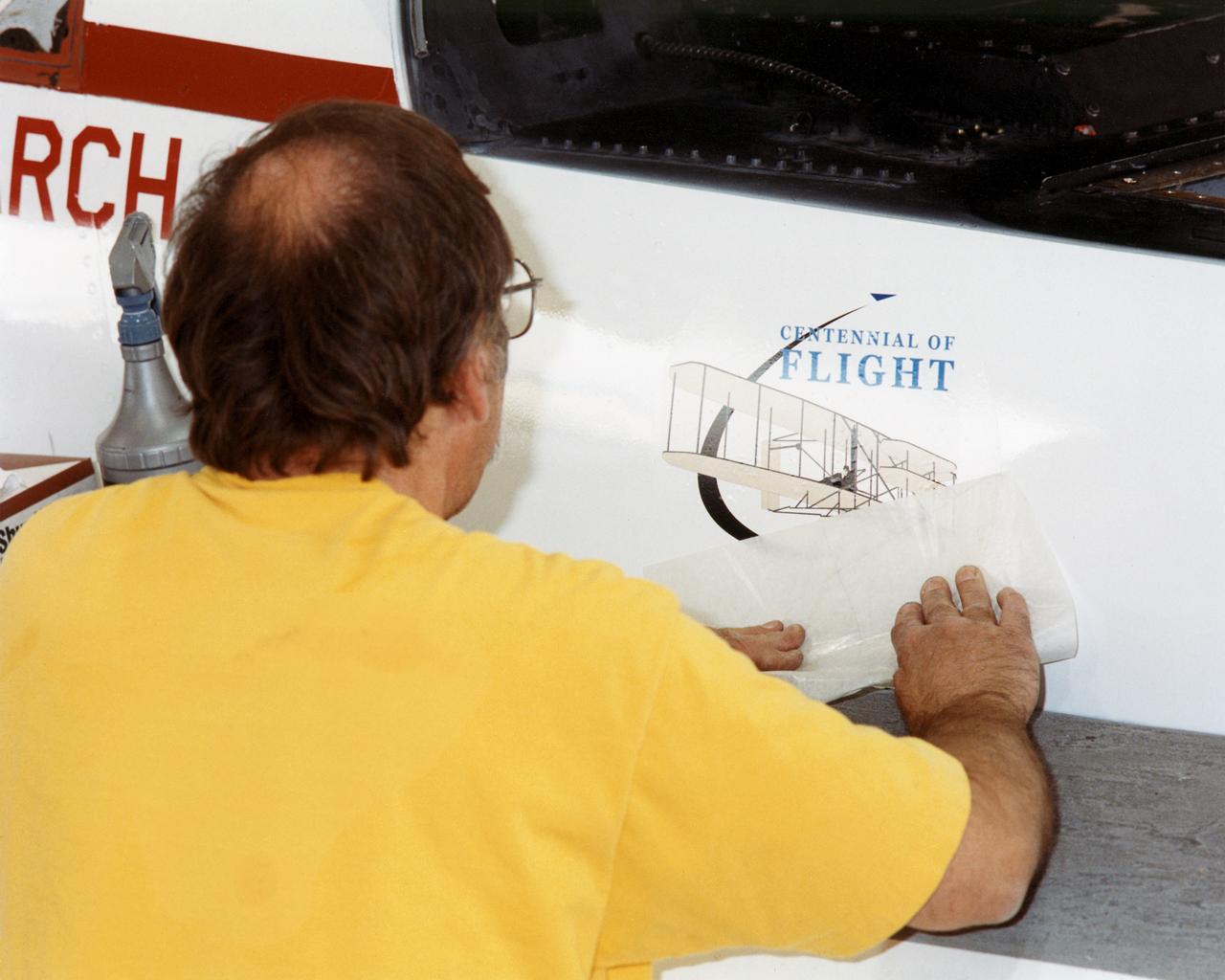
NASA aircraft technician Don Herman completes placement of the first official U.S. Centennial of Flight Commission logo on an aircraft, Dryden's Active Aeroelastic Wing (AAW) F/A-18.
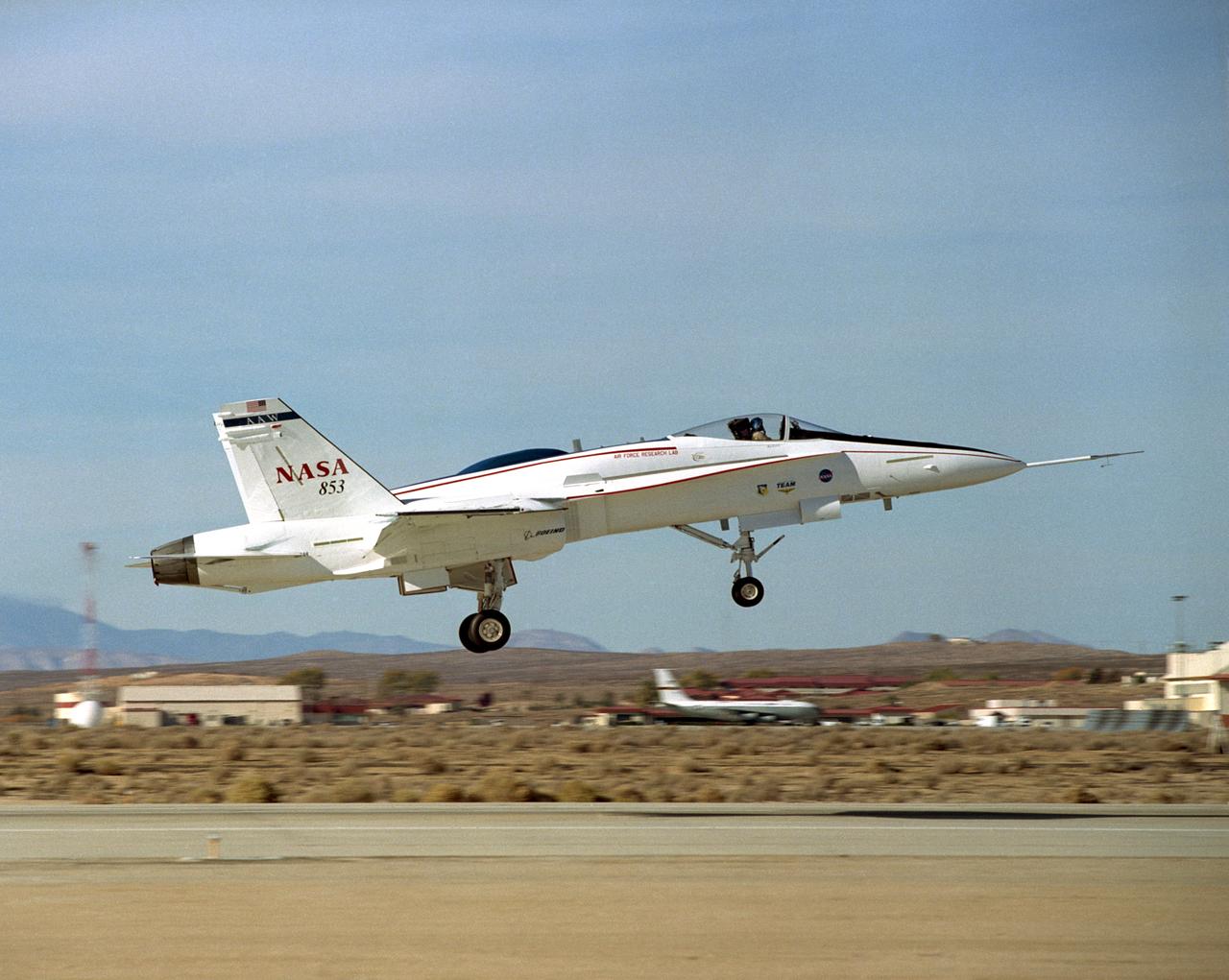
The Active Aeroelastic Wing F-18A lifts off on its first checkout flight November 15, 2002, from NASA's Dryden Flight Research Center at Edwards Air Force Base, Calif. The checkout flight initiated a two-phase NASA--Air Force flight research program that will investigate the potential of aerodynamically twisting flexible wings to improve maneuverability of high-performance aircraft at transonic and supersonic speeds.
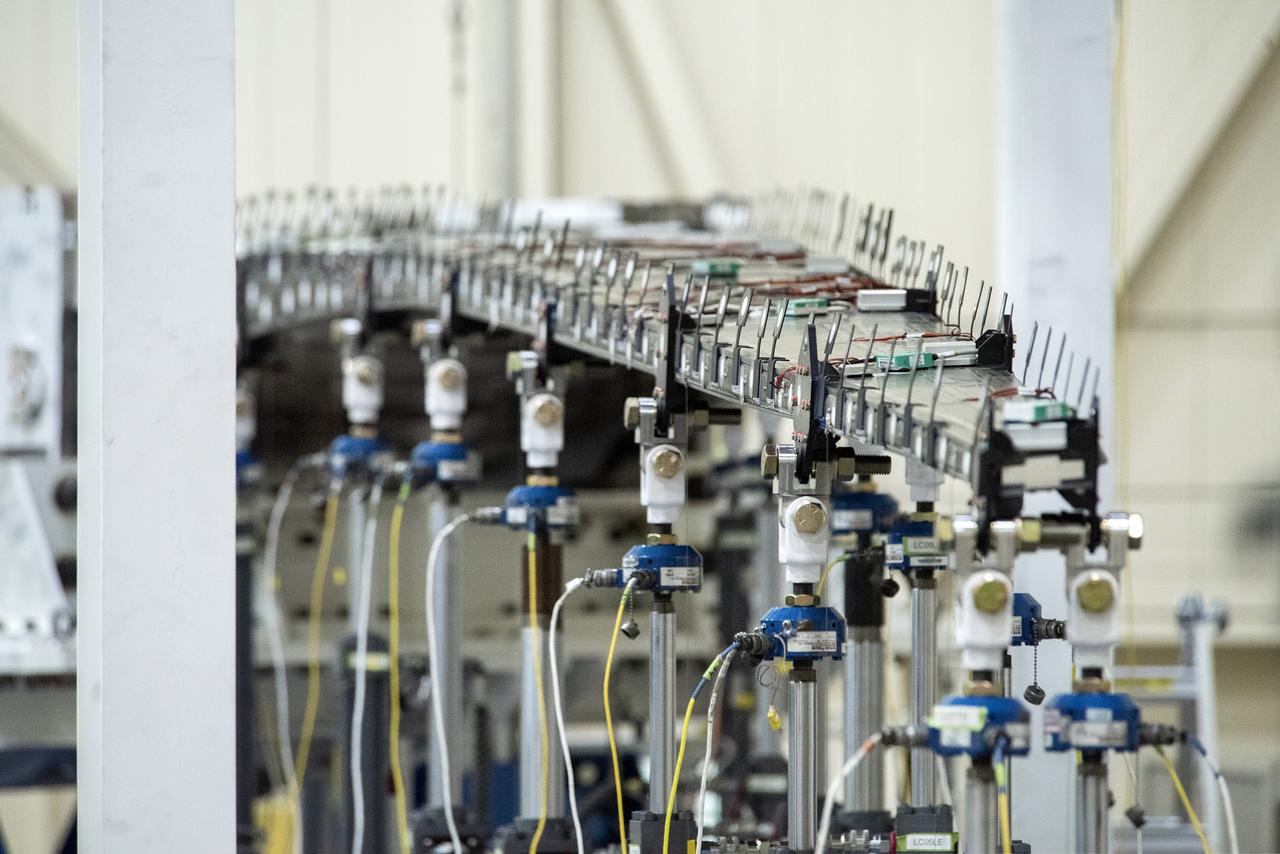
The Passive Aeroelastic Tailored wing is tested in a fixture at the NASA Armstrong Flight Test Center’s Flight Loads Laboratory in California.
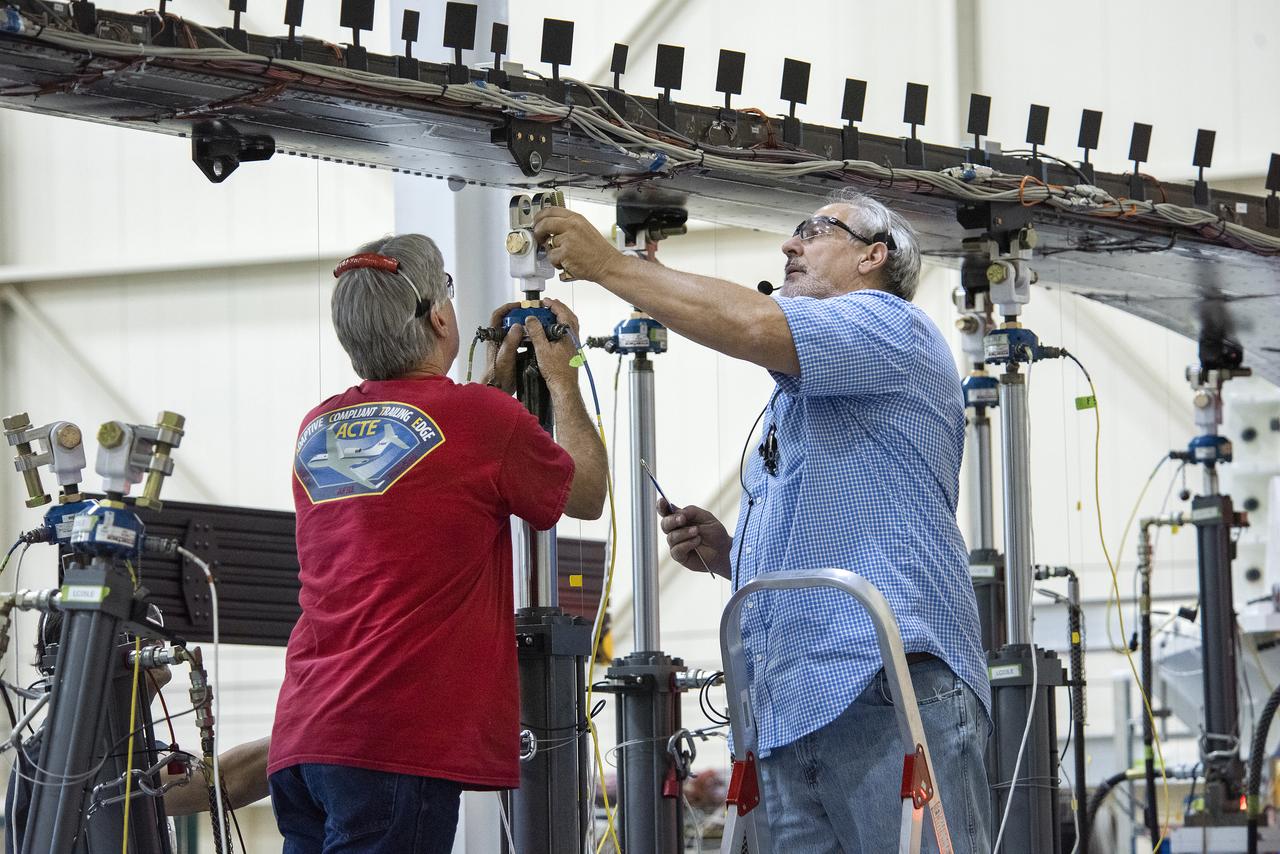
Wally Hargis, left, and Ted Powers complete preparations for testing the Passive Aeroelastic Tailored wing.

Eric Sinks, left, and Ron Haraguchi work through a challenge with the wiring from the Passive Aeroelastic Tailored wing to the test fixture.
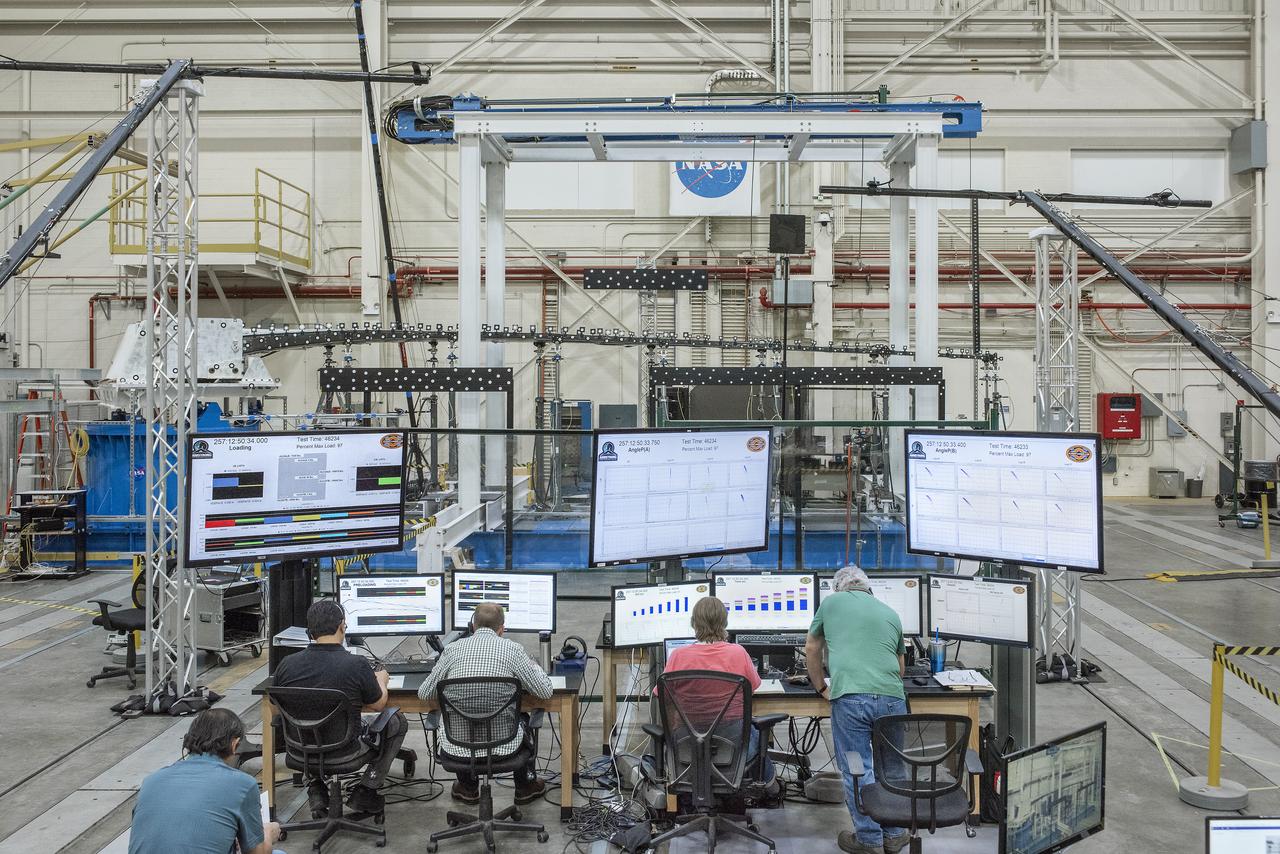
This broad view of the Flight Loads Laboratory at NASA’s Armstrong Flight Research Center in California shows the test set up for the high-aspect ratio Passive Aeroelastic Tailored wing.
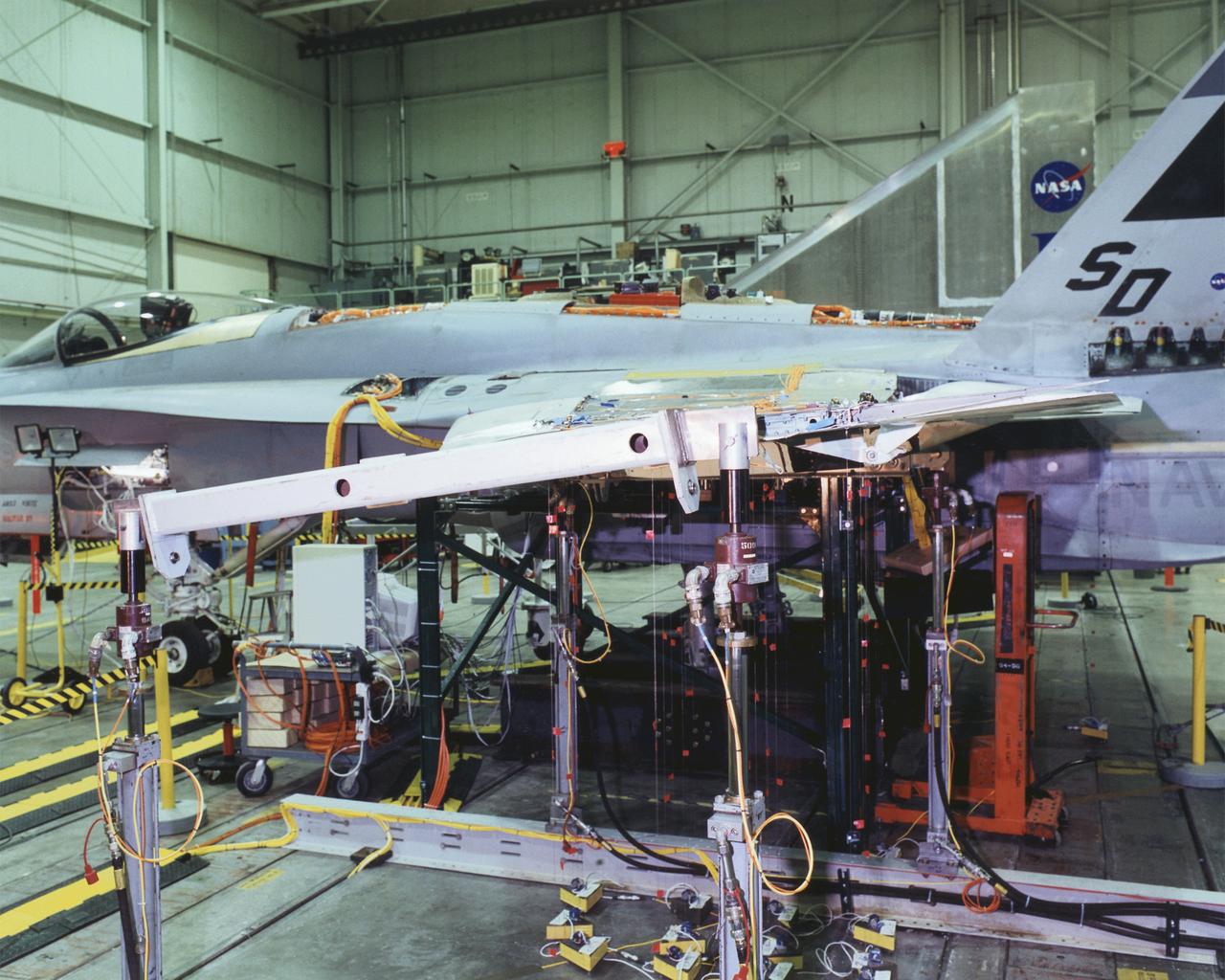
A modified F/A-18A undergoes wing torsion testing in the Flight Dynamics Laboratory at NASA's Dryden Flight Research Center, Edwards, California
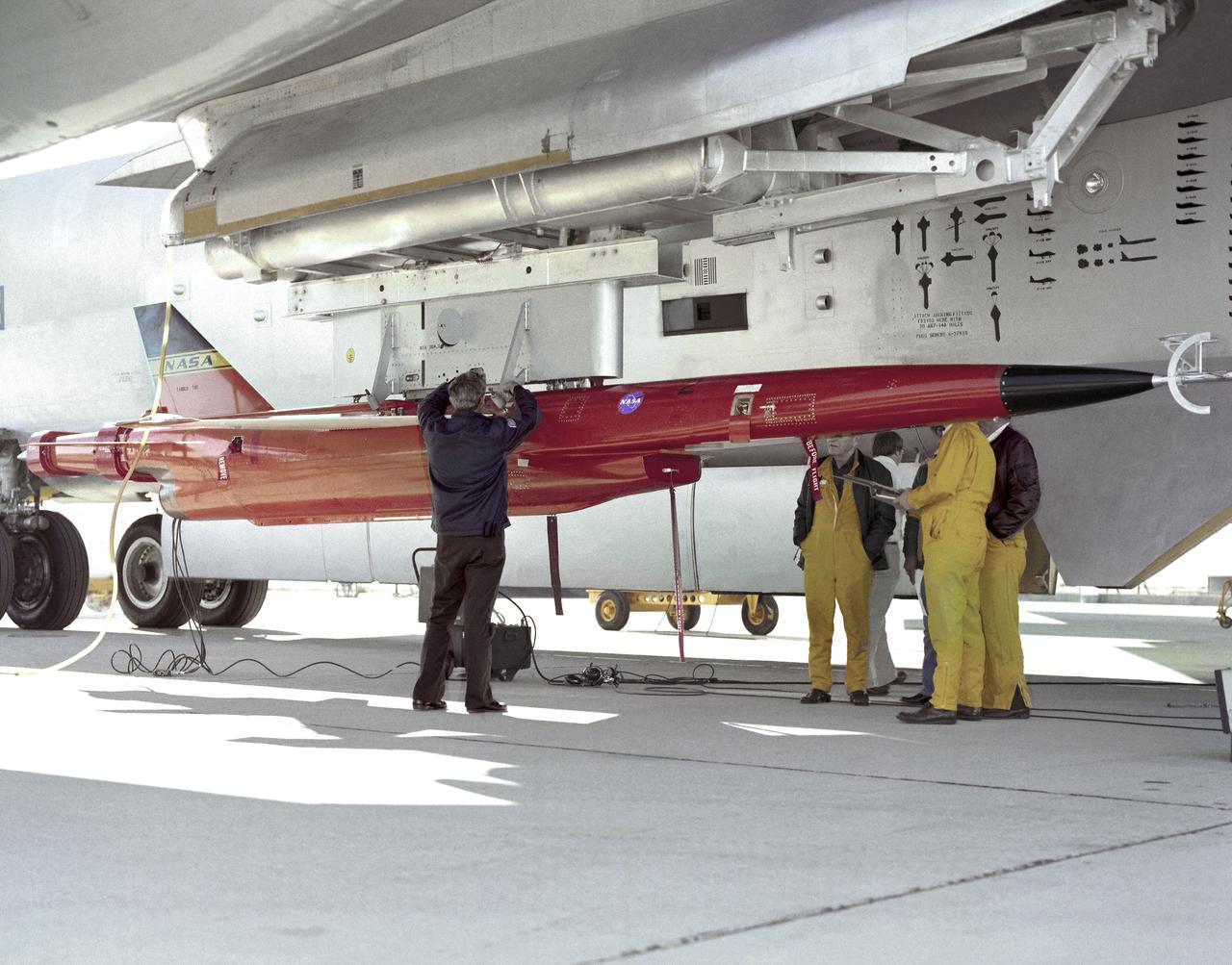
DAST Mated to B-52 on Ramp - Close-up
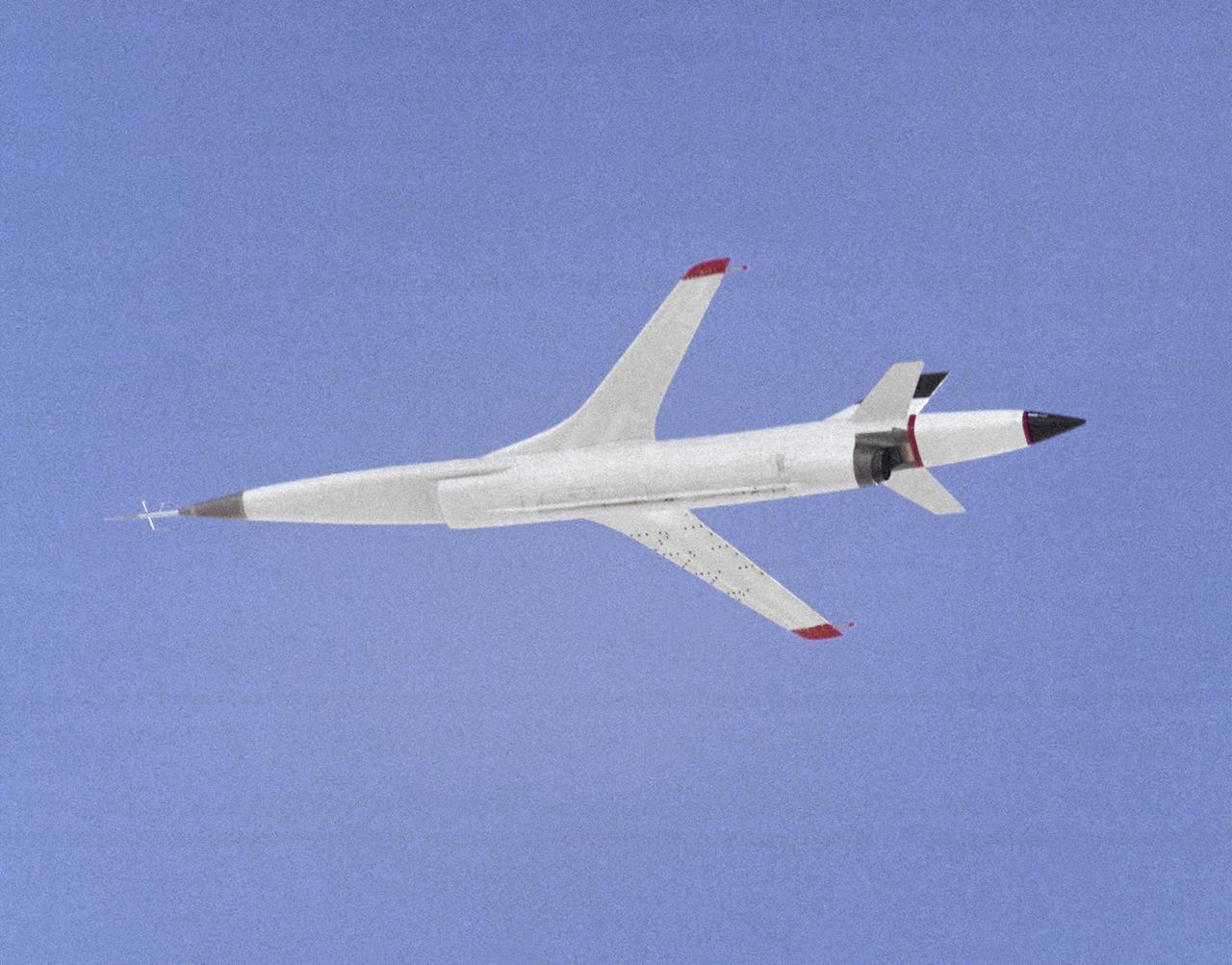
DAST in Flight. Last Flight
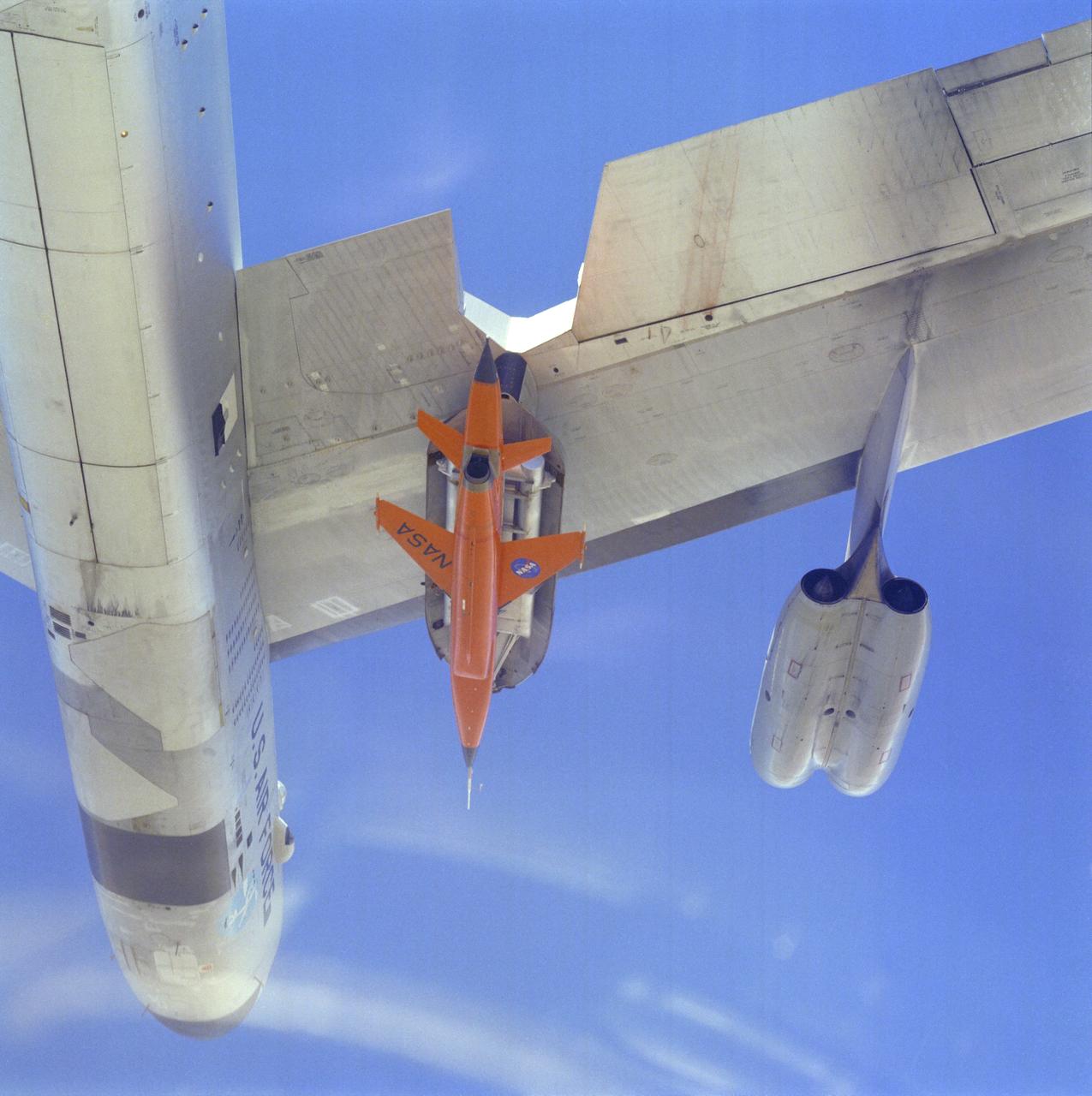
First Captive Flight of DAST Mated to B-52 - Close-up from Below
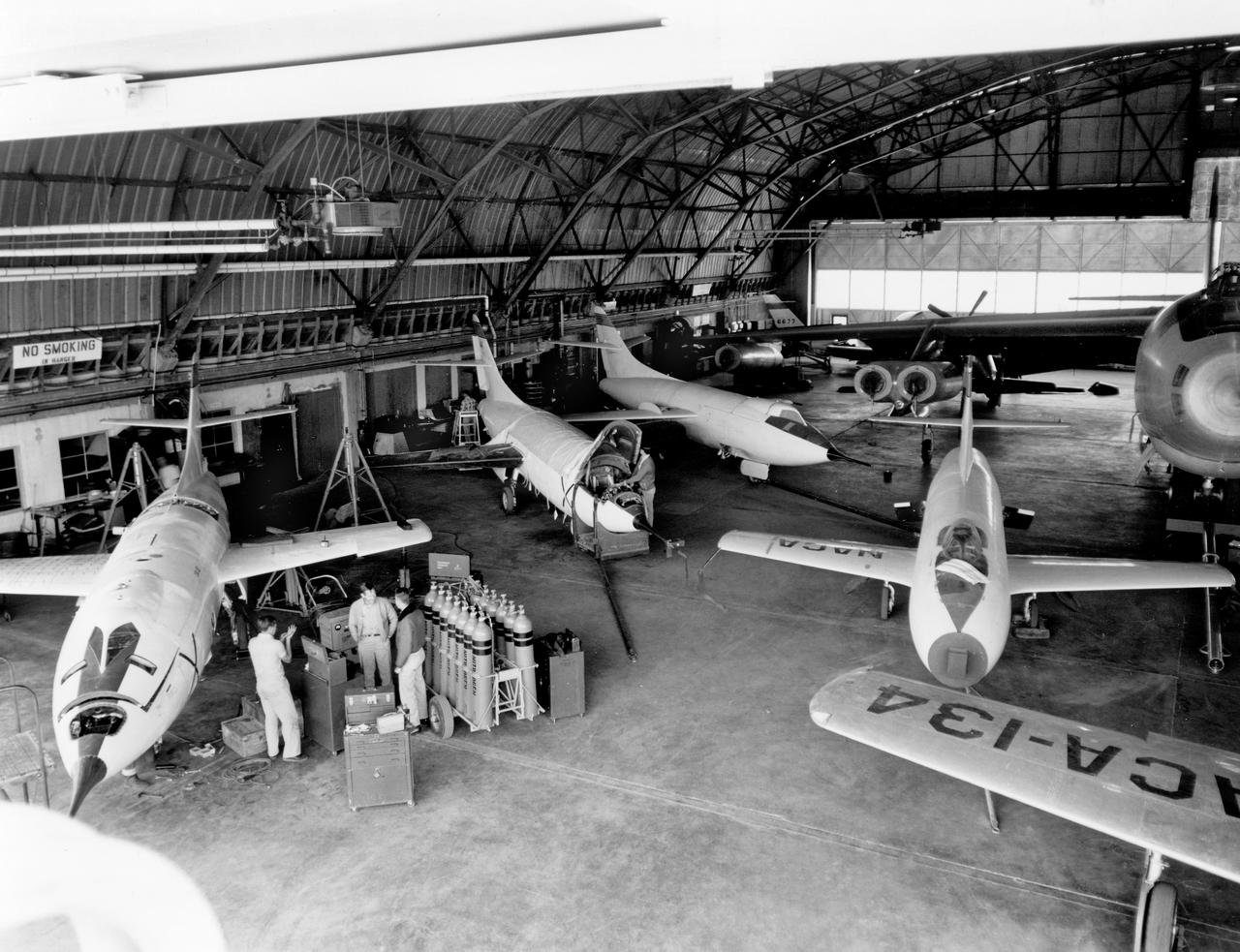
The aircraft in this 1953 photo of the National Advisory Committee for Aeronautics (NACA) hangar at South Base of Edwards Air Force Base showed the wide range of research activities being undertaken. On the left side of the hangar are the three D-558-2 research aircraft. These were designed to test swept wings at supersonic speeds approaching Mach 2. The front D-558-2 is the third built (NACA 145/Navy 37975). It has been modified with a leading-edge chord extension. This was one of a number of wing modifications, using different configurations of slats and/or wing fences, to ease the airplane's tendency to pitch-up. NACA 145 had both a jet and a rocket engine. The middle aircraft is NACA 144 (Navy 37974), the second built. It was all-rocket powered, and Scott Crossfield made the first Mach 2 flight in this aircraft on November 20, 1953. The aircraft in the back is D-558-2 number 1. NACA 143 (Navy 37973) was also carried both a jet and a rocket engine in 1953. It had been used for the Douglas contractor flights, then was turned over to the NACA. The aircraft was not converted to all-rocket power until June 1954. It made only a single NACA flight before NACA's D-558-2 program ended in 1956. Beside the three D-558-2s is the third D-558-1. Unlike the supersonic D-558-2s, it was designed for flight research at transonic speeds, up to Mach 1. The D-558-1 was jet-powered, and took off from the ground. The D-558-1's handling was poor as it approached Mach 1. Given the designation NACA 142 (Navy 37972), it made a total of 78 research flights, with the last in June 1953. In the back of the hangar is the X-4 (Air Force 46-677). This was a Northrop-built research aircraft which tested a swept wing design without horizontal stabilizers. The aircraft proved unstable in flight at speeds above Mach 0.88. The aircraft showed combined pitching, rolling, and yawing motions, and the design was considered unsuitable. The aircraft, the second X-4 built, was then used as a pilot traine