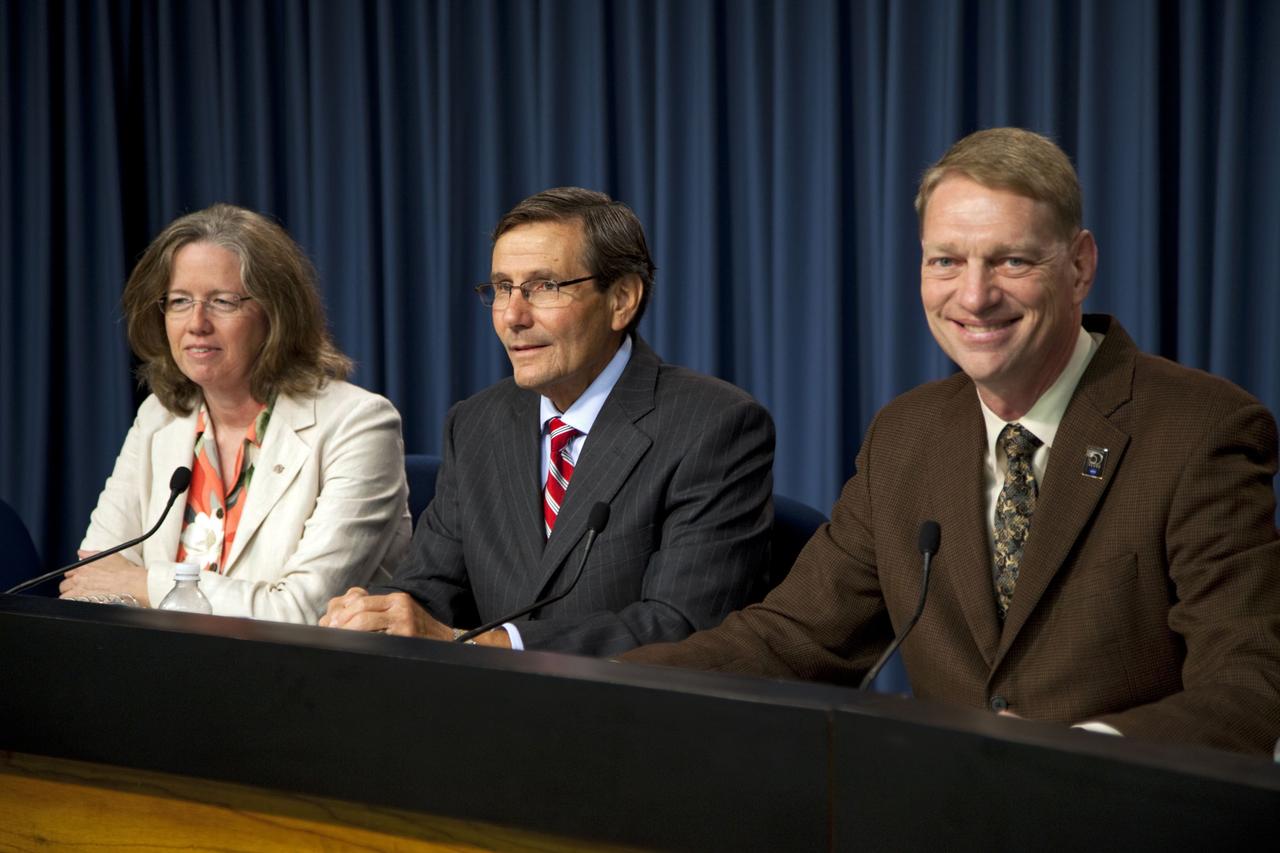
CAPE CANAVERAL, Fla. -- In the Press Site auditorium at NASA's Kennedy Space Center in Florida, media were briefed about updates to aeronautics research at NASA. Seen here are NASA Public Affairs Officer Beth Dickey, Edgar G. Waggoner, director of the Integrated Systems Research Program Office, Aeronautics Research Mission Directorate and John Cavolowsky, director of the Airspace Systems Program Office, Aeronautics Research Mission Directorate. Photo credit: NASA/Frankie Martin
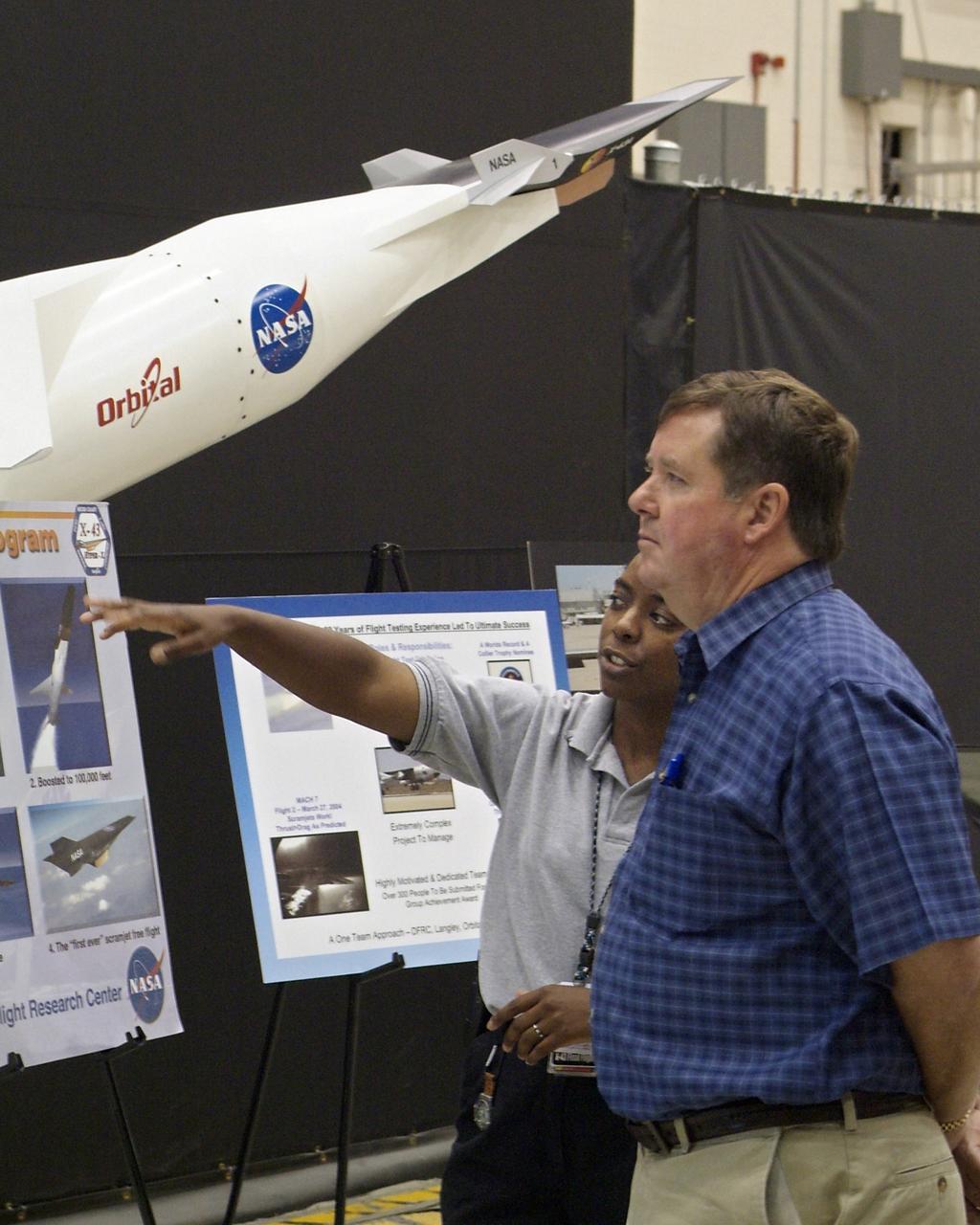
Rep. Ken Calvert, (R-Calif.), chairman of the House Subcommittee on Space and Aeronautics, received an update on the mission of NASA's Dryden Flight Research Center during a visit on June 2, 2005. Rep. Calvert, accompanied by several staff members, was briefed by center management on the Dryden's role as a flight research institution, and then reviewed some of the center's recent, current and upcoming flight research projects during a tour of the facility. During the afternoon, Rep. Calvert received similar briefings on a variety of projects at several aerospace development firms at the Civilian Flight Test Center in Mojave. Rep. Calvert's tour of NASA Dryden was the second in a series of visits to all 10 NASA field centers to better acquaint him with the roles and responsibilities of each center.

S88-31388 (8 May 1961) --- Astronaut Alan B. Shepard Jr. (center), along with wife Louise, waves to a crowd outside the U.S. Capitol building. Shepard, Mercury-Redstone 3 astronaut, had earlier briefed Congress on the first U.S. manned spaceflight -- a 15-minute suborbital mission on May 5, 1961, aboard the Freedom 7 capsule. (NASA Hq. Photo No., MR3-49) Photo credit: NASA or National Aeronautics and Space Administration
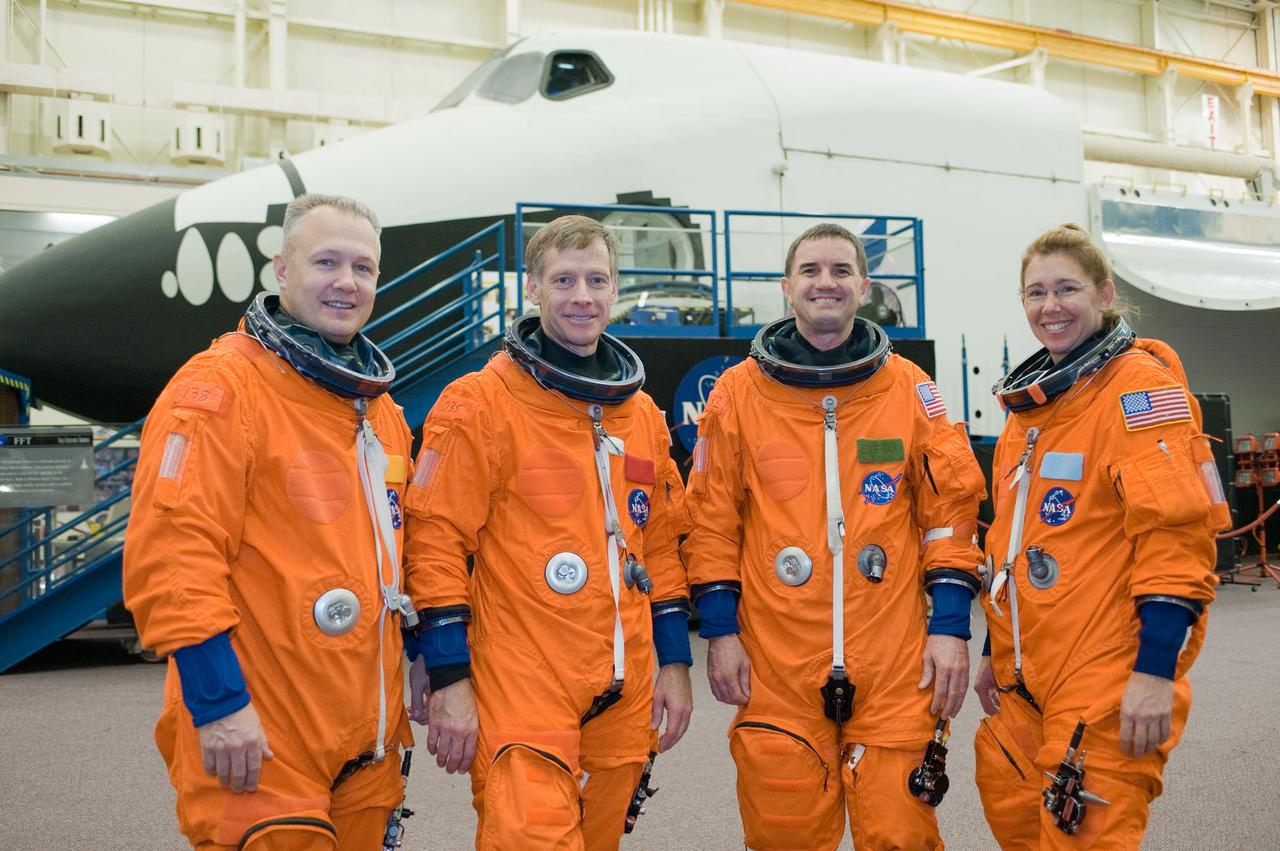
JSC2010-E-196887 (20 Dec. 2010) --- Attired in training versions of their shuttle launch and entry suits, the STS-135 crew members take a brief break for a portrait in the Space Vehicle Mock-up Facility at NASA's Johnson Space Center. From the left are NASA astronauts Doug Hurley, pilot; Chris Ferguson, commander; Rex Walheim and Sandy Magnus, both mission specialists. STS-135 is planned to be the final mission of the space shuttle program. Photo credit: NASA or National Aeronautics and Space Administration
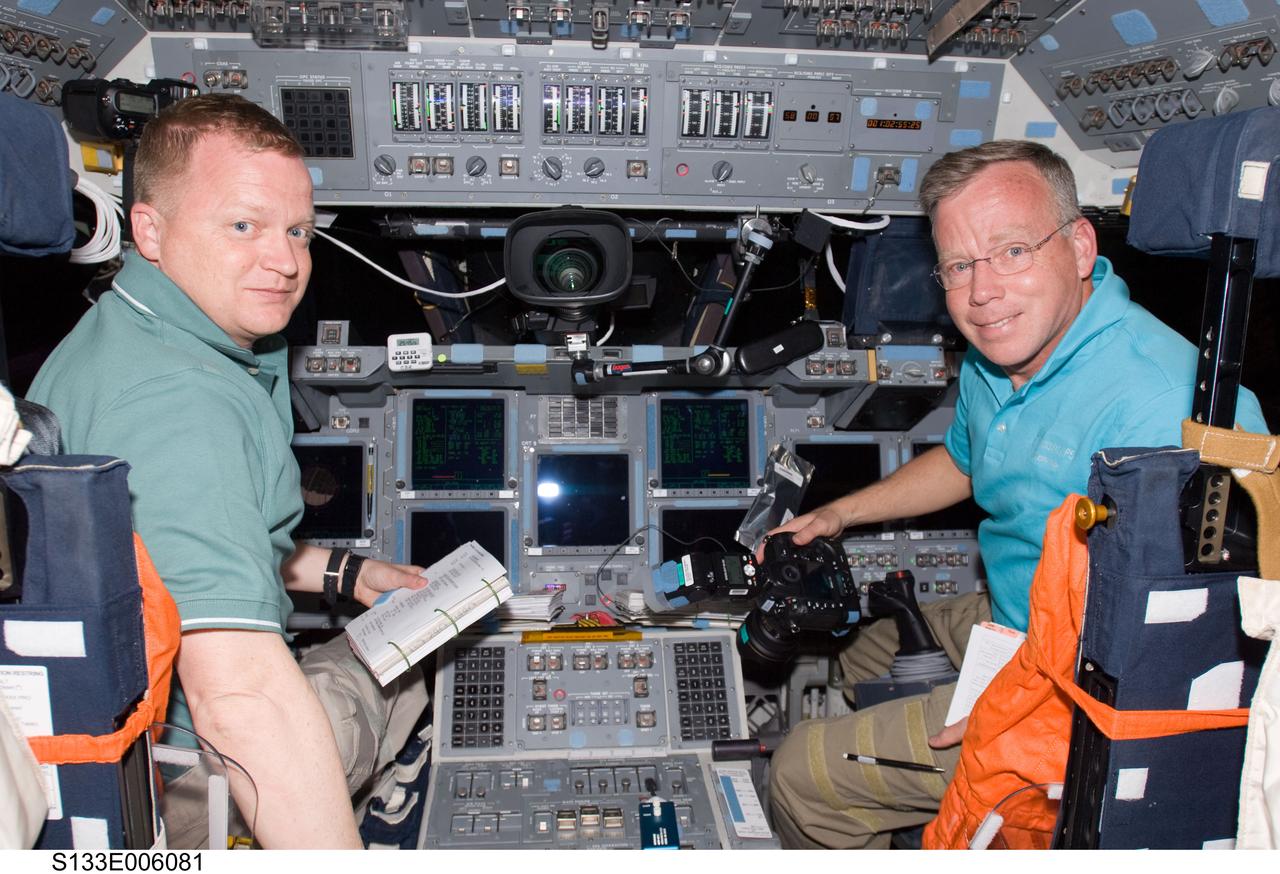
S133-E-006081 (25 Feb. 2011) --- On space shuttle Discovery’s forward flight deck, astronauts Steve Lindsey (right), STS-133 commander, and Eric Boe, pilot, switch seats for a brief procedure as the crew heads toward a weekend docking with the International Space Station. Earlier the crew conducted thorough inspections of the shuttle’s thermal tile system using the Remote Manipulator System/Orbiter Boom Sensor System (RMS/OBSS) and special cameras. Photo credit: NASA or National Aeronautics and Space Administration
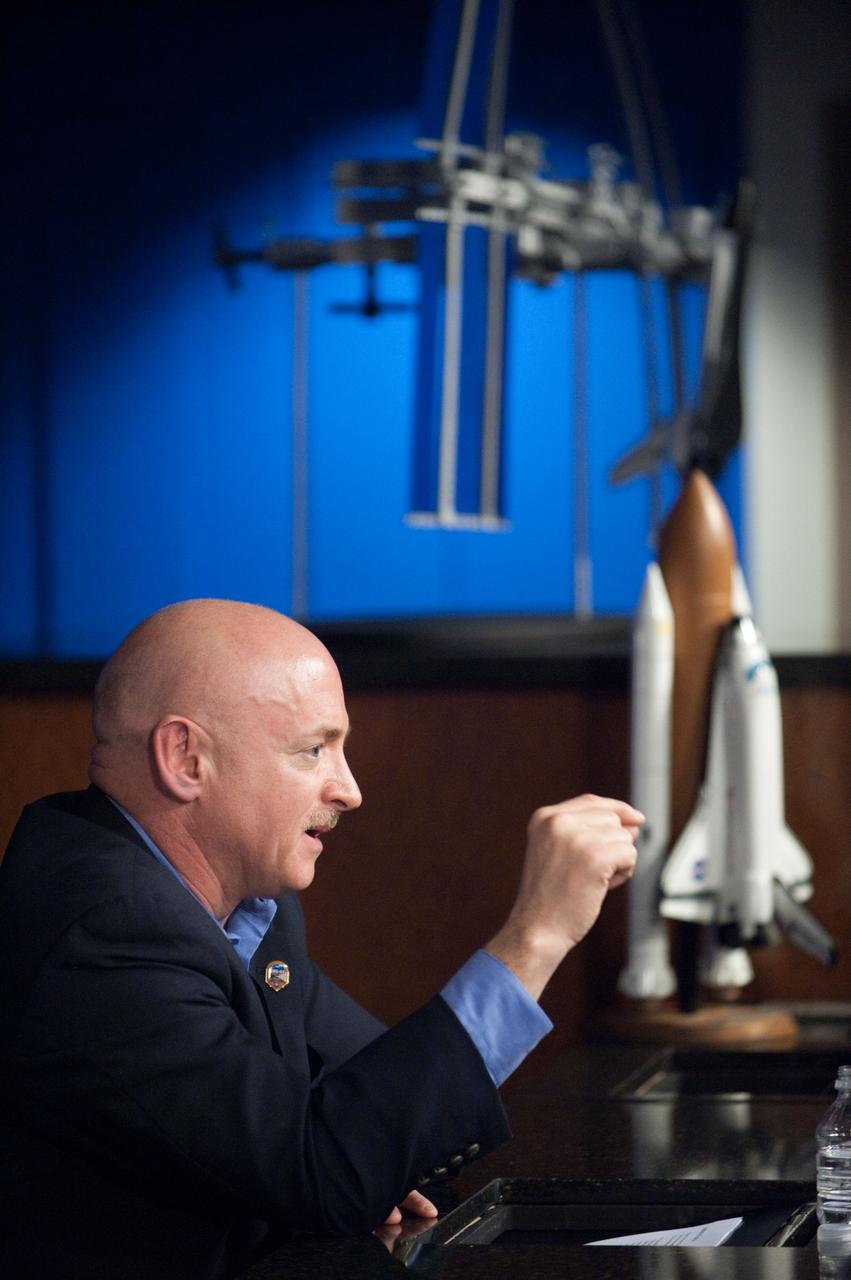
JSC2011-E-015244 (4 Feb. 2011) --- NASA astronaut Mark Kelly, STS-134 commander, speaks to reporters during a news conference at NASA's Johnson Space Center. The briefing was held to discuss Kelly resuming training as the STS-134 shuttle mission commander. With the exception of some proficiency training, Kelly has been on personal leave since Jan. 8 to care for his wife, congresswoman Gabrielle Giffords, who was critically wounded in a Tucson, Ariz. shooting. Photo credit: NASA or National Aeronautics and Space Administration
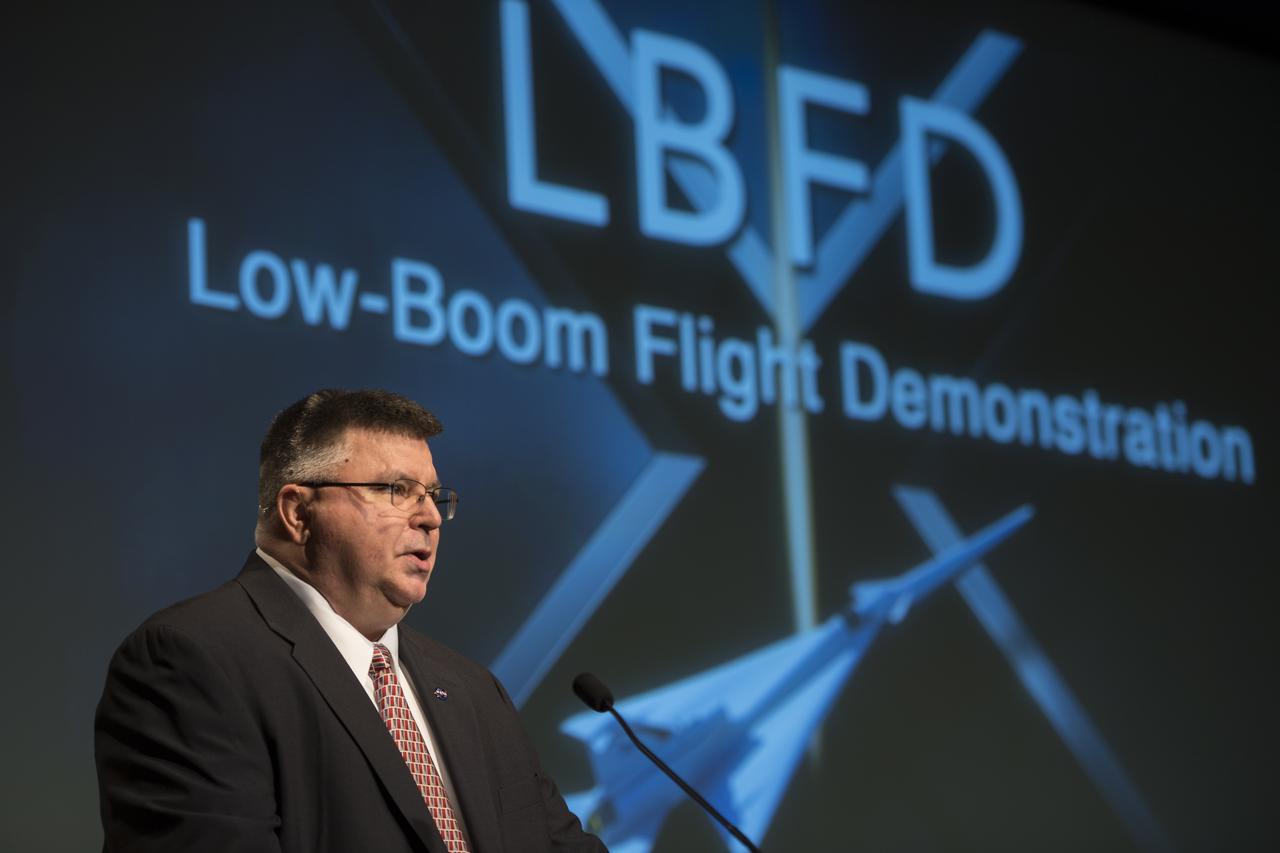
J.D. Harrington, public affairs officer, Aeronautics Mission Directorate, NASA, speaks at a briefing on the Low Boom Flight Demonstrator, Tuesday, April 3, 2018 at NASA Headquarters in Washington. This new experimental aircraft will cut cross country travel times in half by flying faster than the speed of sound without creating a sonic boom, enabling travel from New York to Los Angeles in two hours. Photo Credit: (NASA/Aubrey Gemignani)
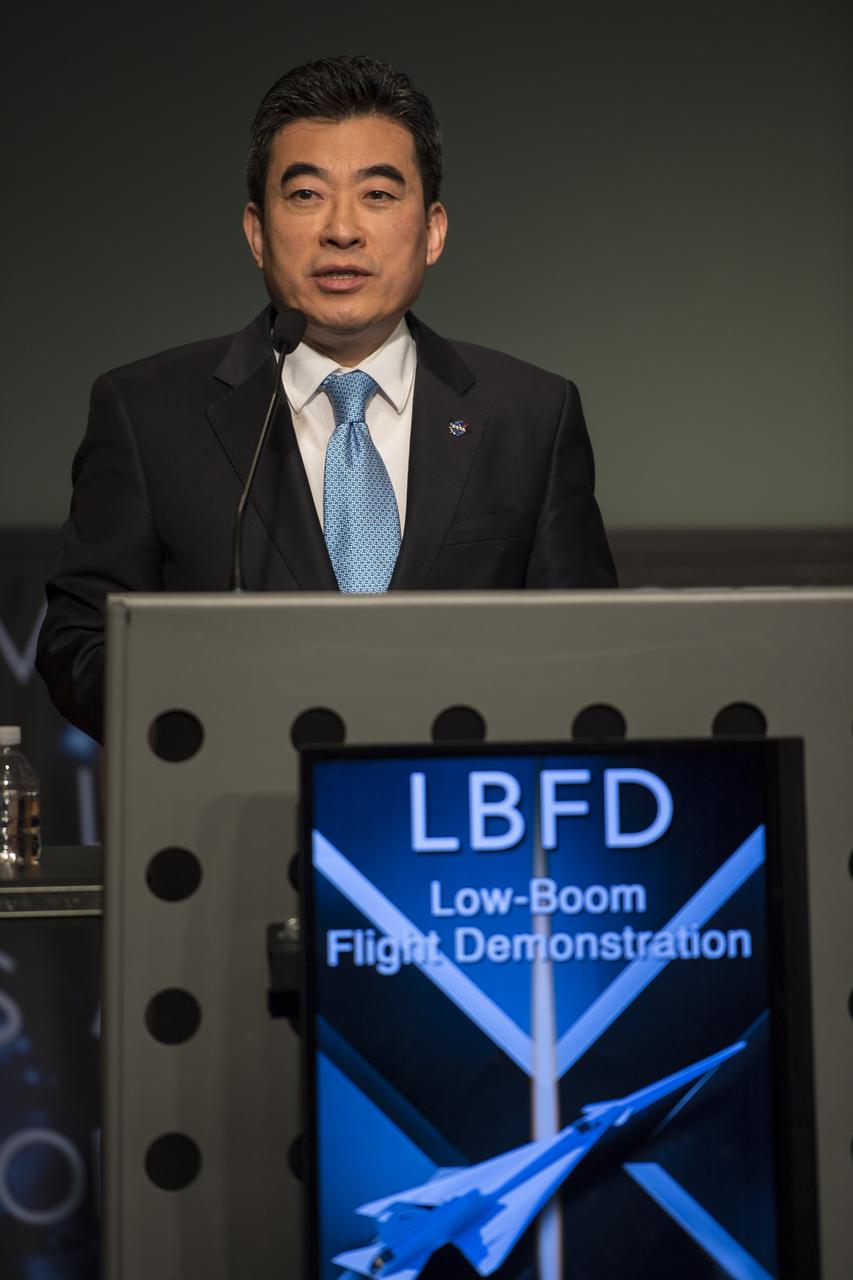
Dr. Jaiwon Shin, associate administrator for the Aeronautics Research Mission Directorate, NASA, announces Lockheed Martin as the winner of the contract to develop a Low Boom Flight Demonstrator at a briefing, Tuesday, April 3, 2018 at NASA Headquarters in Washington. This new experimental aircraft will cut cross country travel times in half by flying faster than the speed of sound without creating a sonic boom, enabling travel from New York to Los Angeles in two hours. Photo Credit: (NASA/Aubrey Gemignani)
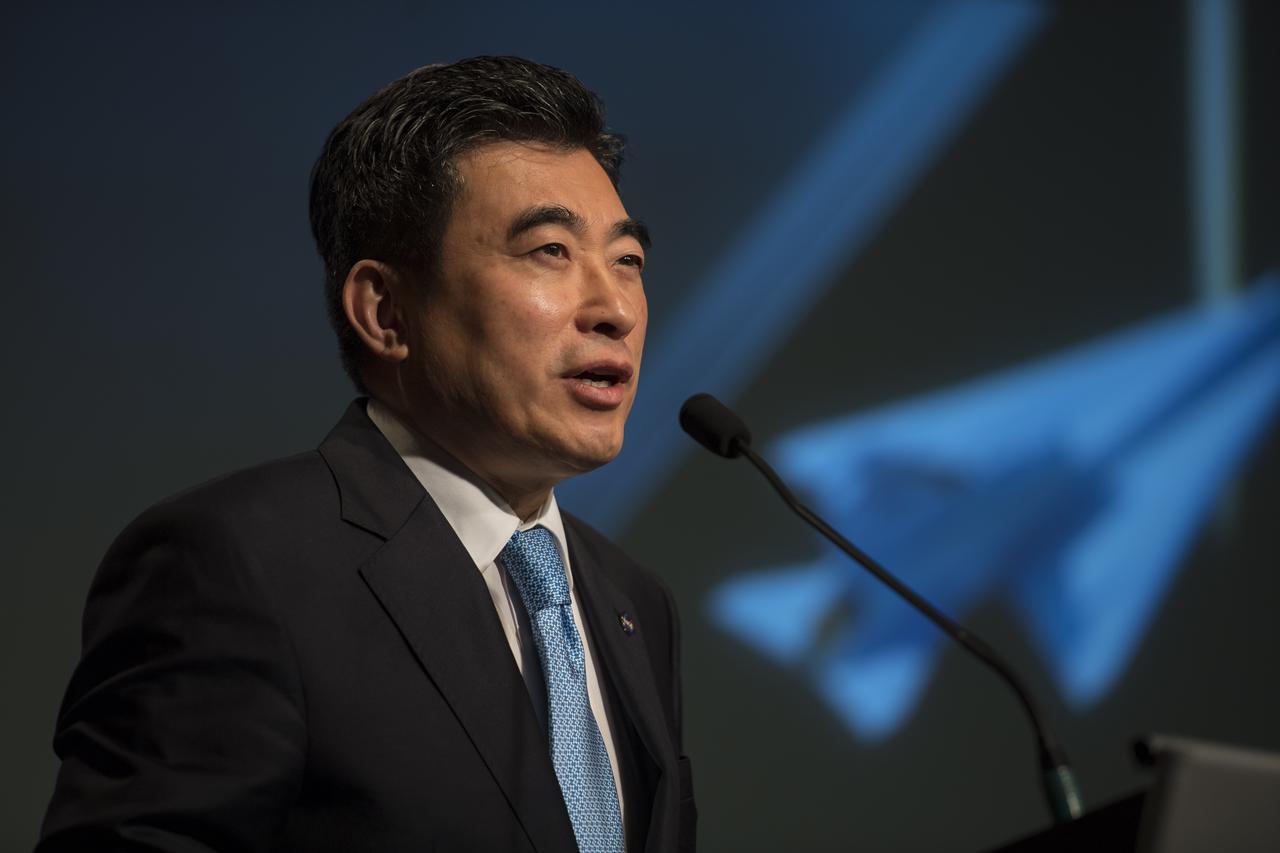
Dr. Jaiwon Shin, associate administrator for the Aeronautics Research Mission Directorate, NASA, announces Lockheed Martin as the winner of the contract to develop a Low Boom Flight Demonstrator at a briefing, Tuesday, April 3, 2018 at NASA Headquarters in Washington. This new experimental aircraft will cut cross country travel times in half by flying faster than the speed of sound without creating a sonic boom, enabling travel from New York to Los Angeles in two hours. Photo Credit: (NASA/Aubrey Gemignani)
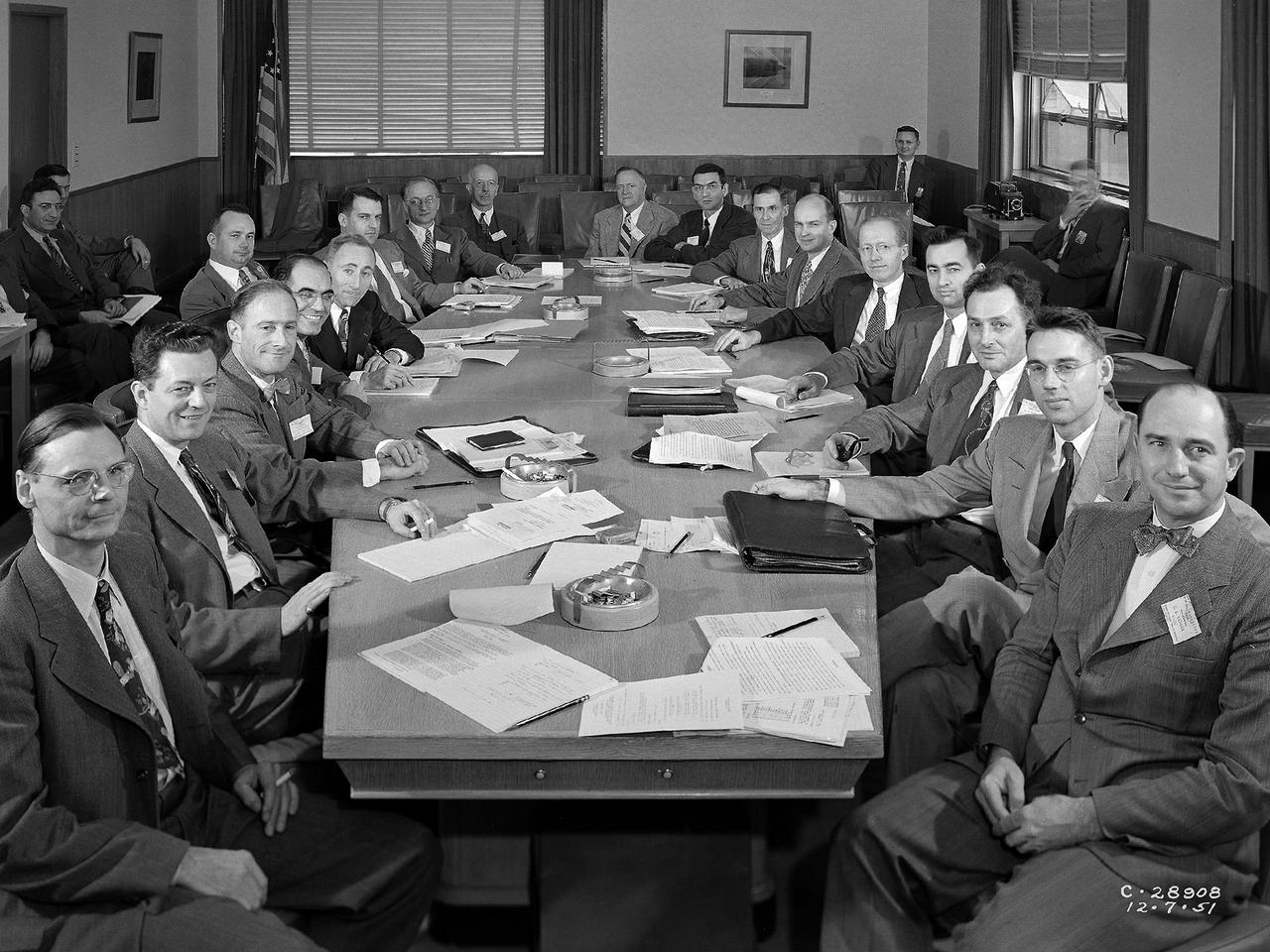
The National Advisory Committee for Aeronautics (NACA) Subcommittee on Combustion holds a meeting at Lewis Flight Propulsion Laboratory in Cleveland, Ohio. The NACA was managed by committees that included members of their own staff along with representatives from industry, the military, other government agencies, and universities. The 17-person Executive Committee was the NACA’s primary administrative body. They met several times a year at the NACA headquarters office in Washington DC to discuss broad issues confronting the US aeronautical community. Jerome Hunsaker, head of the Department of Aeronautical Engineering at the Massachusetts Institute of Technology, served as the NACA chairman from 1941 to 1956. George Lewis was not a member of the Executive Committee but served a key role as the NACA’s Director of Aeronautical Research. The NACA’s organizational chart also included 11 technical committees, several of which had specialized subcommittees. There were over 100 different subcommittees between World War I and 1958. The number of active subcommittees varied over the years. Most existed only for a few years, but some continued for over a decade. The subcommittees met three or four times per year, often at the laboratory most closely associated with the area of research. A team of laboratory researchers presented briefings on their recent activities and plans for the future. The Subcommittee on Combustion existed from 1945 to the NACA’s demise in 1958.
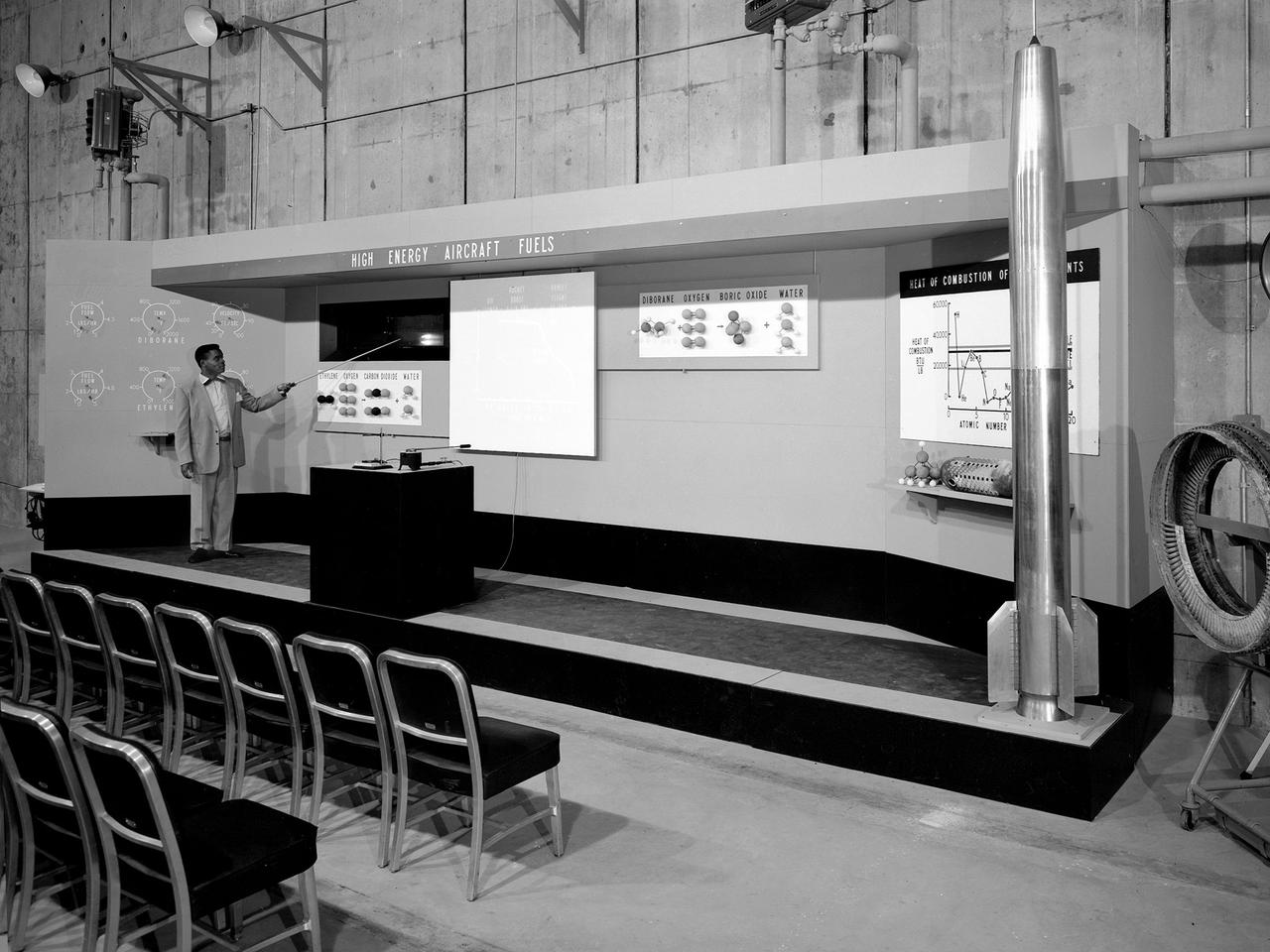
A researcher operates a demonstration board regarding high-energy propellants during the 1957 Inspection of the NACA’s Lewis Flight Propulsion Laboratory in Cleveland, Ohio. Representatives from the military, aeronautical industry, universities, and the press were invited to the laboratory to be briefed on the NACA’s latest research efforts and tour the test facilities. Over 1700 people visited the Lewis during the October 7-10, 1957 Inspection. NACA Executive Secretary John Victory is said to have heard one of the researchers mention outer space during rehearsals for the event. Victory ordered the remark removed so as not give the perception to the visiting dignitaries that the NACA was spending too many of its resources on non-aeronautical pursuits. The launch of Sputnik I by the Soviet Union days before the event changed everything. The dignitaries wanted to hear about the NACA’s rocket work and its space ambitions. The original talks were given, including this one on Lewis’ recent achievements with high-energy propellants.
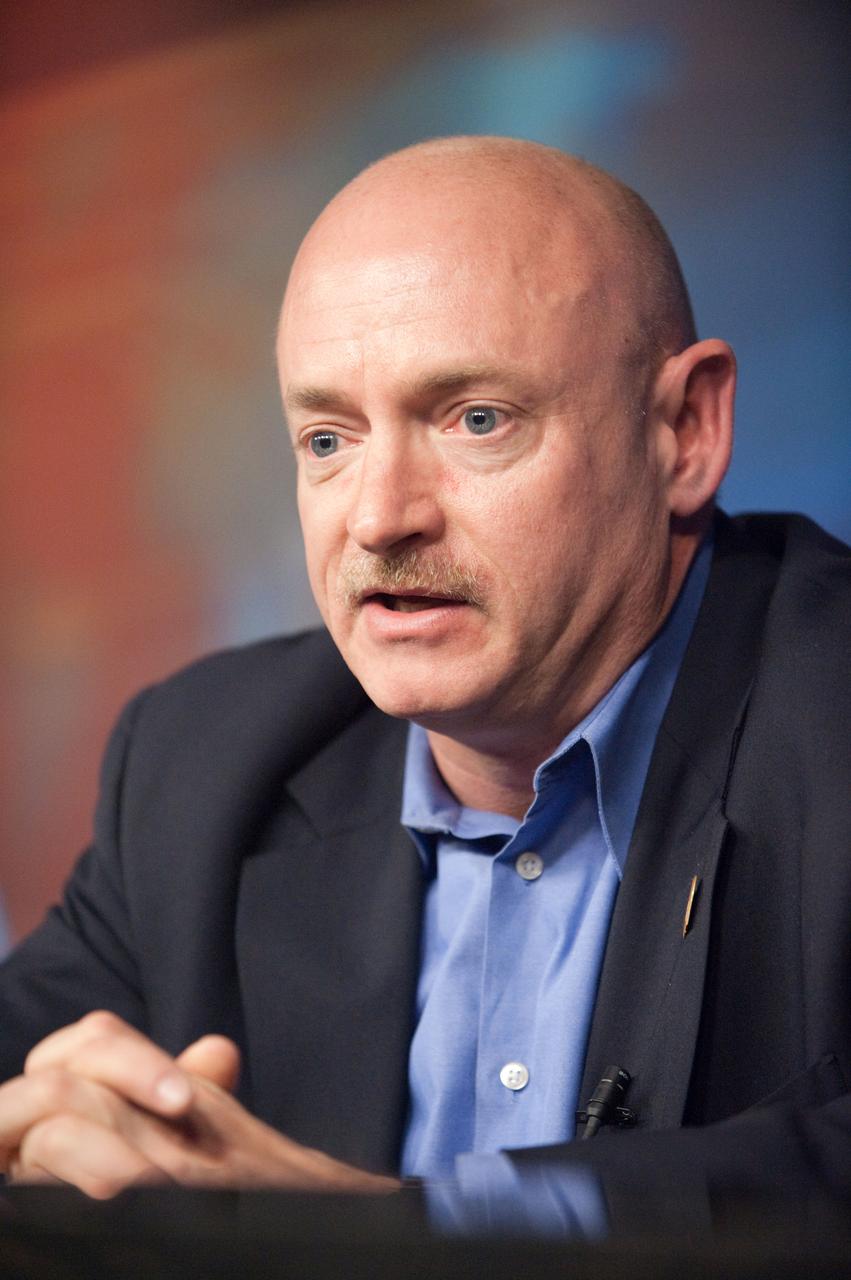
JSC2011-E-015242 (4 Feb. 2011) --- NASA astronaut Mark Kelly, STS-134 commander, listens to a reporter?s question during a news conference at NASA's Johnson Space Center. The briefing was held to discuss Kelly resuming training as the STS-134 shuttle mission commander. With the exception of some proficiency training, Kelly has been on personal leave since Jan. 8 to care for his wife, congresswoman Gabrielle Giffords, who was critically wounded in a Tucson, Ariz. shooting. Photo credit: NASA or National Aeronautics and Space Administration
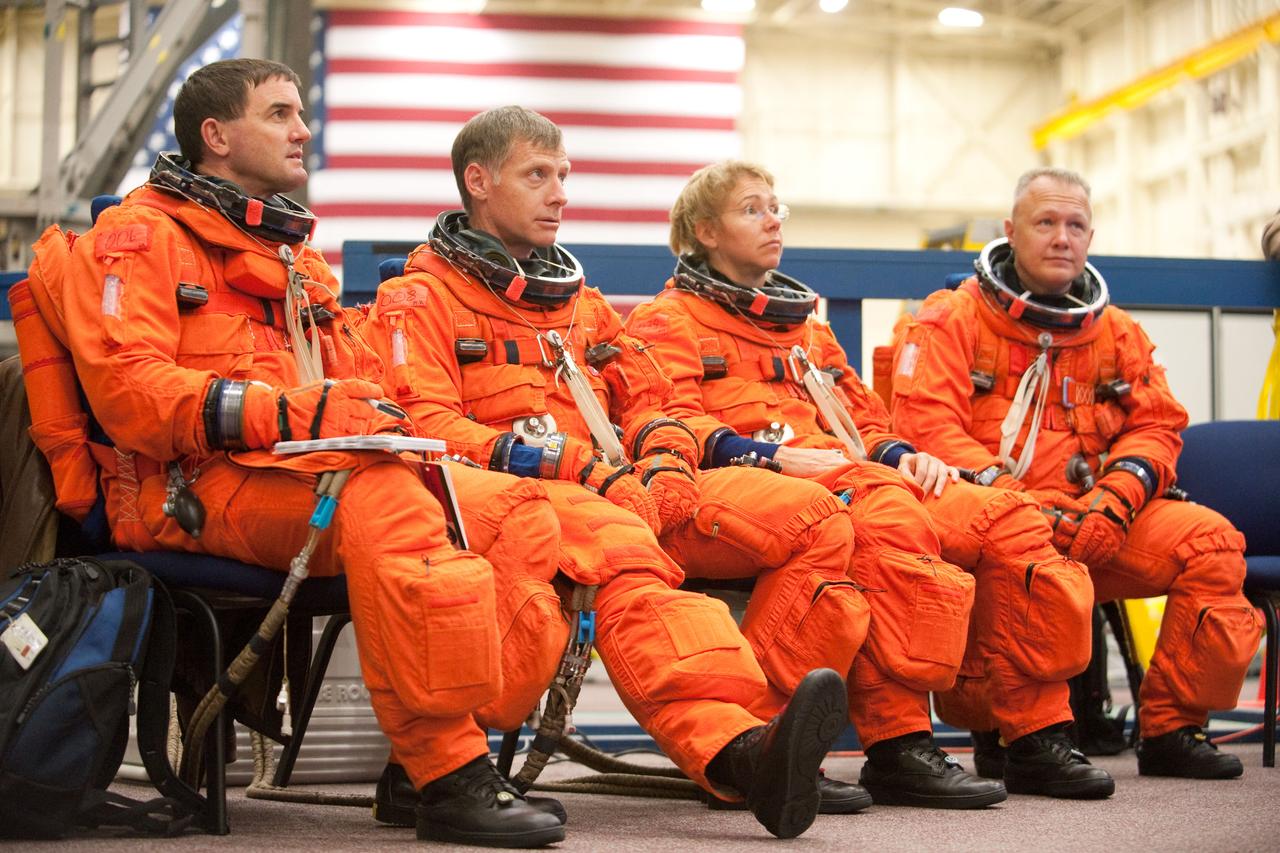
JSC2010-E-183272 (4 Nov. 2010) --- Attired in their training versions of the shuttle launch and entry suit, STS-135 crew members listen to a briefing by a crew trainer prior to the start of a training session in the Space Vehicle Mock-up Facility at NASA's Johnson Space Center. Pictured from the left are NASA astronauts Rex Walheim, mission specialist; Chris Ferguson, commander; Sandy Magnus, mission specialist; and Doug Hurley, pilot. STS-135 is planned to be the final mission of the space shuttle program. Photo credit: NASA or National Aeronautics and Space Administration
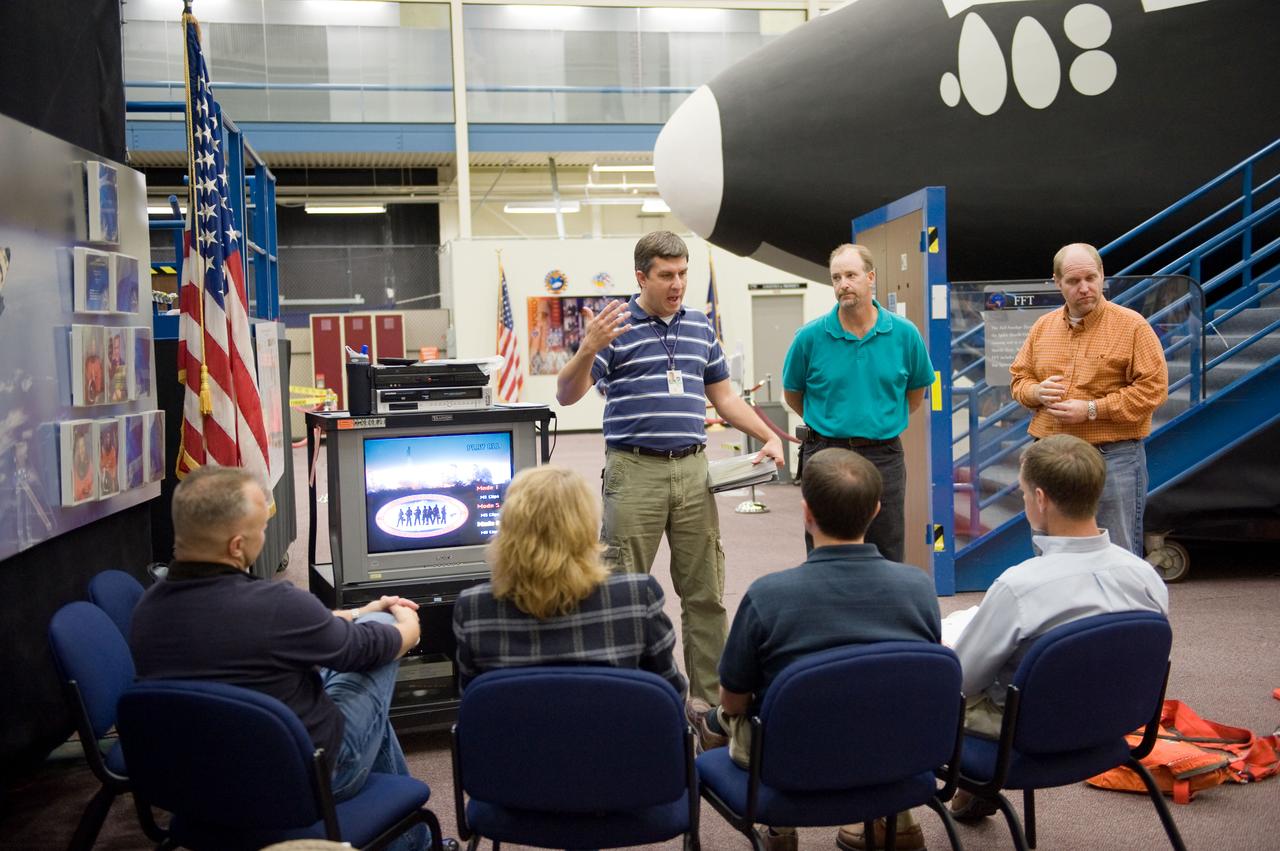
JSC2010-E-195512 (3 Dec. 2010) --- Crew instructors Patrick Jones (left), Robert (Rob) Tomaro and Bob Behrendsen brief STS-135 crew members during an emergency egress training session in the Space Vehicle Mock-up Facility at NASA's Johnson Space Center. Seated are NASA astronauts Chris Ferguson (right), commander; Doug Hurley (left), pilot; Sandy Magnus and Rex Walheim, both mission specialists. STS-135 is planned to be the final mission of the space shuttle program. Photo credit: NASA or National Aeronautics and Space Administration
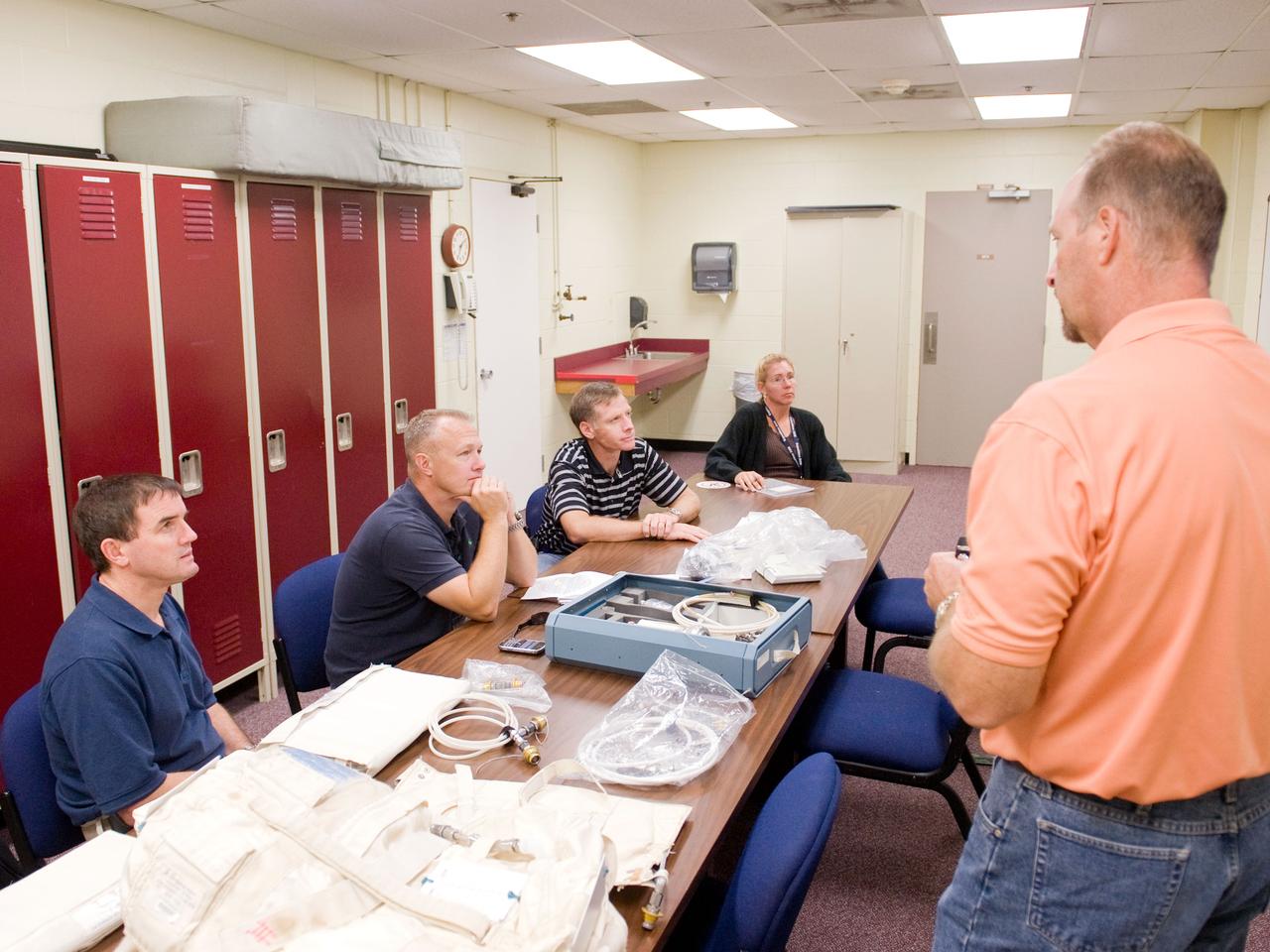
JSC2010-E-170899 (1 Oct. 2010) --- United Space Alliance crew trainer Robert (Rob) Tomaro (right) briefs STS-135 crew members during a training session in the Space Vehicle Mock-up Facility at NASA's Johnson Space Center. Seated from the left are NASA astronauts Rex Walheim, mission specialist; Doug Hurley, pilot; Chris Ferguson, commander; and Sandy Magnus, mission specialist. STS-135 is planned to be the final mission of the space shuttle program. Photo credit: NASA or National Aeronautics and Space Administration
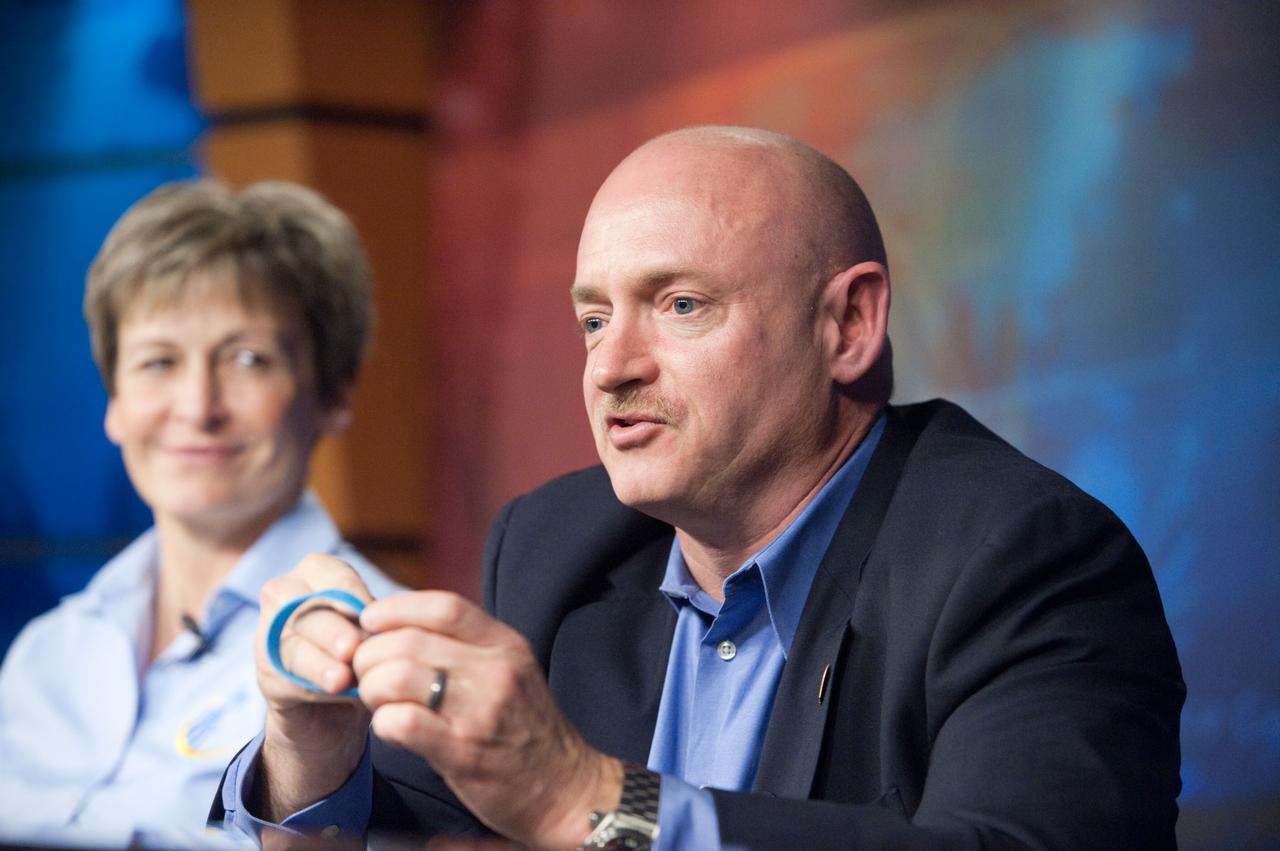
JSC2011-E-015245 (4 Feb. 2011) --- NASA astronaut Mark Kelly, STS-134 commander, describes a blue wristband to reporters during a news conference at NASA's Johnson Space Center. The briefing was held to discuss Kelly resuming training as the STS-134 shuttle mission commander. With the exception of some proficiency training, Kelly has been on personal leave since Jan. 8 to care for his wife, congresswoman Gabrielle Giffords, who was critically wounded in a Tucson, Ariz. shooting. The wristband, which has a peace sign, heart and ?Gabby,? was delivered by Giffords? office. Photo credit: NASA or National Aeronautics and Space Administration
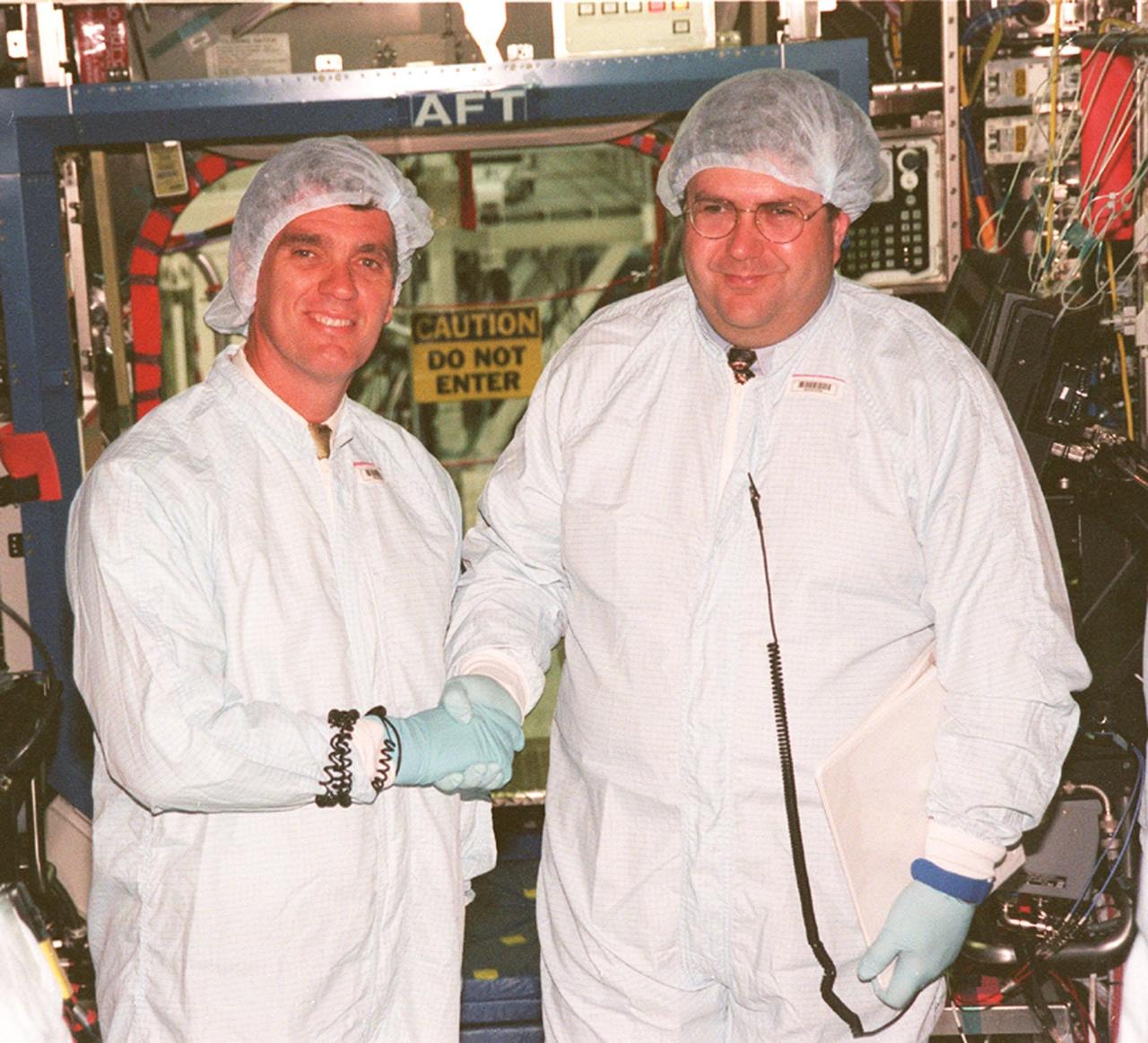
KENNEDY SPACE CENTER, FLA. -- Standing in front of the U.S. Lab, named Destiny, U.S. Rep. Dave Weldon (left) thanks Thomas R. "Randy" Galloway, with the Space Station Hardware Integration Office, for briefing him on the equipment inside the Lab. Weldon is on the House Science Committee and vice chairman of the Space and Aeronautics Subcommittee. Destiny is scheduled to be launched on Space Shuttle Endeavour in early 2000. It will become the centerpiece of scientific research on the ISS, with five equipment racks aboard to provide essential functions for station systems, including high data-rate communications, and to maintain the station's orientation using control gyroscopes launched earlier. Additional equipment and research racks will be installed in the laboratory on subsequent Shuttle flights
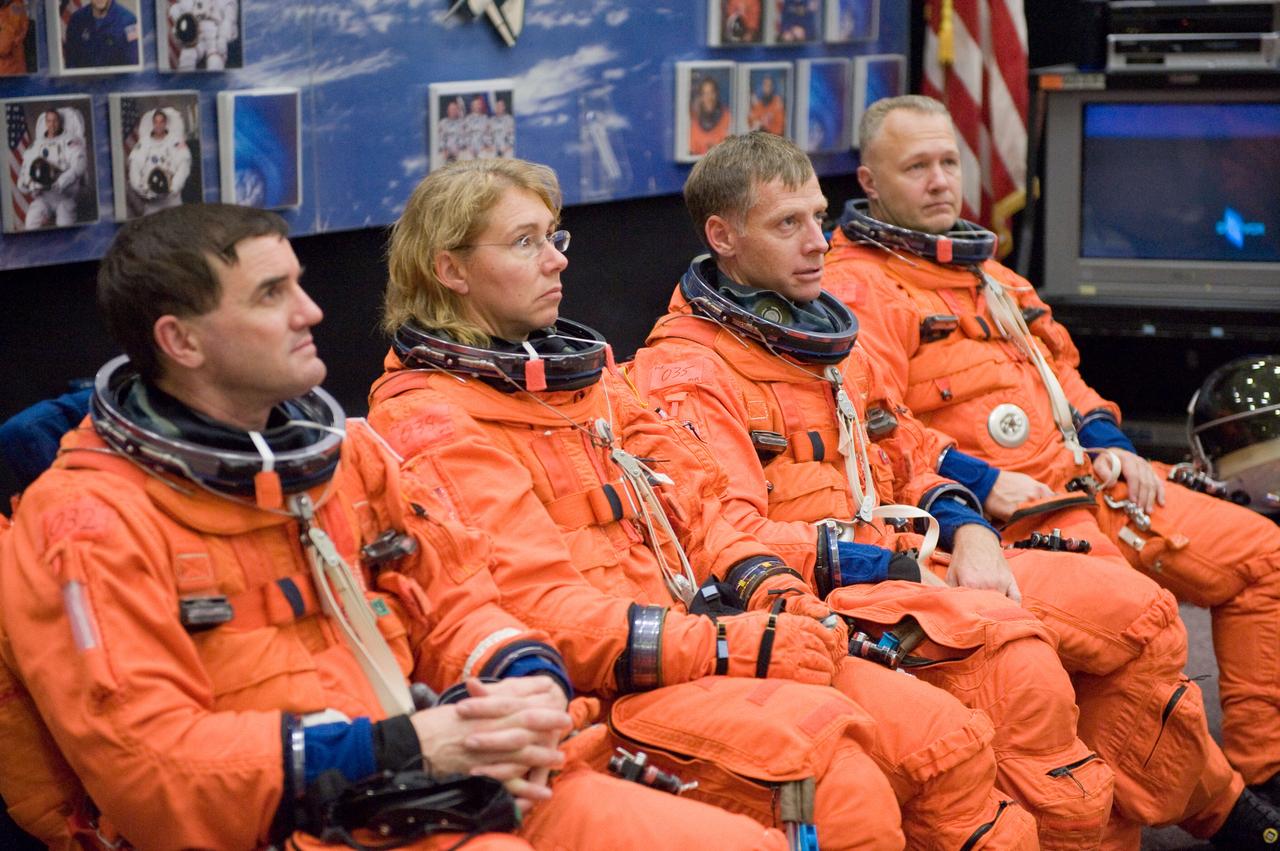
JSC2010-E-195547 (3 Dec. 2010) --- Attired in training versions of their shuttle launch and entry suits, STS-135 crew members listen to a briefing by a crew instructor (out of frame) in preparation for a training session in the Space Vehicle Mock-up Facility at NASA's Johnson Space Center. Pictured from the left are NASA astronauts Rex Walheim, Sandy Magnus, both mission specialists; Chris Ferguson, commander; and Doug Hurley, pilot. STS-135 is planned to be the final mission of the space shuttle program. Photo credit: NASA or National Aeronautics and Space Administration
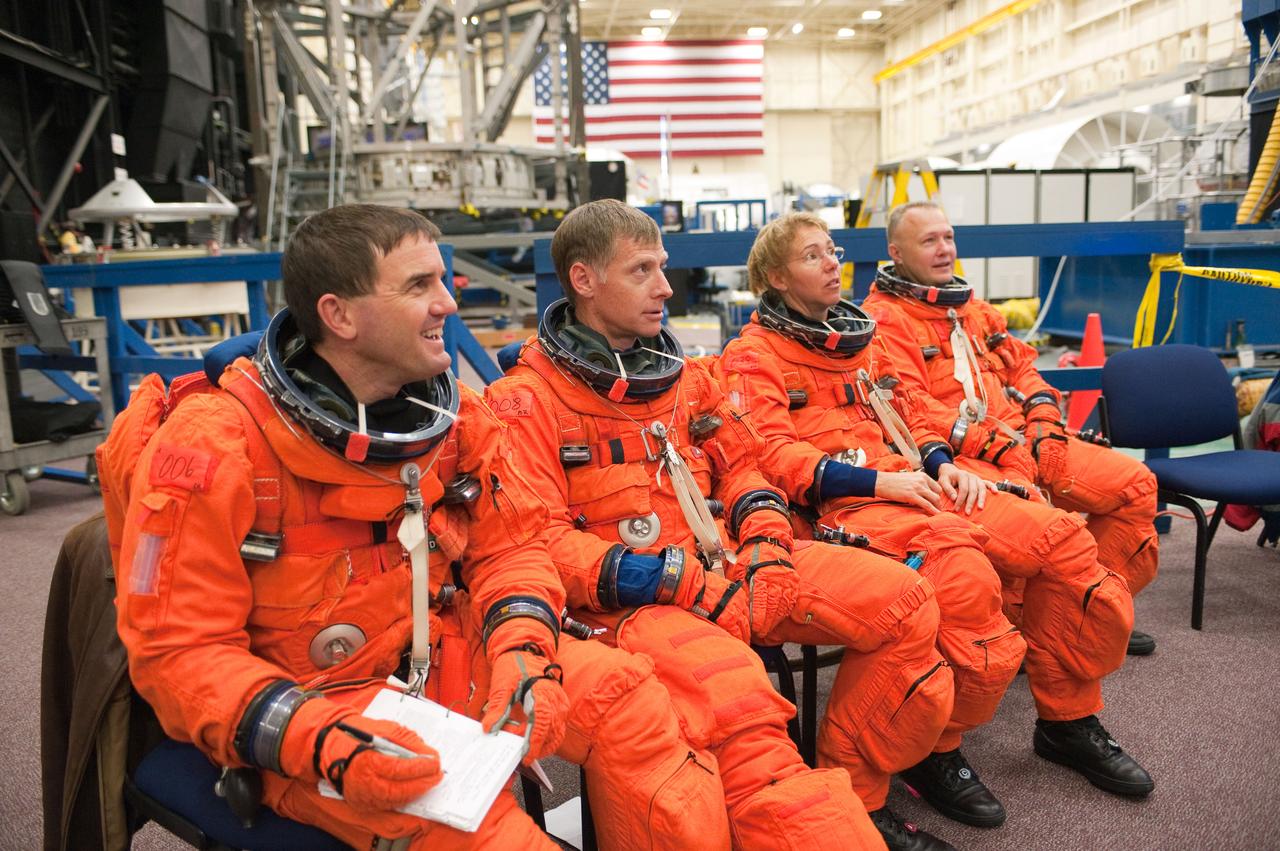
JSC2010-E-183268 (4 Nov. 2010) --- Attired in their training versions of the shuttle launch and entry suit, STS-135 crew members listen to a briefing by a crew trainer prior to the start of a training session in the Space Vehicle Mock-up Facility at NASA's Johnson Space Center. Pictured from the left are NASA astronauts Rex Walheim, mission specialist; Chris Ferguson, commander; Sandy Magnus, mission specialist; and Doug Hurley, pilot. STS-135 is planned to be the final mission of the space shuttle program. Photo credit: NASA or National Aeronautics and Space Administration
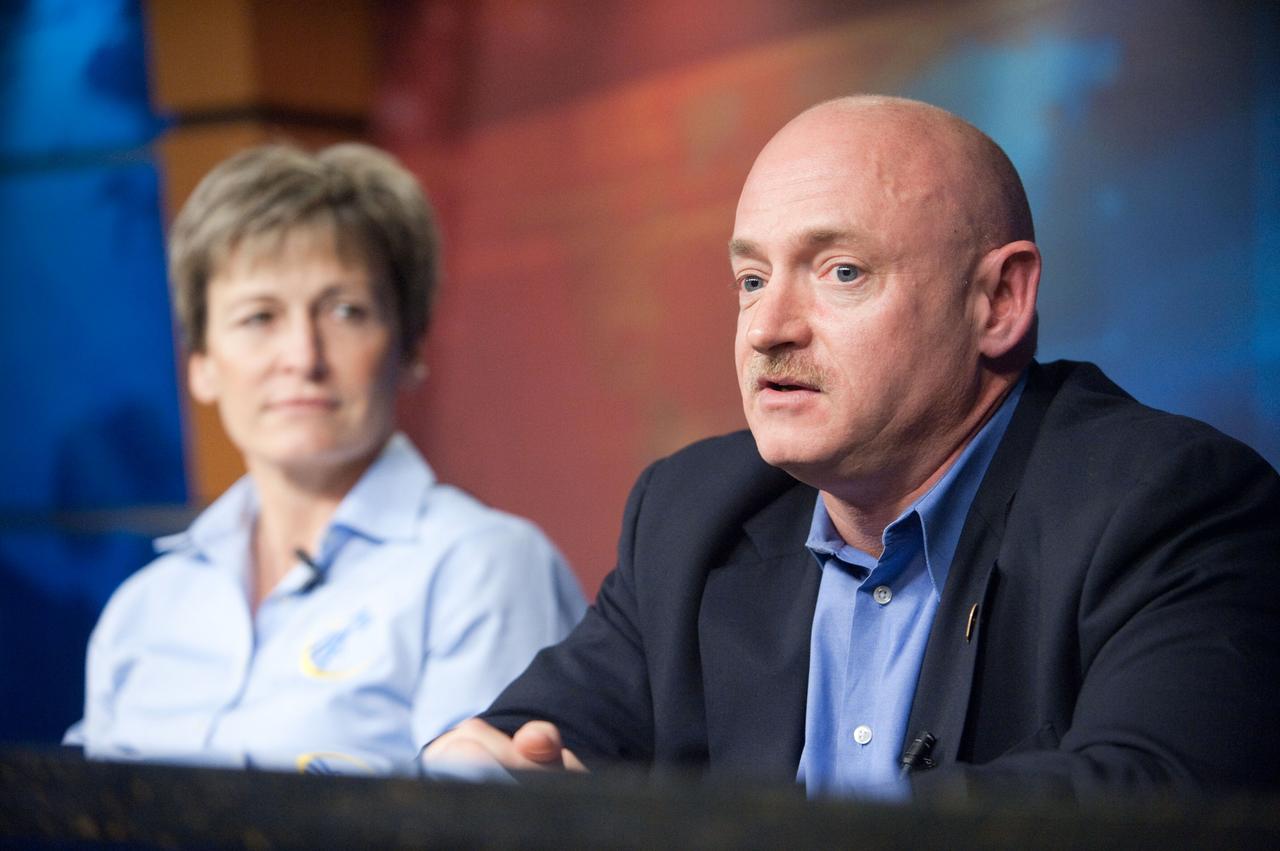
JSC2011-E-015243 (4 Feb. 2011) --- NASA astronaut Mark Kelly, STS-134 commander, speaks to reporters during a news conference at NASA's Johnson Space Center. Peggy Whitson, Astronaut Office chief, is seated next to Kelly. The briefing was held to discuss Kelly resuming training as the STS-134 shuttle mission commander. With the exception of some proficiency training, Kelly has been on personal leave since Jan. 8 to care for his wife, congresswoman Gabrielle Giffords, who was critically wounded in a Tucson, Ariz. shooting. Photo credit: NASA or National Aeronautics and Space Administration
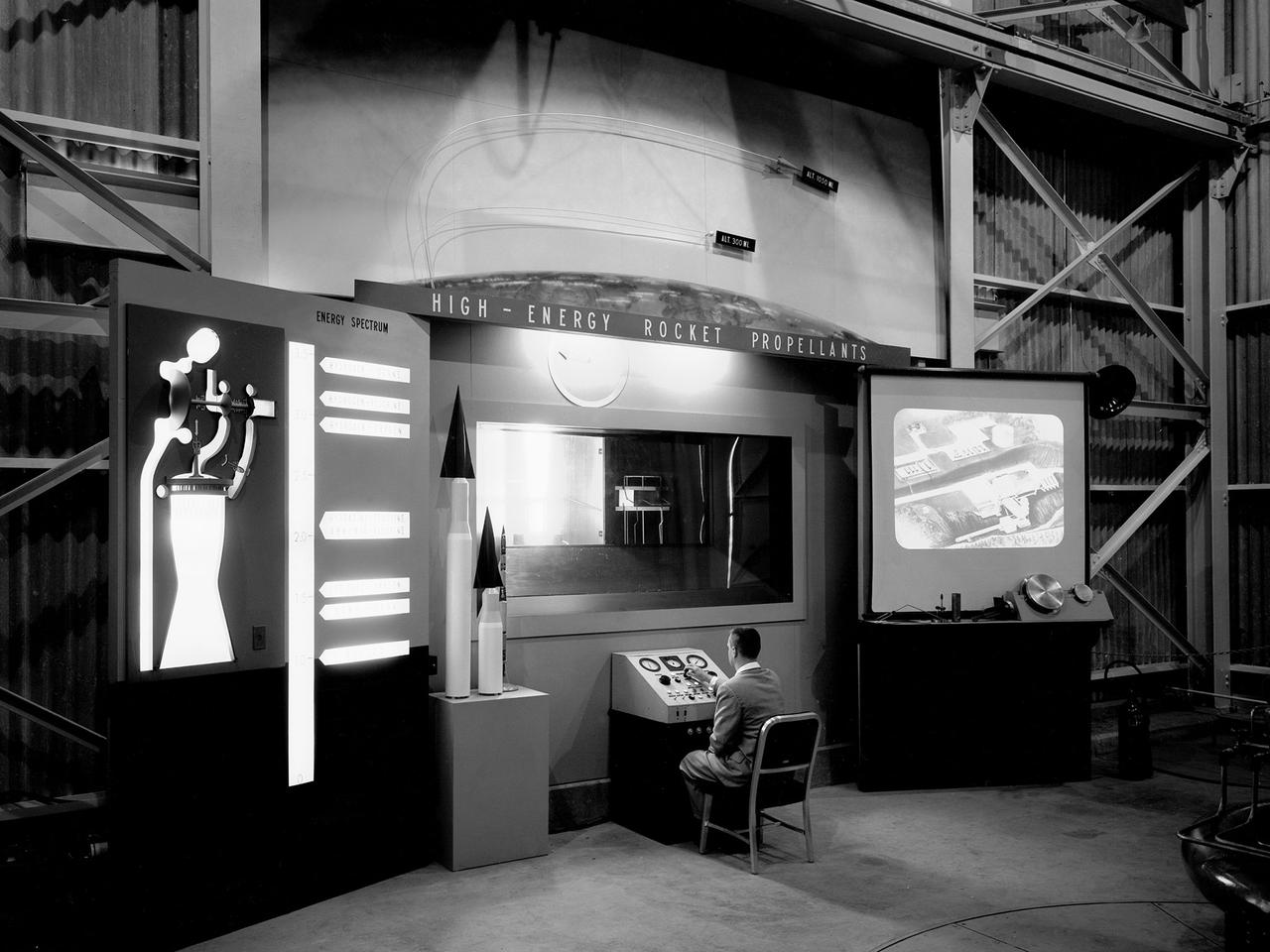
A researcher works a demonstration board in the Rocket Engine Test Facility during the 1957 Inspection of the National Advisory Committee for Aeronautics (NACA) Lewis Flight Propulsion Laboratory in Cleveland, Ohio. Representatives from the military, aeronautical industry, universities, and the press were invited to the laboratory to be briefed on the NACA’s latest research efforts and tour the test facilities. Over 1700 people visited the Lewis during the October 7-10, 1957 Inspection. The Soviet Union launched their first Sputnik satellite just days before on October 4. NACA Lewis had been involved in small rockets and propellants research since 1945, but the NACA leadership was wary of involving itself too deeply with the work since ballistics traditionally fell under the military’s purview. The Lewis research was performed by the High Temperature Combustion section in the Fuels and Lubricants Division in a series of small cinderblock test cells. The rocket group was expanded in 1952 and made several test runs in late 1954 using liquid hydrogen as a propellant. A larger test facility, the Rocket Engine Test Facility, was approved and became operational just in time for the Inspection.
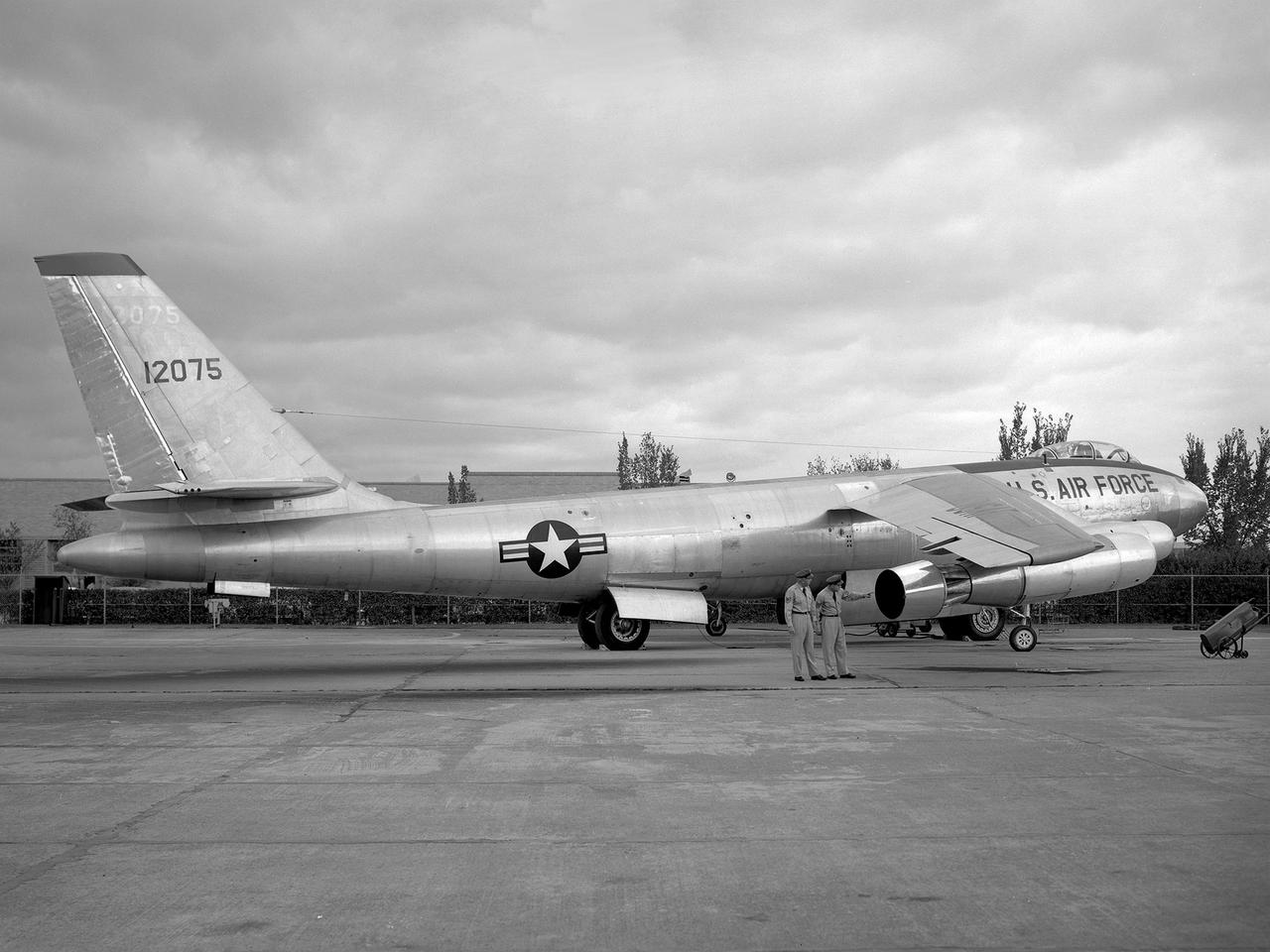
A Boeing B-47 Stratojet bomber with a noise-reducing ejector on its engine at the 1957 Inspection of the National Advisory Committee for Aeronautics (NACA) Lewis Flight Propulsion Laboratory. Representatives from the military, aeronautical industry, universities, and the press were invited to the laboratory to be briefed on the NACA’s latest research efforts and tour the state- of- the- art test facilities. Over 1700 people visited the NACA Lewis in Cleveland, Ohio during October 7 - 10, 1957. By the mid-1950s, the aircraft industry was close to introducing jet airliners to the nation’s airways. The noise produced by the large jet engines, however, would pose a considerable problem for communities near airports. This problem was demonstrated at the 1957 Inspection by an NACA Lewis researcher who played longplay (LP) audio records of military jet engines for an audience. Tests showed that the source of the loudest noise was not the engine itself, but the mixing of the engine’s exhaust with the surrounding air in the atmosphere. The pressures resulting from this turbulence produced sound waves. One of Lewis’ first studies sought to design an exhaust nozzle that reduced the turbulence. A Pratt and Whitney J57 was tested in the Altitude Wind Tunnel with many of these nozzle configurations from January to May 1957. Researchers found that the various nozzle types did reduce the noise levels but also reduced the aircraft’s thrust. Afterwards, they determined that the addition of an NACA-developed ejector reduced the noise levels without diminishing thrust.
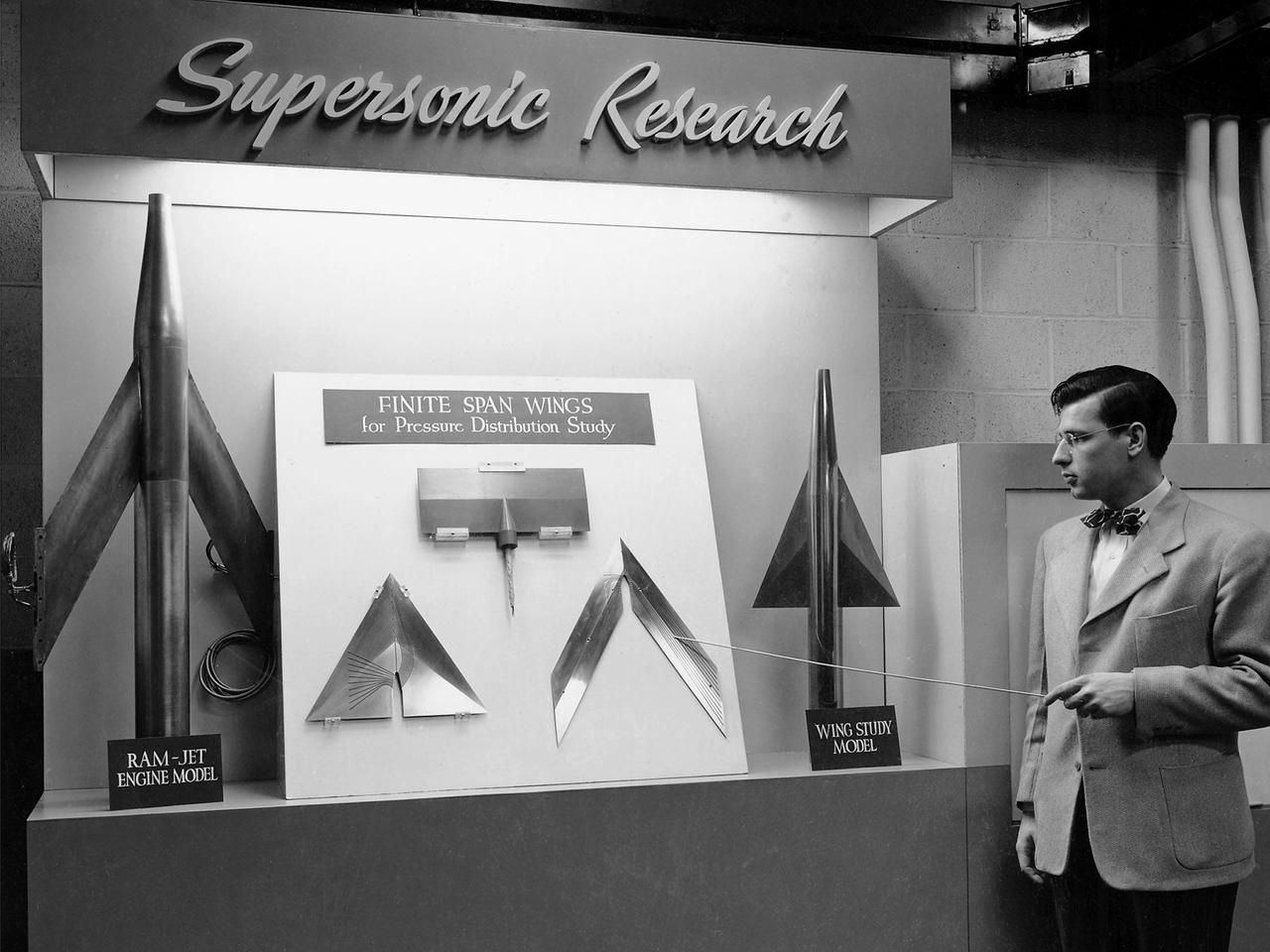
On March 22, 1946, 250 members of the Institute of Aeronautical Science toured the NACA’s Aircraft Engine Research Laboratory. NACA Chairman Jerome Hunsaker and Secretary John Victory were on hand to brief the attendees in the Administration Building before the visited the lab’s test facilities. At each of the twelve stops, researchers provided brief presentations on their work. Topics included axial flow combustors, materials for turbine blades, engine cooling, icing prevention, and supersonic flight. The laboratory reorganized itself in October 1945 as World War II came to an end to address newly emerging technologies such as the jet engine, rockets, and high-speed flight. While design work began on what would eventually become the 8- by 6-Foot Supersonic Wind Tunnel, NACA Lewis quickly built several small supersonic tunnels. These small facilities utilized the Altitude Wind Tunnel’s massive air handling equipment to generate high-speed airflow. The display seen in this photograph was set up in the building that housed the first of these wind tunnels. Eventually the building would contain three small supersonic tunnels, referred to as the “stack tunnels” because of the vertical alignment. The two other tunnels were added to this structure in 1949 and 1951. The small tunnels were used until the early 1960s to study the aerodynamic characteristics of supersonic inlets and exits.

JSC2011-E-015241 (4 Feb. 2011) --- NASA astronaut Mark Kelly, STS-134 commander, listens to a reporter?s question during a news conference at NASA's Johnson Space Center. Seated next to Kelly are (left to right) Nicole Cloutier-Lemasters, public affairs officer; Brent Jett, Flight Crew Operations Directorate chief and Peggy Whitson, Astronaut Office chief. The briefing was held to discuss Kelly resuming training as the STS-134 shuttle mission commander. With the exception of some proficiency training, Kelly has been on personal leave since Jan. 8 to care for his wife, congresswoman Gabrielle Giffords, who was critically wounded in a Tucson, Ariz. shooting. Photo credit: NASA or National Aeronautics and Space Administration
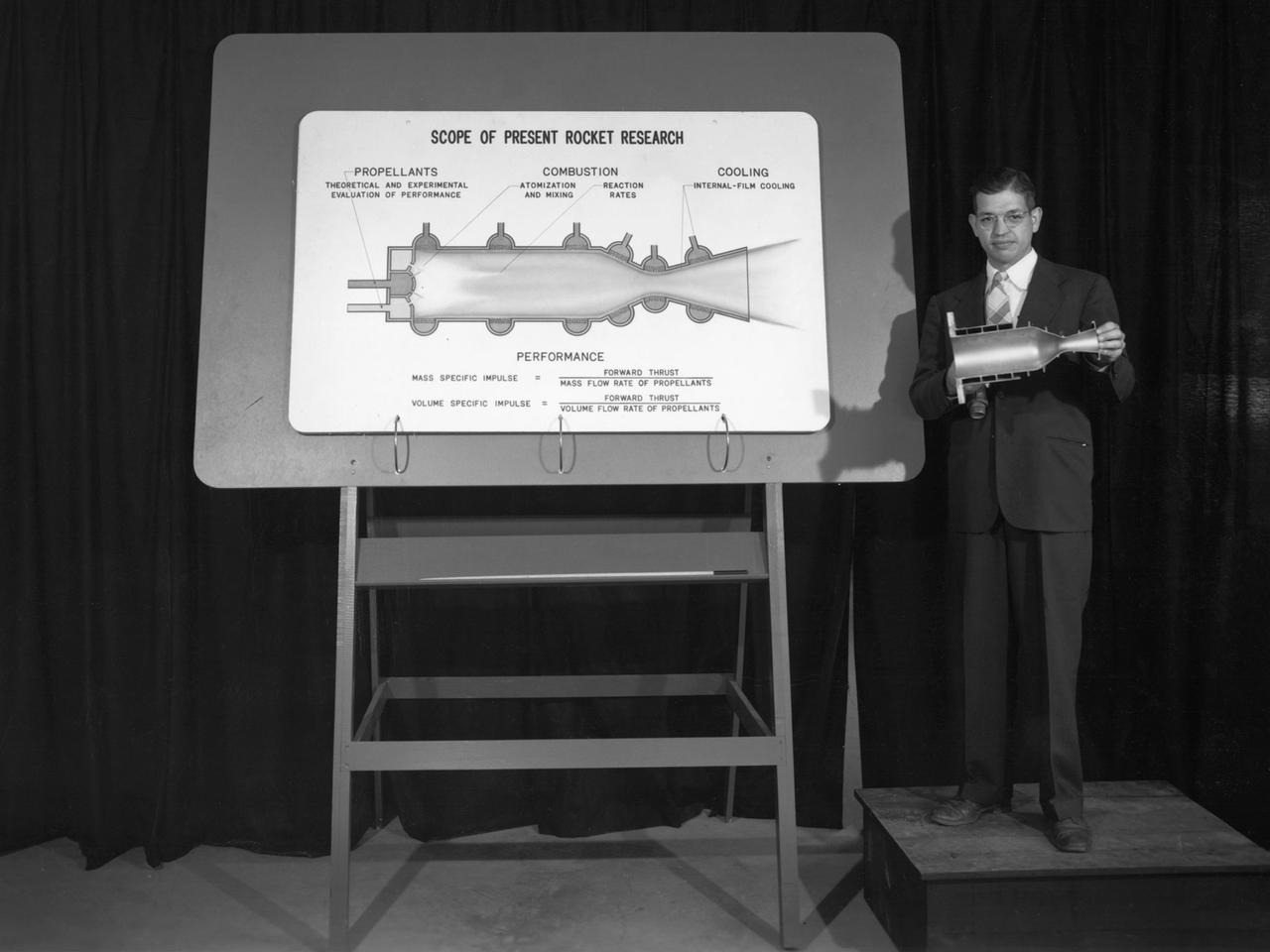
Researcher John Sloop briefs visitors on his latest rocket engine research during the 1947 Inspection at the National Advisory Committee for Aeronautics (NACA) Lewis Flight Propulsion Laboratory. The NACA had been hosting annual Aircraft Engineering Conferences, better known as Inspections, since 1926. Individuals from the manufacturing industry, military, and university settings were invited to tour the NACA laboratories. There were a series of stops on the tour, mostly at test facilities, where researchers would brief the group on the latest efforts in their particular field. The Inspections grew in size and scope over the years and by the mid-1940s required multiple days. The three-day 1947 Inspection was the first time the event was held at NACA Lewis. Over 800 scientists, industrialists, and military leaders attended the three-day event. Talks were given at the Altitude Wind Tunnel, Four Burner Area, Engine Research Building, and other facilities. An array of topics were discussed, including full-scale engine testing, ramjets, axial-flow compressors, turbojets, fuels, icing, and materials. The NACA Lewis staff and their families were able to view the same presentations after the Inspection was over. Sloop, a researcher in the Fuels and Thermodynamics Division, briefed visitors on NACA Lewis’ early research in rocket engine propellants, combustion, and cooling. This early NACA Lewis work led to the development of liquid hydrogen as a viable propellant in the late 1950s.

Mercury astronaut John Glenn prepares for a test in the Multi-Axis Space Test Inertia Facility (MASTIF) inside the Altitude Wind Tunnel at the National Aeronautics and Space Administration (NASA) Lewis Research Center. The MASTIF was a three-axis test rig with a pilot’s chair mounted in the center. The device was designed to train Project Mercury pilots to bring a spinning spacecraft under control. An astronaut was secured in a foam couch in the center of the rig. The rig was then spun on three axes from 2 to 50 rotations per minute. Small nitrogen gas thrusters were used by the astronauts to bring the MASTIF under control. In February and March 1960, the seven Project Mercury astronauts traveled to Cleveland to train on the MASTIF. Warren North and a team of air force physicians were on hand to monitor their health. After being briefed by Lewis pilot Joe Algranti and researcher James Useller, the rider would climb into the rig and be secured in the chair, as seen in this photograph. A Lewis engineer would then slowly set the MASTIF in motion. It was the astronaut’s job to bring it under control. Each individual was required to accumulate 4.5 to 5 hours of MASTIF time. Glenn became the first American to orbit the earth on February 20, 1962 in the Friendship 7 Mercury capsule. In March 1999, the Lewis Research Center was renamed the John H. Glenn Research Center at Lewis Field.
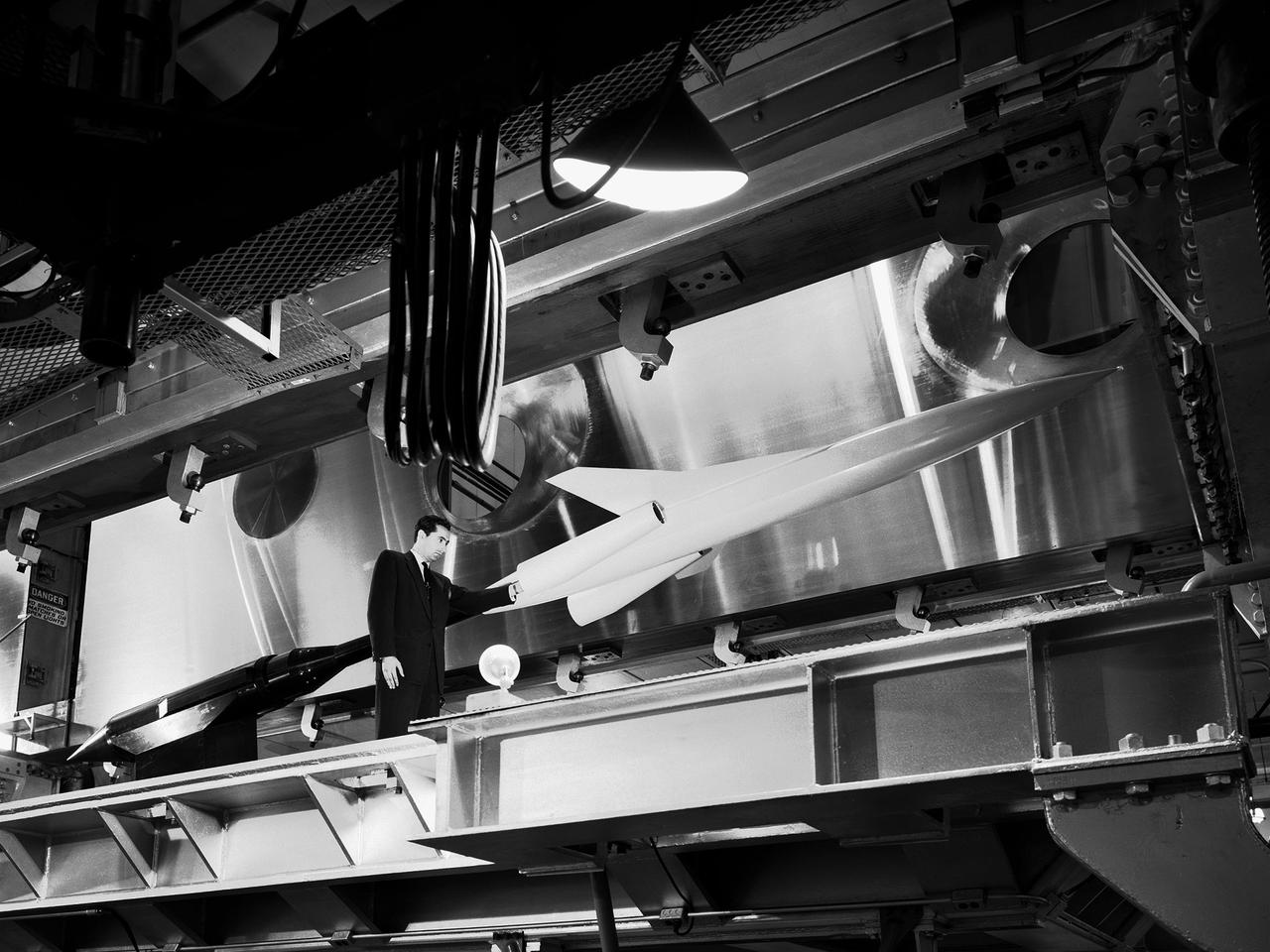
A researcher examines a model being installed in the test section of the 10- by 10-Foot Supersonic Wind Tunnel during the 1957 Inspection of the National Advisory Committee for Aeronautics (NACA) Lewis Flight Propulsion Laboratory. The NACA held its annual Inspection at one of its three research laboratories. Representatives from the military, aeronautical industry, universities, and the press were invited to the laboratory to be briefed on the NACA’s latest research efforts and tour the state- of- the- art test facilities. Over 1700 people visited the NACA Lewis in Cleveland, Ohio during the October 7 - 10, 1957 Inspection. NACA researchers Leonard Obery, seen here, James Connors, Leonard, Stitt, David Bowditch gave presentations on high Mach number turbojets at the 10- by 10 tunnel. It had been only 15 years since a jet aircraft had first flown in the US. Since then the sound barrier had been broken and speeds of Mach 2.5 had been achieved. In the late 1950s NACA researchers sought to create an engine that could achieve Mach 4. This type of engine would require an extremely long inlet and nozzle which would have to be capable of adjusting their diameter for different speeds. A Mach 4 engine would require new composite materials to withstand the severe conditions, modified airframes to hold the longer engines, and high temperature seals and lubricants. The 10- by 10-foot tunnel, which had only been in operation for a year and a half, would play a critical role in these studies. NACA researchers at other facilities discussed high energy aircraft fuels and rocket propellants, aircraft noise reduction, hypersonic flight, nuclear propulsion, and high temperature materials.
![Astronaut Neil Armstrong examines a Vertical and Short Takeoff and Landing test setup in the 9- by 15-Foot Low Speed Wind Tunnel at the National Aeronautics and Space Administration (NASA) Lewis Research Center. Armstrong spent February 6, 1970 at Lewis attending technical meetings and touring some facilities. Just six months after Armstrong had returned from the moon looming agency budget cuts were already a concern in his comments. He noted that NASA had to “find a balanced approach…and [make] aggressive use of available facilities.” Armstrong spent four months at the center as a research pilot in 1955. Armstrong had served as a Navy pilot during the Korean War then earned a degree in aeronautical engineering at Purdue University. He was recruited by Lewis while at Purdue and began at the center shortly after graduation. During his brief tenure in Cleveland Armstrong served as both a test pilot and research engineer, primarily involved with icing research. In his role as research pilot Armstrong also flew a North American F-82 Twin Mustang over the ocean near Wallops Island to launch small instrumented rockets from high altitudes down into the atmosphere to obtain high Mach numbers. After four months in Cleveland a position opened up at what is today the Dryden Flight Research Center. Armstrong’s career in Cleveland officially ended on June 30, 1955.](https://images-assets.nasa.gov/image/GRC-1970-C-00473/GRC-1970-C-00473~medium.jpg)
Astronaut Neil Armstrong examines a Vertical and Short Takeoff and Landing test setup in the 9- by 15-Foot Low Speed Wind Tunnel at the National Aeronautics and Space Administration (NASA) Lewis Research Center. Armstrong spent February 6, 1970 at Lewis attending technical meetings and touring some facilities. Just six months after Armstrong had returned from the moon looming agency budget cuts were already a concern in his comments. He noted that NASA had to “find a balanced approach…and [make] aggressive use of available facilities.” Armstrong spent four months at the center as a research pilot in 1955. Armstrong had served as a Navy pilot during the Korean War then earned a degree in aeronautical engineering at Purdue University. He was recruited by Lewis while at Purdue and began at the center shortly after graduation. During his brief tenure in Cleveland Armstrong served as both a test pilot and research engineer, primarily involved with icing research. In his role as research pilot Armstrong also flew a North American F-82 Twin Mustang over the ocean near Wallops Island to launch small instrumented rockets from high altitudes down into the atmosphere to obtain high Mach numbers. After four months in Cleveland a position opened up at what is today the Dryden Flight Research Center. Armstrong’s career in Cleveland officially ended on June 30, 1955.
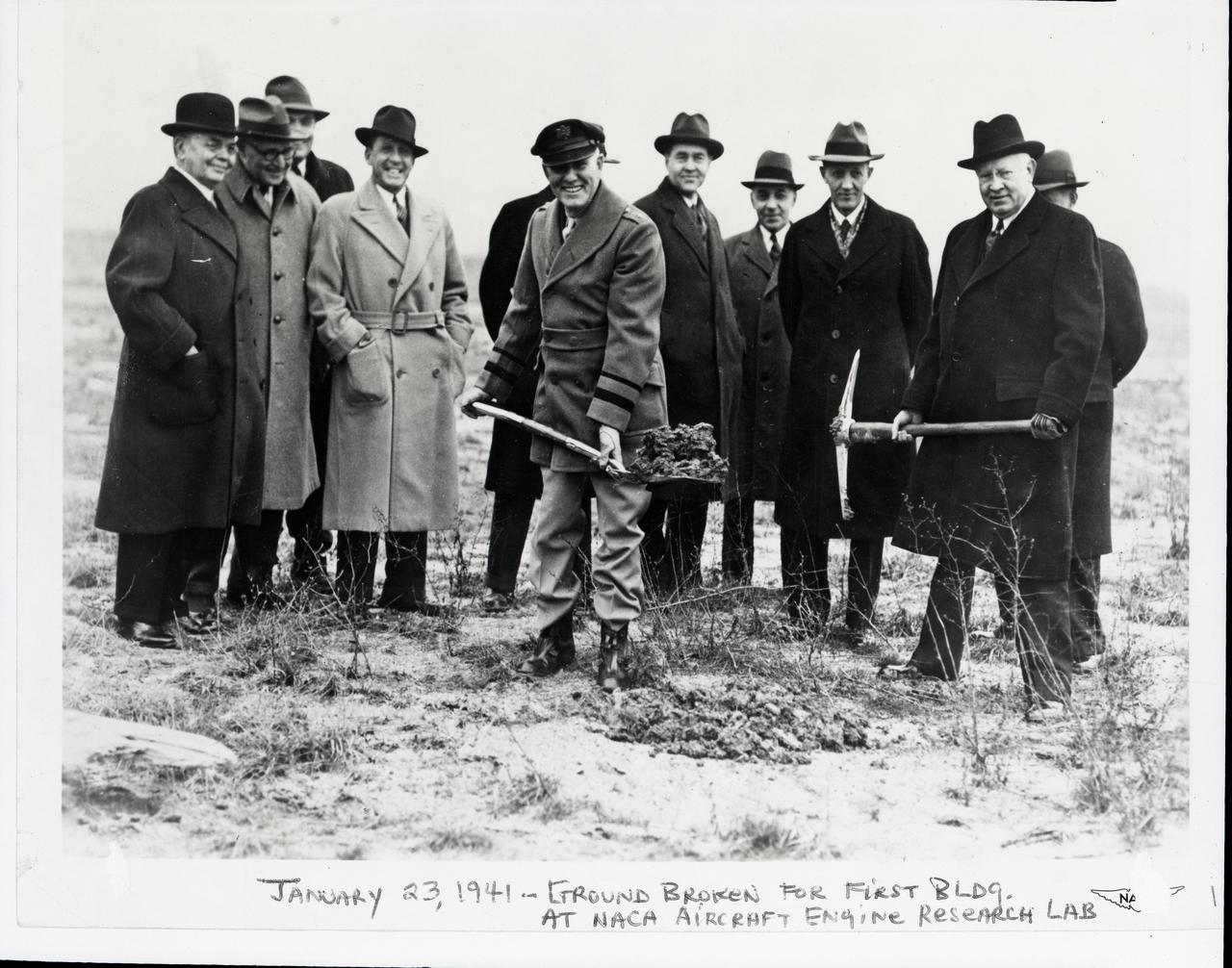
January 23, 1941 groundbreaking ceremony at the NACA Aircraft Engine Research Laboratory: left to right (does not include two individuals obscured from view behind Maj. Brett and Dr. Lewis): • William R. Hopkins – Cleveland City Manager from 1924-1930, was personally responsible for planning and acquiring the land for the Cleveland Airport. The airport’s huge capacity for handling aircraft was one factor in selecting Cleveland for the site of the research center. The Cleveland Airport was renamed Cleveland Hopkins airport in his honor in 1951. • Major John Berry – Cleveland Airport Manager • Edward R. Sharp – GRC’s first director, serving from 1942 to his retirement in 1961. He came to Cleveland in 1941 as the construction manager for the new facility. • Frederick C. Crawford – President of Thompson Products, which became the Thompson-Ramo-Woolridge Corporation (TRW) in 1958. Crawford was, at the time, also president of the Cleveland Chamber of Commerce. He began in 1939 to campaign for Cleveland as the location for the new NACA facility. • Major George H. Brett – A Cleveland native, Brett served in WWI and was commanding officer at Wright Field in Dayton, Ohio before becoming chief of the Army Air Corps. • Dr. Edward P. Warner – Acting chairman of the NACA. • Captain Sydney M. Kraus – Officer in charge of Navy procurement • Edward Blythin – Mayor of Cleveland • Dr. George Lewis – Director of Aeronautical Research for the NACA from 1924-1947, Lewis devoted his life to building a scientific basis for aeronautical engineering. The Cleveland laboratory was renamed the Lewis Flight Propulsion Laboratory in his honor in 1948. A description of the event, based on newspaper accounts and later NASA publications is as follows: On January 23, 1941, a brief groundbreaking ceremony at the site marked the start of construction. Dr. George W. Lewis, director of research for the NACA, loosened the soil with a
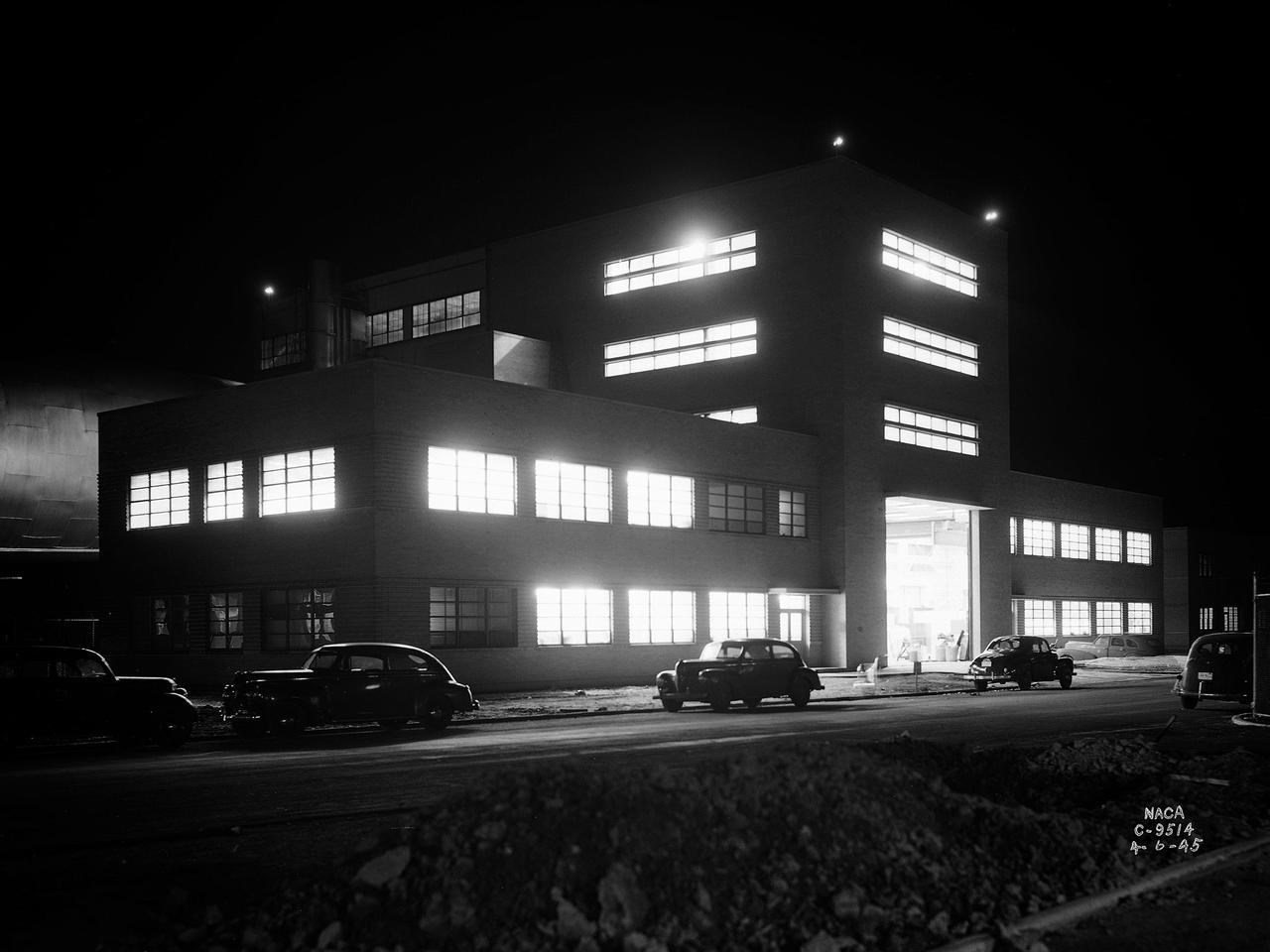
The Altitude Wind Tunnel (AWT) during one of its overnight runs at the National Advisory Committee for Aeronautics (NACA) Aircraft Engine Research Laboratory in Cleveland, Ohio. The AWT was run during night hours so that its massive power loads were handled when regional electric demands were lowest. At the time the AWT was among the most complex wind tunnels ever designed. In order to simulate conditions at high altitudes, NACA engineers designed innovative new systems that required tremendous amounts of electricity. The NACA had an agreement with the local electric company that it would run its larger facilities overnight when local demand was at its lowest. In return the utility discounted its rates for the NACA during those hours. The AWT could produce wind speeds up to 500 miles per hour through its 20-foot-diameter test section at the standard operating altitude of 30,000 feet. The airflow was created by a large fan that was driven by an 18,000-horsepower General Electric induction motor. The altitude simulation was accomplished by large exhauster and refrigeration systems. The cold temperatures were created by 14 Carrier compressors and the thin atmosphere by four 1750-horsepower exhausters. The first and second shifts usually set up and broke down the test articles, while the third shift ran the actual tests. Engineers would often have to work all day, then operate the tunnel overnight, and analyze the data the next day. The night crew usually briefed the dayshift on the tests during morning staff meetings.
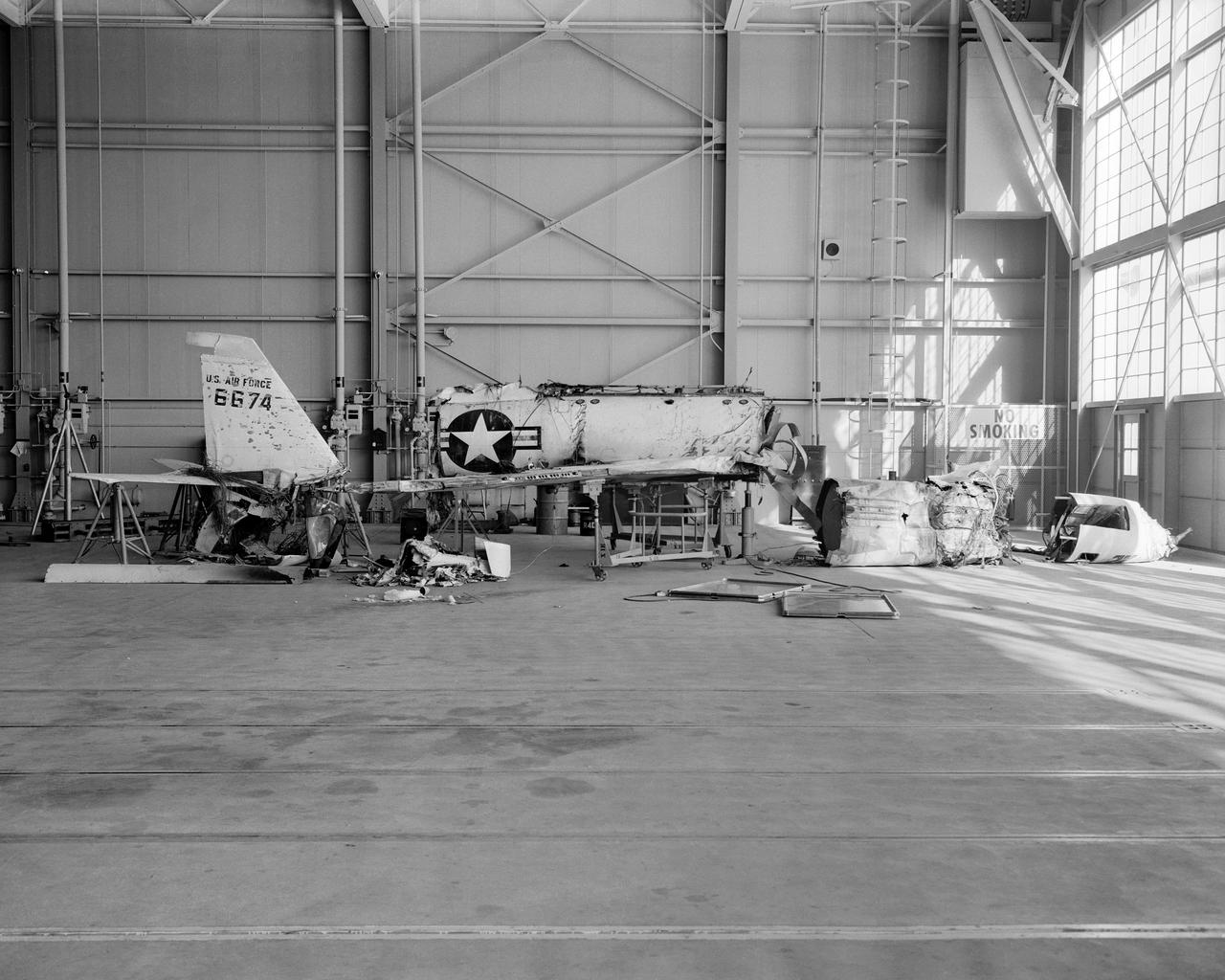
The X-2, initially an Air Force program, was scheduled to be transferred to the civilian National Advisory Committee for Aeronautics (NACA) for scientific research. The Air Force delayed turning the aircraft over to the NACA in the hope of attaining Mach 3 in the airplane. The service requested and received a two-month extension to qualify another Air Force test pilot, Capt. Miburn "Mel" Apt, in the X-2 and attempt to exceed Mach 3. After several ground briefings in the simulator, Apt (with no previous rocket plane experience) made his flight on 27 September 1956. Apt raced away from the B-50 under full power, quickly outdistancing the F-100 chase planes. At high altitude, he nosed over, accelerating rapidly. The X-2 reached Mach 3.2 (2,094 mph) at 65,000 feet. Apt became the first man to fly more than three times the speed of sound. Still above Mach 3, he began an abrupt turn back to Edwards. This maneuver proved fatal as the X-2 began a series of diverging rolls and tumbled out of control. Apt tried to regain control of the aircraft. Unable to do so, Apt separated the escape capsule. Too late, he attempted to bail out and was killed when the capsule impacted on the Edwards bombing range. The rest of the X-2 crashed five miles away. The wreckage of the X-2 rocket plane was later taken to NACA's High Speed Flight Station for analysis following the crash.
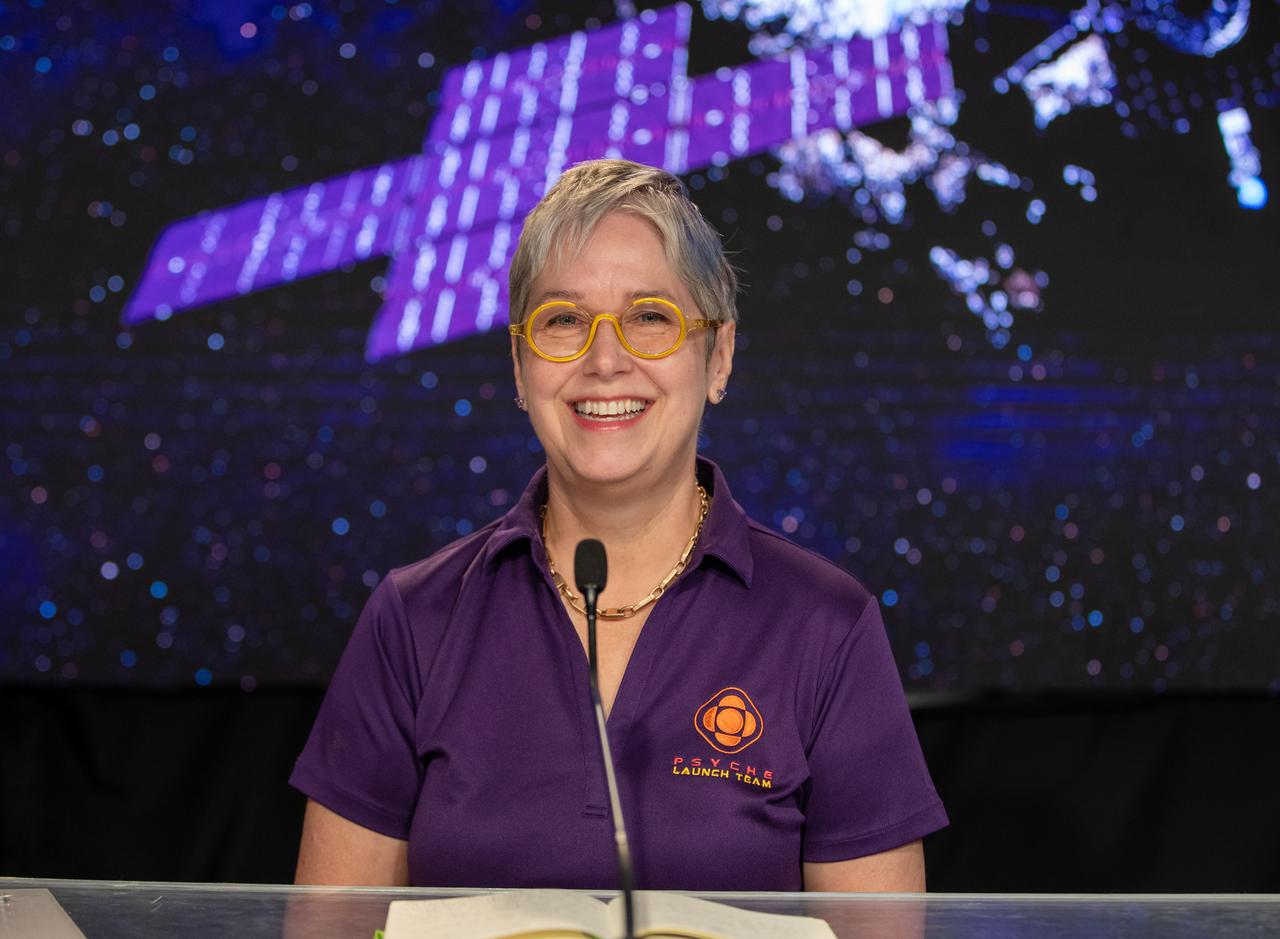
Lindy Elkins-Tanton, Psyche principal investigator, Arizona State University, participates in a Psyche mission and science briefing at NASA’s Kennedy Space Center in Florida on Tuesday, Oct. 10, 2023. Psyche is the first mission to explore an asteroid with a surface that likely contains substantial amounts of metal rather than rock or ice. Liftoff of NASA’s Psyche spacecraft, atop a SpaceX Falcon Heavy rocket, is targeted for 10:16 a.m. EDT Thursday, Oct. 12, from Kennedy’s Launch Complex 39A.
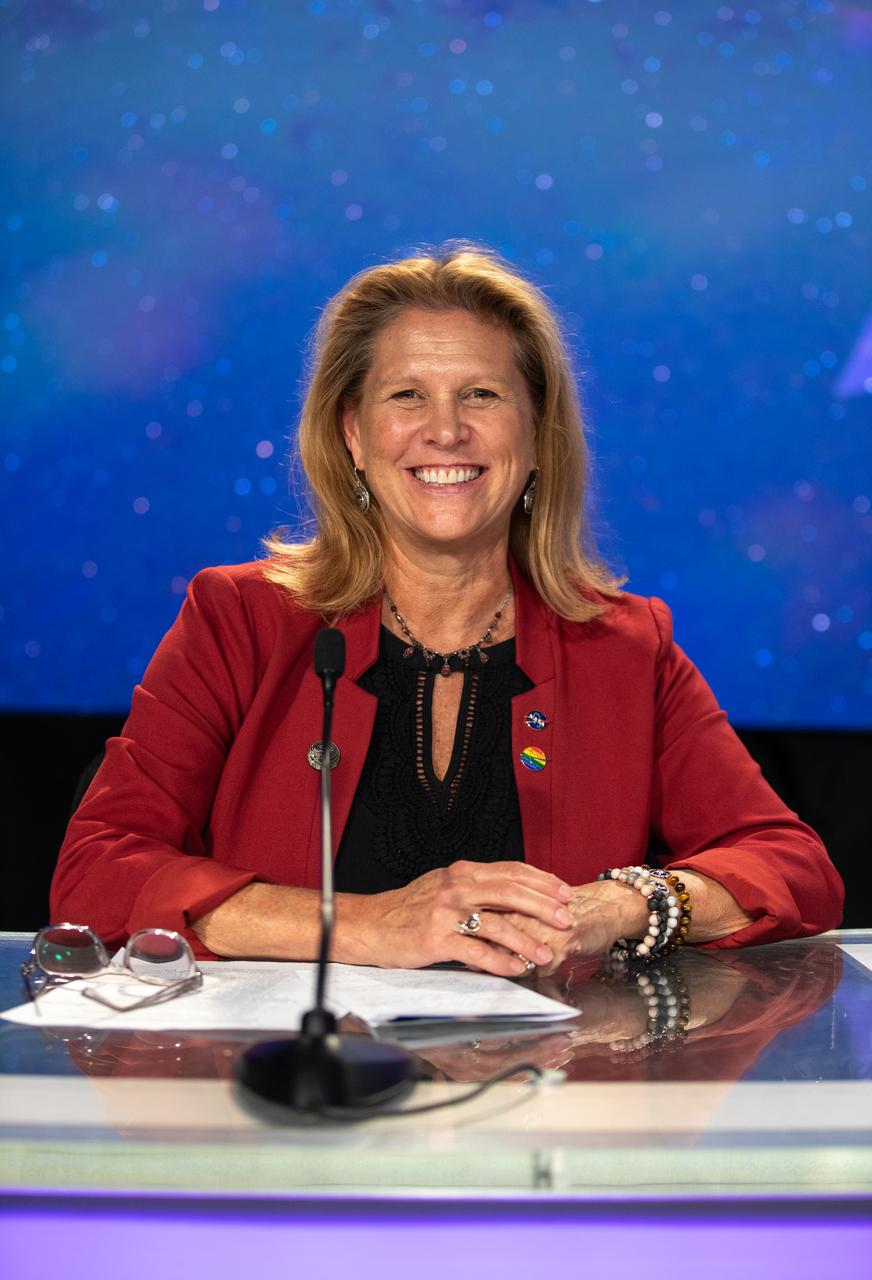
Lori Glaze, Planetary Science division director, NASA Headquarters, participates in a Psyche mission and science briefing at NASA’s Kennedy Space Center in Florida on Tuesday, Oct. 10, 2023. Psyche is the first mission to explore an asteroid with a surface that likely contains substantial amounts of metal rather than rock or ice. Liftoff of NASA’s Psyche spacecraft, atop a SpaceX Falcon Heavy rocket, is targeted for 10:16 a.m. EDT Thursday, Oct. 12, from Kennedy’s Launch Complex 39A.
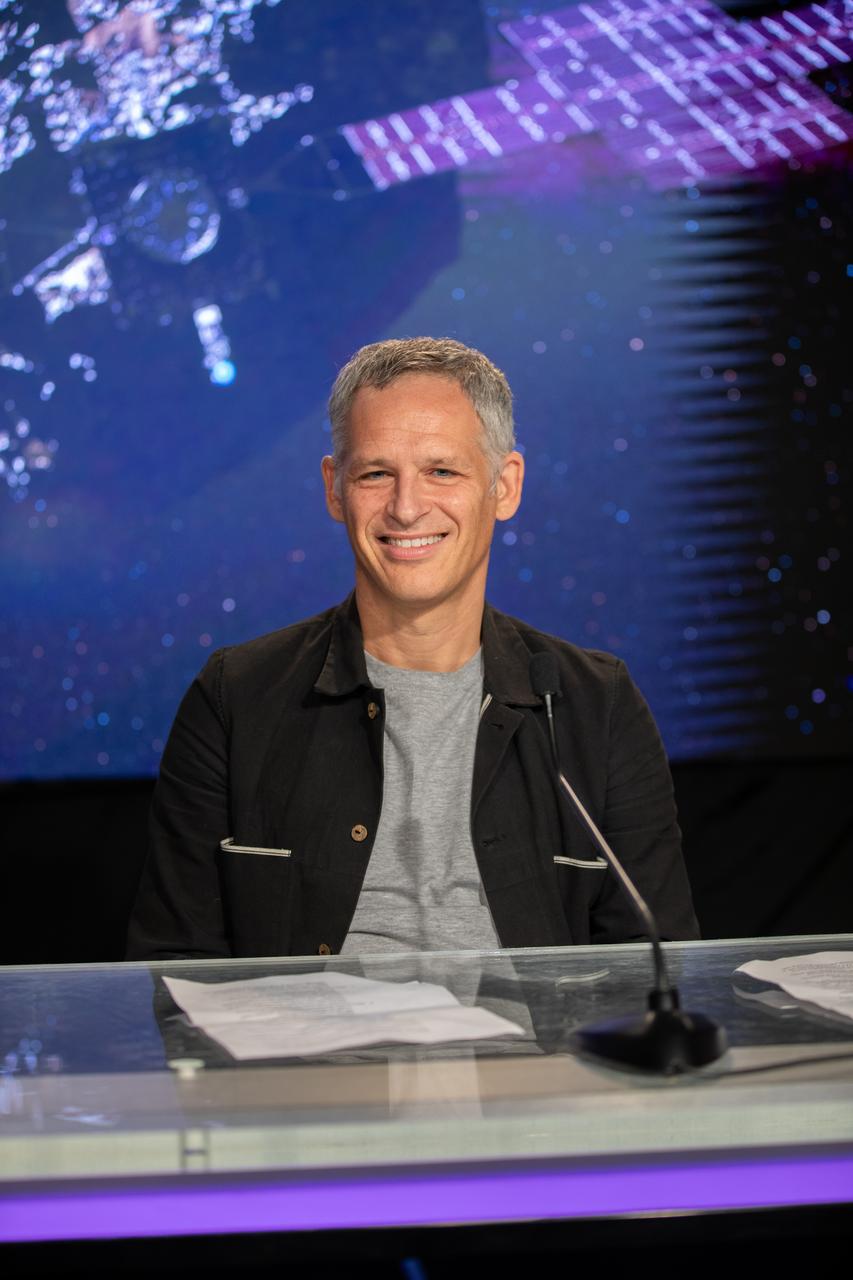
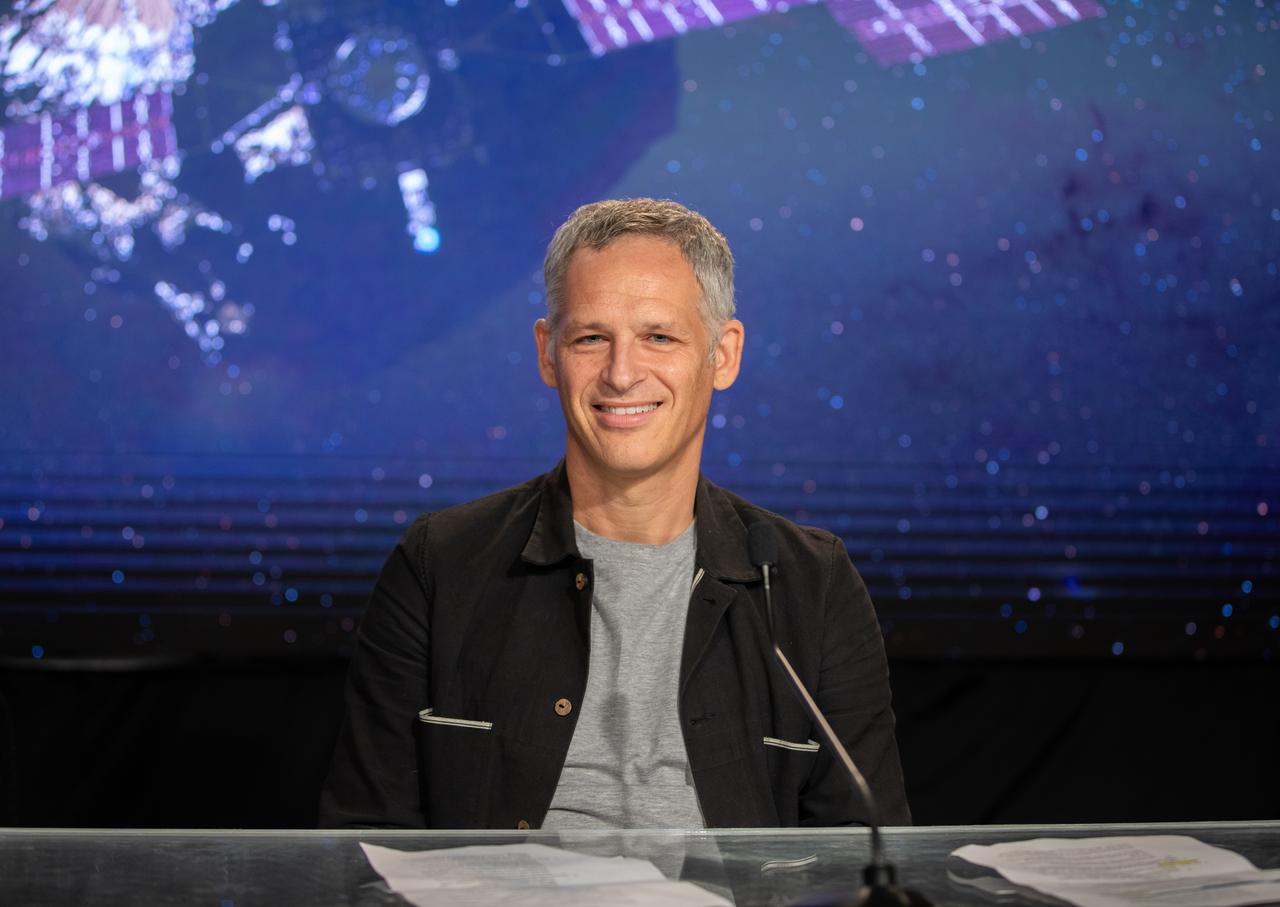
Ben Weiss, Psyche deputy principal investigator and magnetometer lead, Massachusetts Institute of Technology, participates in a Psyche mission and science briefing at NASA’s Kennedy Space Center in Florida on Tuesday, Oct. 10, 2023. Psyche is the first mission to explore an asteroid with a surface that likely contains substantial amounts of metal rather than rock or ice. Liftoff of NASA’s Psyche spacecraft, atop a SpaceX Falcon Heavy rocket, is targeted for 10:16 a.m. EDT Thursday, Oct. 12, from Kennedy’s Launch Complex 39A.
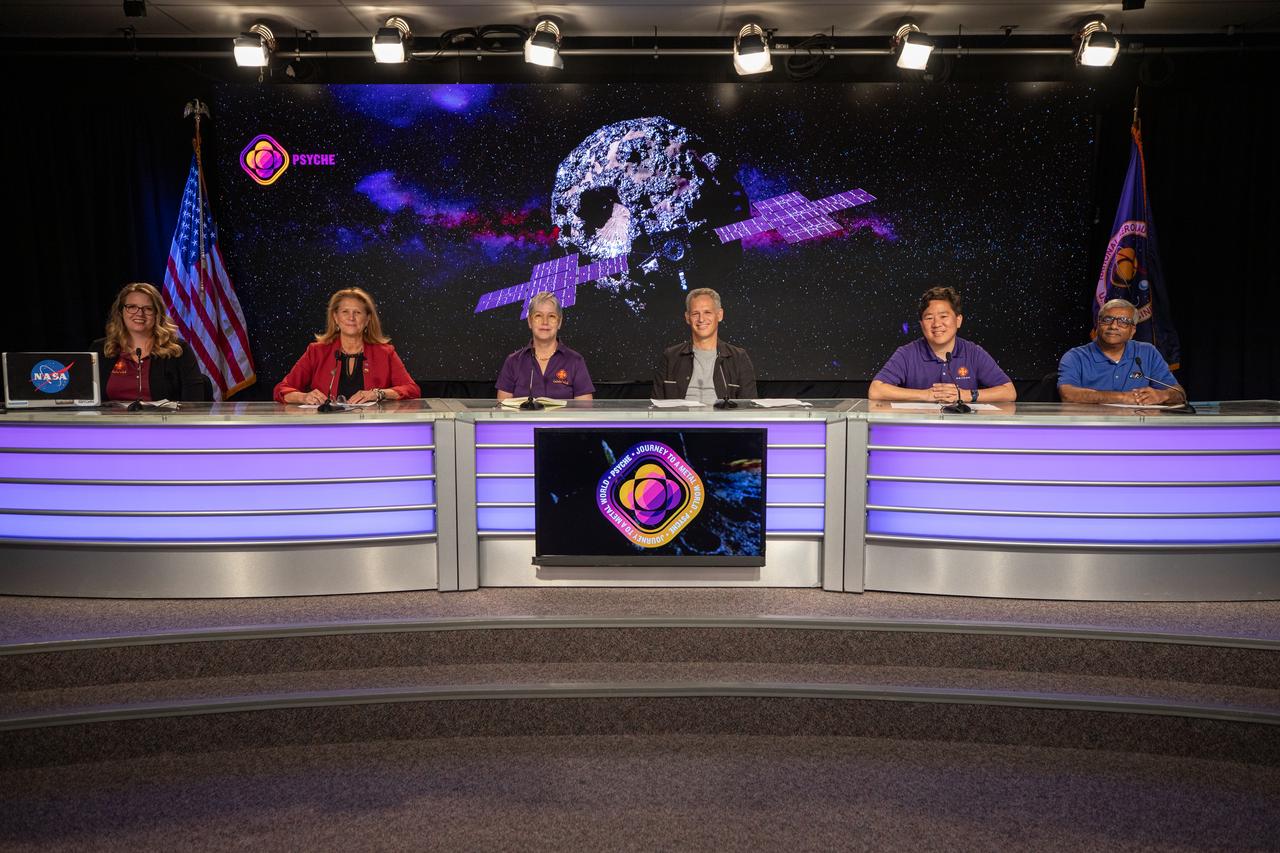
A Psyche mission and science briefing takes place at NASA’s Kennedy Space Center in Florida on Tuesday, Oct. 10, 2023. Participants, from left, are: Alana Johnson, NASA Communications; Lori Glaze, Planetary Science division director, NASA Headquarters; Lindy Elkins-Tanton, Psyche principal investigator, Arizona State University; Ben Weiss, Psyche deputy principal investigator and magnetometer lead, Massachusetts Institute of Technology; David Oh, Psyche chief engineer for operations, NASA’s Jet Propulsion Laboratory (JPL); and Abi Biswas, Deep Space Optical Communications project technologist, JPL. Psyche is the first mission to explore an asteroid with a surface that likely contains substantial amounts of metal rather than rock or ice. Liftoff of NASA’s Psyche spacecraft, atop a SpaceX Falcon Heavy rocket, is targeted for 10:16 a.m. EDT Thursday, Oct. 12, from Kennedy’s Launch Complex 39A.
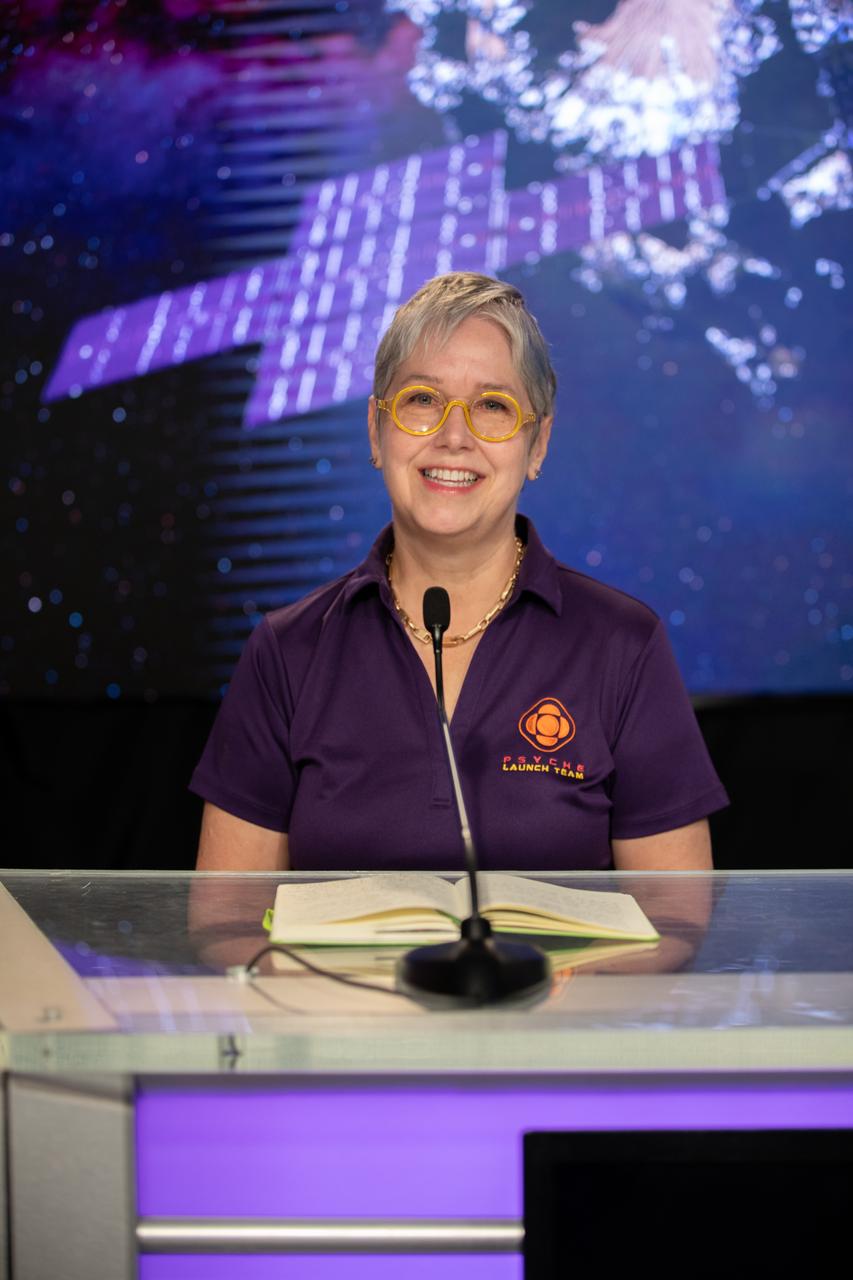
Lindy Elkins-Tanton, Psyche principal investigator, Arizona State University, participates in a Psyche mission and science briefing at NASA’s Kennedy Space Center in Florida on Tuesday, Oct. 10, 2023. Psyche is the first mission to explore an asteroid with a surface that likely contains substantial amounts of metal rather than rock or ice. Liftoff of NASA’s Psyche spacecraft, atop a SpaceX Falcon Heavy rocket, is targeted for 10:16 a.m. EDT Thursday, Oct. 12, from Kennedy’s Launch Complex 39A.
The science briefing ahead of launch for NASA’s Psyche spacecraft, a mission to a unique metal-rich asteroid. Psyche will travel nearly six years and about 2.2 billion miles (3.6 billion kilometers) – to an asteroid of the same name, which is orbiting the Sun between Mars and Jupiter. Scientists believe Psyche could be part of the core of a planetesimal, likely made of iron-nickel metal. The ore will not be mined but studied from orbit in hopes of giving researchers a better idea of what may make up Earth’s core. The Psyche spacecraft also will host a pioneering technology demonstration: NASA’s DSOC (Deep Space Optical Communications) experiment. This laser communications system will operate for the first two years of Psyche’s journey. Launch is targeted for 10:16 a.m. EDT, Thursday, Oct. 12, from Kennedy’s Launch Complex 39A. The participants include Lori Glaze, director, Planetary Sciences Division, NASA Headquarters in Washington; Lindy Elkins-Tanton, principal investigator of Psyche, Arizona State University; Ben Weiss, deputy principal investigator and magnetometer lead, Massachusetts Institute of Technology; David Oh, chief engineer for operations, NASA’s Jet Propulsion Laboratory; and Abi Biswas, project technologist for DSOC, NASA’s Jet Propulsion Laboratory.
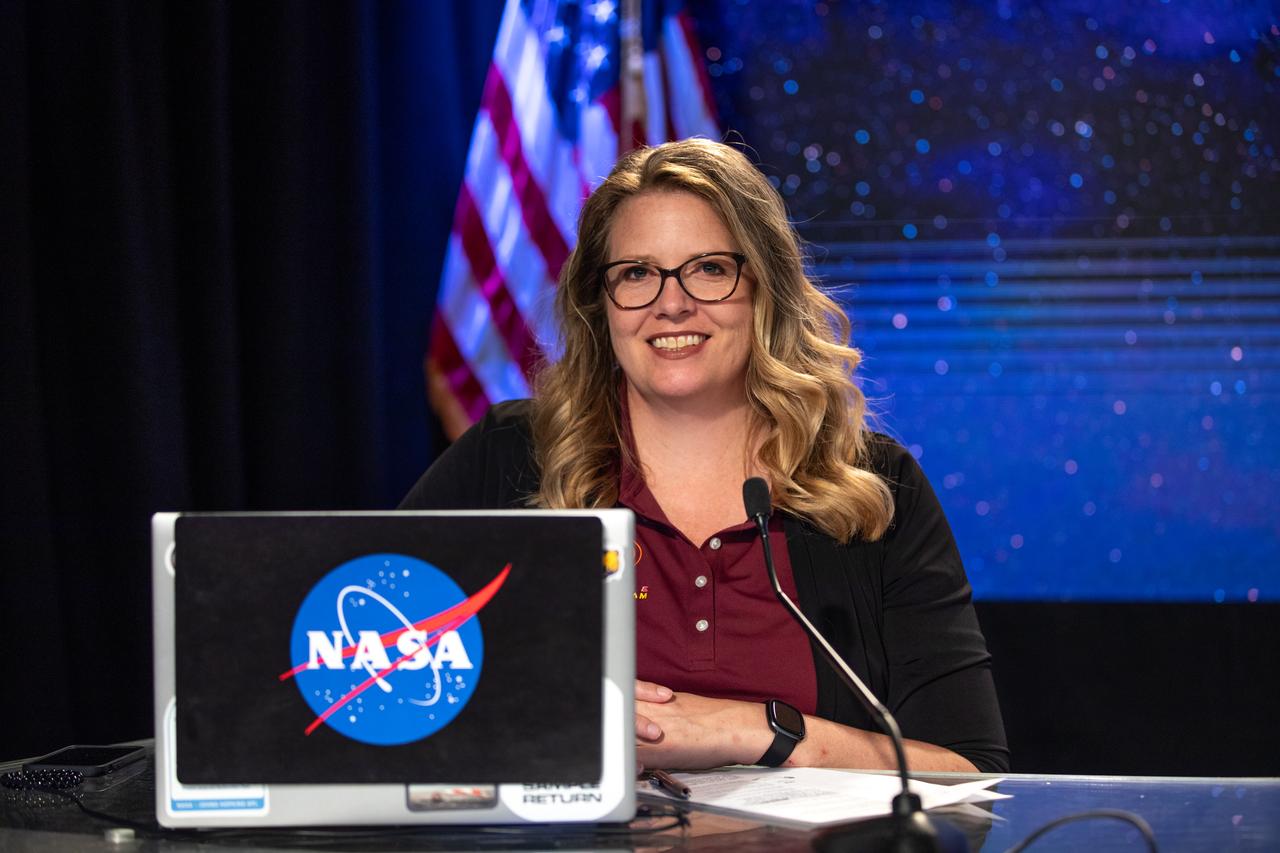
Alana Johnson, NASA Communications, moderates a Psyche mission and science briefing at NASA’s Kennedy Space Center in Florida on Tuesday, Oct. 10, 2023. Psyche is the first mission to explore an asteroid with a surface that likely contains substantial amounts of metal rather than rock or ice. Liftoff of NASA’s Psyche spacecraft, atop a SpaceX Falcon Heavy rocket, is targeted for 10:16 a.m. EDT Thursday, Oct. 12, from Kennedy’s Launch Complex 39A.
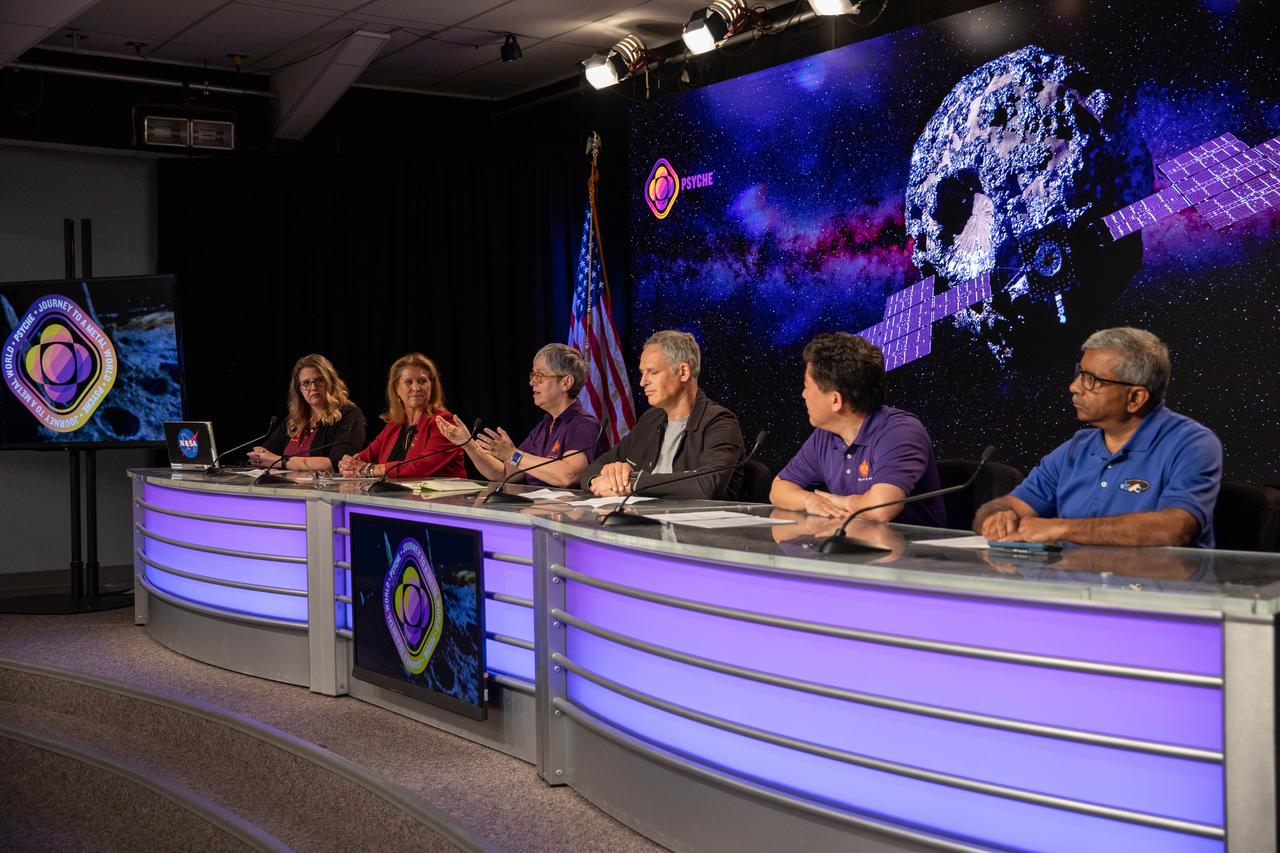
A Psyche mission and science briefing takes place at NASA’s Kennedy Space Center in Florida on Tuesday, Oct. 10, 2023. Participants, from left, are: Alana Johnson, NASA Communications; Lori Glaze, Planetary Science division director, NASA Headquarters; Lindy Elkins-Tanton, Psyche principal investigator, Arizona State University; Ben Weiss, Psyche deputy principal investigator and magnetometer lead, Massachusetts Institute of Technology; David Oh, Psyche chief engineer for operations, NASA’s Jet Propulsion Laboratory (JPL); and Abi Biswas, Deep Space Optical Communications project technologist, JPL. Psyche is the first mission to explore an asteroid with a surface that likely contains substantial amounts of metal rather than rock or ice. Liftoff of NASA’s Psyche spacecraft, atop a SpaceX Falcon Heavy rocket, is targeted for 10:16 a.m. EDT Thursday, Oct. 12, from Kennedy’s Launch Complex 39A.
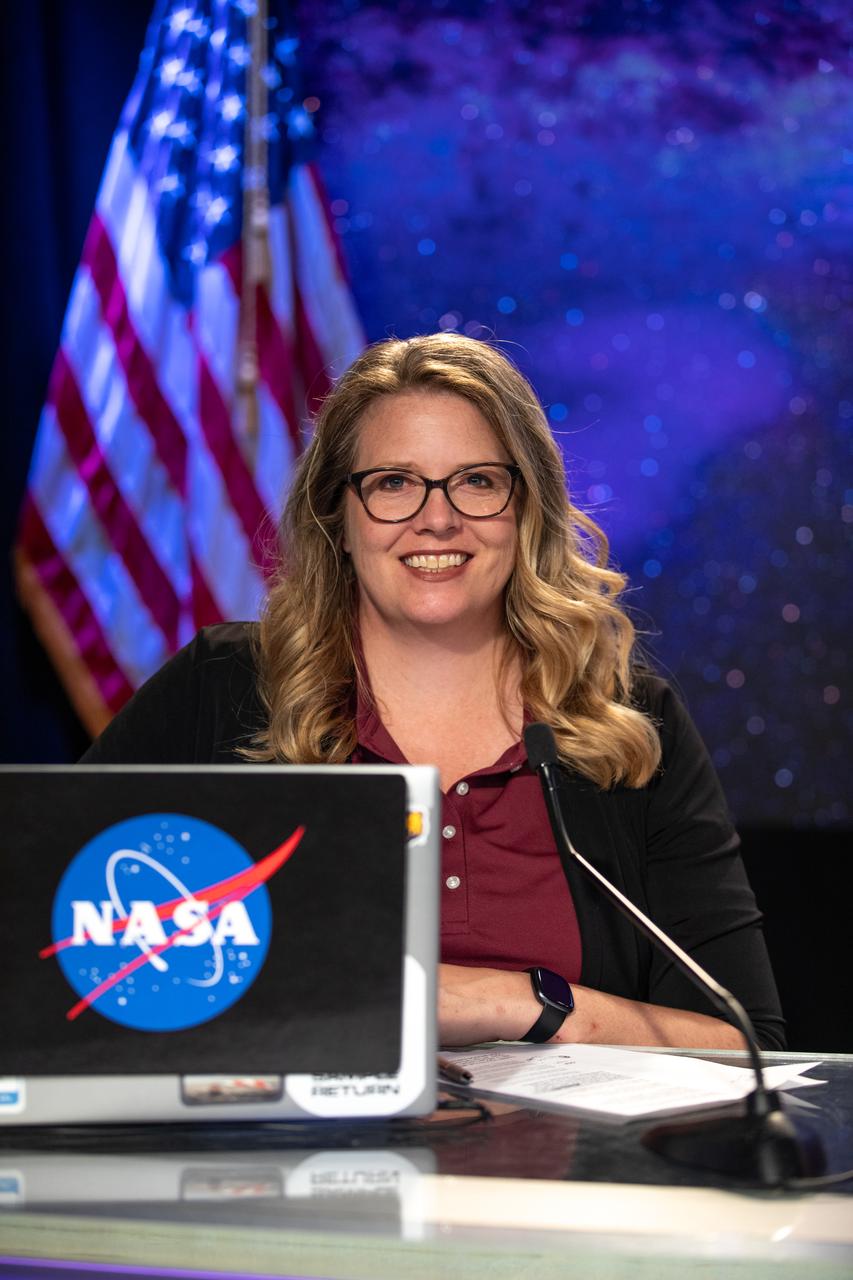
Alana Johnson, NASA Communications, moderates a Psyche mission and science briefing at NASA’s Kennedy Space Center in Florida on Tuesday, Oct. 10, 2023. Psyche is the first mission to explore an asteroid with a surface that likely contains substantial amounts of metal rather than rock or ice. Liftoff of NASA’s Psyche spacecraft, atop a SpaceX Falcon Heavy rocket, is targeted for 10:16 a.m. EDT Thursday, Oct. 12, from Kennedy’s Launch Complex 39A.
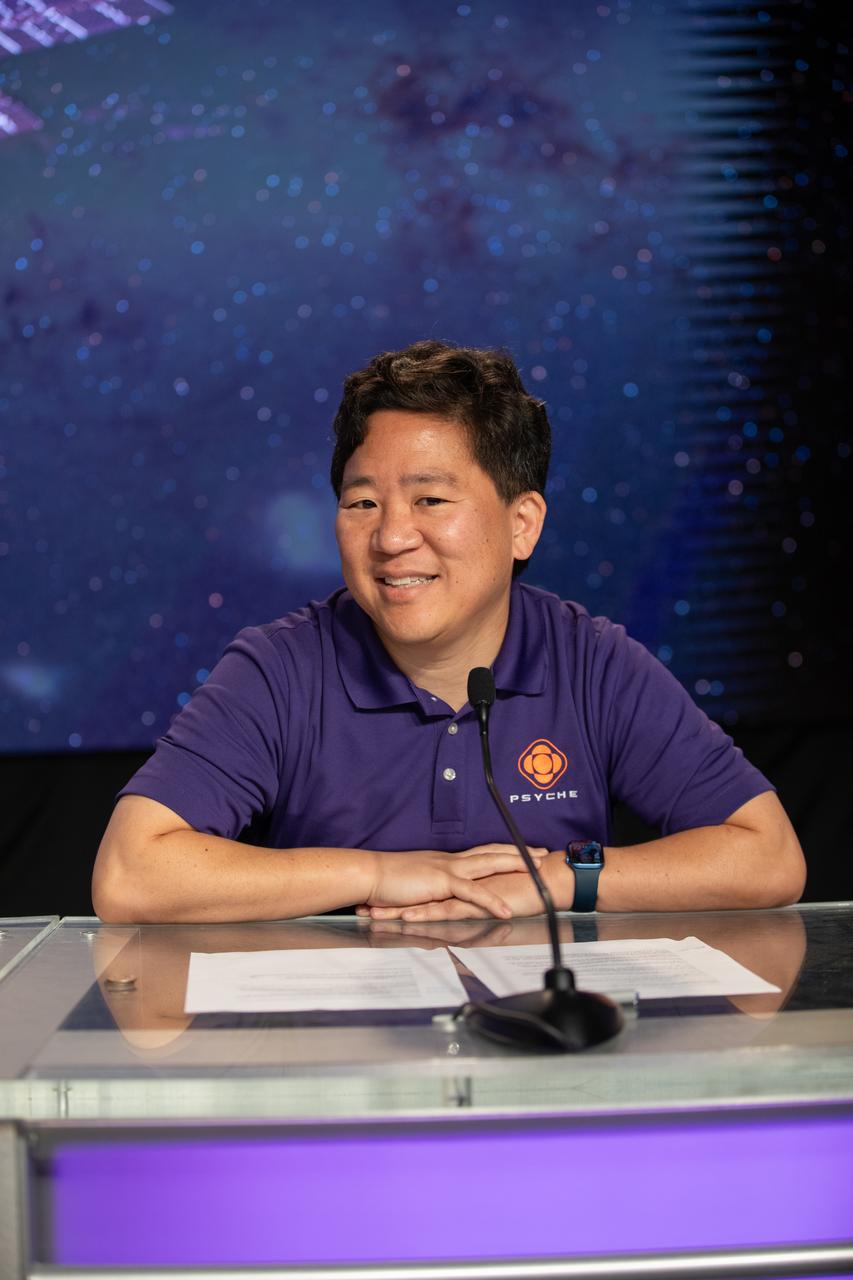
David Oh, Psyche chief engineer for operations, NASA’s Jet Propulsion Laboratory, participates in a Psyche mission and science briefing at NASA’s Kennedy Space Center in Florida on Tuesday, Oct. 10, 2023. Psyche is the first mission to explore an asteroid with a surface that likely contains substantial amounts of metal rather than rock or ice. Liftoff of NASA’s Psyche spacecraft, atop a SpaceX Falcon Heavy rocket, is targeted for 10:16 a.m. EDT Thursday, Oct. 12, from Kennedy’s Launch Complex 39A.
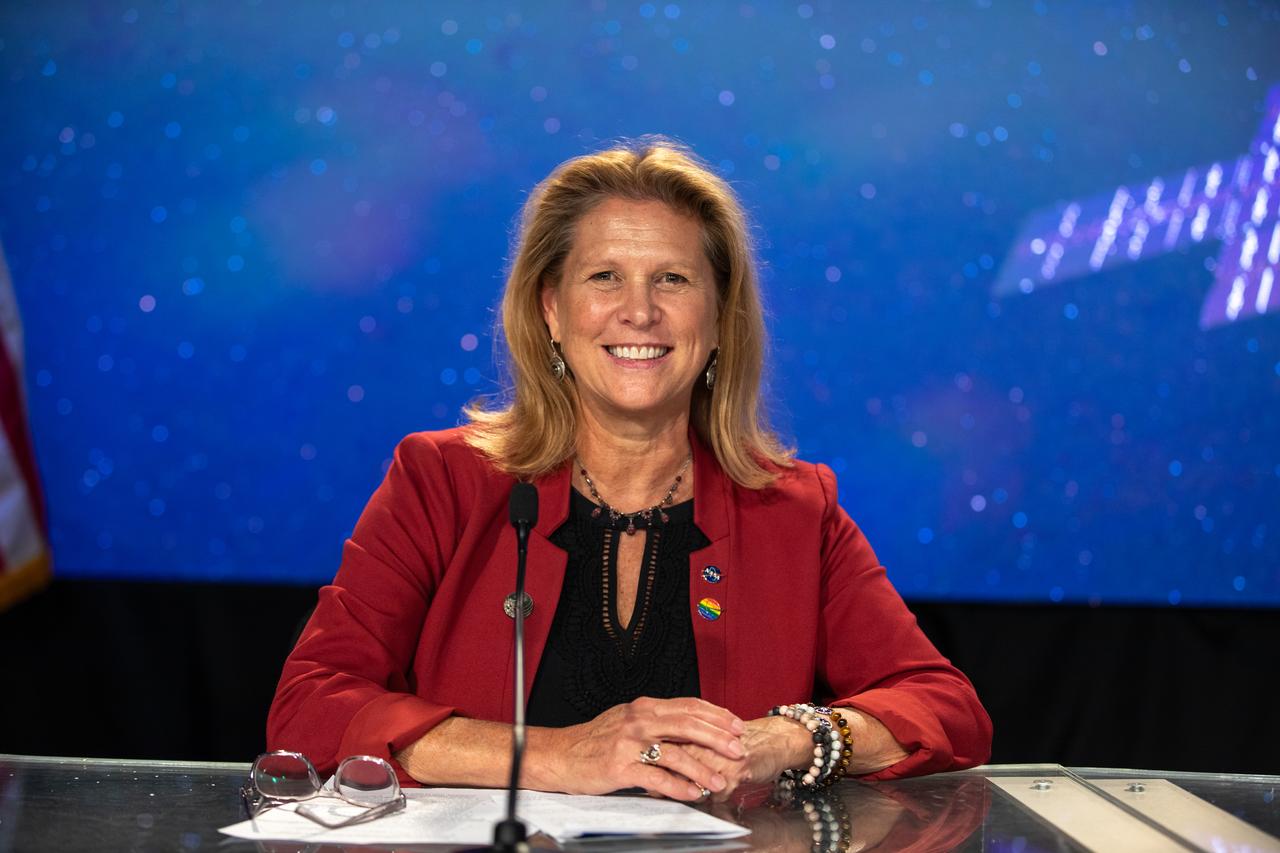
Lori Glaze, Planetary Science division director, NASA Headquarters, participates in a Psyche mission and science briefing at NASA’s Kennedy Space Center in Florida on Tuesday, Oct. 10, 2023. Psyche is the first mission to explore an asteroid with a surface that likely contains substantial amounts of metal rather than rock or ice. Liftoff of NASA’s Psyche spacecraft, atop a SpaceX Falcon Heavy rocket, is targeted for 10:16 a.m. EDT Thursday, Oct. 12, from Kennedy’s Launch Complex 39A.
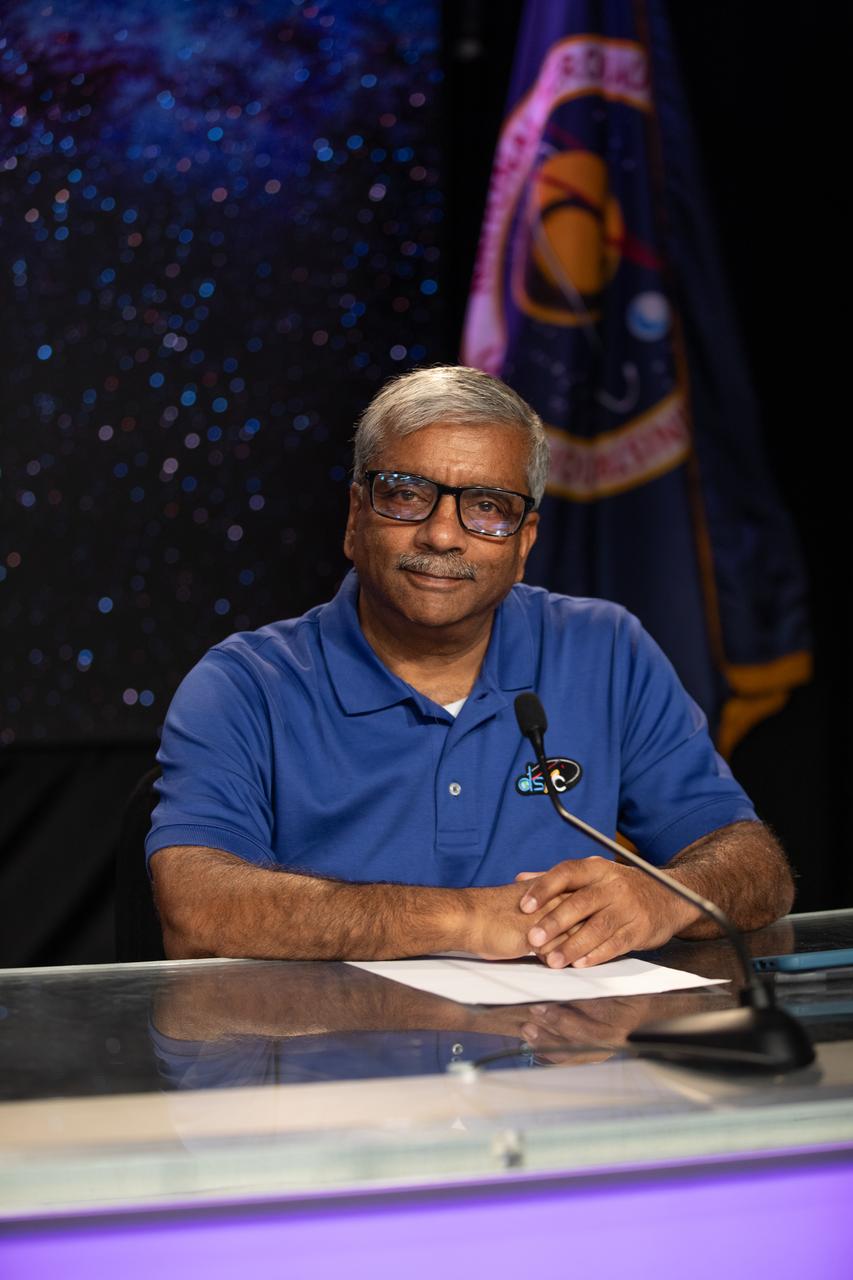
Abi Biswas, Deep Space Optical Communications project technologist, NASA’s Jet Propulsion Laboratory, participates in a Psyche mission and science briefing at NASA’s Kennedy Space Center in Florida on Tuesday, Oct. 10, 2023. Psyche is the first mission to explore an asteroid with a surface that likely contains substantial amounts of metal rather than rock or ice. Liftoff of NASA’s Psyche spacecraft, atop a SpaceX Falcon Heavy rocket, is targeted for 10:16 a.m. EDT Thursday, Oct. 12, from Kennedy’s Launch Complex 39A.
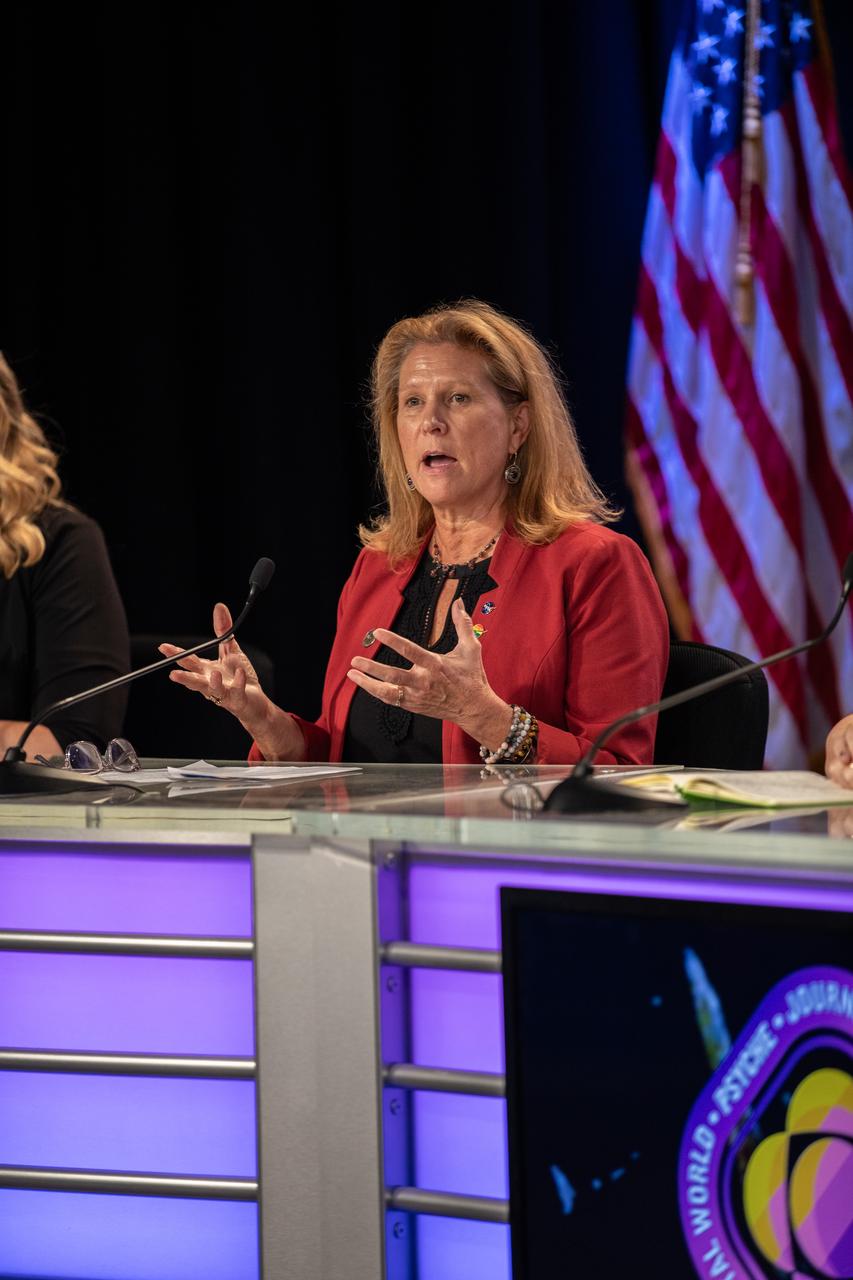
Lori Glaze, Planetary Science division director, NASA Headquarters, participates in a Psyche mission and science briefing at NASA’s Kennedy Space Center in Florida on Tuesday, Oct. 10, 2023. Psyche is the first mission to explore an asteroid with a surface that likely contains substantial amounts of metal rather than rock or ice. Liftoff of NASA’s Psyche spacecraft, atop a SpaceX Falcon Heavy rocket, is targeted for 10:16 a.m. EDT Thursday, Oct. 12, from Kennedy’s Launch Complex 39A.