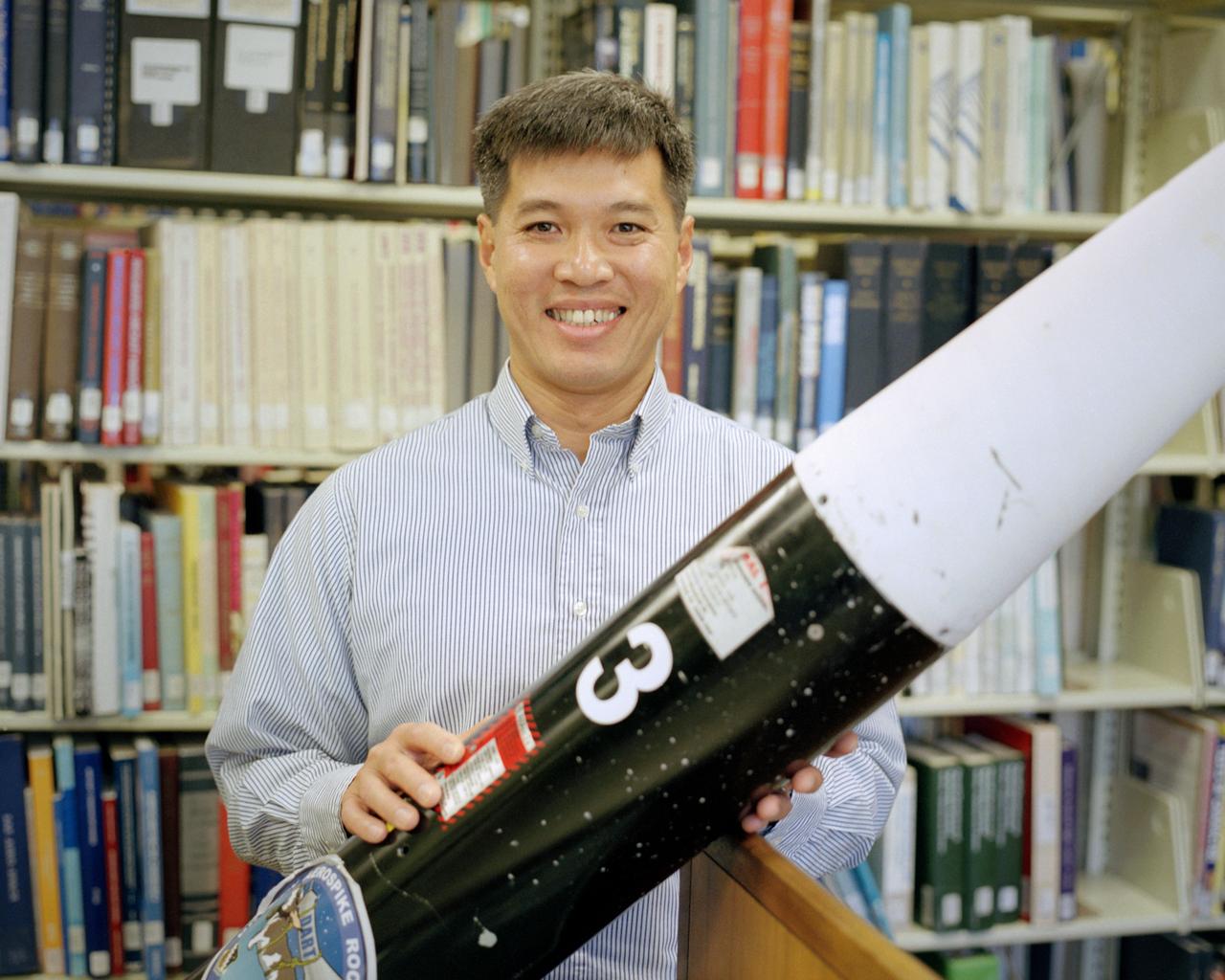
Trong Bui, NASA Dryden's principal investigator for the aerospike rocket tests, holds the first of two 10-ft. long rockets that were flown at speeds up to Mach 1.5, the first known supersonic tests of rockets with aerospike nozzles. The goals of the flight research project were to obtain aerospike rocket nozzle performance data in flight and to investigate the effects of transonic flow and transient flight conditions on aerospike nozzle performance.
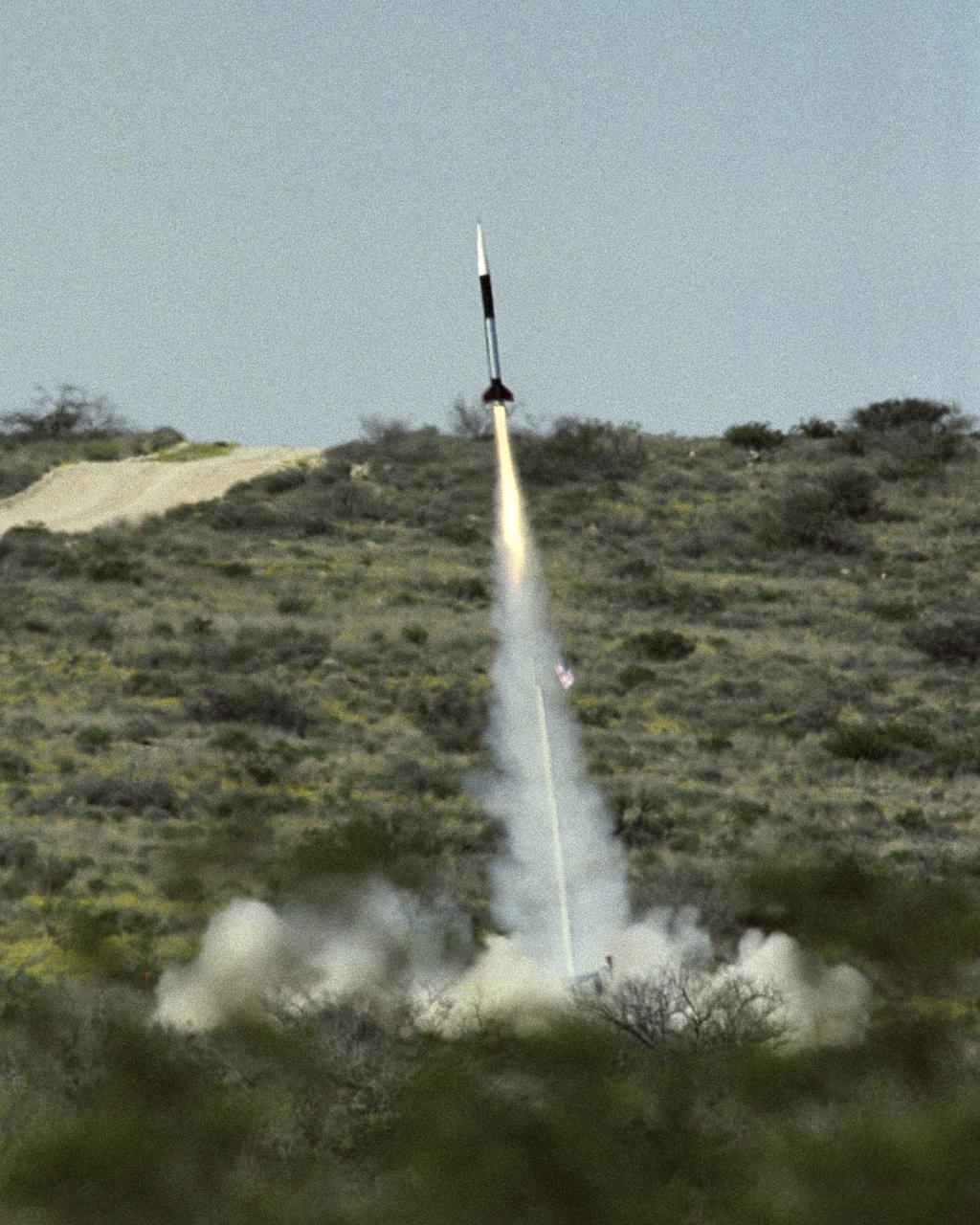
Launch of the first Dryden Aerospike rocket. The Dryden Aerospike Rocket Test provided the first known data from a solid-fueled aerospike rocket in flight.
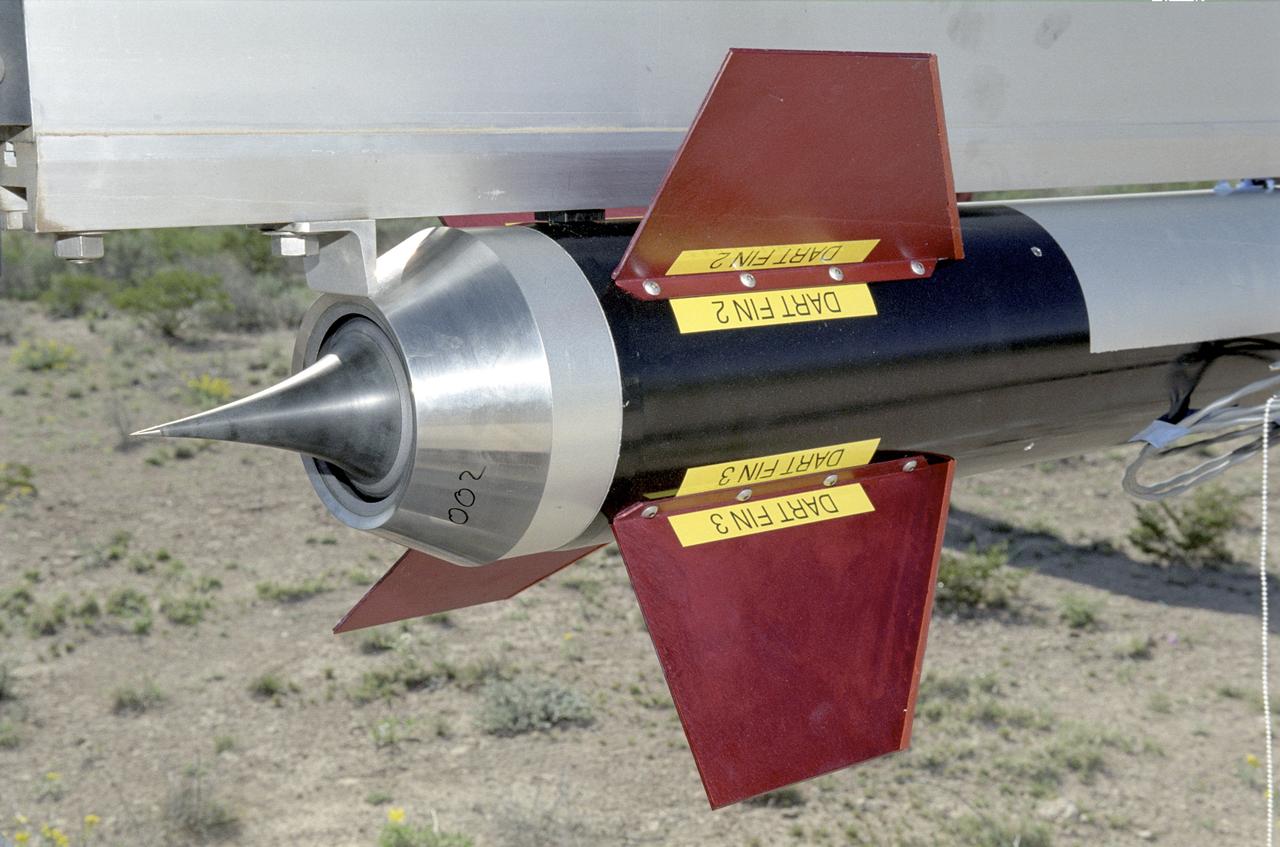
A closeup of one of the Cesaroni Technology, Inc. - constructed aerospike nozzles used in the Dryden Aerospike Rocket Test.
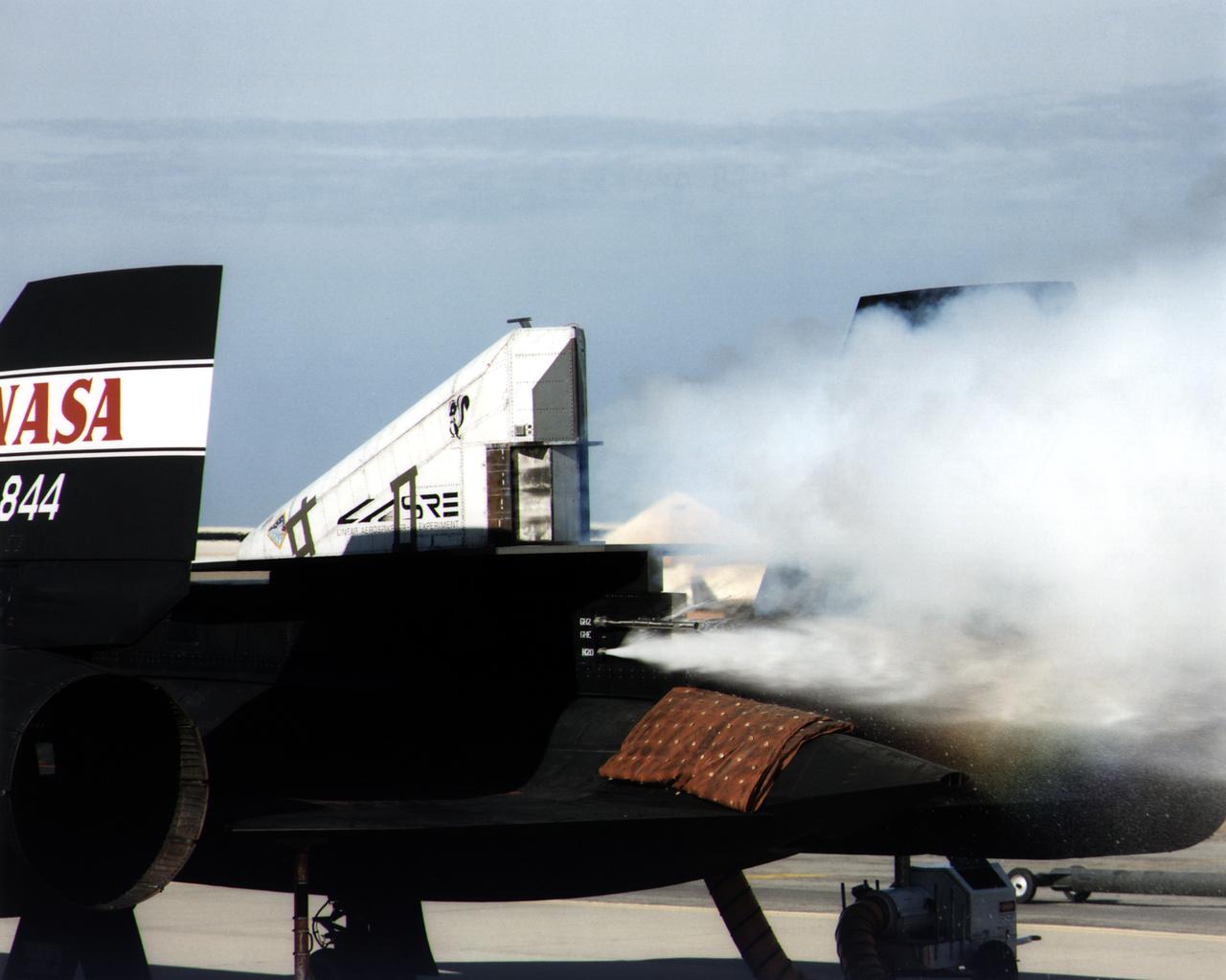
This photograph shows a ground cold flow test of the linear aerospike rocket engine mounted on the rear fuselage of an SR-71.
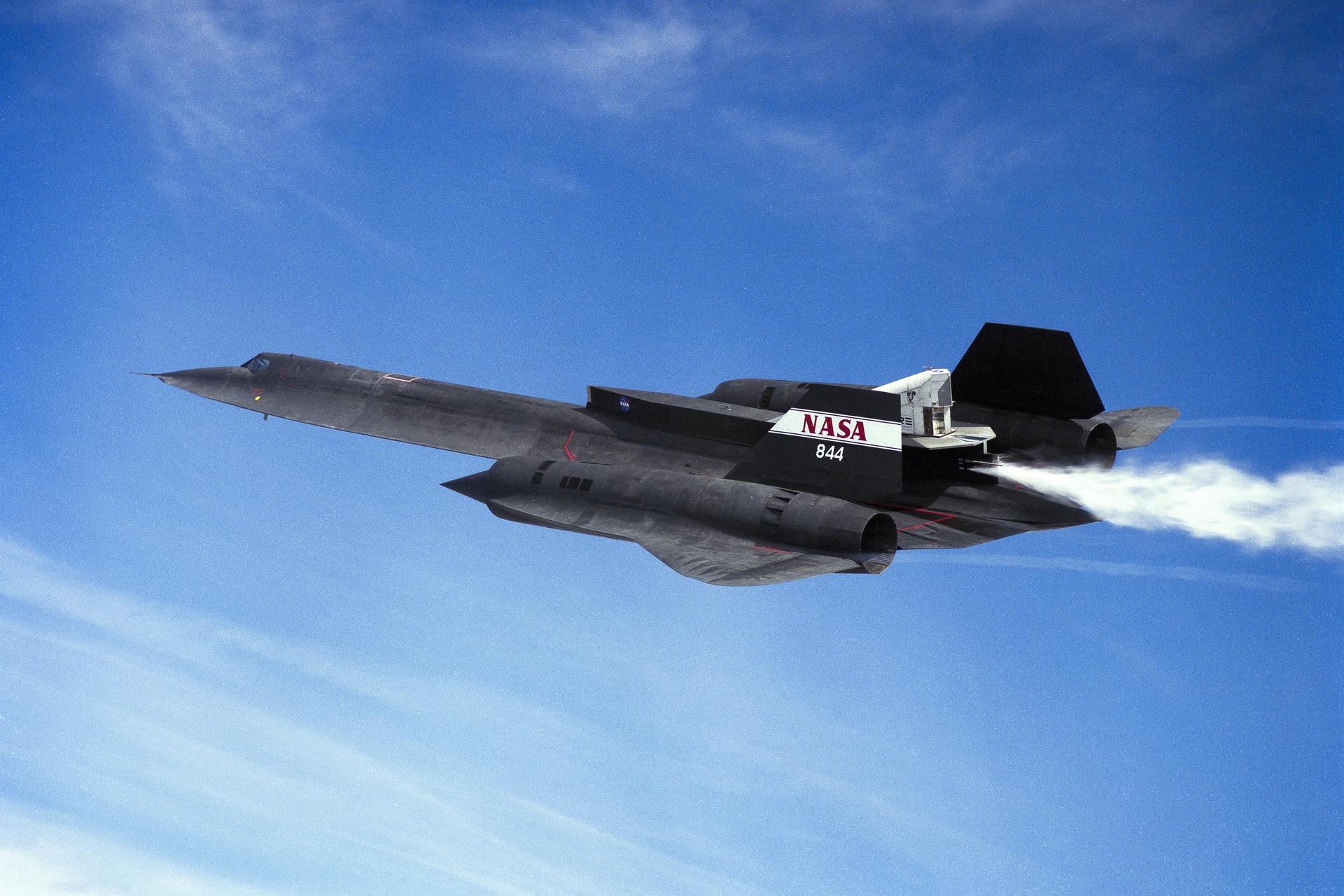
The NASA SR-71 triple-supersonic aircraft carries the Linear Aerospike Experiment on Wednesday, March 4, 1998, during a flight from NASA’s Armstrong (then Dryden) Flight Research Center in Edwards, California. Gaseous helium and liquid nitrogen cycled through the linear aerospike engine during the flight to check the engine’s plumbing system for leaks and to check the engine operating characteristics. Cold-flow tests must be accomplished successfully before firing the rocket engine experiment in flight.
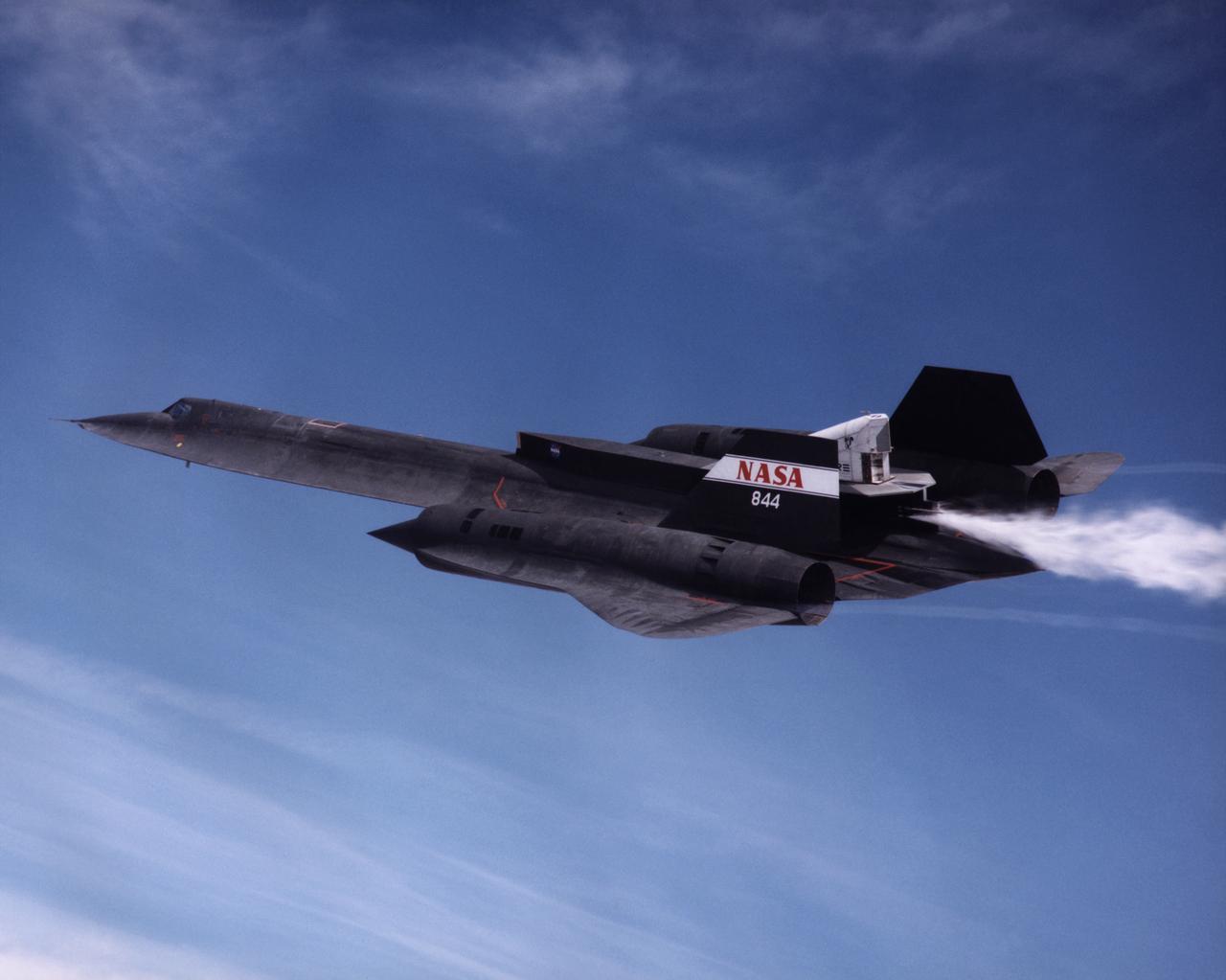
The NASA SR-71A successfully completed its first cold flow flight as part of the NASA/Rocketdyne/Lockheed Martin Linear Aerospike SR-71 Experiment (LASRE) at NASA's Dryden Flight Research Center, Edwards, California on March 4, 1998. During a cold flow flight, gaseous helium and liquid nitrogen are cycled through the linear aerospike engine to check the engine's plumbing system for leaks and to check the engine operating characterisitics. Cold-flow tests must be accomplished successfully before firing the rocket engine experiment in flight. The SR-71 took off at 10:16 a.m. PST. The aircraft flew for one hour and fifty-seven minutes, reaching a maximum speed of Mach 1.58 before landing at Edwards at 12:13 p.m. PST. "I think all in all we had a good mission today," Dryden LASRE Project Manager Dave Lux said. Flight crew member Bob Meyer agreed, saying the crew "thought it was a really good flight." Dryden Research Pilot Ed Schneider piloted the SR-71 during the mission. Lockheed Martin LASRE Project Manager Carl Meade added, "We are extremely pleased with today's results. This will help pave the way for the first in-flight engine data-collection flight of the LASRE."
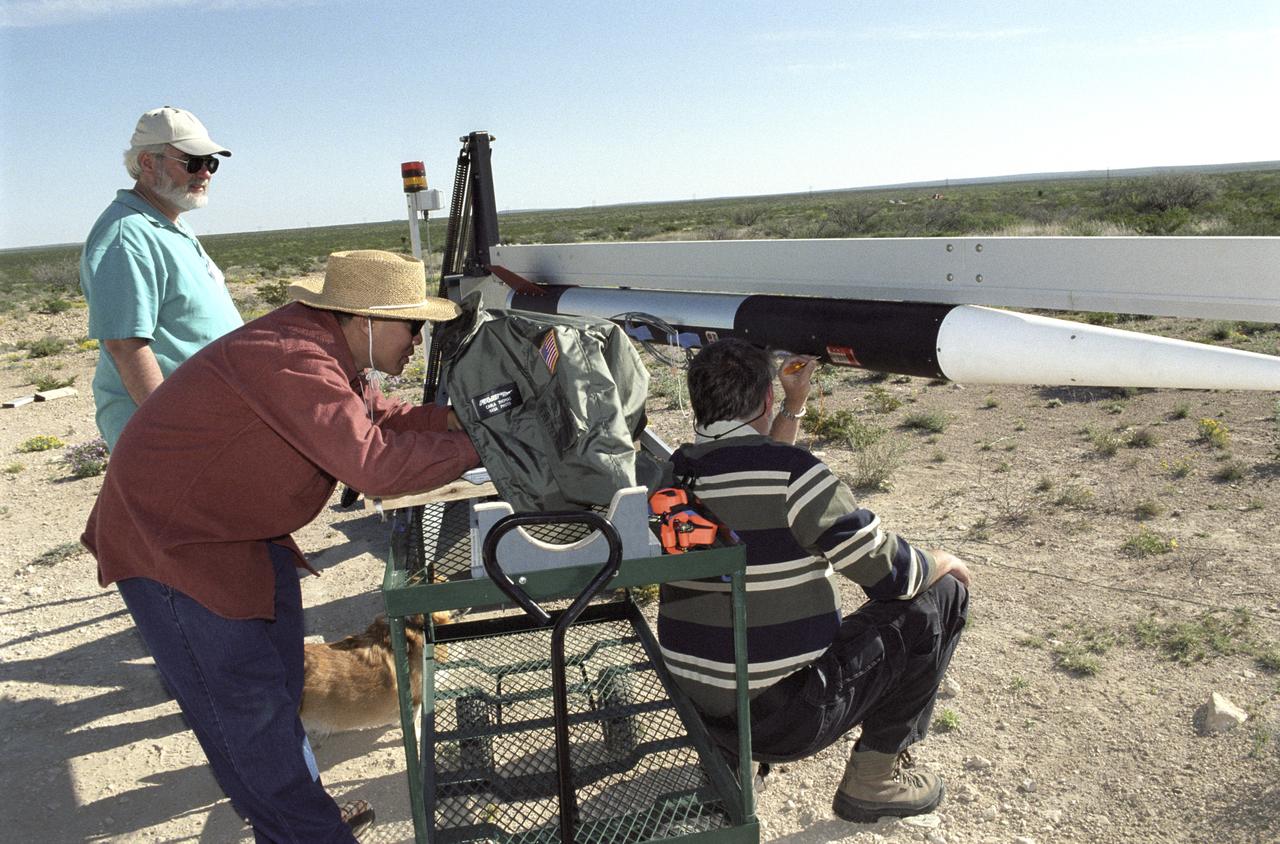
Chuck Rogers, Trong Bui, and Scott Bartel make preflight checks on the second of two aerospike research rockets on March 31, 2004.
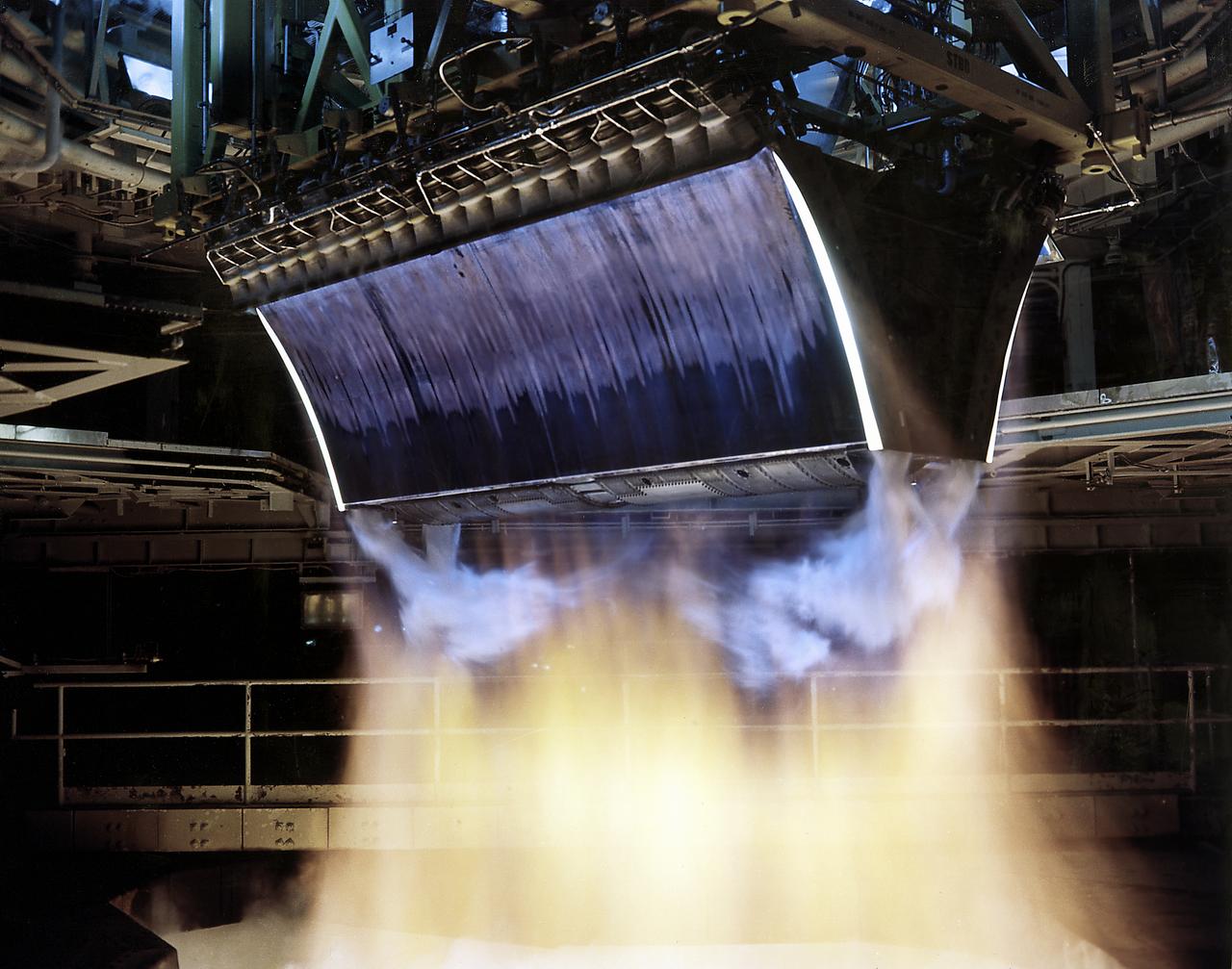
The test of twin Linear Aerospike XRS-2200 engines, originally built for the X-33 program, was performed on August 6, 2001 at NASA's Sternis Space Center, Mississippi. The engines were fired for the planned 90 seconds and reached a planned maximum power of 85 percent. NASA's Second Generation Reusable Launch Vehicle Program , also known as the Space Launch Initiative (SLI), is making advances in propulsion technology with this third and final successful engine hot fire, designed to test electro-mechanical actuators. Information learned from this hot fire test series about new electro-mechanical actuator technology, which controls the flow of propellants in rocket engines, could provide key advancements for the propulsion systems for future spacecraft. The Second Generation Reusable Launch Vehicle Program, led by NASA's Marshall Space Flight Center in Huntsville, Alabama, is a technology development program designed to increase safety and reliability while reducing costs for space travel. The X-33 program was cancelled in March 2001.