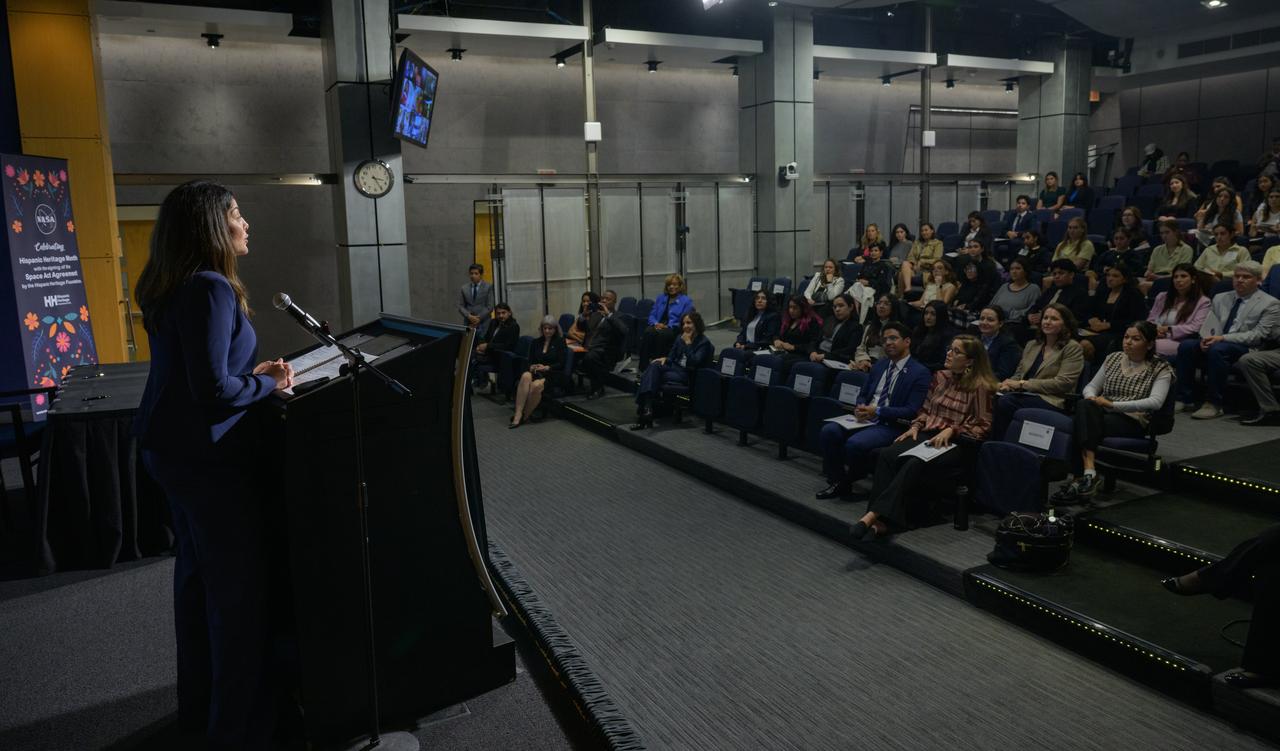
NASA Flight Director Diana Trujillo gives remarks during an event where NASA and the Hispanic Heritage Foundation signed a Space Act Agreement to collaborate and expand STEM opportunities for Latino K-12 and university students and reduce barriers to agency activities and opportunities, Monday, Sept. 30, 2024, at the NASA Headquarters Mary W. Jackson Building in Washington. Photo Credit: (NASA/Bill Ingalls)
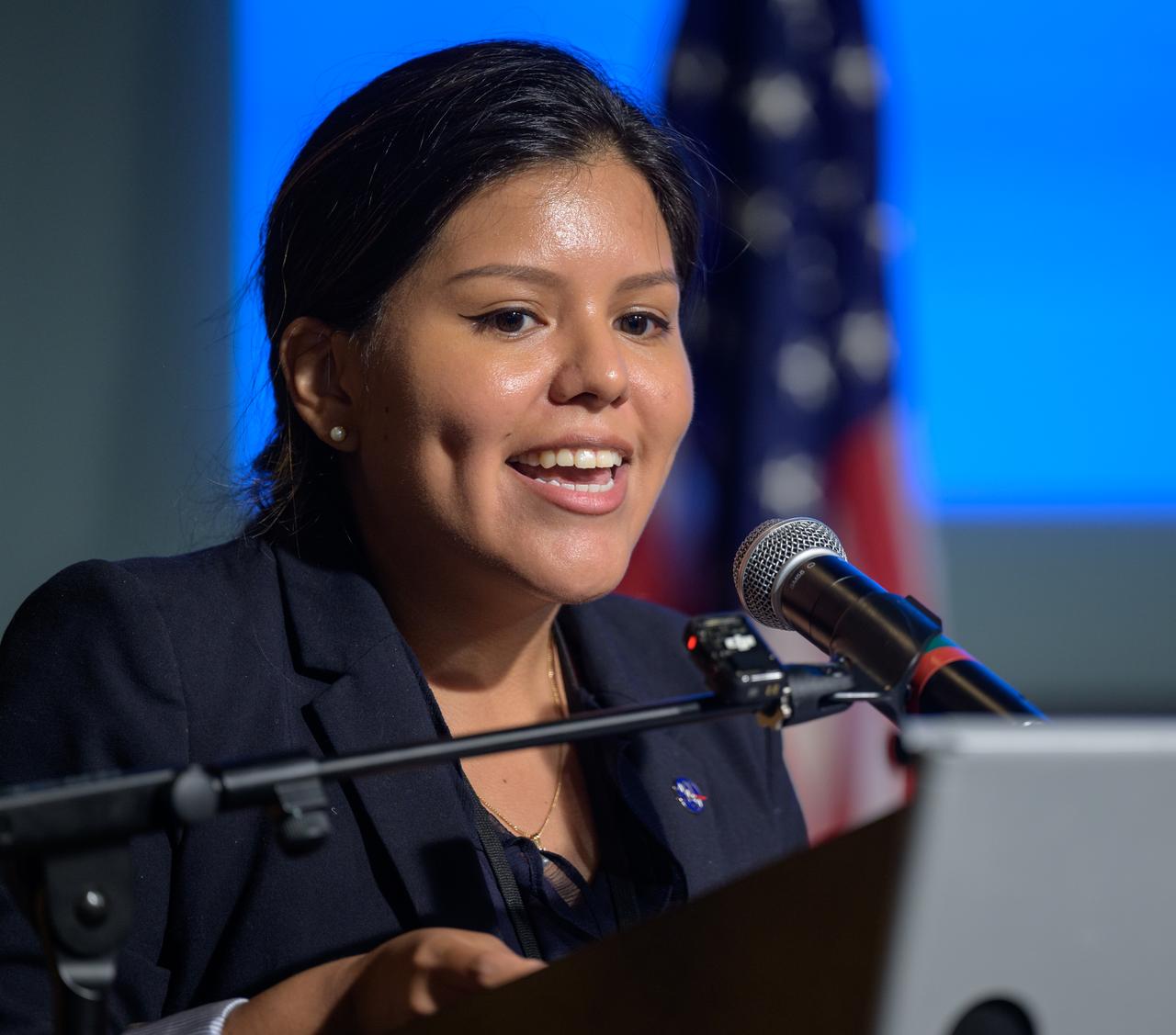
NASA Public Engagement Advisor Sol Ortega moderates an event where NASA and the Hispanic Heritage Foundation signed a Space Act Agreement to collaborate and expand STEM opportunities for Latino K-12 and university students and reduce barriers to agency activities and opportunities, Monday, Sept. 30, 2024, at the NASA Headquarters Mary W. Jackson Building in Washington. Photo Credit: (NASA/Bill Ingalls)
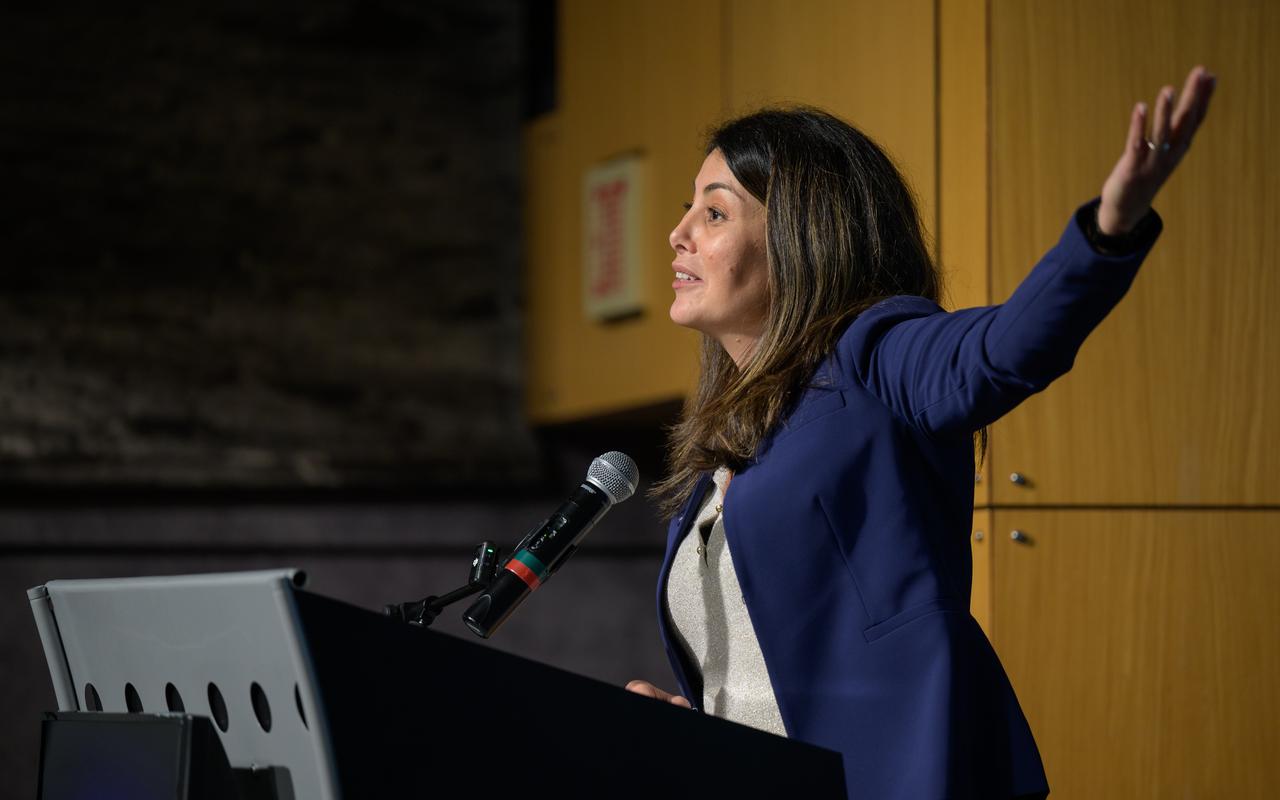
NASA Flight Director Diana Trujillo gives remarks during an event where NASA and the Hispanic Heritage Foundation signed a Space Act Agreement to collaborate and expand STEM opportunities for Latino K-12 and university students and reduce barriers to agency activities and opportunities, Monday, Sept. 30, 2024, at the NASA Headquarters Mary W. Jackson Building in Washington. Photo Credit: (NASA/Bill Ingalls)

NASA Flight Director Diana Trujillo gives remarks during an event where NASA and the Hispanic Heritage Foundation signed a Space Act Agreement to collaborate and expand STEM opportunities for Latino K-12 and university students and reduce barriers to agency activities and opportunities, Monday, Sept. 30, 2024, at the NASA Headquarters Mary W. Jackson Building in Washington. Photo Credit: (NASA/Bill Ingalls)

NASA Flight Director Diana Trujillo gives remarks during an event where NASA and the Hispanic Heritage Foundation signed a Space Act Agreement to collaborate and expand STEM opportunities for Latino K-12 and university students and reduce barriers to agency activities and opportunities, Monday, Sept. 30, 2024, at the NASA Headquarters Mary W. Jackson Building in Washington. Photo Credit: (NASA/Bill Ingalls)
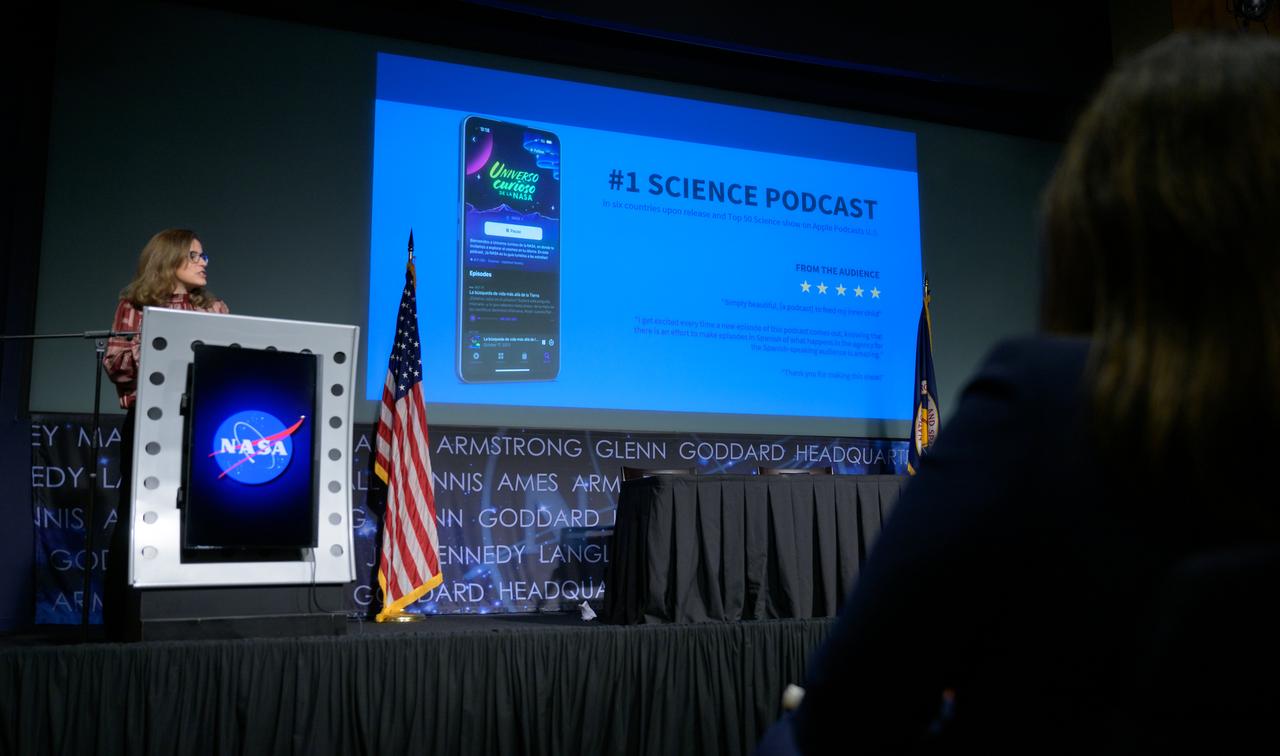
NASA Spanish Communications Lead María-José Viñas Garcia gives remarks during an event where NASA and the Hispanic Heritage Foundation signed a Space Act Agreement to collaborate and expand STEM opportunities for Latino K-12 and university students and reduce barriers to agency activities and opportunities, Monday, Sept. 30, 2024, at the NASA Headquarters Mary W. Jackson Building in Washington. Photo Credit: (NASA/Bill Ingalls)

NASA Spanish Communications Lead María-José Viñas Garcia gives remarks during an event where NASA and the Hispanic Heritage Foundation signed a Space Act Agreement to collaborate and expand STEM opportunities for Latino K-12 and university students and reduce barriers to agency activities and opportunities, Monday, Sept. 30, 2024, at the NASA Headquarters Mary W. Jackson Building in Washington. Photo Credit: (NASA/Bill Ingalls)

NASA Spanish Communications Lead María-José Viñas Garcia gives remarks during an event where NASA and the Hispanic Heritage Foundation signed a Space Act Agreement to collaborate and expand STEM opportunities for Latino K-12 and university students and reduce barriers to agency activities and opportunities, Monday, Sept. 30, 2024, at the NASA Headquarters Mary W. Jackson Building in Washington. Photo Credit: (NASA/Bill Ingalls)
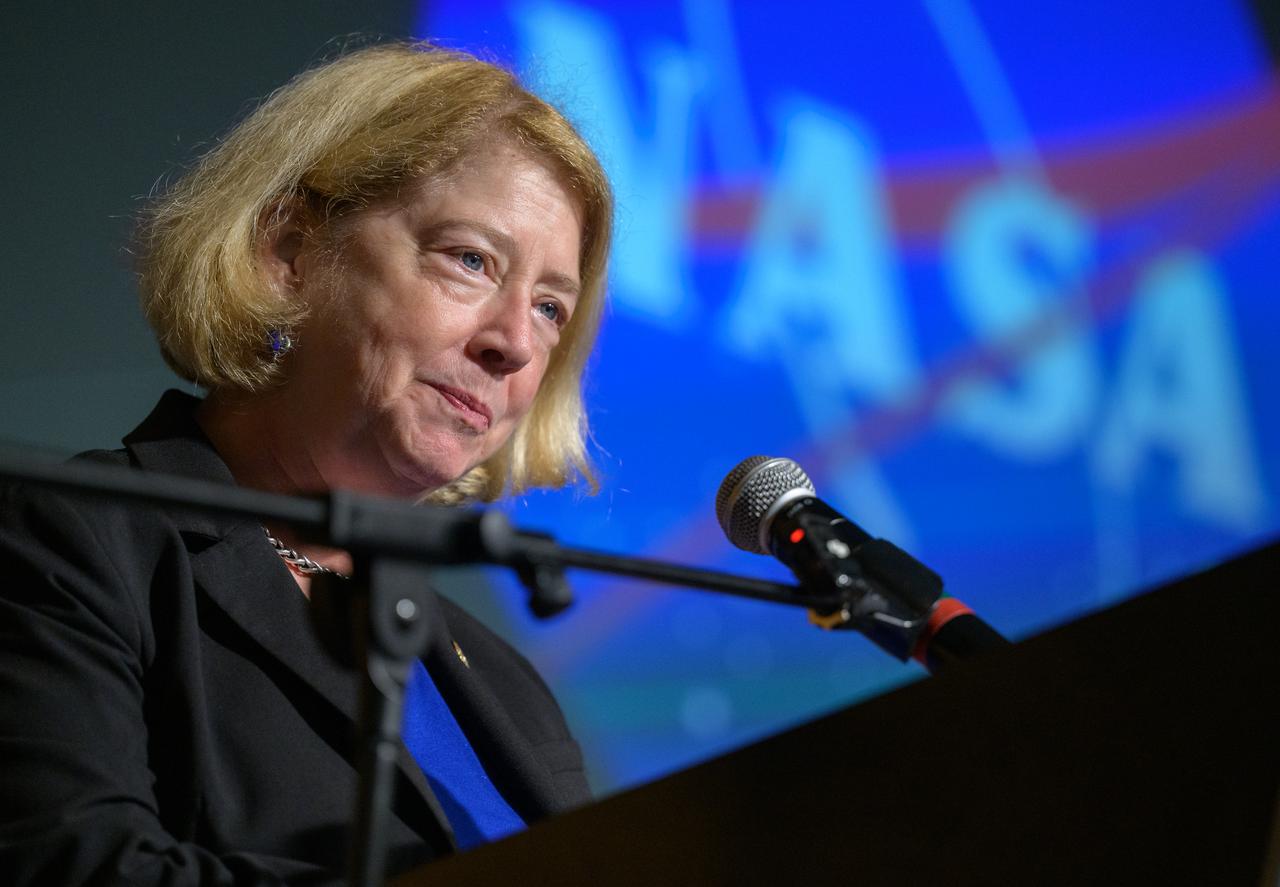
NASA Deputy Administrator Pam Melroy gives remarks during an event where NASA and the Hispanic Heritage Foundation signed a Space Act Agreement to collaborate and expand STEM opportunities for Latino K-12 and university students and reduce barriers to agency activities and opportunities, Monday, Sept. 30, 2024, at the NASA Headquarters Mary W. Jackson Building in Washington. Photo Credit: (NASA/Bill Ingalls)
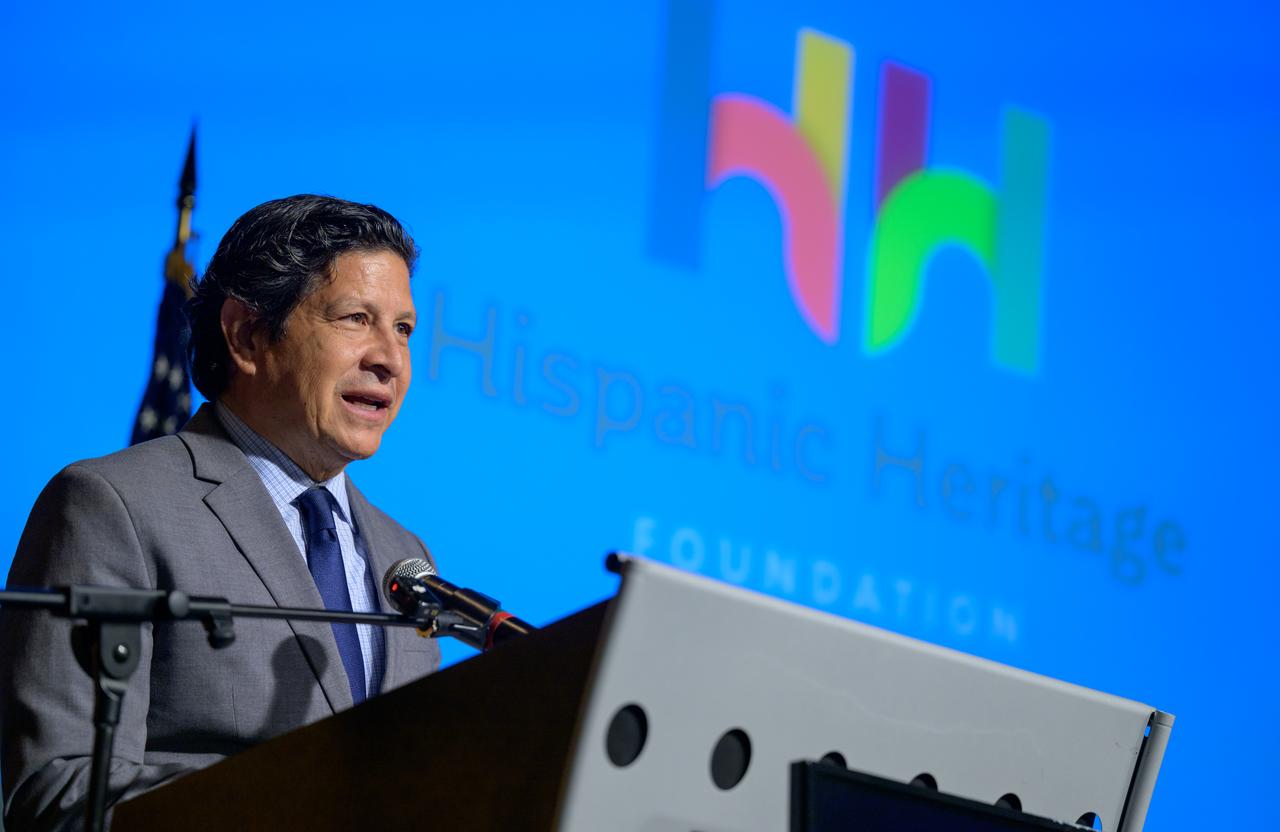
President and CEO of the Hispanic Heritage Foundation Jose Antonio Tijerino gives remarks during an event where NASA and the HHF signed a Space Act Agreement to collaborate and expand STEM opportunities for Latino K-12 and university students and reduce barriers to agency activities and opportunities, Monday, Sept. 30, 2024, at the NASA Headquarters Mary W. Jackson Building in Washington. Photo Credit: (NASA/Bill Ingalls)
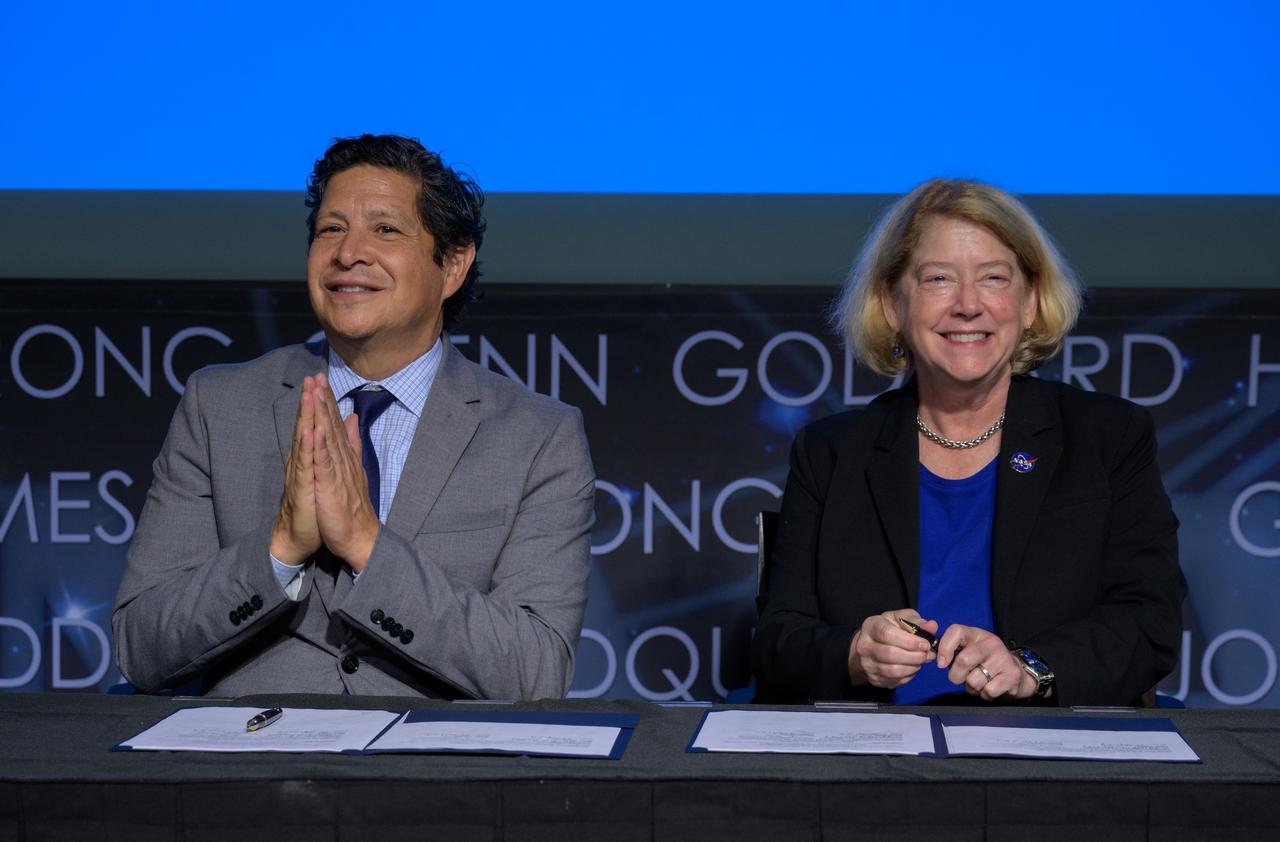
President and CEO of the Hispanic Heritage Foundation Jose Antonio Tijerino, left, and NASA Deputy Administrator Pam Melroy, react after signing a Space Act Agreement between the HHF and NASA to collaborate and expand STEM opportunities for Latino K-12 and university students and reduce barriers to agency activities and opportunities, Monday, Sept. 30, 2024, at the NASA Headquarters Mary W. Jackson Building in Washington. Photo Credit: (NASA/Bill Ingalls)
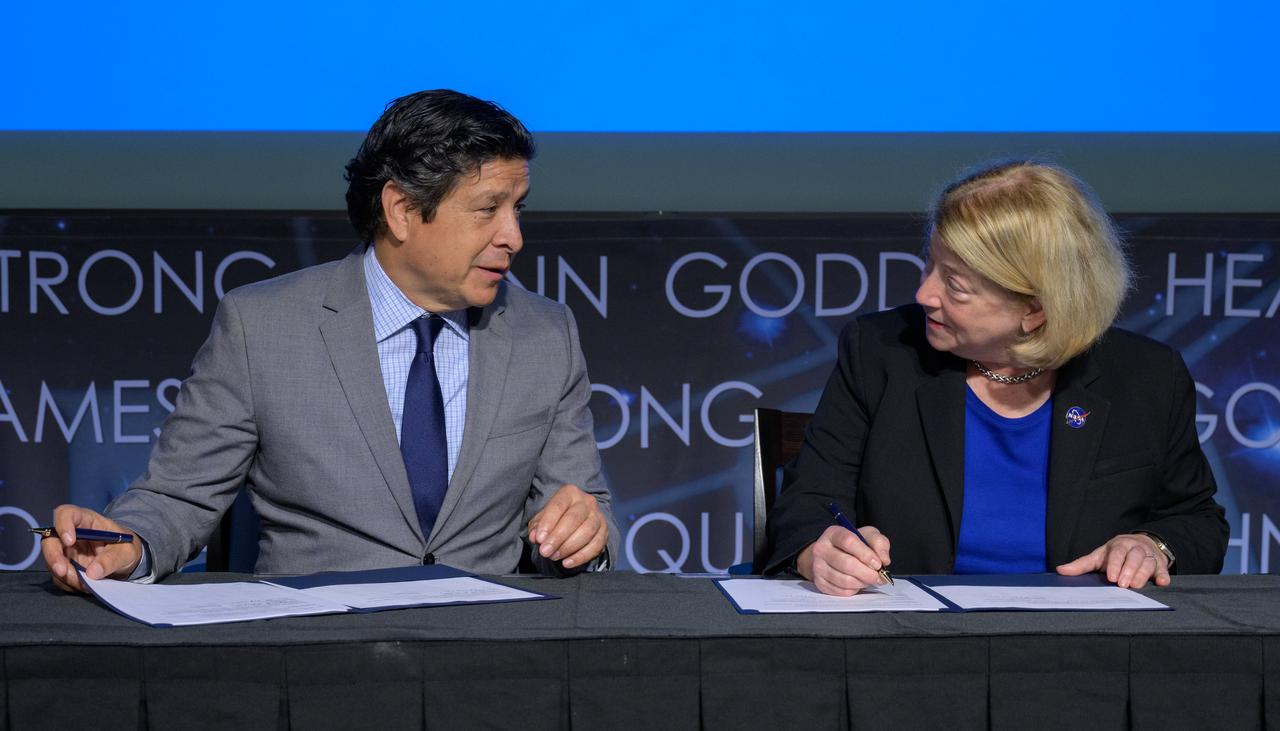
President and CEO of the Hispanic Heritage Foundation Jose Antonio Tijerino, left, and NASA Deputy Administrator Pam Melroy, sign a Space Act Agreement between the HHF and NASA to collaborate and expand STEM opportunities for Latino K-12 and university students and reduce barriers to agency activities and opportunities, Monday, Sept. 30, 2024, at the NASA Headquarters Mary W. Jackson Building in Washington. Photo Credit: (NASA/Bill Ingalls)
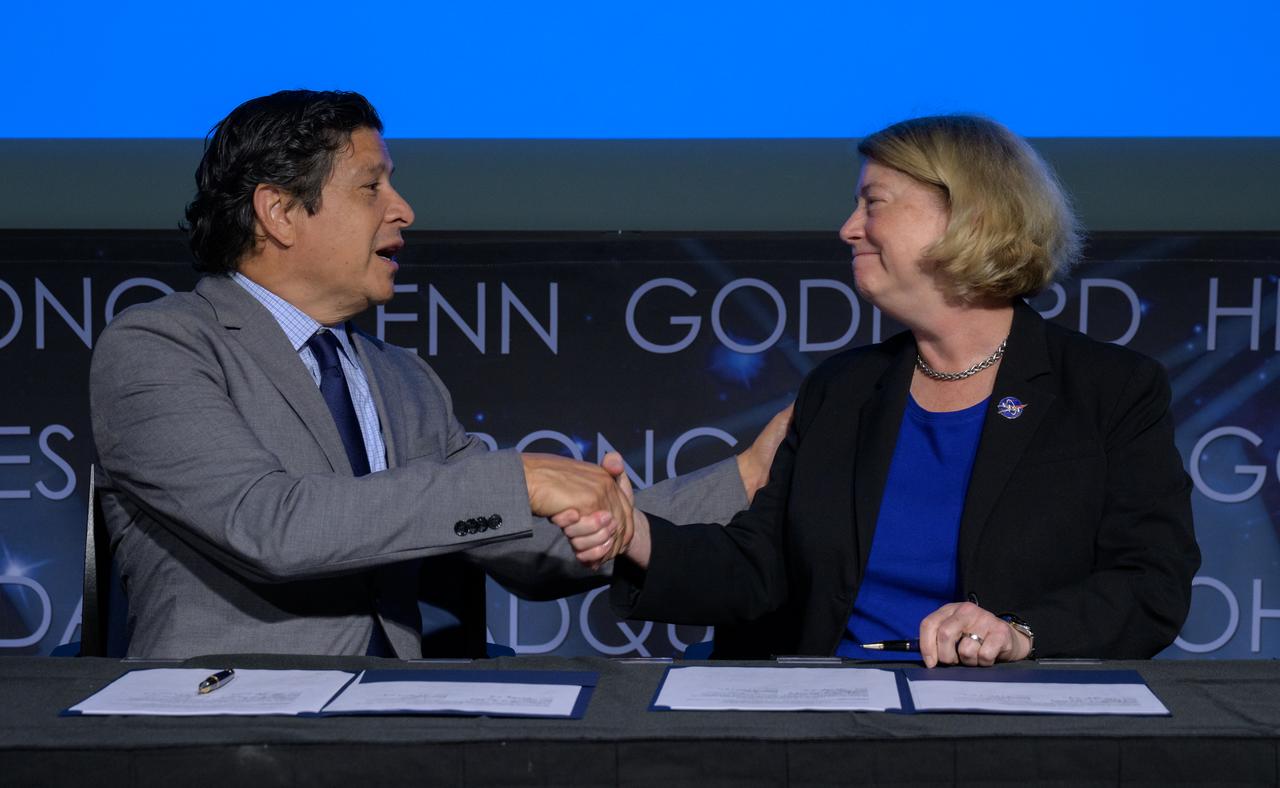
President and CEO of the Hispanic Heritage Foundation Jose Antonio Tijerino, left, and NASA Deputy Administrator Pam Melroy, shake hands after signing a Space Act Agreement between the HHF and NASA to collaborate and expand STEM opportunities for Latino K-12 and university students and reduce barriers to agency activities and opportunities, Monday, Sept. 30, 2024, at the NASA Headquarters Mary W. Jackson Building in Washington. Photo Credit: (NASA/Bill Ingalls)
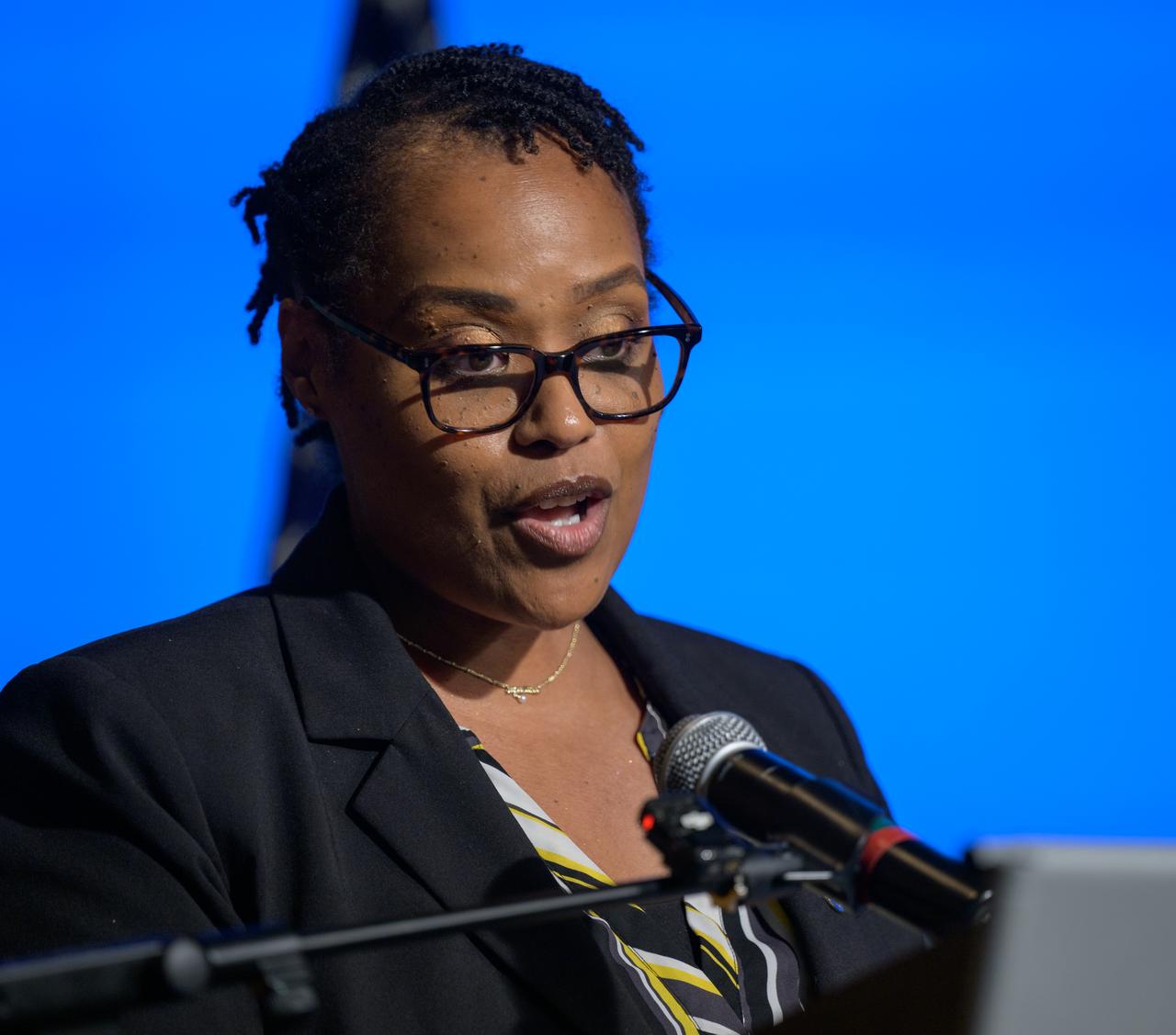
NASA Minority University Research and Education Project, Program Manager, Keya Briscoe, gives remarks during an event where NASA and the Hispanic Heritage Foundation signed a Space Act Agreement to collaborate and expand STEM opportunities for Latino K-12 and university students and reduce barriers to agency activities and opportunities, Monday, Sept. 30, 2024, at the NASA Headquarters Mary W. Jackson Building in Washington. Photo Credit: (NASA/Bill Ingalls)
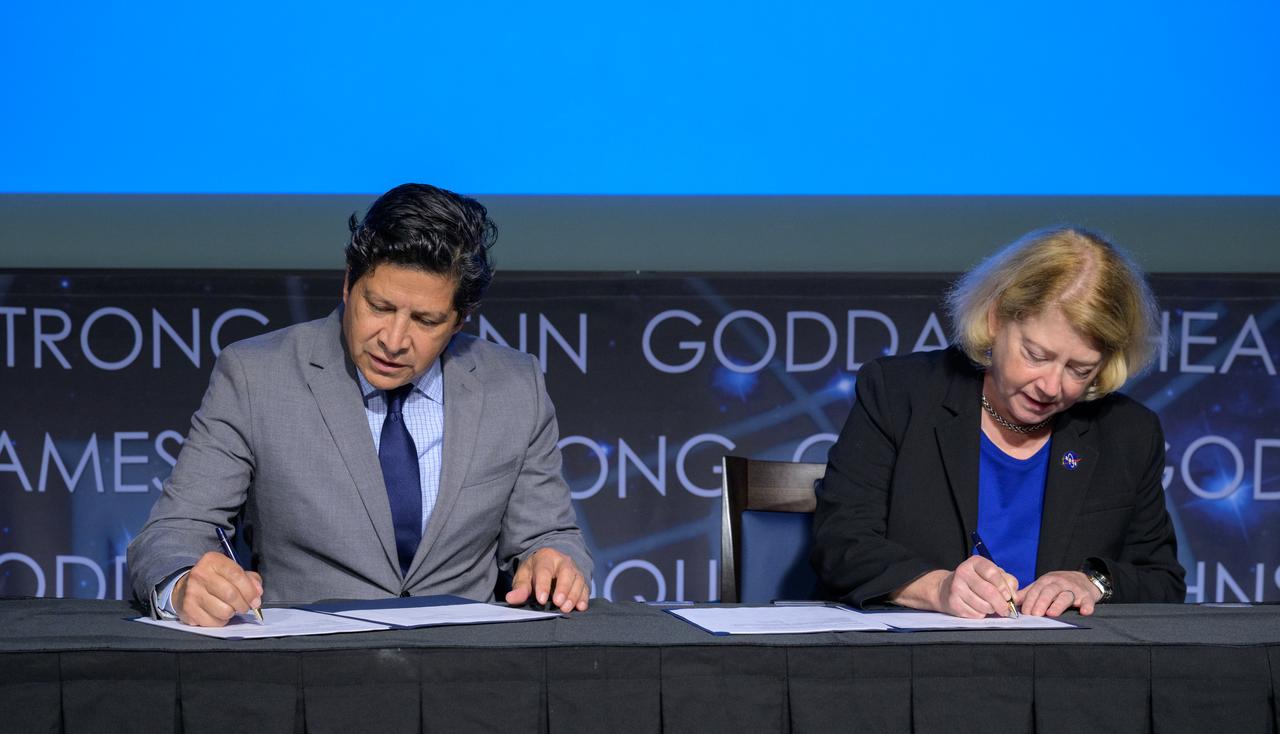
President and CEO of the Hispanic Heritage Foundation Jose Antonio Tijerino, left, and NASA Deputy Administrator Pam Melroy, sign a Space Act Agreement between the HHF and NASA to collaborate and expand STEM opportunities for Latino K-12 and university students and reduce barriers to agency activities and opportunities, Monday, Sept. 30, 2024, at the NASA Headquarters Mary W. Jackson Building in Washington. Photo Credit: (NASA/Bill Ingalls)
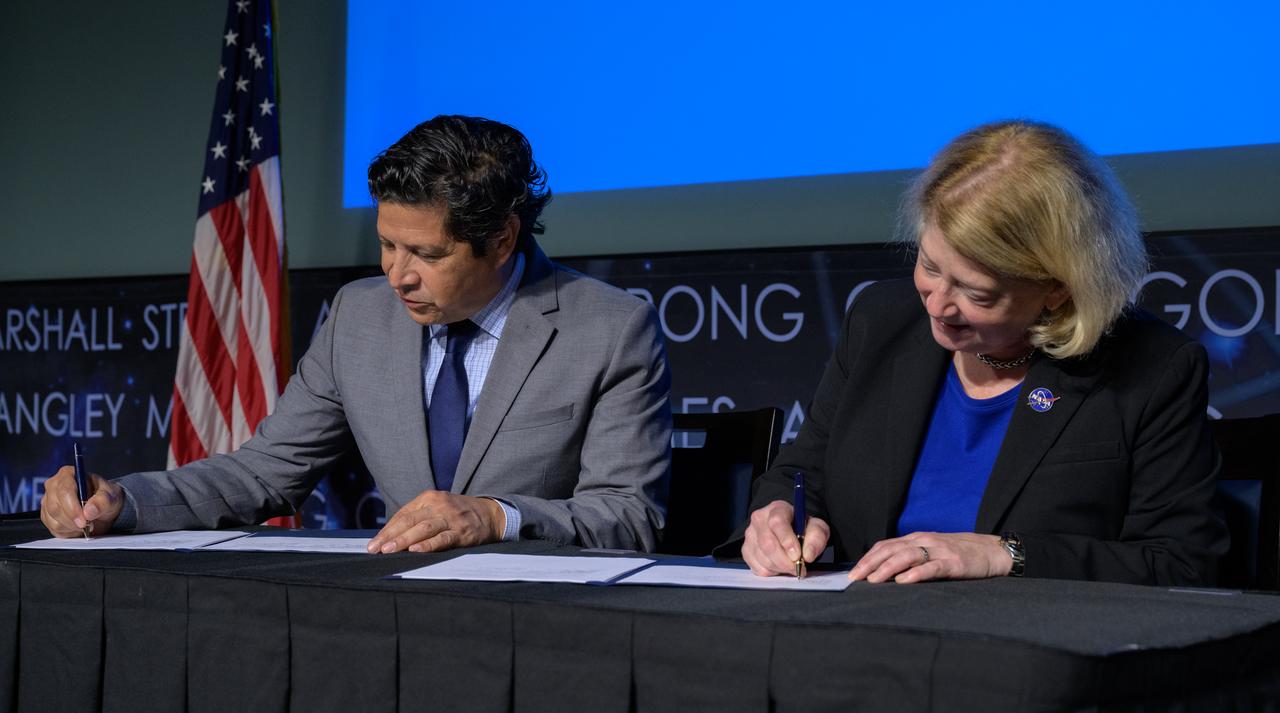
President and CEO of the Hispanic Heritage Foundation Jose Antonio Tijerino, left, and NASA Deputy Administrator Pam Melroy, sign a Space Act Agreement between the HHF and NASA to collaborate and expand STEM opportunities for Latino K-12 and university students and reduce barriers to agency activities and opportunities, Monday, Sept. 30, 2024, at the NASA Headquarters Mary W. Jackson Building in Washington. Photo Credit: (NASA/Bill Ingalls)

NASA Minority University Research and Education Project, Program Manager, Keya Briscoe, gives remarks during an event where NASA and the Hispanic Heritage Foundation signed a Space Act Agreement to collaborate and expand STEM opportunities for Latino K-12 and university students and reduce barriers to agency activities and opportunities, Monday, Sept. 30, 2024, at the NASA Headquarters Mary W. Jackson Building in Washington. Photo Credit: (NASA/Bill Ingalls)
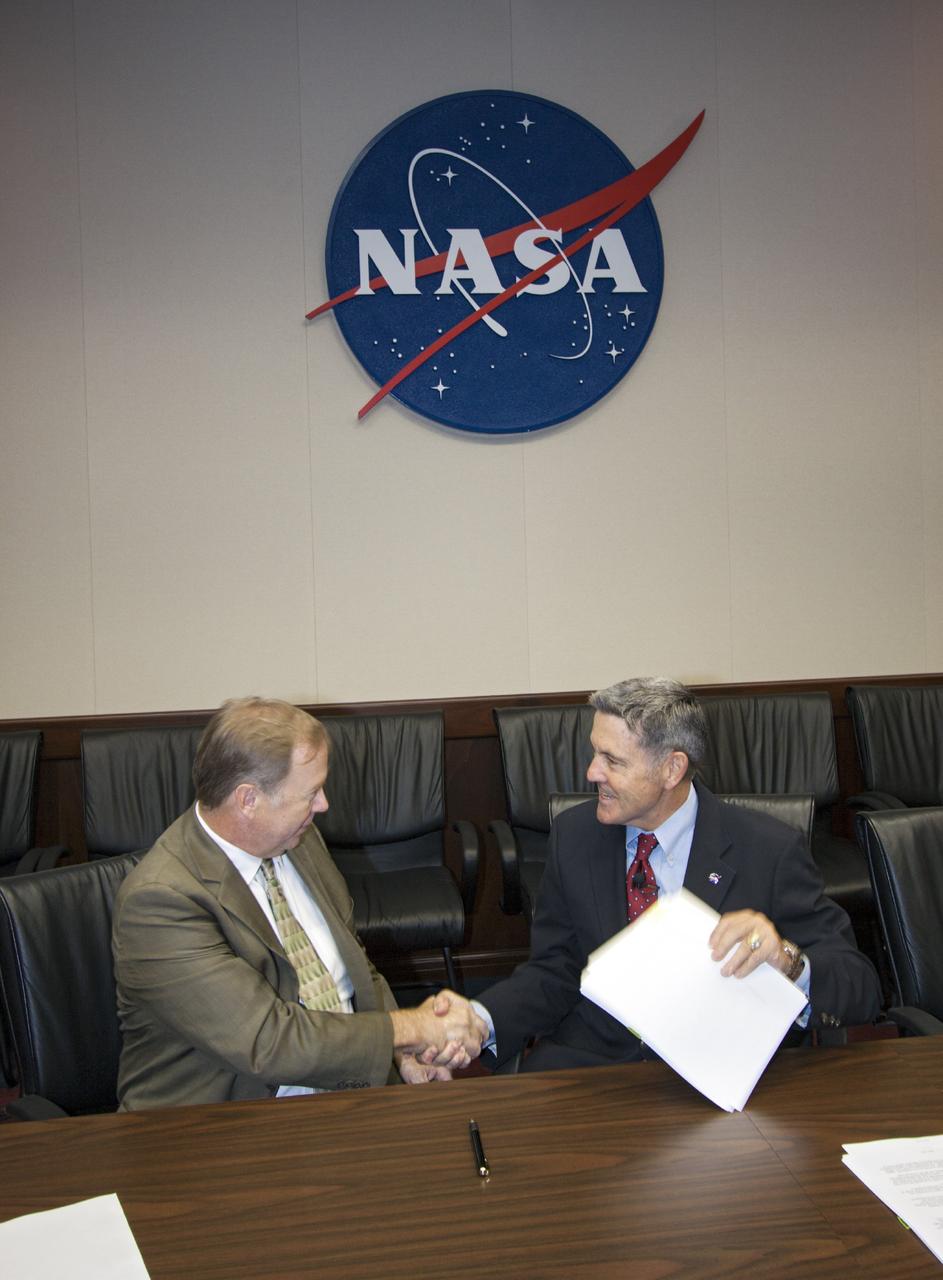
CAPE CANAVERAL, Fla. – At NASA’s Kennedy Space Center in Florida, Director Bob Cabana, at right, shakes hands with Larry Williams, president and CEO of Ballistic Recovery Systems Inc., or BRS Aerospace of Miami, Fla., after signing a new partnership agreement for use of the Parachute Refurbishment Facility, or PRF. Under a 10-year lease agreement, BRS Aerospace will operate and maintain the facility. The PRF previously was used during NASA’s Space Shuttle Program to manufacture and refurbish the solid rocket booster parachutes. Because of NASA’s transition from the shuttle to future commercial and government mission activities, the agreement allows NASA to preserve the unique facility capabilities for future spaceflight projects. Kennedy’s Center Planning and Development team and the Economic Development Commission of Florida’s Space Coast worked with BRS Aerospace to establish the agreement. For more information about BRS Aerospace, visit http://www.brsparachutes.com. Photo credit: NASA/Jim Grossmann
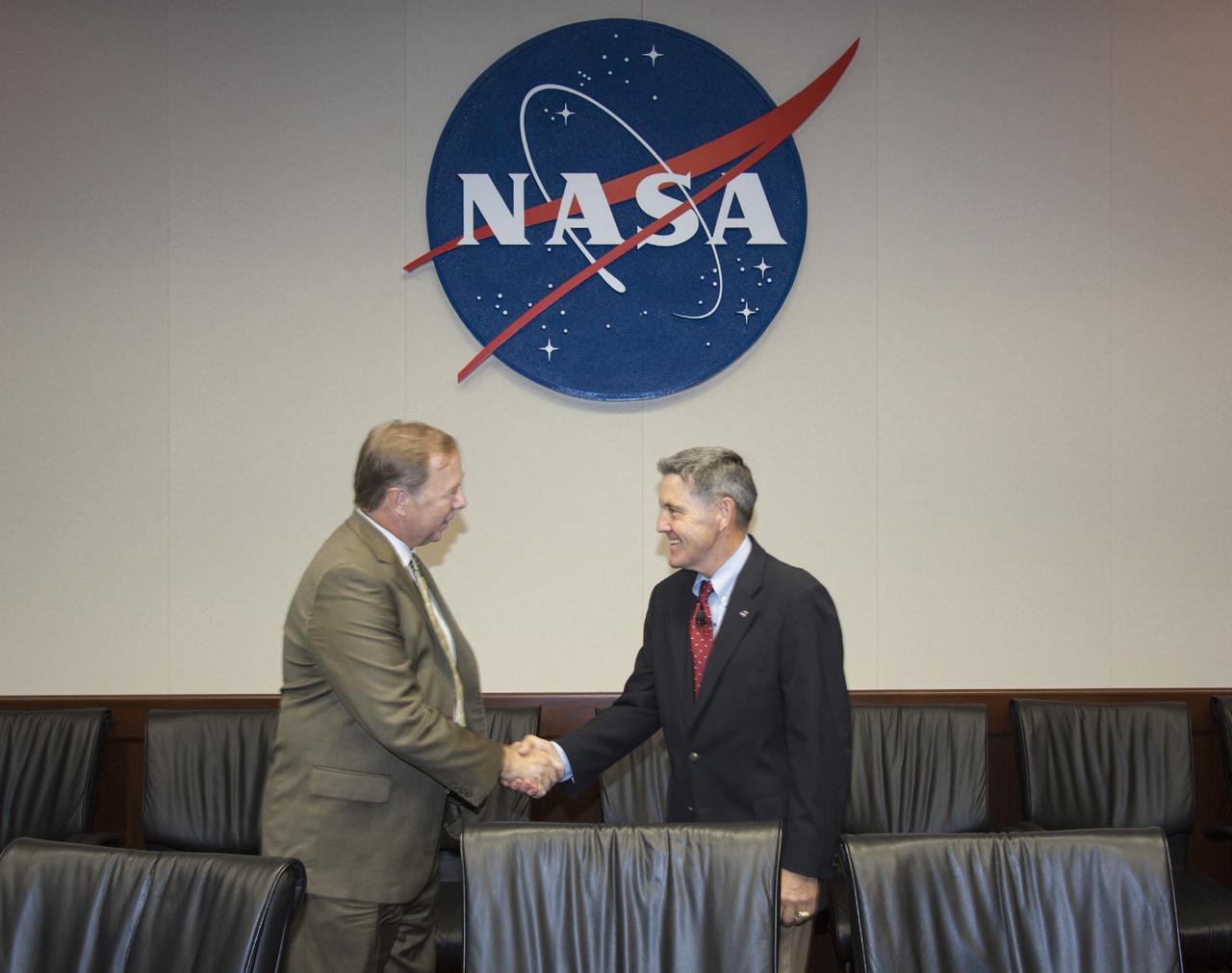
CAPE CANAVERAL, Fla. – At NASA’s Kennedy Space Center in Florida, Director Bob Cabana, at right, shakes hands with Larry Williams, president and CEO of Ballistic Recovery Systems Inc., or BRS Aerospace of Miami, Fla., after signing a new partnership agreement for use of the Parachute Refurbishment Facility, or PRF. Under a 10-year lease agreement, BRS Aerospace will operate and maintain the facility. The PRF previously was used during NASA’s Space Shuttle Program to manufacture and refurbish the solid rocket booster parachutes. Because of NASA’s transition from the shuttle to future commercial and government mission activities, the agreement allows NASA to preserve the unique facility capabilities for future spaceflight projects. Kennedy’s Center Planning and Development team and the Economic Development Commission of Florida’s Space Coast worked with BRS Aerospace to establish the agreement. For more information about BRS Aerospace, visit http://www.brsparachutes.com. Photo credit: NASA/Jim Grossmann
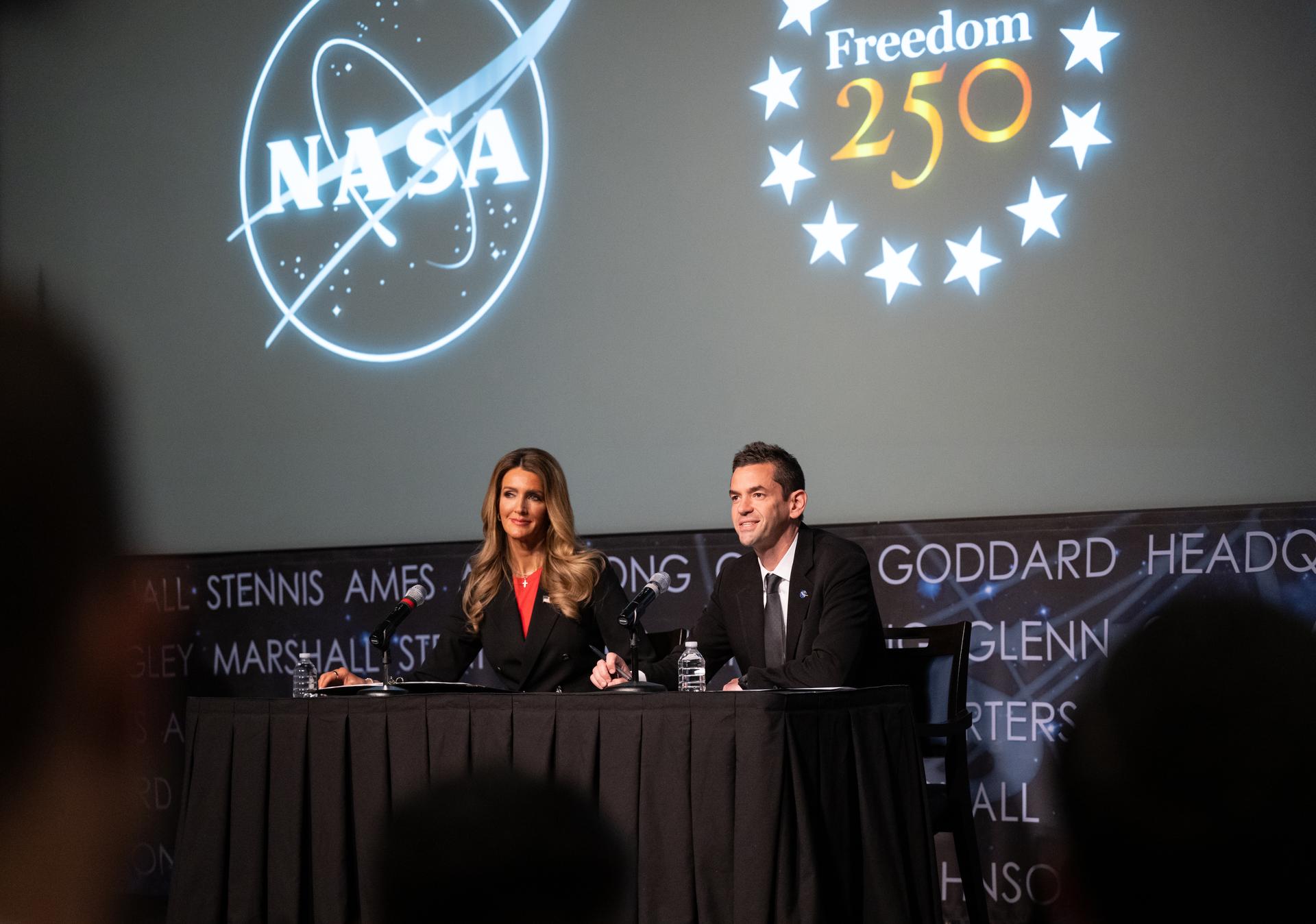
NASA Administrator Jared Isaacman, right, delivers remarks alongside Administrator of the Small Business Administration Kelly Loeffler, left, during a Memorandum of Agreement signing ceremony Monday, June 29, 2026, at the Mary W. Jackson NASA Headquarters building in Washington. This Memorandum of Agreement will provide the framework for NASA and the Small Business Administration Office of Investment and Innovation to support the growth of the Small Business Investment Company-NASA Initiative. Photo Credit: (NASA/Keegan Barber)
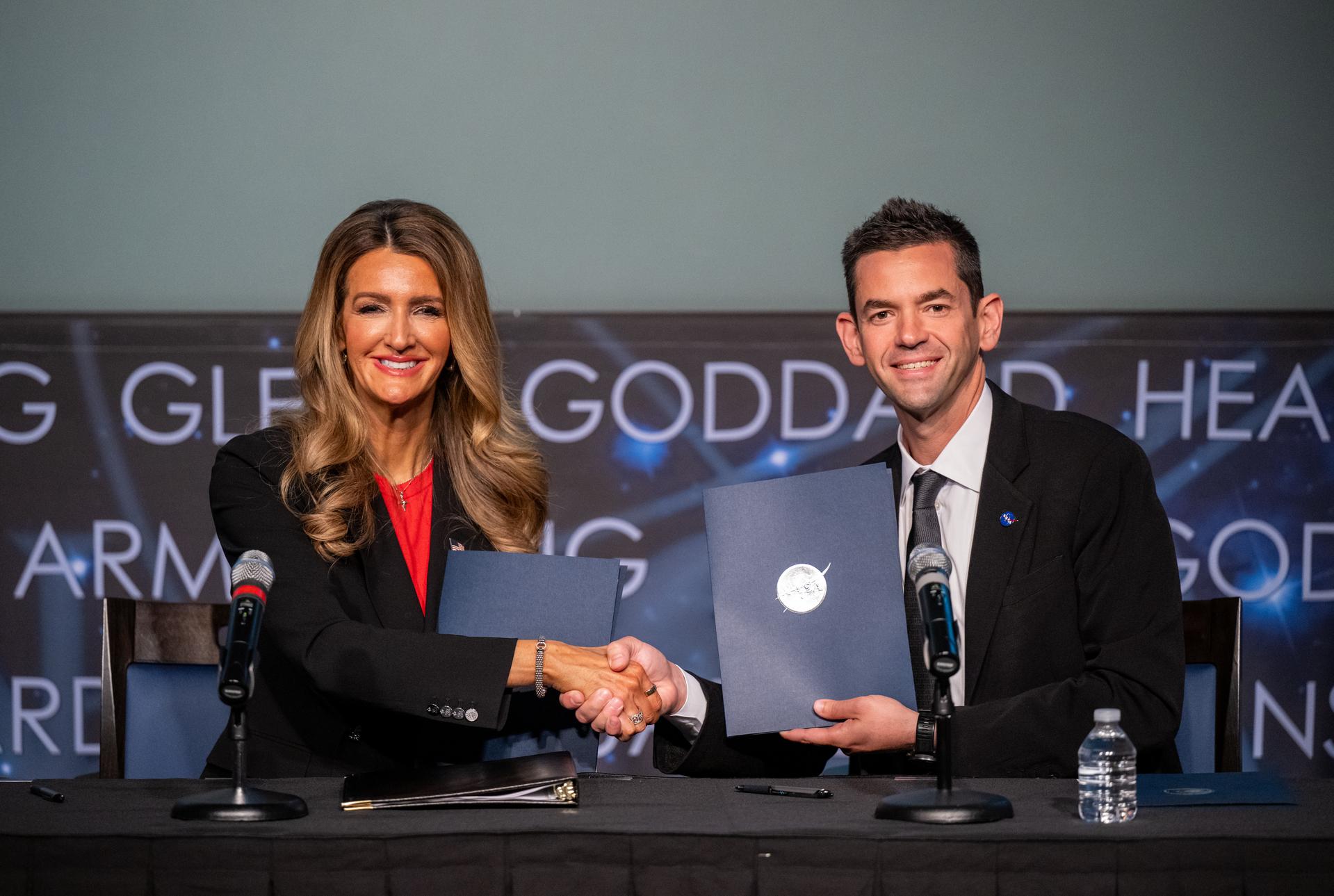
NASA Administrator Jared Isaacman, right, and Administrator of the Small Business Administration Kelly Loeffler, left, pose for a photo after signing a Memorandum of Agreement Monday, June 29, 2026, at the Mary W. Jackson NASA Headquarters building in Washington. This Memorandum of Agreement will provide the framework for NASA and the Small Business Administration Office of Investment and Innovation to support the growth of the Small Business Investment Company-NASA Initiative. Photo Credit: (NASA/Keegan Barber)
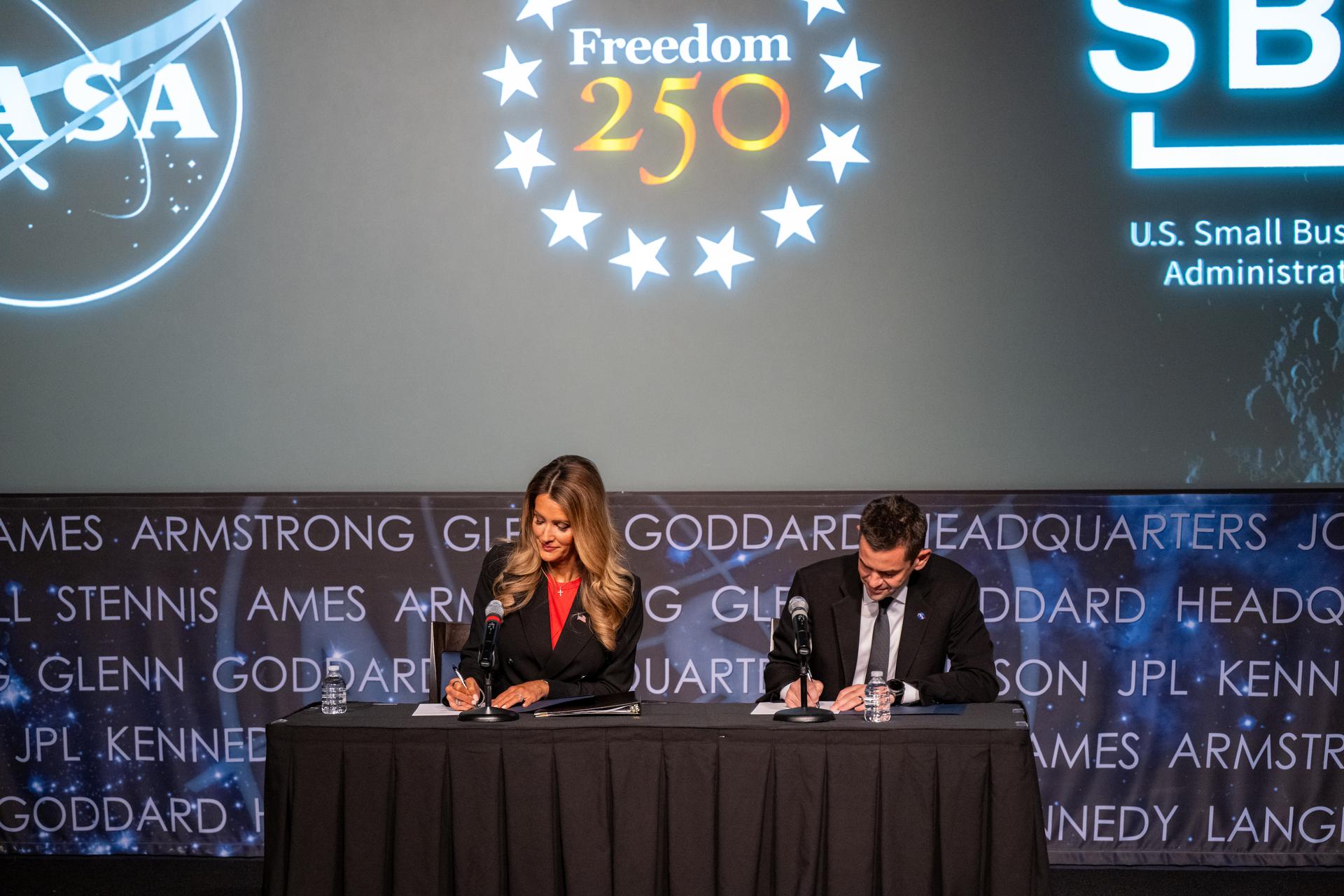
NASA Administrator Jared Isaacman, right, and Administrator of the Small Business Administration Kelly Loeffler, left, sign a Memorandum of Agreement Monday, June 29, 2026, at the Mary W. Jackson NASA Headquarters building in Washington. This Memorandum of Agreement will provide the framework for NASA and the Small Business Administration Office of Investment and Innovation to support the growth of the Small Business Investment Company-NASA Initiative. Photo Credit: (NASA/Keegan Barber)
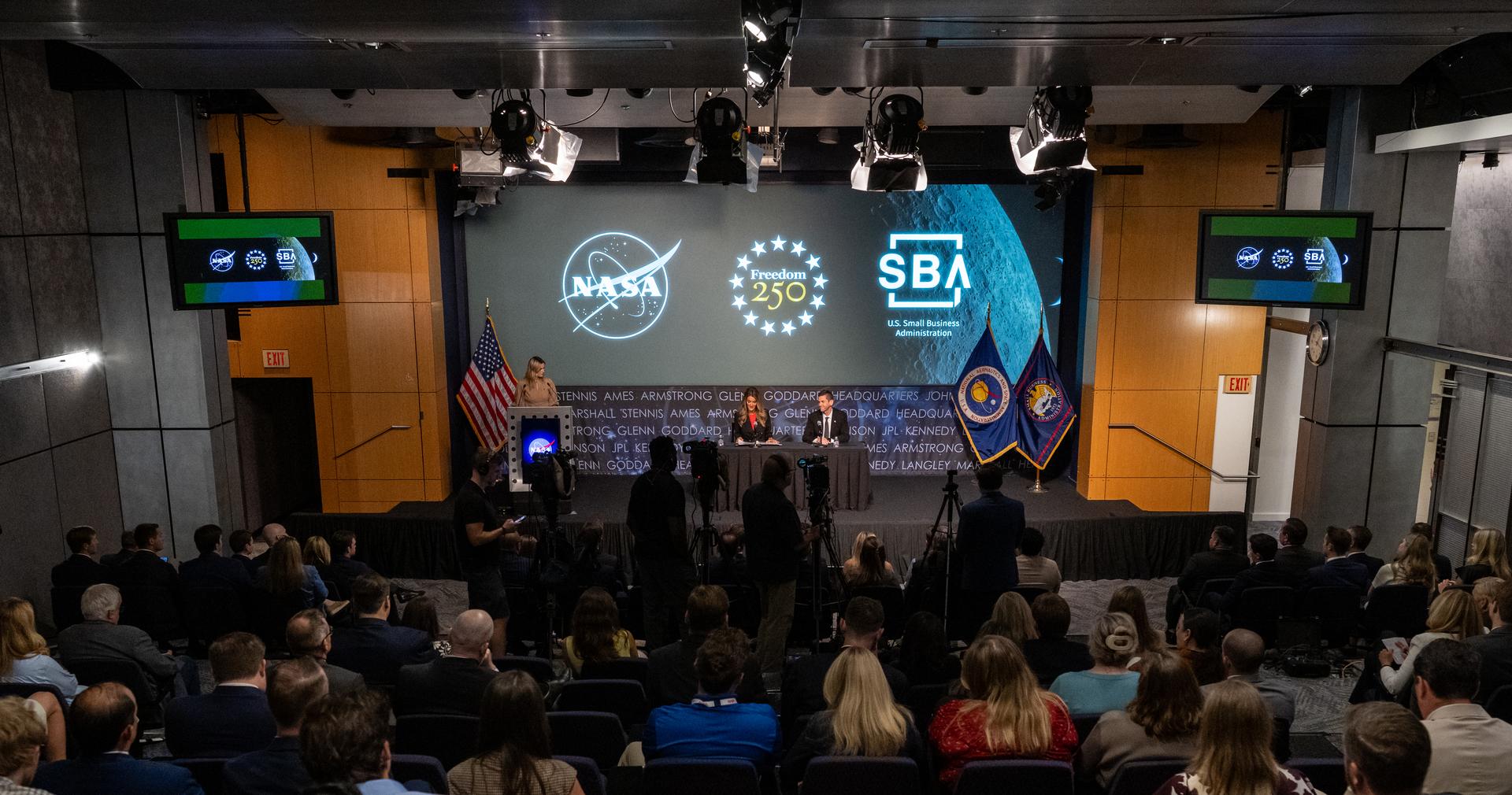
Administrator of the Small Business Administration Kelly Loeffler, left, delivers remarks alongside NASA Administrator Jared Isaacman, right, during a Memorandum of Agreement signing ceremony Monday, June 29, 2026, at the Mary W. Jackson NASA Headquarters building in Washington. This Memorandum of Agreement will provide the framework for NASA and the Small Business Administration Office of Investment and Innovation to support the growth of the Small Business Investment Company-NASA Initiative. Photo Credit: (NASA/Keegan Barber)
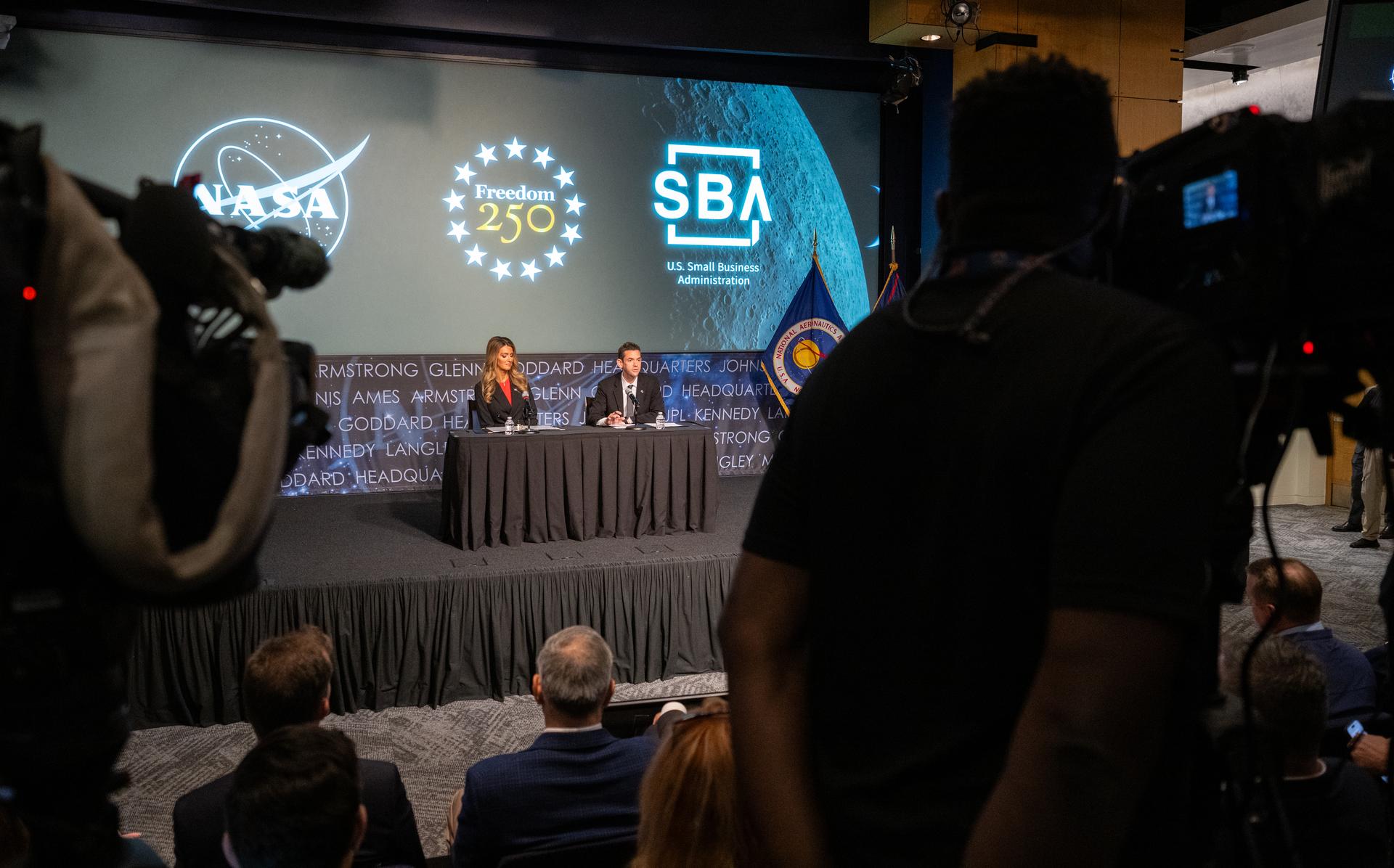
NASA Administrator Jared Isaacman, right, delivers remarks alongside Administrator of the Small Business Administration Kelly Loeffler, left, during a Memorandum of Agreement signing ceremony Monday, June 29, 2026, at the Mary W. Jackson NASA Headquarters building in Washington. This Memorandum of Agreement will provide the framework for NASA and the Small Business Administration Office of Investment and Innovation to support the growth of the Small Business Investment Company-NASA Initiative. Photo Credit: (NASA/Keegan Barber)
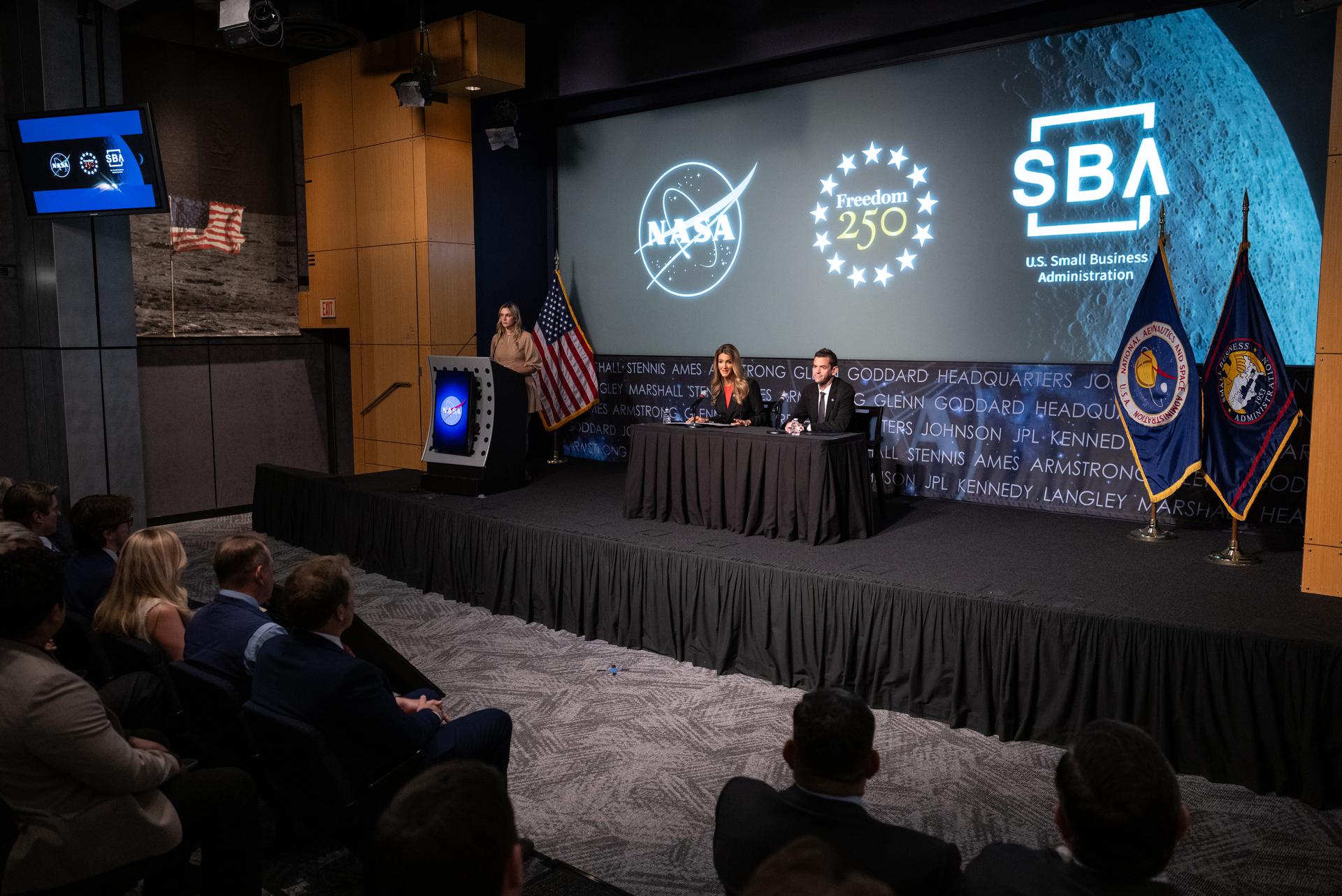
Administrator of the Small Business Administration Kelly Loeffler, left, delivers remarks alongside NASA Administrator Jared Isaacman, right, during a Memorandum of Agreement signing ceremony Monday, June 29, 2026, at the Mary W. Jackson NASA Headquarters building in Washington. This Memorandum of Agreement will provide the framework for NASA and the Small Business Administration Office of Investment and Innovation to support the growth of the Small Business Investment Company-NASA Initiative. Photo Credit: (NASA/Keegan Barber)
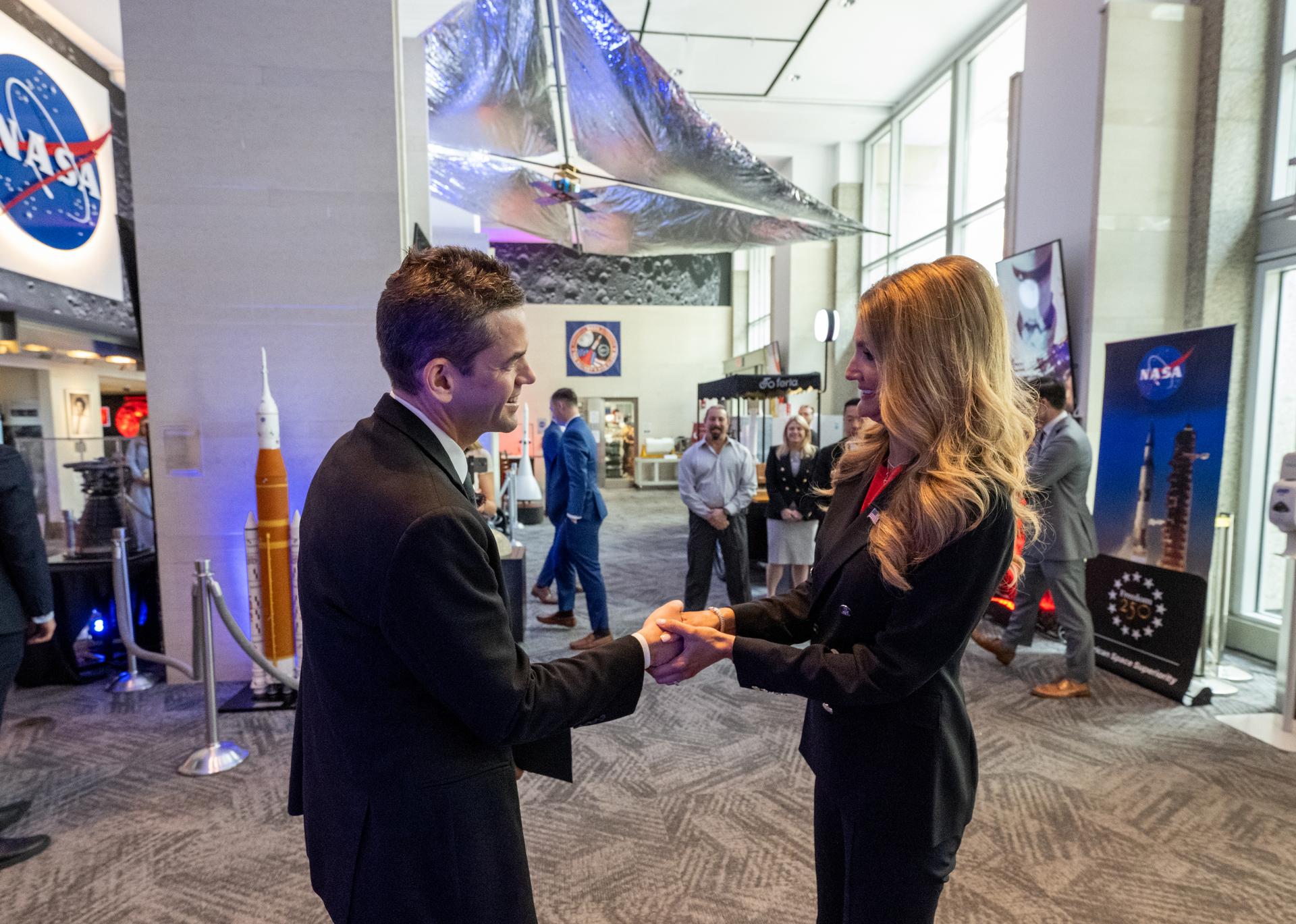
NASA Administrator Jared Isaacman, left, greets Administrator of the Small Business Administration Kelly Loeffler, right, prior to a Memorandum of Agreement signing ceremony Monday, June 29, 2026, at the Mary W. Jackson NASA Headquarters building in Washington. This Memorandum of Agreement will provide the framework for NASA and the Small Business Administration Office of Investment and Innovation to support the growth of the Small Business Investment Company-NASA Initiative. Photo Credit: (NASA/Keegan Barber)
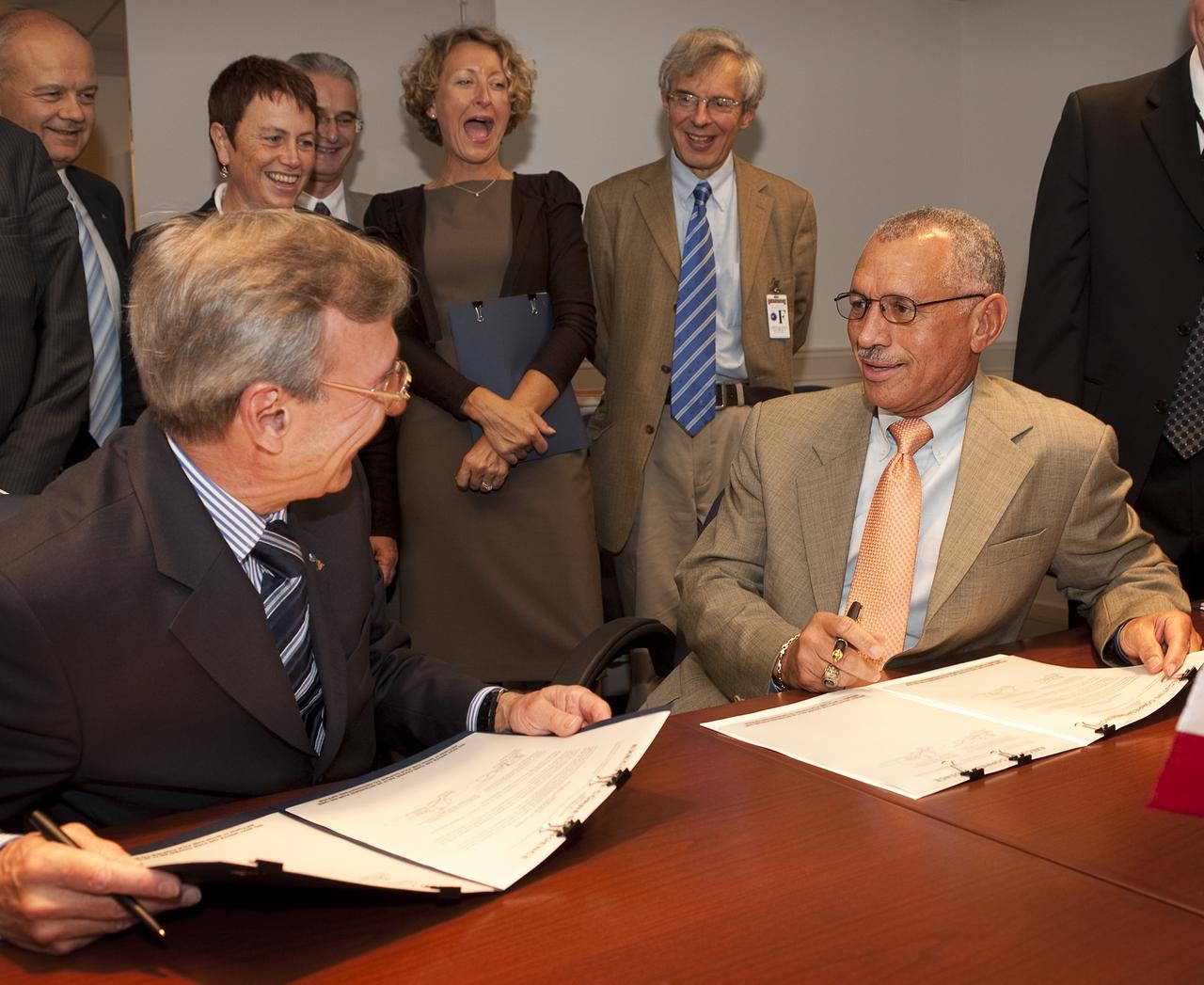
French Space Agency President Yannick d’Escatha, left, and NASA Administrator Charles Bolden joke with each other as they sign four agreements in support of U.S. and French space cooperation during a ceremony at NASA headquarters in Washington, Thursday, Sept. 17, 2009. Photo Credit: (NASA/Bill Ingalls)
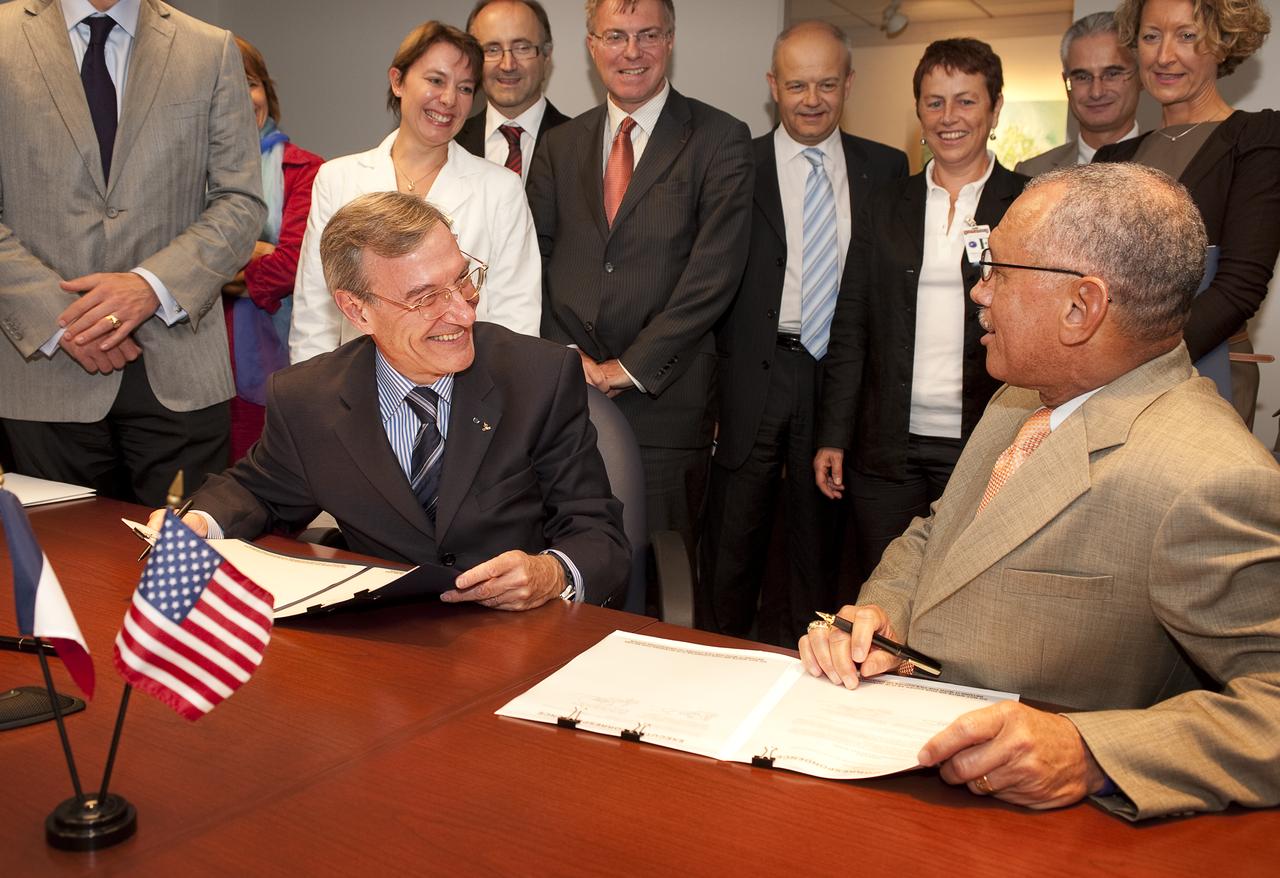
French Space Agency President Yannick d’Escatha, left, and NASA Administrator Charles Bolden joke with each other as they sign four agreements in support of U.S. and French space cooperation during a ceremony at NASA headquarters in Washington, Thursday, Sept. 17, 2009. Photo Credit: (NASA/Bill Ingalls)
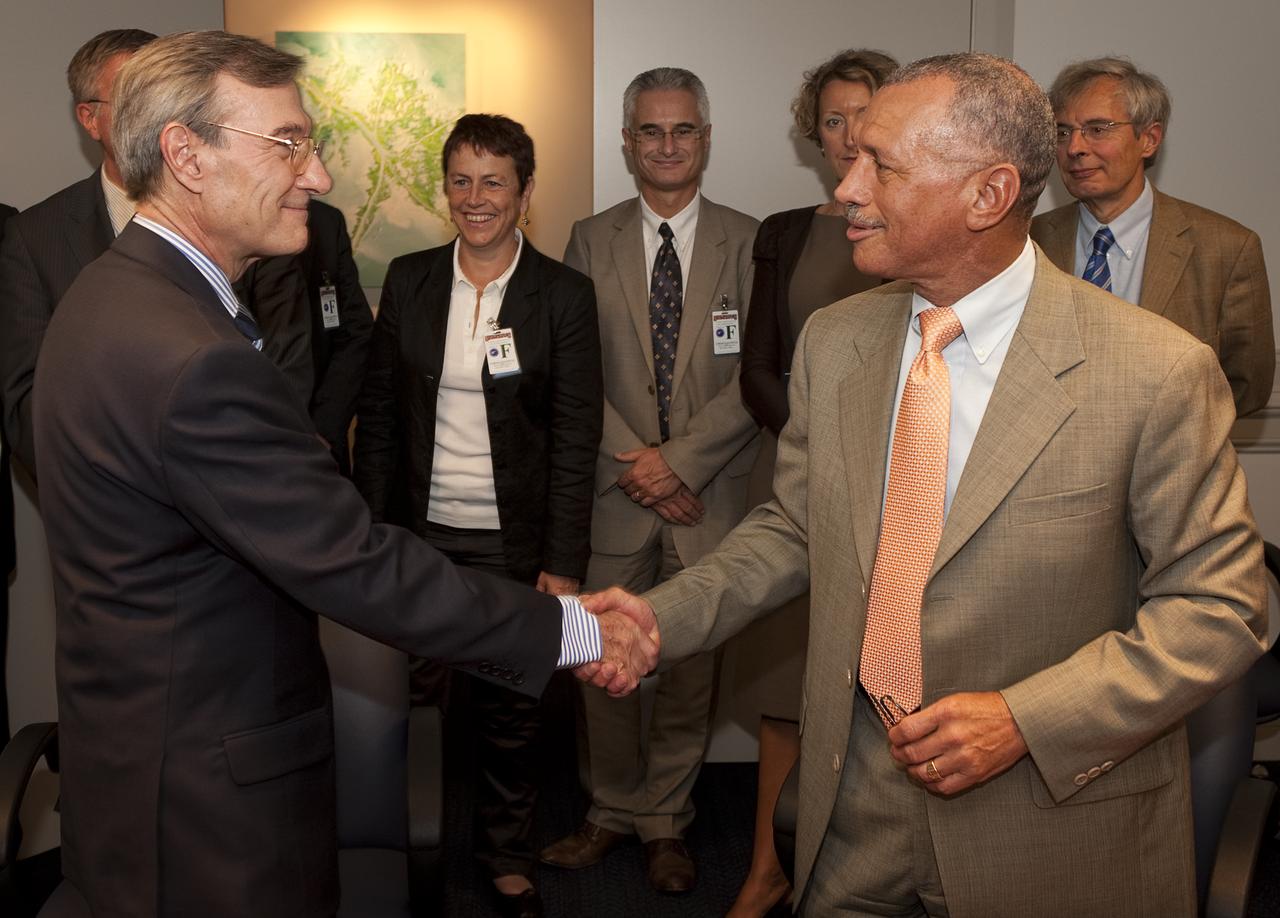
French Space Agency President Yannick d’Escatha, left, and NASA Administrator Charles Bolden shake hands after having signed four agreements in support of U.S. and French space cooperation during a ceremony at NASA headquarters in Washington, Thursday, Sept. 17, 2009. Photo Credit: (NASA/Bill Ingalls)
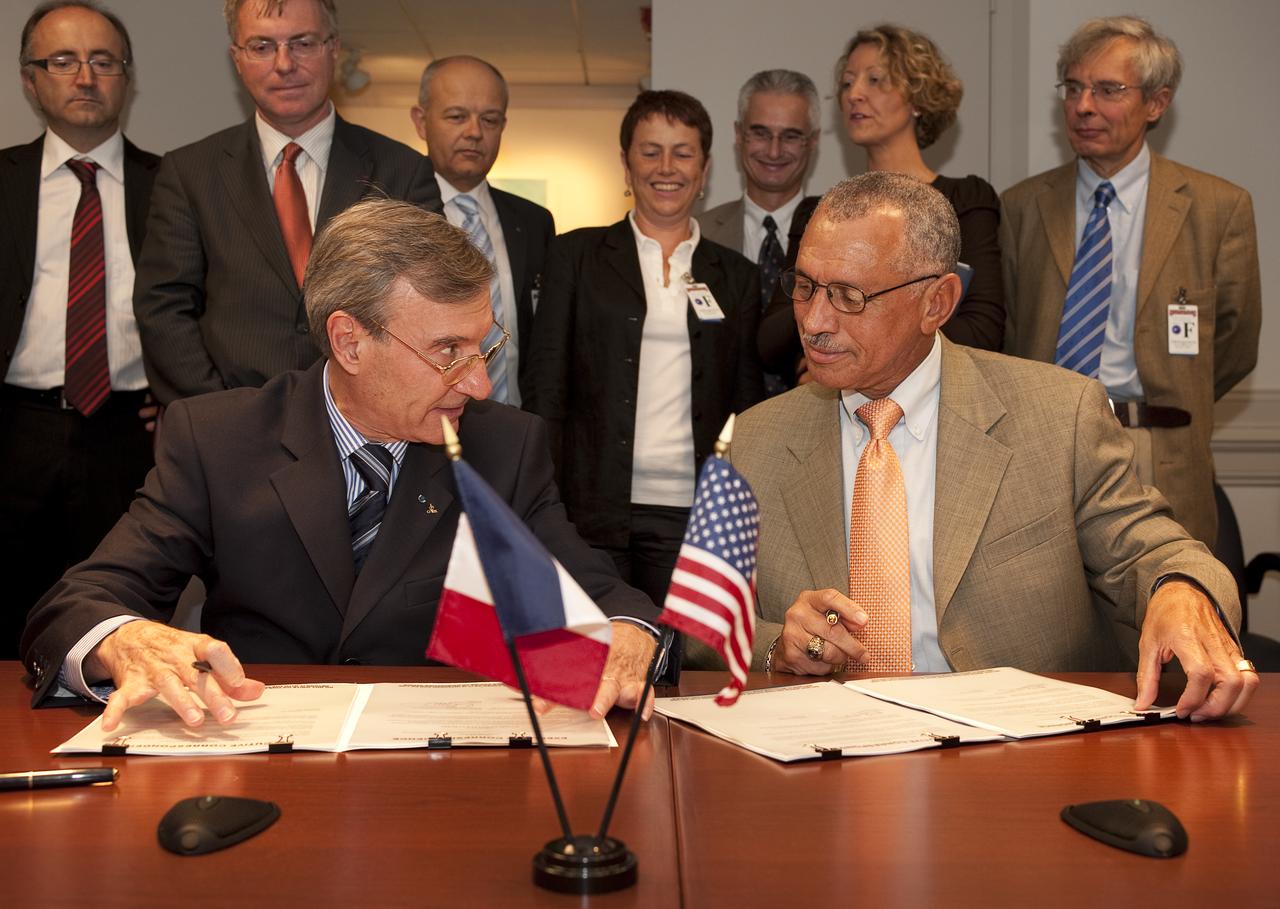
French Space Agency President Yannick d’Escatha, left, and NASA Administrator Charles Bolden sign four agreements in support of U.S. and French space cooperation during a ceremony at NASA headquarters in Washington, Thursday, Sept. 17, 2009. Photo Credit: (NASA/Bill Ingalls)
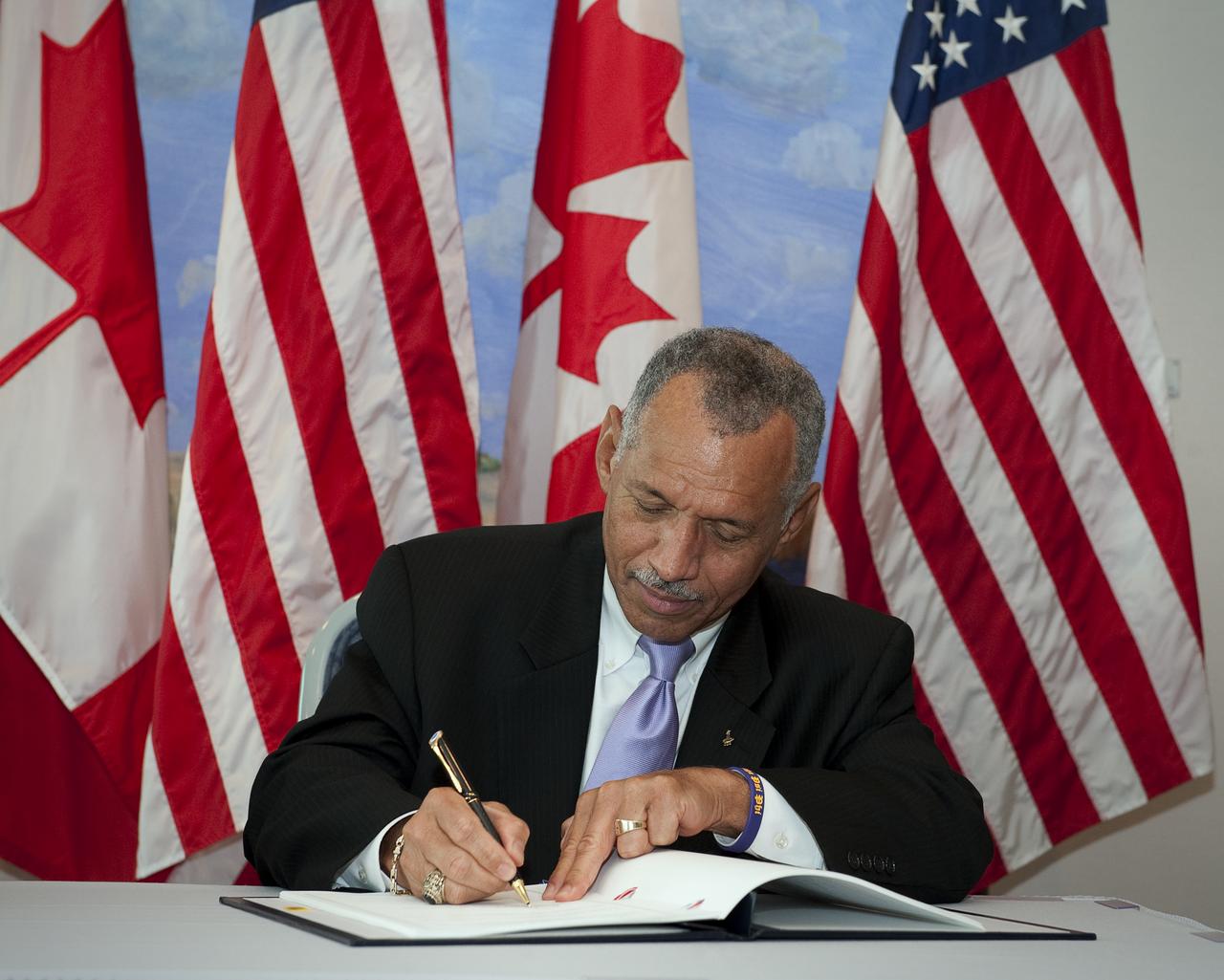
NASA Administrator Charles Bolden signs a framework agreement on civil space cooperation between the U.S. and Canada, Wednesday, Sept. 9, 2009, at the Canadian Embassy in Washington, DC. Photo Credit: (NASA/Bill Ingalls)
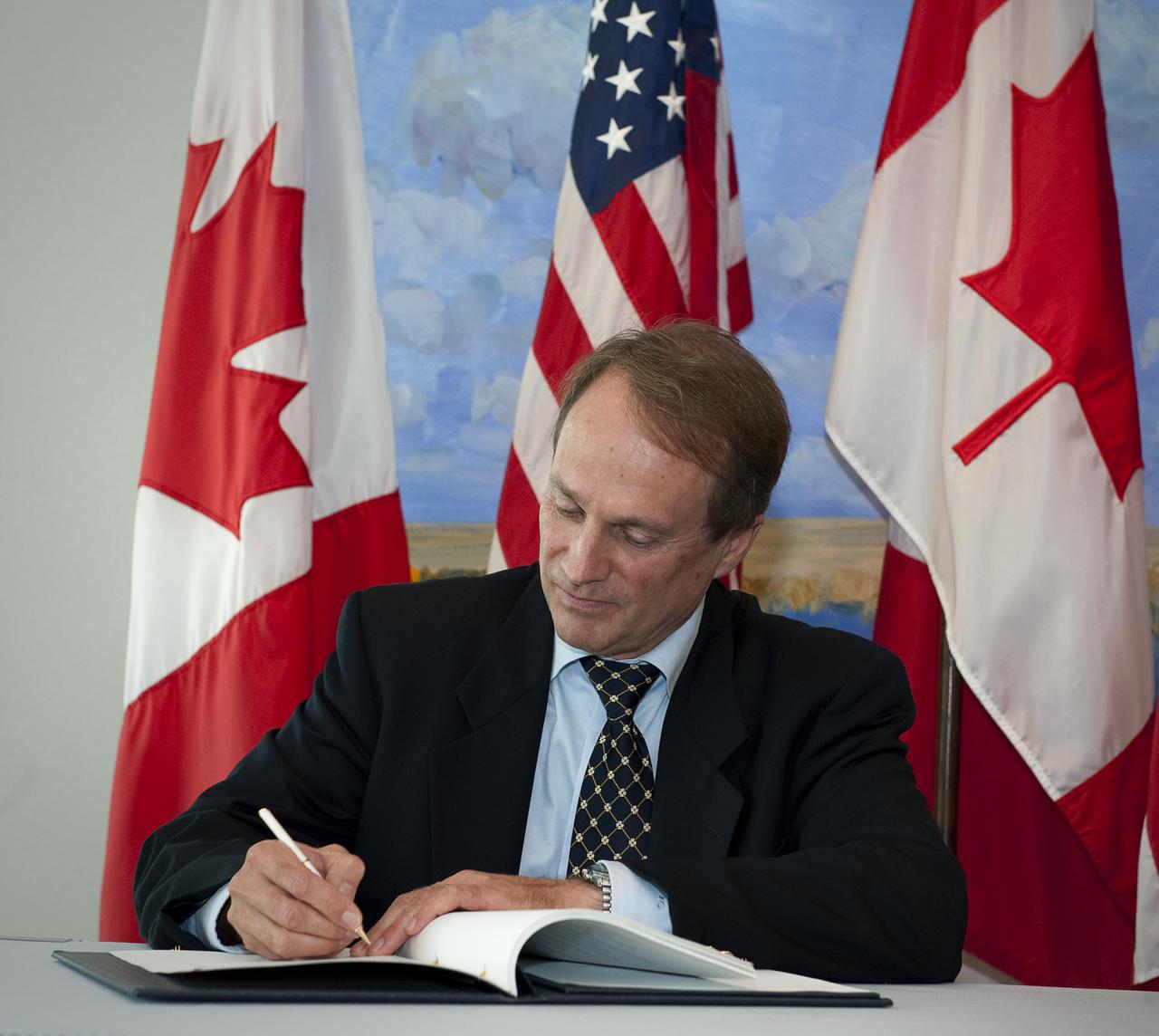
Canadian Space Agency President Steve MacLean signs a framework agreement on civil space cooperation between the U.S. and Canada, Wednesday, Sept. 9, 2009, at the Canadian Embassy in Washington, DC. Photo Credit: (NASA/Bill Ingalls)
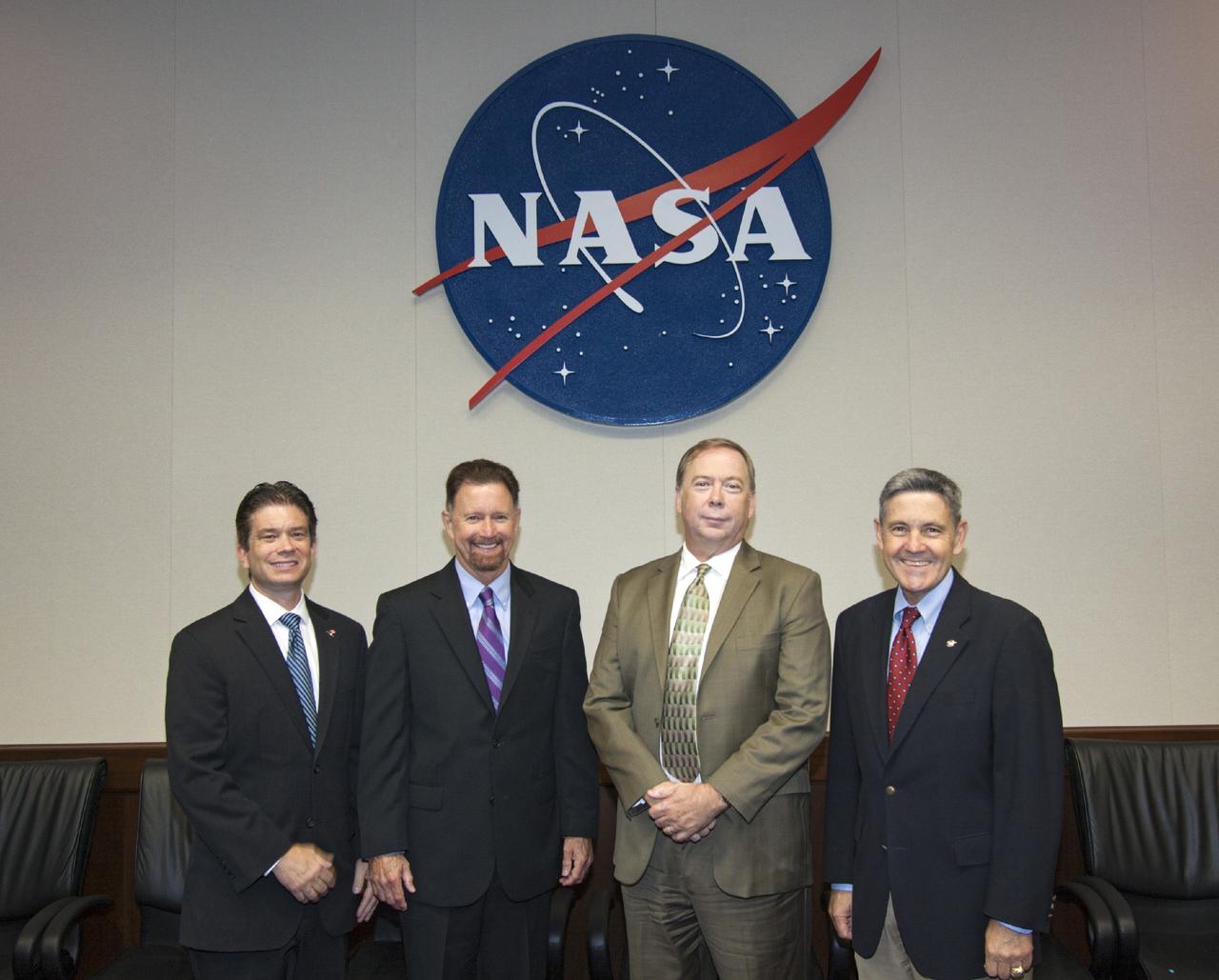
CAPE CANAVERAL, Fla. – NASA’s Kennedy Space Center in Florida has signed a new partnership agreement with Ballistic Recovery Systems Inc., or BRS Aerospace of Miami, Fla., for use of the Parachute Refurbishment Facility, or PRF. From left, are Rob Salonen, director of Business Development with the Economic Development Commission, EDC, of Florida’s Space Coast Jim Barfield, EDC treasurer Larry Williams, president and CEO of BRS Aerospace and Center Director Bob Cabana. The PRF previously was used during NASA’s Space Shuttle Program to manufacture and refurbish the solid rocket booster parachutes. Because of NASA’s transition from the shuttle to future commercial and government mission activities, the agreement allows NASA to preserve the unique facility capabilities for future spaceflight projects. Kennedy’s Center Planning and Development team and the Economic Development Commission of Florida’s Space Coast worked with BRS Aerospace to establish the agreement. For more information about BRS Aerospace, visit http://www.brsparachutes.com. Photo credit: NASA/Jim Grossmann
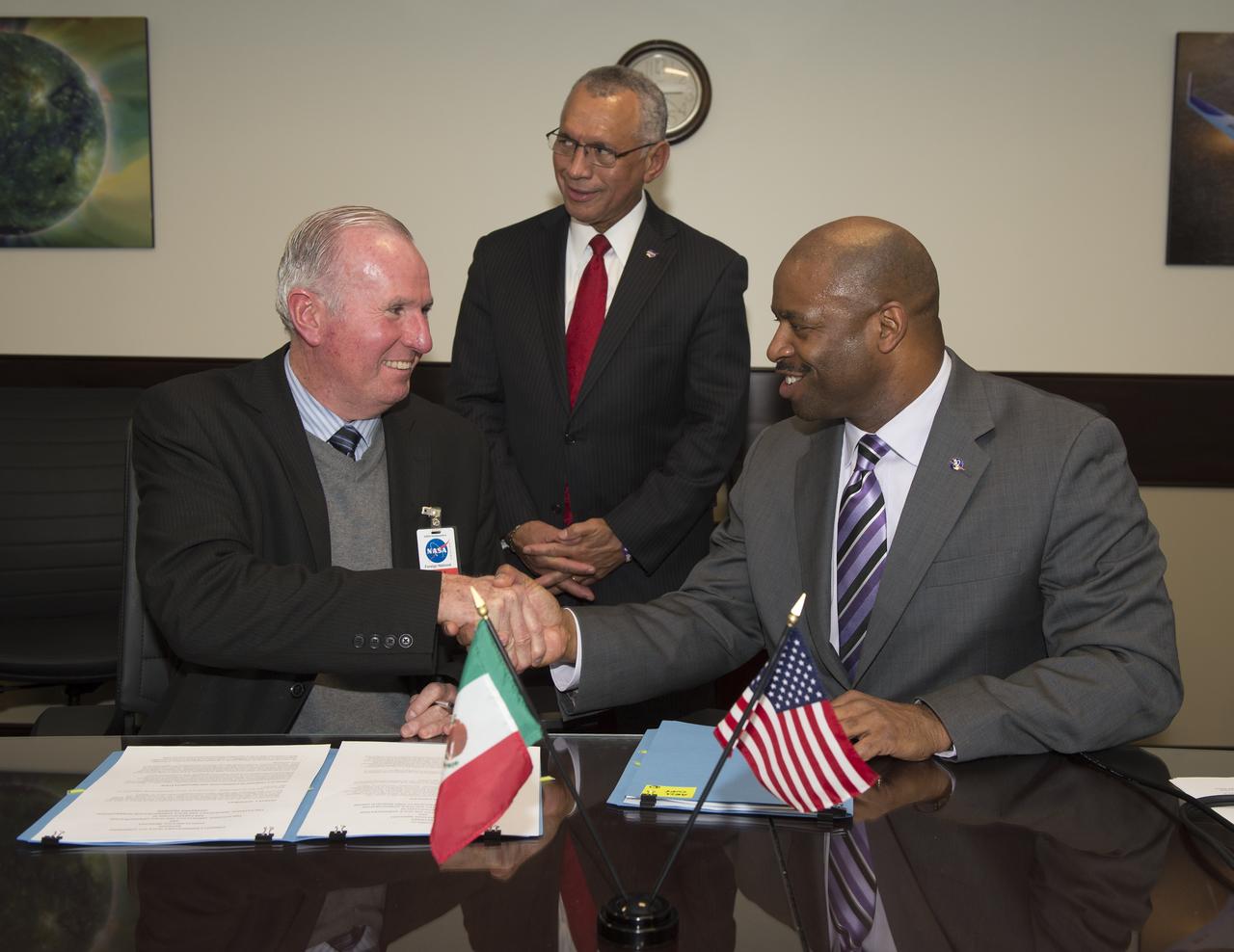
Leland Melvin (right), NASA Associate Administrator for Education, along with the head of the Mexican Space Agency, Dr. Francisco Javier Mendieta Jimenez shake hands after signing a Reimbursable Space Act Agreement (RSAA) for a NASA International Internship Program as NASA Administrator Charles Bolden looks on, Monday, March 18, 2013 at NASA Headquarters in Washington. The International Internship Program is a pilot program developed at NASA which will provide and avenue for non-US students to come to NASA for an internship. US students will be paired with a foreign student to work on a NASA research project under the guidance of a mentor. This is the first NASA-Mexico agreement signed. Photo Credit: (NASA/Carla Cioffi)
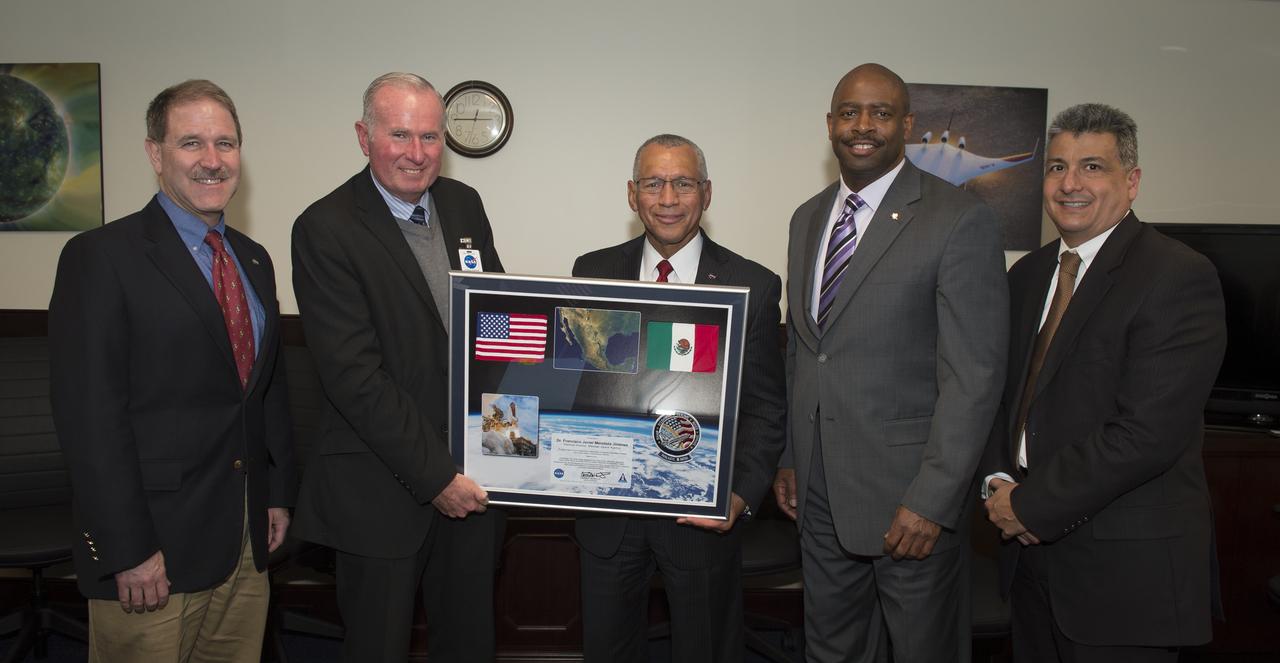
John Grunsfeld (far left), Associate Administrator for the Science Mission Directorate at NASA Headquarters, Dr. Francisco Javier Mendieta Jimenez, Director General of the Mexican Space Agency, NASA Administrator Charles Bolden, Leland Melvin, NASA Associate Administrator for Education and Al Condes (far right), Deputy Associate Administrator for International and Interagency Relations pose for a photo, Monday, March 18, 2013 at NASA Headquarters in Washington. A Reimbursable Space Act Agreement (RSAA) for a NASA International Internship Program was signed between the two agencies. This is the first NASA-Mexico agreement signed. Photo Credit: (NASA/Carla Cioffi)
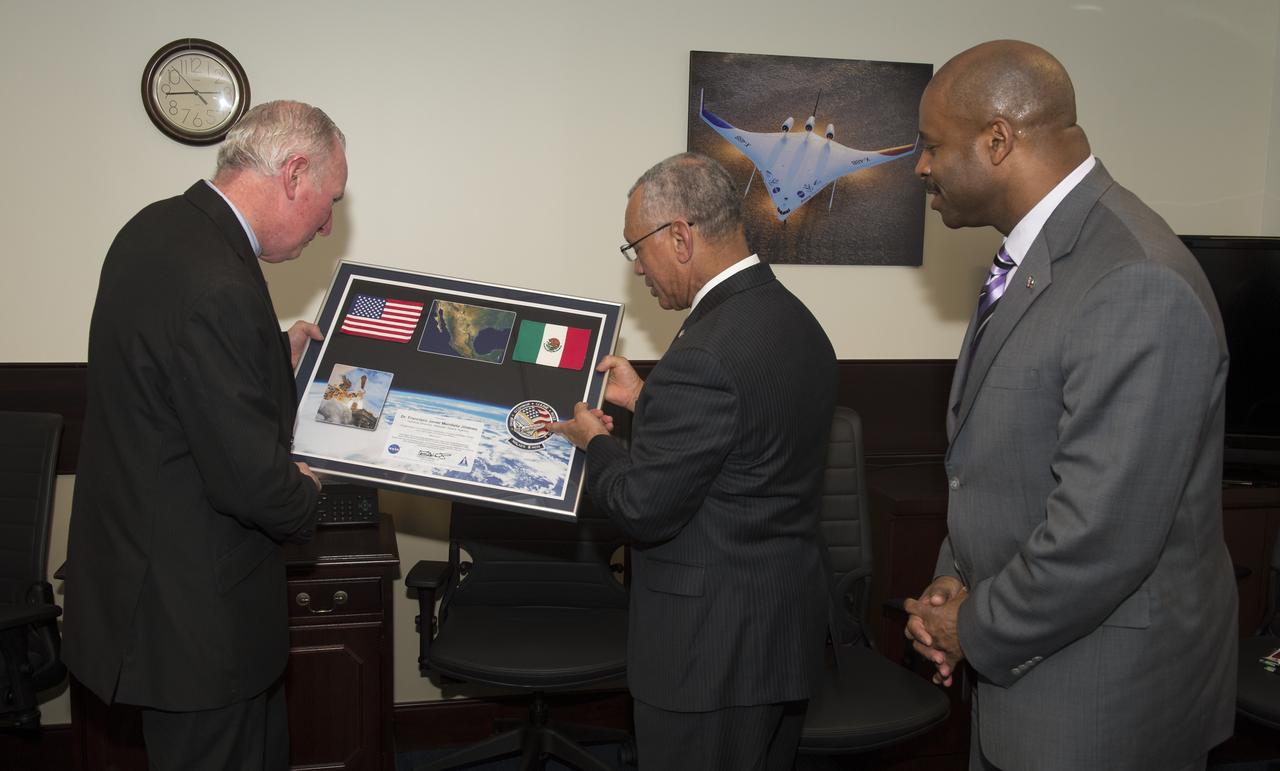
NASA Administrator Charles Bolden (center) presents Dr. Francisco Javier Mendieta Jimenez, Director General of the Mexican Space Agency, a NASA montage in honor of the Reimbursable Space Act Agreement (RSAA) signed between the two agencies, Monday, March 18, 2013 at NASA Headquarters in Washington. Leland Melvin (right), NASA Associate Administrator for Education looks on. The International Internship Program is a pilot program developed at NASA which will provide and avenue for non-US students to come to NASA for an internship. US students will be paired with a foreign student to work on a NASA research project under the guidance of a mentor. This is the first NASA-Mexico agreement signed. Photo Credit: (NASA/Carla Cioffi)
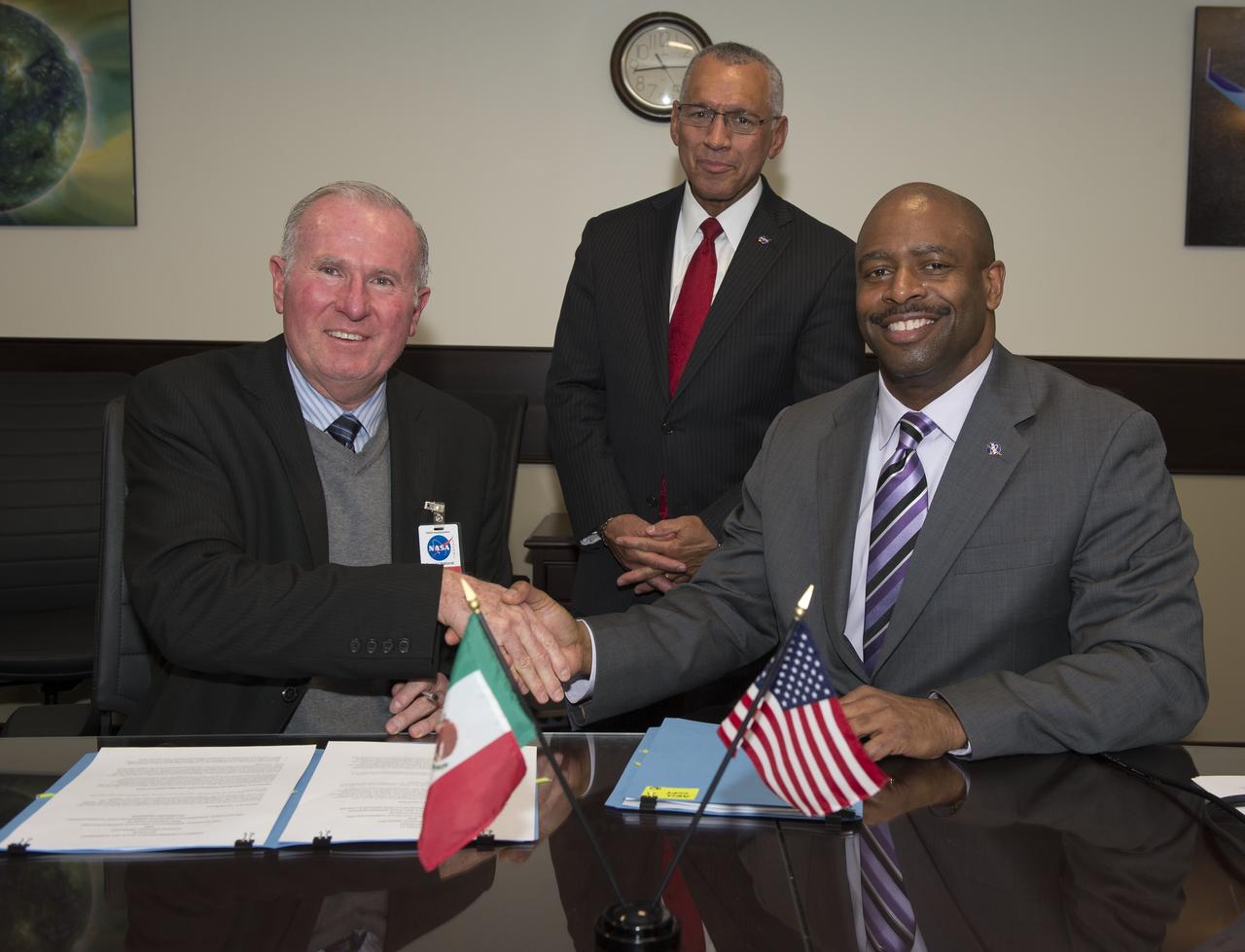
Leland Melvin (right), NASA Associate Administrator for Education, along with the head of the Mexican Space Agency, Dr. Francisco Javier Mendieta Jimenez pose for a photo after signing a Reimbursable Space Act Agreement (RSAA) for a NASA International Internship Program as NASA Administrator Charles Bolden looks on, Monday, March 18, 2013 at NASA Headquarters in Washington. The International Internship Program is a pilot program developed at NASA which will provide and avenue for non-US students to come to NASA for an internship. US students will be paired with a foreign student to work on a NASA research project under the guidance of a mentor. This is the first NASA-Mexico agreement signed. Photo Credit: (NASA/Carla Cioffi)
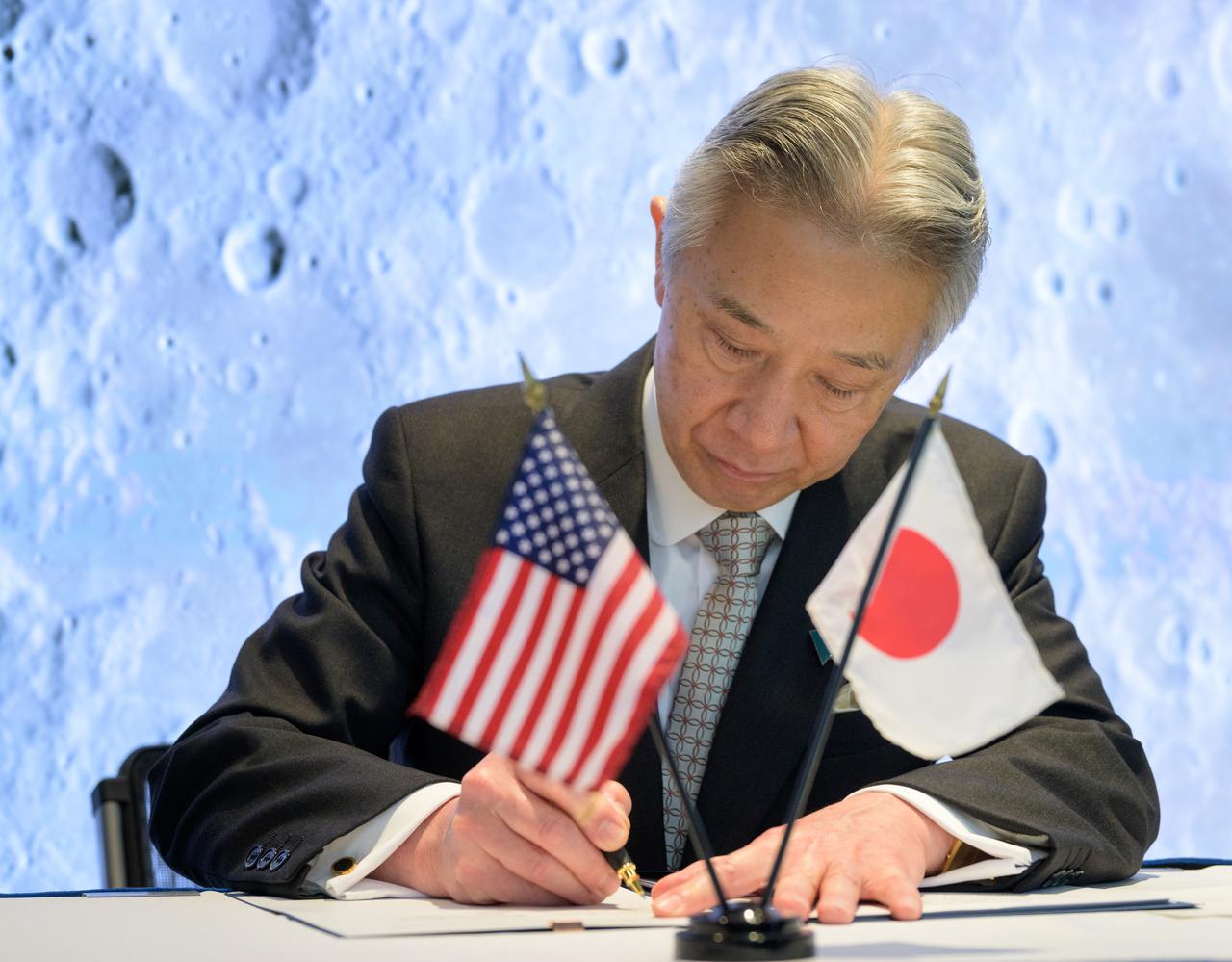
Japan’s Minister of Education, Culture, Sports, Science and Technology Masahito Moriyama, signs an historic agreement between the United States and Japan to advance sustainable human exploration of the Moon, Tuesday, April 9, 2024, at the NASA Headquarters Mary W. Jackson Building in Washington. Under the agreement, Japan will design, develop, and operate a pressurized rover for crewed and uncrewed exploration on the Moon. NASA will provide the launch and delivery of the rover to the Moon as well as two Japanese astronaut missions to the lunar surface. Photo Credit: (NASA/Bill Ingalls)
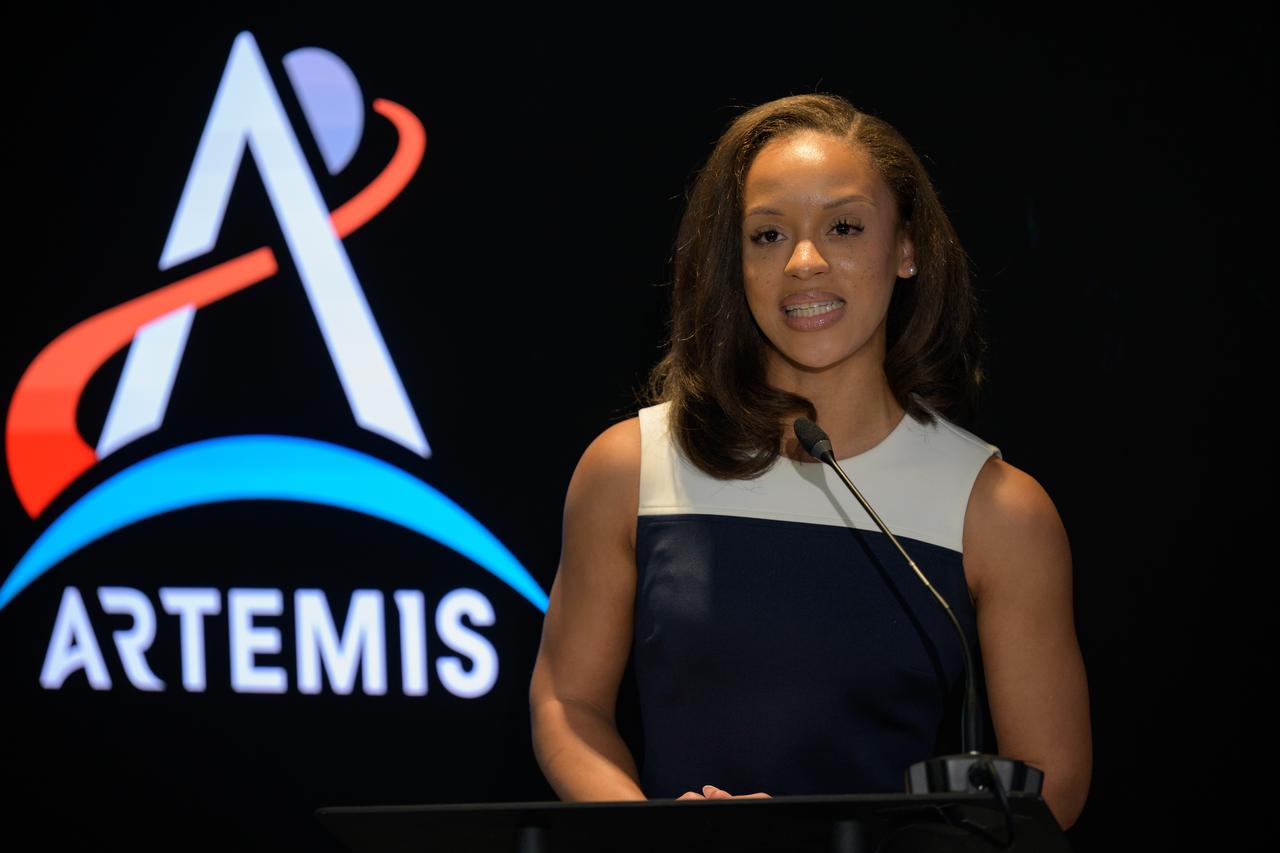
NASA Press Secretary Faith McKie moderates an event where an historic agreement is to be signed between the United States and Japan to advance sustainable human exploration of the Moon, Tuesday, April 9, 2024, at the NASA Headquarters Mary W. Jackson Building in Washington. Under the agreement, Japan will design, develop, and operate a pressurized rover for crewed and uncrewed exploration on the Moon. NASA will provide the launch and delivery of the rover to the Moon as well as two Japanese astronaut missions to the lunar surface. Photo Credit: (NASA/Bill Ingalls)

NASA Administrator Bill Nelson signs an historic agreement between the United States and Japan to advance sustainable human exploration of the Moon, Tuesday, April 9, 2024, at the NASA Headquarters Mary W. Jackson Building in Washington. Under the agreement, Japan will design, develop, and operate a pressurized rover for crewed and uncrewed exploration on the Moon. NASA will provide the launch and delivery of the rover to the Moon as well as two Japanese astronaut missions to the lunar surface. Photo Credit: (NASA/Bill Ingalls)

NASA Administrator Bill Nelson speaks prior to signing an historic agreement between the United States and Japan to advance sustainable human exploration of the Moon, Tuesday, April 9, 2024, at the NASA Headquarters Mary W. Jackson Building in Washington. Under the agreement, Japan will design, develop, and operate a pressurized rover for crewed and uncrewed exploration on the Moon. NASA will provide the launch and delivery of the rover to the Moon as well as two Japanese astronaut missions to the lunar surface. Photo Credit: (NASA/Bill Ingalls)
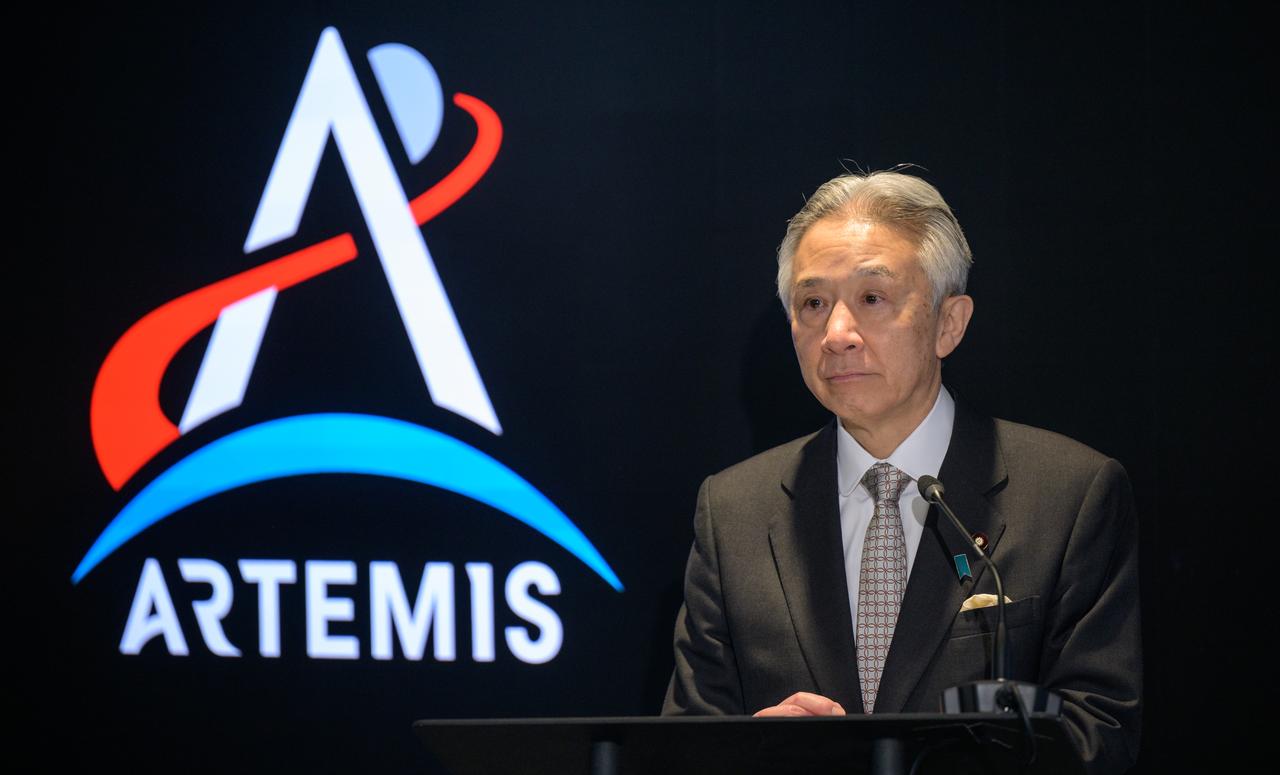
Japan’s Minister of Education, Culture, Sports, Science and Technology Masahito Moriyama speaks after signing an historic agreement between the United States and Japan to advance sustainable human exploration of the Moon, Tuesday, April 9, 2024, at the NASA Headquarters Mary W. Jackson Building in Washington. Under the agreement, Japan will design, develop, and operate a pressurized rover for crewed and uncrewed exploration on the Moon. NASA will provide the launch and delivery of the rover to the Moon as well as two Japanese astronaut missions to the lunar surface. Photo Credit: (NASA/Bill Ingalls)
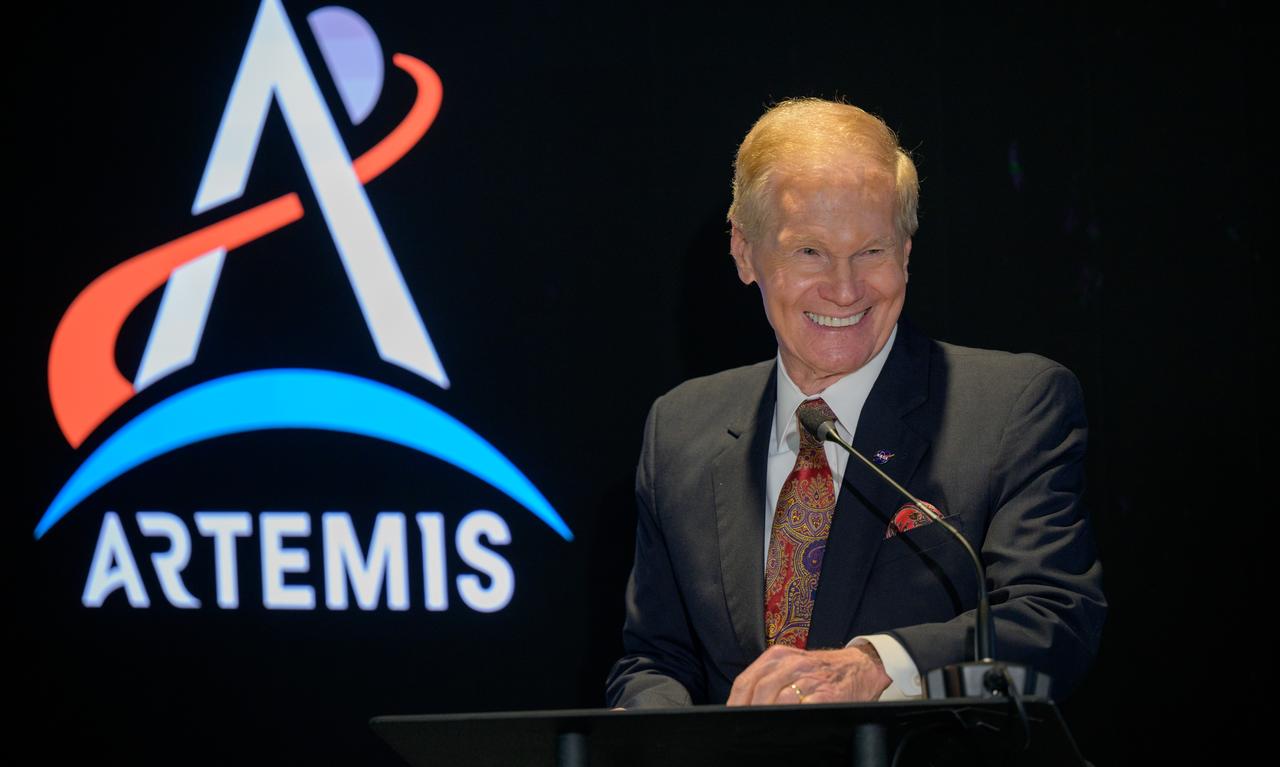
NASA Administrator Bill Nelson speaks prior to signing an historic agreement between the United States and Japan to advance sustainable human exploration of the Moon, Tuesday, April 9, 2024, at the NASA Headquarters Mary W. Jackson Building in Washington. Under the agreement, Japan will design, develop, and operate a pressurized rover for crewed and uncrewed exploration on the Moon. NASA will provide the launch and delivery of the rover to the Moon as well as two Japanese astronaut missions to the lunar surface. Photo Credit: (NASA/Bill Ingalls)
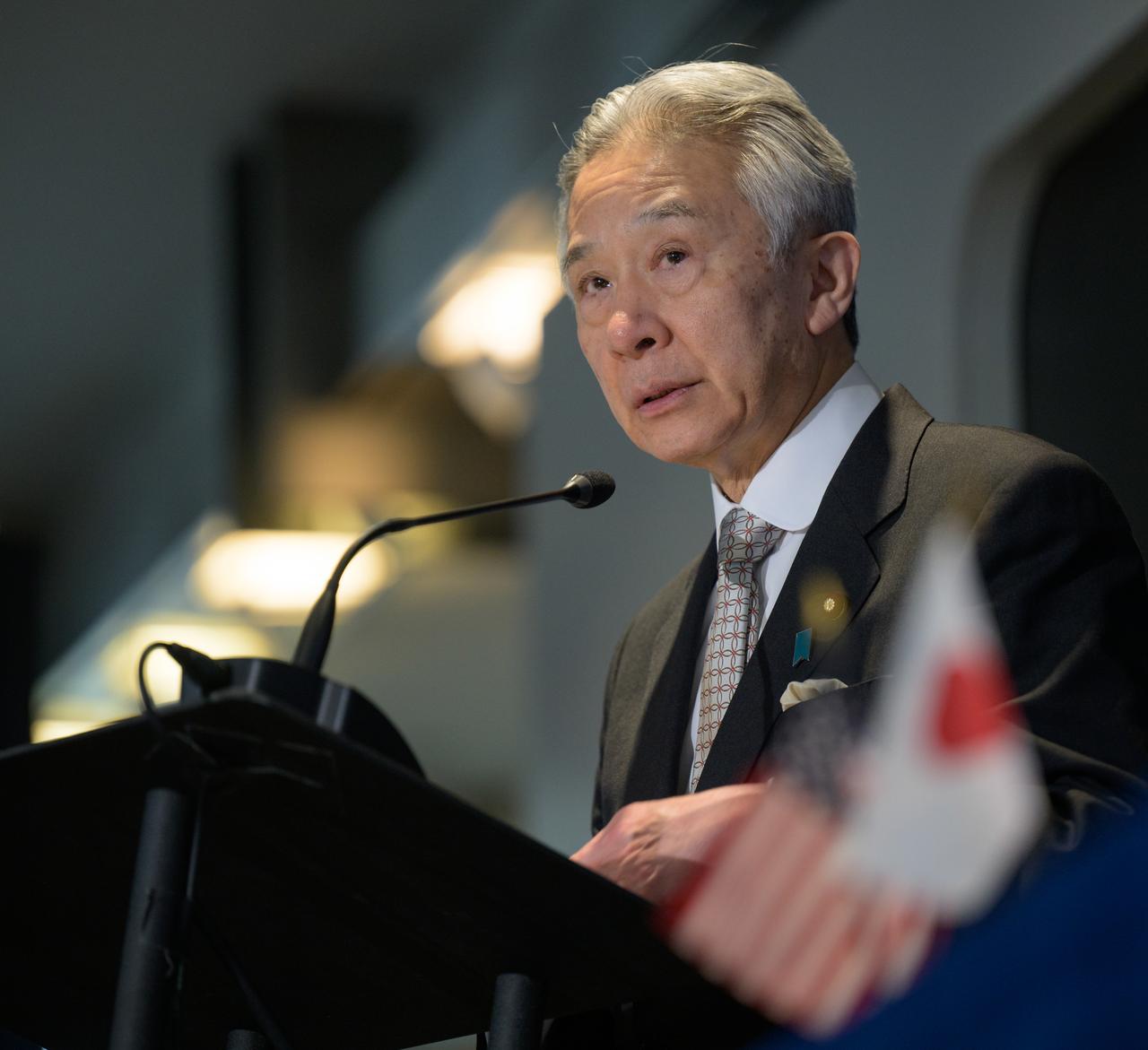
Japan’s Minister of Education, Culture, Sports, Science and Technology Masahito Moriyama speaks after signing an historic agreement between the United States and Japan to advance sustainable human exploration of the Moon, Tuesday, April 9, 2024, at the NASA Headquarters Mary W. Jackson Building in Washington. Under the agreement, Japan will design, develop, and operate a pressurized rover for crewed and uncrewed exploration on the Moon. NASA will provide the launch and delivery of the rover to the Moon as well as two Japanese astronaut missions to the lunar surface. Photo Credit: (NASA/Bill Ingalls)
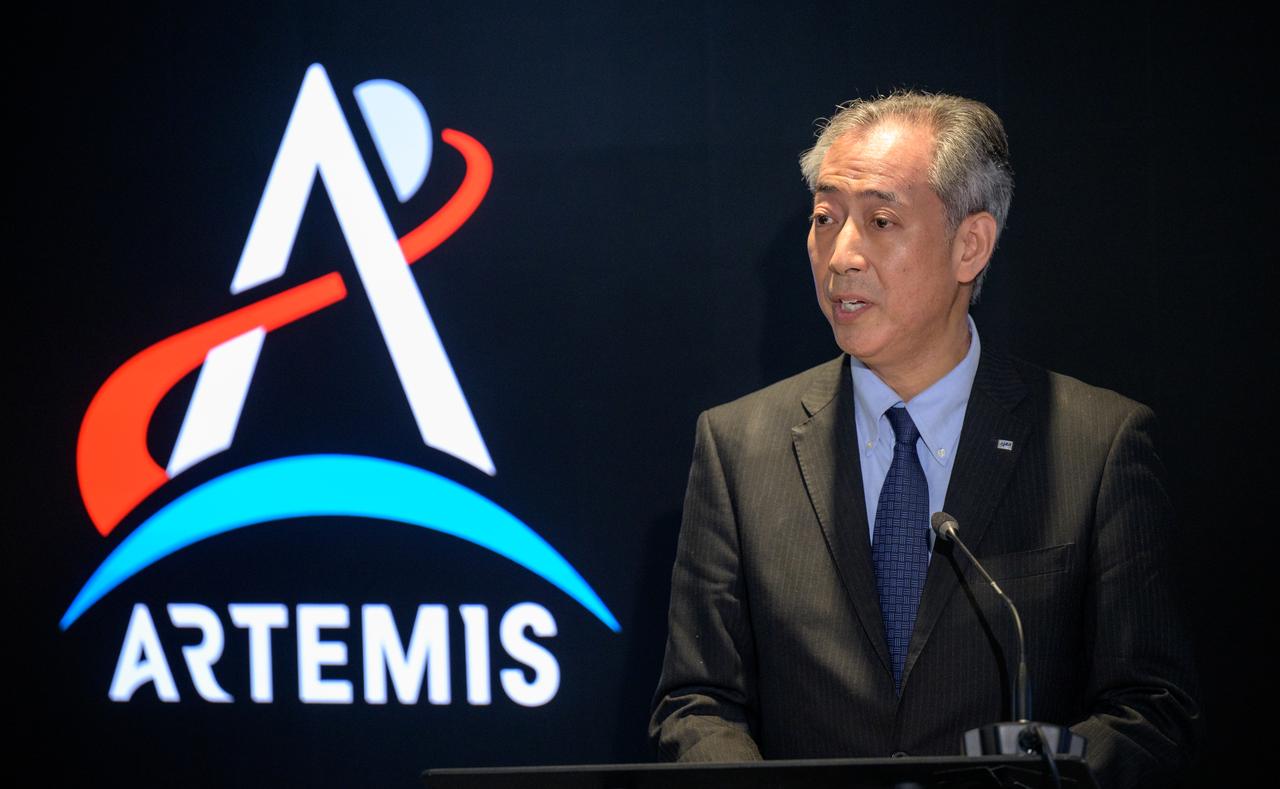
Japan Aerospace Exploration Agency (JAXA) President Hiroshi Yamakawa speaks after the signing of an historic agreement between the United States and Japan to advance sustainable human exploration of the Moon, Tuesday, April 9, 2024, at the NASA Headquarters Mary W. Jackson Building in Washington. Under the agreement, Japan will design, develop, and operate a pressurized rover for crewed and uncrewed exploration on the Moon. NASA will provide the launch and delivery of the rover to the Moon as well as two Japanese astronaut missions to the lunar surface. Photo Credit: (NASA/Bill Ingalls)
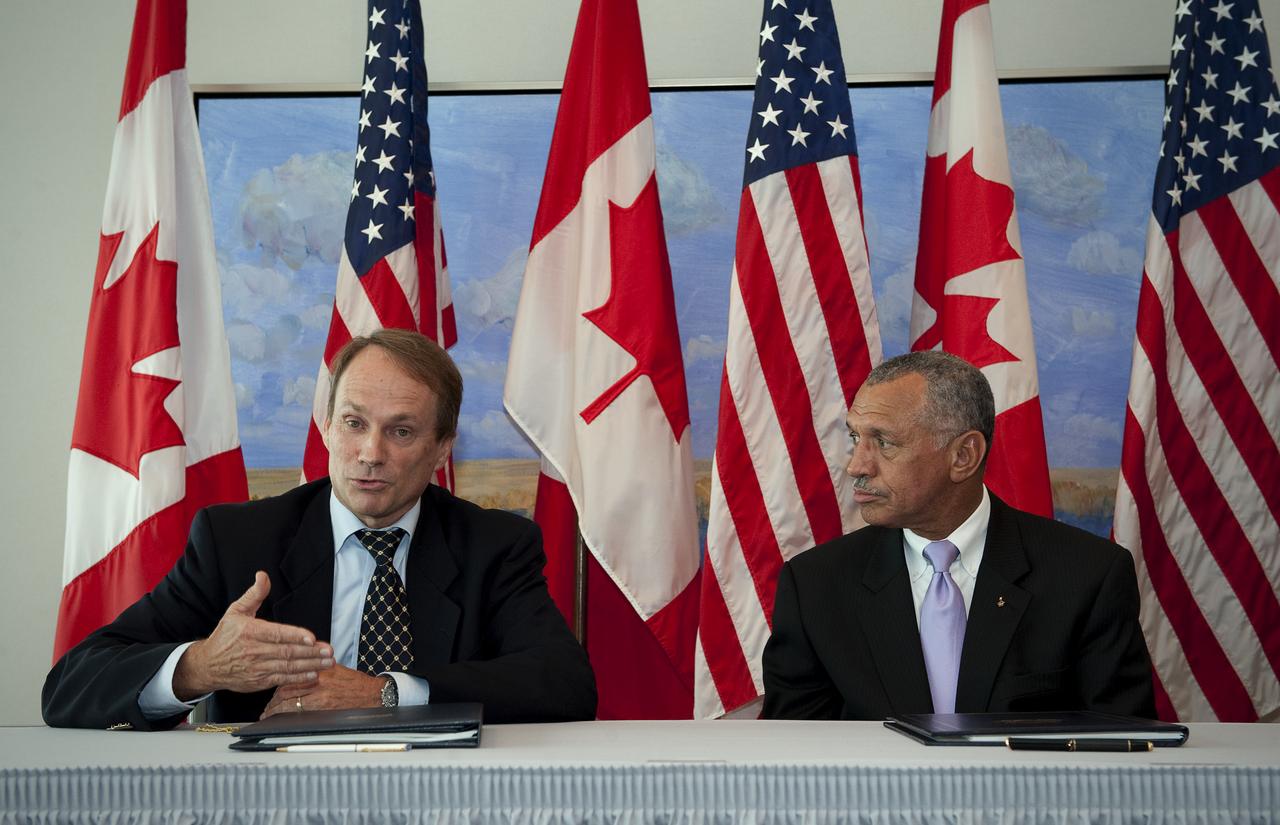
NASA Administrator Charles Bolden, right, and Canadian Space Agency President Steve MacLean sign a framework agreement on civil space cooperation, Wednesday, Sept. 9, 2009, at the Canadian Embassy in Washington, DC. Photo Credit: (NASA/Bill Ingalls)
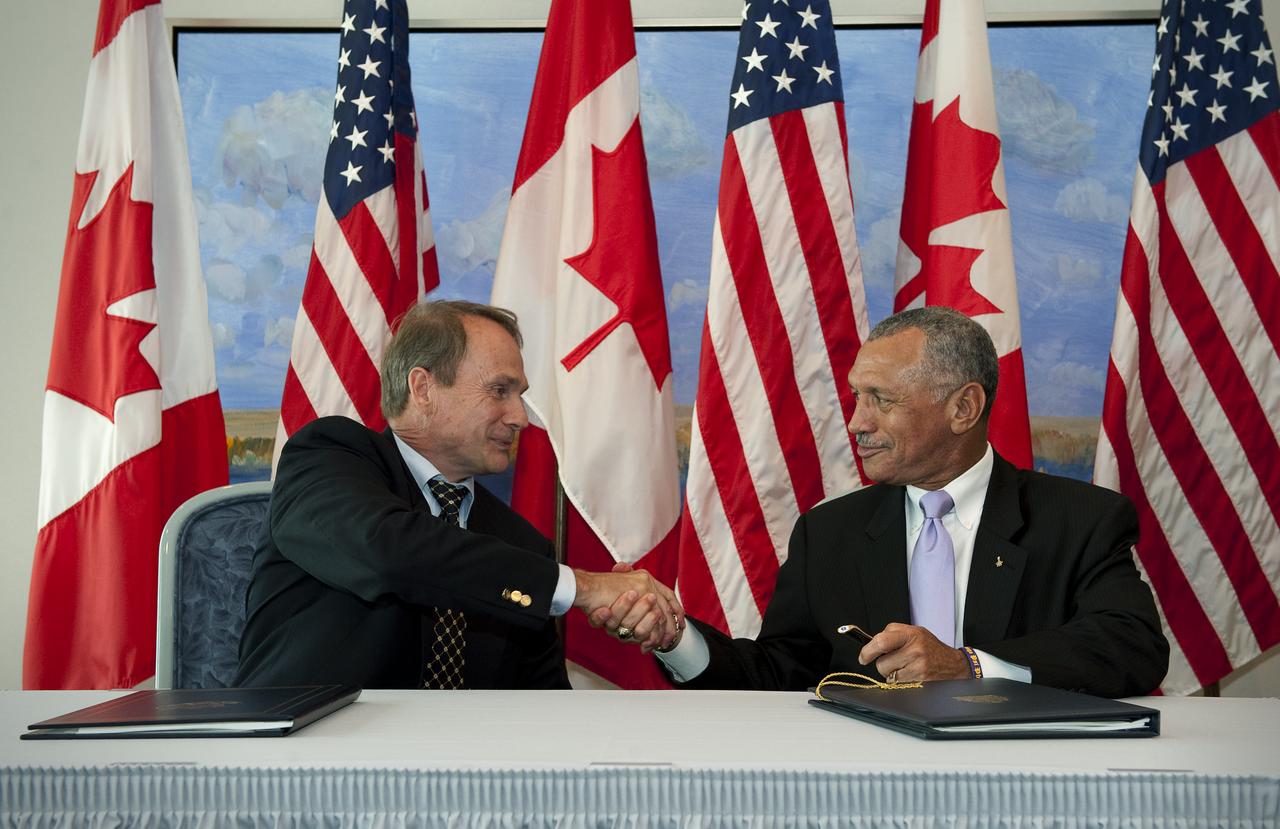
NASA Administrator Charles Bolden, right, and Canadian Space Agency President Steve MacLean shake hands after signing a framework agreement on civil space cooperation, Wednesday, Sept. 9, 2009, at the Canadian Embassy in Washington, DC. Photo Credit: (NASA/Bill Ingalls)
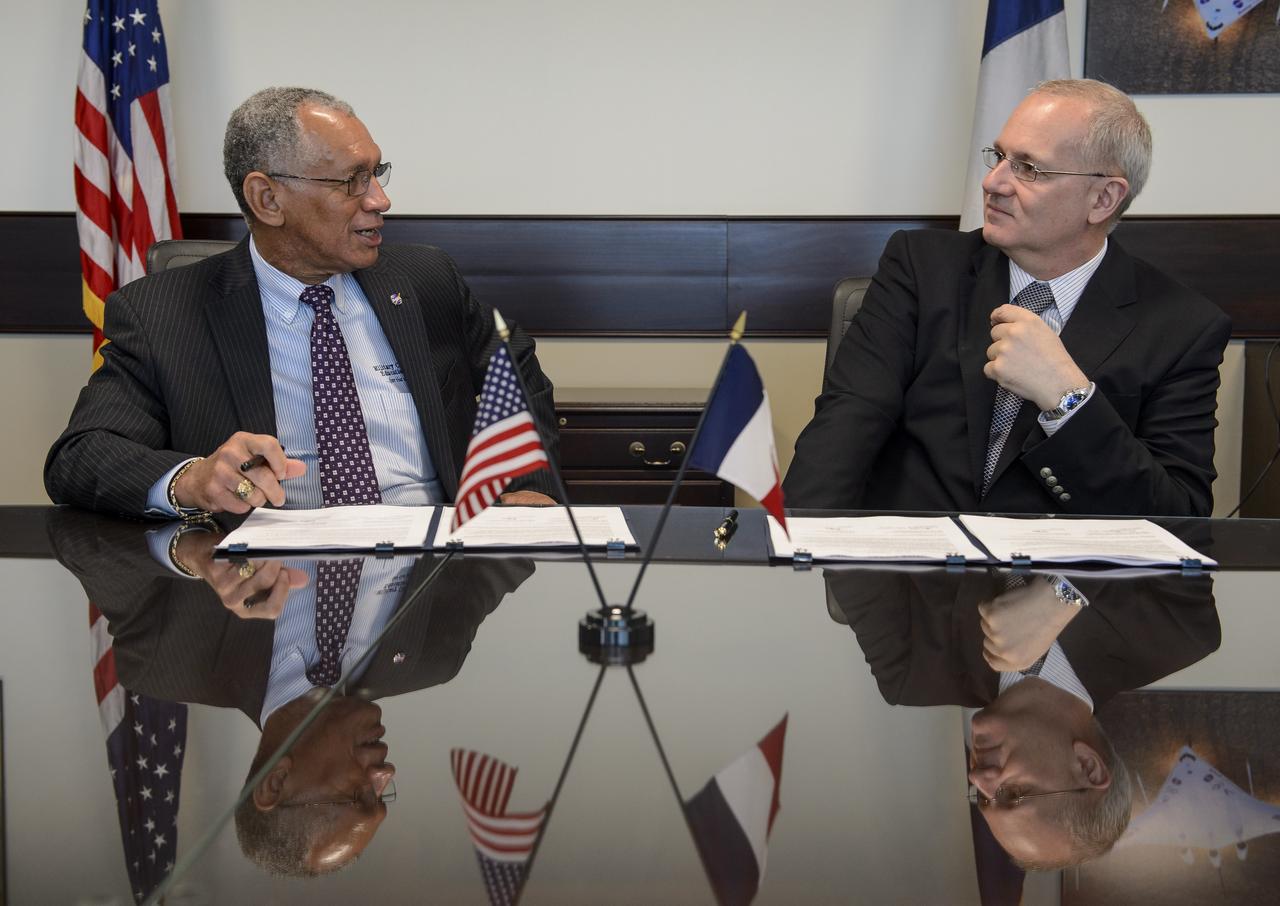
NASA Administrator Charles Bolden, left, and Centre National d'Études Spatiales (CNES) President Jean-Yves Le Gall talk after signing an agreement to move from feasibility studies to implementation of the Surface Water and Ocean Topography (SWOT) mission, Friday, May 2, 2014 at NASA Headquarters in Washington. The SWOT mission will use wide swath altimetry technology to produce high-resolution elevation measurements of the surface of lakes, reservoirs, and wetlands and of the ocean surface. Photo Credit: (NASA/Bill Ingalls)
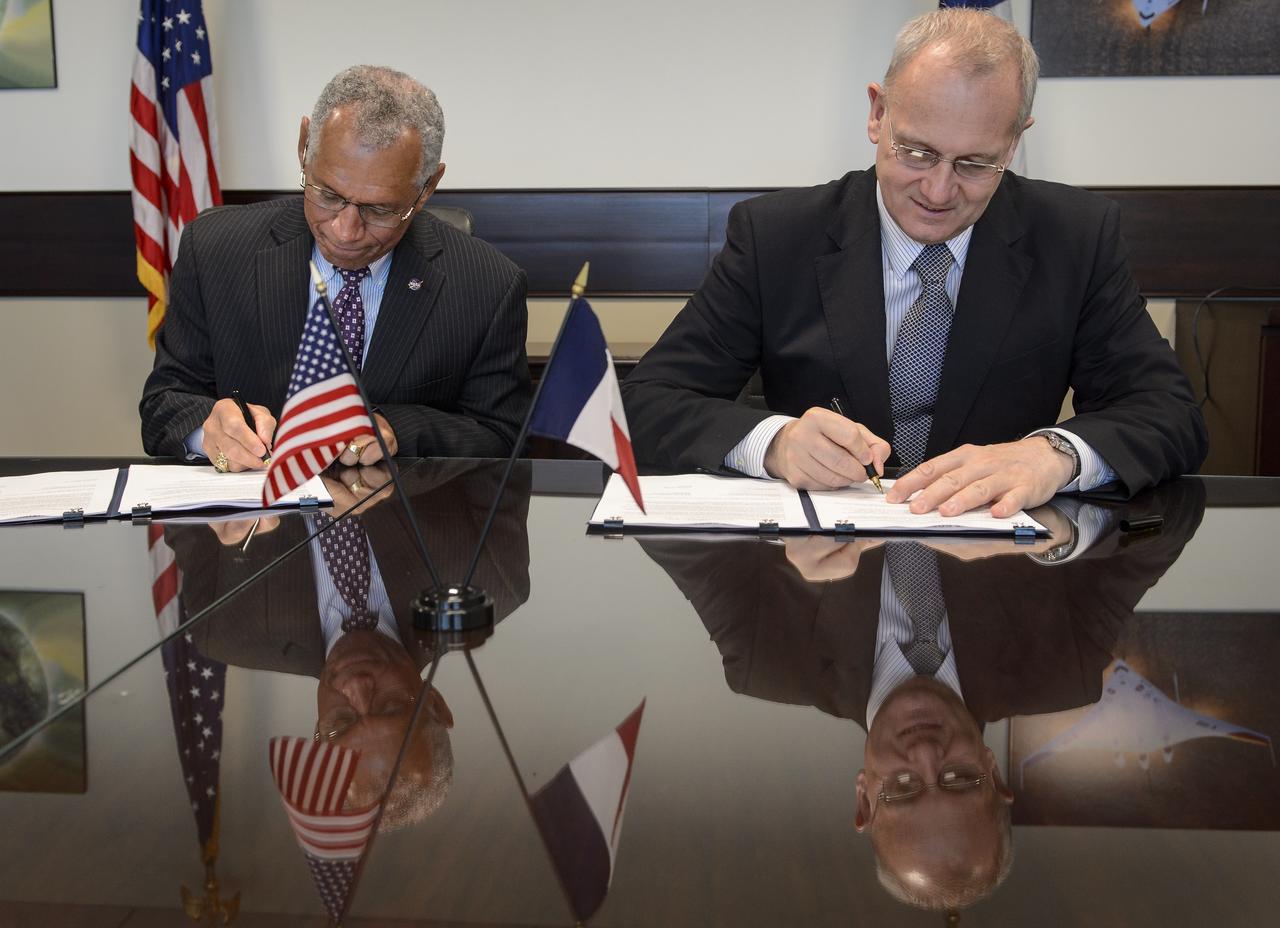
NASA Administrator Charles Bolden, left, and Centre National d'Études Spatiales (CNES) President Jean-Yves Le Gall sign an agreement to move from feasibility studies to implementation of the Surface Water and Ocean Topography (SWOT) mission, Friday, May 2, 2014 at NASA Headquarters in Washington. The SWOT mission will use wide swath altimetry technology to produce high-resolution elevation measurements of the surface of lakes, reservoirs, and wetlands and of the ocean surface. Photo Credit: (NASA/Bill Ingalls)
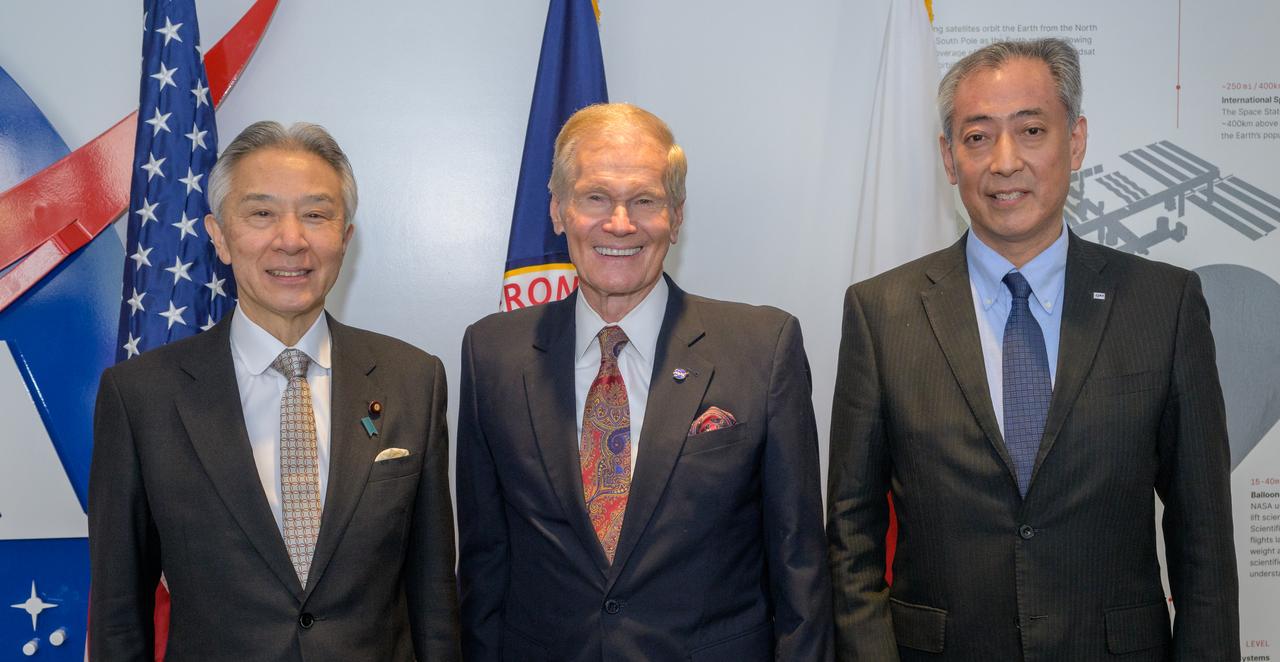
Japan’s Minister of Education, Culture, Sports, Science and Technology Masahito Moriyama, left, NASA Administrator Bill Nelson, and Japan Aerospace Exploration Agency (JAXA) President Hiroshi Yamakawa, right, pose for a photograph prior to the signing an historic agreement between the United States and Japan to advance sustainable human exploration of the Moon, Tuesday, April 9, 2024, at the NASA Headquarters Mary W. Jackson Building in Washington. Under the agreement, Japan will design, develop, and operate a pressurized rover for crewed and uncrewed exploration on the Moon. NASA will provide the launch and delivery of the rover to the Moon as well as two Japanese astronaut missions to the lunar surface. Photo Credit: (NASA/Bill Ingalls)
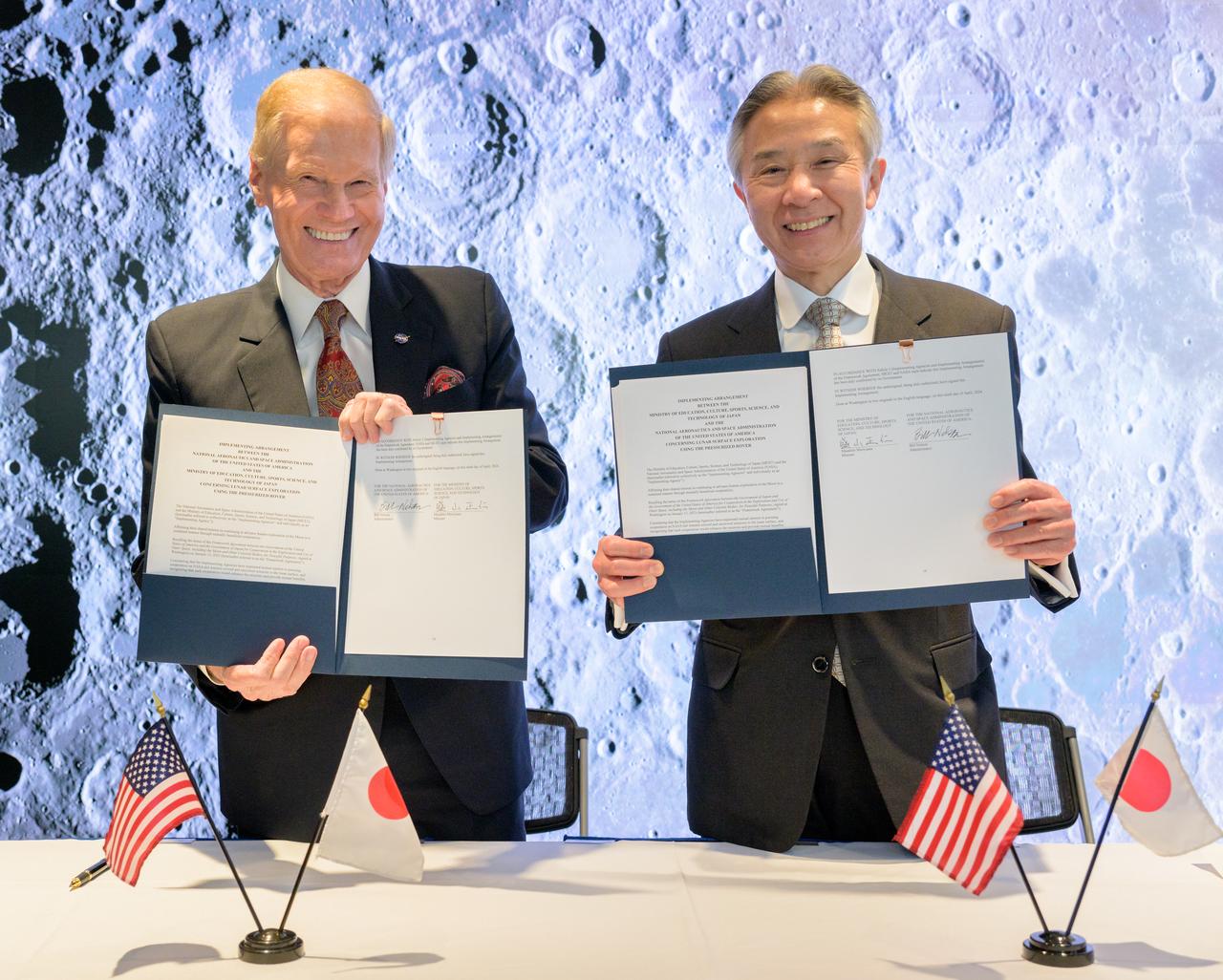
NASA Administrator Bill Nelson, left, and Japan’s Minister of Education, Culture, Sports, Science and Technology Masahito Moriyama, hold signed copies of an historic agreement between the United States and Japan to advance sustainable human exploration of the Moon, Tuesday, April 9, 2024, at the NASA Headquarters Mary W. Jackson Building in Washington. Under the agreement, Japan will design, develop, and operate a pressurized rover for crewed and uncrewed exploration on the Moon. NASA will provide the launch and delivery of the rover to the Moon as well as two Japanese astronaut missions to the lunar surface. Photo Credit: (NASA/Bill Ingalls)
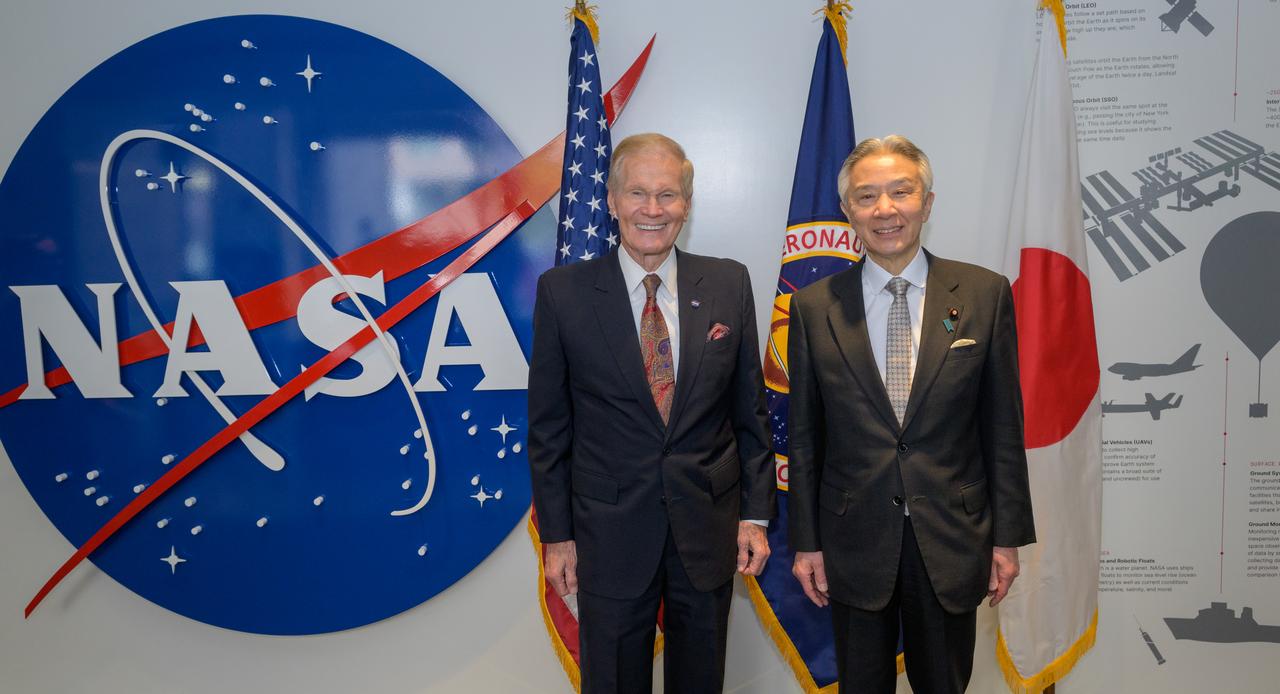
NASA Administrator Bill Nelson, left, and Japan’s Minister of Education, Culture, Sports, Science and Technology Masahito Moriyama, pose for a photograph prior to signing an historic agreement between the United States and Japan to advance sustainable human exploration of the Moon, Tuesday, April 9, 2024, at the NASA Headquarters Mary W. Jackson Building in Washington. Under the agreement, Japan will design, develop, and operate a pressurized rover for crewed and uncrewed exploration on the Moon. NASA will provide the launch and delivery of the rover to the Moon as well as two Japanese astronaut missions to the lunar surface. Photo Credit: (NASA/Bill Ingalls)
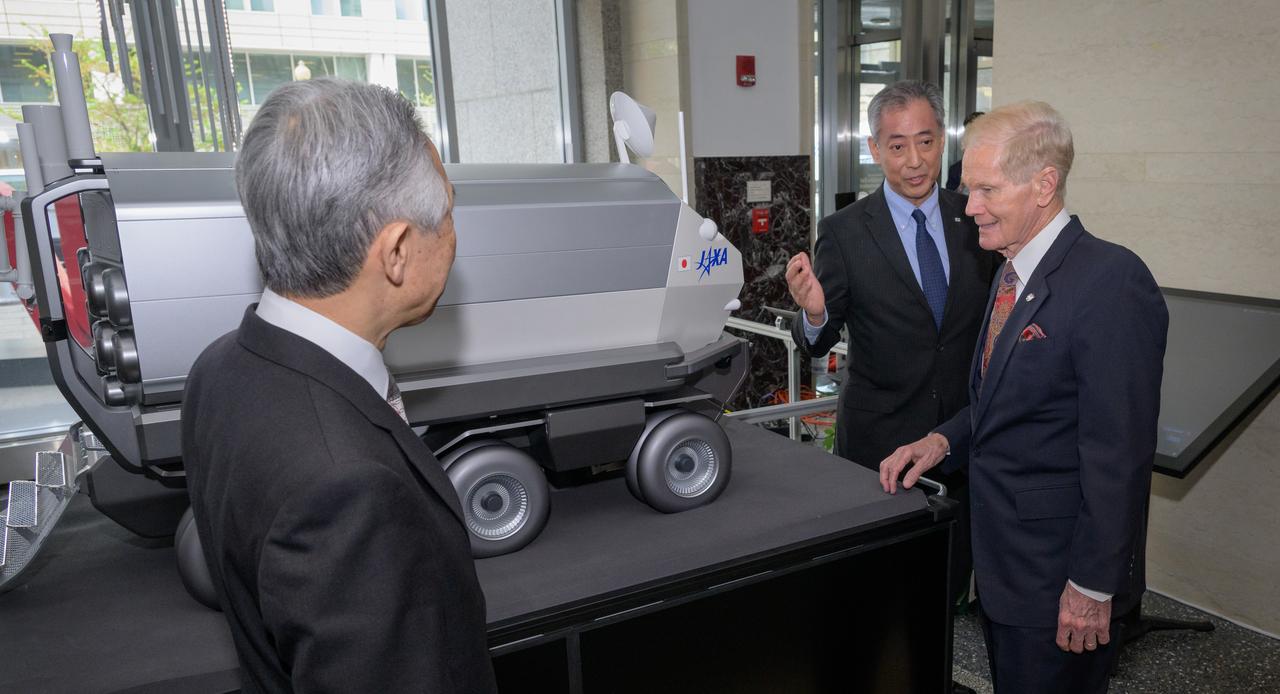
Japan’s Minister of Education, Culture, Sports, Science and Technology Masahito Moriyama, left, Japan Aerospace Exploration Agency (JAXA) President Hiroshi Yamakawa, and NASA Administrator Bill Nelson, right, look at a model of the Pressurized lunar rover, prior to the signing an historic agreement between the United States and Japan to advance sustainable human exploration of the Moon, Tuesday, April 9, 2024, at the NASA Headquarters Mary W. Jackson Building in Washington. Under the agreement, Japan will design, develop, and operate a pressurized rover for crewed and uncrewed exploration on the Moon. NASA will provide the launch and delivery of the rover to the Moon as well as two Japanese astronaut missions to the lunar surface. Photo Credit: (NASA/Bill Ingalls)
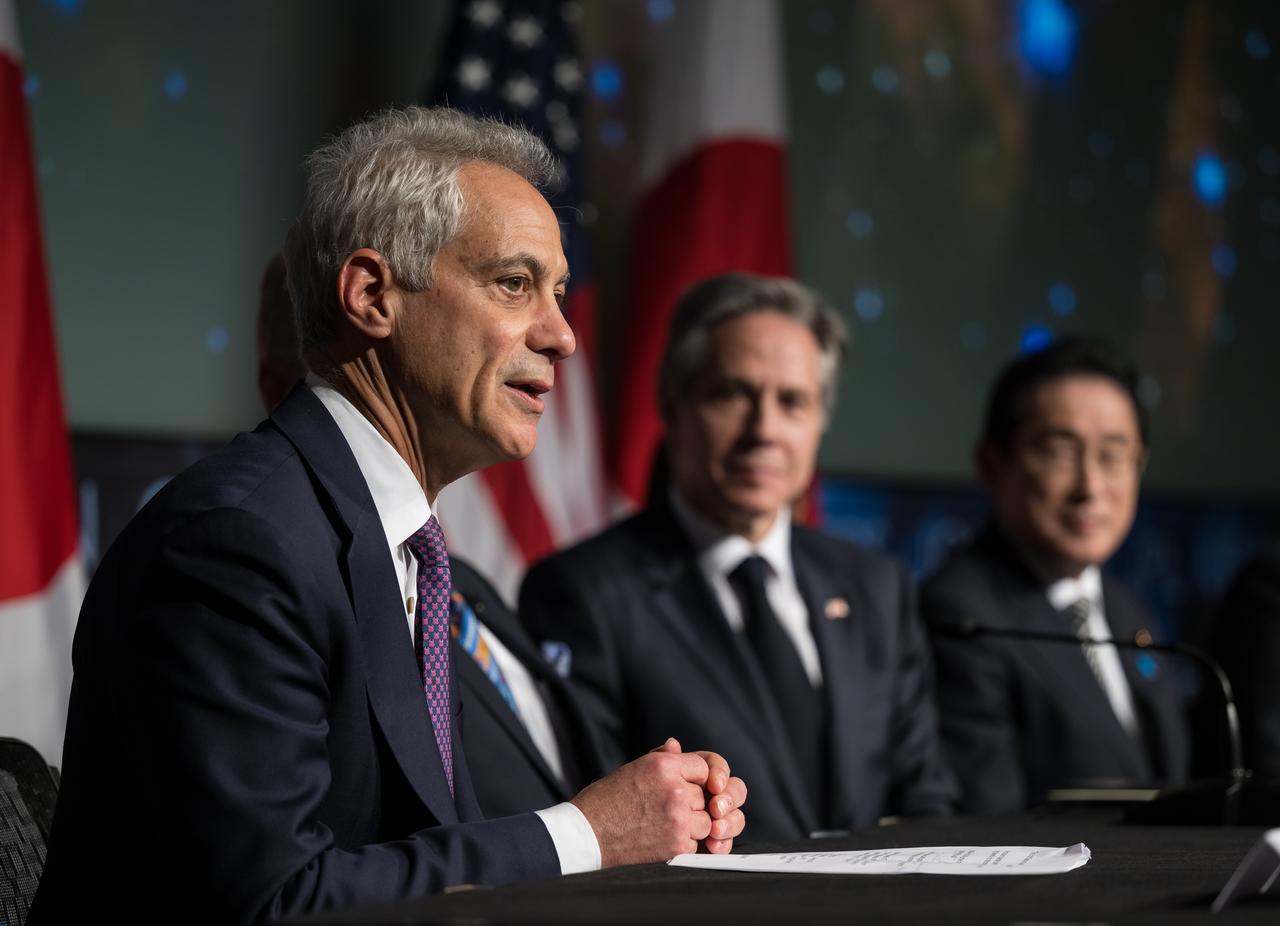
U.S. Ambassador to Japan, Rahm Emanuel, delivers remarks after U.S. Secretary of State, Antony Blinken and Minister for Foreign Affairs of Japan, The Honorable Hayashi Yoshimasa signed an agreement that builds on a long history of collaboration in space exploration between the U.S. and Japan, Friday, Jan. 13, 2023, at the Mary W. Jackson NASA Headquarters building in Washington. “The Framework Agreement Between the Government of Japan and the Government of the United States of America for Cooperation in Space Exploration and Use of Outer Space, Including the Moon and Other Celestial Bodies, For Peaceful Purposes” covers joint activities including space science, Earth science, space operations and exploration, aeronautical science and technology, space technology, space transportation, and safety and mission assurance, among others. Photo Credit: (NASA/Aubrey Gemignani)
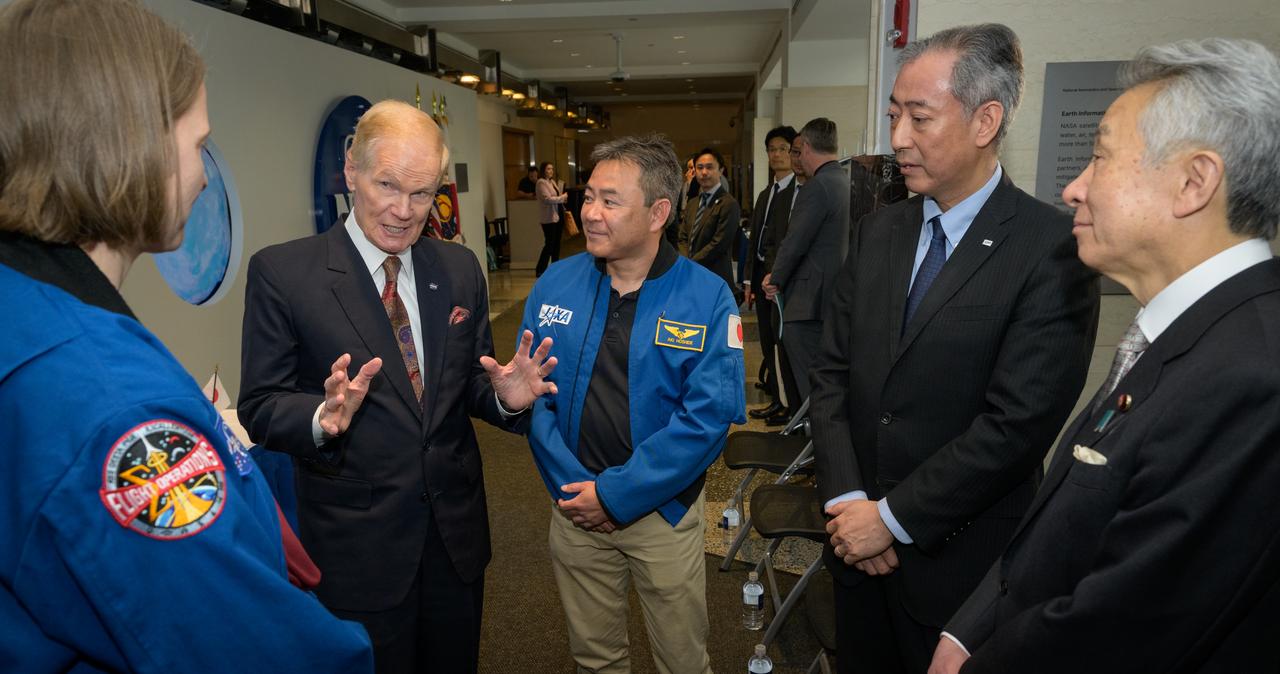
NASA astronaut Kayla Barron, left, NASA Administrator Bill Nelson, JAXA astronaut Akihiko Hoshide, Japan Aerospace Exploration Agency (JAXA) President Hiroshi Yamakawa, and Japan’s Minister of Education, Culture, Sports, Science and Technology Masahito Moriyama, right, talk after the signing of an historic agreement between the United States and Japan to advance sustainable human exploration of the Moon, Tuesday, April 9, 2024, at the NASA Headquarters Mary W. Jackson Building in Washington. Under the agreement, Japan will design, develop, and operate a pressurized rover for crewed and uncrewed exploration on the Moon. NASA will provide the launch and delivery of the rover to the Moon as well as two Japanese astronaut missions to the lunar surface. Photo Credit: (NASA/Bill Ingalls)
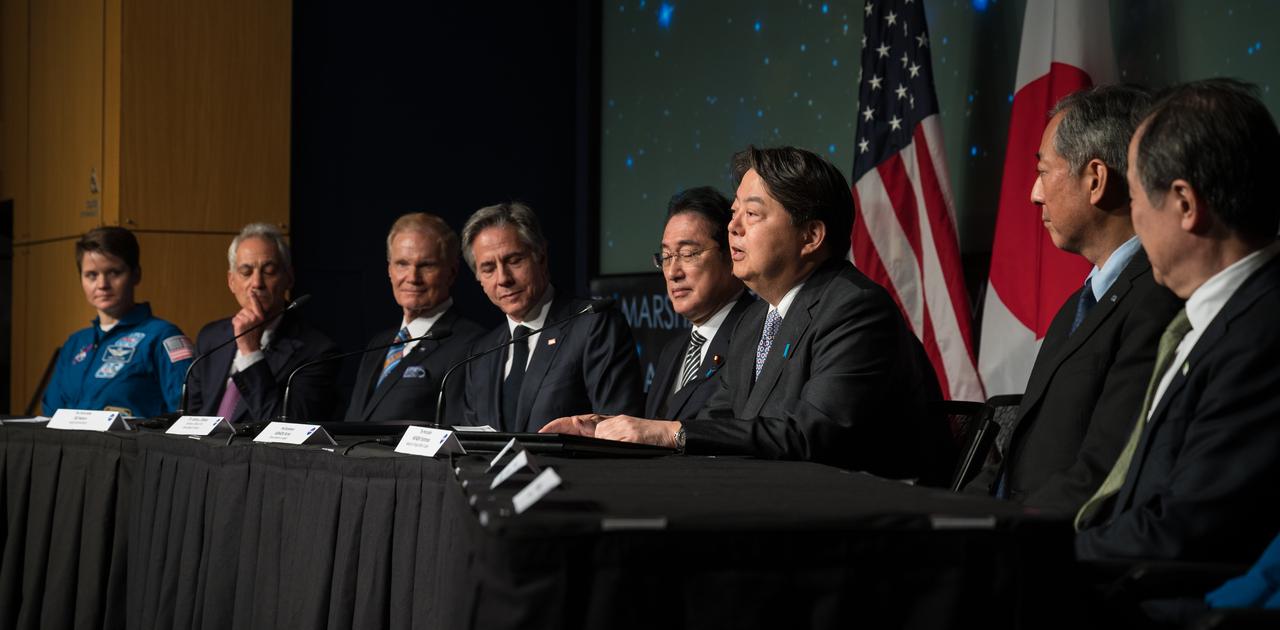
Minister for Foreign Affairs of Japan, The Honorable Hayashi Yoshimasa delivers remarks after he and U.S. Secretary of State, Antony Blinken signed an agreement that builds on a long history of collaboration in space exploration between the U.S. and Japan, Friday, Jan. 13, 2023, at the Mary W. Jackson NASA Headquarters building in Washington. “The Framework Agreement Between the Government of Japan and the Government of the United States of America for Cooperation in Space Exploration and Use of Outer Space, Including the Moon and Other Celestial Bodies, For Peaceful Purposes” covers joint activities including space science, Earth science, space operations and exploration, aeronautical science and technology, space technology, space transportation, and safety and mission assurance, among others. Photo Credit: (NASA/Aubrey Gemignani)
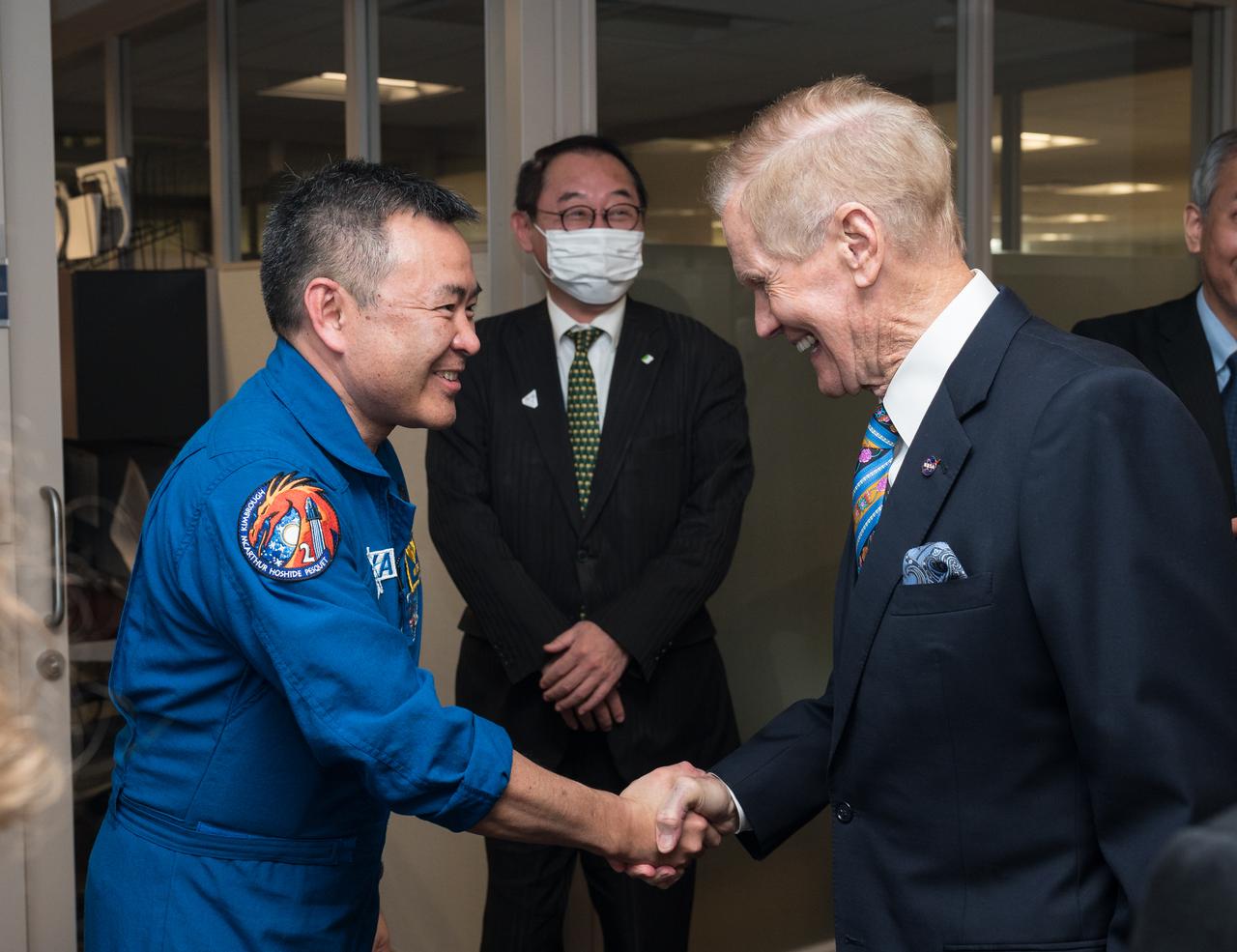
NASA Administrator Bill Nelson, right, greets Japan Aerospace Exploration Agency (JAXA) astronaut Hoshide Akihiko, before the signing of an agreement that builds on a long history of collaboration in space exploration between the U.S. and Japan, Friday, Jan. 13, 2023, at the Mary W. Jackson NASA Headquarters building in Washington. “The Framework Agreement Between the Government of Japan and the Government of the United States of America for Cooperation in Space Exploration and Use of Outer Space, Including the Moon and Other Celestial Bodies, For Peaceful Purposes” covers joint activities including space science, Earth science, space operations and exploration, aeronautical science and technology, space technology, space transportation, and safety and mission assurance, among others. Photo Credit: (NASA/Aubrey Gemignani)
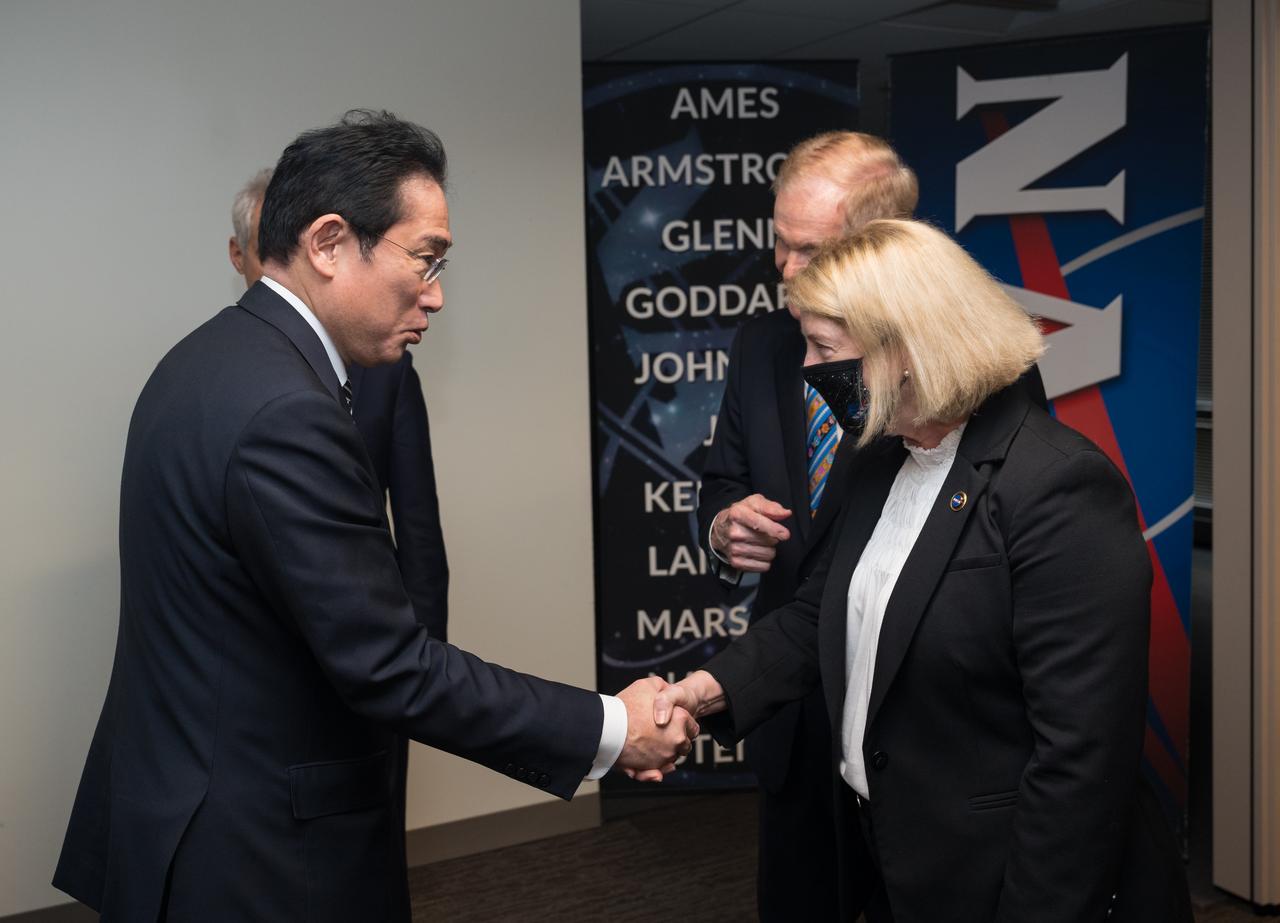
NASA Deputy Administrator Pam Melroy, right, greets Prime Minister of Japan, His Excellency Kishida Fumio, before U.S. Secretary of State Antony Blinken and Japan’s Minister for Foreign Affairs, Hayashi Yoshimasa, sign an agreement that builds on a long history of collaboration in space exploration between the U.S. and Japan, Friday, Jan. 13, 2023, at the Mary W. Jackson NASA Headquarters building in Washington. “The Framework Agreement Between the Government of Japan and the Government of the United States of America for Cooperation in Space Exploration and Use of Outer Space, Including the Moon and Other Celestial Bodies, For Peaceful Purposes” covers joint activities including space science, Earth science, space operations and exploration, aeronautical science and technology, space technology, space transportation, and safety and mission assurance, among others. Photo Credit: (NASA/Aubrey Gemignani)
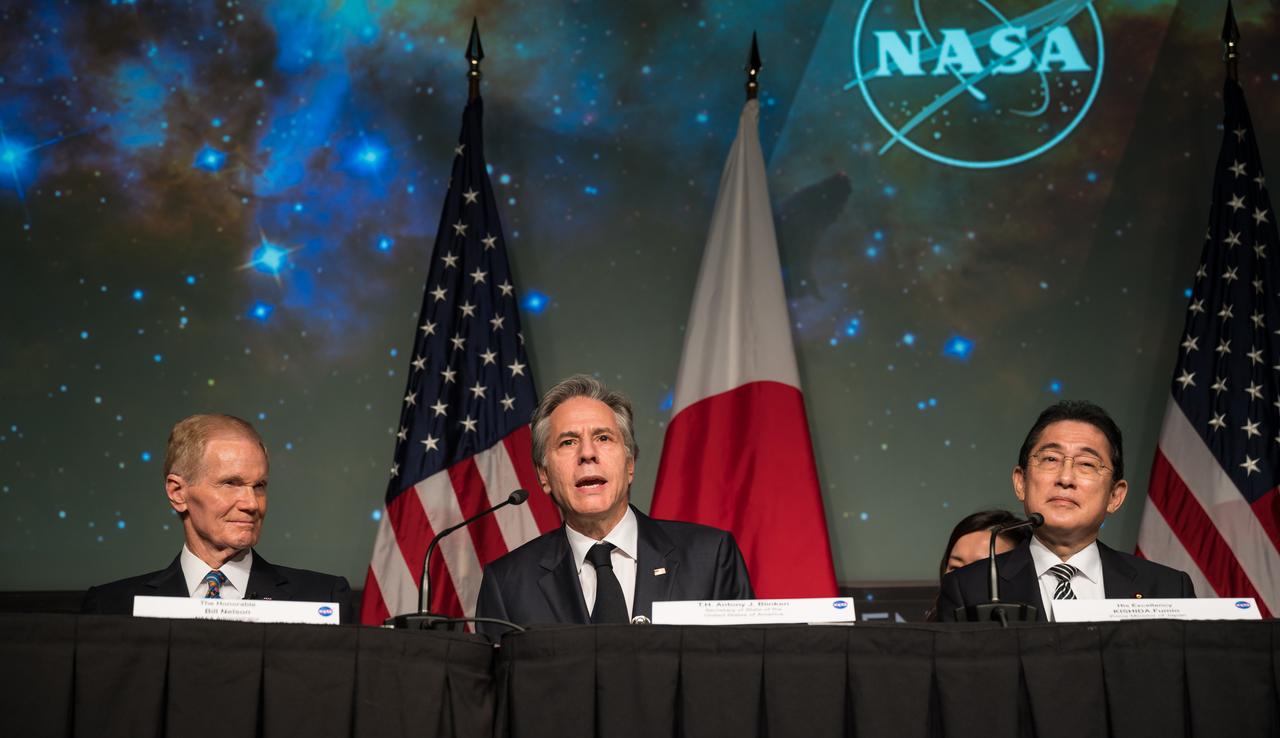
U.S. Secretary of State, Antony Blinken delivers remarks before U.S. Secretary of State, Antony Blinken and Japan’s Minister for Foreign Affairs, Hayashi Yoshimasa, sign an agreement that builds on a long history of collaboration in space exploration between the U.S. and Japan, Friday, Jan. 13, 2023, at the Mary W. Jackson NASA Headquarters building in Washington. “The Framework Agreement Between the Government of Japan and the Government of the United States of America for Cooperation in Space Exploration and Use of Outer Space, Including the Moon and Other Celestial Bodies, For Peaceful Purposes” covers joint activities including space science, Earth science, space operations and exploration, aeronautical science and technology, space technology, space transportation, and safety and mission assurance, among others. Photo Credit: (NASA/Aubrey Gemignani)
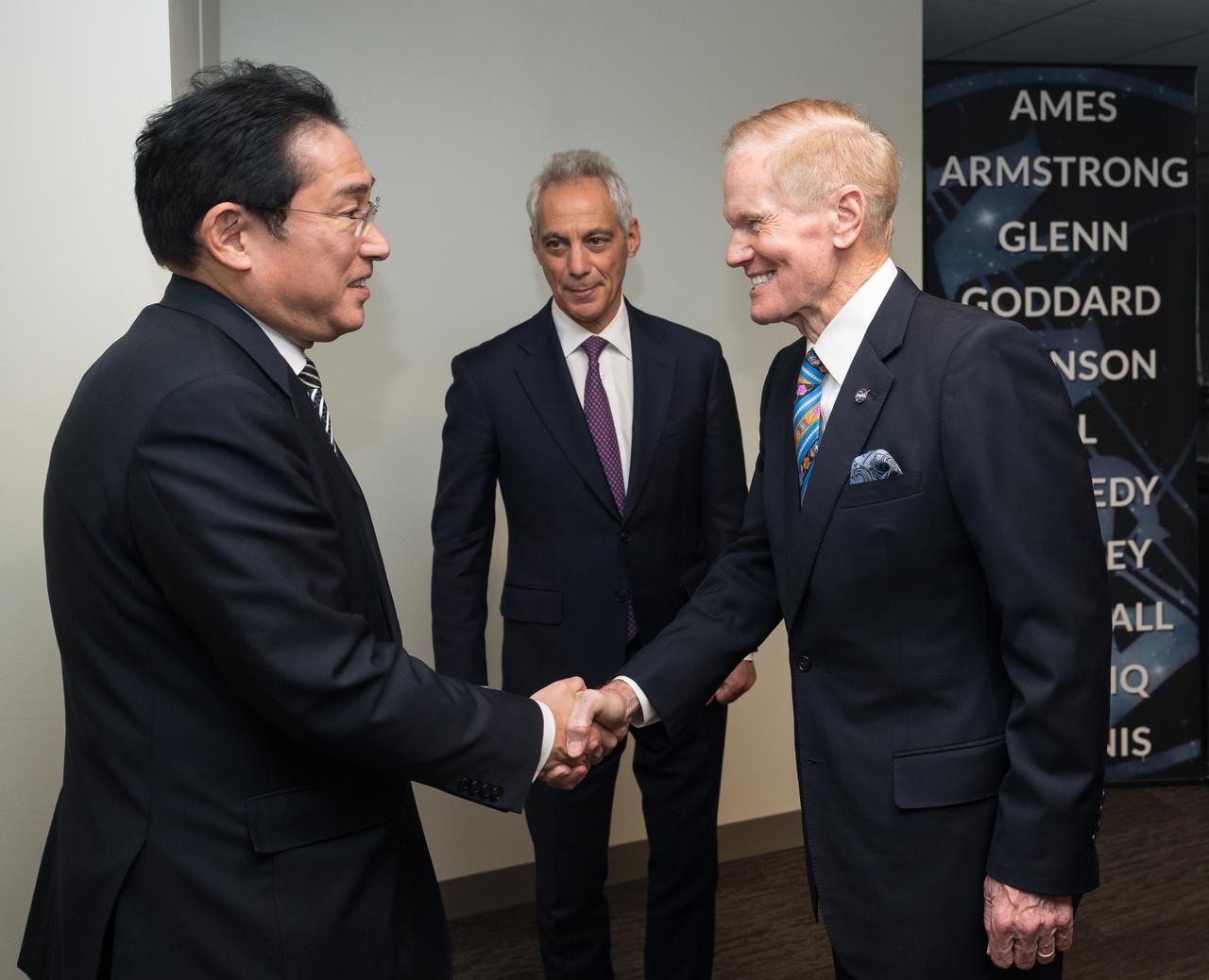
NASA Administrator Bill Nelson, right, and U.S. Ambassador to Japan, Rahm Emanuel, center, greet Prime Minister of Japan, His Excellency Kishida Fumio, before U.S. Secretary of State Antony Blinken and Japan’s Minister for Foreign Affairs, Hayashi Yoshimasa, sign an agreement that builds on a long history of collaboration in space exploration between the U.S. and Japan, Friday, Jan. 13, 2023, at the Mary W. Jackson NASA Headquarters building in Washington. “The Framework Agreement Between the Government of Japan and the Government of the United States of America for Cooperation in Space Exploration and Use of Outer Space, Including the Moon and Other Celestial Bodies, For Peaceful Purposes” covers joint activities including space science, Earth science, space operations and exploration, aeronautical science and technology, space technology, space transportation, and safety and mission assurance, among others. Photo Credit: (NASA/Aubrey Gemignani)
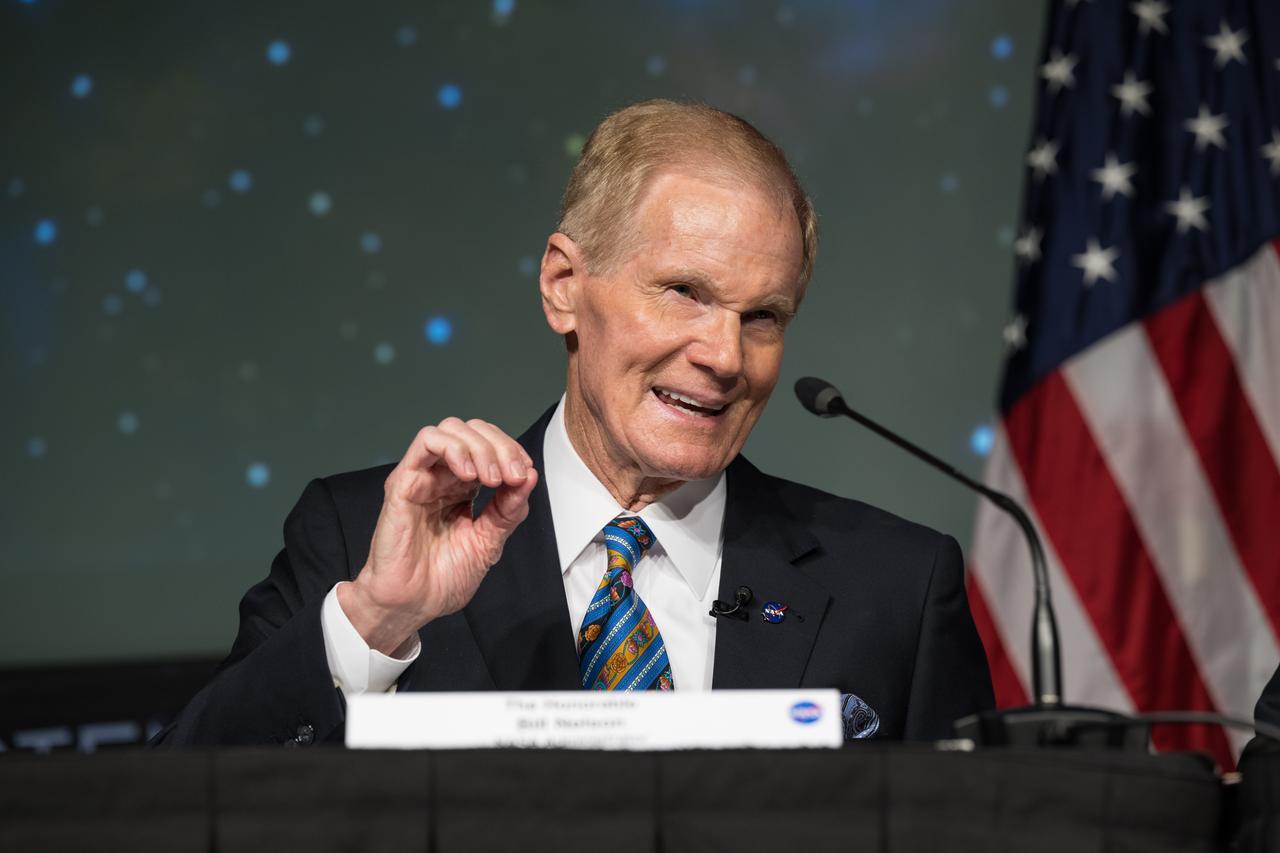
NASA Administrator Bill Nelson delivers remarks before U.S. Secretary of State, Antony Blinken and Japan’s Minister for Foreign Affairs, Hayashi Yoshimasa, sign an agreement that builds on a long history of collaboration in space exploration between the U.S. and Japan, Friday, Jan. 13, 2023, at the Mary W. Jackson NASA Headquarters building in Washington. “The Framework Agreement Between the Government of Japan and the Government of the United States of America for Cooperation in Space Exploration and Use of Outer Space, Including the Moon and Other Celestial Bodies, For Peaceful Purposes” covers joint activities including space science, Earth science, space operations and exploration, aeronautical science and technology, space technology, space transportation, and safety and mission assurance, among others. Photo Credit: (NASA/Aubrey Gemignani)
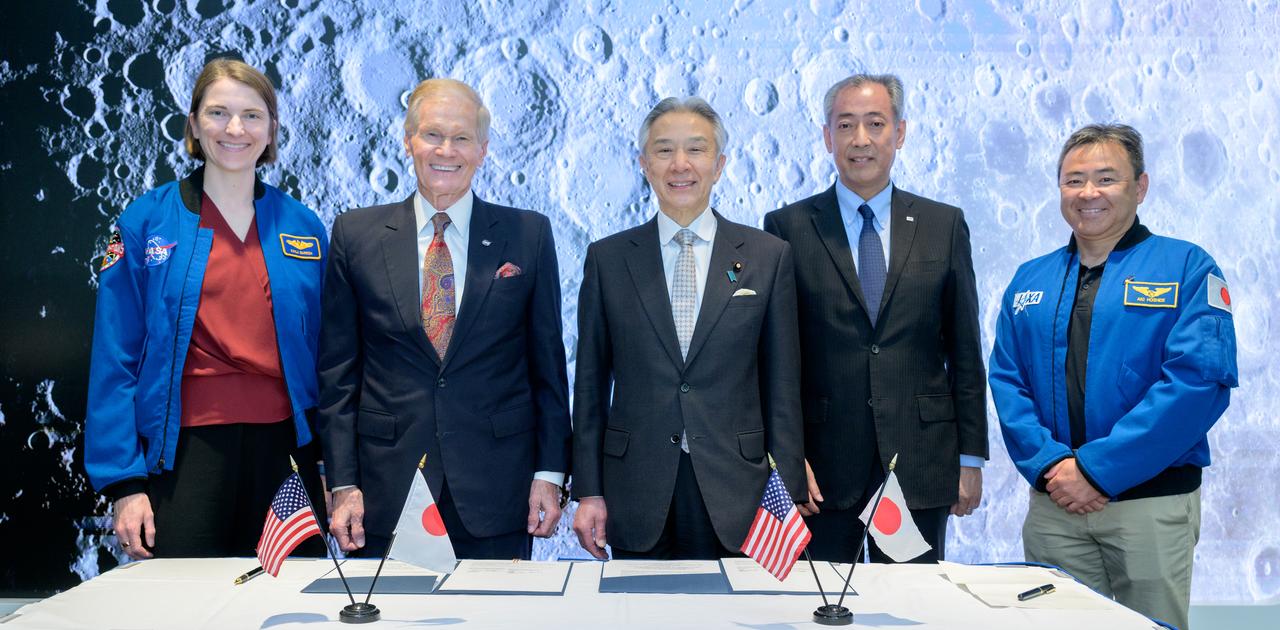
NASA astronaut Kayla Barron, left, NASA Administrator Bill Nelson, Japan’s Minister of Education, Culture, Sports, Science and Technology Masahito Moriyama, Japan Aerospace Exploration Agency (JAXA) President Hiroshi Yamakawa, and JAXA astronaut Akihiko Hoshide, right, pose for a group photograph after the signing of an historic agreement between the United States and Japan to advance sustainable human exploration of the Moon, Tuesday, April 9, 2024, at the NASA Headquarters Mary W. Jackson Building in Washington. Under the agreement, Japan will design, develop, and operate a pressurized rover for crewed and uncrewed exploration on the Moon. NASA will provide the launch and delivery of the rover to the Moon as well as two Japanese astronaut missions to the lunar surface. Photo Credit: (NASA/Bill Ingalls)
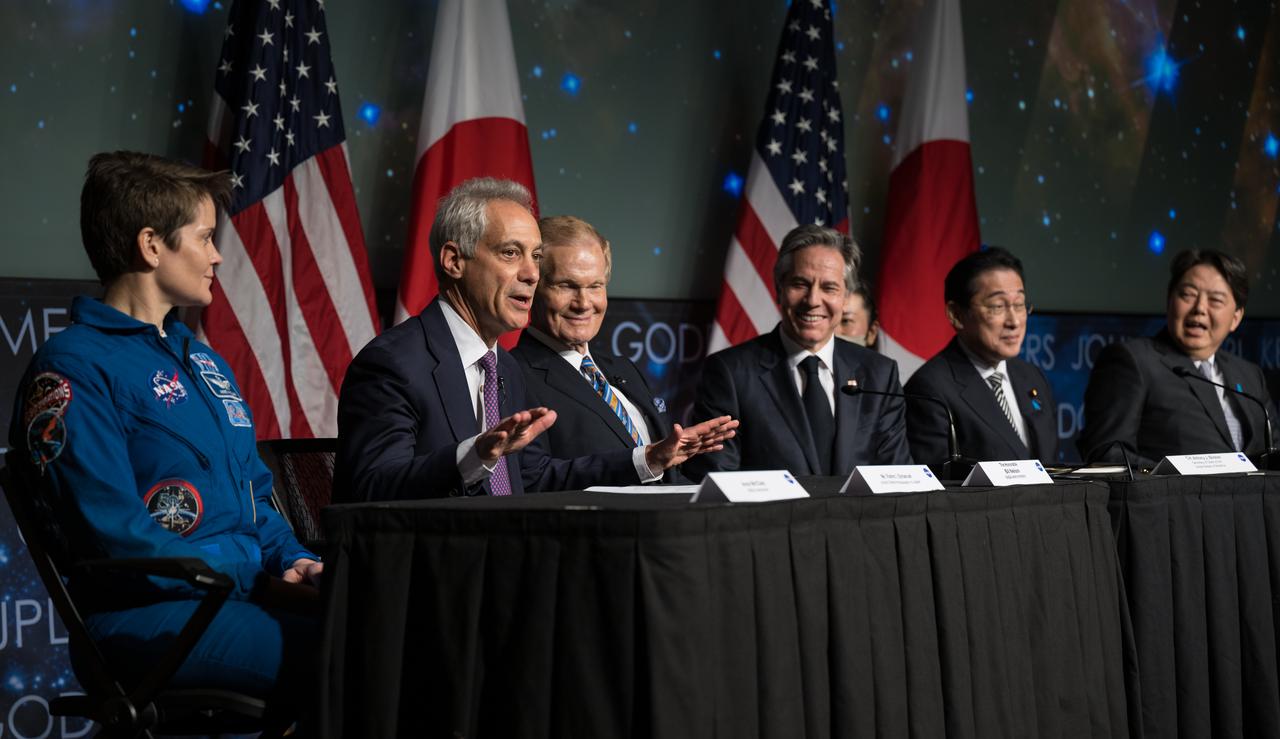
U.S. Ambassador to Japan, Rahm Emanuel, delivers remarks after U.S. Secretary of State, Antony Blinken and Minister for Foreign Affairs of Japan, The Honorable Hayashi Yoshimasa signed an agreement that builds on a long history of collaboration in space exploration between the U.S. and Japan, Friday, Jan. 13, 2023, at the Mary W. Jackson NASA Headquarters building in Washington. “The Framework Agreement Between the Government of Japan and the Government of the United States of America for Cooperation in Space Exploration and Use of Outer Space, Including the Moon and Other Celestial Bodies, For Peaceful Purposes” covers joint activities including space science, Earth science, space operations and exploration, aeronautical science and technology, space technology, space transportation, and safety and mission assurance, among others. Photo Credit: (NASA/Aubrey Gemignani)
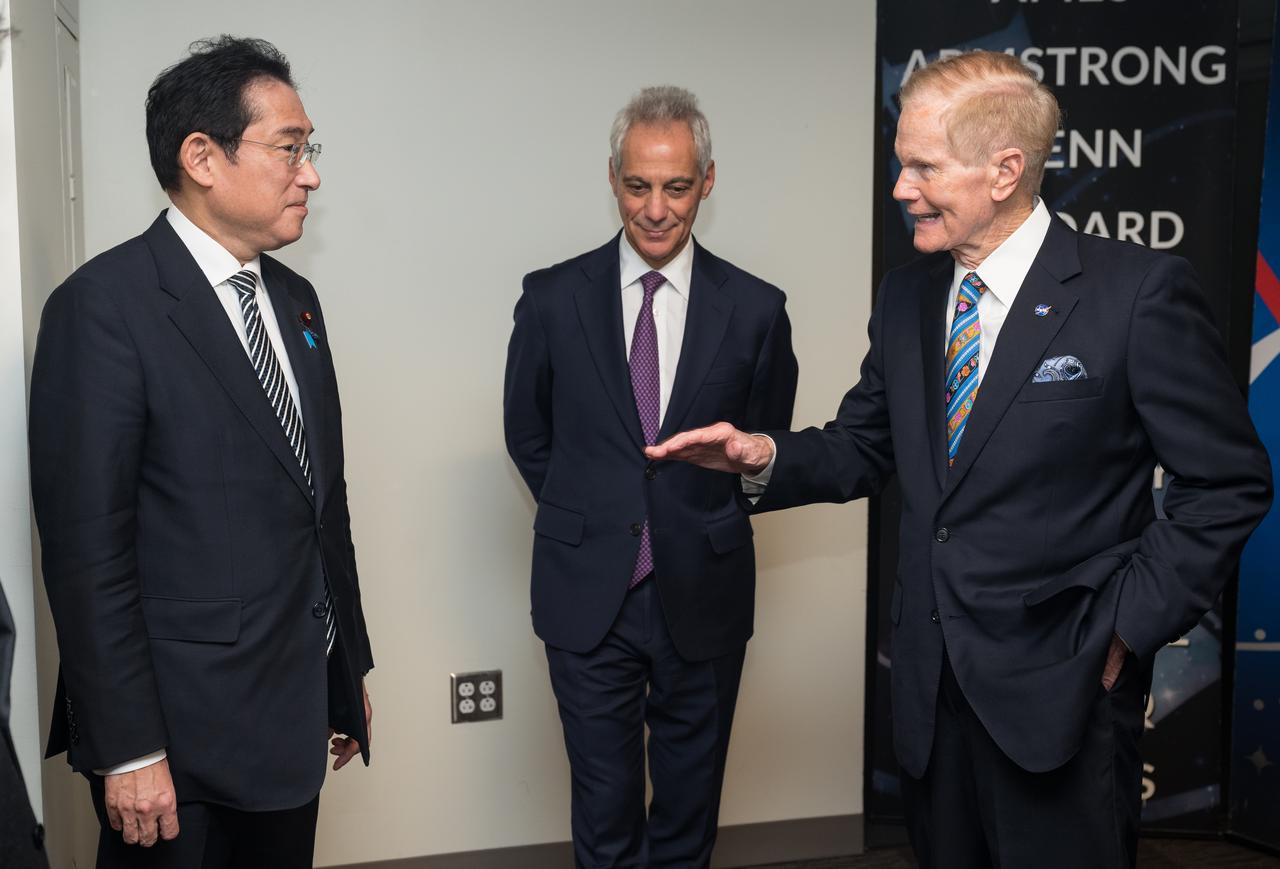
NASA Administrator Bill Nelson, right, and U.S. Ambassador to Japan, Rahm Emanuel, center, greet Prime Minister of Japan, His Excellency Kishida Fumio, before U.S. Secretary of State Antony Blinken and Japan’s Minister for Foreign Affairs, Hayashi Yoshimasa, sign an agreement that builds on a long history of collaboration in space exploration between the U.S. and Japan, Friday, Jan. 13, 2023, at the Mary W. Jackson NASA Headquarters building in Washington. “The Framework Agreement Between the Government of Japan and the Government of the United States of America for Cooperation in Space Exploration and Use of Outer Space, Including the Moon and Other Celestial Bodies, For Peaceful Purposes” covers joint activities including space science, Earth science, space operations and exploration, aeronautical science and technology, space technology, space transportation, and safety and mission assurance, among others. Photo Credit: (NASA/Aubrey Gemignani)
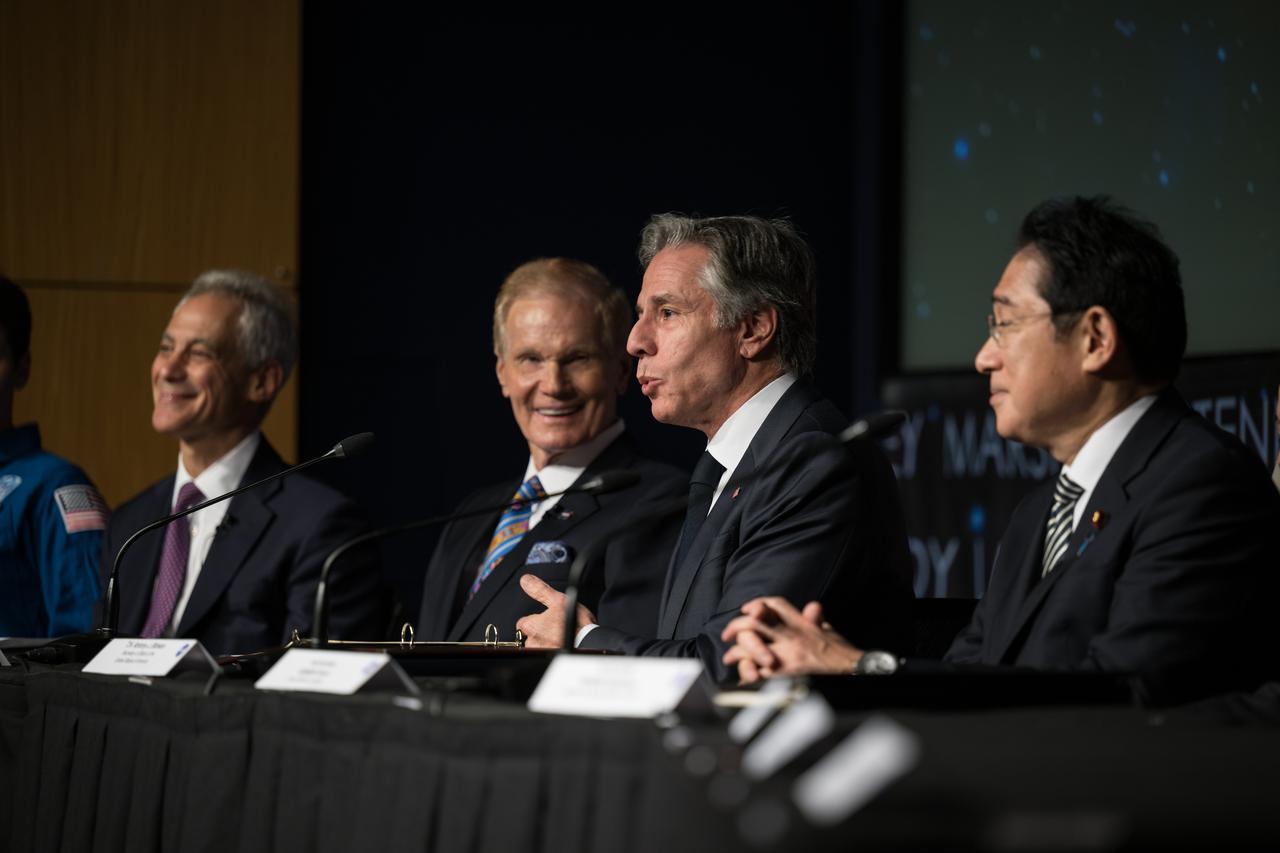
U.S. Secretary of State, Antony Blinken delivers remarks before he and Japan’s Minister for Foreign Affairs, Hayashi Yoshimasa, sign an agreement that builds on a long history of collaboration in space exploration between the U.S. and Japan, Friday, Jan. 13, 2023, at the Mary W. Jackson NASA Headquarters building in Washington. “The Framework Agreement Between the Government of Japan and the Government of the United States of America for Cooperation in Space Exploration and Use of Outer Space, Including the Moon and Other Celestial Bodies, For Peaceful Purposes” covers joint activities including space science, Earth science, space operations and exploration, aeronautical science and technology, space technology, space transportation, and safety and mission assurance, among others. Photo Credit: (NASA/Aubrey Gemignani)
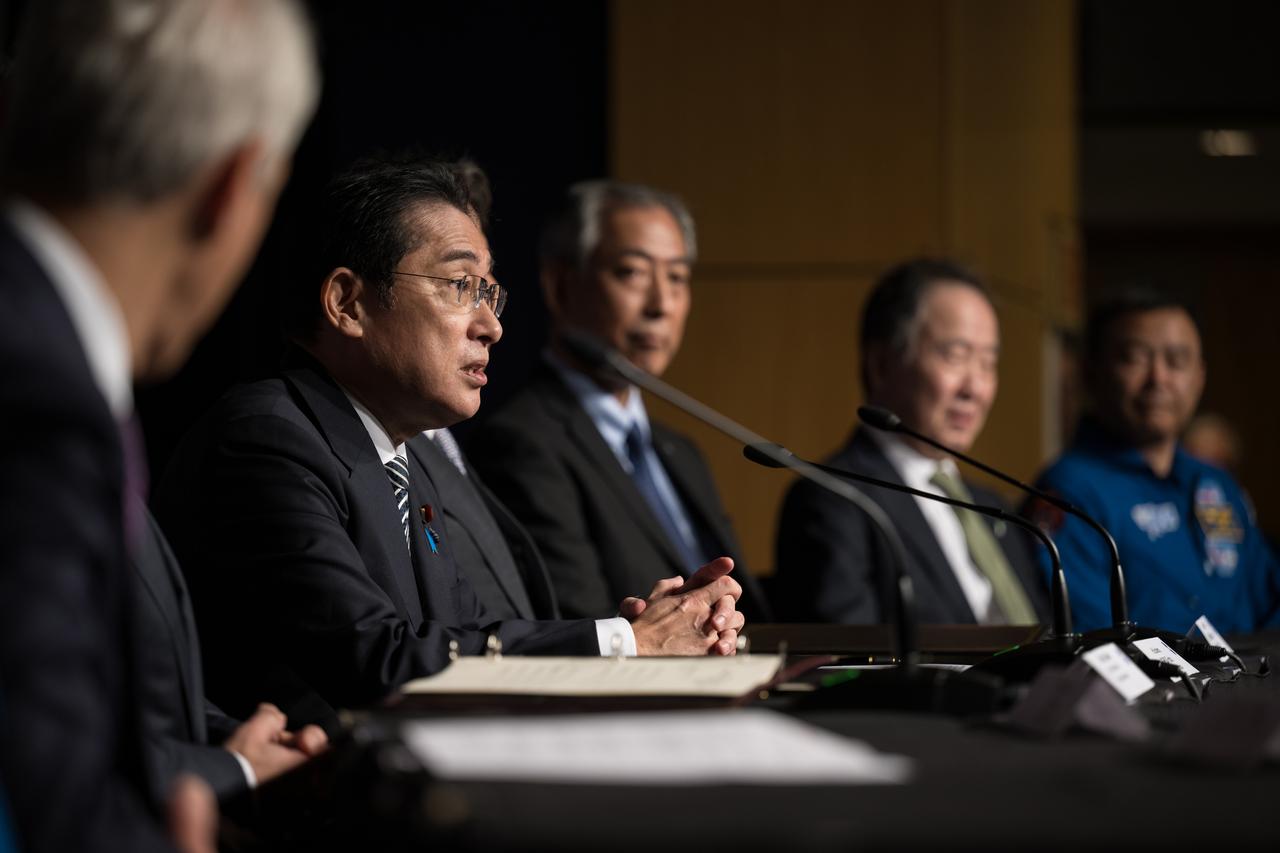
Prime Minister of Japan, His Excellency Kishida Fumio delivers remarks before U.S. Secretary of State, Antony Blinken and Japan’s Minister for Foreign Affairs, Hayashi Yoshimasa, sign an agreement that builds on a long history of collaboration in space exploration between the U.S. and Japan, Friday, Jan. 13, 2023, at the Mary W. Jackson NASA Headquarters building in Washington. “The Framework Agreement Between the Government of Japan and the Government of the United States of America for Cooperation in Space Exploration and Use of Outer Space, Including the Moon and Other Celestial Bodies, For Peaceful Purposes” covers joint activities including space science, Earth science, space operations and exploration, aeronautical science and technology, space technology, space transportation, and safety and mission assurance, among others. Photo Credit: (NASA/Aubrey Gemignani)
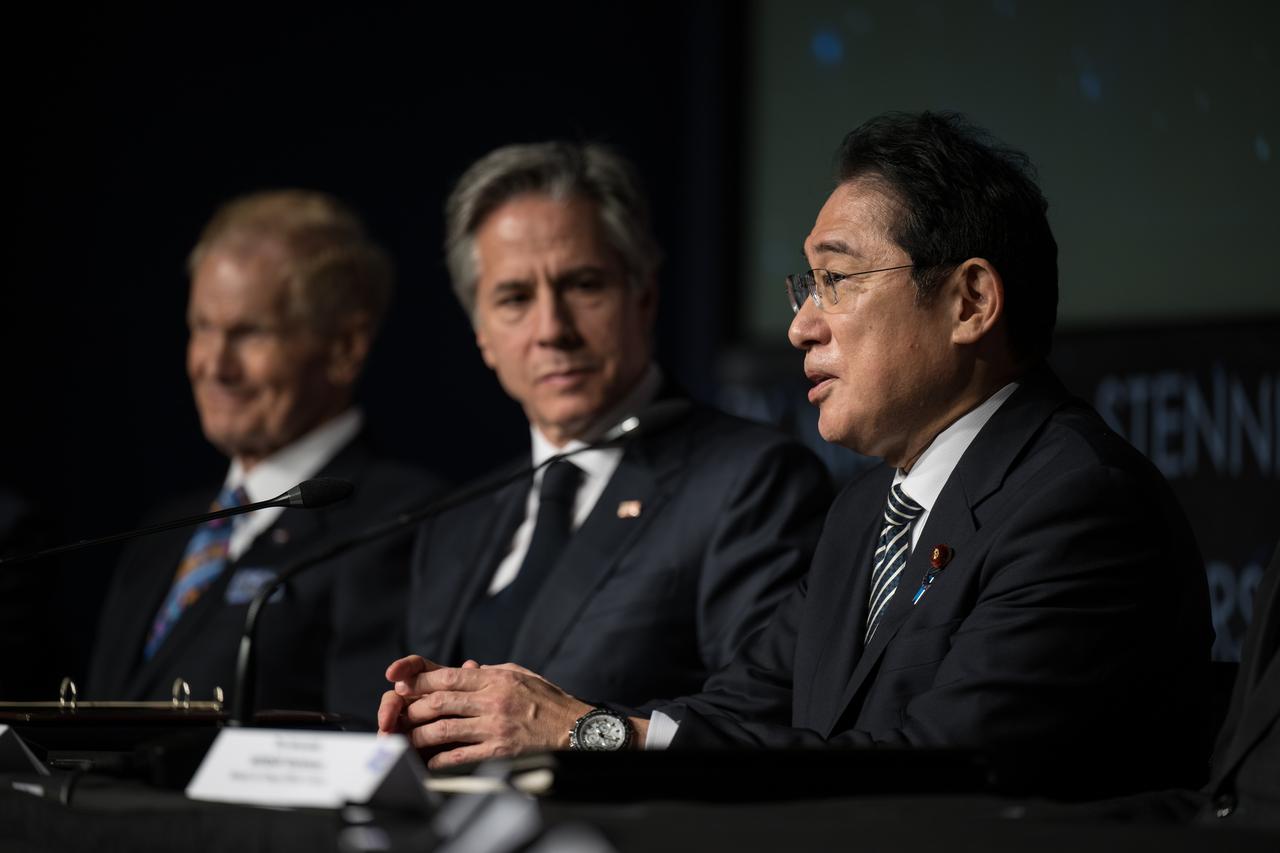
Prime Minister of Japan, His Excellency Kishida Fumio delivers remarks before U.S. Secretary of State, Antony Blinken and Japan’s Minister for Foreign Affairs, Hayashi Yoshimasa, sign an agreement that builds on a long history of collaboration in space exploration between the U.S. and Japan, Friday, Jan. 13, 2023, at the Mary W. Jackson NASA Headquarters building in Washington. “The Framework Agreement Between the Government of Japan and the Government of the United States of America for Cooperation in Space Exploration and Use of Outer Space, Including the Moon and Other Celestial Bodies, For Peaceful Purposes” covers joint activities including space science, Earth science, space operations and exploration, aeronautical science and technology, space technology, space transportation, and safety and mission assurance, among others. Photo Credit: (NASA/Aubrey Gemignani)
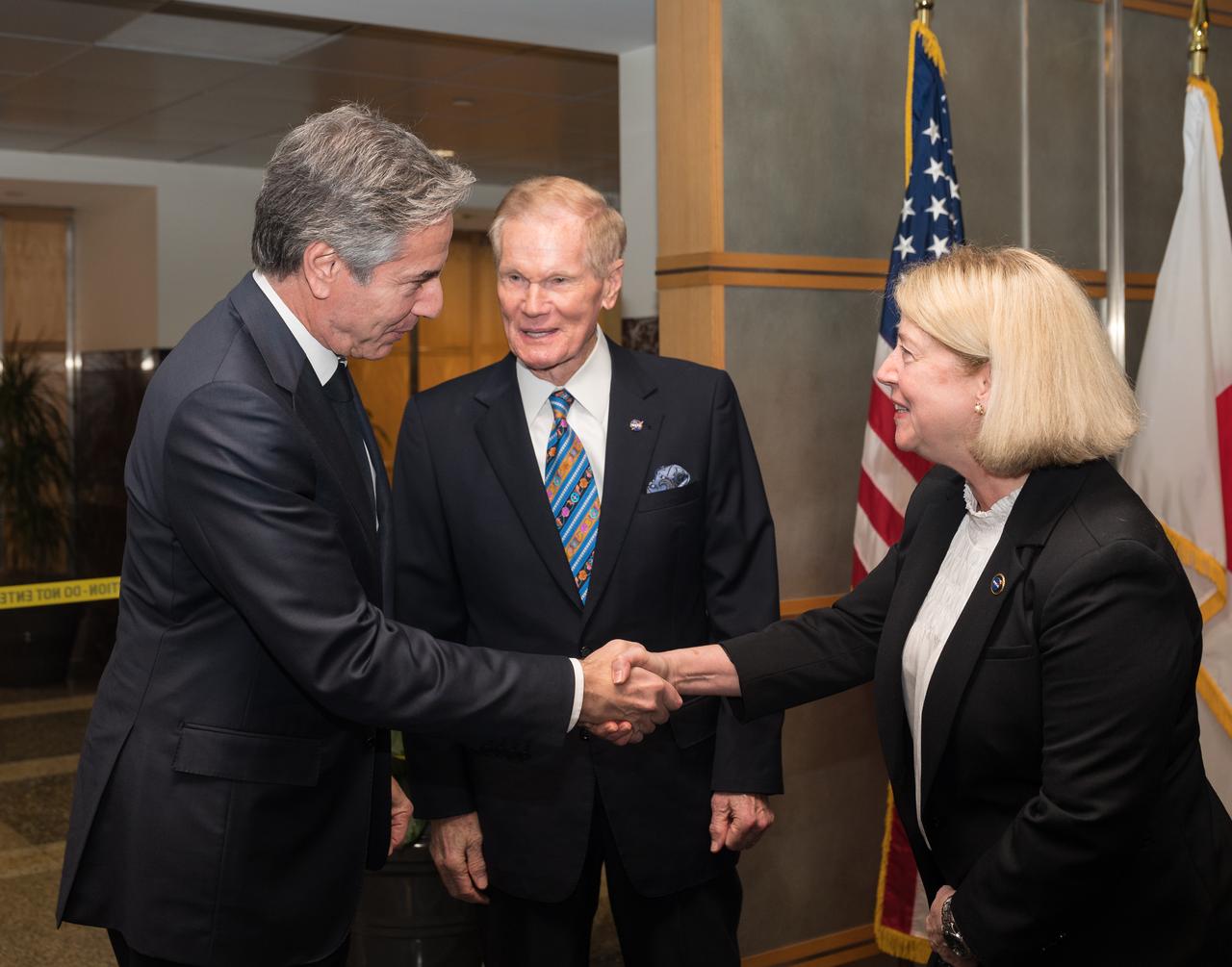
NASA Administrator Bill Nelson, center, and NASA Deputy Administrator Pam Melroy, right, greet U.S. Secretary of State Antony Blinken before the signing of an agreement that builds on a long history of collaboration in space exploration between the U.S. and Japan, Friday, Jan. 13, 2023, at the Mary W. Jackson NASA Headquarters building in Washington. “The Framework Agreement Between the Government of Japan and the Government of the United States of America for Cooperation in Space Exploration and Use of Outer Space, Including the Moon and Other Celestial Bodies, For Peaceful Purposes” covers joint activities including space science, Earth science, space operations and exploration, aeronautical science and technology, space technology, space transportation, and safety and mission assurance, among others. Photo Credit: (NASA/Aubrey Gemignani)
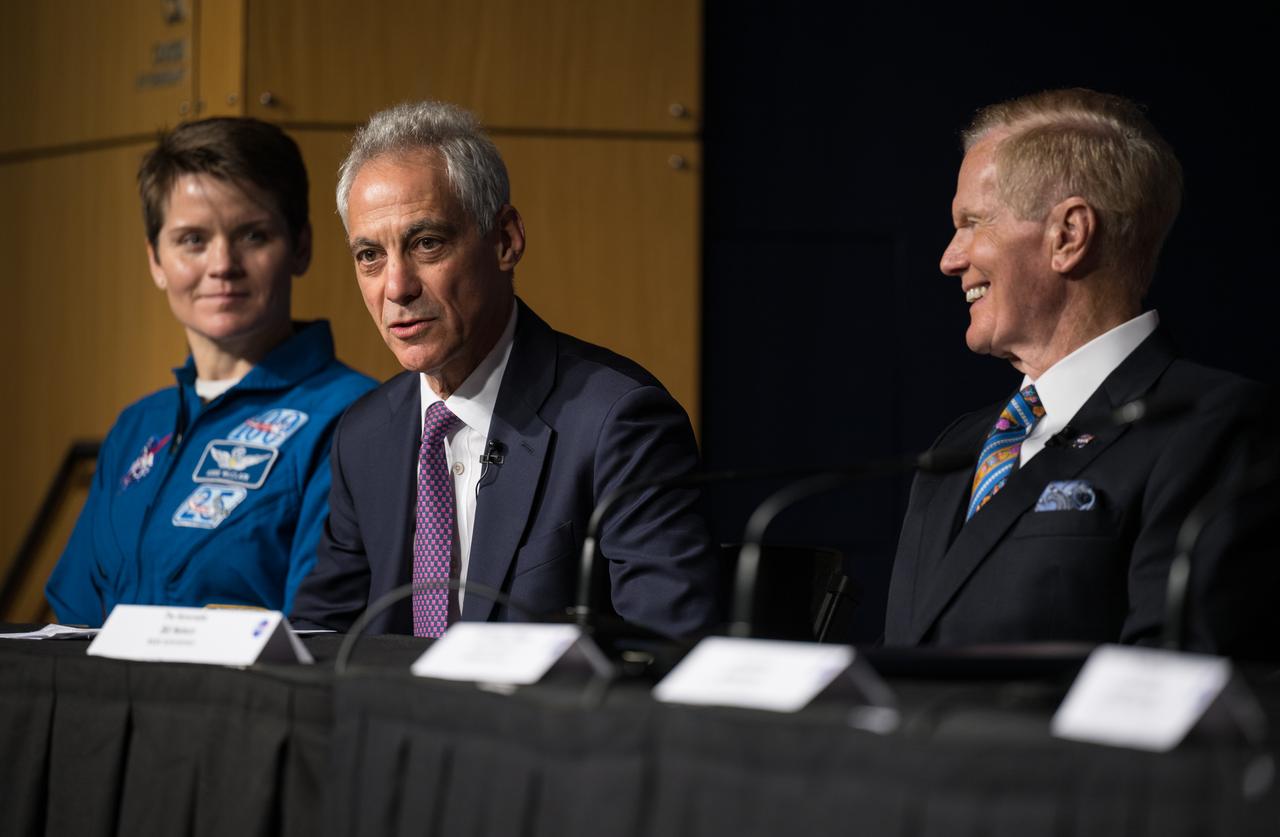
U.S. Ambassador to Japan, Rahm Emanuel, delivers remarks after U.S. Secretary of State, Antony Blinken and Minister for Foreign Affairs of Japan, The Honorable Hayashi Yoshimasa signed an agreement that builds on a long history of collaboration in space exploration between the U.S. and Japan, Friday, Jan. 13, 2023, at the Mary W. Jackson NASA Headquarters building in Washington. “The Framework Agreement Between the Government of Japan and the Government of the United States of America for Cooperation in Space Exploration and Use of Outer Space, Including the Moon and Other Celestial Bodies, For Peaceful Purposes” covers joint activities including space science, Earth science, space operations and exploration, aeronautical science and technology, space technology, space transportation, and safety and mission assurance, among others. Photo Credit: (NASA/Aubrey Gemignani)
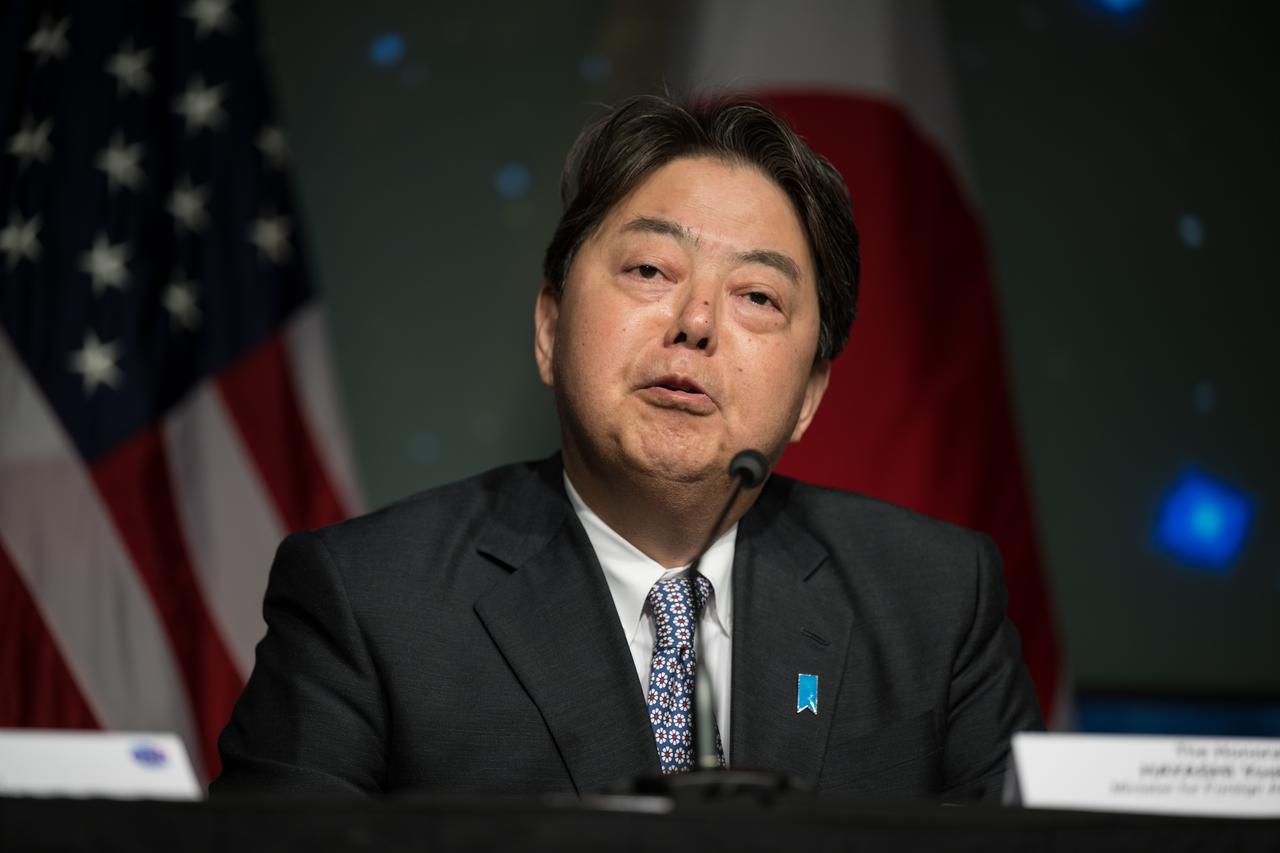
Minister for Foreign Affairs of Japan, The Honorable Hayashi Yoshimasa delivers remarks after he and U.S. Secretary of State, Antony Blinken signed an agreement that builds on a long history of collaboration in space exploration between the U.S. and Japan, Friday, Jan. 13, 2023, at the Mary W. Jackson NASA Headquarters building in Washington. “The Framework Agreement Between the Government of Japan and the Government of the United States of America for Cooperation in Space Exploration and Use of Outer Space, Including the Moon and Other Celestial Bodies, For Peaceful Purposes” covers joint activities including space science, Earth science, space operations and exploration, aeronautical science and technology, space technology, space transportation, and safety and mission assurance, among others. Photo Credit: (NASA/Aubrey Gemignani)
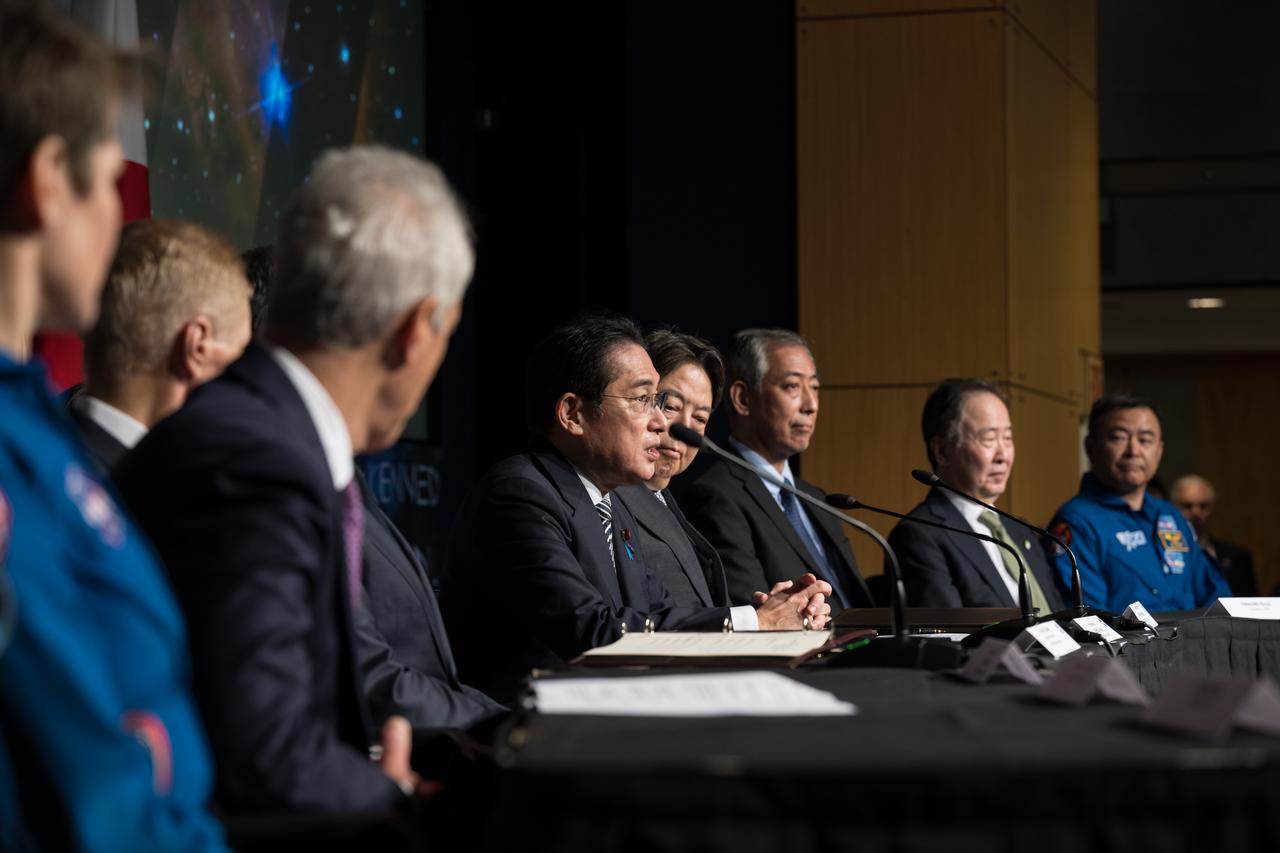
Prime Minister of Japan, His Excellency Kishida Fumio delivers remarks before U.S. Secretary of State, Antony Blinken and Japan’s Minister for Foreign Affairs, Hayashi Yoshimasa, sign an agreement that builds on a long history of collaboration in space exploration between the U.S. and Japan, Friday, Jan. 13, 2023, at the Mary W. Jackson NASA Headquarters building in Washington. “The Framework Agreement Between the Government of Japan and the Government of the United States of America for Cooperation in Space Exploration and Use of Outer Space, Including the Moon and Other Celestial Bodies, For Peaceful Purposes” covers joint activities including space science, Earth science, space operations and exploration, aeronautical science and technology, space technology, space transportation, and safety and mission assurance, among others. Photo Credit: (NASA/Aubrey Gemignani)
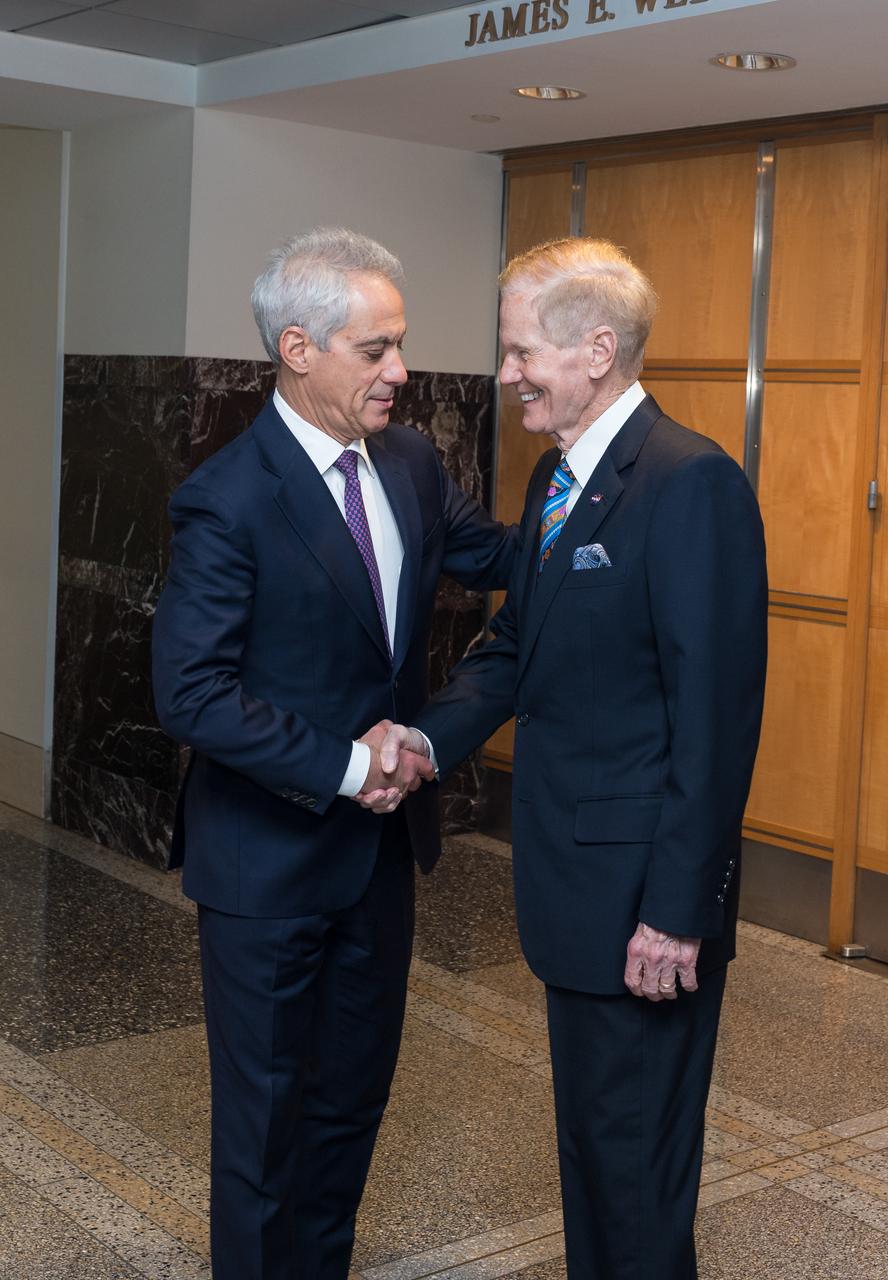
NASA Administrator Bill Nelson, right, greets U.S. Ambassador to Japan, Rahm Emanuel, before the signing of an agreement that builds on a long history of collaboration in space exploration between the U.S. and Japan, Friday, Jan. 13, 2023, at the Mary W. Jackson NASA Headquarters building in Washington. “The Framework Agreement Between the Government of Japan and the Government of the United States of America for Cooperation in Space Exploration and Use of Outer Space, Including the Moon and Other Celestial Bodies, For Peaceful Purposes” covers joint activities including space science, Earth science, space operations and exploration, aeronautical science and technology, space technology, space transportation, and safety and mission assurance, among others. Photo Credit: (NASA/Aubrey Gemignani)
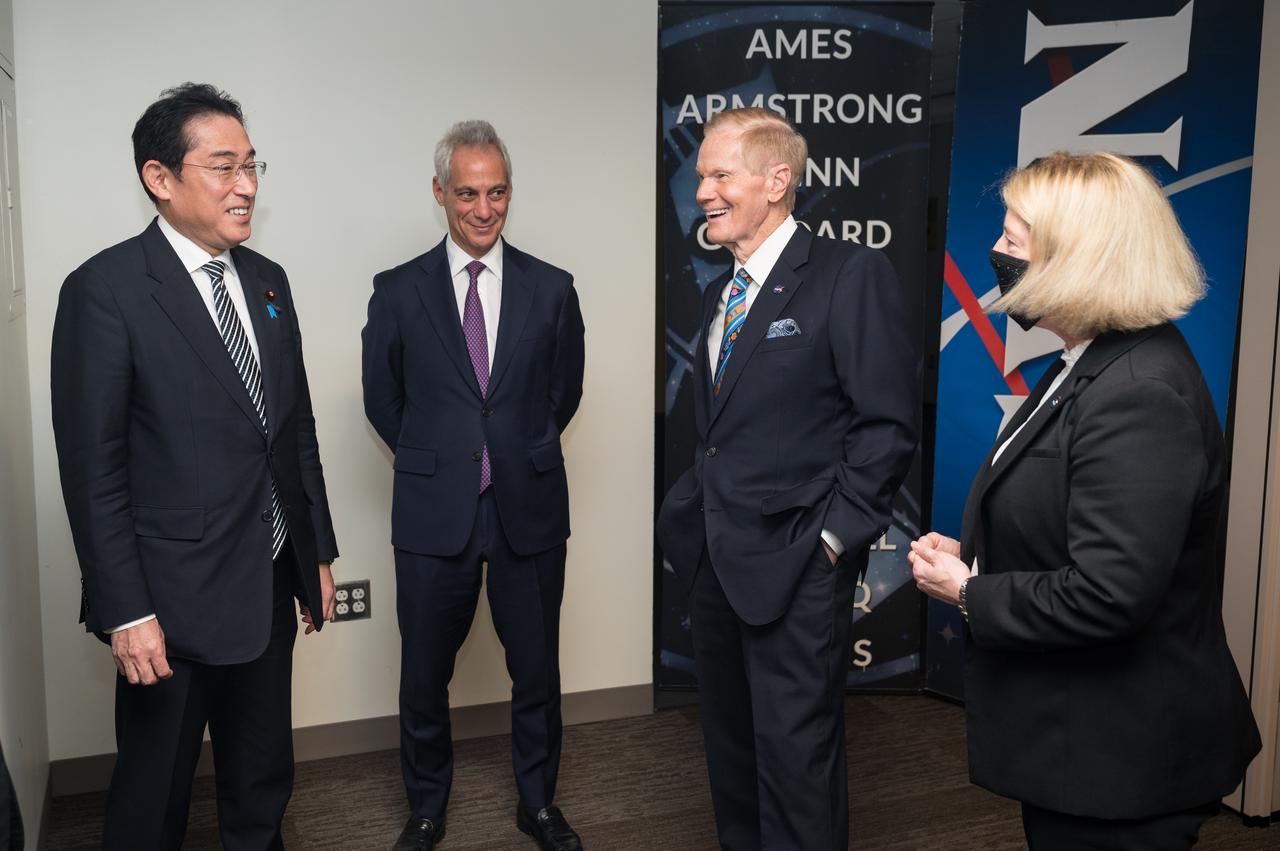
NASA Deputy Administrator Pam Melroy, right, NASA Administrator Bill Nelson, second from right, and U.S. Ambassador to Japan, Rahm Emanuel, second from left, greet Prime Minister of Japan, His Excellency Kishida Fumio, before U.S. Secretary of State Antony Blinken and Japan’s Minister for Foreign Affairs, Hayashi Yoshimasa, sign an agreement that builds on a long history of collaboration in space exploration between the U.S. and Japan, Friday, Jan. 13, 2023, at the Mary W. Jackson NASA Headquarters building in Washington. “The Framework Agreement Between the Government of Japan and the Government of the United States of America for Cooperation in Space Exploration and Use of Outer Space, Including the Moon and Other Celestial Bodies, For Peaceful Purposes” covers joint activities including space science, Earth science, space operations and exploration, aeronautical science and technology, space technology, space transportation, and safety and mission assurance, among others. Photo Credit: (NASA/Aubrey Gemignani)
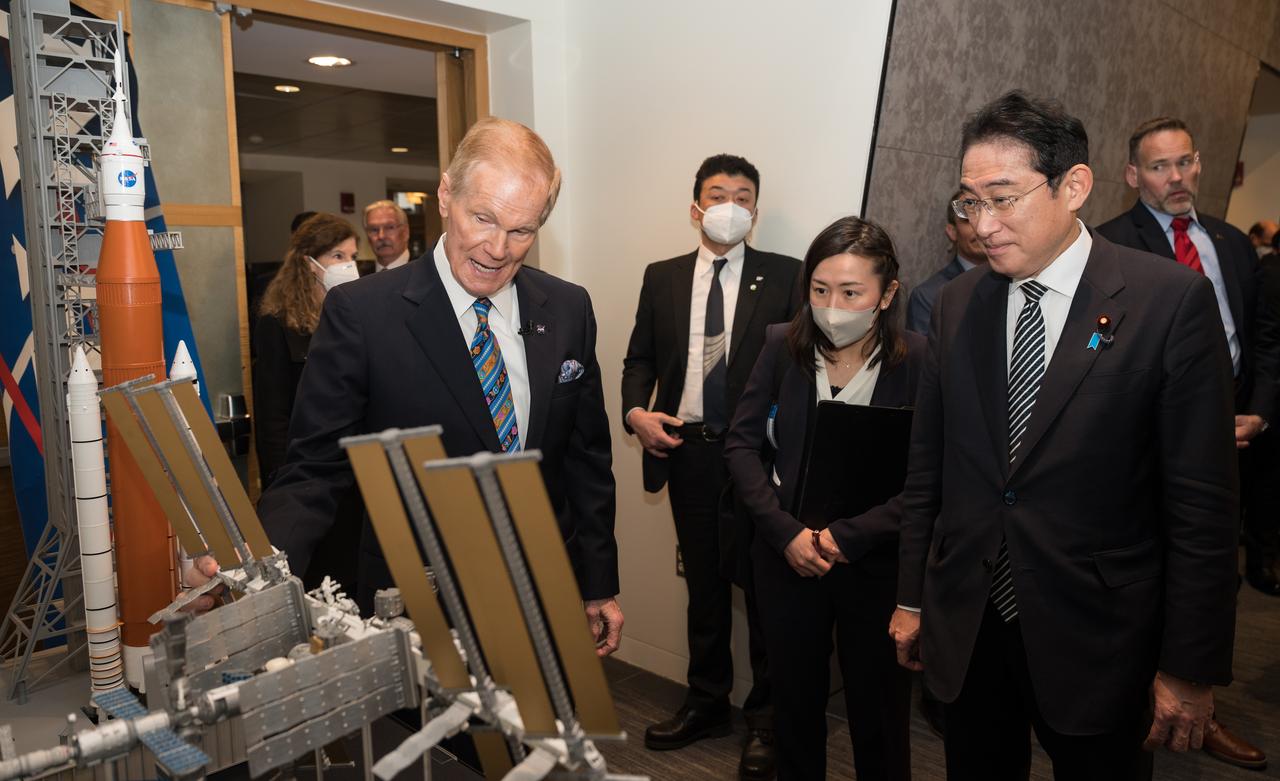
NASA Administrator Bill Nelson shows Prime Minister of Japan, His Excellency Kishida Fumio, a model of the International Space Station (ISS) before U.S. Secretary of State Antony Blinken and Japan’s Minister for Foreign Affairs, Hayashi Yoshimasa, sign an agreement that builds on a long history of collaboration in space exploration between the U.S. and Japan, Friday, Jan. 13, 2023, at the Mary W. Jackson NASA Headquarters building in Washington. “The Framework Agreement Between the Government of Japan and the Government of the United States of America for Cooperation in Space Exploration and Use of Outer Space, Including the Moon and Other Celestial Bodies, For Peaceful Purposes” covers joint activities including space science, Earth science, space operations and exploration, aeronautical science and technology, space technology, space transportation, and safety and mission assurance, among others. Photo Credit: (NASA/Aubrey Gemignani)
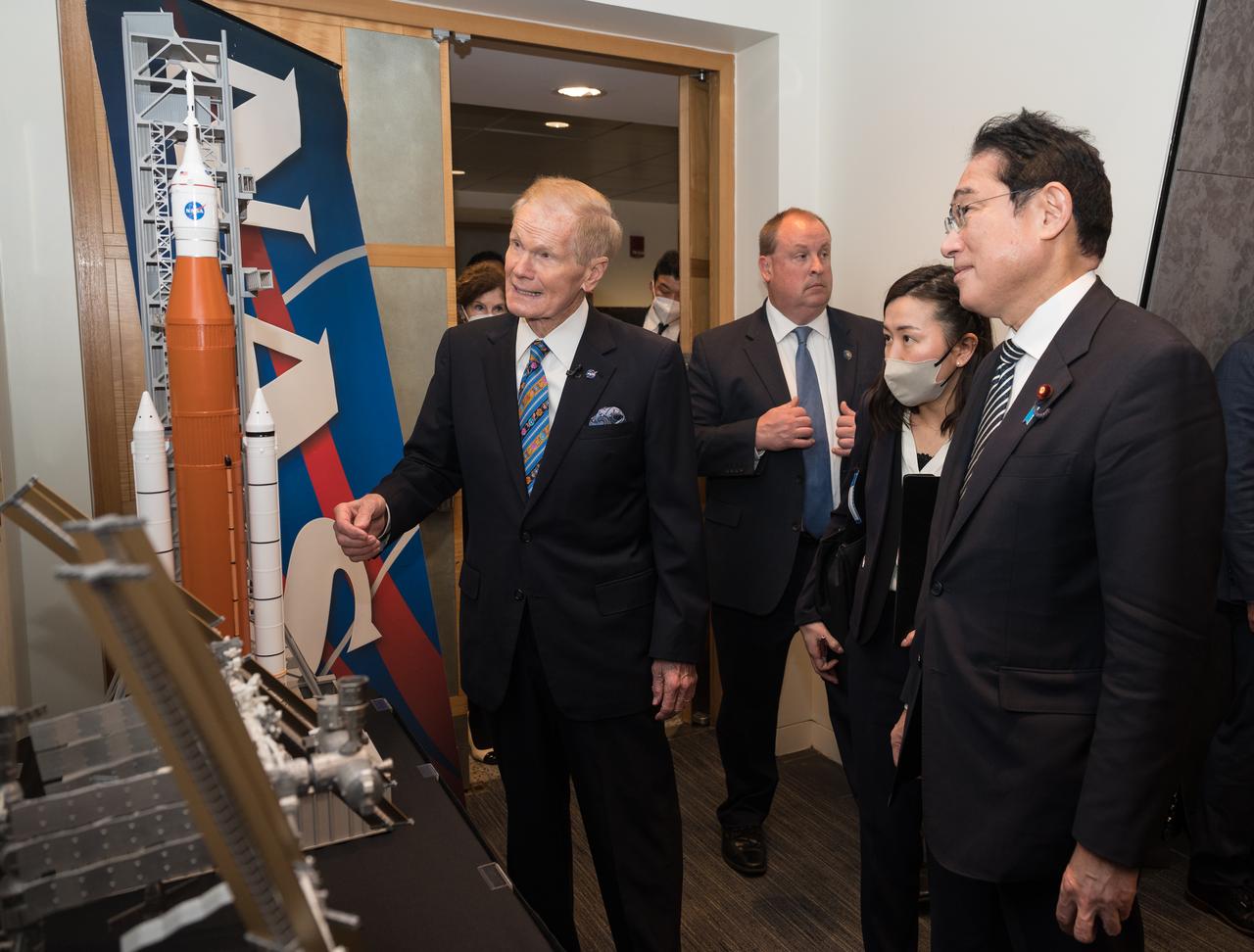
NASA Administrator Bill Nelson shows Prime Minister of Japan, His Excellency Kishida Fumio, a model of the Space Launch System (SLS) before U.S. Secretary of State Antony Blinken and Japan’s Minister for Foreign Affairs, Hayashi Yoshimasa, sign an agreement that builds on a long history of collaboration in space exploration between the U.S. and Japan, Friday, Jan. 13, 2023, at the Mary W. Jackson NASA Headquarters building in Washington. “The Framework Agreement Between the Government of Japan and the Government of the United States of America for Cooperation in Space Exploration and Use of Outer Space, Including the Moon and Other Celestial Bodies, For Peaceful Purposes” covers joint activities including space science, Earth science, space operations and exploration, aeronautical science and technology, space technology, space transportation, and safety and mission assurance, among others. Photo Credit: (NASA/Aubrey Gemignani)
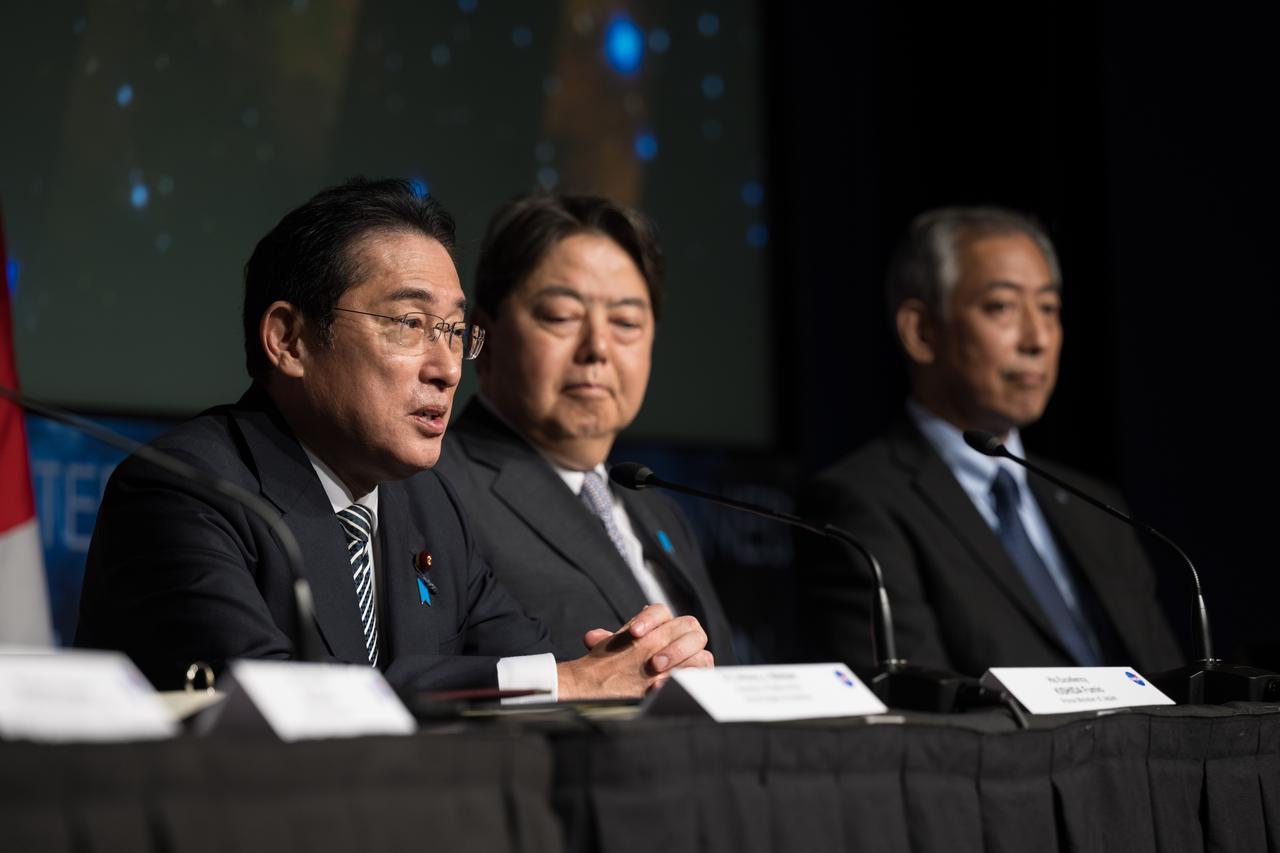
Prime Minister of Japan, His Excellency Kishida Fumio delivers remarks before U.S. Secretary of State, Antony Blinken and Japan’s Minister for Foreign Affairs, Hayashi Yoshimasa, sign an agreement that builds on a long history of collaboration in space exploration between the U.S. and Japan, Friday, Jan. 13, 2023, at the Mary W. Jackson NASA Headquarters building in Washington. “The Framework Agreement Between the Government of Japan and the Government of the United States of America for Cooperation in Space Exploration and Use of Outer Space, Including the Moon and Other Celestial Bodies, For Peaceful Purposes” covers joint activities including space science, Earth science, space operations and exploration, aeronautical science and technology, space technology, space transportation, and safety and mission assurance, among others. Photo Credit: (NASA/Aubrey Gemignani)
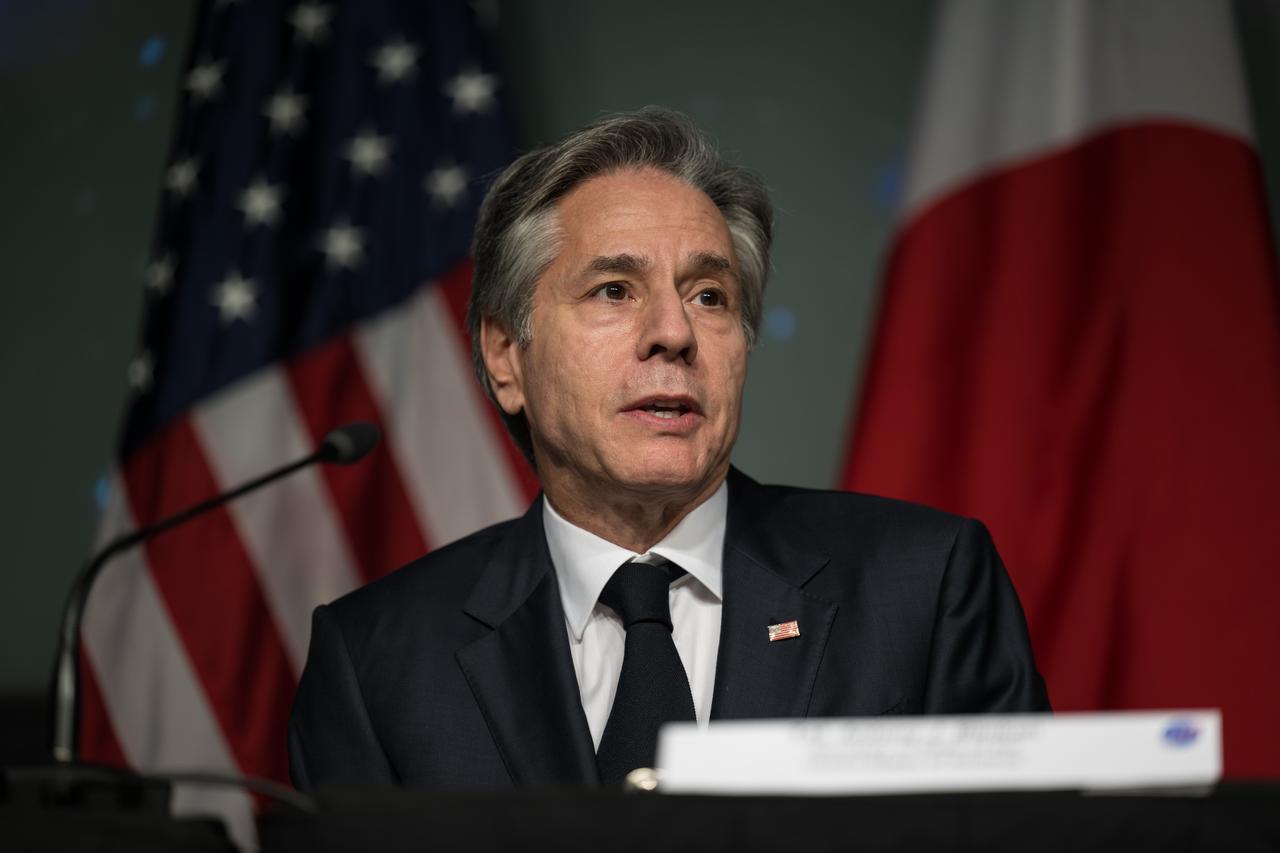
U.S. Secretary of State, Antony Blinken delivers remarks before he and Japan’s Minister for Foreign Affairs, Hayashi Yoshimasa, sign an agreement that builds on a long history of collaboration in space exploration between the U.S. and Japan, Friday, Jan. 13, 2023, at the Mary W. Jackson NASA Headquarters building in Washington. “The Framework Agreement Between the Government of Japan and the Government of the United States of America for Cooperation in Space Exploration and Use of Outer Space, Including the Moon and Other Celestial Bodies, For Peaceful Purposes” covers joint activities including space science, Earth science, space operations and exploration, aeronautical science and technology, space technology, space transportation, and safety and mission assurance, among others. Photo Credit: (NASA/Aubrey Gemignani)
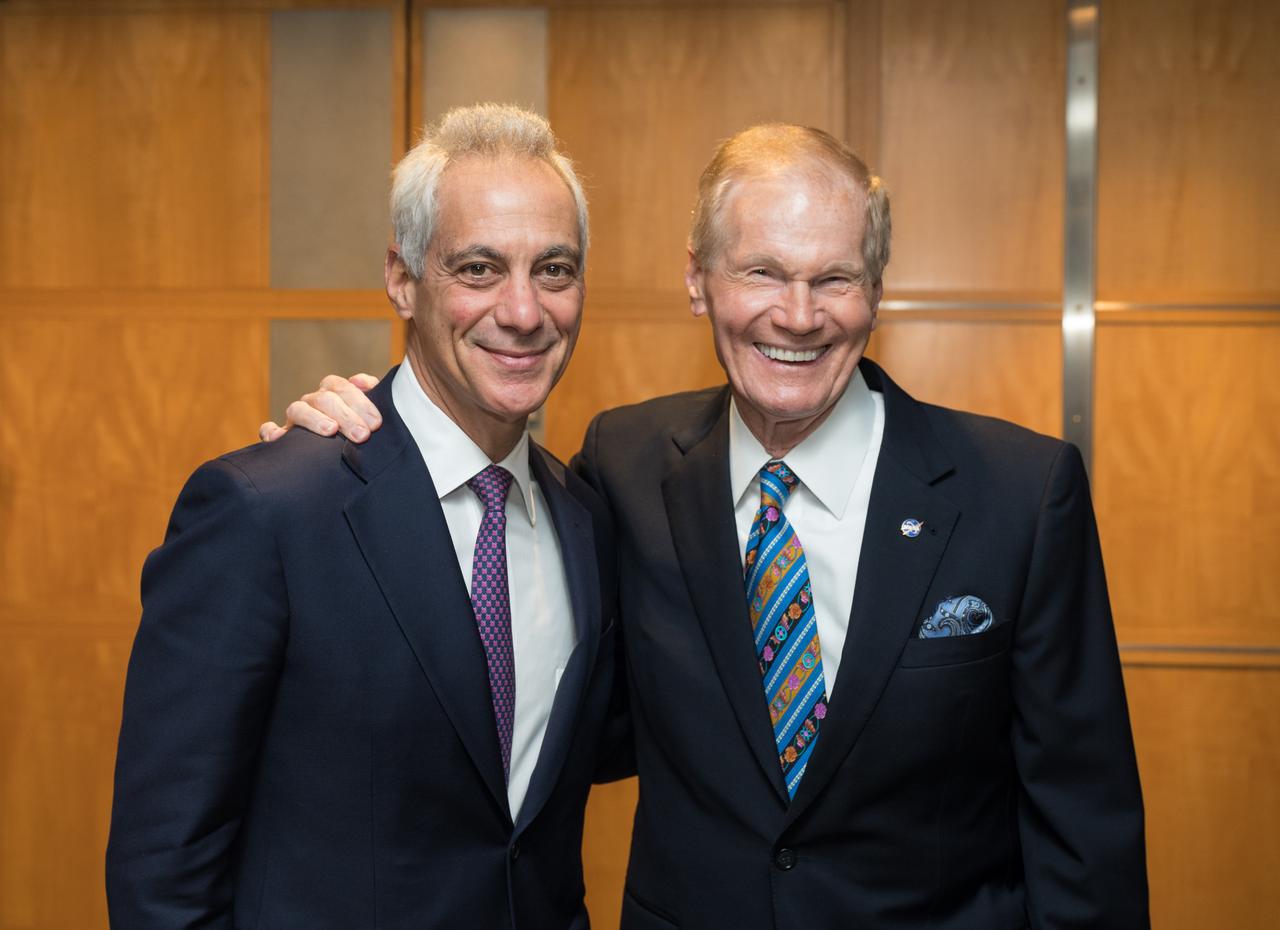
NASA Administrator Bill Nelson, right, poses for a photo with U.S. Ambassador to Japan, Rahm Emanuel, before the signing of an agreement that builds on a long history of collaboration in space exploration between the U.S. and Japan, Friday, Jan. 13, 2023, at the Mary W. Jackson NASA Headquarters building in Washington. “The Framework Agreement Between the Government of Japan and the Government of the United States of America for Cooperation in Space Exploration and Use of Outer Space, Including the Moon and Other Celestial Bodies, For Peaceful Purposes” covers joint activities including space science, Earth science, space operations and exploration, aeronautical science and technology, space technology, space transportation, and safety and mission assurance, among others. Photo Credit: (NASA/Aubrey Gemignani)
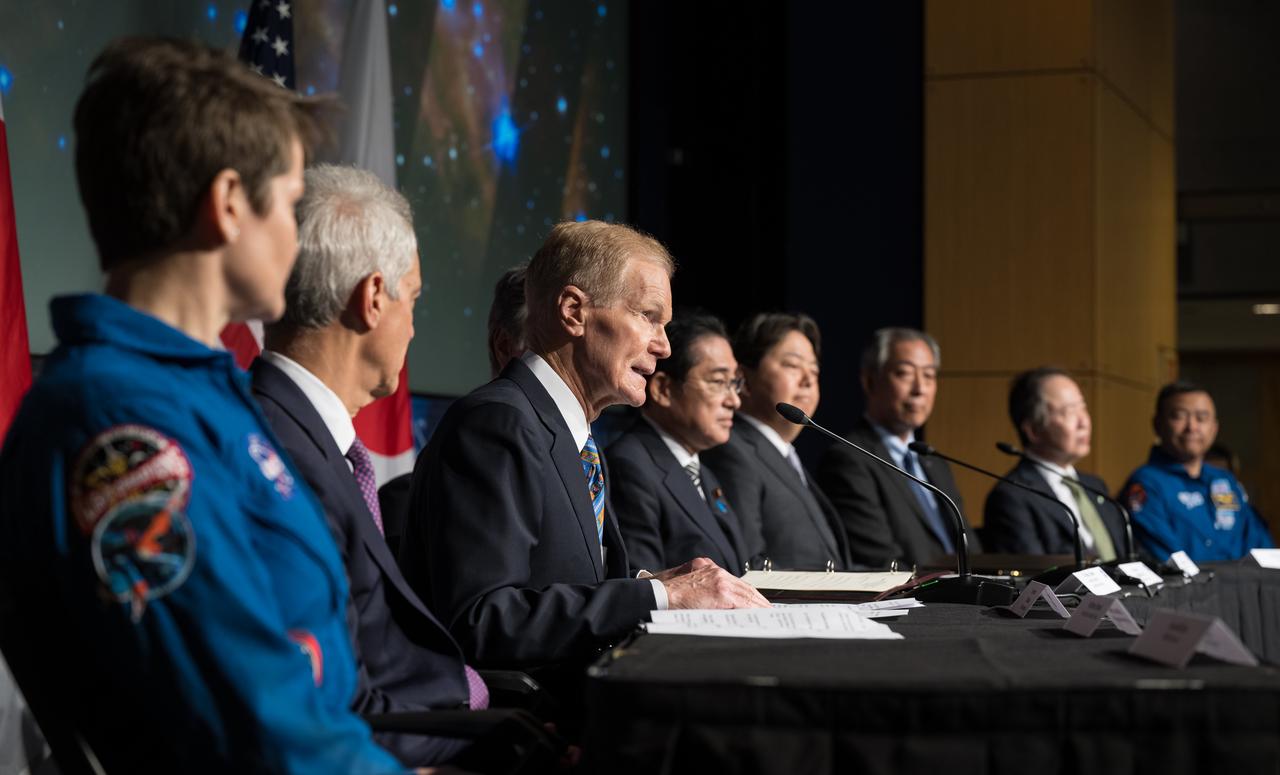
NASA Administrator Bill Nelson delivers remarks before U.S. Secretary of State, Antony Blinken and Japan’s Minister for Foreign Affairs, Hayashi Yoshimasa, sign an agreement that builds on a long history of collaboration in space exploration between the U.S. and Japan, Friday, Jan. 13, 2023, at the Mary W. Jackson NASA Headquarters building in Washington. “The Framework Agreement Between the Government of Japan and the Government of the United States of America for Cooperation in Space Exploration and Use of Outer Space, Including the Moon and Other Celestial Bodies, For Peaceful Purposes” covers joint activities including space science, Earth science, space operations and exploration, aeronautical science and technology, space technology, space transportation, and safety and mission assurance, among others. Photo Credit: (NASA/Aubrey Gemignani)

Japan Aerospace Exploration Agency (JAXA) President Hiroshi Yamakawa, left, JAXA astronaut Akihiko Hoshide, Japan’s Minister of Education, Culture, Sports, Science and Technology Masahito Moriyama, NASA Administrator Bill Nelson, and NASA astronaut Kayla Barron, right, talk by a model of the Pressurized lunar rover, after the signing of an historic agreement between the United States and Japan to advance sustainable human exploration of the Moon, Tuesday, April 9, 2024, at the NASA Headquarters Mary W. Jackson Building in Washington. Under the agreement, Japan will design, develop, and operate a pressurized rover for crewed and uncrewed exploration on the Moon. NASA will provide the launch and delivery of the rover to the Moon as well as two Japanese astronaut missions to the lunar surface. Photo Credit: (NASA/Bill Ingalls)
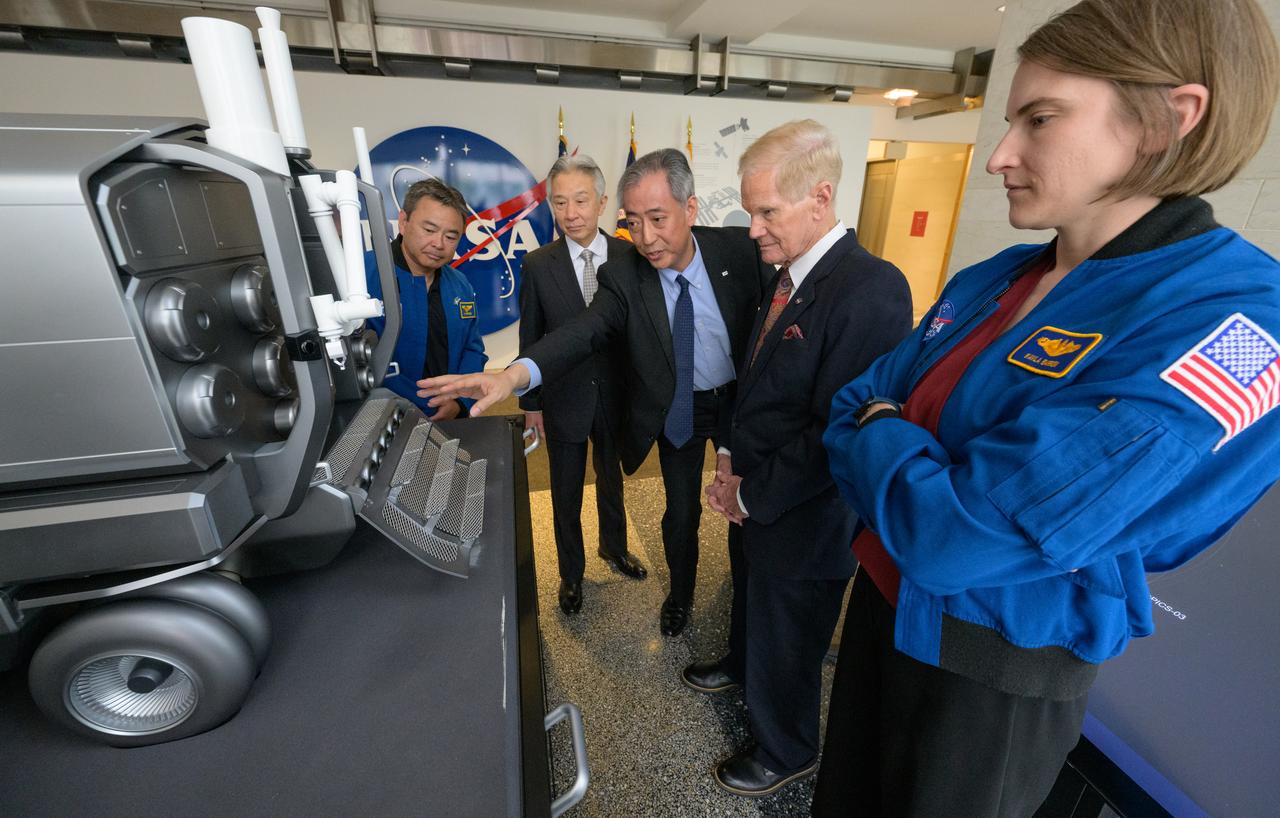
Japan Aerospace Exploration Agency (JAXA) astronaut Akihiko Hoshide, left, Japan’s Minister of Education, Culture, Sports, Science and Technology Masahito Moriyama, JAXA President Hiroshi Yamakawa, NASA Administrator Bill Nelson, and NASA astronaut Kayla Barron, right, talk by a model of the Pressurized lunar rover, after the signing of an historic agreement between the United States and Japan to advance sustainable human exploration of the Moon, Tuesday, April 9, 2024, at the NASA Headquarters Mary W. Jackson Building in Washington. Under the agreement, Japan will design, develop, and operate a pressurized rover for crewed and uncrewed exploration on the Moon. NASA will provide the launch and delivery of the rover to the Moon as well as two Japanese astronaut missions to the lunar surface. Photo Credit: (NASA/Bill Ingalls)
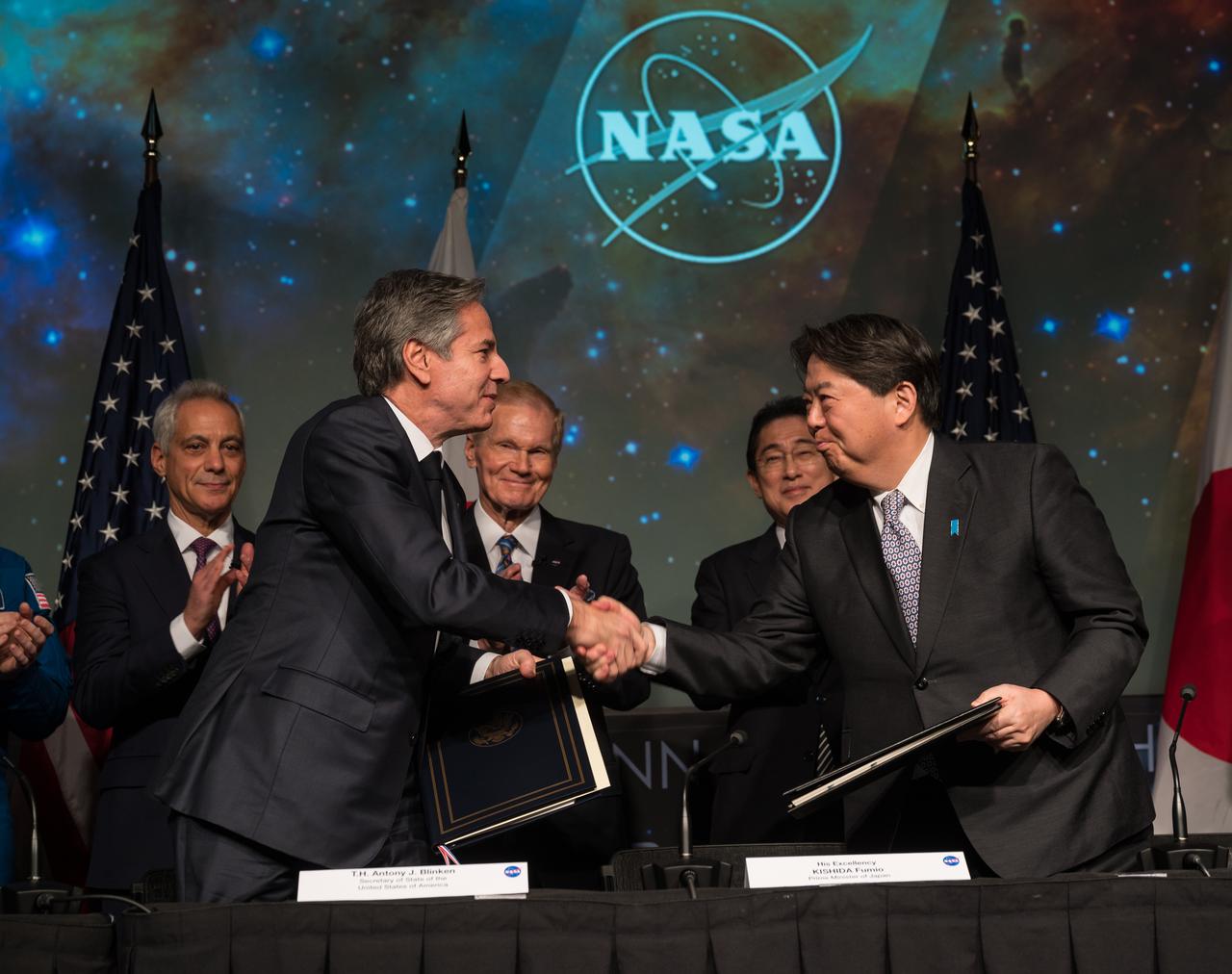
U.S. Secretary of State Antony Blinken, front left, and Japan’s Minister for Foreign Affairs, Hayashi Yoshimasa, front right, shake hands after signing an agreement that builds on a long history of collaboration in space exploration between the U.S. and Japan, Friday, Jan. 13, 2023, at the Mary W. Jackson NASA Headquarters building in Washington. Also present were, U.S. Ambassador to Japan Rahm Emanuel, left, NASA Administrator Bill Nelson, second from left, and Prime Minister of Japan, His Excellency Kishida Fumio, right. “The Framework Agreement Between the Government of Japan and the Government of the United States of America for Cooperation in Space Exploration and Use of Outer Space, Including the Moon and Other Celestial Bodies, For Peaceful Purposes” covers joint activities including space science, Earth science, space operations and exploration, aeronautical science and technology, space technology, space transportation, and safety and mission assurance, among others. Photo Credit: (NASA/Aubrey Gemignani)
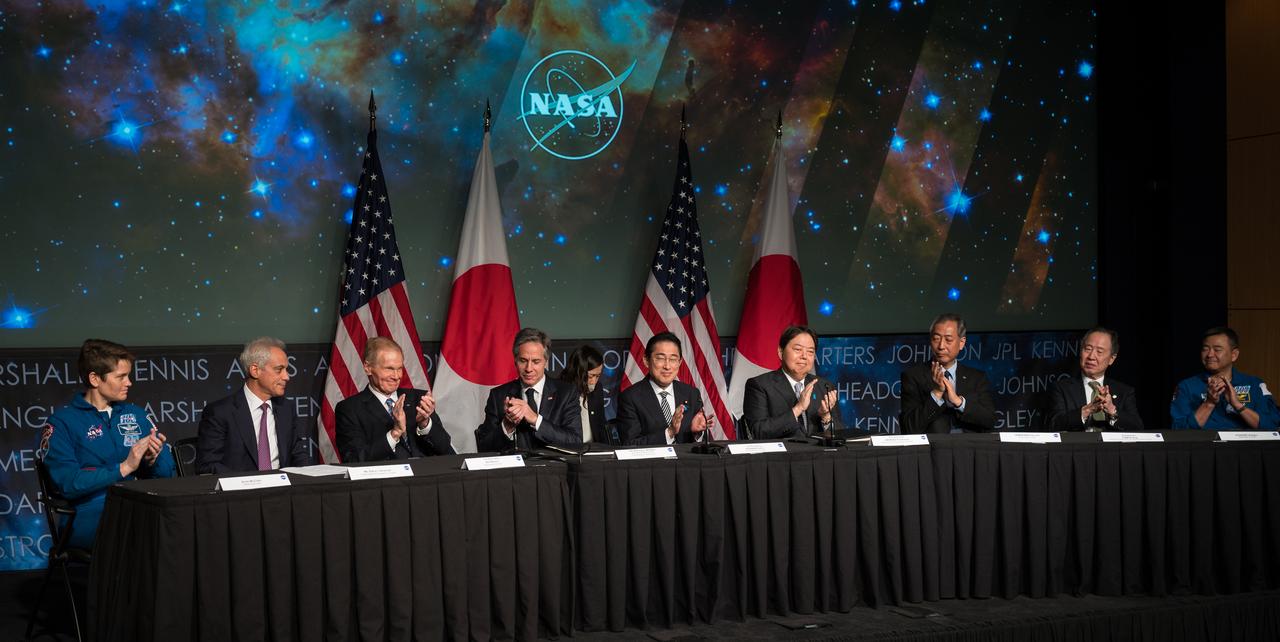
From left to right, NASA astronaut Anne McClain, U.S. Ambassador to Japan Rahm Emanuel, NASA Administrator Bill Nelson, U.S. Secretary of State Antony Blinken, Prime Minister of Japan, His Excellency Kishida Fumio, Minister for Foreign Affairs of Japan, The Honorable Hayashi Yoshimasa, President of the Japan Aerospace Exploration Agency (JAXA), Yamakawa Hiroshi, Ambassador Extraordinary and Plenipotentiary of Japan to the U.S., Tomita Koji, and JAXA astronaut Hoshide Akihiko, applaud after the signing of an agreement that builds on a long history of collaboration in space exploration between the U.S. and Japan, Friday, Jan. 13, 2023, at the Mary W. Jackson NASA Headquarters building in Washington. “The Framework Agreement Between the Government of Japan and the Government of the United States of America for Cooperation in Space Exploration and Use of Outer Space, Including the Moon and Other Celestial Bodies, For Peaceful Purposes” covers joint activities including space science, Earth science, space operations and exploration, aeronautical science and technology, space technology, space transportation, and safety and mission assurance, among others. Photo Credit: (NASA/Aubrey Gemignani)
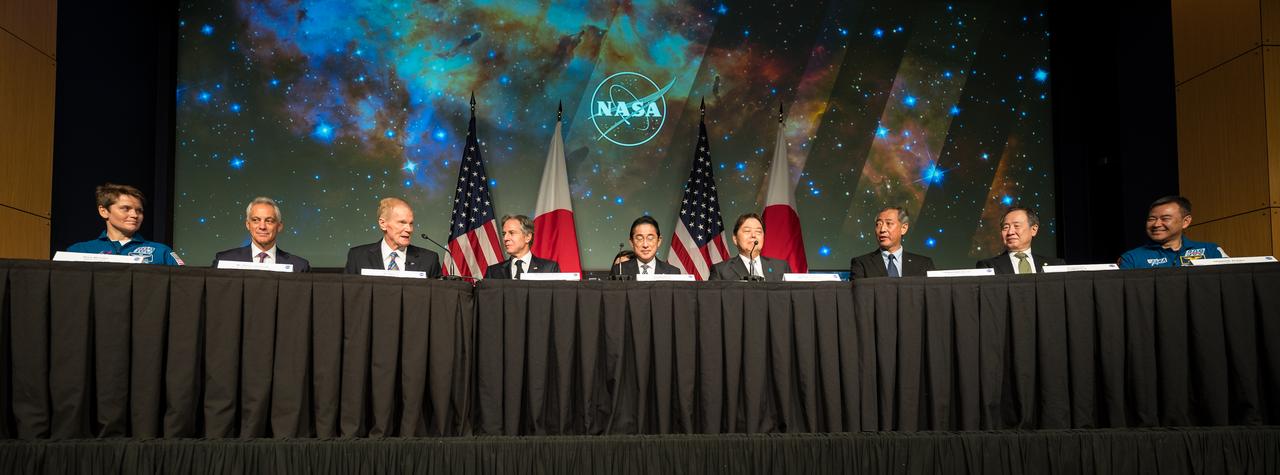
From left to right, NASA astronaut Anne McClain, U.S. Ambassador to Japan, Rahm Emanuel, NASA Administrator Bill Nelson, U.S. Secretary of State Antony Blinken, Prime Minister of Japan, His Excellency Kishida Fumio, Minister for Foreign Affairs of Japan, The Honorable Hayashi Yoshimasa, President of the Japan Aerospace Exploration Agency (JAXA), Yamakawa Hiroshi, Ambassador Extraordinary and Plenipotentiary of Japan to the U.S., Tomita Koji, and JAXA astronaut Hoshide Akihiko, are seen before the signing of an agreement that builds on a long history of collaboration in space exploration between the U.S. and Japan, Friday, Jan. 13, 2023, at the Mary W. Jackson NASA Headquarters building in Washington. “The Framework Agreement Between the Government of Japan and the Government of the United States of America for Cooperation in Space Exploration and Use of Outer Space, Including the Moon and Other Celestial Bodies, For Peaceful Purposes” covers joint activities including space science, Earth science, space operations and exploration, aeronautical science and technology, space technology, space transportation, and safety and mission assurance, among others. Photo Credit: (NASA/Aubrey Gemignani)
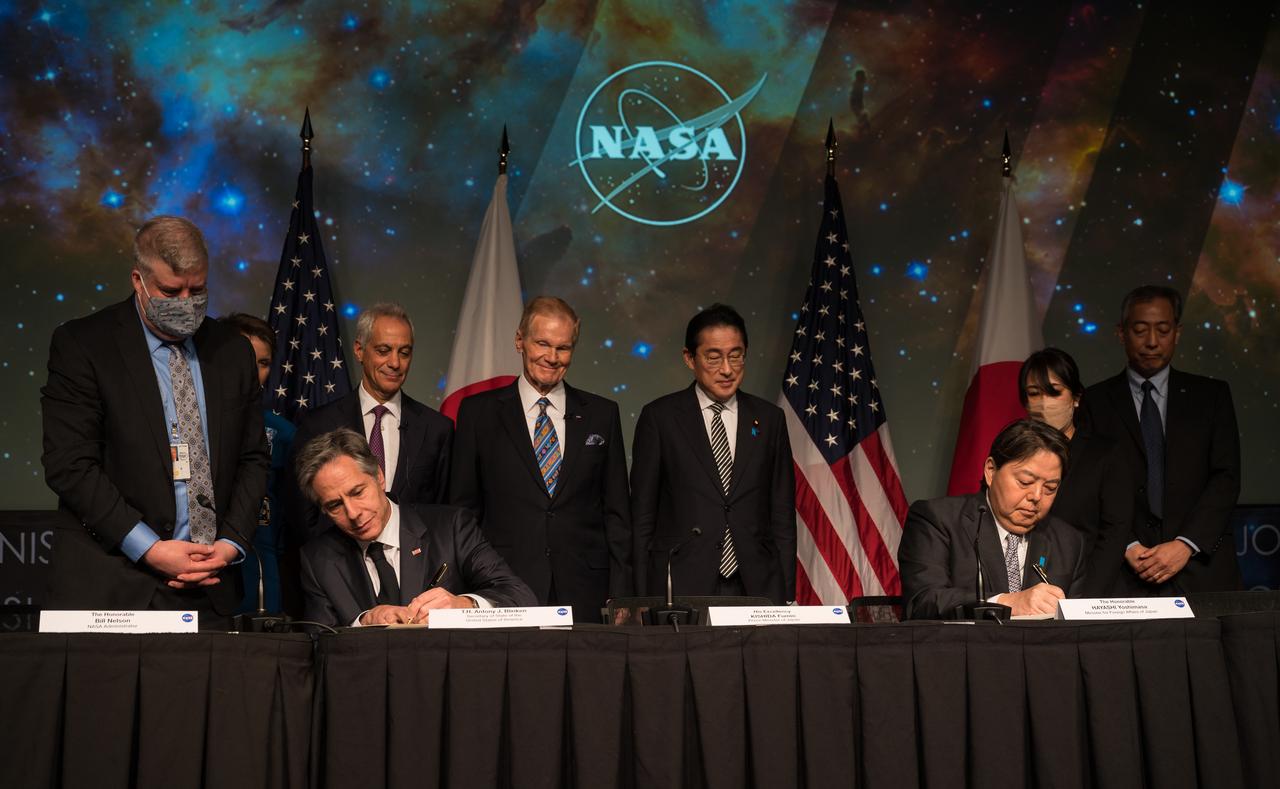
U.S. Secretary of State Antony Blinken, seated left, and Japan’s Minister for Foreign Affairs, Hayashi Yoshimasa, seated right, sign an agreement that builds on a long history of collaboration in space exploration between the U.S. and Japan, Friday, Jan. 13, 2023, at the Mary W. Jackson NASA Headquarters building in Washington. Also present were, U.S. Ambassador to Japan Rahm Emanuel, second from left, NASA Administrator Bill Nelson, third from left, Prime Minister of Japan, His Excellency Kishida Fumio, third from right, President of the Japan Aerospace Exploration Agency (JAXA), Yamakawa Hiroshi, right. “The Framework Agreement Between the Government of Japan and the Government of the United States of America for Cooperation in Space Exploration and Use of Outer Space, Including the Moon and Other Celestial Bodies, For Peaceful Purposes” covers joint activities including space science, Earth science, space operations and exploration, aeronautical science and technology, space technology, space transportation, and safety and mission assurance, among others. Photo Credit: (NASA/Aubrey Gemignani)
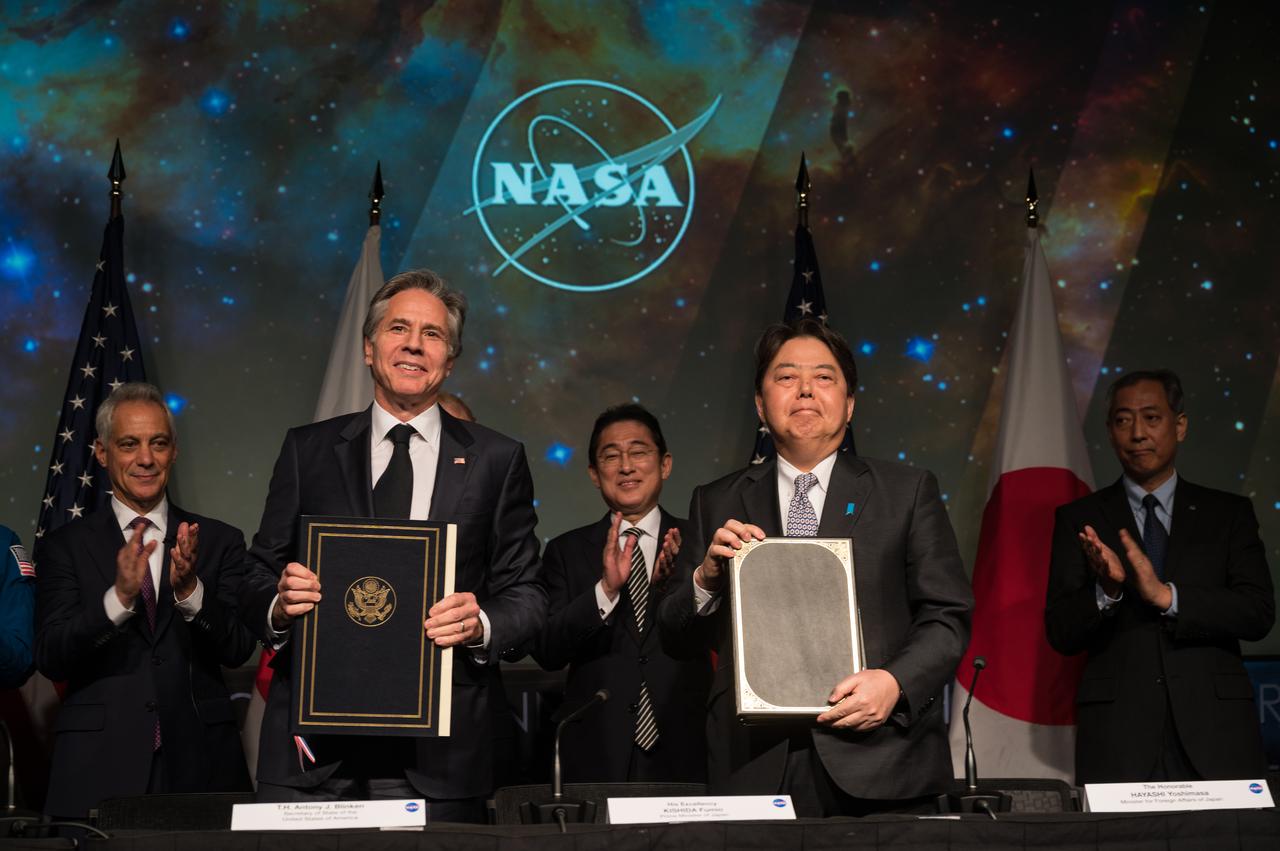
U.S. Secretary of State Antony Blinken, front left, and Japan’s Minister for Foreign Affairs, Hayashi Yoshimasa, front right, pose for a photo after signing an agreement that builds on a long history of collaboration in space exploration between the U.S. and Japan, Friday, Jan. 13, 2023, at the Mary W. Jackson NASA Headquarters building in Washington. Also present were, U.S. Ambassador to Japan Rahm Emanuel, left, NASA Administrator Bill Nelson, second from left, Prime Minister of Japan, His Excellency Kishida Fumio, second from right, President of the Japan Aerospace Exploration Agency (JAXA), Yamakawa Hiroshi, right. “The Framework Agreement Between the Government of Japan and the Government of the United States of America for Cooperation in Space Exploration and Use of Outer Space, Including the Moon and Other Celestial Bodies, For Peaceful Purposes” covers joint activities including space science, Earth science, space operations and exploration, aeronautical science and technology, space technology, space transportation, and safety and mission assurance, among others. Photo Credit: (NASA/Aubrey Gemignani)
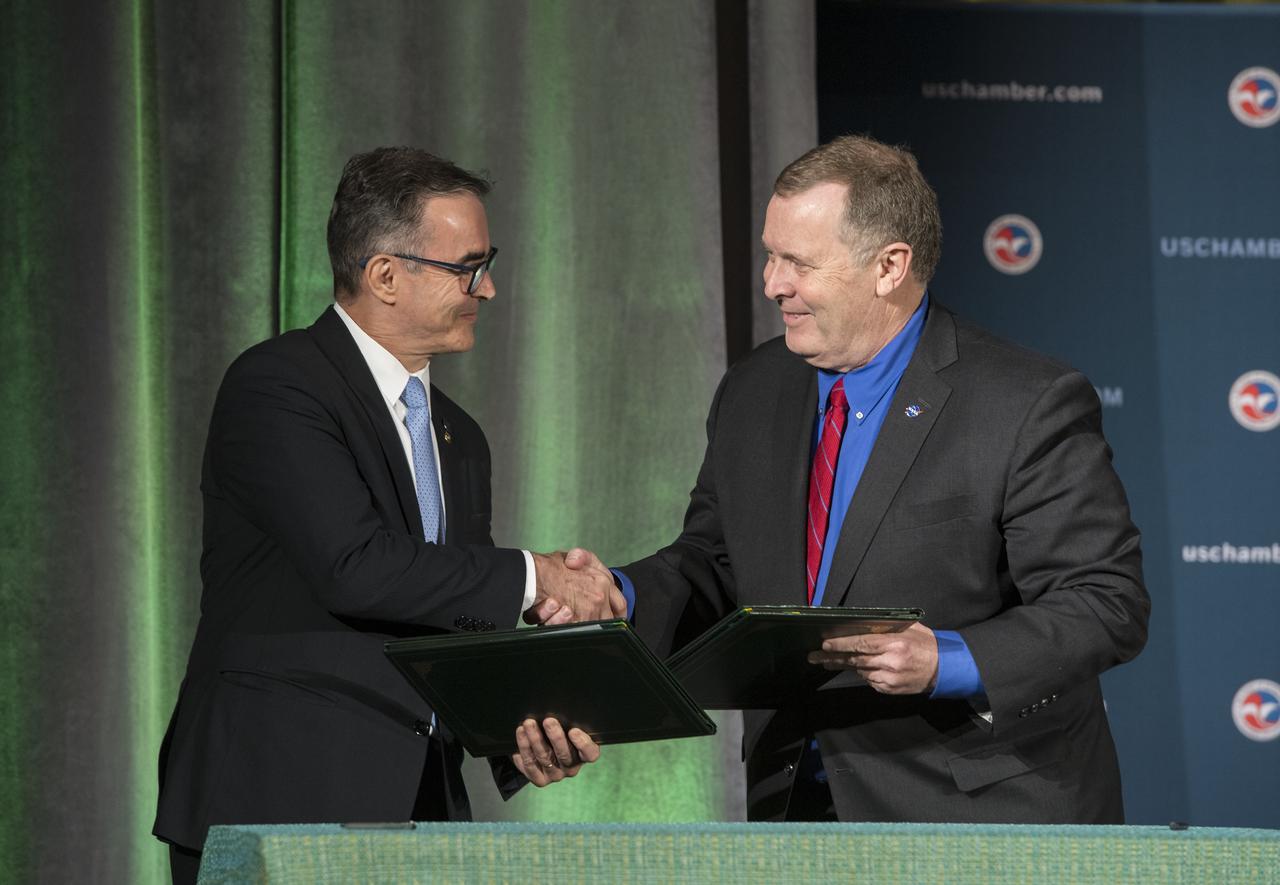
NASA Deputy Administrator James Morhard, right, shakes hands with President of the Brazilian Space Agency (AEB) Carlos Augusto Teixeira de Moura, left, after signing an agreement for cooperation on the Scintillation Prediction Observations Research Task (SPORT), an upcoming NASA-AEB heliophysics CubeSat partnership, Monday, March 18, 2019, at the U.S. Chamber of Commerce in Washington. The SPORT CubeSat will investigate two ionospheric phenomena, equatorial plasma bubbles and scintillation, that disrupt radio communication systems, satellite technologies, and Global Positioning System (GPS) signals. SPORT is currently projected to launch in the 2020 timeframe. Photo Credit: (NASA/ Aubrey Gemignani)
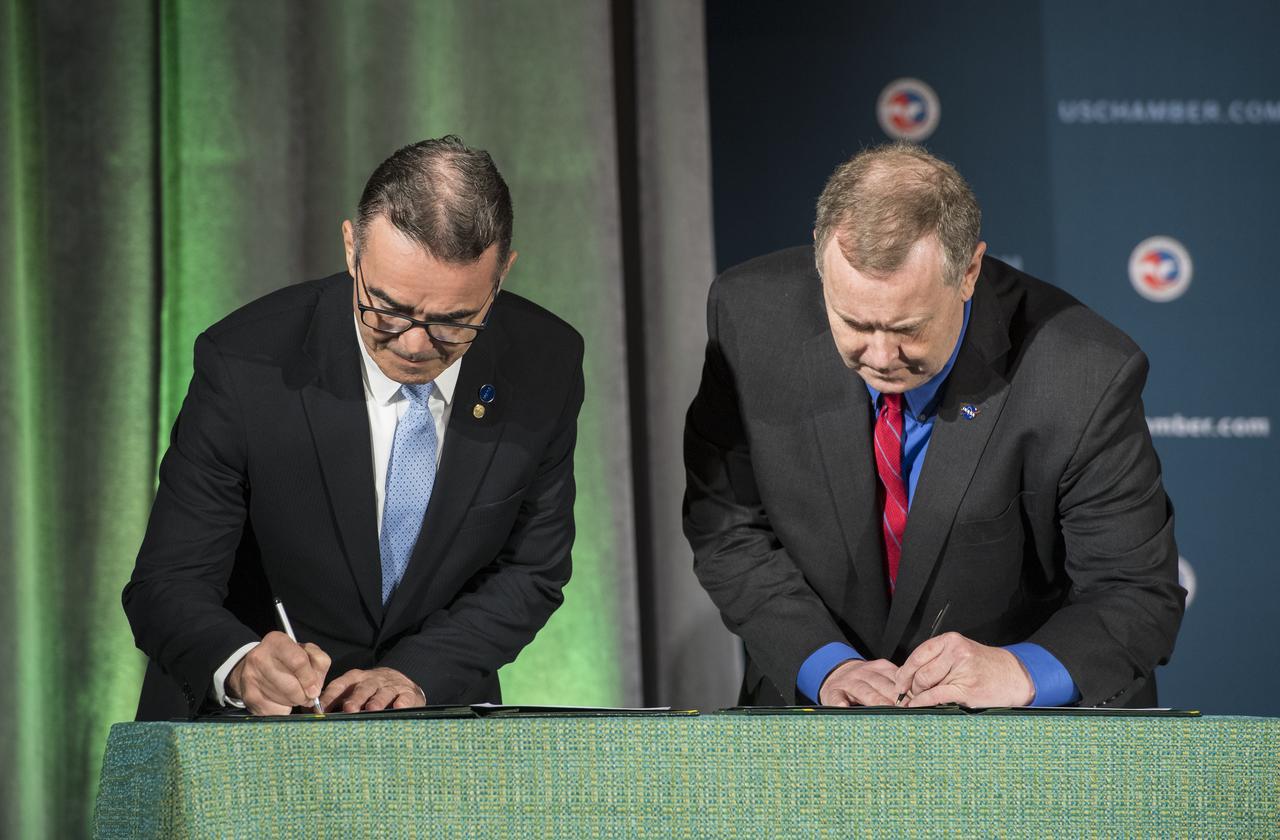
NASA Deputy Administrator James Morhard, right, and President of the Brazilian Space Agency (AEB) Carlos Augusto Teixeira de Moura, left, sign an agreement for cooperation on the Scintillation Prediction Observations Research Task (SPORT), an upcoming NASA-AEB heliophysics CubeSat partnership, Monday, March 18, 2019, at the U.S. Chamber of Commerce in Washington. The SPORT CubeSat will investigate two ionospheric phenomena, equatorial plasma bubbles and scintillation, that disrupt radio communication systems, satellite technologies, and Global Positioning System (GPS) signals. SPORT is currently projected to launch in the 2020 timeframe. Photo Credit: (NASA/ Aubrey Gemignani)
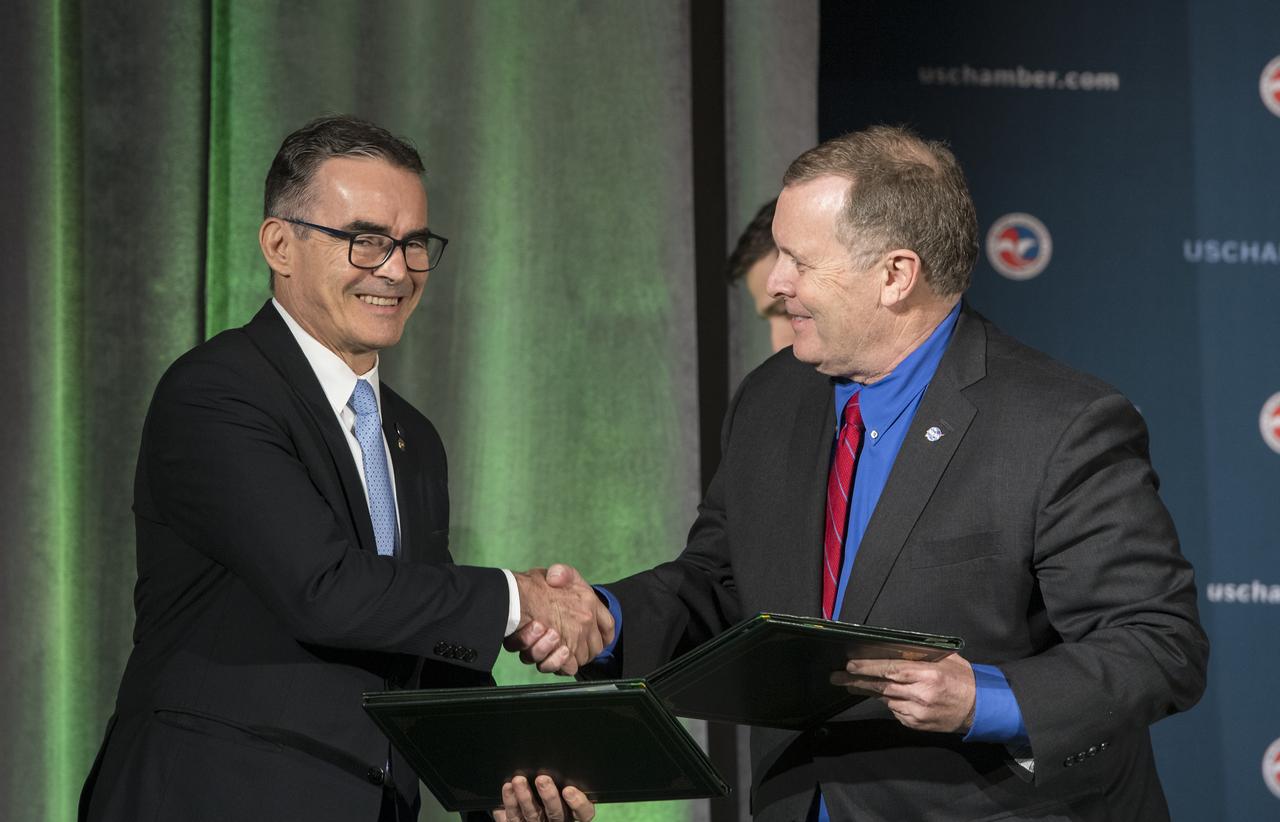
NASA Deputy Administrator James Morhard, right, shakes hands with President of the Brazilian Space Agency (AEB) Carlos Augusto Teixeira de Moura, left, after signing an agreement for cooperation on the Scintillation Prediction Observations Research Task (SPORT), an upcoming NASA-AEB heliophysics CubeSat partnership, Monday, March 18, 2019, at the U.S. Chamber of Commerce in Washington. The SPORT CubeSat will investigate two ionospheric phenomena, equatorial plasma bubbles and scintillation, that disrupt radio communication systems, satellite technologies, and Global Positioning System (GPS) signals. SPORT is currently projected to launch in the 2020 timeframe. Photo Credit: (NASA/ Aubrey Gemignani)

NASA Deputy Administrator James Morhard, left, speaks with H.E. President Jair Bolsonaro of Brazil, just before signing an agreement with President of the Brazilian Space Agency (AEB), Carlos Augusto Teixeira de Moura, for cooperation on the Scintillation Prediction Observations Research Task (SPORT), an upcoming NASA-AEB heliophysics CubeSat partnership, Monday, March 18, 2019, at the U.S. Chamber of Commerce in Washington. The SPORT CubeSat will investigate two ionospheric phenomena, equatorial plasma bubbles and scintillation, that disrupt radio communication systems, satellite technologies, and Global Positioning System (GPS) signals. SPORT is currently projected to launch in the 2020 timeframe. Photo Credit: (NASA/ Aubrey Gemignani)
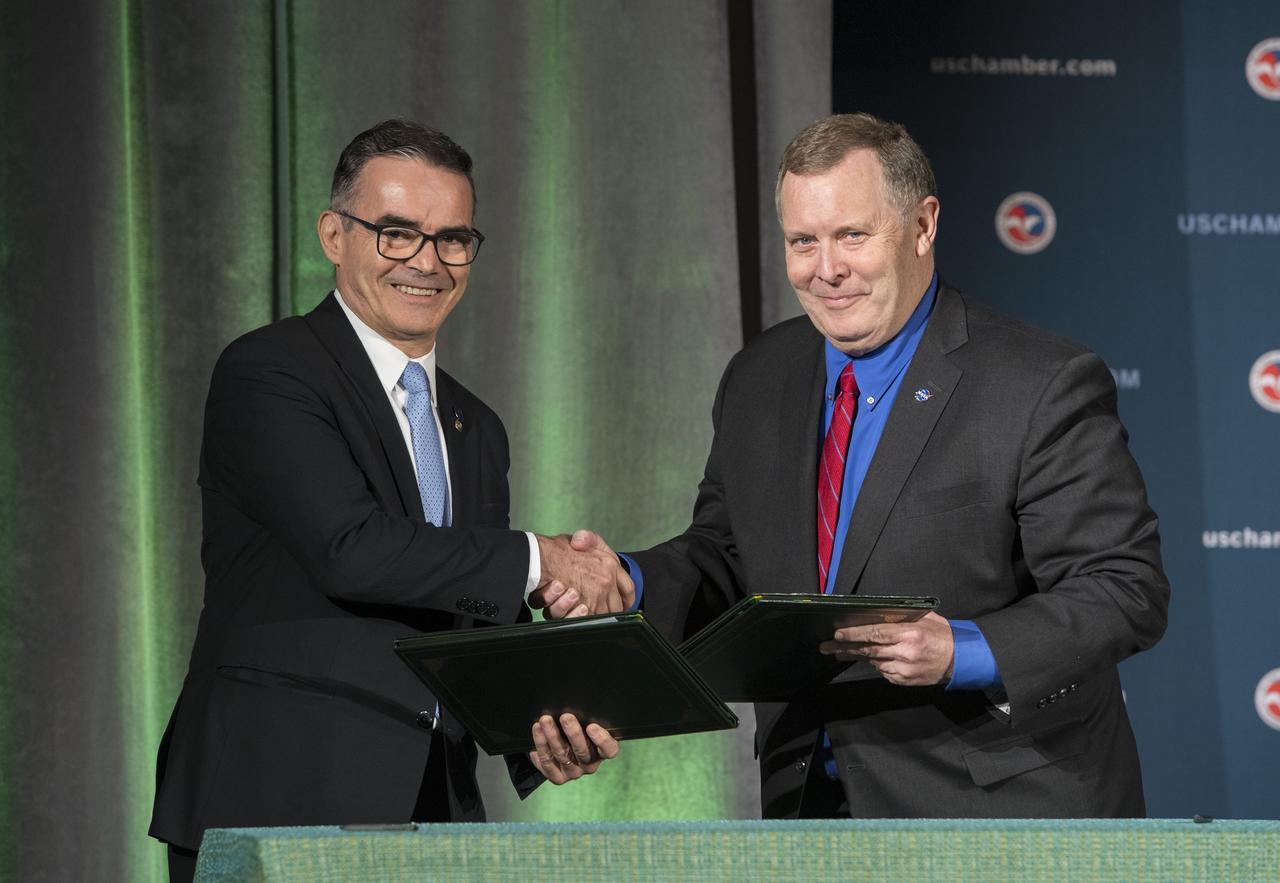
NASA Deputy Administrator James Morhard, right, shakes hands with President of the Brazilian Space Agency (AEB) Carlos Augusto Teixeira de Moura, left, after signing an agreement for cooperation on the Scintillation Prediction Observations Research Task (SPORT), an upcoming NASA-AEB heliophysics CubeSat partnership, Monday, March 18, 2019, at the U.S. Chamber of Commerce in Washington. The SPORT CubeSat will investigate two ionospheric phenomena, equatorial plasma bubbles and scintillation, that disrupt radio communication systems, satellite technologies, and Global Positioning System (GPS) signals. SPORT is currently projected to launch in the 2020 timeframe. Photo Credit: (NASA/ Aubrey Gemignani)
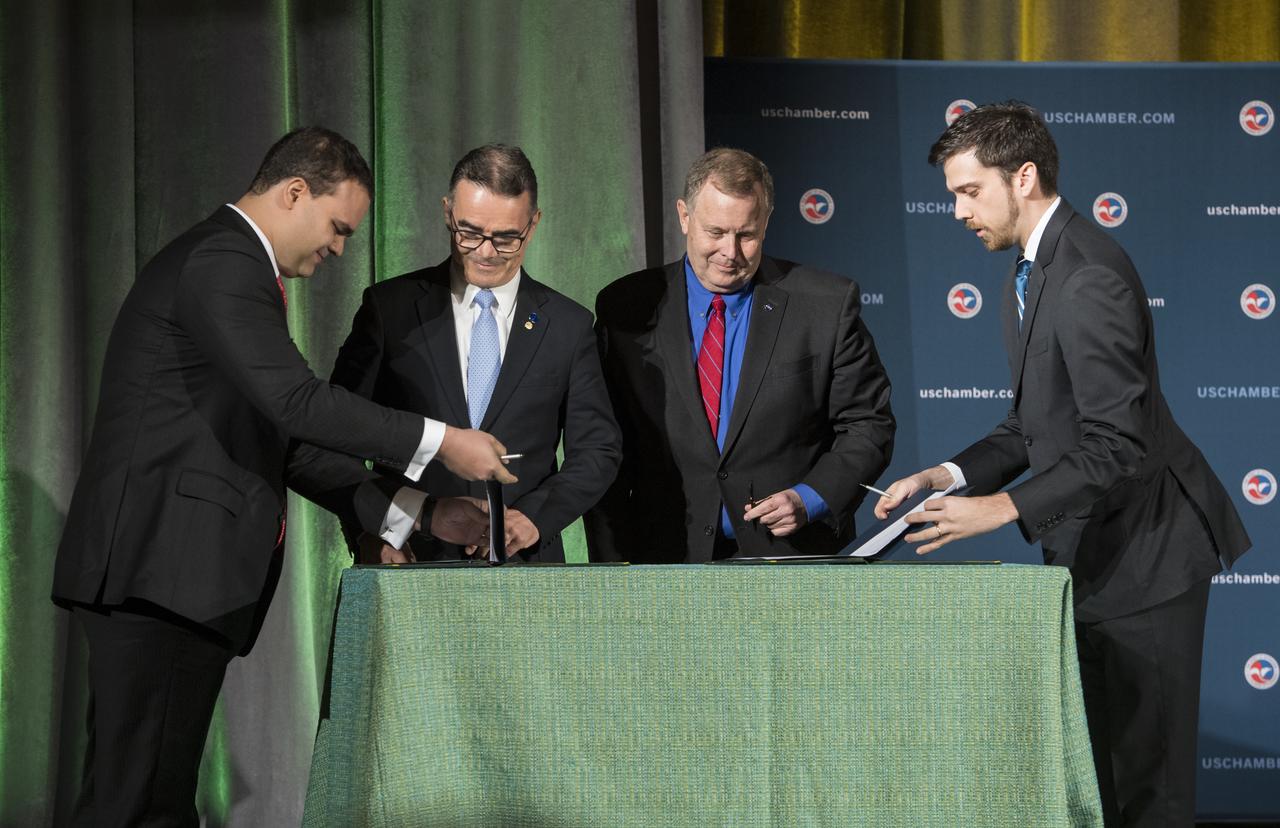
NASA Deputy Administrator James Morhard, center right, and President of the Brazilian Space Agency (AEB) Carlos Augusto Teixeira de Moura, center left, prepare to sign an agreement for cooperation on the Scintillation Prediction Observations Research Task (SPORT), an upcoming NASA-AEB heliophysics CubeSat partnership, Monday, March 18, 2019, at the U.S. Chamber of Commerce in Washington. The SPORT CubeSat will investigate two ionospheric phenomena, equatorial plasma bubbles and scintillation, that disrupt radio communication systems, satellite technologies, and Global Positioning System (GPS) signals. SPORT is currently projected to launch in the 2020 timeframe. Photo Credit: (NASA/ Aubrey Gemignani)
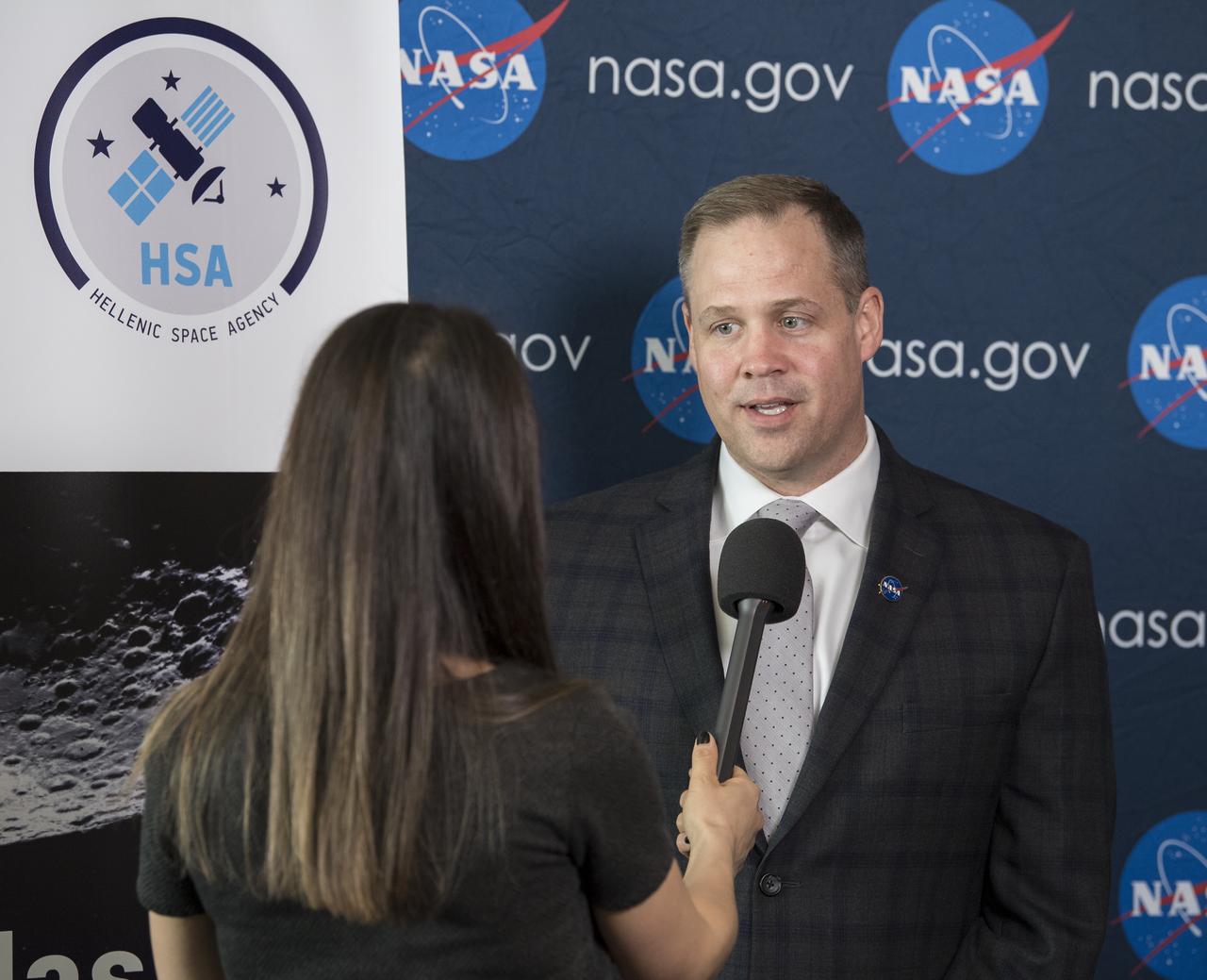
NASA Administrator Jim Bridenstine, is interviewed by Greek television after he signed a joint statement with the Hellenic Space Agency (HSA) CEO, Dr. Georgios Mantzouris, at the Space Symposium, Monday, April 8, 2019 in Colorado Springs, Colorado. Dr. Mantzouris expressed a desire to remain open to opportunities for collaboration, both through Greece’s contributions to the European Space Agency, of which it has been a member since 2005, and bilaterally. Photo Credit: (NASA/Aubrey Gemignani)
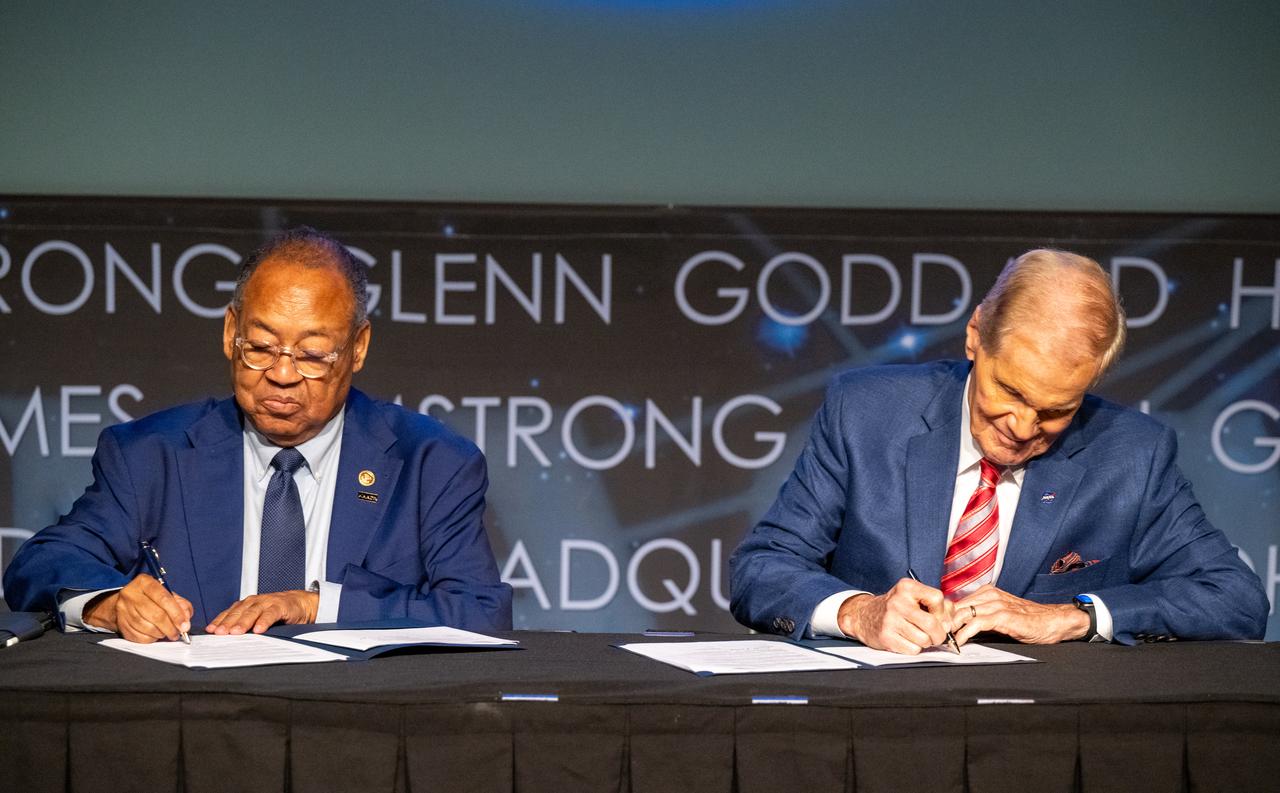
NAACP Board Chair Leon Russell, left, and NASA Administrator Bill Nelson, right, sign a Space Act Agreement between NASA and the NAACP during a 5th Annual Hidden Figures Street Naming Anniversary event Thursday, Sept. 19, 2024, at the Mary W. Jackson NASA Headquarters building in Washington. Photo Credit: (NASA/Keegan Barber)
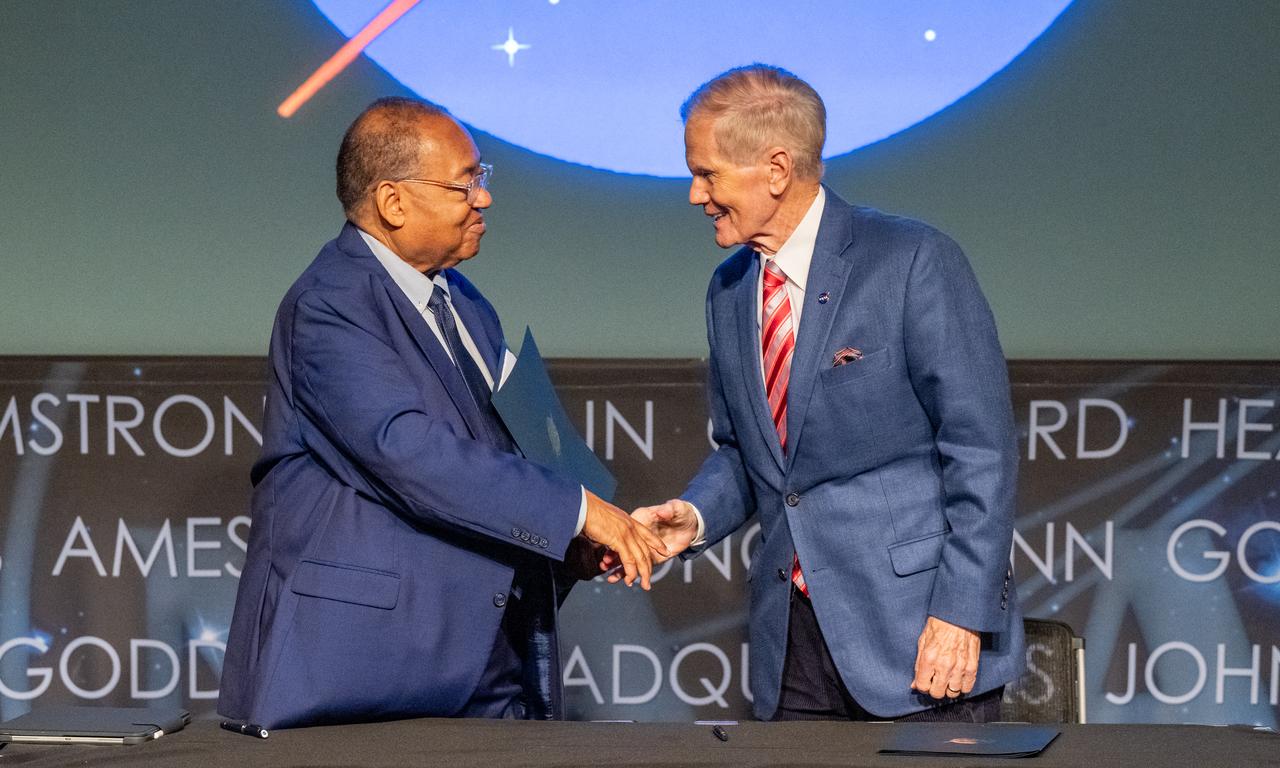
NAACP Board Chair Leon Russell, left, and NASA Administrator Bill Nelson, right, shake hands after signing a Space Act Agreement between NASA and the NAACP during a 5th Annual Hidden Figures Street Naming Anniversary event Thursday, Sept. 19, 2024, at the Mary W. Jackson NASA Headquarters building in Washington. Photo Credit: (NASA/Keegan Barber)
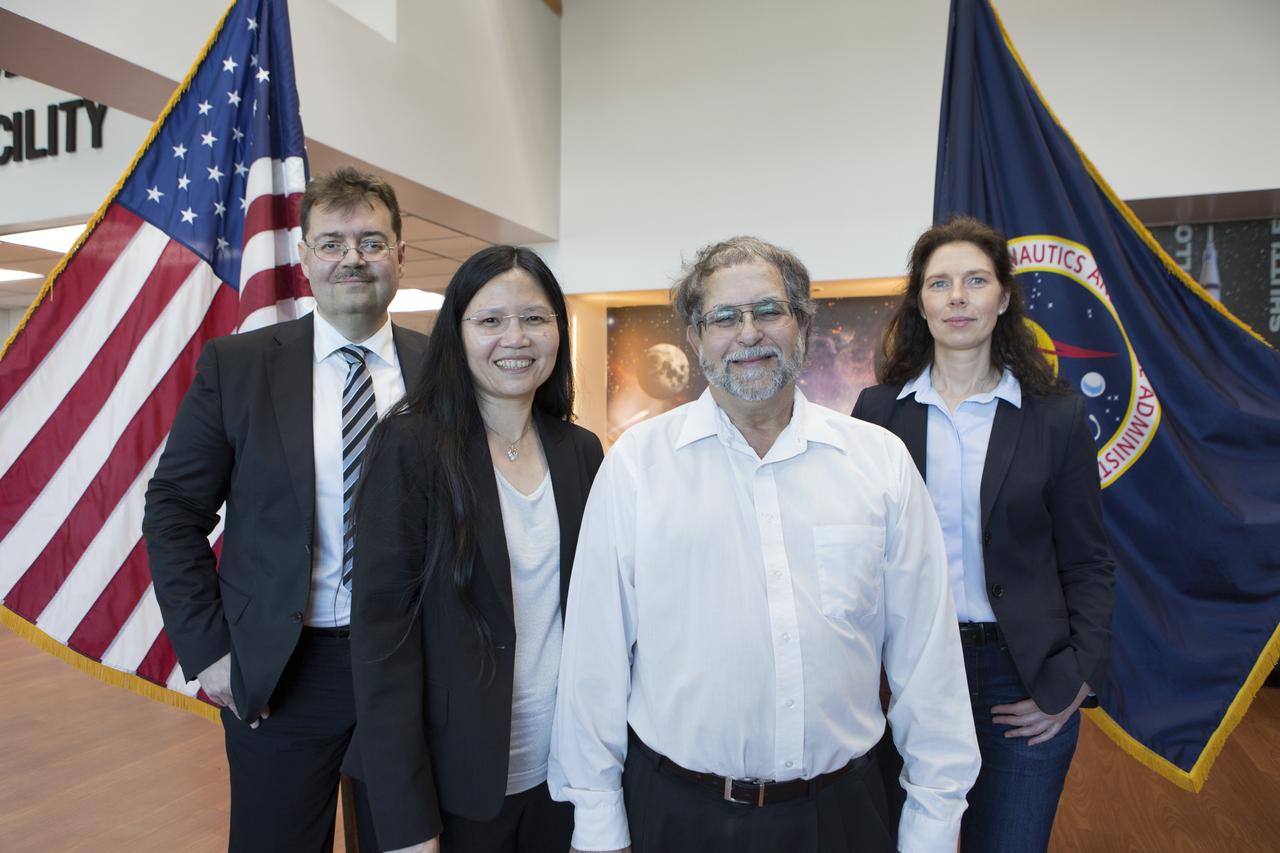
From left to right: Dr. Oliver Ullrich from the University of Zurich, Dr. Ye Zhang and Dr. Howard Levine of NASA's Kennedy Space Center, and Dr. Cora Thiel of the University of Zurich stood in the Space Station Processing Facility on Dec. 18, 2018. NASA recently signed a Space Act Agreement with the university, which is located in Switzerland, to collaborate on biological research. The team is studying gene expression in altered gravity.
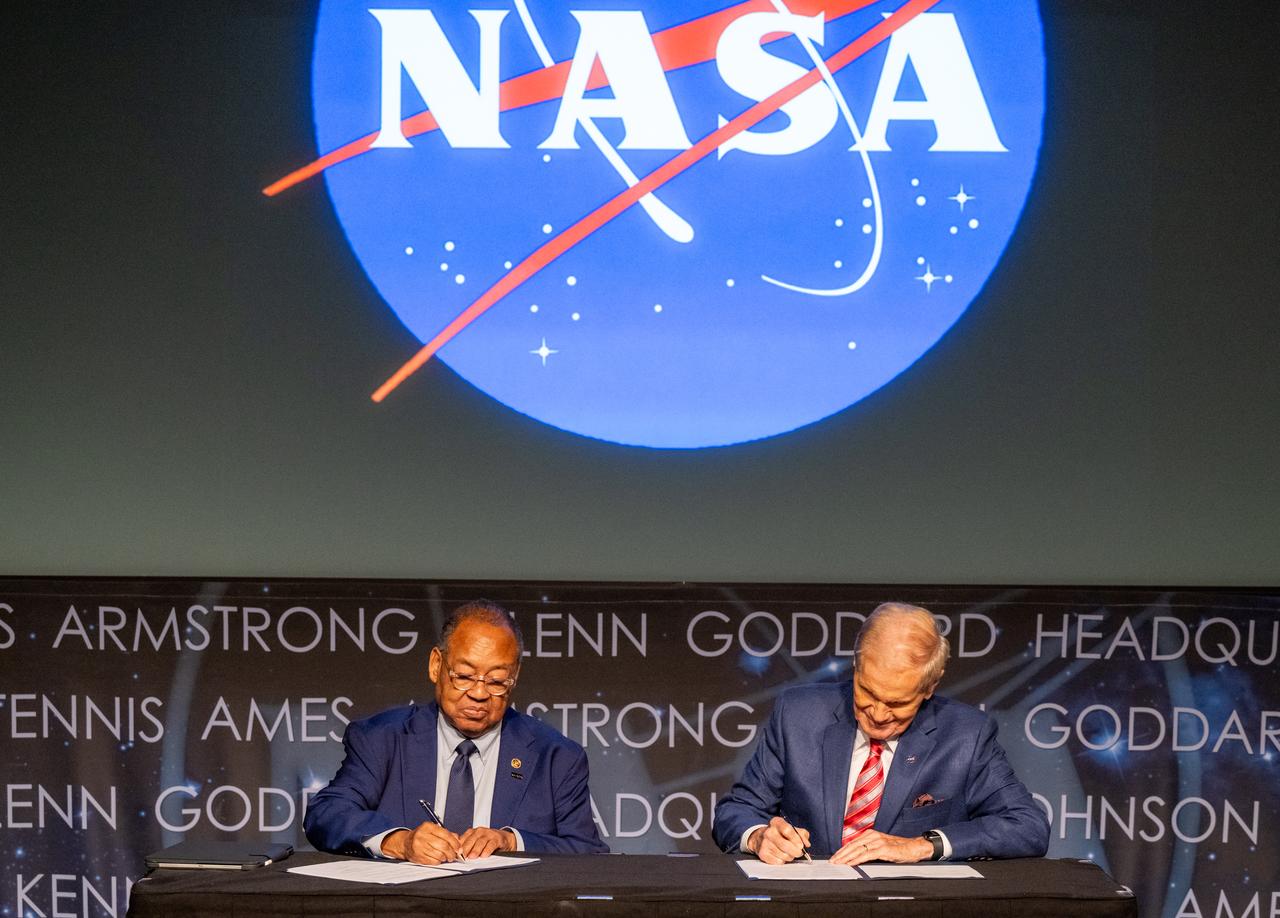
NAACP Board Chair Leon Russell, left, and NASA Administrator Bill Nelson, right, sign a Space Act Agreement between NASA and the NAACP during a 5th Annual Hidden Figures Street Naming Anniversary event Thursday, Sept. 19, 2024, at the Mary W. Jackson NASA Headquarters building in Washington. Photo Credit: (NASA/Keegan Barber)
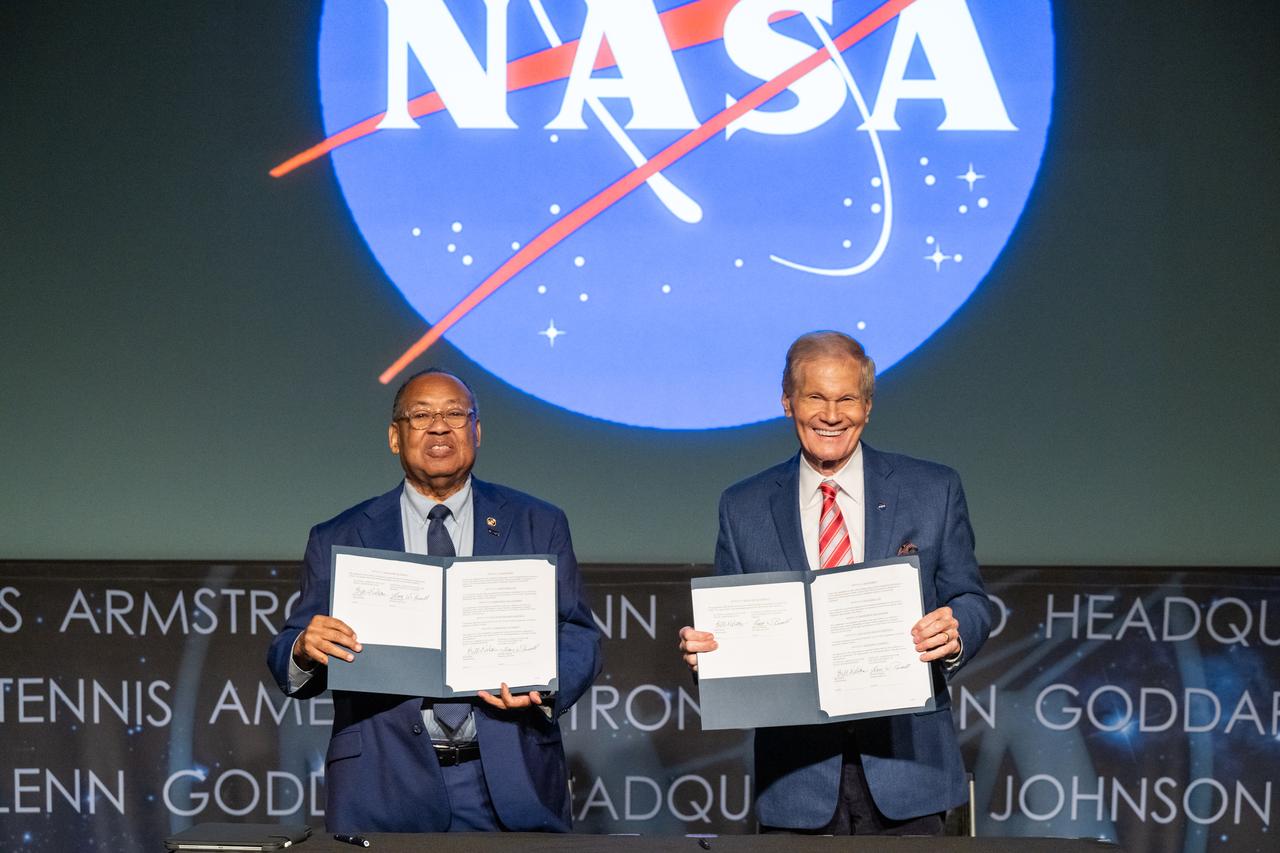
NAACP Board Chair Leon Russell, left, and NASA Administrator Bill Nelson, right, sign a Space Act Agreement between NASA and the NAACP during a 5th Annual Hidden Figures Street Naming Anniversary event Thursday, Sept. 19, 2024, at the Mary W. Jackson NASA Headquarters building in Washington. Photo Credit: (NASA/Keegan Barber)
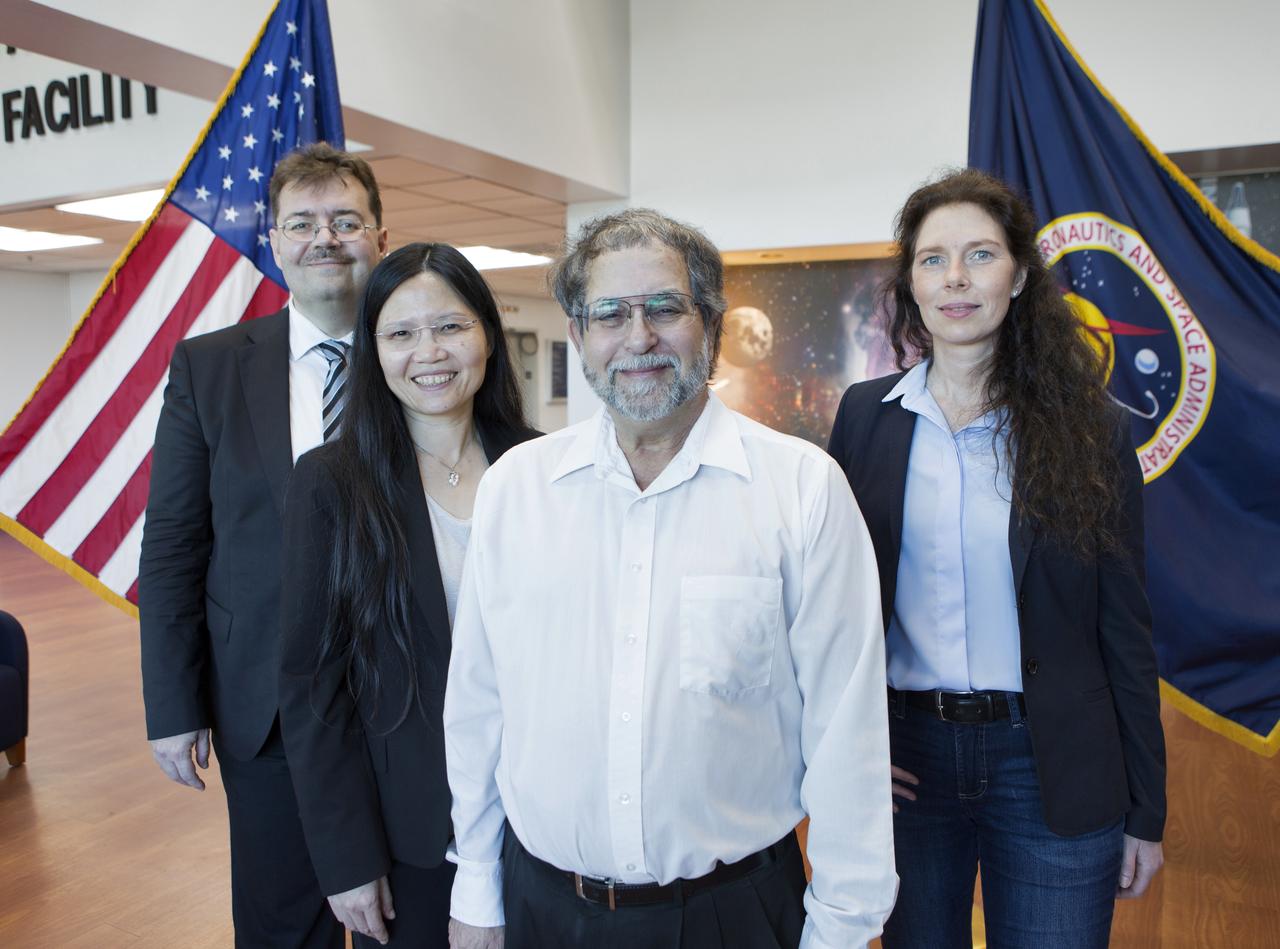
From left to right: Dr. Oliver Ullrich from the University of Zurich, Dr. Ye Zhang and Dr. Howard Levine of NASA's Kennedy Space Center, and Dr. Cora Thiel of the University of Zurich stood in the Space Station Processing Facility on Dec. 18, 2018. NASA recently signed a Space Act Agreement with the university, which is located in Switzerland, to collaborate on biological research. The team is studying gene expression in altered gravity.
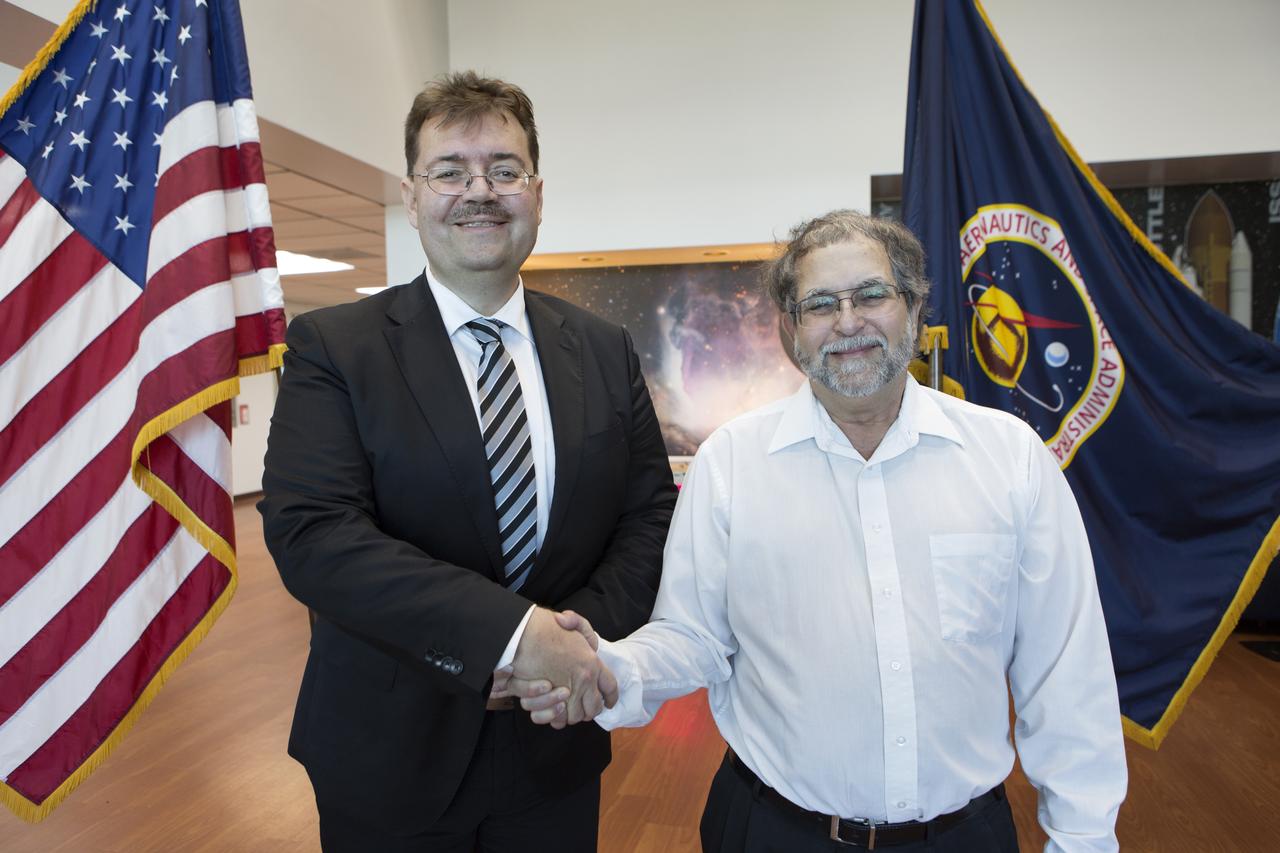
Dr. Oliver Ullrich (left) from the University of Zurich and Dr. Howard Levine of NASA's Kennedy Space Center stood in the Space Station Processing Facility on Dec. 18, 2018. NASA recently signed a Space Act Agreement with the university, which is located in Switzerland, to collaborate on biological research. The team is studying gene expression in altered gravity.