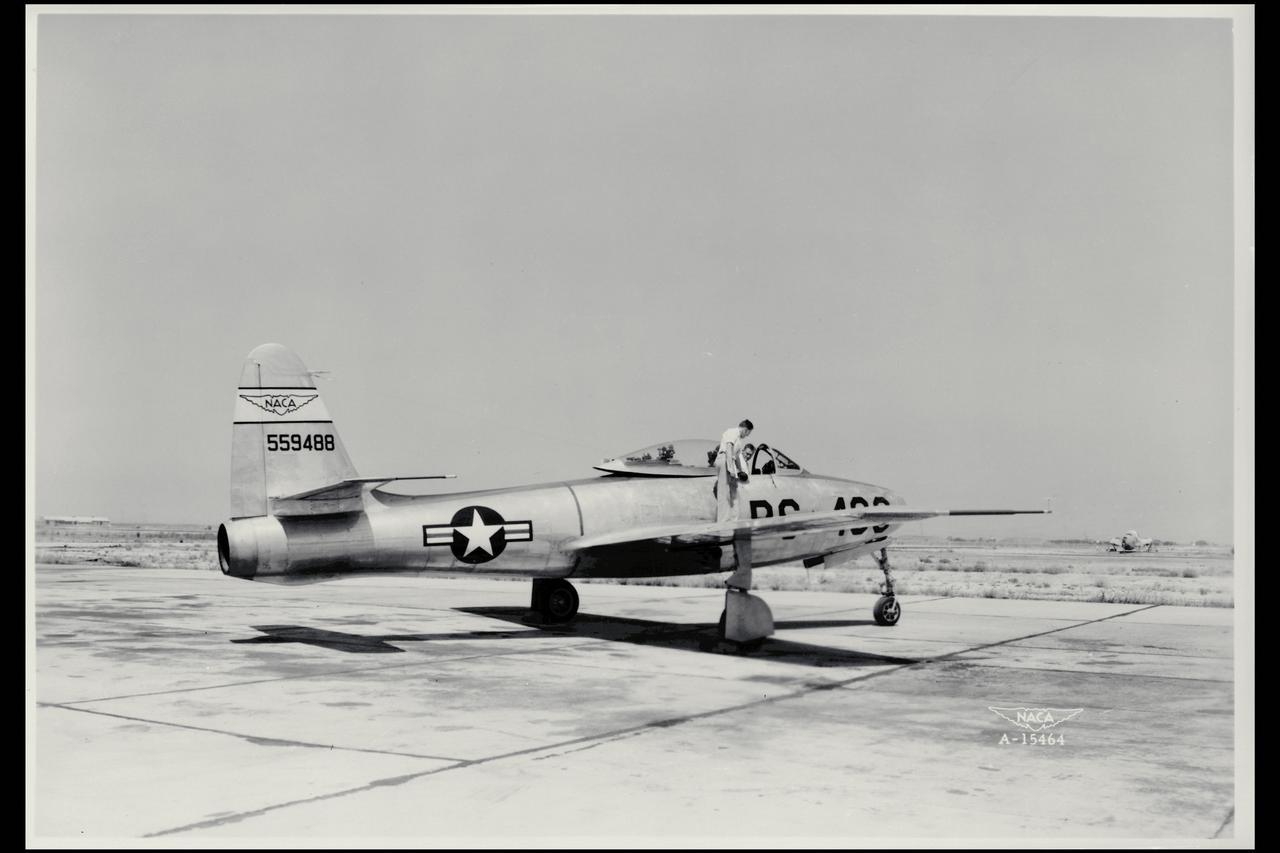
Aileron control; EYF-84 (No. 559488) airplane, differential pressure. The P-84A had a climbing tendency starting at March 0.78.
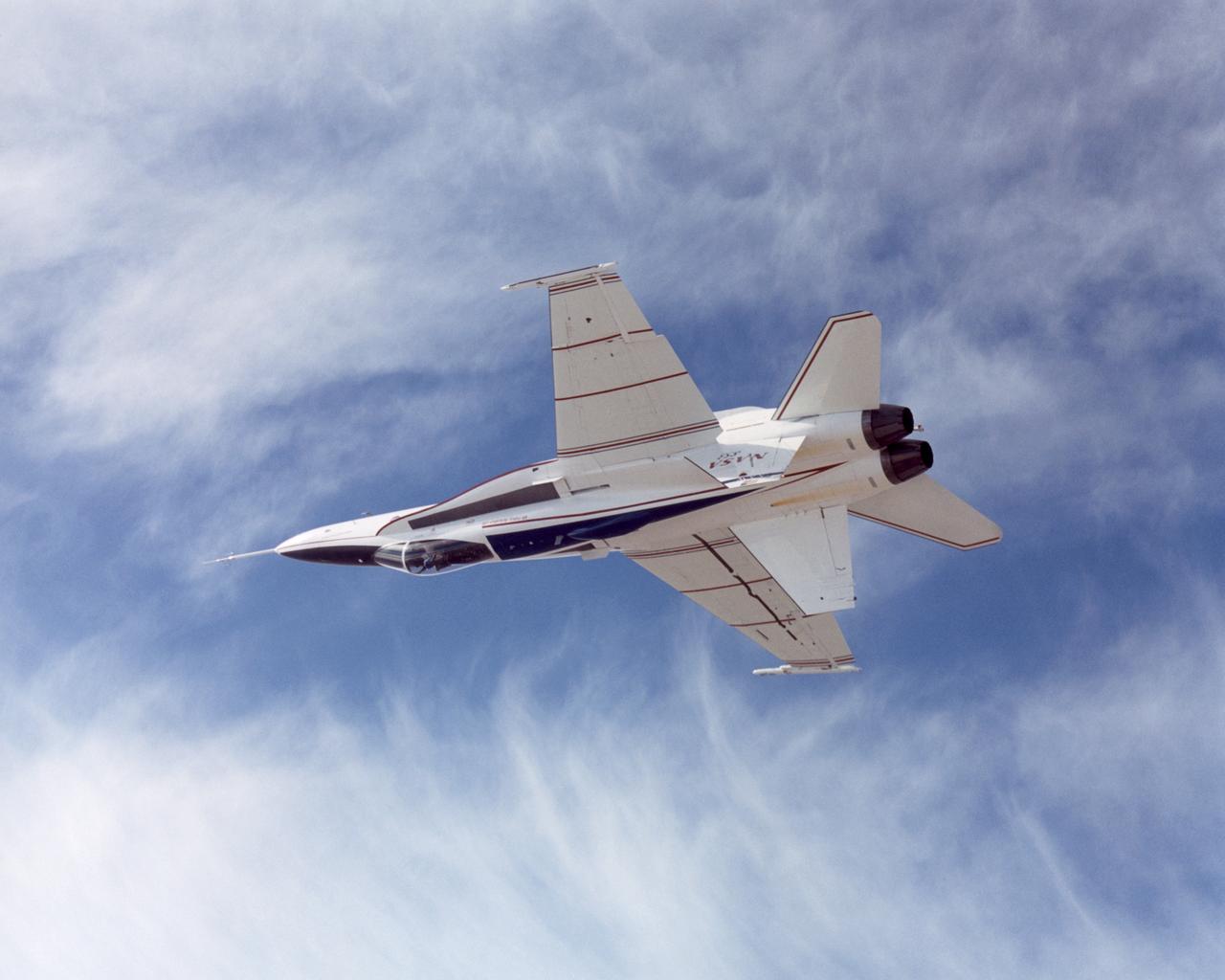
NASA's Active Aeroelastic Wing F/A-18A research aircraft rolls upside down during a 360-degree aileron roll on a test mission.
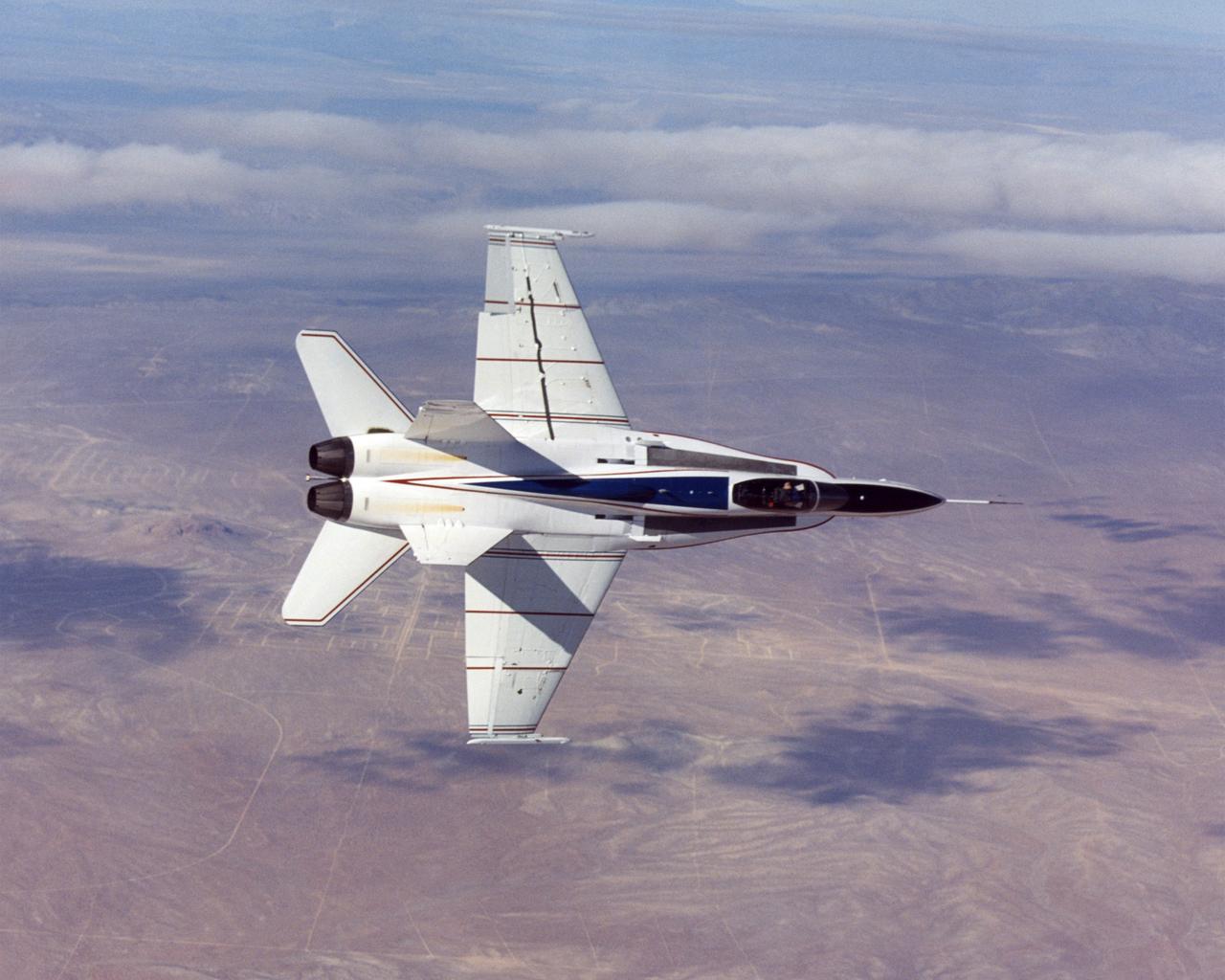
NASA Dryden's highly-modified Active Aeroelastic Wing F/A-18A shows off its form during a 360-degree aileron roll during a research flight.
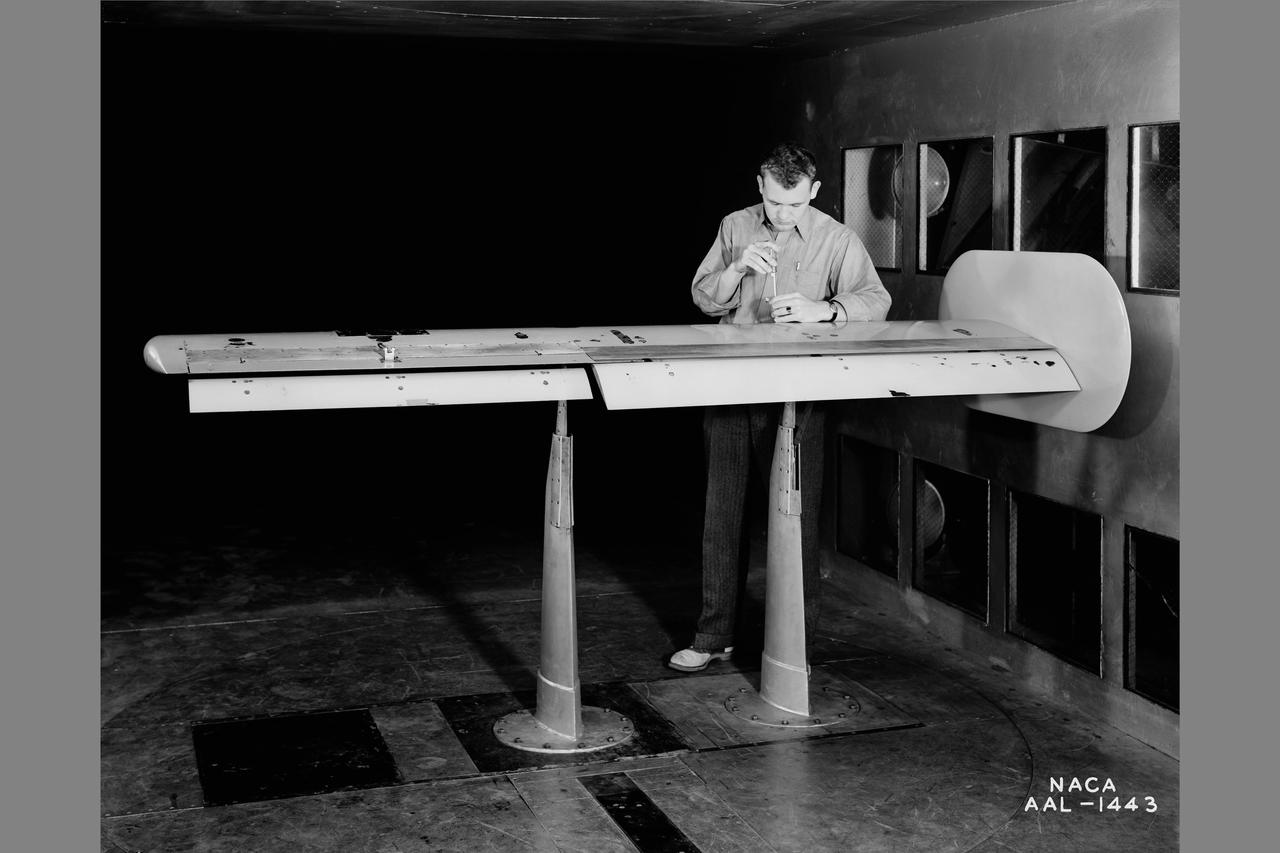
XB-32 model wing with 15% chord sealed gap aileron. Flaps extended to 40 degrees. The first wind-tunnel report published by Ames Covered the XB-32 Test in the 7-by-10 No. ! and was authored by Roy P. Jackson and George L. Smith Jr.
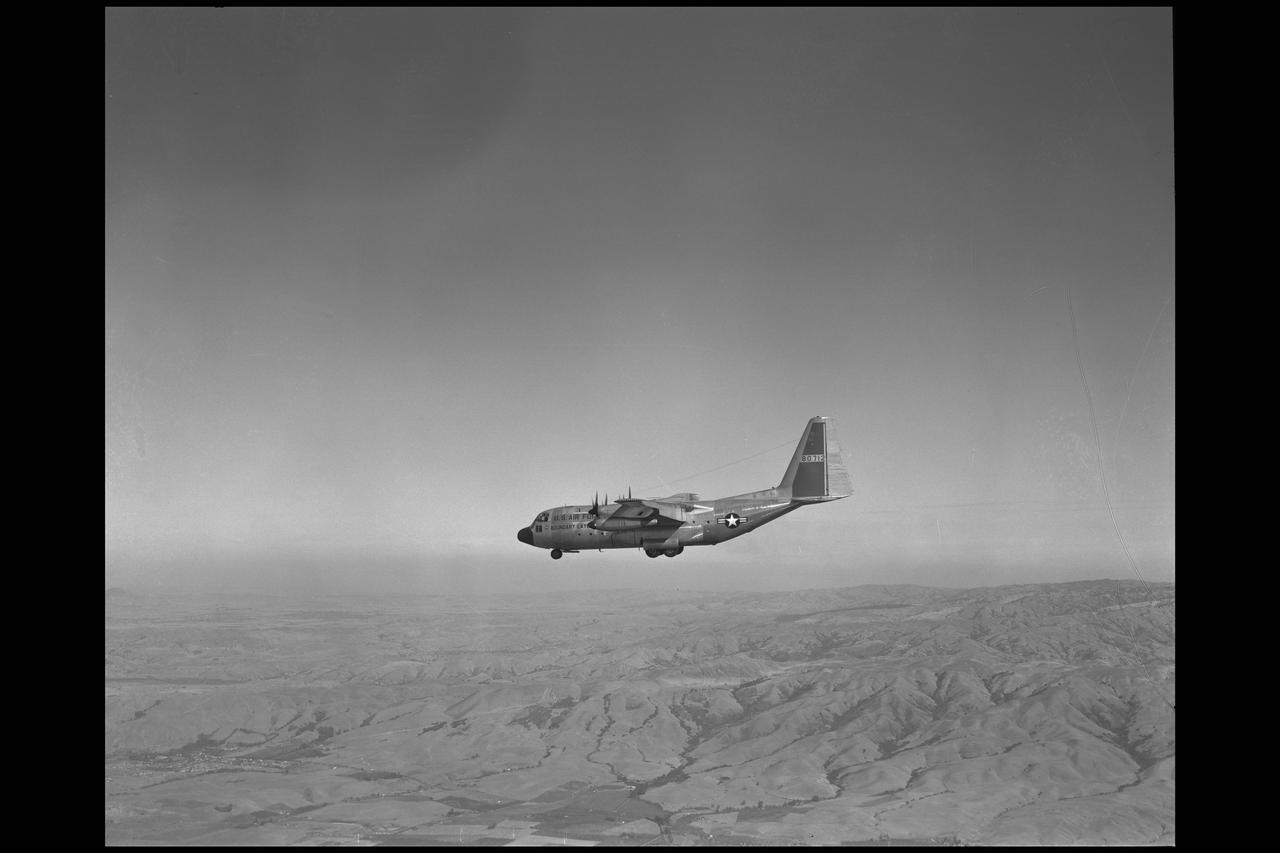
Lockheed NC-130B STOL turboprop-powered aircraft with ailerons drooped 30 degrees. Note trailing-edge flaps deflected 90 degrees for increased lift. Two T-56 turboshaft engines, which drove wing-mounted load compressors for boundary-layer control, are mounted on outboard wing pods. Landing approach speed was reduced 30 knots with boundary-layer control
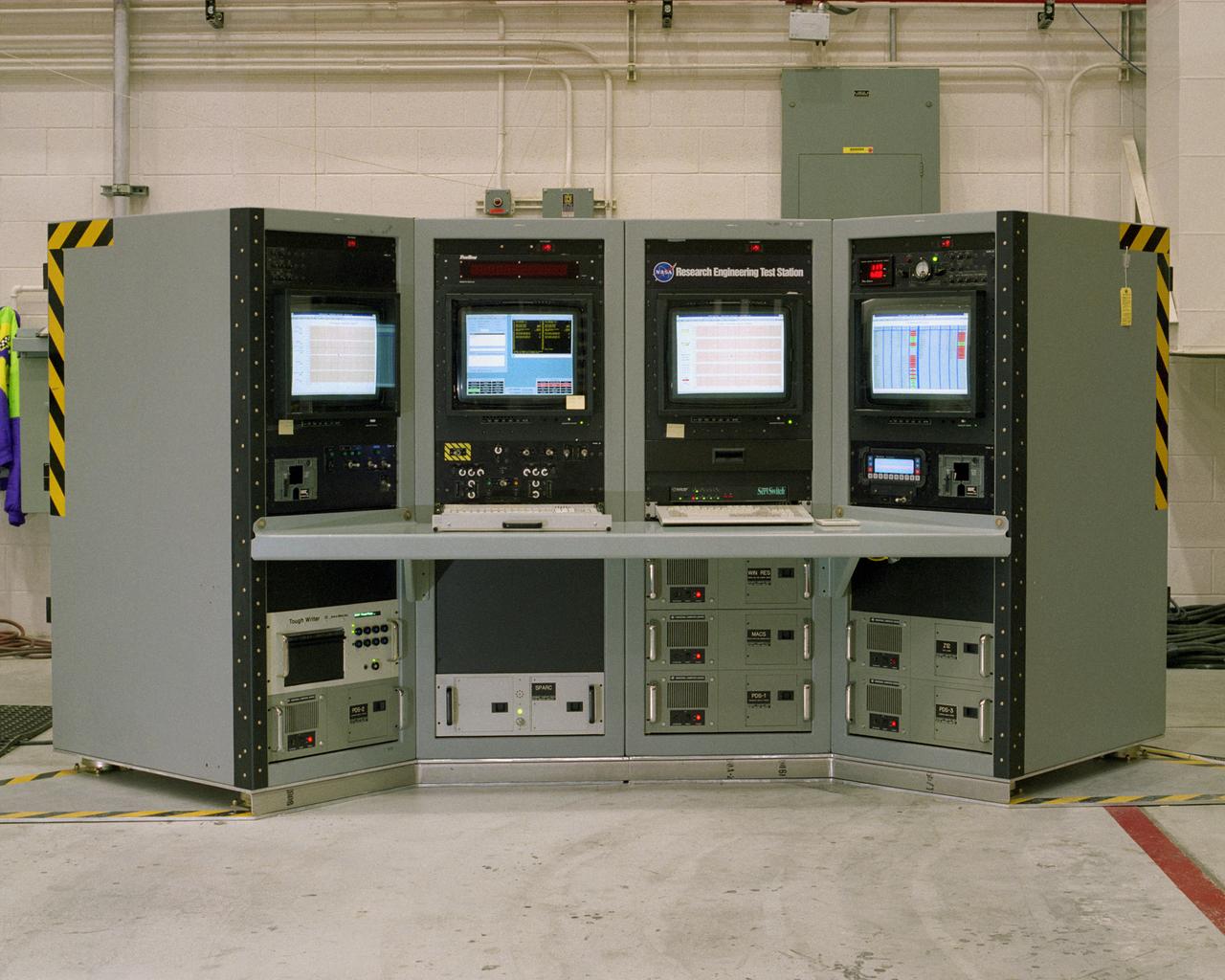
This console and its compliment of computers, monitors and commmunications equipment make up the Research Engineering Test Station, the nerve center for an aerodynamics experiment conducted by NASA's Dryden Flight Research Center, Edwards, California. The equipment was installed on a modified Lockheed L-1011 Tristar jetliner operated by Orbital Sciences Corp., of Dulles, Va., for Dryden's Adaptive Performance Optimization project. The experiment sought to improve the efficiency of long-range jetliners by using small movements of the ailerons to improve the aerodynamics of the wing at cruise conditions.
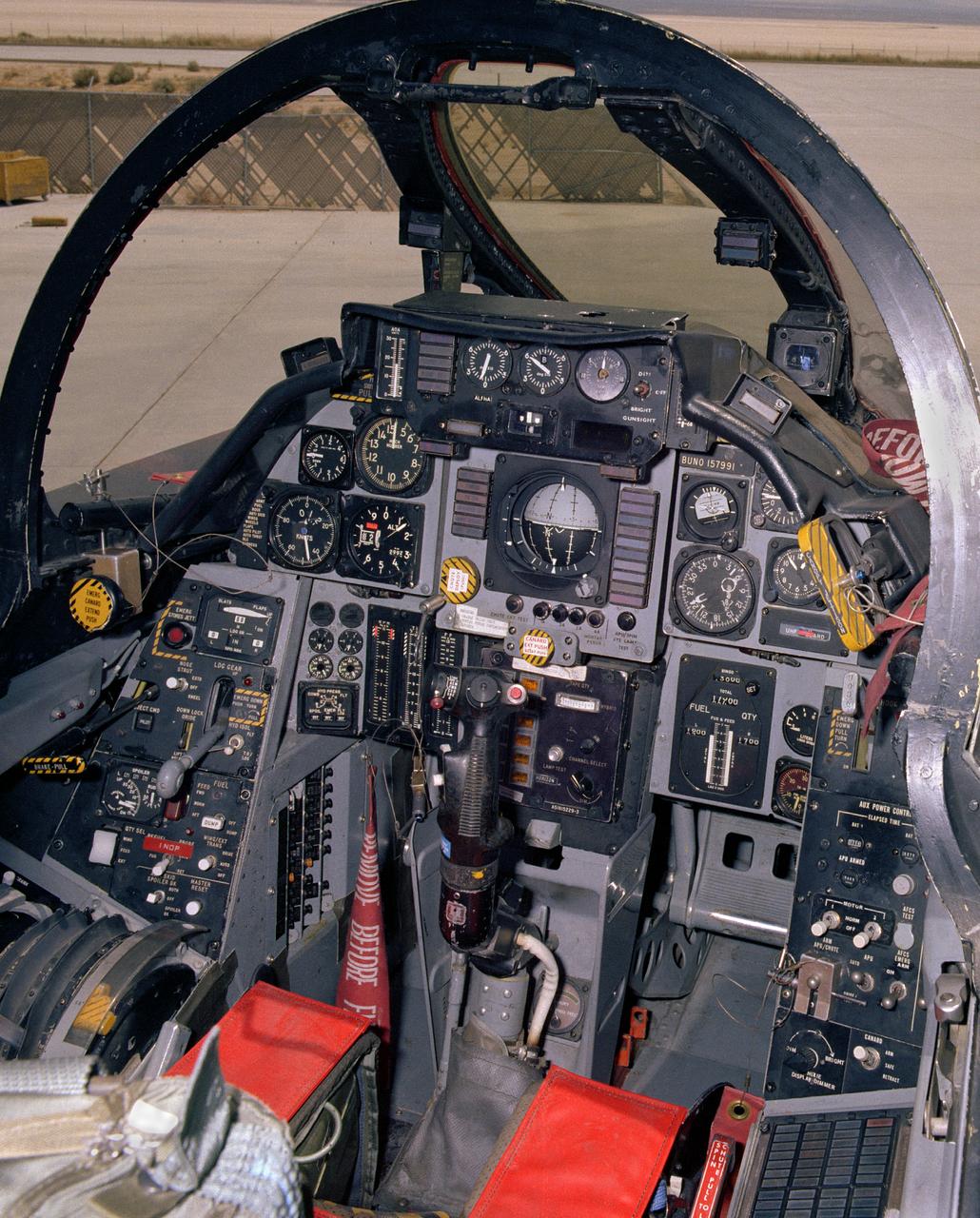
View of the cockpit of NASA's F-14, tail number 991. This aircraft was the first of a series of post-Vietnam fighters, followed by the F-15, F-16, and F-18. They were designed for maneuverability in air-to-air combat. The F-14s had a spin problem that posed problems for its ability to engage successfully in a dogfight, since it tended to depart from controlled flight at the high angles of attack that frequently occur in close-in engagements.

Event: Horizontal Stabilator Install The Low Boom Flight Demonstrator manufacturing team installed the horizontal stabilizers to the aircraft. These are used along with the flight control computers to keep the airplane flying safely and providing the pitch control so that the pilot can fly the missions envisioned for the X-59

Event: Horizontal Stabilator Install The Low Boom Flight Demonstrator manufacturing team installed the horizontal stabilizers to the aircraft. These are used along with the flight control computers to keep the airplane flying safely and providing the pitch control so that the pilot can fly the missions envisioned for the X-59.

Event: Horizontal Stabilator Install The Low Boom Flight Demonstrator manufacturing team installed the horizontal stabilizers to the aircraft. These are used along with the flight control computers to keep the airplane flying safely and providing the pitch control so that the pilot can fly the missions envisioned for the X-59.

Event: Horizontal Stabilator Install The Low Boom Flight Demonstrator manufacturing team installed the horizontal stabilizers to the aircraft. These are used along with the flight control computers to keep the airplane flying safely and providing the pitch control so that the pilot can fly the missions envisioned for the X-59.