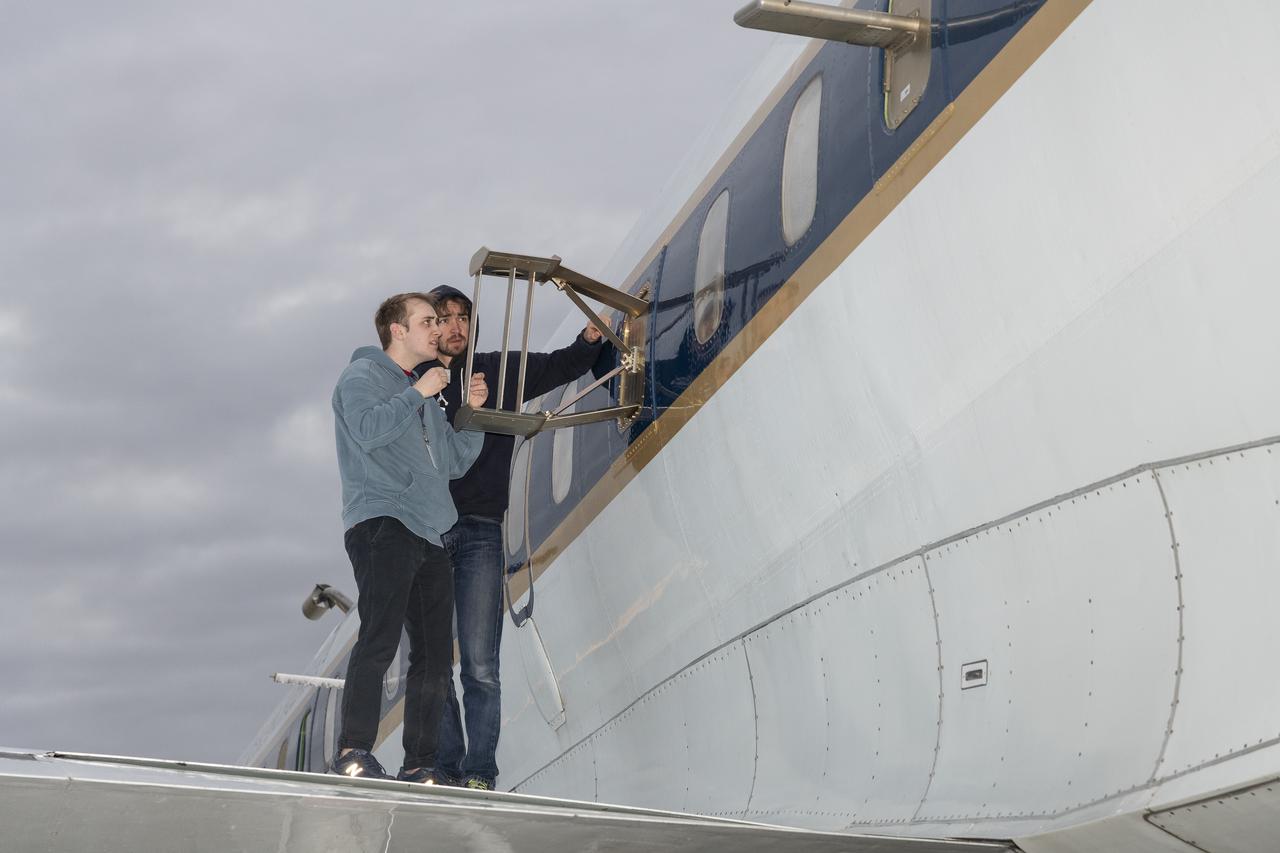
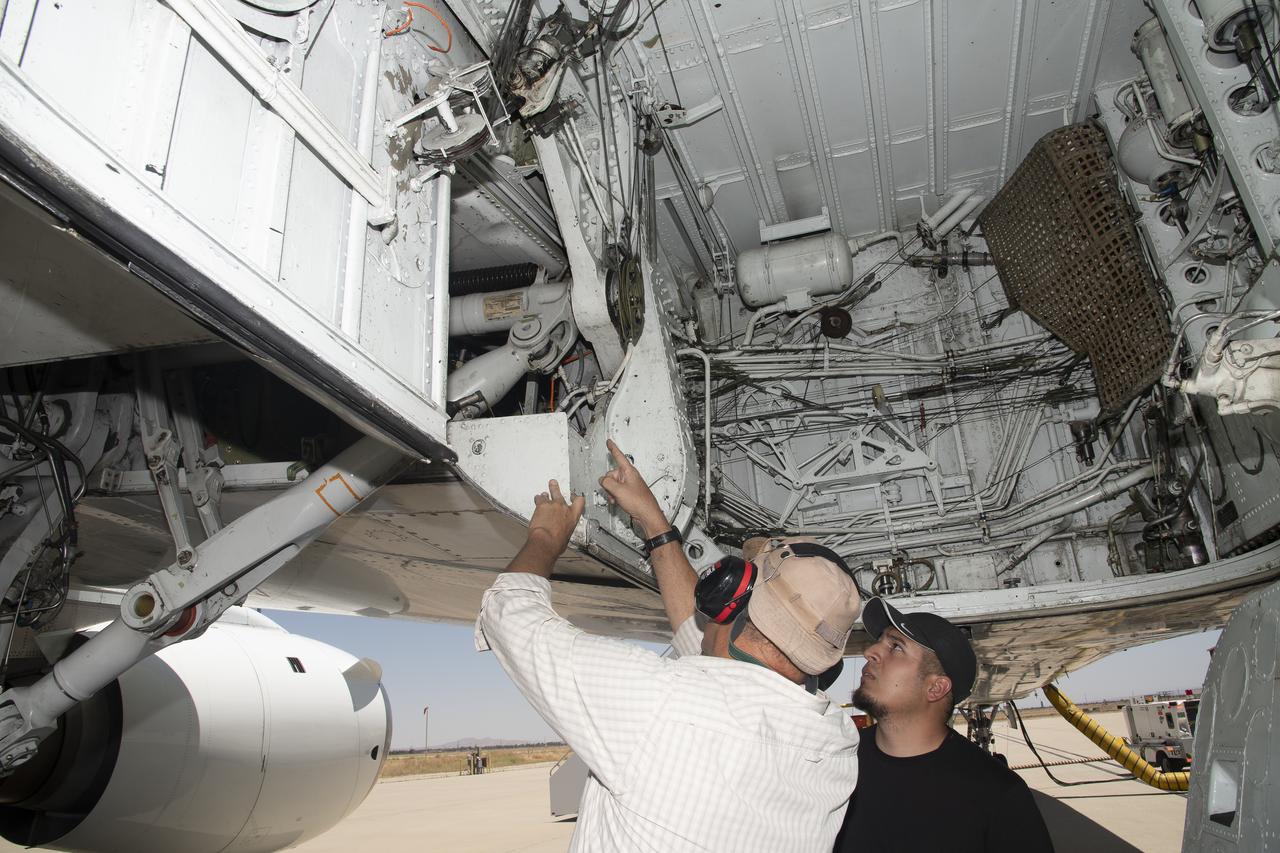
Scientists Ryan Boyd (left) and Vladislav Sevostianov (right) attend to the Optical Payload for Lasercomm Science (OPALS) instrument on the exterior the DC-8 aircraft at Building 703 in Palmdale, CA. The DC-8 aircraft is prepared for its last mission, ASIA-AQ (Airborne and Satellite Investigation of Asian Air Quality), that will collect detailed air quality data over several locations in Asia to improve the understanding of local air quality in collaboration with local scientists, air quality agencies, and government partners
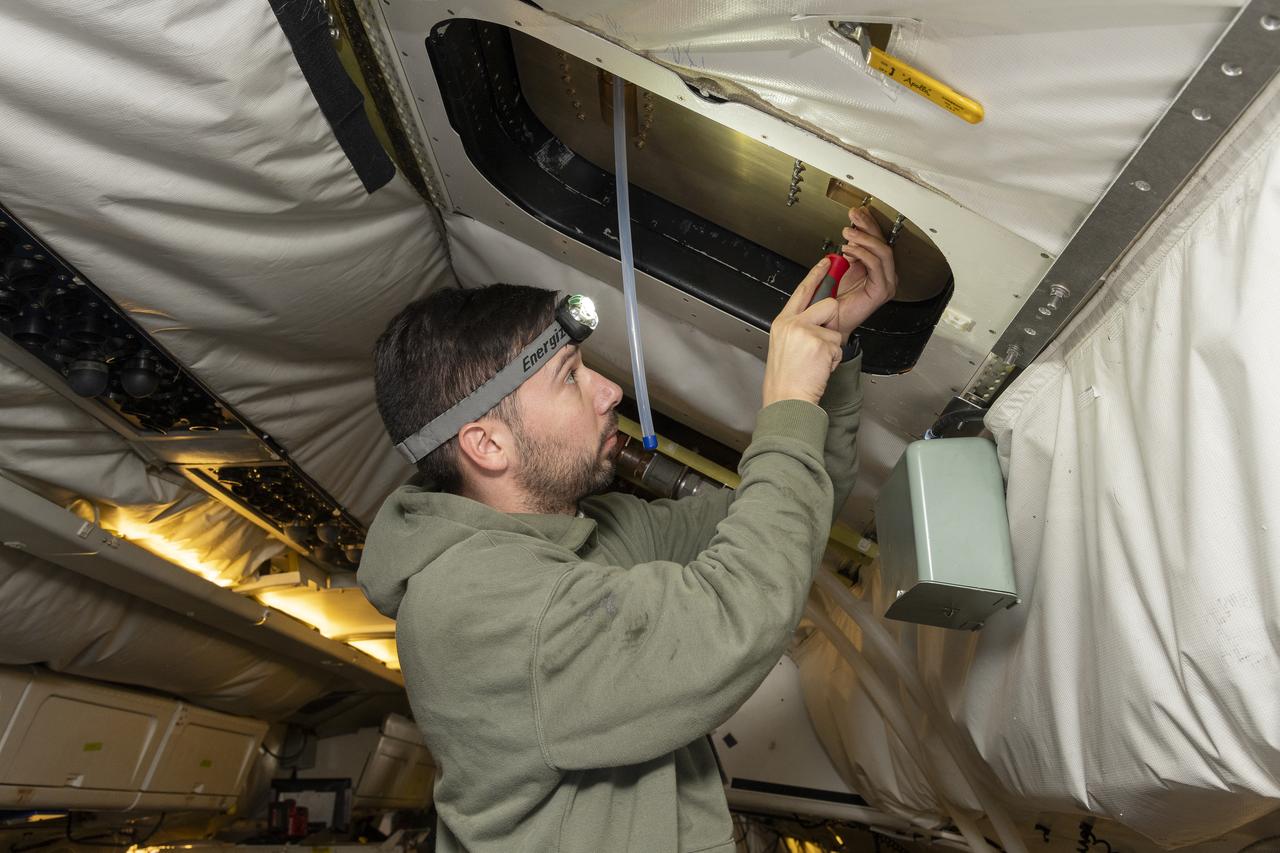
Isac Mata, engineering technician at NASA’s Armstrong Flight Research Center, attends to the interior of the DC-8 aircraft at Building 703 in Palmdale, CA. The DC-8 aircraft is prepared for its last mission, ASIA-AQ (Airborne and Satellite Investigation of Asian Air Quality), that will collect detailed air quality data over several locations in Asia to improve the understanding of local air quality in collaboration with local scientists, air quality agencies, and government partners
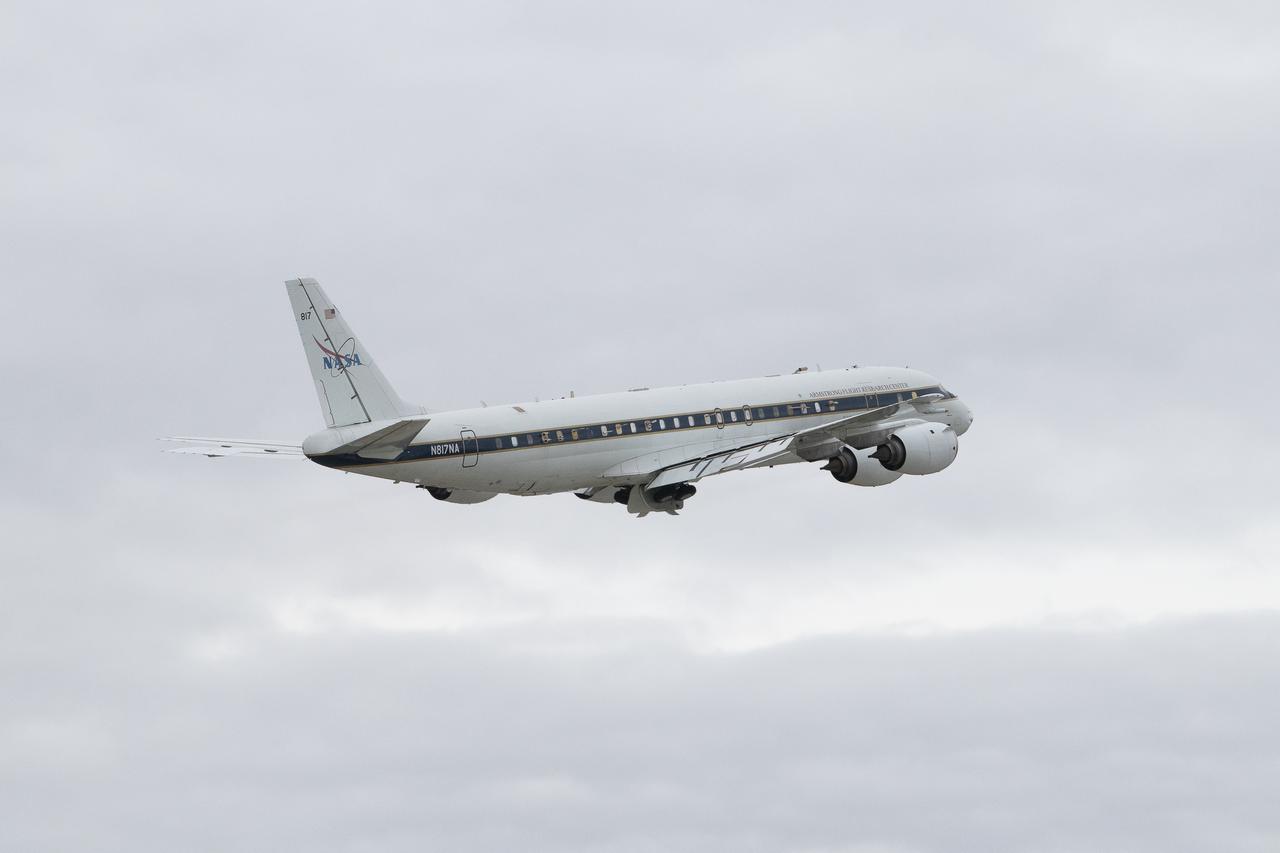
DC-8 aircraft conducts test flights at Building 703 in Palmdale, CA. The DC-8 aircraft is prepared for its last mission, ASIA-AQ (Airborne and Satellite Investigation of Asian Air Quality), that will collect detailed air quality data over several locations in Asia to improve the understanding of local air quality in collaboration with local scientists, air quality agencies, and government partners
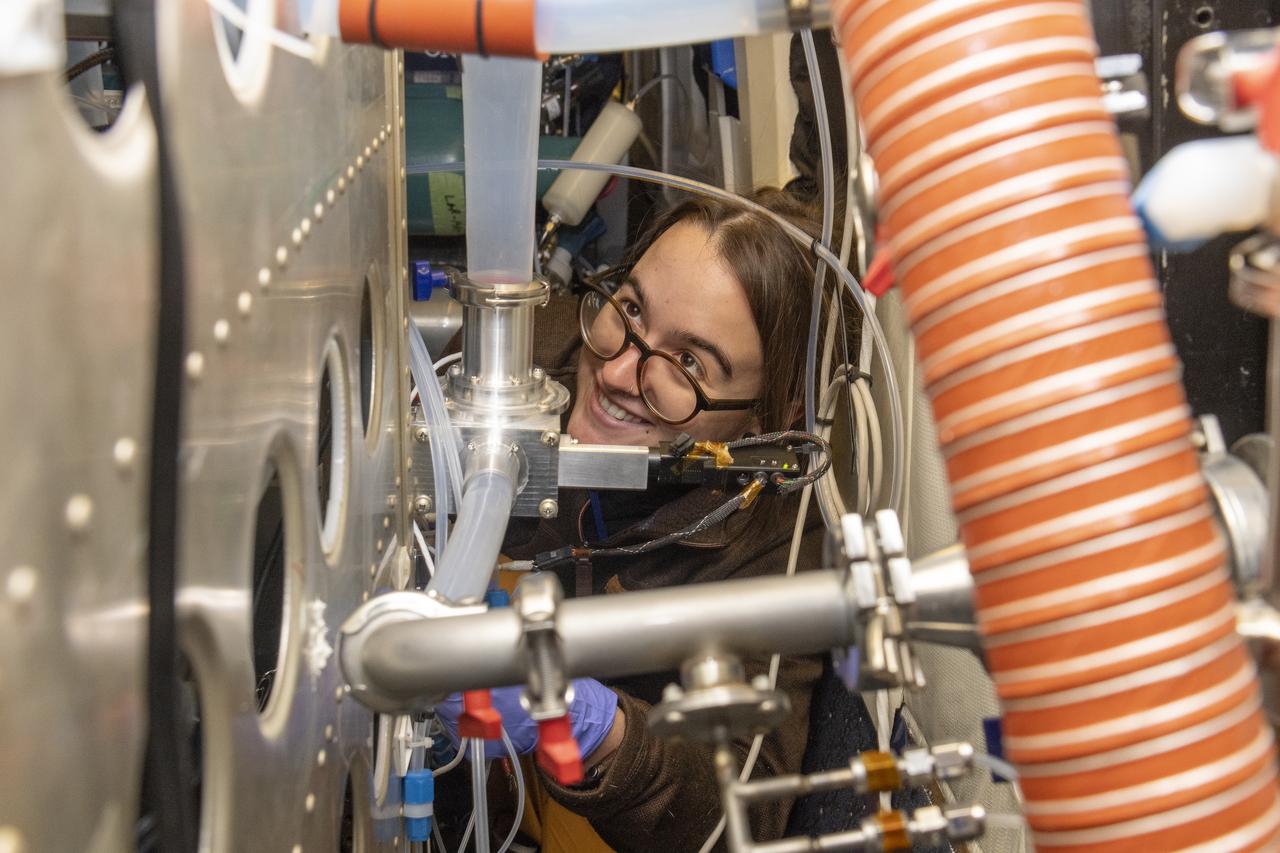
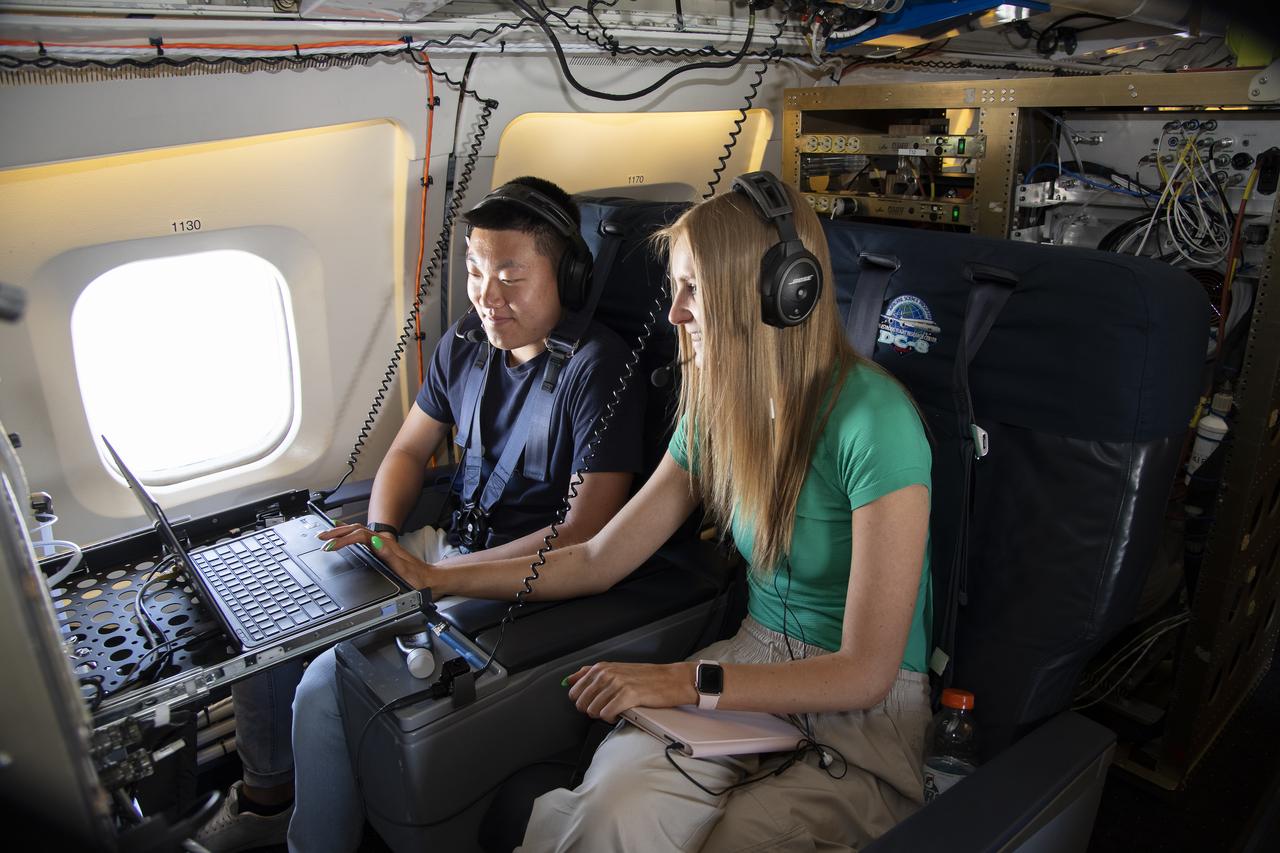
Kat Ball, Chemical Engineering Ph.D candidate at Caltech, attends to the Chemical Ionization Mass Spectrometer (CIMS) rack onboard the DC-8 aircraft at Building 703 in Palmdale, CA. The DC-8 aircraft is prepared for its last mission, ASIA-AQ (Airborne and Satellite Investigation of Asian Air Quality), that will collect detailed air quality data over several locations in Asia to improve the understanding of local air quality in collaboration with local scientists, air quality agencies, and government partners
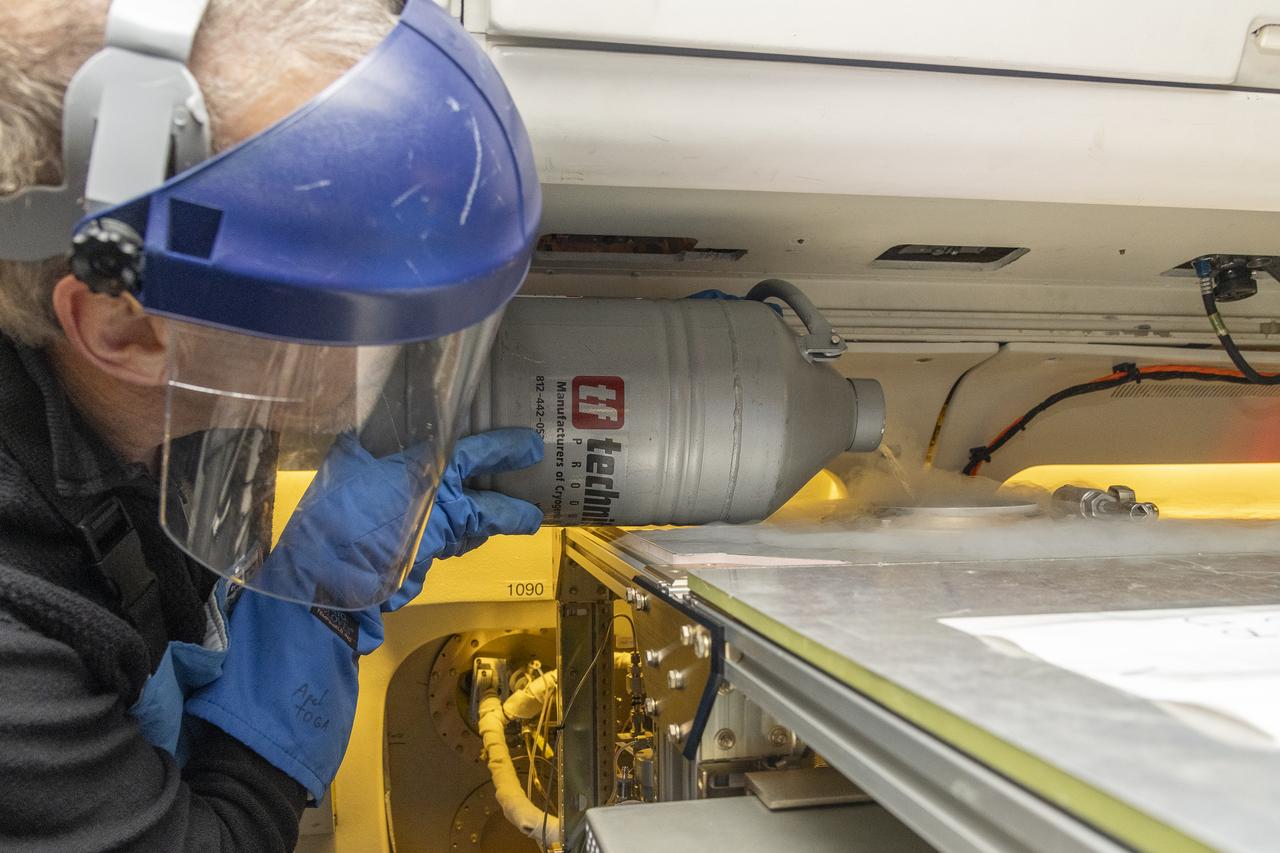
Alan Hills fills liquid nitrogen in the Trace Organic Gas Analyzer (TOGA) instrument onboard the DC-8 aircraft at Building 703 in Palmdale, CA. This instrument measures volatile organic compounds (VOCs) in the atmosphere. The DC-8 aircraft is prepared for its last mission, ASIA-AQ (Airborne and Satellite Investigation of Asian Air Quality), that will collect detailed air quality data over several locations in Asia to improve the understanding of local air quality in collaboration with local scientists, air quality agencies, and government partners
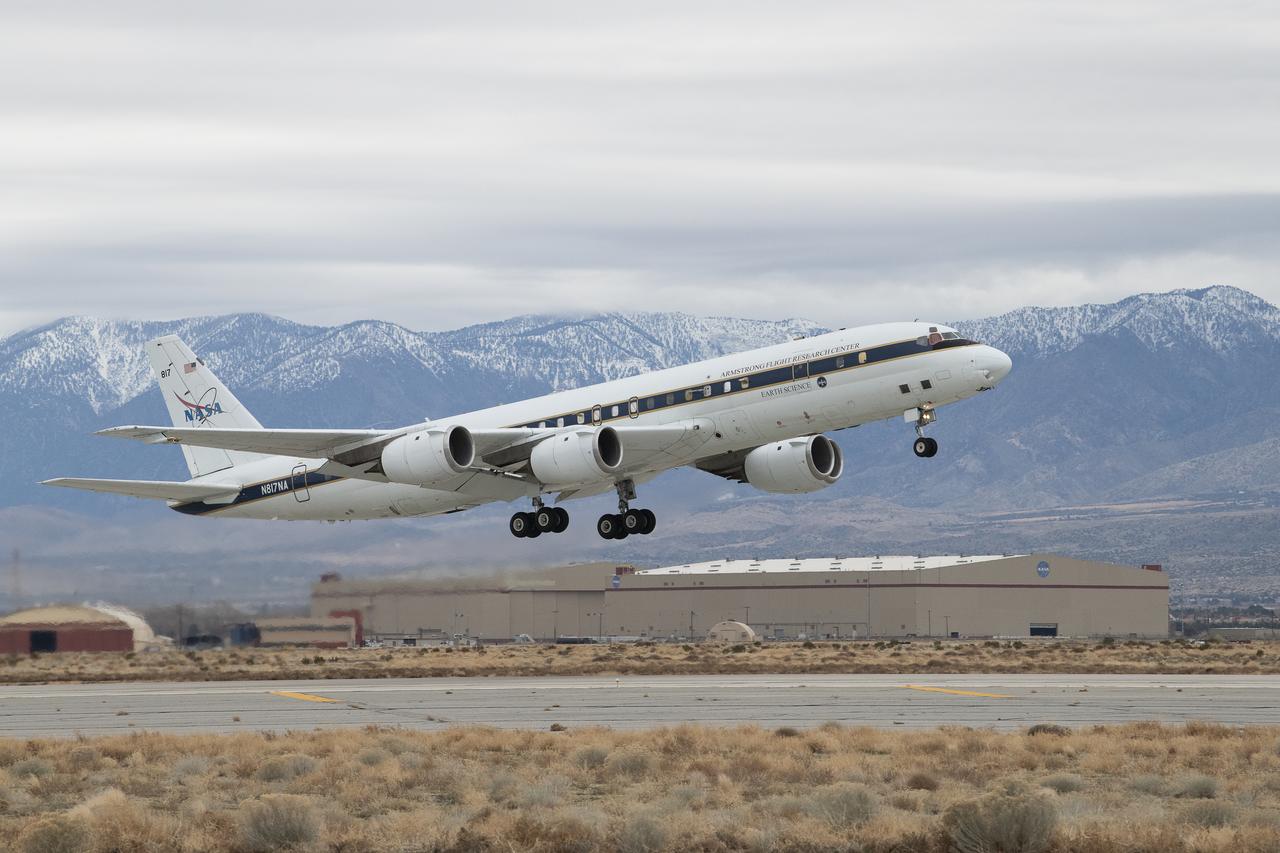
DC-8 aircraft conducts test flights at Building 703 in Palmdale, CA. The DC-8 aircraft is prepared for its last mission, ASIA-AQ (Airborne and Satellite Investigation of Asian Air Quality), that will collect detailed air quality data over several locations in Asia to improve the understanding of local air quality in collaboration with local scientists, air quality agencies, and government partners
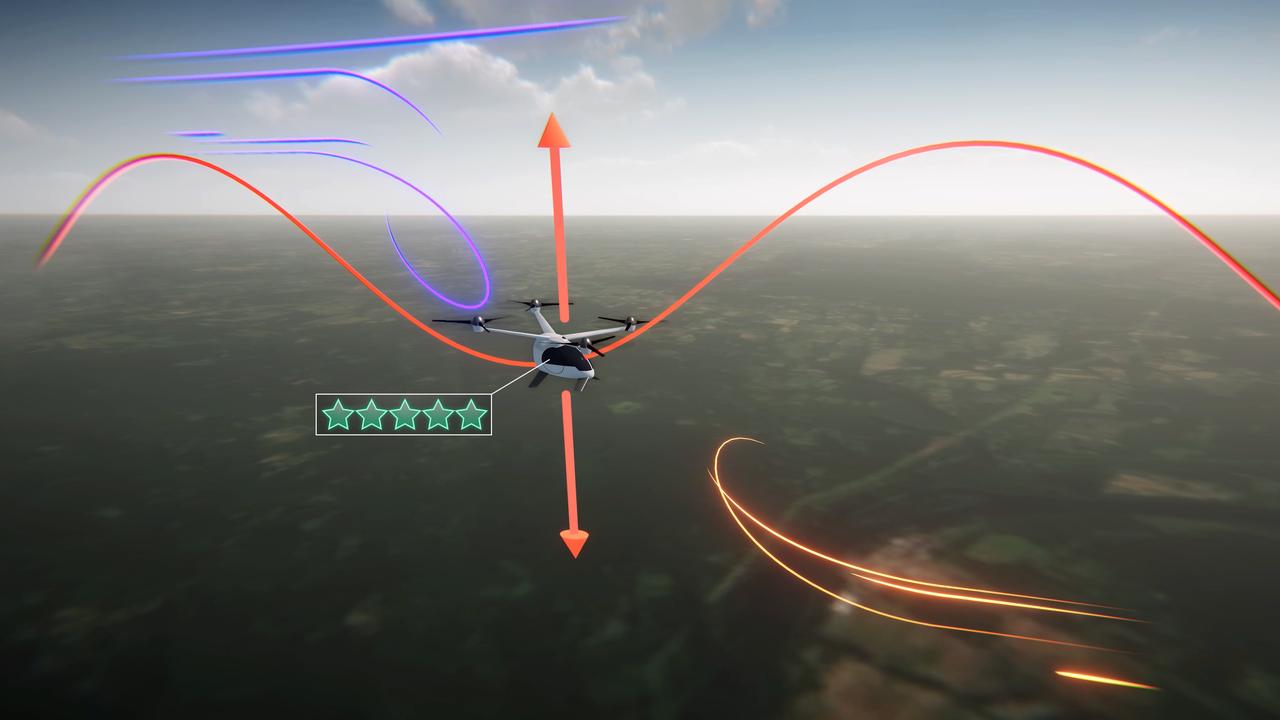
Electrical vertical takeoff and landing aircraft (eVTOLs), like the one shown in this concept art, could be a crucial part of the next generation of air transportation. In order to create a viable market, designers will have to create a comfortable passenger experience. NASA's Advanced Air Mobility mission is researching ride quality to better understand how these aircraft should be designed.
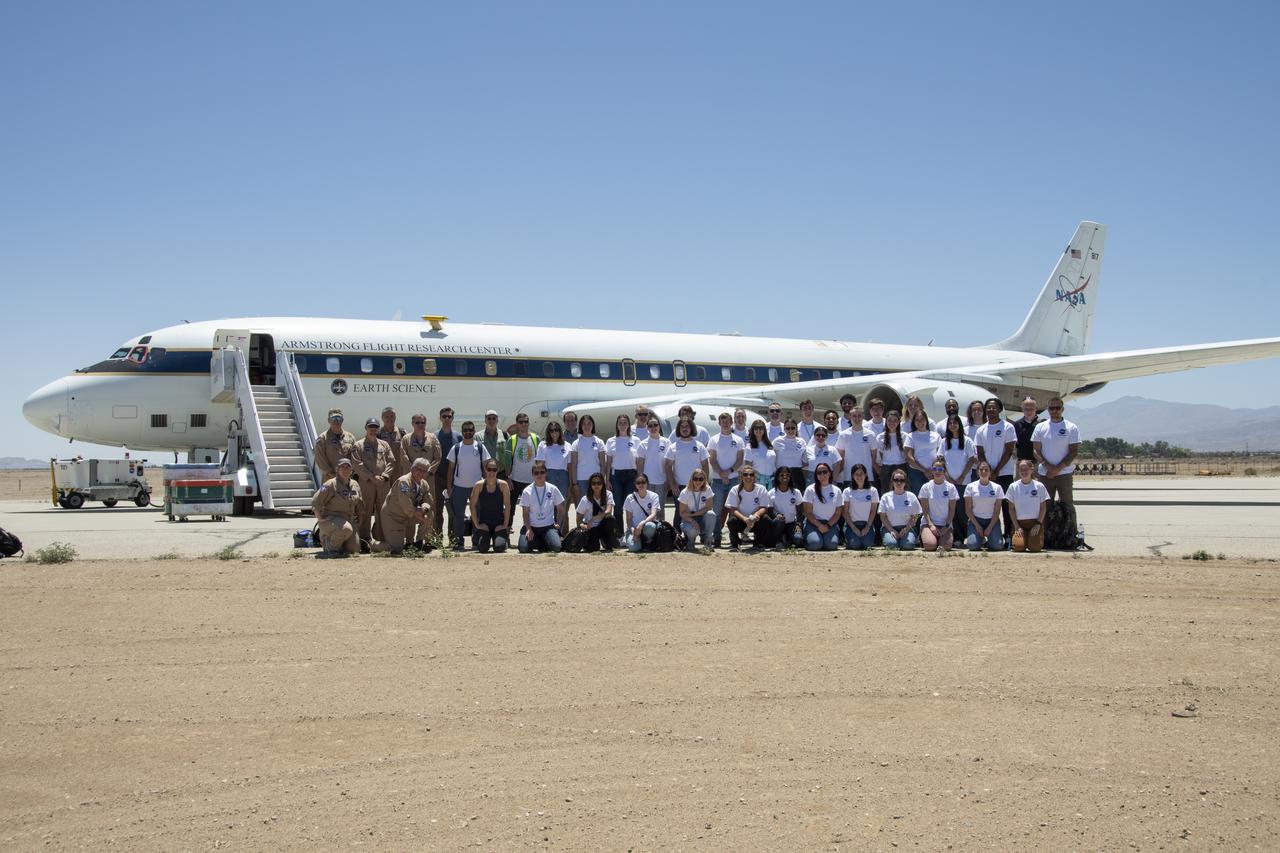
A group of university students and mentors flew aboard NASA Armstrong Flight Research Center’s DC-8 aircraft to study air quality as part of NASA’s Student Airborne Research Program (SARP). Based at NASA’s Armstrong Building 703 in Palmdale, California, the DC-8 flew over the Central Valley to measure pollution and monitor air quality on Tuesday, June 21, 2022.

On Jan. 16, 2014, NASA Terra satellite passed over Glendora, Calif., where a large wildfire has claimed several homes, causing mandatory evacuations and prompting an air quality alert by public health officials.
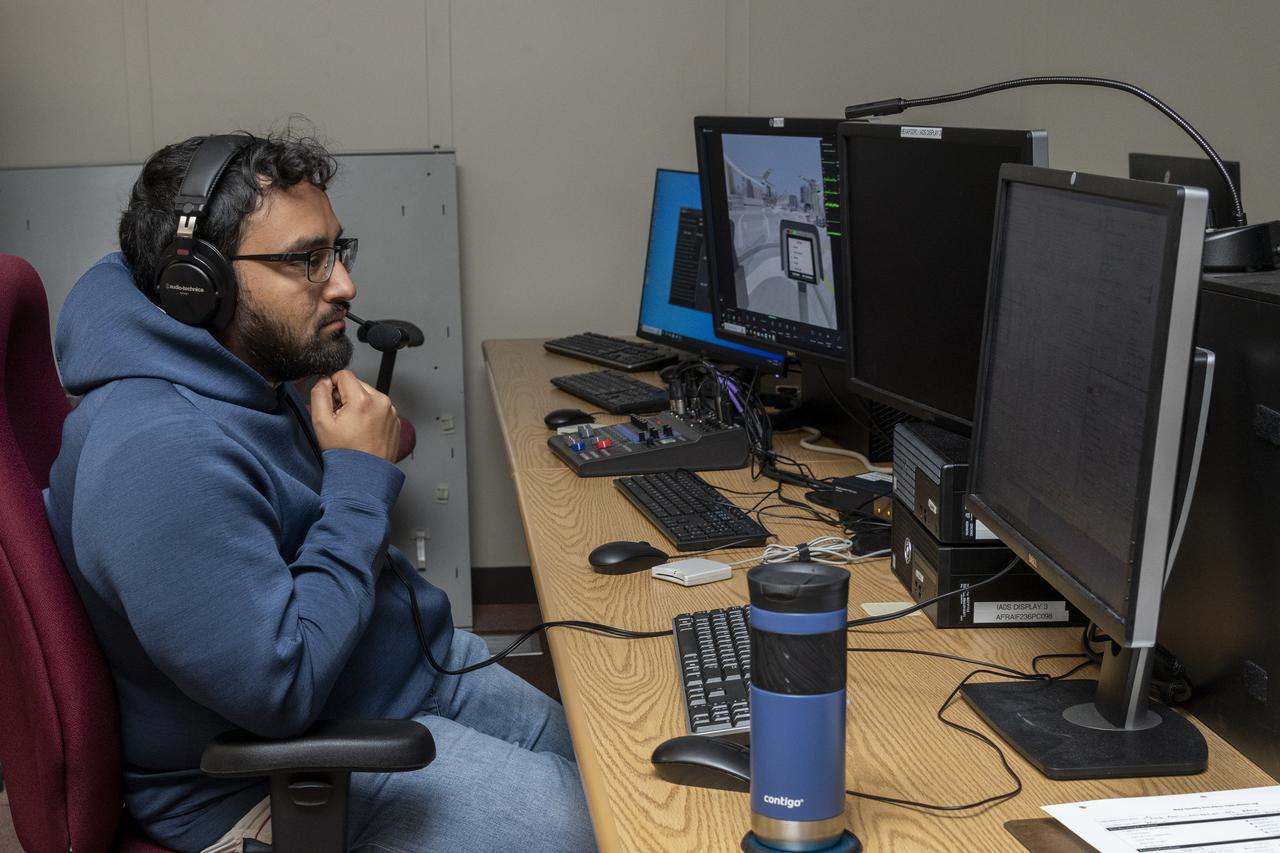
NASA researcher Saravanakumaar Ramia controls the air taxi passenger ride quality simulator by monitoring several computers in the Ride Quality Laboratory at NASA’s Armstrong Flight Research Center in Edwards, California, during an experiment on Oct. 23, 2024. Studies continue in this lab to better understand passenger comfort for future air taxi rides.
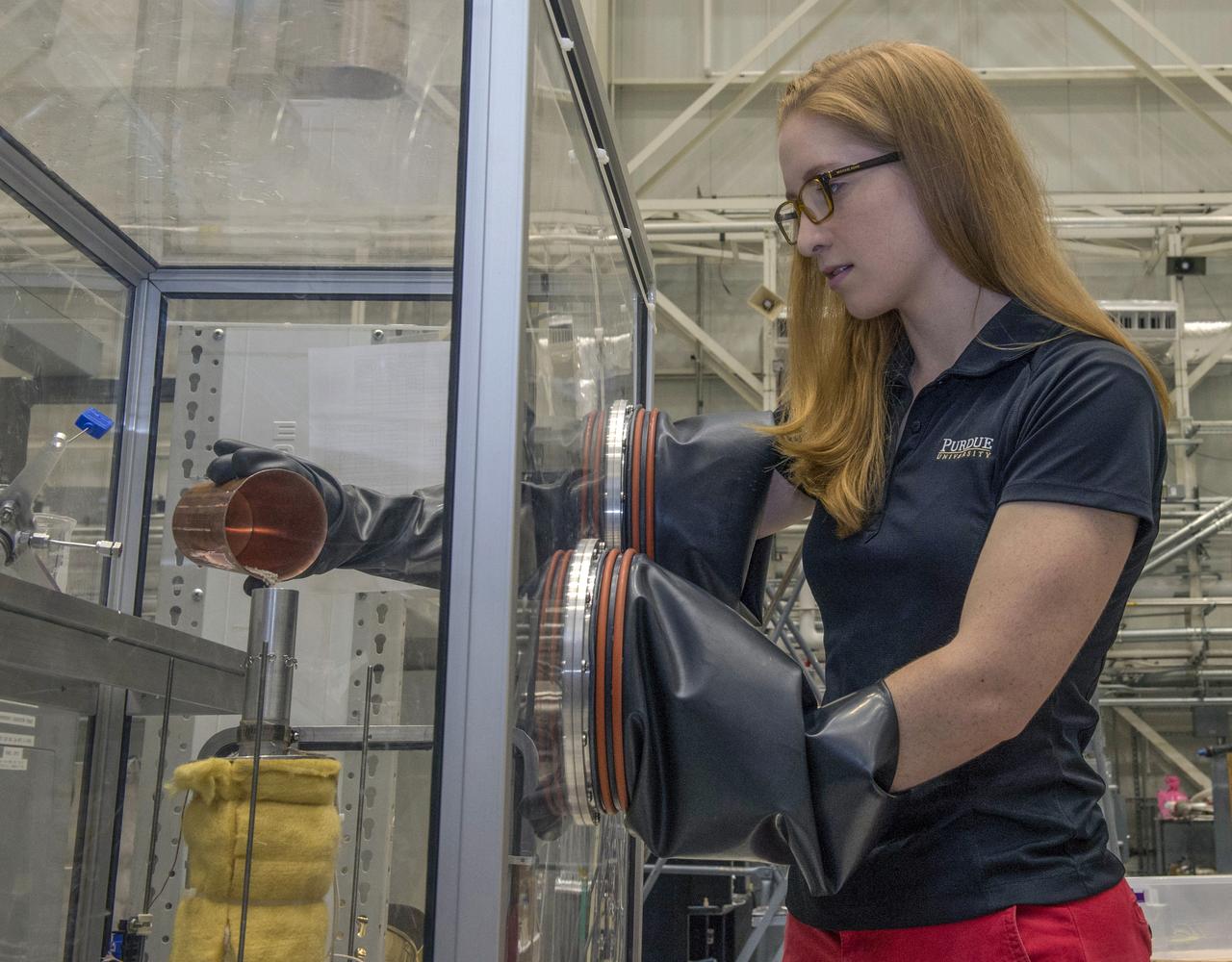
Karen Son, a NSTRF fellow at Marshall, uses a virtual test lab to help improve air quality on the next generation of air filtration systems to be used in space
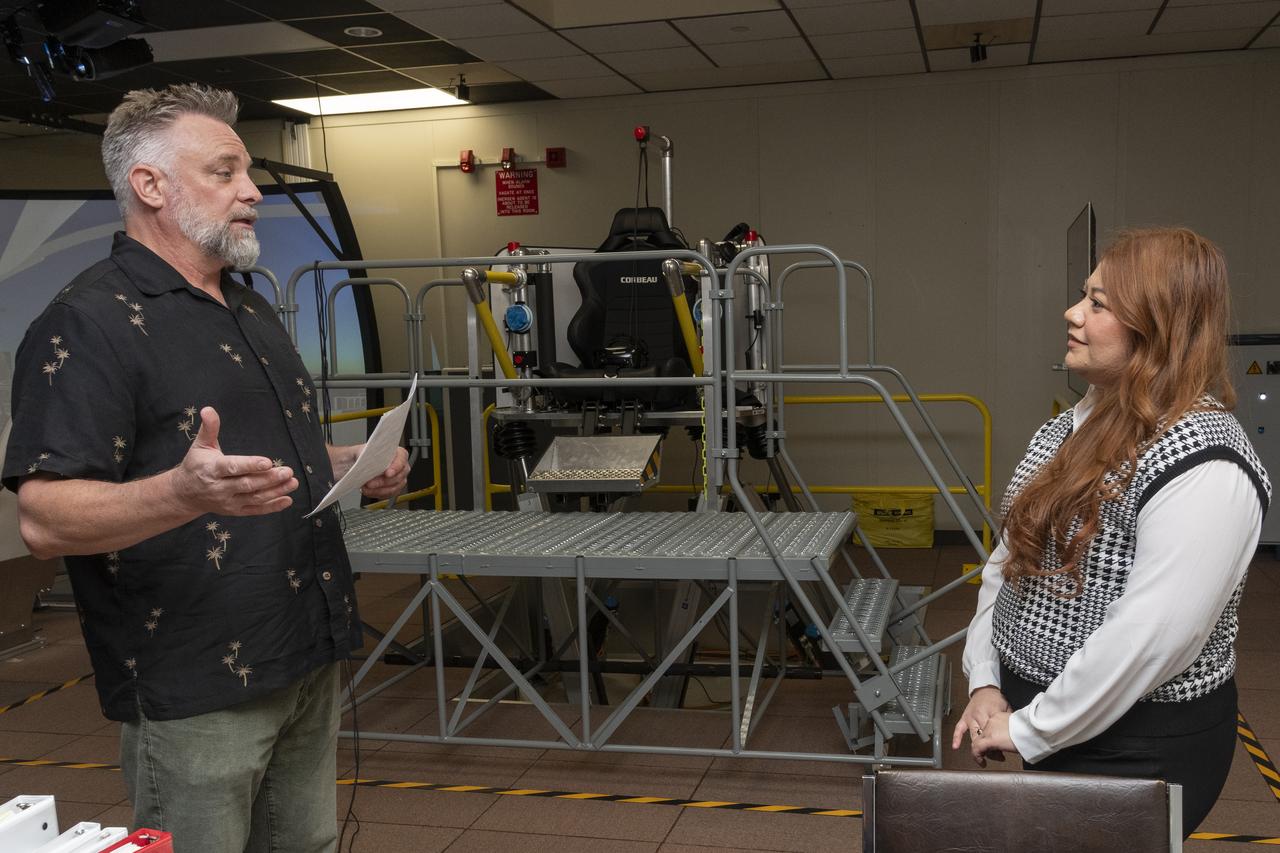
Curt Hanson, senior flight controls researcher for the Revolutionary Vertical Lift Technology project based at NASA’s Armstrong Flight Research Center in Edwards, California, explains the study about to begin to NASA employee and test subject Naomi Torres on Oct. 23, 2024. Behind them is the air taxi passenger ride quality simulator in NASA Armstrong’s Ride Quality Laboratory. Studies continue to better understand passenger comfort for future air taxi rides.
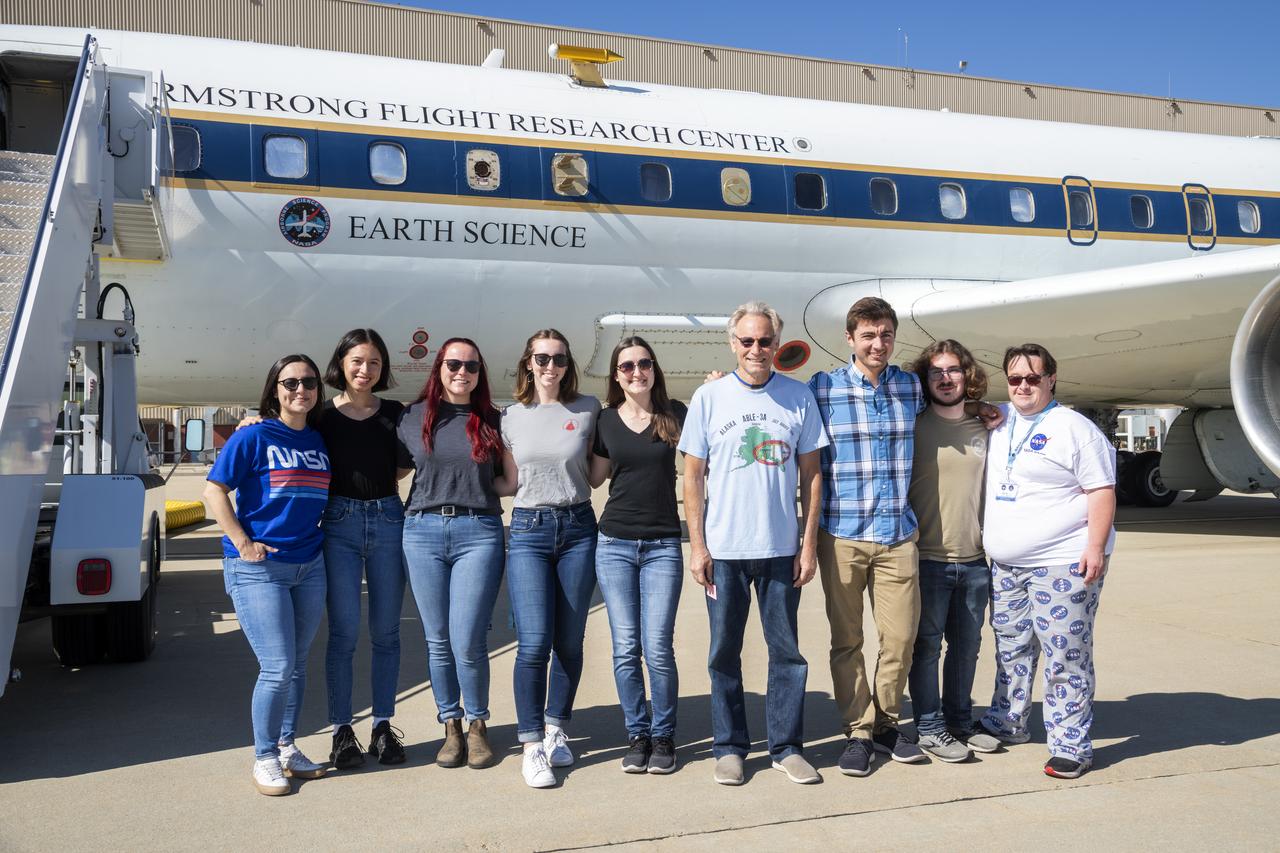
NASA Student Airborne Research Program participants pose in front of the DC-8 before their flight on Jun 23, 2022. The students are joined by mentors and professors to study air quality over the Central Valley in California.
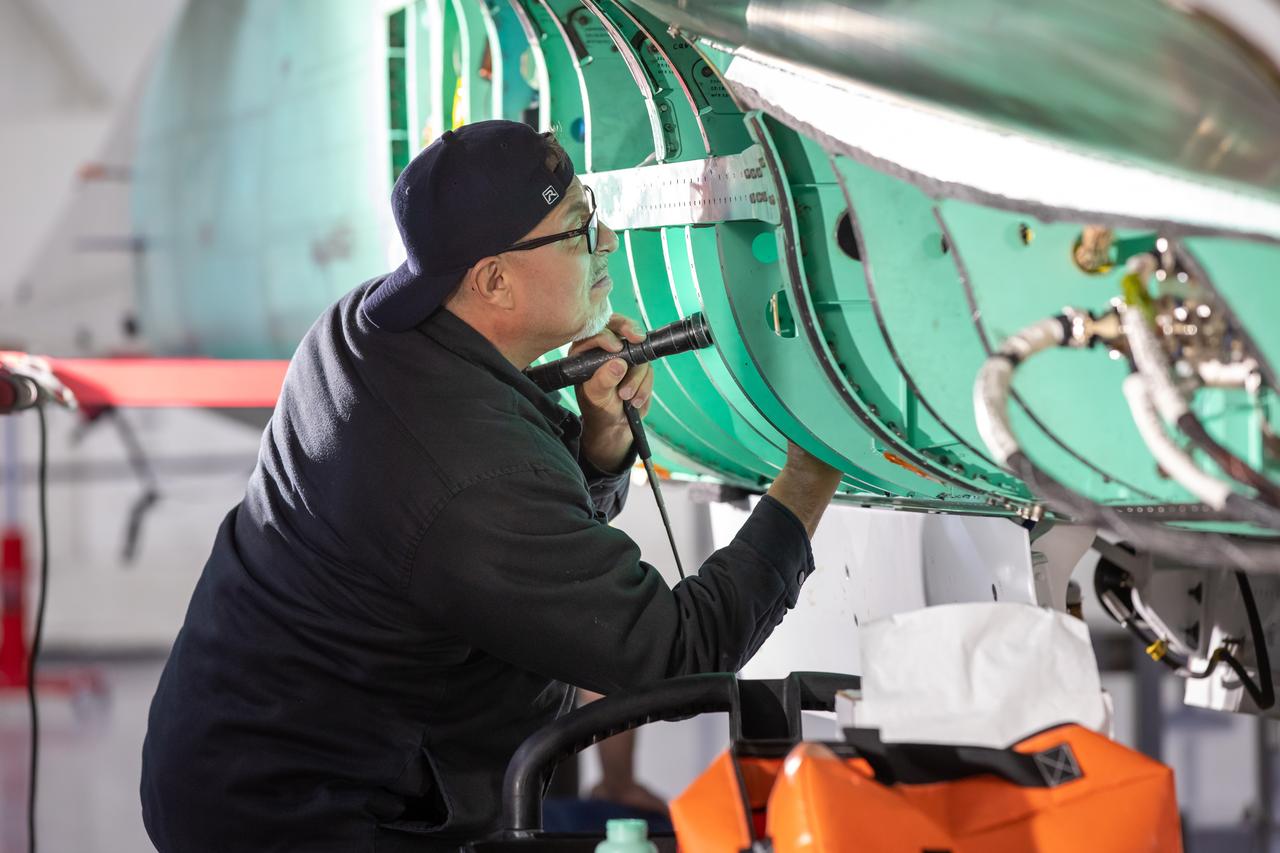
A quality inspector checks NASA’s X-59 aircraft during the construction phase. The X-59 was built in Lockheed Martin’s Skunk Works facility in Palmdale, California. Once the aircraft and ground testing are complete, the X-59 will undergo flight testing, which will demonstrate the plane’s ability to fly supersonic - faster than the speed of sound - while reducing the loud sonic boom. This could enable commercial supersonic air travel over land.
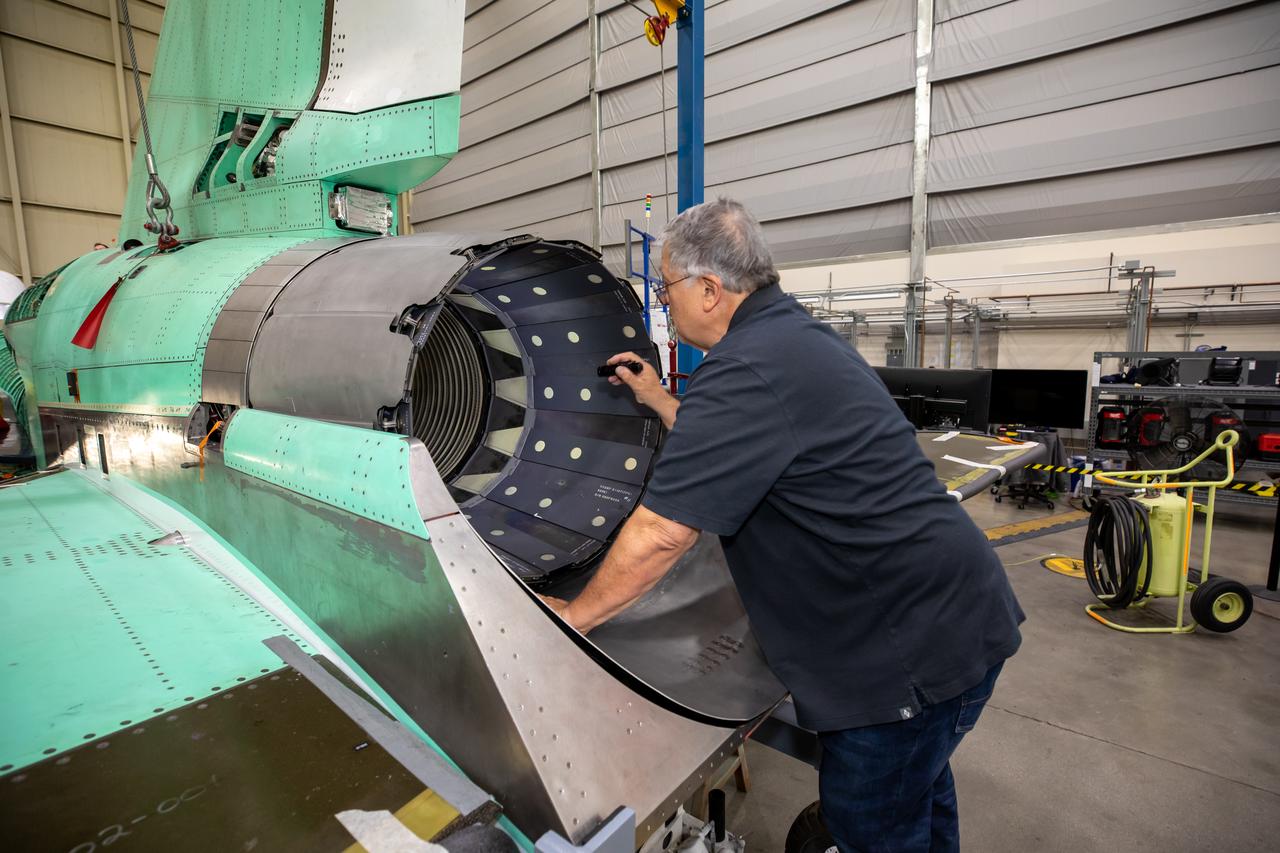
A quality inspector inspects the GE F-414 engine nozzle after installation at Lockheed Martin’s Skunk Works facility in Palmdale, California. Once the aircraft and ground testing are complete, the X-59 will undergo flight testing, which will demonstrate the plane’s ability to fly supersonic - faster than the speed of sound - while reducing the loud sonic boom. This could enable commercial supersonic air travel over land.
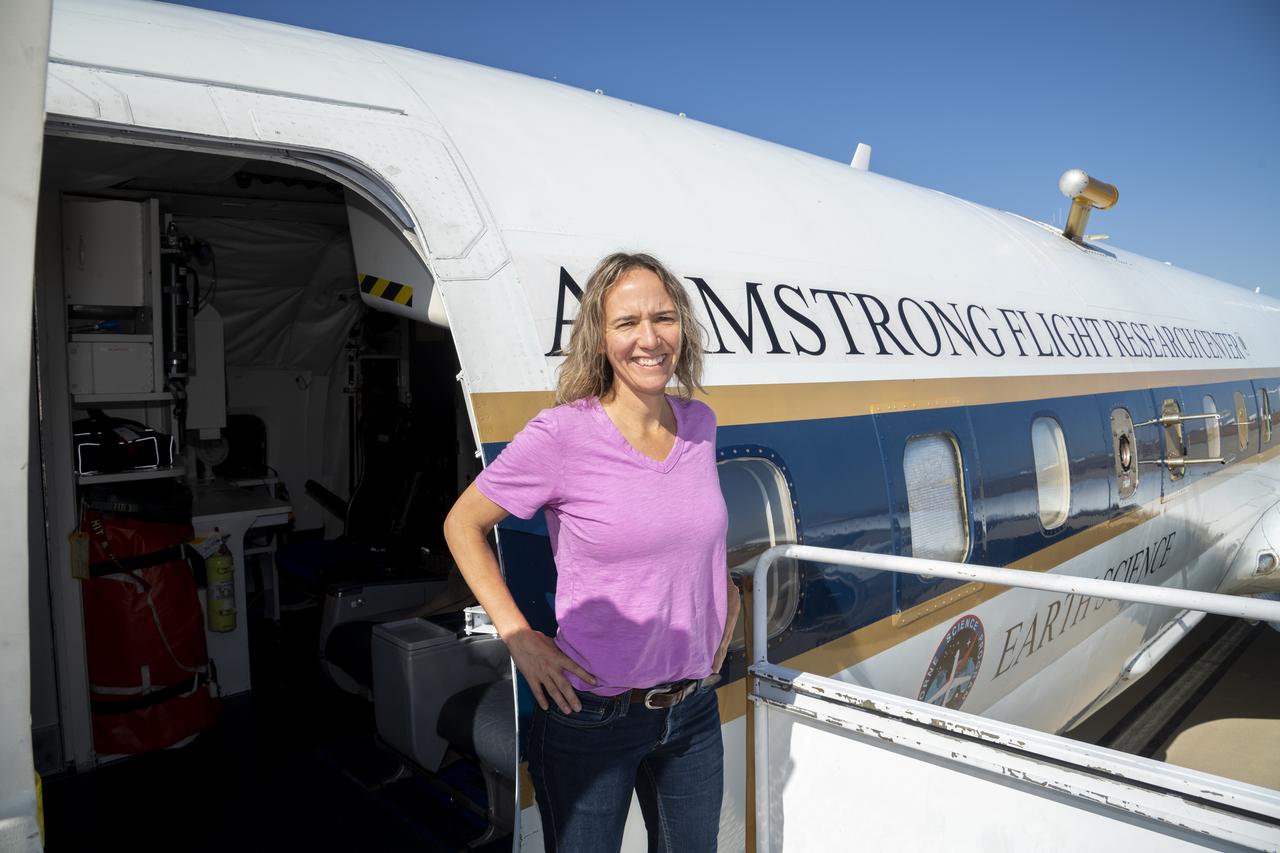
NASA’s Student Airborne Research Program invites Dr. Ann Marie Carlton, Professor of Chemistry at the University of California, Irvine and White House Office of Science and Technology Policy fellow, to fly aboard the DC-8 to measure air quality on June 23, 2022.
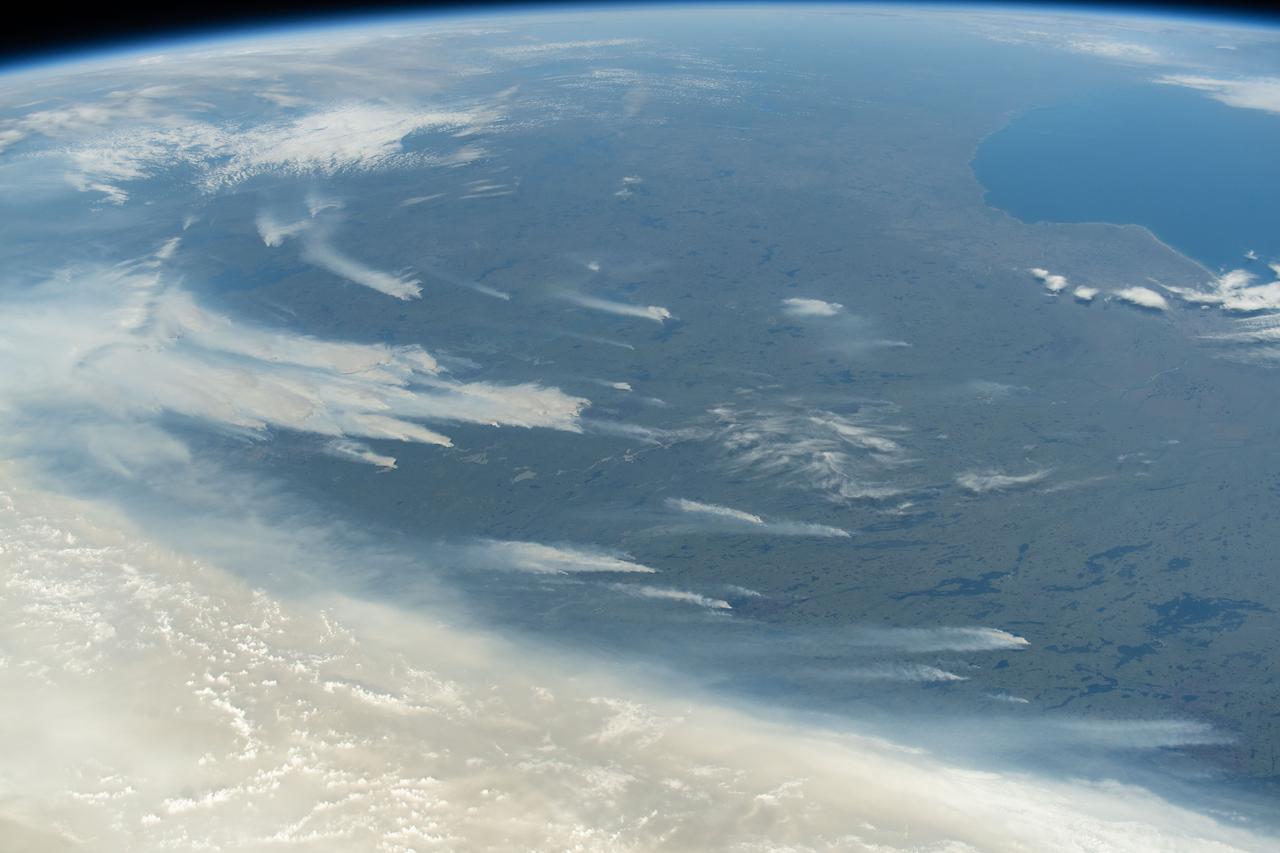
iss073e0420604 (Aug. 3, 2025) --- Wildfires burn throughout Canada's central provinces sending smoke drifitng into the United States' Great Lakes and Northeast regions impacting air quality. The International Space Station was orbiting 262 miles above Canada at the time of this photograph.
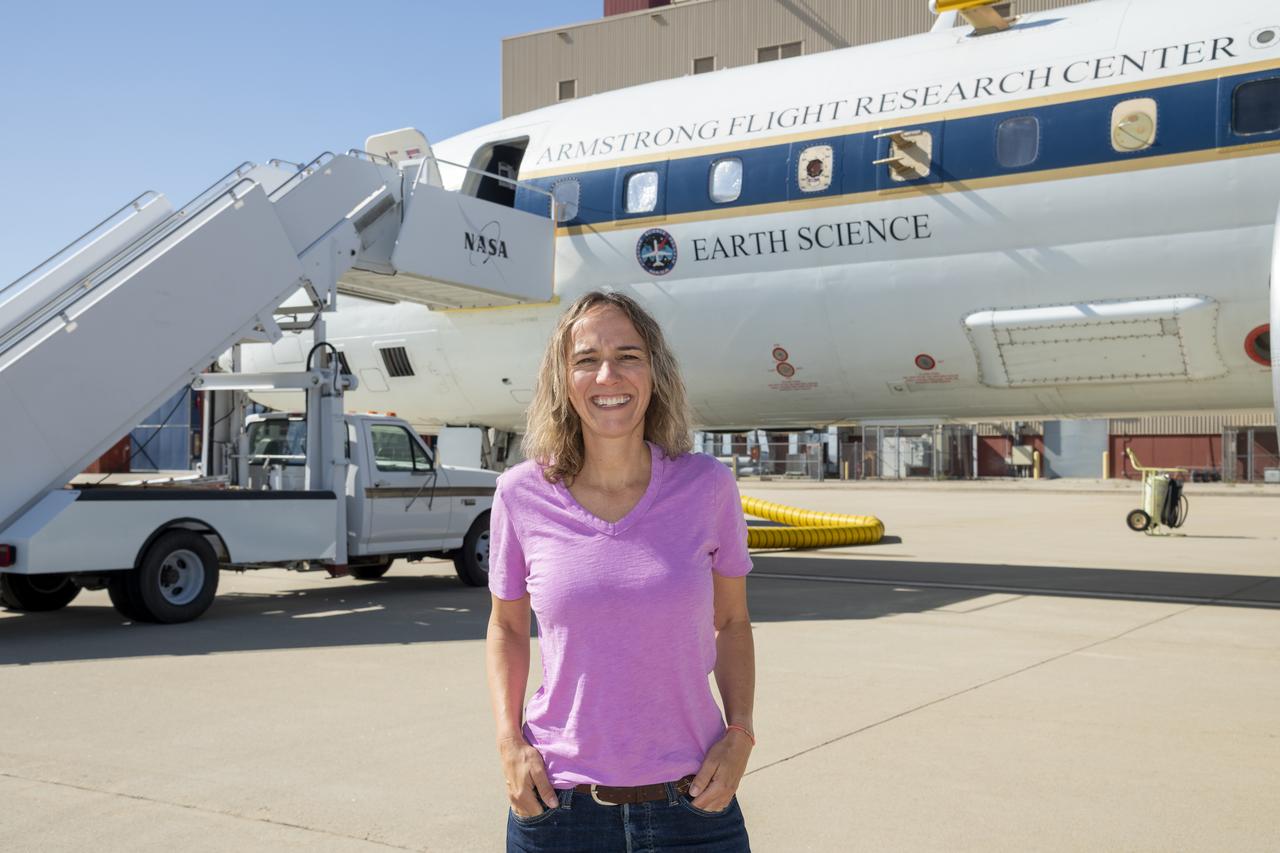
NASA’s Student Airborne Research Program invites Dr. Ann Marie Carlton, Professor of Chemistry at the University of California, Irvine and White House Office of Science and Technology Policy fellow, to fly aboard the DC-8 to measure air quality on June 23, 2022.
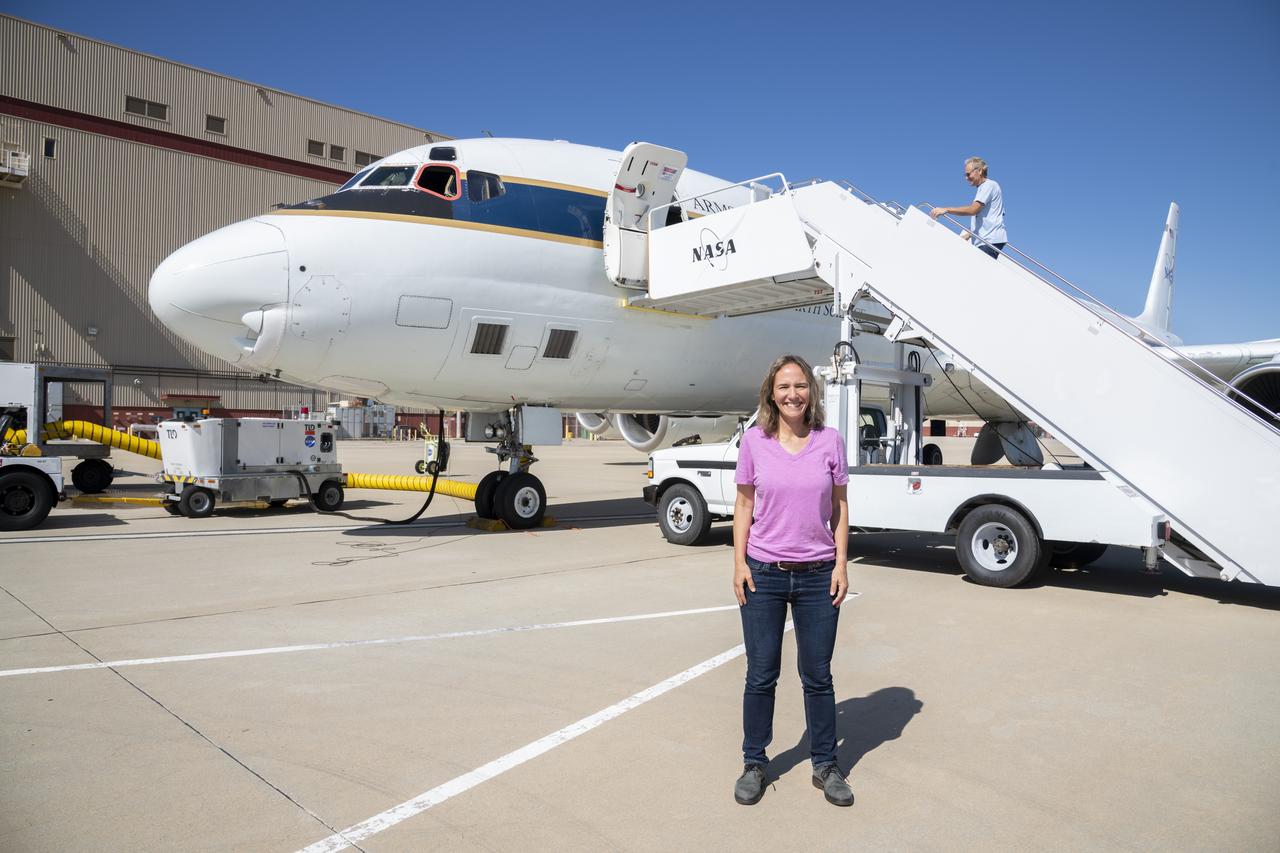
NASA’s Student Airborne Research Program invites Dr. Ann Marie Carlton, Professor of Chemistry at the University of California, Irvine and White House Office of Science and Technology Policy fellow, to fly aboard the DC-8 to measure air quality on June 23, 2022.
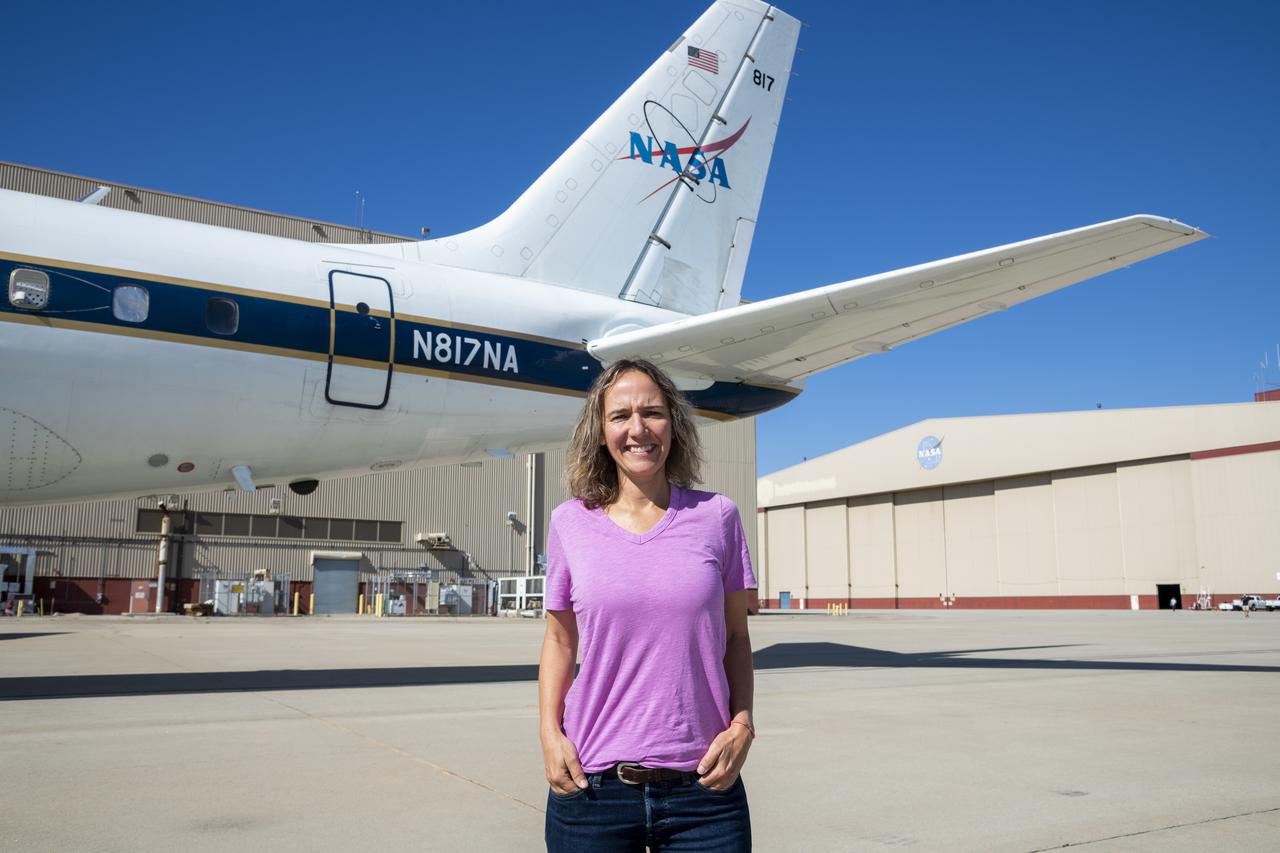
NASA’s Student Airborne Research Program invites Dr. Ann Marie Carlton, Professor of Chemistry at the University of California, Irvine and White House Office of Science and Technology Policy fellow, to fly aboard the DC-8 to measure air quality on June 23, 2022.
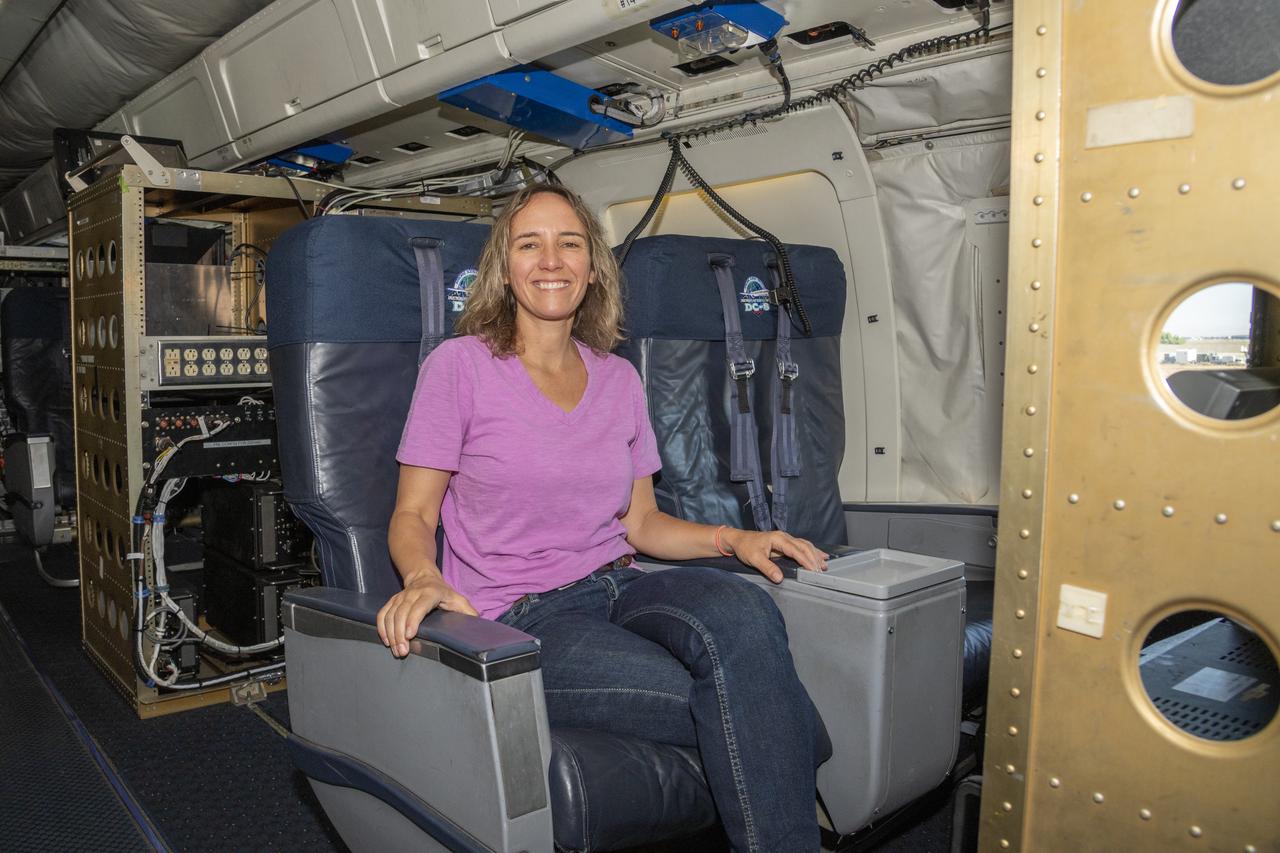
NASA’s Student Airborne Research Program invites Dr. Ann Marie Carlton, Professor of Chemistry at the University of California, Irvine and White House Office of Science and Technology Policy fellow, to fly aboard the DC-8 to measure air quality on June 23, 2022.
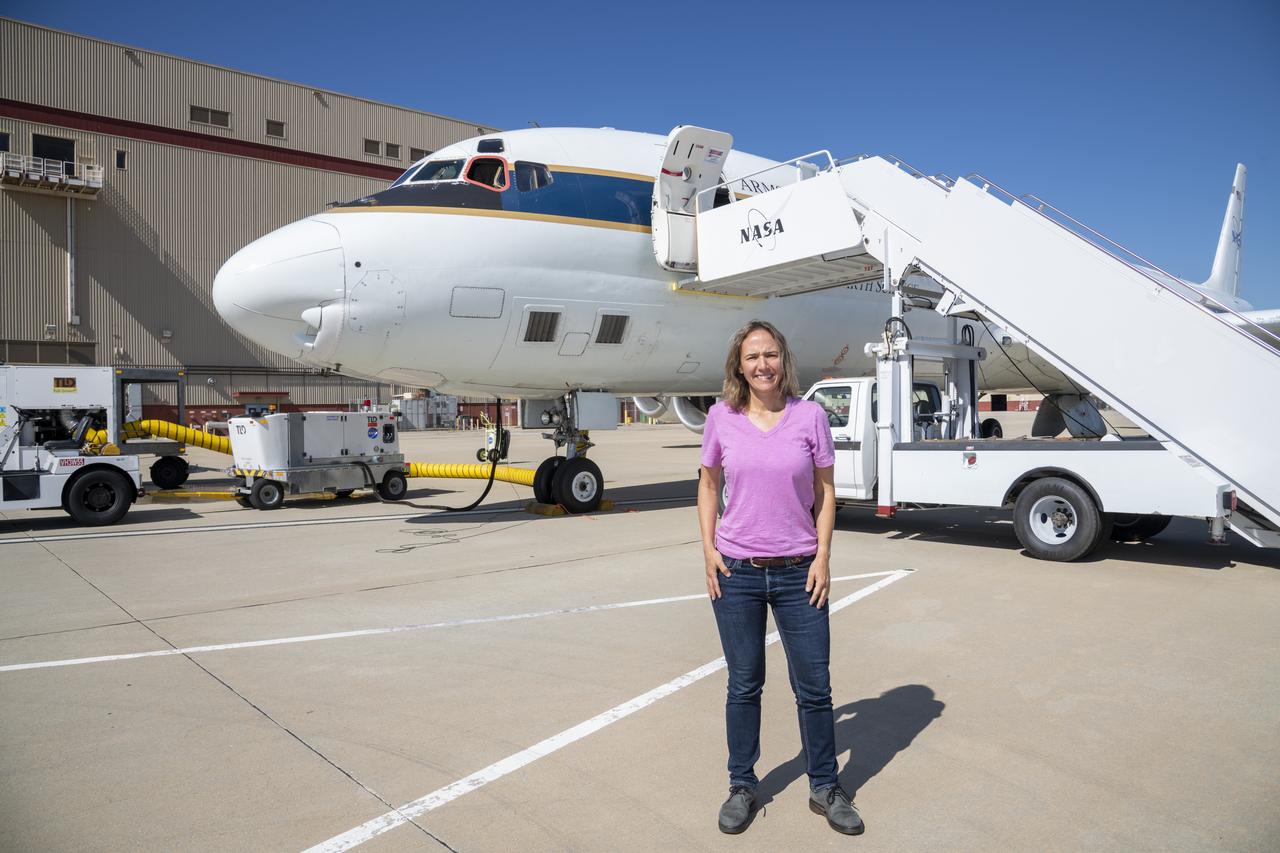
NASA’s Student Airborne Research Program invites Dr. Ann Marie Carlton, Professor of Chemistry at the University of California, Irvine and White House Office of Science and Technology Policy fellow, to fly aboard the DC-8 to measure air quality on June 23, 2022.
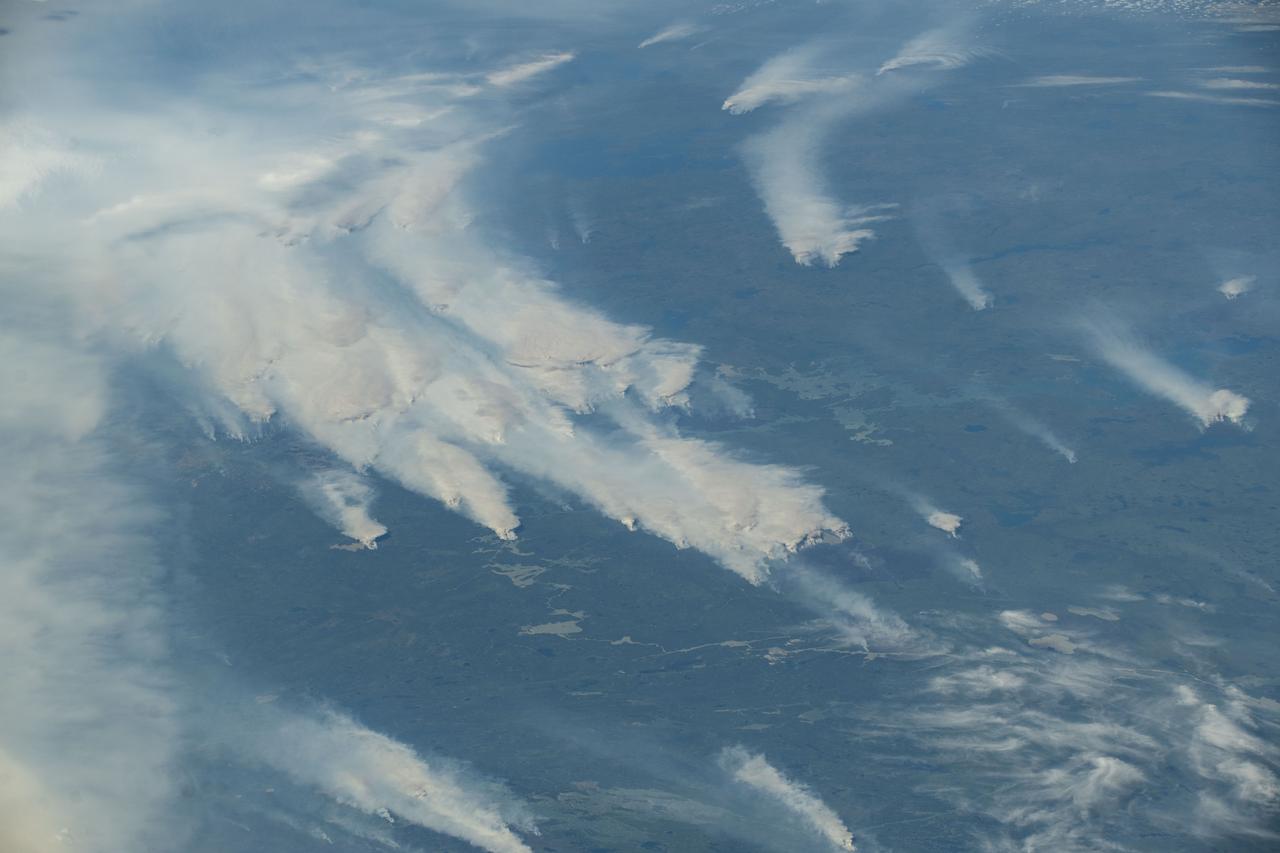
iss073e0420617 (Aug. 3, 2025) --- Wildfires burn throughout Canada's central provinces sending smoke drifting into the United States' Great Lakes and Northeast regions impacting air quality. The International Space Station was orbiting 262 miles above Canada at the time of this photograph.
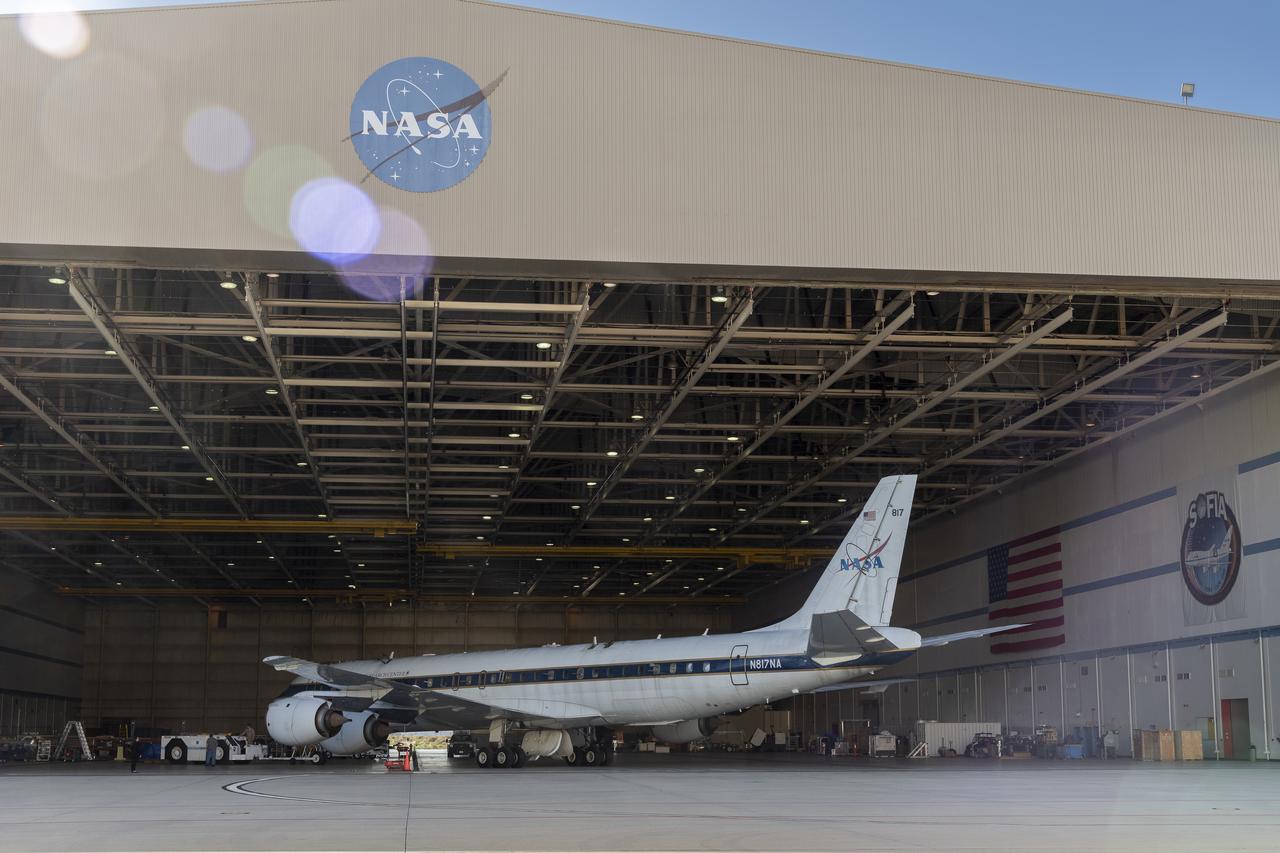
The DC-8 aircraft returns to the hangar at NASA’s Armstrong Flight Research Center Building 703 in Palmdale, California, on April 1, 2024, after completing its final mission supporting Airborne and Satellite Investigation of Asian Air Quality (ASIA-AQ).
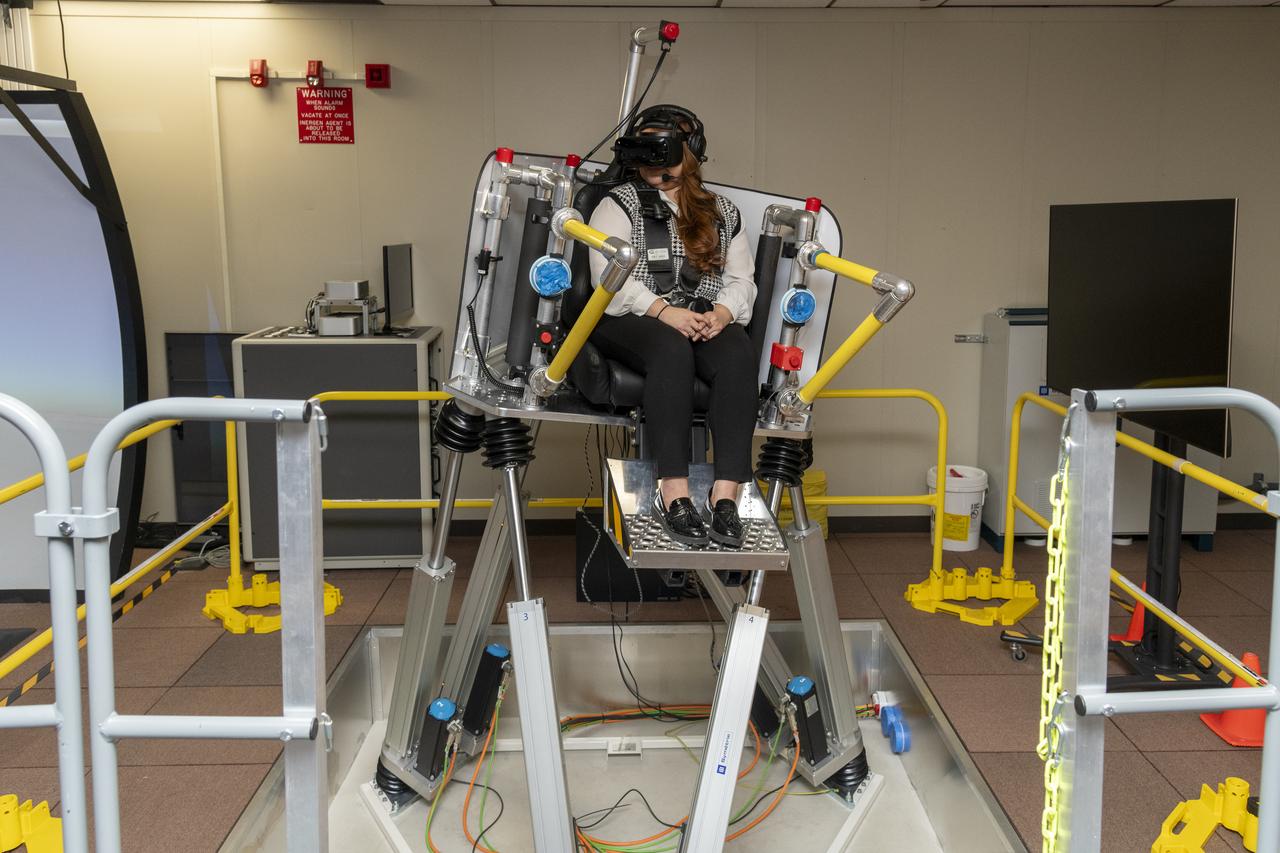
NASA employee Naomi Torres sits inside the air taxi passenger ride quality simulator at NASA’s Armstrong Flight Research Center in Edwards, California, during a study on Oct. 23, 2024. Research continues to better understand how humans may interact with these new types of aircraft.

Rene McCormick, director of standards and quality, National Math and Science Initiative, talks during a program titled "Sally Ride: How Her Historic Space Mission Opened Doors for Women in Science" held on Friday, May 17, 2013 at the National Air and Space Museum in Washington. Photo Credit: (NASA/Bill Ingalls)
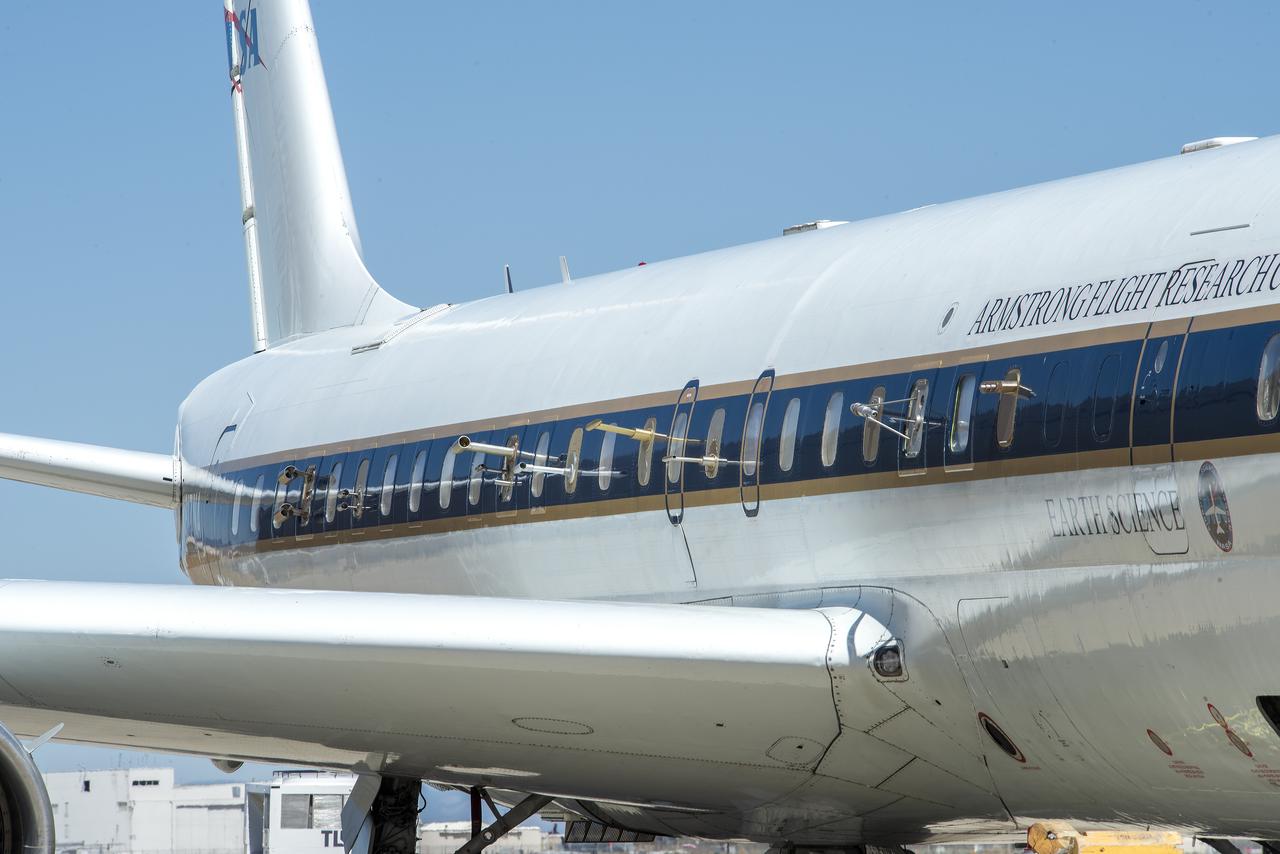
NASA’s DC-8 flying laboratory carried the Fire Influence on Regional to Global Environments and Air Quality, or FIREX-AQ, science team and a suite of state-of-the-art instrumentation to observe different components of fire smoke in varying altitudes and weather. The aircraft is based at NASA’s Armstrong Flight Research Center in California.
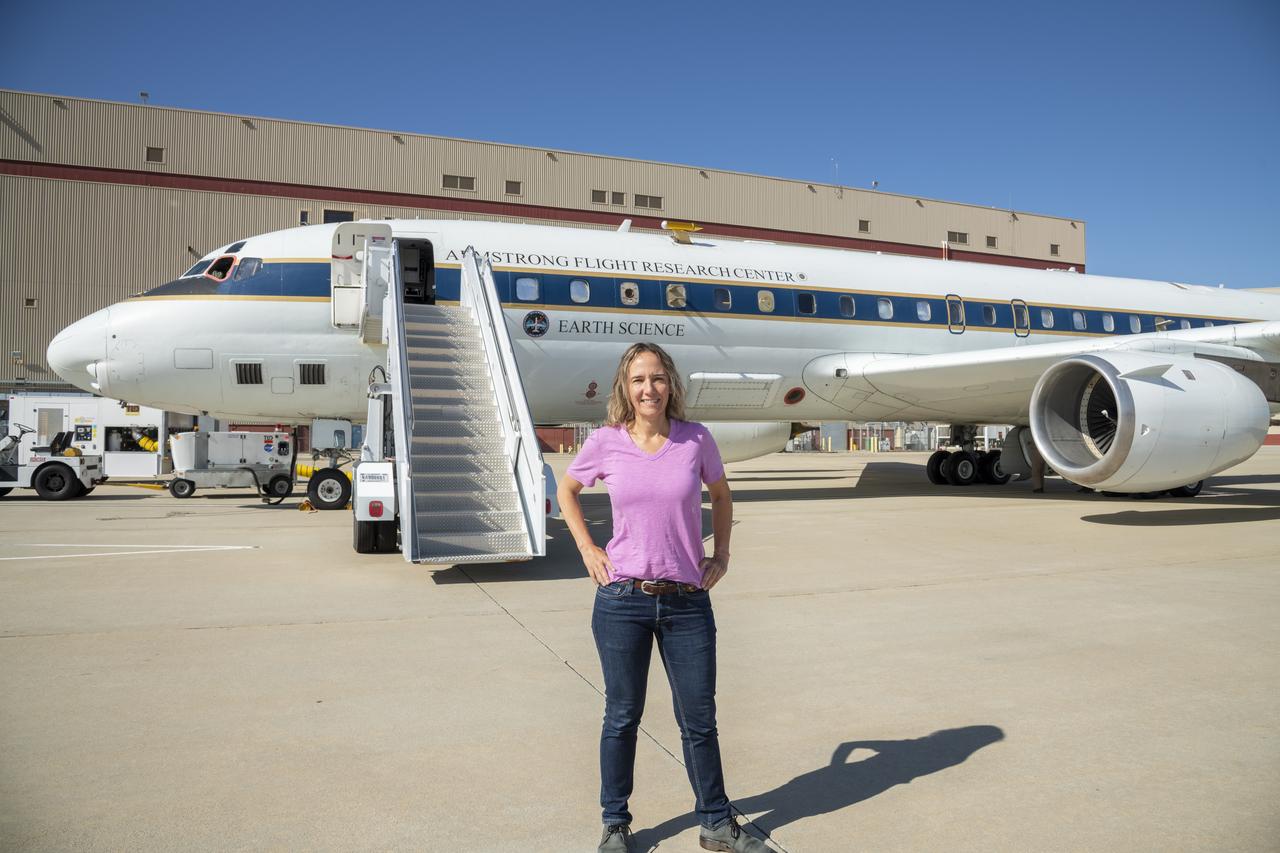
NASA’s Student Airborne Research Program invites Dr. Ann Marie Carlton, Professor of Chemistry at the University of California, Irvine and White House Office of Science and Technology Policy fellow, to fly aboard the DC-8 to measure air quality on June 23, 2022.
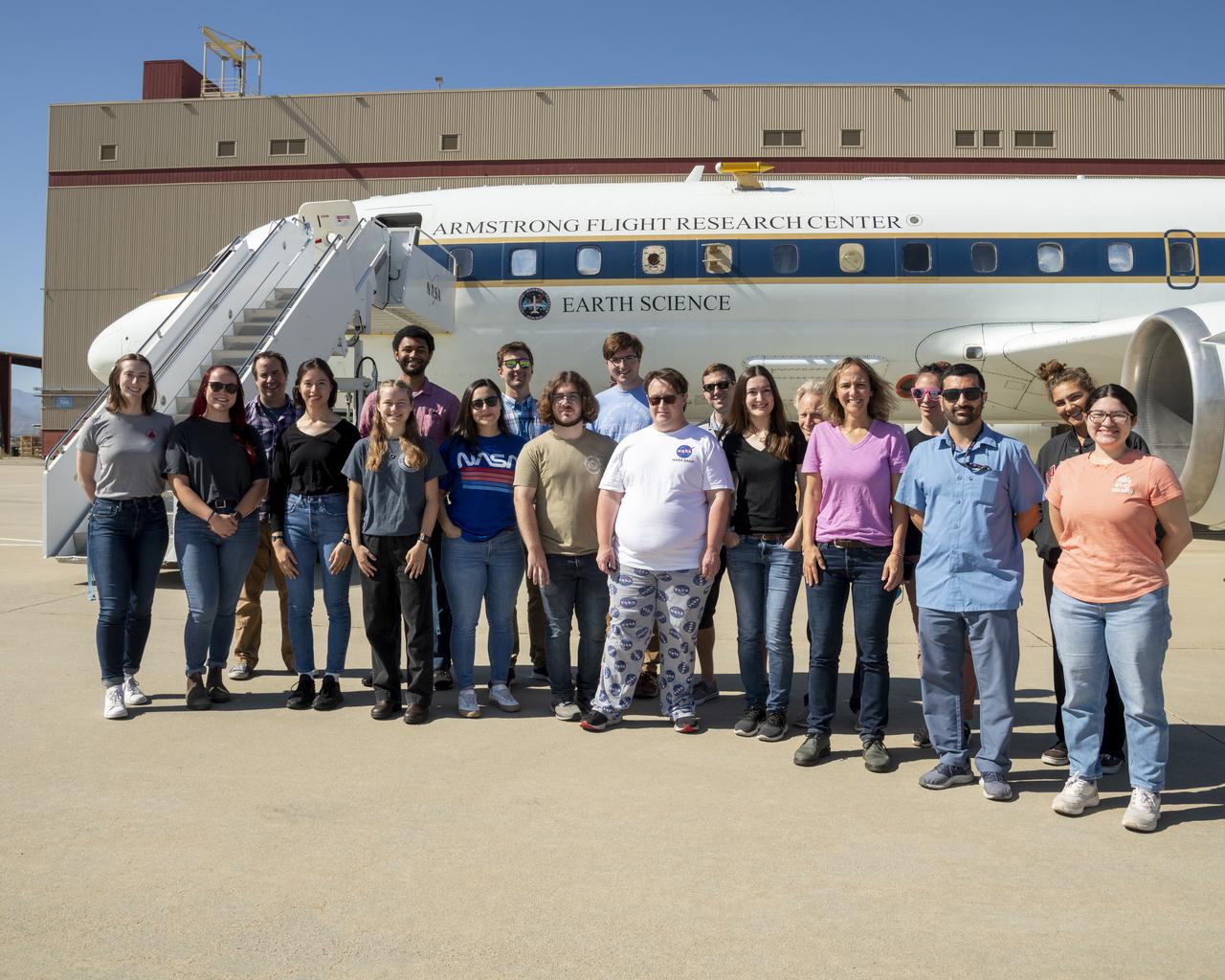
NASA’s Student Airborne Research Program invites Dr. Ann Marie Carlton, Professor of Chemistry at the University of California, Irvine and White House Office of Science and Technology Policy fellow, to fly aboard the DC-8 to measure air quality on June 23, 2022.
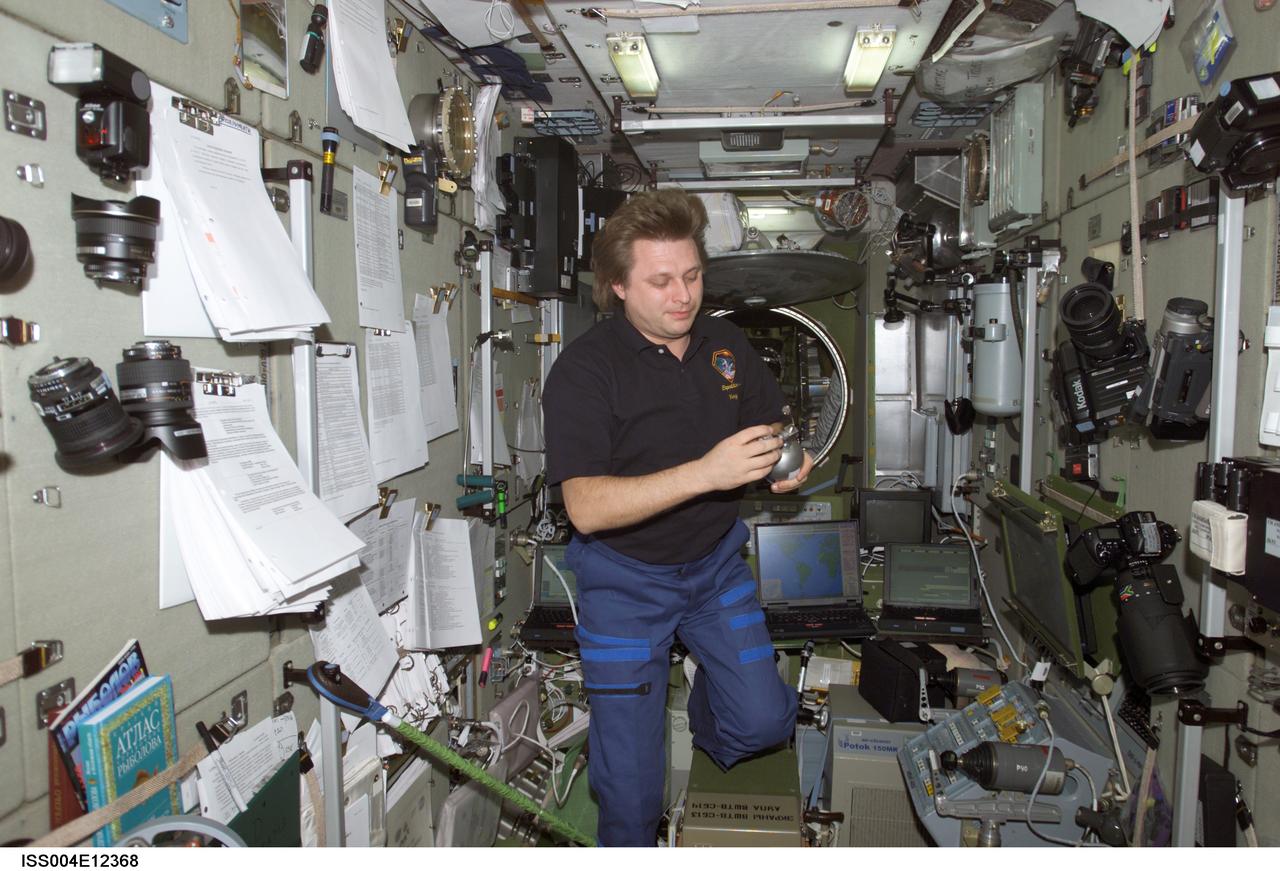
ISS004-E-12368 (23 May 2002) --- Cosmonaut Yury I. Onufrienko, Expedition Four mission commander representing Rosaviakosmos, holds a Grab Sample Container (GSC) in the Zvezda Service Module on the International Space Station (ISS). The GSC is used to take air samples in various modules as part of environmental quality control.

NASA employee Naomi Torres sits inside the air taxi passenger ride quality simulator at NASA’s Armstrong Flight Research Center in Edwards, California, as the simulator moves during a study on Oct. 23, 2024. Research continues to better understand how humans may interact with these new types of aircraft.
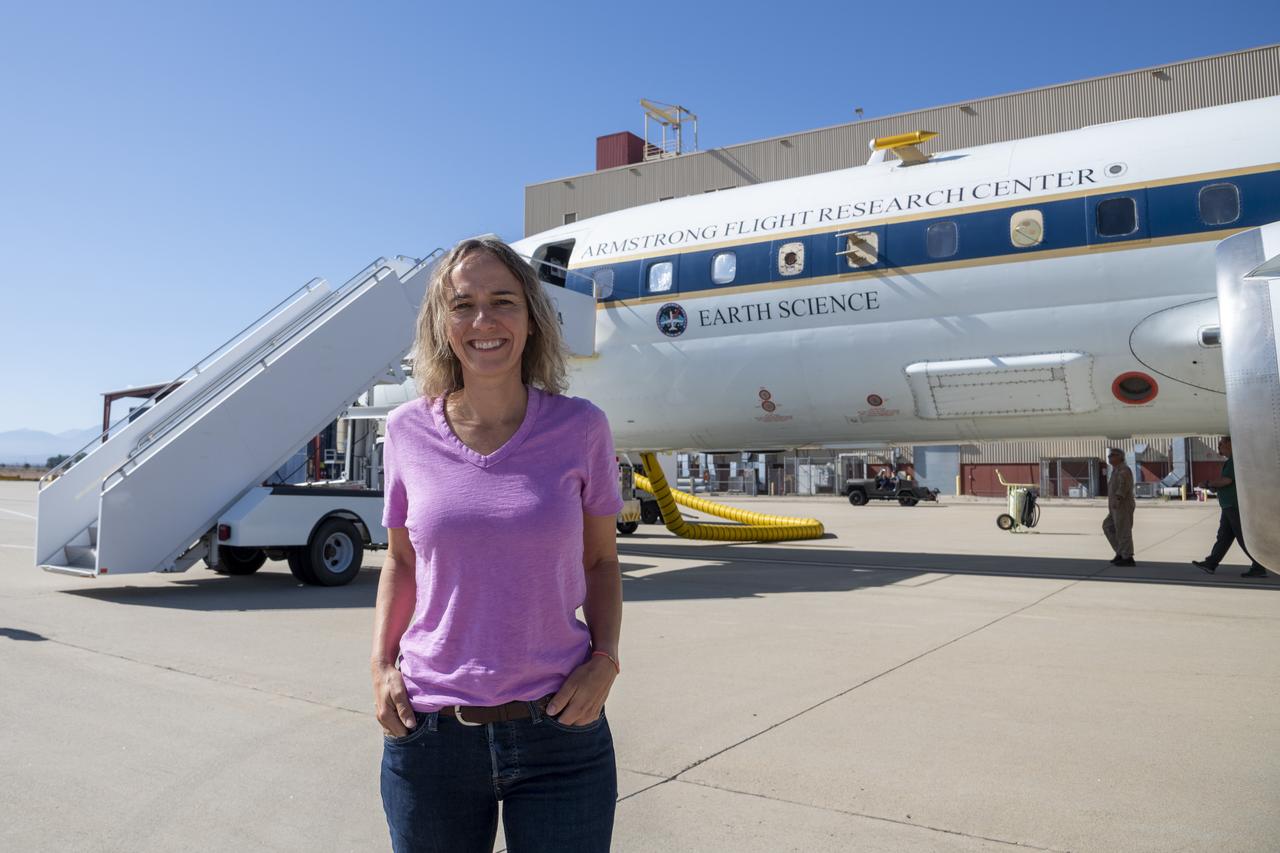
NASA’s Student Airborne Research Program invites Dr. Ann Marie Carlton, Professor of Chemistry at the University of California, Irvine and White House Office of Science and Technology Policy fellow, to fly aboard the DC-8 to measure air quality on June 23, 2022.
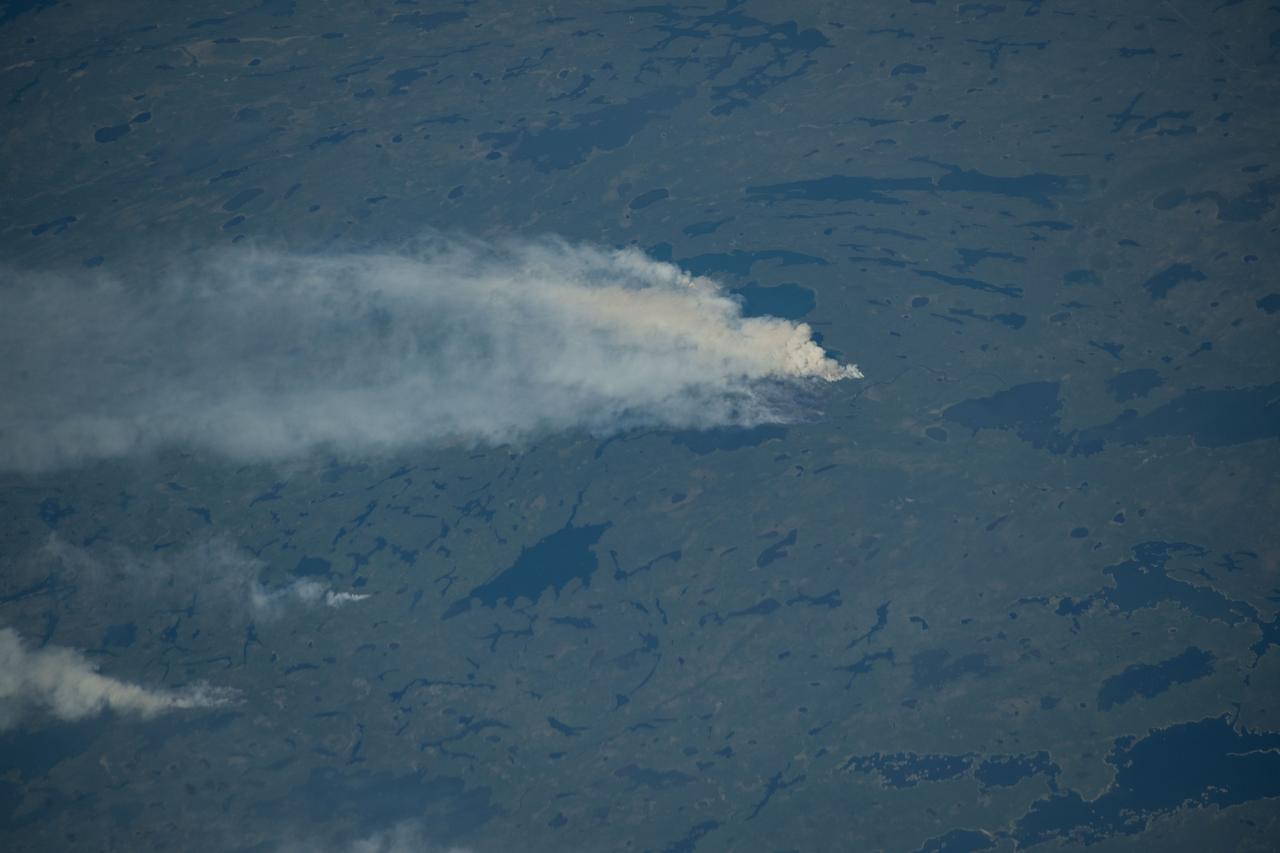
iss073e0420614 (Aug. 3, 2025) --- Wildfires burn throughout Canada's central provinces sending smoke drifitng into the United States' Great Lakes and Northeast regions impacting air quality. The International Space Station was orbiting 262 miles above Canada at the time of this photograph.
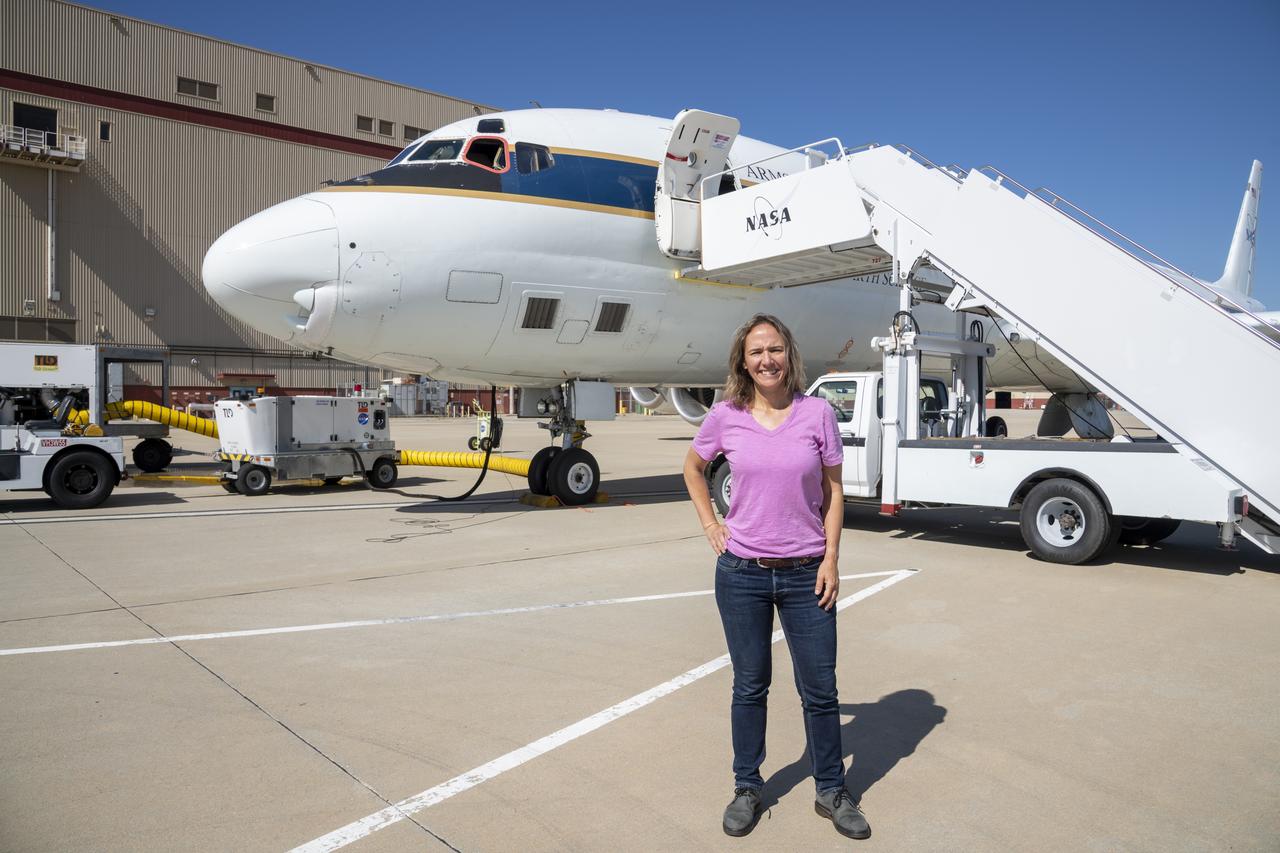
NASA’s Student Airborne Research Program invites Dr. Ann Marie Carlton, Professor of Chemistry at the University of California, Irvine and White House Office of Science and Technology Policy fellow, to fly aboard the DC-8 to measure air quality on June 23, 2022.
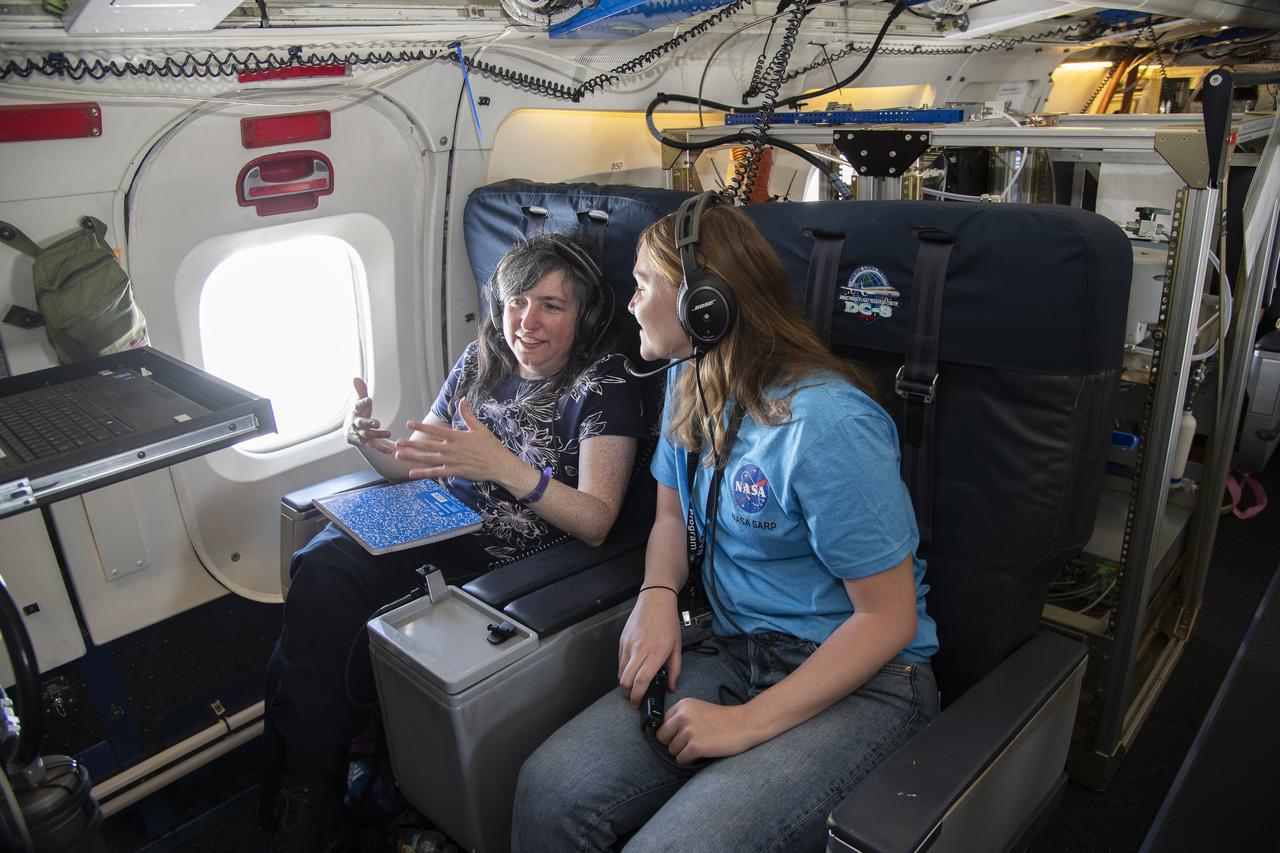
NASA Armstrong’s Student Airborne Research Program celebrates 15 years of success in 2023. An eight-week summer internship program, SARP offers upper-level undergraduate students the opportunity to acquire hands-on research experience as part of a scientific campaign using NASA Airborne Science Program flying science laboratories—aircraft outfitted specifically for research projects. Students onboard NASA’s DC-8 aircraft, the largest flying science laboratory in the world, help scientists from NOAA, the National Oceanic and Atmospheric Administration with a science project investigating air quality and non-vehicular pollution sources called AEROMMA, which measures Atmospheric Emissions and Reactions Observed from Megacities to Marine Areas. In 2023, NASA also introduced a sister program, SARP East to complement the West Coast program.
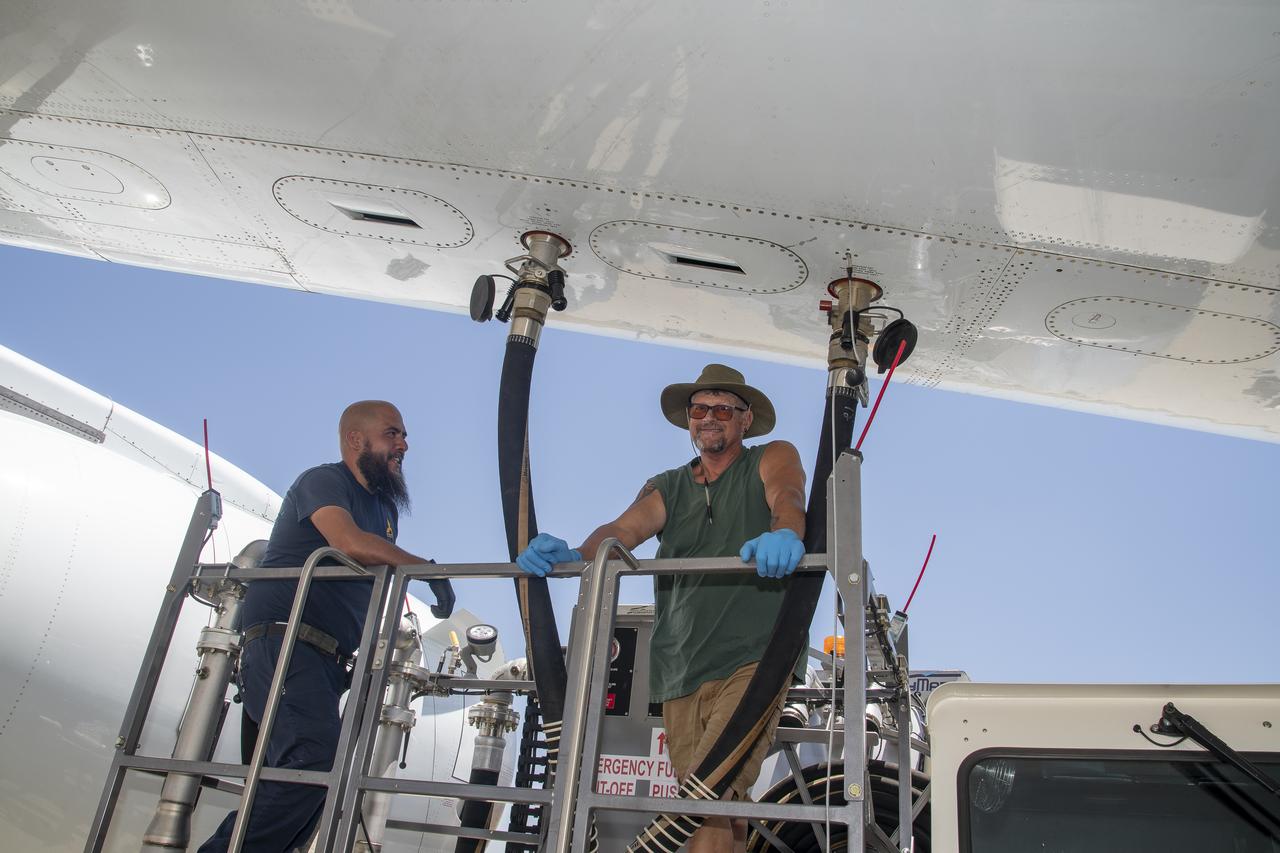
NASA Armstrong’s Student Airborne Research Program celebrates 15 years of success in 2023. An eight-week summer internship program, SARP offers upper-level undergraduate students the opportunity to acquire hands-on research experience as part of a scientific campaign using NASA Airborne Science Program flying science laboratories—aircraft outfitted specifically for research projects. Students onboard NASA’s DC-8 aircraft, the largest flying science laboratory in the world, help scientists from NOAA, the National Oceanic and Atmospheric Administration with a science project investigating air quality and non-vehicular pollution sources called AEROMMA, which measures Atmospheric Emissions and Reactions Observed from Megacities to Marine Areas. In 2023, NASA also introduced a sister program, SARP East to complement the West Coast program.
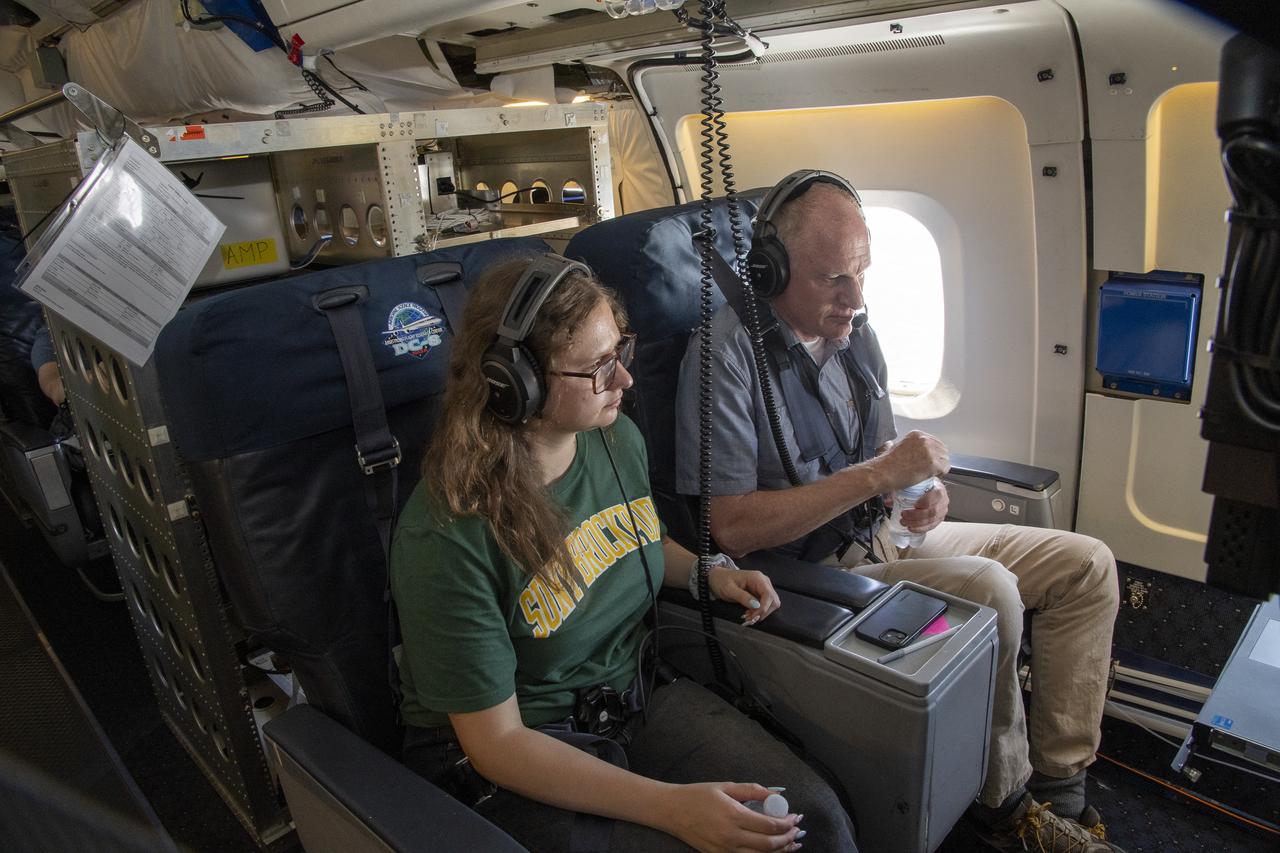
NASA Armstrong’s Student Airborne Research Program celebrates 15 years of success in 2023. An eight-week summer internship program, SARP offers upper-level undergraduate students the opportunity to acquire hands-on research experience as part of a scientific campaign using NASA Airborne Science Program flying science laboratories—aircraft outfitted specifically for research projects. Students onboard NASA’s DC-8 aircraft, the largest flying science laboratory in the world, help scientists from NOAA, the National Oceanic and Atmospheric Administration with a science project investigating air quality and non-vehicular pollution sources called AEROMMA, which measures Atmospheric Emissions and Reactions Observed from Megacities to Marine Areas. In 2023, NASA also introduced a sister program, SARP East to complement the West Coast program.
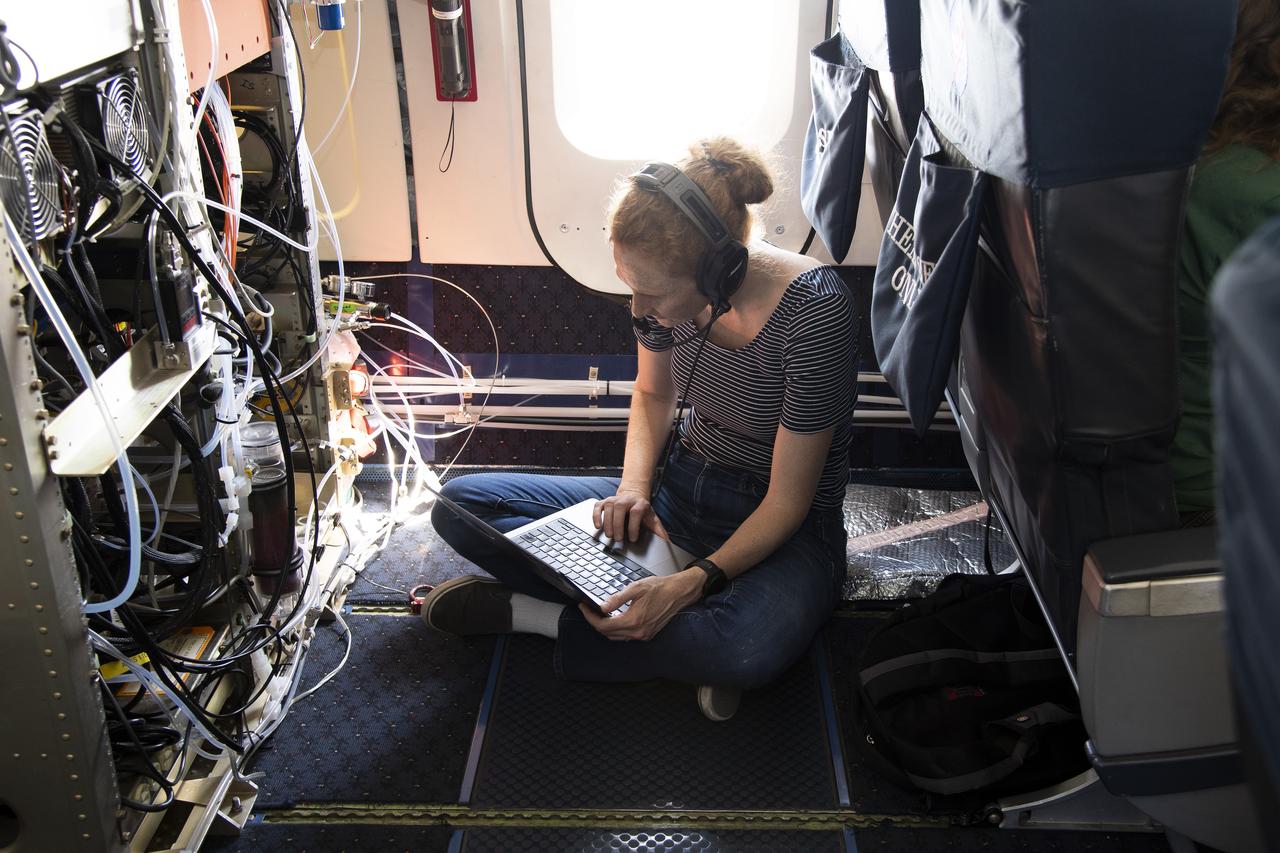
NASA Armstrong’s Student Airborne Research Program celebrates 15 years of success in 2023. An eight-week summer internship program, SARP offers upper-level undergraduate students the opportunity to acquire hands-on research experience as part of a scientific campaign using NASA Airborne Science Program flying science laboratories—aircraft outfitted specifically for research projects. Students onboard NASA’s DC-8 aircraft, the largest flying science laboratory in the world, help scientists from NOAA, the National Oceanic and Atmospheric Administration with a science project investigating air quality and non-vehicular pollution sources called AEROMMA, which measures Atmospheric Emissions and Reactions Observed from Megacities to Marine Areas. In 2023, NASA also introduced a sister program, SARP East to complement the West Coast program.

NASA Armstrong’s Student Airborne Research Program celebrates 15 years of success in 2023. An eight-week summer internship program, SARP offers upper-level undergraduate students the opportunity to acquire hands-on research experience as part of a scientific campaign using NASA Airborne Science Program flying science laboratories—aircraft outfitted specifically for research projects. Students onboard NASA’s DC-8 aircraft, the largest flying science laboratory in the world, help scientists from NOAA, the National Oceanic and Atmospheric Administration with a science project investigating air quality and non-vehicular pollution sources called AEROMMA, which measures Atmospheric Emissions and Reactions Observed from Megacities to Marine Areas. In 2023, NASA also introduced a sister program, SARP East to complement the West Coast program.
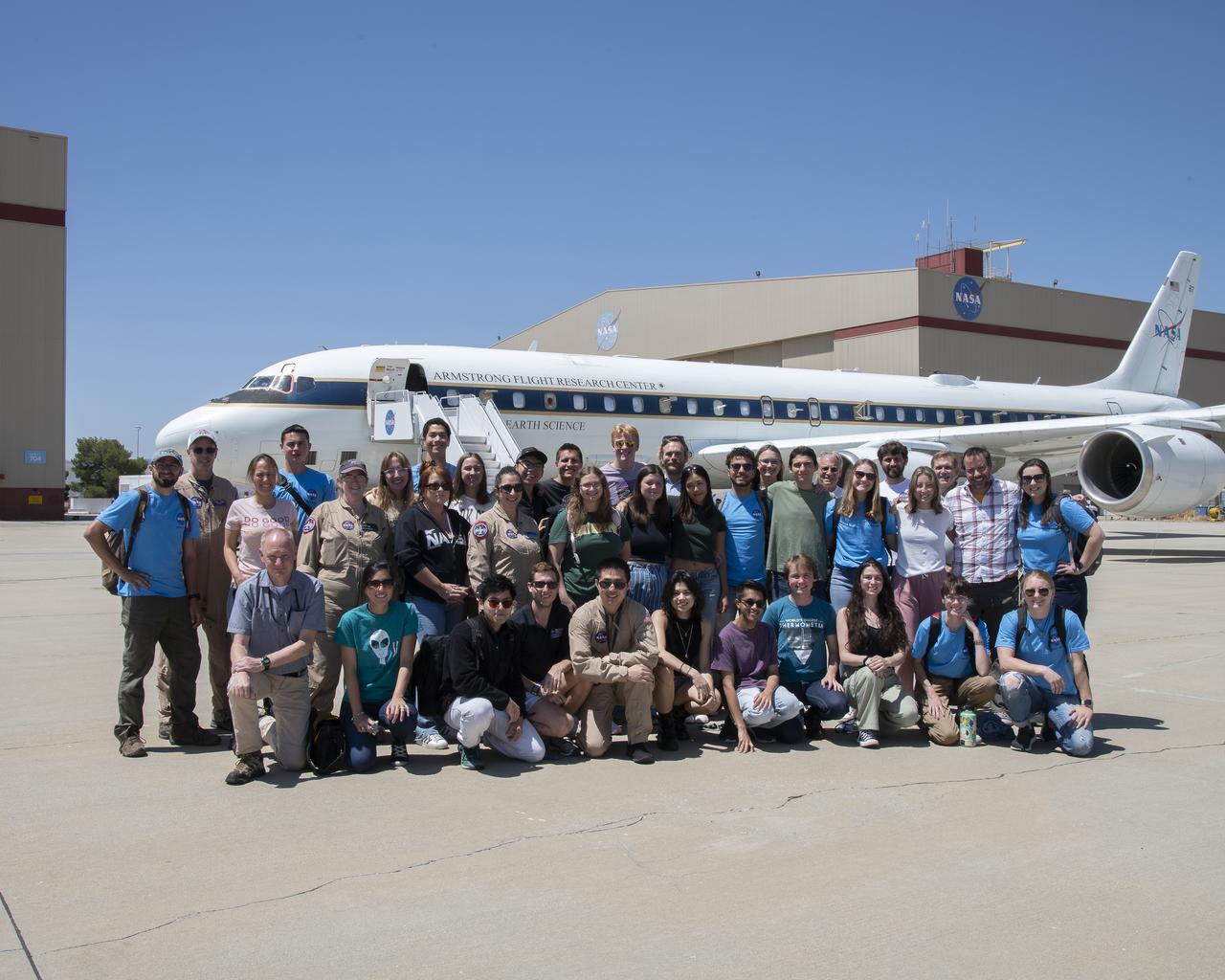
NASA Armstrong’s Student Airborne Research Program celebrates 15 years of success in 2023. An eight-week summer internship program, SARP offers upper-level undergraduate students the opportunity to acquire hands-on research experience as part of a scientific campaign using NASA Airborne Science Program flying science laboratories—aircraft outfitted specifically for research projects. Students onboard NASA’s DC-8 aircraft, the largest flying science laboratory in the world, help scientists from NOAA, the National Oceanic and Atmospheric Administration with a science project investigating air quality and non-vehicular pollution sources called AEROMMA, which measures Atmospheric Emissions and Reactions Observed from Megacities to Marine Areas. In 2023, NASA also introduced a sister program, SARP East to complement the West Coast program.
NASA Armstrong’s Student Airborne Research Program celebrates 15 years of success in 2023. An eight-week summer internship program, SARP offers upper-level undergraduate students the opportunity to acquire hands-on research experience as part of a scientific campaign using NASA Airborne Science Program flying science laboratories—aircraft outfitted specifically for research projects. Students onboard NASA’s DC-8 aircraft, the largest flying science laboratory in the world, help scientists from NOAA, the National Oceanic and Atmospheric Administration with a science project investigating air quality and non-vehicular pollution sources called AEROMMA, which measures Atmospheric Emissions and Reactions Observed from Megacities to Marine Areas. In 2023, NASA also introduced a sister program, SARP East to complement the West Coast program.
NASA Armstrong’s Student Airborne Research Program celebrates 15 years of success in 2023. An eight-week summer internship program, SARP offers upper-level undergraduate students the opportunity to acquire hands-on research experience as part of a scientific campaign using NASA Airborne Science Program flying science laboratories—aircraft outfitted specifically for research projects. Students onboard NASA’s DC-8 aircraft, the largest flying science laboratory in the world, help scientists from NOAA, the National Oceanic and Atmospheric Administration with a science project investigating air quality and non-vehicular pollution sources called AEROMMA, which measures Atmospheric Emissions and Reactions Observed from Megacities to Marine Areas. In 2023, NASA also introduced a sister program, SARP East to complement the West Coast program.
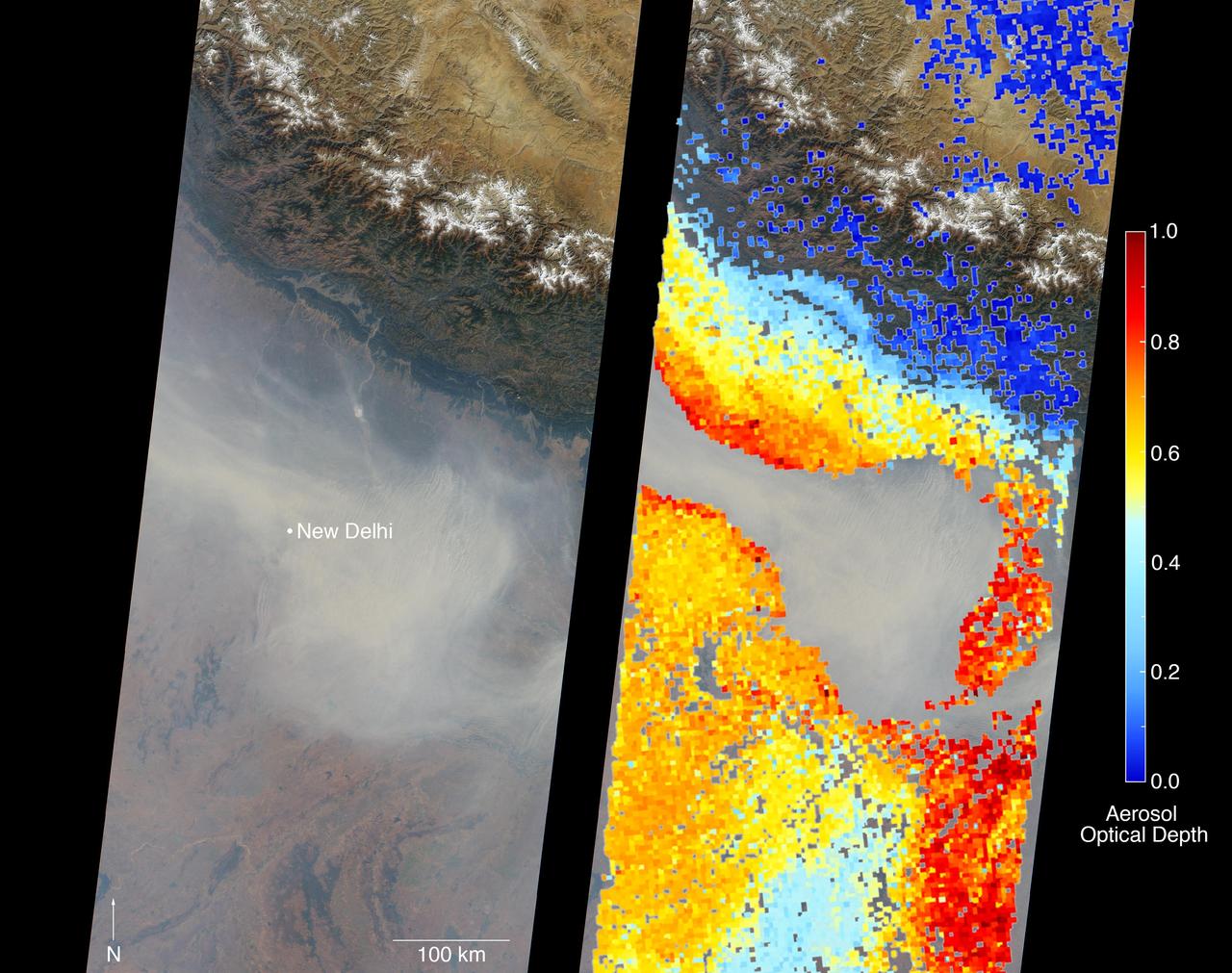
New Delhi, India's capital city, is currently suffering though a period of particularly poor air quality. In early November 2016, monitors at various locations in the area posted air quality index measurements as high as the 900s (the most severe ranking, "hazardous," is any air quality index measurement over 300). Thousands of schools have been closed, and a survey by the Associate Chambers of Commerce and Industry of India reports that 10 percent of the city's workers called in sick due to air-pollution-related health issues. According to several published news reports, the extreme air pollution may be due to a combination of nearby agricultural burning after harvest, urban construction and solid-waste burning, as well as remnants of firecracker smoke and additional car emissions after the celebration of Diwali, the Hindu festival of lights, on October 30. The Multi-angle Imaging SpectroRadiometer (MISR) instrument aboard NASA's Terra satellite passed over the region on Saturday, Nov. 5, 2016, at around 11:05 a.m. local time. At left is an image acquired from MISR's vertical viewing camera. The Himalayas stretch across the northern portion of the image. This towering mountain range tends to concentrate pollution in the region immediately to the south, including New Delhi, by preventing pollutants from blowing northwards. New Delhi, whose location is indicated on the image, is under a patch of especially thick haze. At 6:00 a.m. local time on that date, the U.S. Mission India NowCast Air Quality Index for New Delhi was reported at 751, more than twice the threshold for hazardous air quality. At right, a map of aerosol optical depth is superimposed on the image. Optical depth is a quantitative measure of the abundance of aerosols (tiny particles in the atmosphere). Optical depths for the area around New Delhi have not been calculated because the haze is so thick that the algorithm has classified the area as a cloud. In the region immediately surrounding the thick haze, optical depths approach 1.0. An optical depth of 1.0 means that only about 37 percent of direct sunlight reaches the surface due to interactions with particles in the atmosphere. These data were acquired during Terra orbit 89805. Other MISR data are available through the NASA Langley Research Center; for more information, go to https://eosweb.larc.nasa.gov/project/misr/misr_table. MISR was built and is managed by NASA's Jet Propulsion Laboratory, Pasadena, California, for NASA's Science Mission Directorate, Washington, D.C. The Terra spacecraft is managed by NASA's Goddard Space Flight Center, Greenbelt, Maryland. The MISR data were obtained from the NASA Langley Research Center Atmospheric Science Data Center, Hampton, Virginia. JPL is a division of the California Institute of Technology in Pasadena. http://photojournal.jpl.nasa.gov/catalog/PIA21100
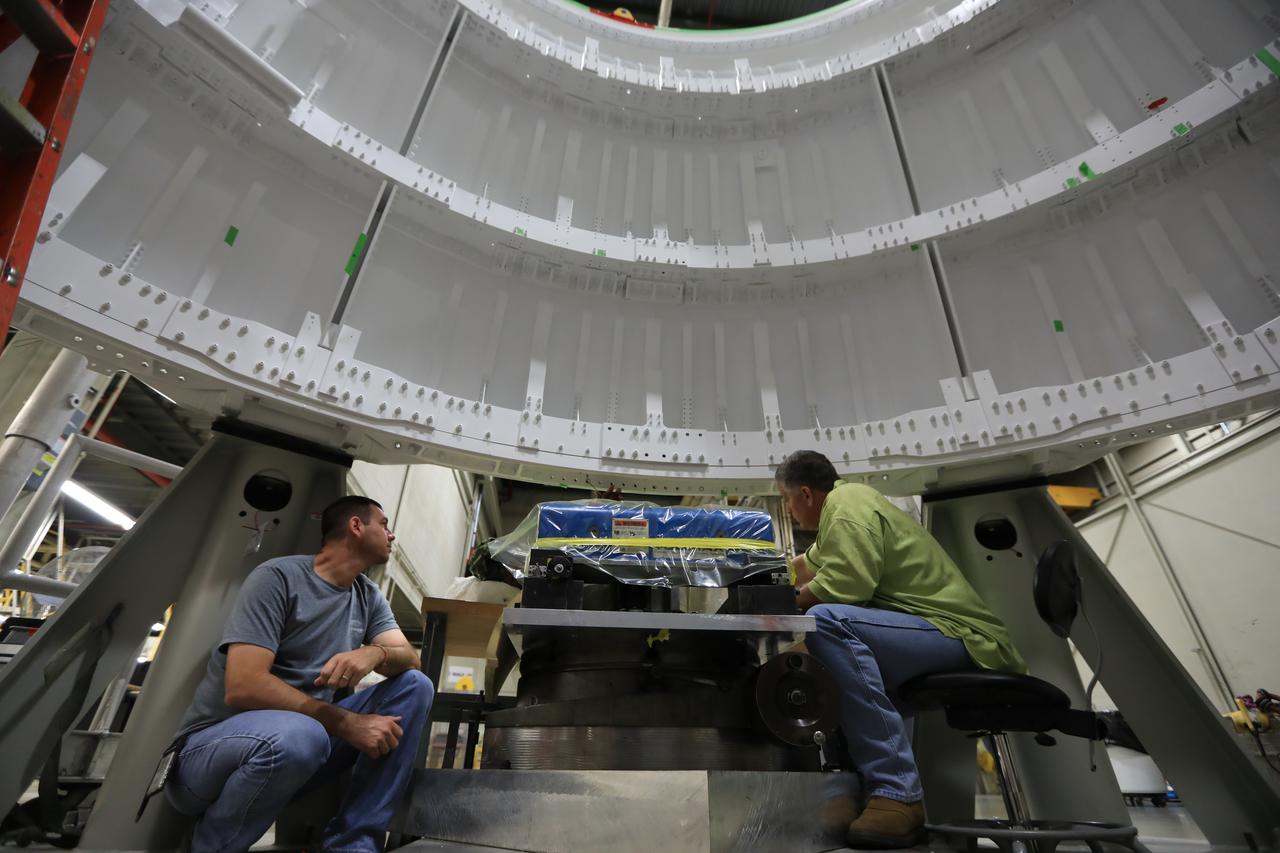
Inside the Booster Fabrication Facility at NASA's Kennedy Space Center in Florida, the left hand aft skirt for the agency's Space Launch System (SLS) rocket is ready for the assembly process. From left, are Chad Goetz, quality technician with Orbital ATK, and Robbie Blaue, quality assurance specialist with the Defense Contract Management Agency. The aft skirt was refurbished and painted in support facilities at the Hangar AF facility at Cape Canaveral Air Force Station in Florida. The space shuttle-era aft skirt will be used on the left hand booster of the SLS for Exploration Mission 1 (EM-1). NASA is preparing for EM-1, deep space missions, and the Journey to Mars.
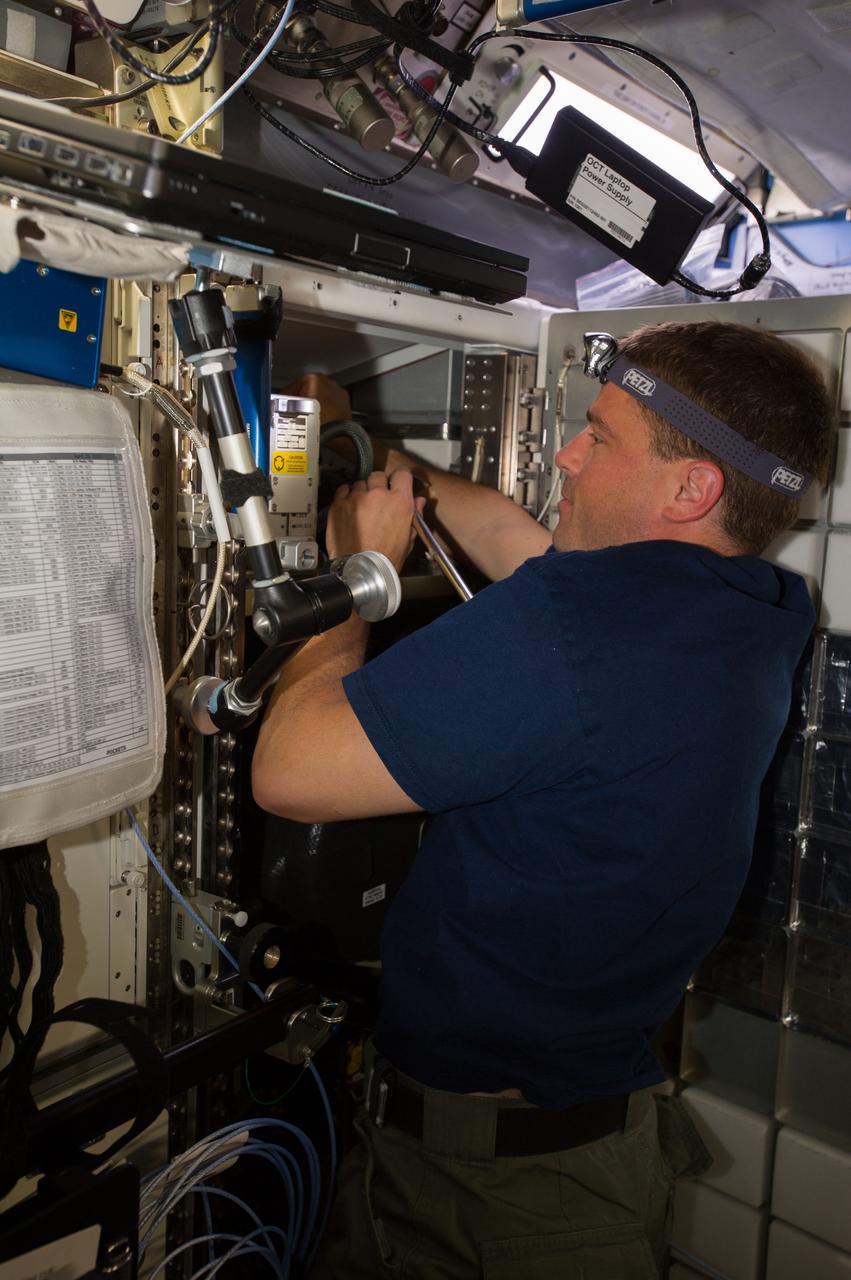
ISS040-E-007123 (4 June 2014) --- NASA astronaut Reid Wiseman, Expedition 40 flight engineer, works with the Common Cabin Air Assembly (CCAA) in the Destiny laboratory of the International Space Station.
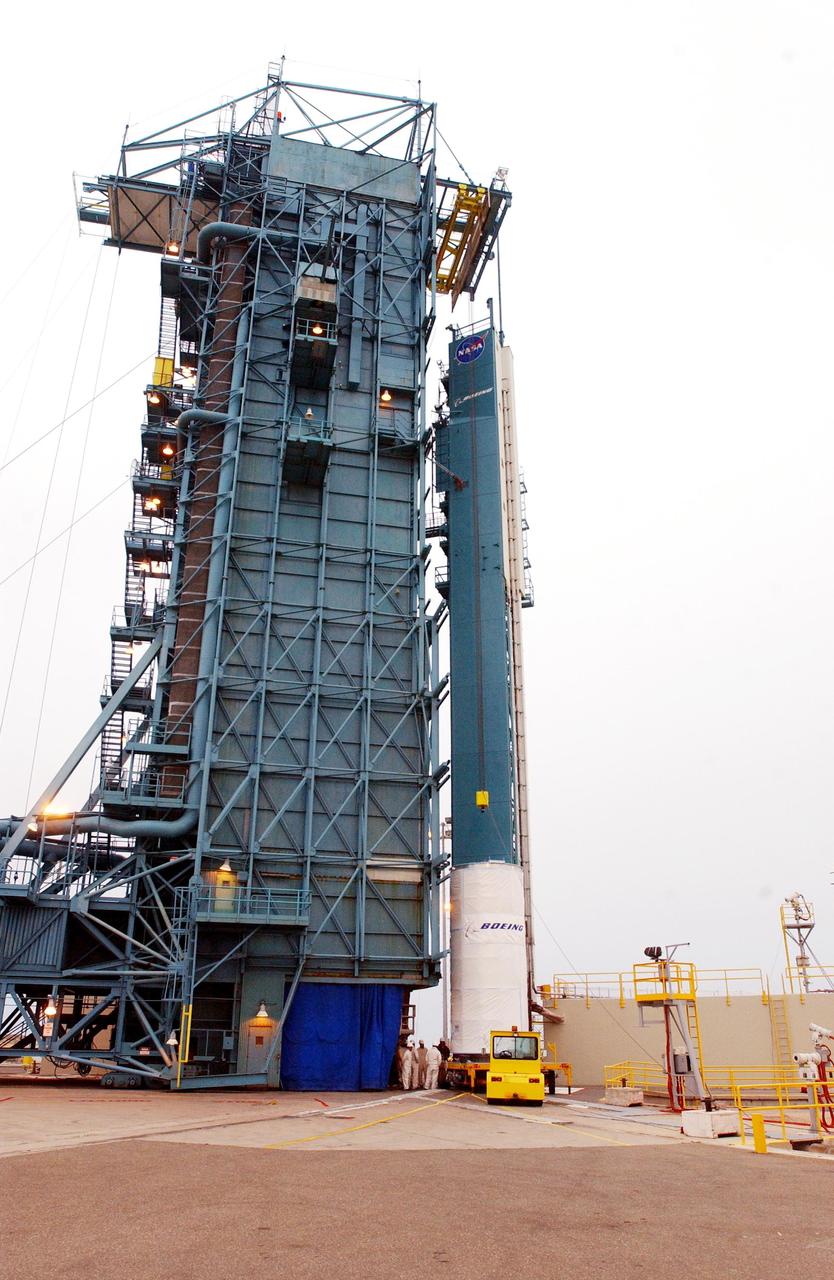
KENNEDY SPACE CENTER, FLA. - At Space Launch Complex 2 on North Vandenberg Air Force Base, Calif., the Aura spacecraft arrives at the base of the mobile service tower, or gantry. The latest in the Earth Observing System (EOS) series, Aura is scheduled to launch July 10 aboard the Boeing Delta II rocket. Aura’s four state-of-the-art instruments will study the dynamics of chemistry occurring in the atmosphere. The spacecraft will provide data to help scientists better understand the Earth’s ozone, air quality and climate change.
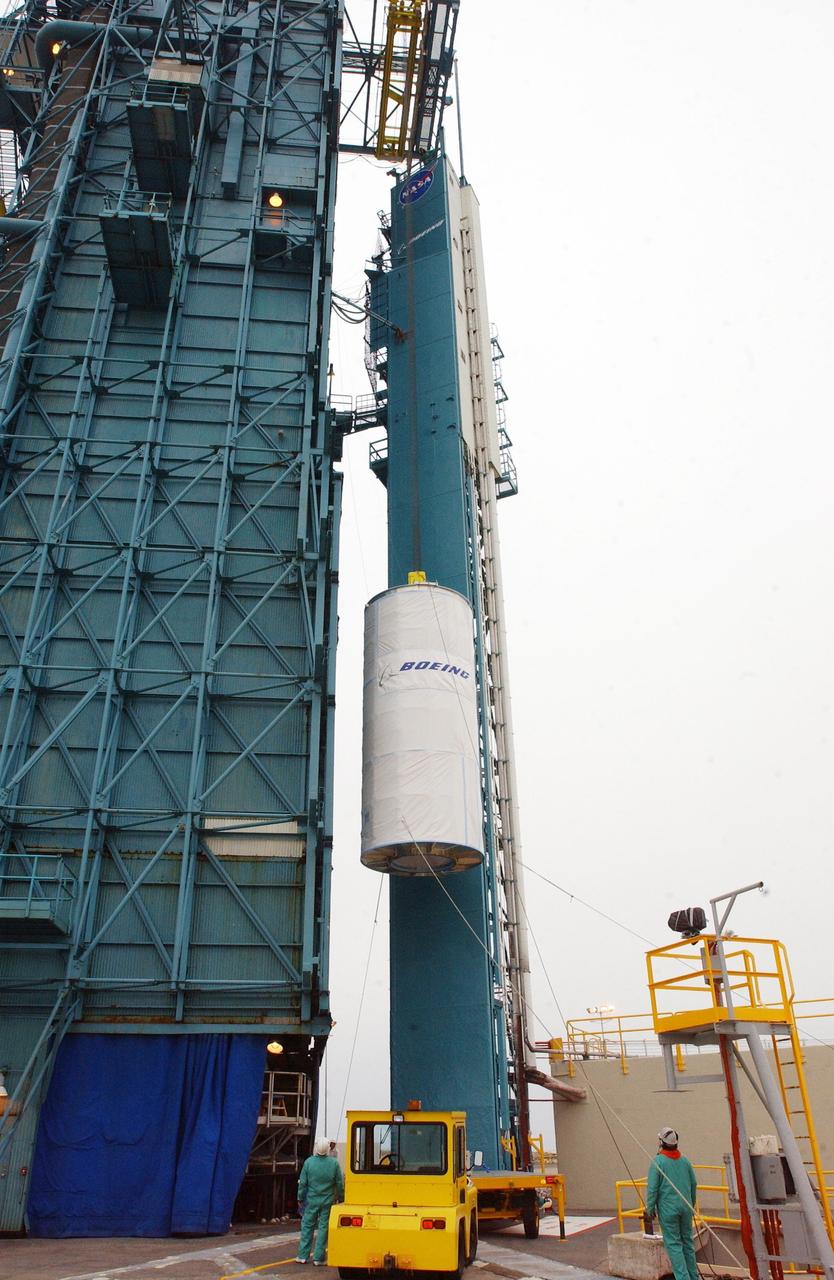
KENNEDY SPACE CENTER, FLA. - At Space Launch Complex 2 on North Vandenberg Air Force Base, Calif., the Aura spacecraft is lifted up the mobile service tower, or gantry. The latest in the Earth Observing System (EOS) series, Aura is scheduled to launch July 10 aboard the Boeing Delta II rocket. Aura’s four state-of-the-art instruments will study the dynamics of chemistry occurring in the atmosphere. The spacecraft will provide data to help scientists better understand the Earth’s ozone, air quality and climate change.
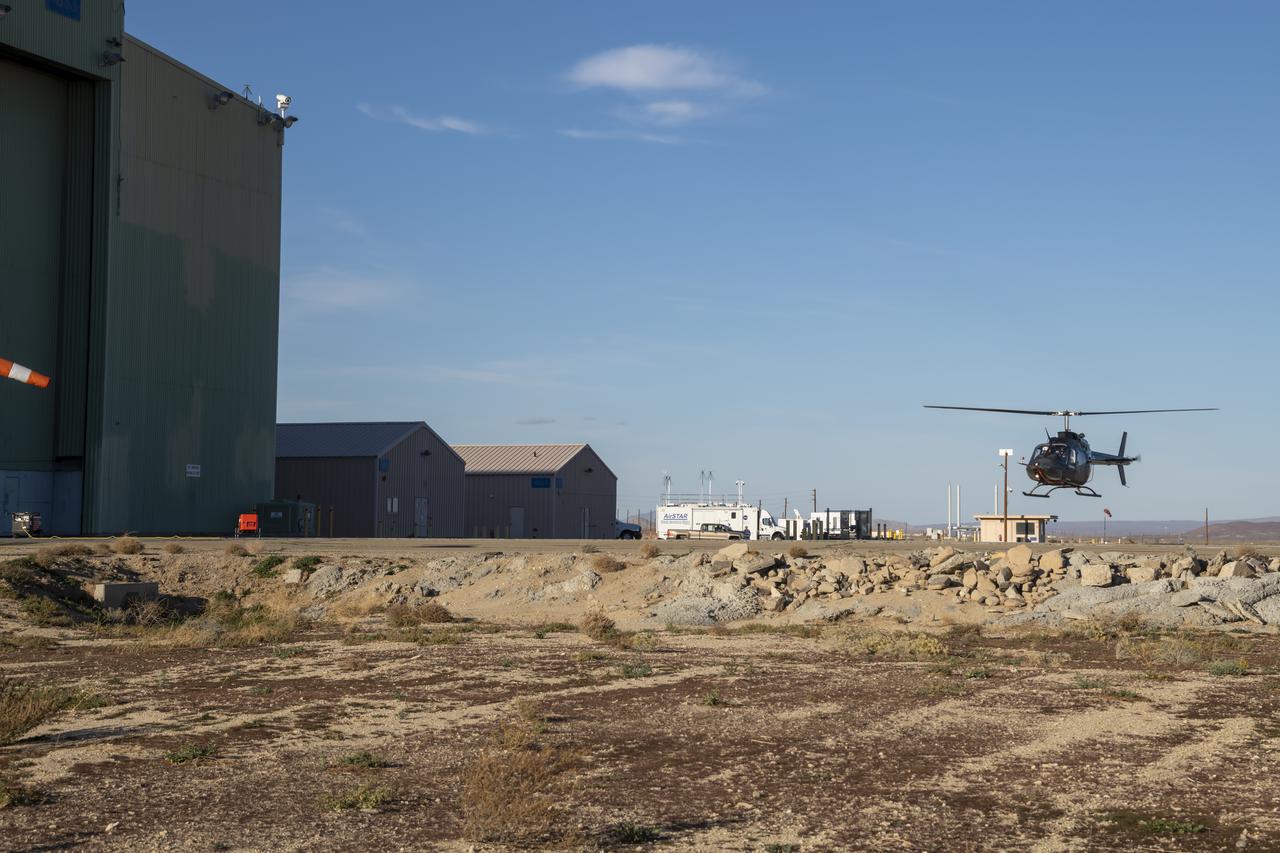
NASA’s Advanced Air Mobility National Campaign flies maneuvers at NASA’s Armstrong Flight Research Center in Edwards, California, Dec. 6, and 8-10. During this testing, the helicopter is used to study controllability characteristics when operating near buildings during heavy wind conditions. The Bell OH-58 Kiowa helicopter provided by Flight Research Inc. was used to study urban air mobility vehicle performance and flying qualities requirements.
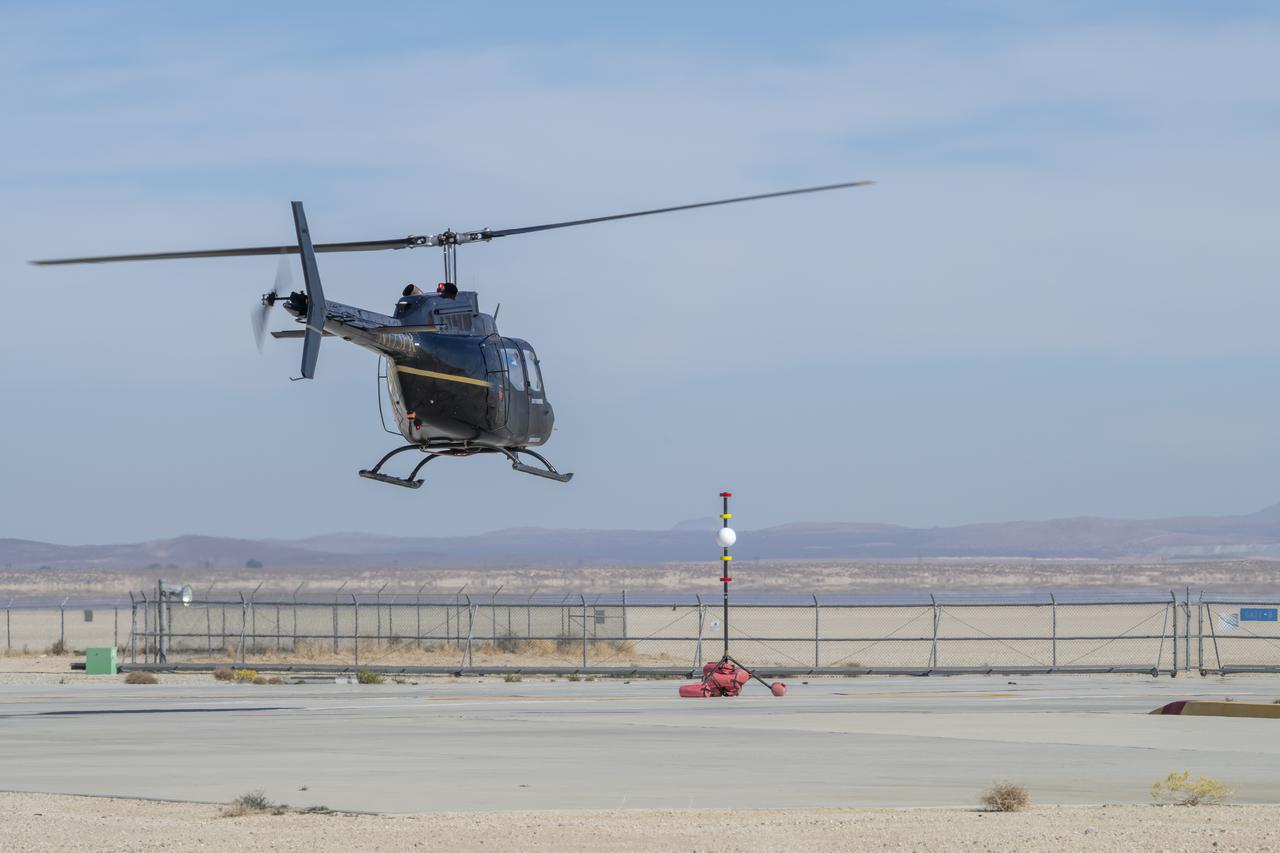
A Bell OH-58 Kiowa helicopter provided by Flight Research Inc. flies around a visual aid, known as a tetherball, created to serve as the pilot's visual height reference while performing handling qualities testing at NASA's Armstrong Flight Research Center in Edwards, California, Nov. 8-10. NASA's Advanced Air Mobility National Campaign used the helicopter to study urban air mobility vehicle and airspace requirements.
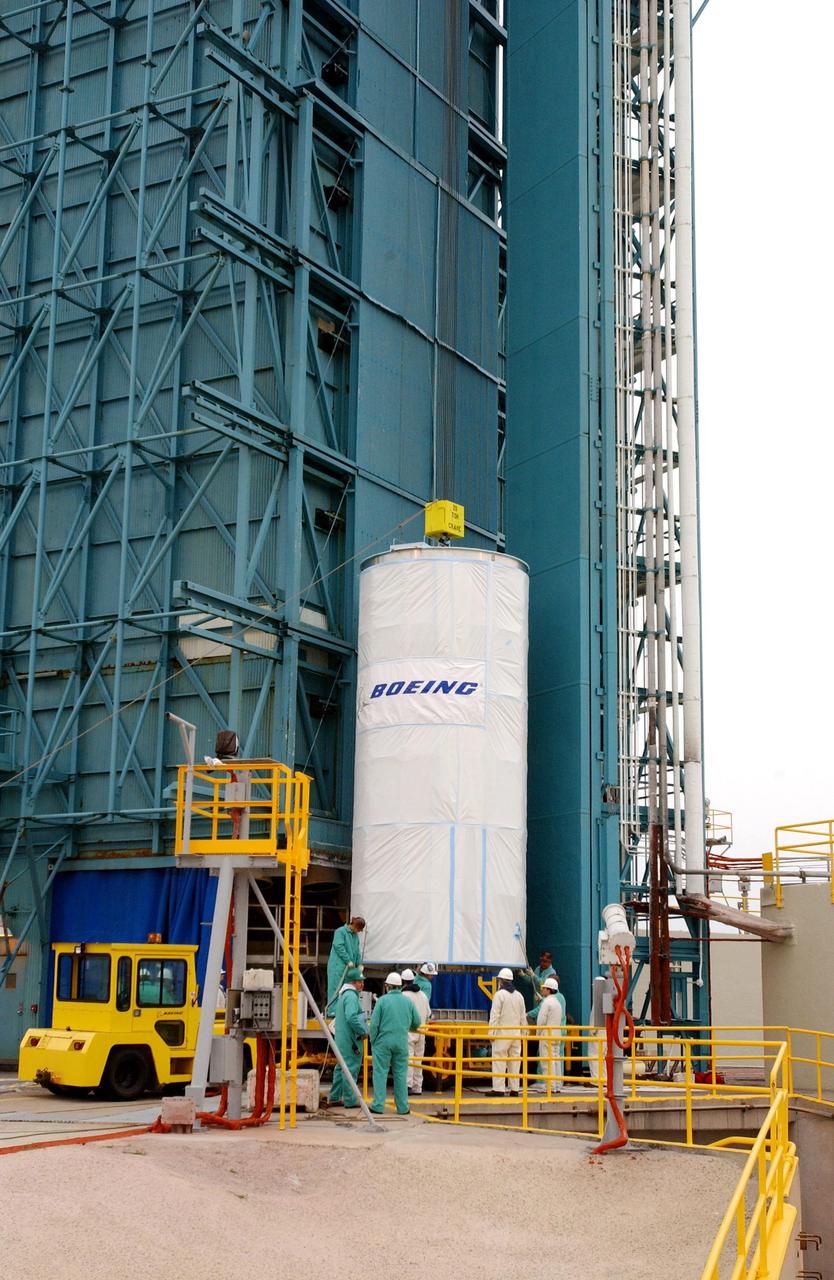
KENNEDY SPACE CENTER, FLA. - At Space Launch Complex 2 on North Vandenberg Air Force Base, Calif., the Aura spacecraft is prepared for its lift up the mobile service tower, or gantry. The latest in the Earth Observing System (EOS) series, Aura is scheduled to launch July 10 aboard the Boeing Delta II rocket. Aura’s four state-of-the-art instruments will study the dynamics of chemistry occurring in the atmosphere. The spacecraft will provide data to help scientists better understand the Earth’s ozone, air quality and climate change.
![VANDENBERG AFB, CALIF. - The Aura spacecraft atop its Boeing Delta II launch vehicle sits on NASA’s Space Complex 2 at Vandenberg Air Force Base in California waiting to launch. Liftoff is now scheduled for no earlier than July 14. The latest in the Earth Observing System (EOS) series, Aura’s four state-of-the-art instruments will study the dynamics of chemistry occurring in the atmosphere. The spacecraft will provide data to help scientists better understand the Earth’s ozone, air quality and climate change. [Photo by Bill Ingalls/NASA]](https://images-assets.nasa.gov/image/KSC-04pd1469/KSC-04pd1469~medium.jpg)
VANDENBERG AFB, CALIF. - The Aura spacecraft atop its Boeing Delta II launch vehicle sits on NASA’s Space Complex 2 at Vandenberg Air Force Base in California waiting to launch. Liftoff is now scheduled for no earlier than July 14. The latest in the Earth Observing System (EOS) series, Aura’s four state-of-the-art instruments will study the dynamics of chemistry occurring in the atmosphere. The spacecraft will provide data to help scientists better understand the Earth’s ozone, air quality and climate change. [Photo by Bill Ingalls/NASA]
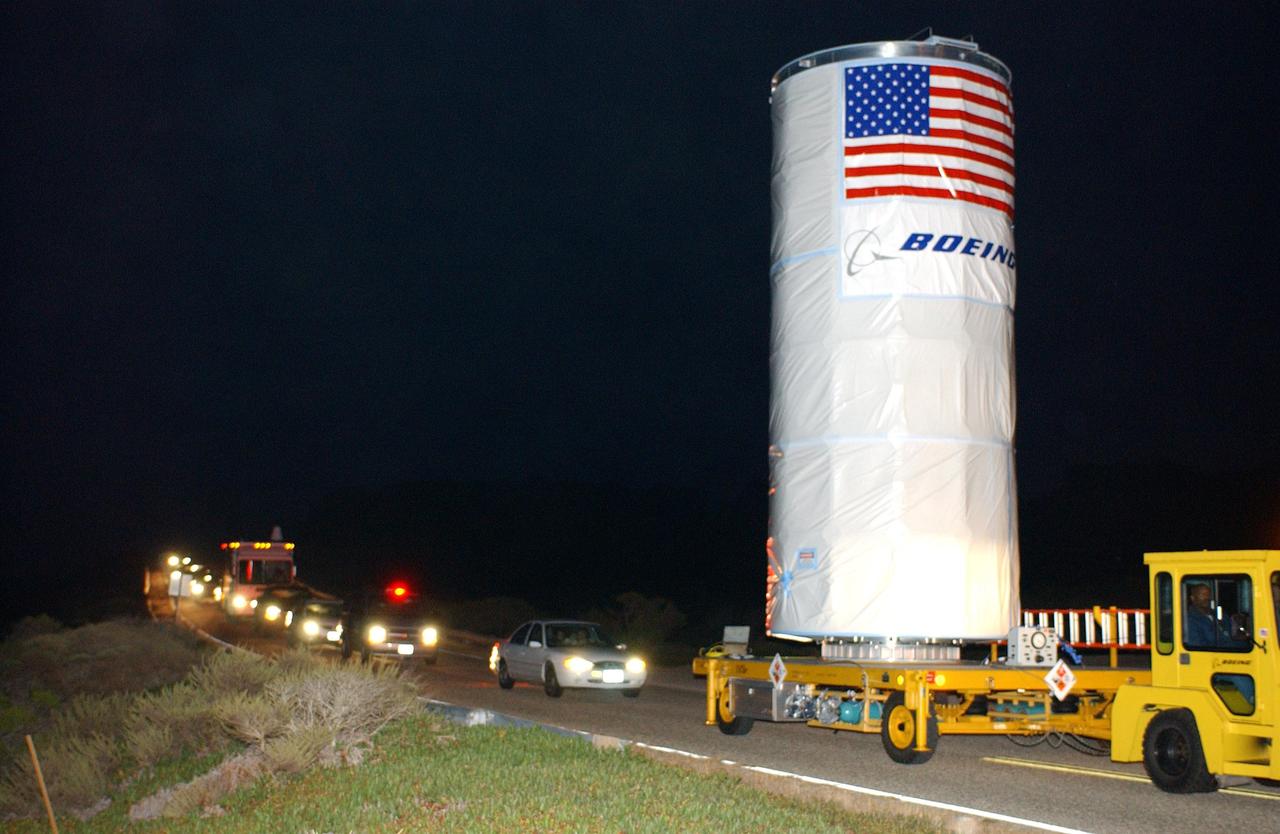
KENNEDY SPACE CENTER, FLA. - The Aura spacecraft on a transporter heads a convoy of vehicles in the predawn hours as it moves to Space Launch Complex 2 on North Vandenberg Air Force Base, Calif. The latest in the Earth Observing System (EOS) series, Aura is scheduled to launch July 10 aboard a Boeing Delta II rocket. Aura’s four state-of-the-art instruments will study the dynamics of chemistry occurring in the atmosphere. The spacecraft will provide data to help scientists better understand the Earth’s ozone, air quality and climate change.
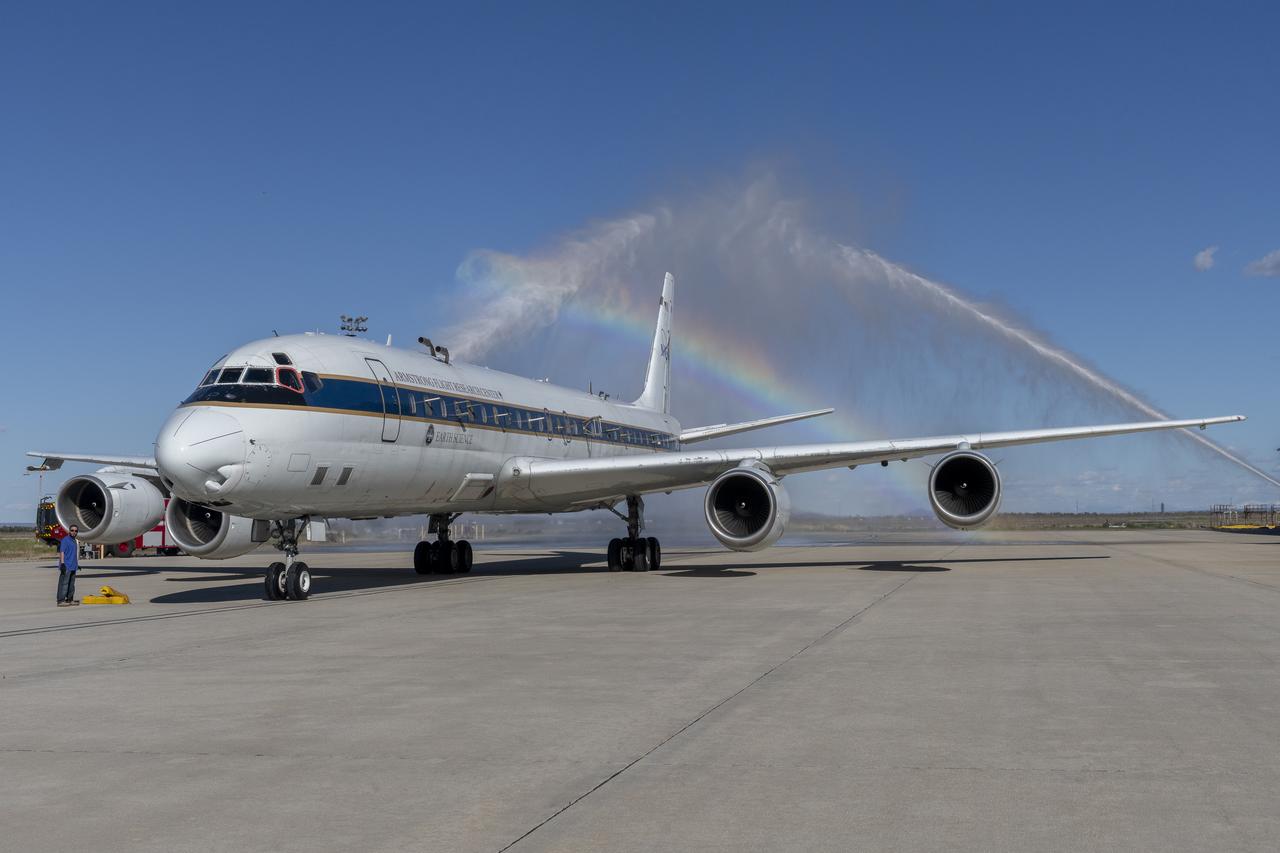
The DC-8 aircraft returned to NASA’s Armstrong Flight Research Center Building 703 in Palmdale, California, on April 1, 2024, after completing its final mission supporting Airborne and Satellite Investigation of Asian Air Quality (ASIA-AQ). The aircraft and crew were welcomed back with a celebratory water salute by the U.S. Air Force Plant 42 Fire Department.
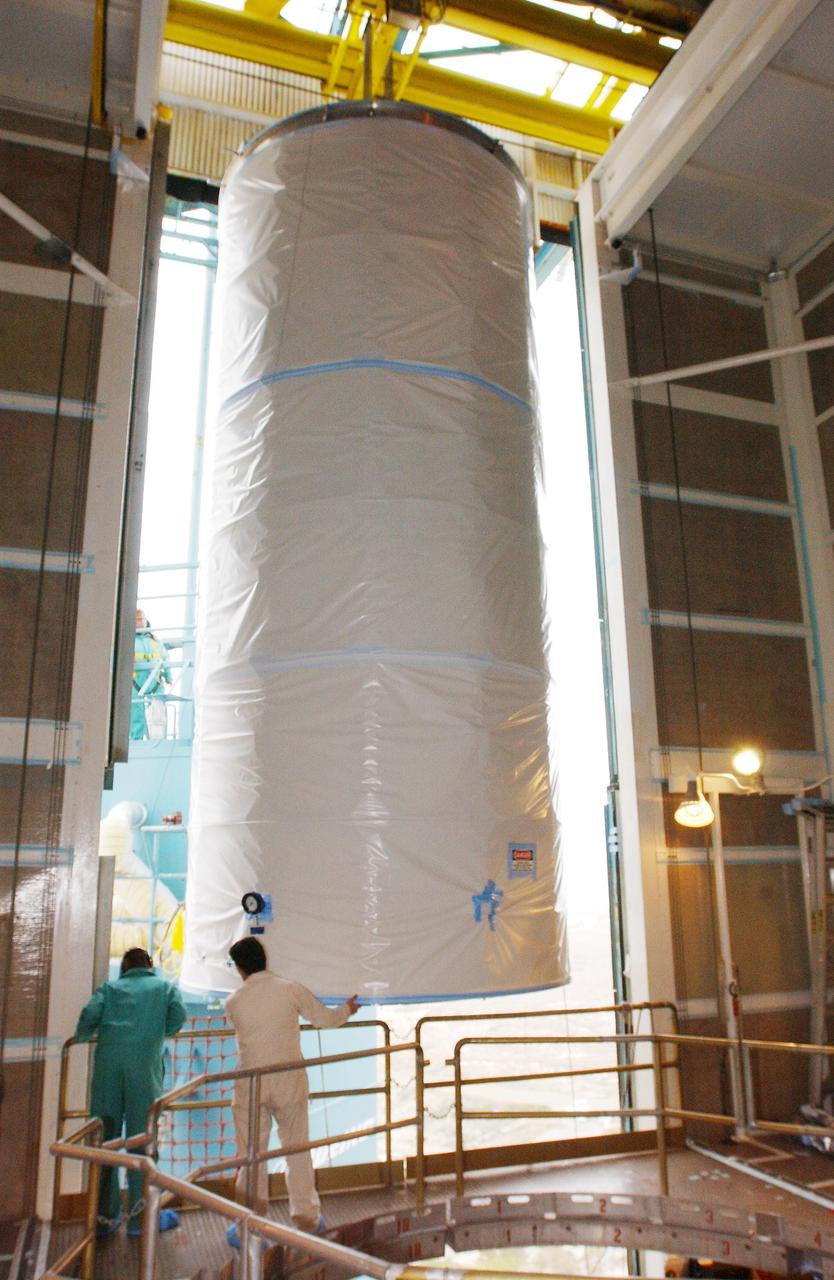
KENNEDY SPACE CENTER, FLA. - At Space Launch Complex 2 on North Vandenberg Air Force Base, Calif., the Aura spacecraft arrives at the top of the mobile service tower, or gantry. It will be moved and then mated with the second stage of the Boeing Delta II rocket. The latest in the Earth Observing System (EOS) series, Aura is scheduled to launch July 10. Aura’s four state-of-the-art instruments will study the dynamics of chemistry occurring in the atmosphere. The spacecraft will provide data to help scientists better understand the Earth’s ozone, air quality and climate change.
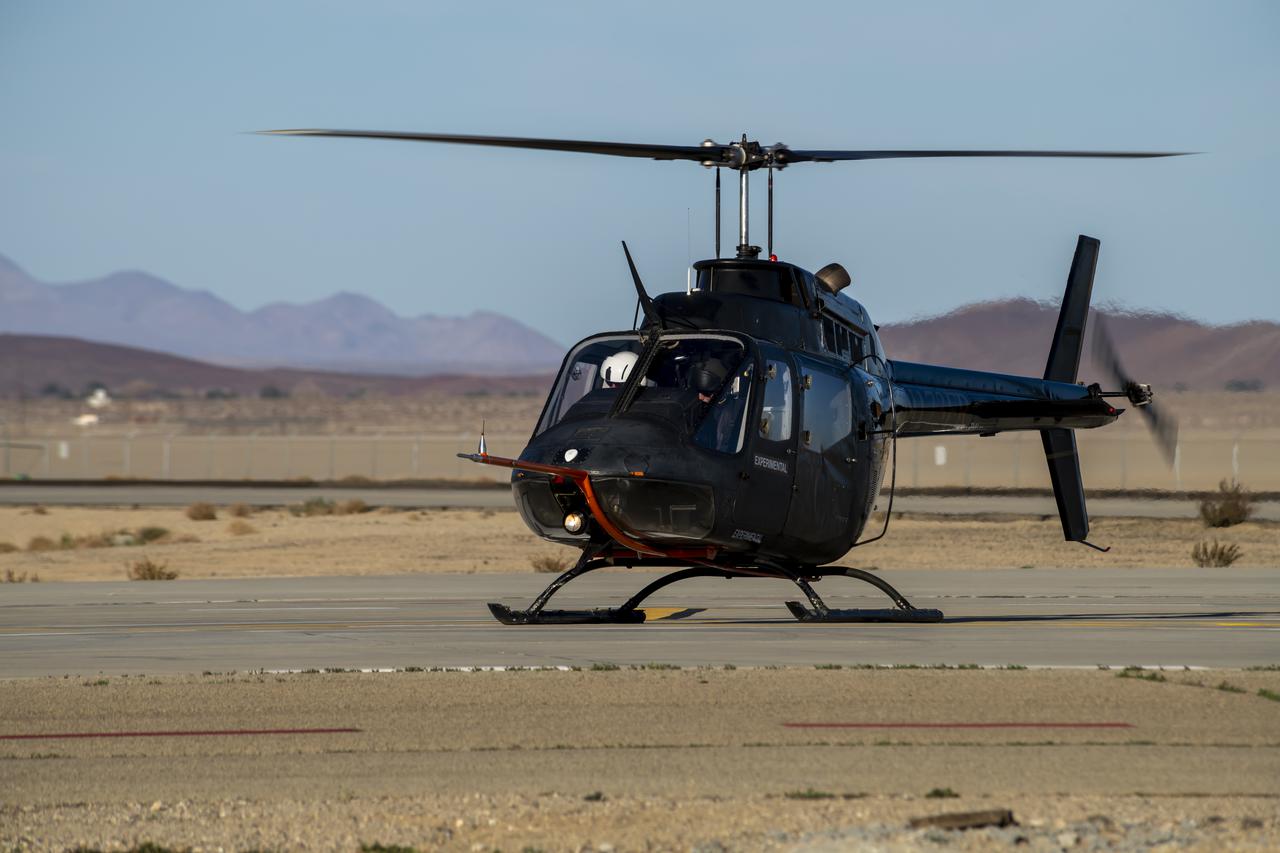
NASA’s Advanced Air Mobility National Campaign used this Bell OH-58 helicopter owned by Flight Research Inc. to study urban air mobility vehicle performance, flying qualities, and airspace requirements. The helicopter performed test maneuvers at NASA’s Armstrong Flight Research Center in Edwards, California, during two sessions Nov, 8-10, and Dec. 6, and 8-10.
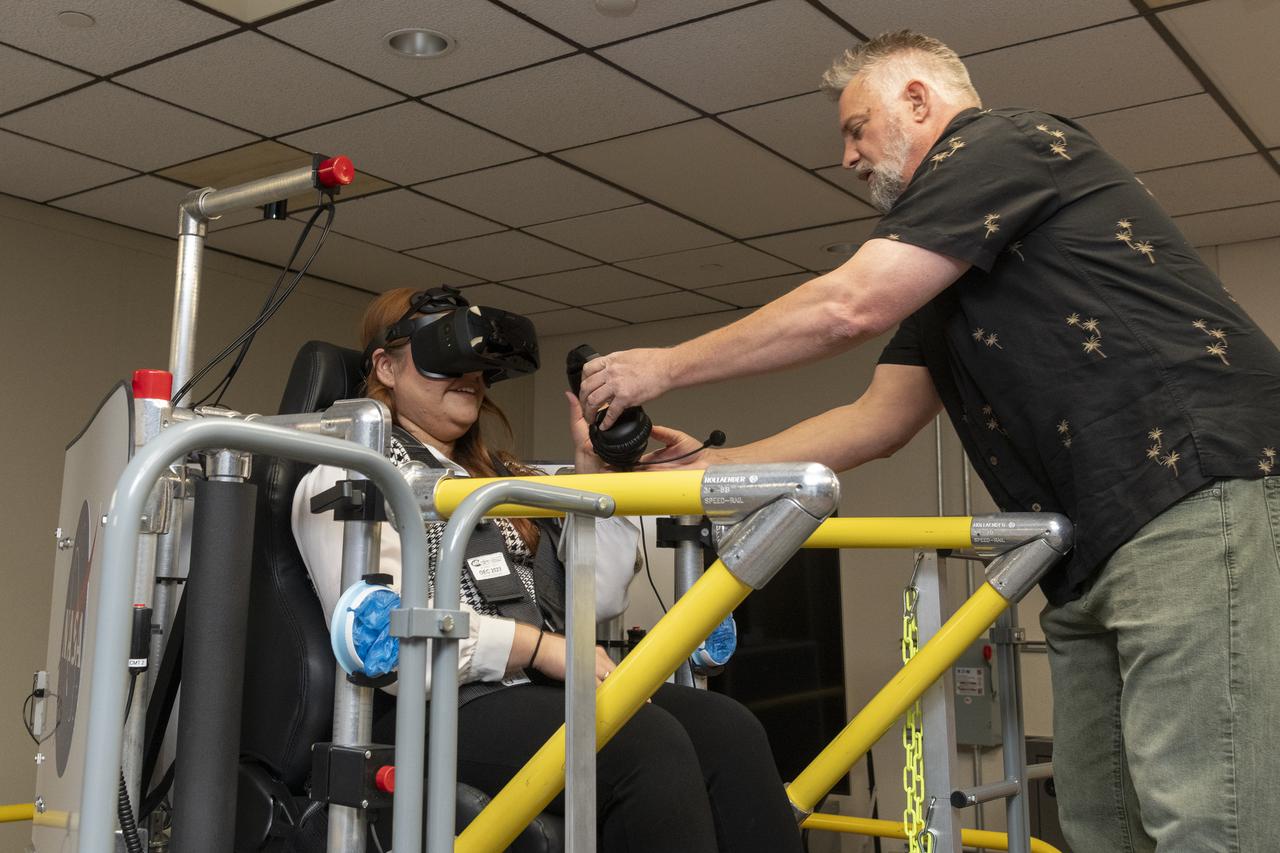
NASA employee Naomi Torres sits inside the air taxi passenger ride quality simulator at NASA’s Armstrong Flight Research Center in Edwards, California, as Curt Hanson, senior flight controls researcher for the Revolutionary Vertical Lift Technology project, sets up her equipment on Oct. 23, 2024. Studies continue in this lab to better understand passenger comfort for future air taxi rides.
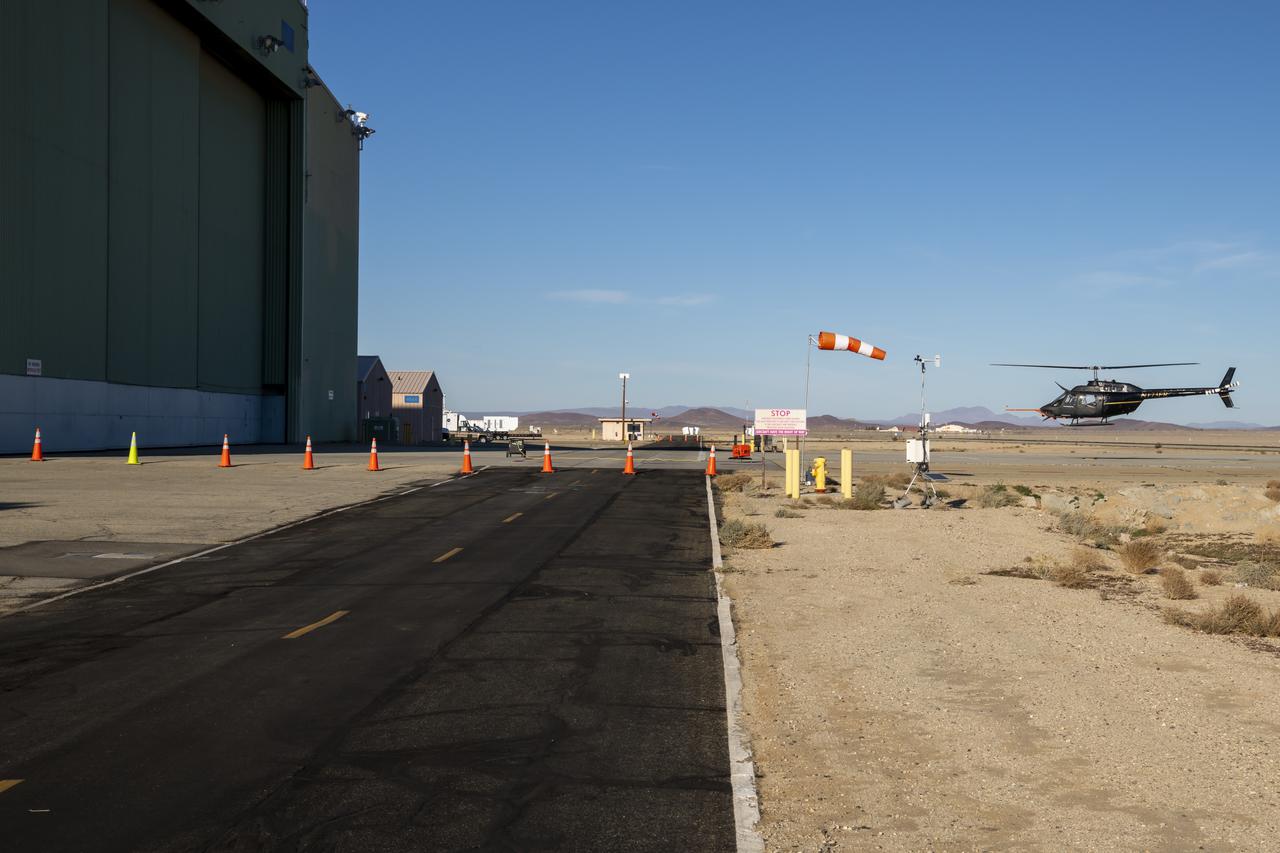
NASA's Advanced Air Mobility National Campaign conducts testing to study controllability characteristics when operating near buildings during heavy wind conditions at NASA's Armstrong Flight Research Center in Edwards, California, Dec. 6 and 8-10. The Bell OH-58 Kiowa helicopter provided by Flight Research Inc. was used to study urban air mobility vehicle performance and flying qualities requirements.
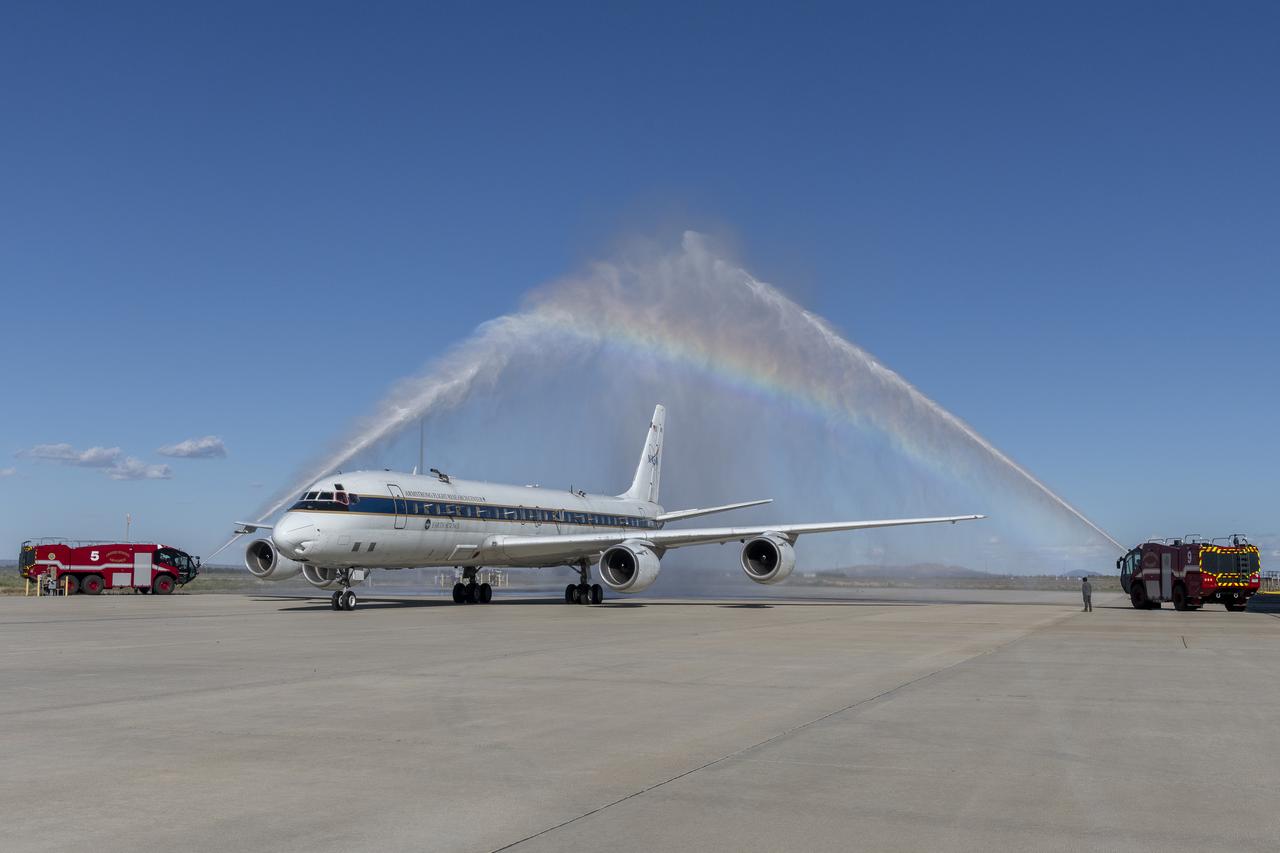
The DC-8 aircraft returned to NASA’s Armstrong Flight Research Center Building 703 in Palmdale, California, on April 1, 2024, after completing its final mission supporting Airborne and Satellite Investigation of Asian Air Quality (ASIA-AQ). The aircraft and crew were welcomed back with a celebratory water salute by the U.S. Air Force Plant 42 Fire Department.
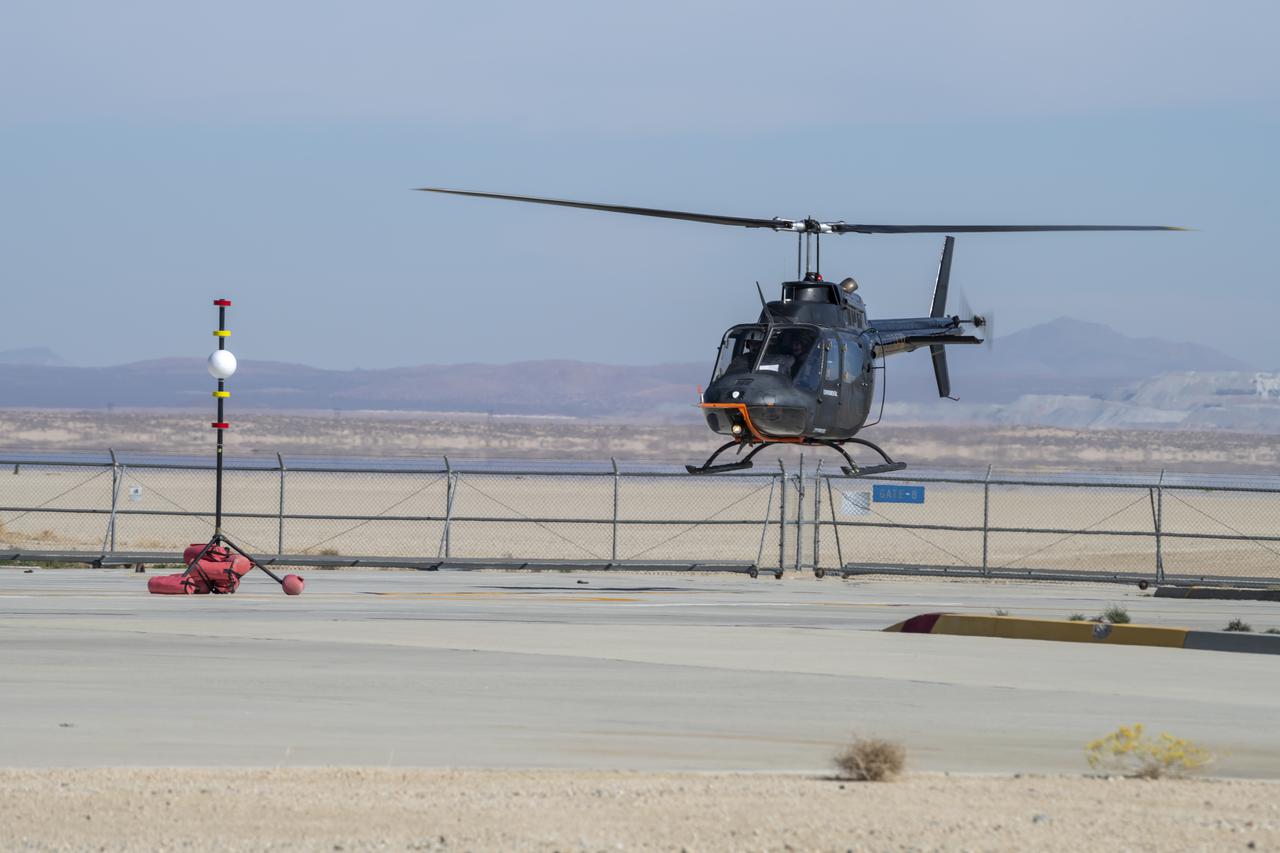
Flight Research Inc.'s Bell OH-58 Kiowa helicopter flies around a visual aid, known as a tetherball, created to serve as the pilot's visual height reference while performing handling qualities testing at NASA's Armstrong Flight Research Center in Edwards, California, Nov. 8-10. NASA's Advanced Air Mobility National Campaign used the helicopter to study urban air mobility vehicle and airspace requirements.
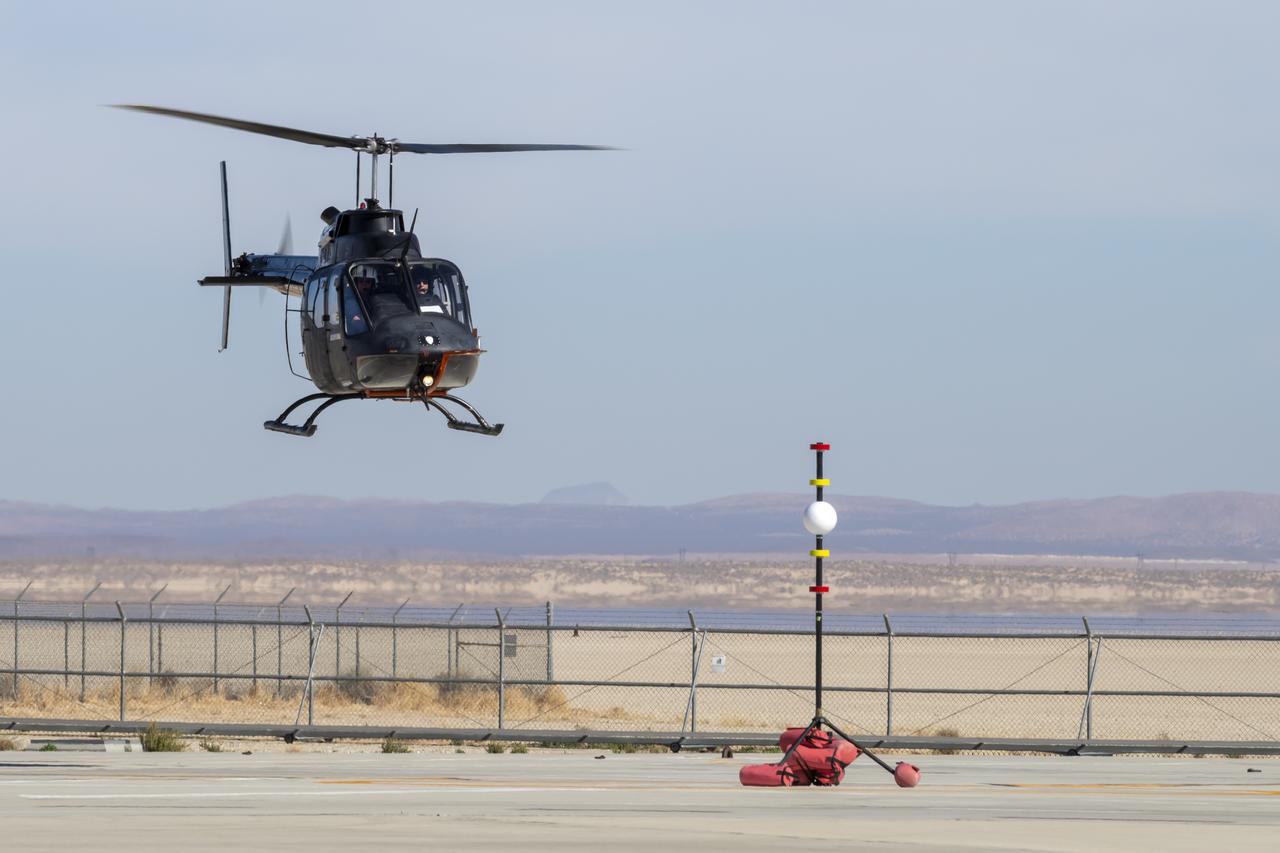
NASA's Advanced Air Mobility National Campaign created a visual aid, known as a tetherball, to serve as the helicopter pilot's height reference while flying different task elements at NASA's Armstrong Flight Research Center in Edwards, California, Nov. 8-10. The Bell OH-58 Kiowa helicopter provided by Flight Research Inc. was used to study urban air mobility vehicle performance and flying qualities requirements.
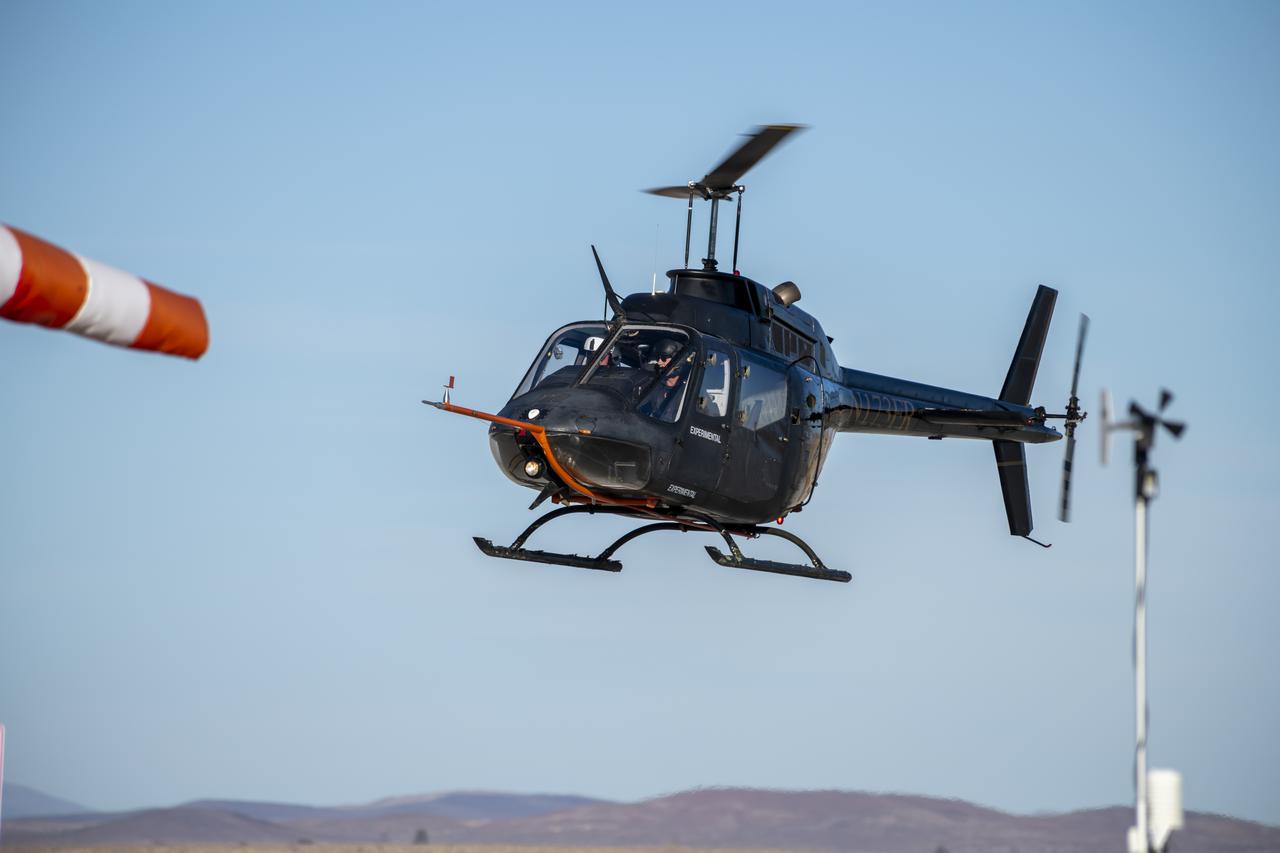
Flight Research Inc.'s Bell OH-58 helicopter performs different test maneuvers at NASA's Armstrong Flight Research Center in Edwards, California, Nov. 8-10, and Dec. 6, and 8-10. NASA's Advanced Air Mobility National Campaign used the helicopter to study urban air mobility vehicle performance and flying qualities requirements.
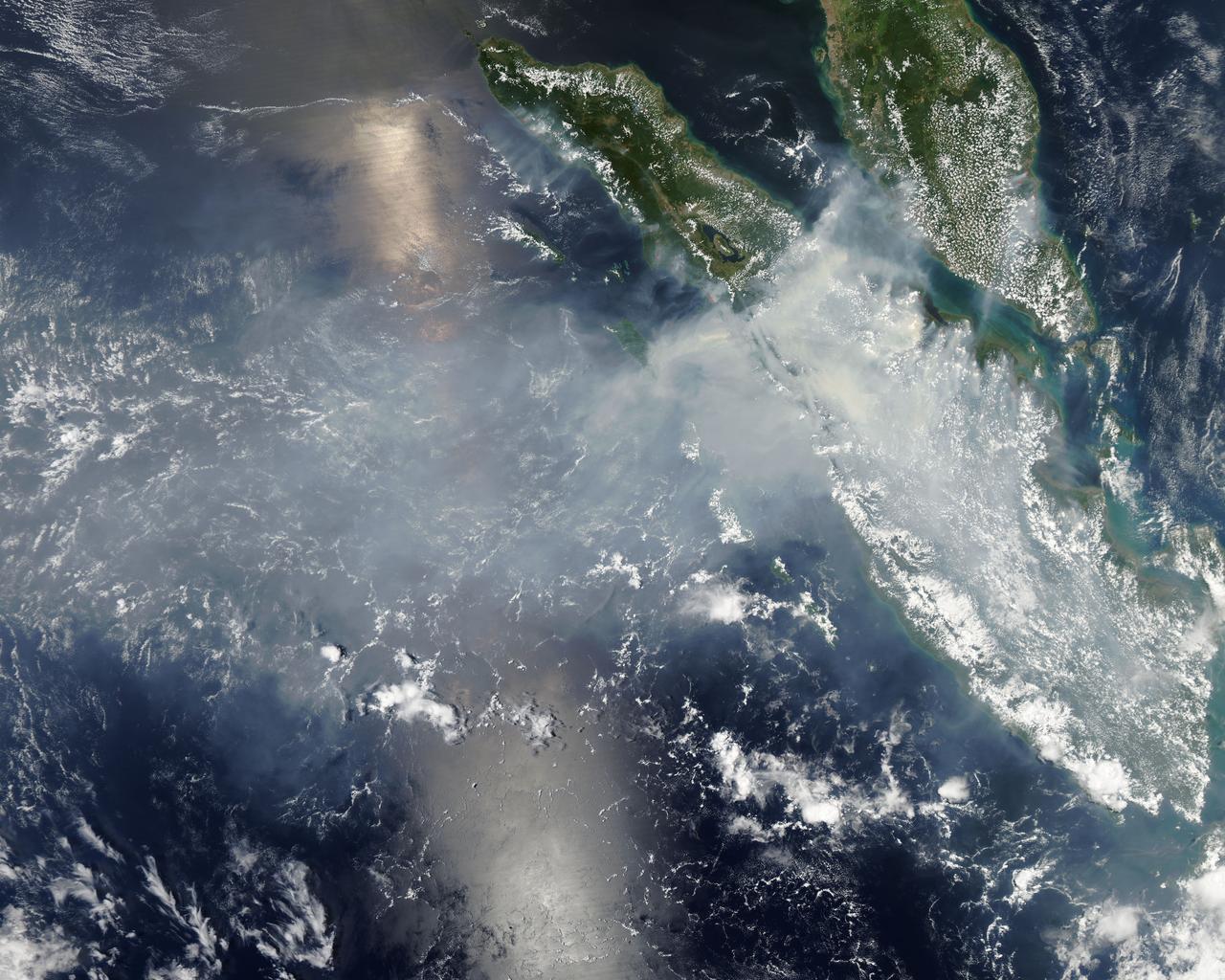
Fires burning in Sumatra continued to pour smoke over the region in mid-March, 2014, bringing air quality to dangerous levels. The Moderate Resolution Imaging Spectroradiometer (MODIS) aboard NASA’s Aqua satellite captured this true-color image of the smoke and haze across the region on March 12. According to the Jakarta Post, on March 12 the Sumatra Environmental Laboratory reported that 10 of 12 spots in Riau had an air quality of index above 300 on the Pollutant Standards Index (PSI), which is considered hazardous. Hazardous air quality had been recorded in some of the locations for 11 consecutive days. The province of Riau is located in the central eastern coast of Sumatra and, in this image, is hidden under thick bands of light gray smoke. Intense fires, reported as deliberately set to clear land, were burning in the Giam Siak Kecil-Bukit Batu biosphere reserve. This reserve contains over 700,000 hectares of sensitive peat forest that sustains a wide range of plant and animal species, including the Sumatra tiger, elephant, tapir and sun bear. With visibility as low as 500 m (1640 ft), 58 flights were cancelled in Pekanbaru, the capital of Riau province, on March 11. Schools were closed across the region, with 43,000 students affected in Payakumbuh, West Sumatra. On March 14, Selangor, Malaysia closed 203 schools, affecting 211,700 pupils, until the air quality improved. On that same day, according to Riau Health Agency, more than 55,000 residents in the province were suffering from haze-related illnesses, including acute respiratory infections, pneumonia and skin and eye irritation. Poor air quality not only affected transportation, human health and the ecosystem, but has had significant economic impacts. On March 17, Reuters reported that the poor air quality had forced Chevron, the country’s biggest oil producer, to close hundreds of its wells. As a result, Indonesia’s crude oil output dropped to 790,000 barrels per day (bpd) – significantly lower than the 870,000 bpd target. Although slash-and-burn techniques, which use fire to clear land, is illegal in Indonesia, the practice is still widespread, with approximately 99% of fires in Sumatra considered to be intentionally set. This year’s early agricultural fires began in February in Riau Province, home to palm-oil and pulpwood plantations. The emergency has prompted strong government response, including a shoot-on-sight order for any suspects involved in land burning activities that resisted arrest. According to the Jakarta Post, police have named as many as 60 suspected-fire starters in Riau. Credit: NASA/GSFC/Jeff Schmaltz/MODIS Land Rapid Response Team <b><a href="http://www.nasa.gov/audience/formedia/features/MP_Photo_Guidelines.html" rel="nofollow">NASA image use policy.</a></b> <b><a href="http://www.nasa.gov/centers/goddard/home/index.html" rel="nofollow">NASA Goddard Space Flight Center</a></b> enables NASA’s mission through four scientific endeavors: Earth Science, Heliophysics, Solar System Exploration, and Astrophysics. Goddard plays a leading role in NASA’s accomplishments by contributing compelling scientific knowledge to advance the Agency’s mission. <b>Follow us on <a href="http://twitter.com/NASAGoddardPix" rel="nofollow">Twitter</a></b> <b>Like us on <a href="http://www.facebook.com/pages/Greenbelt-MD/NASA-Goddard/395013845897?ref=tsd" rel="nofollow">Facebook</a></b> <b>Find us on <a href="http://instagram.com/nasagoddard?vm=grid" rel="nofollow">Instagram</a></b>
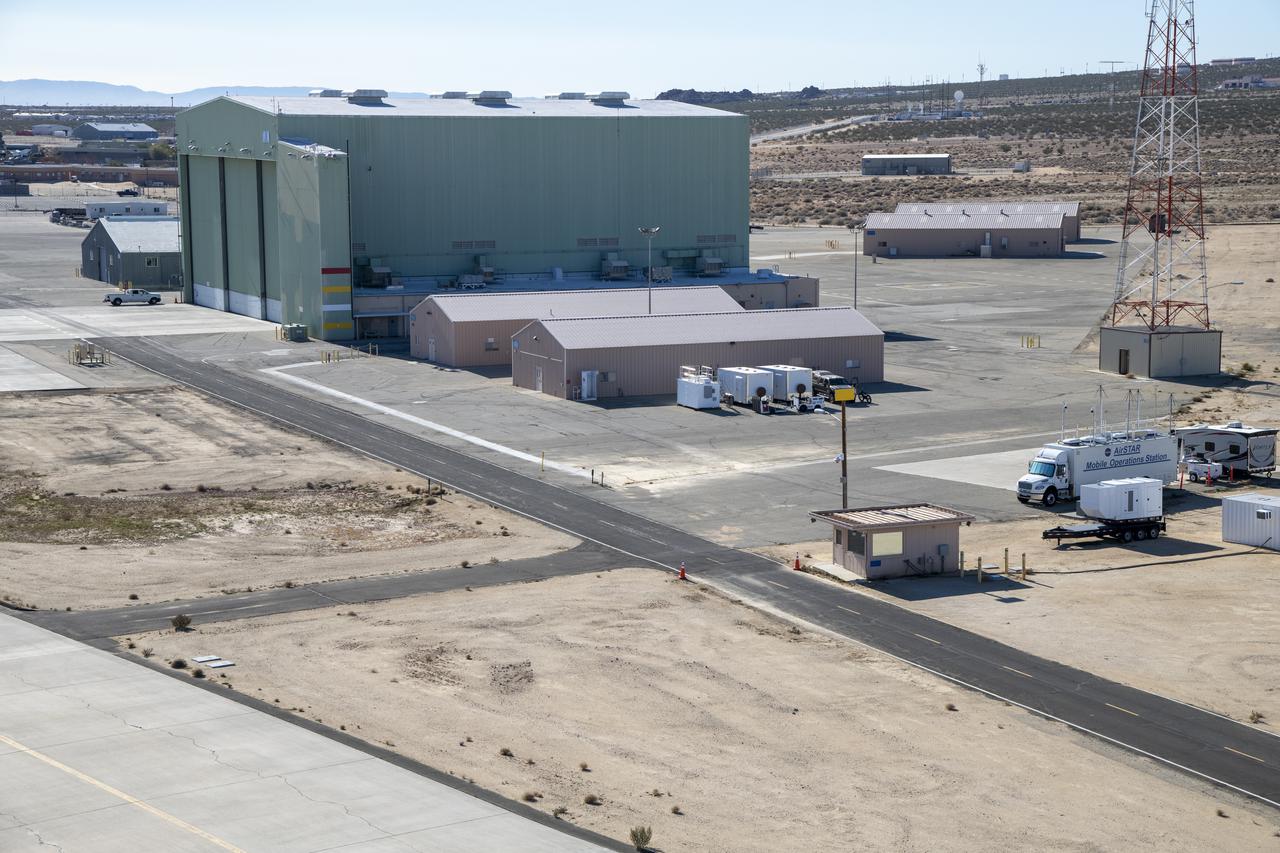
An aerial image taken by one of NASA’s photographers during recent helicopter flights shows a view of the building 4833 structure and the mobile operating facility at NASA’s Armstrong Flight Research Center in Edwards, California. NASA’s Advanced Air Mobility National Campaign uses the mobile operations facility vehicle shown in the lower right corner during test operations. The red, yellow, and white building markings applied to building 4833 are used to provide visual aids to the pilot during handling qualities testing used to research advanced air mobility flight requirements.
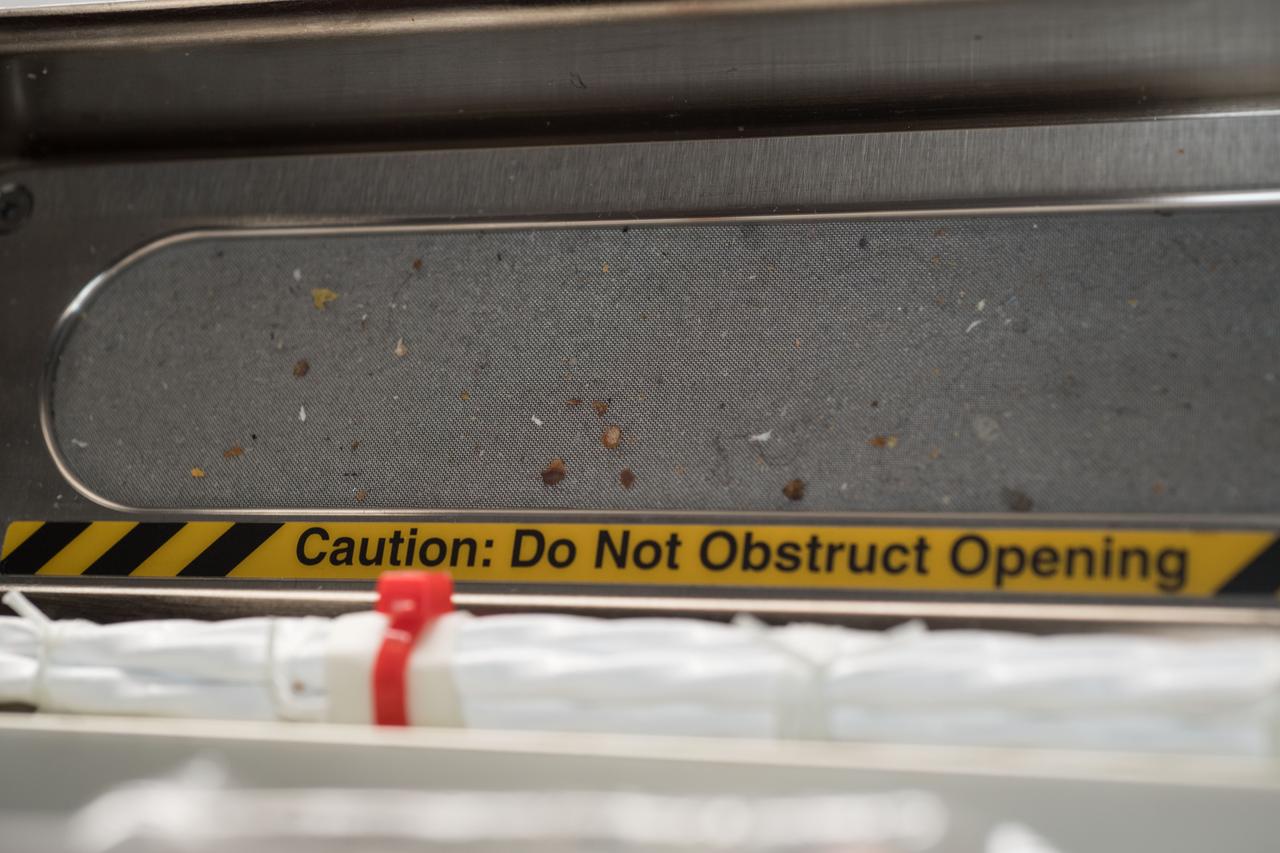
iss055e027816 (4/21/2018) --- Photo documentation of locations of where samples taken by the crew for the Divert Unwanted Space Trash (DUST) operations aboard the International Space Station (ISS). The DUST investigation collects and analyzes particulates in airborne debris from the ISS cabin. Unique aspects of the spacecraft environment, such as lack of gravity and no fresh air, influence the size, quantity, and components of airborne particulate matter, which in turn affects air quality aboard the station. The data also provides baseline information for future spacecraft particle detector design, and the debris can be used for realistic testing of possible particulate monitors for future long-duration missions.
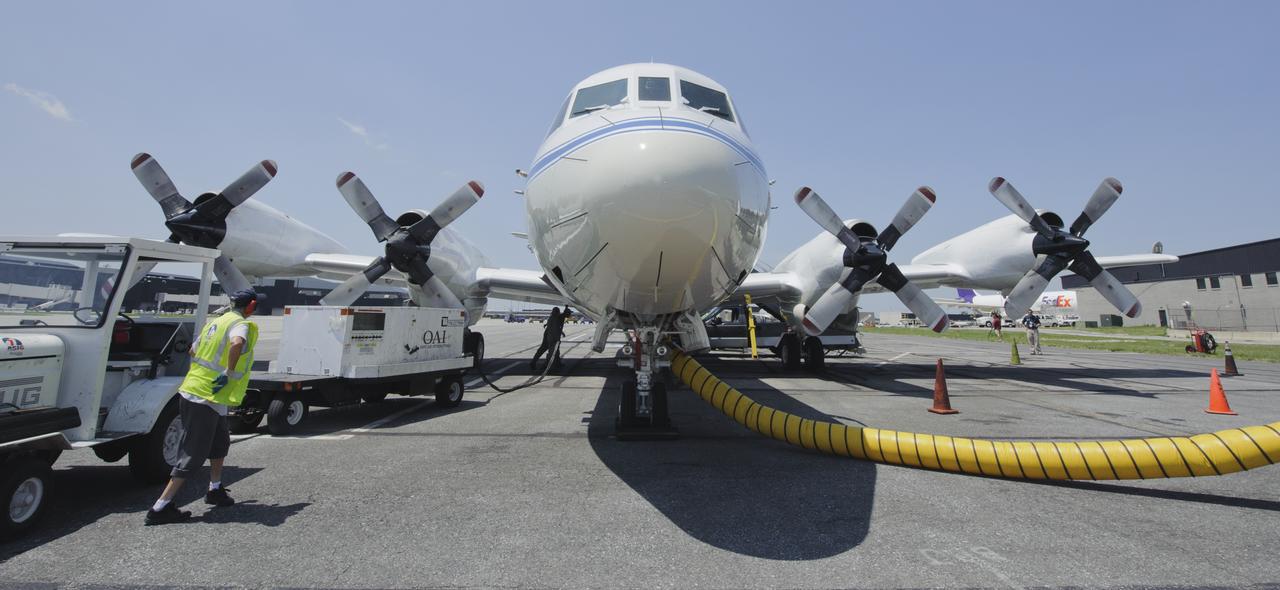
A 117-foot P-3B NASA research aircraft is seen on the tarmac at Baltimore/Washington International Thurgood Marshall Airport, Tuesday, June 28, 2011, in Baltimore, Md. The aircraft is part of a month-long field campaign designed to improve satellite measurements of air pollution. The name of the experiment -- Deriving Information on Surface conditions from Column and Vertically Resolved Observations Relevant to Air Quality (DISCOVER -- AQ) -- is a mouthful, but its purpose is simple. Come July, the aircraft will be flying spirals over six ground stations in Maryland. Photo Credit: (NASA/Paul E. Alers)
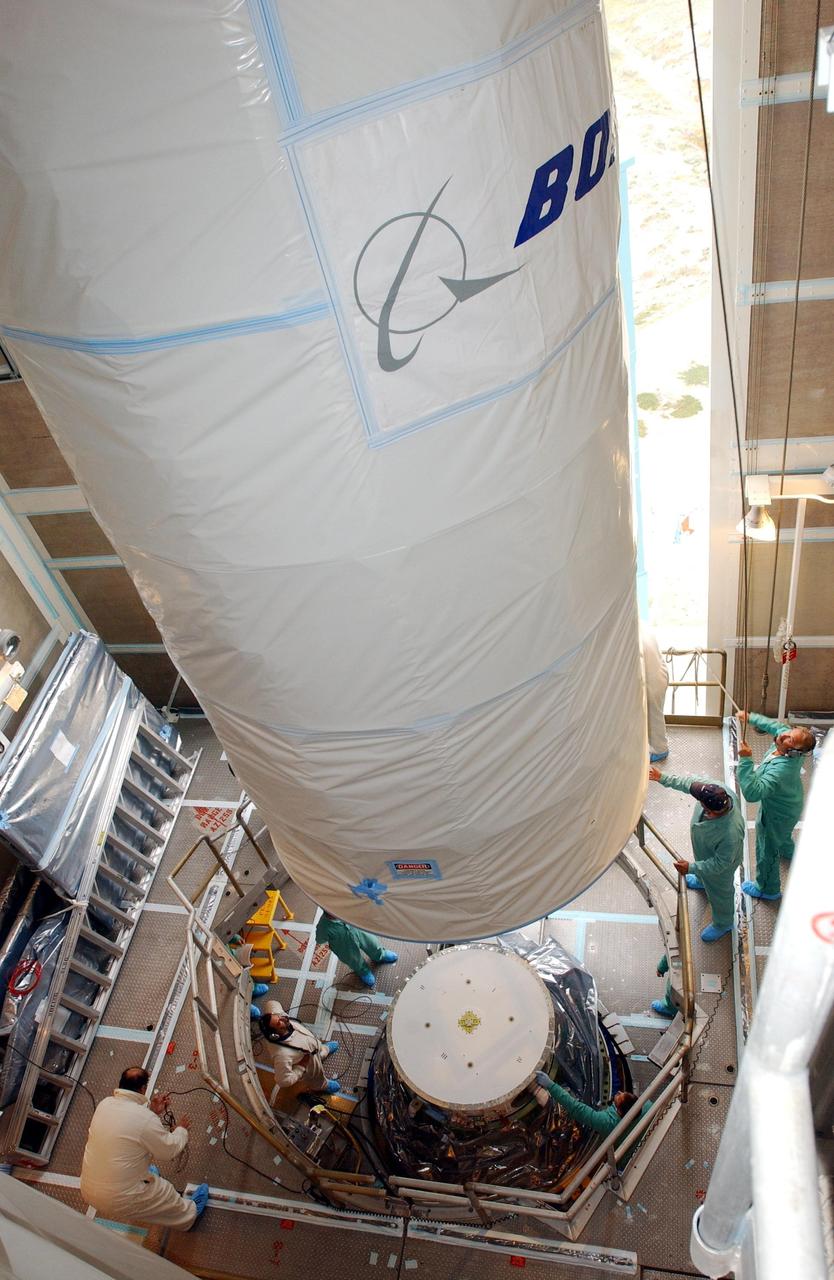
KENNEDY SPACE CENTER, FLA. - Inside the mobile service tower, or gantry, at Space Launch Complex 2 on North Vandenberg Air Force Base, Calif., the Aura spacecraft is maneuvered into position over the second stage of the Boeing Delta II rocket. After it is mated with the second stage, the fairing will be installed. The latest in the Earth Observing System (EOS) series, Aura is scheduled to launch July 10. Aura’s four state-of-the-art instruments will study the dynamics of chemistry occurring in the atmosphere. The spacecraft will provide data to help scientists better understand the Earth’s ozone, air quality and climate change.
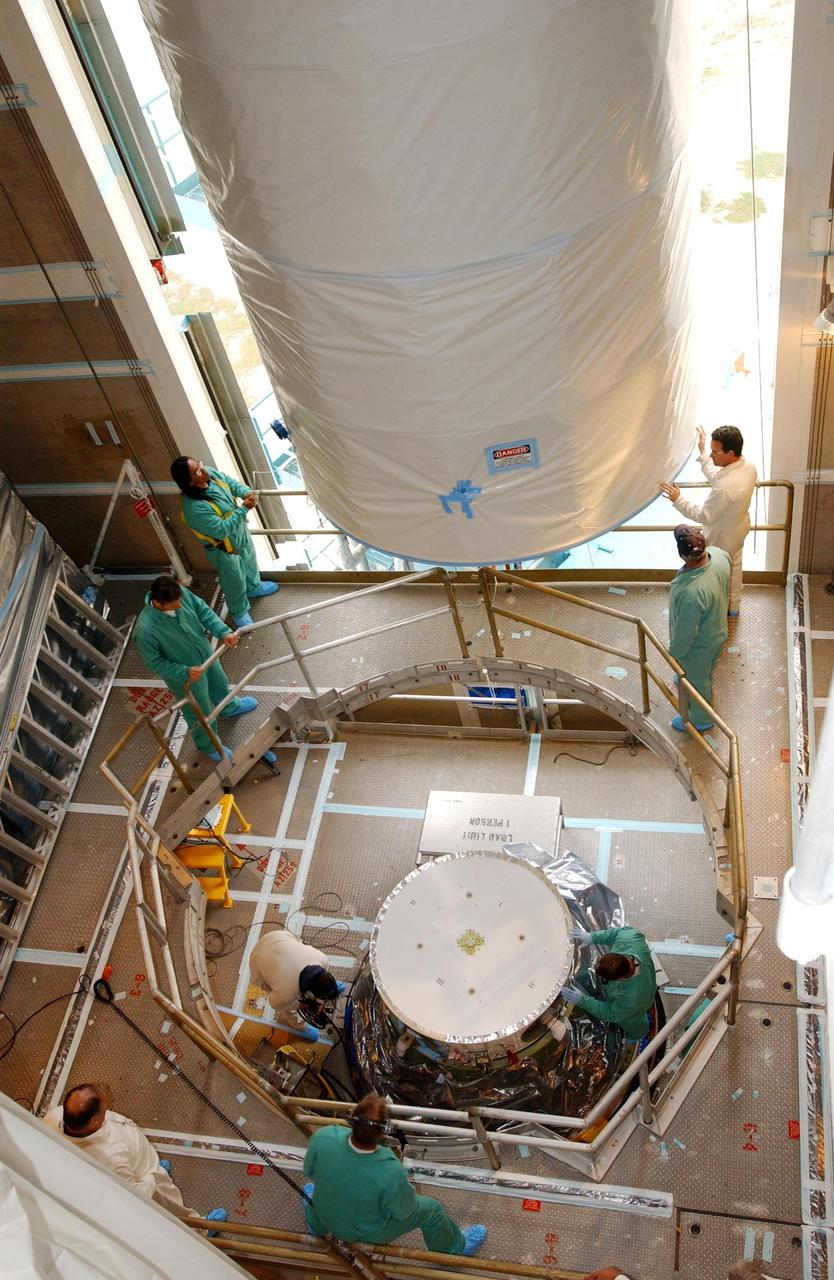
KENNEDY SPACE CENTER, FLA. - Inside the mobile service tower, or gantry, at Space Launch Complex 2 on North Vandenberg Air Force Base, Calif., workers help guide the Aura spacecraft toward the second stage of the Boeing Delta II rocket. After mating with the second stage, the fairing will be installed. The latest in the Earth Observing System (EOS) series, Aura is scheduled to launch July 10. Aura’s four state-of-the-art instruments will study the dynamics of chemistry occurring in the atmosphere. The spacecraft will provide data to help scientists better understand the Earth’s ozone, air quality and climate change.
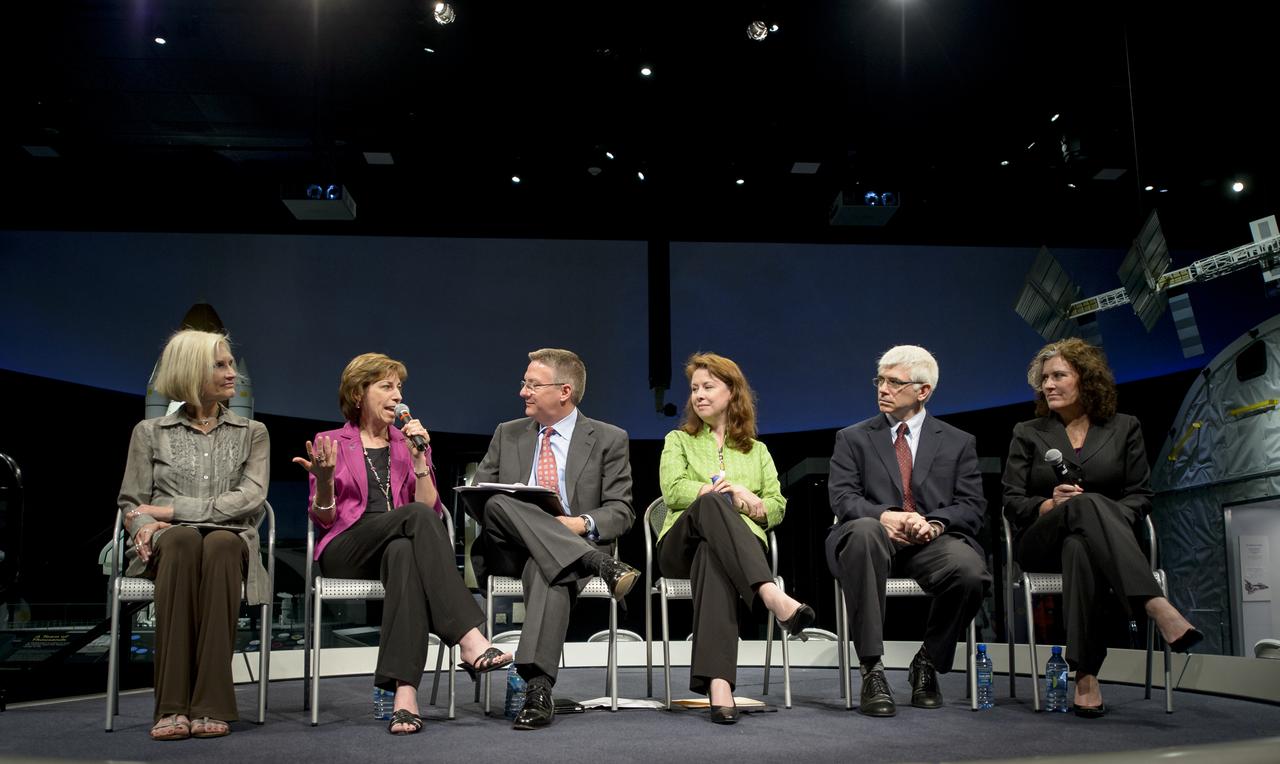
Panel discussion participants, from left, Linda Billings, research professor, Media and Public Affairs, The George Washington University, Ellen Ochoa, director, NASA Johnson Space Center, Tom Costello, NBC News and moderator for the event, Margaret Weitekamp, space history curator, National Air and Space Museum, Dan Vergano, science writer for USA Today, and Rene McCormick, director of standards and quality, National Math and Science Initiative, are seen during a program titled "Sally Ride: How Her Historic Space Mission Opened Doors for Women in Science" held on Friday, May 17, 2013 at the National Air and Space Museum in Washington. Photo Credit: (NASA/Bill Ingalls)
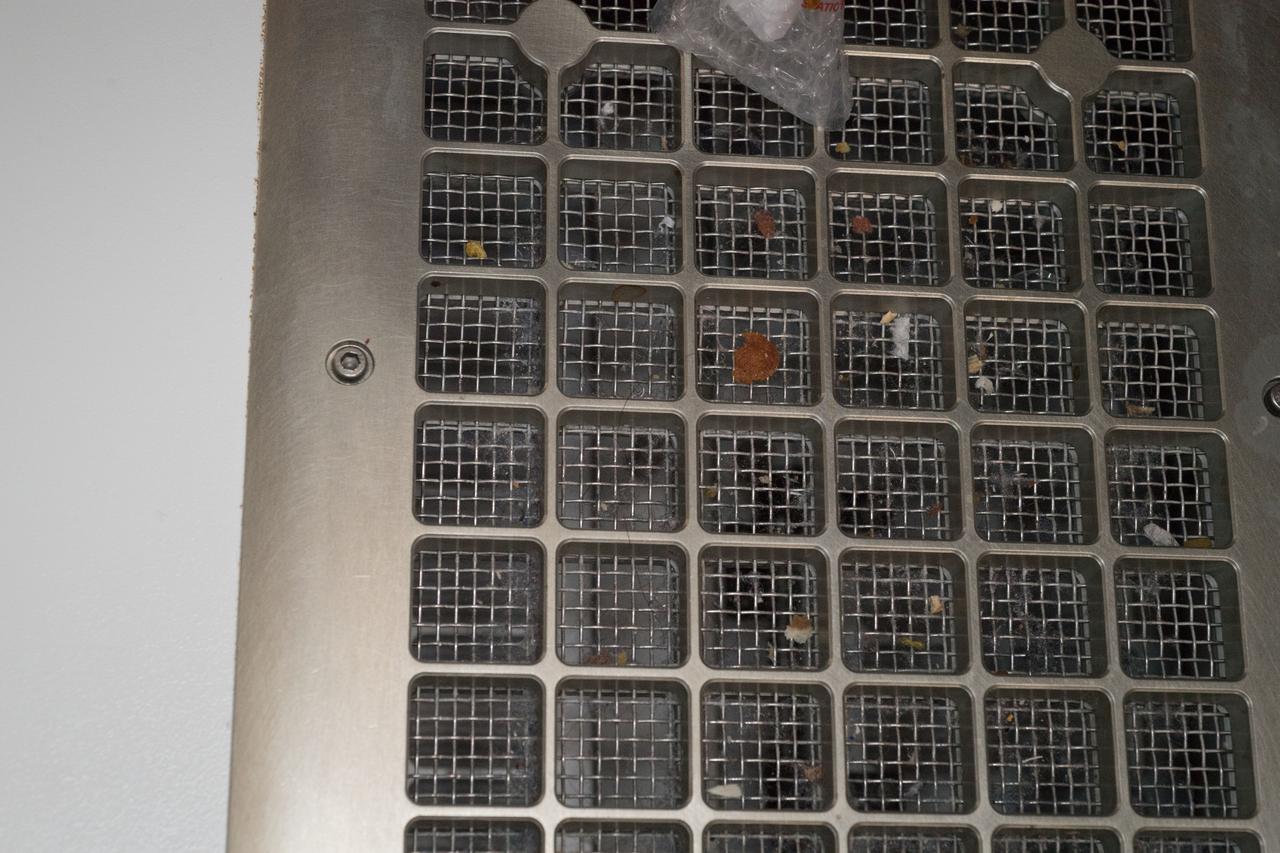
iss055e035971 (4/28/2018) --- Photo documentation of locations of where samples taken by the crew for the Divert Unwanted Space Trash (DUST) operations aboard the International Space Station (ISS). The DUST investigation collects and analyzes particulates in airborne debris from the ISS cabin. Unique aspects of the spacecraft environment, such as lack of gravity and no fresh air, influence the size, quantity, and components of airborne particulate matter, which in turn affects air quality aboard the station. The data also provides baseline information for future spacecraft particle detector design, and the debris can be used for realistic testing of possible particulate monitors for future long-duration missions.
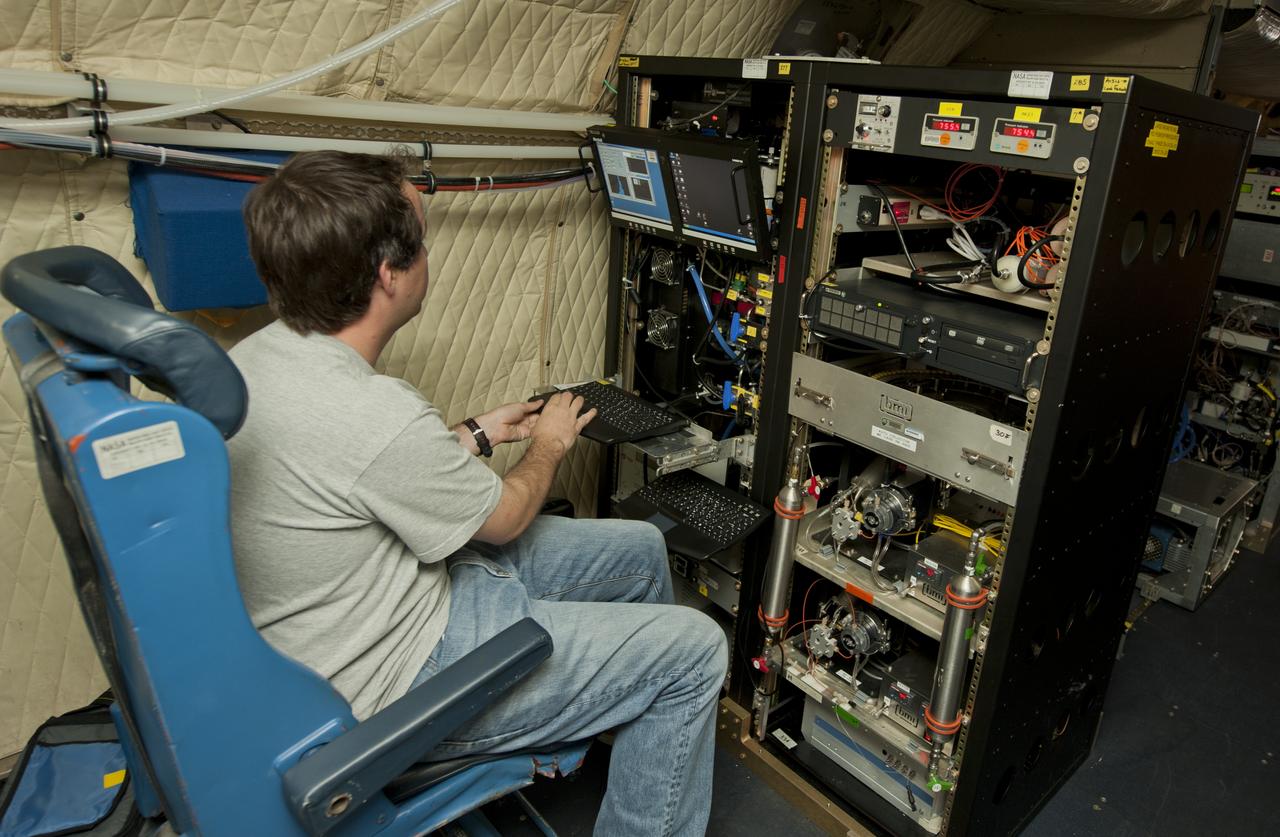
An unidentified researcher works aboard the P-3B NASA research aircraft at Baltimore/Washington International Thurgood Marshall Airport, Tuesday, June 28, 2011, in Baltimore, Md. The aircraft is part of a month-long field campaign designed to improve satellite measurements of air pollution. The name of the experiment -- Deriving Information on Surface conditions from Column and Vertically Resolved Observations Relevant to Air Quality (DISCOVER -- AQ) -- is a mouthful, but its purpose is simple. Come July, the aircraft will be flying spirals over six ground stations in Maryland. Photo Credit: (NASA/Paul E. Alers)
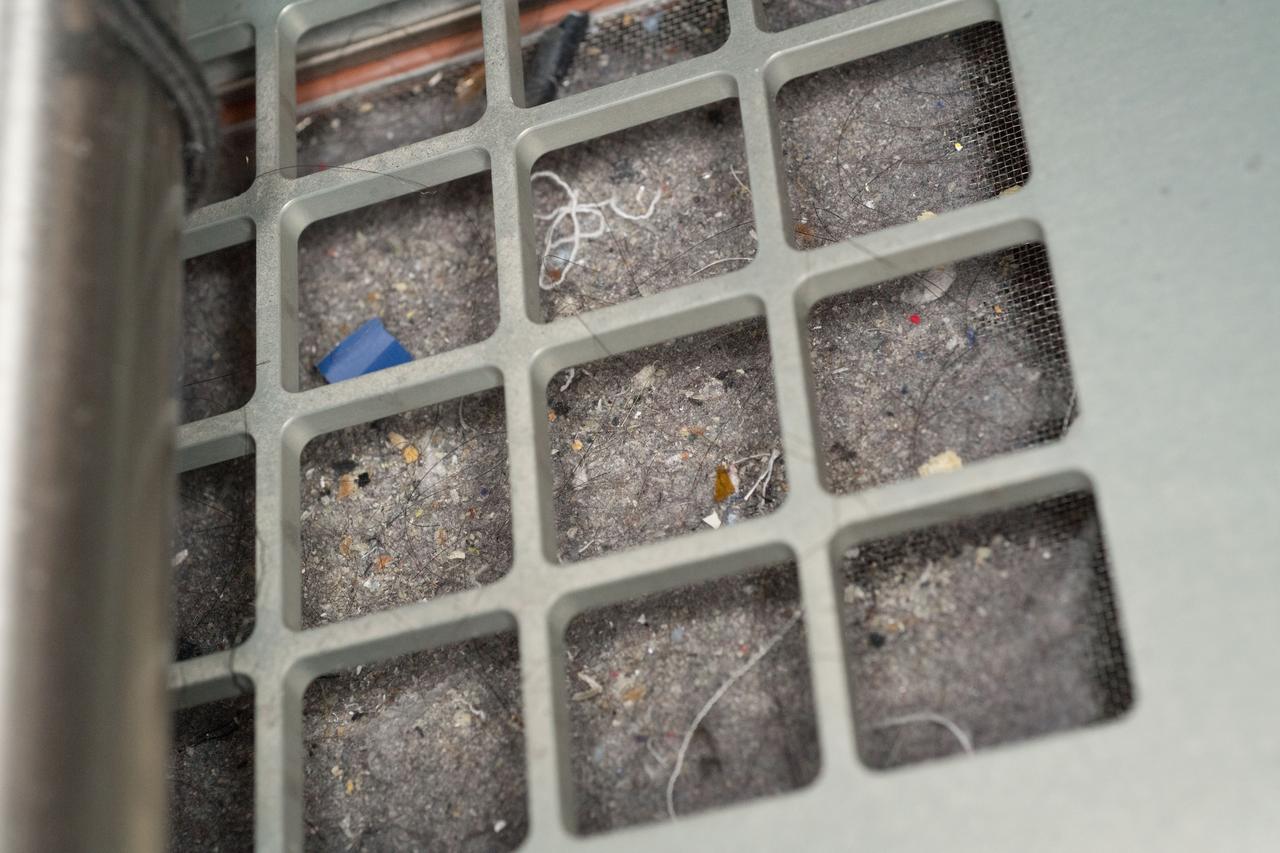
iss055e035989 (4/28/2018) --- Photo documentation of locations of where samples taken by the crew for the Divert Unwanted Space Trash (DUST) operations aboard the International Space Station (ISS). The DUST investigation collects and analyzes particulates in airborne debris from the ISS cabin. Unique aspects of the spacecraft environment, such as lack of gravity and no fresh air, influence the size, quantity, and components of airborne particulate matter, which in turn affects air quality aboard the station. The data also provides baseline information for future spacecraft particle detector design, and the debris can be used for realistic testing of possible particulate monitors for future long-duration missions.
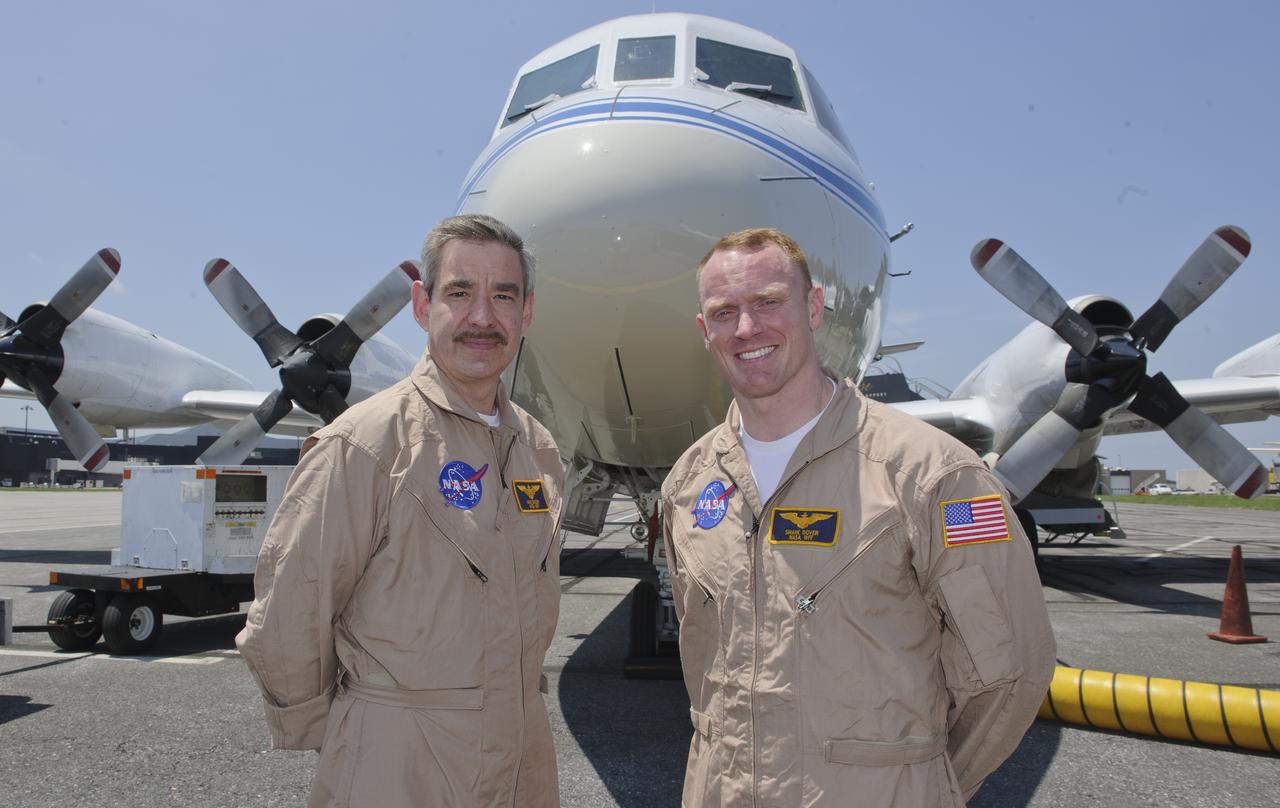
WFF Pilots Mike Singer, left, and Shane Dover stand in front of the 117-foot P-3B NASA research aircraft on the tarmac at Baltimore/Washington International Thurgood Marshall Airport, Tuesday, June 28, 2011, in Baltimore, Md. The aircraft is part of a month-long field campaign designed to improve satellite measurements of air pollution. The name of the experiment -- Deriving Information on Surface conditions from Column and Vertically Resolved Observations Relevant to Air Quality (DISCOVER -- AQ) -- is a mouthful, but its purpose is simple. Come July, the aircraft will be flying spirals over six ground stations in Maryland. Photo Credit: (NASA/Paul E. Alers)
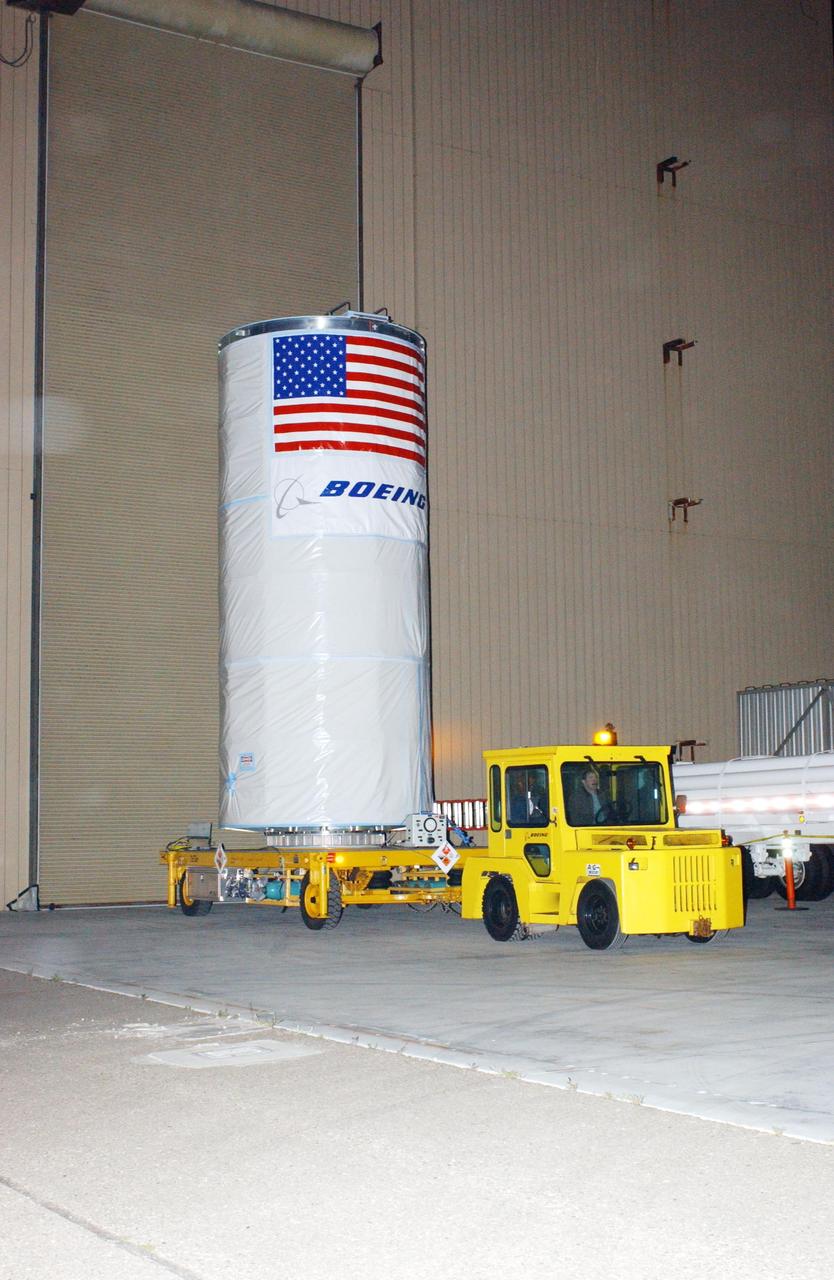
KENNEDY SPACE CENTER, FLA. - In the predawn hours, the Aura spacecraft is being transported from the Astrotech payload processing facility located a few miles south of Space Launch Complex 2 on North Vandenberg Air Force Base, Calif. The latest in the Earth Observing System (EOS) series, Aura is scheduled to launch July 10 aboard a Boeing Delta II rocket. Aura’s four state-of-the-art instruments will study the dynamics of chemistry occurring in the atmosphere. The spacecraft will provide data to help scientists better understand the Earth’s ozone, air quality and climate change.
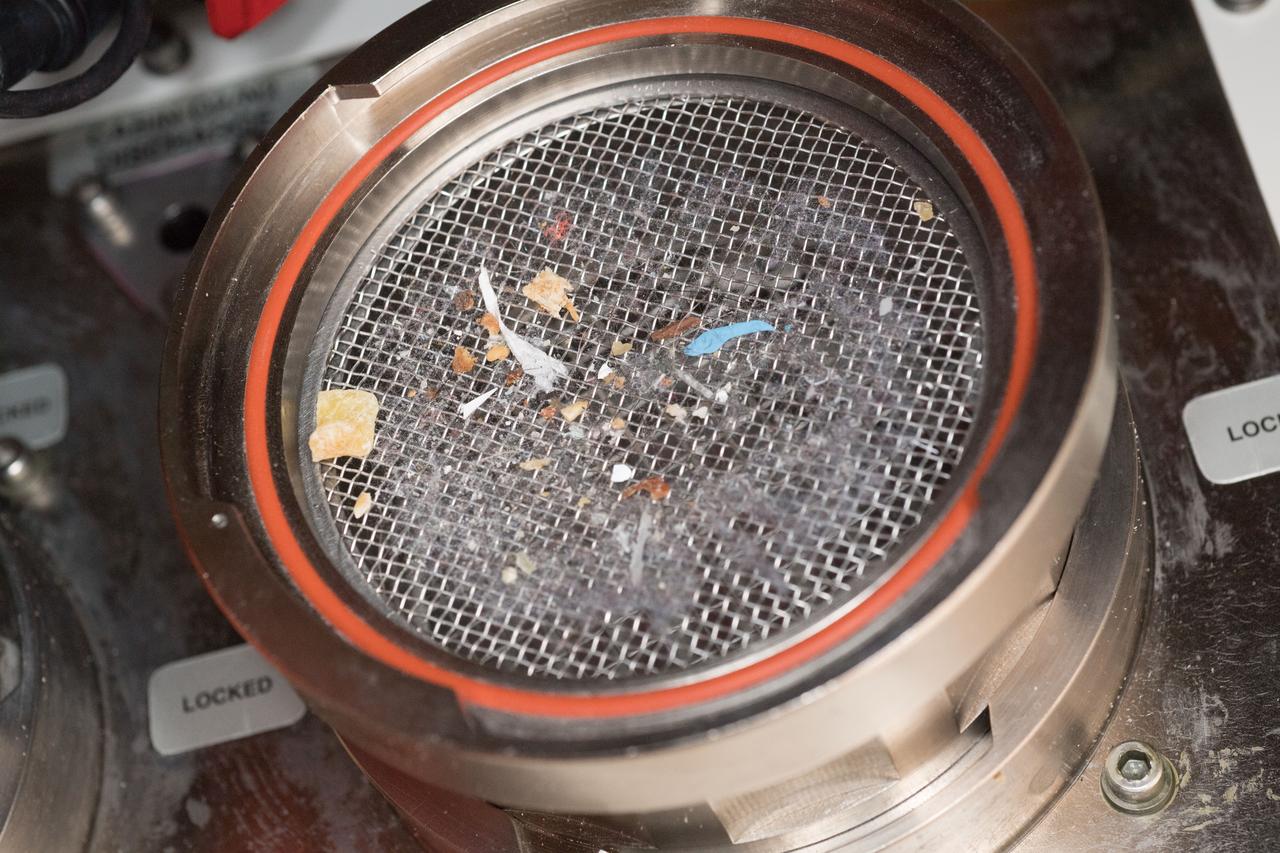
iss055e035968 (4/28/2018) --- Photo documentation of locations of where samples taken by the crew for the Divert Unwanted Space Trash (DUST) operations aboard the International Space Station (ISS). The DUST investigation collects and analyzes particulates in airborne debris from the ISS cabin. Unique aspects of the spacecraft environment, such as lack of gravity and no fresh air, influence the size, quantity, and components of airborne particulate matter, which in turn affects air quality aboard the station. The data also provides baseline information for future spacecraft particle detector design, and the debris can be used for realistic testing of possible particulate monitors for future long-duration missions.

Pilots Shane Dover, left, and Mike Singer are seen on the flight deck of the P-3B NASA research aircraft at Baltimore/Washington International Thurgood Marshall Airport, Tuesday, June 28, 2011, in Baltimore, Md. The aircraft is part of a month-long field campaign designed to improve satellite measurements of air pollution. The name of the experiment -- Deriving Information on Surface conditions from Column and Vertically Resolved Observations Relevant to Air Quality (DISCOVER -- AQ) -- is a mouthful, but its purpose is simple. Come July, the aircraft will be flying spirals over six ground stations in Maryland. Photo Credit: (NASA/Paul E. Alers)
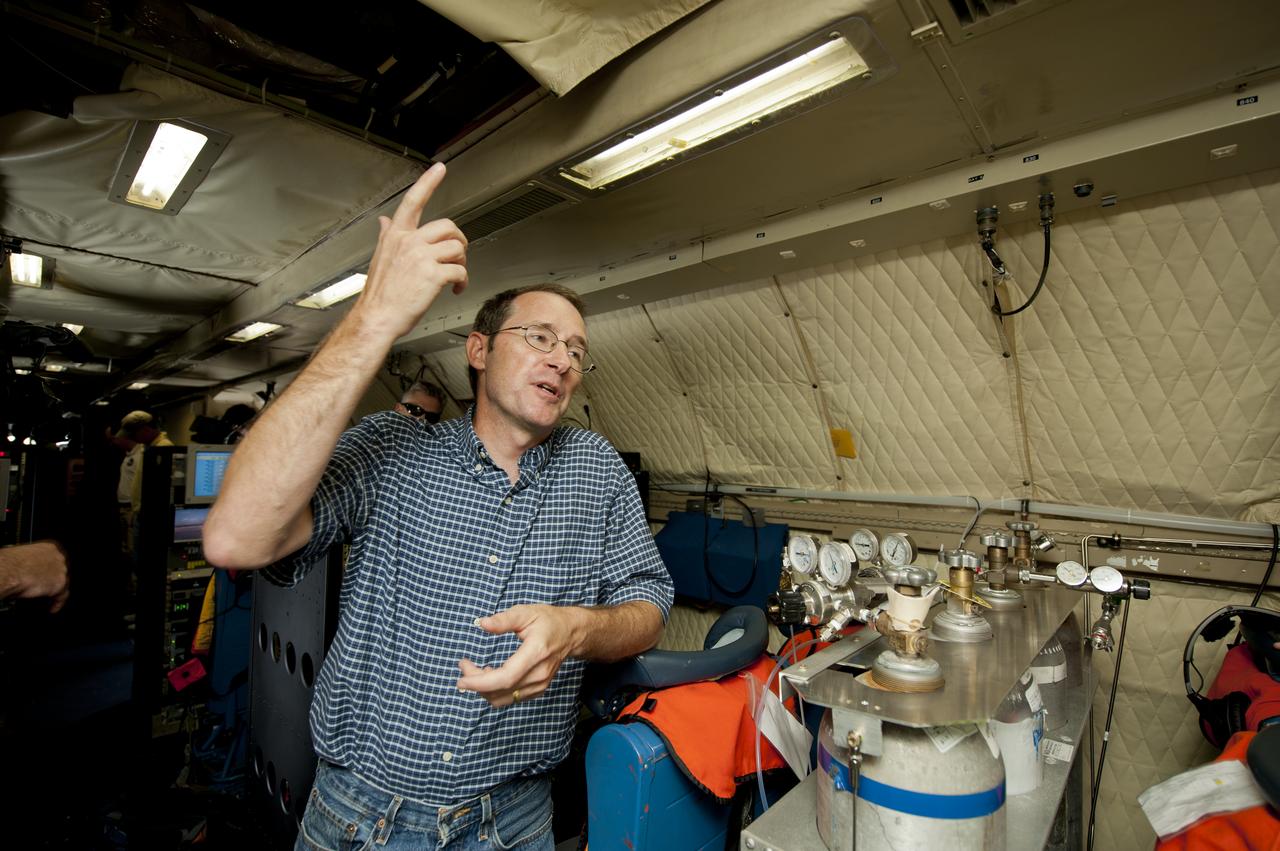
James Crawford, principal investigator and scientist based at NASA’s Langley Research Center in Hampton, Va., talks about the DISCOVER-AQ project on board the P-3B NASA research aircraft at Baltimore/Washington International Thurgood Marshall Airport, Tuesday, June 28, 2011, in Baltimore, Md. The aircraft is part of a month-long field campaign designed to improve satellite measurements of air pollution. The name of the experiment -- Deriving Information on Surface conditions from Column and Vertically Resolved Observations Relevant to Air Quality (DISCOVER -- AQ) -- is a mouthful, but its purpose is simple. Come July, the aircraft will be flying spirals over six ground stations in Maryland. Photo Credit: (NASA/Paul E. Alers)
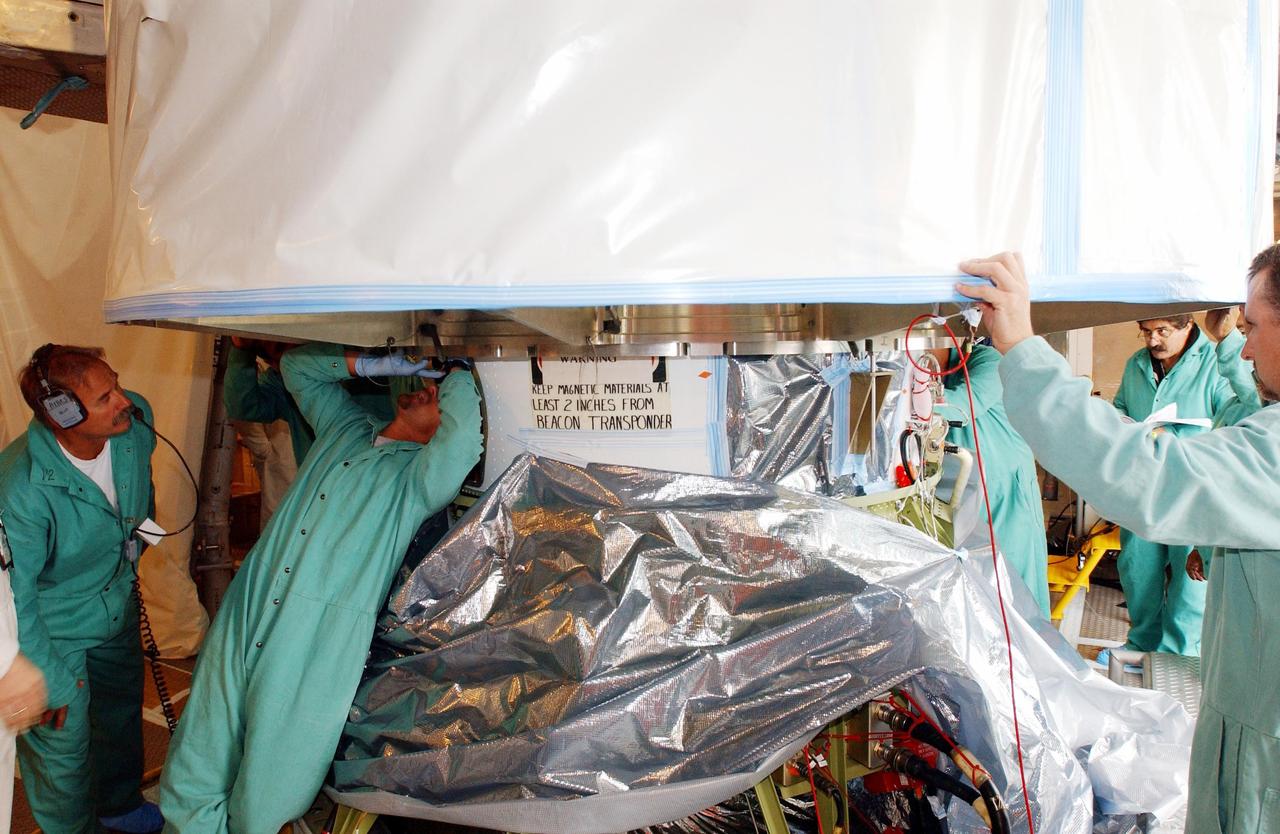
KENNEDY SPACE CENTER, FLA. - Workers on the mobile service tower, or gantry, at Space Launch Complex 2 on North Vandenberg Air Force Base, Calif., check connections as the protective cover is lifted off the Aura spacecraft. Aura will be mated to the second stage of the Boeing Delta II rocket before the fairing is installed. The latest in the Earth Observing System (EOS) series, Aura is scheduled to launch July 10. Aura’s four state-of-the-art instruments will study the dynamics of chemistry occurring in the atmosphere. The spacecraft will provide data to help scientists better understand the Earth’s ozone, air quality and climate change.
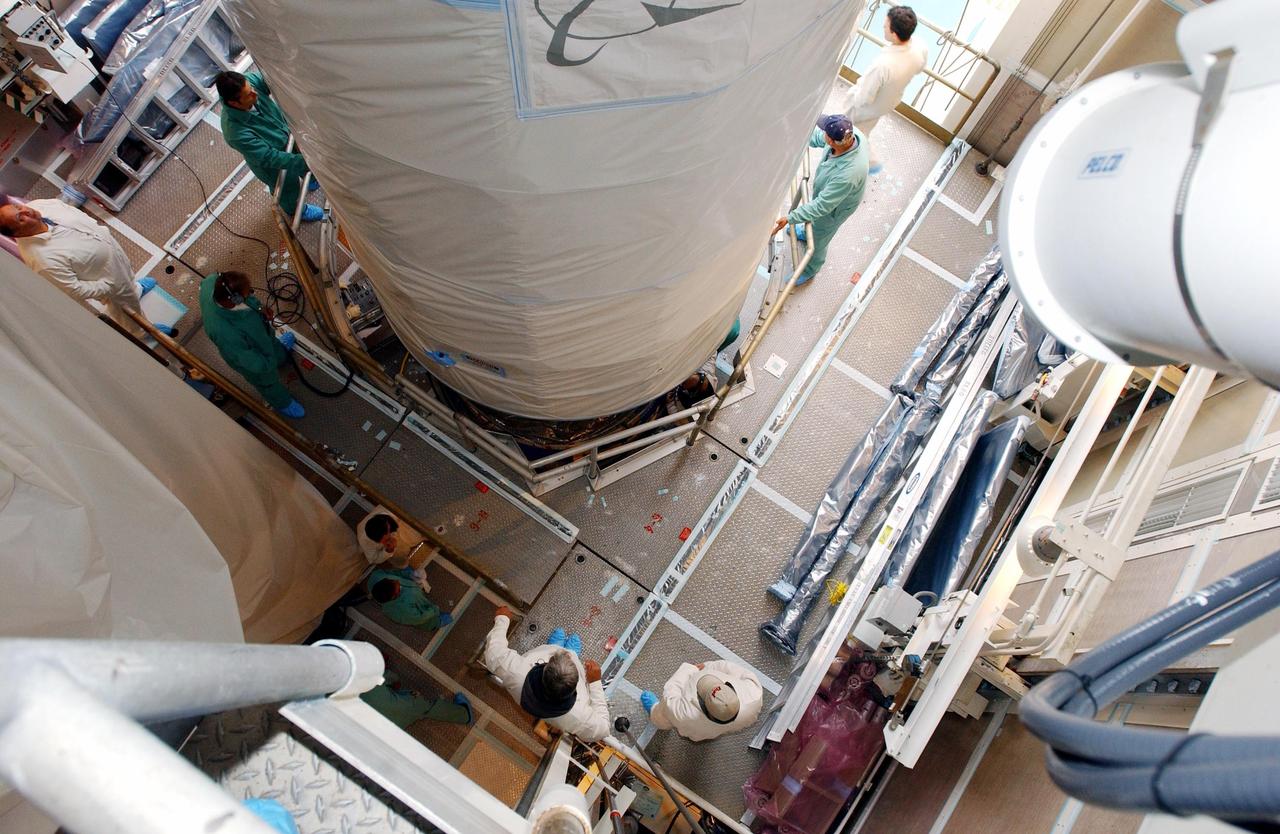
KENNEDY SPACE CENTER, FLA. - Inside the mobile service tower, or gantry, at Space Launch Complex 2 on North Vandenberg Air Force Base, Calif., the Aura spacecraft is lowered toward the second stage of the Boeing Delta II rocket. After it is mated with the second stage, the fairing will be installed. The latest in the Earth Observing System (EOS) series, Aura is scheduled to launch July 10. Aura’s four state-of-the-art instruments will study the dynamics of chemistry occurring in the atmosphere. The spacecraft will provide data to help scientists better understand the Earth’s ozone, air quality and climate change.

A 117-foot P-3B NASA research aircraft is seen on the tarmac at Baltimore/Washington International Thurgood Marshall Airport, Tuesday, June 28, 2011, in Baltimore, Md. The aircraft is part of a month-long field campaign designed to improve satellite measurements of air pollution. The name of the experiment -- Deriving Information on Surface conditions from Column and Vertically Resolved Observations Relevant to Air Quality (DISCOVER -- AQ) -- is a mouthful, but its purpose is simple. Come July, the aircraft will be flying spirals over six ground stations in Maryland. Photo Credit: (NASA/Paul E. Alers)
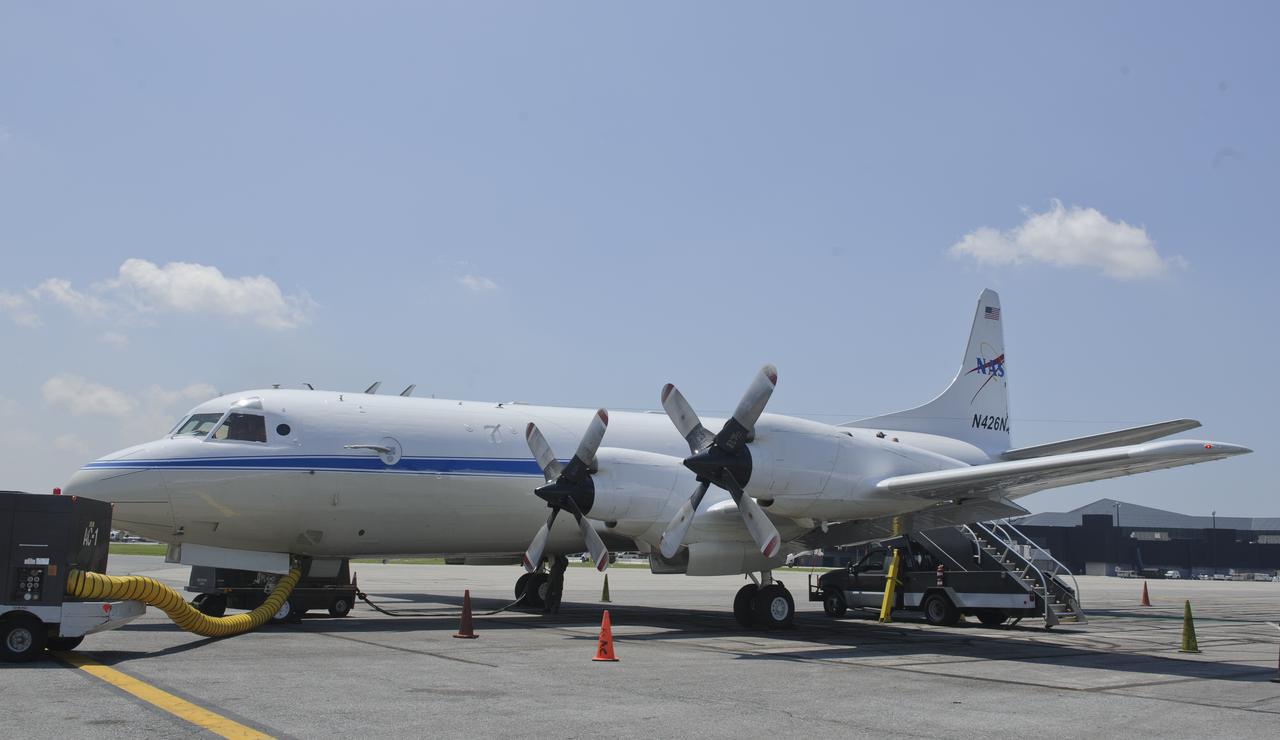
A 117-foot P-3B NASA research aircraft is seen on the tarmac at Baltimore/Washington International Thurgood Marshall Airport, Tuesday, June 28, 2011, in Baltimore, Md. The aircraft is part of a month-long field campaign designed to improve satellite measurements of air pollution. The name of the experiment -- Deriving Information on Surface conditions from Column and Vertically Resolved Observations Relevant to Air Quality (DISCOVER -- AQ) -- is a mouthful, but its purpose is simple. Come July, the aircraft will be flying spirals over six ground stations in Maryland. Photo Credit: (NASA/Paul E. Alers)
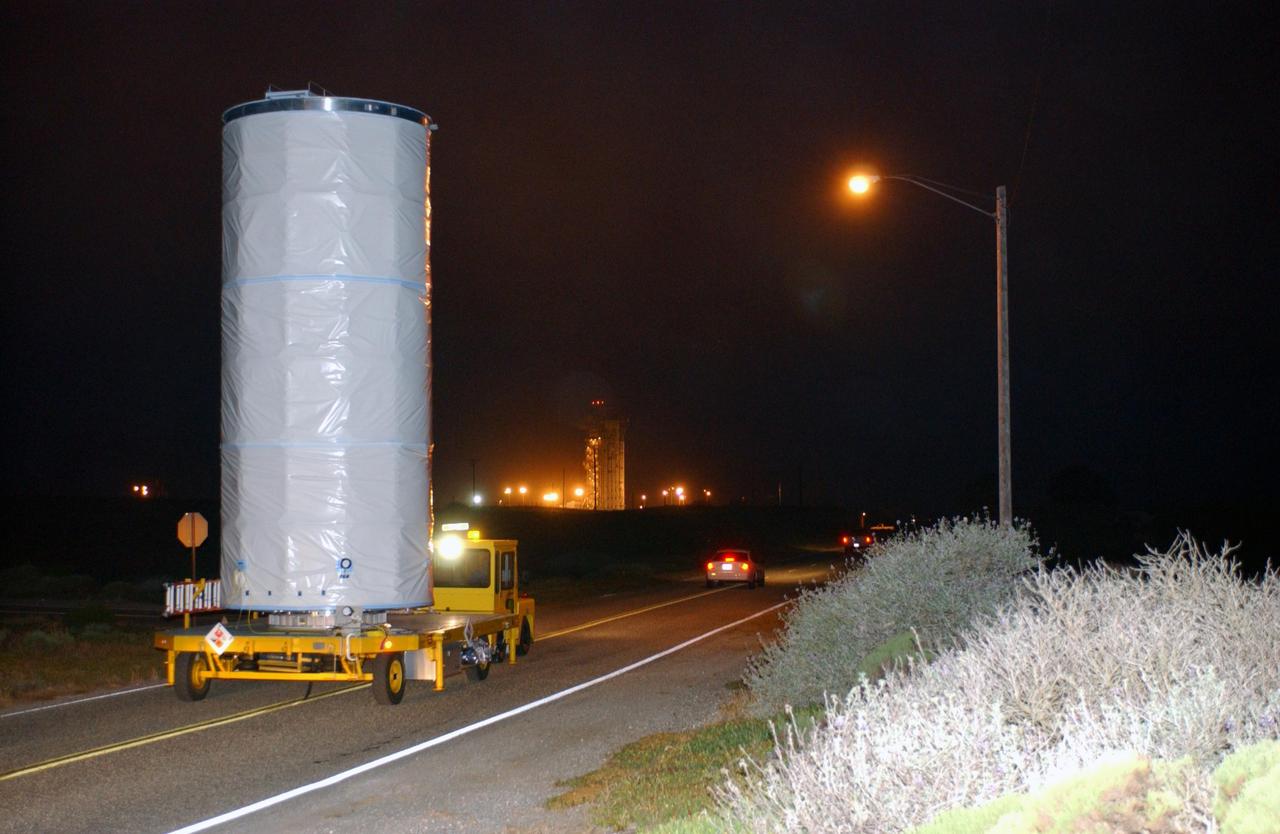
KENNEDY SPACE CENTER, FLA. - In the predawn hours, the Aura spacecraft is transported the short distance from the Astrotech payload processing facility to Space Launch Complex 2 on North Vandenberg Air Force Base, Calif. The latest in the Earth Observing System (EOS) series, Aura is scheduled to launch July 10 aboard a Boeing Delta II rocket. Aura’s four state-of-the-art instruments will study the dynamics of chemistry occurring in the atmosphere. The spacecraft will provide data to help scientists better understand the Earth’s ozone, air quality and climate change.
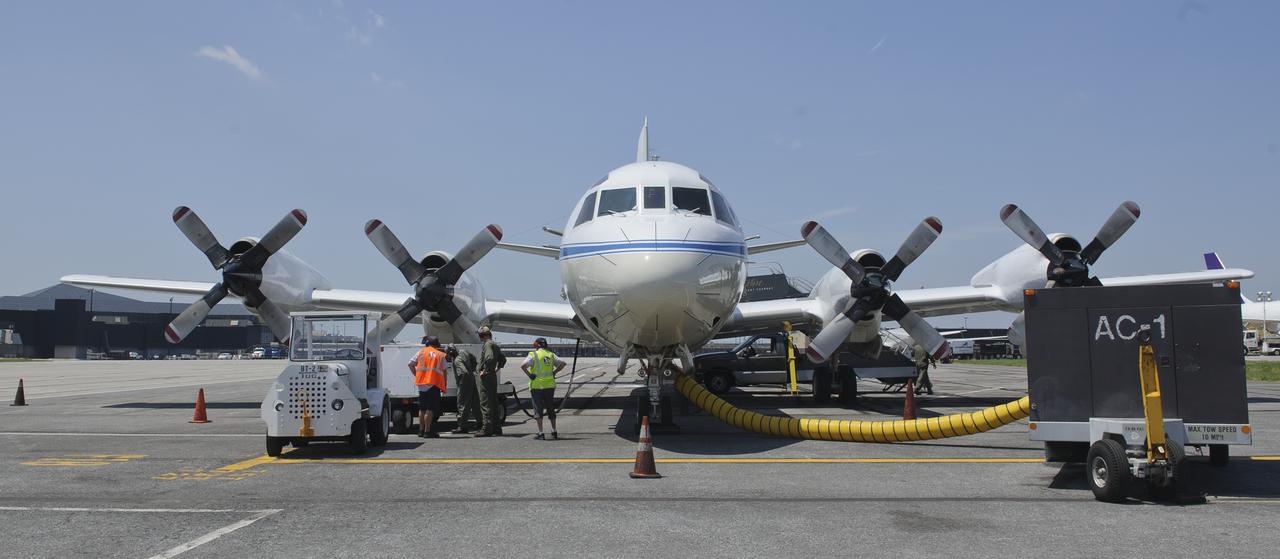
A 117-foot P-3B NASA research aircraft is seen on the tarmac at Baltimore/Washington International Thurgood Marshall Airport, Tuesday, June 28, 2011, in Baltimore, Md. The aircraft is part of a month-long field campaign designed to improve satellite measurements of air pollution. The name of the experiment -- Deriving Information on Surface conditions from Column and Vertically Resolved Observations Relevant to Air Quality (DISCOVER -- AQ) -- is a mouthful, but its purpose is simple. Come July, the aircraft will be flying spirals over six ground stations in Maryland. Photo Credit: (NASA/Paul E. Alers)
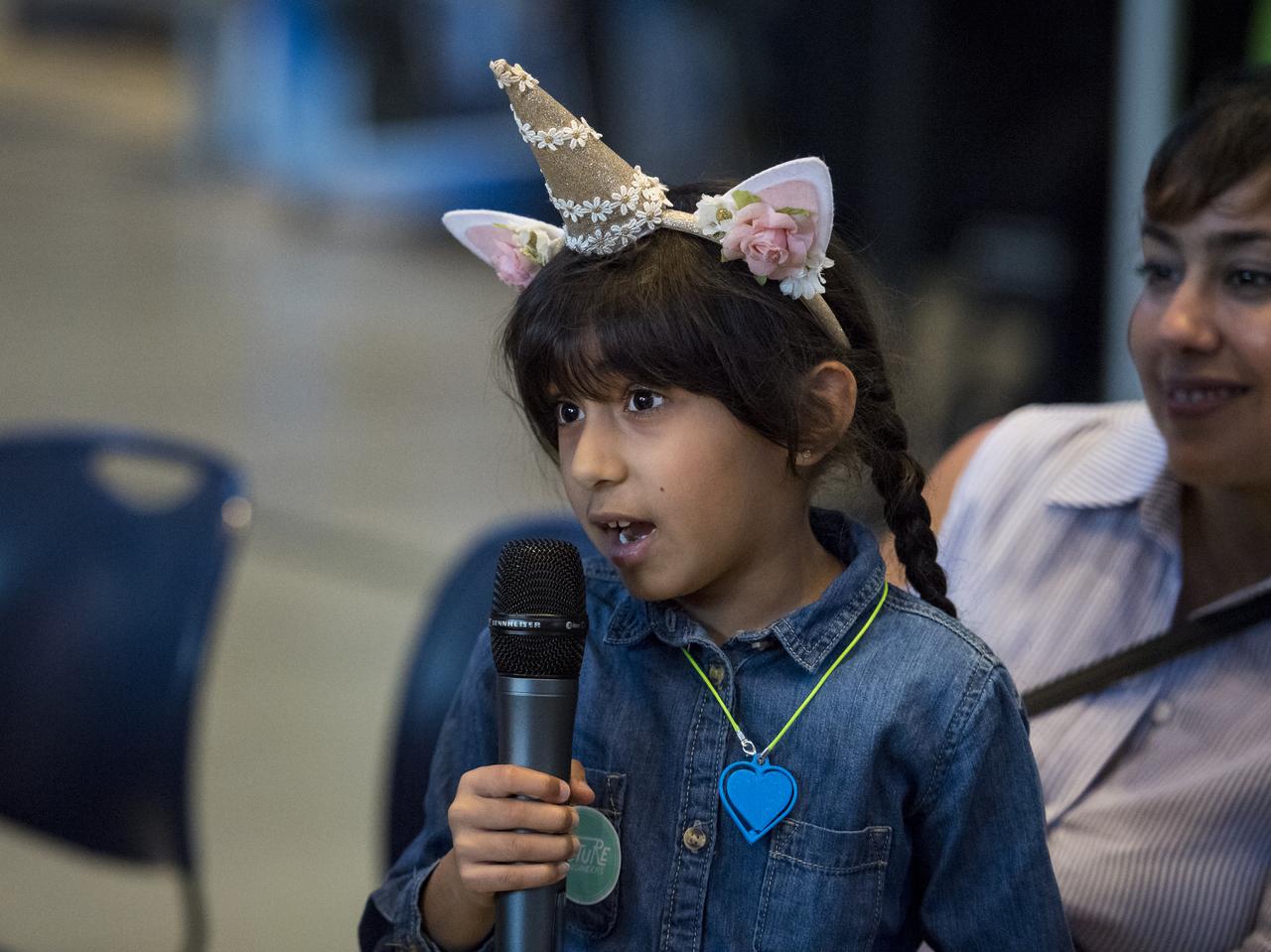
A young audience member asks the panel a question during a discussion on improving air quality for health in space and on Earth, at a pop-up makerspace hosted by Future Engineers with support from NASA and The American Society of Mechanical Engineers (ASME), at the Steven F. Udvar-Hazy Center, Thursday, September 21, 2017 in Chantilly, Virginia. Participants were able to create digital 3D models using Autodesk Tinkercad and watch objects being printed with Makerbot 3D printers. Photo Credit: (NASA/Aubrey Gemignani)
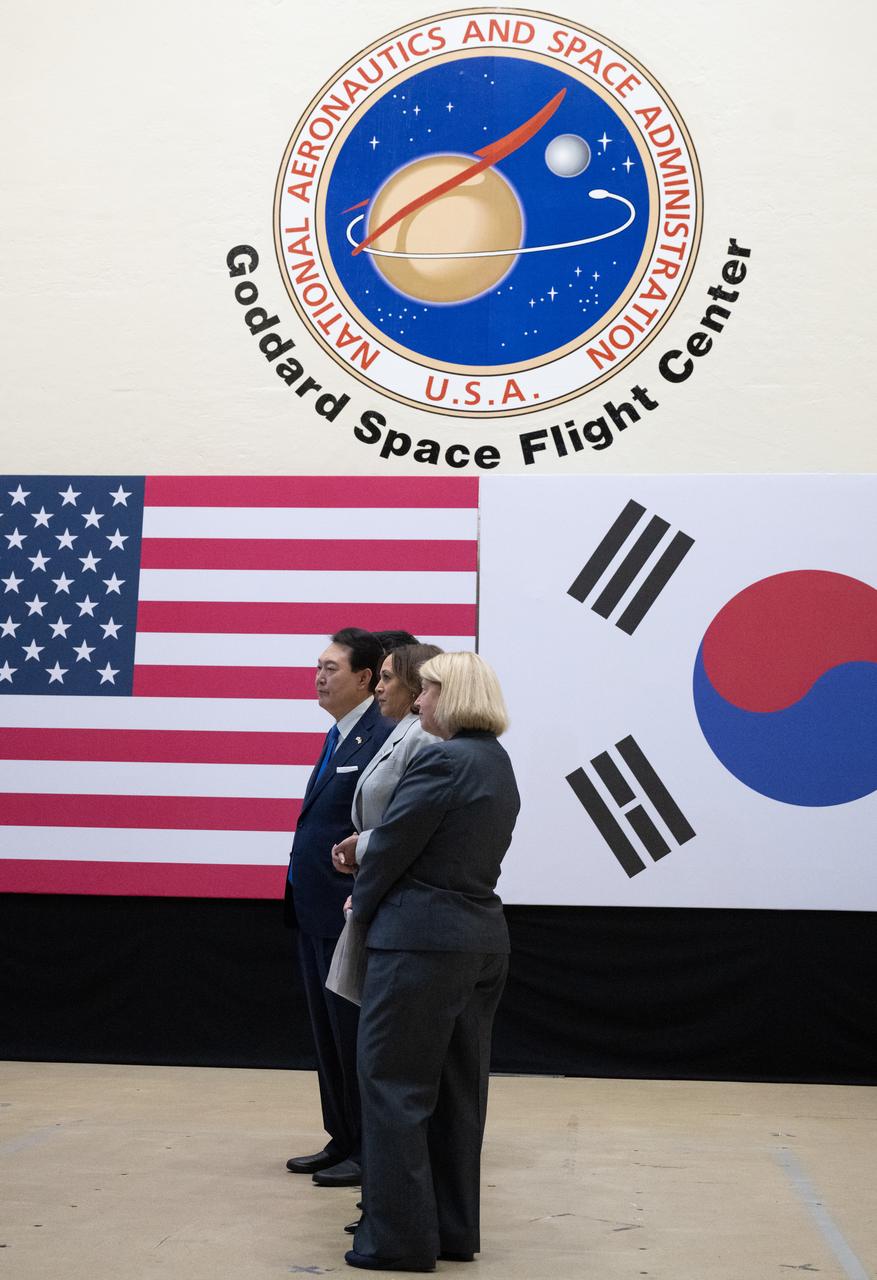
NASA Deputy Administrator Pam Melroy, front, Vice President Kamala Harris, and President Yoon Suk Yeol of the Republic of Korea, are seen during a briefing by Dr. Lesley Ott, research meteorologist and climate scientist at NASA’s Goddard Space Flight Center, on U.S. and Korean partnerships to improve the way scientists observe air quality and the use of space in addressing the climate crisis, Tuesday, April 25, 2023, during a tour of NASA’s Goddard Space Flight Center in Greenbelt, Md. Photo Credit: (NASA/Joel Kowsky)

From left, Wayne Ringelberg, chief pilot at NASA’s Armstrong Flight Research Center in Edwards, California, is welcomed by Michael Thomson, director of NASA Armstrong’s Science Mission Directorate, and Kirsten Boogaard, NASA’s DC-8 project manager, after the DC-8 aircraft and crew return to NASA Armstrong’s Building 703 in Palmdale, California, on April 1, 2024, following the aircraft’s final mission in support of the Airborne and Satellite Investigation of Asian Air Quality (ASIA-AQ).

Marit Meyer, research aerospace engineer, Aerosol Science and Instrumentation, NASA, speaks on a panel on improving air quality for health in space and on Earth, at a pop-up makerspace hosted by Future Engineers with support from NASA and The American Society of Mechanical Engineers (ASME), at the Steven F. Udvar-Hazy Center, Thursday, September 21, 2017 in Chantilly, Virginia. Participants were able to create digital 3D models using Autodesk Tinkercad and watch objects being printed with Makerbot 3D printers. Photo Credit: (NASA/Aubrey Gemignani)
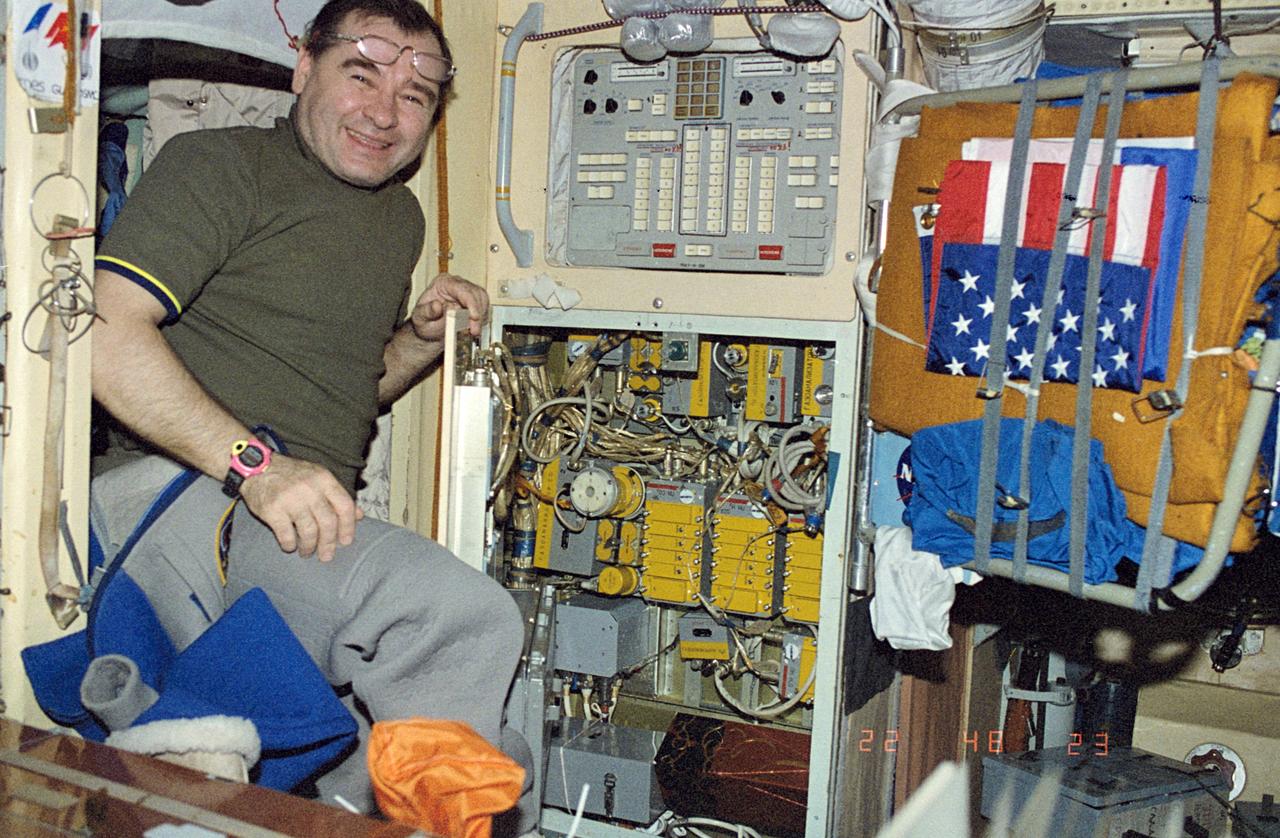
NM18-302-025 (March-July 1995) --- Onboard Mir's base block module cosmonaut Gennadiy M. Strekalov, flight engineer, prepares to check the air quality control and the propulsion system of the station. Strekalov told reporters at a July 18 press conference in Houston that even though he tried not to awaken astronaut Norman E. Thagard, who was asleep nearby, he was unable to keep from disturbing the cosmonaut researcher. He went on to point out that Thagard was always very cooperative and tolerant of such interruptions.
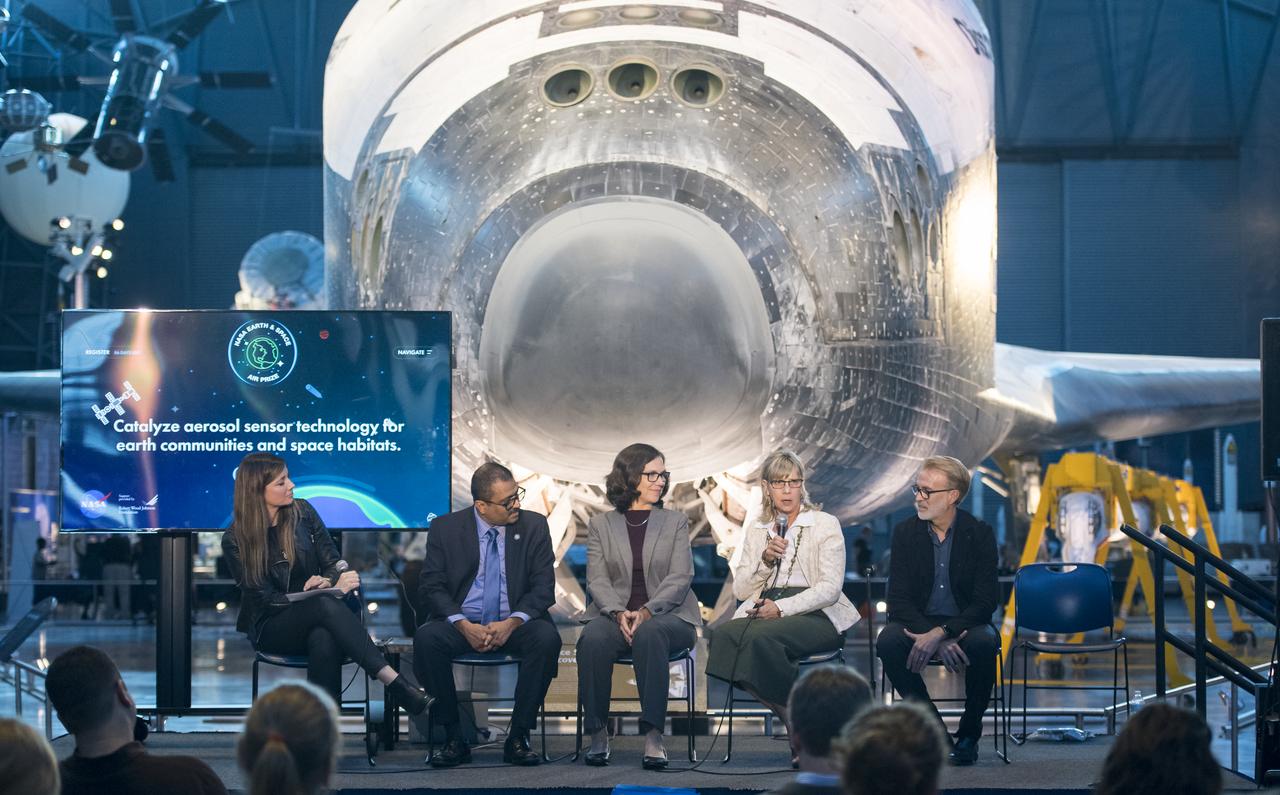
Lynn Buquo, manager, NASA Center of Excellence for Collaborative Innovation, speaks on a panel on improving air quality for health in space and on Earth, at a pop-up makerspace hosted by Future Engineers with support from NASA and The American Society of Mechanical Engineers (ASME), at the Steven F. Udvar-Hazy Center, Thursday, September 21, 2017 in Chantilly, Virginia. Participants were able to create digital 3D models using Autodesk Tinkercad and watch objects being printed with Makerbot 3D printers. Photo Credit: (NASA/Aubrey Gemignani)

Jitendra Joshi, chief technology advisor, Advanced Exploration Systems, NASA, speaks on a panel on improving air quality for health in space and on Earth, at a pop-up makerspace hosted by Future Engineers with support from NASA and The American Society of Mechanical Engineers (ASME), at the Steven F. Udvar-Hazy Center, Thursday, September 21, 2017 in Chantilly, Virginia. Participants were able to create digital 3D models using Autodesk Tinkercad and watch objects being printed with Makerbot 3D printers. Photo Credit: (NASA/Aubrey Gemignani)

President Yoon Suk Yeol of the Republic of Korea is seen during a briefing by Dr. Lesley Ott, research meteorologist and climate scientist at NASA’s Goddard Space Flight Center, on U.S. and Korean partnerships to improve the way scientists observe air quality and the use of space in addressing the climate crisis, Tuesday, April 25, 2023, during a tour of NASA’s Goddard Space Flight Center in Greenbelt, Md. Photo Credit: (NASA/Joel Kowsky)

NASA’s Armstrong Flight Research Center Director Brad Flick smiles as members of the DC-8 team gather and exchange congratulations after the aircraft and crew return to NASA Armstrong’s Building 703 in Palmdale, California, on April 1, 2024, following the aircraft’s final mission in support of the Airborne and Satellite Investigation of Asian Air Quality (ASIA-AQ).
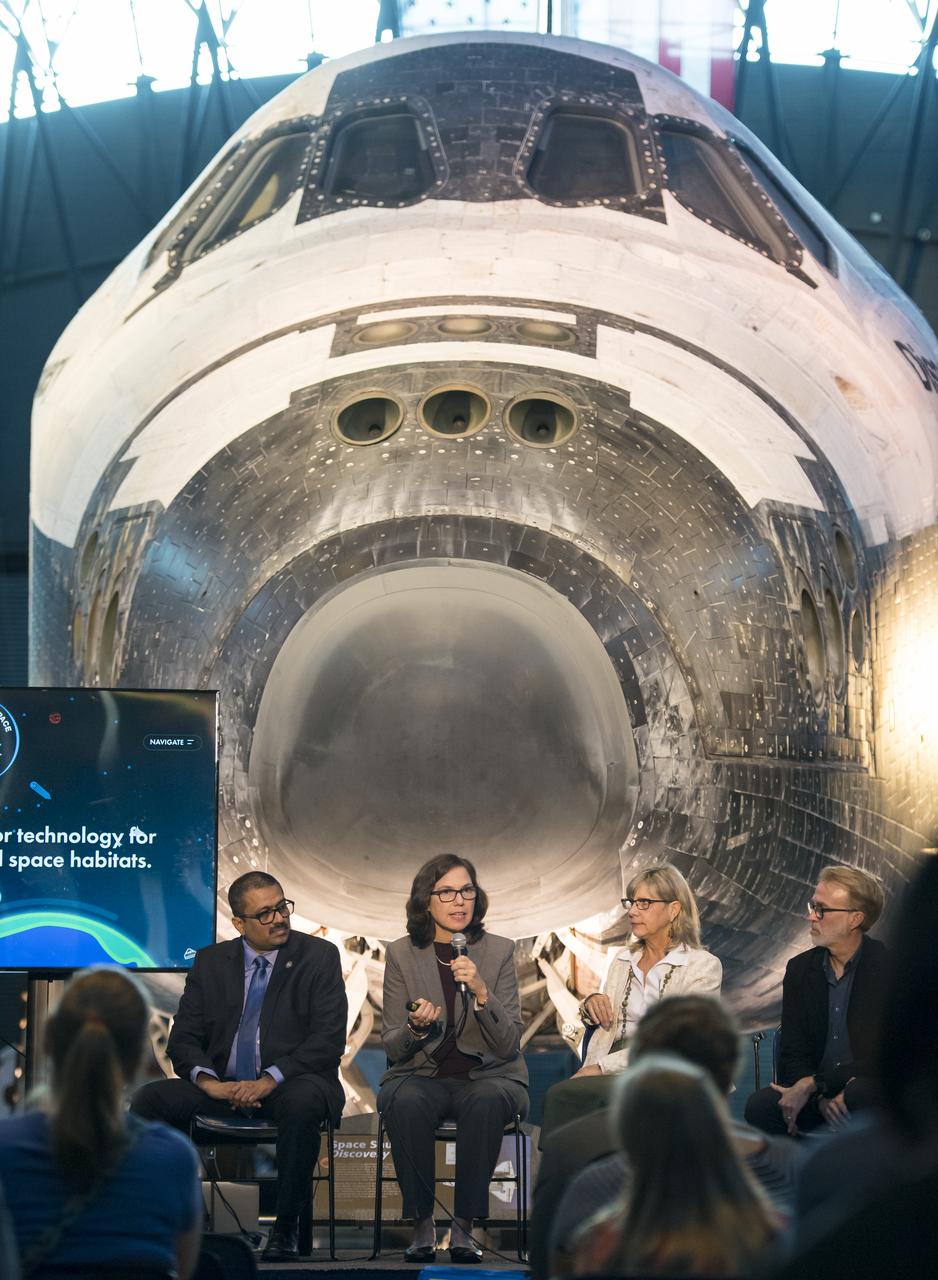
Marit Meyer, research aerospace engineer, Aerosol Science and Instrumentation, NASA, speaks on a panel on improving air quality for health in space and on Earth, at a pop-up makerspace hosted by Future Engineers with support from NASA and The American Society of Mechanical Engineers (ASME), at the Steven F. Udvar-Hazy Center, Thursday, September 21, 2017 in Chantilly, Virginia. Participants were able to create digital 3D models using Autodesk Tinkercad and watch objects being printed with Makerbot 3D printers. Photo Credit: (NASA/Aubrey Gemignani)
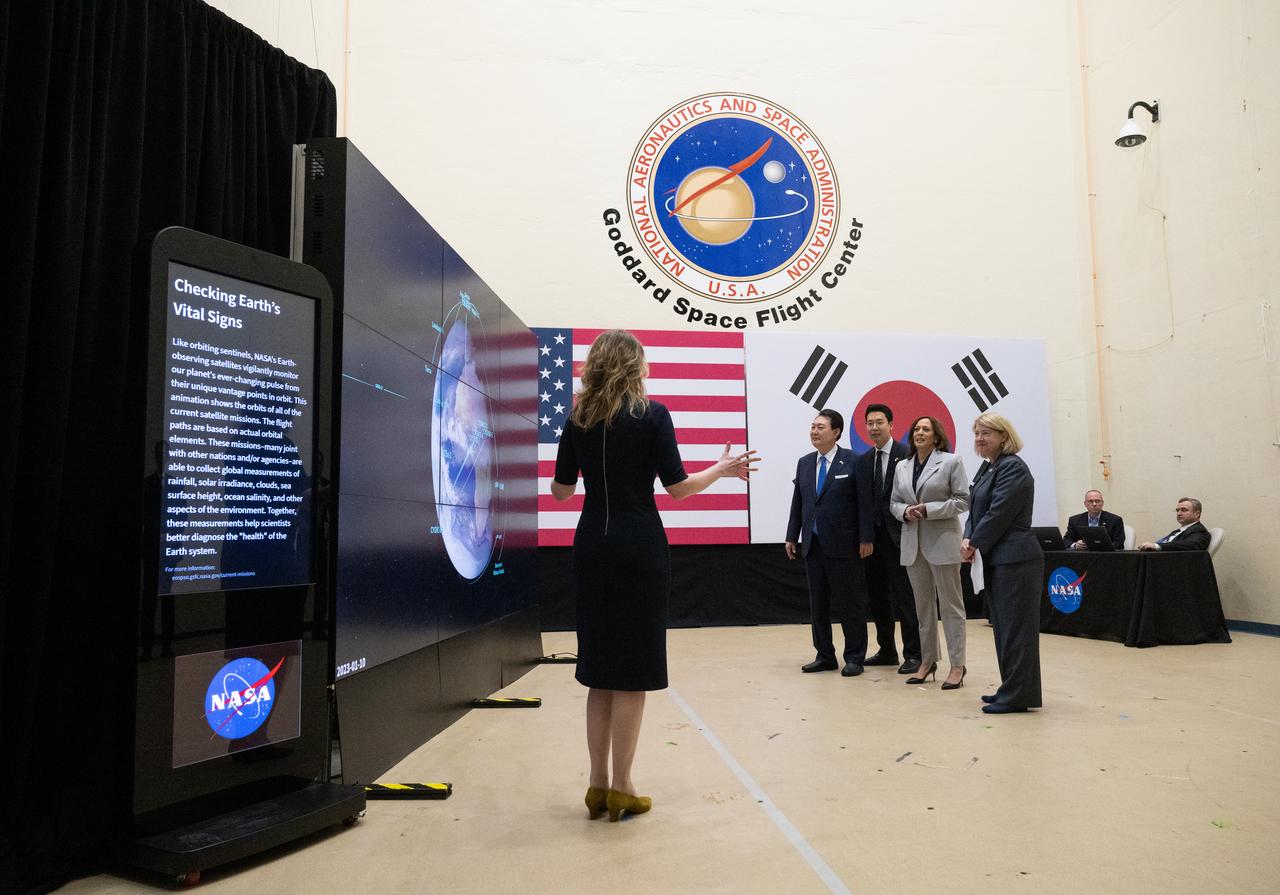
Dr. Lesley Ott, research meteorologist and climate scientist at NASA’s Goddard Space Flight Center briefs Vice President Kamala Harris, center, President Yoon Suk Yeol of the Republic of Korea, left, and NASA Deputy Administrator Pam Melroy on U.S. and Korean partnerships to improve the way scientists observe air quality and the use of space in addressing the climate crisis, Tuesday, April 25, 2023, during a tour of NASA’s Goddard Space Flight Center in Greenbelt, Md. Photo Credit: (NASA/Joel Kowsky)
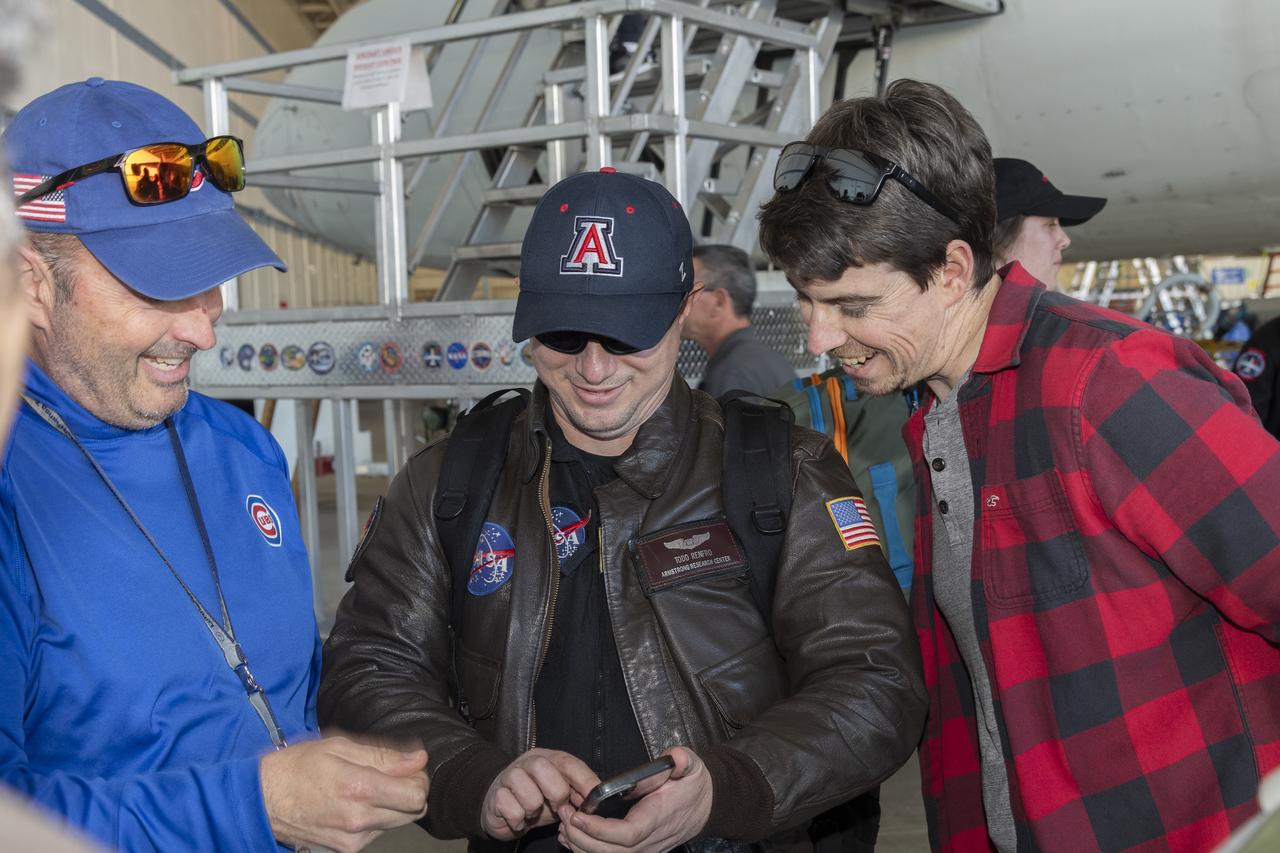
From left, Andy Barry, DC-8 pilot; Todd Renfro, flight navigator; and Adam Devalon, flight engineer, share smiles after the DC-8 aircraft and crew return to NASA’s Armstrong Flight Research Center Building 703 in Palmdale, California, on April 1, 2024, following the aircraft’s final mission in support of the Airborne and Satellite Investigation of Asian Air Quality (ASIA-AQ).
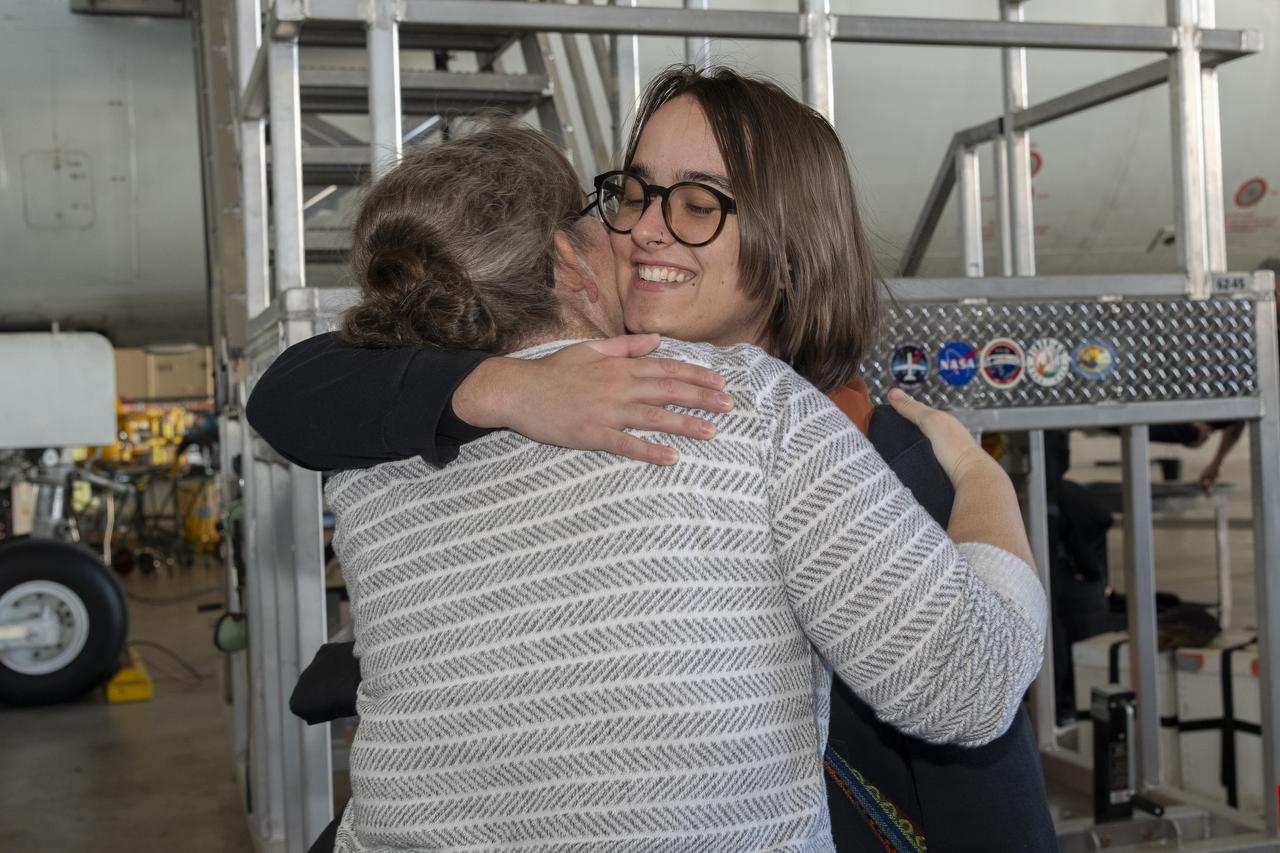
NASA’s DC-8 operations engineer, Nickelle “Nicki” Reid, left, embraces Katherine Ball, chemical engineering Ph.D. candidate at California Institute of Technology, after the DC-8 aircraft and crew return to NASA Armstrong’s Building 703 in Palmdale, California, on April 1, 2024, following the aircraft’s final mission in support of the Airborne and Satellite Investigation of Asian Air Quality (ASIA-AQ).

Michael Painter, senior program officer, Robert Wood Johnson Foundation, speaks on a panel on improving air quality for health in space and on Earth, at a pop-up makerspace hosted by Future Engineers with support from NASA and The American Society of Mechanical Engineers (ASME), at the Steven F. Udvar-Hazy Center, Thursday, September 21, 2017 in Chantilly, Virginia. Participants were able to create digital 3D models using Autodesk Tinkercad and watch objects being printed with Makerbot 3D printers. Photo Credit: (NASA/Aubrey Gemignani)
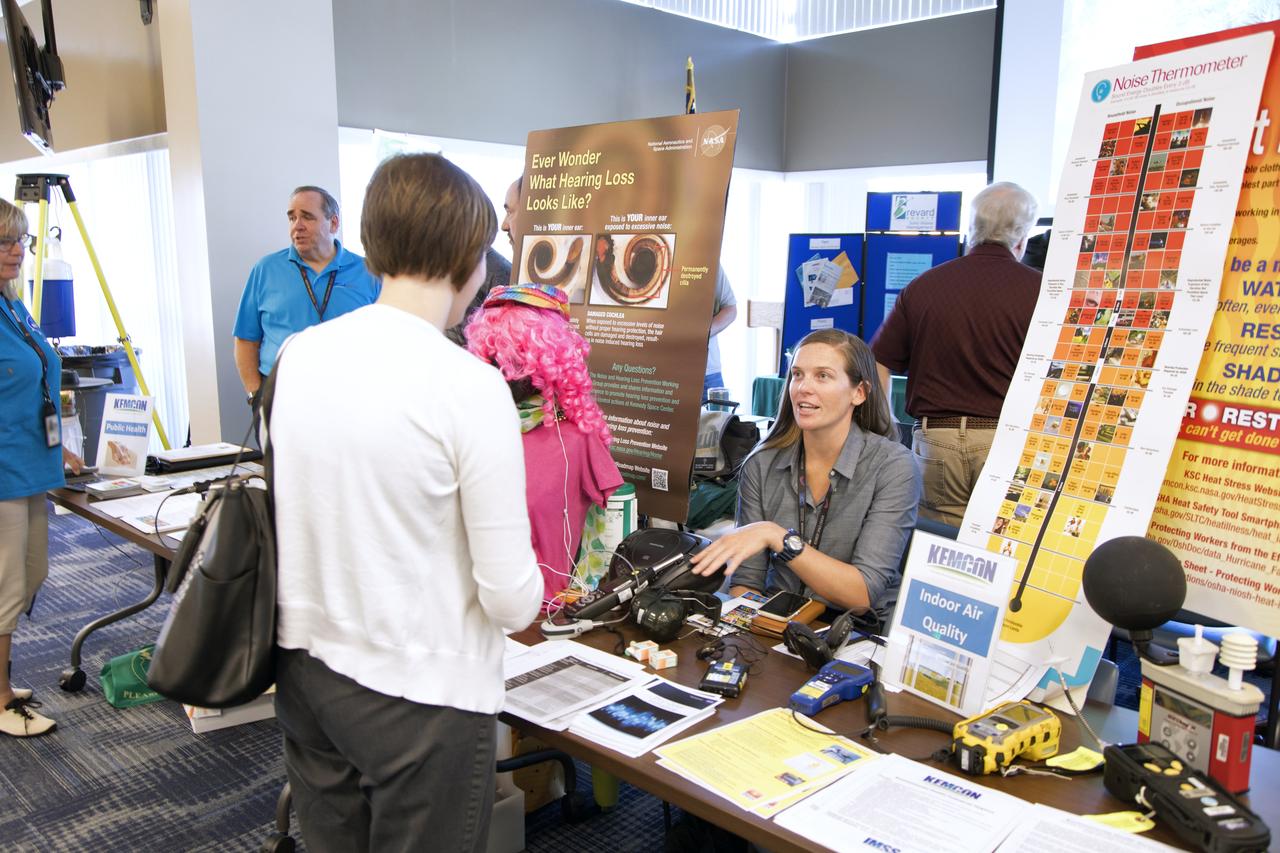
An employee learns about indoor air quality at the Kennedy Space Center (KSC) Environmental and Medical Contract (KEMCON) booth at the center’s annual Earth Day celebration. The two-day event featured approximately 50 exhibitors offering information on a variety of topics, including electric vehicles, sustainable lighting, renewable energy, Florida-friendly landscaping tips, Florida’s biking trails and more.

NASA DC-8 crew members Nickelle “Nicki” Reid, operations engineer, left, and Isac Mata, engineer technician, exchange in a heartfelt hug after the DC-8 aircraft and crew return to NASA Armstrong’s Building 703 in Palmdale, California, on April 1, 2024, following the aircraft’s final mission in support of the Airborne and Satellite Investigation of Asian Air Quality (ASIA-AQ). Smiling in the background is Michael Thomson, director of NASA Armstrong’s Science Mission Directorate.
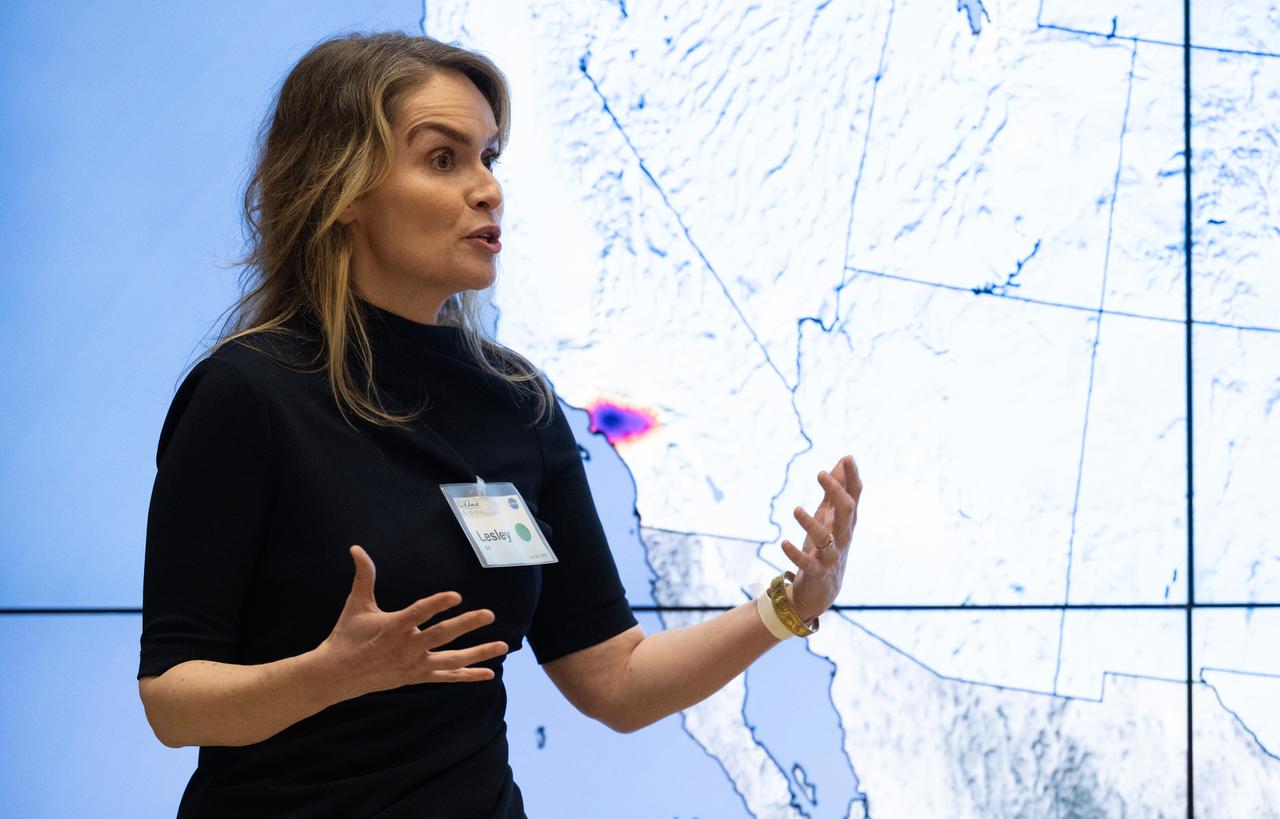
Dr. Lesley Ott, research meteorologist and climate scientist at NASA’s Goddard Space Flight Center briefs Vice President Kamala Harris, President Yoon Suk Yeol of the Republic of Korea, and NASA Deputy Administrator Pam Melroy on U.S. and Korean partnerships to improve the way scientists observe air quality and the use of space in addressing the climate crisis, Tuesday, April 25, 2023, during a tour of NASA’s Goddard Space Flight Center in Greenbelt, Md. Photo Credit: (NASA/Joel Kowsky)
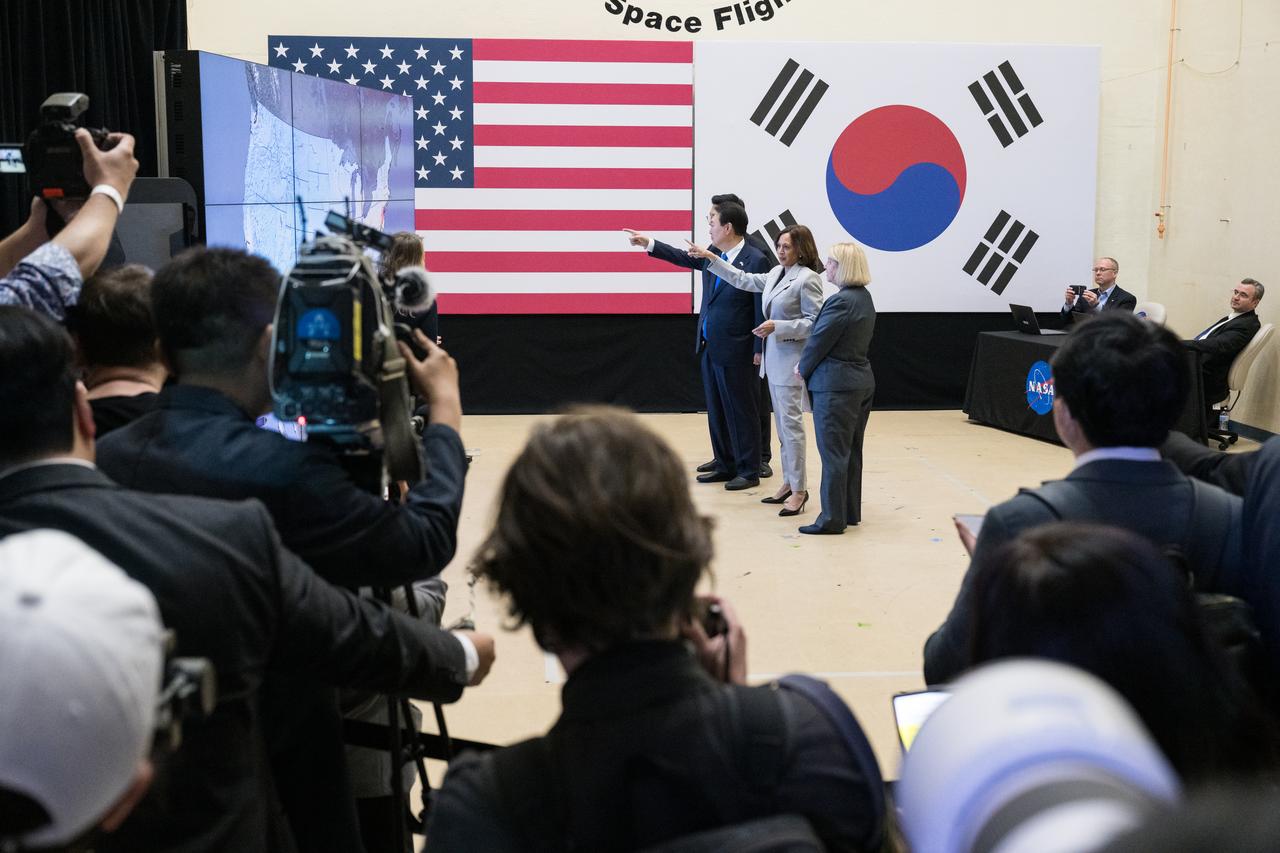
Dr. Lesley Ott, research meteorologist and climate scientist at NASA’s Goddard Space Flight Center briefs from left to right, President Yoon Suk Yeol of the Republic of Korea, Vice President Kamala Harris, and NASA Deputy Administrator Pam Melroy on U.S. and Korean partnerships to improve the way scientists observe air quality and the use of space in addressing the climate crisis, Tuesday, April 25, 2023, during a tour of NASA’s Goddard Space Flight Center in Greenbelt, Md. Photo Credit: (NASA/Aubrey Gemignani)