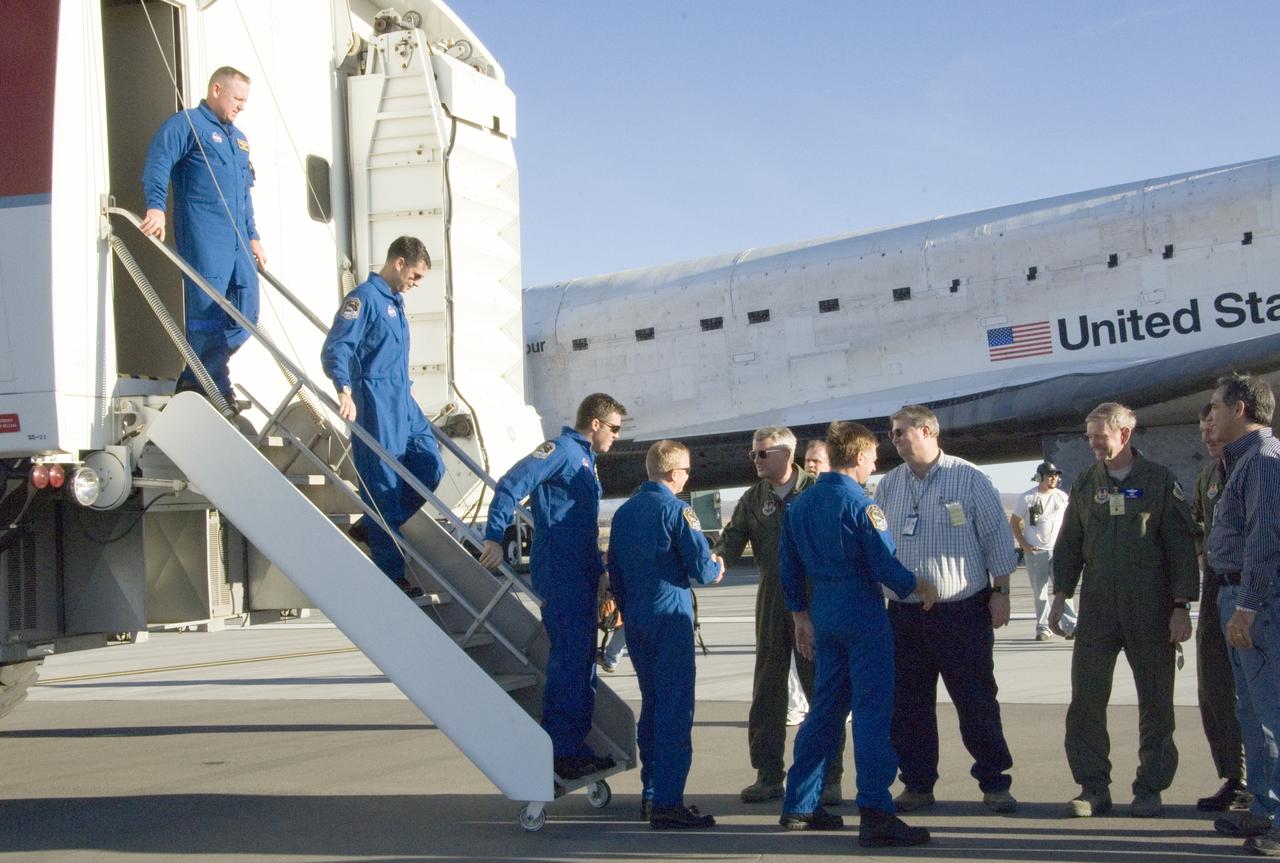
Air Force and NASA officials greet the STS-126 crew as they exit the Crew Transport Vehicle after landing the shuttle Endeavour at Edwards Air Force Base.
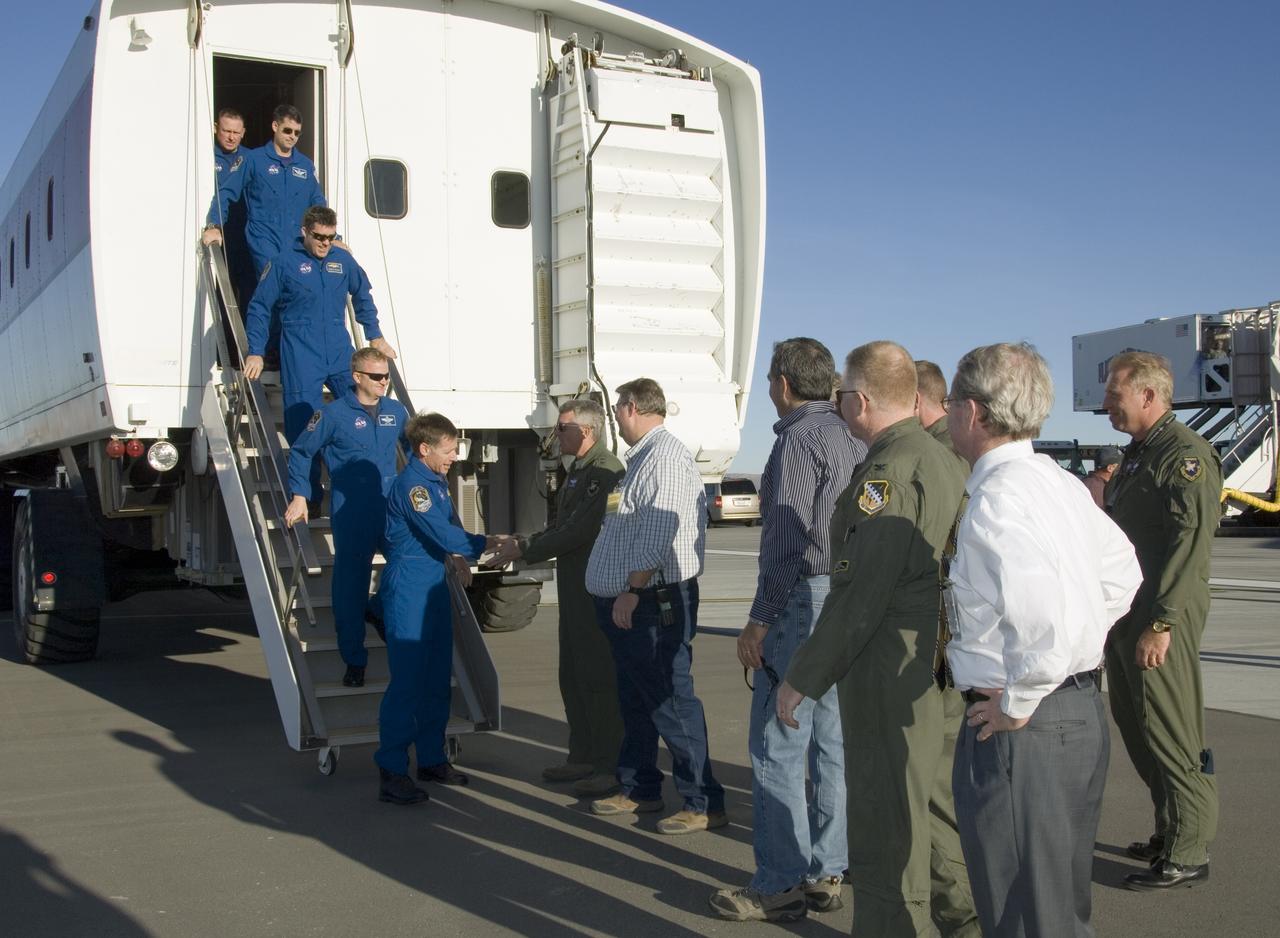
Air Force and NASA officials greet the STS-126 crew as they exit the Crew Transport Vehicle after landing the shuttle Endeavour at Edwards Air Force Base.
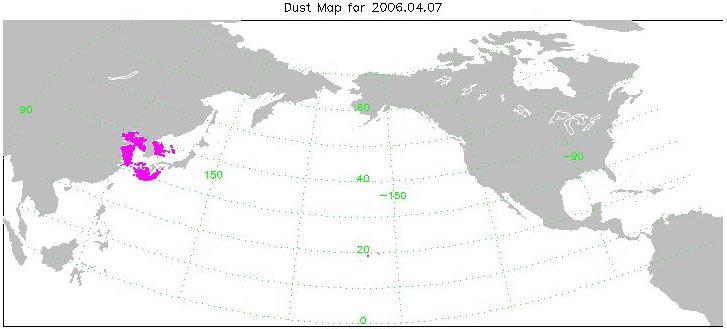
Transport of dust from China Dust Storm of April 2006, from the Atmospheric Infrared Sounder AIRS on NASA Aqua satellite.
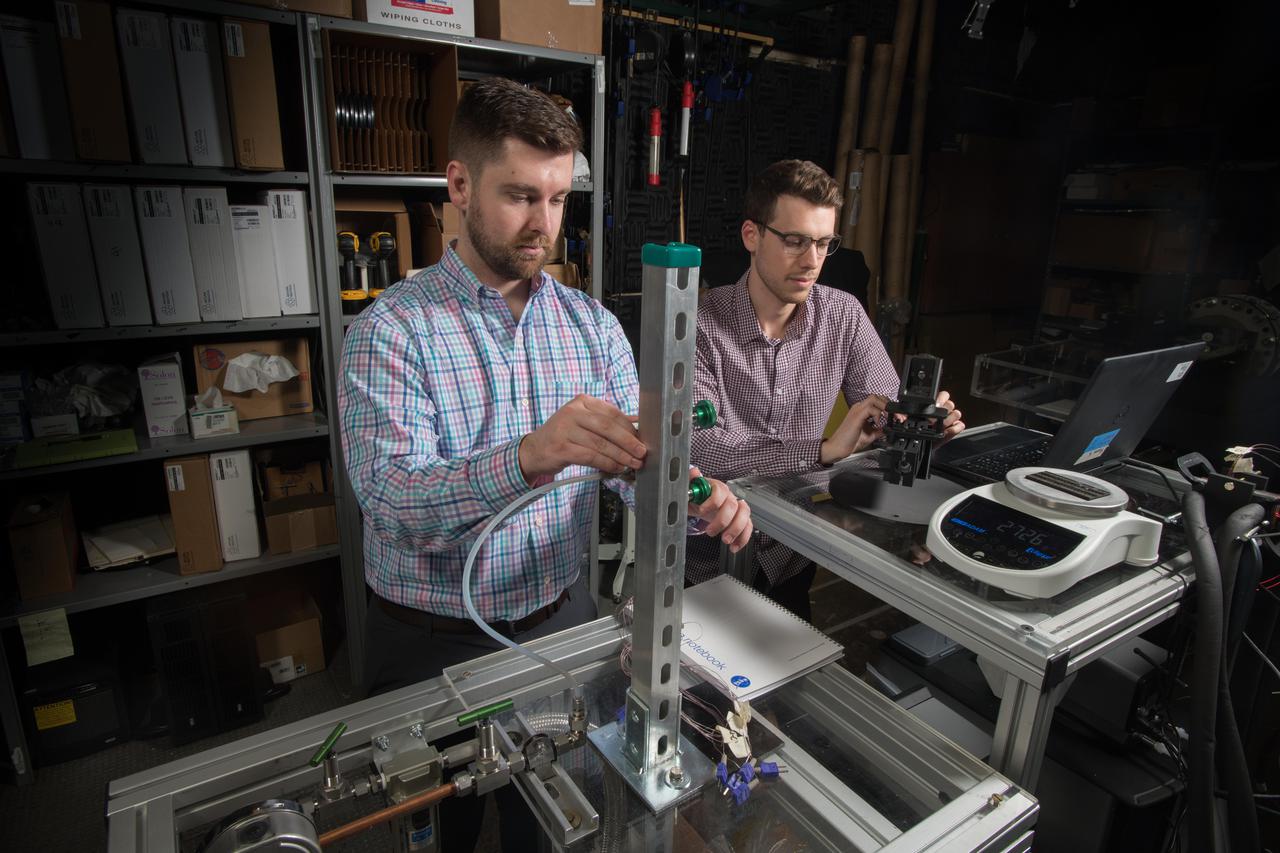
Advanced Thermal Management, High Power Density Core, Advanced Air Transport Technology,
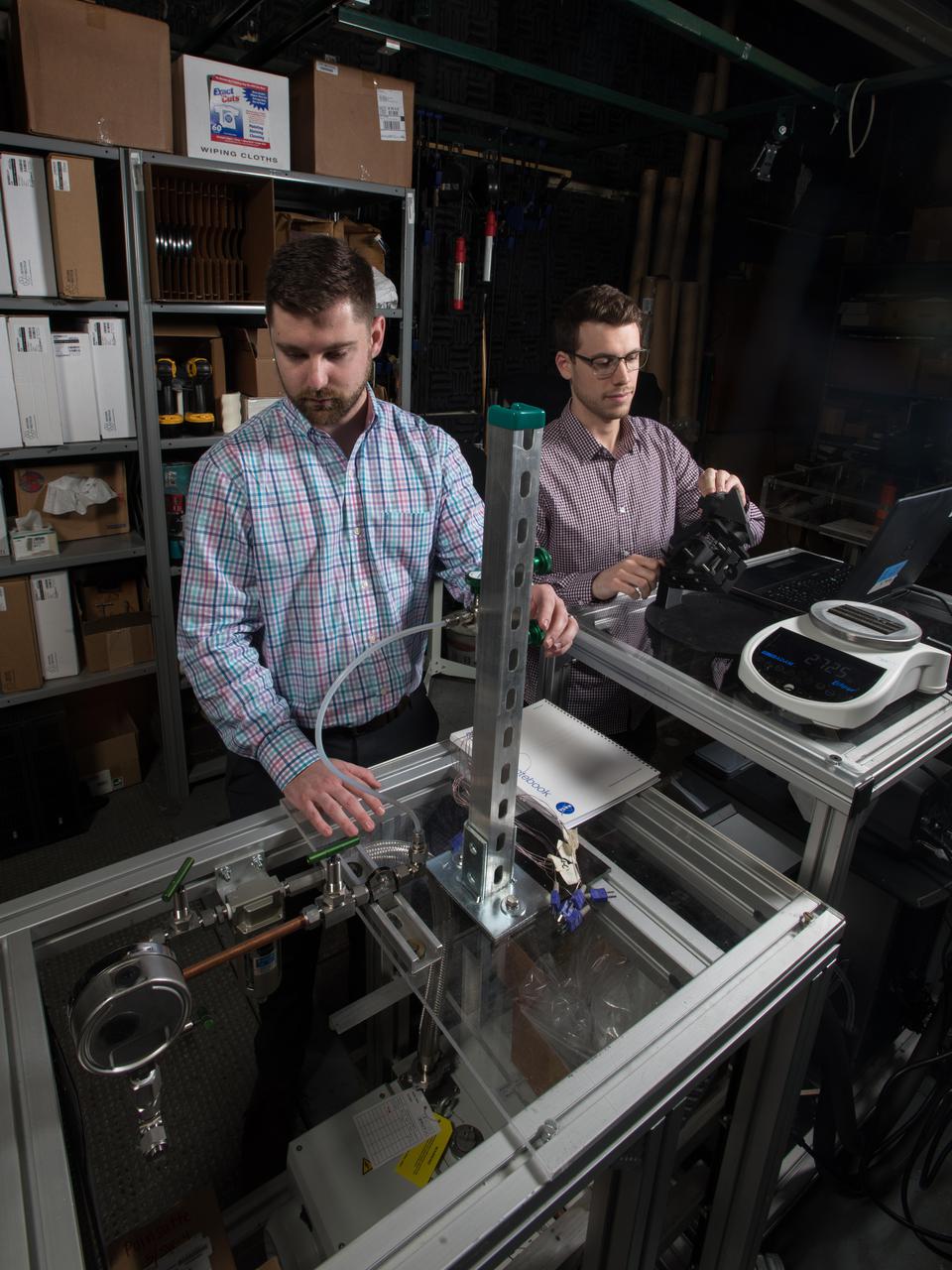
Advanced Thermal Management, High Power Density Core, Advanced Air Transport Technology,

Title: W-8 Fan Acoustic Casing Treatment Test on the Source Diagnostic Test Rotor Alone Hardware Program: Advanced Air Vehicles Program (AAVP) Project: Advanced Air Transport Technology (AATT) Sub-project: Aircraft Noise Reduction (ANR) Weekly Highlight: · Acoustic Casing Treatment Testing Completed in the W-8 Single Stage Axial Compressor Facility: Testing of Acoustic Casing Treatments on the Source Diagnostic Test (SDT) rotor alone hardware which had begun in early January was completed on Thursday, February 16th. Four different over-the-rotor acoustic casing treatment concepts were tested along with two baseline configurations. Testing included steady-aerodynamic measurements of fan performance, hotfilm turbulence measurements, and inlet acoustic measurements with an in-duct array. These measurements will be used to assess the aerodynamic and acoustic impact of fan acoustic casing treatments on a high bypass ratio fan at TRL 3. This test was the last of 3 planned tests of potential over-the-rotor acoustic casing treatments. The first treatment test was completed in the Normal Incidence Tube (NIT) at Langley Research Center (LaRC) in Fall 2015 and the second was completed on the Advanced Noise Control Fan (ANCF) in the Aero-Acoustic Propulsion Laboratory (AAPL) in Winter 2016. This work is supported by the Aircraft Noise Reduction (ANR) subproject of the Advanced Air Transport Technology (AATT) Project. (POC: LTV/ Rick Bozak 3-5160)
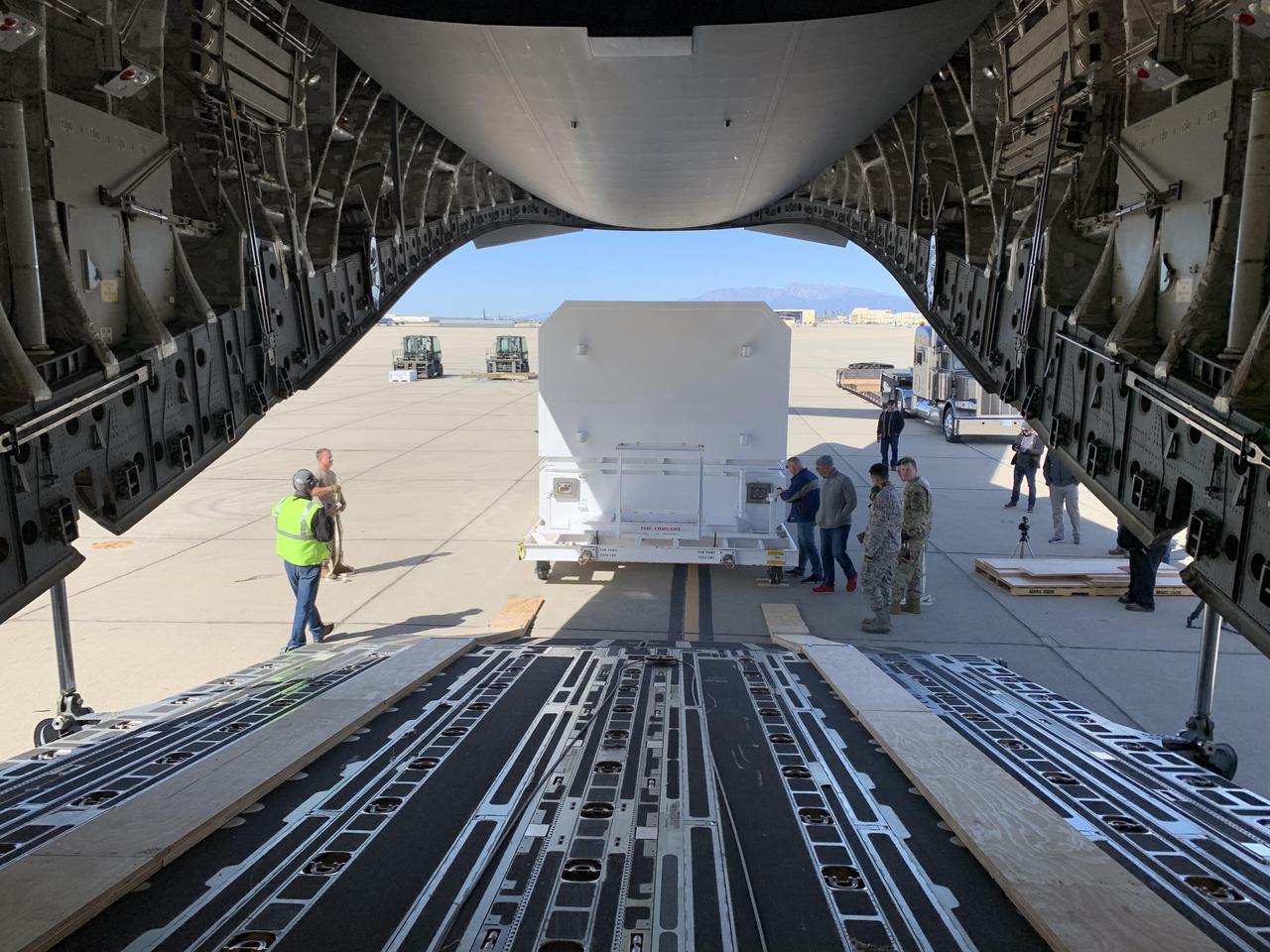
The shipping container carrying NASA's Mars 2020 rover is readied for loading aboard an Air Force C-17 transport plane at March Air Reserve Base in Riverside, California, on Feb. 11, 2020. https://photojournal.jpl.nasa.gov/catalog/PIA23592

A series of maps of the transport of carbon monoxide generated by Alaska Fires, July 2004, created by data from the Atmospheric Infrared Sounder AIRS on NASA Aqua satellite.
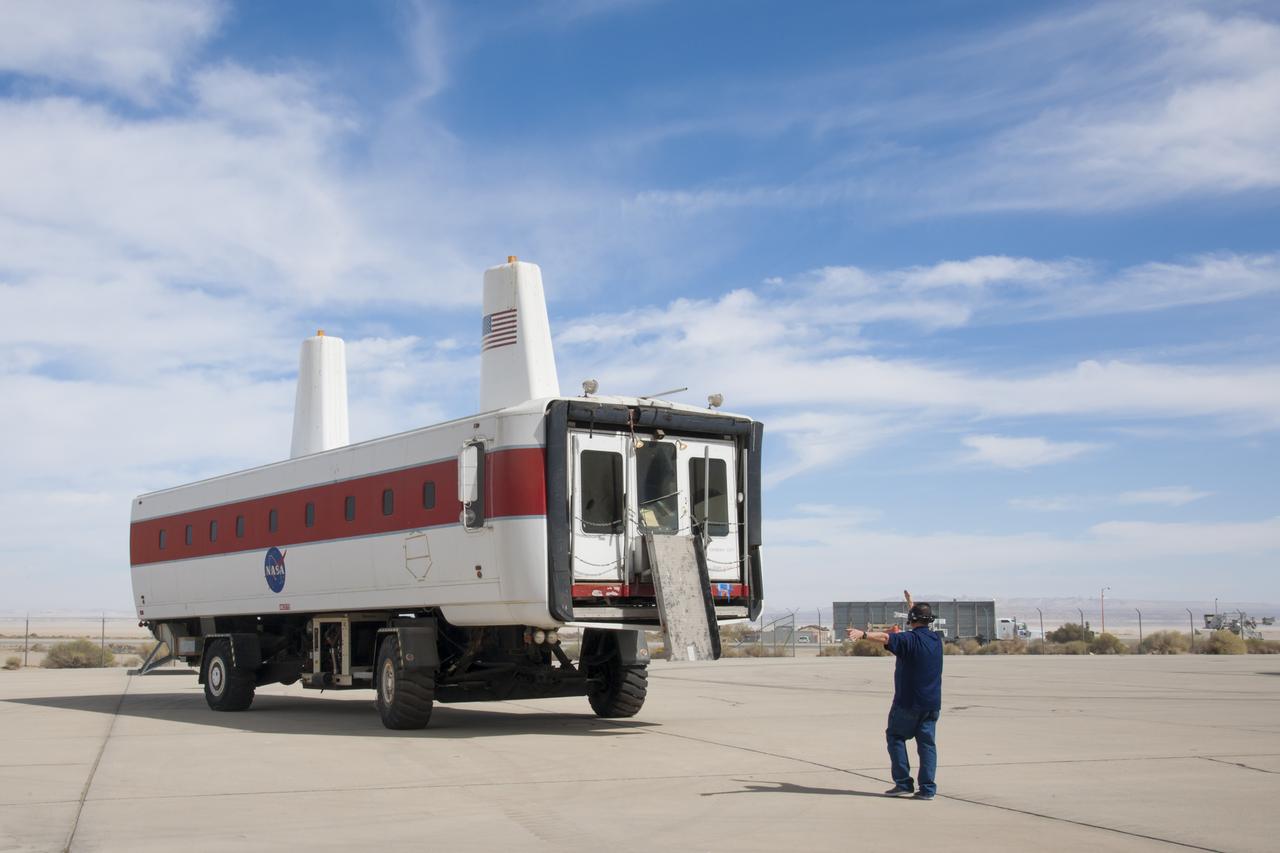
Workers drive the space shuttle Crew Transport Vehicle, or CTV, to the Edwards Air Force Base Flight Test Museum in California for display.
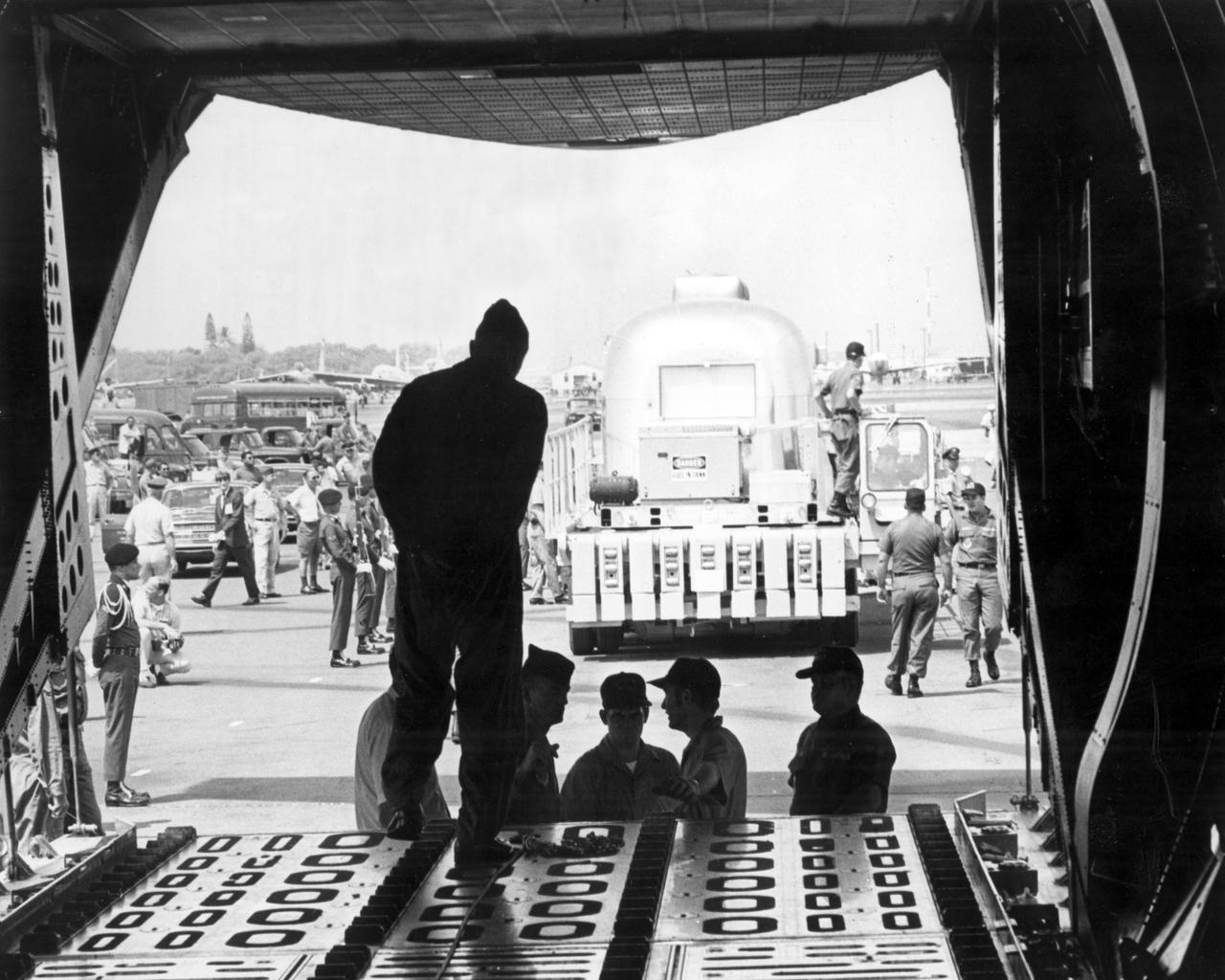
The Apollo 11 mission, the first manned lunar mission, launched from the Kennedy Space Center, Florida via the Marshall Space Flight Center (MSFC) developed Saturn V launch vehicle on July 16, 1969 and safely returned to Earth on July 24, 1969. Aboard the space craft were astronauts Neil A. Armstrong, commander; Michael Collins, Command Module (CM) pilot; and Edwin E. Aldrin Jr., Lunar Module (LM) pilot. The CM, piloted by Michael Collins remained in a parking orbit around the Moon while the LM, named “Eagle’’, carrying astronauts Neil Armstrong and Edwin Aldrin, landed on the Moon. During 2½ hours of surface exploration, the crew collected 47 pounds of lunar surface material for analysis back on Earth. The recovery operation took place in the Pacific Ocean where Navy para-rescue men recovered the capsule housing the 3-man Apollo 11 crew. The crew was airlifted to safety aboard the U.S.S. Hornet, where they were quartered in a Mobile Quarantine Facility (MQF) which served as their home until they reached the NASA Manned Spacecraft Center (MSC) Lunar Receiving Laboratory in Houston, Texas. In this photo taken at Pearl Harbor, Hawaii, the inhabited MQF is prepared for loading into an Air Force C-141 jet transport for the flight back to Ellington Air Force Base Texas and then on to the MSC.
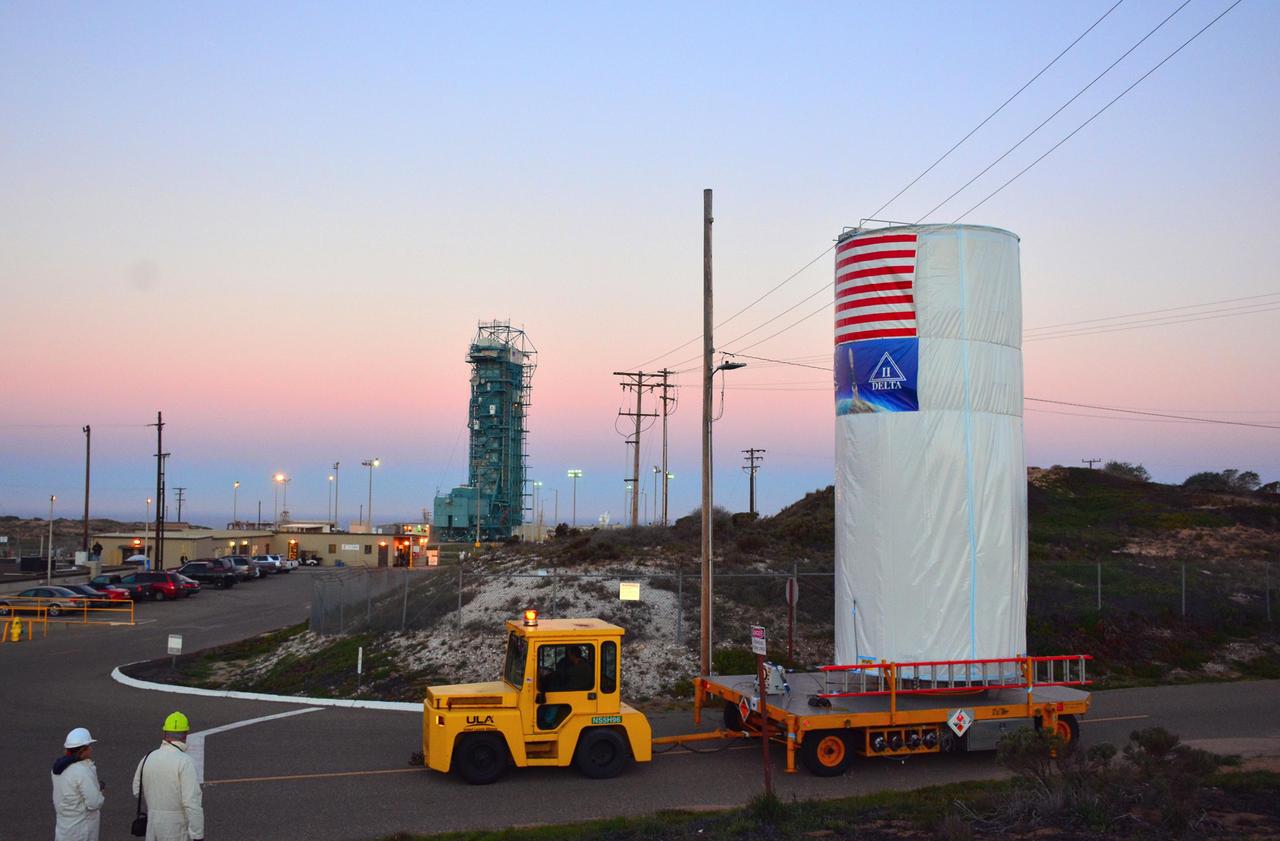
NASA Soil Moisture Active Passive SMAP satellite is transported across Vandenberg Air Force Base in California to Space Launch Complex 2, where it will be mated to a Delta II rocket for launch, targeted for Jan. 29.
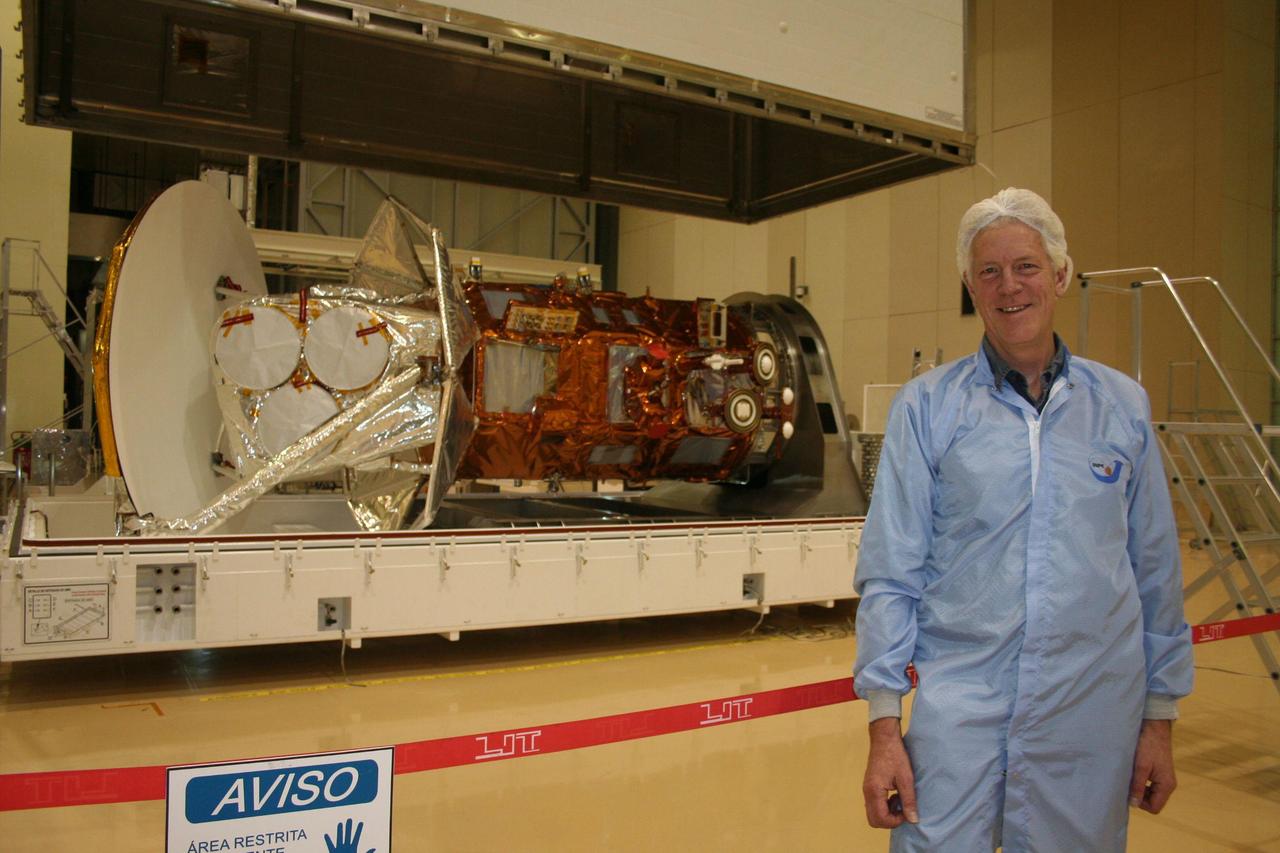
NASA Aquarius Principal Investigator Gary Lagerloef photographed in front of the Aquarius/SAC-D satellite observatory as it is being readied for transportation from Brazil to Vandenberg Air Force Base in California for a June 2011 launch.
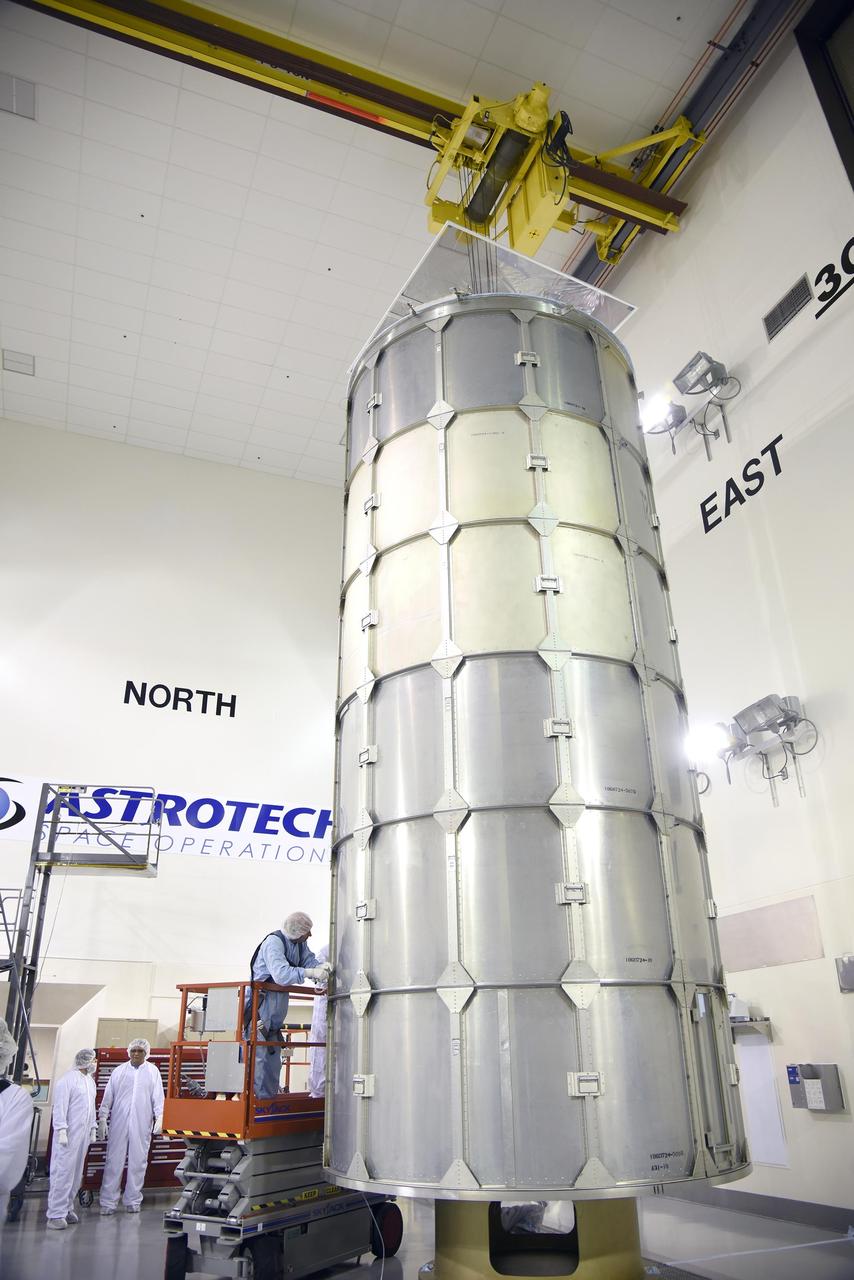
In the Astrotech payload processing facility on Vandenberg Air Force Base in California, technicians secure a transportation canister around NASA Soil Moisture Active Passive SMAP spacecraft for its move to the launch pad.
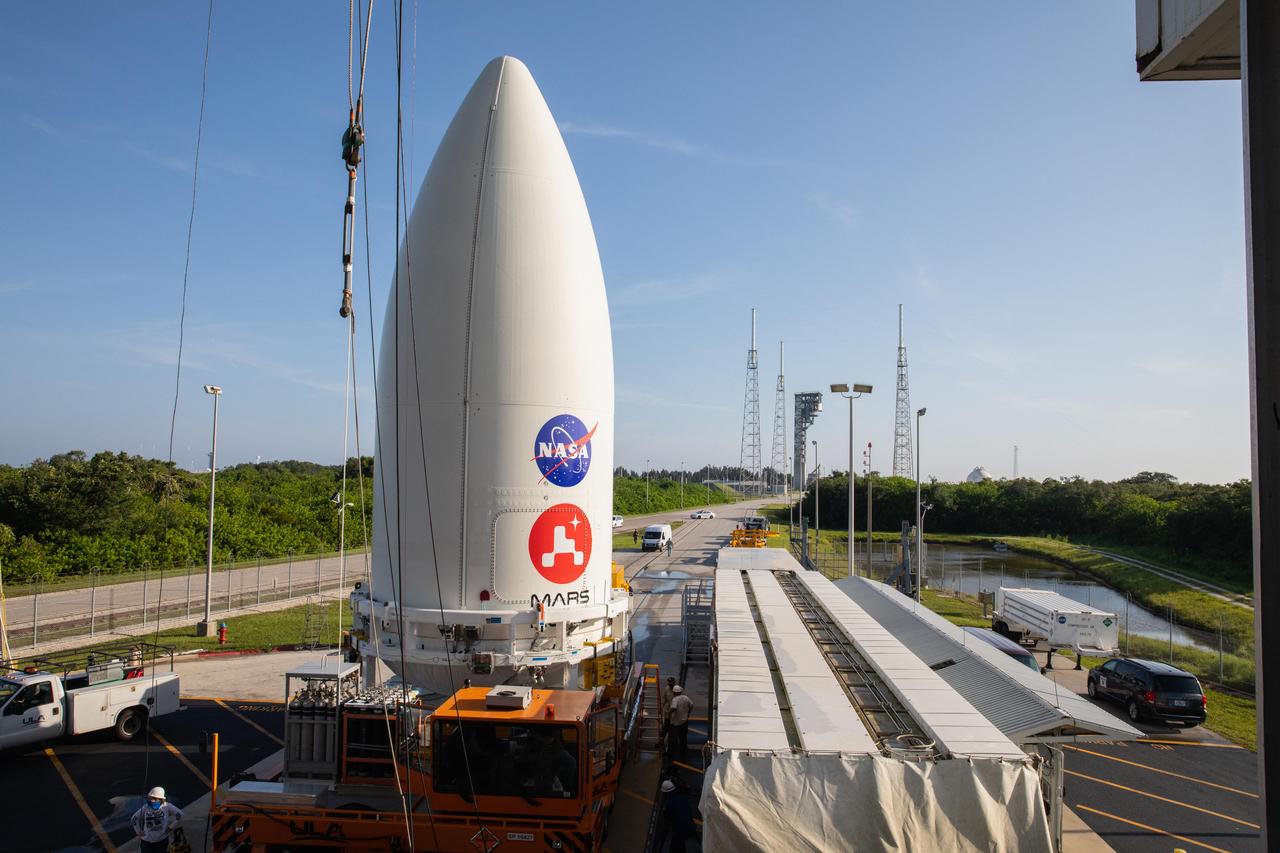
The payload fairing, or nose cone, containing the Mars 2020 Perseverance rover sits atop the motorized payload transporter that will carry it to Space Launch Complex 41 on Cape Canaveral Air Force Station in Florida. The image was taken on July 7, 2020. https://photojournal.jpl.nasa.gov/catalog/PIA23985

Advanced Air Mobility, with its many vehicle concepts and potential uses in both local and intraregional applications, is shown in this illustration.
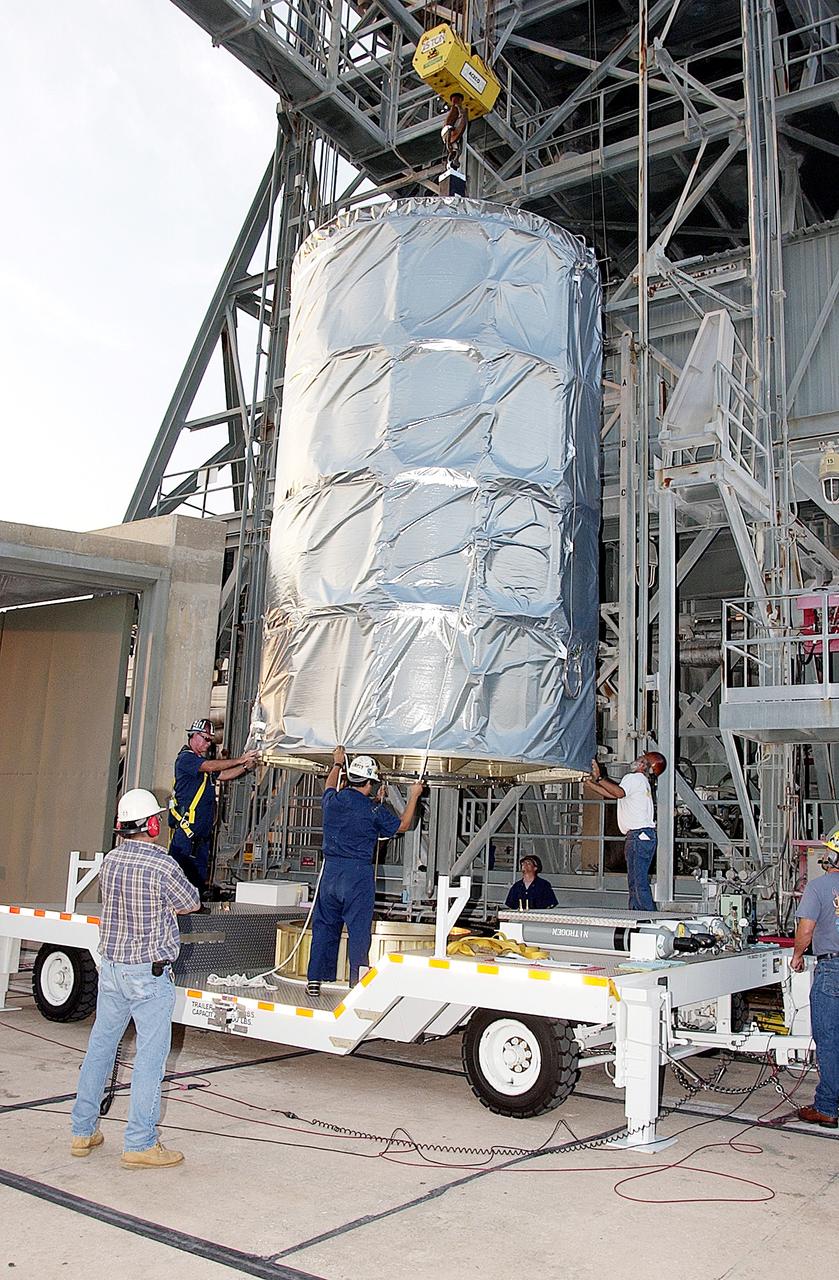
KENNEDY SPACE CENTER, FLA. - On Launch Complex 17-B, Cape Canaveral Air Force Station, the Space Infrared Telescope Facility (SIRTF) observatory is lowered onto a transporter to be taken back to NASA Spacecraft Hangar AE. SIRTF will remain in the clean room at Hangar AE until it returns to the pad in early August.
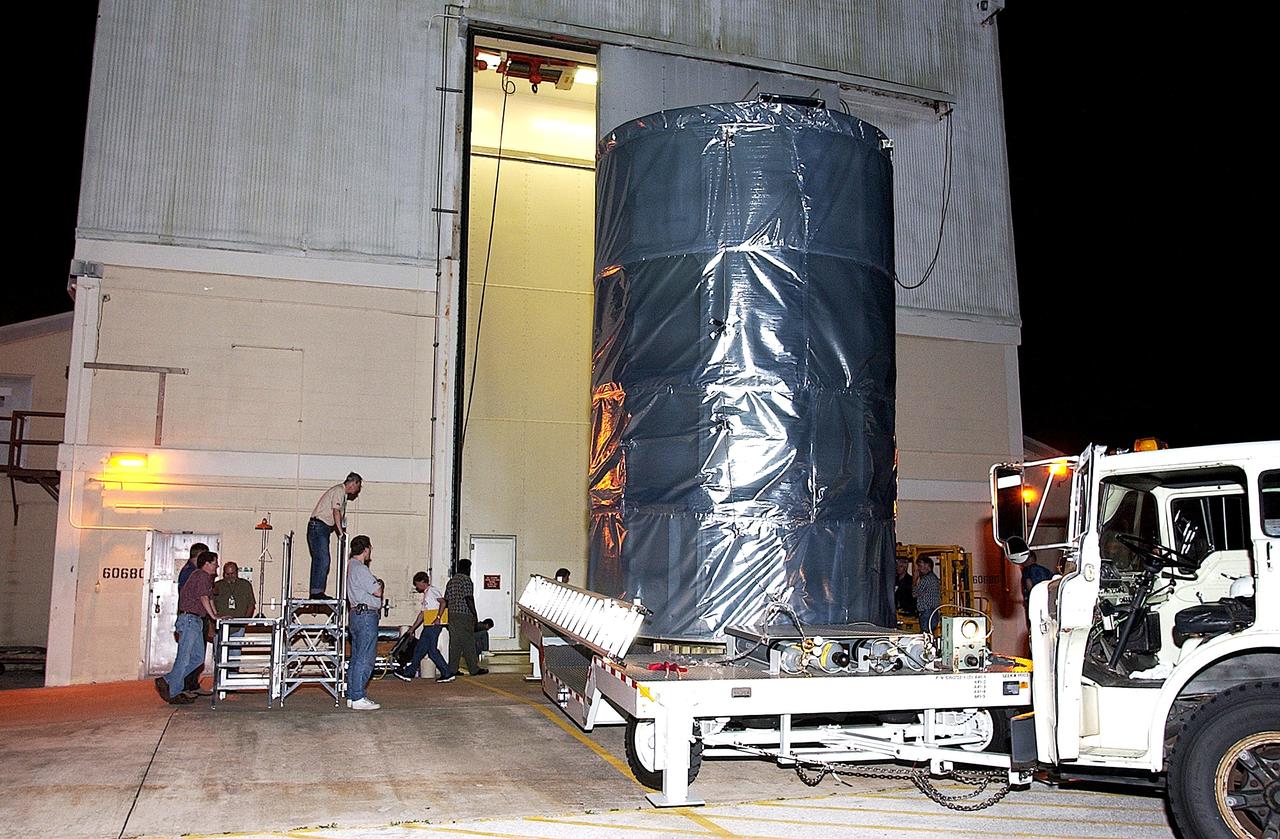
KENNEDY SPACE CENTER, FLA. - On Launch Complex 17-B, Cape Canaveral Air Force Station, the Space Infrared Telescope Facility (SIRTF) observatory is on a transporter to be taken back to NASA Spacecraft Hangar AE. SIRTF will remain in the clean room at Hangar AE until it returns to the pad in early August.
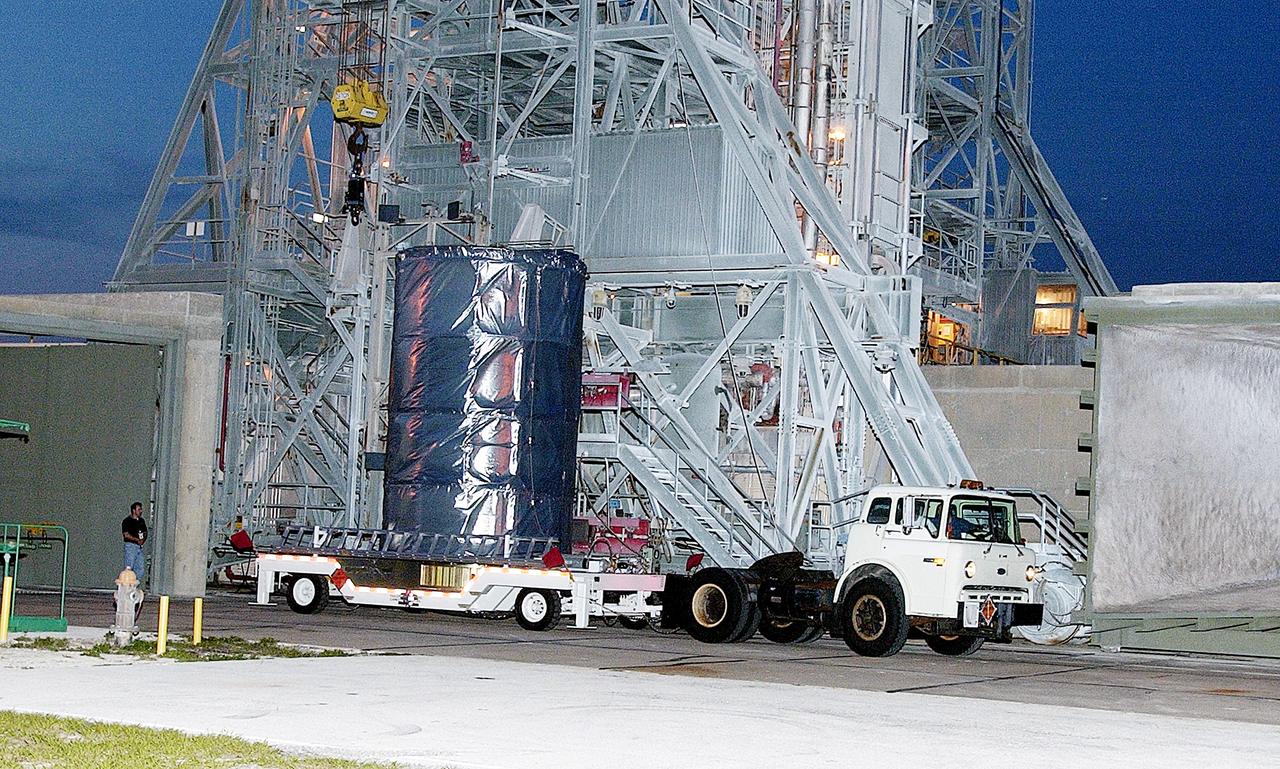
KENNEDY SPACE CENTER, FLA. - On Launch Complex 17-B, Cape Canaveral Air Force Station, the Space Infrared Telescope Facility (SIRTF) observatory is on a transporter to be taken back to NASA Spacecraft Hangar AE. SIRTF will remain in the clean room at Hangar AE until it returns to the pad in early August.
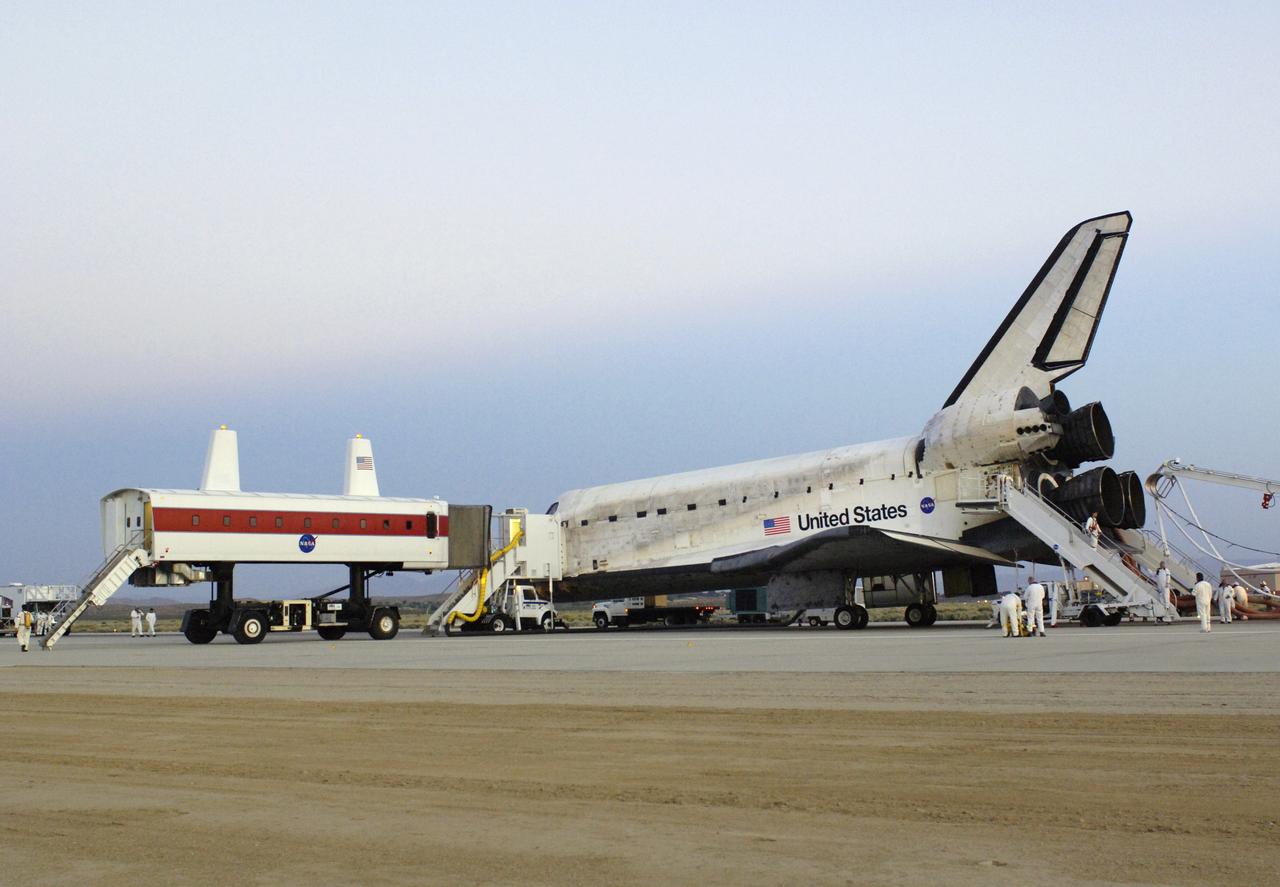
NASA's Crew Transport Vehicle, or CTV, pulls up to the Space Shuttle Discovery to offload the crew after a successful landing August 9, 2005 at Edwards Air Force Base, California. The landing marked the end of the STS-114 mission. Space Shuttle Discovery landed safely at NASA's Dryden Flight Research Center at Edwards Air Force Base in California at 5:11:22 a.m. PDT this morning, following the very successful 14-day STS-114 return to flight mission. During their two weeks in space, Commander Eileen Collins and her six crewmates tested out new safety procedures and delivered supplies and equipment the International Space Station. Discovery spent two weeks in space, where the crew demonstrated new methods to inspect and repair the Shuttle in orbit. The crew also delivered supplies, outfitted and performed maintenance on the International Space Station. A number of these tasks were conducted during three spacewalks. In an unprecedented event, spacewalkers were called upon to remove protruding gap fillers from the heat shield on Discovery's underbelly. In other spacewalk activities, astronauts installed an external platform onto the Station's Quest Airlock and replaced one of the orbital outpost's Control Moment Gyroscopes. Inside the Station, the STS-114 crew conducted joint operations with the Expedition 11 crew. They unloaded fresh supplies from the Shuttle and the Raffaello Multi-Purpose Logistics Module. Before Discovery undocked, the crews filled Raffeallo with unneeded items and returned to Shuttle payload bay. Discovery launched on July 26 and spent almost 14 days on orbit.

Created with data acquired by JPL Atmospheric Infrared Sounder instrument during July 2009 this image shows large-scale patterns of carbon dioxide concentrations that are transported around Earth by the general circulation of the atmosphere.

This image was created with data acquired by JPLa Atmospheric Infrared Sounder during July 2008. The image shows large scale patterns of carbon dioxide concentrations that are transported around the Earth by the general circulation of the atmosphere.
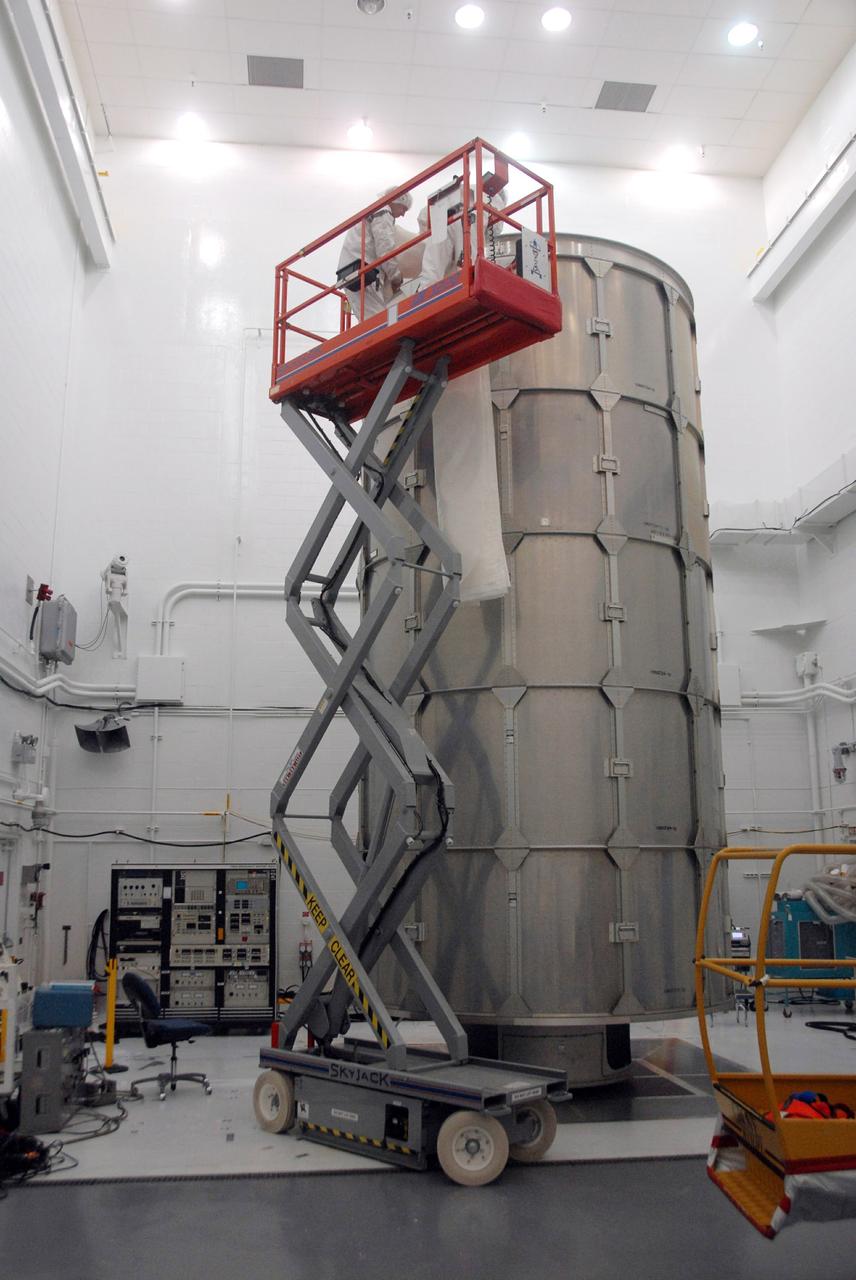
VANDENBERG AIR FORCE BASE, Calif. -- In Bldg. 1610 at Vandenberg Air Force Base in California, workers begin attaching a protective cover over the transportation cover of the NOAA-N Prime spacecraft. The spacecraft will be moved to a transporter. NOAA-N Prime is the latest polar-orbiting operational environmental weather satellite developed by NASA for the National Oceanic and Atmospheric Administration. The satellite is scheduled to launch Feb. 4 aboard a Delta II rocket from Vandenberg Air Force Base. Photo credit: NASA/ Daniel Liberotti, VAFB
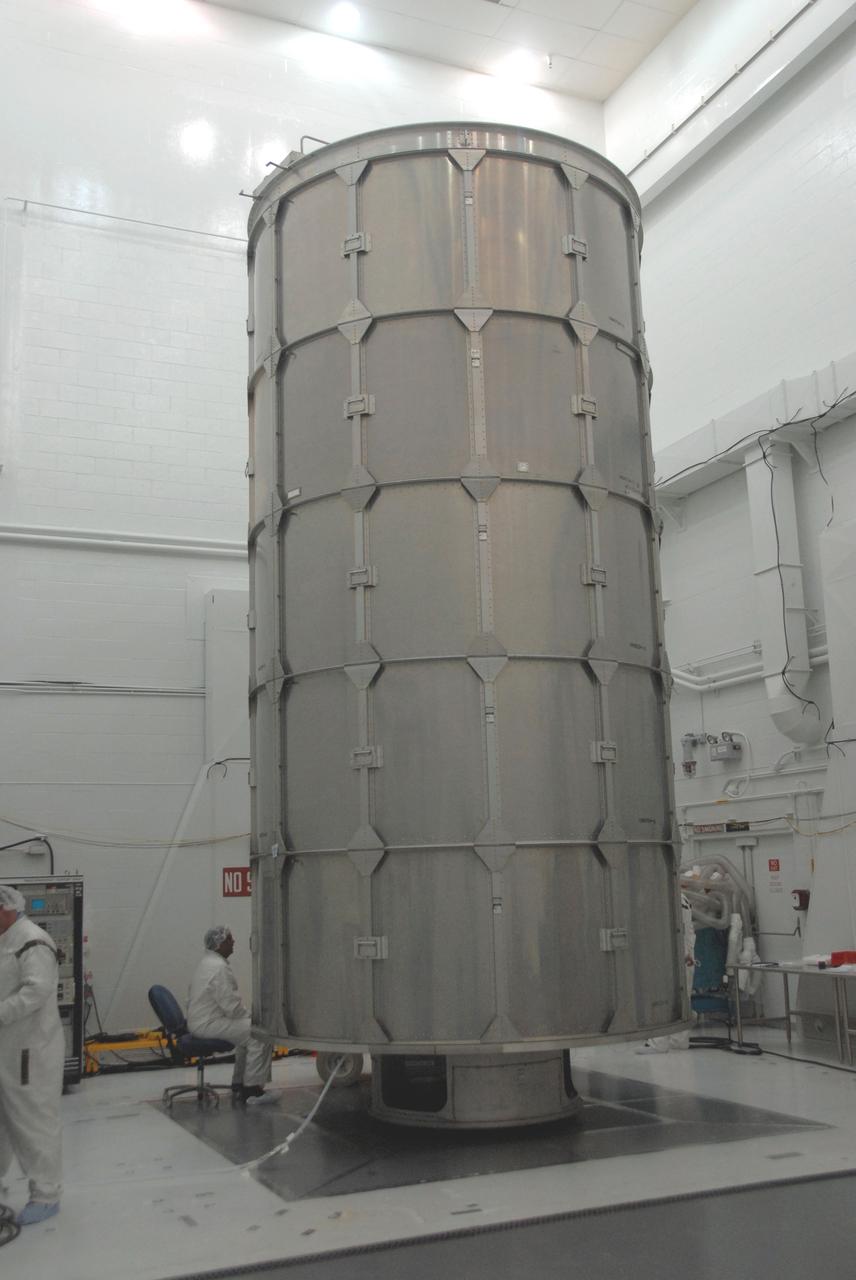
VANDENBERG AIR FORCE BASE, Calif. -- A transportation canister surrounds the NOAA-N Prime spacecraft in Bldg. 1610 at Vandenberg Air Force Base in California. The spacecraft will be moved to a transporter. NOAA-N Prime is the latest polar-orbiting operational environmental weather satellite developed by NASA for the National Oceanic and Atmospheric Administration. The satellite is scheduled to launch Feb. 4 aboard a Delta II rocket from Vandenberg Air Force Base. Photo credit: NASA/ Daniel Liberotti, VAFB
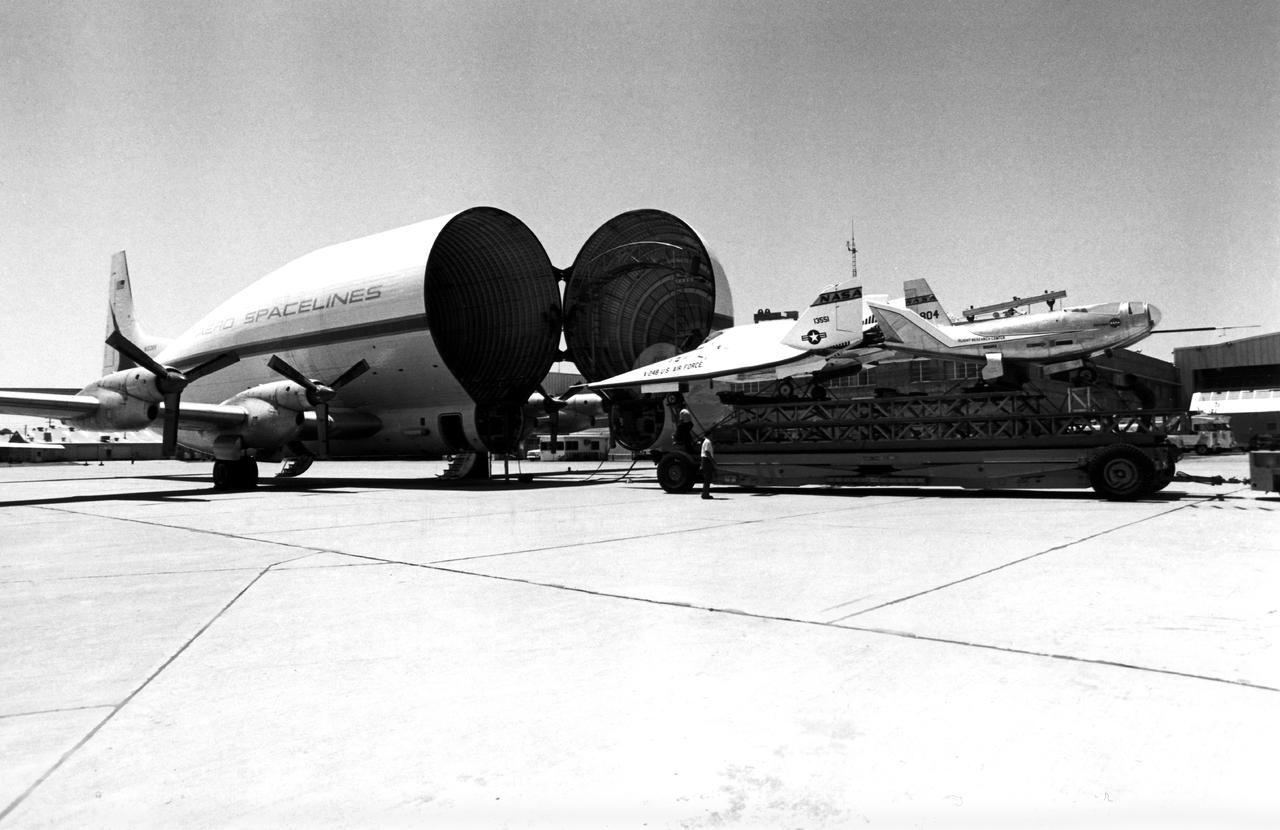
Aero Spacelines B377SGT Super Guppy on Ramp Loading the X-24B and HL-10 Lifting Bodies for Transportation to the Air Force Museum at Wright-Patterson Air Force Base, Ohio
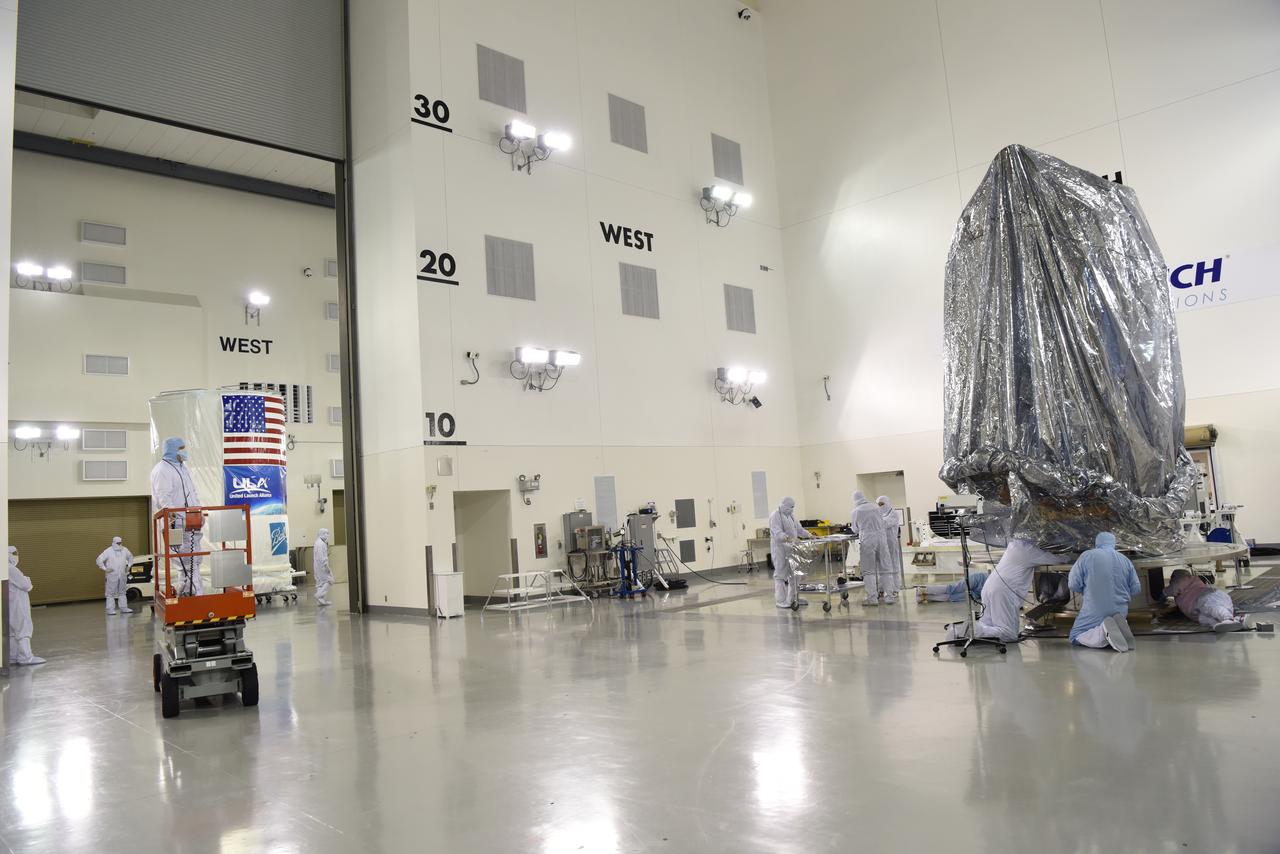
JPSS-1 Spacecraft Canning and Lift to Transport Trailer at the Astrotech facility located at Vandenberg Air Force Station in California.
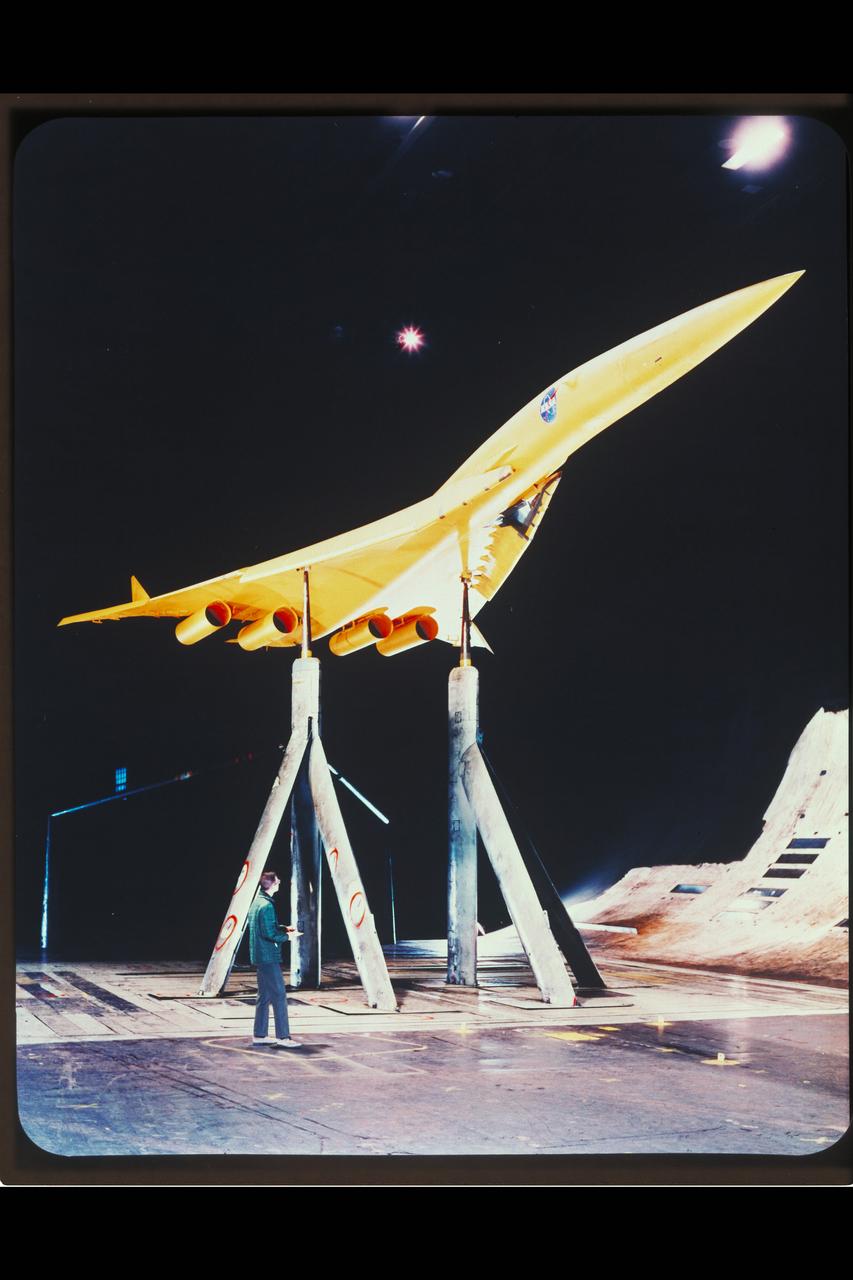
SCAT (Supersonic Commercial Air Transport) 15F, Test-332 in 40x80ft. Wind Tunnel

A fit check of the Orion Crew and Service Module Horizontal Transporter (CHT) with NASA's Super Guppy aircraft began March 12, 2019, at NASA Kennedy Space Center’s Shuttle Landing Facility in Florida, operated by Space Florida. In this photo, the Super Guppy’s payload bay is opened as the CHT, secured on the U.S. Air Force aircraft loader, is moved inside the aircraft’s payload bay. The fit check is being performed to confirm loading operations, ensure that the CHT fits inside the Super Guppy and test the electrical interface to aircraft power. The Orion crew and service modules will be readied for a trip to NASA’s Plum Brook Station in Sandusky, Ohio, for full thermal vacuum testing. In this unique facility, the crew and service modules will be put through extensive testing to ensure they can survive the rigors of launch, space travel, re-entry and splashdown. The Orion spacecraft will launch atop the agency's Space Launch System rocket on Exploration Mission-1.

A fit check of the Orion Crew and Service Module Horizontal Transporter (CHT) with NASA's Super Guppy aircraft is underway March 13, 2019, at NASA Kennedy Space Center’s Shuttle Landing Facility in Florida, operated by Space Florida. In this photo, the CHT, secured on the U.S. Air Force aircraft loader, is moved inside the aircraft’s payload bay. The fit check is being performed to confirm loading operations, ensure that the CHT fits inside the Super Guppy and test the electrical interface to aircraft power. The Orion crew and service modules will be readied for a trip to NASA’s Plum Brook Station in Sandusky, Ohio, for full thermal vacuum testing. In this unique facility, the crew and service modules will be put through extensive testing to ensure they can survive the rigors of launch, space travel, re-entry and splashdown. The Orion spacecraft will launch atop the agency's Space Launch System rocket on Exploration Mission-1.
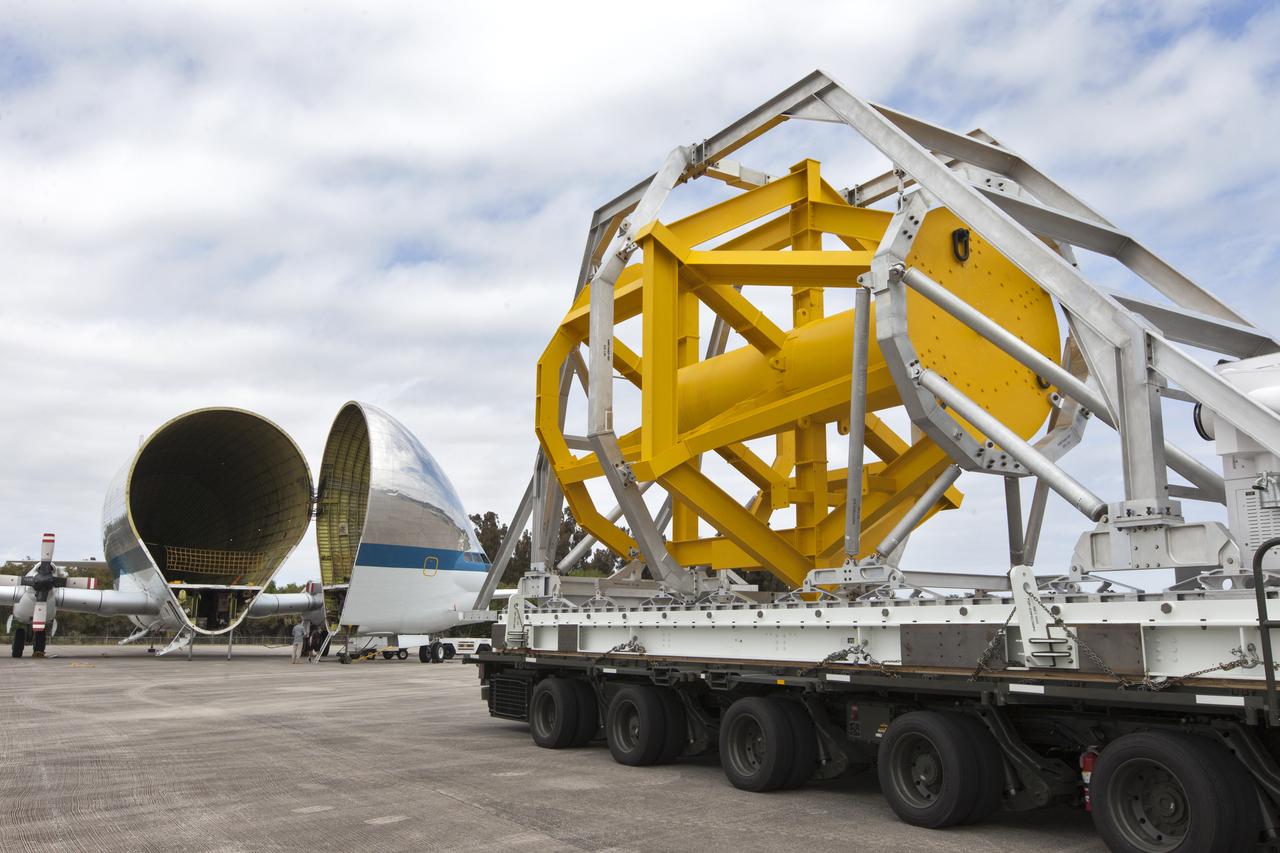
A fit check of the Orion Crew and Service Module Horizontal Transporter (CHT) with NASA's Super Guppy aircraft began March 12, 2019, at NASA Kennedy Space Center’s Shuttle Landing Facility in Florida, operated by Space Florida. In this photo, the Super Guppy’s payload bay is opened as the CHT, secured on the U.S. Air Force aircraft loader, is moved toward the aircraft. The fit check is being performed to confirm loading operations, ensure that the CHT fits inside the Super Guppy and test the electrical interface to aircraft power. The Orion crew and service modules will be readied for a trip to NASA’s Plum Brook Station in Sandusky, Ohio, for full thermal vacuum testing. In this unique facility, the crew and service modules will be put through extensive testing to ensure they can survive the rigors of launch, space travel, re-entry and splashdown. The Orion spacecraft will launch atop the agency's Space Launch System rocket on Exploration Mission-1.
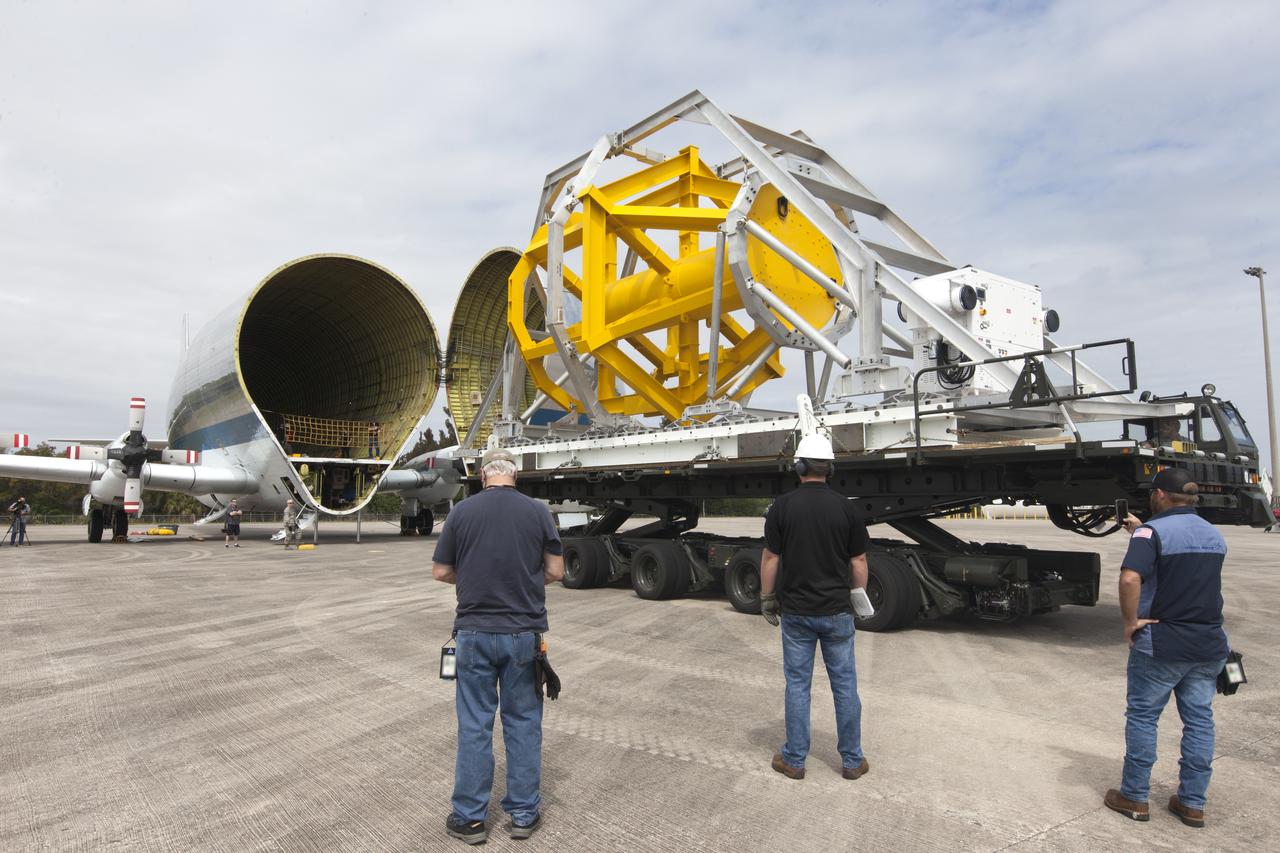
A fit check of the Orion Crew and Service Module Horizontal Transporter (CHT) with NASA's Super Guppy aircraft began March 12, 2019, at NASA Kennedy Space Center’s Shuttle Landing Facility in Florida, operated by Space Florida. In this photo, the Super Guppy’s payload bay is opened as the CHT, secured on the U.S. Air Force aircraft loader, is moved toward the aircraft. The fit check is being performed to confirm loading operations, ensure that the CHT fits inside the Super Guppy and test the electrical interface to aircraft power. The Orion crew and service modules will be readied for a trip to NASA’s Plum Brook Station in Sandusky, Ohio, for full thermal vacuum testing. In this unique facility, the crew and service modules will be put through extensive testing to ensure they can survive the rigors of launch, space travel, re-entry and splashdown. The Orion spacecraft will launch atop the agency's Space Launch System rocket on Exploration Mission-1.
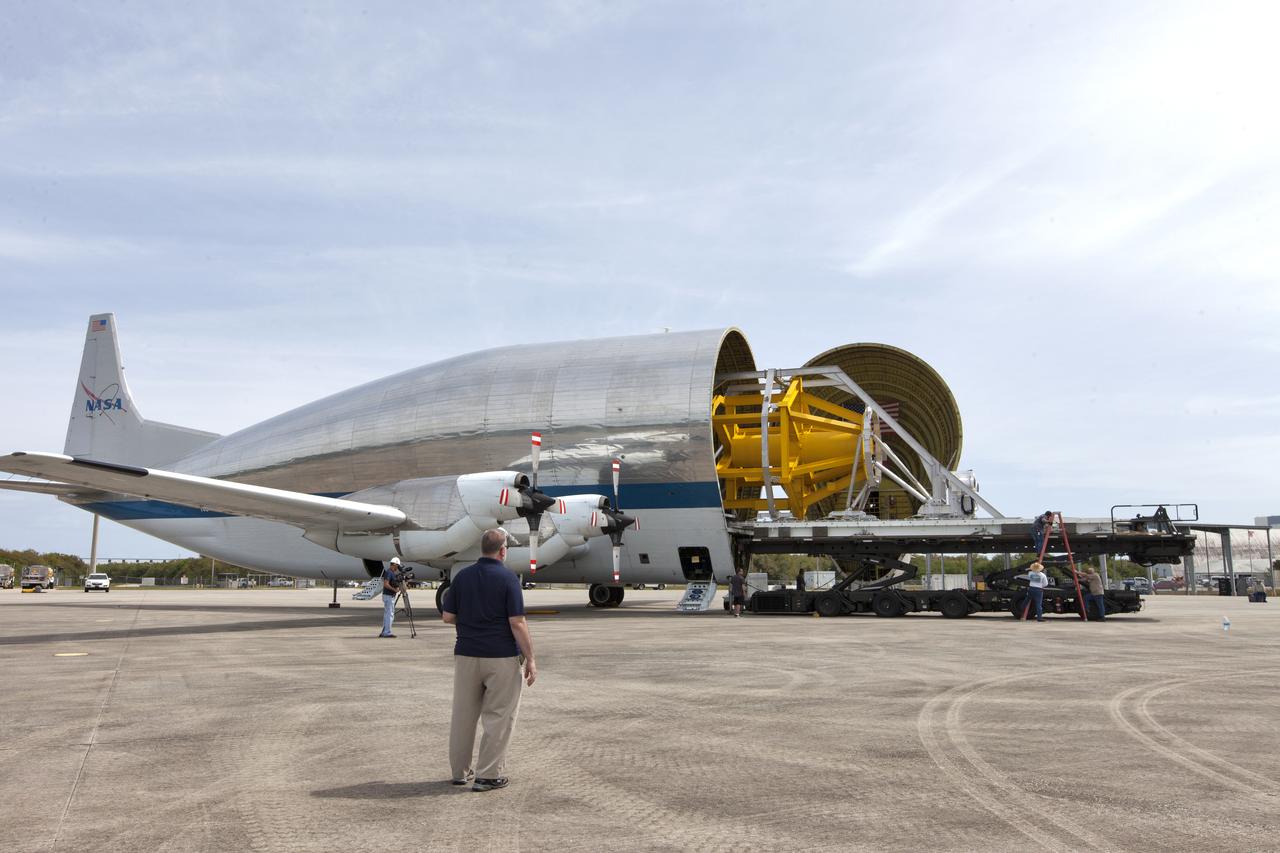
A fit check of the Orion Crew and Service Module Horizontal Transporter (CHT) with NASA's Super Guppy aircraft is underway March 13, 2019, at NASA Kennedy Space Center’s Shuttle Landing Facility in Florida, operated by Space Florida. In this photo, the CHT, secured on the U.S. Air Force aircraft loader, is moved inside the aircraft’s payload bay. The fit check is being performed to confirm loading operations, ensure that the CHT fits inside the Super Guppy and test the electrical interface to aircraft power. The Orion crew and service modules will be readied for a trip to NASA’s Plum Brook Station in Sandusky, Ohio, for full thermal vacuum testing. In this unique facility, the crew and service modules will be put through extensive testing to ensure they can survive the rigors of launch, space travel, re-entry and splashdown. The Orion spacecraft will launch atop the agency's Space Launch System rocket on Exploration Mission-1.

A fit check of the Orion Crew and Service Module Horizontal Transporter (CHT) with NASA's Super Guppy aircraft began March 12, 2019, at NASA Kennedy Space Center’s Shuttle Landing Facility in Florida, operated by Space Florida. In this photo, the CHT is secured on the U.S. Air Force aircraft loader. The fit check is being performed to confirm loading operations, ensure that the CHT fits inside the Super Guppy and test the electrical interface to aircraft power. The Orion crew and service modules will be readied for a trip to NASA’s Plum Brook Station in Sandusky, Ohio, for full thermal vacuum testing. In this unique facility, the crew and service modules will be put through extensive testing to ensure they can survive the rigors of launch, space travel, re-entry and splashdown. The Orion spacecraft will launch atop the agency's Space Launch System rocket on Exploration Mission-1.
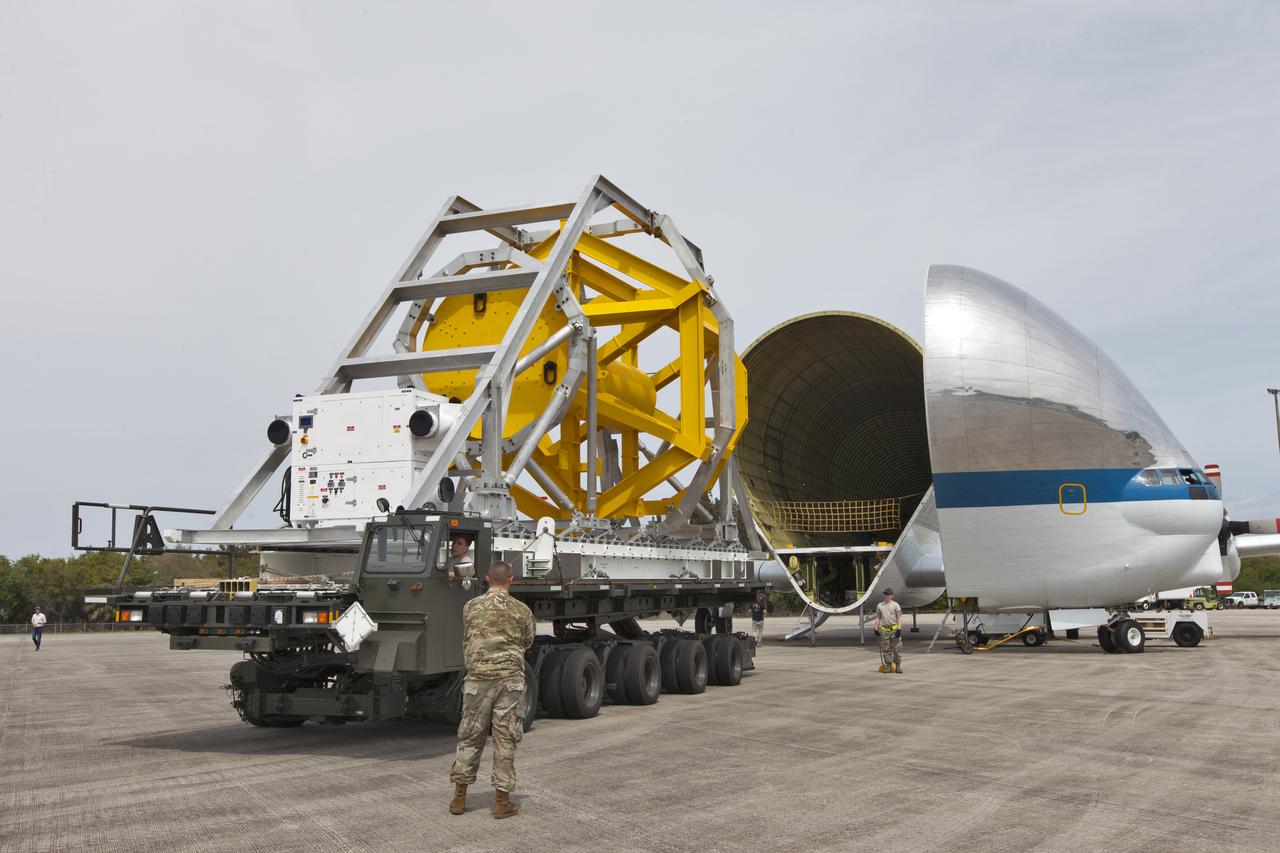
A fit check of the Orion Crew and Service Module Horizontal Transporter (CHT) with NASA's Super Guppy aircraft is underway March 13, 2019, at NASA Kennedy Space Center’s Shuttle Landing Facility in Florida, operated by Space Florida. In this photo, the CHT, secured on the U.S. Air Force aircraft loader, is moved toward the Super Guppy’s open payload bay. The fit check is being performed to confirm loading operations, ensure that the CHT fits inside the Super Guppy and test the electrical interface to aircraft power. The Orion crew and service modules will be readied for a trip to NASA’s Plum Brook Station in Sandusky, Ohio, for full thermal vacuum testing. In this unique facility, the crew and service modules will be put through extensive testing to ensure they can survive the rigors of launch, space travel, re-entry and splashdown. The Orion spacecraft will launch atop the agency's Space Launch System rocket on Exploration Mission-1.
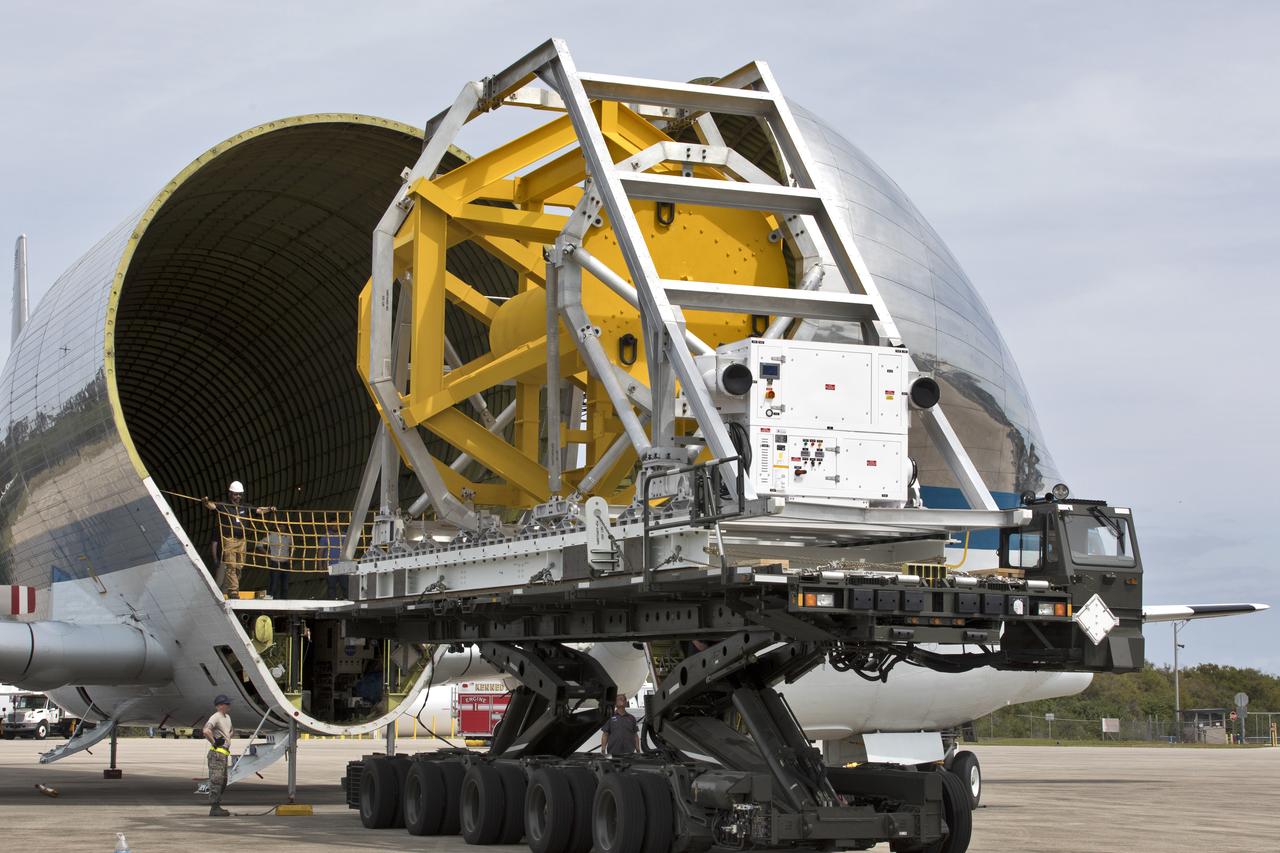
A fit check of the Orion Crew and Service Module Horizontal Transporter (CHT) with NASA's Super Guppy aircraft is underway March 13, 2019, at NASA Kennedy Space Center’s Shuttle Landing Facility in Florida, operated by Space Florida. In this photo, the Super Guppy’s payload bay has been opened and the CHT, secured on the U.S. Air Force aircraft loader, is moved inside the aircraft’s payload bay. The fit check is being performed to confirm loading operations, ensure that the CHT fits inside the Super Guppy and test the electrical interface to aircraft power. The Orion crew and service modules will be readied for a trip to NASA’s Plum Brook Station in Sandusky, Ohio, for full thermal vacuum testing. In this unique facility, the crew and service modules will be put through extensive testing to ensure they can survive the rigors of launch, space travel, re-entry and splashdown. The Orion spacecraft will launch atop the agency's Space Launch System rocket on Exploration Mission-1.
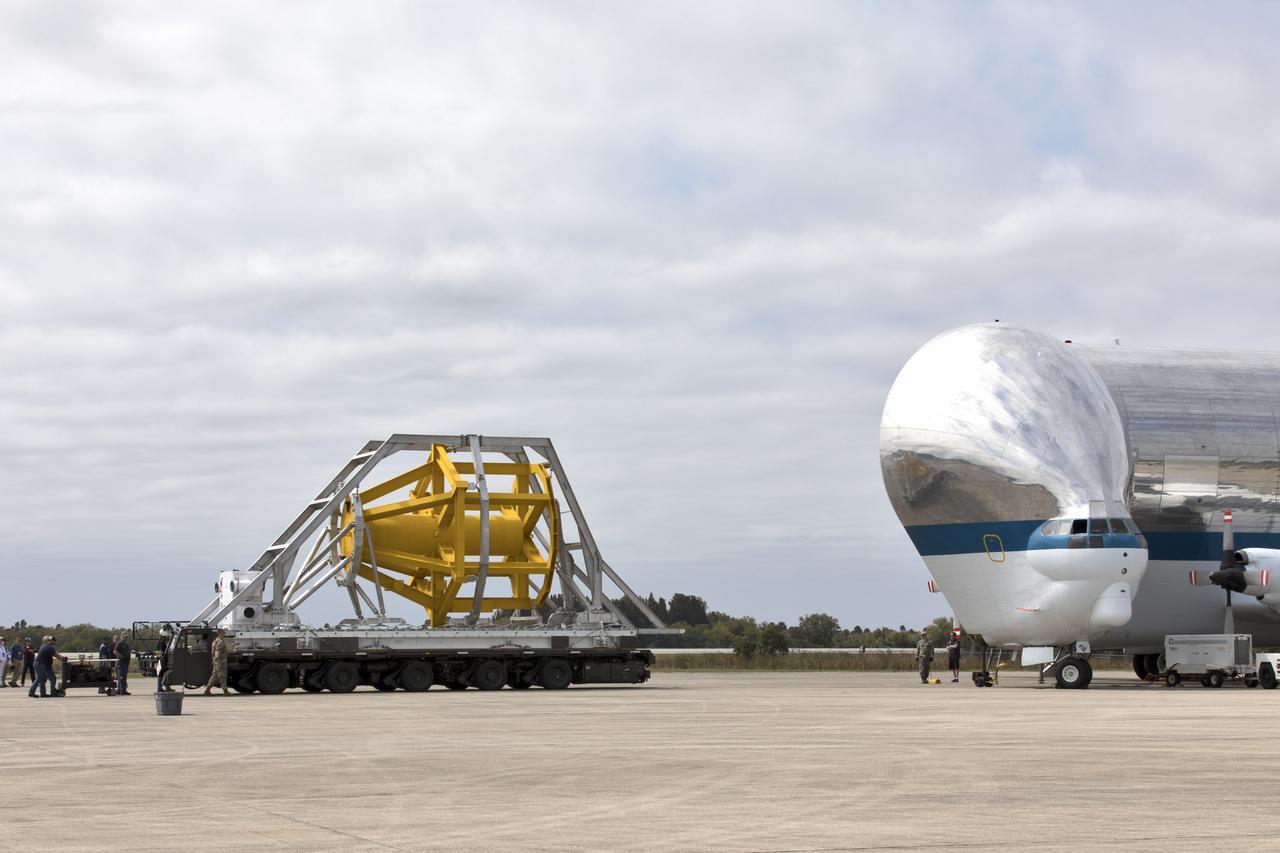
A fit check of the Orion Crew and Service Module Horizontal Transporter (CHT) with NASA's Super Guppy aircraft began March 12, 2019, at NASA Kennedy Space Center’s Shuttle Landing Facility in Florida, operated by Space Florida. In this photo, the U.S. Air Force aircraft loader with the CHT is moved toward the Super Guppy. The fit check is being performed to confirm loading operations, ensure that the CHT fits inside the Super Guppy and test the electrical interface to aircraft power. The Orion crew and service modules will be readied for a trip to NASA’s Plum Brook Station in Sandusky, Ohio, for full thermal vacuum testing. In this unique facility, the crew and service modules will be put through extensive testing to ensure they can survive the rigors of launch, space travel, re-entry and splashdown. The Orion spacecraft will launch atop the agency's Space Launch System rocket on Exploration Mission-1.
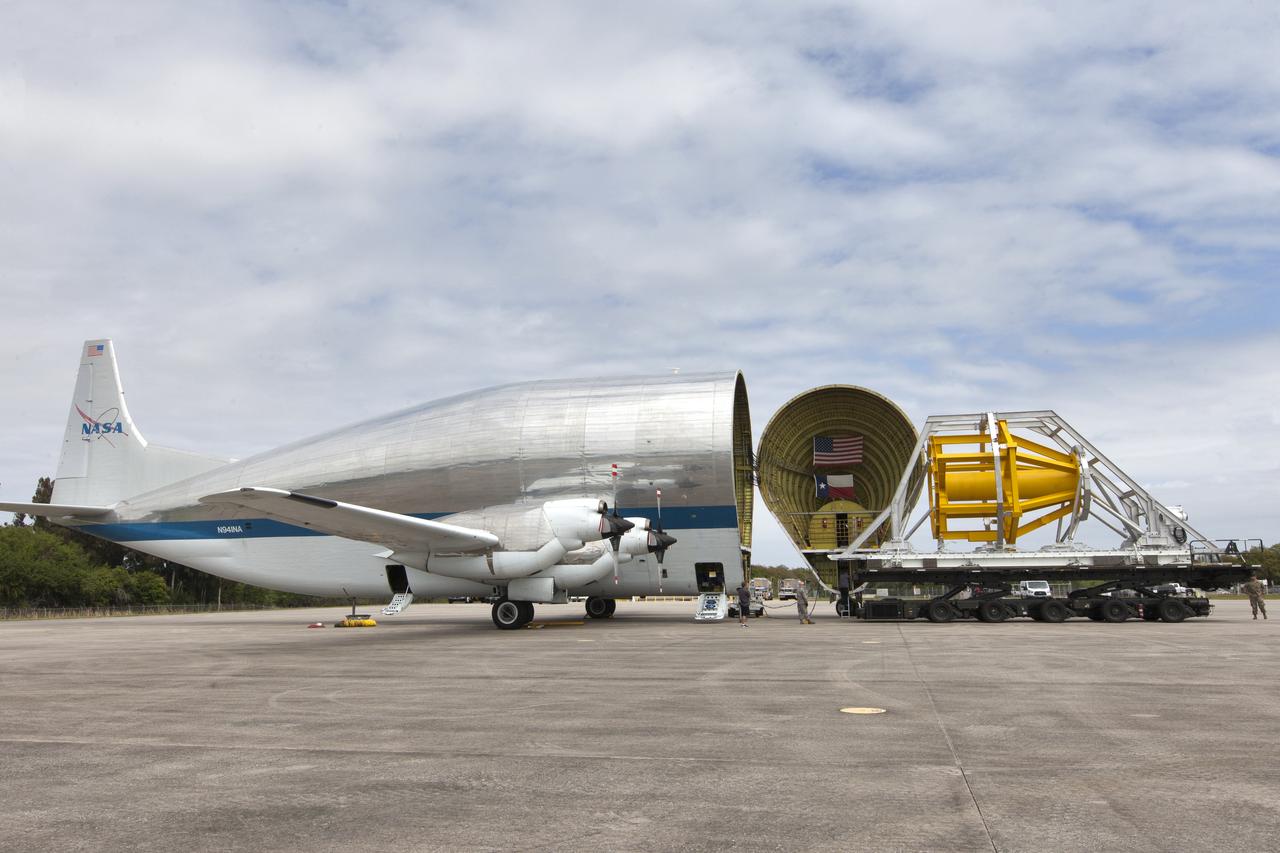
A fit check of the Orion Crew and Service Module Horizontal Transporter (CHT) with NASA's Super Guppy aircraft began March 12, 2019, at NASA Kennedy Space Center’s Shuttle Landing Facility in Florida, operated by Space Florida. In this photo, the Super Guppy’s payload bay is opened as the CHT, secured on the U.S. Air Force aircraft loader, is moved toward the aircraft. The fit check is being performed to confirm loading operations, ensure that the CHT fits inside the Super Guppy and test the electrical interface to aircraft power. The Orion crew and service modules will be readied for a trip to NASA’s Plum Brook Station in Sandusky, Ohio, for full thermal vacuum testing. In this unique facility, the crew and service modules will be put through extensive testing to ensure they can survive the rigors of launch, space travel, re-entry and splashdown. The Orion spacecraft will launch atop the agency's Space Launch System rocket on Exploration Mission-1.
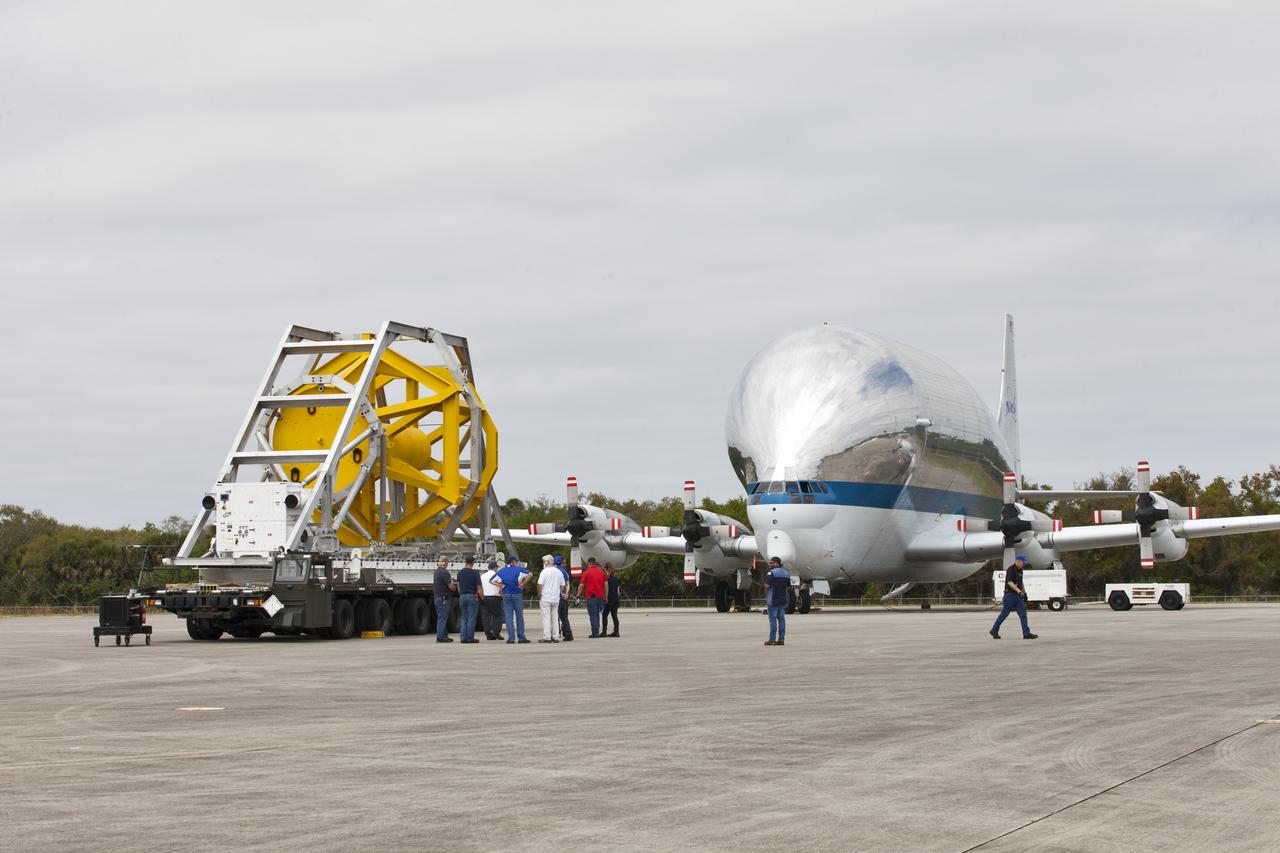
A fit check of the Orion Crew and Service Module Horizontal Transporter (CHT) with NASA's Super Guppy aircraft is underway March 13, 2019, at NASA Kennedy Space Center’s Shuttle Landing Facility in Florida, operated by Space Florida. In this photo, the CHT is secured on the U.S. Air Force aircraft loader and is being moved toward the Super Guppy. The fit check is being performed to confirm loading operations, ensure that the CHT fits inside the Super Guppy and test the electrical interface to aircraft power. The Orion crew and service modules will be readied for a trip to NASA’s Plum Brook Station in Sandusky, Ohio, for full thermal vacuum testing. In this unique facility, the crew and service modules will be put through extensive testing to ensure they can survive the rigors of launch, space travel, re-entry and splashdown. The Orion spacecraft will launch atop the agency's Space Launch System rocket on Exploration Mission-1.
A fit check of the Orion Crew and Service Module Horizontal Transporter (CHT) with NASA's Super Guppy aircraft began March 12, 2019, at NASA Kennedy Space Center’s Shuttle Landing Facility in Florida, operated by Space Florida. In this photo, the CHT is secured on the U.S. Air Force aircraft loader. The fit check is being performed to confirm loading operations, ensure that the CHT fits inside the Super Guppy and test the electrical interface to aircraft power. The Orion crew and service modules will be readied for a trip to NASA’s Plum Brook Station in Sandusky, Ohio, for full thermal vacuum testing. In this unique facility, the crew and service modules will be put through extensive testing to ensure they can survive the rigors of launch, space travel, re-entry and splashdown. The Orion spacecraft will launch atop the agency's Space Launch System rocket on Exploration Mission-1.
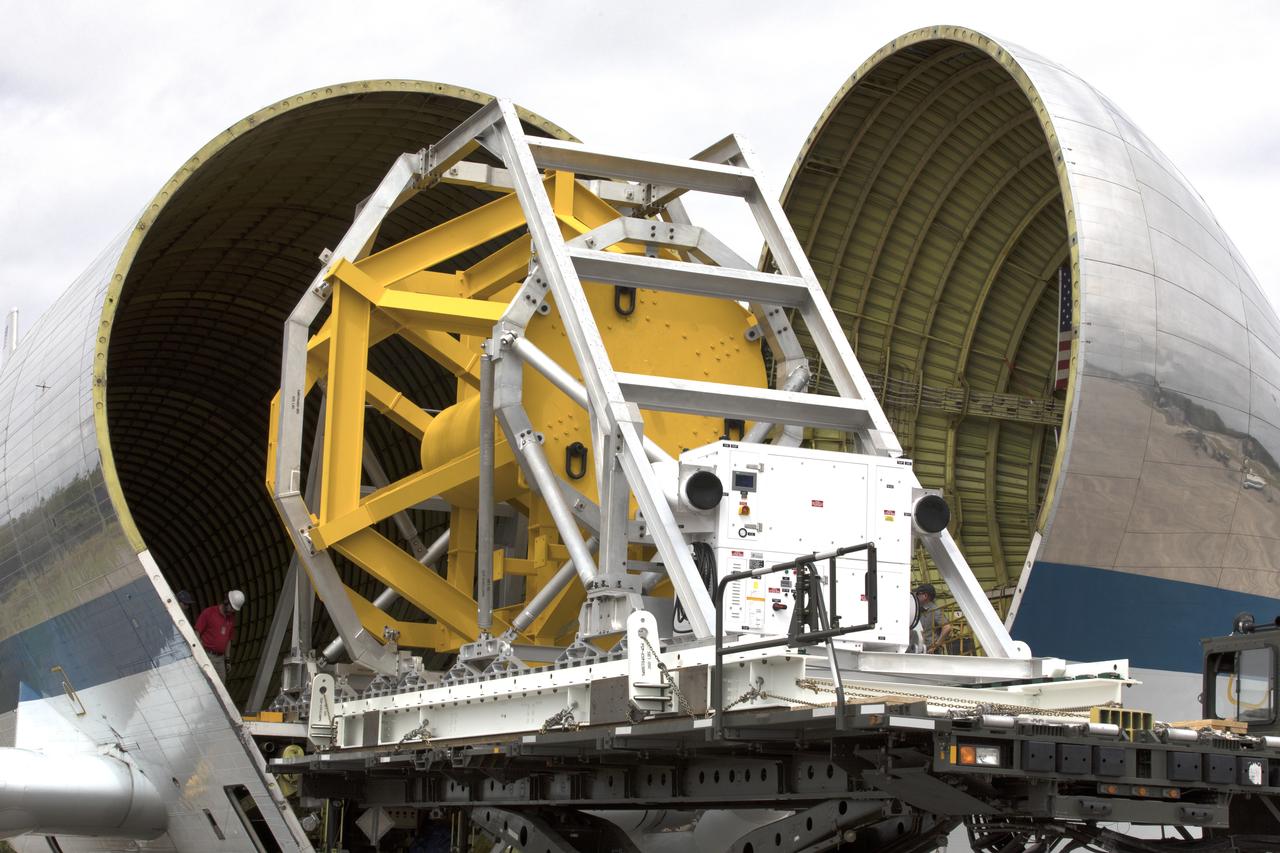
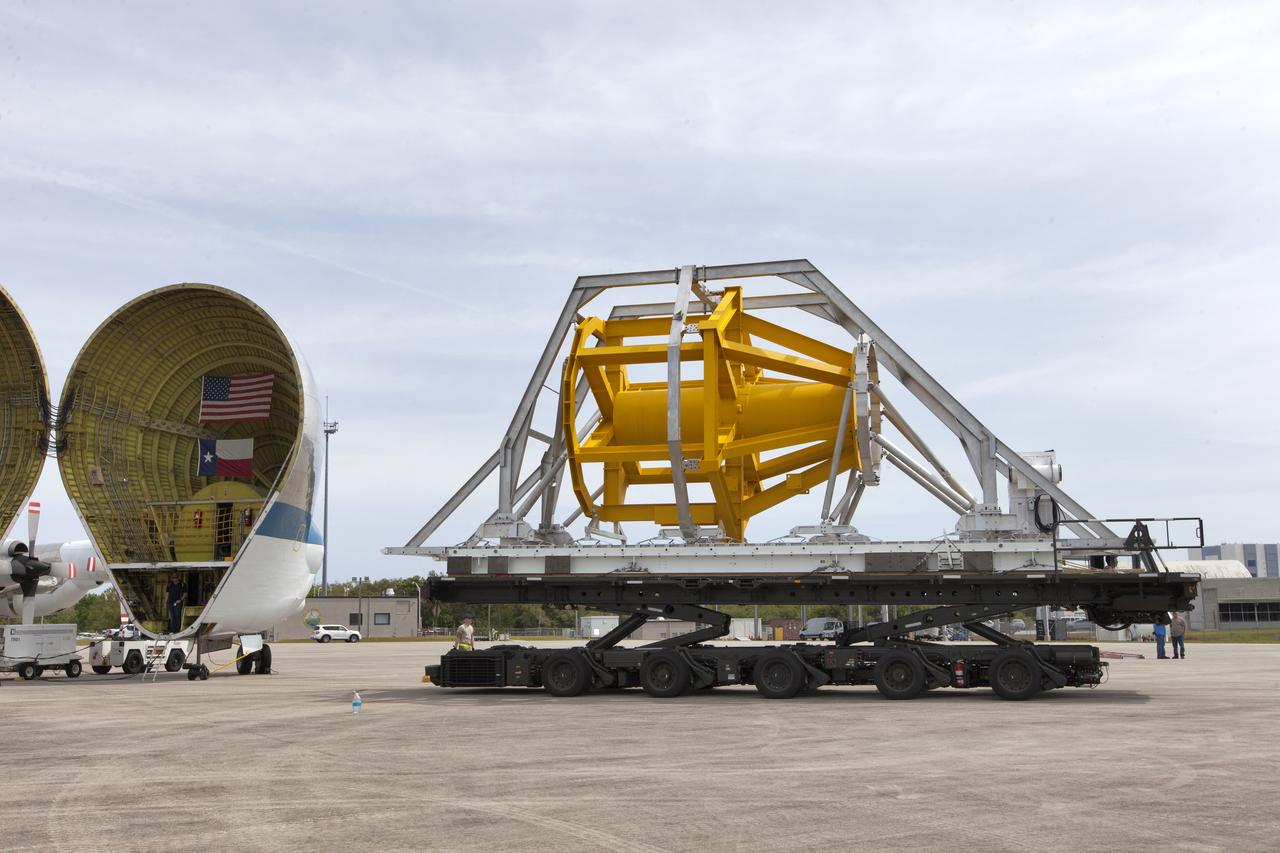
A fit check of the Orion Crew and Service Module Horizontal Transporter (CHT) with NASA's Super Guppy aircraft began March 12, 2019, at NASA Kennedy Space Center’s Shuttle Landing Facility in Florida, operated by Space Florida. In this photo, the Super Guppy’s payload bay is opened as the CHT, secured on the U.S. Air Force aircraft loader, is moved inside the aircraft’s payload bay. The fit check is being performed to confirm loading operations, ensure that the CHT fits inside the Super Guppy and test the electrical interface to aircraft power. The Orion crew and service modules will be readied for a trip to NASA’s Plum Brook Station in Sandusky, Ohio, for full thermal vacuum testing. In this unique facility, the crew and service modules will be put through extensive testing to ensure they can survive the rigors of launch, space travel, re-entry and splashdown. The Orion spacecraft will launch atop the agency's Space Launch System rocket on Exploration Mission-1.
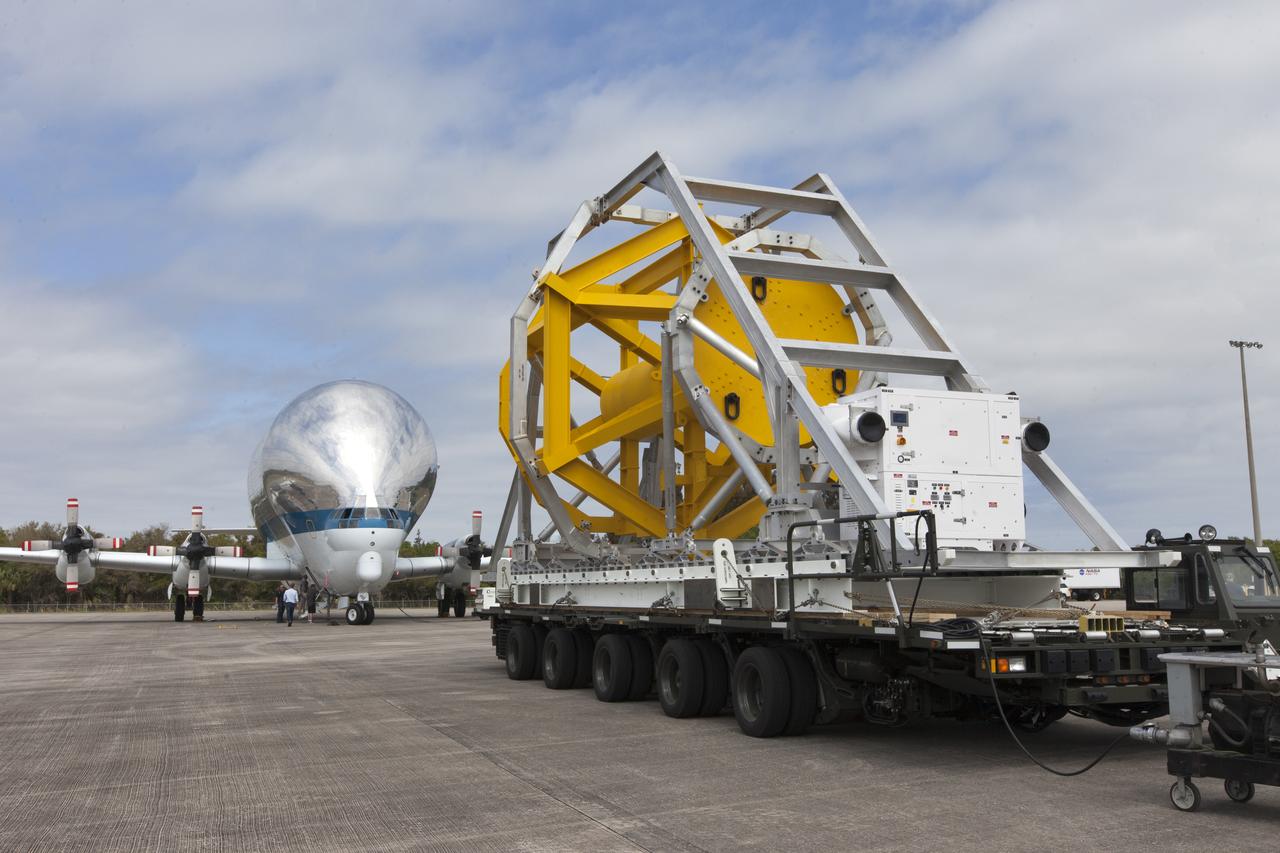
A fit check of the Orion Crew and Service Module Horizontal Transporter (CHT) with NASA's Super Guppy aircraft began March 12, 2019, at NASA Kennedy Space Center’s Shuttle Landing Facility in Florida, operated by Space Florida. In this photo, the CHT is secured on the U.S. Air Force aircraft loader. The fit check is being performed to confirm loading operations, ensure that the CHT fits inside the Super Guppy and test the electrical interface to aircraft power. The Orion crew and service modules will be readied for a trip to NASA’s Plum Brook Station in Sandusky, Ohio, for full thermal vacuum testing. In this unique facility, the crew and service modules will be put through extensive testing to ensure they can survive the rigors of launch, space travel, re-entry and splashdown. The Orion spacecraft will launch atop the agency's Space Launch System rocket on Exploration Mission-1.
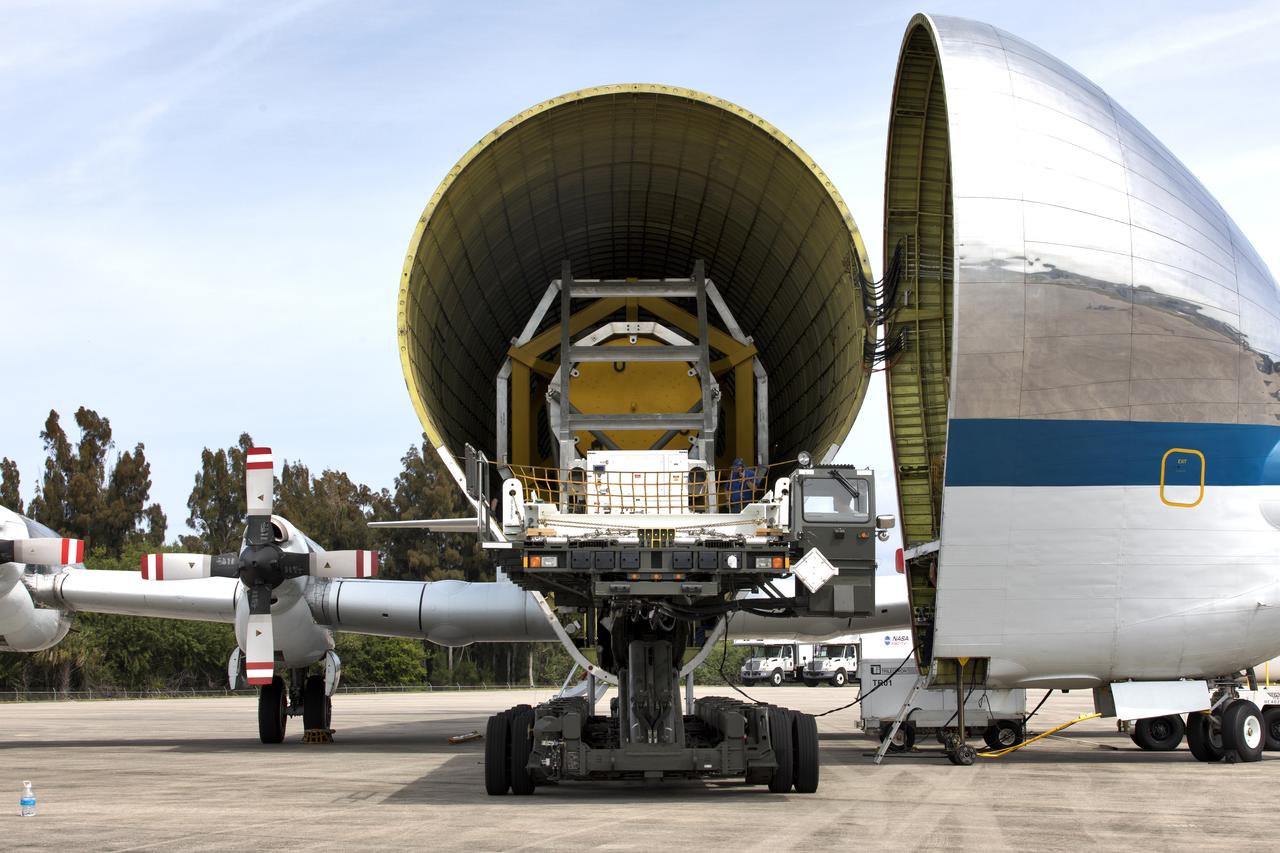
A fit check of the Orion Crew and Service Module Horizontal Transporter (CHT) with NASA's Super Guppy aircraft is underway March 13, 2019, at NASA Kennedy Space Center’s Shuttle Landing Facility in Florida, operated by Space Florida. In this photo, the CHT, secured on the U.S. Air Force aircraft loader, is moved inside the aircraft’s payload bay. The fit check is being performed to confirm loading operations, ensure that the CHT fits inside the Super Guppy and test the electrical interface to aircraft power. The Orion crew and service modules will be readied for a trip to NASA’s Plum Brook Station in Sandusky, Ohio, for full thermal vacuum testing. In this unique facility, the crew and service modules will be put through extensive testing to ensure they can survive the rigors of launch, space travel, re-entry and splashdown. The Orion spacecraft will launch atop the agency's Space Launch System rocket on Exploration Mission-1.
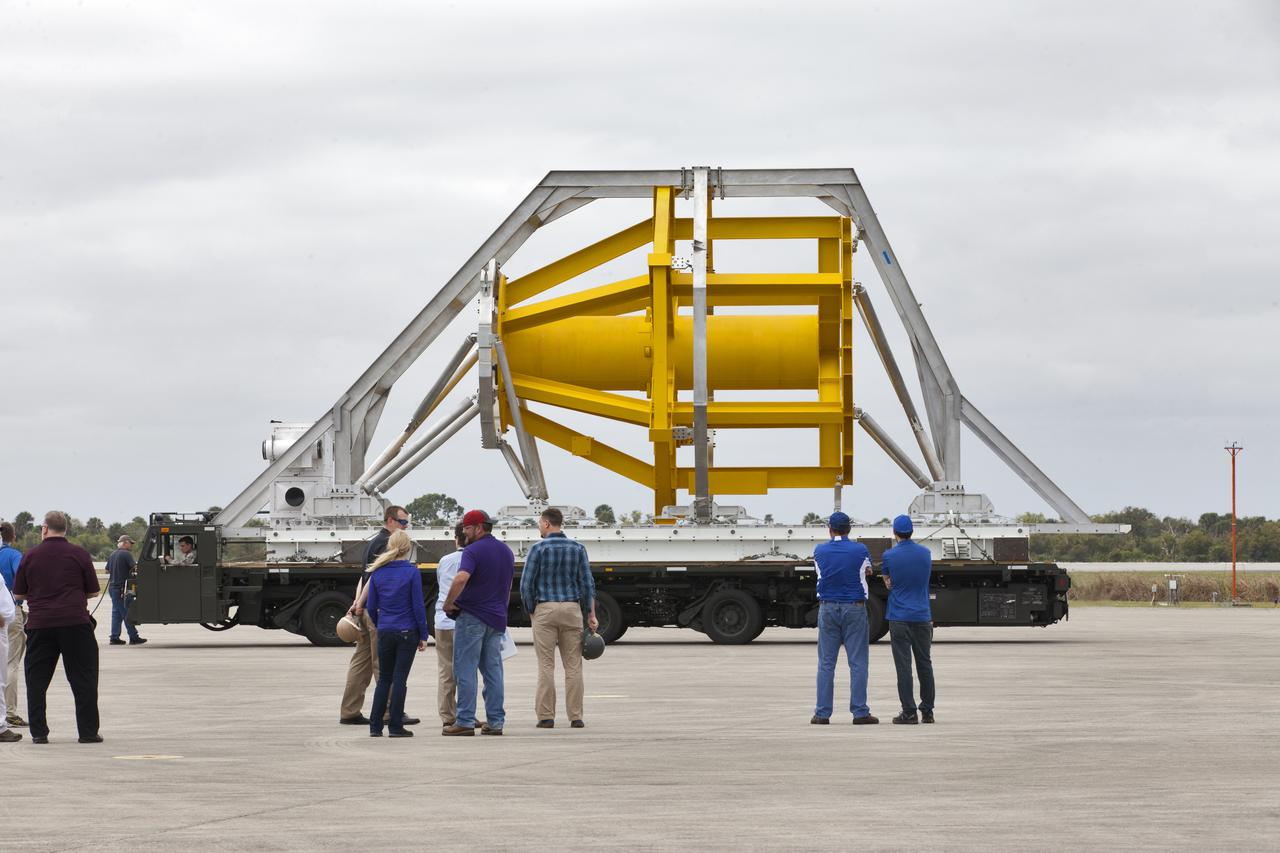
A fit check of the Orion Crew and Service Module Horizontal Transporter (CHT) with NASA's Super Guppy aircraft began March 12, 2019, at NASA Kennedy Space Center’s Shuttle Landing Facility in Florida, operated by Space Florida. In this photo, the CHT is secured on the U.S. Air Force aircraft loader. The fit check is being performed to confirm loading operations, ensure that the CHT fits inside the Super Guppy and test the electrical interface to aircraft power. The Orion crew and service modules will be readied for a trip to NASA’s Plum Brook Station in Sandusky, Ohio, for full thermal vacuum testing. In this unique facility, the crew and service modules will be put through extensive testing to ensure they can survive the rigors of launch, space travel, re-entry and splashdown. The Orion spacecraft will launch atop the agency's Space Launch System rocket on Exploration Mission-1.
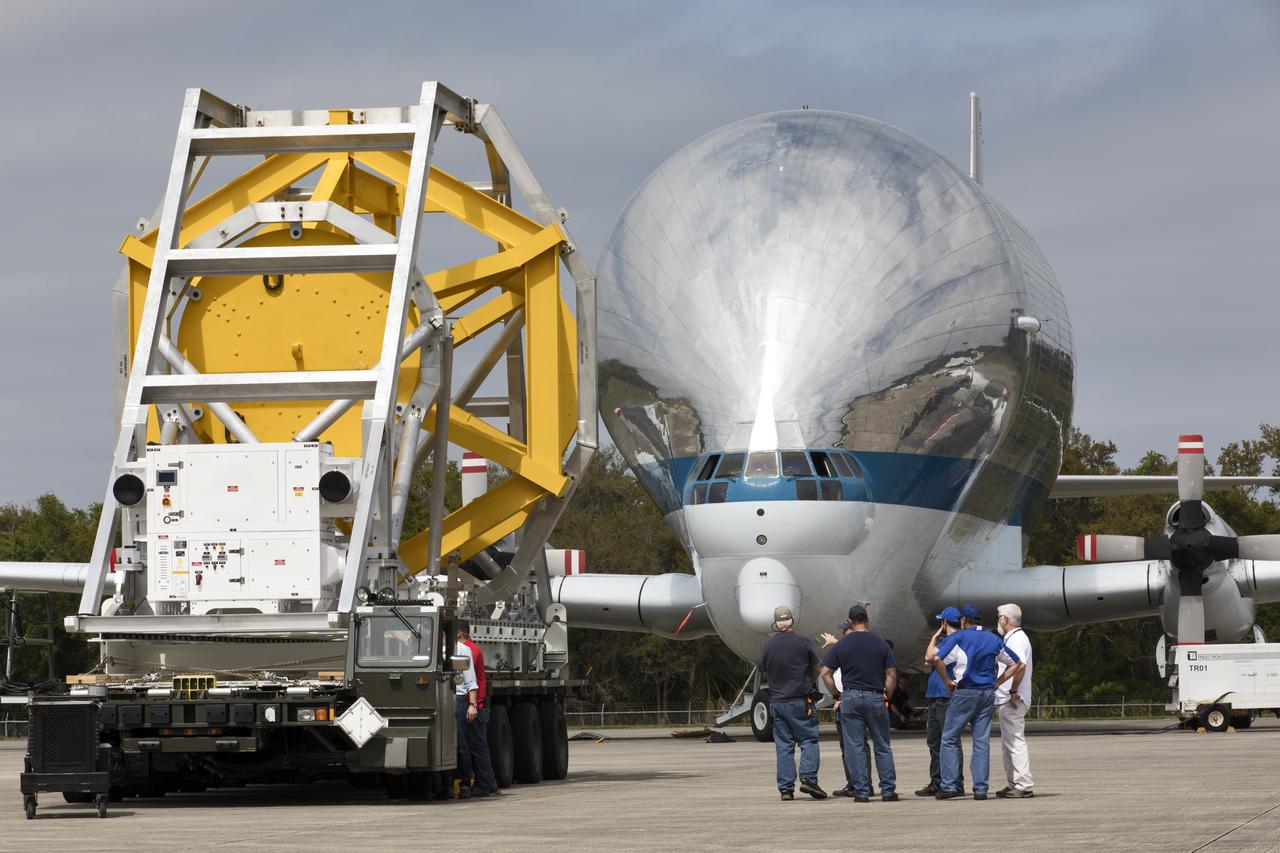
A fit check of the Orion Crew and Service Module Horizontal Transporter (CHT) with NASA's Super Guppy aircraft began March 12, 2019, at NASA Kennedy Space Center’s Shuttle Landing Facility in Florida, operated by Space Florida. In this photo, the CHT is secured on the U.S. Air Force aircraft loader and is moved toward the Super Guppy. The fit check is being performed to confirm loading operations, ensure that the CHT fits inside the Super Guppy and test the electrical interface to aircraft power. The Orion crew and service modules will be readied for a trip to NASA’s Plum Brook Station in Sandusky, Ohio, for full thermal vacuum testing. In this unique facility, the crew and service modules will be put through extensive testing to ensure they can survive the rigors of launch, space travel, re-entry and splashdown. The Orion spacecraft will launch atop the agency's Space Launch System rocket on Exploration Mission-1.

An idea for a future air taxi hovers over a municipal vertiport in this NASA illustration. Experts from NASA’s Advanced Air Mobility mission have signed agreements with four states and one city to host a series of workshops that will help local governments prepare their transportation plans to include this new form of air travel.
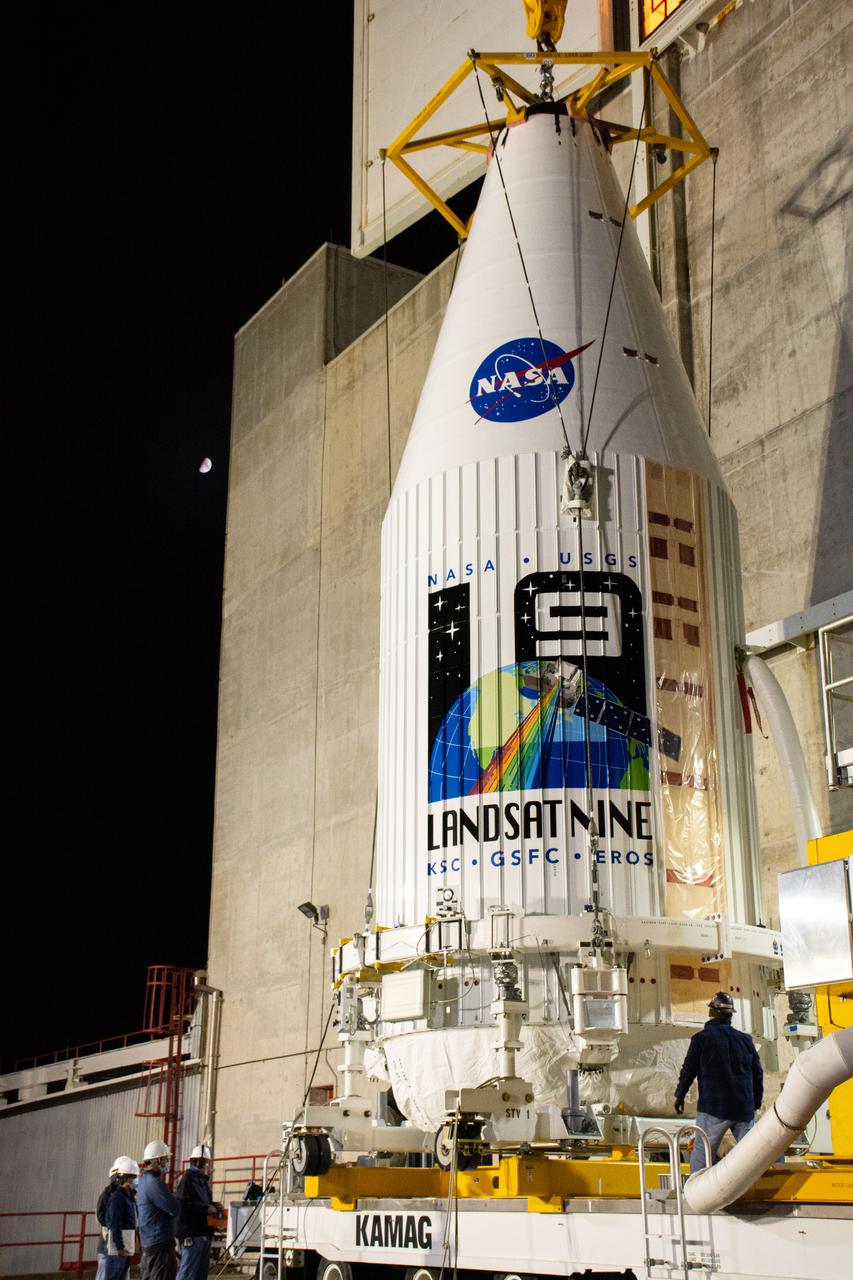
The Landsat 9 payload is hoisted out of the transfer tower at the Integration Processing Facility in preparation for transport to SLC-3 at Vandenberg Air Force Base in California.
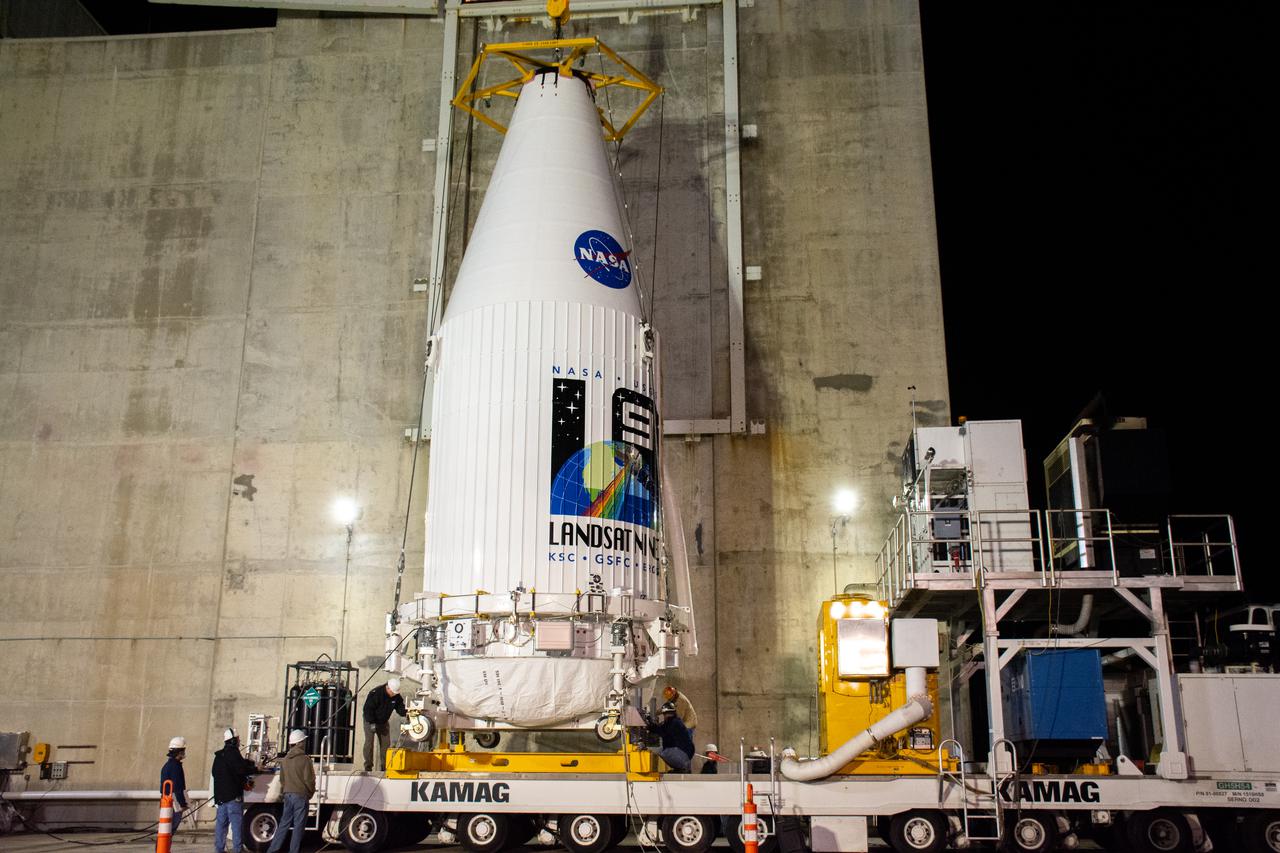
The Landsat 9 payload is hoisted out of the transfer tower at the Integration Processing Facility in preparation for transport to SLC-3 at Vandenberg Air Force Base in California.
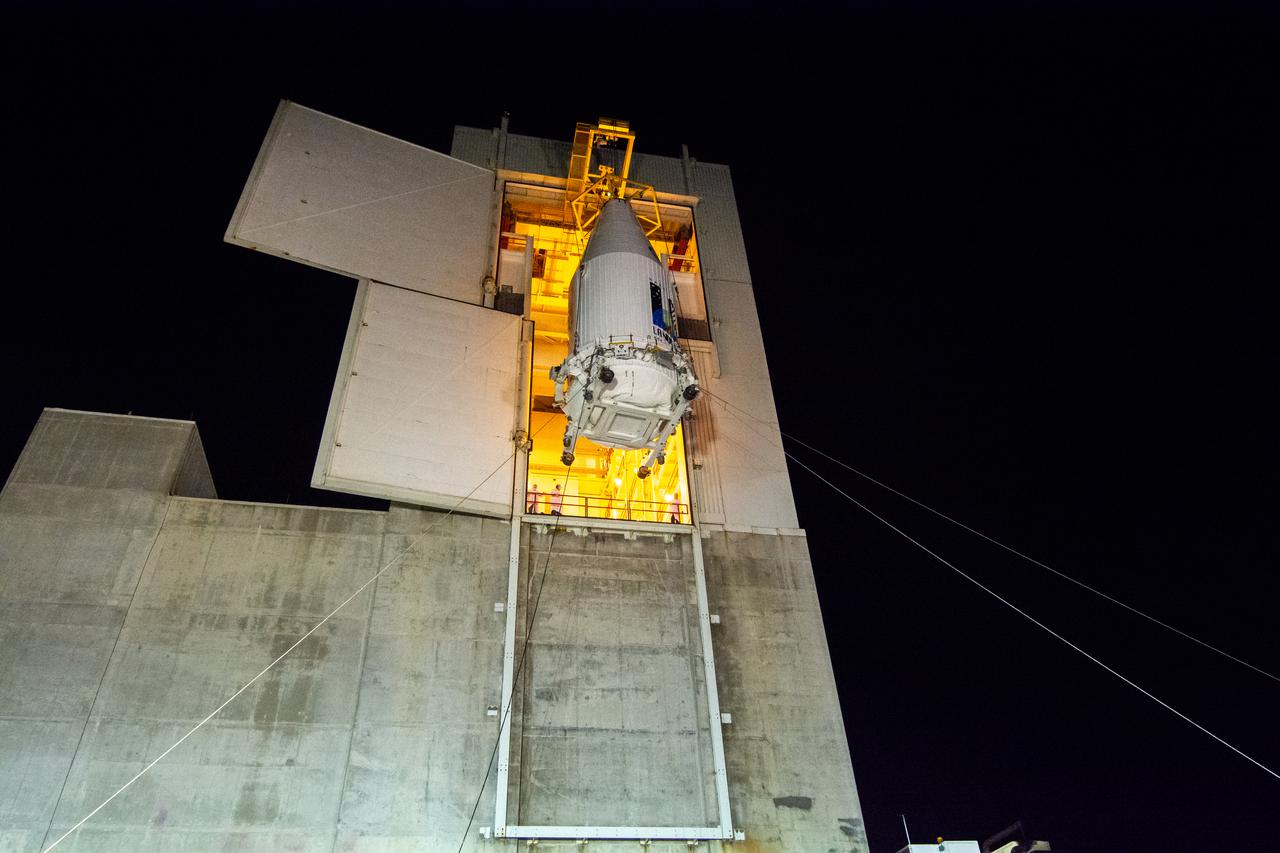
The Landsat 9 payload is hoisted out of the transfer tower at the Integration Processing Facility in preparation for transport to SLC-3 at Vandenberg Air Force Base in California.
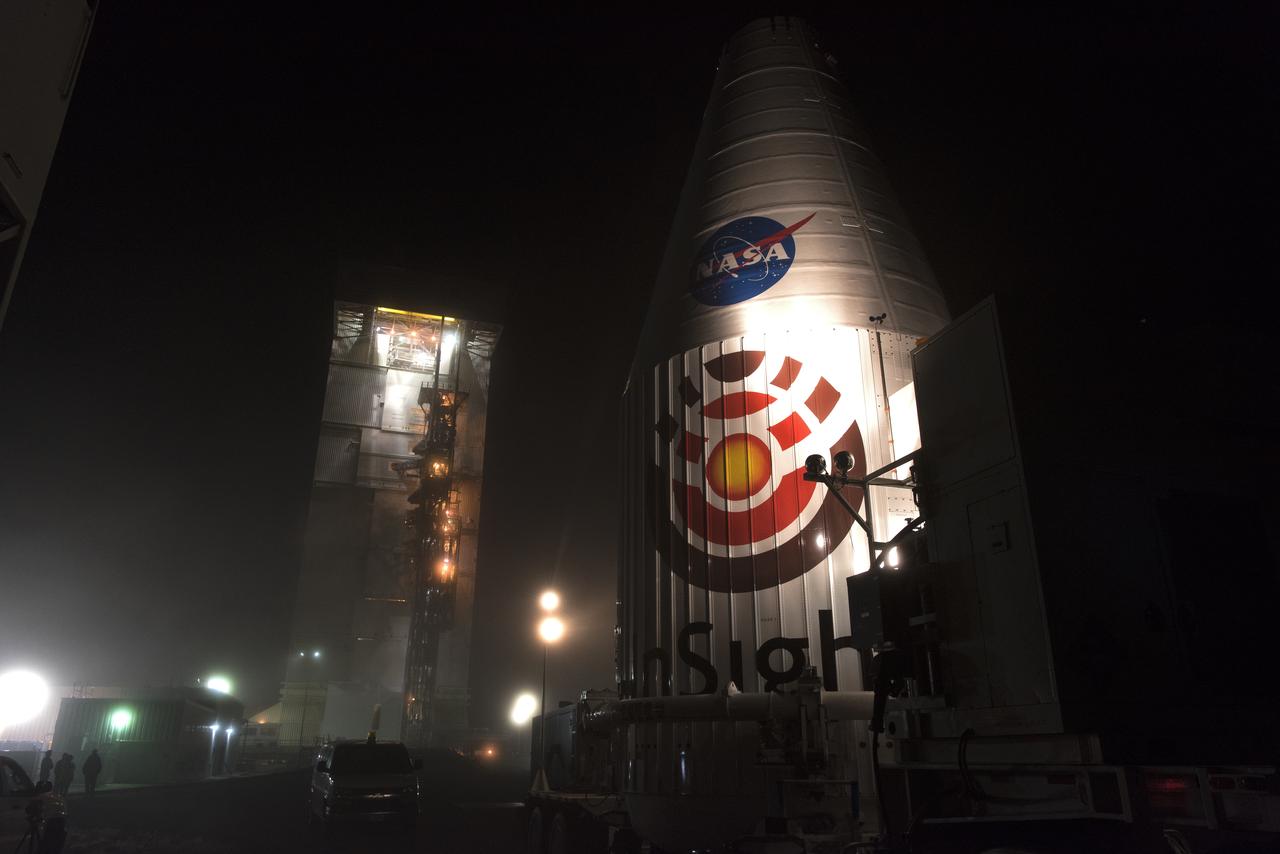
Encapsulated in its payload fairing, NASA's Interior Exploration using Seismic Investigations, Geodesy and Heat Transport, or InSight, Mars lander is transported to Space Launch Complex 3 at Vandenberg Air Force Base in California. InSight will be the first mission to look deep beneath the Martian surface. It will study the planet's interior by measuring its heat output and listen for marsquakes. The spacecraft will use the seismic waves generated by marsquakes to develop a map of the planet’s deep interior. The resulting insight into Mars’ formation will provide a better understanding of how other rocky planets, including Earth, were created. InSight is scheduled for liftoff May 5, 2018.
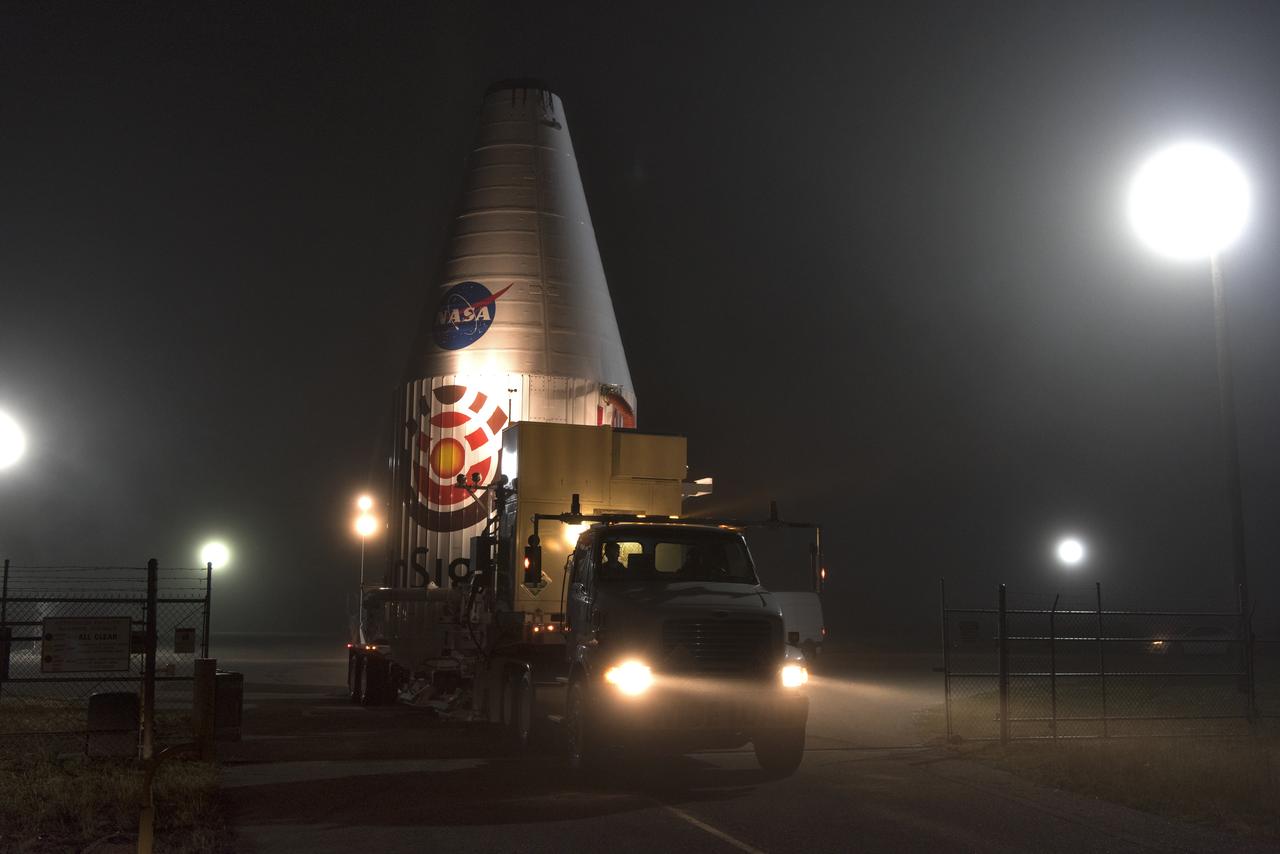
Encapsulated in its payload fairing, NASA's Interior Exploration using Seismic Investigations, Geodesy and Heat Transport, or InSight, Mars lander is transported to Space Launch Complex 3 at Vandenberg Air Force Base in California. InSight will be the first mission to look deep beneath the Martian surface. It will study the planet's interior by measuring its heat output and listen for marsquakes. The spacecraft will use the seismic waves generated by marsquakes to develop a map of the planet’s deep interior. The resulting insight into Mars’ formation will provide a better understanding of how other rocky planets, including Earth, were created. InSight is scheduled for liftoff May 5, 2018.
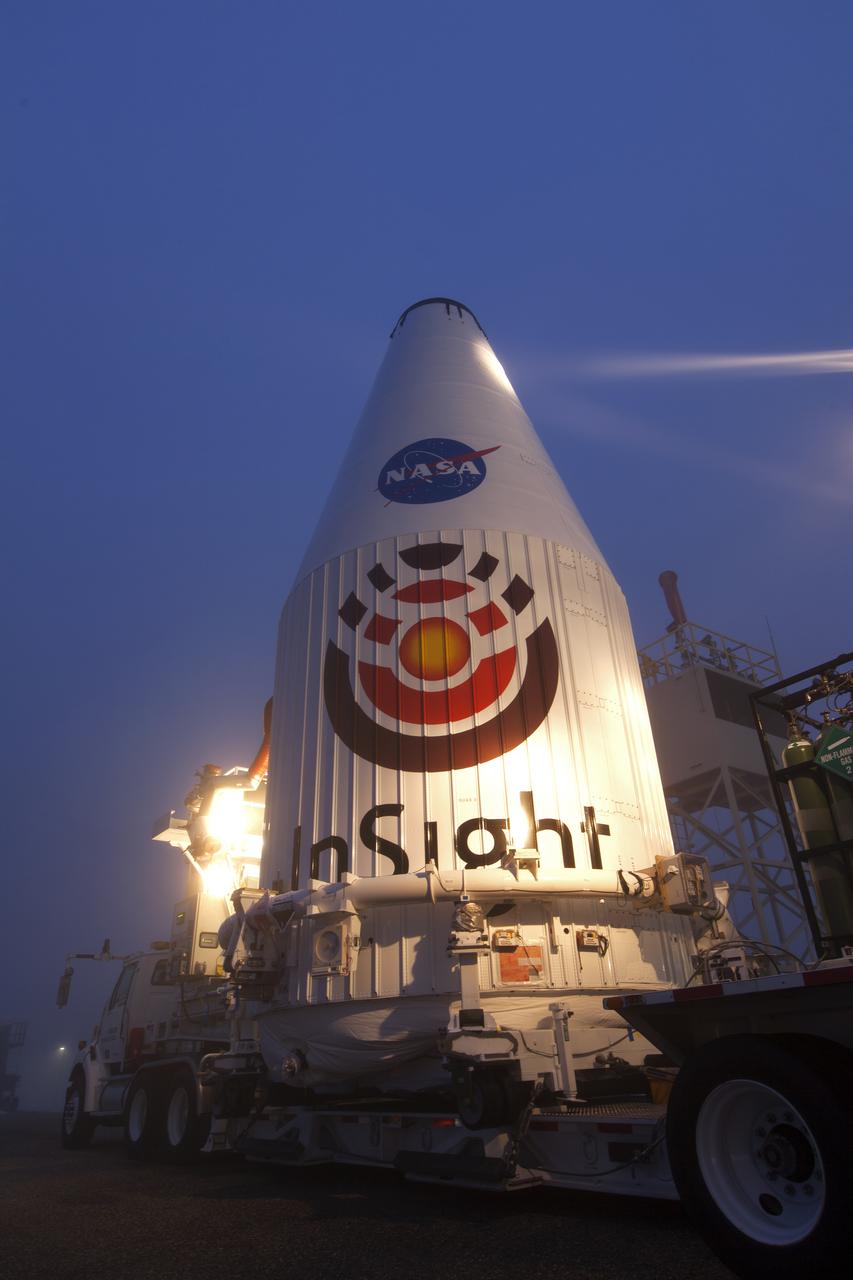
Encapsulated in its payload fairing NASA's Interior Exploration using Seismic Investigations, Geodesy and Heat Transport, or InSight, Mars lander is transported to Space Launch Complex 3 at Vandenberg Air Force Base in California. InSight will be the first mission to look deep beneath the Martian surface. It will study the planet's interior by measuring its heat output and listen for marsquakes. The spacecraft will use the seismic waves generated by marsquakes to develop a map of the planet’s deep interior. The resulting insight into Mars’ formation will provide a better understanding of how other rocky planets, including Earth, were created. InSight is scheduled for liftoff May 5, 2018.
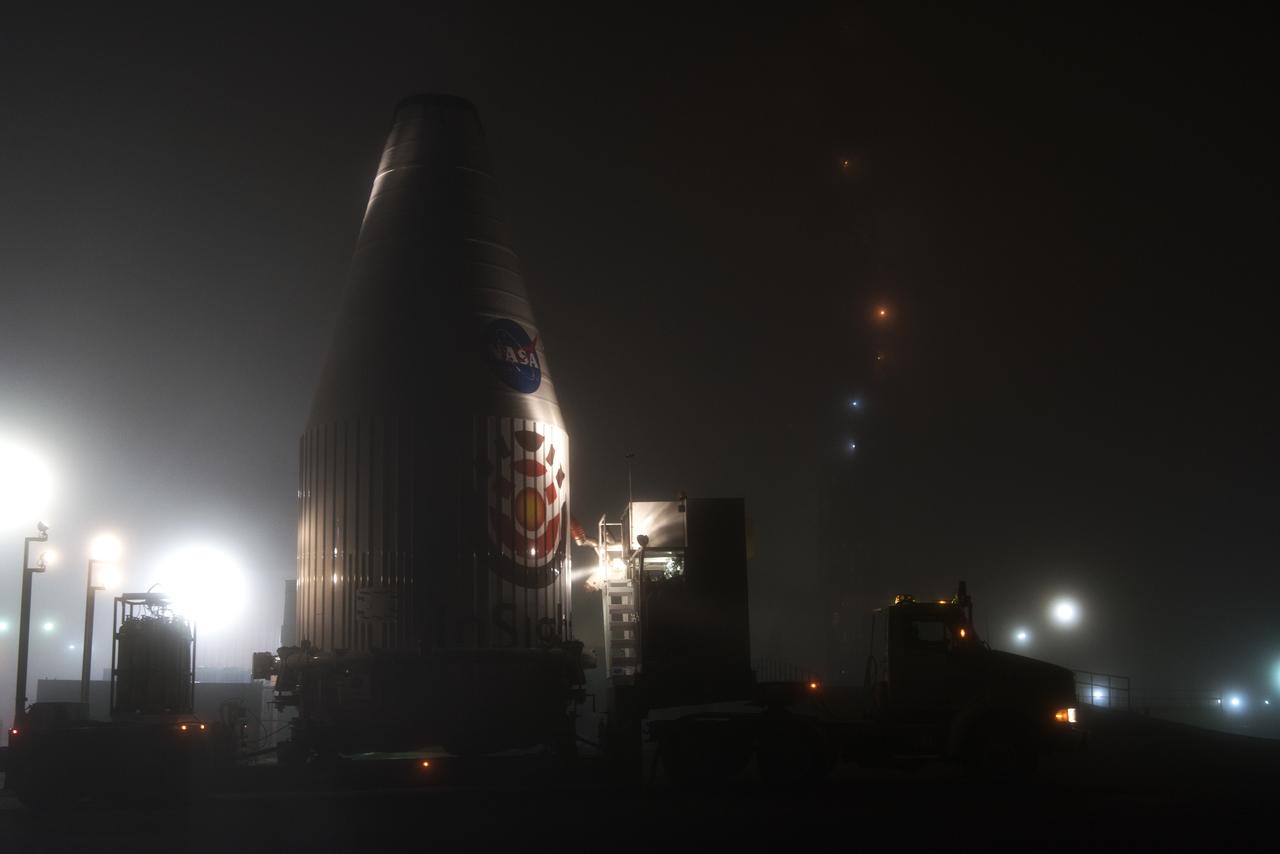
Encapsulated in its payload fairing, NASA's Interior Exploration using Seismic Investigations, Geodesy and Heat Transport, or InSight, Mars lander is transported to Space Launch Complex 3 at Vandenberg Air Force Base in California. InSight will be the first mission to look deep beneath the Martian surface. It will study the planet's interior by measuring its heat output and listen for marsquakes. The spacecraft will use the seismic waves generated by marsquakes to develop a map of the planet’s deep interior. The resulting insight into Mars’ formation will provide a better understanding of how other rocky planets, including Earth, were created. InSight is scheduled for liftoff May 5, 2018.
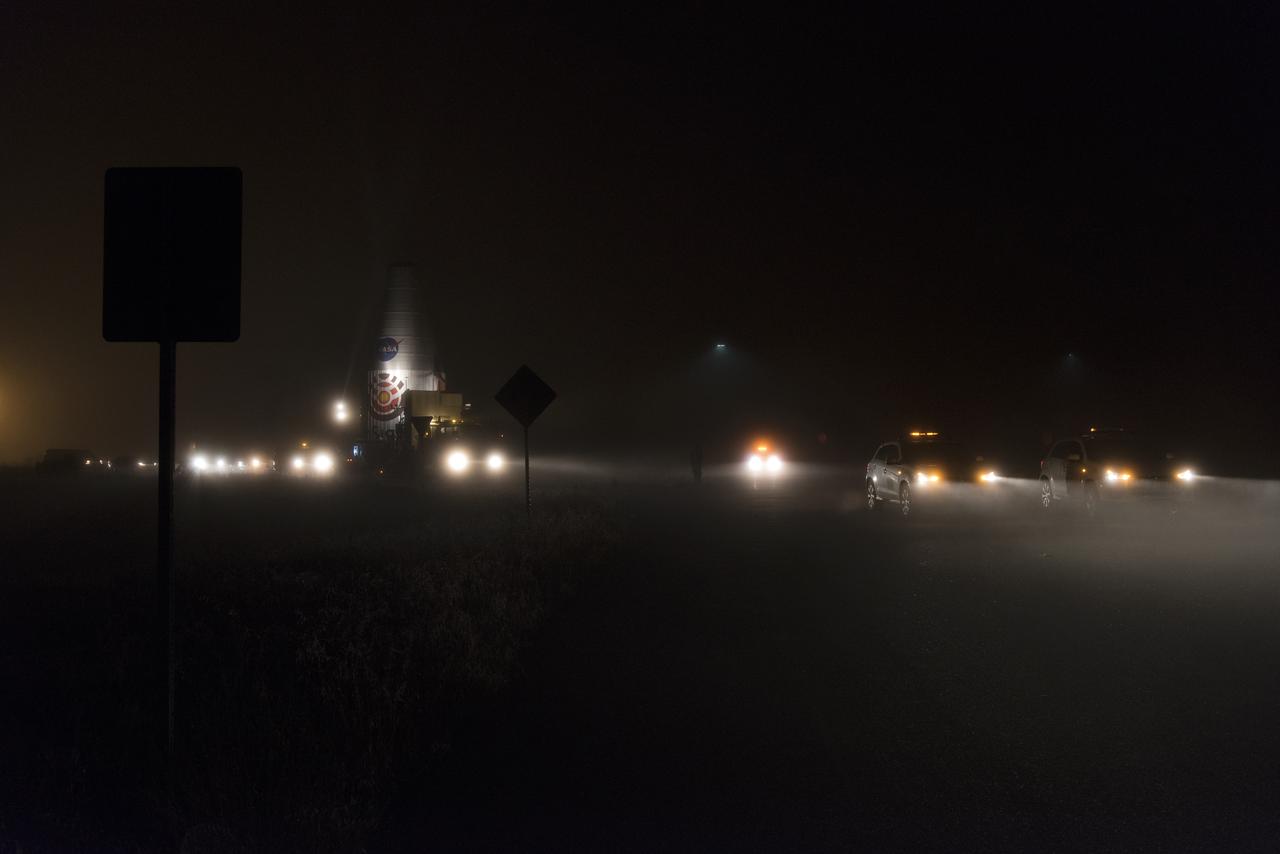
Encapsulated in its payload fairing, NASA's Interior Exploration using Seismic Investigations, Geodesy and Heat Transport, or InSight, Mars lander is transported to Space Launch Complex 3 at Vandenberg Air Force Base in California. InSight will be the first mission to look deep beneath the Martian surface. It will study the planet's interior by measuring its heat output and listen for marsquakes. The spacecraft will use the seismic waves generated by marsquakes to develop a map of the planet’s deep interior. The resulting insight into Mars’ formation will provide a better understanding of how other rocky planets, including Earth, were created. InSight is scheduled for liftoff May 5, 2018.
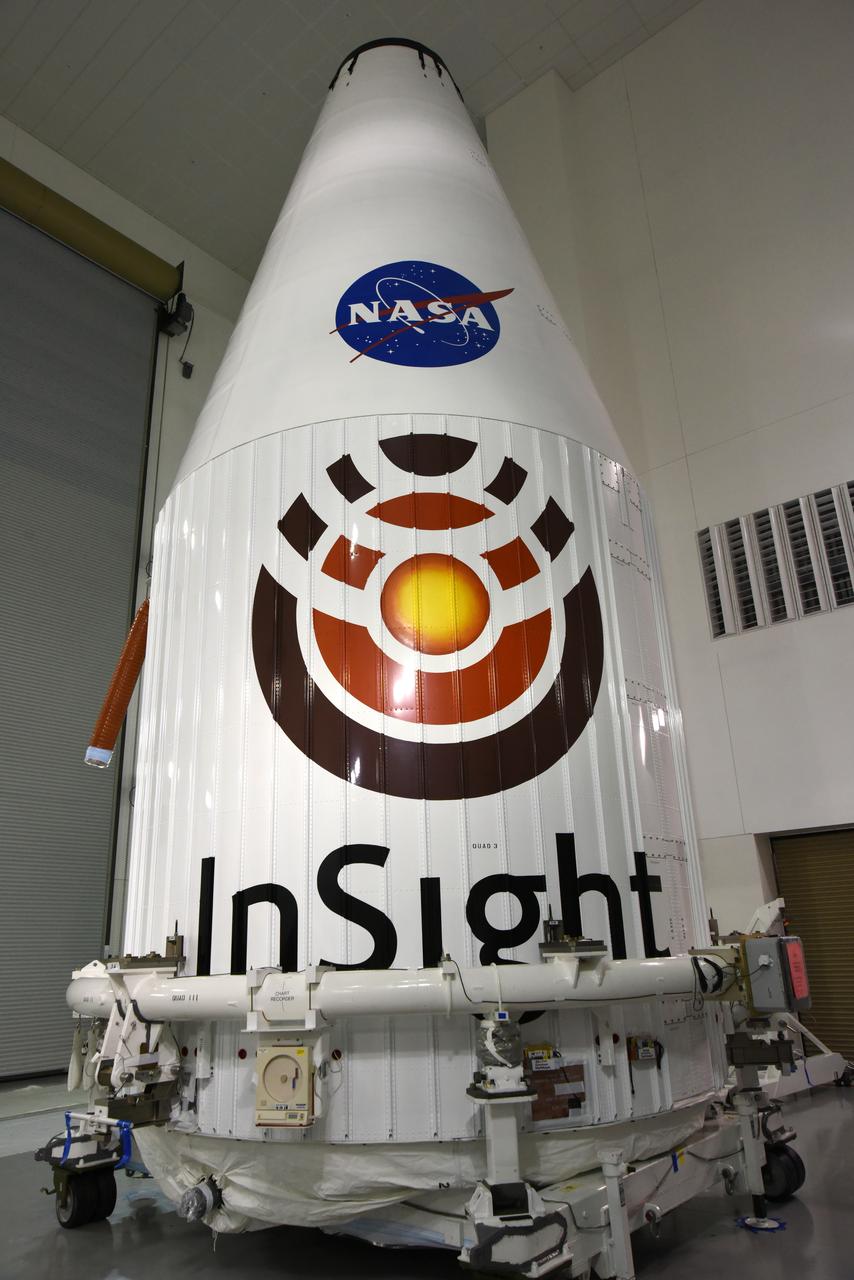
Encapsulated in its payload fairing NASA's Interior Exploration using Seismic Investigations, Geodesy and Heat Transport, or InSight, Mars lander is prepared for transport to Space Launch Complex 3 at Vandenberg Air Force Base in California. InSight will be the first mission to look deep beneath the Martian surface. It will study the planet's interior by measuring its heat output and listen for marsquakes. The spacecraft will use the seismic waves generated by marsquakes to develop a map of the planet’s deep interior. The resulting insight into Mars’ formation will provide a better understanding of how other rocky planets, including Earth, were created. InSight is scheduled for liftoff May 5, 2018.
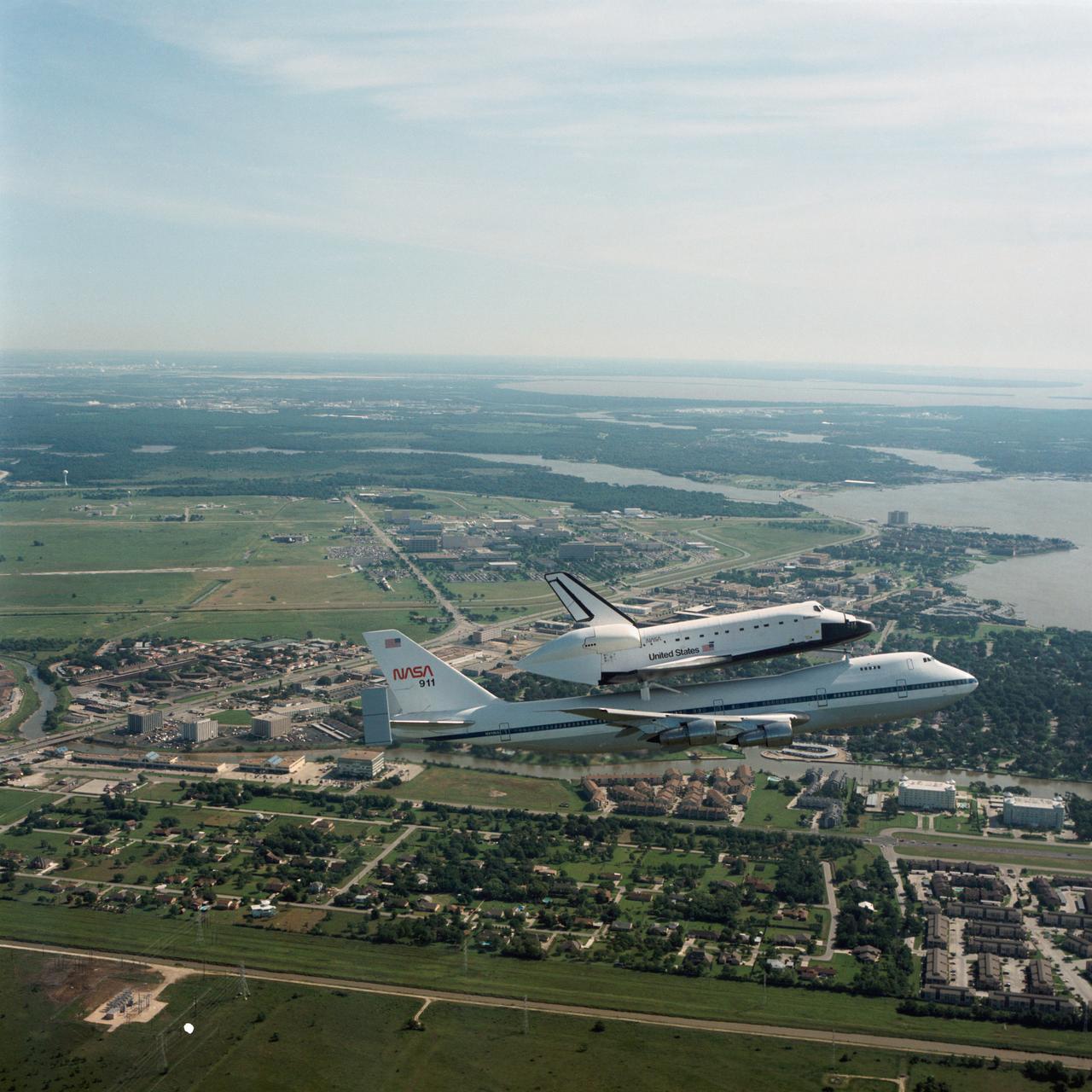
Air to air views of Endeavour, Orbiter Vehicle (OV) 105, transported via the Shuttle Carrier Aircraft (SCA), NASA 911, on its way to KSC, 05-06-91. JSC with Clear Creek and Egret Bay Blvd in the foreground and Clear Lake and Galveston Bay in the background
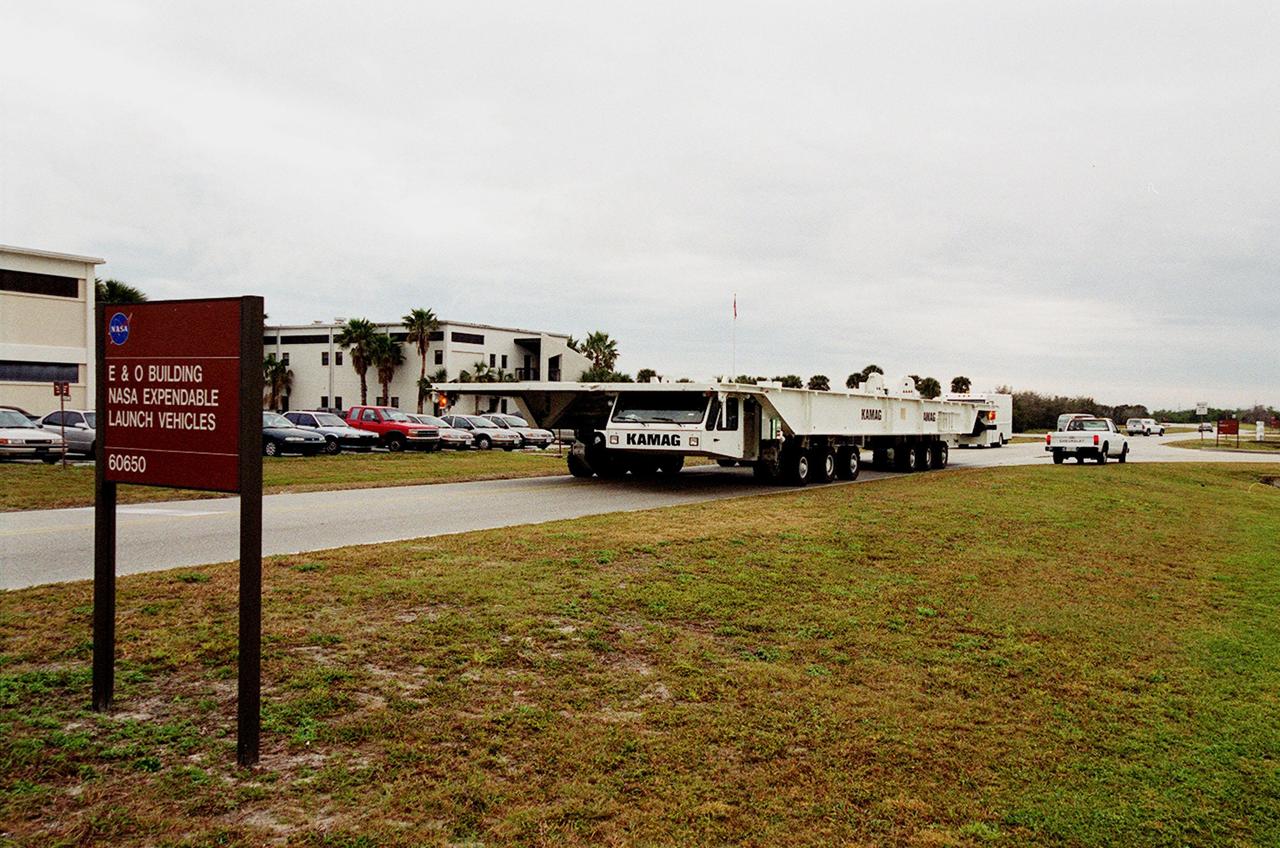
One of two new payload transporters for Kennedy Space Center moves through Cape Canaveral Air Station after being unloaded from a barge at Port Canaveral. The transporters, manufactured by the KAMAG Transporttechnick, GmbH, of Ulm, Germany, are replacing the existing Payload Canister Transporter system, which is 20 years old. Each transporter is 65 feet long and 22 feet wide and has 24 tires divided between its two axles. The transporter travels 10 miles per hour unloaded, 5 miles per hour when loaded; it weighs up to 172,000 pounds when the canister with payloads rides atop. The transporters will be outfitted with four subsystems for monitoring the environment inside the canister during the payload moves: the Electrical Power System, Environmental Control System, Instrumentation and Communications System, and the Fluids and Gases System. Engineers and technicians are being trained on the transporter's operation and maintenance

One of two new payload transporters for Kennedy Space Center moves through Cape Canaveral Air Station after being unloaded from a barge at Port Canaveral. The transporters, manufactured by the KAMAG Transporttechnick, GmbH, of Ulm, Germany, are replacing the existing Payload Canister Transporter system, which is 20 years old. Each transporter is 65 feet long and 22 feet wide and has 24 tires divided between its two axles. The transporter travels 10 miles per hour unloaded, 5 miles per hour when loaded; it weighs up to 172,000 pounds when the canister with payloads rides atop. The transporters will be outfitted with four subsystems for monitoring the environment inside the canister during the payload moves: the Electrical Power System, Environmental Control System, Instrumentation and Communications System, and the Fluids and Gases System. Engineers and technicians are being trained on the transporter's operation and maintenance
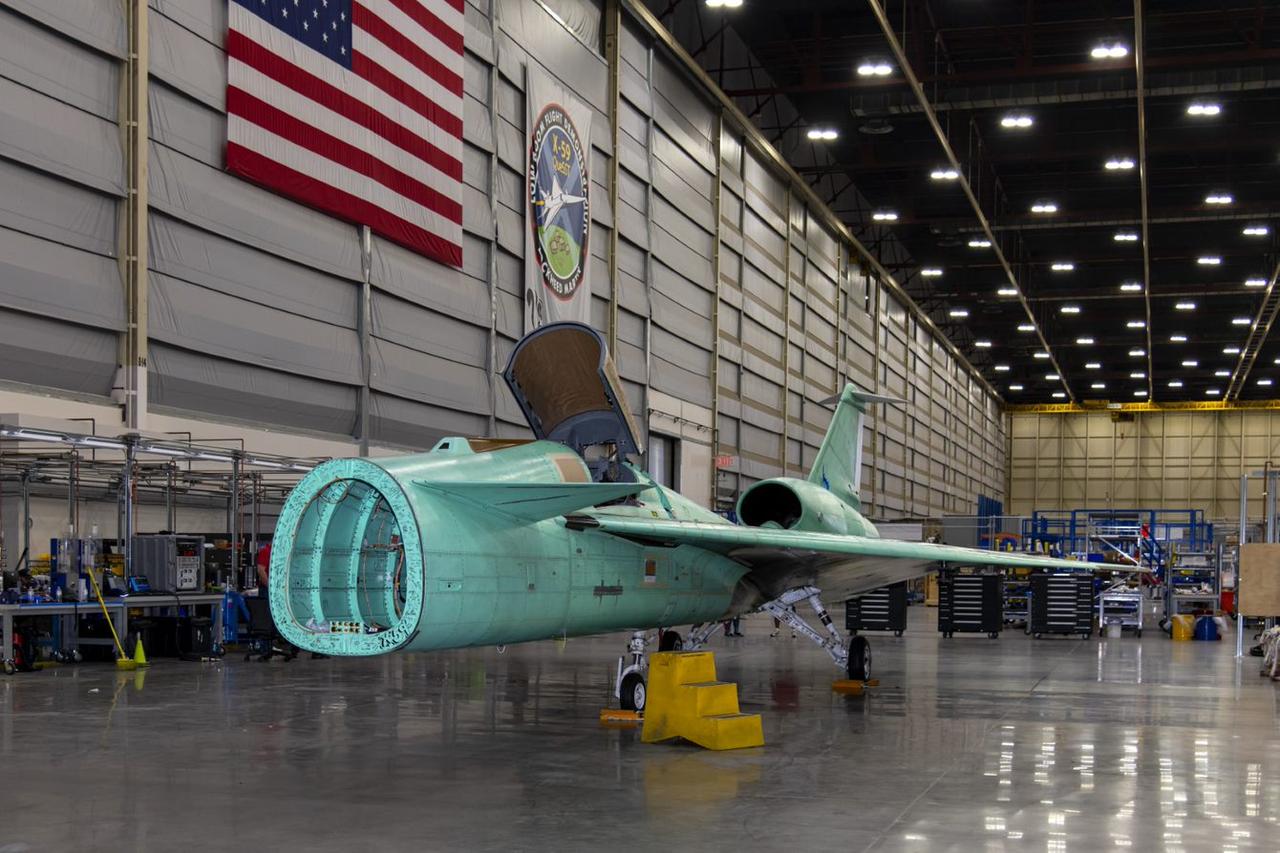
The X-59 arrives home in Palmdale, California after completing important structural and fuel tests at the Lockheed Martin facility in Ft. Worth, Texas. The nose, which is not installed in this image, was removed prior to the transport home and arrived separately to the facility. This is part of NASA’s Quesst mission which plans to help enable supersonic air travel over land.
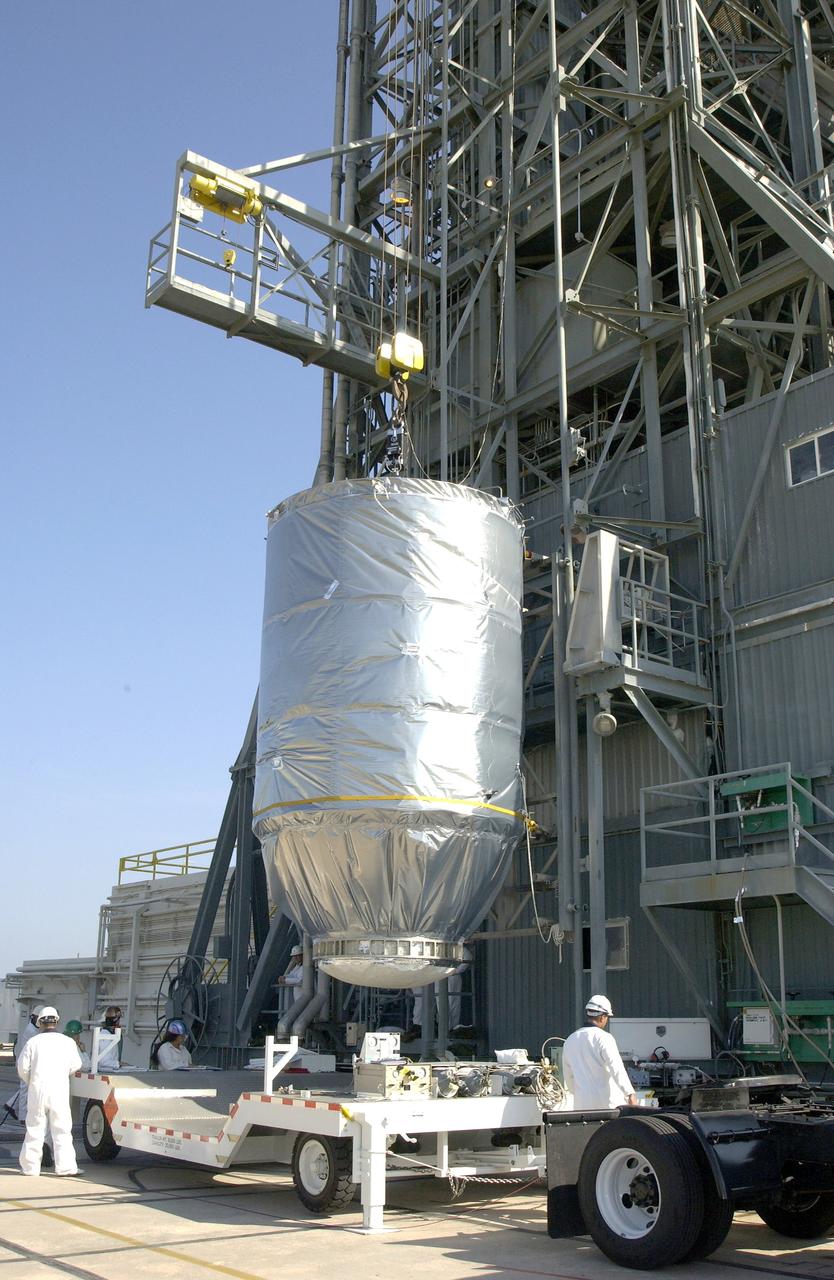
KENNEDY SPACE CENTER, FLA. - On Launch Pad 17-A, Cape Canaveral Air Force Station, the Mars Exploration Rover 2 (MER-2), inside the transport canister, is lifted off the transporter and into the launch tower where it will be mated to the Delta II rocket for launch. MER-2 is one of NASA's twin Mars Exploration Rovers designed to study the history of water on Mars. These robotic geologists are equipped with a robotic arm, a drilling tool, three spectrometers, and four pairs of cameras that allow them to have a human-like, 3D view of the terrain. Each rover could travel as far as 100 meters in one day to act as Mars scientists' eyes and hands, exploring an environment where humans can't yet go. MER-2 is scheduled to launch no earlier than June 8 as MER-A.

A U.S. Air Force C-5 transport aircraft arrives at Space Coast Regional Airport in Titusville, Florida, with NASA's Parker Solar Probe spacecraft aboard. The spacecraft will be offloaded and transported to the Astrotech processing facility near the agency's Kennedy Space Center. The Parker Solar Probe will launch on a United Launch Alliance Delta IV Heavy rocket from Space Launch Complex 37 at Cape Canaveral Air Force Station in Florida in July 2018. The mission will perform the closest-ever observations of a star when it travels through the Sun's atmosphere, called the corona. The probe will rely on measurements and imaging to revolutionize our understanding of the corona and the Sun-Earth connection.
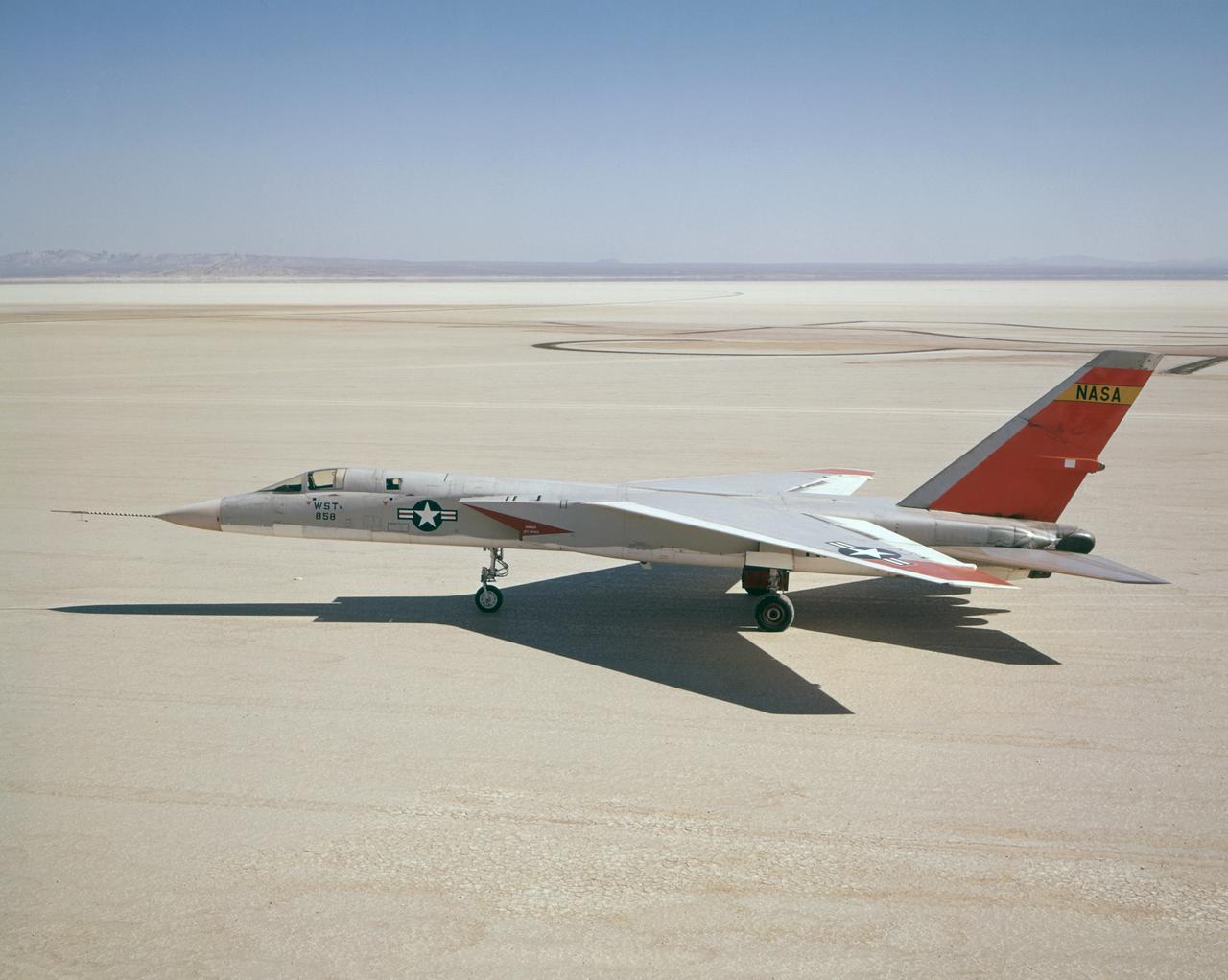
A North American Aviation A-5A Vigilante (Navy serial number 147858/NASA tail number 858) arrived from the Naval Air Test Center, Patuxent River, MD, on December 19, 1962, at the NASA Flight Research Center (now, Dryden Flight Research Center, Edwards, CA). The Center flew the A-5A in a year-long series of flights in support of the U.S. supersonic transport program. The Center flew the aircraft to determine the let-down and approach conditions of a supersonic transport flying into a dense air traffic network. With the completion of the research flights, the Center sent the A-5A back to the Navy on December 20, 1963.
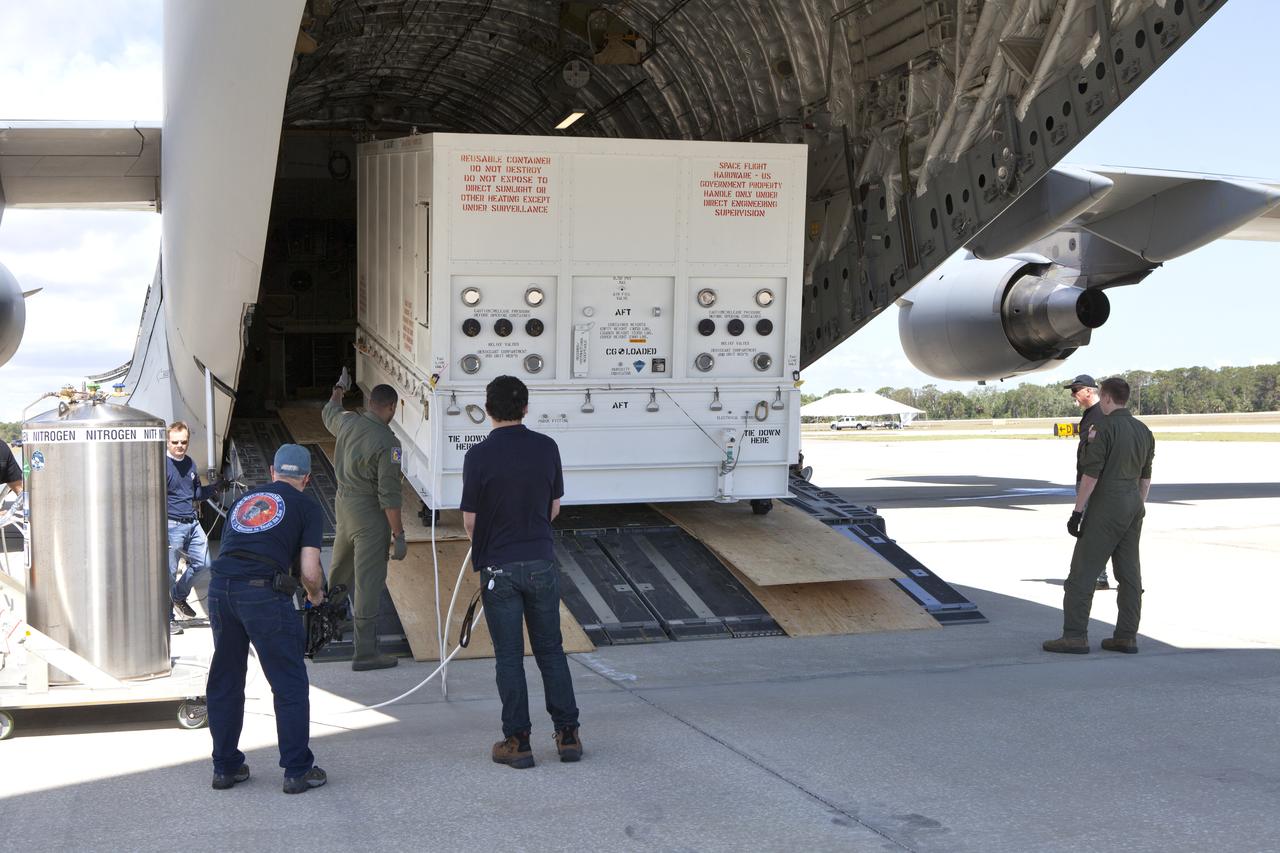
NASA's Parker Solar Probe, secured in its shipping container, is offloaded from a U.S. Air Force C-5 transport aircraft at Space Coast Regional Airport in Titusville, Florida. The spacecraft will be transported to the Astrotech processing facility near the agency's Kennedy Space Center. The Parker Solar Probe will launch on a United Launch Alliance Delta IV Heavy rocket from Space Launch Complex 37 at Cape Canaveral Air Force Station in Florida in July 2018. The mission will perform the closest-ever observations of a star when it travels through the Sun's atmosphere, called the corona. The probe will rely on measurements and imaging to revolutionize our understanding of the corona and the Sun-Earth connection.
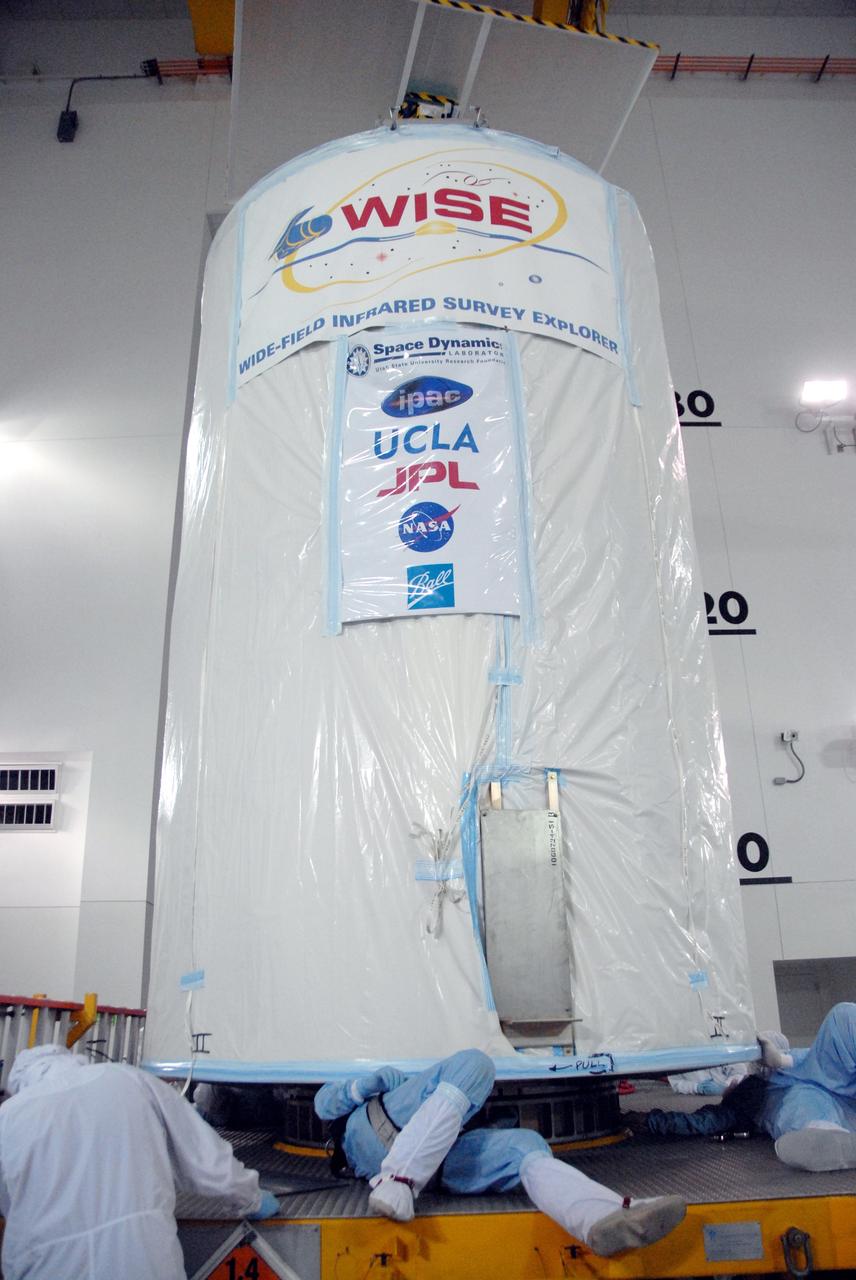
VANDENBERG AIR FORCE BASE, Calif. - At the Astrotech payload processing facility at Vandenberg Air Force Base in California, spacecraft technicians check the position of a transportation canister containing NASA's Wide-field Infrared Survey Explorer, or WISE, on the transporter which will move it to Space Launch Complex 2. WISE will survey the entire sky at infrared wavelengths, creating a cosmic clearinghouse of hundreds of millions of objects which will be catalogued and provide a vast storehouse of knowledge about the solar system, the Milky Way, and the universe. Launch aboard a United Launch Alliance Delta II rocket is scheduled for Dec. 9. For additional information, visit http://www.nasa.gov/wise. Photo credit: NASA/Daniel Liberotti, VAFB
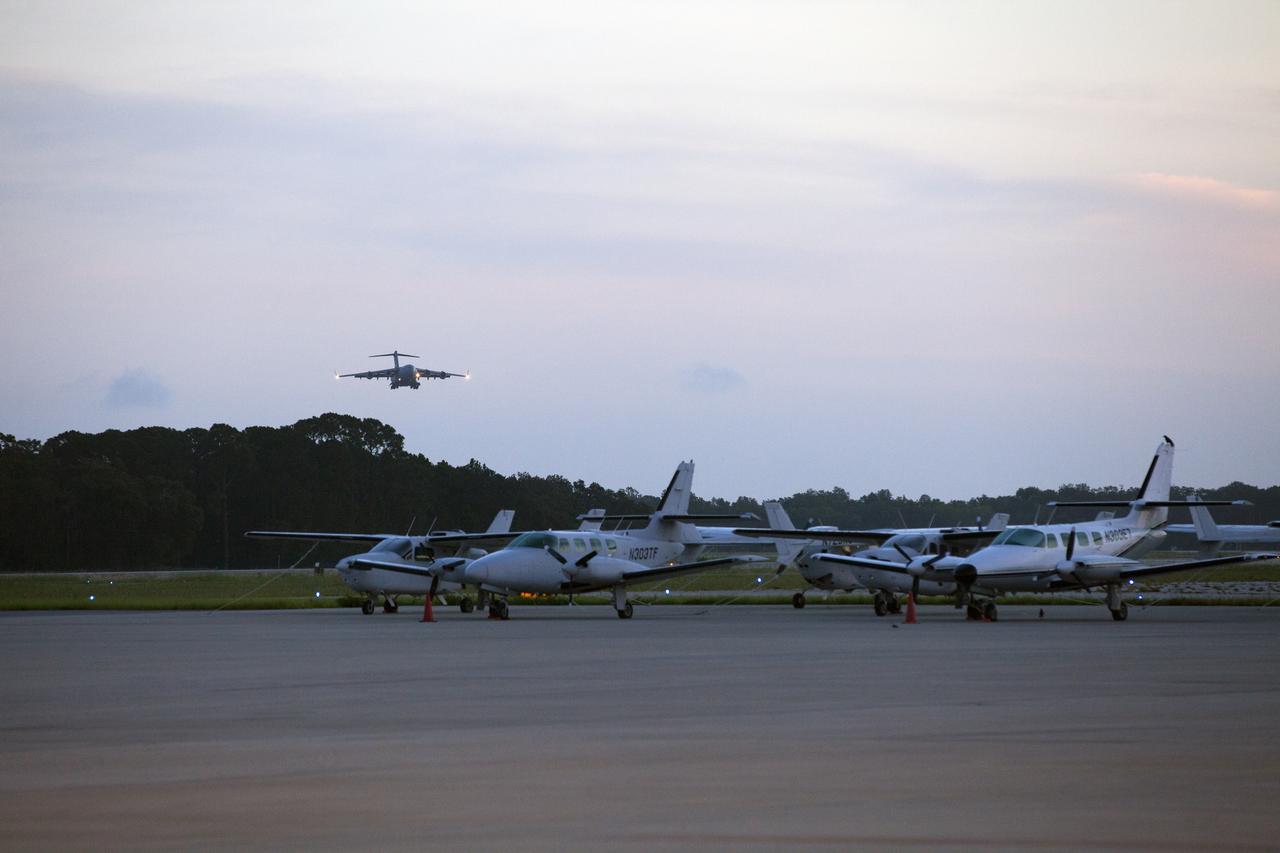
In early morning hours, NASA's TDRS-M satellite arrives at Space Coast Regional Airport in Titusville, Florida, aboard a U.S. Air Force transport aircraft. The spacecraft will be transported to the nearby Astrotech facility, also in Titusville, for preflight processing. The TDRS-M is the latest spacecraft destined for the agency's constellation of communications satellites that allows nearly continuous contact with orbiting spacecraft ranging from the International Space Station and Hubble Space Telescope to the array of scientific observatories. Liftoff atop a United Launch Alliance Atlas V rocket is scheduled to take place from Space Launch Complex 41 at Cape Canaveral Air Force Station at 9:02 a.m. EDT Aug. 3, 2017.
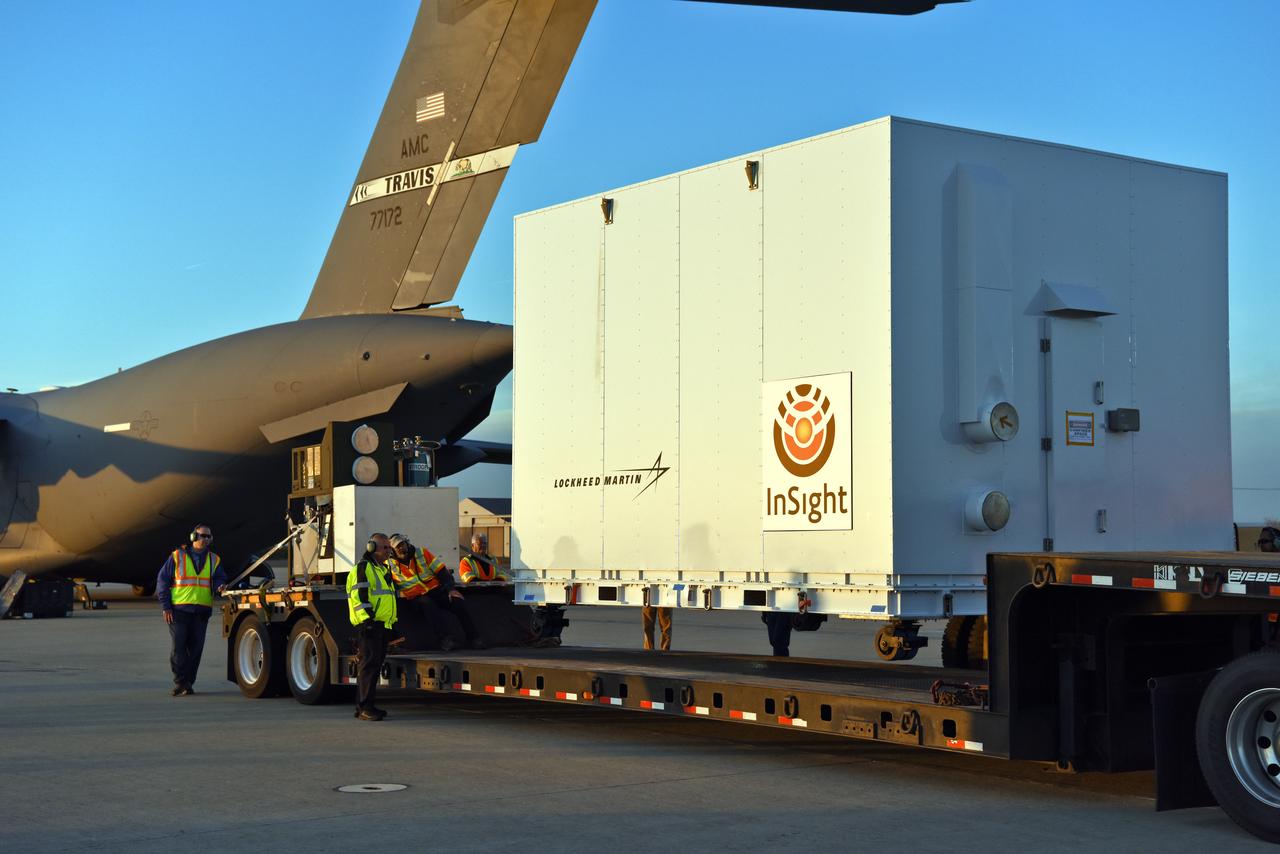
After a U.S. Air Force C-17 aircraft arrived at Vandenberg Air Force Base in California, ground crews loaded NASA's Interior Exploration using Seismic Investigations, Geodesy and Heat Transport, or InSight, spacecraft in a transport truck for delivery to the Astrotech processing facility. InSight was developed and built by Lockheed-Martin Space Systems in Denver, Colorado, and is scheduled for liftoff is May 5, 2018. InSight is the first mission to land on Mars and explore the Red Planet's deep interior. It will investigate processes that shaped the rocky planets of the inner solar system including Earth.
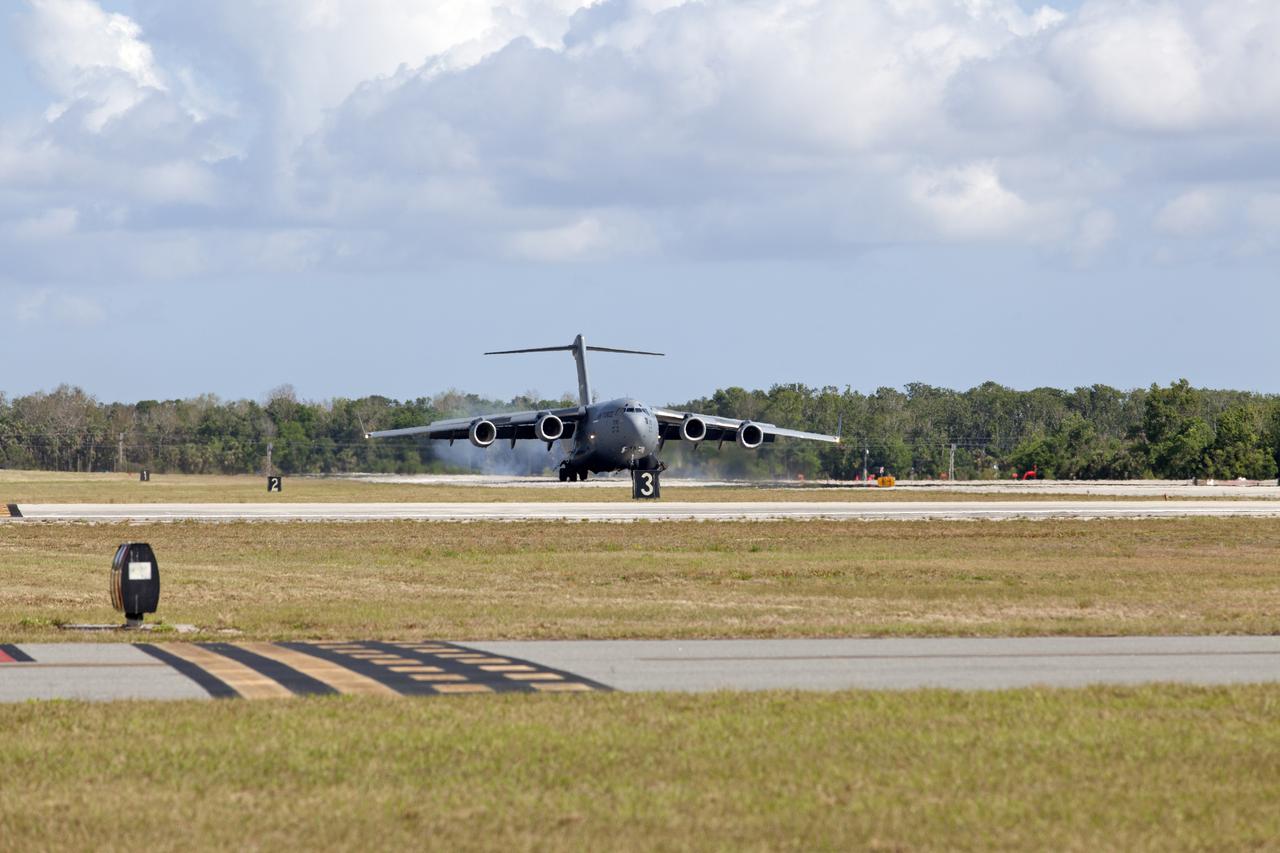
A U.S. Air Force C-5 transport aircraft touches down at Space Coast Regional Airport in Titusville, Florida, with NASA's Parker Solar Probe spacecraft aboard. The spacecraft will be offloaded and transported to the Astrotech processing facility near the agency's Kennedy Space Center. The Parker Solar Probe will launch on a United Launch Alliance Delta IV Heavy rocket from Space Launch Complex 37 at Cape Canaveral Air Force Station in Florida in July 2018. The mission will perform the closest-ever observations of a star when it travels through the Sun's atmosphere, called the corona. The probe will rely on measurements and imaging to revolutionize our understanding of the corona and the Sun-Earth connection.
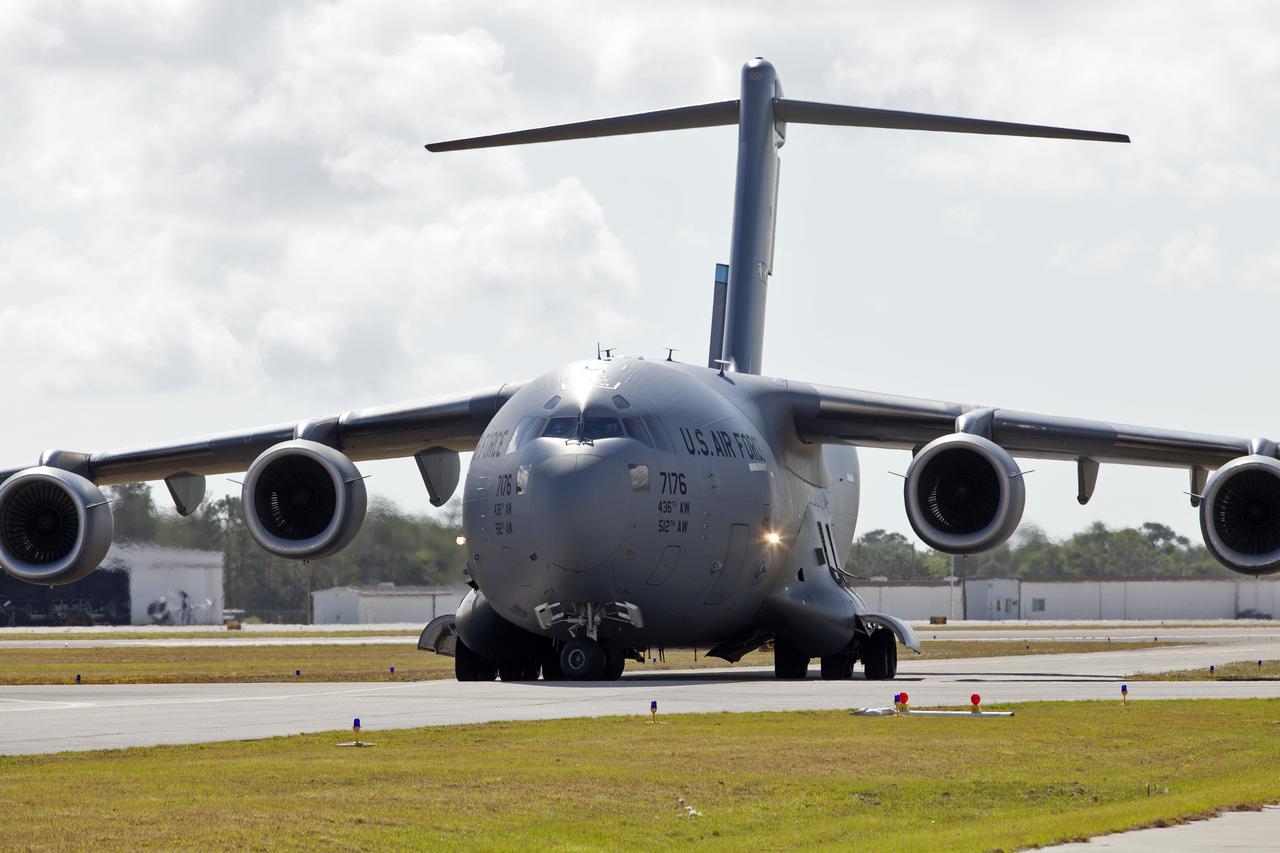
A U.S. Air Force C-5 transport aircraft arrives at Space Coast Regional Airport in Titusville, Florida, with NASA's Parker Solar Probe spacecraft aboard. The spacecraft will be offloaded and transported to the Astrotech processing facility near the agency's Kennedy Space Center. The Parker Solar Probe will launch on a United Launch Alliance Delta IV Heavy rocket from Space Launch Complex 37 at Cape Canaveral Air Force Station in Florida in July 2018. The mission will perform the closest-ever observations of a star when it travels through the Sun's atmosphere, called the corona. The probe will rely on measurements and imaging to revolutionize our understanding of the corona and the Sun-Earth connection.
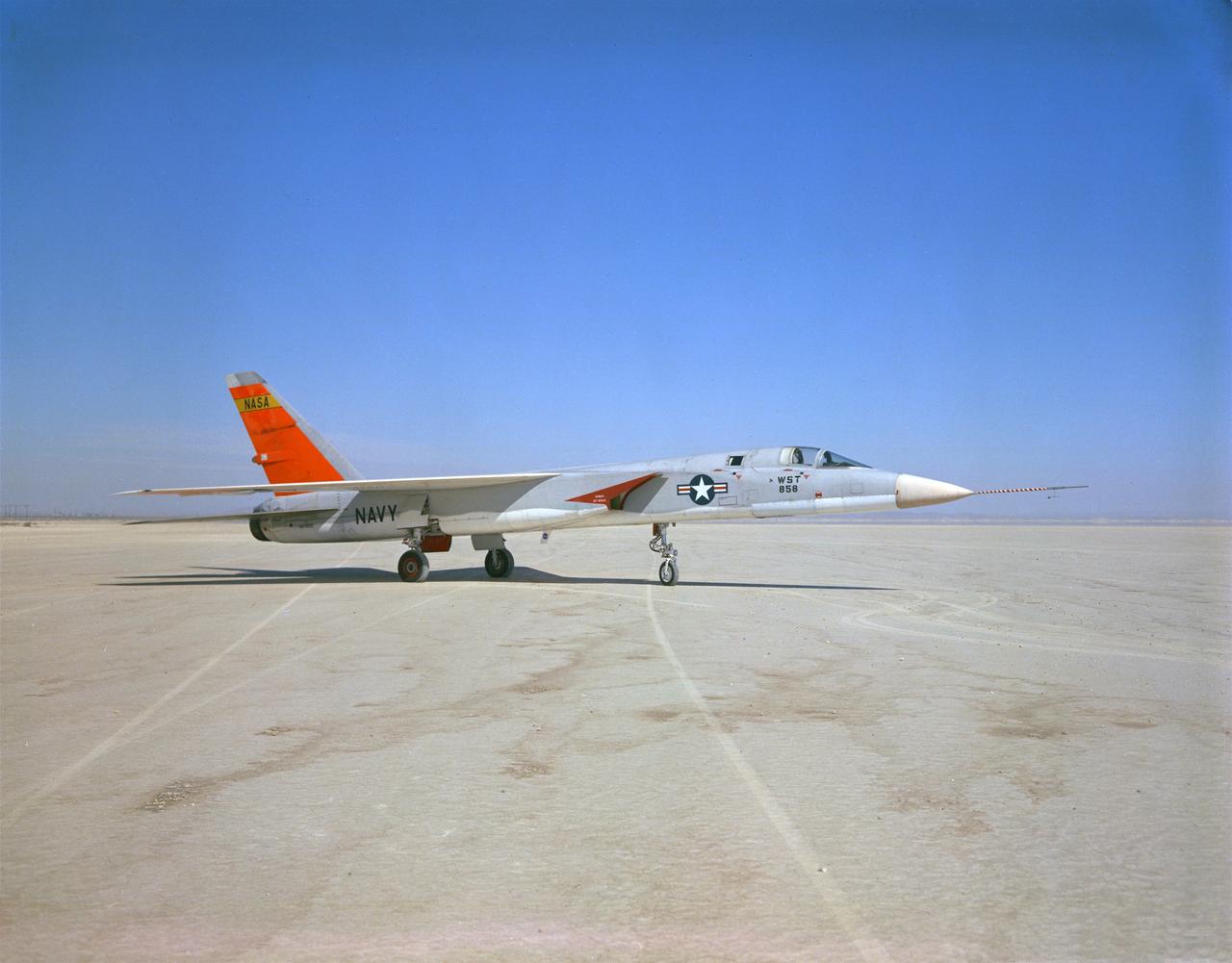
A North American Aviation A-5A Vigilante (Navy serial number 147858/NASA tail number 858) arrived from the Naval Air Test Center, Patuxent River, MD, on December 19, 1962, at the NASA Flight Research Center (now, Dryden Flight Research Center, Edwards, CA). The Center flew the A-5A in a year-long series of flights in support of the U.S. supersonic transport program. The Center flew the aircraft to determine the let-down and approach conditions of a supersonic transport flying into a dense air traffic network. With the completion of the research flights, the Center sent the A-5A back to the Navy on December 20, 1963.
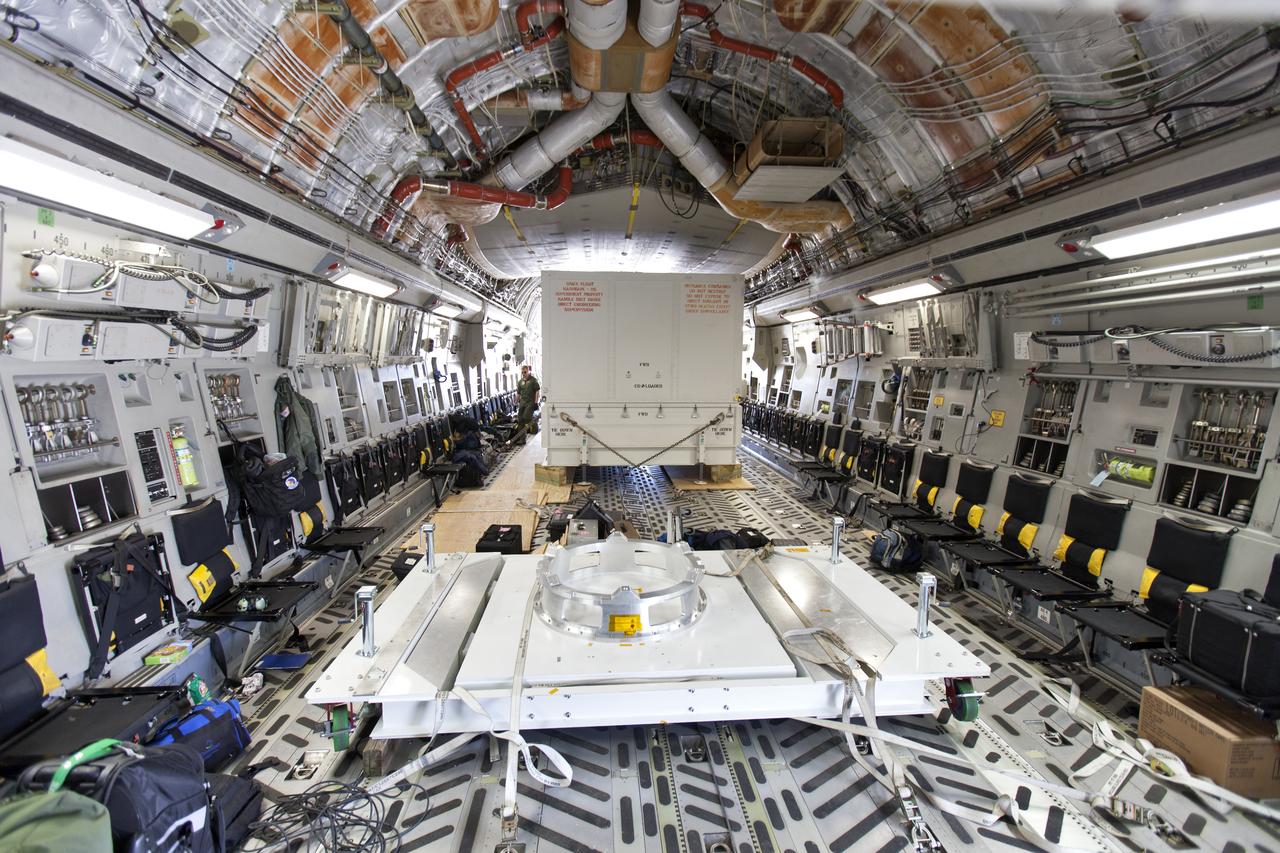
NASA's Parker Solar Probe, secured in its shipping container, arrives aboard a U.S. Air Force C-5 transport aircraft at Space Coast Regional Airport in Titusville, Florida. The spacecraft will be offloaded and transported to the Astrotech processing facility near the agency's Kennedy Space Center. The Parker Solar Probe will launch on a United Launch Alliance Delta IV Heavy rocket from Space Launch Complex 37 at Cape Canaveral Air Force Station in Florida in July 2018. The mission will perform the closest-ever observations of a star when it travels through the Sun's atmosphere, called the corona. The probe will rely on measurements and imaging to revolutionize our understanding of the corona and the Sun-Earth connection.
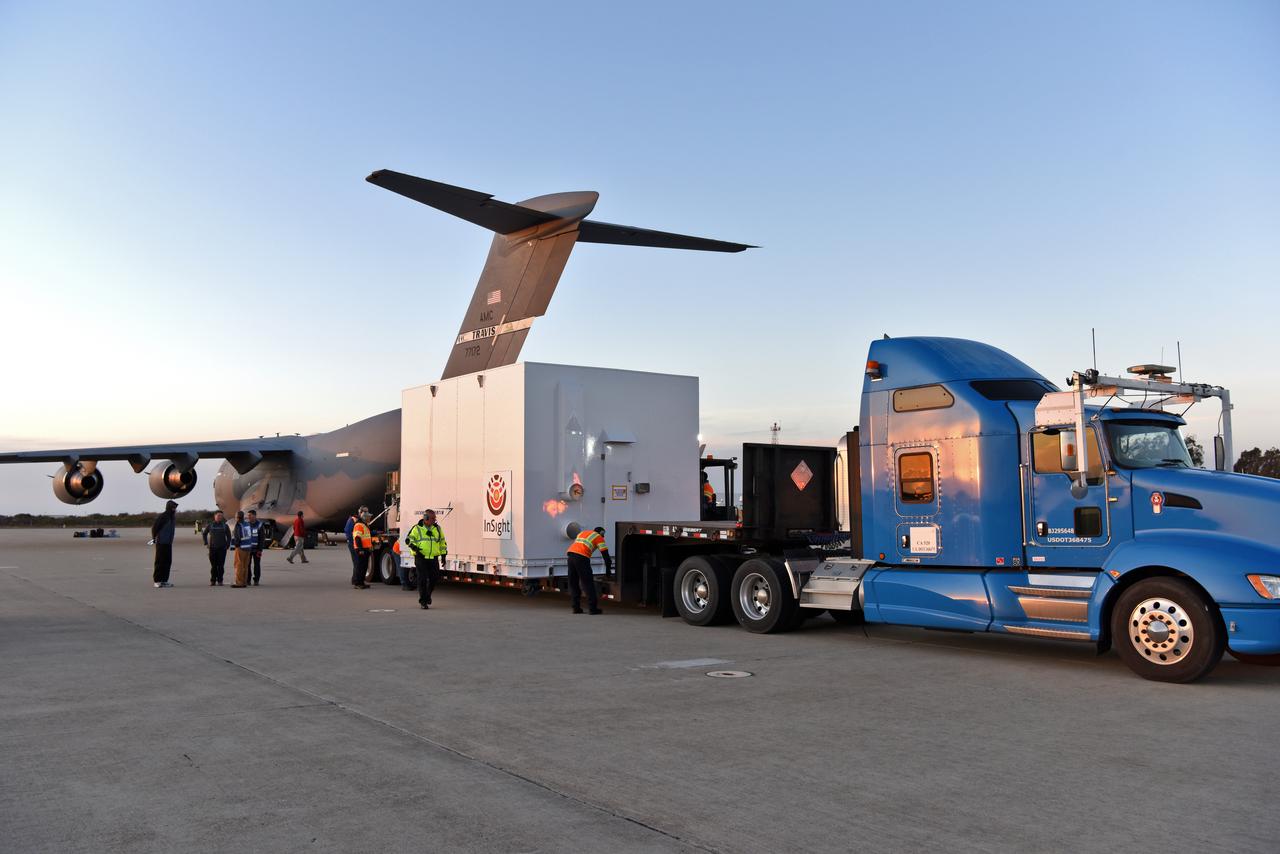
After a U.S. Air Force C-17 aircraft arrived at Vandenberg Air Force Base in California, ground crews loaded NASA's Interior Exploration using Seismic Investigations, Geodesy and Heat Transport, or InSight, spacecraft in a transport truck for delivery to the Astrotech processing facility. InSight was developed and built by Lockheed-Martin Space Systems in Denver, Colorado, and is scheduled for liftoff is May 5, 2018. InSight is the first mission to land on Mars and explore the Red Planet's deep interior. It will investigate processes that shaped the rocky planets of the inner solar system including Earth.
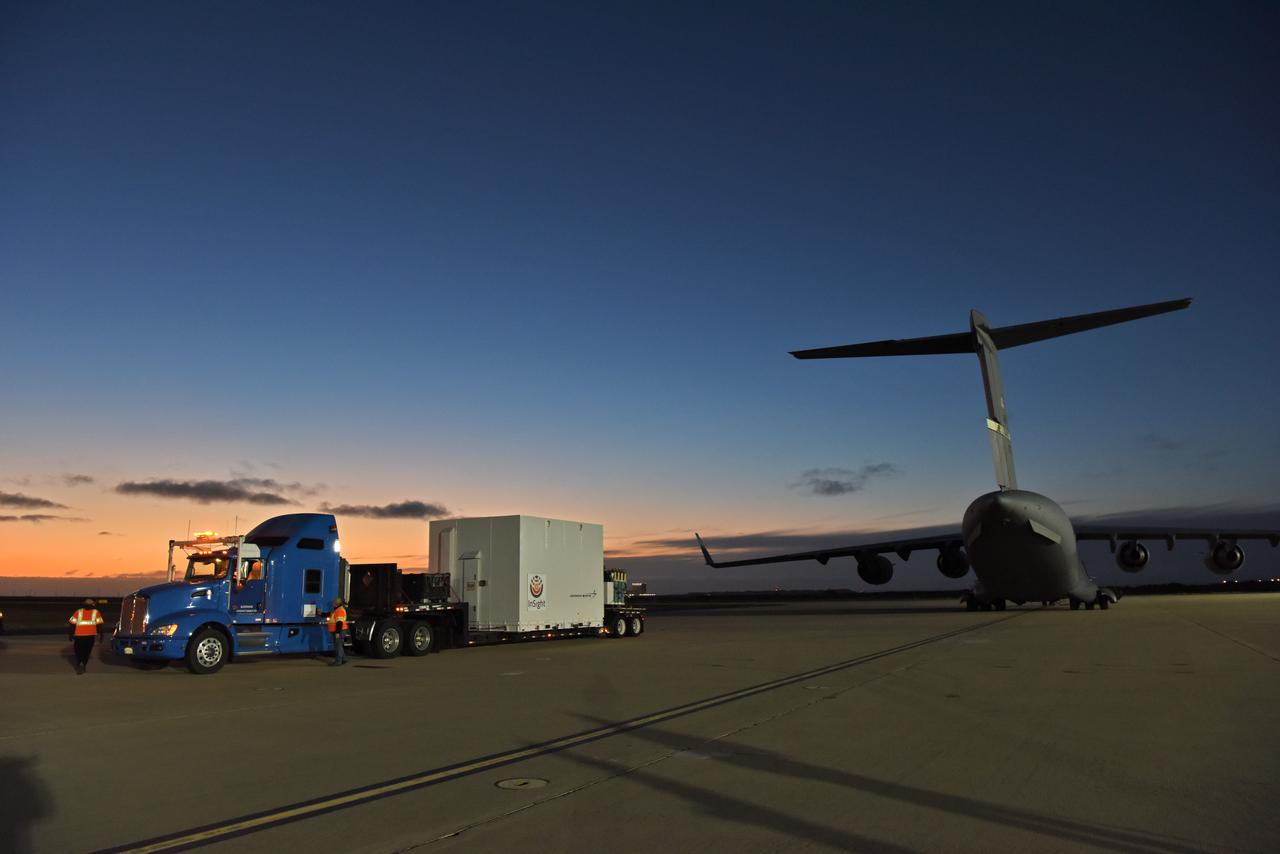
After a U.S. Air Force C-17 aircraft arrived at Vandenberg Air Force Base in California, ground crews loaded NASA's Interior Exploration using Seismic Investigations, Geodesy and Heat Transport, or InSight, spacecraft in a transport truck for delivery to the Astrotech processing facility. InSight was developed and built by Lockheed-Martin Space Systems in Denver, Colorado, and is scheduled for liftoff is May 5, 2018. InSight is the first mission to land on Mars and explore the Red Planet's deep interior. It will investigate processes that shaped the rocky planets of the inner solar system including Earth.
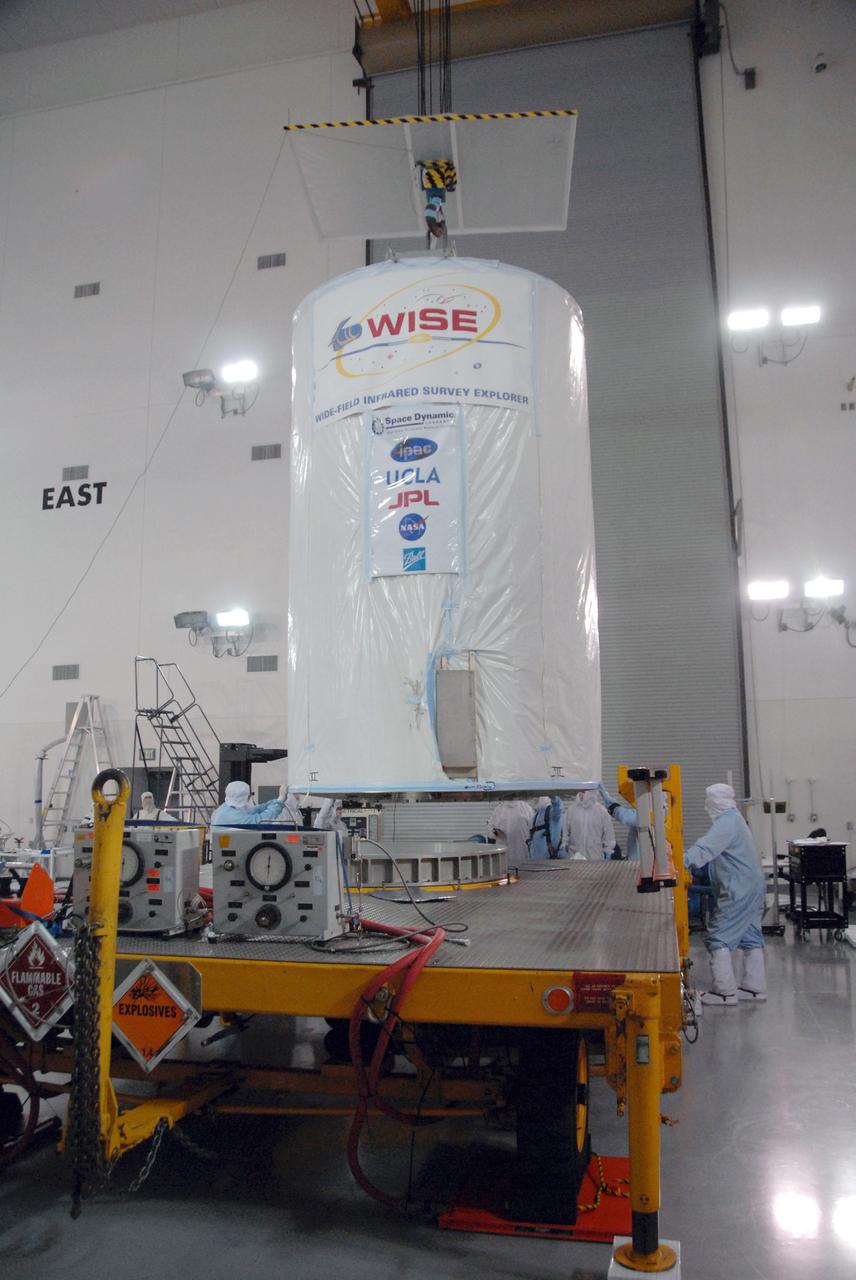
VANDENBERG AIR FORCE BASE, Calif. - At the Astrotech payload processing facility at Vandenberg Air Force Base in California, spacecraft technicians lower a transportation canister containing NASA's Wide-field Infrared Survey Explorer, or WISE, onto a transporter for its move to Space Launch Complex 2. WISE will survey the entire sky at infrared wavelengths, creating a cosmic clearinghouse of hundreds of millions of objects which will be catalogued and provide a vast storehouse of knowledge about the solar system, the Milky Way, and the universe. Launch aboard a United Launch Alliance Delta II rocket is scheduled for Dec. 9. For additional information, visit http://www.nasa.gov/wise. Photo credit: NASA/Daniel Liberotti, VAFB
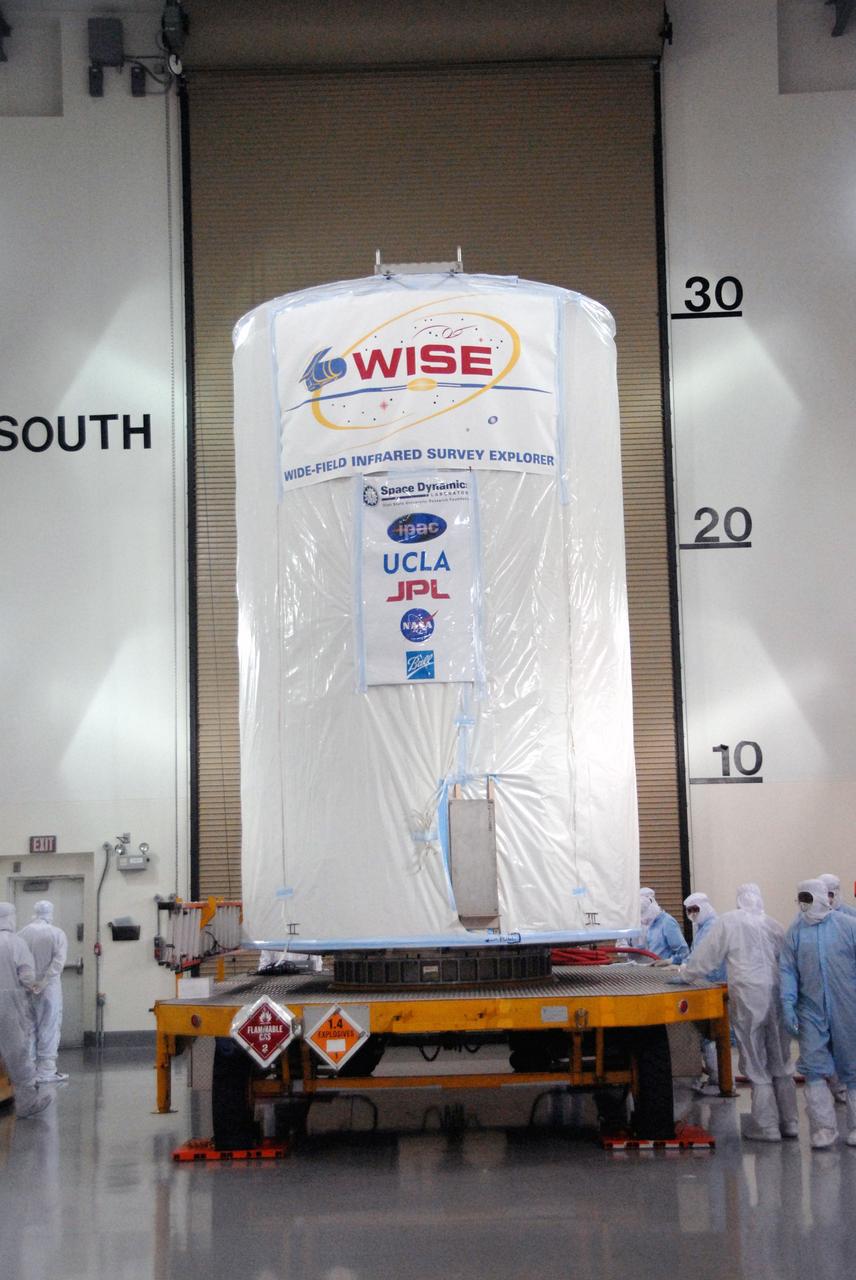
VANDENBERG AIR FORCE BASE, Calif. - At the Astrotech payload processing facility at Vandenberg Air Force Base in California, a transportation canister containing NASA's Wide-field Infrared Survey Explorer, or WISE, is secured on the transporter which will move it to Space Launch Complex 2. WISE will survey the entire sky at infrared wavelengths, creating a cosmic clearinghouse of hundreds of millions of objects which will be catalogued and provide a vast storehouse of knowledge about the solar system, the Milky Way, and the universe. Launch aboard a United Launch Alliance Delta II rocket is scheduled for Dec. 9. For additional information, visit http://www.nasa.gov/wise. Photo credit: NASA/Daniel Liberotti, VAFB
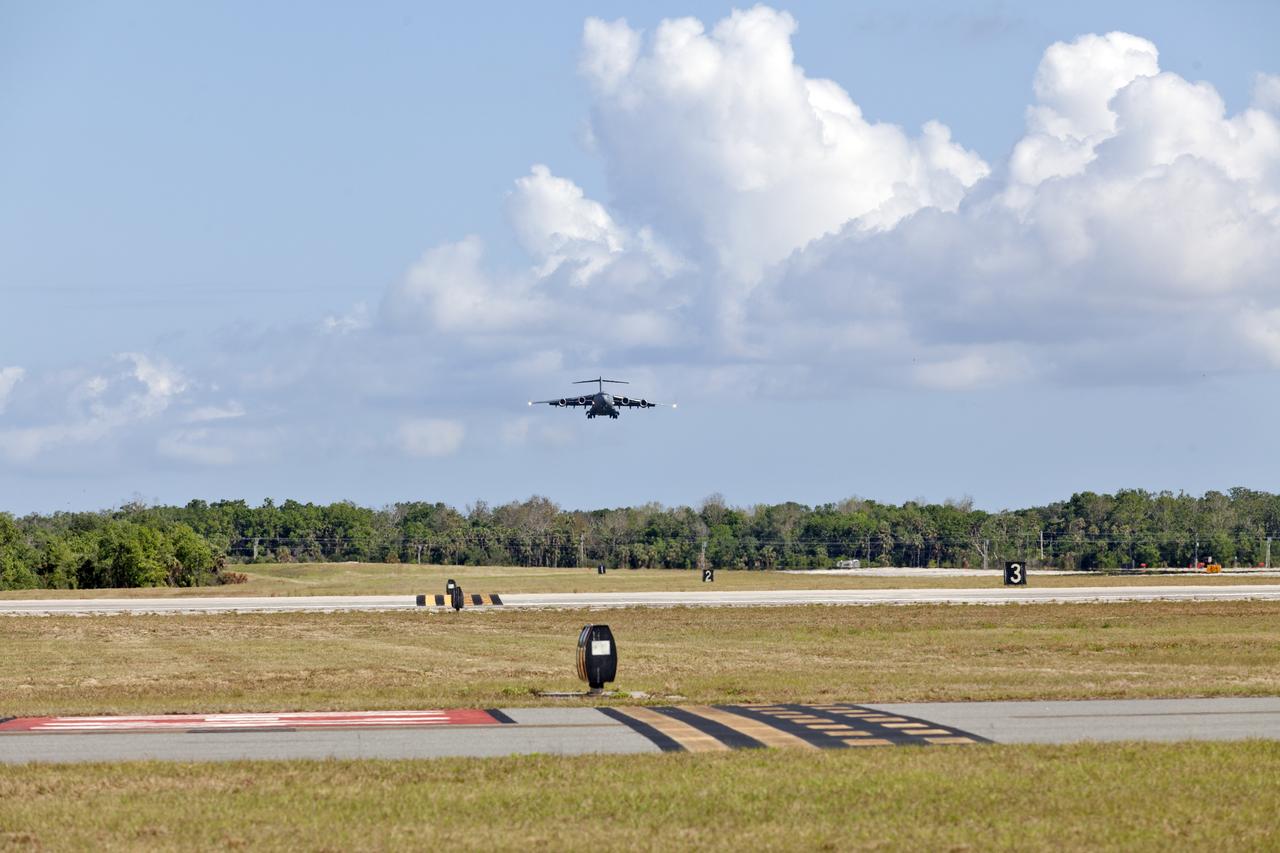
A U.S. Air Force C-5 transport aircraft approaches the runway for landing at Space Coast Regional Airport in Titusville, Florida, with NASA's Parker Solar Probe spacecraft aboard. The spacecraft will be offloaded and transported to the Astrotech processing facility near the agency's Kennedy Space Center. The Parker Solar Probe will launch on a United Launch Alliance Delta IV Heavy rocket from Space Launch Complex 37 at Cape Canaveral Air Force Station in Florida in July 2018. The mission will perform the closest-ever observations of a star when it travels through the Sun's atmosphere, called the corona. The probe will rely on measurements and imaging to revolutionize our understanding of the corona and the Sun-Earth connection.
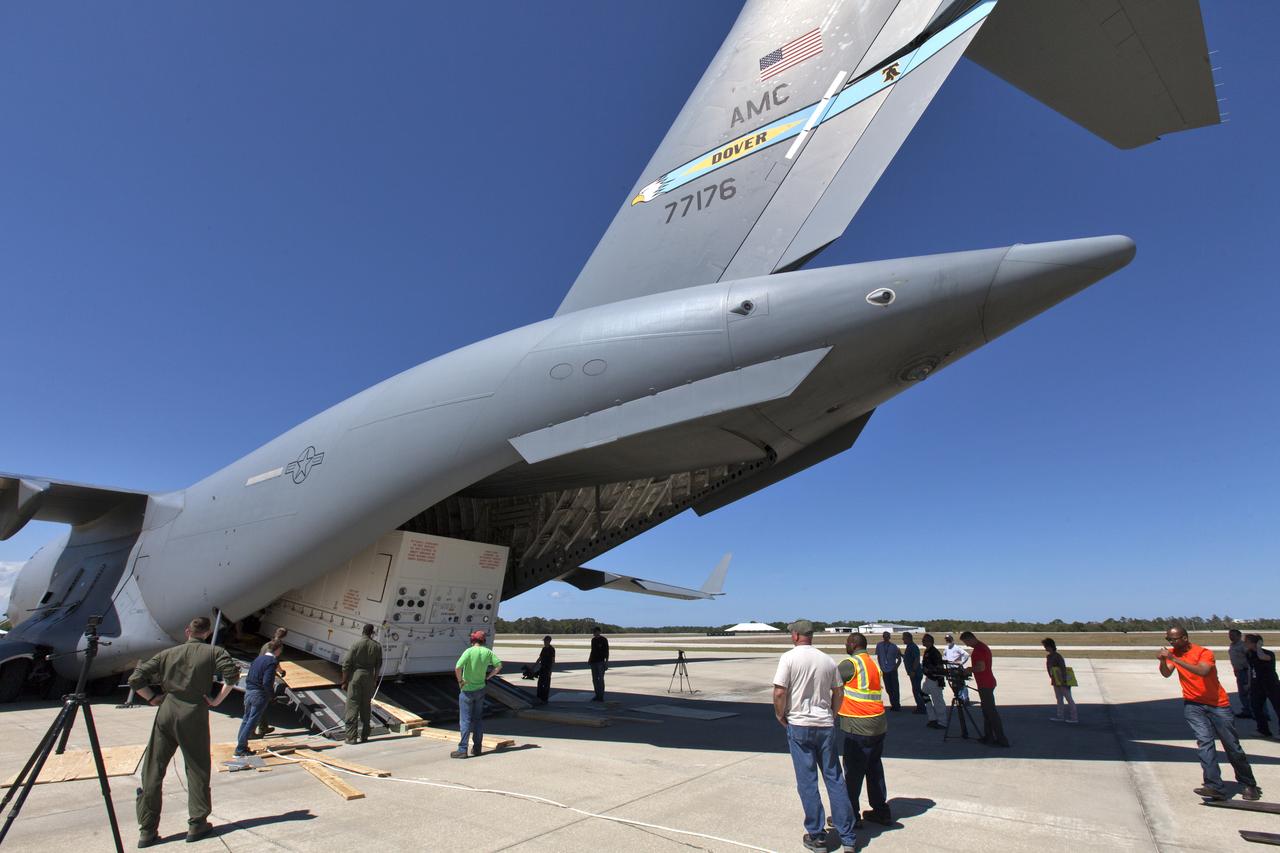
NASA's Parker Solar Probe, secured in its shipping container, is offloaded from a U.S. Air Force C-5 transport aircraft at Space Coast Regional Airport in Titusville, Florida. The spacecraft will be transported to the Astrotech processing facility near the agency's Kennedy Space Center. The Parker Solar Probe will launch on a United Launch Alliance Delta IV Heavy rocket from Space Launch Complex 37 at Cape Canaveral Air Force Station in Florida in July 2018. The mission will perform the closest-ever observations of a star when it travels through the Sun's atmosphere, called the corona. The probe will rely on measurements and imaging to revolutionize our understanding of the corona and the Sun-Earth connection.
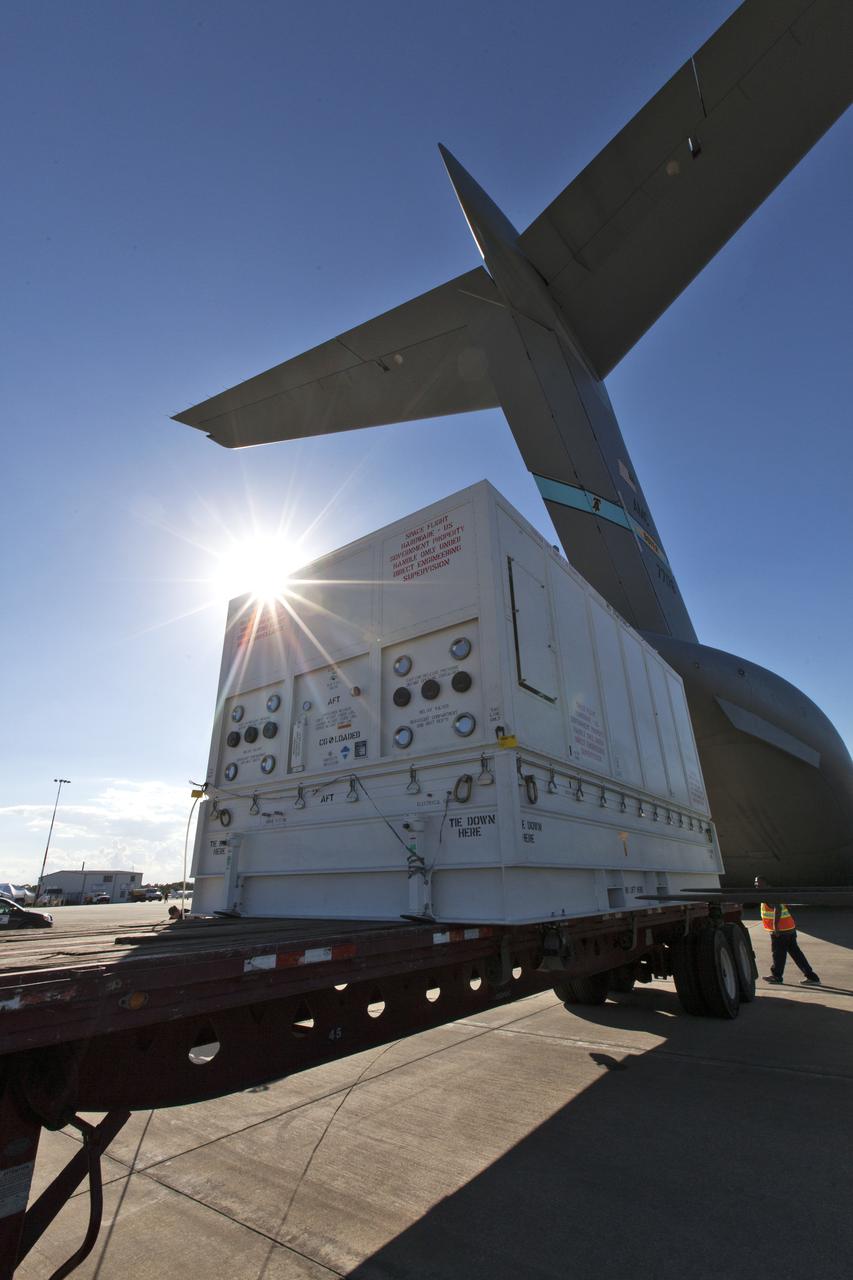
NASA's Parker Solar Probe, secured in its shipping container, has been offloaded from a U.S. Air Force C-5 transport aircraft at Space Coast Regional Airport in Titusville, Florida. The spacecraft will be transported to the Astrotech processing facility near the agency's Kennedy Space Center. The Parker Solar Probe will launch on a United Launch Alliance Delta IV Heavy rocket from Space Launch Complex 37 at Cape Canaveral Air Force Station in Florida in July 2018. The mission will perform the closest-ever observations of a star when it travels through the Sun's atmosphere, called the corona. The probe will rely on measurements and imaging to revolutionize our understanding of the corona and the Sun-Earth connection.
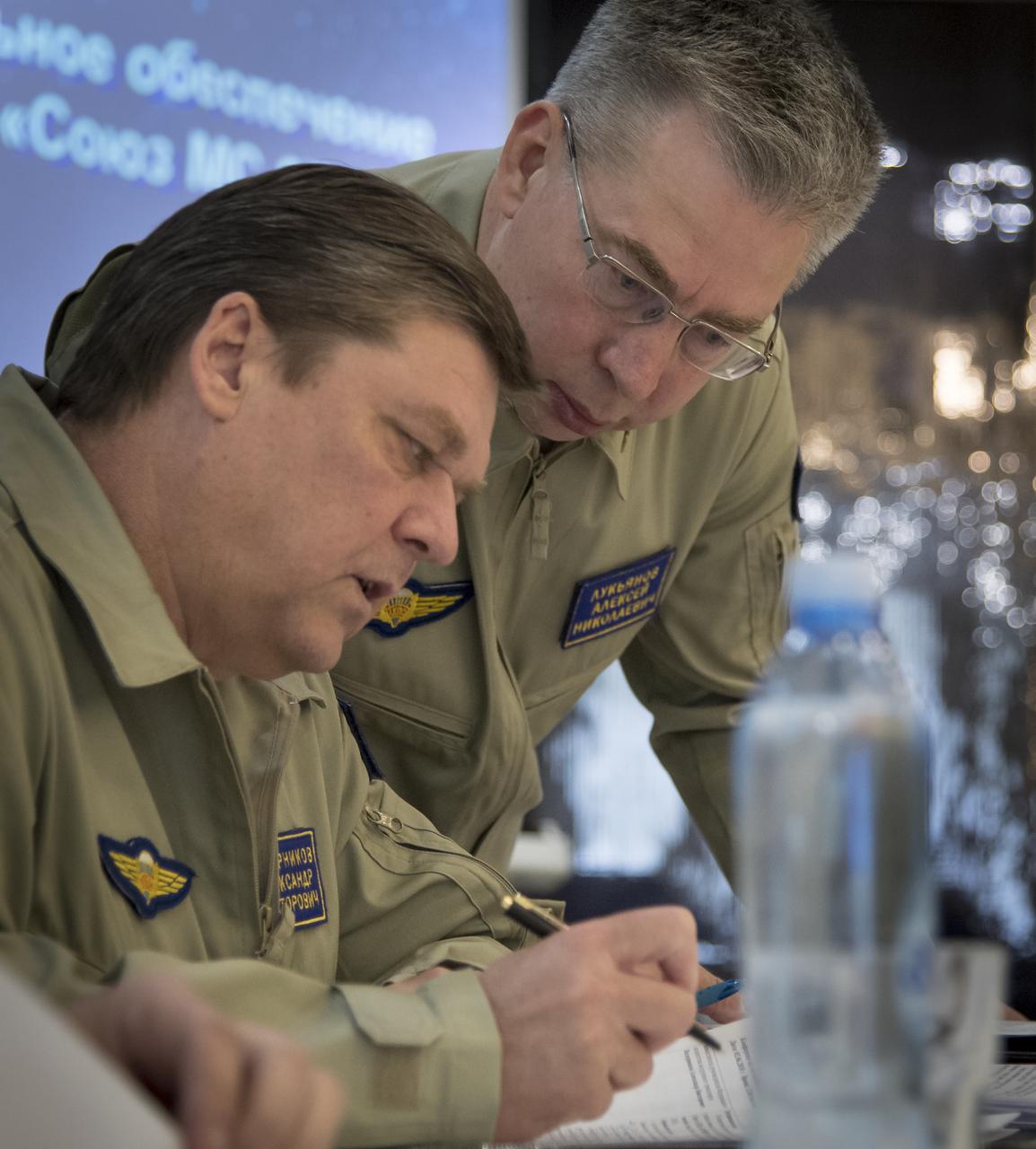
Deputy Director of Rosaviatsiya (Russian Federal Agency for Air Transport) Alexander Vedernikov, left, and Head of the Search-and-Rescue Department of Rosaviatsiya (Russian Federal Air Transport Agency) Aleksey Lukiyanov are seen during a meeting to discuss the readiness for the landing of Expedition 55 crew members Anton Shkaplerov of Roscosmos, Scott Tingle of NASA, Norishige Kanai of the Japan Aerospace Exploration Agency (JAXA) Saturday, June 2, 2018. Shkaplerov, Tingle, and Kanai are returning after 168 days in space where they served as members of the Expedition 54 and 55 crews onboard the International Space Station. Photo Credit: (NASA/Bill Ingalls)
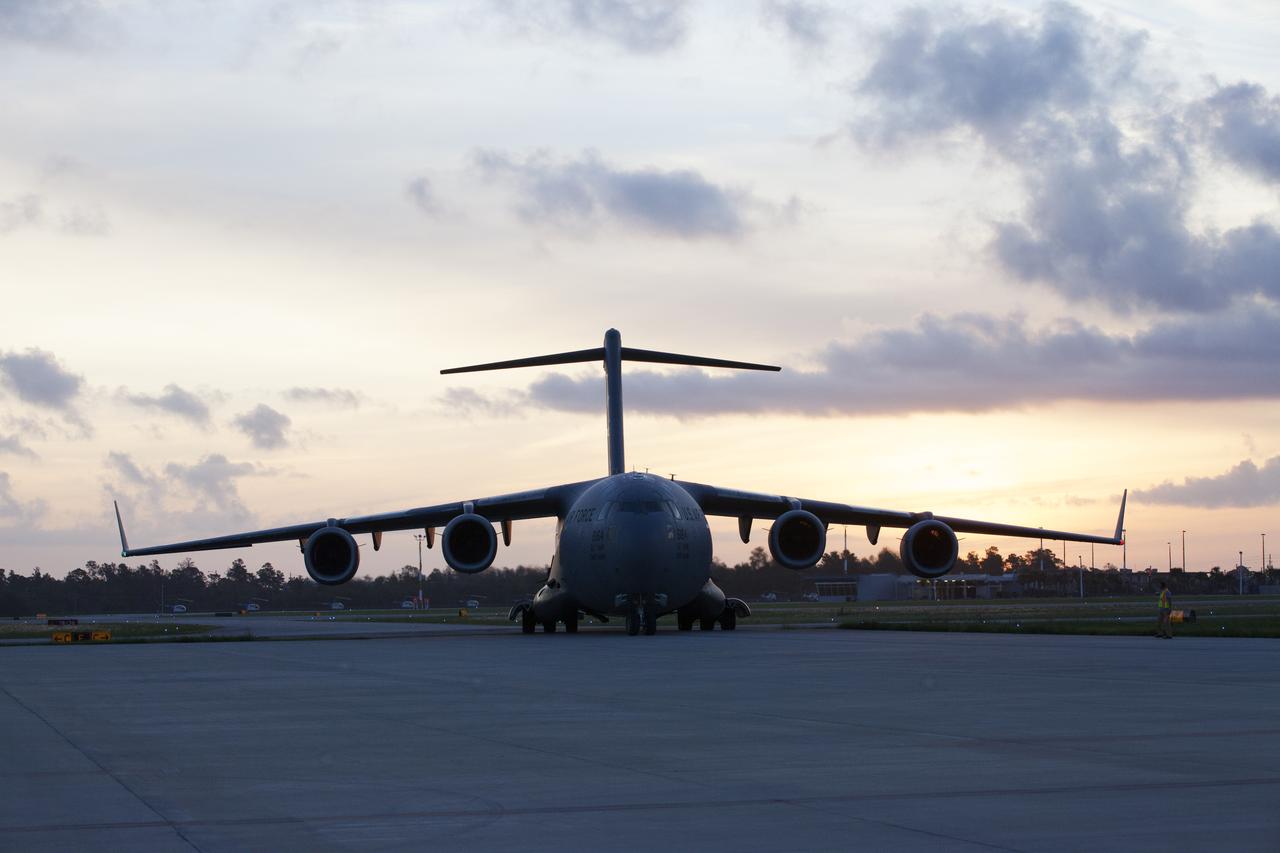
NASA's TDRS-M satellite arrives at Space Coast Regional Airport in Titusville, Florida, aboard a U.S. Air Force transport aircraft. The spacecraft will be transported to the nearby Astrotech facility, also in Titusville, for preflight processing. The TDRS-M is the latest spacecraft destined for the agency's constellation of communications satellites that allows nearly continuous contact with orbiting spacecraft ranging from the International Space Station and Hubble Space Telescope to the array of scientific observatories. Liftoff atop a United Launch Alliance Atlas V rocket is scheduled to take place from Space Launch Complex 41 at Cape Canaveral Air Force Station at 9:02 a.m. EDT Aug. 3, 2017.
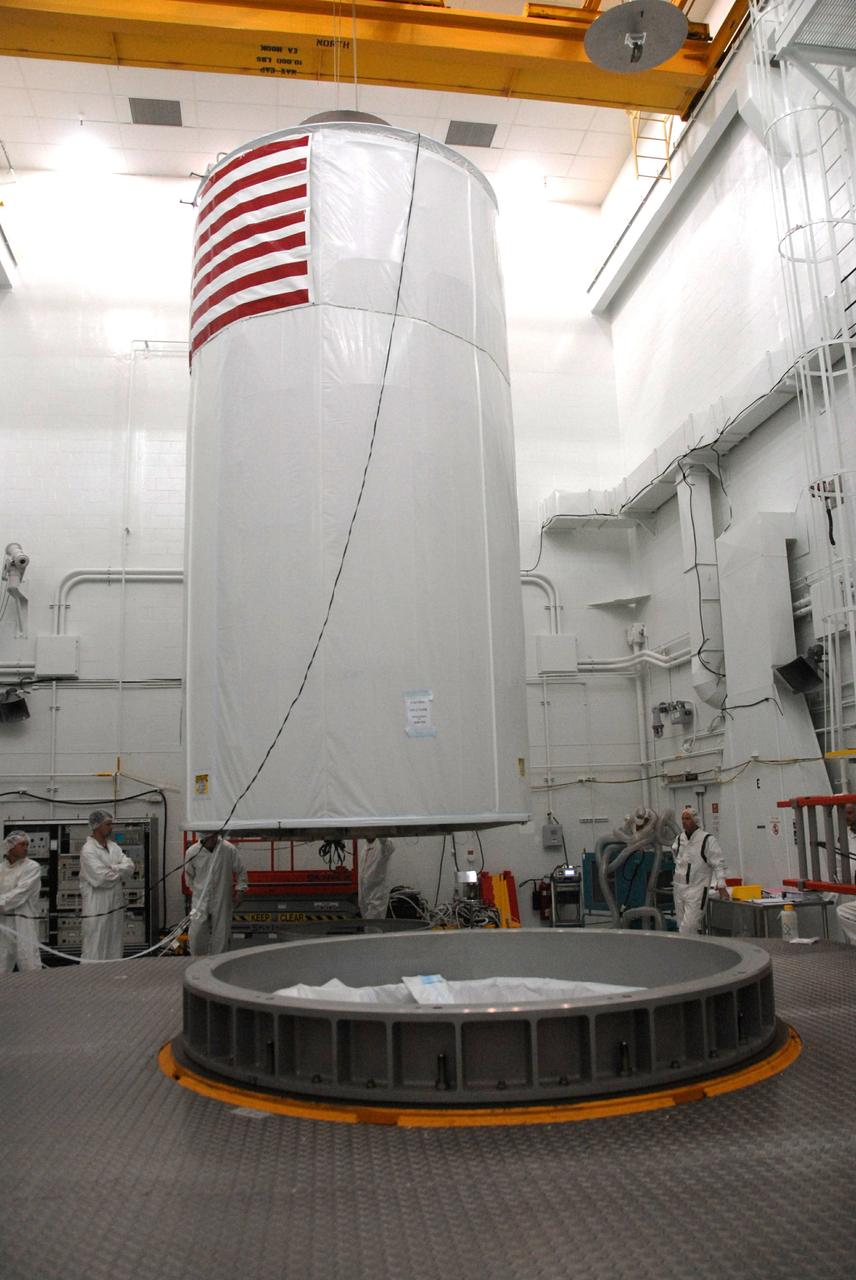
VANDENBERG AIR FORCE BASE, Calif. -- In Bldg. 1610 at Vandenberg Air Force Base in California, the covered NOAA-N Prime spacecraft is lifted off its stand. It will be moved to a transporter. NOAA-N Prime is the latest polar-orbiting operational environmental weather satellite developed by NASA for the National Oceanic and Atmospheric Administration. The satellite is scheduled to launch Feb. 4 aboard a Delta II rocket from Vandenberg Air Force Base. Photo credit: NASA/ Daniel Liberotti, VAFB
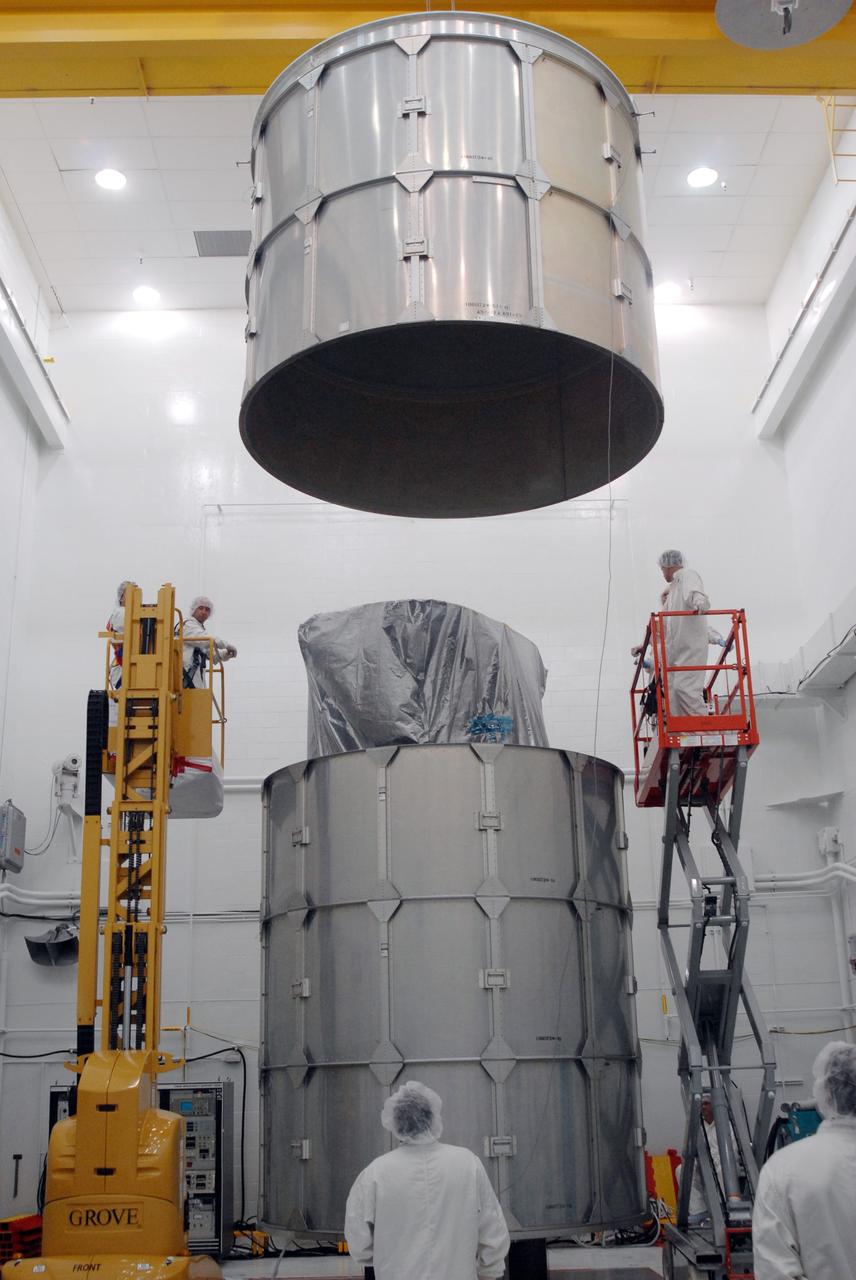
VANDENBERG AIR FORCE BASE, Calif. -- In Bldg. 1610 at Vandenberg Air Force Base in California, a transportation canister is being placed around the NOAA-N Prime spacecraft. NOAA-N Prime is the latest polar-orbiting operational environmental weather satellite developed by NASA for the National Oceanic and Atmospheric Administration. The satellite is scheduled to launch Feb. 4 aboard a Delta II rocket from Vandenberg Air Force Base. Photo credit: NASA/ Daniel Liberotti, VAFB
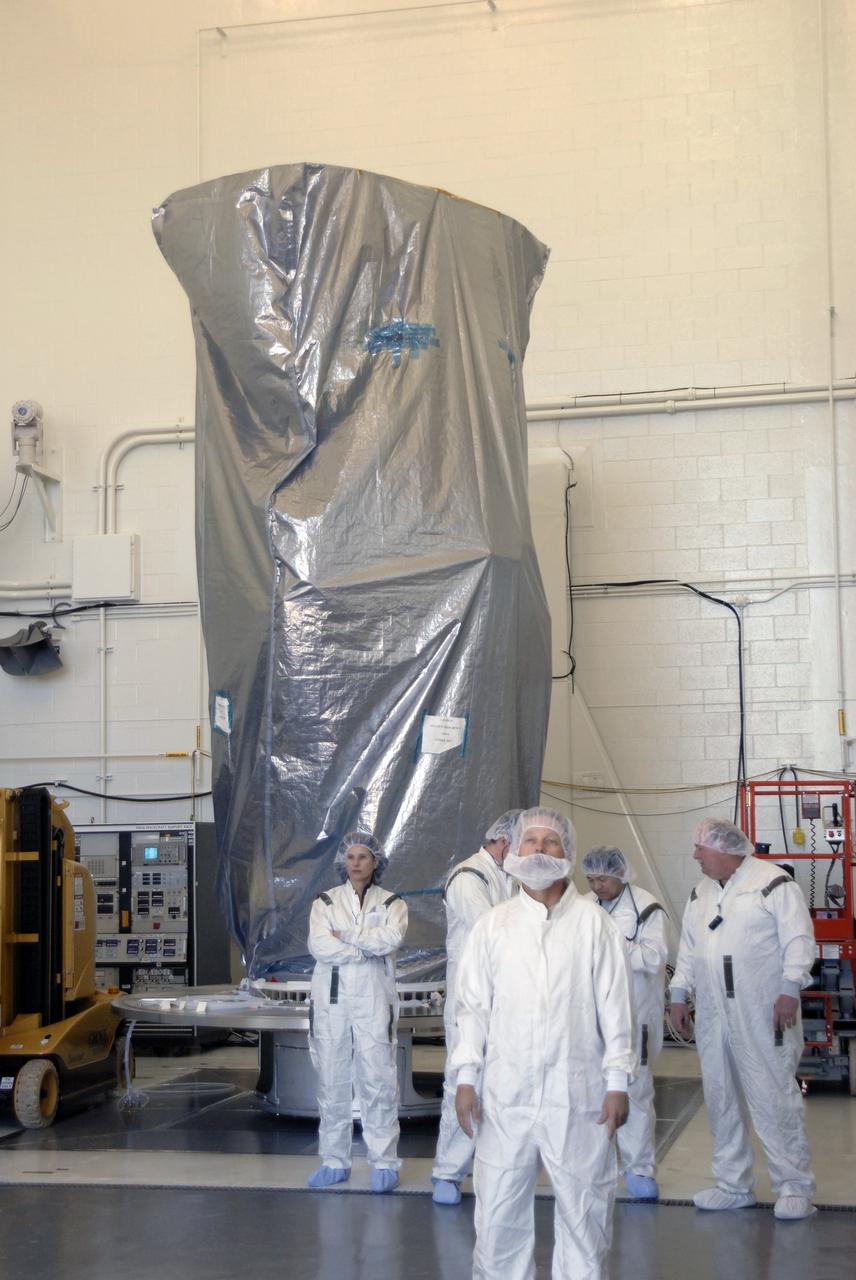
VANDENBERG AIR FORCE BASE, Calif. -- In Bldg. 1610 at Vandenberg Air Force Base in California, the NOAA-N Prime spacecraft is waiting for a transportation canister to be placed around it. NOAA-N Prime is the latest polar-orbiting operational environmental weather satellite developed by NASA for the National Oceanic and Atmospheric Administration. The satellite is scheduled to launch Feb. 4 aboard a Delta II rocket from Vandenberg Air Force Base. Photo credit: NASA/ Daniel Liberotti, VAFB
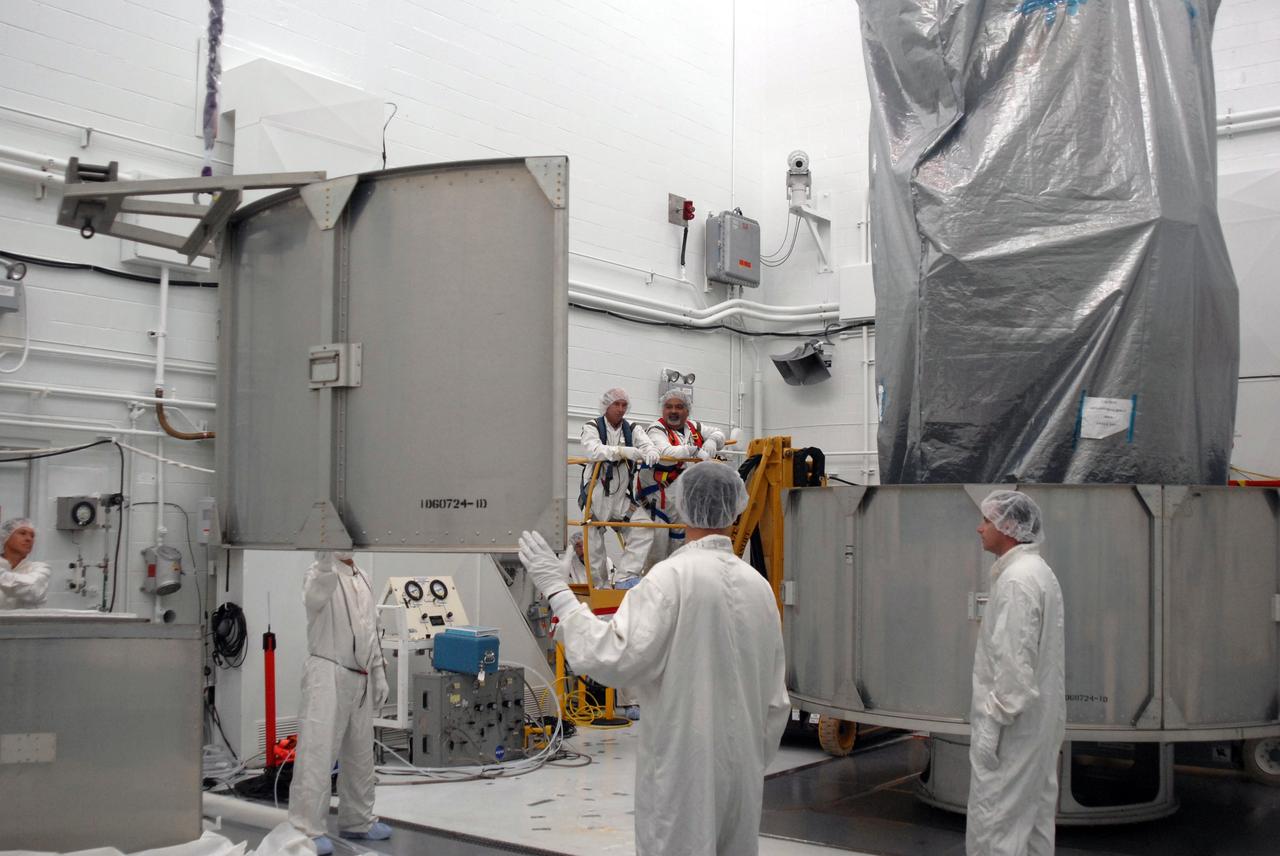
VANDENBERG AIR FORCE BASE, Calif. -- In Bldg. 1610 at Vandenberg Air Force Base in California, workers help guide a second-row segment of a transportation canister toward the NOAA-N Prime spacecraft for installation. NOAA-N Prime is the latest polar-orbiting operational environmental weather satellite developed by NASA for the National Oceanic and Atmospheric Administration. The satellite is scheduled to launch Feb. 4 aboard a Delta II rocket from Vandenberg Air Force Base. Photo credit: NASA/ Daniel Liberotti, VAFB
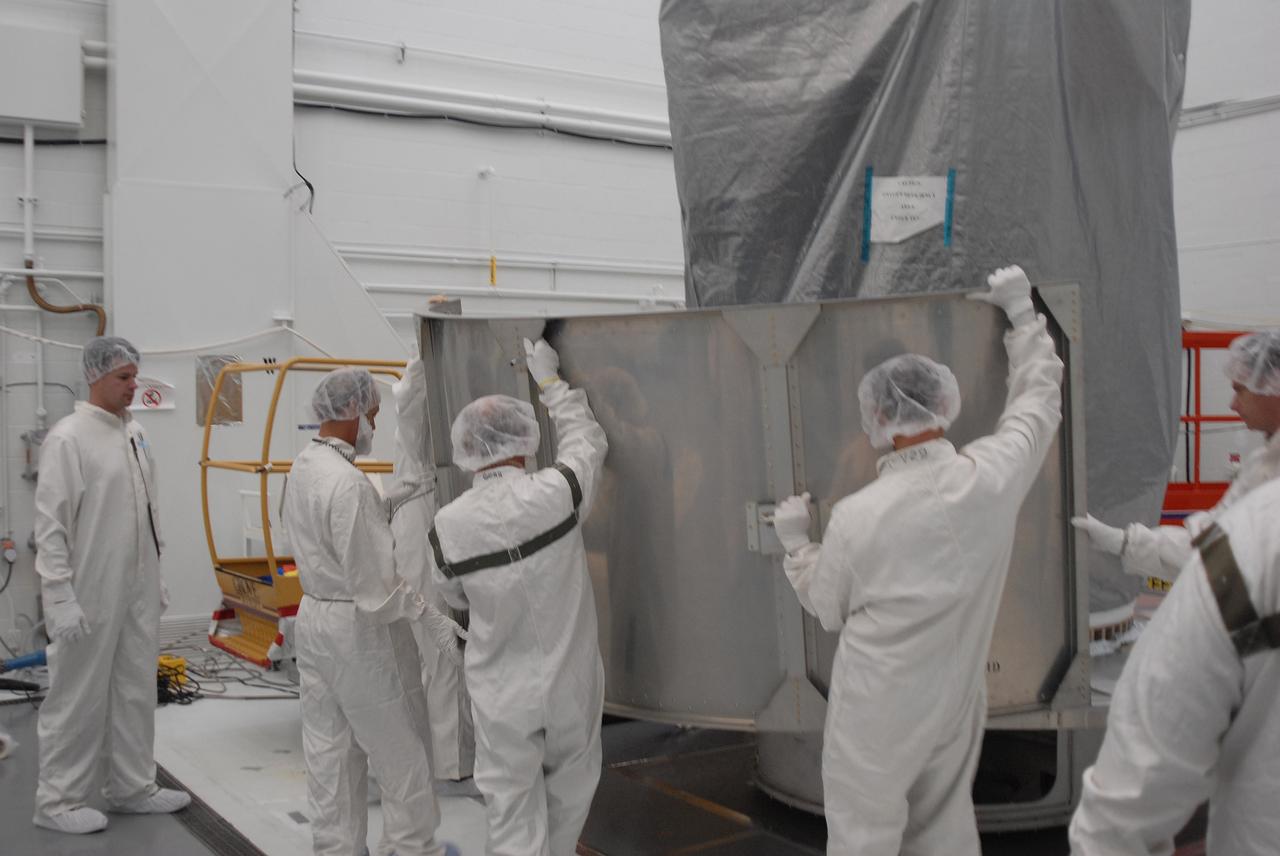
VANDENBERG AIR FORCE BASE, Calif. -- In Bldg. 1610 at Vandenberg Air Force Base in California, workers place the first of the lower segments of a transportation canister around the NOAA-N Prime spacecraft. NOAA-N Prime is the latest polar-orbiting operational environmental weather satellite developed by NASA for the National Oceanic and Atmospheric Administration. The satellite is scheduled to launch Feb. 4 aboard a Delta II rocket from Vandenberg Air Force Base. Photo credit: NASA/ Daniel Liberotti, VAFB
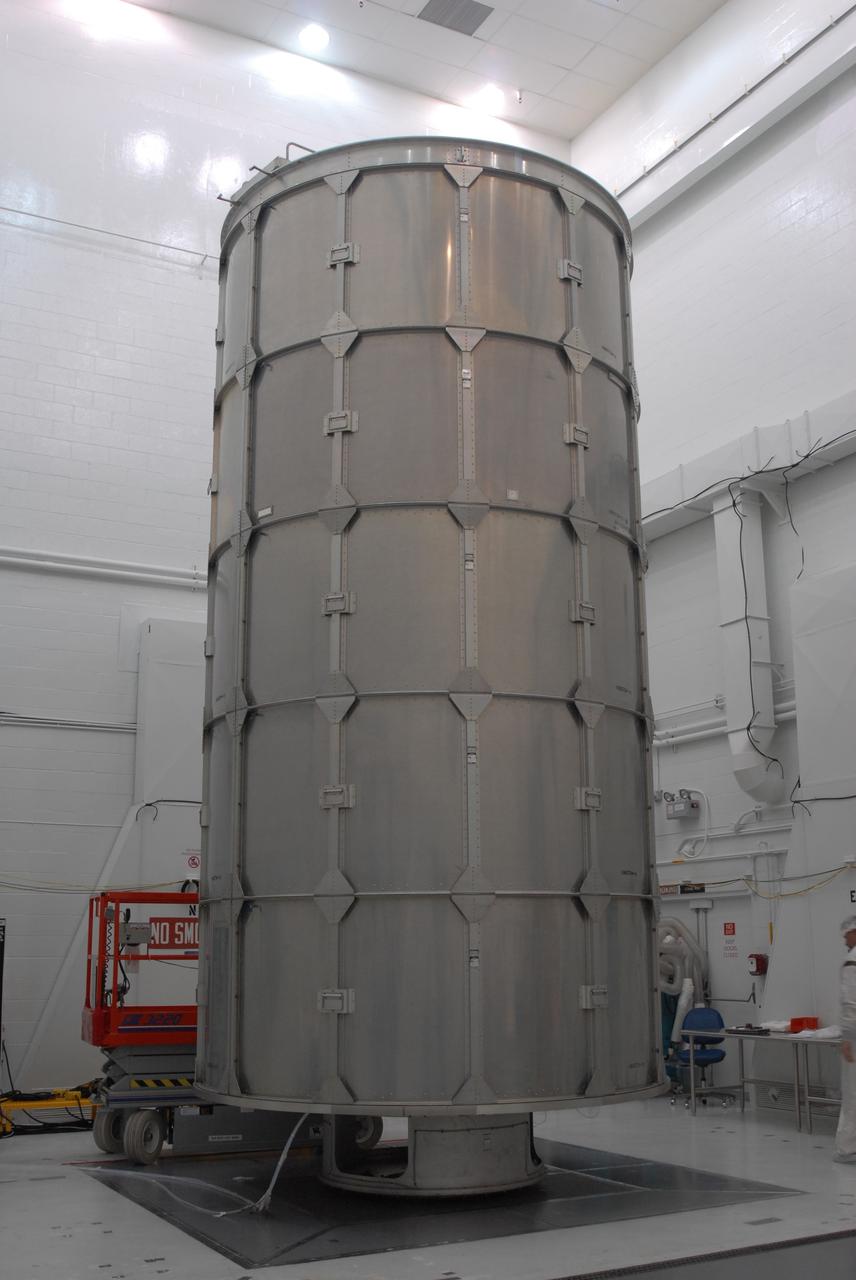
VANDENBERG AIR FORCE BASE, Calif. -- In Bldg. 1610 at Vandenberg Air Force Base in California, the NOAA-N Prime spacecraft is encased inside a transportation canister. NOAA-N Prime is the latest polar-orbiting operational environmental weather satellite developed by NASA for the National Oceanic and Atmospheric Administration. The satellite is scheduled to launch Feb. 4 aboard a Delta II rocket from Vandenberg Air Force Base. Photo credit: NASA/ Daniel Liberotti, VAFB
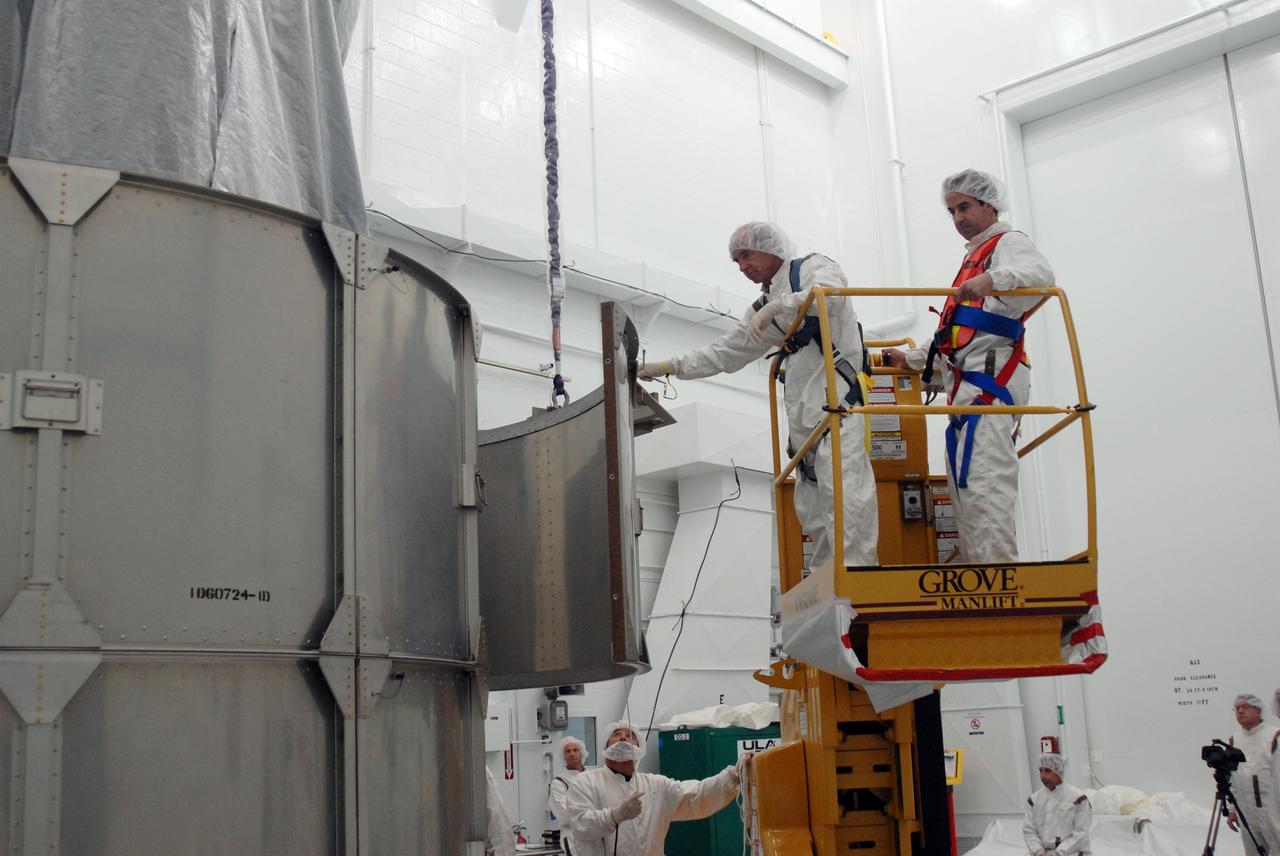
VANDENBERG AIR FORCE BASE, Calif. -- In Bldg. 1610 at Vandenberg Air Force Base in California, workers guide an upper segment of the transportation canister toward the NOAA-N Prime spacecraft. NOAA-N Prime is the latest polar-orbiting operational environmental weather satellite developed by NASA for the National Oceanic and Atmospheric Administration. The satellite is scheduled to launch Feb. 4 aboard a Delta II rocket from Vandenberg Air Force Base. Photo credit: NASA/ Daniel Liberotti, VAFB
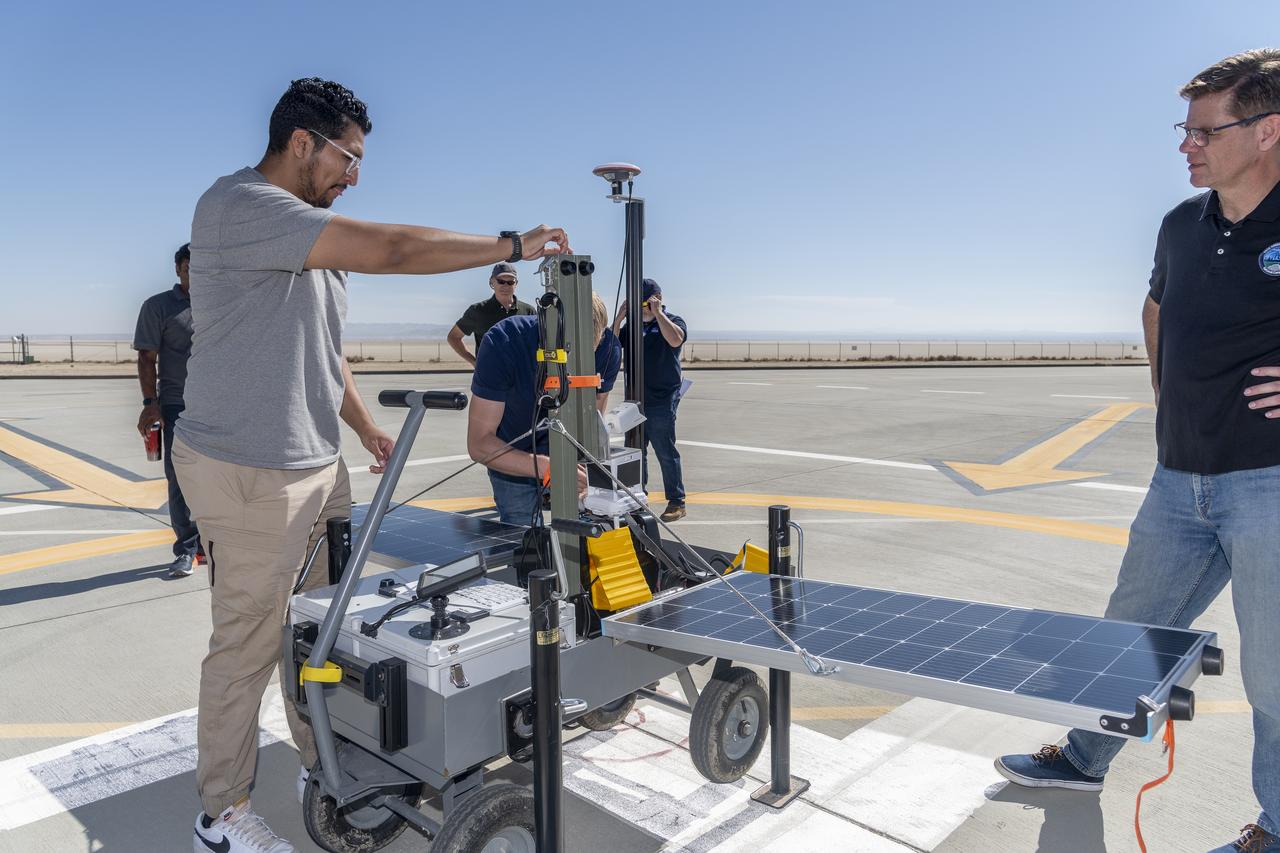
NASA operations engineer Daniel Velasquez, left, is reviewing the Mobile Vertipad Sensor Package system as part of the Air Mobility Pathways test project at NASA's Armstrong Flight Research Center in Edwards, California on October 17, 2023. The portable system allows Advanced Air Mobility researchers to test and evaluate several factors involved in monitoring takeoff and landing conditions at vertipad sites. "Vertipads" or "vertiports" will be where future air taxis will land and take off to transport passengers.
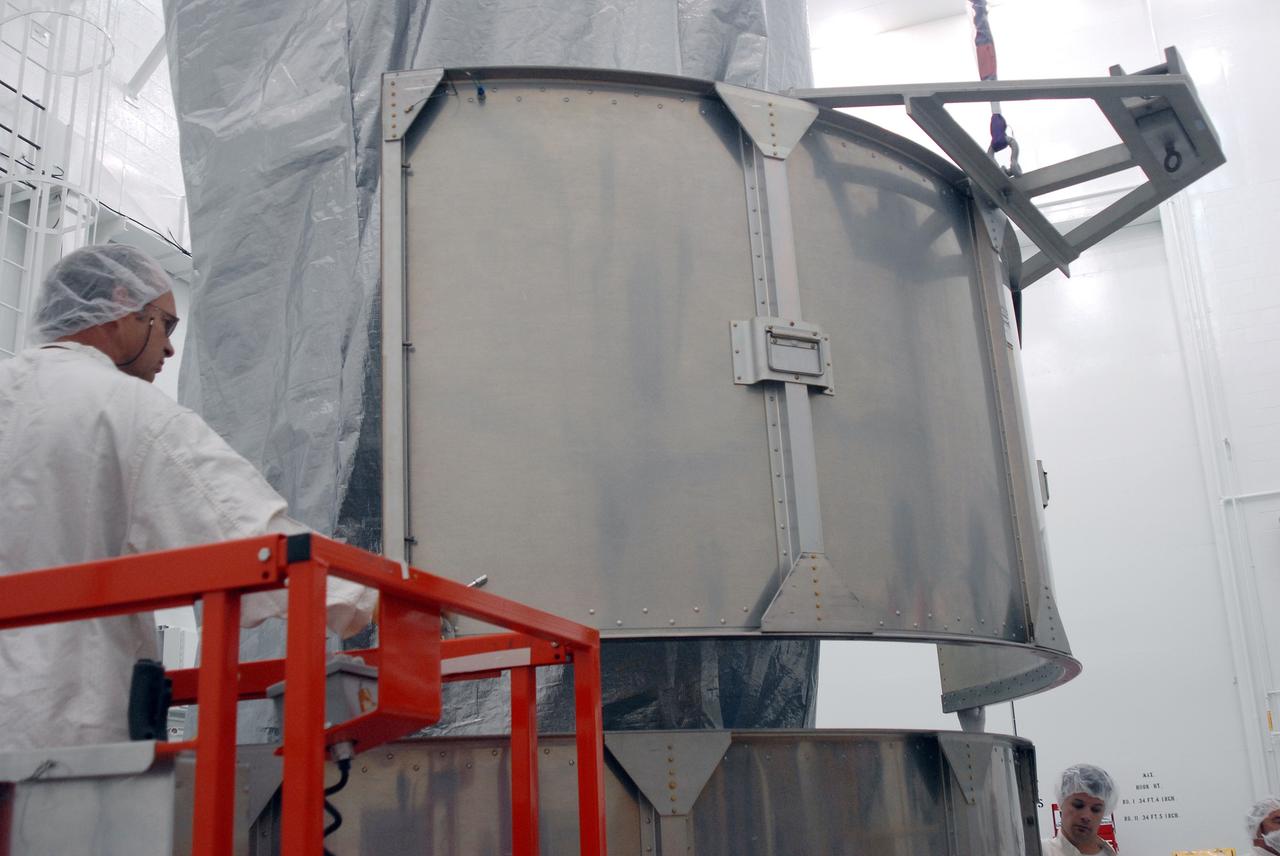
VANDENBERG AIR FORCE BASE, Calif. -- In Bldg. 1610 at Vandenberg Air Force Base in California, a second-row segment of a transportation canister is put in place for installation around the NOAA-N Prime spacecraft. NOAA-N Prime is the latest polar-orbiting operational environmental weather satellite developed by NASA for the National Oceanic and Atmospheric Administration. The satellite is scheduled to launch Feb. 4 aboard a Delta II rocket from Vandenberg Air Force Base. Photo credit: NASA/ Daniel Liberotti, VAFB
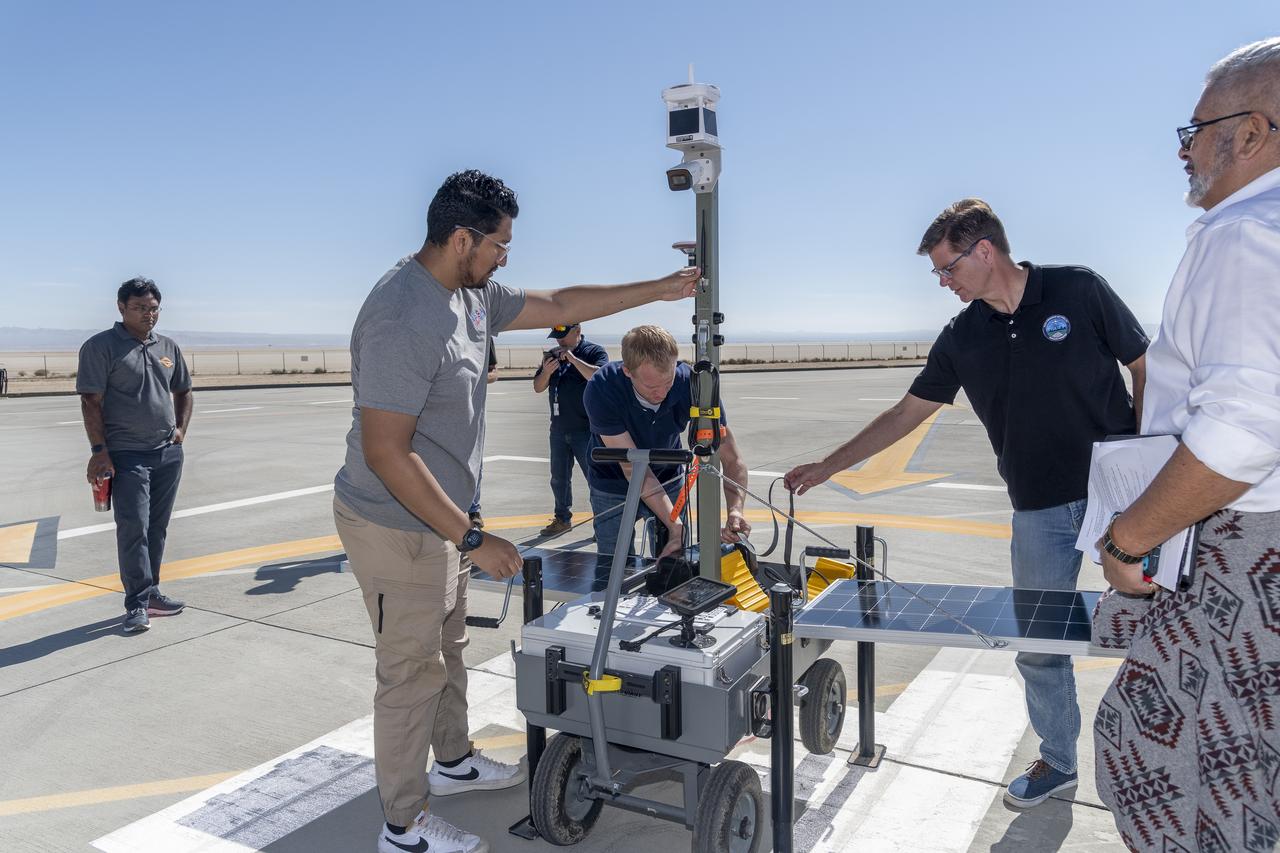
NASA operations engineer Daniel Velasquez, left, is reviewing the Mobile Vertipad Sensor Package system as part of the Air Mobility Pathways test project at NASA's Armstrong Flight Research Center in Edwards, California on October 17, 2023. The portable system allows Advanced Air Mobility researchers to test and evaluate several factors involved in monitoring takeoff and landing conditions at vertipad sites. "Vertipads" or "vertiports" will be where future air taxis will land and take off to transport passengers.
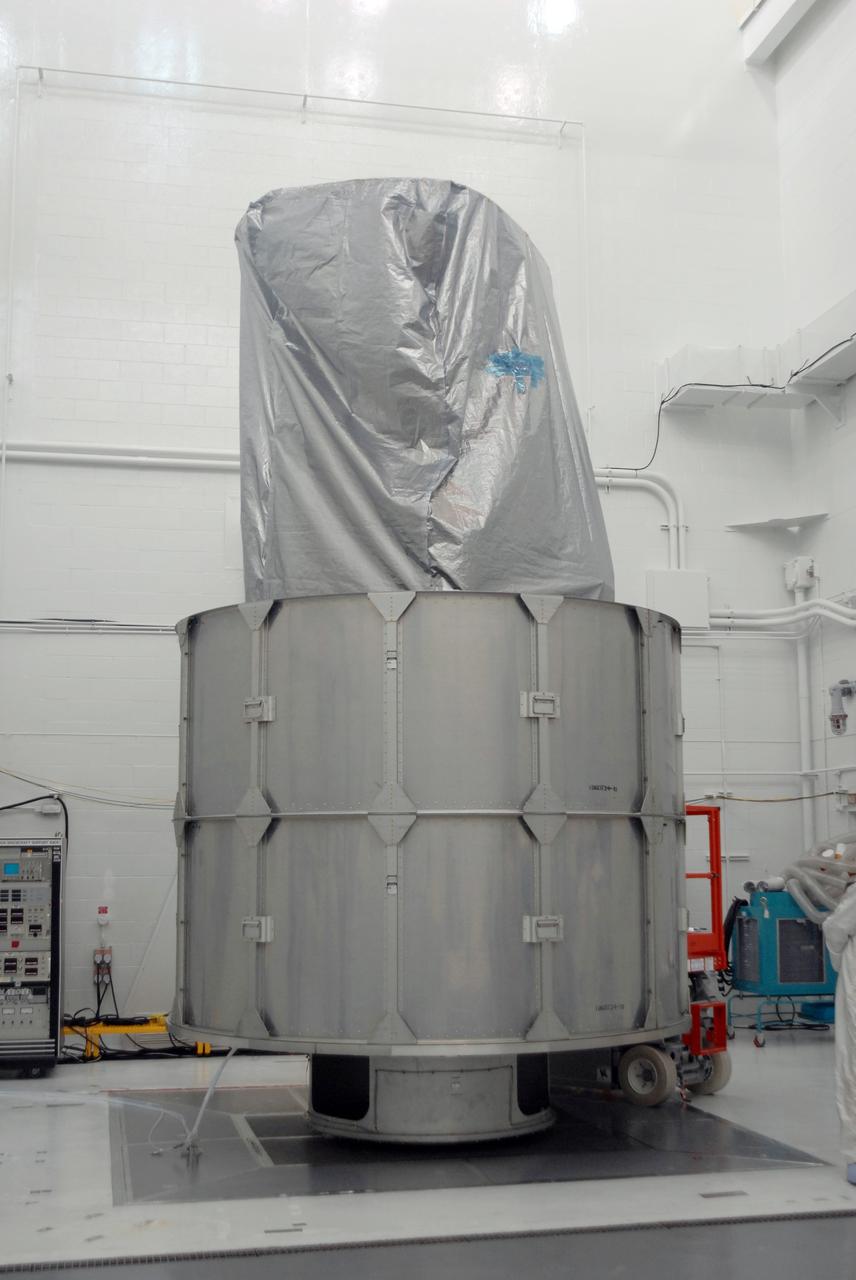
VANDENBERG AIR FORCE BASE, Calif. -- In Bldg. 1610 at Vandenberg Air Force Base in California, two rows of the transportation canister are installed around the NOAA-N Prime spacecraft. NOAA-N Prime is the latest polar-orbiting operational environmental weather satellite developed by NASA for the National Oceanic and Atmospheric Administration. The satellite is scheduled to launch Feb. 4 aboard a Delta II rocket from Vandenberg Air Force Base. Photo credit: NASA/ Daniel Liberotti, VAFB
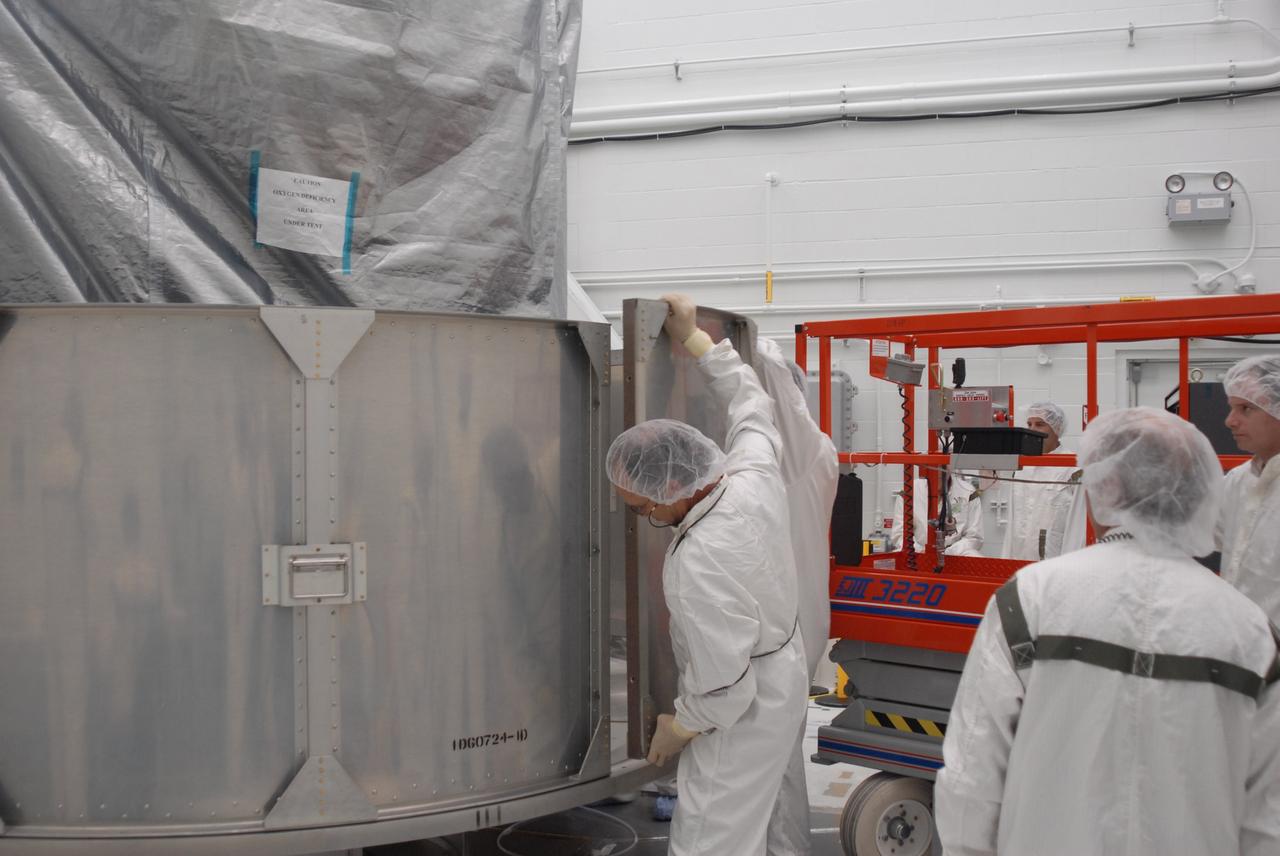
VANDENBERG AIR FORCE BASE, Calif. -- In Bldg. 1610 at Vandenberg Air Force Base in California, workers place another lower segment of a transportation canister around the NOAA-N Prime spacecraft. NOAA-N Prime is the latest polar-orbiting operational environmental weather satellite developed by NASA for the National Oceanic and Atmospheric Administration. The satellite is scheduled to launch Feb. 4 aboard a Delta II rocket from Vandenberg Air Force Base. Photo credit: NASA/ Daniel Liberotti, VAFB
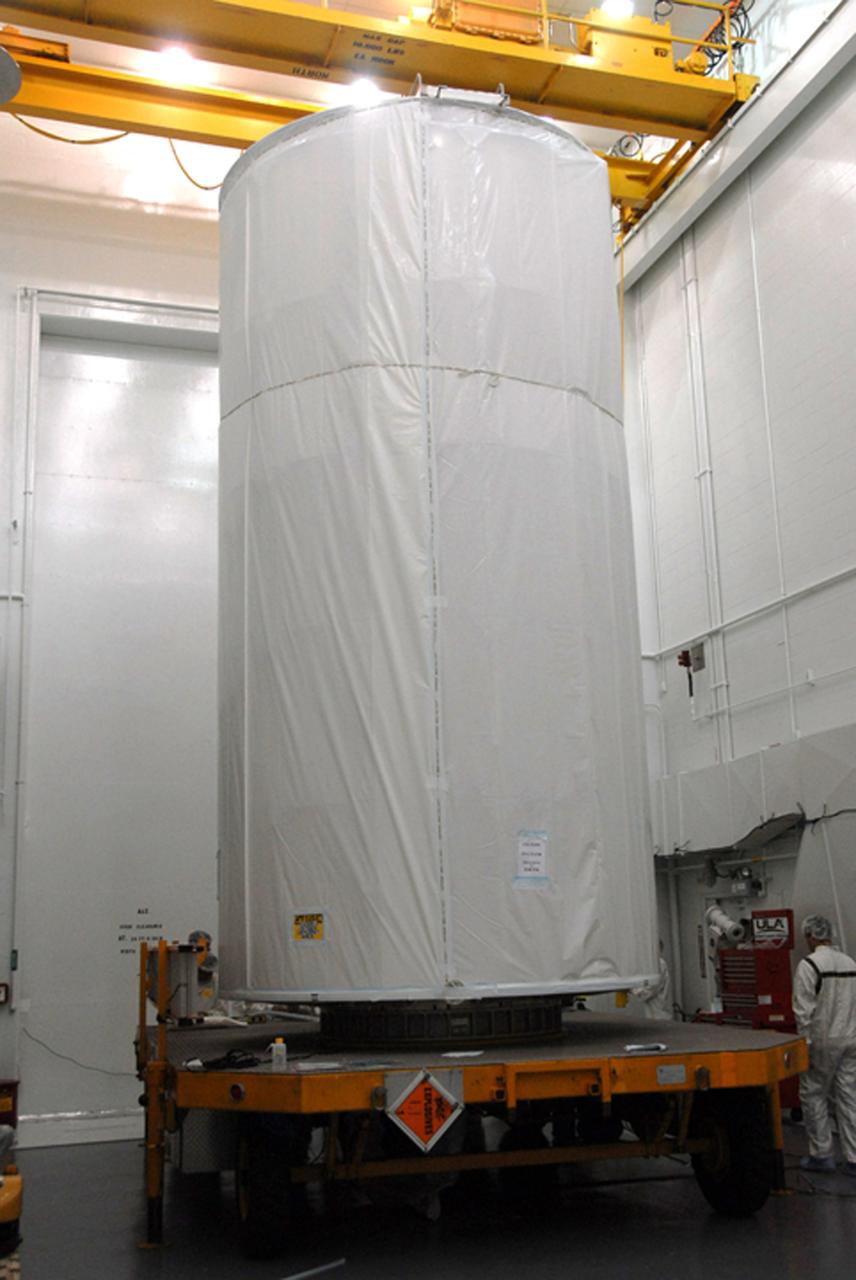
VANDENBERG AIR FORCE BASE, Calif. -- In Bldg. 1610 at Vandenberg Air Force Base in California, the covered NOAA-N Prime spacecraft is lowered onto a transporter. NOAA-N Prime is the latest polar-orbiting operational environmental weather satellite developed by NASA for the National Oceanic and Atmospheric Administration. The satellite is scheduled to launch Feb. 4 aboard a Delta II rocket from Vandenberg Air Force Base. Photo credit: NASA/ Daniel Liberotti, VAFB
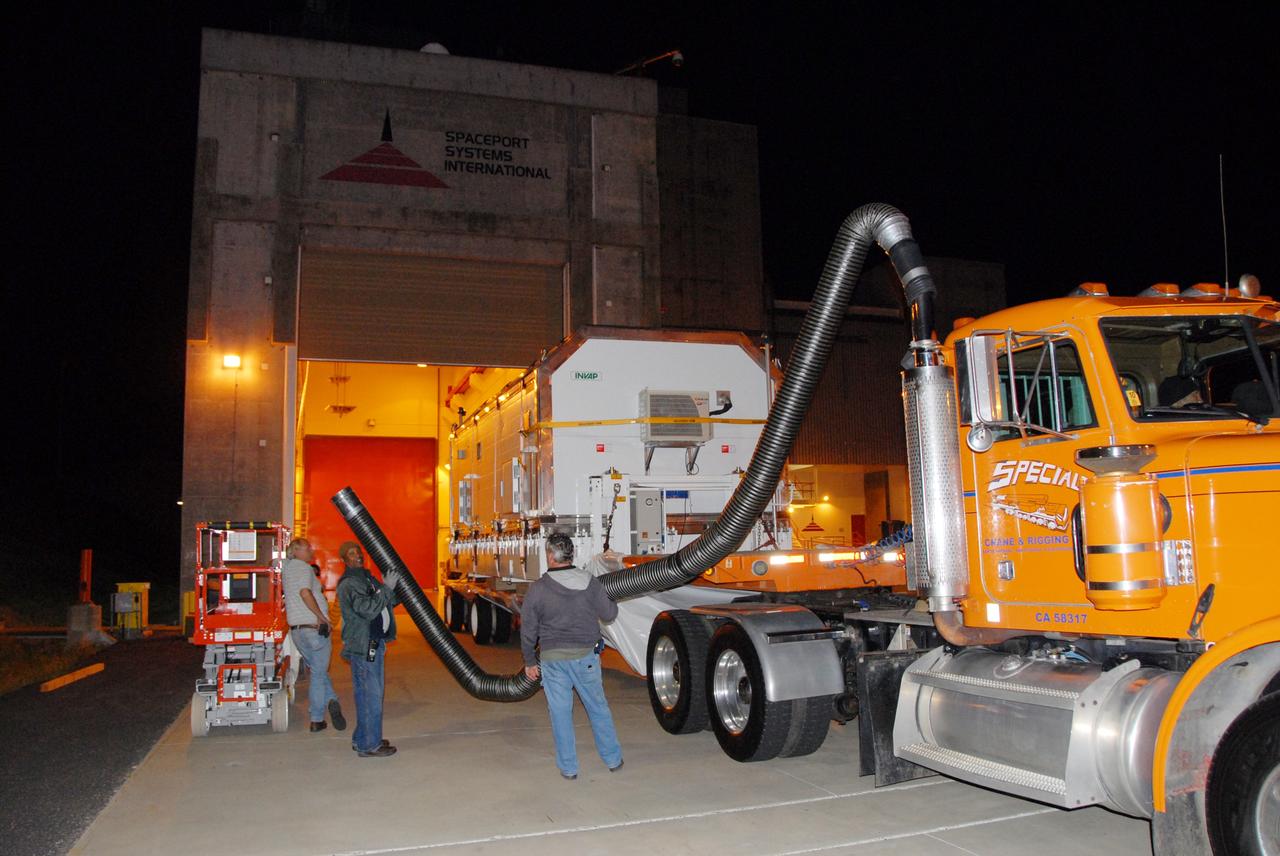
VANDENBERG AIR FORCE BASE, Calif. -- The Aquarius/SAC-D spacecraft is transported to the Spaceport Systems International payload processing facility at Vandenberg Air Force Base in California. Earlier, a U.S. Air Force C-17 transport plane delivered the spacecraft from Campos, Brazil. Following final tests, the spacecraft will be integrated to a United Launch Alliance Delta II rocket in preparation for the targeted June launch to low Earth orbit. Aquarius, the NASA-built primary instrument on the SAC-D spacecraft, will map global changes in salinity at the ocean's surface. Salinity is a key measurement for understanding how changes in rainfall, evaporation and the melting of freezing of ice influence ocean circulation and are linked to variations in Earth's climate. The three-year mission will provide new insights into how variations in ocean surface salinity relate to these fundamental climate processes. Photo credit: VAFB/30th Space Wing
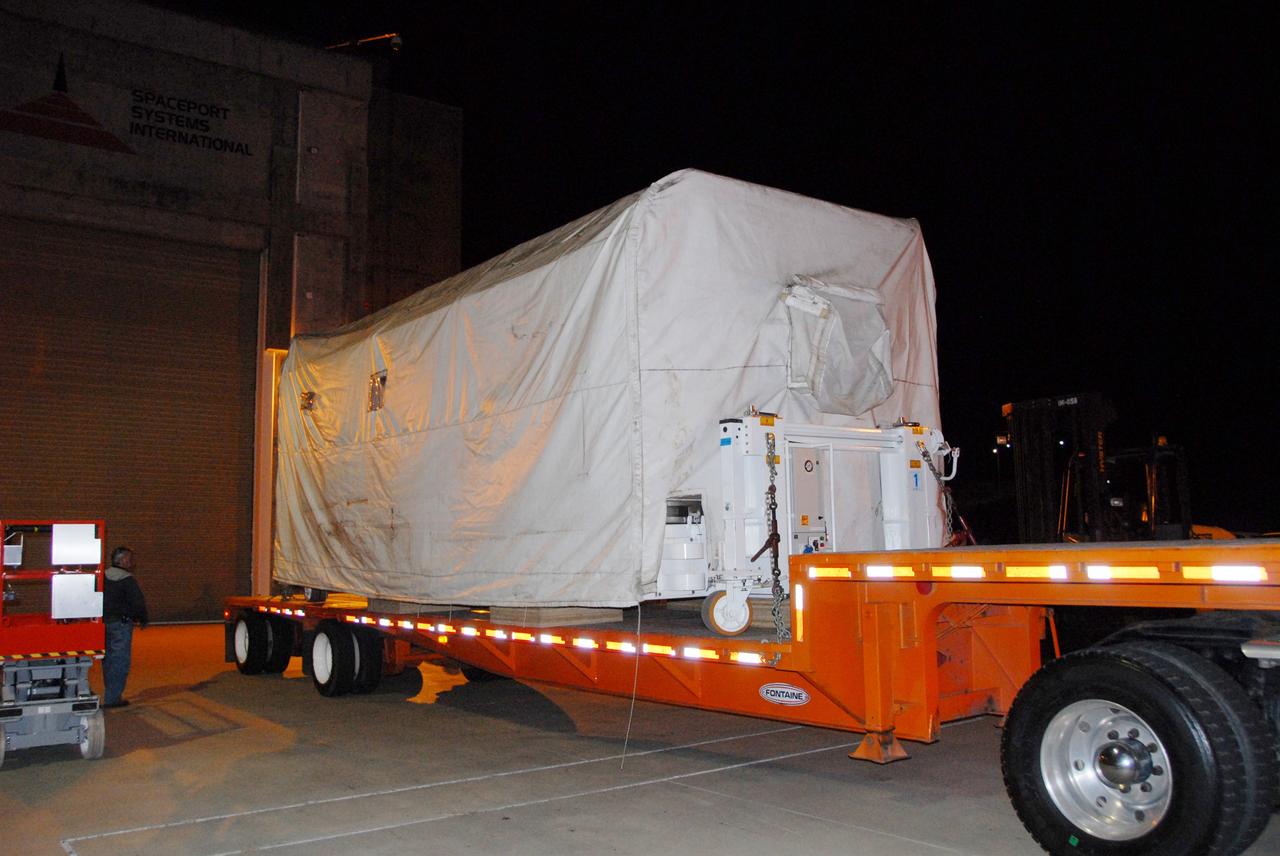
VANDENBERG AIR FORCE BASE, Calif. -- The Aquarius/SAC-D spacecraft is transported to the Spaceport Systems International processing facility at Vandenberg Air Force Base in California. Earlier, a U.S. Air Force C-17 transport plane delivered the spacecraft from Campos, Brazil. Following final tests, the spacecraft will be integrated to a United Launch Alliance Delta II rocket in preparation for the targeted June launch to low Earth orbit. Aquarius, the NASA-built primary instrument on the SAC-D spacecraft, will map global changes in salinity at the ocean's surface. Salinity is a key measurement for understanding how changes in rainfall, evaporation and the melting of freezing of ice influence ocean circulation and are linked to variations in Earth's climate. The three-year mission will provide new insights into how variations in ocean surface salinity relate to these fundamental climate processes. Photo credit: VAFB/30th Space Wing

VANDENBERG AIR FORCE BASE, Calif. -- The Aquarius/SAC-D spacecraft is transported to the Spaceport Systems International processing facility at Vandenberg Air Force Base in California. Earlier, a U.S. Air Force C-17 transport plane delivered the spacecraft from Campos, Brazil. Following final tests, the spacecraft will be integrated to a United Launch Alliance Delta II rocket in preparation for the targeted June launch to low Earth orbit. Aquarius, the NASA-built primary instrument on the SAC-D spacecraft, will map global changes in salinity at the ocean's surface. Salinity is a key measurement for understanding how changes in rainfall, evaporation and the melting of freezing of ice influence ocean circulation and are linked to variations in Earth's climate. The three-year mission will provide new insights into how variations in ocean surface salinity relate to these fundamental climate processes. Photo credit: VAFB/30th Space Wing
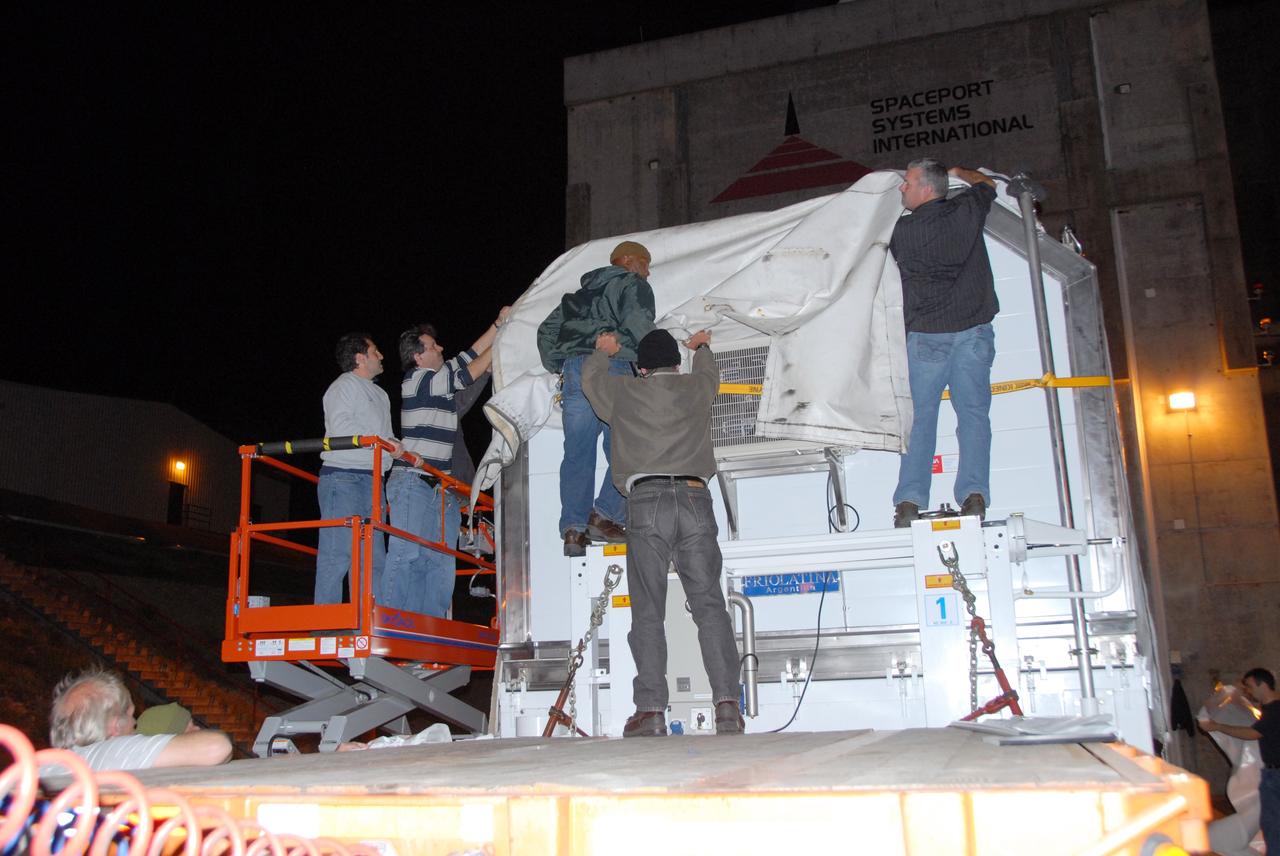
VANDENBERG AIR FORCE BASE, Calif. -- The Aquarius/SAC-D spacecraft is transported to the Spaceport Systems International processing facility at Vandenberg Air Force Base in California. Earlier, a U.S. Air Force C-17 transport plane delivered the spacecraft from Campos, Brazil. Following final tests, the spacecraft will be integrated to a United Launch Alliance Delta II rocket in preparation for the targeted June launch to low Earth orbit. Aquarius, the NASA-built primary instrument on the SAC-D spacecraft, will map global changes in salinity at the ocean's surface. Salinity is a key measurement for understanding how changes in rainfall, evaporation and the melting of freezing of ice influence ocean circulation and are linked to variations in Earth's climate. The three-year mission will provide new insights into how variations in ocean surface salinity relate to these fundamental climate processes. Photo credit: VAFB/30th Space Wing
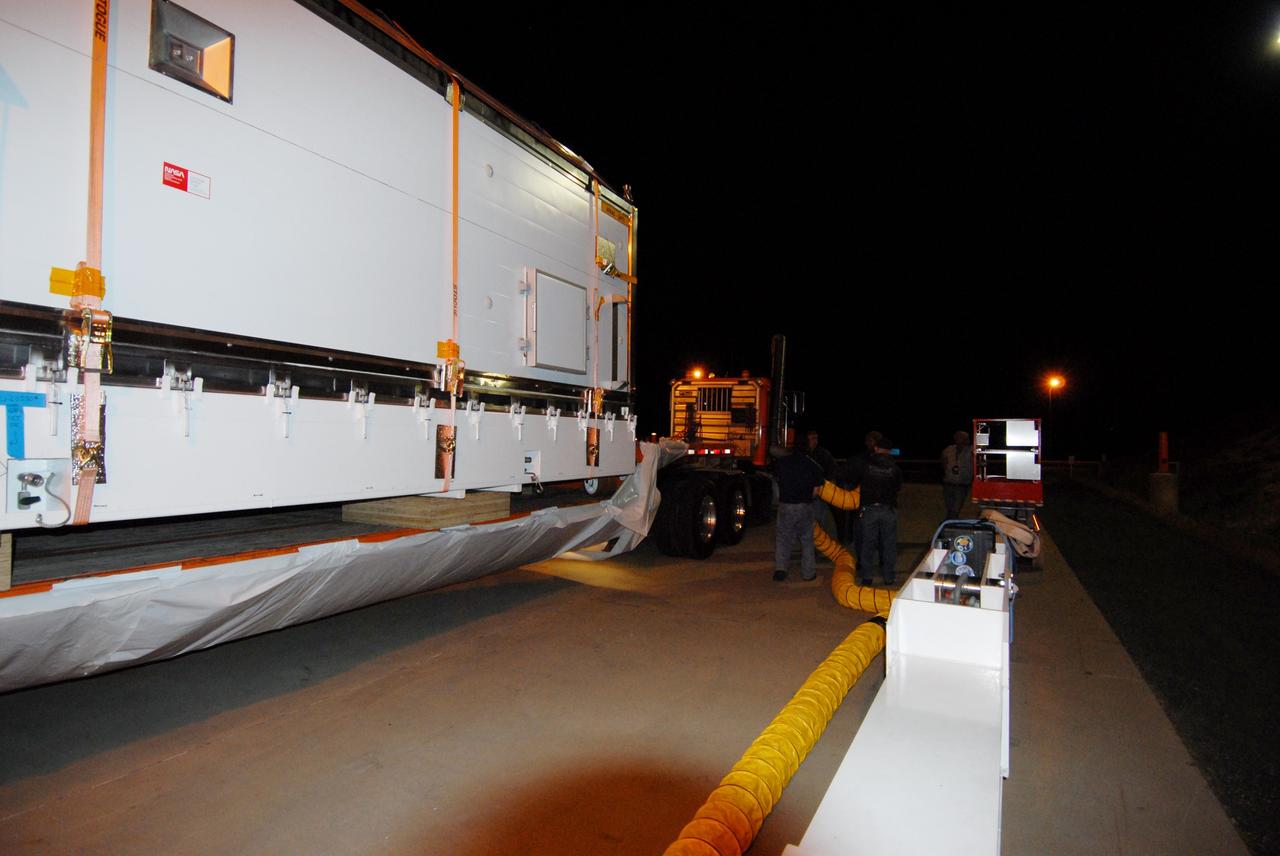
VANDENBERG AIR FORCE BASE, Calif. -- The Aquarius/SAC-D spacecraft is transported to the Spaceport Systems International payload processing facility at Vandenberg Air Force Base in California. Earlier, a U.S. Air Force C-17 transport plane delivered the spacecraft from Campos, Brazil. Following final tests, the spacecraft will be integrated to a United Launch Alliance Delta II rocket in preparation for the targeted June launch to low Earth orbit. Aquarius, the NASA-built primary instrument on the SAC-D spacecraft, will map global changes in salinity at the ocean's surface. Salinity is a key measurement for understanding how changes in rainfall, evaporation and the melting of freezing of ice influence ocean circulation and are linked to variations in Earth's climate. The three-year mission will provide new insights into how variations in ocean surface salinity relate to these fundamental climate processes. Photo credit: VAFB/30th Space Wing
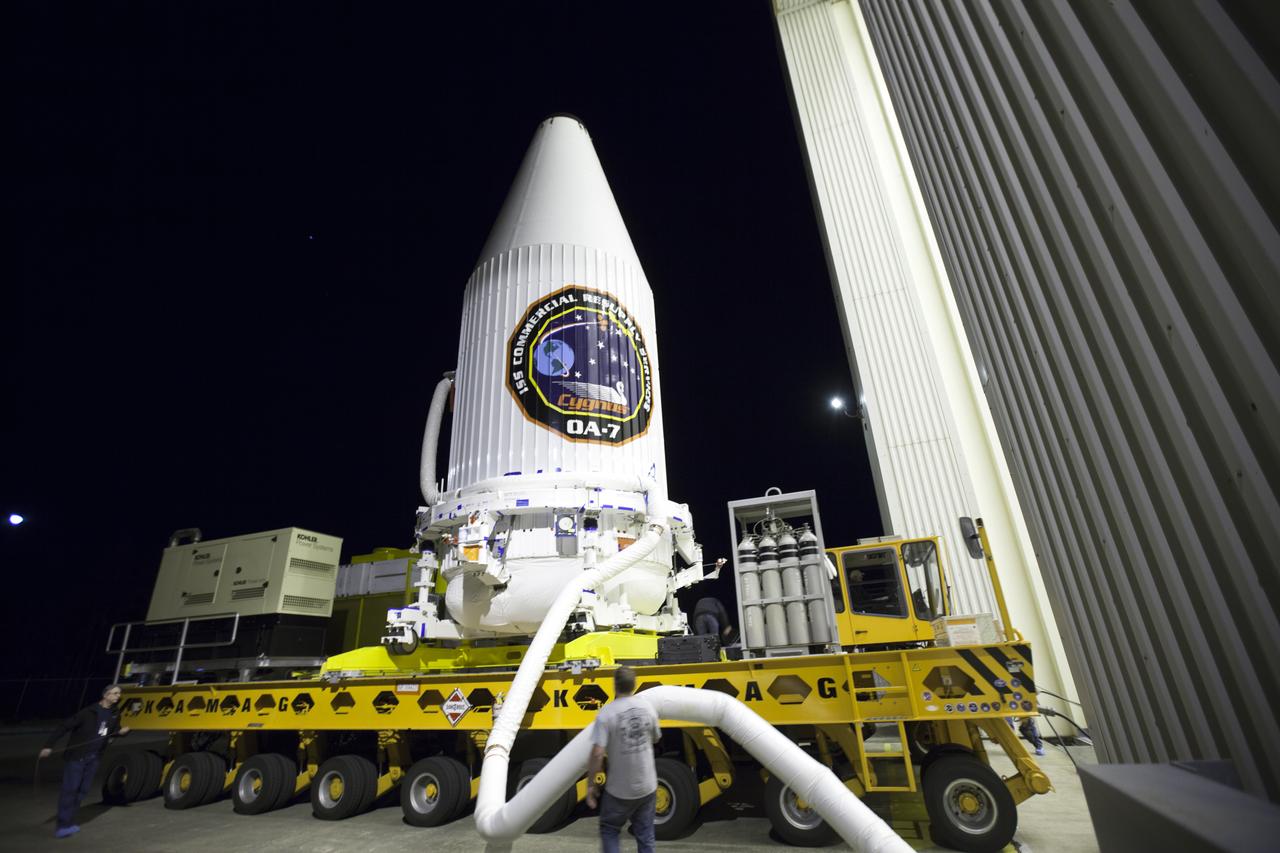
The Orbital ATK Cygnus pressurized cargo module, enclosed in its payload fairing and secured on a KAMAG transporter, departs the Payload Hazardous Servicing Facility at NASA's Kennedy Space Center in Florida secured on a KAMAG transporter. Cygnus will be transported to Space Launch Complex 41 at Cape Canaveral Air Force Station for mating to the United Launch Alliance (ULA) Atlas V rocket. The Orbital ATK CRS-7 commercial resupply services mission to the International Space Station is scheduled to launch atop the Atlas V from pad 41. Cygnus will deliver 7,600 pounds of supplies, equipment and scientific research materials to the space station.
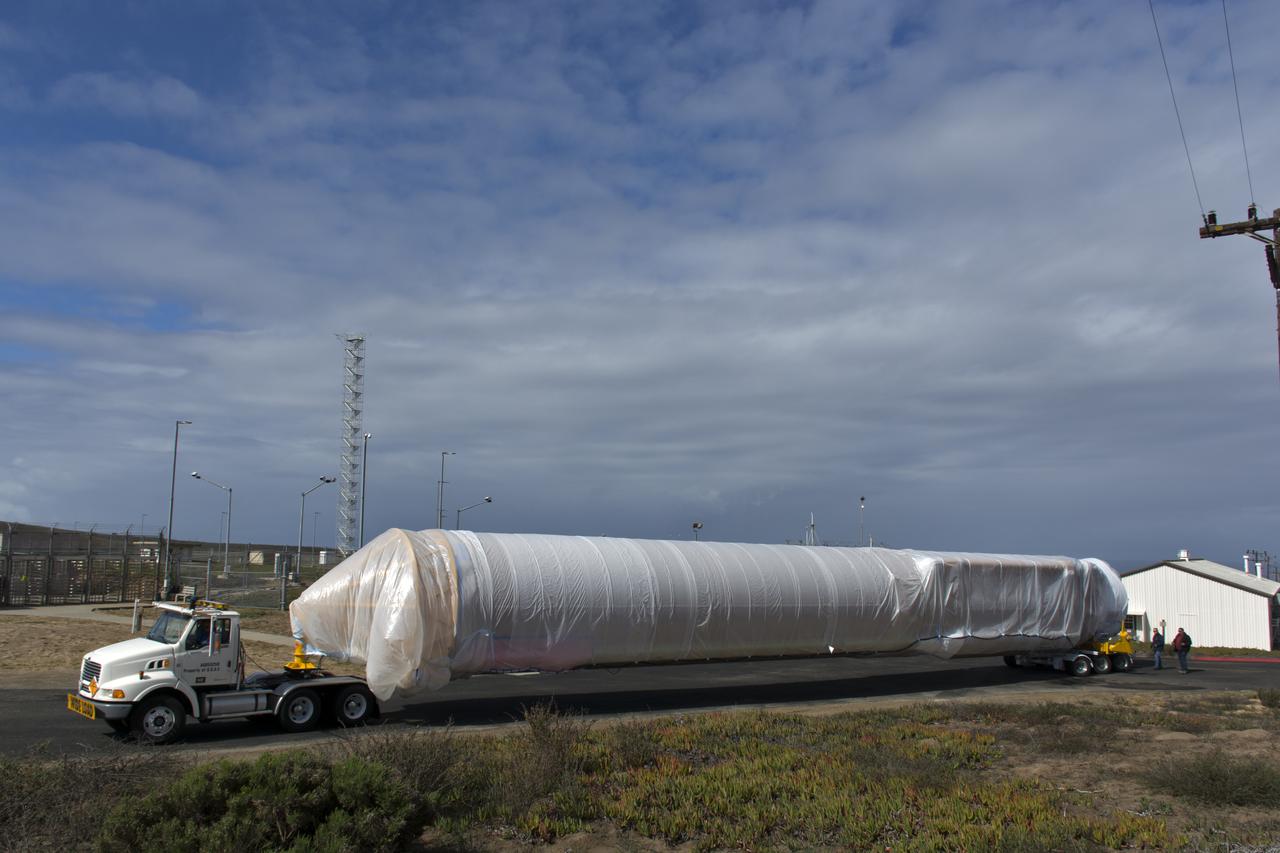
A United Launch Alliance Atlas V booster is transported to Space Launch Complex 3 at Vandenberg Air Force Base in California. The rocket will launch NASA's Interior Exploration using Seismic Investigations, Geodesy and Heat Transport, or InSight, mission to land on Mars. InSight is the first mission to explore the Red Planet's deep interior. It will investigate processes that shaped the rocky planets of the inner solar system including Earth. Liftoff is scheduled for May 5, 2018.
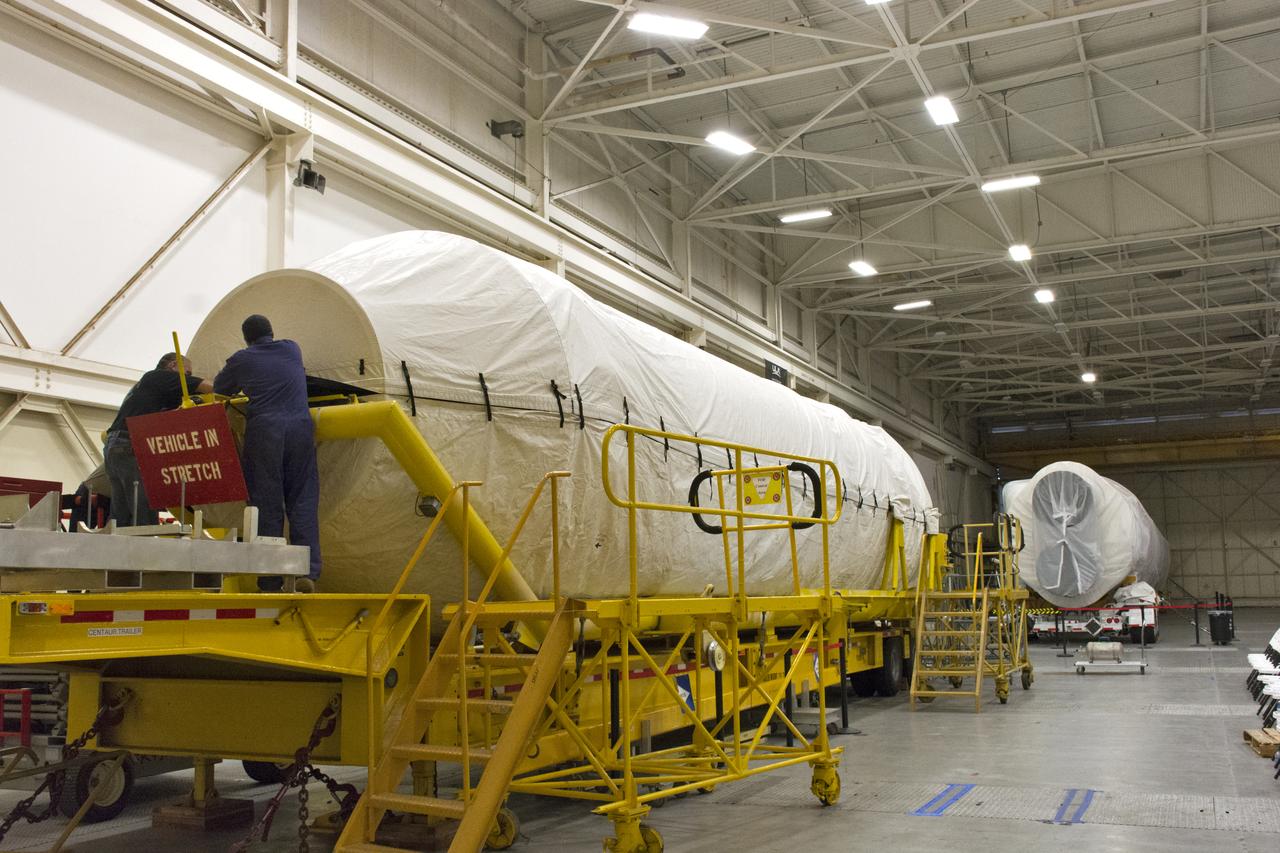
At Vandenberg Air Force Base in California, a cover is installed on a Centaur upper stage in preparation for its transport to Space Launch Complex 3. The Centaur will be mounted atop a United Launch Alliance Atlas V rocket to boost NASA's Interior Exploration using Seismic Investigations, Geodesy and Heat Transport, or InSight, mission to land on Mars. InSight is the first mission to explore the Red Planet's deep interior. It will investigate processes that shaped the rocky planets of the inner solar system including Earth. Liftoff is scheduled for May 5, 2018.
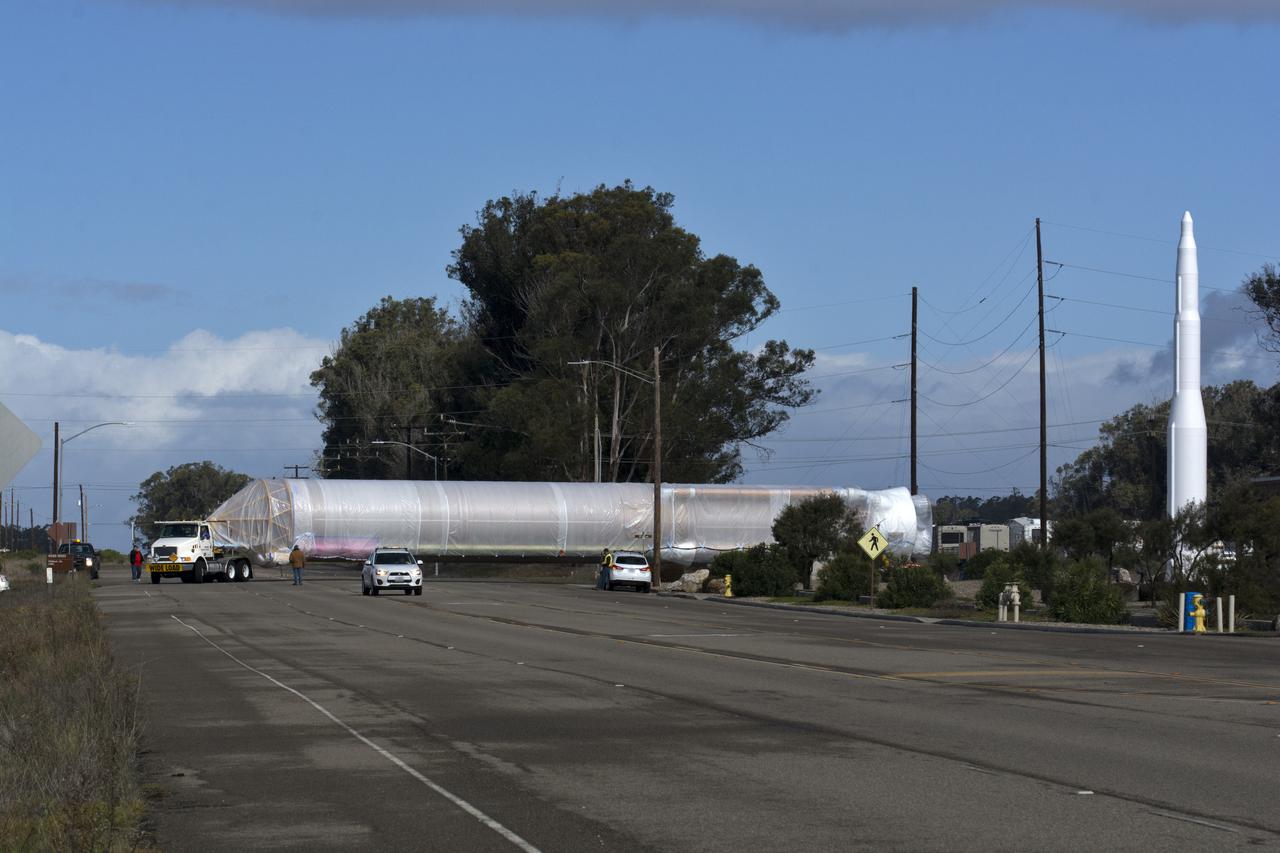
A United Launch Alliance Atlas V booster is transported to Space Launch Complex 3 at Vandenberg Air Force Base in California. The rocket will launch NASA's Interior Exploration using Seismic Investigations, Geodesy and Heat Transport, or InSight, mission to land on Mars. InSight is the first mission to explore the Red Planet's deep interior. It will investigate processes that shaped the rocky planets of the inner solar system including Earth. Liftoff is scheduled for May 5, 2018.
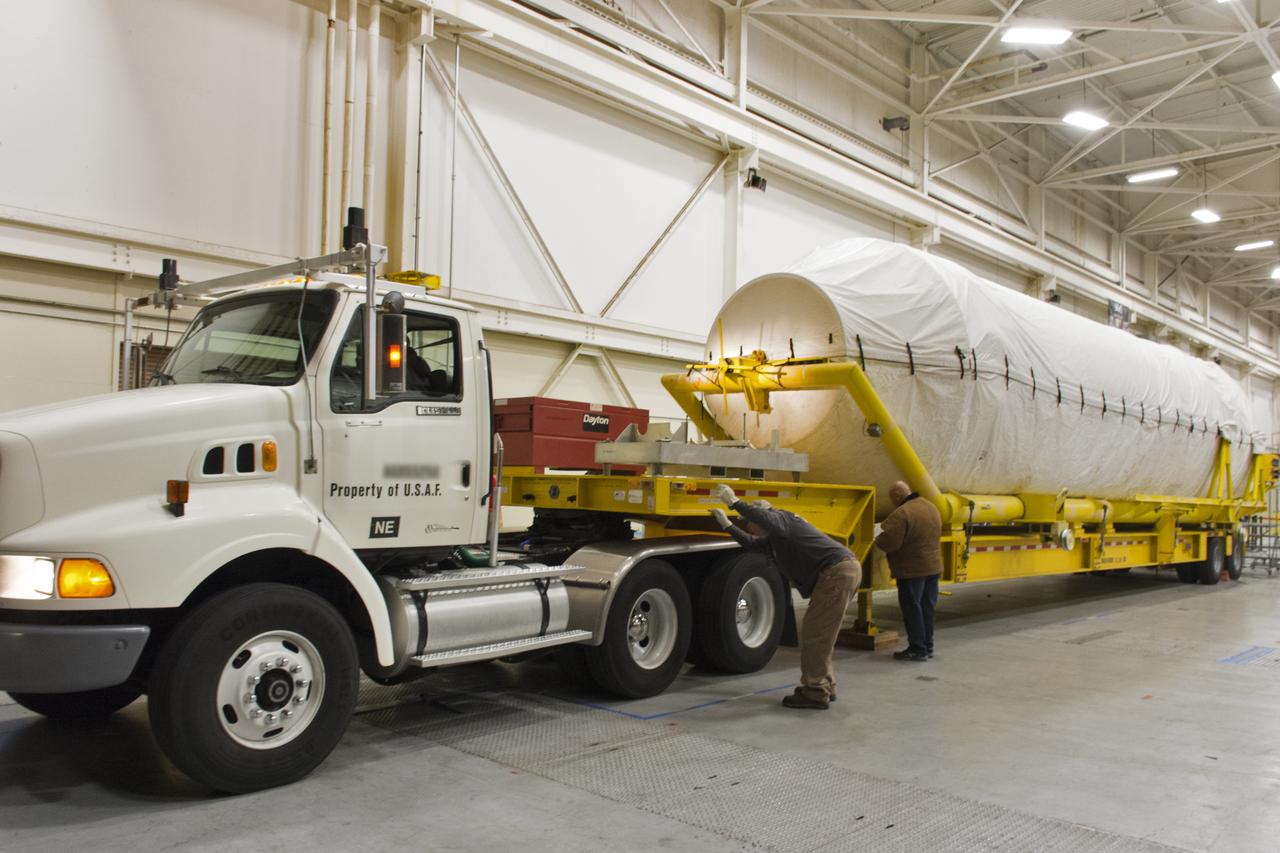
At Vandenberg Air Force Base in California, a United Launch Alliance Centaur upper stage is prepared for transport to Space Launch Complex 3 for mating atop an Atlas V booster. The rocket will launch NASA's Interior Exploration using Seismic Investigations, Geodesy and Heat Transport, or InSight, mission to land on Mars. InSight is the first mission to explore the Red Planet's deep interior. It will investigate processes that shaped the rocky planets of the inner solar system including Earth. Liftoff is scheduled for May 5, 2018.