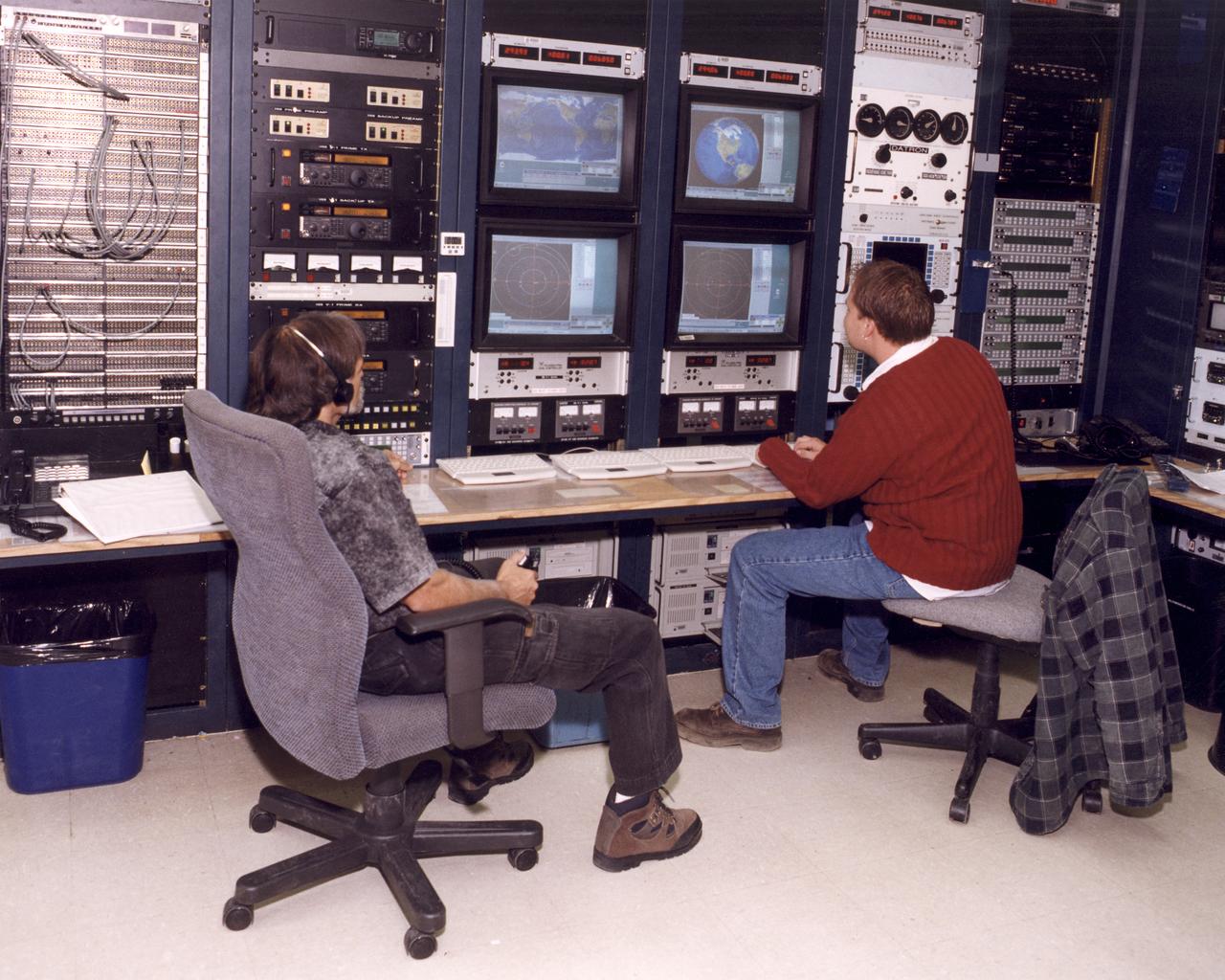
Mike Yettaw and Donavon Hoover providing air-to-ground communications to the Johnson Space Center during STS-92.
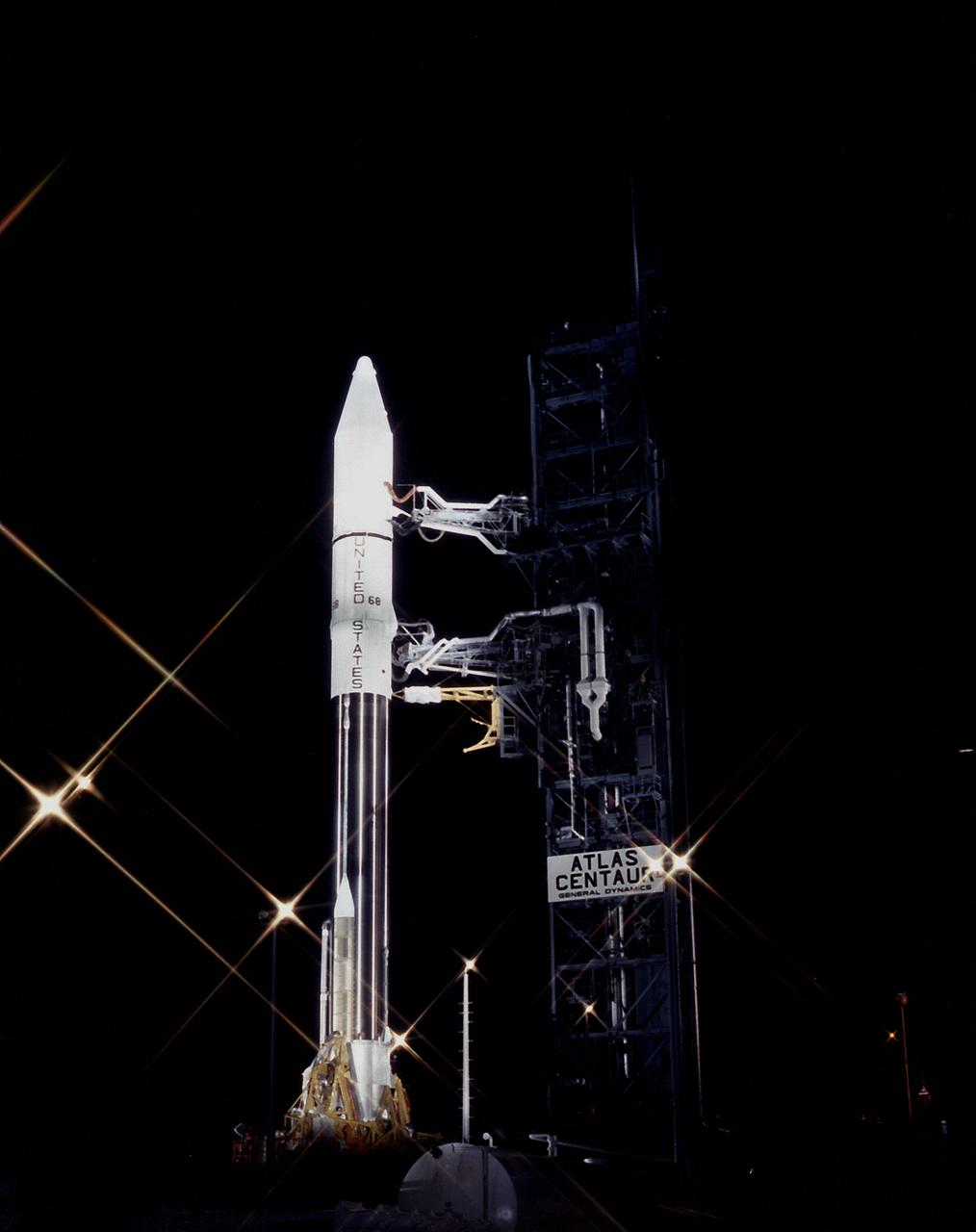
The Atlas-Centaur, AC-68 vehicle, with the FLTSATCOM (F-8 Communication Satellite) aboard, on the Complex 36 at the Cape Canaveral Air Force Station. The FLTSATCOM will provide communications for ships and submarines at sea, planes in the air and military ground units throughout the world. It will also provide instant communications between the President and the Commanding Officers.
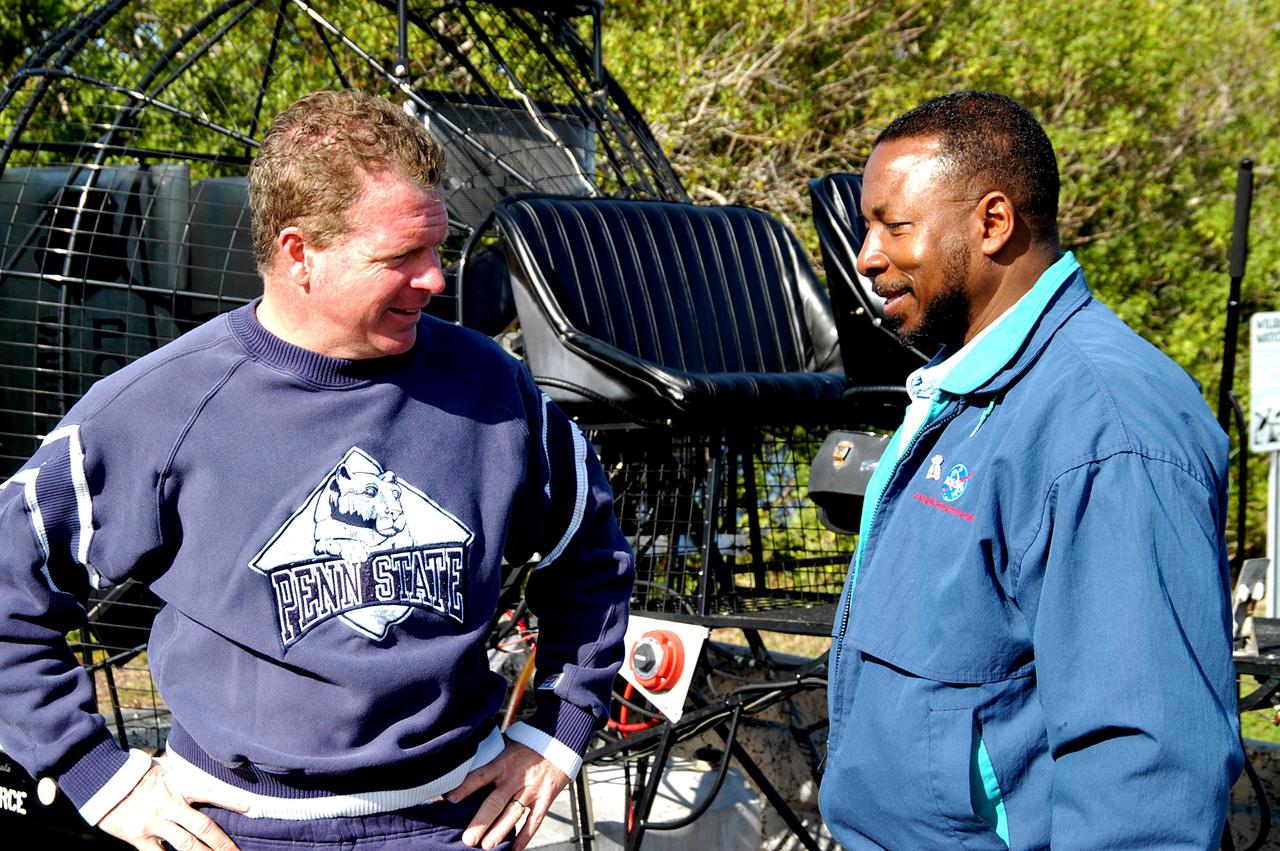
KENNEDY SPACE CENTER, FLA. - Congressman Tom Feeney (left) and Deputy Director Woodrow Whitlow Jr. talk on the ground after completing an air boat ride around Kennedy Space Center. During January and February, Congressman Feeney traveled the entire coastline of Florida’s 24th District, and concluded his walks March 1 in Brevard County. On his walks, he met with constituents and community leaders to discuss legislative issues that will be addressed by the 108th Congress. Feeney ended his beach walk at the KSC Visitor Complex main entrance.
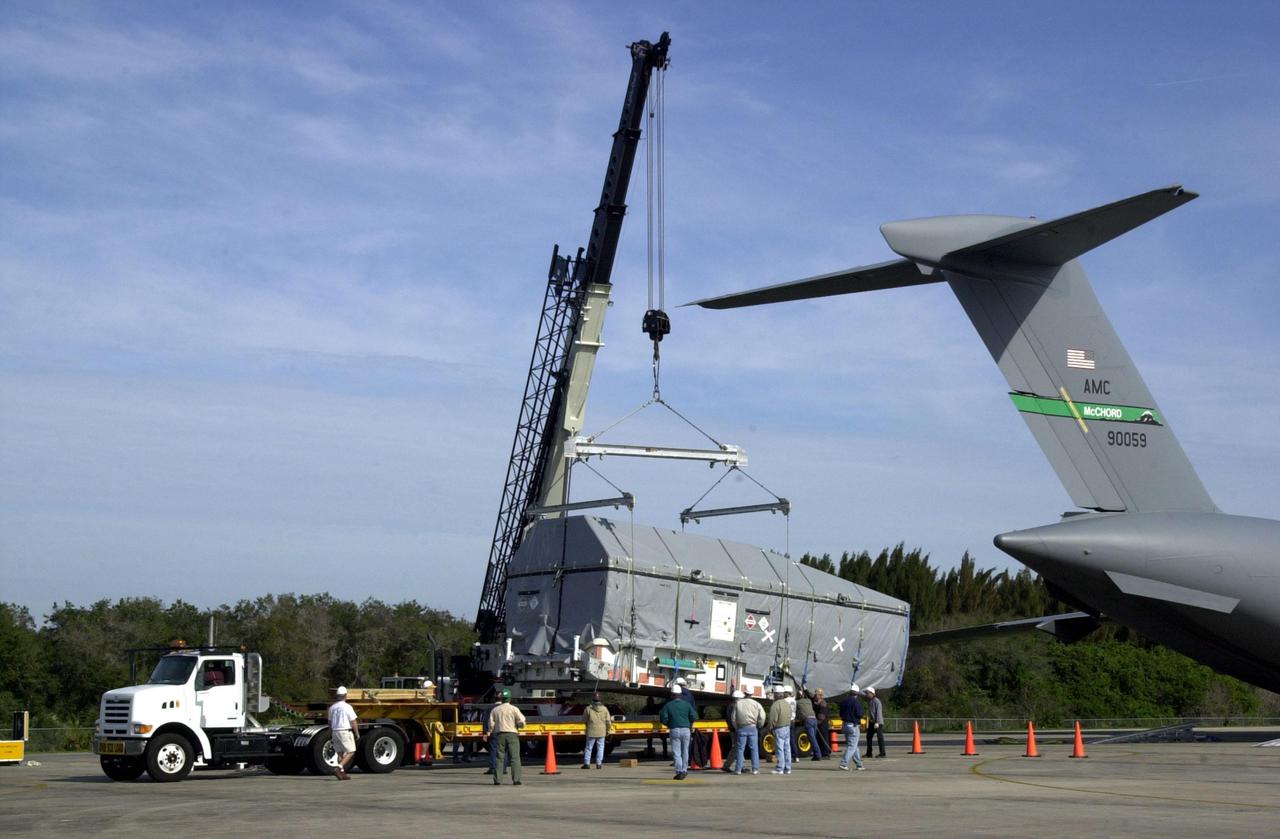
KENNEDY SPACE CENTER, FLA. -- At KSC's Shuttle Landing Facility, the Tracking and Data Relay Satellite-I (TDRS-I) is lifted onto a transporter after being offloaded from the Air Force C-17 air cargo plane at right. The second in a new series of telemetry satellites, TDRS-I replenishes the existing on-orbit fleet of six spacecraft. The TDRS System is the primary source of space-to-ground voice, data and telemetry for the Space Shuttle. It also provides communications with the International Space Station and scientific spacecraft in low-Earth orbit such as the Hubble Space Telescope. This new advanced series of satellites will extend the availability of TDRS communications services until about 2017. TDRS-I will undergo processing in the Spacecraft Assembly and Encapsulation Facility-2 (SAEF-2) to prepare it for launch March 8 aboard a Lockheed Martin Atlas IIA rocket from Pad 36-A, Cape Canaveral Air Force Station
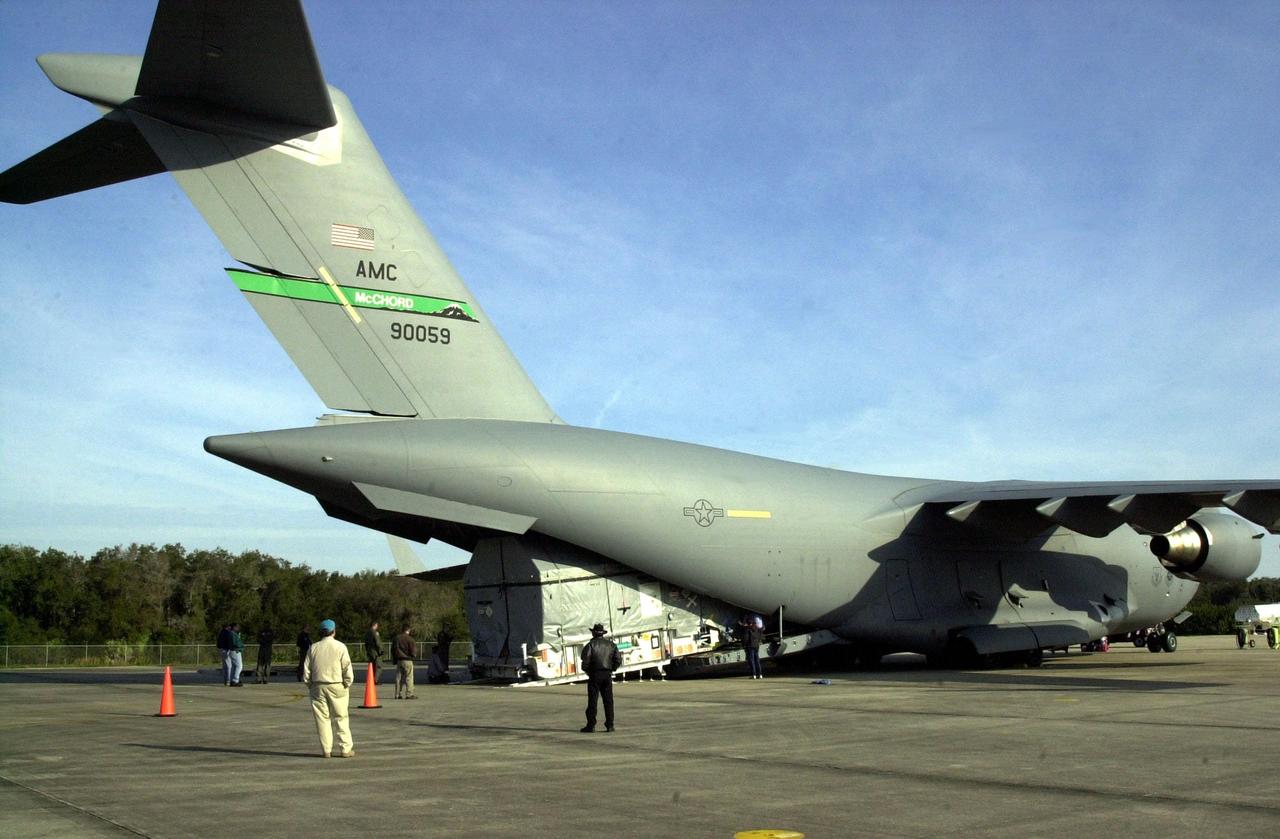
KENNEDY SPACE CENTER, FLA. -- At KSC's Shuttle Landing Facility, the Air Force C-17 air cargo plane offloads the Tracking and Data Relay Satellite-I (TDRS-I). The second in a new series of telemetry satellites, TDRS-I replenishes the existing on-orbit fleet of six spacecraft. The TDRS System is the primary source of space-to-ground voice, data and telemetry for the Space Shuttle. It also provides communications with the International Space Station and scientific spacecraft in low-Earth orbit such as the Hubble Space Telescope. This new advanced series of satellites will extend the availability of TDRS communications services until about 2017. TDRS-I will undergo processing in the Spacecraft Assembly and Encapsulation Facility-2 (SAEF-2) to prepare it for launch March 8 aboard a Lockheed Martin Atlas IIA rocket from Pad 36-A, Cape Canaveral Air Force Station
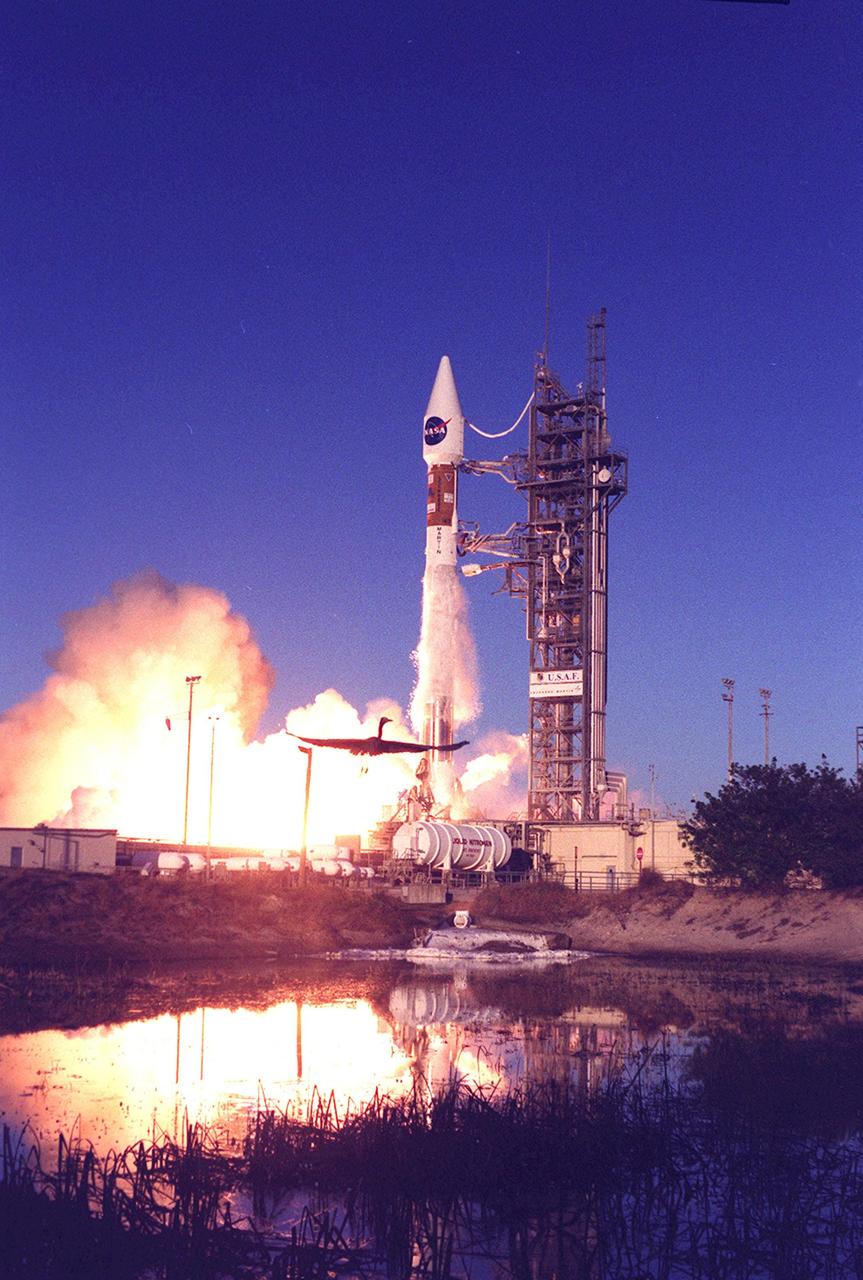
KENNEDY SPACE CENTER, FLA. -- A Great Blue Heron is silhouetted against the brilliance of the rocket exhaust as the Tracking and Data Relay Satellite-I (TDRS-1) is launched from Launch Pad 36-A, Cape Canaveral Air Force Station. TDRS-I replenishes the existing on-orbit fleet of six spacecraft. The TDRS System is the primary source of space-to-ground voice, data and telemetry for the Space Shuttle. It also provides communications with the International Space Station and scientific spacecraft in low-Earth orbit such as the Hubble Space Telescope. This new advanced series of satellites will extend the availability of TDRS communications services until about 2017. Liftoff occurred at 5:59 p.m. EST
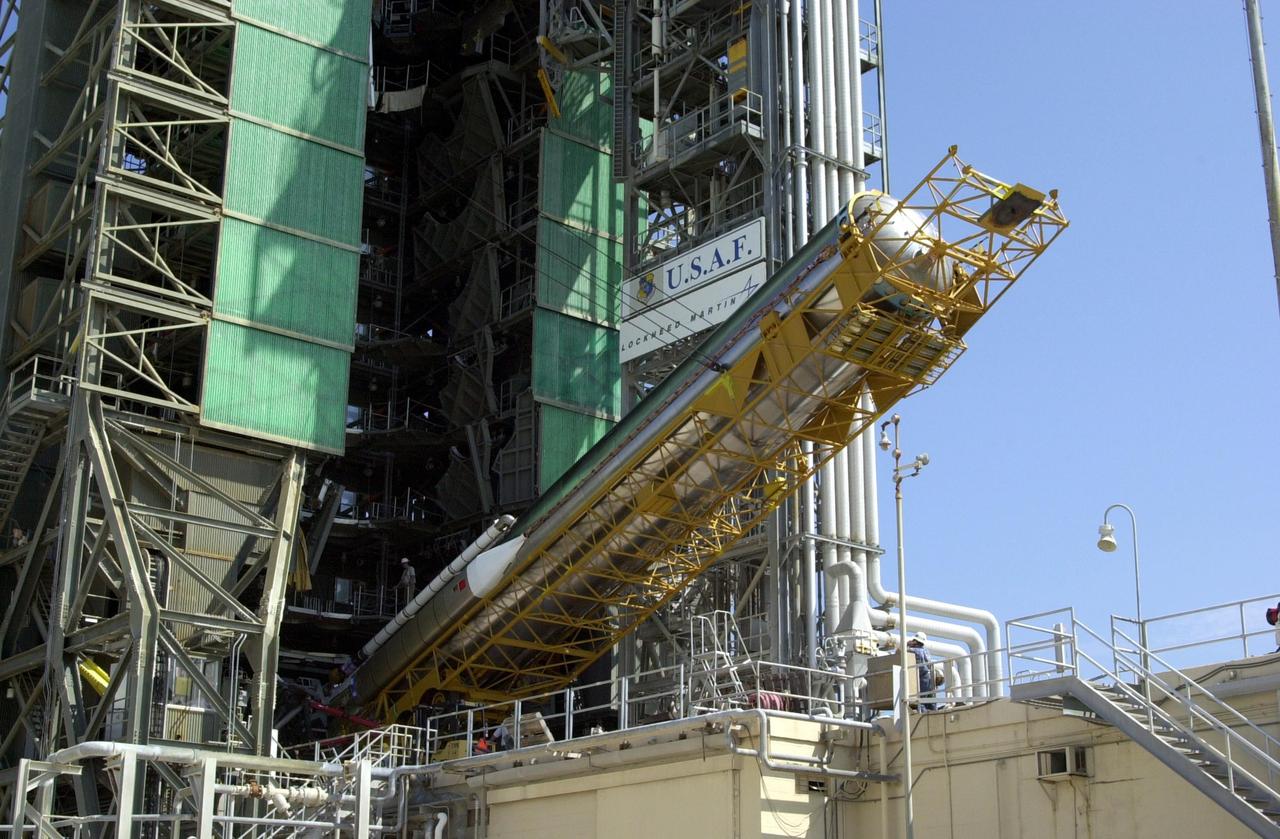
KENNEDY SPACE CENTER, FLA. -- The first stage of an Atlas/Centaur booster (AC-144) is lifted into an upright position at Launch Complex 36A at Cape Canaveral Air Force Station in preparation for the launch of TDRS-J. The third in a series of telemetry satellites, TDRS-J will help replenish the current constellation of geosynchronous TDRS satellites. The TDRS System is the primary source of space-to-ground voice, data and telemetry for the Space Shuttle. It also provides communications with the International Space Station and scientific spacecraft in low-Earth orbit, such as the Hubble Space Telescope. This new advanced series of satellites will extend the availability of TDRS communications services until about 2017.
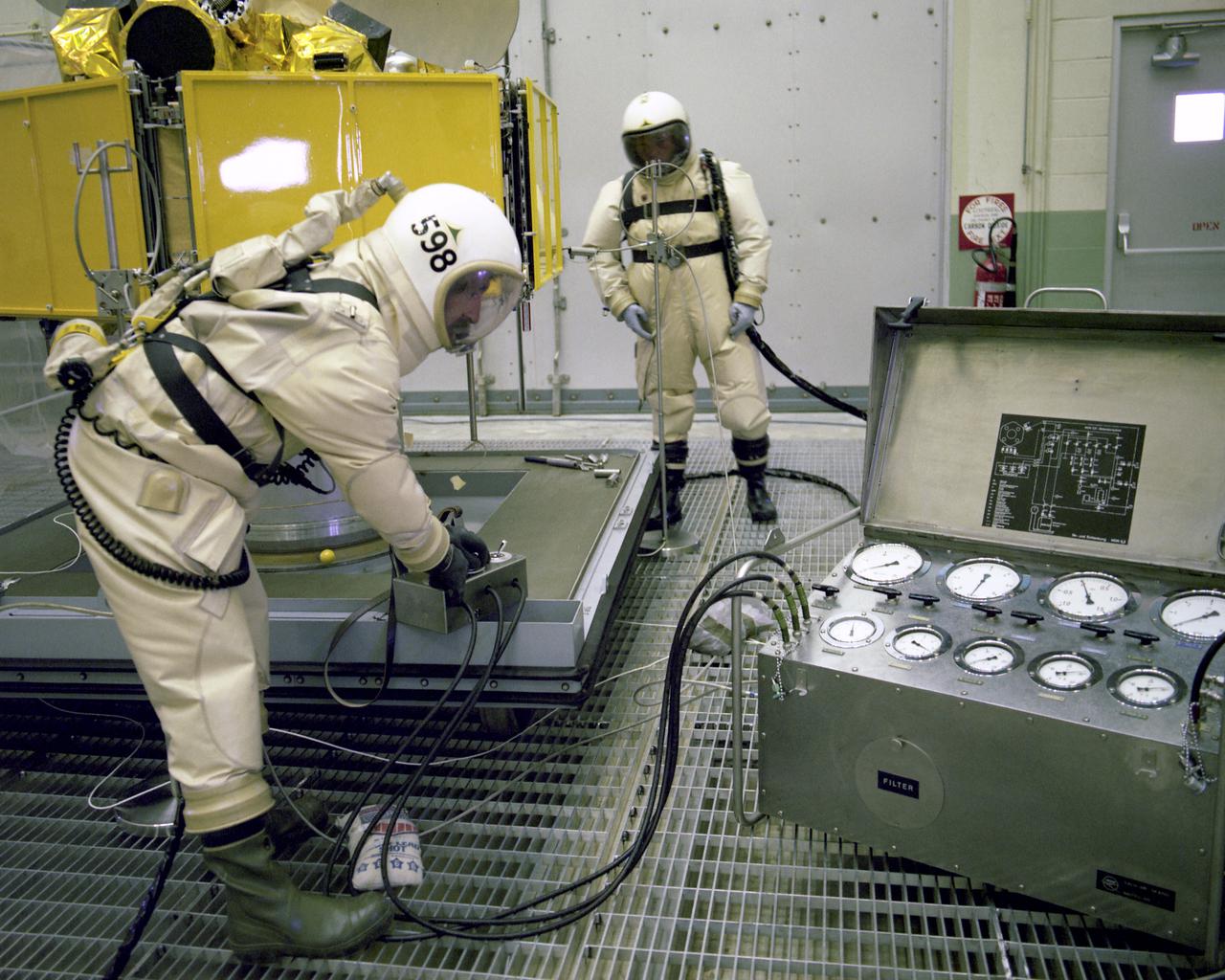
CAPE CANAVERAL, Fla. -- Technicians in protective suits loaded the Symphonie-B spacecraft with propellants in the Spin Test Facility at Cape Canaveral Air Force Station today. The French-West German experimental communications satellite is to be launched by KSC's Unmanned Launch Operations Directorate aboard a Delta rocket from Complex 17 in late August or early September. The satellite will be placed in a synchronous orbit 22,300 miles above the equator south of the West African 'Bulge,' joining Symphonie-1 in handling communications between ground stations in Europe, South America, portions of North America and the Mideast. Photo credit: NASA Photo credit: NASA
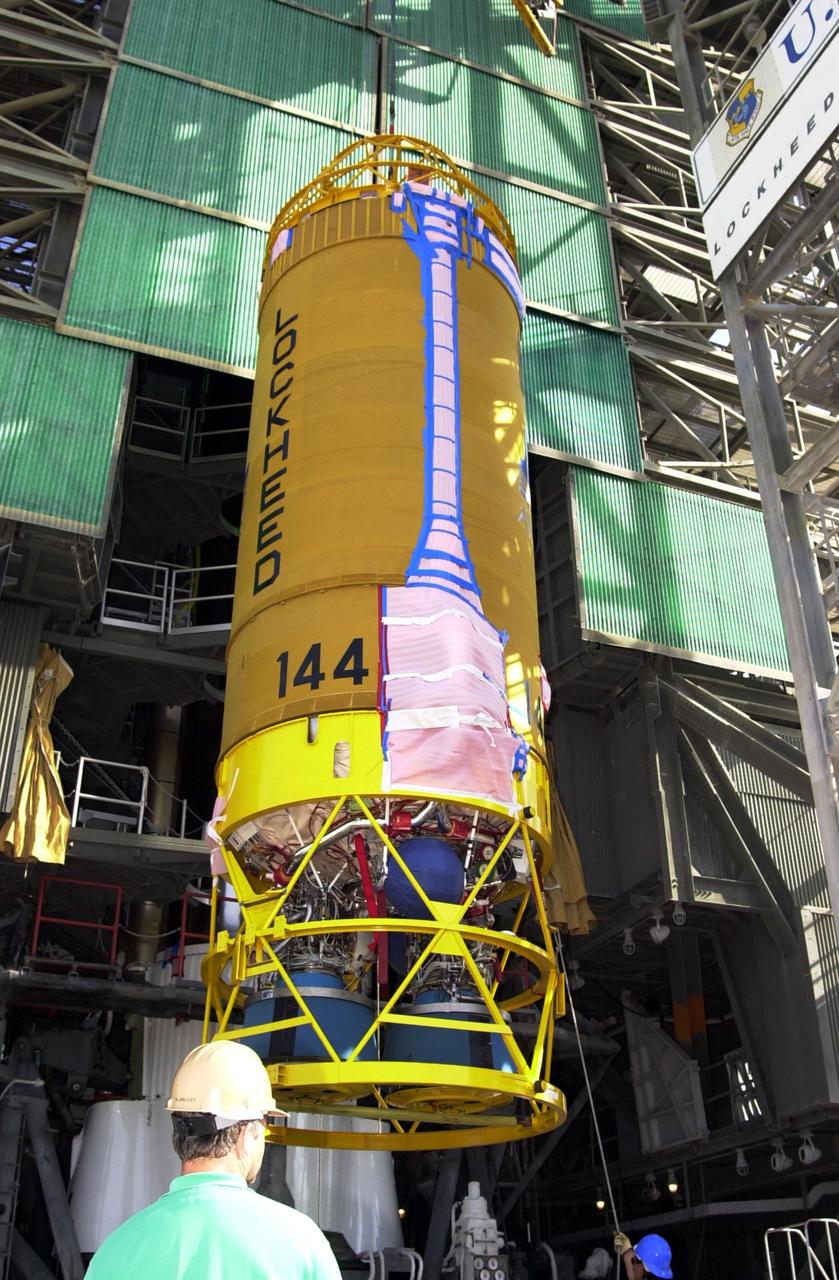
KENNEDY SPACE CENTER, FLA. -- At Launch Complex 36-A, Cape Canaveral Air Force Station, a Lockheed Martin Atlas Centaur IIA (AC-144) rocket is lifted up the launch tower. The rocket will be used in the launch of TDRS-J, scheduled for Nov. 20. The third in a series of telemetry satellites, TDRS-J will help replenish the current constellation of geosynchronous TDRS satellites. The TDRS System is the primary source of space-to-ground voice, data and telemetry for the Space Shuttle. It also provides communications with the International Space Station and scientific spacecraft in low-Earth orbit such as the Hubble Space Telescope. This new advanced series of satellites will extend the availability of TDRS communications services until about 2017.
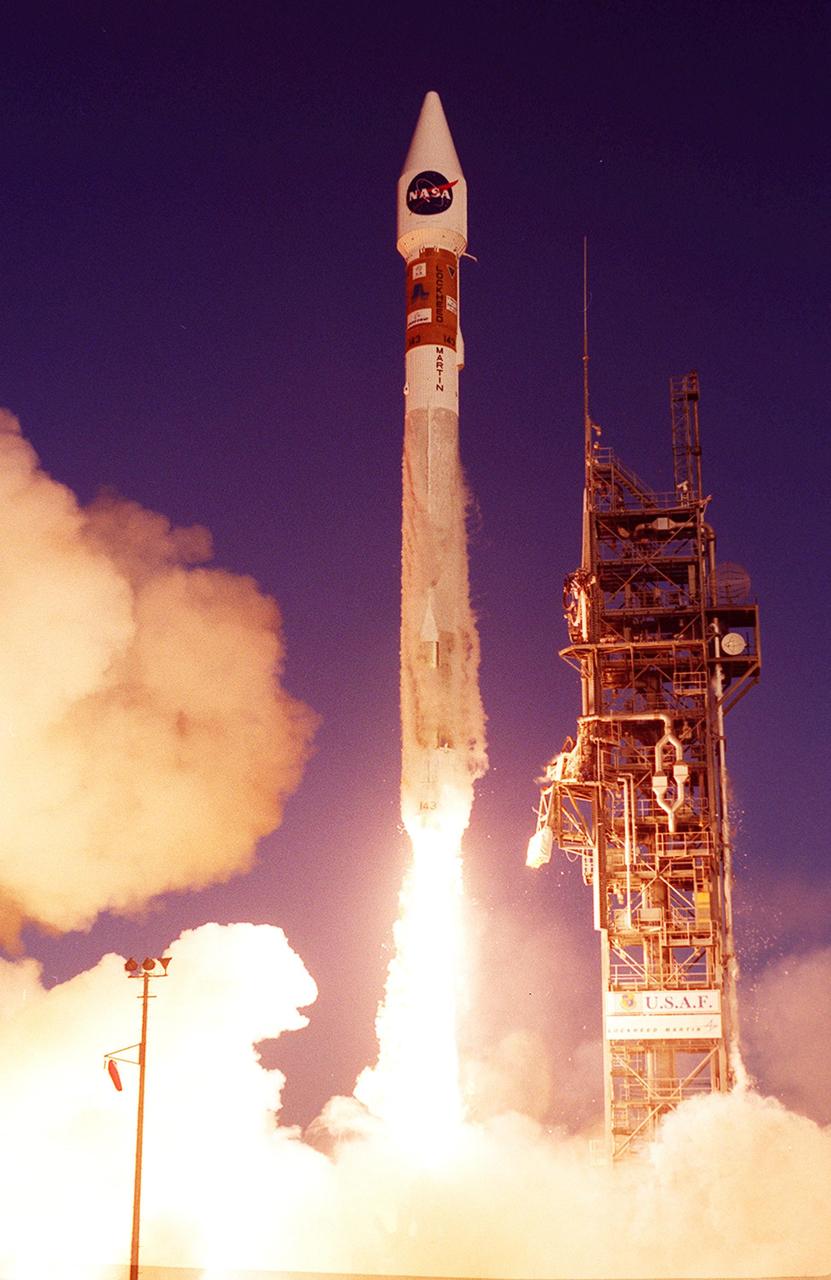
KENNEDY SPACE CENTER, FLA. - Spewing fire and smoke behind it, the Lockheed Martin Atlas IIA rocket lifts off from Launch Pad 36-A, Cape Canaveral Air Force Station, with the Tracking and Data Relay Satellite-I (TDRS-1) aboard. TDRS-I replenishes the existing on-orbit fleet of six spacecraft. The TDRS System is the primary source of space-to-ground voice, data and telemetry for the Space Shuttle. It also provides communications with the International Space Station and scientific spacecraft in low-Earth orbit such as the Hubble Space Telescope. This new advanced series of satellites will extend the availability of TDRS communications services until about 2017. Liftoff occurred at 5:59 p.m. EST
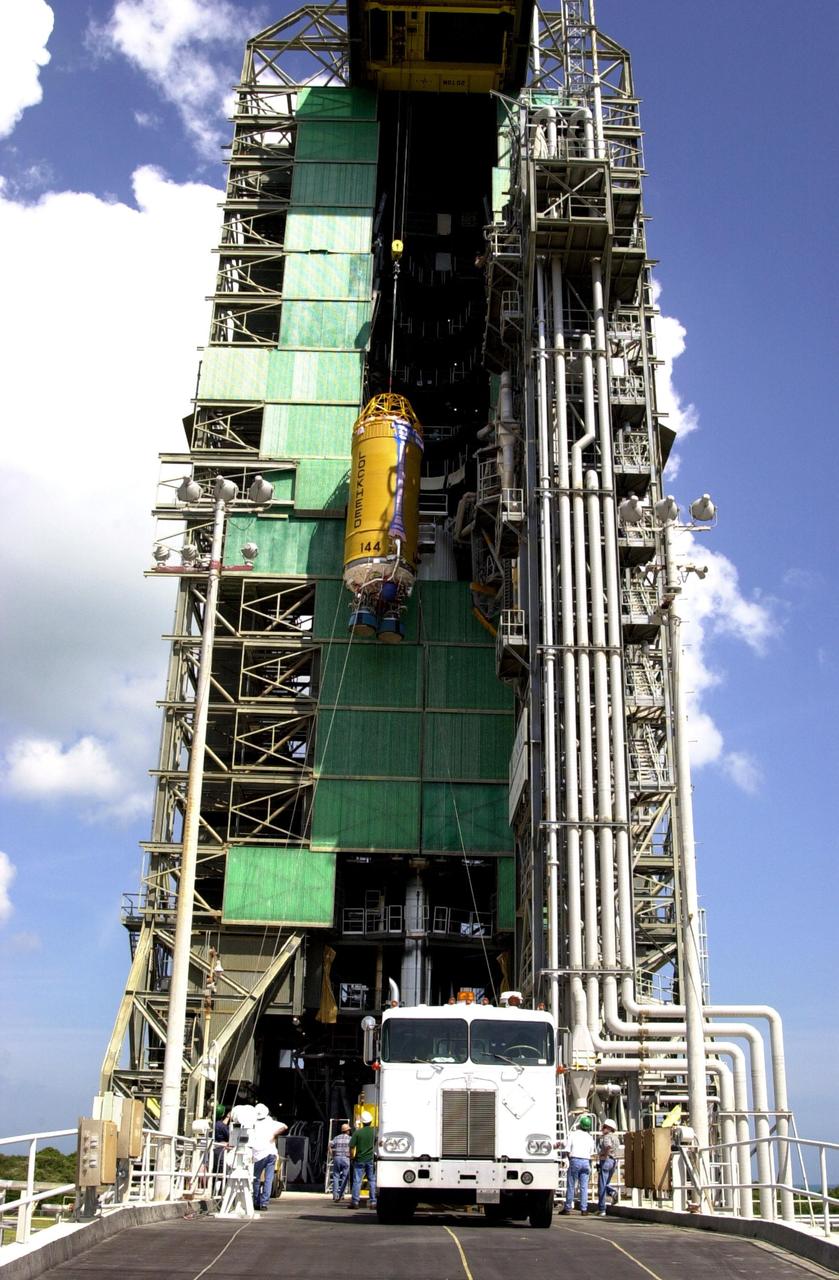
KENNEDY SPACE CENTER, FLA. -- At Launch Complex 36-A, Cape Canaveral Air Force Station, a Lockheed Martin Atlas Centaur IIA (AC-144) rocket is halfway up the launch tower . The rocket will be used in the launch of TDRS-J, scheduled for Nov. 20. The third in a series of telemetry satellites, TDRS-J will help replenish the current constellation of geosynchronous TDRS satellites. The TDRS System is the primary source of space-to-ground voice, data and telemetry for the Space Shuttle. It also provides communications with the International Space Station and scientific spacecraft in low-Earth orbit such as the Hubble Space Telescope. This new advanced series of satellites will extend the availability of TDRS communications services until about 2017.
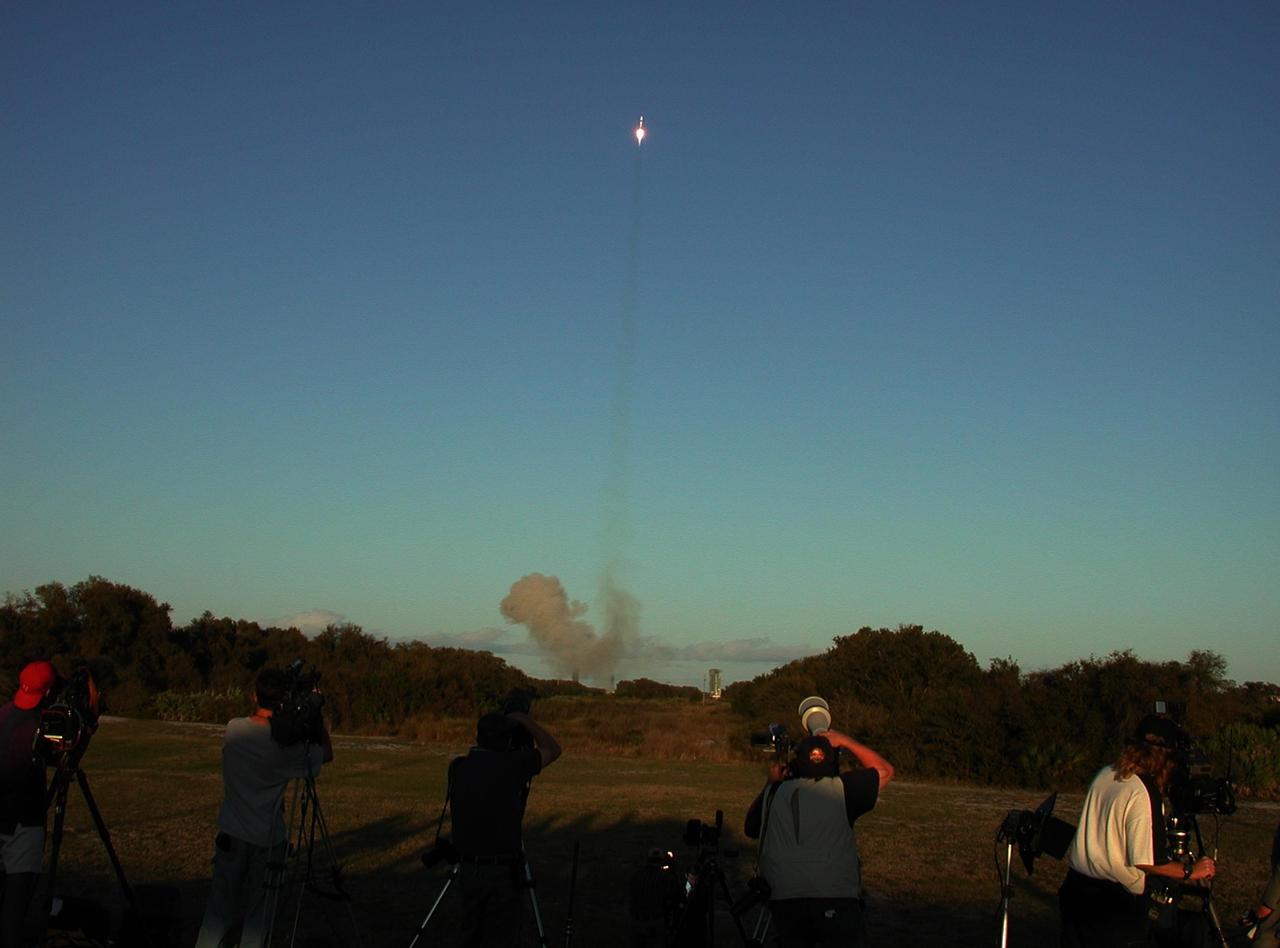
KENNEDY SPACE CENTER, FLA. -- Photographers track the Lockheed Martin Atlas IIA rocket after liftoff from Launch Pad 36-A, Cape Canaveral Air Force Station. The rocket is carrying the Tracking and Data Relay Satellite-I (TDRS-1). TDRS-I replenishes the existing on-orbit fleet of six spacecraft. The TDRS System is the primary source of space-to-ground voice, data and telemetry for the Space Shuttle. It also provides communications with the International Space Station and scientific spacecraft in low-Earth orbit such as the Hubble Space Telescope. This new advanced series of satellites will extend the availability of TDRS communications services until about 2017. Liftoff occurred at 5:59 p.m. EST
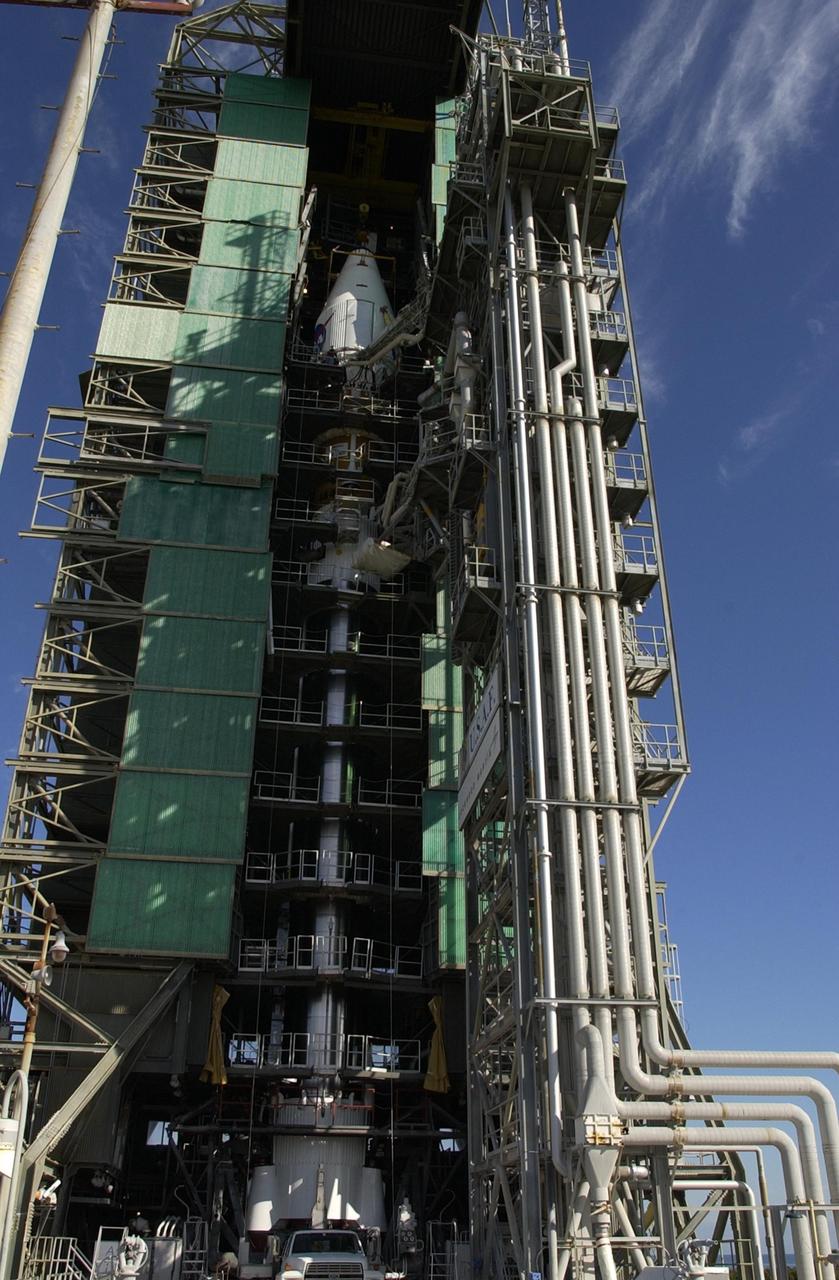
KENNEDY SPACE CENTER, FLA. - On Launch Complex 36-A, Cape Canaveral Air Force Station, the Atlas IIA launch vehicle with the TDRS-J satellite aboard is ready for launch Dec. 4. The launch window is 9:42 to 10:22 p.m. EST. TDRS-J, the third in a series of telemetry satellites, will help replenish the current constellation of geosynchronous TDRS satellites that are the primary source of space-to-ground voice, data and telemetry for the Space Shuttle. The satellites also provide communications with the International Space Station and scientific spacecraft in low-Earth orbit such as the Hubble Space Telescope. This new advanced series of satellites will extend the availability of TDRS communications services until about 2017.
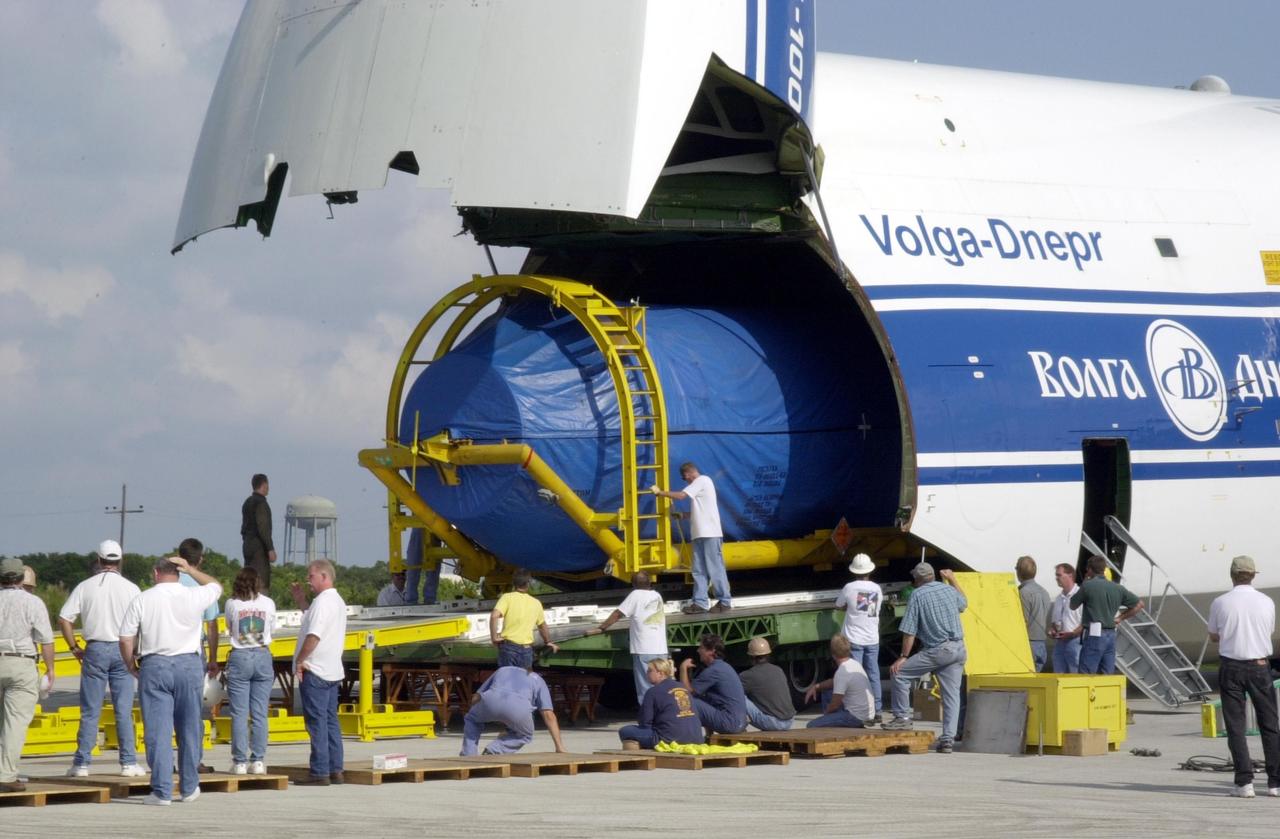
KENNEDY SPACE CENTER, FLA. -- An Atlas/Centaur booster arrives at Cape Canaveral Air Force Station in preparation for the launch of TDRS-J. The third in a series of telemetry satellites, TDRS-J will help replenish the current constellation of geosynchronous TDRS satellites. The TDRS System is the primary source of space-to-ground voice, data and telemetry for the Space Shuttle. It also provides communications with the International Space Station and scientific spacecraft in low-Earth orbit such as the Hubble Space Telescope. This new advanced series of satellites will extend the availability of TDRS communications services until about 2017.
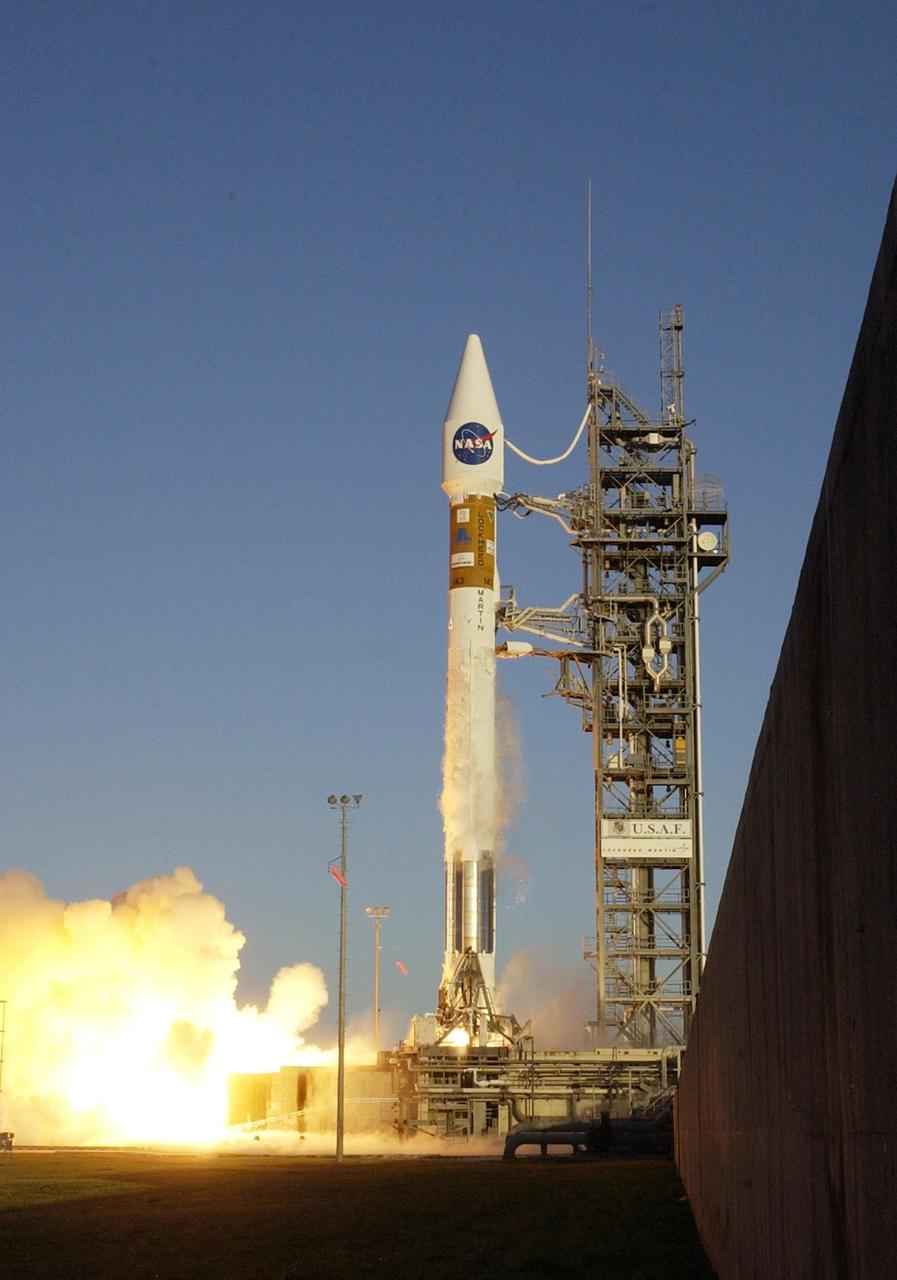
KENNEDY SPACE CENTER, FLA. - The Lockheed Martin Atlas IIA rocket lifts off from Launch Pad 36-A, Cape Canaveral Air Force Station, with the Tracking and Data Relay Satellite-I (TDRS-I) aboard. TDRS-I replenishes the existing on-orbit fleet of six spacecraft. The TDRS System is the primary source of space-to-ground voice, data and telemetry for the Space Shuttle. It also provides communications with the International Space Station and scientific spacecraft in low-Earth orbit such as the Hubble Space Telescope. This new advanced series of satellites will extend the availability of TDRS communications services until about 2017. Liftoff occurred at 5:59 p.m. EST
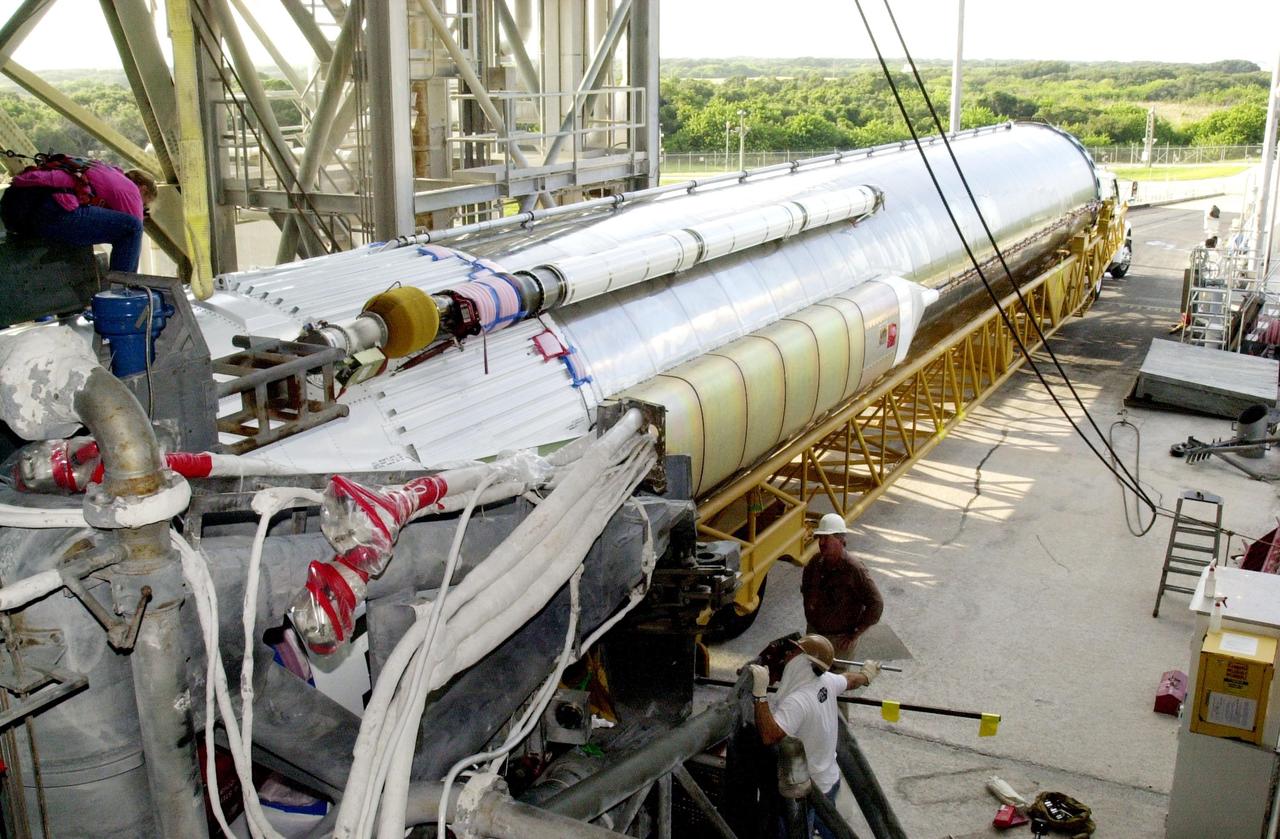
KENNEDY SPACE CENTER, FLA. -- The first stage of an Atlas/Centaur booster (AC-144) is delivered to Launch Complex 36A at Cape Canaveral Air Force Station in preparation for the launch of TDRS-J. The third in a series of telemetry satellites, TDRS-J will help replenish the current constellation of geosynchronous TDRS satellites. The TDRS System is the primary source of space-to-ground voice, data and telemetry for the Space Shuttle. It also provides communications with the International Space Station and scientific spacecraft in low-Earth orbit, such as the Hubble Space Telescope. This new advanced series of satellites will extend the availability of TDRS communications services until about 2017.
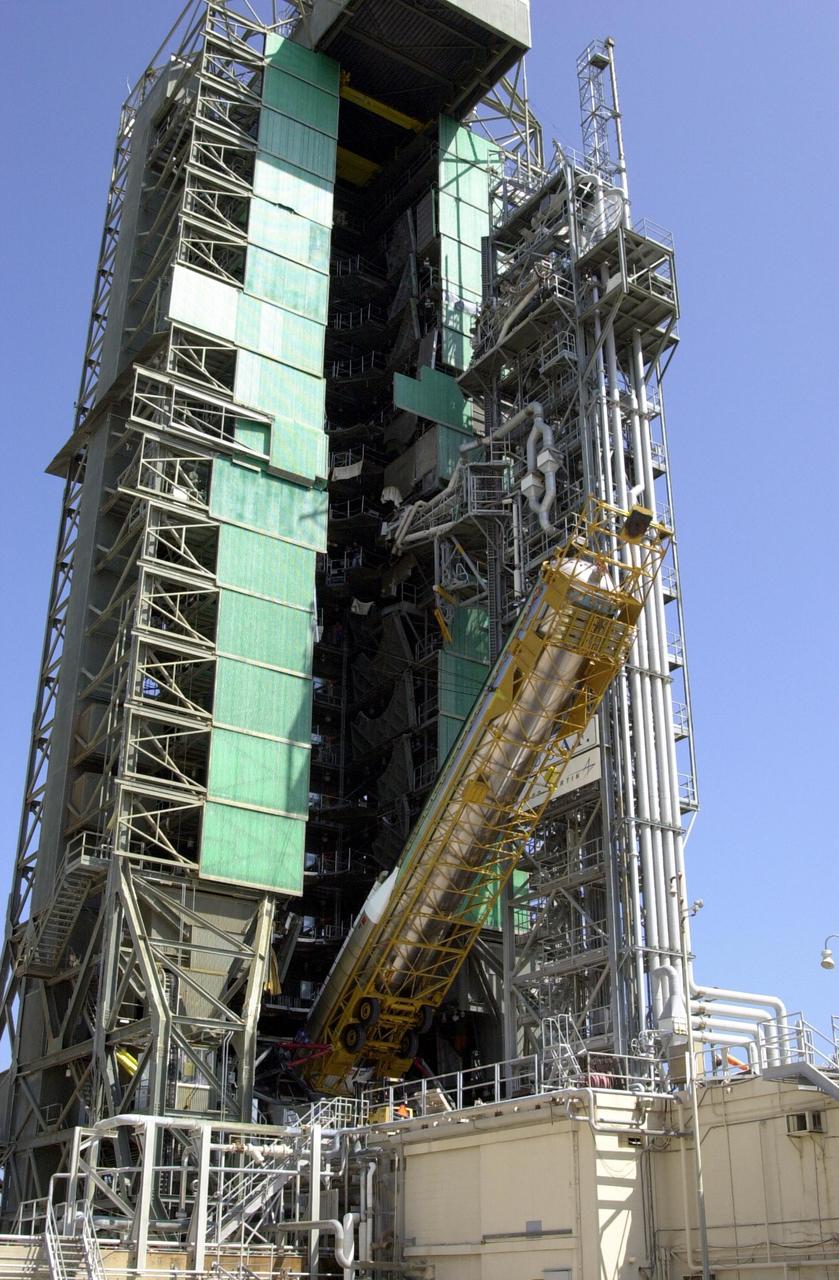
KENNEDY SPACE CENTER, FLA. -- The first stage of an Atlas/Centaur booster (AC-144) is lifted into an upright position at Launch Complex 36A at Cape Canaveral Air Force Station in preparation for the launch of TDRS-J. The third in a series of telemetry satellites, TDRS-J will help replenish the current constellation of geosynchronous TDRS satellites. The TDRS System is the primary source of space-to-ground voice, data and telemetry for the Space Shuttle. It also provides communications with the International Space Station and scientific spacecraft in low-Earth orbit, such as the Hubble Space Telescope. This new advanced series of satellites will extend the availability of TDRS communications services until about 2017.
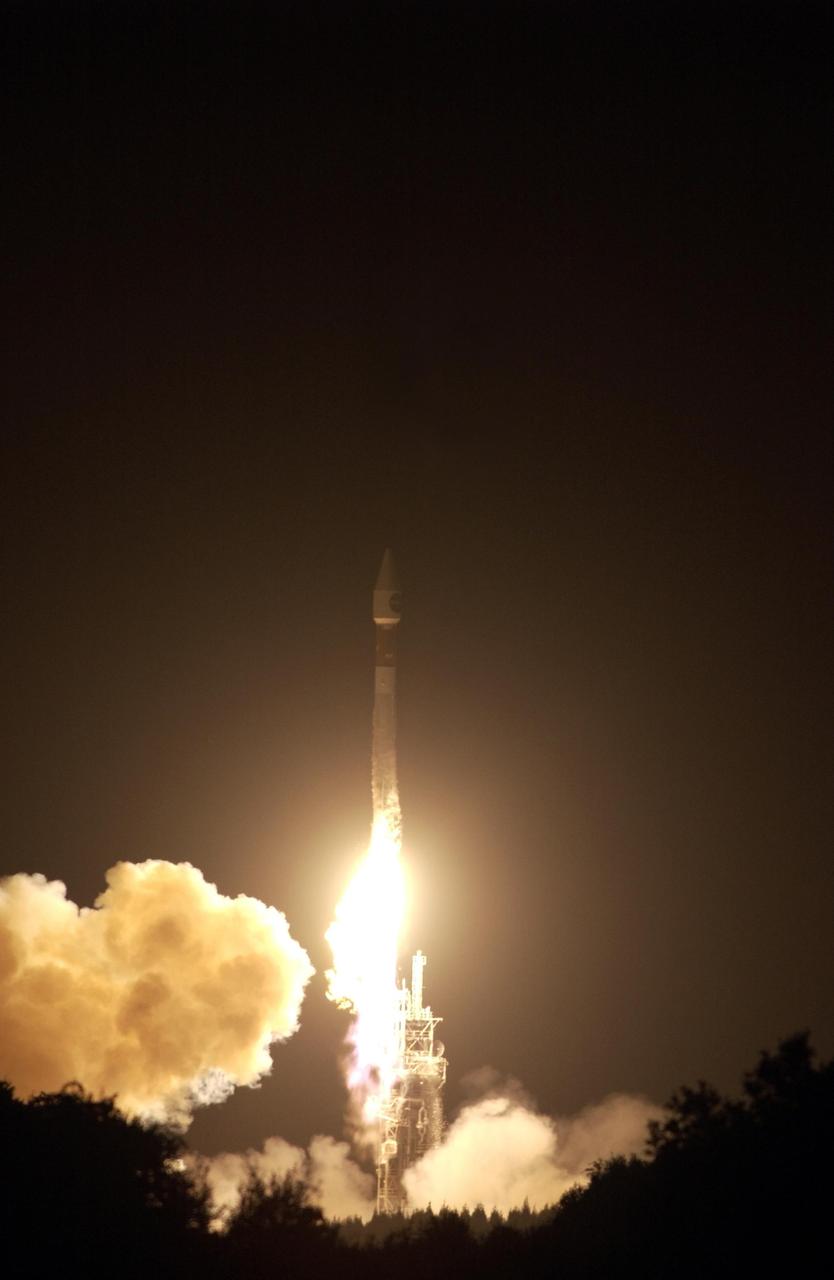
KENNEDY SPACE CENTER, FLA. - At Launch Complex 36-A, Cape Canaveral Air Force Station, the TDRS-J satellite launches aboard an Atlas IIA vehicle on Dec. 4 at the beginning of the launch window at 9:42 p.m. EST. TDRS-J, the third in a series of telemetry satellites, will help replenish the current constellation of geosynchronous TDRS satellites that are the primary source of space-to-ground voice, data and telemetry for the Space Shuttle. The satellites also provide communications with the International Space Station and scientific spacecraft in low-Earth orbit such as the Hubble Space Telescope. This new advanced series of satellites will extend the availability of TDRS communications services until about 2017.

KENNEDY SPACE CENTER, FLA. --At Launch Complex 36-A, Cape Canaveral Air Force Station, the TDRS-J satellite clears the tower as it launches aboard an Atlas IIA vehicle at the beginning of the launch window at 9:42 p.m. EST. TDRS-J, the third in a series of telemetry satellites and 10th overall, will help replenish the current constellation of geosynchronous TDRS satellites that are the primary source of space-to-ground voice, data and telemetry for the Space Shuttle. The satellites also provide communications with the International Space Station and scientific spacecraft in low-Earth orbit such as the Hubble Space Telescope. This new advanced series of satellites will extend the availability of TDRS communications services until about 2017.
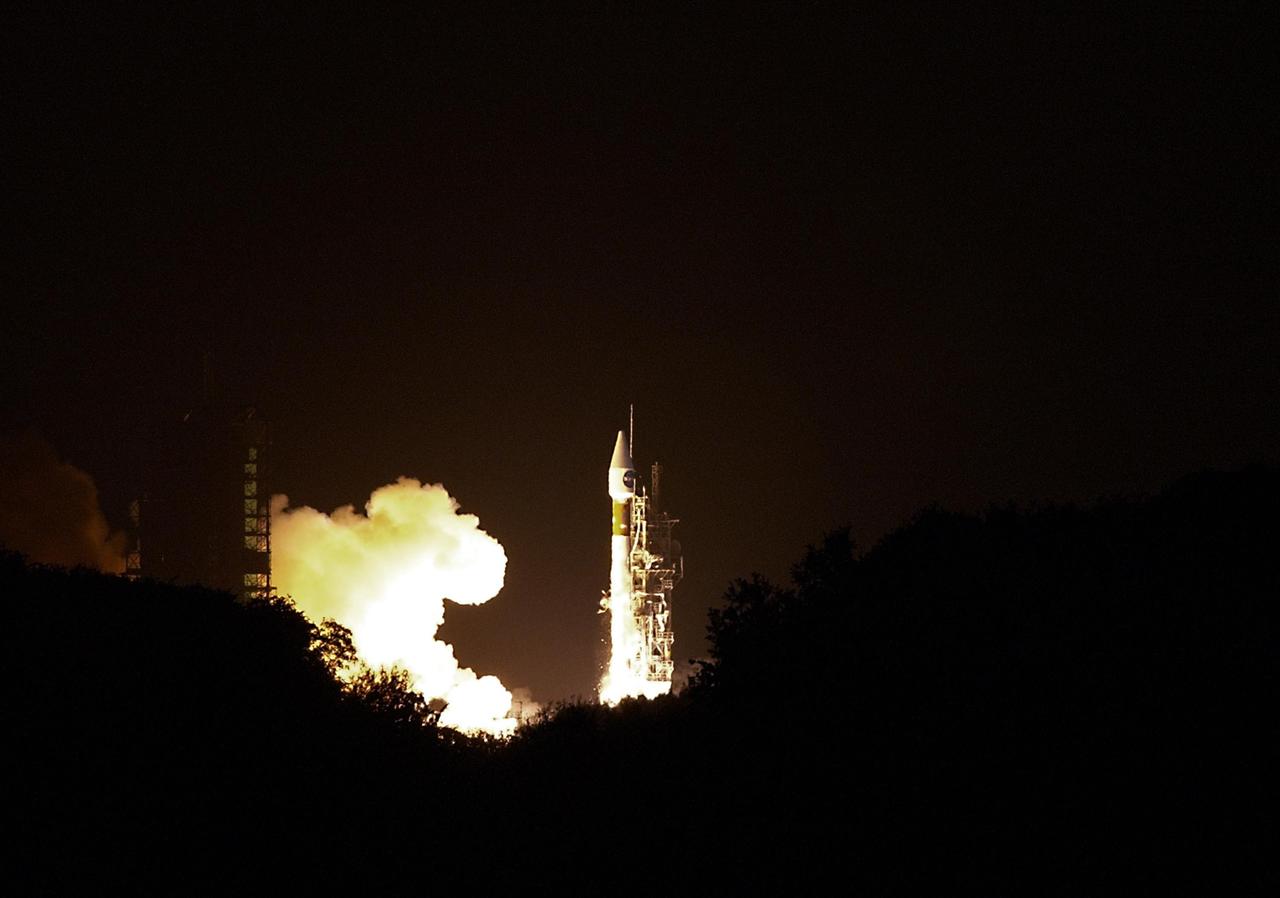
KENNEDY SPACE CENTER, FLA. - At Launch Complex 36-A, Cape Canaveral Air Force Station, the TDRS-J satellite launches aboard an Atlas IIA vehicle on Dec. 4 at the beginning of the launch window at 9:42 p.m. EST. TDRS-J, the third in a series of telemetry satellites, will help replenish the current constellation of geosynchronous TDRS satellites that are the primary source of space-to-ground voice, data and telemetry for the Space Shuttle. The satellites also provide communications with the International Space Station and scientific spacecraft in low-Earth orbit such as the Hubble Space Telescope. This new advanced series of satellites will extend the availability of TDRS communications services until about 2017.
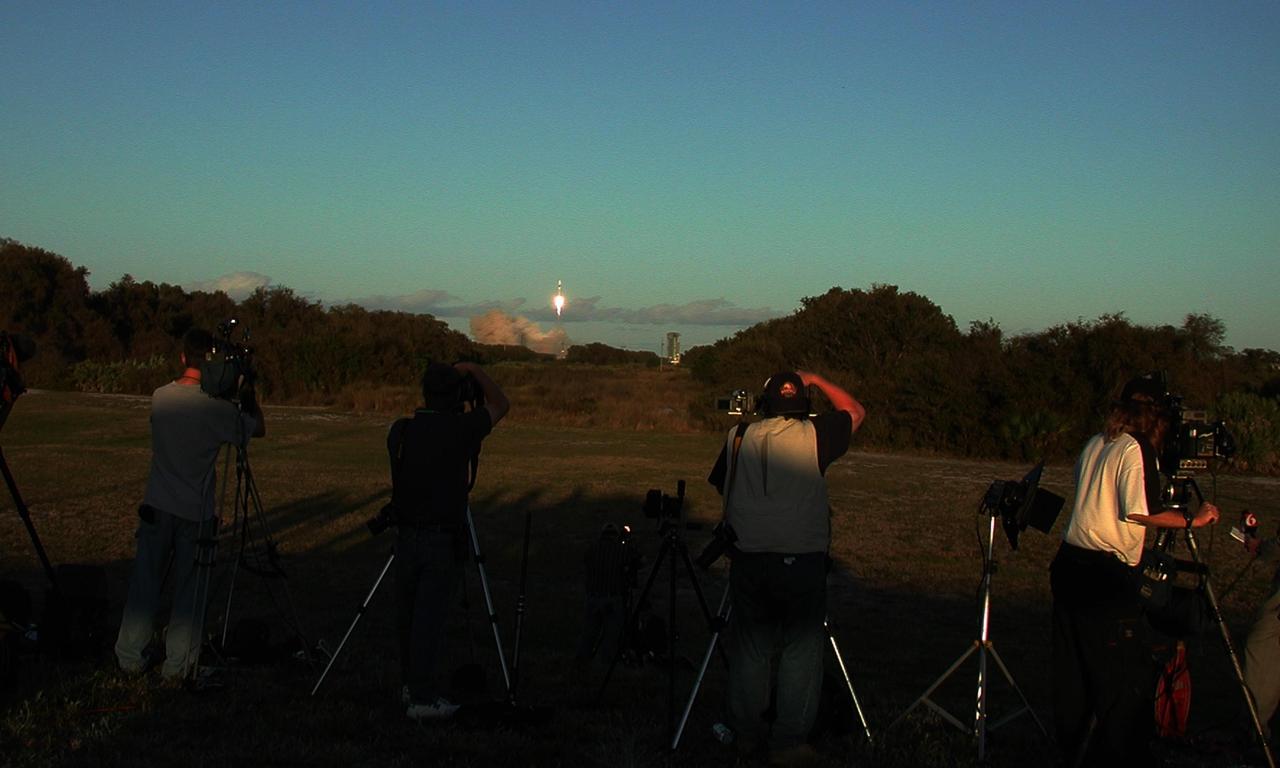
KENNEDY SPACE CENTER, FLA. -- Photographers capture the launch of the Tracking and Data Relay Satellite-I (TDRS-I) aboard a Lockheed Martin Atlas IIA rocket from Launch Pad 36-A, Cape Canaveral Air Force Station. TDRS-I replenishes the existing on-orbit fleet of six spacecraft. The TDRS System is the primary source of space-to-ground voice, data and telemetry for the Space Shuttle. It also provides communications with the International Space Station and scientific spacecraft in low-Earth orbit such as the Hubble Space Telescope. This new advanced series of satellites will extend the availability of TDRS communications services until about 2017. Liftoff occurred at 5:59 p.m. EST
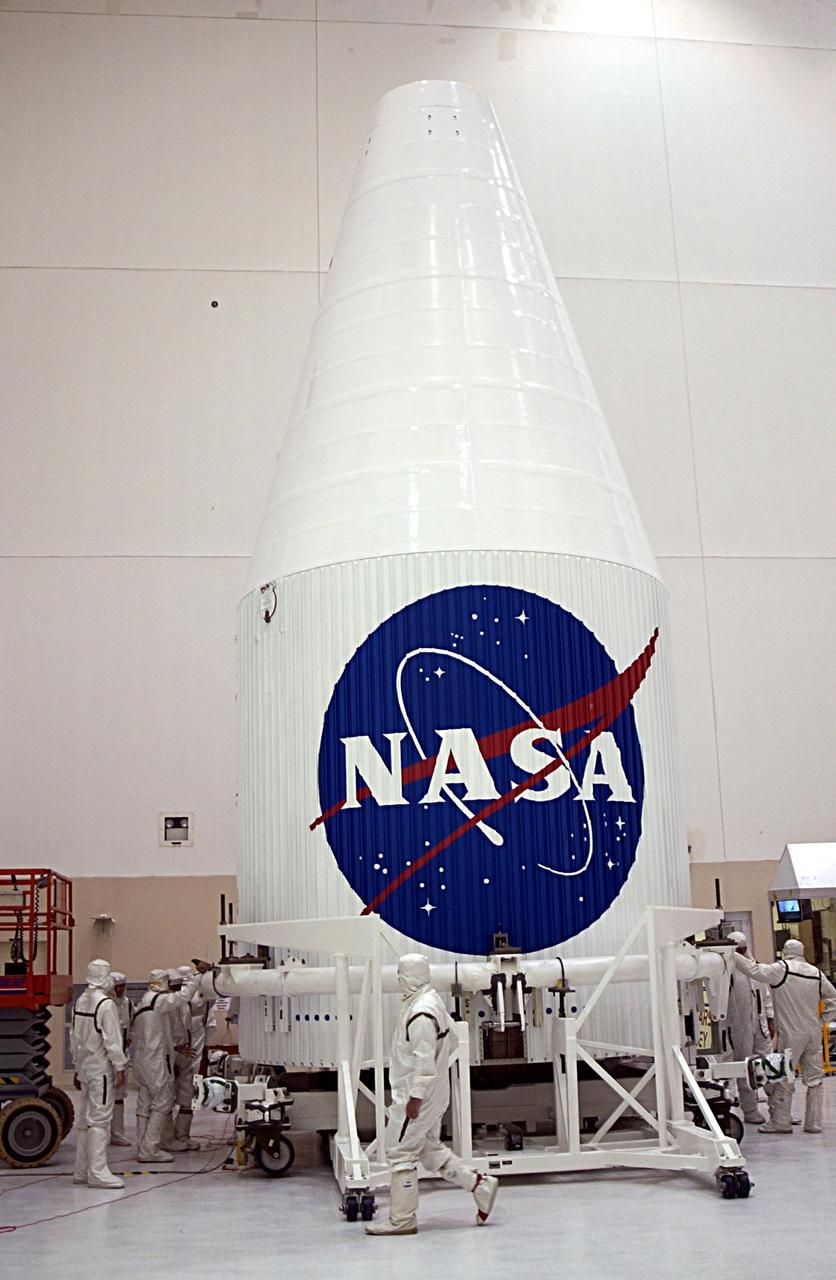
KENNEDY SPACE CENTER, FLA. -- The TDRS-J satellite is fully encapsulated and ready for transport to Launch Complex 36-A, Cape Canaveral Air Force Station, Fla. There it will be mated with the Lockheed Martin Atlas IIA-Centaur rocket for launch on Dec. 4. The third in a series of telemetry satellites, TDRS-J will help replenish the current constellation of geosynchronous TDRS satellites. The TDRS System is the primary source of space-to-ground voice, data and telemetry for the Space Shuttle. It also provides communications with the International Space Station and scientific spacecraft in low-Earth orbit such as the Hubble Space Telescope. This new advanced series of satellites will extend the availability of TDRS communications services until about 2017.
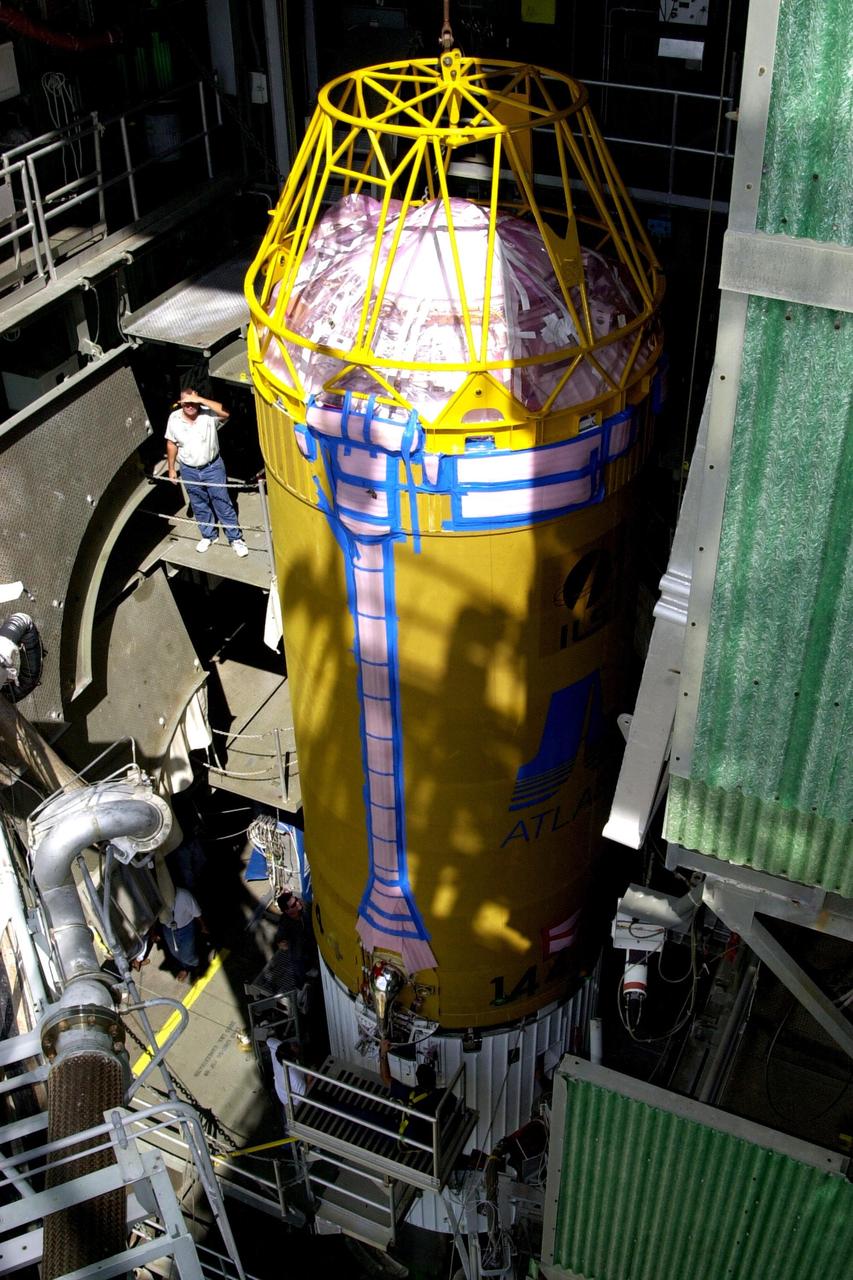
KENNEDY SPACE CENTER, FLA. -- At Launch Complex 36-A, Cape Canaveral Air Force Station, a Lockheed Martin Atlas Centaur IIA (AC-144) rocket arrives at the top of the launch tower. The rocket will be used in the launch of TDRS-J, scheduled for Nov. 20. The third in a series of telemetry satellites, TDRS-J will help replenish the current constellation of geosynchronous TDRS satellites. The TDRS System is the primary source of space-to-ground voice, data and telemetry for the Space Shuttle. It also provides communications with the International Space Station and scientific spacecraft in low-Earth orbit such as the Hubble Space Telescope. This new advanced series of satellites will extend the availability of TDRS communications services until about 2017.
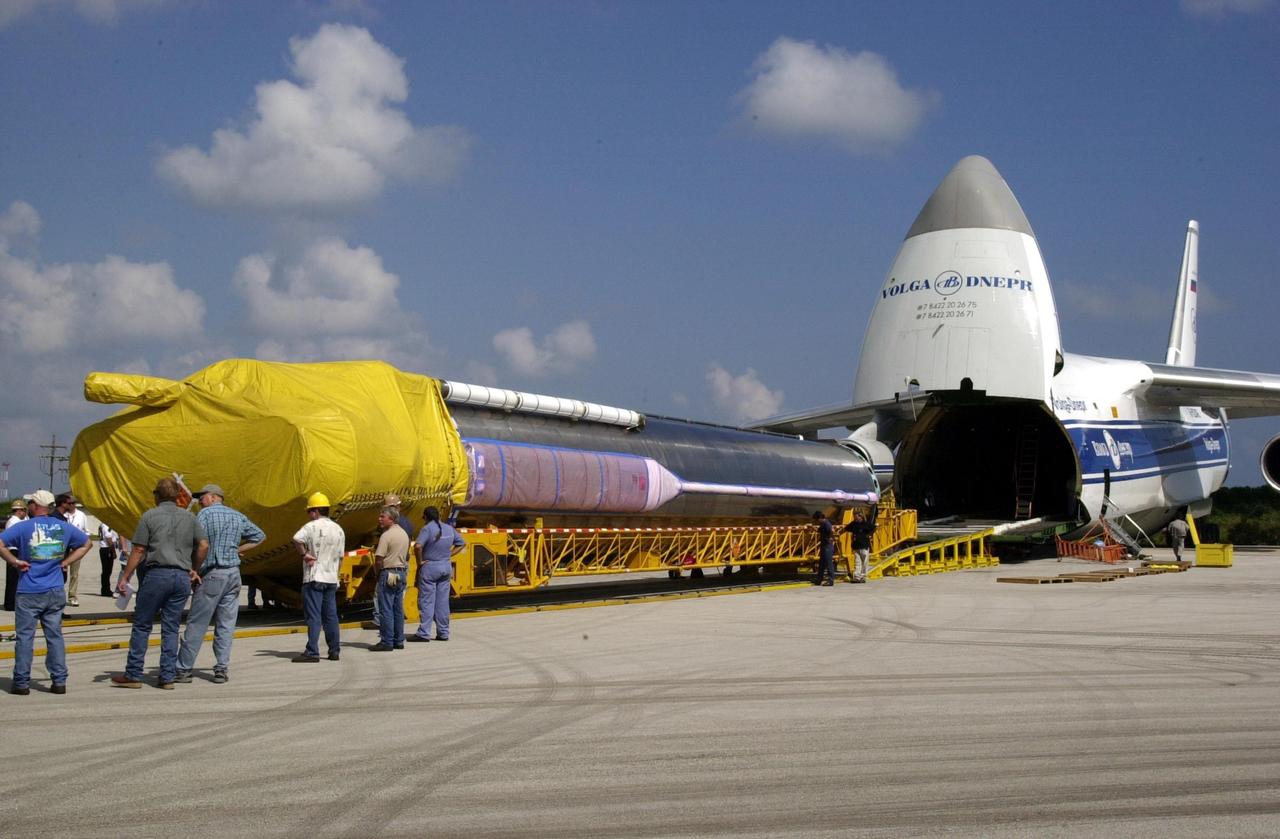
KENNEDY SPACE CENTER, FLA. -- Following its arrival at Cape Canaveral Air Force Station, an Atlas/Centaur booster is ready for its move to Launch Pad 36A in preparation for the launch of TDRS-J. The third in a series of telemetry satellites, TDRS-J will help replenish the current constellation of geosynchronous TDRS satellites. The TDRS System is the primary source of space-to-ground voice, data and telemetry for the Space Shuttle. It also provides communications with the International Space Station and scientific spacecraft in low-Earth orbit such as the Hubble Space Telescope. This new advanced series of satellites will extend the availability of TDRS communications services until about 2017.
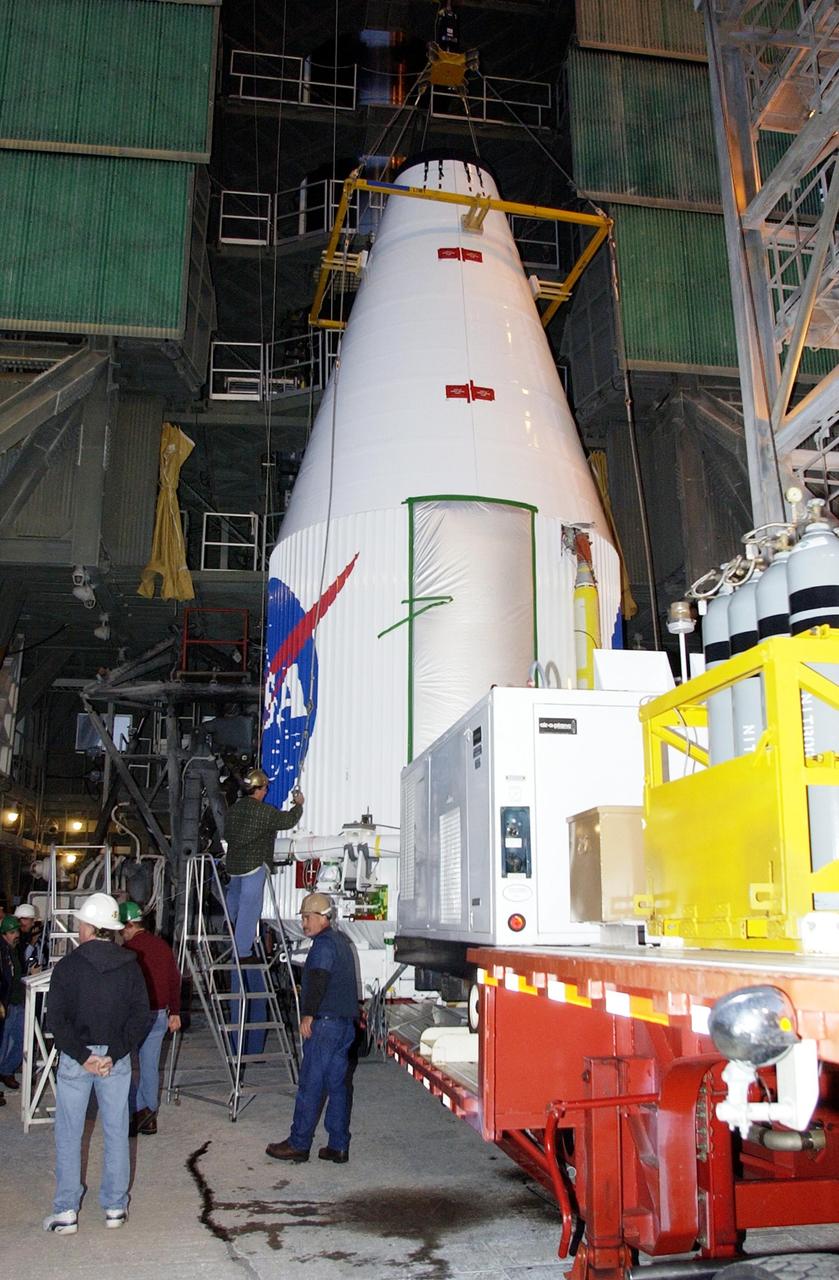
KENNEDY SPACE CENTER, FLA. - The TDRS-J satellite arrives at the gantry on Launch Complex 36-A, Cape Canaveral Air Force Station. The satellite is scheduled to be launched Dec. 4 aboard an Atlas IIA vehicle. The launch window is 9:42 to 10:22 p.m. EST. TDRS-J, the third in a series of telemetry satellites, will help replenish the current constellation of geosynchronous TDRS satellites that are the primary source of space-to-ground voice, data and telemetry for the Space Shuttle. The satellites also provide communications with the International Space Station and scientific spacecraft in low-Earth orbit such as the Hubble Space Telescope. This new advanced series of satellites will extend the availability of TDRS communications services until about 2017.
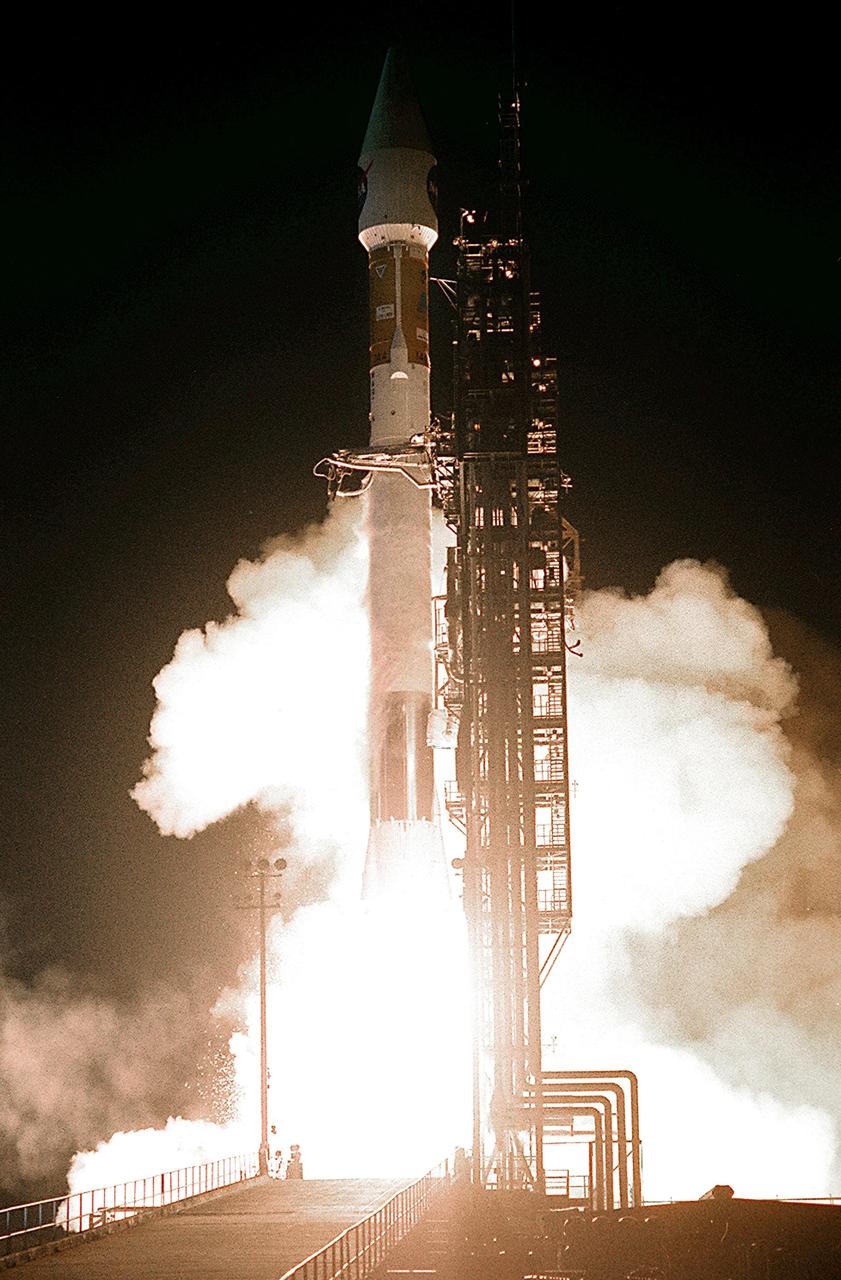
KENNEDY SPACE CENTER, FLA. --At Launch Complex 36-A, Cape Canaveral Air Force Station, the TDRS-J satellite launches aboard an Atlas IIA vehicle at the beginning of the launch window at 9:42 p.m. EST. TDRS-J, the third in a series of telemetry satellites, will help replenish the current constellation of geosynchronous TDRS satellites that are the primary source of space-to-ground voice, data and telemetry for the Space Shuttle. The satellites also provide communications with the International Space Station and scientific spacecraft in low-Earth orbit such as the Hubble Space Telescope. This new advanced series of satellites will extend the availability of TDRS communications services until about 2017.

KENNEDY SPACE CENTER, FLA. -- Following its arrival at Cape Canaveral Air Force Station, an Atlas/Centaur booster emerges from the nose of its transport aircraft. The booster is being offloaded and readied to move to Launch Pad 36A in preparation for the launch of TDRS-J. The third in a series of telemetry satellites, TDRS-J will help replenish the current constellation of geosynchronous TDRS satellites. The TDRS System is the primary source of space-to-ground voice, data and telemetry for the Space Shuttle. It also provides communications with the International Space Station and scientific spacecraft in low-Earth orbit such as the Hubble Space Telescope. This new advanced series of satellites will extend the availability of TDRS communications services until about 2017.
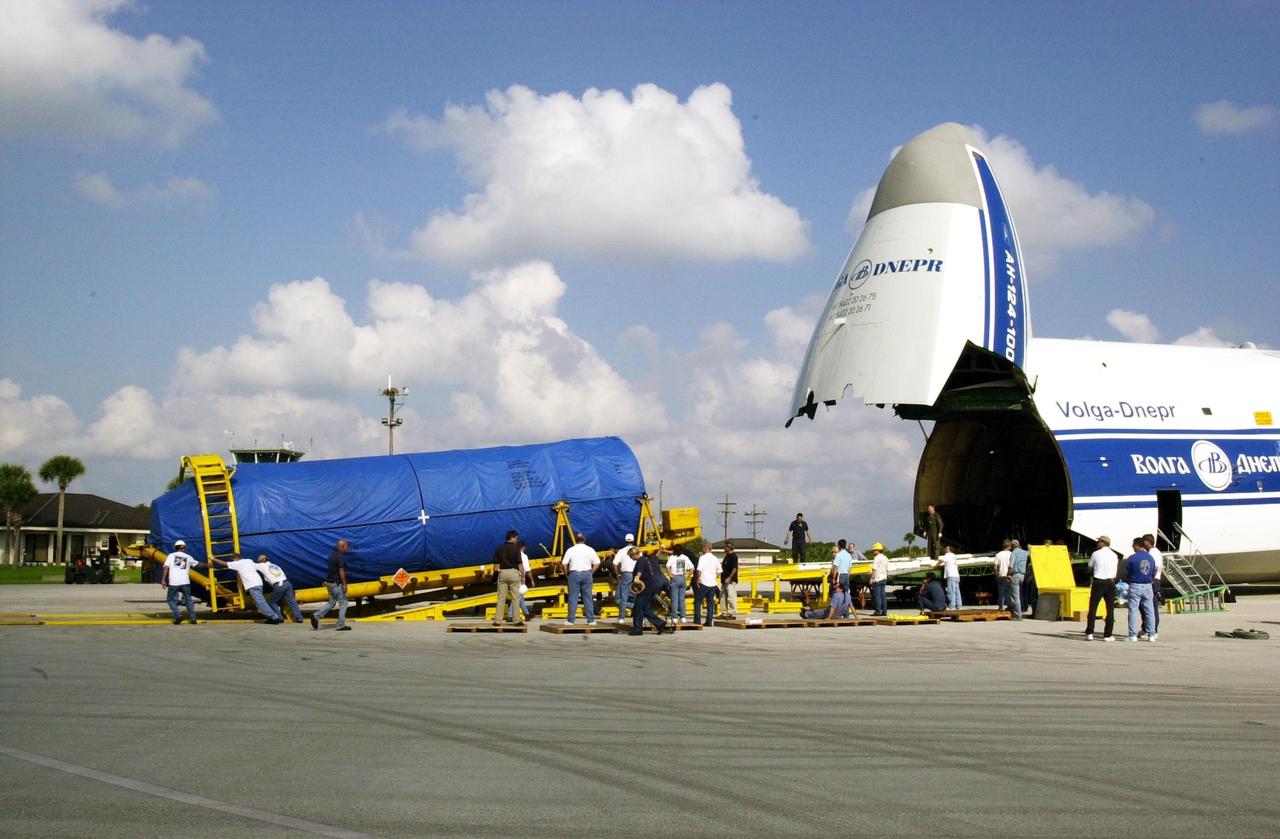
KENNEDY SPACE CENTER, FLA. -- Following its arrival at Cape Canaveral Air Force Station, an Atlas/Centaur booster is offloaded and readied for its move to Launch Pad 36A in preparation for the launch of TDRS-J. The third in a series of telemetry satellites, TDRS-J will help replenish the current constellation of geosynchronous TDRS satellites. The TDRS System is the primary source of space-to-ground voice, data and telemetry for the Space Shuttle. It also provides communications with the International Space Station and scientific spacecraft in low-Earth orbit such as the Hubble Space Telescope. This new advanced series of satellites will extend the availability of TDRS communications services until about 2017.
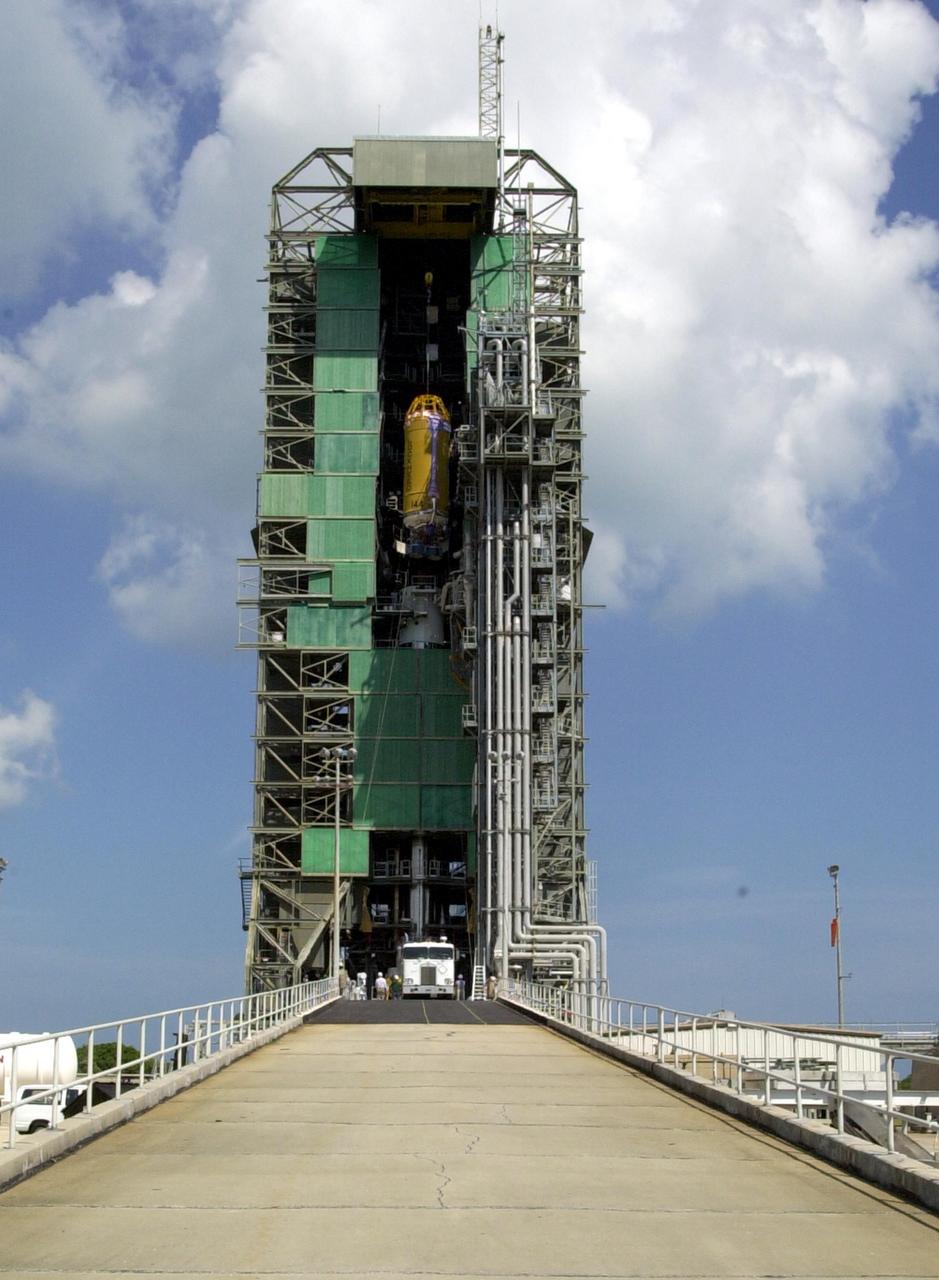
KENNEDY SPACE CENTER, FLA. -- At Launch Complex 36-A, Cape Canaveral Air Force Station, a Lockheed Martin Atlas Centaur IIA (AC-144) rocket nears the top of the launch tower. The rocket will be used in the launch of TDRS-J, scheduled for Nov. 20. The third in a series of telemetry satellites, TDRS-J will help replenish the current constellation of geosynchronous TDRS satellites. The TDRS System is the primary source of space-to-ground voice, data and telemetry for the Space Shuttle. It also provides communications with the International Space Station and scientific spacecraft in low-Earth orbit such as the Hubble Space Telescope. This new advanced series of satellites will extend the availability of TDRS communications services until about 2017.
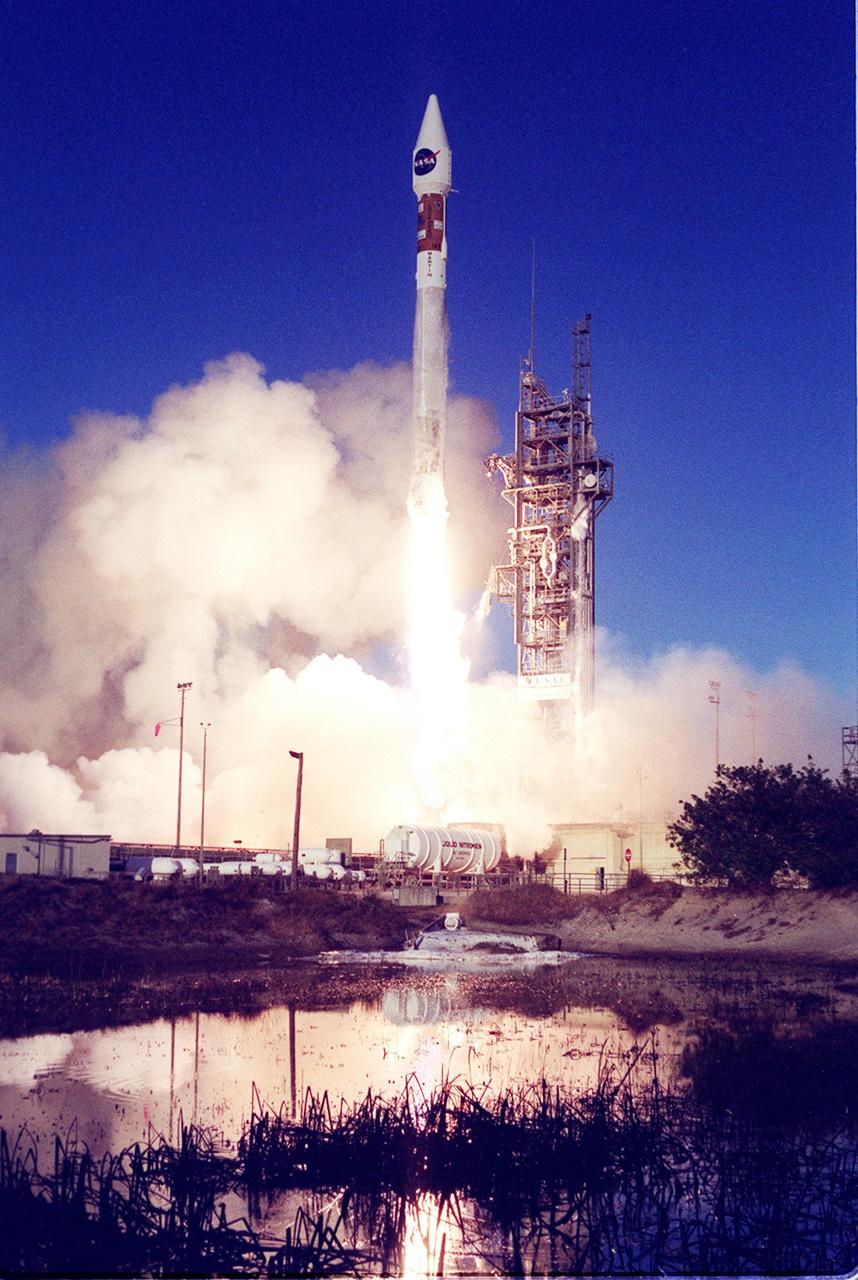
KENNEDY SPACE CENTER, FLA. -- The Lockheed Martin Atlas IIA rocket lifts off from Launch Pad 36-A, Cape Canaveral Air Force Station, with the Tracking and Data Relay Satellite-I (TDRS-1) aboard. TDRS-I replenishes the existing on-orbit fleet of six spacecraft. The TDRS System is the primary source of space-to-ground voice, data and telemetry for the Space Shuttle. It also provides communications with the International Space Station and scientific spacecraft in low-Earth orbit such as the Hubble Space Telescope. This new advanced series of satellites will extend the availability of TDRS communications services until about 2017. Liftoff occurred at 5:59 p.m. EST
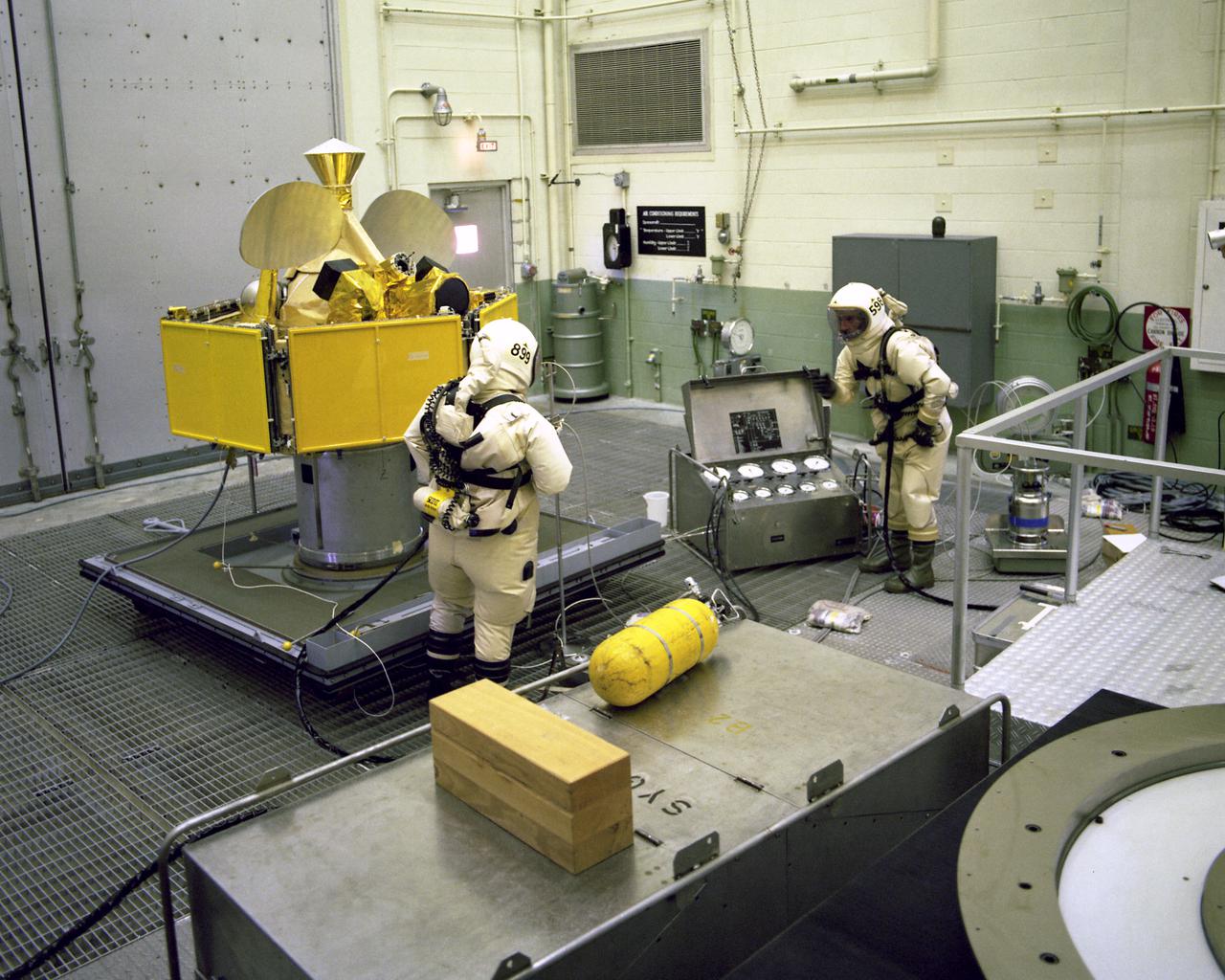
CAPE CANAVERAL, Fla. -- Technicians in protective suits loaded the Symphonie-B spacecraft with propellants in the Spin Test Facility at Cape Canaveral Air Force Station today. The French-West German experimental communications satellite is to be launched by KSC's Unmanned Launch Operations Directorate aboard a Delta rocket from Complex 17 in late August or early September. The satellite will be placed in a synchronous orbit 22,300 miles above the equator south of the West African 'Bulge,' joining Symphonie-1 in handling communications between ground stations in Europe, South America, portions of North America and the Mideast. Photo credit: NASA Photo credit: NASA
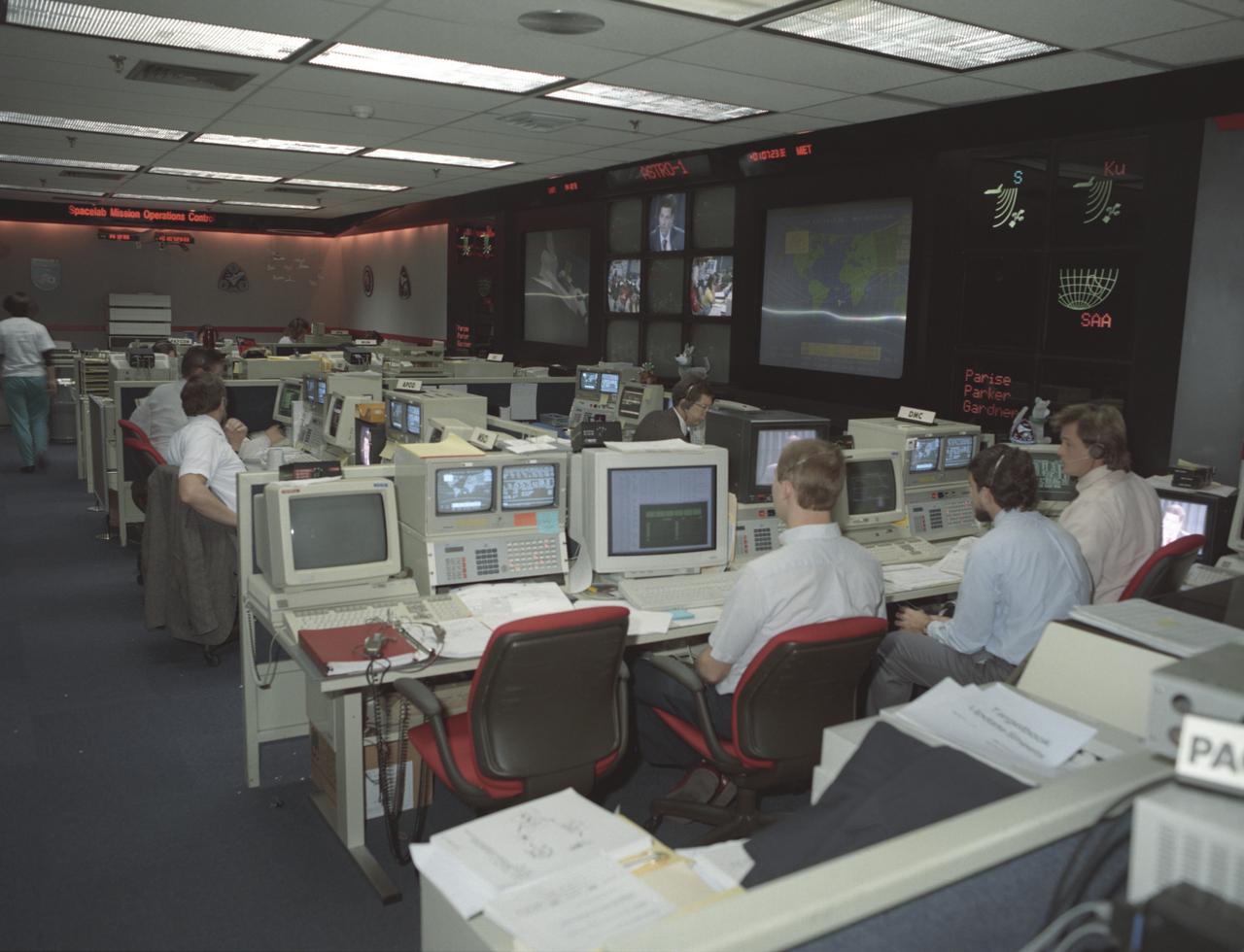
This photograph was taken during the Astro-1 mission (STS-35) showing activities at NASA's new Payload Operations Control Center (POCC) at the Marshall Space Flight Center. The POCC was the air/ground communication charnel used between the astronauts and ground control teams during the Spacelab missions. Teams of controllers and researchers directed on-orbit science operations, sent commands to the spacecraft, received data from experiments aboard the Space Shuttle, adjusted mission schedules to take advantage of unexpected science opportunities or unexpected results, and worked with crewmembers to resolve problems with their experiments.
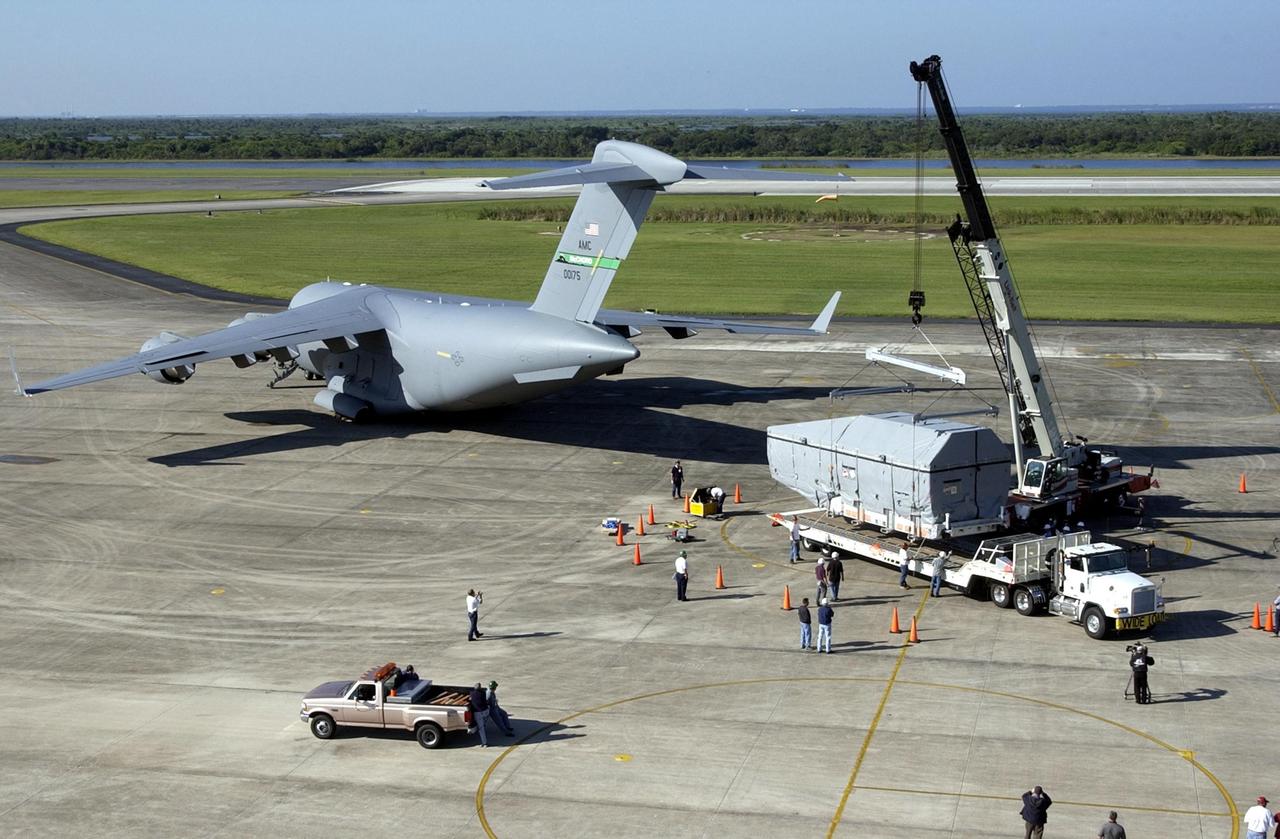
KENNEDY SPACE CENTER, FLA. - At the KSC Shuttle Landing Facility, an overhead crane lifts the container with the TDRS-J spacecraft onto a transport vehicle. In the background is the Air Force C-17 air cargo plane that delivered it. TDRS-J is the third in the current series of three Tracking and Data Relay Satellites designed to replenish the existing on-orbit fleet of six spacecraft, the first of which was launched in 1983. The Tracking and Data Relay Satellite System is the primary source of space-to-ground voice, data and telemetry for the Space Shuttle. It also provides communications with the International Space Station and scientific spacecraft in low-earth orbit such as the Hubble Space Telescope, and launch support for some expendable vehicles. This new advanced series of satellites will extend the availability of TDRS communications services until approximately 2017.
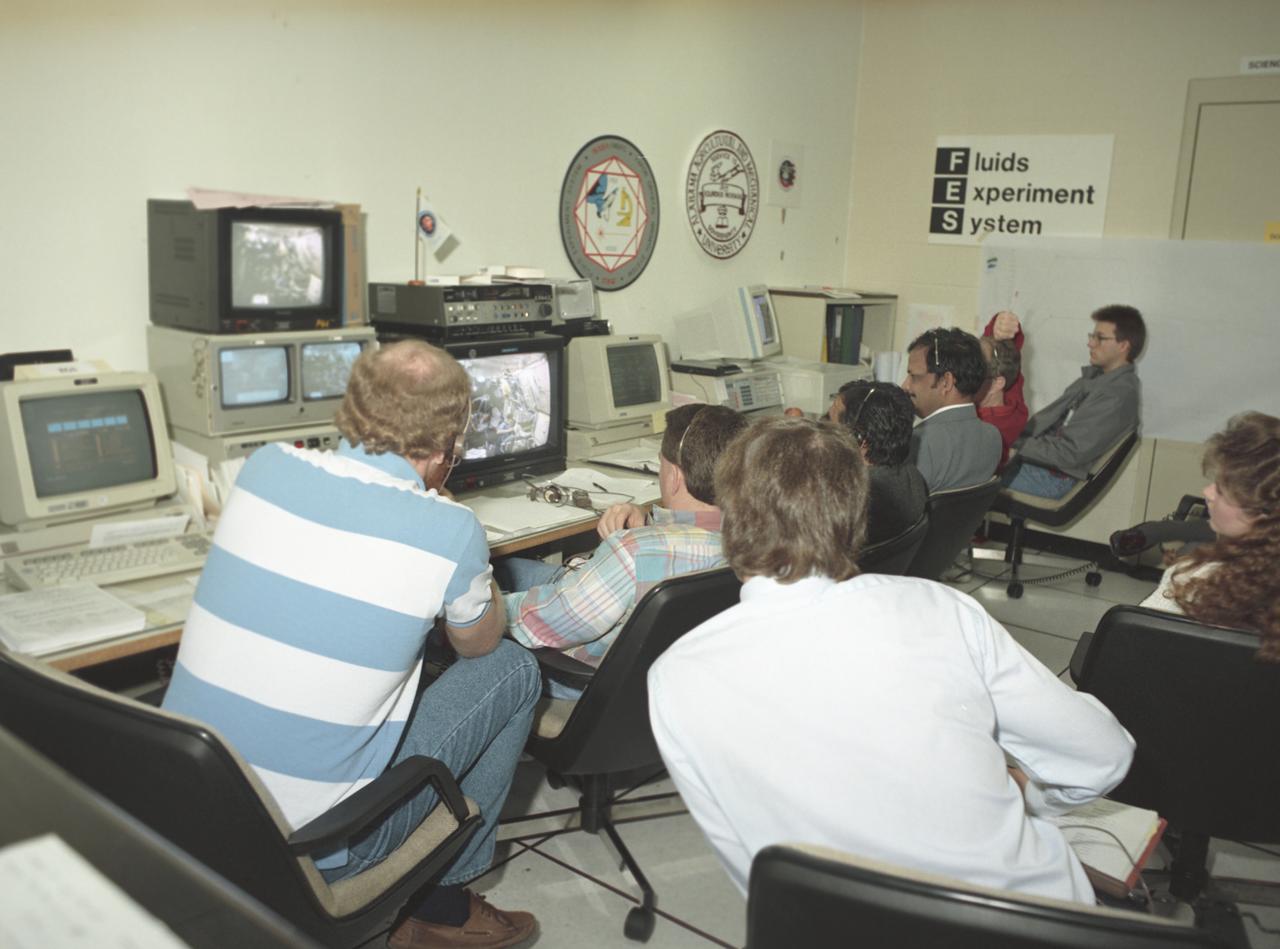
This photograph shows activities during the International Microgravity Laboratory-1 (IML-1) mission (STS-42) in the Payload Operations Control Center (POCC) at the Marshall Space Flight Center. Members of the Fluid Experiment System (FES) group monitor the progress of their experiment through video at the POCC. The IML-1 mission was the first in a series of Shuttle flights dedicated to fundamental materials and life sciences research. The mission was to explore, in depth, the complex effects of weightlessness on living organisms and materials processing. The crew conducted experiments on the human nervous system's adaptation to low gravity and the effects on other life forms such as shrimp eggs, lentil seedlings, fruit fly eggs, and bacteria. Low gravity materials processing experiments included crystal growth from a variety of substances such as enzymes, mercury, iodine, and virus. The International space science research organizations that participated in this mission were: The U.S. National Aeronautics and Space Administion, the European Space Agency, the Canadian Space Agency, the French National Center for Space Studies, the German Space Agency, and the National Space Development Agency of Japan. The POCC was the air/ground communication charnel used between astronauts aboard the Spacelab and scientists, researchers, and ground control teams during the Spacelab missions. The facility made instantaneous video and audio communications possible for scientists on the ground to follow the progress and to send direct commands of their research almost as if they were in space with the crew.
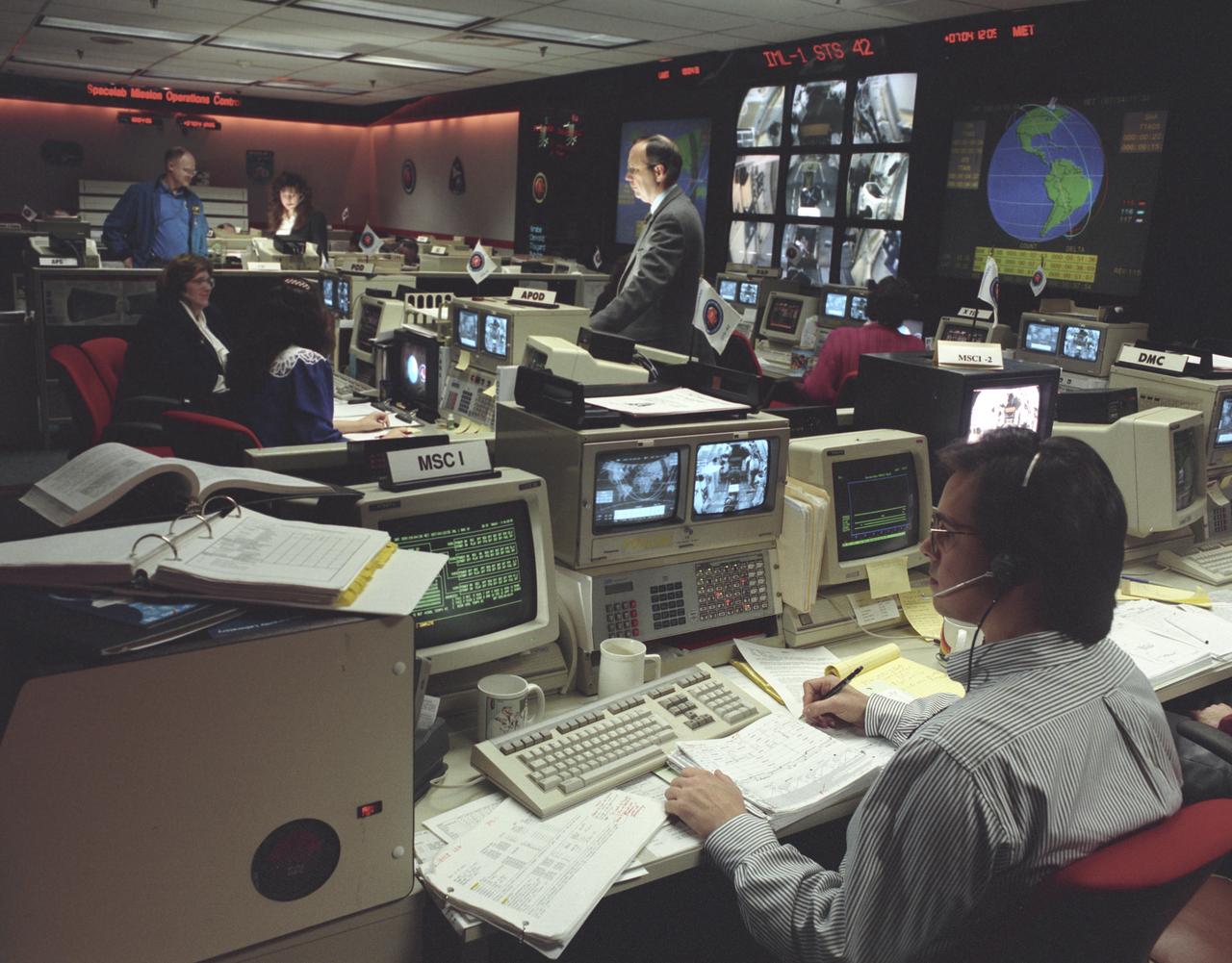
This photograph shows activities during the International Microgravity Laboratory-1 (IML-1) mission (STS-42) in the Payload Operations Control Center (POCC) at the Marshall Space Flight Center. The IML-1 mission was the first in a series of Shuttle flights dedicated to fundamental materials and life sciences research. The mission was to explore, in depth, the complex effects of weightlessness on living organisms and materials processing. The crew conducted experiments on the human nervous system's adaptation to low gravity and the effects on other life forms such as shrimp eggs, lentil seedlings, fruit fly eggs, and bacteria. Low gravity materials processing experiments included crystal growth from a variety of substances such as enzymes, mercury, iodine, and virus. The International space science research organizations that participated in this mission were: The U.S. National Aeronautics and Space Administration, the European Space Agency, the Canadian Space Agency, the French National Center for Space Studies, the German Space Agency, and the National Space Development Agency of Japan. The POCC was the air/ground communication charnel used between the astronauts aboard the Spacelab and scientists, researchers, and ground control teams during the Spacelab missions. The facility made instantaneous video and audio communications possible for scientists on the ground to follow the progress and to send direct commands of their research almost as if they were in space with the crew.
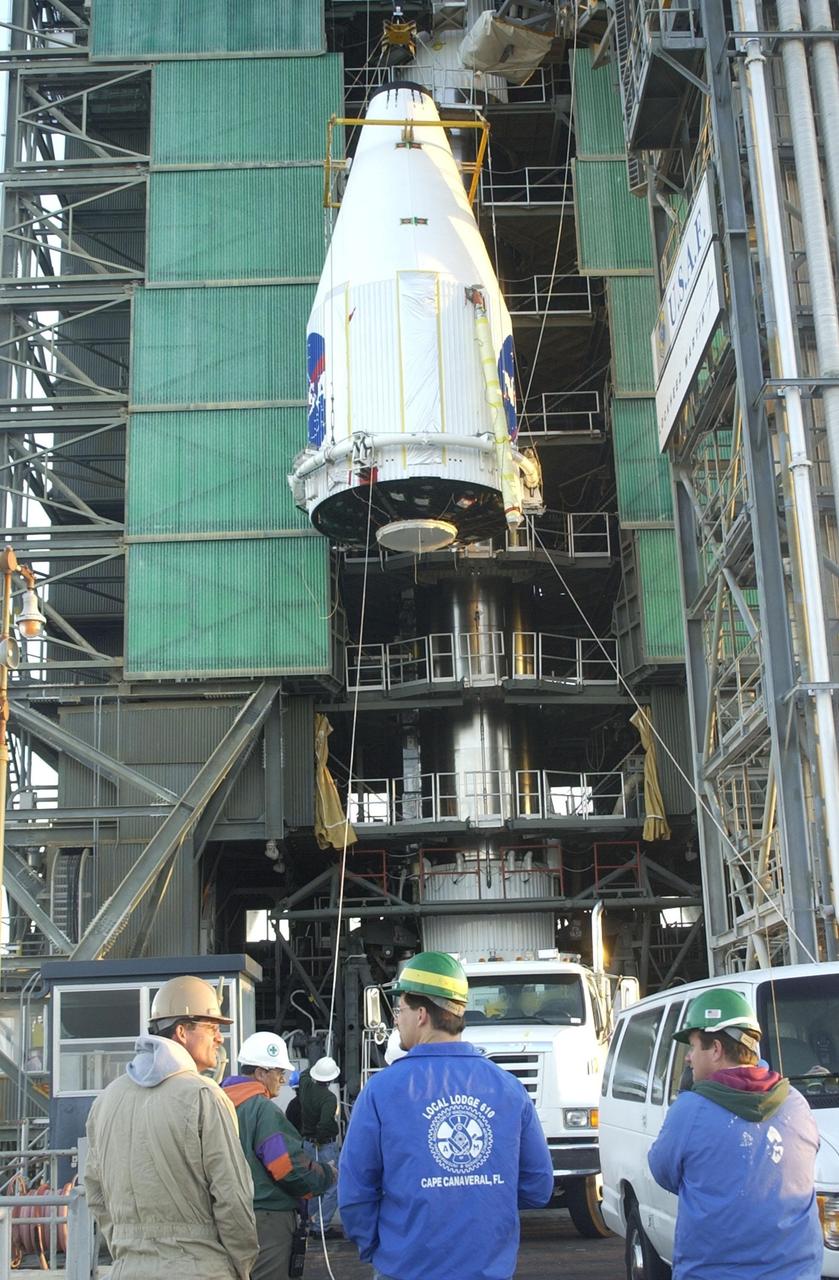
KENNEDY SPACE CENTER, FLA. -- The nose fairing arrives at Pad 36-A, Cape Canaveral Air Force Station, Fla., with the Tracking and Data Relay Satellite-I (TDRS-I) inside. The fairing will be attached to the Lockheed Martin Atlas IIA rocket for launch. The second in a new series of telemetry satellites, TDRS-I replenishes the existing on-orbit fleet of six spacecraft. The TDRS System is the primary source of space-to-ground voice, data and telemetry for the Space Shuttle. It also provides communications with the International Space Station and scientific spacecraft in low-Earth orbit such as the Hubble Space Telescope. This new advanced series of satellites will extend the availability of TDRS communications services until about 2017. Launch of TDRS-I is scheduled for March 8 between 5:39 - 6:19 p.m. EST
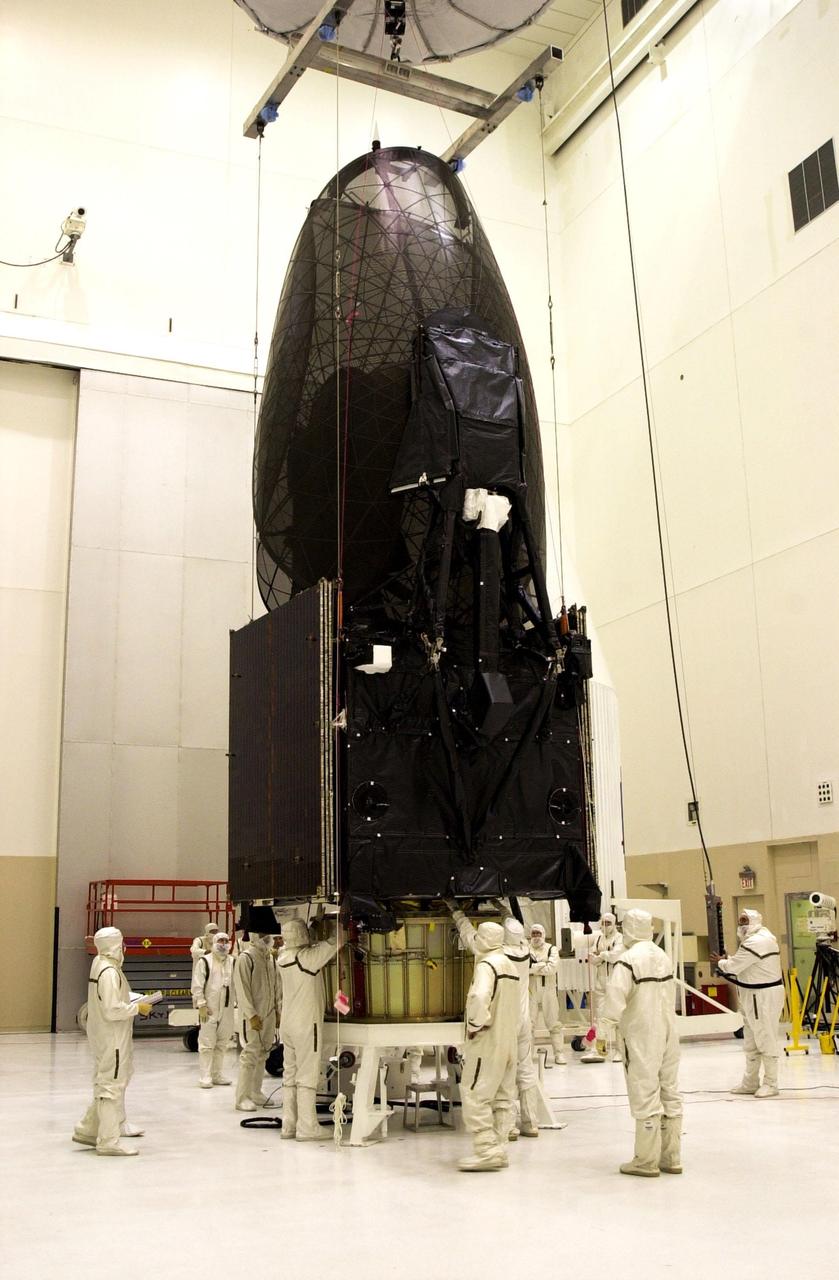
KENNEDY SPACE CENTER, Fla. - The Tracking and Data Relay Satellite-I (TDRS-I) is lifted for mating with the adapter of its nose fairing in the Spacecraft Assembly and Encapsulation Facility-2 (SAEF-2). The second in a new series of telemetry satellites, TDRS-I replenishes the existing on-orbit fleet of six spacecraft. The TDRS System is the primary source of space-to-ground voice, data and telemetry for the Space Shuttle. It also provides communications with the International Space Station and scientific spacecraft in low-Earth orbit such as the Hubble Space Telescope. This new advanced series of satellites will extend the availability of TDRS communications services until about 2017. Launch of TDRS-I is scheduled for March 8 aboard a Lockheed Martin Atlas IIA rocket from Pad 36-A, Cape Canaveral Air Force Station

KENNEDY SPACE CENTER, FLA. - On Launch Pad 36-A, Cape Canaveral Air Force Station, the tower is rolled away from the Lockheed Martin Atlas/Centaur rocket prior to launch. The rocket will carry the Tracking and Data Relay Satellite-I (TDRS-I) into orbit. The second in a new series of telemetry satellites, TDRS-I replenishes the existing on-orbit fleet of six spacecraft. The TDRS System is the primary source of space-to-ground voice, data and telemetry for the Space Shuttle. It also provides communications with the International Space Station and scientific spacecraft in low-Earth orbit such as the Hubble Space Telescope. This new advanced series of satellites will extend the availability of TDRS communications services until about 2017. Launch of TDRS-I is scheduled between 5:39 - 6:19 p.m. EST
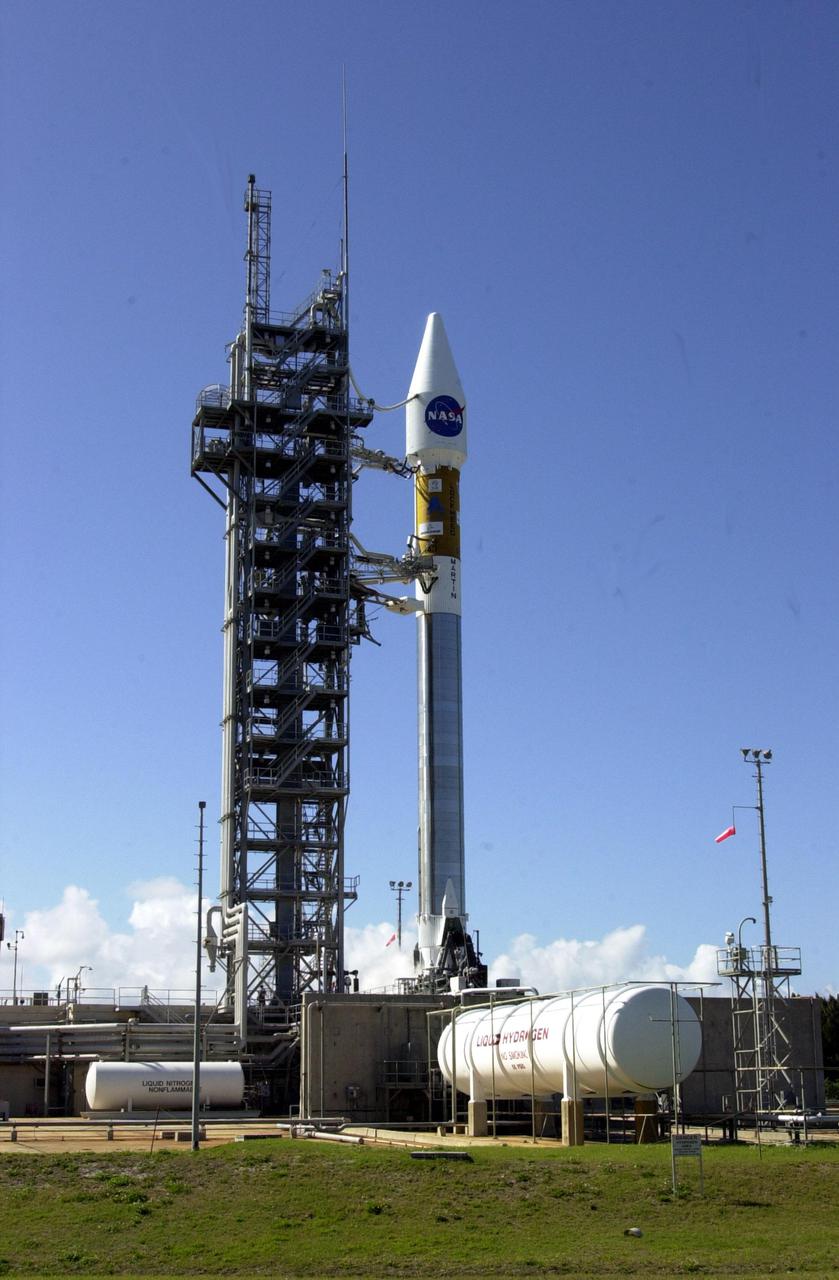
KENNEDY SPACE CENTER, FLA. -- After tower rollback, this Lockheed Martin Atlas_Centaur rocket waits for launch to carry the Tracking and Data Relay Satellite-I (TDRS-I) into orbit. The second in a new series of telemetry satellites, TDRS-I replenishes the existing on-orbit fleet of six spacecraft. The TDRS System is the primary source of space-to-ground voice, data and telemetry for the Space Shuttle. It also provides communications with the International Space Station and scientific spacecraft in low-Earth orbit such as the Hubble Space Telescope. This new advanced series of satellites will extend the availability of TDRS communications services until about 2017. Launch of TDRS-I atop the Atlas rocket is scheduled between 5:39 - 6:19 p.m. EST from Launch Pad 36-A, Cape Canaveral Air Force Station
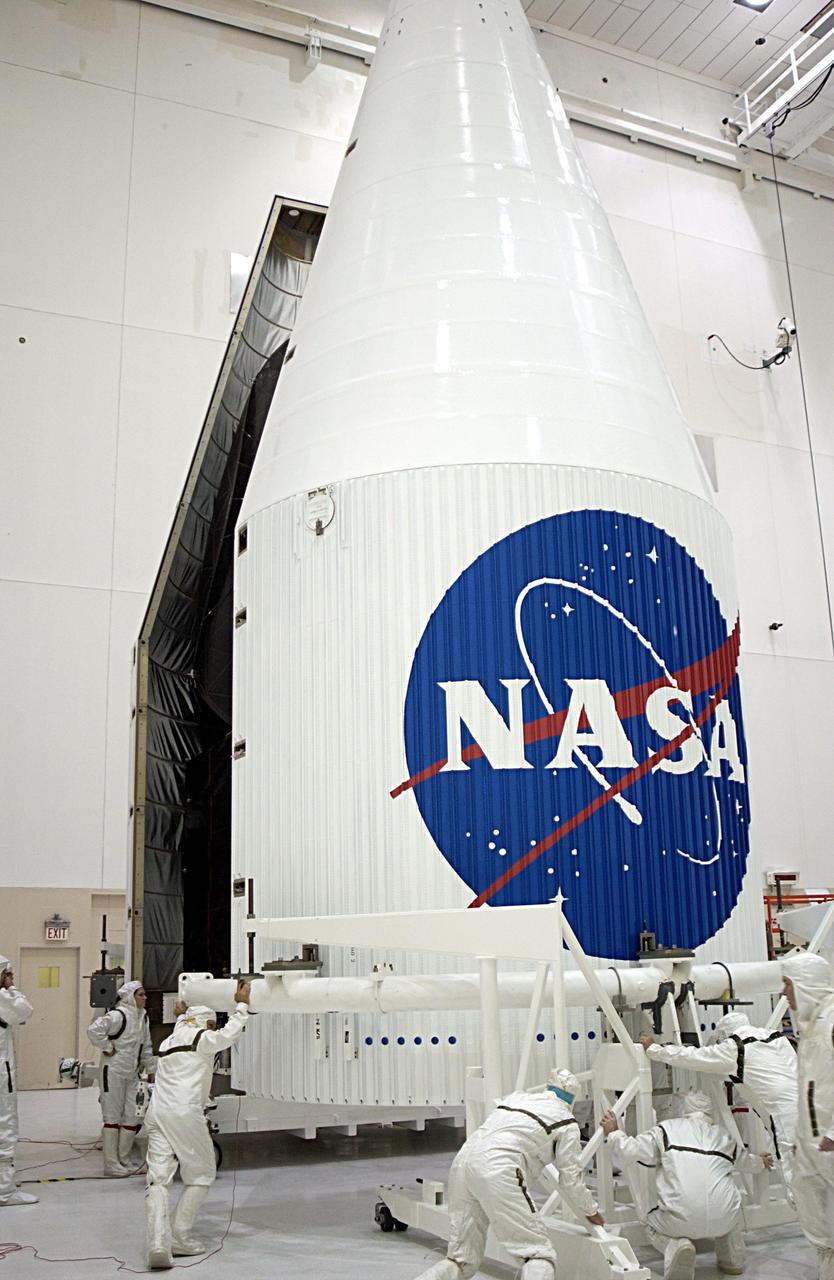
KENNEDY SPACE CENTER, FLA. -- Workers move the second half of the fairing around the TDRS-J satellite to complete encapsulation. The satellite is scheduled to be launched aboard a Lockheed Martin Atlas IIA-Centaur rocket from Launch Complex 36-A, Cape Canaveral Air Force Station, Fla., on Dec. 4. The third in a series of telemetry satellites, TDRS-J will help replenish the current constellation of geosynchronous TDRS satellites. The TDRS System is the primary source of space-to-ground voice, data and telemetry for the Space Shuttle. It also provides communications with the International Space Station and scientific spacecraft in low-Earth orbit such as the Hubble Space Telescope. This new advanced series of satellites will extend the availability of TDRS communications services until about 2017.
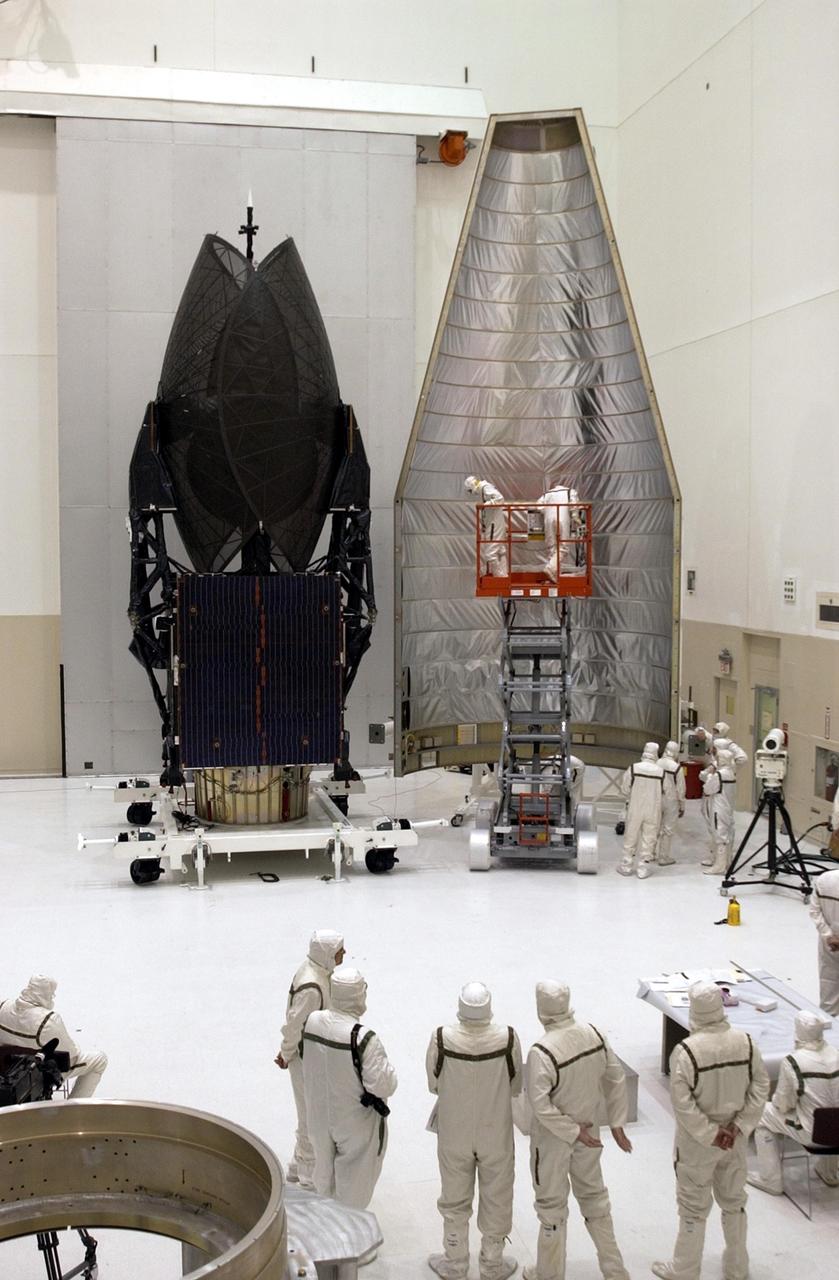
KENNEDY SPACE CENTER, FLA. -- In the Spacecraft Assembly and Encapsulation Facility-2 (SAEF-2), the Tracking and Data Relay Satellite-I (TDRS-I) (left) waits for encapsulation in the first half of the nose fairing , in preparation for launch. The second in a new series of telemetry satellites, TDRS-I replenishes the existing on-orbit fleet of six spacecraft. The TDRS System is the primary source of space-to-ground voice, data and telemetry for the Space Shuttle. It also provides communications with the International Space Station and scientific spacecraft in low-Earth orbit such as the Hubble Space Telescope. This new advanced series of satellites will extend the availability of TDRS communications services until about 2017. Launch of TDRS-I is scheduled for March 8 aboard a Lockheed Martin Atlas IIA rocket from Pad 36-A, Cape Canaveral Air Force Station
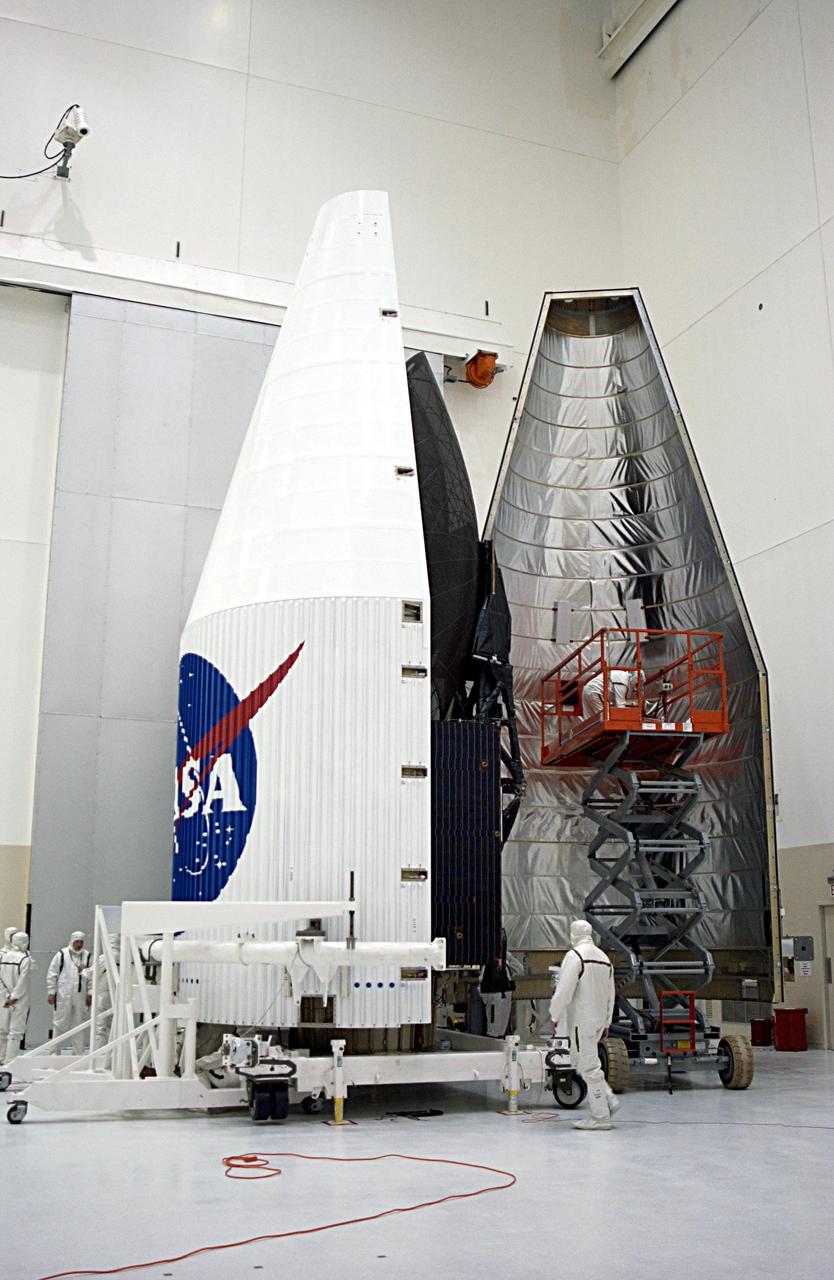
KENNEDY SPACE CENTER, FLA. -- The second half of the fairing (right) is prepared for mating with the first half and encapsulating the TDRS-J satellite for launch. The satellite is scheduled to be launched aboard a Lockheed Martin Atlas IIA-Centaur rocket from Launch Complex 36-A, Cape Canaveral Air Force Station, Fla., on Dec. 4. The third in a series of telemetry satellites, TDRS-J will help replenish the current constellation of geosynchronous TDRS satellites. The TDRS System is the primary source of space-to-ground voice, data and telemetry for the Space Shuttle. It also provides communications with the International Space Station and scientific spacecraft in low-Earth orbit such as the Hubble Space Telescope. This new advanced series of satellites will extend the availability of TDRS communications services until about 2017.
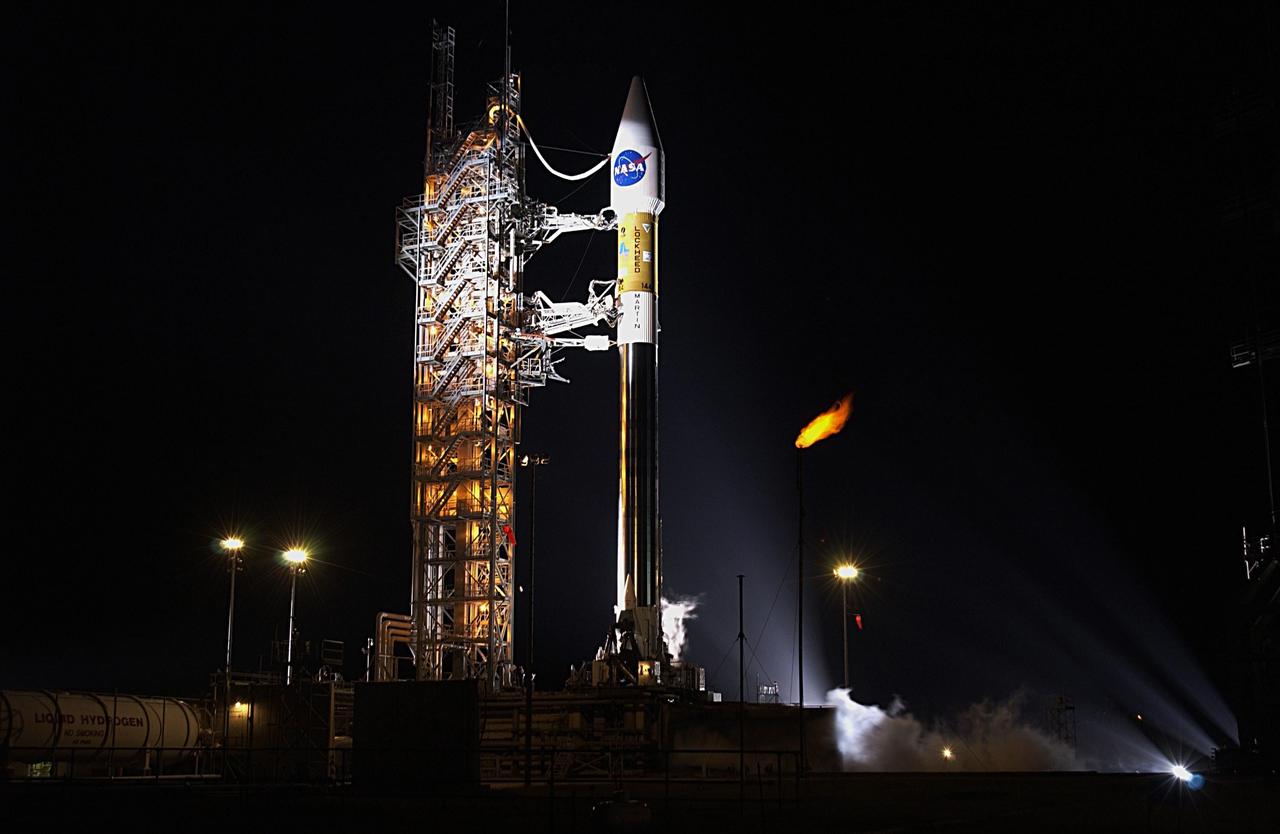
KENNEDY SPACE CENTER, FLA. - At Launch Complex 36-A, Cape Canaveral Air Force Station, the mobile service tower is rolled back to reveal the encapsulated TDRS-J satellite aboard an Atlas IIA vehicle awaiting launch on Dec. 4. The launch window is 9:42 to 10:22 p.m. EST. TDRS-J, the third in a series of telemetry satellites, will help replenish the current constellation of geosynchronous TDRS satellites that are the primary source of space-to-ground voice, data and telemetry for the Space Shuttle. The satellites also provide communications with the International Space Station and scientific spacecraft in low-Earth orbit such as the Hubble Space Telescope. This new advanced series of satellites will extend the availability of TDRS communications services until about 2017.

KENNEDY SPACE CENTER, FLA. -- The nose fairing arrives at Pad 36-A, Cape Canaveral Air Force Station, Fla., with the Tracking and Data Relay Satellite-I (TDRS-I) inside. The fairing will be attached to the Lockheed Martin Atlas IIA rocket for launch. The second in a new series of telemetry satellites, TDRS-I replenishes the existing on-orbit fleet of six spacecraft. The TDRS System is the primary source of space-to-ground voice, data and telemetry for the Space Shuttle. It also provides communications with the International Space Station and scientific spacecraft in low-Earth orbit such as the Hubble Space Telescope. This new advanced series of satellites will extend the availability of TDRS communications services until about 2017. Launch of TDRS-I is scheduled for March 8 between 5:39 - 6:19 p.m. EST
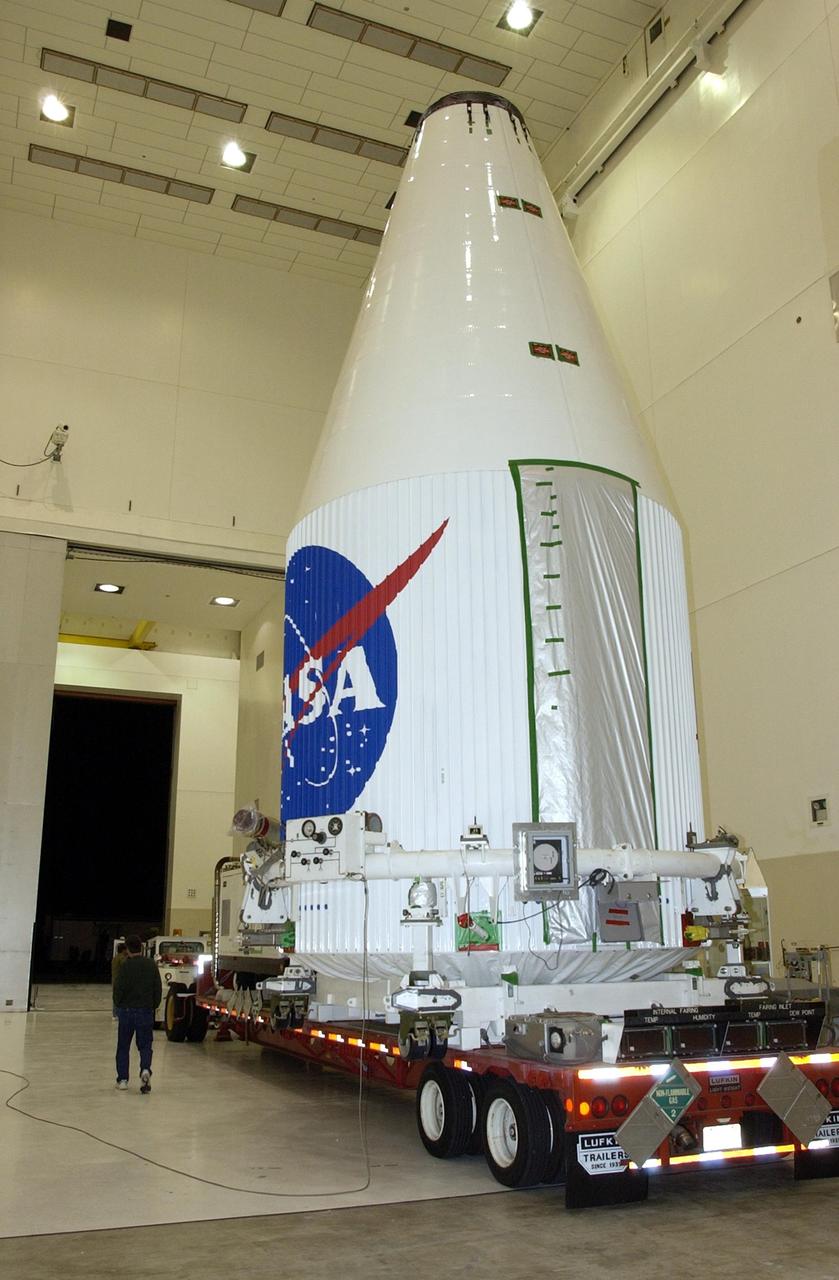
KENNEDY SPACE CENTER, FLA. - A transporter carrying the encapsulated TDRS-J satellite makes its way to the exit. The satellite is being taken to Launch Complex 36-A, Cape Canaveral Air Force Station, for a launch aboard an Atlas IIA vehicle Dec. 4. The launch window is 9:42 to 10:22 p.m. EST. TDRS-J, the third in a series of telemetry satellites, will help replenish the current constellation of geosynchronous TDRS satellites that are the primary source of space-to-ground voice, data and telemetry for the Space Shuttle. The satellites also provide communications with the International Space Station and scientific spacecraft in low-Earth orbit such as the Hubble Space Telescope. This new advanced series of satellites will extend the availability of TDRS communications services until about 2017.
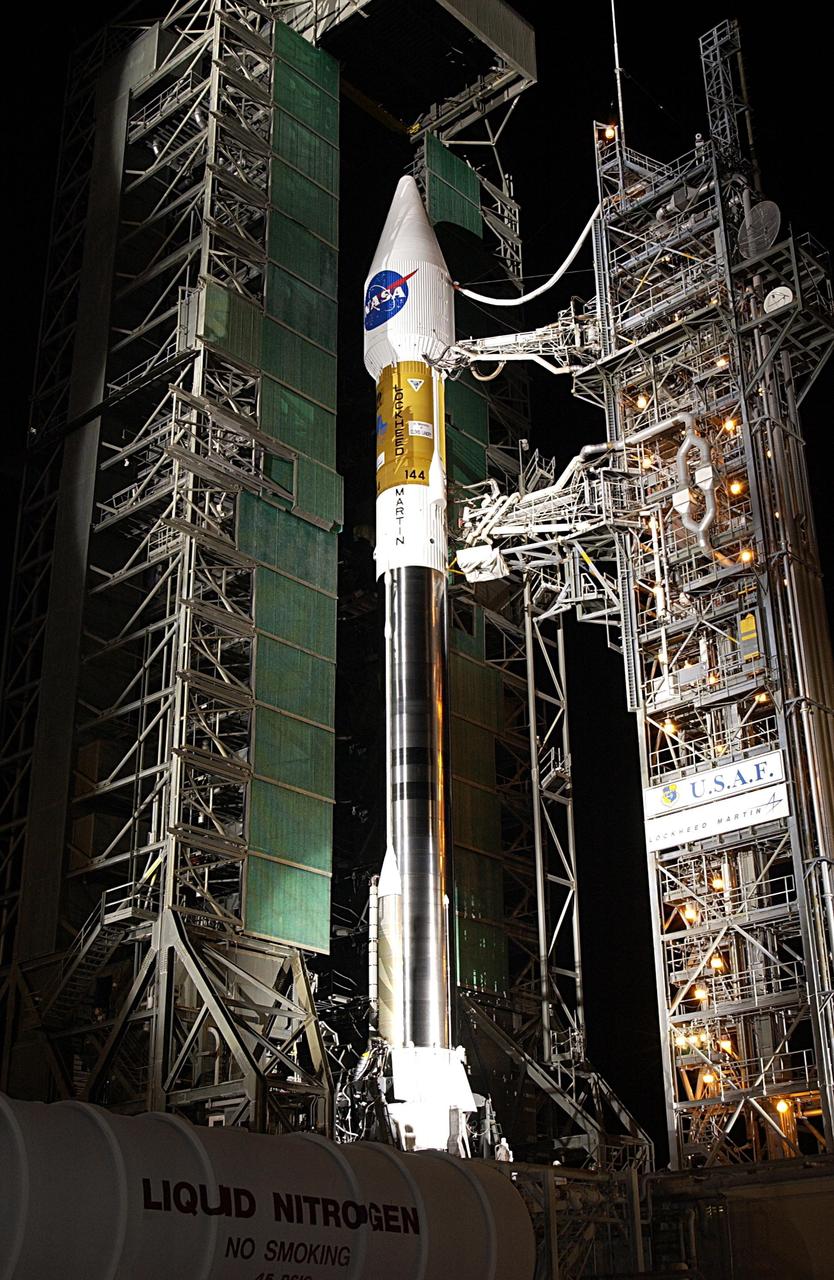
KENNEDY SPACE CENTER, FLA. - At Launch Complex 36-A, Cape Canaveral Air Force Station, the mobile service tower is rolled back to reveal the encapsulated TDRS-J satellite aboard an Atlas IIA vehicle awaiting launch on Dec. 4. The launch window is 9:42 to 10:22 p.m. EST. TDRS-J, the third in a series of telemetry satellites, will help replenish the current constellation of geosynchronous TDRS satellites that are the primary source of space-to-ground voice, data and telemetry for the Space Shuttle. The satellites also provide communications with the International Space Station and scientific spacecraft in low-Earth orbit such as the Hubble Space Telescope. This new advanced series of satellites will extend the availability of TDRS communications services until about 2017.

KENNEDY SPACE CENTER, FLA. -- The TDRS-J satellite rests inside the first half of the fairing during encapsulation. The satellite is scheduled to be launched aboard a Lockheed Martin Atlas IIA-Centaur rocket from Launch Complex 36-A, Cape Canaveral Air Force Station, Fla., on Dec. 4. The third in a series of telemetry satellites, TDRS-J will help replenish the current constellation of geosynchronous TDRS satellites. The TDRS System is the primary source of space-to-ground voice, data and telemetry for the Space Shuttle. It also provides communications with the International Space Station and scientific spacecraft in low-Earth orbit such as the Hubble Space Telescope. This new advanced series of satellites will extend the availability of TDRS communications services until about 2017.
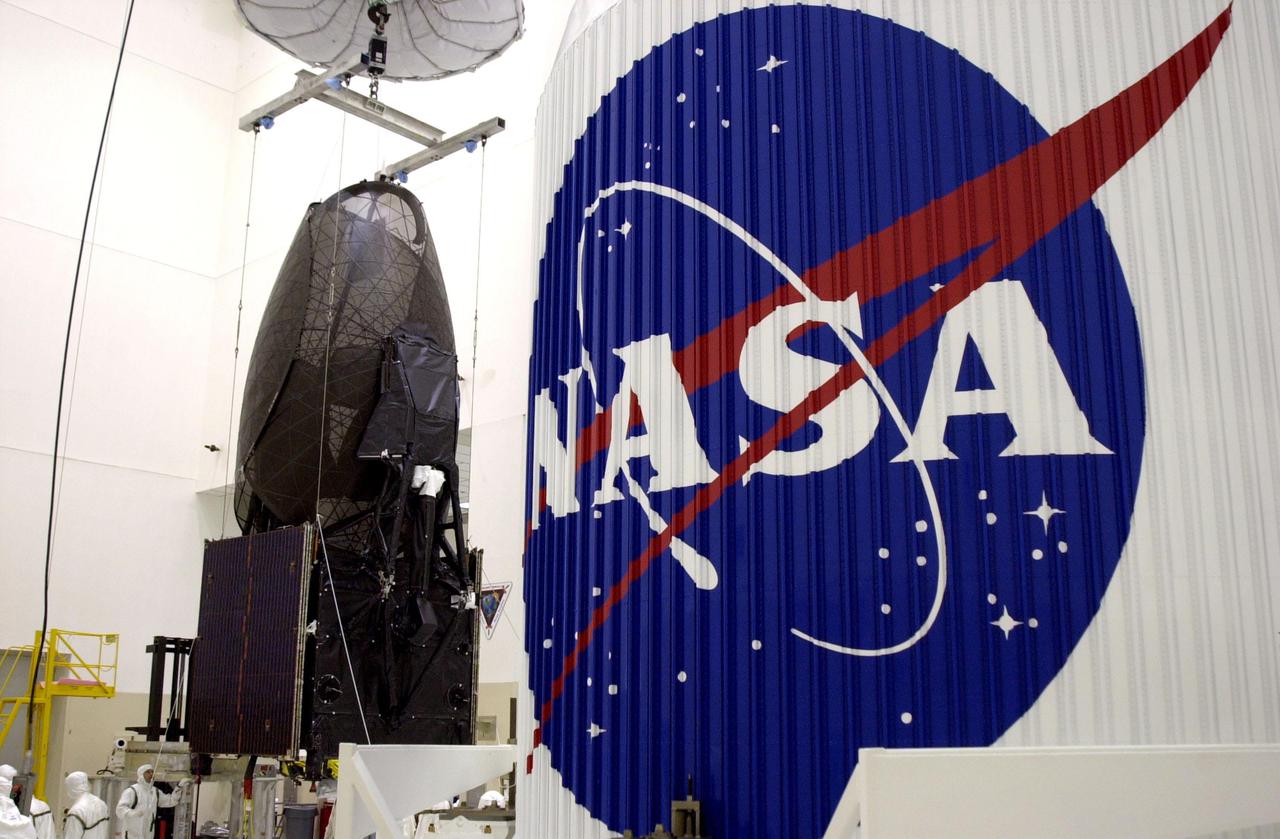
KENNEDY SPACE CENTER, Fla. - The Tracking and Data Relay Satellite-I (TDRS-I) is readied for mating with its nose fairing (in foreground) in the Spacecraft Assembly and Encapsulation Facility-2 (SAEF-2). The second in a new series of telemetry satellites, TDRS-I replenishes the existing on-orbit fleet of six spacecraft. The TDRS System is the primary source of space-to-ground voice, data and telemetry for the Space Shuttle. It also provides communications with the International Space Station and scientific spacecraft in low-Earth orbit such as the Hubble Space Telescope. This new advanced series of satellites will extend the availability of TDRS communications services until about 2017. Launch of TDRS-I is scheduled for March 8 aboard a Lockheed Martin Atlas IIA rocket from Pad 36-A, Cape Canaveral Air Force Station
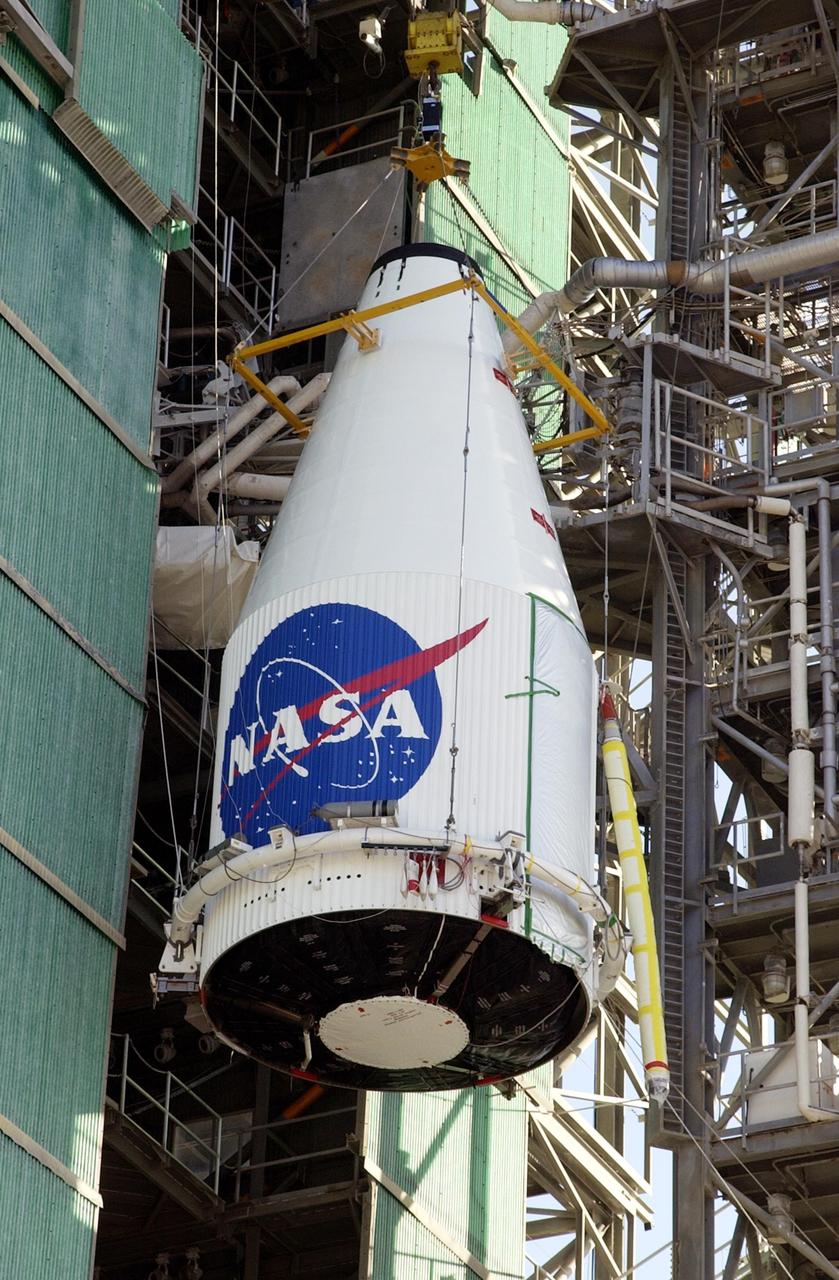
KENNEDY SPACE CENTER, FLA. -- The TDRS-J satellite is lifted up the gantry on Launch Complex 36-A, Cape Canaveral Air Force Station. The satellite is scheduled to be launched Dec. 4 aboard an Atlas IIA vehicle. The launch window is 9:42 to 10:22 p.m. EST. TDRS-J, the third in a series of telemetry satellites, will help replenish the current constellation of geosynchronous TDRS satellites that are the primary source of space-to-ground voice, data and telemetry for the Space Shuttle. The satellites also provide communications with the International Space Station and scientific spacecraft in low-Earth orbit such as the Hubble Space Telescope. This new advanced series of satellites will extend the availability of TDRS communications services until about 2017.
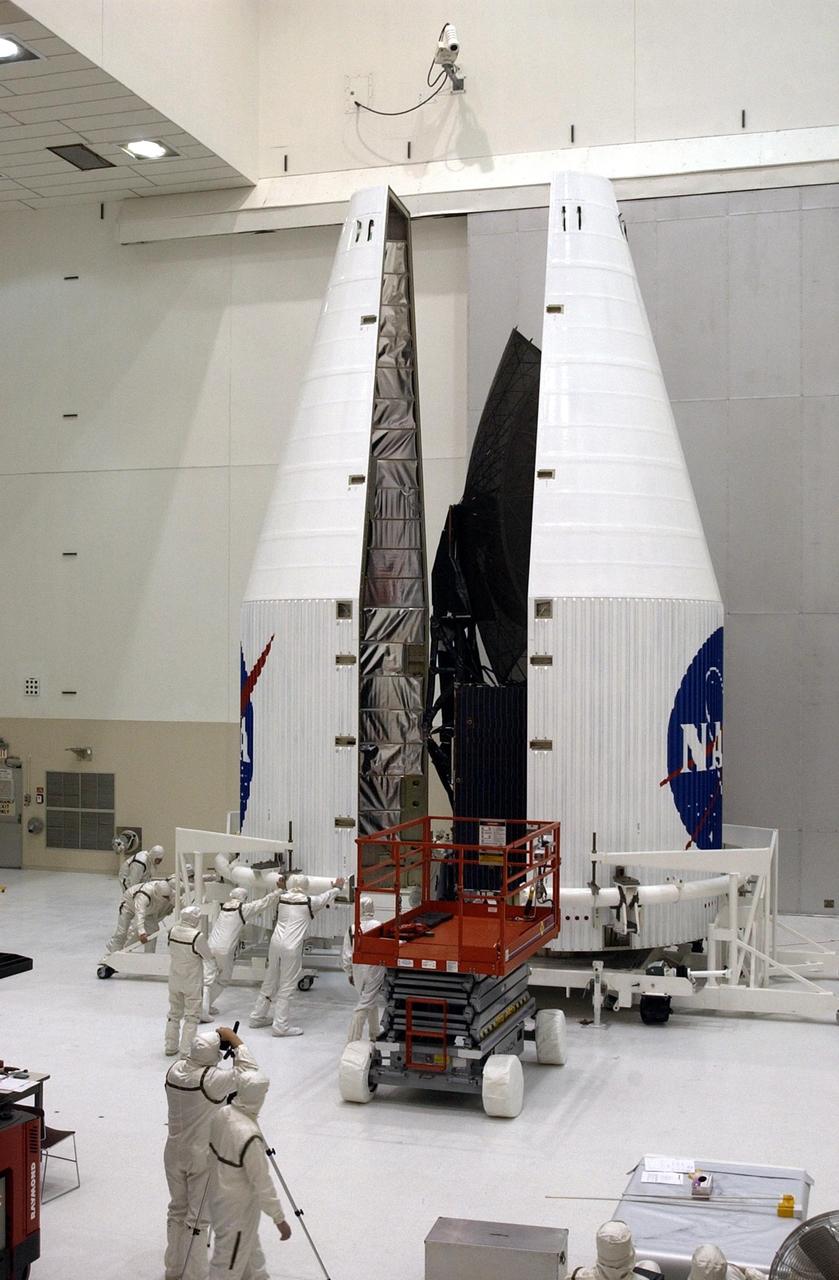
KENNEDY SPACE CENTER, FLA. -- Workers in the Spacecraft Assembly and Encapsulation Facility-2 (SAEF-2) push the second half of the nose fairing (left) toward the Tracking and Data Relay Satellite-I (TDRS-I) already enclosed by the first half. The second in a new series of telemetry satellites, TDRS-I replenishes the existing on-orbit fleet of six spacecraft. The TDRS System is the primary source of space-to-ground voice, data and telemetry for the Space Shuttle. It also provides communications with the International Space Station and scientific spacecraft in low-Earth orbit such as the Hubble Space Telescope. This new advanced series of satellites will extend the availability of TDRS communications services until about 2017. Launch of TDRS-I is scheduled for March 8 aboard a Lockheed Martin Atlas IIA rocket from Pad 36-A, Cape Canaveral Air Force Station
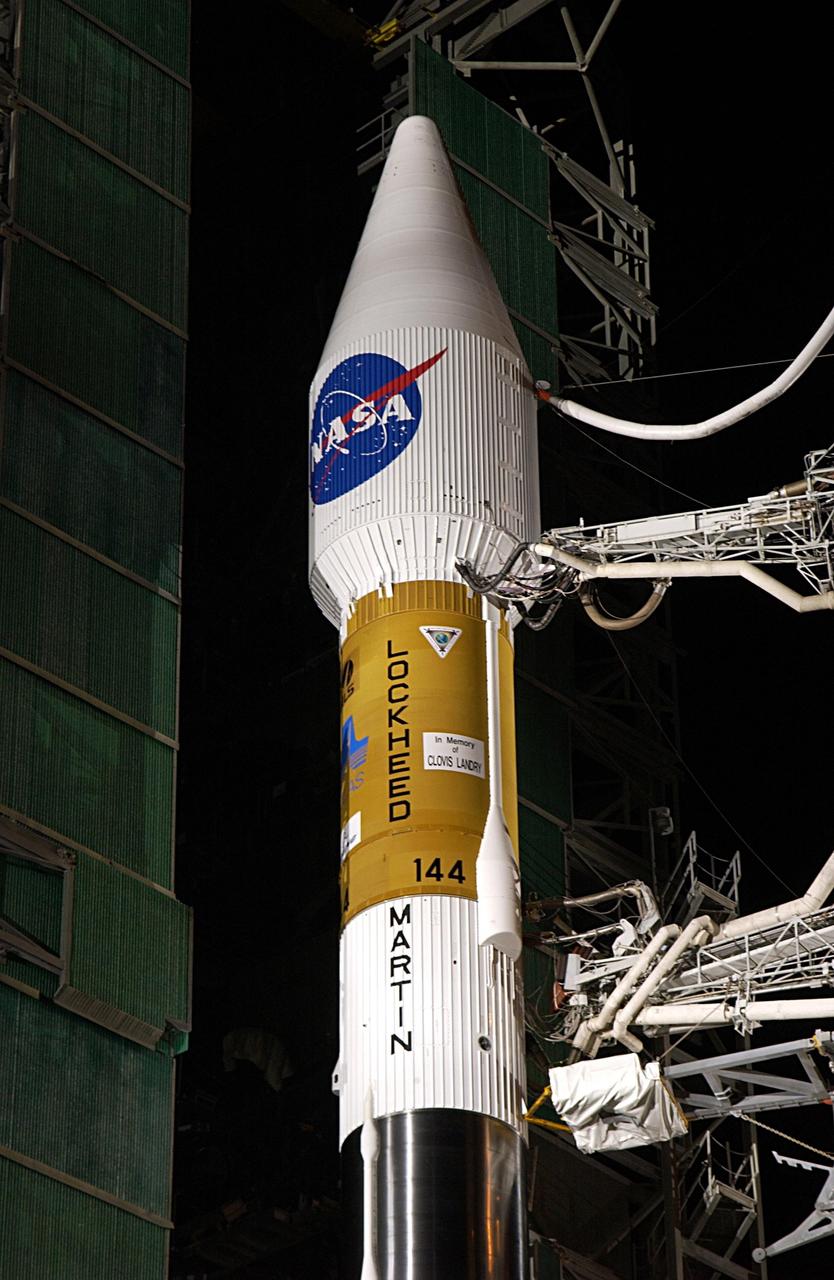
KENNEDY SPACE CENTER, FLA. - At Launch Complex 36-A, Cape Canaveral Air Force Station, the mobile service tower is rolled back to reveal the encapsulated TDRS-J satellite aboard an Atlas IIA vehicle awaiting launch on Dec. 4. The launch window is 9:42 to 10:22 p.m. EST. TDRS-J, the third in a series of telemetry satellites, will help replenish the current constellation of geosynchronous TDRS satellites that are the primary source of space-to-ground voice, data and telemetry for the Space Shuttle. The satellites also provide communications with the International Space Station and scientific spacecraft in low-Earth orbit such as the Hubble Space Telescope. This new advanced series of satellites will extend the availability of TDRS communications services until about 2017.

KENNEDY SPACE CENTER, FLA. -- On Pad 36-A, Cape Canaveral Air Force Station, Fla., the nose fairing encapsulating the Tracking and Data Relay Satellite-I (TDRS-I) is mated to the Lockheed Martin Atlas IIA rocket. The second in a new series of telemetry satellites, TDRS-I replenishes the existing on-orbit fleet of six spacecraft. The TDRS System is the primary source of space-to-ground voice, data and telemetry for the Space Shuttle. It also provides communications with the International Space Station and scientific spacecraft in low-Earth orbit such as the Hubble Space Telescope. This new advanced series of satellites will extend the availability of TDRS communications services until about 2017. Launch of TDRS-I is scheduled for March 8 between 5:39 - 6:19 p.m. EST
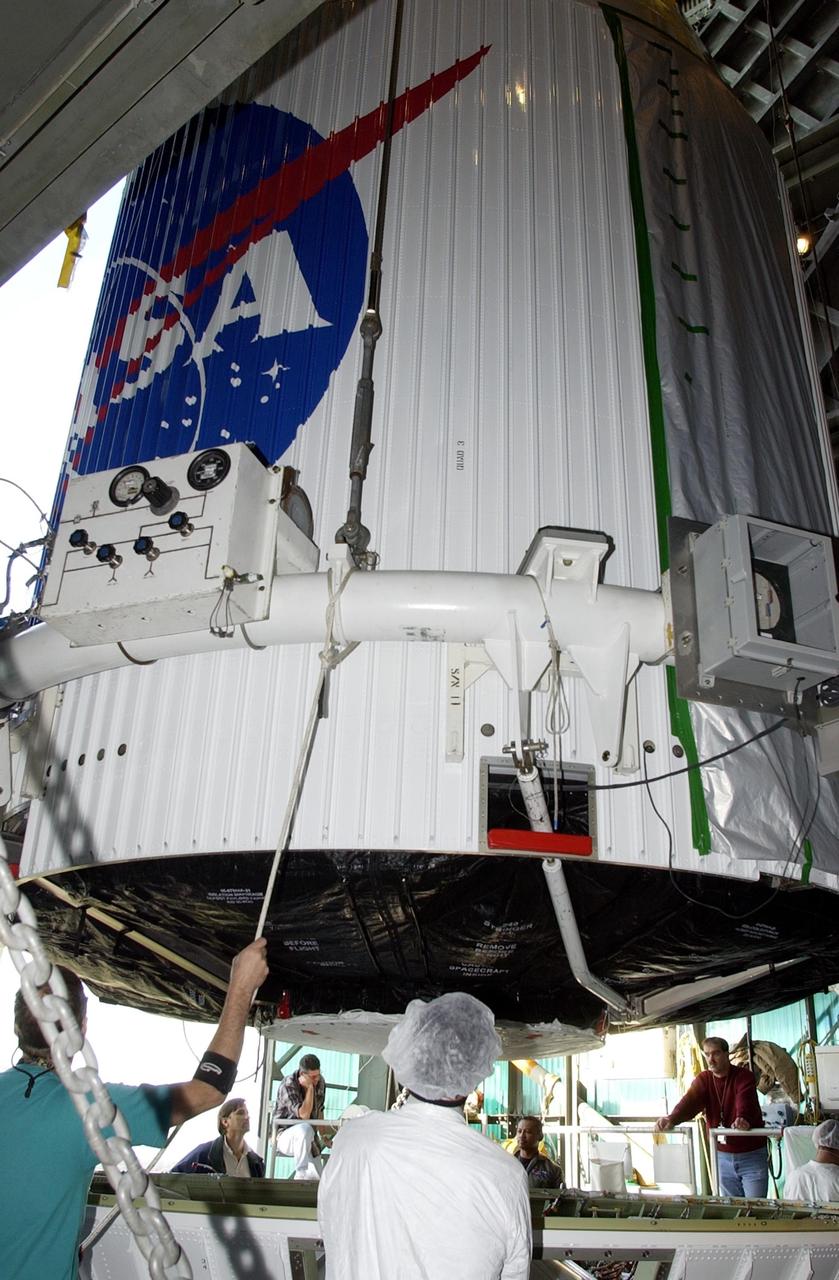
KENNEDY SPACE CENTER, FLA. -- The encapsulated TDRS-J satellite is lowered toward the Atlas IIA launch vehicle on Launch Complex 36-A, Cape Canaveral Air Force Station. The satellite is scheduled to be launched Dec. 4 aboard an Atlas IIA vehicle. The launch window is 9:42 to 10:22 p.m. EST. TDRS-J, the third in a series of telemetry satellites, will help replenish the current constellation of geosynchronous TDRS satellites that are the primary source of space-to-ground voice, data and telemetry for the Space Shuttle. The satellites also provide communications with the International Space Station and scientific spacecraft in low-Earth orbit such as the Hubble Space Telescope. This new advanced series of satellites will extend the availability of TDRS communications services until about 2017..

KENNEDY SPACE CENTER, Fla. - The Tracking and Data Relay Satellite-I (TDRS-I) is lifted from a workstand in the Spacecraft Assembly and Encapsulation Facility-2 (SAEF-2) as preparations are made to mate it with the adapter of its nose fairing. The second in a new series of telemetry satellites, TDRS-I replenishes the existing on-orbit fleet of six spacecraft. The TDRS System is the primary source of space-to-ground voice, data and telemetry for the Space Shuttle. It also provides communications with the International Space Station and scientific spacecraft in low-Earth orbit such as the Hubble Space Telescope. This new advanced series of satellites will extend the availability of TDRS communications services until about 2017. Launch of TDRS-I is scheduled for March 8 aboard a Lockheed Martin Atlas IIA rocket from Pad 36-A, Cape Canaveral Air Force Station
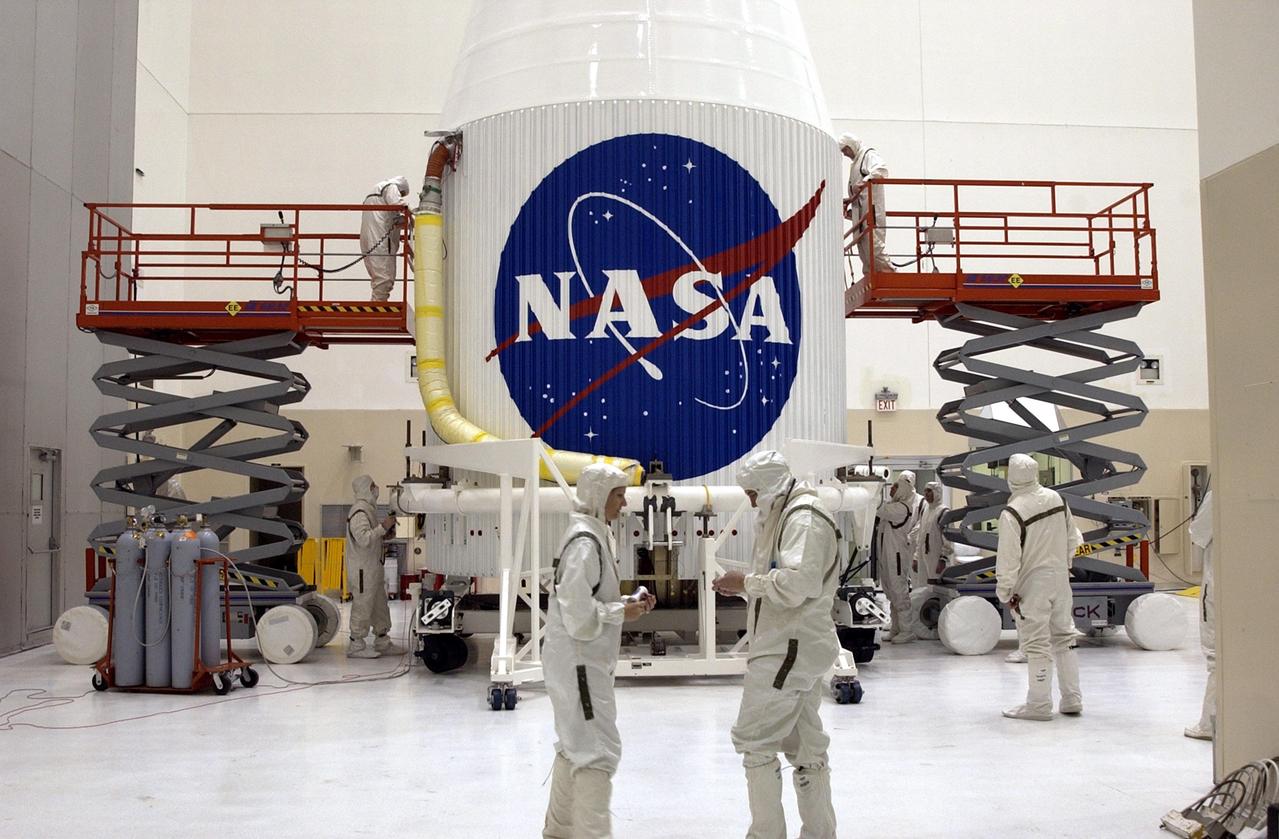
KENNEDY SPACE CENTER, FLA. -- Workers in the Spacecraft Assembly and Encapsulation Facility-2 (SAEF-2) make final adjustments on the nose fairing surrounding the Tracking and Data Relay Satellite-I (TDRS-I). The second in a new series of telemetry satellites, TDRS-I replenishes the existing on-orbit fleet of six spacecraft. The TDRS System is the primary source of space-to-ground voice, data and telemetry for the Space Shuttle. It also provides communications with the International Space Station and scientific spacecraft in low-Earth orbit such as the Hubble Space Telescope. This new advanced series of satellites will extend the availability of TDRS communications services until about 2017. Launch of TDRS-I is scheduled for March 8 aboard a Lockheed Martin Atlas IIA rocket from Pad 36-A, Cape Canaveral Air Force Station
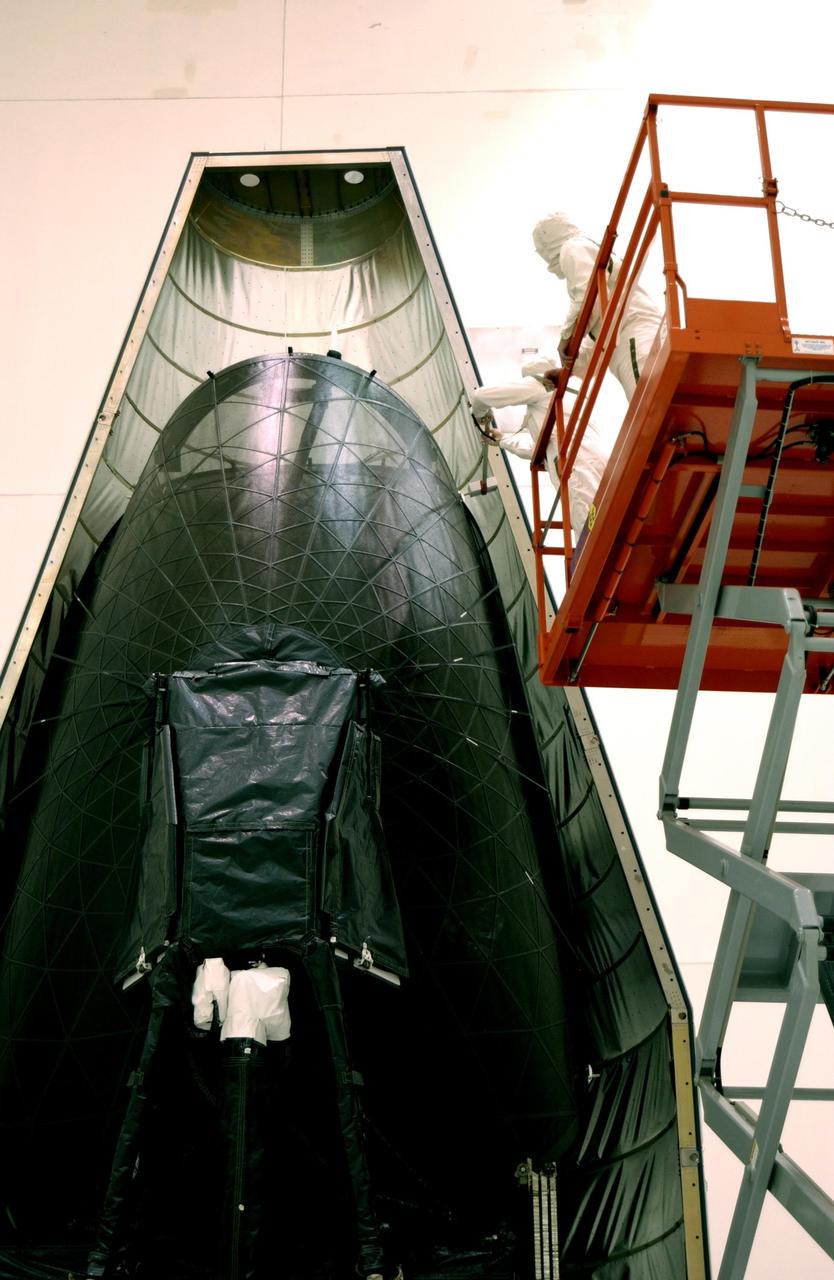
KENNEDY SPACE CENTER, FLA. -- The TDRS-J satellite rests inside the first half of the fairing during encapsulation. The satellite is scheduled to be launched aboard a Lockheed Martin Atlas IIA-Centaur rocket from Launch Complex 36-A, Cape Canaveral Air Force Station, Fla., on Dec. 4. The third in a series of telemetry satellites, TDRS-J will help replenish the current constellation of geosynchronous TDRS satellites. The TDRS System is the primary source of space-to-ground voice, data and telemetry for the Space Shuttle. It also provides communications with the International Space Station and scientific spacecraft in low-Earth orbit such as the Hubble Space Telescope. This new advanced series of satellites will extend the availability of TDRS communications services until about 2017.
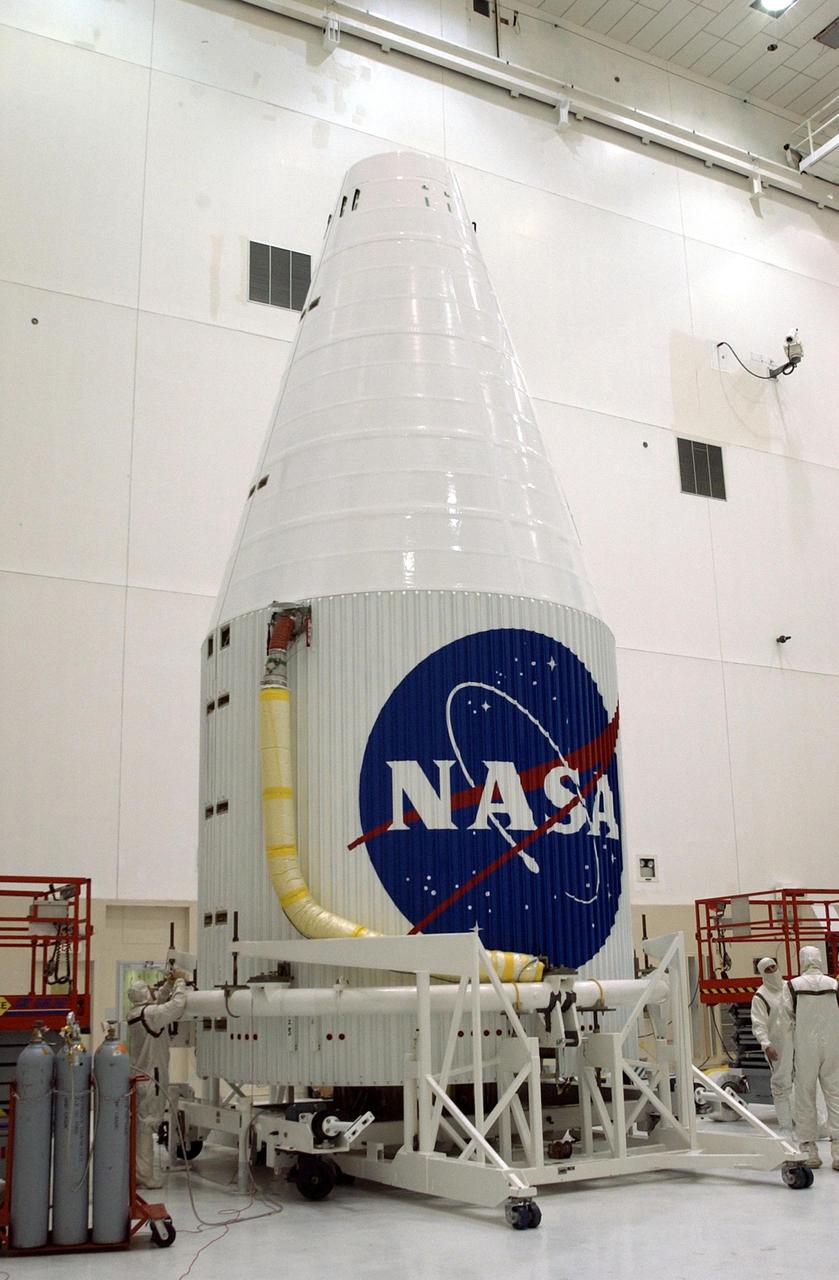
KENNEDY SPACE CENTER, FLA. - The fully encapsulated Tracking and Data Relay Satellite-I (TDRS-I) waits in the Spacecraft Assembly and Encapsulation Facility-2 (SAEF-2) for transfer to Cape Canaveral Air Force Station. The second in a new series of telemetry satellites, TDRS-I replenishes the existing on-orbit fleet of six spacecraft. The TDRS System is the primary source of space-to-ground voice, data and telemetry for the Space Shuttle. It also provides communications with the International Space Station and scientific spacecraft in low-Earth orbit such as the Hubble Space Telescope. This new advanced series of satellites will extend the availability of TDRS communications services until about 2017. Launch of TDRS-I is scheduled for March 8 aboard a Lockheed Martin Atlas IIA rocket from Pad 36-A

KENNEDY SPACE CENTER, FLA. -- The TDRS-J satellite sits between the two halves of the fairing before encapsulation for launch. The satellite is scheduled to be launched aboard a Lockheed Martin Atlas IIA-Centaur rocket from Launch Complex 36-A, Cape Canaveral Air Force Station, Fla., on Dec. 4. The third in a series of telemetry satellites, TDRS-J will help replenish the current constellation of geosynchronous TDRS satellites. The TDRS System is the primary source of space-to-ground voice, data and telemetry for the Space Shuttle. It also provides communications with the International Space Station and scientific spacecraft in low-Earth orbit such as the Hubble Space Telescope. This new advanced series of satellites will extend the availability of TDRS communications services until about 2017.
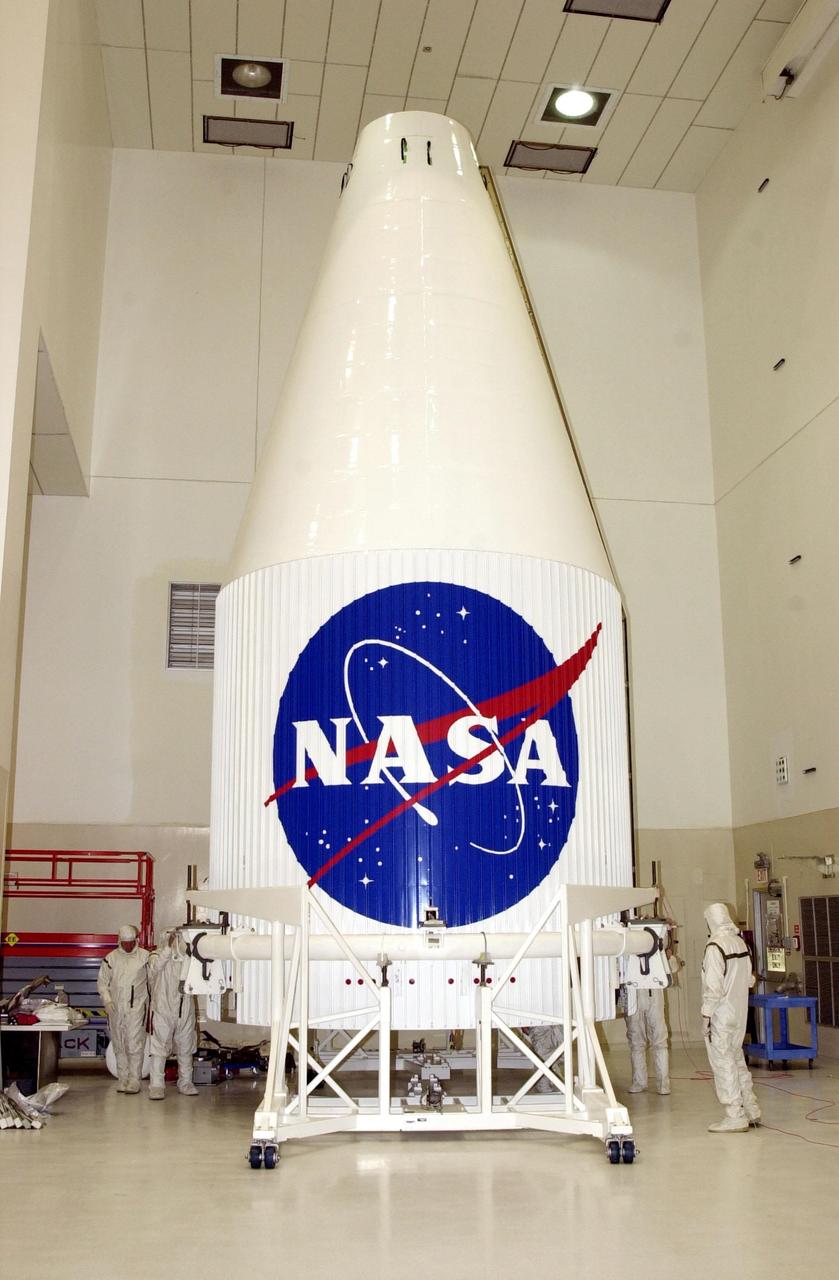
KENNEDY SPACE CENTER, Fla. - The nose fairing for the Tracking and Data Relay Satellite-I (TDRS-I) rests on a workstand in the Spacecraft Assembly and Encapsulation Facility-2 (SAEF-2) where the satellite is being prepared for launch. The second in a new series of telemetry satellites, TDRS-I replenishes the existing on-orbit fleet of six spacecraft. The TDRS System is the primary source of space-to-ground voice, data and telemetry for the Space Shuttle. It also provides communications with the International Space Station and scientific spacecraft in low-Earth orbit such as the Hubble Space Telescope. This new advanced series of satellites will extend the availability of TDRS communications services until about 2017. Launch of TDRS-I is scheduled for March 8 aboard a Lockheed Martin Atlas IIA rocket from Pad 36-A, Cape Canaveral Air Force Station
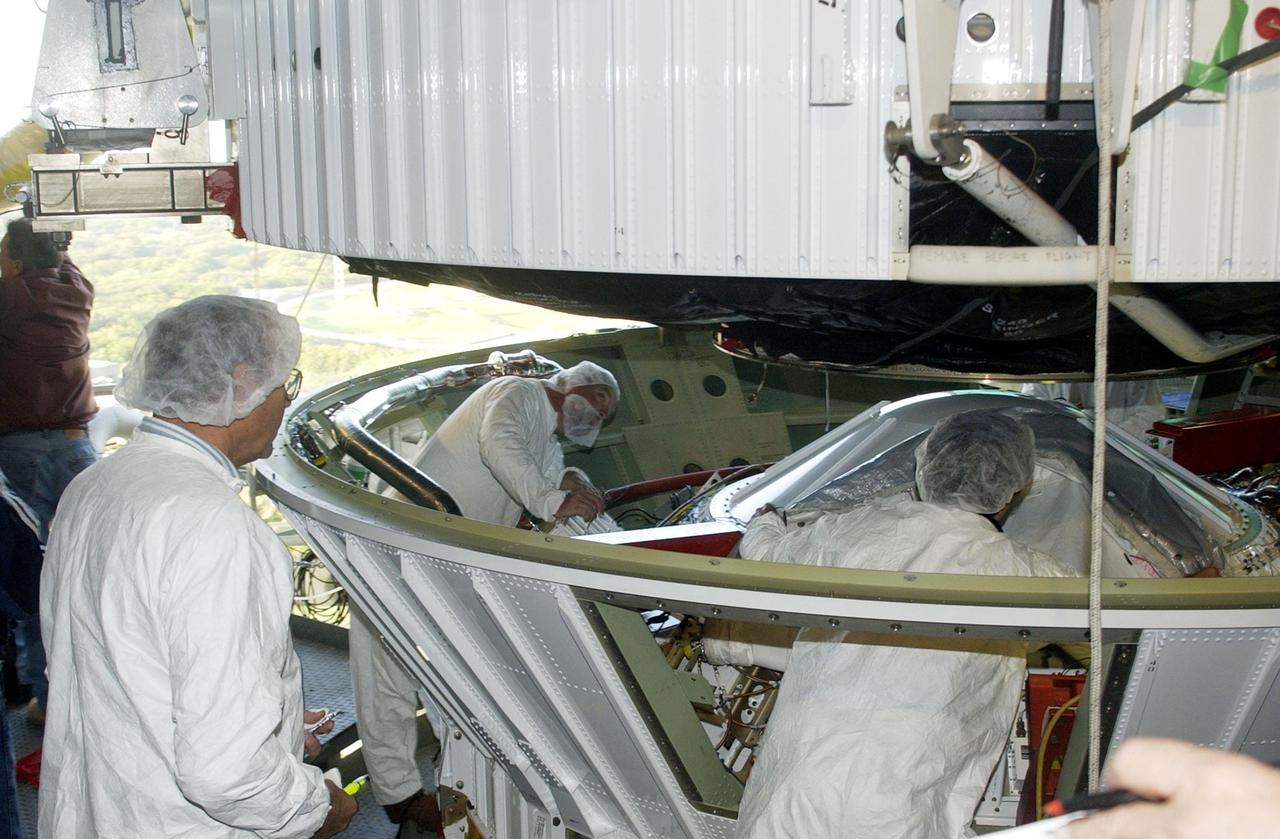
KENNEDY SPACE CENTER, FLA. -- On Pad 36-A, Cape Canaveral Air Force Station, Fla., workers check the placement of the nose fairing as it is lowered toward the Lockheed Martin Atlas IIA rocket. The fairing encapsulates the Tracking and Data Relay Satellite-I (TDRS-I). The second in a new series of telemetry satellites, TDRS-I replenishes the existing on-orbit fleet of six spacecraft. The TDRS System is the primary source of space-to-ground voice, data and telemetry for the Space Shuttle. It also provides communications with the International Space Station and scientific spacecraft in low-Earth orbit such as the Hubble Space Telescope. This new advanced series of satellites will extend the availability of TDRS communications services until about 2017. Launch of TDRS-I is scheduled for March 8 between 5:39 - 6:19 p.m. EST
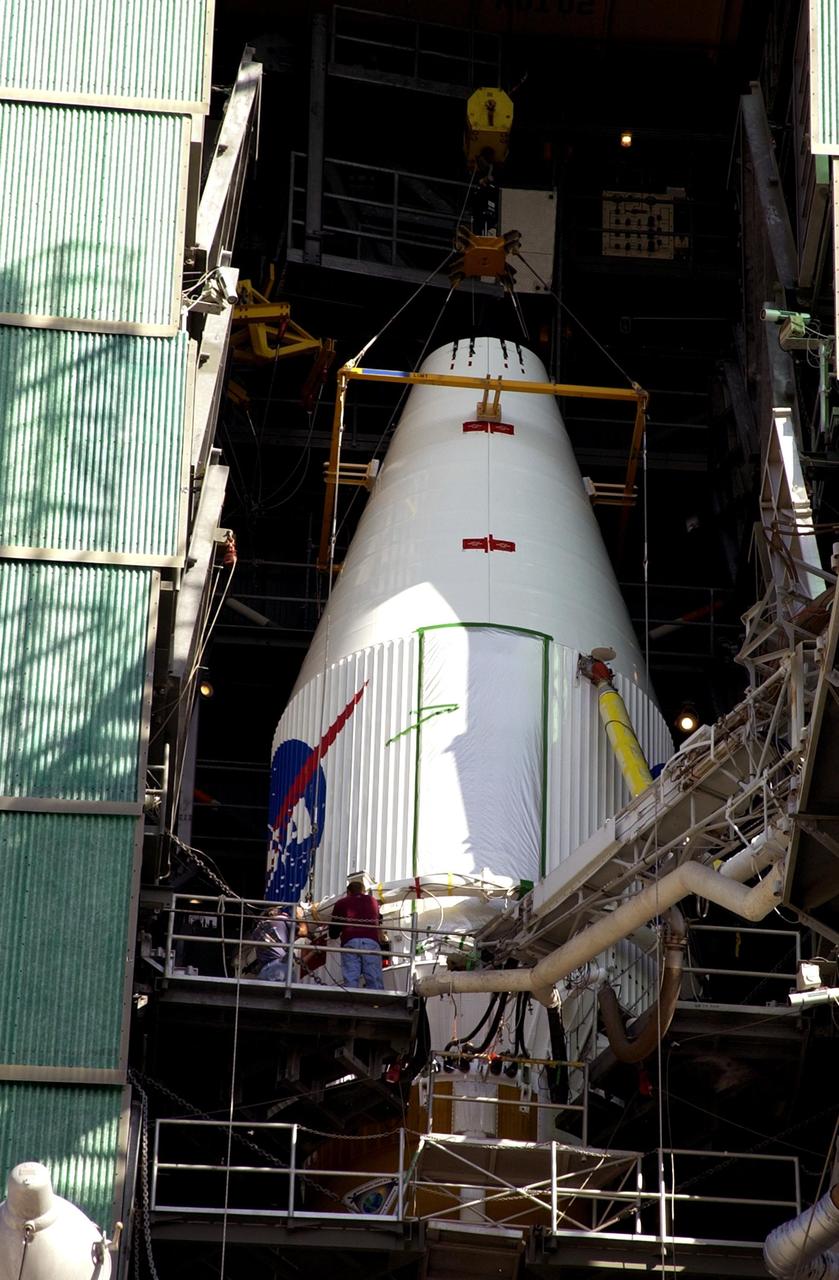
KENNEDY SPACE CENTER, FLA. -- The encapsulated TDRS-J satellite is mated with the Atlas IIA launch vehicle on Launch Complex 36-A, Cape Canaveral Air Force Station. The satellite is scheduled to be launched Dec. 4 aboard an Atlas IIA vehicle. The launch window is 9:42 to 10:22 p.m. EST. TDRS-J, the third in a series of telemetry satellites, will help replenish the current constellation of geosynchronous TDRS satellites that are the primary source of space-to-ground voice, data and telemetry for the Space Shuttle. The satellites also provide communications with the International Space Station and scientific spacecraft in low-Earth orbit such as the Hubble Space Telescope. This new advanced series of satellites will extend the availability of TDRS communications services until about 2017.
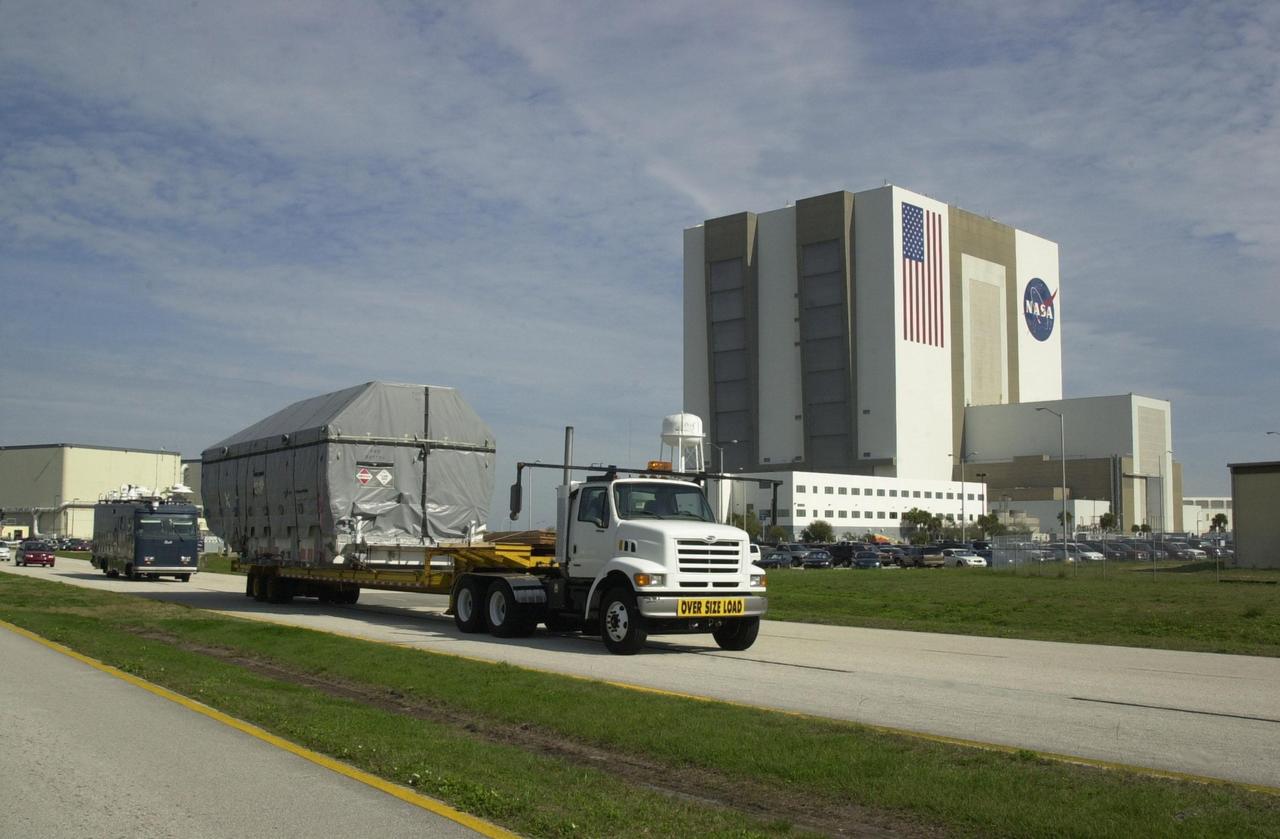
KENNEDY SPACE CENTER, FLA. -- -- At KSC's Shuttle Landing Facility, the Tracking and Data Relay Satellite-I (TDRS-I) is transported from the Shuttle Landing Facility to the Spacecraft Assembly and Encapsulation Facility-2 (SAEF-2). The second in a new series of telemetry satellites, TDRS-I replenishes the existing on-orbit fleet of six spacecraft. The TDRS System is the primary source of space-to-ground voice, data and telemetry for the Space Shuttle. It also provides communications with the International Space Station and scientific spacecraft in low-Earth orbit such as the Hubble Space Telescope. This new advanced series of satellites will extend the availability of TDRS communications services until about 2017. In the SAEF-2 TDRS-I will undergo processing to prepare it for launch March 8 aboard a Lockheed Martin Atlas IIA rocket from Pad 36-A, Cape Canaveral Air Force Station
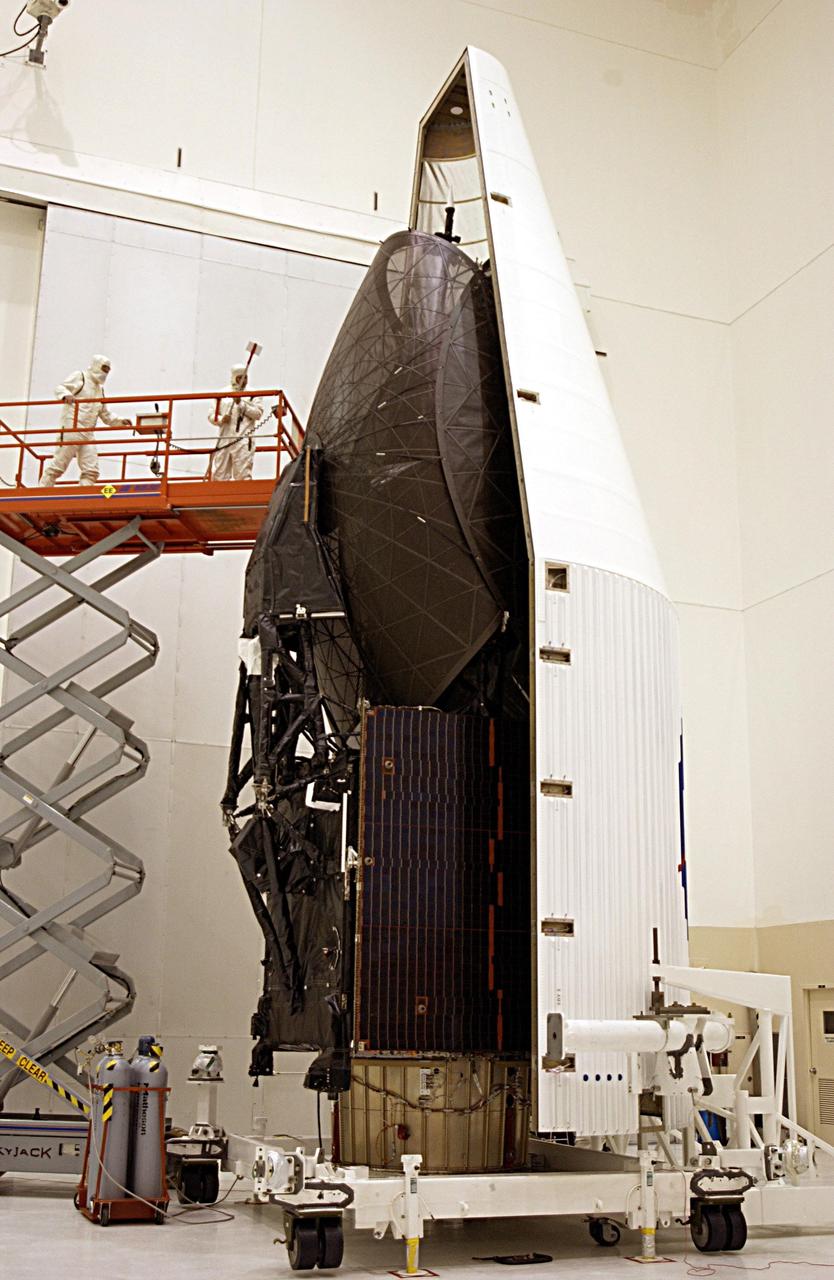
KENNEDY SPACE CENTER, FLA. -- Workers make adjustments on the first part of the fairing around the TDRS-J satellite before encapsulation continues. The satellite is scheduled to be launched aboard a Lockheed Martin Atlas IIA-Centaur rocket from Launch Complex 36-A, Cape Canaveral Air Force Station, Fla., on Dec. 4. The third in a series of telemetry satellites, TDRS-J will help replenish the current constellation of geosynchronous TDRS satellites. The TDRS System is the primary source of space-to-ground voice, data and telemetry for the Space Shuttle. It also provides communications with the International Space Station and scientific spacecraft in low-Earth orbit such as the Hubble Space Telescope. This new advanced series of satellites will extend the availability of TDRS communications services until about 2017.
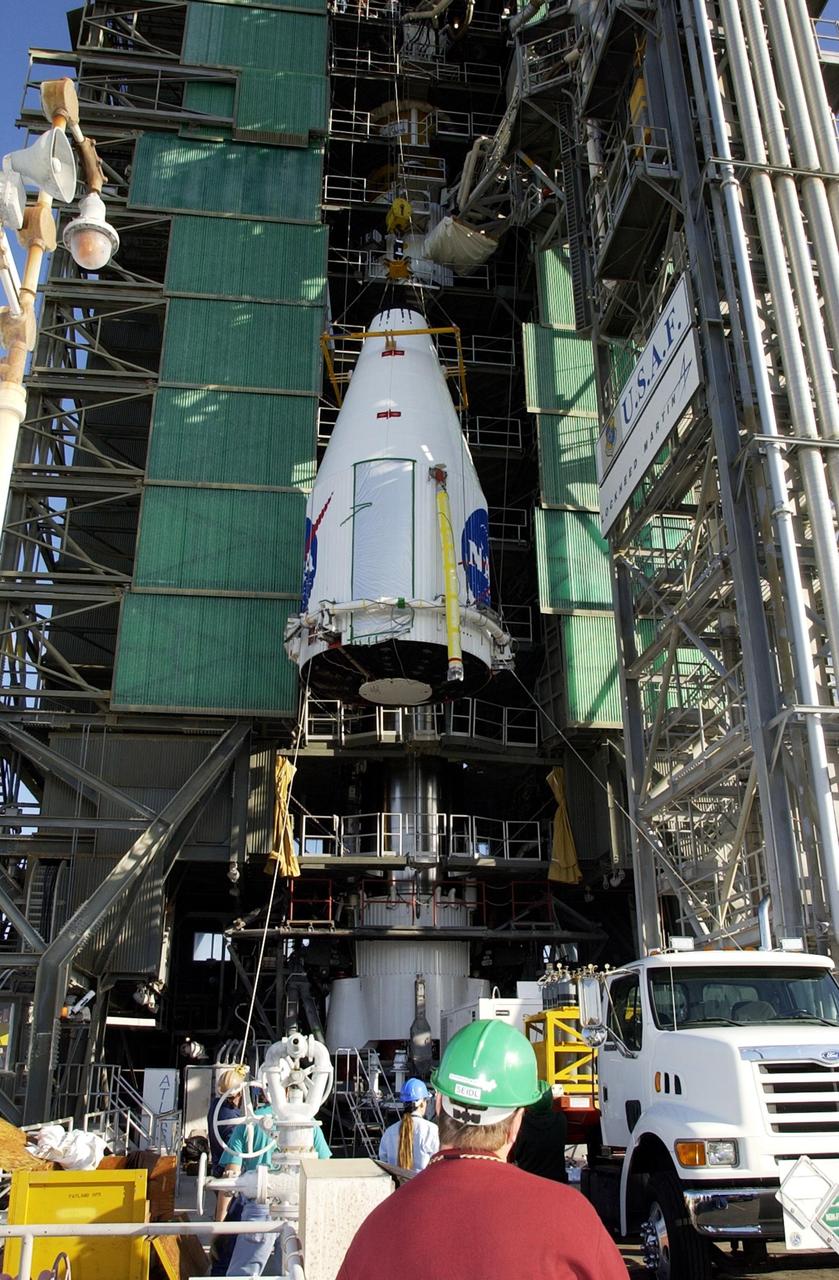
KENNEDY SPACE CENTER, FLA. - The TDRS-J satellite is lifted up the gantry on Launch Complex 36-A, Cape Canaveral Air Force Station. The satellite is scheduled to be launched Dec. 4 aboard an Atlas IIA vehicle. The launch window is 9:42 to 10:22 p.m. EST. TDRS-J, the third in a series of telemetry satellites, will help replenish the current constellation of geosynchronous TDRS satellites that are the primary source of space-to-ground voice, data and telemetry for the Space Shuttle. The satellites also provide communications with the International Space Station and scientific spacecraft in low-Earth orbit such as the Hubble Space Telescope. This new advanced series of satellites will extend the availability of TDRS communications services until about 2017.
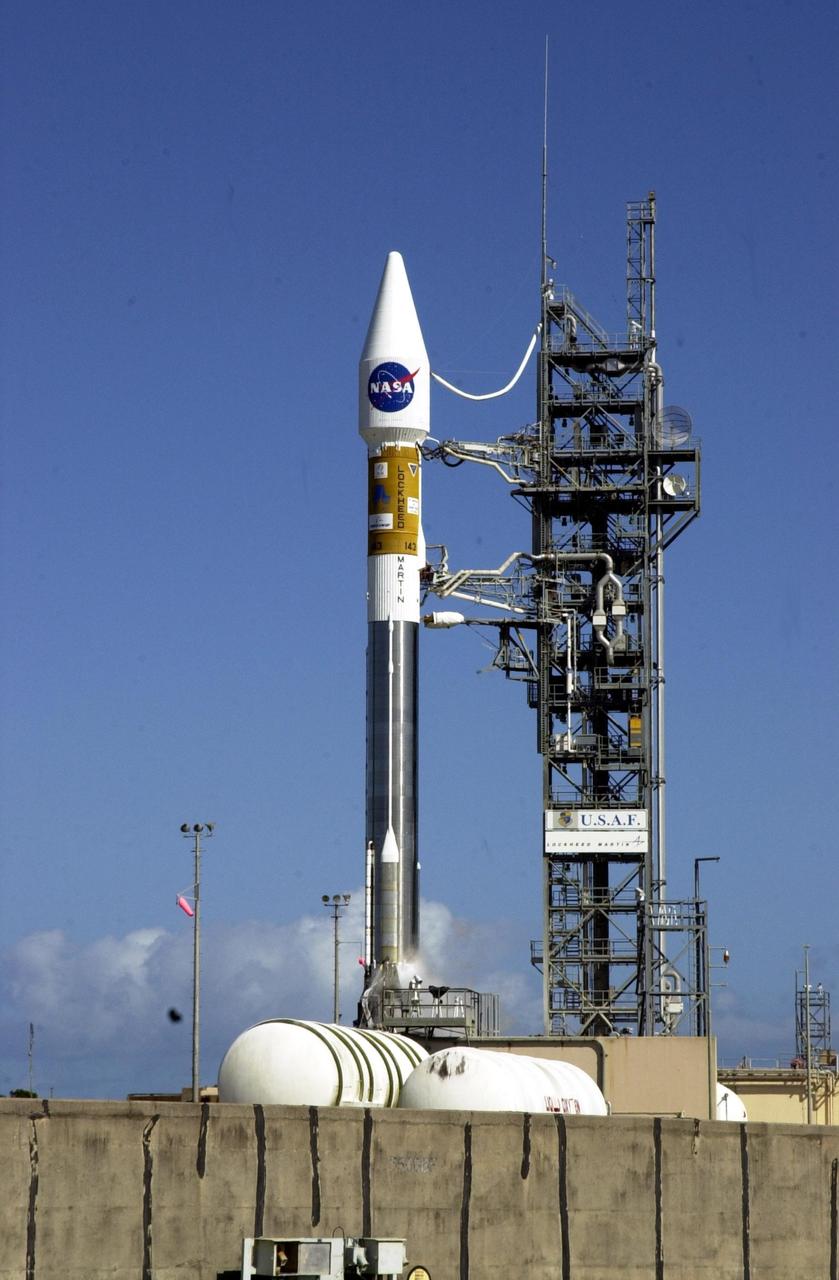
KENNEDY SPACE CENTER, FLA. -- On Launch Pad 36-A, Cape Canaveral Air Force Station, this Lockheed Martin Atlas/Centaur rocket waits for launch to carry the Tracking and Data Relay Satellite-I (TDRS-I) into orbit. The second in a new series of telemetry satellites, TDRS-I replenishes the existing on-orbit fleet of six spacecraft. The TDRS System is the primary source of space-to-ground voice, data and telemetry for the Space Shuttle. It also provides communications with the International Space Station and scientific spacecraft in low-Earth orbit such as the Hubble Space Telescope. This new advanced series of satellites will extend the availability of TDRS communications services until about 2017. Launch of TDRS-I atop the Atlas rocket is scheduled between 5:39 - 6:19 p.m. EST
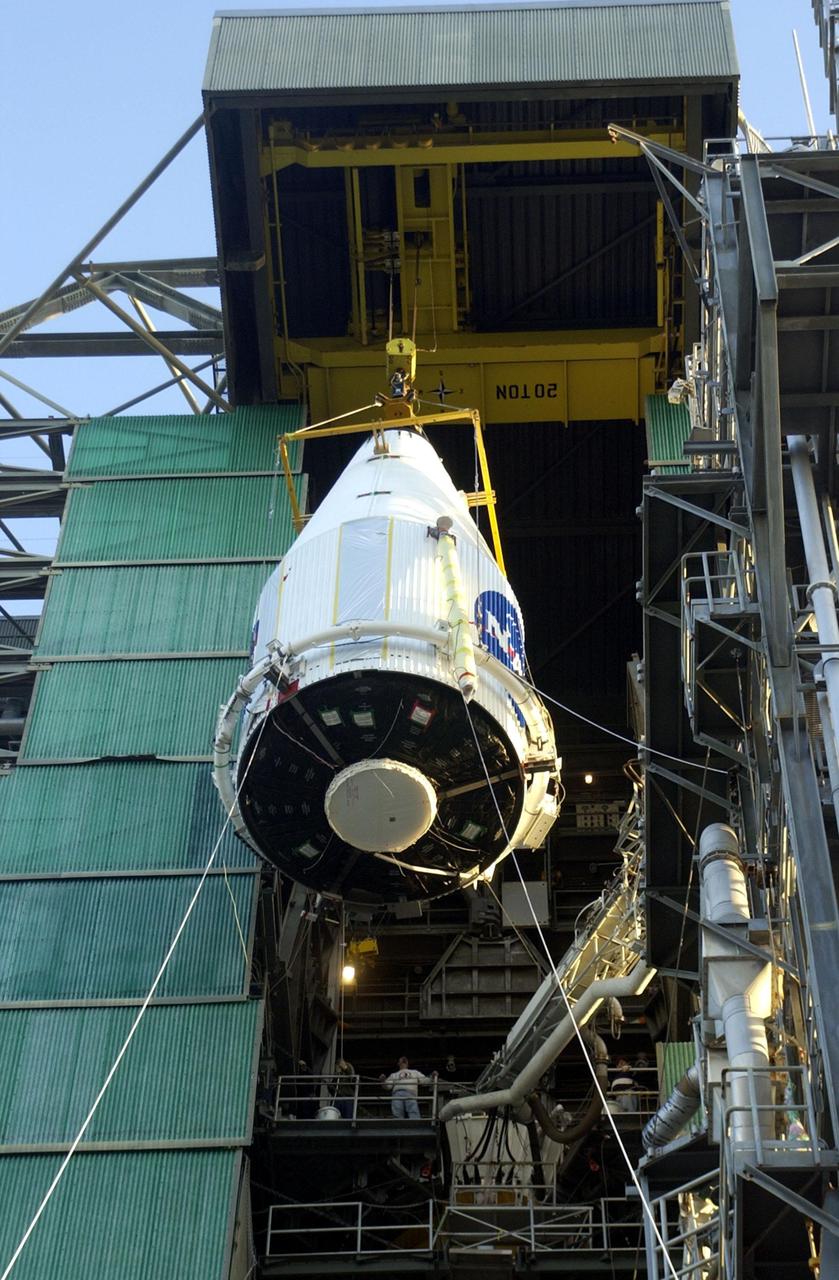
KENNEDY SPACE CENTER, FLA. -- -- The nose fairing encapsulating the Tracking and Data Relay Satellite-I (TDRS-I) nears the top of the launch tower at Pad 36-A, Cape Canaveral Air Force Station, Fla. The fairing will be attached to the Lockheed Martin Atlas IIA rocket for launch. The second in a new series of telemetry satellites, TDRS-I replenishes the existing on-orbit fleet of six spacecraft. The TDRS System is the primary source of space-to-ground voice, data and telemetry for the Space Shuttle. It also provides communications with the International Space Station and scientific spacecraft in low-Earth orbit such as the Hubble Space Telescope. This new advanced series of satellites will extend the availability of TDRS communications services until about 2017. Launch of TDRS-I is scheduled for March 8 between 5:39 - 6:19 p.m. EST
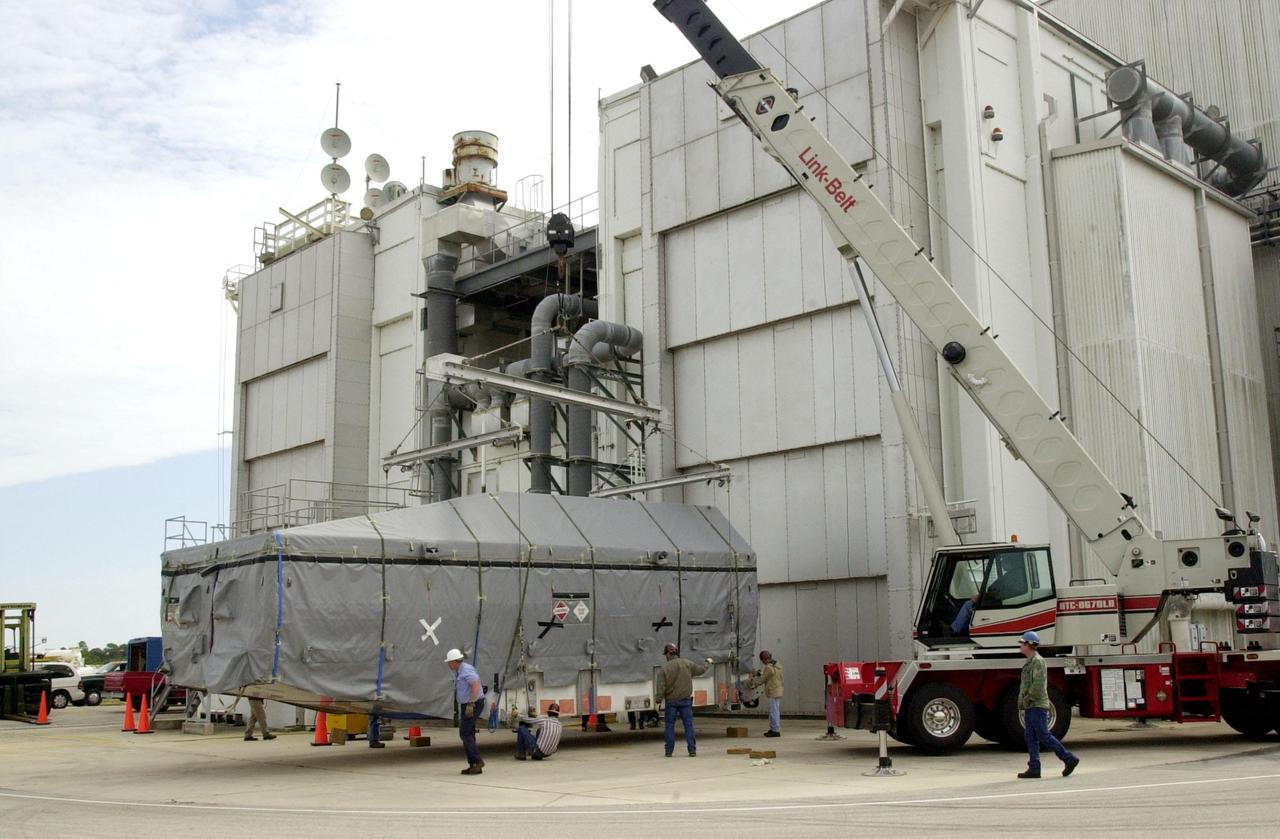
KENNEDY SPACE CENTER, FLA. -- The Tracking and Data Relay Satellite-I (TDRS-I) arrives at the Spacecraft Assembly and Encapsulation Facility-2 (SAEF-2) where it will undergo processing to prepare it for launch. The second in a new series of telemetry satellites, TDRS-I replenishes the existing on-orbit fleet of six spacecraft. The TDRS System is the primary source of space-to-ground voice, data and telemetry for the Space Shuttle. It also provides communications with the International Space Station and scientific spacecraft in low-Earth orbit such as the Hubble Space Telescope. This new advanced series of satellites will extend the availability of TDRS communications services until about 2017. Launch of TDRS-I is scheduled for March 8 aboard a Lockheed Martin Atlas IIA rocket from Pad 36-A, Cape Canaveral Air Force Station

KENNEDY SPACE CENTER, FLA. - The upper stage of this Lockheed Martin Atlas/Centaur rocket encloses the Tracking and Data Relay Satellite-I (TDRS-I), the second in a new series of telemetry satellites that are replenishing the existing on-orbit fleet of six spacecraft. The TDRS System is the primary source of space-to-ground voice, data and telemetry for the Space Shuttle. It also provides communications with the International Space Station and scientific spacecraft in low-Earth orbit such as the Hubble Space Telescope. This new advanced series of satellites will extend the availability of TDRS communications services until about 2017. Launch of TDRS-I atop the Atlas rocket is scheduled today between 5:39 - 6:19 p.m. EST from Launch Pad 36-A, Cape Canaveral Air Force Station
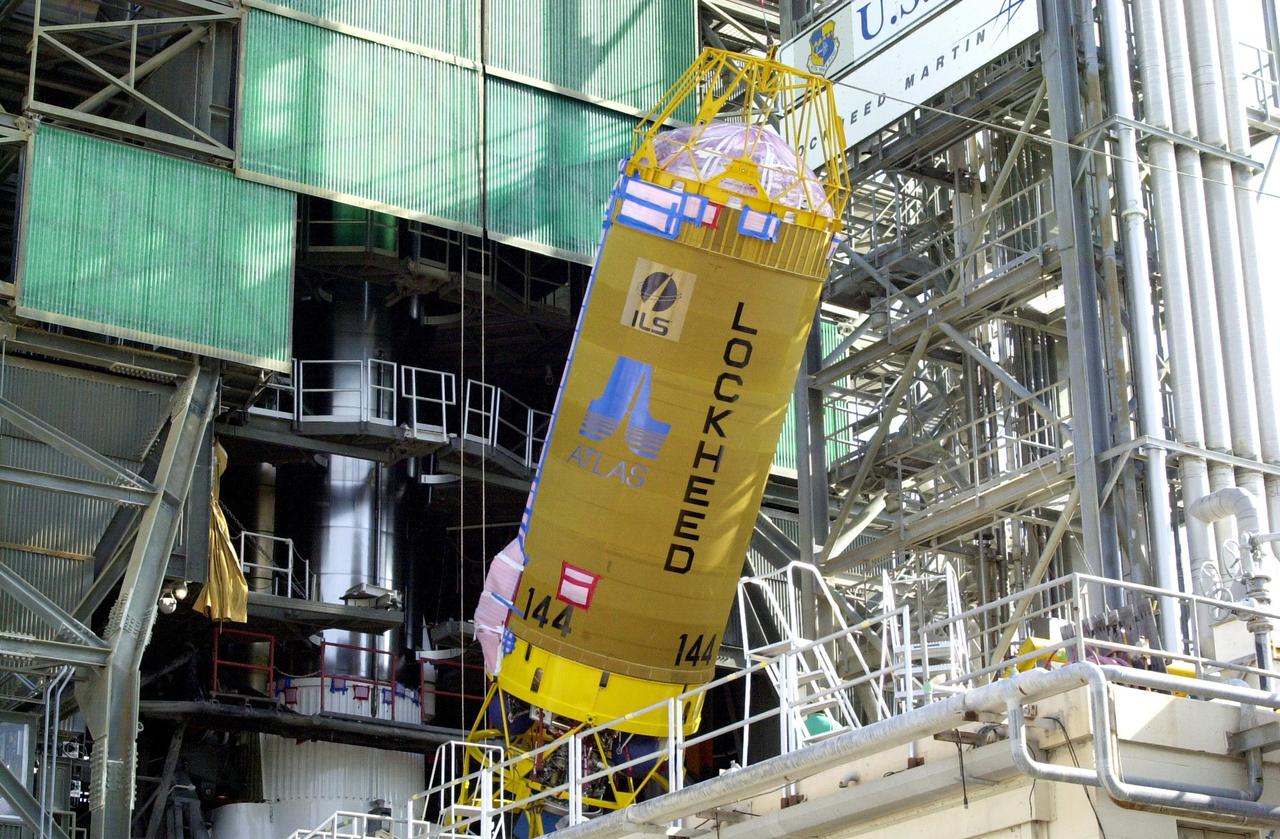
KENNEDY SPACE CENTER, FLA. -- At Launch Complex 36-A, Cape Canaveral Air Force Station, a Lockheed Martin Atlas Centaur IIA (AC-144) rocket is raised to a vertical position for its lift up the launch tower . The rocket will be used in the launch of TDRS-J, scheduled for Nov. 20. The third in a series of telemetry satellites, TDRS-J will help replenish the current constellation of geosynchronous TDRS satellites. The TDRS System is the primary source of space-to-ground voice, data and telemetry for the Space Shuttle. It also provides communications with the International Space Station and scientific spacecraft in low-Earth orbit such as the Hubble Space Telescope. This new advanced series of satellites will extend the availability of TDRS communications services until about 2017.
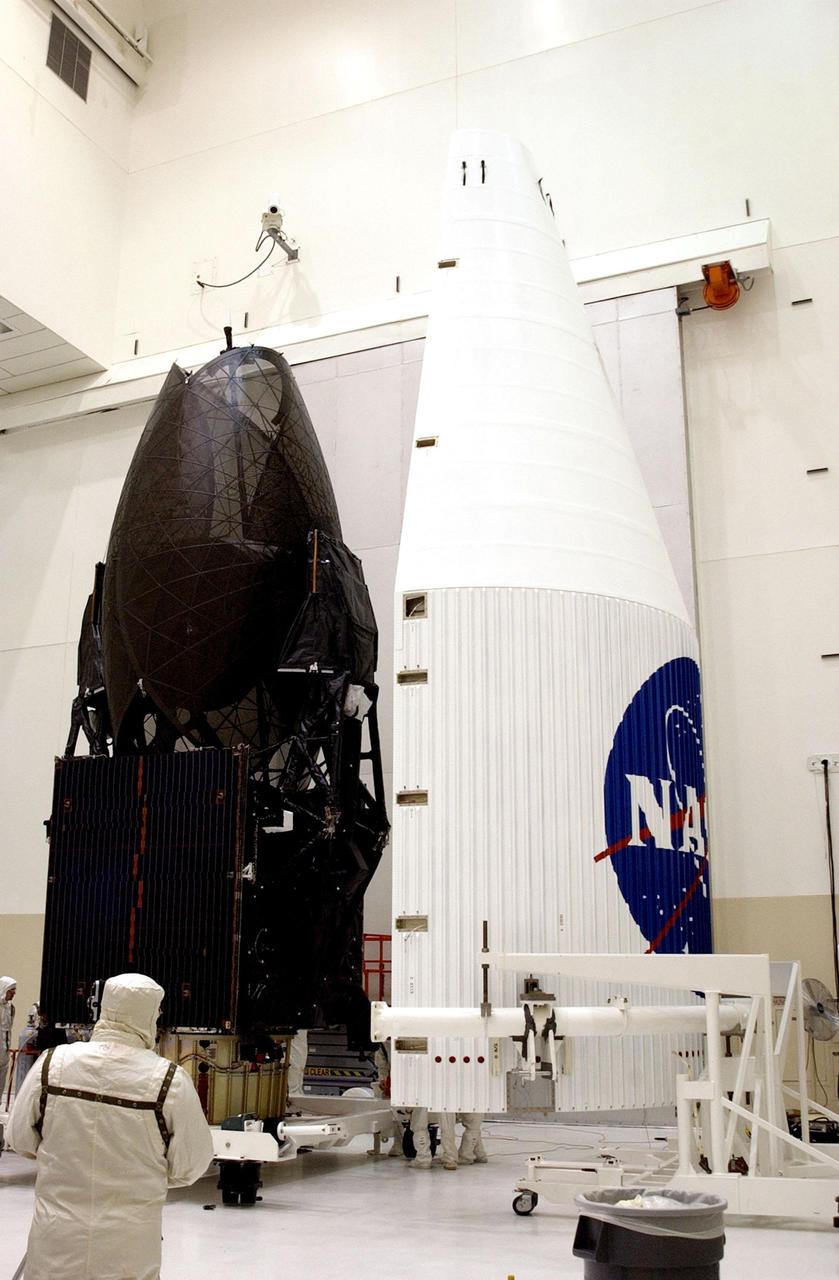
KENNEDY SPACE CENTER, FLA. -- In the Spacecraft Assembly and Encapsulation Facility-2 (SAEF-2), the nose fairing (right) for the Tracking and Data Relay Satellite-I (TDRS-I) is moved into position to enclose the satellite for launch. The second in a new series of telemetry satellites, TDRS-I replenishes the existing on-orbit fleet of six spacecraft. The TDRS System is the primary source of space-to-ground voice, data and telemetry for the Space Shuttle. It also provides communications with the International Space Station and scientific spacecraft in low-Earth orbit such as the Hubble Space Telescope. This new advanced series of satellites will extend the availability of TDRS communications services until about 2017. Launch of TDRS-I is scheduled for March 8 aboard a Lockheed Martin Atlas IIA rocket from Pad 36-A, Cape Canaveral Air Force Station
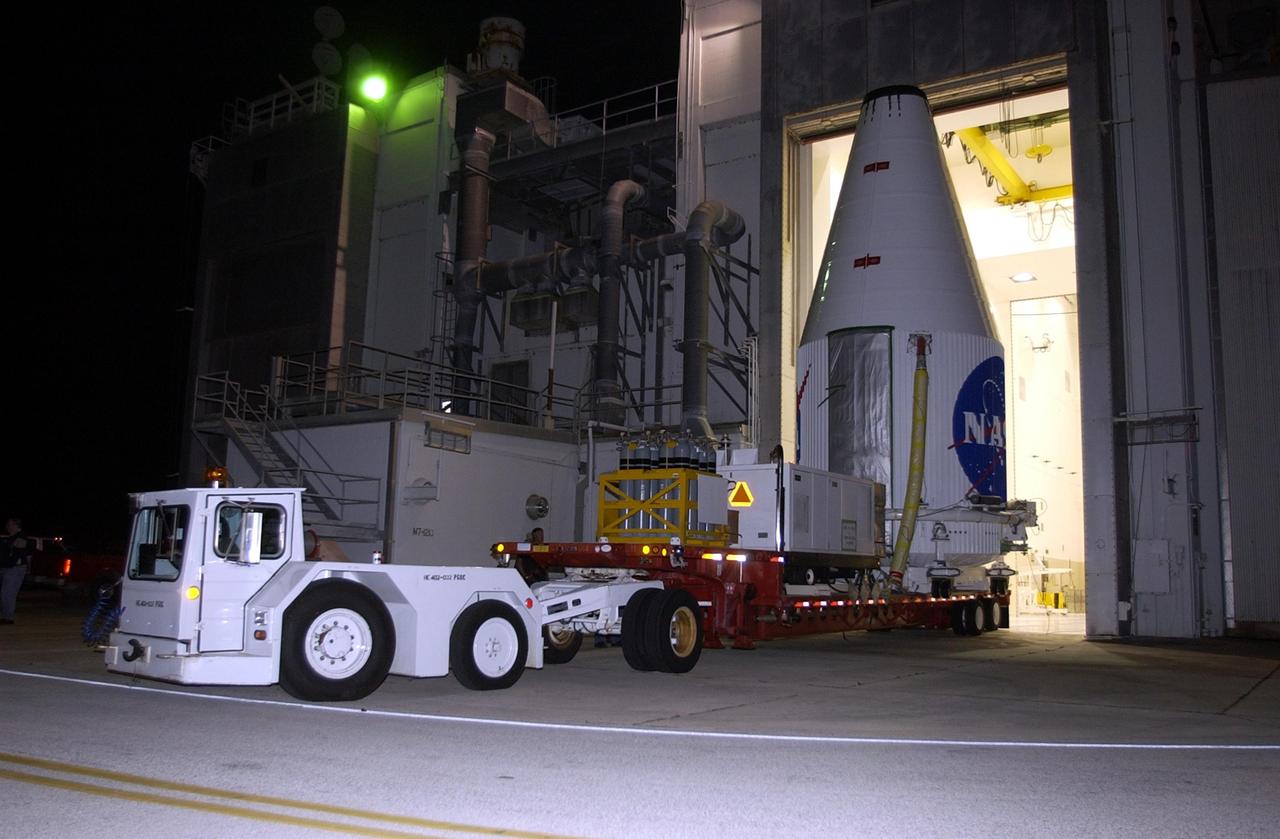
KENNEDY SPACE CENTER, FLA. -- A transporter carrying the encapsulated TDRS-J satellite exits the Spacecraft Assembly and Encapsulation Facility -2. The satellite is being taken to Launch Complex 36-A, Cape Canaveral Air Force Station, for a launch aboard an Atlas IIA vehicle Dec. 4. The launch window is 9:42 to 10:22 p.m. EST. TDRS-J, the third in a series of telemetry satellites, will help replenish the current constellation of geosynchronous TDRS satellites that are the primary source of space-to-ground voice, data and telemetry for the Space Shuttle. The satellites also provide communications with the International Space Station and scientific spacecraft in low-Earth orbit such as the Hubble Space Telescope. This new advanced series of satellites will extend the availability of TDRS communications services until about 2017.
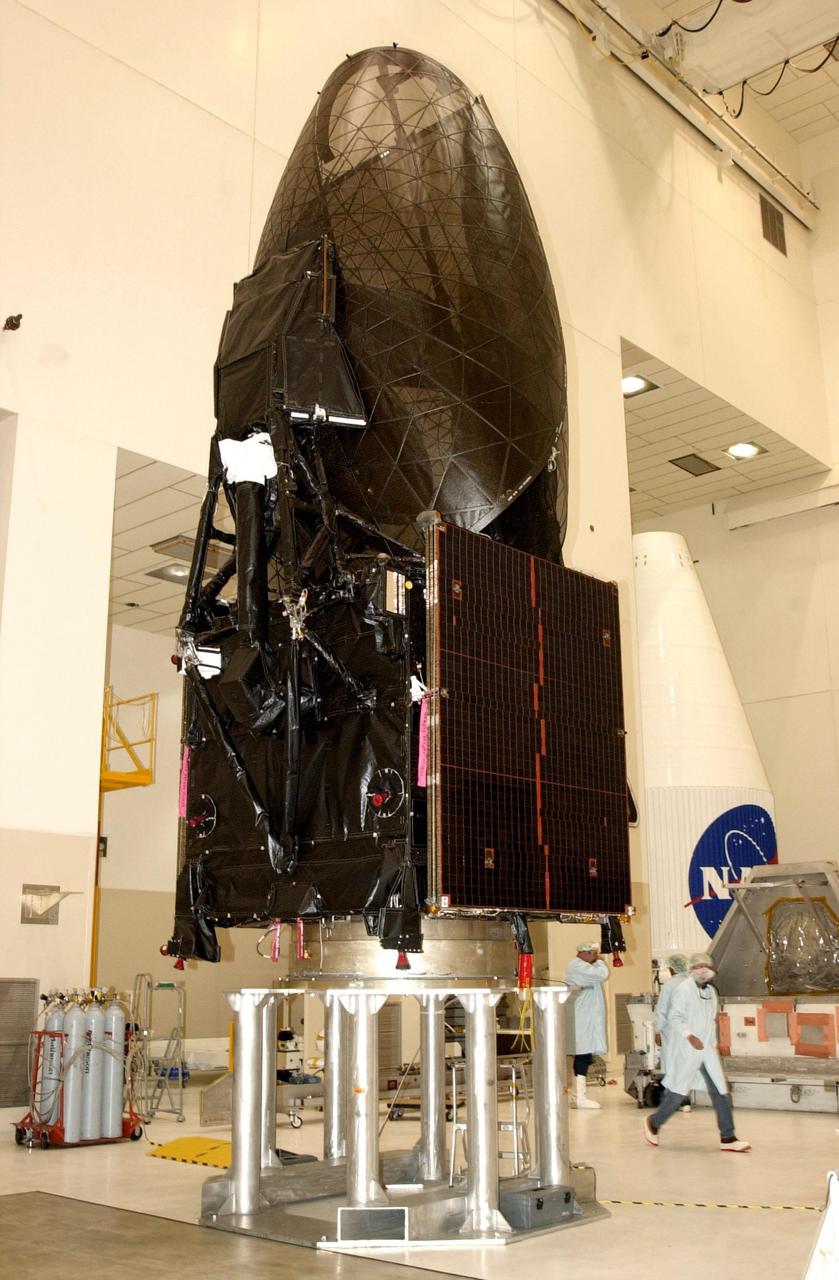
KENNEDY SPACE CENTER, FLA. -- The Tracking and Data Relay Satellite-I (TDRS-I) rests on a workstand in the Spacecraft Assembly and Encapsulation Facility-2 (SAEF-2) where it will undergo processing to prepare it for launch. The second in a new series of telemetry satellites, TDRS-I replenishes the existing on-orbit fleet of six spacecraft. The TDRS System is the primary source of space-to-ground voice, data and telemetry for the Space Shuttle. It also provides communications with the International Space Station and scientific spacecraft in low-Earth orbit such as the Hubble Space Telescope. This new advanced series of satellites will extend the availability of TDRS communications services until about 2017. Launch of TDRS-I is scheduled for March 8 aboard a Lockheed Martin Atlas IIA rocket from Pad 36-A, Cape Canaveral Air Force Station
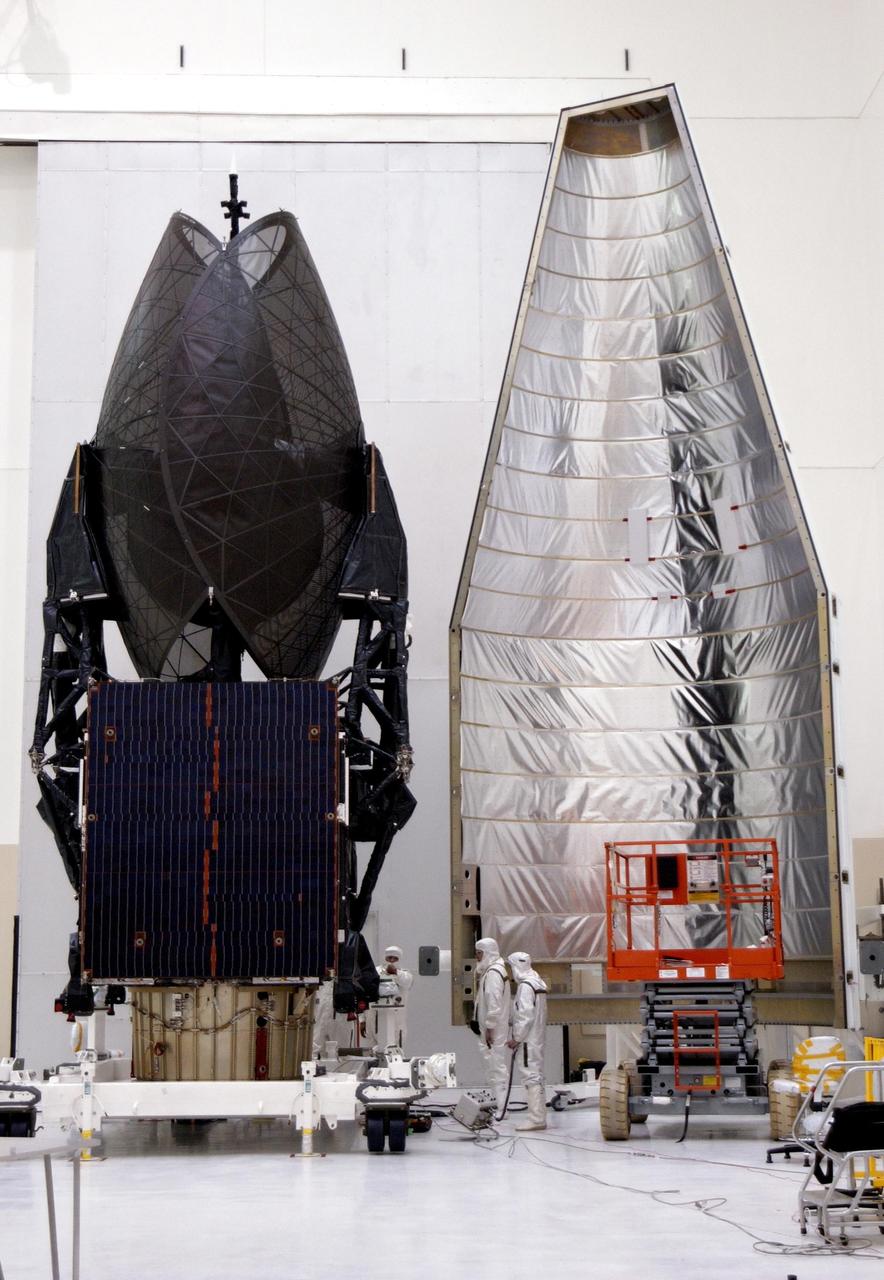
KENNEDY SPACE CENTER, FLA. -- TheTDRS-J satellite (left) and part of the fairing (right) are on display for the media before encapsulation. The satellite is scheduled to be launched aboard a Lockheed Martin Atlas IIA-Centaur rocket from Launch Complex 36-A, Cape Canaveral Air Force Station, Fla., on Dec. 4. The third in a series of telemetry satellites, TDRS-J will help replenish the current constellation of geosynchronous TDRS satellites. The TDRS System is the primary source of space-to-ground voice, data and telemetry for the Space Shuttle. It also provides communications with the International Space Station and scientific spacecraft in low-Earth orbit such as the Hubble Space Telescope. This new advanced series of satellites will extend the availability of TDRS communications services until about 2017.
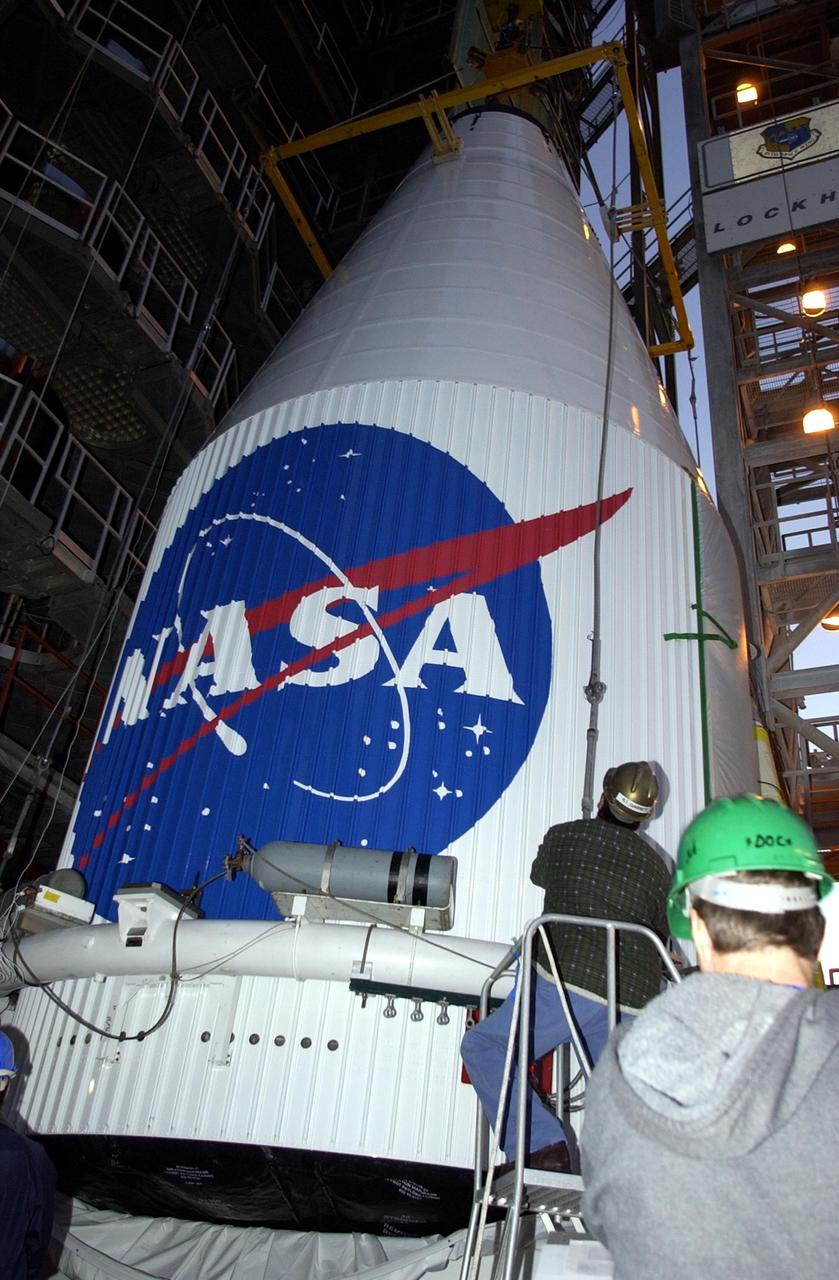
KENNEDY SPACE CENTER, FLA. -- The TDRS-J satellite is prepared for lifting up the gantry on Launch Complex 36-A, Cape Canaveral Air Force Station. The satellite is scheduled to be launched Dec. 4 aboard an Atlas IIA vehicle. The launch window is 9:42 to 10:22 p.m. EST. TDRS-J, the third in a series of telemetry satellites, will help replenish the current constellation of geosynchronous TDRS satellites that are the primary source of space-to-ground voice, data and telemetry for the Space Shuttle. The satellites also provide communications with the International Space Station and scientific spacecraft in low-Earth orbit such as the Hubble Space Telescope. This new advanced series of satellites will extend the availability of TDRS communications services until about 2017.
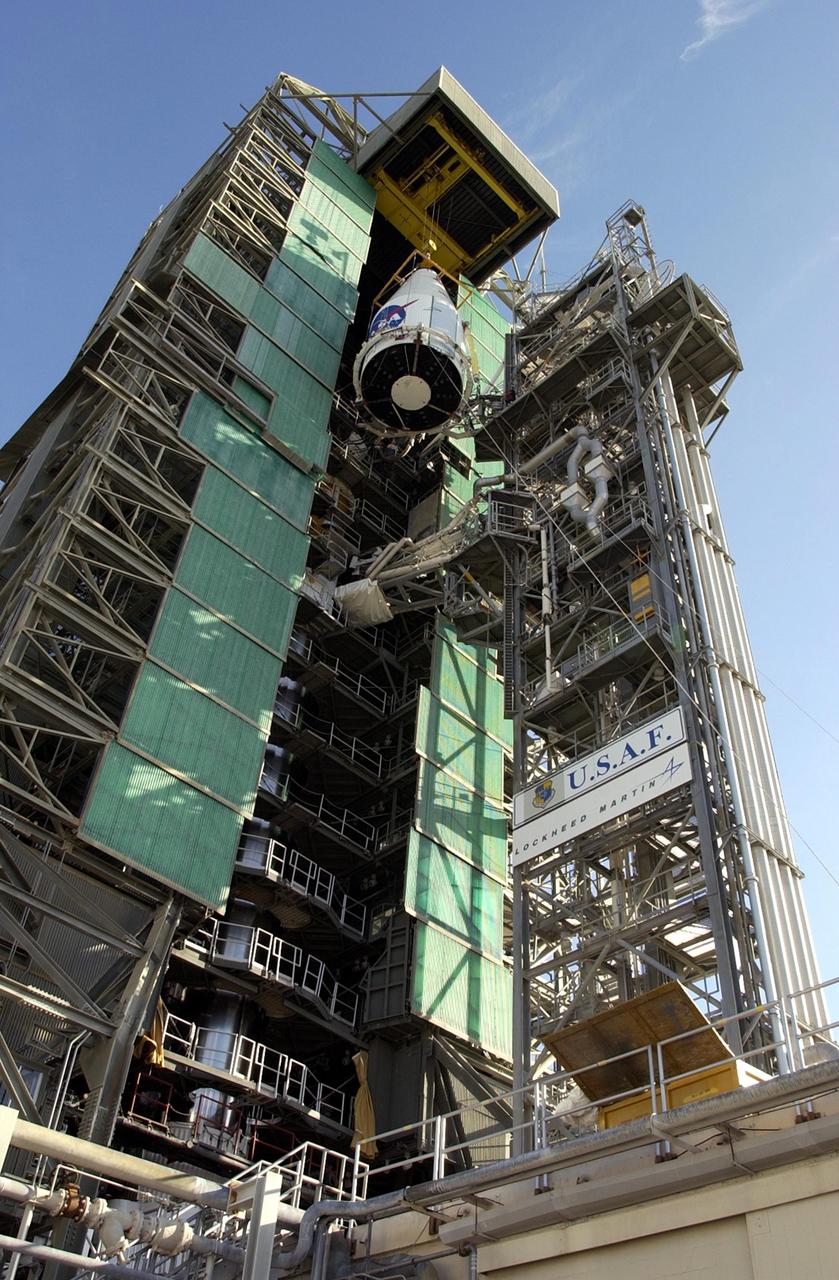
KENNEDY SPACE CENTER, FLA. -- The TDRS-J satellite nears the top of the gantry on Launch Complex 36-A, Cape Canaveral Air Force Station. The satellite is scheduled to be launched Dec. 4 aboard an Atlas IIA vehicle. The launch window is 9:42 to 10:22 p.m. EST. TDRS-J, the third in a series of telemetry satellites, will help replenish the current constellation of geosynchronous TDRS satellites that are the primary source of space-to-ground voice, data and telemetry for the Space Shuttle. The satellites also provide communications with the International Space Station and scientific spacecraft in low-Earth orbit such as the Hubble Space Telescope. This new advanced series of satellites will extend the availability of TDRS communications services until about 2017.
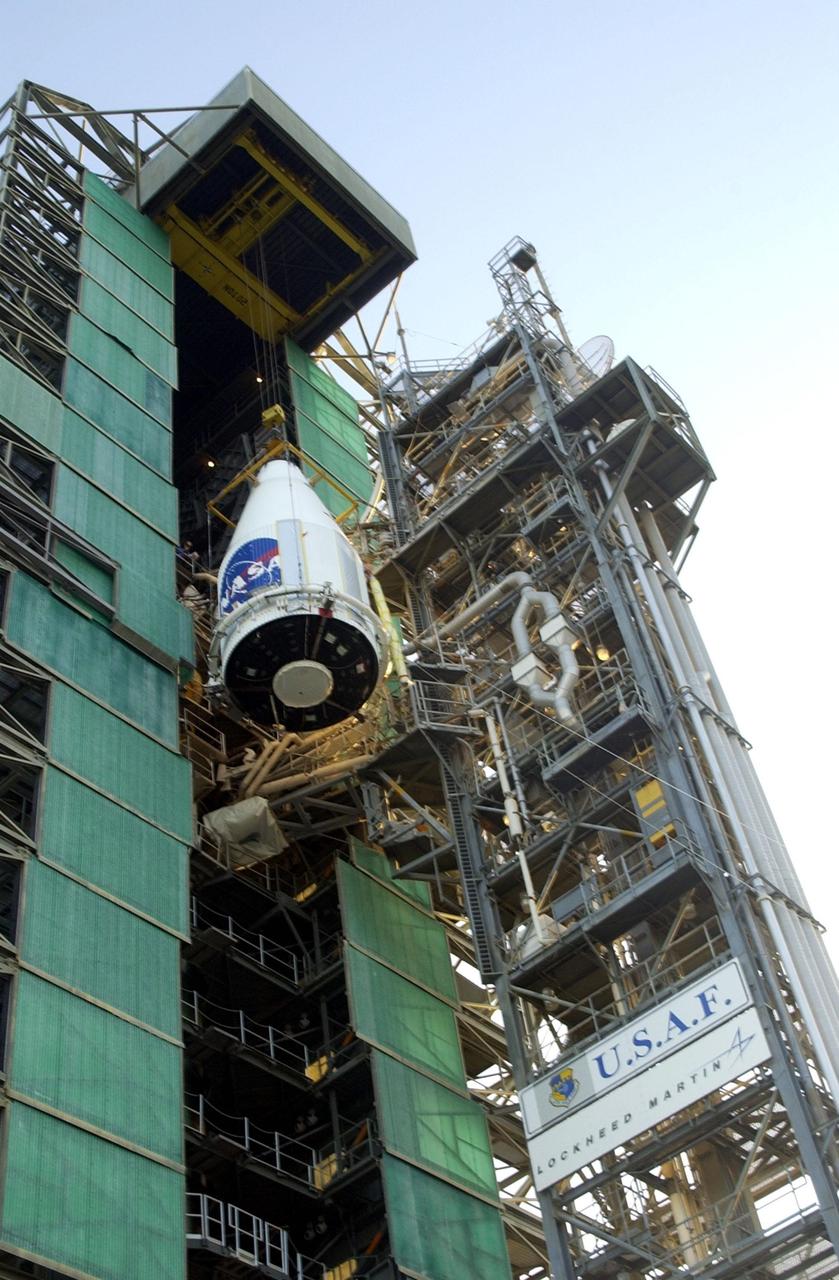
KENNEDY SPACE CENTER, FLA. -- The nose fairing encapsulating the Tracking and Data Relay Satellite-I (TDRS-I) is lifted up the launch tower at Pad 36-A, Cape Canaveral Air Force Station, Fla. The fairing will be attached to the Lockheed Martin Atlas IIA rocket for launch. The second in a new series of telemetry satellites, TDRS-I replenishes the existing on-orbit fleet of six spacecraft. The TDRS System is the primary source of space-to-ground voice, data and telemetry for the Space Shuttle. It also provides communications with the International Space Station and scientific spacecraft in low-Earth orbit such as the Hubble Space Telescope. This new advanced series of satellites will extend the availability of TDRS communications services until about 2017. Launch of TDRS-I is scheduled for March 8 between 5:39 - 6:19 p.m. EST
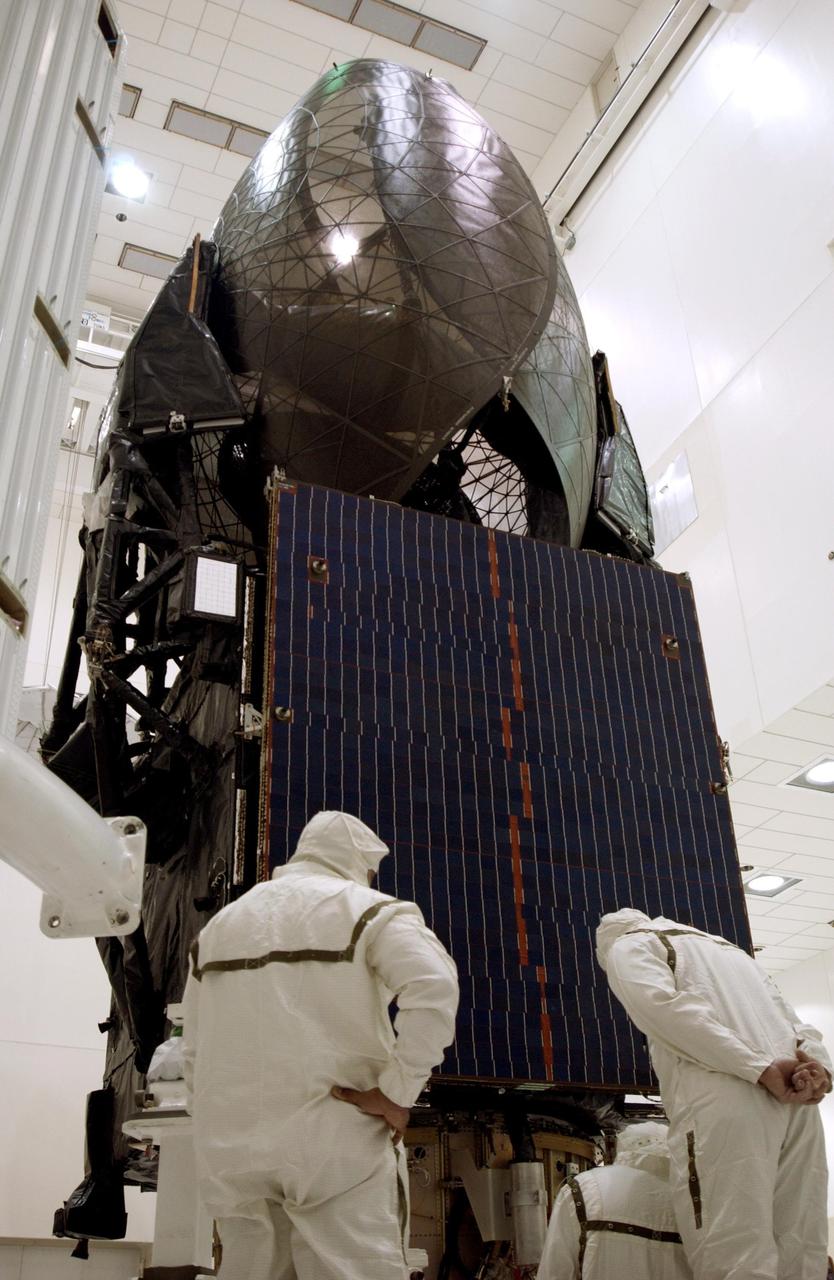
KENNEDY SPACE CENTER, FLA. -- Workers keep check on the TDRS-J satellite (foreground) as the fairing (background) moves toward it for encapsulation. The satellite is scheduled to be launched aboard a Lockheed Martin Atlas IIA-Centaur rocket from Launch Complex 36-A, Cape Canaveral Air Force Station, Fla., on Dec. 4. The third in a series of telemetry satellites, TDRS-J will help replenish the current constellation of geosynchronous TDRS satellites. The TDRS System is the primary source of space-to-ground voice, data and telemetry for the Space Shuttle. It also provides communications with the International Space Station and scientific spacecraft in low-Earth orbit such as the Hubble Space Telescope. This new advanced series of satellites will extend the availability of TDRS communications services until about 2017.
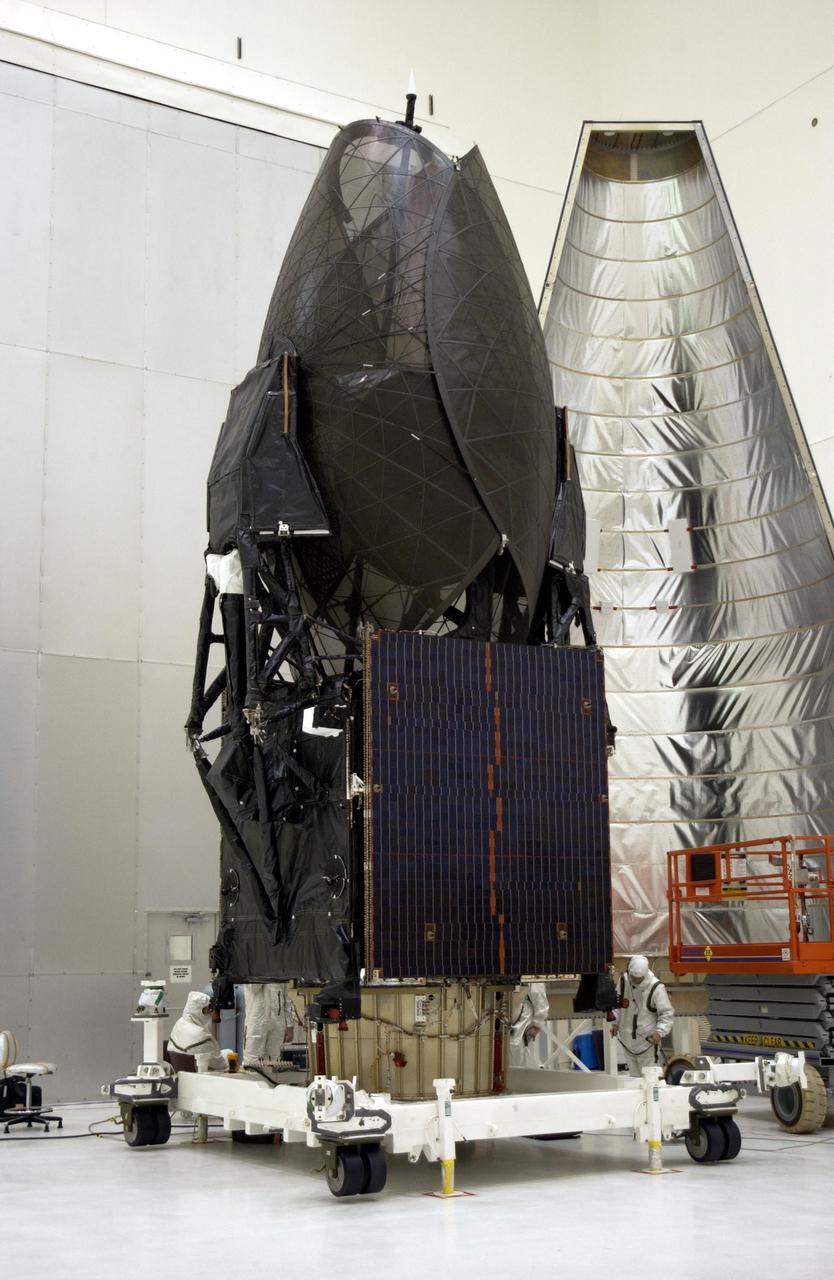
KENNEDY SPACE CENTER, FLA. -- The fairing (left) is moved toward the TDRS-J satellite (right) for encapsulation. The satellite is scheduled to be launched aboard a Lockheed Martin Atlas IIA-Centaur rocket from Launch Complex 36-A, Cape Canaveral Air Force Station, Fla., on Dec. 4. The third in a series of telemetry satellites, TDRS-J will help replenish the current constellation of geosynchronous TDRS satellites. The TDRS System is the primary source of space-to-ground voice, data and telemetry for the Space Shuttle. It also provides communications with the International Space Station and scientific spacecraft in low-Earth orbit such as the Hubble Space Telescope. This new advanced series of satellites will extend the availability of TDRS communications services until about 2017.
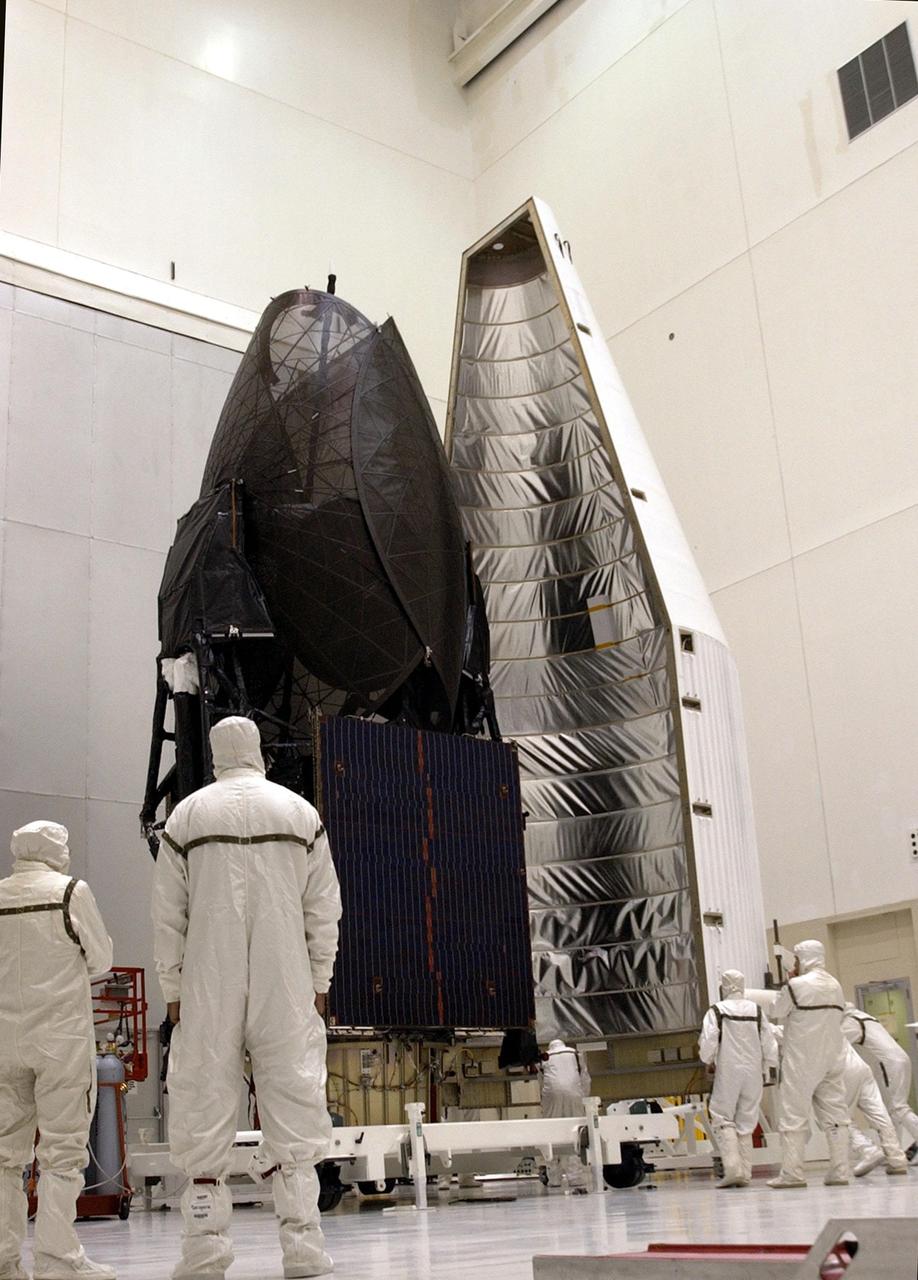
KENNEDY SPACE CENTER, FLA. -- In the Spacecraft Assembly and Encapsulation Facility-2 (SAEF-2), the nose fairing (right) for the Tracking and Data Relay Satellite-I (TDRS-I) is moved into position to enclose the satellite for launch. The second in a new series of telemetry satellites, TDRS-I replenishes the existing on-orbit fleet of six spacecraft. The TDRS System is the primary source of space-to-ground voice, data and telemetry for the Space Shuttle. It also provides communications with the International Space Station and scientific spacecraft in low-Earth orbit such as the Hubble Space Telescope. This new advanced series of satellites will extend the availability of TDRS communications services until about 2017. Launch of TDRS-I is scheduled for March 8 aboard a Lockheed Martin Atlas IIA rocket from Pad 36-A, Cape Canaveral Air Force Station
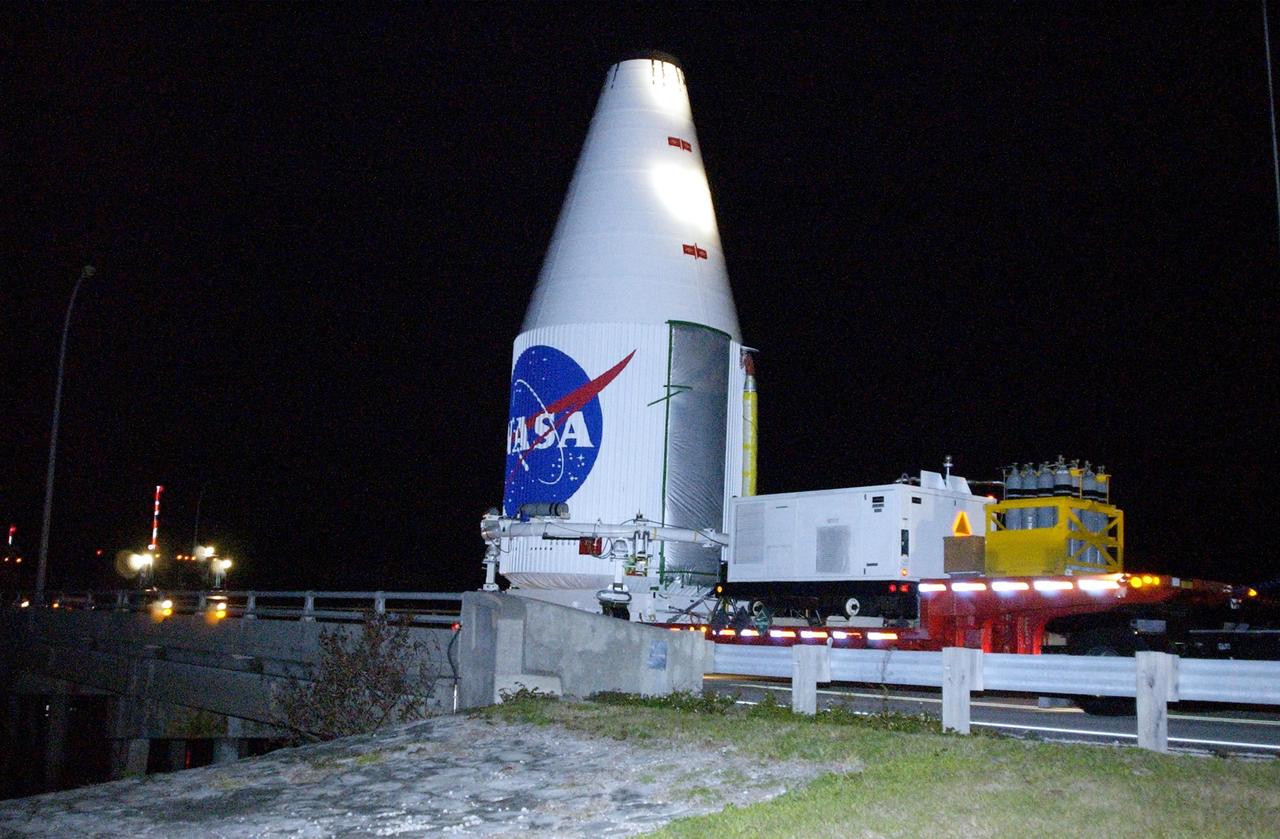
KENNEDY SPACE CENTER, FLA. -- A transporter carrying the encapsulated TDRS-J satellite crosses a bridge heading to Launch Complex 36-A, Cape Canaveral Air Force Station, for a launch Dec. 4 aboard an Atlas IIA vehicle. The launch window is 9:42 to 10:22 p.m. EST. TDRS-J, the third in a series of telemetry satellites, will help replenish the current constellation of geosynchronous TDRS satellites that are the primary source of space-to-ground voice, data and telemetry for the Space Shuttle. The satellites also provide communications with the International Space Station and scientific spacecraft in low-Earth orbit such as the Hubble Space Telescope. This new advanced series of satellites will extend the availability of TDRS communications services until about 2017.
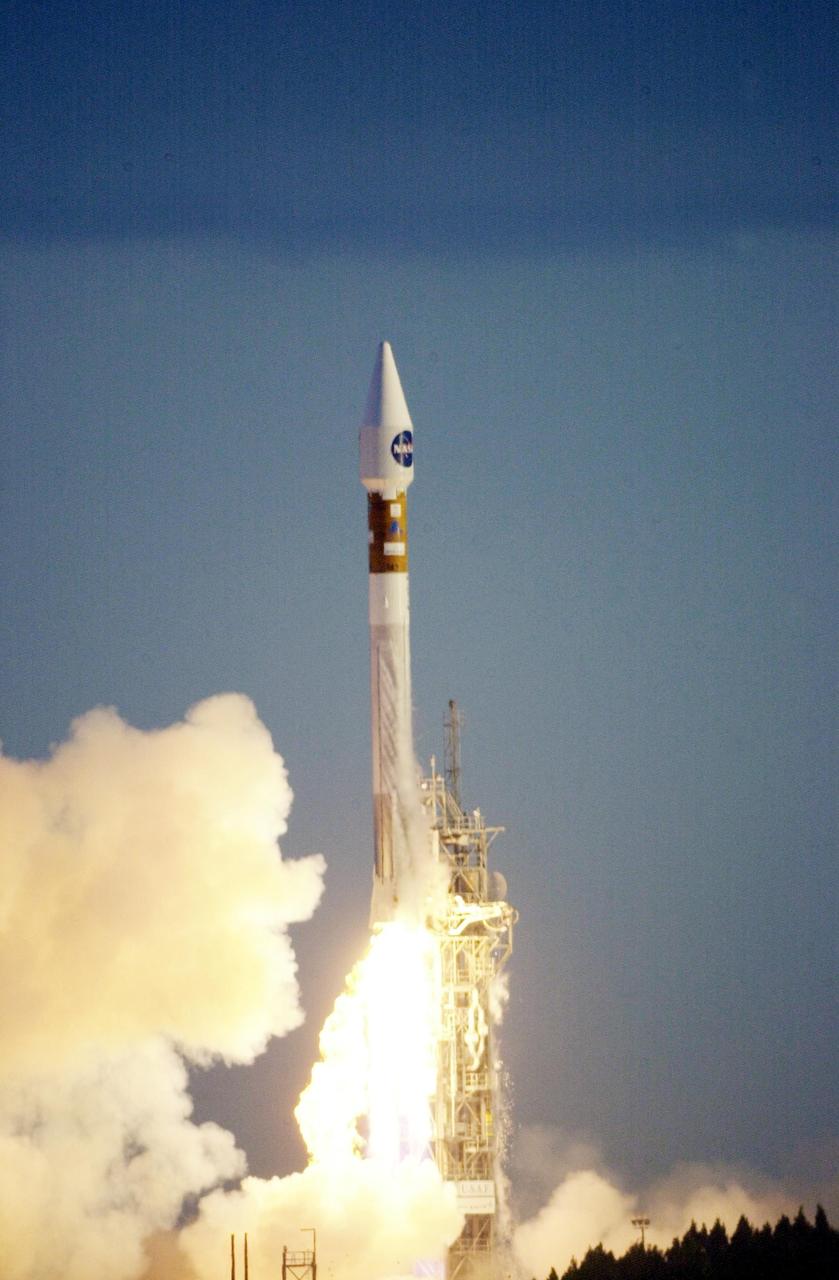
KENNEDY SPACE CENTER, FLA. -- Against a clear blue Florida sky, the Lockheed Martin Atlas IIa rocket clears the tower as it lifts off from Launch Pad 36-A, Cape Canaveral Air Force Station, with the Tracking and Data Relay Satellite-I (TDRS-1) aboard. TDRS-I replenishes the existing on-orbit fleet of six spacecraft. The TDRS System is the primary source of space-to-ground voice, data and telemetry for the Space Shuttle. It also provides communications with the International Space Station and scientific spacecraft in low-Earth orbit such as the Hubble Space Telescope. This new advanced series of satellites will extend the availability of TDRS communications services until about 2017. Liftoff occurred at 5:59 p.m. EST

KENNEDY SPACE CENTER, FLA. -- The Lockheed Martin Atlas/Centaur rocket stands free from the launch tower after rollback. The rocket will carry the Tracking and Data Relay Satellite-I (TDRS-I) into orbit. The second in a new series of telemetry satellites, TDRS-I replenishes the existing on-orbit fleet of six spacecraft. The TDRS System is the primary source of space-to-ground voice, data and telemetry for the Space Shuttle. It also provides communications with the International Space Station and scientific spacecraft in low-Earth orbit such as the Hubble Space Telescope. This new advanced series of satellites will extend the availability of TDRS communications services until about 2017. Launch of TDRS-I atop the Atlas rocket is scheduled between 5:39 - 6:19 p.m. EST from Launch Pad 36-A, Cape Canaveral Air Force Station
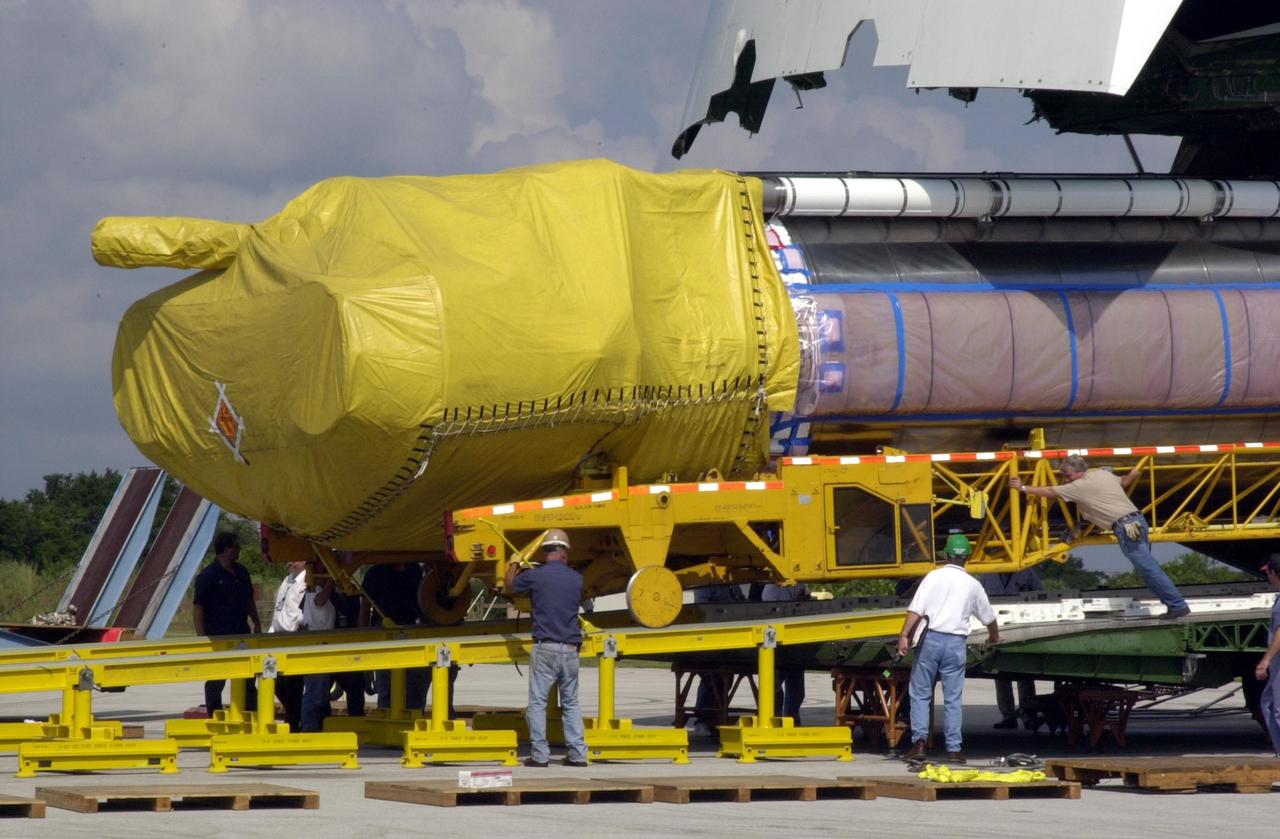
KENNEDY SPACE CENTER, FLA. -- An Atlas/Centaur booster is moved away from the nose of its transport aircraft following its arrival at Cape Canaveral Air Force Station. The booster is being offloaded and readied for the move to Launch Pad 36A in preparation for the launch of TDRS-J. The third in a series of telemetry satellites, TDRS-J will help replenish the current constellation of geosynchronous TDRS satellites. The TDRS System is the primary source of space-to-ground voice, data and telemetry for the Space Shuttle. It also provides communications with the International Space Station and scientific spacecraft in low-Earth orbit such as the Hubble Space Telescope. This new advanced series of satellites will extend the availability of TDRS communications services until about 2017.
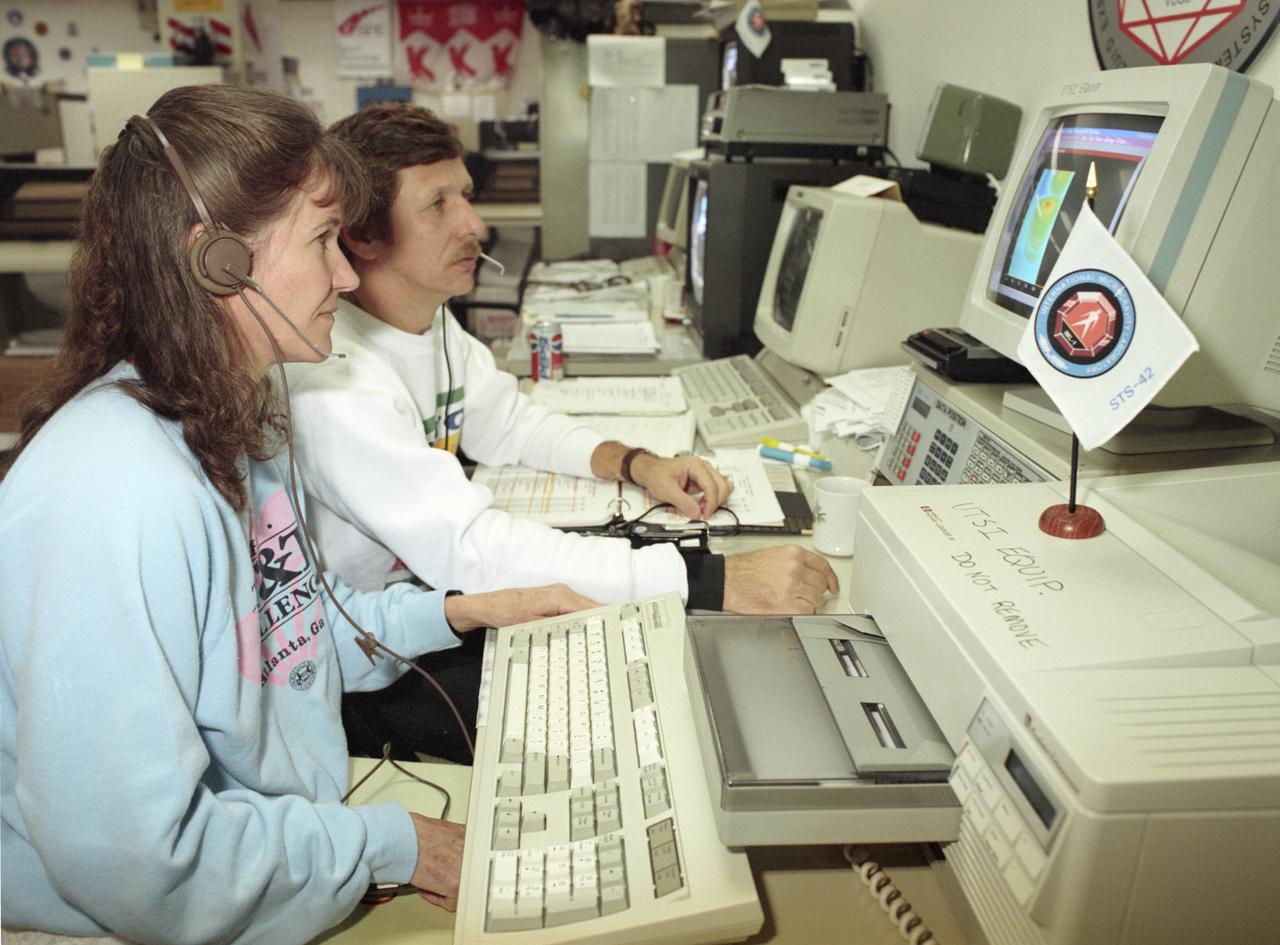
The primary payload for Space Shuttle Mission STS-42, launched January 22, 1992, was the International Microgravity Laboratory-1 (IML-1), a pressurized manned Spacelab module. The goal of IML-1 was to explore in depth the complex effects of weightlessness of living organisms and materials processing. Around-the-clock research was performed on the human nervous system's adaptation to low gravity and effects of microgravity on other life forms such as shrimp eggs, lentil seedlings, fruit fly eggs, and bacteria. Materials processing experiments were also conducted, including crystal growth from a variety of substances such as enzymes, mercury iodide, and a virus. The Huntsville Operations Support Center (HOSC) Spacelab Payload Operations Control Center (SL POCC) at the Marshall Space Flight Center (MSFC) was the air/ground communication channel used between the astronauts and ground control teams during the Spacelab missions. Featured are activities in the SL POCC during STS-42, IML-1 mission.
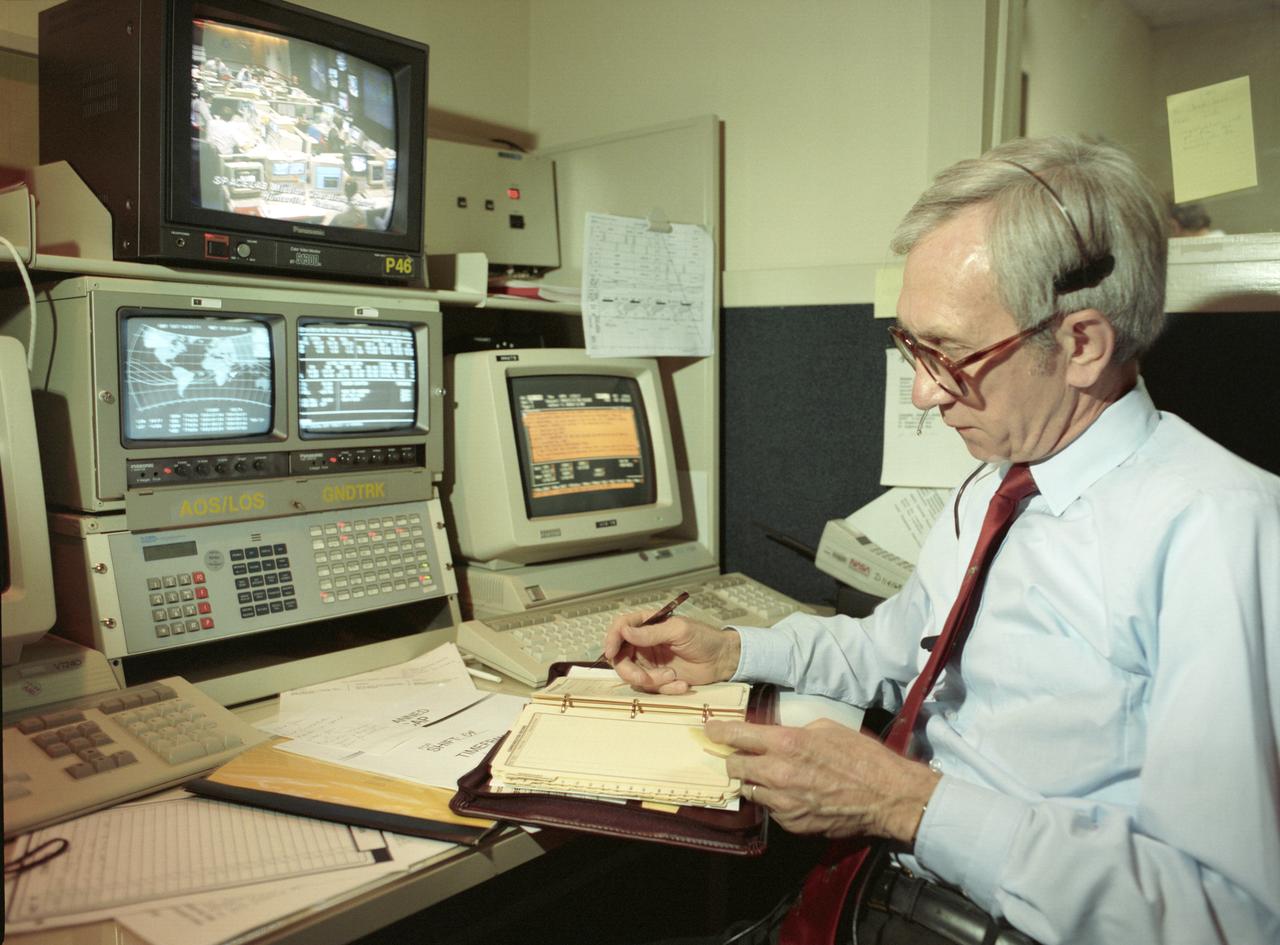
The primary objective of the STS-35 mission was round the clock observation of the celestial sphere in ultraviolet and X-Ray astronomy with the Astro-1 observatory which consisted of four telescopes: the Hopkins Ultraviolet Telescope (HUT); the Wisconsin Ultraviolet Photo-Polarimeter Experiment (WUPPE); the Ultraviolet Imaging Telescope (UIT); and the Broad Band X-Ray Telescope (BBXRT). The Huntsville Operations Support Center (HOSC) Spacelab Payload Operations Control Center (SL POCC) at the Marshall Space Flight Center (MSFC) was the air/ground communication channel used between the astronauts and ground control teams during the Spacelab missions. Teams of controllers and researchers directed on-orbit science operations, sent commands to the spacecraft, received data from experiments aboard the Space Shuttle, adjusted mission schedules to take advantage of unexpected science opportunities or unexpected results, and worked with crew members to resolve problems with their experiments. Pictured is Jack Jones in the Mission Manager Area.
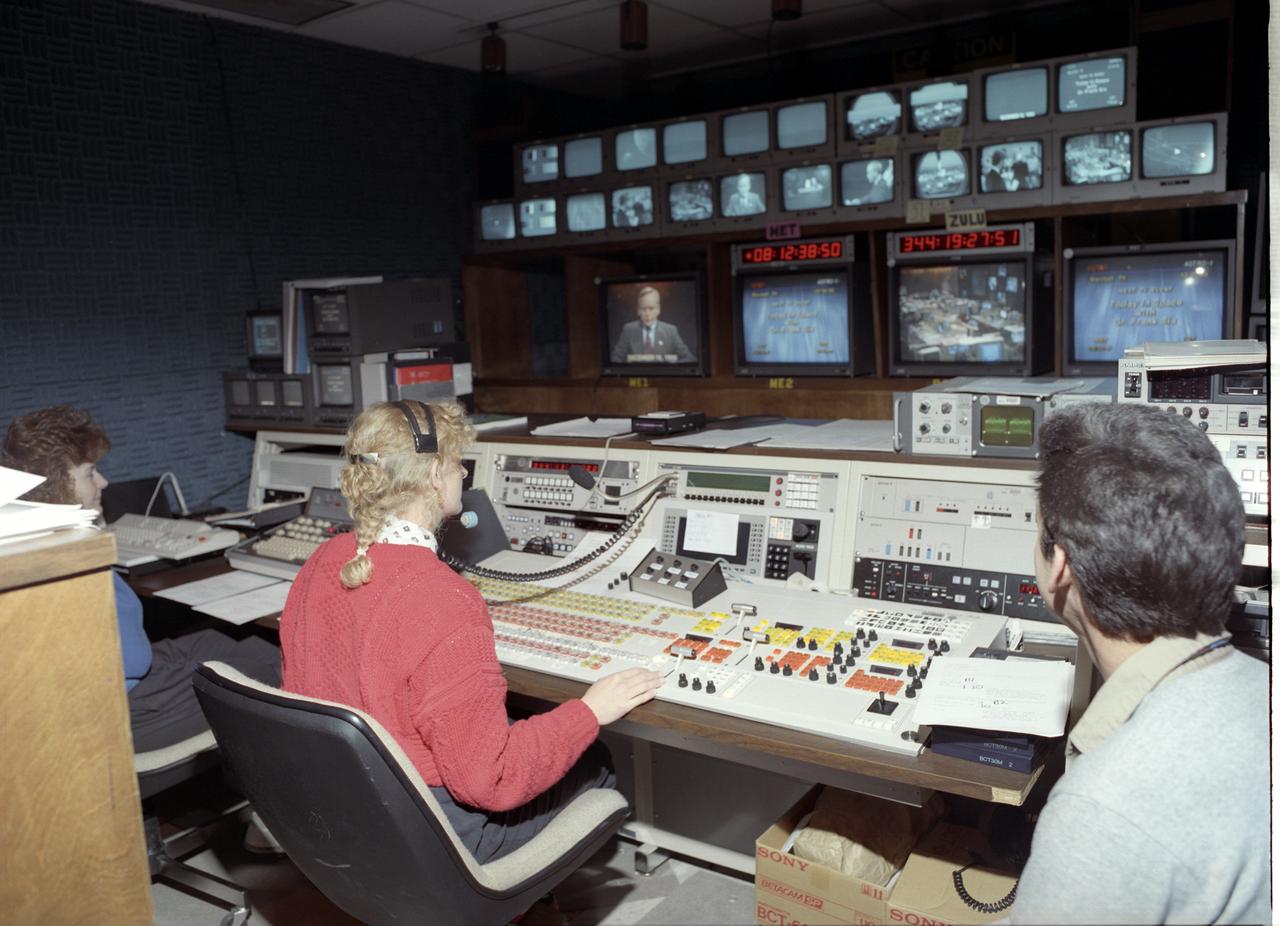
The primary objective of the STS-35 mission was round the clock observation of the celestial sphere in ultraviolet and X-Ray astronomy with the Astro-1 observatory which consisted of four telescopes: the Hopkins Ultraviolet Telescope (HUT); the Wisconsin Ultraviolet Photo-Polarimeter Experiment (WUPPE); the Ultraviolet Imaging Telescope (UIT); and the Broad Band X-Ray Telescope (BBXRT). The Huntsville Operations Support Center (HOSC) Spacelab Payload Operations Control Center (SL POCC) at the Marshall Space Flight Center (MSFC) was the air/ground communication channel used between the astronauts and ground control teams during the Spacelab missions. Teams of controllers and researchers directed on-orbit science operations, sent commands to the spacecraft, received data from experiments aboard the Space Shuttle, adjusted mission schedules to take advantage of unexpected science opportunities or unexpected results, and worked with crew members to resolve problems with their experiments. Pictured is the TV OPS area of the SL POCC.
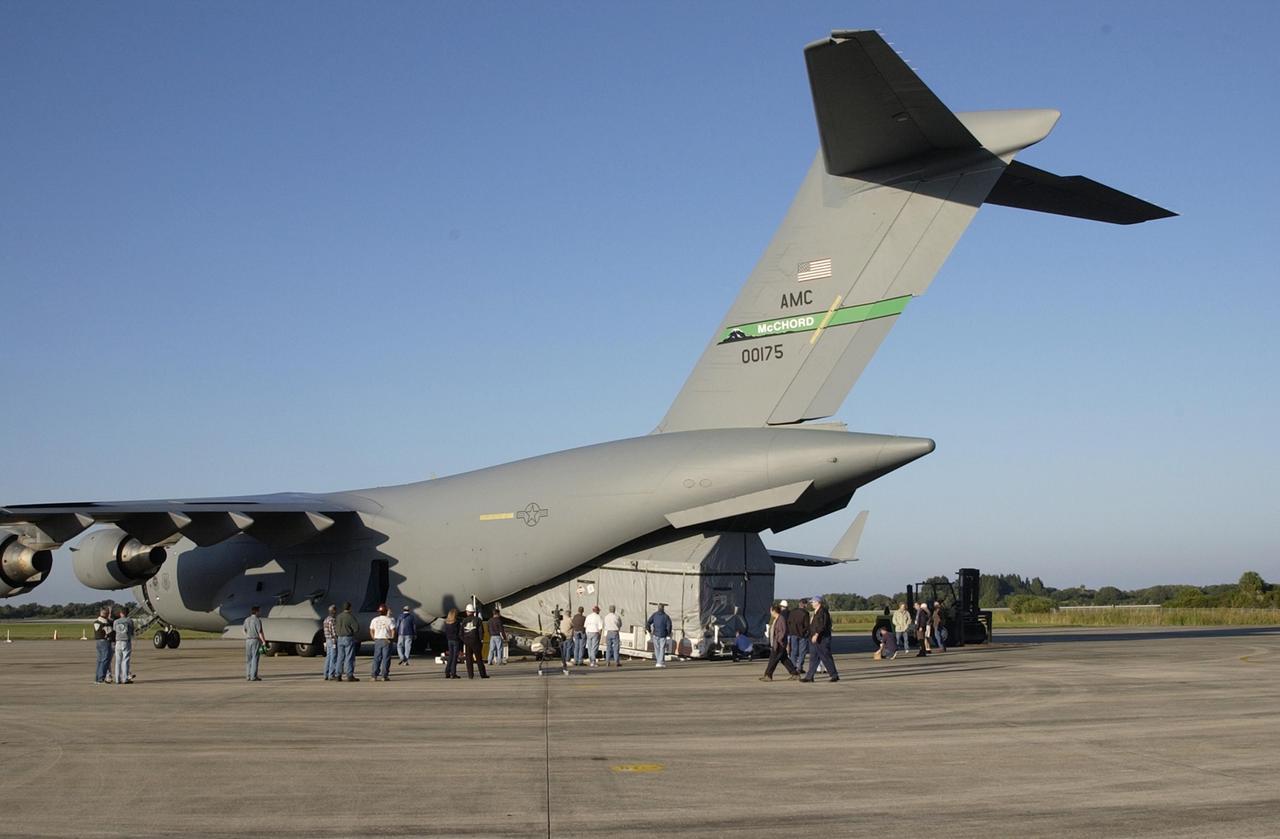
KENNEDY SPACE CENTER, FLA. -- The Tracking and Data Relay Satellite-J (TDRS-J) is offloaded at the KSC Shuttle Landing Facility from an Air Force C-17 air cargo plane. It will be transferred to the Spacecraft Assembly and Encapsulation Facility-2 (SAEF-2). TDRS-J weighs 3,338 pounds, but at launch will weigh 7,031 pounds when fully fueled with its propellants consisting of monomethylhydrazine fuel and nitrogen tetroxide oxidizer. The solar arrays, when deployed, will supply the spacecraft with up to 2,200 watts of power. TDRS-J is the third in the current series of three Tracking and Data Relay Satellites designed to replenish the existing on-orbit fleet of six spacecraft, the first of which was launched in 1983. The Tracking and Data Relay Satellite System is the primary source of space-to-ground voice, data and telemetry for the Space Shuttle. It also provides communications with the International Space Station and scientific spacecraft in low-earth orbit such as the Hubble Space Telescope, and launch support for some expendable vehicles. This new advanced series of satellites will extend the availability of TDRS communications services until approximately 2017.
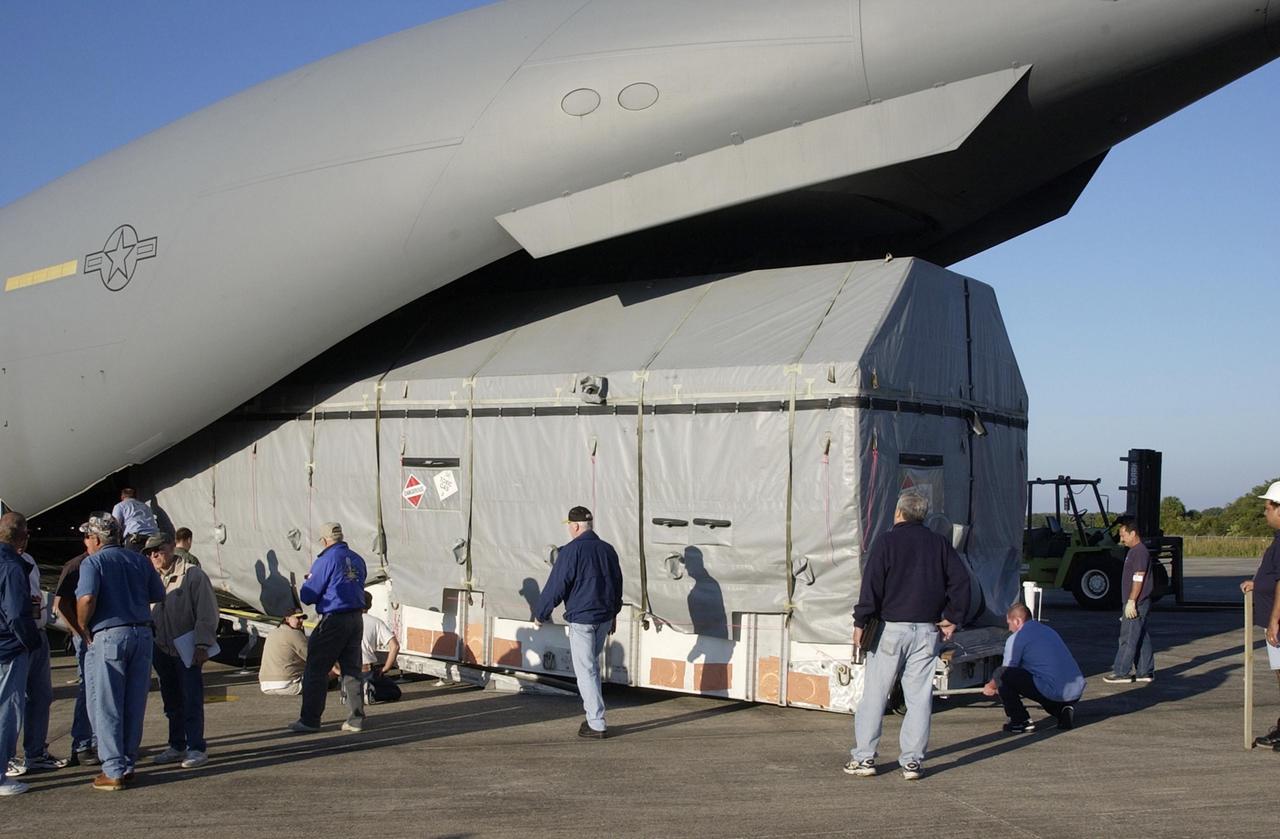
KENNEDY SPACE CENTER, FLA. -- The Tracking and Data Relay Satellite-J (TDRS-J) is being offloaded at the KSC Shuttle Landing Facility from an Air Force C-17 air cargo plane. It will be transferred to the Spacecraft Assembly and Encapsulation Facility-2 (SAEF-2). TDRS-J weighs 3,338 pounds, but at launch will weigh 7,031 pounds when fully fueled with its propellants consisting of monomethylhydrazine fuel and nitrogen tetroxide oxidizer. The solar arrays, when deployed, will supply the spacecraft with up to 2,200 watts of power. TDRS-J is the third in the current series of three Tracking and Data Relay Satellites designed to replenish the existing on-orbit fleet of six spacecraft, the first of which was launched in 1983. The Tracking and Data Relay Satellite System is the primary source of space-to-ground voice, data and telemetry for the Space Shuttle. It also provides communications with the International Space Station and scientific spacecraft in low-earth orbit such as the Hubble Space Telescope, and launch support for some expendable vehicles. This new advanced series of satellites will extend the availability of TDRS communications services until approximately 2017.
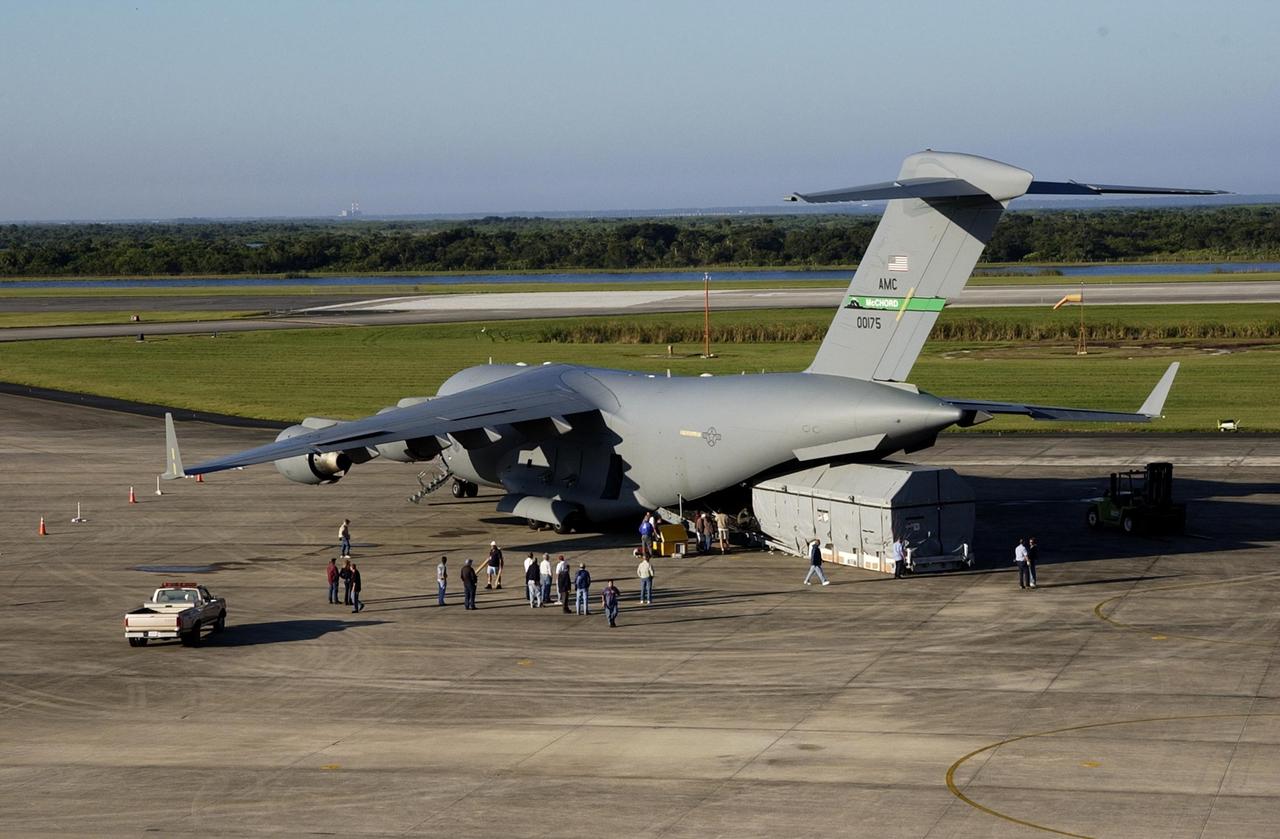
KENNEDY SPACE CENTER, FLA. -- The Tracking and Data Relay Satellite-J (TDRS-J) has been offloaded at the KSC Shuttle Landing Facility from an Air Force C-17 air cargo plane. It will be transferred to the Spacecraft Assembly and Encapsulation Facility-2 (SAEF-2). TDRS-J weighs 3,338 pounds, but at launch will weigh 7,031 pounds when fully fueled with its propellants consisting of monomethylhydrazine fuel and nitrogen tetroxide oxidizer. The solar arrays, when deployed, will supply the spacecraft with up to 2,200 watts of power. TDRS-J is the third in the current series of three Tracking and Data Relay Satellites designed to replenish the existing on-orbit fleet of six spacecraft, the first of which was launched in 1983. The Tracking and Data Relay Satellite System is the primary source of space-to-ground voice, data and telemetry for the Space Shuttle. It also provides communications with the International Space Station and scientific spacecraft in low-earth orbit such as the Hubble Space Telescope, and launch support for some expendable vehicles. This new advanced series of satellites will extend the availability of TDRS communications services until approximately 2017.
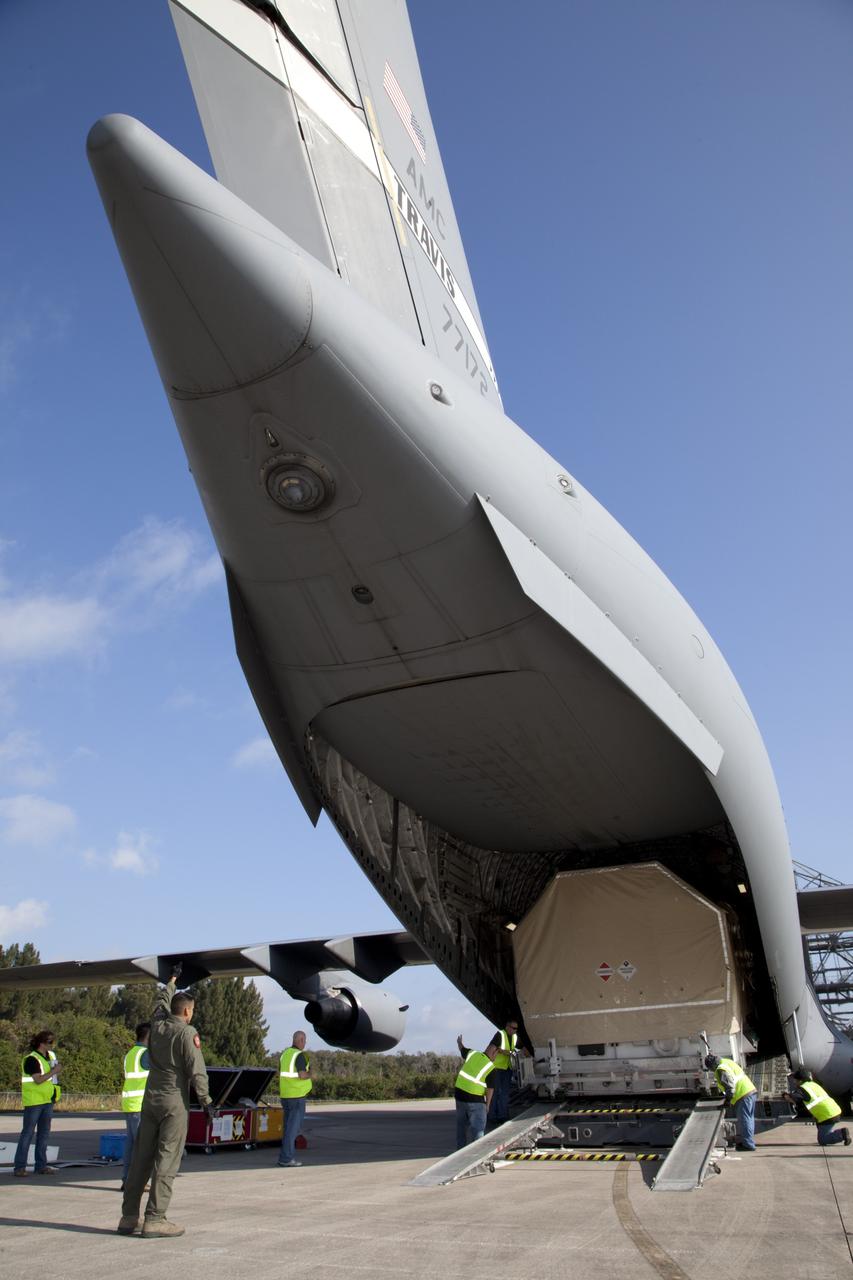
CAPE CANAVERAL, Fla. -- The Tracking and Data Relay Satellite known as TDRS-K arrives at NASA's Kennedy Space Center in Florida aboard an Air Force C-17 transport aircraft at 8:29 a.m. Dec. 18 at the agency's Kennedy Space Center in Florida in preparation for a Jan. 29 launch to a location in geostationary orbit. TDRS-K flew aboard a U.S. Air Force C-17 from the Boeing Space and Intelligence Systems assembly facility in El Segundo, Calif., for final preparation to launch aboard a United Launch Alliance Atlas V rocket. TDRS-K is the first of three next-generation satellites designed to ensure vital operational continuity for NASA by expanding the lifespan of the fleet. Each of the new satellites has a higher performance solar panel design to provide more spacecraft power. This upgrade will return signal processing for the S-Band multiple access service to the ground -- the same as the first-generation TDRS spacecraft. Ground-based processing allows TDRS to service more customers with different and evolving communication requirements. For more information, visit http://tdrs.gsfc.nasa.gov/ Photo credit: NASA/Kim Shiflett

Reverend Henry Birkenhauer and E.F. Carome measure ground vibrations on West 220th Street caused by the operation of the 8- by 6-Foot Supersonic Wind Tunnel at the National Advisory Committee for Aeronautics (NACA) Lewis Flight Propulsion Laboratory. The 8- by 6 was the laboratory’s first large supersonic wind tunnel. It was also the NACA’s most powerful supersonic tunnel, and the NACA’s first facility capable of running an engine at supersonic speeds. The 8- by 6 was originally an open-throat and non-return tunnel. This meant that the supersonic air flow was blown through the test section and out the other end into the atmosphere. Complaints from the local community led to the installation of a muffler at the tunnel exit and the eventual addition of a return leg. Reverend Brikenhauer, a seismologist, and Carome, an electrical technician were brought in from John Carroll University to take vibration measurements during the 8- by 6 tunnel’s first run with a supersonic engine. They found that the majority of the vibrations came from the air and not the ground. The tunnel’s original muffler offered some relief during the facility checkout runs, but it proved inadequate during the operation of an engine in the test section. Tunnel operation was suspended until a new muffler was designed and installed. The NACA researchers, however, were pleased with the tunnel’s operation. They claimed it was the first time a jet engine was operated in an airflow faster than Mach 2.
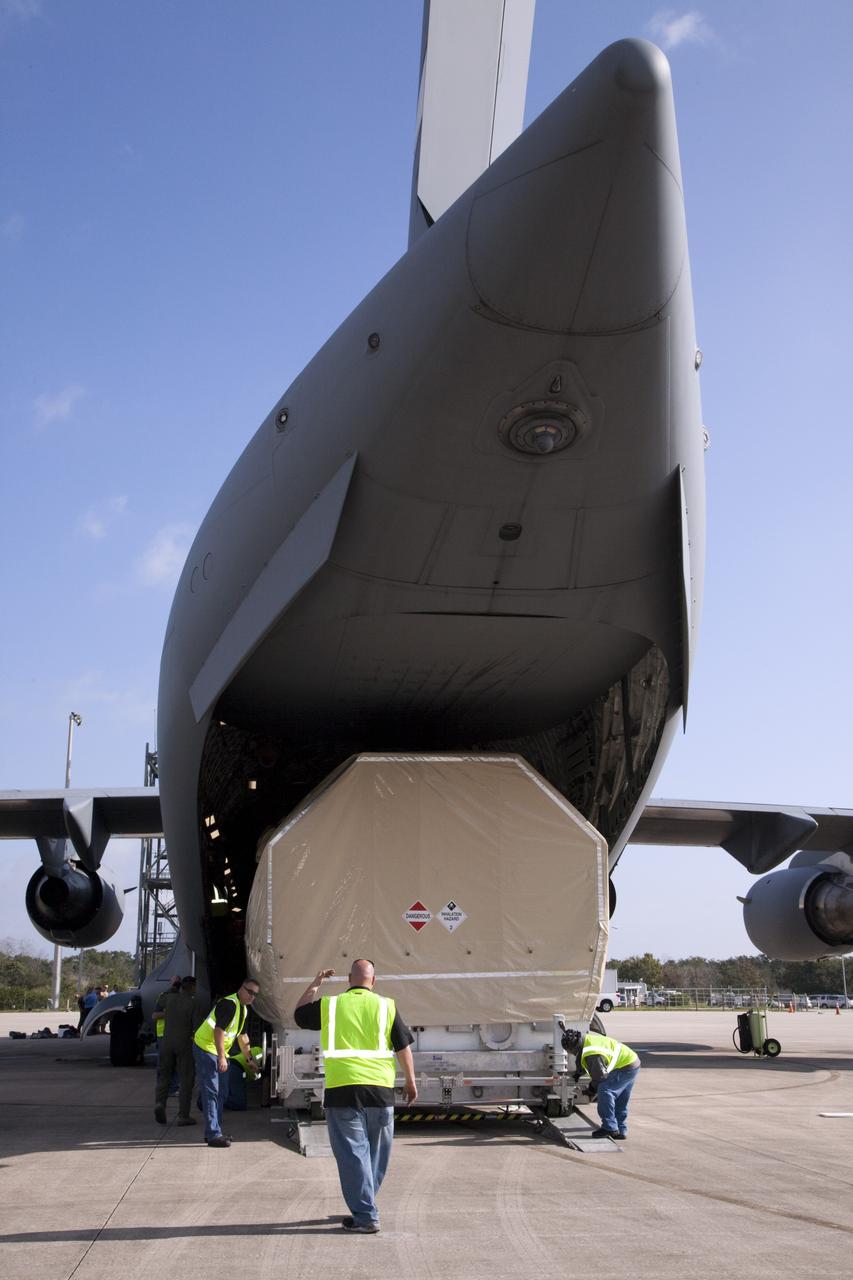
CAPE CANAVERAL, Fla. -- The Tracking and Data Relay Satellite known as TDRS-K arrives at NASA's Kennedy Space Center in Florida aboard an Air Force C-17 transport aircraft at 8:29 a.m. Dec. 18 at the agency's Kennedy Space Center in Florida in preparation for a Jan. 29 launch to a location in geostationary orbit. TDRS-K flew aboard a U.S. Air Force C-17 from the Boeing Space and Intelligence Systems assembly facility in El Segundo, Calif., for final preparation to launch aboard a United Launch Alliance Atlas V rocket. TDRS-K is the first of three next-generation satellites designed to ensure vital operational continuity for NASA by expanding the lifespan of the fleet. Each of the new satellites has a higher performance solar panel design to provide more spacecraft power. This upgrade will return signal processing for the S-Band multiple access service to the ground -- the same as the first-generation TDRS spacecraft. Ground-based processing allows TDRS to service more customers with different and evolving communication requirements. For more information, visit http://tdrs.gsfc.nasa.gov/ Photo credit: NASA/Kim Shiflett
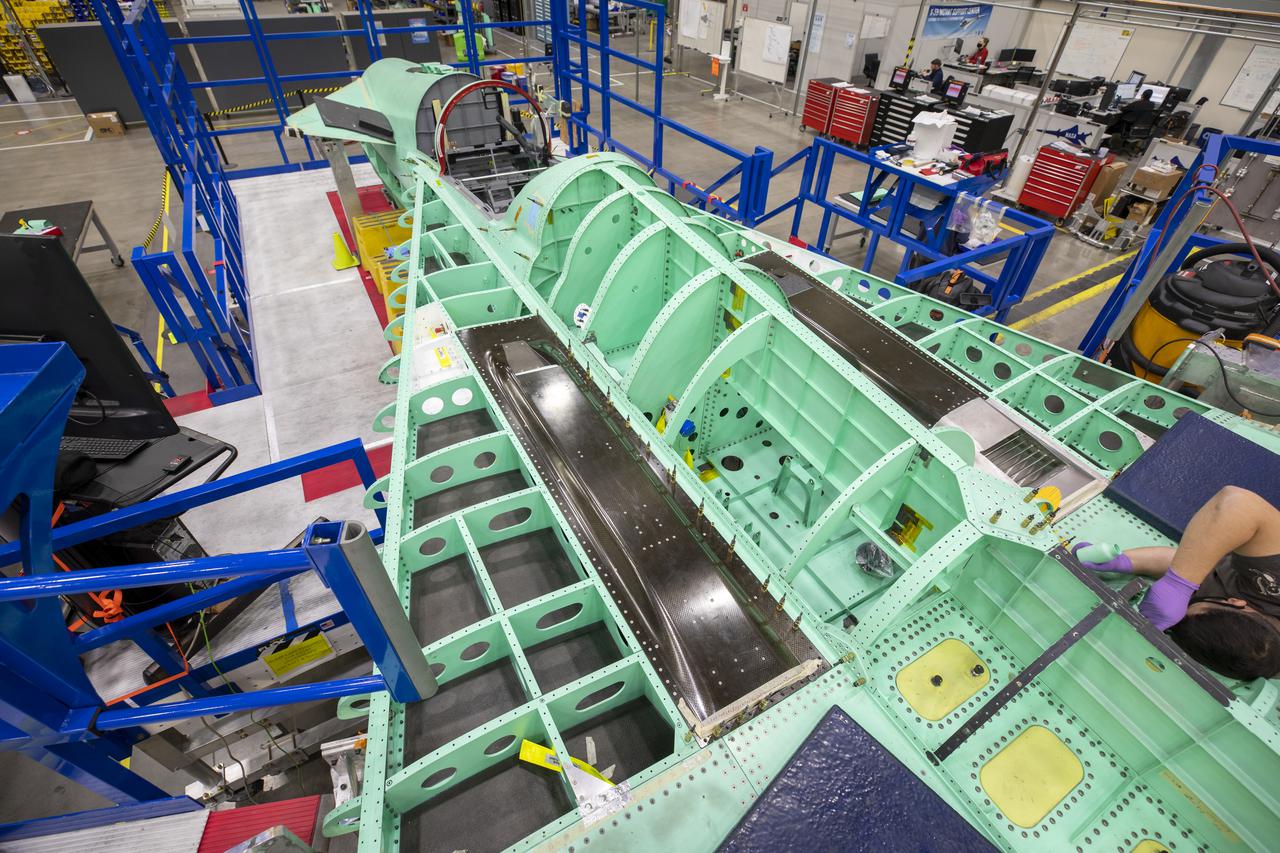
NASA is targeting 2022 for the first flight of the X-59 Quiet SuperSonic Technology (QueSST) research aircraft. Its mission – fly over communities to collect data that could cut passenger travel time in half without disturbing people on the ground. NASA’s X-59 is equipped with supersonic technologies that aid in lowering the sound of the sonic boom. In this picture, the black rectangle panels are the air intakes for the environmental control system (ECS) that regulates the temperature, cabin pressure, and air distribution. The silver grate located at the rear of one of the ECS panels is the exhaust — both of these sections are traditionally housed on the underside of the plane. By placing these features on top of the X-59 wing, the wing blocks and prevents the ECS exhaust from interacting with the shock waves on the bottom of the aircraft. This unique design approach to re-shaping the shock wave pattern substantially reduces the sonic boom to more of a sonic “thump” when it reaches the ground. Lockheed Martin Photography By Garry Tice 1011 Lockheed Way, Palmdale, Ca. 93599 Event: SEG 210 Forebody Date: 1/19/2021 Additional Info:
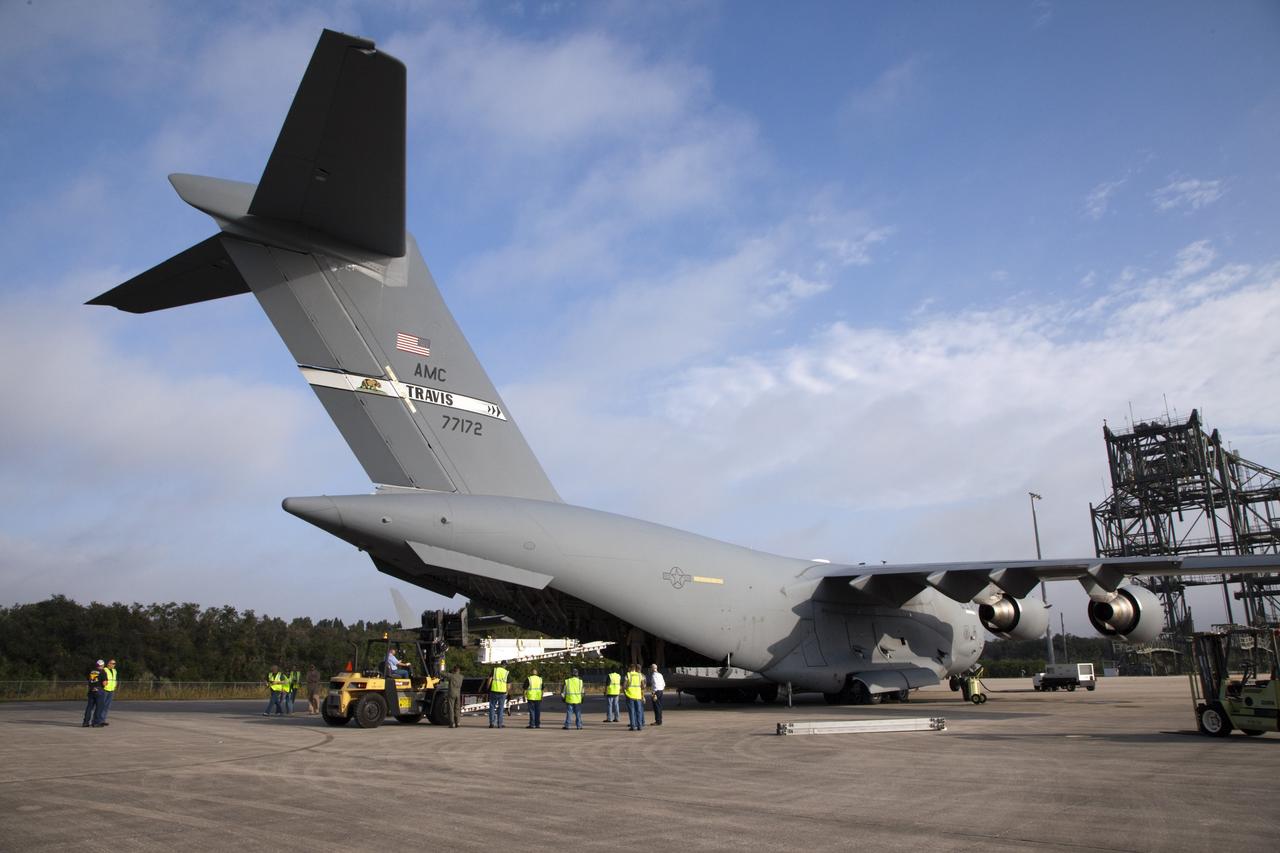
CAPE CANAVERAL, Fla. -- The Tracking and Data Relay Satellite known as TDRS-K arrives at NASA's Kennedy Space Center in Florida aboard an Air Force C-17 transport aircraft at 8:29 a.m. Dec. 18 at the agency's Kennedy Space Center in Florida in preparation for a Jan. 29 launch to a location in geostationary orbit. TDRS-K flew aboard a U.S. Air Force C-17 from the Boeing Space and Intelligence Systems assembly facility in El Segundo, Calif., for final preparation to launch aboard a United Launch Alliance Atlas V rocket. TDRS-K is the first of three next-generation satellites designed to ensure vital operational continuity for NASA by expanding the lifespan of the fleet. Each of the new satellites has a higher performance solar panel design to provide more spacecraft power. This upgrade will return signal processing for the S-Band multiple access service to the ground -- the same as the first-generation TDRS spacecraft. Ground-based processing allows TDRS to service more customers with different and evolving communication requirements. For more information, visit http://tdrs.gsfc.nasa.gov/ Photo credit: NASA/Kim Shiflett
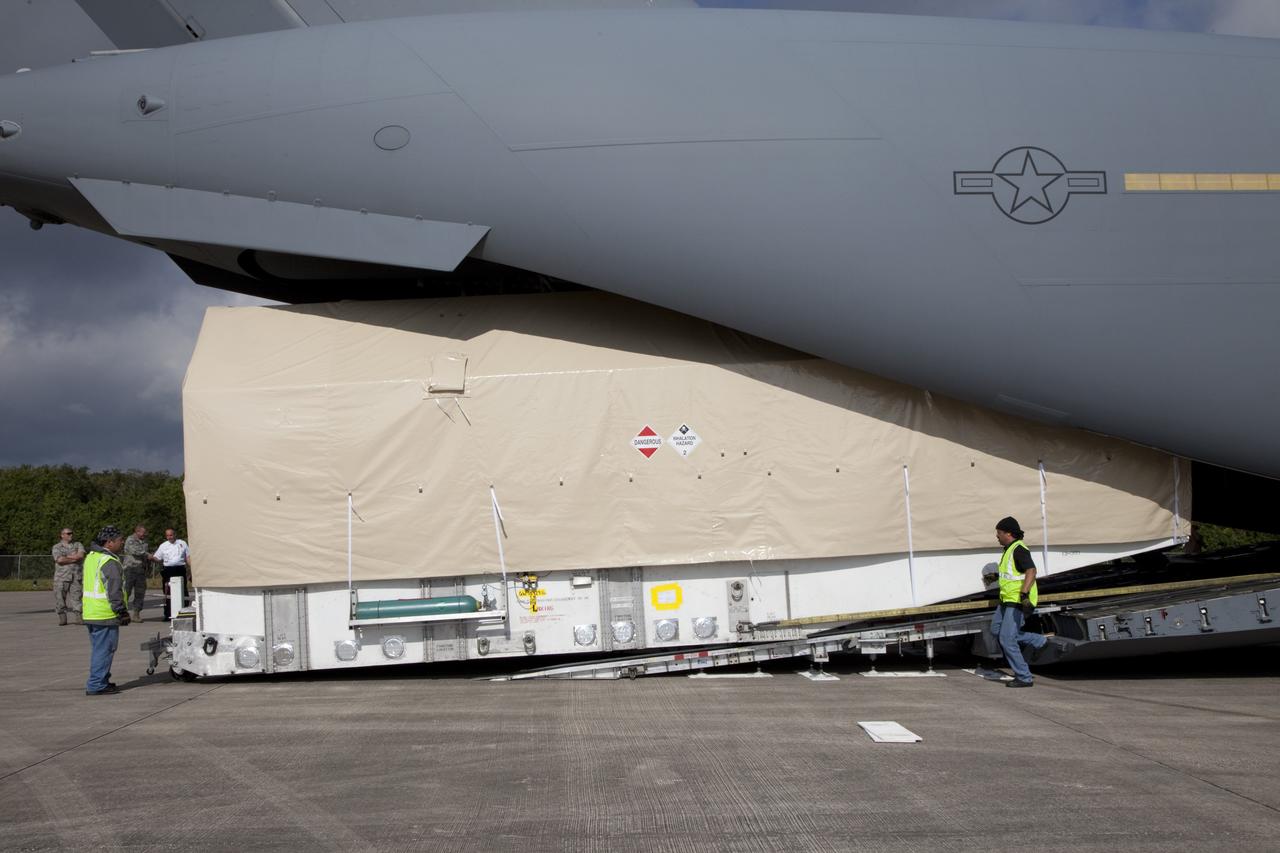
CAPE CANAVERAL, Fla. -- The Tracking and Data Relay Satellite known as TDRS-K arrives at NASA's Kennedy Space Center in Florida aboard an Air Force C-17 transport aircraft at 8:29 a.m. Dec. 18 at the agency's Kennedy Space Center in Florida in preparation for a Jan. 29 launch to a location in geostationary orbit. TDRS-K flew aboard a U.S. Air Force C-17 from the Boeing Space and Intelligence Systems assembly facility in El Segundo, Calif., for final preparation to launch aboard a United Launch Alliance Atlas V rocket. TDRS-K is the first of three next-generation satellites designed to ensure vital operational continuity for NASA by expanding the lifespan of the fleet. Each of the new satellites has a higher performance solar panel design to provide more spacecraft power. This upgrade will return signal processing for the S-Band multiple access service to the ground -- the same as the first-generation TDRS spacecraft. Ground-based processing allows TDRS to service more customers with different and evolving communication requirements. For more information, visit http://tdrs.gsfc.nasa.gov/ Photo credit: NASA/Kim Shiflett
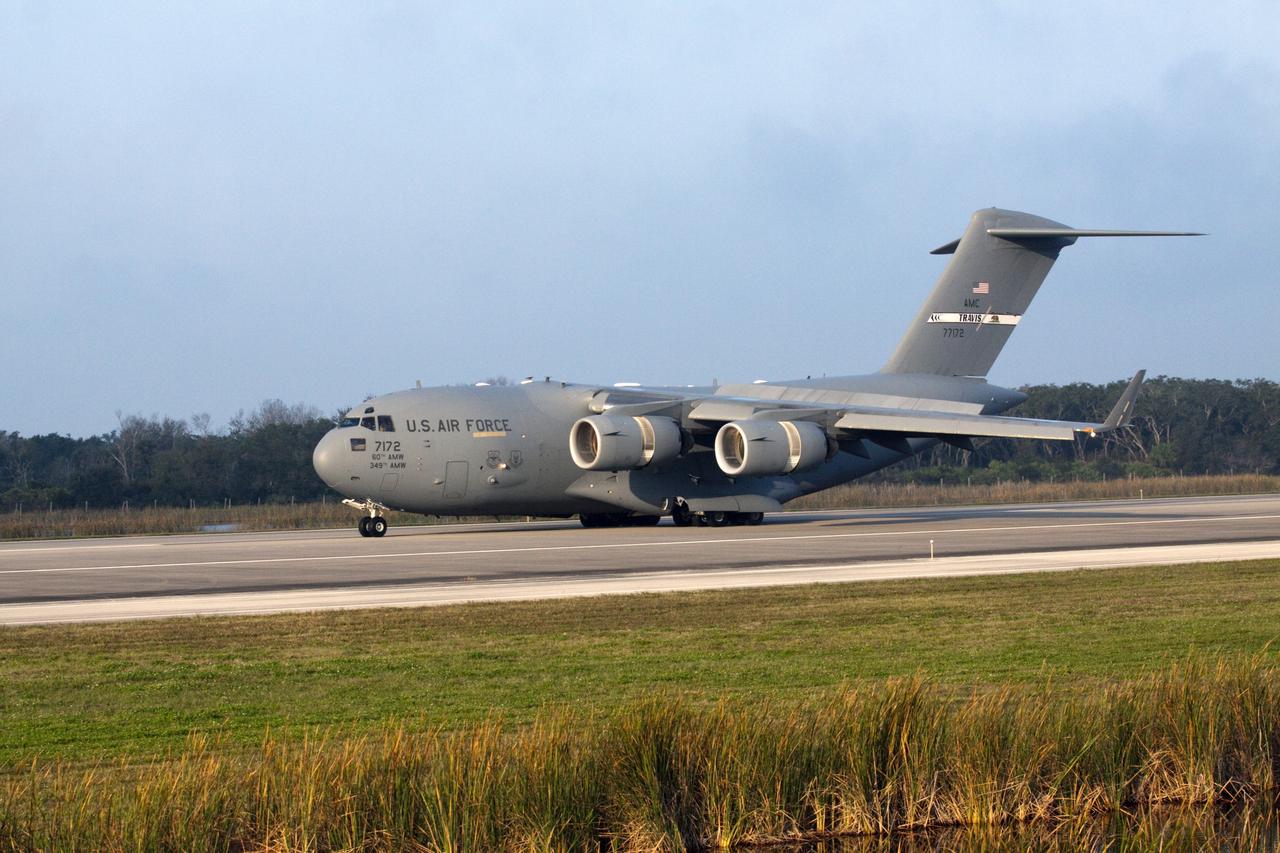
CAPE CANAVERAL, Fla. -- The Tracking and Data Relay Satellite known as TDRS-K arrives at NASA's Kennedy Space Center in Florida aboard an Air Force C-17 transport aircraft at 8:29 a.m. Dec. 18 at the agency's Kennedy Space Center in Florida in preparation for a Jan. 29 launch to a location in geostationary orbit. TDRS-K flew aboard a U.S. Air Force C-17 from the Boeing Space and Intelligence Systems assembly facility in El Segundo, Calif., for final preparation to launch aboard a United Launch Alliance Atlas V rocket. TDRS-K is the first of three next-generation satellites designed to ensure vital operational continuity for NASA by expanding the lifespan of the fleet. Each of the new satellites has a higher performance solar panel design to provide more spacecraft power. This upgrade will return signal processing for the S-Band multiple access service to the ground -- the same as the first-generation TDRS spacecraft. Ground-based processing allows TDRS to service more customers with different and evolving communication requirements. For more information, visit http://tdrs.gsfc.nasa.gov/ Photo credit: NASA/Kim Shiflett

CAPE CANAVERAL, Fla. -- The Tracking and Data Relay Satellite known as TDRS-K arrives at NASA's Kennedy Space Center in Florida aboard an Air Force C-17 transport aircraft at 8:29 a.m. Dec. 18 at the agency's Kennedy Space Center in Florida in preparation for a Jan. 29 launch to a location in geostationary orbit. TDRS-K flew aboard a U.S. Air Force C-17 from the Boeing Space and Intelligence Systems assembly facility in El Segundo, Calif., for final preparation to launch aboard a United Launch Alliance Atlas V rocket. TDRS-K is the first of three next-generation satellites designed to ensure vital operational continuity for NASA by expanding the lifespan of the fleet. Each of the new satellites has a higher performance solar panel design to provide more spacecraft power. This upgrade will return signal processing for the S-Band multiple access service to the ground -- the same as the first-generation TDRS spacecraft. Ground-based processing allows TDRS to service more customers with different and evolving communication requirements. For more information, visit http://tdrs.gsfc.nasa.gov/ Photo credit: NASA/Kim Shiflett
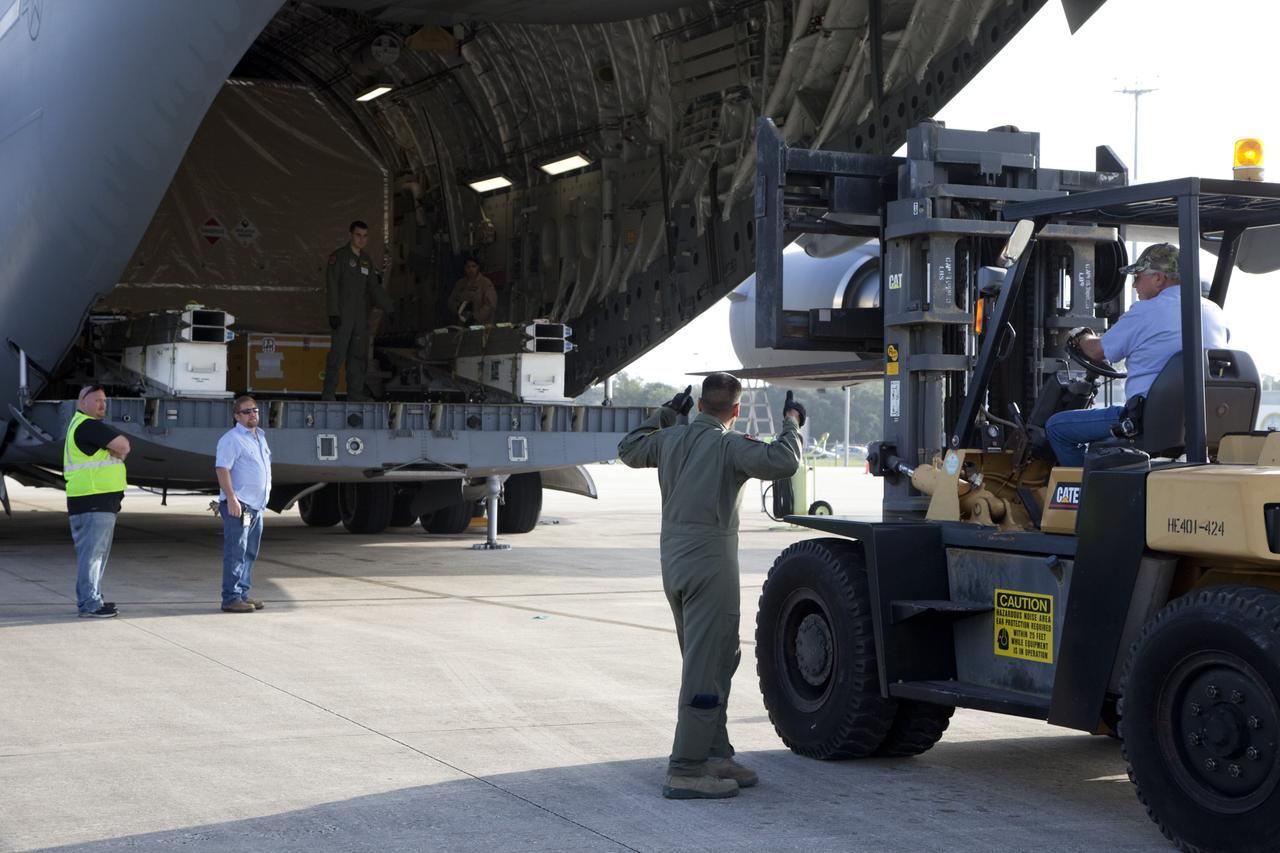
CAPE CANAVERAL, Fla. -- The Tracking and Data Relay Satellite known as TDRS-K arrives at NASA's Kennedy Space Center in Florida aboard an Air Force C-17 transport aircraft at 8:29 a.m. Dec. 18 at the agency's Kennedy Space Center in Florida in preparation for a Jan. 29 launch to a location in geostationary orbit. TDRS-K flew aboard a U.S. Air Force C-17 from the Boeing Space and Intelligence Systems assembly facility in El Segundo, Calif., for final preparation to launch aboard a United Launch Alliance Atlas V rocket. TDRS-K is the first of three next-generation satellites designed to ensure vital operational continuity for NASA by expanding the lifespan of the fleet. Each of the new satellites has a higher performance solar panel design to provide more spacecraft power. This upgrade will return signal processing for the S-Band multiple access service to the ground -- the same as the first-generation TDRS spacecraft. Ground-based processing allows TDRS to service more customers with different and evolving communication requirements. For more information, visit http://tdrs.gsfc.nasa.gov/ Photo credit: NASA/Kim Shiflett
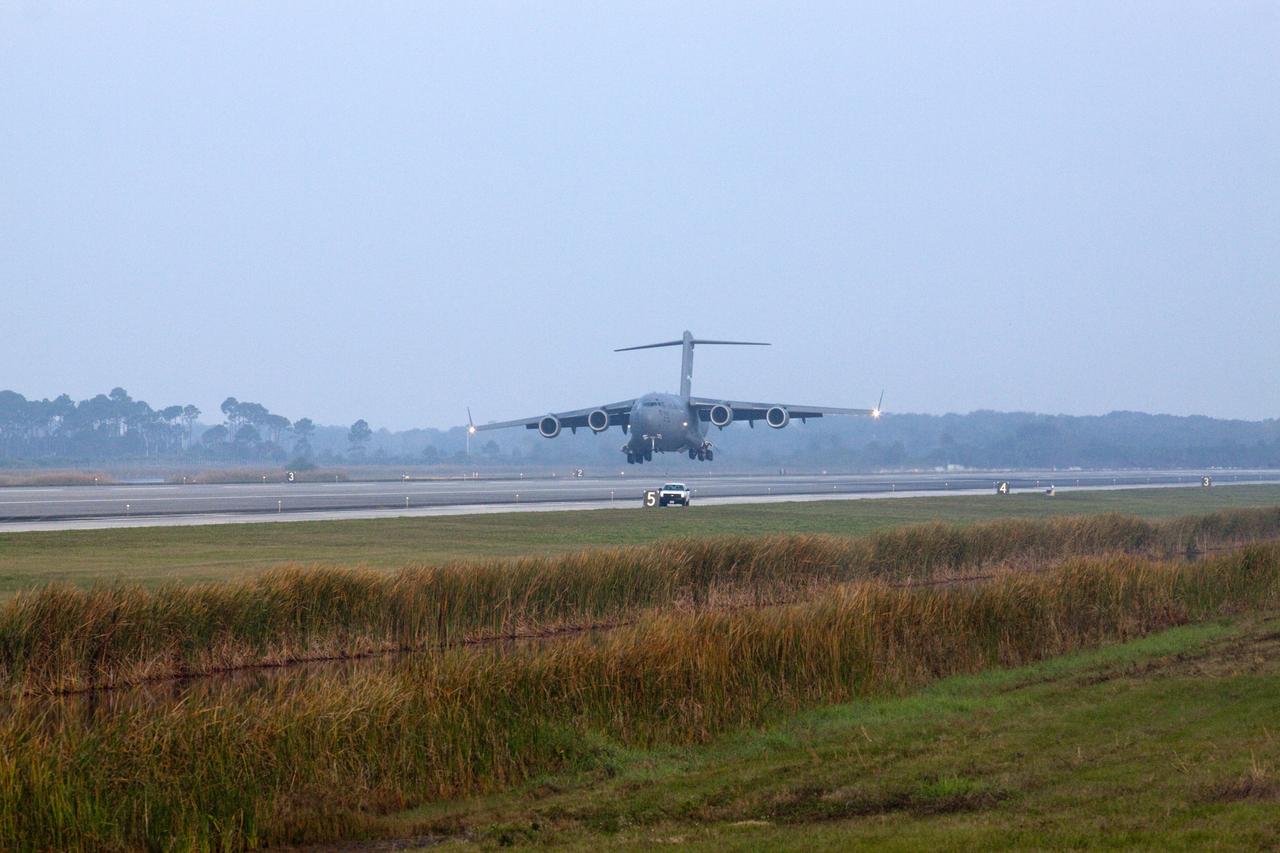
CAPE CANAVERAL, Fla. -- The Tracking and Data Relay Satellite known as TDRS-K arrives at NASA's Kennedy Space Center in Florida aboard an Air Force C-17 transport aircraft at 8:29 a.m. Dec. 18 at the agency's Kennedy Space Center in Florida in preparation for a Jan. 29 launch to a location in geostationary orbit. TDRS-K flew aboard a U.S. Air Force C-17 from the Boeing Space and Intelligence Systems assembly facility in El Segundo, Calif., for final preparation to launch aboard a United Launch Alliance Atlas V rocket. TDRS-K is the first of three next-generation satellites designed to ensure vital operational continuity for NASA by expanding the lifespan of the fleet. Each of the new satellites has a higher performance solar panel design to provide more spacecraft power. This upgrade will return signal processing for the S-Band multiple access service to the ground -- the same as the first-generation TDRS spacecraft. Ground-based processing allows TDRS to service more customers with different and evolving communication requirements. For more information, visit http://tdrs.gsfc.nasa.gov/ Photo credit: NASA/Kim Shiflett
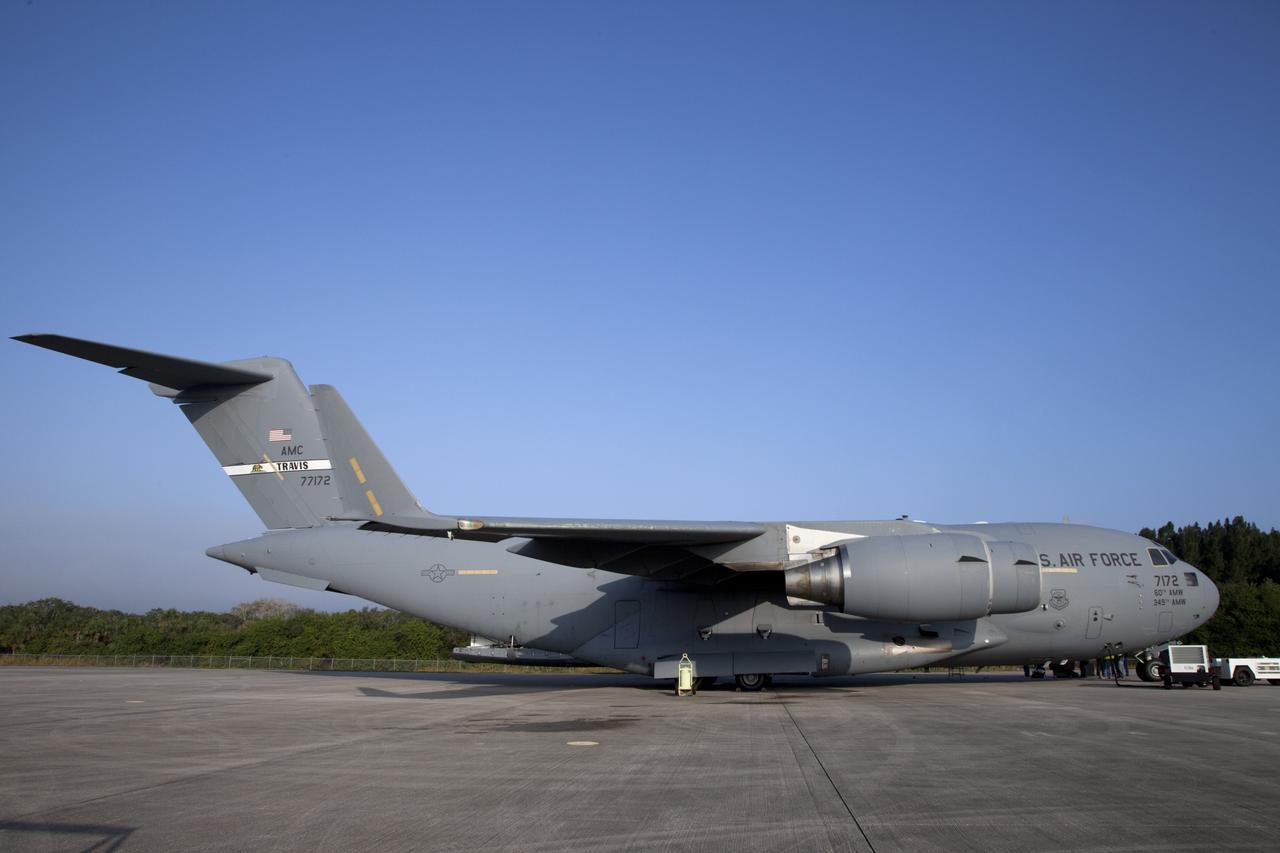
CAPE CANAVERAL, Fla. -- The Tracking and Data Relay Satellite known as TDRS-K arrives at NASA's Kennedy Space Center in Florida aboard an Air Force C-17 transport aircraft at 8:29 a.m. Dec. 18 at the agency's Kennedy Space Center in Florida in preparation for a Jan. 29 launch to a location in geostationary orbit. TDRS-K flew aboard a U.S. Air Force C-17 from the Boeing Space and Intelligence Systems assembly facility in El Segundo, Calif., for final preparation to launch aboard a United Launch Alliance Atlas V rocket. TDRS-K is the first of three next-generation satellites designed to ensure vital operational continuity for NASA by expanding the lifespan of the fleet. Each of the new satellites has a higher performance solar panel design to provide more spacecraft power. This upgrade will return signal processing for the S-Band multiple access service to the ground -- the same as the first-generation TDRS spacecraft. Ground-based processing allows TDRS to service more customers with different and evolving communication requirements. For more information, visit http://tdrs.gsfc.nasa.gov/ Photo credit: NASA/Kim Shiflett