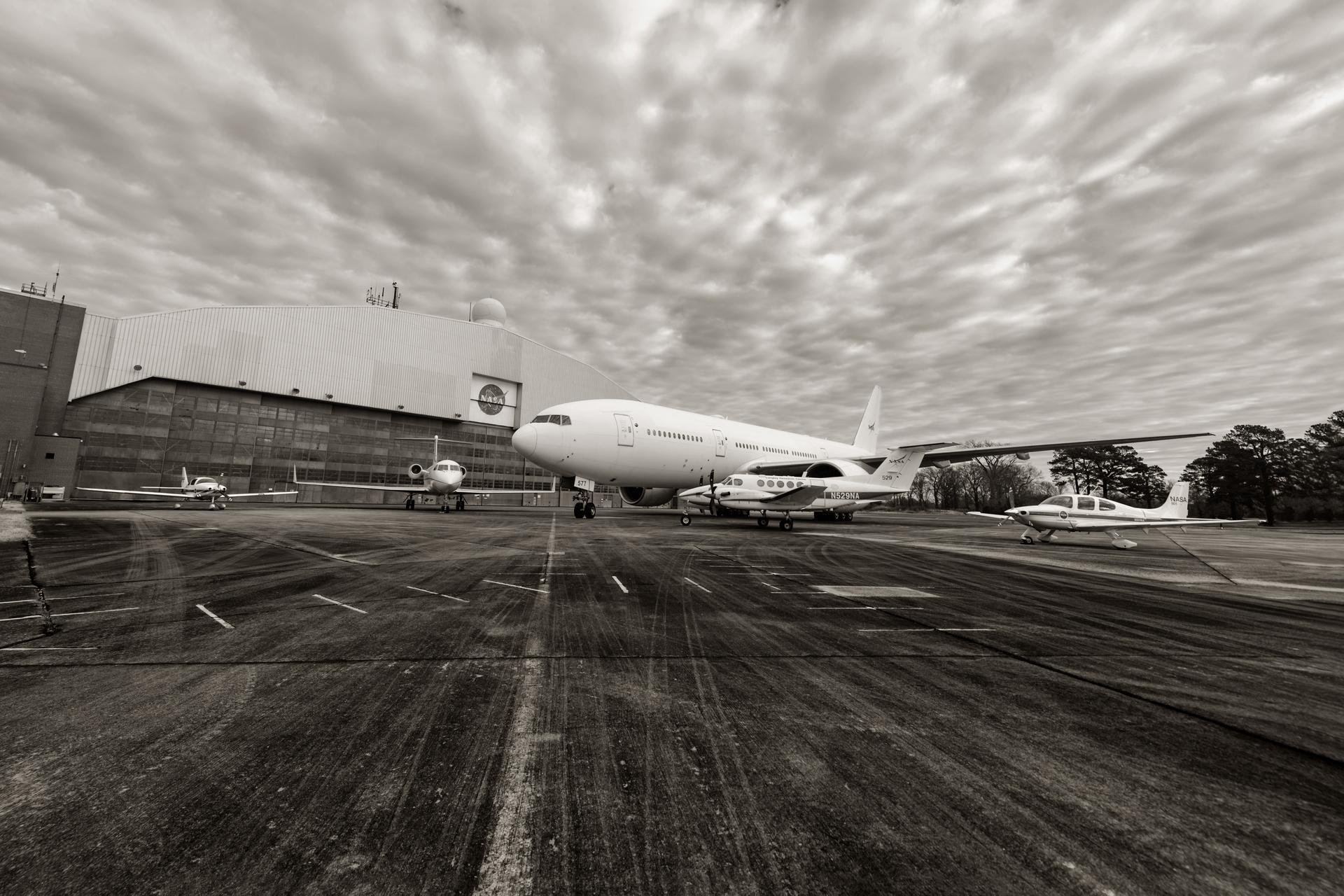
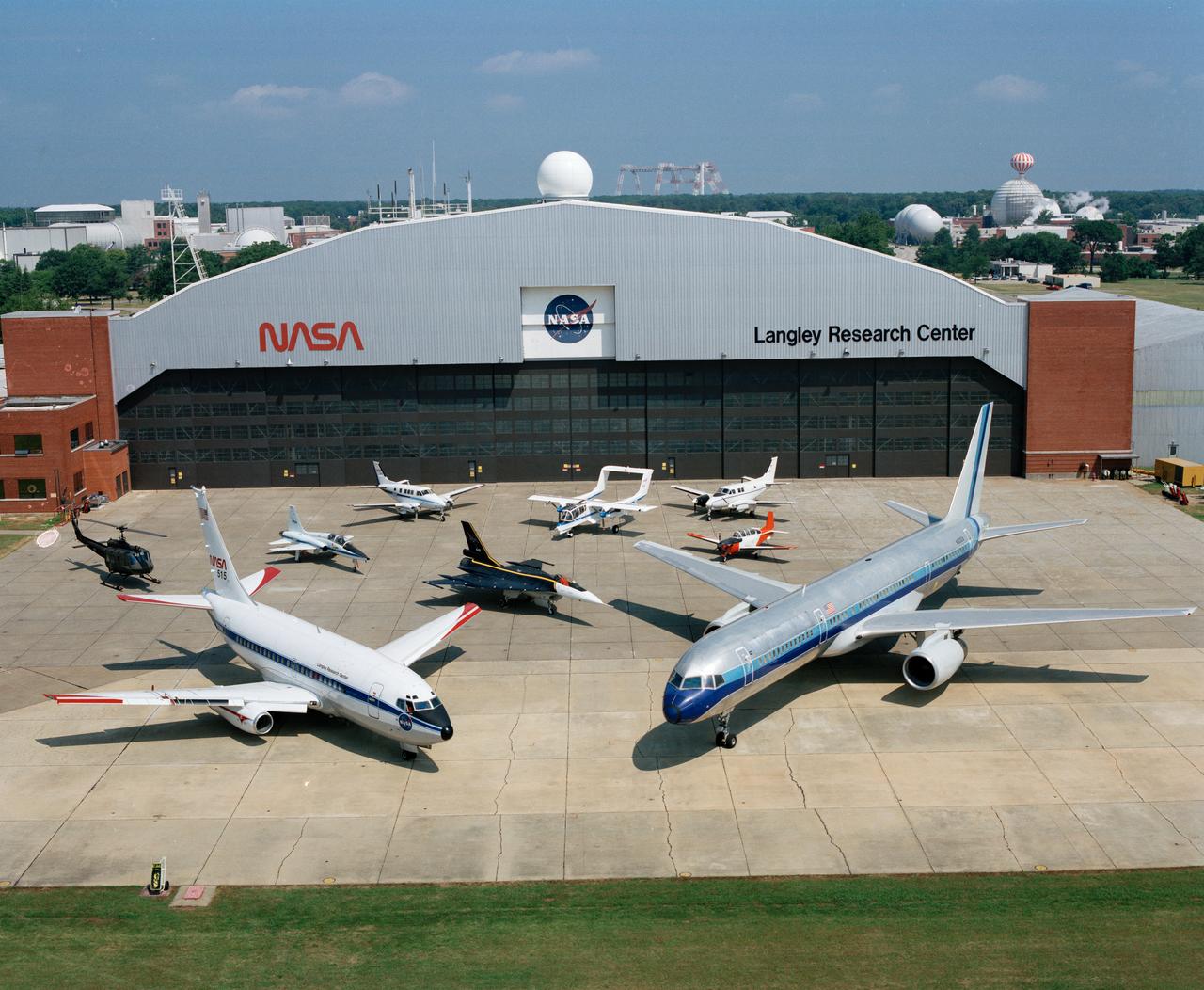
LaRC aircraft in front of hangar, building 1244
Aircraft in front of hangar
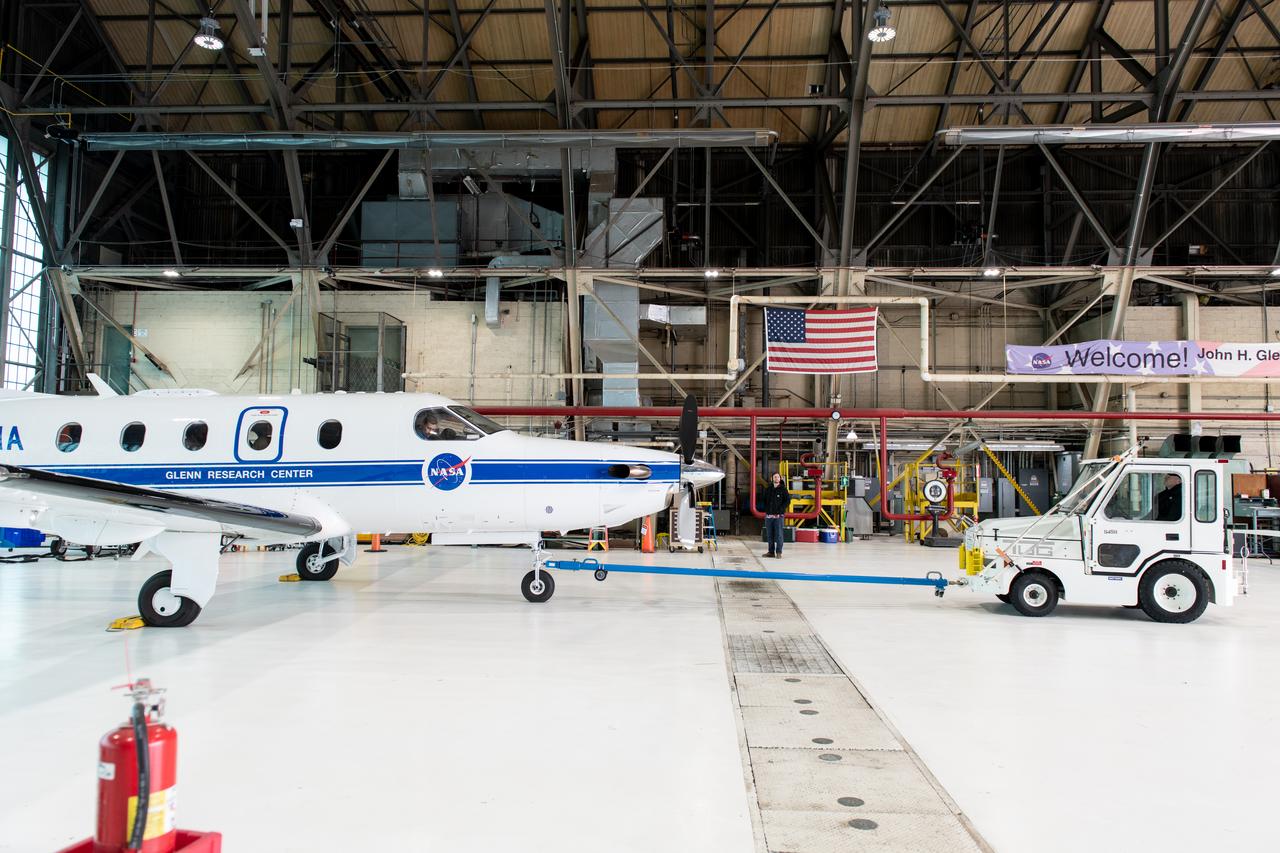
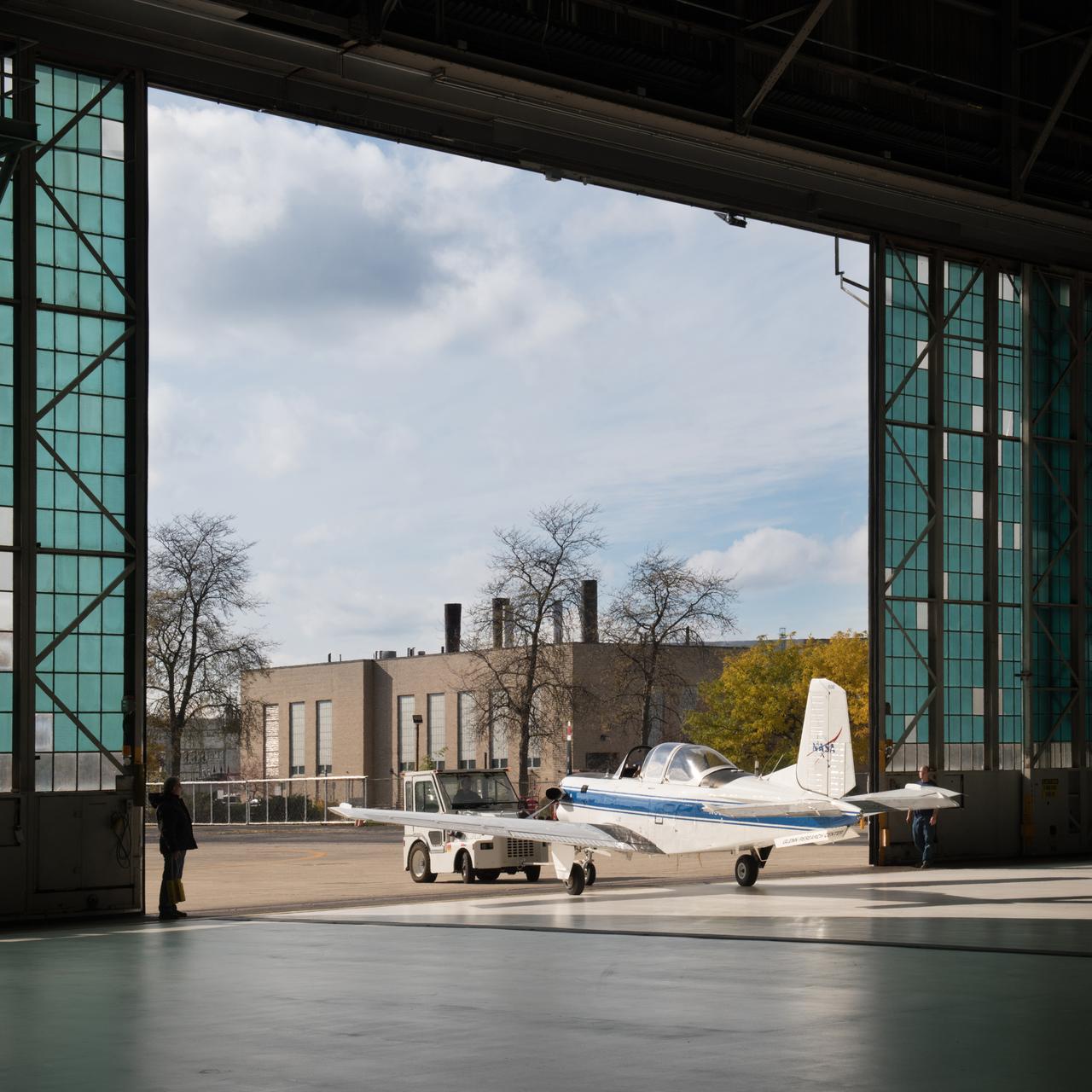
One of NASA Glenn's T-34C research aircraft is removed from the hangar prior to a flight
One of NASA Glenn's T-34C research aircraft is removed from t...
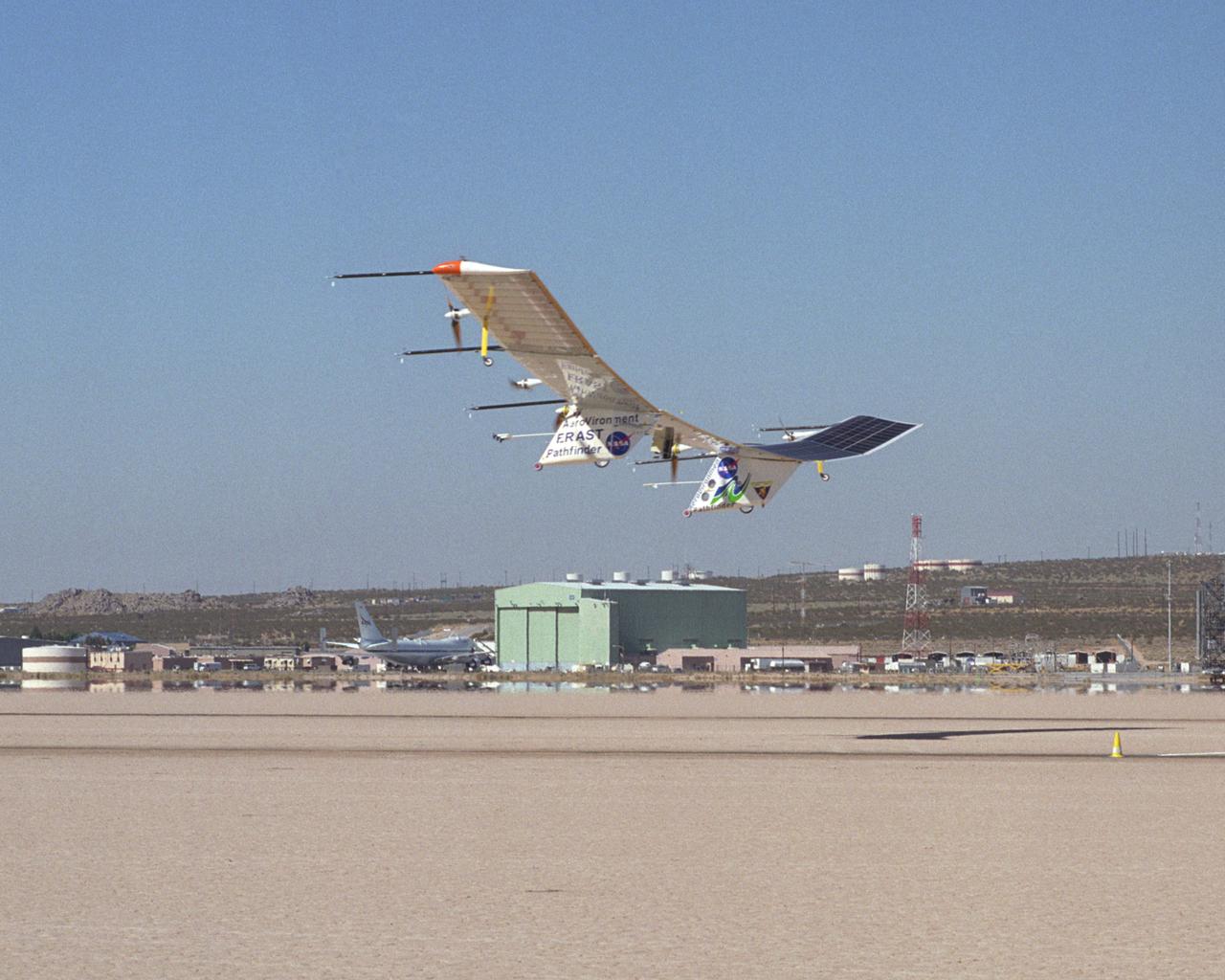
The Pathfinder-Plus solar aircraft flies past NASA Dryden's space shuttle hangar and shuttle carrier aircraft as it descends for landing on Rogers Dry Lake.
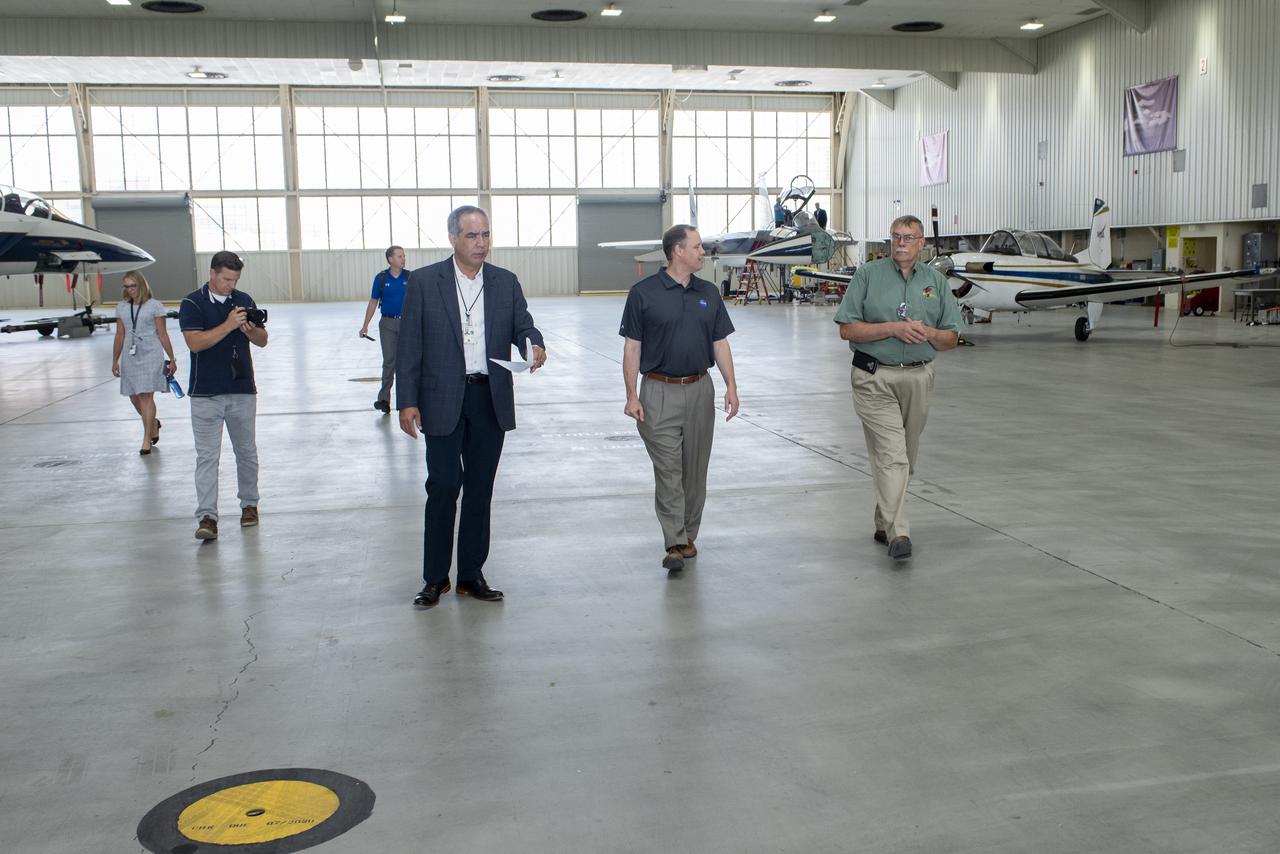
Bridenstine tours main Armstrong hangar that houses the center aircraft used for flight research and safety chase such as F/A-18, F-15B/D, King Air B-200, T-34C and TG-14 aircraft.
NASA Administrator Bridenstine and Armstrong Center Director McBride discuss the capabilities and use of aircraft for flight research inside one of the aircraft hangars at the center.
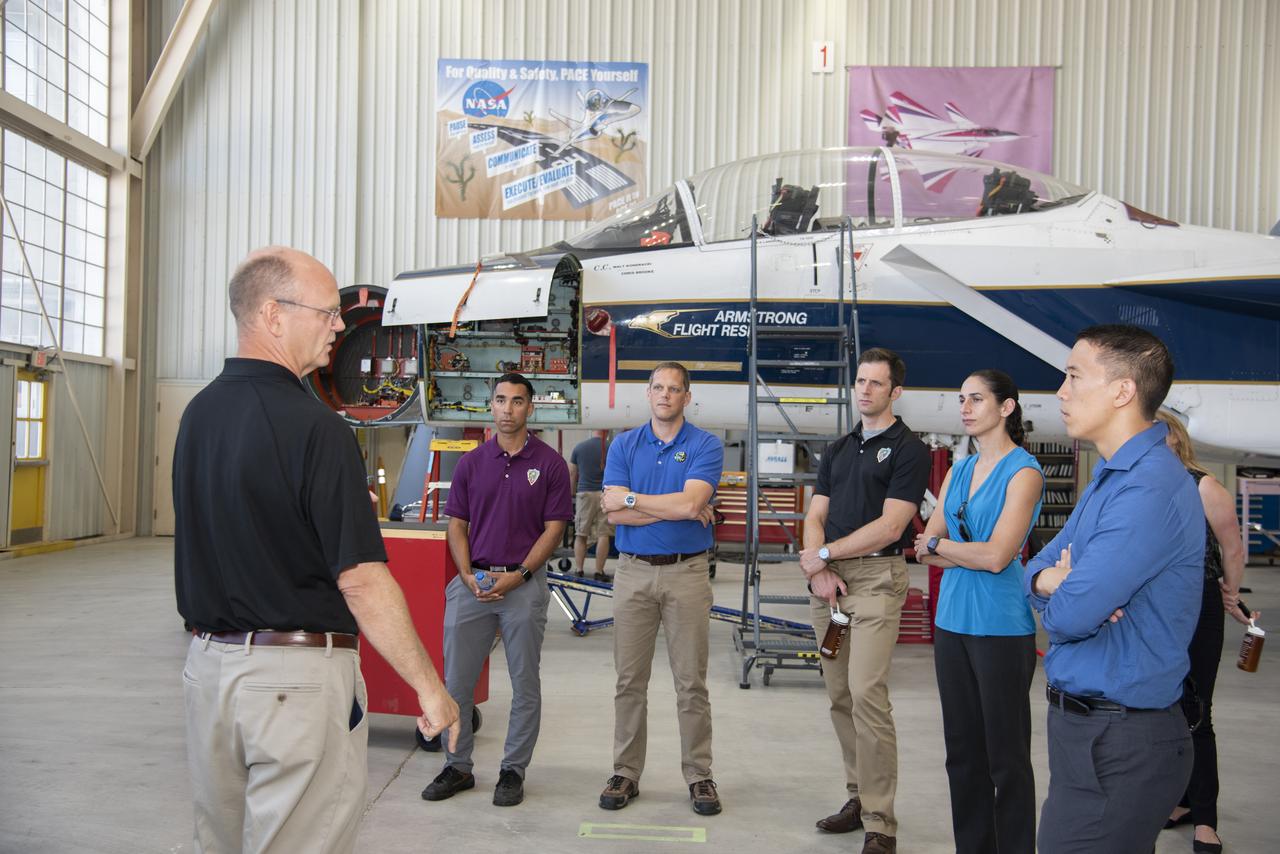
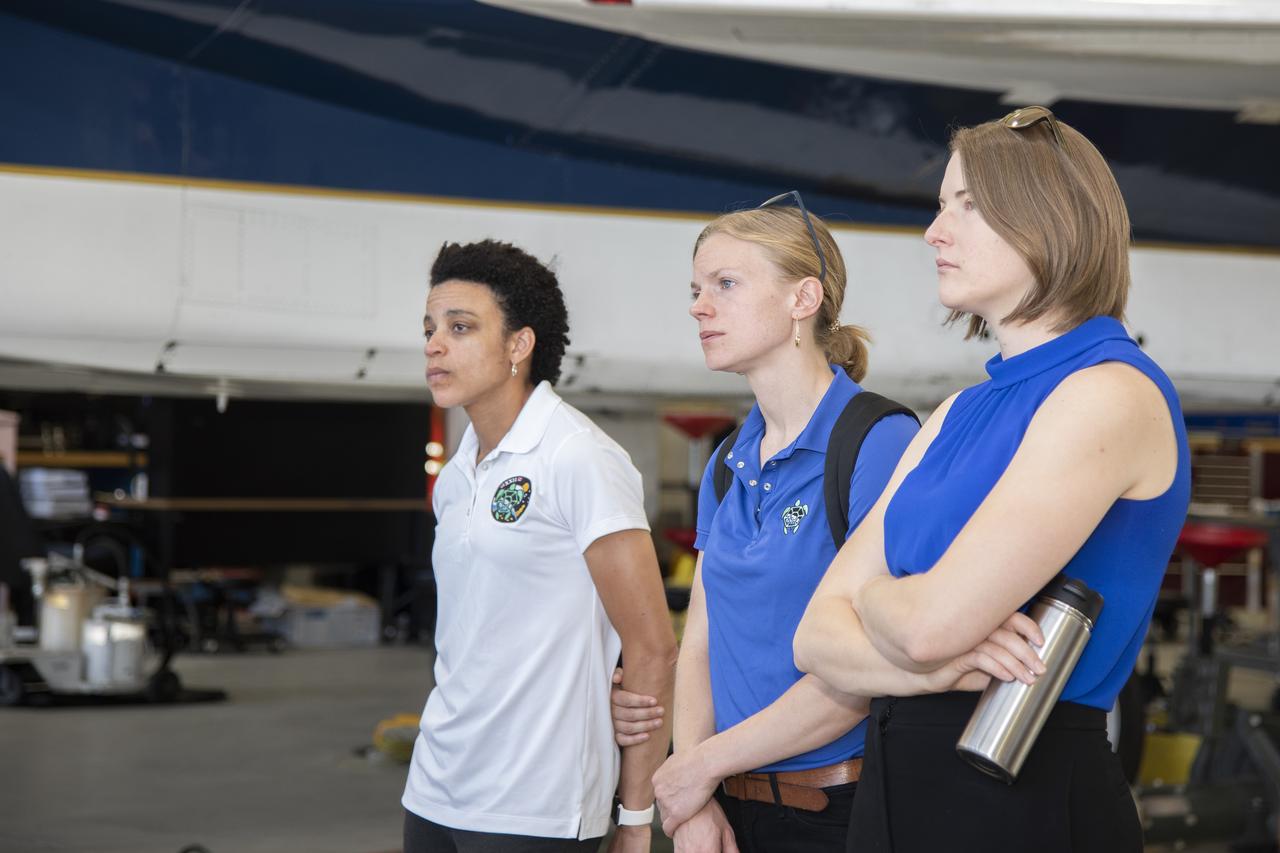
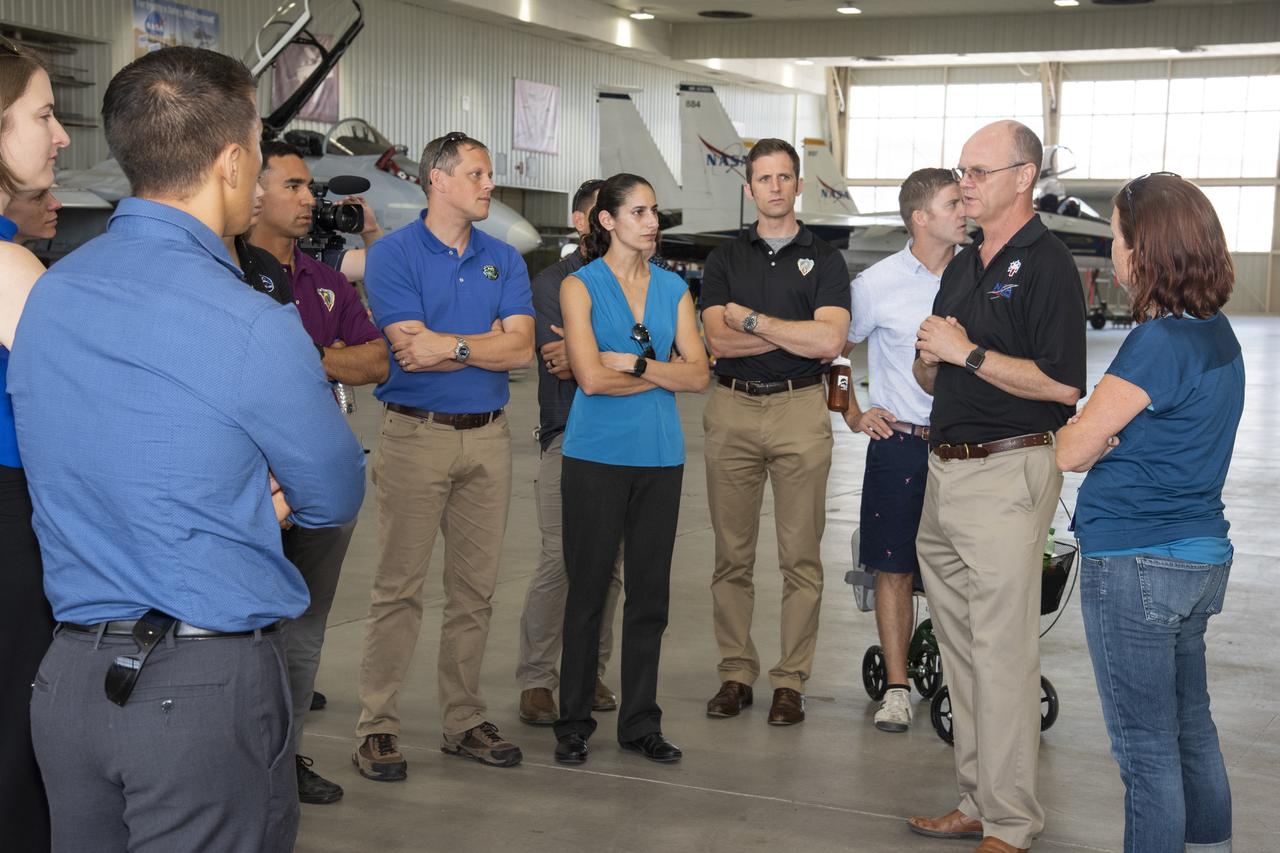
NASA’s 2017 astronaut candidates (L to R) Raja Chari, Bob Hines, Joshua Kutryk, Jasmin Moghbeli, Jonny Kim, and Jessica Watkins toured aircraft hangar at Armstrong Flight Research Center, in Southern California. On the left, NASA’s, X-59 pilot, briefs them on use of F-15 for studying sonic booms during the development of the low-boom X-59 aircraft that is planned to fly supersonically over land.  Low-level supersonic flight is not allowed at this time because of the loud noise levels generated when flying beyond the speed of sound.
Astronauts Tour Aircraft Hangar at Armstrong Flight Research Center
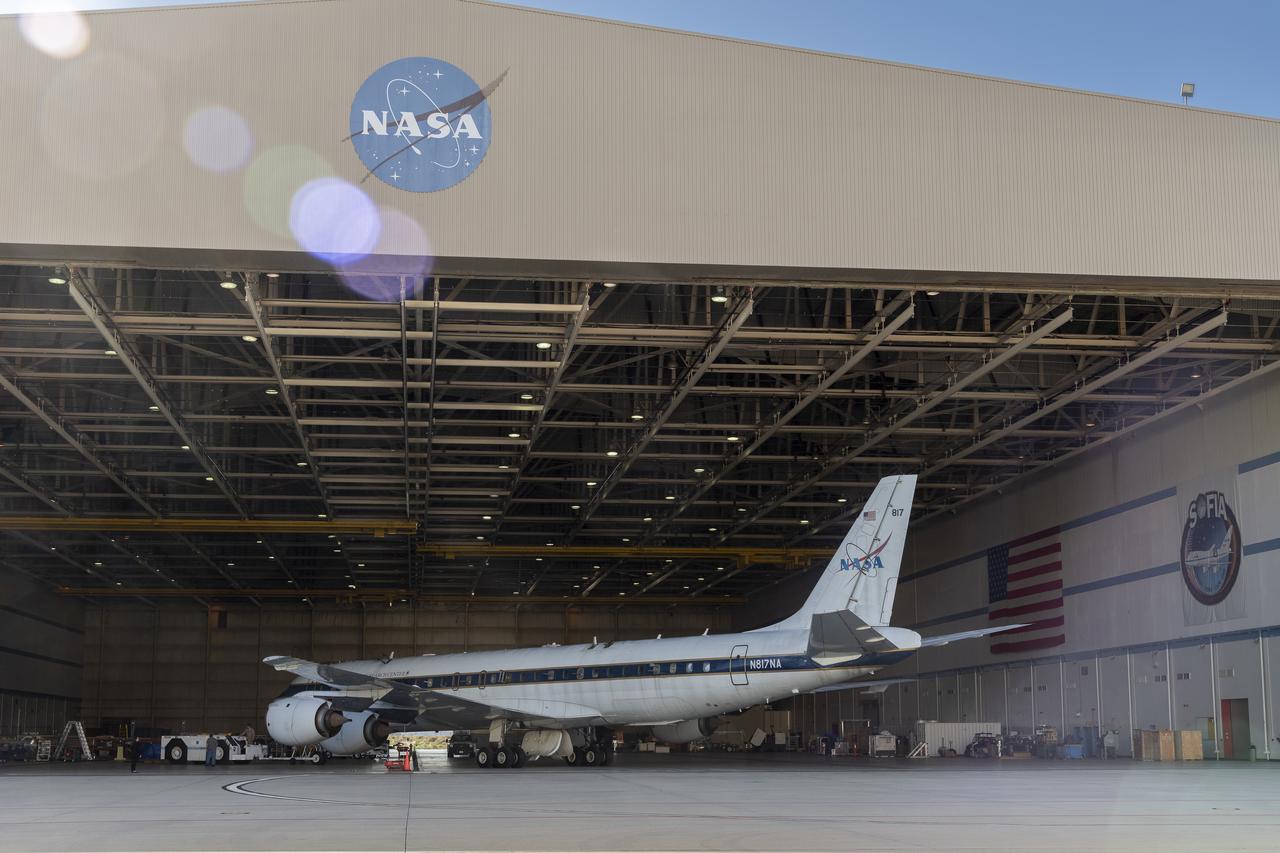
The DC-8 aircraft returns to the hangar at NASA’s Armstrong Flight Research Center Building 703 in Palmdale, California, on April 1, 2024, after completing its final mission supporting Airborne and Satellite Investigation of Asian Air Quality (ASIA-AQ).
NASA’s DC-8 Returns from Final Mission
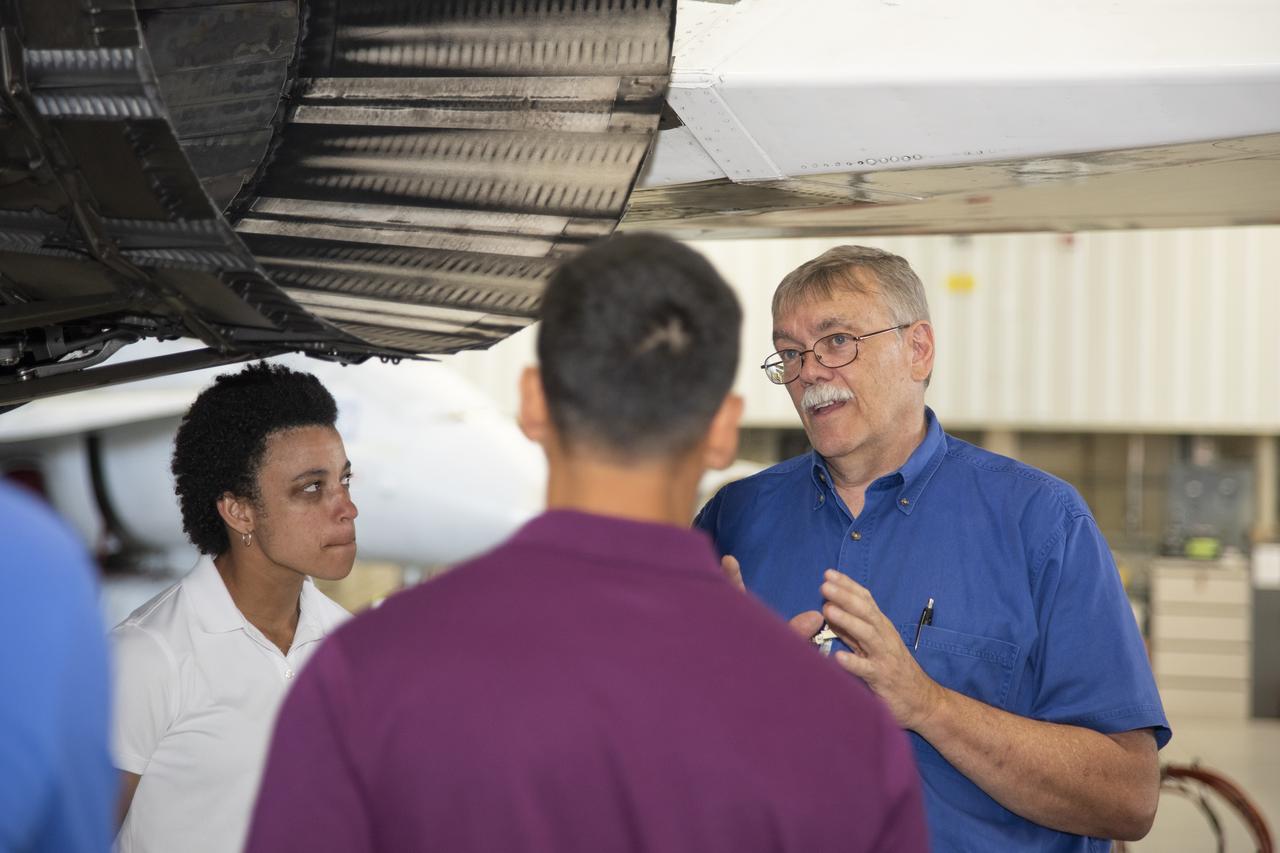
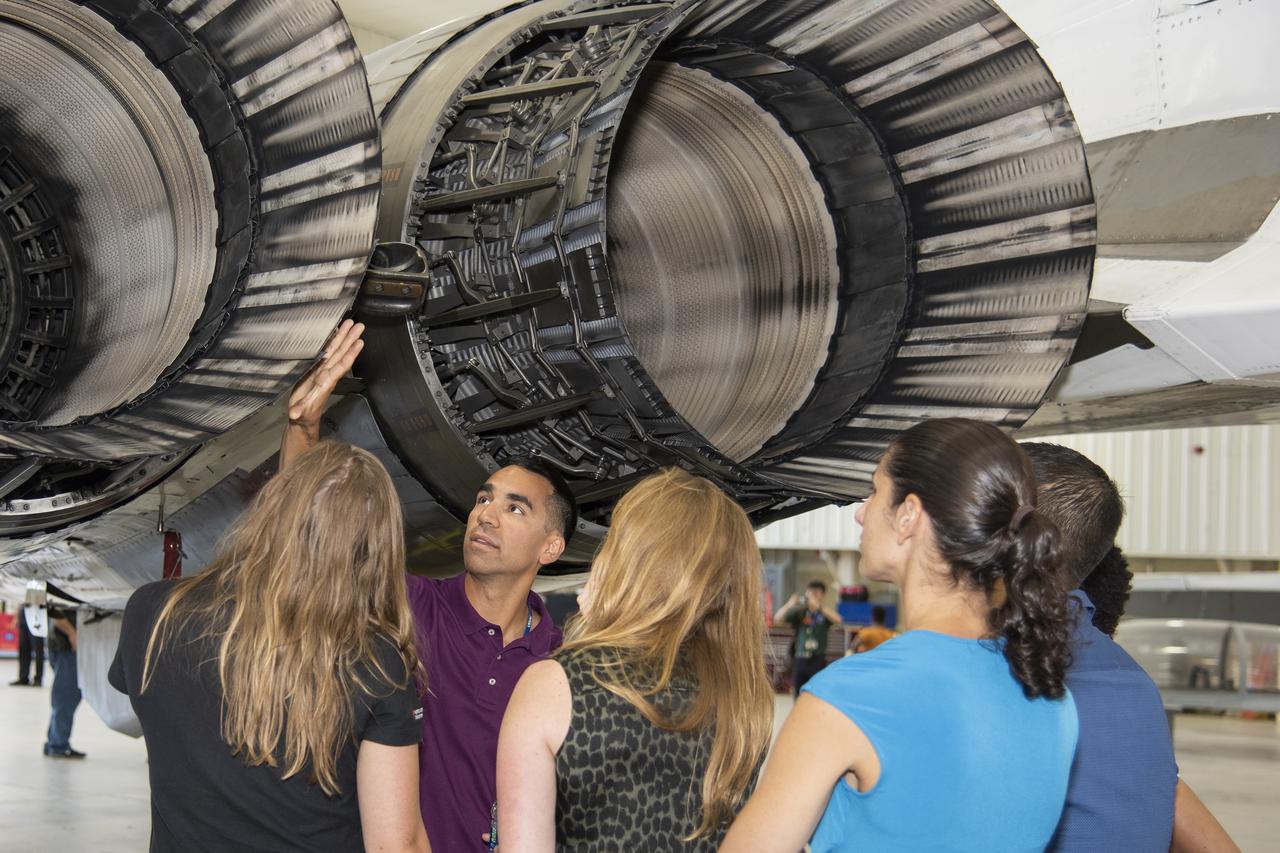
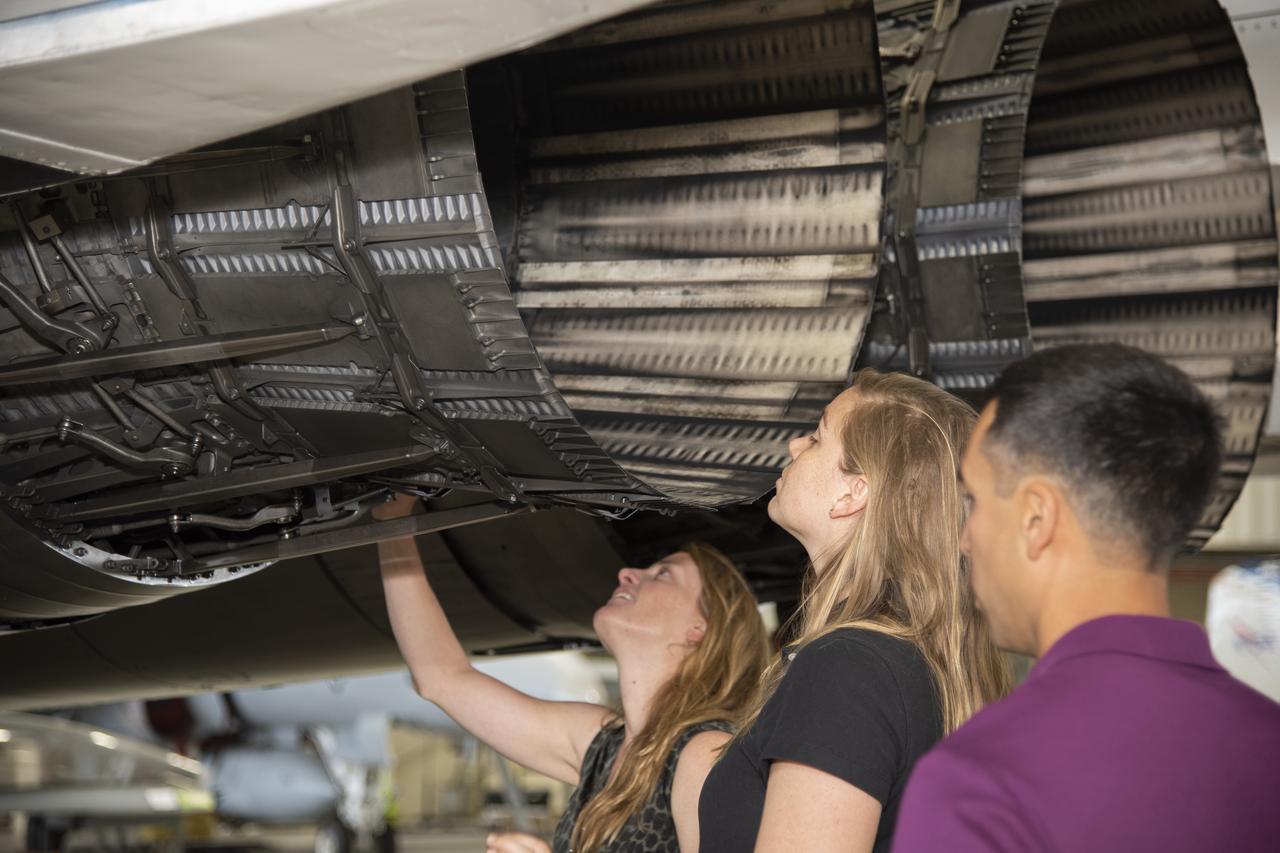
NASA's 2017 astronaut candidates toured aircraft hangar at Armstrong Flight Research Center, in Southern California where Crew Chief Tom Grindle talks with (L to R) Jessica Watkins and Raja Chari near engine nozzle of F-15 jet. The F-15 will fly in tandem with the X-59 QueSST during early flight test stages for the X-59 development.
Astronauts Tour Aircraft Hangar at Armstrong Flight Research Center
NASA, Lockheed Martin S-3B Viking Aircraft #N601NA on Hangar Apron
GRC-2011-C-00658
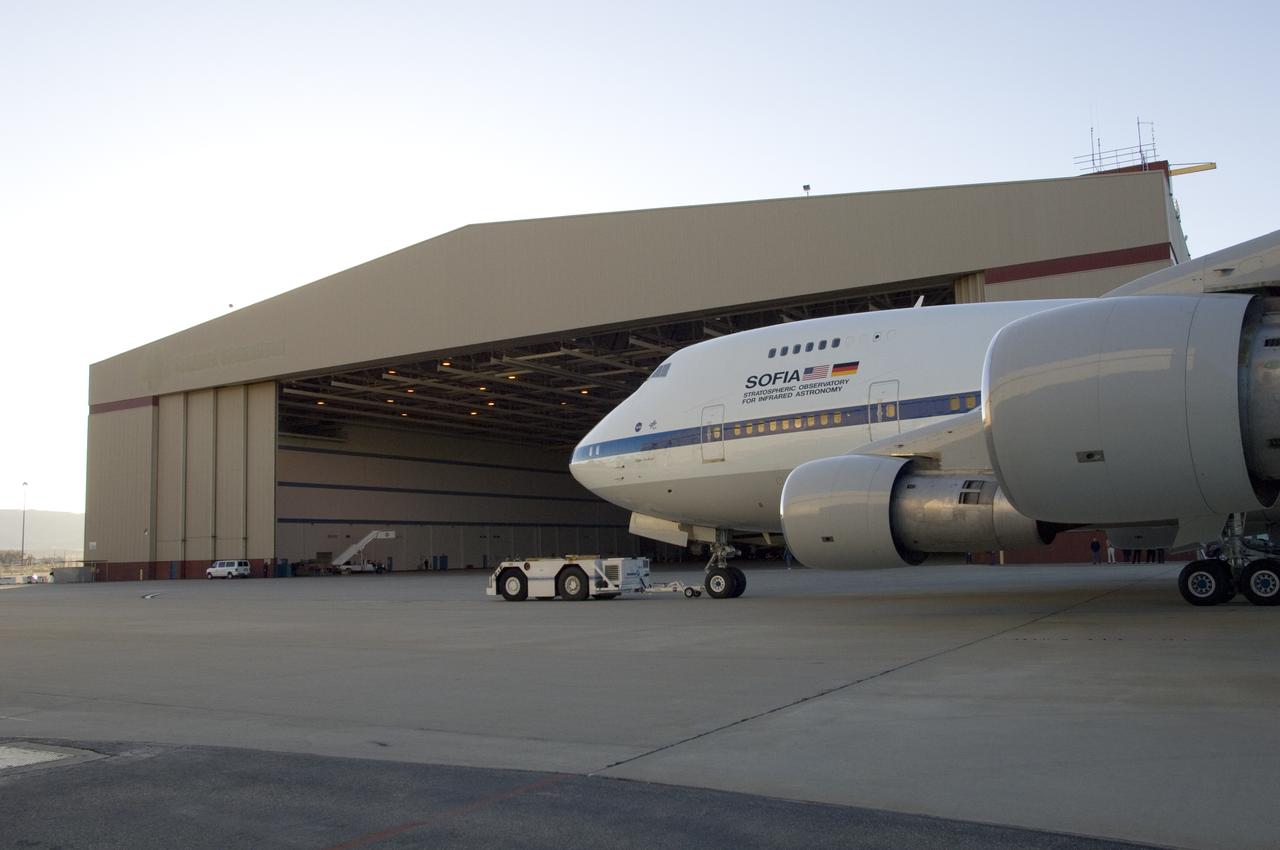
An aircraft tug tows NASA's SOFIA infrared observatory 747SP into Hangar 703 upon arrival at its base, the Dryden Aircraft Operations Facility in Palmdale, Calif.
An aircraft tug tows NASA's SOFIA infrared observatory 747SP into Hangar 703 upon arrival at its base, the Dryden Aircraft Operations Facility in Palmdale, CA.
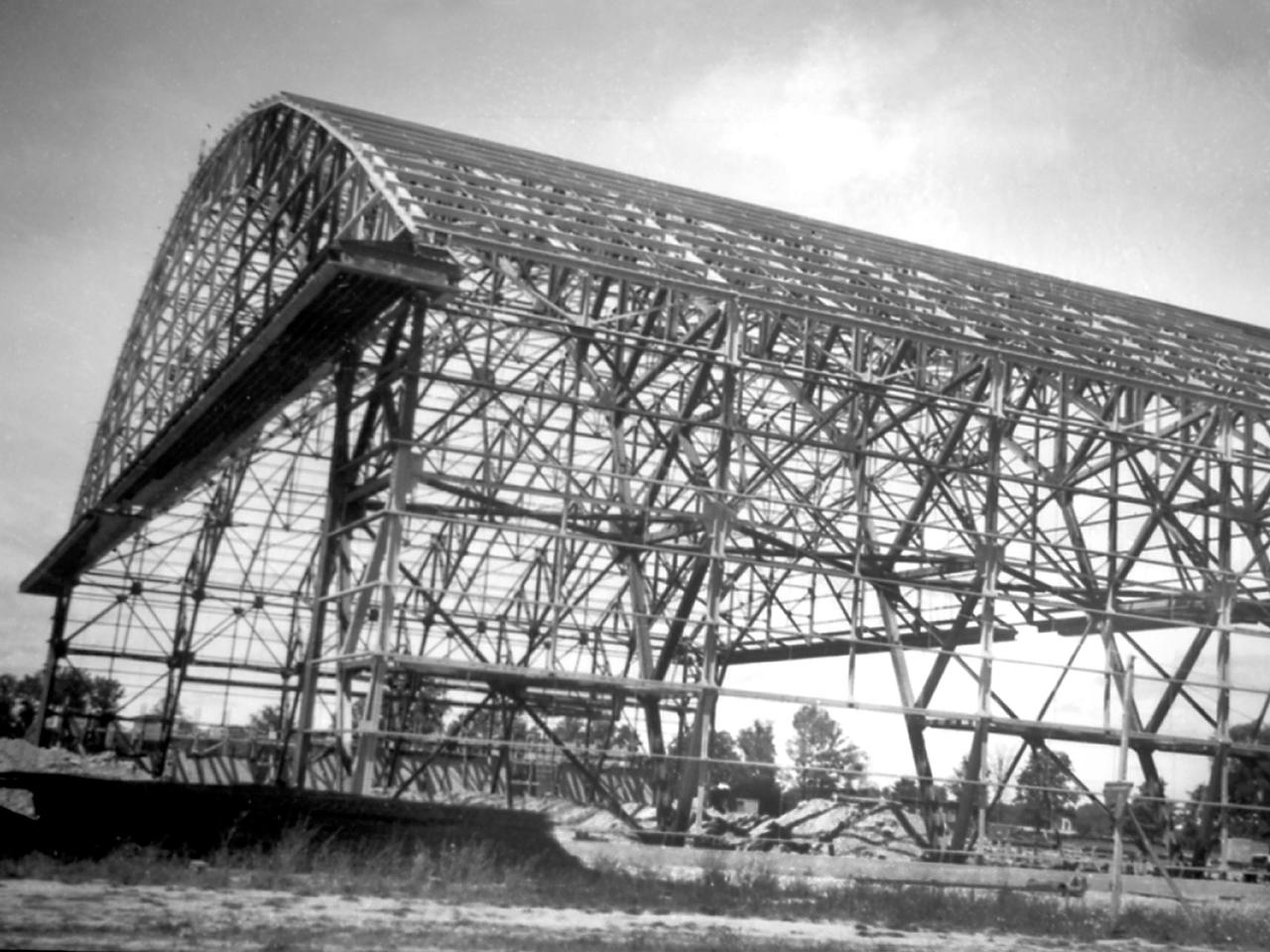
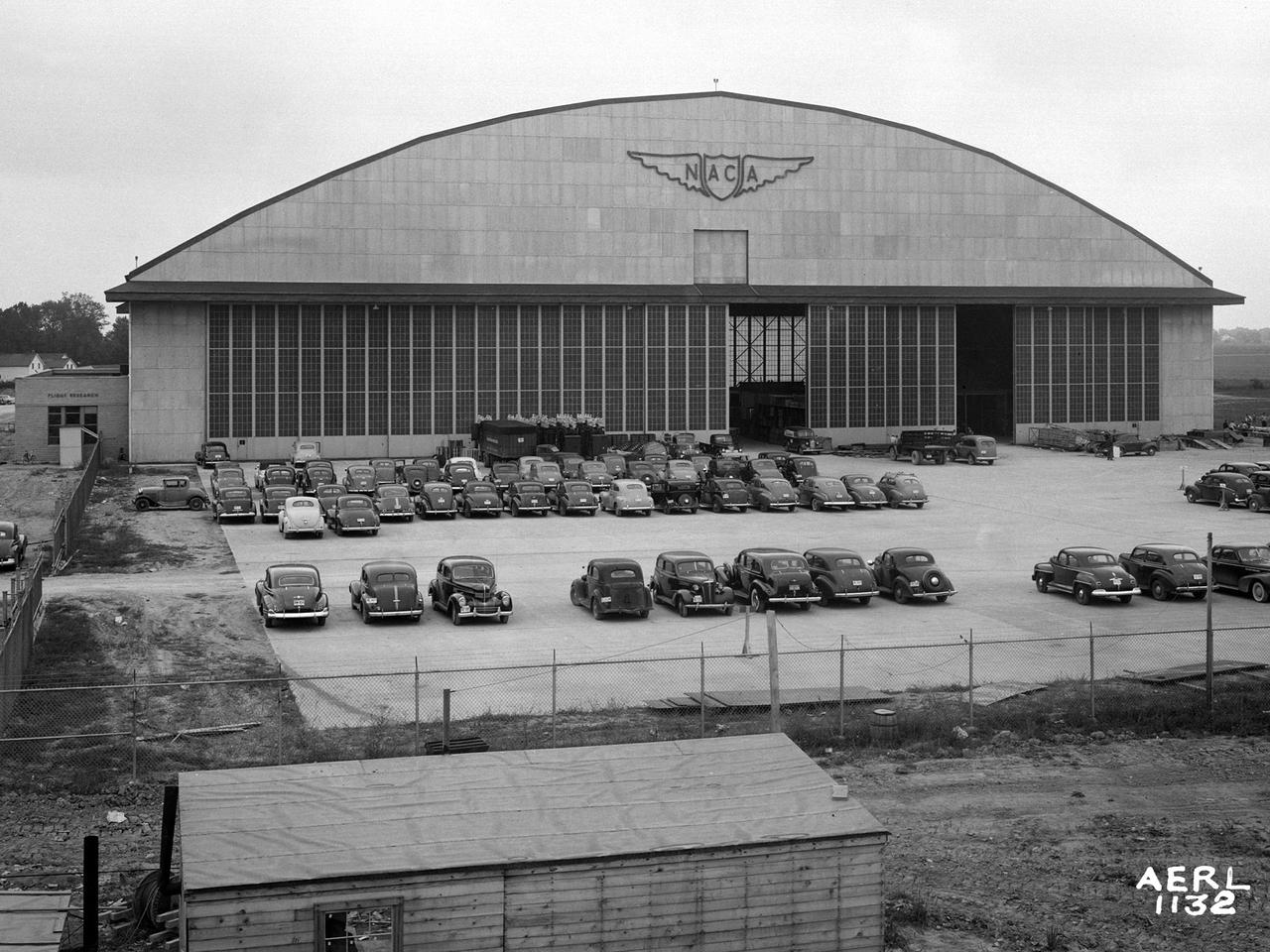
Northward view of the Flight Research Building's steel framework in August 1941 as it neared completion at the National Advisory Committee for Aeronautics (NACA) Aircraft Engine Research Laboratory. The 272- by 150-foot hangar had a 90-foot clearance at its highest point. The hangar was the first structure built and was needed as a shelter for the growing staff, who occupied a nearby Farm House at this point.  In January 1941 the Cleveland-area R.P. Carbone Construction Company was selected to build the hangar. Over the ensuing months, however, the NACA management became frustrated by the slow progress on the project. Although Carbone was contracted to complete the entire hangar by August, it was September before even the structural steel frame, seen in this photograph, was in place. Officials estimated the roof and siding were four months behind schedule. This was a serious concern because the lab’s research, support and administrative staff members would soon begin arriving. By mid-September the transite walls began enclosing the skeleton. In October work began on the temporary offices inside. The building was completed in mid-December just in time for the staff arriving from Langley.
Construction of the Hangar at the New Aircraft Engine Research Laboratory
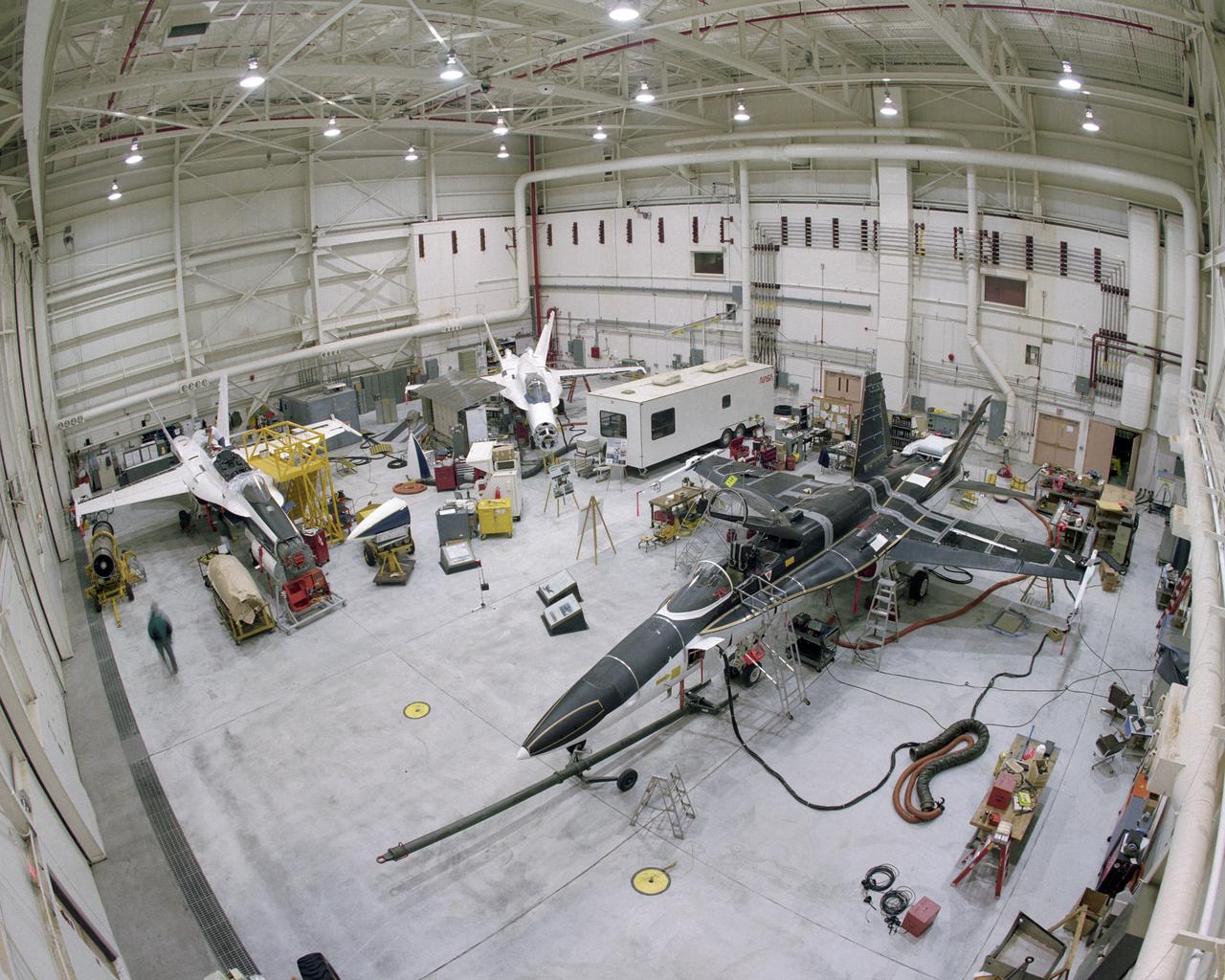
RAIF Hangar Bays 1 and 2. Three of NASA's F-18 aircraft can be seen in this photo. The SRA, or Systems Research Aircraft, is at the far left. In the middle is the F-18 Iron Bird, used for full-scale, hardware-in-the-loop simulations. On the right is the F-18 High Alpha Research Vehicle, or HARV.
RAIF Hangar Bays 1 and 2
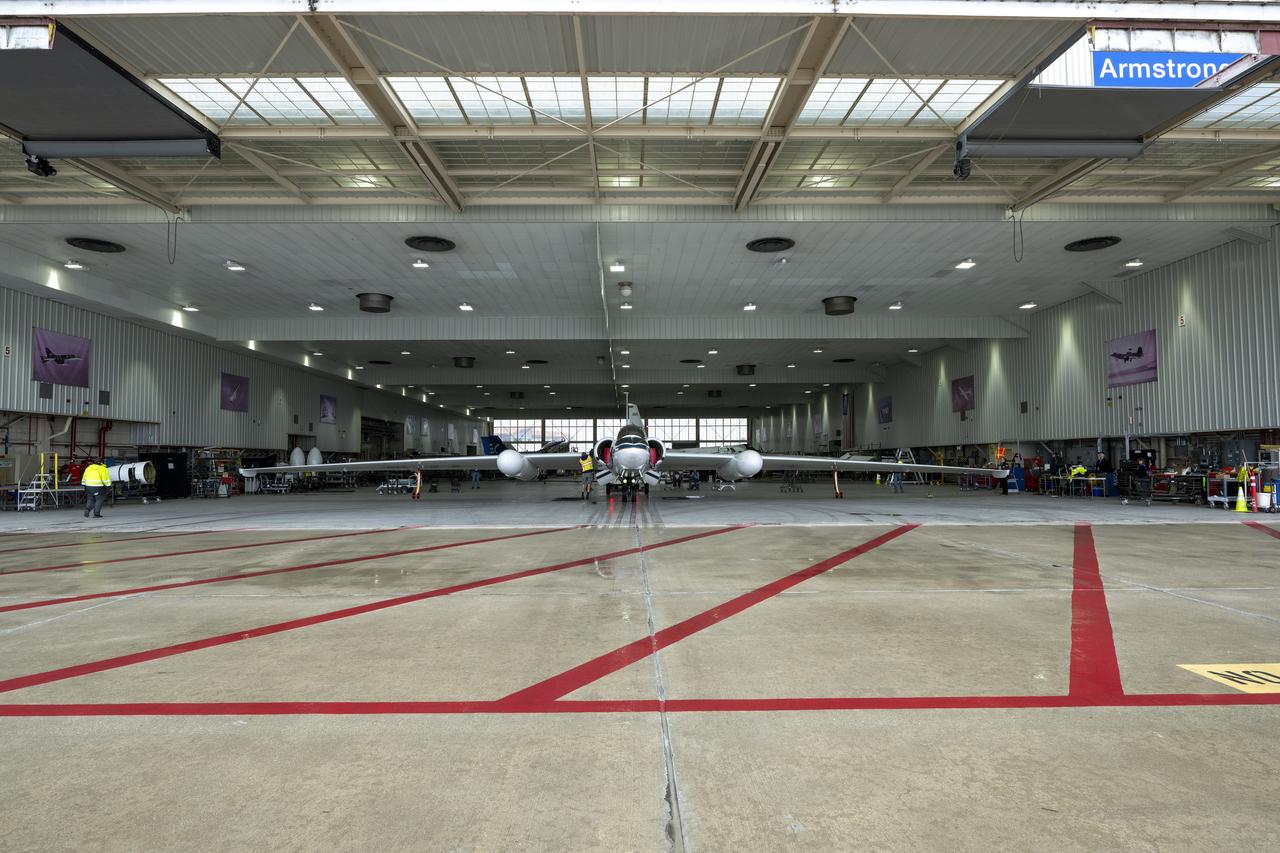
The ER-2 aircraft is parked in a hangar at NASA’s Armstrong Flight Research Center in Edwards, California, in March 2025. The plane is prepared for takeoff to support the airborne Lunar Spectral Irradiance, or air-LUSI, mission.
ER-2 Conducts Night Flights for air-LUSI Mission
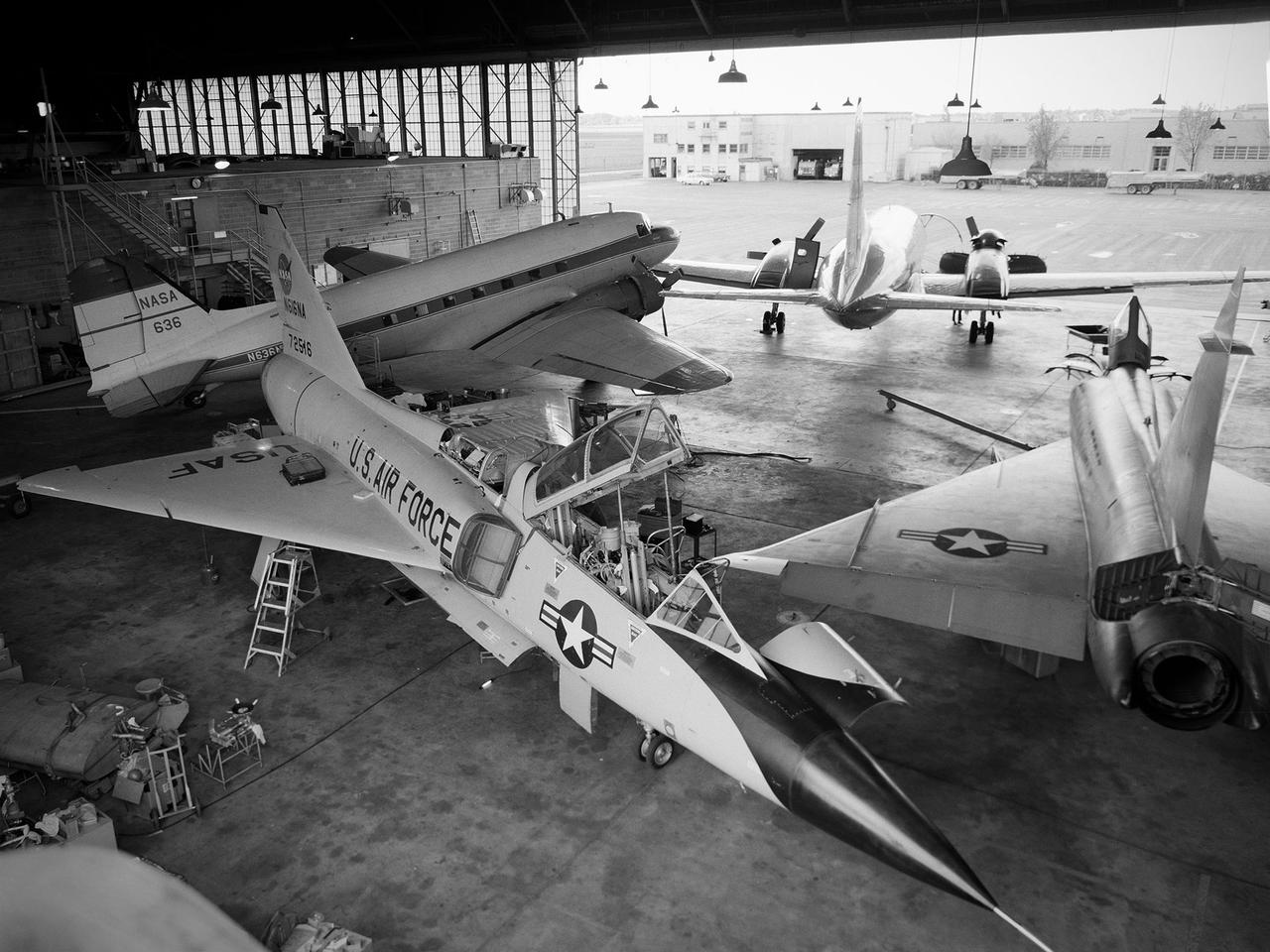
Several aircraft parked inside the Flight Research Building, or hangar, at the National Aeronautics and Space Administration (NASA) Lewis Research Center in Cleveland, Ohio. A Convair F-106B Delta Dart is in the foreground, a Convair F-102A Delta Dagger is to the right, a Douglas DC-3 is in the back to left, and a Convair T-29 is in background. Lewis’ Martin B-57B Canberra is not seen in this photograph. The F-102A had just been acquired by Lewis to serve as a chase plane for the F-106B.    The Lewis team removed the weapons system and 700 pounds of wire from the F-106B when it was acquired on October 20, 1966. The staff cut holes in the wings and modified the elevons to mount the test nacelles. A 228-gallon fuel tank was installed in the missile bay, and the existing wing tanks were used for instrumentation.     This photograph contains a rare view of the Block House, seen to the left of the aircraft. Lewis acquired three large developmental programs in 1962—the Centaur and Agena rockets and the M-1 engine. The center was short on office space at the time, and its flight research program was temporarily on the wane. Lewis management decided to construct a large cinderblock structure inside one half of the hangar to house the new personnel. This structure was used until 1965 when the new Developmental Engineering Building was built. The Block House was eventually torn down in 1973.
NASA Aircraft in the Hangar at Lewis Research Center
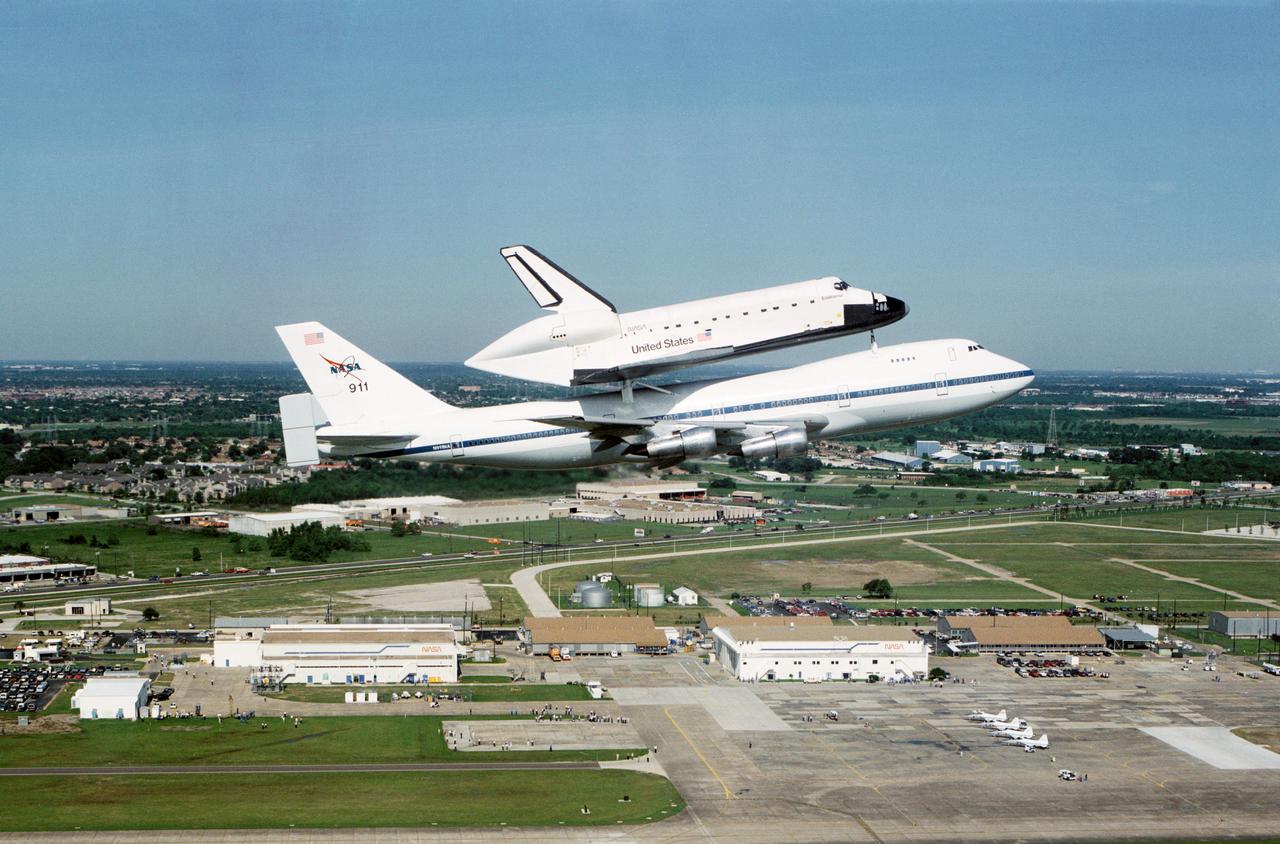
S91-36097 (6 May 1991) --- Air to air view of Endeavour, Orbiter Vehicle (OV) 105, atop a Shuttle Carrier Aircraft (SCA) NASA 911, a modified Boeing 747, approaches touchdown for a brief stopover at Ellington Field, near JSC. Visible below the spacecraft/aircraft combination are the NASA T-38 flight line, NASA aircraft hangars and facilities, and a runway. OV-105 rolled out at Rockwell's Palmdale facility on 04-25-91 to once more bring to four the total of NASA Shuttles available for flight assignment. The spacecraft and aircraft-tandem left Houston later on this day headed for another stop in Mississippi before landing in Florida on 05-07-91. This photograph was taken from a T-38 aircraft by Sheri J. Dunnette of JSC's Image Science Division (ISD).
Air to air view of Endeavour, OV-105, atop SCA approaches Ellington runway
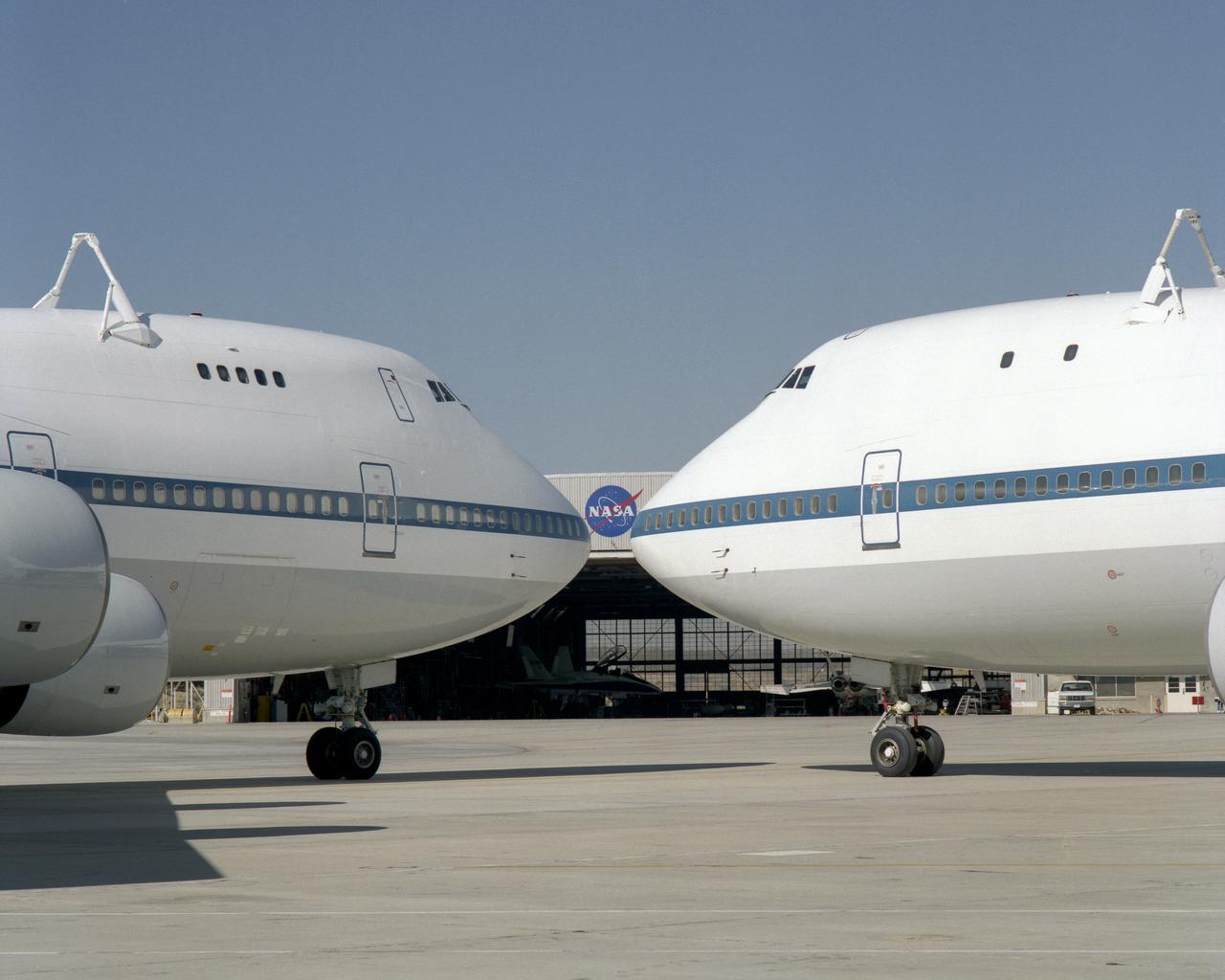
The NASA logo on a hangar is framed by the noses of NASA's two modified 747 Shuttle Carrier Aircraft on the ramp at NASA Dryden in this 1995 photo.
The NASA logo on a hangar is framed by the noses of NASA's two modified 747 Shuttle Carrier Aircraft on the ramp at NASA Dryden in this 1995 photo
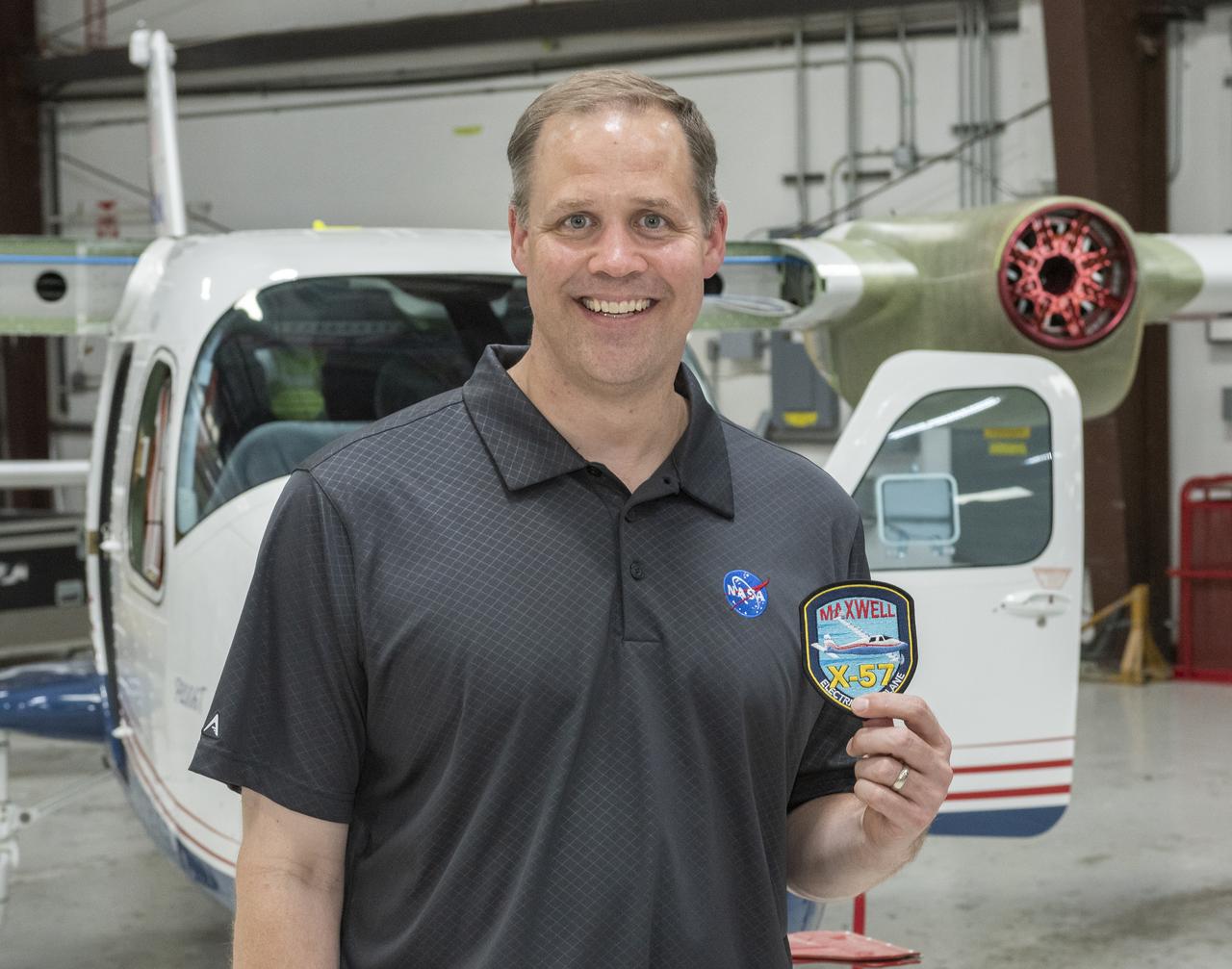
Administrator Bridenstine receives X-57 program patch standing in front of the X-57 being modified from combustion Tecnam P2006T aircraft into all-electric aircraft in Scaled Composites hangar at Mojave Air & Space Port in California.
NASA Administrator Bridenstine receives X-57 all-electric aircraft program patch standing in front of the X-57 being modified at Scaled Composites at Mojave Air and Space Port in California.
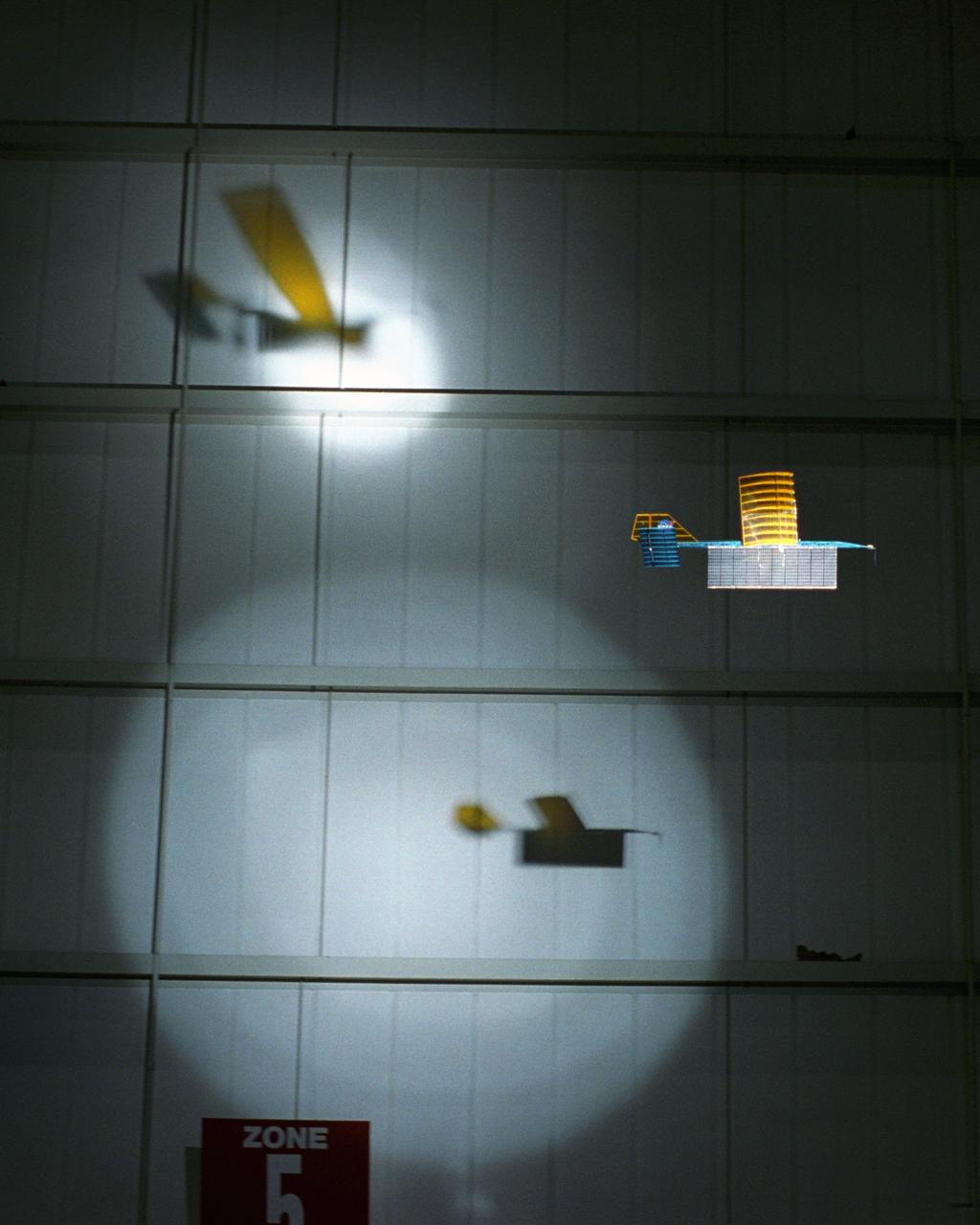
An experimental radio-controlled model aircraft casts two unique shadows as it flies inside a Dryden hangar using two spotlights as energy sources. This phase of testing was used to develop procedures and operations for "handing off" the aircraft between different sources of power.
An experimental radio-controlled model aircraft casts two unique shadows as it flies inside a Dryden hangar using two spotlights as energy sources.
NASA’s 2017 astronaut candidates (L to R) Jessica Watkins, Zena Cardman, Kayla Barron toured aircraft hangar at Armstrong Flight Research Center, in Southern California where they were briefed on the use of Armstrong's F-15 and F-18 aircraft for studying sonic booms.  The aircraft will be used during the development of the low-boom X-59 aircraft that is planned to fly supersonically over land, which is not allowed at this time because of the loud noise created when flying beyond the speed of sound.
Pilot Nils Larsen Speaks to Astronauts on X-59 Research Using Jets
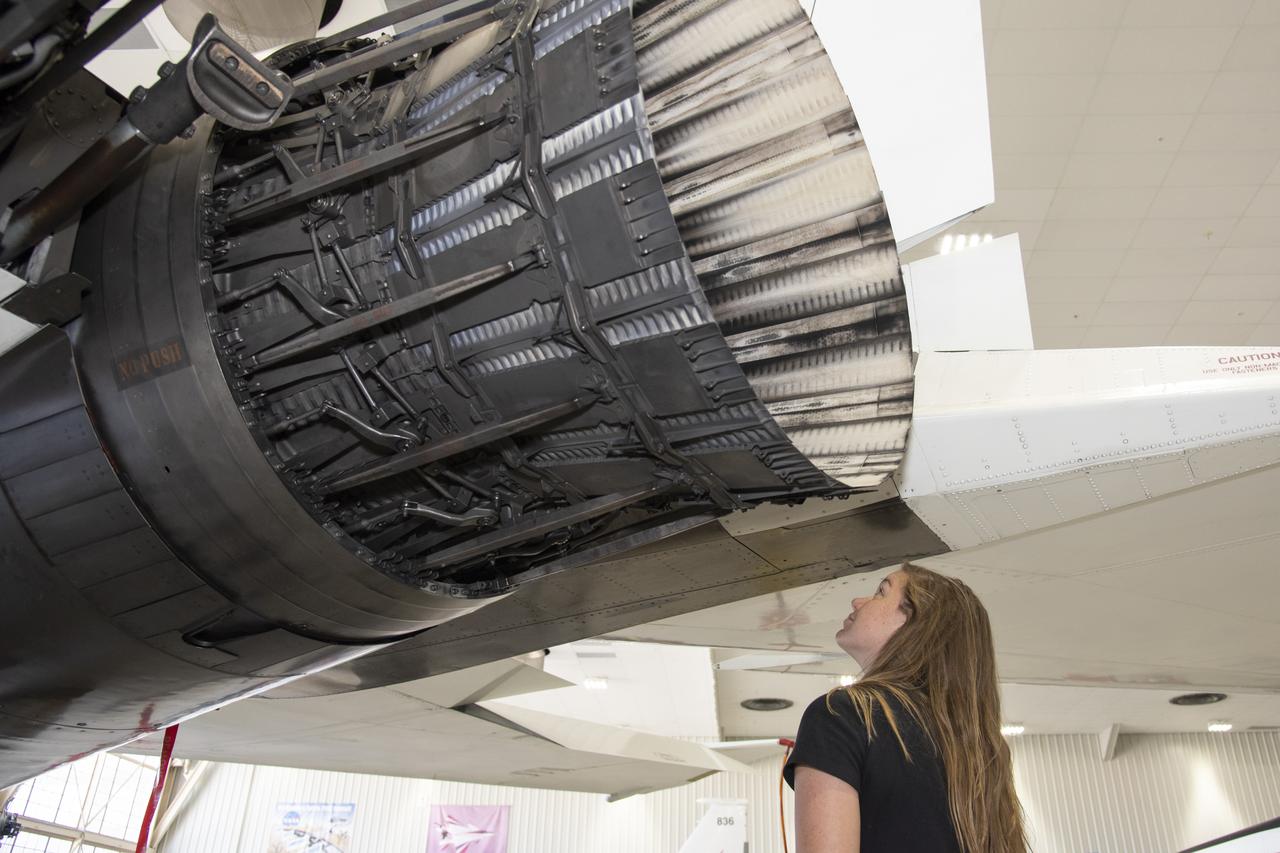
NASA’s 2017 astronaut candidates toured aircraft hangar at Armstrong Flight Research Center, in Southern California where Jenni Sidey-Gibbons looks inside engine nozzle of F-15 jet. The F-15 will fly in tandem with the X-59 QueSST during early flight test stages for the X-59 development.
Astronaut Looks at Nozzle of F-15 at Armstrong Flight Research Center
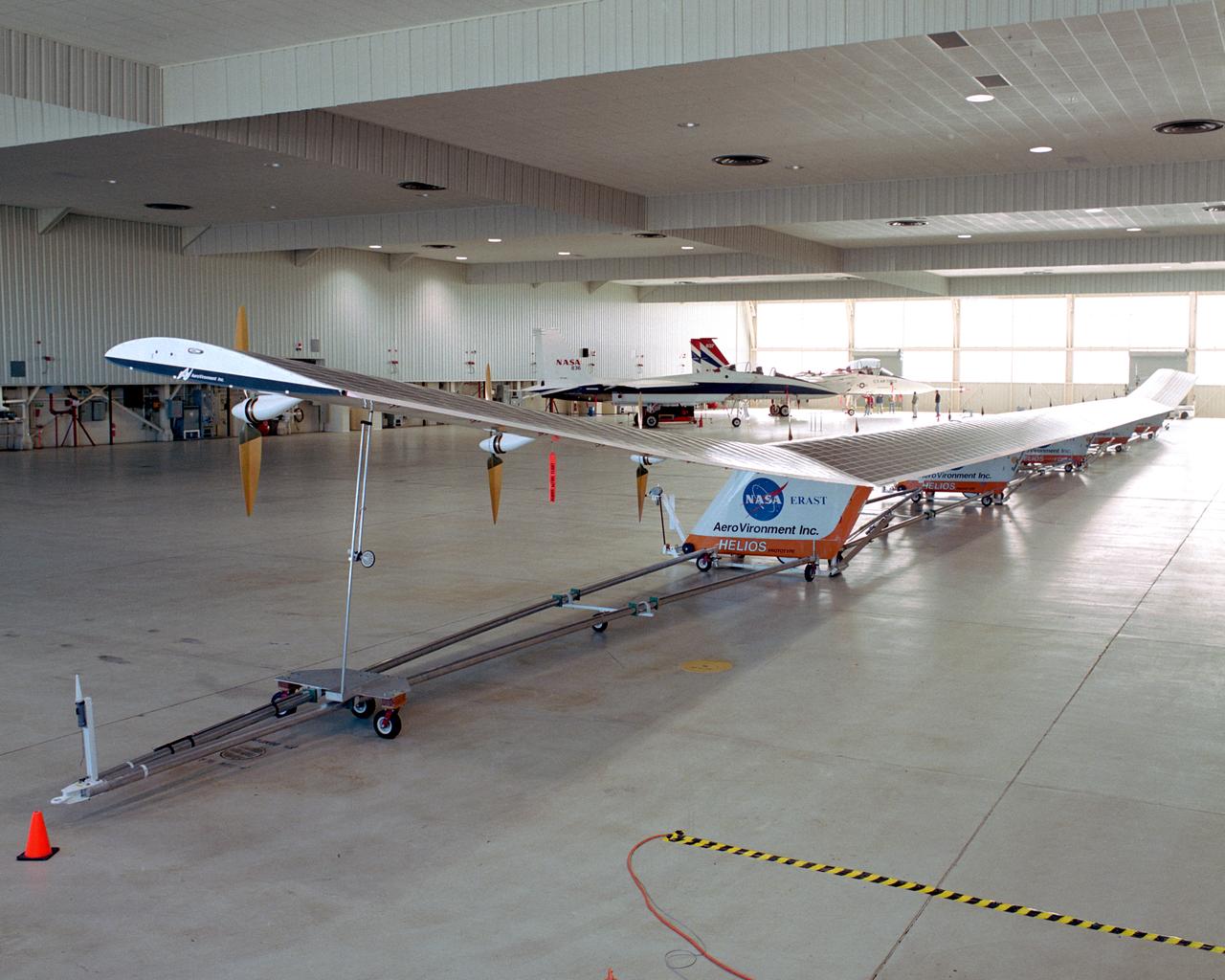
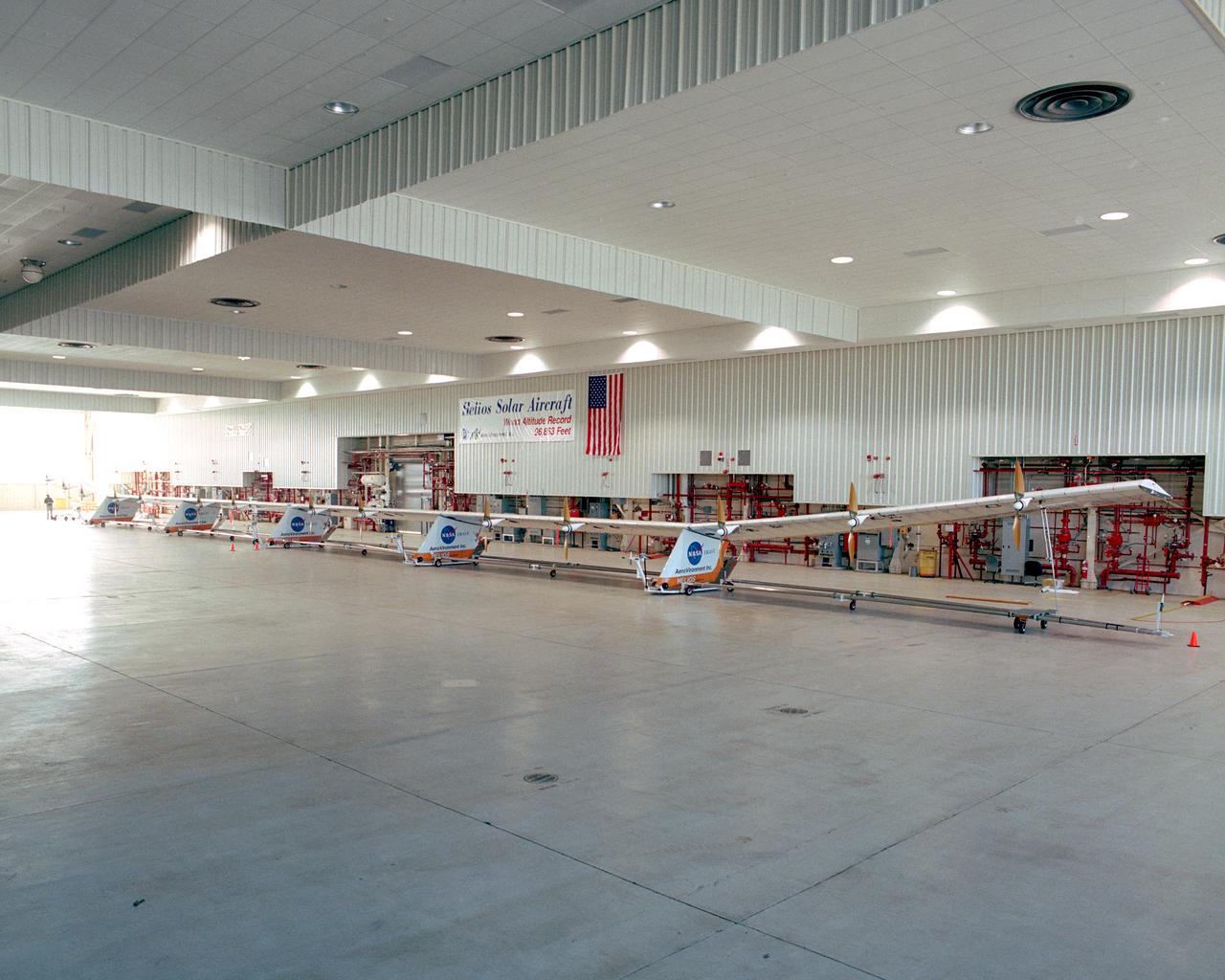
The solar-powered Helios Prototype flying wing frames two modified F-15 research aircraft in a hangar at NASA's Dryden Flight Research Center, Edwards, California. The elongated 247-foot span lightweight aircraft, resting on its ground maneuvering dolly, stretched almost the full length of the 300-foot long hangar while on display during a visit of NASA Administrator Sean O'Keefe and other NASA officials on Jan. 31, 2002. The unique solar-electric flying wing reached an altitude of 96,863 feet during an almost 17-hour flight near Hawaii on Aug. 13, 2001, a world record for sustained horizontal flight by a non-rocket powered aircraft. Developed by AeroVironment, Inc., under NASA's Environmental Research Aircraft and Sensor Technology (ERAST) project, the Helios Prototype is the forerunner of a planned fleet of slow-flying, long duration, high-altitude uninhabited aerial vehicles (UAV) which can serve as "atmospheric satellites," performing Earth science missions or functioning as telecommunications relay platforms in the stratosphere.
EC02-0031-7
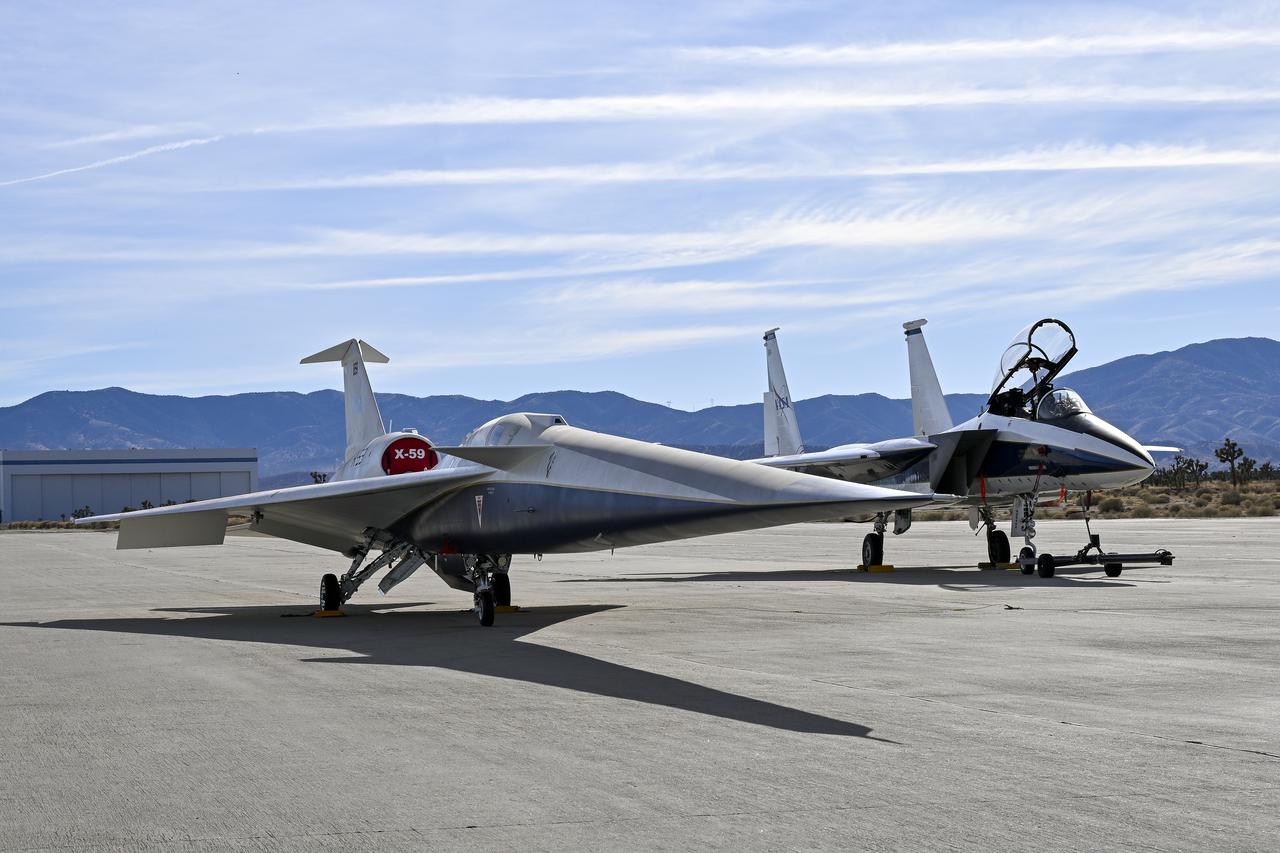
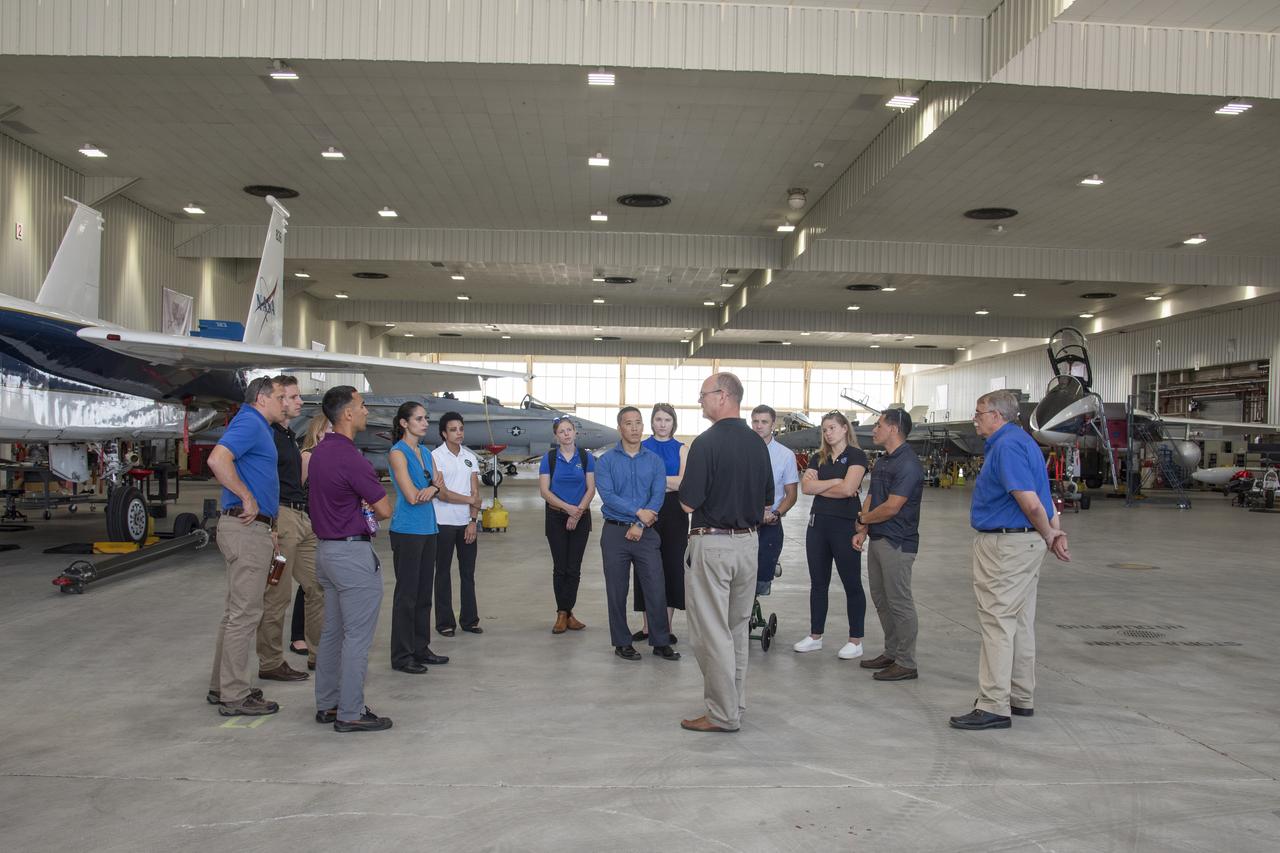
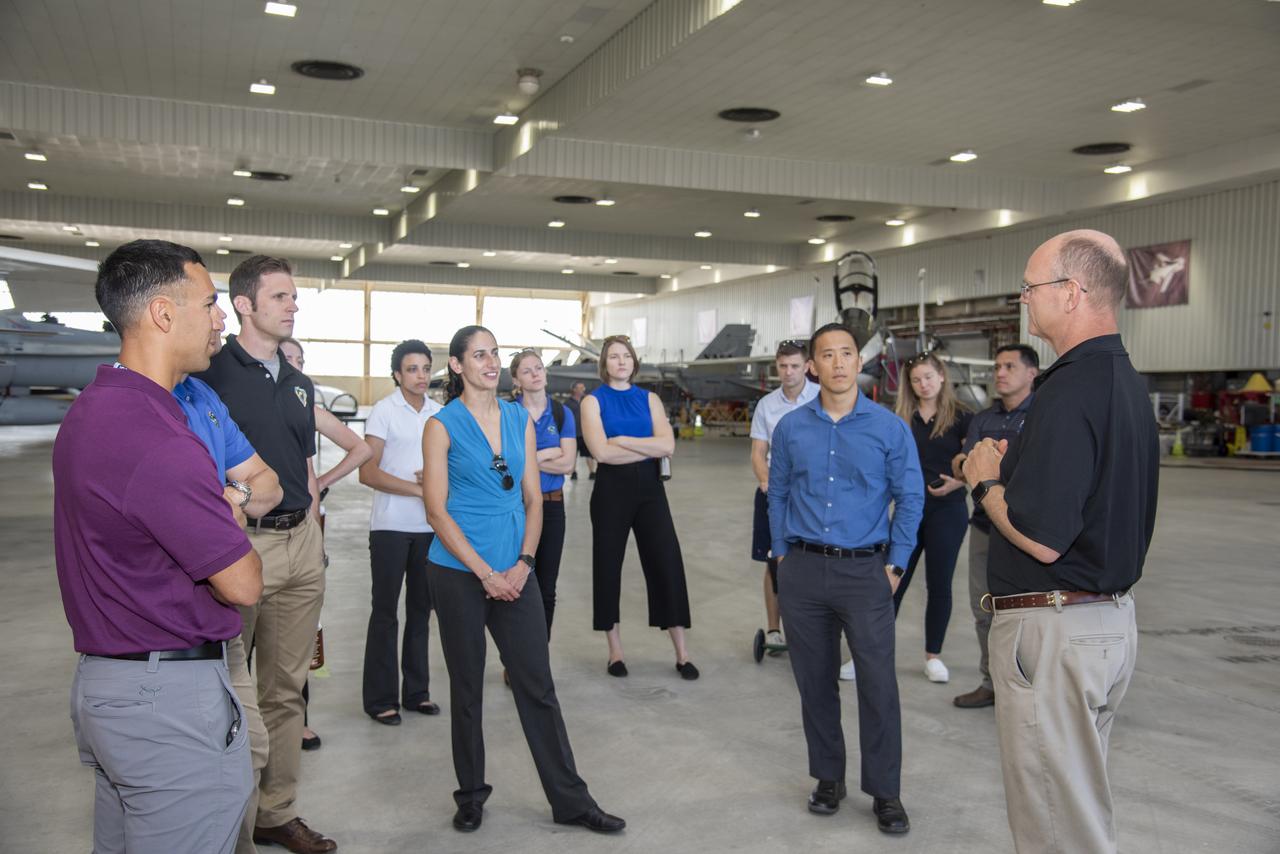
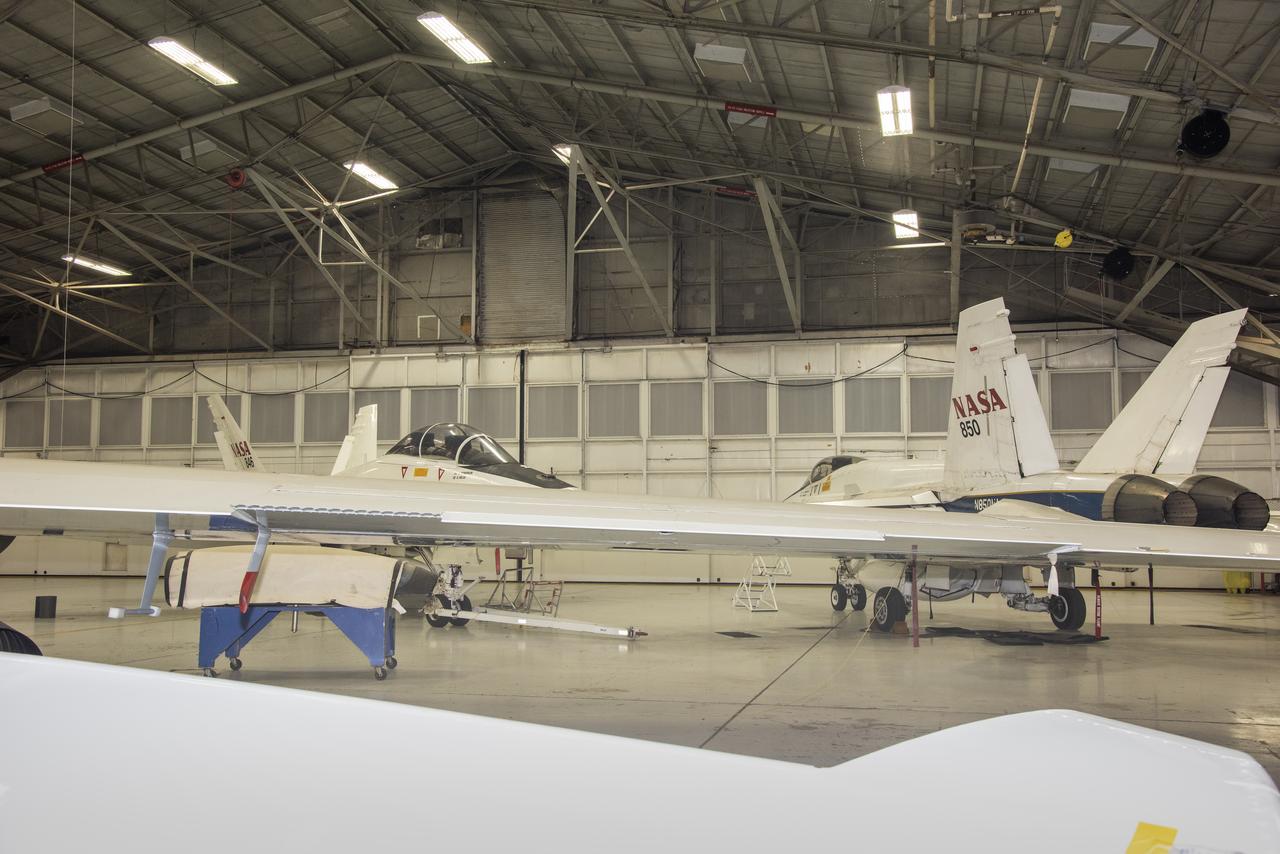
NASA's 2017 astronaut candidates toured aircraft hangar at Armstrong Flight Research Center, in Southern California. On the right, NASA's, X-59 pilot Nils Larsen, briefs the astronauts as they look at Armstrong's fleet of supersonic research support aircraft, including the F-15, which will fly in tandem with the X-59 QueSST during early flight test stages, and the F-18, which is conducting supersonic research in support of the overall mission.
Pilot Nils Larsen Speaks to Astronauts on X-59 Research Using Jets
NASA’s 2017 astronaut candidates toured aircraft hangar at Armstrong Flight Research Center, in Southern California. On the right, NASA’s, X-59 pilot Nils Larsen, briefs the astronauts as they look at Armstrong’s fleet of supersonic research support aircraft, including the F-15, which will fly in tandem with the X-59 QueSST during early flight test stages, and the F-18, which is conducting supersonic research in support of the overall mission.
Pilot Nils Larsen Speaks to Astronauts on X-59 Research Using Jets
NASA's 2017 astronaut candidates toured aircraft hangar at Armstrong Flight Research Center, in Southern California. On the right, NASA's, X-59 pilot Nils Larsen, briefs the astronauts as they look at Armstrong's fleet of supersonic research support aircraft, including the F-15, which will fly in tandem with the X-59 QueSST during early flight test stages, and the F-18, which is conducting supersonic research in support of the overall mission.
Pilot Nils Larsen Speaks to Astronauts on X-59 Research Using Jets
The Helios Prototype flying wing stretches almost the full length of the 300-foot-long hangar at NASA's Dryden Flight Research Center, Edwards, California. The 247-foot span solar-powered aircraft, resting on its ground maneuvering dolly, was on display for a visit of NASA Administrator Sean O'Keefe and other NASA officials on January 31, 2002. The unique solar-electric flying wing reached an altitude of 96,863 feet during an almost 17-hour flight near Hawaii on August 13, 2001, a world record for sustained horizontal flight by a non-rocket powered aircraft. Developed by AeroVironment, Inc., under NASA's Environmental Research Aircraft and Sensor Technology (ERAST) project, the Helios Prototype is the forerunner of a planned fleet of slow-flying, long duration, high-altitude uninhabited aerial vehicles (UAV) which can serve as "atmospheric satellites," performing Earth science missions or functioning as telecommunications relay platforms in the stratosphere.
EC02-0031-6
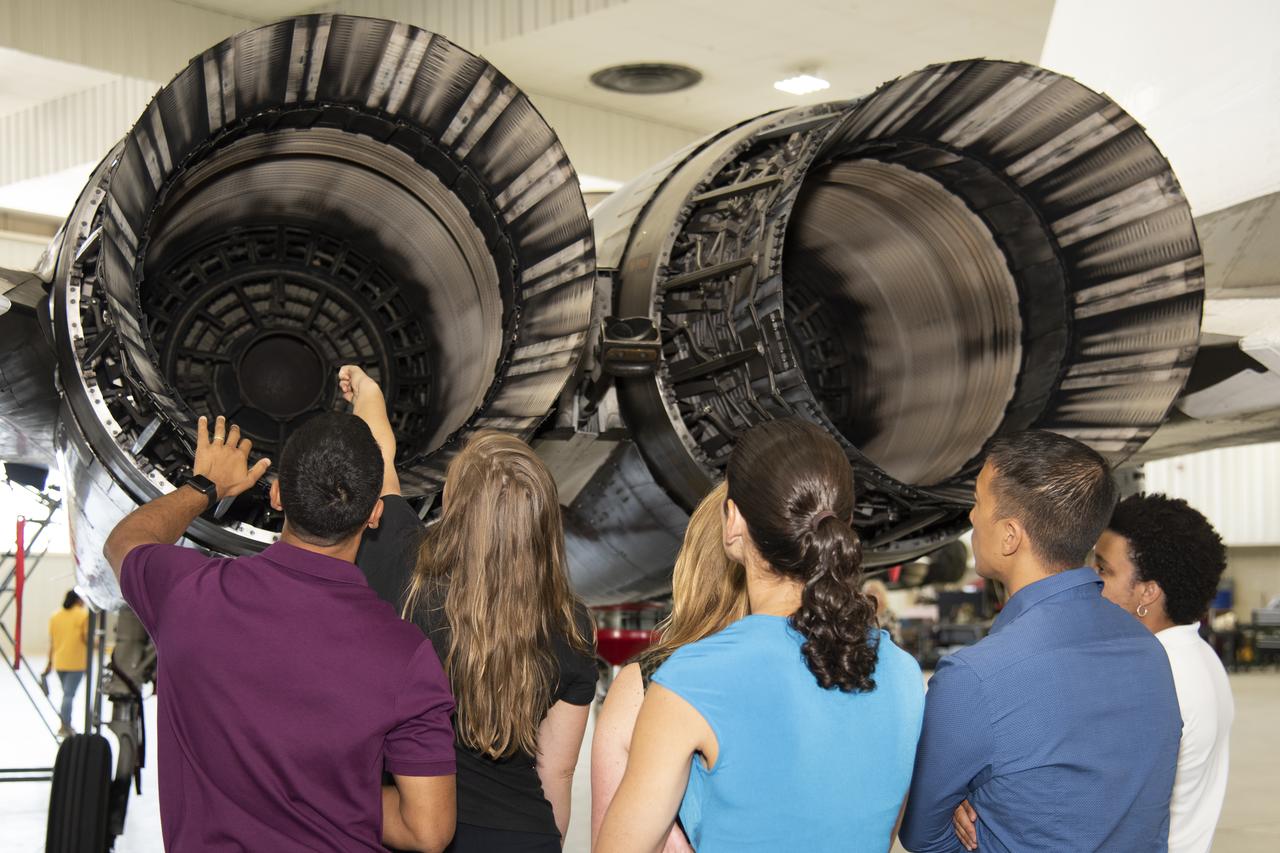
NASA's 2017 astronaut candidates toured aircraft hangar at Armstrong Flight Research Center, in Southern California (L to R) Jenni Sidey-Gibbons, Raja Chari, Loral O'Hara, Jasmin Moghbeli, Jonny Kim and Jessica Watkins look inside the engine nozzle of an F-15 jet.  The F-15 will fly in tandem with the X-59 QueSST during early flight test stages for the X-59 development.
Astronauts Look in F-15 Nozzle at Armstrong Flight Research Center
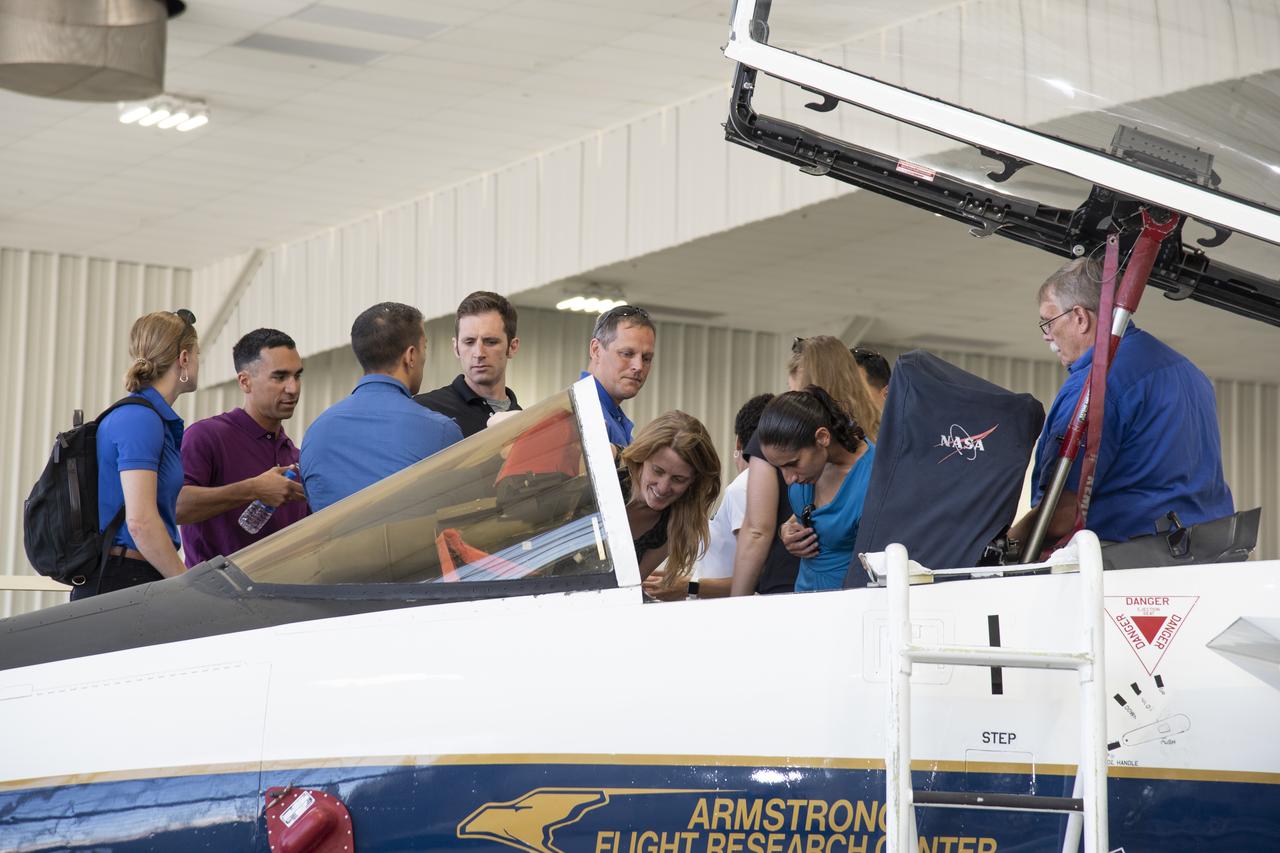
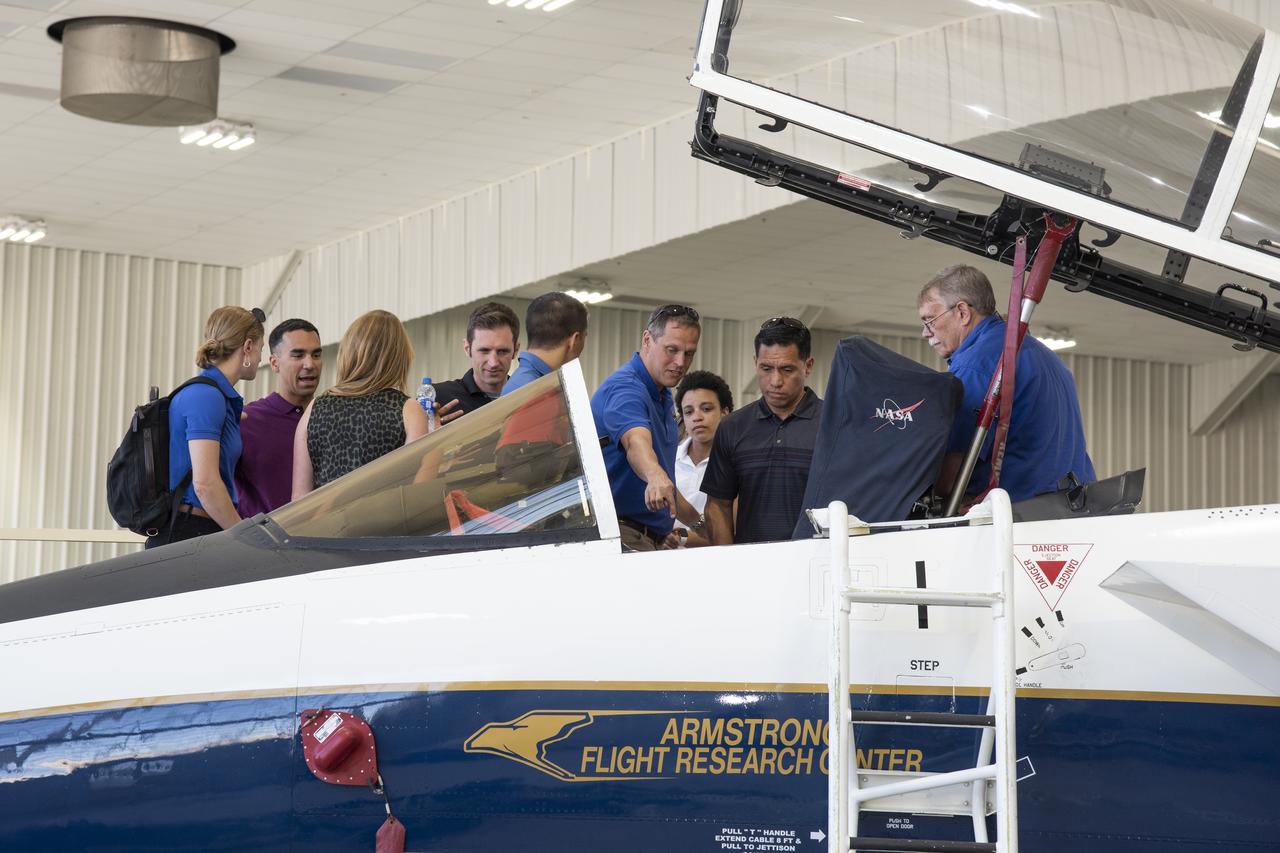
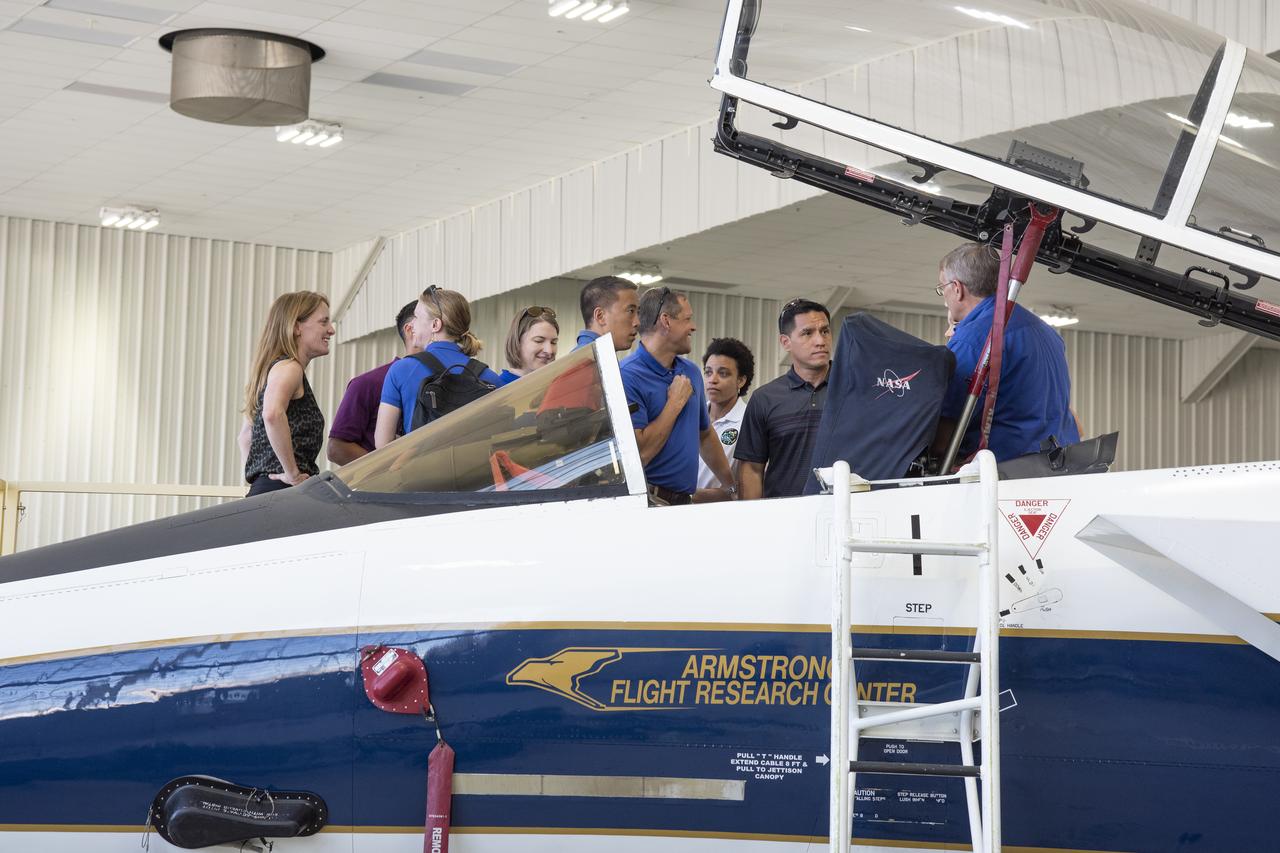
NASA's 2017 astronaut candidates toured aircraft hangar at Armstrong Flight Research Center, in Southern California where they checked out a F-15 cockpit. The center is using its fleet of supersonic research support aircraft for sonic boom research, including the F-15, which will fly in tandem with the X-59 QueSST during early flight test stages, and the F-18, which is conducting supersonic research in support of the overall mission.
2017 Astronauts Tour Hangar at Armstrong Flight Research Center
NASA's 2017 astronaut candidates toured aircraft hangar at Armstrong Flight Research Center, in Southern California where they checked out a F-15 cockpit. The center is using its fleet of supersonic research support aircraft for sonic boom research, including the F-15, which will fly in tandem with the X-59 QueSST during early flight test stages, and the F-18, which is conducting supersonic research in support of the overall mission.
2017 Astronauts Tour Hangar at Armstrong Flight Research Center
NASA’s 2017 astronaut candidates toured aircraft hangar at Armstrong Flight Research Center, in Southern California where they checked out a F-15 cockpit. The center is using its fleet of supersonic research support aircraft for sonic boom research, including the F-15, which will fly in tandem with the X-59 QueSST during early flight test stages, and the F-18, which is conducting supersonic research in support of the overall mission.
2017 Astronauts Tour Hangar at Armstrong Flight Research Center
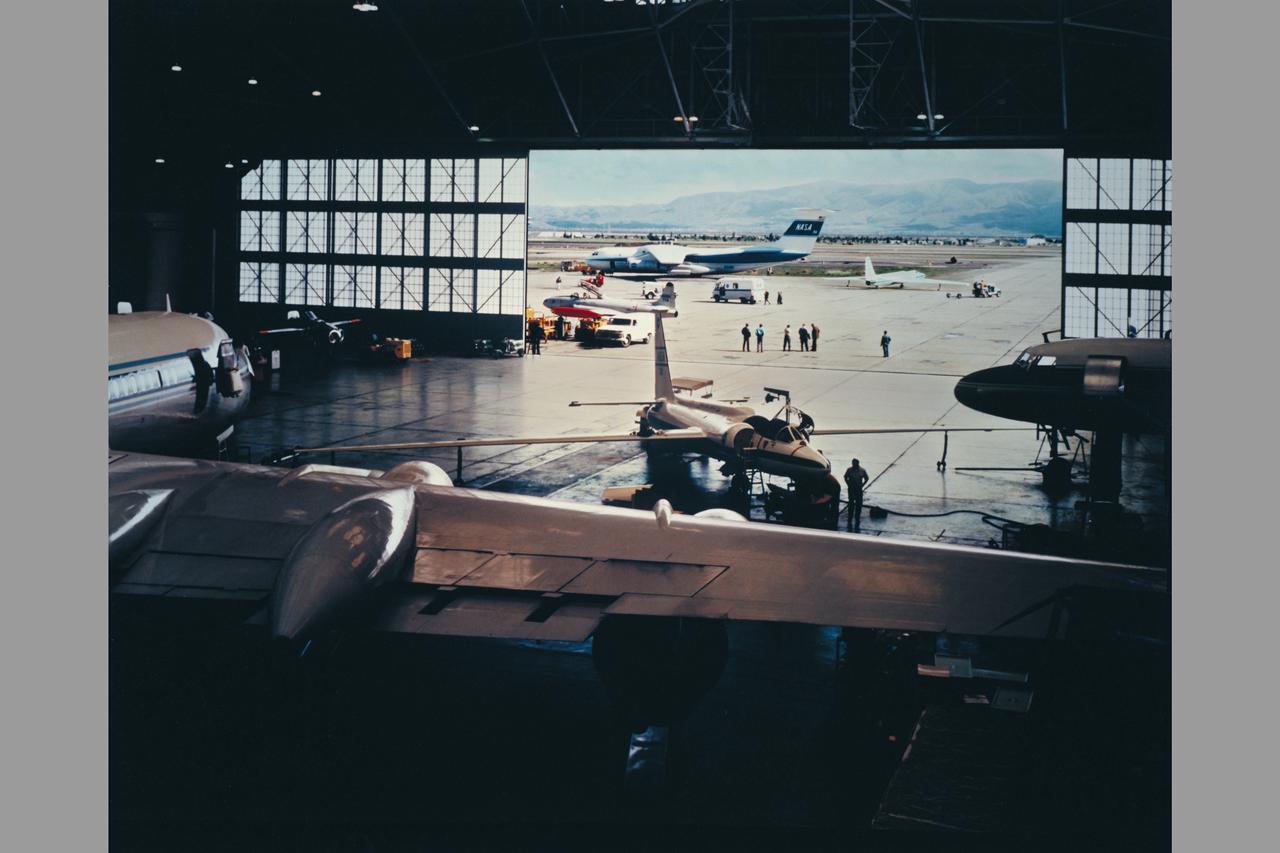
NASA Aircraft in Hangar and on Ramp (N-211)
ARC-1972-AC72-2293
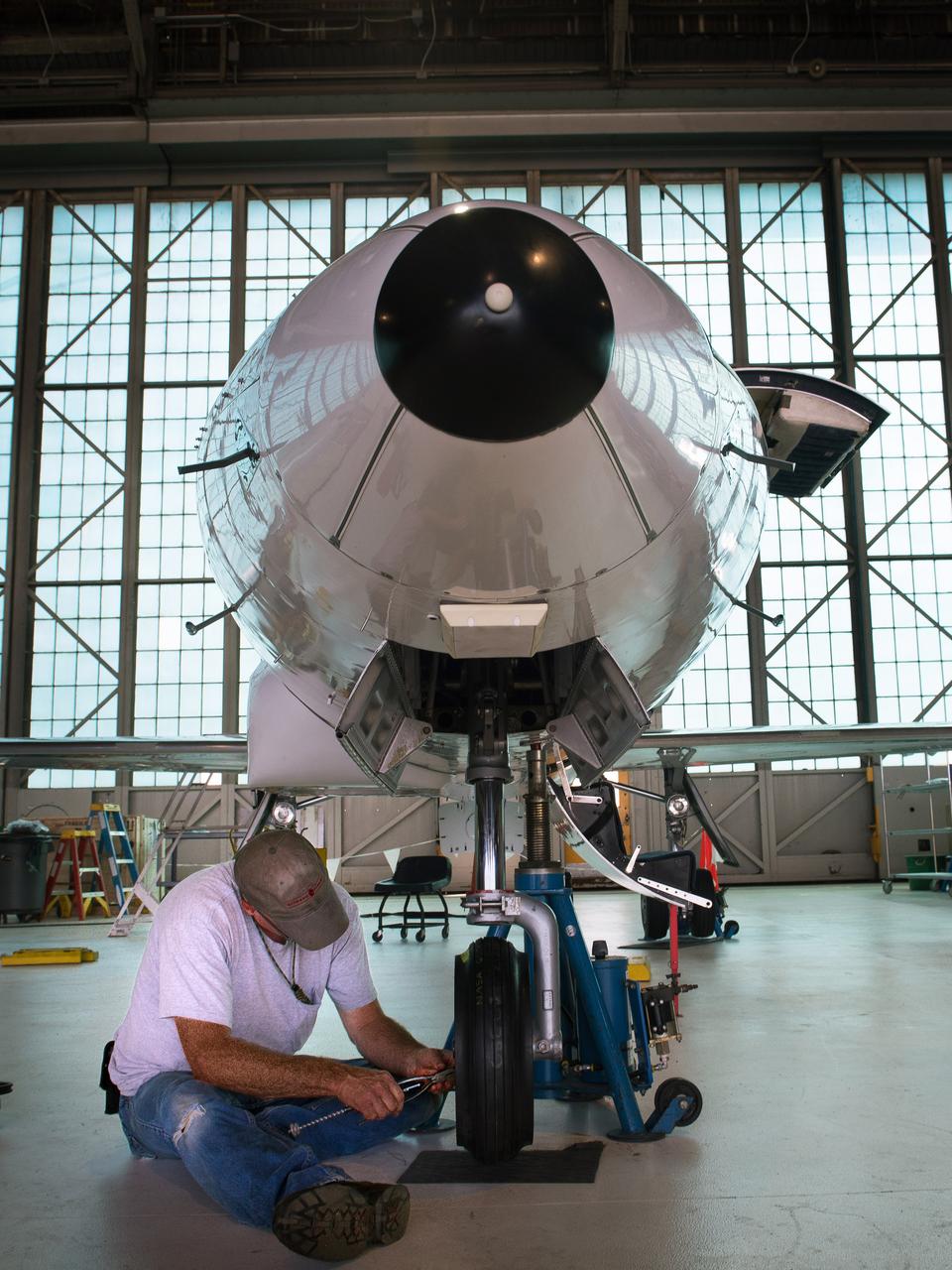
NASA Glenn Mechanic Thomas Thompson checks the nose wheel axle nut on NASA Glenn’s Learjet 25 research aircraft.
Learjet 25 Research Aircraft
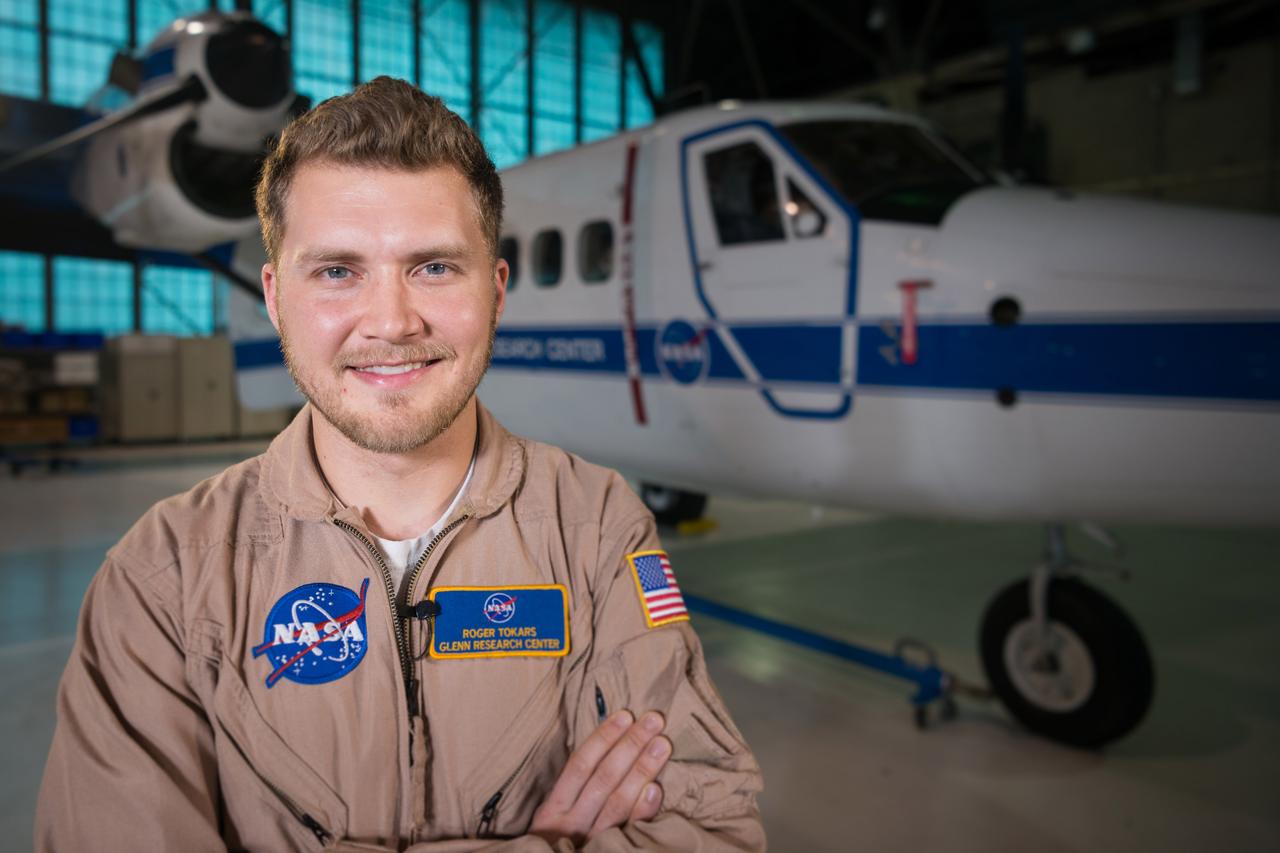
Environmental portrait of research engineer Roger Tokars in front of the Twin Otter research. This image was taken inside the Hangar at NASA Glenn Research Center.
Research Engineer Roger Tokars
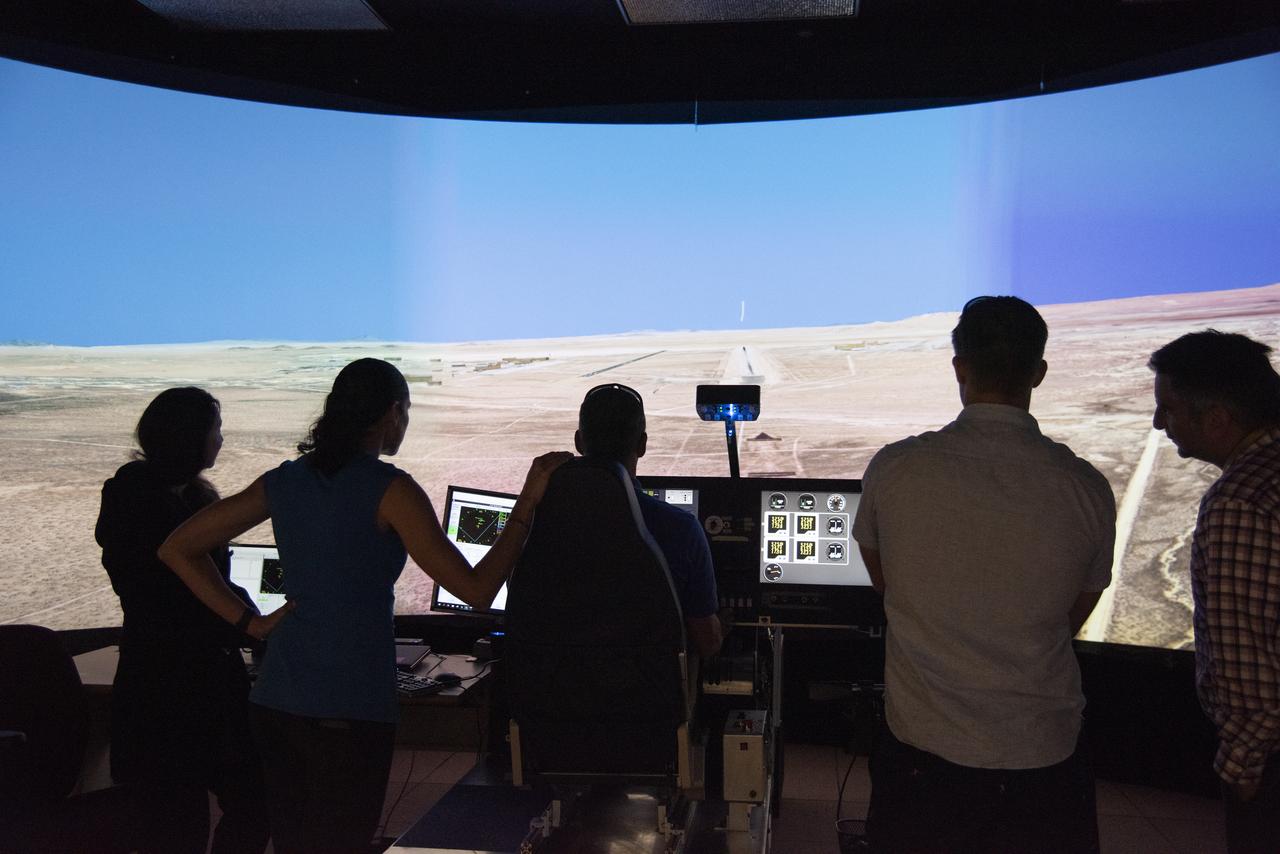
NASA's 2017 astronaut candidates toured aircraft hangar at Armstrong Flight Research Center, in Southern California. After tour of aircraft hangar and briefing on the use of aircraft for flight research, the astronauts practiced flying the X-57 simulator. Starting with the fuselage of a Tecnam P20067T, the X-57 Maxwell electric propulsion airplane is being built and could lead to the development of electric propulsion-powered aircraft, which would be quieter, more efficient and environmentally friendly than today's commuter aircraft.
Astronauts Fly in X-57 Simulator at Armstrong Flight Research Center
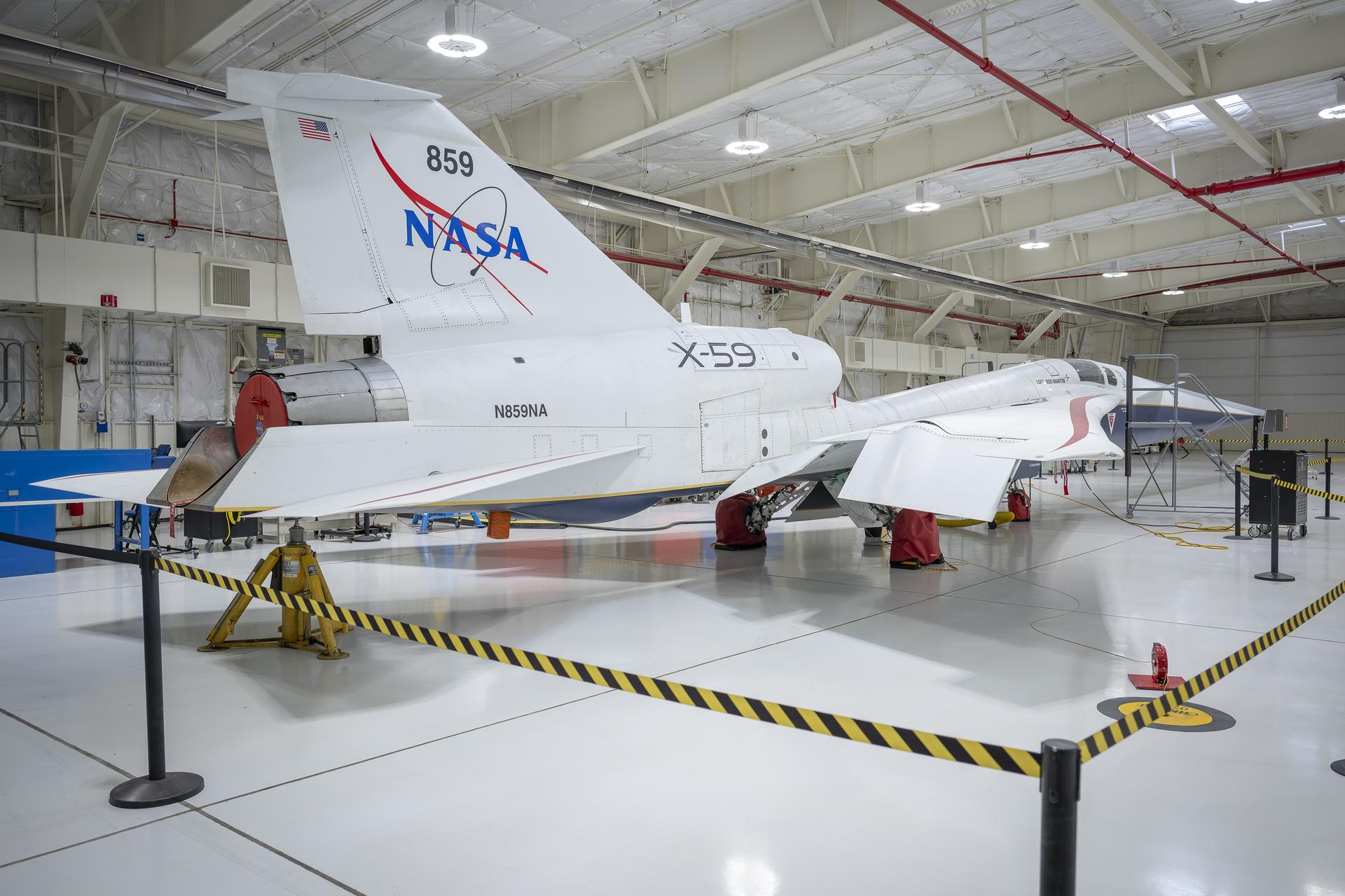
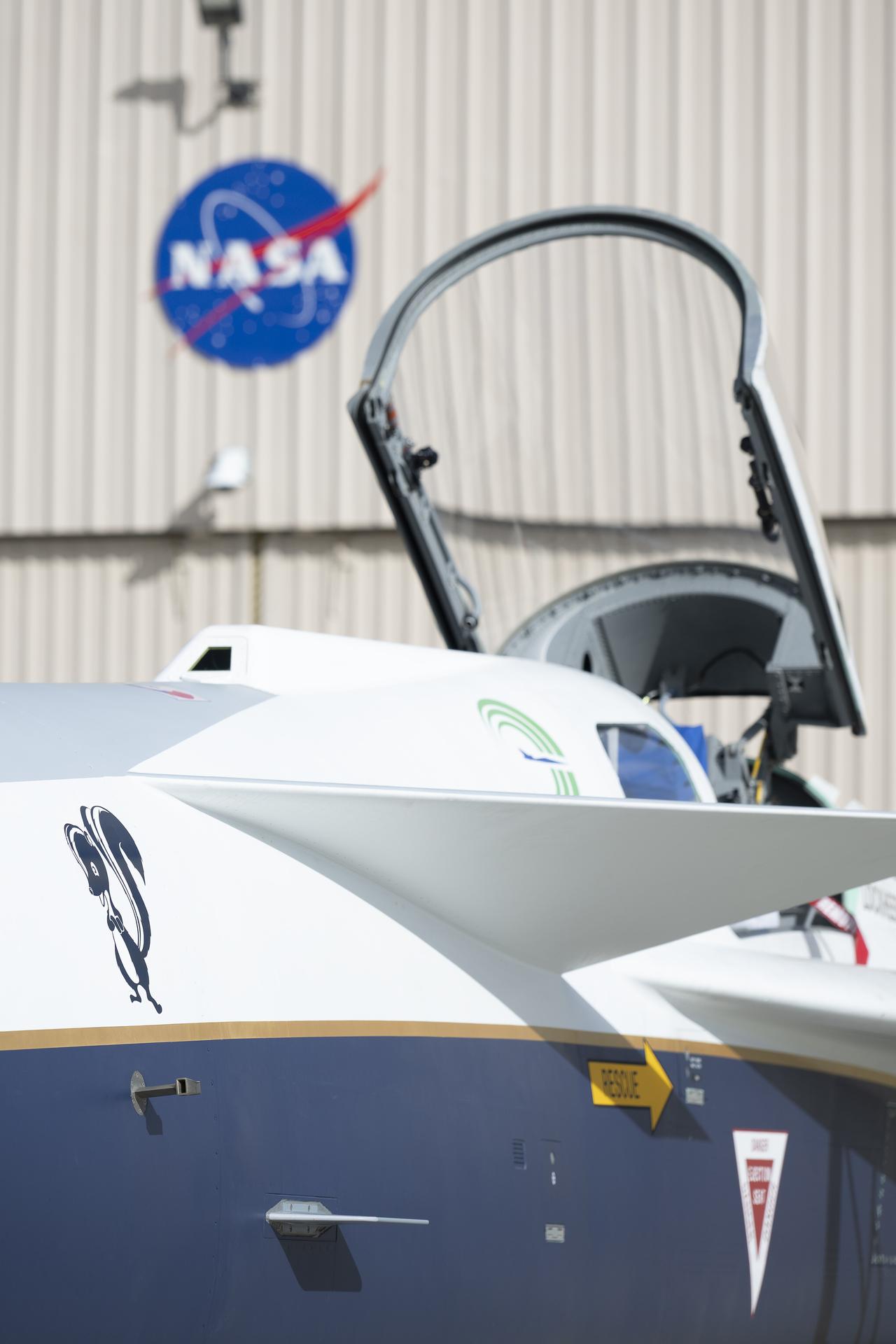
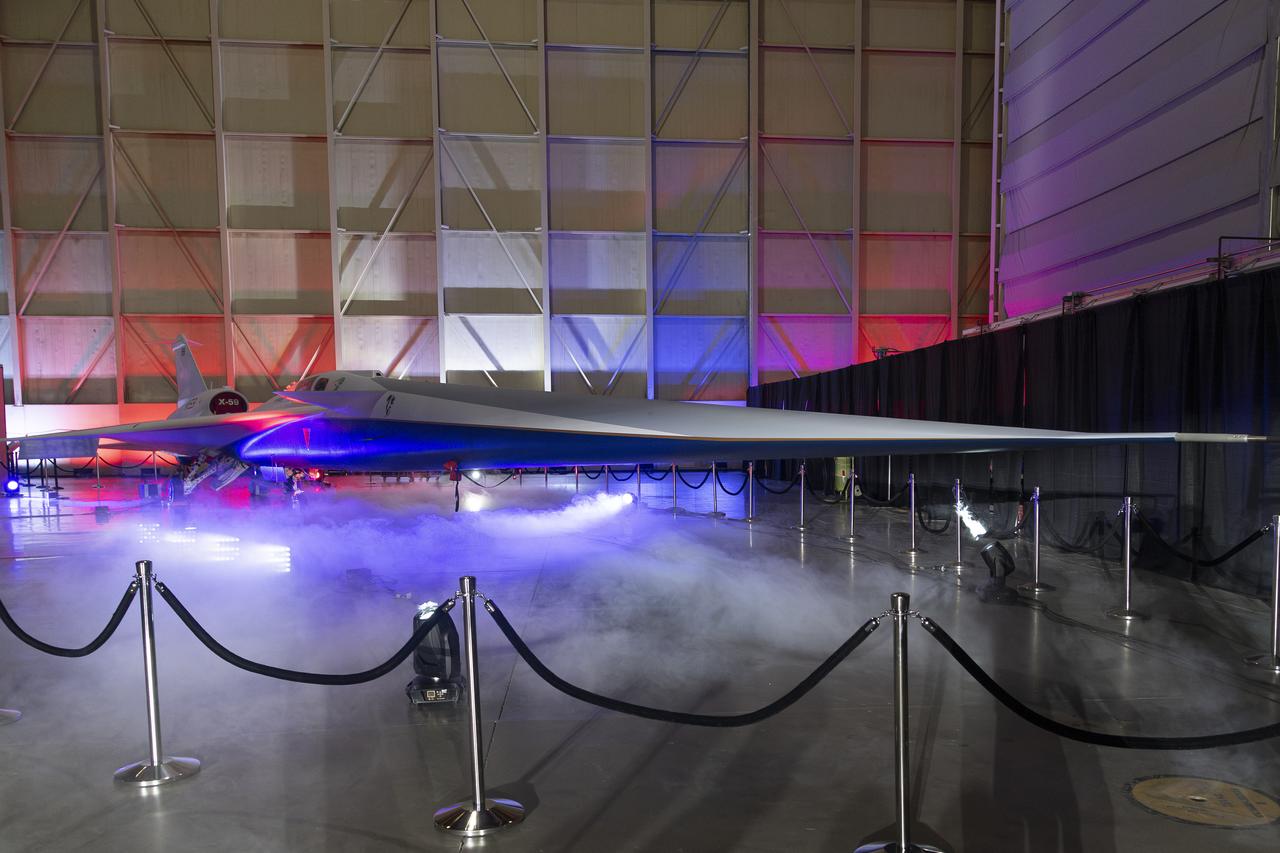
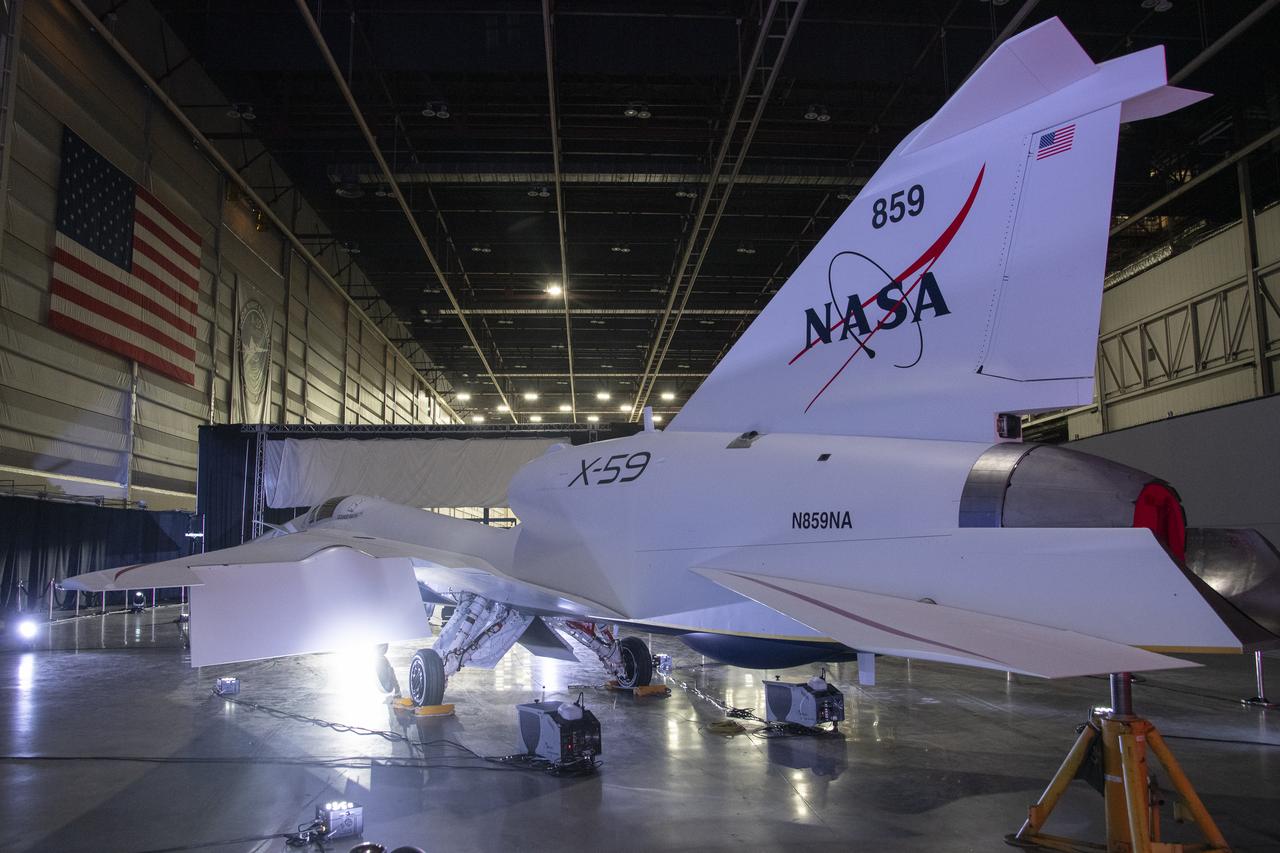
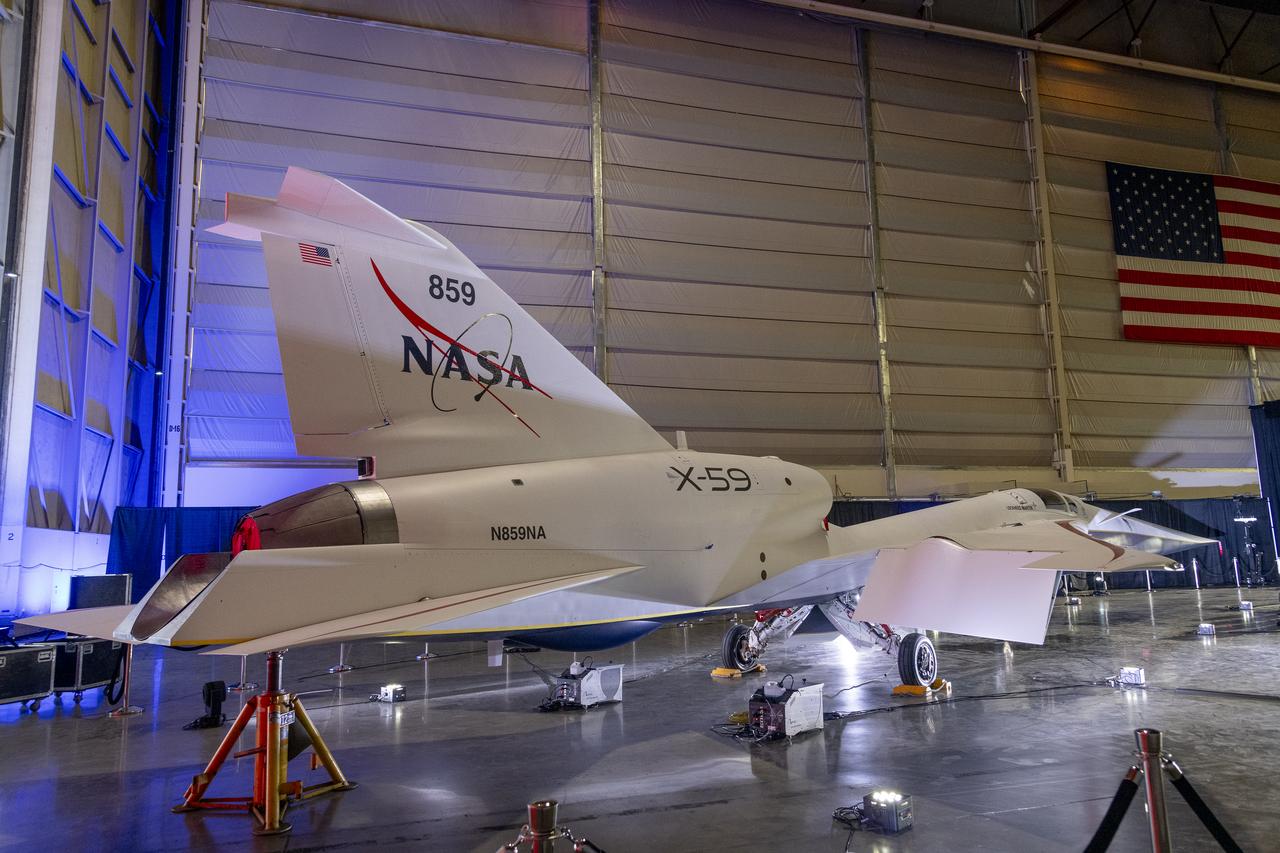
NASA’s X-59 quiet supersonic research aircraft sits in position inside a hangar at Lockheed Martin Skunk Works in Palmdale, California prior to its January 12, 2024 unveiling. The X-59 is the centerpiece of NASA’s Quesst mission, which seeks to solve one of the major barriers to supersonic flight over land, currently banned in the United States, by making sonic booms quieter.
NASA’s X-59 Quiet Supersonic Aircraft Prior to Unveiling
NASA's 2017 astronaut candidates toured aircraft hangar at Armstrong Flight Research Center, in Southern California (L to R) Raja Chari, Jenni Sidey-Gibbons, Loral O'Hara, Jasmin Moghbeli, Jonny Kim and Jessica Watkins look inside the engine nozzle of an F-15 jet. The F-15 will fly in tandem with the X-59 QueSST during early flight test stages for the X-59 development.
Astronauts Look in F-15 Nozzle at Armstrong Flight Research Center
NASA's 2017 astronaut candidates toured aircraft hangar at Armstrong Flight Research Center, in Southern California where (L to R) Loral O'Hara, Jenni Sidey-Gibbons and Raja Chari look inside the engine nozzle of an F-15 jet. The F-15 will fly in tandem with the X-59 QueSST during early flight test stages for the X-59 development.
Astronauts Look in F-15 Nozzle at Armstrong Flight Research Center
The Flight Research Building at the National Advisory Committee for Aeronautics (NACA) Aircraft Engine Research Laboratory is a 272- by 150-foot hangar with an internal height up to 90 feet. The hangar’s massive 37.5-foot-tall and 250-foot-long doors can be opened in sections to suit different size aircraft. The hangar has sheltered a diverse fleet of aircraft over the decades. These have ranged from World War II bombers to Cessna trainers and from supersonic fighter jets to a DC–9 airliner.       At the time of this September 1942 photograph, however, the hangar was being used as an office building during the construction of the laboratory. In December of 1941, the Flight Research Building became the lab’s first functional building. Temporary offices were built inside the structure to house the staff while the other buildings were completed. The hangar offices were used for an entire year before being removed in early 1943. It was only then that the laboratory acquired its first aircraft, pilots and flight mechanics.   The temporary one-story offices can be seen in this photograph inside the large sliding doors. Also note the vertical lift gate below the NACA logo. The gate was installed so that the tails of larger aircraft could pass into the hangar. The white Farm House that served as the Administration Building during construction can be seen in the distance to the left of the hangar.
Flight Research Building at the Aircraft Engine Research Laboratory
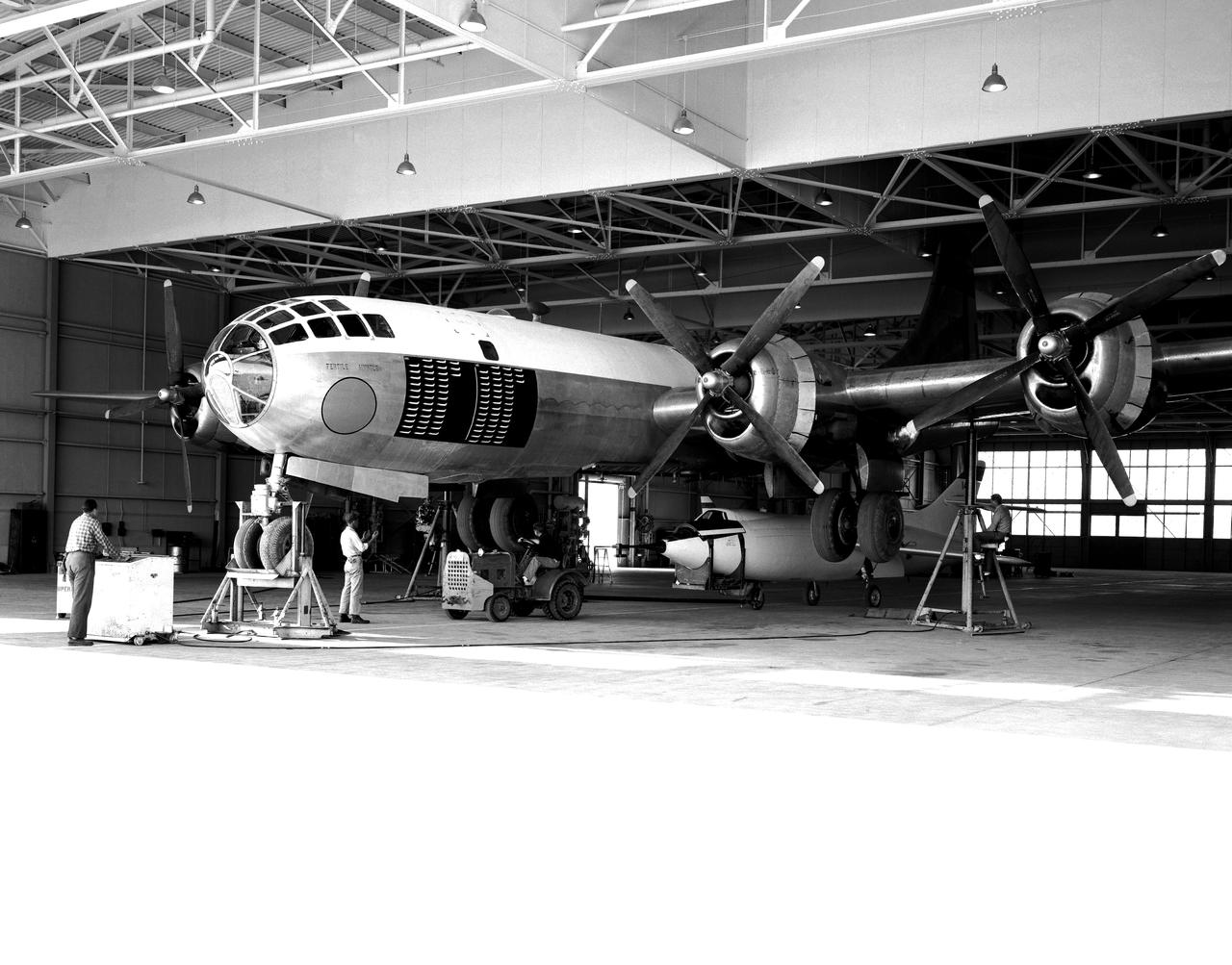
D-558-2 being mounted to P2B-1S launch aircraft in hangar.
E54-1526
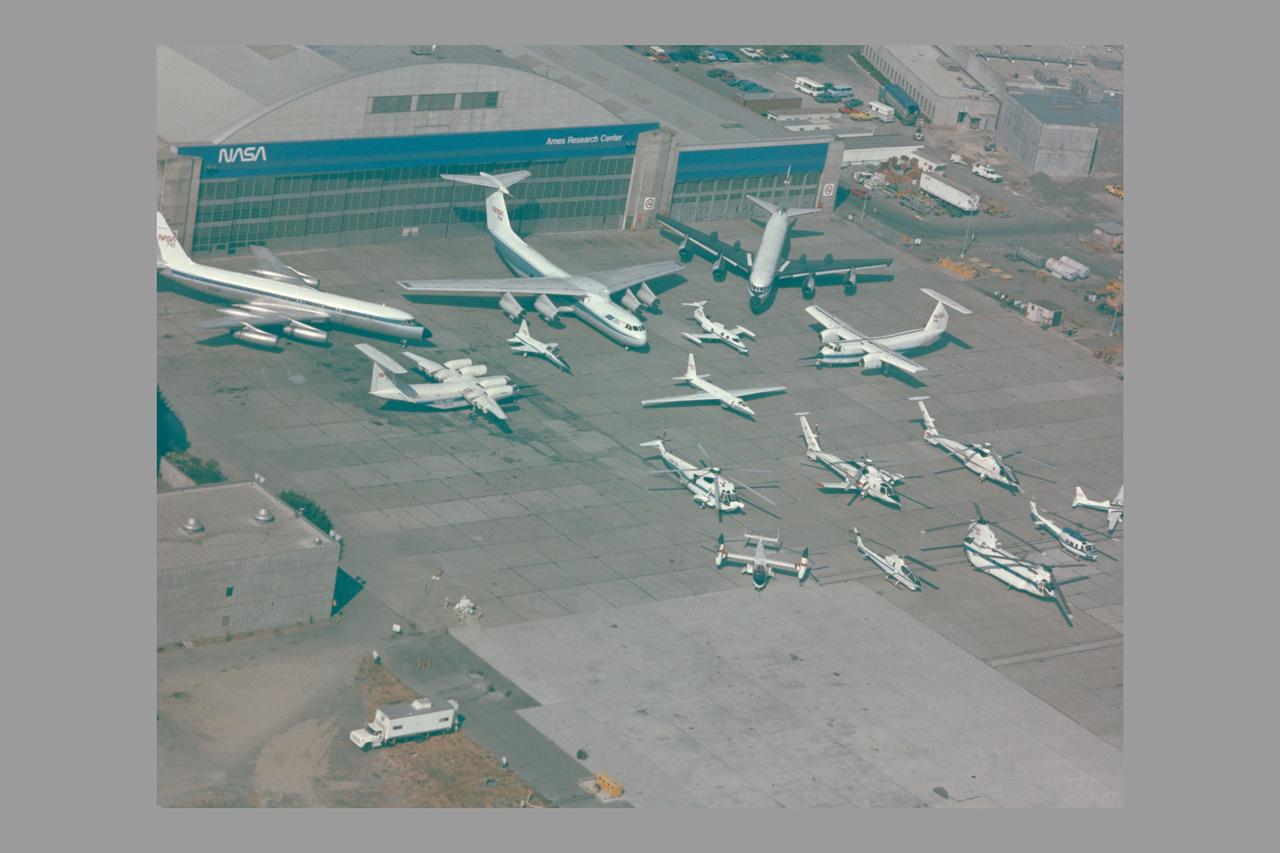
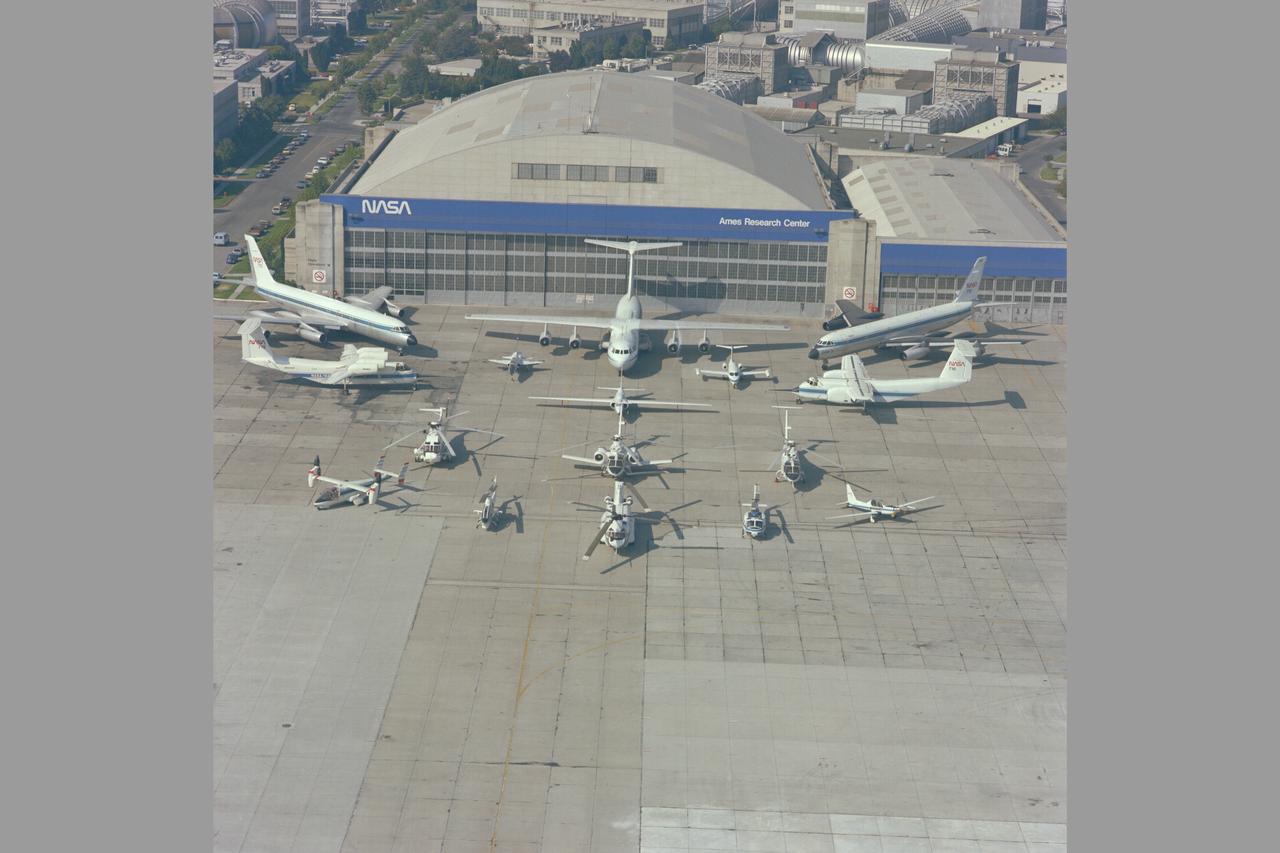
NASA Ames Research Center Aircraft on ramp. Photographed front of Ames hangar.
ARC-1981-AC81-0580-38
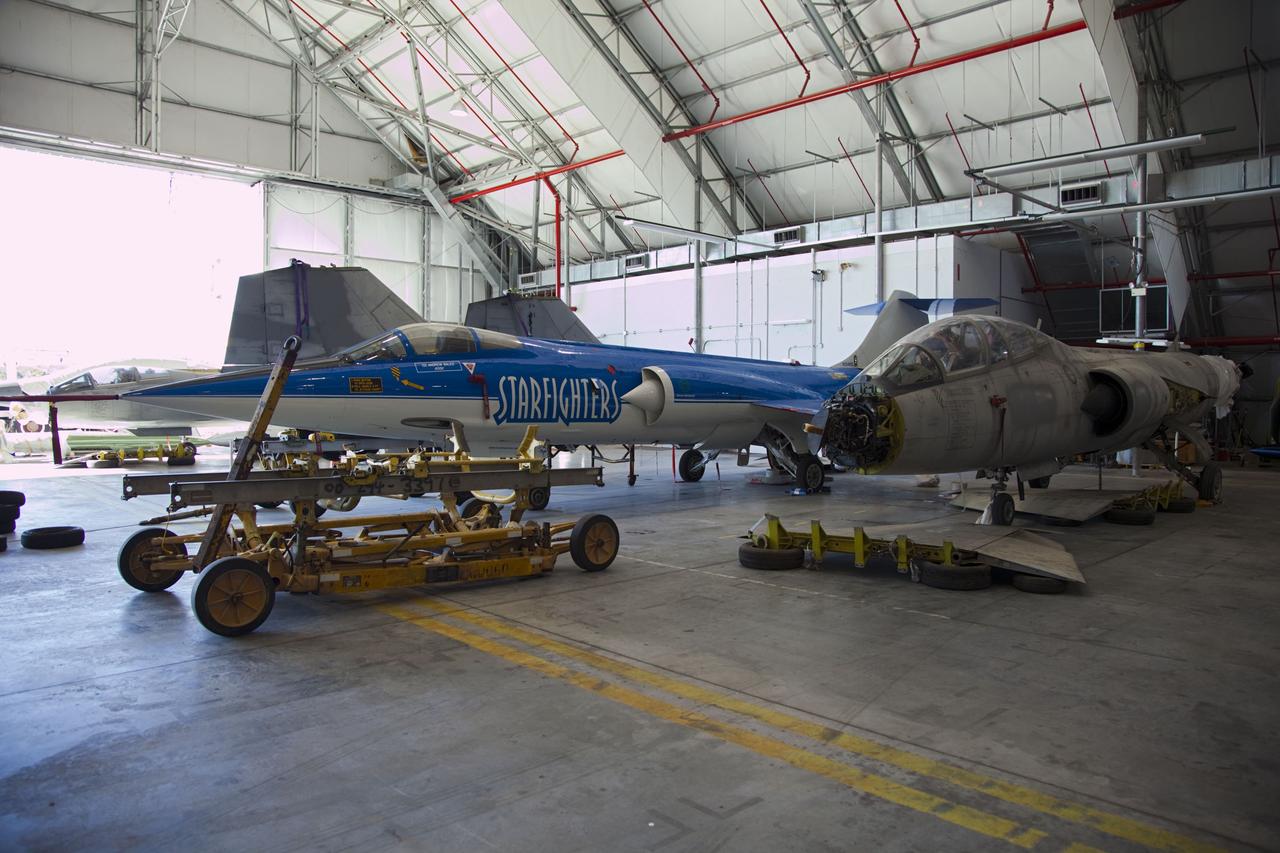
CAPE CANAVERAL, Fla. -- A hangar at NASA's Kennedy Space Center in Florida fills up with new aircraft for the company Starfighters Inc. The blue and white aircraft is part of the company's original fleet of supersonic aircraft. The gray aircraft is one of five delivered to the company recently. They will be reassembled to fly research and development and other missions. They have been used to fly research and development and other missions. Starfighters operates out of a hangar at the Shuttle Landing Facility at Kennedy under an agreement with Kennedy. Photo credit: NASA/Frankie Martin
KSC-2012-1074
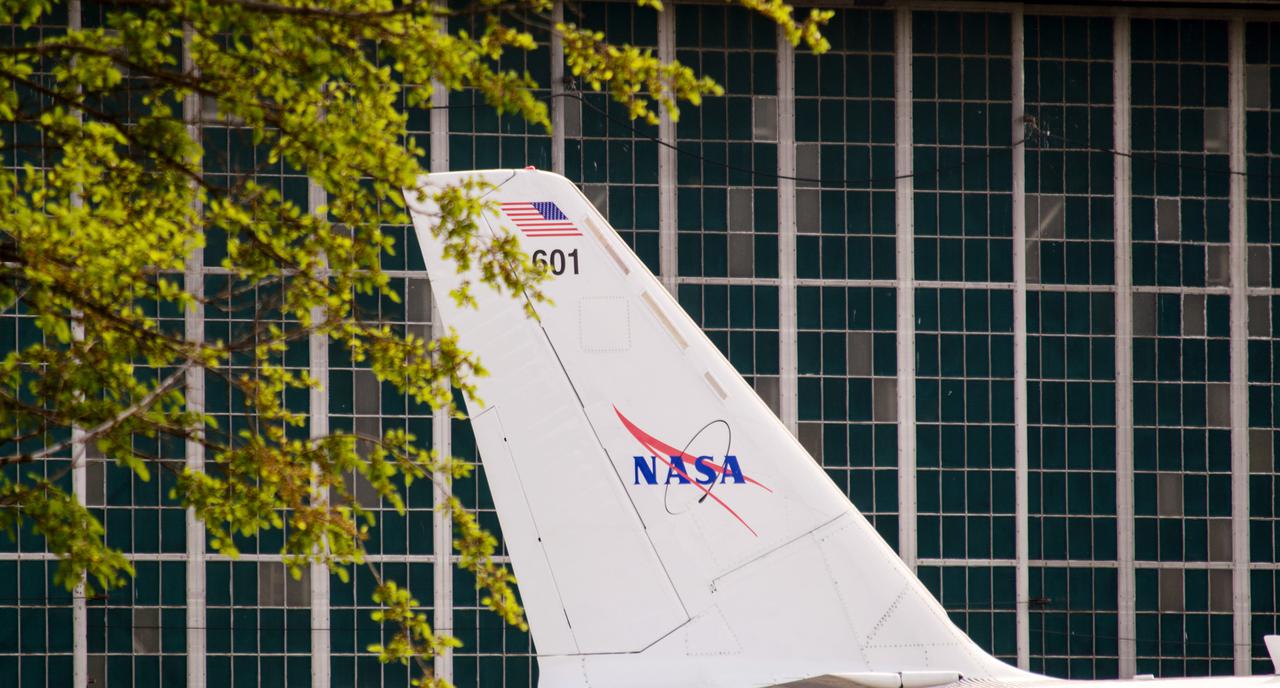
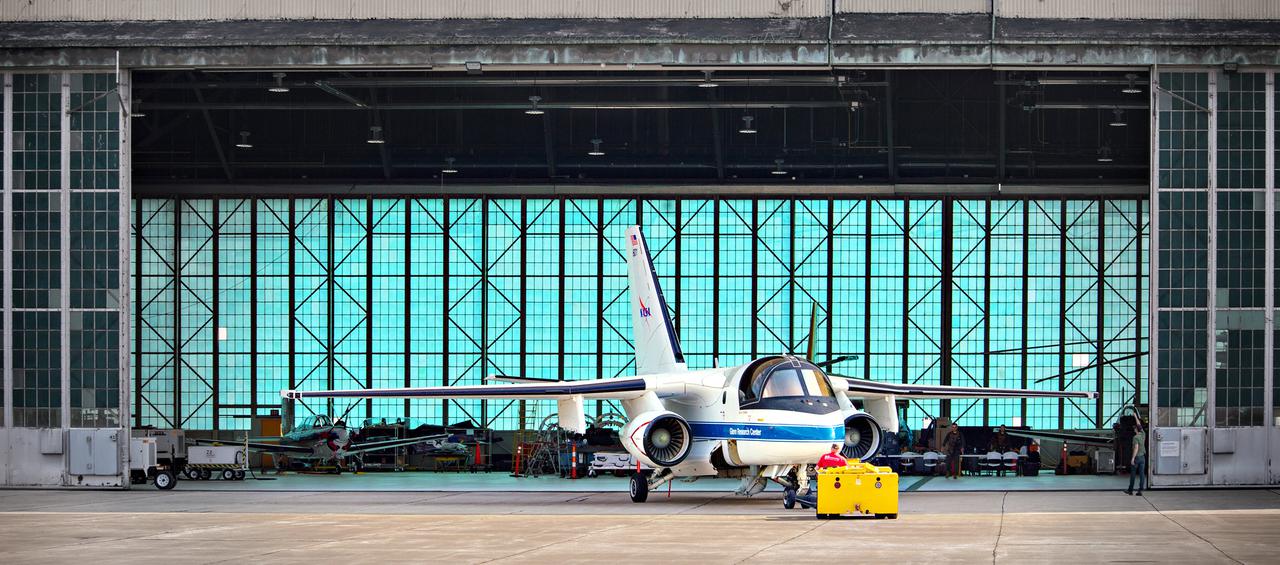
The Lockheed Viking S-3B aircraft was parked for re-fulling out near the hangar at Glenn Research Center in preparation for its departure and retirement from service.  This former NAVY aircraft was the last such aircraft still flying.  It has gone to a museum on the west coast.  After leaving service with the NAVY, it came to GRC to be used in aircraft icing experiments.  Tree branches frame the tail of this old war bird in front of the glass windows of the hangar door.
GRC-2021-C-01489
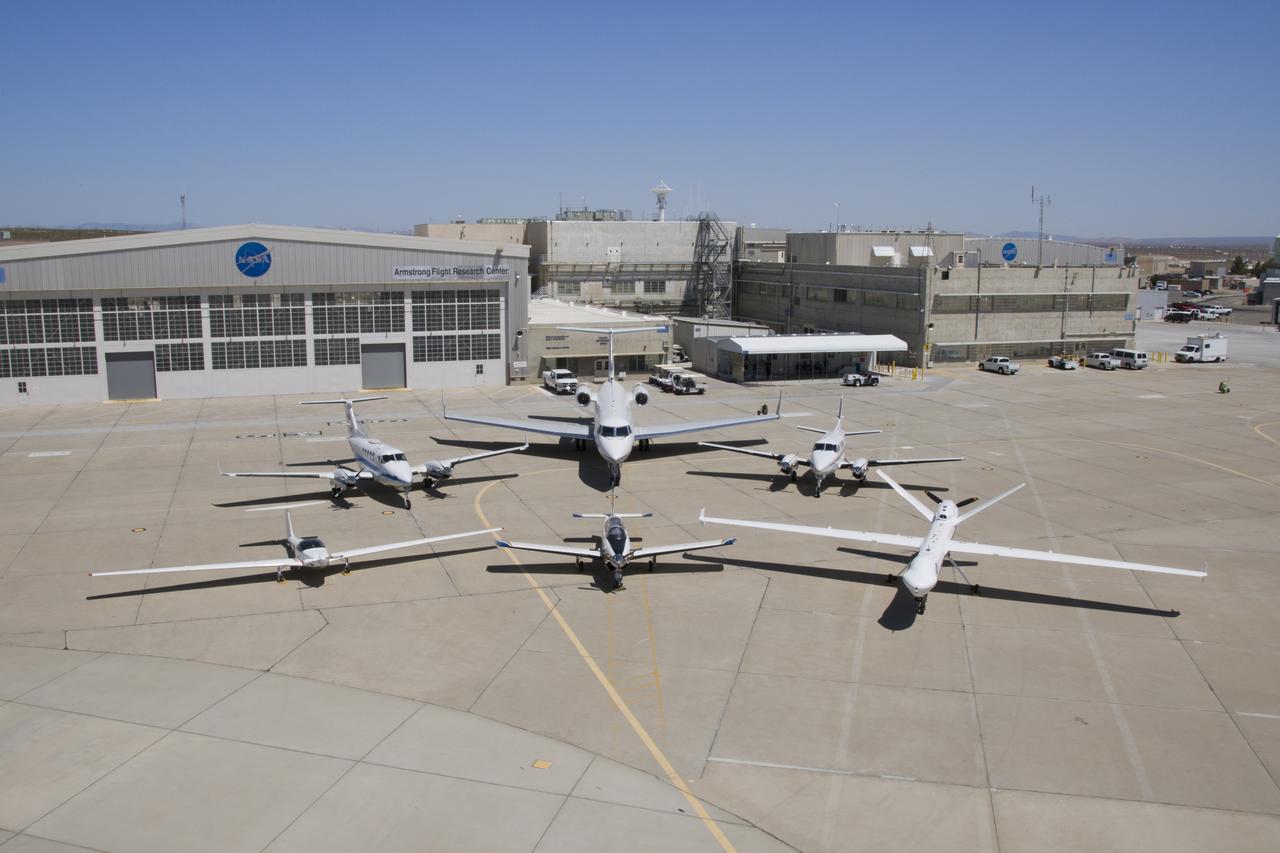
NASA’s Ikhana remotely piloted aircraft (front-right) is situated near NASA Armstrong Flight Research Center’s Hangar 4802 after an Unmanned Aircraft Systems Integration into the National Airspace System Flight Test Series 4 flight, along with five flight “intruders.” These intruders, which include NASA’s TG-14 (front-left), T-34C (front-center), B-200 King Air (back-left), Gulfstream-III (back-center) and a Honeywell C-90 King Air (back-right), fly within a pre-determined distance to Ikhana to test Detect-and-Avoid technology during research flights.
AFRC2016-0138-01
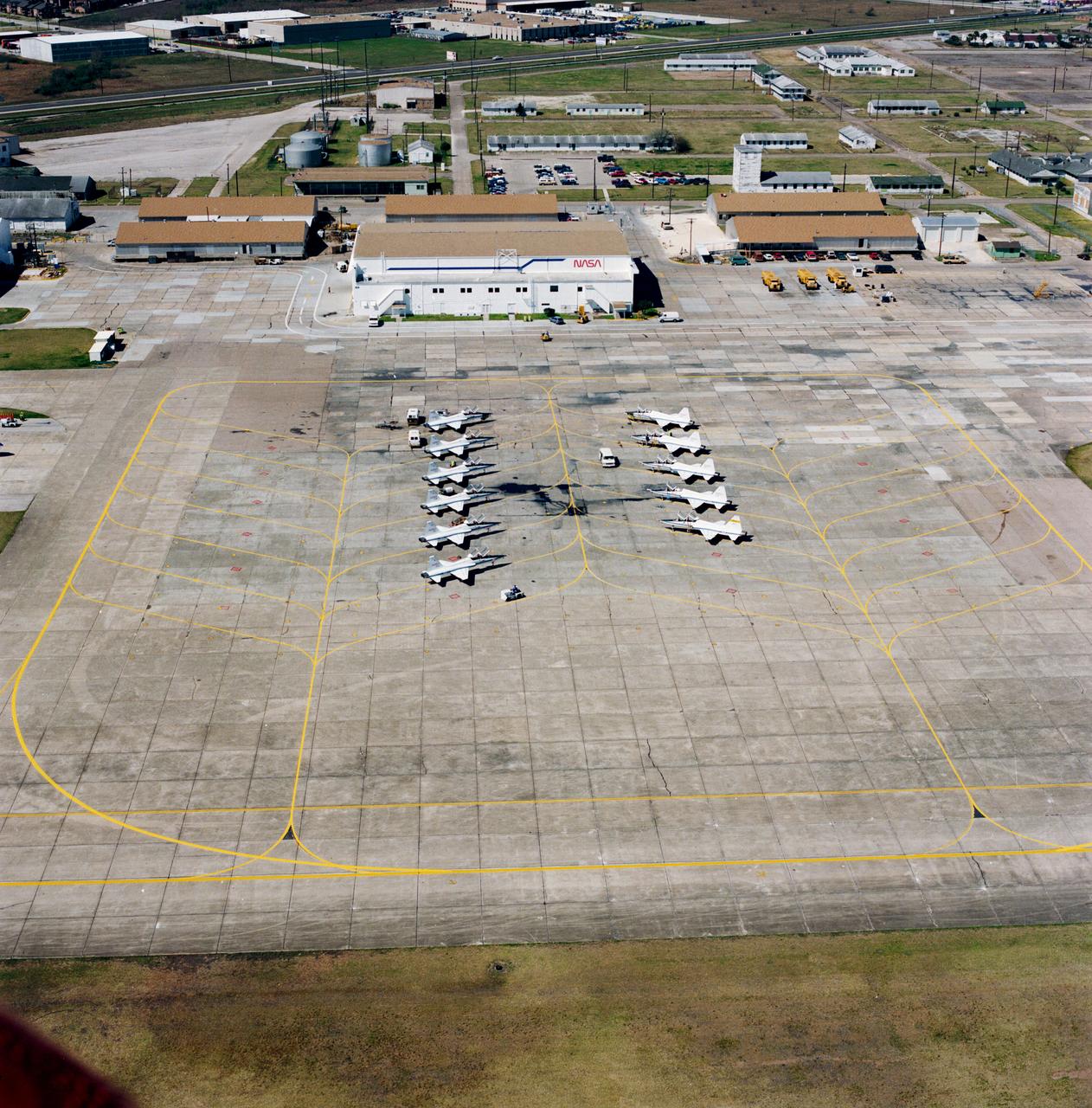
Aerial view of the NASA hangar and a line-up of the NASA T-38 trainer aircraft used by the astronauts at Ellington Field.
Aerial view of NASA hangar at Ellington Field
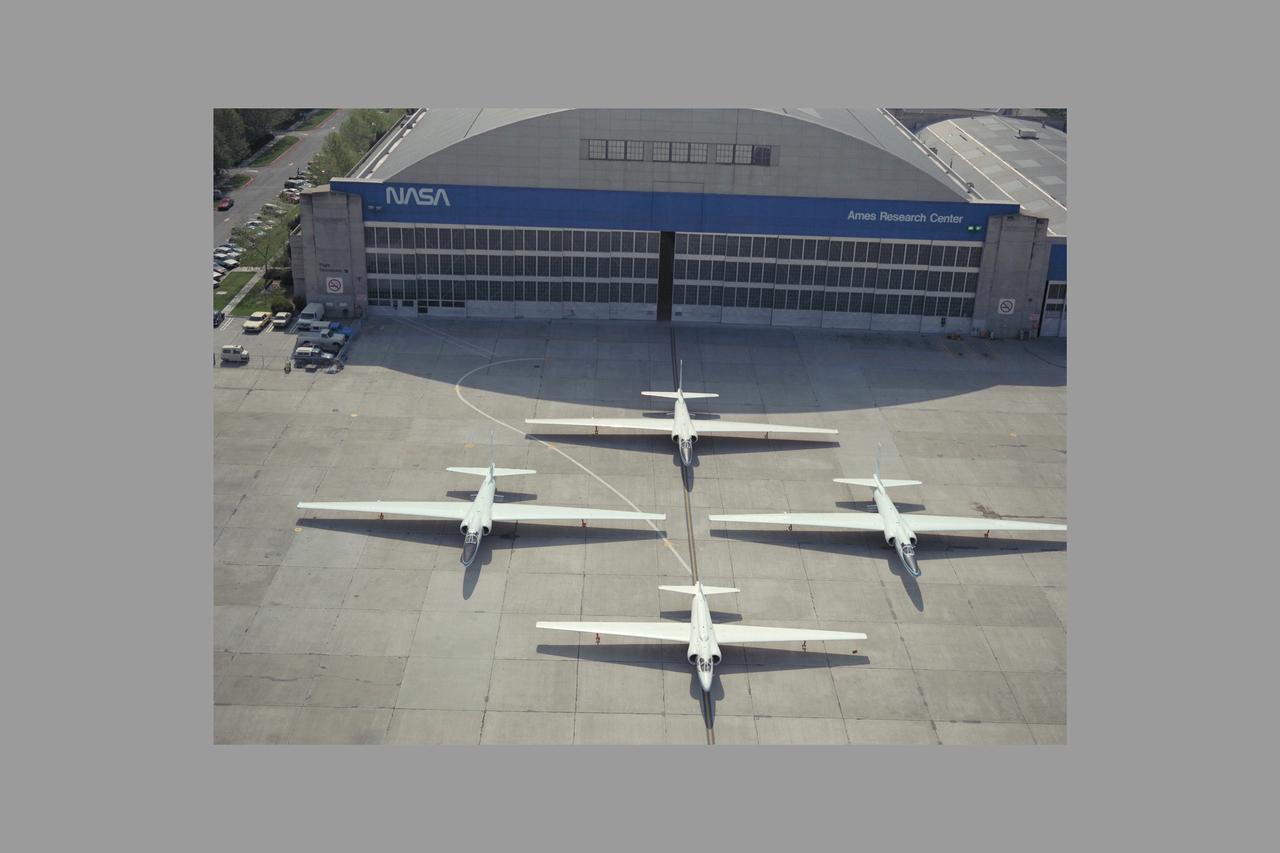
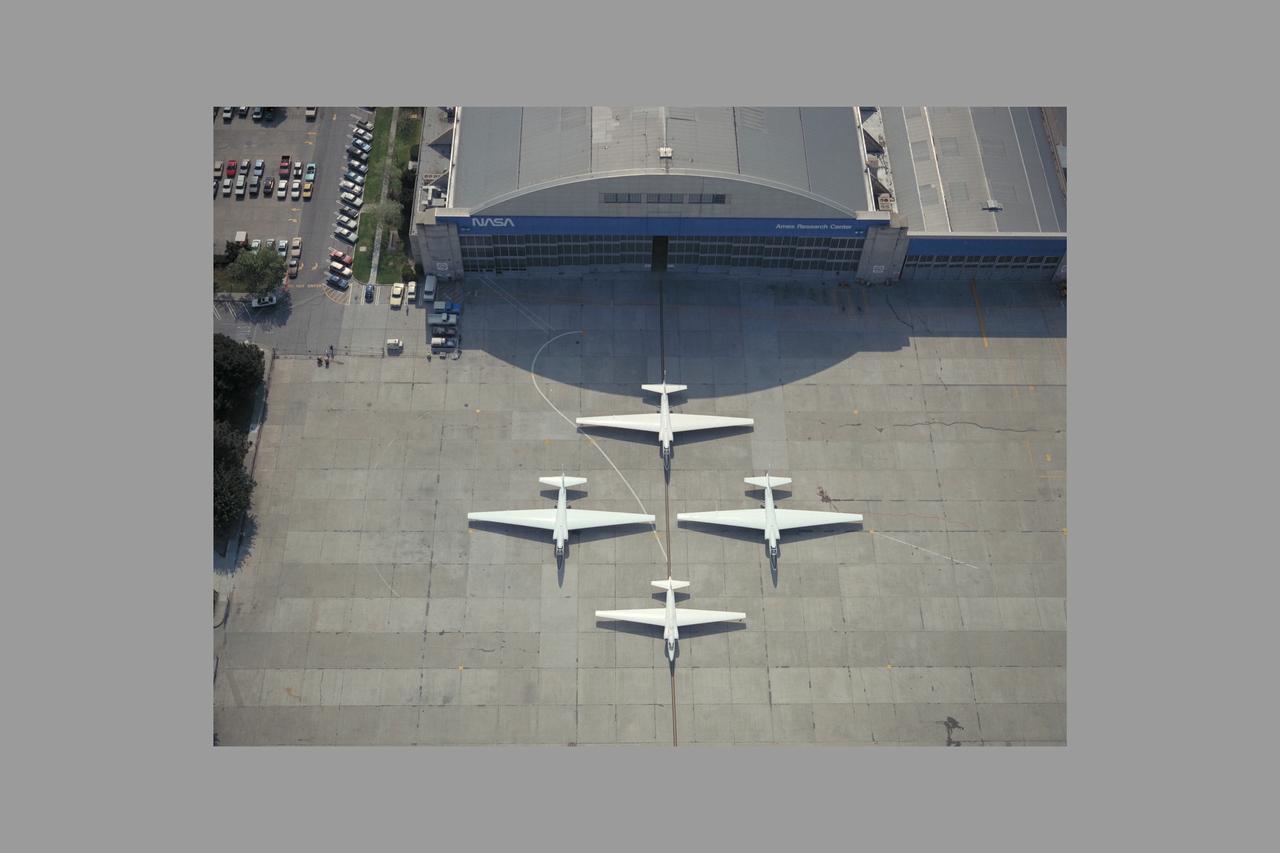
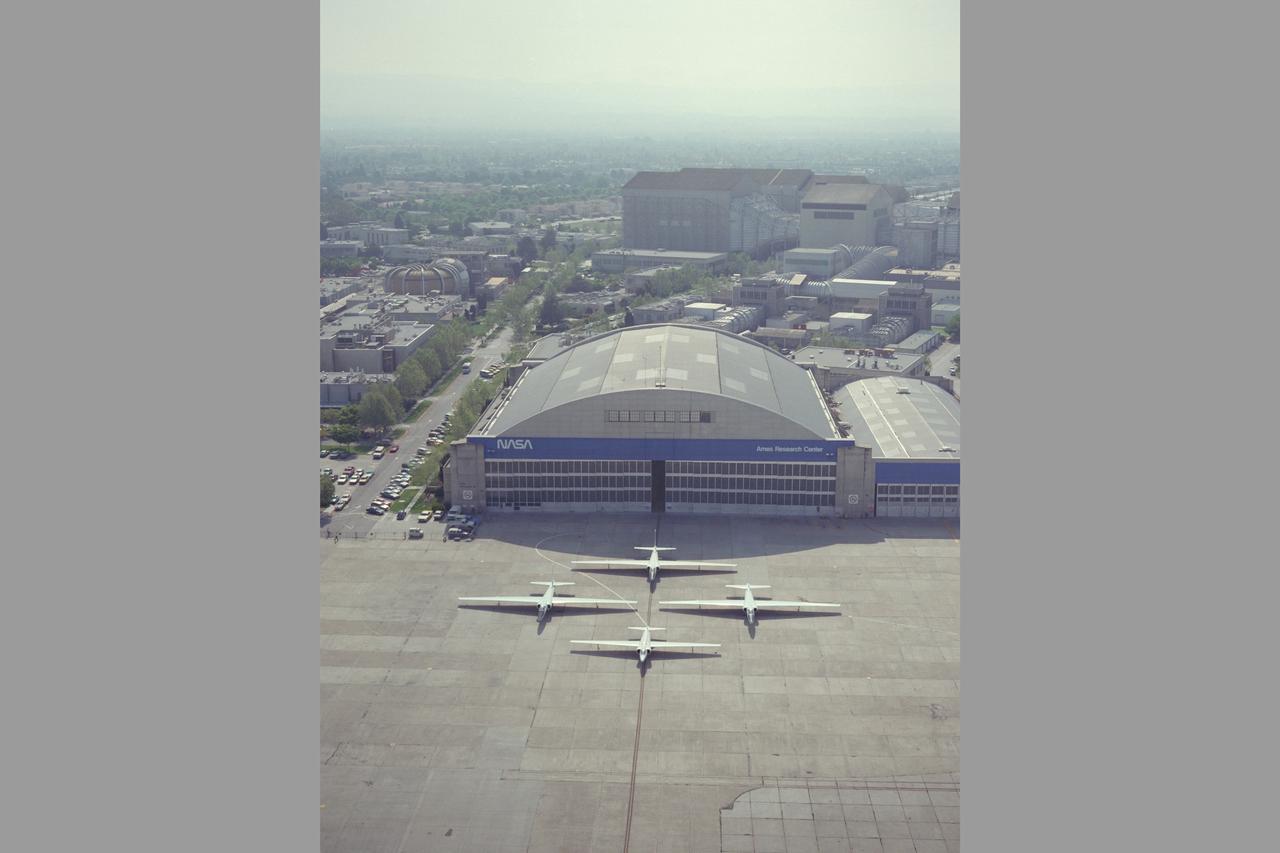
High Altitude MTPE Aircraft on flight line in front of N-211 hangar - three ER-2 and retiring U-2
ARC-1989-AC89-0215-3
NASA Ames Research Center Aircraft and Helicopter compliment on ramp in front of Ames hangar.
ARC-1981-AC81-0580-6
High Altitude MTPE Aircraft on flight line in front of N-211 hangar - three ER-2 and retiring U-2
ARC-1989-AC89-0215-2
High Altitude MTPE Aircraft on flight line in front of N-211 hangar - three ER-2 and retiring U-2
ARC-1989-AC89-0215-1
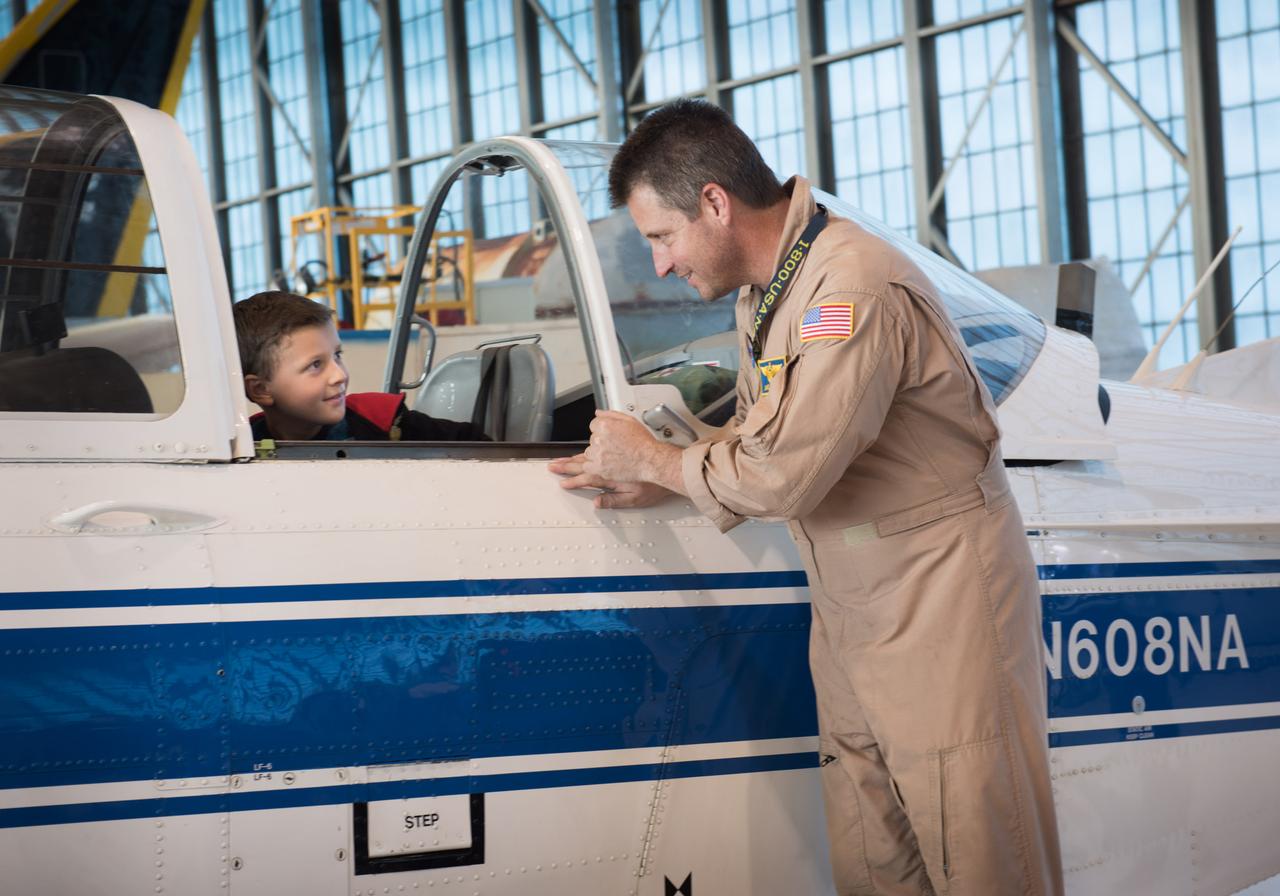
Jeremiah Kawczak checks out the T-34 aircraft with the help of Pilot and Chief of Aircraft Operations, James Demers at the Glenn Research Center Hangar during the NASA 60th Anniversary Public Tours
NASA 60th Anniversary Public Tours / NASA 60th Anniversary Ce...
NASA’s X-59 quiet supersonic research aircraft sits in position inside a hangar at Lockheed Martin Skunk Works in Palmdale, California prior to its January 12, 2024 unveiling. The X-59 is the centerpiece of NASA’s Quesst mission, which seeks to solve one of the major barriers to supersonic flight over land, currently banned in the United States, by making sonic booms quieter.
NASA’s X-59 Quiet Supersonic Aircraft Prior to Unveiling
NASA’s X-59 quiet supersonic research aircraft sits in position inside a hangar at Lockheed Martin Skunk Works in Palmdale, California prior to its January 12, 2024 unveiling. The X-59 is the centerpiece of NASA’s Quesst mission, which seeks to solve one of the major barriers to supersonic flight over land, currently banned in the United States, by making sonic booms quieter.
NASA’s X-59 Quiet Supersonic Aircraft Prior to Unveiling
Brad Flick, center director at NASA’s Armstrong Flight Research Center in Edwards, California, amplifies the center’s safety commitment during Safety Day on April 2, 2024,at NASA Armstrong.
NASA Values Safety and Reducing Risk
Timothy Risch, a technical manager at NASA’s Armstrong Flight Research Center in Edwards, California, cautions people should prepare for and be ready to survive a serious accident. He presented during Safety Day on April 4, 2024, at NASA’s Armstrong Flight Research Center in Edwards, California.
NASA Values Safety and Reducing Risk
Bob Conway, NASA Safety Center deputy director, explains key factors in a safe work environment include organizational culture and climate. He presented during Safety Day on April 4, 2024, at NASA’s Armstrong Flight Research Center in Edwards, California.
NASA Values Safety and Reducing Risk
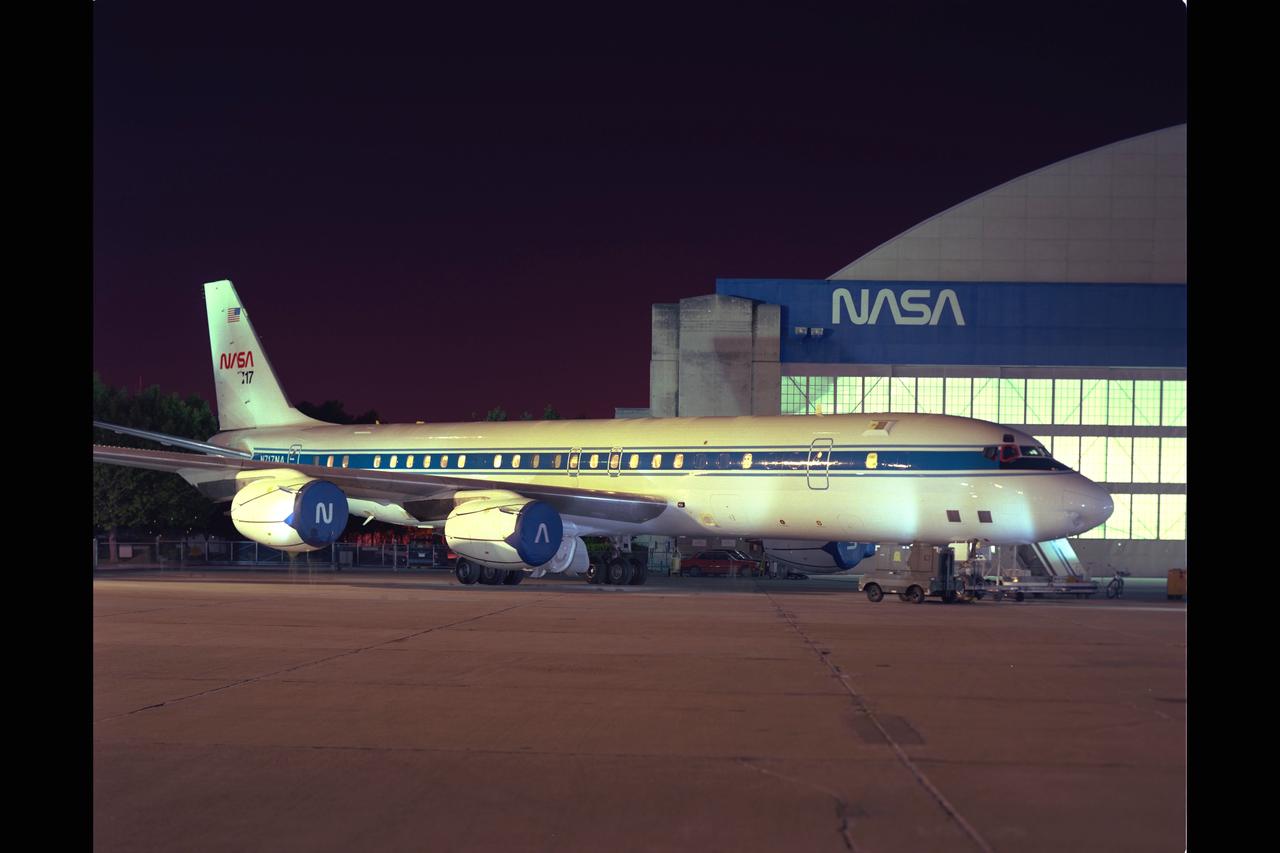
NASA Ames Research Center interaction with environment. This evening shot was time exposed in front of the NASA Hangar with DC-8 (NASA-717) aircraft in the foreground.
ARC-1991-AC91-0121-23
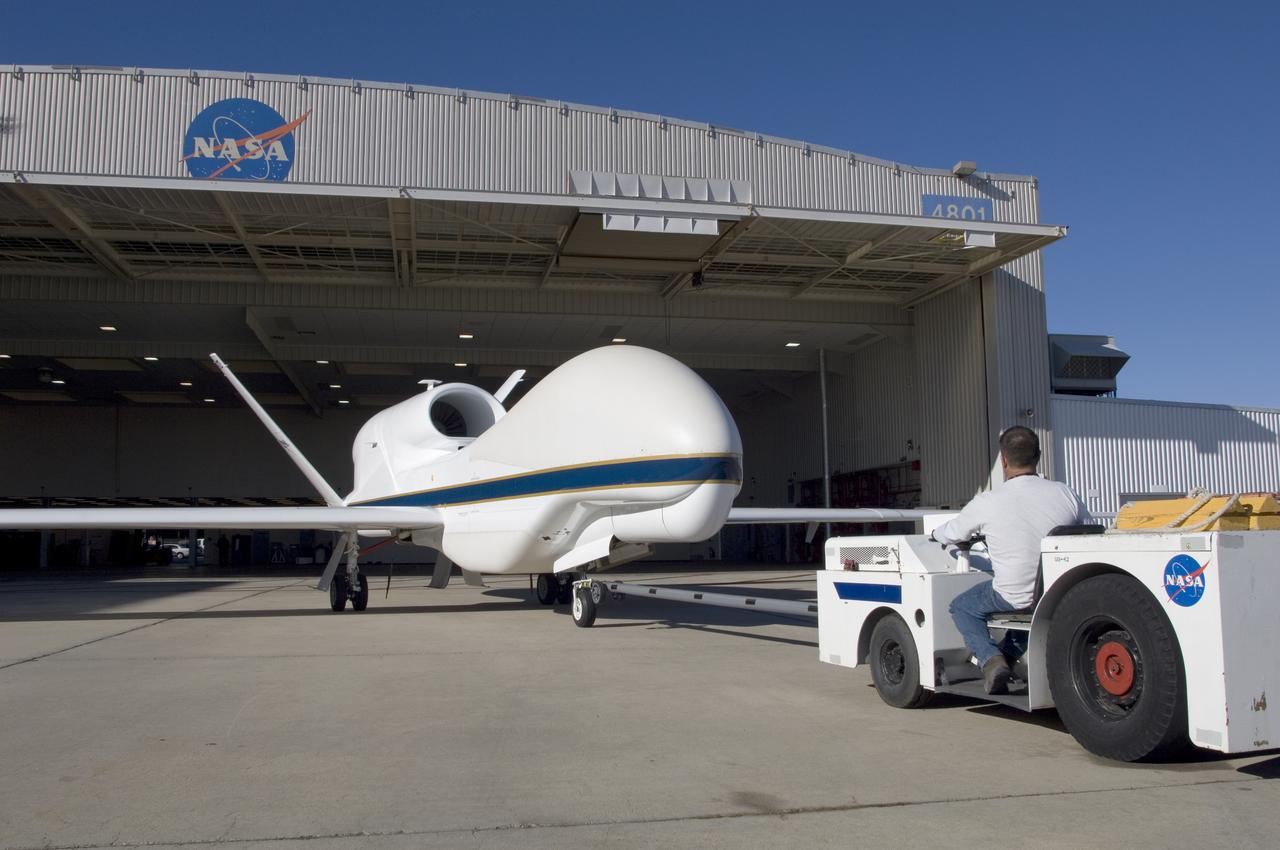
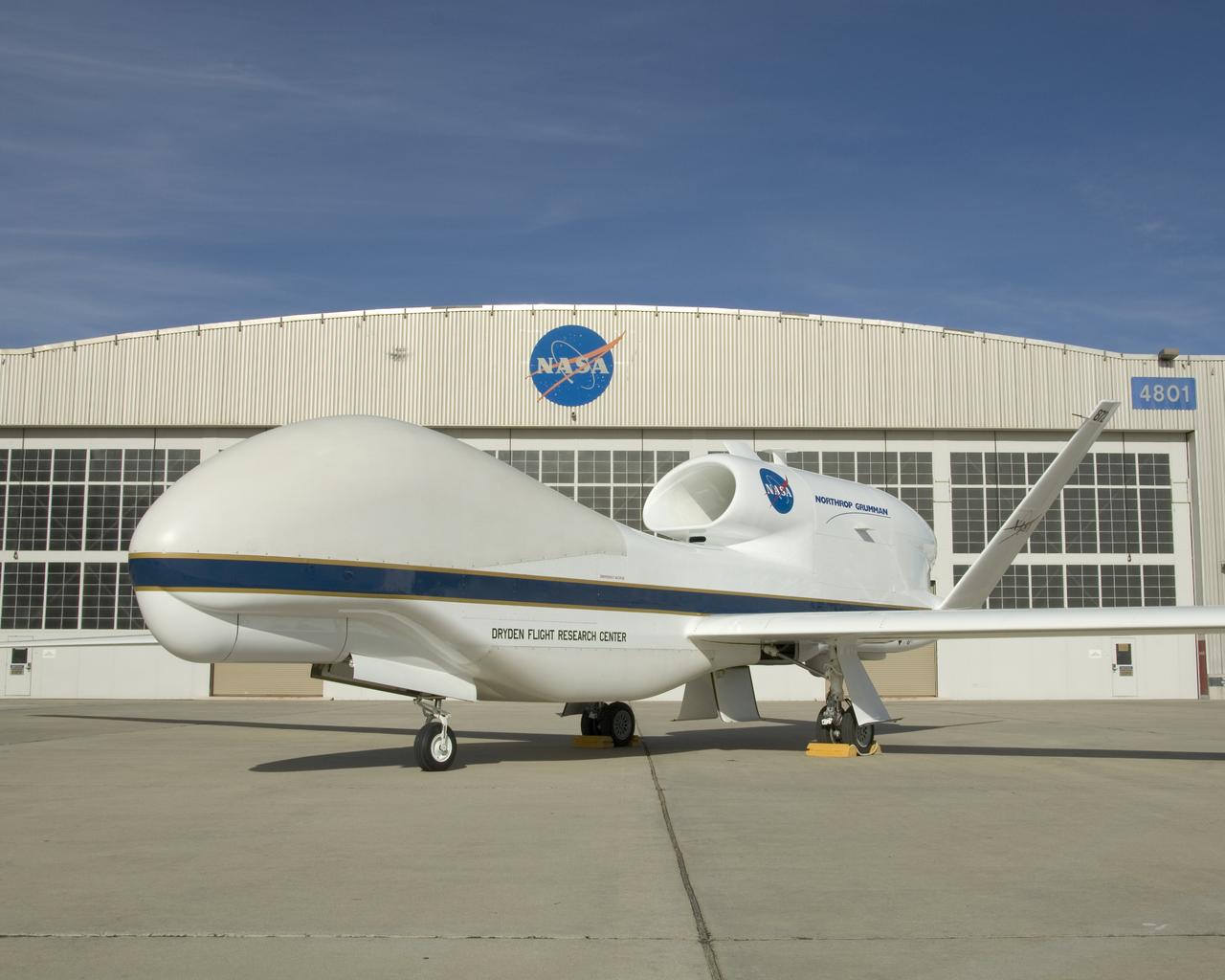
A ground crewman maneuvers one of NASA's Global Hawk unmanned science aircraft into Hangar 4801 at NASA's Dryden Flight Research Center, Edwards, Calif.
ED07-0244-096
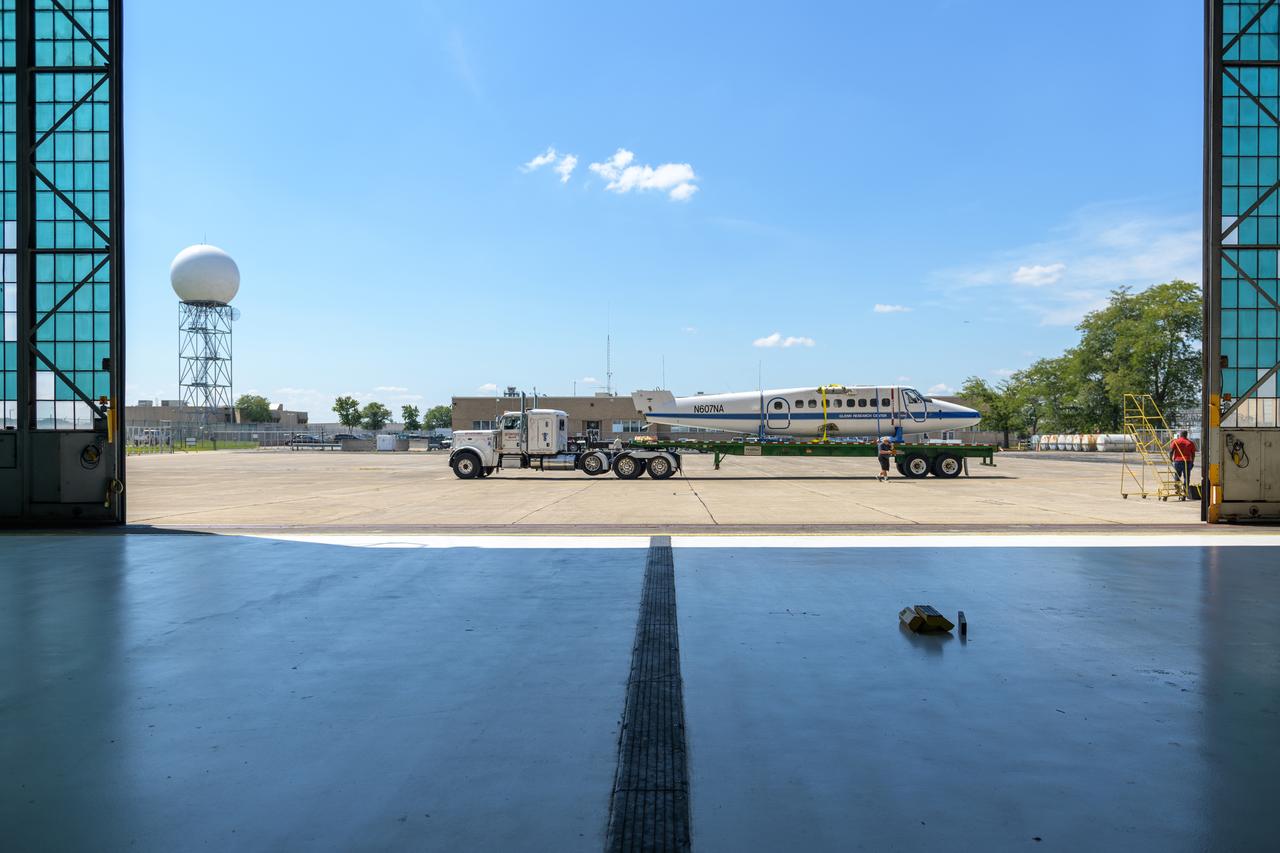
The NASA Langley's twin-engine turboprop, Beechcraft King Air B200 aircraft is towed through the large doors and inside the hangar of the Research Center, Building 1244.
The NASA Langley's Beechcraft King Air B200 Aircraft is Towed Th
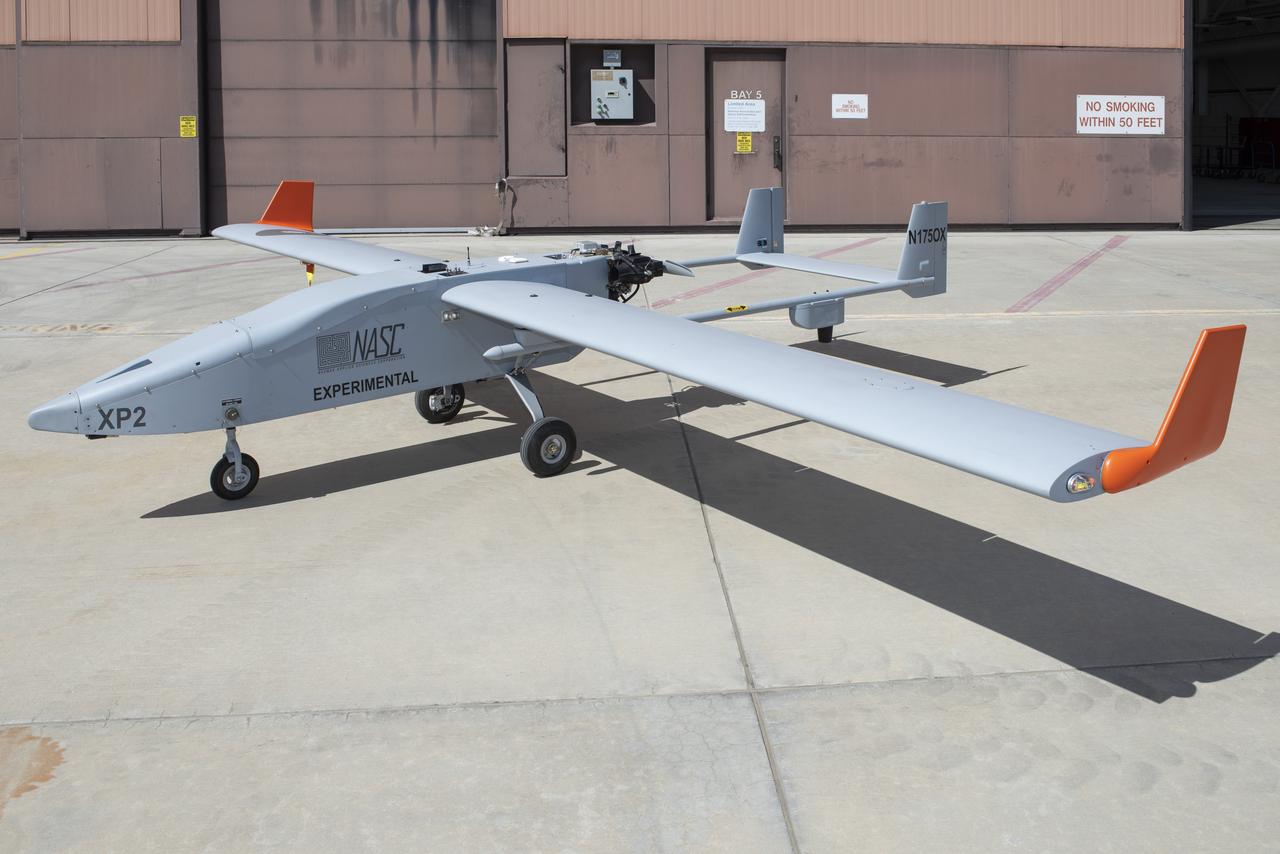
The fully assembled TigerShark unmanned aircraft system, seen here near a hangar at NASA’s Armstrong Flight Research Center in California, is expected to soon be flying missions.
TigerShark Delivered, Assembled at NASA Armstrong
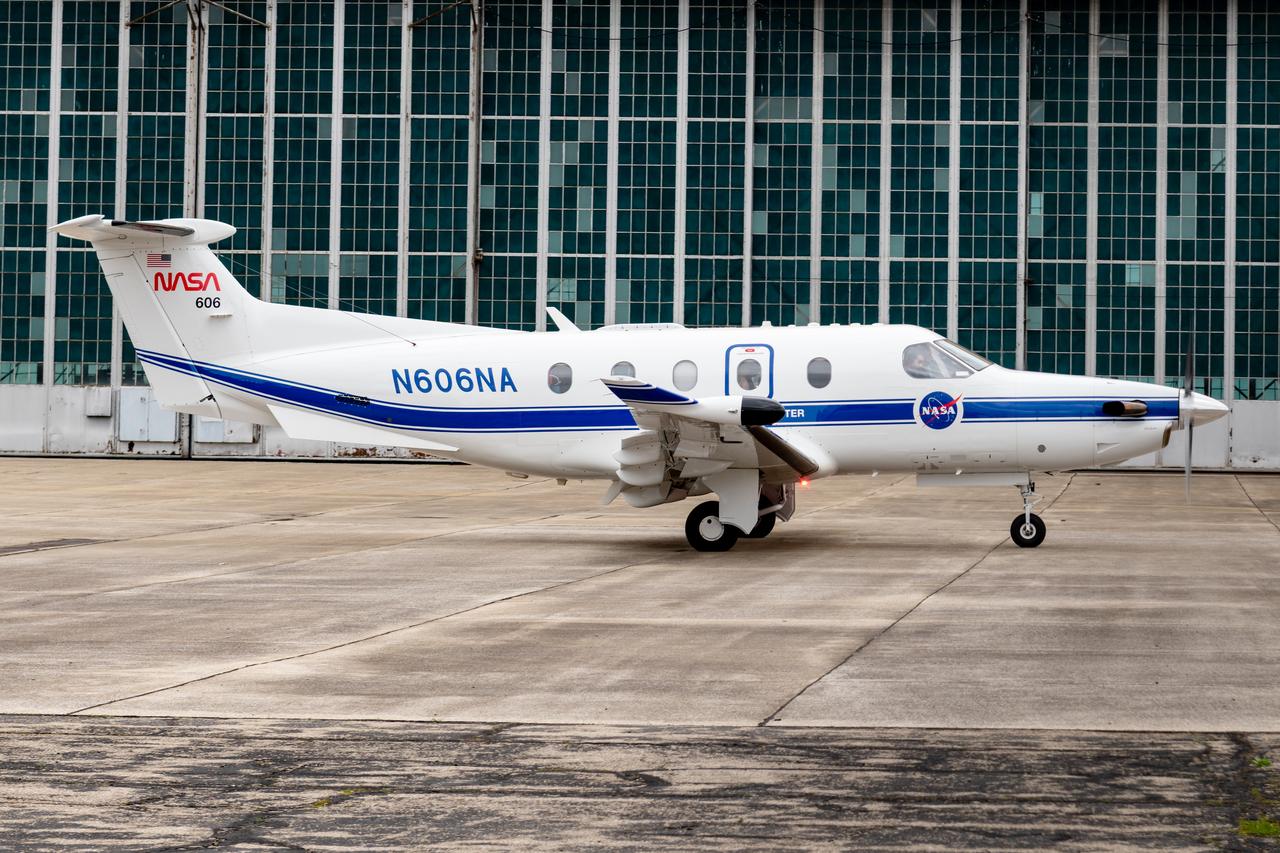
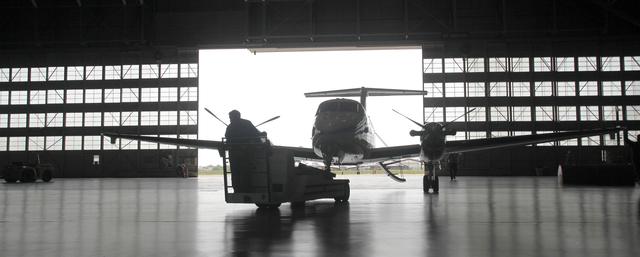
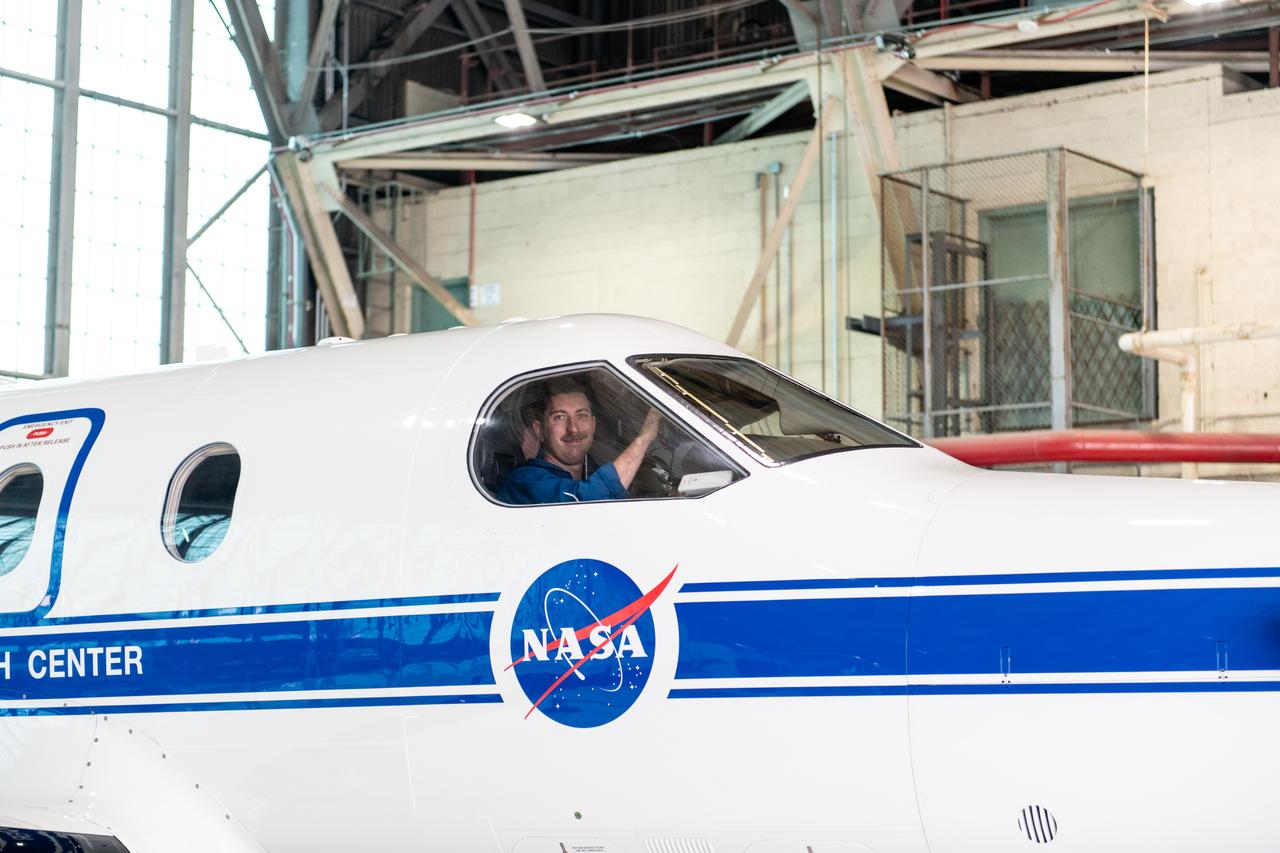
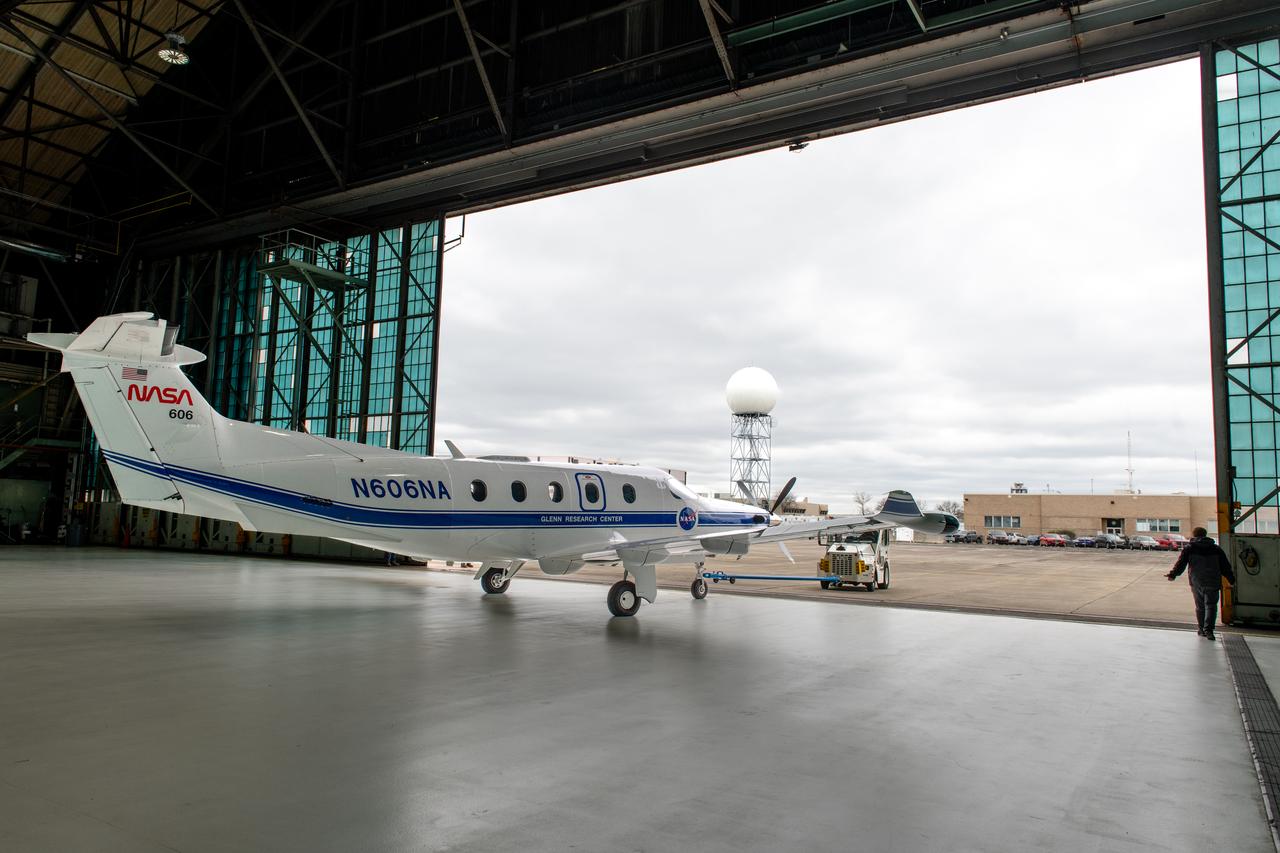
Jeremy Johnson leaving the hangar for a test flight in NASA Glenn Research Center’s PC-12 aircraft on Wednesday, April 16, 2025.
NASA SkillBridge Research Pilot and Aviation Safety Officer Jeremy Johnson
Jeremy Johnson leaving the hangar for a test flight in NASA Glenn Research Center’s PC-12 aircraft on Wednesday, April 16, 2025.
NASA SkillBridge Research Pilot and Aviation Safety Officer Jeremy Johnson
Jeremy Johnson leaving the hangar for a test flight in NASA Glenn Research Center’s PC-12 aircraft on Wednesday, April 16, 2025.
NASA SkillBridge Research Pilot and Aviation Safety Officer Jeremy Johnson
Jeremy Johnson leaving the hangar for a test flight in NASA Glenn Research Center’s PC-12 aircraft on Wednesday, April 16, 2025.
NASA SkillBridge Research Pilot and Aviation Safety Officer Jeremy Johnson
Jeremy Johnson leaving the hangar for a test flight in NASA Glenn Research Center’s PC-12 aircraft on Wednesday, April 16, 2025.
NASA SkillBridge Research Pilot and Aviation Safety Officer Jeremy Johnson
Jeremy Johnson leaving the hangar for a test flight in NASA Glenn Research Center’s PC-12 aircraft on Wednesday, April 16, 2025.
NASA SkillBridge Research Pilot and Aviation Safety Officer Jeremy Johnson
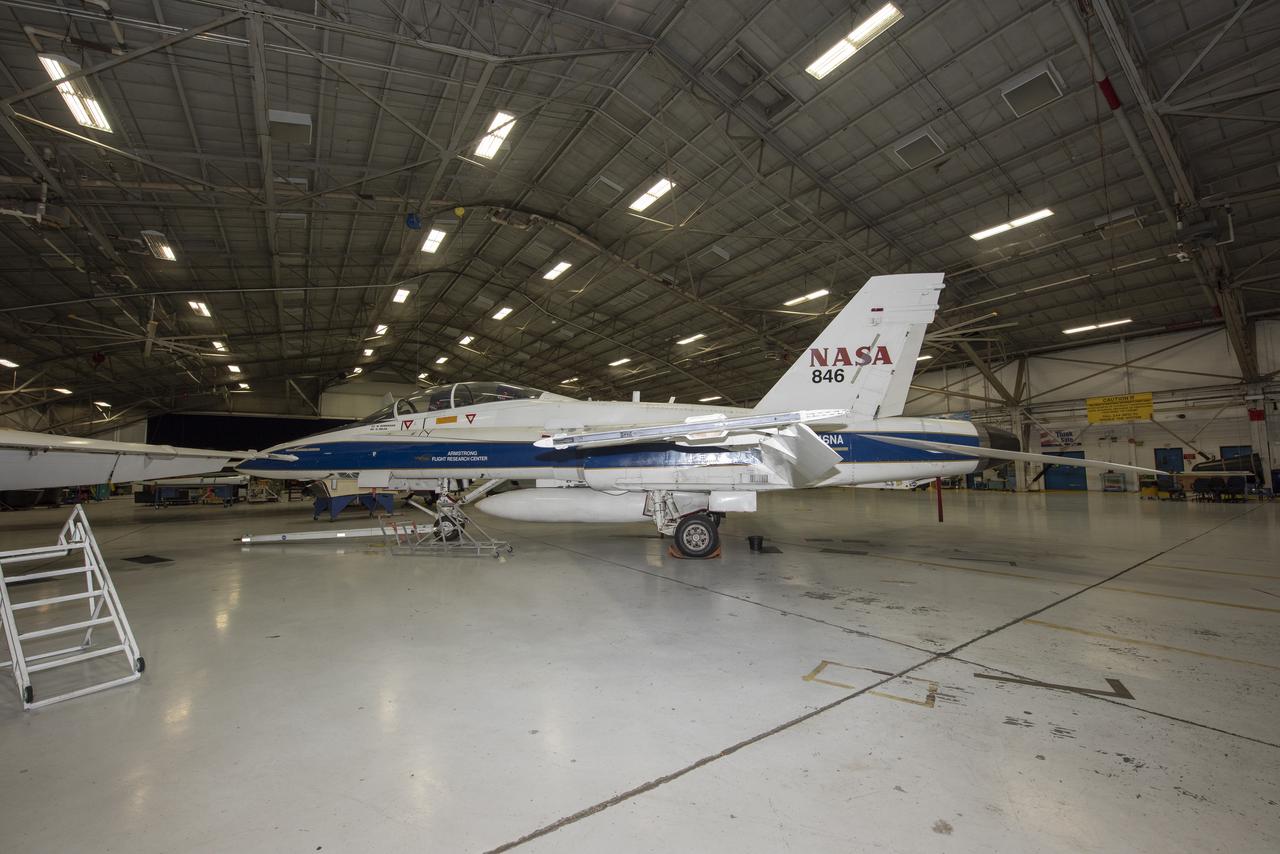
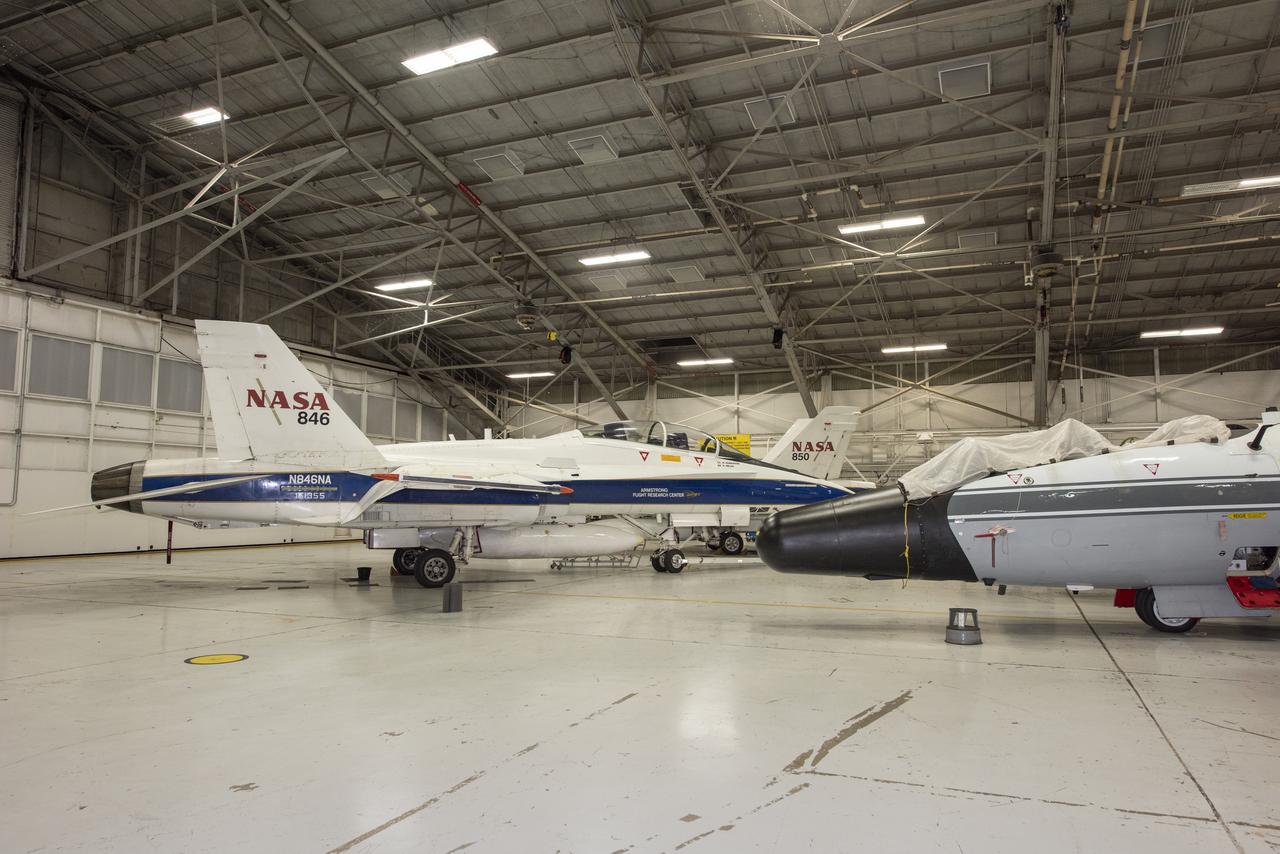
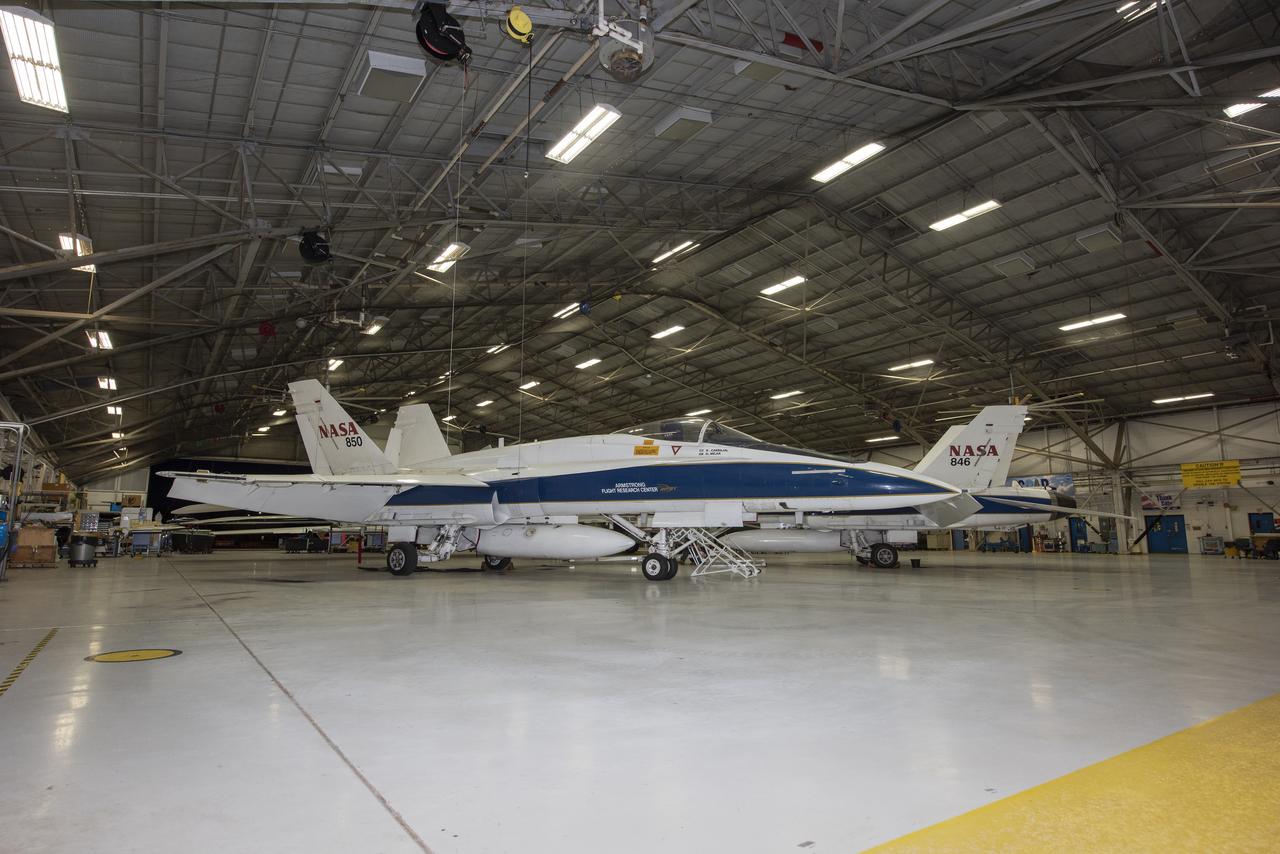
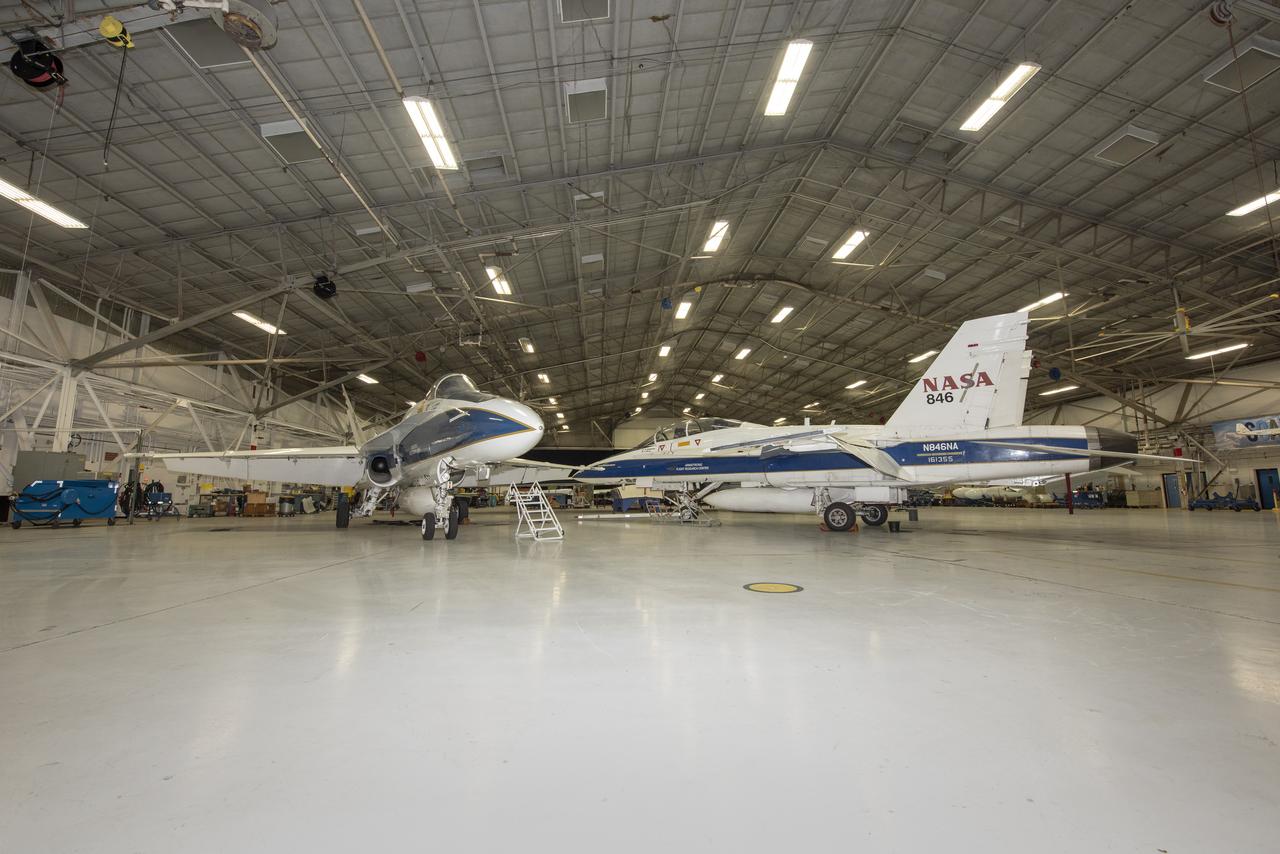
NASA deployed two F/A-18 research aircraft from NASA’s Armstrong Flight Research Center in California to fly the Quiet Supersonic Flights 2018 campaign, or QSF18. Having more than one aircraft allows pilots to conduct quick turnarounds with different aircrews between flights, fitting in as many targeted research flights as necessary.
NASA F/A-18 Aircraft Sit in Hangar
NASA deployed two F/A-18 research aircraft from NASA’s Armstrong Flight Research Center in California to fly the Quiet Supersonic Flights 2018 campaign, or QSF18. Having more than one aircraft allows pilots to conduct quick turnarounds with different aircrews between flights, fitting in as many targeted research flights as necessary.
NASA F/A-18 Aircraft Sit in Hangar
NASA deployed two F/A-18 research aircraft from NASA’s Armstrong Flight Research Center in California to fly the Quiet Supersonic Flights 2018 campaign, or QSF18. Having more than one aircraft allows pilots to conduct quick turnarounds with different aircrews between flights, fitting in as many targeted research flights as necessary.
NASA F/A-18 Aircraft Sit in Hangar
NASA deployed two F/A-18 research aircraft from NASA’s Armstrong Flight Research Center in California to fly the Quiet Supersonic Flights 2018 campaign, or QSF18. Having more than one aircraft allows pilots to conduct quick turnarounds with different aircrews between flights, fitting in as many targeted research flights as necessary.
NASA F/A-18 Aircraft Sit in Hangar
NASA deployed two F/A-18 research aircraft from NASA’s Armstrong Flight Research Center in California to fly the Quiet Supersonic Flights 2018 campaign, or QSF18. Having more than one aircraft allows pilots to conduct quick turnarounds with different aircrews between flights, fitting in as many targeted research flights as necessary.
NASA F/A-18 Aircraft Sit in Hangar
NASA deployed two F/A-18 research aircraft from NASA’s Armstrong Flight Research Center in California to fly the Quiet Supersonic Flights 2018 campaign, or QSF18. Having more than one aircraft allows pilots to conduct quick turnarounds with different aircrews between flights, fitting in as many targeted research flights as necessary.
NASA F/A-18 Aircraft Sit in Hangar
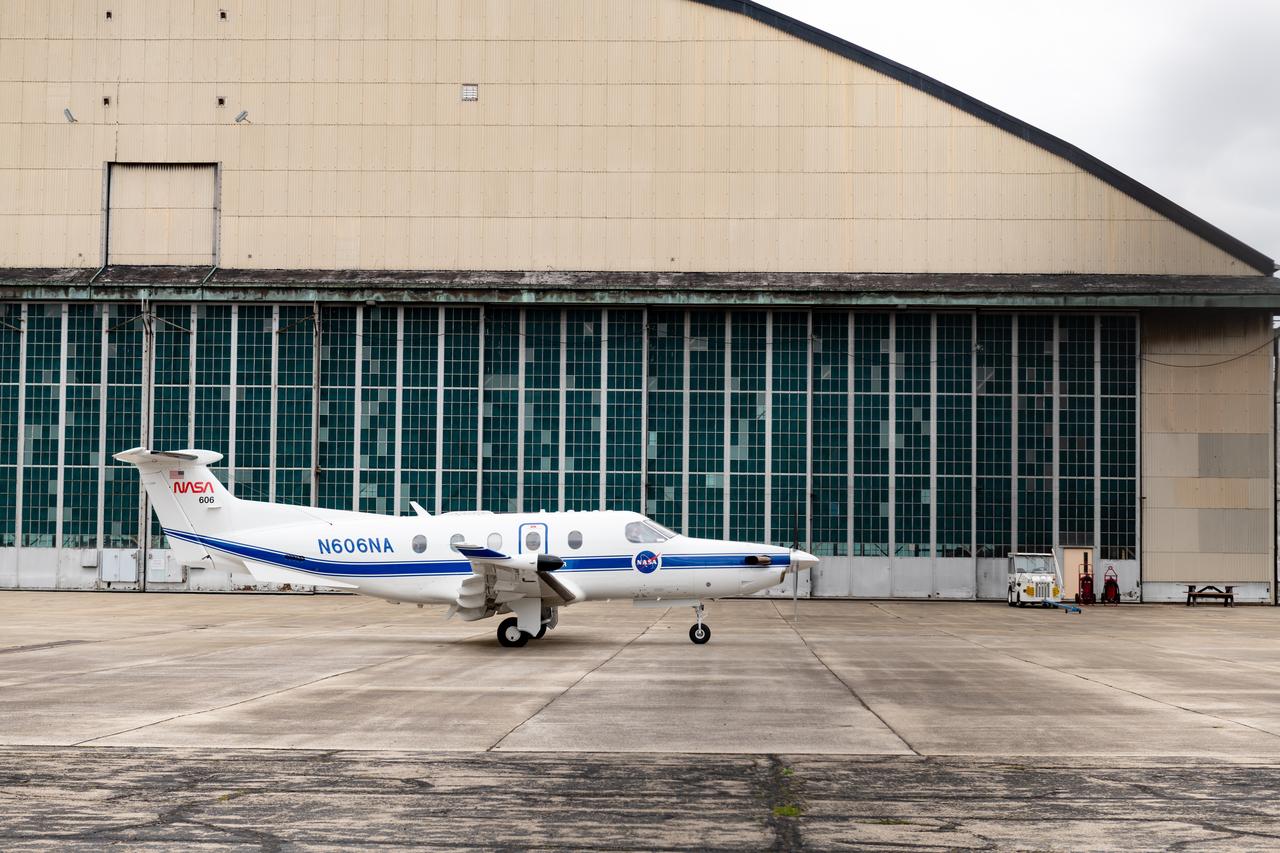
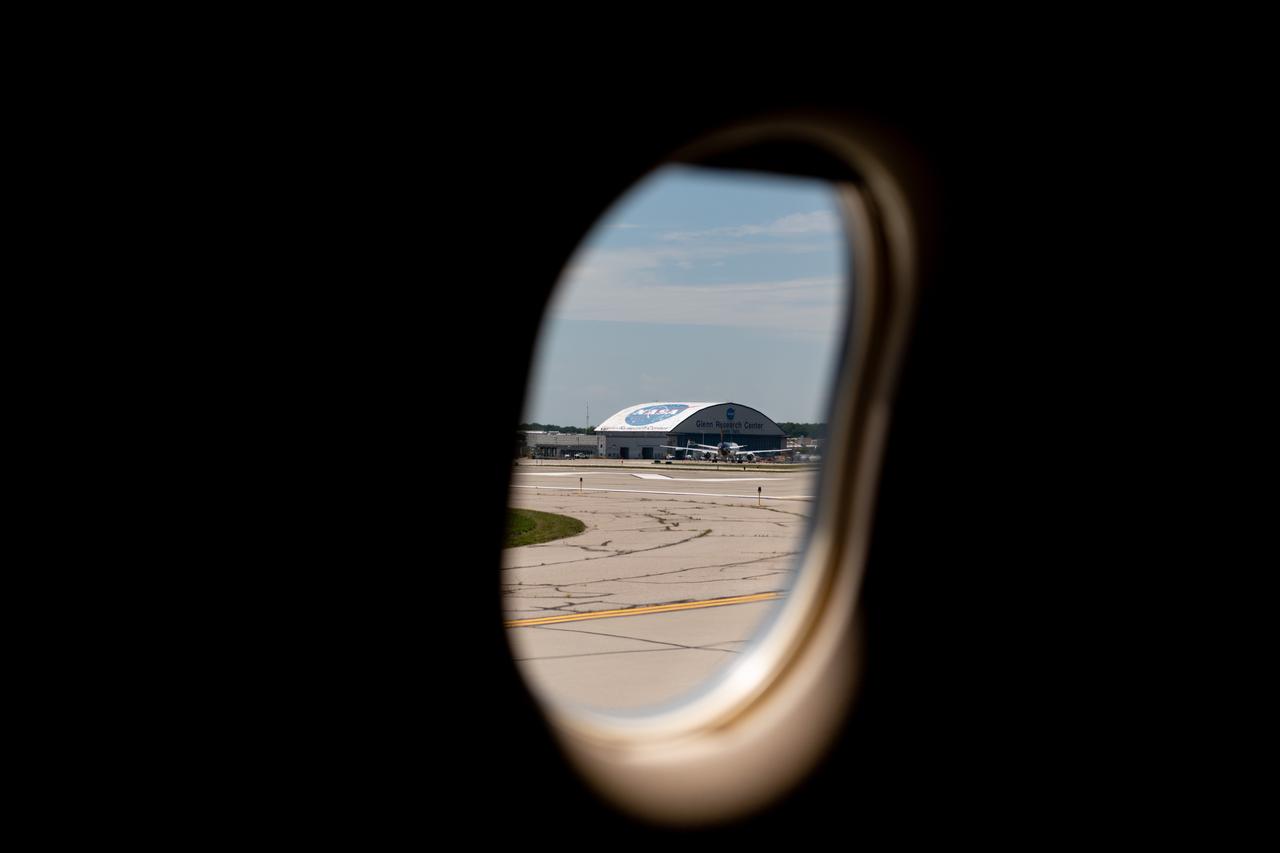
View of the historical Flight Research Center (Hangar) at NASA Glenn Research Center from the Pilatus PC-12NG NASA plane. Photo Credit: (NASA/Sara Lowthian-Hanna)
Hangar view from the PC-12 Aircraft
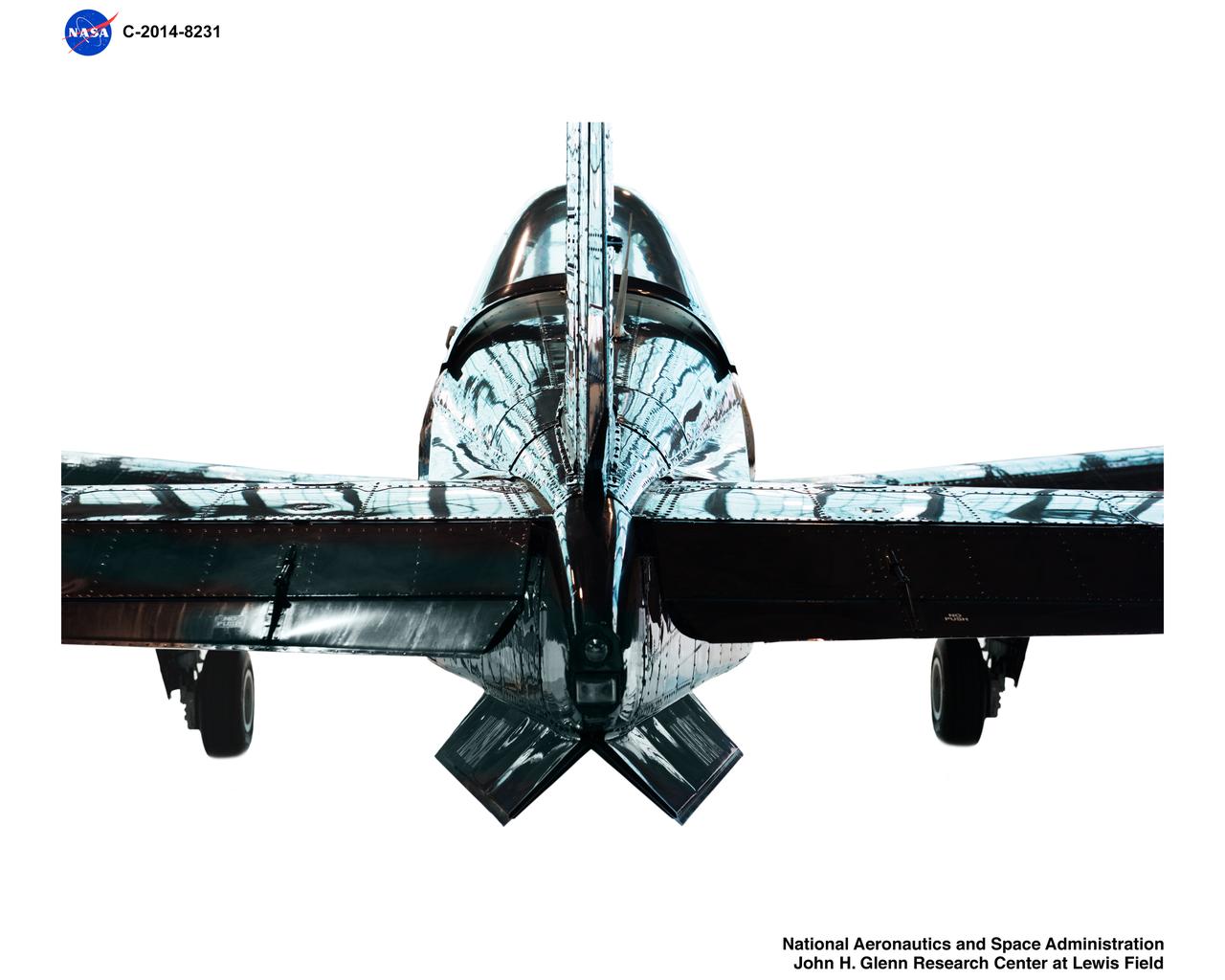
A T34-C aircraft reflects the large multi-paned windows on the Hangar doors.  When NASA GRC obtained this T-34C from the Navy it was painted in ‚Äúthrowback‚Äù paint schemes from an earlier time in celebration of the 100th birthday of Naval Aviation.  NASA kept it in the original paint job for posterity.  This T-34C airplane will be GRCs surrogate aircraft for Unmanned Aircraft Systems in the National Airspace System aeronautics initiative. A T34-C aircraft reflects the large multi-paned windows on the Hangar doors.  When NASA GRC obtained this T-34C from the Navy it was painted in “throwback” paint schemes from an earlier time in celebration of the 100th birthday of Naval Aviation.  NASA kept it in the original paint job for posterity.  This T-34C airplane will be GRCs surrogate aircraft for Unmanned Aircraft Systems in the National Airspace System aeronautics initiative.
GRC-2014-C-08231
The Lockheed Viking S-3B aircraft is being pulled out of the hangar at Glenn Research Center in preparation for its departure and retirement from service.  This former NAVY aircraft was the last such aircraft still flying.  It has gone to a museum on the west coast.  After leaving service with the NAVY, it came to GRC to be used in aircraft icing experiments.  The swept wings made it suitable for such research as opposed to the straight wings on GRG’s other icing research aircraft, the De Havilland Twin Otter.
Feature art for social media
NASA's Super Guppy cargo transport aircraft taxis in from the Plant 42 runway to NASA"s Armstrong Flight Research Center Building 703 ramp. The aircraft is being stored in the hangar during its phase maintenance check.
NASA's Super Guppy Arrives to Armstrong Building 703 for Maintenance
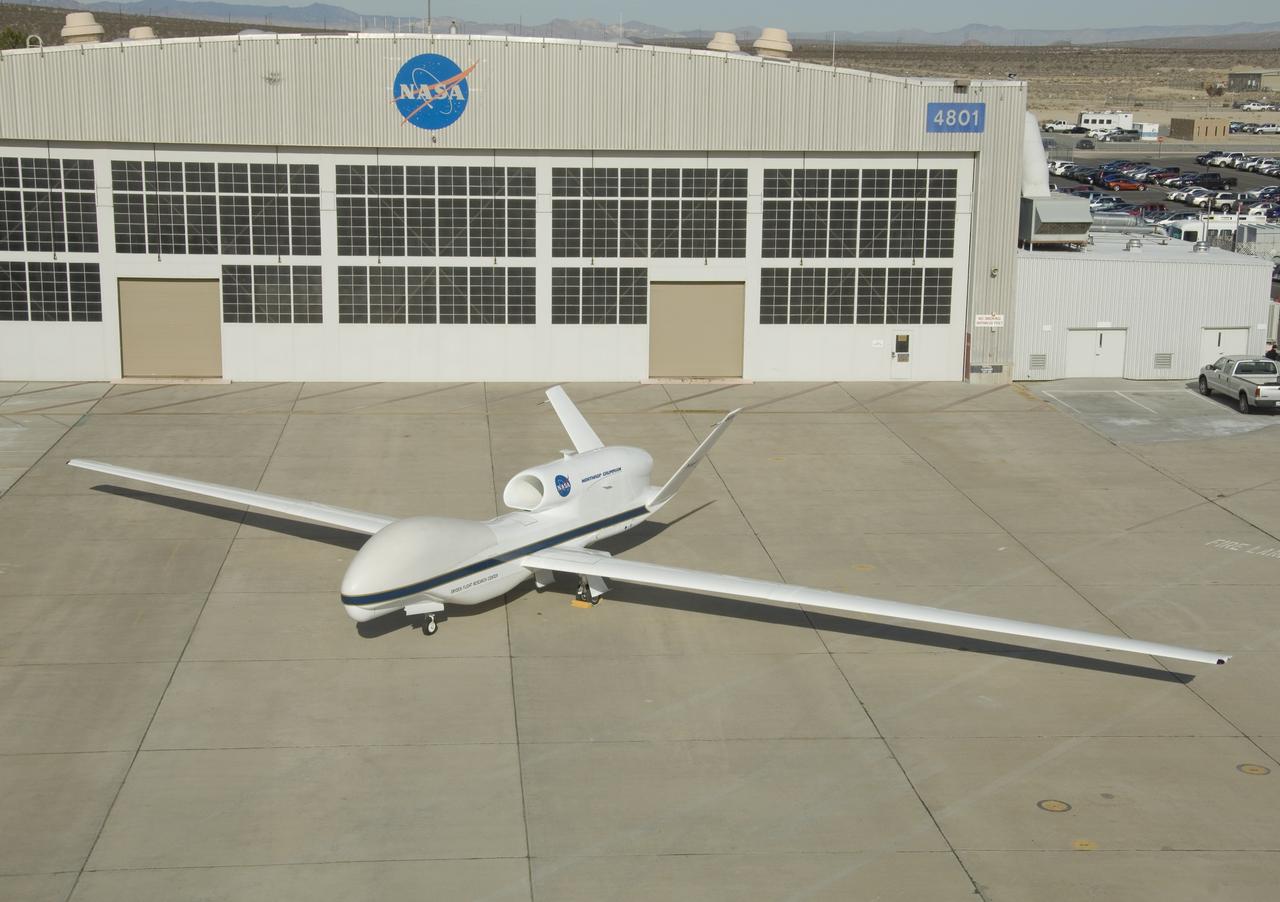
One of NASA's two Global Hawk high-altitude unmanned science aircraft displays its contours outside its hangar at NASA's Dryden Flight Research Center.
ED08-0309-12
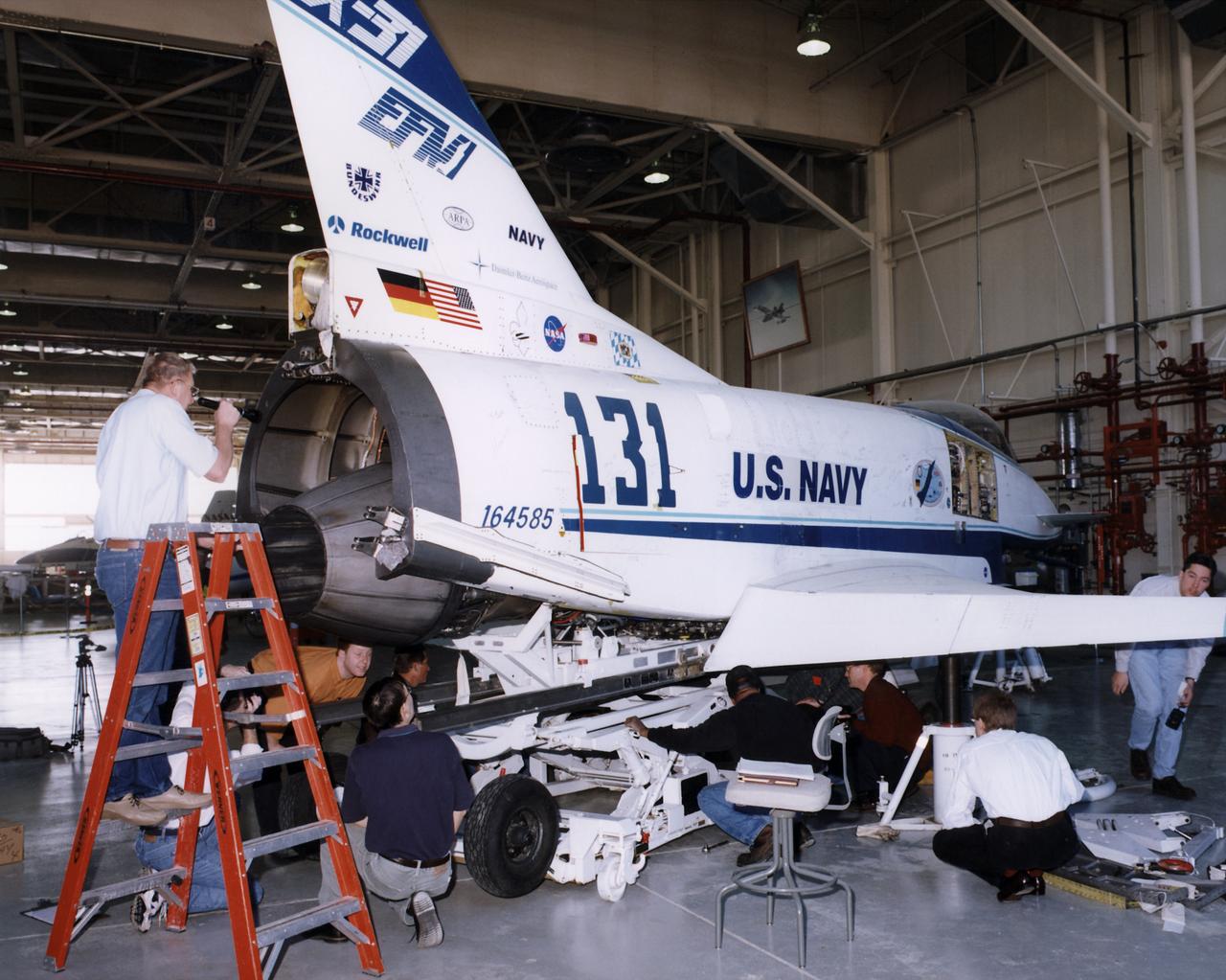
X-31 team members perform an engine fit check on the X-31 Enhanced Fighter Maneuverability demonstrator aircraft in a hangar at the Dryden Flight Research Center, Edwards, California.
X-31 Engine Fit Check
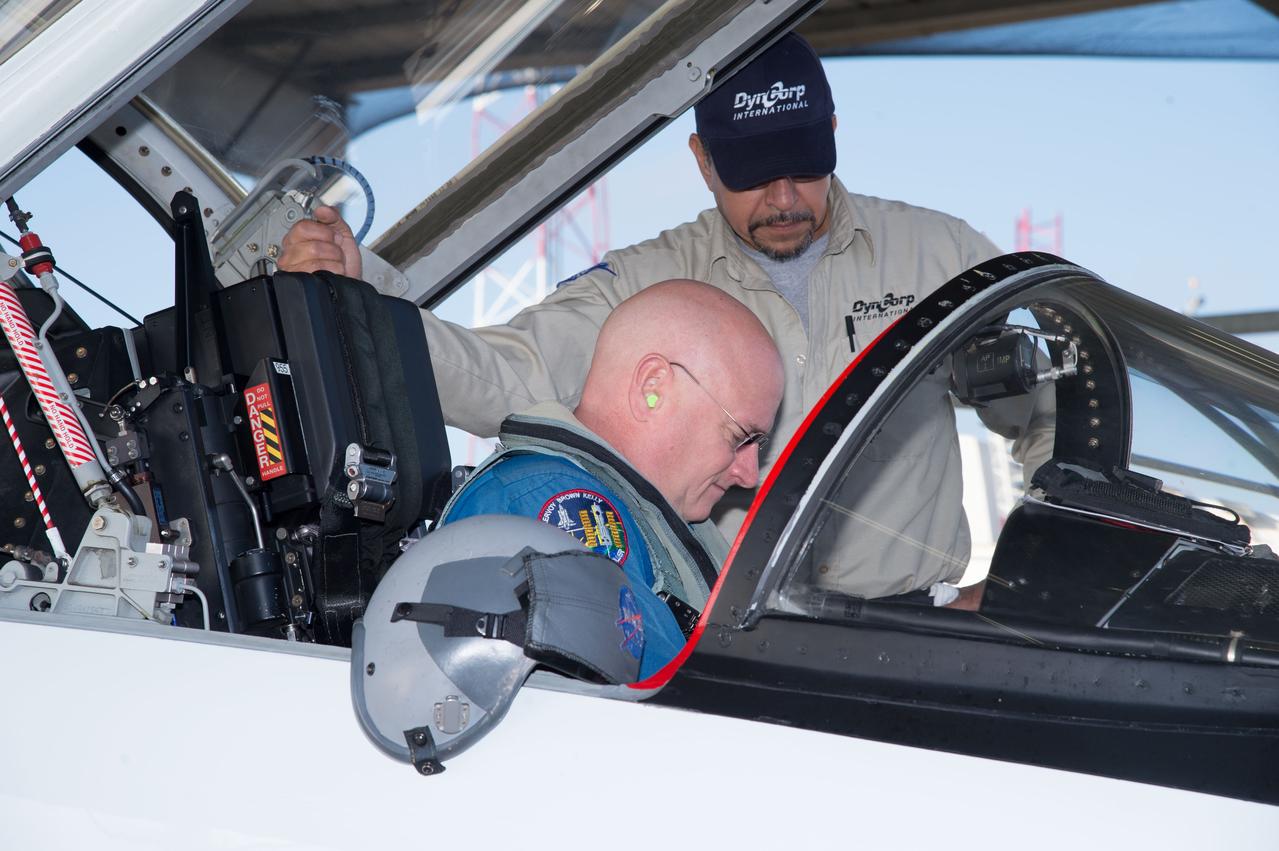
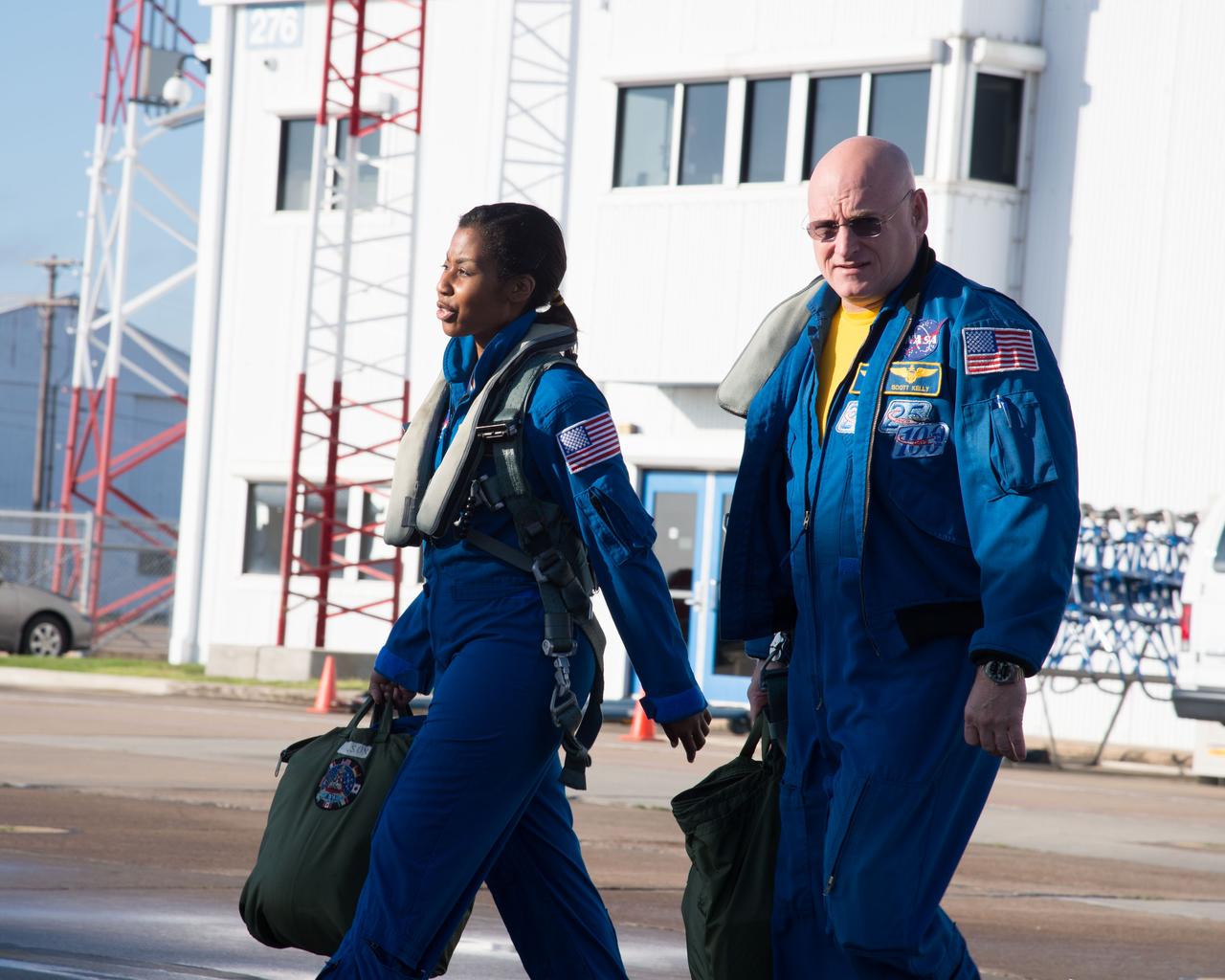
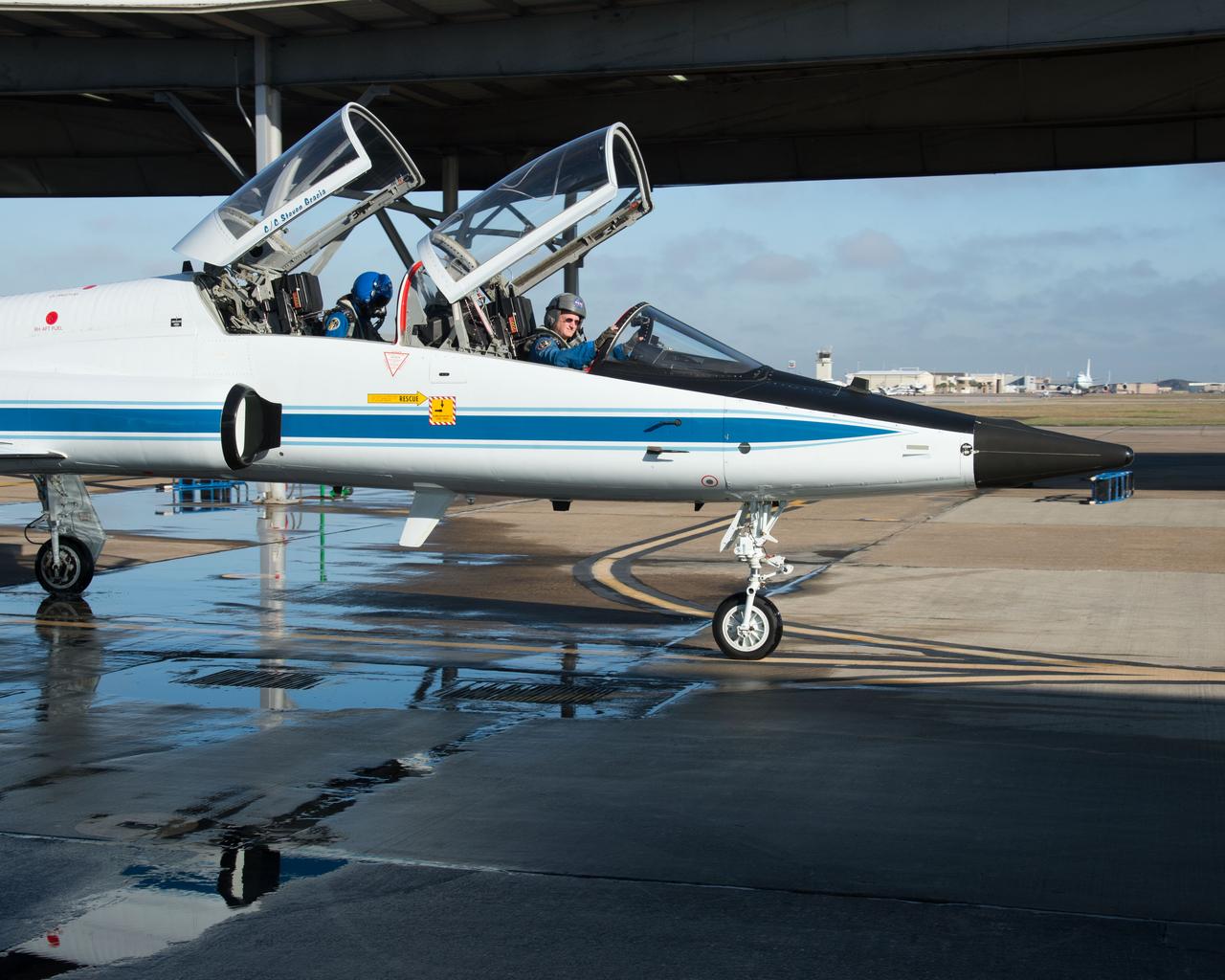
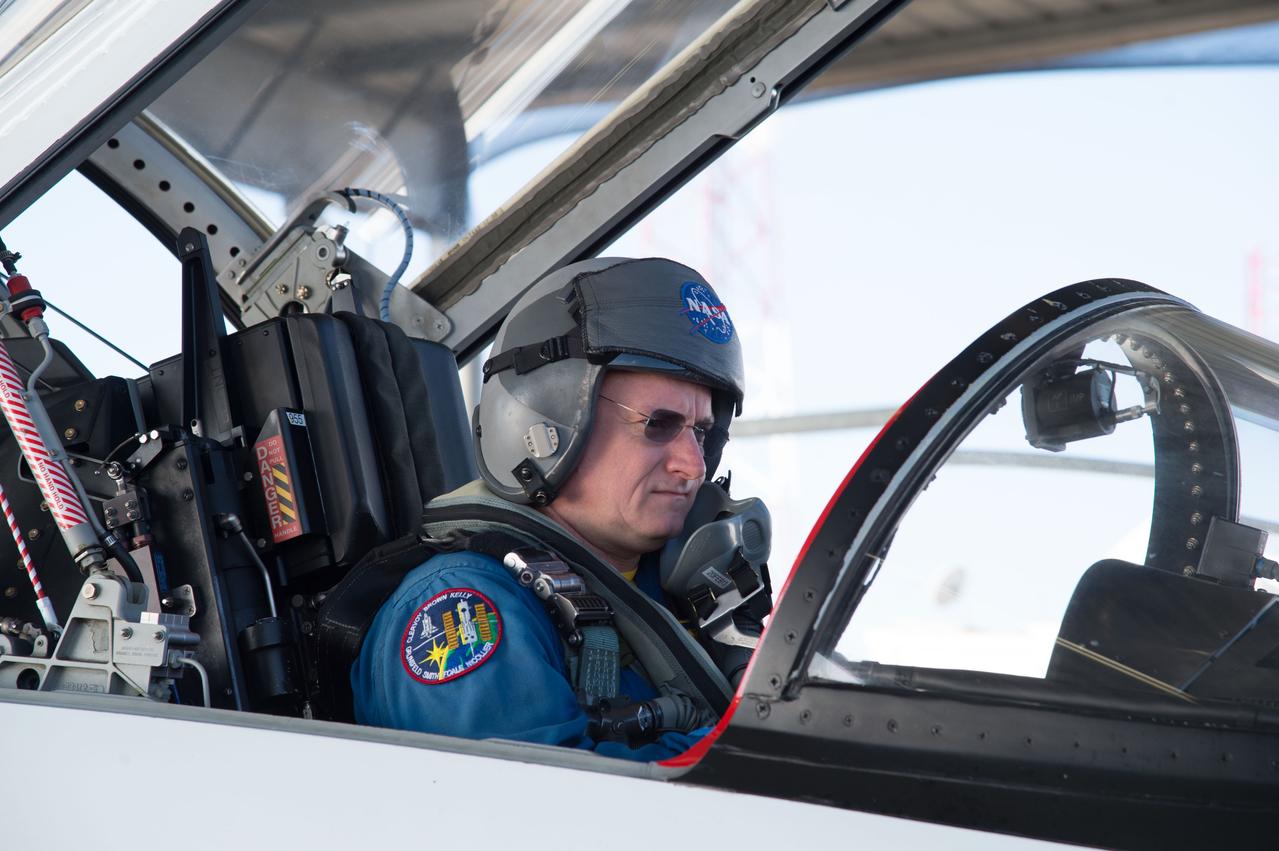
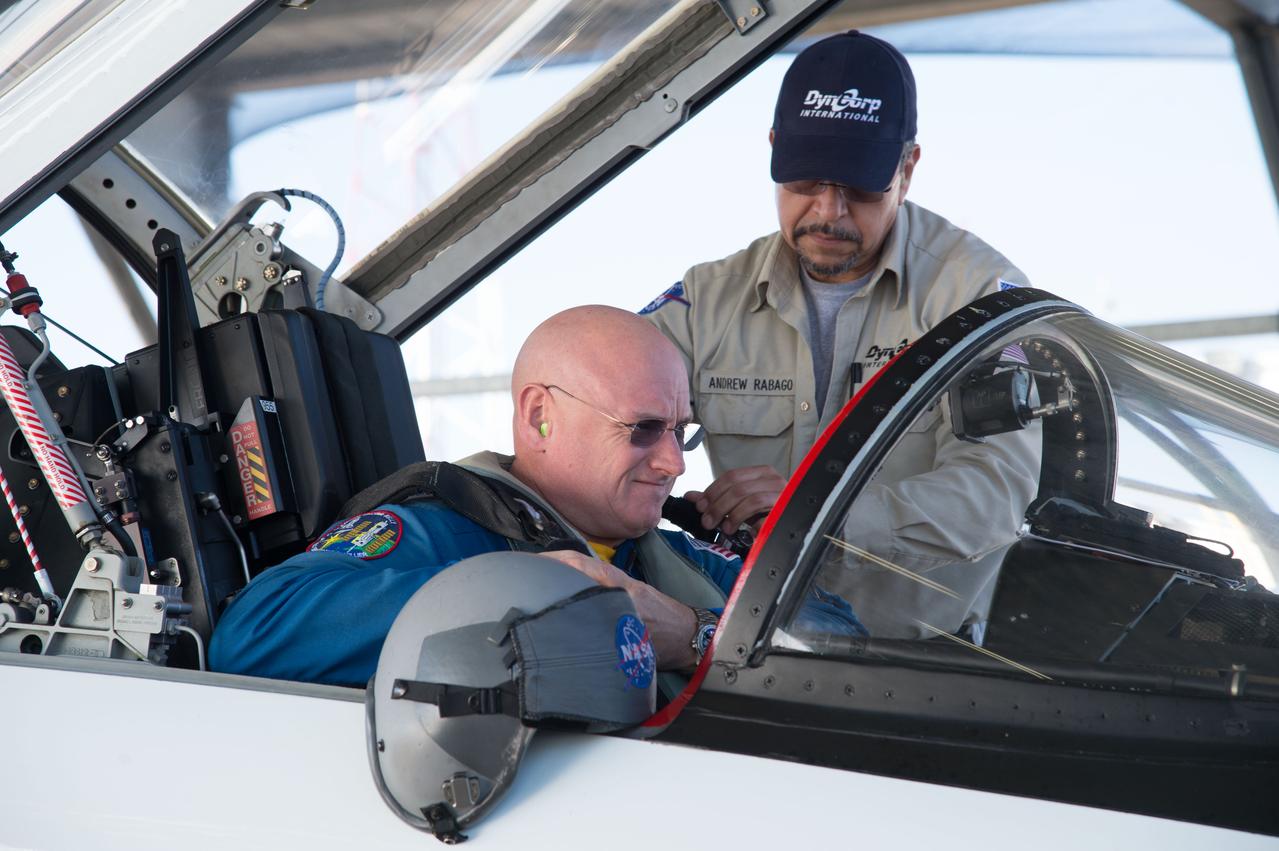
PHOTO DATE:  02-07-13 LOCATION:  Ellington Field - Hangar 276 - Tarmac  SUBJECT: Scott Kelly during T-38 flight prep and getting into aircraft along with Stephanie Wilson. PHOTOGRAPHER:  BILL STAFFORD
jsc2013e010120
PHOTO DATE:  02-07-13 LOCATION:  Ellington Field - Hangar 276 - Tarmac  SUBJECT: Scott Kelly during T-38 flight prep and getting into aircraft along with Stephanie Wilson. PHOTOGRAPHER:  BILL STAFFORD
jsc2013e010118
PHOTO DATE:  02-07-13 LOCATION:  Ellington Field - Hangar 276 - Tarmac  SUBJECT: Scott Kelly during T-38 flight prep and getting into aircraft along with Stephanie Wilson. PHOTOGRAPHER:  BILL STAFFORD
jsc2013e010113
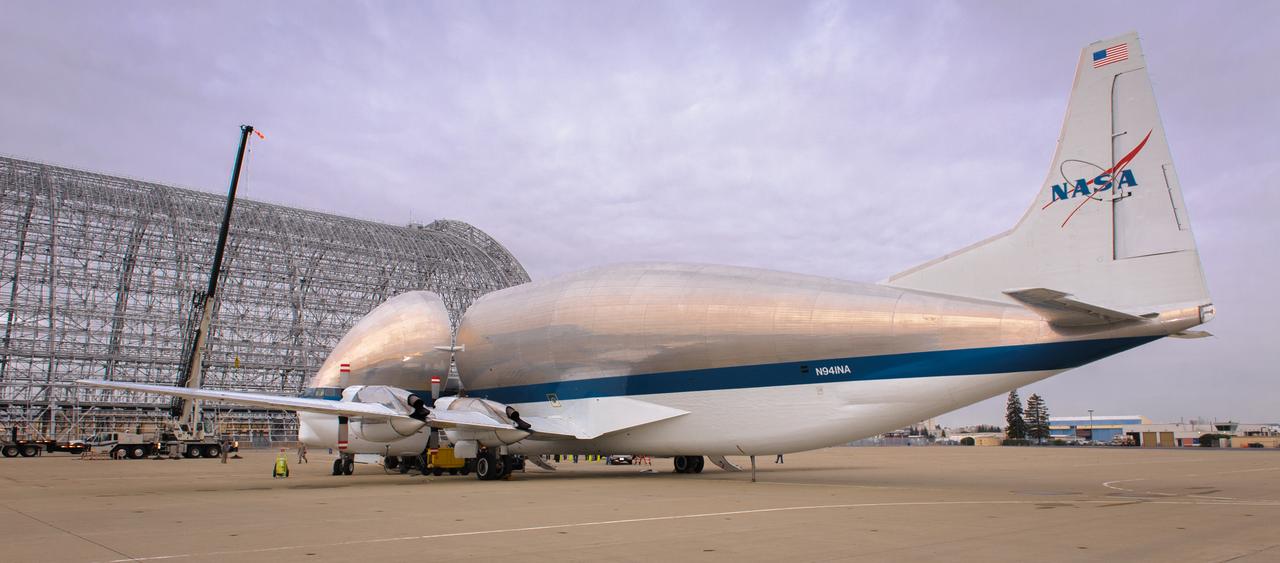
NASA N941NA parked in front of Hangar 1 at Moffett Field.  Cargo is loaded into the Super Guppy when the aircraft's "fold-away" nose rotates 110 degrees to the left, allowing unobstructed access to the 25 foot diameter fuselage.
NASAs B377SGT Super Guppy Turbine Cargo Airplane lands at Moffett Field at NASA Ames.
One of NASA's two Global Hawk unmanned high-altitude aircraft shows off its blue-and-white livery in front of its hangar at NASA's Dryden Flight Research Center.
ED08-0309-18
Ames Aircraft complement on Ramp in front of N-211 hangar: DC-8, C-141, C-130, ER-2, Lear Jet, YO-3A, T-38, AH-1G, AV-8B, UH-60
ARC-1969-AC94-0253-1
One of NASA's two Global Hawk unmanned aircraft shows off its new blue-and-white livery shortly after being repainted in the Edwards Air Force Base paint hangar.
ED07-0244-028
This panoramic view of the partial solar eclipse was taken from the roof of the aircraft hangar at NASA Langley Research Center in Hampton, Virginia. The eclipse in Hampton was about 85 percent of totality.
2017 Eclipse Over NASA Langley
PHOTO DATE:  02-07-13 LOCATION:  Ellington Field - Hangar 276 - Tarmac  SUBJECT: Scott Kelly during T-38 flight prep and getting into aircraft along with Stephanie Wilson. PHOTOGRAPHER:  BILL STAFFORD
jsc2013e010117
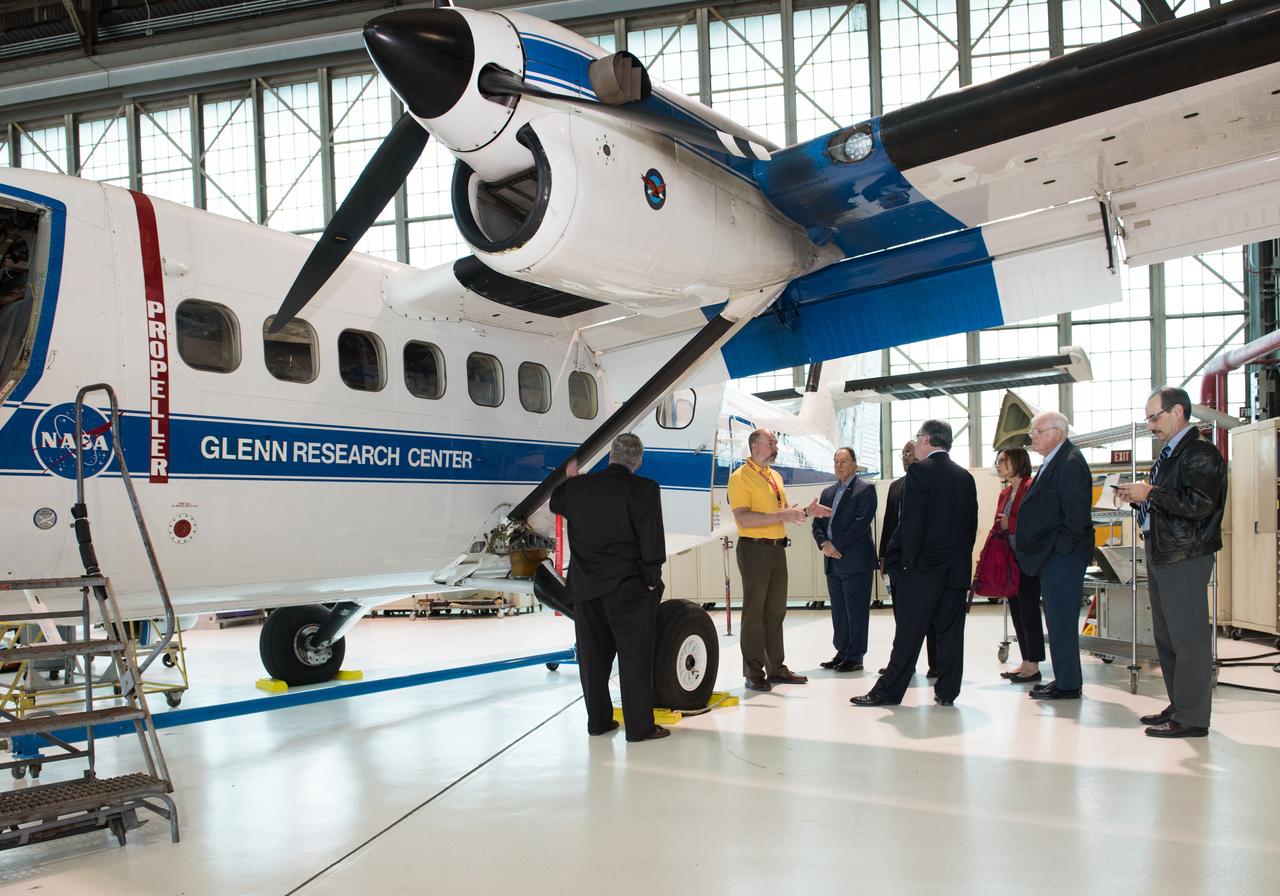
Cuyahoga County Mayors and City Managers Association Members tour the Glenn Research Center Hangar and learn about the role of the Twin Otter aircraft in the GRC Icing Research Program
GRC-2016-C-02278
After arriving via a ferry flight on June 23, 2007, NASA's Ikhana unmanned science demonstration aircraft is towed to a hangar at its new home, the Dryden Flight Research Center in Southern California.
ED07-0138-13
PHOTO DATE:  02-07-13 LOCATION:  Ellington Field - Hangar 276 - Tarmac  SUBJECT: Scott Kelly during T-38 flight prep and getting into aircraft along with Stephanie Wilson. PHOTOGRAPHER:  BILL STAFFORD
Scott Kelly during T-38 flight prep
PHOTO DATE:  02-07-13 LOCATION:  Ellington Field - Hangar 276 - Tarmac  SUBJECT: Scott Kelly during T-38 flight prep and getting into aircraft along with Stephanie Wilson. PHOTOGRAPHER:  BILL STAFFORD
jsc2013e010116
PHOTO DATE:  02-07-13 LOCATION:  Ellington Field - Hangar 276 - Tarmac  SUBJECT: Scott Kelly during T-38 flight prep and getting into aircraft along with Stephanie Wilson. PHOTOGRAPHER:  BILL STAFFORD
jsc2013e010114
California's NASA Armstrong Flight Research Center photographer Carla Thomas takes photos on January 31 of the rare opportunity to capture a supermoon, a blue moon and a lunar eclipse at the same time. A supermoon occurs when the Moon is closer to Earth in its orbit and appearing 14 percent brighter than usual. As the second full moon of the month, this moon is also commonly known as a blue moon, though it will not be blue in appearance. The super blue moon passed through Earth's shadow and took on a reddish tint, known as a blood moon. This total lunar eclipse occurs when the Sun, Earth, and a full moon form a near-perfect lineup in space. The Moon passes directly behind the Earth into its umbra (shadow).
Image is NASA Armstrong Flight Research Center's aircraft hangar that houses the jets and other aircraft with the eclipsed moon overhead during Jan. 31 Super Blue Blood Moon.
NASA's Super Guppy Turbine cargo aircraft in the hangar at NASA's Armstrong Flight Research Center on August 24, 2021. This unique whale-like aircraft arrived at the center's Building 703 in Palmdale, CA to support crews in the performance of routine maintenance. The Super Guppy aircraft, operated by NASA's Johnson Space Center, aids in the transportation of oversized aerospace cargo in a practical and economical way.
NASA's Super Guppy in the hangar at Armstrong Building 703
NASA's Super Guppy Turbine cargo aircraft in the hangar at NASA's Armstrong Flight Research Center on August 24, 2021. This unique whale-like aircraft arrived at the center's Building 703 in Palmdale, CA to support crews in the performance of routine maintenance. The Super Guppy aircraft, operated by NASA's Johnson Space Center, aids in the transportation of oversized aerospace cargo in a practical and economical way.
NASA's Super Guppy in the hangar at Armstrong Building 703
NASA's Super Guppy Turbine cargo aircraft in the hangar at NASA's Armstrong Flight Research Center on August 24, 2021. This unique whale-like aircraft arrived at the center's Building 703 in Palmdale, CA to support crews in the performance of routine maintenance. The Super Guppy aircraft, operated by NASA's Johnson Space Center, aids in the transportation of oversized aerospace cargo in a practical and economical way.
NASA's Super Guppy in the hangar at Armstrong Building 703
NASA’s Super Guppy Turbine cargo aircraft in the hangar at NASA’s Armstrong Flight Research Center on August 24, 2021. This unique whale-like aircraft arrived at the center’s Building 703 in Palmdale, CA to support crews in the performance of routine maintenance. The Super Guppy aircraft, operated by NASA’s Johnson Space Center, aids in the transportation of oversized aerospace cargo in a practical and economical way.
NASA’s Super Guppy in the hangar at Armstrong Building 703
NASA's Super Guppy Turbine cargo aircraft in the hangar at NASA's Armstrong Flight Research Center on August 24, 2021. This unique whale-like aircraft arrived at the center's Building 703 in Palmdale, CA to support crews in the performance of routine maintenance. The Super Guppy aircraft, operated by NASA's Johnson Space Center, aids in the transportation of oversized aerospace cargo in a practical and economical way.
NASA's Super Guppy in the hangar at Armstrong Building 703
NASA’s Super Guppy Turbine cargo aircraft in the hangar at NASA’s Armstrong Flight Research Center on August 24, 2021. This unique whale-like aircraft arrived at the center’s Building 703 in Palmdale, CA to support crews in the performance of routine maintenance. The Super Guppy aircraft, operated by NASA’s Johnson Space Center, aids in the transportation of oversized aerospace cargo in a practical and economical way.
NASA’s Super Guppy in the hangar at Armstrong Building 703
The Pipistrel-USA, Taurus G4 aircraft is prepared to be rolled out of the weigh-in hangar during the 2011 Green Flight Challenge, sponsored by Google, at the Charles M. Schulz Sonoma County Airport in Santa Rosa, Calif. on Monday, Sept. 26, 2011.  NASA and the Comparative Aircraft Flight Efficiency (CAFE) Foundation are having the challenge with the goal to advance technologies in fuel efficiency and reduced emissions with cleaner renewable fuels and electric aircraft. Photo Credit: (NASA/Bill Ingalls)
Green Flight Challenge
NASA's Super Guppy Turbine cargo aircraft in the hangar at NASA's Armstrong Flight Research Center on August 24, 2021. This unique whale-like aircraft arrived at the center's Building 703 in Palmdale, CA to support crews in the performance of routine maintenance. The Super Guppy aircraft, operated by NASA's Johnson Space Center, aids in the transportation of oversized aerospace cargo in a practical and economical way.
NASA's Super Guppy in the hangar at Armstrong Building 703