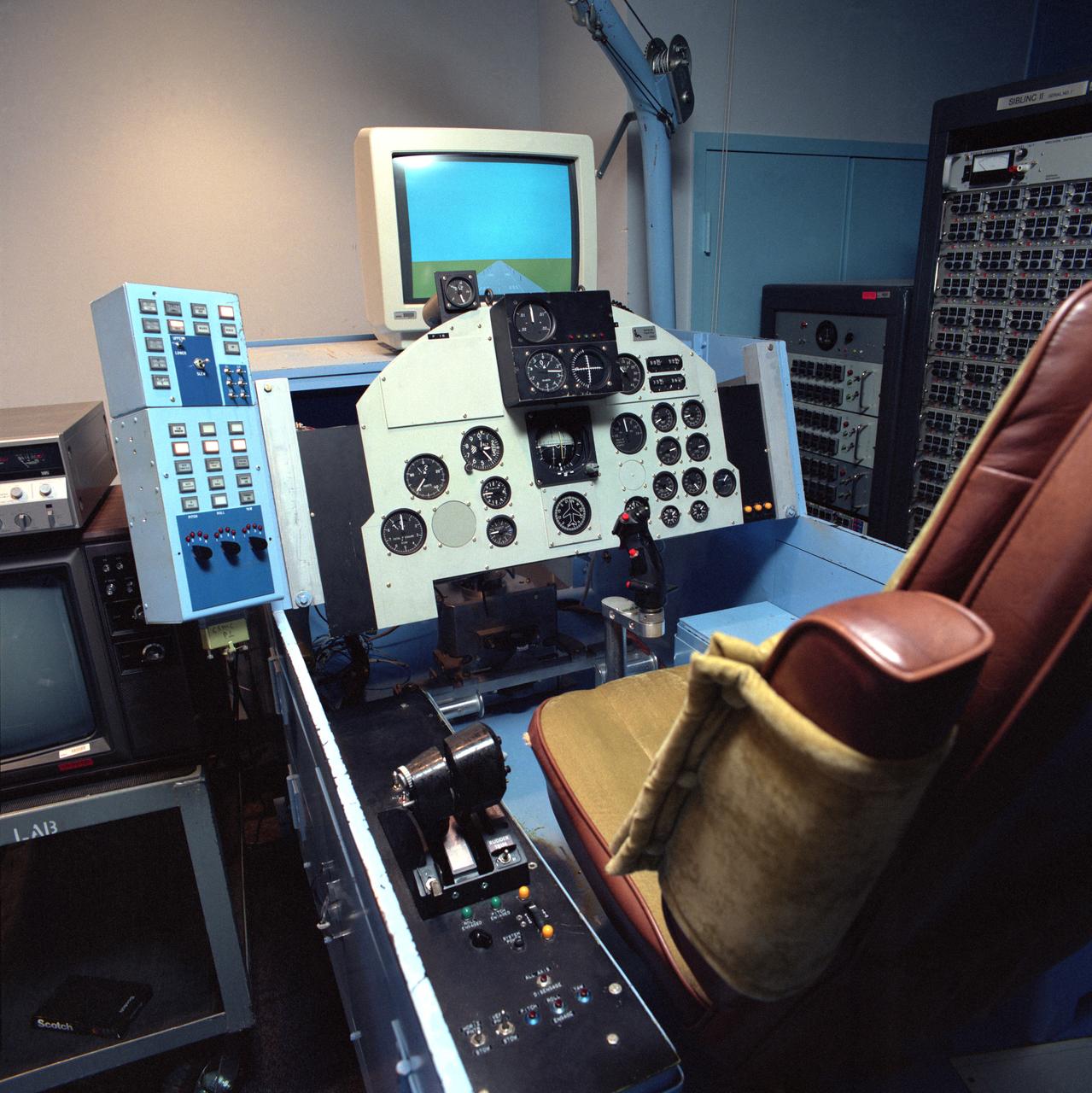
F-15 Propulsion Controlled Aircraft (PCA) simulation cockpit
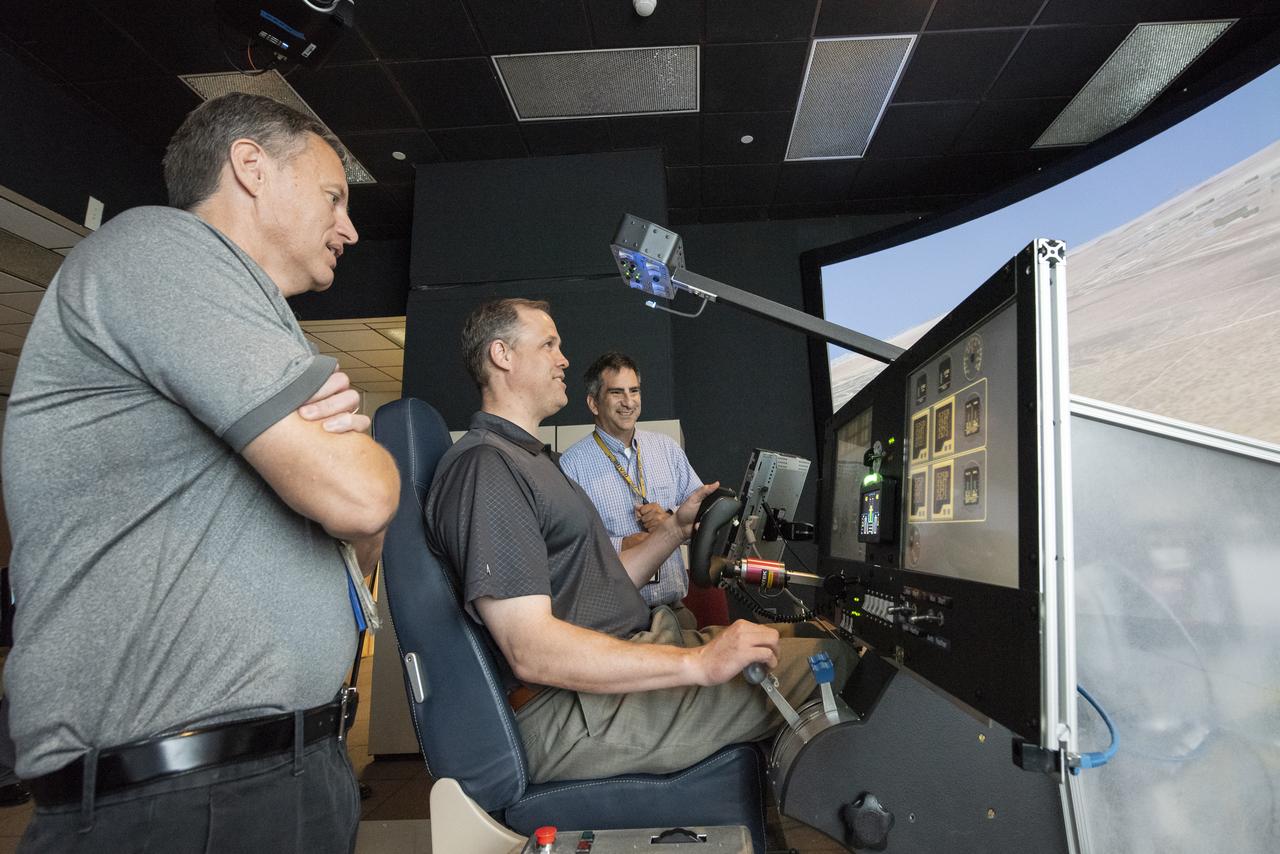
NASA Administrator Bridenstine tests the X-57 "Maxwell" simulator at NASA's Armstrong Flight Research Center. The simulator is designed to provide feedback to NASA test pilots based on the aircraft's unique design and distributed electric propulsion system.
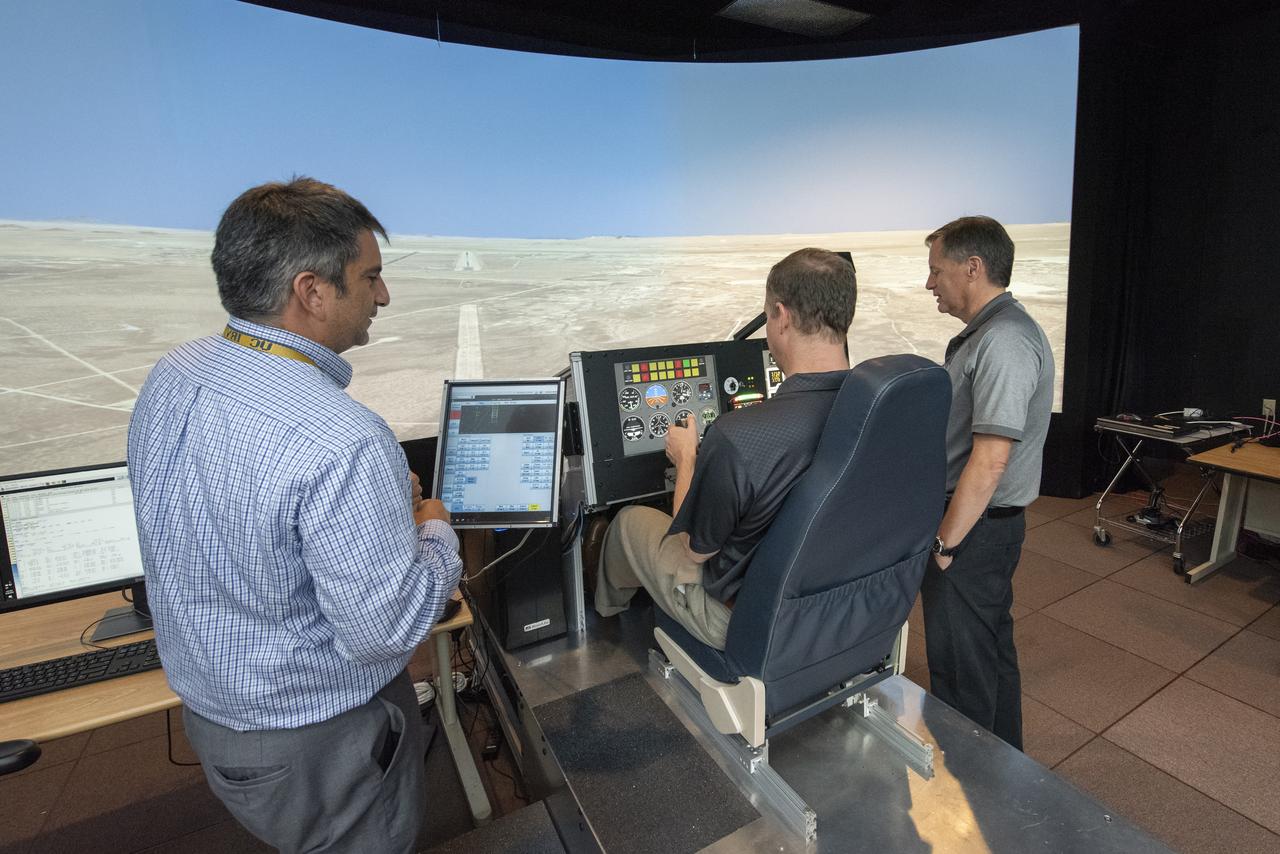
NASA Administrator Bridenstine tests the X-57 "Maxwell" simulator at NASA's Armstrong Flight Research Center. The simulator is designed to provide feedback to NASA test pilots based on the aircraft's unique design and distributed electric propulsion system.
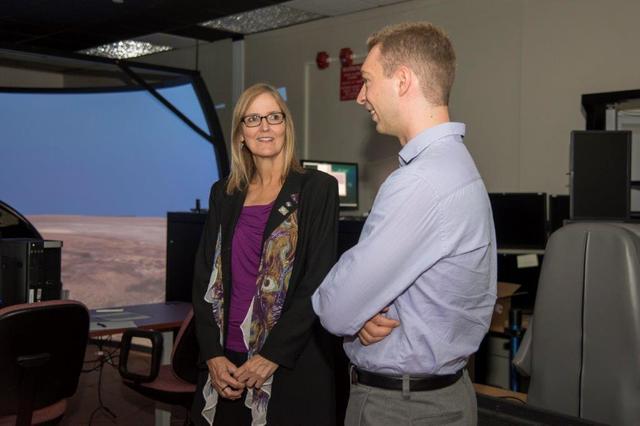
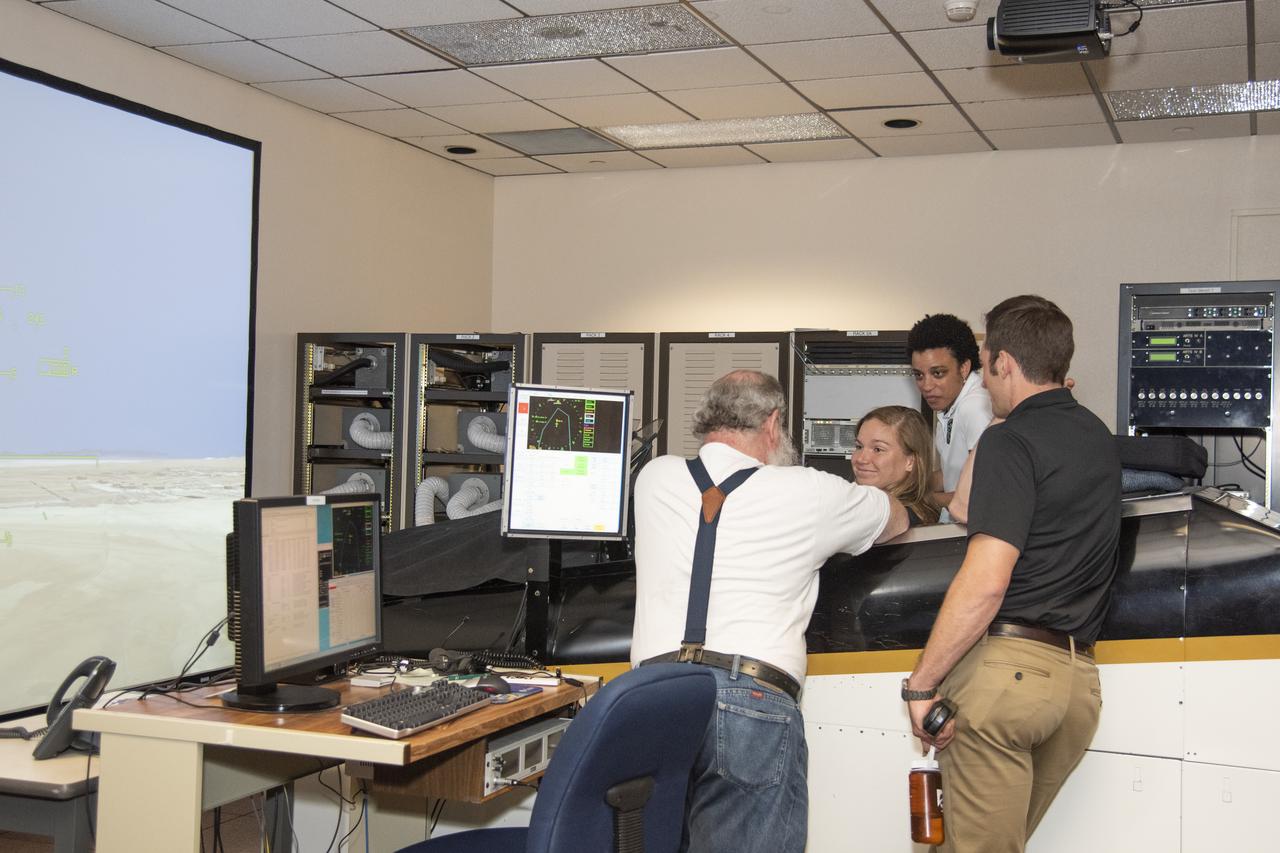
Jesse Brady, an early career NASA employee at NASA’s Armstrong Flight Research Center at Edwards, California, discusses a NASA aircraft simulation project with NASA Acting Deputy Chief Technologist Vicki Crisp. The simulation accesses aircraft controllability with limited pilot visibility, using only front view cameras and side windows.
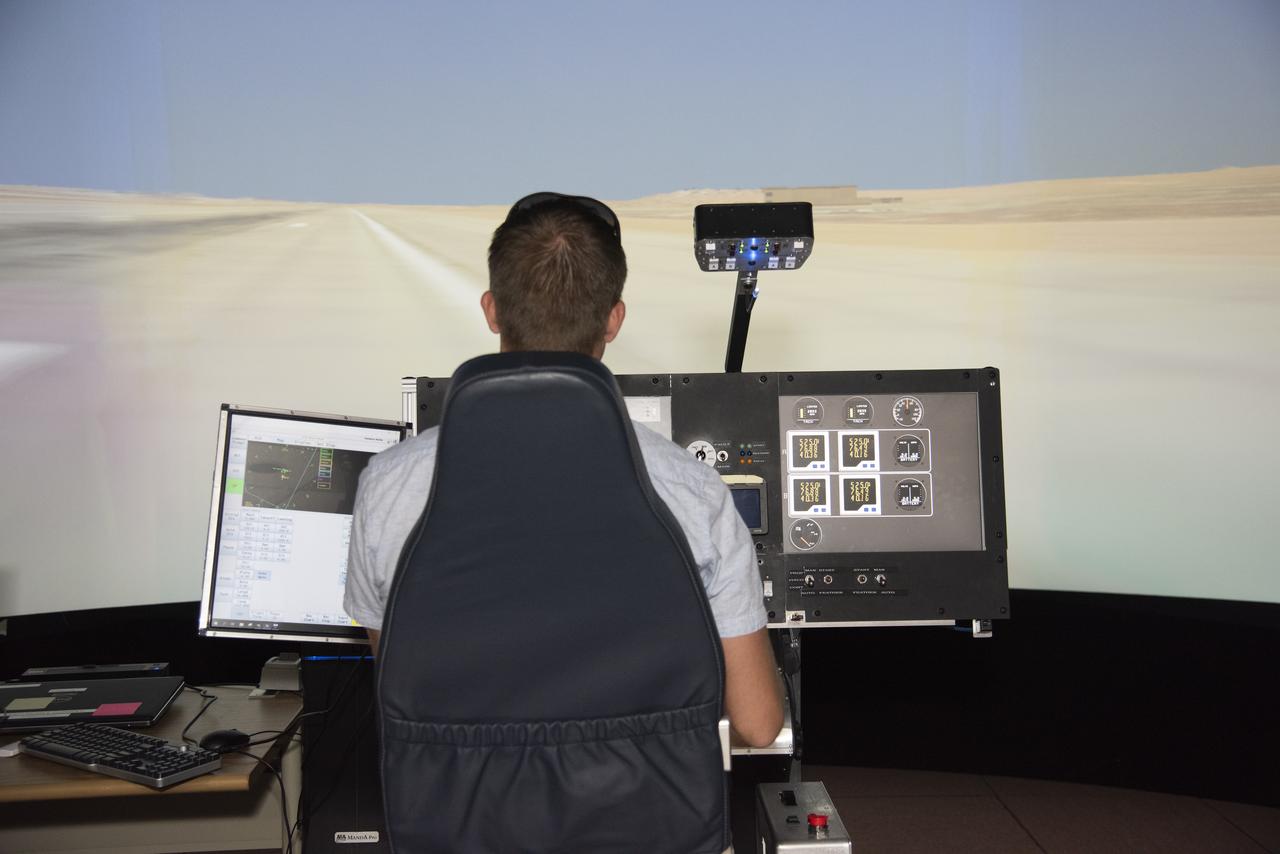
NASA's 2017 astronaut candidate Matthew Dominick practices flying in the X-57 aircraft simulator at Armstrong Flight Research Center in Southern California. Starting with the fuselage of a Tecnam P20067T, the X-57 Maxwell electric propulsion airplane is being built from ideas being researched that could lead to the development of electric propulsion-powered aircraft, which would be quieter, more efficient and environmentally friendly than today's commuter aircraft.
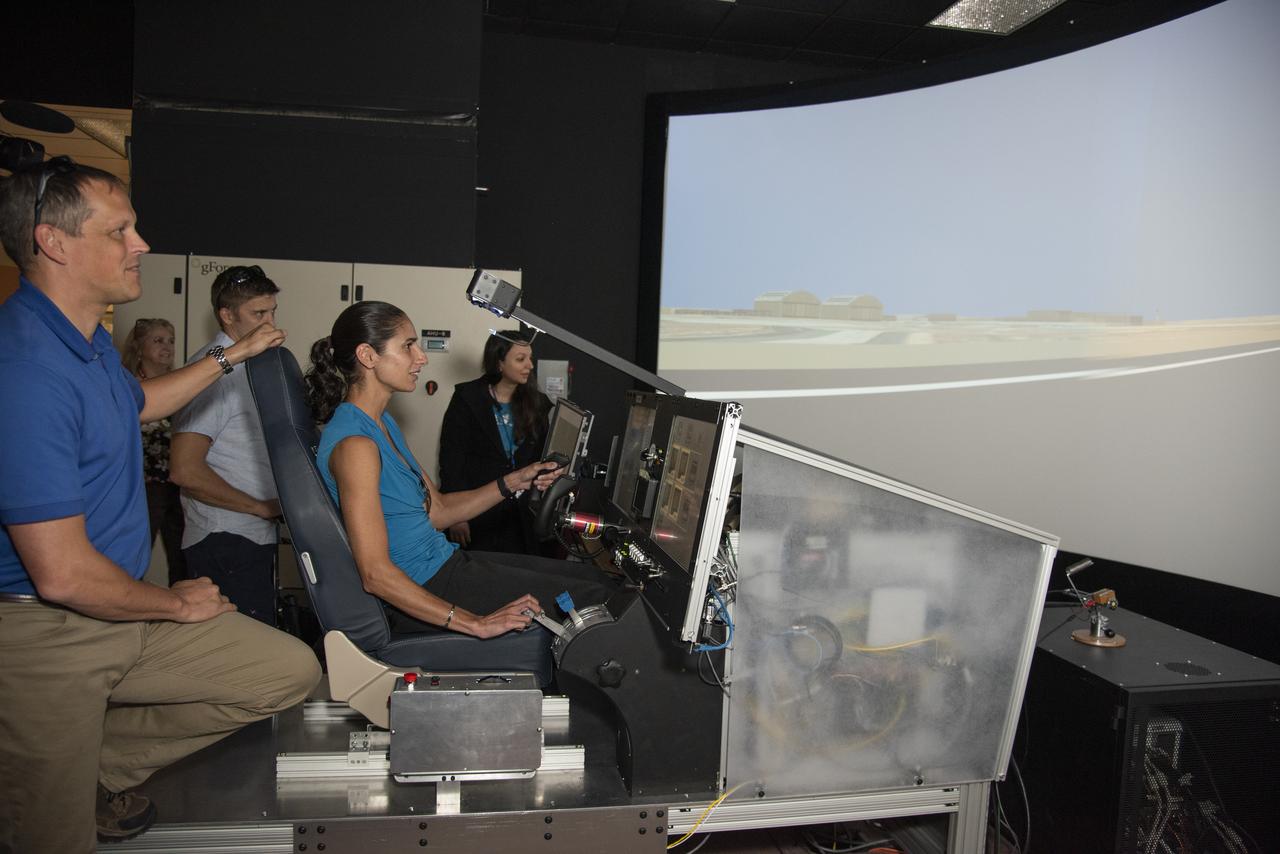
NASA's 2017 astronaut candidates (L to R) Bob Hines, Matthew Dominick and Jasmin Moghbeli practice flying in X-57 aircraft simulator at Armstrong Flight Research Center in Southern California. Starting with the fuselage of a Tecnam P20067T, the X-57 Maxwell electric propulsion airplane is being built from ideas being researched that could lead to the development of electric propulsion-powered aircraft, which would be quieter, more efficient and environmentally friendly than today's commuter aircraft.
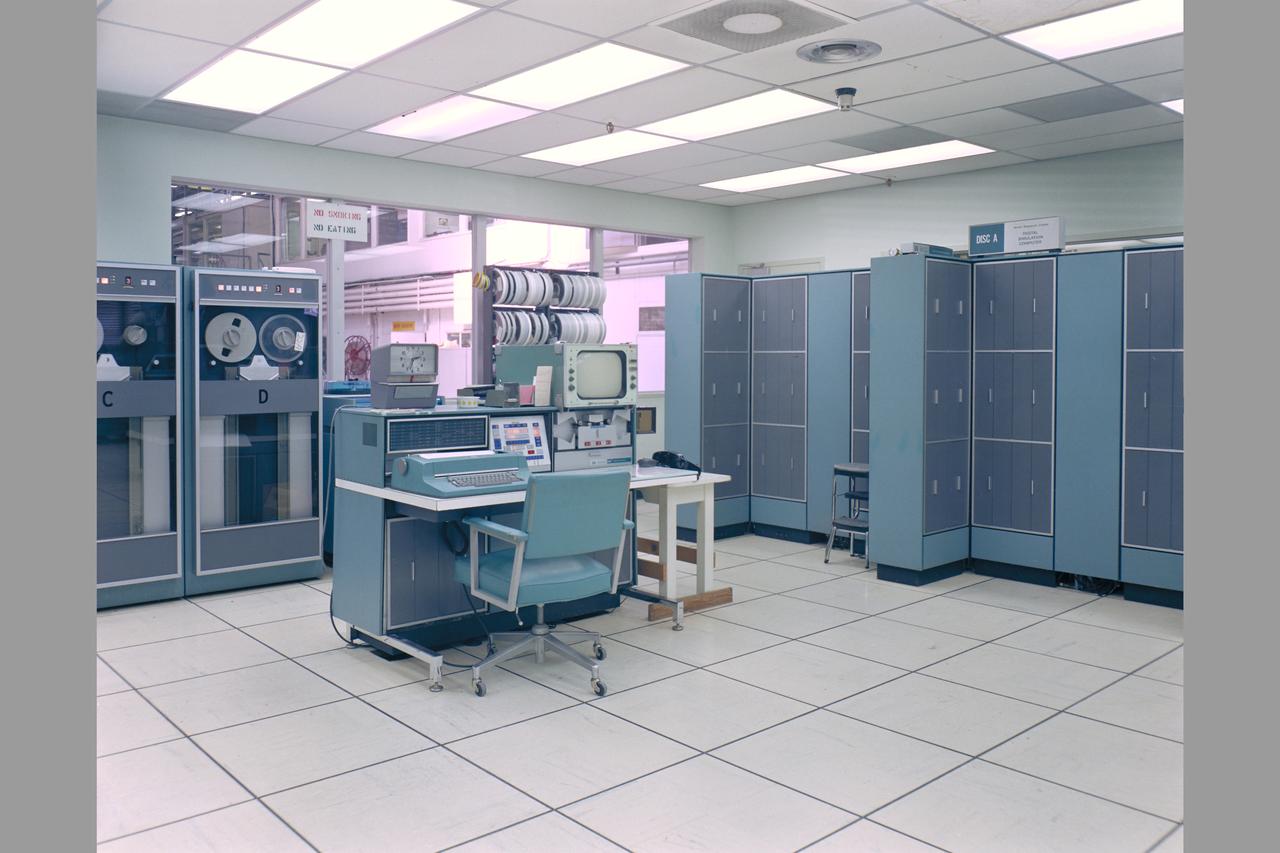
N-210 STOLAND Simulation: EAI 8400 Aircraft Simulation.
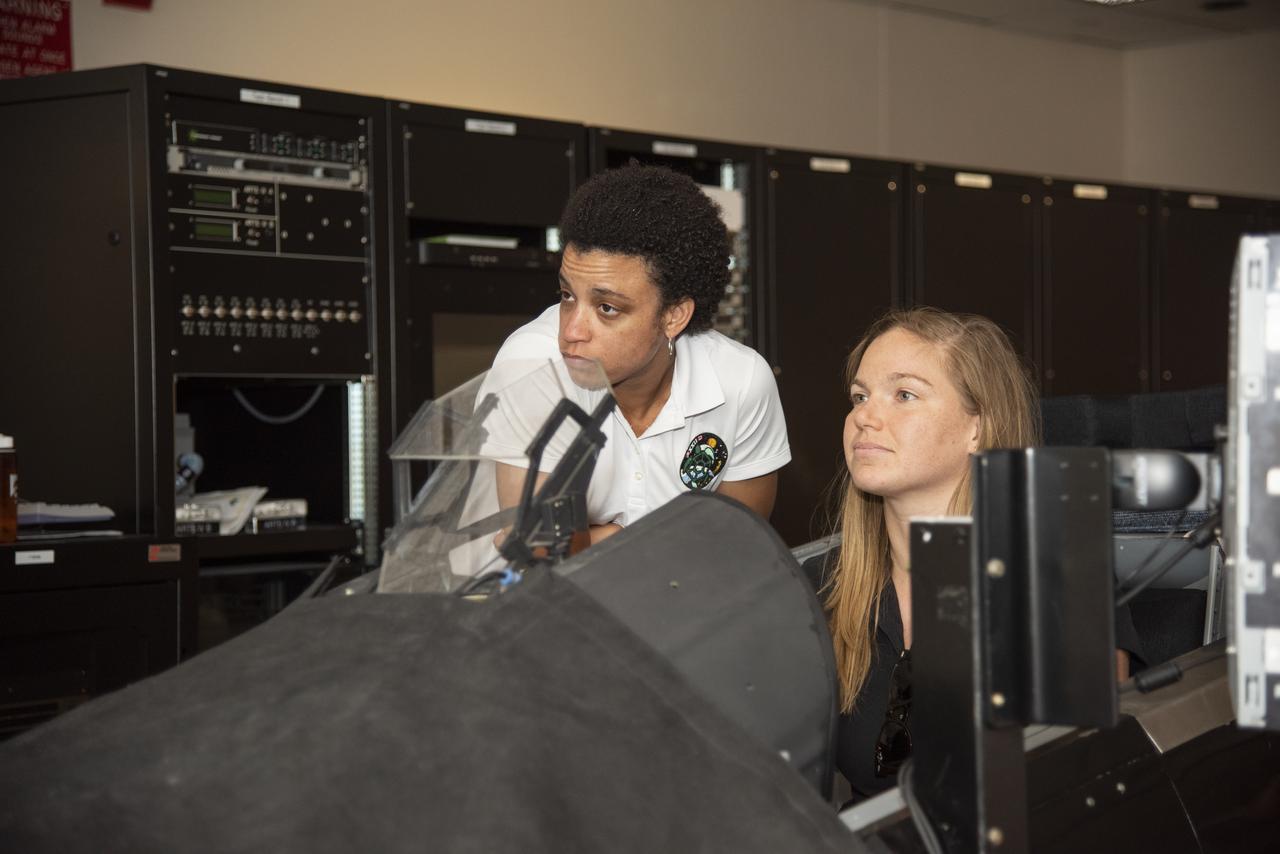
NASA's 2017 astronaut candidates (L to R) Jessica Watkins and Jenni Sidey-Gibbons practice flying in an F-18 aircraft cockpit simulator at Armstrong Flight Research Center, in Southern California. The F-18's are flown for research support and pilot proficiency. Currently, the F-18's are being used to conduct supersonic research in support of the X-59 QueSST overall mission.
NASA's 2017 astronaut candidates (L to R) Jenni Sidey-Gibbons, Jessica Watkins and Joshua Kutryk practice flying in an F-18 aircraft cockpit simulator at Armstrong Flight Research Center, in Southern California. The F-18's are flown for research support and pilot proficiency. Currently, the F-18 is conducting supersonic research in support of the X-59 QueSST overall mission.
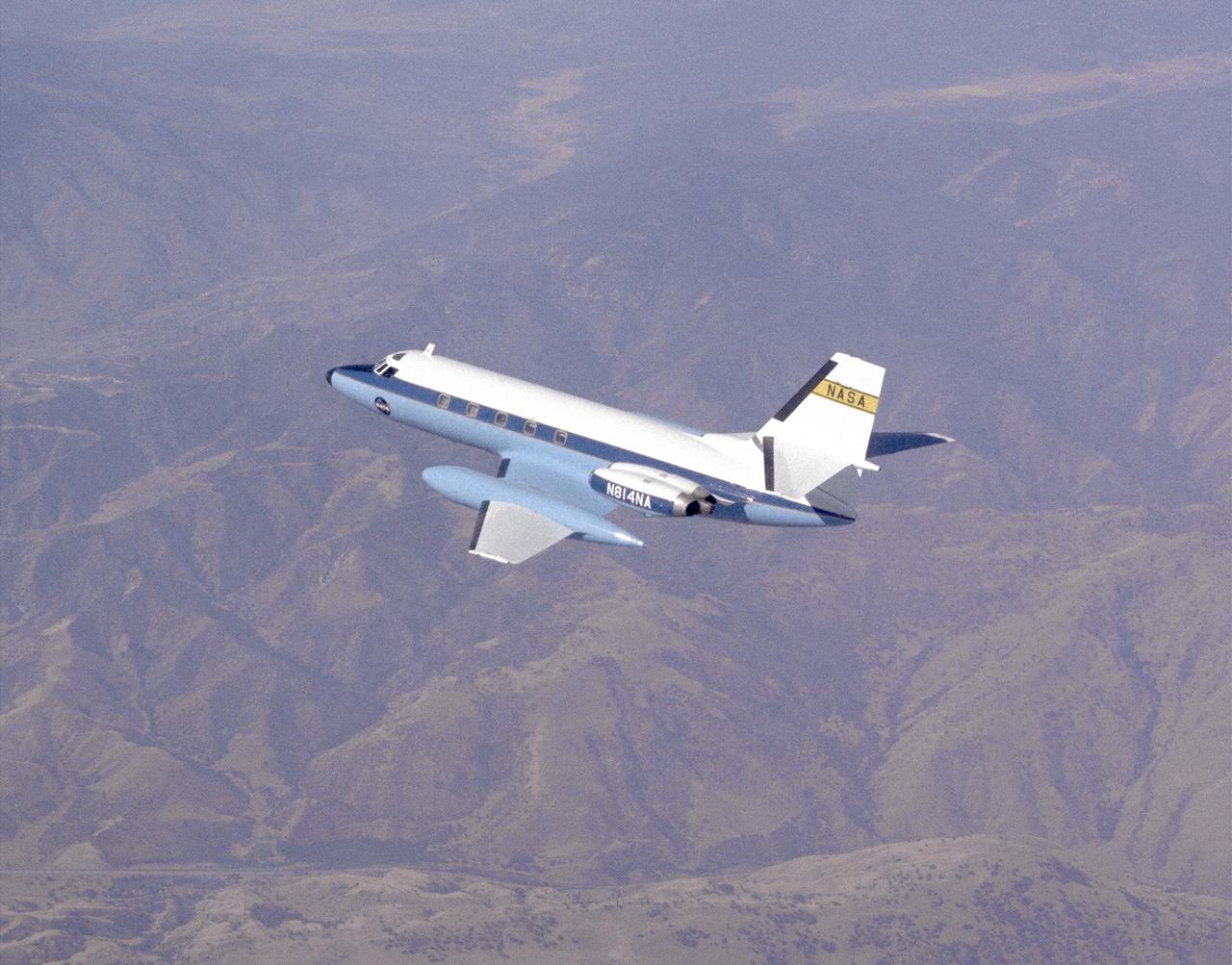
The C-140 JetStar was reconfigured as the General Purpose Airborne Simulator (GPAS) to simulate the flight characteristics of other aircraft. The JetStar was used for research for supersonic transports, general aviation aircraft, and as a training support aircraft for the Space Shuttle Approach and Landing tests at Dryden Flight Research Center (under different names) at Edwards, CA, in 1977. One of the engineers on the GPAS program was Ken Szalai, who later became Dryden's director from 1990 to August 1998.
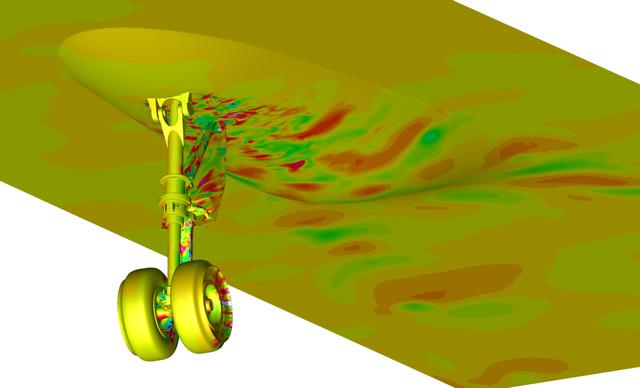
Snapshot from a simulation run on the Pleiades supercomputer. It depicts a fluctuating pressure field on aircraft nose landing gear and fuselage surfaces. The simulation helped scientists better understand the effects of landing gear and acoustic noise. The goal of the study was to improve the current understanding of aircraft nose landing gear noise, which will lead to quieter, more efficient airframe components for future aircraft designs. The visualization was produced with help from the NAS Data Analysis & Visualization group. Investigator: Mehdi Khorrami, NASA Langley Research Center.
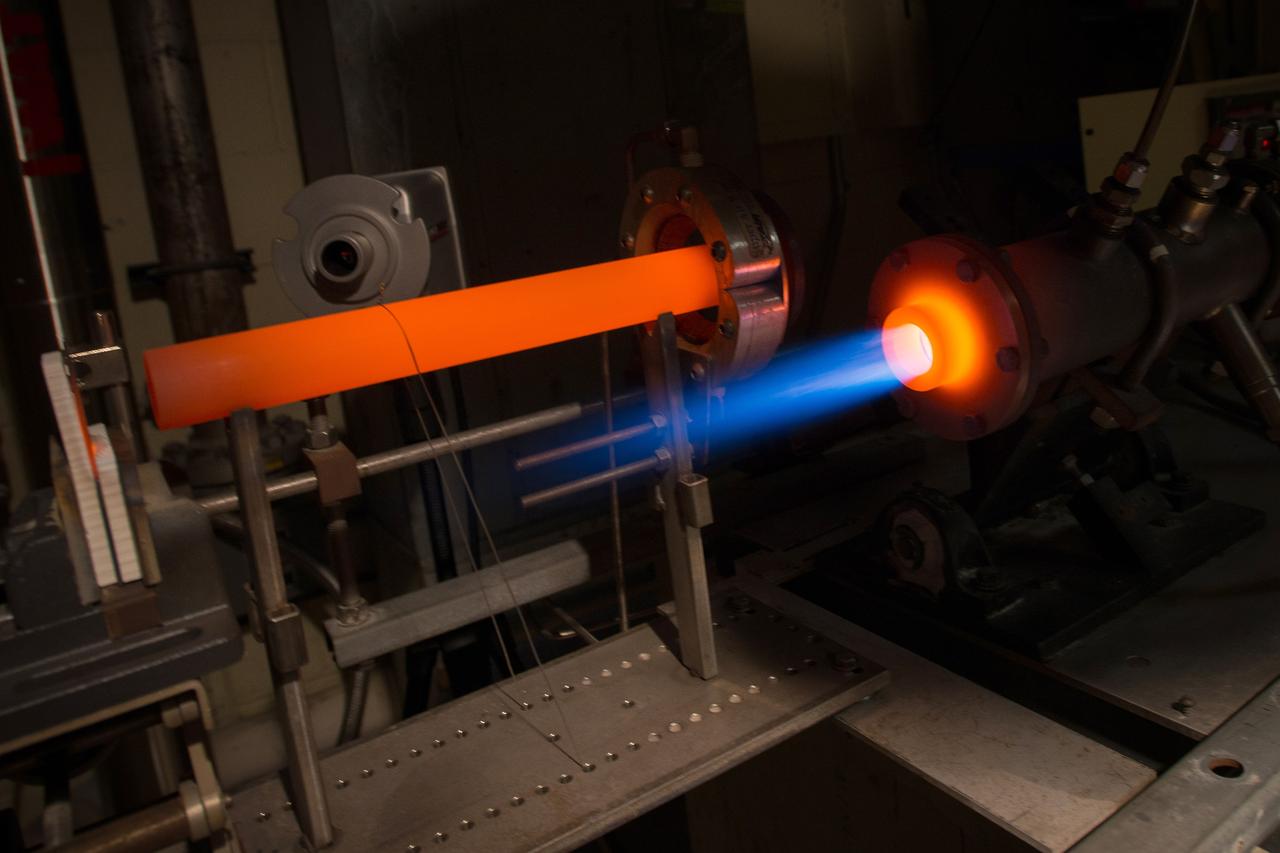
The Fuel Burner Rig is a test laboratory at NASA Glenn, which subjects new jet engine materials, treated with protective coatings, to the hostile, high temperature, high velocity environment found inside aircraft turbine engines. These samples face 200-mile per hour flames to simulate the temperatures of aircraft engines in flight. The rig can also simulate aircraft carrier and dusty desert operations where salt and sand can greatly reduce engine life and performance.
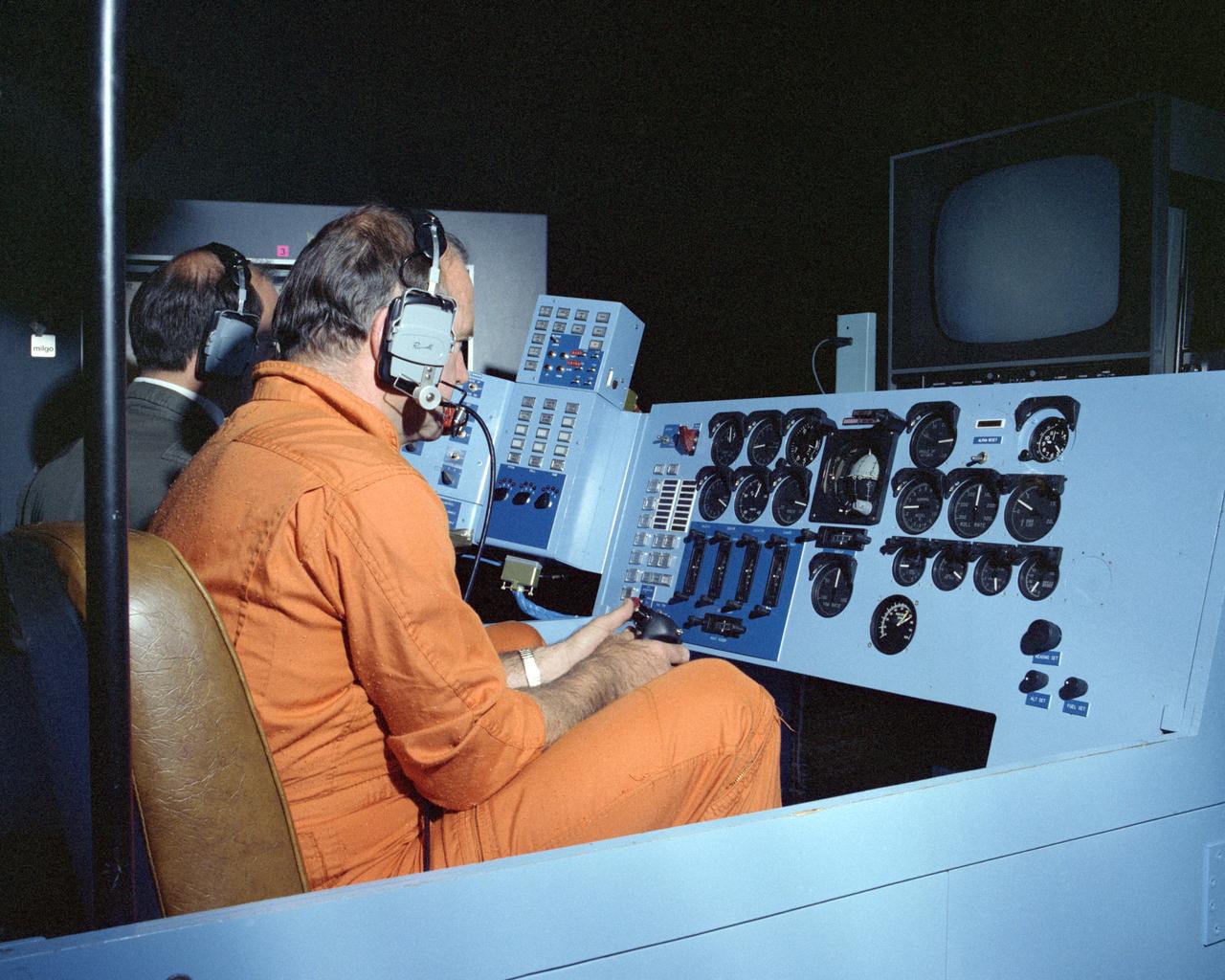
Pilot Bill Dana in HiMAT cockpit
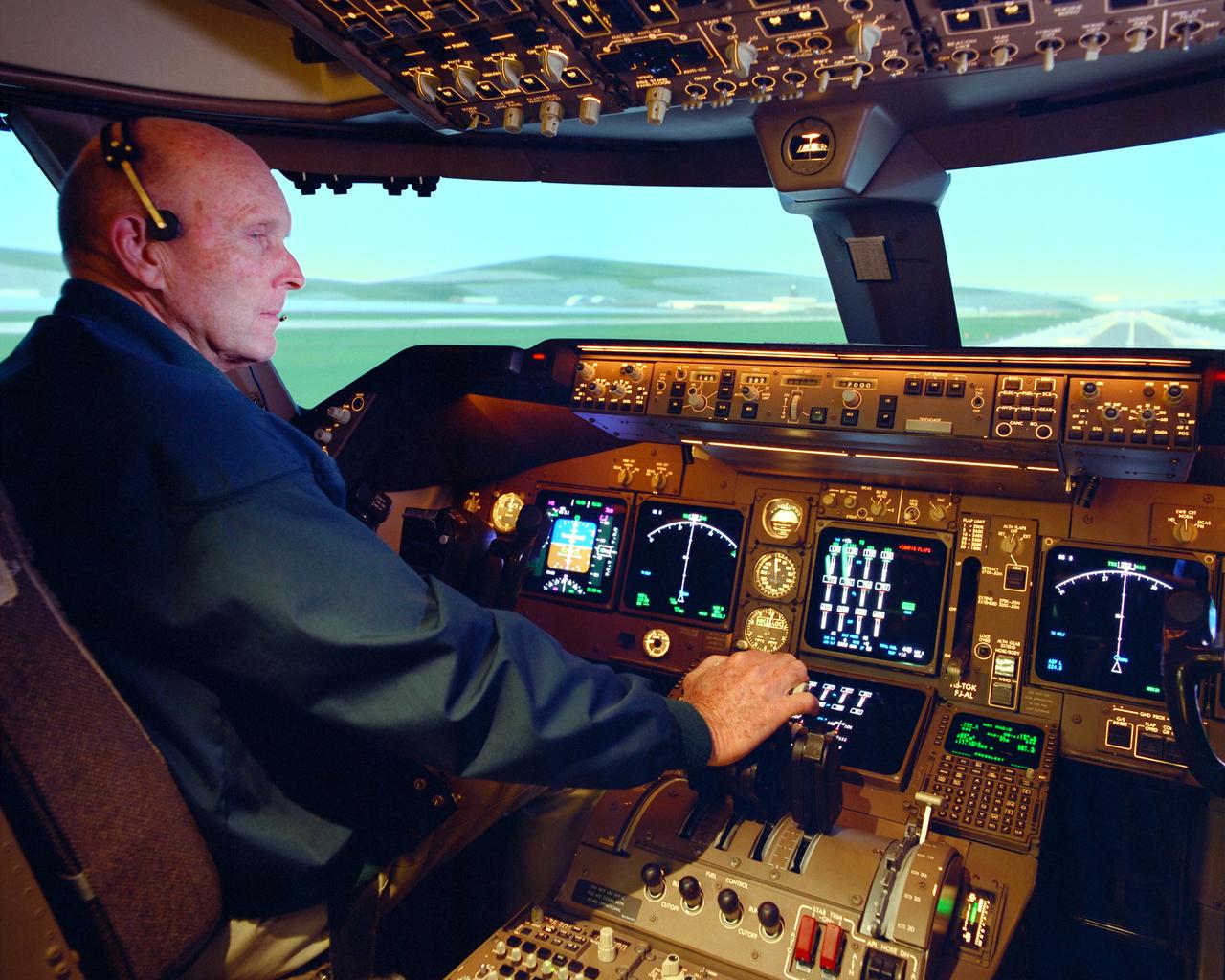
NASA research pilot Gordon Fullerton checked out how the PCA software worked in the multi-engine simulator at NASA Ames before fight-testing PCA in an MD-11.
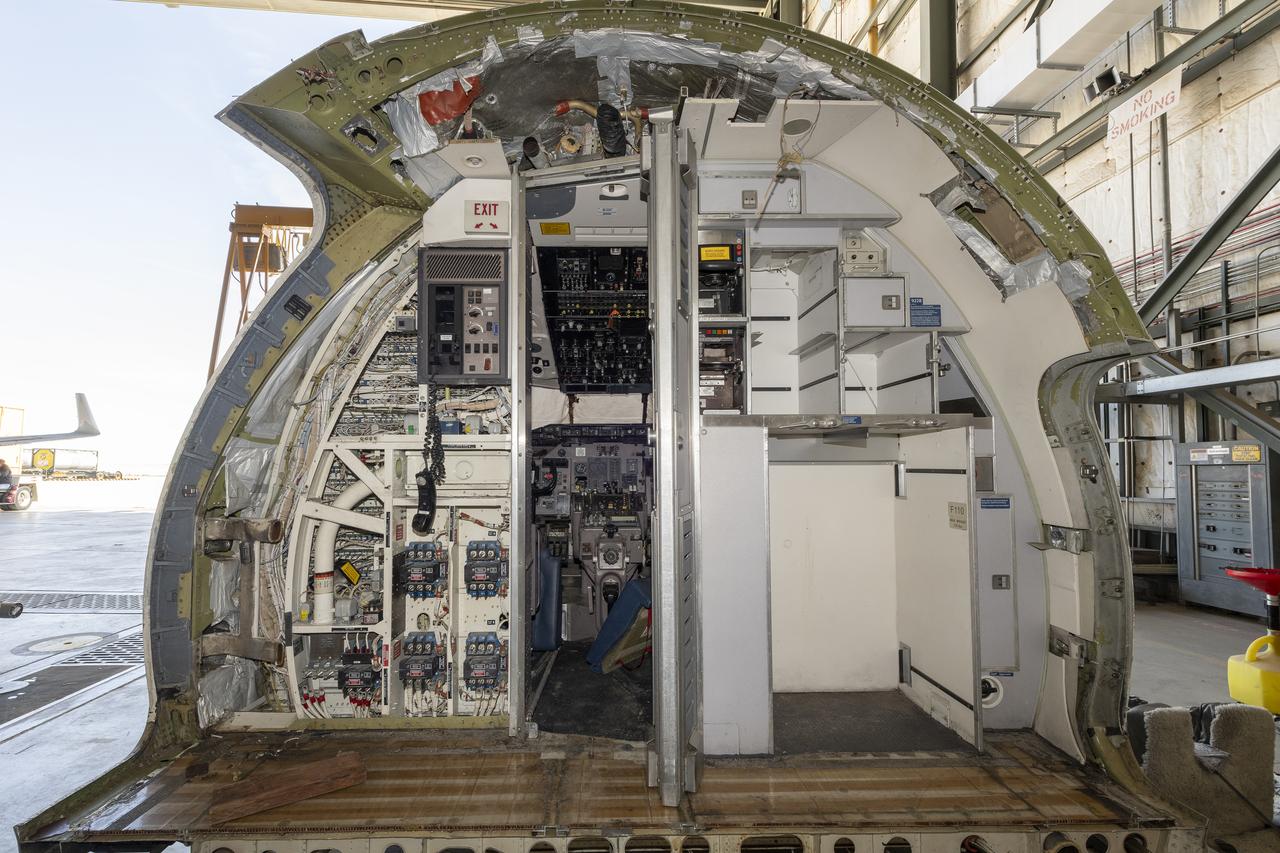
The cockpit of an old MD-90 aircraft arrived at NASA’s Armstrong Flight Research Center in Edwards, California, in March 2024. Parts will be used to build a simulator for NASA’s X-66, the demonstration aircraft for the Sustainable Flight Demonstrator project.

The cockpit of an old MD-90 aircraft arrived at NASA’s Armstrong Flight Research Center in Edwards, California, in March 2024. Parts will be used to build a simulator for NASA’s X-66, the demonstration aircraft for the Sustainable Flight Demonstrator project.
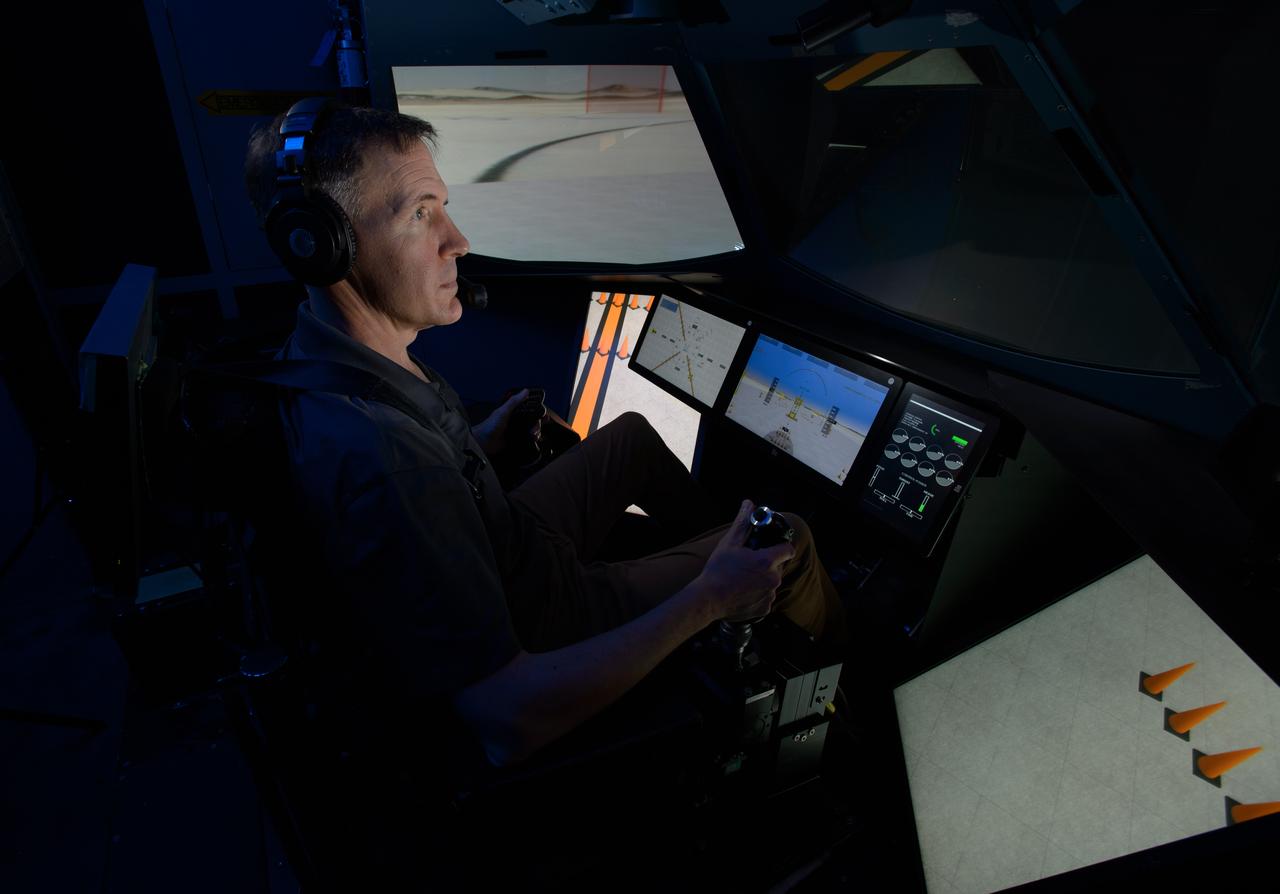
Michael Feary pilots a simulated electric vertical takeoff and landing, or eVTOL, aircraft in the VMS’s R-Cab during the AFCM subproject simulation FAA-2 flight tests in the VMS, N243.
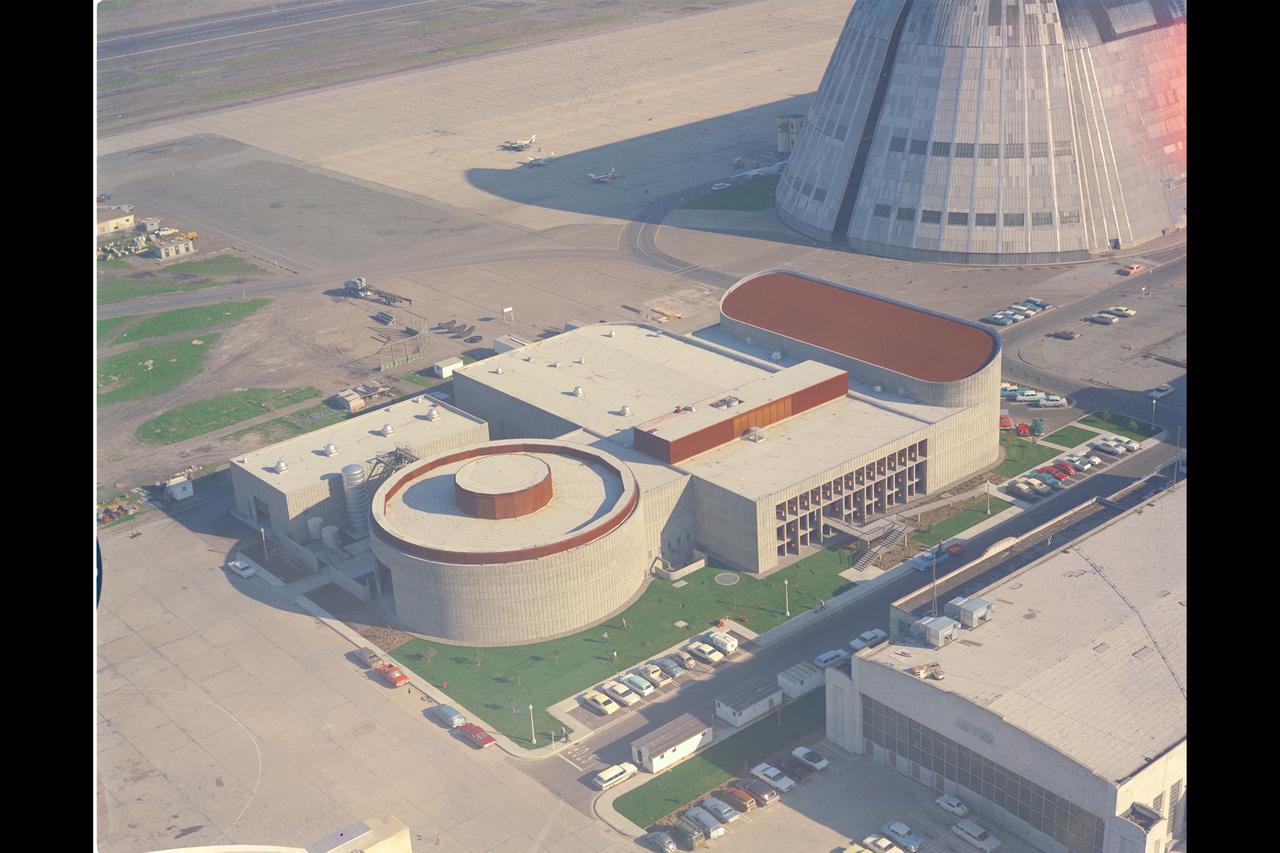
Aerial Survey of Ames Research Center - Flight Simulation Complex' Flight simulators create an authentic aircraft environment by generating the appropriate physical cues that provide the sensations of flight.
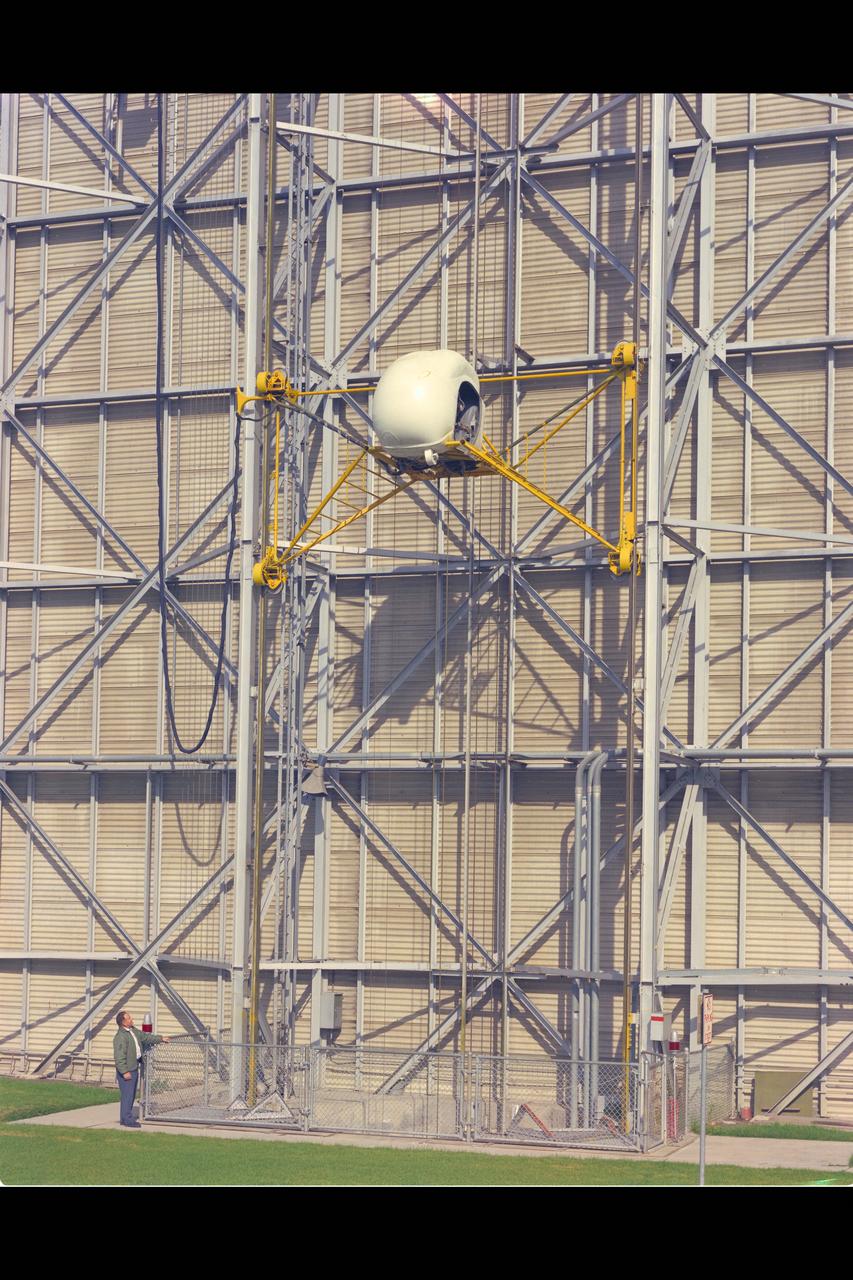
Height-Control Test Apparatus (HICONTA) Simulator mounted to the exterior of the 40x80ft W.T. Building N-221B and provided extensive vertical motion simulating airplanes, helicopter and V/STOL aircraft

Out the window view of the ownship aircraft in the VMS’s R-Cab during the AVA-1h simulation in the VMS, N243.

Traffic display screen of the ownship aircraft in the VMS’s R-Cab during the AVA-1h simulation in the VMS, N243.

Traffic display screen of the ownship aircraft in the VMS’s R-Cab during the AVA-1h simulation in the VMS, N243.
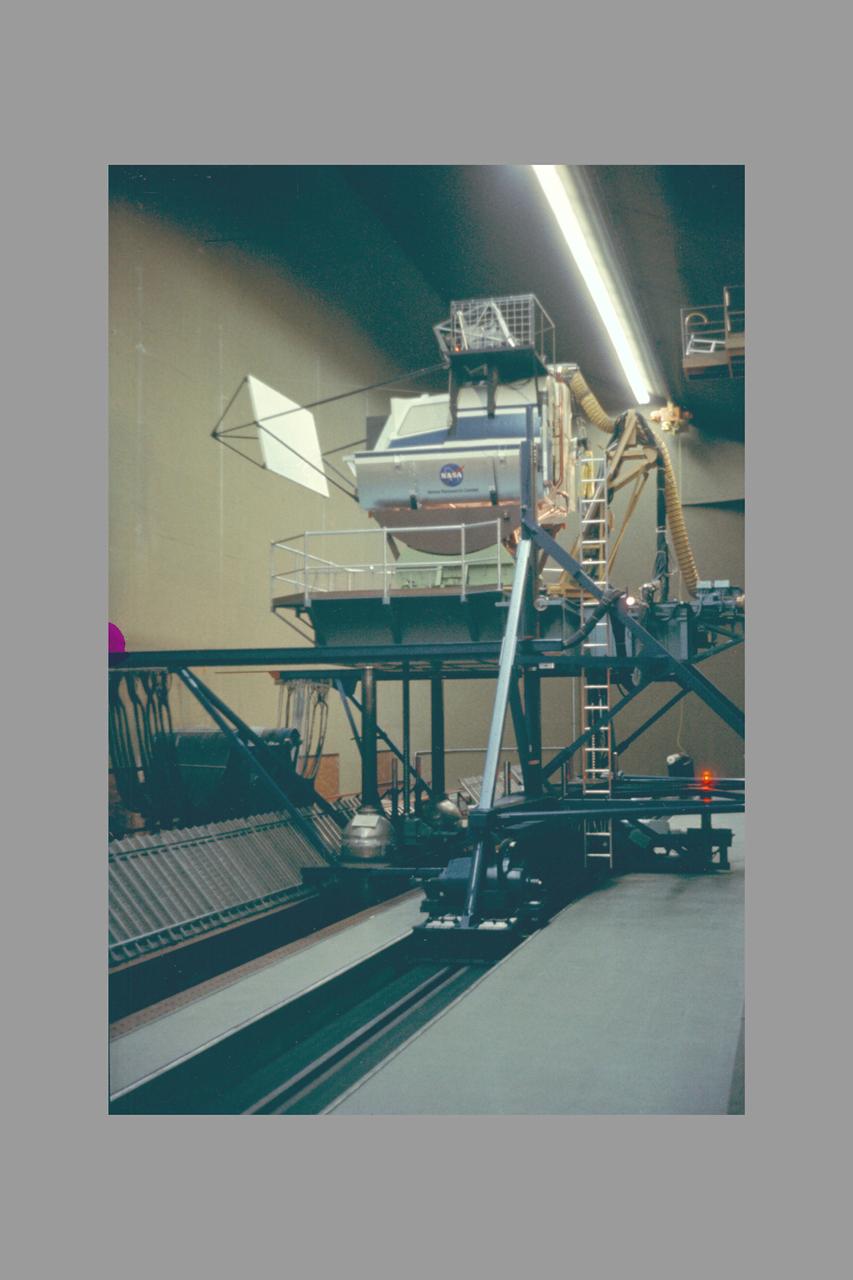
Flight Simulator forAdvanced Aircraft (FSAA) S.10 after painting (IC position from last end)

David Zahn pilots the ownship aircraft in the VMS’s R-Cab during the AVA-1h simulation in the VMS, N243.
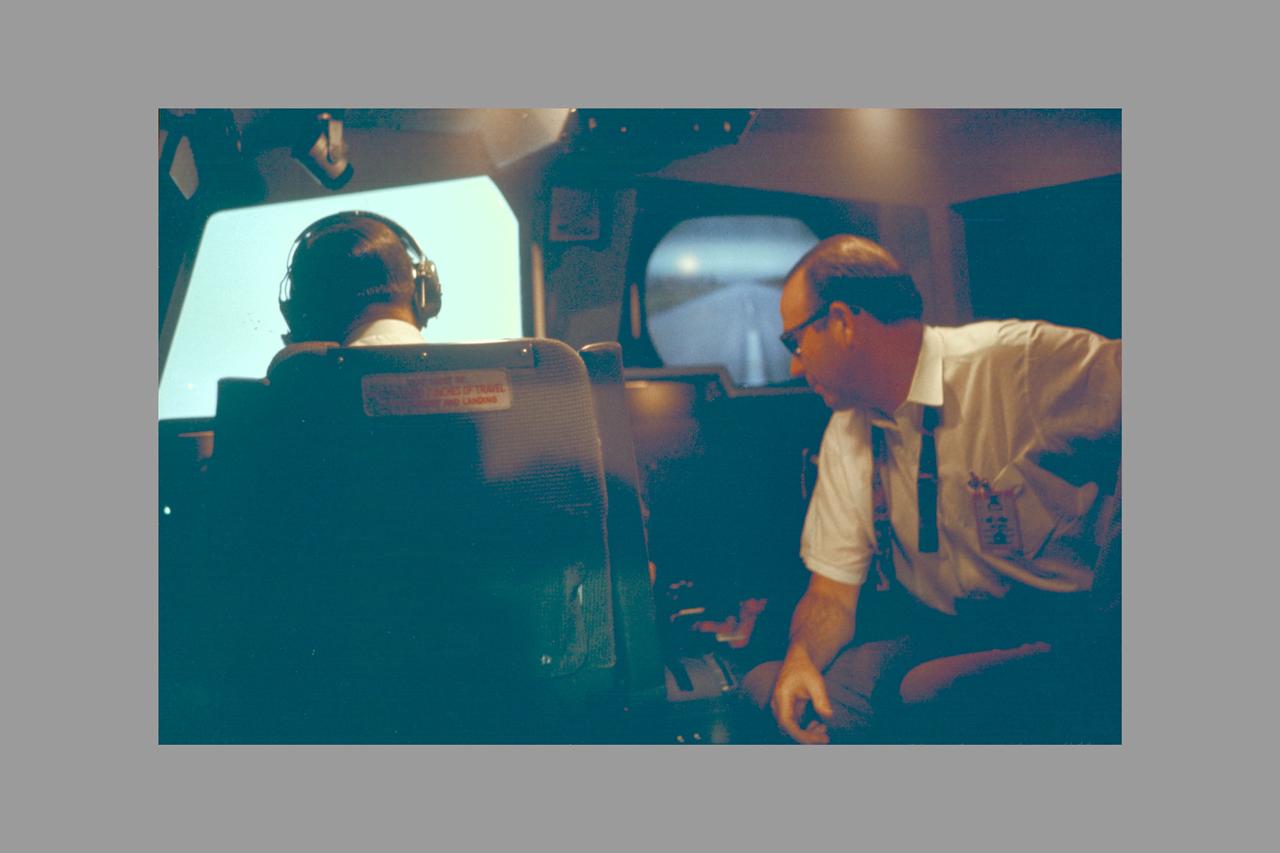
Flight Simulator for Advanced Aircraft (FSAA) S.10 (Inside: Cab Pilot and Monitor - R S. Bray and G.R. Holden)

Out the window view of the ownship aircraft in the VMS’s R-Cab during the AVA-1h simulation in the VMS, N243.

David Zahn pilots the ownship aircraft in the VMS’s R-Cab during the AVA-1h simulation in the VMS, N243.
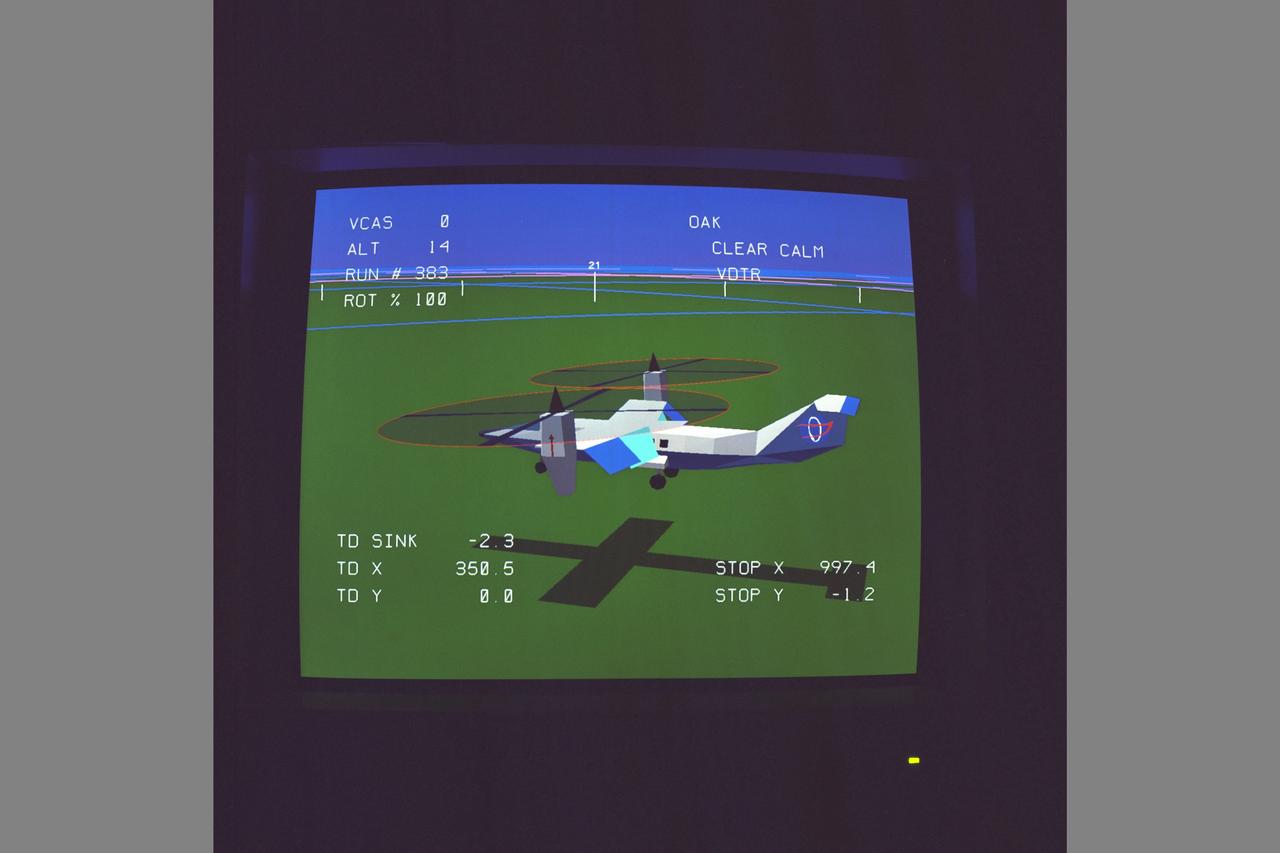
VMS: Variable Diameter Tiltrotor Simulation Project. side view display with XV-15 aircraft

Out the window view of the ownship aircraft in the VMS’s R-Cab during the AVA-1h simulation in the VMS, N243.
![KENNEDY SPACE CENTER, FLA. -- At the Shuttle Landing Facility, KSC videographer Glen Benson films with HDTV the Shuttle Training Aircraft (STA) taxiing away. The STA is a modified Grumman Gulfstream II aircraft with an onboard special computer system to enable the aircraft to simulate the orbiter. [Photo by Walt Lindblom, Marshall SFC]](https://images-assets.nasa.gov/image/KSC-02pd1531/KSC-02pd1531~medium.jpg)
KENNEDY SPACE CENTER, FLA. -- At the Shuttle Landing Facility, KSC videographer Glen Benson films with HDTV the Shuttle Training Aircraft (STA) taxiing away. The STA is a modified Grumman Gulfstream II aircraft with an onboard special computer system to enable the aircraft to simulate the orbiter. [Photo by Walt Lindblom, Marshall SFC]
![KENNEDY SPACE CENTER, FLA. -- At the Shuttle Landing Facility, KSC videographer Glen Benson films with HDTV the Shuttle Training Aircraft (STA) preparing to land. The STA is a modified Grumman Gulfstream II aircraft with an onboard special computer system to enable the aircraft to simulate the orbiter. [Photo by Walt Lindblom, Marshall SFC]](https://images-assets.nasa.gov/image/KSC-02pd1532/KSC-02pd1532~medium.jpg)
KENNEDY SPACE CENTER, FLA. -- At the Shuttle Landing Facility, KSC videographer Glen Benson films with HDTV the Shuttle Training Aircraft (STA) preparing to land. The STA is a modified Grumman Gulfstream II aircraft with an onboard special computer system to enable the aircraft to simulate the orbiter. [Photo by Walt Lindblom, Marshall SFC]
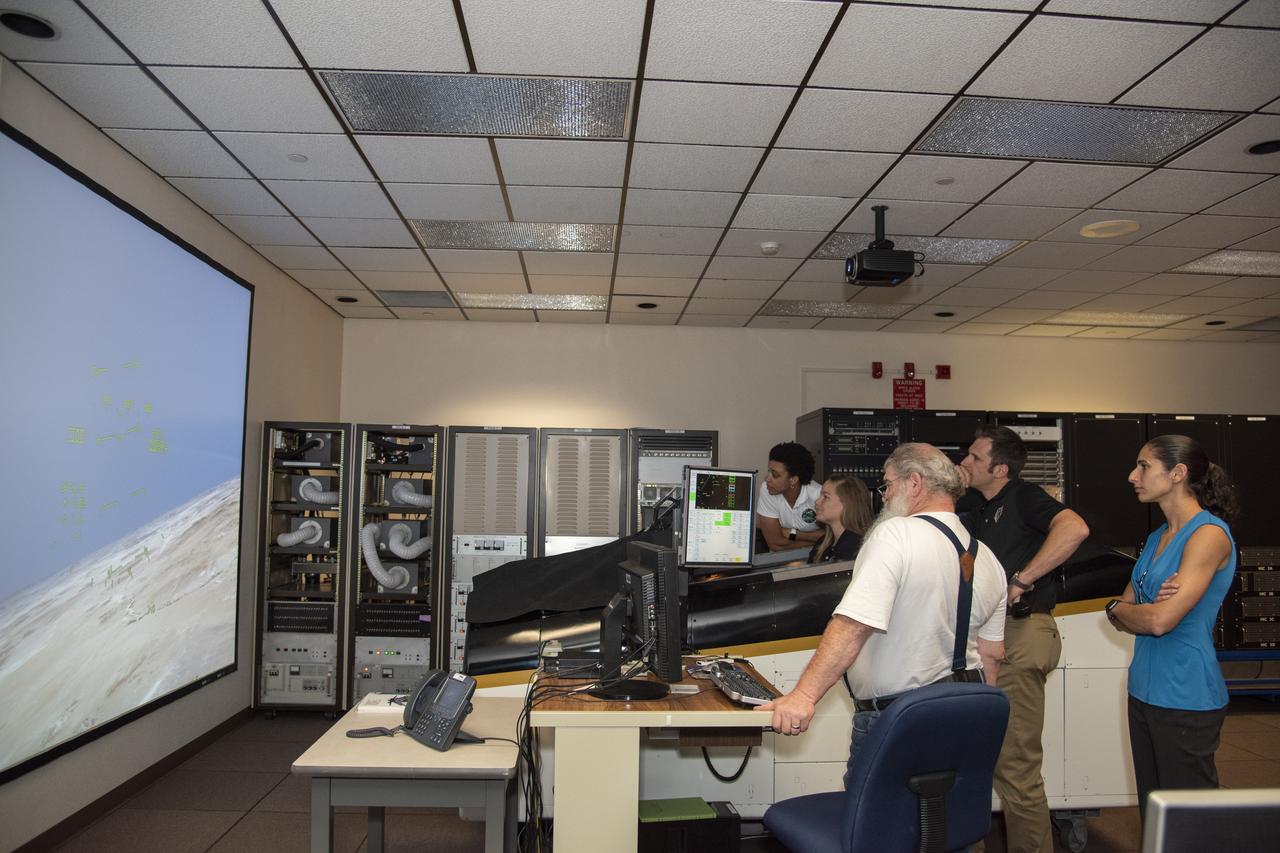
NASA’s 2017 astronaut candidates (L to R) Jessica Watkins, Jenni Sidey-Gibbons, Joshua Kutryk, and Jasmin Moghbeli practice flying in an F-18 aircraft cockpit simulator at Armstrong Flight Research Center, in Southern California. The F-18’s are flown for research support and pilot proficiency. Currently, the F-18’s are being used to conduct supersonic research in support of the X-59 QueSST overall mission.
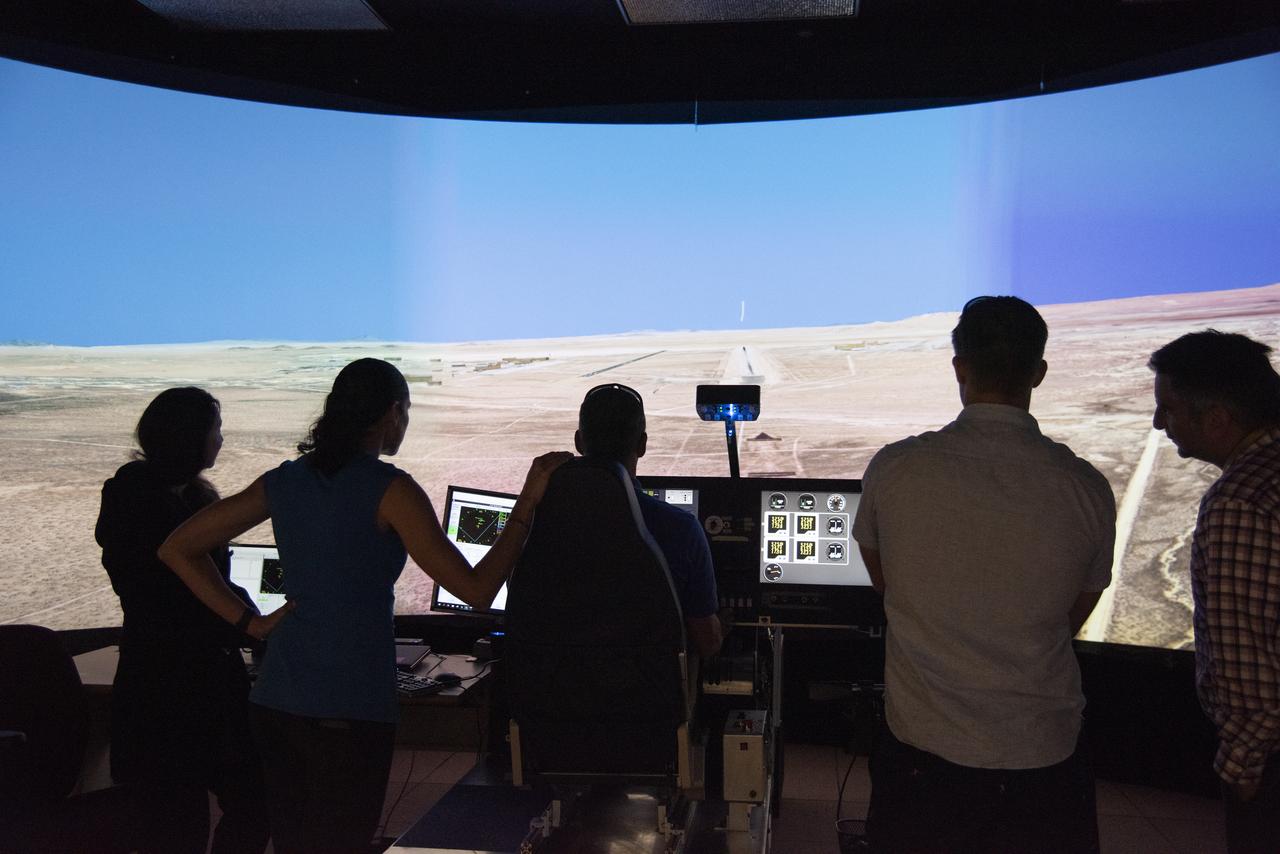
NASA's 2017 astronaut candidates toured aircraft hangar at Armstrong Flight Research Center, in Southern California. After tour of aircraft hangar and briefing on the use of aircraft for flight research, the astronauts practiced flying the X-57 simulator. Starting with the fuselage of a Tecnam P20067T, the X-57 Maxwell electric propulsion airplane is being built and could lead to the development of electric propulsion-powered aircraft, which would be quieter, more efficient and environmentally friendly than today's commuter aircraft.

Pilot David Zahn fine-tunes the traffic display screen of the ownship aircraft in the VMS’s R-Cab during the AVA-1h simulation in the VMS, N243.
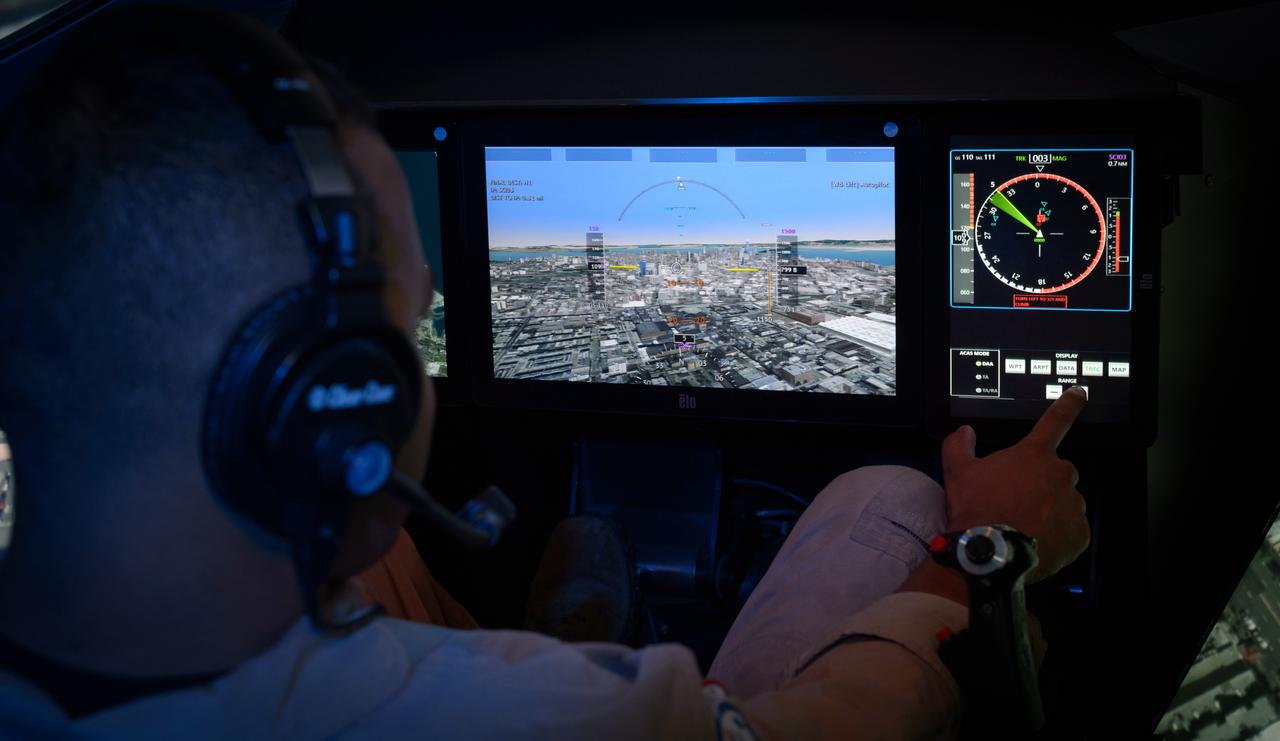
Pilot David Zahn fine-tunes the traffic display screen of the ownship aircraft in the VMS’s R-Cab during the AVA-1h simulation in the VMS, N243.
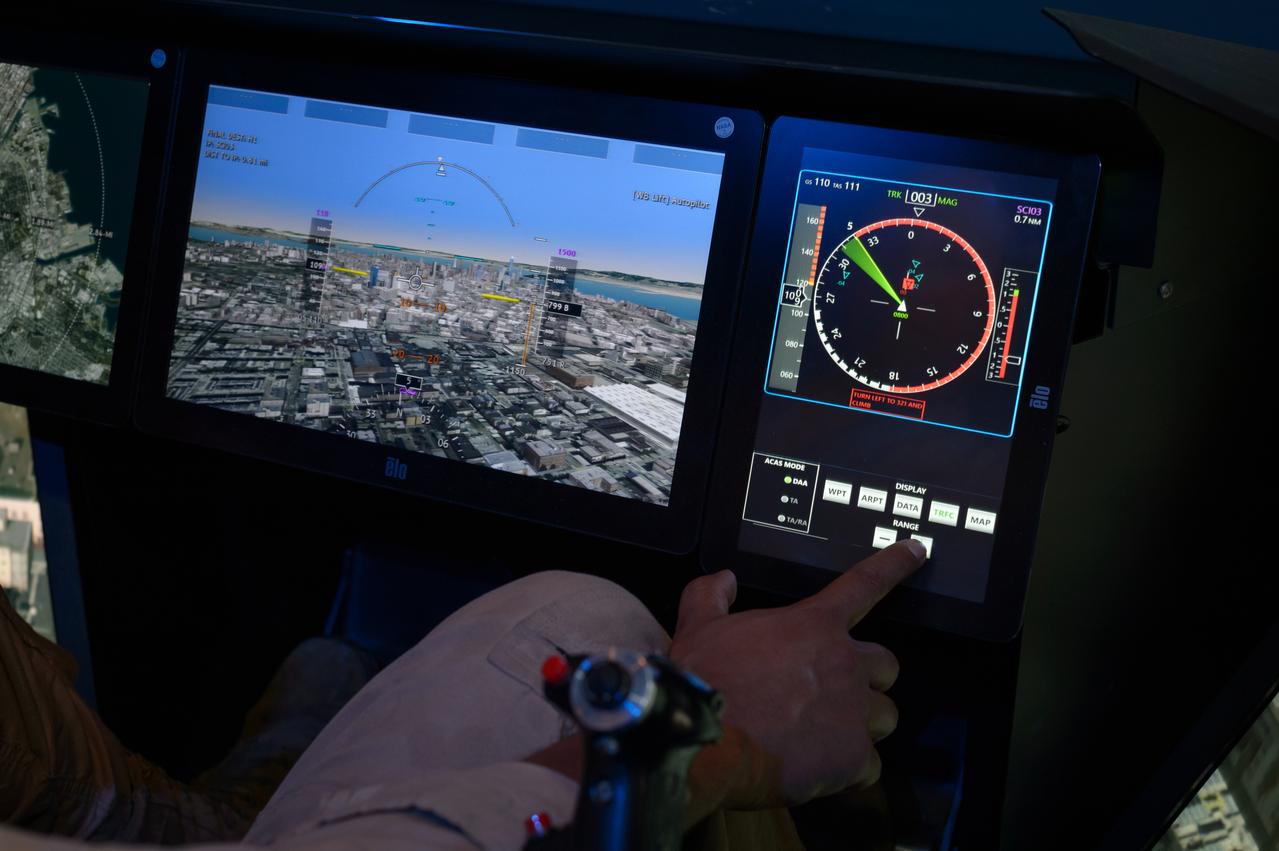
Primary flight display screen, left, and traffic display screen, right, of the ownship aircraft in the VMS’s R-Cab during the AVA-1h simulation in the VMS, N243.

The F-18 simulator at NASA's Dryden Flight Research Center, Edwards, California. Simulators offer a safe and economical alternative to actual flights to gather data, as well as being excellent facilities for pilot practice and training. The F-18 Hornet is used primarily as a safety chase and mission support aircraft at NASA's Dryden Flight Research Center, Edwards, California. As support aircraft, the F-18's are used for safety chase, pilot proficiency, aerial photography and other mission support functions.
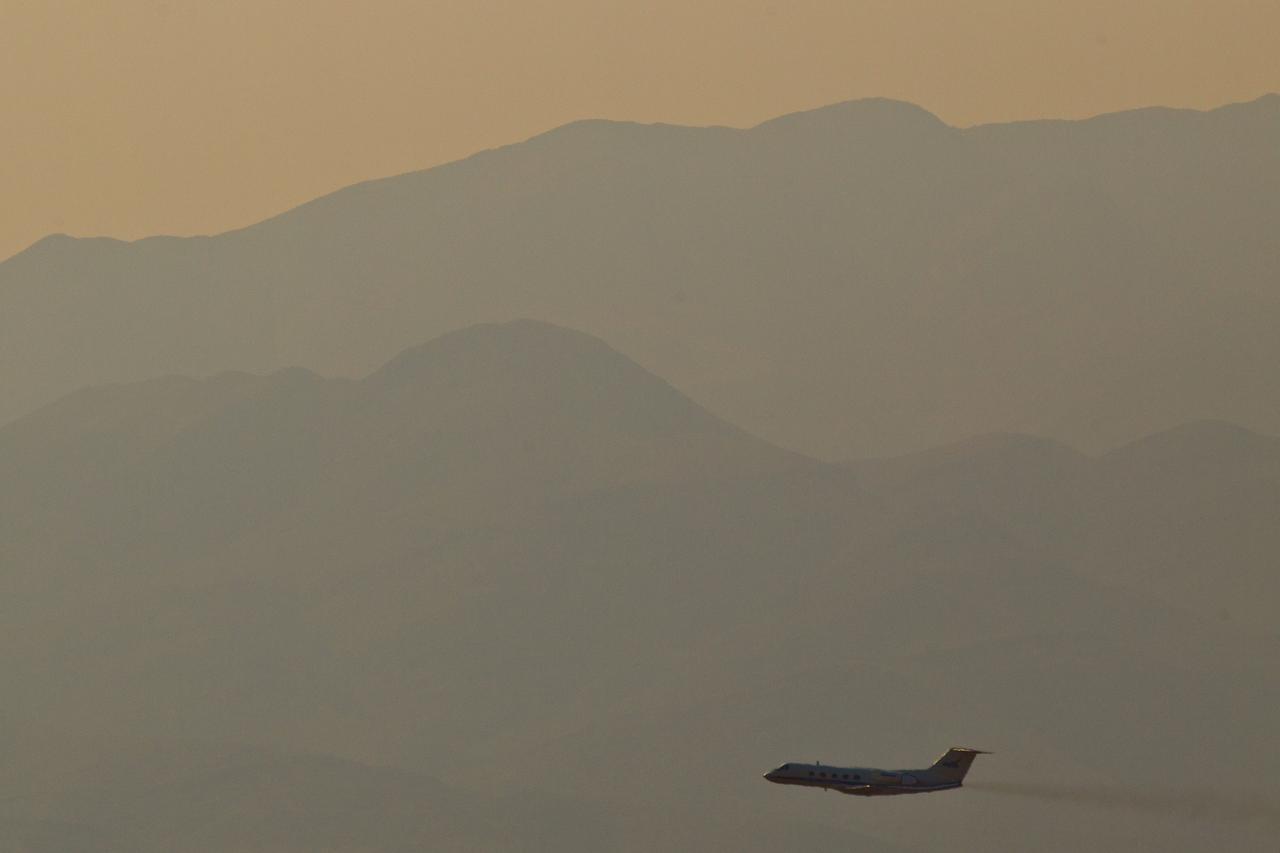
JSC2011-E-059510 (14 June 2011) --- A shuttle training aircraft takes off from NASA?s Johnson Space Center's El Paso Forward Operating Location on June 14, 2011, in El Paso. The Shuttle Training Aircraft or STA is a modified Grumman Gulfstream 2 aircraft that duplicates the space shuttle's handling qualities to allow astronauts to simulate shuttle landings. Since the beginning of the shuttle program over 100,000 landing simulations have been performed from the El Paso location at the nearby White Sands Space Harbor. Photo credit: NASA Photo/Houston Chronicle, Smiley N. Pool
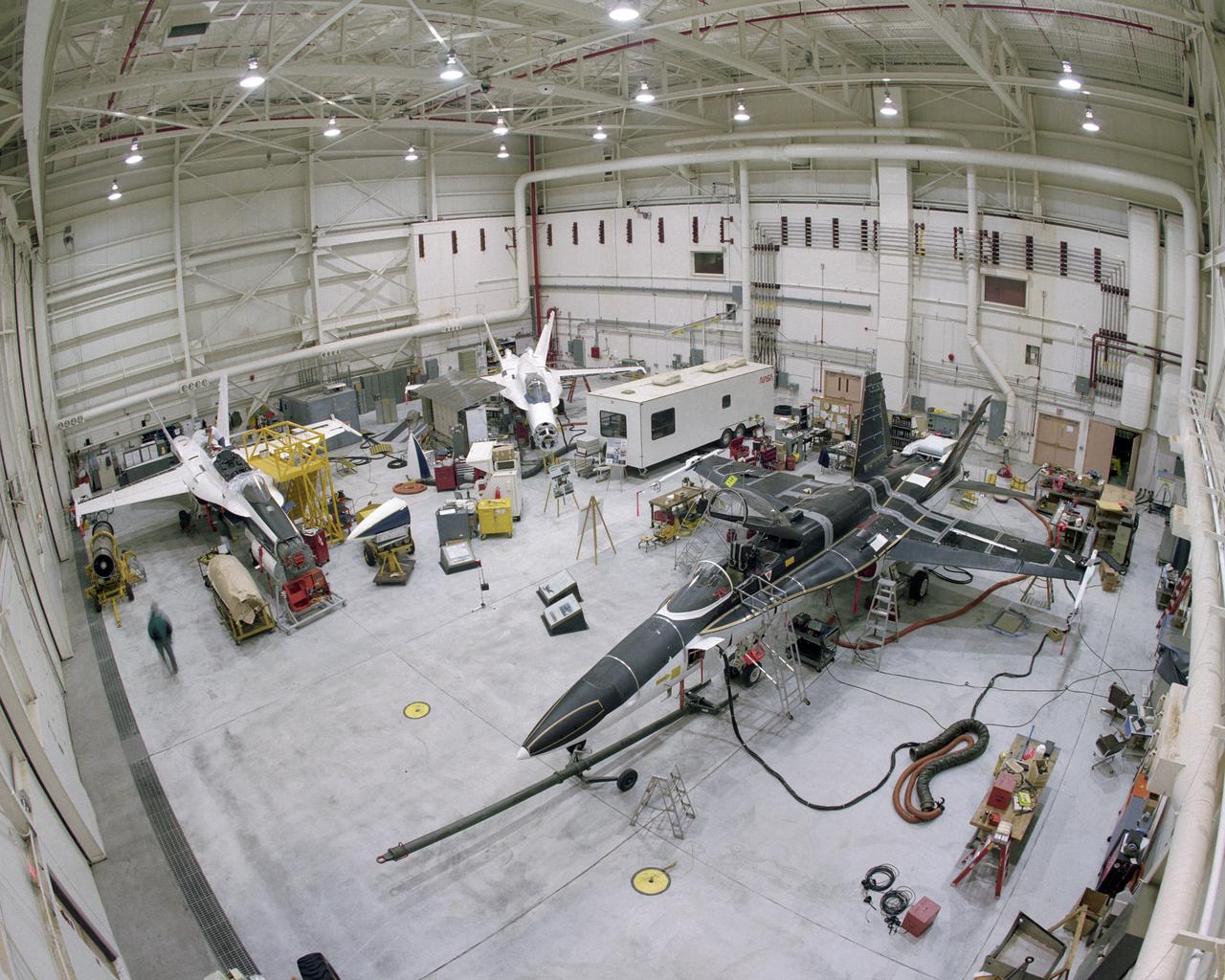
RAIF Hangar Bays 1 and 2. Three of NASA's F-18 aircraft can be seen in this photo. The SRA, or Systems Research Aircraft, is at the far left. In the middle is the F-18 Iron Bird, used for full-scale, hardware-in-the-loop simulations. On the right is the F-18 High Alpha Research Vehicle, or HARV.

NASA employee Naomi Torres sits inside the air taxi passenger ride quality simulator at NASA’s Armstrong Flight Research Center in Edwards, California, as the simulator moves during a study on Oct. 23, 2024. Research continues to better understand how humans may interact with these new types of aircraft.
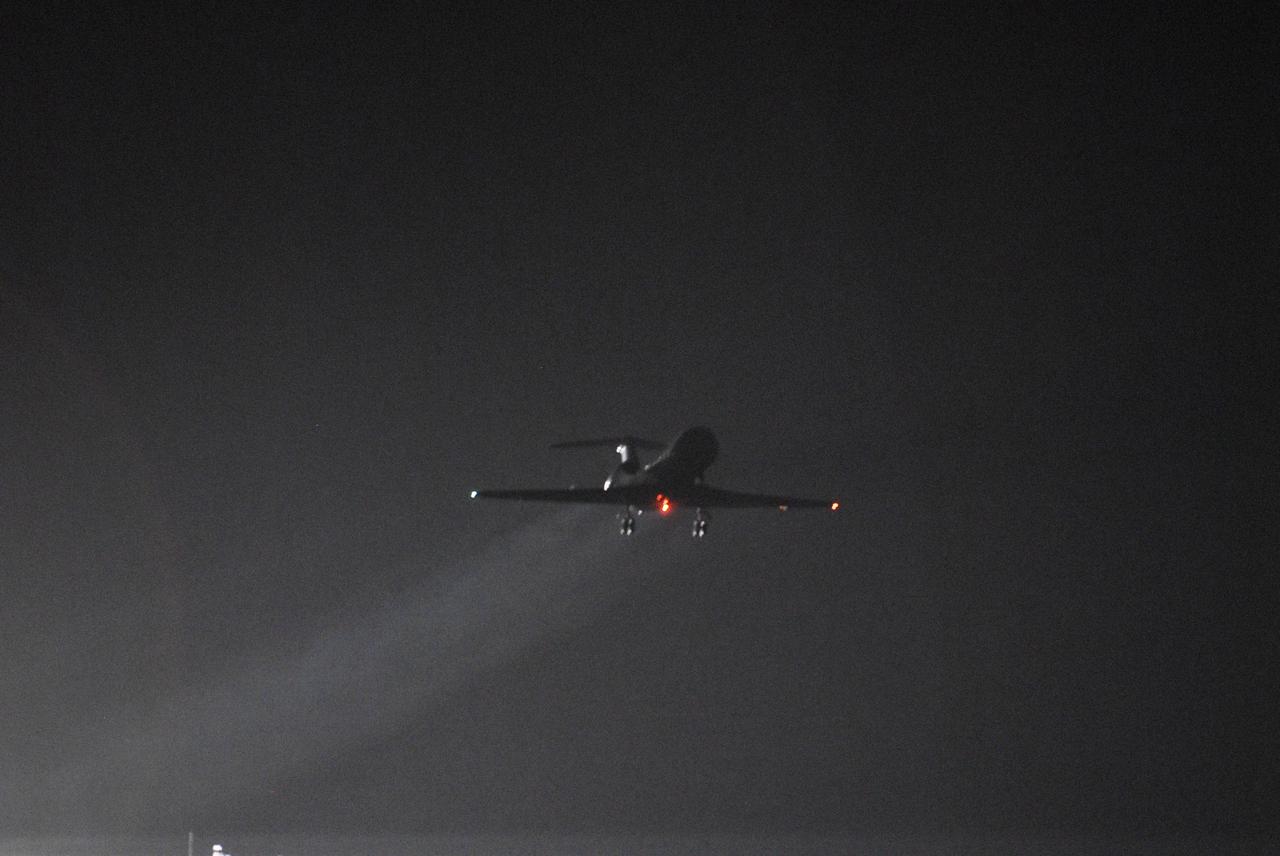
CAPE CANAVERAL, Fla. - One of the shuttle training aircraft takes off from the Shuttle Landing Facility at NASA's Kennedy Space Center in Florida. STS-125 Commander Scott Altman and Pilot Gregory C. Johnson are practicing shuttle landings in the aircraft. The STA is a Grumman American Aviation-built Gulf Stream II jet that was modified to simulate a shuttle’s cockpit, motion and visual cues, and handling qualities. In flight, the aircraft duplicates the shuttle’s atmospheric descent trajectory from approximately 35,000 feet altitude to landing on a runway. The practice is part of a terminal countdown demonstration test, or TCDT, to prepare for launch. TCDT provides astronauts and ground crews with an opportunity to participate in various simulated countdown activities, including equipment familiarization, emergency training and a simulated launch countdown. Space shuttle Atlantis’ STS-125 mission to service NASA’s Hubble Space Telescope is targeted to launch Oct. 10. Photo credit: NASA/Kim Shiflett
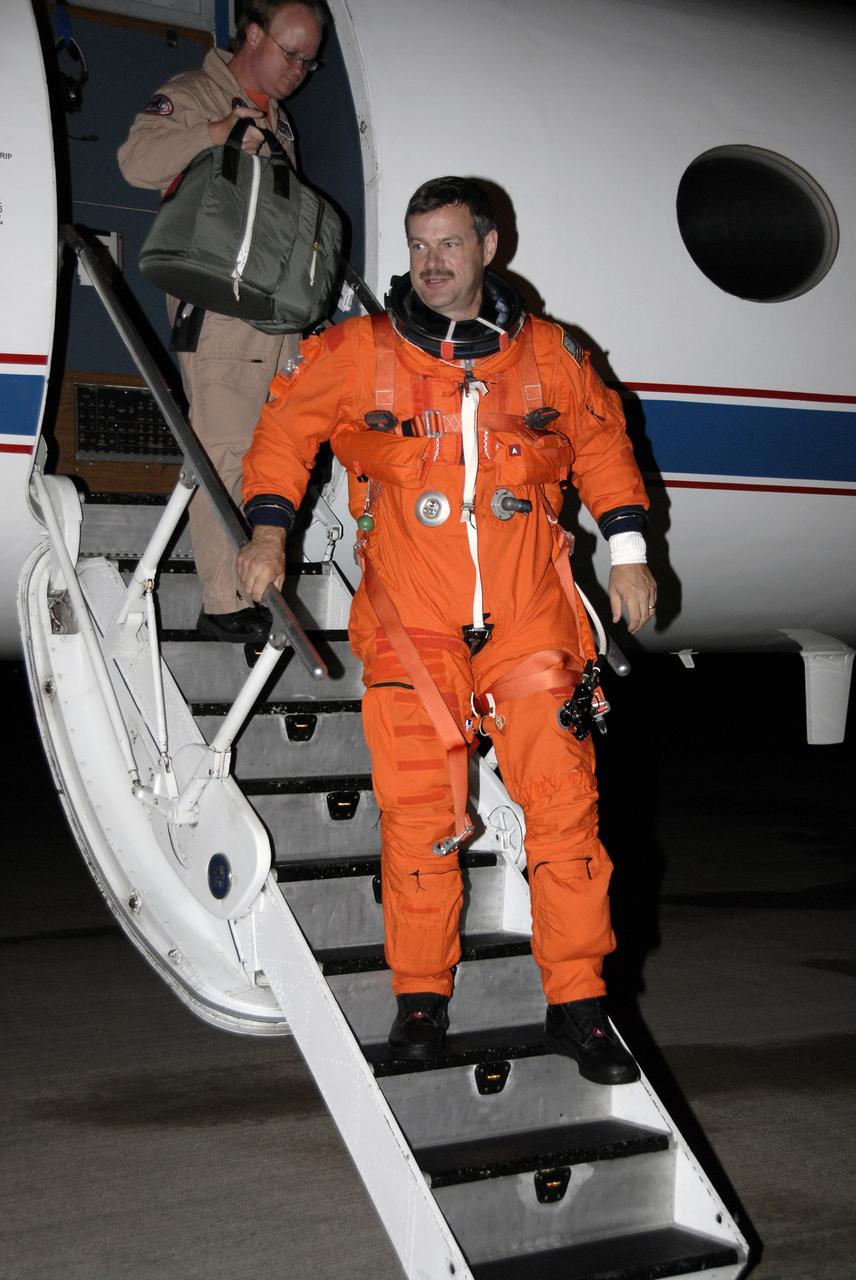
CAPE CANAVERAL, Fla. - STS-125 Commander Scott Altman exits the shuttle training aircraft at the Shuttle Landing Facility at NASA's Kennedy Space Center in Florida after practicing shuttle landings in the aircraft. The STA is a Grumman American Aviation-built Gulf Stream II jet that was modified to simulate a shuttle’s cockpit, motion and visual cues, and handling qualities. In flight, the aircraft duplicates the shuttle’s atmospheric descent trajectory from approximately 35,000 feet altitude to landing on a runway. The practice is part of a terminal countdown demonstration test, or TCDT, to prepare for launch. TCDT provides astronauts and ground crews with an opportunity to participate in various simulated countdown activities, including equipment familiarization, emergency training and a simulated launch countdown. Space shuttle Atlantis’ STS-125 mission to service NASA’s Hubble Space Telescope is targeted to launch Oct. 10. Photo credit: NASA/Kim Shiflett
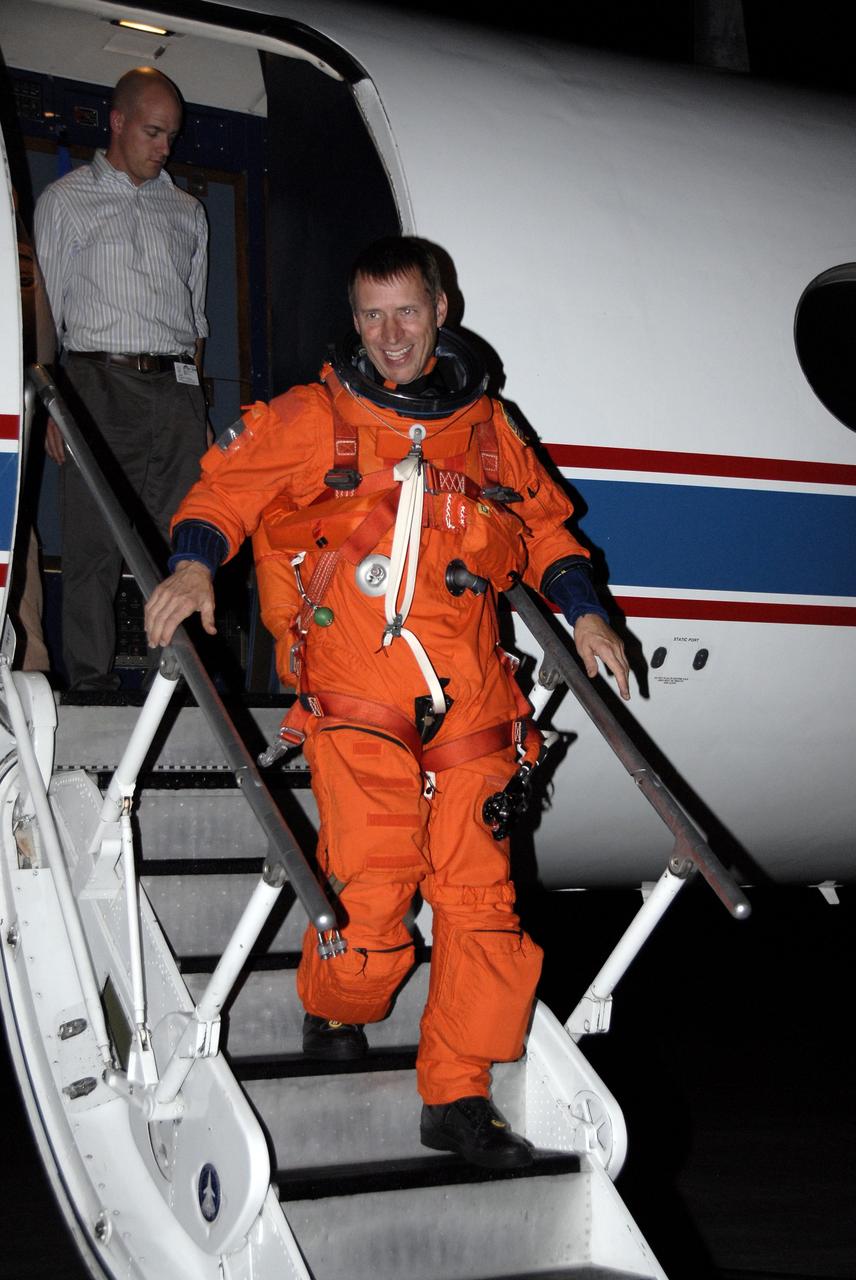
CAPE CANAVERAL, Fla. - STS-125 Pilot Gregory C. Johnson exits the shuttle training aircraft at the Shuttle Landing Facility at NASA's Kennedy Space Center in Florida after practicing shuttle landings in the aircraft. The STA is a Grumman American Aviation-built Gulf Stream II jet that was modified to simulate a shuttle’s cockpit, motion and visual cues, and handling qualities. In flight, the aircraft duplicates the shuttle’s atmospheric descent trajectory from approximately 35,000 feet altitude to landing on a runway. The practice is part of a terminal countdown demonstration test, or TCDT, to prepare for launch. TCDT provides astronauts and ground crews with an opportunity to participate in various simulated countdown activities, including equipment familiarization, emergency training and a simulated launch countdown. Space shuttle Atlantis’ STS-125 mission to service NASA’s Hubble Space Telescope is targeted to launch Oct. 10. Photo credit: NASA/Kim Shiflett
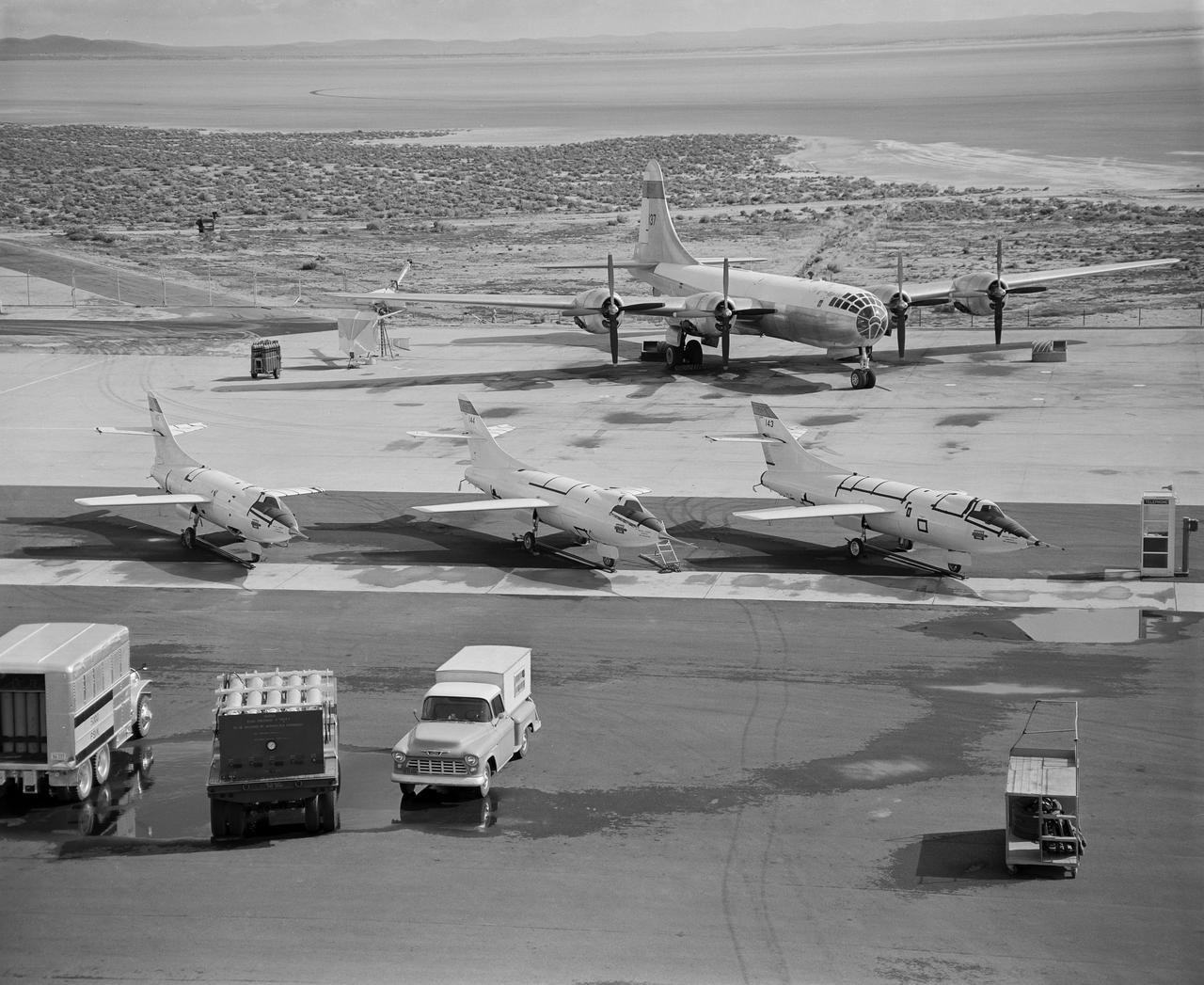
Behind three Douglas D-558-IIs is the B-29 launch aircraft. Under its right wing is the world’s first ground-based reaction control system motion simulator.
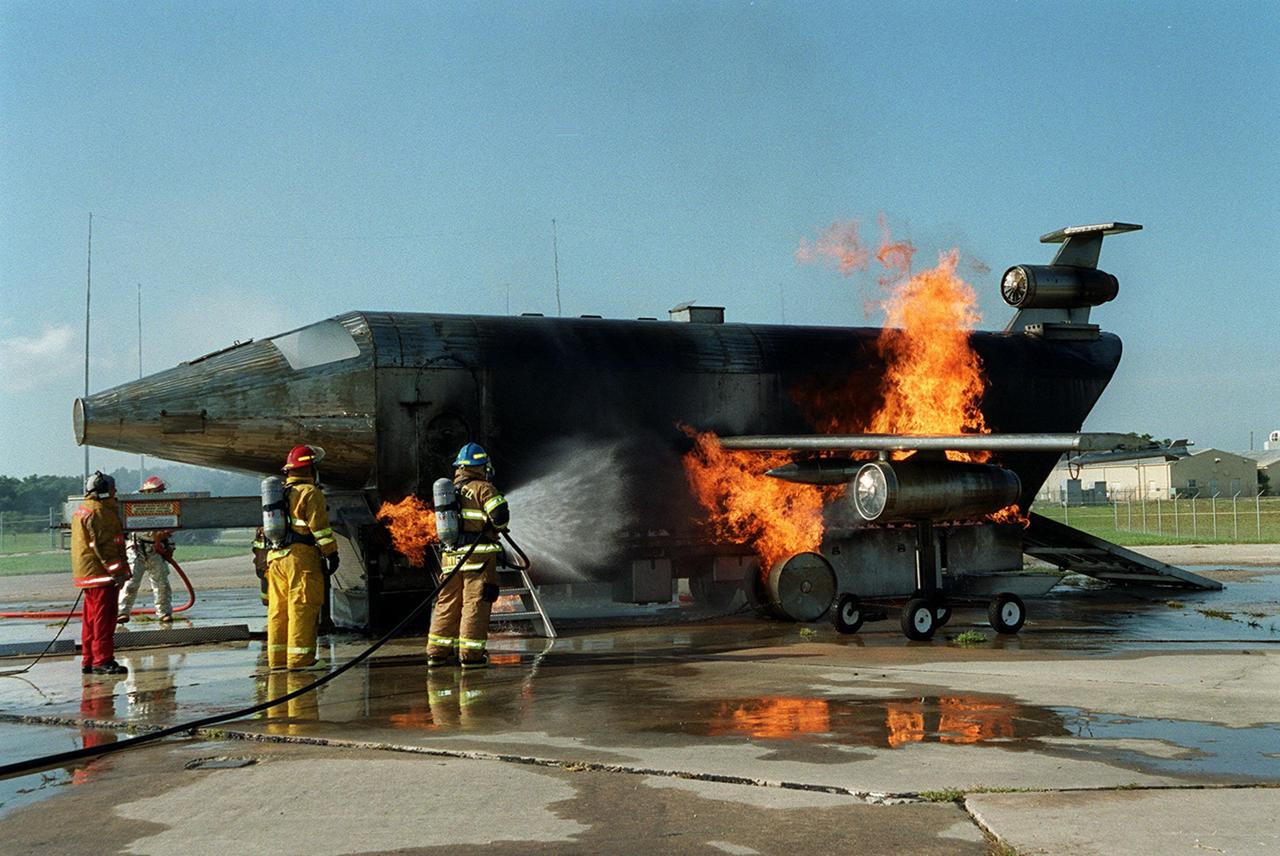
KENNEDY SPACE CENTER, FLA. -- During training exercises at Cape Canaveral Air Force Station Pad 30, firefighters with the Fire and Emergency Services at the Naval Station Mayport, Fla., turn their hoses toward the fire on the simulated aircraft.
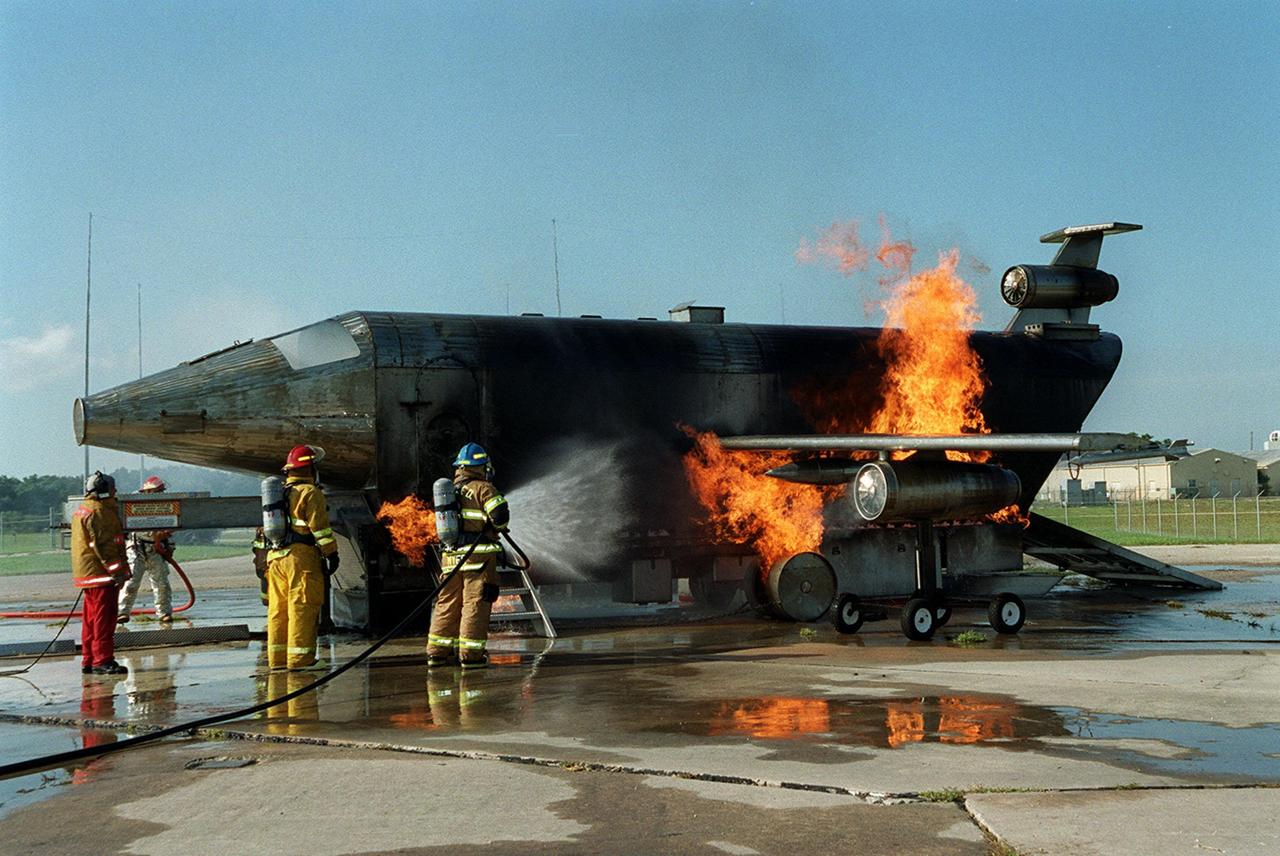
KENNEDY SPACE CENTER, FLA. -- During training exercises at Cape Canaveral Air Force Station Pad 30, firefighters with the Fire and Emergency Services at the Naval Station Mayport, Fla., turn their hoses toward the fire on the simulated aircraft.
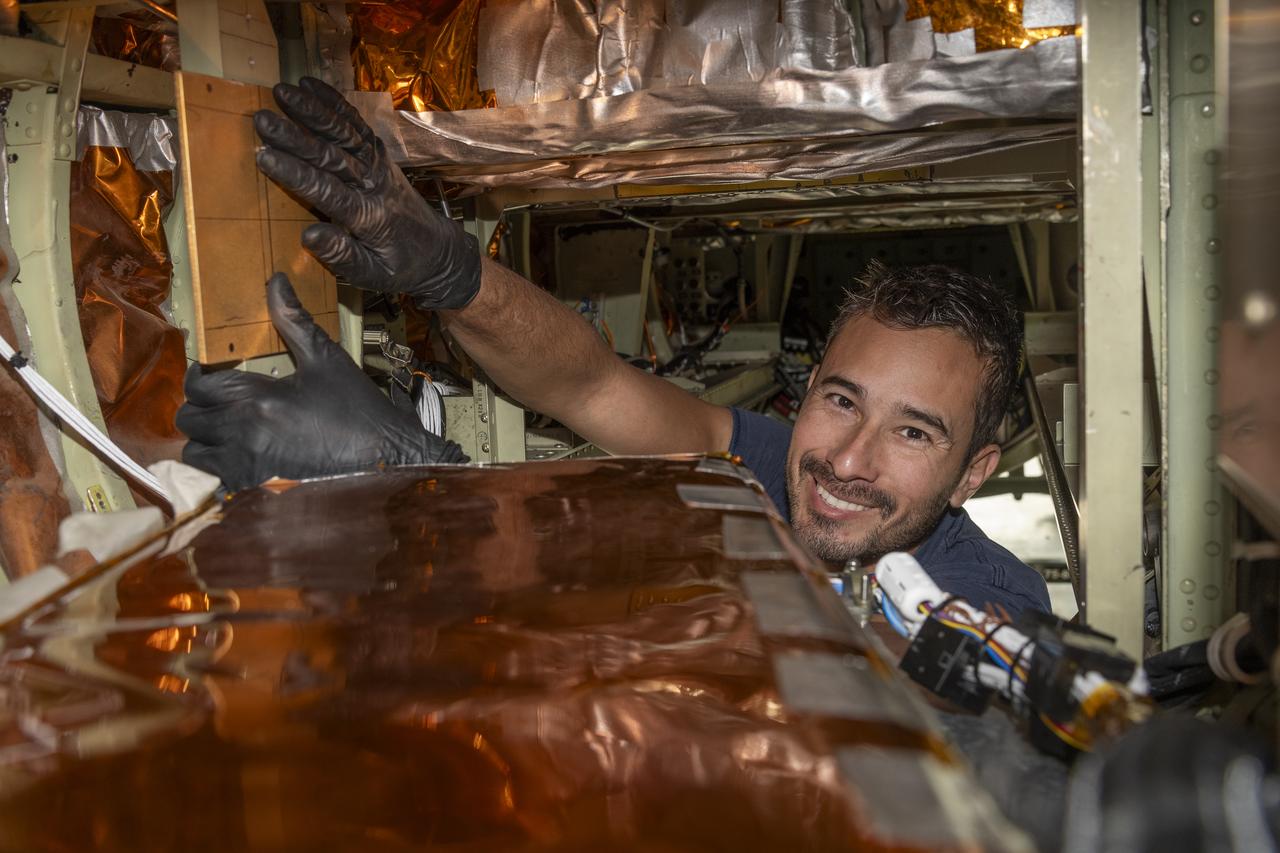
A team of experts prepares the ER-2 aircraft at Armstrong Flight Research Center in Edwards, California for the GSFC Lidar Observation and Validation Experiment (GLOVE) in February 2025. Aircraft mechanic Darick Alvarez-Alonzo installs a satellite-simulating instrument which will fly at high altitudes on the ER-2 to validate satellite-borne data. As a collaboration between engineers, scientists, and aircraft professionals, GLOVE aims to improve satellite data products for Earth Science applications.
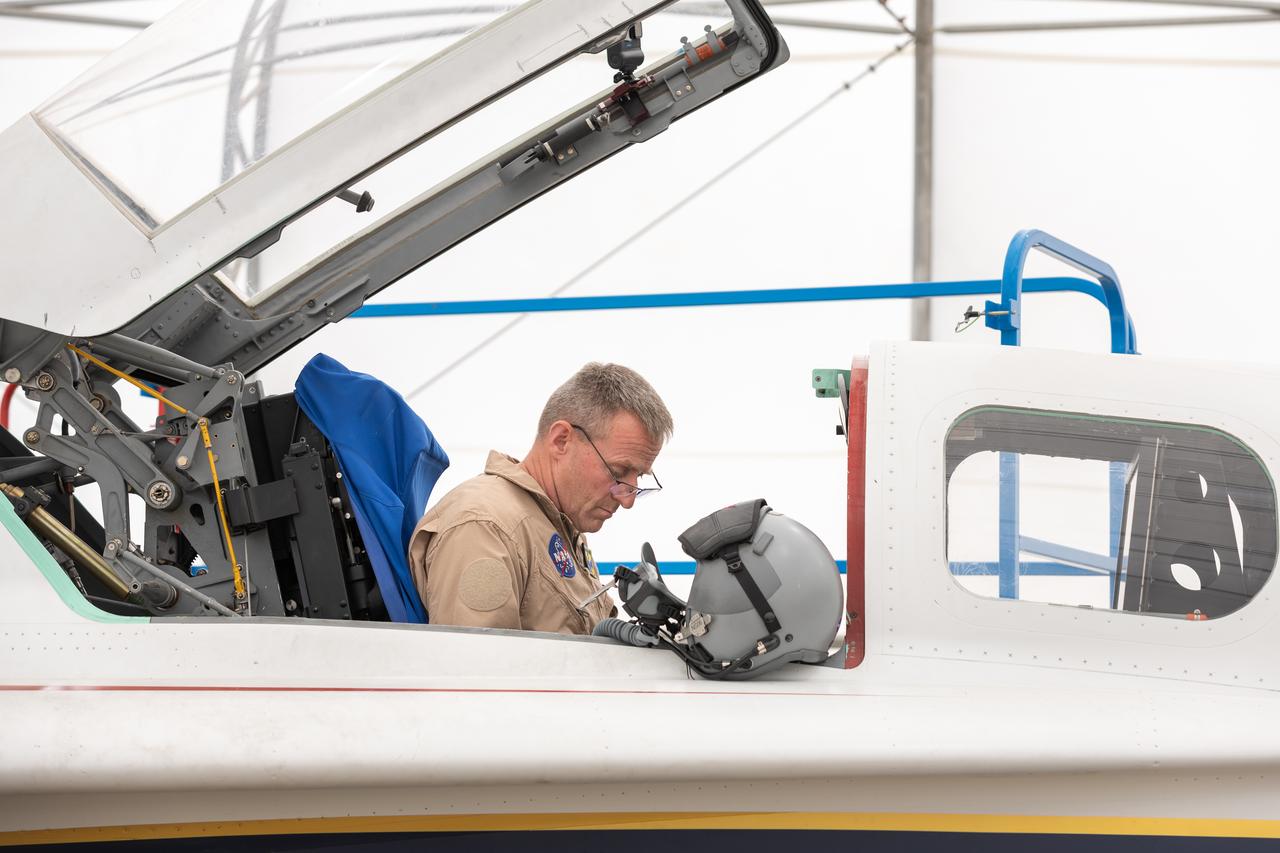
NASA’s X-59 quiet supersonic research aircraft successfully completed its “aluminum bird” systems test at Lockheed Martin’s Skunk Works facility in Palmdale, California. With NASA pilot James Less in the cockpit, the X-59 team simulated flight conditions from takeoff to landing – without ever leaving the ground. The test verified how the aircraft’s hardware and software work together, responding to pilot inputs and handling injected system failures. This milestone confirms the aircraft’s readiness for the next series of tests leading to first flight.
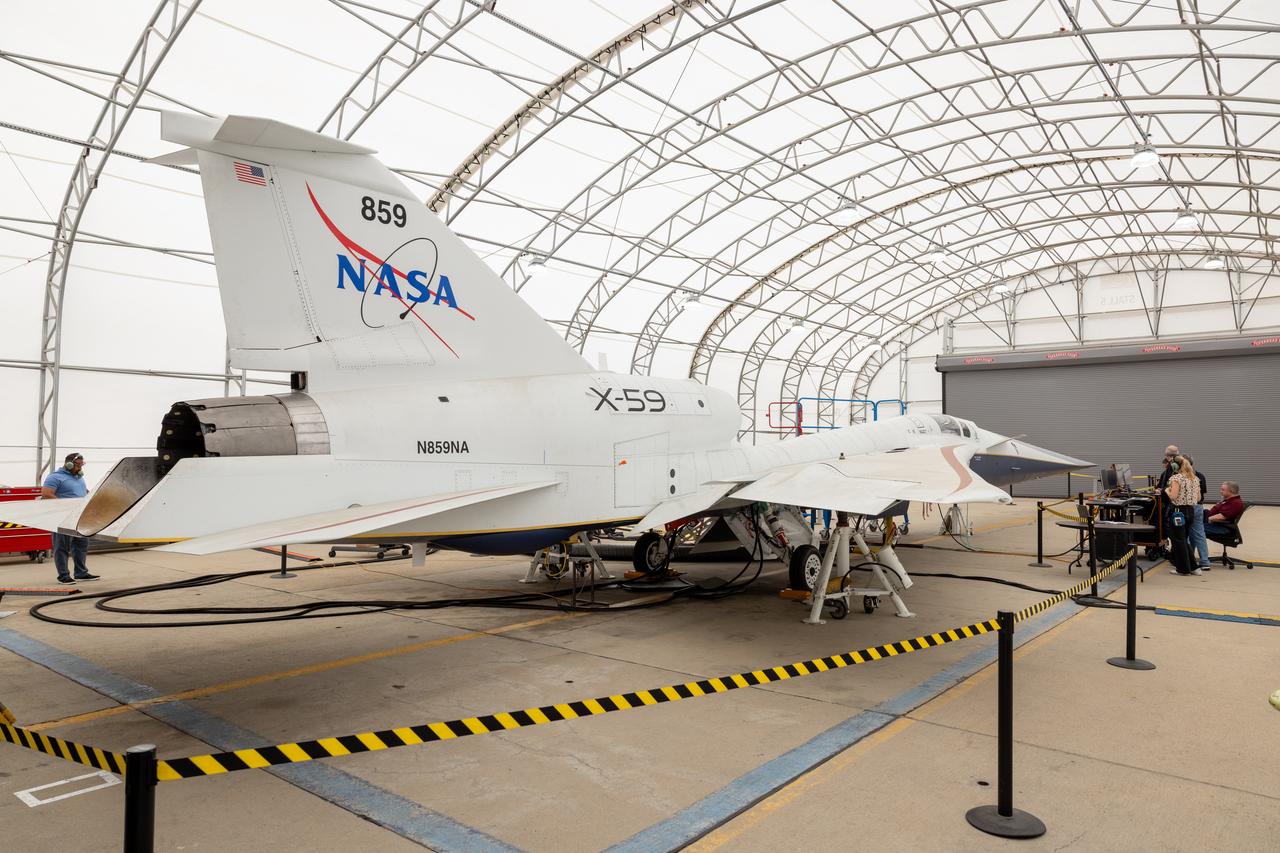
NASA’s X-59 quiet supersonic research aircraft successfully completed its “aluminum bird” systems test at Lockheed Martin’s Skunk Works facility in Palmdale, California. With NASA pilot James Less in the cockpit, the X-59 team simulated flight conditions from takeoff to landing – without ever leaving the ground. The test verified how the aircraft’s hardware and software work together, responding to pilot inputs and handling injected system failures. This milestone confirms the aircraft’s readiness for the next series of tests leading to first flight.
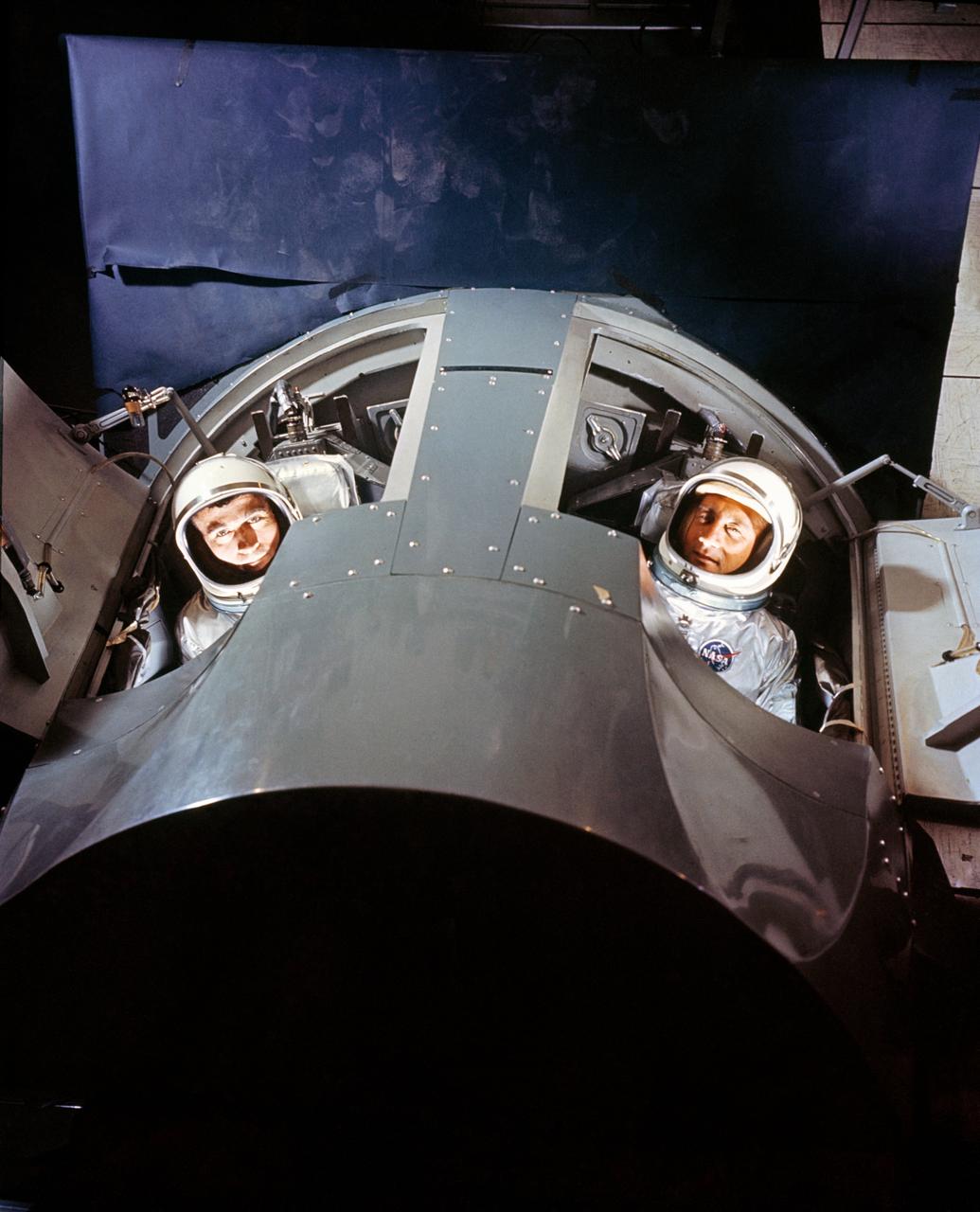
S64-25295 (March 1964) --- Astronauts Virgil I. (Gus) Grissom (right) and John W. Young, prime crew for the first manned Gemini mission (GT-3), are shown inside a Gemini mission simulator at McDonnell Aircraft Corp., St. Louis, MO. The simulator will provide Gemini astronauts and ground crews with realistic mission simulation during intensive training prior to actual launch.
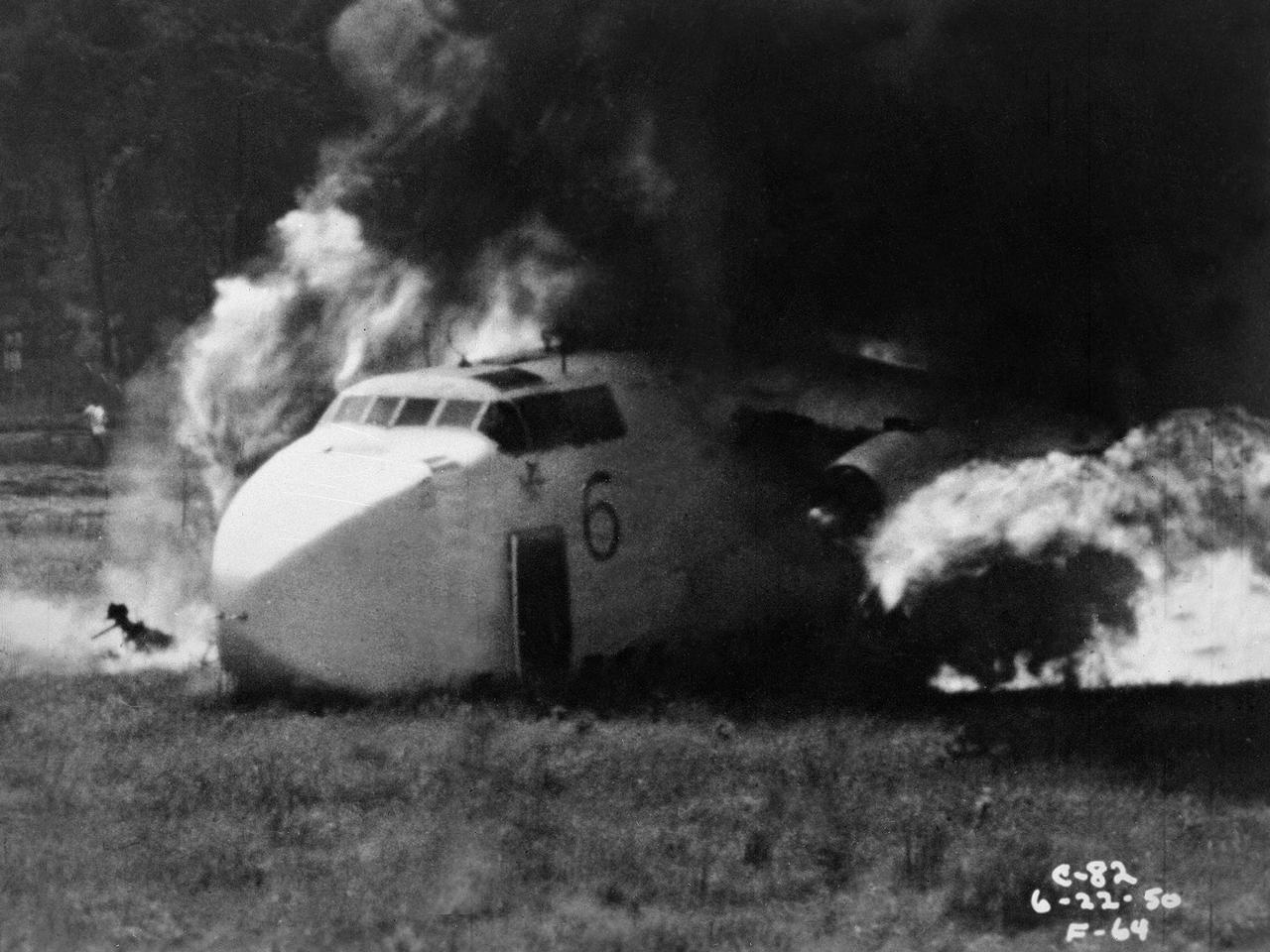
Researchers at the National Advisory Committee for Aeronautics (NACA) Lewis Flight Propulsion Laboratory purposely crash a Fairchild C-82 Packet aircraft to study flame propagation. A rash of passenger aircraft crashes in 1946 and 1947 spurred a White House call for an investigatory board staffed by members of the Civil Aeronautics Board, military, and the NACA. The group addressed fire segregation, extinguishment, and prevention. The NACA established a Subcommittee on Aircraft Fire Prevention in February 1948 to coordinate its efforts. The Lewis team simulated situations in which an aircraft failed to become airborne during takeoff resulting in crashes into embankments and other objects. The Lewis researchers initially used surplus C-46 and C-82 military transport planes. In these situations, the aircraft generally suffered damage to its fuel system and other components, but was structurally survivable. The aircraft were mounted to a rail that ran down a 1700-foot long test runway. The aircraft was secured at the starting point with an anchor pier so it could get its engines up to takeoff speed before launching down the track. Barriers at the end of the runway were designed to simulate a variety of different types of crashes. Telemetry and high-speed cameras were crucial elements in these studies. The preliminary testing phase identified potential ignition sources and analyzed the spread of flammable materials.
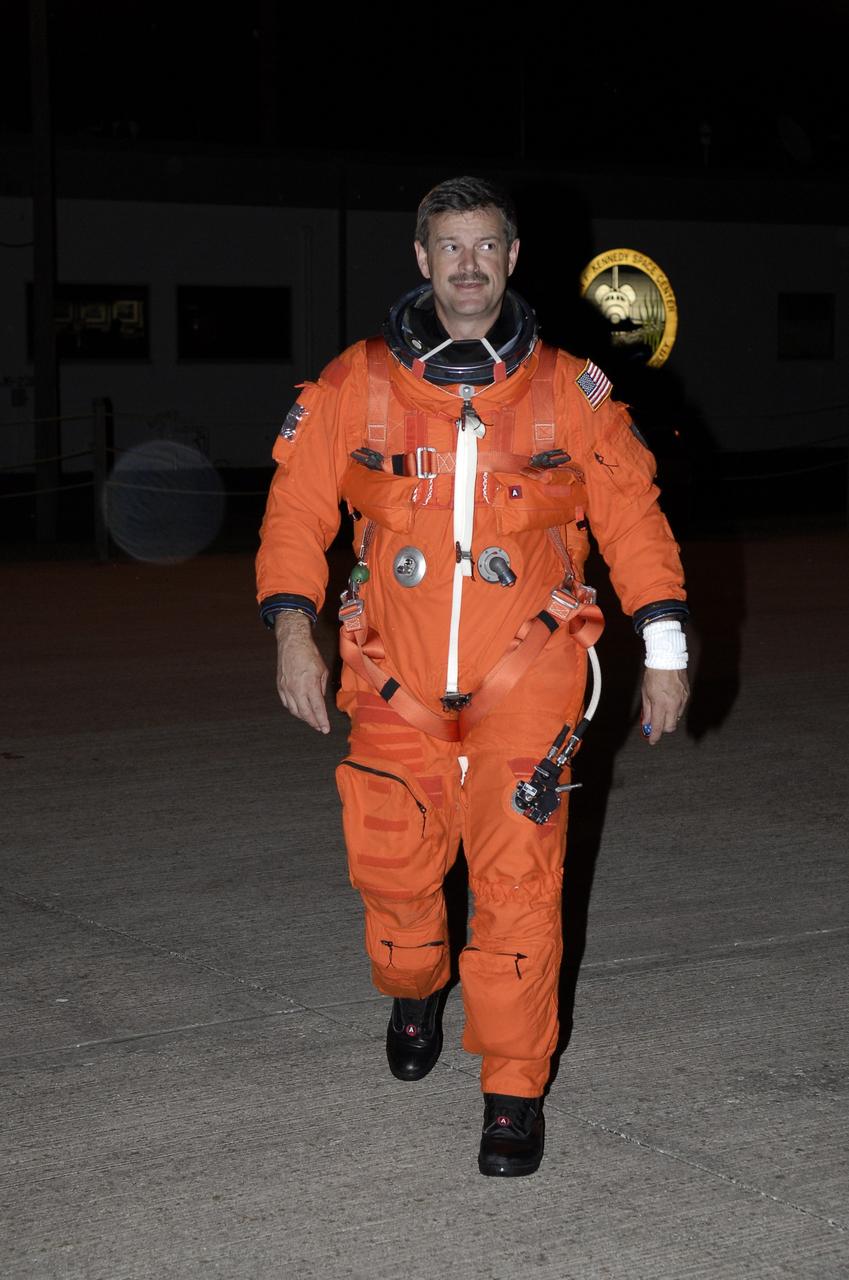
CAPE CANAVERAL, Fla. - STS-125 Commander Scott Altman walks toward the shuttle training aircraft on the Shuttle Landing Facility at NASA's Kennedy Space Center in Florida. He will practice shuttle landings on the runway. The STA is a Grumman American Aviation-built Gulf Stream II jet that was modified to simulate a shuttle’s cockpit, motion and visual cues, and handling qualities. In flight, the aircraft duplicates the shuttle’s atmospheric descent trajectory from approximately 35,000 feet altitude to landing on a runway. The practice is part of a terminal countdown demonstration test, or TCDT, to prepare for launch. TCDT provides astronauts and ground crews with an opportunity to participate in various simulated countdown activities, including equipment familiarization, emergency training and a simulated launch countdown. Space shuttle Atlantis’ STS-125 mission to service NASA’s Hubble Space Telescope is targeted to launch Oct. 10. Photo credit: NASA/Kim Shiflett
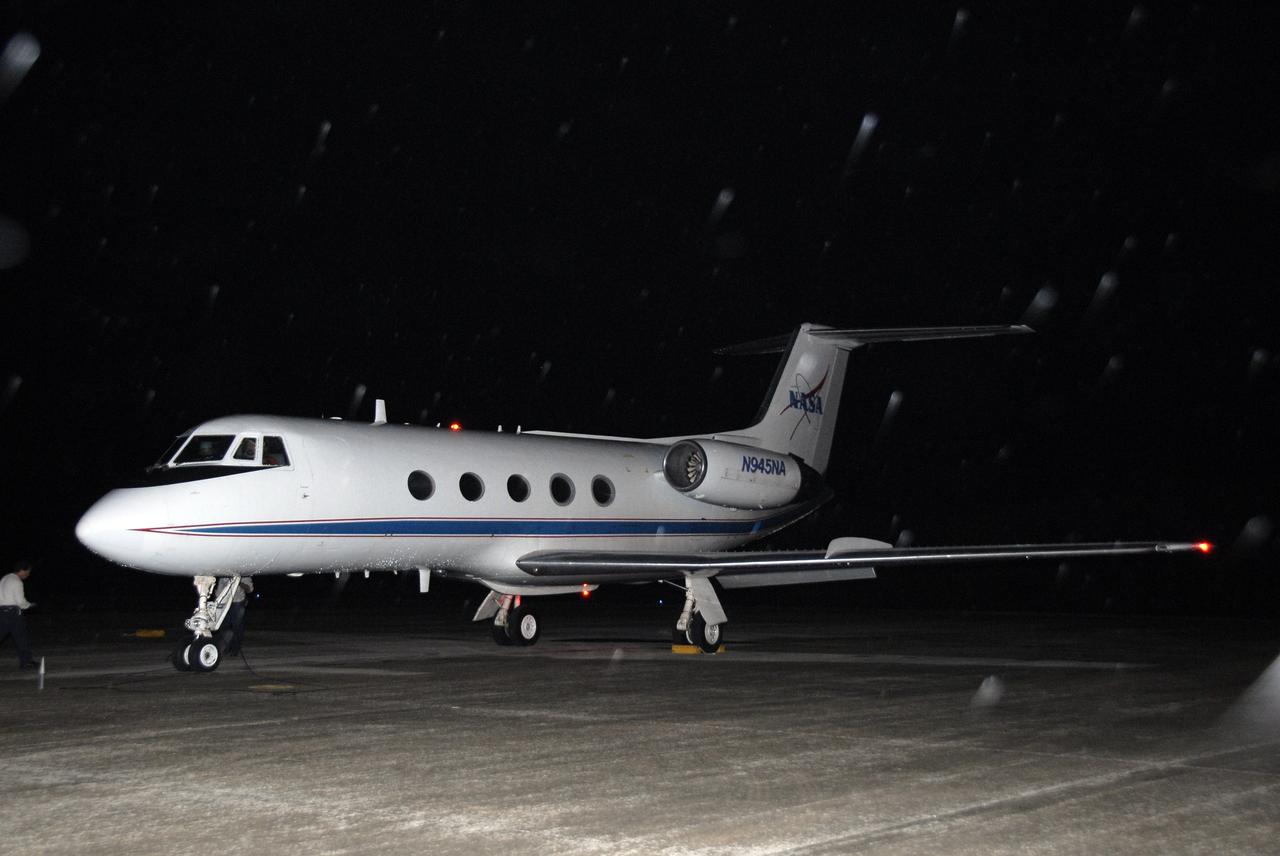
CAPE CANAVERAL, Fla. - At the Shuttle Landing Facility at NASA's Kennedy Space Center in Florida, the shuttle training aircraft piloted by STS-125 Commander Scott Altman is ready to taxi to the runway for practice shuttle landings. The STA is a Grumman American Aviation-built Gulf Stream II jet that was modified to simulate a shuttle’s cockpit, motion and visual cues, and handling qualities. In flight, the aircraft duplicates the shuttle’s atmospheric descent trajectory from approximately 35,000 feet altitude to landing on a runway. The practice is part of a terminal countdown demonstration test, or TCDT, to prepare for launch. TCDT provides astronauts and ground crews with an opportunity to participate in various simulated countdown activities, including equipment familiarization, emergency training and a simulated launch countdown. Space shuttle Atlantis’ STS-125 mission to service NASA’s Hubble Space Telescope is targeted to launch Oct. 10. Photo credit: NASA/Kim Shiflett
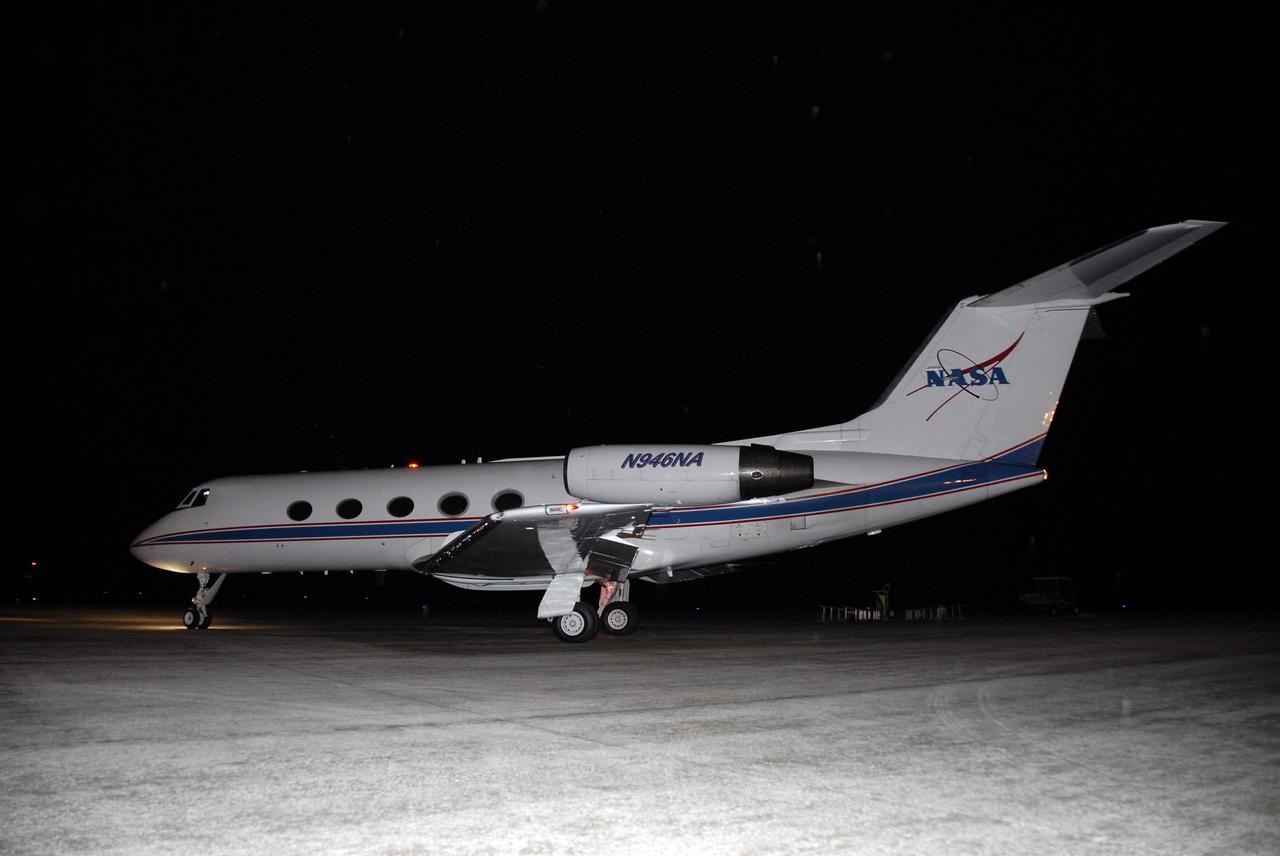
CAPE CANAVERAL, Fla. - At the Shuttle Landing Facility at NASA's Kennedy Space Center in Florida, the shuttle training aircraft piloted by STS-125 Pilot Gregory C. Johnson taxis toward the runway for practice shuttle landings. The STA is a Grumman American Aviation-built Gulf Stream II jet that was modified to simulate a shuttle’s cockpit, motion and visual cues, and handling qualities. In flight, the aircraft duplicates the shuttle’s atmospheric descent trajectory from approximately 35,000 feet altitude to landing on a runway. The practice is part of a terminal countdown demonstration test, or TCDT, to prepare for launch. TCDT provides astronauts and ground crews with an opportunity to participate in various simulated countdown activities, including equipment familiarization, emergency training and a simulated launch countdown. Space shuttle Atlantis’ STS-125 mission to service NASA’s Hubble Space Telescope is targeted to launch Oct. 10. Photo credit: NASA/Kim Shiflett
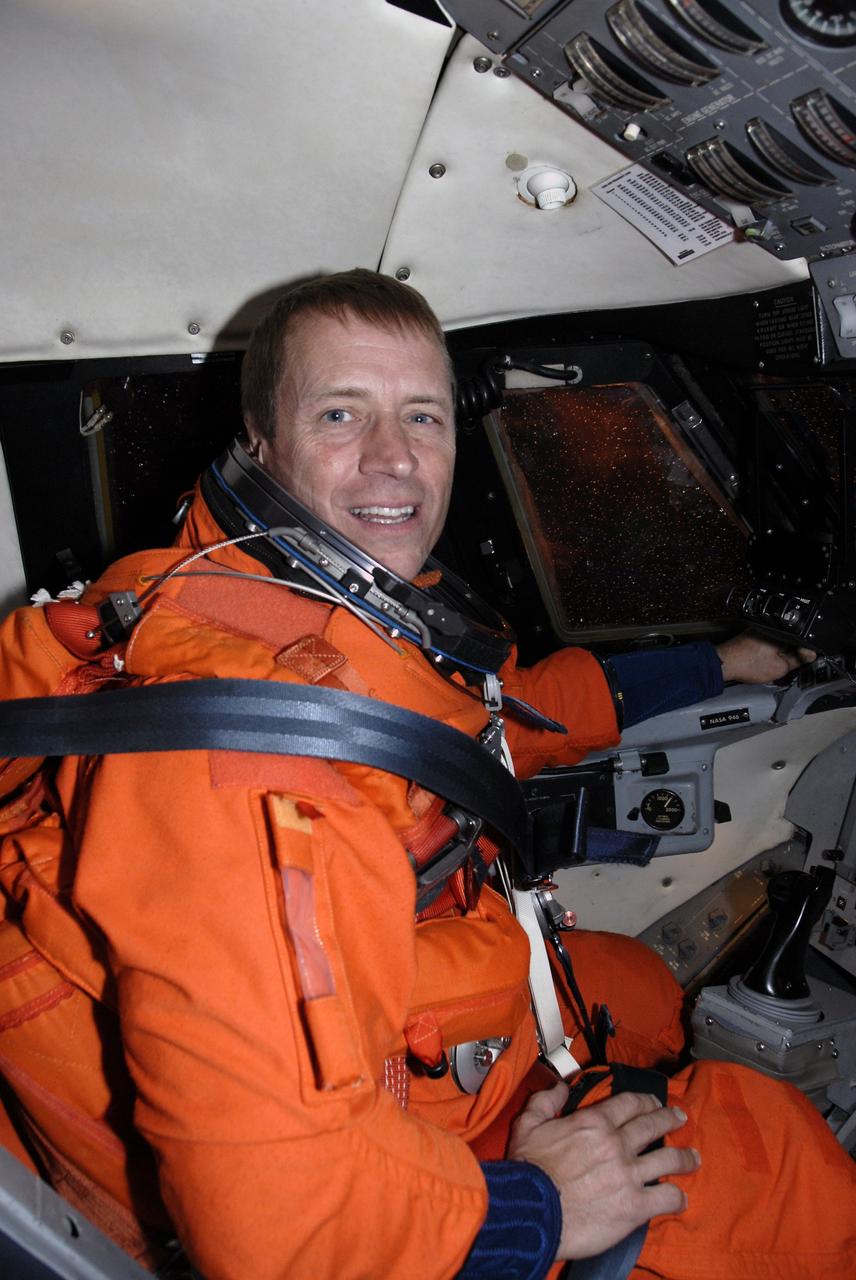
CAPE CANAVERAL, Fla. - STS-125 Pilot Gregory C. Johnson takes his seat in the shuttle training aircraft for practice shuttle landings on the runway of the Shuttle Landing Facility at NASA's Kennedy Space Center in Florida. The STA is a Grumman American Aviation-built Gulf Stream II jet that was modified to simulate a shuttle’s cockpit, motion and visual cues, and handling qualities. In flight, the aircraft duplicates the shuttle’s atmospheric descent trajectory from approximately 35,000 feet altitude to landing on a runway. The practice is part of a terminal countdown demonstration test, or TCDT, to prepare for launch. TCDT provides astronauts and ground crews with an opportunity to participate in various simulated countdown activities, including equipment familiarization, emergency training and a simulated launch countdown. Space shuttle Atlantis’ STS-125 mission to service NASA’s Hubble Space Telescope is targeted to launch Oct. 10. Photo credit: NASA/Kim Shiflett
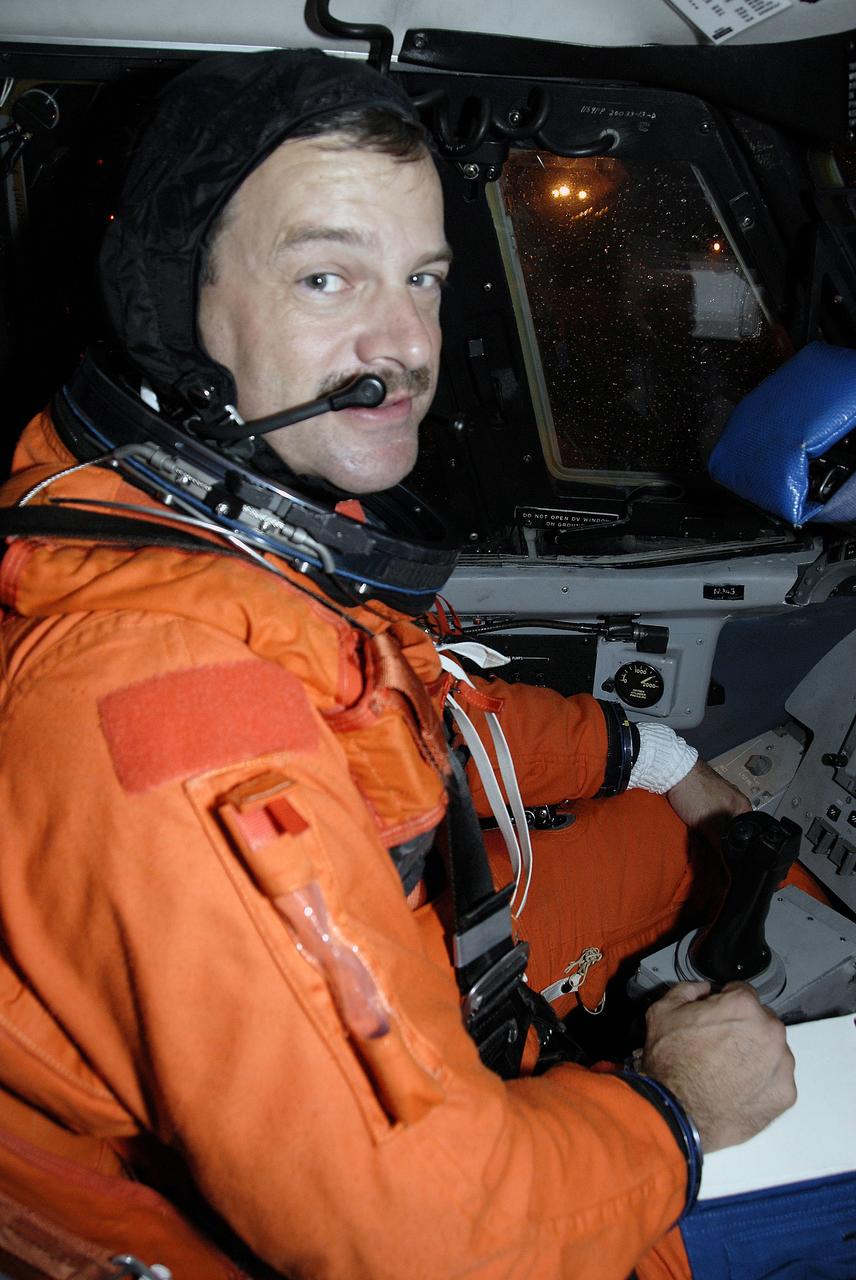
CAPE CANAVERAL, Fla. - STS-125 Commander Scott Altman takes his seat in the shuttle training aircraft for practice shuttle landings on the runway of the Shuttle Landing Facility at NASA's Kennedy Space Center in Florida. The STA is a Grumman American Aviation-built Gulf Stream II jet that was modified to simulate a shuttle’s cockpit, motion and visual cues, and handling qualities. In flight, the aircraft duplicates the shuttle’s atmospheric descent trajectory from approximately 35,000 feet altitude to landing on a runway. The practice is part of a terminal countdown demonstration test, or TCDT, to prepare for launch. TCDT provides astronauts and ground crews with an opportunity to participate in various simulated countdown activities, including equipment familiarization, emergency training and a simulated launch countdown. Space shuttle Atlantis’ STS-125 mission to service NASA’s Hubble Space Telescope is targeted to launch Oct. 10. Photo credit: NASA/Kim Shiflett
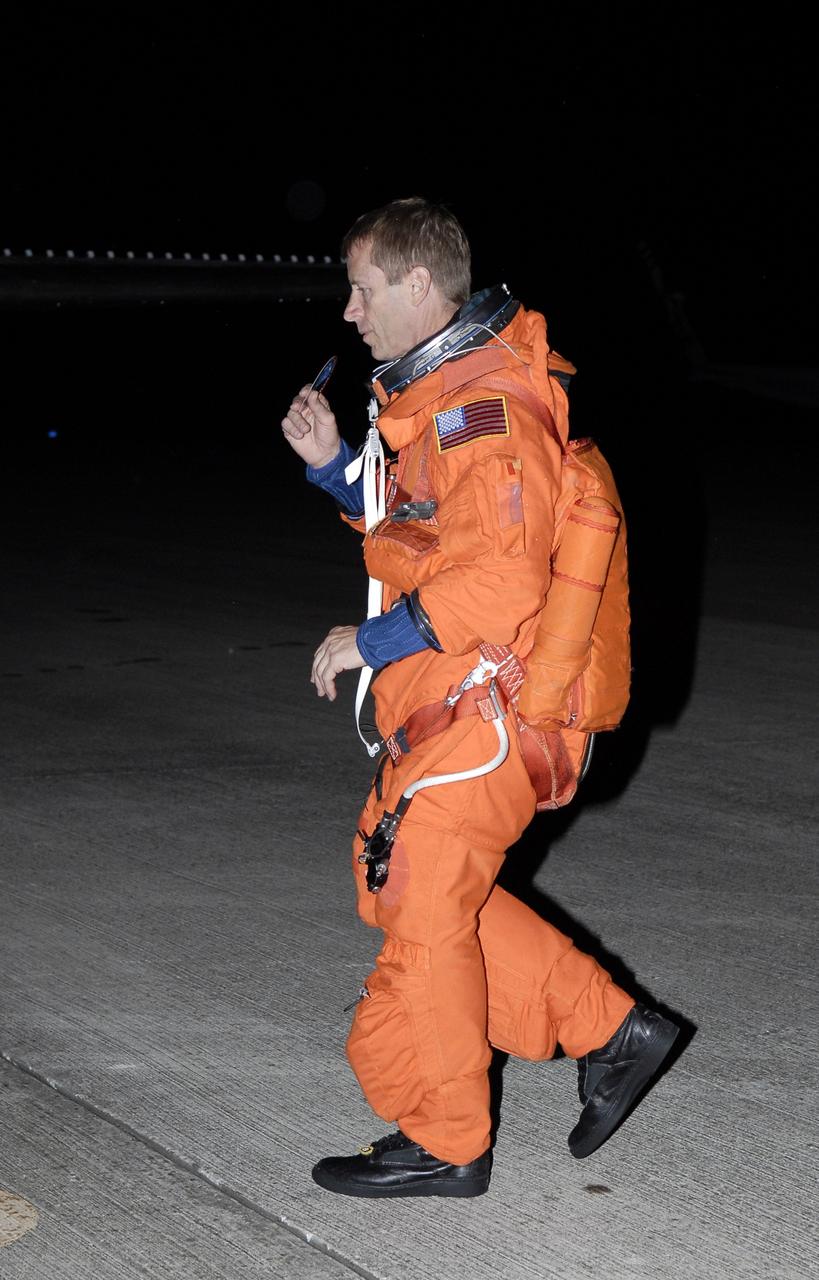
CAPE CANAVERAL, Fla. - STS-125 Pilot Gregory C. Johnson walks toward the shuttle training aircraft on the Shuttle Landing Facility at NASA's Kennedy Space Center in Florida. He will practice shuttle landings on the runway. The STA is a Grumman American Aviation-built Gulf Stream II jet that was modified to simulate a shuttle’s cockpit, motion and visual cues, and handling qualities. In flight, the aircraft duplicates the shuttle’s atmospheric descent trajectory from approximately 35,000 feet altitude to landing on a runway. The practice is part of a terminal countdown demonstration test, or TCDT, to prepare for launch. TCDT provides astronauts and ground crews with an opportunity to participate in various simulated countdown activities, including equipment familiarization, emergency training and a simulated launch countdown. Space shuttle Atlantis’ STS-125 mission to service NASA’s Hubble Space Telescope is targeted to launch Oct. 10. Photo credit: NASA/Kim Shiflett
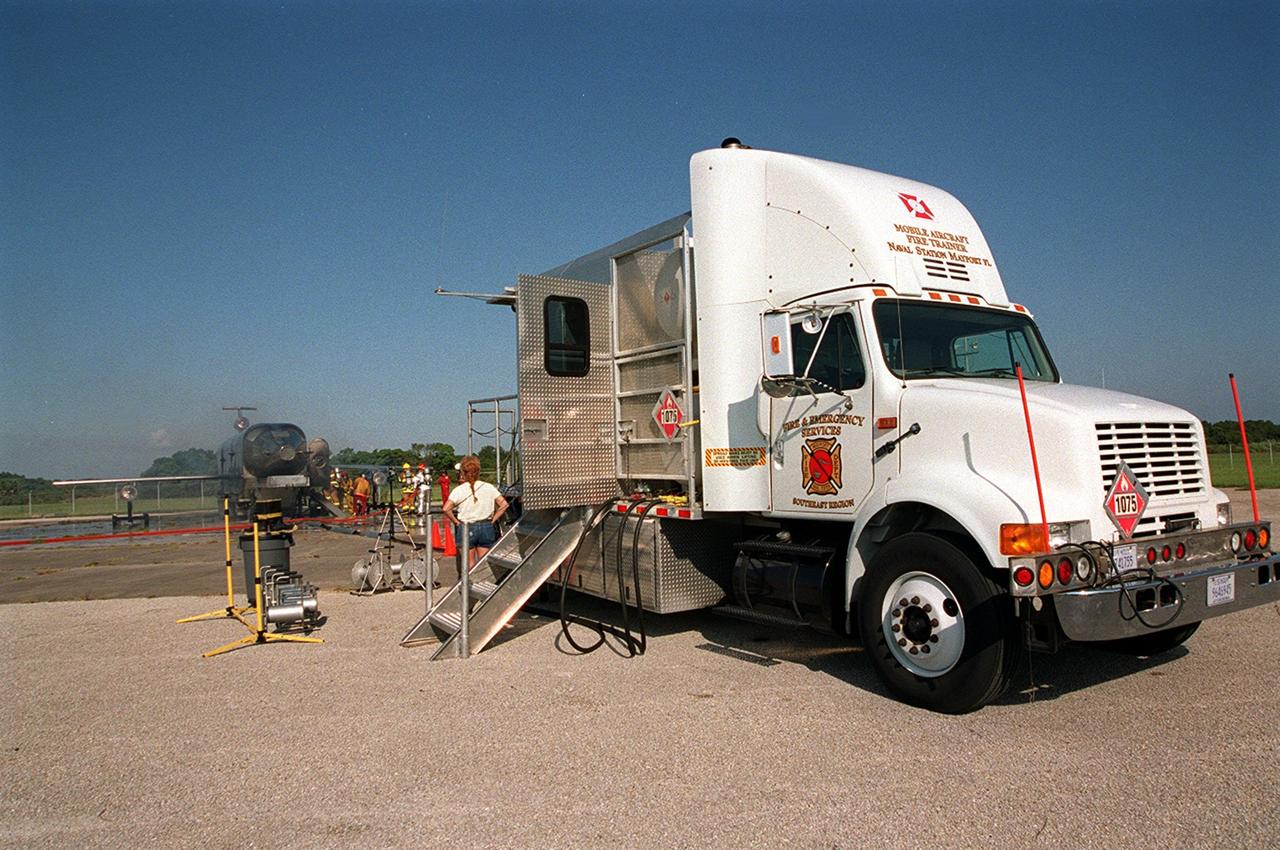
KENNEDY SPACE CENTER, FLA. -- A Mobile Aircraft Fire Trainer vehicle from Naval Station Mayport, Fla., stands by during fire training exercises at Cape Canaveral Air Force Station Pad 30. In the background is the simulated aircraft that was set on fire for the exercise. Firefighters with the Fire and Emergency Services at the Naval Station (in the background) gather around the site of the extinguished flames.
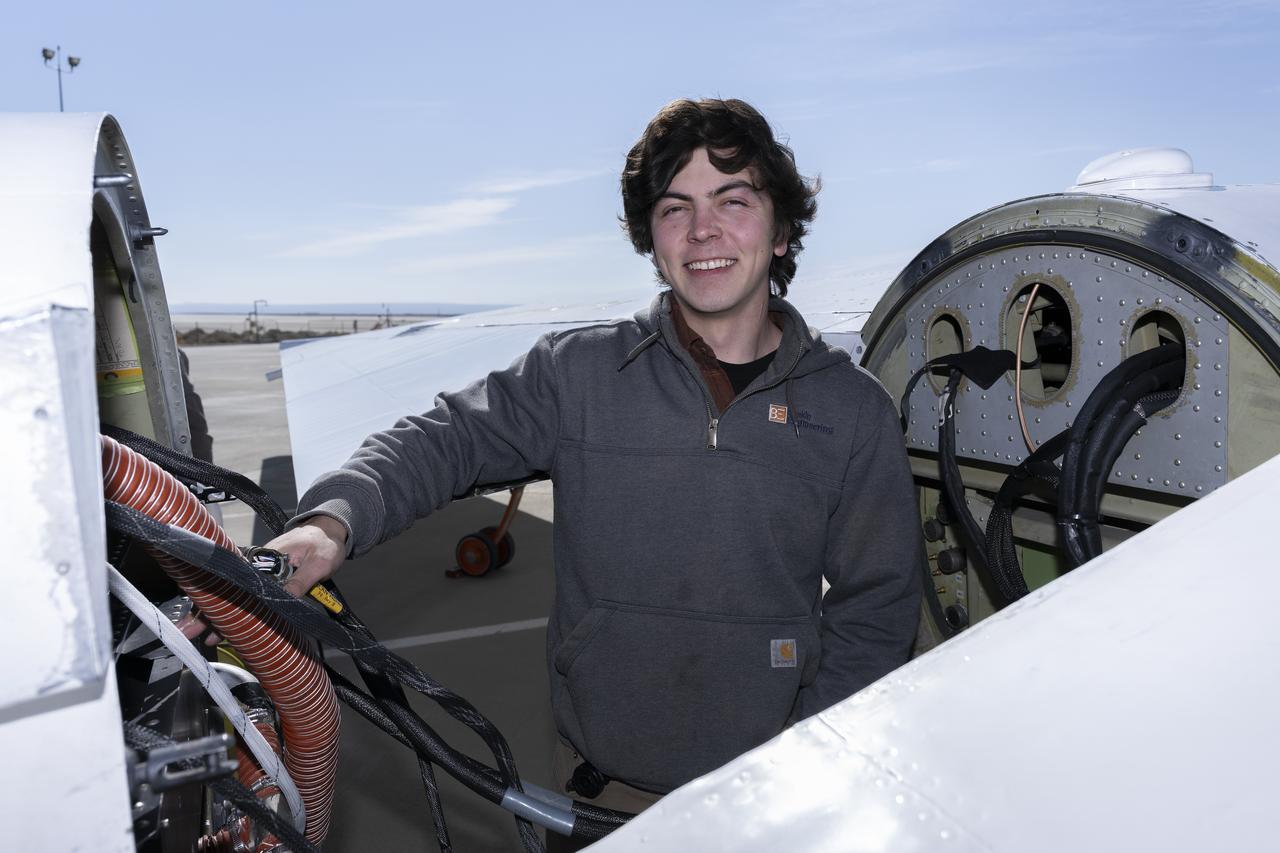
A team of experts wrap up science flights on the ER-2 aircraft at Armstrong Flight Research Center in Edwards, California after the GSFC Lidar Observation and Validation Experiment (GLOVE) in February 2025. Nikolas Gibson from NASA Ames Research Center integrates the enhanced MODIS Airbrone Simulator (eMAS) instrument onto the ER-2. As a collaboration between engineers, scientists, and aircraft professionals, GLOVE aims to improve satellite data products for Earth Science applications.
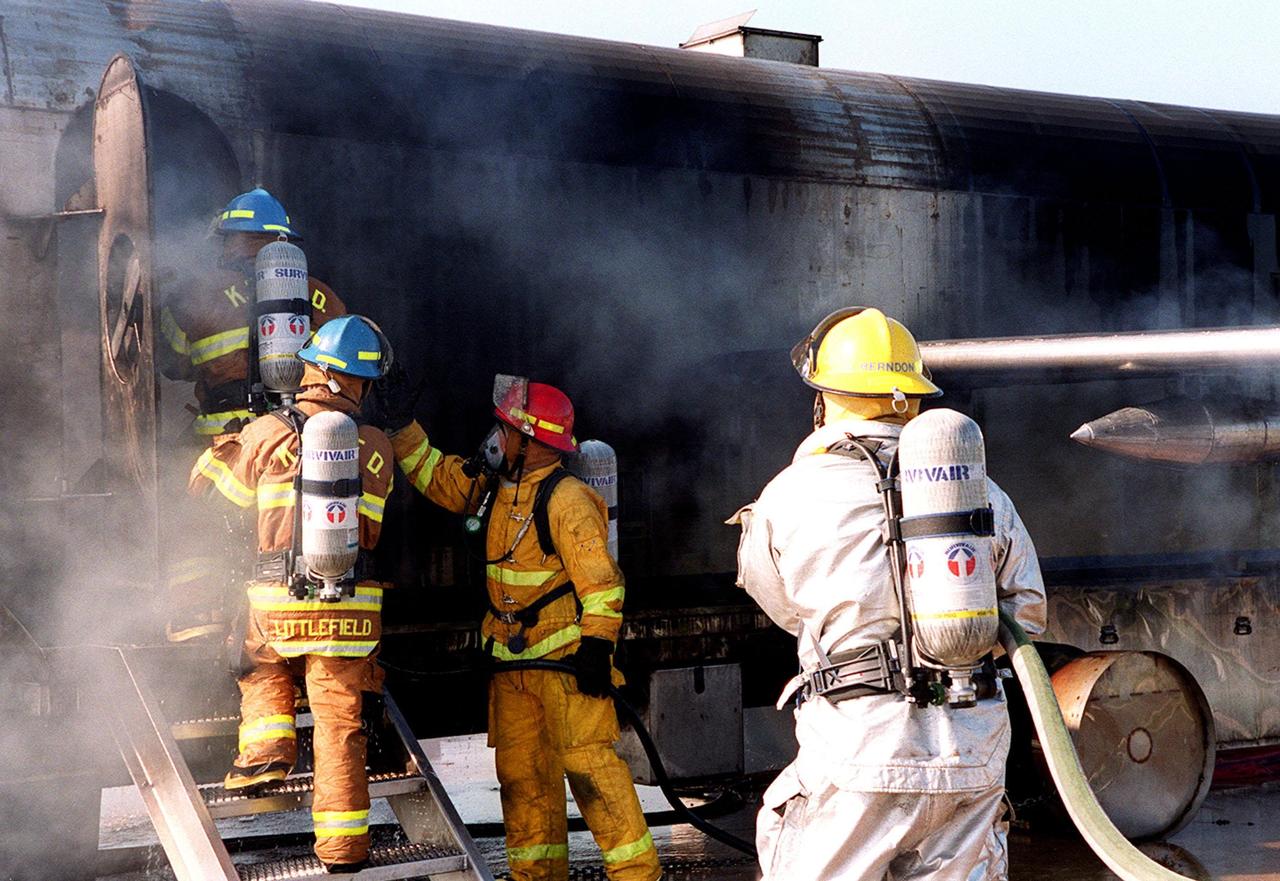
KENNEDY SPACE CENTER, FLA. -- A firefighter (right) holds a water hose in readiness as others enter a smoke-filled simulated aircraft. The activities are part of fire training exercises at Cape Canaveral Air Force Station Pad 30 for firefighters with Fire and Emergency Services at the Naval Station Mayport, Fla. The firefighters have already extinguished flames from the aircraft
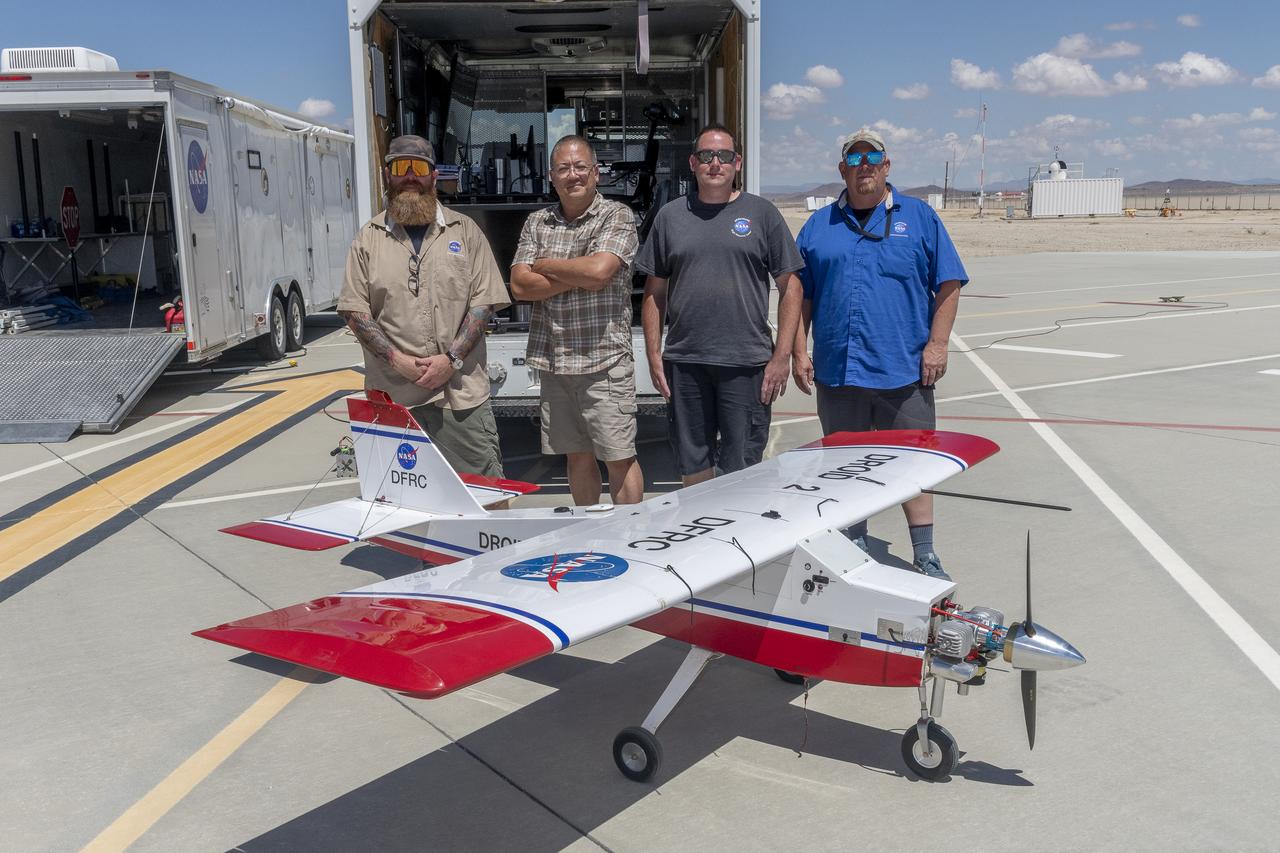
Justin Hall, Derek Abramson, Justin Link, and Robert "Red" Jensen were key to a successful mission for the DROID 2 (Dryden Remotely Operated Integrated Drone 2) aircraft at NASA's Armstrong Flight Research Center in Edwards, California. The aircraft flew as part of the Advanced Exploration of Reliable Operation at Low Altitudes: Meteorology, Simulation, and Technology campaign. The focus was to study wind to provide data for safe takeoff and landing of future air taxis.
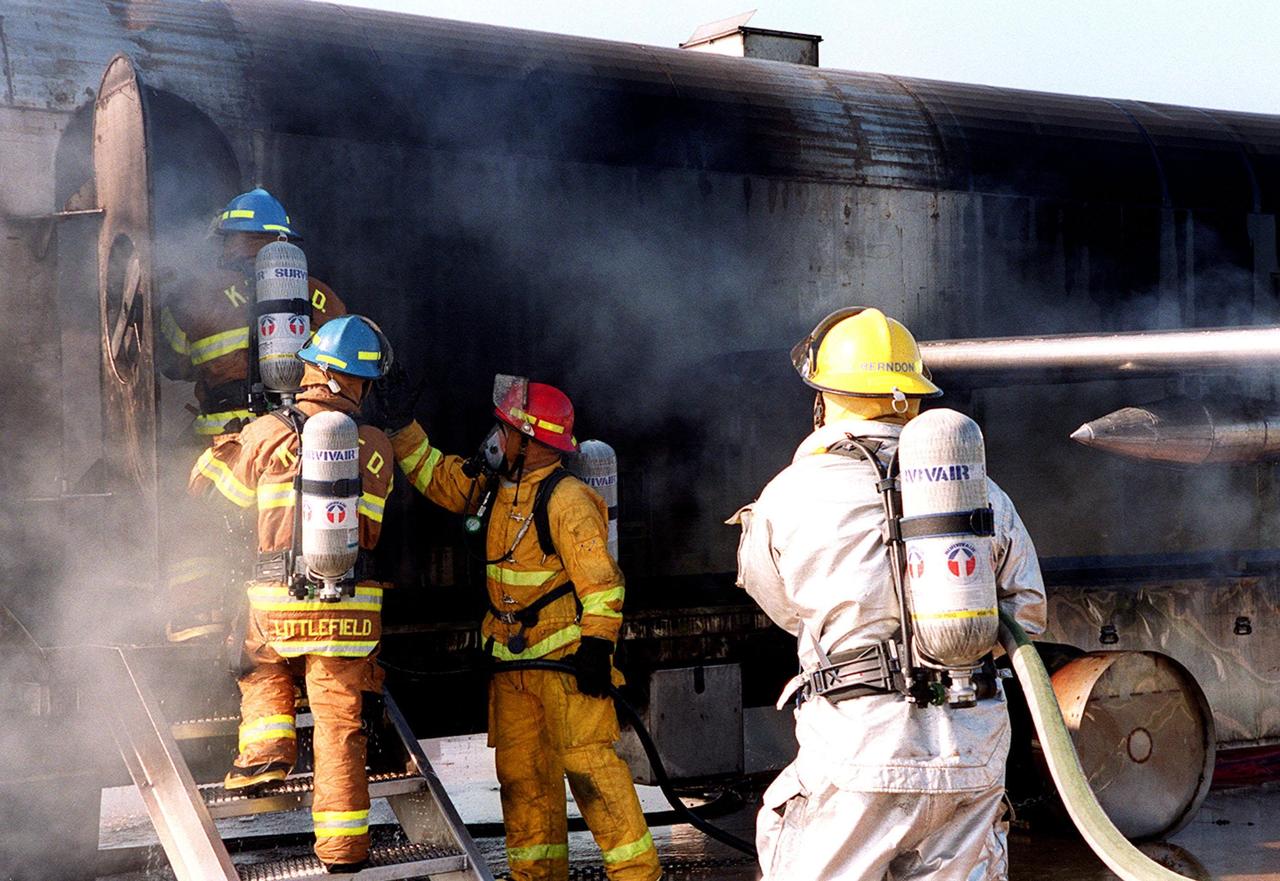
KENNEDY SPACE CENTER, FLA. -- A firefighter (right) holds a water hose in readiness as others enter a smoke-filled simulated aircraft. The activities are part of fire training exercises at Cape Canaveral Air Force Station Pad 30 for firefighters with Fire and Emergency Services at the Naval Station Mayport, Fla. The firefighters have already extinguished flames from the aircraft
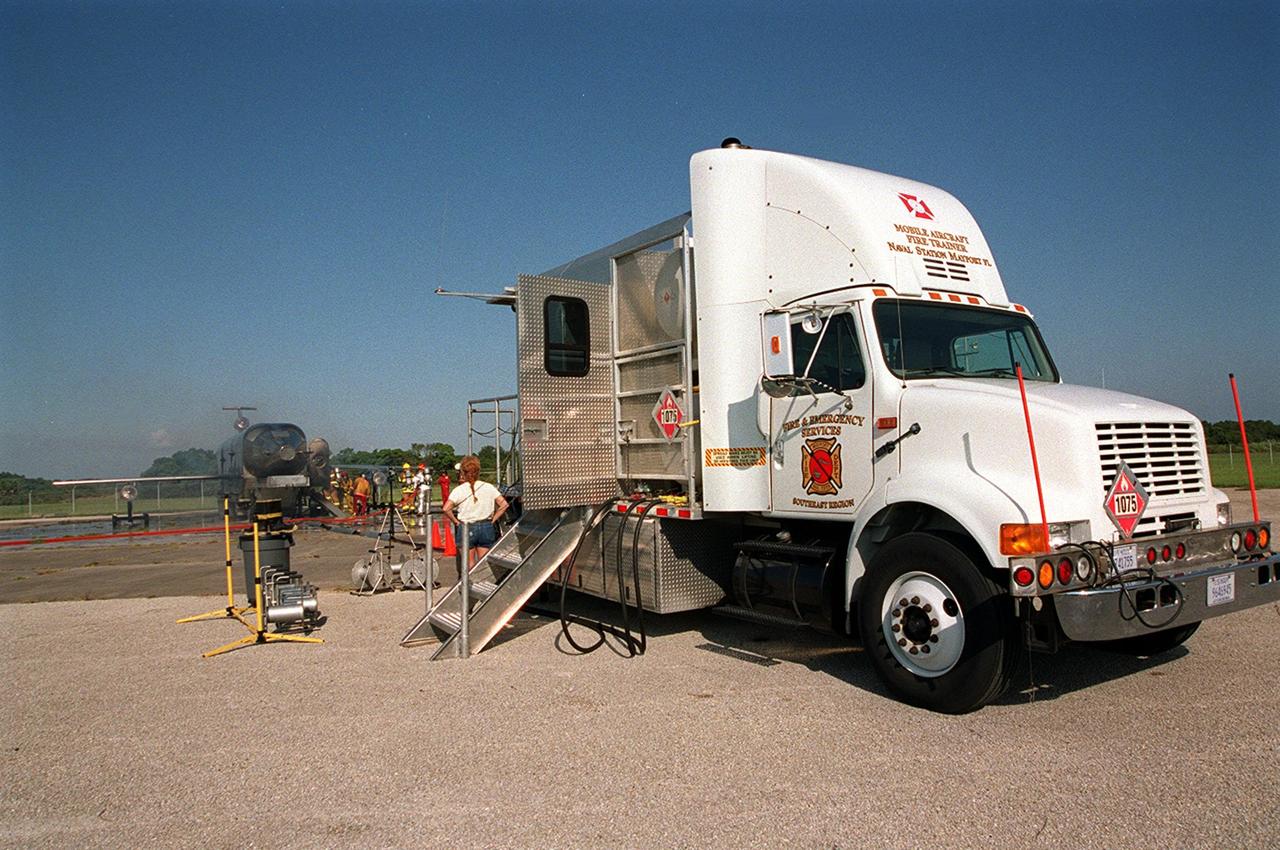
KENNEDY SPACE CENTER, FLA. -- A Mobile Aircraft Fire Trainer vehicle from Naval Station Mayport, Fla., stands by during fire training exercises at Cape Canaveral Air Force Station Pad 30. In the background is the simulated aircraft that was set on fire for the exercise. Firefighters with the Fire and Emergency Services at the Naval Station (in the background) gather around the site of the extinguished flames.
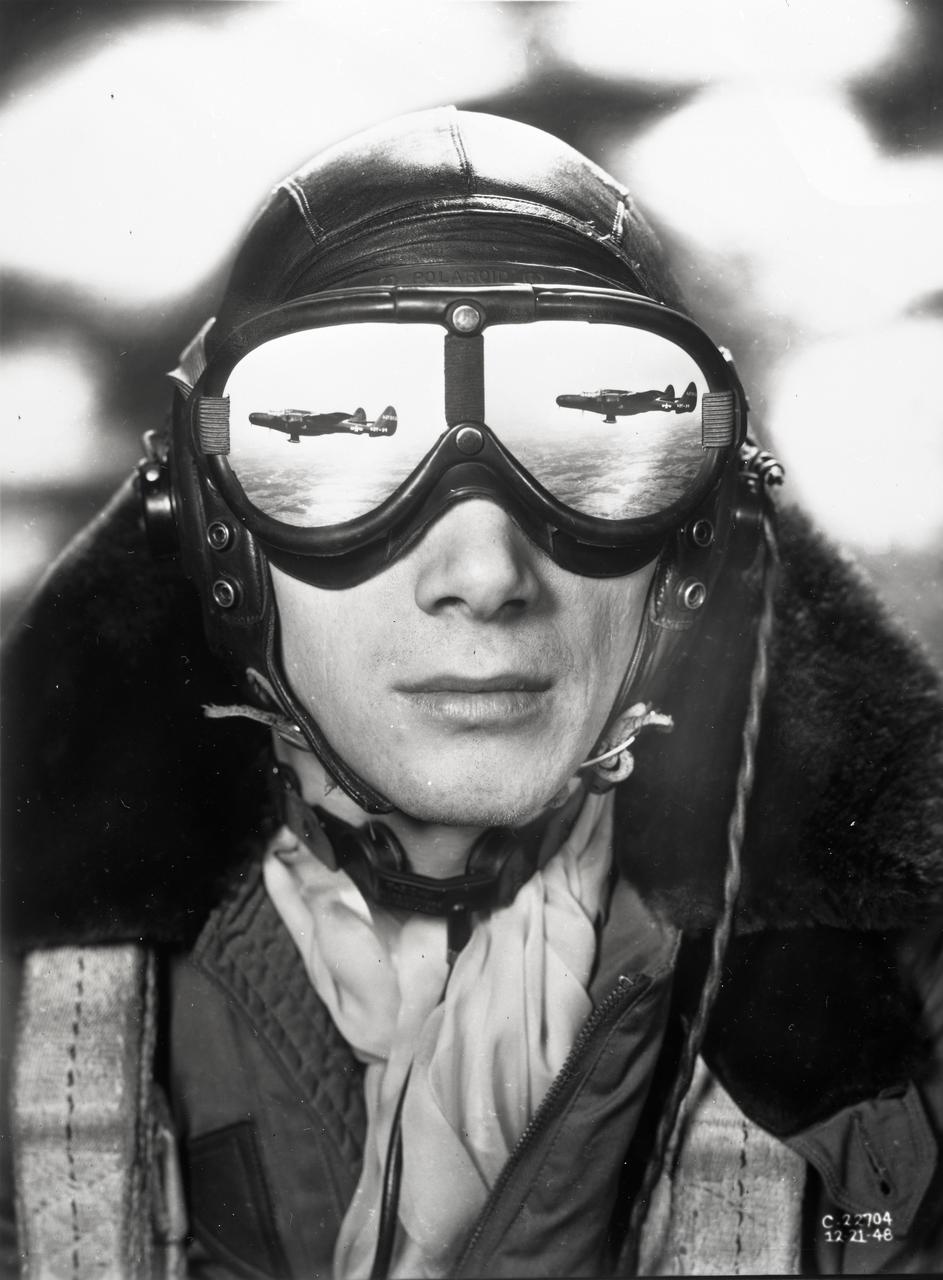
Flight engineer and photographer William Wynne (pictured) worked with photographer Arthur Laufman to execute a photo concept devised by Laufman. Wynne printed two copies of the F-61 aircraft in flight. The prints were made to the correct size that allowed them to be cut out and taped to the lenses of his goggles to simulate a reflection. The photo of Wynne was then taken with an out of focus background to simulate clouds.
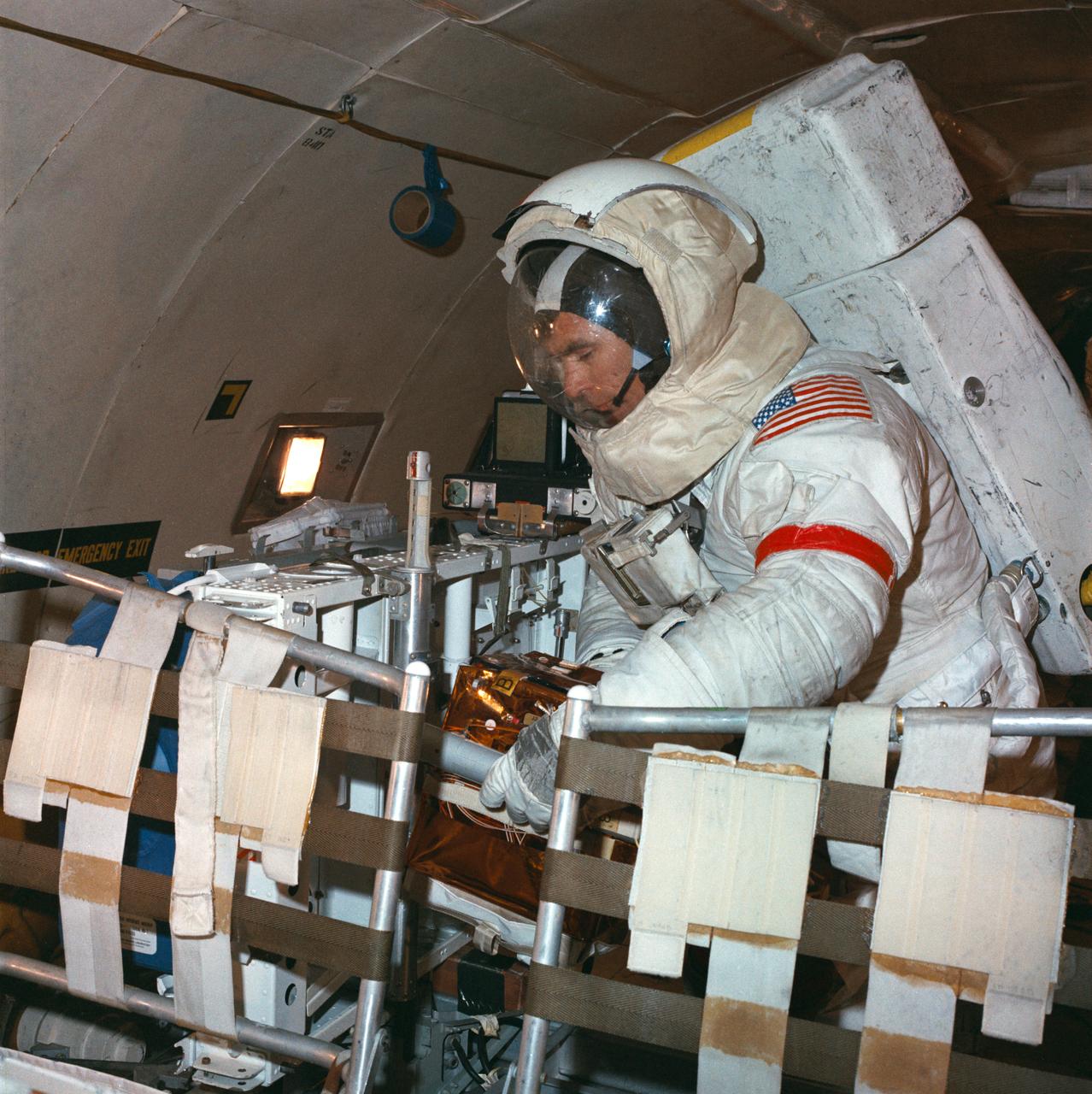
S72-50270 (September 1972) --- Astronaut Eugene A. Cernan, commander of the Apollo 17 lunar landing mission, participates in lunar surface extravehicular activity simulation training under one-sixth gravity conditions aboard a U. S. Air Force KC-135 aircraft. Here, Cernan simulates removing an experiment package from the aft end of a Lunar Roving Vehicle.
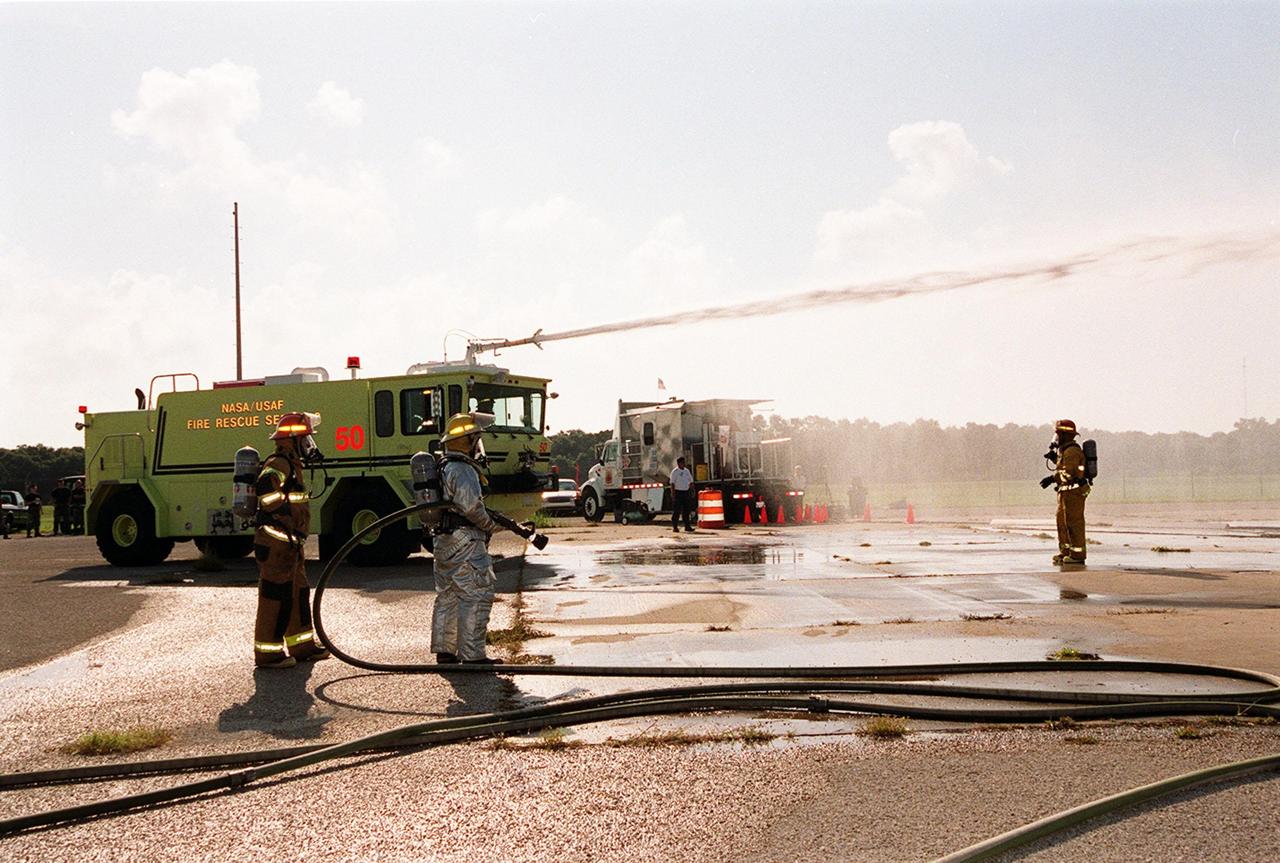
KENNEDY SPACE CENTER, FLA. -- During training exercises at Cape Canaveral Air Force Station Pad 30, firefighters with the Fire and Emergency Services at the Naval Station Mayport, Fla., wait while the NASA/USAF water carrier truck directs its water cannon toward a burning simulated aircraft (out of view).
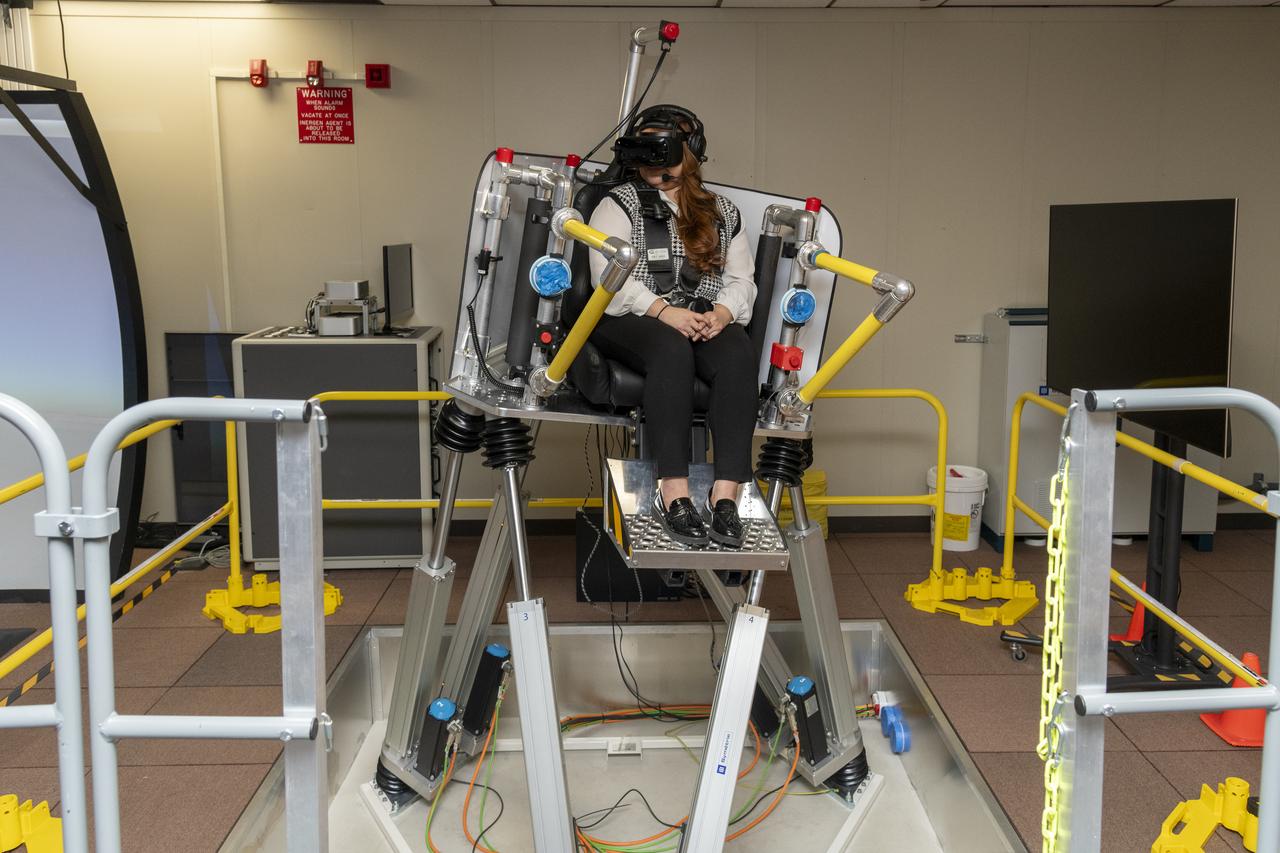
NASA employee Naomi Torres sits inside the air taxi passenger ride quality simulator at NASA’s Armstrong Flight Research Center in Edwards, California, during a study on Oct. 23, 2024. Research continues to better understand how humans may interact with these new types of aircraft.
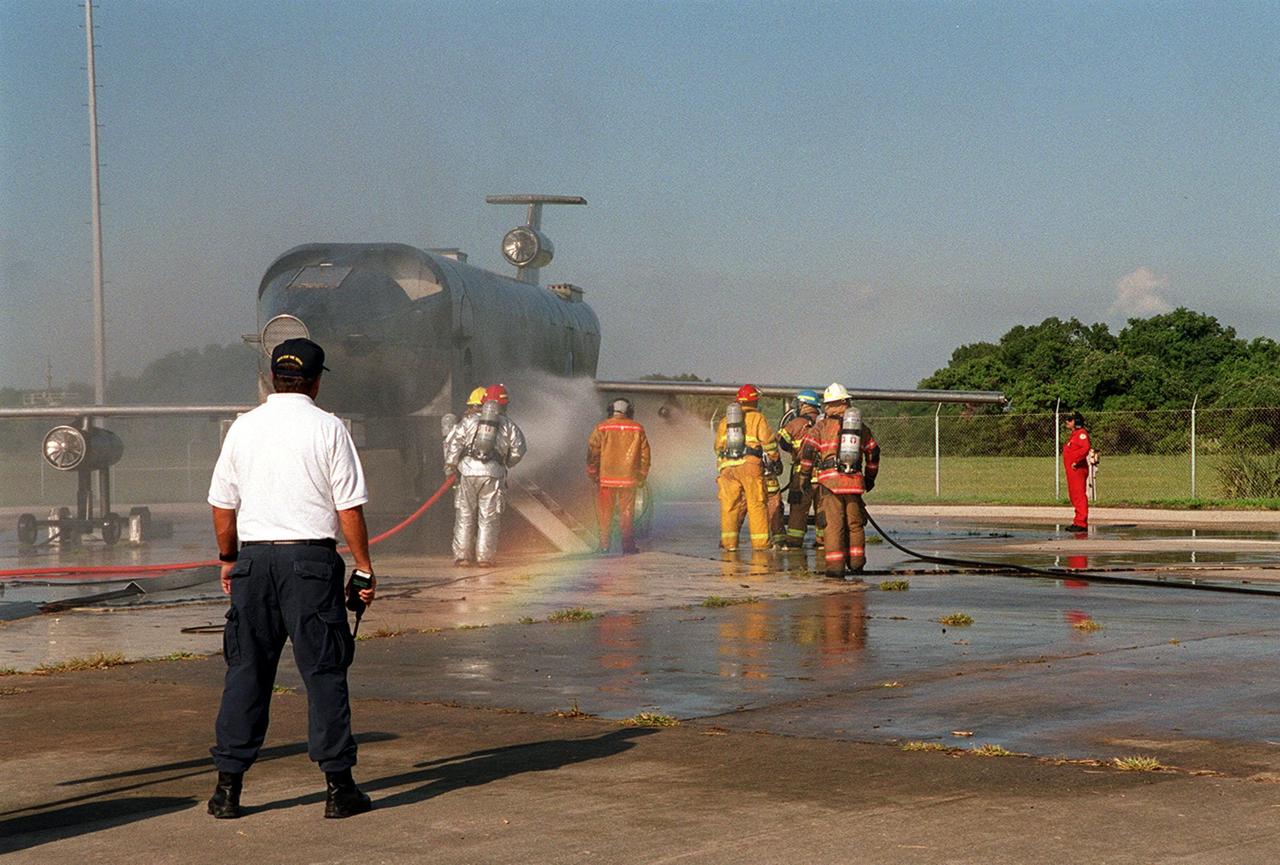
KENNEDY SPACE CENTER, FLA. -- Firefighters hold their hoses on a burning simulated aircraft, creating a rainbow. Watching at right (red uniform) and in the foreground are trainers. The training exercises for firefighters with Fire and Emergency Services at Naval Station Mayport, Fla., are being held at Cape Canaveral Air Force Station Pad 30.
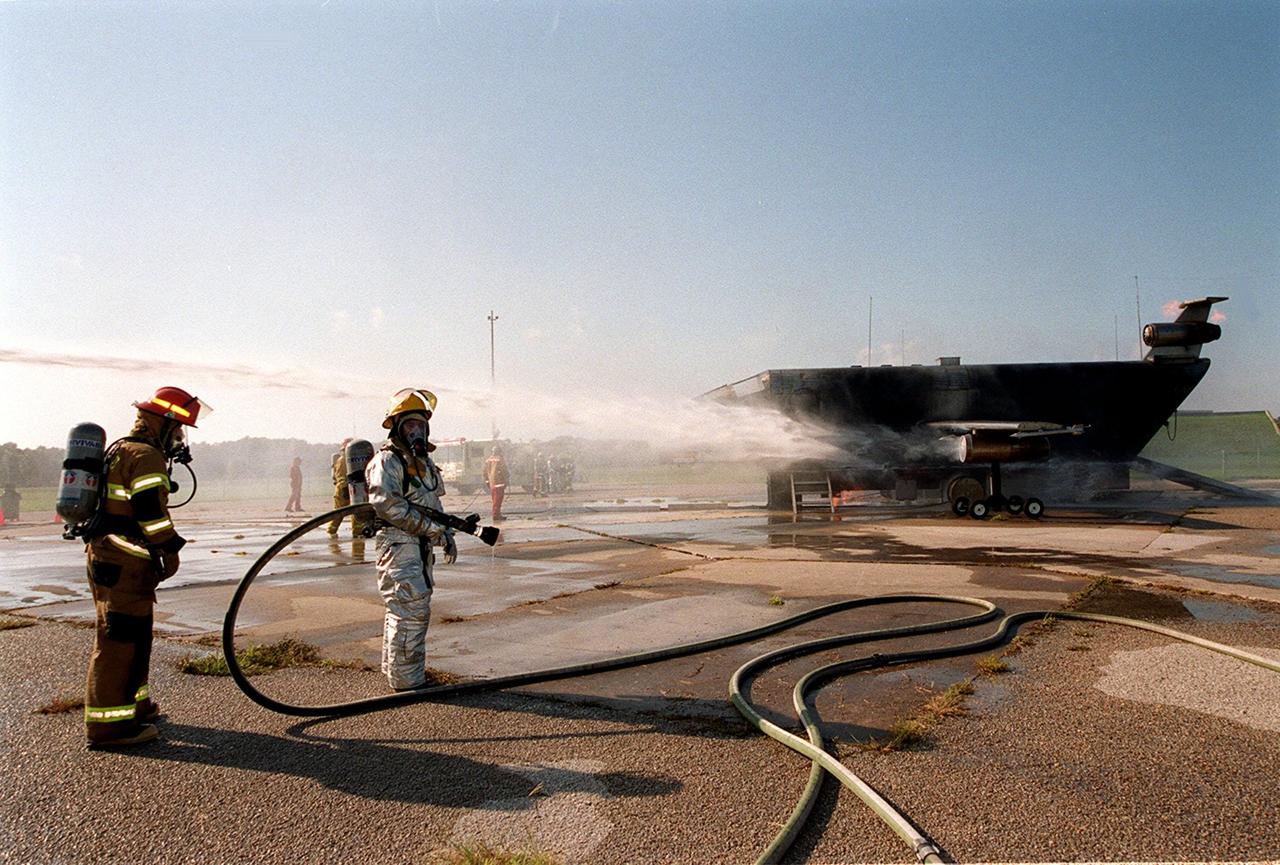
KENNEDY SPACE CENTER, FLA. -- Firefighters in full gear wait to approach a burning simulated aircraft during training exercises at Cape Canaveral Air Force Station Pad 30. The firefighters are with the Fire and Emergency Services at the Naval Station Mayport, Fla.
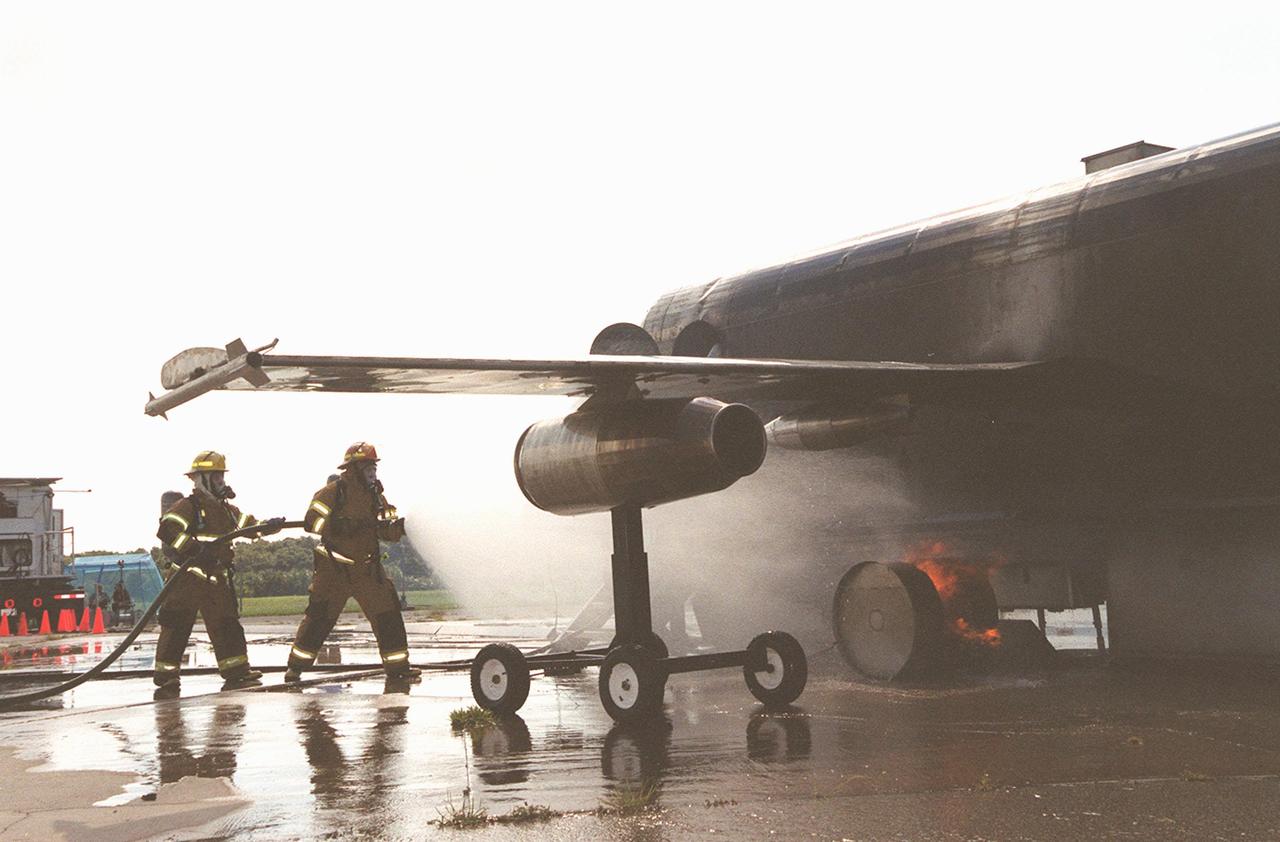
KENNEDY SPACE CENTER, FLA. -- Firefighters in full gear douse a fire on a simulated aircraft. The firefighters, who are with Fire and Emergency Services at the Naval Station Mayport, Fla., are taking part in fire training exercises at Cape Canaveral Air Force Station Pad 30.
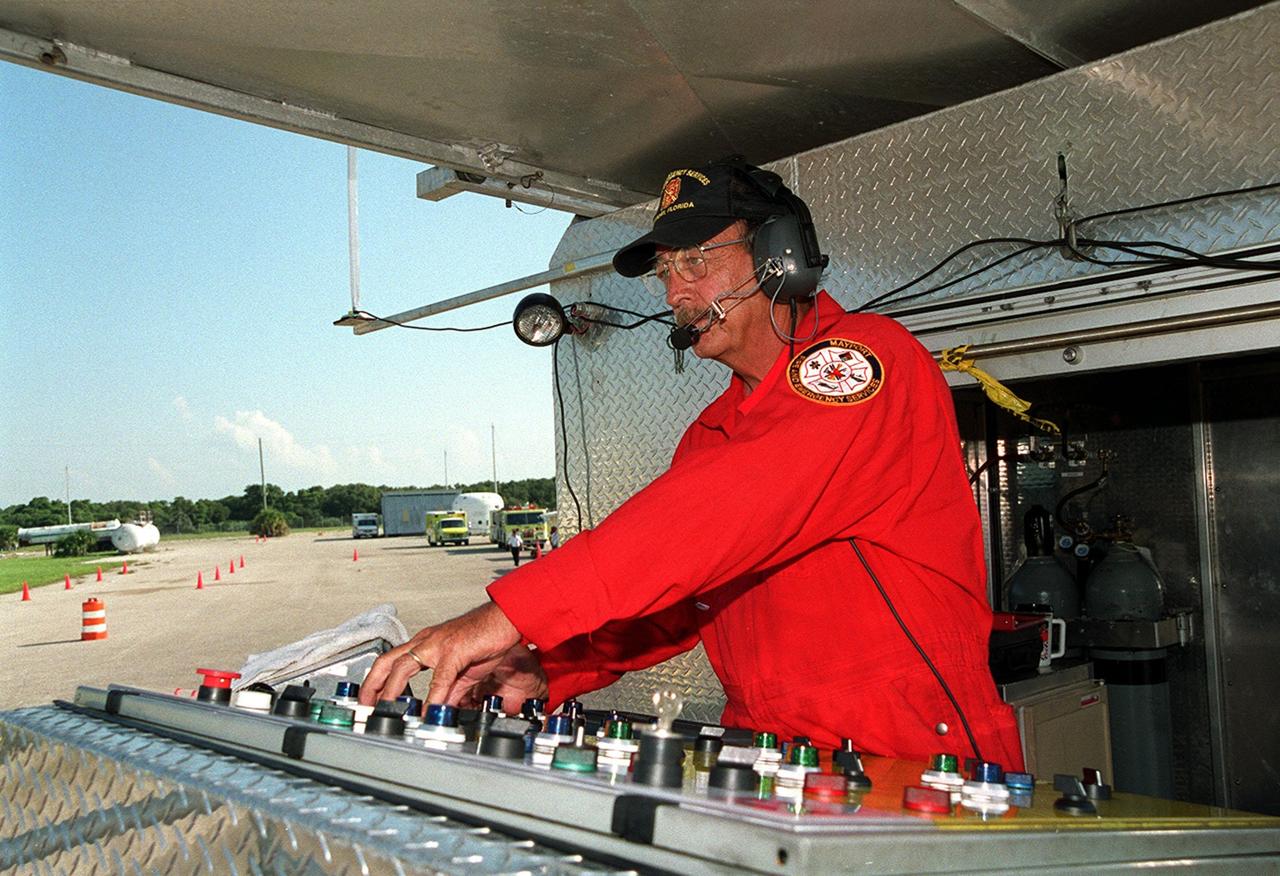
KENNEDY SPACE CENTER, FLA. -- A training officer controls elements of a fire training exercise at Cape Canaveral Air Force Station Pad 30 for firefighters with Fire and Emergency Services at the Naval Station Mayport, Fla. The firefighters tackled flames from a burning simulated aircraft.
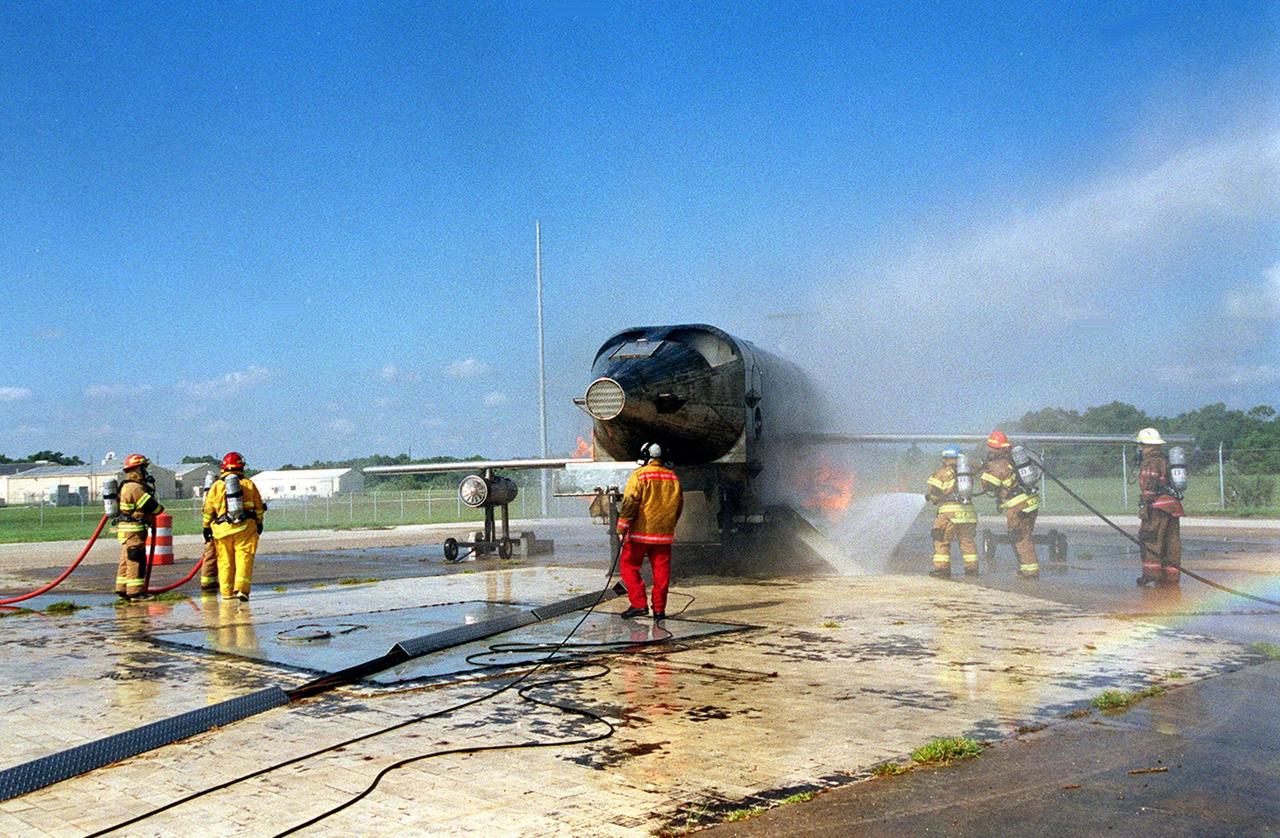
KENNEDY SPACE CENTER, FLA. -- Firefighters surround a burning simulated aircraft during training exercises Cape Canaveral Air Force Station Pad 30. Those at left wait their turn as the crew on the right turn their hoses toward the fire. The firefighters are with Fire and Emergency Services at the Naval Station Mayport, Fla
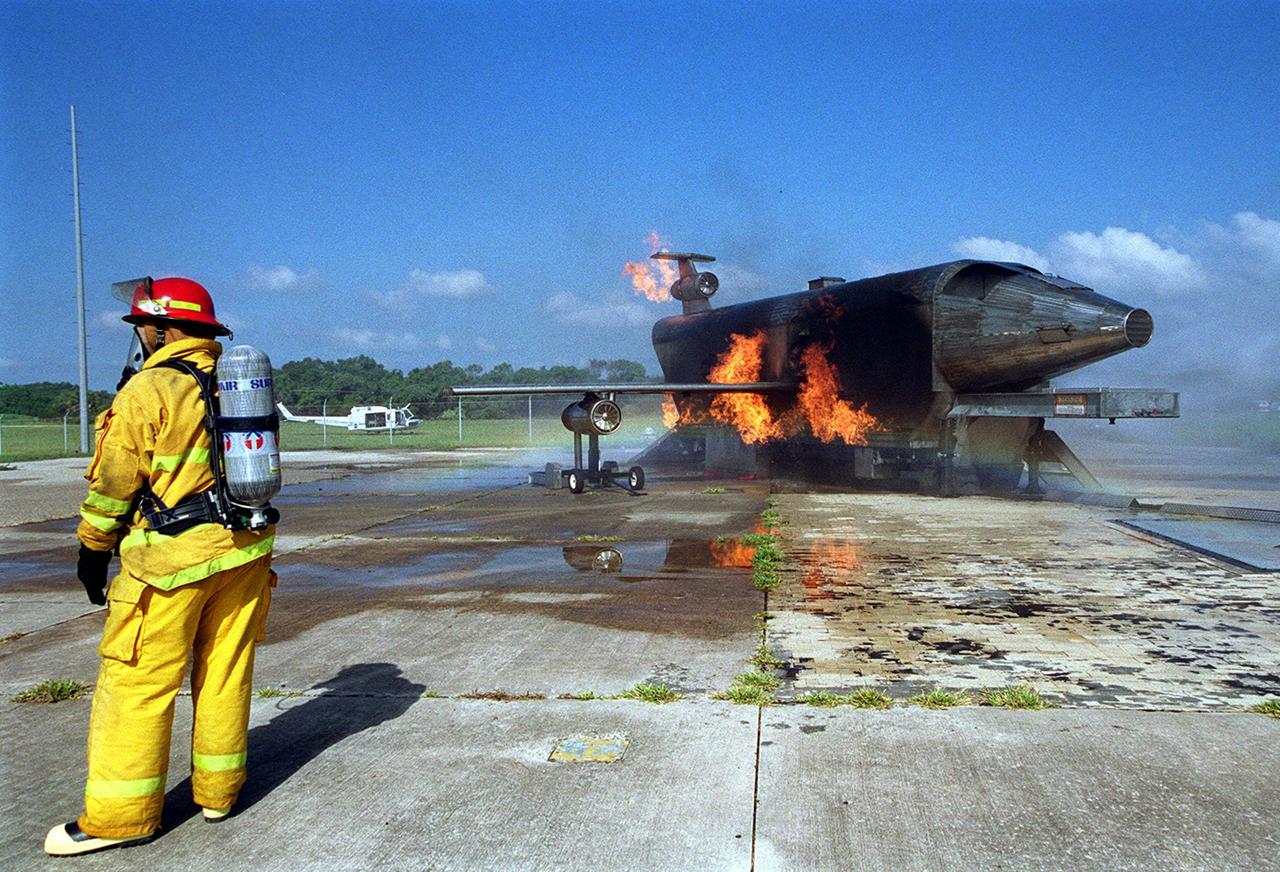
KENNEDY SPACE CENTER, FLA. -- A firefighter waits for his companions before tackling the flames on a simulated aircraft. Firefighters with Fire and Emergency Services at the Naval Station Mayport, Fla., are taking part in training exercises at Cape Canaveral Air Force Station Pad 30.
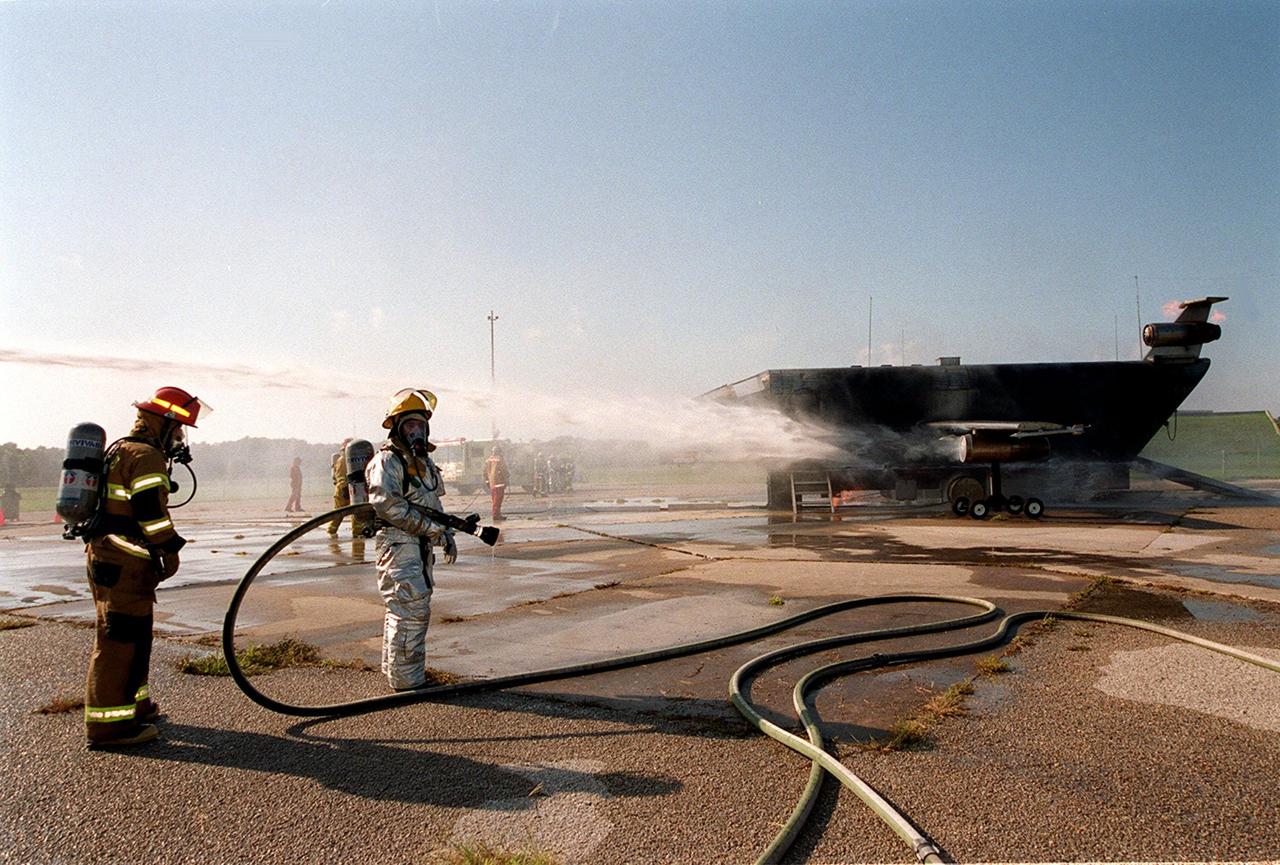
KENNEDY SPACE CENTER, FLA. -- Firefighters in full gear wait to approach a burning simulated aircraft during training exercises at Cape Canaveral Air Force Station Pad 30. The firefighters are with the Fire and Emergency Services at the Naval Station Mayport, Fla.
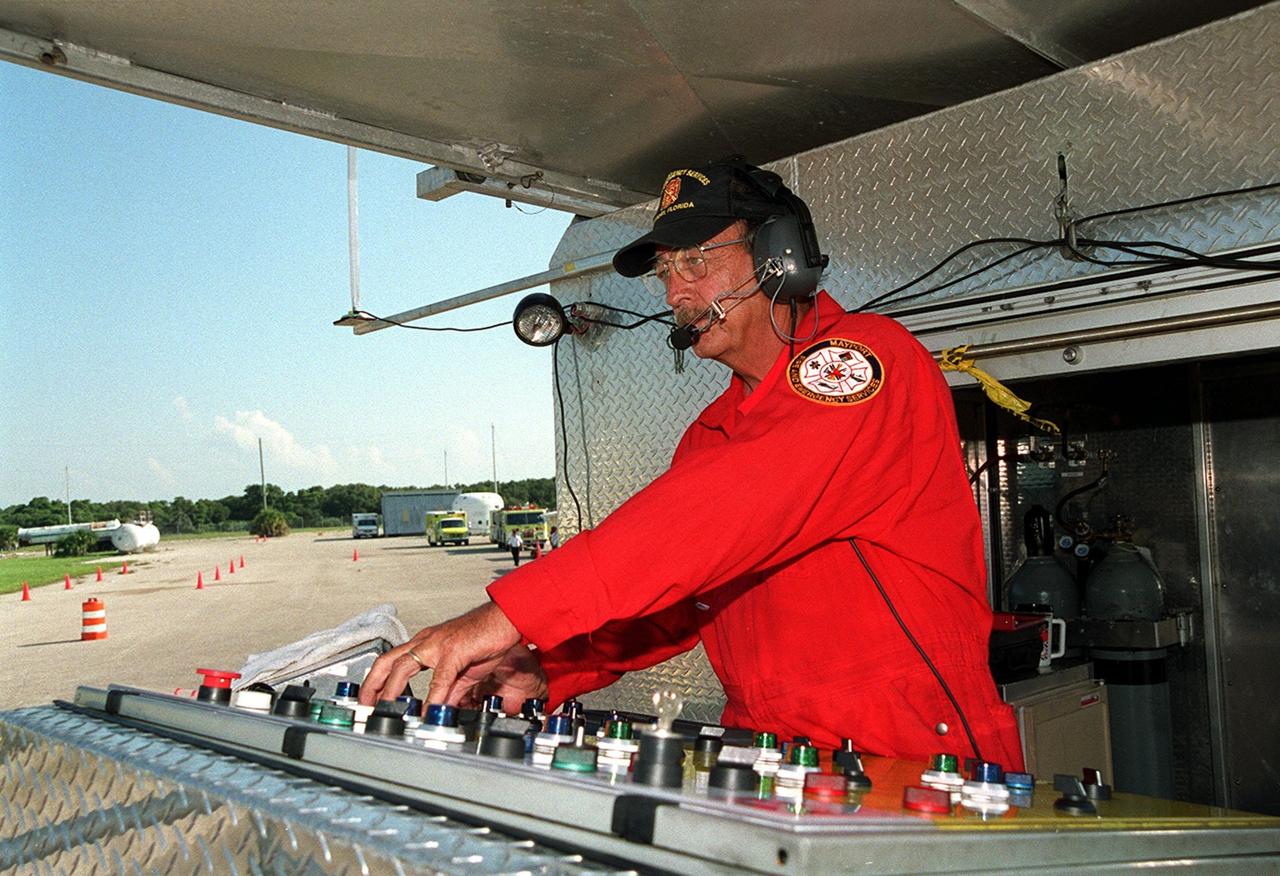
KENNEDY SPACE CENTER, FLA. -- A training officer controls elements of a fire training exercise at Cape Canaveral Air Force Station Pad 30 for firefighters with Fire and Emergency Services at the Naval Station Mayport, Fla. The firefighters tackled flames from a burning simulated aircraft.
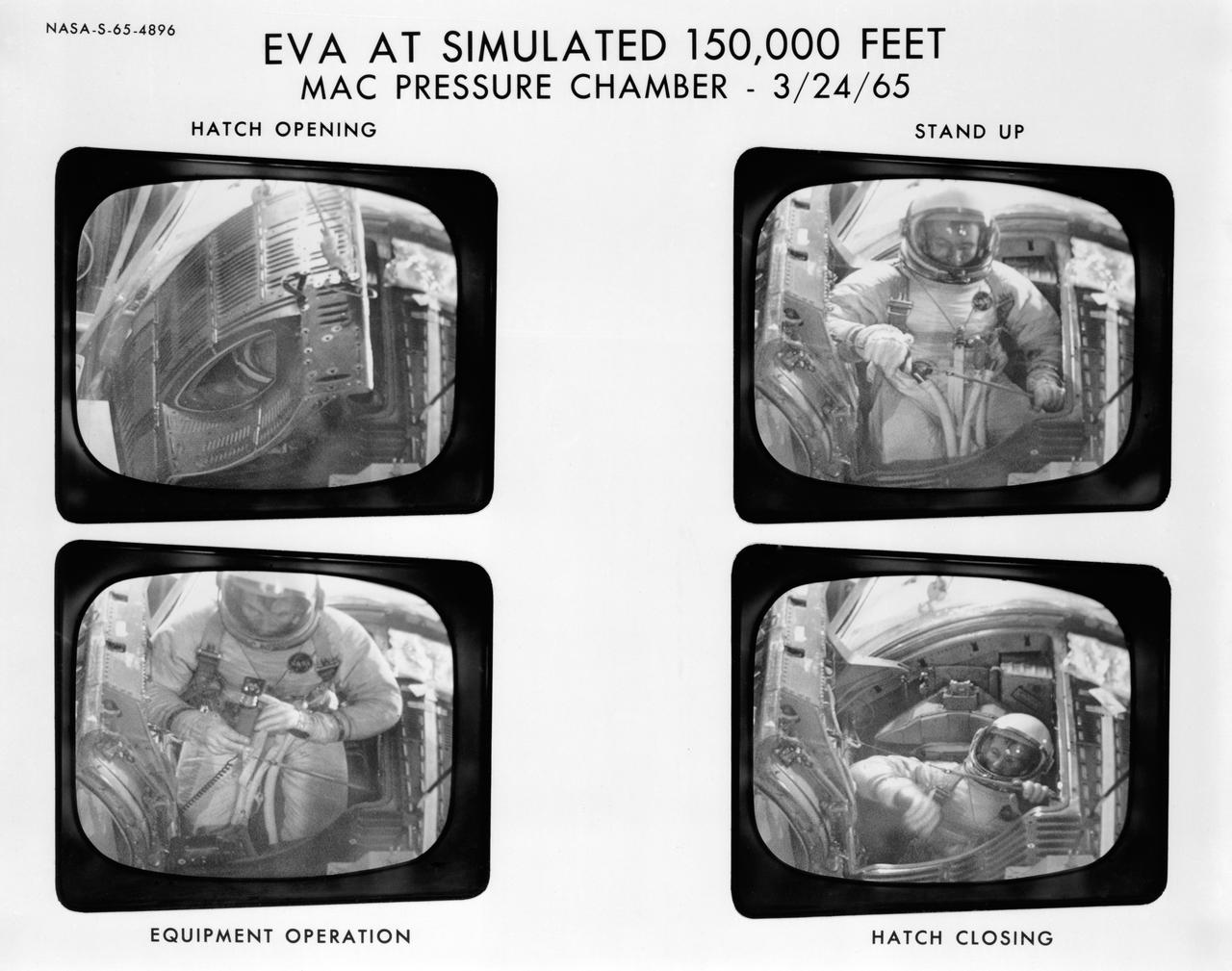
S65-04896 (24 March 1965) --- Astronaut Edward H. White II, pilot of the Gemini-Titan 4 prime crew, is shown in the pressure chamber at McDonnell Aircraft Corp, St. Louis, Mo. during the simulation of extravehicular activity (EVA) at an altitude of 150,000 feet.
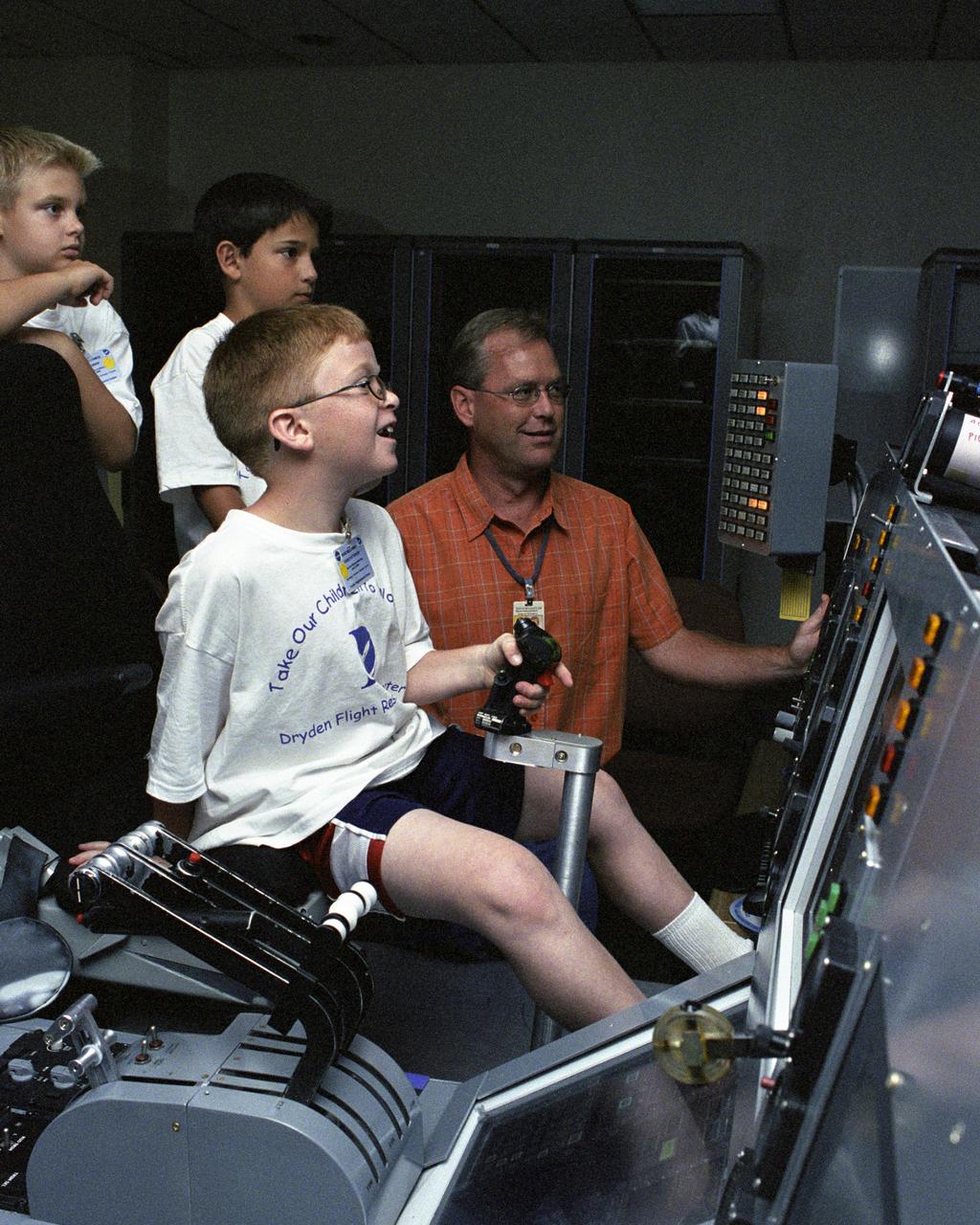
Eddie Patterson, a fourth-grade student at Tehachapi's Tompkins Elementary School, enjoyed "flying" a C-17 multi-engine aircraft simulator during Take Your Children to Work Day June 22 at NASA Dryden Flight Research Center while NASA Dryden engineer Ken Norlin and other students look on.
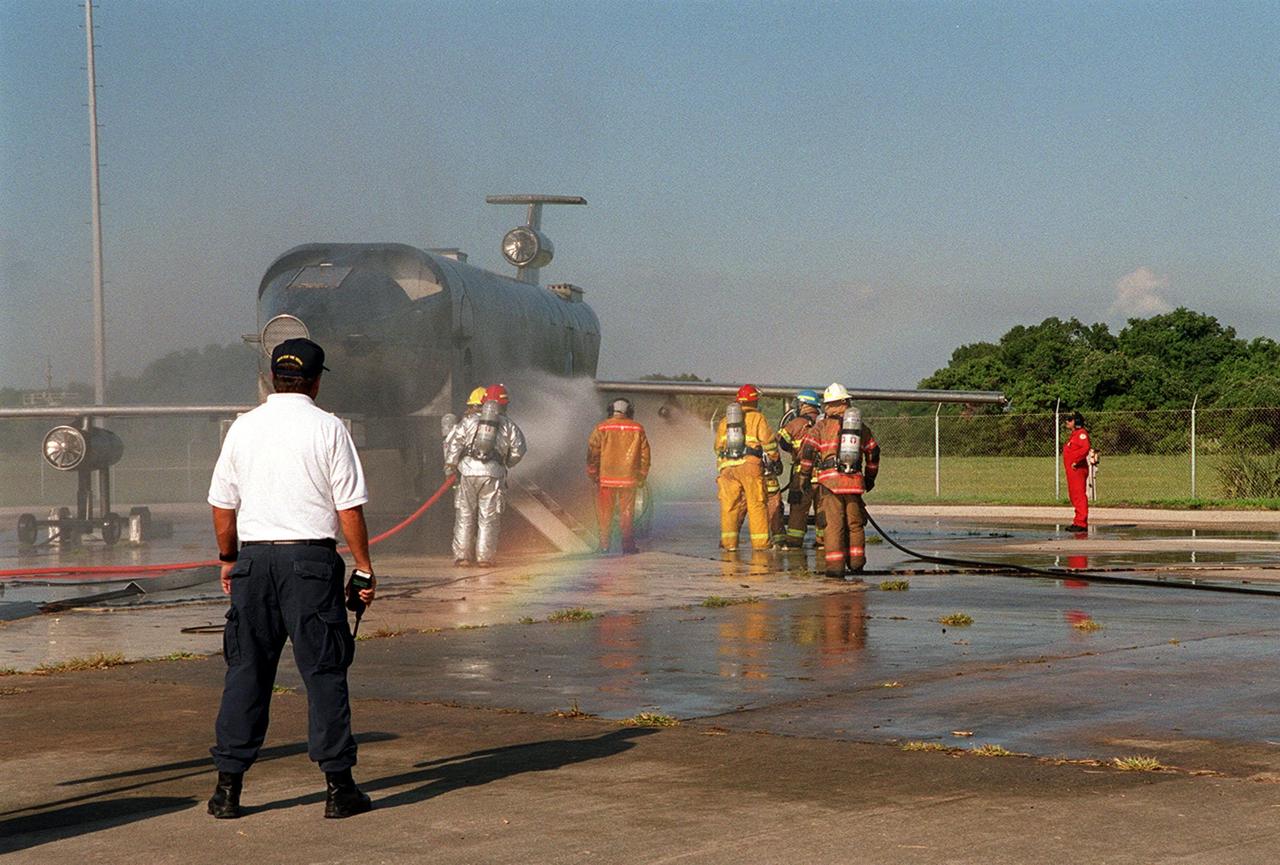
KENNEDY SPACE CENTER, FLA. -- Firefighters hold their hoses on a burning simulated aircraft, creating a rainbow. Watching at right (red uniform) and in the foreground are trainers. The training exercises for firefighters with Fire and Emergency Services at Naval Station Mayport, Fla., are being held at Cape Canaveral Air Force Station Pad 30.
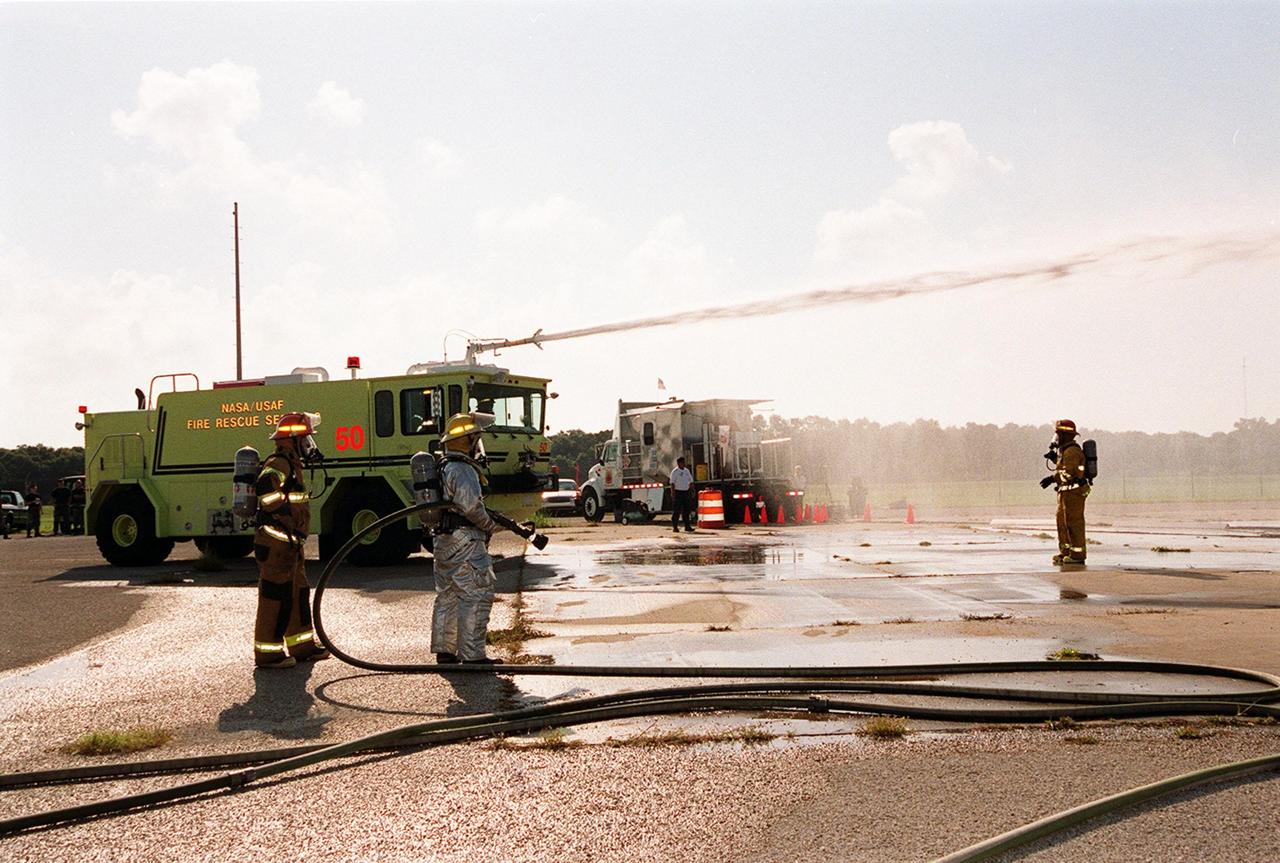
KENNEDY SPACE CENTER, FLA. -- During training exercises at Cape Canaveral Air Force Station Pad 30, firefighters with the Fire and Emergency Services at the Naval Station Mayport, Fla., wait while the NASA/USAF water carrier truck directs its water cannon toward a burning simulated aircraft (out of view).

KENNEDY SPACE CENTER, FLA. -- A firefighter waits for his companions before tackling the flames on a simulated aircraft. Firefighters with Fire and Emergency Services at the Naval Station Mayport, Fla., are taking part in training exercises at Cape Canaveral Air Force Station Pad 30.
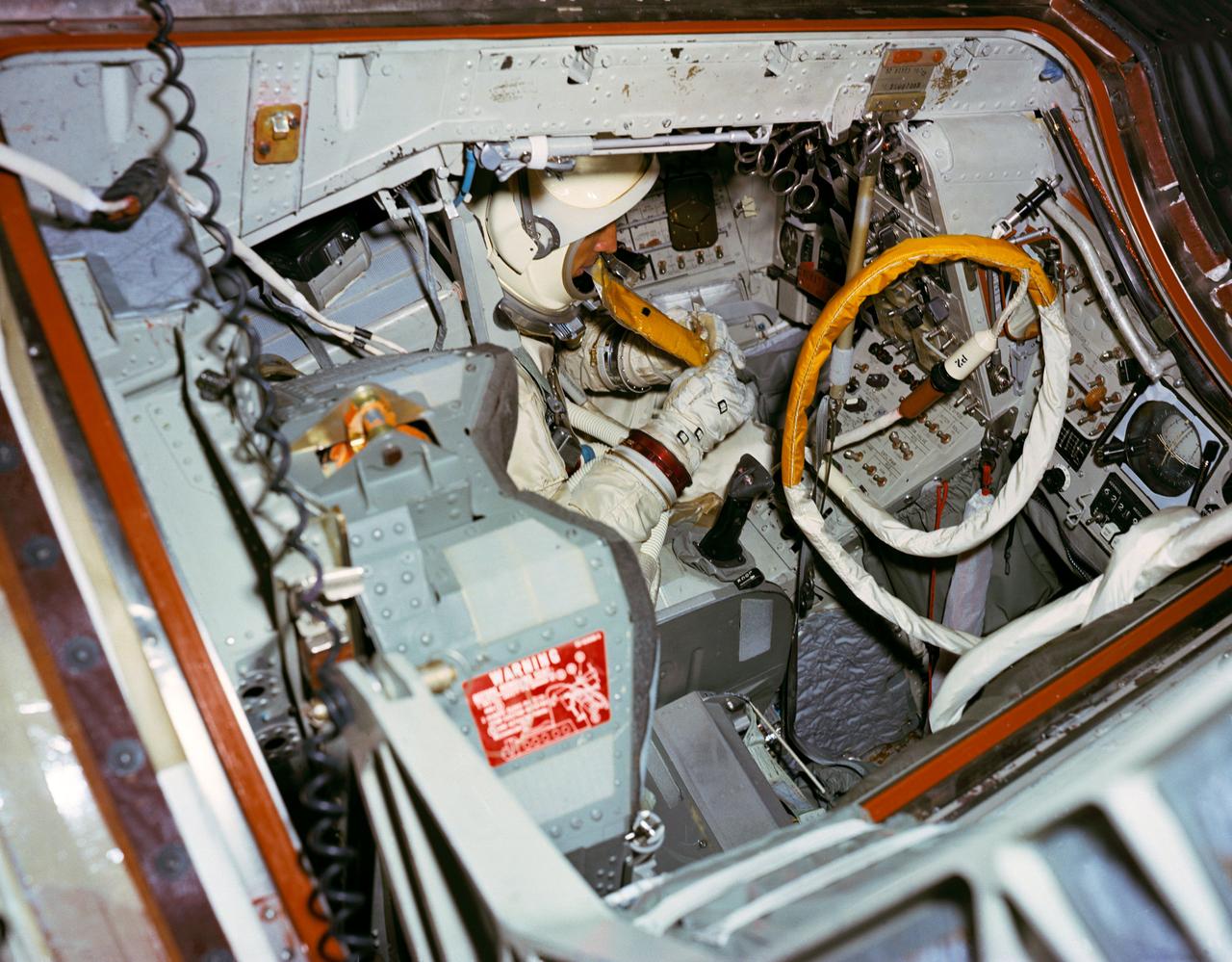
S66-51054 (15 Aug. 1966) --- Astronaut James A. Lovell Jr., prime crew command pilot of the Gemini-12 space mission, simulates using space food packet while seated in the Gemini-12 spacecraft in the 30-feet Altitude Chamber at McDonnell Aircraft Corporation, St. Louis, Missouri. Photo credit: NASA
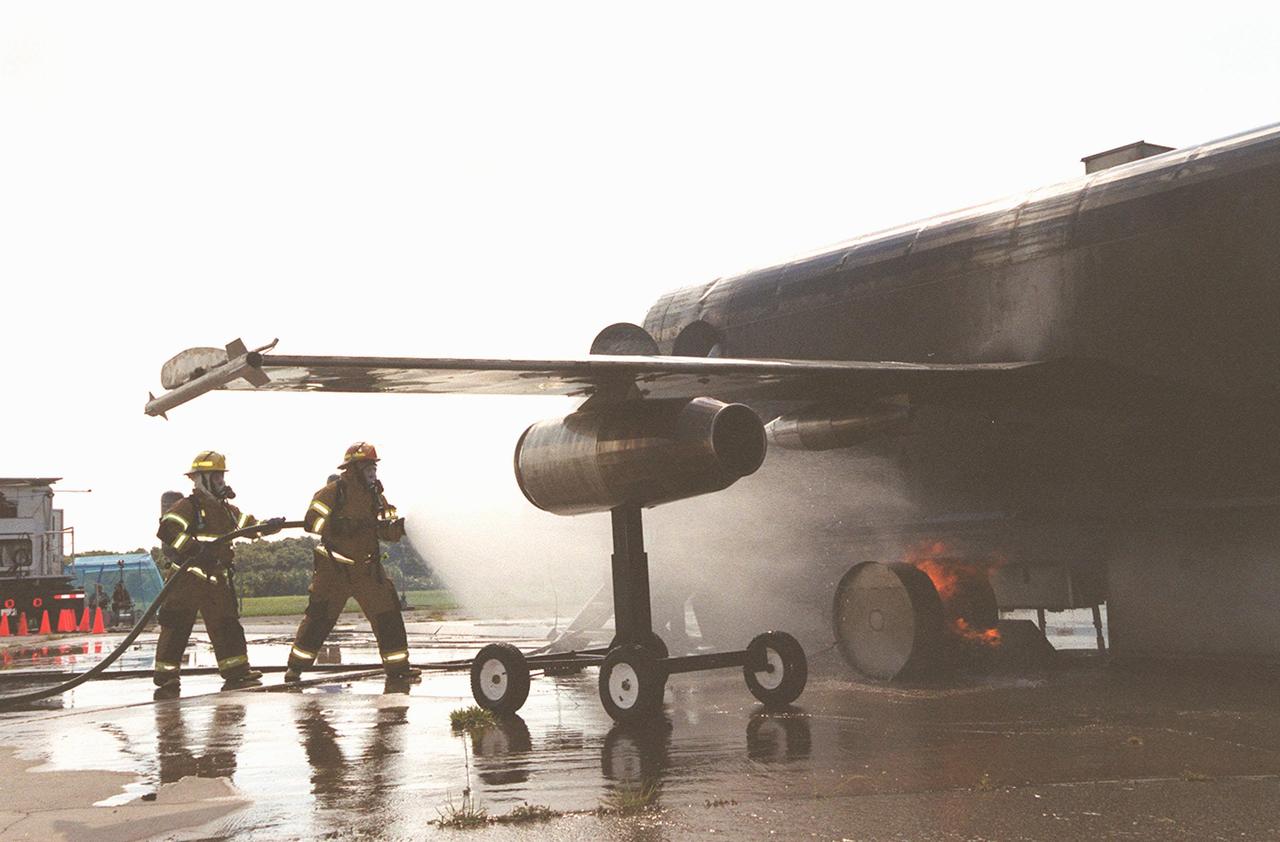
KENNEDY SPACE CENTER, FLA. -- Firefighters in full gear douse a fire on a simulated aircraft. The firefighters, who are with Fire and Emergency Services at the Naval Station Mayport, Fla., are taking part in fire training exercises at Cape Canaveral Air Force Station Pad 30.
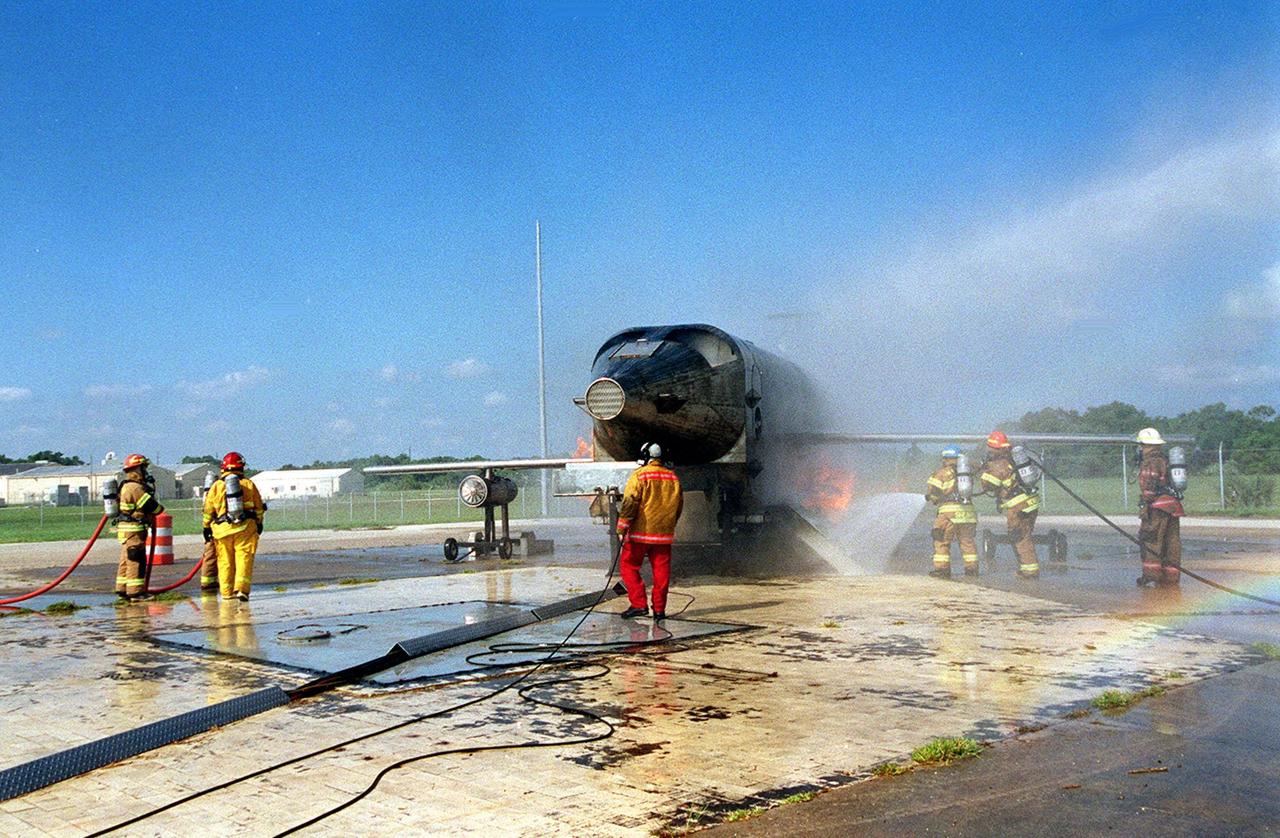
KENNEDY SPACE CENTER, FLA. -- Firefighters surround a burning simulated aircraft during training exercises Cape Canaveral Air Force Station Pad 30. Those at left wait their turn as the crew on the right turn their hoses toward the fire. The firefighters are with Fire and Emergency Services at the Naval Station Mayport, Fla
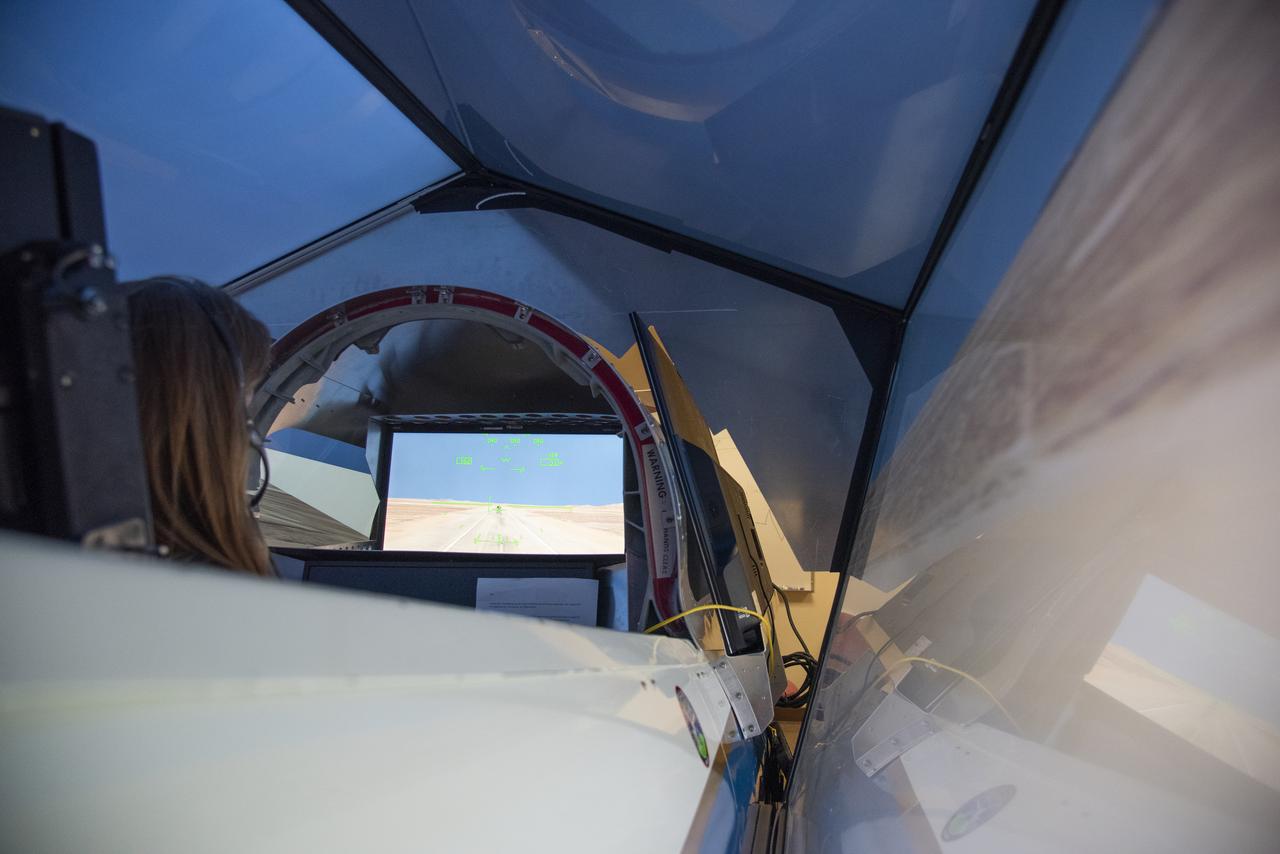
NASA's 2017 astronaut candidate Kayla Barron practices flying in an X-59 QueSST simulator at Armstrong Flight Research Center, in Southern California. The low boom flight demonstrator, X-59, being built at Lockheed Martin and was designed to fly at supersonic speeds over land without the loud noise of breaking the sound barrier and disturbing communities.
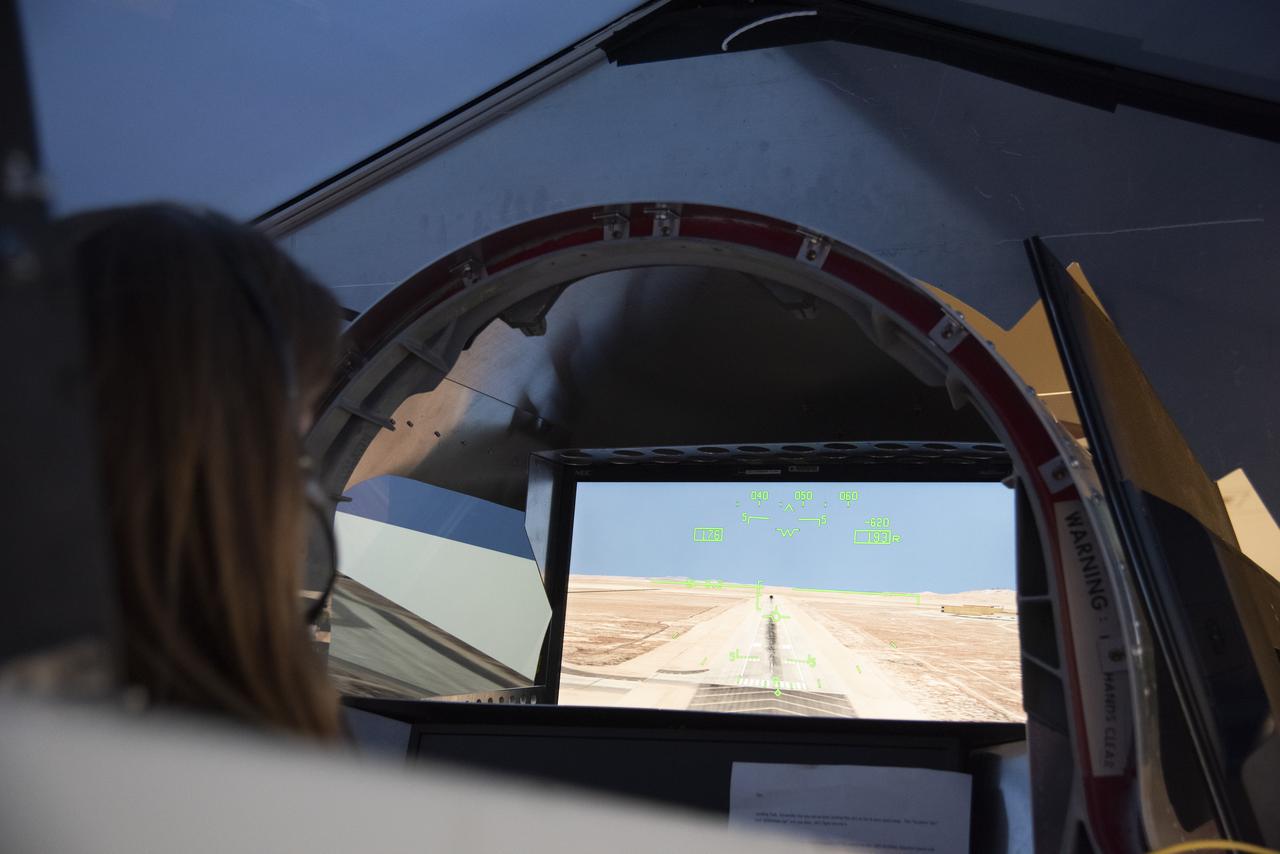
NASA's 2017 astronaut candidate Kayla Barron practices flying in an X-59 QueSST simulator at Armstrong Flight Research Center, in Southern California. The low boom flight demonstrator, X-59, being built at Lockheed Martin and was designed to fly at supersonic speeds over land without the loud noise of breaking the sound barrier and disturbing communities.
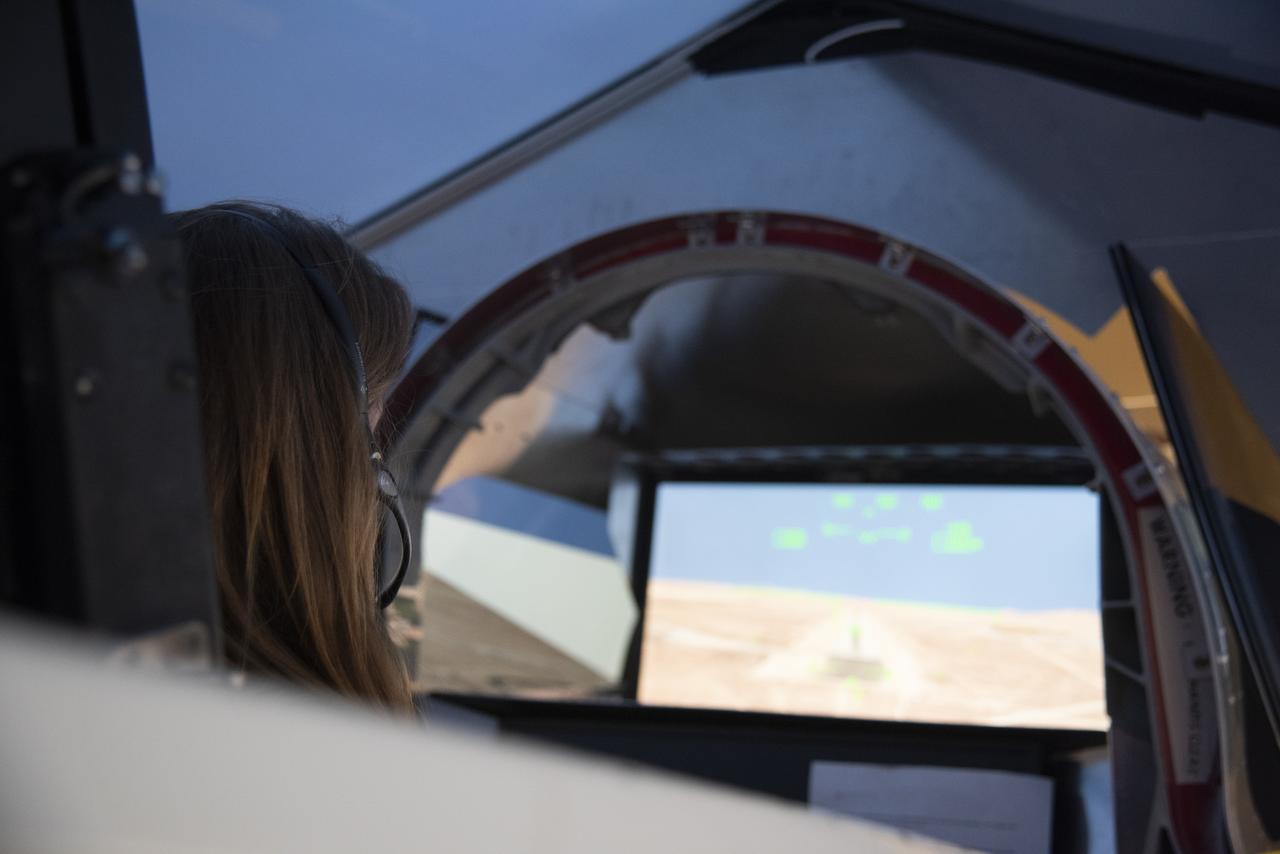
NASA's 2017 astronaut candidate Kayla Barron practices flying in an X-59 QueSST simulator at Armstrong Flight Research Center, in Southern California. The low boom flight demonstrator, X-59, being built at Lockheed Martin and was designed to fly at supersonic speeds over land without the loud noise of breaking the sound barrier and disturbing communities.
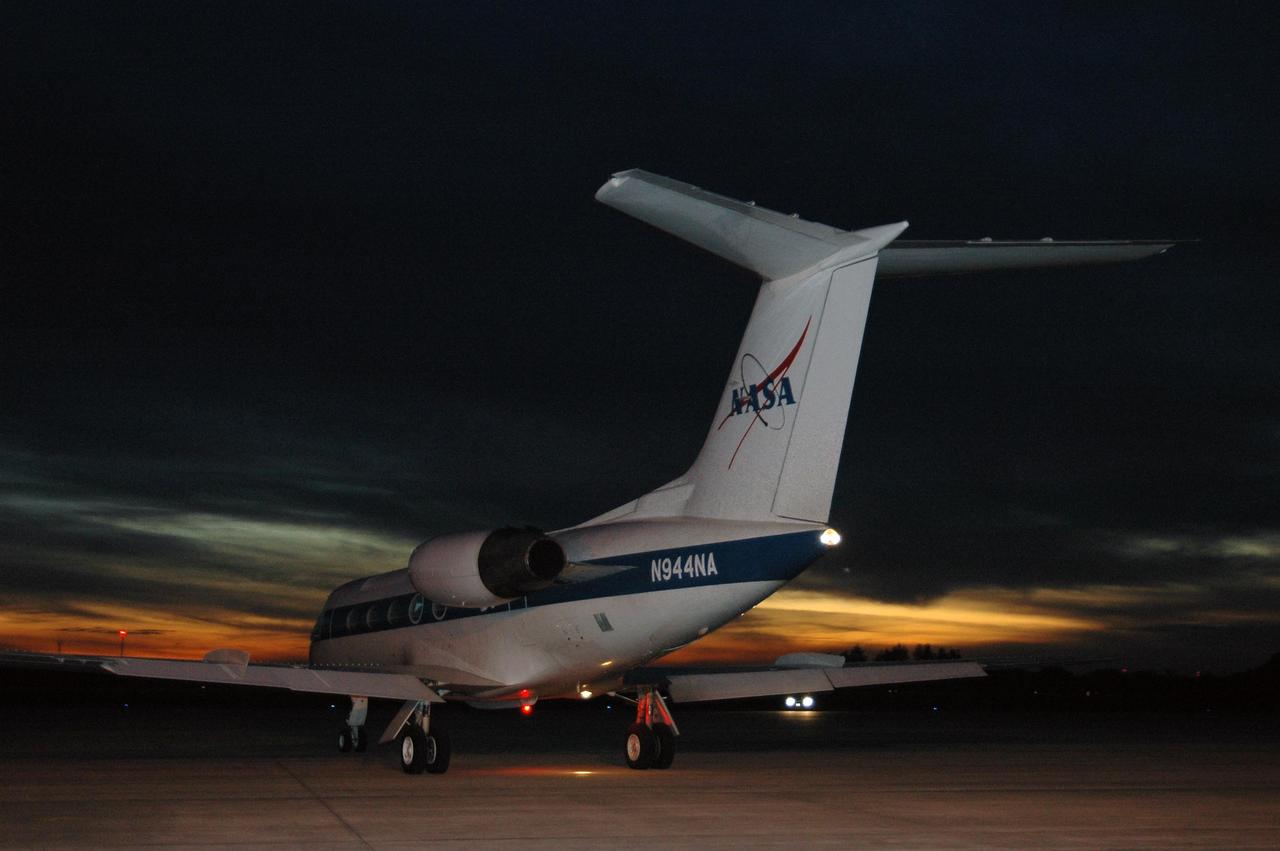
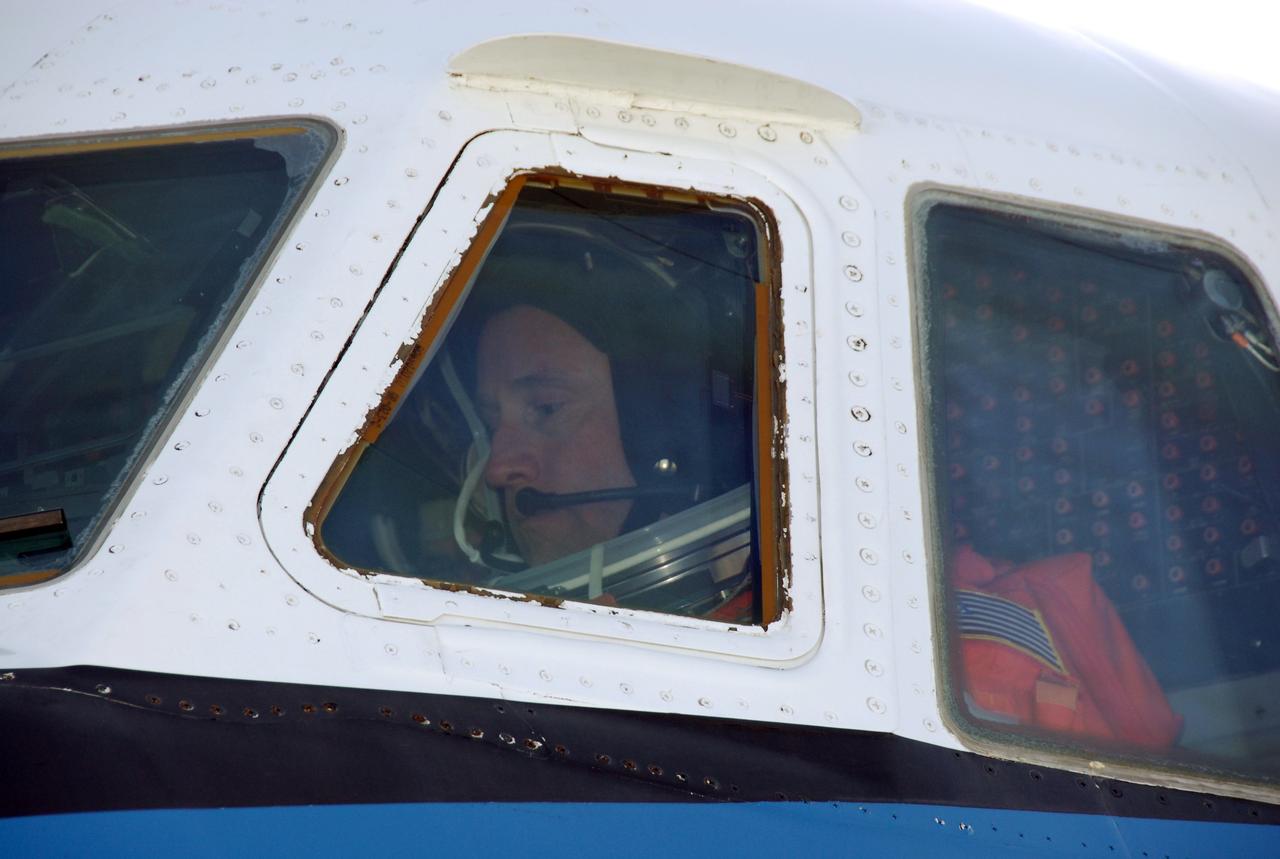
KENNEDY SPACE CENTER, FLA. -- At the Shuttle Landing Facility, the shuttle training aircraft taxis onto the runway. Inside are STS-116 Pilot William Oefelein and Commander Mark Polansky, who are flying the aircraft to practice landing the orbiter. The mission crew is at KSC for the terminal countdown demonstration test, which are prelaunch preparations that include a simulated launch countdown. STA practice is part of the TCDT. The STA is a Grumman American Aviation-built Gulf Stream II jet that was modified to simulate an orbiter's cockpit, motion and visual cues, and handling qualities. In flight, the STA duplicates the orbiter's atmospheric descent trajectory from approximately 35,000 feet altitude to landing on a runway. Because the orbiter is unpowered during re-entry and landing, its high-speed glide must be perfectly executed the first time. Photo credit: NASA/Kim Shiflett
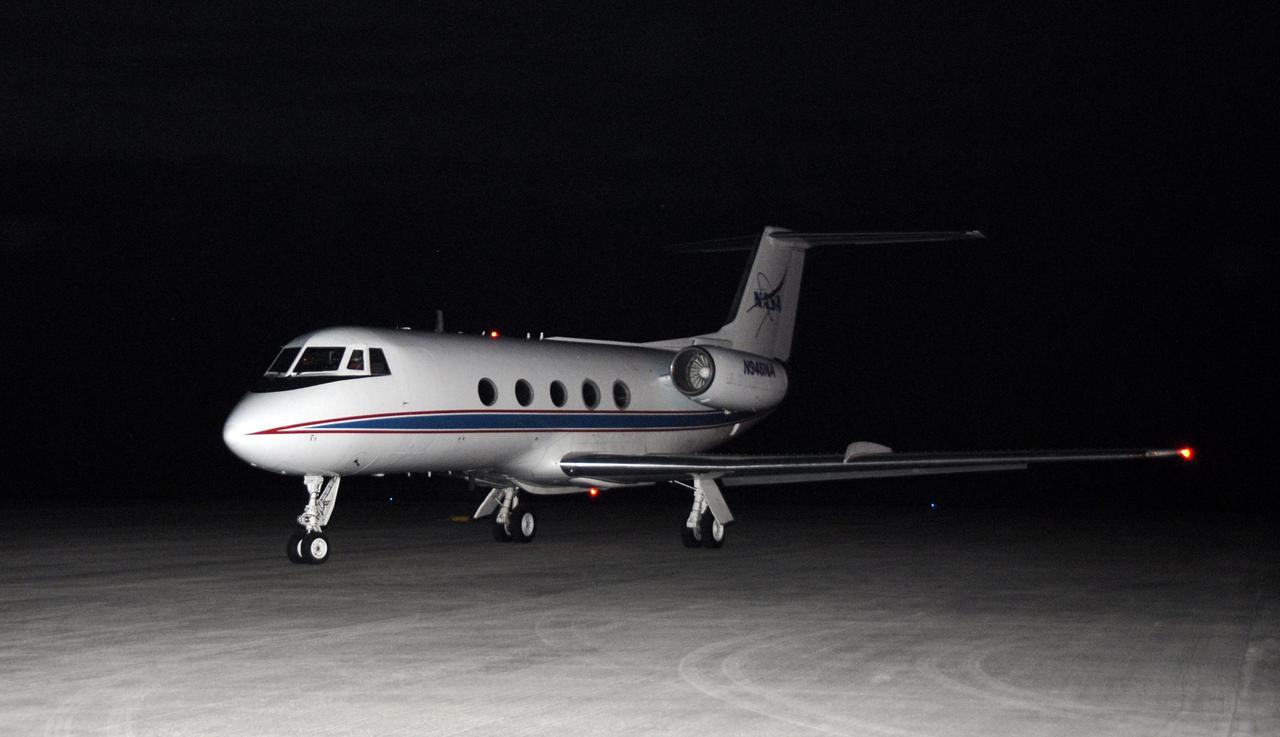
CAPE CANAVERAL, Fla. – On the Shuttle Landing Facility at NASA's Kennedy Space Center in Florida, a shuttle training aircraft is ready for takeoff. STS-119 Commander Lee Archambault and Pilot Tony Antonelli are practicing shuttle landings as part of the Terminal Countdown Demonstration Test activities. The TCDT includes equipment familiarization and a simulated launch countdown. The STA is a Grumman American Aviation-built Gulf Stream II jet that was modified to simulate a shuttle’s cockpit, motion and visual cues, and handling qualities. In flight, the aircraft duplicates the shuttle’s atmospheric descent trajectory from approximately 35,000 feet to landing. The crew of space shuttle Discovery is targeted to launch on the STS-119 mission Feb. 12. During Discovery's 14-day mission, the crew will install the S6 truss segment and solar arrays to the starboard side of the International Space Station, completing the station's truss, or backbone. Photo credit: NASA/Kim Shiflett
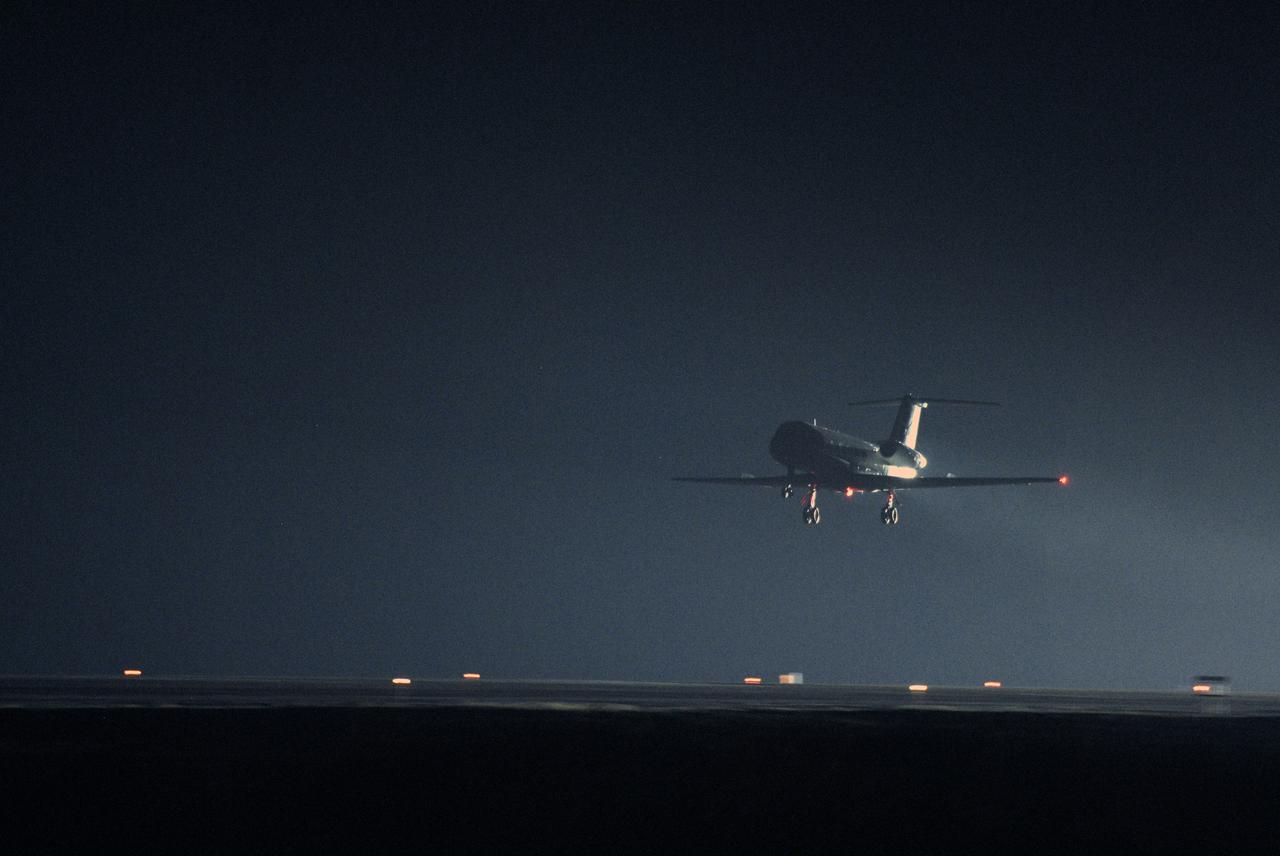
CAPE CANAVERAL, Fla. – A shuttle training aircraft drops for touchdown on the Shuttle Landing Facility runway at NASA's Kennedy Space Center in Florida. STS-119 Commander Lee Archambault and Pilot Tony Antonelli are practicing shuttle landings as part of the Terminal Countdown Demonstration Test activities. The TCDT includes equipment familiarization and a simulated launch countdown. The STA is a Grumman American Aviation-built Gulf Stream II jet that was modified to simulate a shuttle’s cockpit, motion and visual cues, and handling qualities. In flight, the aircraft duplicates the shuttle’s atmospheric descent trajectory from approximately 35,000 feet to landing. The crew of space shuttle Discovery is targeted to launch on the STS-119 mission Feb. 12. During Discovery's 14-day mission, the crew will install the S6 truss segment and solar arrays to the starboard side of the International Space Station, completing the station's truss, or backbone. Photo credit: NASA/Kim Shiflett
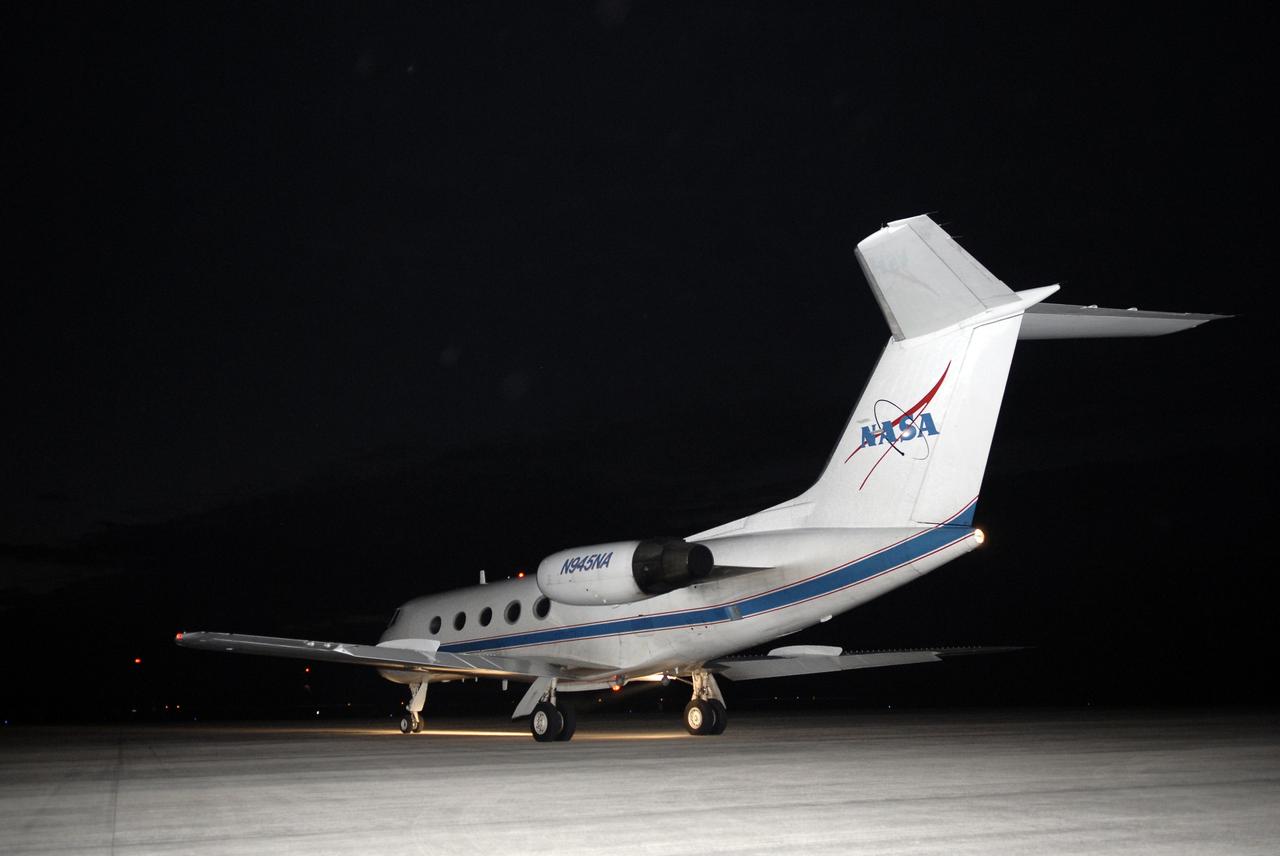
CAPE CANAVERAL, Fla. – On the Shuttle Landing Facility at NASA's Kennedy Space Center in Florida, a shuttle training aircraft taxis toward the runway for takeoff. STS-119 Commander Lee Archambault and Pilot Tony Antonelli are practicing shuttle landings as part of the Terminal Countdown Demonstration Test activities. The TCDT includes equipment familiarization and a simulated launch countdown. The STA is a Grumman American Aviation-built Gulf Stream II jet that was modified to simulate a shuttle’s cockpit, motion and visual cues, and handling qualities. In flight, the aircraft duplicates the shuttle’s atmospheric descent trajectory from approximately 35,000 feet to landing. The crew of space shuttle Discovery is targeted to launch on the STS-119 mission Feb. 12. During Discovery's 14-day mission, the crew will install the S6 truss segment and solar arrays to the starboard side of the International Space Station, completing the station's truss, or backbone. Photo credit: NASA/Kim Shiflett
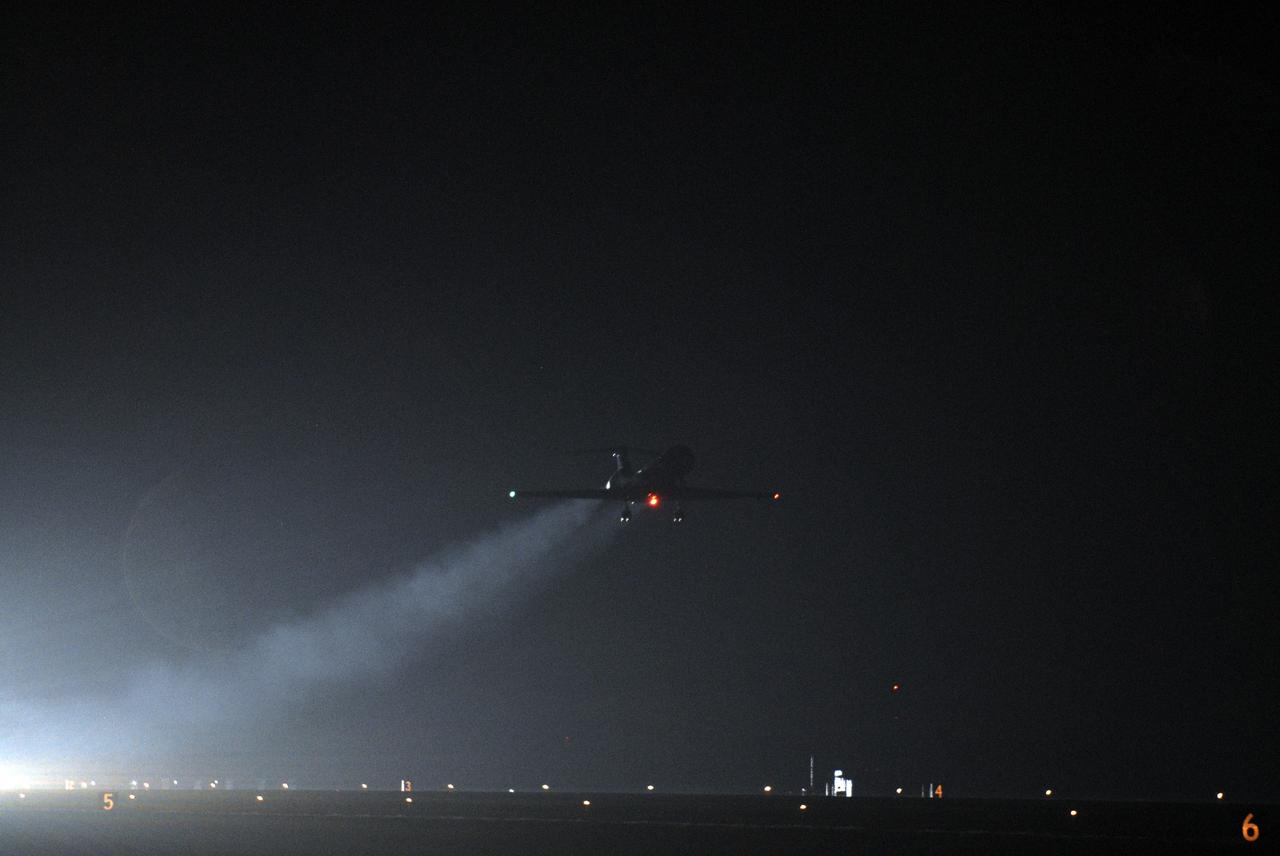
CAPE CANAVERAL, Fla. – From the Shuttle Landing Facility at NASA's Kennedy Space Center in Florida, a shuttle training aircraft takes off into the night sky. STS-119 Commander Lee Archambault and Pilot Tony Antonelli are practicing shuttle landings as part of the Terminal Countdown Demonstration Test activities. The TCDT includes equipment familiarization and a simulated launch countdown. The STA is a Grumman American Aviation-built Gulf Stream II jet that was modified to simulate a shuttle’s cockpit, motion and visual cues, and handling qualities. In flight, the aircraft duplicates the shuttle’s atmospheric descent trajectory from approximately 35,000 feet to landing. The crew of space shuttle Discovery is targeted to launch on the STS-119 mission Feb. 12. During Discovery's 14-day mission, the crew will install the S6 truss segment and solar arrays to the starboard side of the International Space Station, completing the station's truss, or backbone. Photo credit: NASA/Kim Shiflett
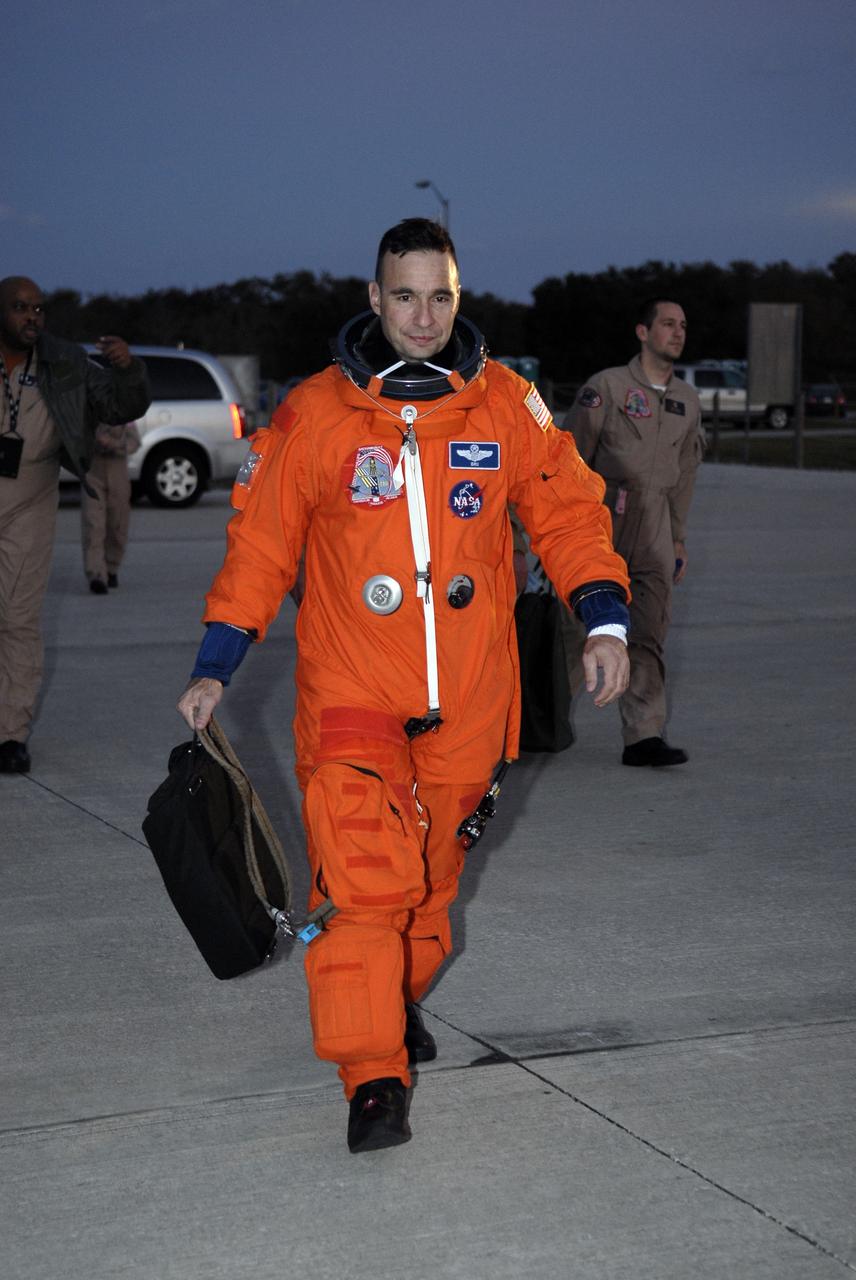
CAPE CANAVERAL, Fla. – STS-119 Commander Lee Archambault heads across the tarmac of the Shuttle Landing Facility at NASA's Kennedy Space Center in Florida to practice shuttle landings in the shuttle training aircraft, or STA. Archambault and the rest of the crew are at Kennedy to prepare for launch as part of the Terminal Countdown Demonstration Test activities. The TCDT includes equipment familiarization and a simulated launch countdown. The STA is a Grumman American Aviation-built Gulf Stream II jet that was modified to simulate a shuttle’s cockpit, motion and visual cues, and handling qualities. In flight, the aircraft duplicates the shuttle’s atmospheric descent trajectory from approximately 35,000 feet to landing. The crew of space shuttle Discovery is targeted to launch on the STS-119 mission Feb. 12. During Discovery's 14-day mission, the crew will install the S6 truss segment and solar arrays to the starboard side of the International Space Station, completing the station's truss, or backbone. Photo credit: NASA/Kim Shiflett
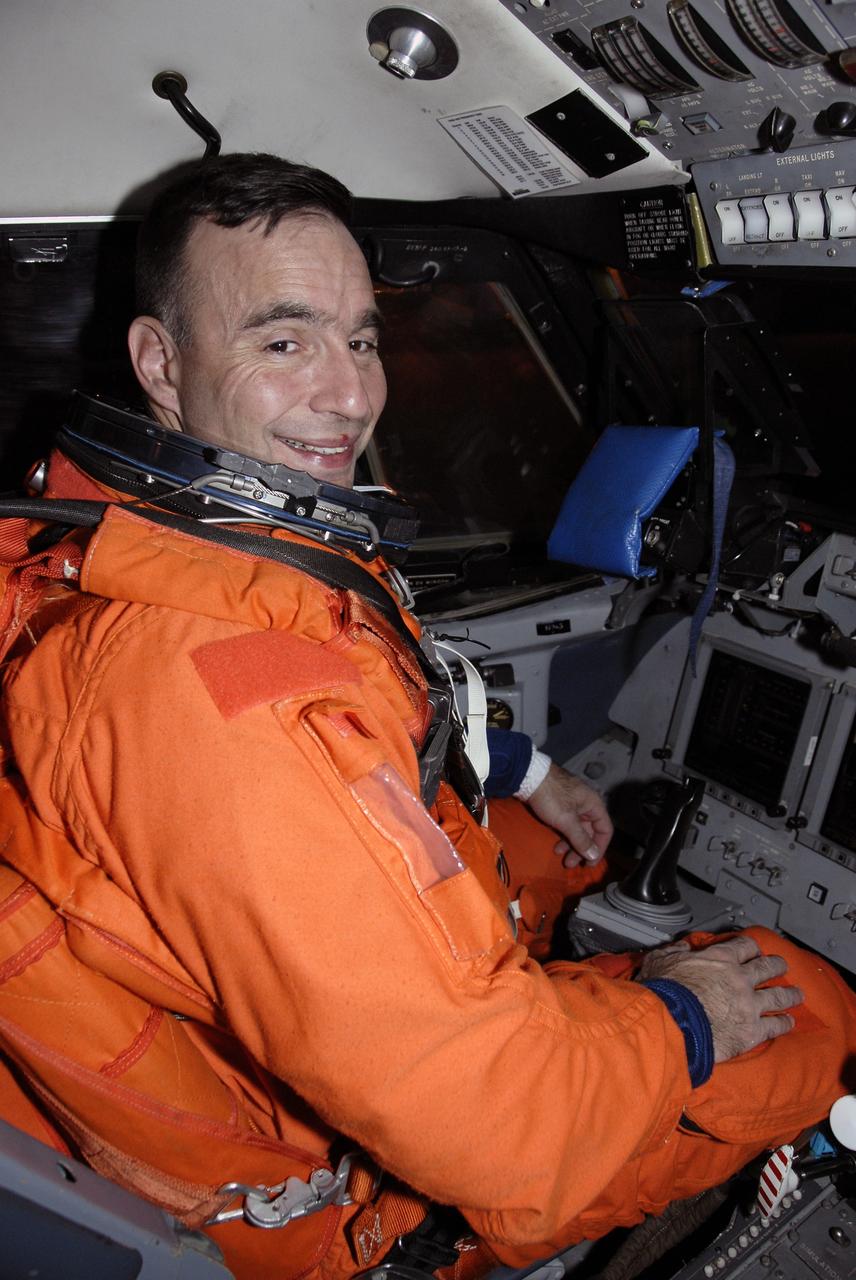
CAPE CANAVERAL, Fla. – STS-119 Commander Lee Archambault takes his seat in the cockpit of the shuttle training aircraft, or STA, at the Shuttle Landing Facility at NASA's Kennedy Space Center in Florida. He will practice shuttle landings as preparation for launch as part of the Terminal Countdown Demonstration Test activities. The TCDT includes equipment familiarization and a simulated launch countdown. The STA is a Grumman American Aviation-built Gulf Stream II jet that was modified to simulate a shuttle’s cockpit, motion and visual cues, and handling qualities. In flight, the aircraft duplicates the shuttle’s atmospheric descent trajectory from approximately 35,000 feet to landing. The crew of space shuttle Discovery is targeted to launch on the STS-119 mission Feb. 12. During Discovery's 14-day mission, the crew will install the S6 truss segment and solar arrays to the starboard side of the International Space Station, completing the station's truss, or backbone. Photo credit: NASA/Kim Shiflett
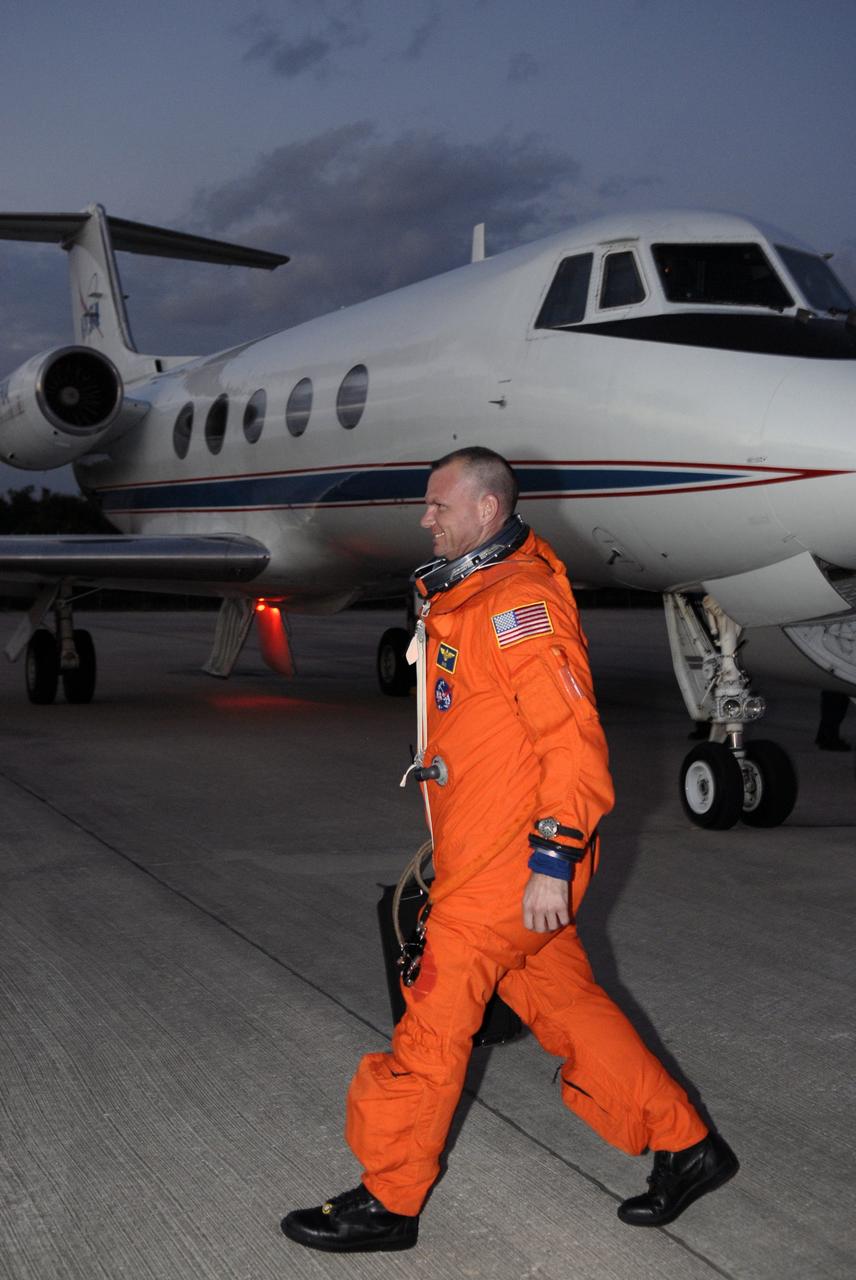
CAPE CANAVERAL, Fla. – STS-119 Pilot Tony Antonelli heads across the tarmac of the Shuttle Landing Facility at NASA's Kennedy Space Center in Florida to practice shuttle landings in the shuttle training aircraft, or STA. Antonelli and the rest of the crew are at Kennedy to prepare for launch as part of the Terminal Countdown Demonstration Test activities. The TCDT includes equipment familiarization and a simulated launch countdown. The STA is a Grumman American Aviation-built Gulf Stream II jet that was modified to simulate a shuttle’s cockpit, motion and visual cues, and handling qualities. In flight, the aircraft duplicates the shuttle’s atmospheric descent trajectory from approximately 35,000 feet to landing. The crew of space shuttle Discovery is targeted to launch on the STS-119 mission Feb. 12. During Discovery's 14-day mission, the crew will install the S6 truss segment and solar arrays to the starboard side of the International Space Station, completing the station's truss, or backbone. Photo credit: NASA/Kim Shiflett
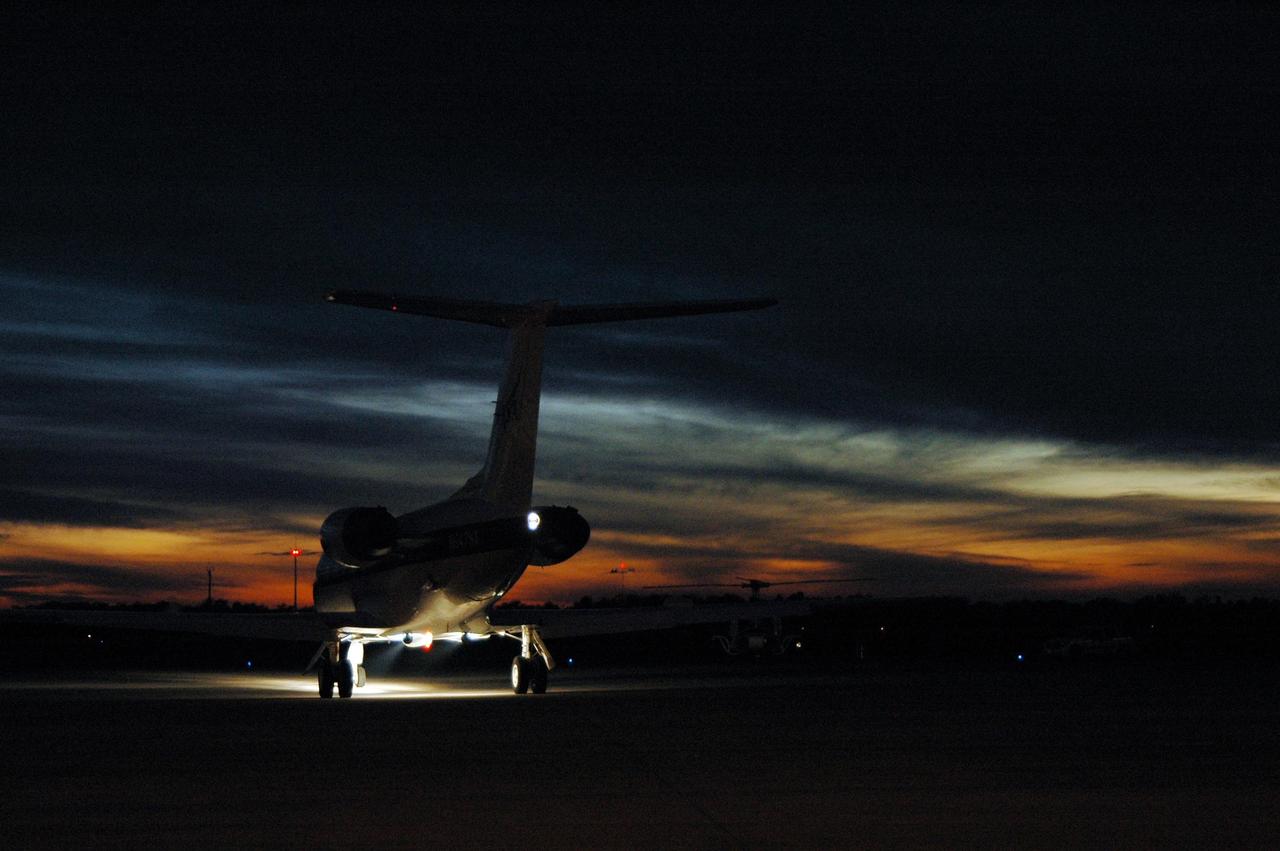
KENNEDY SPACE CENTER, FLA. -- At the Shuttle Landing Facility, the shuttle training aircraft taxis onto the runway. Inside are STS-116 Pilot William Oefelein and Commander Mark Polansky, who are flying the aircraft to practice landing the orbiter. The mission crew is at KSC for the terminal countdown demonstration test, which are prelaunch preparations that include a simulated launch countdown. STA practice is part of the TCDT. The STA is a Grumman American Aviation-built Gulf Stream II jet that was modified to simulate an orbiter's cockpit, motion and visual cues, and handling qualities. In flight, the STA duplicates the orbiter's atmospheric descent trajectory from approximately 35,000 feet altitude to landing on a runway. Because the orbiter is unpowered during re-entry and landing, its high-speed glide must be perfectly executed the first time. Photo credit: NASA/Kim Shiflett
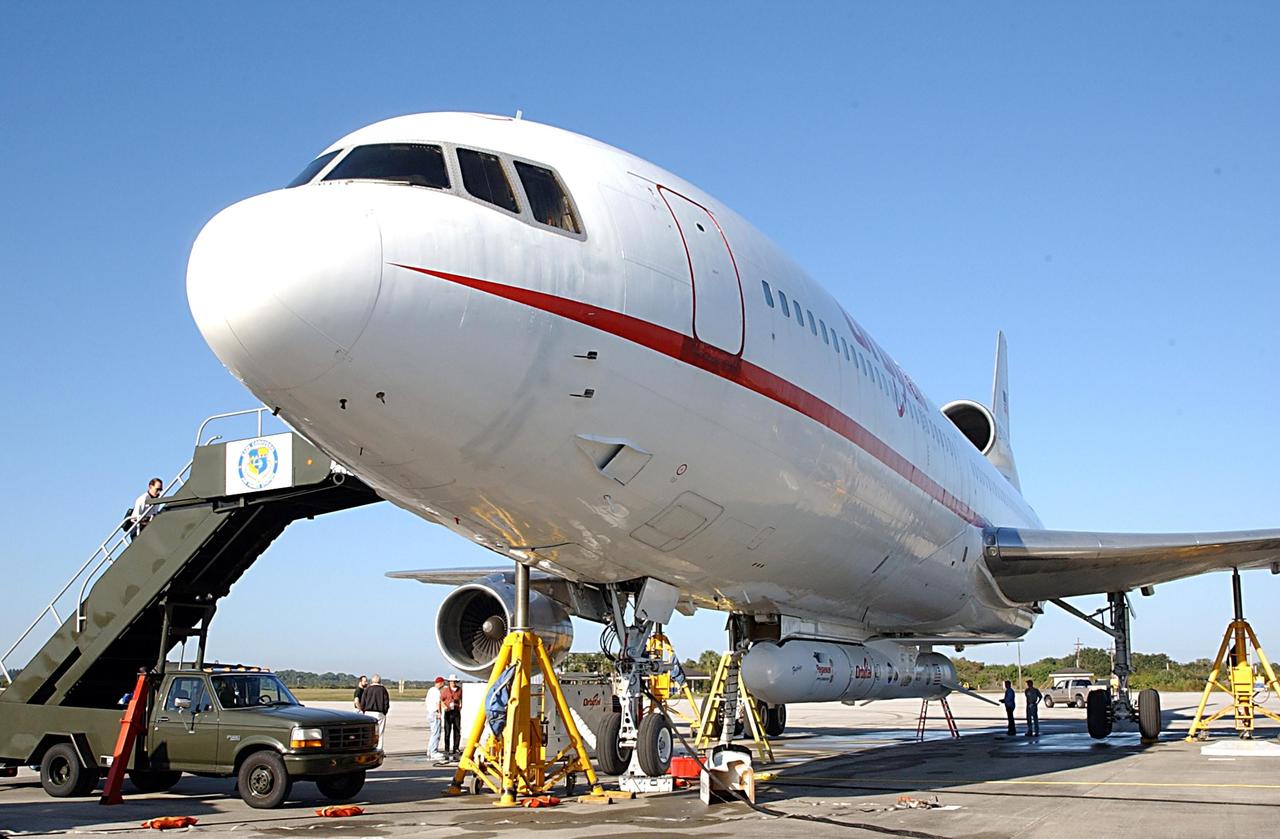
KENNEDY SPACE CENTER, FLA. -- Workers prepare to remove a Pegasus XL Expendable Launch Vehicle from the underside of an Orbital Sciences L-1011 aircraft. The aircraft, with the launch vehicle attached, arrived at the Cape Canaveral Air Force Station Skid Strip on Dec. 17. The Pegasus XL will undergo three flight simulations prior to its scheduled launch in late January 2003. It will carry NASA's Solar Radiation and Climate Experiment (SORCE) spacecraft into orbit. Built by Orbital Sciences Space Systems Group, SORCE will study and measure solar irradiance as a source of energy in the Earth's atmosphere with instruments built by the University of Colorado's Laboratory for Atmospheric and Space Physics (LASP).
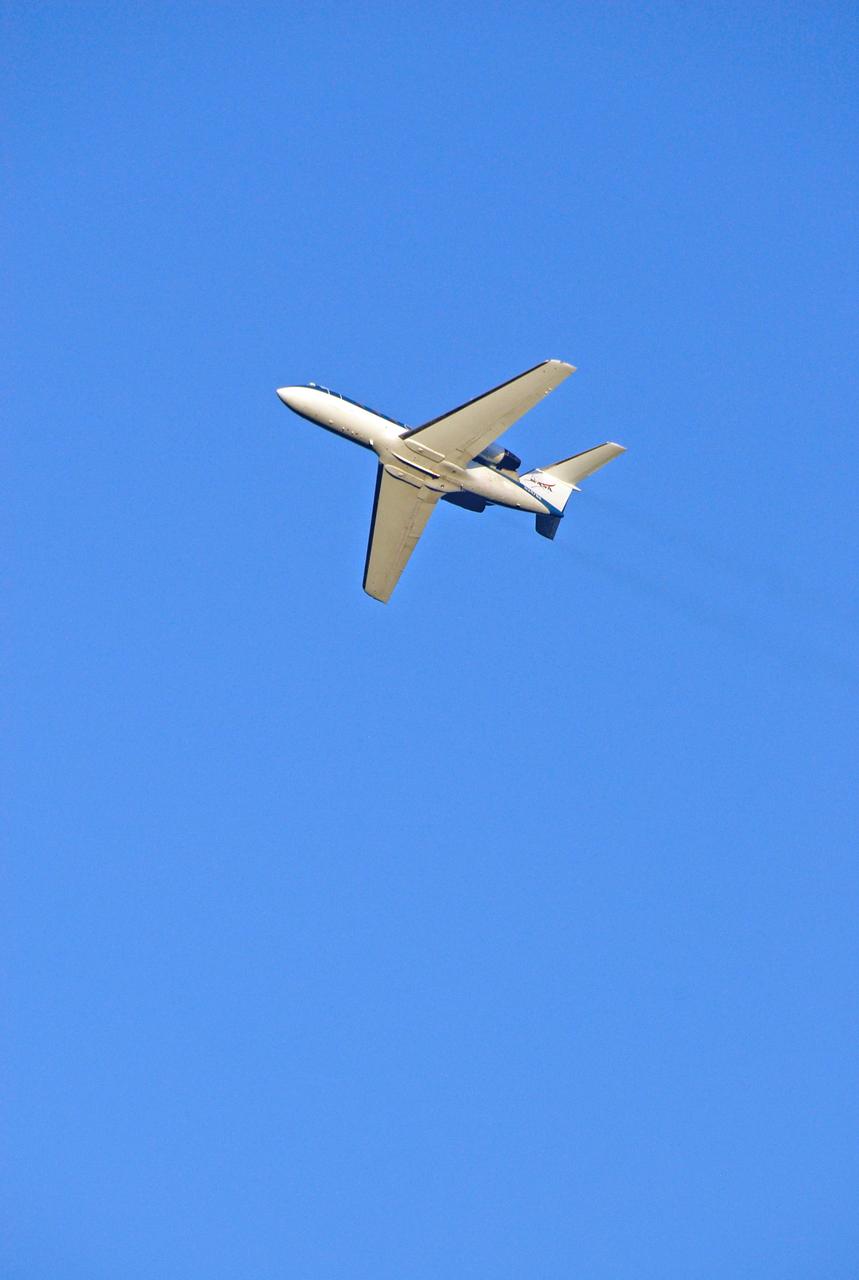
CAPE CANAVERAL, Fla. -- One of the shuttle training aircraft, or STA, flies over NASA Kennedy Space Center's Shuttle Landing Facility during landing practice. The commander and pilot of the STS-124 mission, Mark Kelly and Ken Ham, are making the practice landings. The STA is a Grumman American Aviation-built Gulf Stream II jet that was modified to simulate an orbiter's cockpit, motion and visual cues, and handling qualities. In flight, the aircraft duplicates the orbiter's atmospheric descent trajectory from approximately 35,000 feet altitude to landing on a runway. Space shuttle Discovery is scheduled to lift off on the STS-124 mission at 5:02 p.m. May 31. Photo credit: NASA/Kim Shiflett
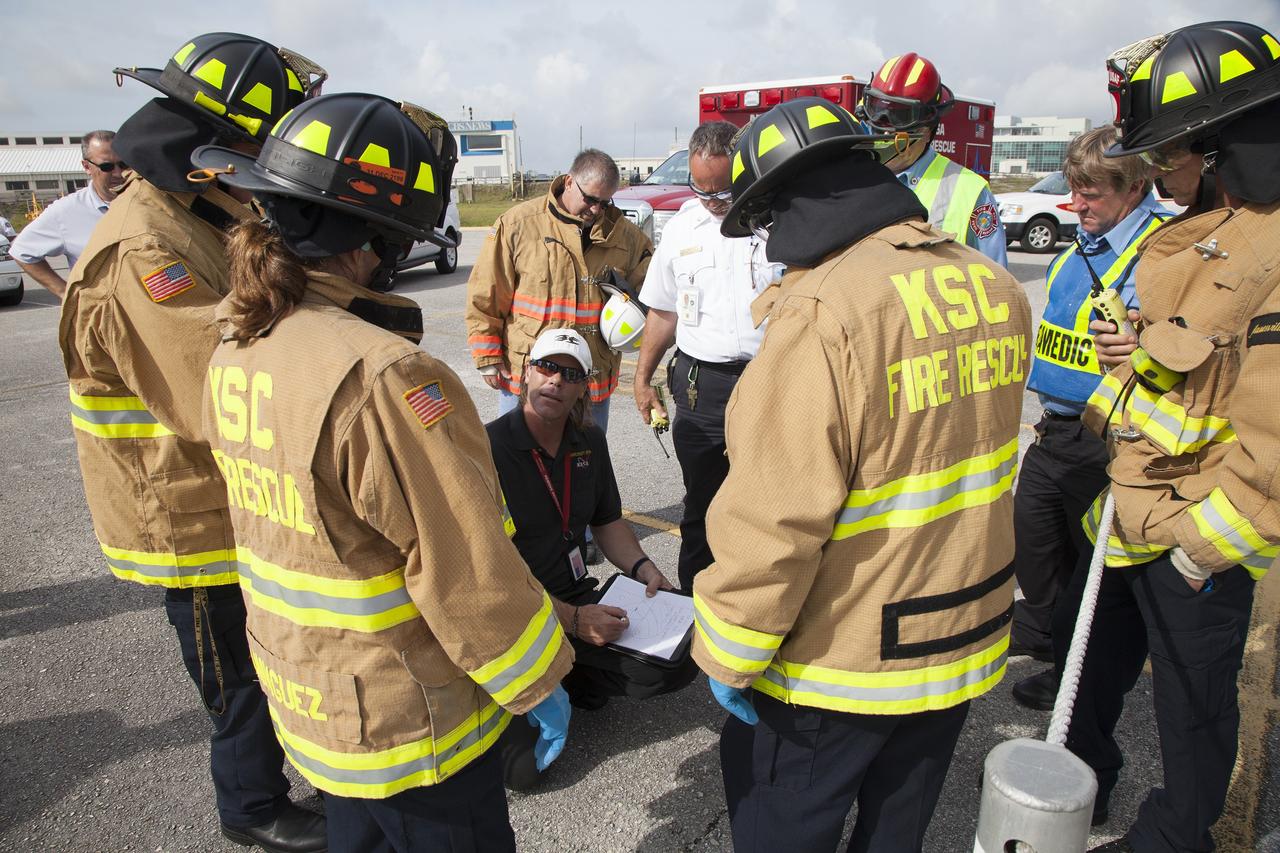
CAPE CANAVERAL, Fla. -- At NASA's Kennedy Space Center in Florida, Bill Martin, a URS Federal Technical Services helicopter pilot in NASA Aircraft Operations, kneeling, briefs NASA Fire Rescue personnel prior to the start of a simulated emergency. The activity taking place in Kennedy's Launch Complex 39 turn-basin parking lot was only one of several drills. It was part of a new training program that was developed by Kennedy's Fire Rescue department along with NASA Aircraft Operations to sharpen the skills needed to help rescue personnel learn how to collaborate with helicopter pilots in taking injured patients to hospitals as quickly as possible. Photo credit: NASA/Dan Casper

KENNEDY SPACE CENTER, FLA. -- Workers prepare a Pegasus XL Expendable Launch Vehicle for detachment from the underside of an Orbital Sciences L-1011 aircraft. The aircraft, with the launch vehicle nestled beneath, arrived at the Cape Canaveral Air Force Station Skid Strip on Dec. 17. The Pegasus XL will undergo three flight simulations prior to its scheduled launch in late January 2003. It will carry NASA's Solar Radiation and Climate Experiment (SORCE) spacecraft into orbit. Built by Orbital Sciences Space Systems Group, SORCE will study and measure solar irradiance as a source of energy in the Earth's atmosphere with instruments built by the University of Colorado's Laboratory for Atmospheric and Space Physics (LASP).
CAPE CANAVERAL, Fla. -- On the Shuttle Landing Facility at NASA's Kennedy Space Center, the commander of the STS-124 mission, Mark Kelly, sits in the cockpit of the shuttle training aircraft, or STA. He is getting ready to practice landing the shuttle on the SLF runway. The STA is a Grumman American Aviation-built Gulf Stream II jet that was modified to simulate an orbiter's cockpit, motion and visual cues, and handling qualities. In flight, the aircraft duplicates the orbiter's atmospheric descent trajectory from approximately 35,000 feet altitude to landing on a runway. Space shuttle Discovery is scheduled to lift off on the STS-124 mission at 5:02 p.m. May 31. Photo credit: NASA/Kim Shiflett