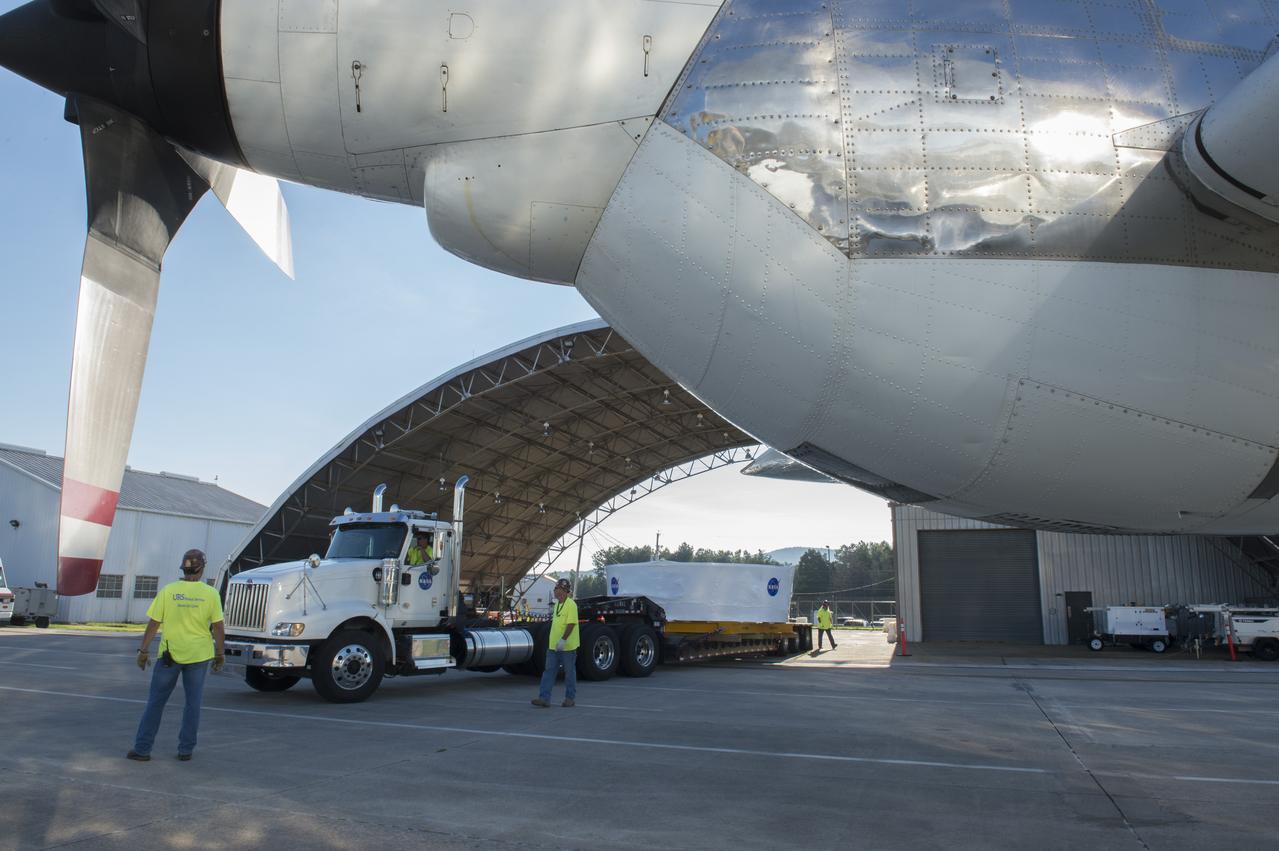
The Orion stage adapter arrives at Redstone Airfield where it will be loaded into NASA's Super Guppie aircraft for transportation to Denver, Colorado where it will undergo further testing.
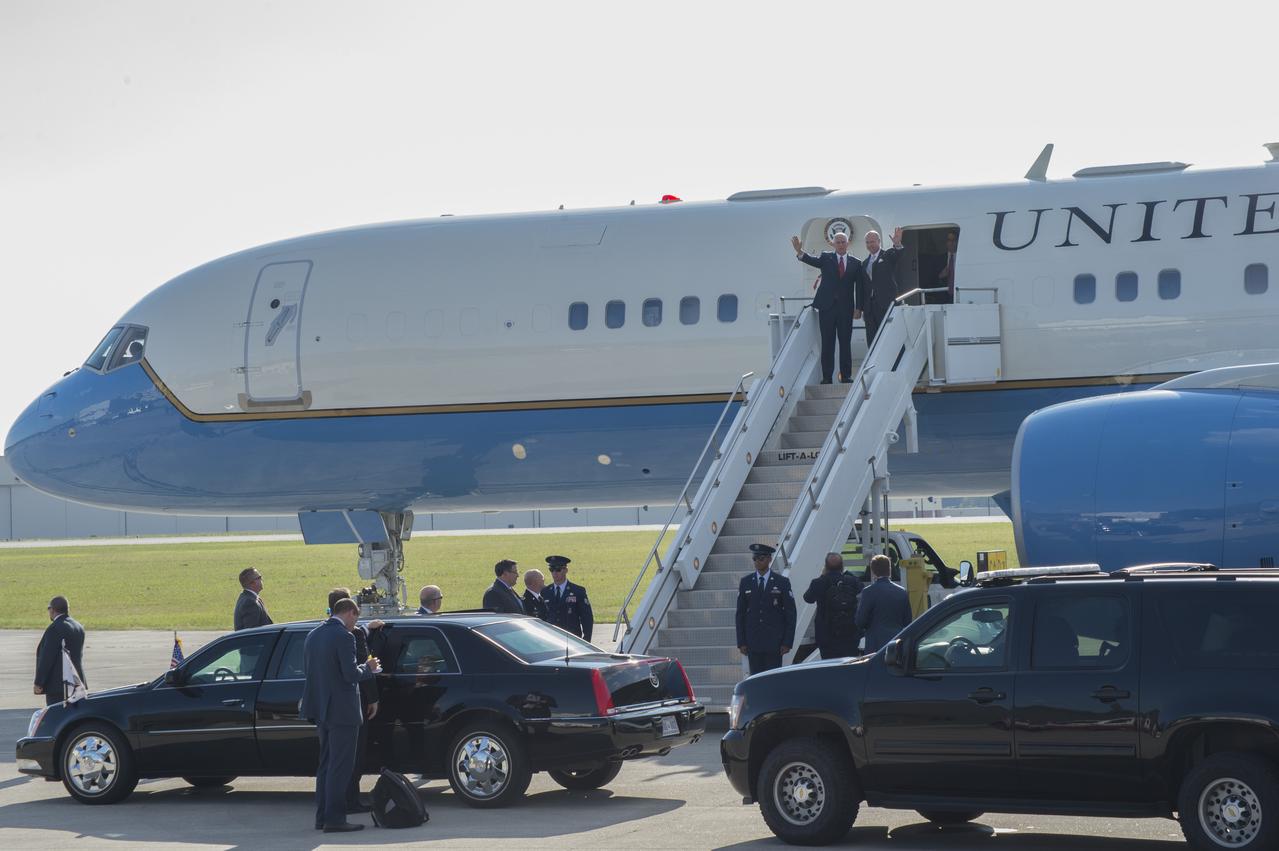
Air Force Two lands with Vice President Mike Pence along with Congressman Robert Aderholt at the Redstone Army Airfield in Huntsville, Alabama, on Monday, Sept. 25. The Vice President is visiting NASA’s Marshall Space Flight Center, located on Redstone Arsenal, to meet with employees, view test hardware for NASA’s Space Launch System — America’s new deep-space rocket, and tour the Payload Operations Integration Center, “science central” for the International Space Station.
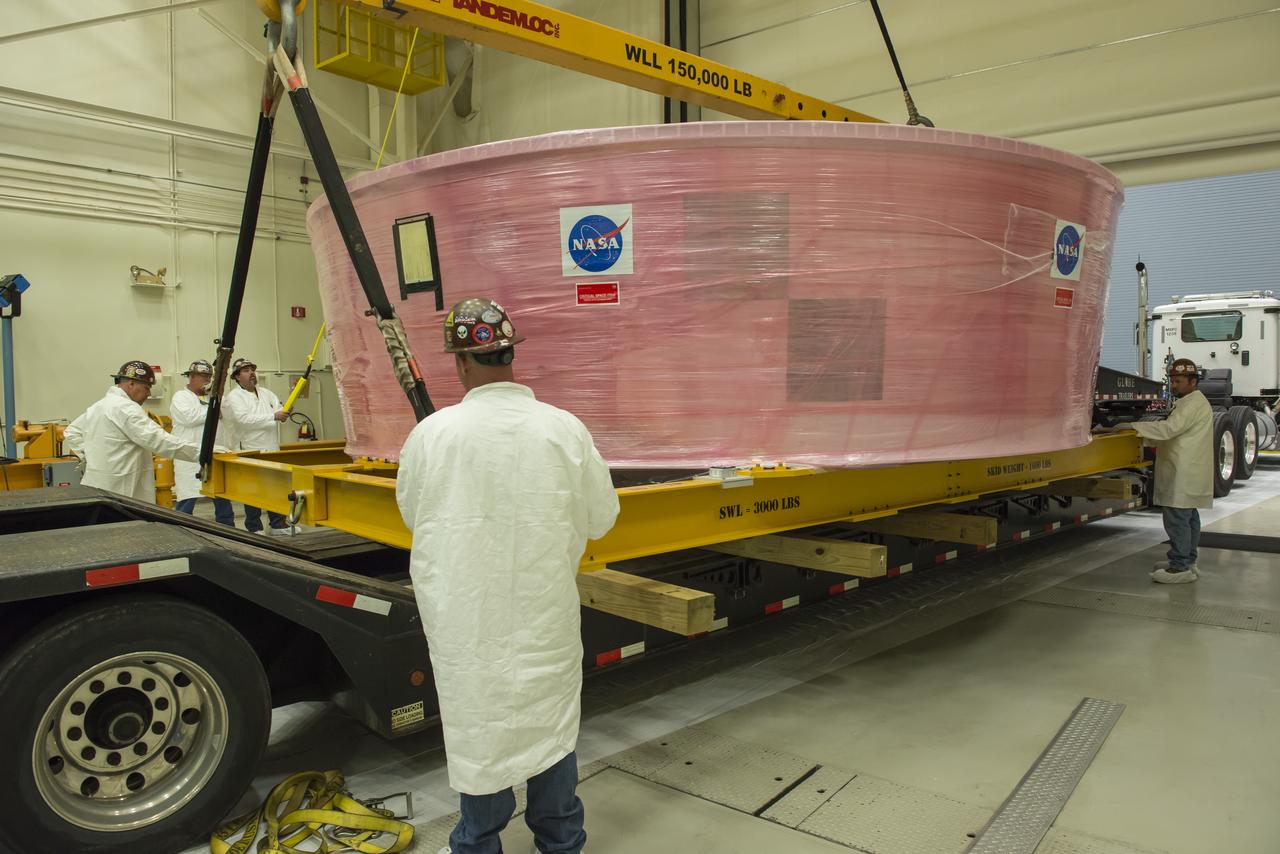
The Orion Stage Adapter flight hardware is prepared for the move to Redstone Airfield where the NASA Guppy aircraft will pick up the hardware and take the unit to Kennedy Space Center (KSC)
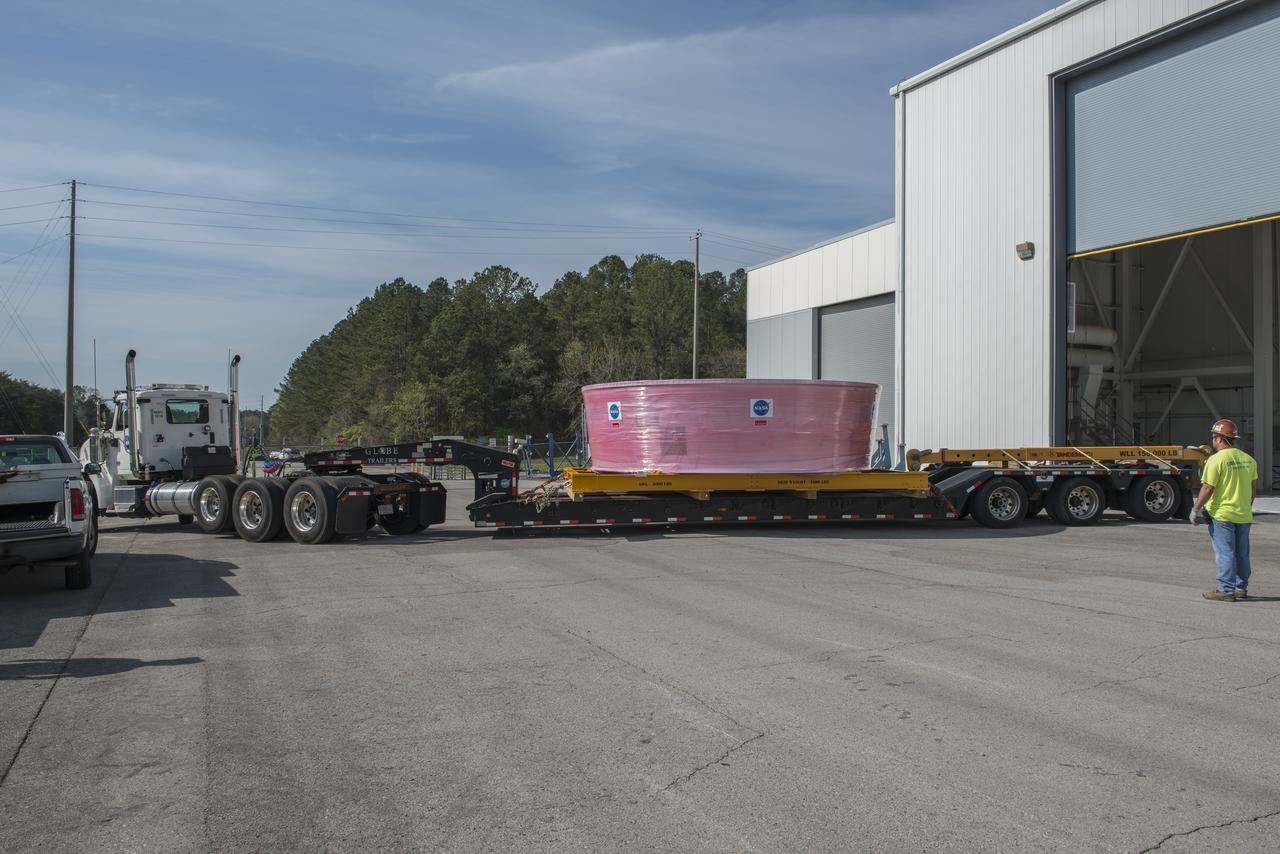
The Orion Stage Adapter flight hardware is prepared for the move to Redstone Airfield where the NASA Guppy aircraft will pick up the hardware and take the unit to Kennedy Space Center (KSC)

The Orion Stage Adapter flight hardware is prepared for the move to Redstone Airfield where the NASA Guppy aircraft will pick up the hardware and take the unit to Kennedy Space Center (KSC)
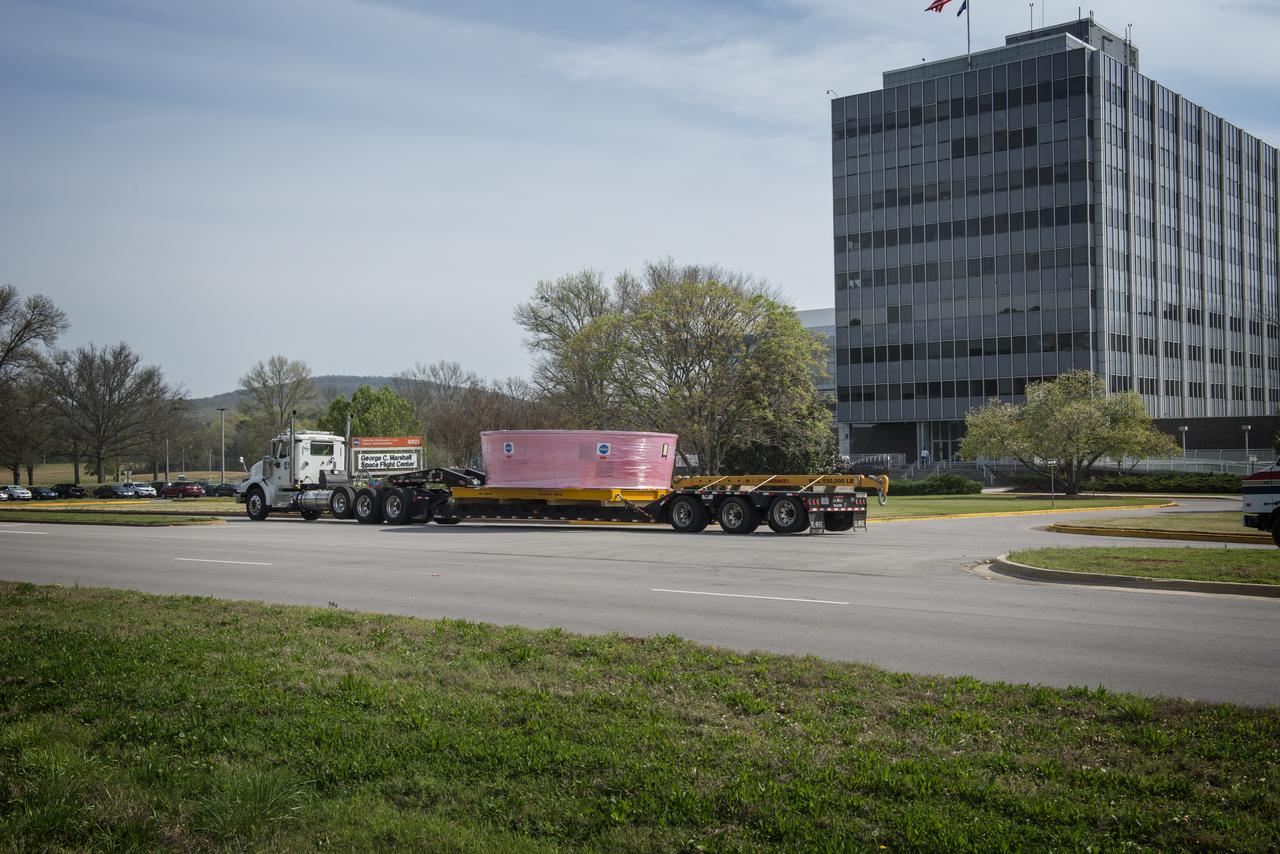
The Orion Stage Adapter flight hardware is prepared for the move to Redstone Airfield where the NASA Guppy aircraft will pick up the hardware and take the unit to Kennedy Space Center (KSC)
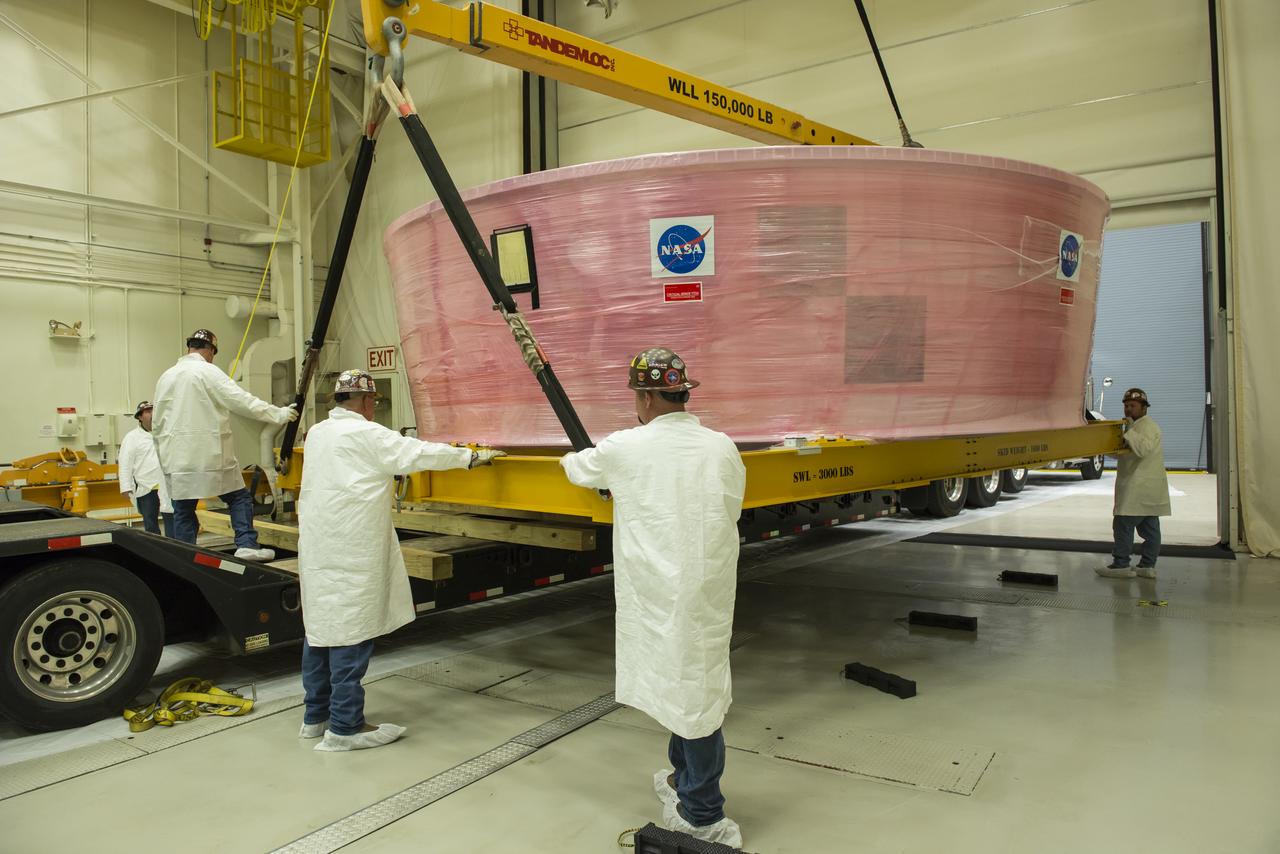
The Orion Stage Adapter flight hardware is prepared for the move to Redstone Airfield where the NASA Guppy aircraft will pick up the hardware and take the unit to Kennedy Space Center (KSC)
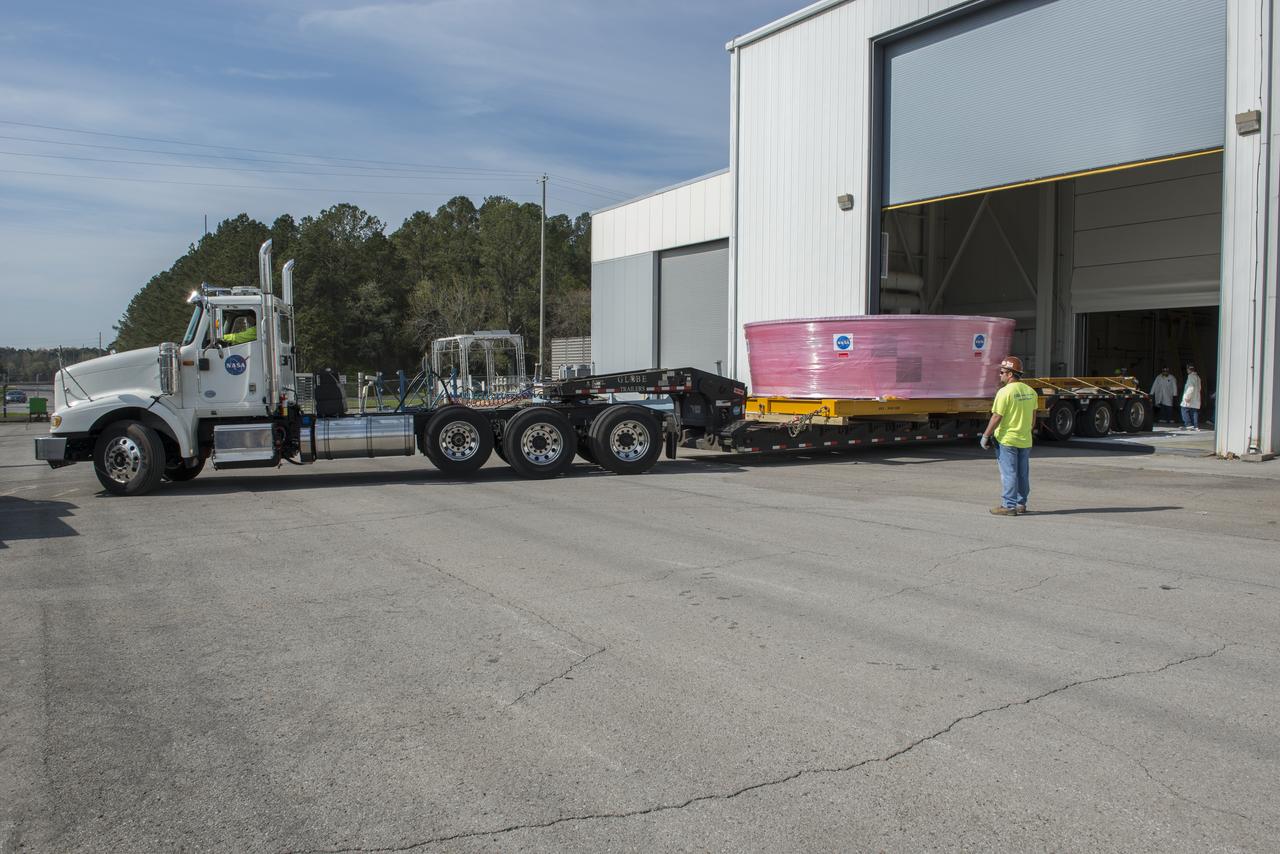
The Orion Stage Adapter flight hardware is prepared for the move to Redstone Airfield where the NASA Guppy aircraft will pick up the hardware and take the unit to Kennedy Space Center (KSC)
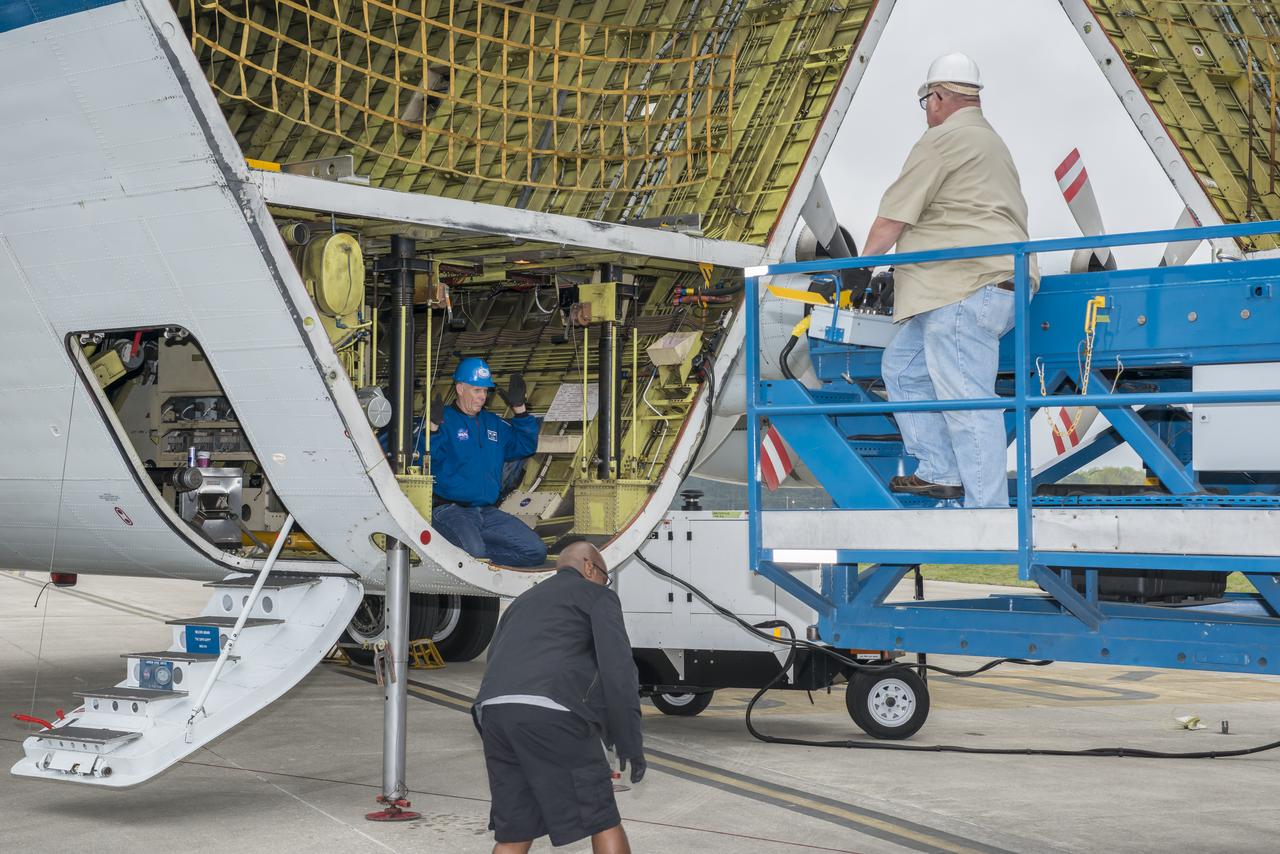
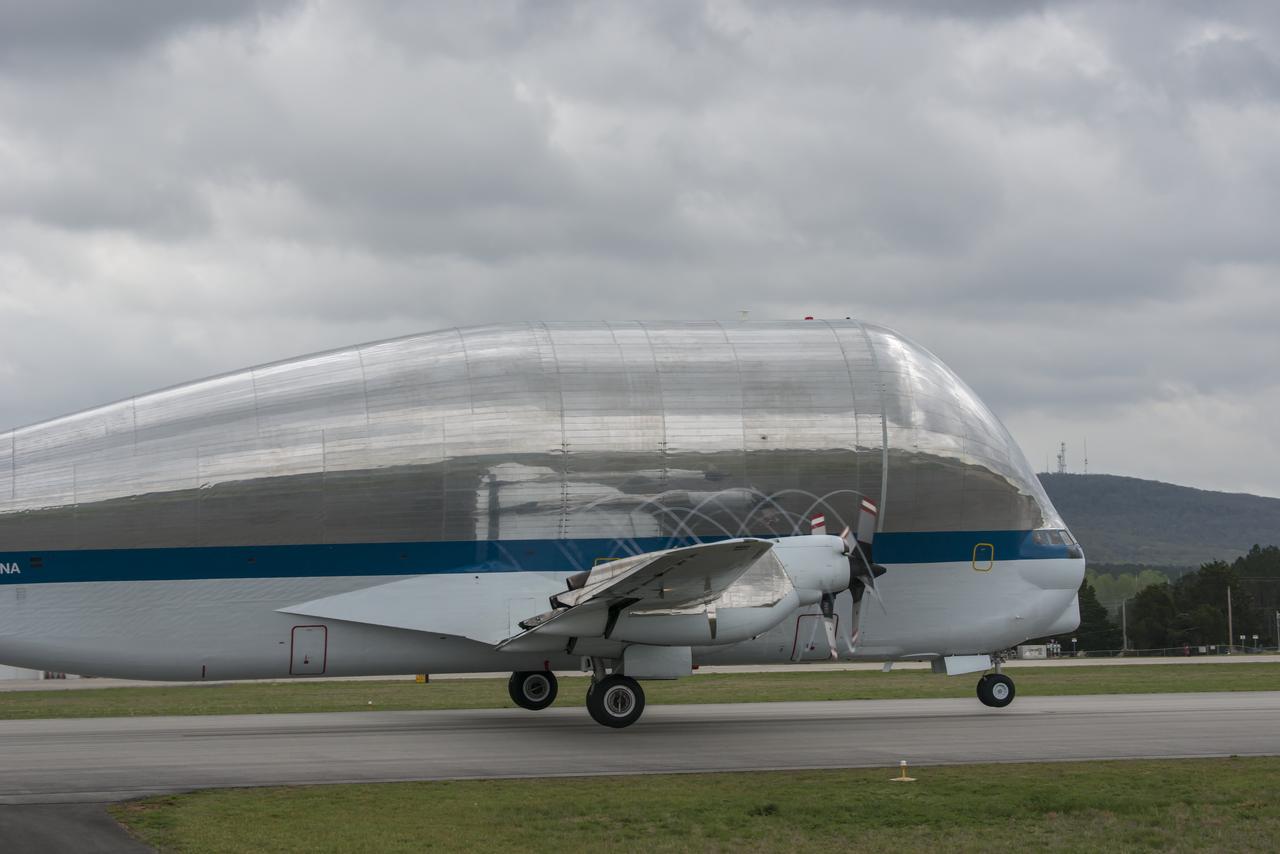
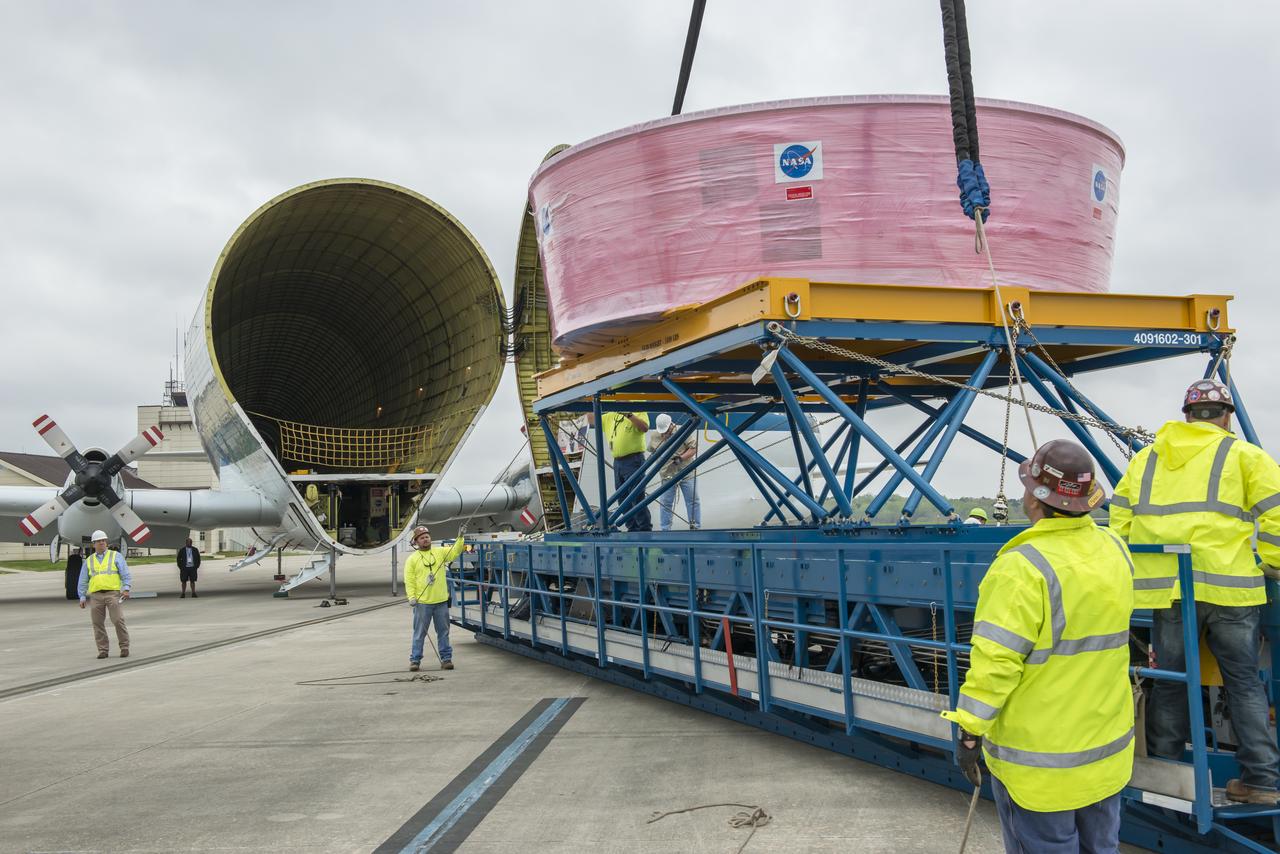
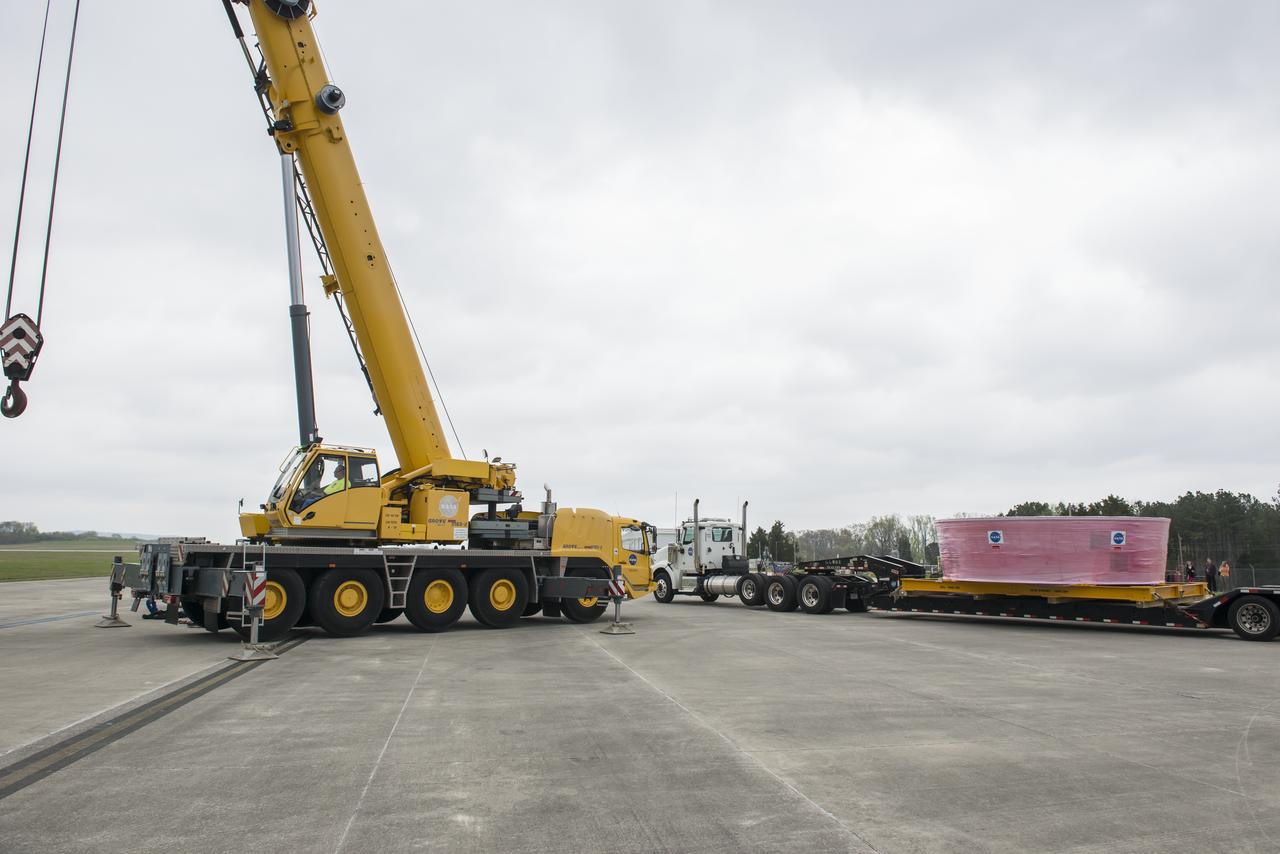
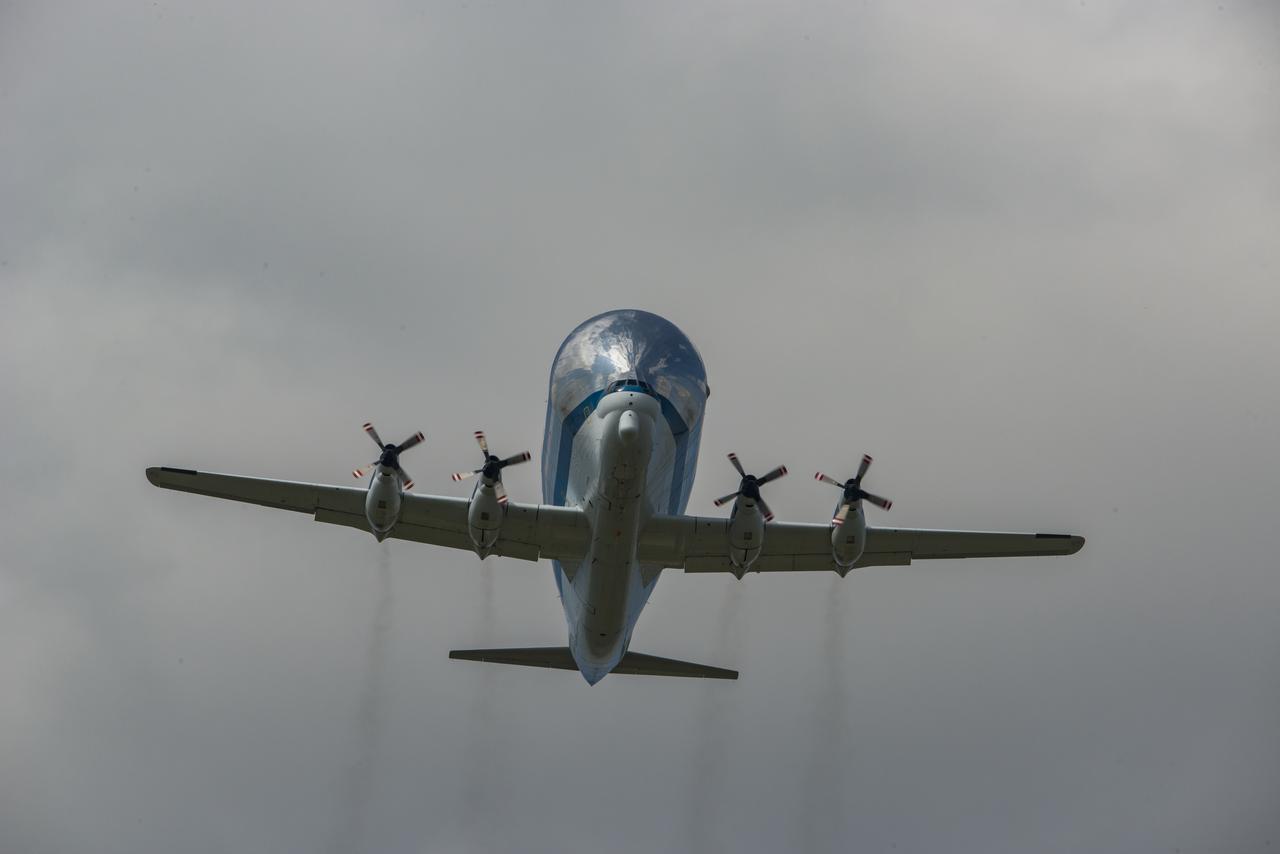
NASA's Super Guppy aircraft arrives to the U.S. Army’s Redstone Airfield in Huntsville, Alabama, April 2, to pick up flight hardware for NASA’s Space Launch System – its new, deep-space rocket that will enable astronauts to begin their journey to explore destinations far into the solar system. The Guppy will depart on Tuesday, April 3 to deliver the Orion stage adapter to NASA’s Kennedy Space Center in Florida for flight preparations. On Exploration Mission-1, the first integrated flight of the SLS and the Orion spacecraft, the adapter will connect Orion to the rocket and carry 13 CubeSats as secondary payloads.
NASA's Super Guppy aircraft arrives to the U.S. Army’s Redstone Airfield in Huntsville, Alabama, April 2, to pick up flight hardware for NASA’s Space Launch System – its new, deep-space rocket that will enable astronauts to begin their journey to explore destinations far into the solar system. The Guppy will depart on Tuesday, April 3 to deliver the Orion stage adapter to NASA’s Kennedy Space Center in Florida for flight preparations. On Exploration Mission-1, the first integrated flight of the SLS and the Orion spacecraft, the adapter will connect Orion to the rocket and carry 13 CubeSats as secondary payloads.
NASA's Super Guppy aircraft arrives to the U.S. Army’s Redstone Airfield in Huntsville, Alabama, April 2, to pick up flight hardware for NASA’s Space Launch System – its new, deep-space rocket that will enable astronauts to begin their journey to explore destinations far into the solar system. The Guppy will depart on Tuesday, April 3 to deliver the Orion stage adapter to NASA’s Kennedy Space Center in Florida for flight preparations. On Exploration Mission-1, the first integrated flight of the SLS and the Orion spacecraft, the adapter will connect Orion to the rocket and carry 13 CubeSats as secondary payloads.
NASA's Super Guppy aircraft arrives to the U.S. Army’s Redstone Airfield in Huntsville, Alabama, April 2, to pick up flight hardware for NASA’s Space Launch System – its new, deep-space rocket that will enable astronauts to begin their journey to explore destinations far into the solar system. The Guppy will depart on Tuesday, April 3 to deliver the Orion stage adapter to NASA’s Kennedy Space Center in Florida for flight preparations. On Exploration Mission-1, the first integrated flight of the SLS and the Orion spacecraft, the adapter will connect Orion to the rocket and carry 13 CubeSats as secondary payloads.
Caption: NASA's Super Guppy aircraft arrives to the U.S. Army’s Redstone Airfield in Huntsville, Alabama, April 2, to pick up flight hardware for NASA’s Space Launch System – its new, deep-space rocket that will enable astronauts to begin their journey to explore destinations far into the solar system. The Guppy will depart on Tuesday, April 3 to deliver the Orion stage adapter to NASA’s Kennedy Space Center in Florida for flight preparations. On Exploration Mission-1, the first integrated flight of the SLS and the Orion spacecraft, the adapter will connect Orion to the rocket and carry 13 CubeSats as secondary payloads.
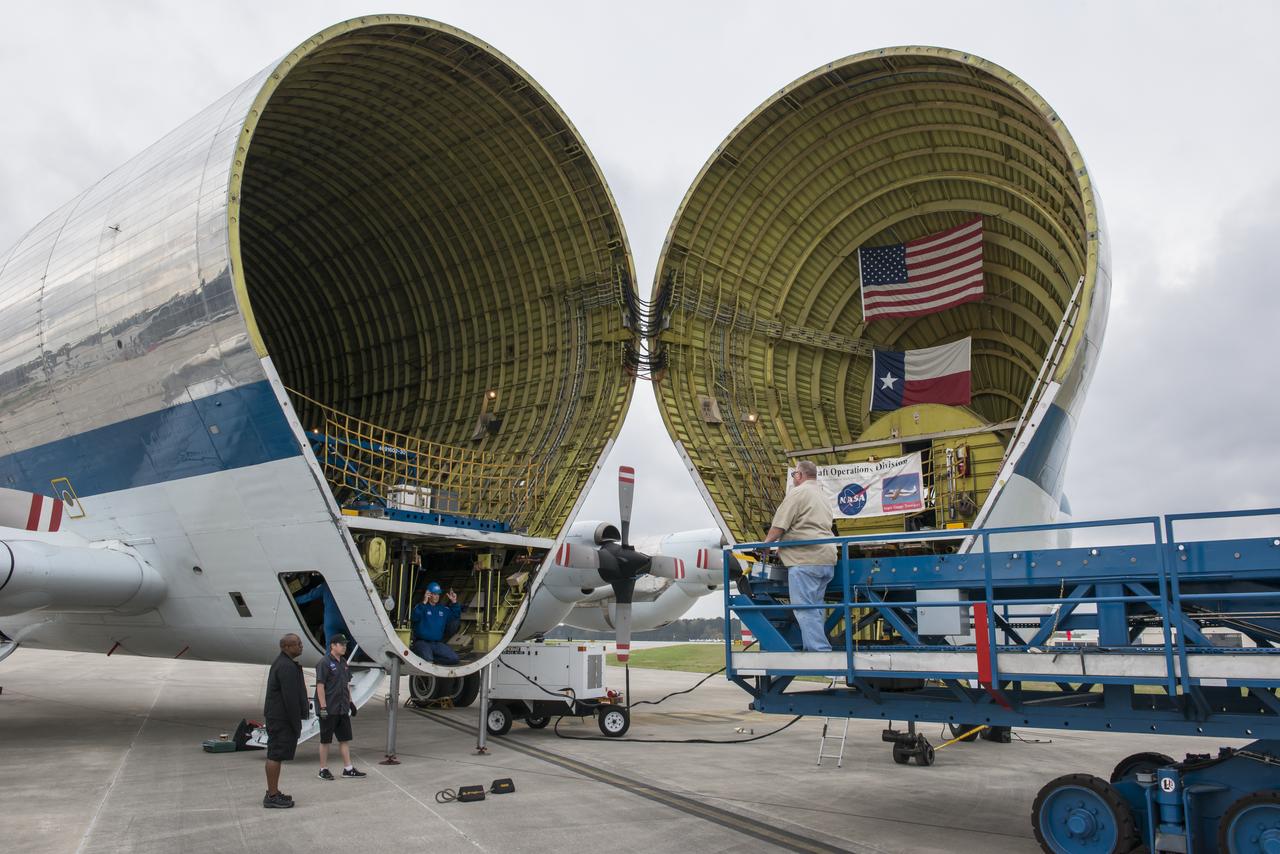
NASA's Super Guppy aircraft arrives to the U.S. Army’s Redstone Airfield in Huntsville, Alabama, April 2, to pick up flight hardware for NASA’s Space Launch System – its new, deep-space rocket that will enable astronauts to begin their journey to explore destinations far into the solar system. The Guppy will depart on Tuesday, April 3 to deliver the Orion stage adapter to NASA’s Kennedy Space Center in Florida for flight preparations. On Exploration Mission-1, the first integrated flight of the SLS and the Orion spacecraft, the adapter will connect Orion to the rocket and carry 13 CubeSats as secondary payloads.

NASA's Super Guppy aircraft arrives to the U.S. Army’s Redstone Airfield in Huntsville, Alabama, April 2, to pick up flight hardware for NASA’s Space Launch System – its new, deep-space rocket that will enable astronauts to begin their journey to explore destinations far into the solar system. The Guppy will depart on Tuesday, April 3 to deliver the Orion stage adapter to NASA’s Kennedy Space Center in Florida for flight preparations. On Exploration Mission-1, the first integrated flight of the SLS and the Orion spacecraft, the adapter will connect Orion to the rocket and carry 13 CubeSats as secondary payloads.
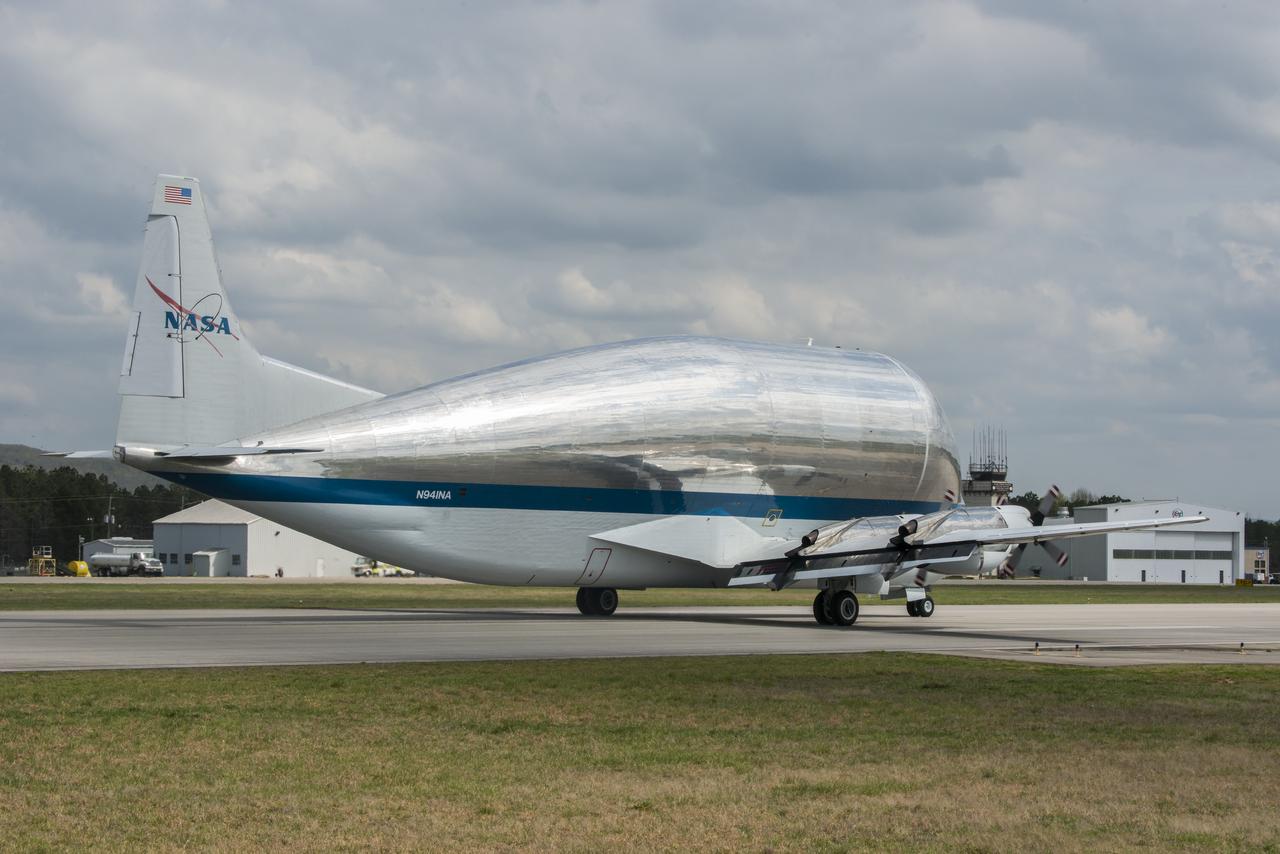
Caption: NASA's Super Guppy aircraft arrives to the U.S. Army’s Redstone Airfield in Huntsville, Alabama, April 2, to pick up flight hardware for NASA’s Space Launch System – its new, deep-space rocket that will enable astronauts to begin their journey to explore destinations far into the solar system. The Guppy will depart on Tuesday, April 3 to deliver the Orion stage adapter to NASA’s Kennedy Space Center in Florida for flight preparations. On Exploration Mission-1, the first integrated flight of the SLS and the Orion spacecraft, the adapter will connect Orion to the rocket and carry 13 CubeSats as secondary payloads.
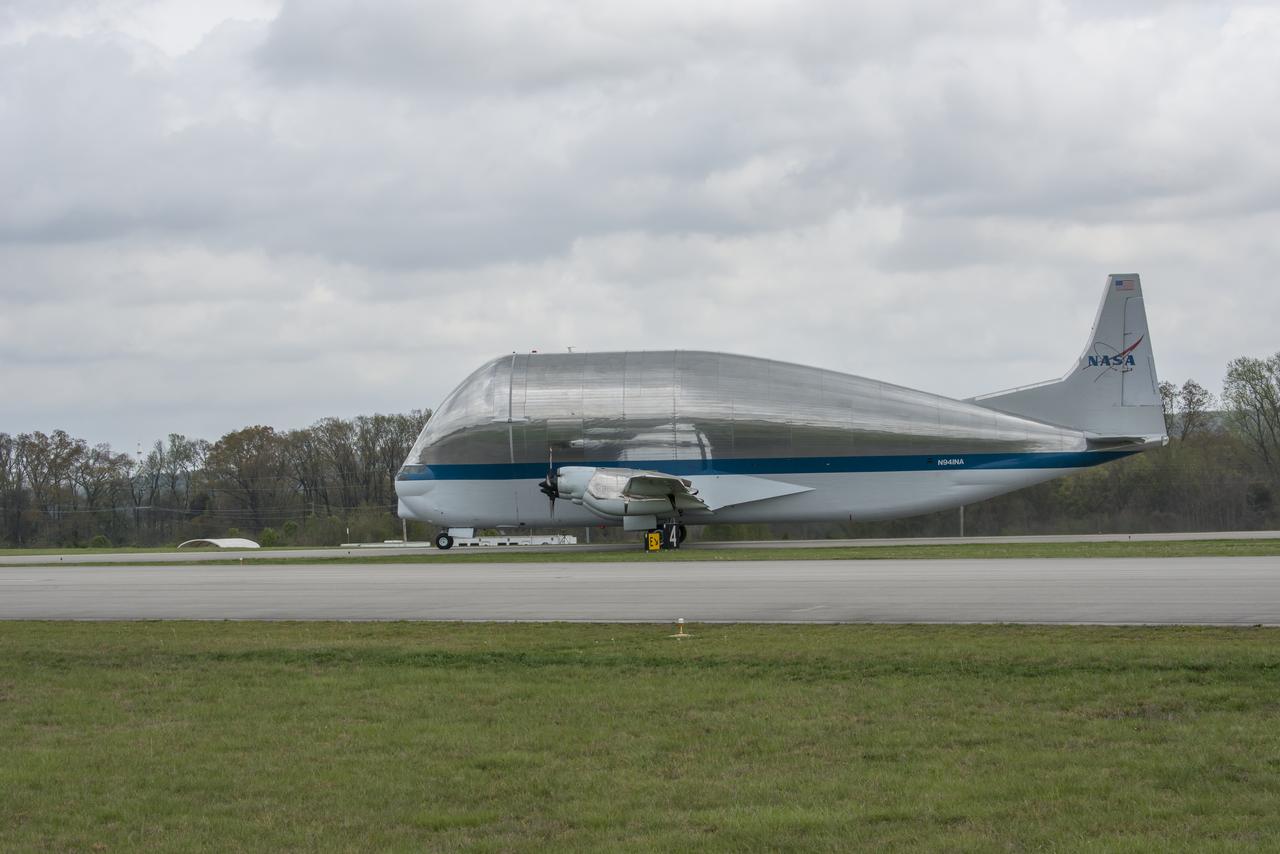
NASA's Super Guppy aircraft arrives to the U.S. Army’s Redstone Airfield in Huntsville, Alabama, April 2, to pick up flight hardware for NASA’s Space Launch System – its new, deep-space rocket that will enable astronauts to begin their journey to explore destinations far into the solar system. The Guppy will depart on Tuesday, April 3 to deliver the Orion stage adapter to NASA’s Kennedy Space Center in Florida for flight preparations. On Exploration Mission-1, the first integrated flight of the SLS and the Orion spacecraft, the adapter will connect Orion to the rocket and carry 13 CubeSats as secondary payloads.
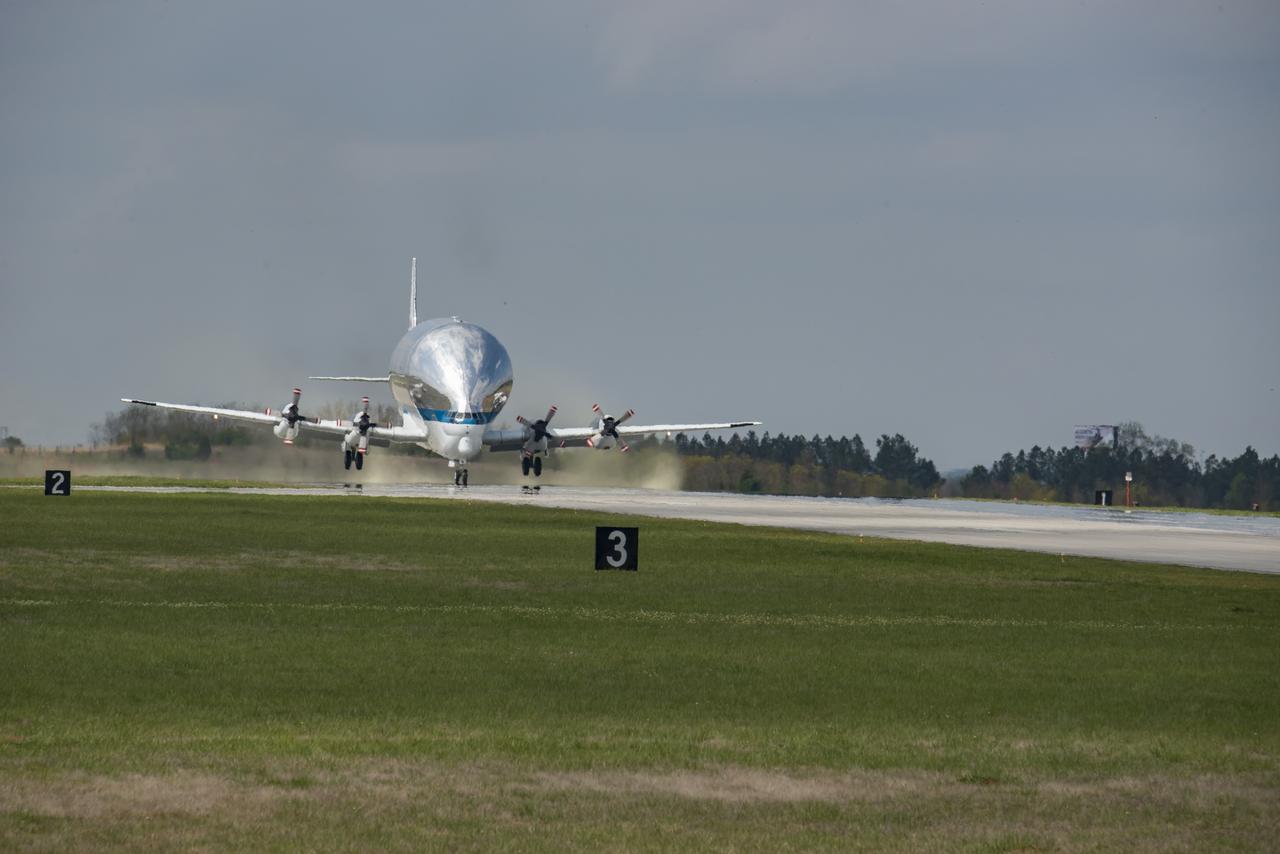
Caption: NASA's Super Guppy aircraft arrives to the U.S. Army’s Redstone Airfield in Huntsville, Alabama, April 2, to pick up flight hardware for NASA’s Space Launch System – its new, deep-space rocket that will enable astronauts to begin their journey to explore destinations far into the solar system. The Guppy will depart on Tuesday, April 3 to deliver the Orion stage adapter to NASA’s Kennedy Space Center in Florida for flight preparations. On Exploration Mission-1, the first integrated flight of the SLS and the Orion spacecraft, the adapter will connect Orion to the rocket and carry 13 CubeSats as secondary payloads.
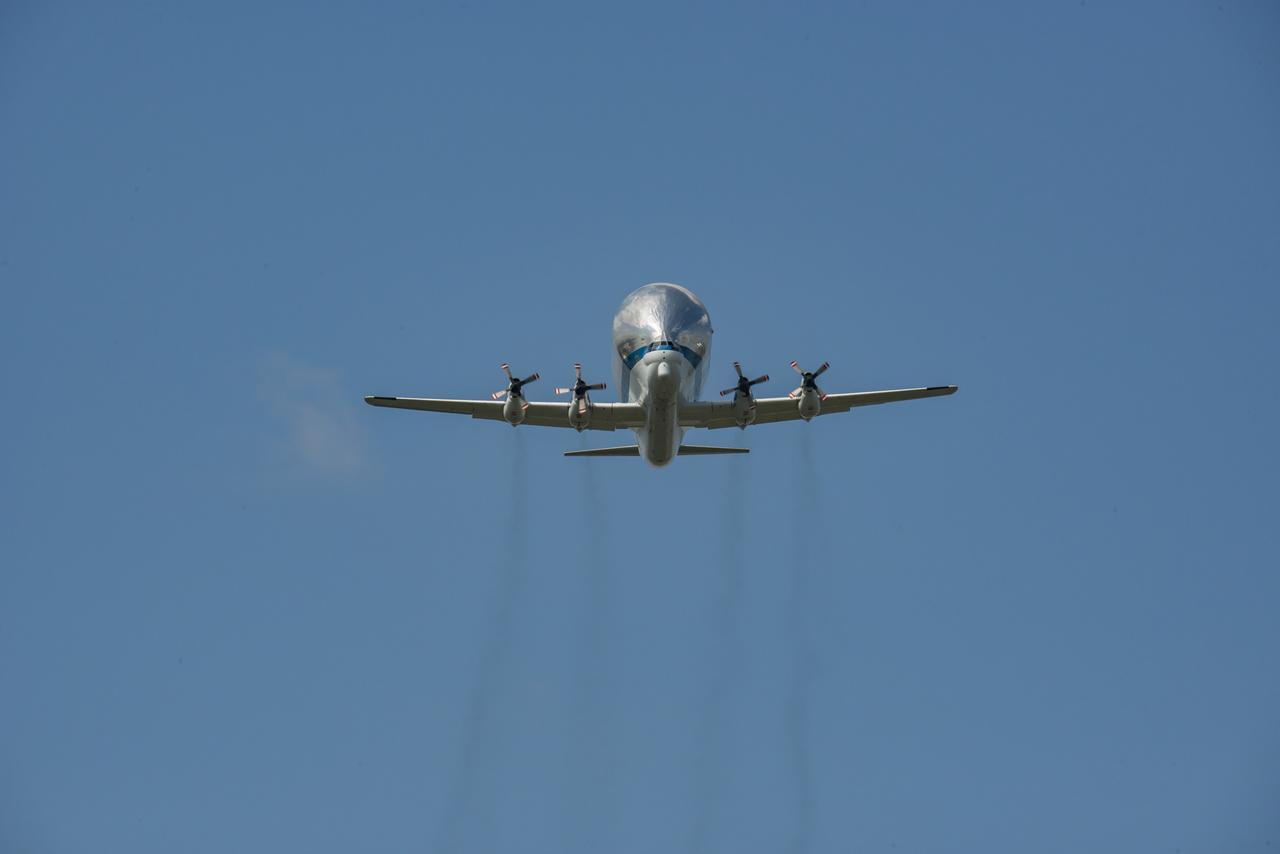
Caption: NASA's Super Guppy aircraft arrives to the U.S. Army’s Redstone Airfield in Huntsville, Alabama, April 2, to pick up flight hardware for NASA’s Space Launch System – its new, deep-space rocket that will enable astronauts to begin their journey to explore destinations far into the solar system. The Guppy will depart on Tuesday, April 3 to deliver the Orion stage adapter to NASA’s Kennedy Space Center in Florida for flight preparations. On Exploration Mission-1, the first integrated flight of the SLS and the Orion spacecraft, the adapter will connect Orion to the rocket and carry 13 CubeSats as secondary payloads.
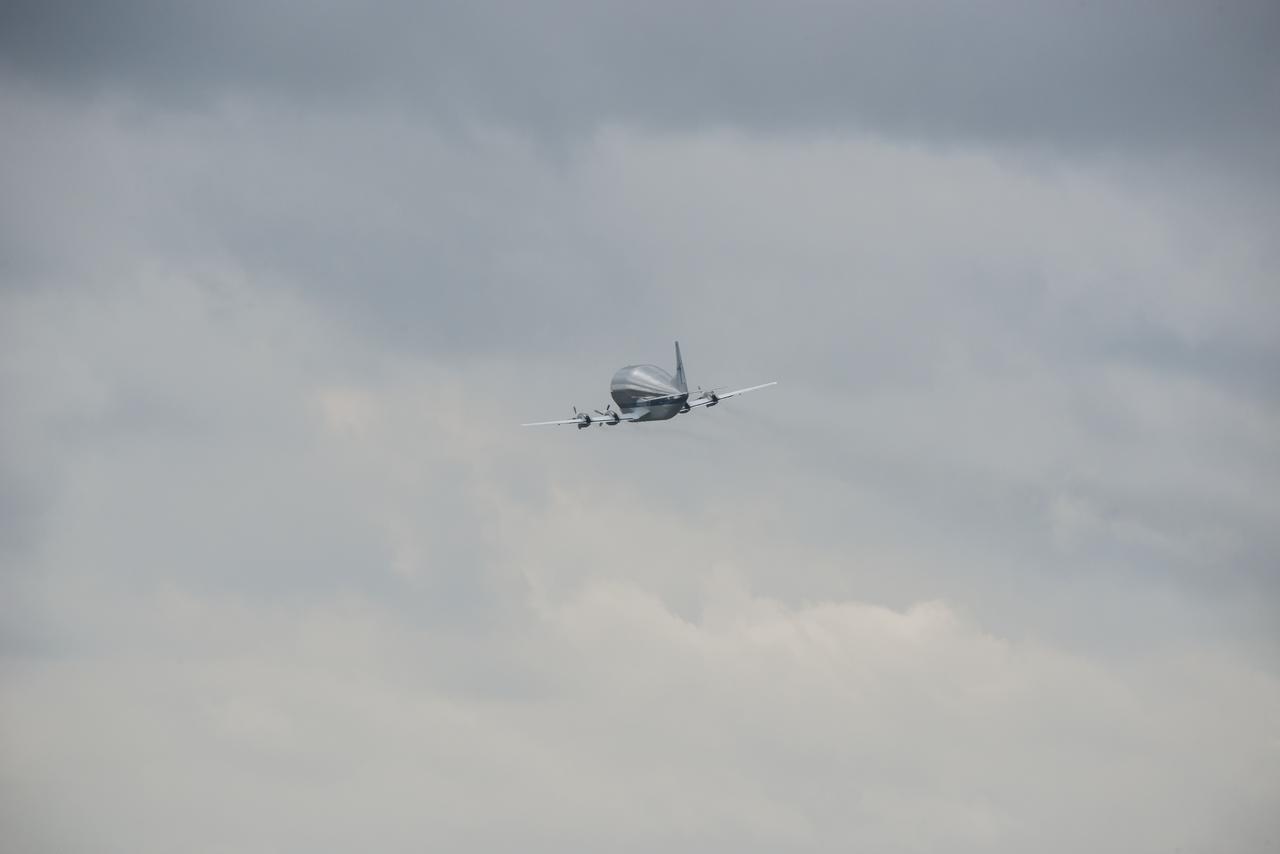
NASA's Super Guppy aircraft arrives to the U.S. Army’s Redstone Airfield in Huntsville, Alabama, April 2, to pick up flight hardware for NASA’s Space Launch System – its new, deep-space rocket that will enable astronauts to begin their journey to explore destinations far into the solar system. The Guppy will depart on Tuesday, April 3 to deliver the Orion stage adapter to NASA’s Kennedy Space Center in Florida for flight preparations. On Exploration Mission-1, the first integrated flight of the SLS and the Orion spacecraft, the adapter will connect Orion to the rocket and carry 13 CubeSats as secondary payloads.
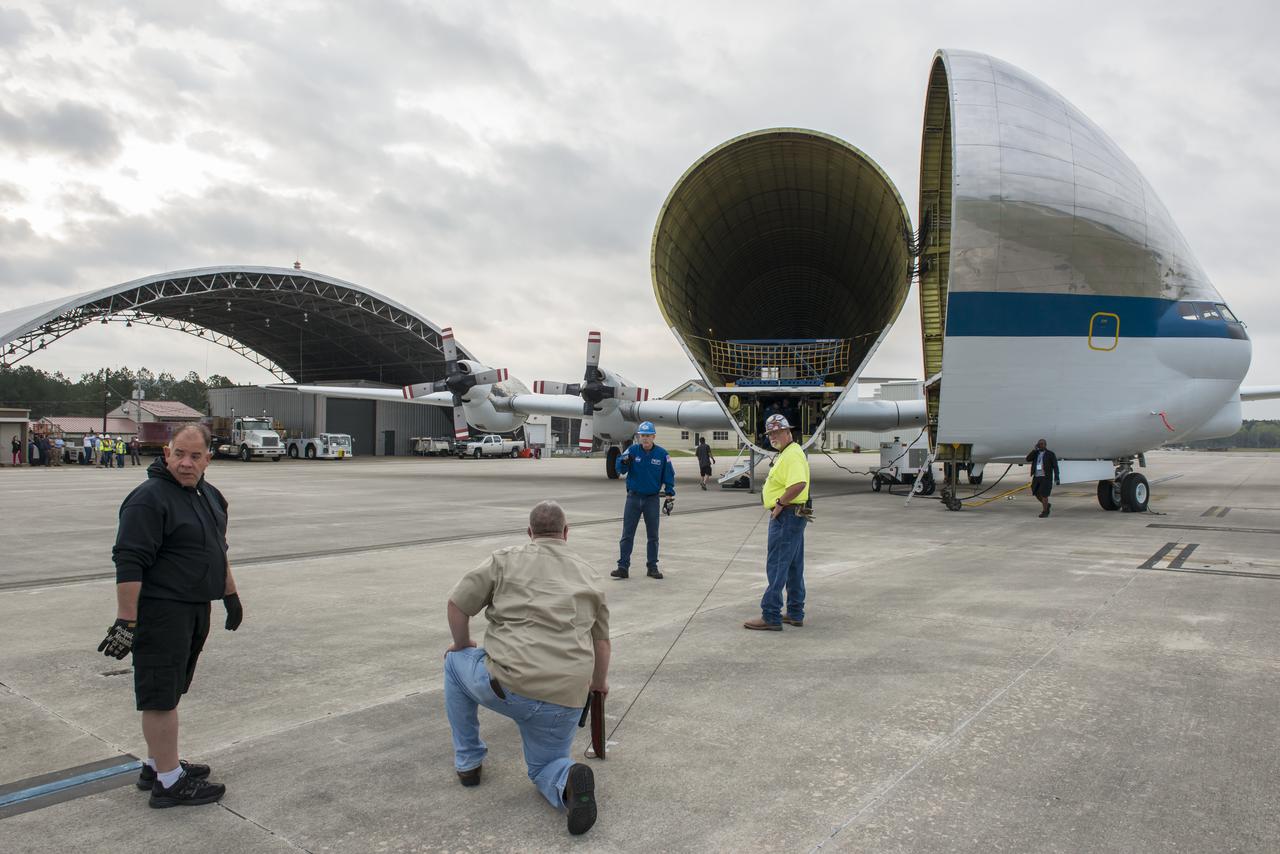
NASA's Super Guppy aircraft arrives to the U.S. Army’s Redstone Airfield in Huntsville, Alabama, April 2, to pick up flight hardware for NASA’s Space Launch System – its new, deep-space rocket that will enable astronauts to begin their journey to explore destinations far into the solar system. The Guppy will depart on Tuesday, April 3 to deliver the Orion stage adapter to NASA’s Kennedy Space Center in Florida for flight preparations. On Exploration Mission-1, the first integrated flight of the SLS and the Orion spacecraft, the adapter will connect Orion to the rocket and carry 13 CubeSats as secondary payloads.
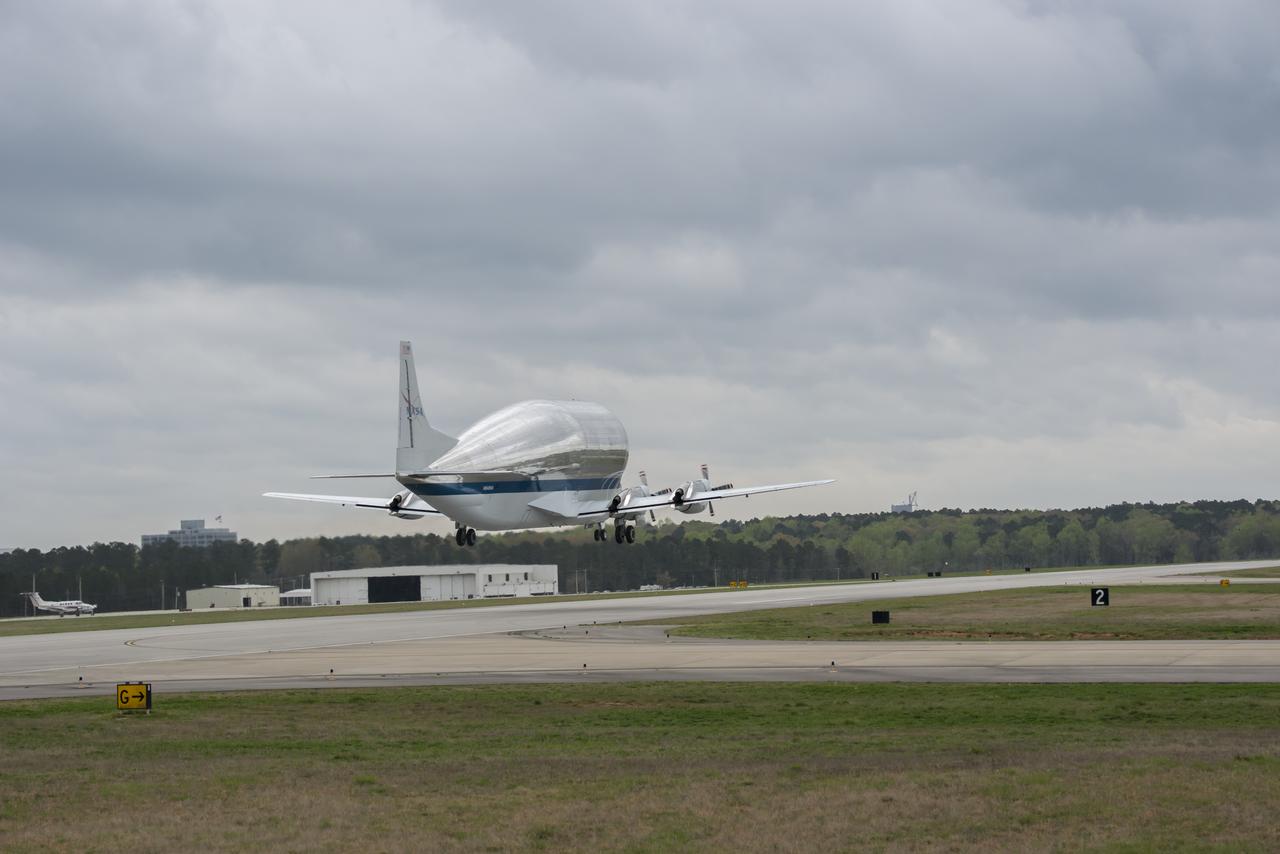
NASA's Super Guppy aircraft arrives to the U.S. Army’s Redstone Airfield in Huntsville, Alabama, April 2, to pick up flight hardware for NASA’s Space Launch System – its new, deep-space rocket that will enable astronauts to begin their journey to explore destinations far into the solar system. The Guppy will depart on Tuesday, April 3 to deliver the Orion stage adapter to NASA’s Kennedy Space Center in Florida for flight preparations. On Exploration Mission-1, the first integrated flight of the SLS and the Orion spacecraft, the adapter will connect Orion to the rocket and carry 13 CubeSats as secondary payloads.
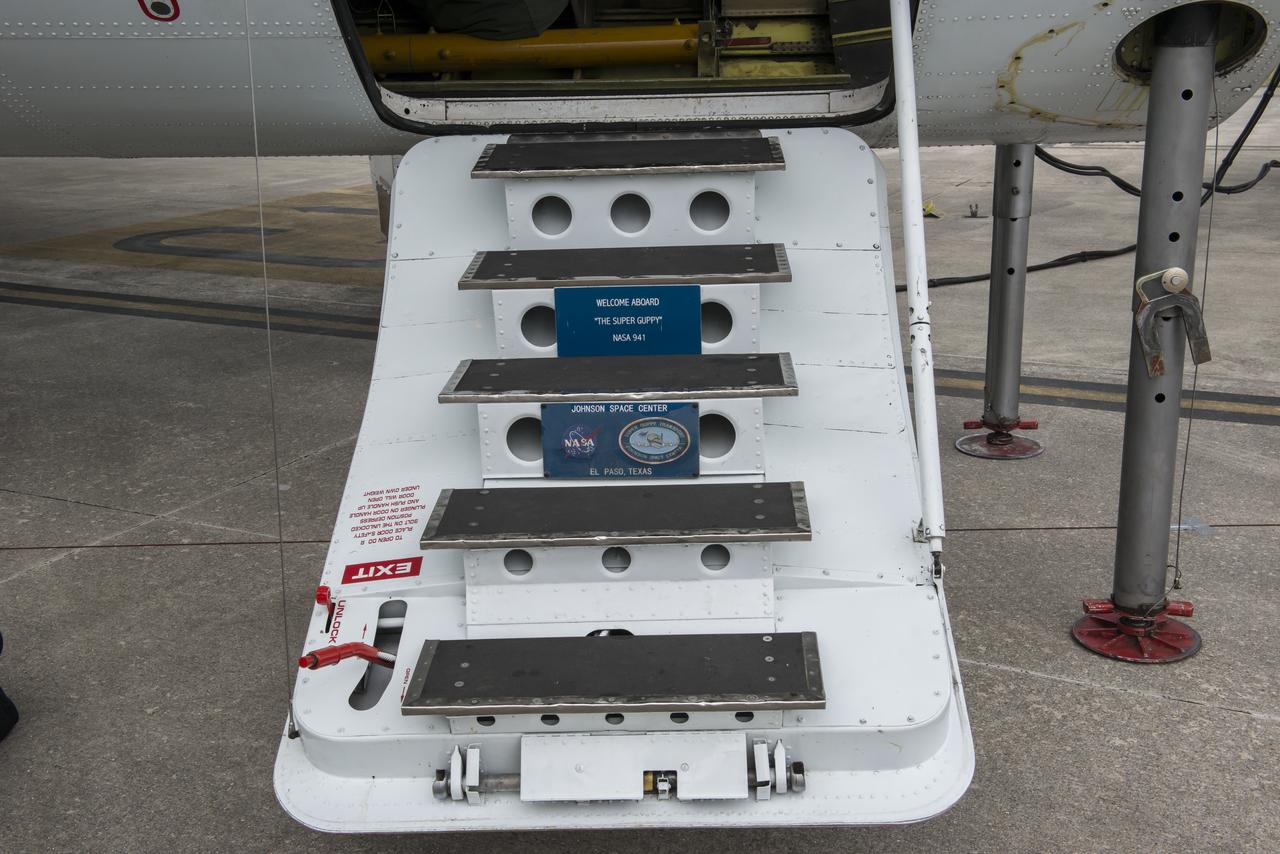
NASA's Super Guppy aircraft arrives to the U.S. Army’s Redstone Airfield in Huntsville, Alabama, April 2, to pick up flight hardware for NASA’s Space Launch System – its new, deep-space rocket that will enable astronauts to begin their journey to explore destinations far into the solar system. The Guppy will depart on Tuesday, April 3 to deliver the Orion stage adapter to NASA’s Kennedy Space Center in Florida for flight preparations. On Exploration Mission-1, the first integrated flight of the SLS and the Orion spacecraft, the adapter will connect Orion to the rocket and carry 13 CubeSats as secondary payloads.
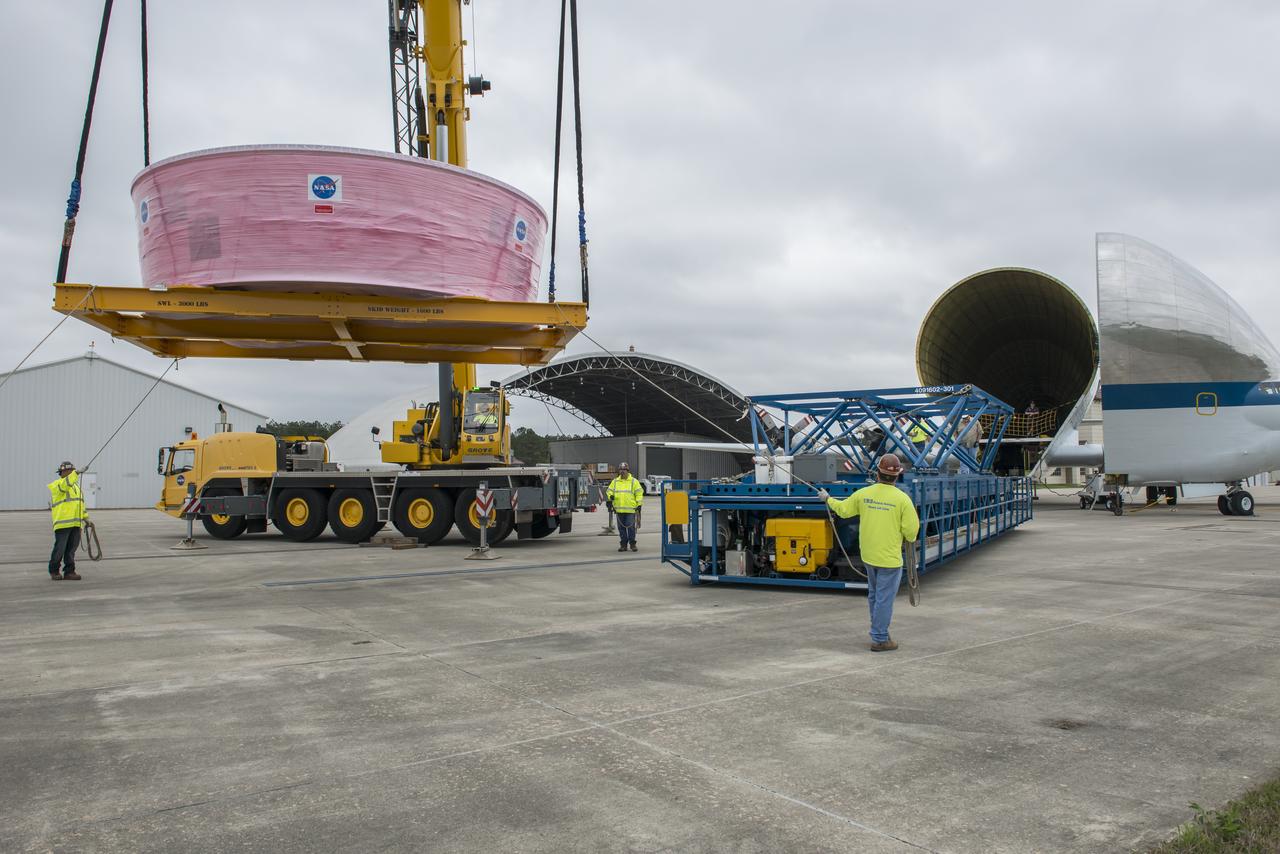
NASA's Super Guppy aircraft arrives to the U.S. Army’s Redstone Airfield in Huntsville, Alabama, April 2, to pick up flight hardware for NASA’s Space Launch System – its new, deep-space rocket that will enable astronauts to begin their journey to explore destinations far into the solar system. The Guppy will depart on Tuesday, April 3 to deliver the Orion stage adapter to NASA’s Kennedy Space Center in Florida for flight preparations. On Exploration Mission-1, the first integrated flight of the SLS and the Orion spacecraft, the adapter will connect Orion to the rocket and carry 13 CubeSats as secondary payloads.
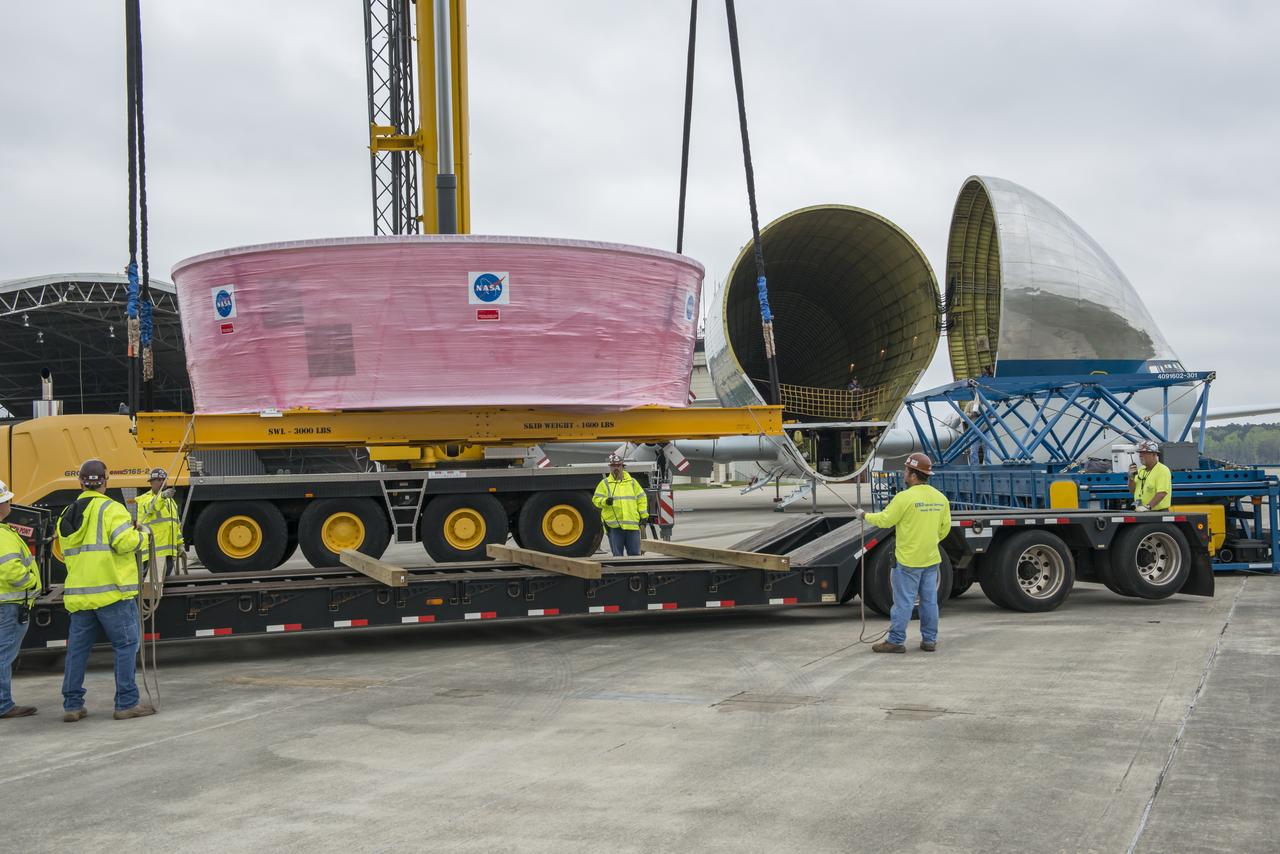
NASA's Super Guppy aircraft arrives to the U.S. Army’s Redstone Airfield in Huntsville, Alabama, April 2, to pick up flight hardware for NASA’s Space Launch System – its new, deep-space rocket that will enable astronauts to begin their journey to explore destinations far into the solar system. The Guppy will depart on Tuesday, April 3 to deliver the Orion stage adapter to NASA’s Kennedy Space Center in Florida for flight preparations. On Exploration Mission-1, the first integrated flight of the SLS and the Orion spacecraft, the adapter will connect Orion to the rocket and carry 13 CubeSats as secondary payloads.
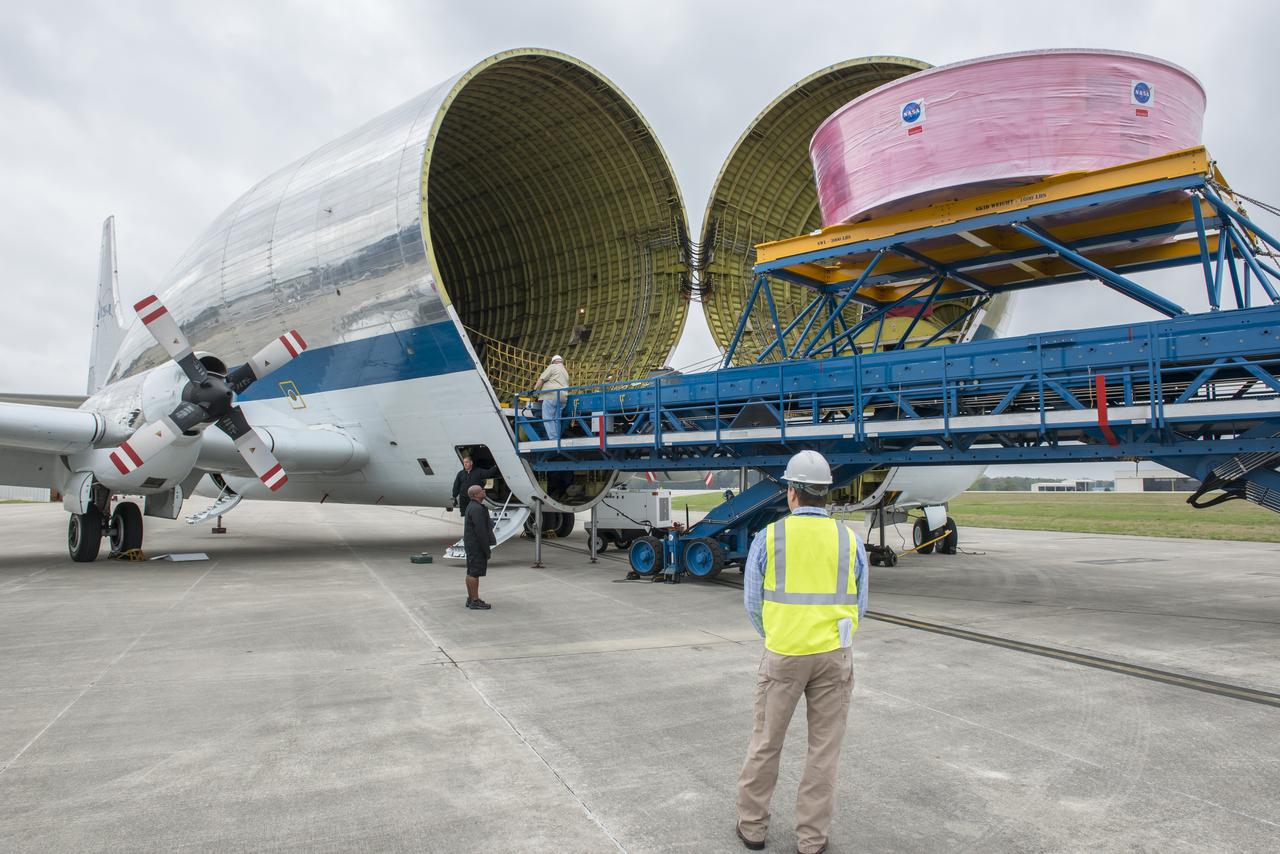
NASA's Super Guppy aircraft arrives to the U.S. Army’s Redstone Airfield in Huntsville, Alabama, April 2, to pick up flight hardware for NASA’s Space Launch System – its new, deep-space rocket that will enable astronauts to begin their journey to explore destinations far into the solar system. The Guppy will depart on Tuesday, April 3 to deliver the Orion stage adapter to NASA’s Kennedy Space Center in Florida for flight preparations. On Exploration Mission-1, the first integrated flight of the SLS and the Orion spacecraft, the adapter will connect Orion to the rocket and carry 13 CubeSats as secondary payloads.
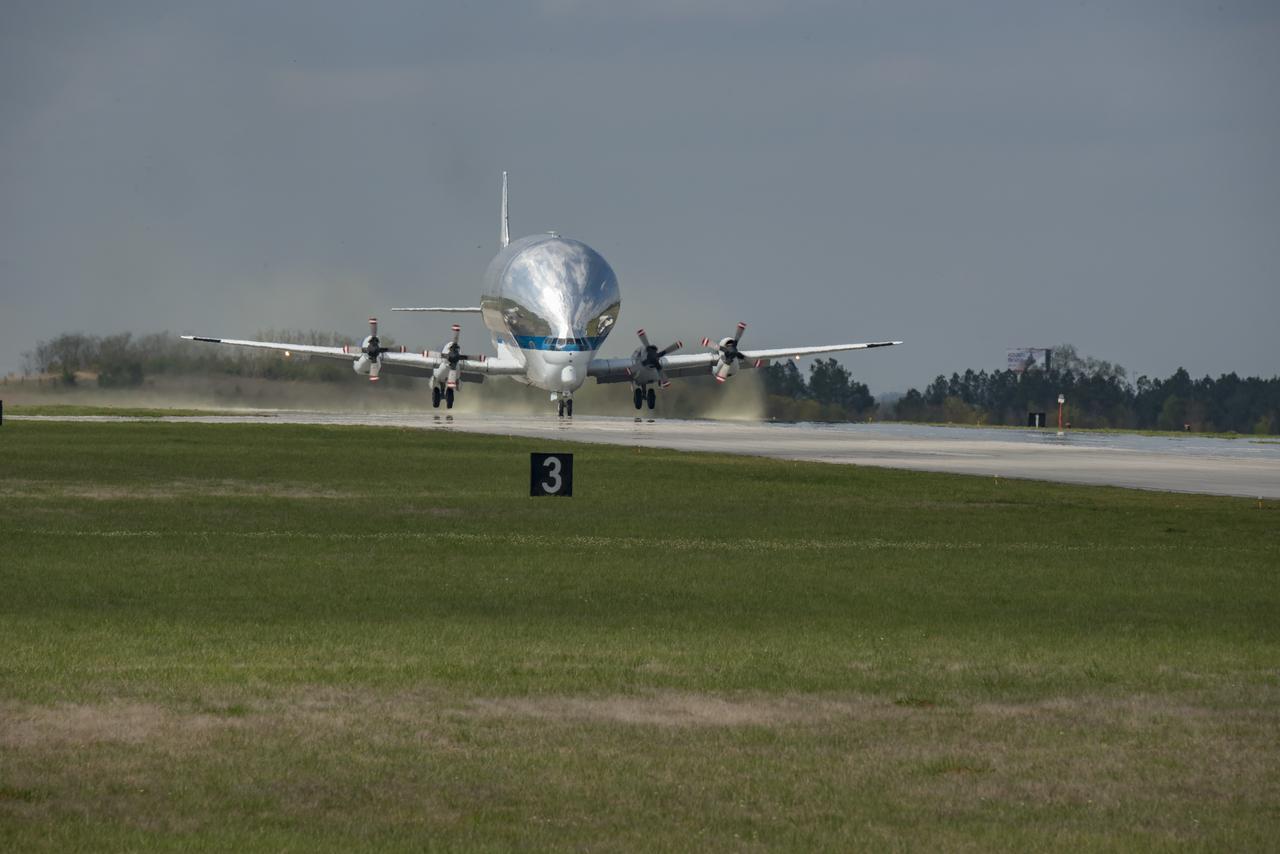
Caption: NASA's Super Guppy aircraft arrives to the U.S. Army’s Redstone Airfield in Huntsville, Alabama, April 2, to pick up flight hardware for NASA’s Space Launch System – its new, deep-space rocket that will enable astronauts to begin their journey to explore destinations far into the solar system. The Guppy will depart on Tuesday, April 3 to deliver the Orion stage adapter to NASA’s Kennedy Space Center in Florida for flight preparations. On Exploration Mission-1, the first integrated flight of the SLS and the Orion spacecraft, the adapter will connect Orion to the rocket and carry 13 CubeSats as secondary payloads.
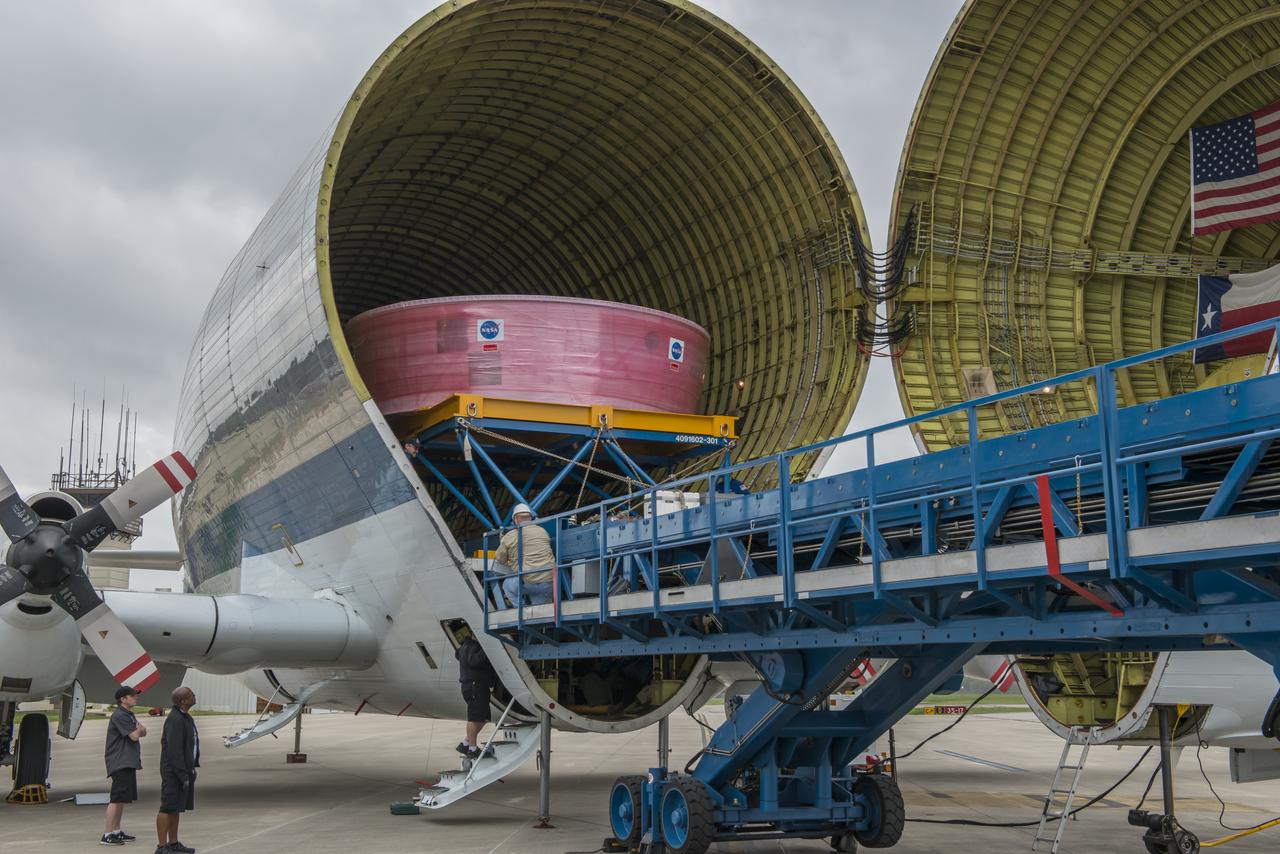
NASA's Super Guppy aircraft arrives to the U.S. Army’s Redstone Airfield in Huntsville, Alabama, April 2, to pick up flight hardware for NASA’s Space Launch System – its new, deep-space rocket that will enable astronauts to begin their journey to explore destinations far into the solar system. The Guppy will depart on Tuesday, April 3 to deliver the Orion stage adapter to NASA’s Kennedy Space Center in Florida for flight preparations. On Exploration Mission-1, the first integrated flight of the SLS and the Orion spacecraft, the adapter will connect Orion to the rocket and carry 13 CubeSats as secondary payloads.
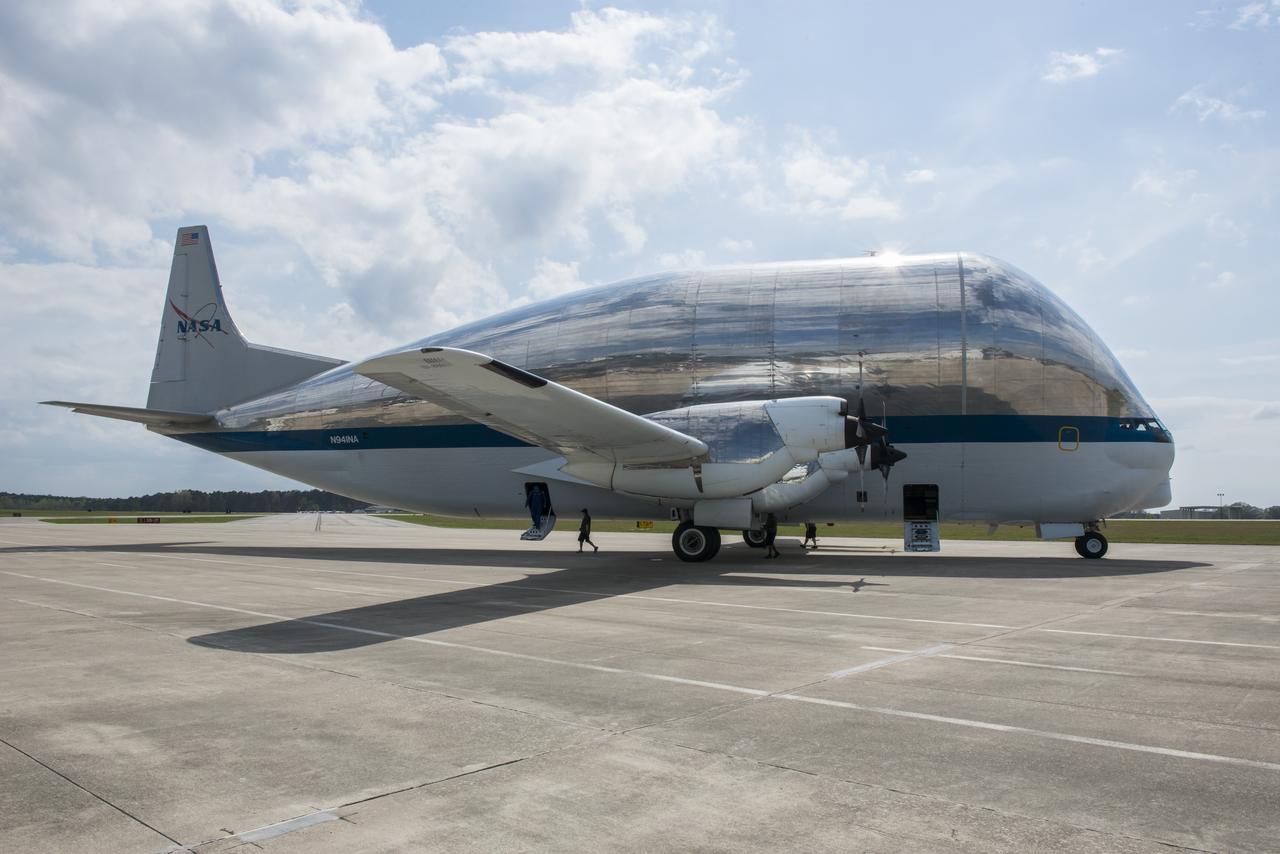
Caption: NASA's Super Guppy aircraft arrives to the U.S. Army’s Redstone Airfield in Huntsville, Alabama, April 2, to pick up flight hardware for NASA’s Space Launch System – its new, deep-space rocket that will enable astronauts to begin their journey to explore destinations far into the solar system. The Guppy will depart on Tuesday, April 3 to deliver the Orion stage adapter to NASA’s Kennedy Space Center in Florida for flight preparations. On Exploration Mission-1, the first integrated flight of the SLS and the Orion spacecraft, the adapter will connect Orion to the rocket and carry 13 CubeSats as secondary payloads.
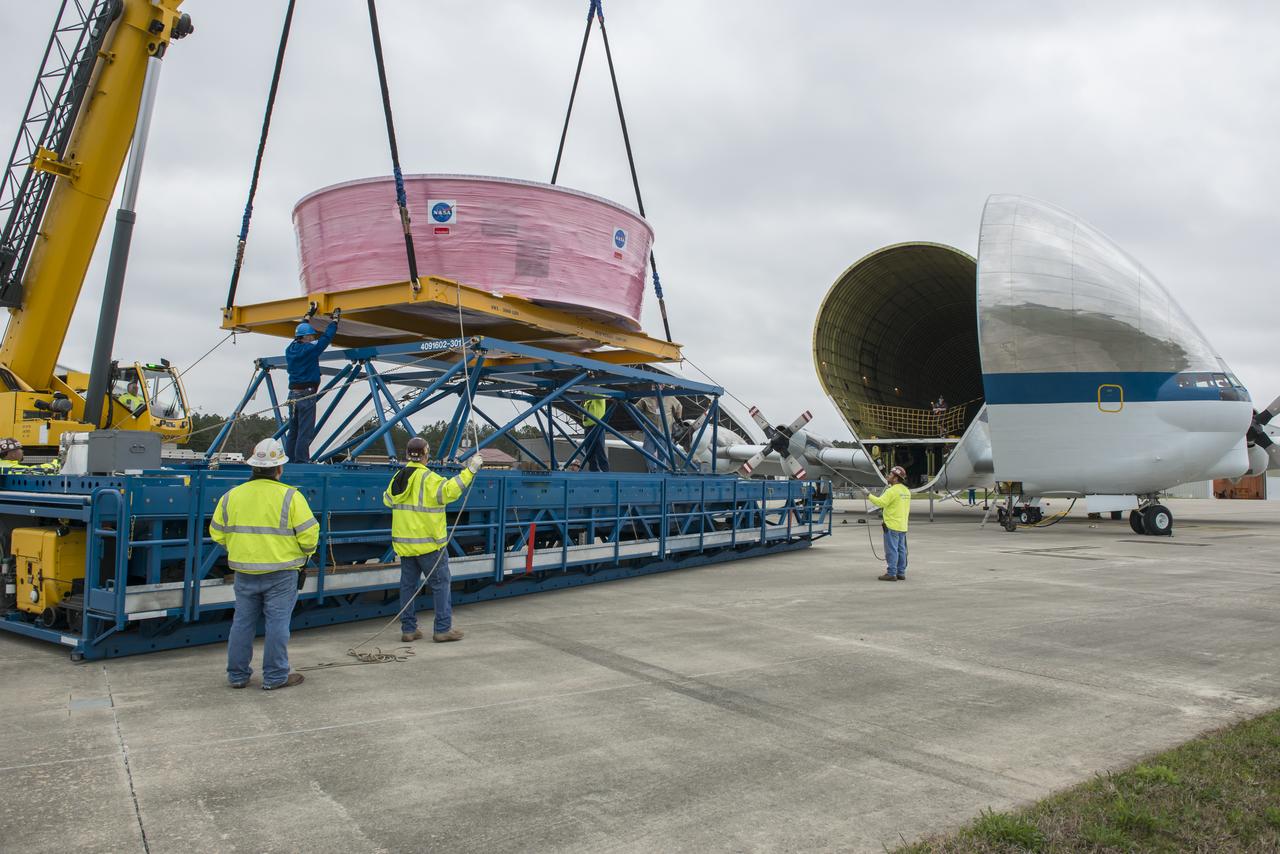
NASA's Super Guppy aircraft arrives to the U.S. Army’s Redstone Airfield in Huntsville, Alabama, April 2, to pick up flight hardware for NASA’s Space Launch System – its new, deep-space rocket that will enable astronauts to begin their journey to explore destinations far into the solar system. The Guppy will depart on Tuesday, April 3 to deliver the Orion stage adapter to NASA’s Kennedy Space Center in Florida for flight preparations. On Exploration Mission-1, the first integrated flight of the SLS and the Orion spacecraft, the adapter will connect Orion to the rocket and carry 13 CubeSats as secondary payloads.
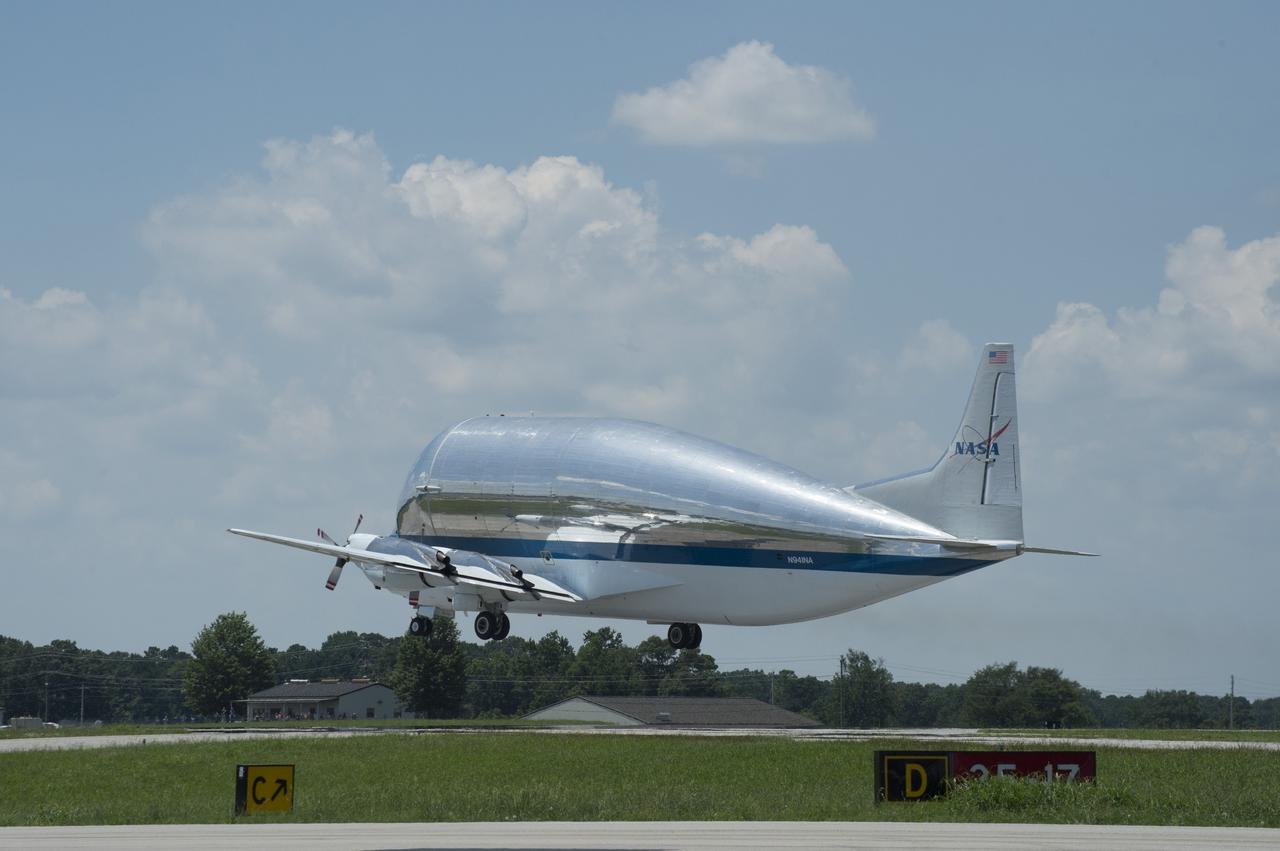
NASA's Super Guppie aircraft lifts off from Redstone Arsenal's airfield with the Orion stage adapter which will be transported to Denver, Colorado for further testing.
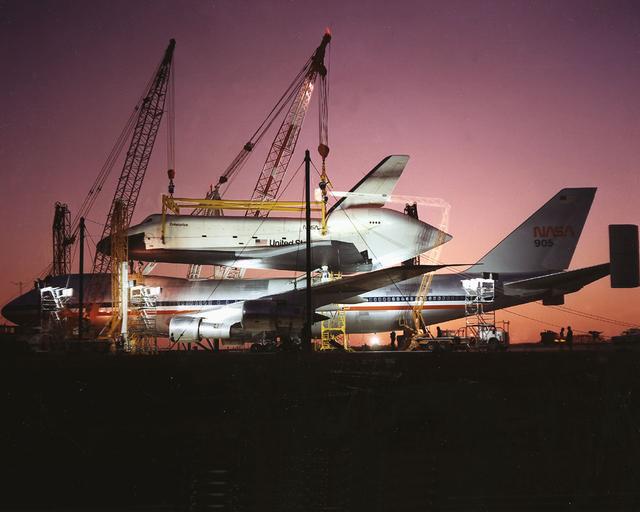
The Shuttle Orbiter Enterprise is off-loaded at Redstone Arsenal Airfield for later Mated Vertical Ground Vibration tests (MVGVT) at Marshall Space Flight Center's Dynamic Test Stand. The tests marked the first time ever that the entire shuttle complement (including orbiter, external tank, and solid rocket boosters) were mated vertically.
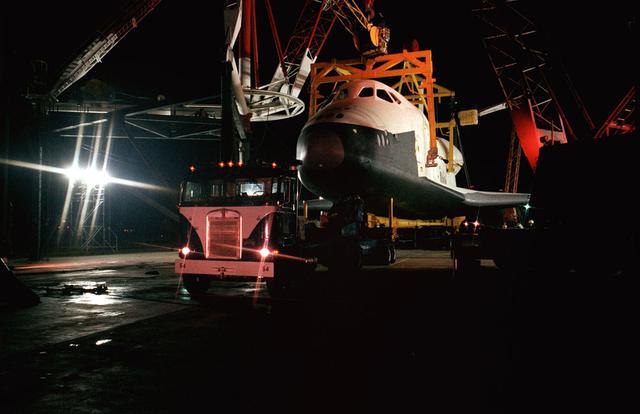
The Shuttle Orbiter Enterprise is off-loaded at Redstone Arsenal Airfield for later Mated Vertical Ground Vibration tests (MVGVT) at Marshall Space Flight Center's Dynamic Test Stand. The tests marked the first time ever that the entire shuttle complement including orbiter, external tank, and solid rocket boosters were vertically mated.
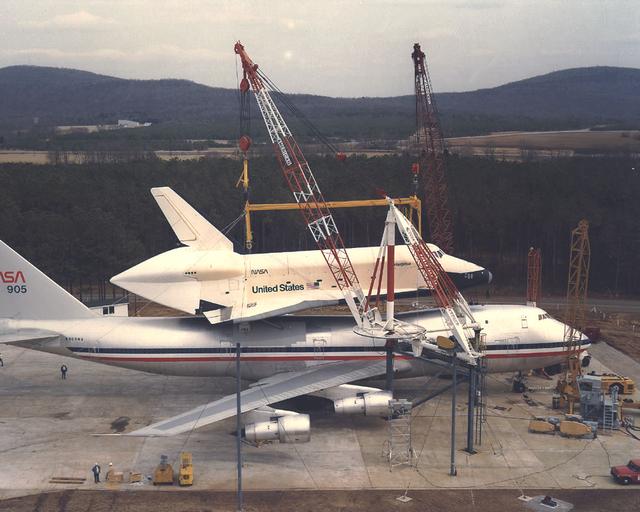
The Shuttle Orbiter Enterprise is off-loaded at Redstone Arsenal Airfield for later Mated Vertical Ground Vibration tests (MVGVT) at Marshall Space Flight Center's Dynamic Test Stand. The tests marked the first time ever that the entire shuttle complement (including orbiter, external tank, and solid rocket boosters) were mated vertically.
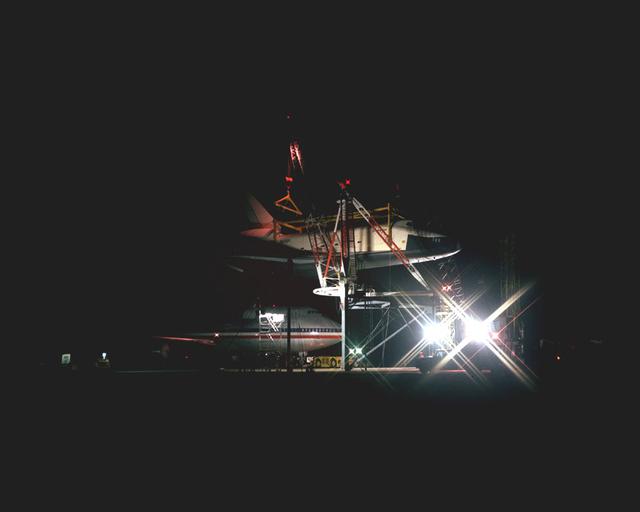
The Shuttle Orbiter Enterprise is off-loaded Redstone Arsenal Airfield for later Mated Vertical Ground Vibration tests (MVGVT) at Marshall Space Flight Center's Dynamic Test Stand. The tests marked the first time ever that the entire shuttle complement (including orbiter, external tank, and solid rocket boosters) were mated vertically.
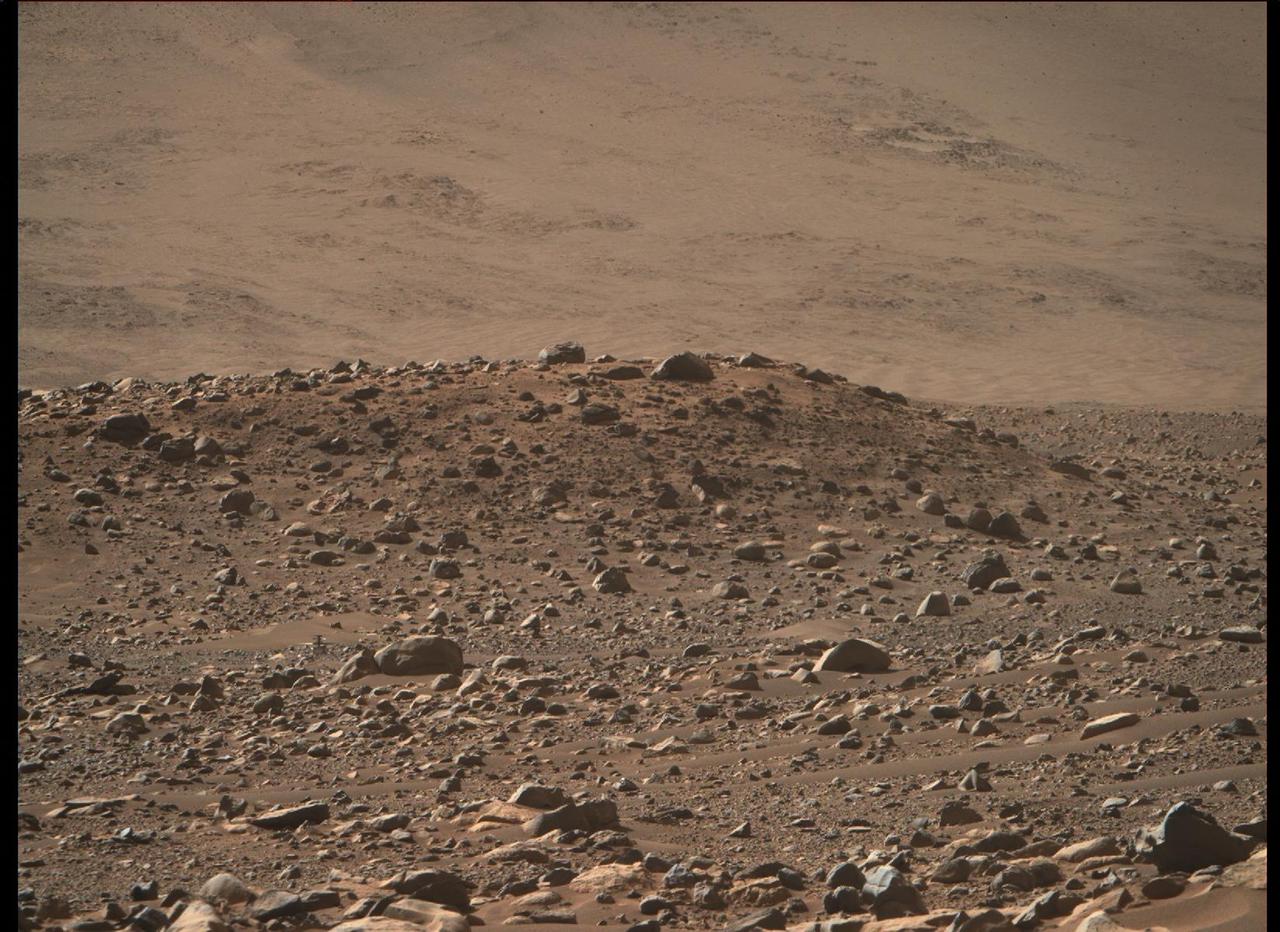
This image of NASA's Ingenuity Mars Helicopter at "Airfield Mu" was taken by the Mastcam-Z instrument aboard Perseverance on April 14, 2023, the 764th Martian day, or sol, of the rover's mission. The helicopter's landing hazard avoidance algorithm helped guide it to a safe landing at Mu the previous sol, after completing its 50th flight. The helicopter is just below and to the left of center in the image. It is about 720 feet (220 meters) away from the rover. The approximately 4-foot-wide (1.2-meter-wide) split boulder, which appears to be directly in front and to the right of the helicopter, is actually about 380 feet (115 meters) in front of the rotorcraft. https://photojournal.jpl.nasa.gov/catalog/PIA25883

The Shuttle Orbiter Enterprise atop a 747 landing at Redstone Arsenal Airfield for later Mated Vertical Ground Vibration tests (MVGVT) at Marshall Space Flight Center's Dynamic Test Stand. The tests marked the first time ever that the entire shuttle complement (including orbiter, external tank, and solid rocket boosters) were mated vertically.
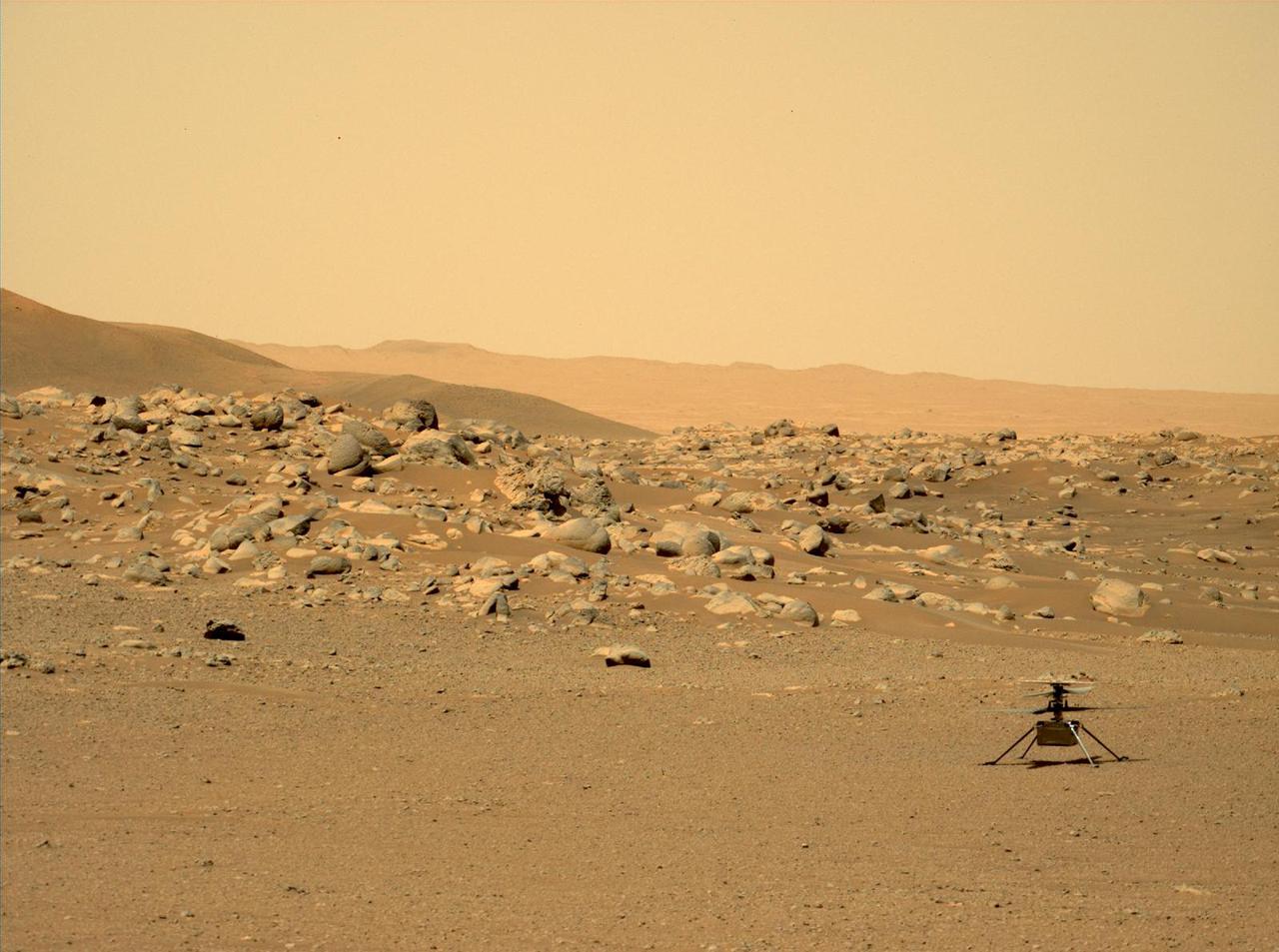
This image of NASA's Ingenuity Mars Helicopter was taken by the Mastcam-Z instrument of the Perseverance rover on June 15, 2021, the 114th Martian day, or sol, of the mission. The location, "Airfield D" (the fourth airfield), is just east of the "Séítah" geologic unit. The image has been processed from the original version. Ingenuity was built by NASA's Jet Propulsion Laboratory in Southern California, which also manages the project for NASA Headquarters. It is supported by NASA's Science Mission Directorate. NASA's Ames Research Center in California's Silicon Valley, and NASA's Langley Research Center in Hampton, Virginia, provided significant flight performance analysis and technical assistance during Ingenuity's development. AeroVironment Inc., Qualcomm, and SolAero also provided design assistance and major vehicle components. Lockheed Martin Space designed and manufactured the Mars Helicopter Delivery System. A key objective for Perseverance's mission on Mars is astrobiology, including the search for signs of ancient microbial life. The rover will characterize the planet's geology and past climate, pave the way for human exploration of the Red Planet, and be the first mission to collect and cache Martian rock and regolith (broken rock and dust). Subsequent NASA missions, in cooperation with ESA (European Space Agency), would send spacecraft to Mars to collect these sealed samples from the surface and return them to Earth for in-depth analysis. https://photojournal.jpl.nasa.gov/catalog/PIA25213
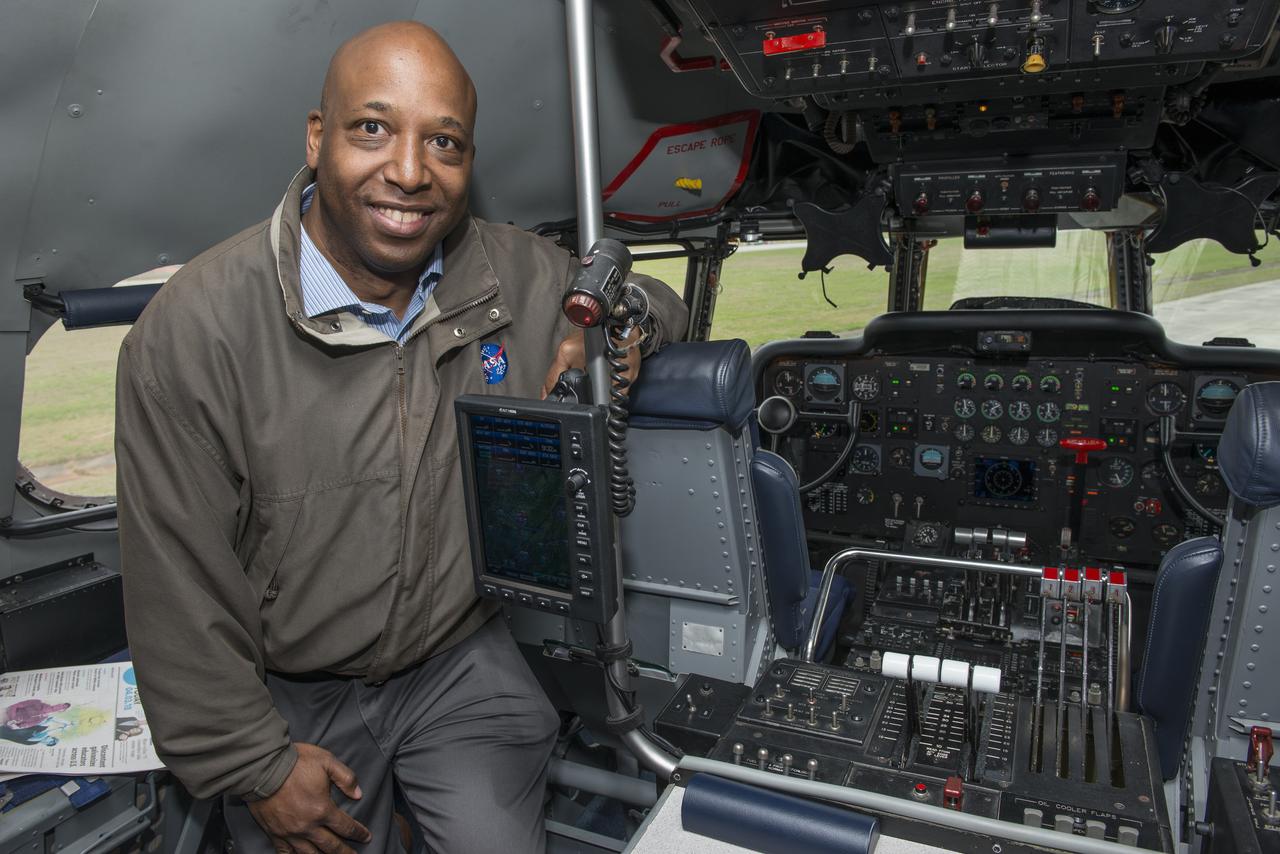
NASA's Super Guppy aircraft arrives to the U.S. Army’s Redstone Airfield in Huntsville, Alabama, April 2, to pick up flight hardware for NASA’s Space Launch System – its new, deep-space rocket that will enable astronauts to begin their journey to explore destinations far into the solar system. The Guppy will depart on Tuesday, April 3 to deliver the Orion stage adapter to NASA’s Kennedy Space Center in Florida for flight preparations. On Exploration Mission-1, the first integrated flight of the SLS and the Orion spacecraft, the adapter will connect Orion to the rocket and carry 13 CubeSats as secondary payloads. Rumaasha Maasha, an aerospace engineer in Marshall's Spacecraft & Vehicle Systems Department, tours the cockpit of NASA's Super Guppy aircraft April 3 when it landed at Marshall to pick up the Orion stage adapter for transportation to NASA's Kennedy Space Center. Maasha holds a master's degree in aerospace engineering, is a certified aviation maintenance tech and pilot and previously worked as a 747 loadmaster and airline refueler.
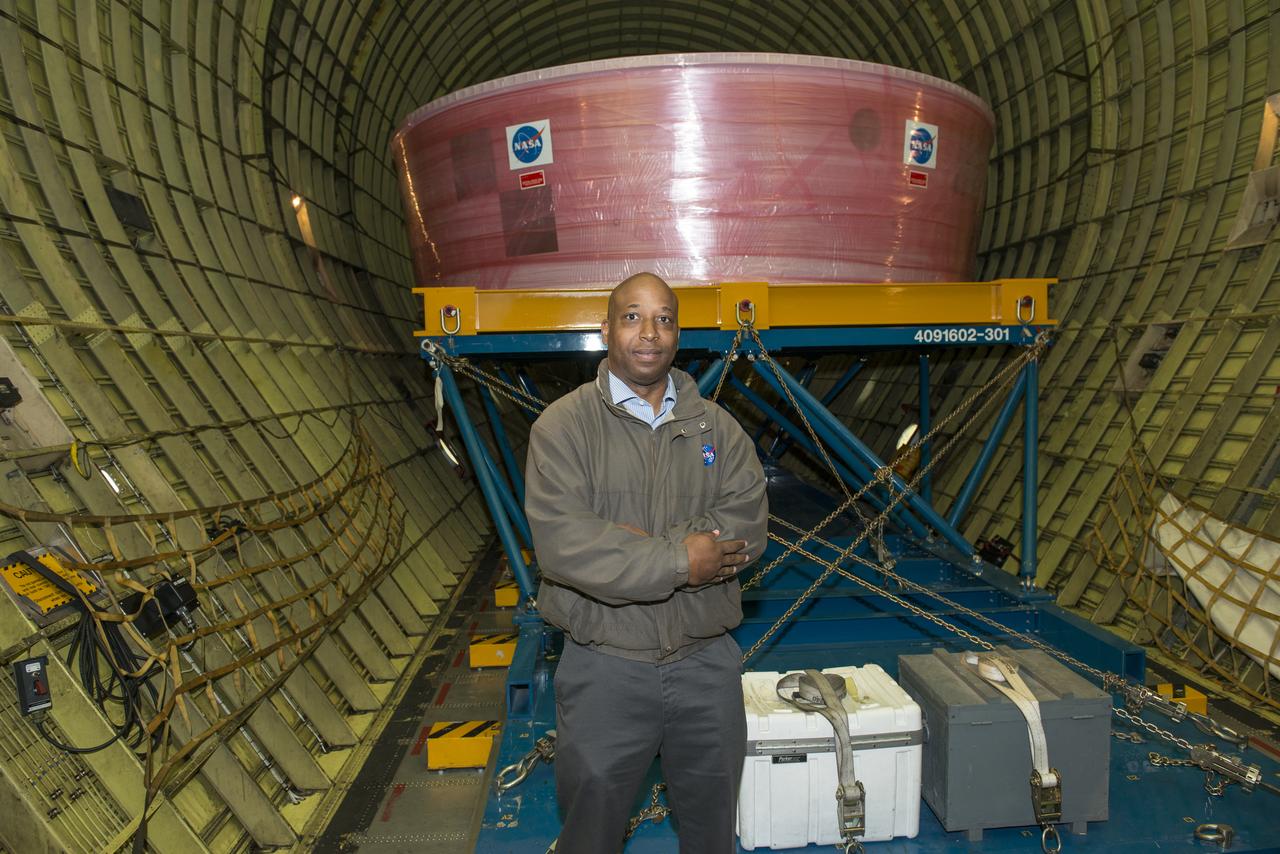
NASA's Super Guppy aircraft arrives to the U.S. Army’s Redstone Airfield in Huntsville, Alabama, April 2, to pick up flight hardware for NASA’s Space Launch System – its new, deep-space rocket that will enable astronauts to begin their journey to explore destinations far into the solar system. The Guppy will depart on Tuesday, April 3 to deliver the Orion stage adapter to NASA’s Kennedy Space Center in Florida for flight preparations. On Exploration Mission-1, the first integrated flight of the SLS and the Orion spacecraft, the adapter will connect Orion to the rocket and carry 13 CubeSats as secondary payloads. Rumaasha Maasha stands in front of the Orion stage adapter in the cargo hold of NASA's Super Guppy aircraft. The Orion stage adapter, the top of the rocket that connects the Space Lauch System to Orion, will carry 13 CubeSats as secondary payloads on Exploration Mission-1, the first integrated flight of SLS and the Orion spacecraft. Guppy transported the adapter to Kennedy Space Center April 3.
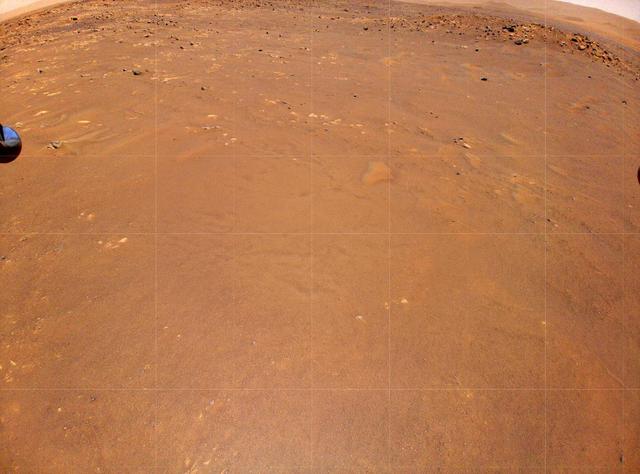
NASA's Ingenuity Mars Helicopter took this color image during its fourth flight, on April 30, 2021. "Airfield B," its new landing site, can be seen below. The helicopter will seek to set down there on its fifth flight attempt. An unannotated version of the image has also been provided. https://photojournal.jpl.nasa.gov/catalog/PIA24628
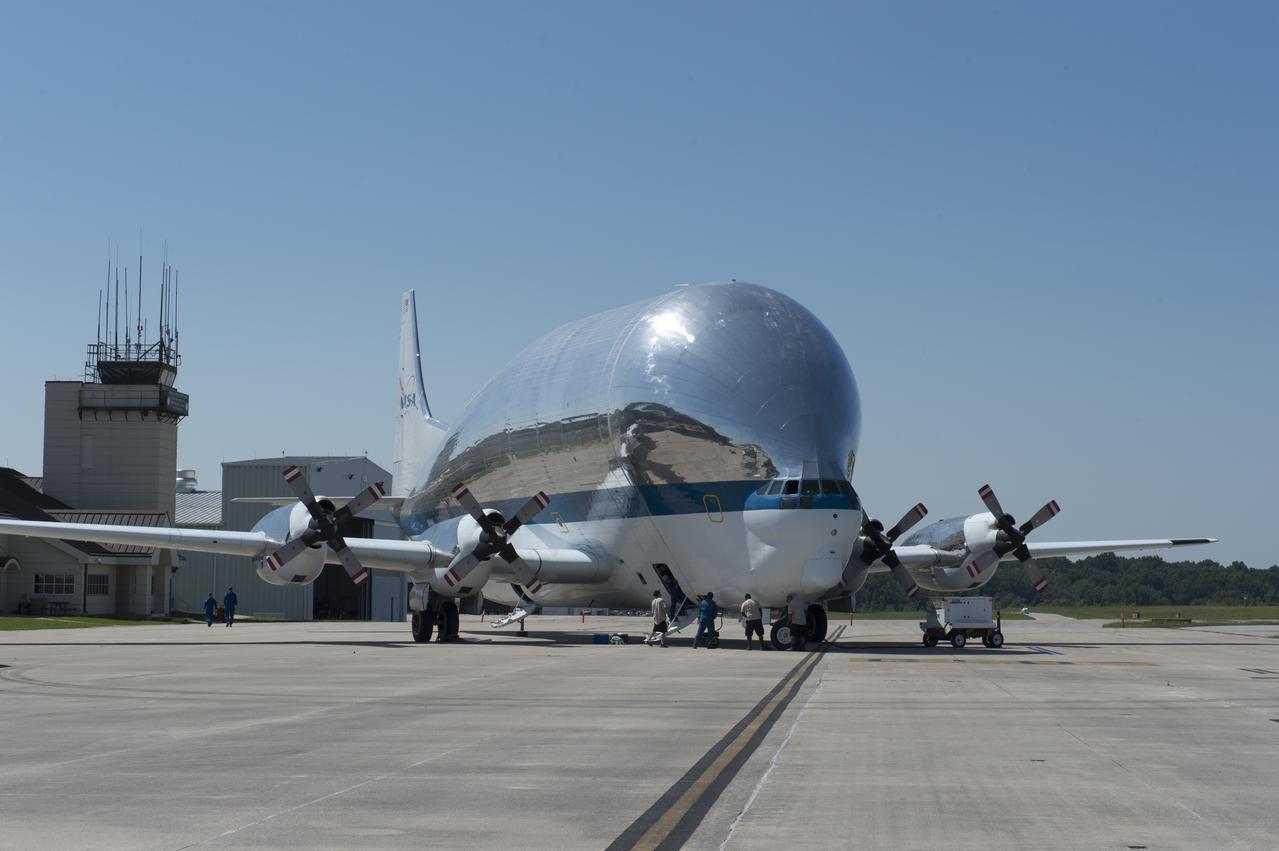
NASA's Super Guppie aircraft on to tarmac of Redstone Arsenal airfield prior to liftoff with the Orion stage adapter which will be transported to Denver, Colorado for further testing.
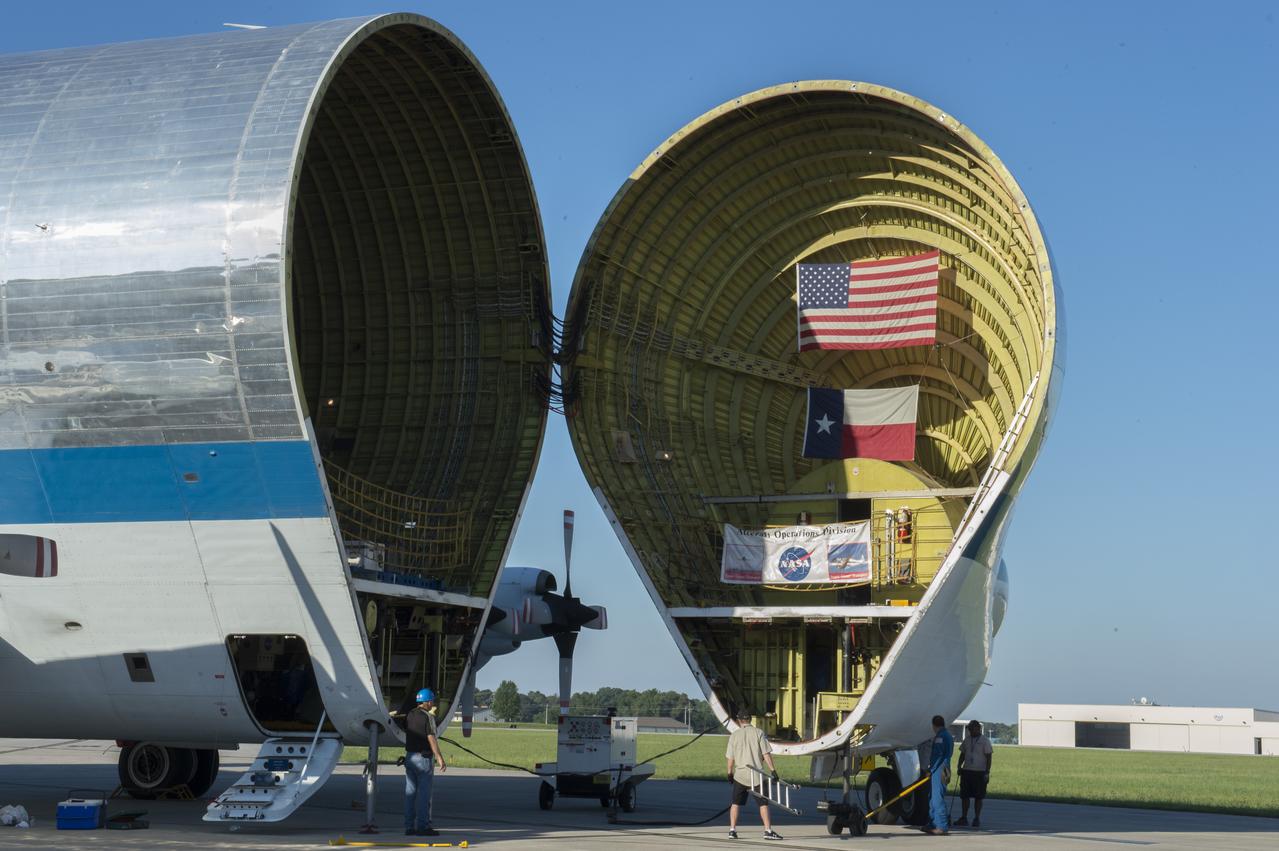
NASA's Super Guppie arrives at Redstone Arsenal airfield to transport the Orion stage adapter to Denver Colorado for further testing. The nose is open exposing the cargo bay.
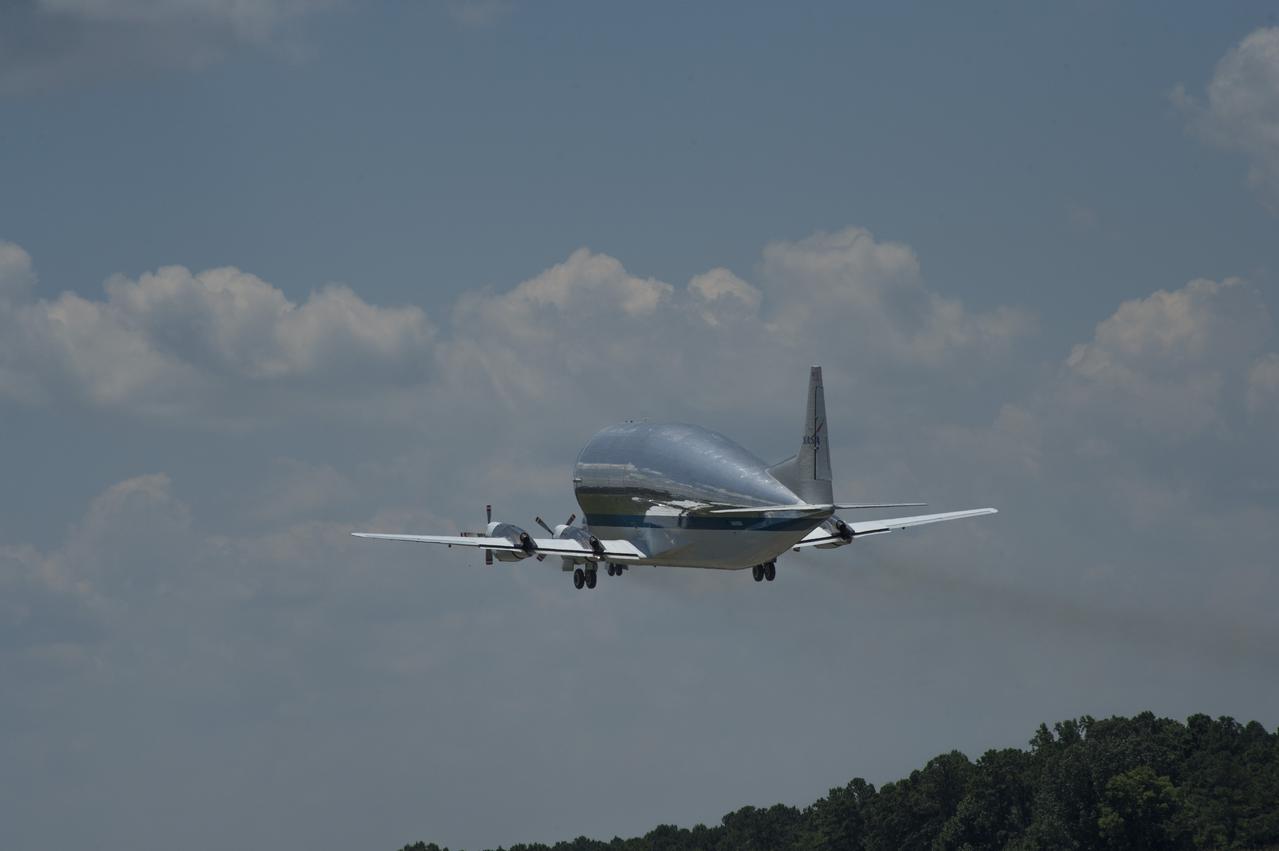
NASA's Super Guppie aircraft lifts off from Redstone Arsenal's airfield with the Orion stage adapter which will be transported to Denver, Colorado for further testing.
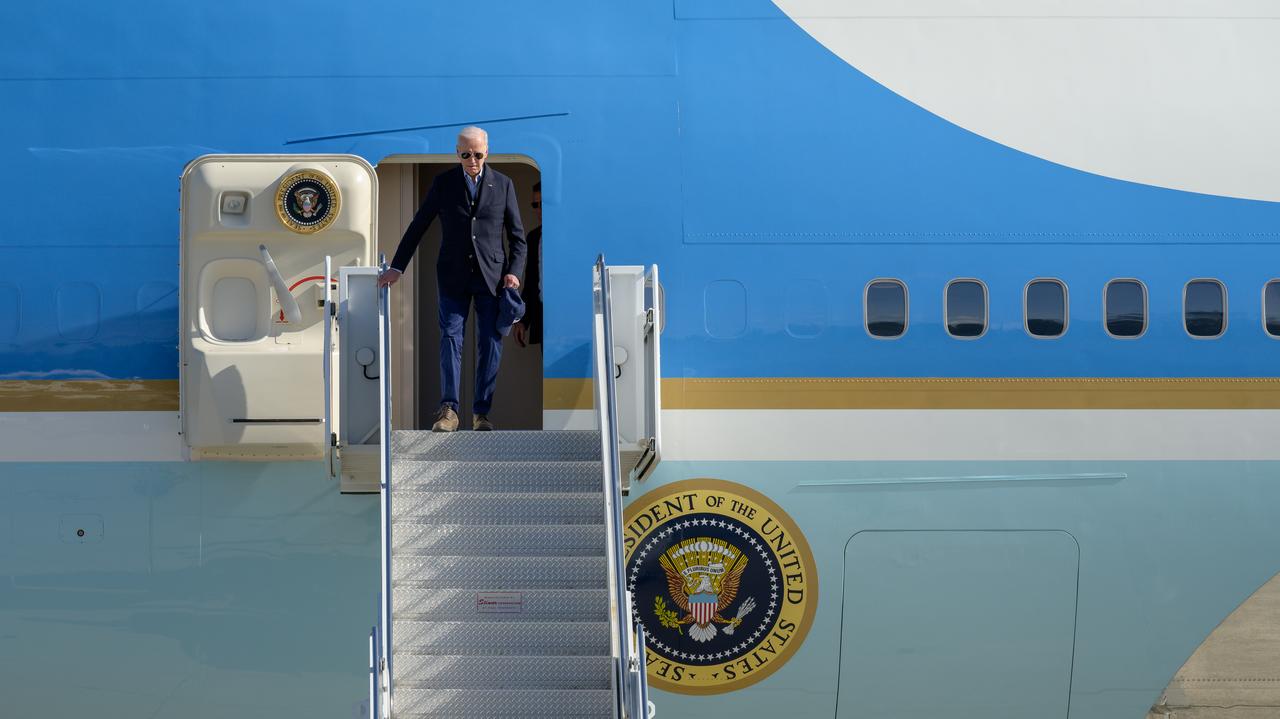
President Joe Biden exits Air Force One at Moffett Federal Airfield before continuing his trip to view consequences of flooding and other storm impacts along California’s central coast.

President Joe Biden exits Air Force One at Moffett Federal Airfield before continuing his trip to view consequences of flooding and other storm impacts along California’s central coast.
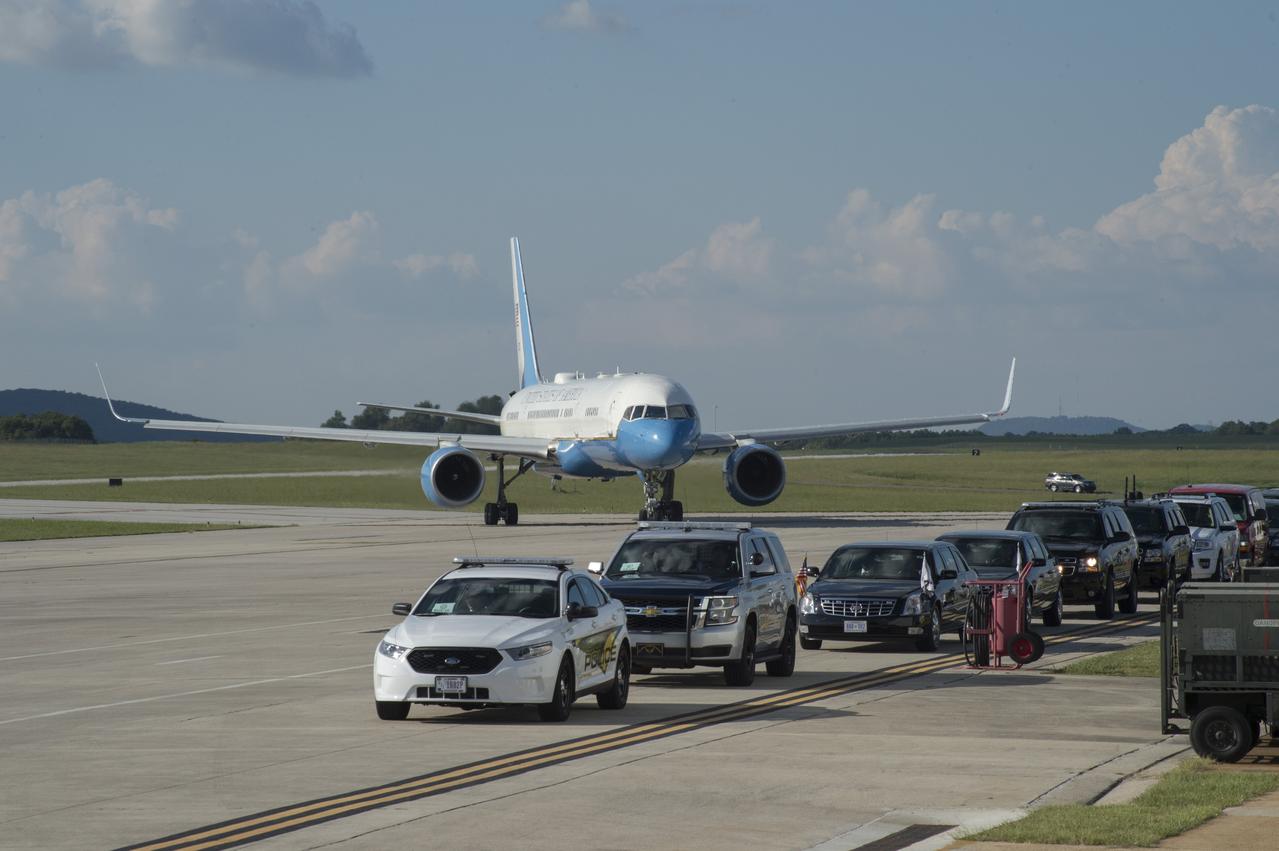
Air Force Two lands with Vice President Mike Pence along with Congressman Robert Aderholt at the Redstone Army Airfield in Huntsville, Alabama, on Monday, Sept. 25. The Vice President is visiting NASA’s Marshall Space Flight Center, located on Redstone Arsenal, to meet with employees, view test hardware for NASA’s Space Launch System — America’s new deep-space rocket, and tour the Payload Operations Integration Center, “science central” for the International Space Station.
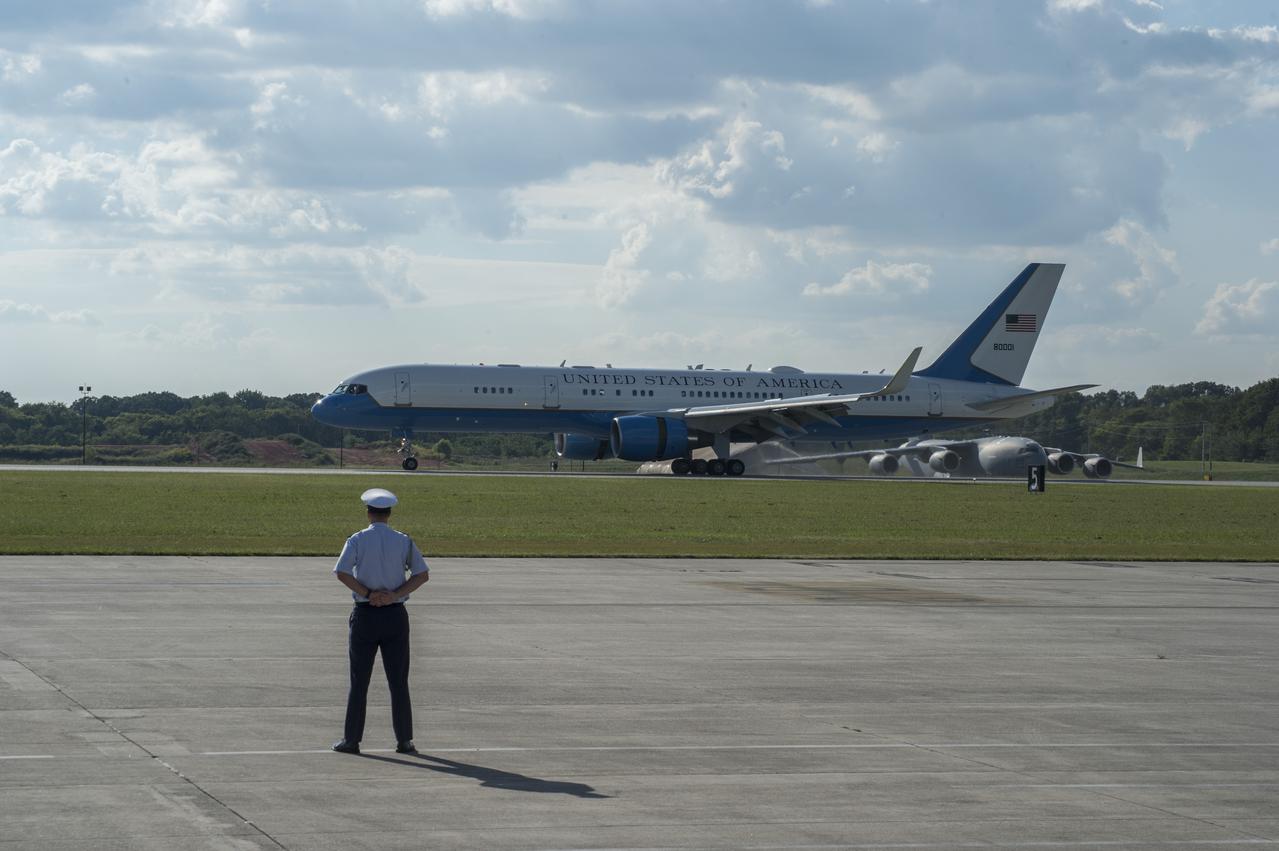
Air Force Two lands with Vice President Mike Pence along with Congressman Robert Aderholt at the Redstone Army Airfield in Huntsville, Alabama, on Monday, Sept. 25. The Vice President is visiting NASA’s Marshall Space Flight Center, located on Redstone Arsenal, to meet with employees, view test hardware for NASA’s Space Launch System — America’s new deep-space rocket, and tour the Payload Operations Integration Center, “science central” for the International Space Station.
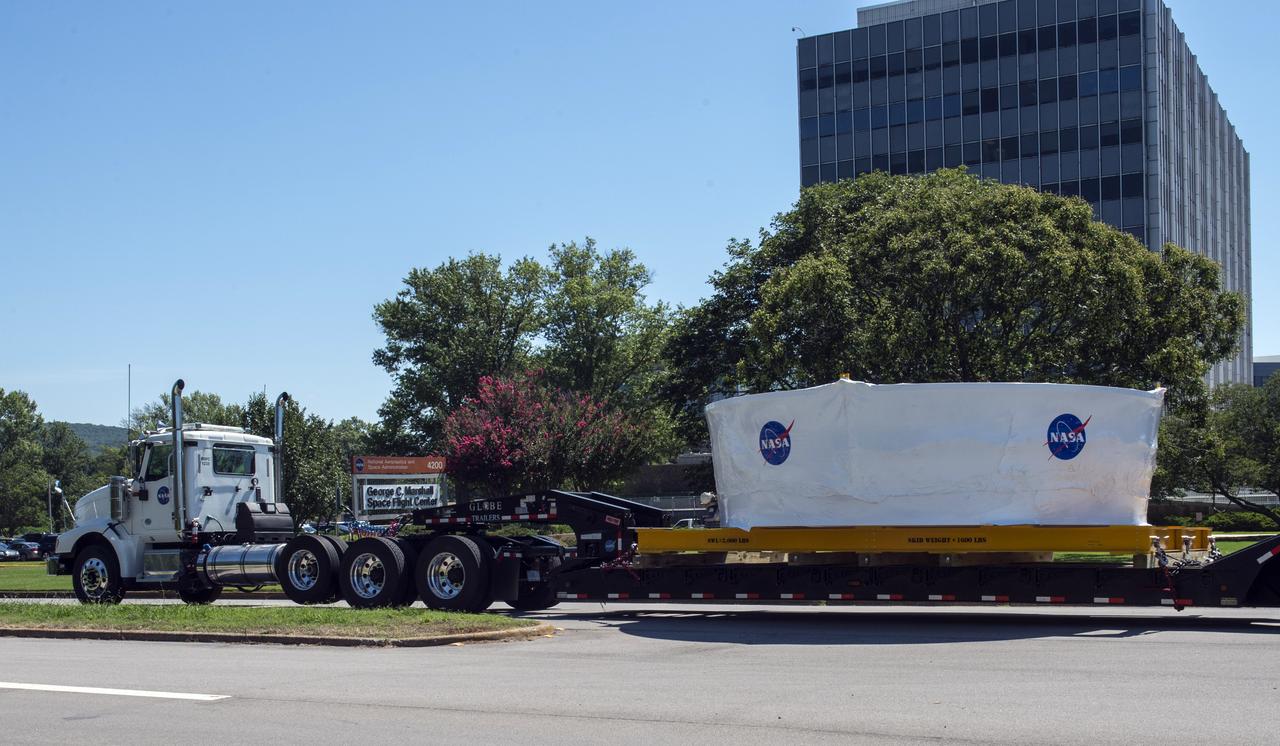
The Orion stage adapter being transported from Marshall Space Flight Center to Redstone Arsenal's airfield for transportation on NASA's Guppie aircraft to Denver, Colorado for further testing.
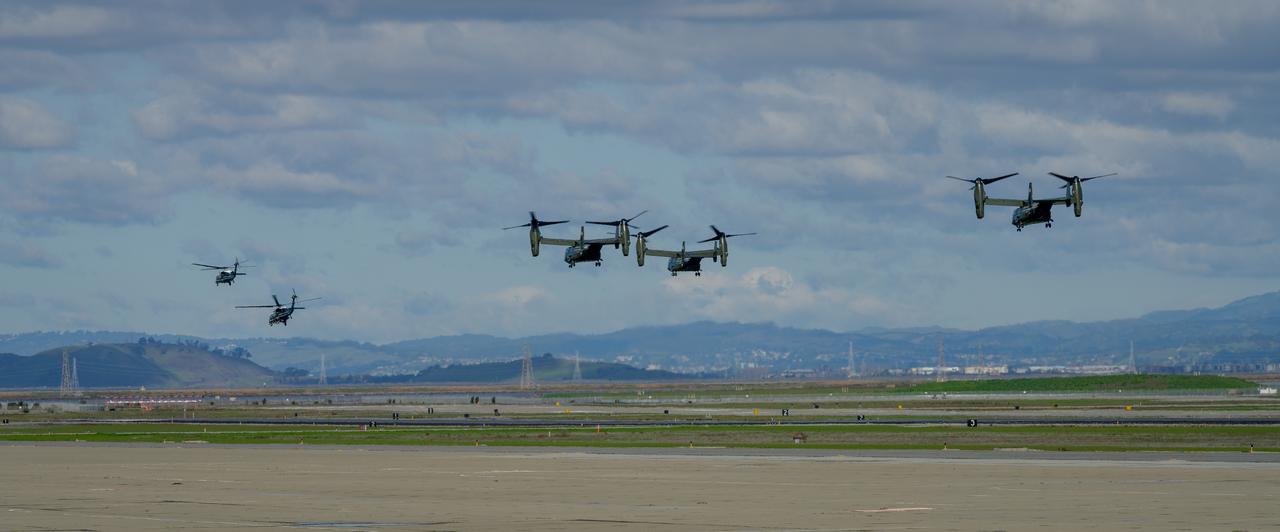
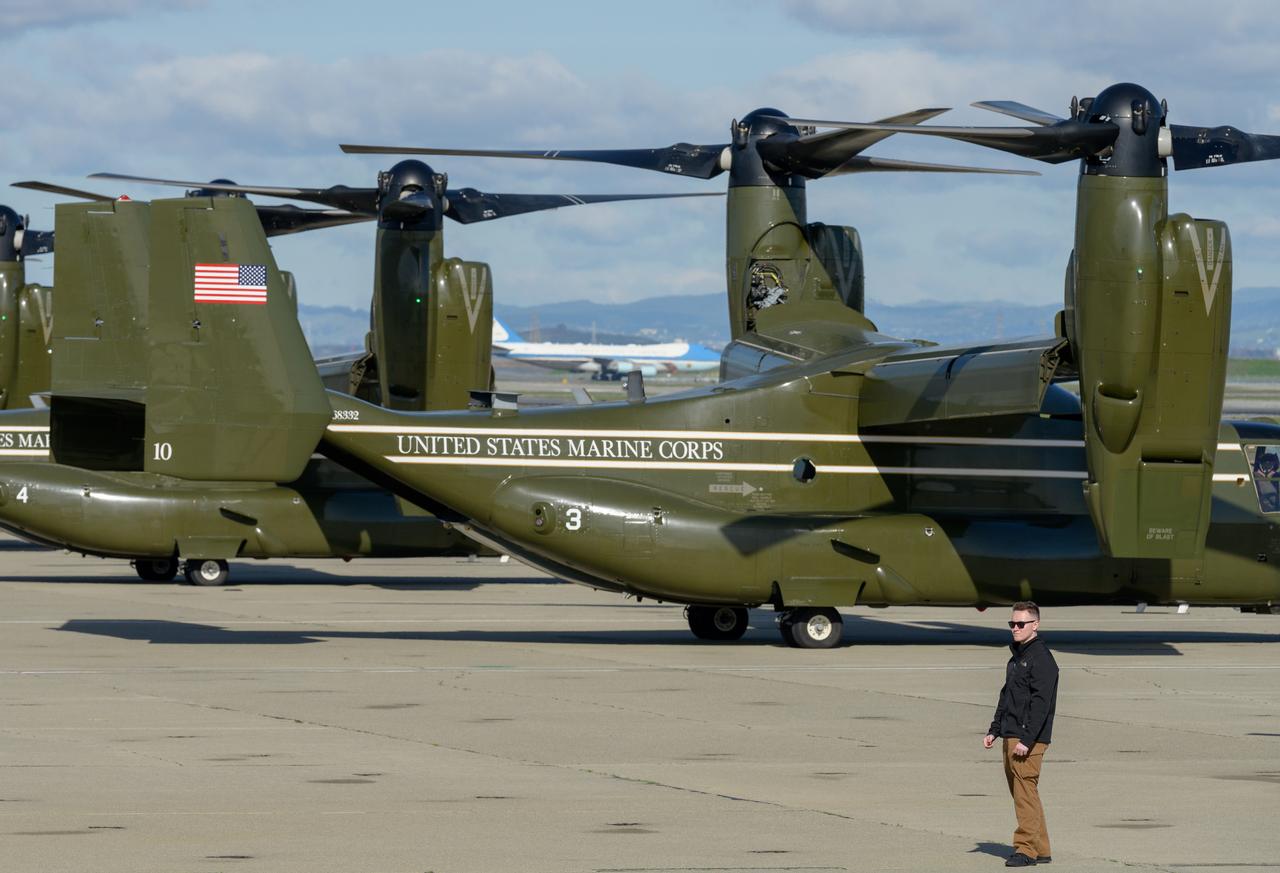
Marine One, with President Joe Biden aboard, and Presidential MV-22 Ospreys depart Moffett Federal Airfield, near NASA’s Ames Research Center in California’s Silicon Valley, Thursday, Jan. 19, 2023. The President was en route to tour recent storm damage in the state.
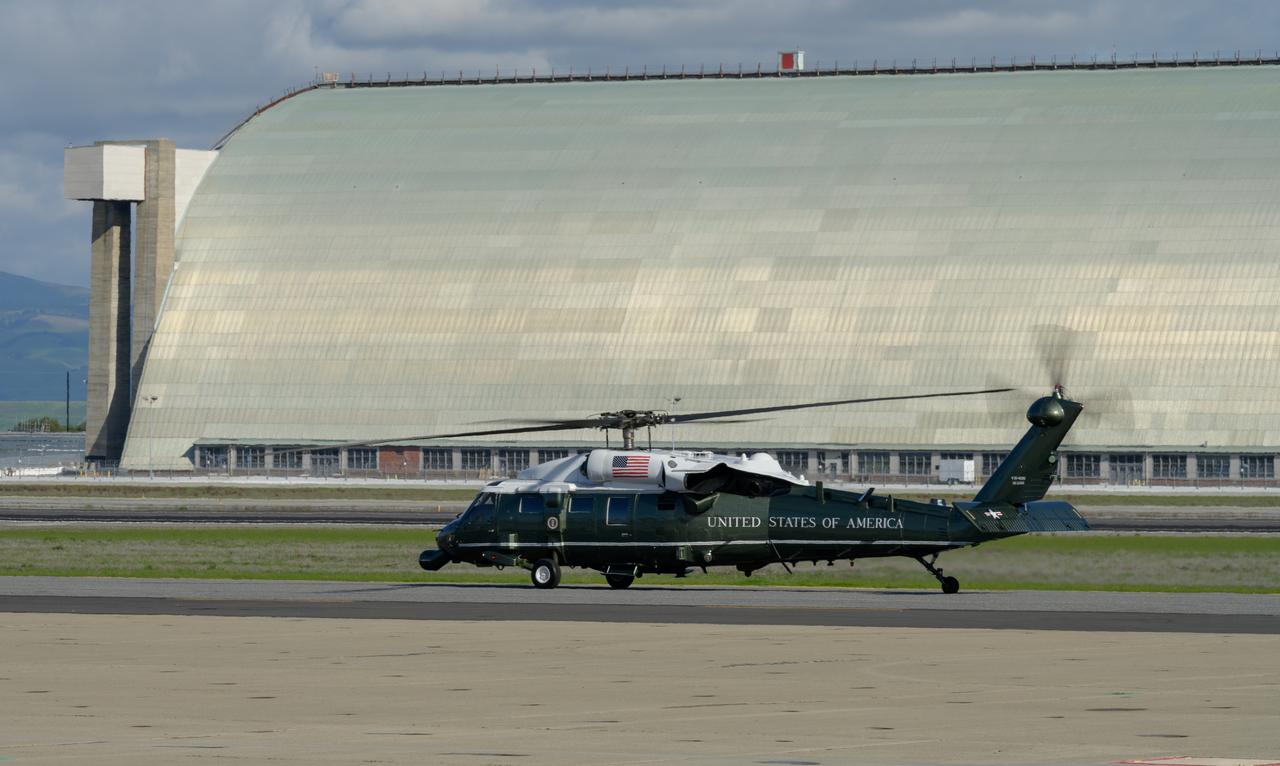
Marine One, with President Joe Biden aboard, departs Moffett Federal Airfield, near NASA’s Ames Research Center in California’s Silicon Valley, Thursday, Jan. 19, 2023. The President was en route to tour recent storm damage in the state.
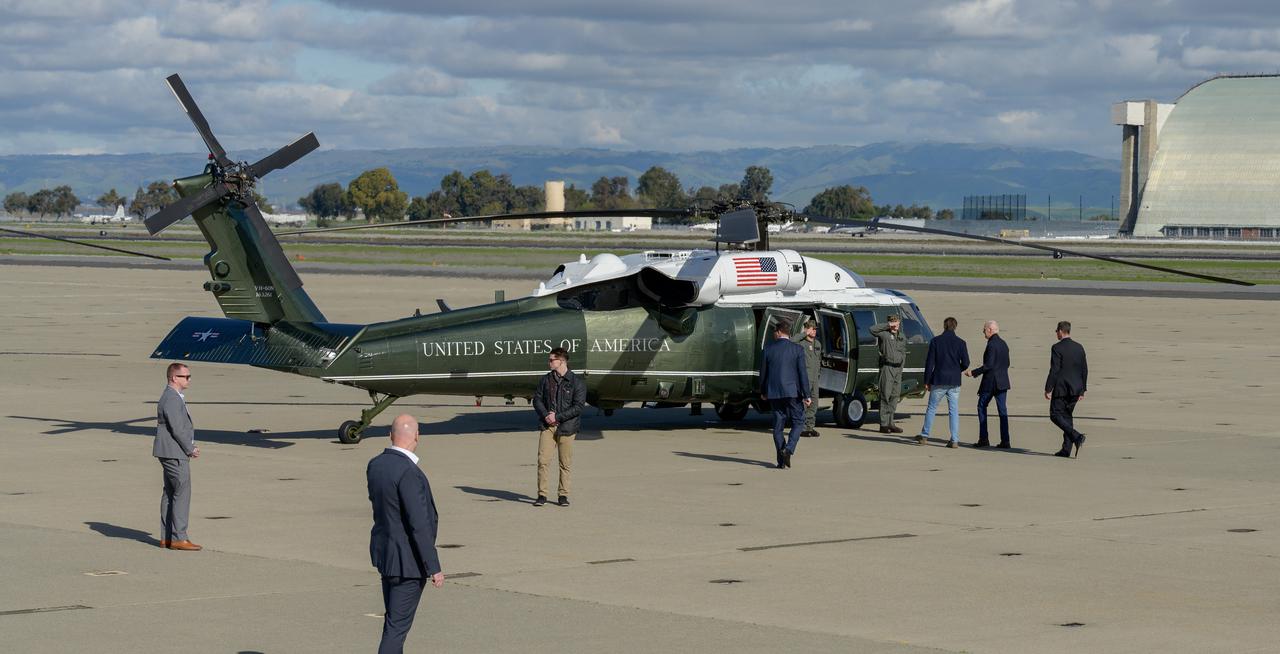
President Joe Biden, accompanied by California Governor Gavin Newsom, boards the Marine One helicopter at Moffett Federal Airfield, near NASA’s Ames Research Center in California’s Silicon Valley, Thursday, Jan. 19, 2023, en route to tour recent storm damage in the state.
Air Force One with President Joe Biden arrives at Moffett Federal Airfield, near NASA’s Ames Research Center in California’s Silicon Valley, Thursday, Jan. 19, 2023. The President was en route to tour recent storm damage in the state.
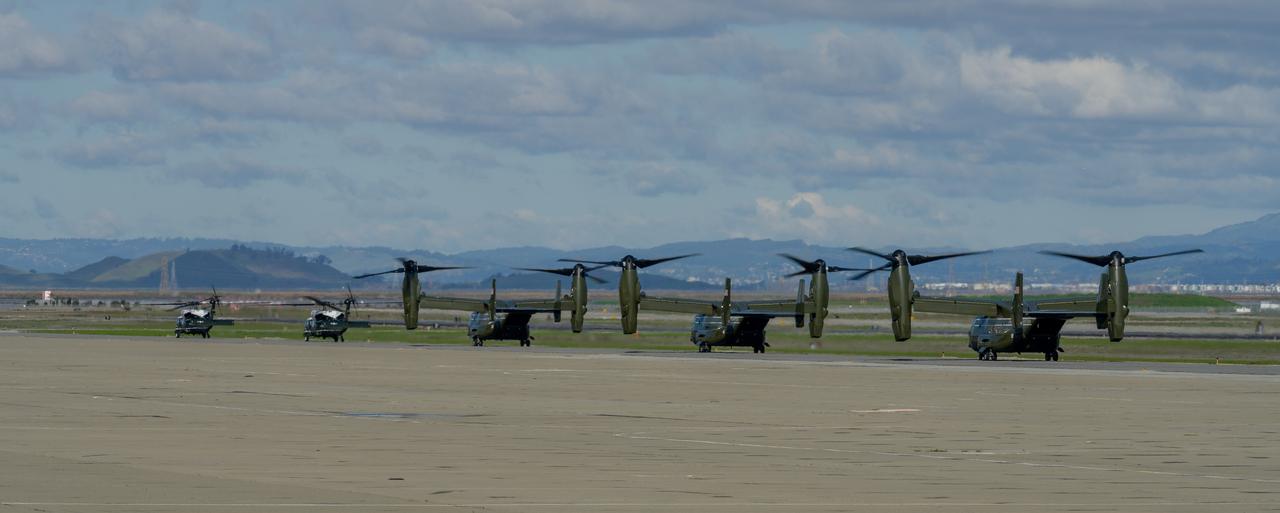
Marine One, with President Joe Biden aboard, and Presidential MV-22 Ospreys depart Moffett Federal Airfield, near NASA’s Ames Research Center in California’s Silicon Valley, Thursday, Jan. 19, 2023. The President was en route to tour recent storm damage in the state.
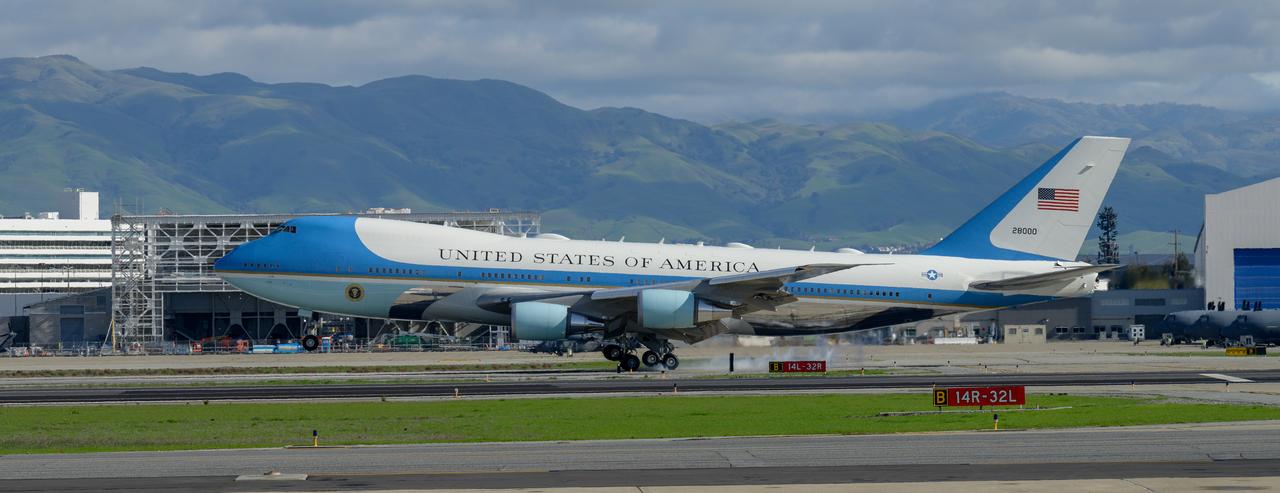
Air Force One with President Joe Biden arrives at Moffett Federal Airfield, near NASA’s Ames Research Center in California’s Silicon Valley, Thursday, Jan. 19, 2023. The President was en route to tour recent storm damage in the state.
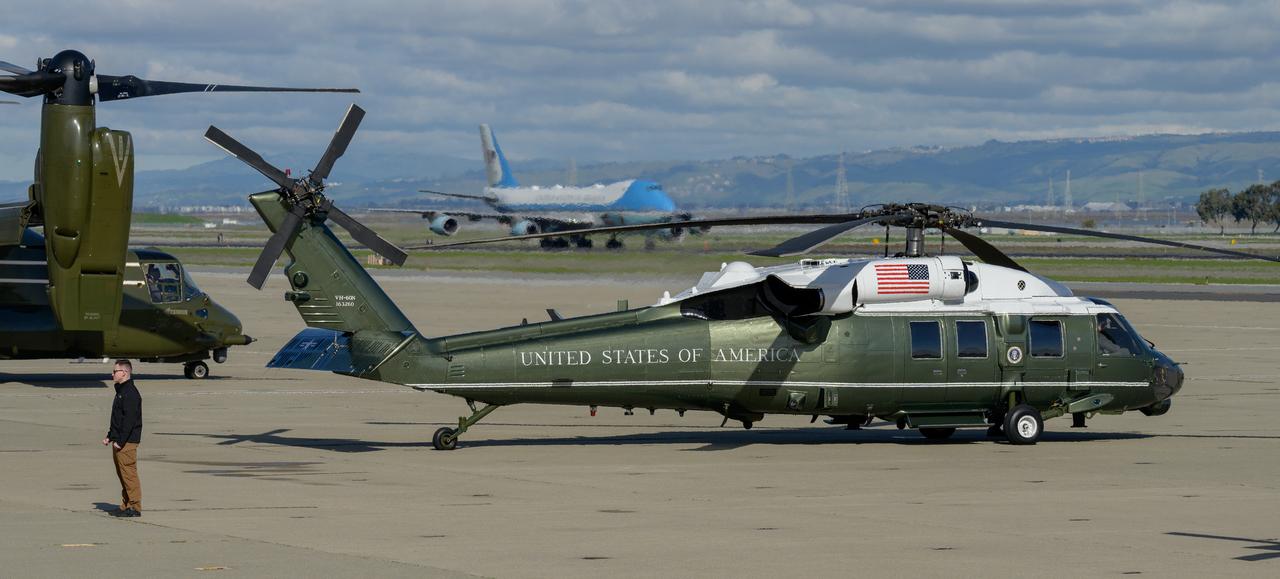
Air Force One with President Joe Biden arrives at Moffett Federal Airfield, near NASA’s Ames Research Center in California’s Silicon Valley, Thursday, Jan. 19, 2023. The President was en route to tour recent storm damage in the state.
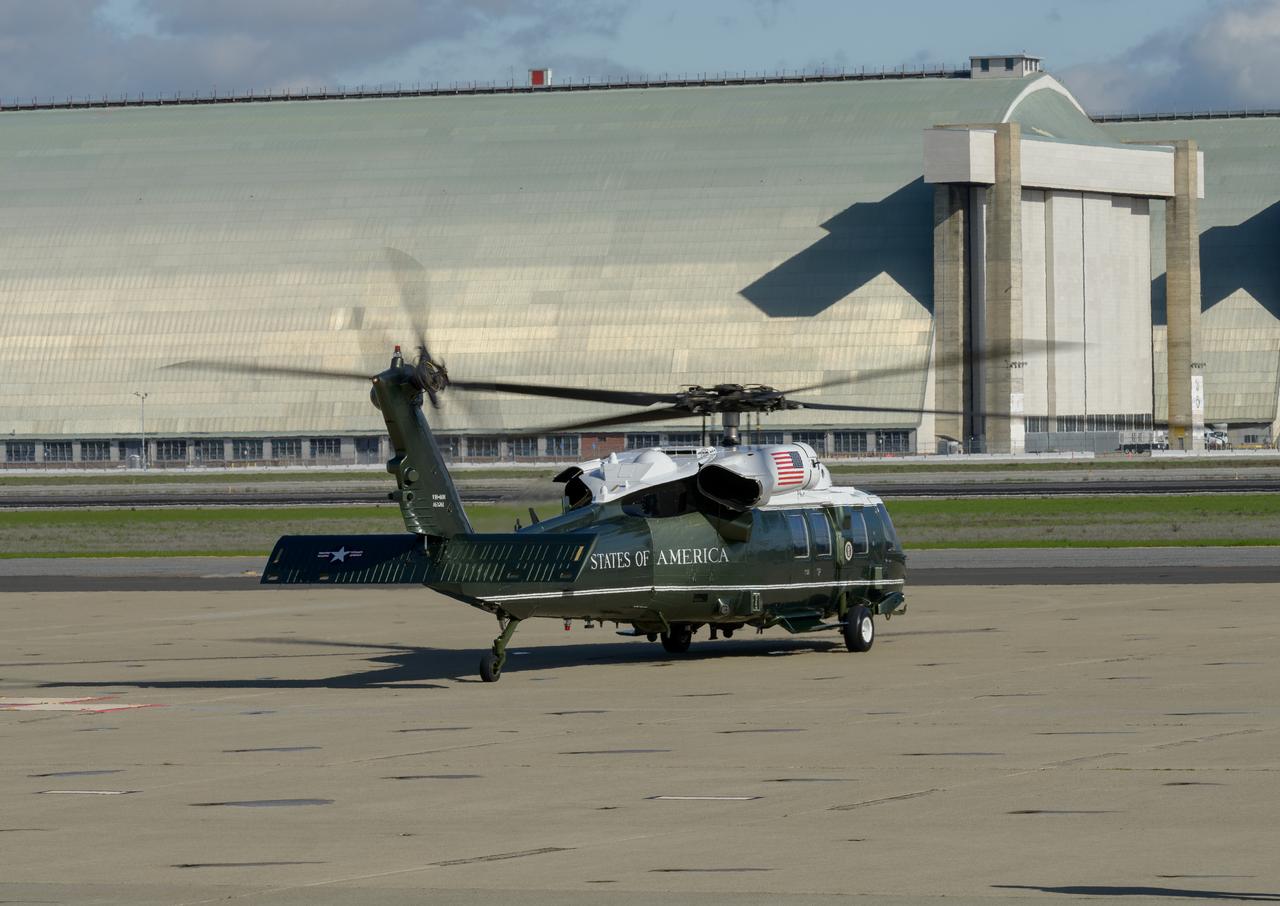
Marine One, with President Joe Biden aboard, departs Moffett Federal Airfield, near NASA’s Ames Research Center in California’s Silicon Valley, Thursday, Jan. 19, 2023. The President was en route to tour recent storm damage in the state.

Air Force One with President Joe Biden arrives at Moffett Federal Airfield, near NASA’s Ames Research Center in California’s Silicon Valley, Thursday, Jan. 19, 2023. The President was en route to tour recent storm damage in the state.
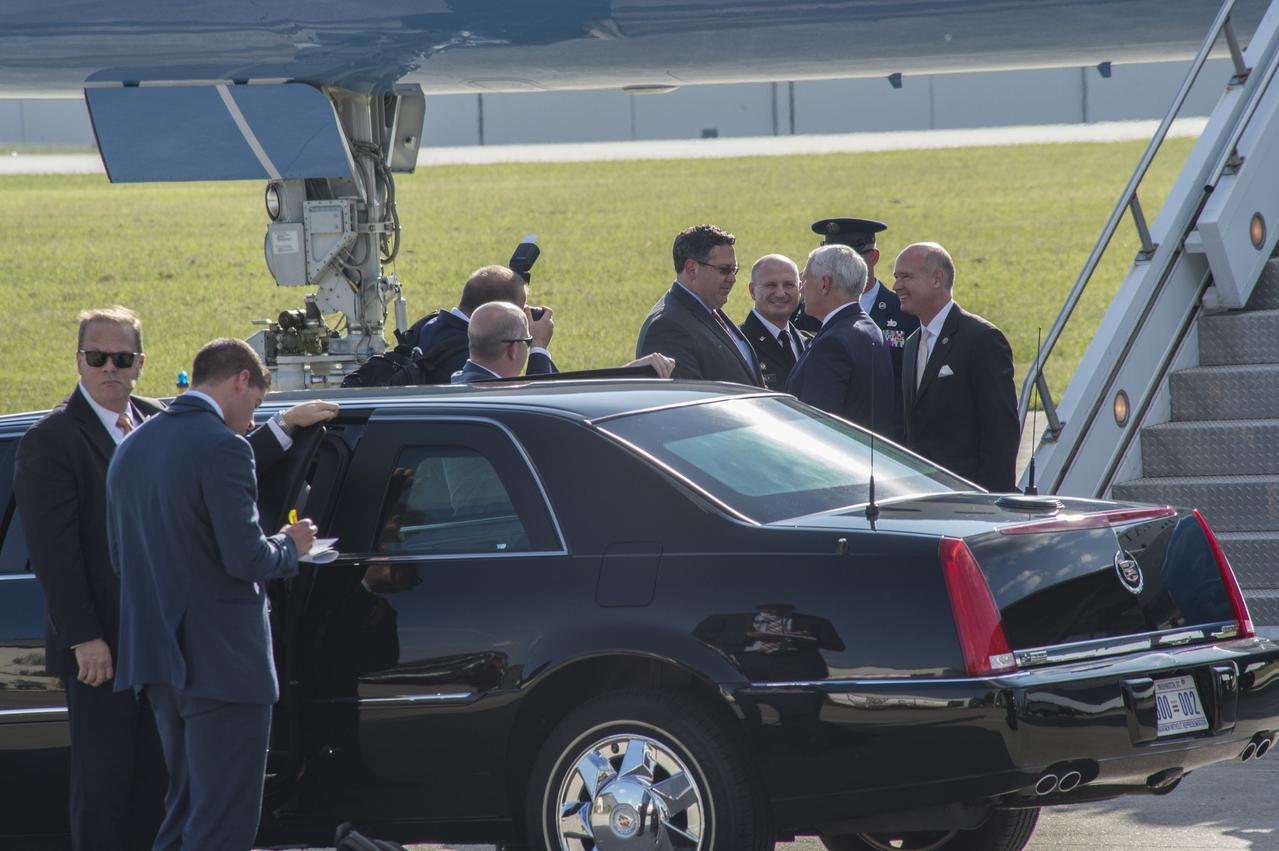
Air Force Two lands with Vice President Mike Pence along with Congressman Robert Aderholt at the Redstone Army Airfield in Huntsville, Alabama, on Monday, Sept. 25. They were greeted by NASA’s Marshall Space Flight Center Director Todd May and Redstone Arsenal’s Lt. Gen. Edward Daly. The Vice President is visiting NASA’s Marshall Center to meet with employees, view test hardware for NASA’s Space Launch System — America’s new deep-space rocket, and tour the Payload Operations Integration Center, “science central” for the International Space Station.
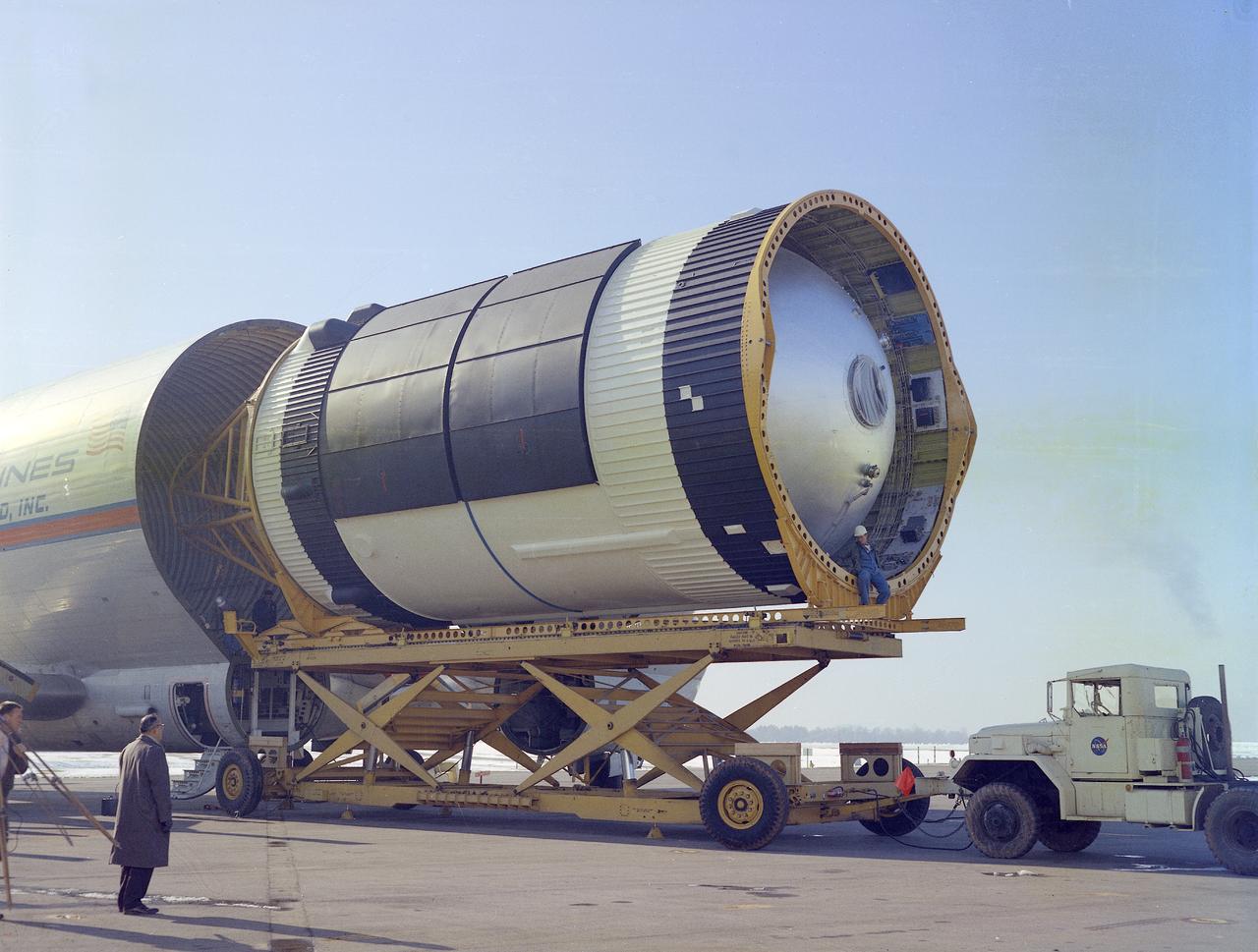
This photograph was taken at the Redstone airfield, Huntsville, Alabama, during the unloading of the Saturn V S-IVB stage that housed the Orbital Workshop (OWS) from the Super Guppy, the NASA plane that was specially built to carry oversized cargo. The OWS measured 22 feet (6.7 m) in diameter, and 48 feet (14.6 m) in length. The Saturn V S-IVB stage was modified at the McDornell Douglas facility at Huntington Beach, California, for a new role, which was to house the OWS. In addition to the test articles, engineering mockups, and flight equipment, both McDonnell Douglas and Martin Marietta built 0-G trainers, neutral buoyancy trainers, and high-fidelity mockups for the 1-G trainer to be used in the KC-135 aircraft. The Marshall Space Flight Center had program management responsibility for the development of Skylab hardware and experiments.
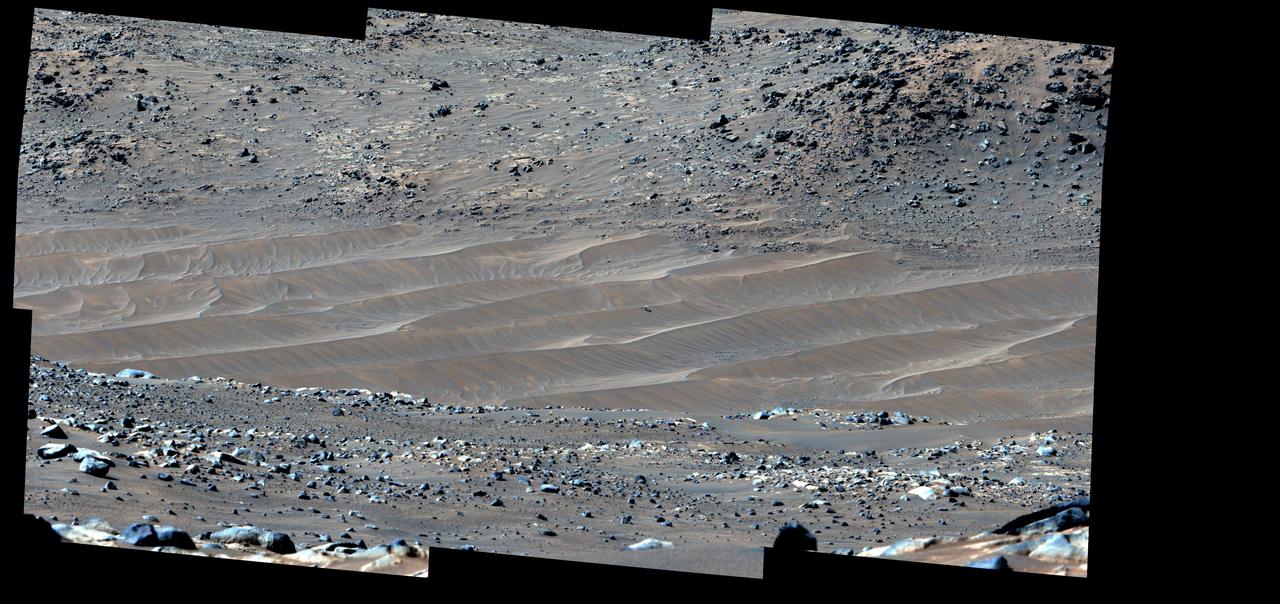
NASA's Perseverance Mars rover captured this mosaic showing the Ingenuity Mars Helicopter at its final airfield on Feb. 4, 2024. The helicopter damaged its rotor blades during landing on its 72nd flight on Jan. 18, 2024. The Ingenuity team has nicknamed the spot where the helicopter completed its final flight "Valinor Hills" after the fictional location in J.R.R. Tolkien's fantasy novels, which include "The Lord of the Rings" trilogy. The six images that were stitched together to make up this mosaic were captured from about 1,475 feet (450 meters) away by the rover's Mastcam-Z imager. Shown here is an enhanced-color view that exaggerates subtle color differences in the scene to show more detail. The Ingenuity Mars Helicopter was built by NASA's Jet Propulsion Laboratory, which manages the project for NASA Headquarters. It is supported by NASA's Science Mission Directorate. NASA's Ames Research Center in California's Silicon Valley and NASA's Langley Research Center in Hampton, Virginia, provided significant flight performance analysis and technical assistance during Ingenuity's development. AeroVironment Inc., Qualcomm, and SolAero also provided design assistance and major vehicle components. Lockheed Martin Space designed and manufactured the Mars Helicopter Delivery System. Arizona State University leads the operations of the Mastcam-Z instrument, working in collaboration with Malin Space Science Systems in San Diego, on the design, fabrication, testing, and operation of the cameras, and in collaboration with the Niels Bohr Institute of the University of Copenhagen on the design, fabrication, and testing of the calibration targets. A key objective for Perseverance's mission on Mars is astrobiology, including the search for signs of ancient microbial life. The rover will characterize the planet's geology and past climate, pave the way for human exploration of the Red Planet, and be the first mission to collect and cache Martian rock and regolith (broken rock and dust). Subsequent NASA missions, in cooperation with ESA (European Space Agency), would send spacecraft to Mars to collect these sealed samples from the surface and return them to Earth for in-depth analysis. The Mars 2020 Perseverance mission is part of NASA's Moon to Mars exploration approach, which includes Artemis missions to the Moon that will help prepare for human exploration of the Red Planet. https://photojournal.jpl.nasa.gov/catalog/PIA26236
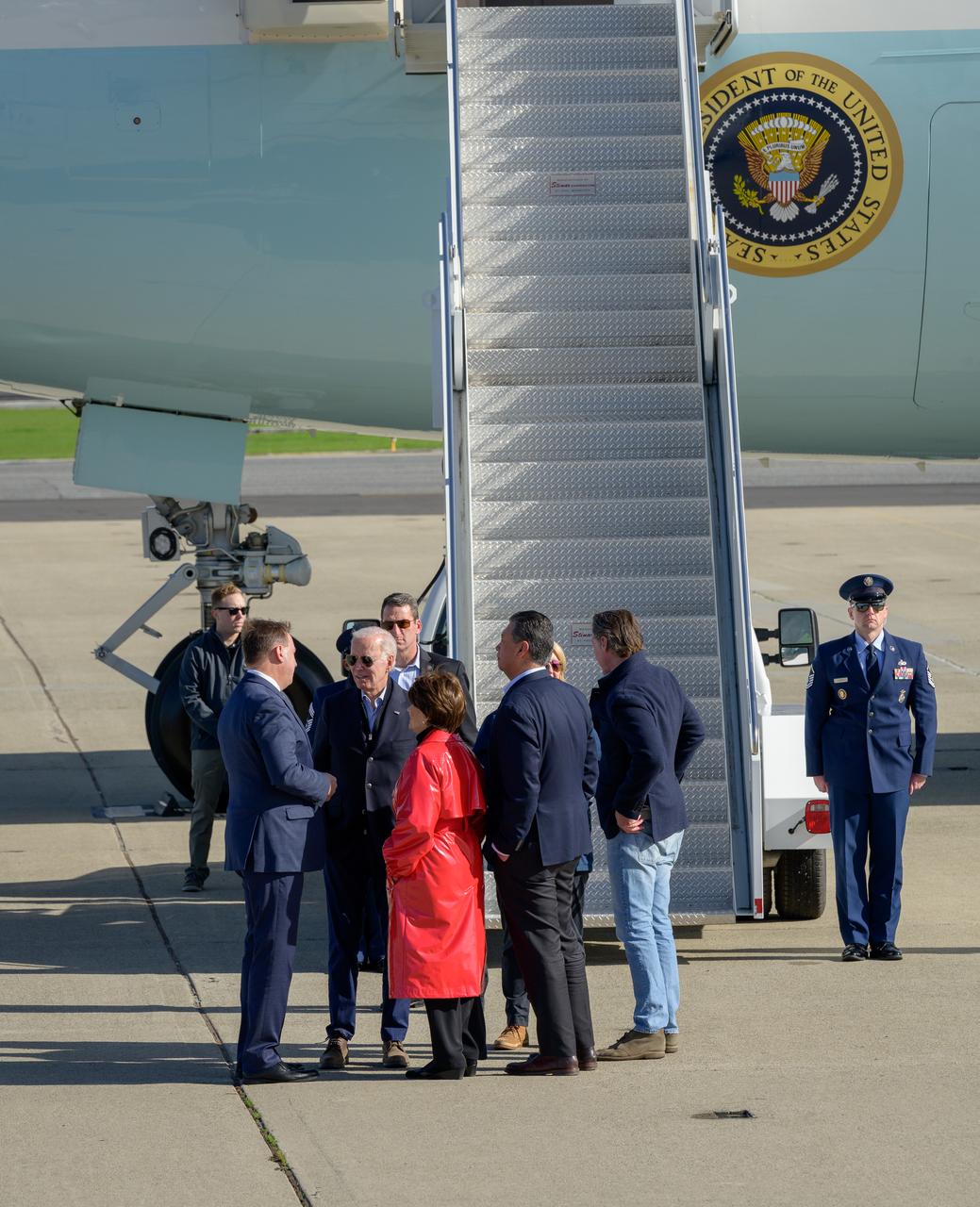
President Joe Biden landed aboard Air Force One at Moffett Federal Airfield, near NASA’s Ames Research Center in California’s Silicon Valley, Thursday, Jan. 19, 2023, en route to tour recent storm damage in the state. The President was greeted by Dr. David Korsmeyer, associate center director for research and technology at Ames, U.S. Congresswoman Anna G. Eshoo, U.S. Senator Alex Padilla, and California Governor Gavin Newsom.
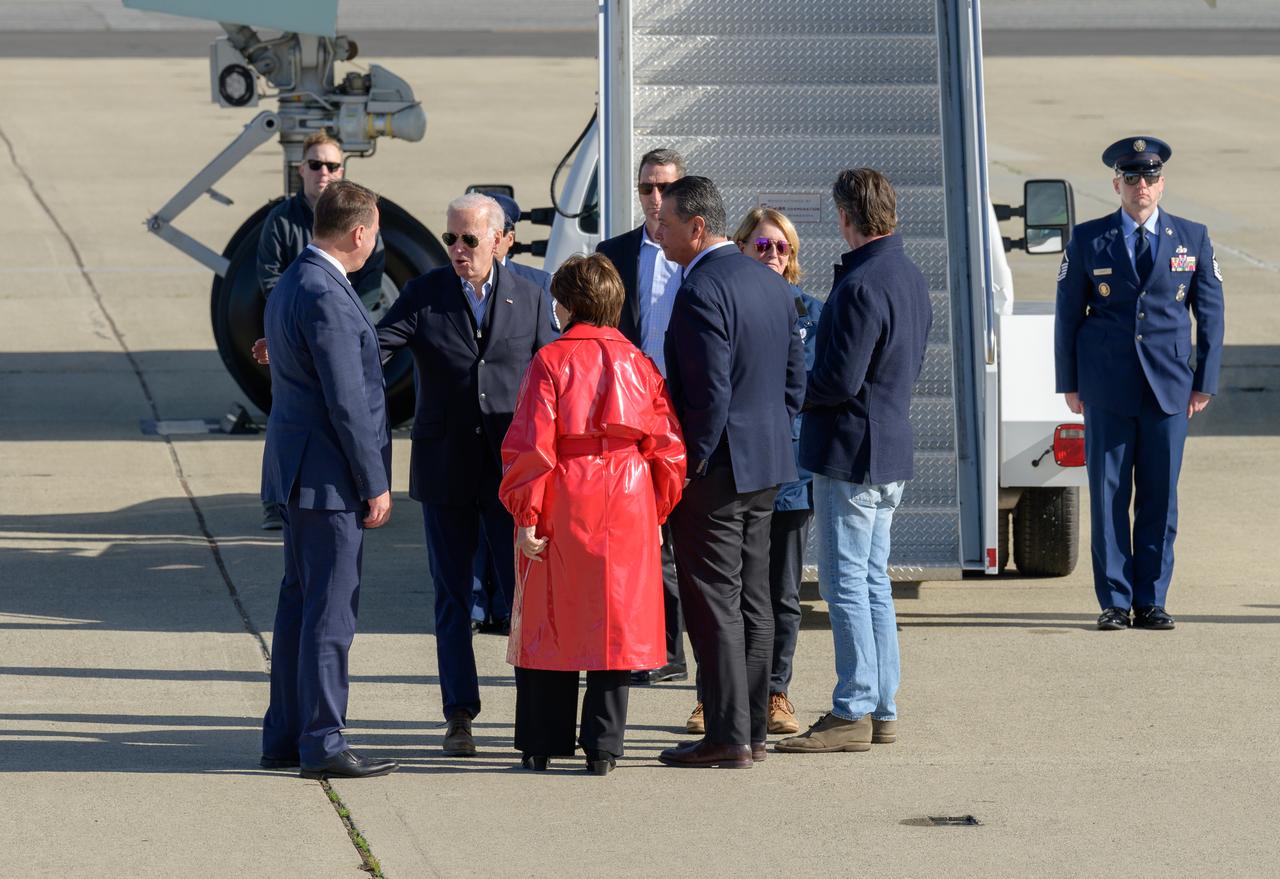
President Joe Biden landed aboard Air Force One at Moffett Federal Airfield, near NASA’s Ames Research Center in California’s Silicon Valley, Thursday, Jan. 19, 2023, en route to tour recent storm damage in the state. The President was greeted by Dr. David Korsmeyer, associate center director for research and technology at Ames, U.S. Congresswoman Anna G. Eshoo, U.S. Senator Alex Padilla, and California Governor Gavin Newsom.
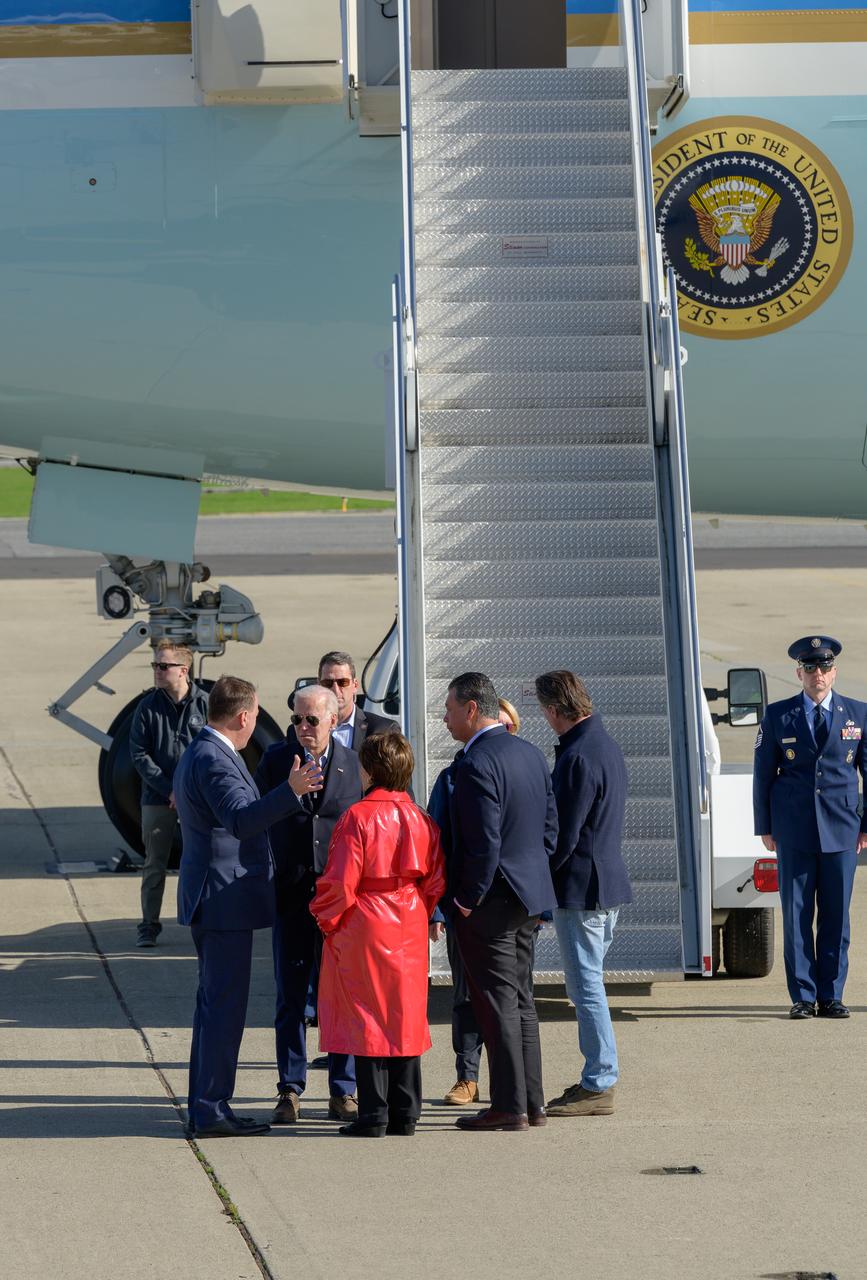
President Joe Biden landed aboard Air Force One at Moffett Federal Airfield, near NASA’s Ames Research Center in California’s Silicon Valley, Thursday, Jan. 19, 2023, en route to tour recent storm damage in the state. The President was greeted by Dr. David Korsmeyer, associate center director for research and technology at Ames, U.S. Congresswoman Anna G. Eshoo, U.S. Senator Alex Padilla, and California Governor Gavin Newsom.
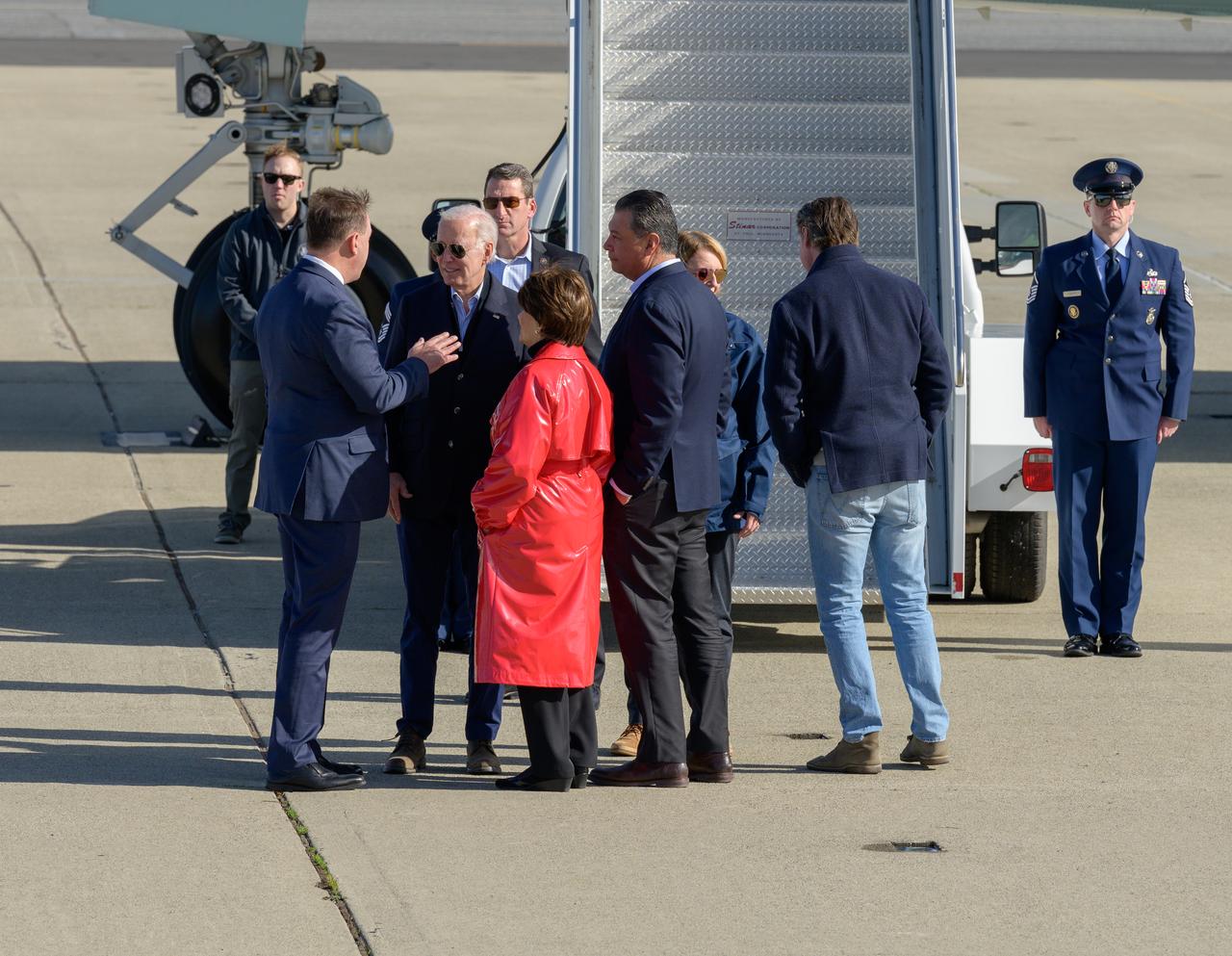
President Joe Biden landed aboard Air Force One at Moffett Federal Airfield, near NASA’s Ames Research Center in California’s Silicon Valley, Thursday, Jan. 19, 2023, en route to tour recent storm damage in the state. The President was greeted by Dr. David Korsmeyer, associate center director for research and technology at Ames, U.S. Congresswoman Anna G. Eshoo, U.S. Senator Alex Padilla, and California Governor Gavin Newsom.
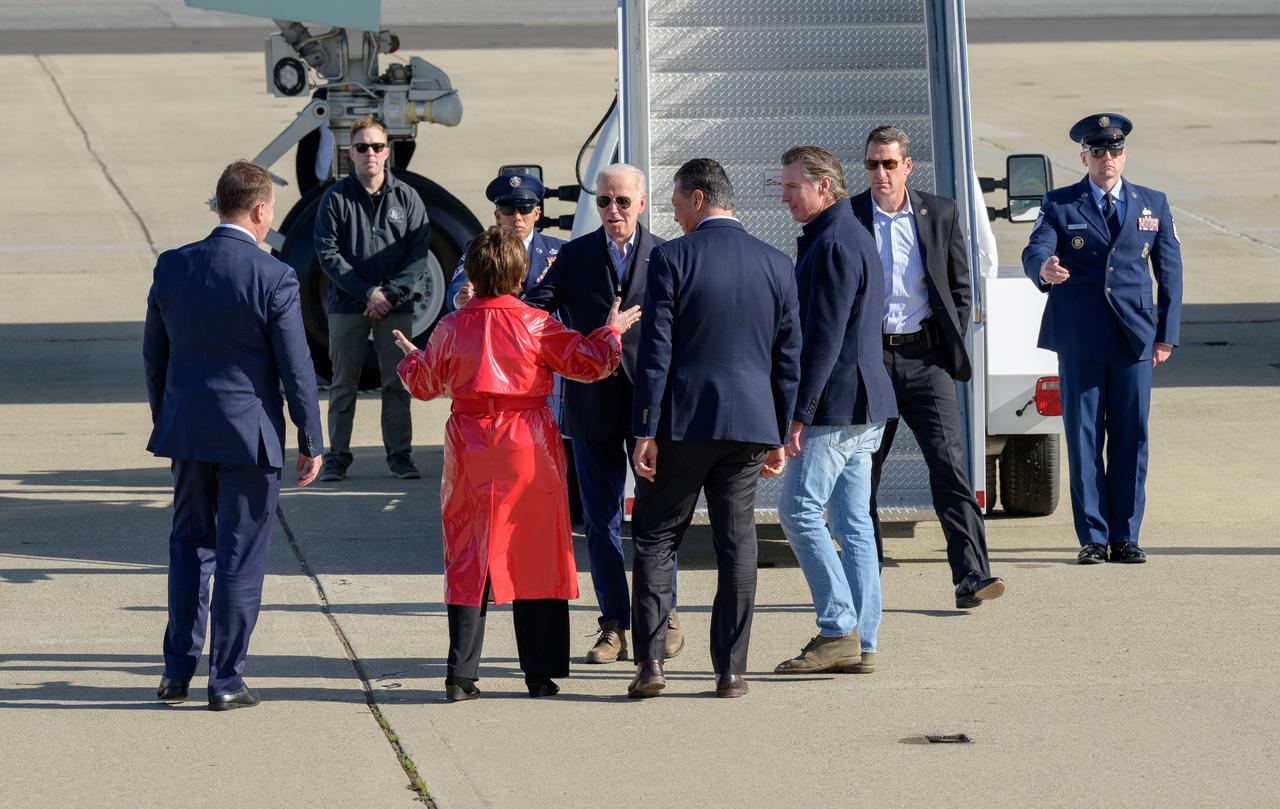
President Joe Biden landed aboard Air Force One at Moffett Federal Airfield, near NASA’s Ames Research Center in California’s Silicon Valley, Thursday, Jan. 19, 2023, en route to tour recent storm damage in the state. The President was greeted by Dr. David Korsmeyer, associate center director for research and technology at Ames, U.S. Congresswoman Anna G. Eshoo, U.S. Senator Alex Padilla, and California Governor Gavin Newsom.
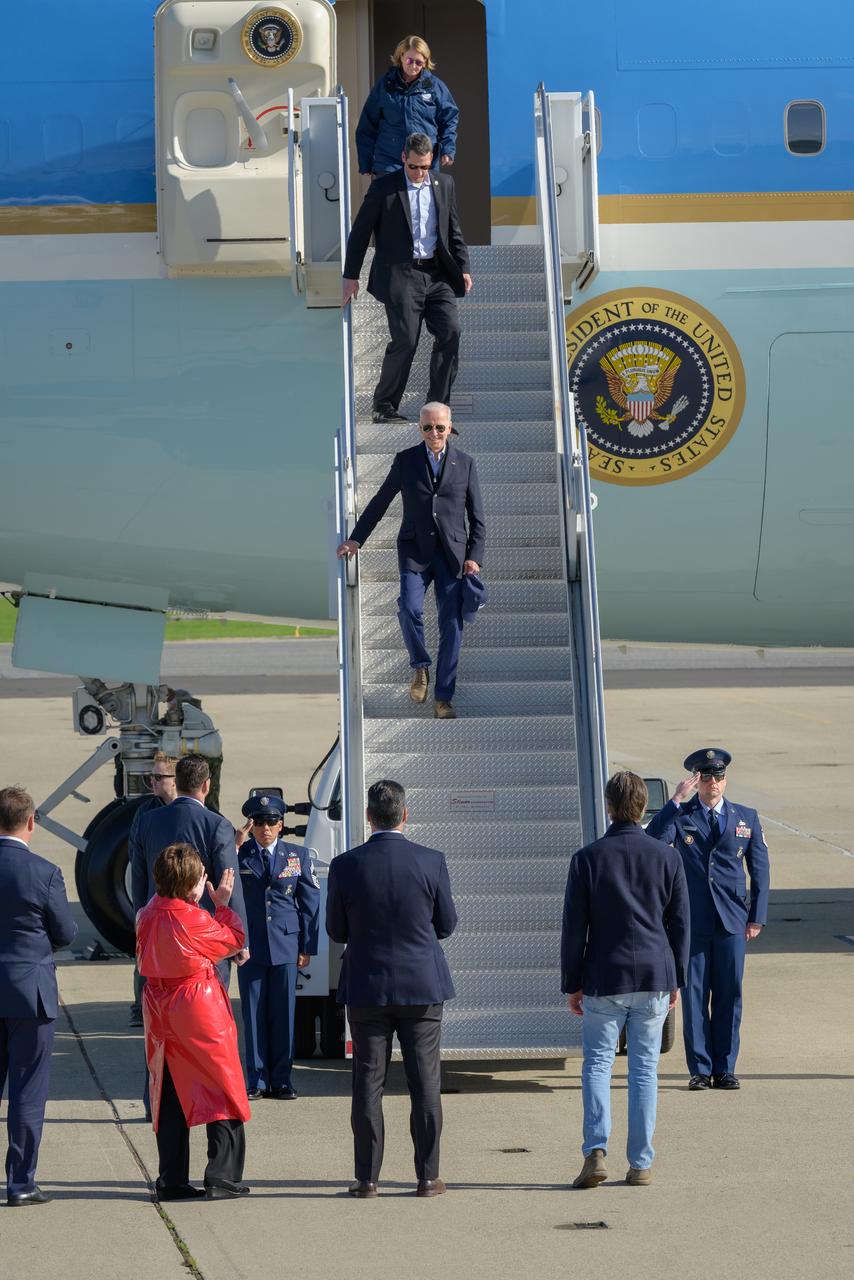
President Joe Biden landed aboard Air Force One at Moffett Federal Airfield, near NASA’s Ames Research Center in California’s Silicon Valley, Thursday, Jan. 19, 2023, en route to tour recent storm damage in the state. The President was greeted by Dr. David Korsmeyer, associate center director for research and technology at Ames, U.S. Congresswoman Anna G. Eshoo, U.S. Senator Alex Padilla, and California Governor Gavin Newsom.
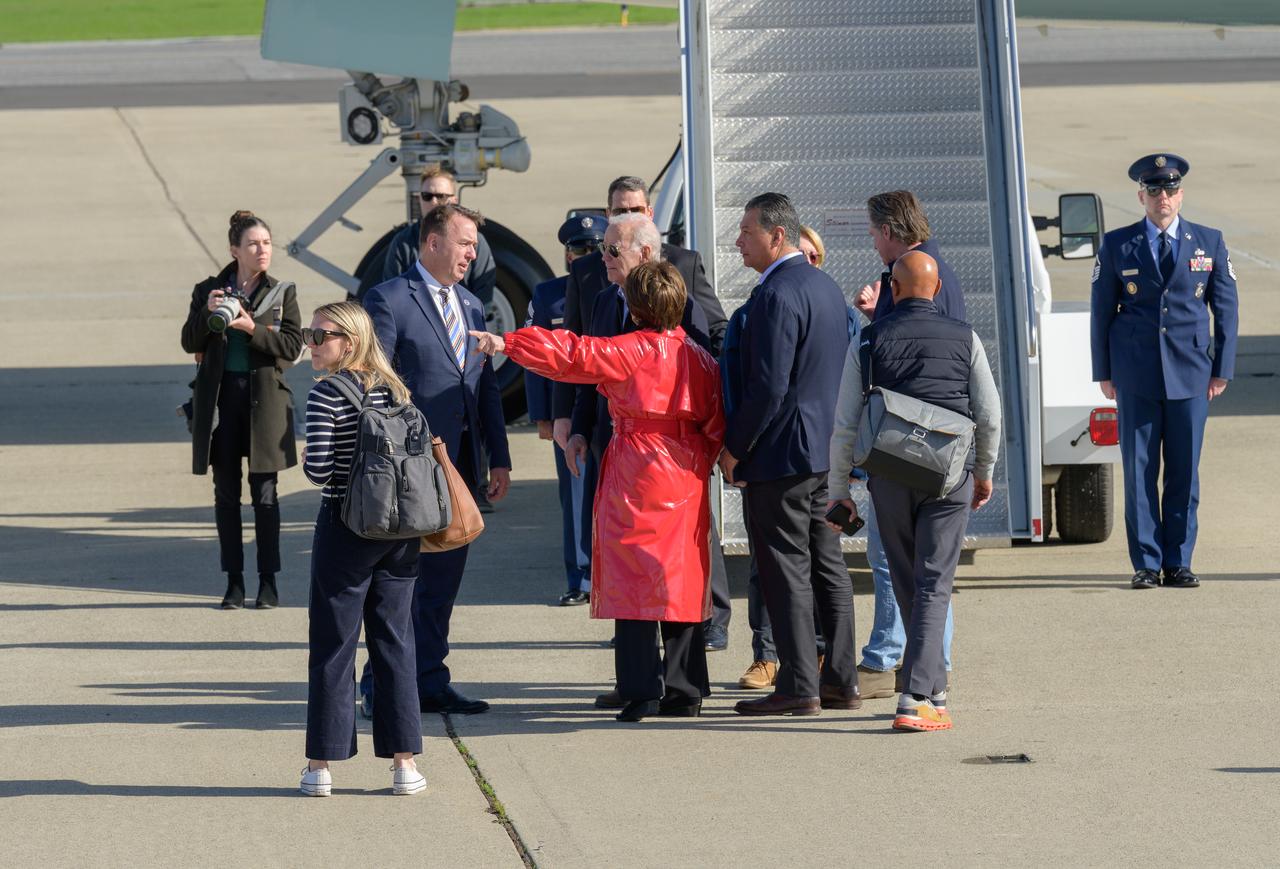
President Joe Biden landed aboard Air Force One at Moffett Federal Airfield, near NASA’s Ames Research Center in California’s Silicon Valley, Thursday, Jan. 19, 2023, en route to tour recent storm damage in the state. The President was greeted by Dr. David Korsmeyer, associate center director for research and technology at Ames, U.S. Congresswoman Anna G. Eshoo, U.S. Senator Alex Padilla, and California Governor Gavin Newsom.

Dr. David Korsmeyer, associate center director for research and technology at Ames, presents an Ames Research Center pin to President Joe Biden in front of Air Force One at Moffett Federal Airfield, near NASA’s Ames Research Center in California’s Silicon Valley, Thursday, Jan. 19, 2023. President Biden was en route to tour recent storm damage in the state.
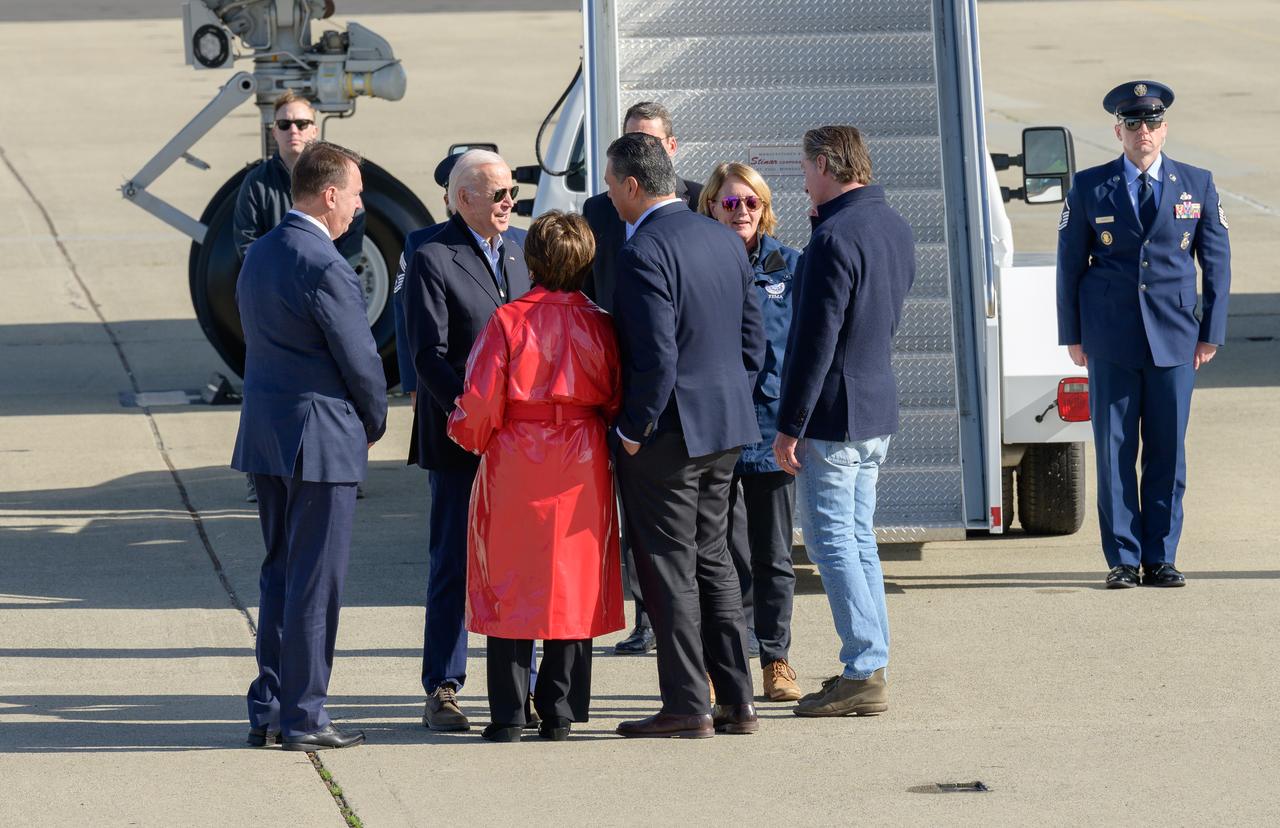
President Joe Biden landed aboard Air Force One at Moffett Federal Airfield, near NASA’s Ames Research Center in California’s Silicon Valley, Thursday, Jan. 19, 2023, en route to tour recent storm damage in the state. The President was greeted by Dr. David Korsmeyer, associate center director for research and technology at Ames, U.S. Congresswoman Anna G. Eshoo, U.S. Senator Alex Padilla, and California Governor Gavin Newsom.
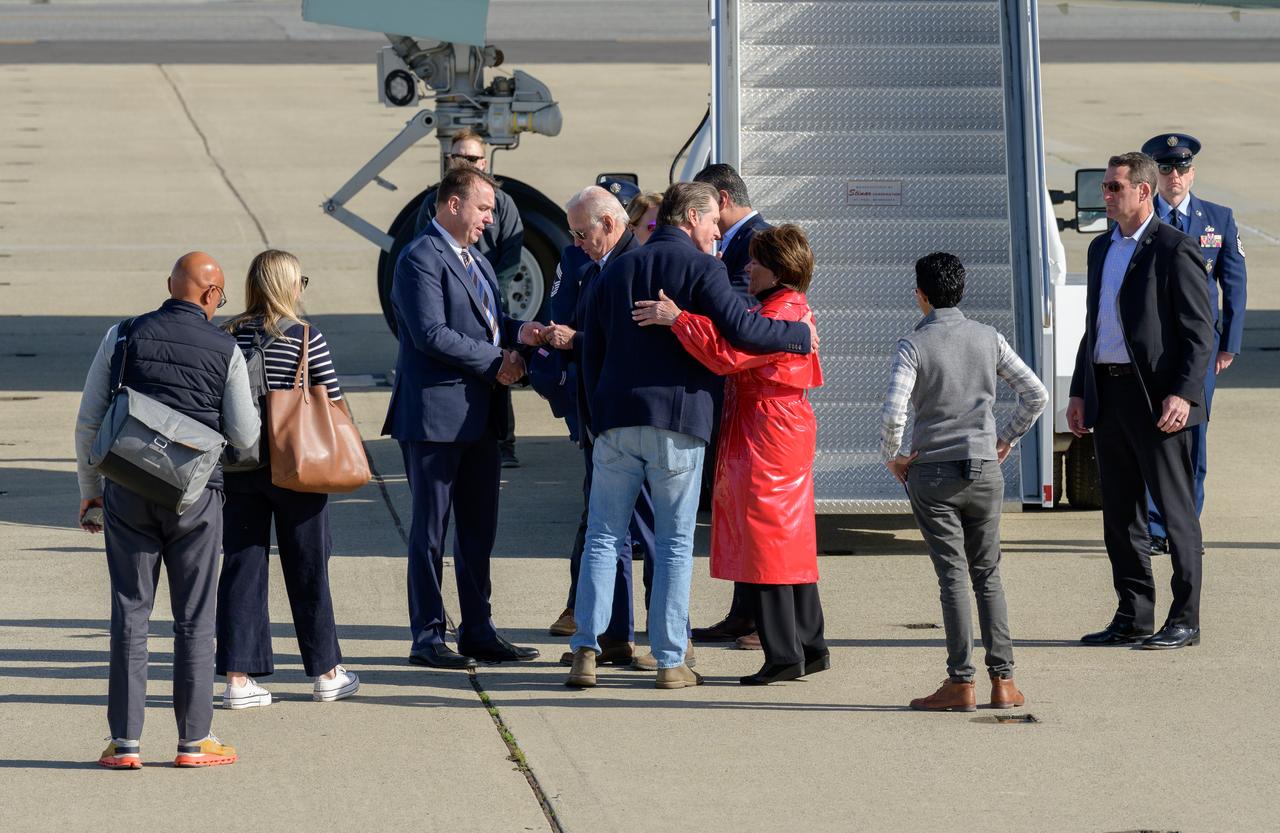
Dr. David Korsmeyer, associate center director for research and technology at Ames, presents an Ames Research Center pin to President Joe Biden in front of Air Force One at Moffett Federal Airfield, near NASA’s Ames Research Center in California’s Silicon Valley, Thursday, Jan. 19, 2023. President Biden was en route to tour recent storm damage in the state.
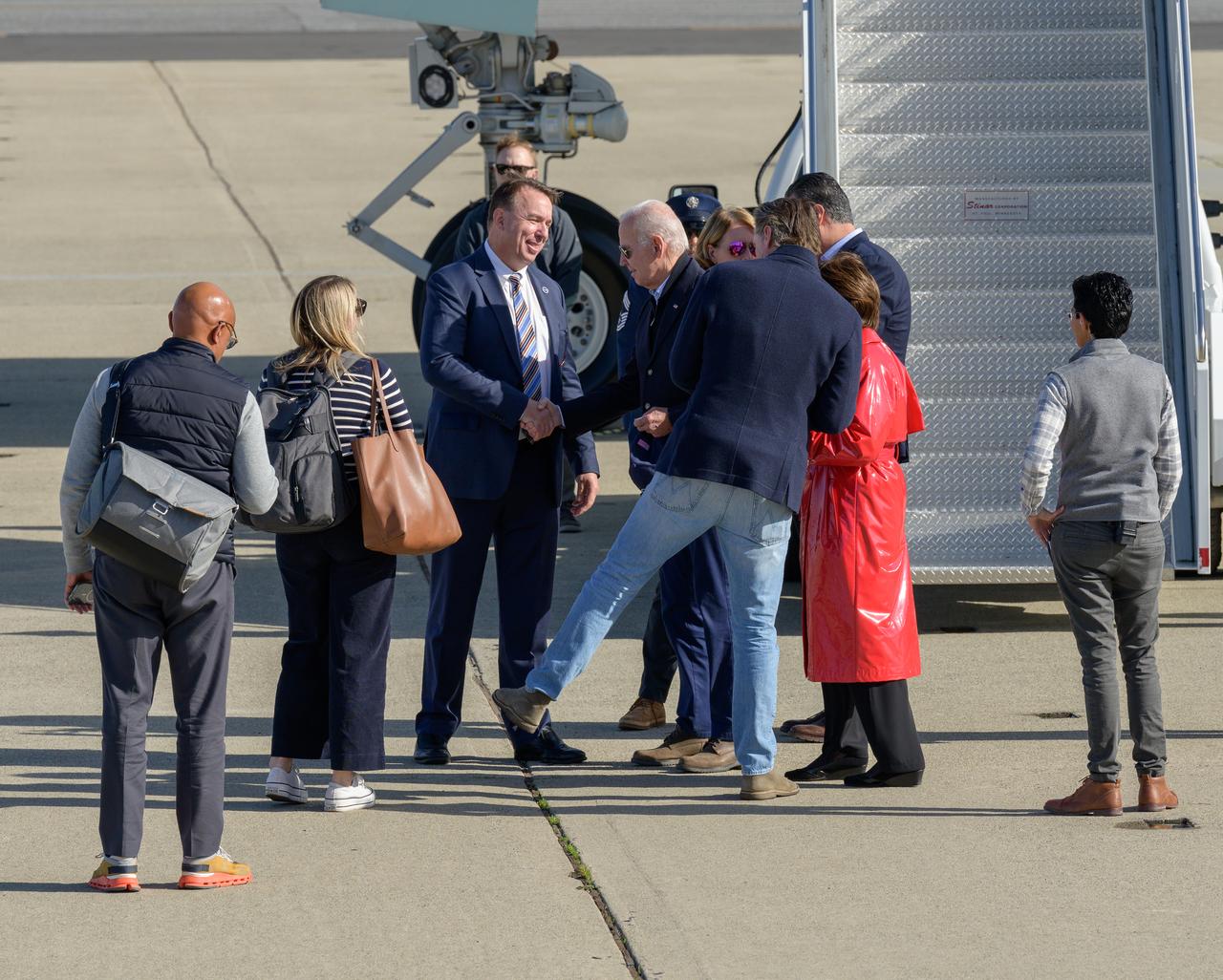
Dr. David Korsmeyer, associate center director for research and technology at Ames, presents an Ames Research Center pin to President Joe Biden in front of Air Force One at Moffett Federal Airfield, near NASA’s Ames Research Center in California’s Silicon Valley, Thursday, Jan. 19, 2023. President Biden was en route to tour recent storm damage in the state.
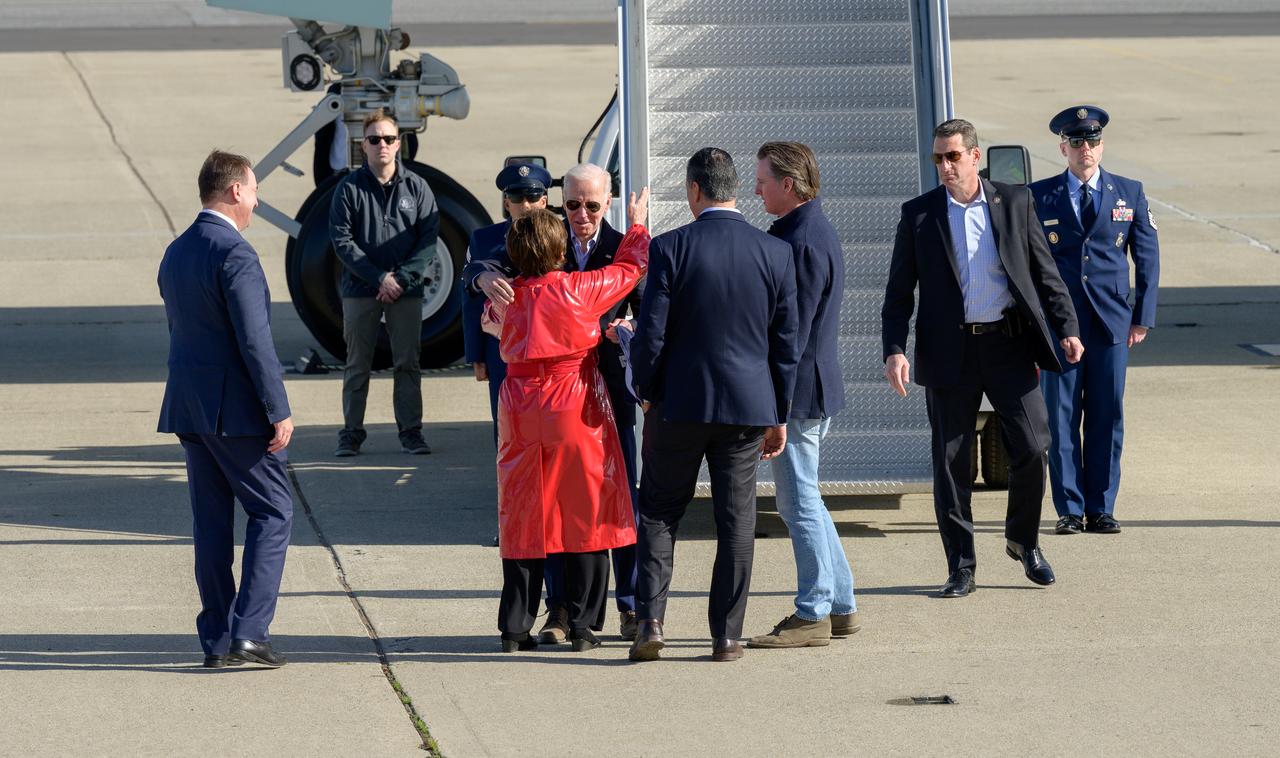
President Joe Biden landed aboard Air Force One at Moffett Federal Airfield, near NASA’s Ames Research Center in California’s Silicon Valley, Thursday, Jan. 19, 2023, en route to tour recent storm damage in the state. The President was greeted by Dr. David Korsmeyer, associate center director for research and technology at Ames, U.S. Congresswoman Anna G. Eshoo, U.S. Senator Alex Padilla, and California Governor Gavin Newsom.
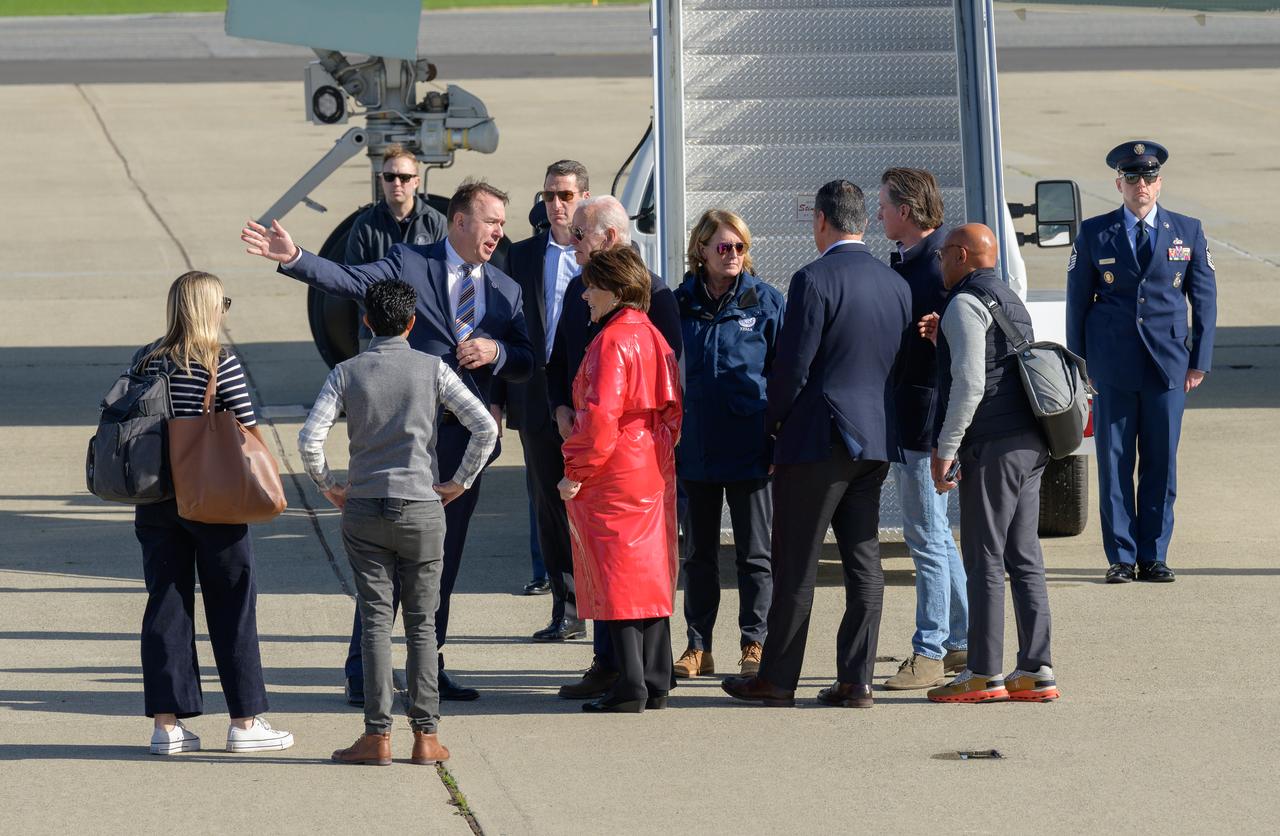
President Joe Biden landed aboard Air Force One at Moffett Federal Airfield, near NASA’s Ames Research Center in California’s Silicon Valley, Thursday, Jan. 19, 2023, en route to tour recent storm damage in the state. The President was greeted by Dr. David Korsmeyer, associate center director for research and technology at Ames, U.S. Congresswoman Anna G. Eshoo, U.S. Senator Alex Padilla, and California Governor Gavin Newsom.
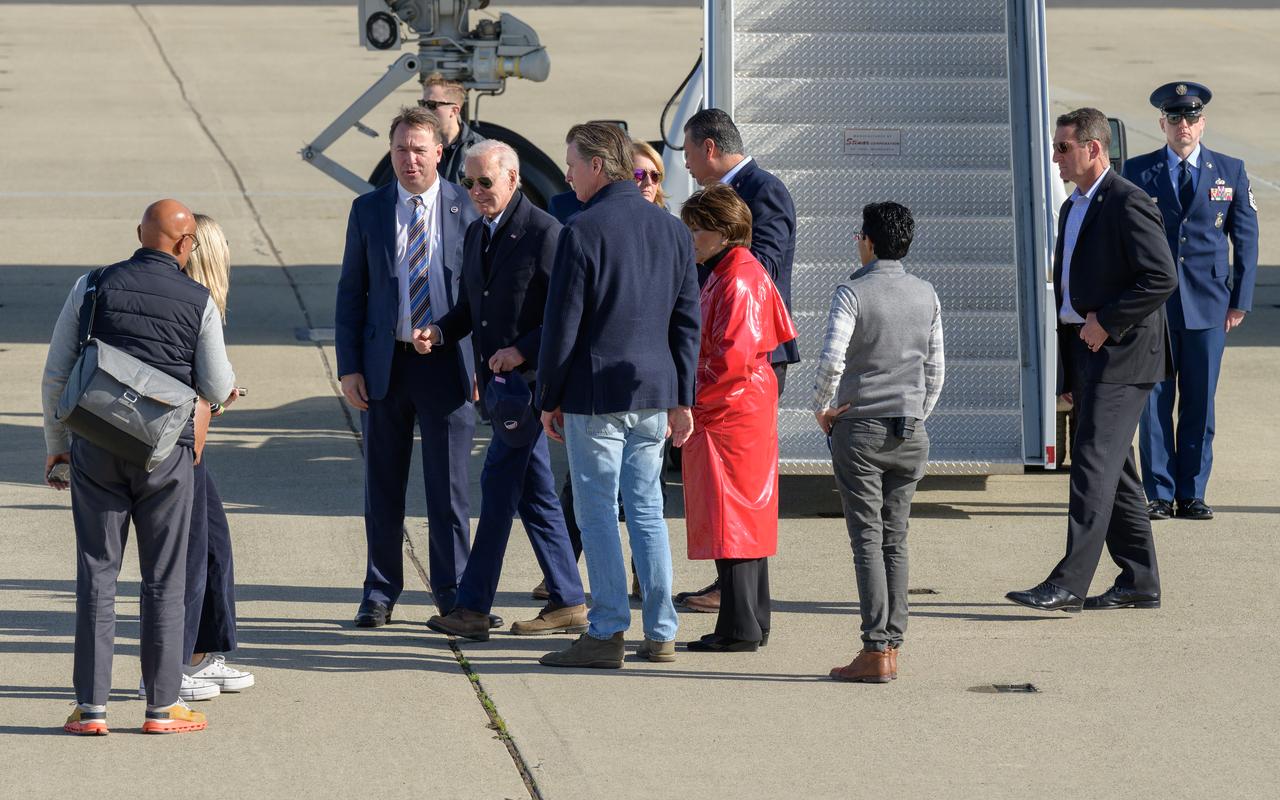
Dr. David Korsmeyer, associate center director for research and technology at Ames, presents an Ames Research Center pin to President Joe Biden in front of Air Force One at Moffett Federal Airfield, near NASA’s Ames Research Center in California’s Silicon Valley, Thursday, Jan. 19, 2023. President Biden was en route to tour recent storm damage in the state.
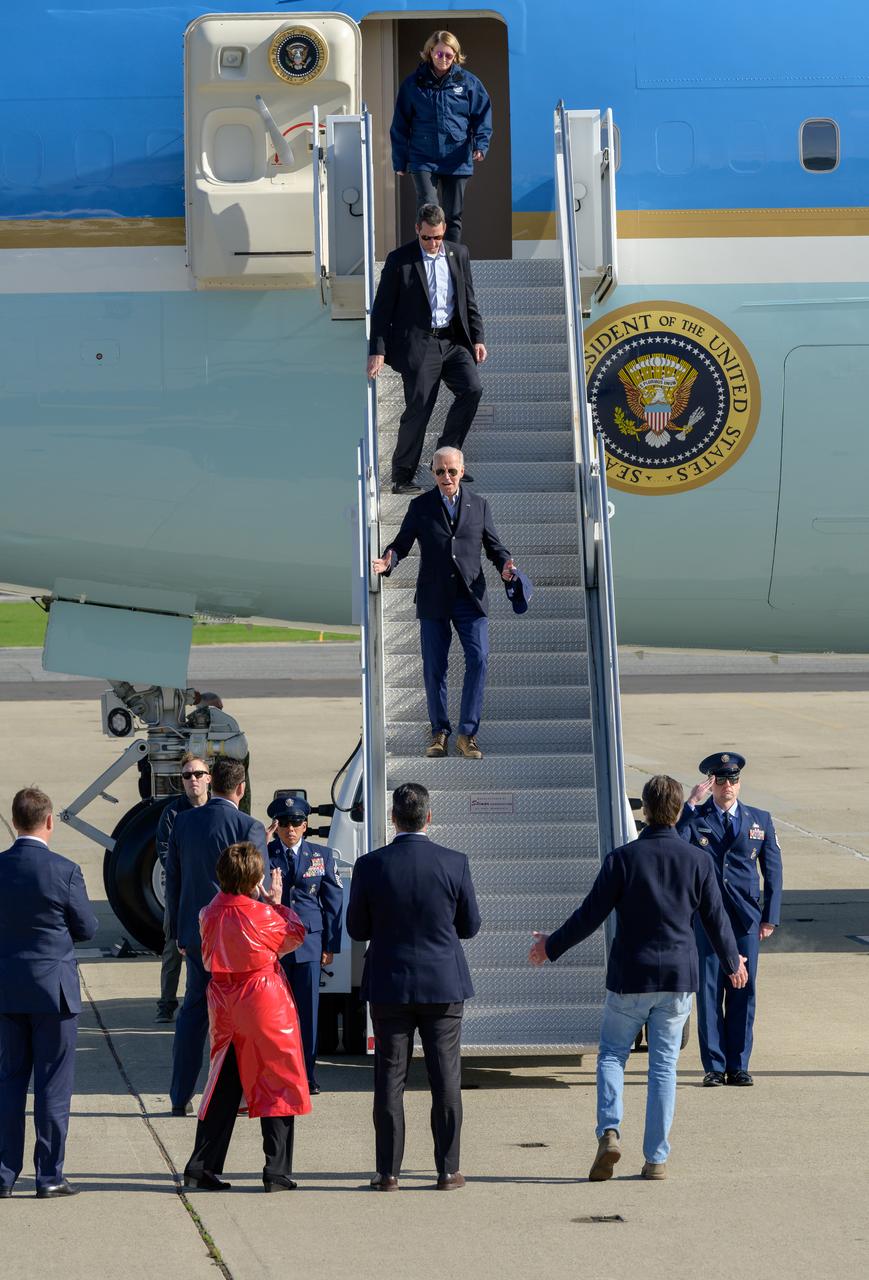
President Joe Biden landed aboard Air Force One at Moffett Federal Airfield, near NASA’s Ames Research Center in California’s Silicon Valley, Thursday, Jan. 19, 2023, en route to tour recent storm damage in the state. The President was greeted by Dr. David Korsmeyer, associate center director for research and technology at Ames, U.S. Congresswoman Anna G. Eshoo, U.S. Senator Alex Padilla, and California Governor Gavin Newsom.
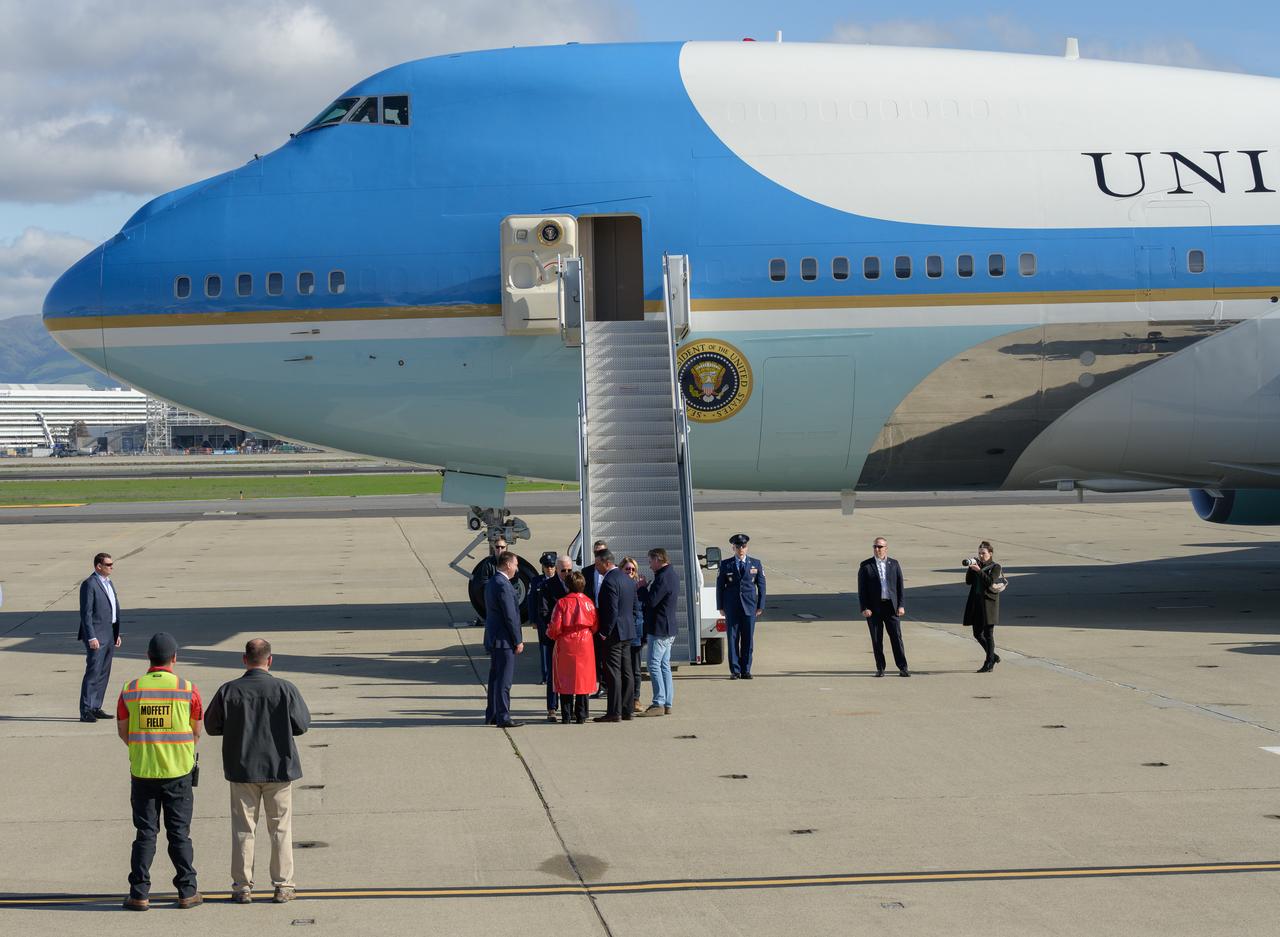
President Joe Biden landed aboard Air Force One at Moffett Federal Airfield, near NASA’s Ames Research Center in California’s Silicon Valley, Thursday, Jan. 19, 2023, en route to tour recent storm damage in the state. The President was greeted by Dr. David Korsmeyer, associate center director for research and technology at Ames, U.S. Congresswoman Anna G. Eshoo, U.S. Senator Alex Padilla, and California Governor Gavin Newsom.

Airshow hosted by Moffett Federal Airfield
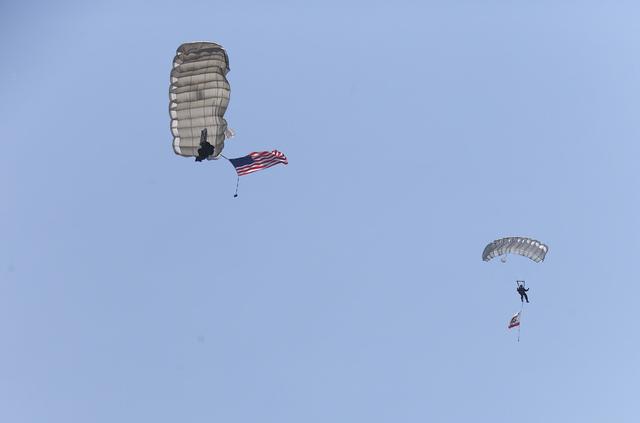
Airshow hosted by Moffett Federal Airfield
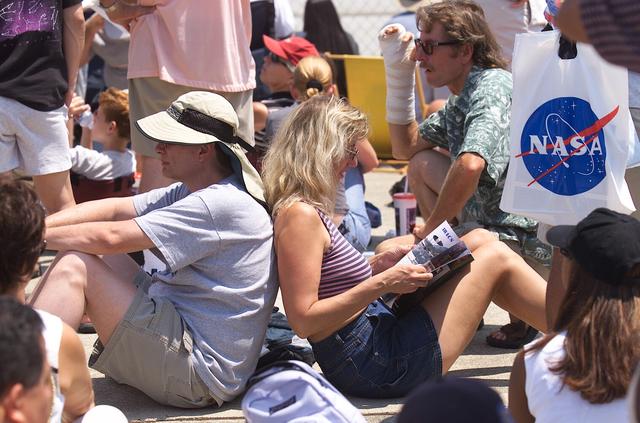
Airshow hosted by Moffett Federal Airfield
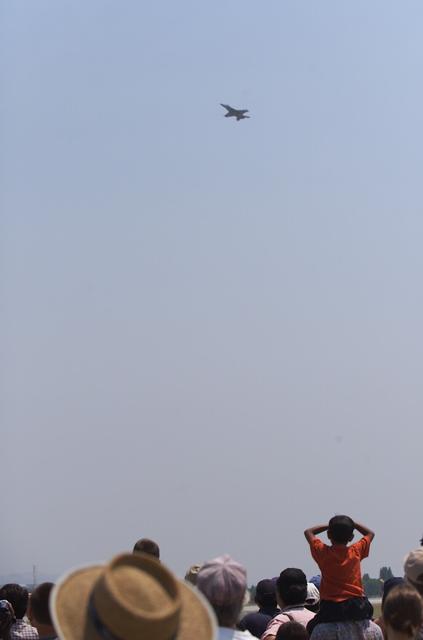
Airshow hosted by Moffett Federal Airfield
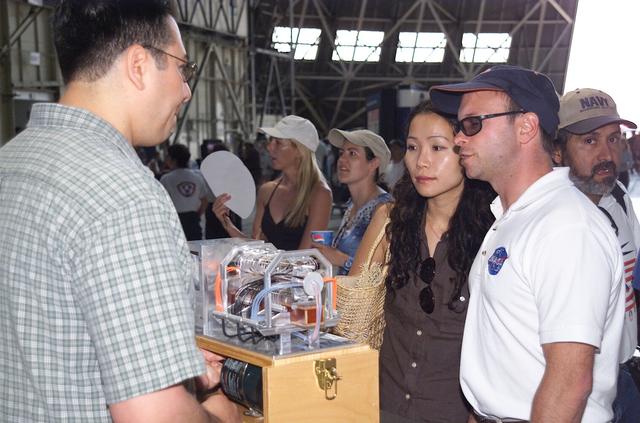
Airshow hosted by Moffett Federal Airfield

Airshow hosted by Moffett Federal Airfield
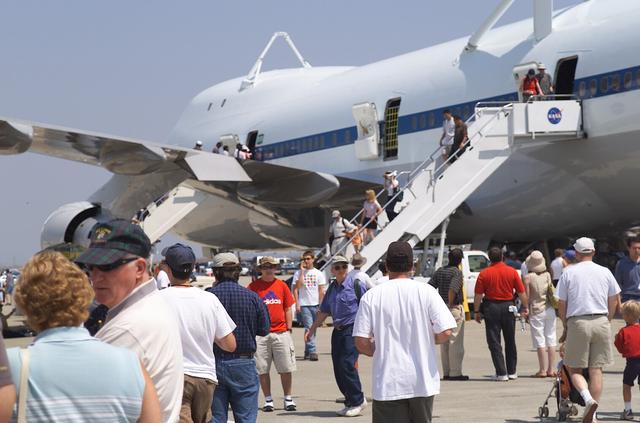
Airshow hosted by Moffett Federal Airfield
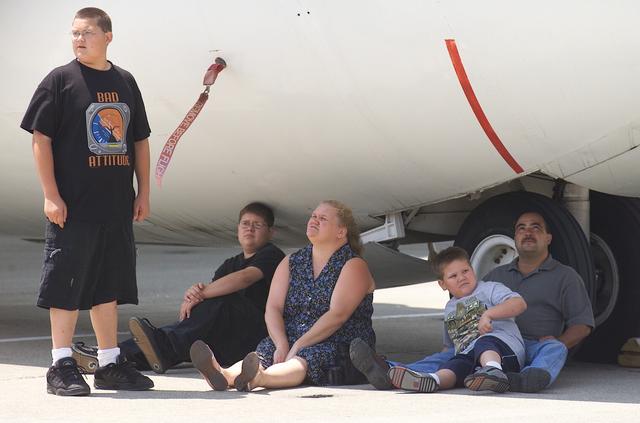
Airshow hosted by Moffett Federal Airfield
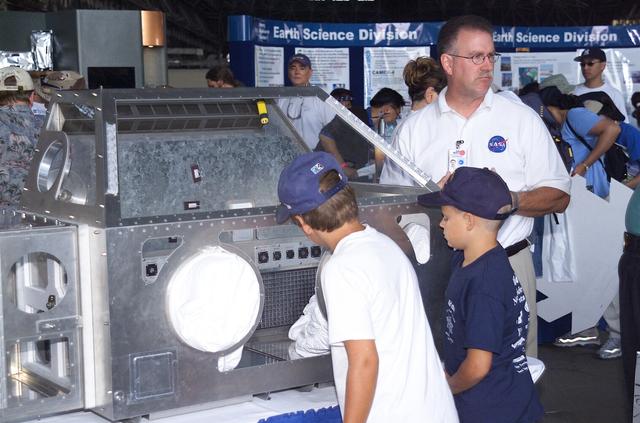
Airshow hosted by Moffett Federal Airfield
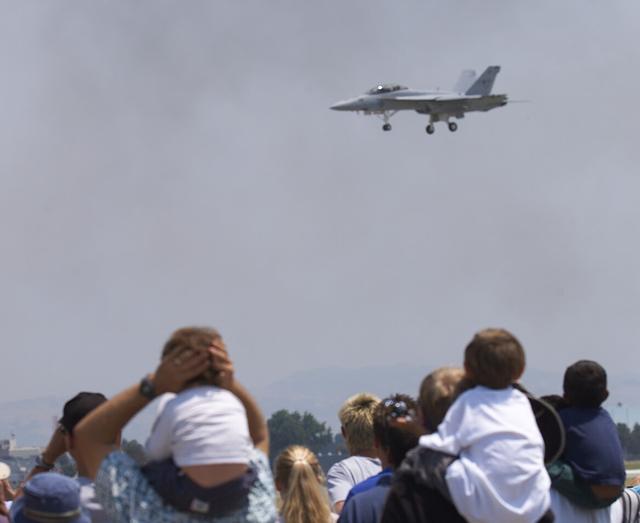
Airshow hosted by Moffett Federal Airfield
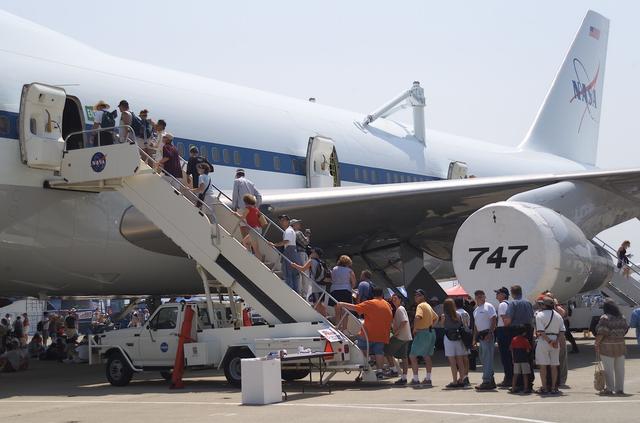
Airshow hosted by Moffett Federal Airfield
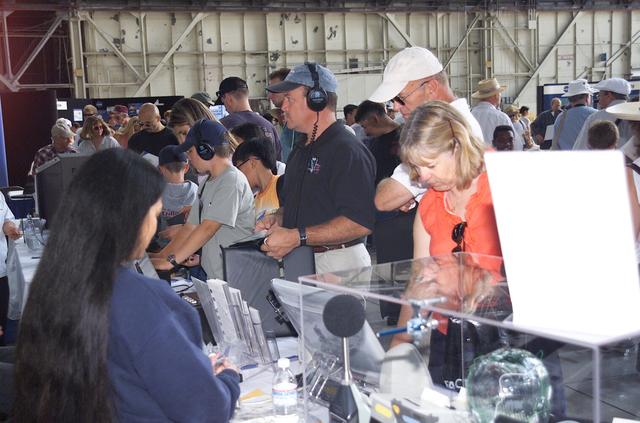
Airshow hosted by Moffett Federal Airfield
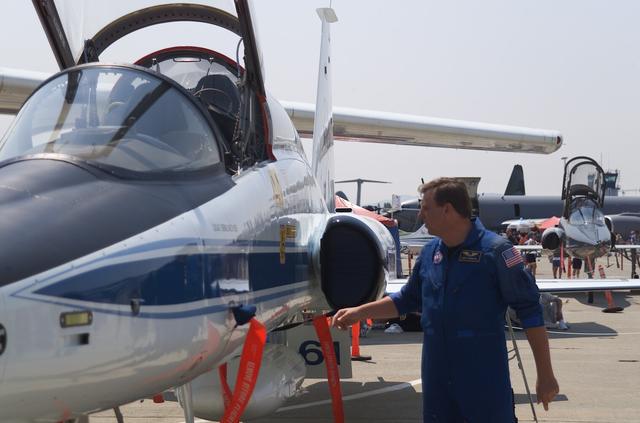
Airshow hosted by Moffett Federal Airfield
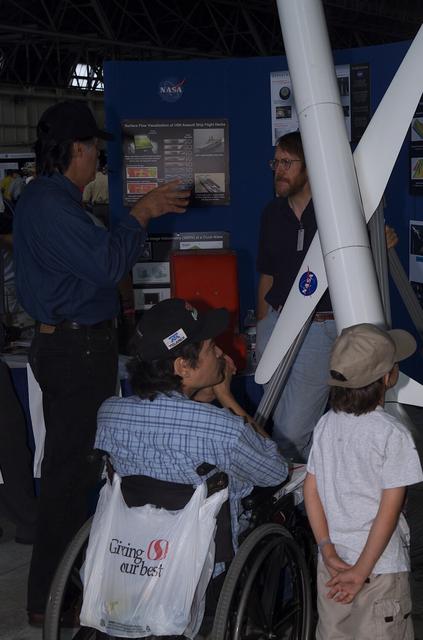
Airshow hosted by Moffett Federal Airfield
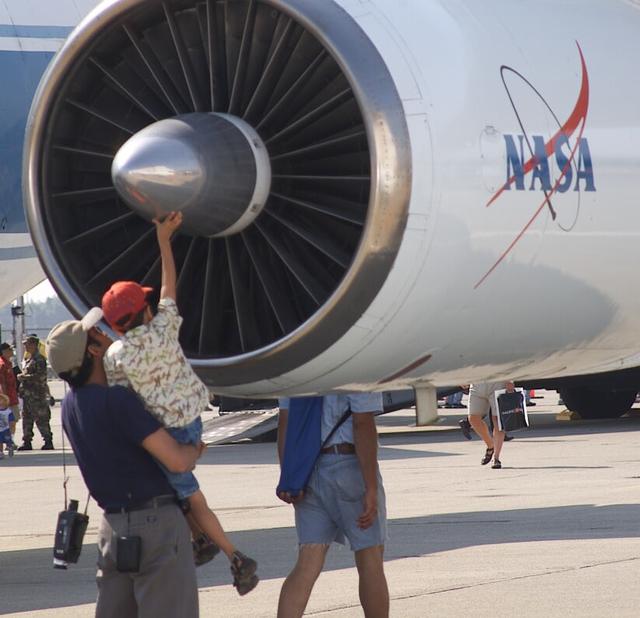
Airshow hosted by Moffett Federal Airfield
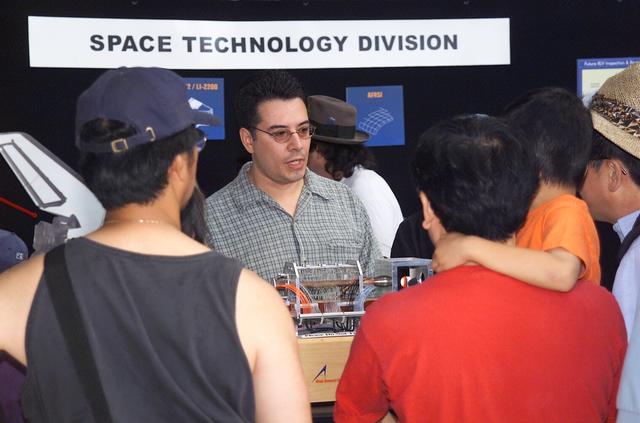
Airshow hosted by Moffett Federal Airfield

Airshow hosted by Moffett Federal Airfield
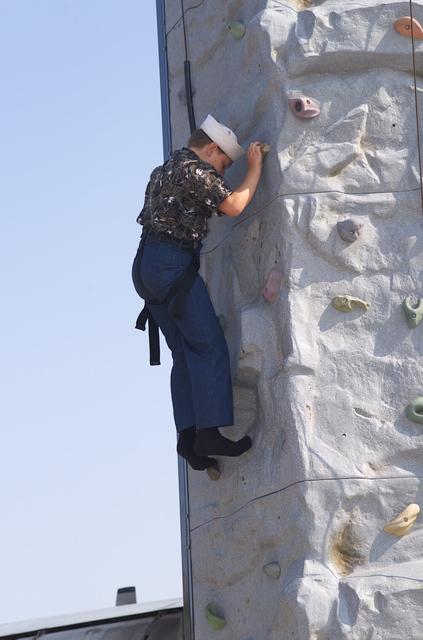
Airshow hosted by Moffett Federal Airfield
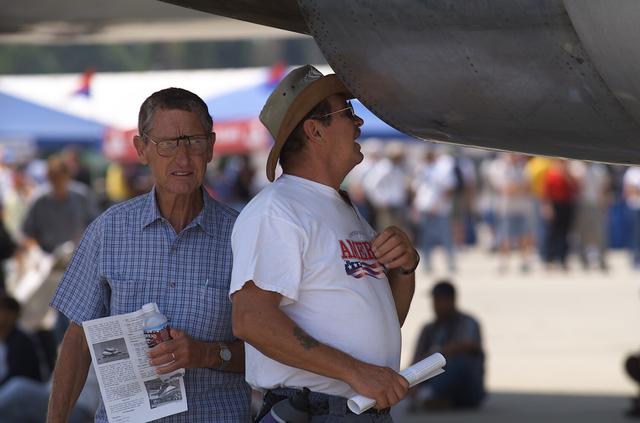
Airshow hosted by Moffett Federal Airfield
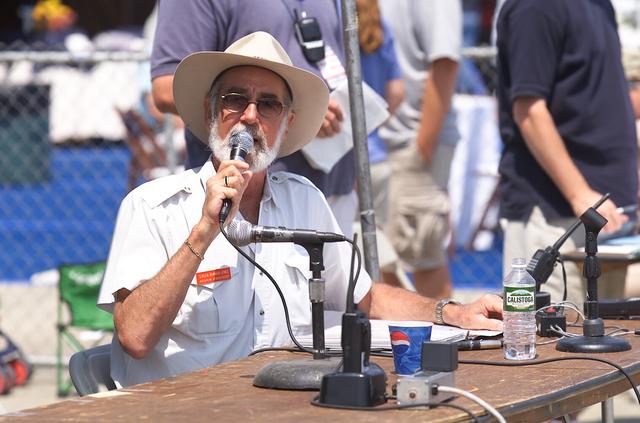
Airshow hosted by Moffett Federal Airfield
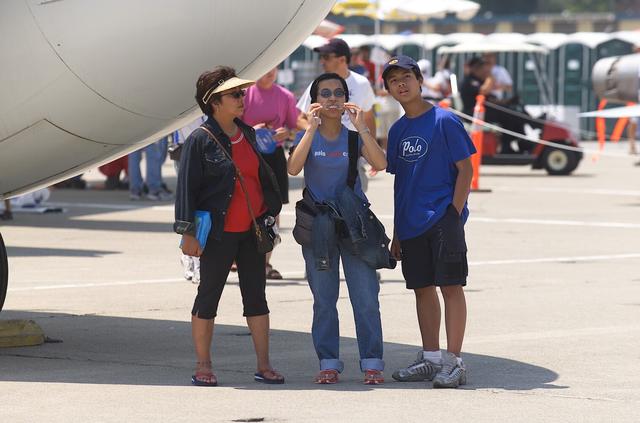
Airshow hosted by Moffett Federal Airfield
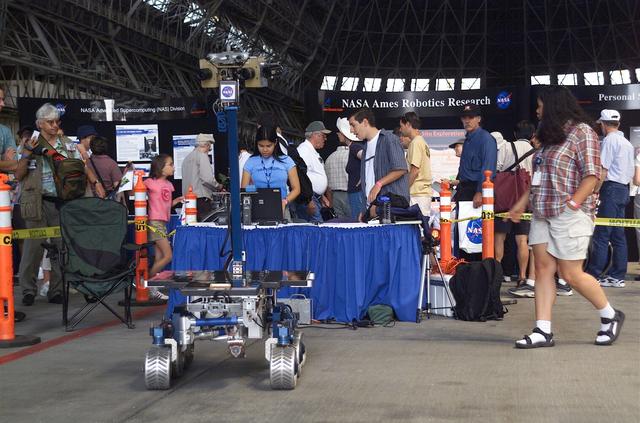
Airshow hosted by Moffett Federal Airfield
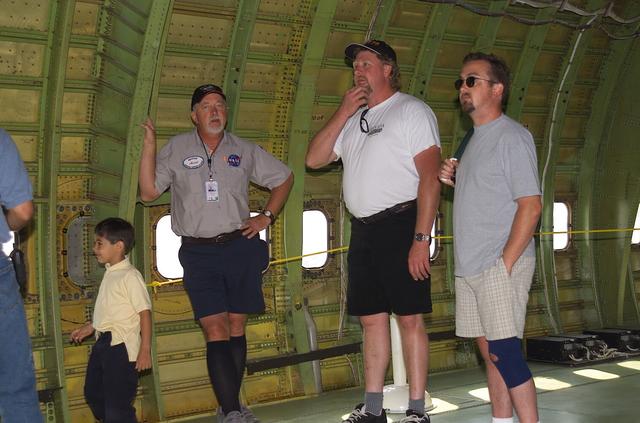
Airshow hosted by Moffett Federal Airfield