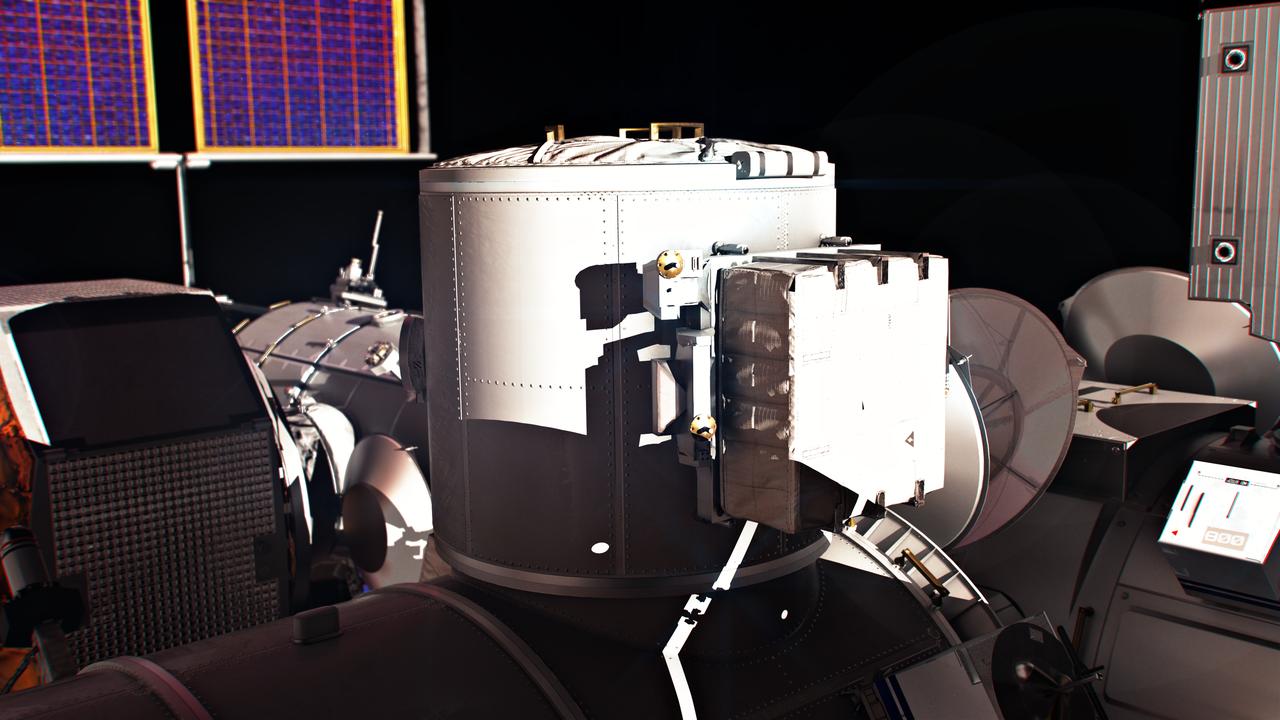
A close-up of a government-reference airlock module for the Gateway Space Station. Mission planning calls for an airlock to be delivered and integrated to Gateway by the crewed Orion spacecraft on the Artemis VI mission after launching on a Space Launch System (SLS) Block 1B rocket.
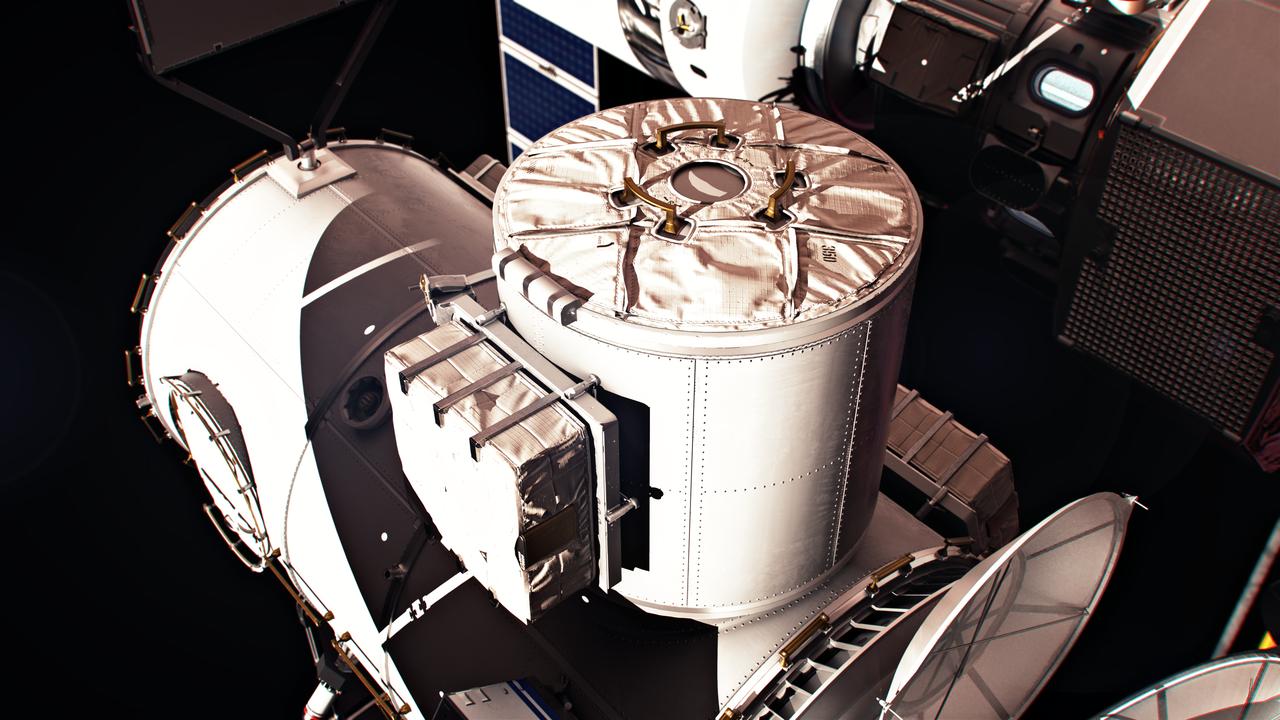
A close-up of a government-reference airlock module for the Gateway Space Station. Mission planning calls for an airlock to be delivered and integrated to Gateway by the crewed Orion spacecraft on the Artemis VI mission after launching on a Space Launch System (SLS) Block 1B rocket.
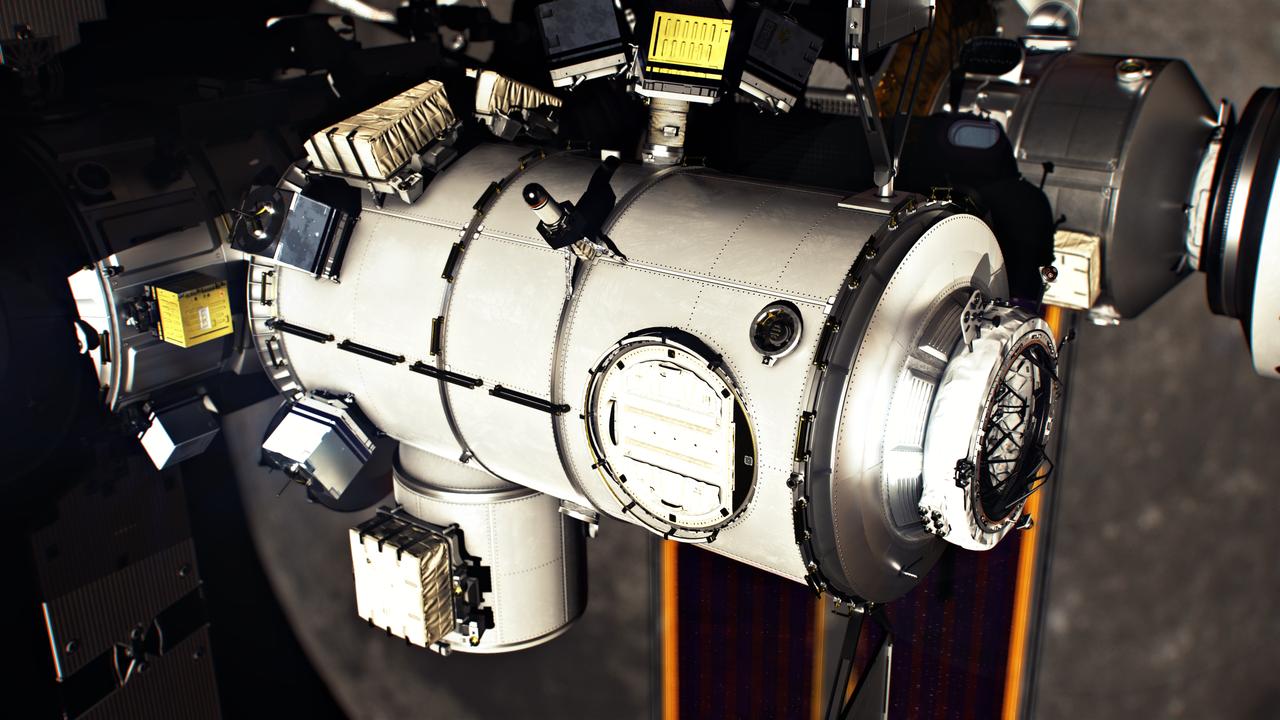
A close-up of a government-reference airlock module for the Gateway Space Station. Mission planning calls for an airlock to be delivered and integrated to Gateway by the crewed Orion spacecraft on the Artemis VI mission after launching on a Space Launch System (SLS) Block 1B rocket.

The Orion spacecraft delivers the Crew and Science Airlock (represented here by a government reference design) to the Gateway Space Station on the Artemis VI mission. The Mohammed Bin Rashid Space Centre of the United Arab Emirates will provide the airlock for Gateway, humanity's first space station that will orbit the Moon.
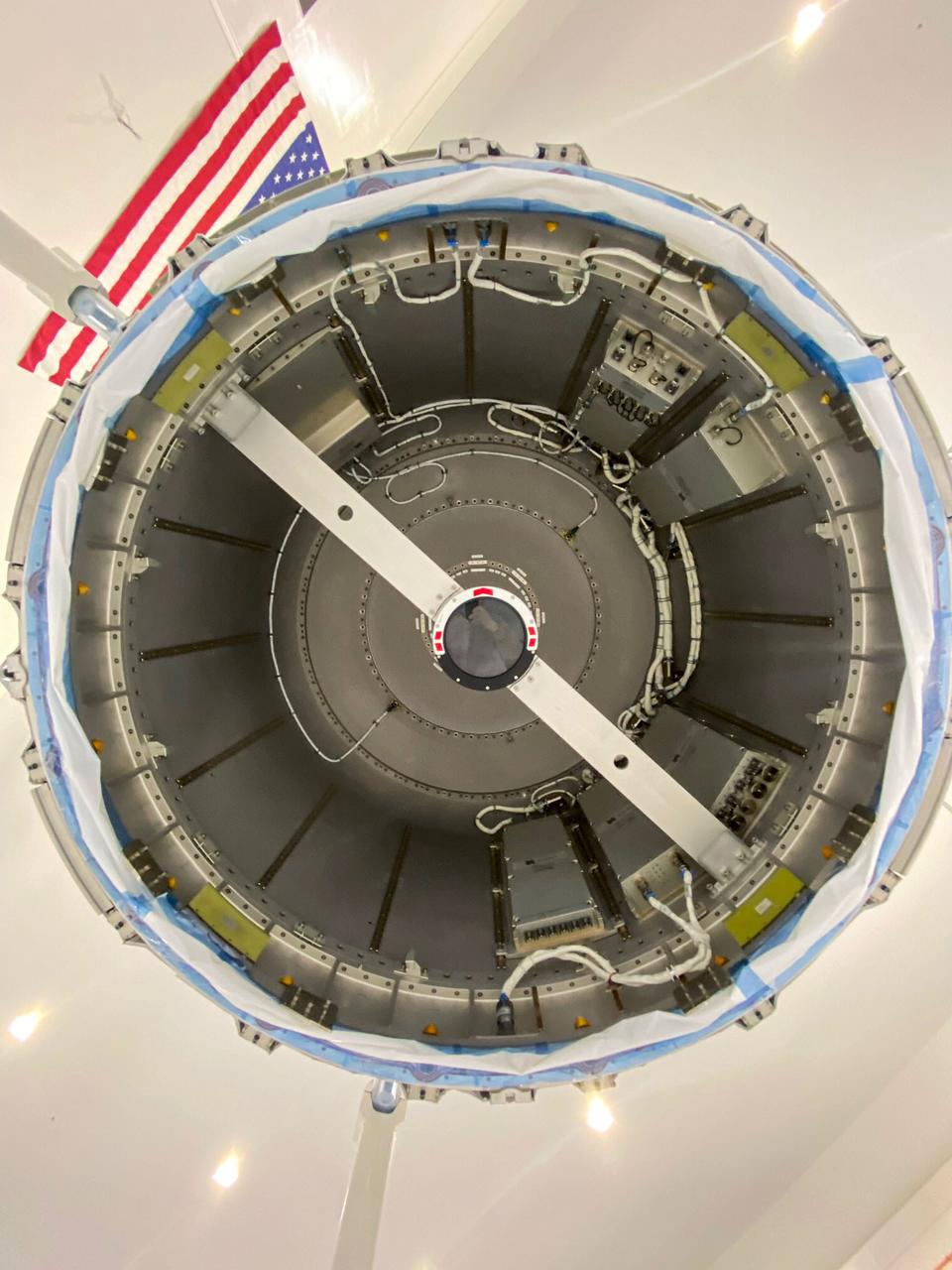
jsc2020e044492 (10/6/2020) —- A preflight view of the Nanoracks Airlock. The Nanoracks Bishop Airlock (Nanoracks Airlock) is the first-ever commercially owned and operated airlock on the International Space Station. It provides a variety of capabilities including jettisoning of payloads such as Cubesats, deployment of external payloads, support for small exterior payloads and locker-sized internal payloads, recovery of external on-orbit replaceable units (ORUs), and the ability to move hardware outside in support of extravehicular activities (EVAs). It is approximately five times larger than the Japanense Experiment Module (JEM) Airlock so it can accommodate more and larger payloads. The Airlock’s capabilities support many different types of scientific investigations.
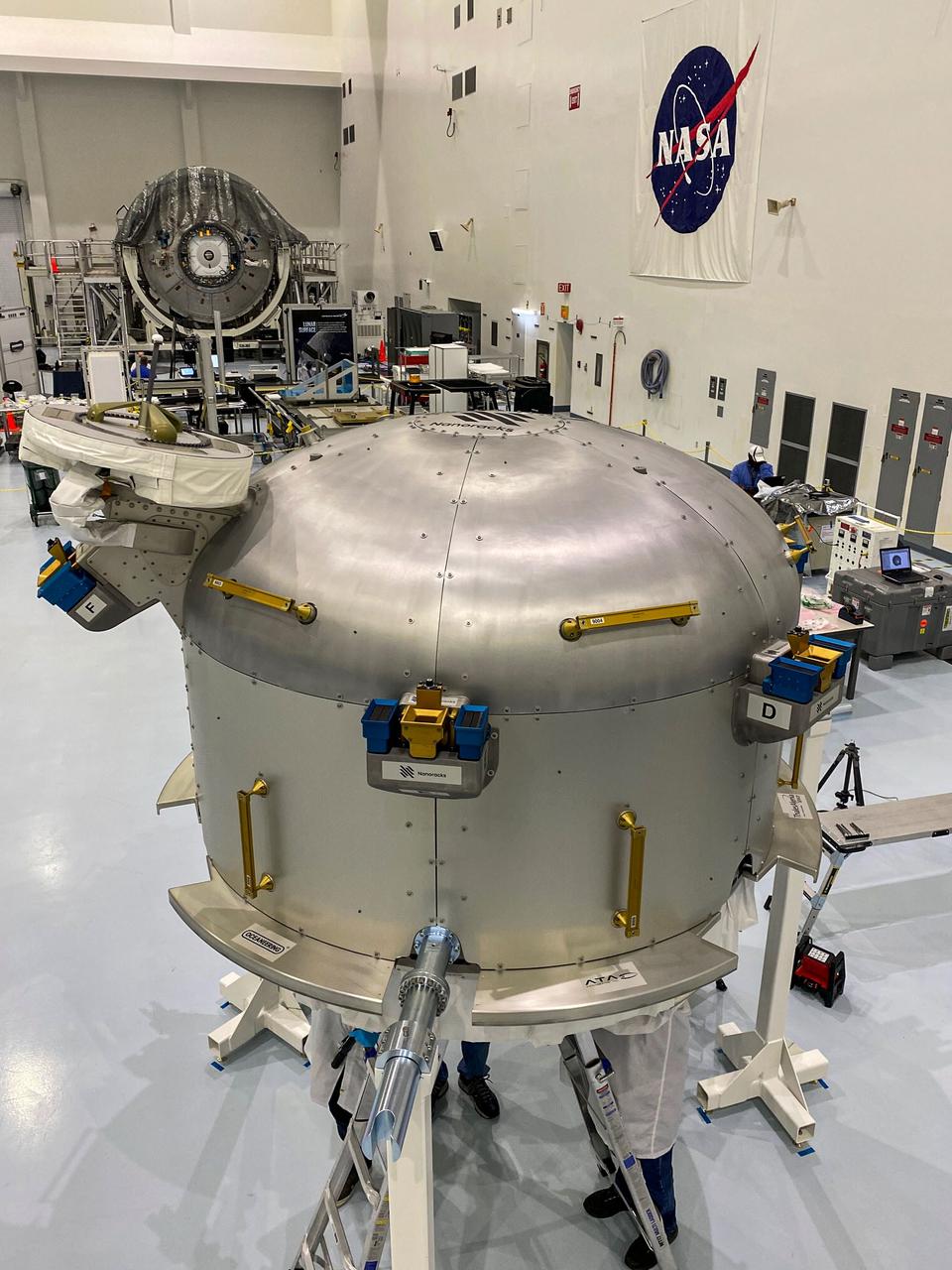
jsc2020e044491 (10/5/2020) —- A preflight view of the Nanoracks Airlock. The Nanoracks Bishop Airlock (Nanoracks Airlock) is the first-ever commercially owned and operated airlock on the International Space Station. It provides a variety of capabilities including jettisoning of payloads such as Cubesats, deployment of external payloads, support for small exterior payloads and locker-sized internal payloads, recovery of external on-orbit replaceable units (ORUs), and the ability to move hardware outside in support of extravehicular activities (EVAs). It is approximately five times larger than the Japanense Experiment Module (JEM) Airlock so it can accommodate more and larger payloads. The Airlock’s capabilities support many different types of scientific investigations.
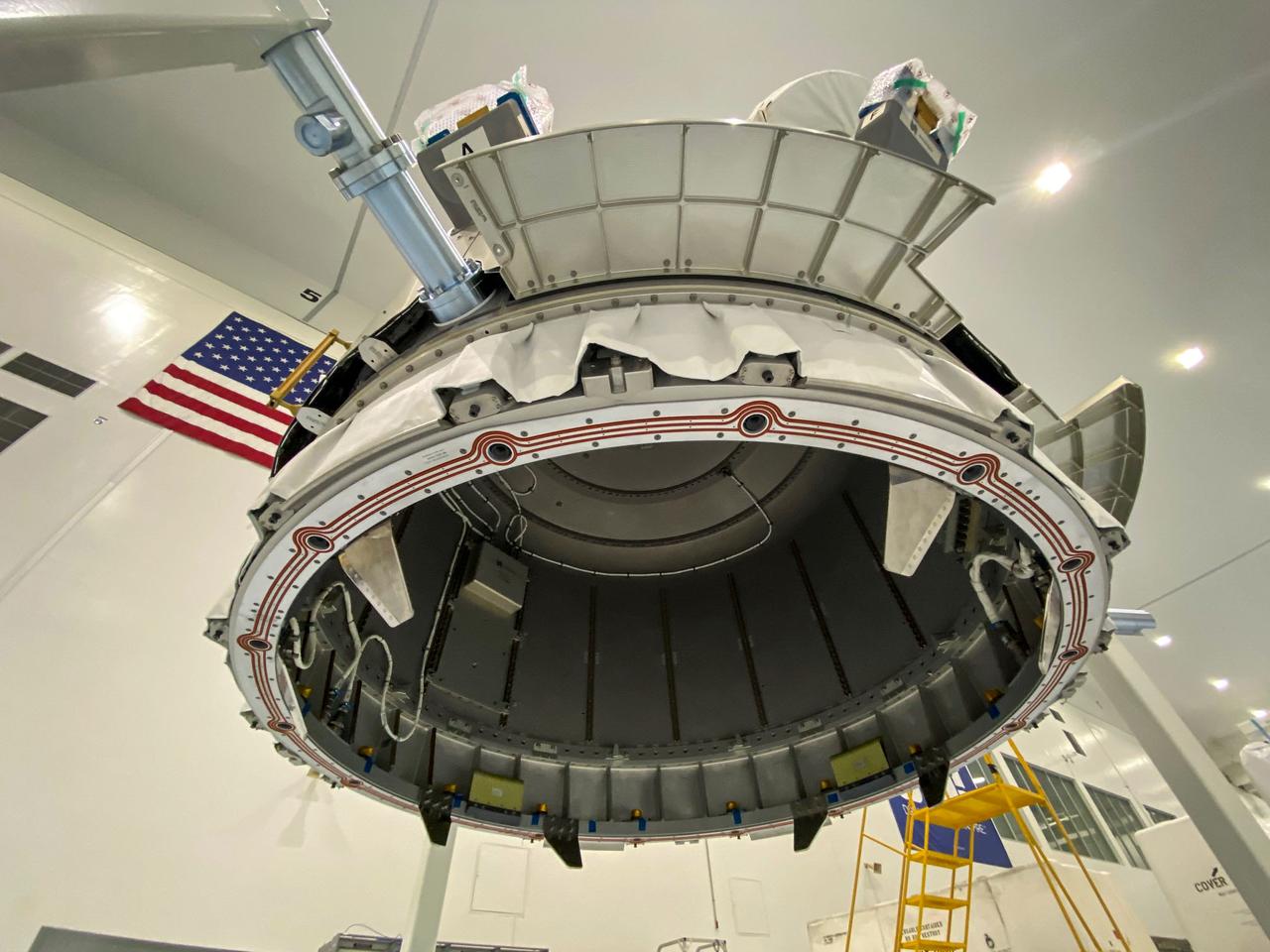
jsc2020e044494 (10/1/2020) --- A preflight view of the Nanoracks Airlock. The Nanoracks Bishop Airlock (Nanoracks Airlock) is the first-ever commercially owned and operated airlock on the International Space Station. It provides a variety of capabilities including jettisoning of payloads such as Cubesats, deployment of external payloads, support for small exterior payloads and locker-sized internal payloads, recovery of external on-orbit replaceable units (ORUs), and the ability to move hardware outside in support of extravehicular activities (EVAs). It is approximately five times larger than the Japanense Experiment Module (JEM) Airlock so it can accommodate more and larger payloads. The Airlock’s capabilities support many different types of scientific investigations.
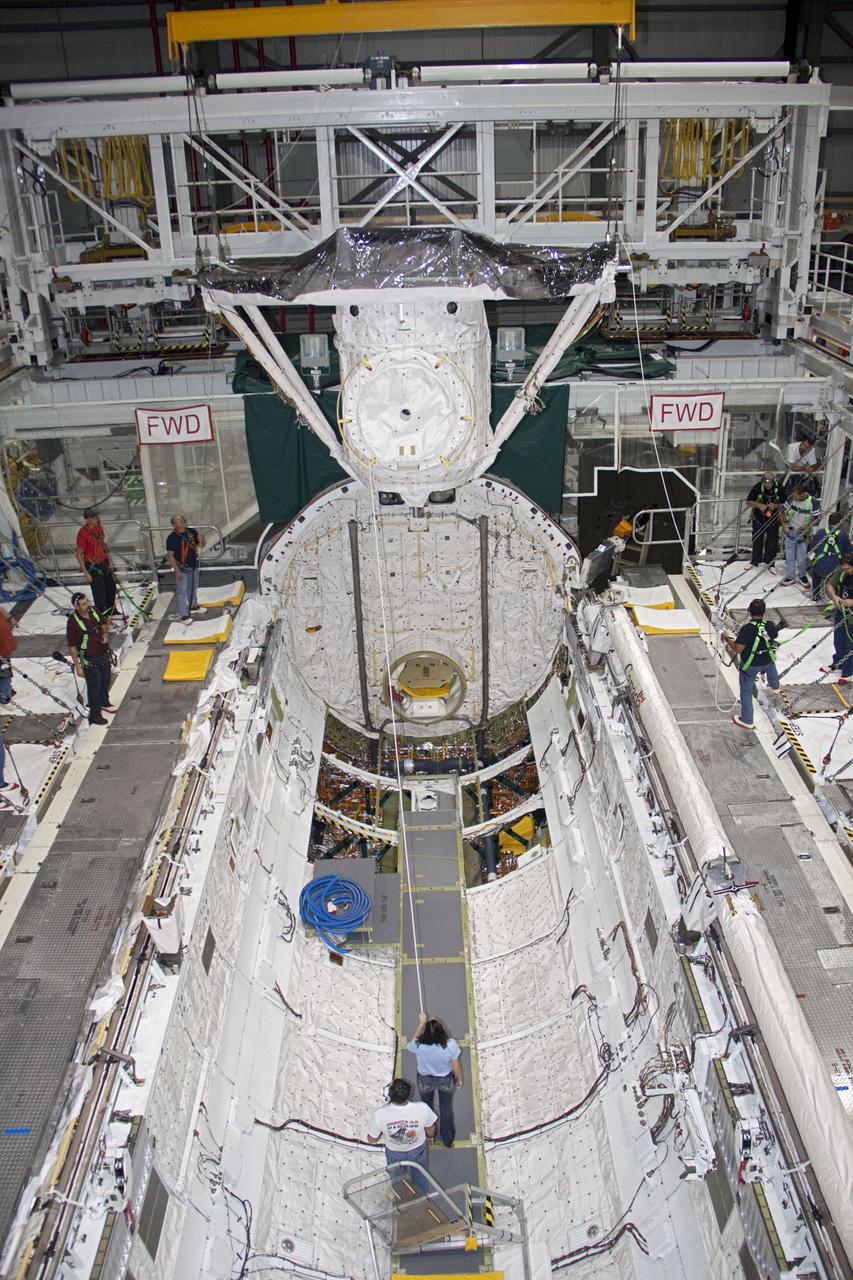
A crane lifts the airlock from the cargo bay of space shuttle Atlantis in Orbiter Processing Facility-2 at NASA's Kennedy Space Center in Florida. The airlock was the connecting point between the shuttle and International Space Station. It was removed as part of the ongoing work to prepare the shuttles for public display. The shuttle is being prepared for display at the Kennedy Space Center Visitor Complex. Photo credit: NASA/Jim Grossmann
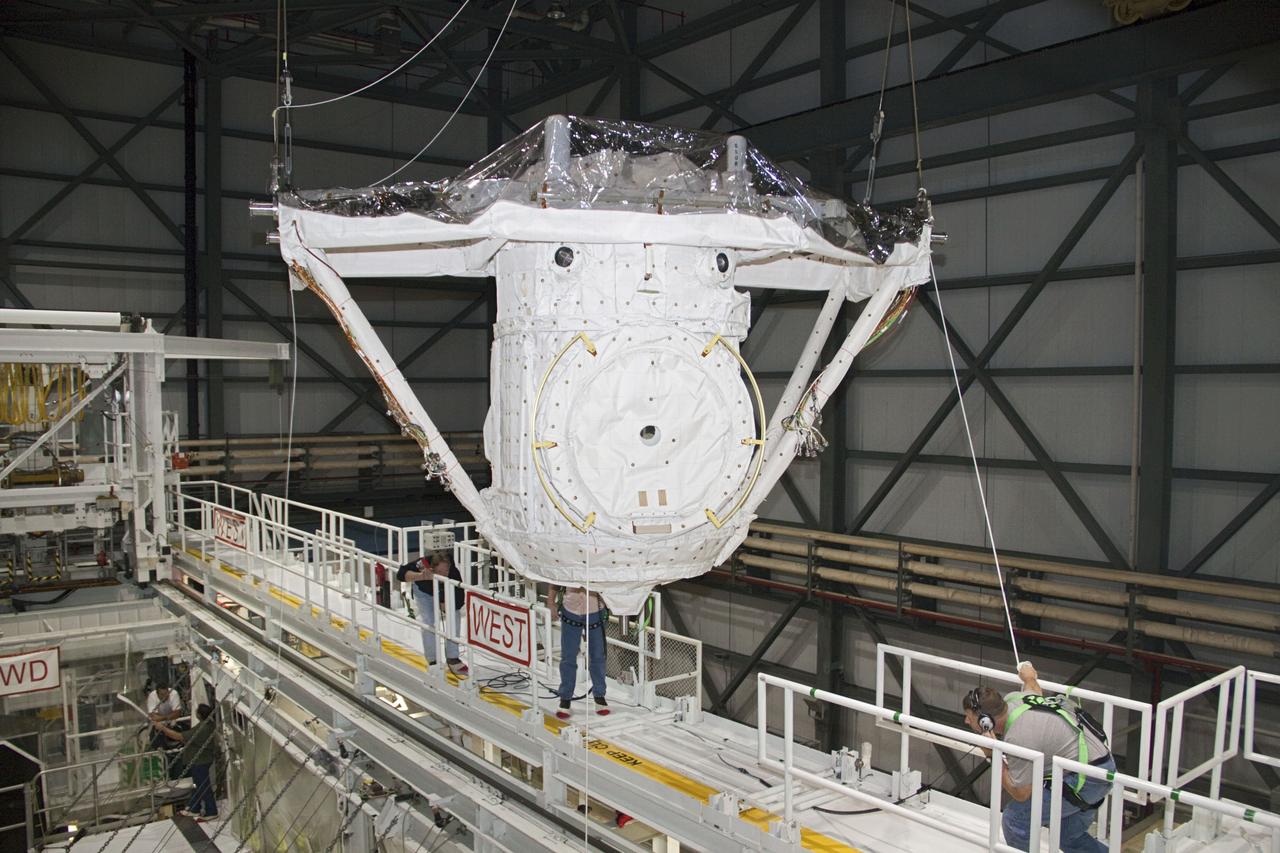
CAPE CANAVERAL, Fla. – A crane lifts the airlock from the cargo bay of space shuttle Atlantis in Orbiter Processing Facility-2 at NASA's Kennedy Space Center in Florida. The airlock was the connecting point between the shuttle and International Space Station. It was removed as part of the ongoing work to prepare the shuttles for public display. The shuttle is being prepared for display at the Kennedy Space Center Visitor Complex. Photo credit: NASA/Jim Grossmann
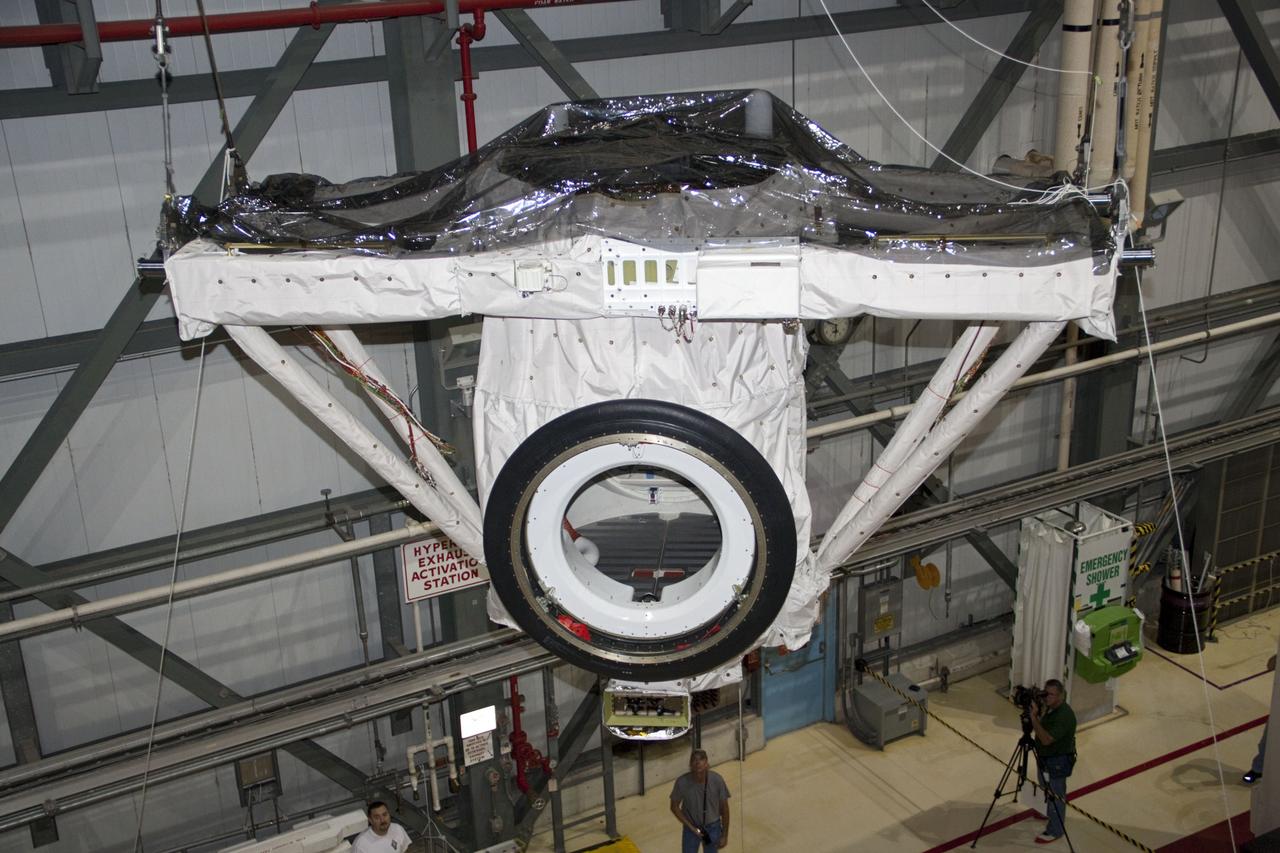
CAPE CANAVERAL, Fla. – A crane lifts the airlock from the cargo bay of space shuttle Atlantis in Orbiter Processing Facility-2 at NASA's Kennedy Space Center in Florida. The airlock was the connecting point between the shuttle and International Space Station. It was removed as part of the ongoing work to prepare the shuttles for public display. The shuttle is being prepared for display at the Kennedy Space Center Visitor Complex. Photo credit: NASA/Jim Grossmann
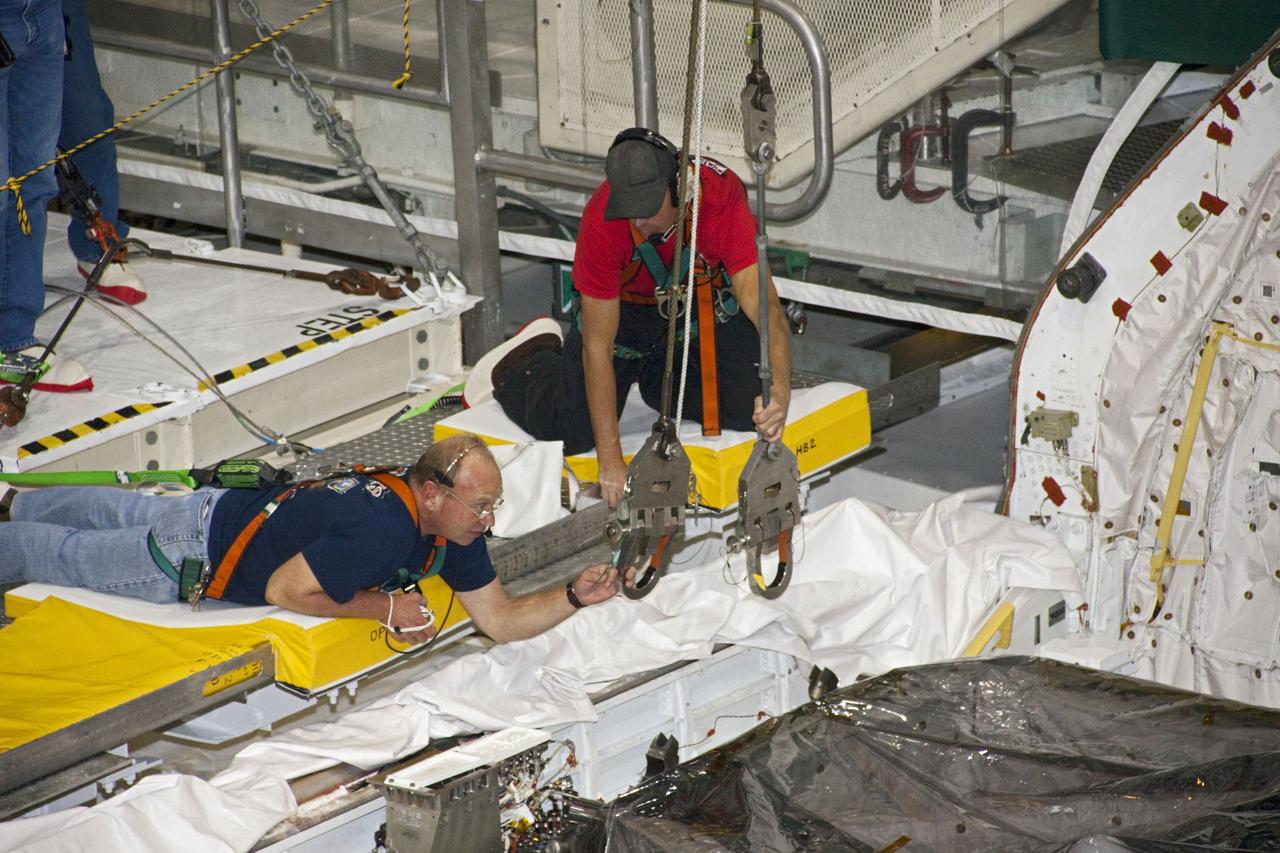
CAPE CANAVERAL, Fla. -- Workers prepare to remove the airlock from the cargo bay of space shuttle Atlantis in Orbiter Processing Facility-2 at NASA's Kennedy Space Center in Florida. The airlock was the connecting point between the shuttle and International Space Station. It was removed as part of the ongoing work to prepare the shuttles for public display. The shuttle is being prepared for display at the Kennedy Space Center Visitor Complex. Photo credit: NASA/Jim Grossmann
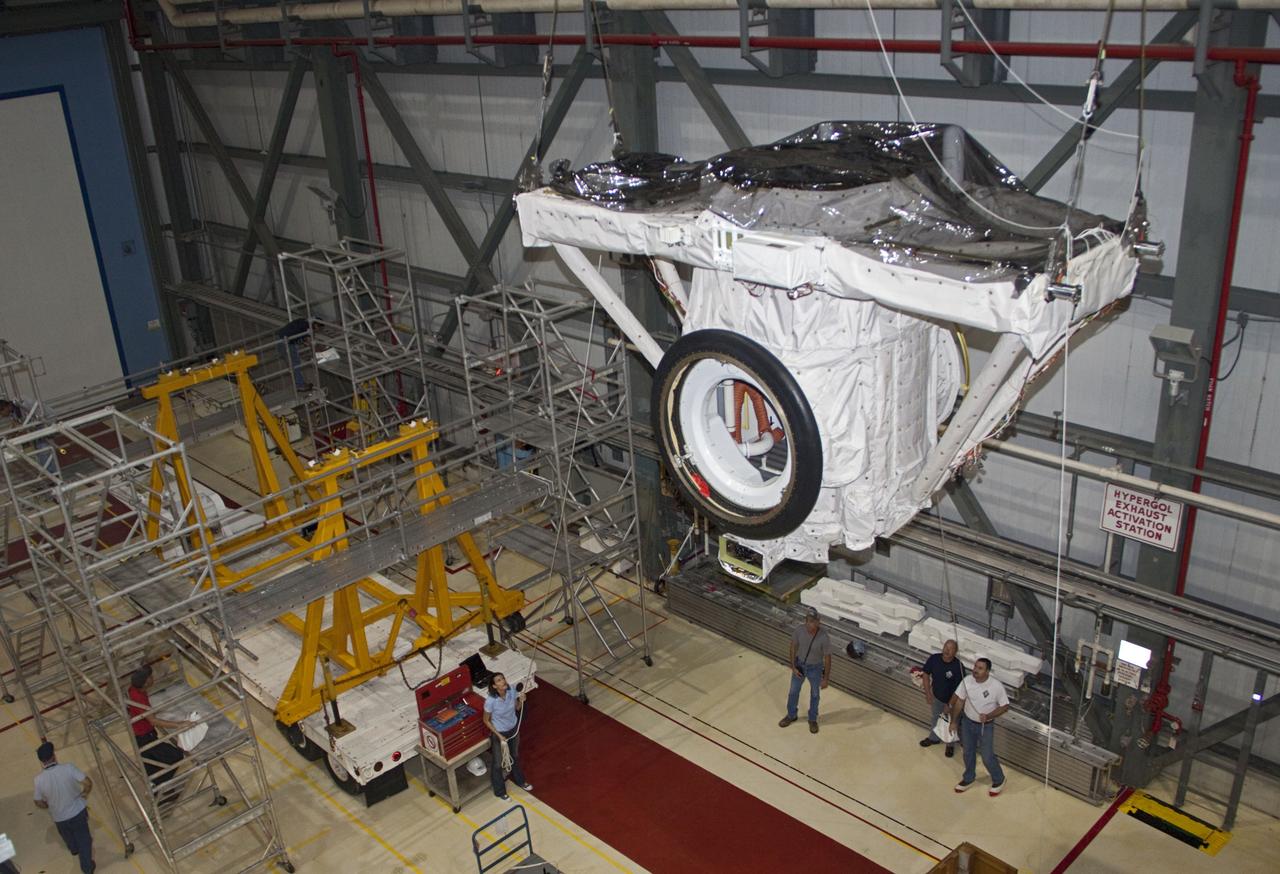
CAPE CANAVERAL, Fla. – A crane moves the airlock from the cargo bay of space shuttle Atlantis to a waiting trailer in Orbiter Processing Facility-2 at NASA's Kennedy Space Center in Florida. The airlock was the connecting point between the shuttle and International Space Station. It was removed as part of the ongoing work to prepare the shuttles for public display. The shuttle is being prepared for display at the Kennedy Space Center Visitor Complex. Photo credit: NASA/Jim Grossmann
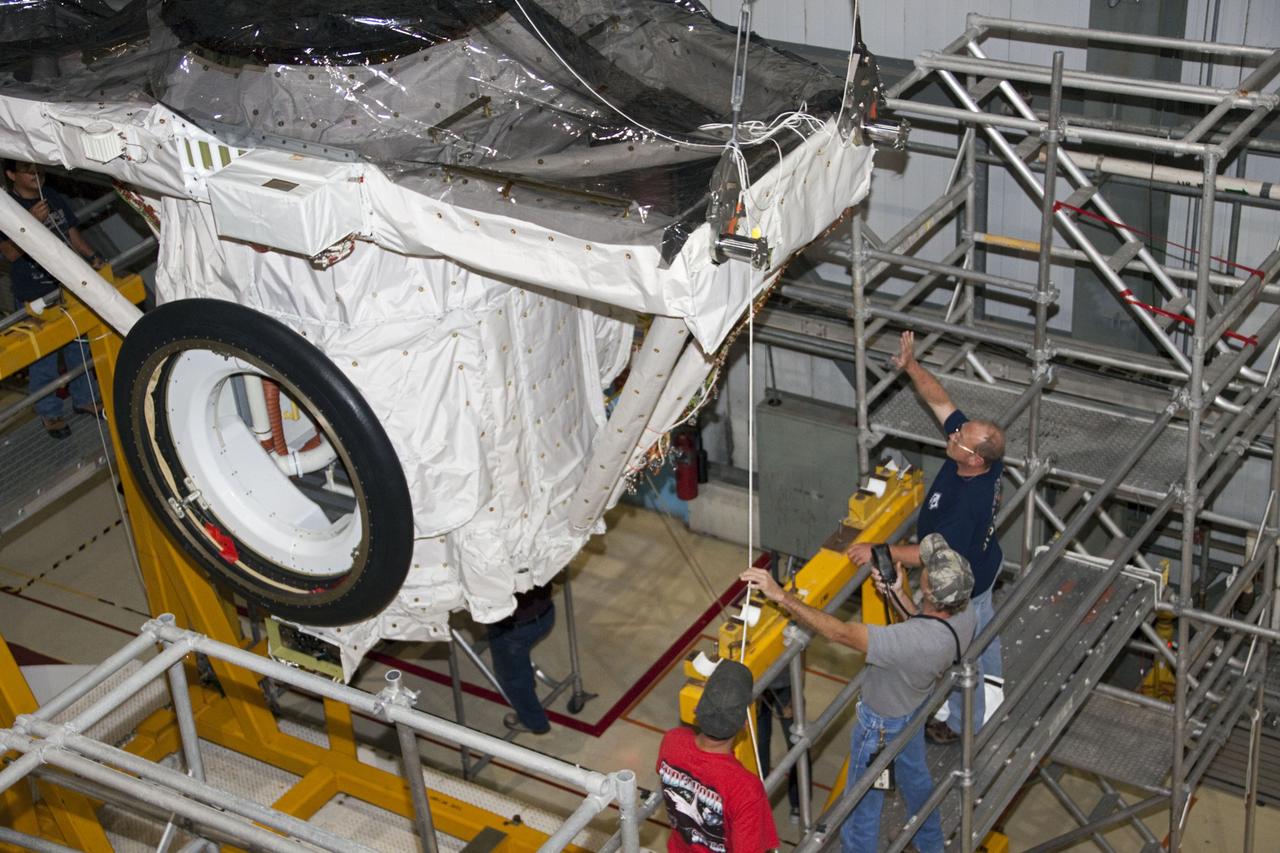
CAPE CANAVERAL, Fla. – A crane moves the airlock from the cargo bay of space shuttle Atlantis to a waiting trailer in Orbiter Processing Facility-2 at NASA's Kennedy Space Center in Florida. The airlock was the connecting point between the shuttle and International Space Station. It was removed as part of the ongoing work to prepare the shuttles for public display. The shuttle is being prepared for display at the Kennedy Space Center Visitor Complex. Photo credit: NASA/Jim Grossmann
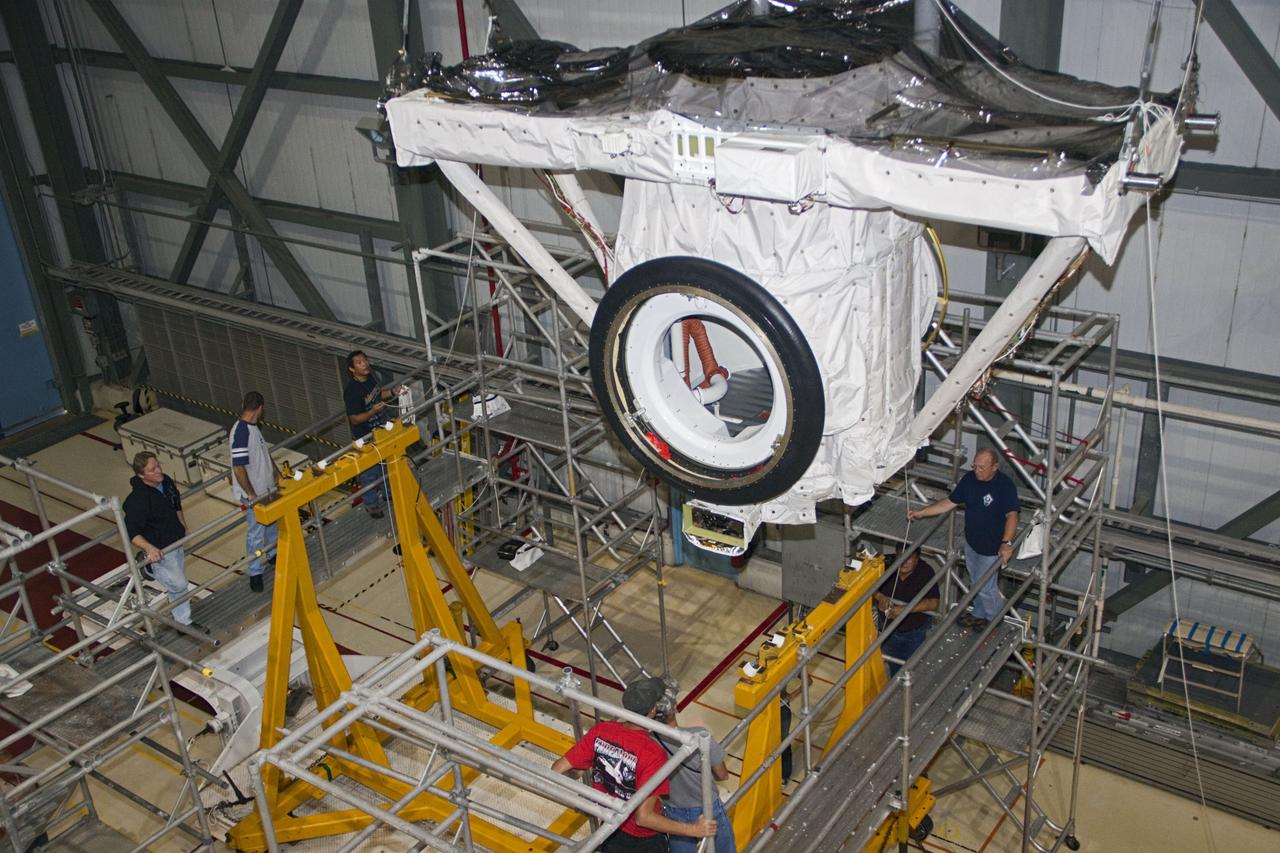
CAPE CANAVERAL, Fla. – A crane moves the airlock from the cargo bay of space shuttle Atlantis to a waiting trailer in Orbiter Processing Facility-2 at NASA's Kennedy Space Center in Florida. The airlock was the connecting point between the shuttle and International Space Station. It was removed as part of the ongoing work to prepare the shuttles for public display. The shuttle is being prepared for display at the Kennedy Space Center Visitor Complex. Photo credit: NASA/Jim Grossmann
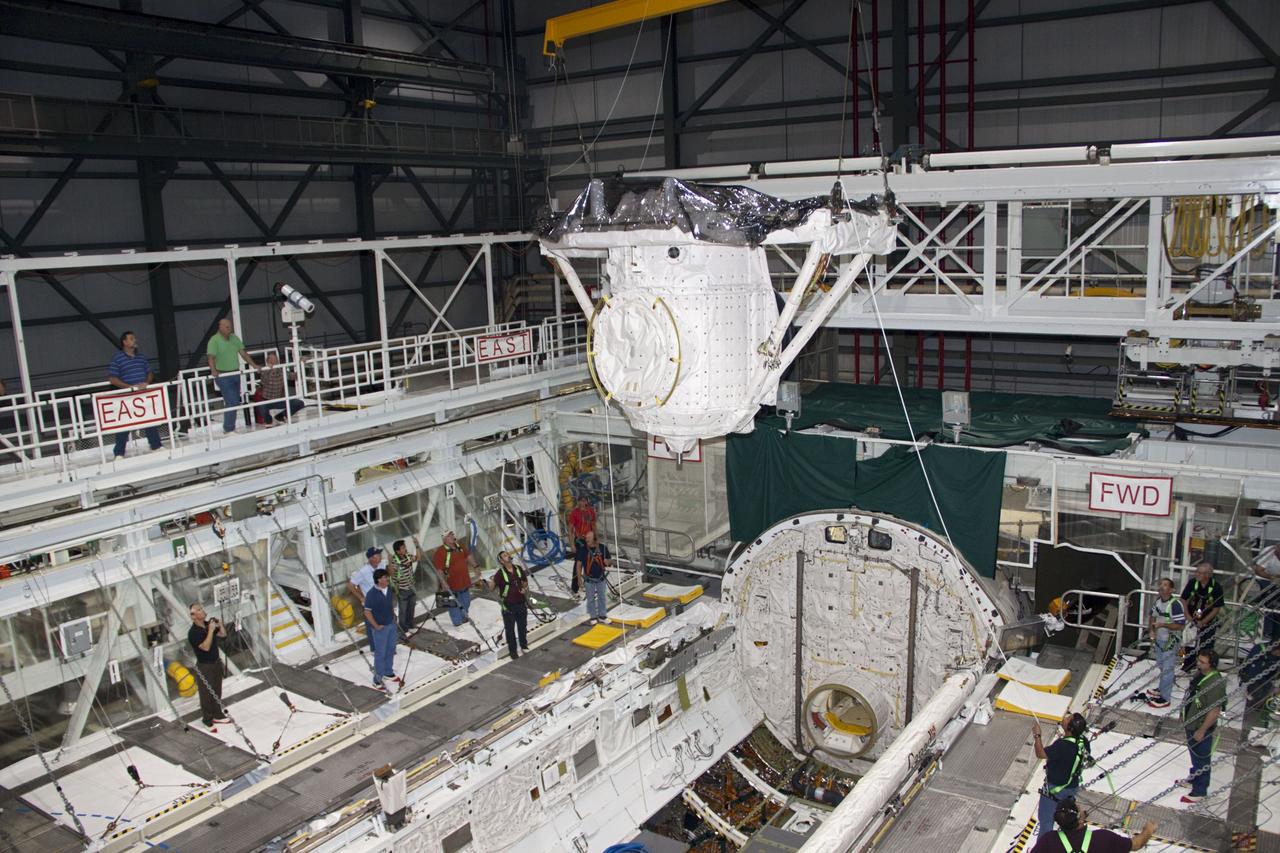
CAPE CANAVERAL, Fla. – A crane lifts the airlock from the cargo bay of space shuttle Atlantis in Orbiter Processing Facility-2 at NASA's Kennedy Space Center in Florida. The airlock was the connecting point between the shuttle and International Space Station. It was removed as part of the ongoing work to prepare the shuttles for public display. The shuttle is being prepared for display at the Kennedy Space Center Visitor Complex. Photo credit: NASA/Jim Grossmann
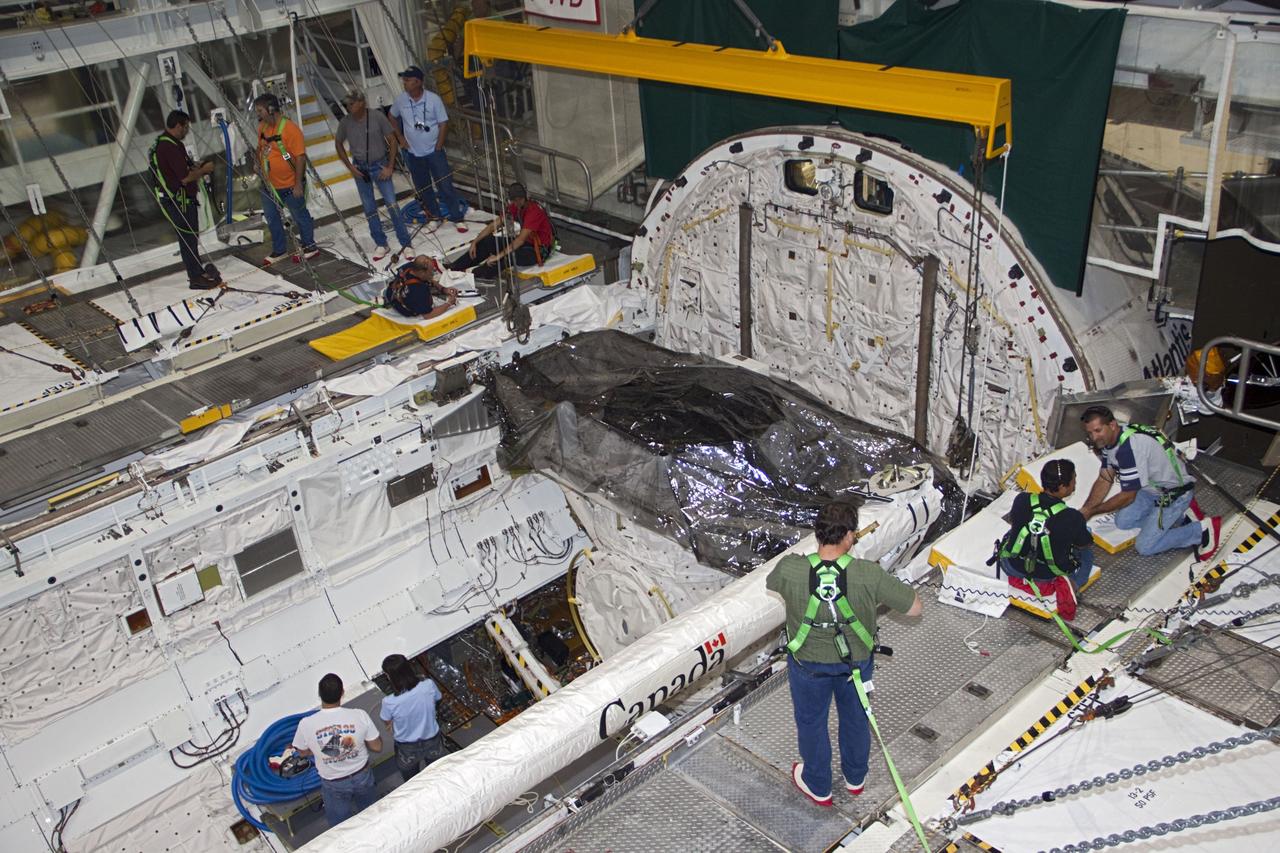
CAPE CANAVERAL, Fla. -- Workers prepare to remove the airlock from the cargo bay of space shuttle Atlantis in Orbiter Processing Facility-2 at NASA's Kennedy Space Center in Florida. The airlock was the connecting point between the shuttle and International Space Station. It was removed as part of the ongoing work to prepare the shuttles for public display. The shuttle is being prepared for display at the Kennedy Space Center Visitor Complex. Photo credit: NASA/Jim Grossmann
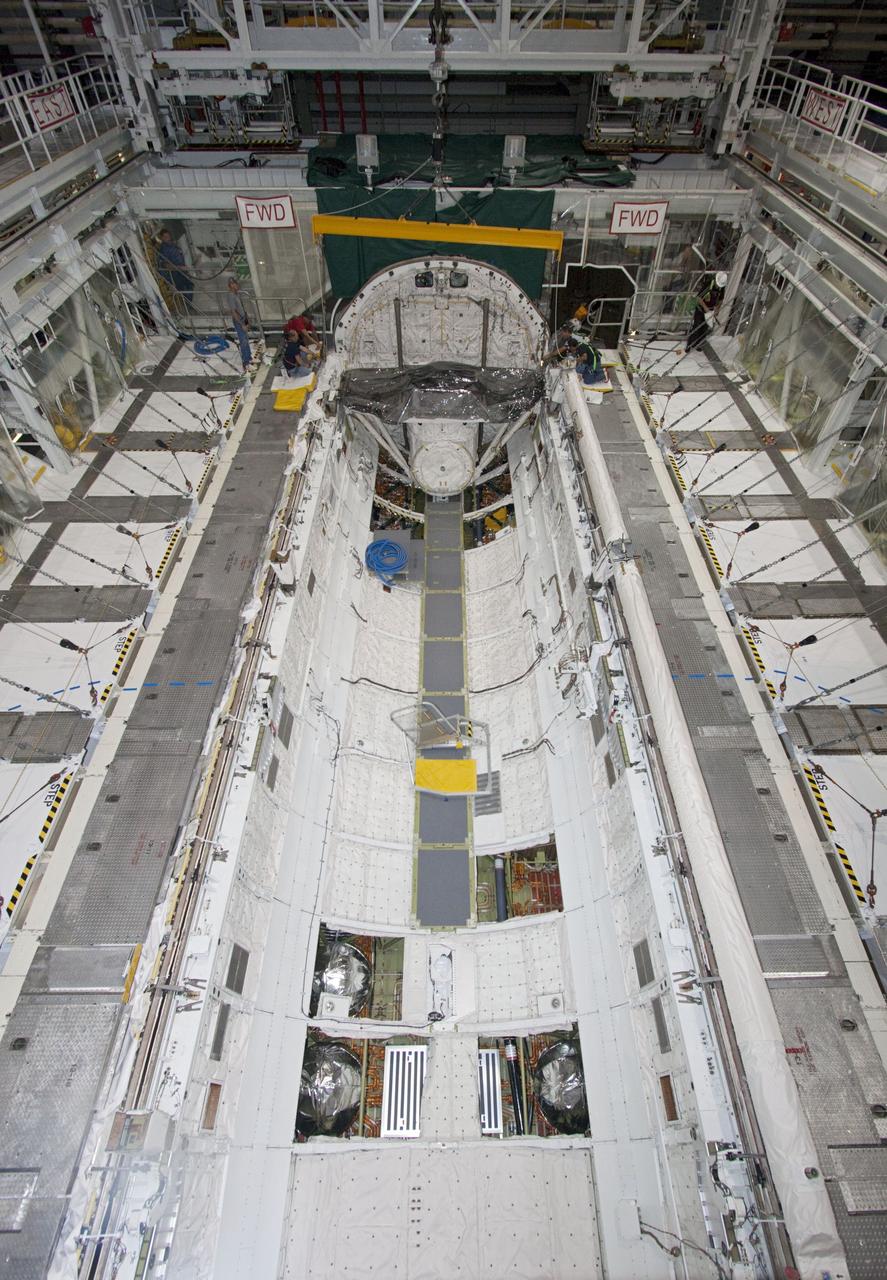
CAPE CANAVERAL, Fla. -- Workers prepare to remove the airlock from the cargo bay of space shuttle Atlantis in Orbiter Processing Facility-2 at NASA's Kennedy Space Center in Florida. The airlock was the connecting point between the shuttle and International Space Station. It was removed as part of the ongoing work to prepare the shuttles for public display. The shuttle is being prepared for display at the Kennedy Space Center Visitor Complex. Photo credit: NASA/Jim Grossmann
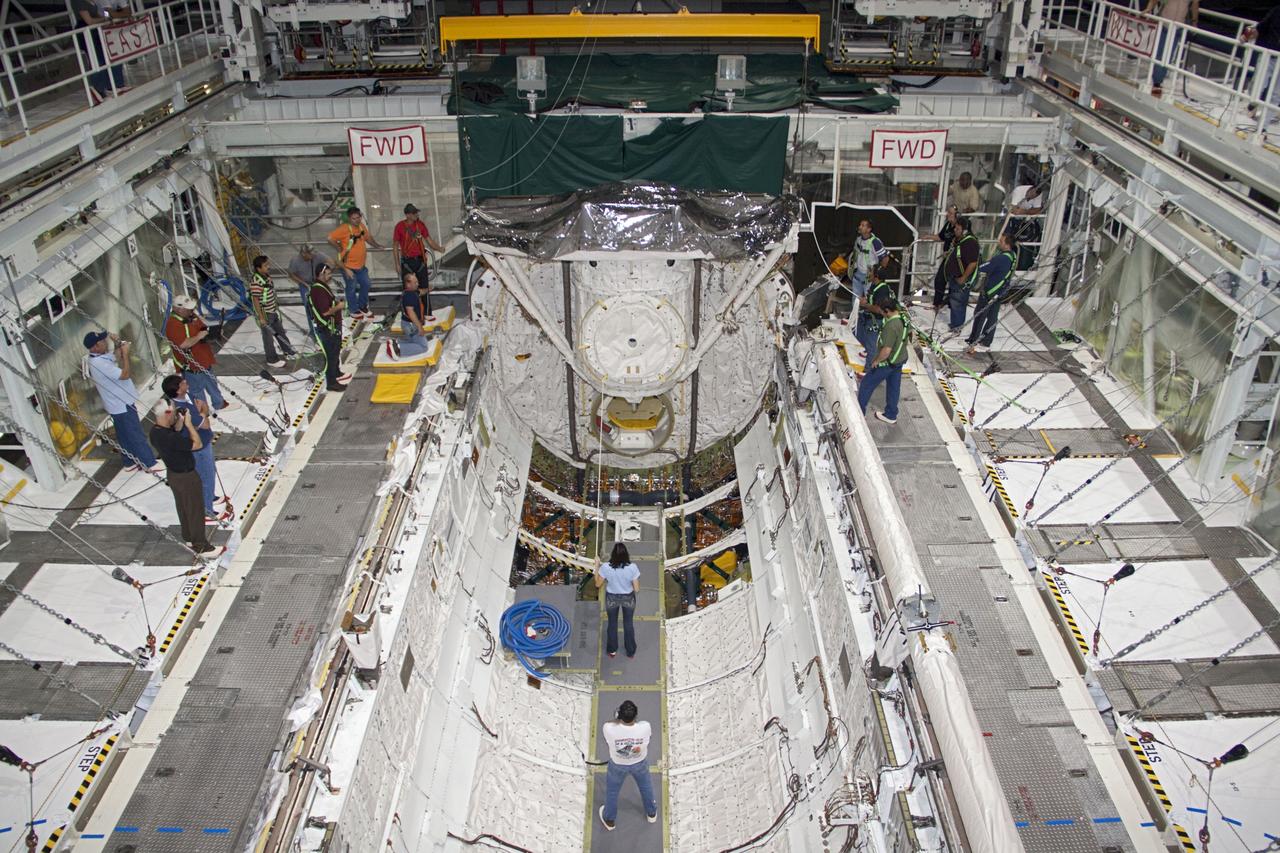
CAPE CANAVERAL, Fla. -- A crane lifts the airlock from the cargo bay of space shuttle Atlantis in Orbiter Processing Facility-2 at NASA's Kennedy Space Center in Florida. The airlock was the connecting point between the shuttle and International Space Station. It was removed as part of the ongoing work to prepare the shuttles for public display. The shuttle is being prepared for display at the Kennedy Space Center Visitor Complex. Photo credit: NASA/Jim Grossmann
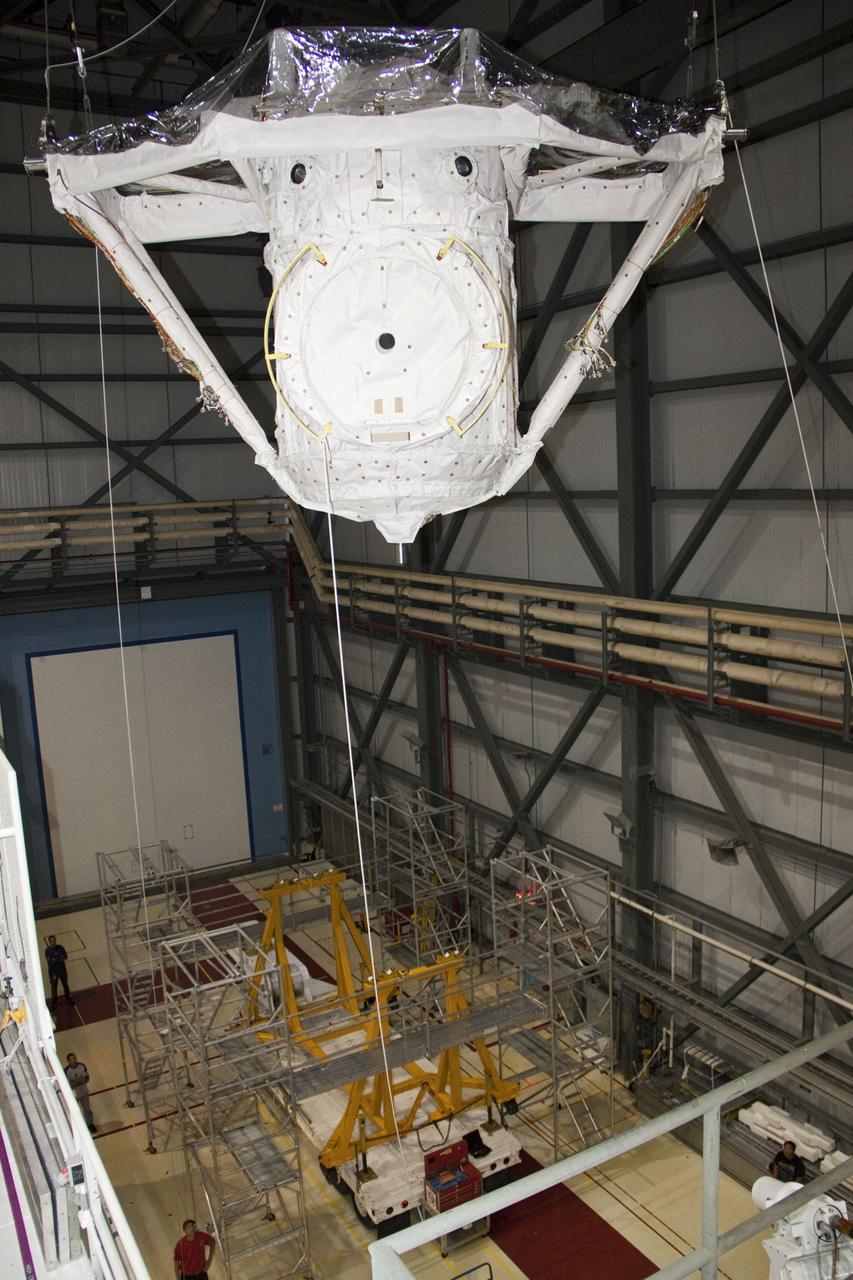
CAPE CANAVERAL, Fla. – A crane lifts the airlock from the cargo bay of space shuttle Atlantis in Orbiter Processing Facility-2 at NASA's Kennedy Space Center in Florida. The airlock was the connecting point between the shuttle and International Space Station. It was removed as part of the ongoing work to prepare the shuttles for public display. The shuttle is being prepared for display at the Kennedy Space Center Visitor Complex. Photo credit: NASA/Jim Grossmann
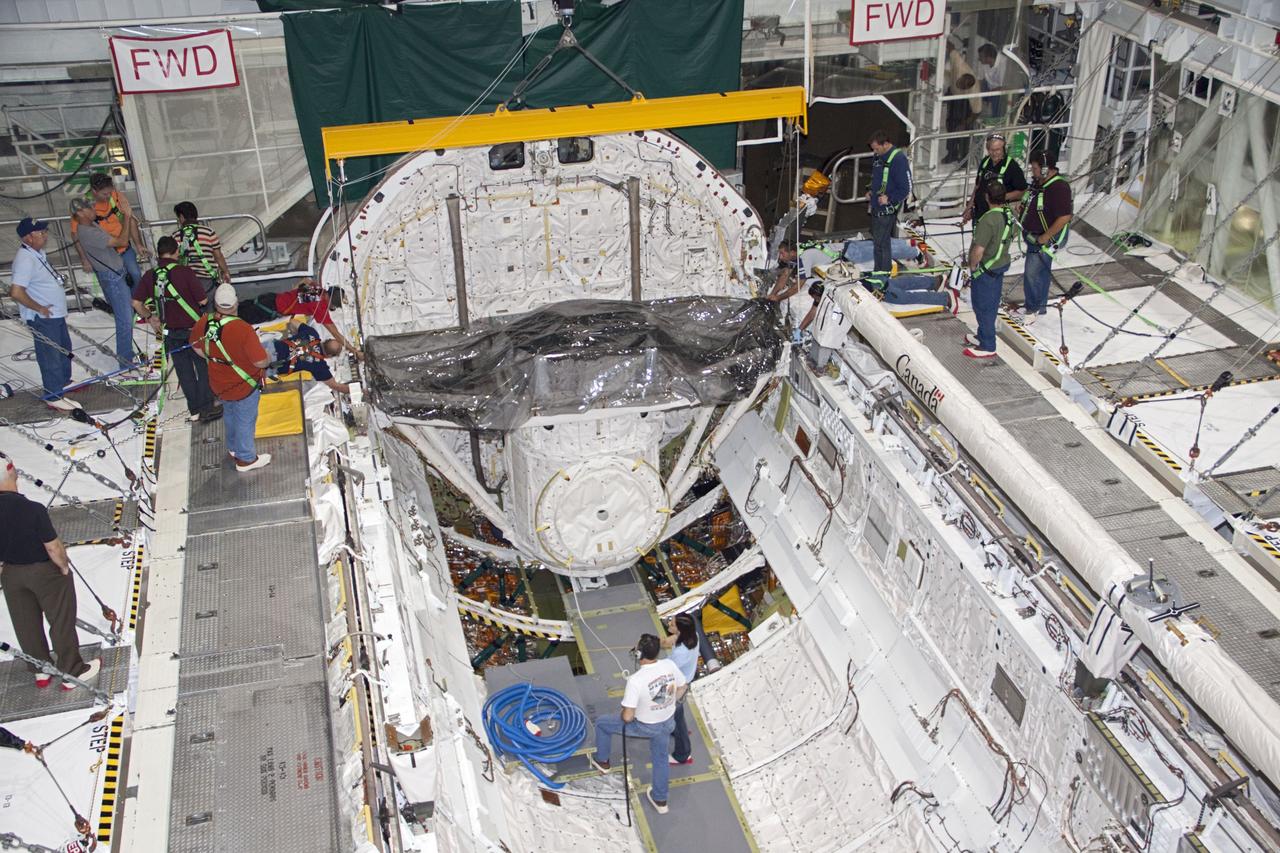
CAPE CANAVERAL, Fla. -- A crane lifts the airlock from the cargo bay of space shuttle Atlantis in Orbiter Processing Facility-2 at NASA's Kennedy Space Center in Florida. The airlock was the connecting point between the shuttle and International Space Station. It was removed as part of the ongoing work to prepare the shuttles for public display. The shuttle is being prepared for display at the Kennedy Space Center Visitor Complex. Photo credit: NASA/Jim Grossmann
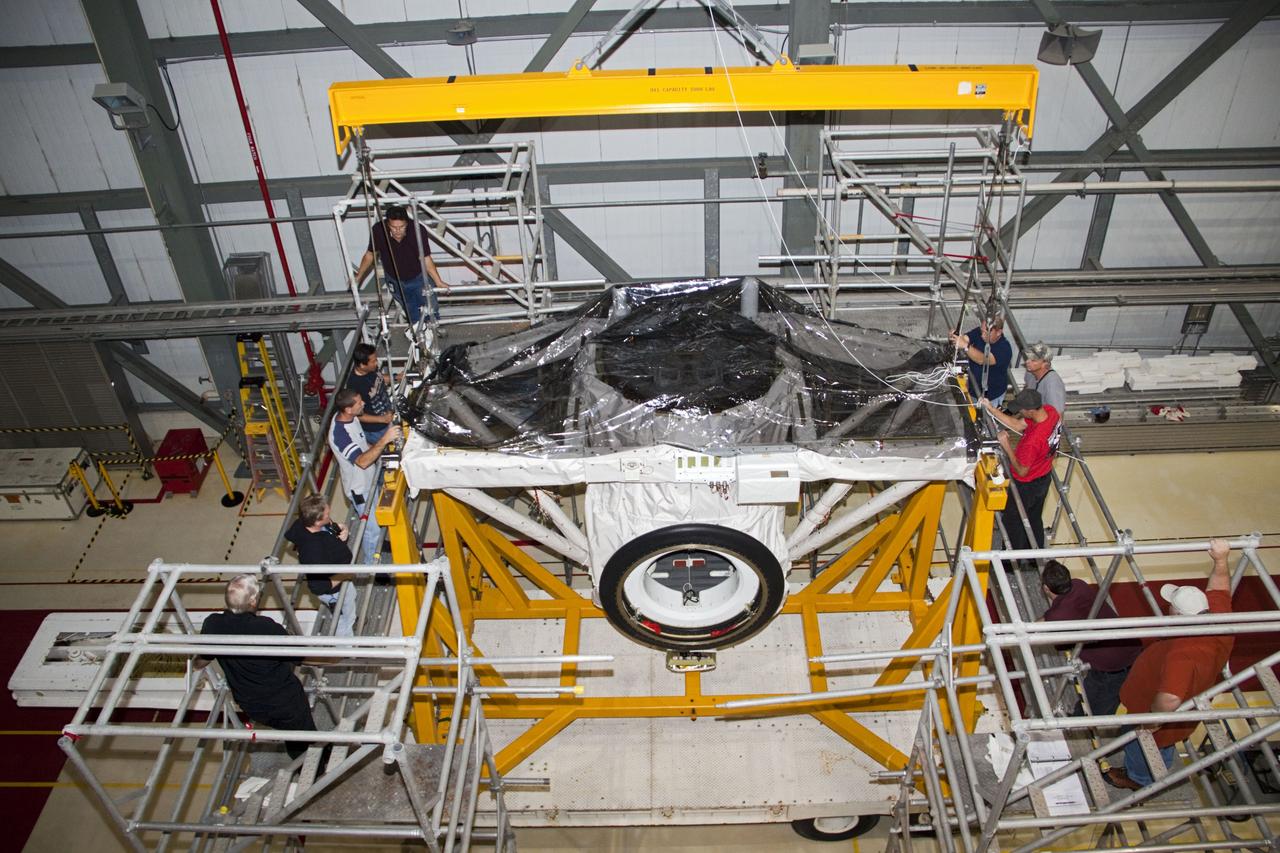
CAPE CANAVERAL, Fla. – A crane moves the airlock from the cargo bay of space shuttle Atlantis to a waiting trailer in Orbiter Processing Facility-2 at NASA's Kennedy Space Center in Florida. The airlock was the connecting point between the shuttle and International Space Station. It was removed as part of the ongoing work to prepare the shuttles for public display. The shuttle is being prepared for display at the Kennedy Space Center Visitor Complex. Photo credit: NASA/Jim Grossmann
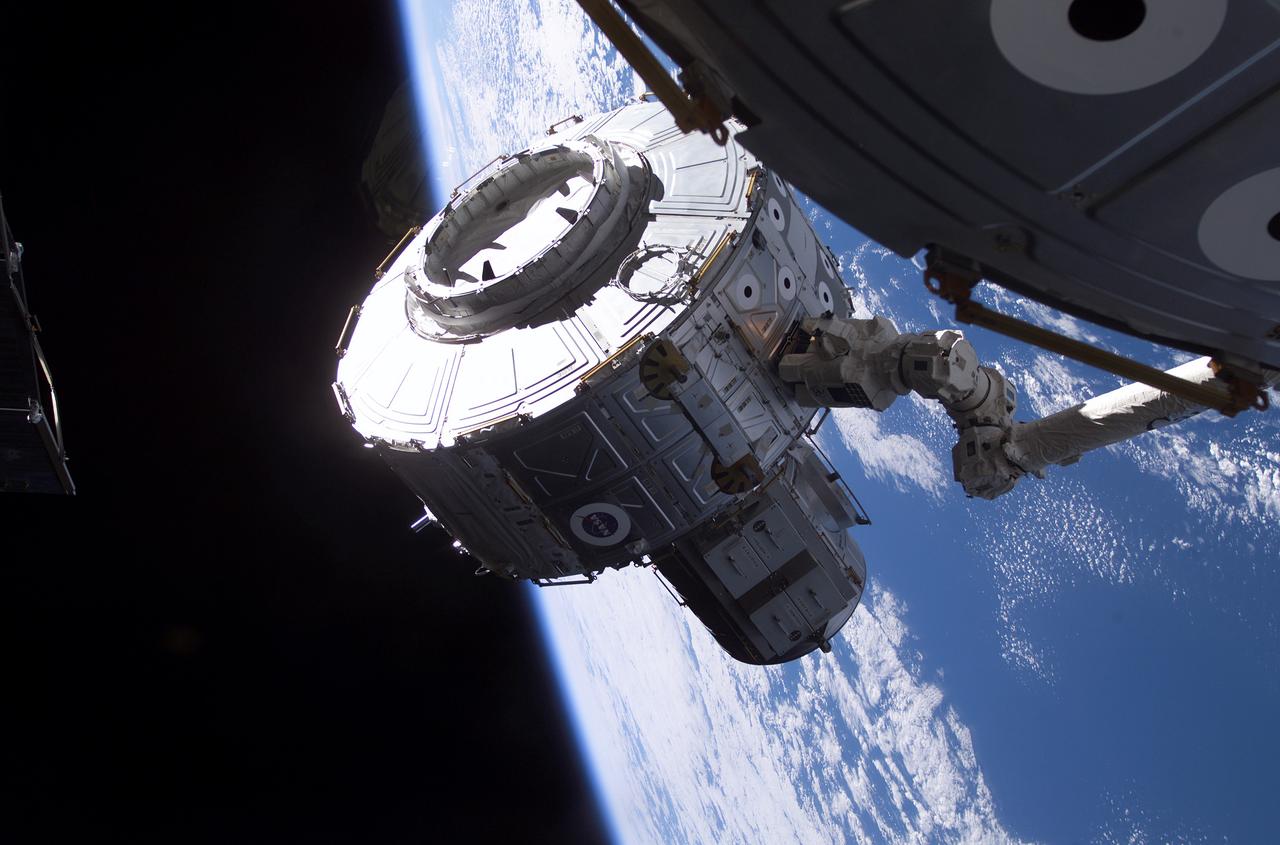
The Quest Airlock is in the process of being installed onto the starboard side of the Unity Node 1 of the International Space Station (ISS). Astronaut Susan J. Helms, Expedition Two flight engineer, used controls onboard the station to maneuver the Airlock into place with the Canadarm2, or Space Station Remote Manipulator System (SSRMS). The Joint Airlock is a pressurized flight element consisting of two cylindrical chambers attached end-to-end by a cornecting bulkhead and hatch. Once installed and activated, the ISS Airlock becomes the primary path for ISS space walk entry and departure for U.S. spacesuits, which are known as Extravehicular Mobility Units (EMUs). In addition, it is designed to support the Russian Orlan spacesuit for extravehicular activity (EVA). The Joint Airlock is 20-feet long, 13-feet in diameter and weighs 6.5 tons. It was built at the Marshall Space Flight Center (MSFC) by the Space Station prime contractor Boeing. The ISS Airlock has two main components: a crew airlock and an equipment airlock for storing EVA and EVA preflight preps. The Airlock was launched on July 21, 2001 aboard the Space Shuttle Orbiter Atlantis for the STS-104 mission.
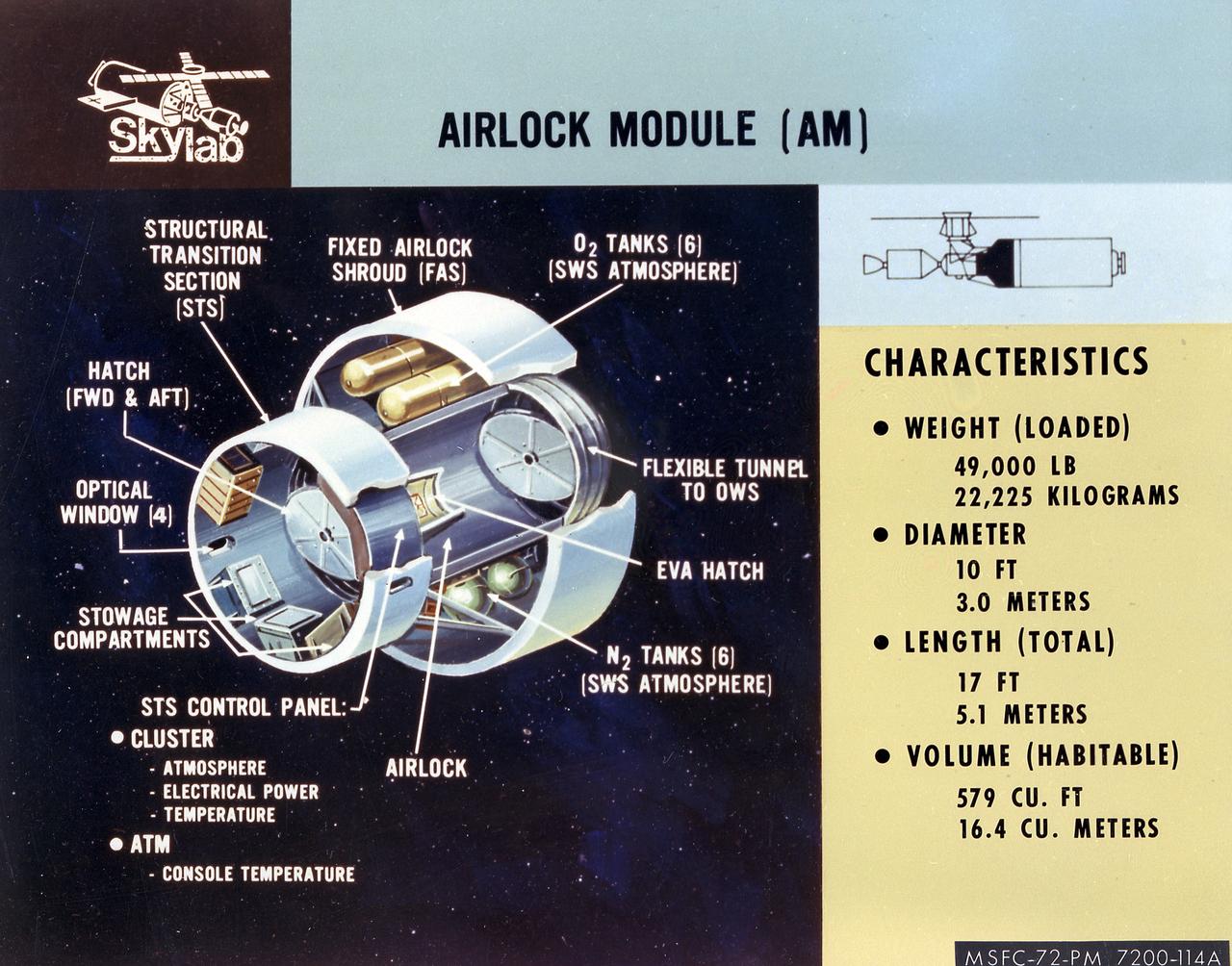
This artist's concept is a cutaway illustration of the Skylab Airlock Module and its characteristics. The aft end of the Docking Adapter mated to the Airlock Module (AM), and served as the environmental, electrical, and communications control center. The docking adapter also contained the port through which the astronauts exited to perform extravehicular activity. The AM contained a turnel section through which Skylab crewmen could move between the workshop and the forward end of the airlock. It was encircled, for part of its length, at its aft end by the fixed Airlock Shroud (FAS), that had the same diameter as the workshop (22 feet) and was attached to the workshop's forward end. High pressure containers for oxygen and nitrogen providing Skylab's atmosphere, were mounted in the annular space between the outside of the tunnel and the inside of the shroud. The forward end of the FAS was the base on which the tubular structure supporting the solar observatory was mounted. Many of the supplies, and most of the control systems for Skylab were located in the AM; this module could well be the "utility center" of the Skylab cluster. McDonnell Douglas fabricated the module with close Marshall Space Flight Center's involvement in design, development, and test activities.
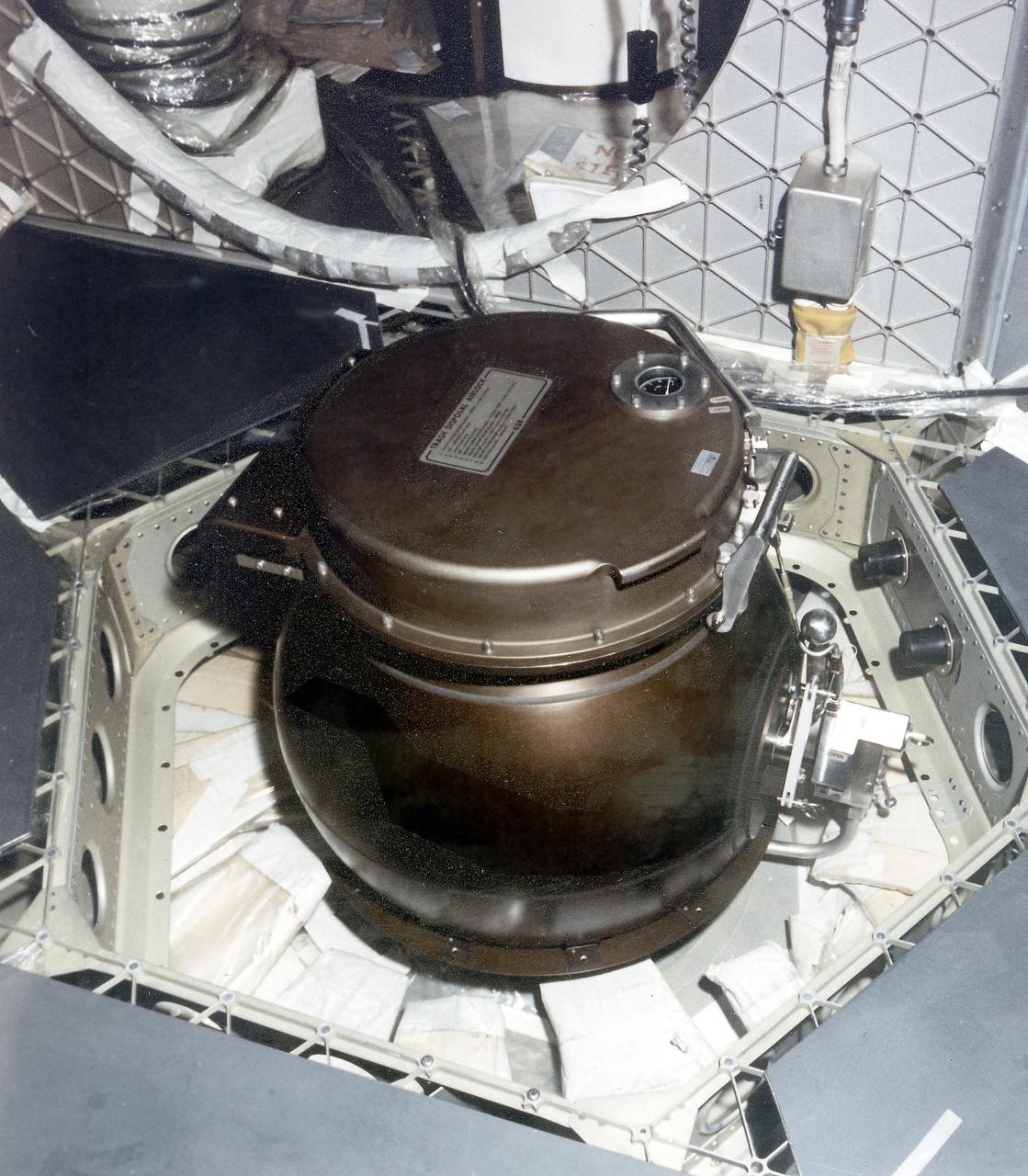
This is a close-up photograph of the Orbital Workshop (OWS) trash disposal airlock located on the floor of the lower level of the OWS. It provided a means of passing trash from the pressurized habitable area into the unpressurized waste tank. The crewman opened a valve which brought the airlock to the same pressure as that within the workshop. He then opened the lid, placed the bagged trash inside, closed the lid and locked it. By turning the valve handle, he reduced the pressure within the airlock until it reached the vacuum of the waste tank. The crewman then operated an ejector handle that caused a scissors-type mechanism to push the bagged trash from the airlock into the tank.
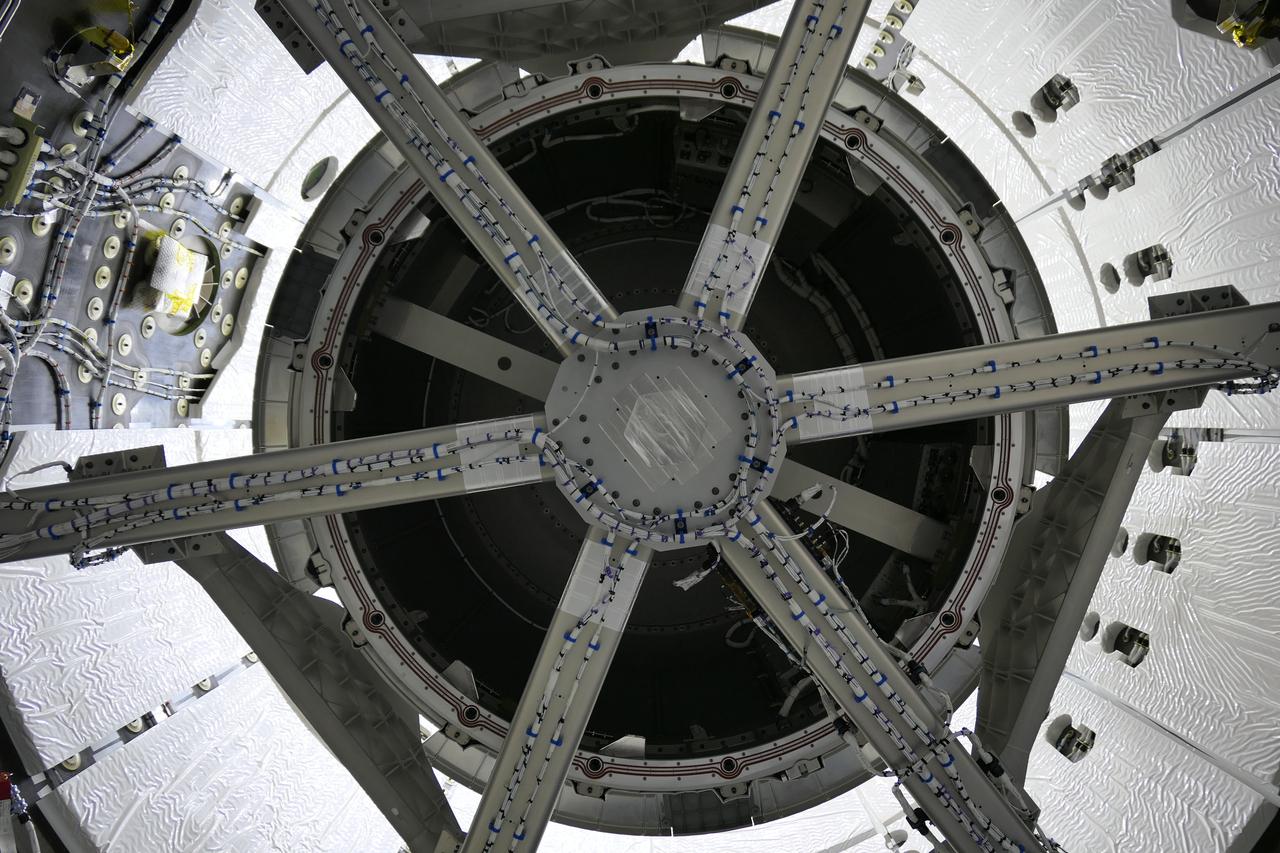
The Nanoracks Bishop Airlock is packed in the Dragon spacecraft’s trunk on Oct. 12, 2020, inside SpaceX’s processing facility at NASA’s Kennedy Space Center in Florida for its ride to the International Space Station aboard the company’s 21st Commercial Resupply Services (CRS-21) mission. The first commercially funded airlock for the orbiting laboratory, it will provide payload hosting, robotics testing, satellite deployment, serve as an outside toolbox for station crew spacewalks, and more. CRS-21 is scheduled to launch on a SpaceX Falcon 9 from Kennedy’s Launch Complex 39A.

The Nanoracks Bishop Airlock is packed in the Dragon spacecraft’s trunk on Oct. 12, 2020, inside SpaceX’s processing facility at NASA’s Kennedy Space Center in Florida for its ride to the International Space Station aboard the company’s 21st Commercial Resupply Services (CRS-21) mission. The first commercially funded airlock for the orbiting laboratory, it will provide payload hosting, robotics testing, satellite deployment, serve as an outside toolbox for station crew spacewalks, and more. CRS-21 is scheduled to launch on a SpaceX Falcon 9 from Kennedy’s Launch Complex 39A.

iss058e015351 (Feb. 17, 2019) --- A pair of spacesuits are pictured during servicing work inside the International Space Station's Quest airlock where U.S. spacewalks are staged.
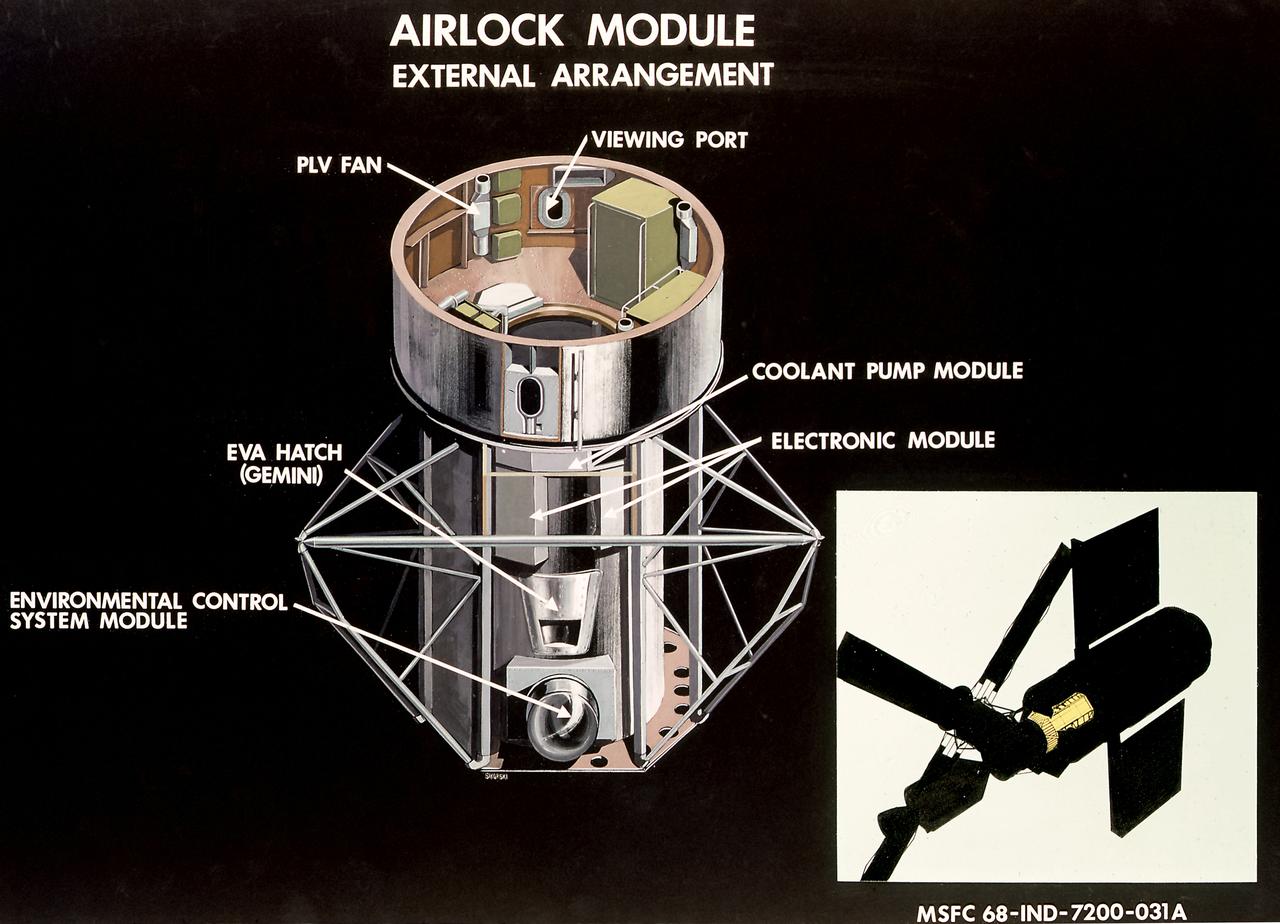
This illustration is a cutaway view of the external arrangement of the Airlock Module (AM). The aft end of the Docking Adapter mated to the AM, and served as the environmental, electrical, and communications control center. The docking adapter also contained the port through which the astronauts exited to perform extravehicular activity. The AM contained a turnel section through which Skylab crewmen could move between the workshop and the forward end of the airlock. It was encircled, for part of its length, at its aft end by the fixed Airlock Shroud (FAS), that had the same diameter as the workshop (22 feet) and was attached to the workshop's forward end. High pressure containers for oxygen and nitrogen providing Skylab's atmosphere, were mounted in the annular space between the outside of the tunnel and the inside of the shroud. The forward end of the FAS was the base on which the tubular structure supporting the solar observatory was mounted. Many of the supplies, and most of the control systems for Skylab were located in the AM; this module could well be the "utility center" of the Skylab cluster. McDonnell Douglas fabricated the module with close Marshall Space Flight Center's involvement in design, development, and test activities.
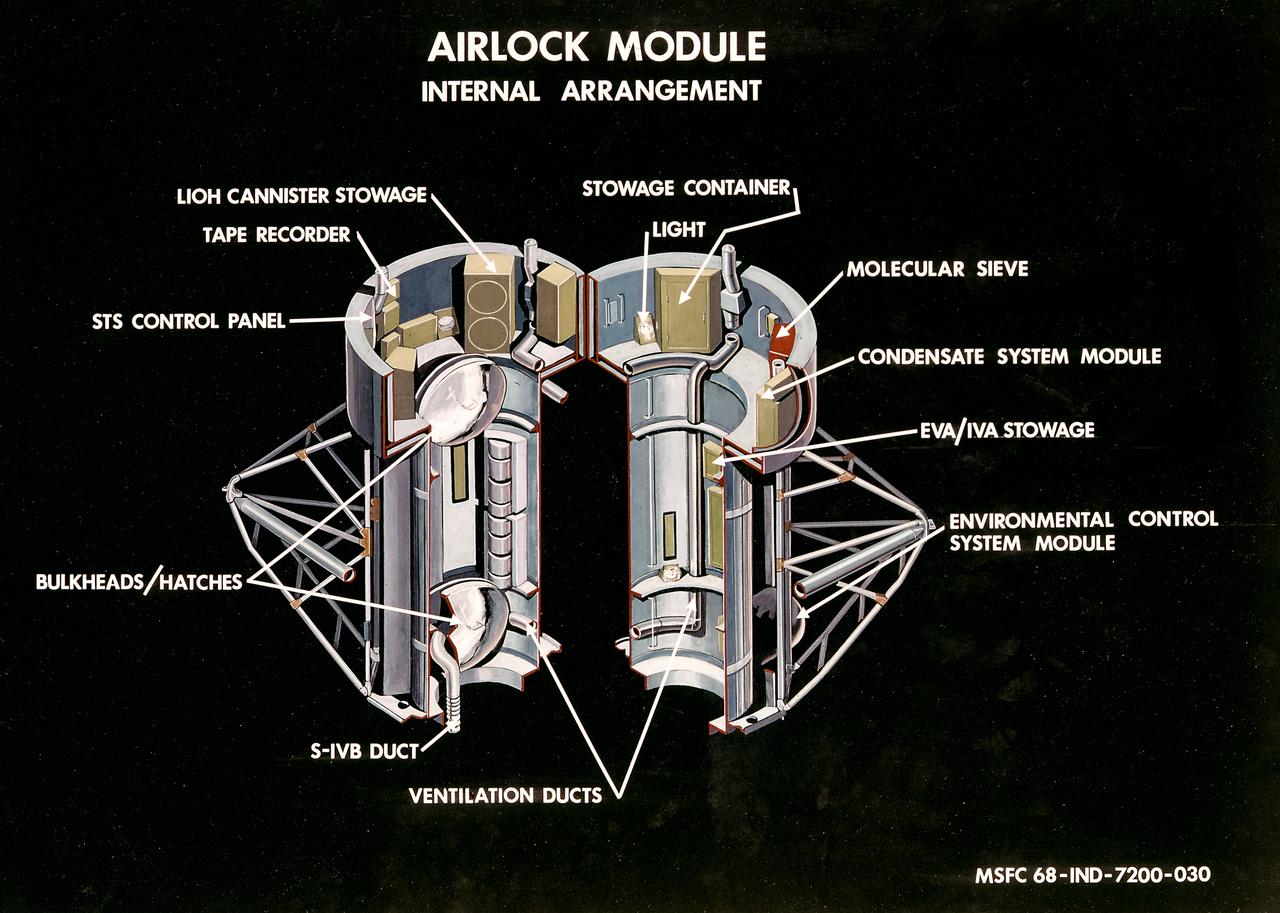
This illustration is a cutaway view of the internal arrangement of the Airlock Module (AM). The aft end of the Docking Adapter mated to the AM, and served as the environmental, electrical, and communications control center. The docking adapter also contained the port through which the astronauts exited to perform extravehicular activity. The AM contained a turnel section through which Skylab crewmen could move between the workshop and the forward end of the airlock. It was encircled, for part of its length, at its aft end by the fixed Airlock Shroud (FAS), that had the same diameter as the workshop (22 feet) and was attached to the workshop's forward end. High pressure containers for oxygen and nitrogen providing Skylab's atmosphere, were mounted in the annular space between the outside of the tunnel and the inside of the shroud. The forward end of the FAS was the base on which the tubular structure supporting the solar observatory was mounted. Many of the supplies, and most of the control systems for Skylab were located in the AM; this module could well be the "utility center" of the Skylab cluster. McDonnell Douglas fabricated the module with close Marshall Space Flight Center's involvement in design, development, and test activities.
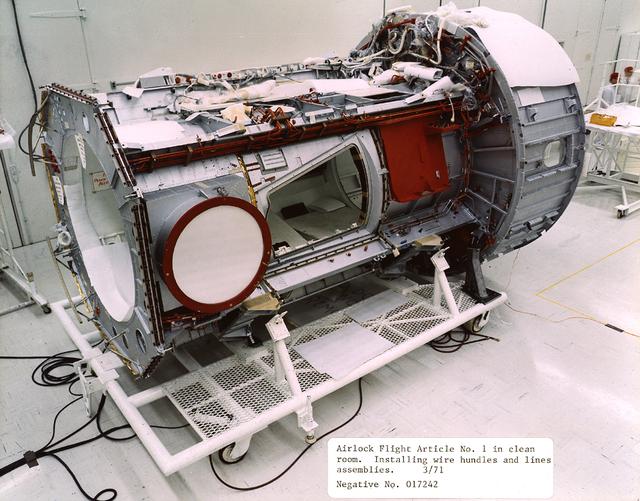
This 1971 photograph was taken during the assembly of the Flight Article of the Skylab Airlock Module (AM). The Am, fabricated by McDornell Douglas under the direction of the Marshall Flight Center, allowed Skylab crew members an exit to perform extravehicular activities. The Module also contained many of the supplies and control panels for electrical power distribution and internal environment.
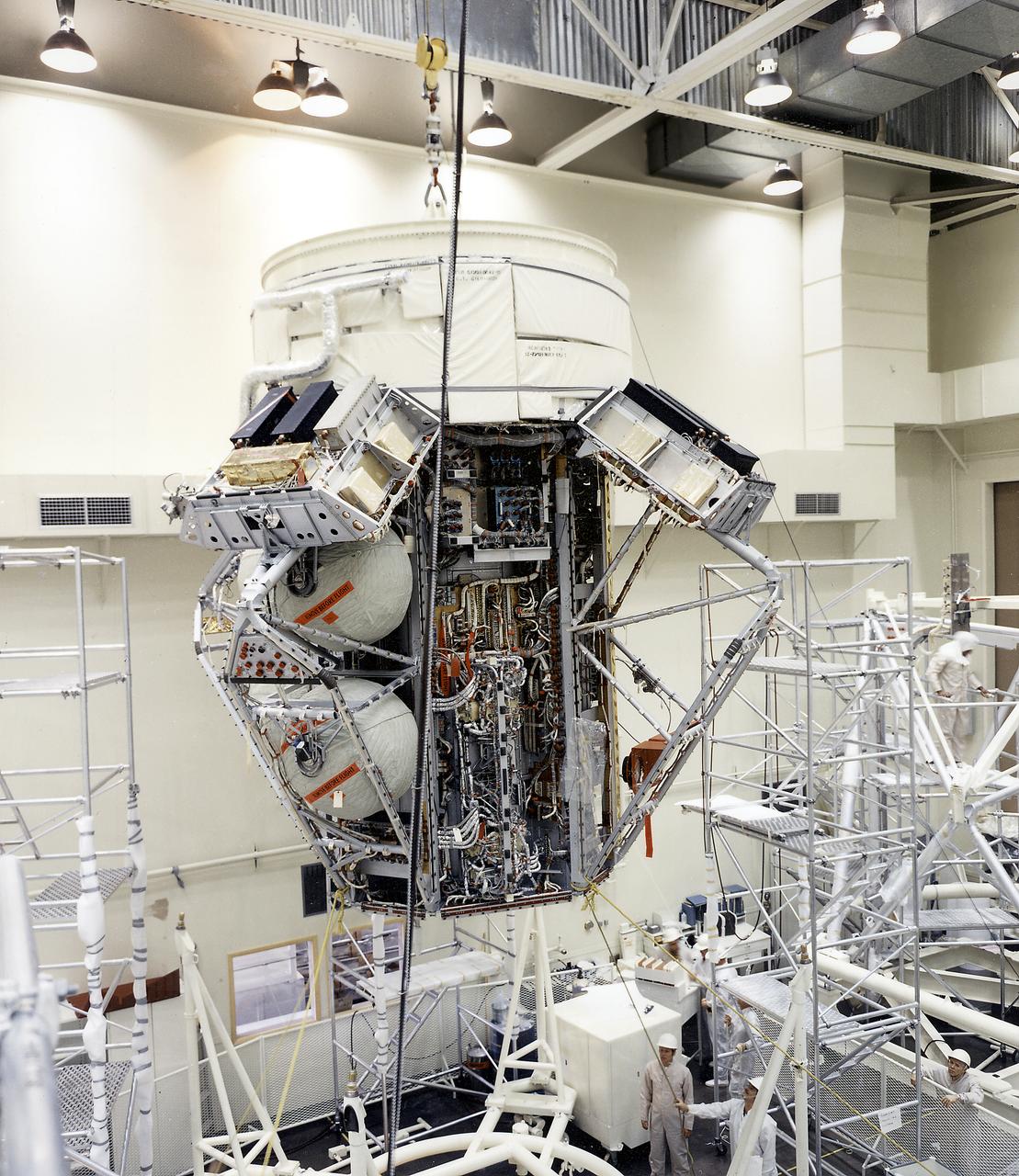
This photograph depicts the flight article of the Airlock Module (AM) Flight Article being mated to the Fixed Airlock Shroud and aligned in a clean room of the McDornell Douglas Plant in St. Louis, Missouri. The AM enabled crew members to conduct extravehicular activities outside Skylab as required for experiment support. Separated from the Workshop and the Multiple Docking Adapter by doors, the AM could be evacuated for egress or ingress of a space-suited astronaut through a side hatch. Oxygen and nitrogen storage tanks needed for Skylab's life support system were mounted on the external truss work of the AM. Major components in the AM included Skylab's electric power control and distribution station, environmental control system, communication system, and data handling and recording systems. The Marshall Space Flight Center was responsible for the design and development of the Skylab hardware and experiment management.
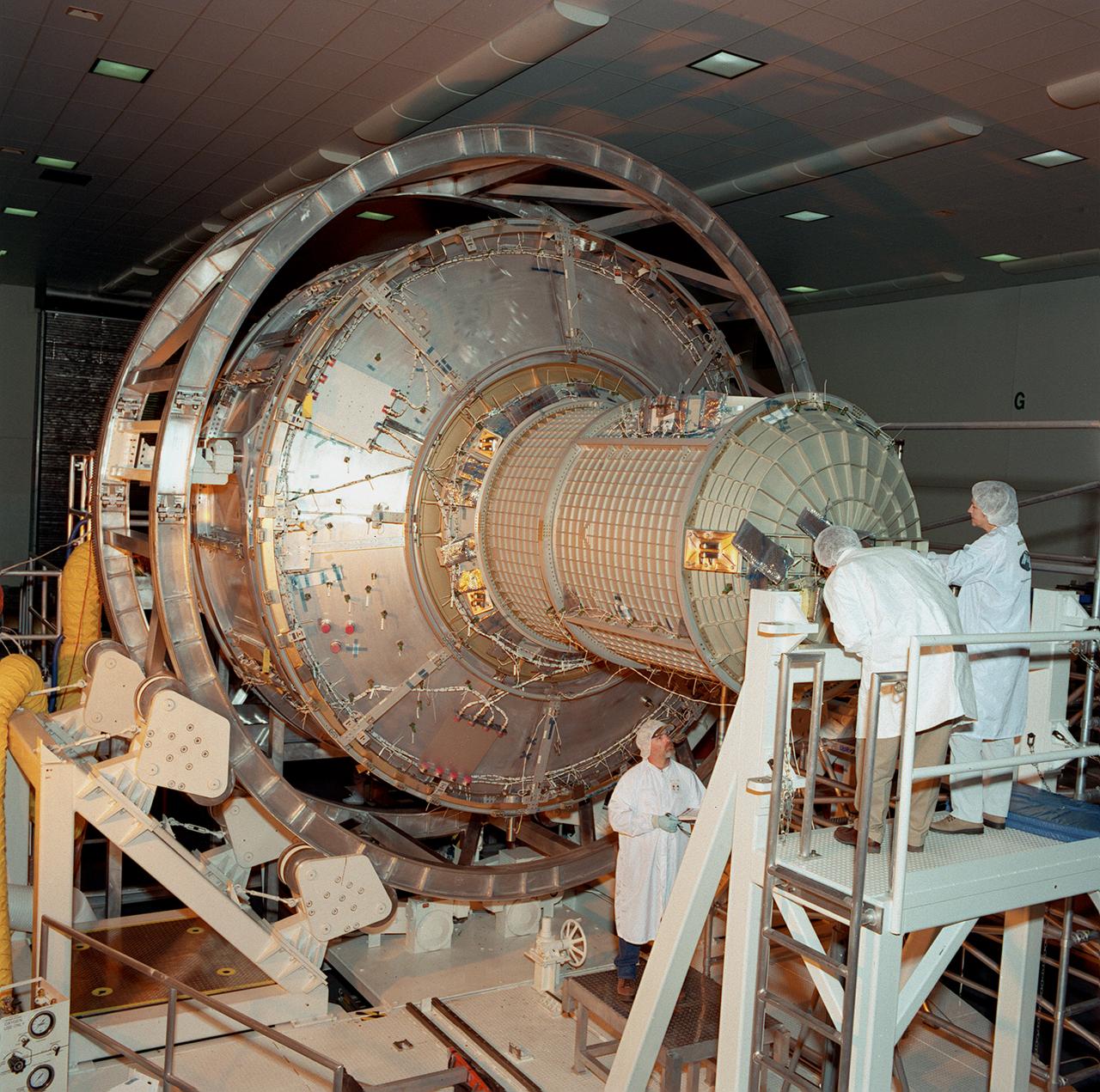
This photograph depicts the International Space Station's (ISS) Joint Airlock Module undergoing exhaustive structural and systems testing in the Space Station manufacturing facility at the Marshall Space Flight Center (MSFC) prior to shipment to the Kennedy Space Center. The Airlock includes two sections. The larger equipment lock, on the left, will store spacesuits and associated gear and the narrower crewlock is on the right, from which the astronauts will exit into space for extravehicular activity. The airlock is 18 feet long and has a mass of about 13,500 pounds. It was launched to the station aboard the Space Shuttle orbiter Atlantis (STS-104 mission) on July 12, 2001. The MSFC is playing a primary role in NASA's development, manufacturing, and operations of the ISS.

View of a pair of Extravehicular Mobility Units (EMUs) and assorted other bags in the Quest Airlock as documented by the Expedition 36 crew.
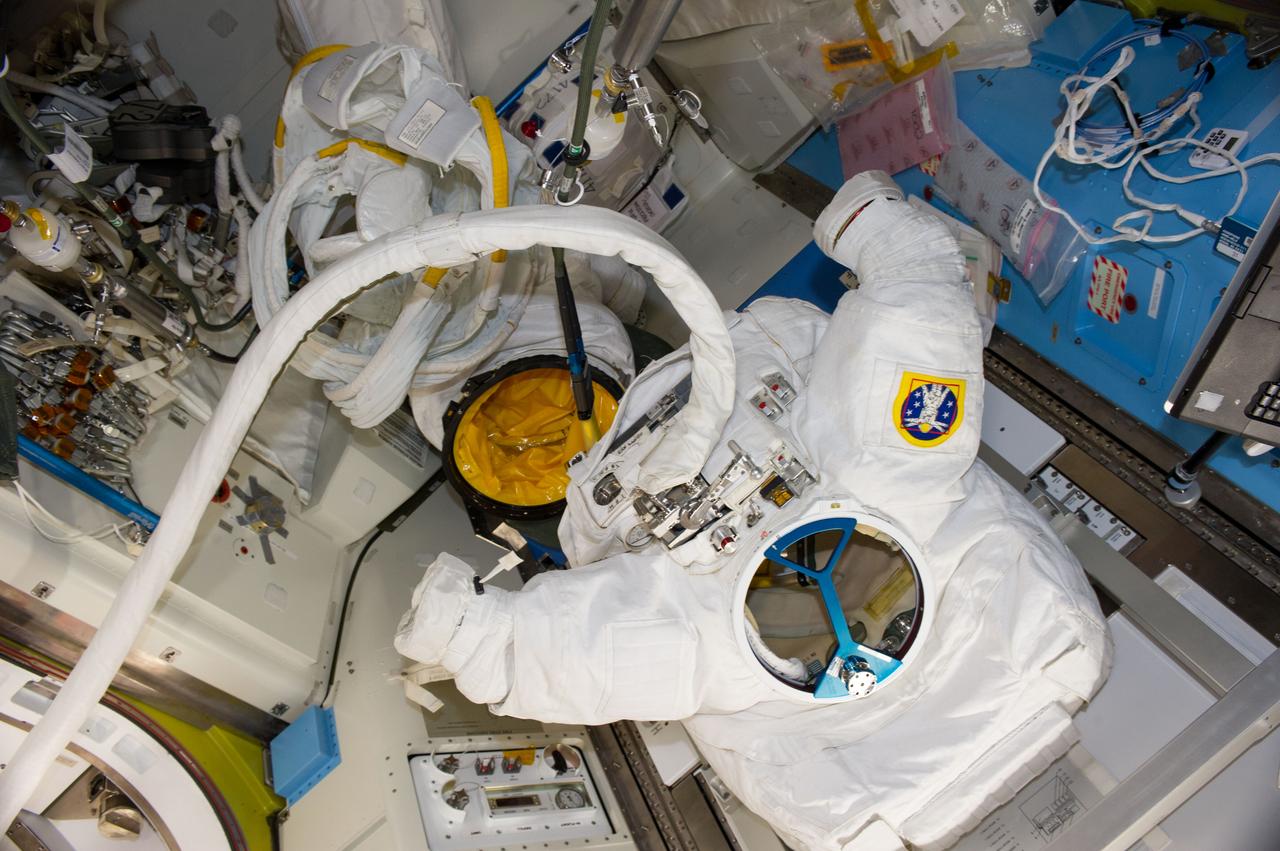
View of an Extravehicular Mobility Unit (EMU) stowed in the Quest airlock as seen by the Expedition 40 crew.
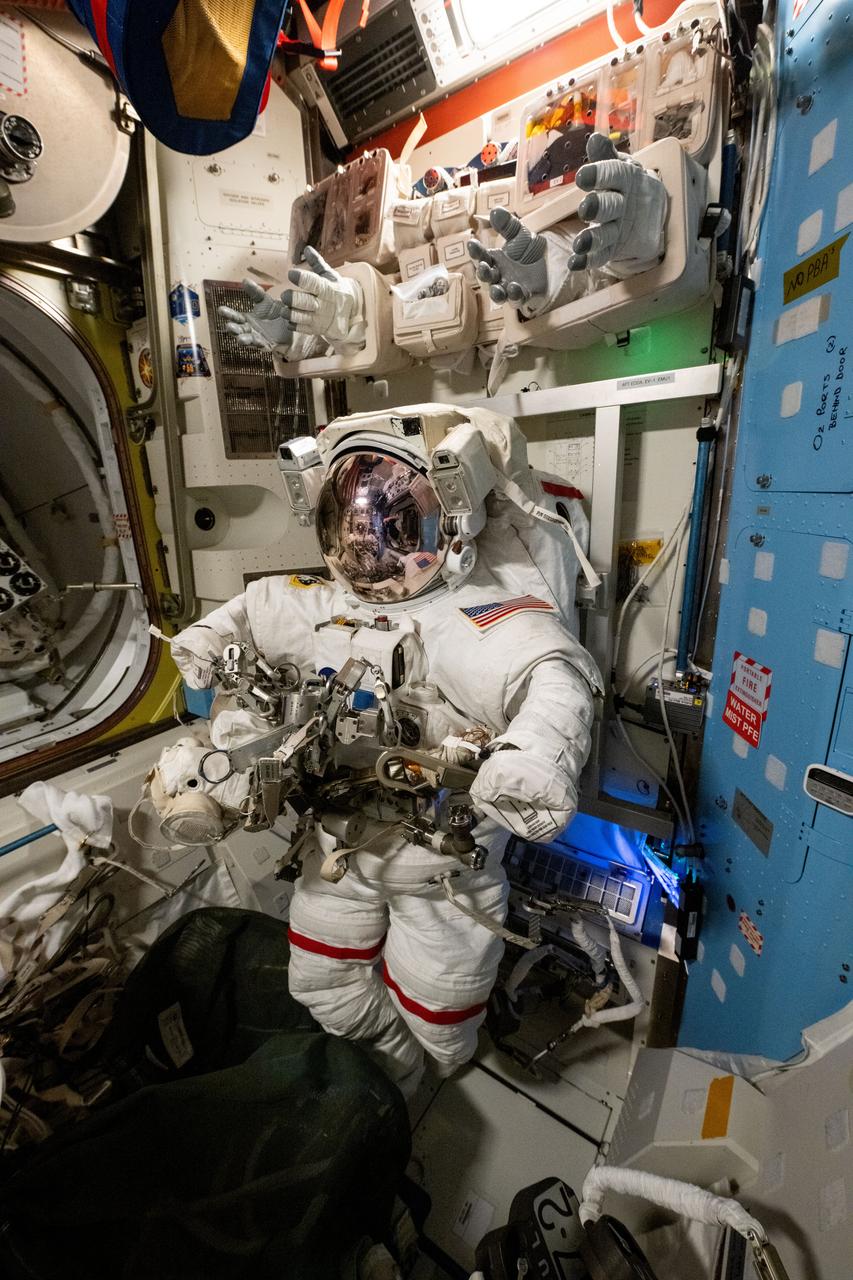
iss072e518456 (Jan. 23, 2025) --- A spacesuit is pictured staged inside the International Space Station's Quest airlock ahead of a spacewalk planned for NASA astronauts Suni Williams and Butch Wilmore. The two spacewalkers are scheduled to exit the Quest airlock on Jan. 30 to remove a radio frequency group antenna assembly and search for microbes outside the orbital outpost.
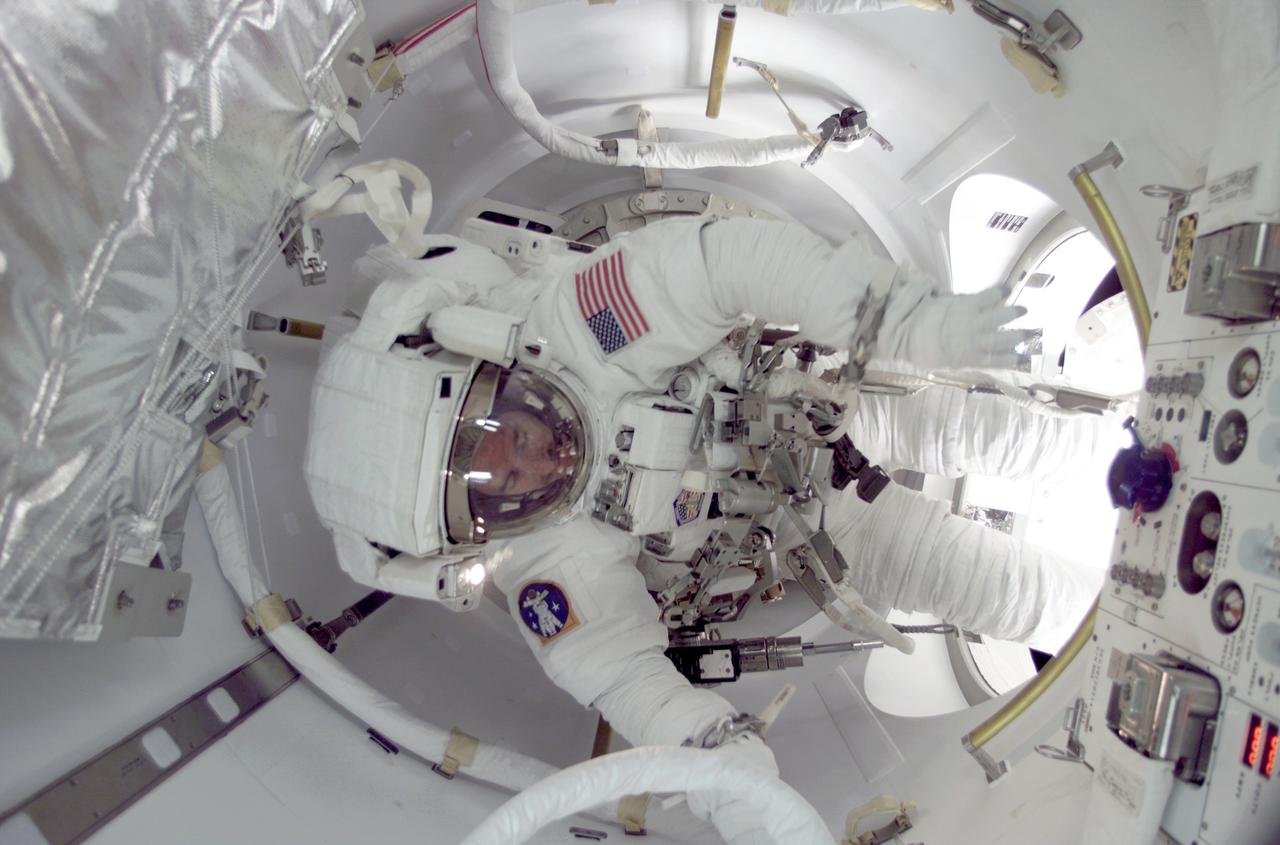
Astronaut James F. Reilly participated in the first ever space walk to egress from the International Space Station (ISS) by utilizing the newly-installed Joint Airlock Quest. The Joint Airlock is a pressurized flight element consisting of two cylindrical chambers attached end-to-end by a cornecting bulkhead and hatch. Once installed and activated, the ISS Airlock becomes the primary path for ISS space walk entry and departure for U.S. spacesuits, which are known as Extravehicular Mobility Units (EMUs). In addition, it is designed to support the Russian Orlan spacesuit for extravehicular activity (EVA). The Joint Airlock is 20-feet long, 13- feet in diameter and weighs 6.5 tons. It was built at the Marshall Space Flight Center (MSFC) by the Space Station prime contractor Boeing. The ISS Airlock has two main components: a crew airlock and an equipment airlock for storing EVA and EVA preflight preps. The Airlock was launched on July 21, 2001 aboard the Space Shuttle Orbiter Atlantis for the STS-104 mission.
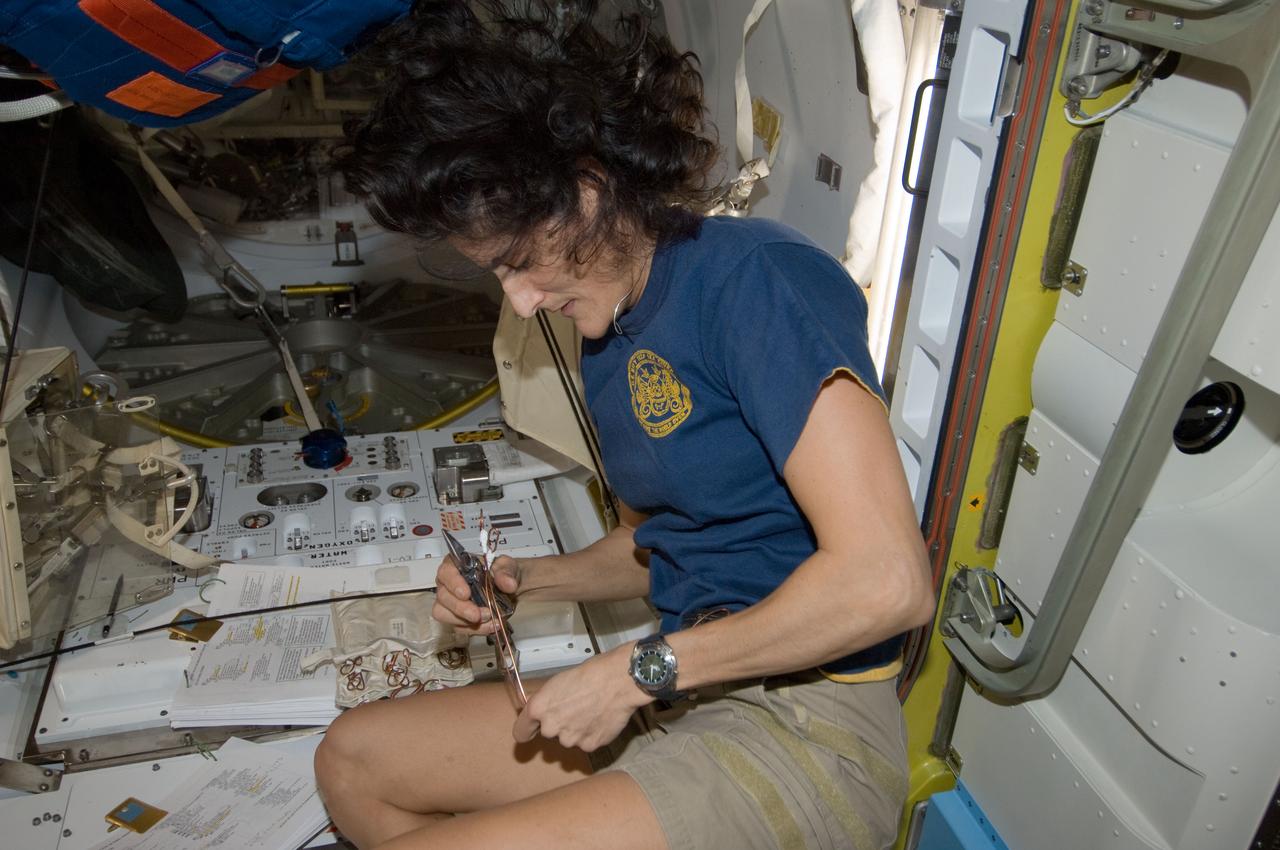
ISS033-E-018364 (30 Oct. 2012) --- NASA astronaut Sunita Williams, Expedition 33 commander, works in the Quest airlock of the International Space Station.
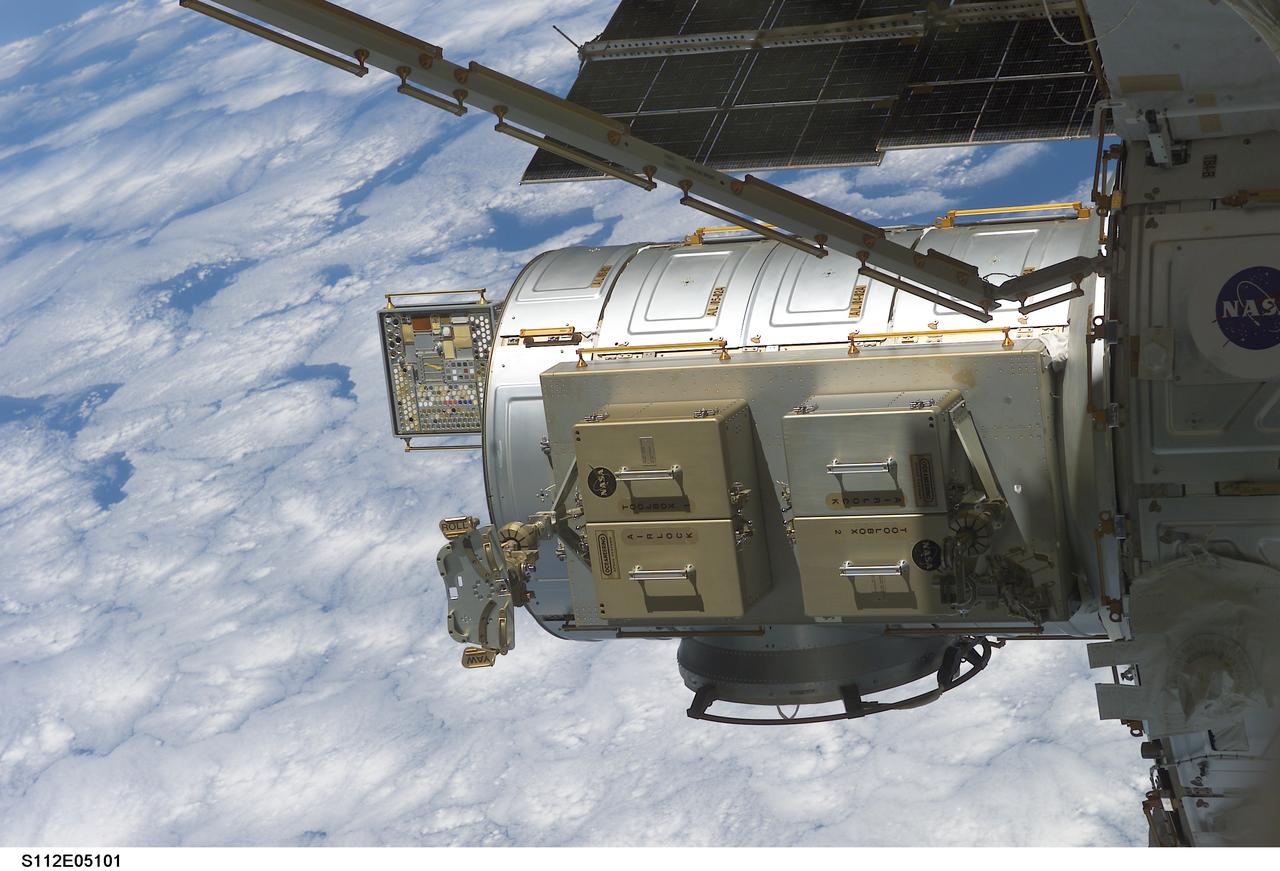
STS112-E-05101 (10 October 2002) --- Backdropped by a blue and white Earth, the Quest Airlock on the International Space Station (ISS) was photographed by a crewmember. Astronauts David A. Wolf and Piers J. Sellers, both STS-112 mission specialists, used the airlock to exit the station for the first scheduled session of extravehicular activity (EVA) which began at 10:21 a.m. on October 10, 2002.
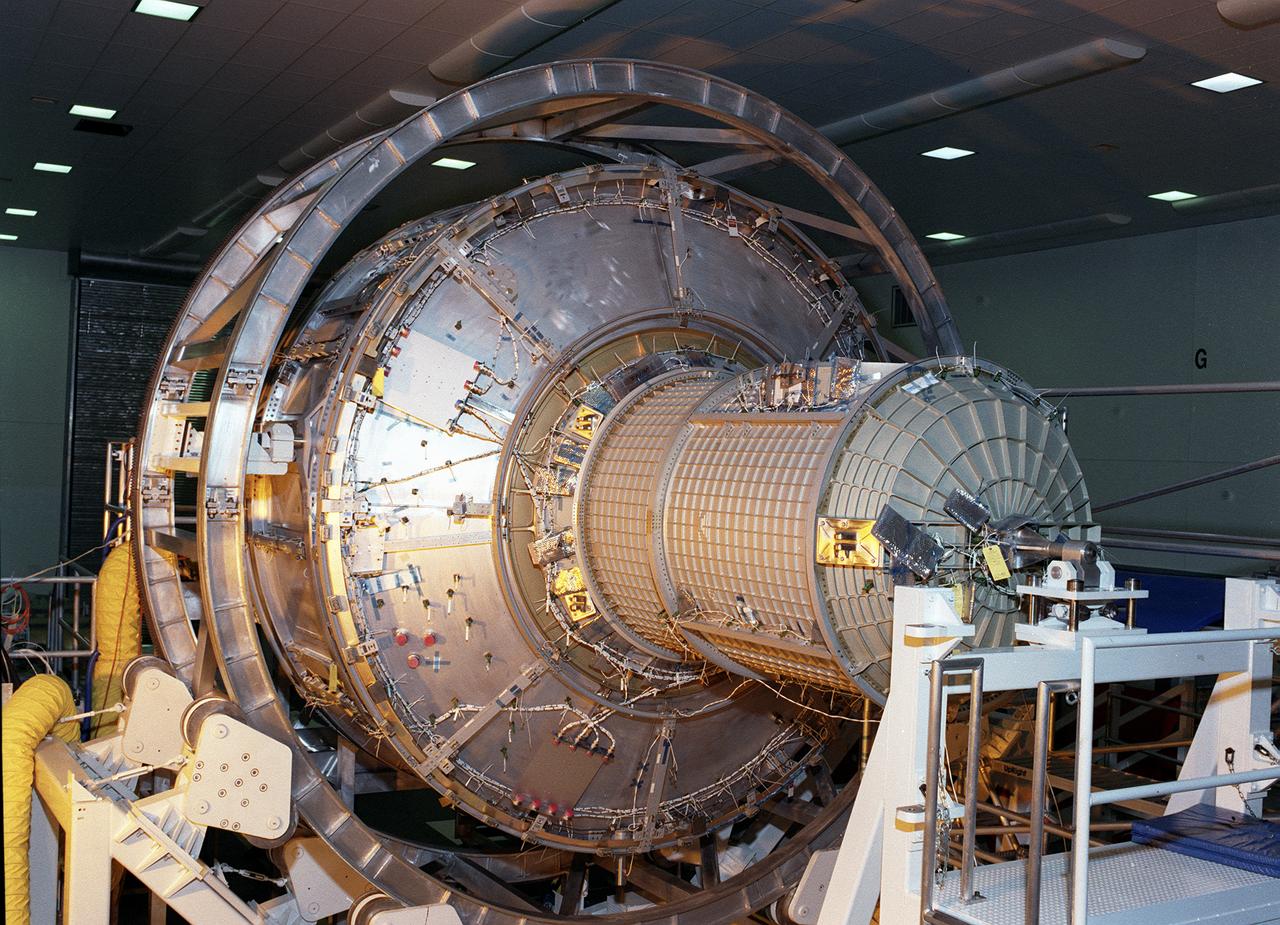
The Joint Airlock Module for the International Space Station (ISS) awaits shipment to the Kennedy Space Center in the Space Station manufacturing facility at the Marshall Space Flight Center in Huntsville, Alabama. The Airlock includes two sections. The larger equipment lock on the left is where crews will change into and out of their spacesuits for extravehicular activities, and store spacesuits, batteries, power tools, and other supplies. The narrower crewlock from which the astronauts will exit into space for extravehicular activities, is on the right. The airlock is 18 feet long and has a mass of about 13,500 pounds. It was launched to the station aboard the Space Shuttle orbiter Atlantis (STS-104 mission) on July 12, 2001. The MSFC is playing a primary role in NASA's development, manufacturing, and operations of the ISS.
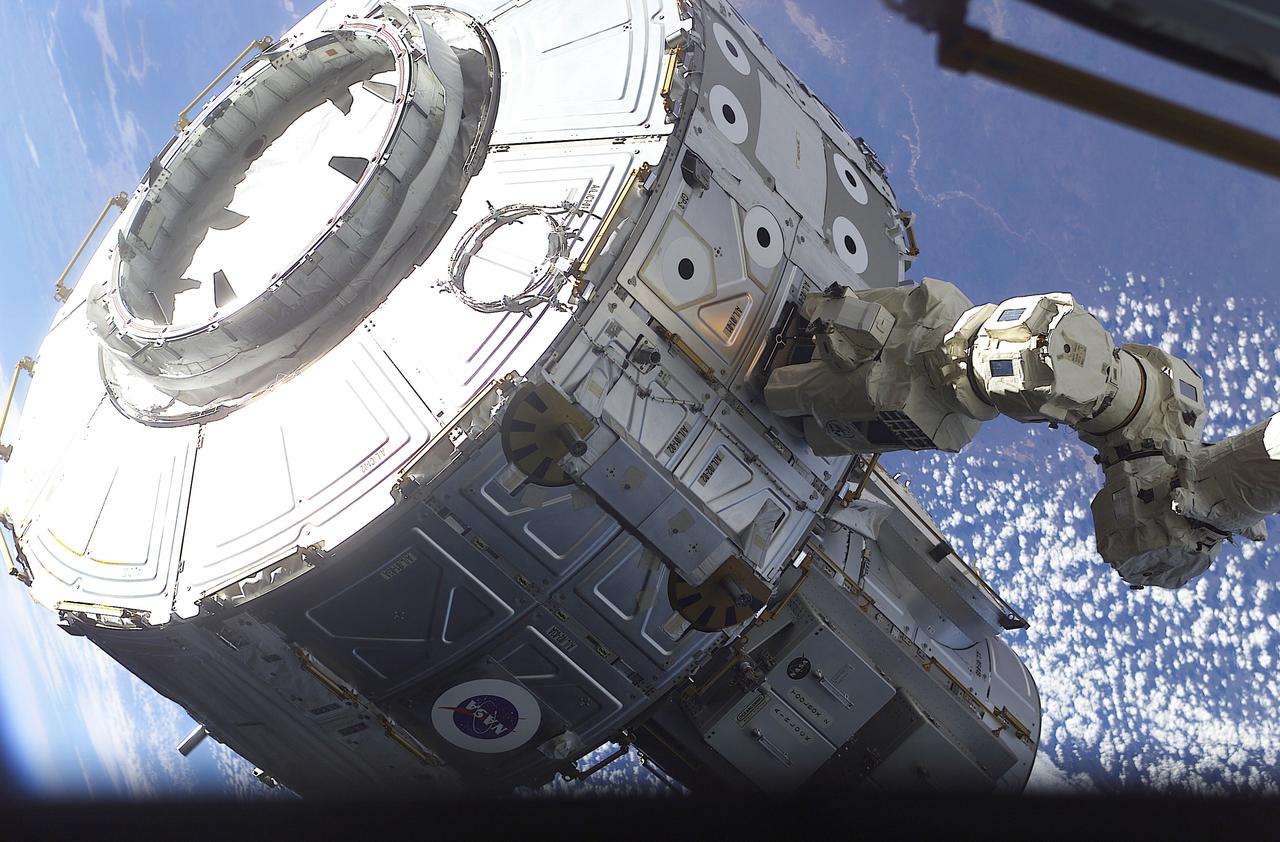
At the control of Expedition Two Flight Engineer Susan B. Helms, the newly-installed Canadian-built Canadarm2, Space Station Remote Manipulator System (SSRMS) maneuvers the Quest Airlock into the proper position to be mated onto the starboard side of the Unity Node I during the first of three extravehicular activities (EVA) of the STS-104 mission. The Quest Airlock makes it easier to perform space walks, and allows both Russian and American spacesuits to be worn when the Shuttle is not docked with the International Space Station (ISS). American suits will not fit through Russion airlocks at the Station. The Boeing Company, the space station prime contractor, built the 6.5-ton (5.8 metric ton) airlock and several other key components at the Marshall Space Flight Center (MSFC), in the same building where the Saturn V rocket was built. Installation activities were supported by the development team from the Payload Operations Control Center (POCC) located at the MSFC and the Mission Control Center at NASA's Johnson Space Flight Center in Houston, Texas.
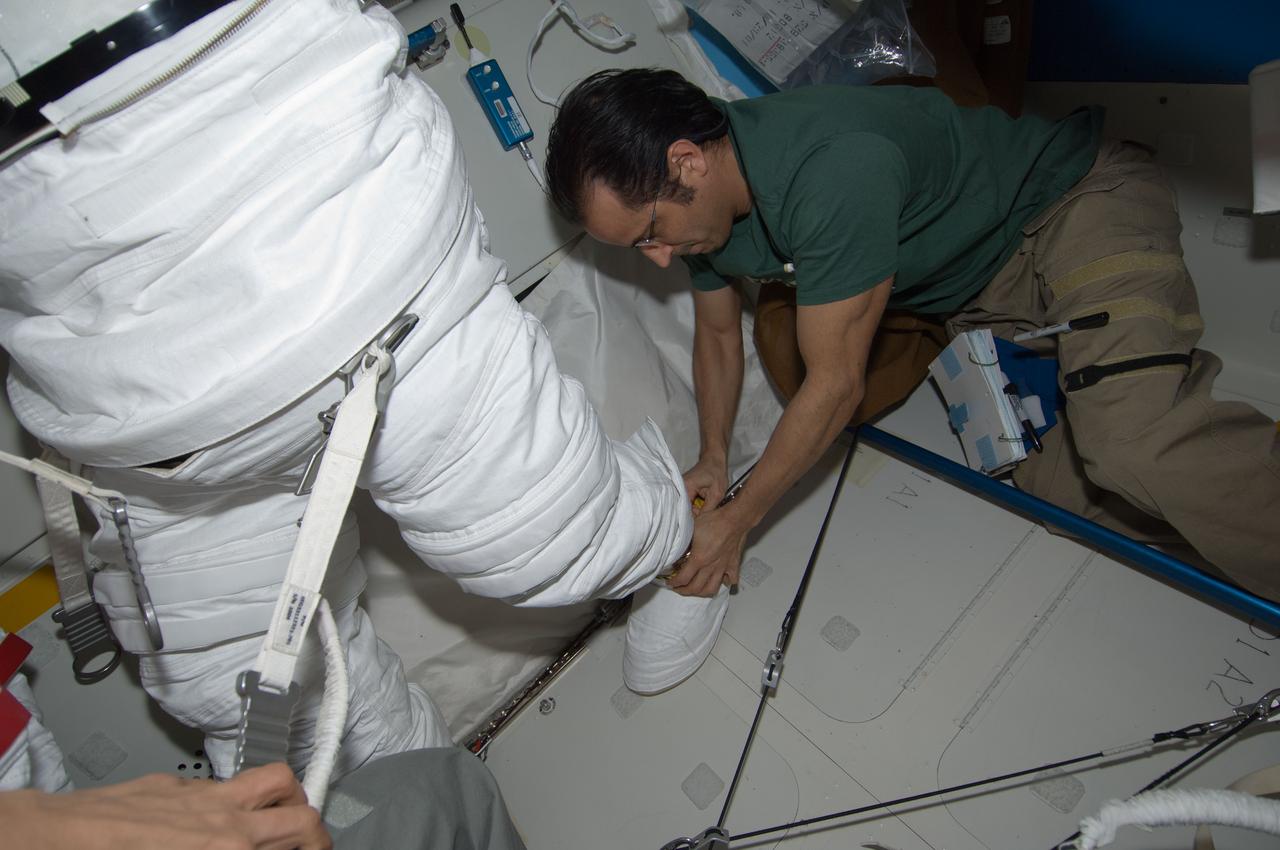
ISS032-E-022924 (22 Aug. 2012) --- NASA astronaut Joe Acaba, Expedition 32 flight engineer, works with an Extravehicular Mobility Unit (EMU) spacesuit in the Quest airlock of the International Space Station.
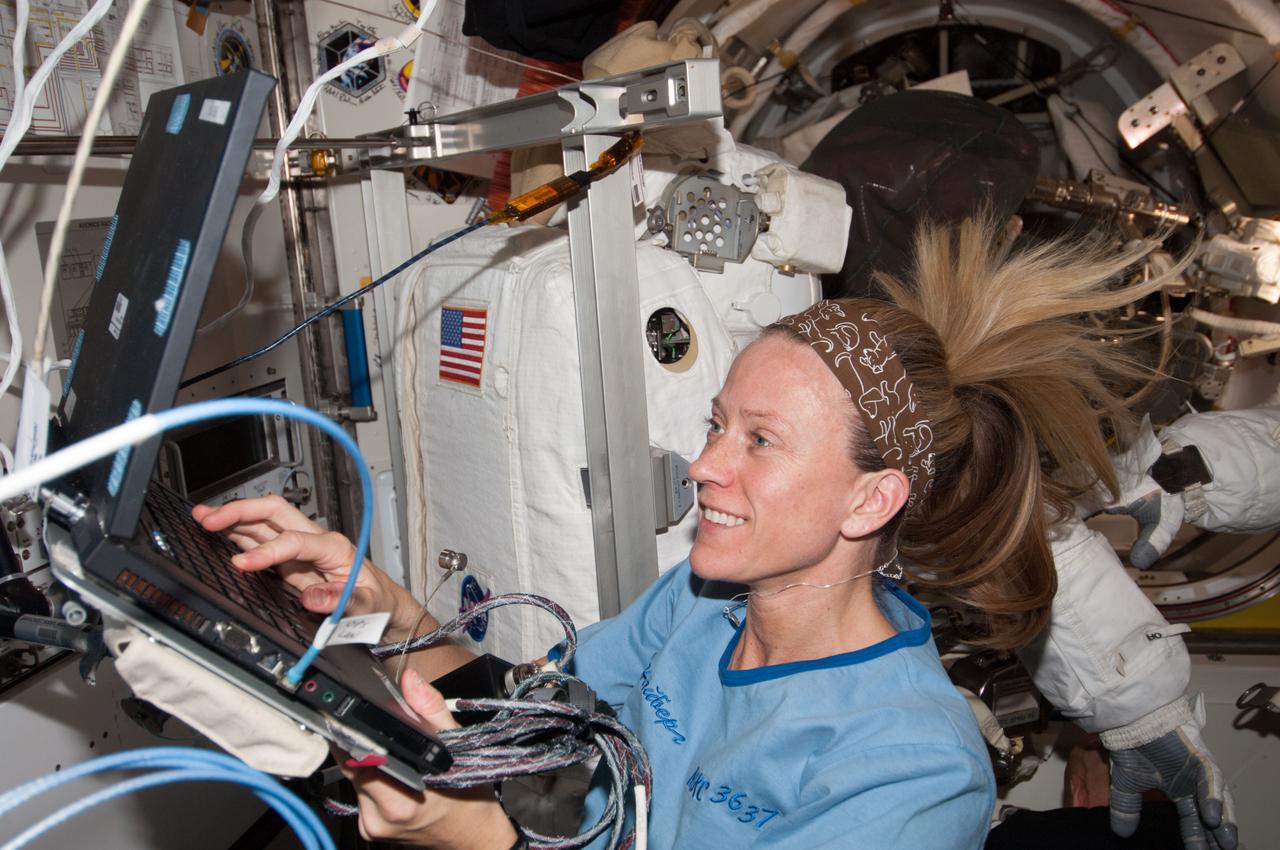
ISS036-E-017843 (11 July 2013) --- NASA astronaut Karen Nyberg, Expedition 36 flight engineer, uses a computer in the Quest airlock of the International Space Station.
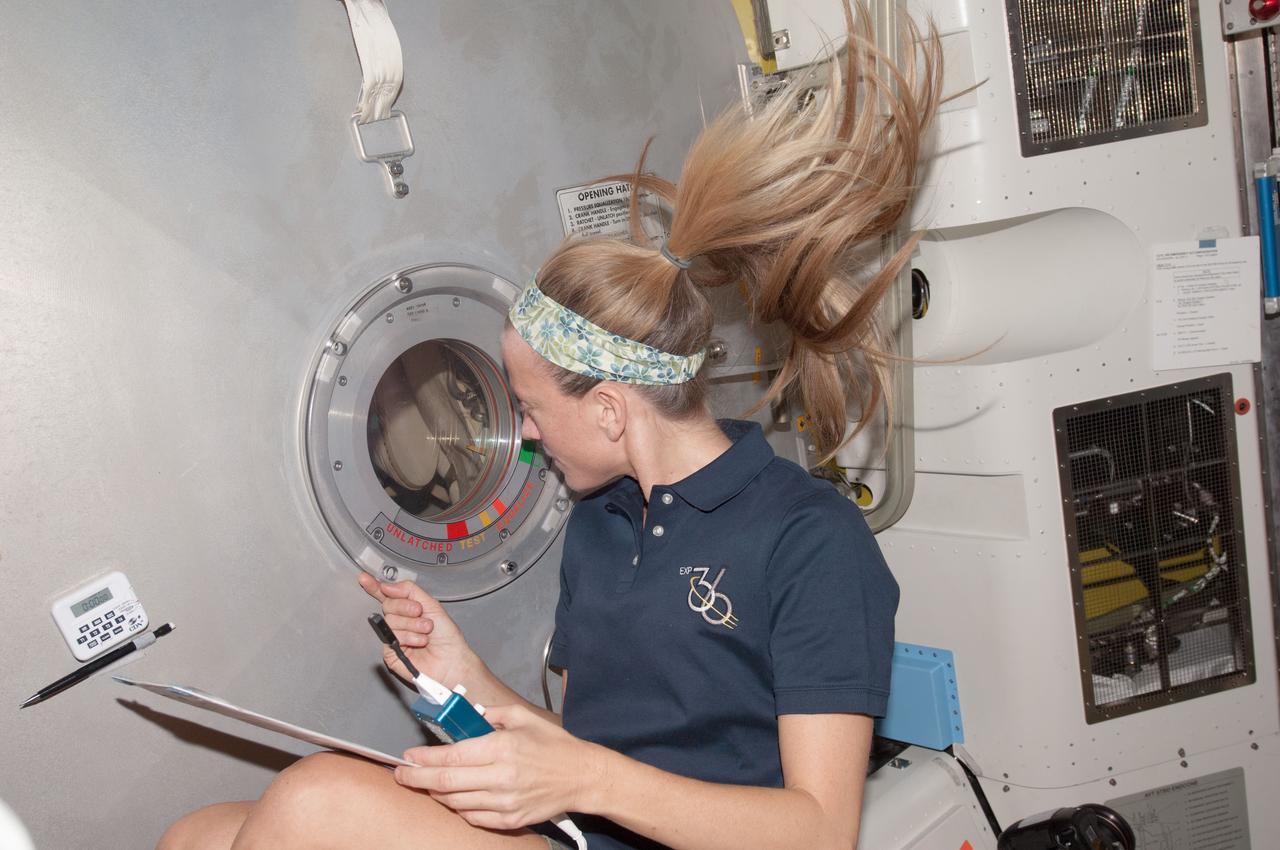
Photographic documentation of Extravehicular Activity (EVA) 23 Prep in the Quest airlock. Astronaut Karen Nyberg, Expedition 36 flight engineer, holds a microphone and a checklist as she sits in front of the Airlock hatch.
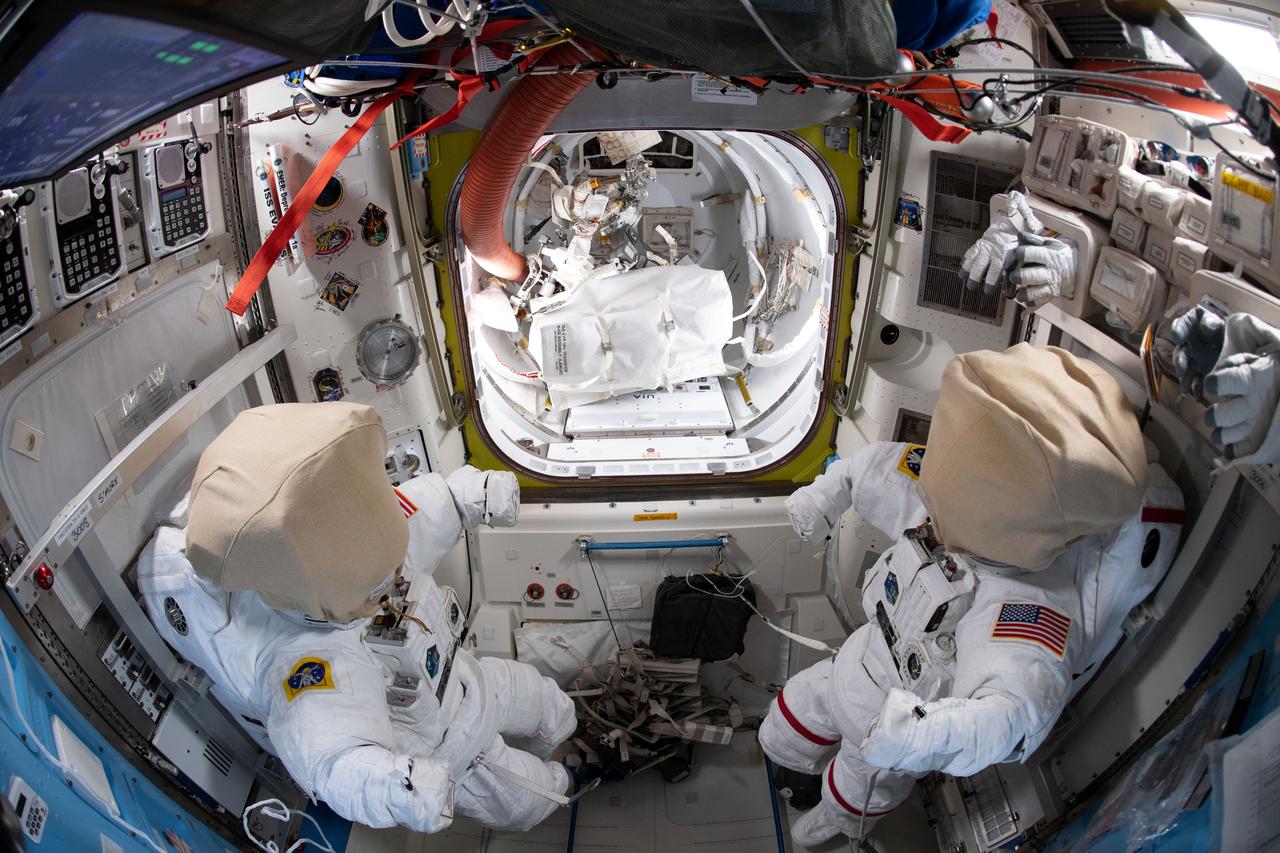
iss060e038558 (8/21/2019) --- A view of Extravehicular Mobility Units (EMUs) in the Quest Airlock (A/L) aboard the International Space Station (ISS). The Quest Airlock is a pressurized space station module consisting of two compartments attached end-to-end by a connecting bulkhead and hatch. The two compartments are the Equipment Lock which provides the systems for suit maintenance and refurbishment and the Crew Lock which provides the actual exit for performing spacewalks. The airlock is the primary path for spacewalk entry and departure for astronauts wearing U.S. spacesuits. Quest can also support the Russian Orlan spacesuit for spacewalks.
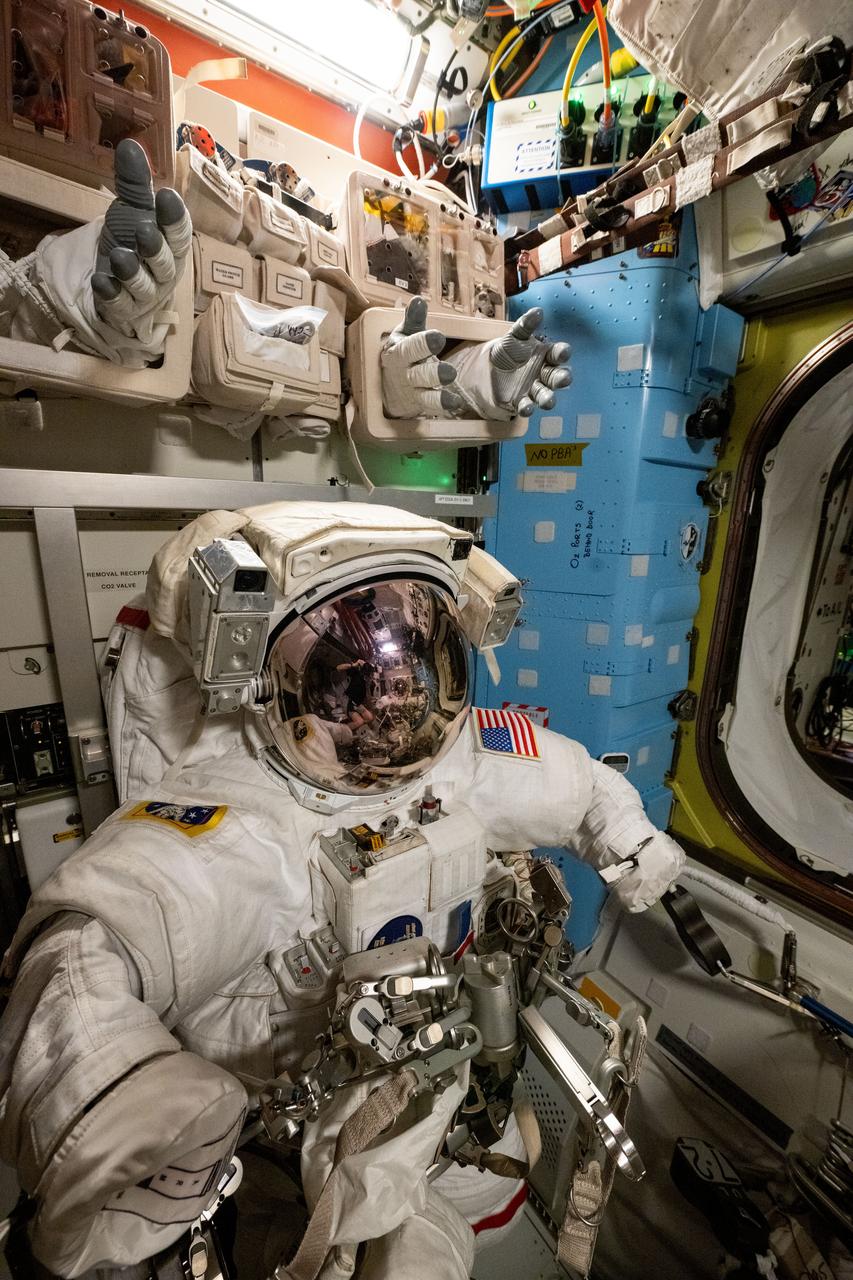
iss072e518461 (Jan. 23, 2025) --- A spacesuit is pictured staged inside the International Space Station's Quest airlock ahead of a spacewalk planned for NASA astronauts Suni Williams and Butch Wilmore. The two spacewalkers are scheduled to exit the Quest airlock on Jan. 30 to remove a radio frequency group antenna assembly and search for microbes outside the orbital outpost. At top, spacesuit gloves are stowed above the spacesuits for easy access when astronauts are preparing to begin a spacewalk.
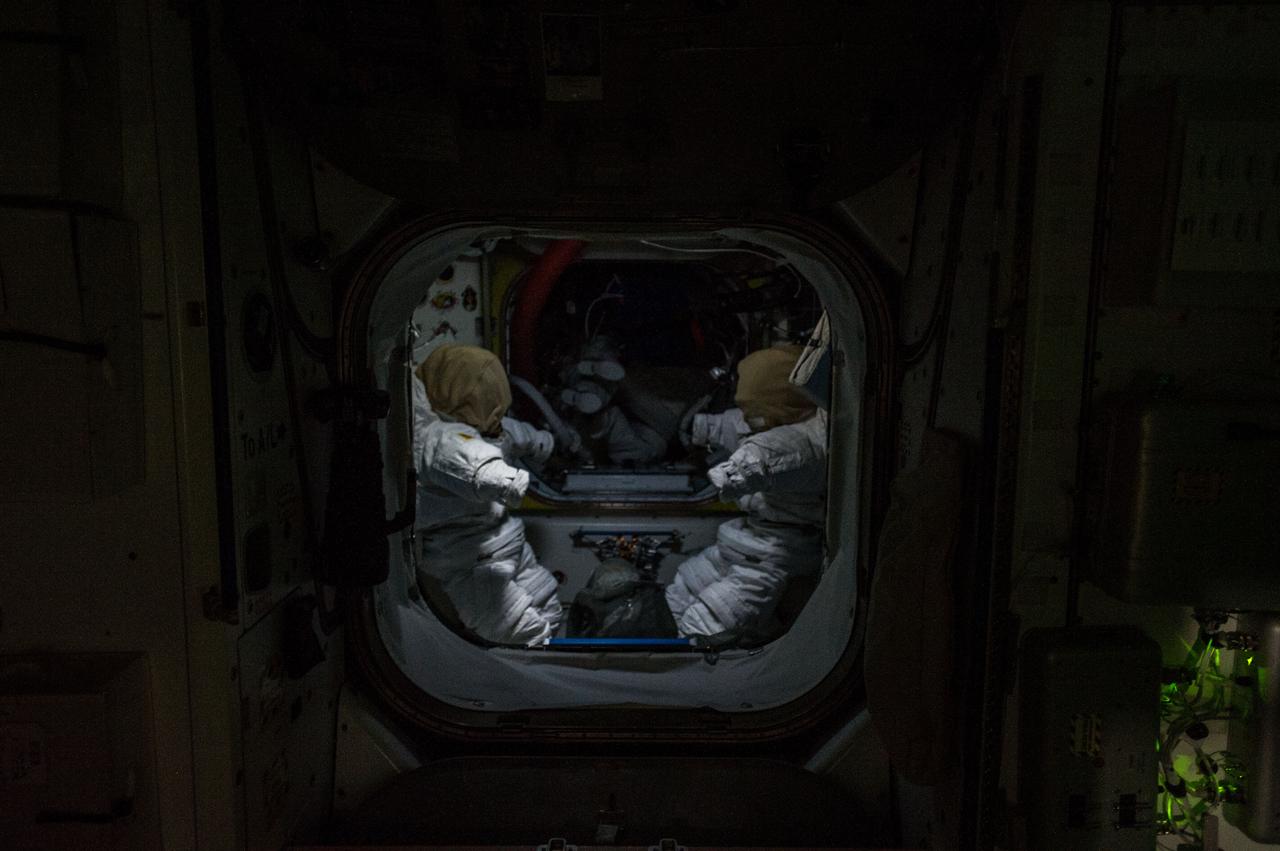
Dark view of two Extravehicular Mobility Units (EMUs) located in the Quest airlock. Photo taken by the Expedition 40 crew.
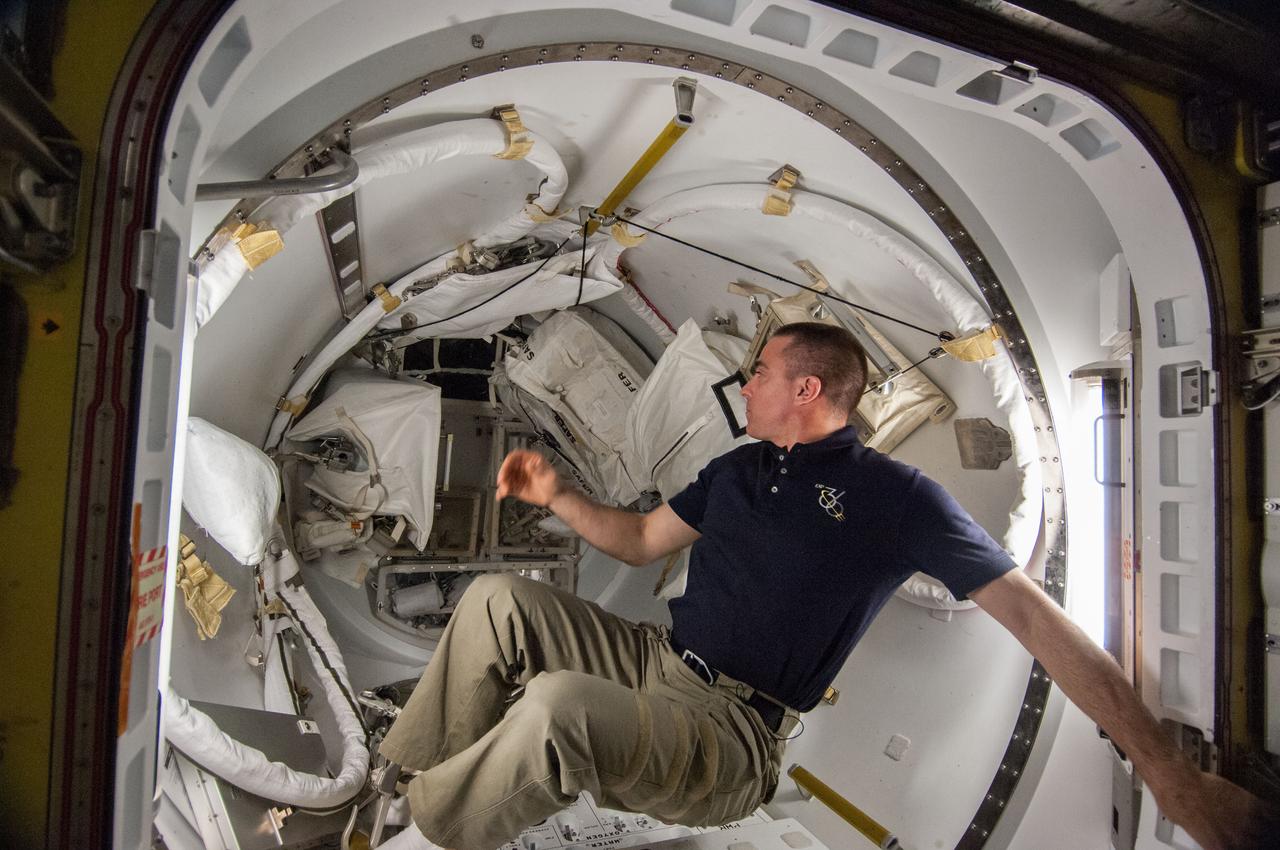
ISS036-E-013051 (30 June 2013) --- NASA astronaut Chris Cassidy, Expedition 36 flight engineer, works with spacewalk equipment in the Quest airlock of the International Space Station in preparation for the first of two sessions of extravehicular activity (EVA) scheduled for July 9 and July 16.
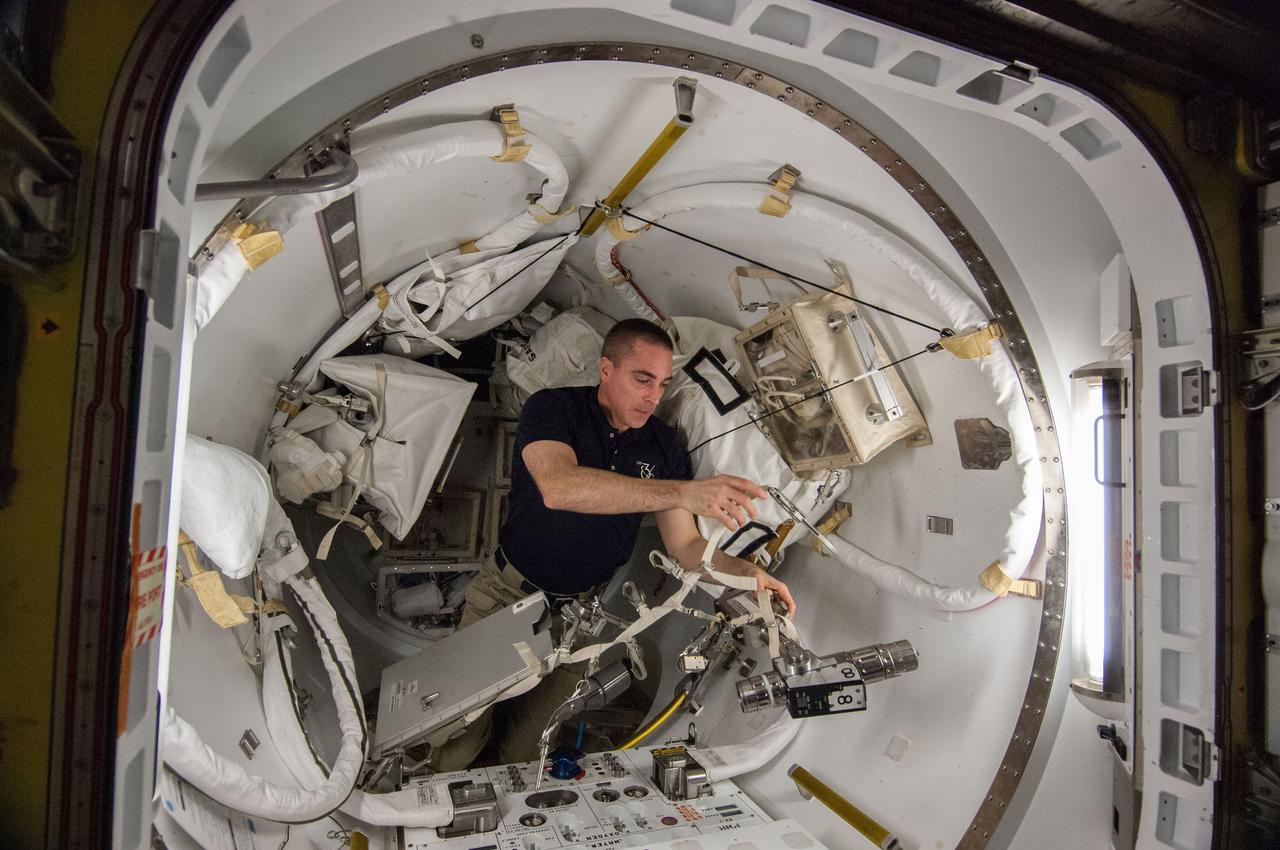
ISS036-E-013069 (30 June 2013) --- NASA astronaut Chris Cassidy, Expedition 36 flight engineer, works with spacewalk equipment in the Quest airlock of the International Space Station in preparation for the first of two sessions of extravehicular activity (EVA) scheduled for July 9 and July 16.
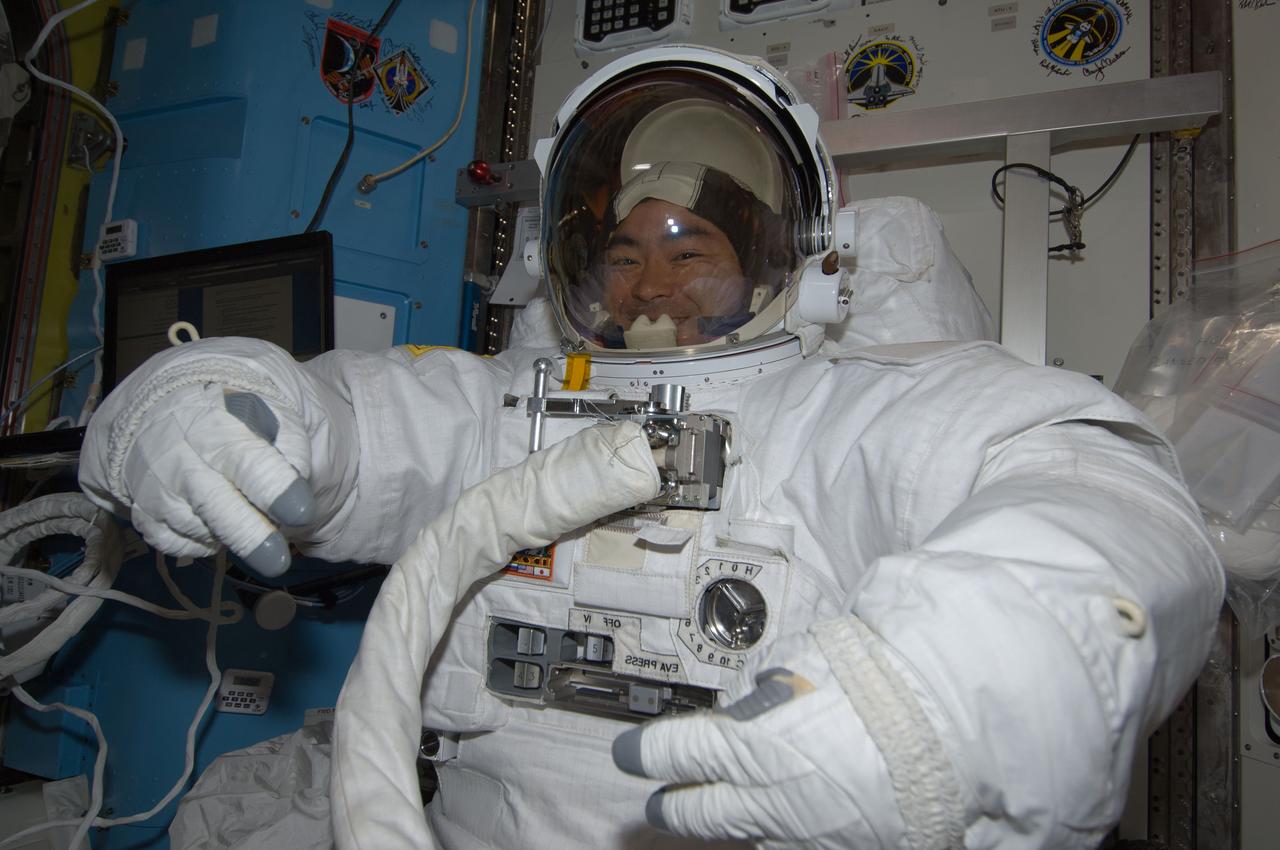
ISS032-E-022931 (22 Aug. 2012) --- In the International Space Station?s Quest airlock, Japan Aerospace Exploration Agency astronaut Aki Hoshide, Expedition 32 flight engineer, attired in an Extravehicular Mobility Unit (EMU) spacesuit, prepares for a spacewalk scheduled for Aug. 30.
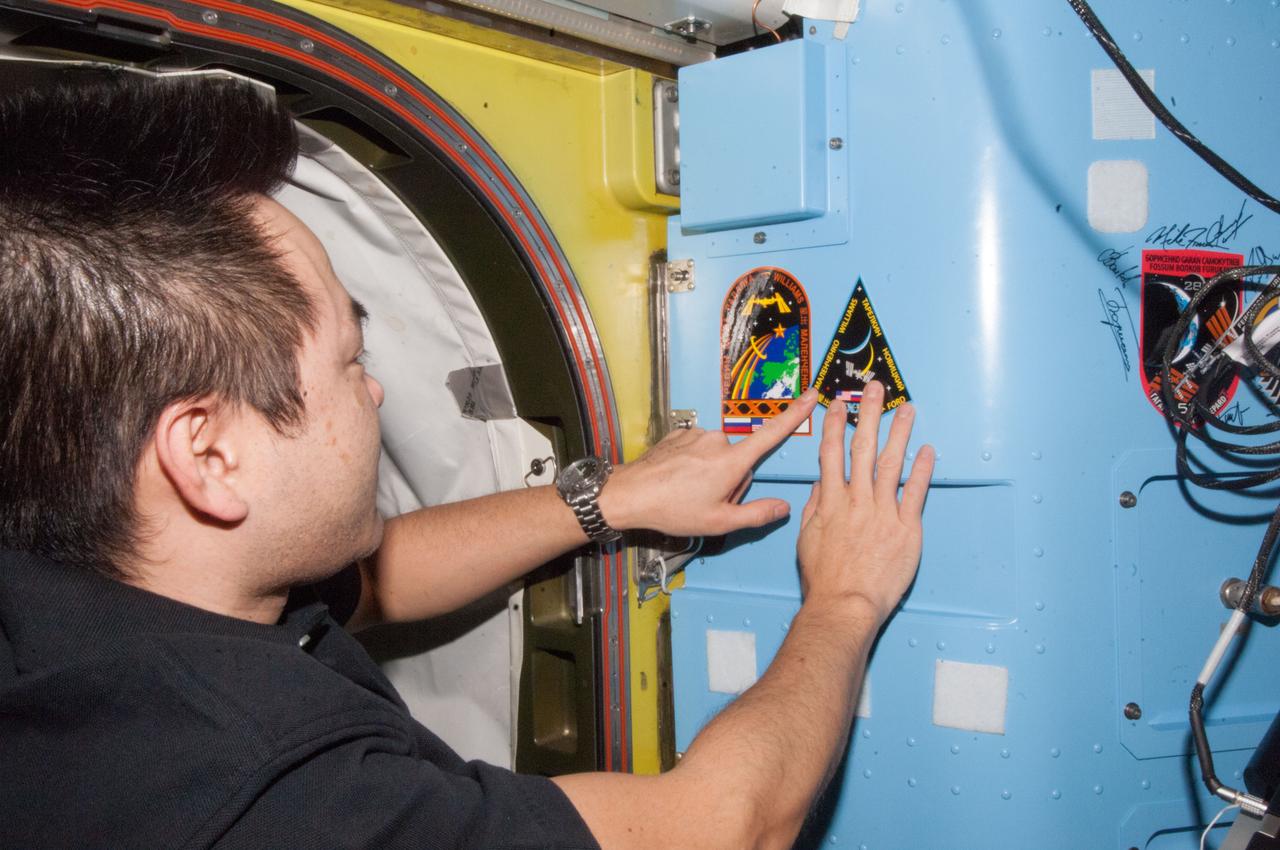
ISS033-E-022117 (18 Nov. 2012) --- Japan Aerospace Exploration Agency astronaut Aki Hoshide, Expedition 33 flight engineer, adds the Expedition 33 patch to the growing collection of insignias representing crews who performed spacewalks from the Quest airlock of the International Space Station.
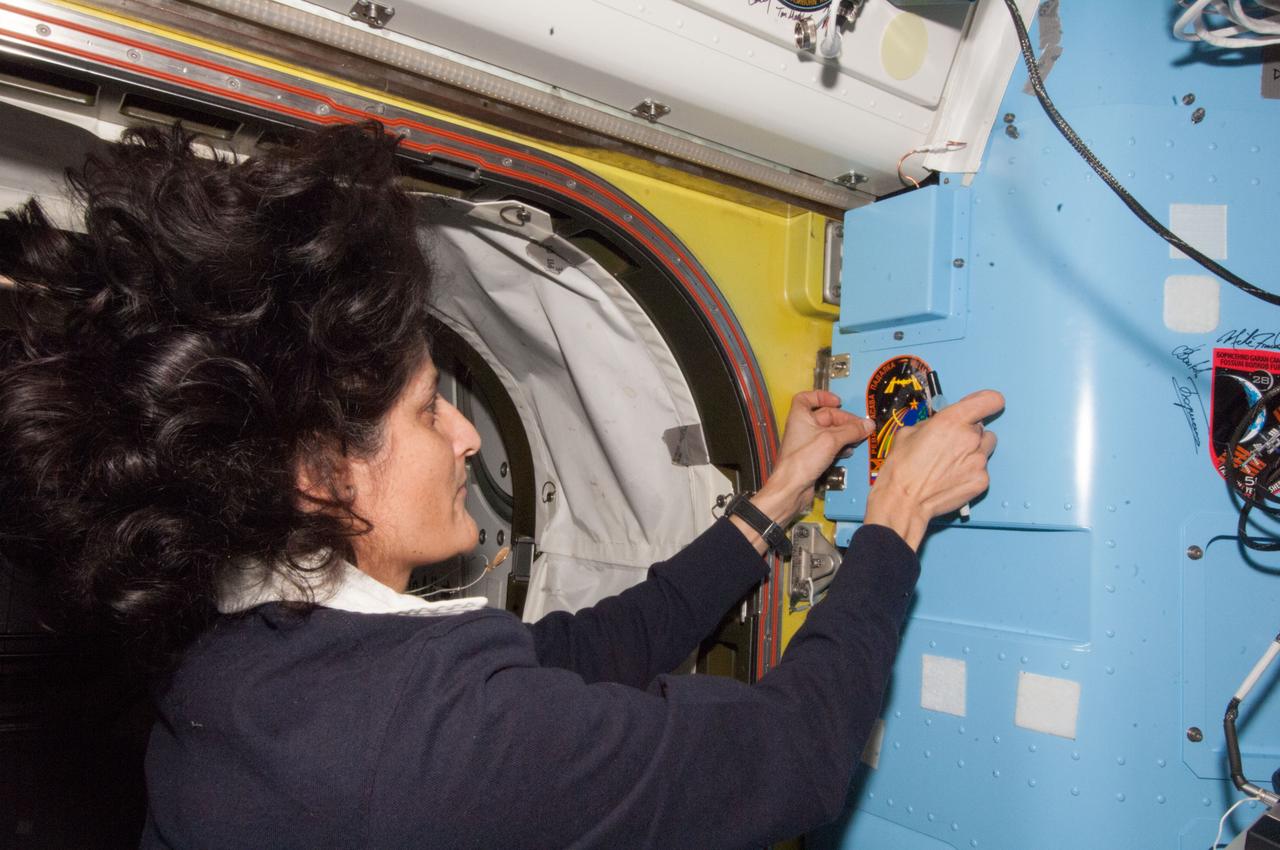
ISS033-E-022110 (18 Nov. 2012) --- NASA astronaut Sunita Williams, Expedition 33 commander, adds the Expedition 32 patch to the growing collection of insignias representing crews who performed spacewalks from the Quest airlock of the International Space Station.
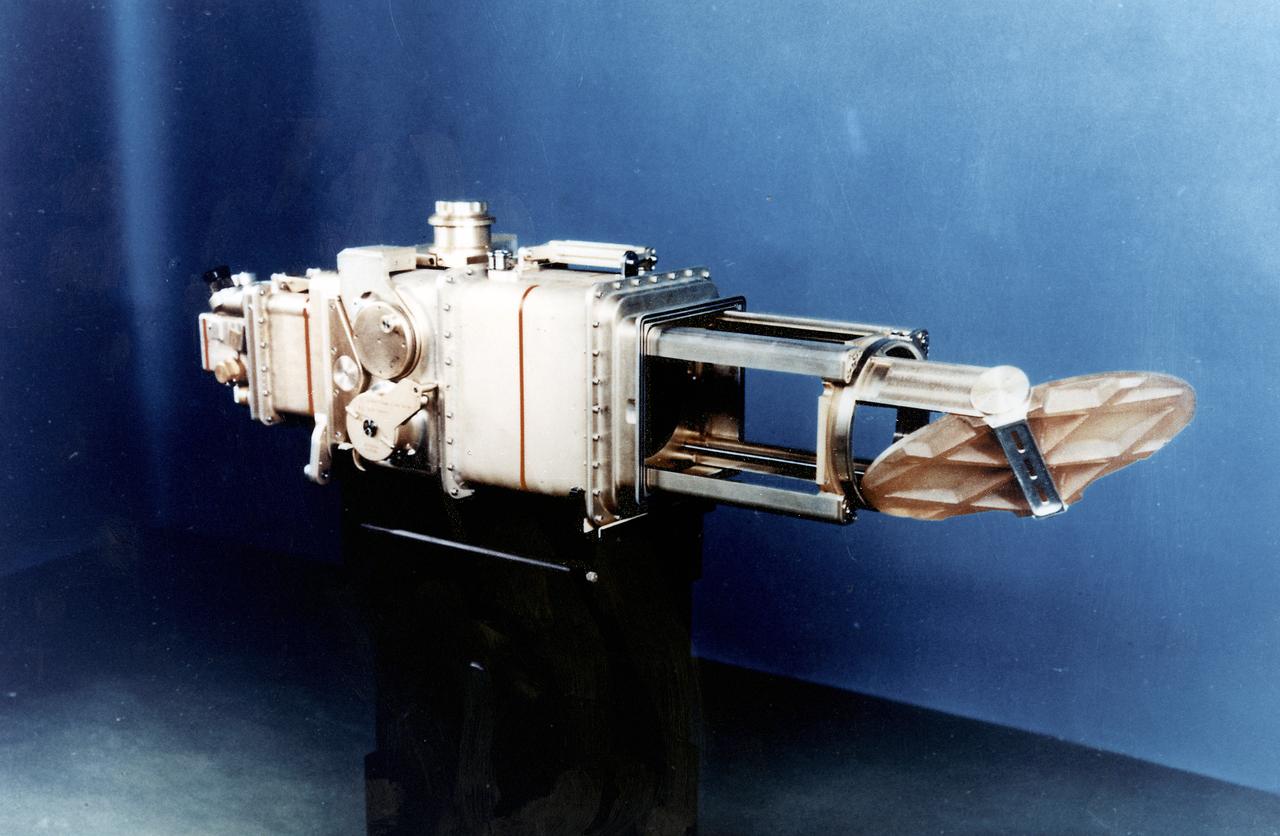
This 1970 photograph shows Skylab's Ultraviolet (UV) Stellar Astronomy experiment, a scientific airlock-based facility/experiment that would study UV spectra of early-type stars and galaxies. The Marshall Space Flight Center had program management responsibility for the development of Skylab hardware and experiments.
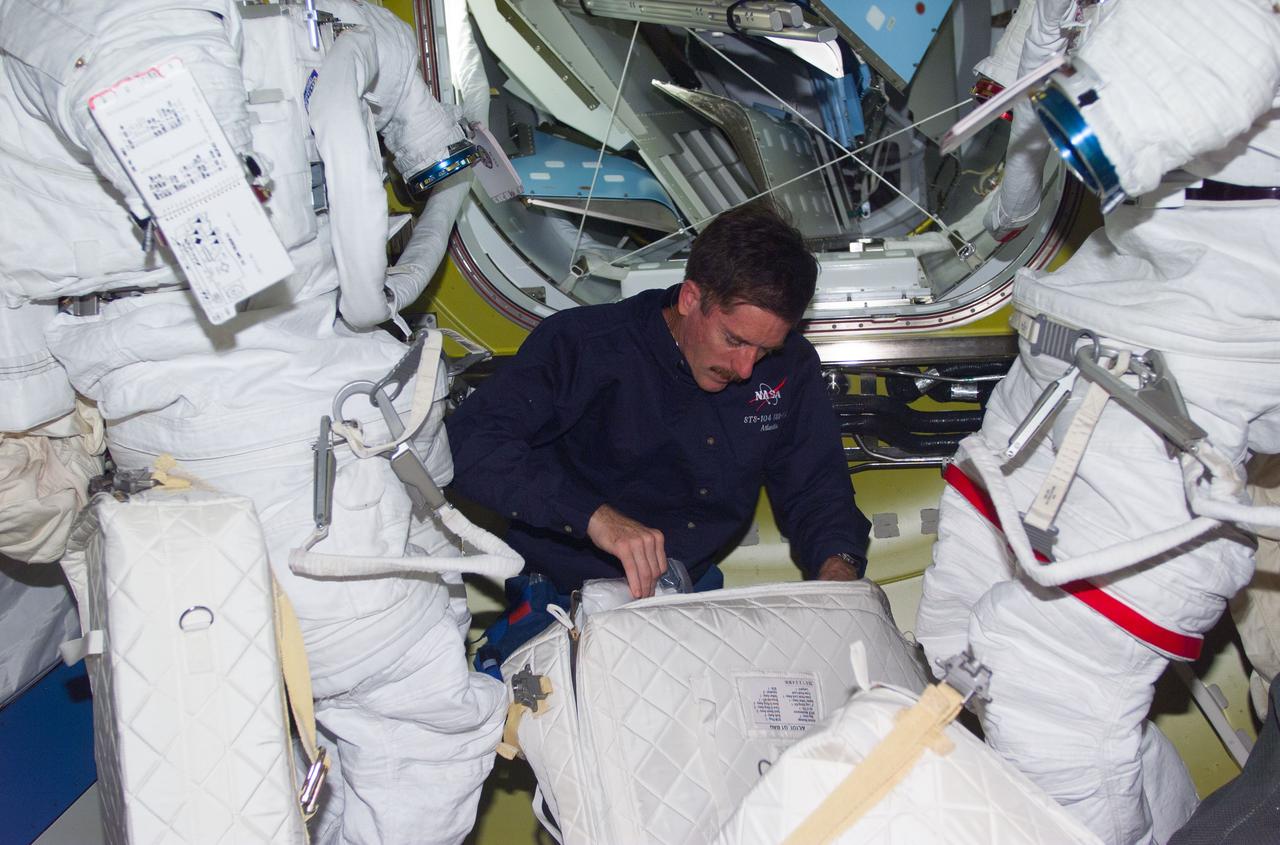
STS104-E-5166 (19 July 2001) --- Astronaut James F. Reilly, STS-104 mission specialist, looks over some supplies in the Quest Airlock aboard the International Space Station (ISS). Reilly is one of two assigned space walkers on the STS-104 mission. The third and final scheduled extravehicular activity (EVA) is to utilize the new airlock, marking its first ever usage. The image was recorded with a digital still camera.
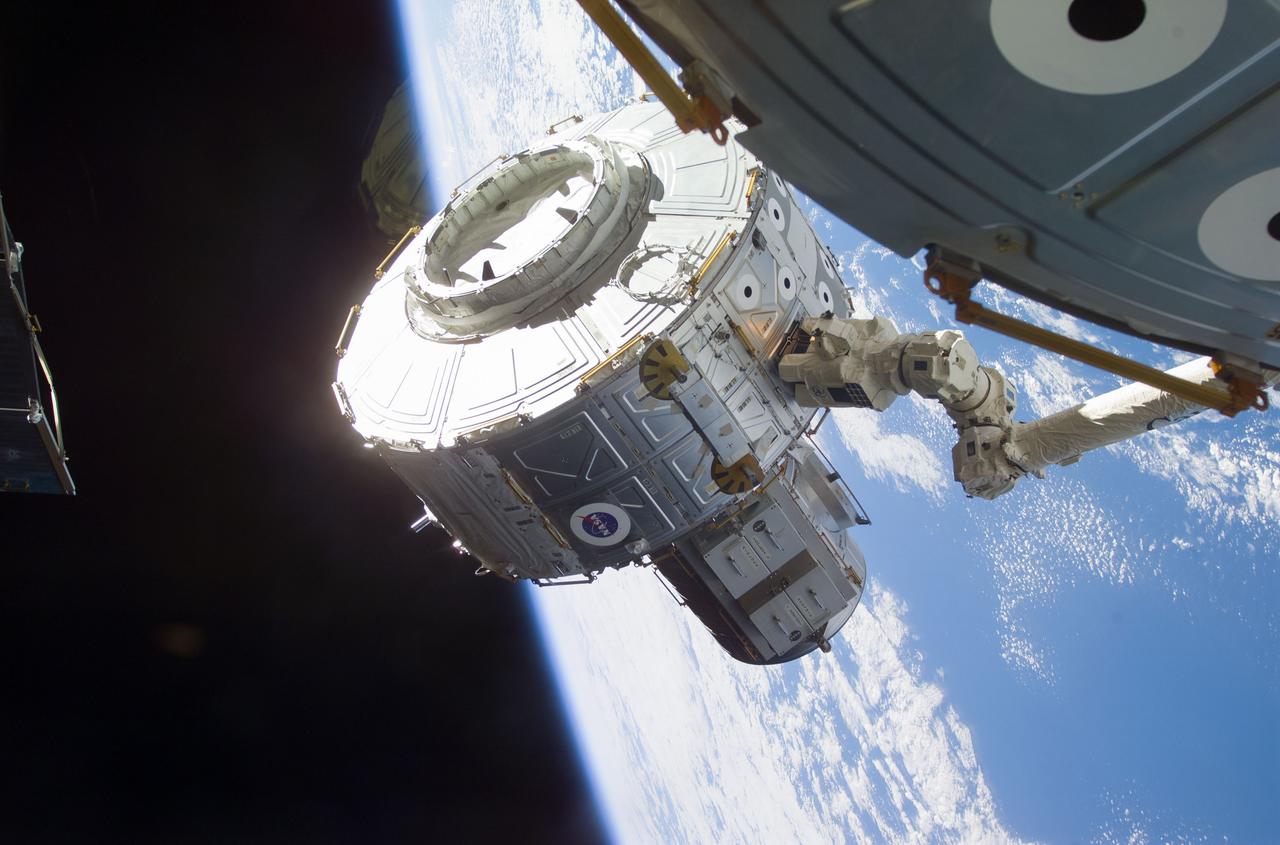
STS104-E-5068 (15 July 2001) --- Backdropped against a blue and white Earth, some 237 miles below, the Quest airlock is in the process of being installed onto the starboard side of Unity Node 1 of the International Space Station (ISS). Astronaut Susan J. Helms, Expedition Two flight engineer, used controls onboard the station to maneuver the Airlock into place with the Canadarm2 or Space Station Remote Manipulator System (SSRMS). This image was recorded with a digital still camera.
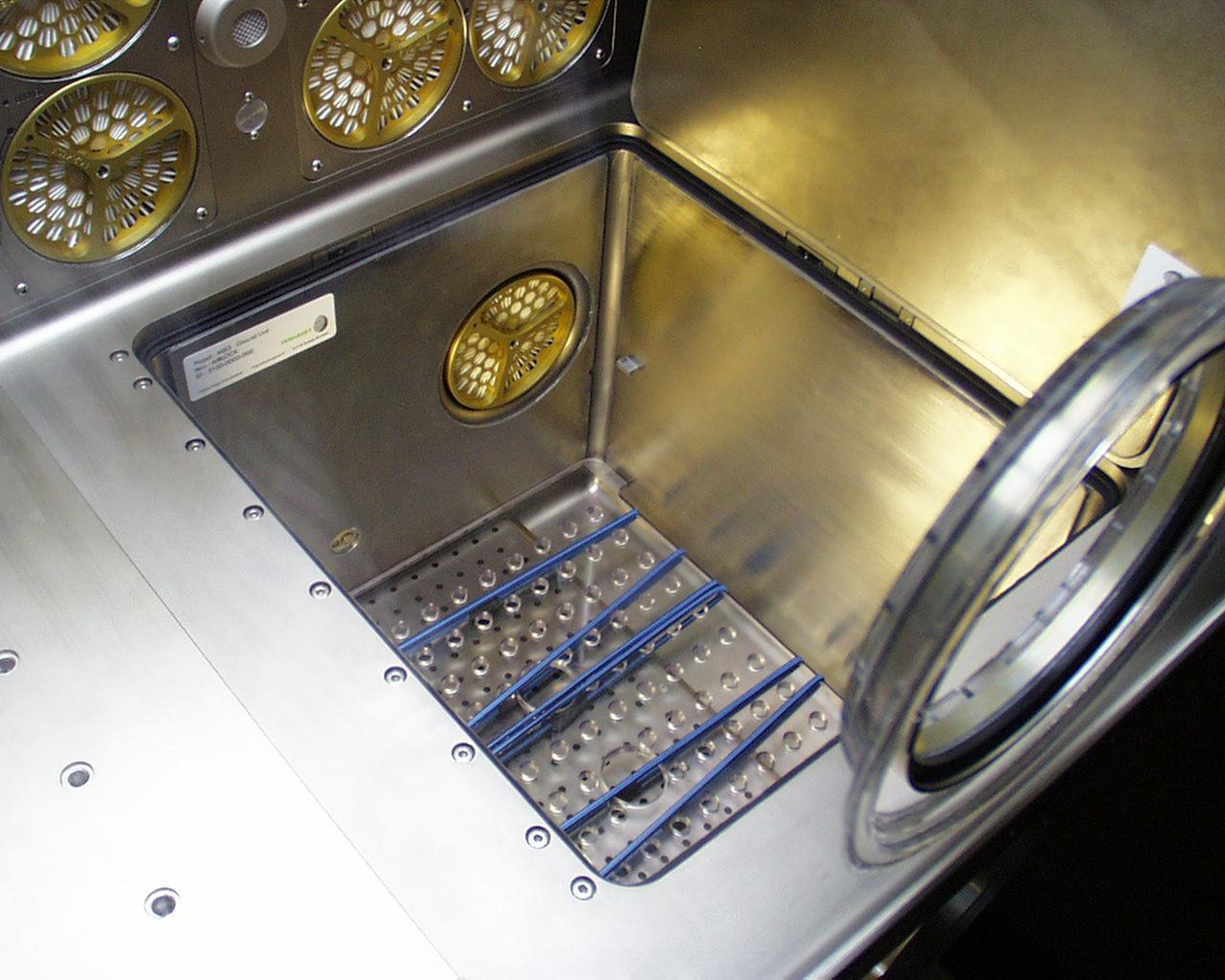
This photo shows the access through the internal airlock (bottom right) on the Microgravity Science Glovebox (MSG) being developed by the European Space Agency (ESA) and NASA for use aboard the International Space Station (ISS). The airlock will allow the insertion or removal of equipment and samples without opening the working volume of the glovebox. Scientists will use the MSG to carry out multidisciplinary studies in combustion science, fluid physics and materials science. The MSG is managed by NASA's Marshall Space Flight Center (MSFC). Photo Credit: NASA/MSFC
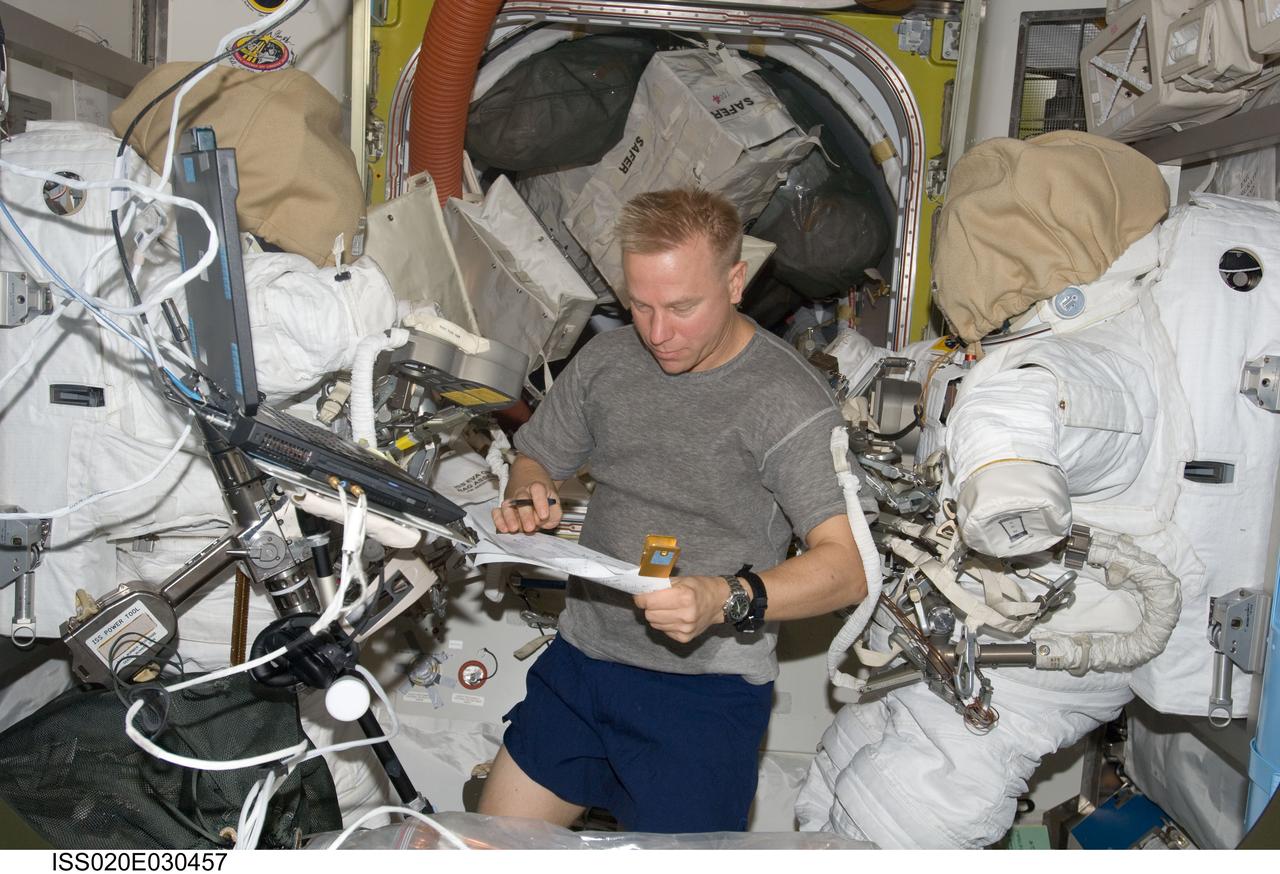
ISS020-E-030457 (13 Aug. 2009) --- Astronaut Tim Kopra, Expedition 20 flight engineer, looks over a checklist in the Quest airlock of the International Space Station.
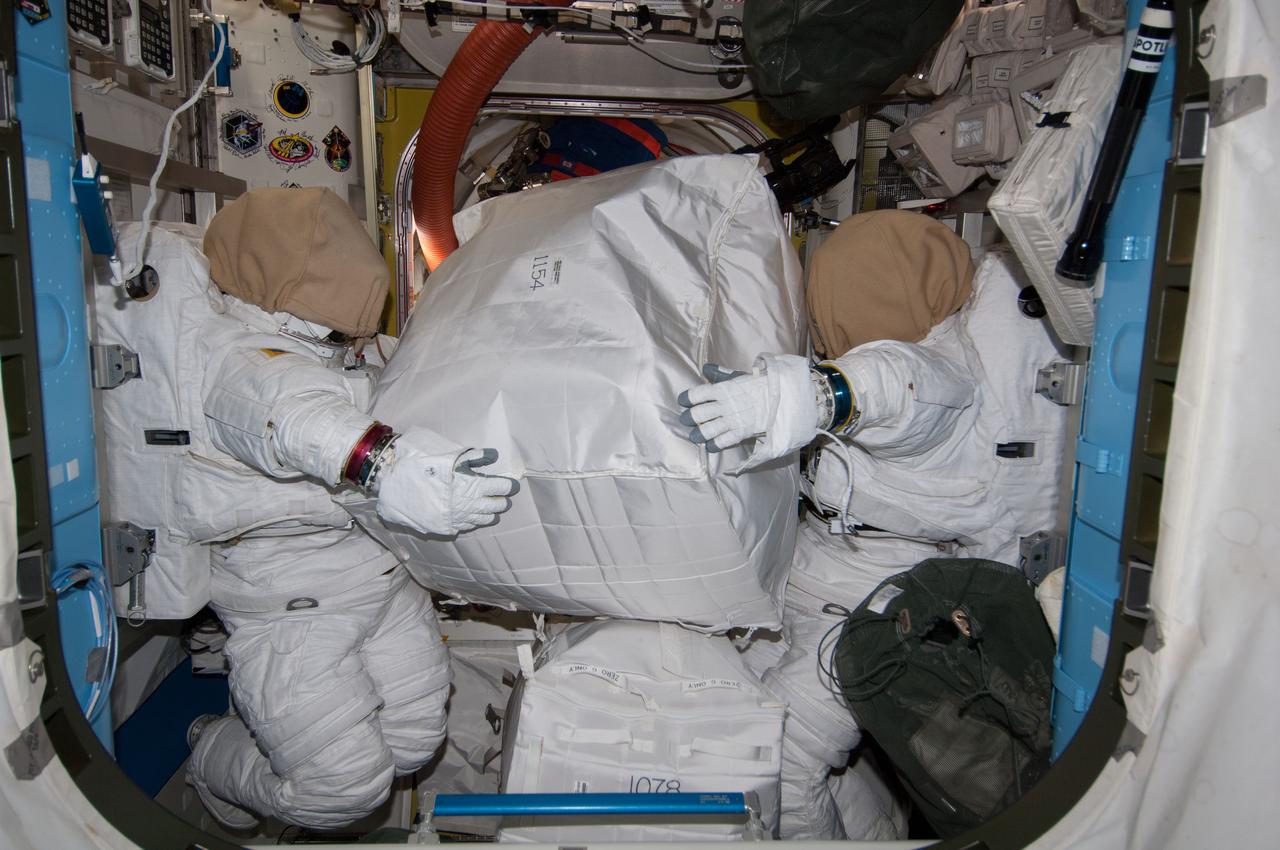
ISS040-E-086597 (1 Aug. 2014) --- Two unoccupied Extravehicular Mobility Unit (EMU) spacesuits, photographed by an Expedition 40 crew member, appear to hold stowage containers in the Quest airlock of the International Space Station.
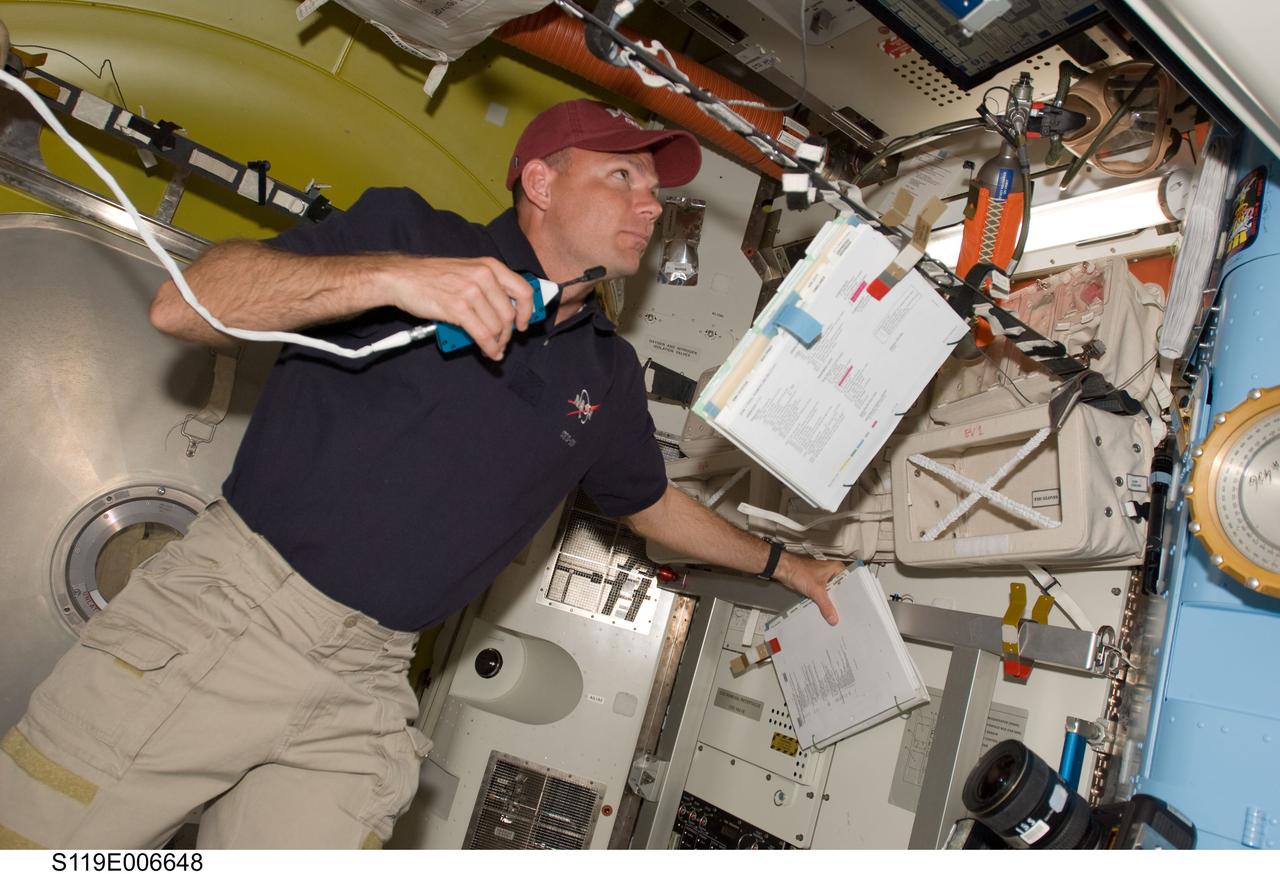
S119-E-006648 (19 March 2009) --- Astronaut Tony Antonelli, STS-119 pilot, uses a communication system in the Quest Airlock of the International Space Station while Space Shuttle Discovery remains docked with the station.
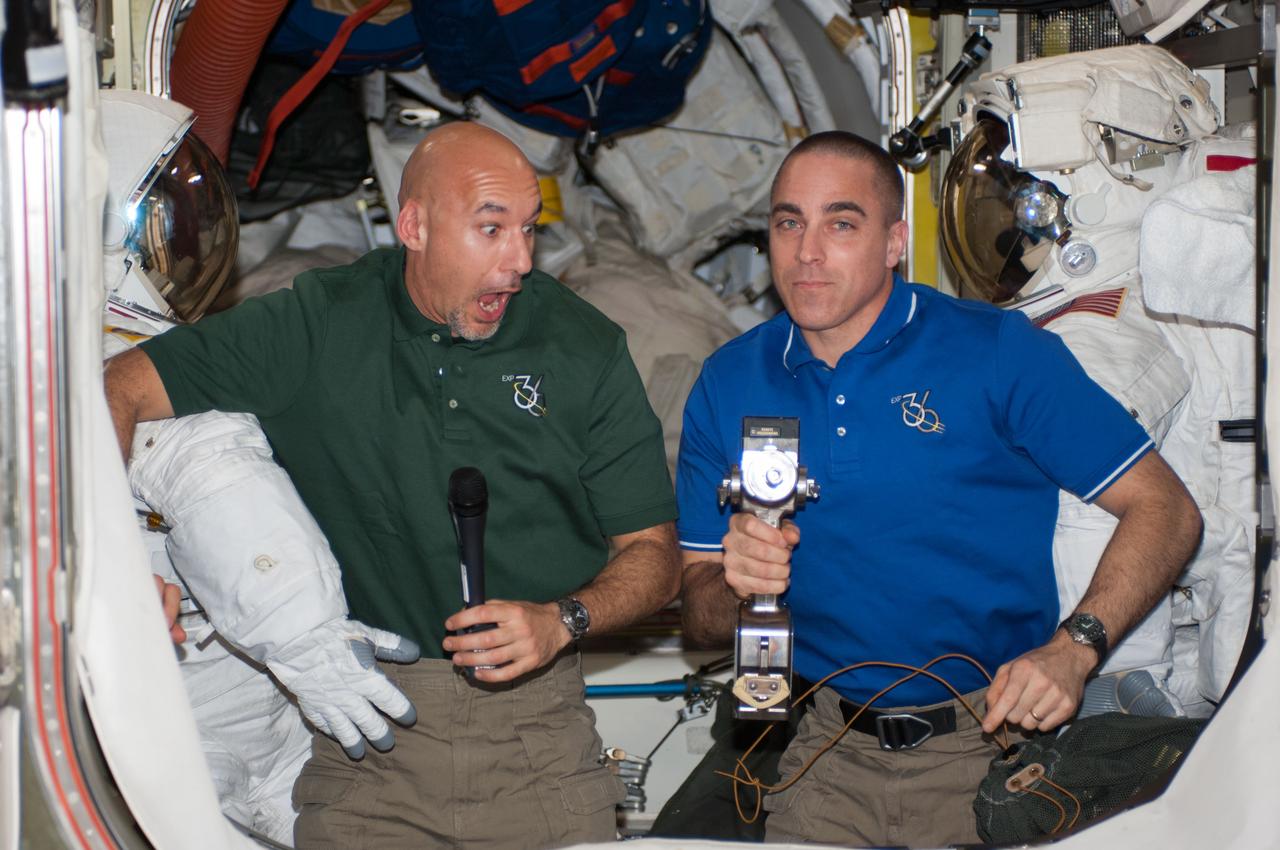
European Space Agency astronaut Luca Parmitano (left) and Astronaut Chris Cassidy,both Expedition 36 flight engineers,pose for a candid photo with Extravehicular Mobility Unit (EMU) hardware in the Quest Airlock.
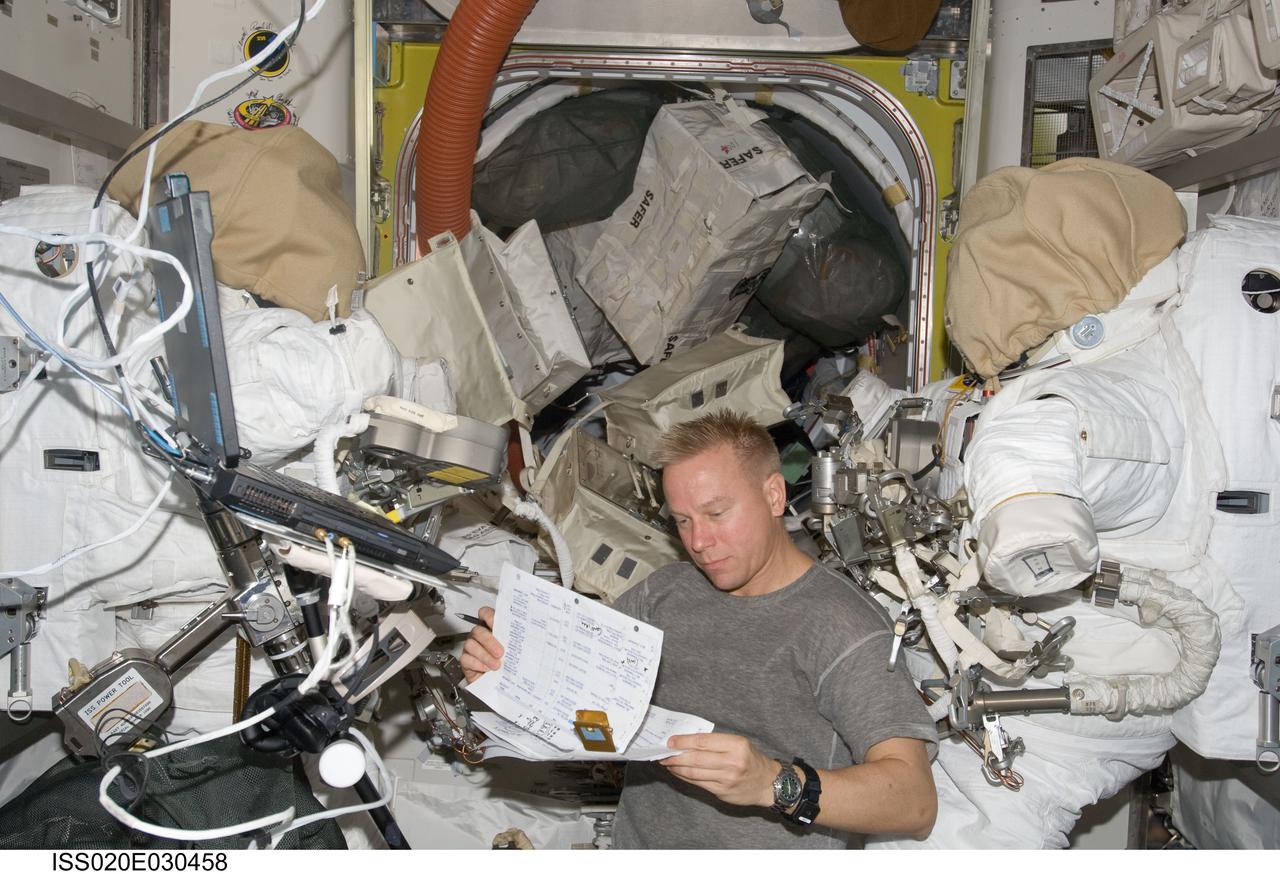
ISS020-E-030458 (13 Aug. 2009) --- Astronaut Tim Kopra, Expedition 20 flight engineer, looks over a checklist in the Quest airlock of the International Space Station.
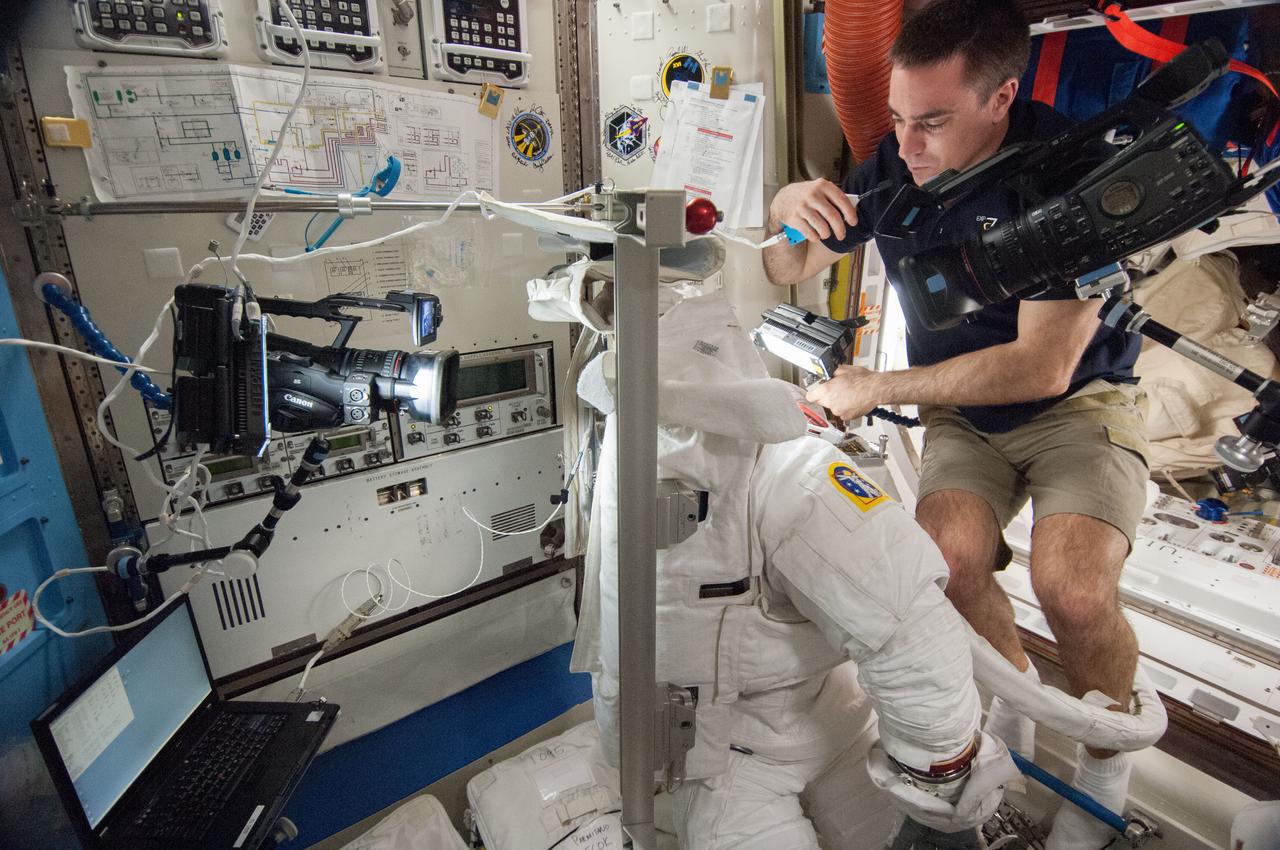
ISS036-E-038678 (31 Aug. 2013) --- NASA astronaut Chris Cassidy, Expedition 36 flight engineer, works on an Extravehicular Mobility Unit (EMU) spacesuit in the Quest airlock of the International Space Station.
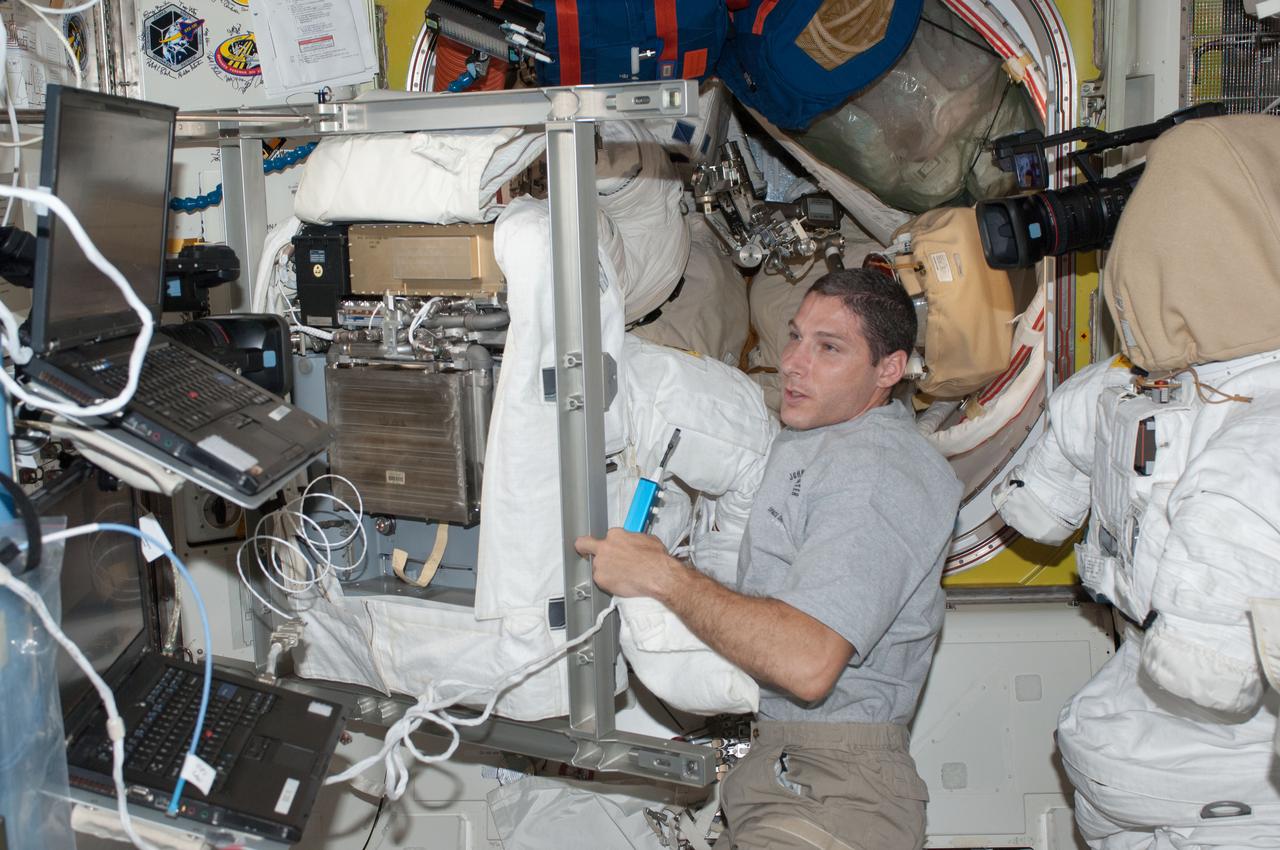
ISS037-E-020101 (24 Oct. 2013) --- NASA astronaut Michael Hopkins, Expedition 37 flight engineer, works with an Extravehicular Mobility Unit (EMU) spacesuit in the Quest airlock of the International Space Station.
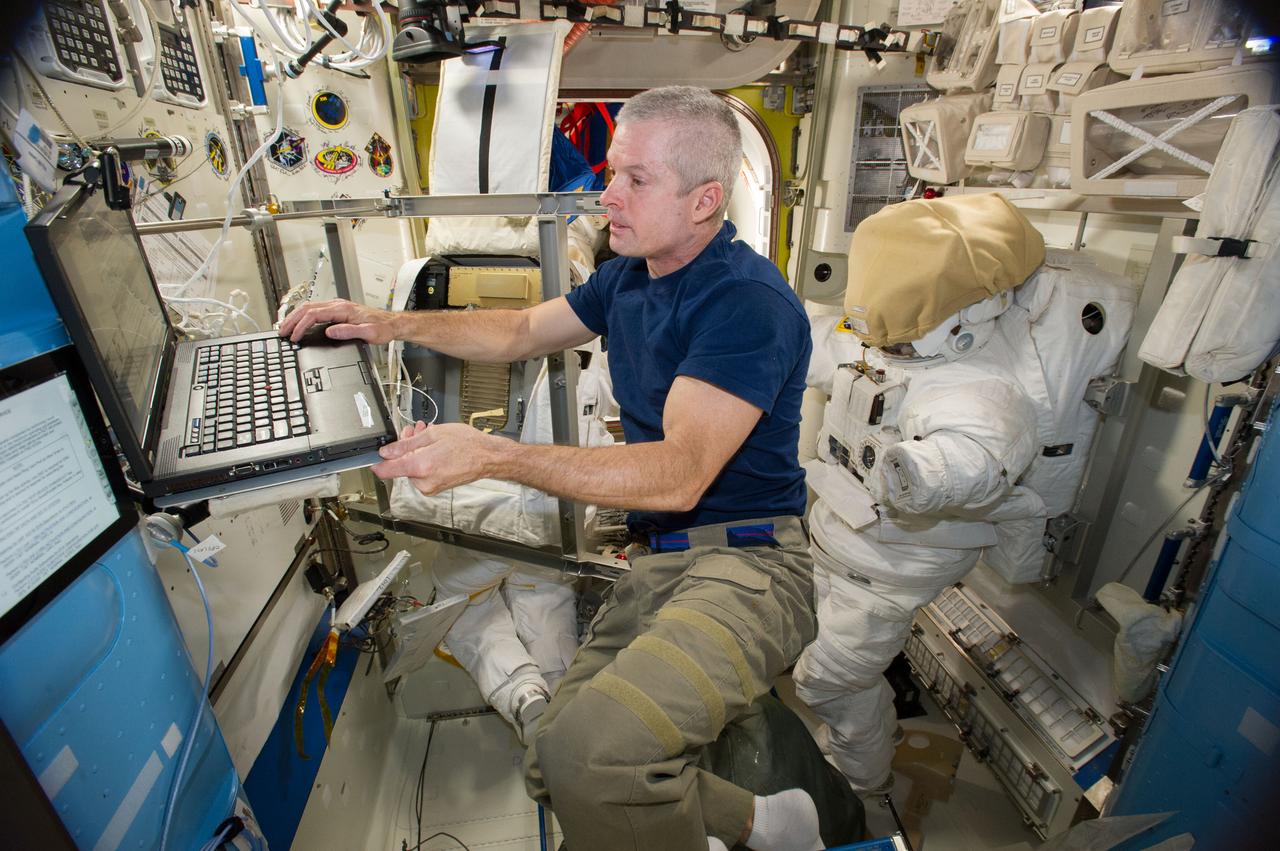
ISS040-E-007682 (5 June 2014) --- NASA astronaut Reid Wiseman, Expedition 40 flight engineer, uses a computer while working with an Extravehicular Mobility Unit (EMU) spacesuit in the Quest airlock of the International Space Station.
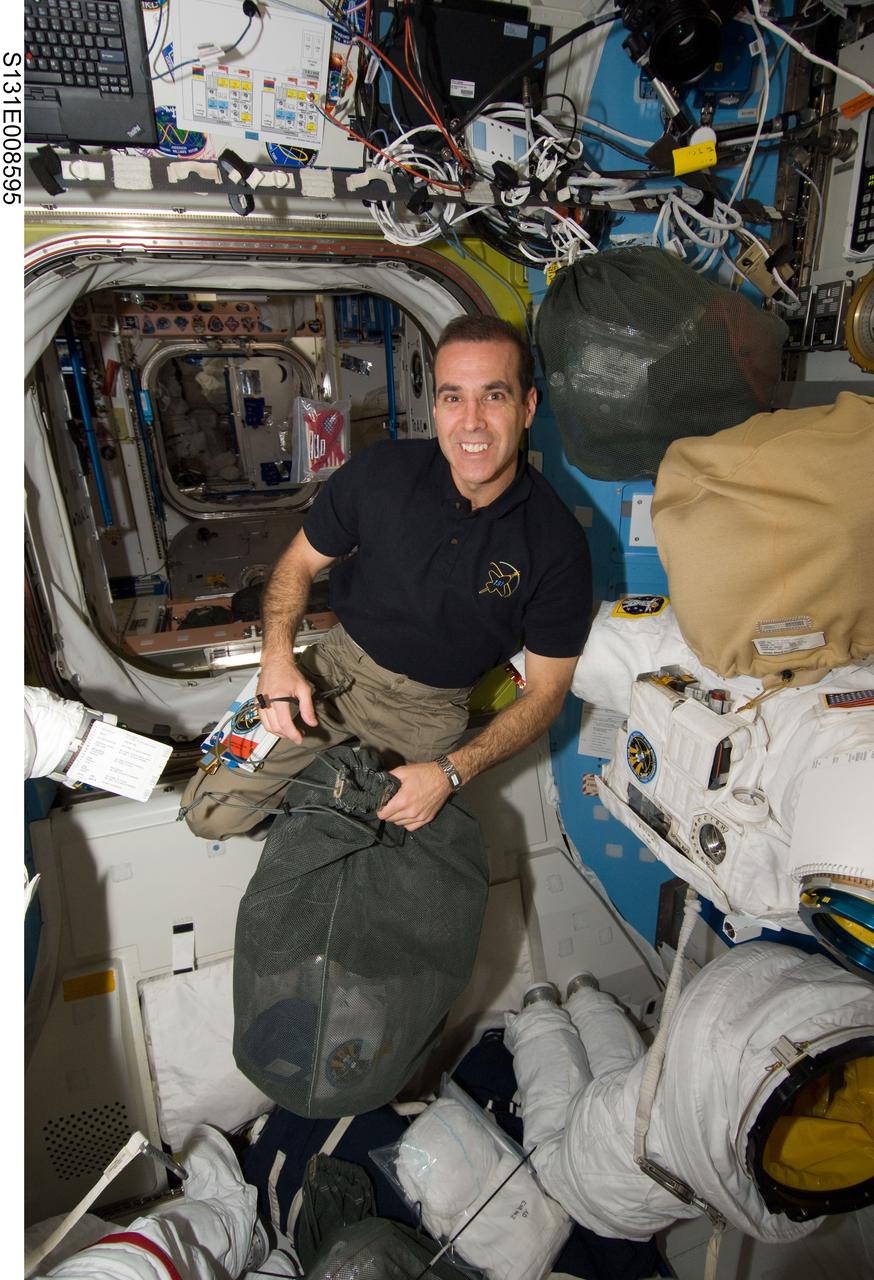
S131-E-008595 (10 April 2010) --- NASA astronaut Rick Mastracchio, STS-131 mission specialist, works in the Quest airlock of the International Space Station while space shuttle Discovery remains docked with the station.
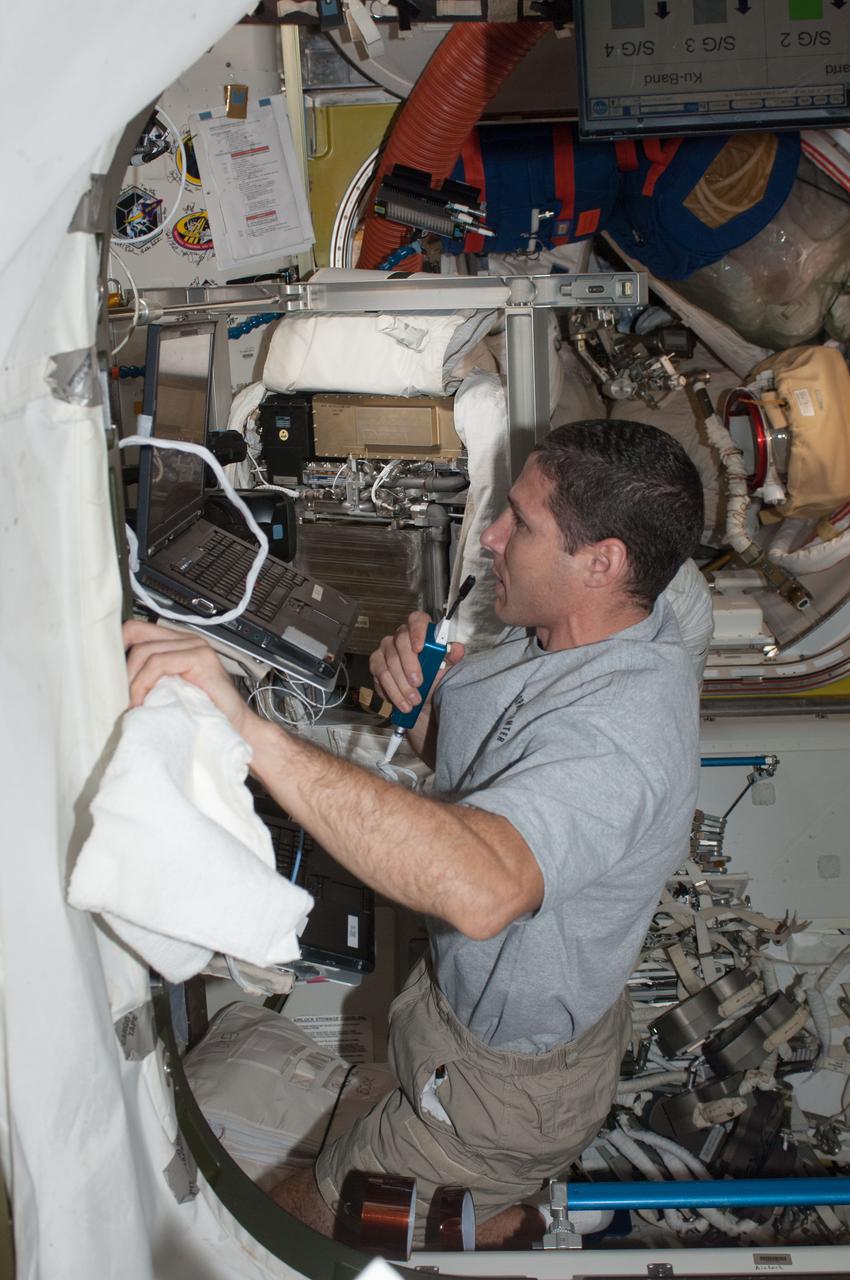
ISS037-E-020099 (24 Oct. 2013) --- NASA astronaut Michael Hopkins, Expedition 37 flight engineer, speaks in a microphone while working in the Quest airlock of the International Space Station.
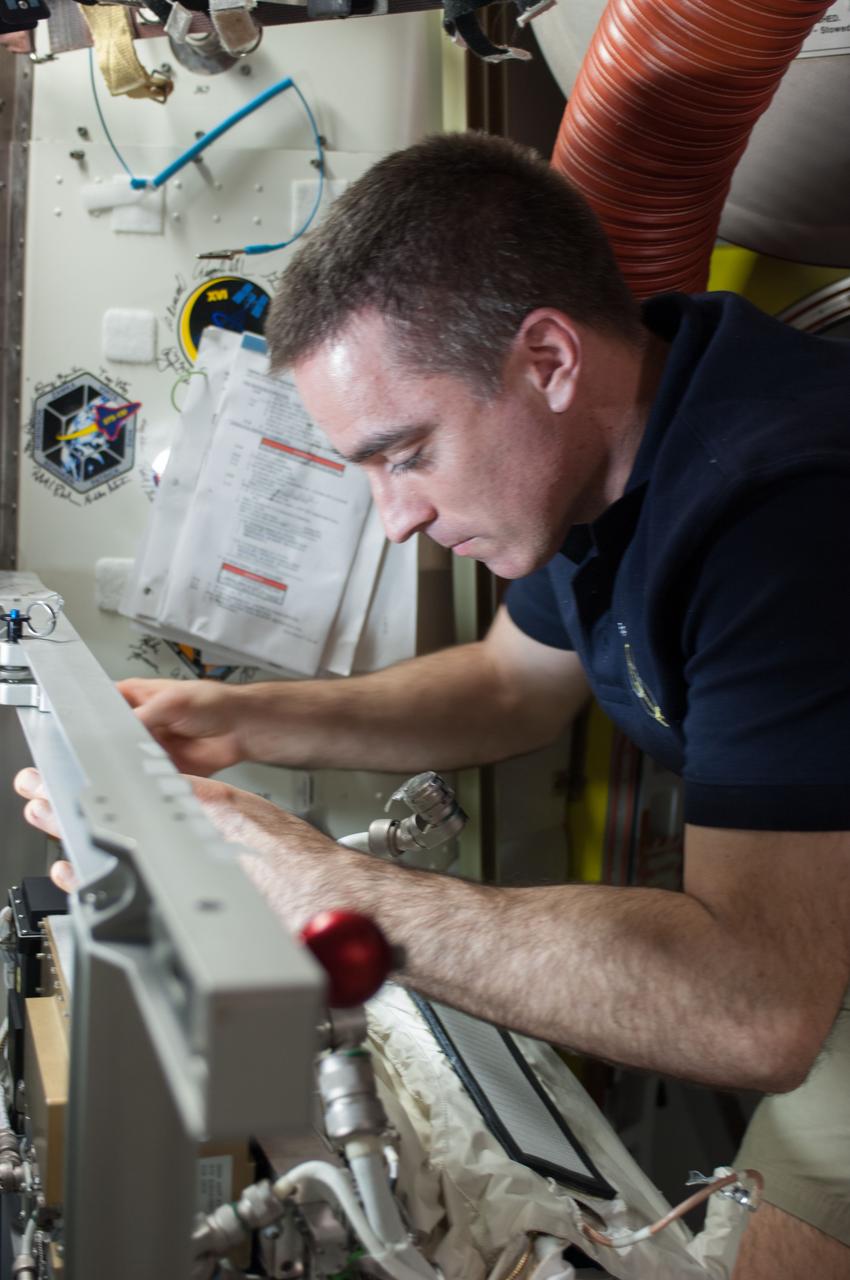
ISS036-E-038556 (30 Aug. 2013) --- NASA astronaut Chris Cassidy, Expedition 36 flight engineer, works on an Extravehicular Mobility Unit (EMU) spacesuit in the Quest airlock of the International Space Station.
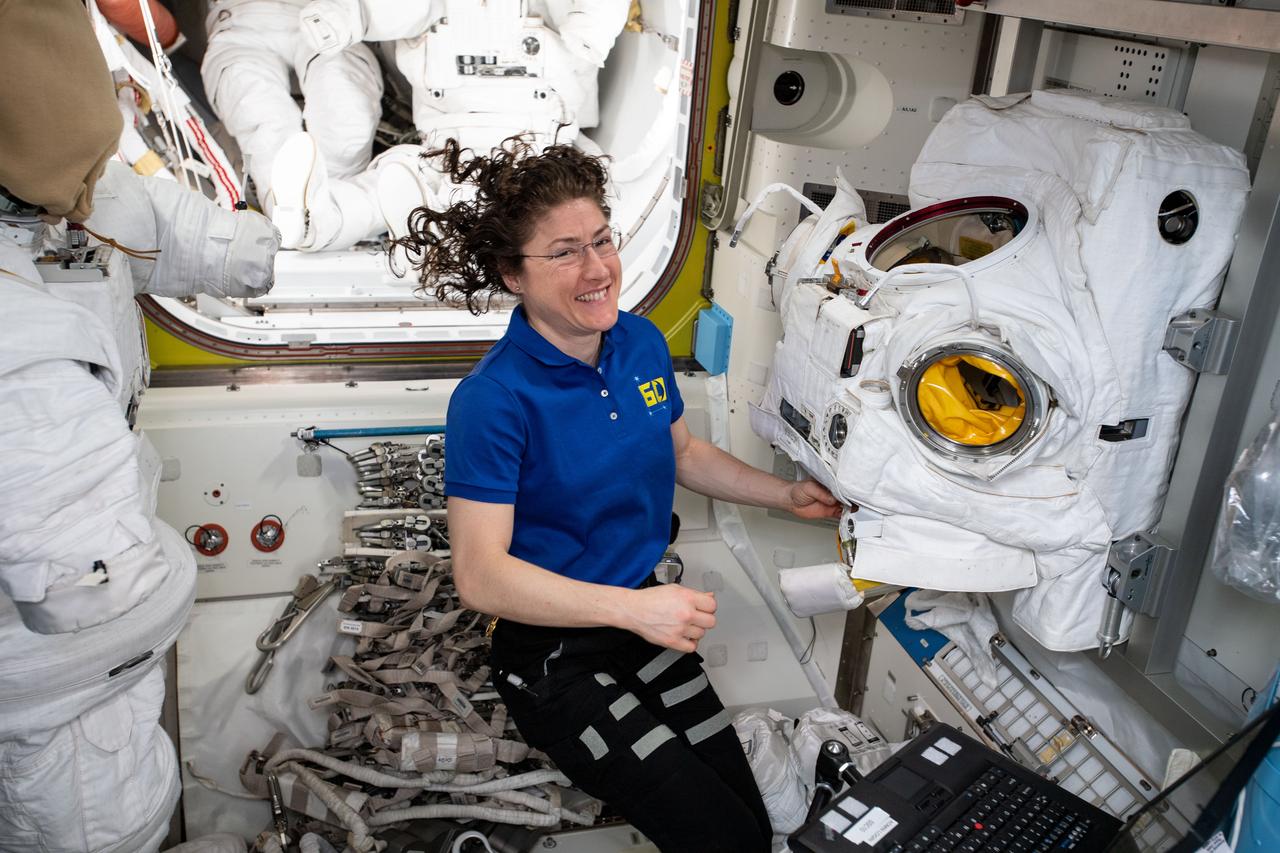
iss060e000808 (June 26, 2019) --- Expedition 60 Flight Engineer Christina Koch of NASA works on a U.S. spacesuit in the Quest airlock where U.S. spacewalks are staged aboard the International Space Station.
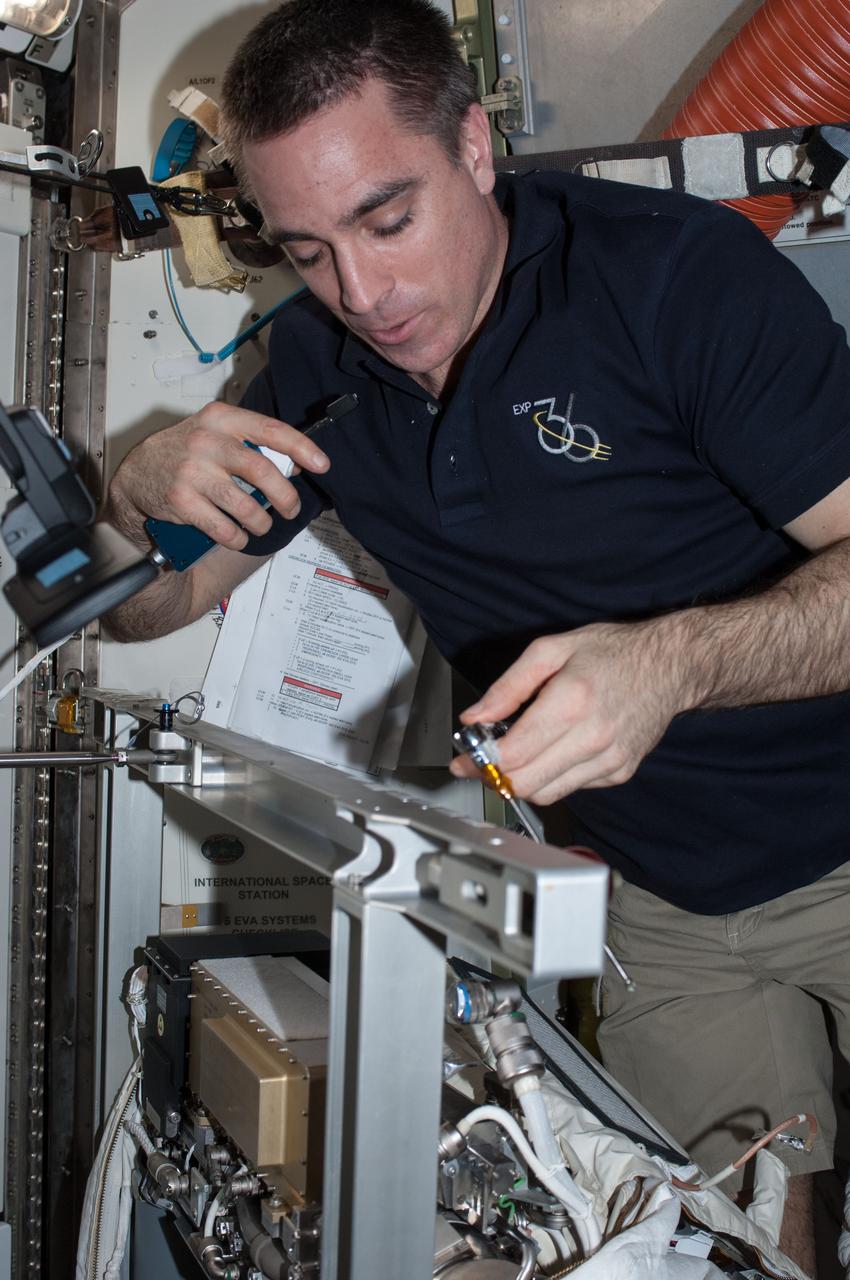
ISS036-E-038552 (30 Aug. 2013) --- NASA astronaut Chris Cassidy, Expedition 36 flight engineer, works on an Extravehicular Mobility Unit (EMU) spacesuit in the Quest airlock of the International Space Station.
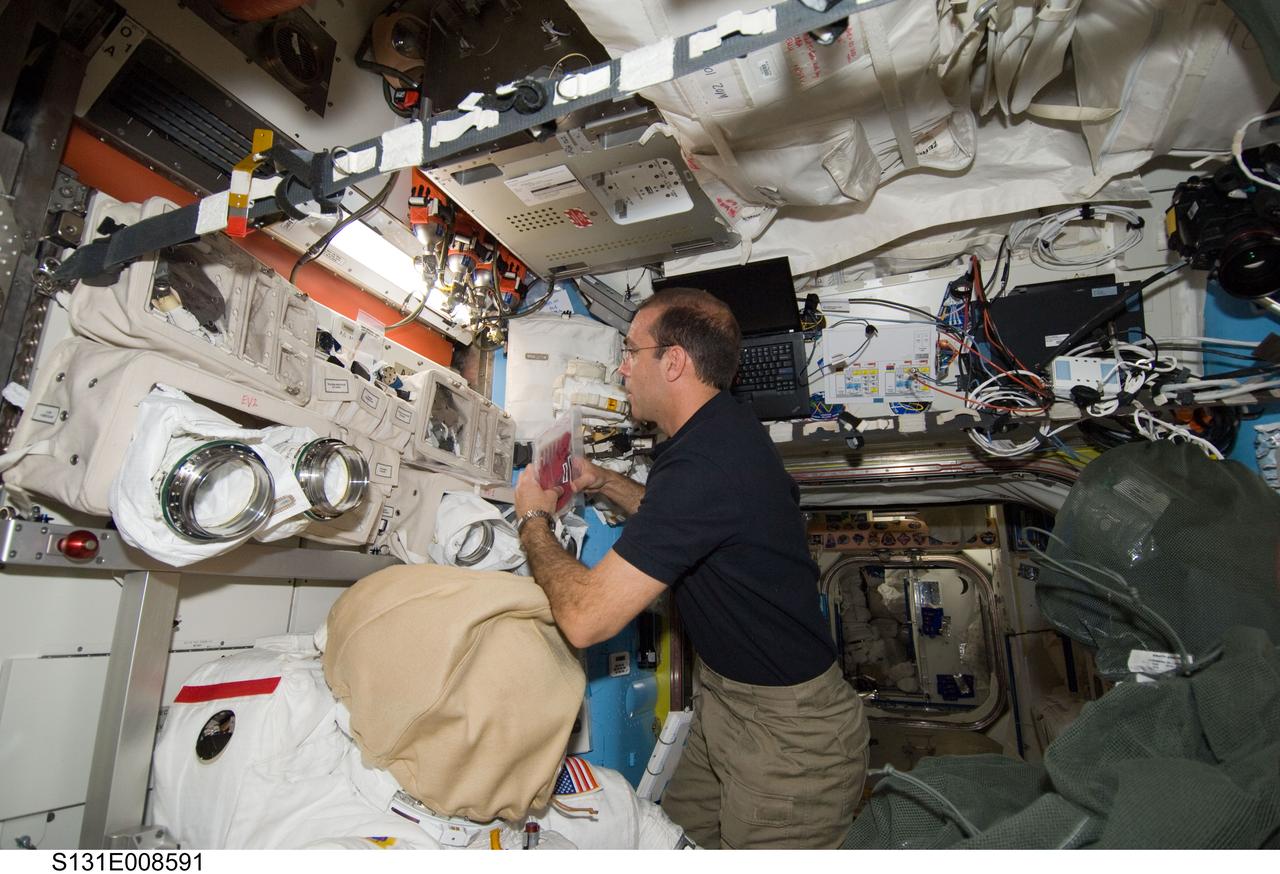
S131-E-008591 (10 April 2010) --- NASA astronaut Rick Mastracchio, STS-131 mission specialist, works in the Quest airlock of the International Space Station while space shuttle Discovery remains docked with the station.
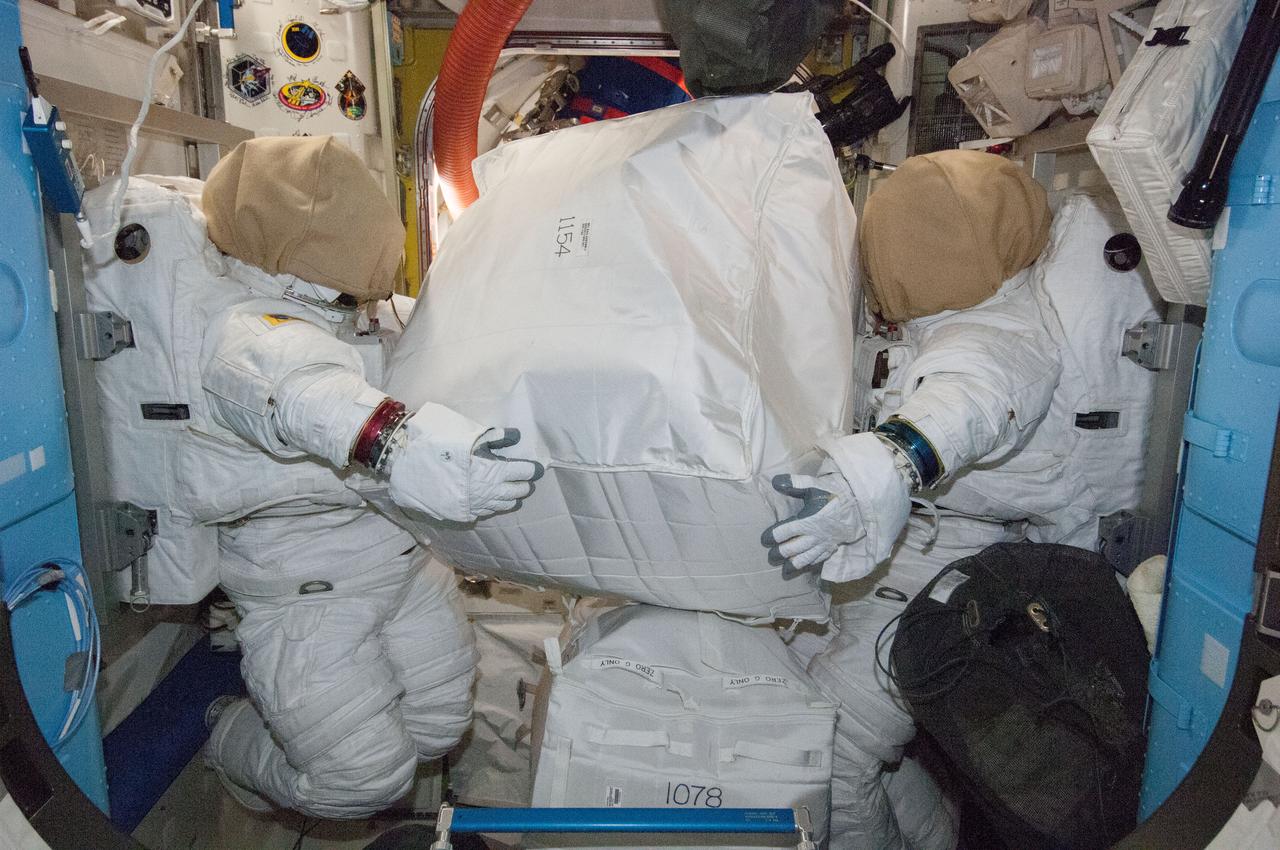
ISS040-E-086600 (1 Aug. 2014) --- Two unoccupied Extravehicular Mobility Unit (EMU) spacesuits, photographed by an Expedition 40 crew member, appear to hold stowage containers in the Quest airlock of the International Space Station.
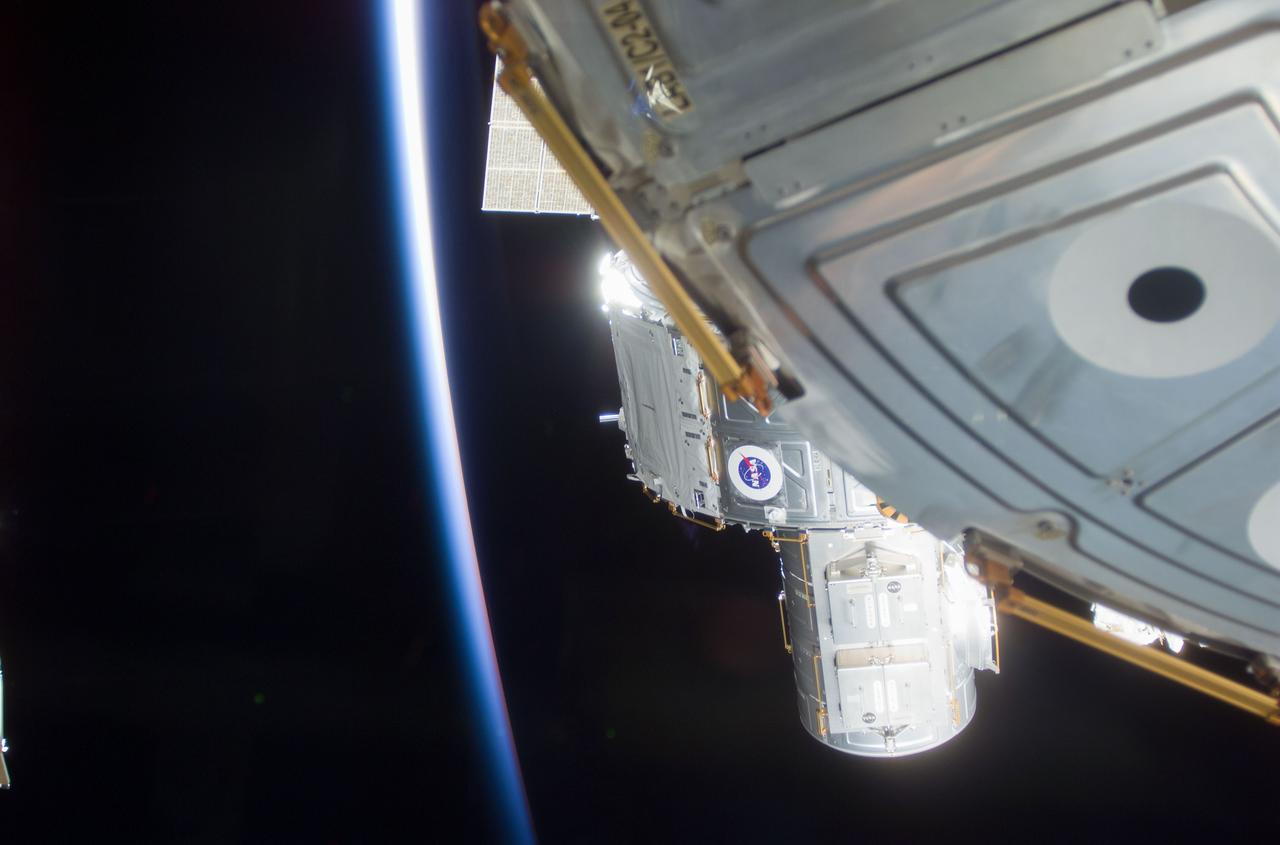
S104-E-5071 (15 July 2001) --- As the sun sets behind the Earth's horizon, the Expedition Two and STS-104 crews continue to install the Quest Airlock onto the starboard side of Unity Node 1. Susan J. Helms, Expedition Two flight engineer, working in the Destiny U.S. Laboratory, maneuvered the Airlock into place with the Canadarm2, Space Station Remote Manipulator System (SSRMS), while being assisted by Michael L. Gernhardt and James F. Reilly, STS-104 mission specialists, during their first extravehicular activity (EVA).
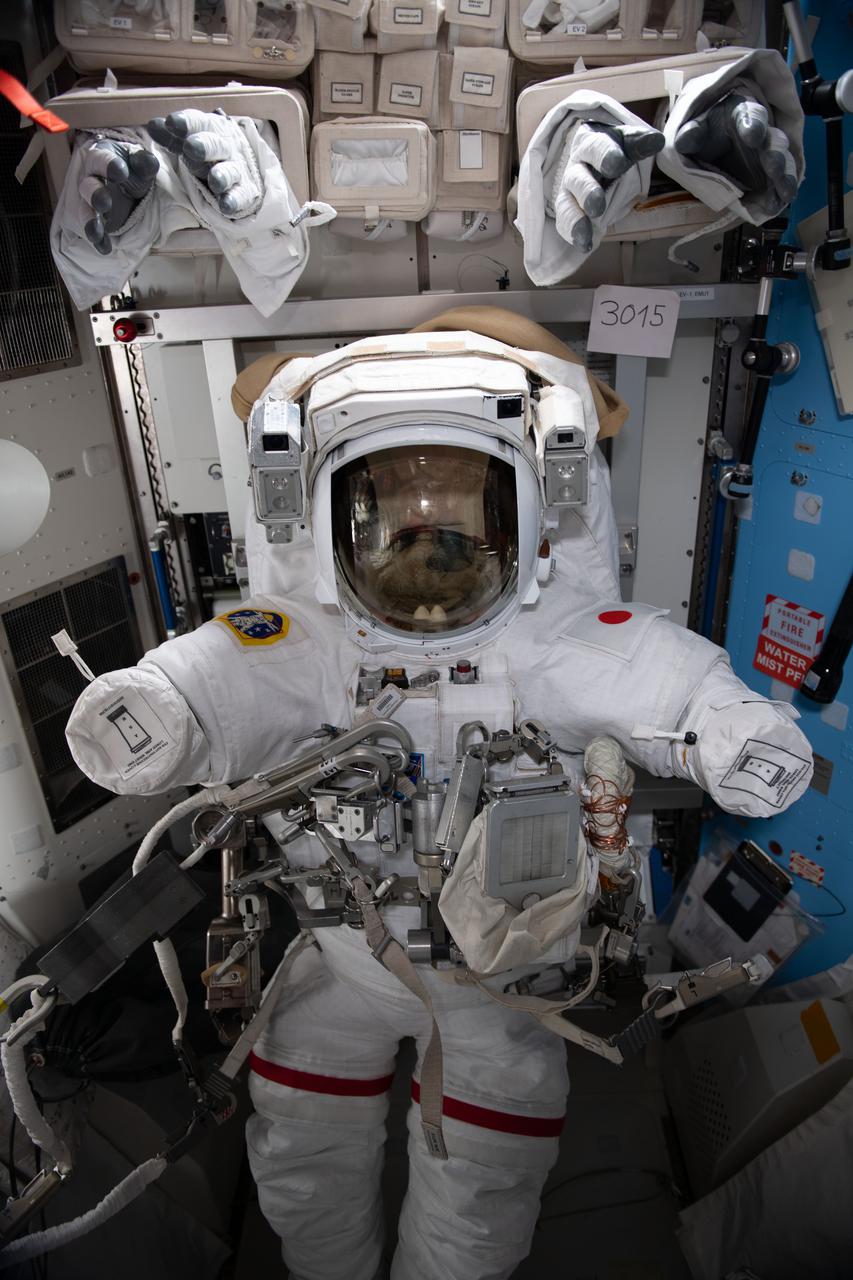
iss065e282008 (Aug. 22, 2021) --- An empty U.S. spacesuit bearing a patch of the Japanese flag on the left shoulder is pictured inside the International Space Station's Quest airlock. Expedition 65 Commander Akihiko Hoshide wore this spacesuit during a spacewalk on Sept. 12 with Flight Engineer Thomas Pesquet of ESA (European Space Agency). Stowed above the spacesuit are the gloves that the astronauts wore.

S133-E-007255 (28 Feb. 2011) --- NASA astronaut Michael Barratt, STS-133 mission specialist, is pictured between two Extravehicular Mobility Unit (EMU) spacesuits in the Quest airlock of the International Space Station while space shuttle Discovery remains docked with the station. Photo credit: NASA or National Aeronautics and Space Administration
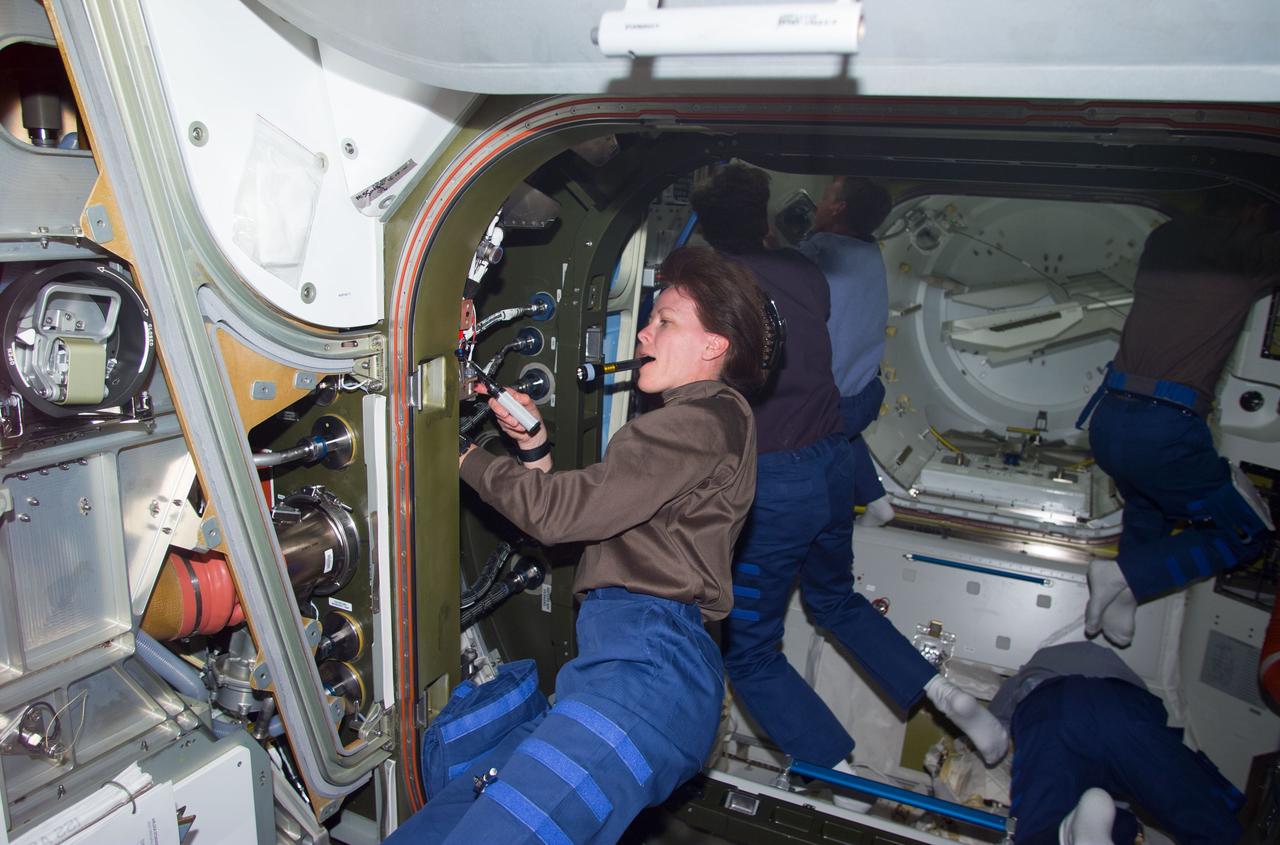
S104-E-5104 (16 July 2001) --- Janet L. Kavandi, STS-104 mission specialist, connects cables and hoses from the newly installed Quest Airlock to Unity Node 1. Other STS-104 and Expedition Two crewmembers are visible in the background working in the Airlock.
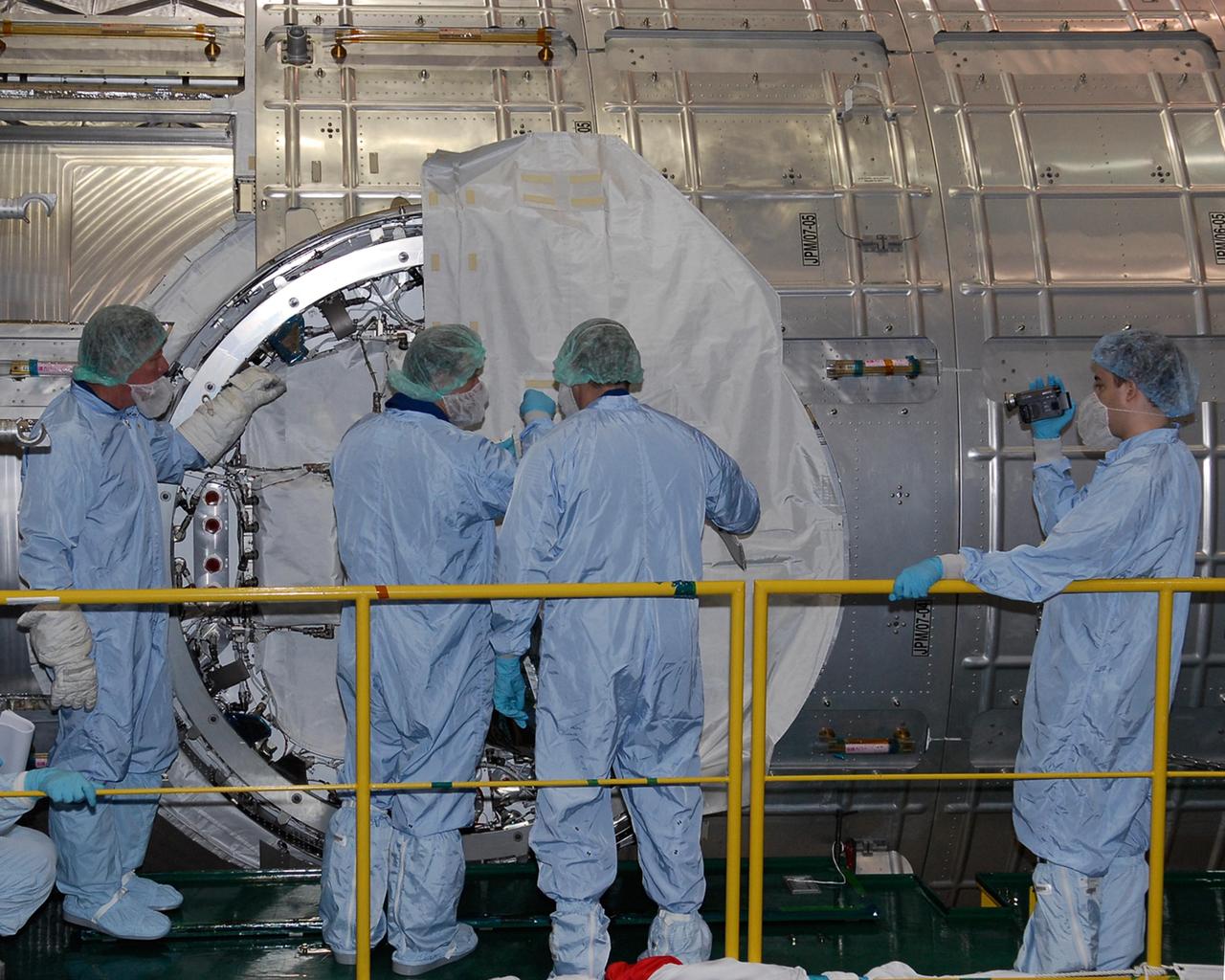
KENNEDY SPACE CENTER, FLA. -- In the Space Station Processing Facility at NASA's Kennedy Space Center, members of the STS-124 crew look over the scientific airlock in the Kibo pressurized module. The module is part of the payload for the mission, targeted for launch no earlier than April 24. The crew comprises seven: Commander Mark Kelly, Pilot Kenneth Ham, and Mission Specialists Karen Nyberg, Ronald Garan, Michael Fossum and Akihiko Hoshide. The crew is at Kennedy for a crew equipment interface test that includes familiarization with tools and equipment that will be used on the mission. The STS-124 mission is the second of three flights that will launch components to complete the Japanese pressurized module, the Kibo laboratory. The mission will include two spacewalks to install the new lab and its remote manipulator system. The lab's logistics module, which will have been installed in a temporary location during STS-123, will be attached to the new lab. Photo credit: NASA/Kim Shiflett
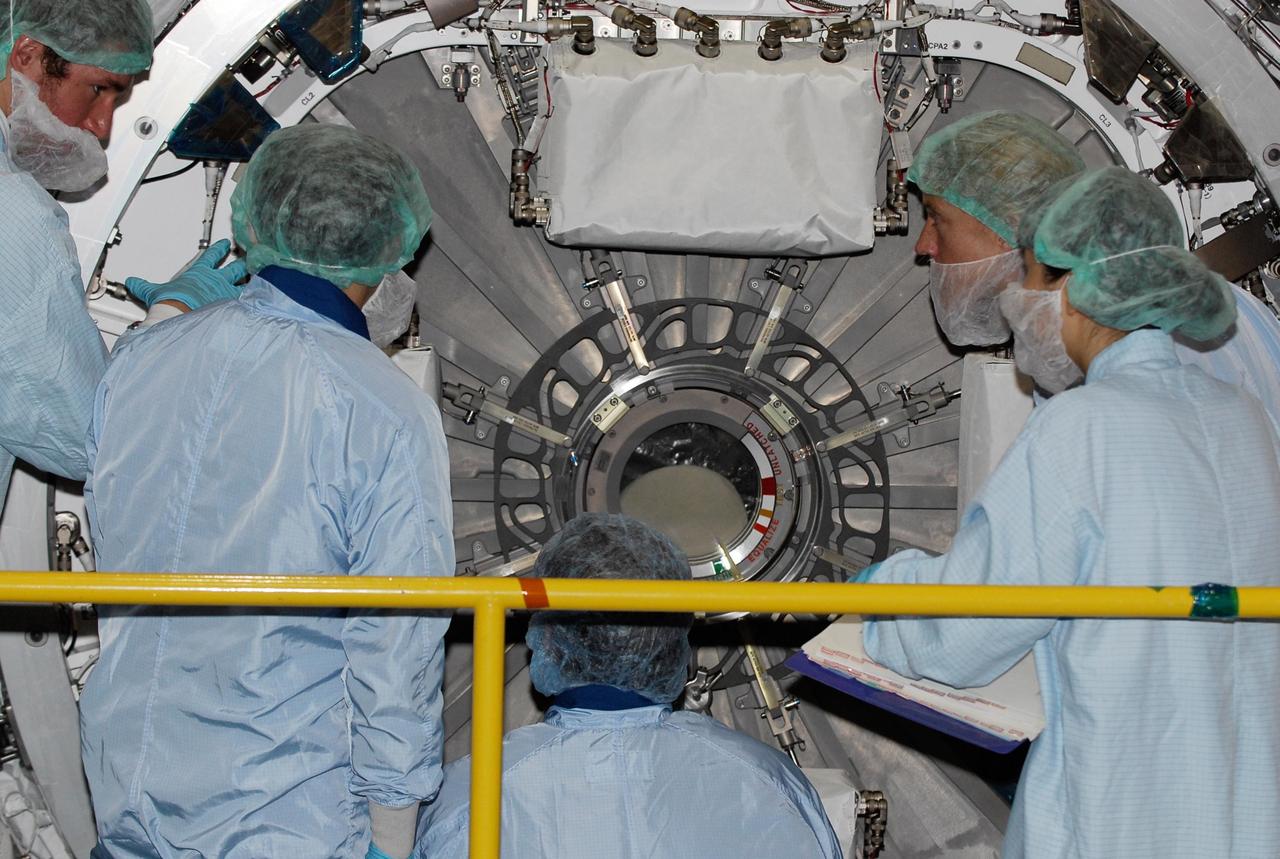
KENNEDY SPACE CENTER, FLA. -- In the Space Station Processing Facility at NASA's Kennedy Space Center, members of the STS-124 crew get a close look at the scientific airlock on Kibo pressurized module. The module is part of the payload for the mission, targeted for launch no earlier than April 24. Crew members are at Kennedy for a crew equipment interface test that includes familiarization with tools and equipment that will be used on the mission. The STS-124 mission is the second of three flights that will launch components to complete the Japanese pressurized module, the Kibo laboratory. The mission will include two spacewalks to install the new lab and its remote manipulator system. The lab's logistics module, which will have been installed in a temporary location during STS-123, will be attached to the new lab. Photo credit: NASA/Kim Shiflett
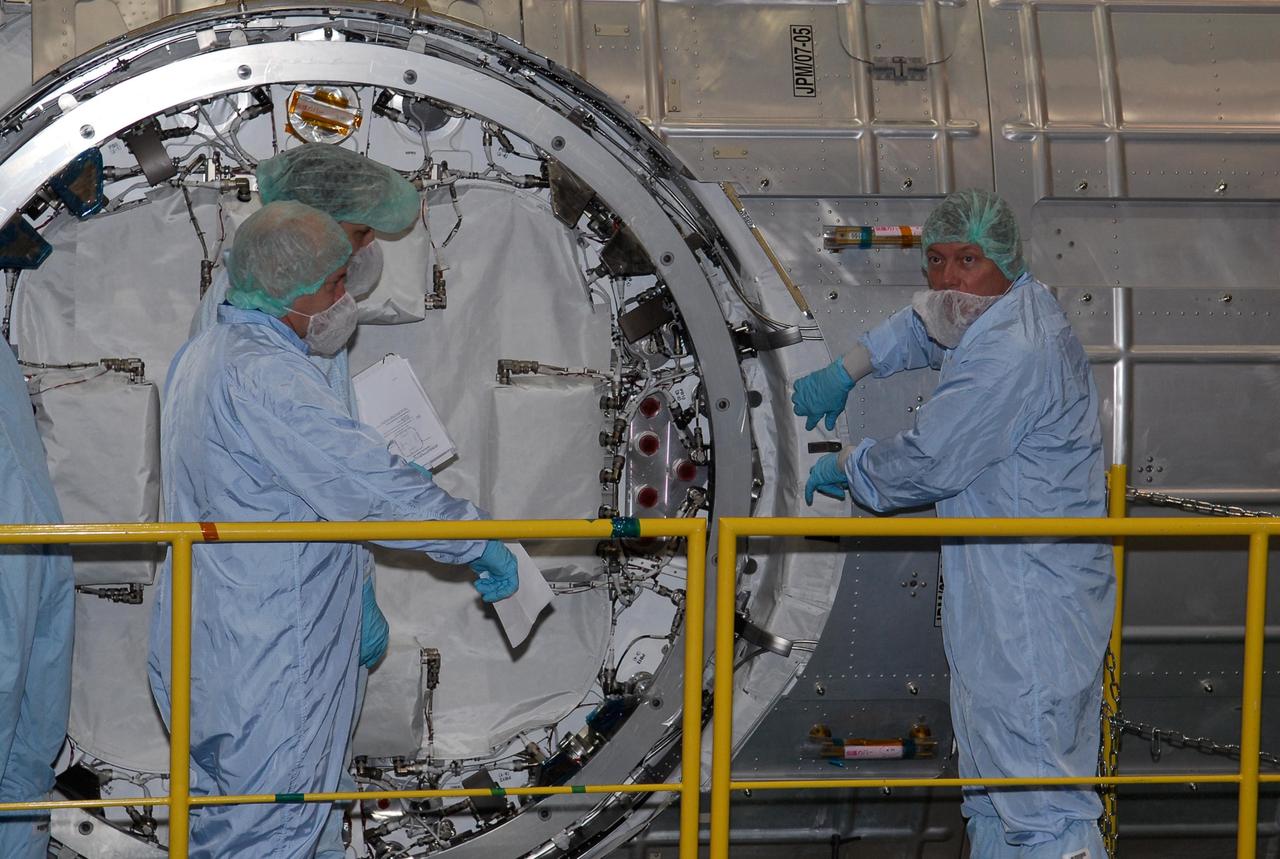
KENNEDY SPACE CENTER, FLA. -- In the Space Station Processing Facility at NASA's Kennedy Space Center, STS-124 Mission Specialist Michael Fossum (right) gets hands-on experience with the scientific airlock in the Kibo pressurized module. The module is part of the payload for the mission, targeted for launch no earlier than April 24. He and other crew members are at Kennedy for a crew equipment interface test that includes familiarization with tools and equipment that will be used on the mission. The STS-124 mission is the second of three flights that will launch components to complete the Japanese pressurized module, the Kibo laboratory. The mission will include two spacewalks to install the new lab and its remote manipulator system. The lab's logistics module, which will have been installed in a temporary location during STS-123, will be attached to the new lab. Photo credit: NASA/Kim Shiflett
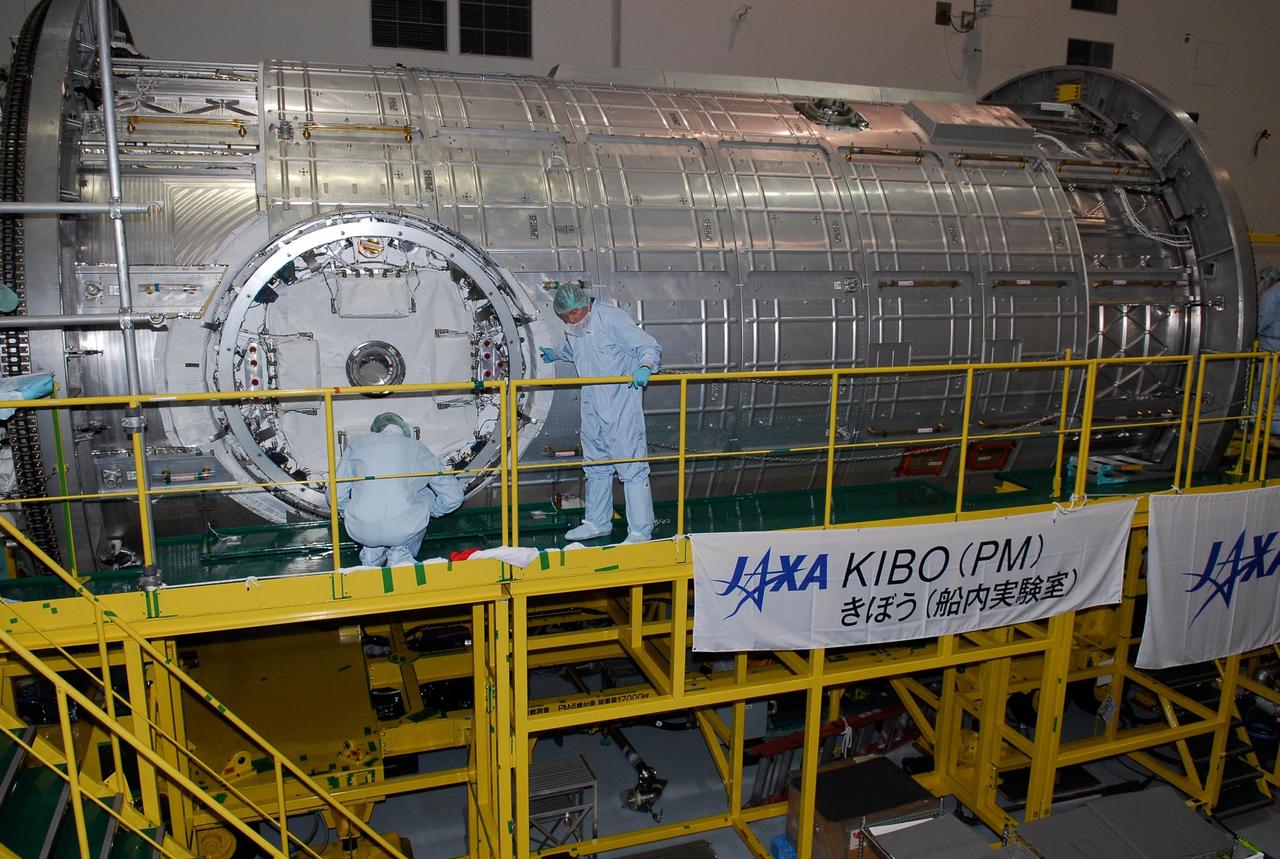
KENNEDY SPACE CENTER, FLA. -- In the Space Station Processing Facility at NASA's Kennedy Space Center, members of the STS-124 crew look over equipment related to the scientific airlock in the Kibo pressurized module. The module is part of the payload for the mission, targeted for launch no earlier than April 24. The crew comprises seven: Commander Mark Kelly, Pilot Kenneth Ham, and Mission Specialists Karen Nyberg, Ronald Garan, Michael Fossum and Akihiko Hoshide. The crew is at Kennedy for a crew equipment interface test that includes familiarization with tools and equipment that will be used on the mission. The STS-124 mission is the second of three flights that will launch components to complete the Japanese pressurized module, the Kibo laboratory. The mission will include two spacewalks to install the new lab and its remote manipulator system. The lab's logistics module, which will have been installed in a temporary location during STS-123, will be attached to the new lab. Photo credit: NASA/Kim Shiflett
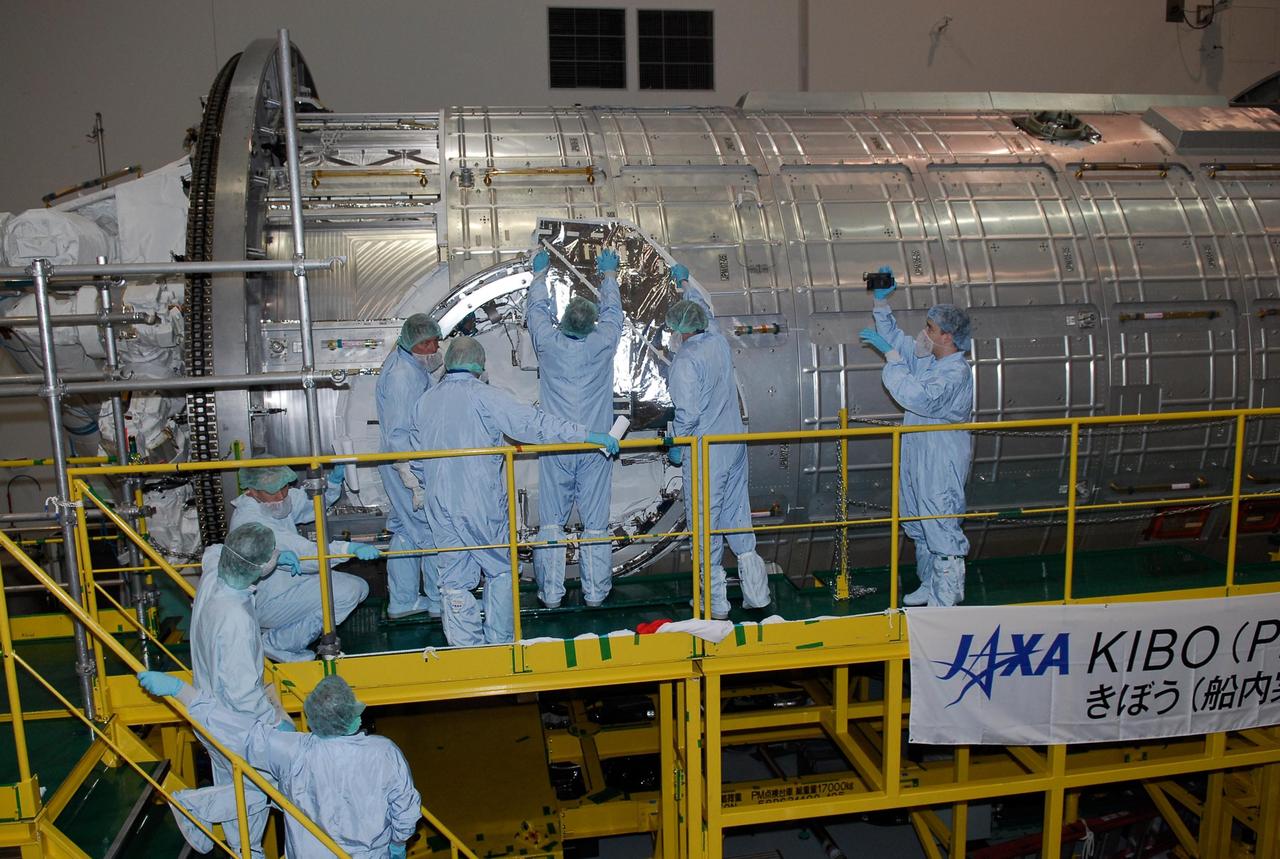
KENNEDY SPACE CENTER, FLA. -- In the Space Station Processing Facility at NASA's Kennedy Space Center, members of the STS-124 crew look over the scientific airlock in the Kibo pressurized module. The module is part of the payload for the mission, targeted for launch no earlier than April 24. The crew comprises seven: Commander Mark Kelly, Pilot Kenneth Ham, and Mission Specialists Karen Nyberg, Ronald Garan, Michael Fossum and Akihiko Hoshide. The crew is at Kennedy for a crew equipment interface test that includes familiarization with tools and equipment that will be used on the mission. The STS-124 mission is the second of three flights that will launch components to complete the Japanese pressurized module, the Kibo laboratory. The mission will include two spacewalks to install the new lab and its remote manipulator system. The lab's logistics module, which will have been installed in a temporary location during STS-123, will be attached to the new lab. Photo credit: NASA/Kim Shiflett
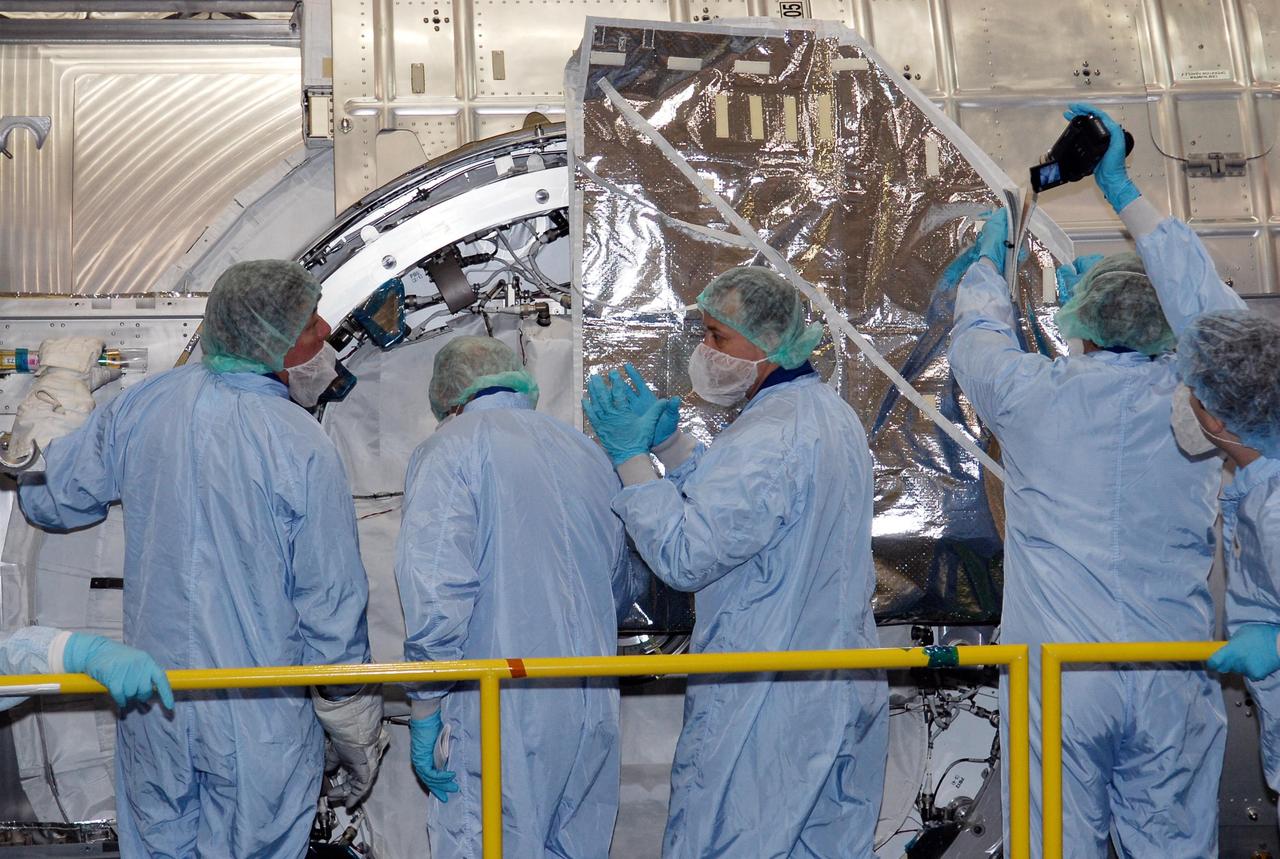
KENNEDY SPACE CENTER, FLA. -- In the Space Station Processing Facility at NASA's Kennedy Space Center, members of the STS-124 crew look over the scientific airlock in the Kibo pressurized module. The module is part of the payload for the mission, targeted for launch no earlier than April 24. The crew comprises seven: Commander Mark Kelly, Pilot Kenneth Ham, and Mission Specialists Karen Nyberg, Ronald Garan, Michael Fossum and Akihiko Hoshide. The crew is at Kennedy for a crew equipment interface test that includes familiarization with tools and equipment that will be used on the mission. The STS-124 mission is the second of three flights that will launch components to complete the Japanese pressurized module, the Kibo laboratory. The mission will include two spacewalks to install the new lab and its remote manipulator system. The lab's logistics module, which will have been installed in a temporary location during STS-123, will be attached to the new lab. Photo credit: NASA/Kim Shiflett
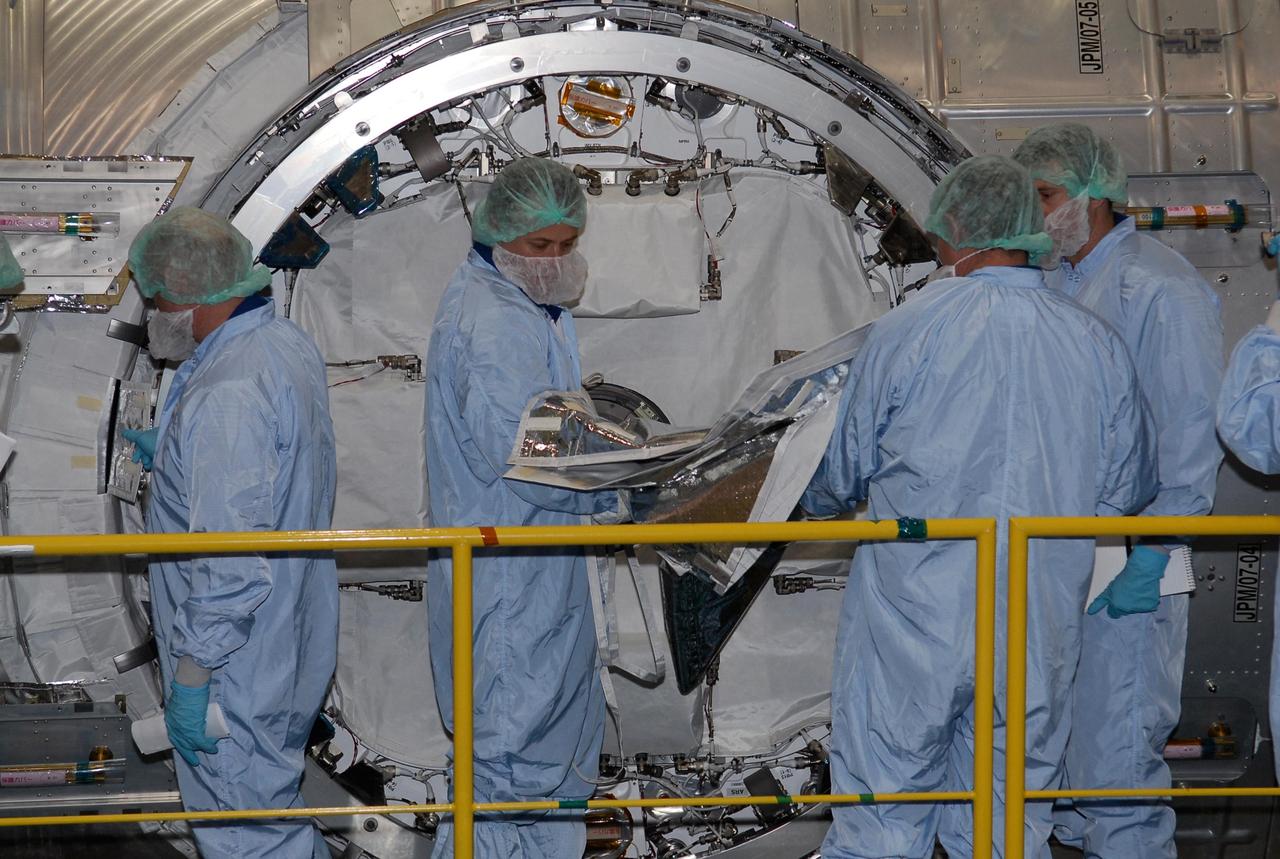
KENNEDY SPACE CENTER, FLA. -- In the Space Station Processing Facility at NASA's Kennedy Space Center, members of the STS-124 crew look over equipment related to the scientific airlock in the Kibo pressurized module. The module is part of the payload for the mission, targeted for launch no earlier than April 24. The crew comprises seven: Commander Mark Kelly, Pilot Kenneth Ham, and Mission Specialists Karen Nyberg, Ronald Garan, Michael Fossum and Akihiko Hoshide. The crew is at Kennedy for a crew equipment interface test that includes familiarization with tools and equipment that will be used on the mission. The STS-124 mission is the second of three flights that will launch components to complete the Japanese pressurized module, the Kibo laboratory. The mission will include two spacewalks to install the new lab and its remote manipulator system. The lab's logistics module, which will have been installed in a temporary location during STS-123, will be attached to the new lab. Photo credit: NASA/Kim Shiflett

KENNEDY SPACE CENTER, FLA. -- In the Space Station Processing Facility at NASA's Kennedy Space Center, members of the STS-124 crew look over equipment for the scientific airlock in the Kibo pressurized module. The module is part of the payload for the mission targeted for launch no earlier than April 24. The crew comprises seven: Commander Mark Kelly, Pilot Kenneth Ham, and Mission Specialists Karen Nyberg, Ronald Garan, Michael Fossum and Akihiko Hoshide. The crew members are at Kennedy for a crew equipment interface test, that includes familiarization with tools and equipment that will be used on the mission. The STS-124 mission is the second of three flights that will launch components to complete the Japanese pressurized module, the Kibo laboratory. The mission will include two spacewalks to install the new lab and its remote manipulator system. The lab's logistics module, which will have been installed in a temporary location during STS-123, will be attached to the new lab. Photo credit: NASA/Kim Shiflett
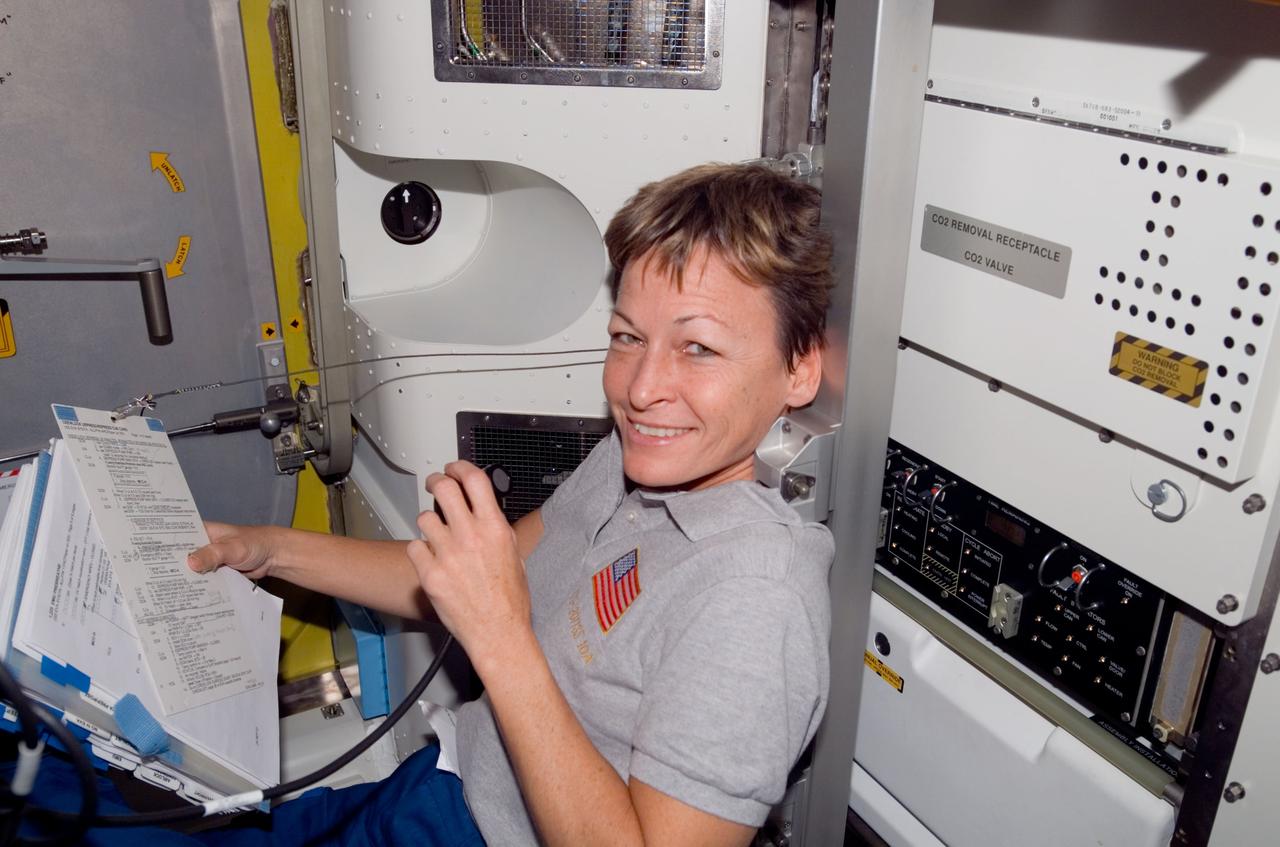
S120-E-007409 (30 Oct. 2007) --- Astronaut Peggy A. Whitson, Expedition 16 commander, pauses for a photo while working in the Quest Airlock of the International Space Station while Space Shuttle Discovery (STS-120) is docked with the station.
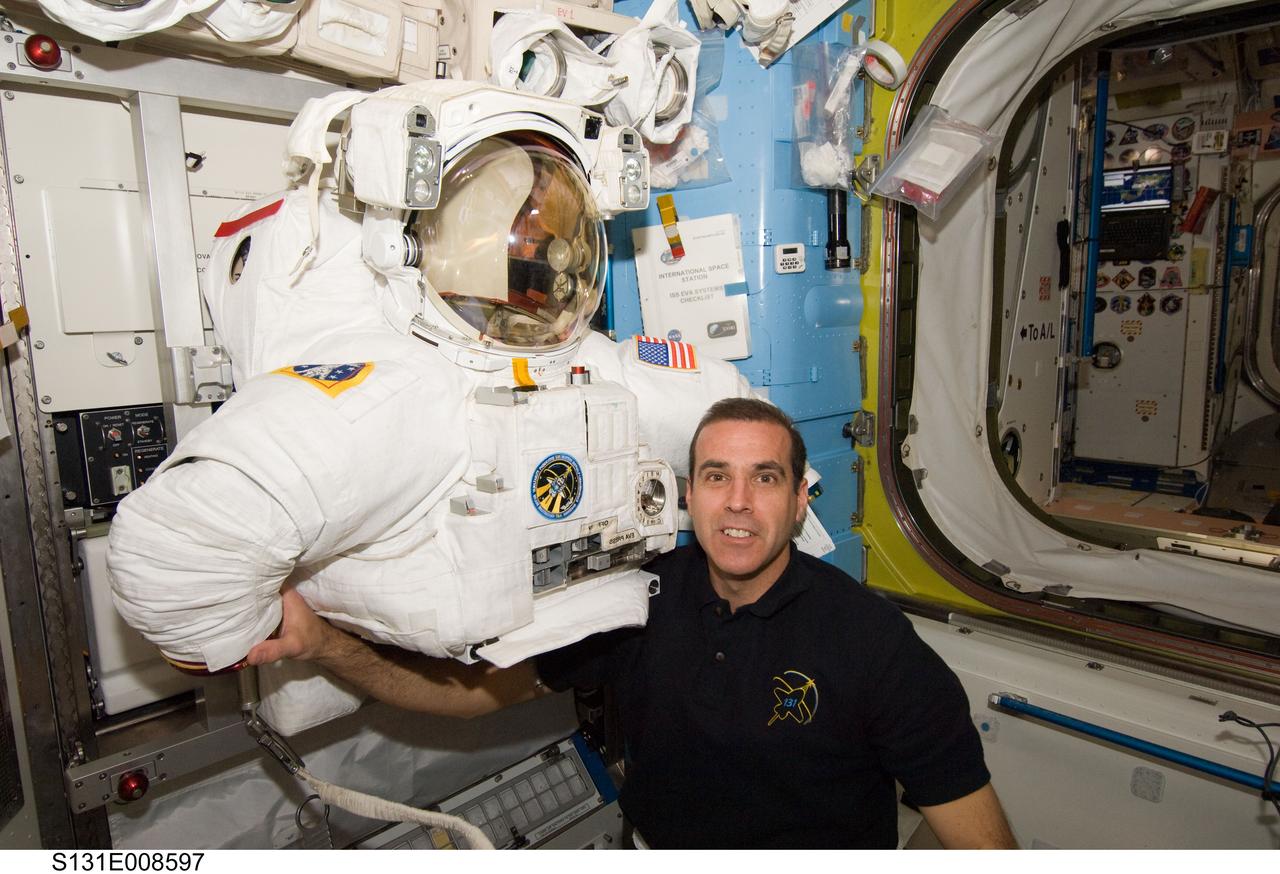
S131-E-008597 (10 April 2010) --- NASA astronaut Rick Mastracchio, STS-131 mission specialist, poses for a photo with the torso portion of his Extravehicular Mobility Unit (EMU) spacesuit in the Quest airlock of the International Space Station while space shuttle Discovery remains docked with the station.

ISS040-E-080762 (28 July 2014) --- NASA astronauts Steve Swanson (left), Expedition 40 commander, and Reid Wiseman, flight engineer, work with an Extravehicular Mobility Unit (EMU) spacesuit in the Quest airlock of the International Space Station.
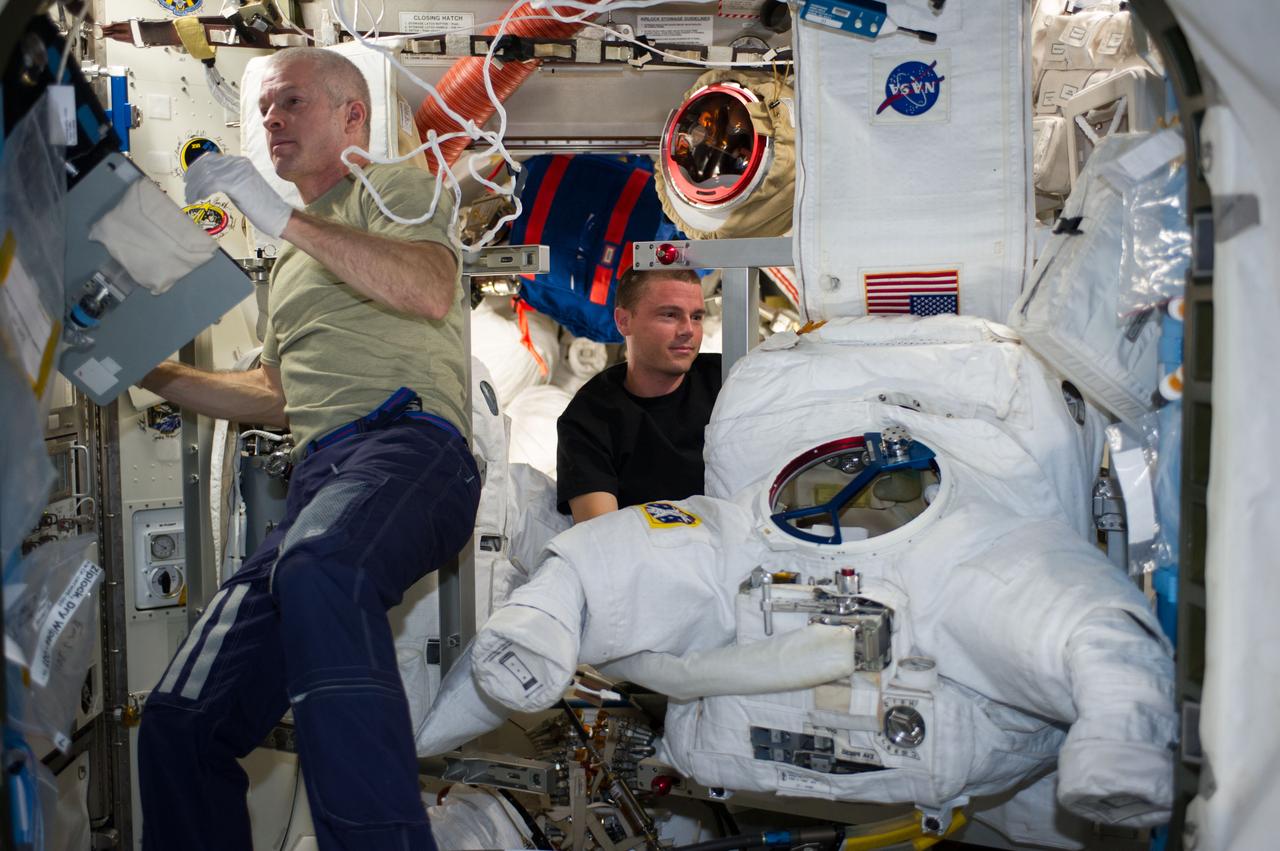
ISS040-E-080767 (28 July 2014) --- NASA astronauts Steve Swanson (left), Expedition 40 commander, and Reid Wiseman, flight engineer, work in tandem to perform in-flight maintenance on an Extravehicular Mobility Unit (EMU) spacesuit in the Quest airlock of the International Space Station.
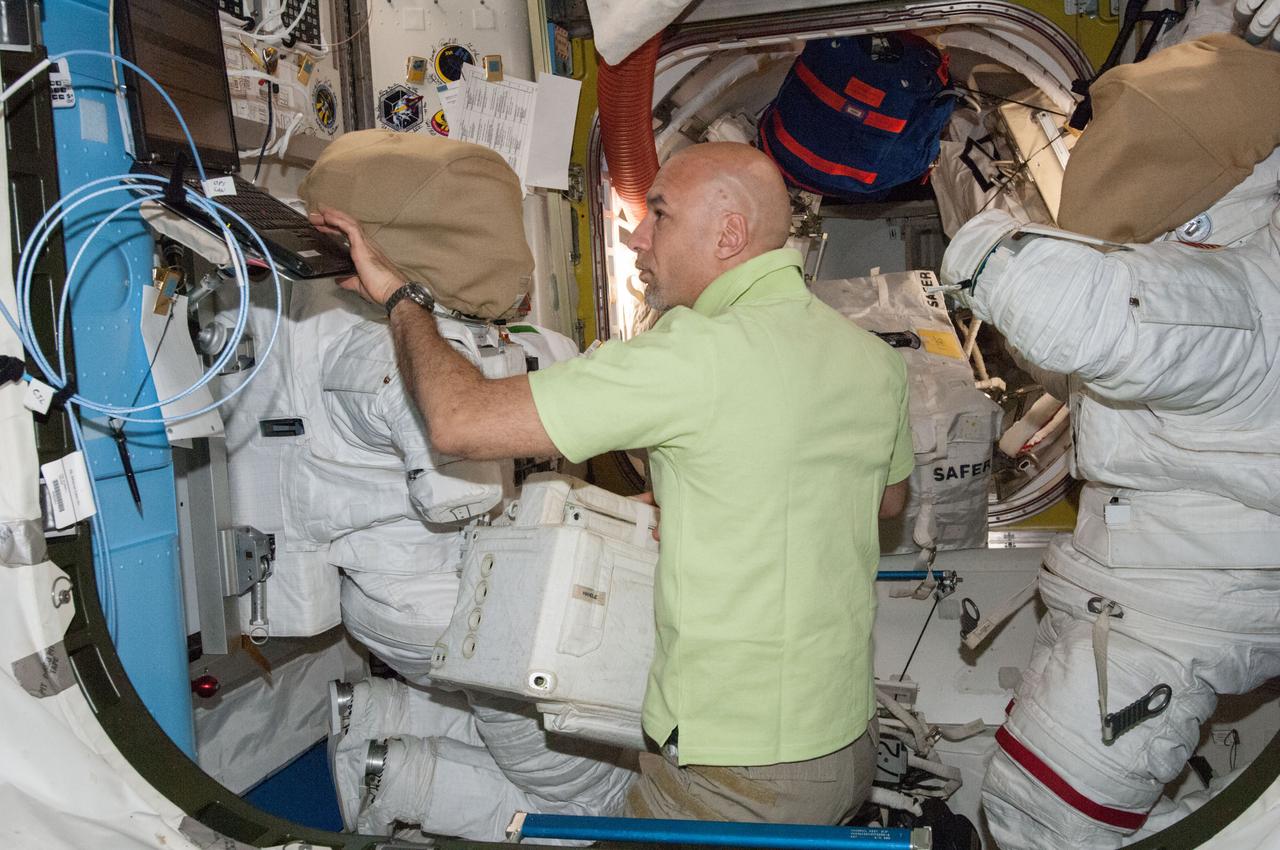
ISS036-E-014852 (3 July 2013) --- European Space Agency astronaut Luca Parmitano, Expedition 36 flight engineer, works with spacewalk equipment in the Quest airlock of the International Space Station in preparation for the first of two sessions of extravehicular activity (EVA) scheduled for July 9 and July 16.
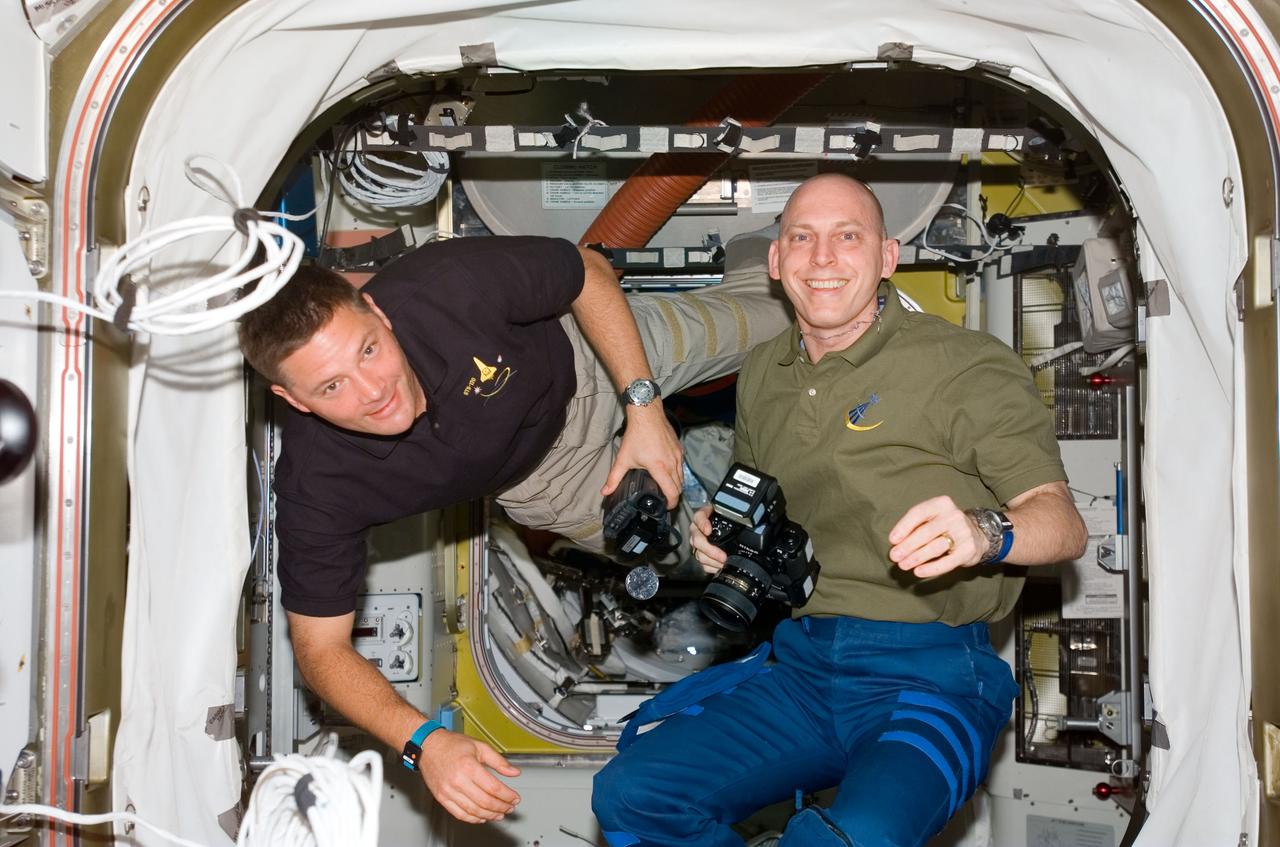
S120-E-006449 (25 Oct. 2007) --- Astronauts Doug Wheelock (left), STS-120 mission specialist, and Clay Anderson, Expedition 16 flight engineer, hold cameras in the hatch of the Quest Airlock of the International Space Station while Space Shuttle Discovery is docked with the station.
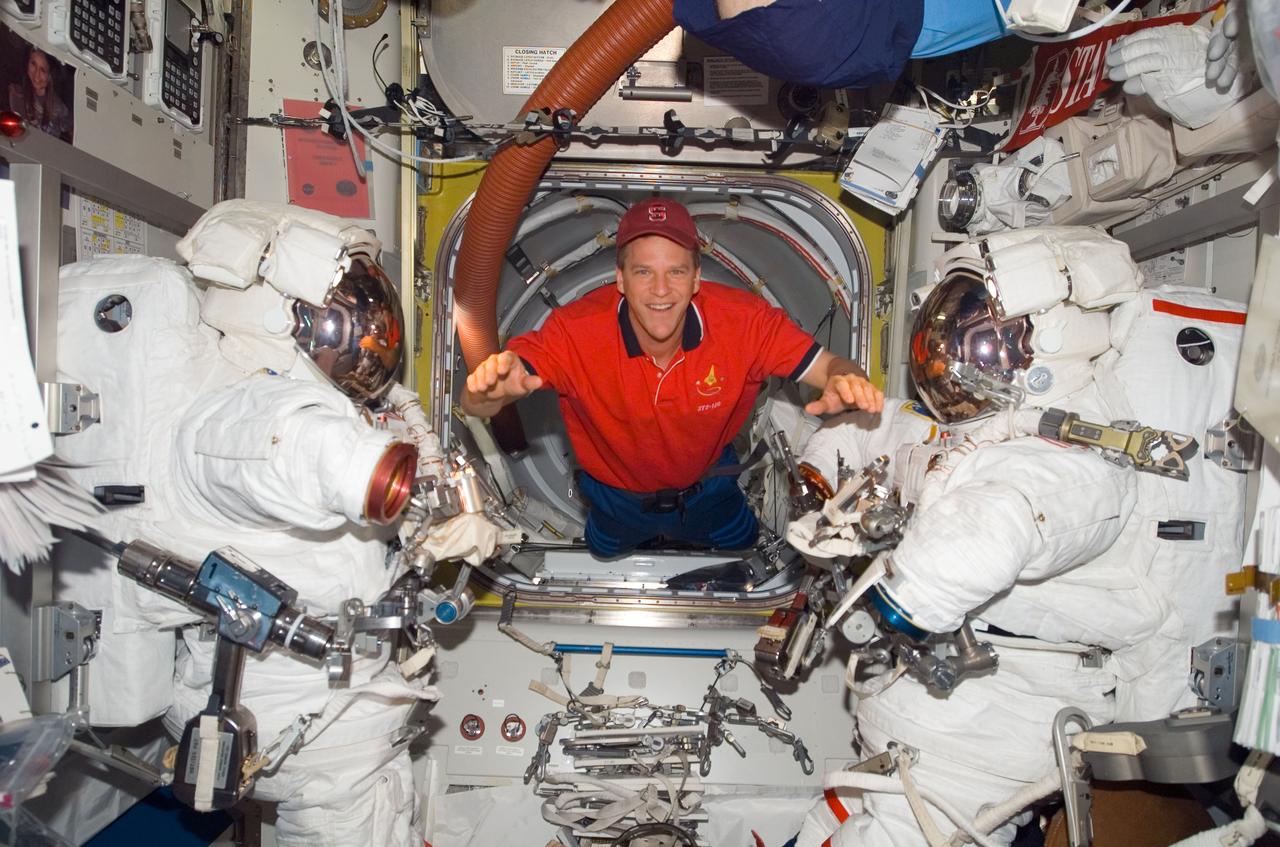
S120-E-007918 (1 Nov. 2007) --- Astronaut Scott Parazynski, STS-120 mission specialist, floats between two Extravehicular Mobility Unit (EMU) spacesuits in the Quest Airlock of the International Space Station while Space Shuttle Discovery is docked with the station.
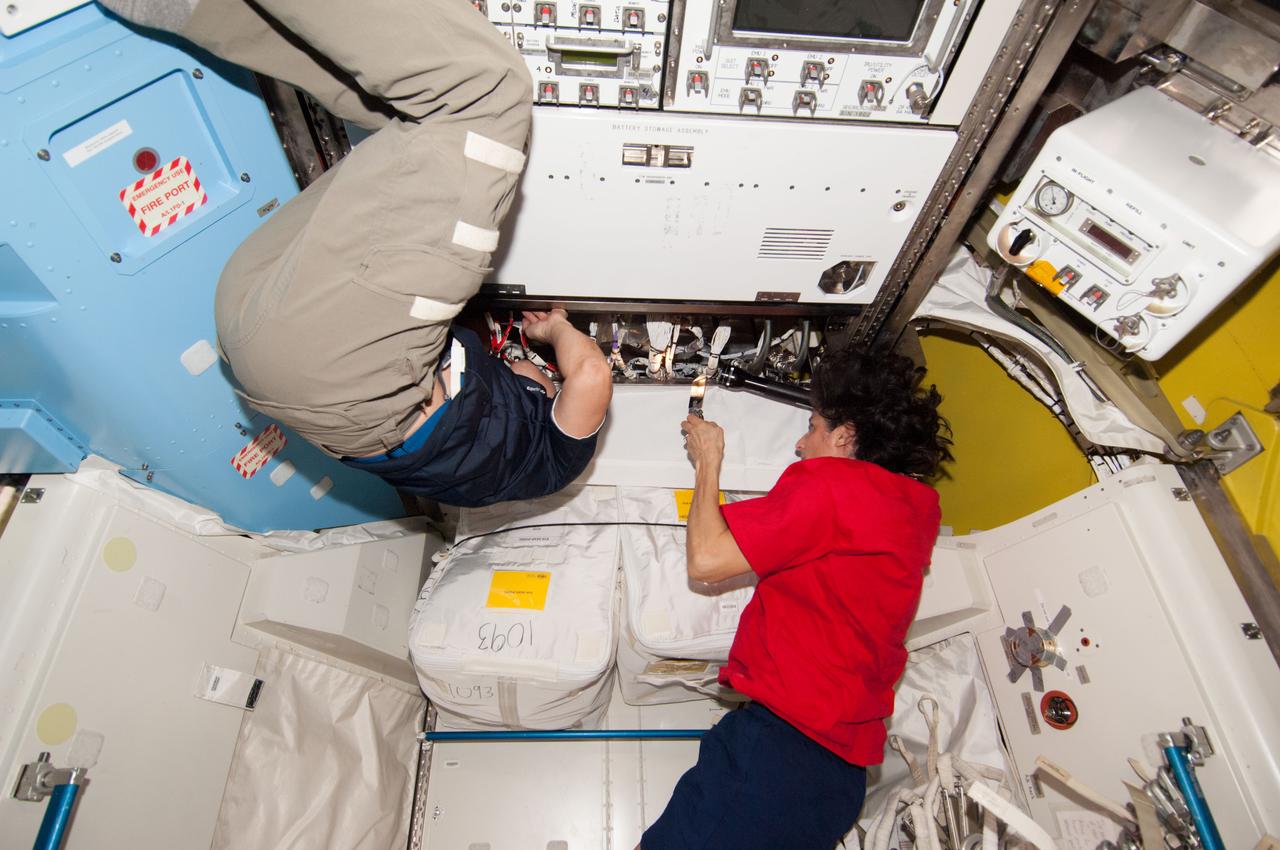
ISS033-E-021537 (14 Nov. 2012) --- NASA astronaut Sunita Williams, Expedition 33 commander; and Japan Aerospace Exploration Agency astronaut Aki Hoshide, flight engineer, perform in-flight maintenance in the Quest airlock of the International Space Station.
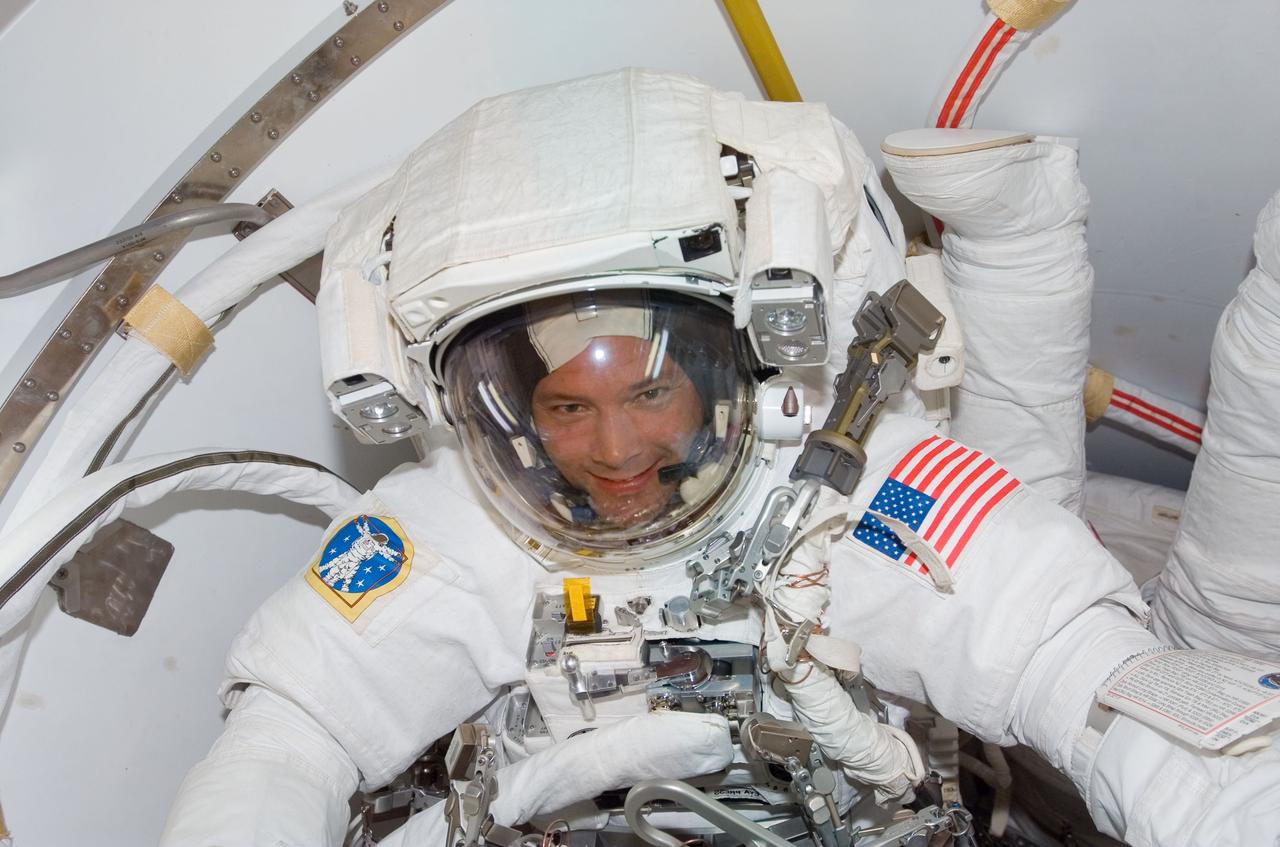
S120-E-006859 (26 Oct. 2007) --- Astronaut Doug Wheelock shares the airlock with astronaut Scott Parazynski, as the two mission specialists prepare for their Oct. 26 spacewalk, the first of five scheduled by various shuttle and International Space Station crewmembers while the Space Shuttle Discovery is docked to ISS.
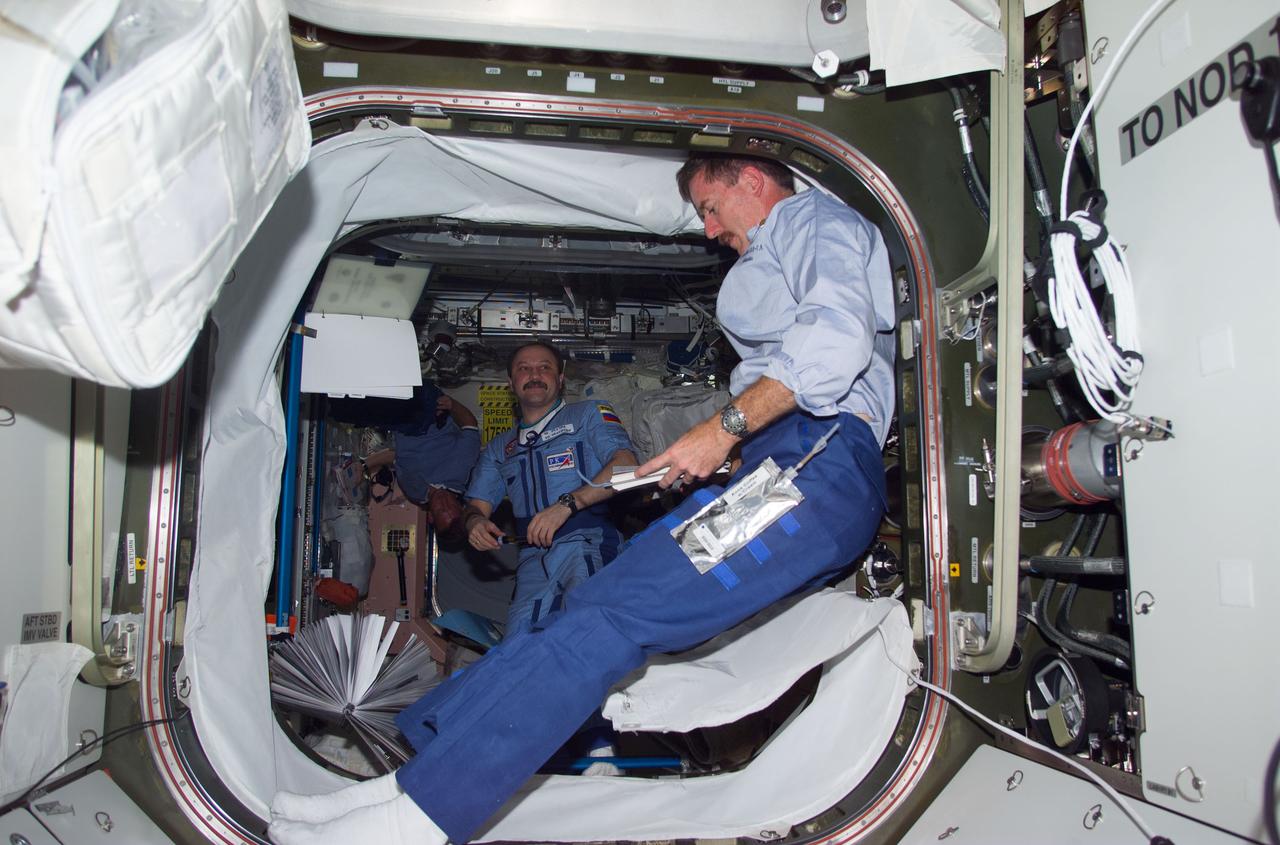
S104-E-5108 (16 July 2001) --- James F. Reilly, STS-104 mission specialist, reads over a checklist in the hatchway of the newly installed Quest Airlock. In the background, cosmonaut Yury V. Usachev of Rosaviakosmos, Expedition Two mission commander, is working in Unity Node 1.
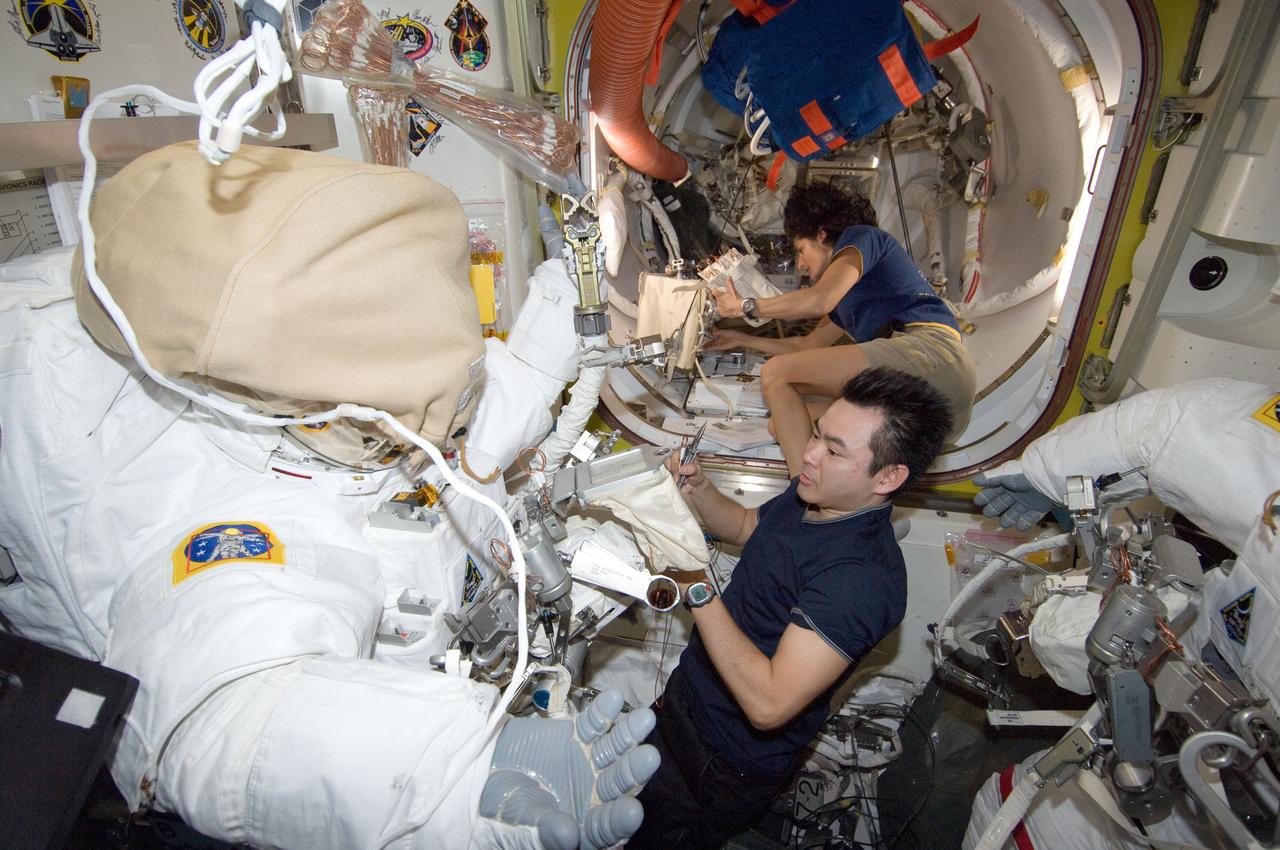
ISS033-E-018369 (30 Oct. 2012) --- Japan Aerospace Exploration Agency astronaut Aki Hoshide, Expedition 33 flight engineer; and NASA astronaut Sunita Williams, commander, are pictured in the International Space Station’s Quest airlock as they prepare for the Nov. 1 spacewalk.
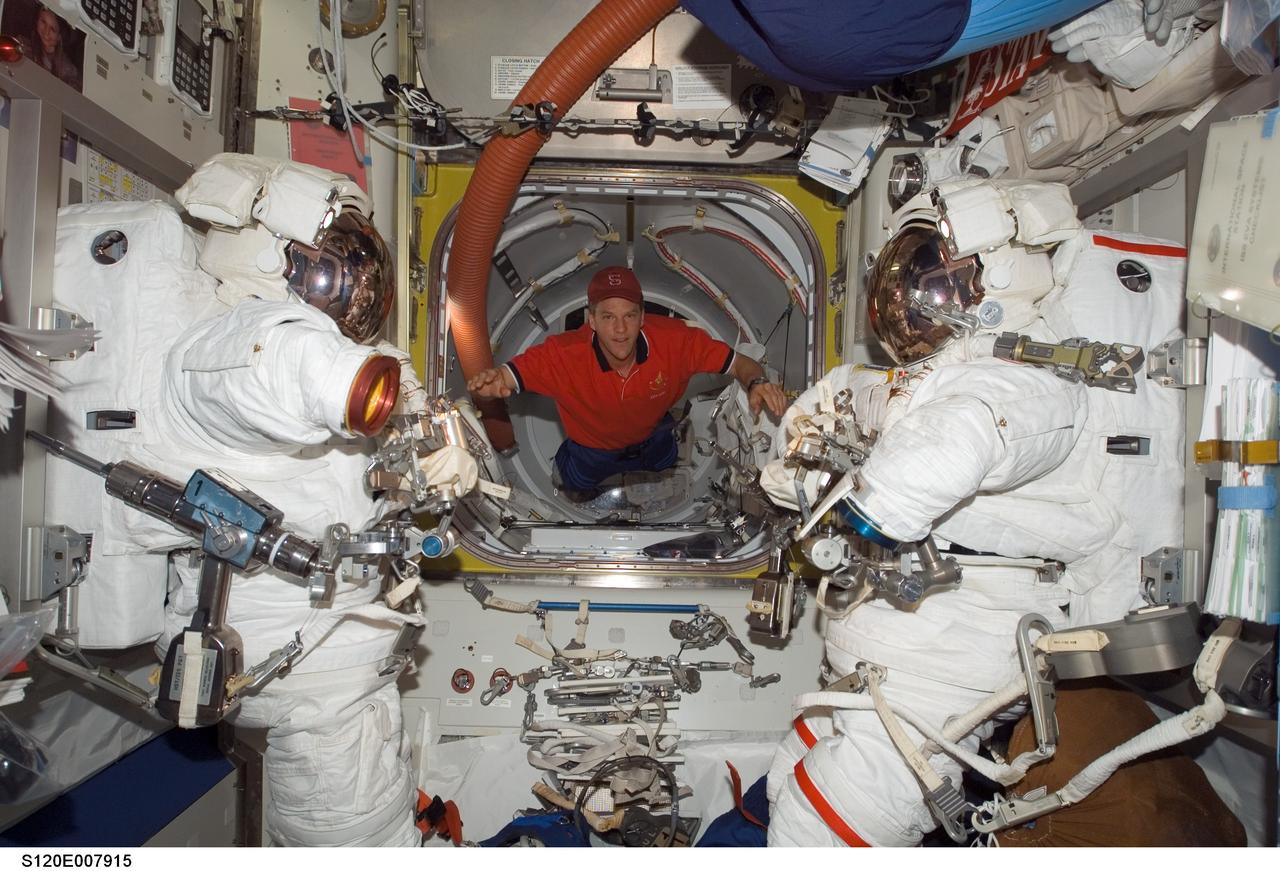
S120-E-007915 (1 Nov. 2007) --- Astronaut Scott Parazynski, STS-120 mission specialist, floats between two Extravehicular Mobility Unit (EMU) spacesuits in the Quest Airlock of the International Space Station while Space Shuttle Discovery is docked with the station.
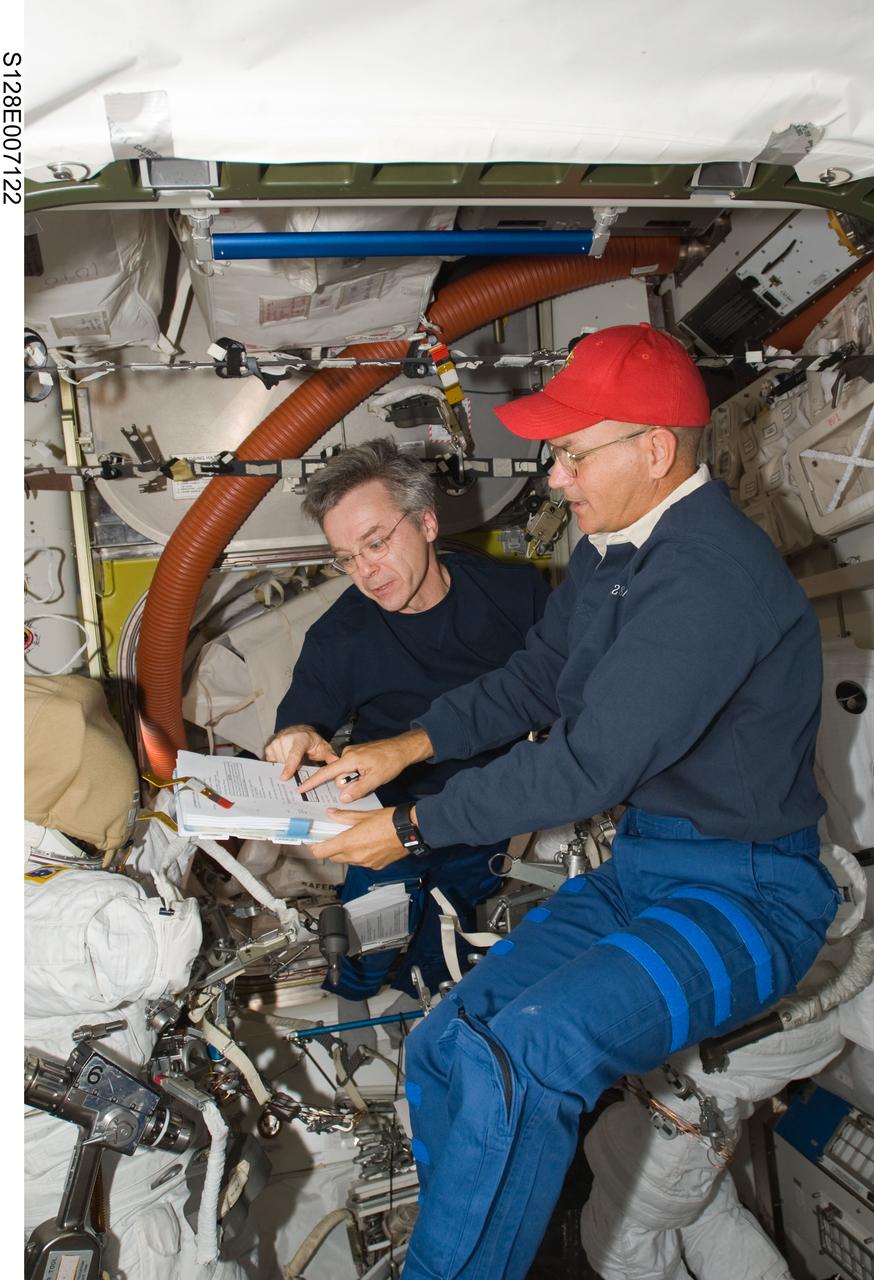
S128-E-007122 (31 Aug. 2009) --- NASA astronaut Rick Sturckow (right), STS-128 commander, and Canadian Space Agency astronaut Robert Thirsk, Expedition 20 flight engineer, look over a checklist in the Quest airlock of the International Space Station while Space Shuttle Discovery remains docked with the station.

S120-E-007930 (1 Nov. 2007) --- European Space Agency (ESA) astronaut Paolo Nespoli, STS-120 mission specialist, floats between two Extravehicular Mobility Unit (EMU) spacesuits in the Quest Airlock of the International Space Station while Space Shuttle Discovery is docked with the station.
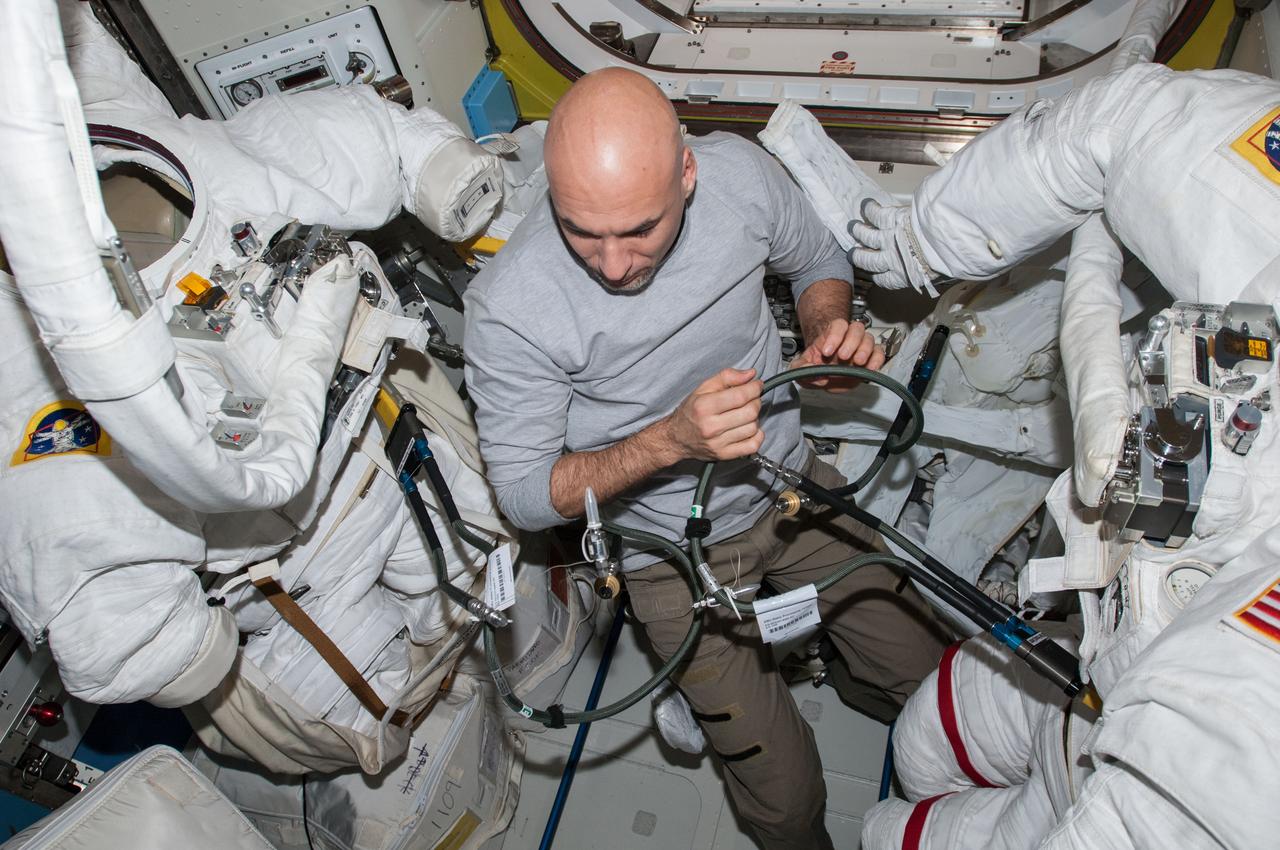
ISS036-E-022368 (18 July 2013) --- European Space Agency astronaut Luca Parmitano, Expedition 36 flight engineer, works with spacewalk hardware between two Extravehicular Mobility Unit (EMU) spacesuits in the Quest airlock of the International Space Station.
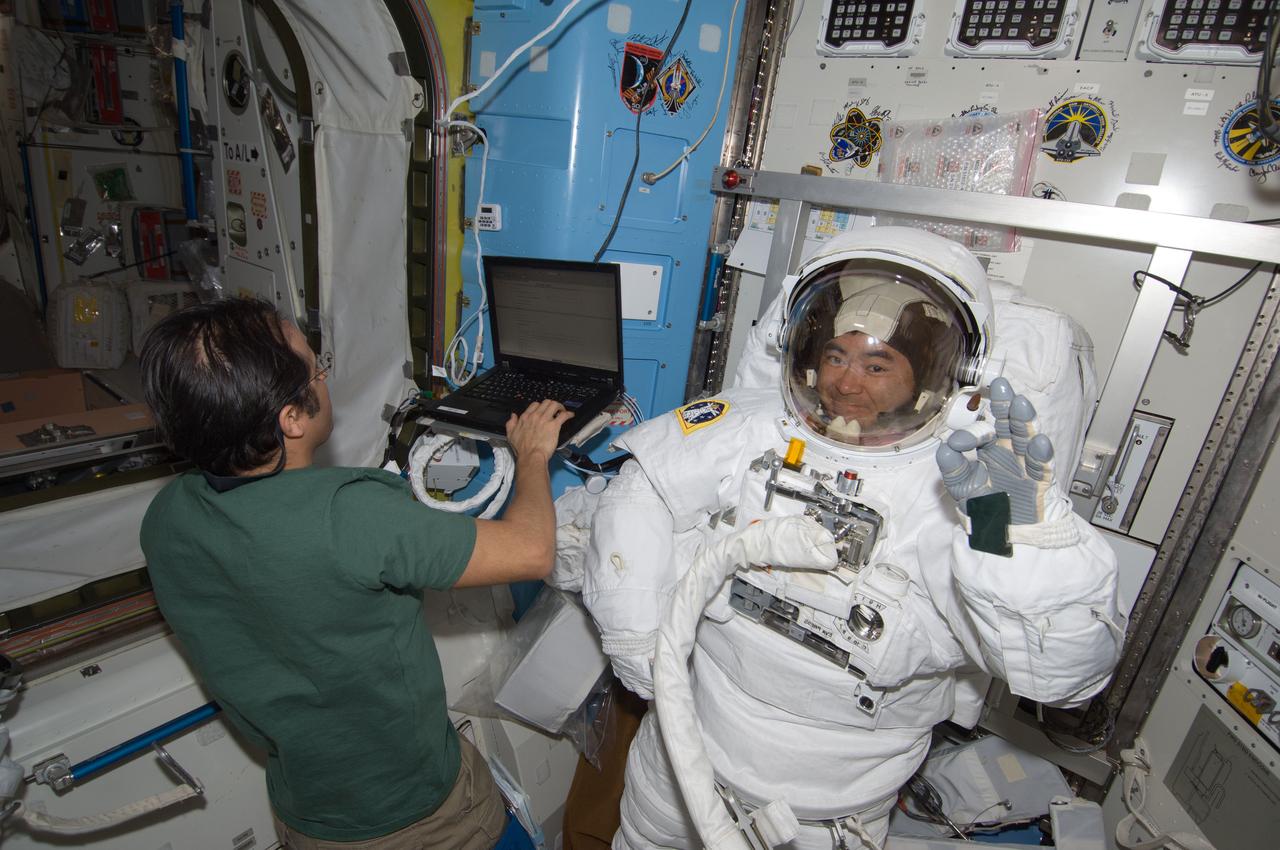
ISS032-E-022926 (22 Aug. 2012) --- In the International Space Station?s Quest airlock, Japan Aerospace Exploration Agency astronaut Aki Hoshide (attired in an Extravehicular Mobility Unit (EMU) spacesuit) and NASA astronaut Joe Acaba, both Expedition 32 flight engineers, prepare for a spacewalk scheduled for Aug. 30.
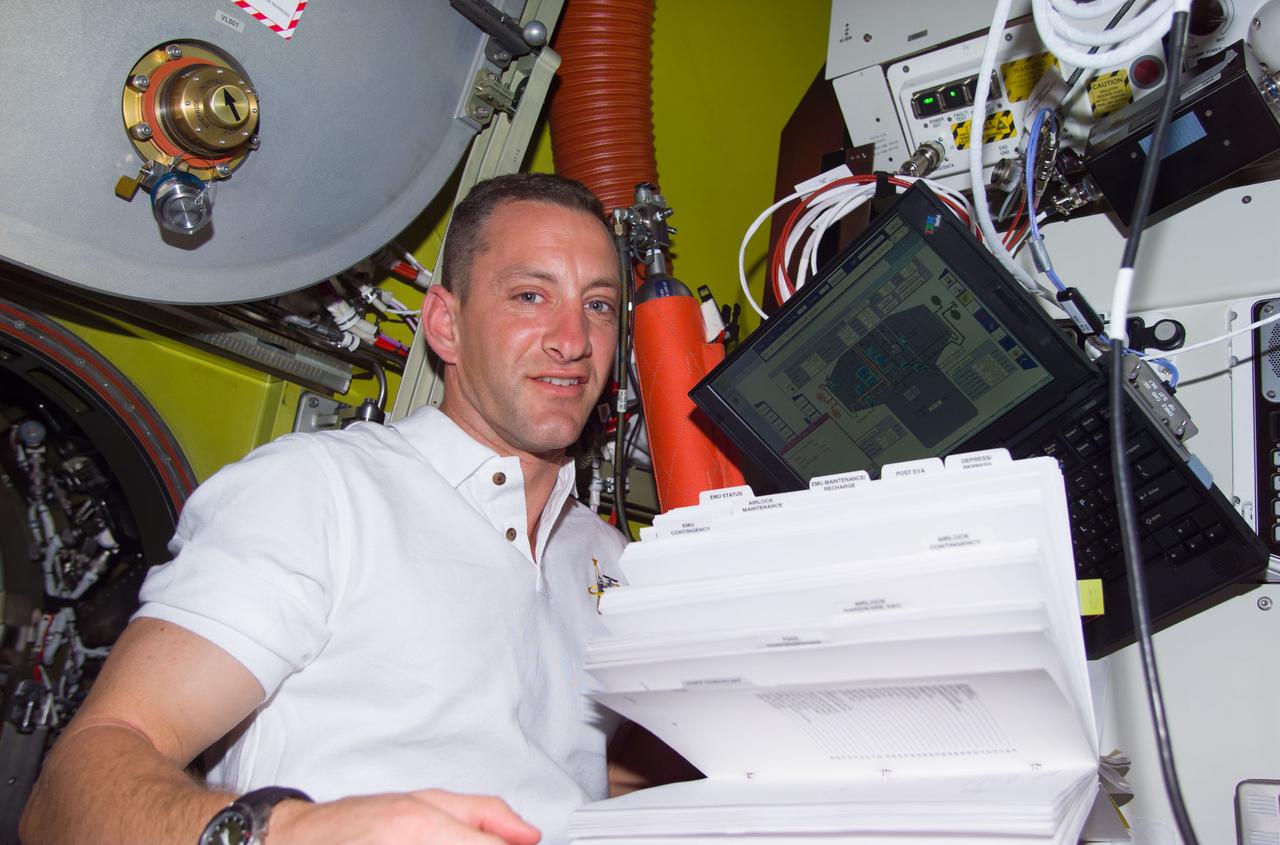
STS104-E-5157 (17 July 2001) --- Astronaut Charles O. Hobaugh, STS-104 pilot, looks over a reference manual in the Quest Airlock aboard the International Space Station (ISS). The image was recorded with a digital still camera.
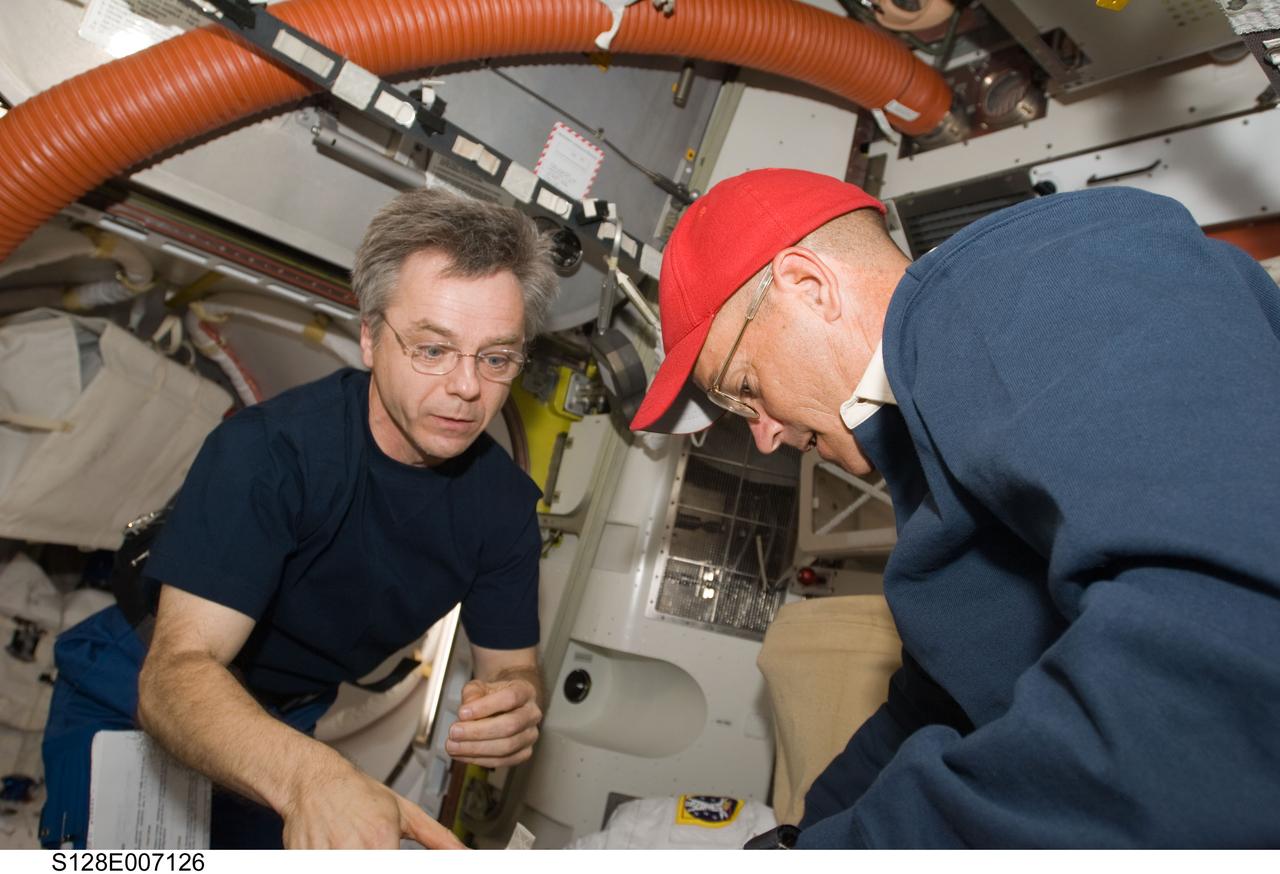
S128-E-007126 (31 Aug. 2009) --- NASA astronaut Rick Sturckow (right), STS-128 commander, and Canadian Space Agency astronaut Robert Thirsk, Expedition 20 flight engineer, work in the Quest airlock of the International Space Station while Space Shuttle Discovery remains docked with the station.