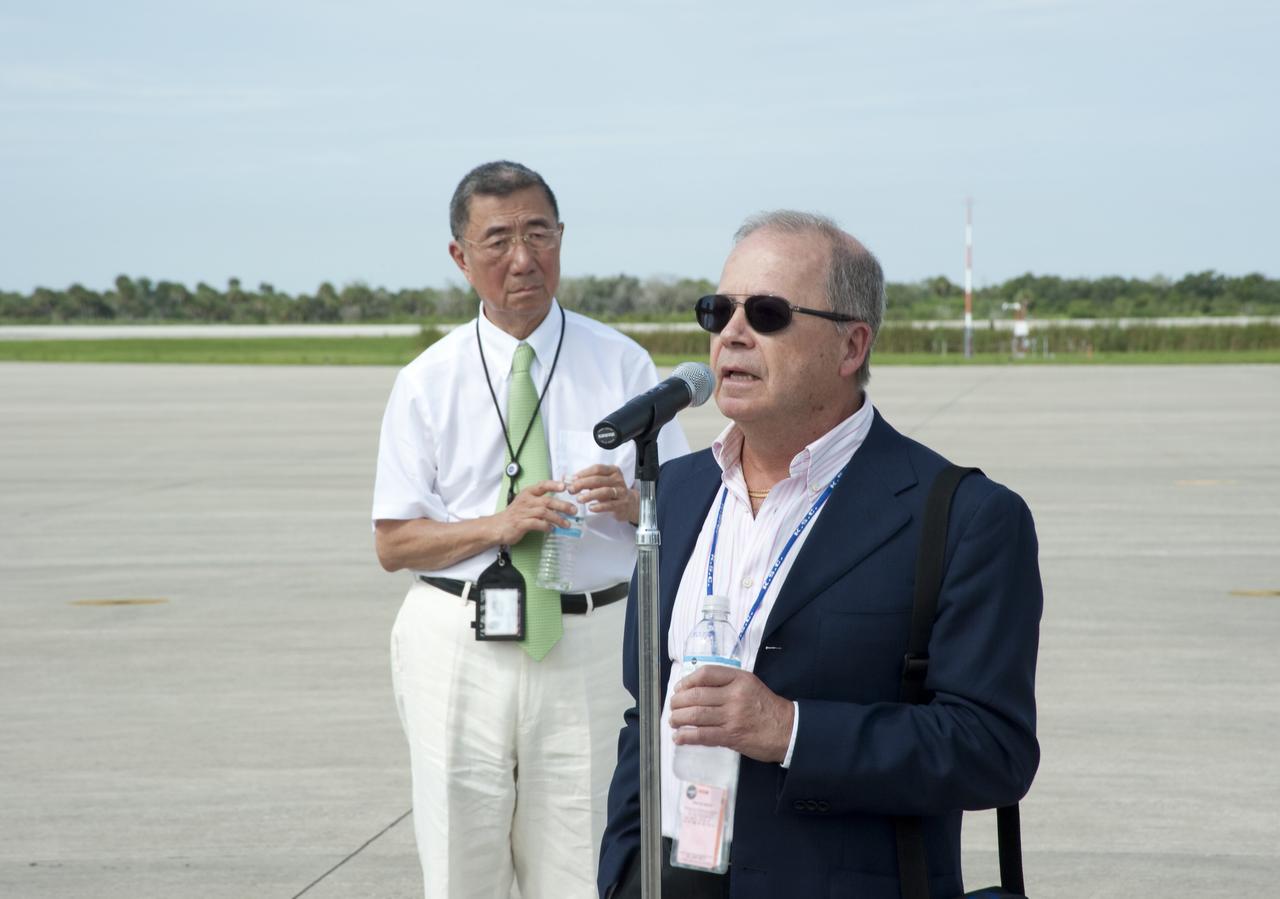
CAPE CANAVERAL, Fla. -- At the Shuttle Landing Facility at NASA's Kennedy Space Center in Florida, Professor Sam Ting, AMS Principal Investigator from the Massachusetts Institute of Technology listens intently as Professor Manuel Aguilar, AMS Spanish Coordinator, speaks to the media before the arrival of the Alpha Magnetic Spectrometer, or AMS. AMS, a state-of-the-art particle physics detector, is designed to operate as an external module on the International Space Station. It will use the unique environment of space to study the universe and its origin by searching for dark matter. The STS-134 crew will fly AMS to the International Space Station aboard space shuttle Endeavour, targeted to launch Feb. 26, 2011. Photo credit: NASA/Kim Shiflett
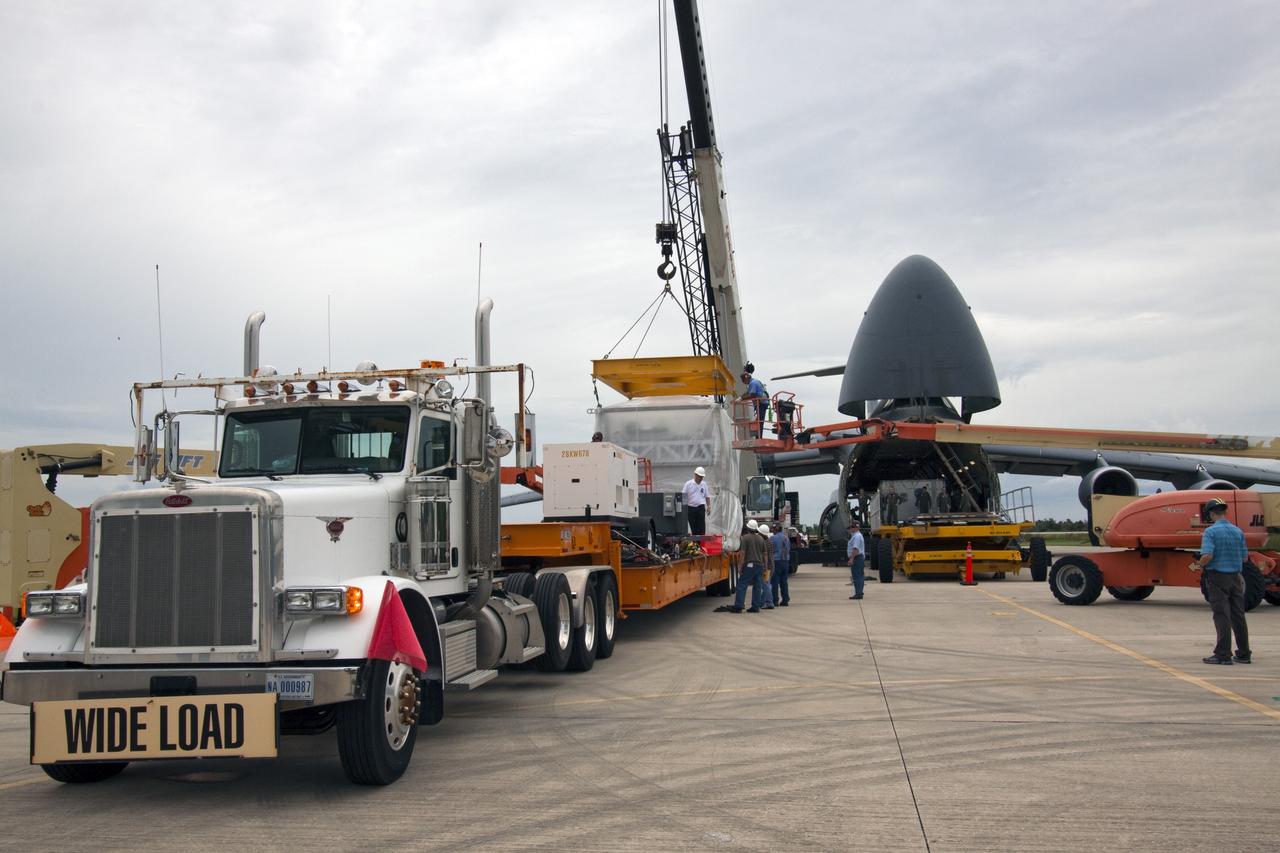
CAPE CANAVERAL, Fla. -- At NASA's Kennedy Space Center in Florida, a crane lowers the next section of the Alpha Magnetic Spectrometer, or AMS, onto a tractor-trailer which will transport the AMS from the Shuttle Landing Facility runway to the Space Station Processing Facility, where it will be processed for launch. AMS, a state-of-the-art particle physics detector, is designed to operate as an external module on the International Space Station. It will use the unique environment of space to study the universe and its origin by searching for dark matter. AMS will fly to the International Space Station aboard space shuttle Endeavour's STS-134 mission, targeted to launch Feb. 26, 2011. Photo credit: NASA/Jack Pfaller
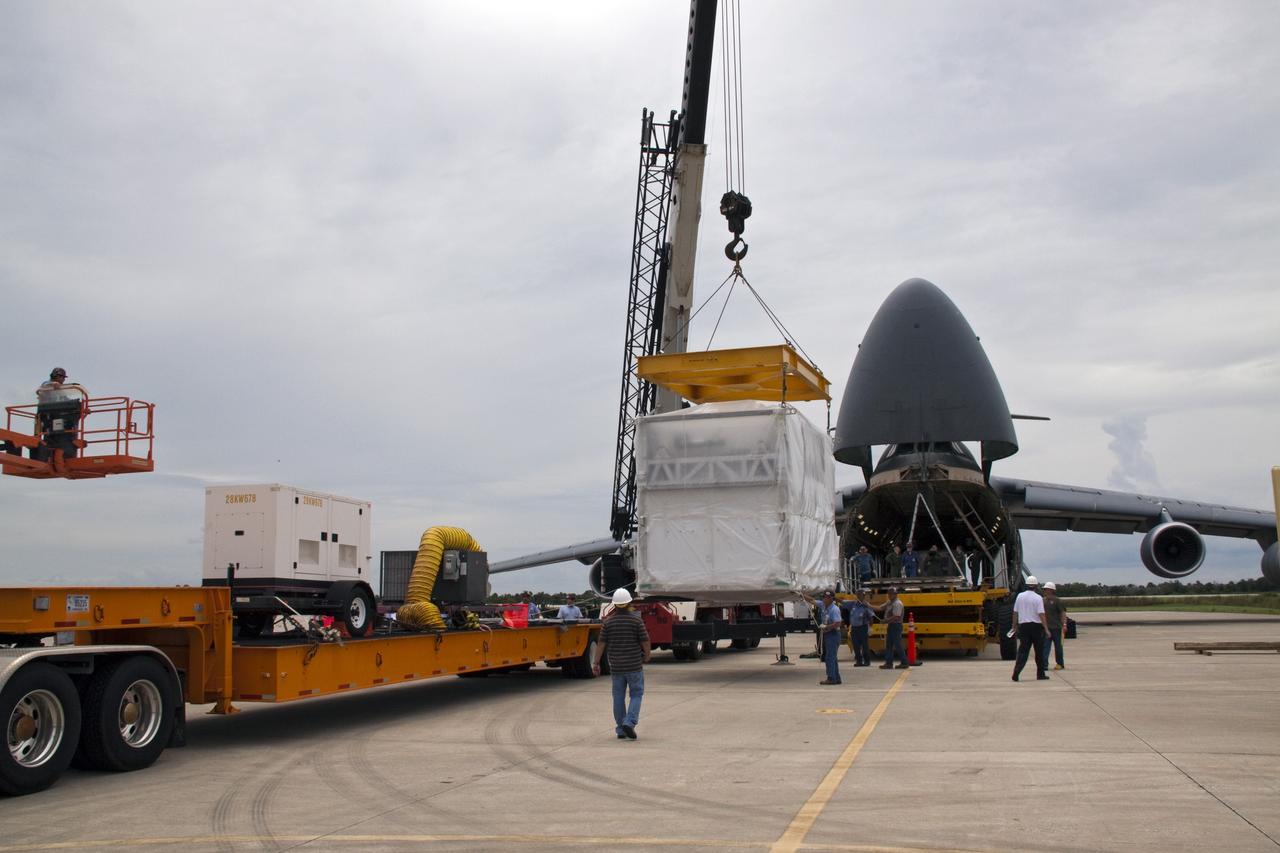
CAPE CANAVERAL, Fla. -- At NASA's Kennedy Space Center in Florida, a crane moves the next section of the Alpha Magnetic Spectrometer, or AMS, toward a tractor-trailer which will transport the AMS from the Shuttle Landing Facility runway to the Space Station Processing Facility, where it will be processed for launch. AMS, a state-of-the-art particle physics detector, is designed to operate as an external module on the International Space Station. It will use the unique environment of space to study the universe and its origin by searching for dark matter. AMS will fly to the International Space Station aboard space shuttle Endeavour's STS-134 mission, targeted to launch Feb. 26, 2011. Photo credit: NASA/Jack Pfaller
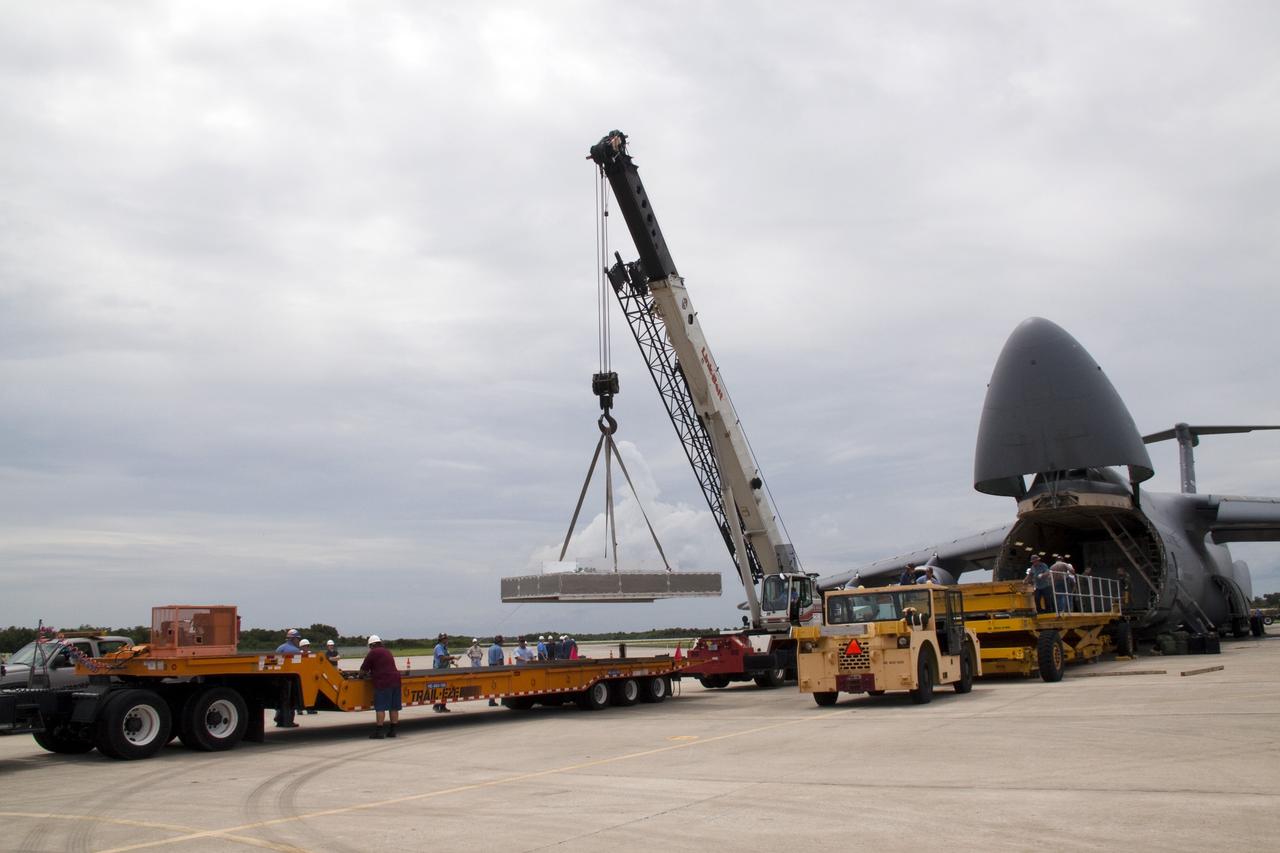
CAPE CANAVERAL, Fla. -- At NASA's Kennedy Space Center in Florida, a crane lowers a section of the Alpha Magnetic Spectrometer, or AMS, onto a tractor-trailer which will transport the AMS from the Shuttle Landing Facility runway to the Space Station Processing Facility, where it will be processed for launch. AMS, a state-of-the-art particle physics detector, is designed to operate as an external module on the International Space Station. It will use the unique environment of space to study the universe and its origin by searching for dark matter. AMS will fly to the International Space Station aboard space shuttle Endeavour's STS-134 mission, targeted to launch Feb. 26, 2011. Photo credit: NASA/Jack Pfaller
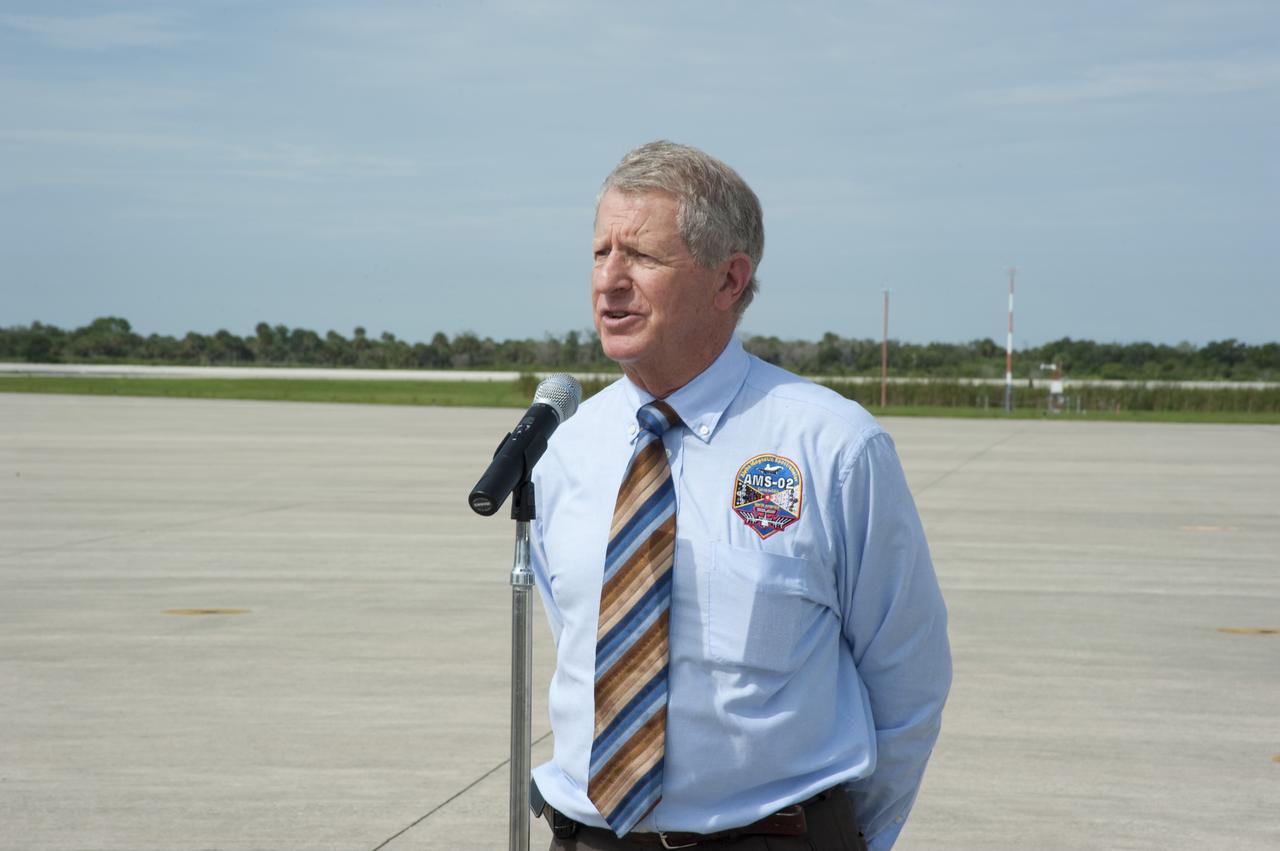
CAPE CANAVERAL, Fla. -- Before the arrival of the Alpha Magnetic Spectrometer, or AMS, to the Shuttle Landing Facility at NASA's Kennedy Space Center in Florida, Professor Maurice Bourquin, AMS Swiss Coordinator, speaks to the media. AMS, a state-of-the-art particle physics detector, is designed to operate as an external module on the International Space Station. It will use the unique environment of space to study the universe and its origin by searching for dark matter. AMS will fly to the International Space Station aboard space shuttle Endeavour's STS-134 mission targeted to launch Feb. 26, 2011. Photo credit: NASA/Kim Shiflett
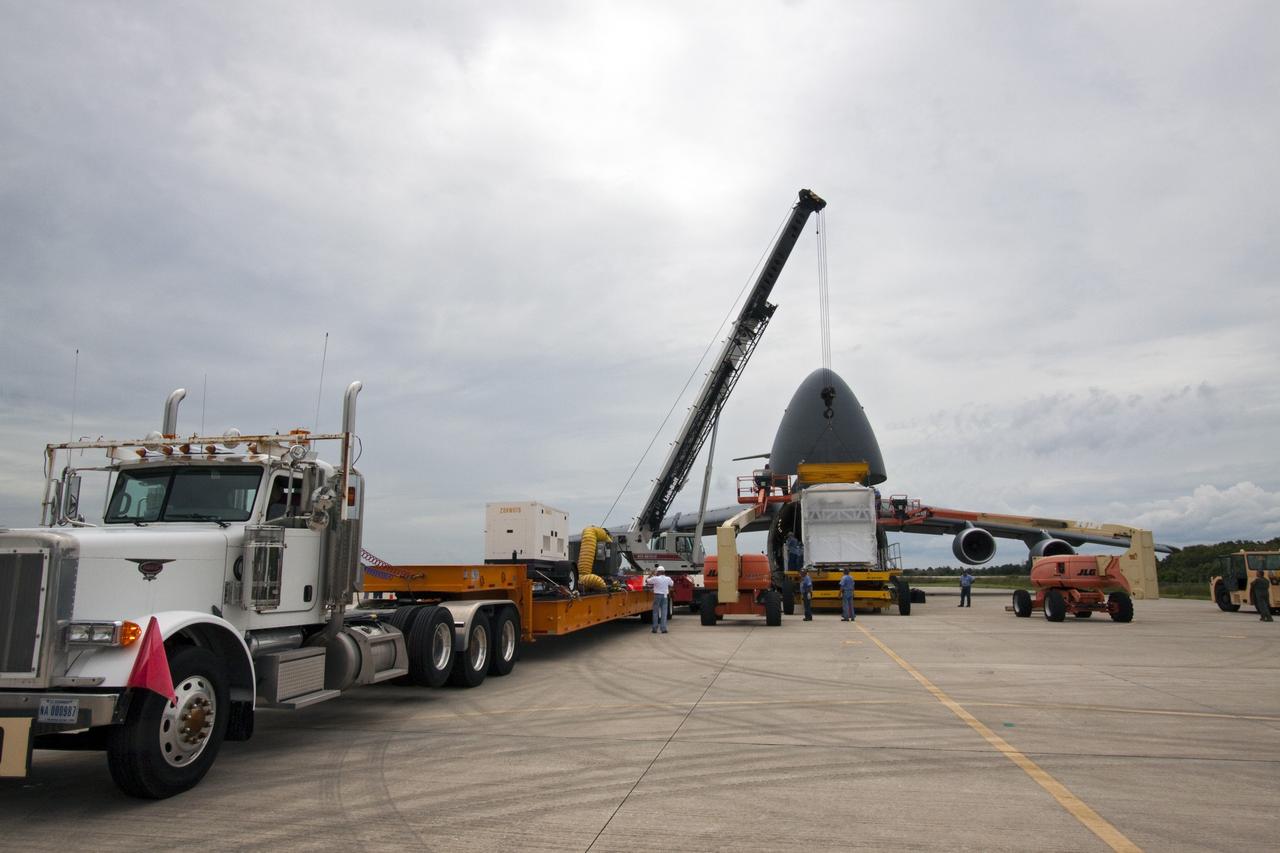
CAPE CANAVERAL, Fla. -- At NASA's Kennedy Space Center in Florida, a crane lifts the next section of the Alpha Magnetic Spectrometer, or AMS, toward a tractor-trailer which will transport the AMS from the Shuttle Landing Facility runway to the Space Station Processing Facility, where it will be processed for launch. AMS, a state-of-the-art particle physics detector, is designed to operate as an external module on the International Space Station. It will use the unique environment of space to study the universe and its origin by searching for dark matter. AMS will fly to the International Space Station aboard space shuttle Endeavour's STS-134 mission, targeted to launch Feb. 26, 2011. Photo credit: NASA/Jack Pfaller

CAPE CANAVERAL, Fla. -- At the Shuttle Landing Facility at NASA's Kennedy Space Center in Florida, Prof. Jean Pierre Vialle, AMS French Coordinator, addresses the media before the arrival of the Alpha Magnetic Spectrometer, or AMS. AMS, a state-of-the-art particle physics detector, is designed to operate as an external module on the International Space Station. It will use the unique environment of space to study the universe and its origin by searching for dark matter. The STS-134 crew will fly AMS to the International Space Station aboard space shuttle Endeavour, targeted to launch Feb. 26, 2011. Photo credit: NASA/Kim Shiflett

CAPE CANAVERAL, Fla. -- At NASA's Kennedy Space Center in Florida, a tractor-trailer carrying the Alpha Magnetic Spectrometer, or AMS, at the Space Station Processing Facility, where it will be processed for launch. AMS arrived on Kennedy's Shuttle Landing Facility aboard an Air Force C-5M aircraft from Europe. AMS, a state-of-the-art particle physics detector, is designed to operate as an external module on the International Space Station. It will use the unique environment of space to study the universe and its origin by searching for dark matter. The STS-134 crew will fly AMS to the International Space Station aboard space shuttle Endeavour, targeted to launch Feb. 26, 2011. Photo credit: NASA/Frankie Martin
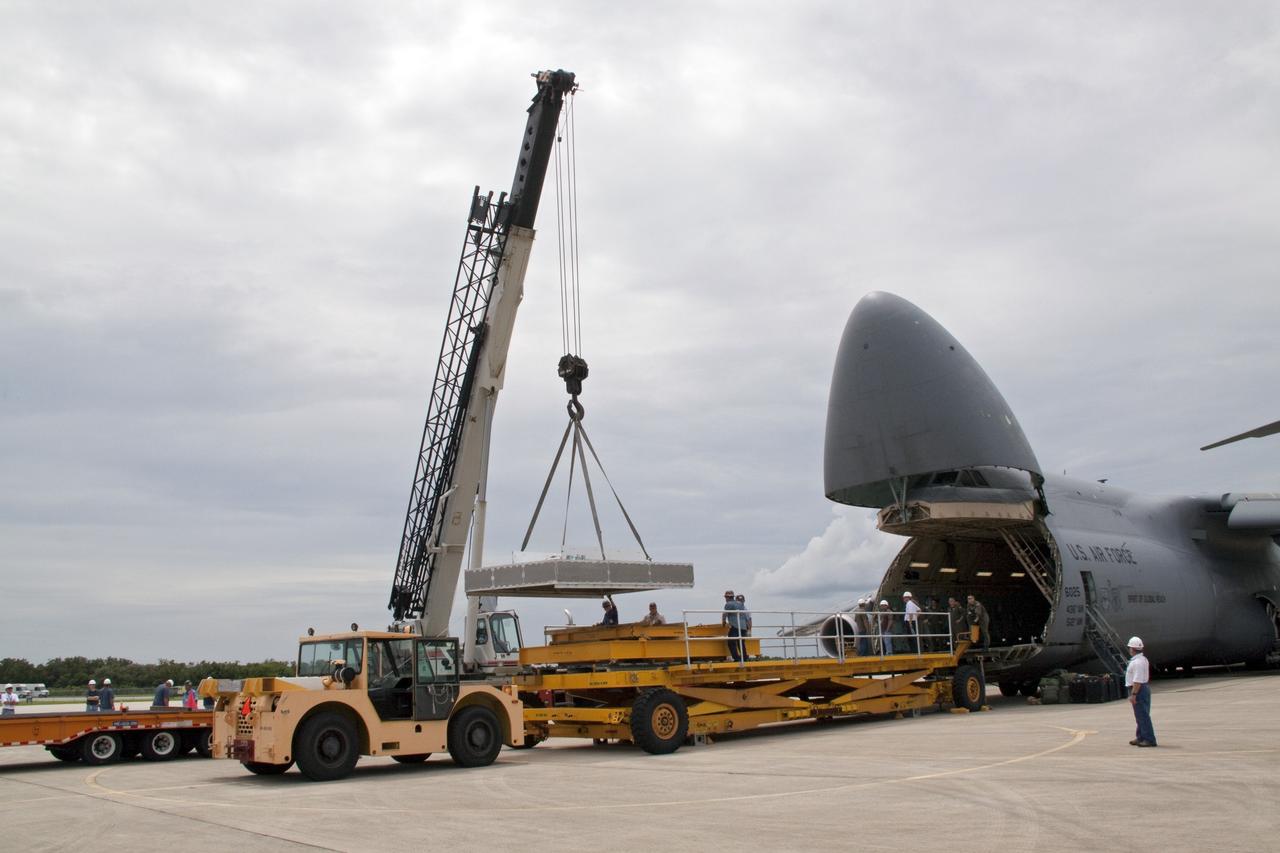
CAPE CANAVERAL, Fla. -- At NASA's Kennedy Space Center in Florida, a crane lifts a section of the Alpha Magnetic Spectrometer, or AMS, toward a tractor-trailer which will transport the AMS from the Shuttle Landing Facility runway to the Space Station Processing Facility, where it will be processed for launch. AMS, a state-of-the-art particle physics detector, is designed to operate as an external module on the International Space Station. It will use the unique environment of space to study the universe and its origin by searching for dark matter. AMS will fly to the International Space Station aboard space shuttle Endeavour's STS-134 mission, targeted to launch Feb. 26, 2011. Photo credit: NASA/Jack Pfaller

CAPE CANAVERAL, Fla. -- Prior to the arrival of the Alpha Magnetic Spectrometer, or AMS, to the Shuttle Landing Facility at NASA's Kennedy Space Center in Florida, Prof. S.C. Lee, AMS Taiwanese Coordinator, speaks to the media. AMS, a state-of-the-art particle physics detector, is designed to operate as an external module on the International Space Station. It will use the unique environment of space to study the universe and its origin by searching for dark matter. The STS-134 crew will fly AMS to the International Space Station aboard space shuttle Endeavour, targeted to launch Feb. 26, 2011. Photo credit: NASA/Kim Shiflett
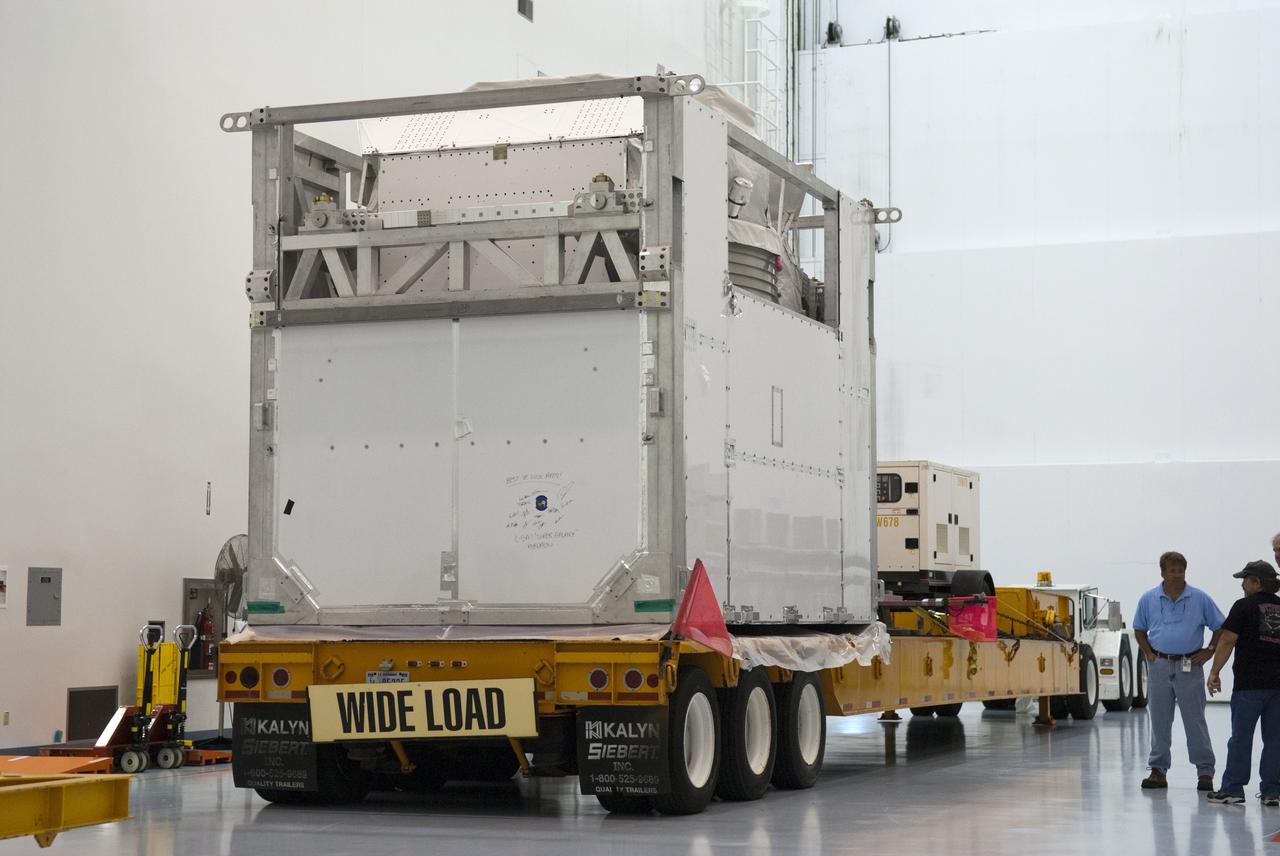
CAPE CANAVERAL, Fla. -- At NASA's Kennedy Space Center in Florida, a tractor-trailer carrying the Alpha Magnetic Spectrometer, or AMS, arrives at the Space Station Processing Facility, where it will be prepared for launch. AMS, a state-of-the-art particle physics detector, is designed to operate as an external module on the International Space Station. It will use the unique environment of space to study the universe and its origin by searching for dark matter. The STS-134 crew will fly AMS to the International Space Station aboard space shuttle Endeavour, targeted to launch Feb. 26, 2011. Photo credit: NASA/Frankie Martin
CAPE CANAVERAL, Fla. -- In the Space Station Processing Facility at NASA's Kennedy Space Center in Florida an overhead crane lowers the Alpha Magnetic Spectrometer, or AMS, onto to floor for technicians to prepare it for launch. AMS, a state-of-the-art particle physics detector, is designed to operate as an external module on the International Space Station. It will use the unique environment of space to study the universe and its origin by searching for dark matter. The STS-134 crew will fly AMS to the International Space Station aboard space shuttle Endeavour, targeted to launch Feb. 26, 2011. Photo credit: NASA/Frankie Martin
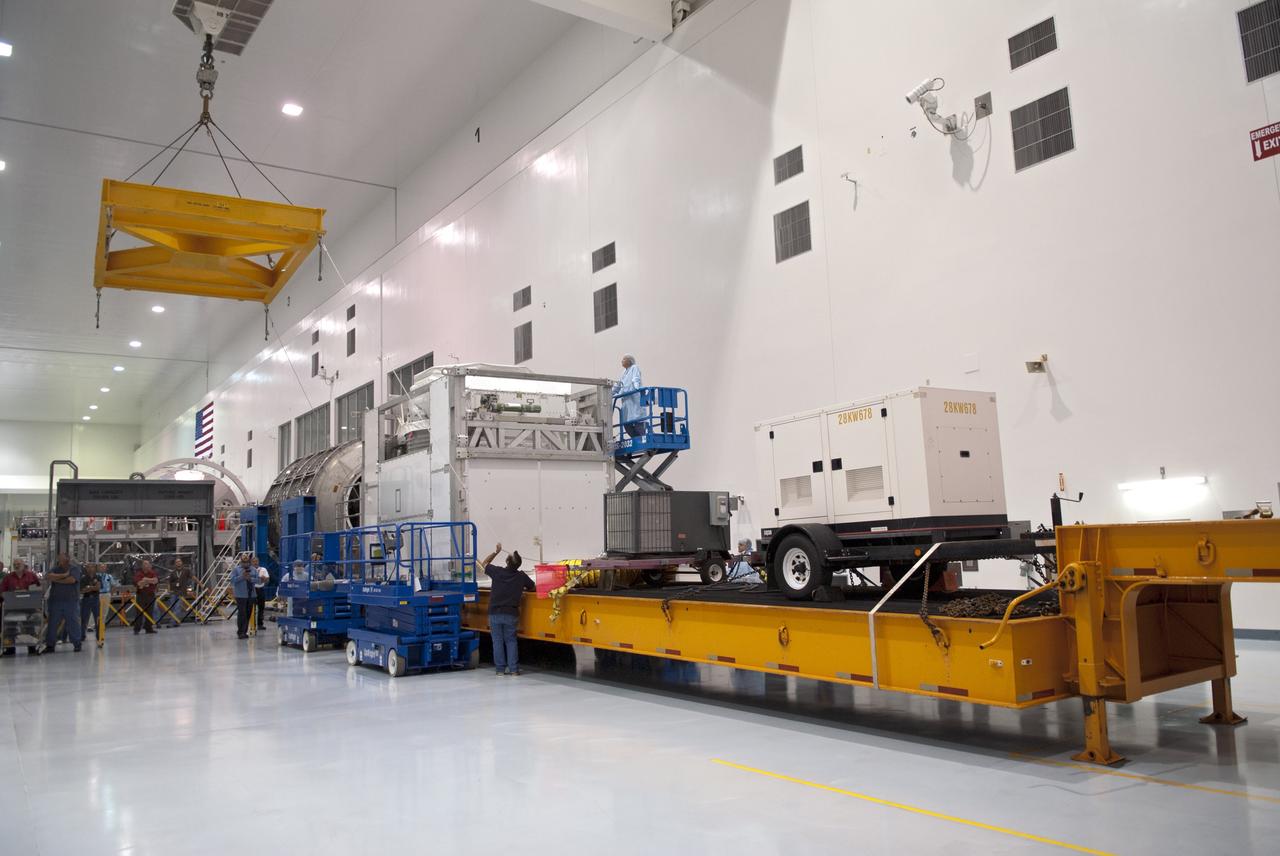
CAPE CANAVERAL, Fla. -- At NASA's Kennedy Space Center in Florida an overhead crane is poised above the floor of the Space Station Processing Facility to lift the Alpha Magnetic Spectrometer, or AMS, from the tractor-trailer that delivered it. AMS, a state-of-the-art particle physics detector, is designed to operate as an external module on the International Space Station. It will use the unique environment of space to study the universe and its origin by searching for dark matter. The STS-134 crew will fly AMS to the International Space Station aboard space shuttle Endeavour, targeted to launch Feb. 26, 2011. Photo credit: NASA/Frankie Martin
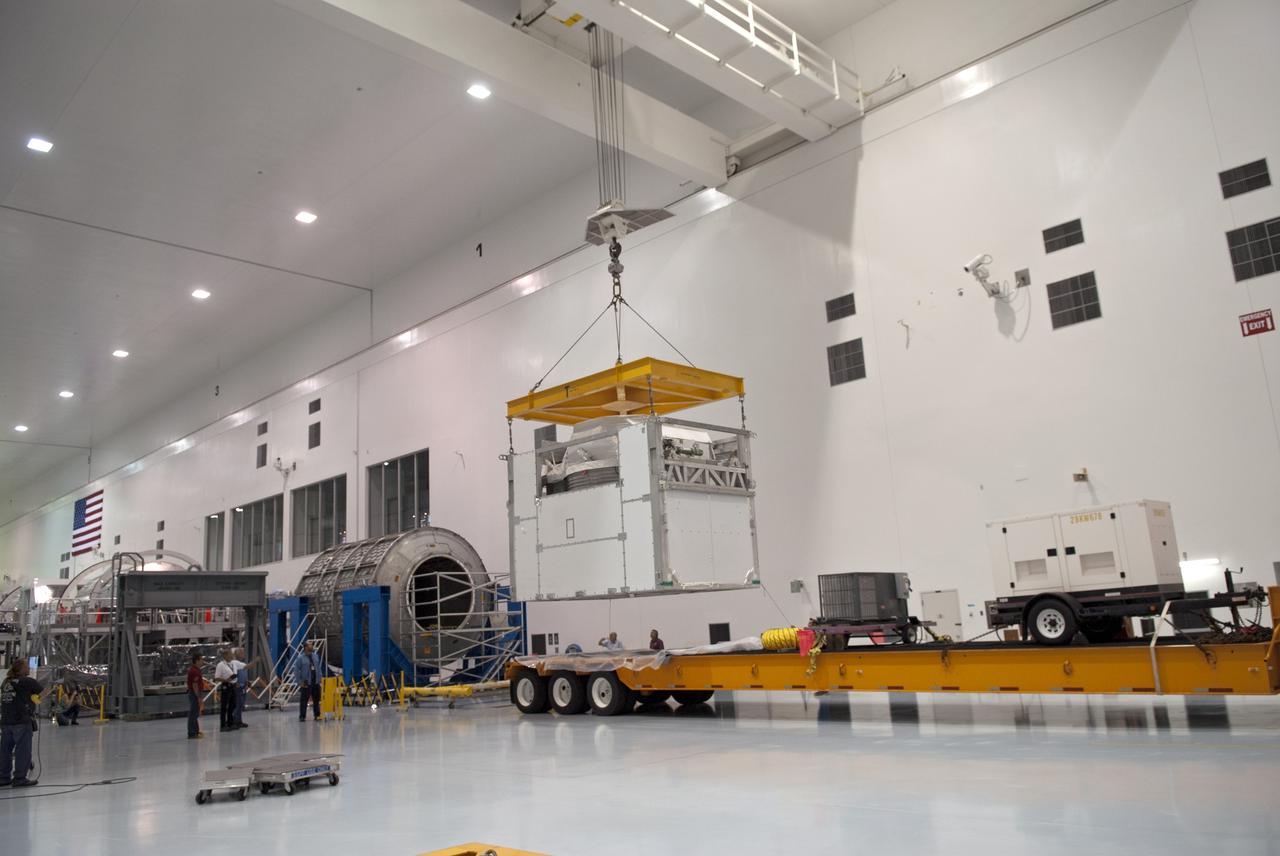
CAPE CANAVERAL, Fla. -- In the Space Station Processing Facility at NASA's Kennedy Space Center in Florida an overhead crane lifts the Alpha Magnetic Spectrometer, or AMS, off of the tractor-trailer that delivered it. AMS, a state-of-the-art particle physics detector, is designed to operate as an external module on the International Space Station. It will use the unique environment of space to study the universe and its origin by searching for dark matter. The STS-134 crew will fly AMS to the International Space Station aboard space shuttle Endeavour, targeted to launch Feb. 26, 2011. Photo credit: NASA/Frankie Martin
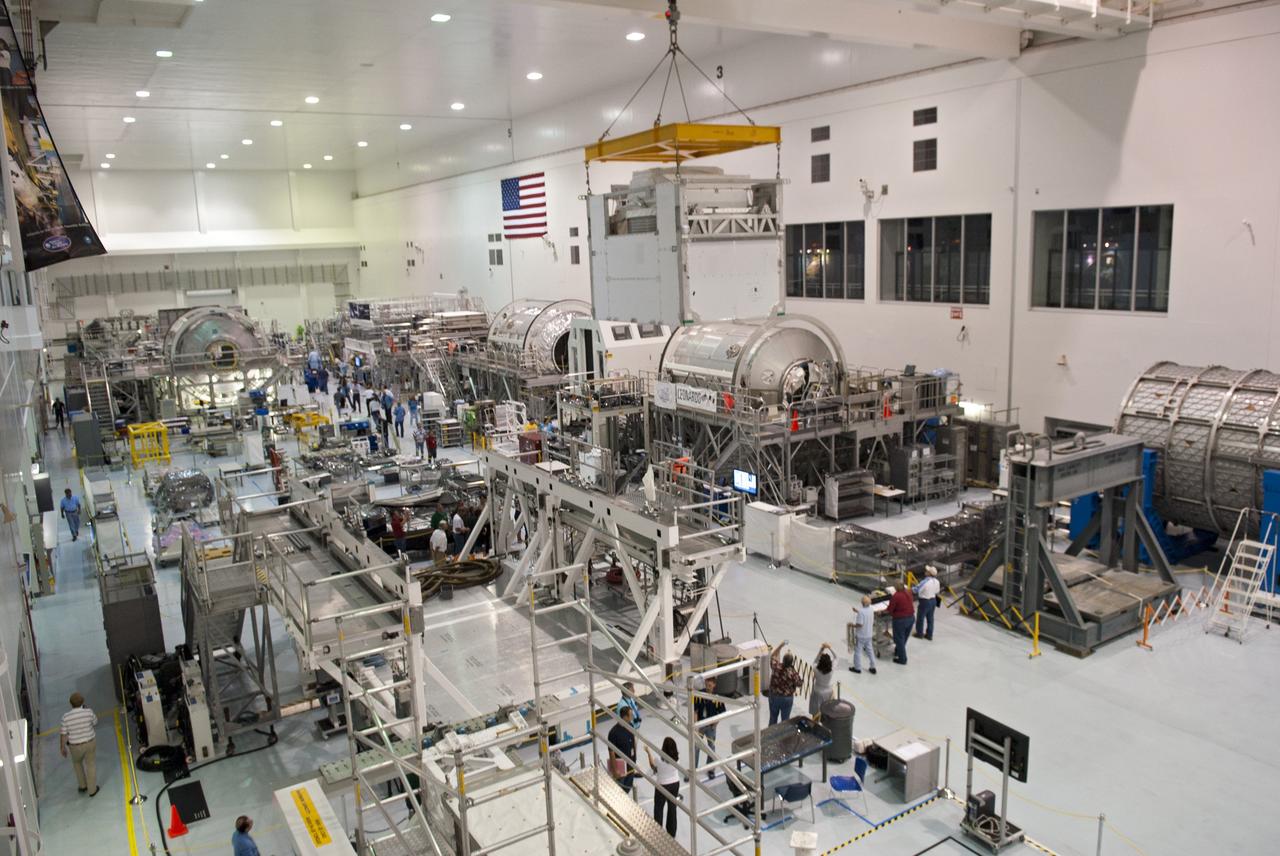
CAPE CANAVERAL, Fla. -- In the Space Station Processing Facility at NASA's Kennedy Space Center in Florida an overhead crane moves the Alpha Magnetic Spectrometer, or AMS, to an area for technicians to prepare it for launch. AMS, a state-of-the-art particle physics detector, is designed to operate as an external module on the International Space Station. It will use the unique environment of space to study the universe and its origin by searching for dark matter. The STS-134 crew will fly AMS to the International Space Station aboard space shuttle Endeavour, targeted to launch Feb. 26, 2011. Photo credit: NASA/Frankie Martin
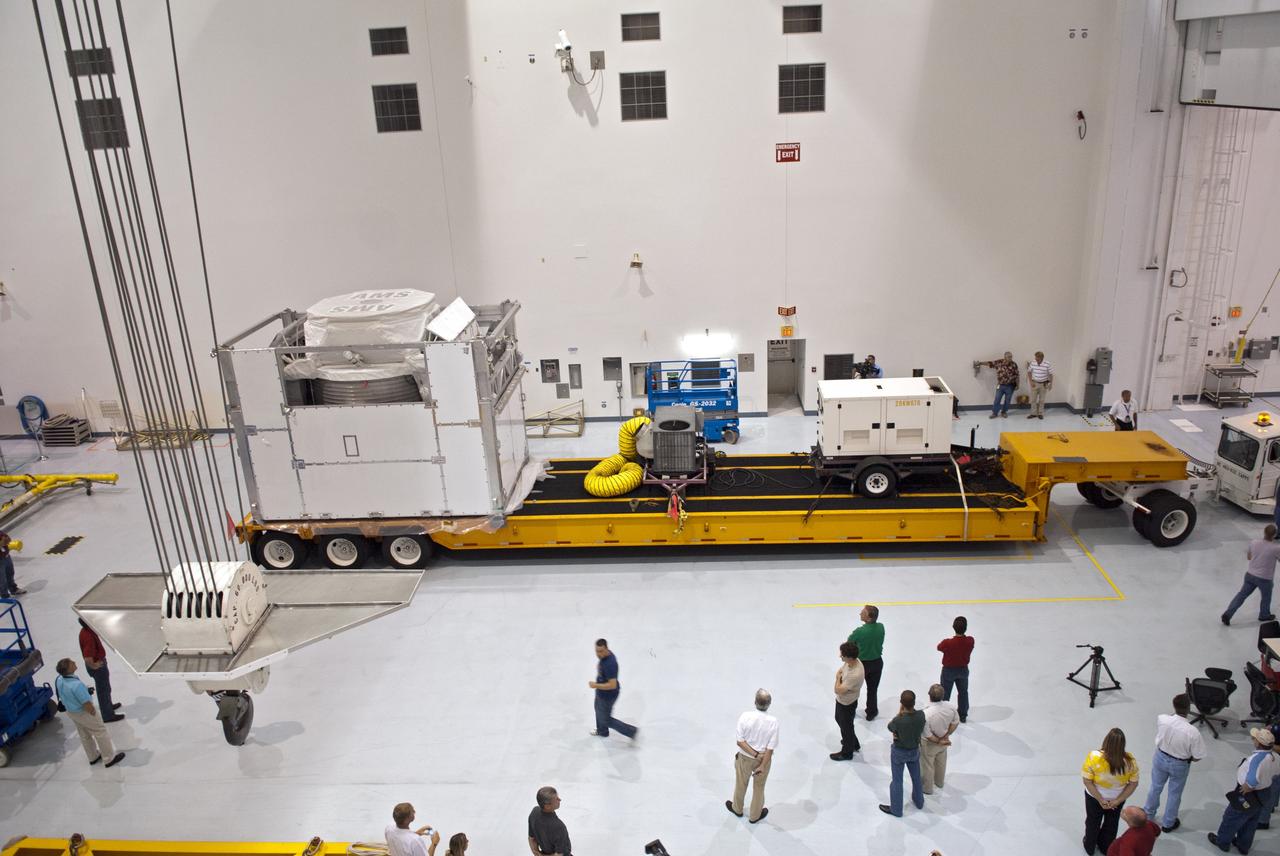
CAPE CANAVERAL, Fla. -- Workers and media at NASA's Kennedy Space Center in Florida, monitor the arrival of a tractor-trailer carrying the Alpha Magnetic Spectrometer, or AMS, to the Space Station Processing Facility, where it will be prepared for launch. AMS, a state-of-the-art particle physics detector, is designed to operate as an external module on the International Space Station. It will use the unique environment of space to study the universe and its origin by searching for dark matter. The STS-134 crew will fly AMS to the International Space Station aboard space shuttle Endeavour, targeted to launch Feb. 26, 2011. Photo credit: NASA/Frankie Martin
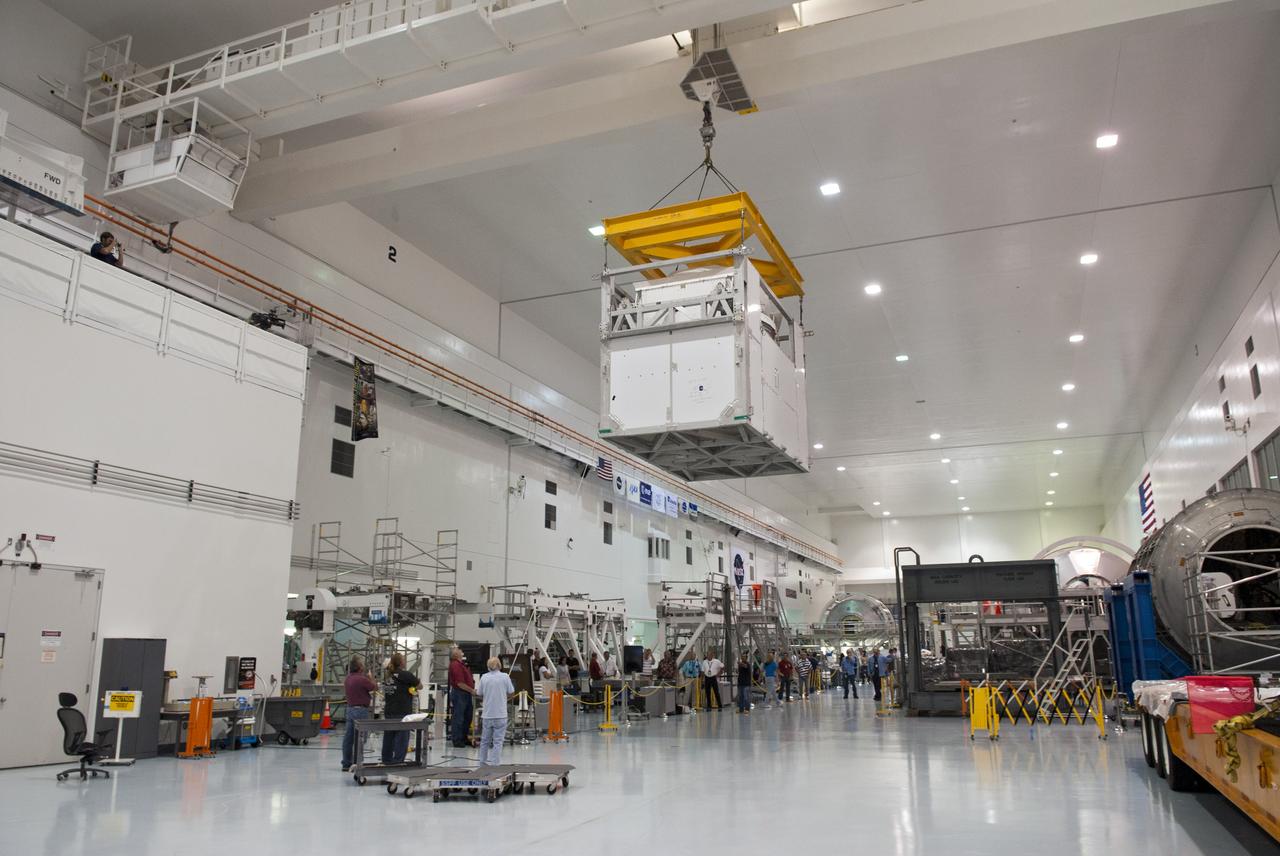
CAPE CANAVERAL, Fla. -- Workers in the Space Station Processing Facility at NASA's Kennedy Space Center in Florida, monitor the progress of an overhead crane as it moves the Alpha Magnetic Spectrometer, or AMS, to an area for technicians to prepare it for launch. AMS, a state-of-the-art particle physics detector, is designed to operate as an external module on the International Space Station. It will use the unique environment of space to study the universe and its origin by searching for dark matter. The STS-134 crew will fly AMS to the International Space Station aboard space shuttle Endeavour, targeted to launch Feb. 26, 2011. Photo credit: NASA/Frankie Martin
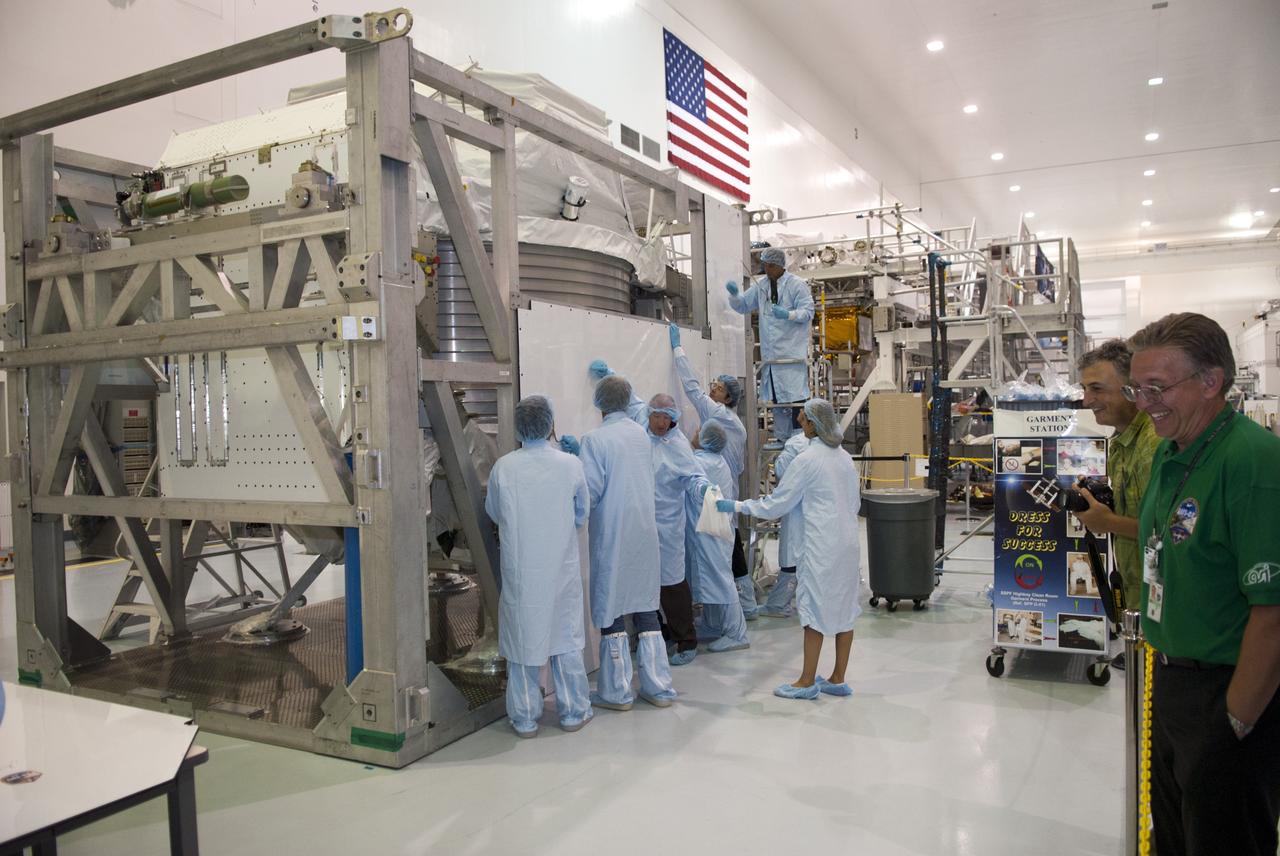
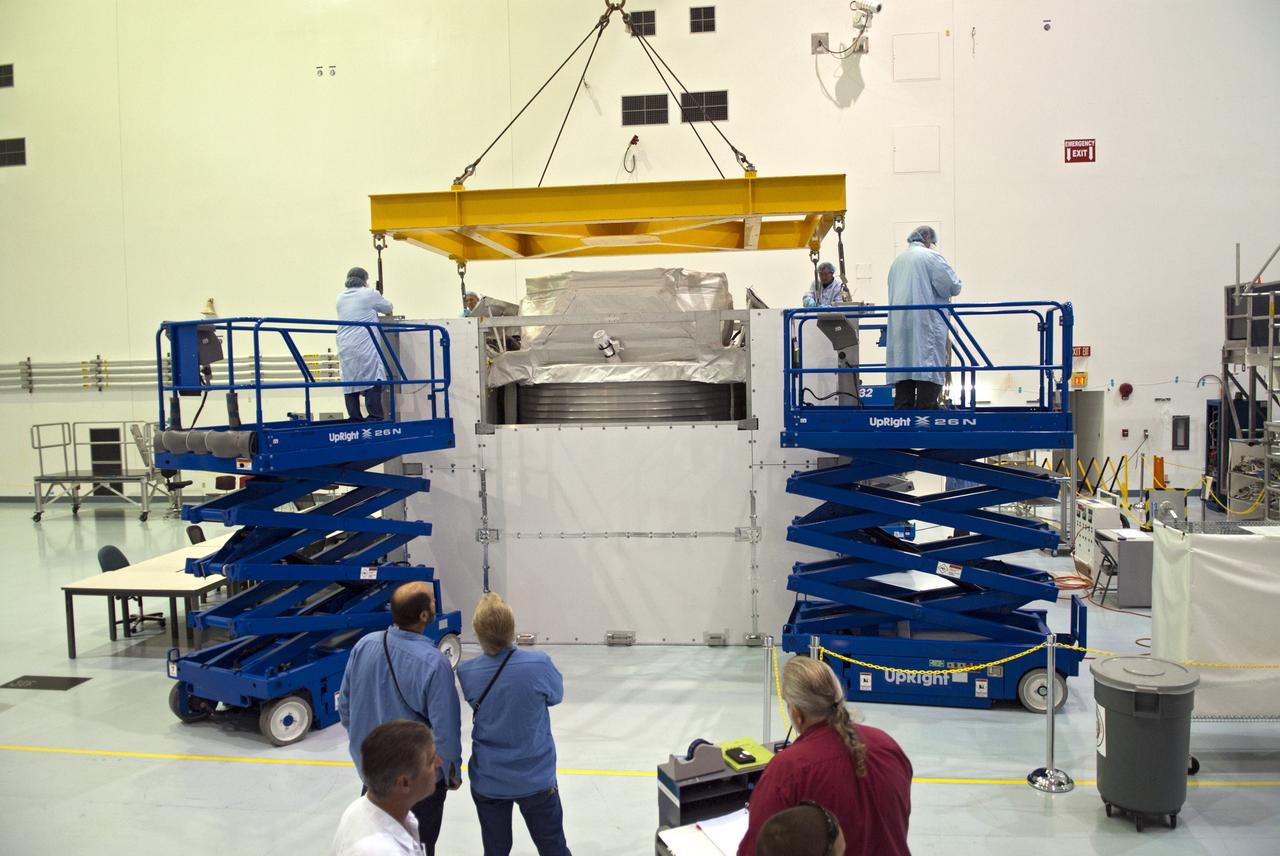
CAPE CANAVERAL, Fla. -- In the Space Station Processing Facility at NASA's Kennedy Space Center in Florida, technicians remove a side panel that protected the Alpha Magnetic Spectrometer, or AMS, during shipment. AMS, a state-of-the-art particle physics detector, is designed to operate as an external module on the International Space Station. It will use the unique environment of space to study the universe and its origin by searching for dark matter. The STS-134 crew will fly AMS to the International Space Station aboard space shuttle Endeavour, targeted to launch Feb. 26, 2011. Photo credit: NASA/Frankie Martin
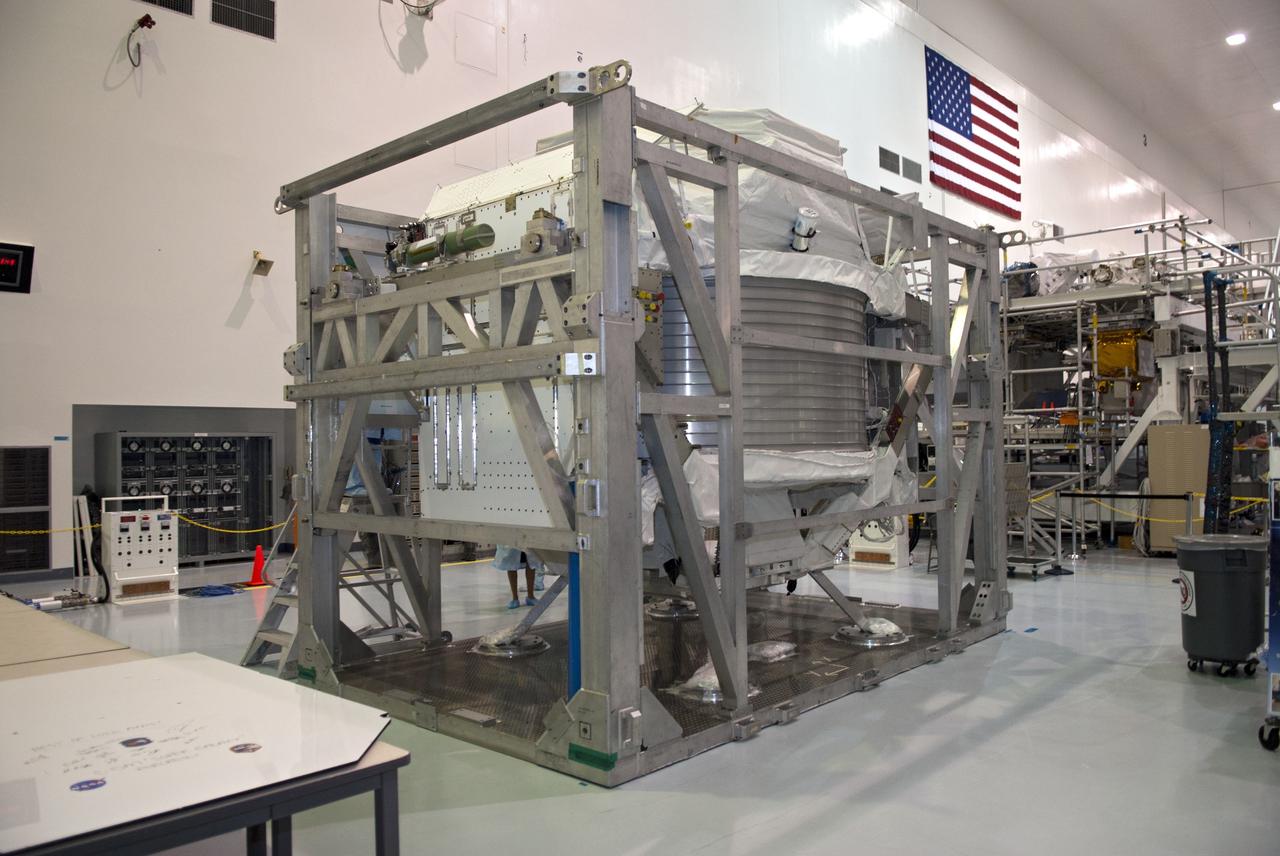
CAPE CANAVERAL, Fla. -- In the Space Station Processing Facility at NASA's Kennedy Space Center in Florida, the protective panels that covered the Alpha Magnetic Spectrometer, or AMS, have been removed so that the technicians can begin preparing it for launch. AMS, a state-of-the-art particle physics detector, is designed to operate as an external module on the International Space Station. It will use the unique environment of space to study the universe and its origin by searching for dark matter. The STS-134 crew will fly AMS to the International Space Station aboard space shuttle Endeavour, targeted to launch Feb. 26, 2011. Photo credit: NASA/Frankie Martin
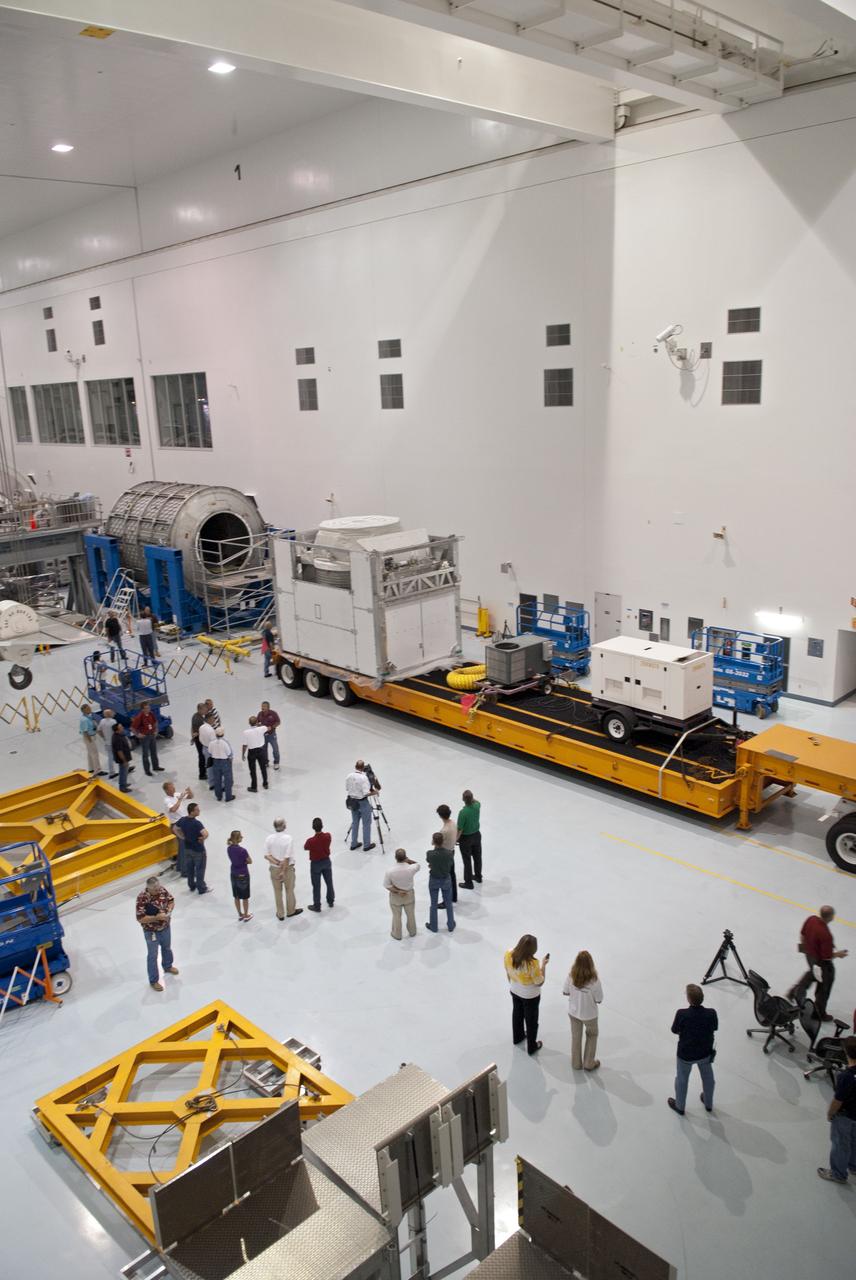
CAPE CANAVERAL, Fla. -- At NASA's Kennedy Space Center in Florida, media are on hand as the Alpha Magnetic Spectrometer, or AMS, is delivered to the Space Station Processing Facility, where it will be prepared for launch. AMS, a state-of-the-art particle physics detector, is designed to operate as an external module on the International Space Station. It will use the unique environment of space to study the universe and its origin by searching for dark matter. The STS-134 crew will fly AMS to the International Space Station aboard space shuttle Endeavour, targeted to launch Feb. 26, 2011. Photo credit: NASA/Frankie Martin
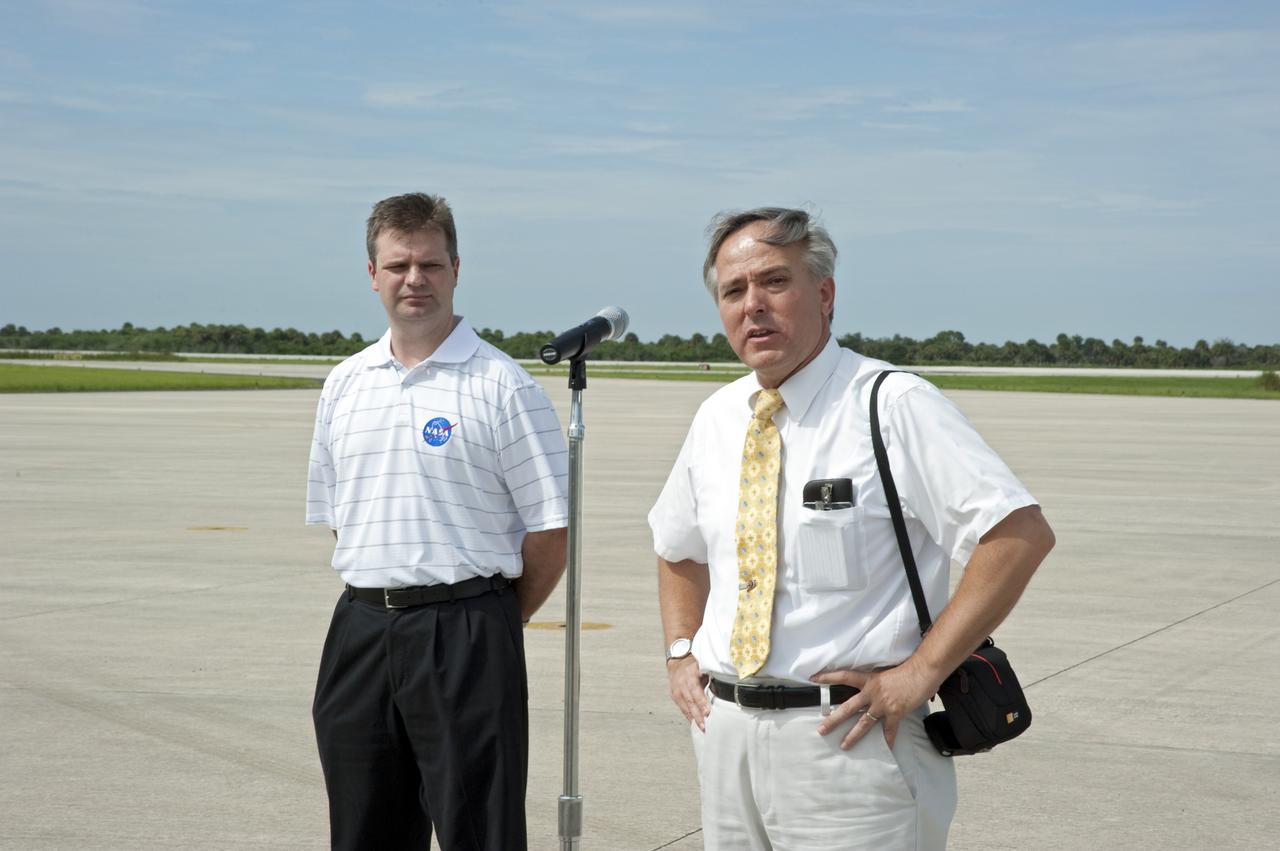
CAPE CANAVERAL, Fla. -- Mark Sistilli, AMS Program Manager from NASA Headquarters speaks to the media before the arrival of the Alpha Magnetic Spectrometer, or AMS, to the Shuttle Landing Facility at NASA's Kennedy Space Center in Florida, while Trent Martin, AMS Project Manager from NASA's Johnson Space Center in Houston looks on. AMS, a state-of-the-art particle physics detector, is designed to operate as an external module on the International Space Station. It will use the unique environment of space to study the universe and its origin by searching for dark matter. The STS-134 crew will fly AMS to the International Space Station aboard space shuttle Endeavour, targeted to launch Feb. 26, 2011. Photo credit: NASA/Kim Shiflett
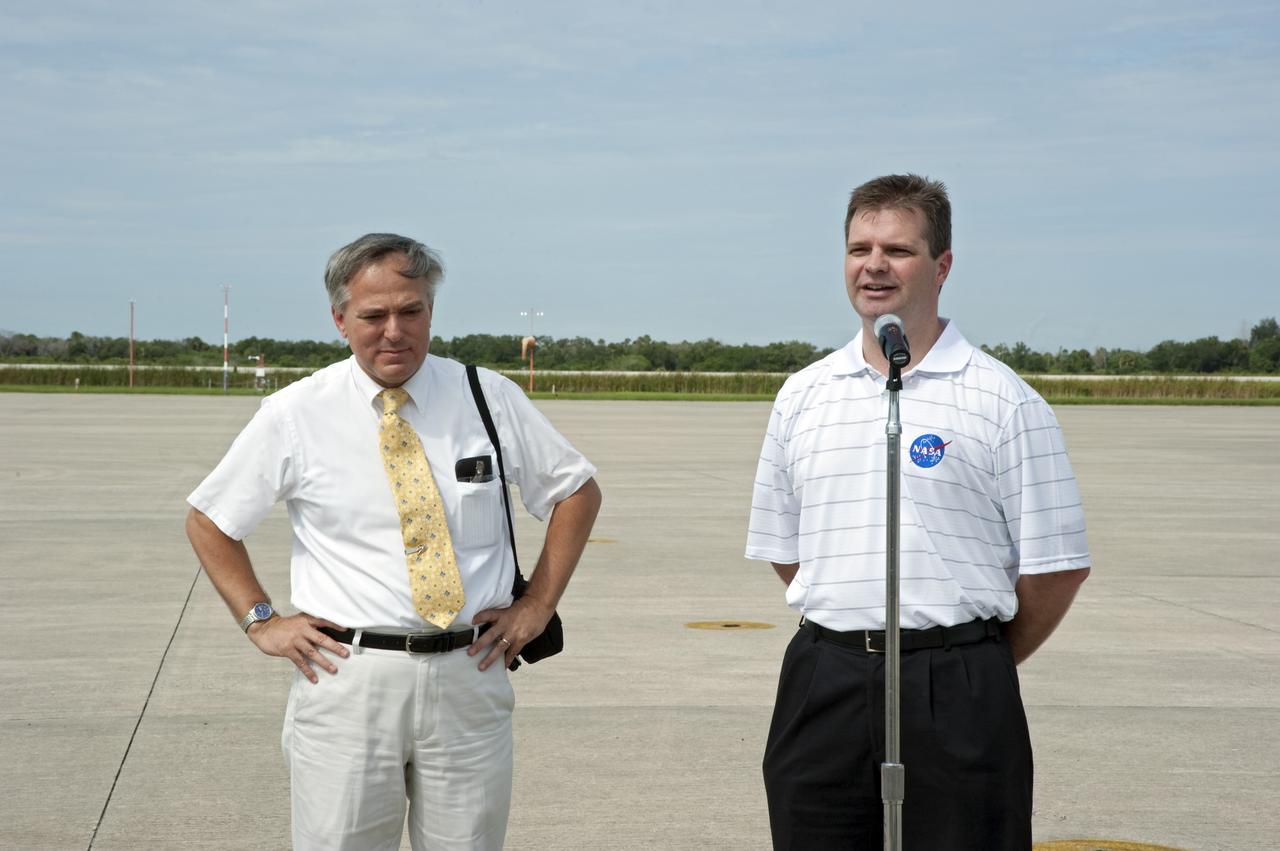
CAPE CANAVERAL, Fla. -- Mark Sistilli, AMS Program Manager from NASA Headquarters looks on as Trent Martin, AMS Project Manager from NASA's Johnson Space Center in Houston speaks to the media prior to the arrival of the Alpha Magnetic Spectrometer, or AMS, to the Shuttle Landing Facility at NASA's Kennedy Space Center in Florida. AMS, a state-of-the-art particle physics detector, is designed to operate as an external module on the International Space Station. It will use the unique environment of space to study the universe and its origin by searching for dark matter. The STS-134 crew will fly AMS to the International Space Station aboard space shuttle Endeavour, targeted to launch Feb. 26, 2011. Photo credit: NASA/Kim Shiflett
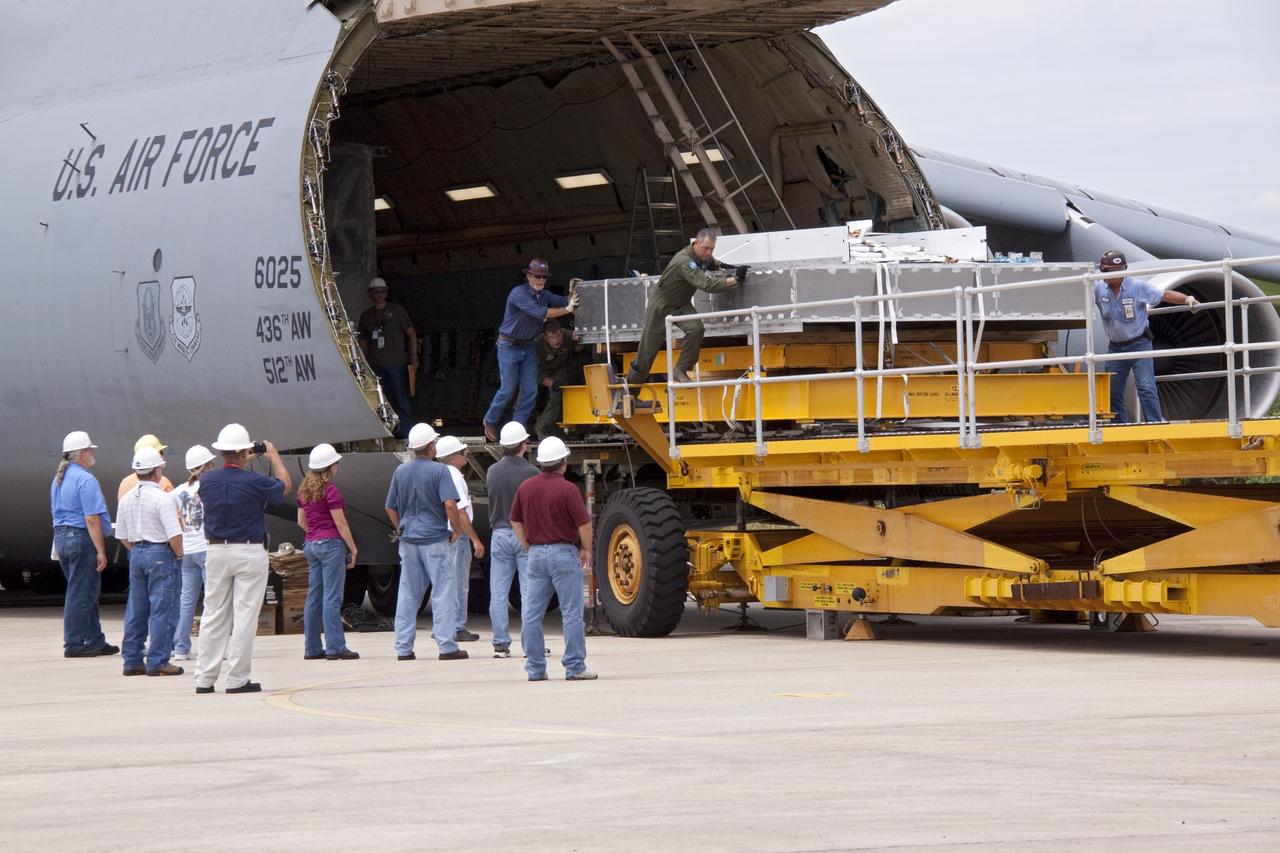
CAPE CANAVERAL, Fla. -- At NASA's Kennedy Space Center in Florida, workers begin to offload a section of the Alpha Magnetic Spectrometer, or AMS, from an Air Force C-5M aircraft. A tractor-trailer will transport the AMS from the Shuttle Landing Facility runway to the Space Station Processing Facility, where it will be processed for launch. AMS, a state-of-the-art particle physics detector, is designed to operate as an external module on the International Space Station. It will use the unique environment of space to study the universe and its origin by searching for dark matter. AMS will fly to the International Space Station aboard space shuttle Endeavour's STS-134 mission, targeted to launch Feb. 26, 2011. Photo credit: NASA/Jack Pfaller
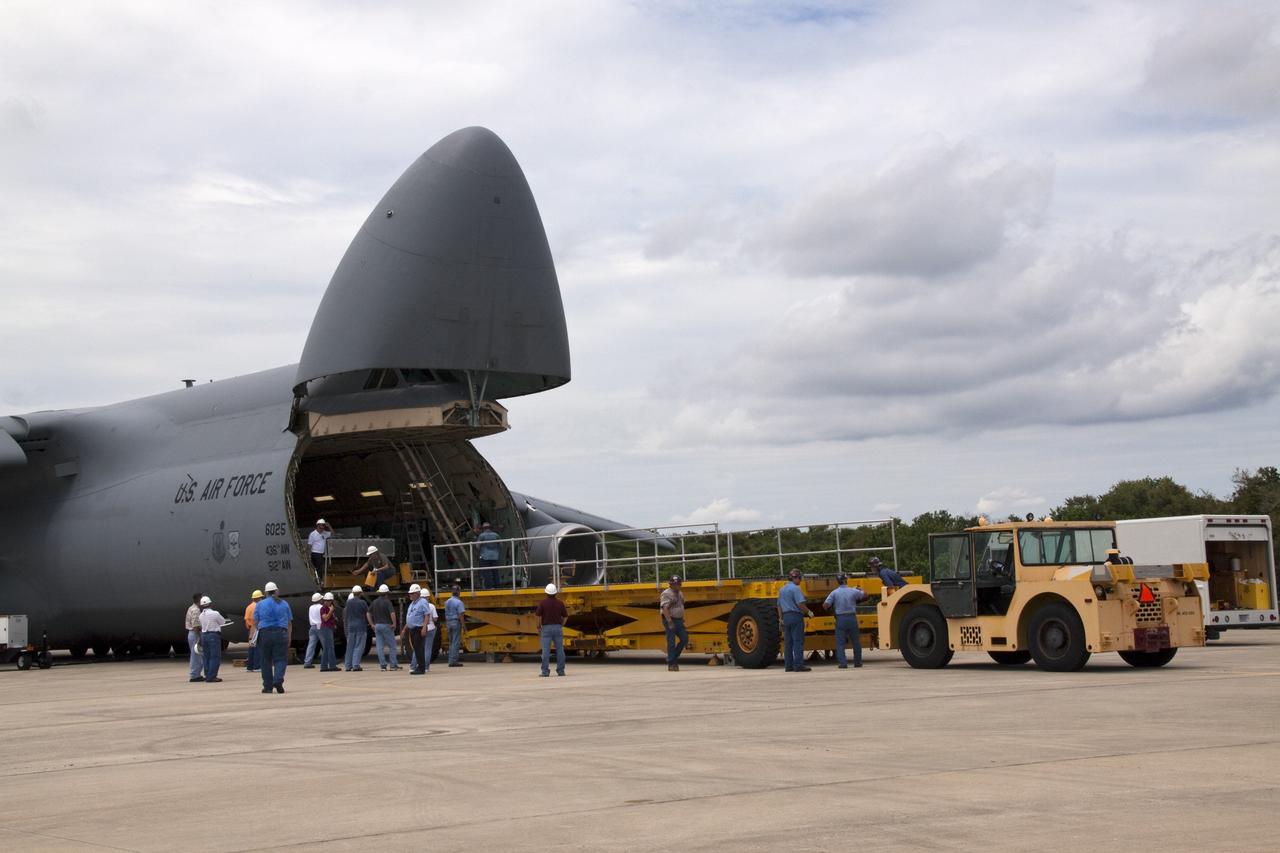
CAPE CANAVERAL, Fla. -- At NASA's Kennedy Space Center in Florida, workers begin to offload an Alpha Magnetic Spectrometer, or AMS, section from an Air Force C-5M aircraft. A tractor-trailer will transport the AMS from the Shuttle Landing Facility runway to the Space Station Processing Facility, where it will be processed for launch. AMS, a state-of-the-art particle physics detector, is designed to operate as an external module on the International Space Station. It will use the unique environment of space to study the universe and its origin by searching for dark matter. AMS will fly to the International Space Station aboard space shuttle Endeavour's STS-134 mission, targeted to launch Feb. 26, 2011. Photo credit: NASA/Jack Pfaller
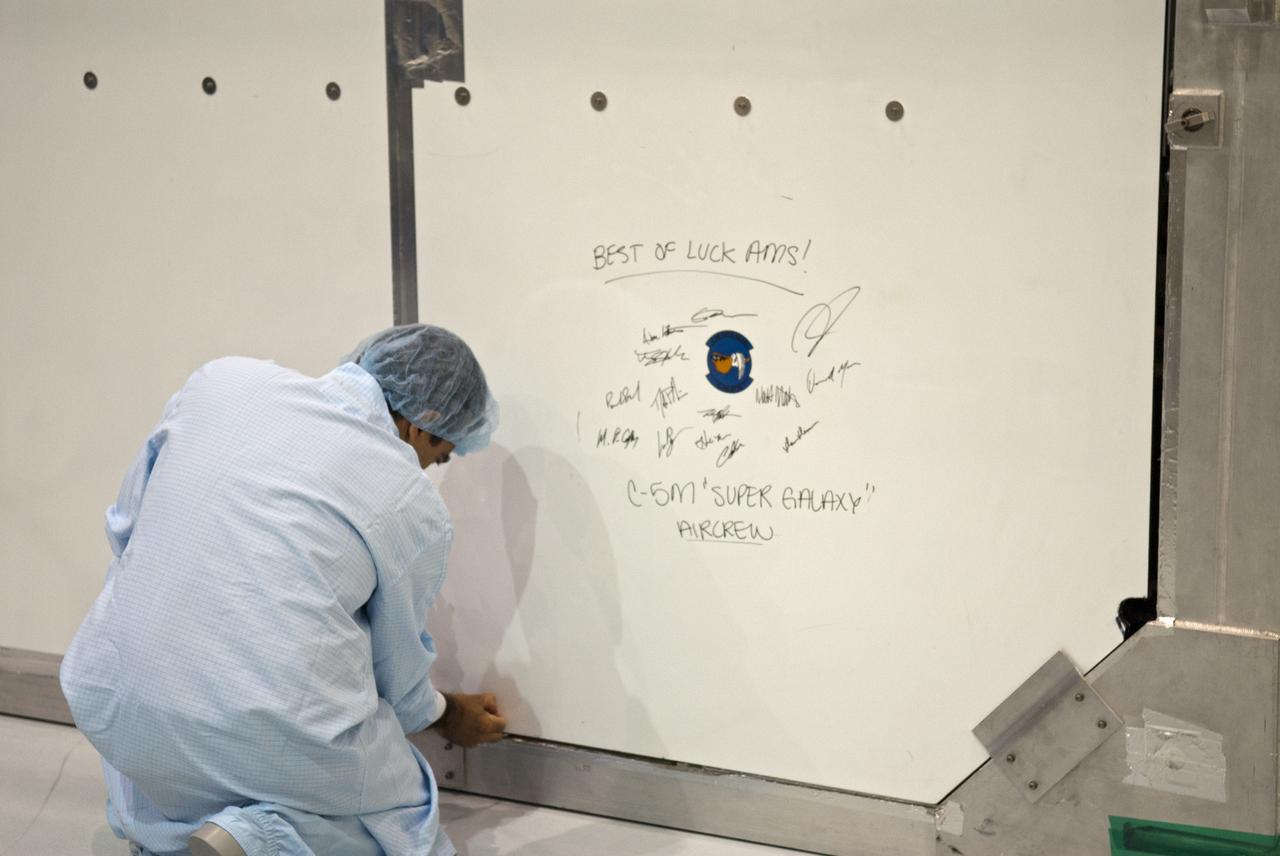
CAPE CANAVERAL, Fla. -- In the Space Station Processing Facility at NASA's Kennedy Space Center in Florida, a technician releases the bolts on a panel that protected the Alpha Magnetic Spectrometer, or AMS, during shipment. The Air Force C-5M flight crew that delivered AMS to Kennedy's Shuttle Landing Facility left their signatures and good wishes for the success of the mission on the panel. AMS, a state-of-the-art particle physics detector, is designed to operate as an external module on the International Space Station. It will use the unique environment of space to study the universe and its origin by searching for dark matter. The STS-134 crew will fly AMS to the International Space Station aboard space shuttle Endeavour, targeted to launch Feb. 26, 2011. Photo credit: NASA/Frankie Martin
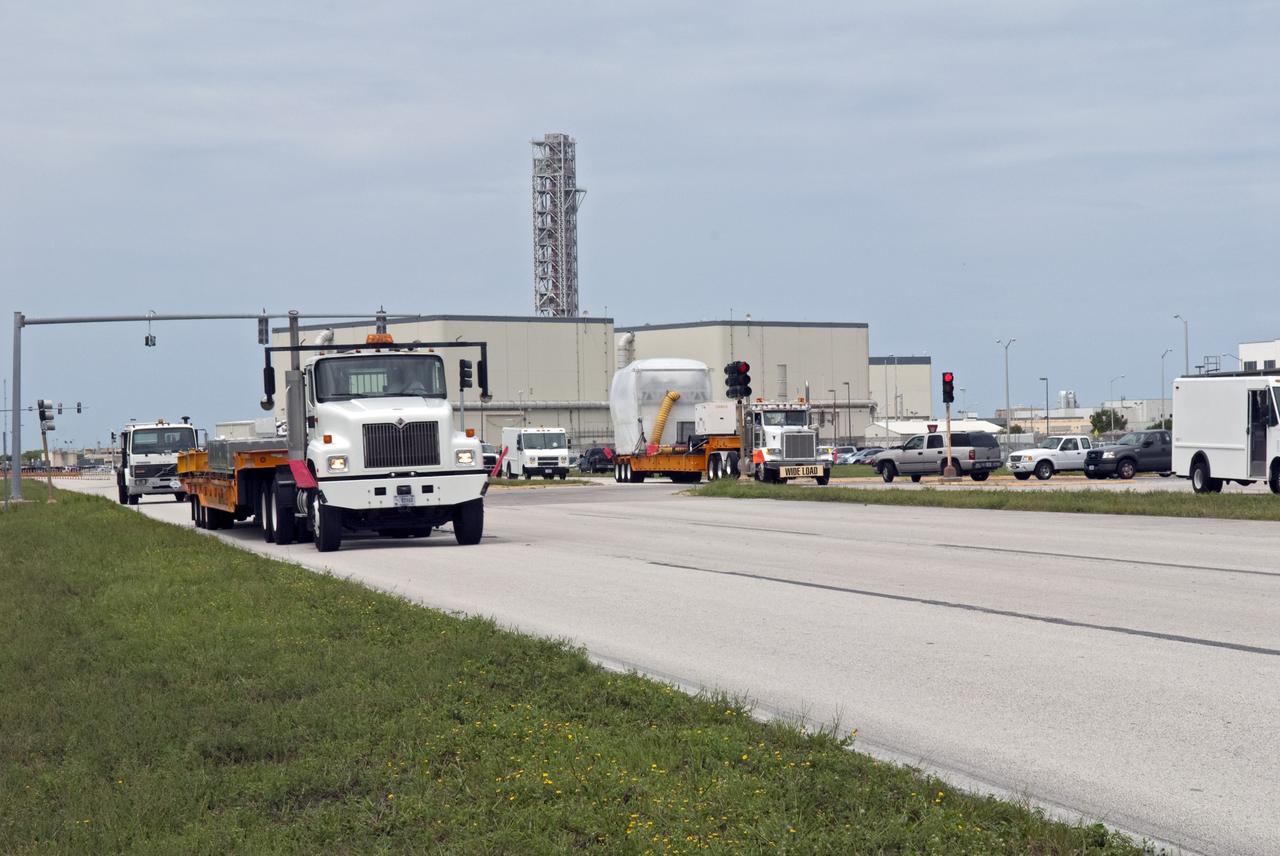
CAPE CANAVERAL, Fla. -- At NASA's Kennedy Space Center in Florida, a tractor-trailer carrying the Alpha Magnetic Spectrometer, or AMS, is on its way to the Space Station Processing Facility, where it will be processed for launch. AMS arrived on Kennedy's Shuttle Landing Facility aboard an Air Force C-5M aircraft from Europe. AMS, a state-of-the-art particle physics detector, is designed to operate as an external module on the International Space Station. It will use the unique environment of space to study the universe and its origin by searching for dark matter. The STS-134 crew will fly AMS to the International Space Station aboard space shuttle Endeavour, targeted to launch Feb. 26, 2011. Photo credit: NASA/Frankie Martin
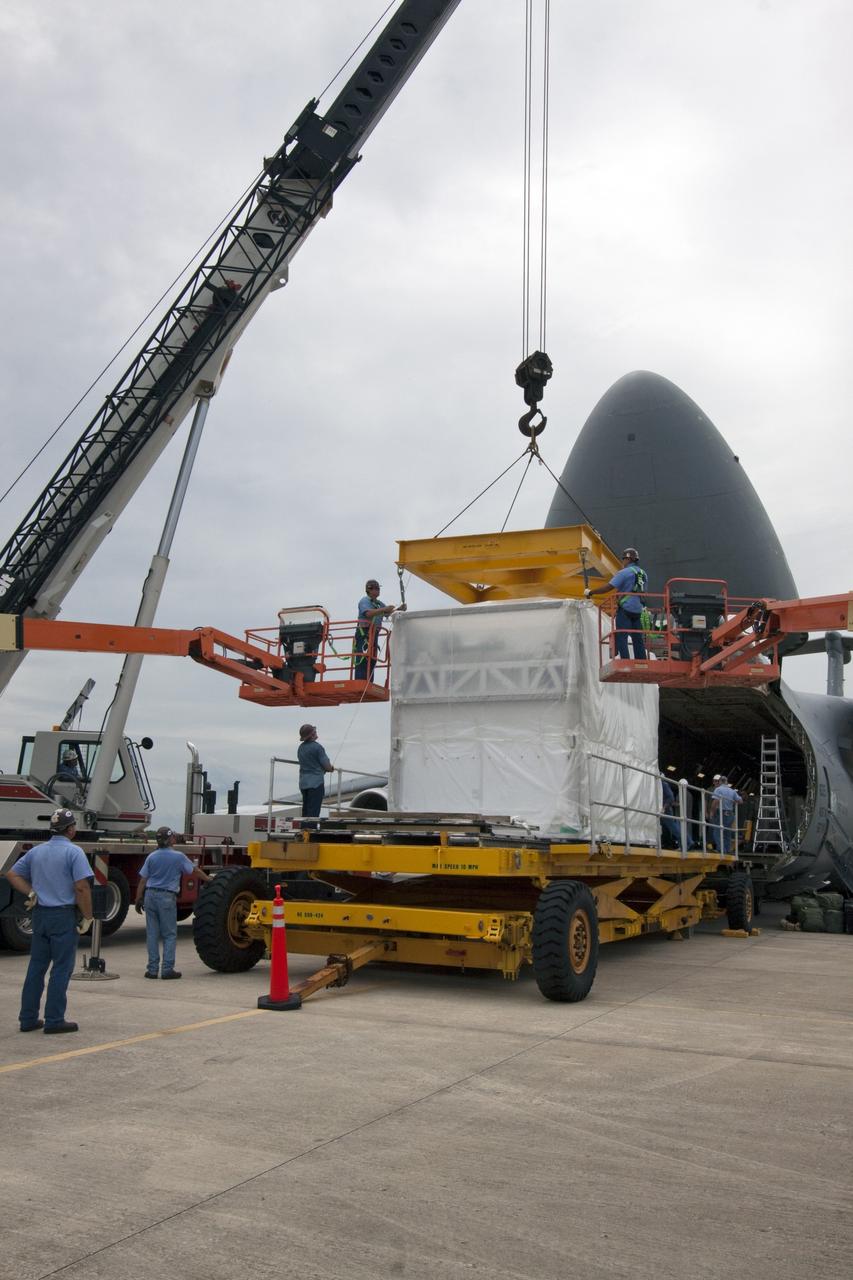
CAPE CANAVERAL, Fla. -- At NASA's Kennedy Space Center in Florida, workers begin to offload the next section of the Alpha Magnetic Spectrometer, or AMS, from an Air Force C-5M aircraft. A tractor-trailer will transport the AMS from the Shuttle Landing Facility runway to the Space Station Processing Facility, where it will be processed for launch. AMS, a state-of-the-art particle physics detector, is designed to operate as an external module on the International Space Station. It will use the unique environment of space to study the universe and its origin by searching for dark matter. AMS will fly to the International Space Station aboard space shuttle Endeavour's STS-134 mission, targeted to launch Feb. 26, 2011. Photo credit: NASA/Jack Pfaller
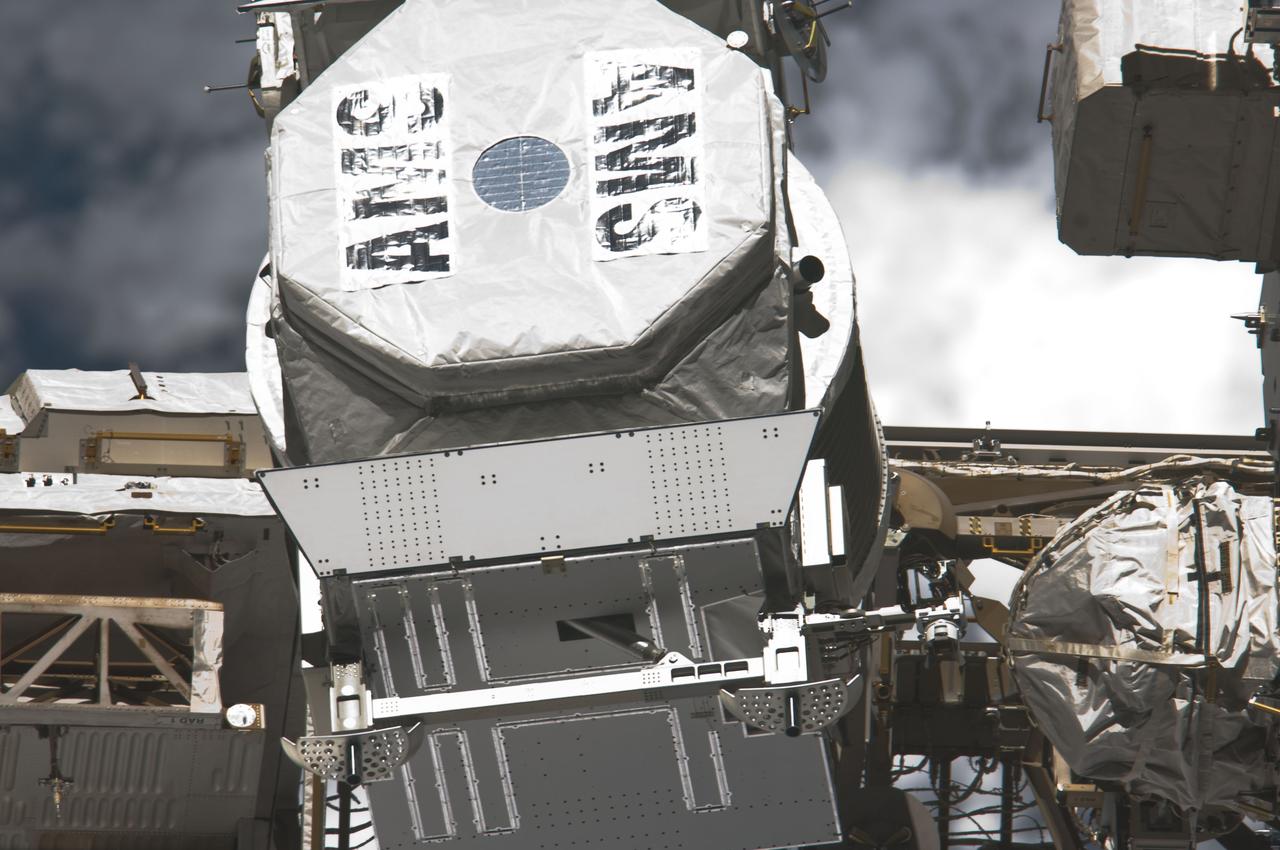
S134-E-010781 (30 May 2011) --- This image provides a close-up view of the Alpha Magnetic Spectrometer - 2 (AMS-2) photographed from inside the orbiter's cabin shortly after the space shuttle Endeavour undocked from the International Space Station (ISS) at the end of the STS-134 mission. Photo credit: NASA
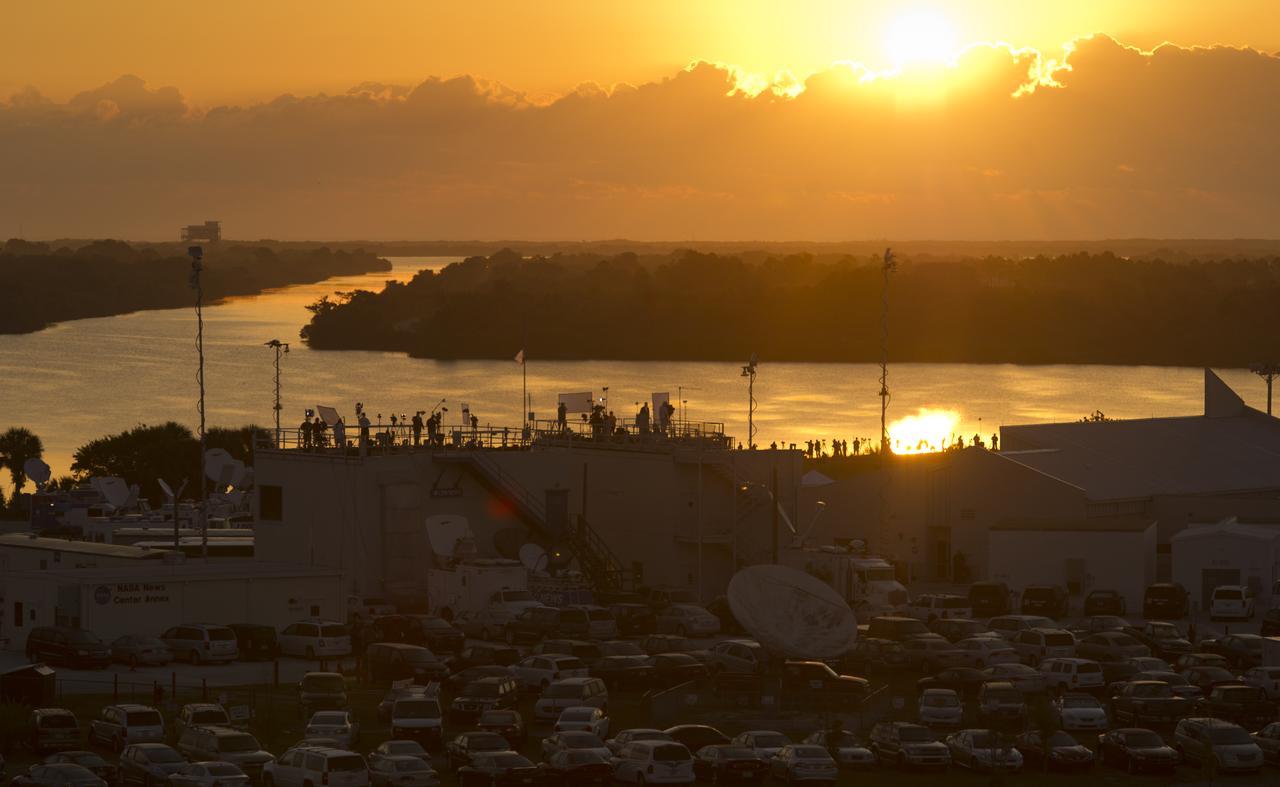
The press site at the NASA Kennedy Space Center is seen as the sun rises a few hours prior to the launch of the space shuttle Endeavour with the STS-134 crew, Monday, May 16, 2011, in Cape Canaveral, Fla. During the mission, Endeavour and the STS-134 crew will deliver the Alpha Magnetic Spectrometer (AMS) and spare parts including two S-band communications antennas, a high-pressure gas tank and additional spare parts for Dextre. Photo Credit: (NASA/Bill Ingalls)
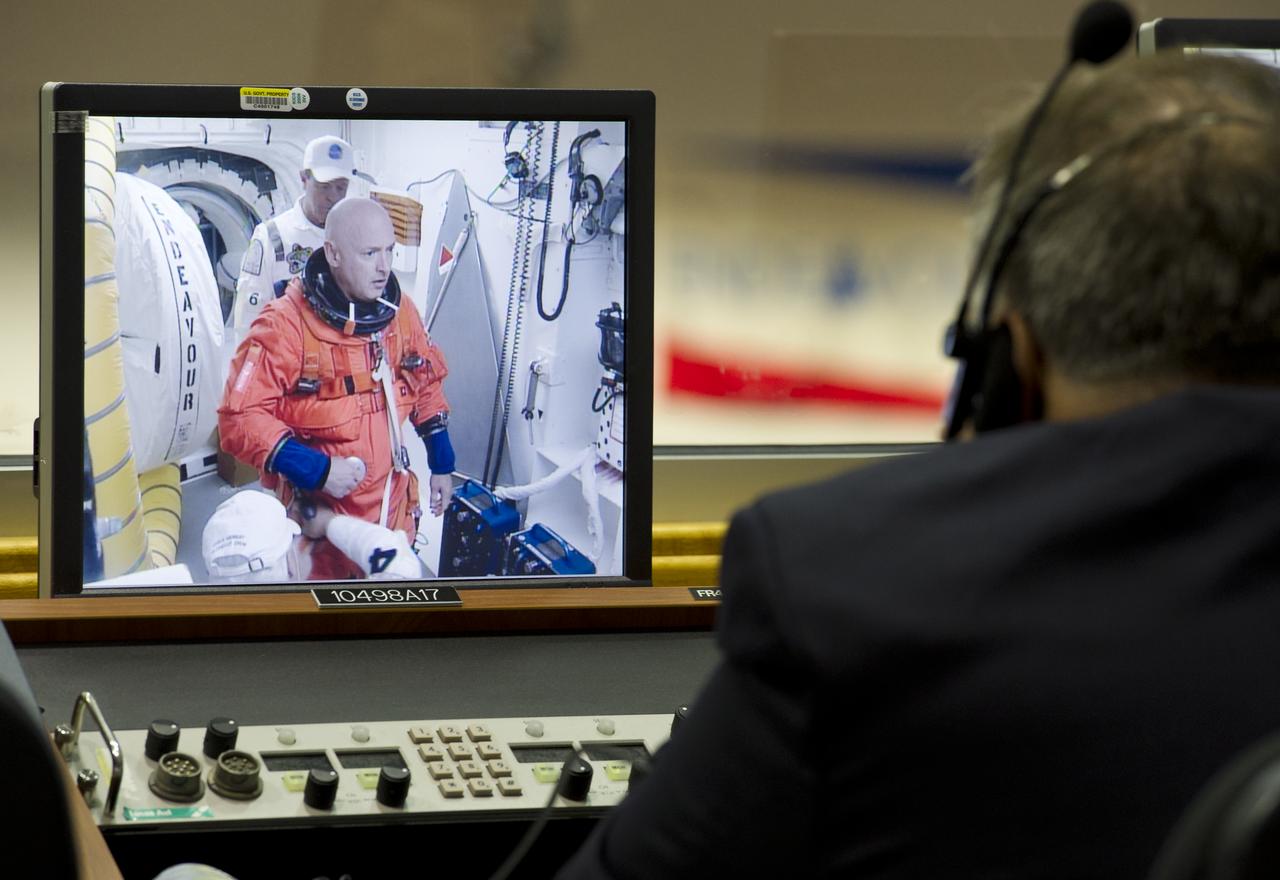
STS-134 mission Commander Mark Kelly is seen preparing to enter space shuttle Endeavour on a monitor in Firing Room Four of the Launch Control Center (LCC), Monday, May 16, 2011, at the Kennedy Space Center in Cape Canaveral, Fla. During the mission, Endeavour and the STS-134 crew will deliver the Alpha Magnetic Spectrometer (AMS) and spare parts including two S-band communications antennas, a high-pressure gas tank and additional spare parts for Dextre. Photo Credit: (NASA/Bill Ingalls)
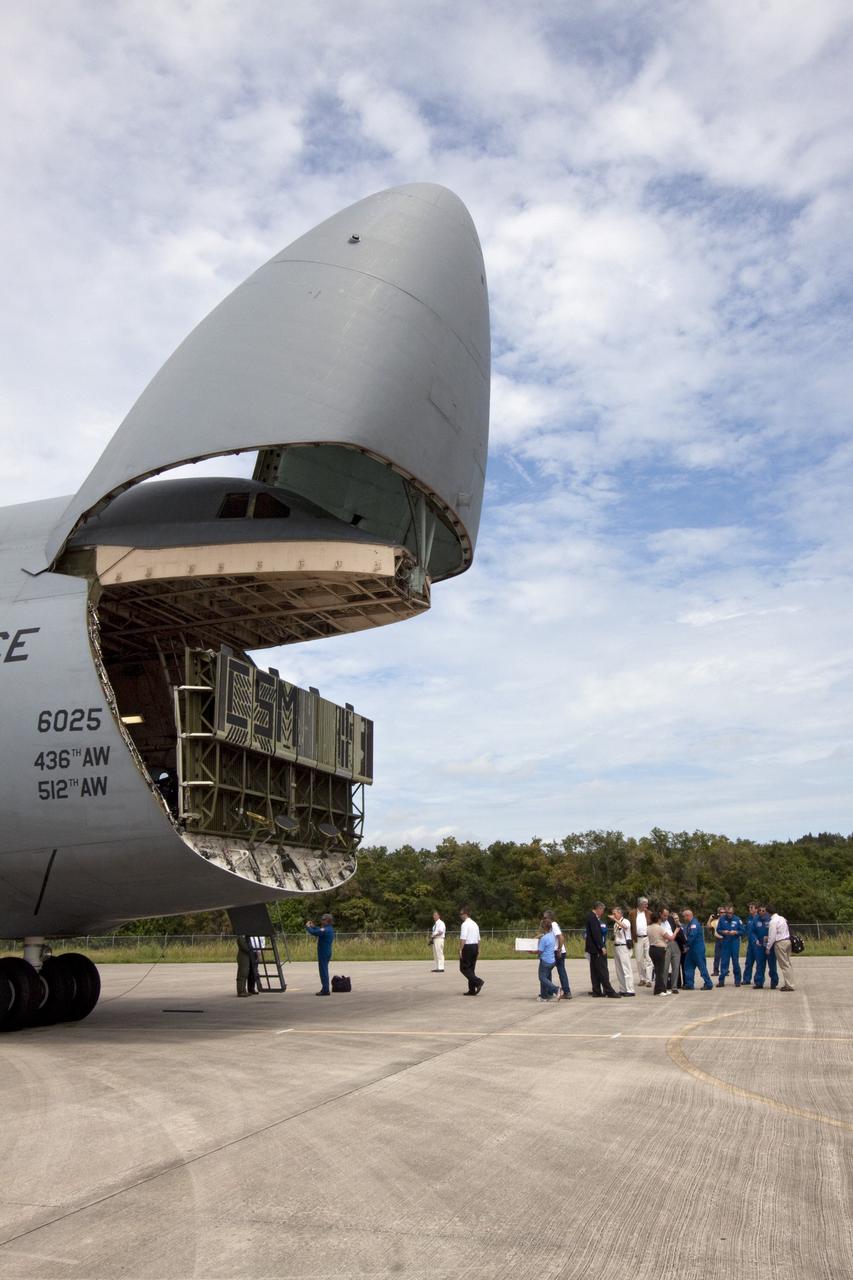
CAPE CANAVERAL, Fla. -- At NASA's Kennedy Space Center in Florida, media and the crew of space shuttle Endeavour's STS-134 mission gather on the Shuttle Landing Facility runway to check out the Alpha Magnetic Spectrometer, or AMS, which arrived aboard an Air Force C-5M aircraft from Europe. AMS, a state-of-the-art particle physics detector, is designed to operate as an external module on the International Space Station. It will use the unique environment of space to study the universe and its origin by searching for dark matter. AMS will fly to the International Space Station aboard space shuttle Endeavour's STS-134 mission, targeted to launch Feb. 26, 2011. Photo credit: NASA/Jack Pfaller
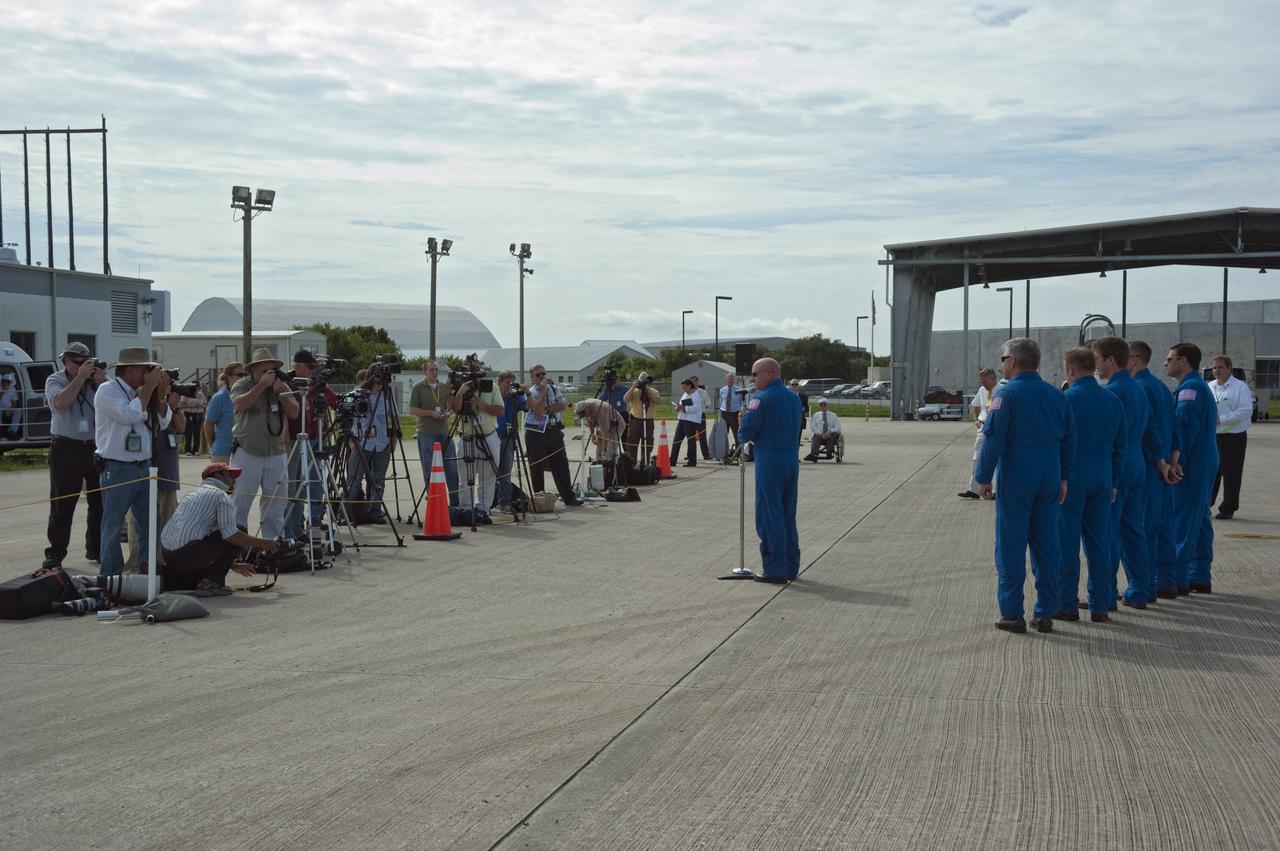
CAPE CANAVERAL, Fla. -- At the Shuttle Landing Facility at NASA's Kennedy Space Center in Florida, space shuttle Endeavour's STS-134 Commander Mark Kelly speaks to the media before the arrival of the Alpha Magnetic Spectrometer, or AMS. AMS, a state-of-the-art particle physics detector, is designed to operate as an external module on the International Space Station. It will use the unique environment of space to study the universe and its origin by searching for dark matter. AMS will fly to the International Space Station aboard space shuttle Endeavour's STS-134 mission targeted to launch Feb. 26, 2011. Photo credit: NASA/Kim Shiflett
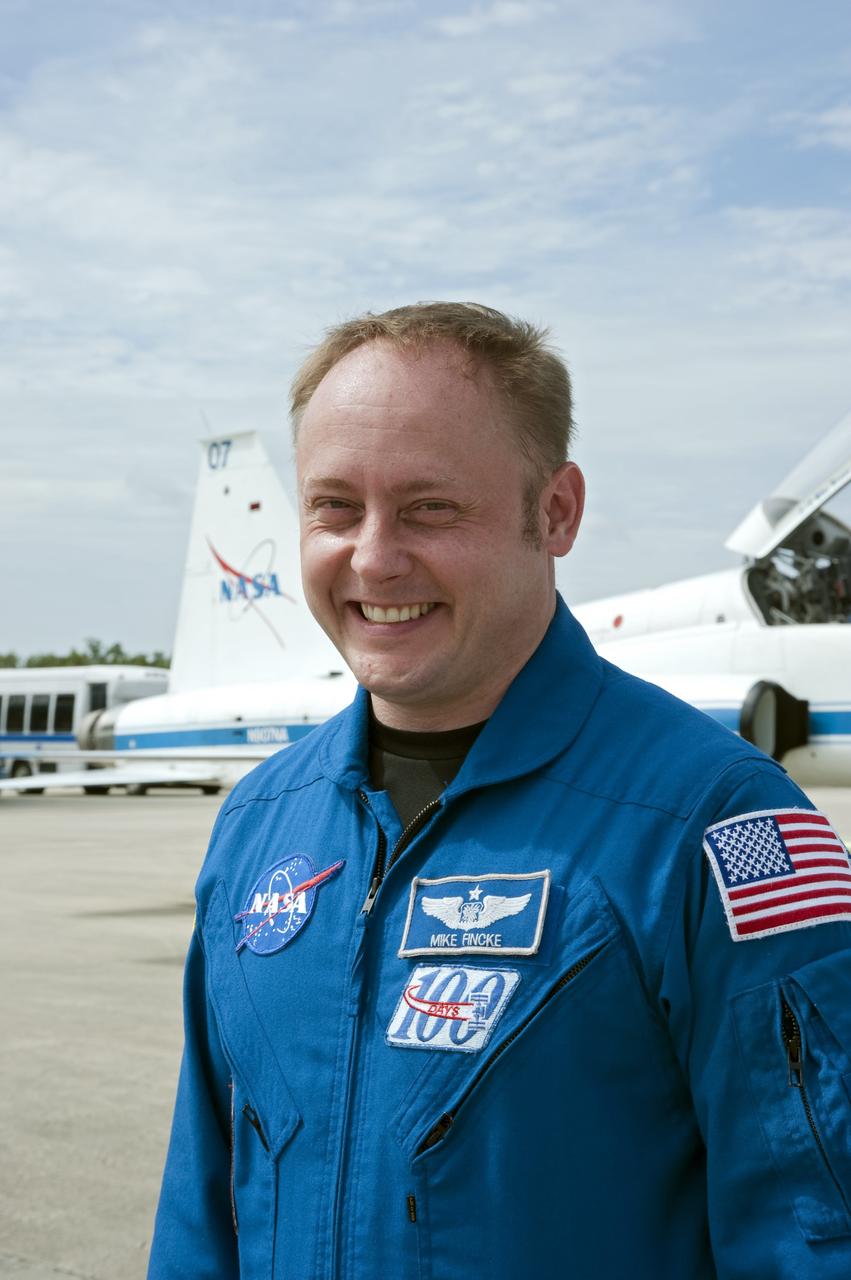
CAPE CANAVERAL, Fla. -- At the Shuttle Landing Facility at NASA's Kennedy Space Center in Florida, STS-134 Mission Specialist Michael Fincke pauses for a photo before the arrival of the Alpha Magnetic Spectrometer, or AMS. AMS, a state-of-the-art particle physics detector, is designed to operate as an external module on the International Space Station. It will use the unique environment of space to study the universe and its origin by searching for dark matter. AMS will fly to the International Space Station aboard space shuttle Endeavour's STS-134 mission targeted to launch Feb. 26, 2011. Photo credit: NASA/Kim Shiflett
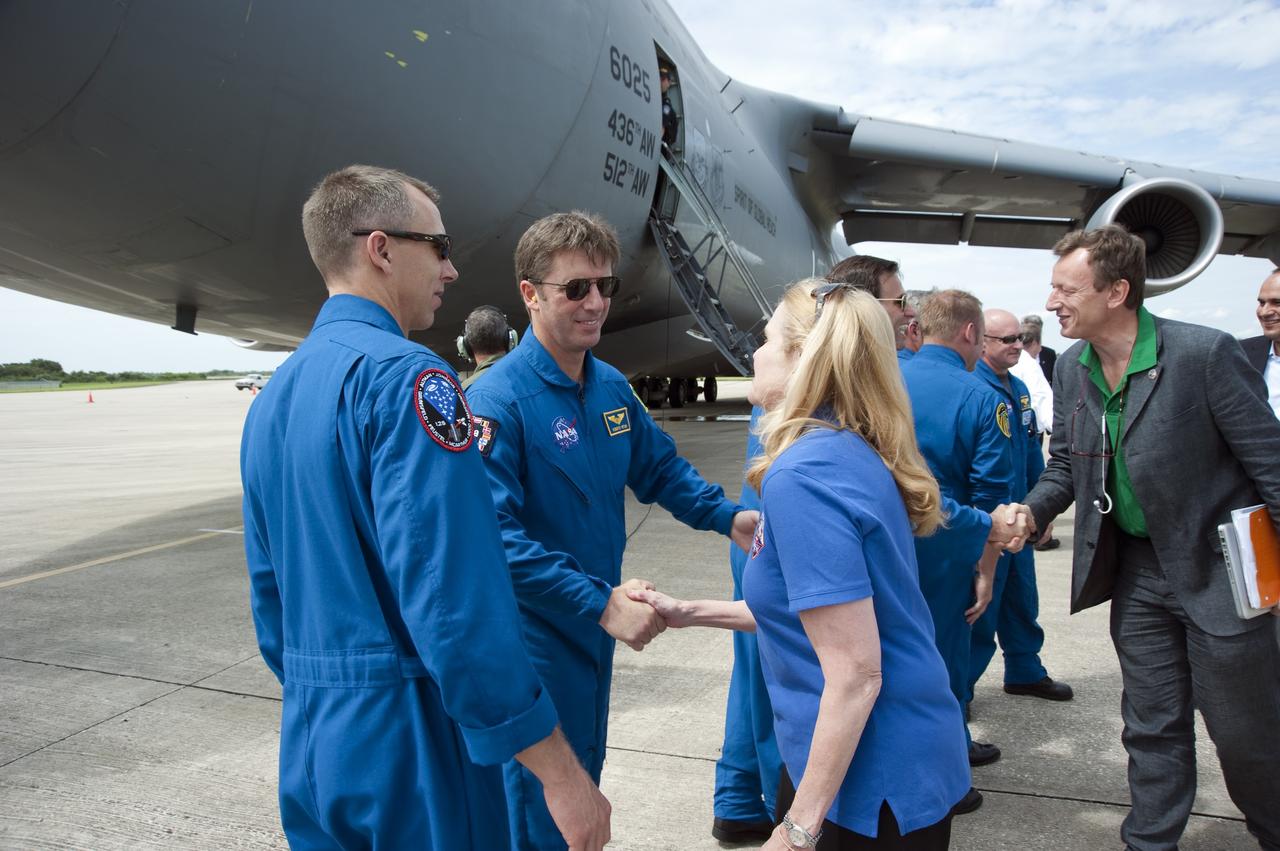
CAPE CANAVERAL, Fla. -- At the Shuttle Landing Facility at NASA's Kennedy Space Center in Florida, STS-134 Mission Specialist Andrew Feustel looks on as European Space Agency astronaut Roberto Vittori greets the media after the arrival of the Alpha Magnetic Spectrometer, or AMS. AMS, a state-of-the-art particle physics detector, is designed to operate as an external module on the International Space Station. It will use the unique environment of space to study the universe and its origin by searching for dark matter. AMS will fly to the International Space Station aboard space shuttle Endeavour's STS-134 mission targeted to launch Feb. 26, 2011. Photo credit: NASA/Kim Shiflett
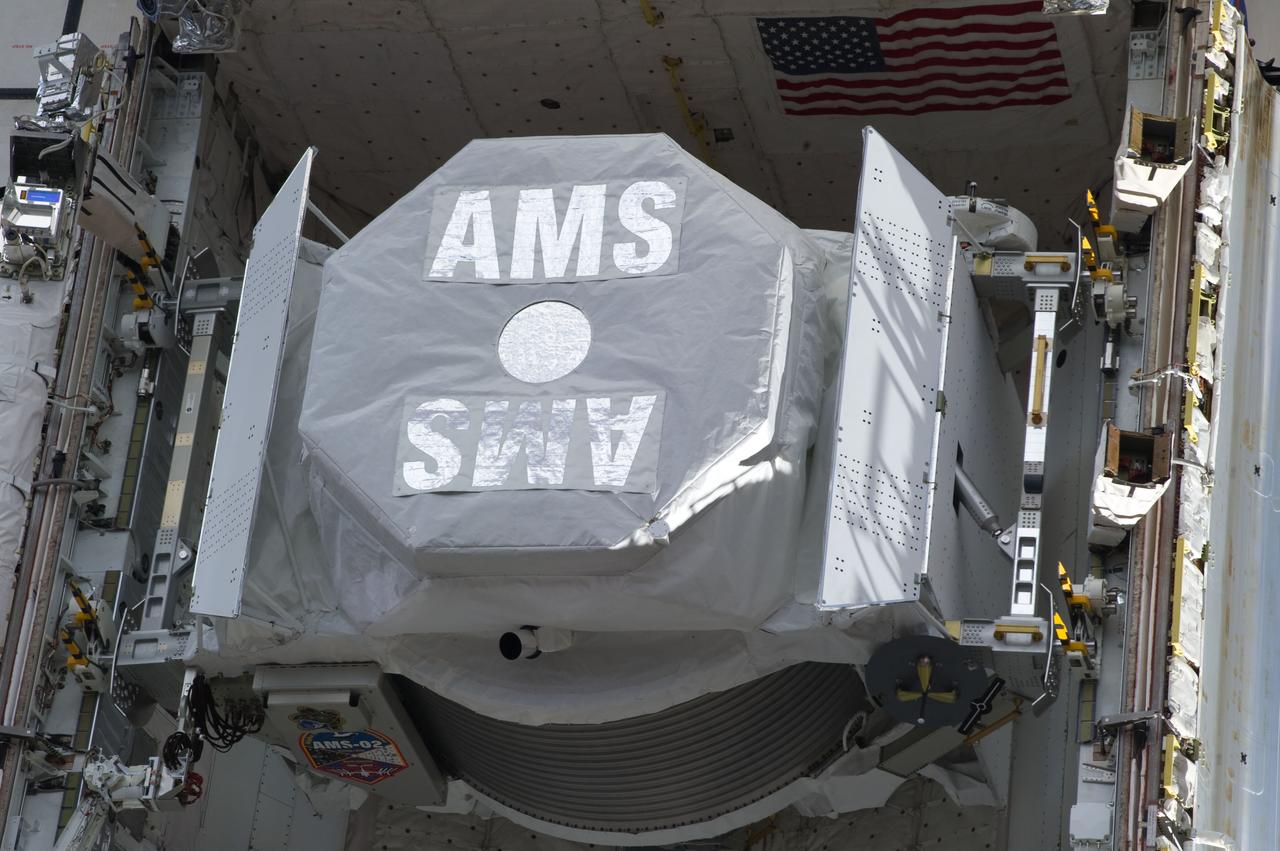
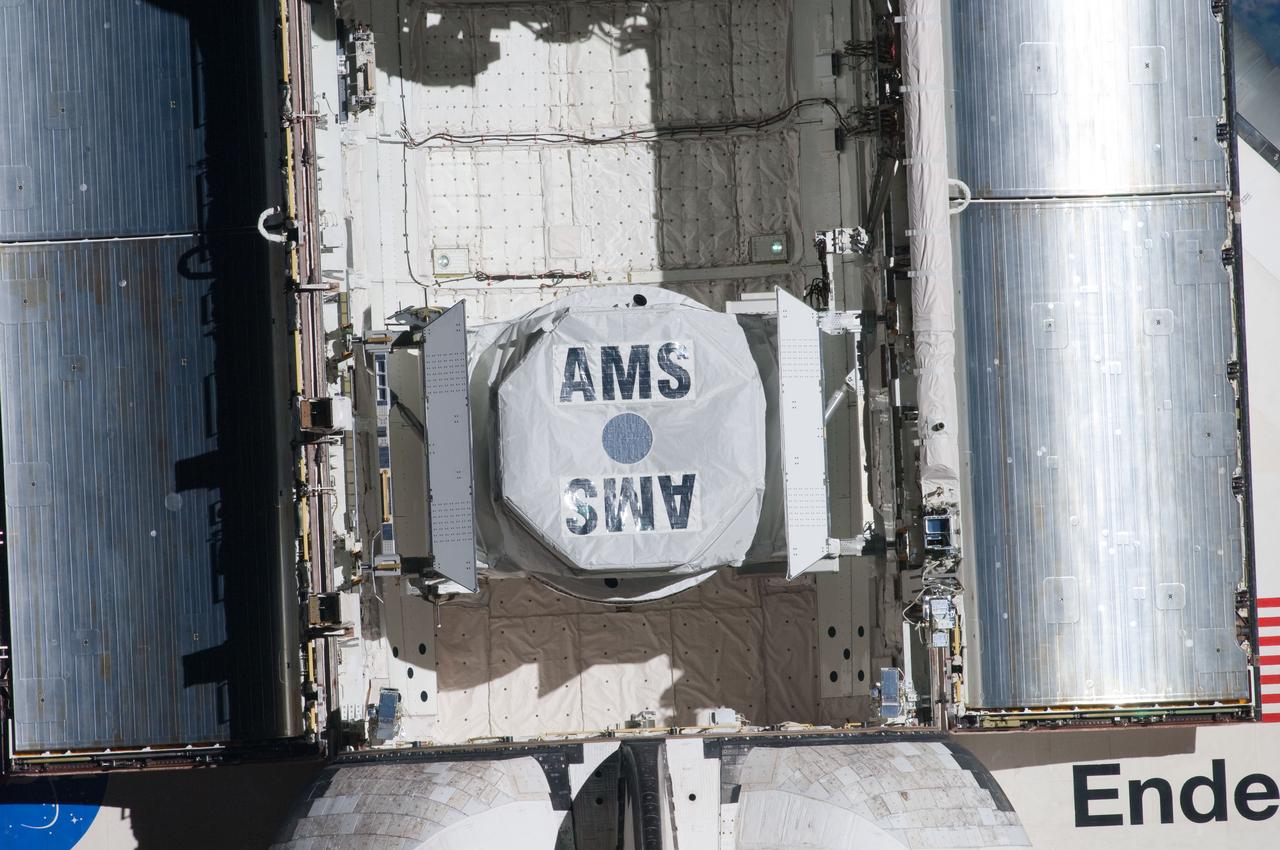
S134-E-007381 (19 May 2011) --- The Alpha Magnetic Spectrometer-2 (AMS) in the space shuttle Endeavour?s payload bay is featured in this image photographed by an STS-134 crew member while docked with the International Space Station. Shortly after this image was taken, the AMS was moved from the payload bay to the station?s starboard truss. Photo credit: NASA
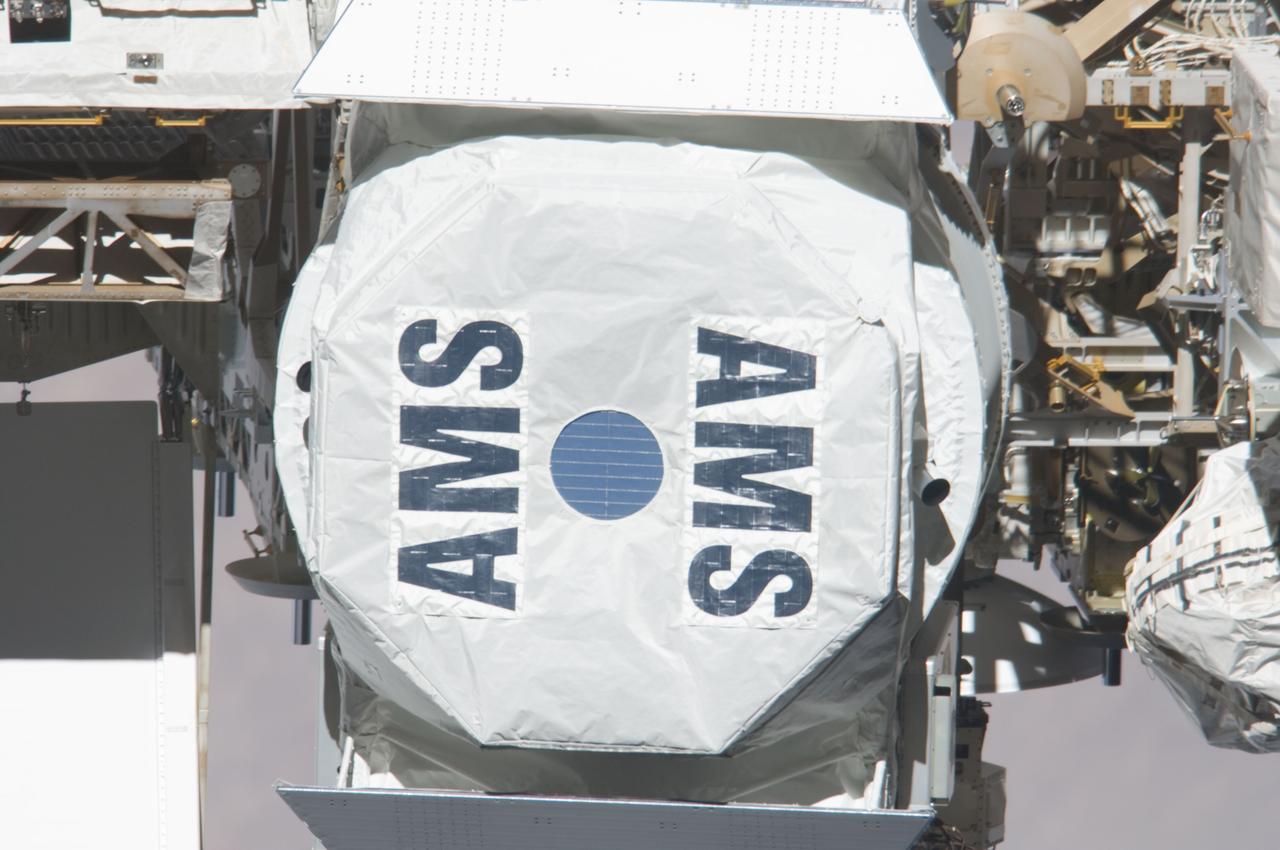
ISS027-E-032216 (18 May 2011) --- This close-up view of the Alpha Magnetic Spectrometer-2 (AMS) in space shuttle Endeavour’s payload bay was provided by an Expedition 27 crew member during a survey of the approaching STS-134 vehicle prior to docking with the International Space Station. As part of the survey and part of every mission's activities, Endeavour performed a back-flip for the rendezvous pitch maneuver (RPM). The image was photographed with a digital still camera, using a 400mm lens at a distance of about 600 feet (180 meters).
S134-E-010687 (29 May 2011) --- A close-up view of the newly-attached Alpha Magnetic Spectrometer-2 (AMS) on the International Space Station is featured in this image photographed by an STS-134 crew member on the space shuttle Endeavour after the station and shuttle began their post-undocking relative separation. Undocking of the two spacecraft occurred at 11:55 p.m. (EDT) on May 29, 2011. Endeavour spent 11 days, 17 hours and 41 minutes attached to the orbiting laboratory. Photo credit: NASA
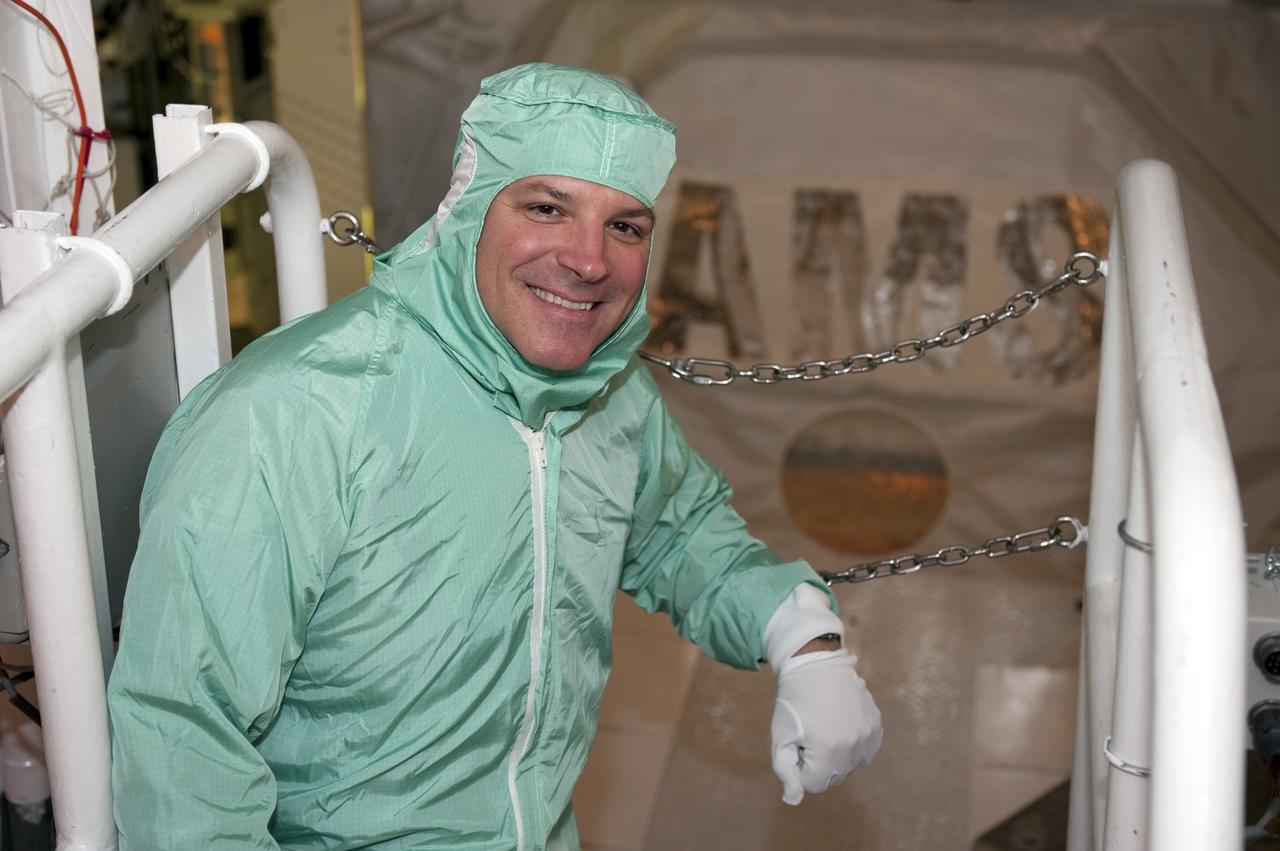
CAPE CANAVERAL, Fla. -- STS-134 Pilot Greg H. Johnson performs a walkdown of space shuttle Endeavour's payload bay. The Express Logistics Carrier-3 packed with spare parts and the Alpha Magnetic Spectrometer-2 (AMS) are inside the bay for the STS-134 mission to the International Space Station. Endeavour's six crew members are at Kennedy for the launch countdown dress rehearsal called the Terminal Countdown Demonstration Test (TCDT) and related training. Endeavour is targeted to launch April 19 at 7:48 p.m. EDT on its final spaceflight mission. For more information visit, www.nasa.gov/mission_pages/shuttle/shuttlemissions/sts134/index.html. Photo credit: NASA/Kim Shiflett
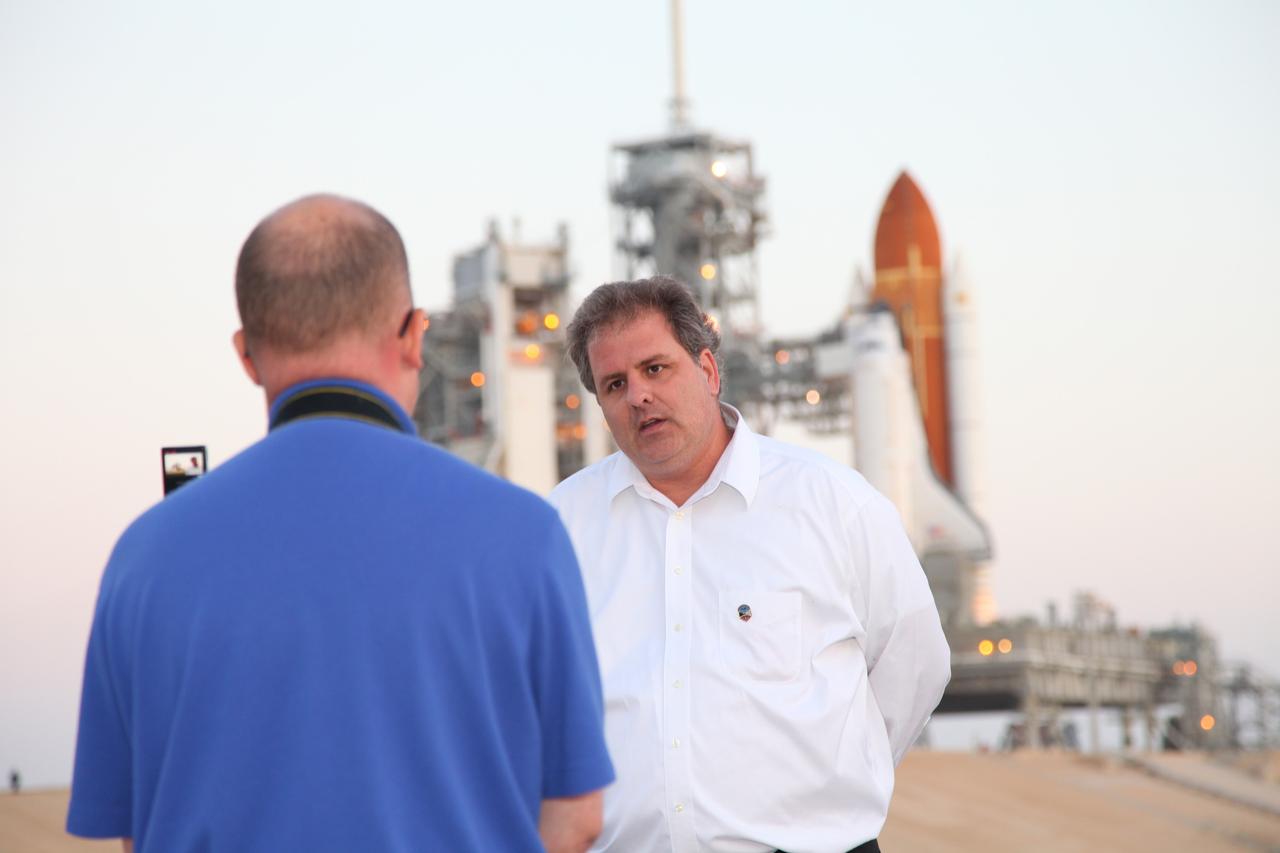
CAPE CANAVERAL, Fla. -- STS-134 Payloads Mission Manager Joe Delai talks to media with space shuttle Endeavour and its primary payload in the background on Launch Pad 39A at NASA's Kennedy Space Center in Florida. The Alpha Magnetic Spectrometer-2 (AMS) and Express Logistics Carrier-3 are scheduled to be installed into the shuttle's cargo bay March 25. Endeavour and its six-member STS-134 crew are targeted to lift off April 19 at 7:48 p.m. EDT to deliver the payload to the International Space Station. This is Endeavour's final scheduled mission. For more information visit, www.nasa.gov/mission_pages/shuttle/shuttlemissions/sts134/index.html. Photo credit: NASA/Frankie Martin

CAPE CANAVERAL, Fla. -- Crews move the primary payload for space shuttle Endeavour's STS-134 mission into the Payload Changeout Room on Launch Pad 39A at NASA's Kennedy Space Center in Florida. The Alpha Magnetic Spectrometer-2 (AMS) and Express Logistics Carrier-3 are scheduled to be installed into the shuttle's cargo bay March 25. Endeavour and its six-member STS-134 crew are targeted to lift off April 19 at 7:48 p.m. EDT to deliver the payload to the International Space Station. This is Endeavour's final scheduled mission. For more information visit, www.nasa.gov/mission_pages/shuttle/shuttlemissions/sts134/index.html. Photo credit: NASA
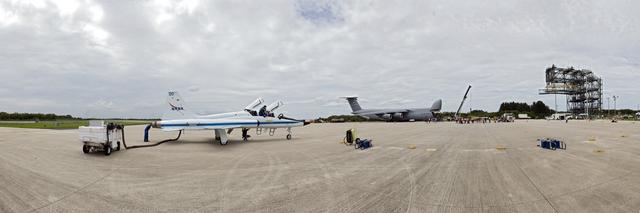
CAPE CANAVERAL, Fla. -- At NASA's Kennedy Space Center in Florida, media and workers watch as the Alpha Magnetic Spectrometer (AMS) is offloaded from an Air Force C-5M aircraft on the Shuttle Landing Facility runway. One of NASA's T-38 training jets, flown by a member of the STS-134 crew, is in the foreground. The state-of-the-art particle physics detector arrived from Europe and will operate as an external module on the International Space Station to study the universe and its origin by searching for dark matter. AMS will fly to the station aboard space shuttle Endeavour's STS-134 mission targeted to launch Feb. 26, 2011. Photo credit: NASA/Frankie Martin
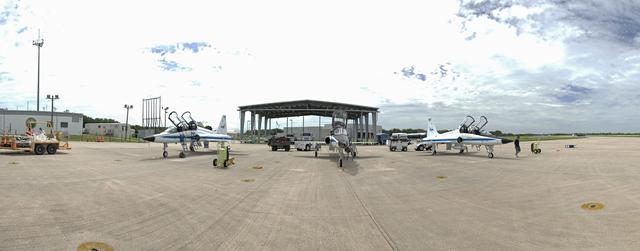
CAPE CANAVERAL, Fla. -- At NASA's Kennedy Space Center in Florida, three of NASA's T-38 training jets sit on the parking apron of the Shuttle Landing Facility. The STS-134 crew members flew the jets to Kennedy to watch the Alpha Magnetic Spectrometer (AMS) arrive aboard an Air Force C-5M aircraft from Europe. The state-of-the-art particle physics detector will operate as an external module on the International Space Station to study the universe and its origin by searching for dark matter. AMS will fly to the station aboard space shuttle Endeavour's STS-134 mission targeted to launch Feb. 26, 2011. Photo credit: NASA/Frankie Martin
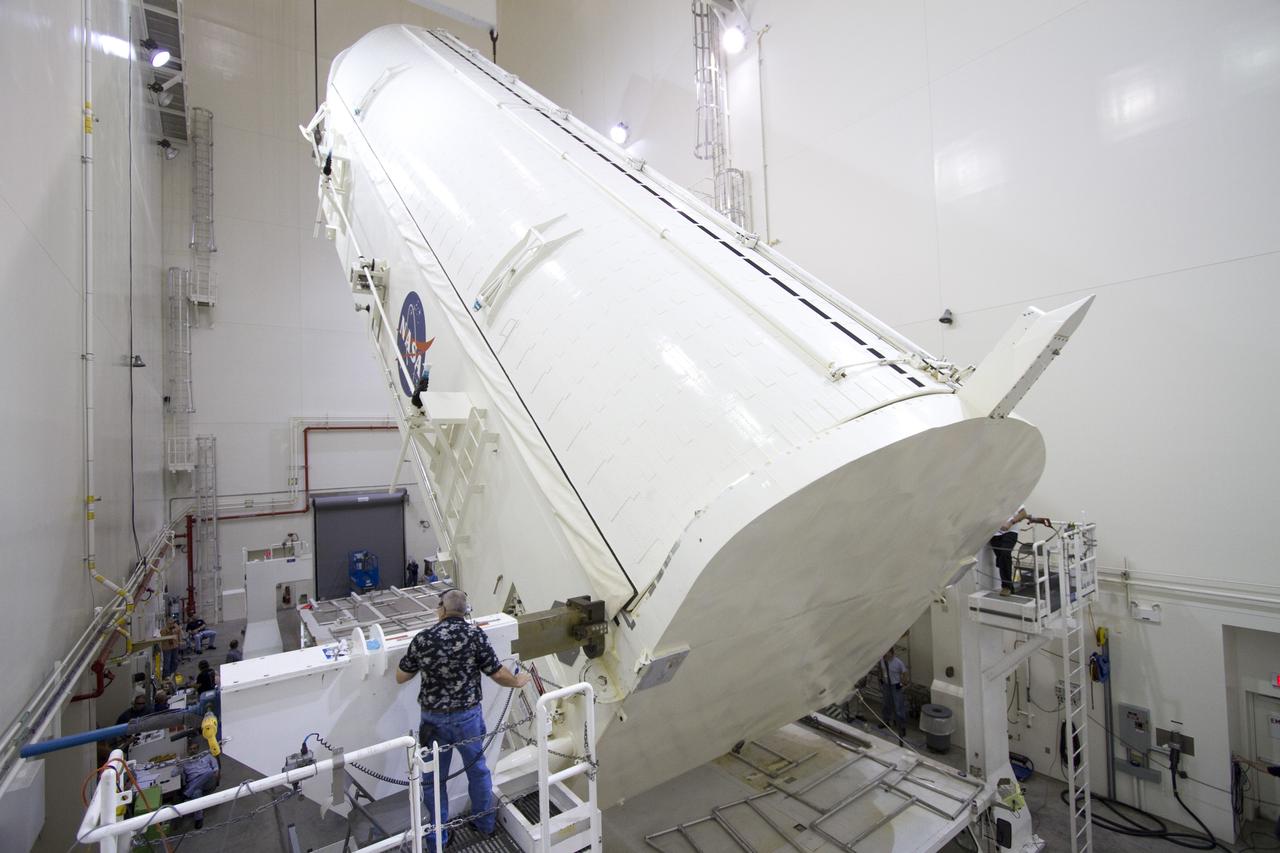
CAPE CANAVERAL, Fla. -- A canister, carrying the Alpha Magnetic Spectrometer-2 AMS and Express Logistics Carrier-3 for space shuttle Endeavour's STS-134 mission, is rotated from a horizontal to vertical position in the Canister Rotation Facility at NASA's Kennedy Space Center in Florida. Endeavour and its six-member STS-134 crew are targeted to lift off April 19 at 7:48 p.m. EDT to deliver the payload to the International Space Station. For more information visit, www.nasa.gov/mission_pages/shuttle/shuttlemissions/sts134/index.html. Photo credit: NASA/Jack Pfaller
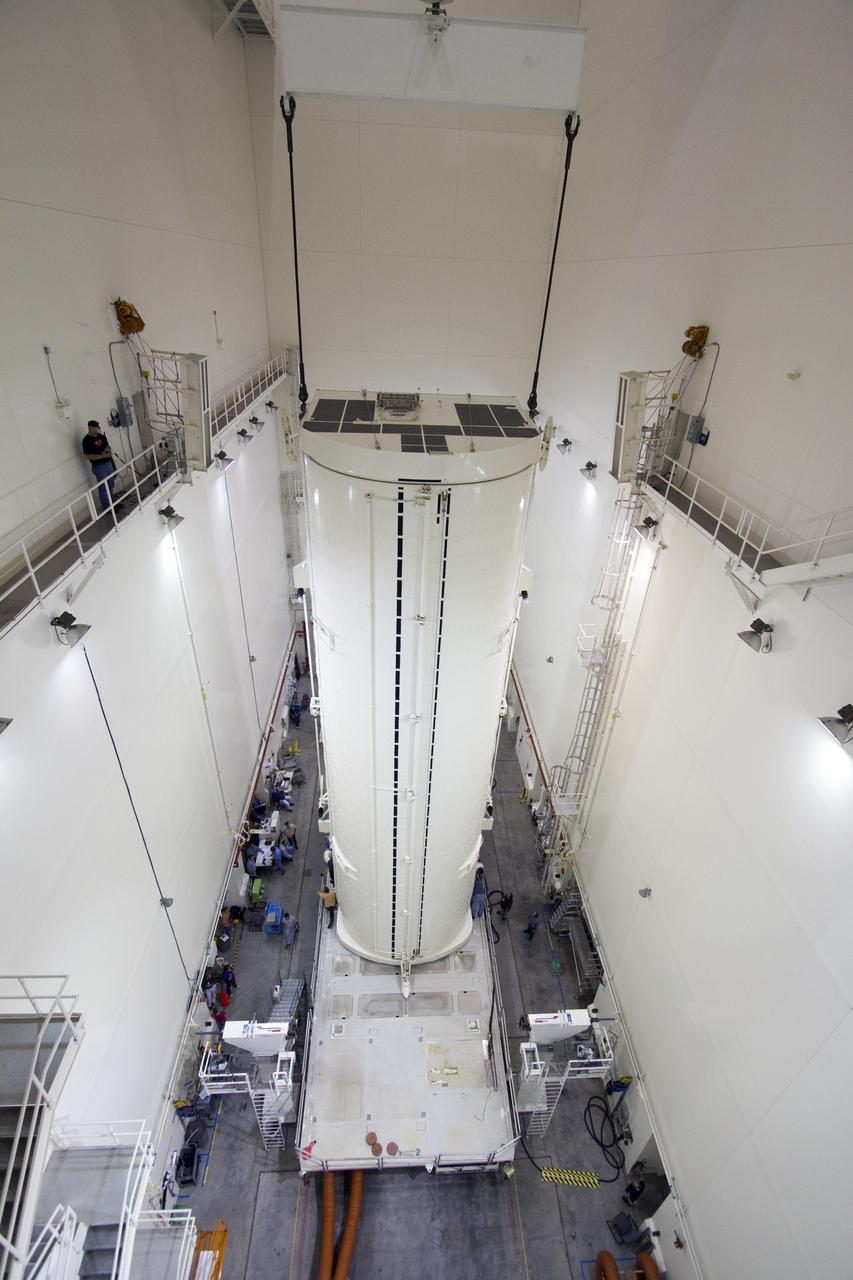
CAPE CANAVERAL, Fla. -- After being rotated from a horizontal to vertical position, the canister that contains the Alpha Magnetic Spectrometer-2 AMS and Express Logistics Carrier-3 for space shuttle Endeavour's STS-134 mission is lowered to its transportation vehicle in the Canister Rotation Facility at NASA's Kennedy Space Center in Florida. Endeavour and its six-member STS-134 crew are targeted to lift off April 19 at 7:48 p.m. EDT to deliver the payload to the International Space Station. For more information visit, www.nasa.gov/mission_pages/shuttle/shuttlemissions/sts134/index.html. Photo credit: NASA/Jack Pfaller
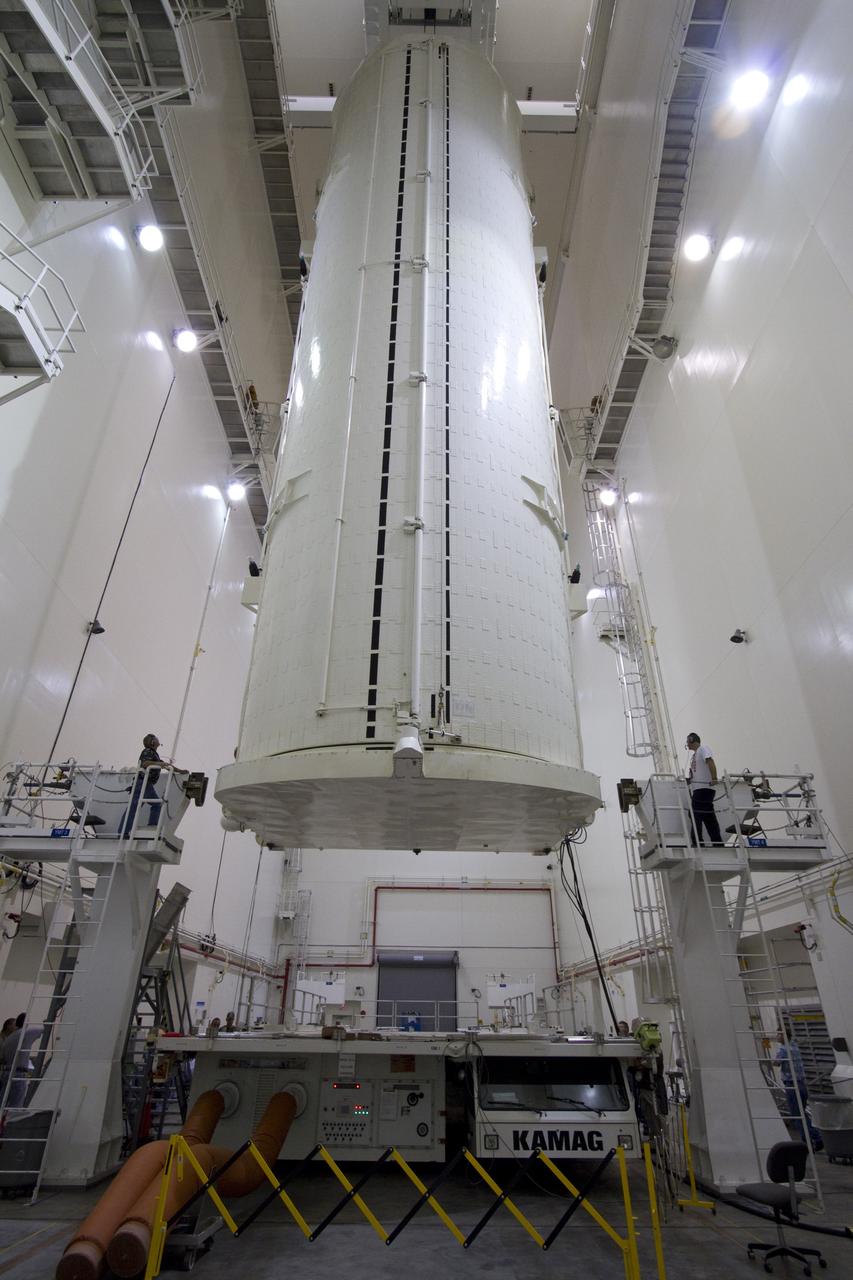
CAPE CANAVERAL, Fla. -- After being rotated from a horizontal to vertical position, the canister that contains the Alpha Magnetic Spectrometer-2 AMS and Express Logistics Carrier-3 for space shuttle Endeavour's STS-134 mission is lowered to its transportation vehicle in the Canister Rotation Facility at NASA's Kennedy Space Center in Florida. Endeavour and its six-member STS-134 crew are targeted to lift off April 19 at 7:48 p.m. EDT to deliver the payload to the International Space Station. For more information visit, www.nasa.gov/mission_pages/shuttle/shuttlemissions/sts134/index.html. Photo credit: NASA/Jack Pfaller
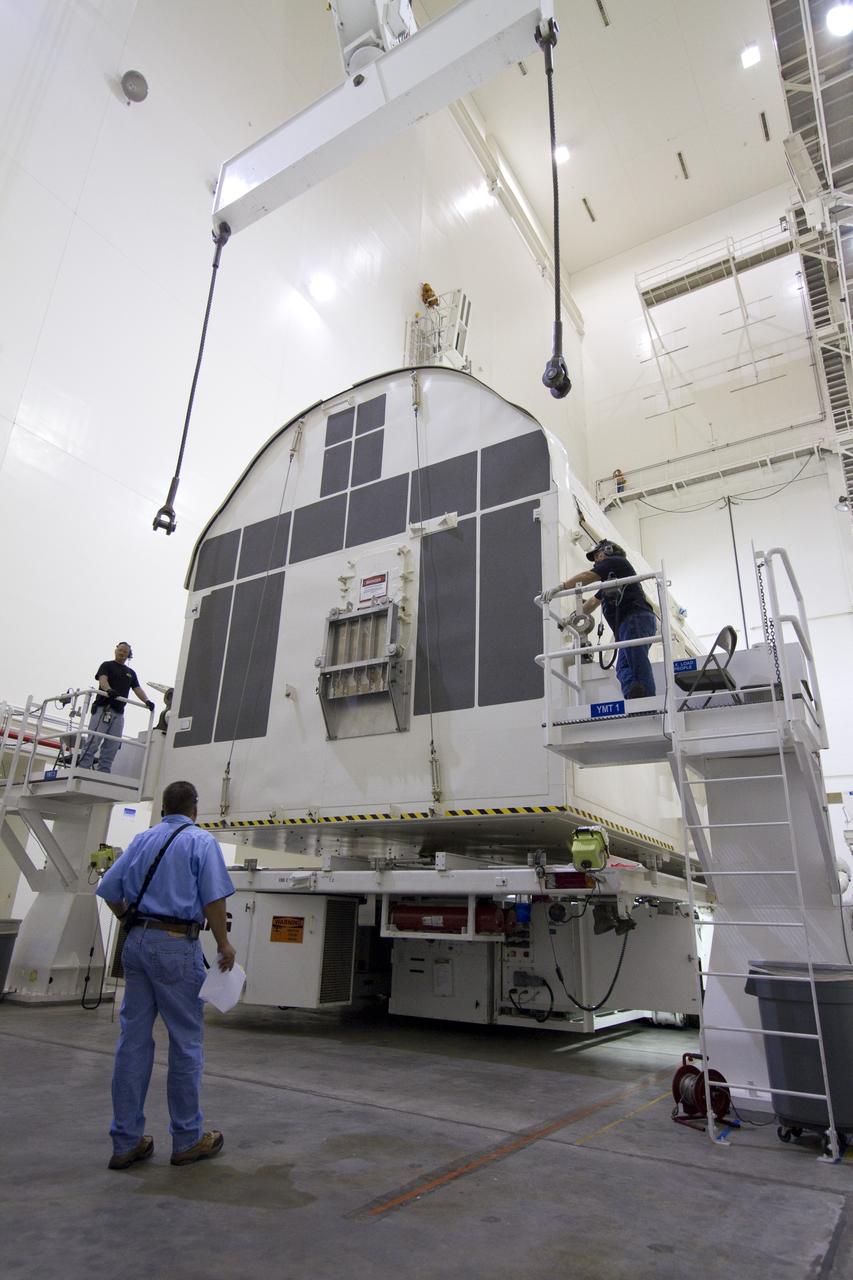
CAPE CANAVERAL, Fla. -- A canister, carrying the Alpha Magnetic Spectrometer-2 AMS and Express Logistics Carrier-3 for space shuttle Endeavour's STS-134 mission, will be rotated from a horizontal to vertical position in the Canister Rotation Facility at NASA's Kennedy Space Center in Florida. Endeavour and its six-member STS-134 crew are targeted to lift off April 19 at 7:48 p.m. EDT to deliver the payload to the International Space Station. For more information visit, www.nasa.gov/mission_pages/shuttle/shuttlemissions/sts134/index.html. Photo credit: NASA/Jack Pfaller
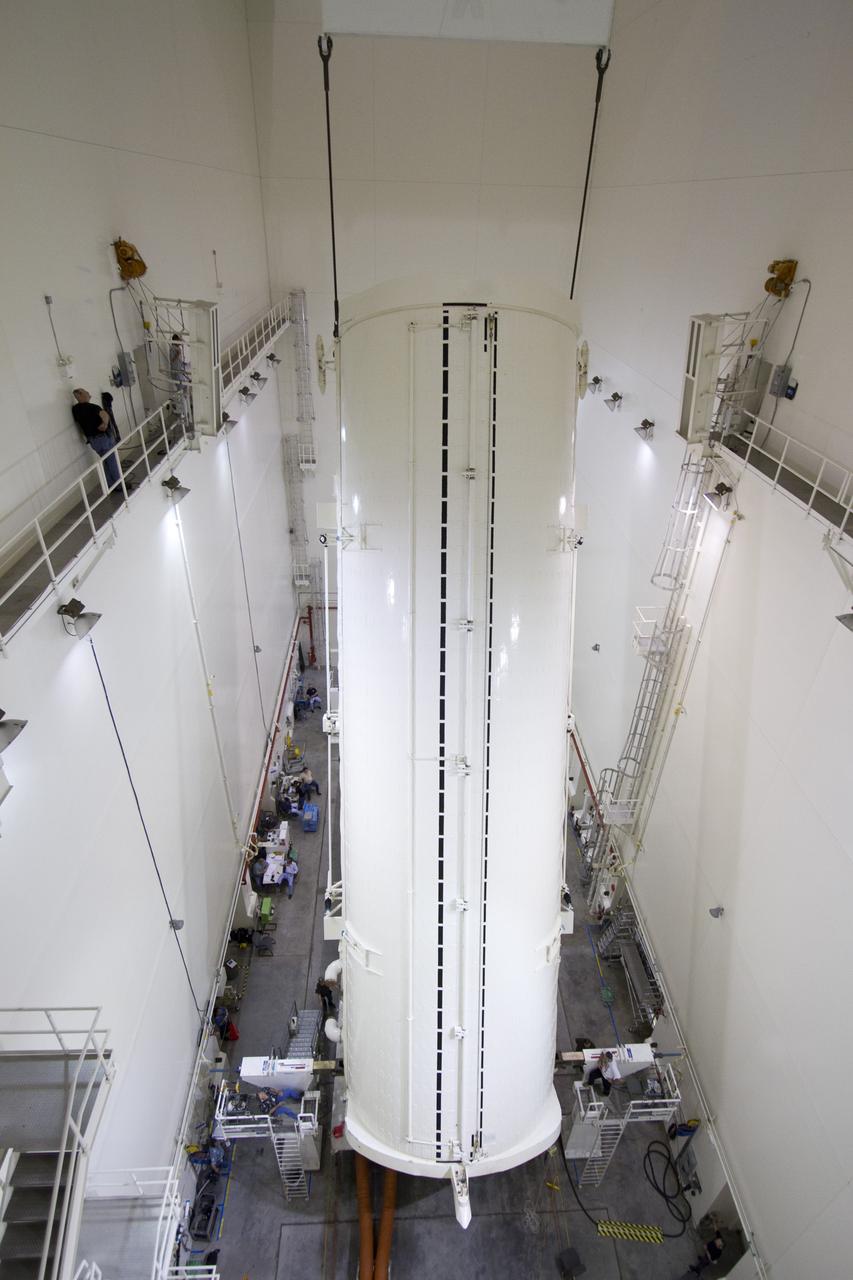
CAPE CANAVERAL, Fla. -- A canister, carrying the Alpha Magnetic Spectrometer-2 AMS and Express Logistics Carrier-3 for space shuttle Endeavour's STS-134 mission, is rotated from a horizontal to vertical position in the Canister Rotation Facility at NASA's Kennedy Space Center in Florida. Endeavour and its six-member STS-134 crew are targeted to lift off April 19 at 7:48 p.m. EDT to deliver the payload to the International Space Station. For more information visit, www.nasa.gov/mission_pages/shuttle/shuttlemissions/sts134/index.html. Photo credit: NASA/Jack Pfaller
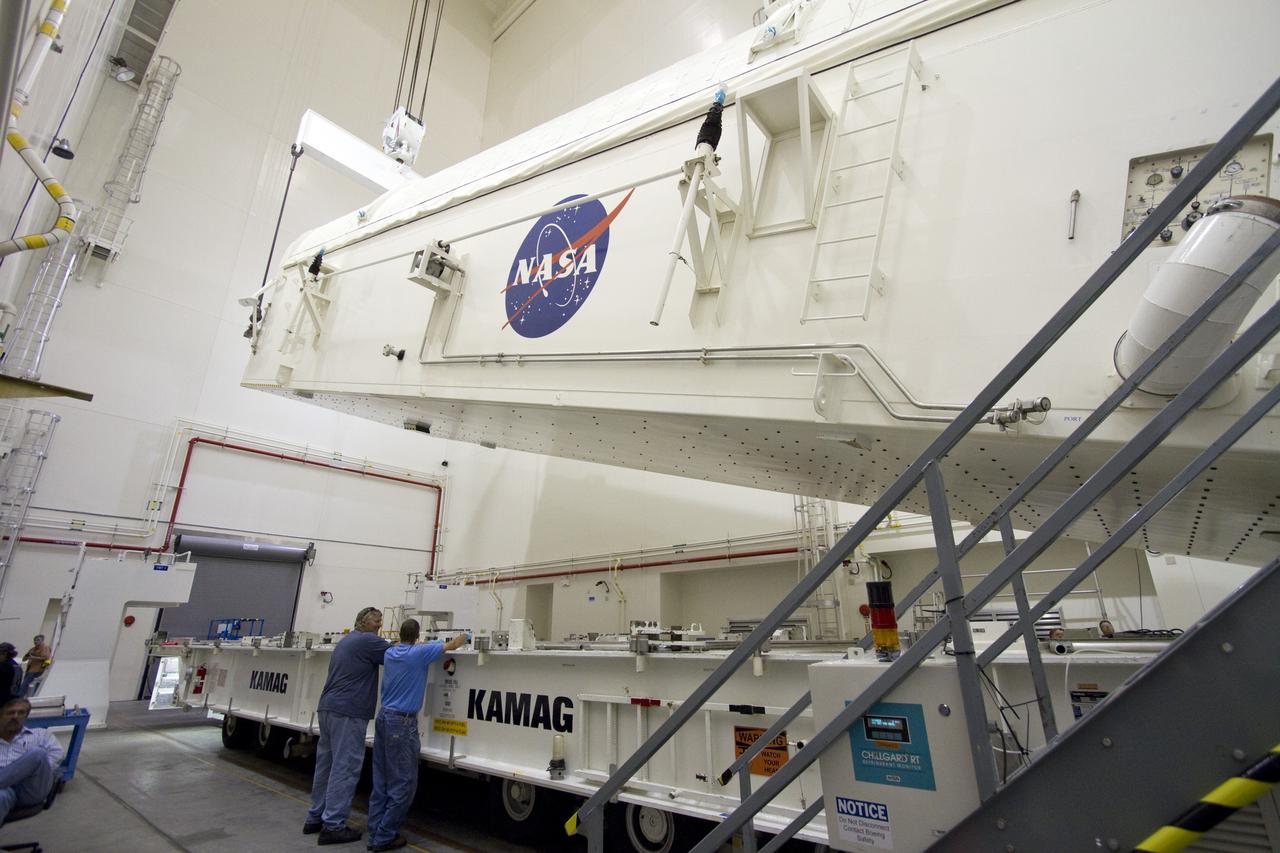
CAPE CANAVERAL, Fla. -- A canister, carrying the Alpha Magnetic Spectrometer-2 AMS and Express Logistics Carrier-3 for space shuttle Endeavour's STS-134 mission, is rotated from a horizontal to vertical position in the Canister Rotation Facility at NASA's Kennedy Space Center in Florida. Endeavour and its six-member STS-134 crew are targeted to lift off April 19 at 7:48 p.m. EDT to deliver the payload to the International Space Station. For more information visit, www.nasa.gov/mission_pages/shuttle/shuttlemissions/sts134/index.html. Photo credit: NASA/Jack Pfaller
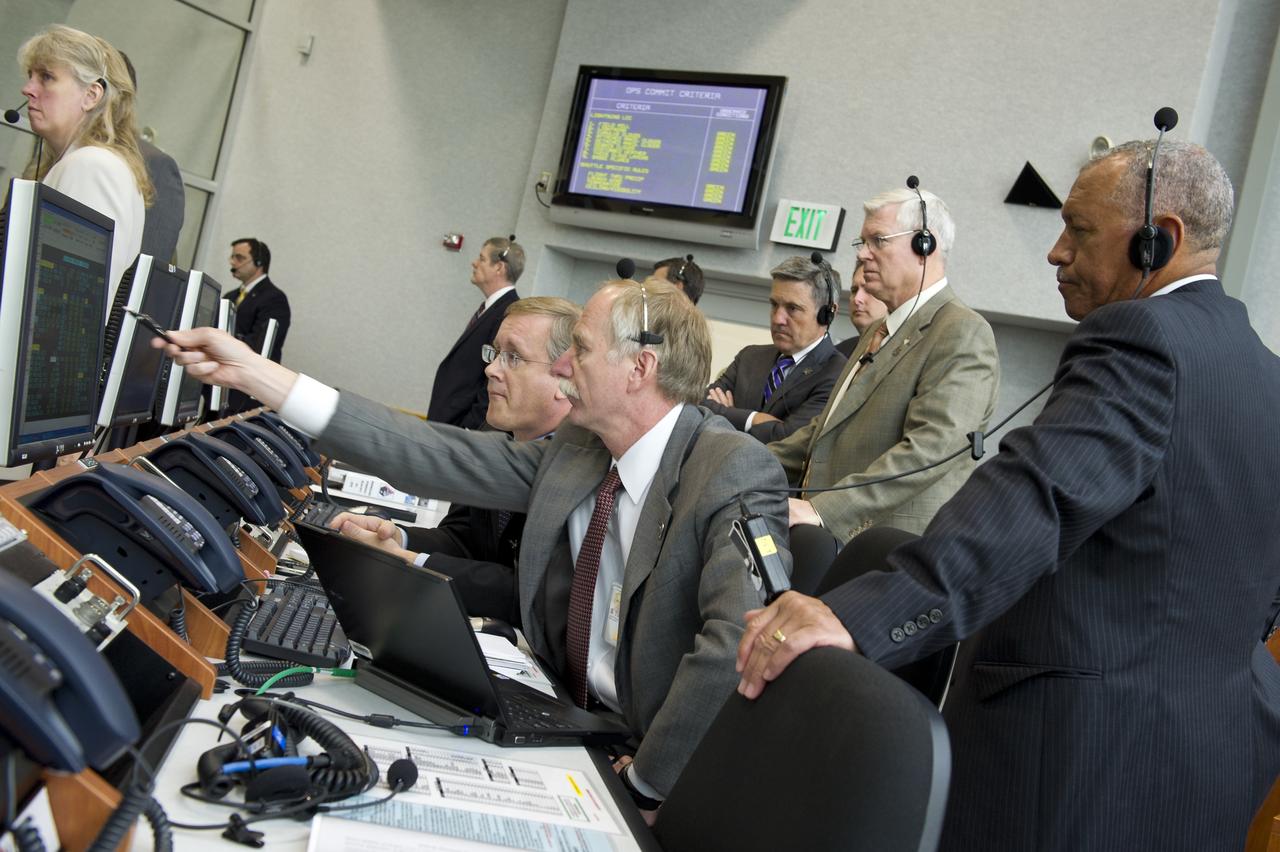
NASA Associate Administrator for Space Operations William Gerstenmaier points to one the monitors in Firing Room Four of the Launch Control Center (LCC) as NASA Administrator Charles Bolden, right, and other NASA managers look on during the launch of the space shuttle Endeavour (STS-134), Monday, May 16, 2011, at Kennedy Space Center in Cape Canaveral, Fla. During the mission, Endeavour and the STS-134 crew will deliver the Alpha Magnetic Spectrometer (AMS) and spare parts including two S-band communications antennas, a high-pressure gas tank and additional spare parts for Dextre. Photo Credit: (NASA/Bill Ingalls)
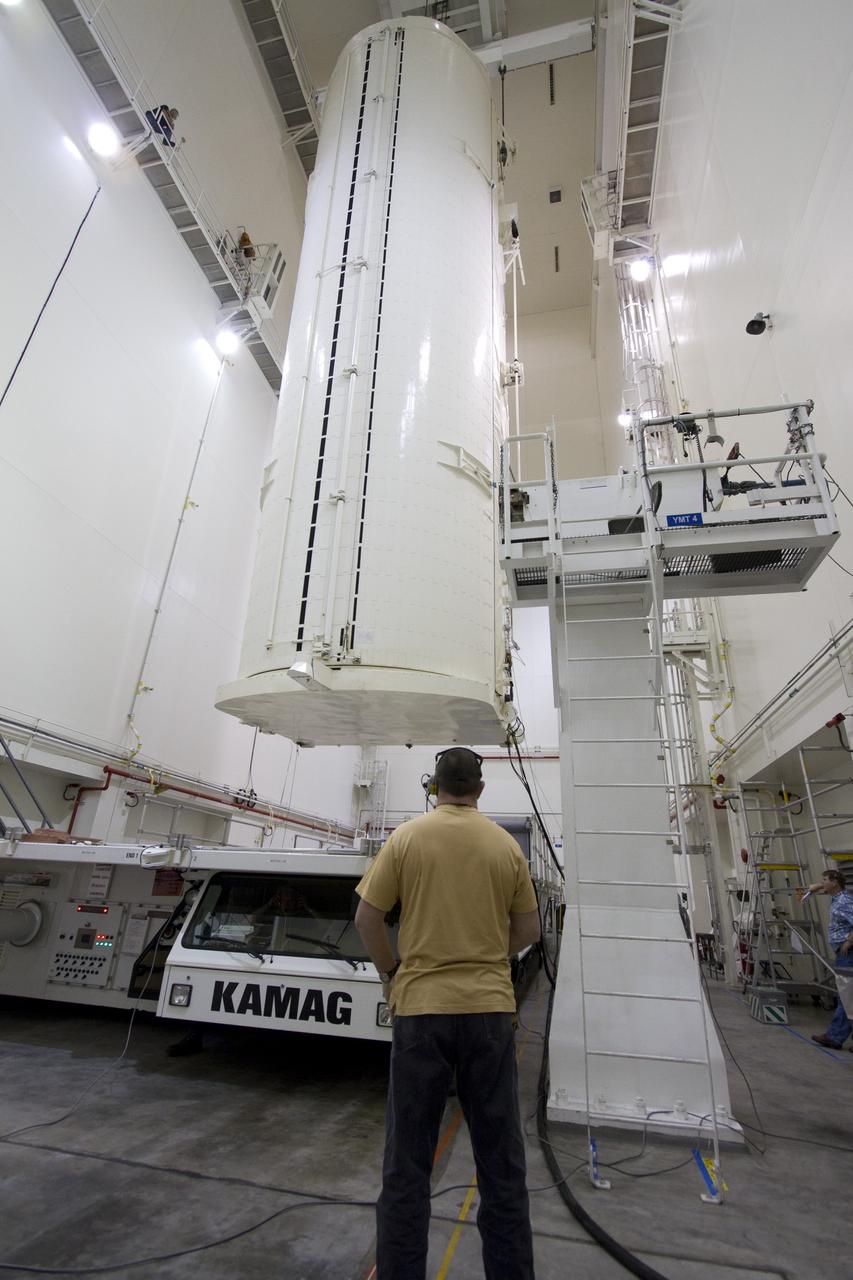
CAPE CANAVERAL, Fla. -- After being rotated from a horizontal to vertical position, the canister that contains the Alpha Magnetic Spectrometer-2 AMS and Express Logistics Carrier-3 for space shuttle Endeavour's STS-134 mission is lowered to its transportation vehicle in the Canister Rotation Facility at NASA's Kennedy Space Center in Florida. Endeavour and its six-member STS-134 crew are targeted to lift off April 19 at 7:48 p.m. EDT to deliver the payload to the International Space Station. For more information visit, www.nasa.gov/mission_pages/shuttle/shuttlemissions/sts134/index.html. Photo credit: NASA/Jack Pfaller
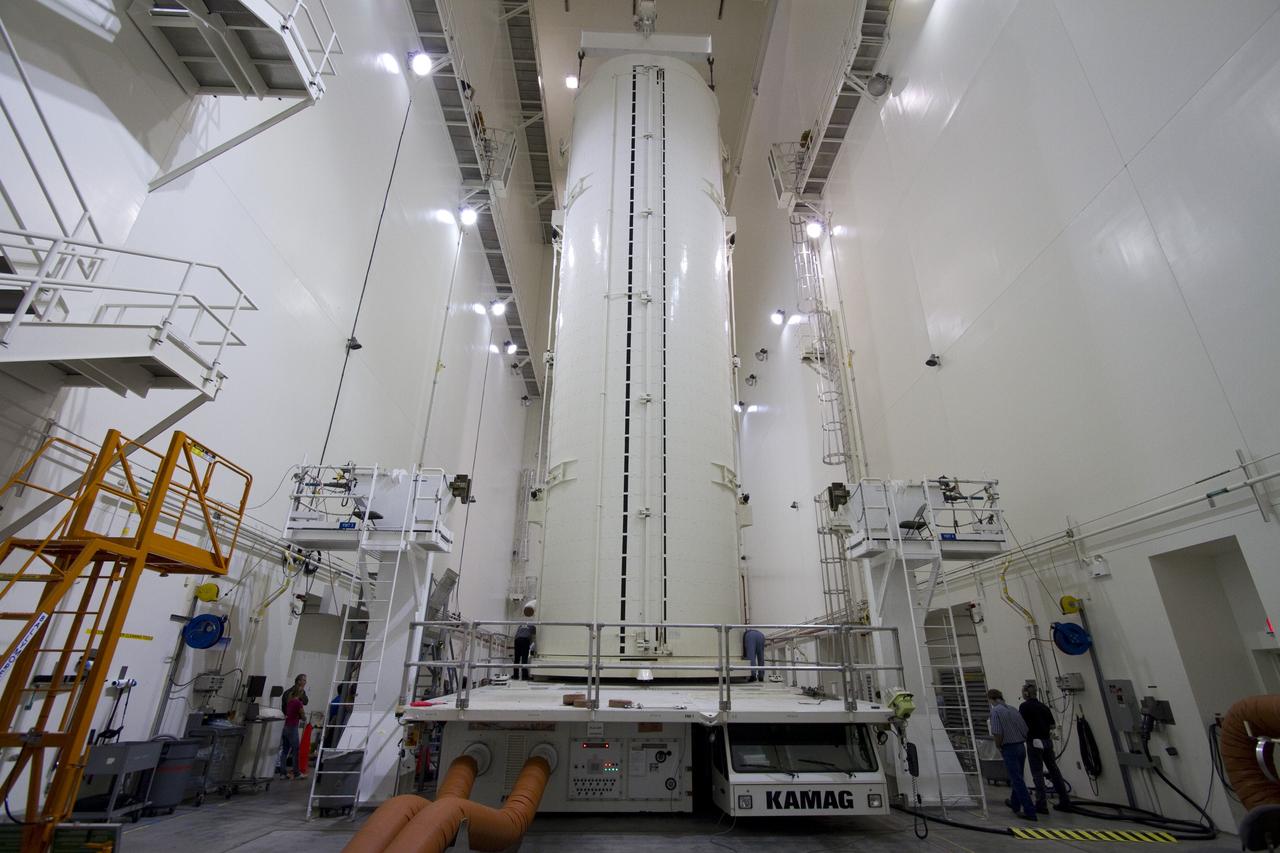
CAPE CANAVERAL, Fla. -- After being rotated from a horizontal to vertical position, the canister that contains the Alpha Magnetic Spectrometer-2 AMS and Express Logistics Carrier-3 for space shuttle Endeavour's STS-134 mission is lowered to its transportation vehicle in the Canister Rotation Facility at NASA's Kennedy Space Center in Florida. Endeavour and its six-member STS-134 crew are targeted to lift off April 19 at 7:48 p.m. EDT to deliver the payload to the International Space Station. For more information visit, www.nasa.gov/mission_pages/shuttle/shuttlemissions/sts134/index.html. Photo credit: NASA/Jack Pfaller

NASA Associate Administrator for Space Operations William Gerstenmaier monitors the countdown to the launch of the space shuttle Endeavour (STS-134) from Firing Room Four of the Launch Control Center (LCC), Monday, May 16, 2011, at Kennedy Space Center in Cape Canaveral, Fla. During the mission, Endeavour and the STS-134 crew will deliver the Alpha Magnetic Spectrometer (AMS) and spare parts including two S-band communications antennas, a high-pressure gas tank and additional spare parts for Dextre. Photo Credit: (NASA/Bill Ingalls)

CAPE CANAVERAL, Fla. -- A canister, carrying the Alpha Magnetic Spectrometer-2 AMS and Express Logistics Carrier-3 for space shuttle Endeavour's STS-134 mission, will be rotated from a horizontal to vertical position in the Canister Rotation Facility at NASA's Kennedy Space Center in Florida. Endeavour and its six-member STS-134 crew are targeted to lift off April 19 at 7:48 p.m. EDT to deliver the payload to the International Space Station. For more information visit, www.nasa.gov/mission_pages/shuttle/shuttlemissions/sts134/index.html. Photo credit: NASA/Jack Pfaller
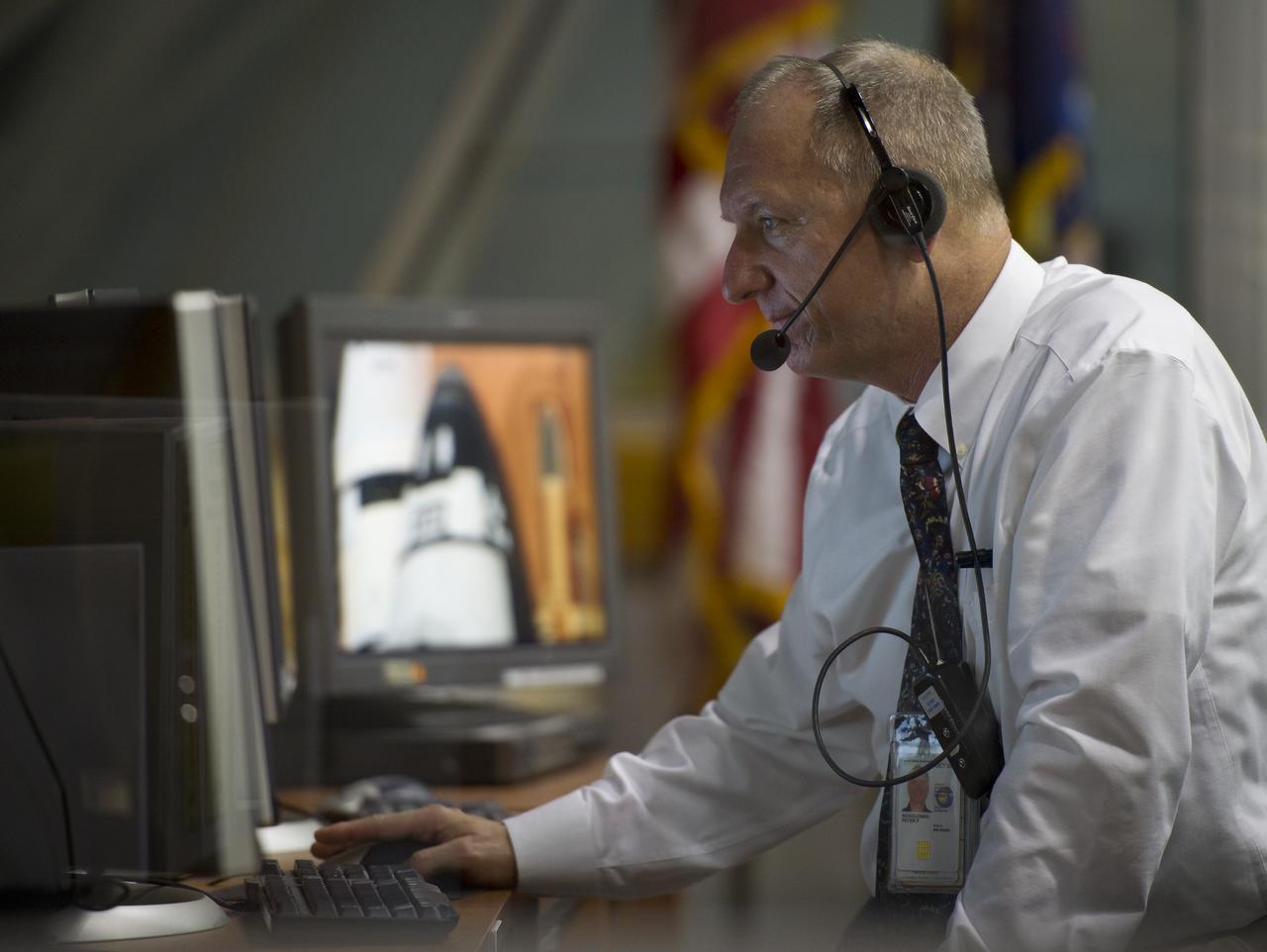
NASA Kennedy Space Center Assistant Launch Director Pete Nickolenko monitors the countdown to the launch of the space shuttle Endeavour (STS-134) from Firing Room Four of the Launch Control Center (LCC), Monday May 16, 2011, at the Kennedy Space Center in Cape Canaveral, Fla. During the mission, Endeavour and the STS-134 crew will deliver the Alpha Magnetic Spectrometer (AMS) and spare parts including two S-band communications antennas, a high-pressure gas tank and additional spare parts for Dextre. Photo Credit: (NASA/Bill Ingalls)
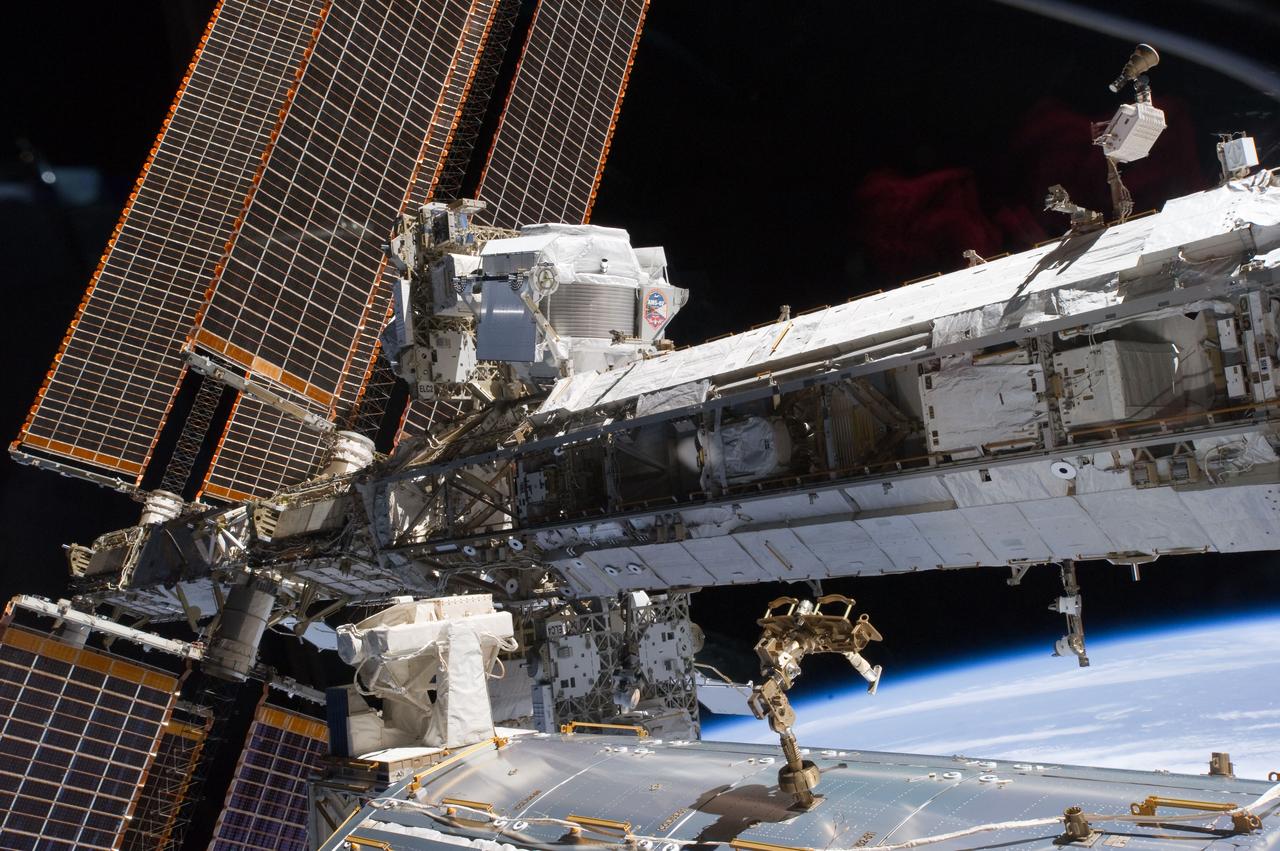
S134-E-007532 (20 May 2011) --- The starboard truss of the International Space Station is featured in this image photographed by an STS-134 crew member while space shuttle Endeavour remains docked with the station. The newly-installed Alpha Magnetic Spectrometer-2 (AMS) is visible at center left. The blackness of space and Earth?s horizon provide the backdrop for the scene. Photo credit: NASA
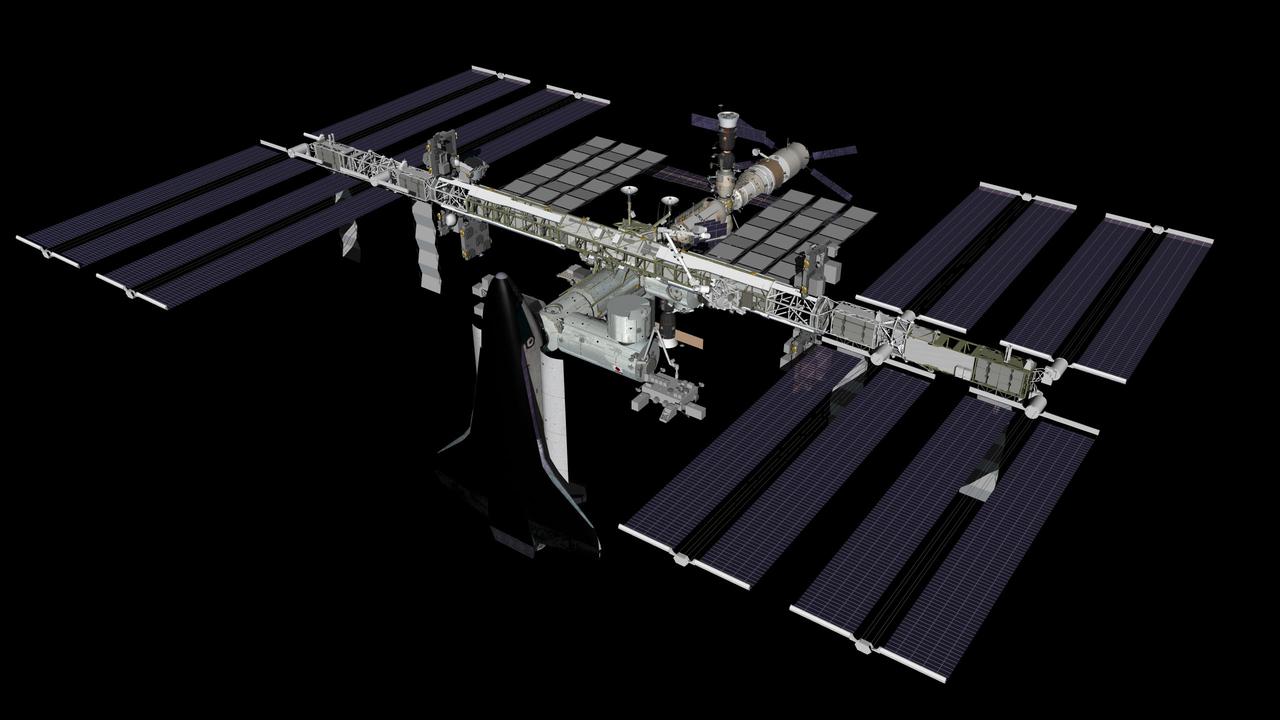
JSC2011-E-037290 (May 2011) --- Computer-generated artist?s rendering of the International Space Station as of May 19, 2011. STS-134 space shuttle Endeavour delivers the Express Logistics Carrier 3 (ELC3) and Alpha Magnetic Spectrometer (AMS) to the space station. This angle shows the port side of the orbiting complex. Photo credit: NASA
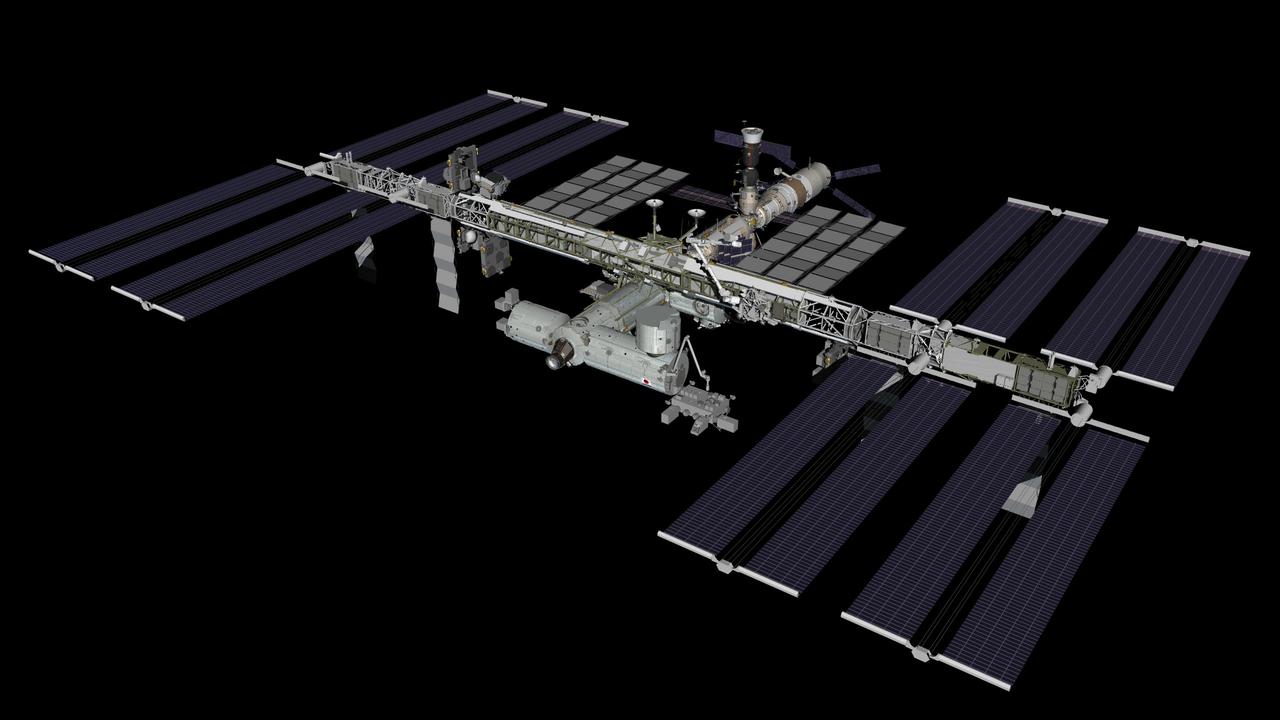
JSC2011-E-037291 (May 2011) --- Computer-generated artist?s rendering of the International Space Station as of May 30, 2011. STS-134 space shuttle Endeavour departs, leaving new hardware: the Express Logistics Carrier 3 (ELC3) and Alpha Magnetic Spectrometer (AMS); and installed the Orbiter Boom Sensor System (OBSS) on the S1 truss. This angle shows the port side of the orbiting complex. Photo credit: NASA
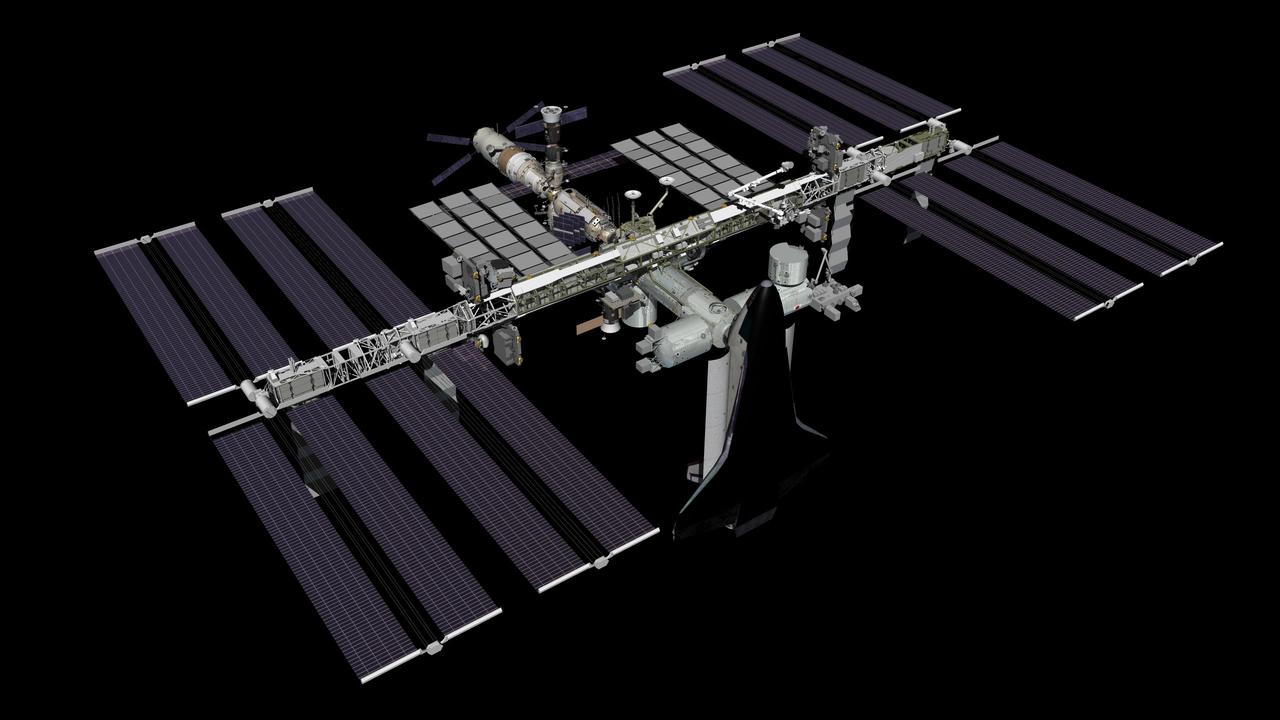
JSC2011-E-037292 (May 2011) --- Computer-generated artist?s rendering of the International Space Station as of May 19, 2011. STS-134 space shuttle Endeavour delivers the Express Logistics Carrier 3 (ELC3) and Alpha Magnetic Spectrometer (AMS) to the space station. This angle shows the starboard side of the orbiting complex. Photo credit: NASA
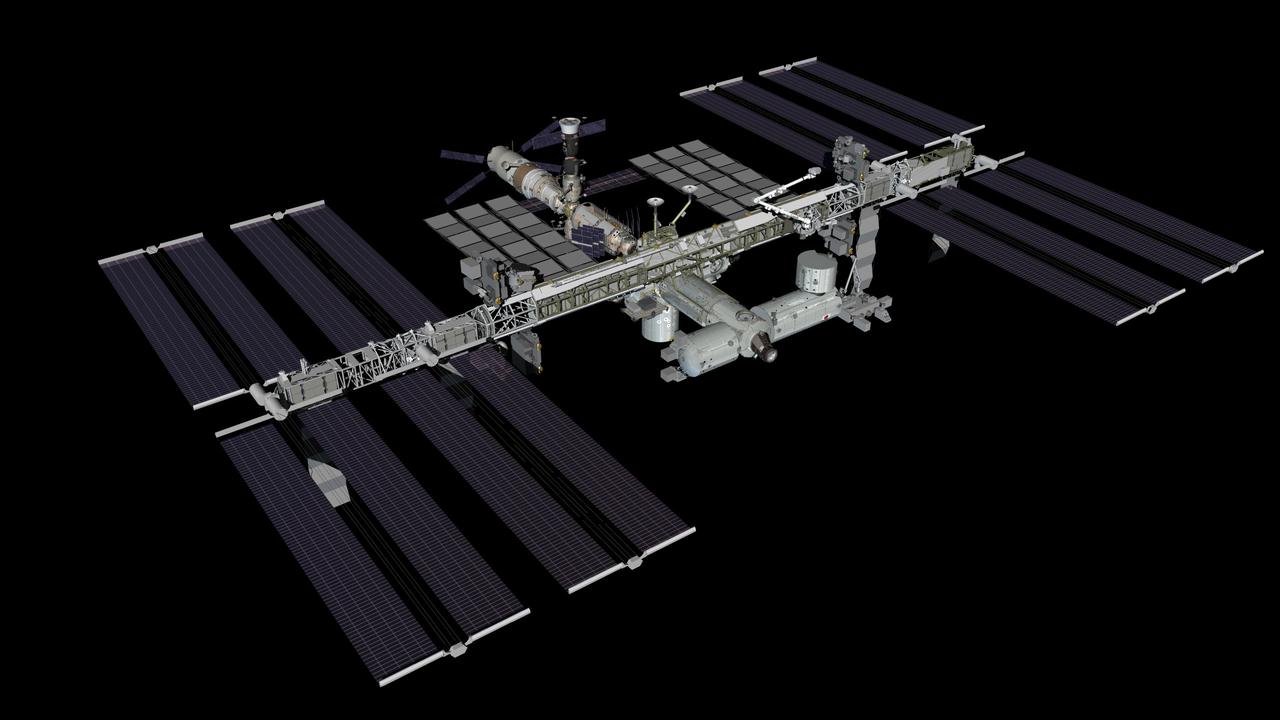
JSC2011-E-037293 (May 2011) --- Computer-generated artist?s rendering of the International Space Station as of May 30, 2011. STS-134 space shuttle Endeavour departs, leaving new hardware: the Express Logistics Carrier 3 (ELC3) and Alpha Magnetic Spectrometer (AMS); and installed the Orbiter Boom Sensor System (OBSS) on the S1 truss. This angle shows the starboard side of the orbiting complex. Photo credit: NASA
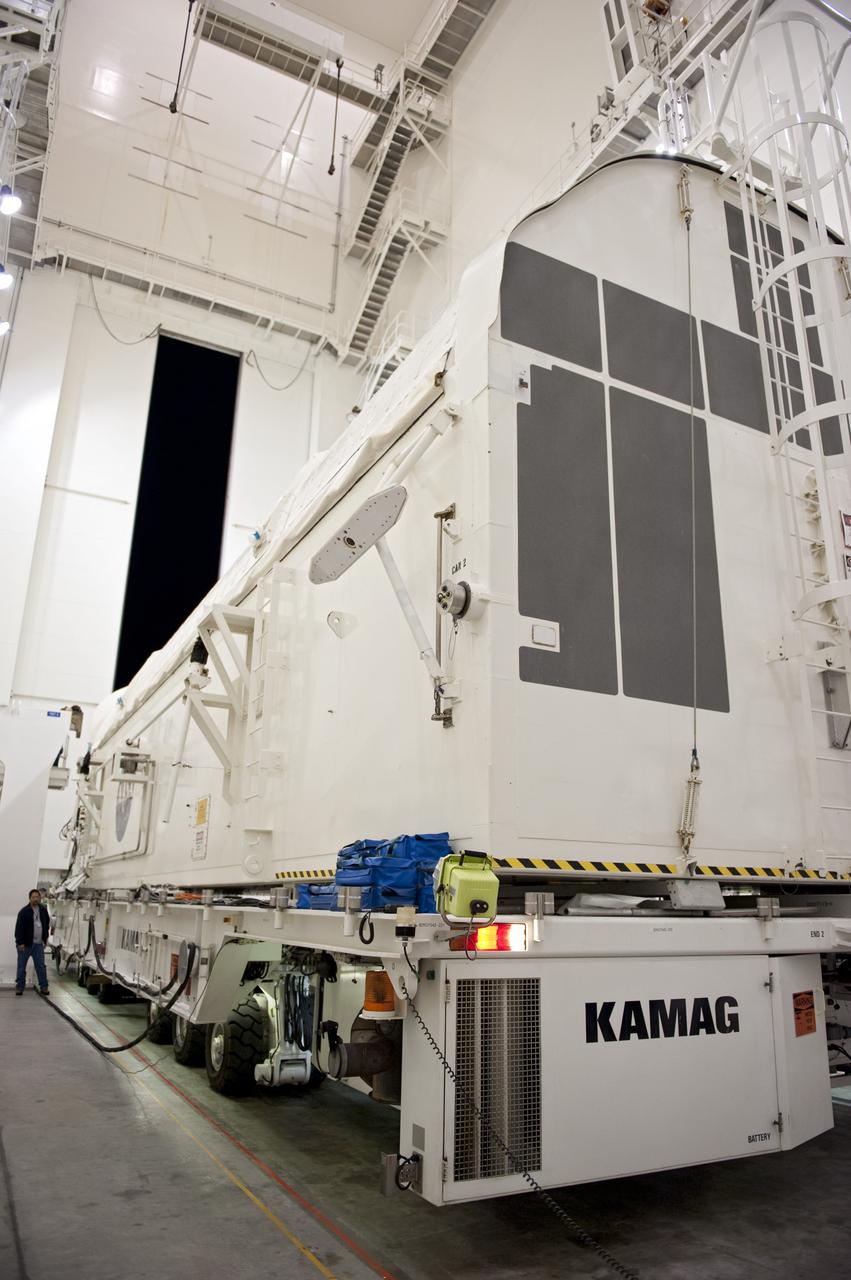
CAPE CANAVERAL, Fla. -- A canister, carrying the Alpha Magnetic Spectrometer-2 AMS and Express Logistics Carrier-3 for space shuttle Endeavour's STS-134 mission, enters the Canister Rotation Facility from the Space Station Processing Facility at NASA's Kennedy Space Center in Florida. There, the canister that protects the space-bound payload will be rotated from a horizontal to vertical position so that it can be installed into Endeavour's payload bay. AMS is a particle physics detector, designed to operate as an external experiment on the International Space Station. It will use the unique environment of space to study the universe and its origin by searching for dark matter. AMS-2 will fly to the station aboard Endeavour's STS-134 mission targeted to launch April 19 at 7:48 p.m. EDT. For more information visit, www.nasa.gov/mission_pages/shuttle/shuttlemissions/sts134/index.html. Photo credit: NASA/Kim Shiflett
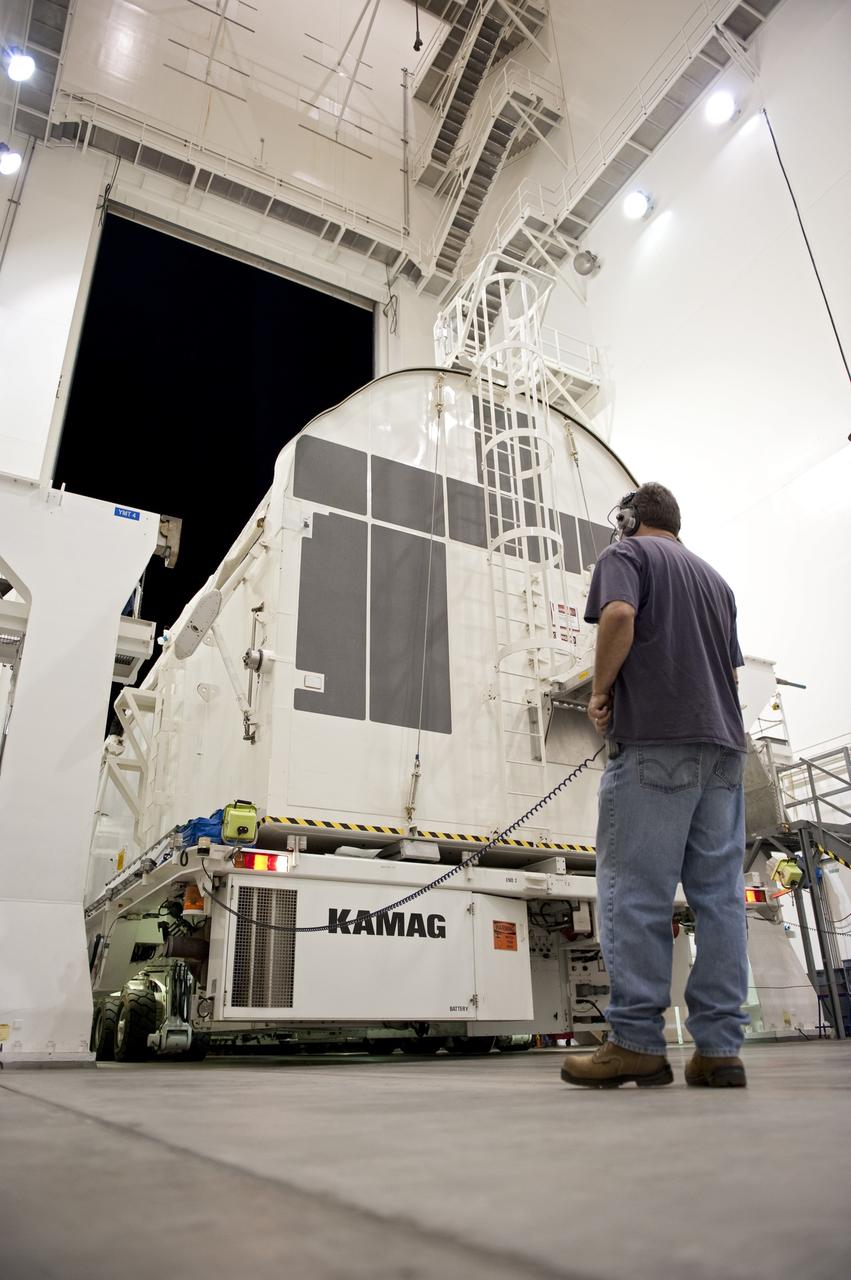
CAPE CANAVERAL, Fla. -- A canister, carrying the Alpha Magnetic Spectrometer-2 AMS and Express Logistics Carrier-3 for space shuttle Endeavour's STS-134 mission, enters the Canister Rotation Facility from the Space Station Processing Facility at NASA's Kennedy Space Center in Florida. There, the canister that protects the space-bound payload will be rotated from a horizontal to vertical position so that it can be installed into Endeavour's payload bay. AMS is a particle physics detector, designed to operate as an external experiment on the International Space Station. It will use the unique environment of space to study the universe and its origin by searching for dark matter. AMS-2 will fly to the station aboard Endeavour's STS-134 mission targeted to launch April 19 at 7:48 p.m. EDT. For more information visit, www.nasa.gov/mission_pages/shuttle/shuttlemissions/sts134/index.html. Photo credit: NASA/Kim Shiflett
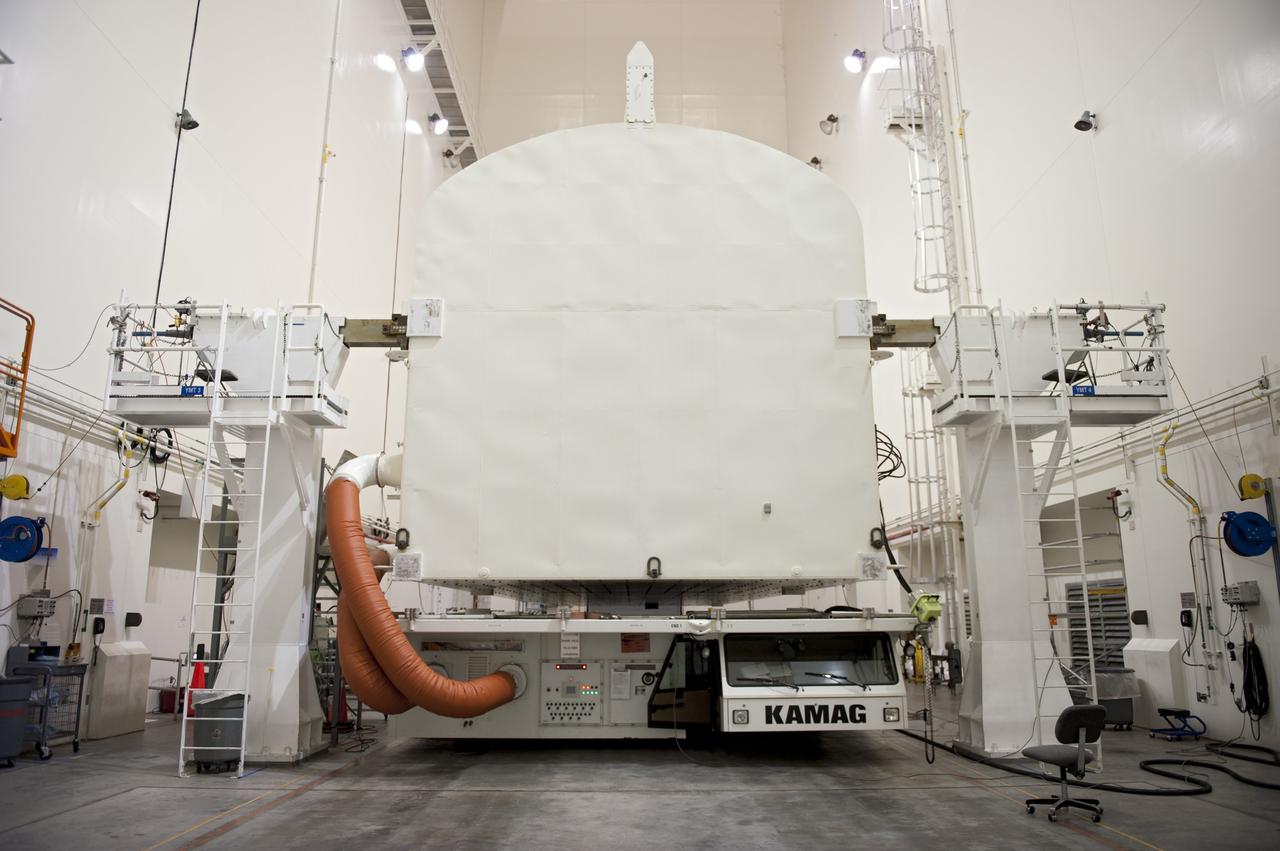
CAPE CANAVERAL, Fla. -- A canister, carrying the Alpha Magnetic Spectrometer-2 AMS and Express Logistics Carrier-3 for space shuttle Endeavour's STS-134 mission, is in the Canister Rotation Facility at NASA's Kennedy Space Center in Florida. There, the canister that protects the space-bound payload will be rotated from a horizontal to vertical position so that it can be installed into Endeavour's payload bay. AMS is a particle physics detector, designed to operate as an external experiment on the International Space Station. It will use the unique environment of space to study the universe and its origin by searching for dark matter. AMS-2 will fly to the station aboard Endeavour's STS-134 mission targeted to launch April 19 at 7:48 p.m. EDT. For more information visit, www.nasa.gov/mission_pages/shuttle/shuttlemissions/sts134/index.html. Photo credit: NASA/Kim Shiflett
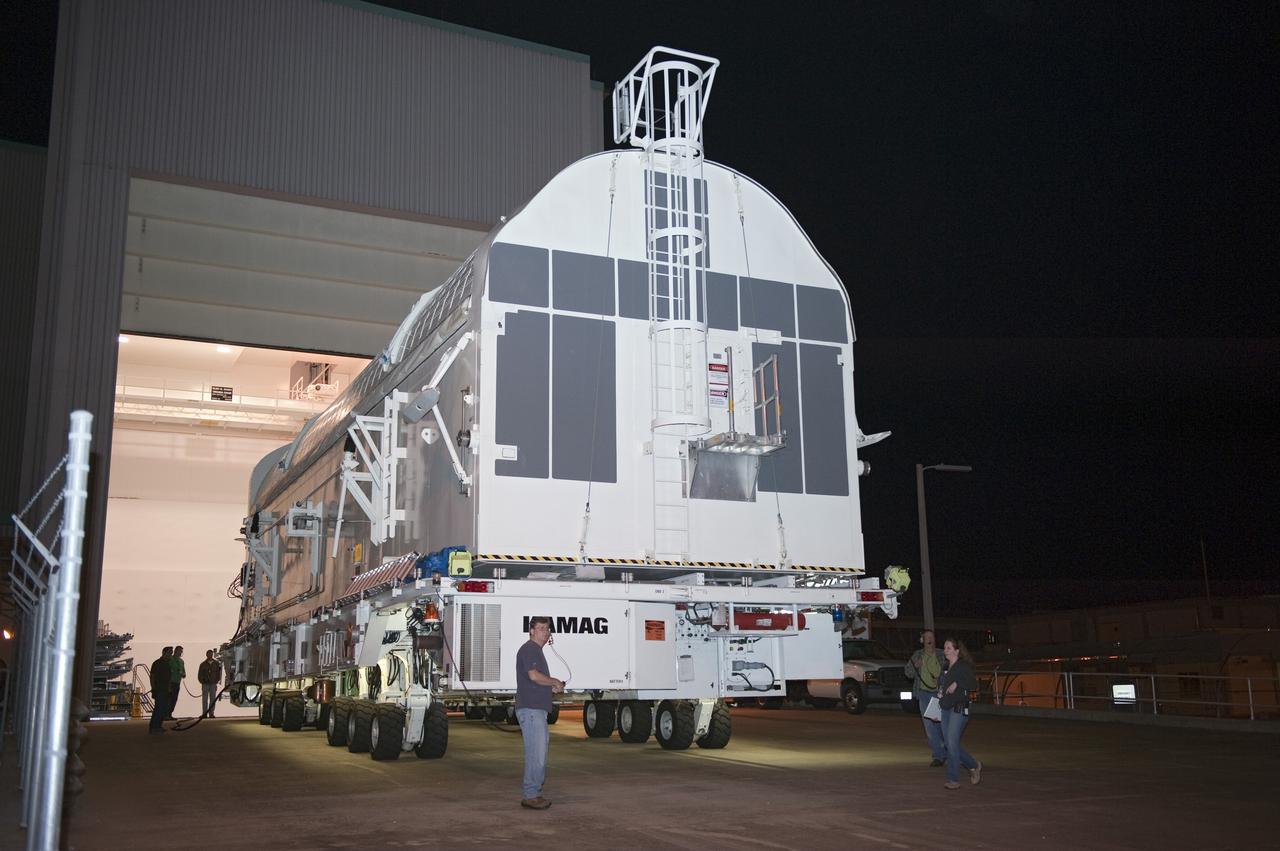
CAPE CANAVERAL, Fla. -- A canister, carrying the Alpha Magnetic Spectrometer-2 AMS and Express Logistics Carrier-3 for space shuttle Endeavour's STS-134 mission, is moved from the Space Station Processing Facility to the Canister Rotation Facility at NASA's Kennedy Space Center in Florida. There, the canister that protects the space-bound payload will be rotated from a horizontal to vertical position so that it can be installed into Endeavour's payload bay. AMS is a particle physics detector, designed to operate as an external experiment on the International Space Station. It will use the unique environment of space to study the universe and its origin by searching for dark matter. AMS-2 will fly to the station aboard Endeavour's STS-134 mission targeted to launch April 19 at 7:48 p.m. EDT. For more information visit, www.nasa.gov/mission_pages/shuttle/shuttlemissions/sts134/index.html. Photo credit: NASA/Kim Shiflett
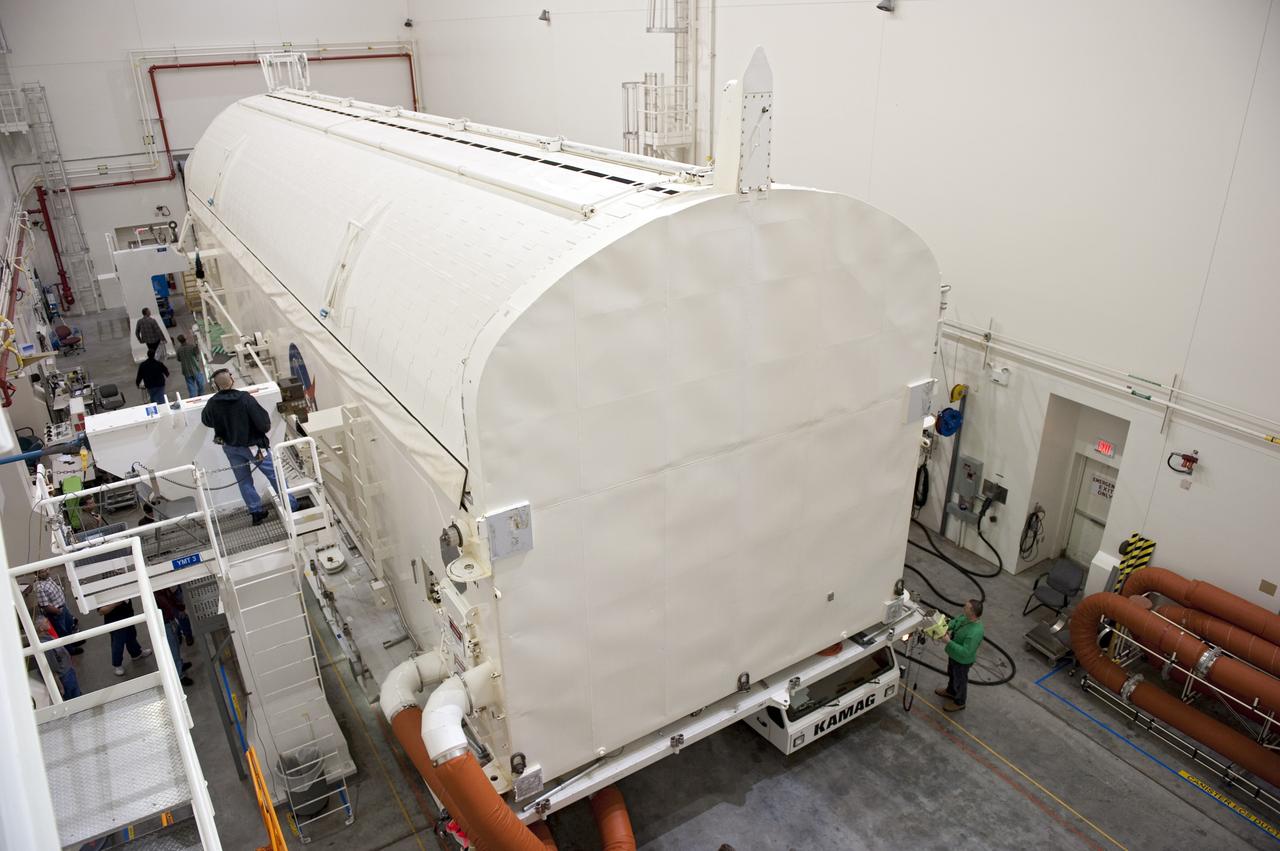
CAPE CANAVERAL, Fla. -- A canister, carrying the Alpha Magnetic Spectrometer-2 AMS and Express Logistics Carrier-3 for space shuttle Endeavour's STS-134 mission, is in the Canister Rotation Facility at NASA's Kennedy Space Center in Florida. There, the canister that protects the space-bound payload will be rotated from a horizontal to vertical position so that it can be installed into Endeavour's payload bay. AMS is a particle physics detector, designed to operate as an external experiment on the International Space Station. It will use the unique environment of space to study the universe and its origin by searching for dark matter. AMS-2 will fly to the station aboard Endeavour's STS-134 mission targeted to launch April 19 at 7:48 p.m. EDT. For more information visit, www.nasa.gov/mission_pages/shuttle/shuttlemissions/sts134/index.html. Photo credit: NASA/Kim Shiflett
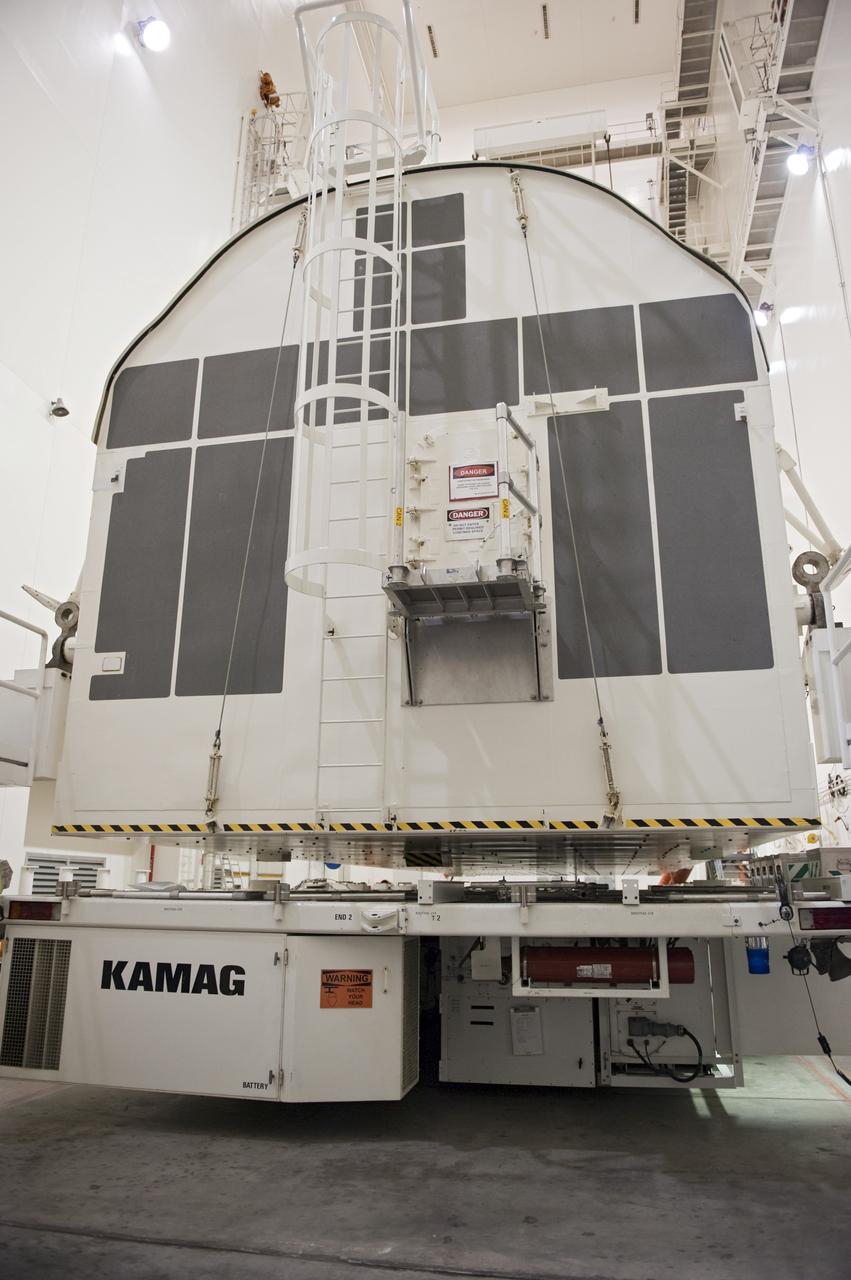
CAPE CANAVERAL, Fla. -- A canister, carrying the Alpha Magnetic Spectrometer-2 AMS and Express Logistics Carrier-3 for space shuttle Endeavour's STS-134 mission, is in the Canister Rotation Facility at NASA's Kennedy Space Center in Florida. There, the canister that protects the space-bound payload will be rotated from a horizontal to vertical position so that it can be installed into Endeavour's payload bay. AMS is a particle physics detector, designed to operate as an external experiment on the International Space Station. It will use the unique environment of space to study the universe and its origin by searching for dark matter. AMS-2 will fly to the station aboard Endeavour's STS-134 mission targeted to launch April 19 at 7:48 p.m. EDT. For more information visit, www.nasa.gov/mission_pages/shuttle/shuttlemissions/sts134/index.html. Photo credit: NASA/Kim Shiflett
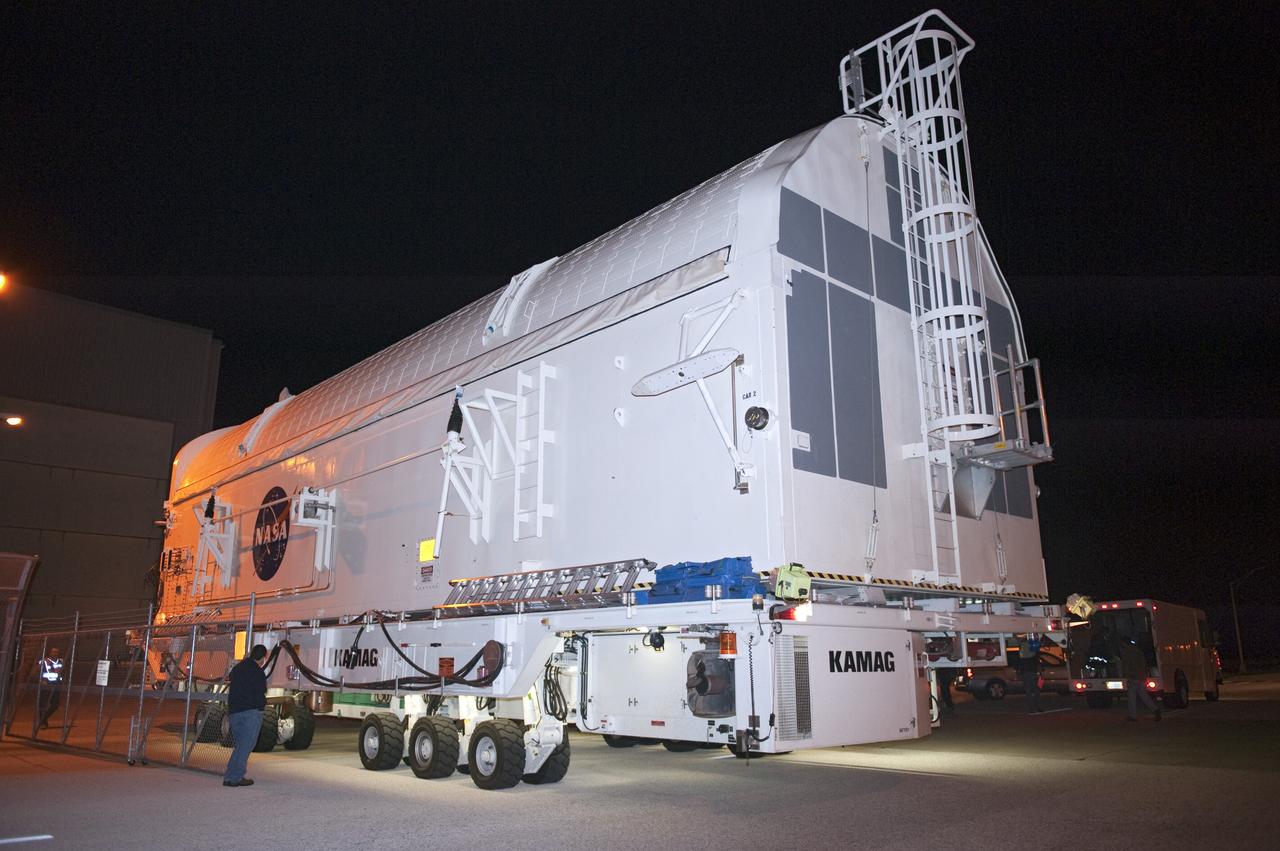
CAPE CANAVERAL, Fla. -- A canister, carrying the Alpha Magnetic Spectrometer-2 AMS and Express Logistics Carrier-3 for space shuttle Endeavour's STS-134 mission, is moved from the Space Station Processing Facility to the Canister Rotation Facility at NASA's Kennedy Space Center in Florida. There, the canister that protects the space-bound payload will be rotated from a horizontal to vertical position so that it can be installed into Endeavour's payload bay. AMS is a particle physics detector, designed to operate as an external experiment on the International Space Station. It will use the unique environment of space to study the universe and its origin by searching for dark matter. AMS-2 will fly to the station aboard Endeavour's STS-134 mission targeted to launch April 19 at 7:48 p.m. EDT. For more information visit, www.nasa.gov/mission_pages/shuttle/shuttlemissions/sts134/index.html. Photo credit: NASA/Kim Shiflett
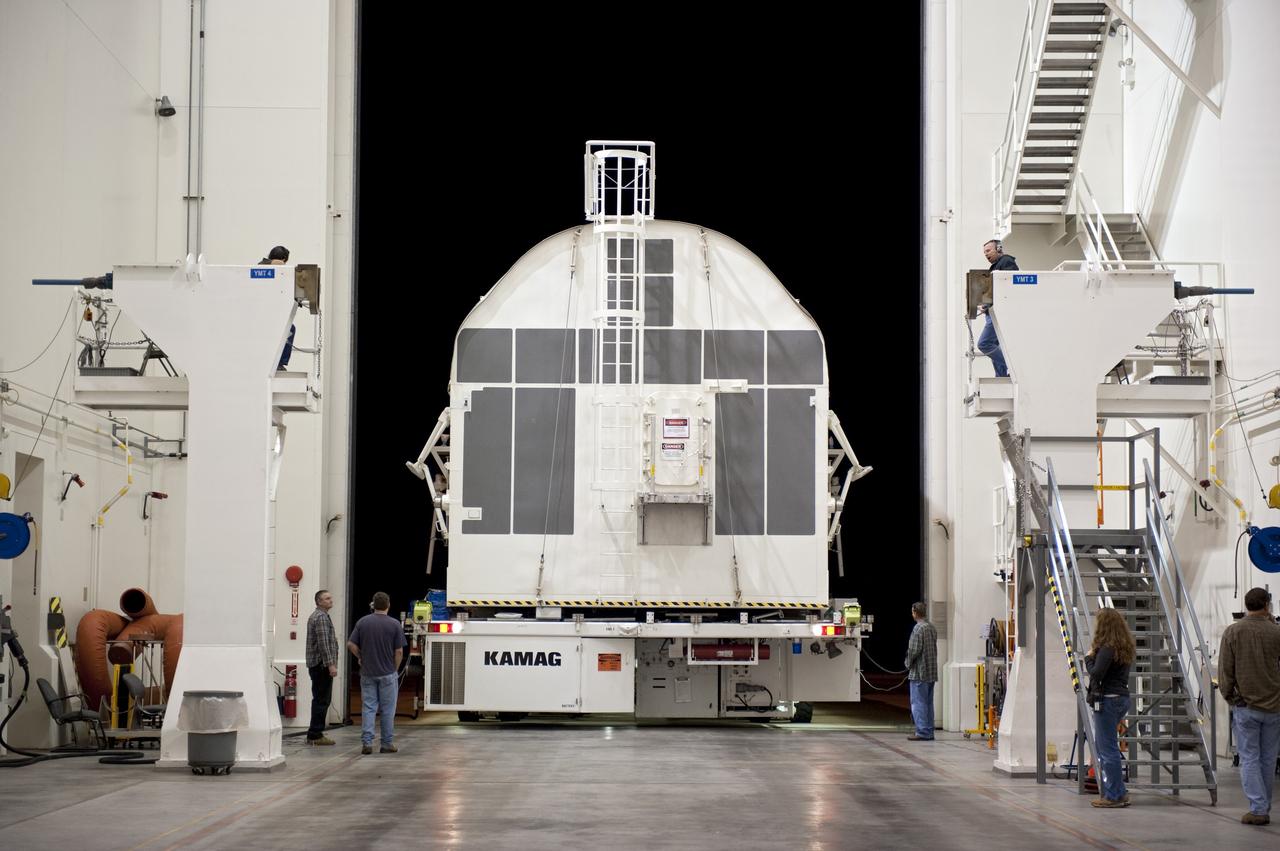
CAPE CANAVERAL, Fla. -- A canister, carrying the Alpha Magnetic Spectrometer-2 AMS and Express Logistics Carrier-3 for space shuttle Endeavour's STS-134 mission, enters the Canister Rotation Facility from the Space Station Processing Facility at NASA's Kennedy Space Center in Florida. There, the canister that protects the space-bound payload will be rotated from a horizontal to vertical position so that it can be installed into Endeavour's payload bay. AMS is a particle physics detector, designed to operate as an external experiment on the International Space Station. It will use the unique environment of space to study the universe and its origin by searching for dark matter. AMS-2 will fly to the station aboard Endeavour's STS-134 mission targeted to launch April 19 at 7:48 p.m. EDT. For more information visit, www.nasa.gov/mission_pages/shuttle/shuttlemissions/sts134/index.html. Photo credit: NASA/Kim Shiflett

CAPE CANAVERAL, Fla. -- Prior to the arrival of the Alpha Magnetic Spectrometer, or AMS, to the Shuttle Landing Facility at NASA's Kennedy Space Center in Florida, Professor Sam Ting, AMS Principal Investigator from the Massachusetts Institute of Technology speaks to the media. AMS,a state-of-the-art particle physics detector, is designed to operate as an external module on the International Space Station. It will use the unique environment of space to study the universe and its origin by searching for dark matter. AMS will fly to the International Space Station aboard space shuttle Endeavour's STS-134 mission targeted to launch Feb. 26, 2011. Photo credit: NASA/Kim Shiflett
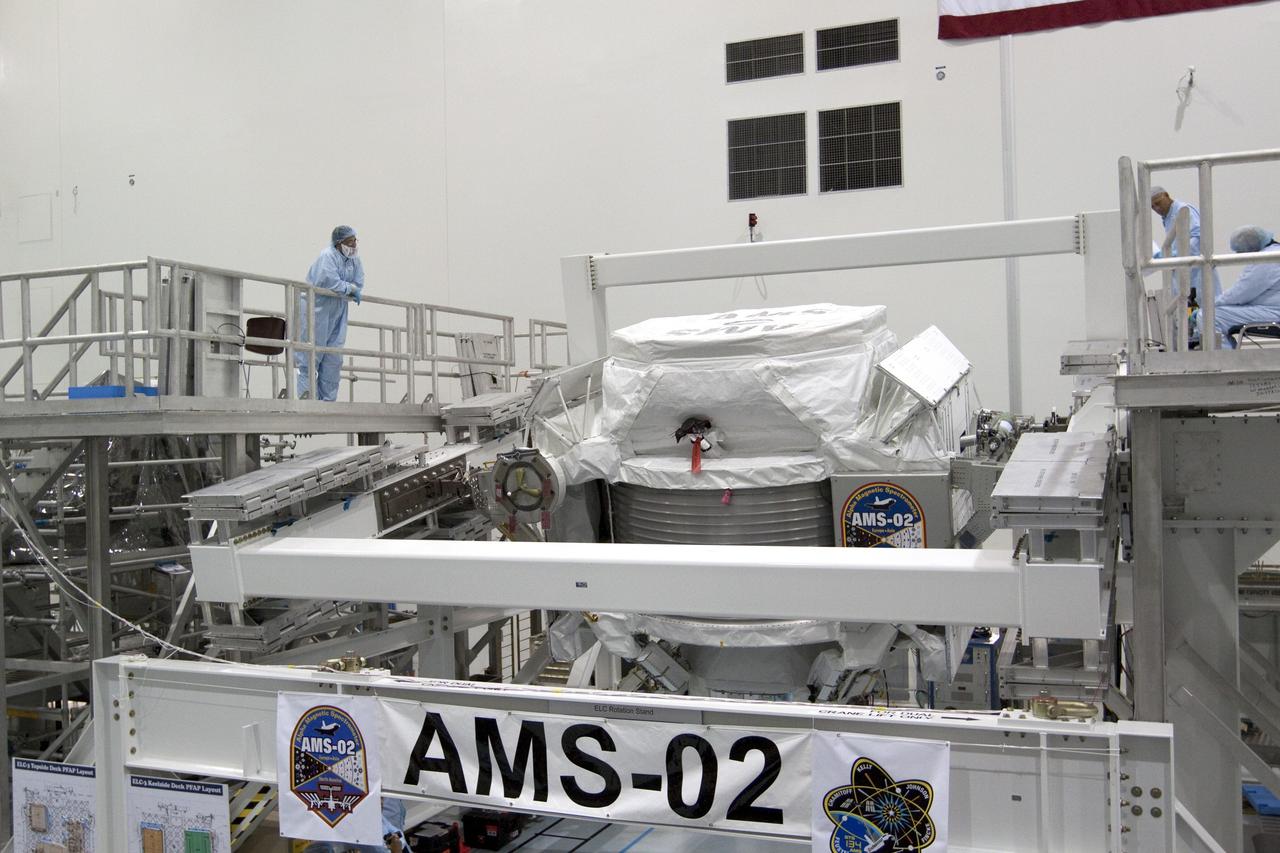
CAPE CANAVERAL, Fla. -- In the Space Station Processing Facility at NASA's Kennedy Space Center in Florida, the Alpha Magnetic Spectrometer-2 (AMS) begins a 180-degree rotation to provide better access for work to be performed on its avionics box. Technicians also will install a flight releasable grappling fixture to AMS while it is upside down. AMS is designed to operate as an external experiment on the International Space Station. It will use the unique environment of space to study the universe and its origin by searching for dark matter. AMS will fly to the station aboard space shuttle Endeavour's STS-134 mission targeted to launch Feb. 27, 2011. Photo credit: NASA/Jack Pfaller
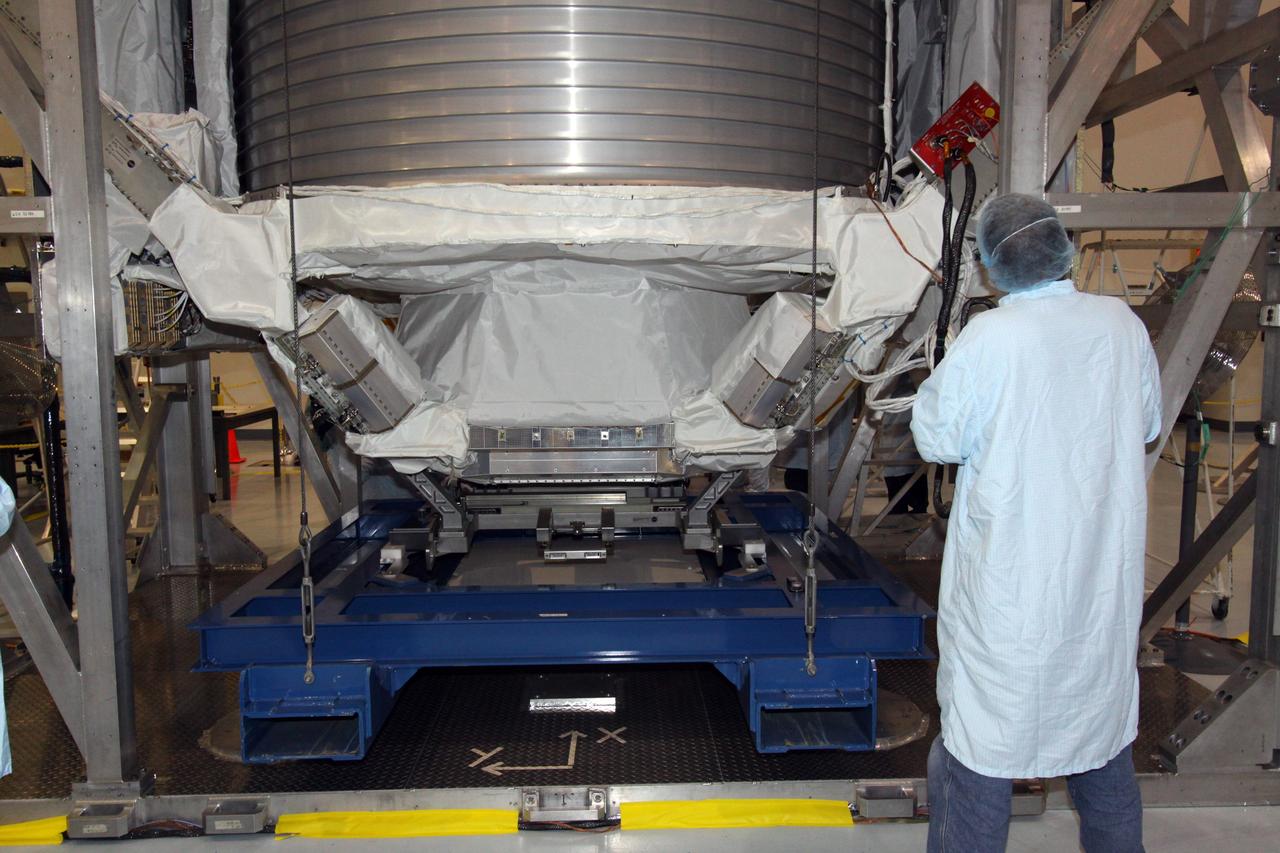
CAPE CANAVERAL, Fla. -- In the Space Station Processing Facility at NASA's Kennedy Space Center in Florida, a technician monitors the progress of the Payload Attach System, or PAS, as it is lifted up to the Alpha Magnetic Spectrometer, or AMS, where it will be attached to the bottom of the AMS. The PAS provides a method of securely connecting the payload to the International Space Station. AMS, a state-of-the-art particle physics detector, is designed to operate as an external module on the International Space Station. It will use the unique environment of space to study the universe and its origin by searching for dark matter. AMS will fly to the station aboard space shuttle Endeavour's STS-134 mission targeted to launch Feb. 26, 2011. Photo credit: NASA/Jack Pfaller
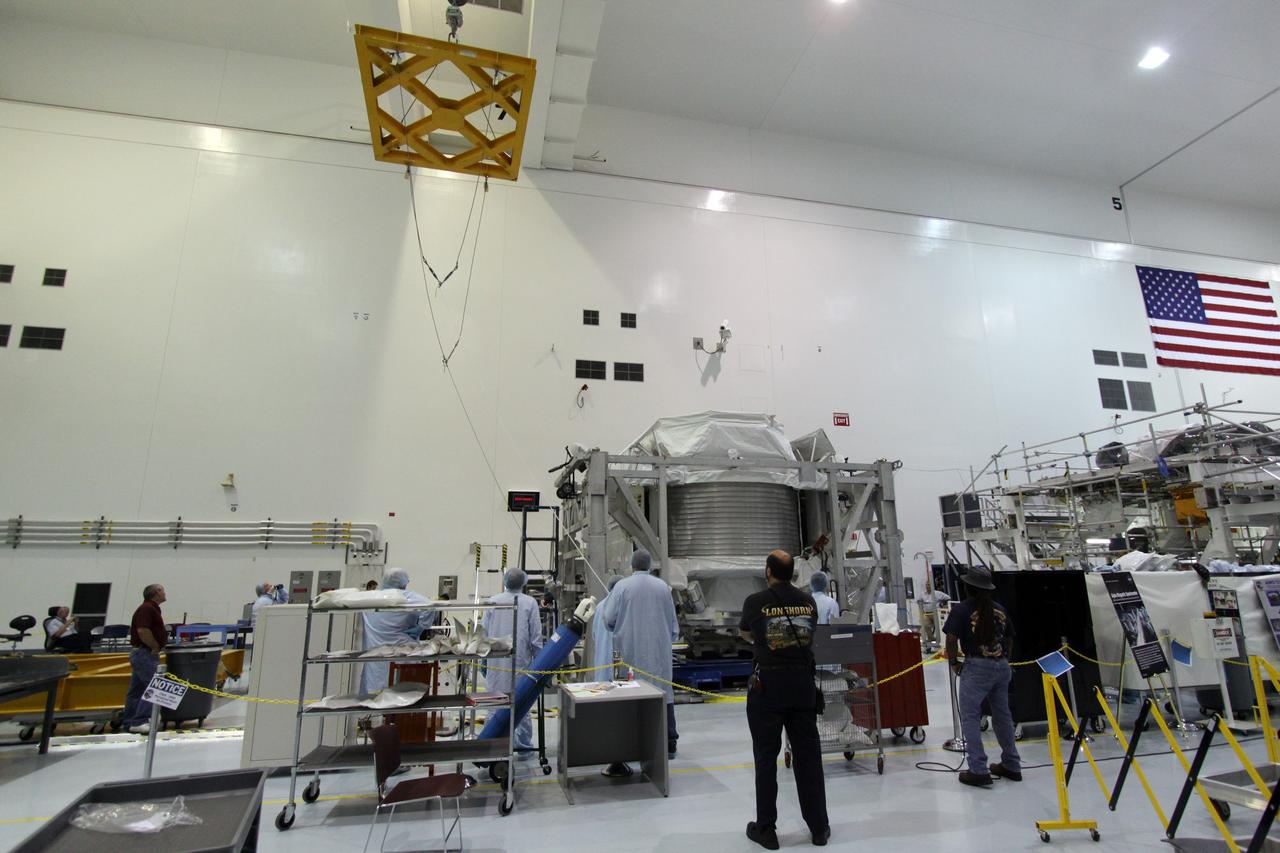
CAPE CANAVERAL, Fla. -- In the Space Station Processing Facility at NASA's Kennedy Space Center in Florida, an overhead crane is poised over the Alpha Magnetic Spectrometer, or AMS, to lift the Payload Attach System, or PAS, up to the AMS. The PAS provides a method of securely connecting the payload to the International Space Station. AMS, a state-of-the-art particle physics detector, is designed to operate as an external module on the International Space Station. It will use the unique environment of space to study the universe and its origin by searching for dark matter. AMS will fly to the station aboard space shuttle Endeavour's STS-134 mission targeted to launch Feb. 26, 2011. Photo credit: NASA/Jack Pfaller
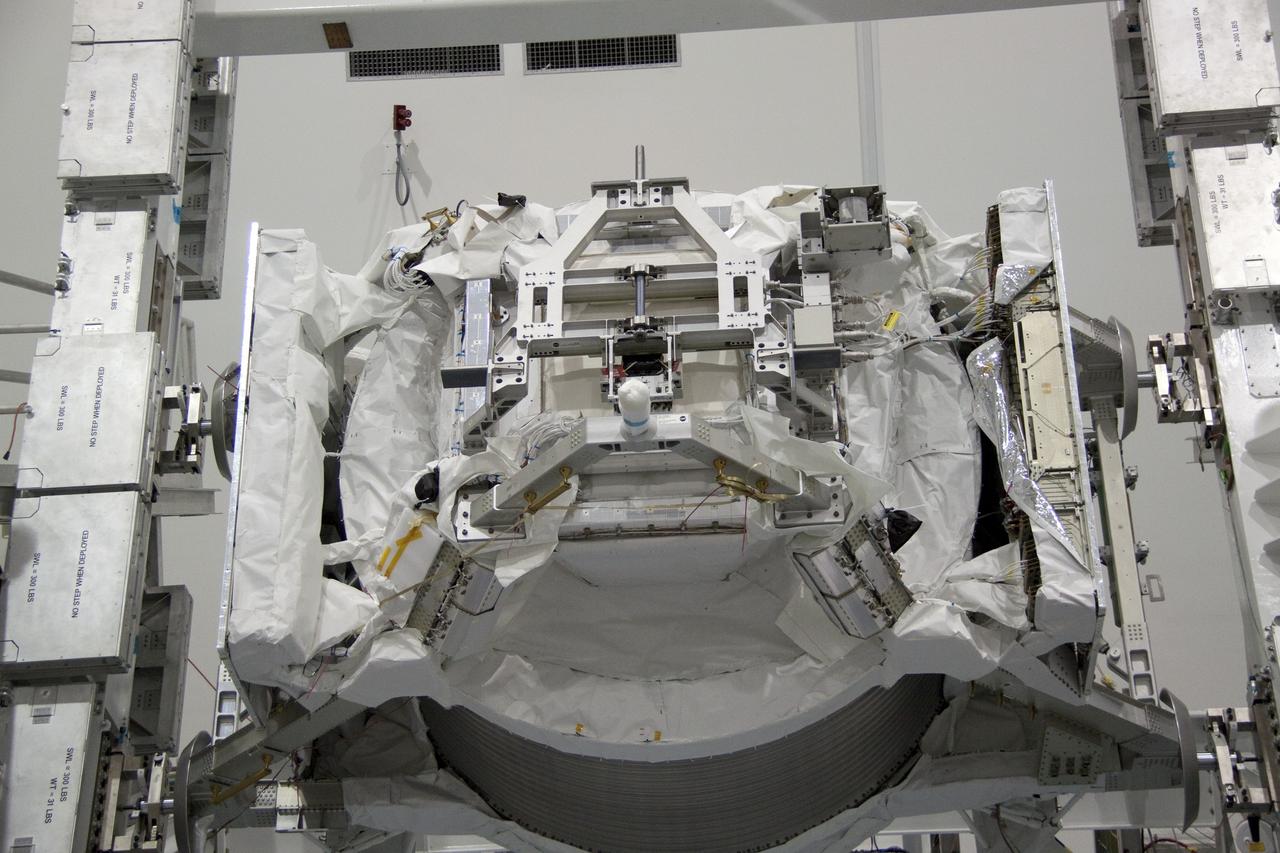
CAPE CANAVERAL, Fla. -- In the Space Station Processing Facility at NASA's Kennedy Space Center in Florida, the Alpha Magnetic Spectrometer-2 (AMS) rotates 180 degrees to provide better access for work to be performed on its avionics box. Technicians also will install a flight releasable grappling fixture to AMS while it is upside down. AMS is designed to operate as an external experiment on the International Space Station. It will use the unique environment of space to study the universe and its origin by searching for dark matter. AMS will fly to the station aboard space shuttle Endeavour's STS-134 mission targeted to launch Feb. 27, 2011. Photo credit: NASA/Jack Pfaller
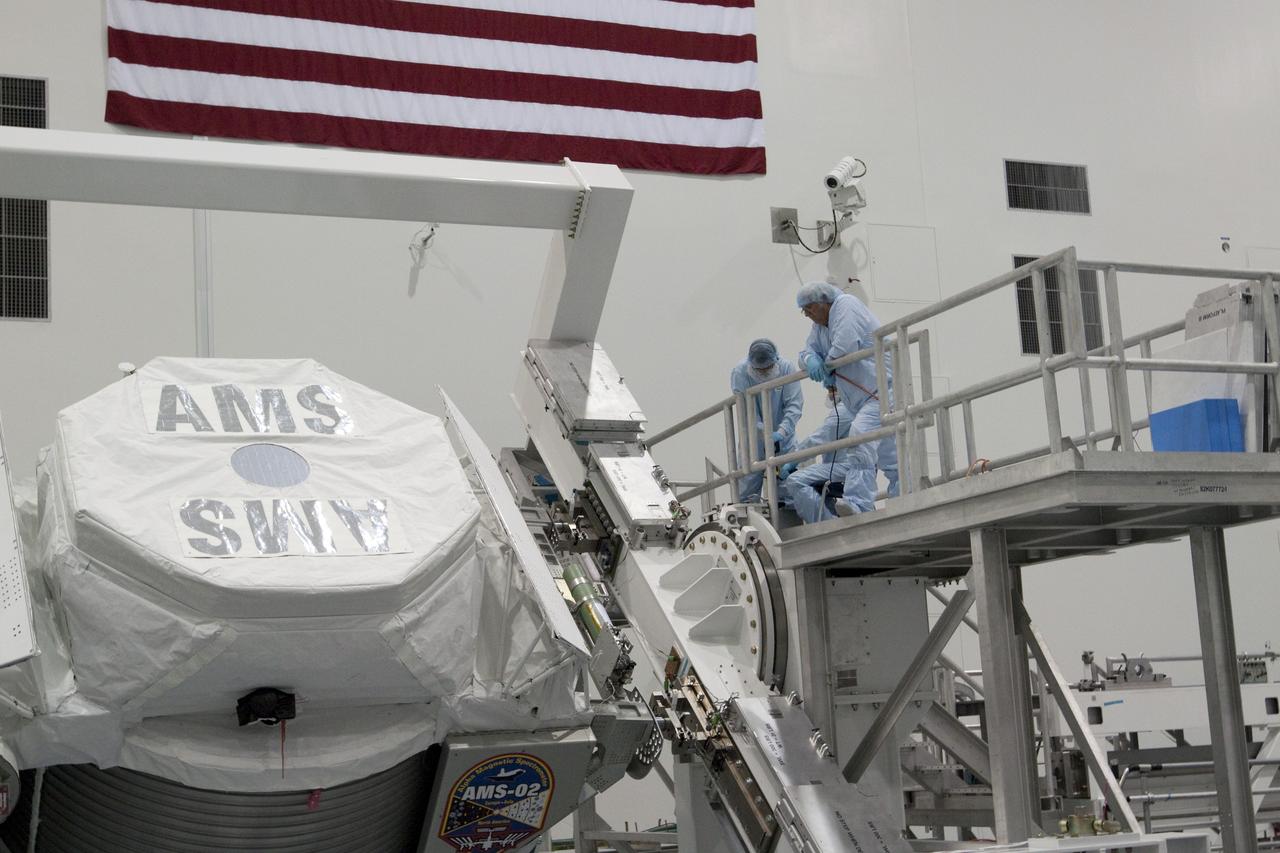
CAPE CANAVERAL, Fla. -- In the Space Station Processing Facility at NASA's Kennedy Space Center in Florida, the Alpha Magnetic Spectrometer-2 (AMS) rotates 180 degrees to provide better access for work to be performed on its avionics box. Technicians also will install a flight releasable grappling fixture to AMS while it is upside down. AMS is designed to operate as an external experiment on the International Space Station. It will use the unique environment of space to study the universe and its origin by searching for dark matter. AMS will fly to the station aboard space shuttle Endeavour's STS-134 mission targeted to launch Feb. 27, 2011. Photo credit: NASA/Jack Pfaller
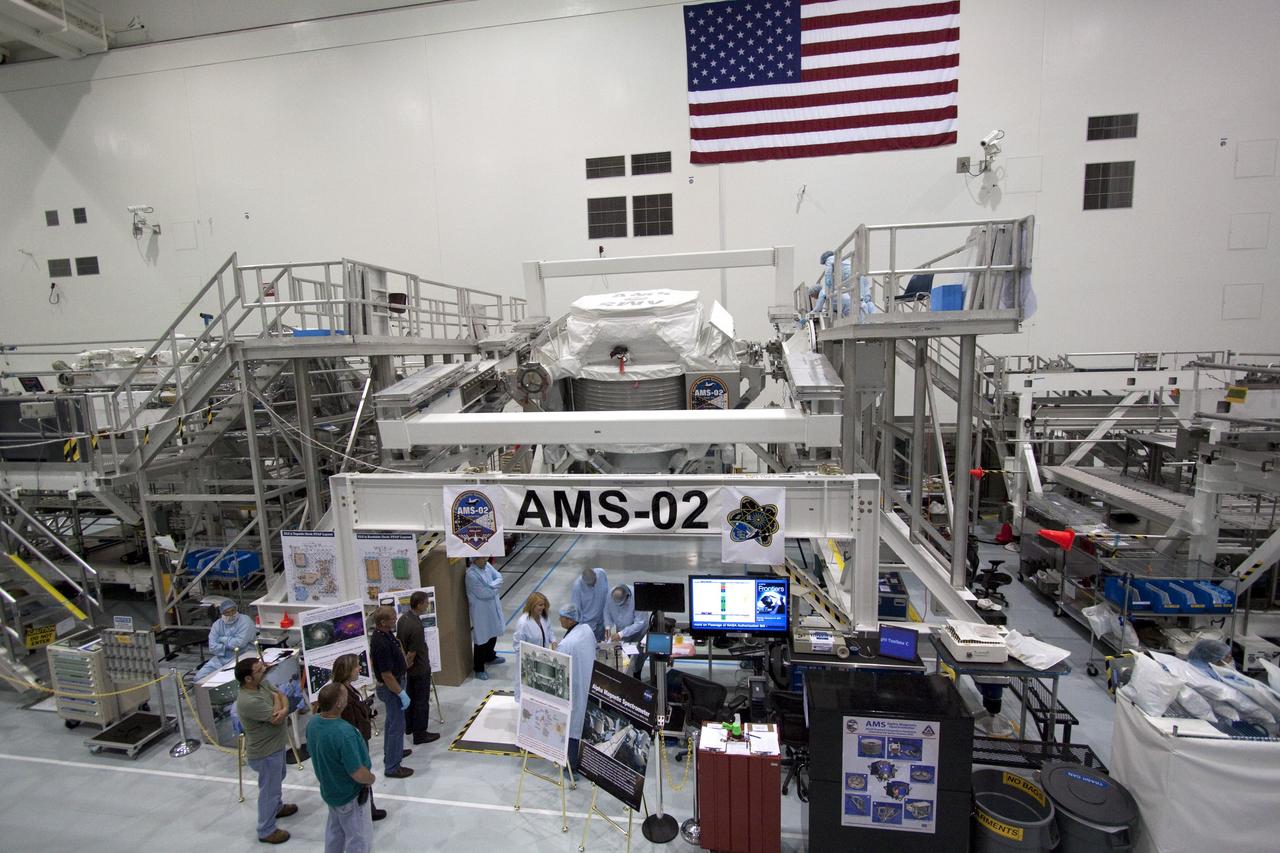
CAPE CANAVERAL, Fla. -- In the Space Station Processing Facility at NASA's Kennedy Space Center in Florida, the Alpha Magnetic Spectrometer-2 (AMS) will be rotated 180 degrees to provide better access for work to be performed on its avionics box. Technicians also will install a flight releasable grappling fixture to AMS while it is upside down. AMS is designed to operate as an external experiment on the International Space Station. It will use the unique environment of space to study the universe and its origin by searching for dark matter. AMS will fly to the station aboard space shuttle Endeavour's STS-134 mission targeted to launch Feb. 27, 2011. Photo credit: NASA/Jack Pfaller
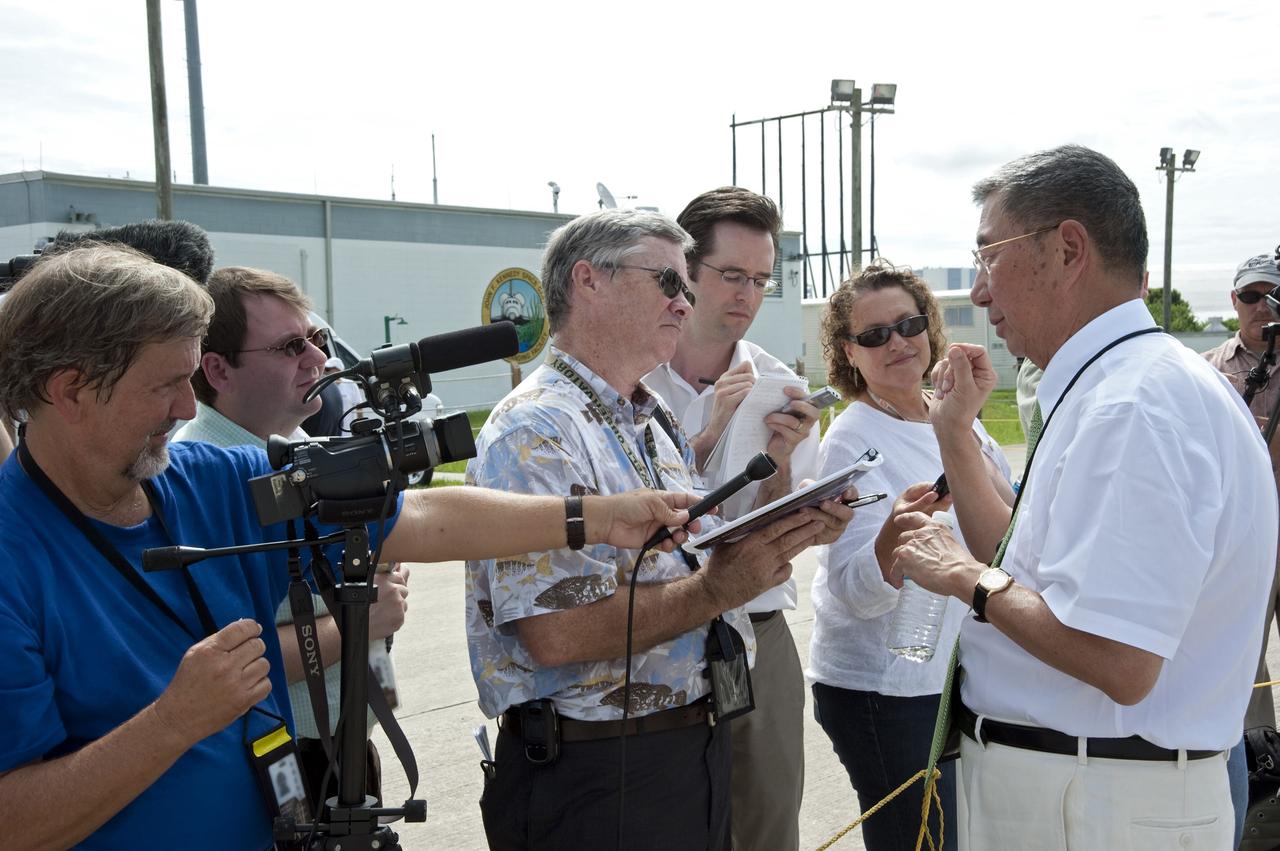
CAPE CANAVERAL, Fla. -- Prior to the arrival of the Alpha Magnetic Spectrometer, or AMS, to the Shuttle Landing Facility at NASA's Kennedy Space Center in Florida, Professor Sam Ting, AMS Principal Investigator from the Massachusetts Institute of Technology speaks with the media. AMS is a state-of-the-art particle physics detector is designed to operate as an external module on the International Space Station. It will use the unique environment of space to study the universe and its origin by searching for dark matter. AMS will fly to the International Space Station aboard space shuttle Endeavour's STS-134 mission targeted to launch Feb. 26, 2011. Photo credit: NASA/Kim Shiflett
CAPE CANAVERAL, Fla. -- In the Space Station Processing Facility at NASA's Kennedy Space Center in Florida, the Alpha Magnetic Spectrometer-2 (AMS) rotates 180 degrees to provide better access for work to be performed on its avionics box. Technicians also will install a flight releasable grappling fixture to AMS while it is upside down. AMS is designed to operate as an external experiment on the International Space Station. It will use the unique environment of space to study the universe and its origin by searching for dark matter. AMS will fly to the station aboard space shuttle Endeavour's STS-134 mission targeted to launch Feb. 27, 2011. Photo credit: NASA/Jack Pfaller
CAPE CANAVERAL, Fla. -- In the Space Station Processing Facility at NASA's Kennedy Space Center in Florida, the Alpha Magnetic Spectrometer-2 (AMS) is positioned at a 180-degree angle to provide better access for work to be performed on its avionics box. Technicians also will install a flight releasable grappling fixture to AMS while it is upside down. AMS is designed to operate as an external experiment on the International Space Station. It will use the unique environment of space to study the universe and its origin by searching for dark matter. AMS will fly to the station aboard space shuttle Endeavour's STS-134 mission targeted to launch Feb. 27, 2011. Photo credit: NASA/Jack Pfaller
CAPE CANAVERAL, Fla. -- In the Space Station Processing Facility at NASA's Kennedy Space Center in Florida, the Alpha Magnetic Spectrometer-2 (AMS) rotates 180 degrees to provide better access for work to be performed on its avionics box. Technicians also will install a flight releasable grappling fixture to AMS while it is upside down. AMS is designed to operate as an external experiment on the International Space Station. It will use the unique environment of space to study the universe and its origin by searching for dark matter. AMS will fly to the station aboard space shuttle Endeavour's STS-134 mission targeted to launch Feb. 27, 2011. Photo credit: NASA/Jack Pfaller
CAPE CANAVERAL, Fla. -- In the Space Station Processing Facility at NASA's Kennedy Space Center in Florida, the Alpha Magnetic Spectrometer-2 (AMS) rotates 180 degrees to provide better access for work to be performed on its avionics box. Technicians also will install a flight releasable grappling fixture to AMS while it is upside down. AMS is designed to operate as an external experiment on the International Space Station. It will use the unique environment of space to study the universe and its origin by searching for dark matter. AMS will fly to the station aboard space shuttle Endeavour's STS-134 mission targeted to launch Feb. 27, 2011. Photo credit: NASA/Jack Pfaller
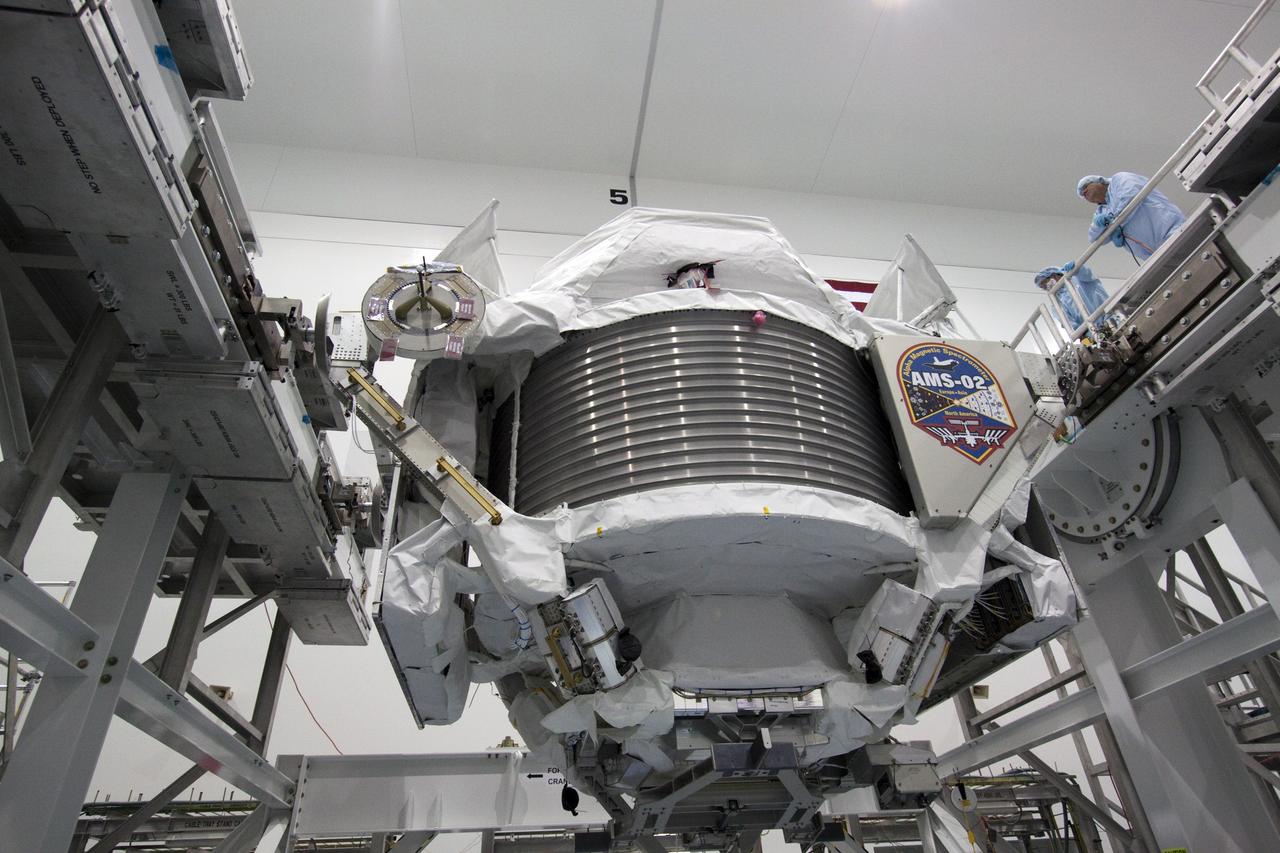
CAPE CANAVERAL, Fla. -- In the Space Station Processing Facility at NASA's Kennedy Space Center in Florida, the Alpha Magnetic Spectrometer-2 (AMS) will be rotated 180 degrees to provide better access for work to be performed on its avionics box. Technicians also will install a flight releasable grappling fixture to AMS while it is upside down. AMS is designed to operate as an external experiment on the International Space Station. It will use the unique environment of space to study the universe and its origin by searching for dark matter. AMS will fly to the station aboard space shuttle Endeavour's STS-134 mission targeted to launch Feb. 27, 2011. Photo credit: NASA/Jack Pfaller
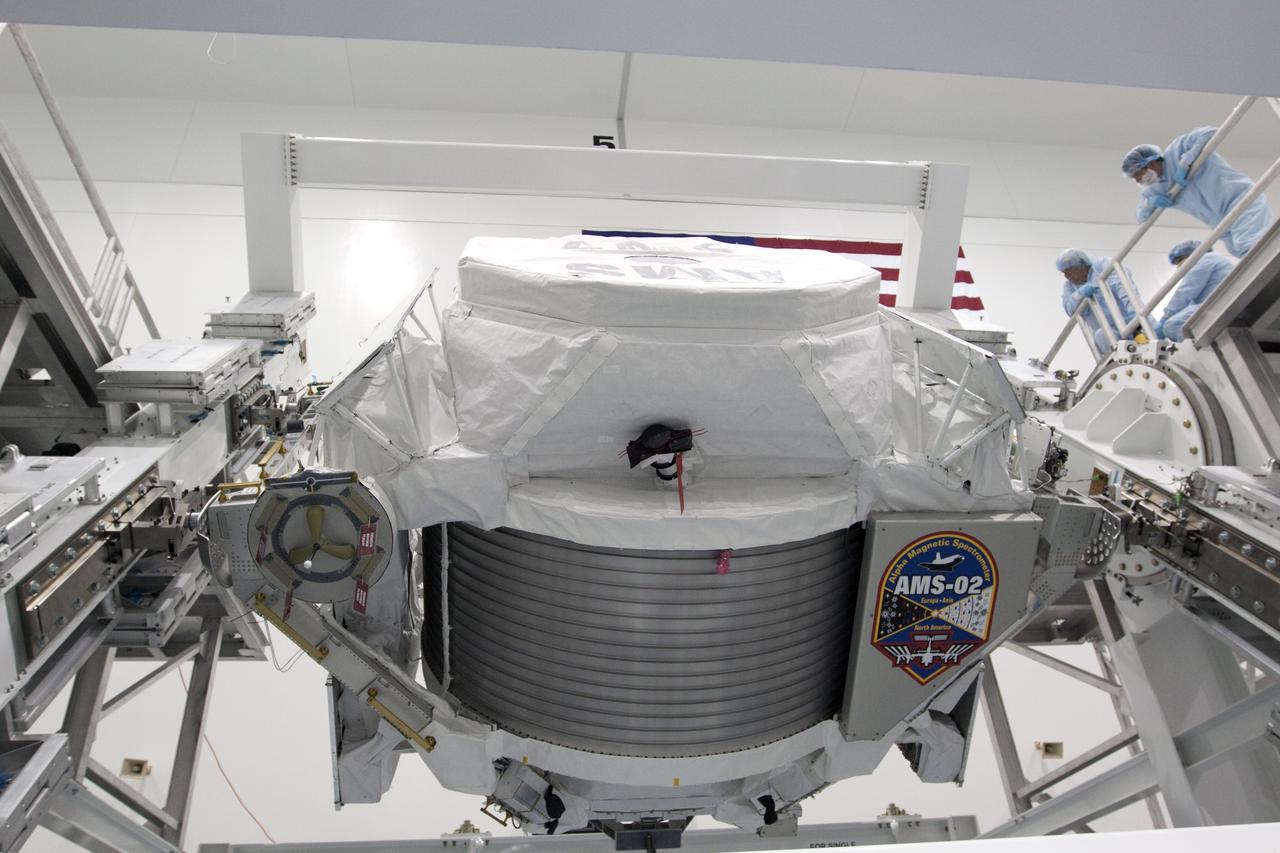
CAPE CANAVERAL, Fla. -- In the Space Station Processing Facility at NASA's Kennedy Space Center in Florida, the Alpha Magnetic Spectrometer-2 (AMS) rotates 180 degrees to provide better access for work to be performed on its avionics box. Technicians also will install a flight releasable grappling fixture to AMS while it is upside down. AMS is designed to operate as an external experiment on the International Space Station. It will use the unique environment of space to study the universe and its origin by searching for dark matter. AMS will fly to the station aboard space shuttle Endeavour's STS-134 mission targeted to launch Feb. 27, 2011. Photo credit: NASA/Jack Pfaller
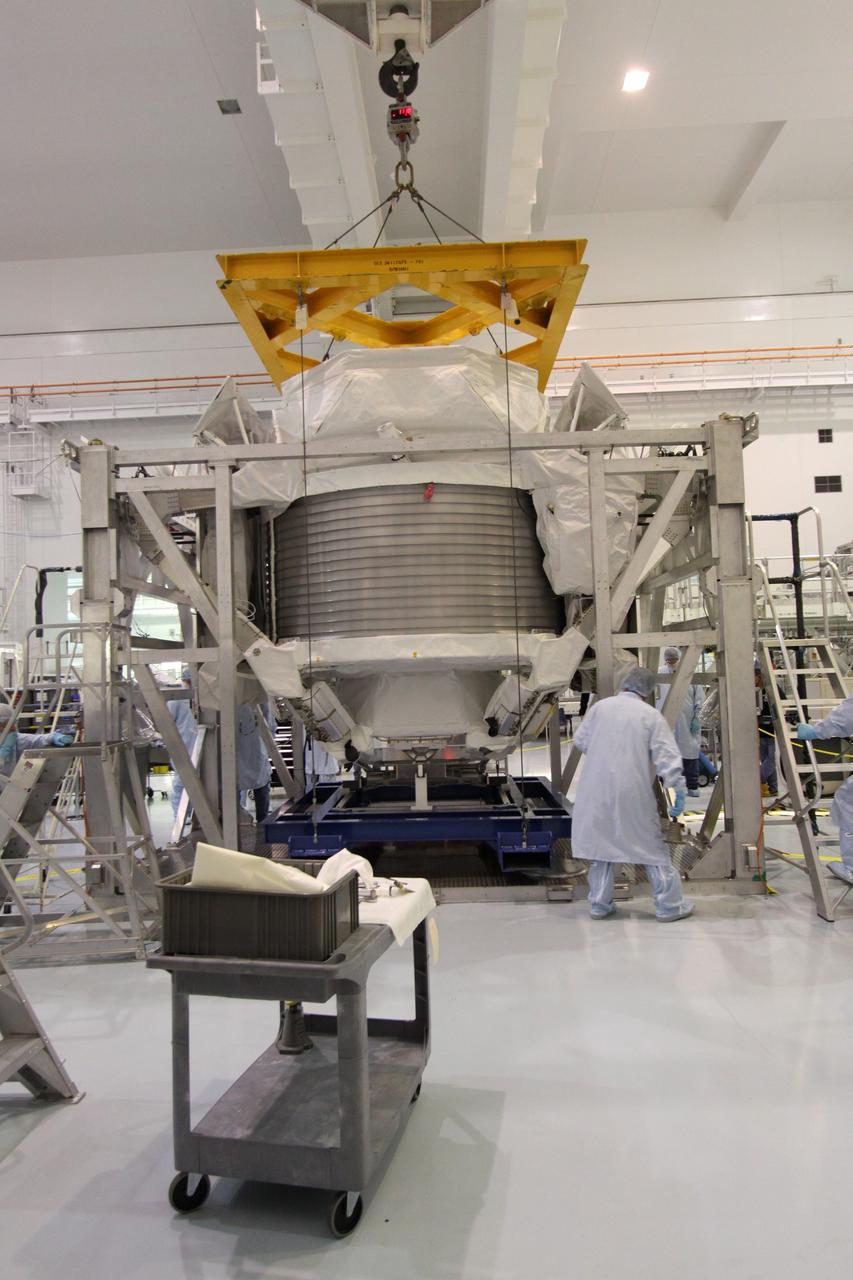
CAPE CANAVERAL, Fla. -- A technicians in the Space Station Processing Facility at NASA's Kennedy Space Center in Florida, check the progress of the Payload Attach System, or PAS, as it is lifted up to the Alpha Magnetic Spectrometer, or AMS, where it will be attached to the bottom of the AMS. The PAS provides a method of securely connecting the payload to the International Space Station. AMS, a state-of-the-art particle physics detector, is designed to operate as an external module on the International Space Station. It will use the unique environment of space to study the universe and its origin by searching for dark matter. AMS will fly to the station aboard space shuttle Endeavour's STS-134 mission targeted to launch Feb. 26, 2011. Photo credit: NASA/Jack Pfaller
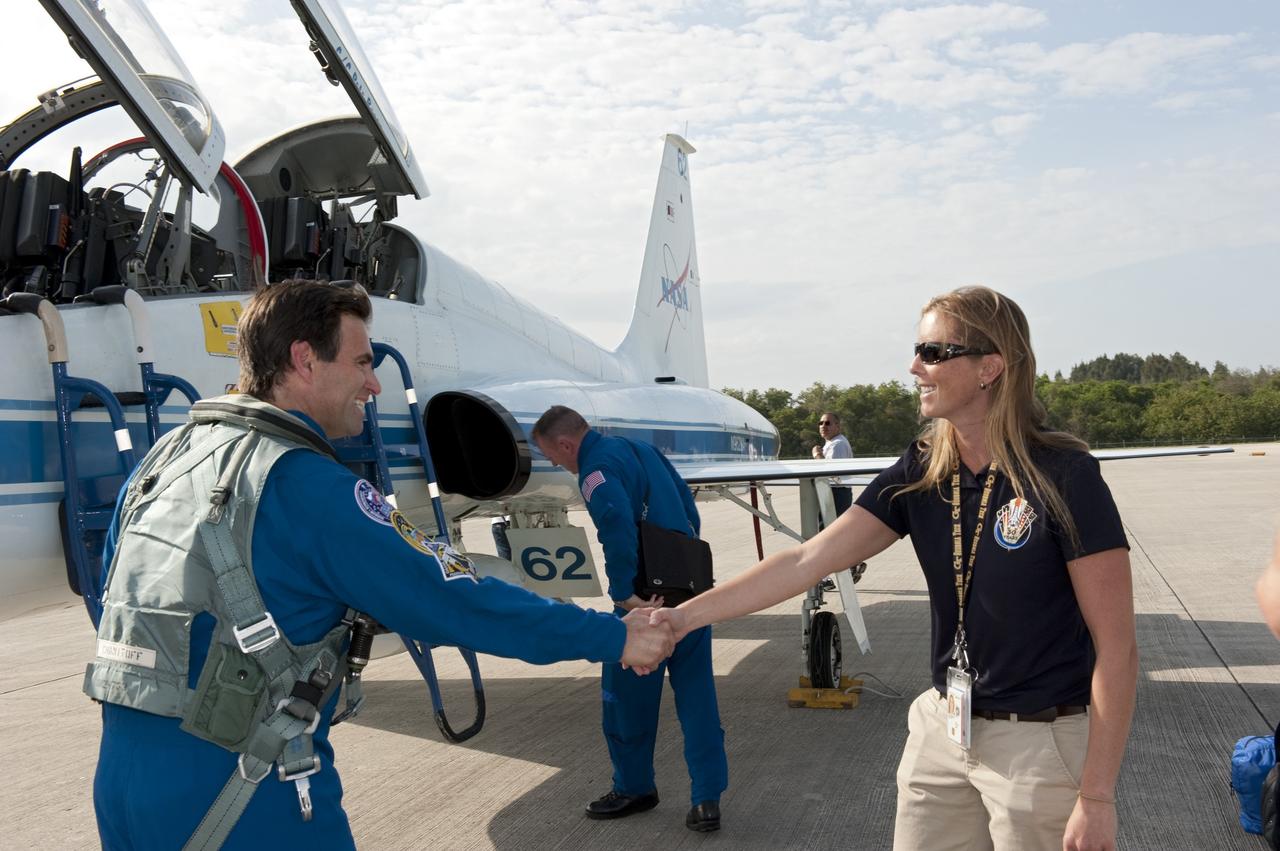
CAPE CANAVERAL, Fla. -- STS-134 Mission Specialist Greg Chamitoff greets Dana Hutcherson, space shuttle Endeavour's NASA flow manager, after arriving on the Shuttle Landing Facility at NASA's Kennedy Space Center in Florida aboard a T-38 jet. While at Kennedy, Endeavour's crew will participate in a launch countdown dress rehearsal called the Terminal Countdown Demonstration Test (TCDT) and related training in preparation for the upcoming STS-134 mission. Endeavour and its six STS-134 crew members will deliver the Express Logistics Carrier-3, Alpha Magnetic Spectrometer-2 (AMS), a high-pressure gas tank, additional spare parts for the Dextre robotic helper and micrometeoroid debris shields to the International Space Station. This will be the final spaceflight for Endeavour. Launch is targeted for April 19 at 7:48 p.m. EDT. For more information visit, www.nasa.gov/mission_pages/shuttle/shuttlemissions/sts134/index.html. Photo credit: NASA/Kim Shiflett

CAPE CANAVERAL, Fla. -- Media snap photos and record the arrival of space shuttle Endeavour's STS-134 crew members on the Shuttle Landing Facility at NASA's Kennedy Space Center in Florida. While at Kennedy, Endeavour's crew will participate in a launch countdown dress rehearsal called the Terminal Countdown Demonstration Test (TCDT) and related training in preparation for the upcoming STS-134 mission. Endeavour and its six STS-134 crew members will deliver the Express Logistics Carrier-3, Alpha Magnetic Spectrometer-2 (AMS), a high-pressure gas tank, additional spare parts for the Dextre robotic helper and micrometeoroid debris shields to the International Space Station. This will be the final spaceflight for Endeavour. Launch is targeted for April 19 at 7:48 p.m. EDT. For more information visit, www.nasa.gov/mission_pages/shuttle/shuttlemissions/sts134/index.html. Photo credit: NASA/Kim Shiflett
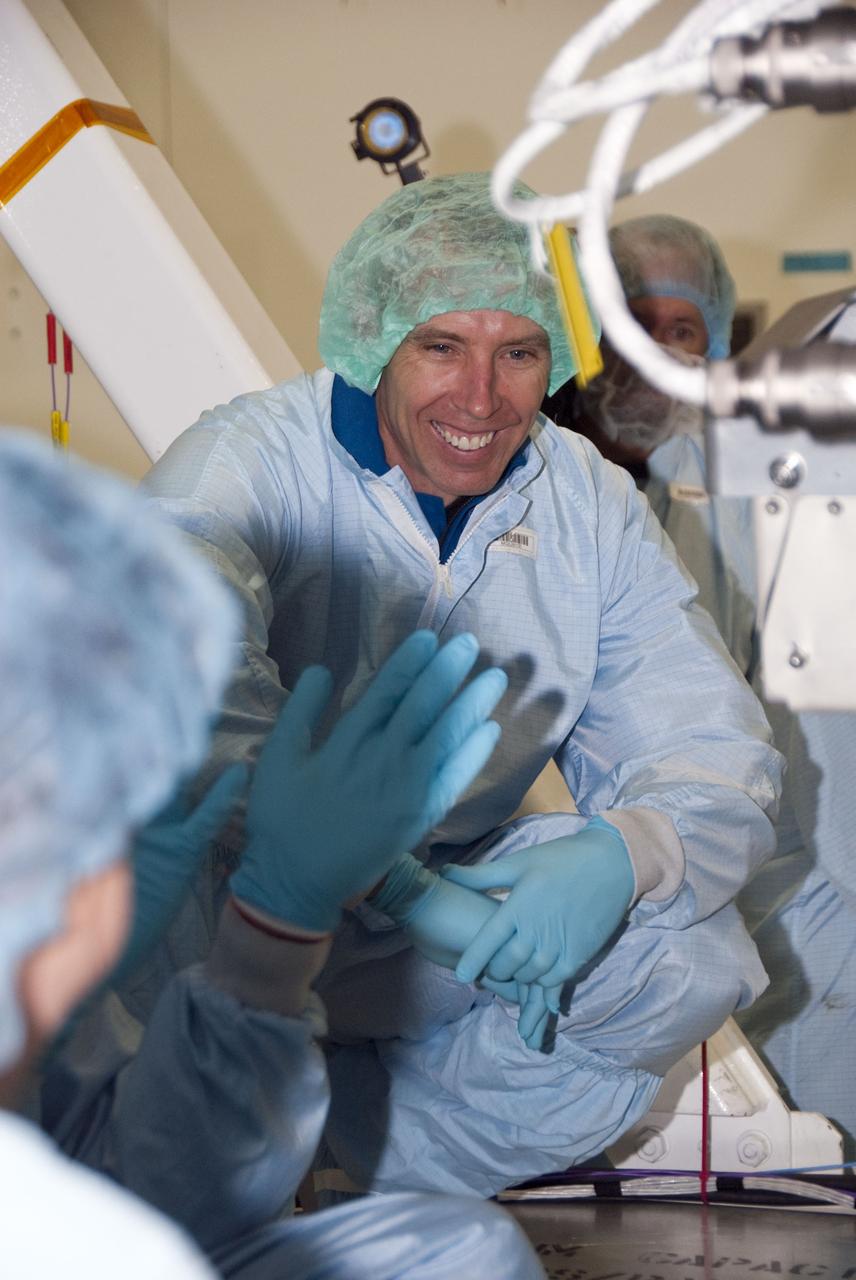
CAPE CANAVERAL, Fla. -- In the Space Station Processing Facility at NASA's Kennedy Space Center in Florida, STS-134 Mission Specialist Andrew Feustel inspects the Alpha Magnetic Spectrometer-2 (AMS) with the experiment's technicians. Feustel and his five crewmates are at Kennedy participating in the Crew Equipment Interface Test (CEIT), which gives them an opportunity for hands-on training with tools they'll be using in space and familiarization of the payload they'll be delivering to the International Space Station. Space shuttle Endeavour is targeted to launch on the STS-134 mission Feb. 27, 2011. For more information, visit www.nasa.gov/mission_pages/shuttle/shuttlemissions/sts134/index.html. Photo credit: NASA/Cory Huston
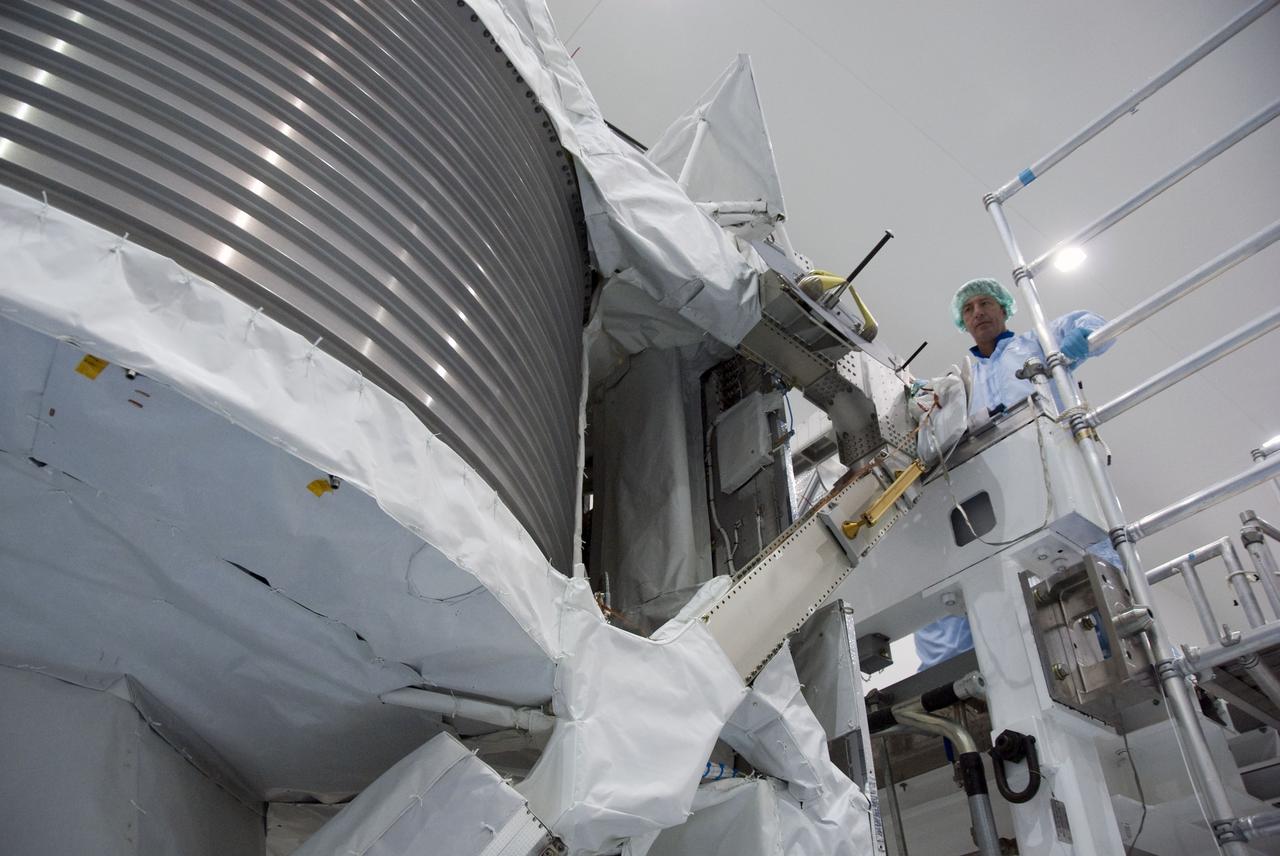
CAPE CANAVERAL, Fla. -- In the Space Station Processing Facility at NASA's Kennedy Space Center in Florida, STS-134 Mission Specialist Roberto Vittori, with the European Space Agency, inspects the Alpha Magnetic Spectrometer-2 (AMS). Vittori and his five crewmates are at Kennedy participating in the Crew Equipment Interface Test (CEIT), which gives them an opportunity for hands-on training with tools they'll be using in space and familiarization of the payload they'll be delivering to the International Space Station. Space shuttle Endeavour is targeted to launch on the STS-134 mission Feb. 27, 2011. For more information, visit www.nasa.gov/mission_pages/shuttle/shuttlemissions/sts134/index.html. Photo credit: NASA/Cory Huston
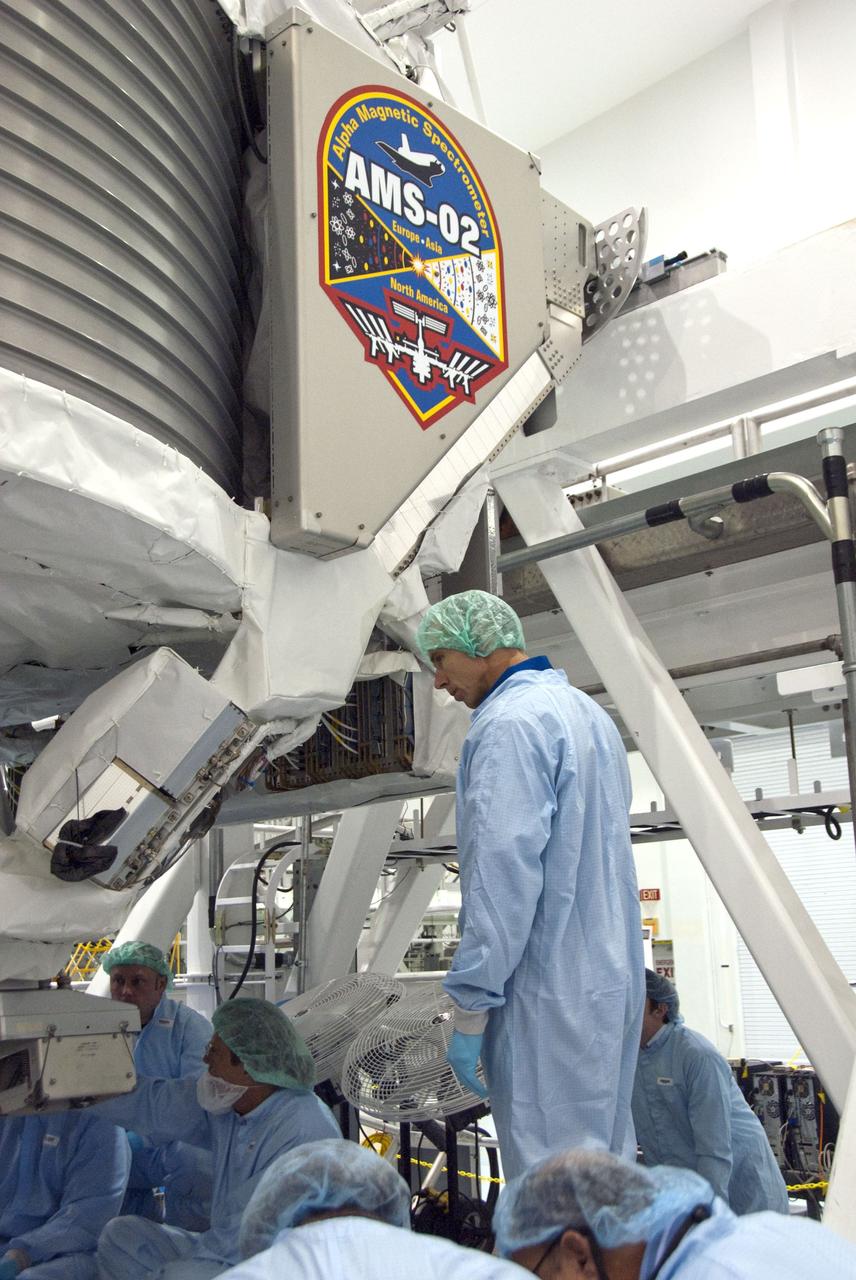
CAPE CANAVERAL, Fla. -- In the Space Station Processing Facility at NASA's Kennedy Space Center in Florida, STS-134 Mission Specialist Roberto Vittori inspects the Alpha Magnetic Spectrometer-2 (AMS) with the experiment's technicians. Vittori, who is with the European Space Agency, and his five crewmates are at Kennedy participating in the Crew Equipment Interface Test (CEIT), which gives them an opportunity for hands-on training with tools they'll be using in space and familiarization of the payload they'll be delivering to the International Space Station. Space shuttle Endeavour is targeted to launch on the STS-134 mission Feb. 27, 2011. For more information, visit www.nasa.gov/mission_pages/shuttle/shuttlemissions/sts134/index.html. Photo credit: NASA/Cory Huston
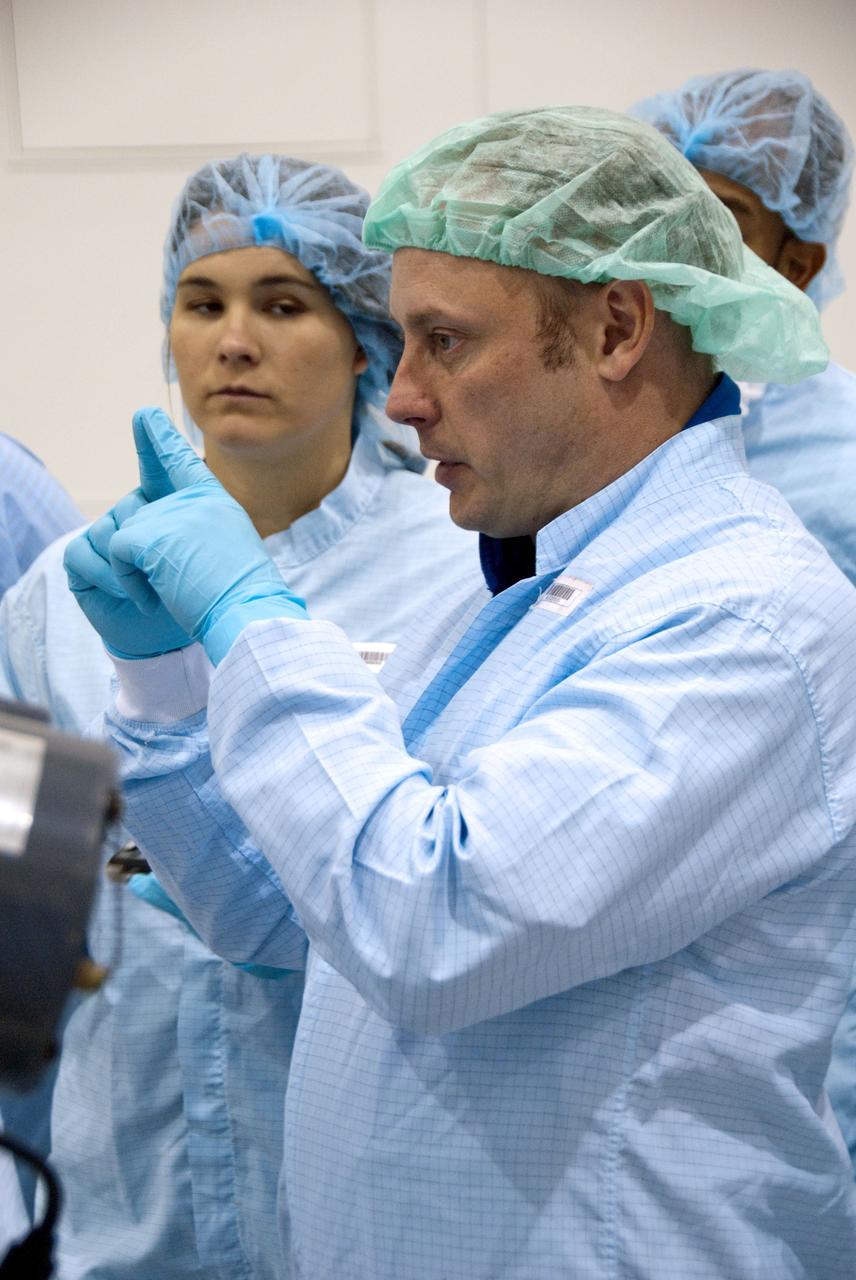
CAPE CANAVERAL, Fla. -- In the Space Station Processing Facility at NASA's Kennedy Space Center in Florida, STS-134 Mission Specialist Michael Finke, front right, checks out the Alpha Magnetic Spectrometer-2 (AMS) with the experiment's technicians. Finke and his five crewmates are at Kennedy participating in the Crew Equipment Interface Test (CEIT), which gives them an opportunity for hands-on training with tools they'll be using in space and familiarization of the payload they'll be delivering to the International Space Station. Space shuttle Endeavour is targeted to launch on the STS-134 mission Feb. 27, 2011. For more information, visit www.nasa.gov/mission_pages/shuttle/shuttlemissions/sts134/index.html. Photo credit: NASA/Cory Huston
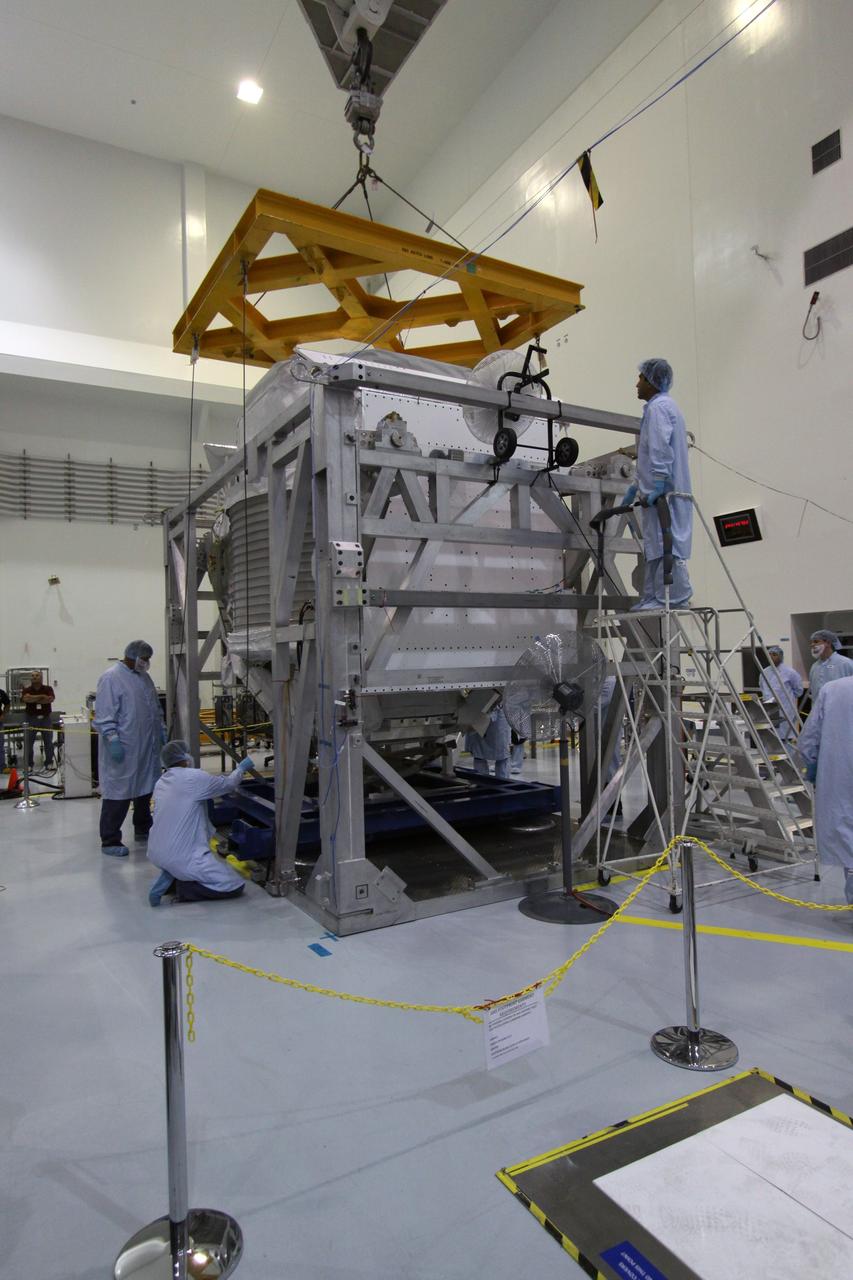
CAPE CANAVERAL, Fla. -- Technicians in the Space Station Processing Facility at NASA's Kennedy Space Center in Florida, monitor the guide wires of the overhead crane as it lifts the Payload Attach System, or PAS, up to the Alpha Magnetic Spectrometer, or AMS, for installation. The PAS provides a method of securely connecting the payload to the International Space Station. AMS, a state-of-the-art particle physics detector, is designed to operate as an external module on the International Space Station. It will use the unique environment of space to study the universe and its origin by searching for dark matter. AMS will fly to the station aboard space shuttle Endeavour's STS-134 mission targeted to launch Feb. 26, 2011. Photo credit: NASA/Jack Pfaller
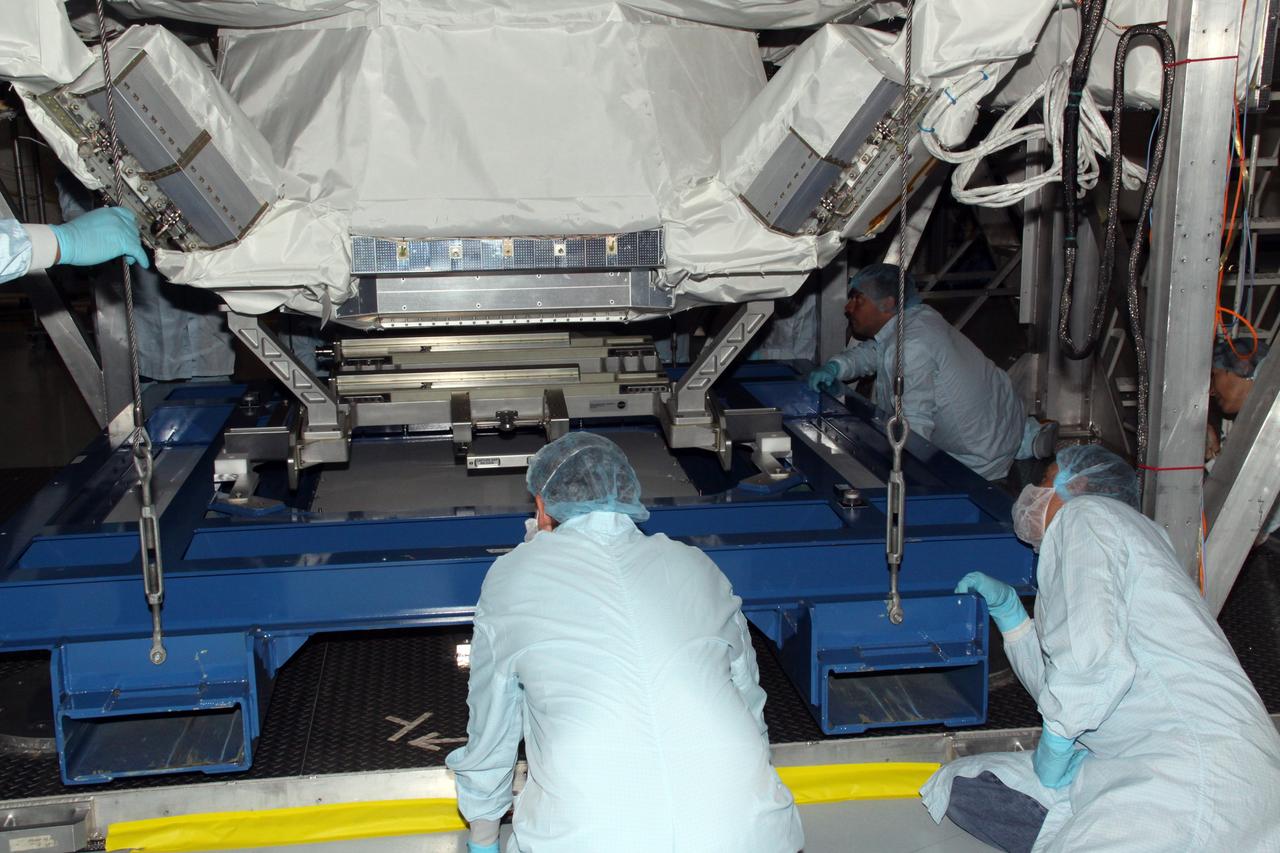
CAPE CANAVERAL, Fla. -- Technicians in the Space Station Processing Facility at NASA's Kennedy Space Center in Florida, check the progress of the Payload Attach System, or PAS, as it is lifted up to the Alpha Magnetic Spectrometer, where it will be attached to the bottom of the AMS. The PAS provides a method of securely connecting the payload to the International Space Station. AMS, a state-of-the-art particle physics detector, is designed to operate as an external module on the International Space Station. It will use the unique environment of space to study the universe and its origin by searching for dark matter. AMS will fly to the station aboard space shuttle Endeavour's STS-134 mission targeted to launch Feb. 26, 2011. Photo credit: NASA/Jack Pfaller
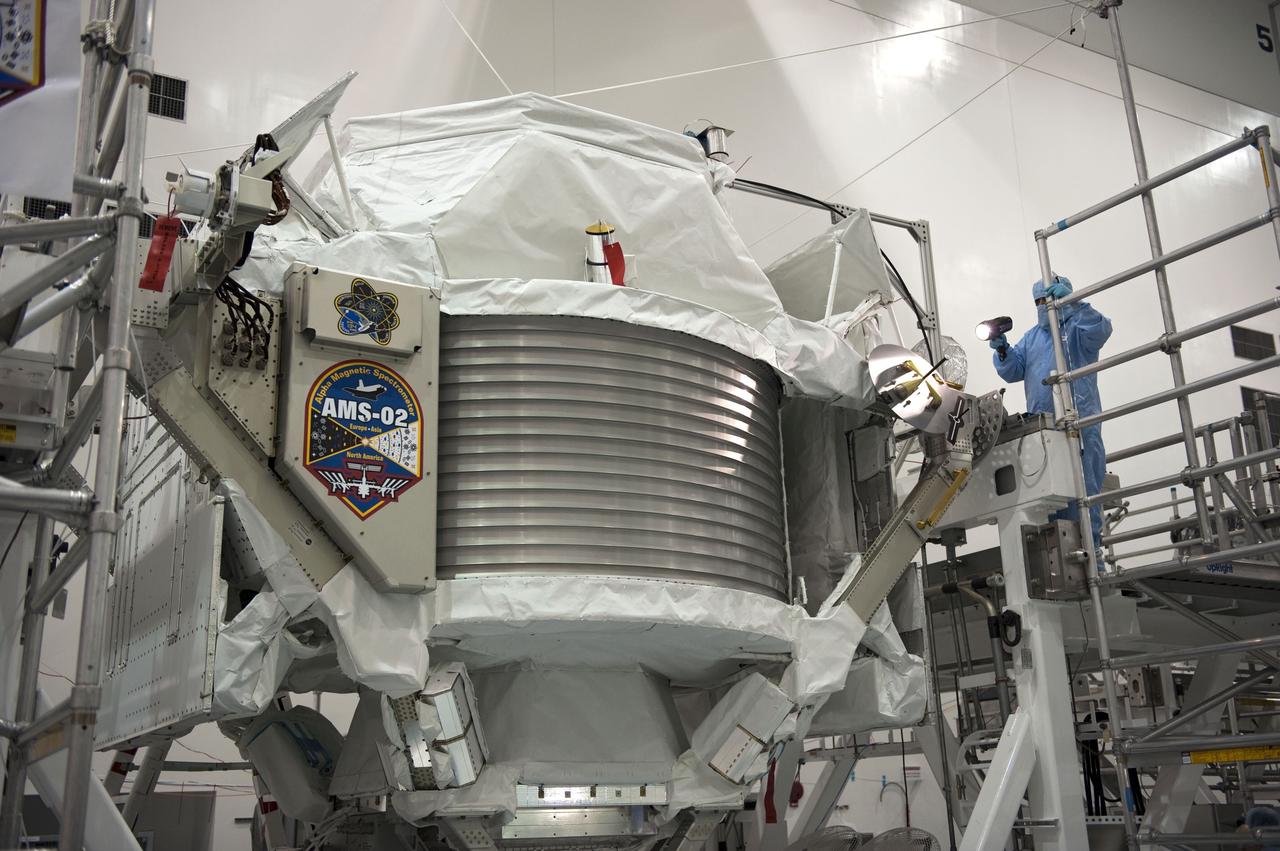
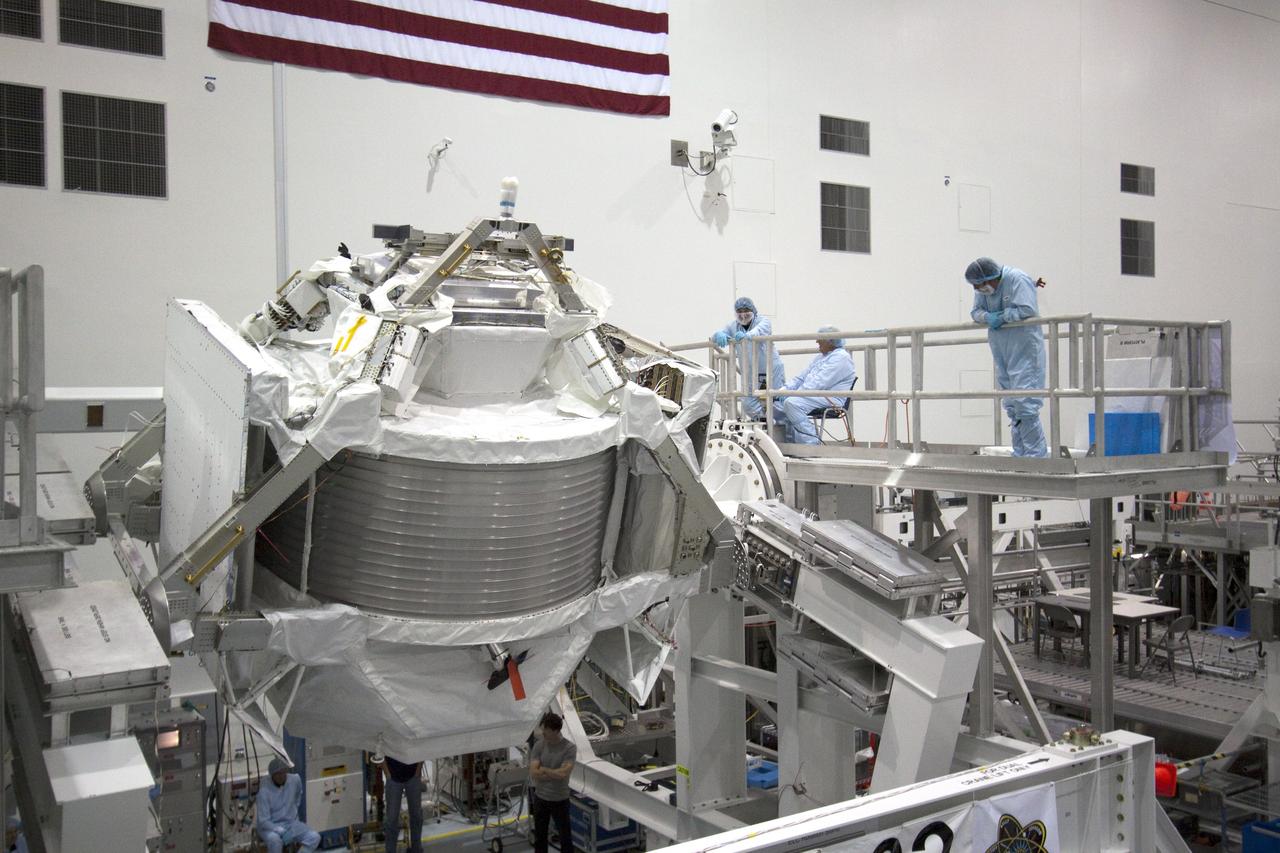
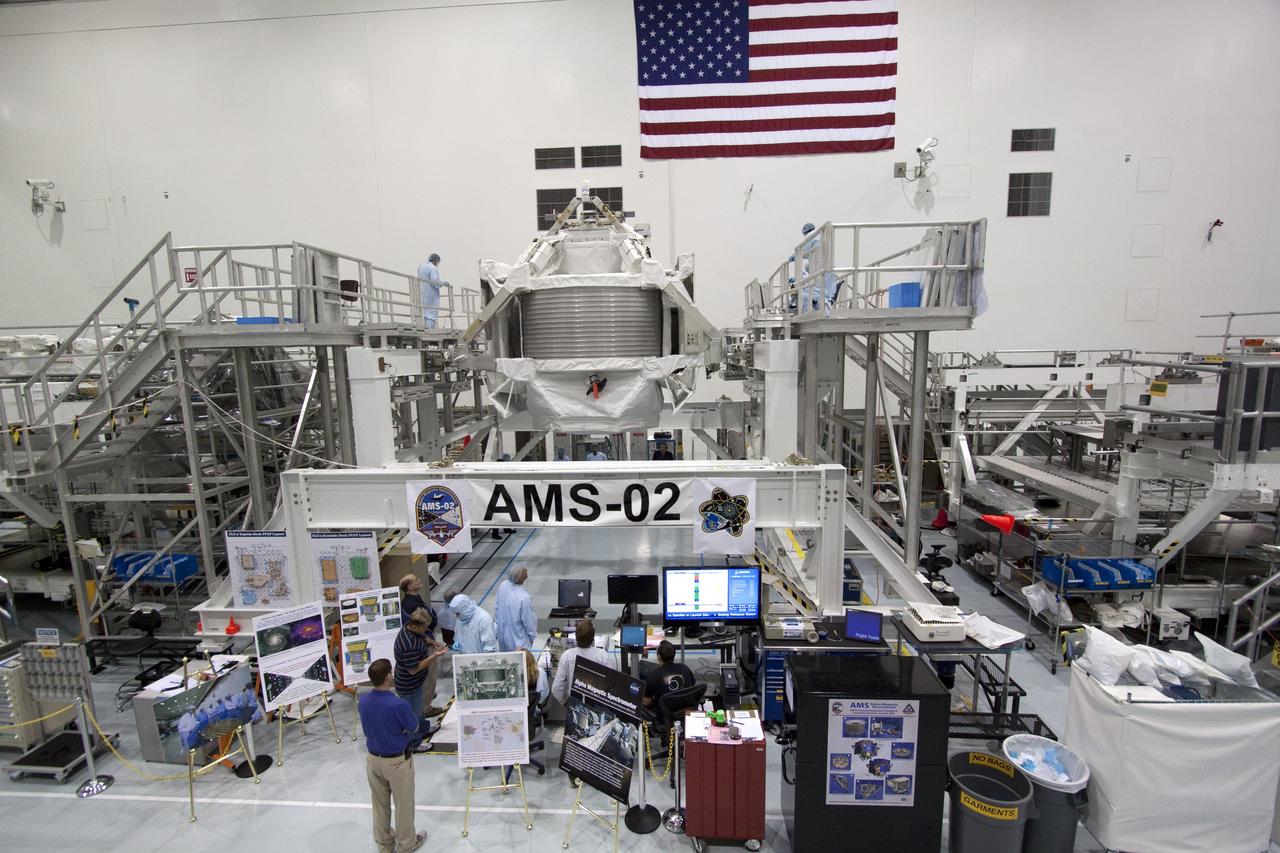
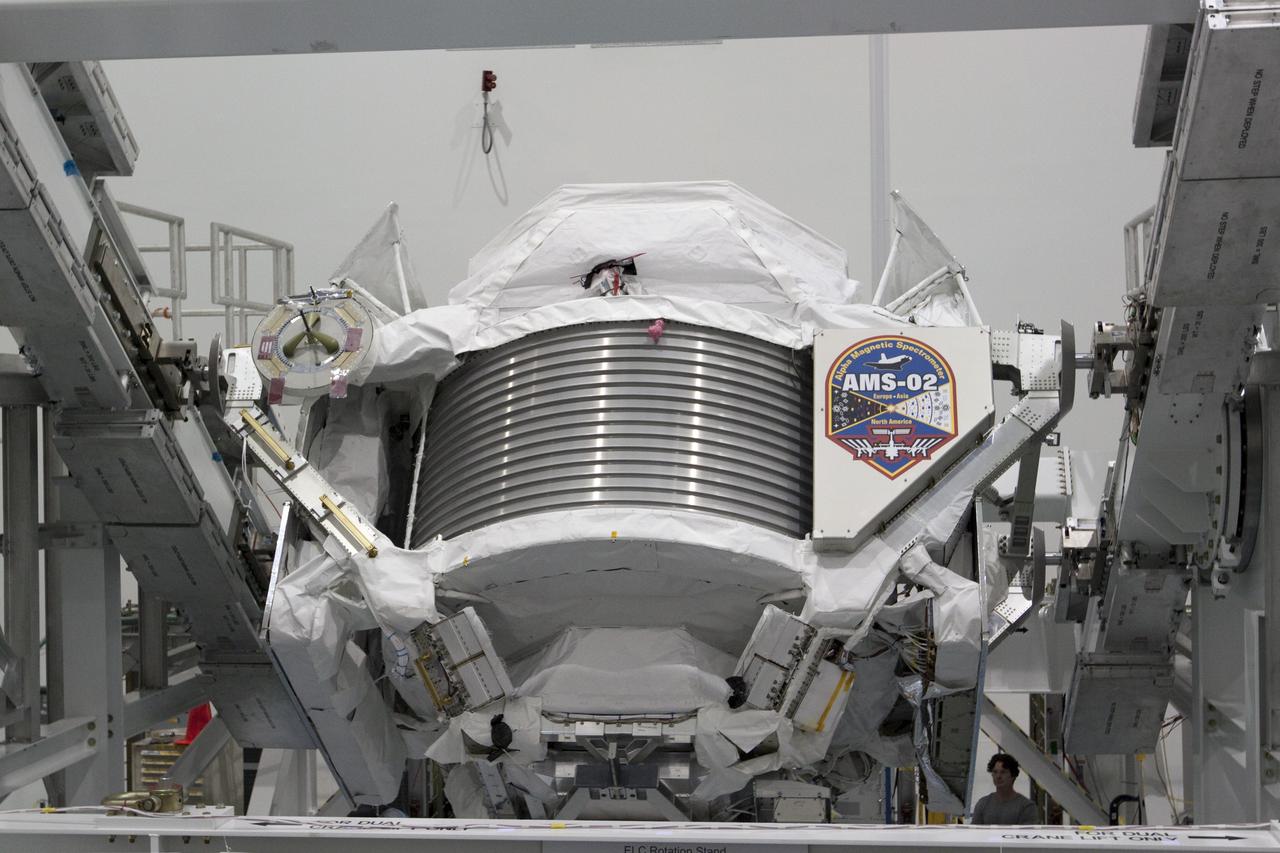
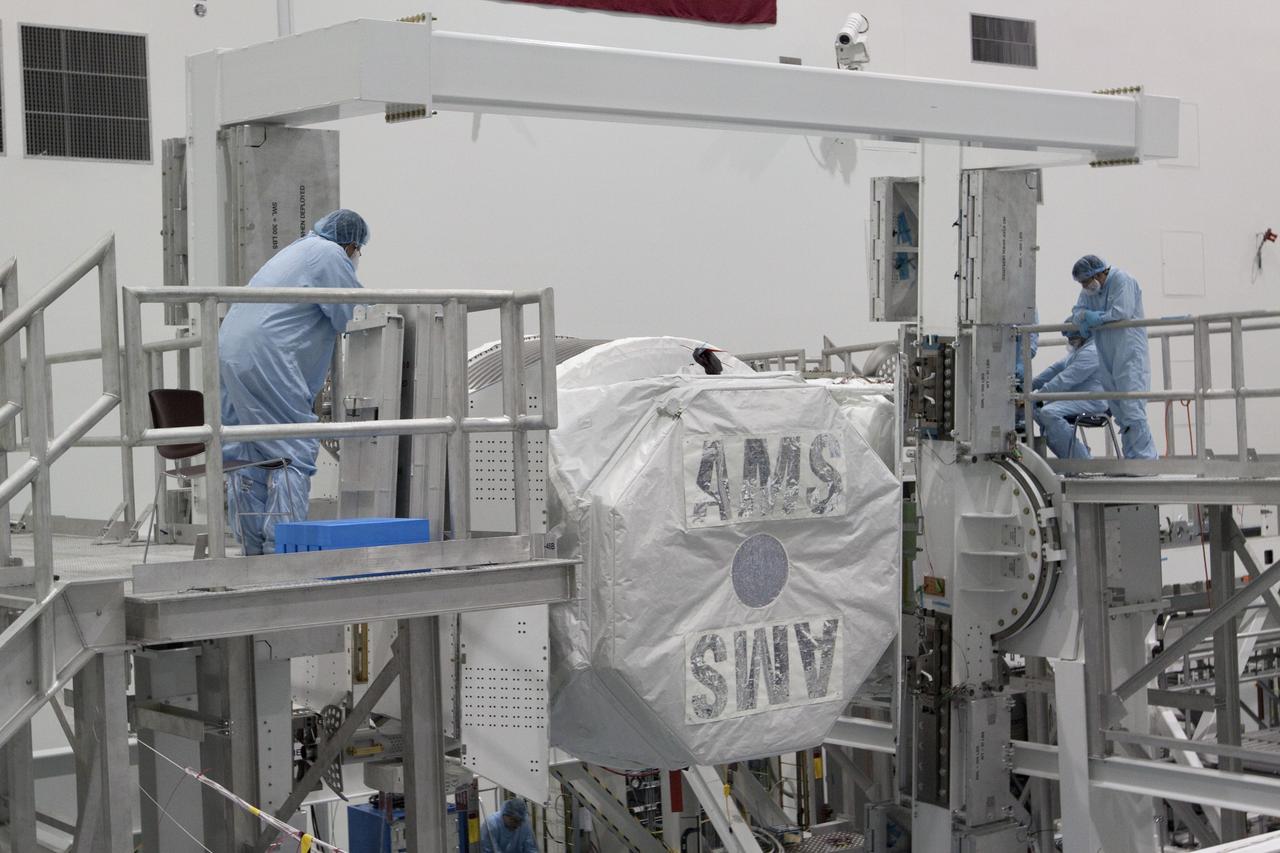
CAPE CANAVERAL, Fla. -- In the Space Station Processing Facility at NASA's Kennedy Space Center in Florida, processing continues for the Alpha Magnetic Spectrometer-2 (AMS). AMS is a particle physics detector, designed to operate as an external experiment on the International Space Station. It will use the unique environment of space to study the universe and its origin by searching for dark matter. AMS-2 will fly to the station aboard space shuttle Endeavour's STS-134 mission targeted to launch April 19 at 7:48 p.m. EDT. For more information visit, www.nasa.gov/mission_pages/shuttle/shuttlemissions/sts134/index.html. Photo credit: NASA/Glenn Benson
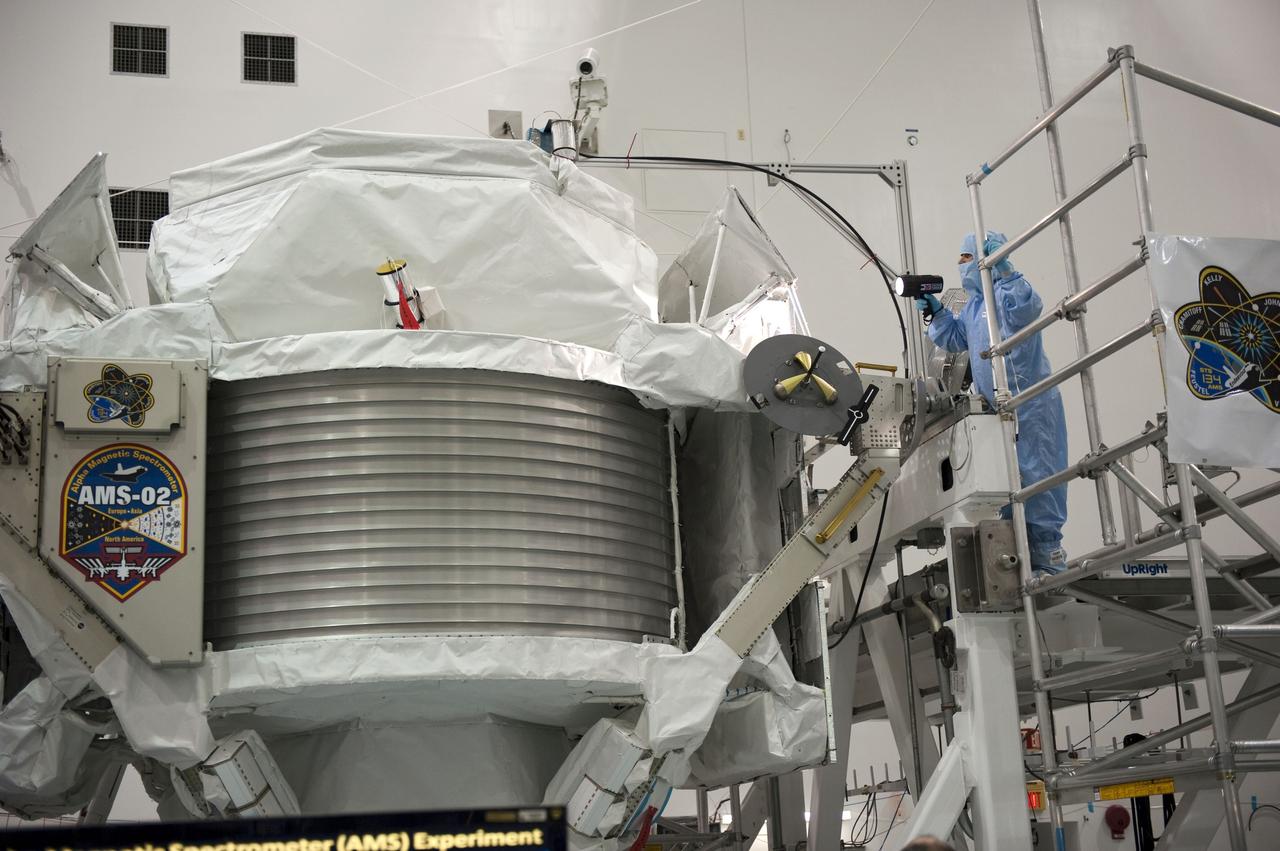
CAPE CANAVERAL, Fla. -- In the Space Station Processing Facility at NASA's Kennedy Space Center in Florida, processing continues for the Alpha Magnetic Spectrometer-2 (AMS). AMS is a particle physics detector, designed to operate as an external experiment on the International Space Station. It will use the unique environment of space to study the universe and its origin by searching for dark matter. AMS-2 will fly to the station aboard space shuttle Endeavour's STS-134 mission targeted to launch April 19 at 7:48 p.m. EDT. For more information visit, www.nasa.gov/mission_pages/shuttle/shuttlemissions/sts134/index.html. Photo credit: NASA/Glenn Benson
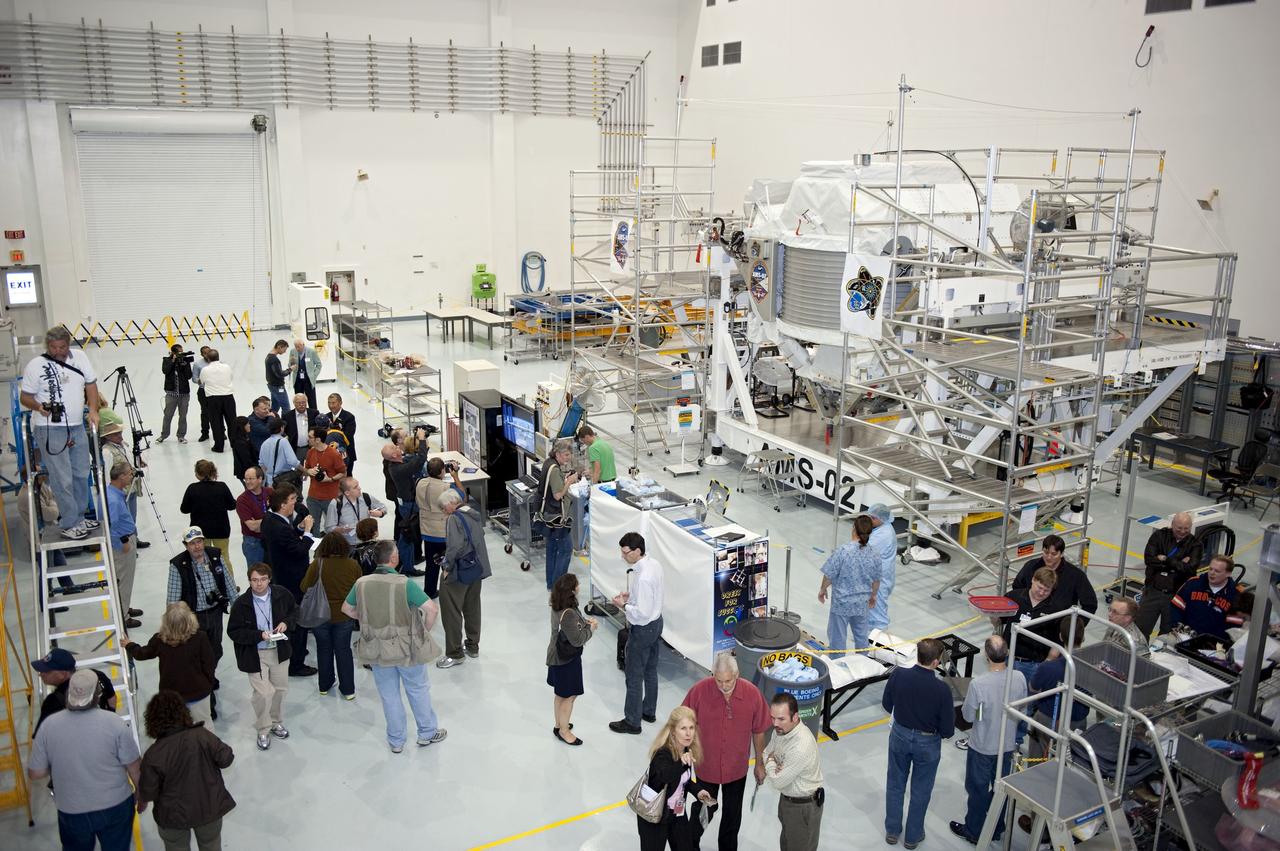
CAPE CANAVERAL, Fla. -- In the Space Station Processing Facility at NASA's Kennedy Space Center in Florida, media check out the Alpha Magnetic Spectrometer-2 (AMS). AMS is a particle physics detector, designed to operate as an external experiment on the International Space Station. It will use the unique environment of space to study the universe and its origin by searching for dark matter. AMS-2 will fly to the station aboard space shuttle Endeavour's STS-134 mission targeted to launch April 19 at 7:48 p.m. EDT. For more information visit, www.nasa.gov/mission_pages/shuttle/shuttlemissions/sts134/index.html. Photo credit: NASA/Glenn Benson
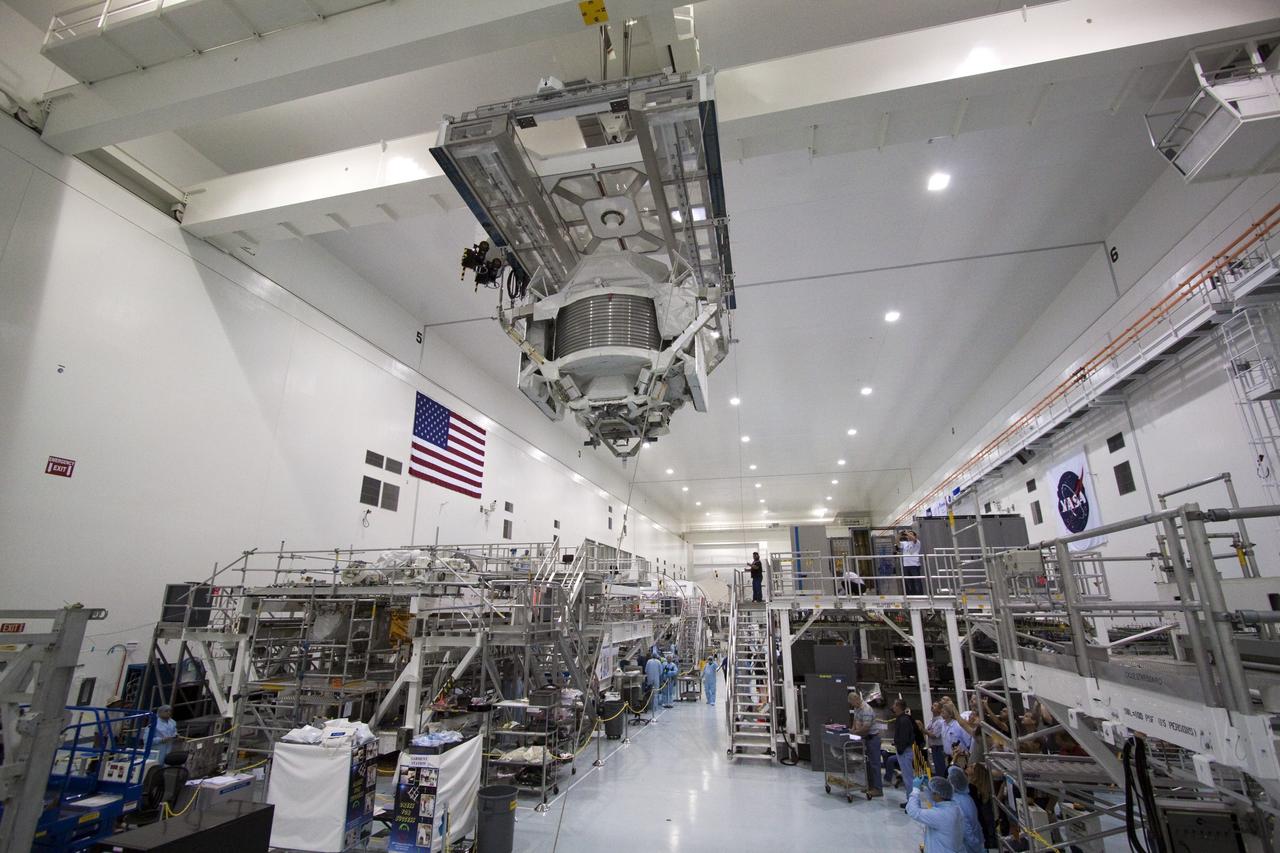
CAPE CANAVERAL, Fla. -- High overhead in the Space Station Processing Facility at NASA's Kennedy Space Center in Florida, a hoist transfers the Alpha Magnetic Spectrometer (AMS) to a rotation stand to begin processing for flight. AMS, a state-of-the-art particle physics detector, is designed to operate as an external experiment on the International Space Station. It will use the unique environment of space to study the universe and its origin by searching for dark matter. AMS will fly to the station aboard space shuttle Endeavour's STS-134 mission targeted to launch February, 2011. For more information visit: http://www.nasa.gov/mission_pages/shuttle/shuttlemissions/sts134/index.html. Photo credit: NASA/Jack Pfaller
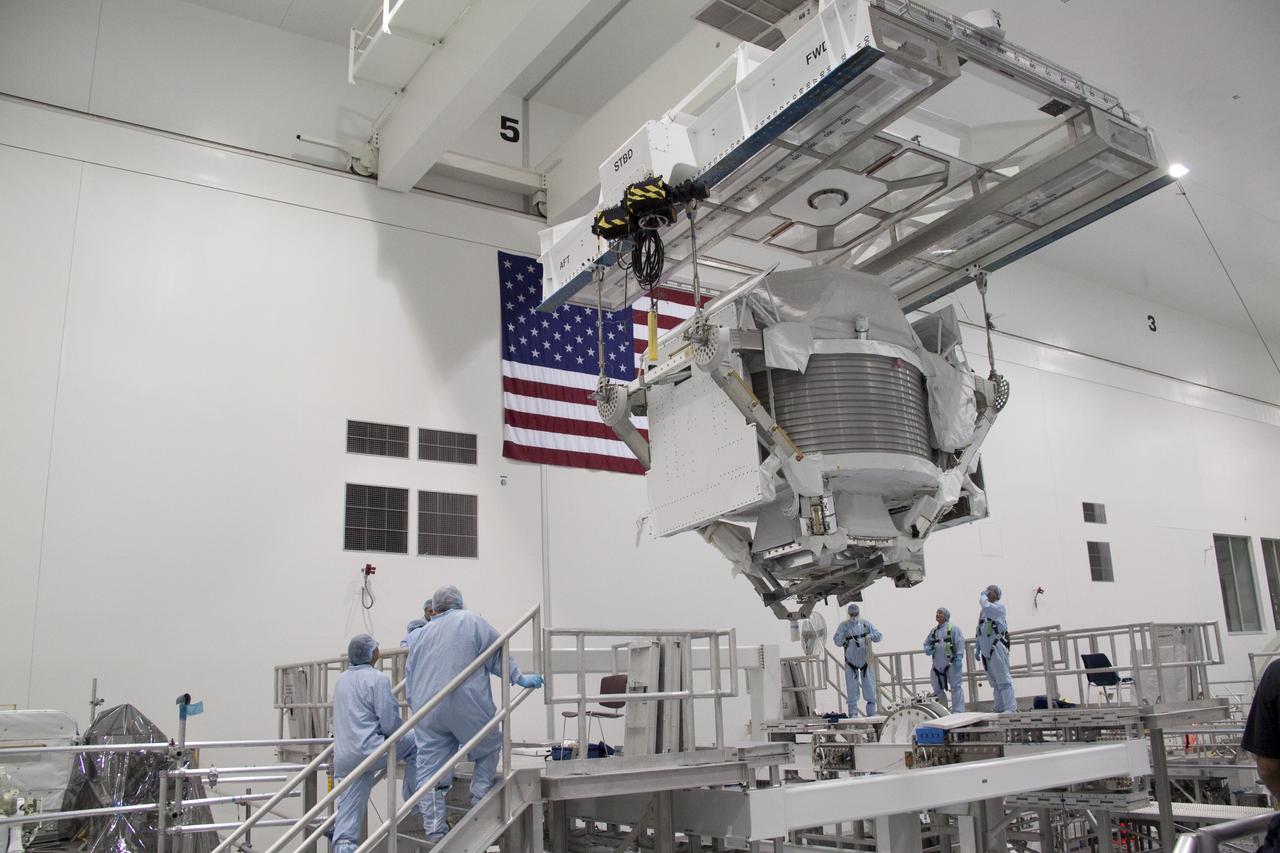
CAPE CANAVERAL, Fla. -- In the Space Station Processing Facility at NASA's Kennedy Space Center in Florida, an overhead hoist lowers the Alpha Magnetic Spectrometer (AMS) onto a rotation stand where it will be tested and processed for launch. AMS, a state-of-the-art particle physics detector, is designed to operate as an external experiment on the International Space Station. It will use the unique environment of space to study the universe and its origin by searching for dark matter. AMS will fly to the station aboard space shuttle Endeavour's STS-134 mission targeted to launch February, 2011. For more information visit: http://www.nasa.gov/mission_pages/shuttle/shuttlemissions/sts134/index.html. Photo credit: NASA/Jack Pfaller
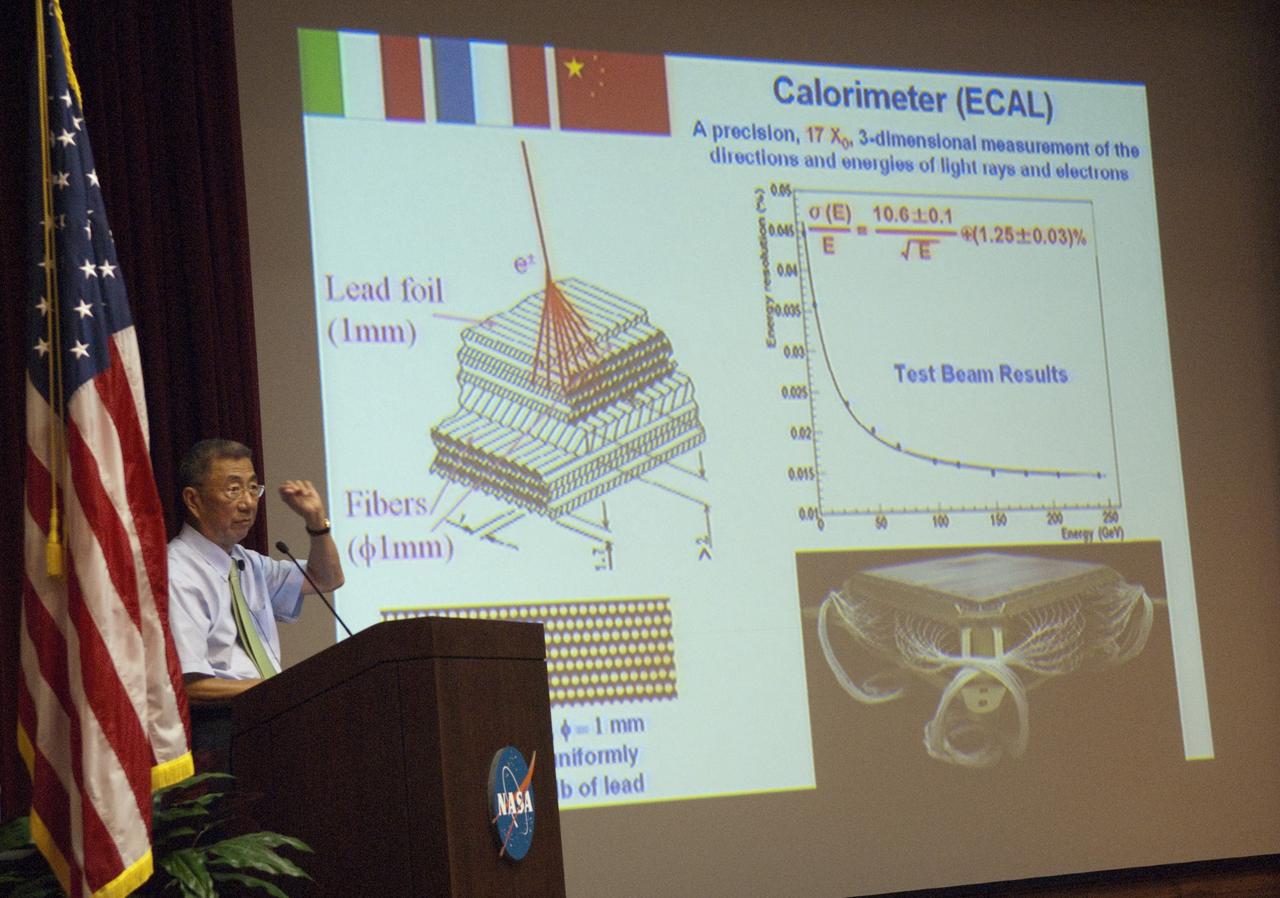
CAPE CANAVERAL, Fla. -- In the Training Auditorium at NASA's Kennedy Space Center in Florida, Professor Sam Ting talks to employees about the Alpha Magnetic Spectrometer-2 (AMS). Ting is the particle physics detector's principal investigator at the Massachusetts Institute of Technology. AMS is designed to operate as an external module on the International Space Station. It will use the unique environment of space to study the universe and its origin by searching for dark matter. AMS-2 will fly to the station aboard space shuttle Endeavour's STS-134 mission targeted to launch Feb. 27, 2011. Photo credit: NASA/Jim Grossmann
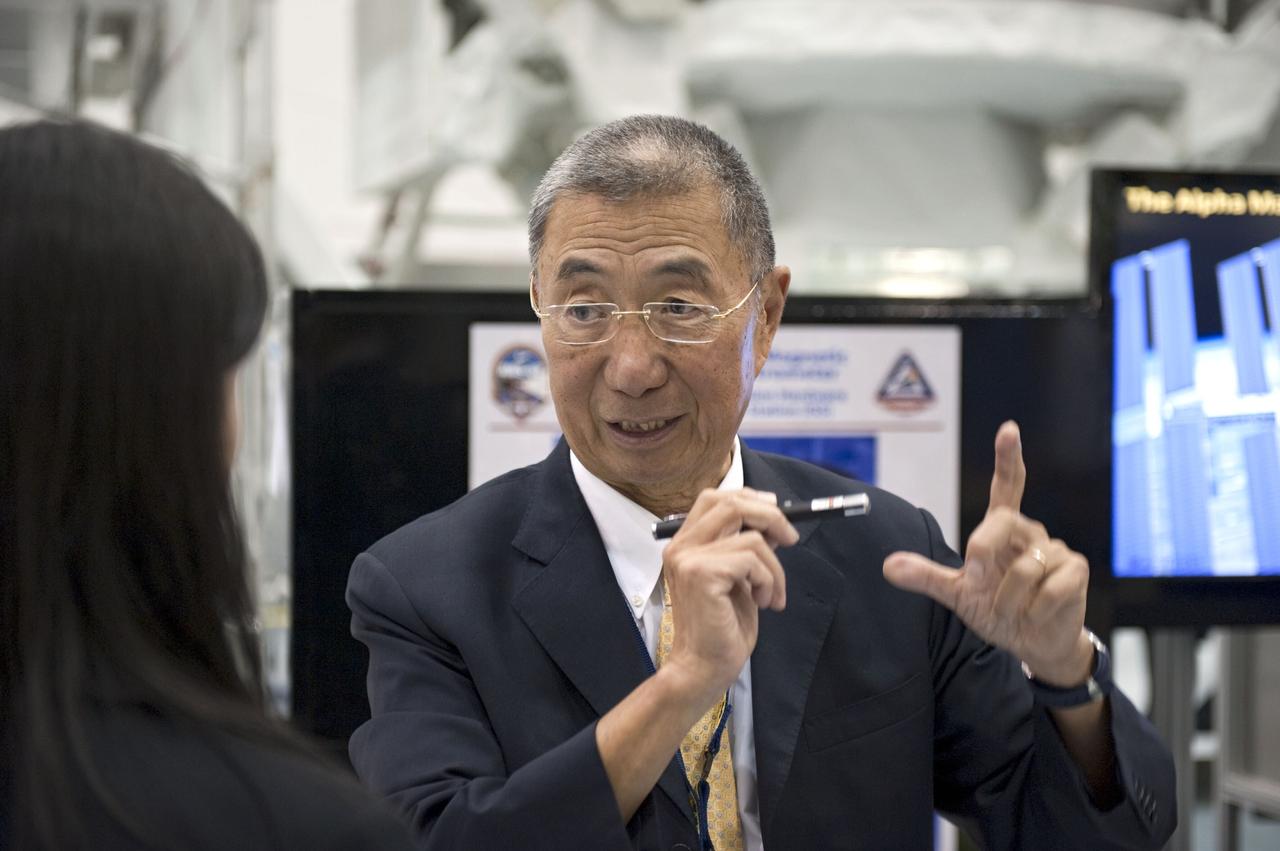
CAPE CANAVERAL, Fla. -- In the Space Station Processing Facility at NASA's Kennedy Space Center in Florida Professor Sam Ting, Alpha Magnetic Spectrometer-2 (AMS) principal investigator at the Massachusetts Institute of Technology, talks to media about the particle physics detector. AMS is designed to operate as an external experiment on the International Space Station. It will use the unique environment of space to study the universe and its origin by searching for dark matter. AMS-2 will fly to the station aboard space shuttle Endeavour's STS-134 mission targeted to launch April 19 at 7:48 p.m. EDT. For more information visit, www.nasa.gov/mission_pages/shuttle/shuttlemissions/sts134/index.html. Photo credit: NASA/Glenn Benson
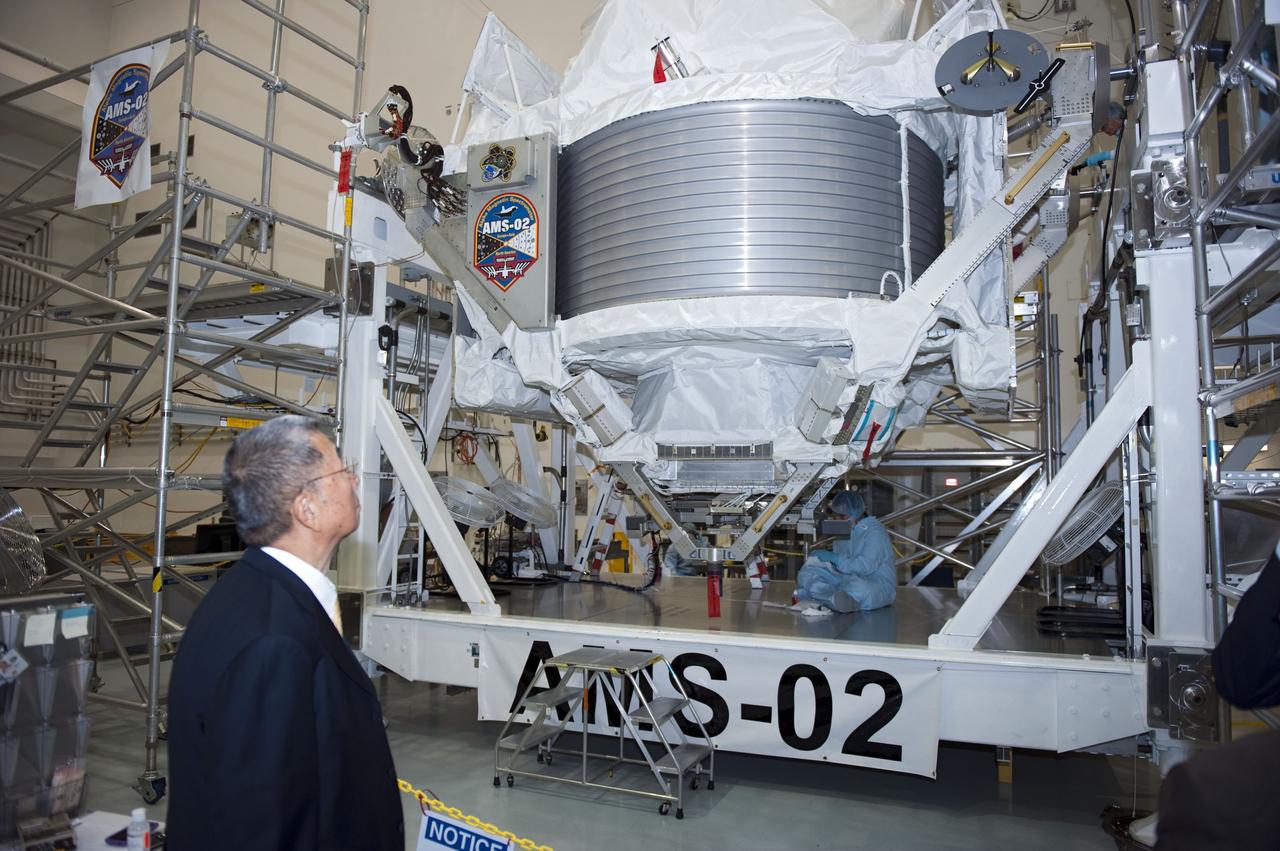
CAPE CANAVERAL, Fla. -- In the Space Station Processing Facility at NASA's Kennedy Space Center in Florida, Professor Sam Ting, Alpha Magnetic Spectrometer-2 (AMS) principal investigator at the Massachusetts Institute of Technology, checks out the particle physics detector. AMS is designed to operate as an external experiment on the International Space Station. It will use the unique environment of space to study the universe and its origin by searching for dark matter. AMS-2 will fly to the station aboard space shuttle Endeavour's STS-134 mission targeted to launch April 19 at 7:48 p.m. EDT. For more information visit, www.nasa.gov/mission_pages/shuttle/shuttlemissions/sts134/index.html. Photo credit: NASA/Glenn Benson
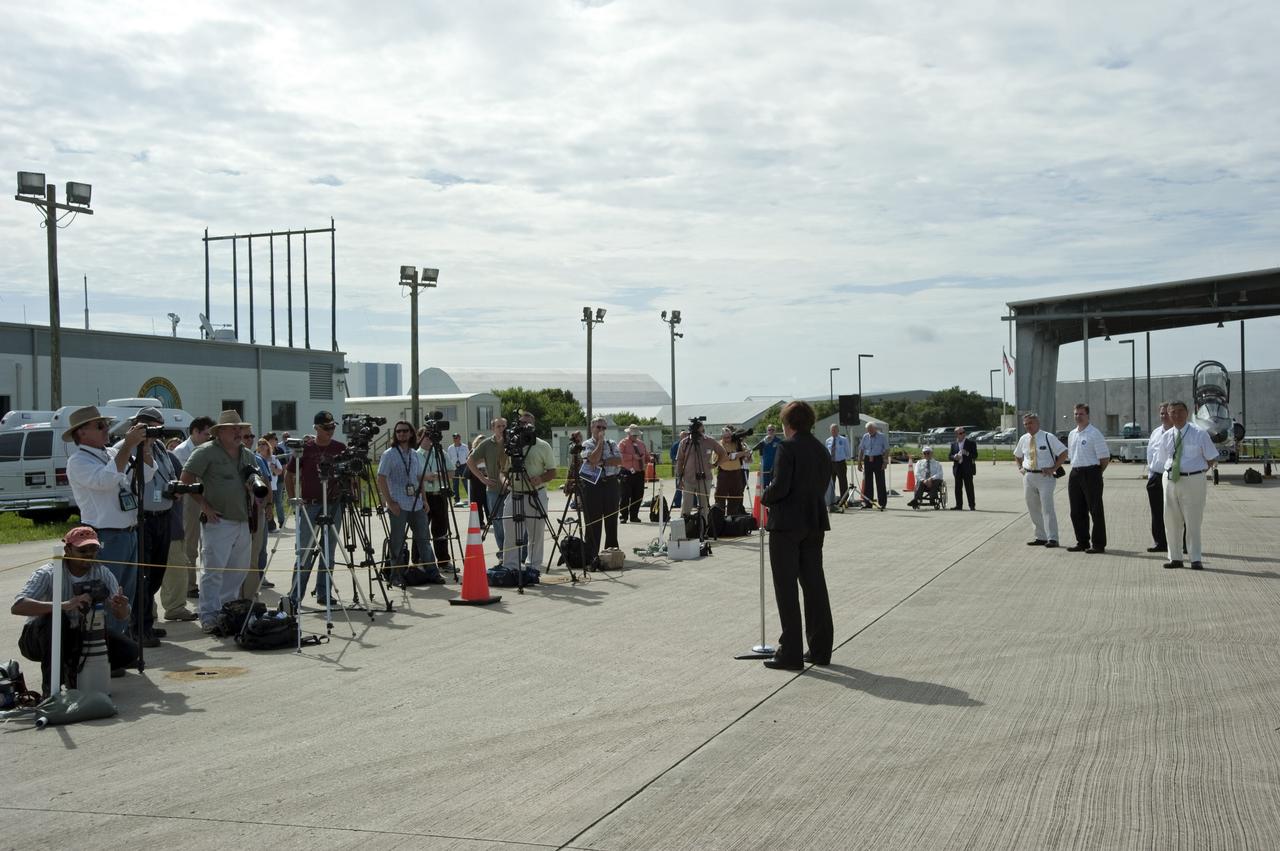
CAPE CANAVERAL, Fla. -- Before the arrival of the Alpha Magnetic Spectrometer, or AMS, to the Shuttle Landing Facility at NASA's Kennedy Space Center in Florida, European Space Agency Director of Human Spaceflight, Simonetta Di Pippo addresses the media. AMS,a state-of-the-art particle physics detector, is designed to operate as an external module on the International Space Station. It will use the unique environment of space to study the universe and its origin by searching for dark matter. AMS will fly to the International Space Station aboard space shuttle Endeavour's STS-134 mission targeted to launch Feb. 26, 2011. Photo credit: NASA/Kim Shiflett
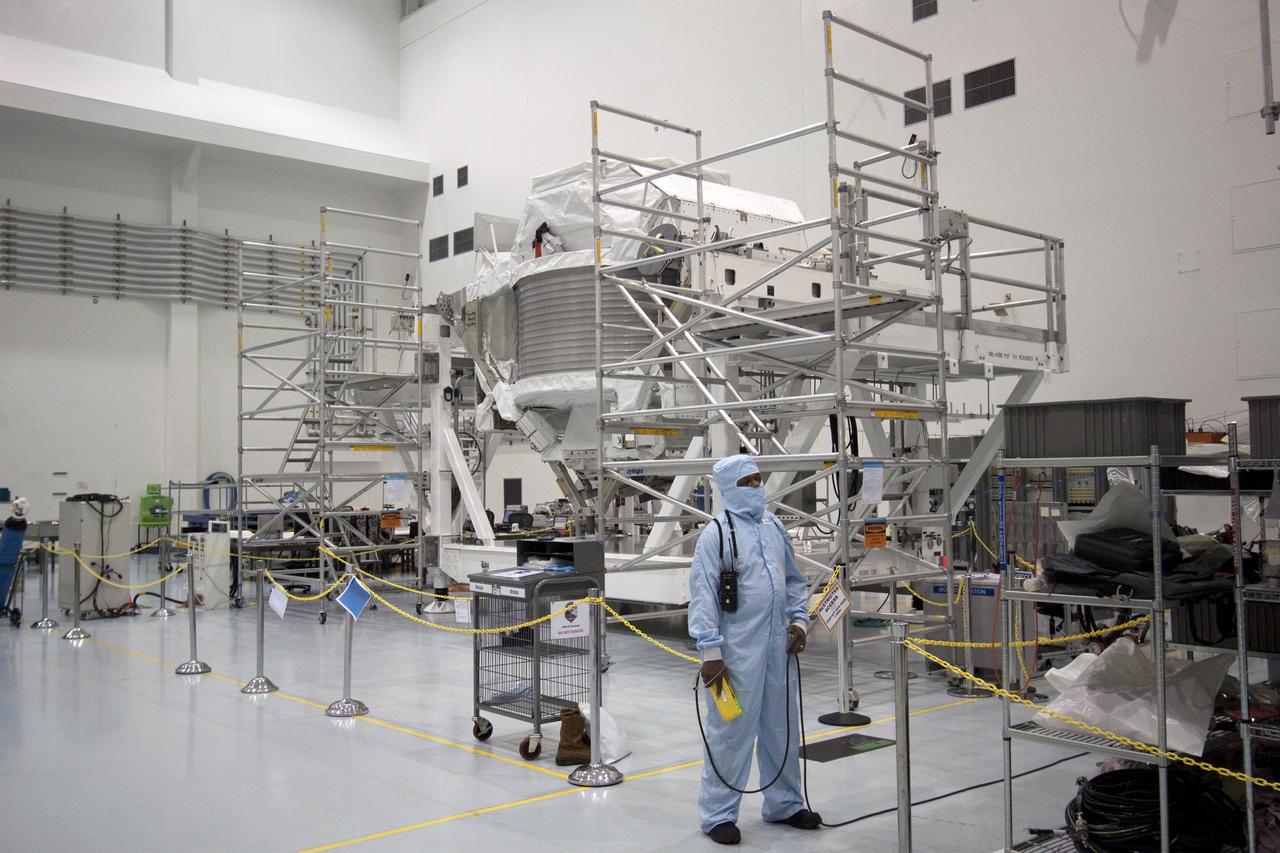
CAPE CANAVERAL, Fla. -- In the Space Station Processing Facility at NASA's Kennedy Space Center in Florida, the Alpha Magnetic Spectrometer-2 (AMS) sits in its cargo element work stand, where technicians will continue to process the experiment for launch. AMS is designed to operate as an external experiment on the International Space Station. It will use the unique environment of space to study the universe and its origin by searching for dark matter. AMS will fly to the station aboard space shuttle Endeavour's STS-134 mission targeted to launch Feb. 27, 2011. Photo credit: NASA/Jack Pfaller