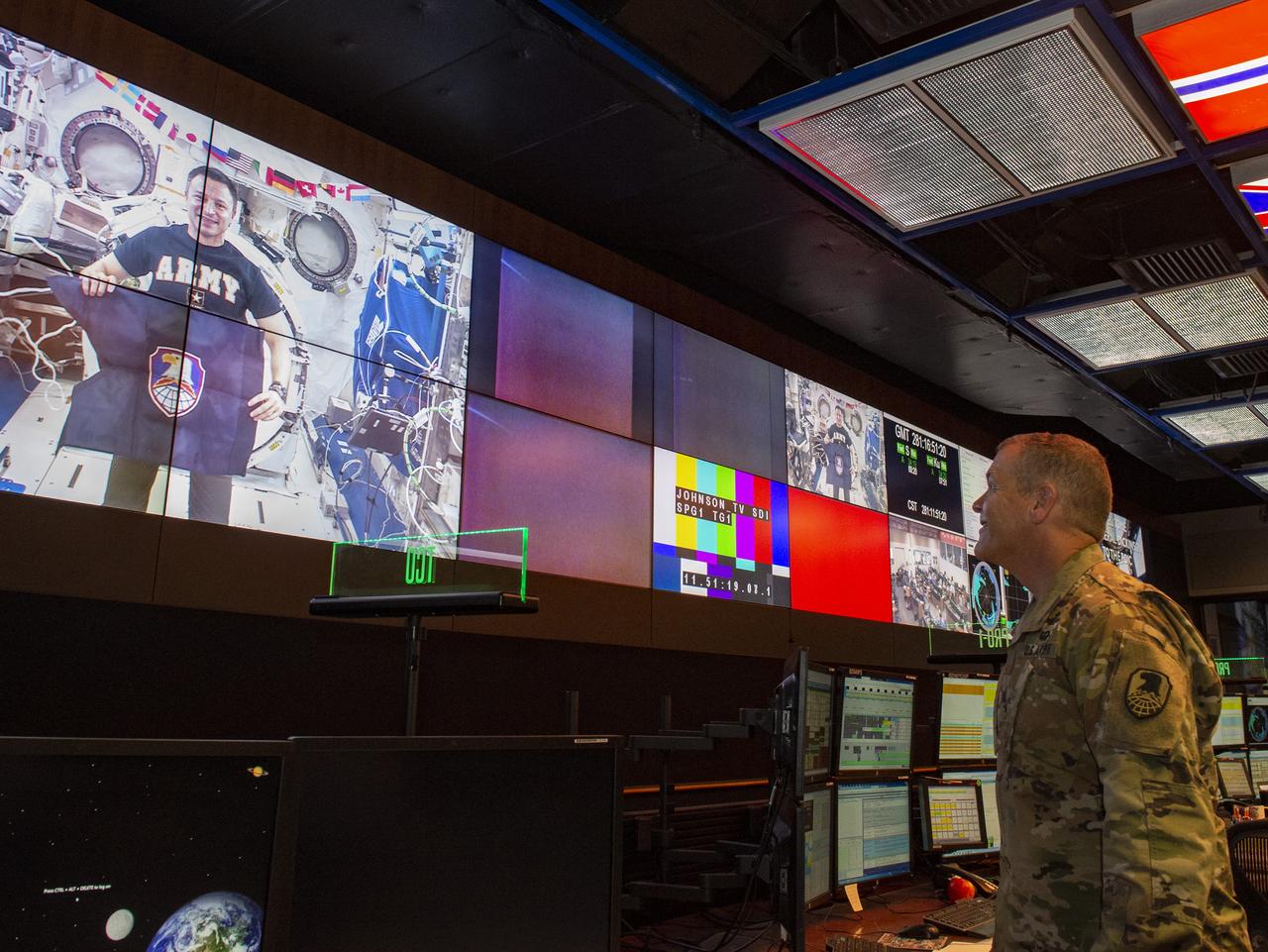
Army Lt. Gen. James Dickinson, right, commanding general of the U.S. Army Space and Missile Defense Command, speaks with NASA astronaut and current International Space Station crew member Andrew Morgan, an Army colonel, during an Oct. 8 downlink to the Payload Operations Integration Center at NASA’s Marshall Space Flight Center.
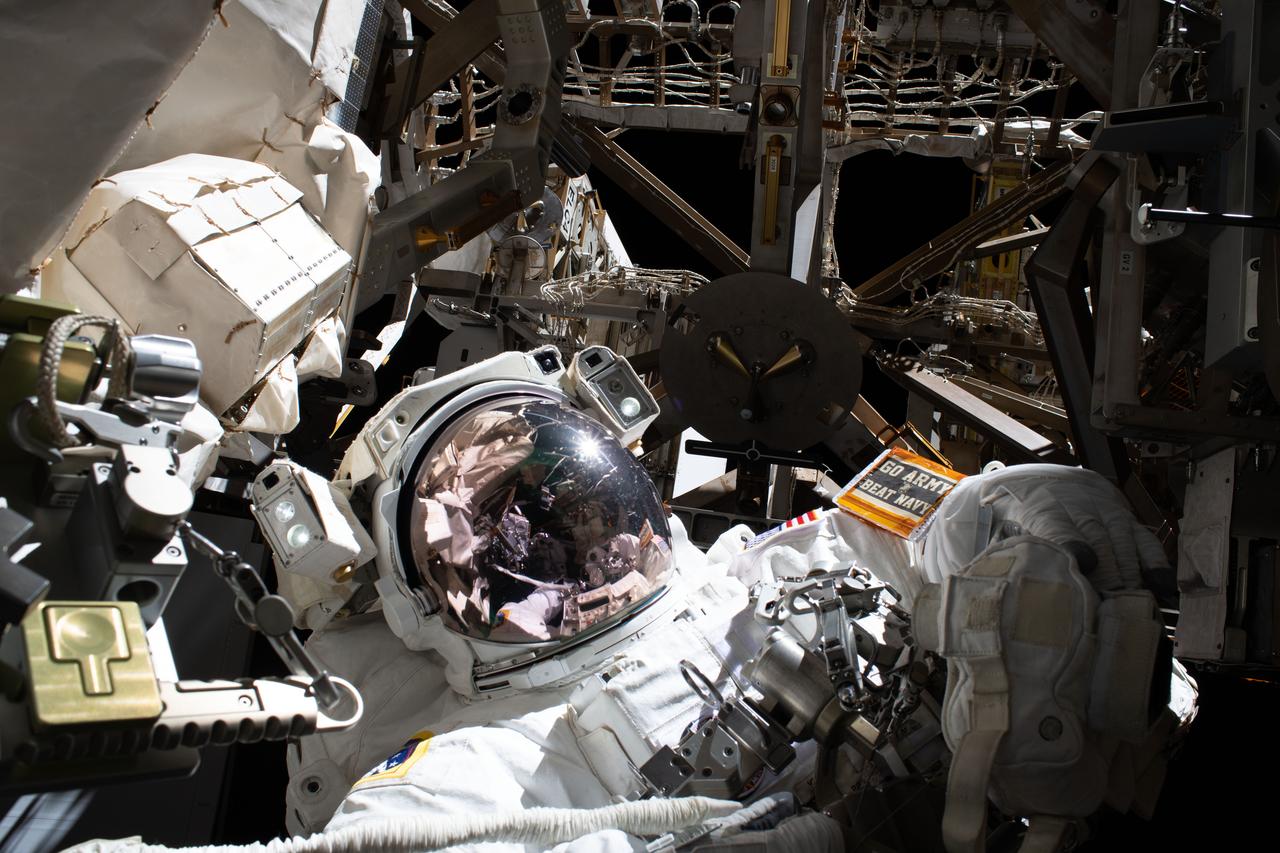
iss061e065625 (Dec. 2, 2019) --- NASA astronaut and U.S. Army Colonel Andrew Morgan displays his Army pride ahead of the Army versus Navy football game scheduled for Dec. 12, 2019, during the third spacewalk to upgrade the Alpha Magnetic Spectrometer's thermal pump system.
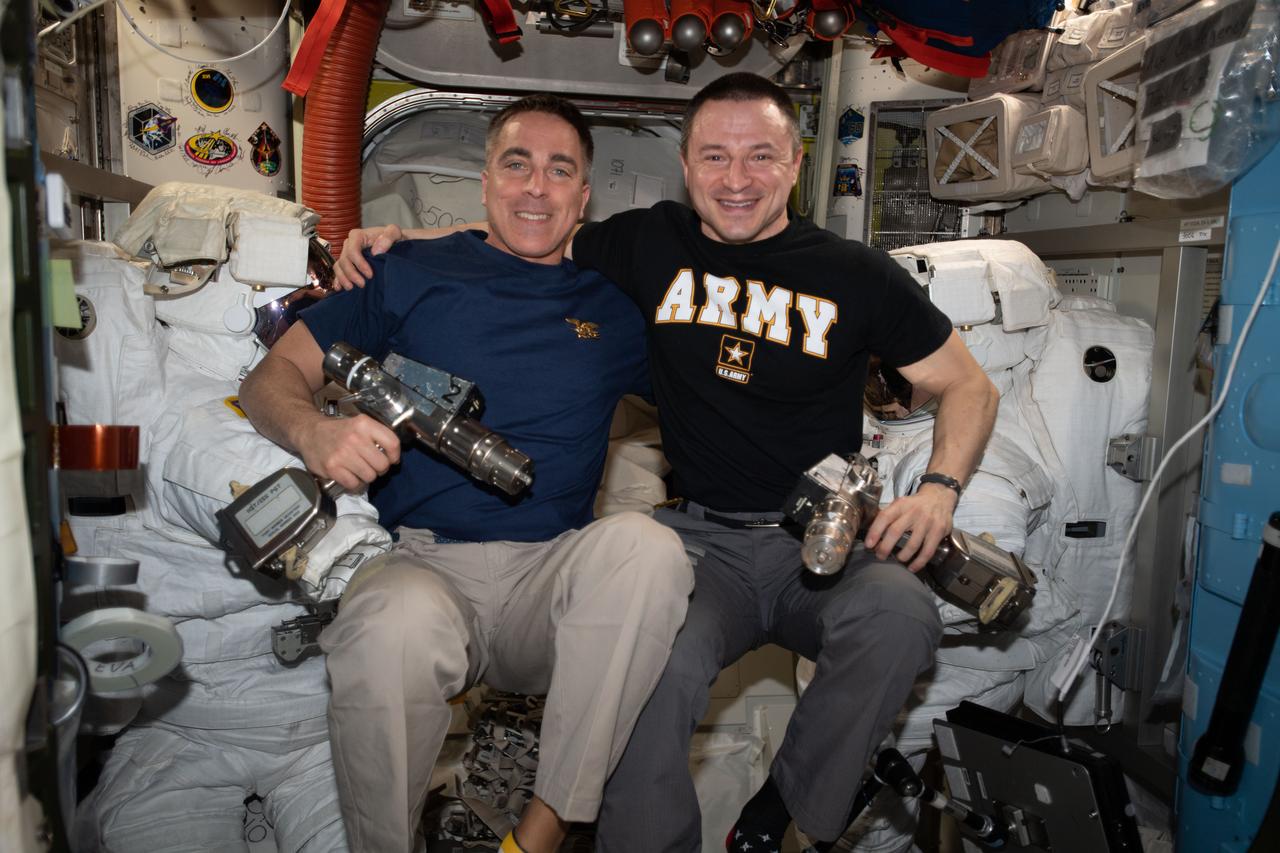
iss062e147776 (April 12, 2020) --- NASA astronauts (from left) Chris Cassidy and Andrew Morgan take a break and pose for a portrait inside the Quest airlock during maintenance on U.S. spacesuits. Cassidy is a U.S. Navy SEAL and Captain. Morgan is an emergency physician and Colonel in the U.S. Army.
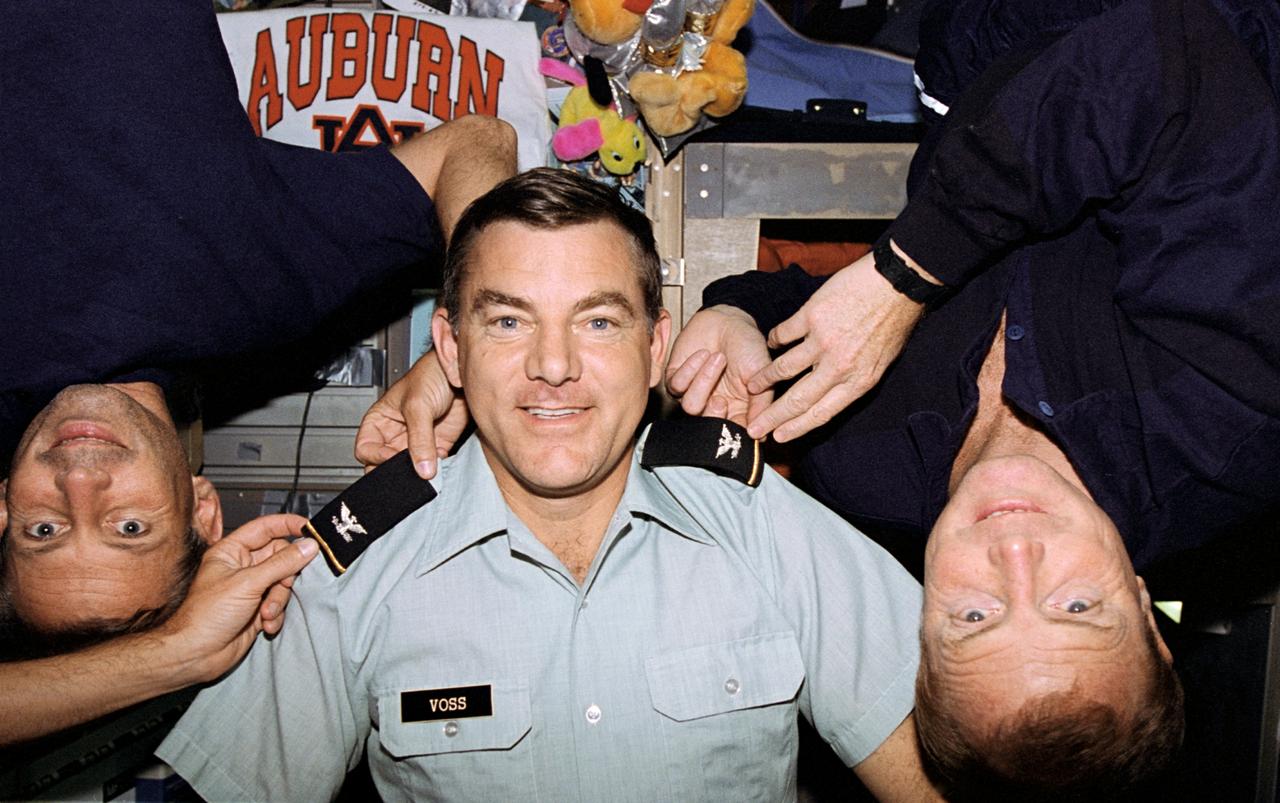
STS069-347-013 (7-18 September 1995) --- Upon the announcement of his new status as a Colonel, selectee, Lieutenant Colonel James S. Voss (United States Army), gets a preview of the new rank with the aid of fellow crewmembers. They are astronauts David M. Walker (right) and Kenneth D. Cockrell, commander and pilot, respectively. Mission specialist Voss, payload commander, made his third flight in space. The Space Shuttle Endeavour, with a five-member crew, launched on September 7, 1995, from the Kennedy Space Center (KSC). The mission ended September 18, 1995, with a successful landing on Runway 33 at KSC.
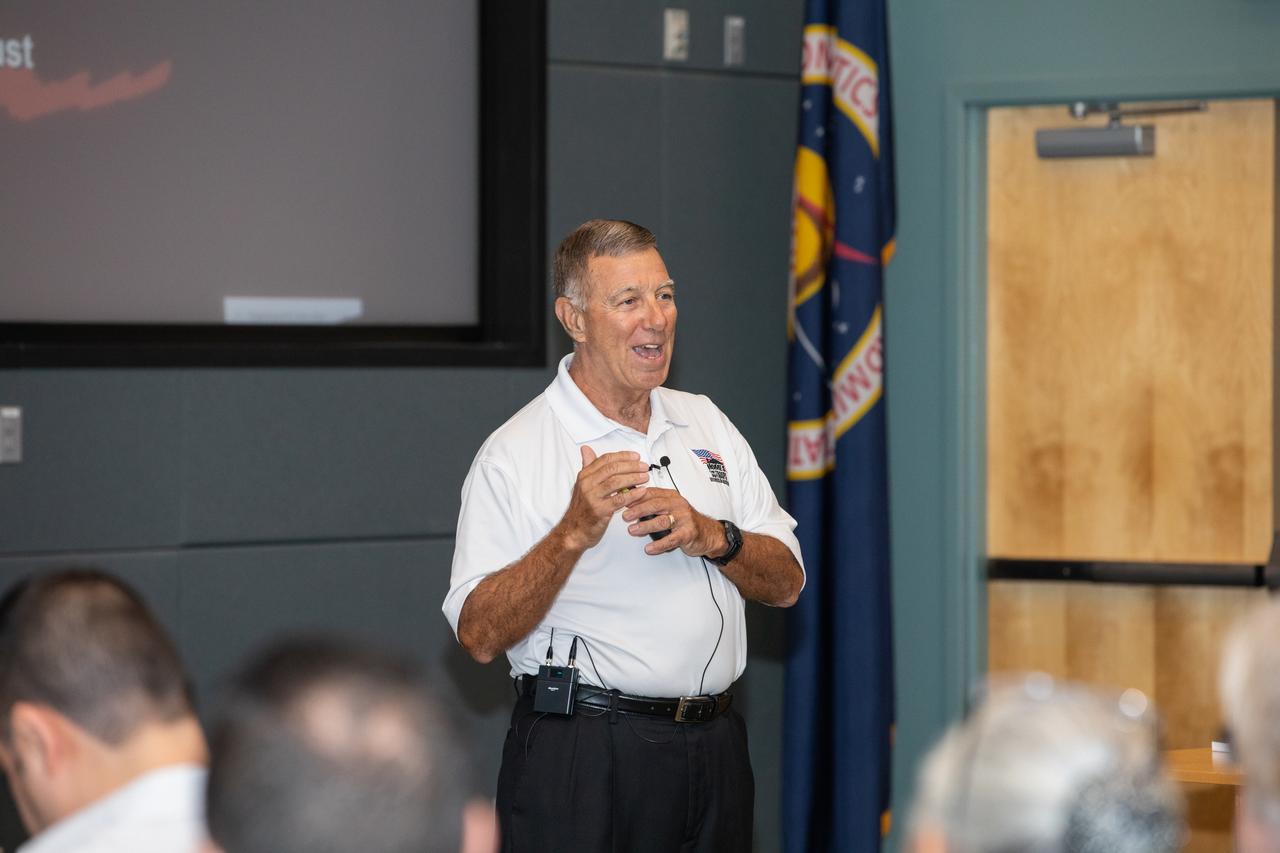
Danny McKnight, a U.S. Army retired colonel, speaks to Kennedy Space Center employees inside the Florida spaceport’s Operations Support Building II on March 3, 2020, during the center’s annual Safety and Health Days. Taking place March 2 through March 6, Safety and Health Days provides Kennedy employees with a variety of presentations to attend – all of which focus on how to maintain a safe and healthy workforce. McKnight’s presentation included information on the commitment and leadership required to be successful when operating in difficult conditions.
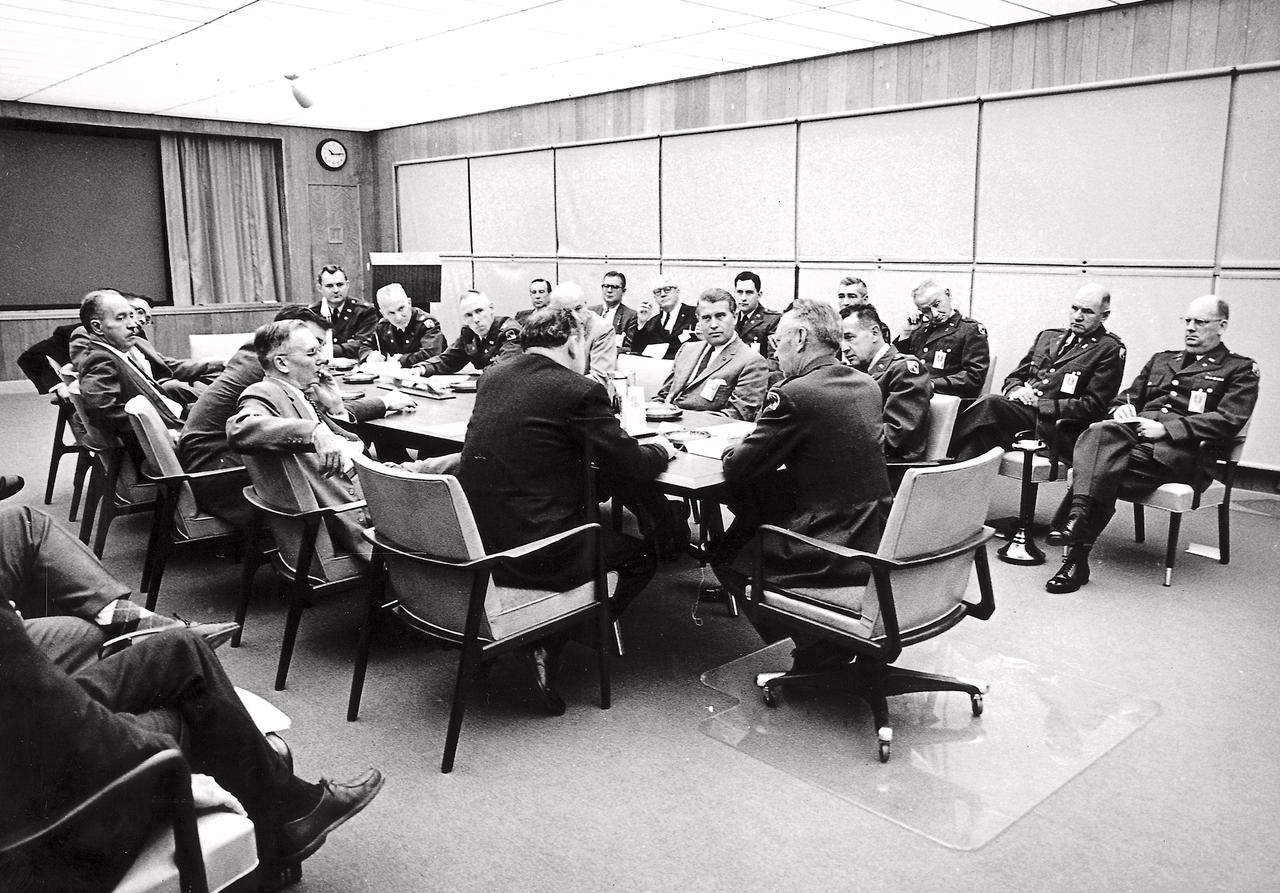
In this picture, negotiations are under way between officials of the Army Ballistic Missile Agency (ABMA) and the National Aeronautics and Space Administration (NASA) on August 11, 1959. Seated at the table with his back to the camera, is Dr. T. Keith Glernan, NASA Administrator. At the head of the table is Major General John Barclay, Commander of ABMA and at the right side of the table are Colonel John G. Zierdt of ABMA and Dr. von Braun.
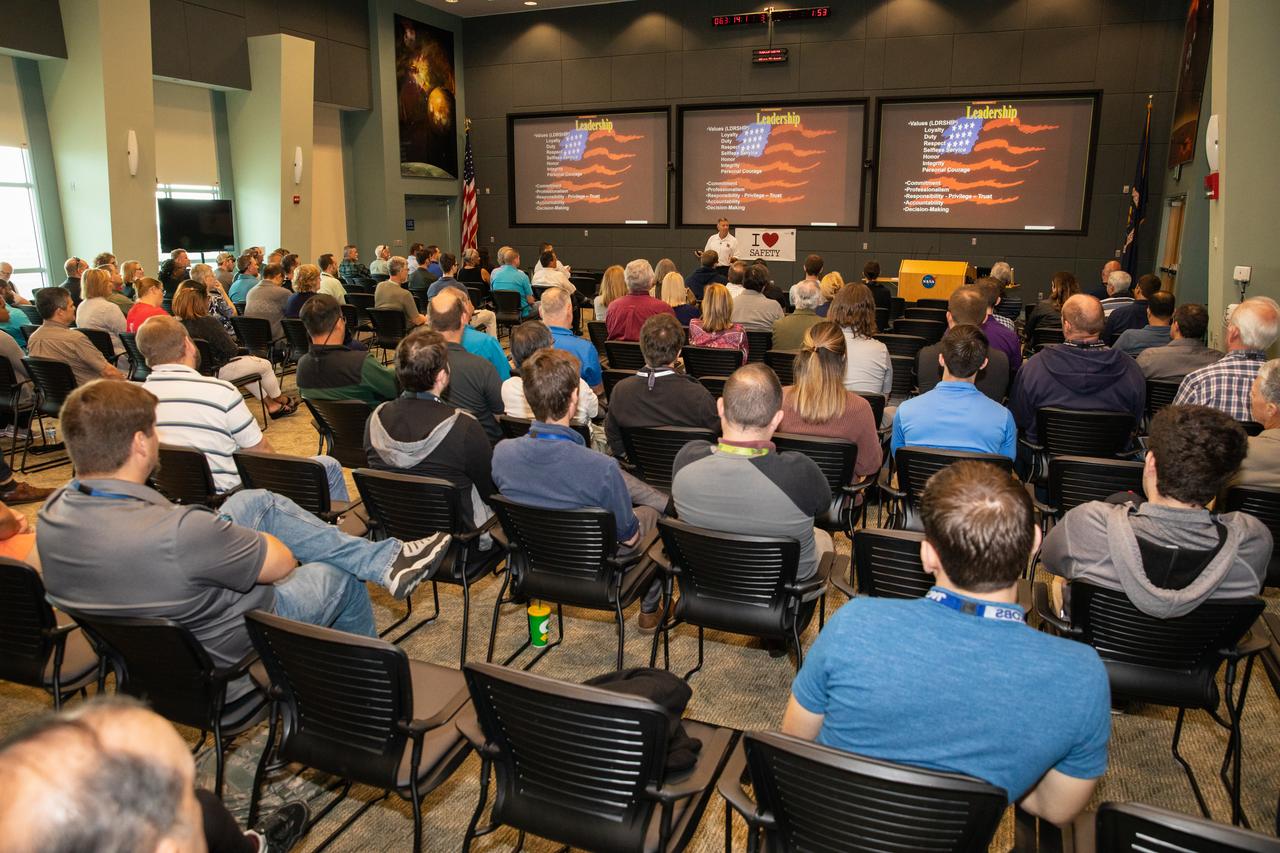
Danny McKnight, a U.S. Army retired colonel, speaks to Kennedy Space Center employees inside the Florida spaceport’s Operations Support Building II on March 3, 2020, during the center’s annual Safety and Health Days. Taking place March 2 through March 6, Safety and Health Days provides Kennedy employees with a variety of presentations to attend – all of which focus on how to maintain a safe and healthy workforce. McKnight’s presentation included information on the commitment and leadership required to be successful when operating in difficult conditions.
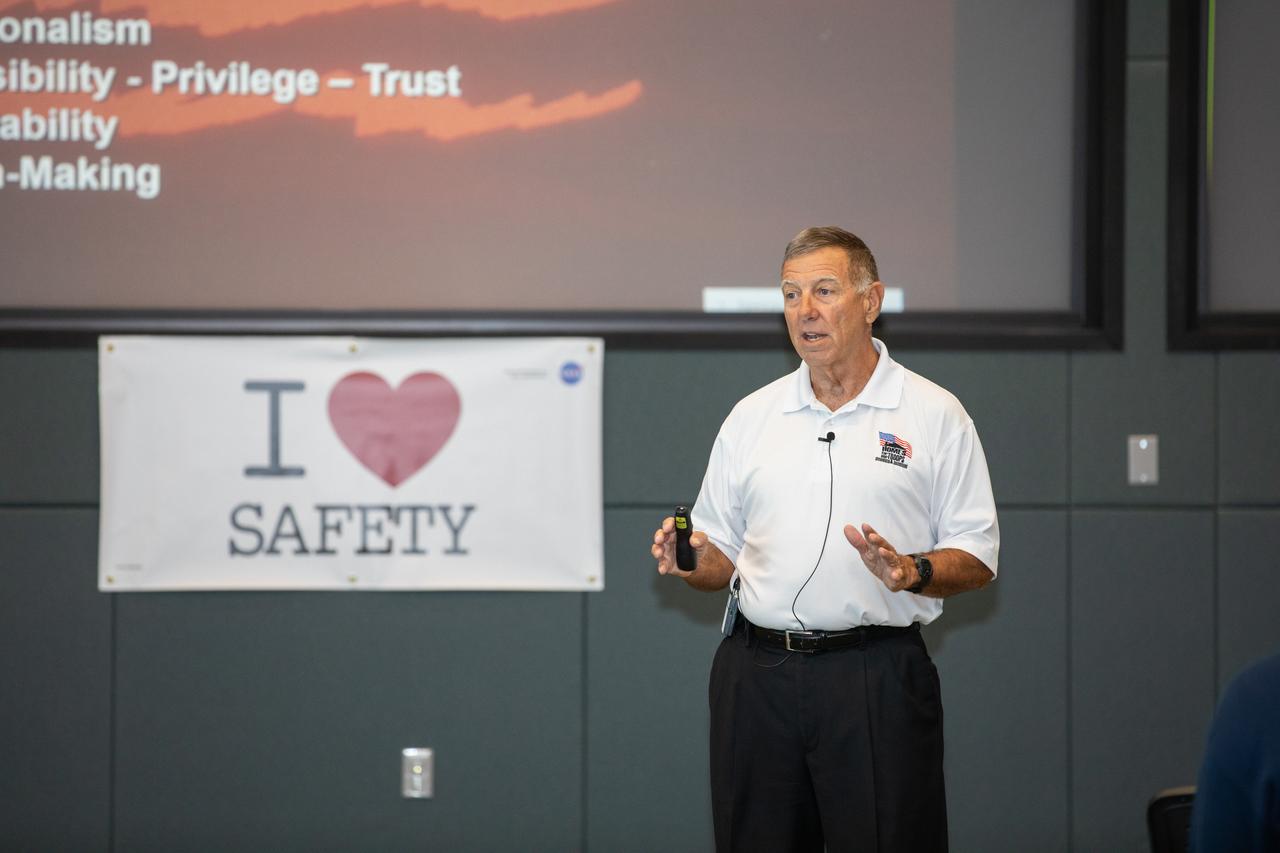
Danny McKnight, a U.S. Army retired colonel, presents information on what it takes to be a leader when operating in difficult conditions inside NASA Kennedy Space Center’s Operations Support Building II on March 3, 2020, during the center’s annual Safety and Health Days. Taking place March 2 through March 6, Safety and Health Days provides Kennedy employees with a variety of presentations to attend – all of which focus on how to maintain a safe and healthy workforce.
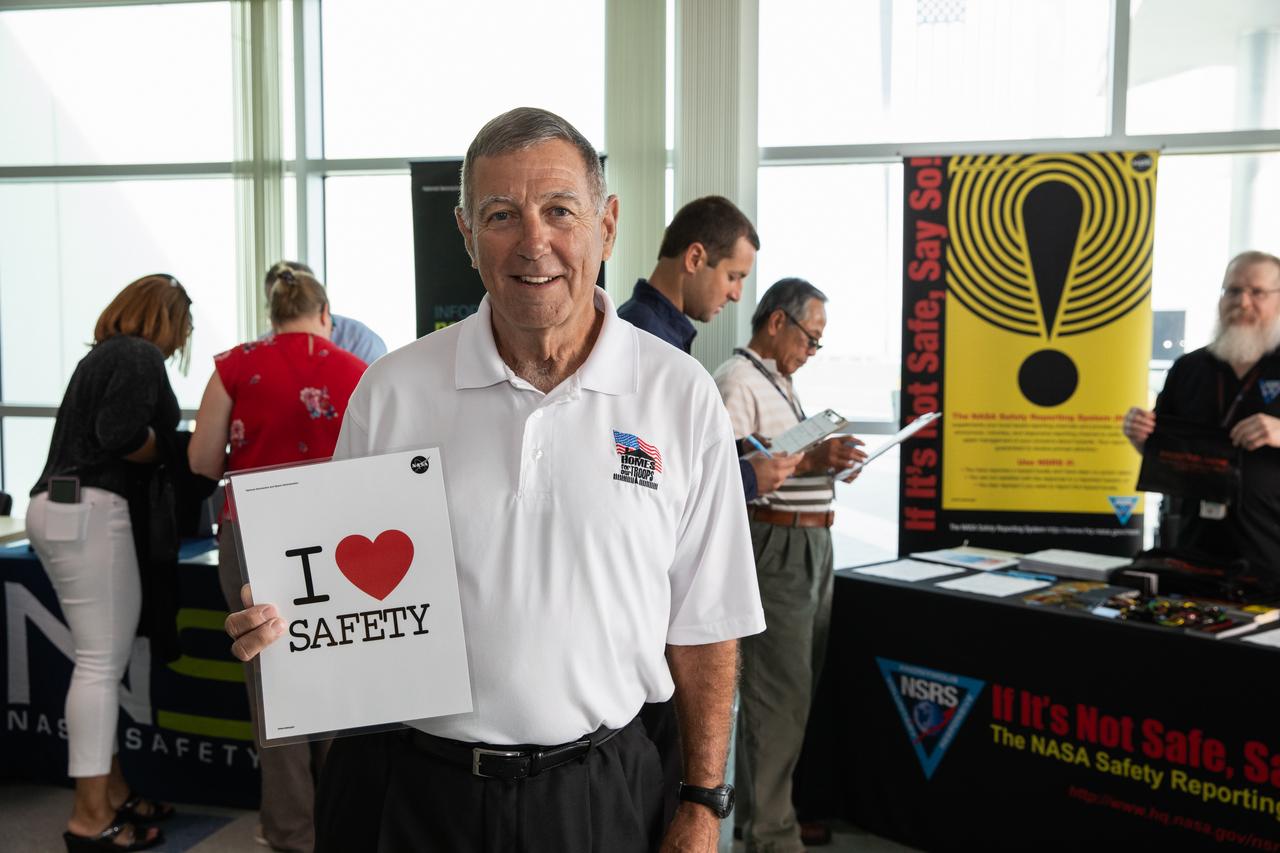
Danny McKnight, a U.S. Army retired colonel one of the guest speakers during NASA Kennedy Space Center’s annual Safety and Health Days, poses with the Safety and Mission Assurance “I Love Safety” poster inside the Operations Support Building II on March 3, 2020, prior to his presentation. Taking place March 2 through March 6, Safety and Health Days provides Kennedy employees with a variety of presentations to attend – all of which focus on how to maintain a safe and healthy workforce. McKnight’s presentation included information on the commitment and leadership required to be successful when operating in difficult conditions.
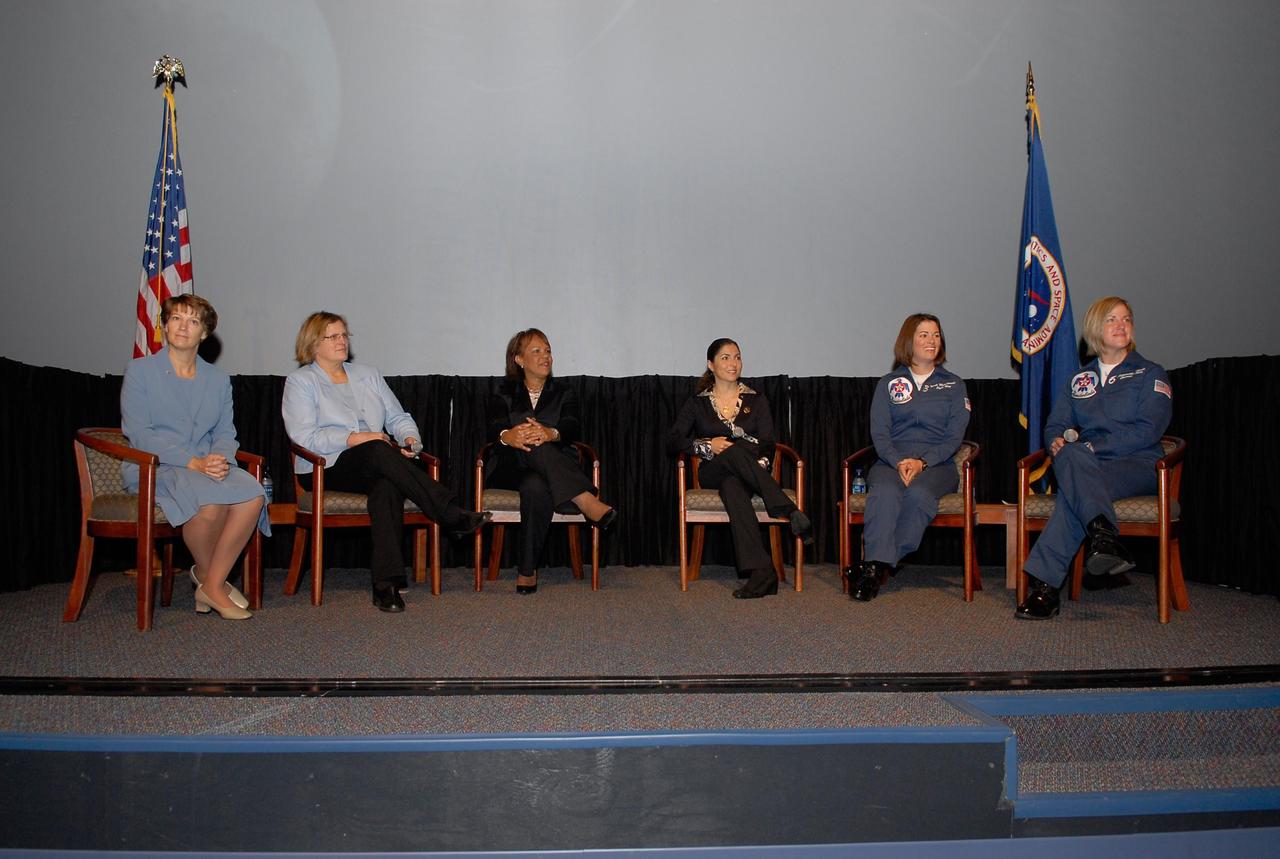
KENNEDY SPACE CENTER, FLA. — On stage for the World Space Expo's Pioneering Women of Aerospace forum are Ret. Colonel Eileen Collins, the first female shuttle commander; Dr. Kathryn D. Sullivan, the first American woman to spacewalk; Patricia Grace Smith, with the FAA, the first associate administrator of commercial space transportation; Dr. Anousheh Ansari, a spaceflight participant; Major Nicole Malachowski, the first female pilot with the U.S. Air Force Thunderbirds; and Major Samantha Weeks, the first female solo pilot with the U.S. Air Force Thunderbirds. The expo commemorates humanity's first 50 years in space while looking forward to returning people to the moon and exploring beyond. The expo showcased various panels, presentations and educational programs, as well as an aerial salute featuring the U.S. Air Force Thunderbirds, U.S. Air Force F-22 Raptor, U.S. Navy F-18 Super Hornet, U.S. Air Force F-15 Eagle, the P-51 Mustang Heritage Flight, and the U.S. Air Force 920th Rescue Wing, which was responsible for Mercury and Gemini capsule recovery. The U.S. Army Golden Knights also demonstrated precision skydiving. Photo credit: NASA/Kim Shiflett
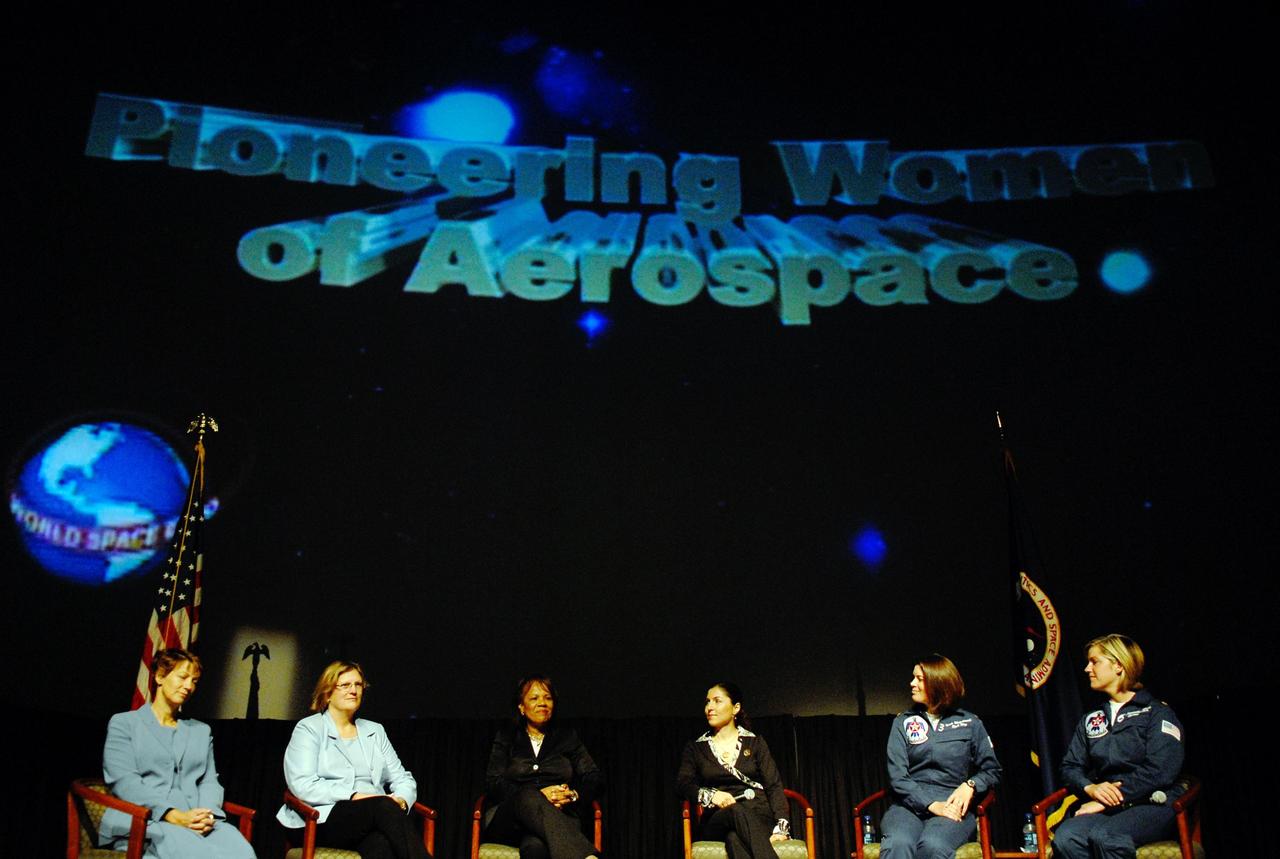
KENNEDY SPACE CENTER, FLA. — On stage for the World Space Expo's Pioneering Women of Aerospace forum are Ret. Colonel Eileen Collins, the first female shuttle commander; Dr. Kathryn D. Sullivan, the first American woman to spacewalk; Patricia Grace Smith, with the FAA, the first associate administrator of commercial space transportation; Dr. Anousheh Ansari, a spaceflight participant; Major Nicole Malachowski, the first female pilot with the U.S. Air Force Thunderbirds; and Major Samantha Weeks, the first female solo pilot with the U.S. Air Force Thunderbirds. The expo commemorates humanity's first 50 years in space while looking forward to returning people to the moon and exploring beyond. The expo showcased various panels, presentations and educational programs, as well as an aerial salute featuring the U.S. Air Force Thunderbirds, U.S. Air Force F-22 Raptor, U.S. Navy F-18 Super Hornet, U.S. Air Force F-15 Eagle, the P-51 Mustang Heritage Flight, and the U.S. Air Force 920th Rescue Wing, which was responsible for Mercury and Gemini capsule recovery. The U.S. Army Golden Knights also demonstrated precision skydiving. Photo credit: NASA/Kim Shiflett
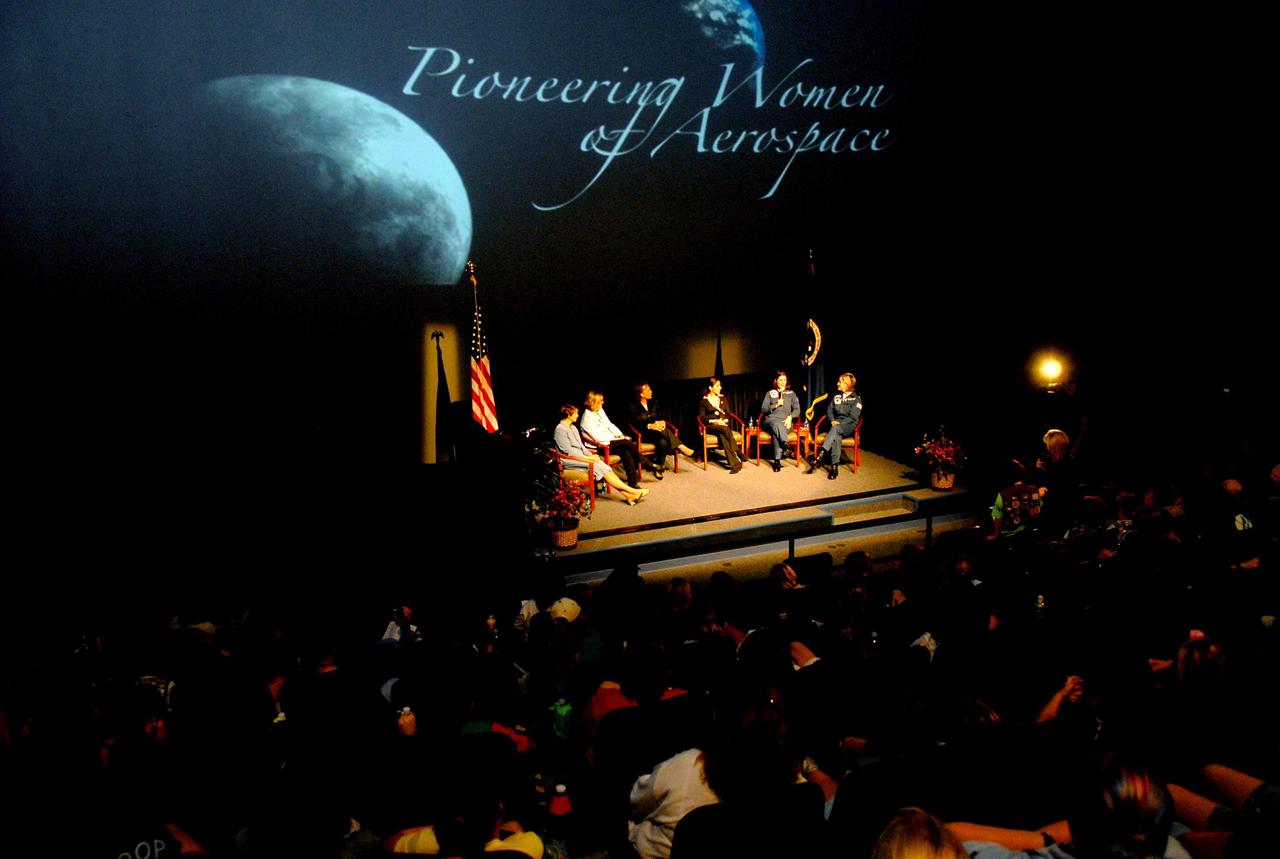
KENNEDY SPACE CENTER, FLA. — In the spotlight for the World Space Expo's Pioneering Women of Aerospace forum are Ret. Colonel Eileen Collins, the first female shuttle commander; Dr. Kathryn D. Sullivan, the first American woman to spacewalk; Patricia Grace Smith, with the FAA, the first associate administrator of commercial space transportation; Dr. Anousheh Ansari, a spaceflight participant; Major Nicole Malachowski, the first female pilot with the U.S. Air Force Thunderbirds; and Major Samantha Weeks, the first female solo pilot with the U.S. Air Force Thunderbirds. The expo commemorates humanity's first 50 years in space while looking forward to returning people to the moon and exploring beyond. The expo showcased various panels, presentations and educational programs, as well as an aerial salute featuring the U.S. Air Force Thunderbirds, U.S. Air Force F-22 Raptor, U.S. Navy F-18 Super Hornet, U.S. Air Force F-15 Eagle, the P-51 Mustang Heritage Flight, and the U.S. Air Force 920th Rescue Wing, which was responsible for Mercury and Gemini capsule recovery. The U.S. Army Golden Knights also demonstrated precision skydiving. Photo credit: NASA/Kim Shiflett
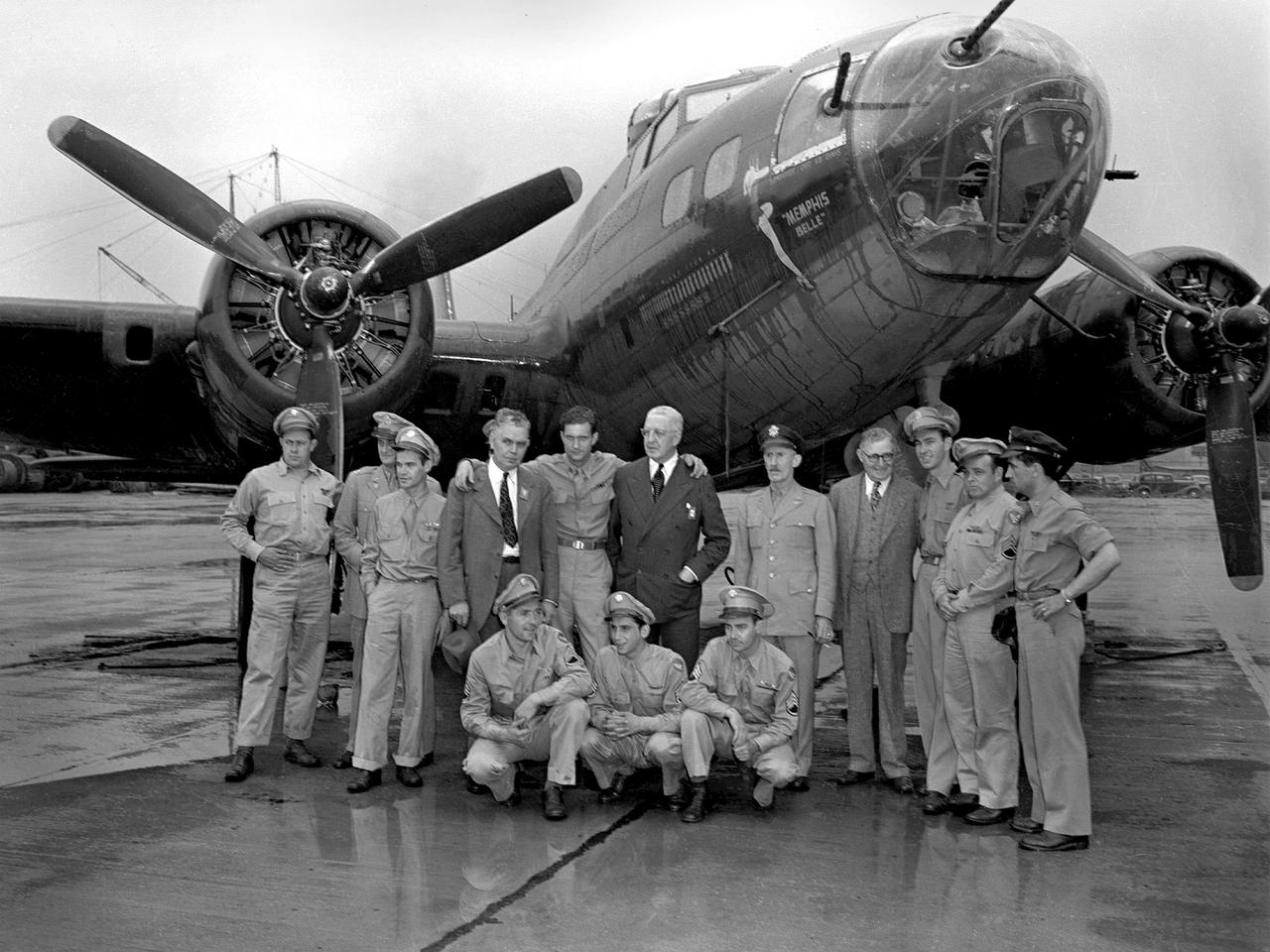
Captain Robert Morgan and the rest of the Memphis Belle crew arrive in Cleveland on a rainy July 7, 1943, for three-day publicity visit. This B–17 Flying Fortress had recently become the first U.S. bomber to complete 25 missions over Germany and France. The lack of long distance escort fighters made the feat even more remarkable. The Memphis Belle and its crew returned to the United States in June and were immediately thrown into a three-month-long war bond tour. While in Cleveland the crew toured the National Advisory Committee for Aeronautics (NACA) Aircraft Engine Research Laboratory, the Cleveland Bomber Plant, and Thompson Products. In the evenings they were feted downtown by the Chamber of Commerce at the Hotel Cleveland. A local company brought Morgan’s family and his fiancé—the Memphis Belle’s inspiration—to Cleveland to participate in the activities. The bomber was on display to the public near the airport’s fenceline and stored in the NACA’s hangar overnight. Pictured in this photograph from left to right: Robert Hanson, Vincent Evans, Charles Leighton, NACA Manager Raymond Sharp, Robert Morgan, William Holliday of the Chamber of Commerce, Army Liaison Officer Colonel Edwin Page, Airport Commissioner Jack Berry, Cecil Scott, John Quinlan and James Verinis. Kneeling are Harold Loch, Casimer Nastal and Charles Wichell.
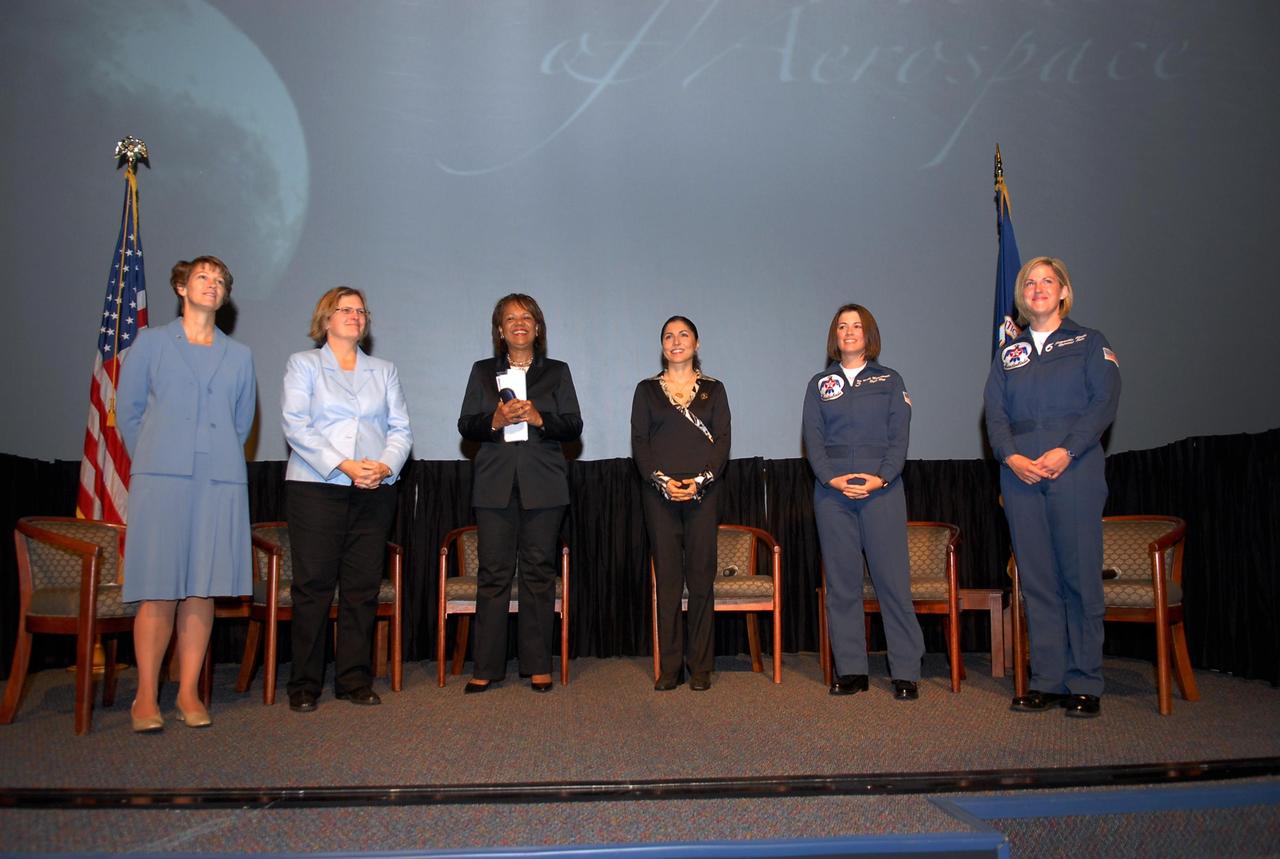
KENNEDY SPACE CENTER, FLA. — On stage for the World Space Expo's Pioneering Women of Aerospace forum are Ret. Colonel Eileen Collins, the first female shuttle commander; Dr. Kathryn D. Sullivan, the first American woman to spacewalk; Patricia Grace Smith, with the FAA, the first associate administrator of commercial space transportation; Dr. Anousheh Ansari, a spaceflight participant ; Major Nicole Malachowski, the first female pilot with the U.S. Air Force Thunderbirds; and Major Samantha Weeks, the first female solo pilot with the U.S. Air Force Thunderbirds. The expo commemorates humanity's first 50 years in space while looking forward to returning people to the moon and exploring beyond. The expo showcased various panels, presentations and educational programs, as well as an aerial salute featuring the U.S. Air Force Thunderbirds, U.S. Air Force F-22 Raptor, U.S. Navy F-18 Super Hornet, U.S. Air Force F-15 Eagle, the P-51 Mustang Heritage Flight, and the U.S. Air Force 920th Rescue Wing, which was responsible for Mercury and Gemini capsule recovery. The U.S. Army Golden Knights also demonstrated precision skydiving. Photo credit: NASA/Kim Shiflett