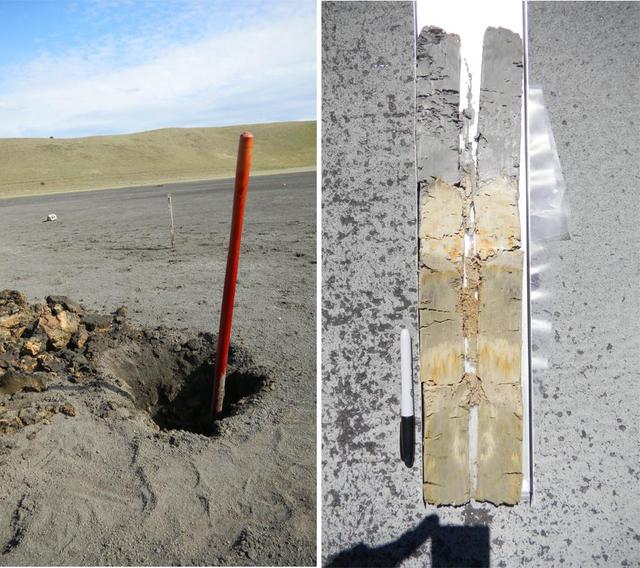
A sampling pit exposing clay-bearing lake sediments, deposited in a basaltic basin in southern Australia -- a modern terrestrial analog to the Yellowknife Bay area that NASA Curiosity rover is exploring.

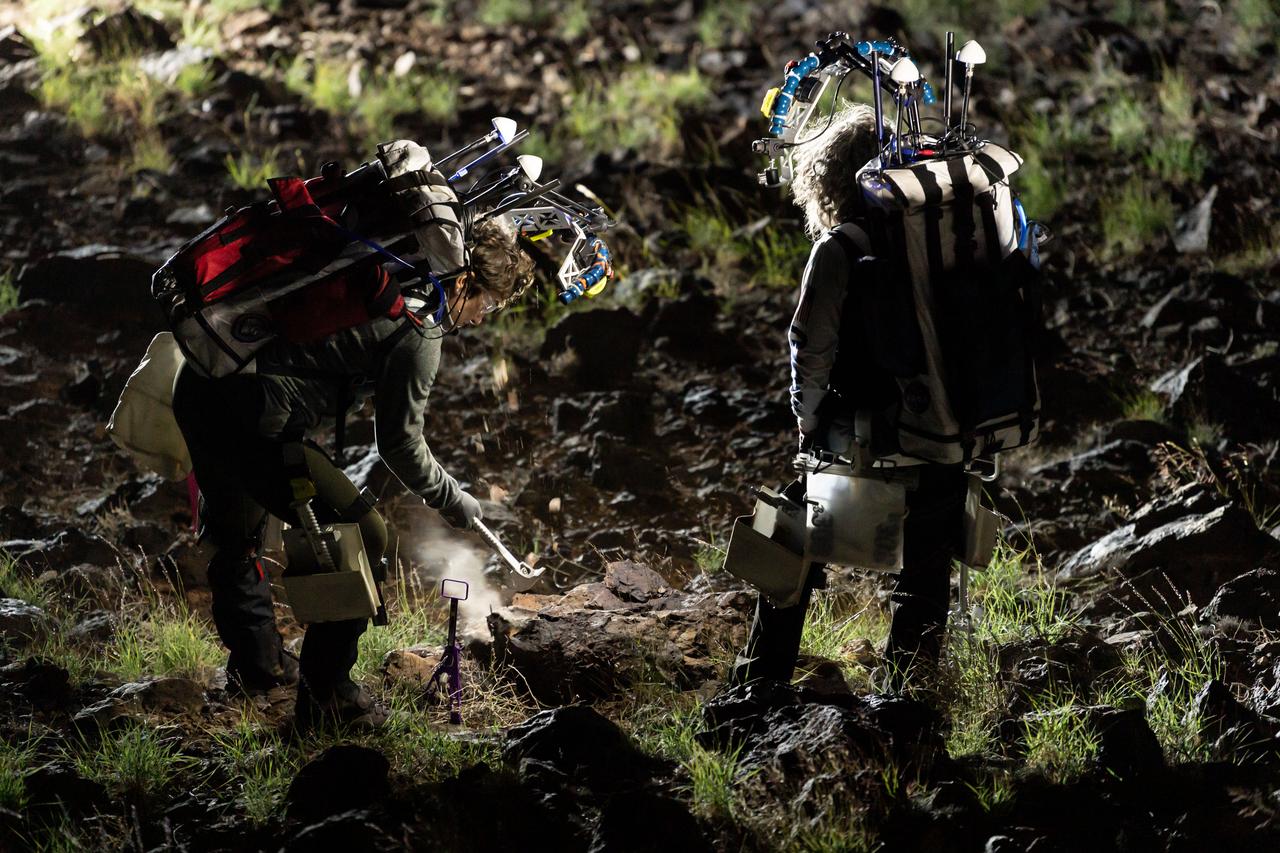
NASA astronaut Andre Douglas uses a hammer to chip off a small rock sample to test equipment before the start of a week-long analog consisting of four simulated moonwalks and six advanced technology runs in the San Francisco Volcanic Field in Northern Arizona on May 12, 2024. Credit: NASA/Josh Valcarcel
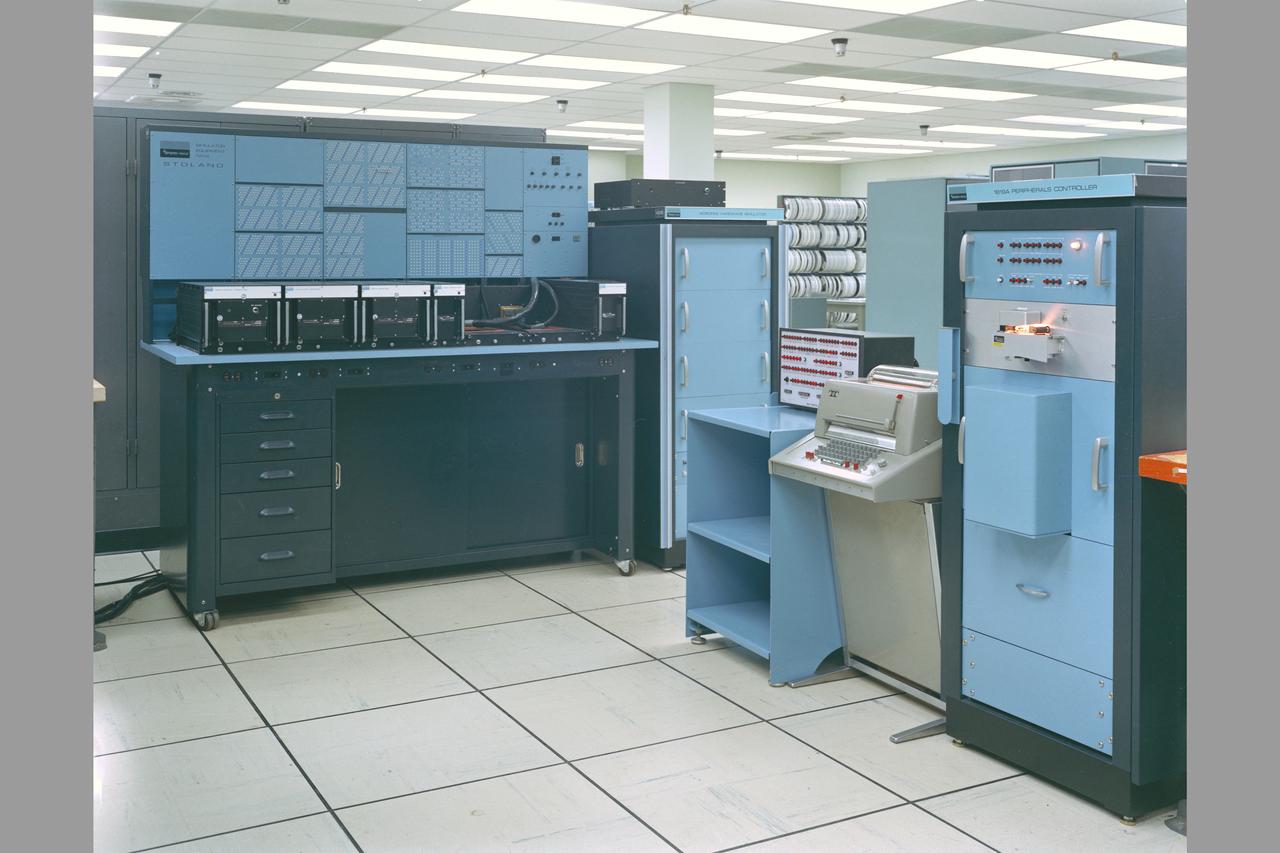
N-210 STOLAND Simulation: Analog to digital and digital to analog coverter
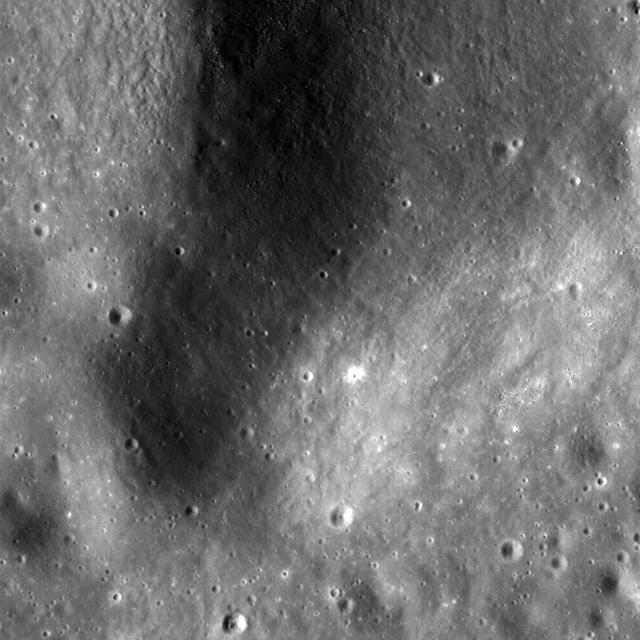
This NASA Lunar Reconnaissance Orbiter LRO image is of the summit crater of Hortensius Dome Phi. Summit craters of all the Hortensius Domes show no raised rims and are not circular, indicating they are analogous to volcanic calderas.

At Mars North Pole is a dome of icy layers ranging up to 2 kilometers thick, roughly analogous to the Earth ice caps in Greenland or Antarctica. This image is from NASA Mars Reconnaissance Orbiter.
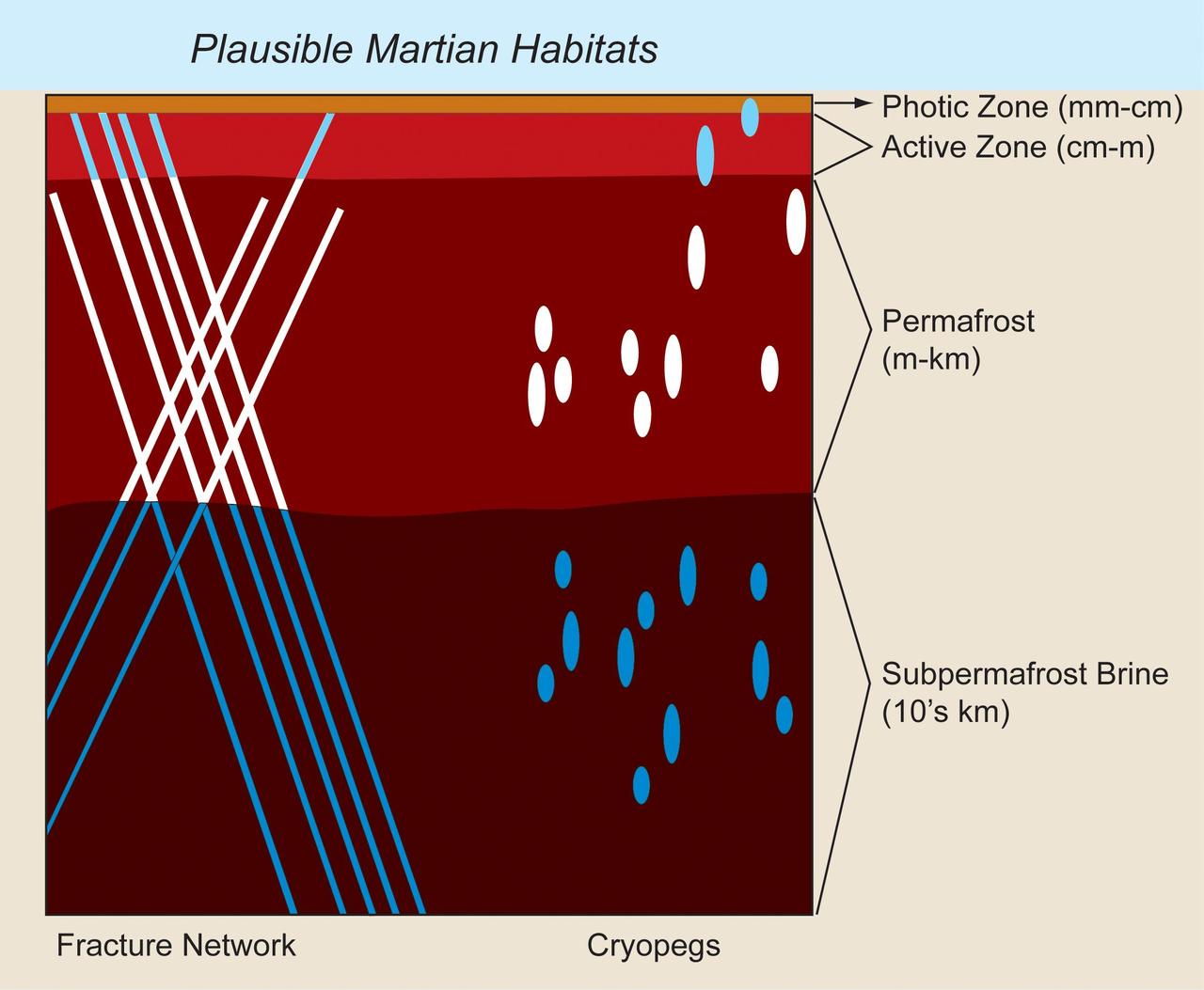
Unfrozen brine in cryopegs and fracture networks provides habitats for the survival and growth of organisms both within and under frozen rocky materials on Earth and, by analogy, could provide habitats on Mars.

Reeves Electronic analog computer (REAC), Ames' first electronic computing machine, was acquired in 1949 to perform control simulation analysis.
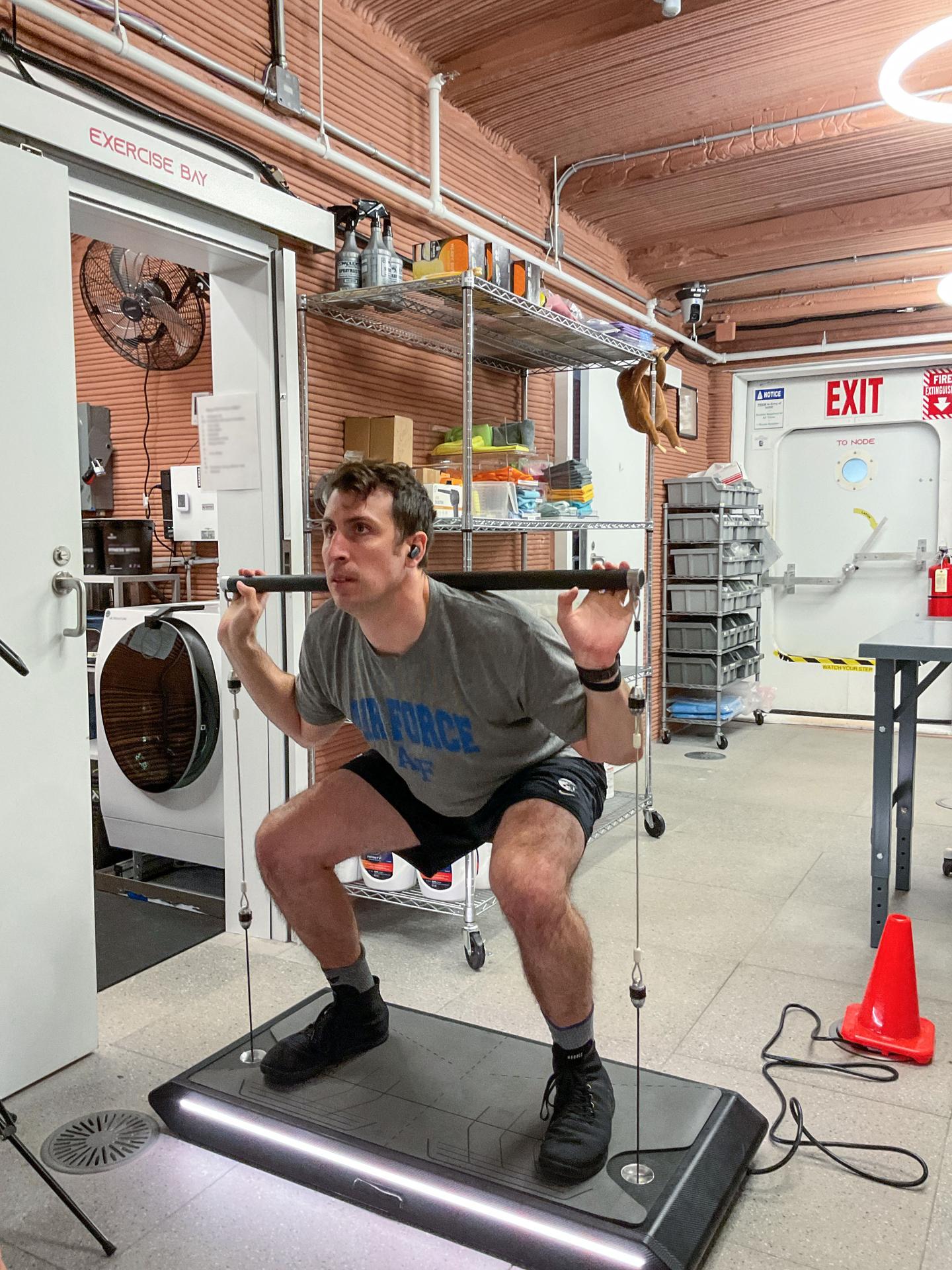
jsc2026e403155 (Oct. 25, 2025) -- Crew Health and Performance Exploration Analog (CHAPEA) mission 2 commander, Ross Elder, exercising in the habitat. Credit: NASA
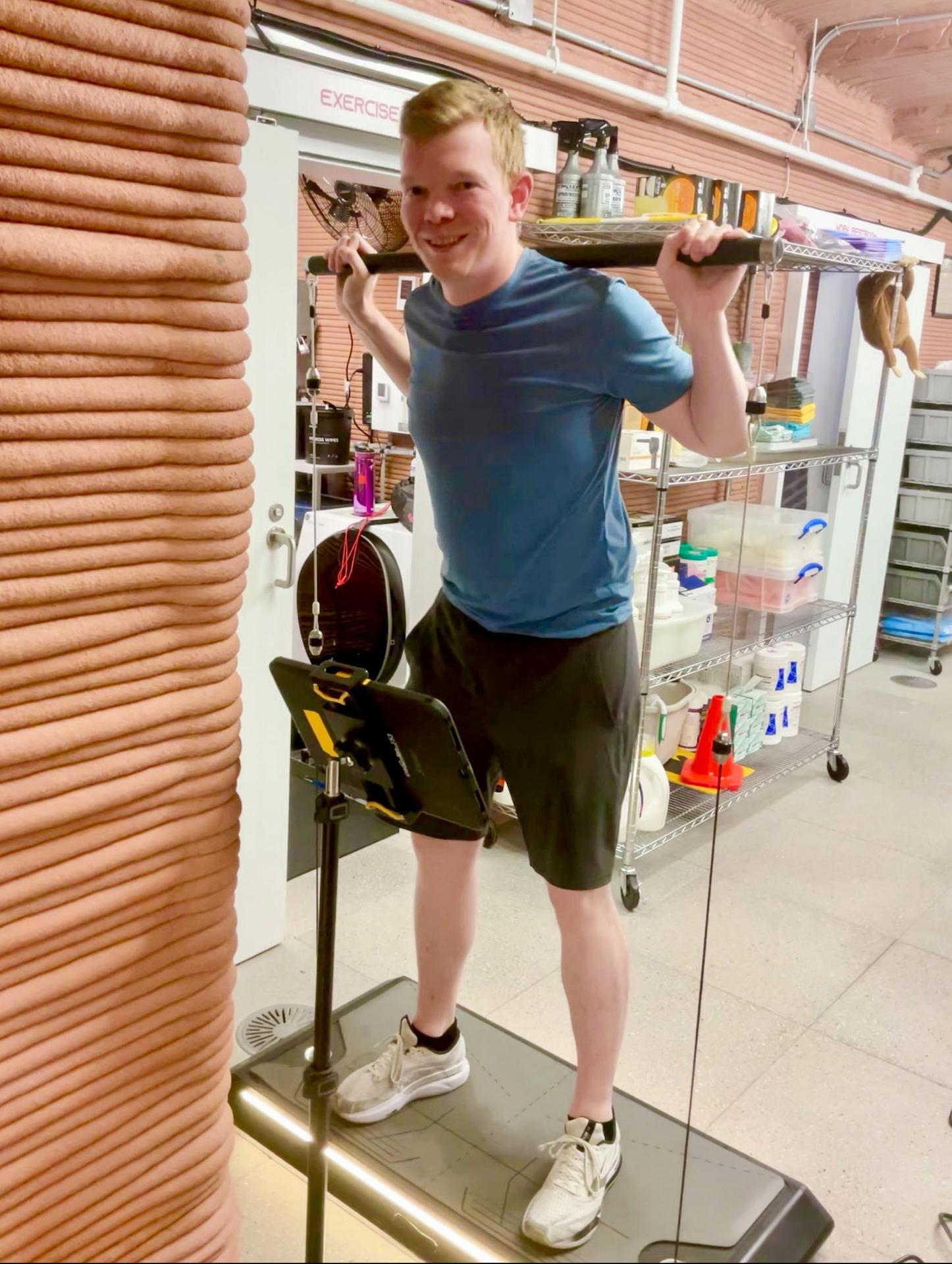
jsc2026e403158 (Oct. 25, 2025) -- Crew Health and Performance Exploration Analog (CHAPEA) mission 2 flight engineer, James Spicer, exercising in the habitat. Credit: NASA

The eastern shore of Lake Salda in Turkey is a good analog for what an ancient lake may have looked like at Jezero Carter on Mars. The white sands and rocks are carbonate minerals that precipitated in the lake. The terraces on the right are old shorelines from when the lake levels were higher, where dried-out sediments have now cemented. These types of deposits might be present along the former shorelines at Jezero. What's more, these deposits might contain signs of microbes, if they ever existed on the Red Planet. NASA's Mars 2020 Perseverance mission will search for signs of ancient life in an dried-up lakebed on the surface of Mars. https://photojournal.jpl.nasa.gov/catalog/PIA24375

Documentation of the University of Texas Medical Branch (UTMB) bed rest study taken for archival purposes. A participant visits with a guest at the Galveston facility's Flight Analogs Research Unit.
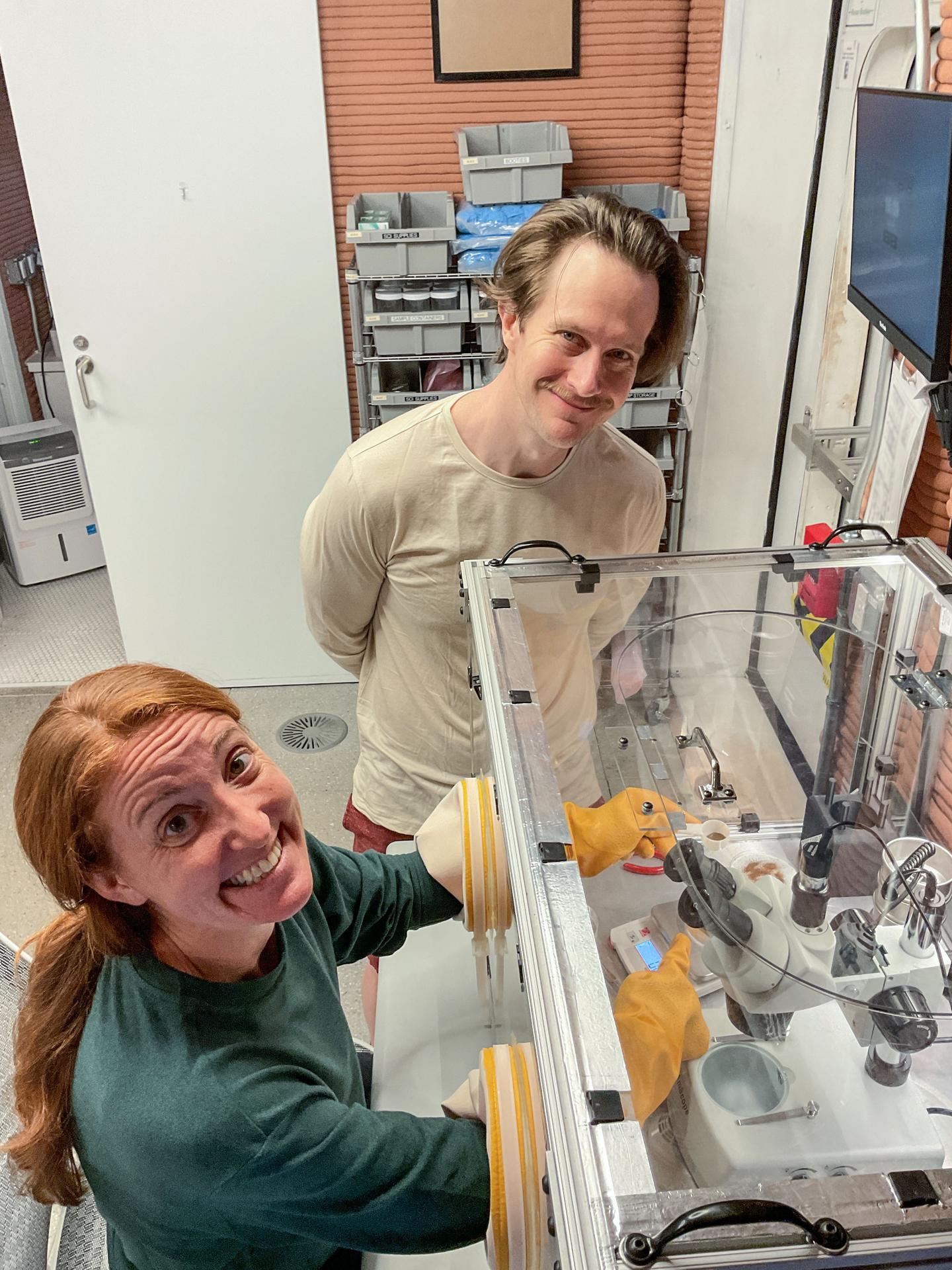
jsc2026e403162 (Oct. 21, 2025) -- Crew Health and Performance Exploration Analog (CHAPEA) mission 2 crew members use the glove box inside the habitat (From left: Ellen Ellis, Matthew Montgomery). Credit: NASA
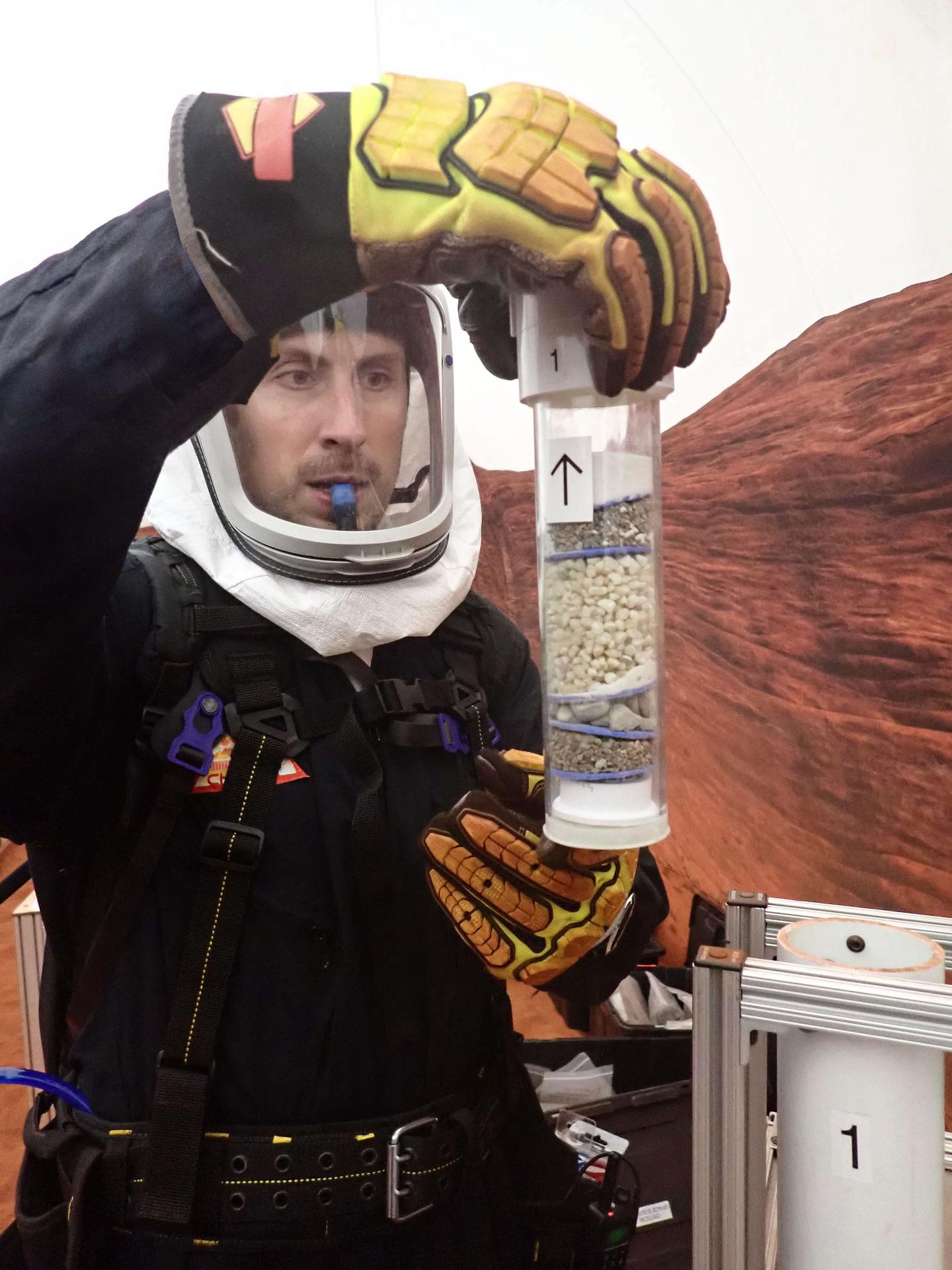
jsc2026e403164 (Nov. 28, 2025) -- Ross Elder, Crew Health and Performance Exploration Analog (CHAPEA) Mission 2 commander, participates in an extravehicular geological activity. Credit: NASA
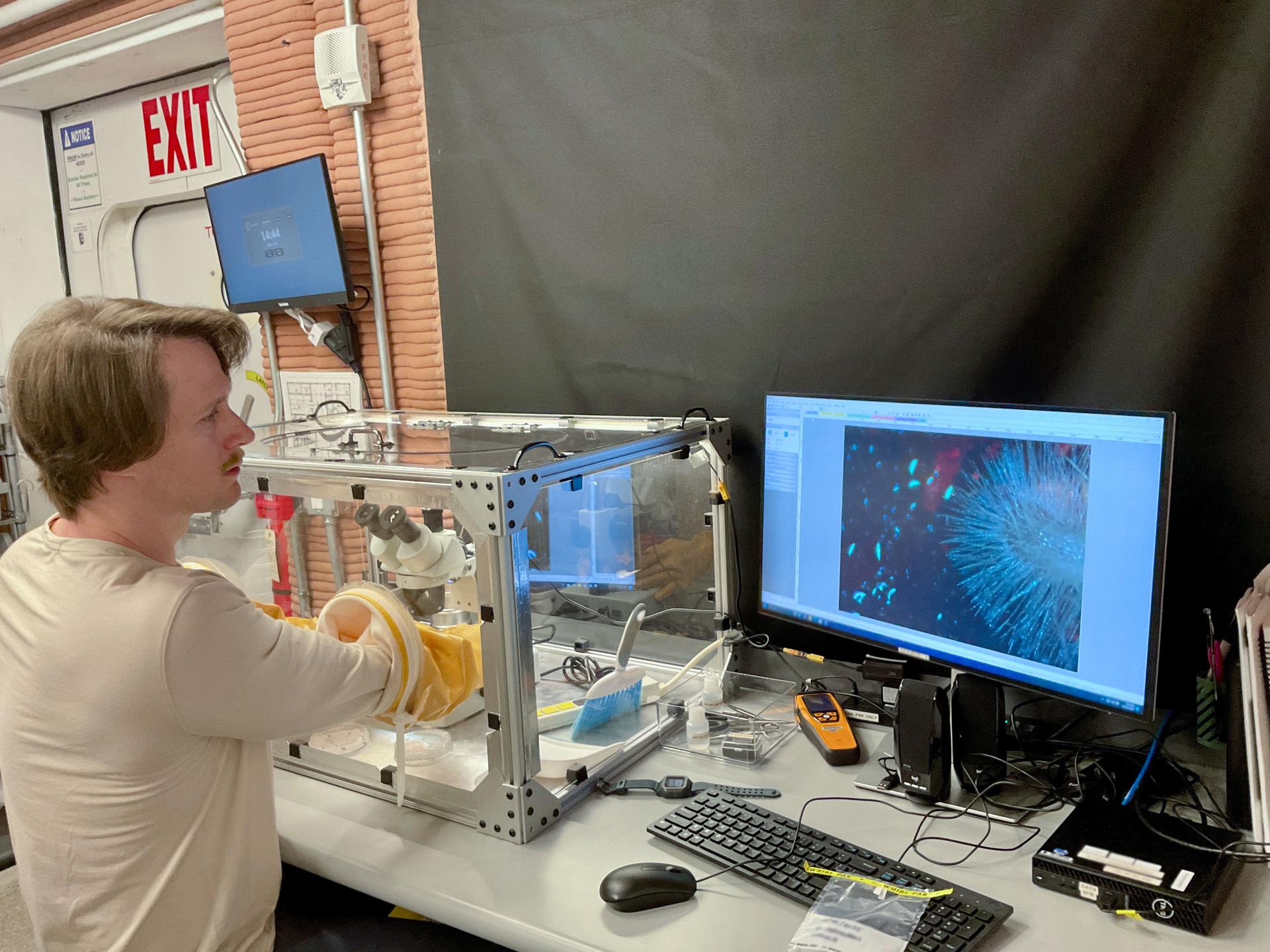
jsc2026e403157 (Oct. 25, 2025) -- Crew Health and Performance Exploration Analog (CHAPEA) mission 2 science officer, Matthew Montgomery, evaluating a science experiment involving seed germination in the glovebox. Credit: NASA
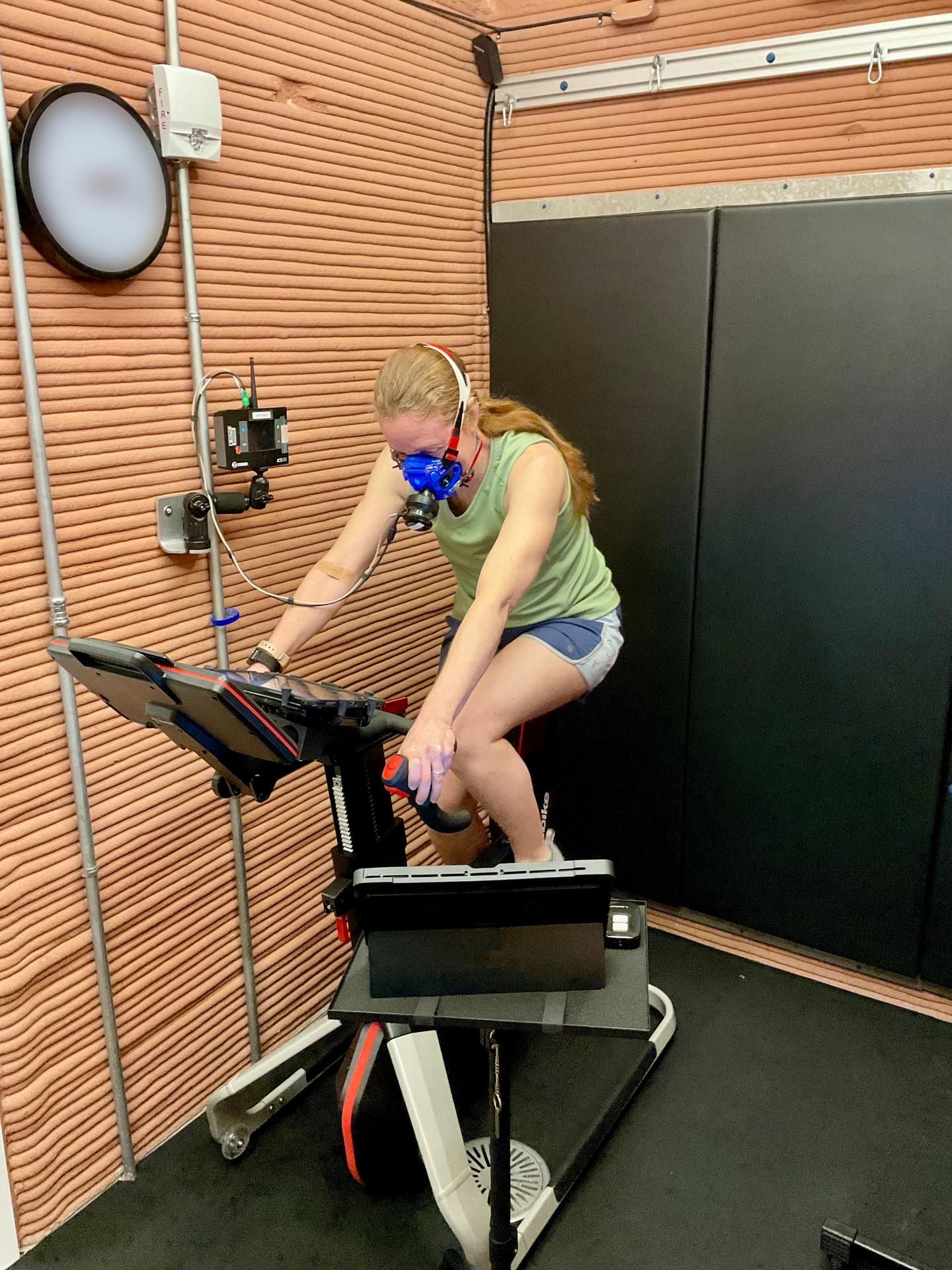
jsc2026e403179 (May 20, 2026) -- Ellen Ellis, Crew Health and Performance Exploration Analog (CHAPEA) Mission 2 medical officer, conducting exercise performance testing. Credit: NASA
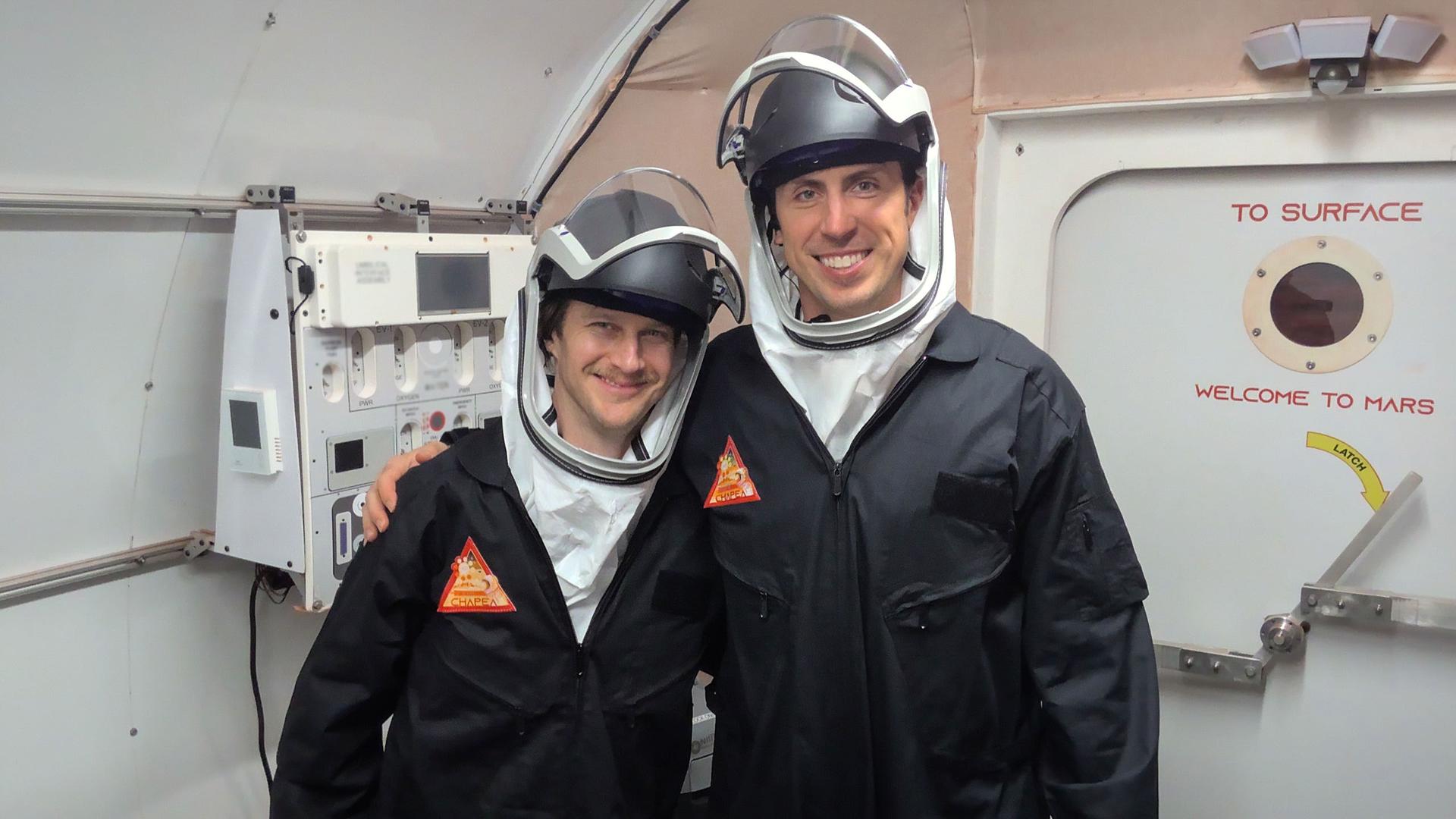
jsc2026e403159 (Oct. 26, 2025) -- Crew Health and Performance Exploration Analog (CHAPEA) mission 2 science officer, Matthew Montgomery, and CHAPEA mission 2 commander, Ross Elder, in the airlock ready to go on an EVA. Credit: NASA
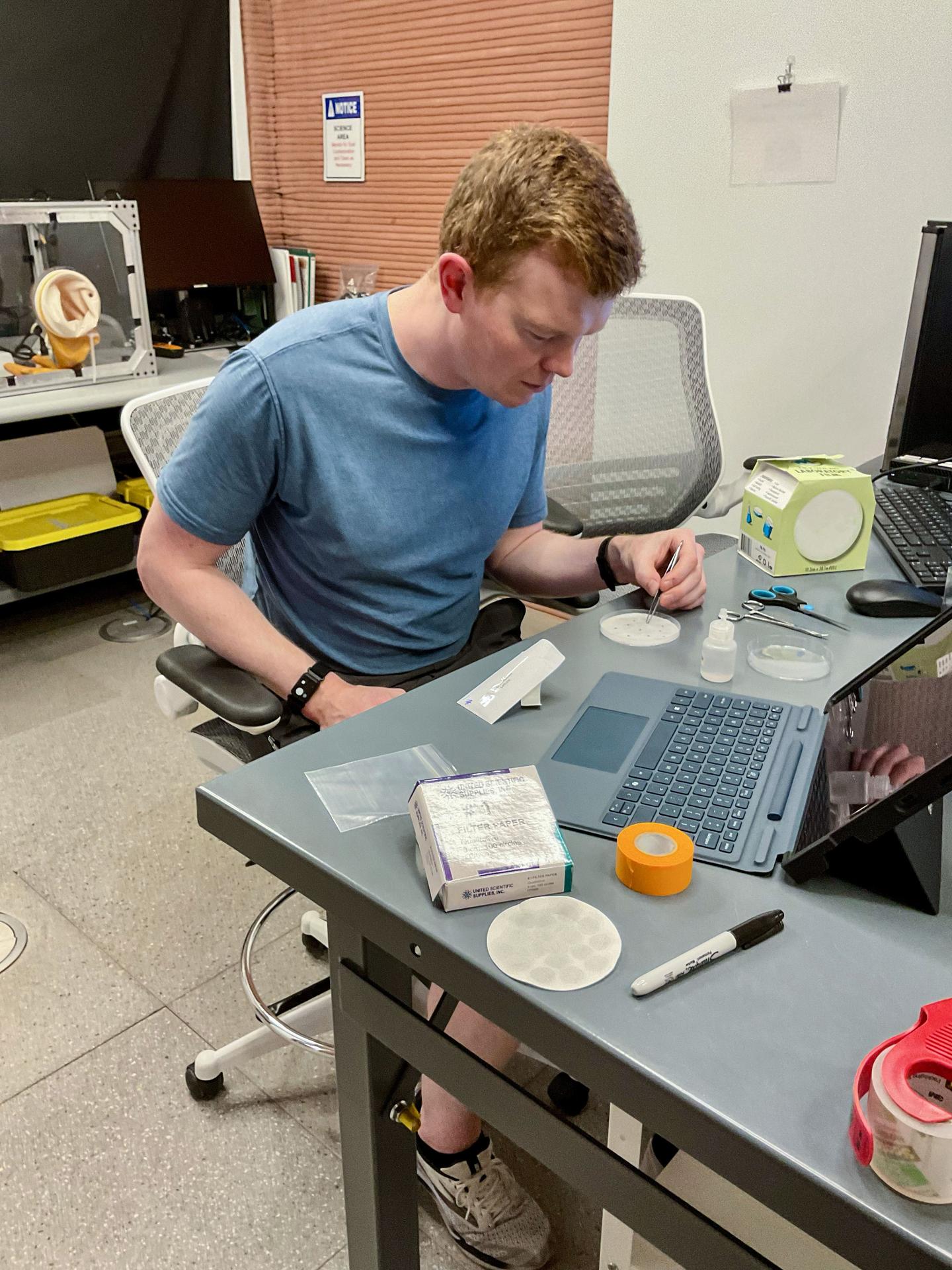
jsc2026e403161 (Oct. 21, 2025) -- Crew Health and Performance Exploration Analog (CHAPEA) mission 2 flight engineer, James Spicer, working on a science task involving seed germination. Credit: NASA

jsc2026e403156 (Oct. 25, 2025) -- Crew Health and Performance Exploration Analog (CHAPEA) mission 2 medical officer, Ellen Ellis, exercising in the habitat using a stationary bike. Credit: NASA
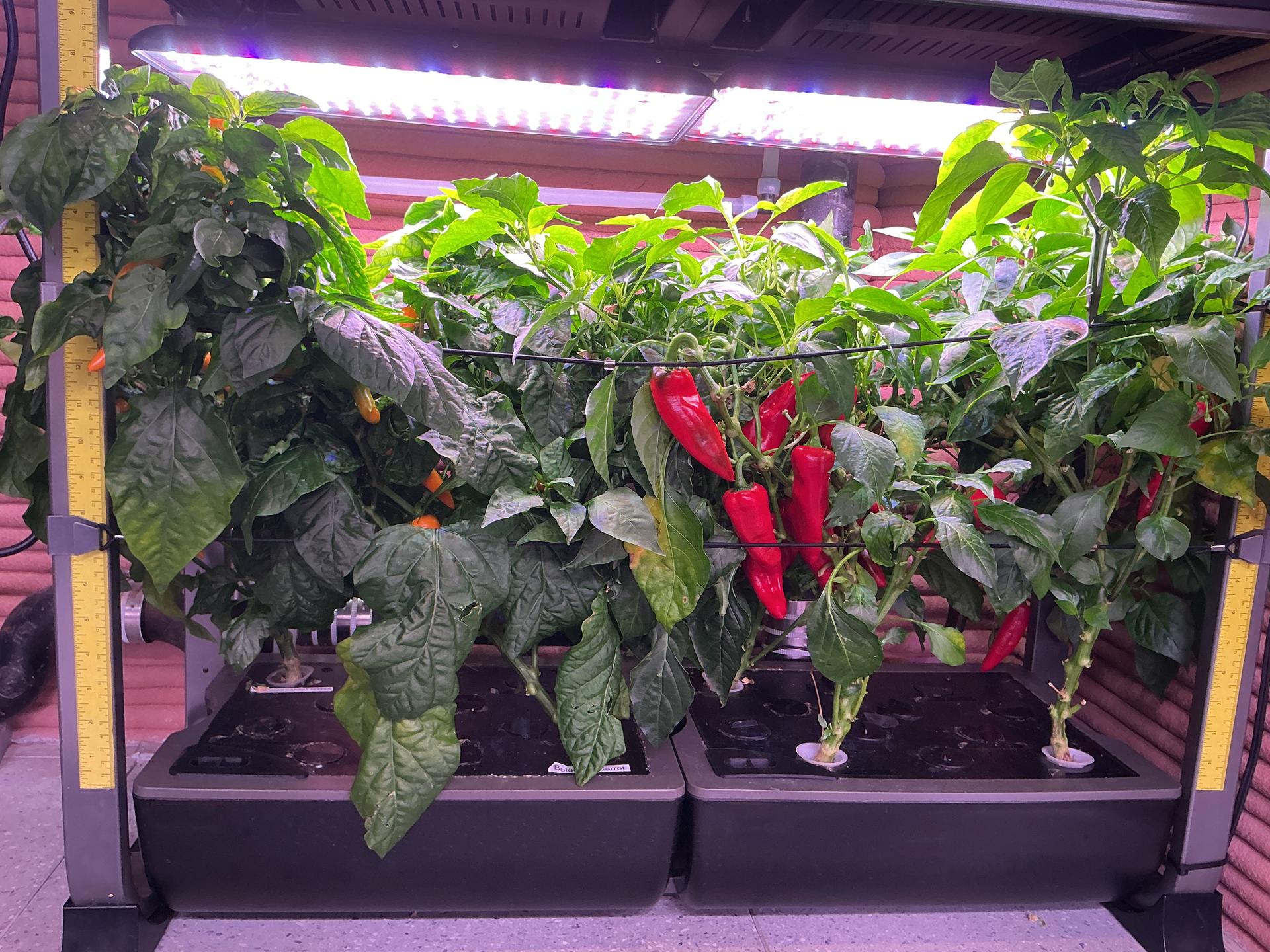
jsc2026e403177 (June 10, 2026) -- Image of vegetables grown in the Crew Health and Performance Exploration Analog (CHAPEA) Mission 2 hydroponic crop growth system. Credit: NASA
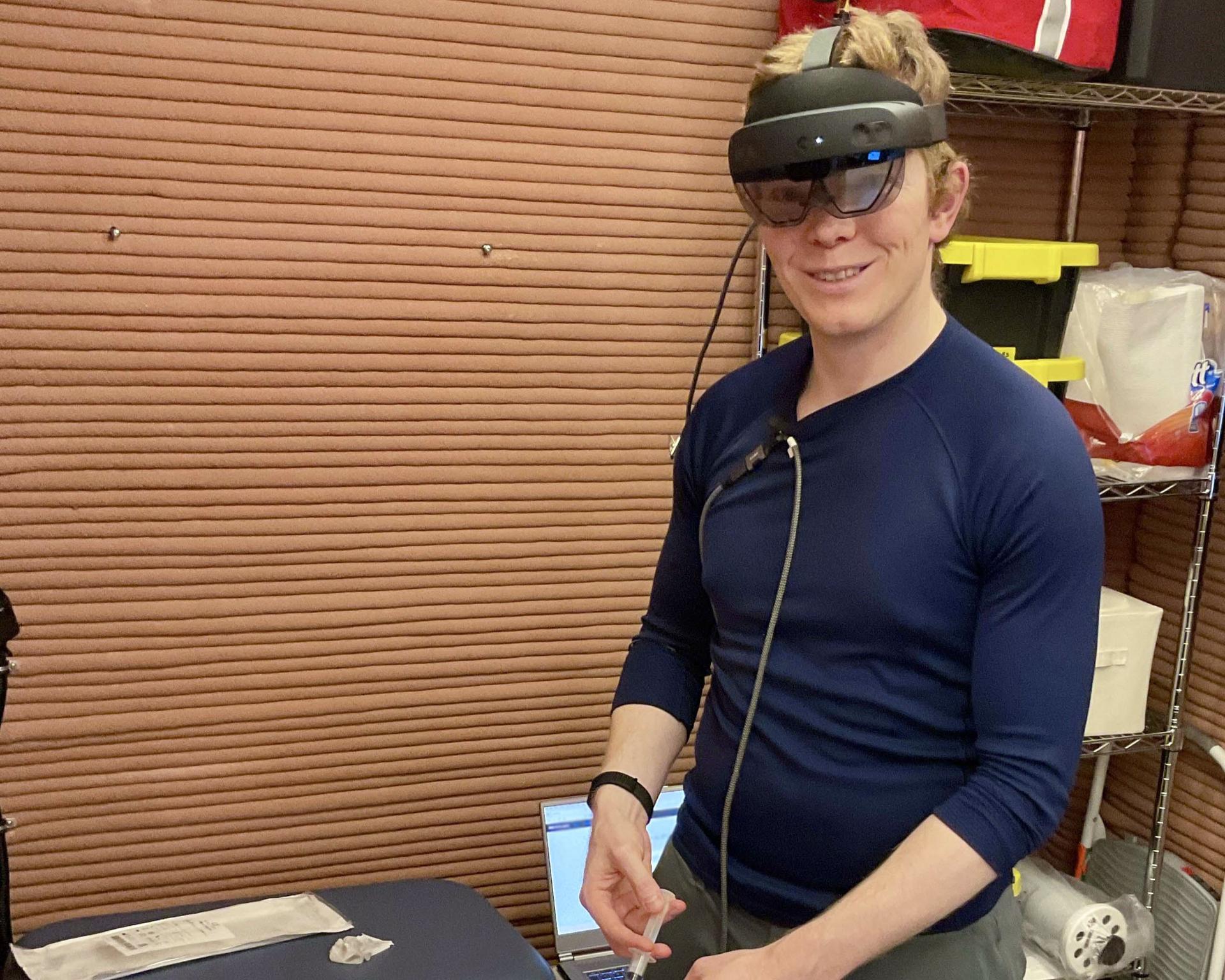
jsc2026e403166 (Feb. 10, 2026) -- James Spicer, Crew Health and Performance Exploration Analog (CHAPEA) Mission 2 flight engineer, performing a demonstration of Artificial Intelligence-enabled medical training. Credit: NASA
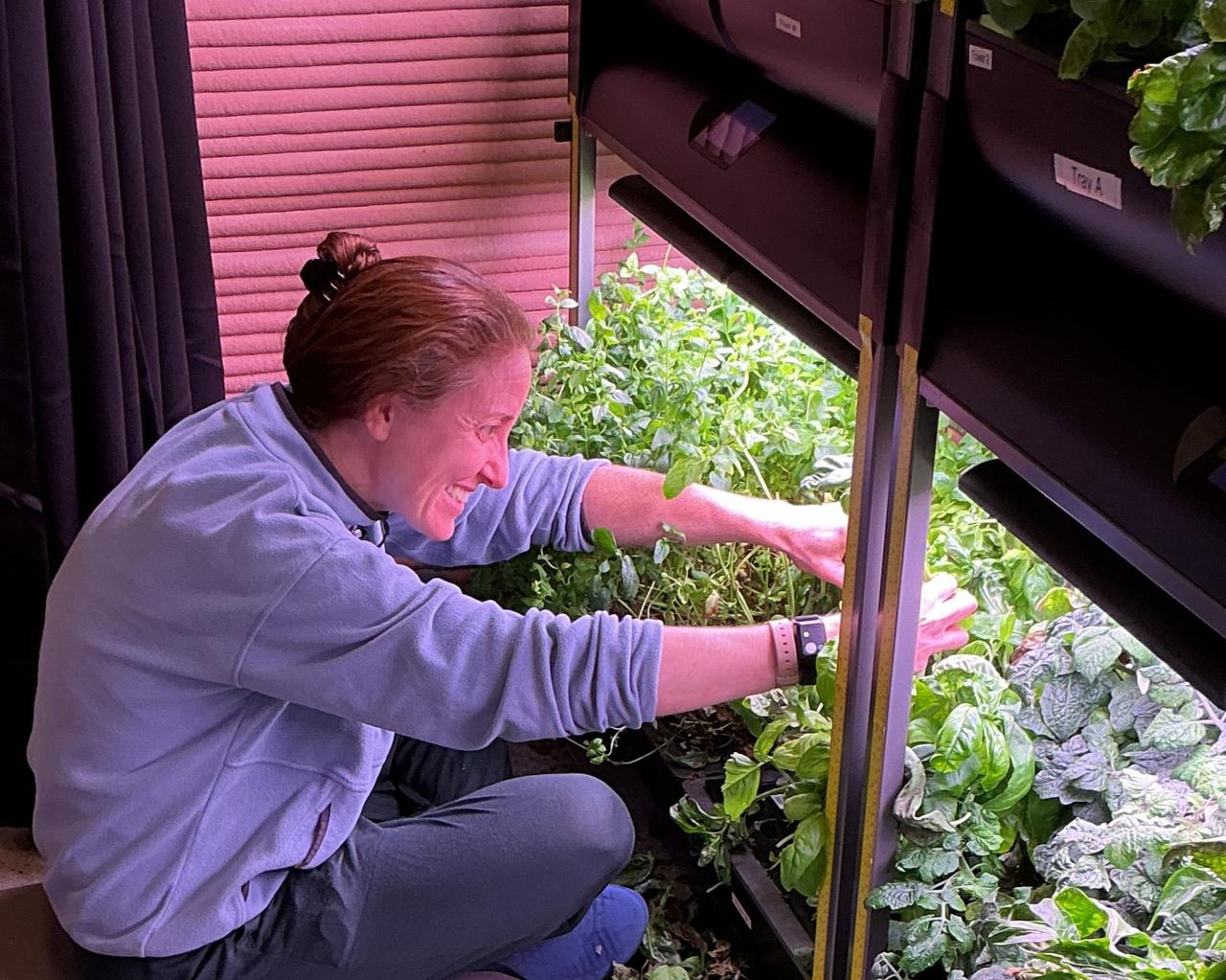
jsc2026e403169 (Feb. 22, 2026) -- Ellen Ellis, Crew Health and Performance Exploration Analog (CHAPEA) mission 2 medical officer, trims plants to promote growth in the habitat’s hydroponic crop system. Credit: NASA
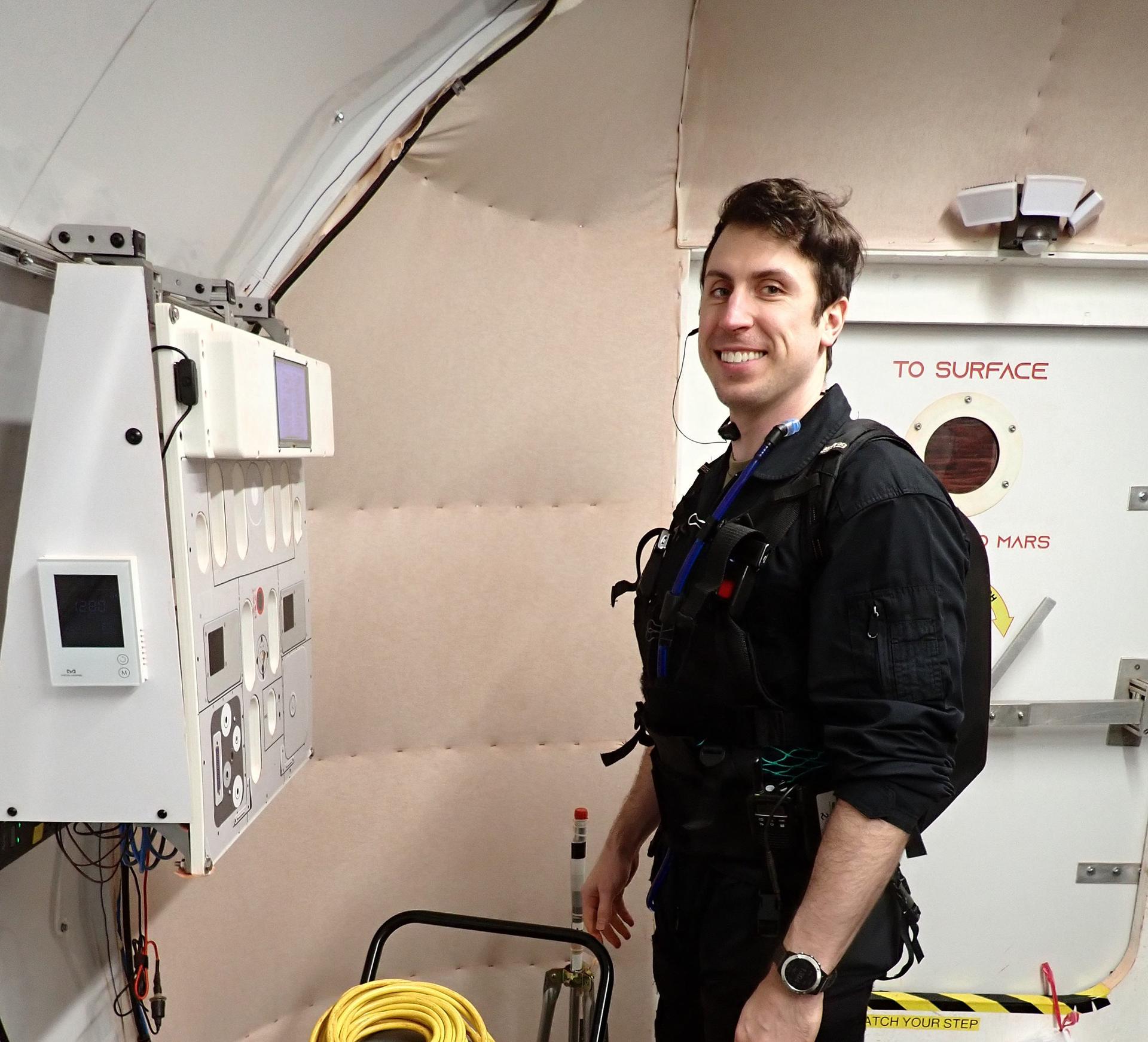
jsc2026e403181 (June 12, 2026) -- Ross Elder, Crew Health and Performance Exploration Analog (CHAPEA) Mission 2 commander, preparing to simulate an airlock depressurization and egress to conduct an EVA. Credit: NASA
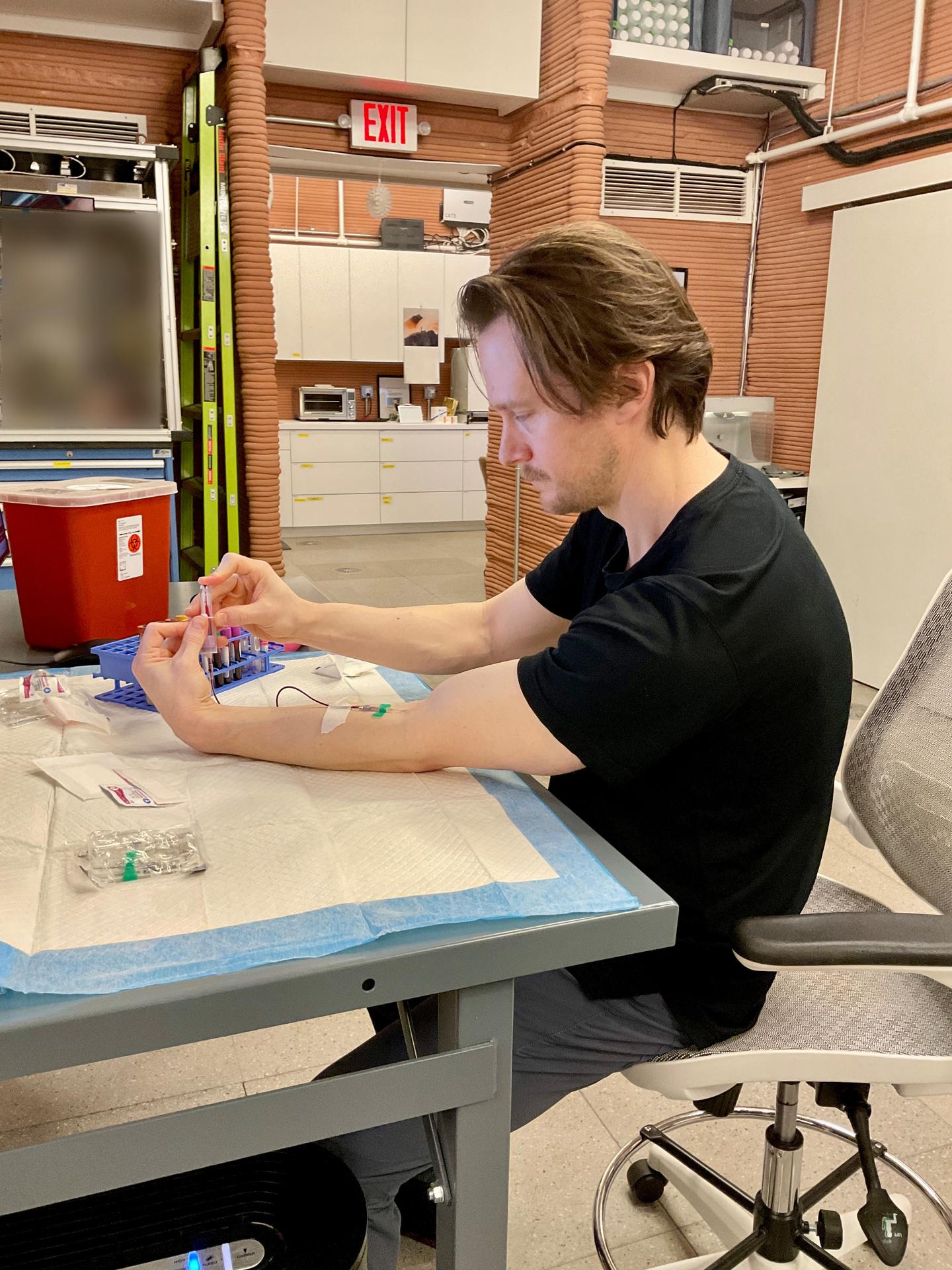
jsc2026e403178 (May 20, 2026) -- Matthew Montgomery, Crew Health and Performance Exploration Analog (CHAPEA) Mission 2 science officer, performing blood collection to monitor crew health. Credit: NASA
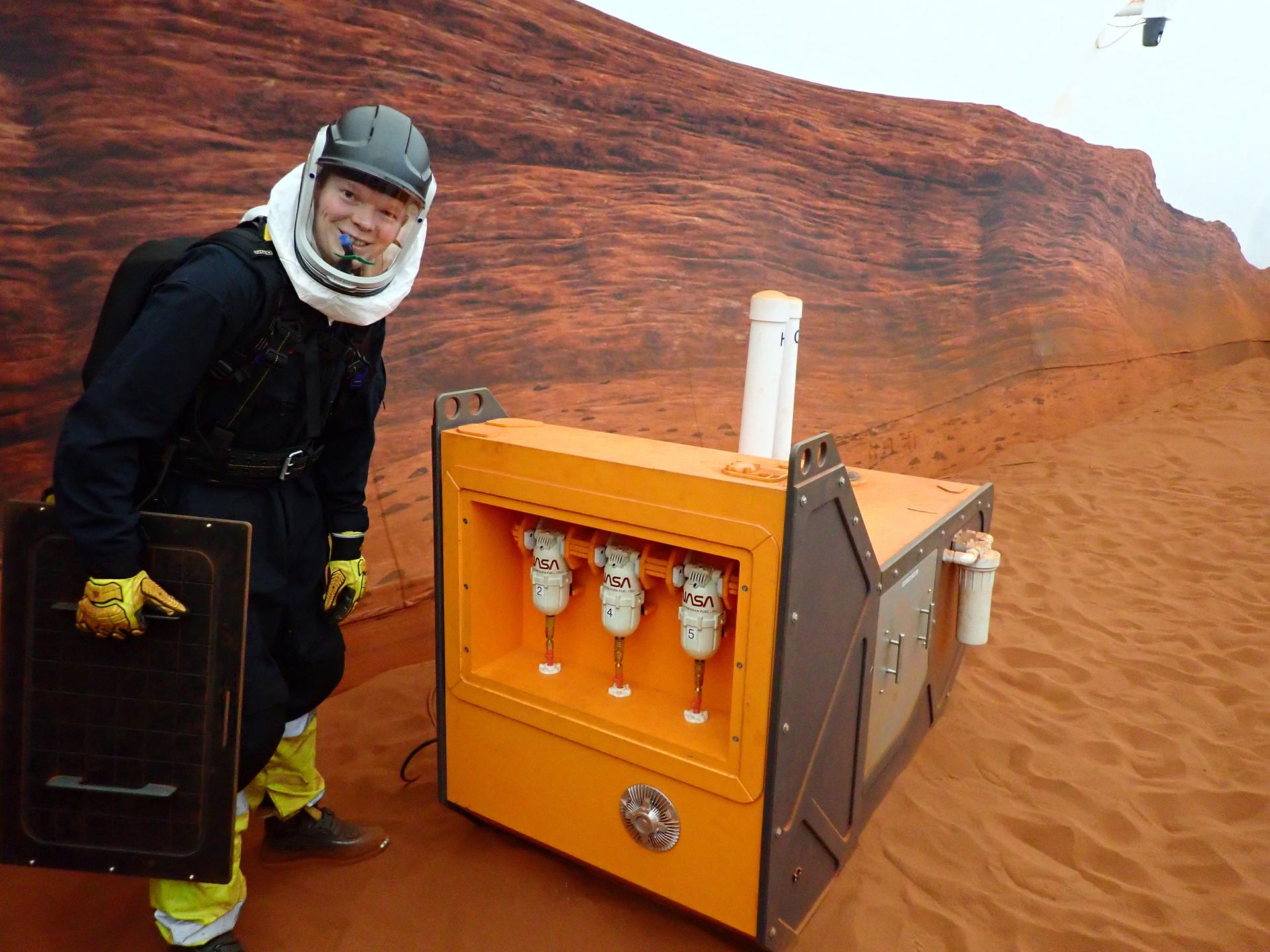
jsc2026e403180 (May 28, 2026) -- James Spicer, Crew Health and Performance Exploration Analog (CHAPEA) Mission 2 flight engineer, conducting a maintenance activity. Credit: NASA
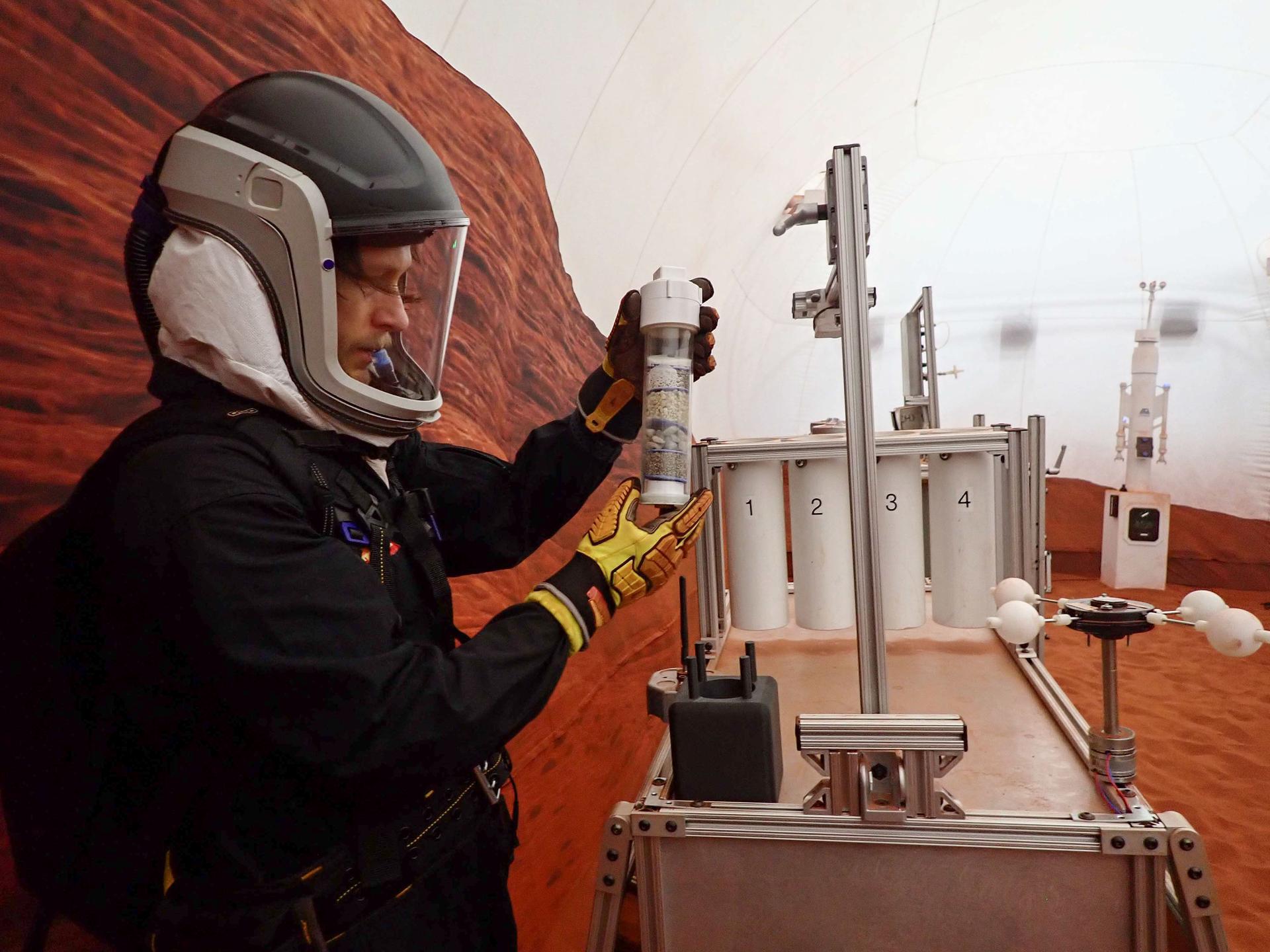
jsc2026e403165 (Jan. 22, 2026) -- Matthew Montgomery, Crew Health and Performance Exploration Analog (CHAPEA) Mission 2 science officer, participates in an extravehicular geological activity. Credit: NASA
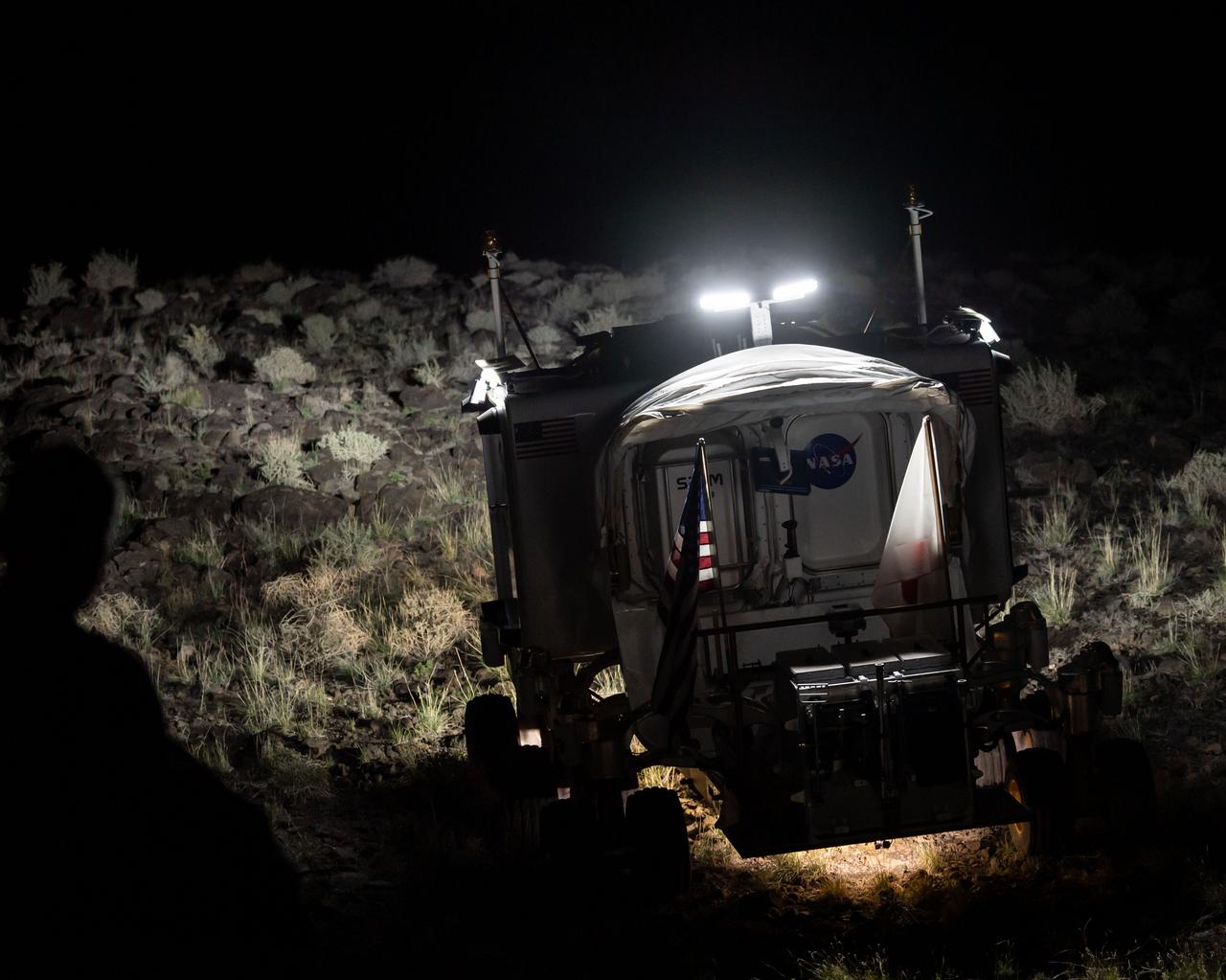
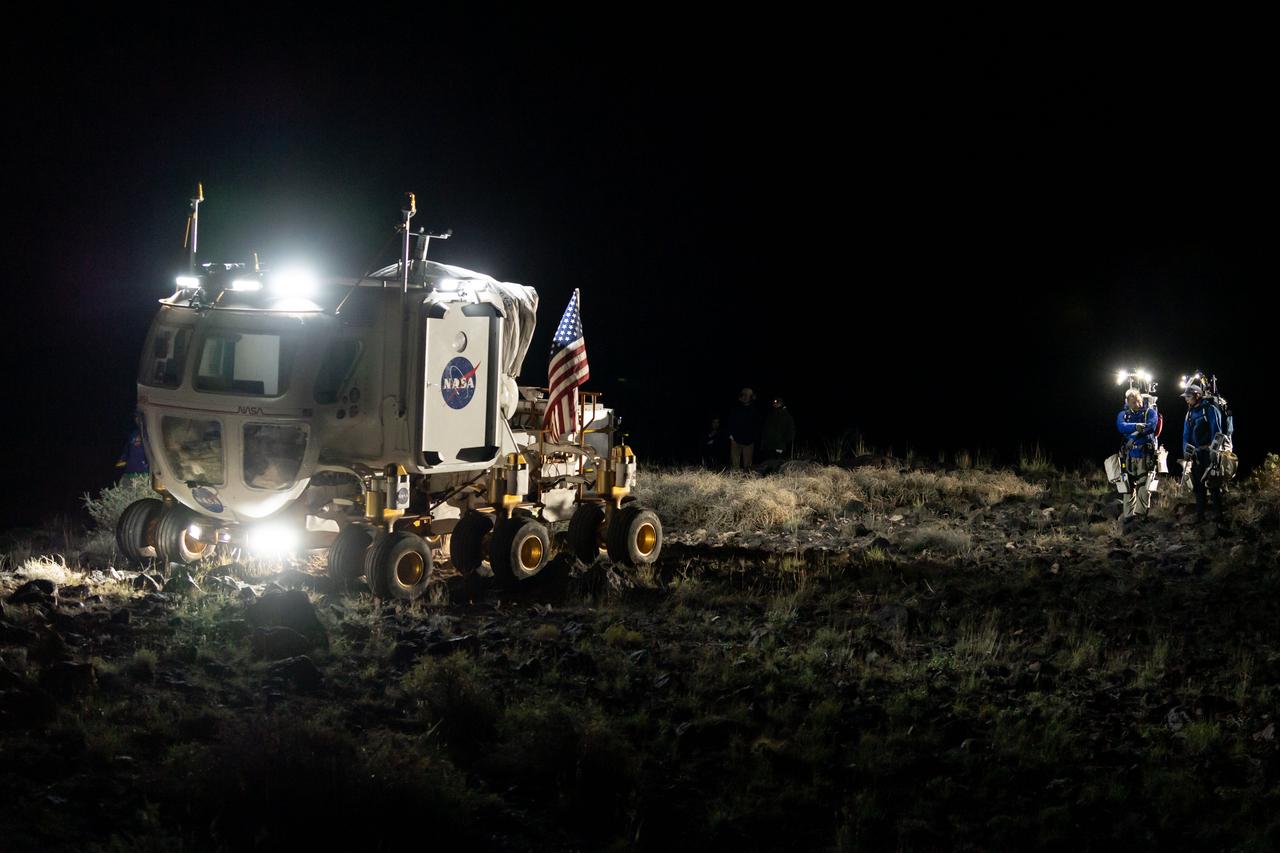
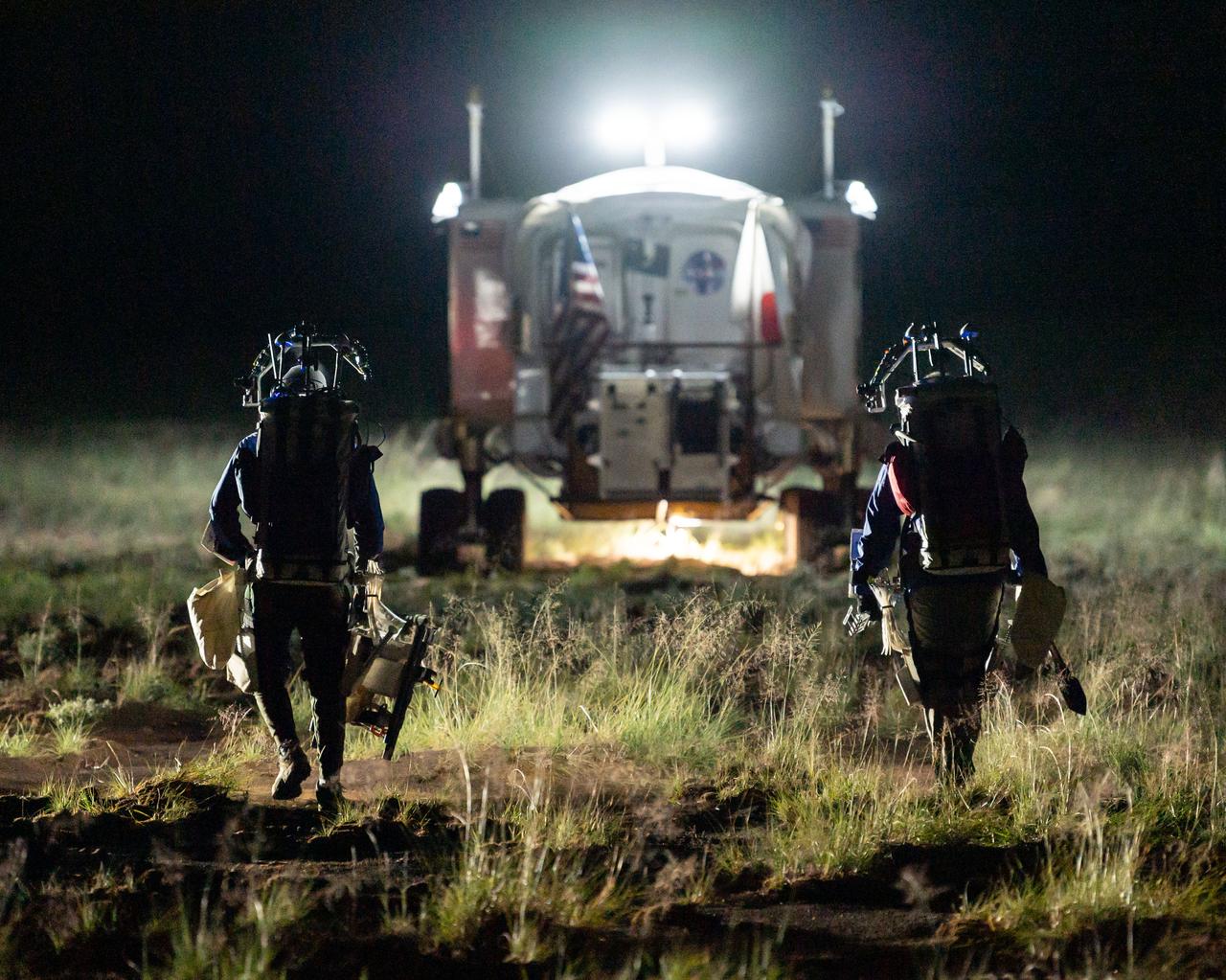
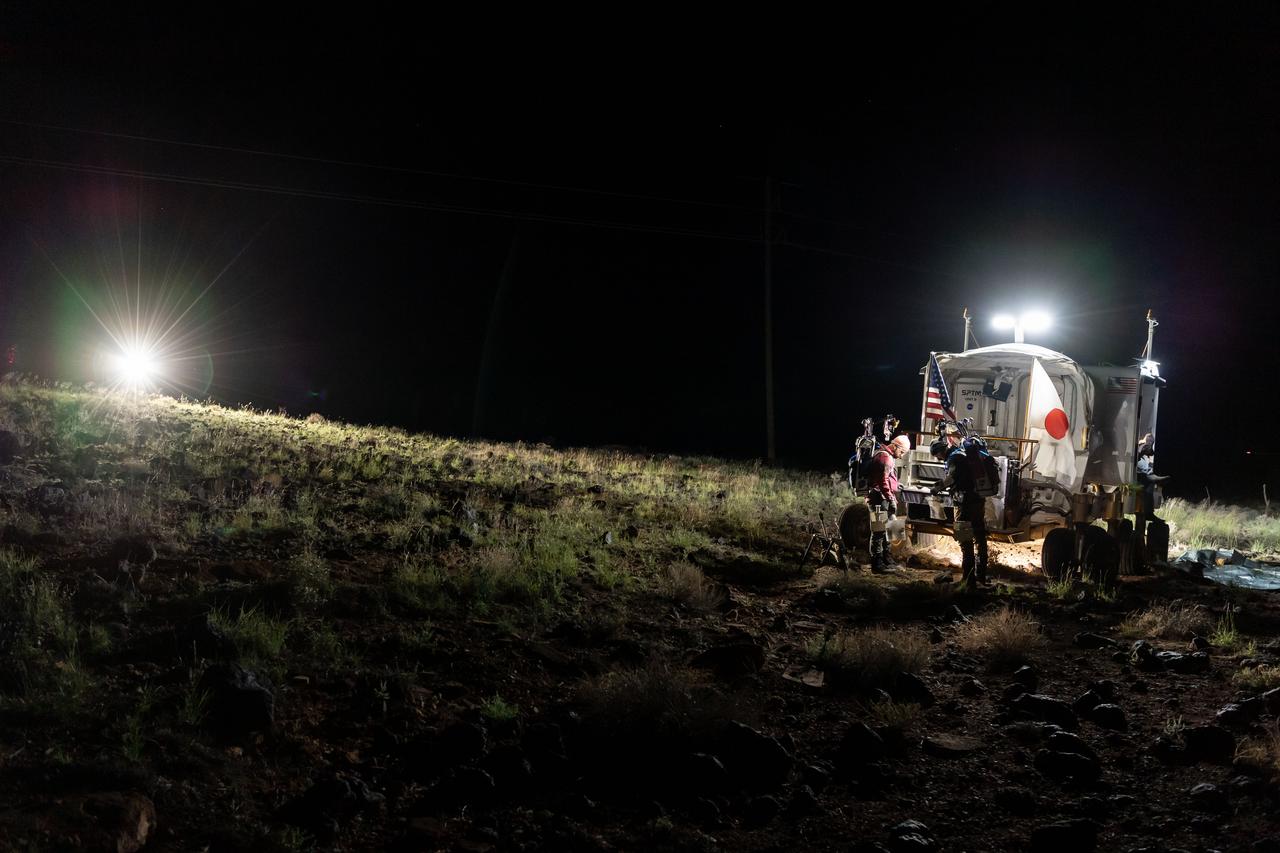
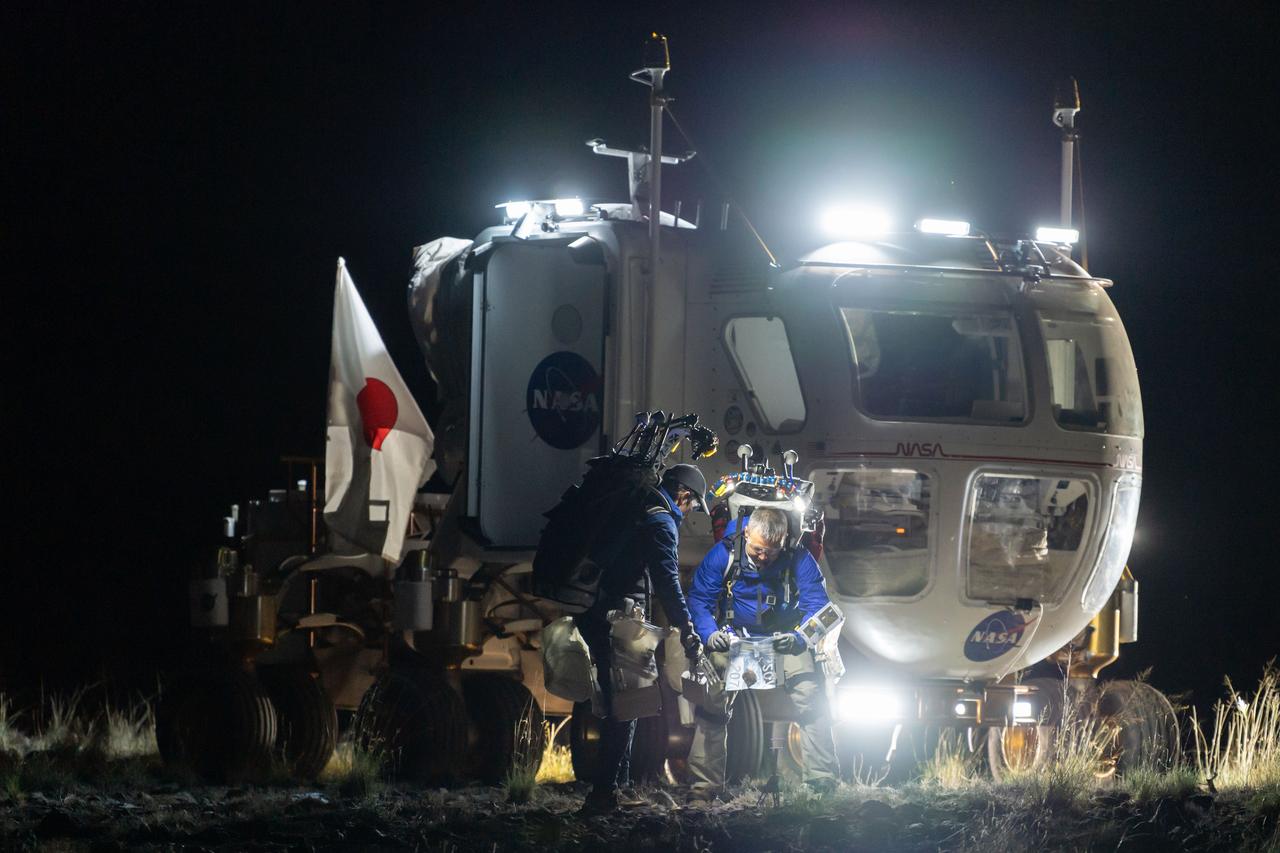
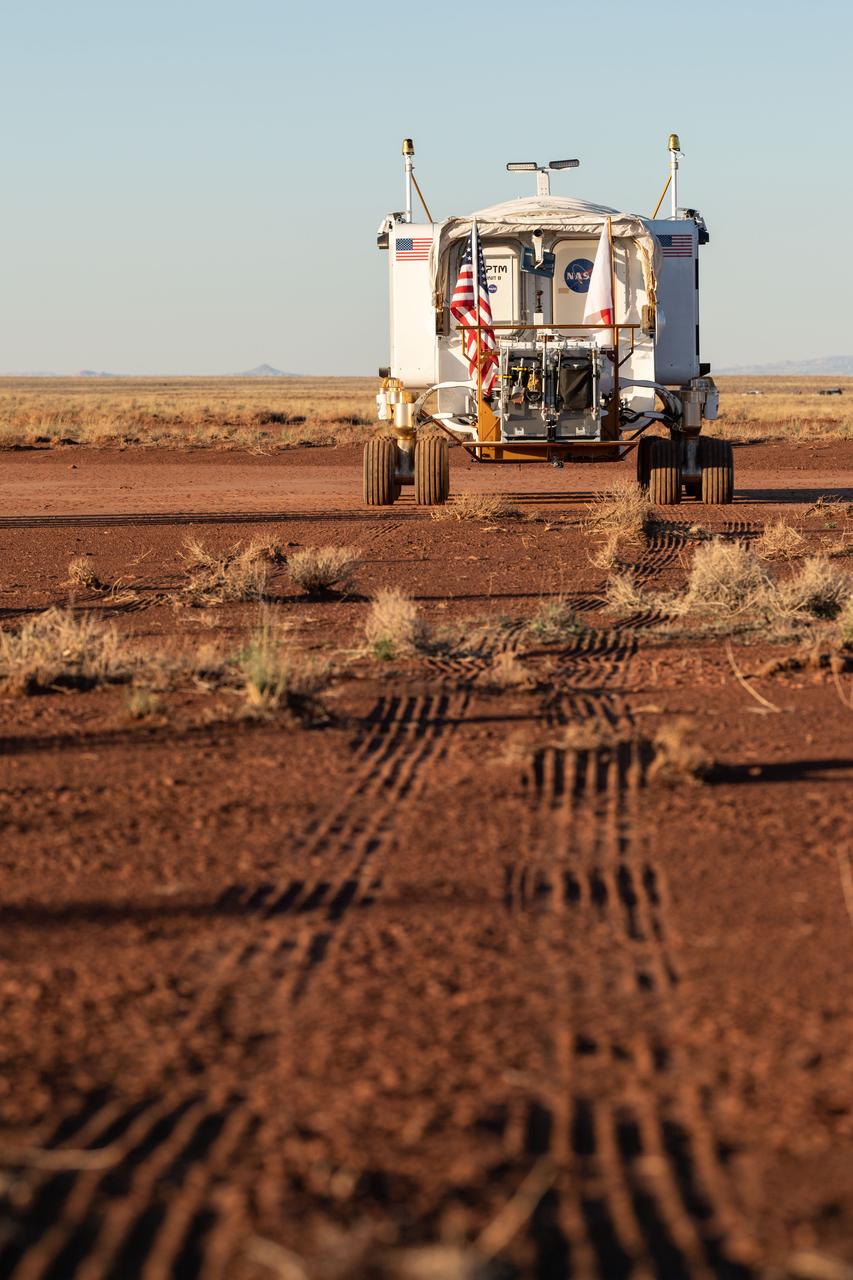
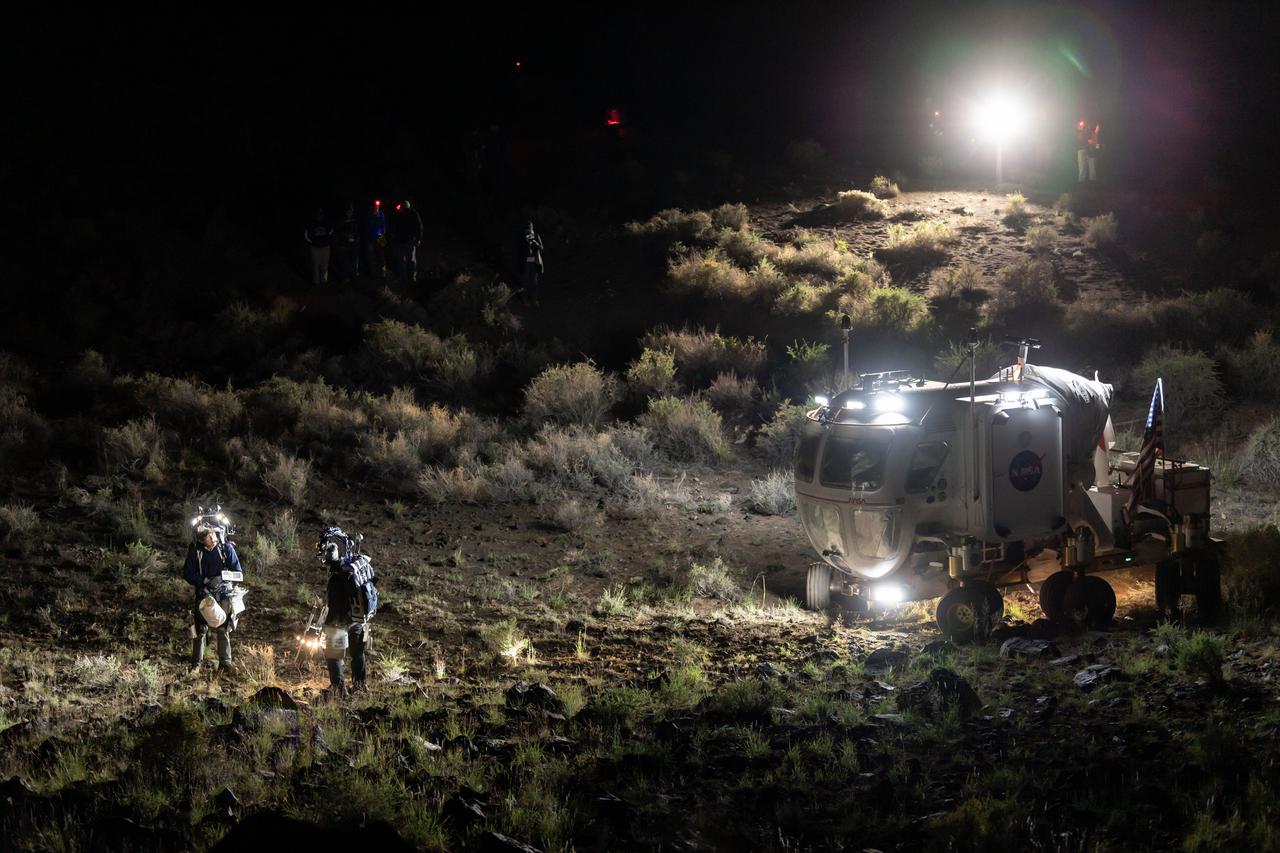
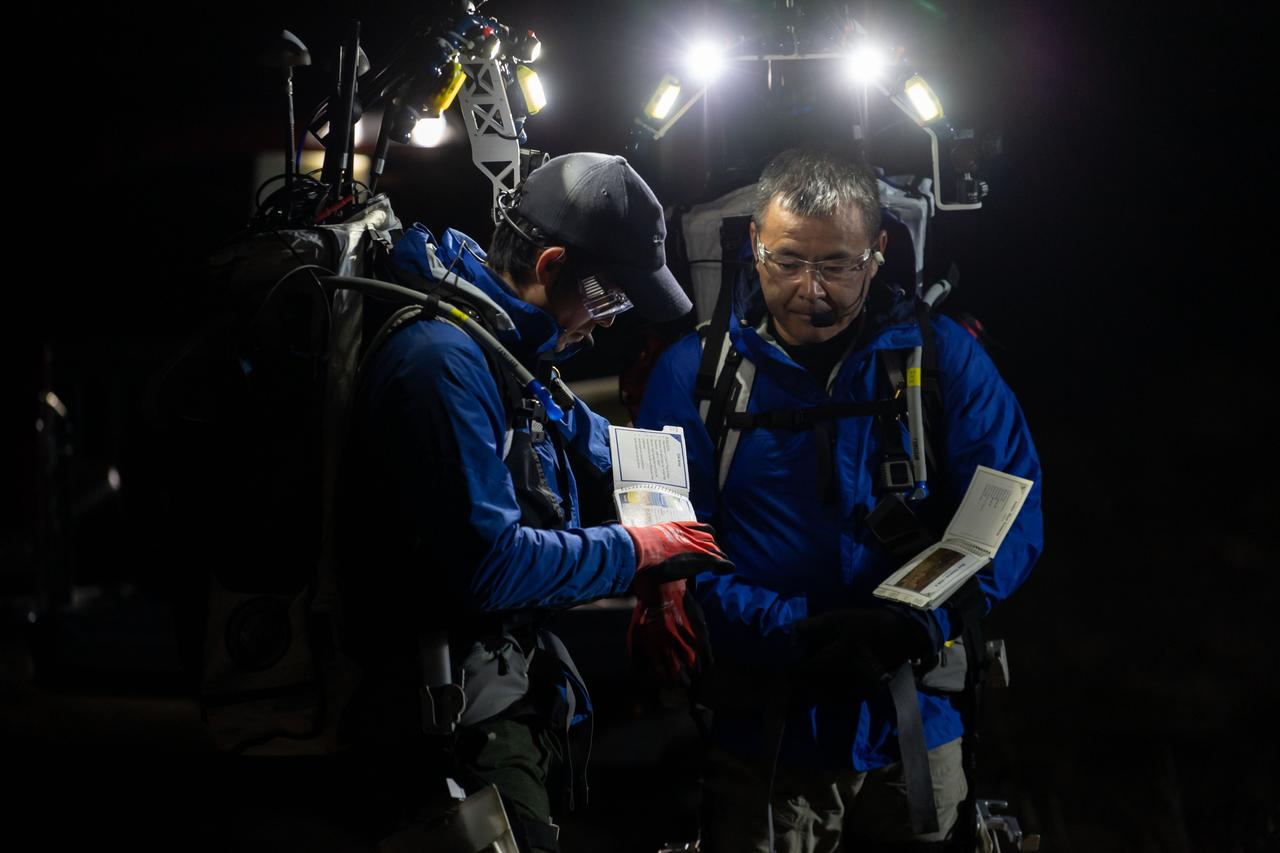
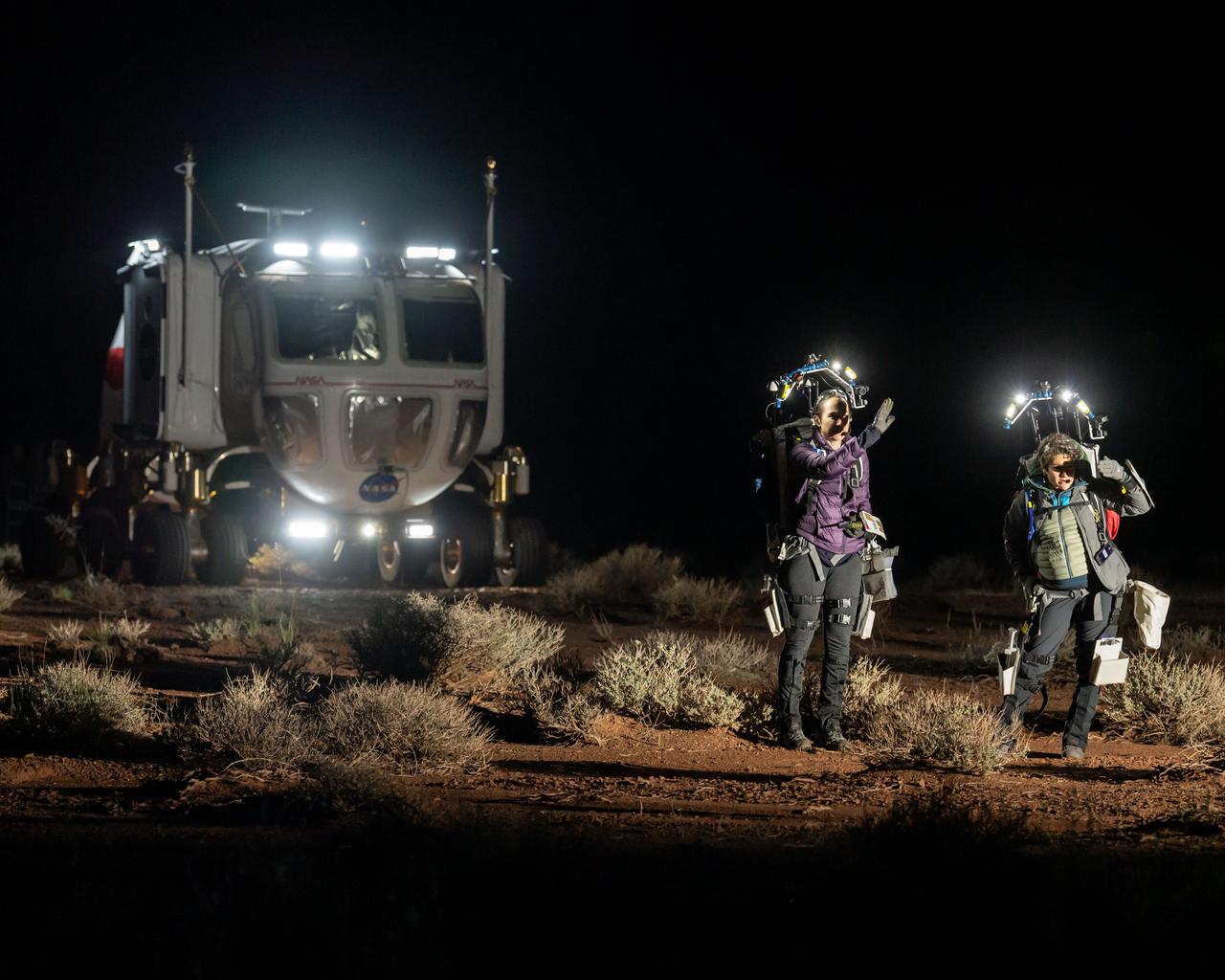
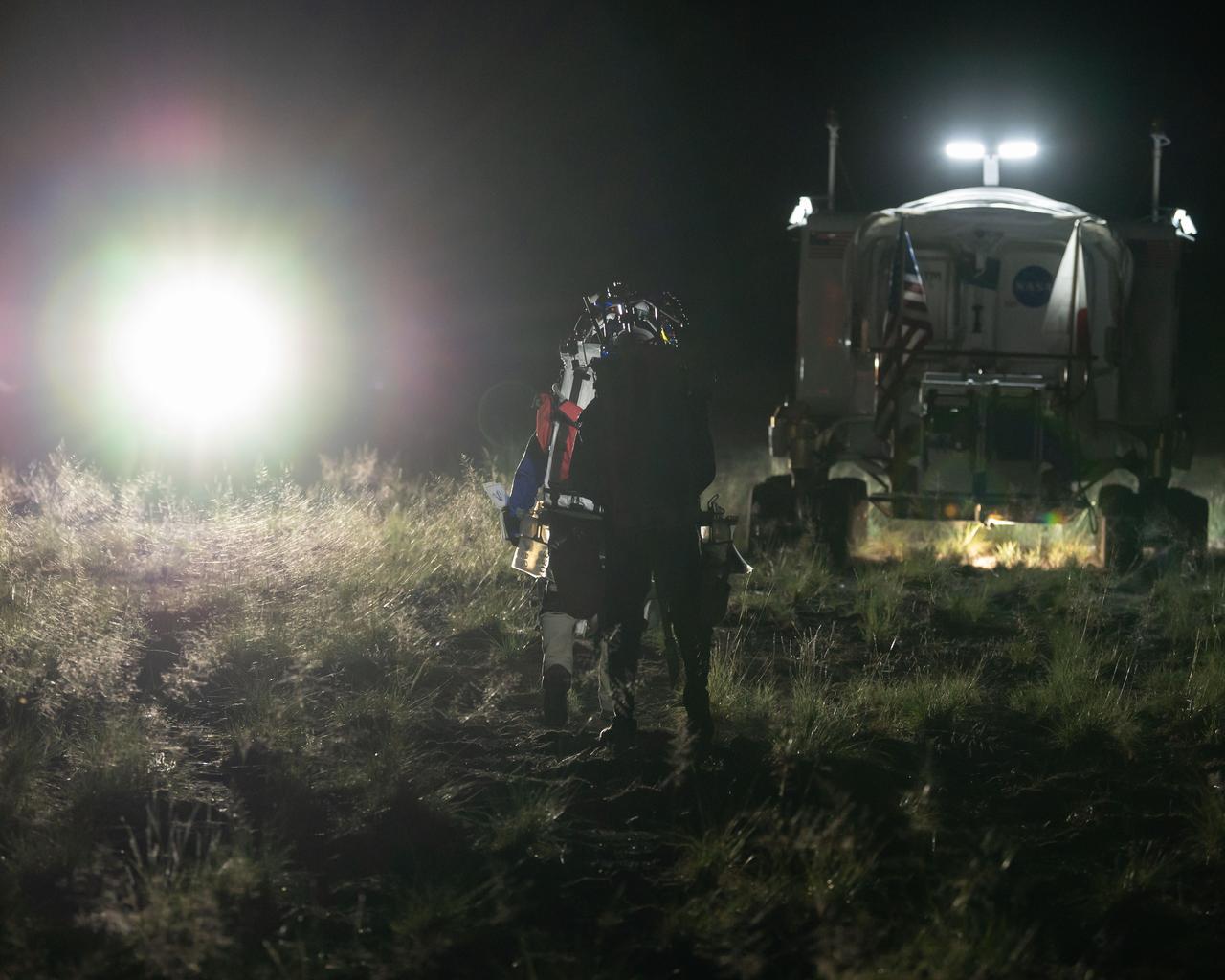
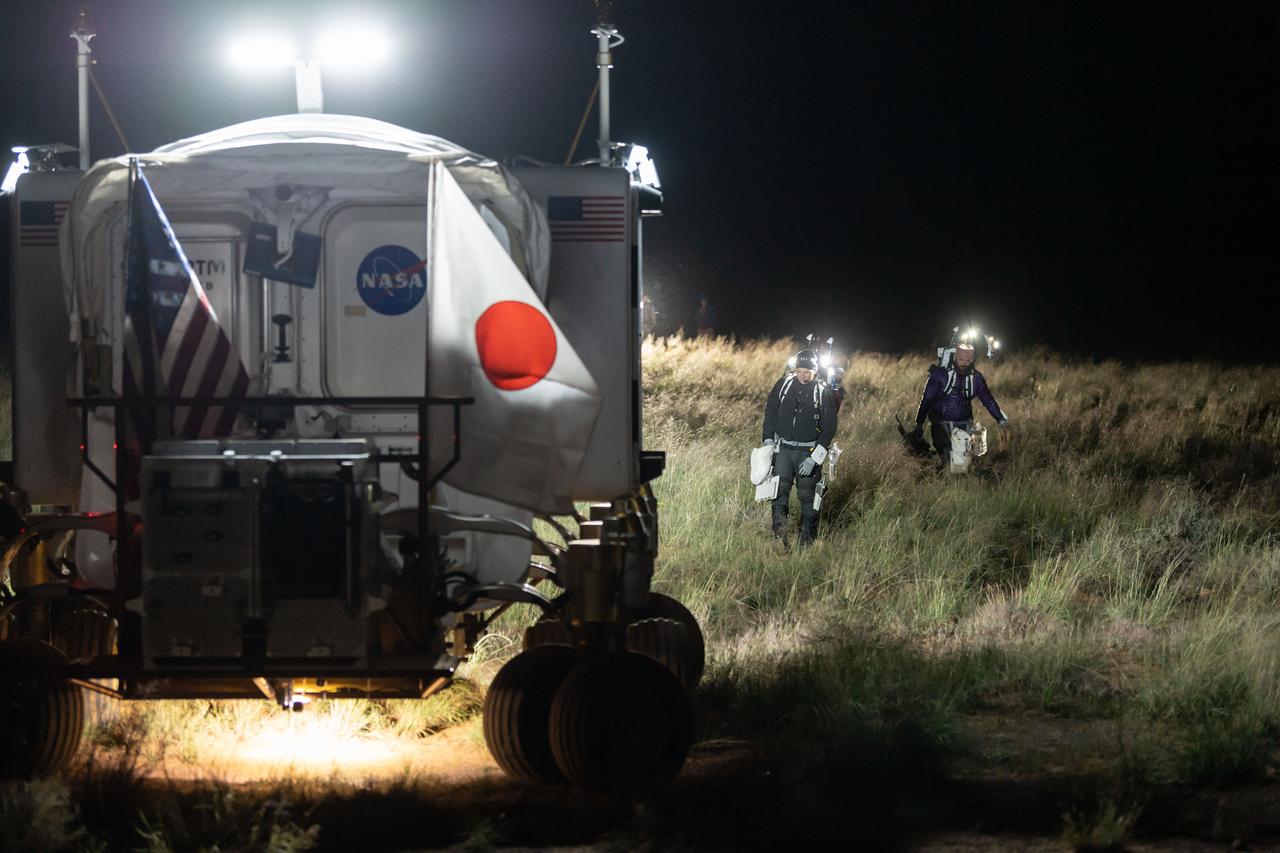
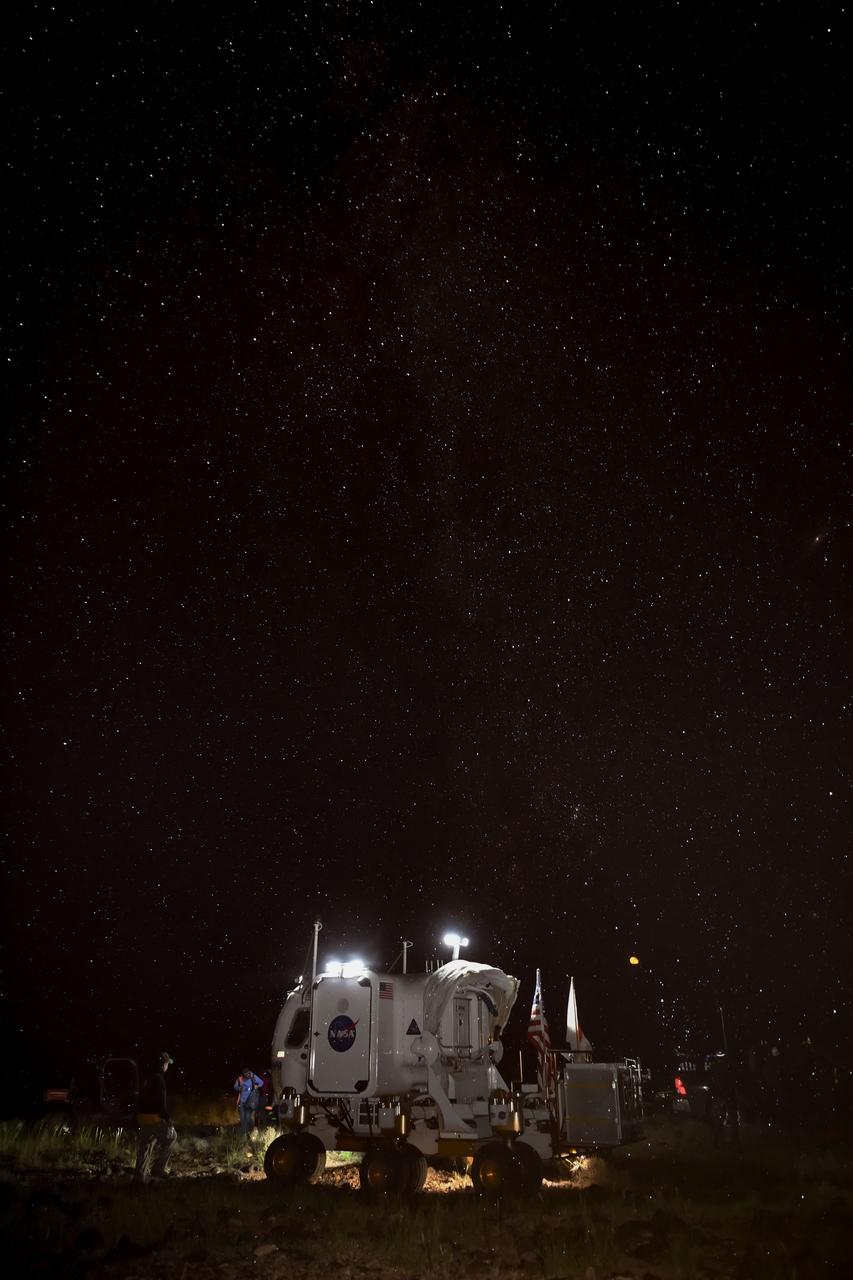
The Desert Research and Technology Studies (DesertRATS) is one of NASA’s analog missions to test hardware and operational scenarios in a remote environment with geographic similarities to the Moon and Mars. In October 2022, NASA evaluated rover design and operations, communications with the Mission Control Center and a Science Evaluation Room at NASA’s Johnson Space Center in Houston. A key element of the DesertRATS analog is the pressurized rover, a capability that is planned for astronaut surface exploration at the Moon and Mars. NASA has a study agreement with the Japan Aerospace Exploration Agency (JAXA) for development of the Artemis pressurized rover, and JAXA representatives joined NASA at DesertRATS.
The Desert Research and Technology Studies (DesertRATS) is one of NASA’s analog missions to test hardware and operational scenarios in a remote environment with geographic similarities to the Moon and Mars. In October 2022, NASA evaluated rover design and operations, communications with the Mission Control Center and a Science Evaluation Room at NASA’s Johnson Space Center in Houston. A key element of the DesertRATS analog is the pressurized rover, a capability that is planned for astronaut surface exploration at the Moon and Mars. NASA has a study agreement with the Japan Aerospace Exploration Agency (JAXA) for development of the Artemis pressurized rover, and JAXA representatives joined NASA at DesertRATS.
The Desert Research and Technology Studies (DesertRATS) is one of NASA’s analog missions to test hardware and operational scenarios in a remote environment with geographic similarities to the Moon and Mars. In October 2022, NASA evaluated rover design and operations, communications with the Mission Control Center and a Science Evaluation Room at NASA’s Johnson Space Center in Houston. A key element of the DesertRATS analog is the pressurized rover, a capability that is planned for astronaut surface exploration at the Moon and Mars. NASA has a study agreement with the Japan Aerospace Exploration Agency (JAXA) for development of the Artemis pressurized rover, and JAXA representatives joined NASA at DesertRATS.
The Desert Research and Technology Studies (DesertRATS) is one of NASA’s analog missions to test hardware and operational scenarios in a remote environment with geographic similarities to the Moon and Mars. In October 2022, NASA evaluated rover design and operations, communications with the Mission Control Center and a Science Evaluation Room at NASA’s Johnson Space Center in Houston. A key element of the DesertRATS analog is the pressurized rover, a capability that is planned for astronaut surface exploration at the Moon and Mars. NASA has a study agreement with the Japan Aerospace Exploration Agency (JAXA) for development of the Artemis pressurized rover, and JAXA representatives joined NASA at DesertRATS.
The Desert Research and Technology Studies (DesertRATS) is one of NASA’s analog missions to test hardware and operational scenarios in a remote environment with geographic similarities to the Moon and Mars. In October 2022, NASA evaluated rover design and operations, communications with the Mission Control Center and a Science Evaluation Room at NASA’s Johnson Space Center in Houston. A key element of the DesertRATS analog is the pressurized rover, a capability that is planned for astronaut surface exploration at the Moon and Mars. NASA has a study agreement with the Japan Aerospace Exploration Agency (JAXA) for development of the Artemis pressurized rover, and JAXA representatives joined NASA at DesertRATS.
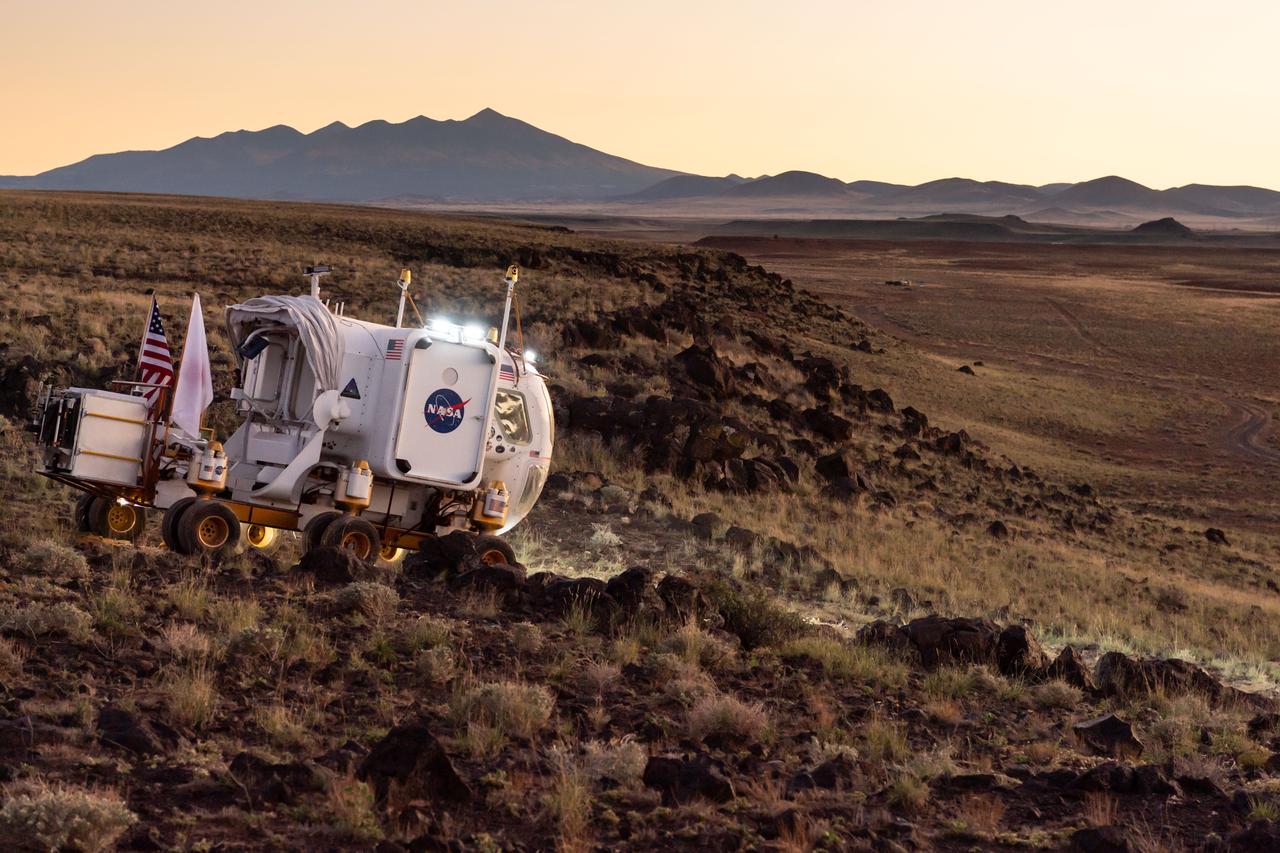
The Desert Research and Technology Studies (DesertRATS) is one of NASA’s analog missions to test hardware and operational scenarios in a remote environment with geographic similarities to the Moon and Mars. In October 2022, NASA evaluated rover design and operations, communications with the Mission Control Center and a Science Evaluation Room at NASA’s Johnson Space Center in Houston. A key element of the DesertRATS analog is the pressurized rover, a capability that is planned for astronaut surface exploration at the Moon and Mars. NASA has a study agreement with the Japan Aerospace Exploration Agency (JAXA) for development of the Artemis pressurized rover, and JAXA representatives joined NASA at DesertRATS.
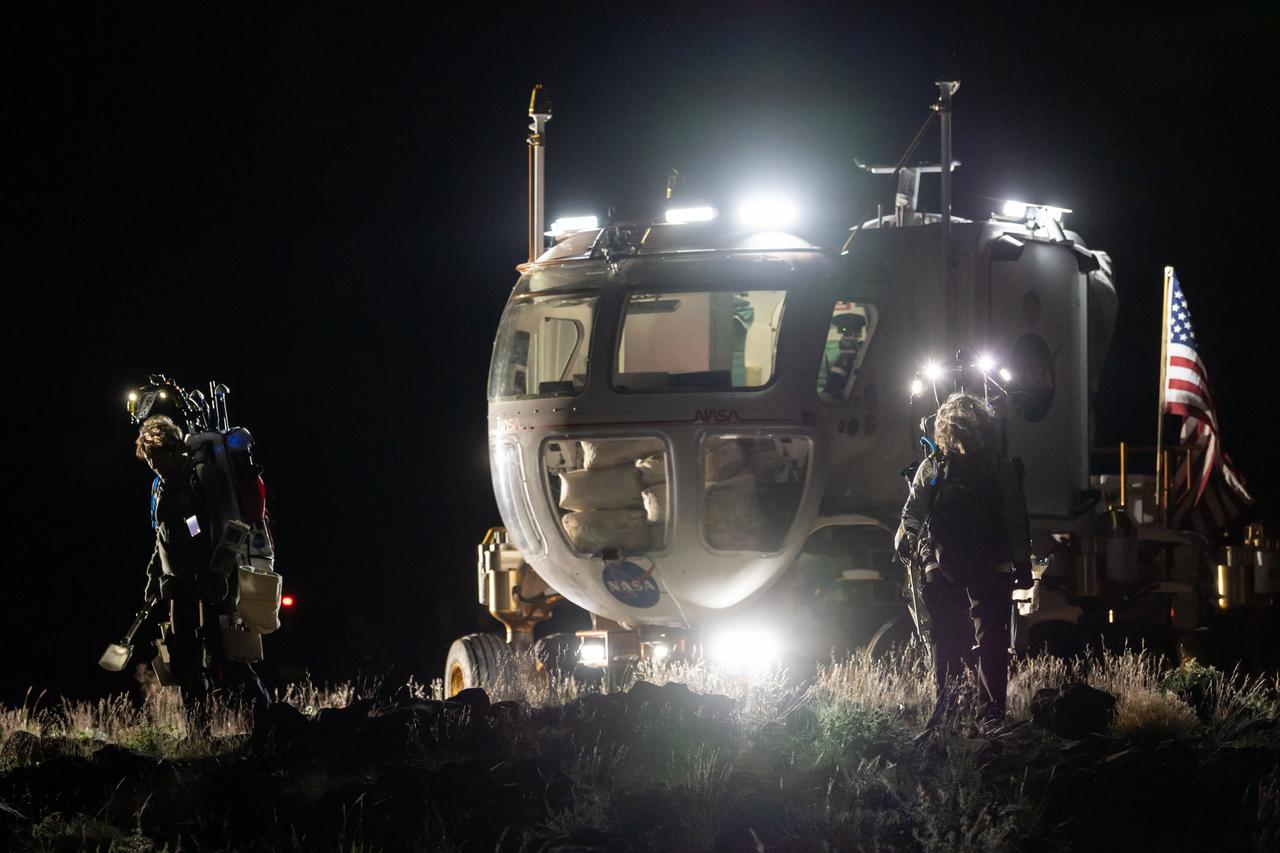
The Desert Research and Technology Studies (DesertRATS) is one of NASA’s analog missions to test hardware and operational scenarios in a remote environment with geographic similarities to the Moon and Mars. In October 2022, NASA evaluated rover design and operations, communications with the Mission Control Center and a Science Evaluation Room at NASA’s Johnson Space Center in Houston. A key element of the DesertRATS analog is the pressurized rover, a capability that is planned for astronaut surface exploration at the Moon and Mars. NASA has a study agreement with the Japan Aerospace Exploration Agency (JAXA) for development of the Artemis pressurized rover, and JAXA representatives joined NASA at DesertRATS.
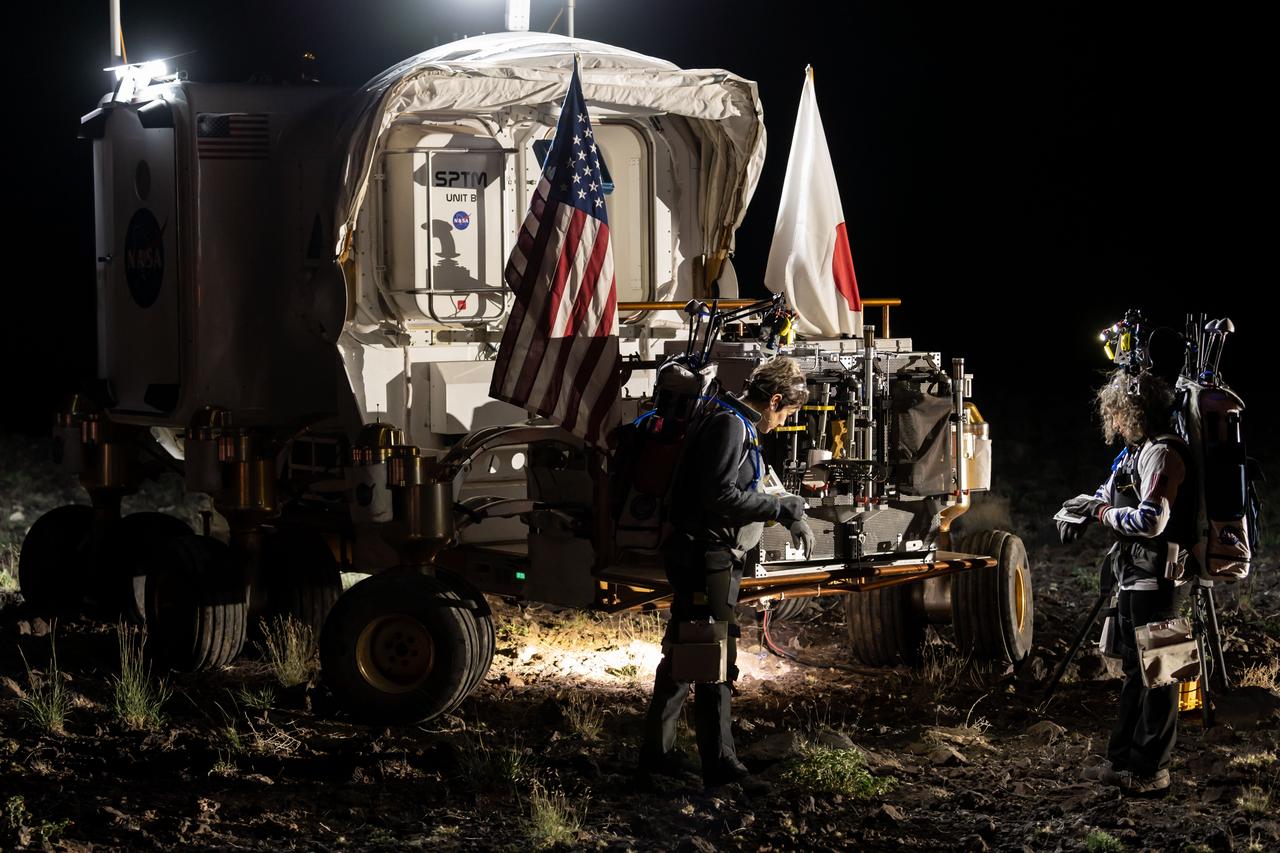
The Desert Research and Technology Studies (DesertRATS) is one of NASA’s analog missions to test hardware and operational scenarios in a remote environment with geographic similarities to the Moon and Mars. In October 2022, NASA evaluated rover design and operations, communications with the Mission Control Center and a Science Evaluation Room at NASA’s Johnson Space Center in Houston. A key element of the DesertRATS analog is the pressurized rover, a capability that is planned for astronaut surface exploration at the Moon and Mars. NASA has a study agreement with the Japan Aerospace Exploration Agency (JAXA) for development of the Artemis pressurized rover, and JAXA representatives joined NASA at DesertRATS.
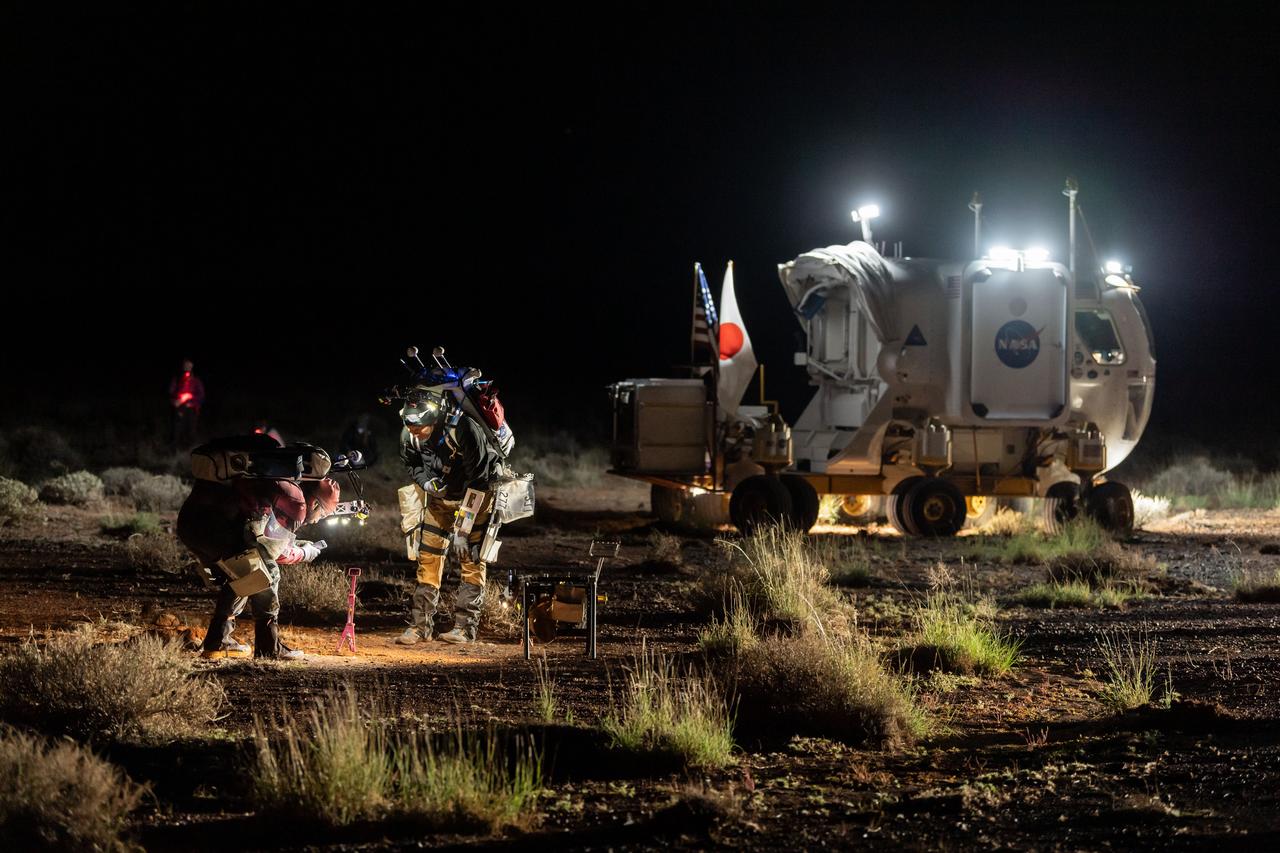
The Desert Research and Technology Studies (DesertRATS) is one of NASA’s analog missions to test hardware and operational scenarios in a remote environment with geographic similarities to the Moon and Mars. In October 2022, NASA evaluated rover design and operations, communications with the Mission Control Center and a Science Evaluation Room at NASA’s Johnson Space Center in Houston. A key element of the DesertRATS analog is the pressurized rover, a capability that is planned for astronaut surface exploration at the Moon and Mars. NASA has a study agreement with the Japan Aerospace Exploration Agency (JAXA) for development of the Artemis pressurized rover, and JAXA representatives joined NASA at DesertRATS.
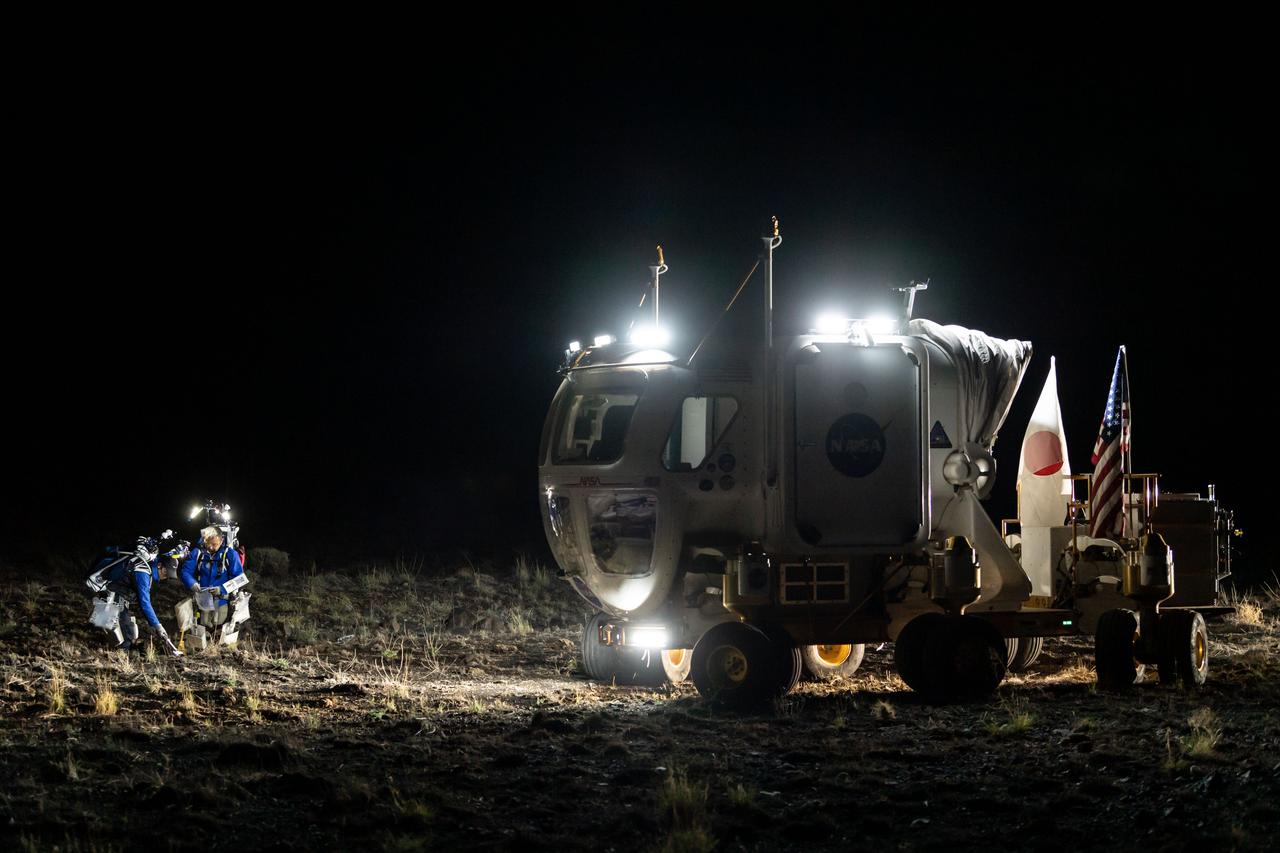
The Desert Research and Technology Studies (DesertRATS) is one of NASA’s analog missions to test hardware and operational scenarios in a remote environment with geographic similarities to the Moon and Mars. In October 2022, NASA evaluated rover design and operations, communications with the Mission Control Center and a Science Evaluation Room at NASA’s Johnson Space Center in Houston. A key element of the DesertRATS analog is the pressurized rover, a capability that is planned for astronaut surface exploration at the Moon and Mars. NASA has a study agreement with the Japan Aerospace Exploration Agency (JAXA) for development of the Artemis pressurized rover, and JAXA representatives joined NASA at DesertRATS.
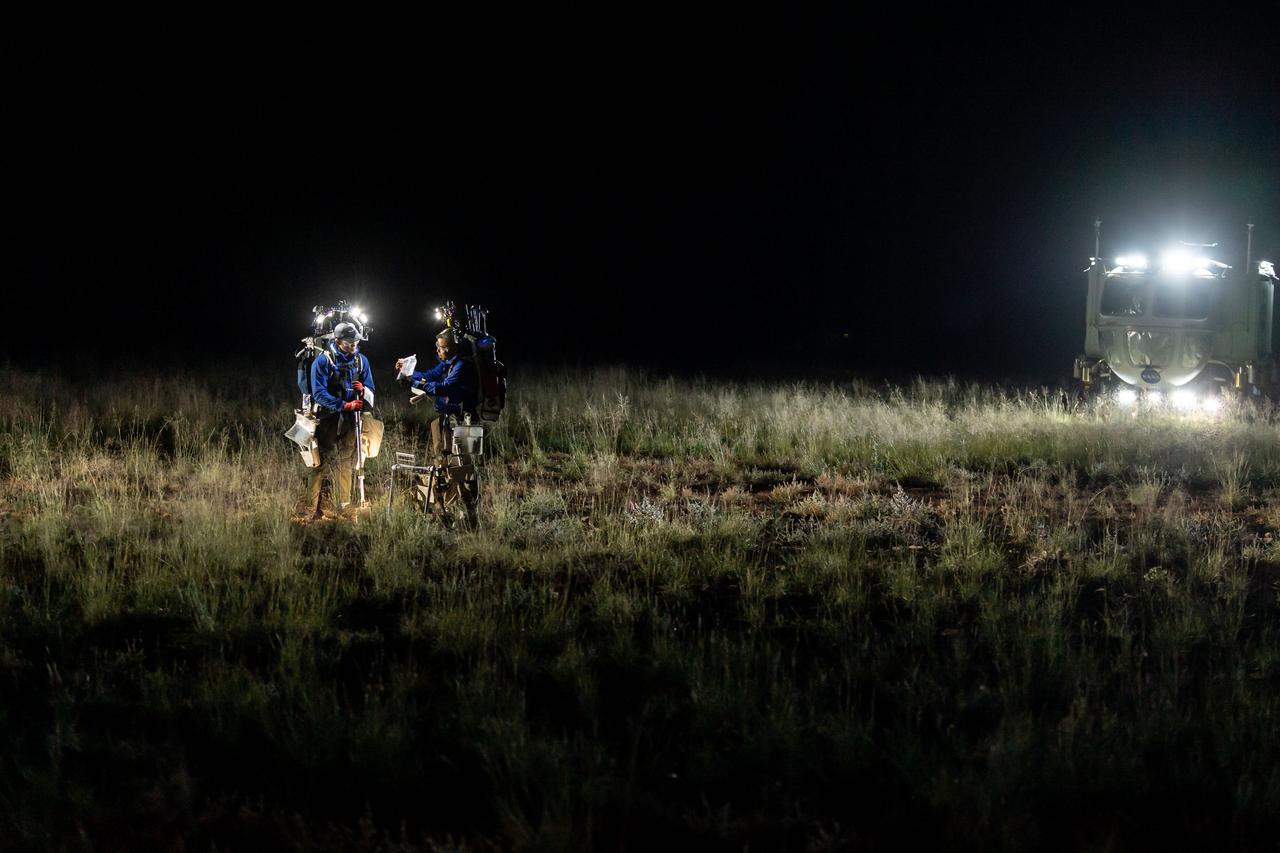
The Desert Research and Technology Studies (DesertRATS) is one of NASA’s analog missions to test hardware and operational scenarios in a remote environment with geographic similarities to the Moon and Mars. In October 2022, NASA evaluated rover design and operations, communications with the Mission Control Center and a Science Evaluation Room at NASA’s Johnson Space Center in Houston. A key element of the DesertRATS analog is the pressurized rover, a capability that is planned for astronaut surface exploration at the Moon and Mars. NASA has a study agreement with the Japan Aerospace Exploration Agency (JAXA) for development of the Artemis pressurized rover, and JAXA representatives joined NASA at DesertRATS.
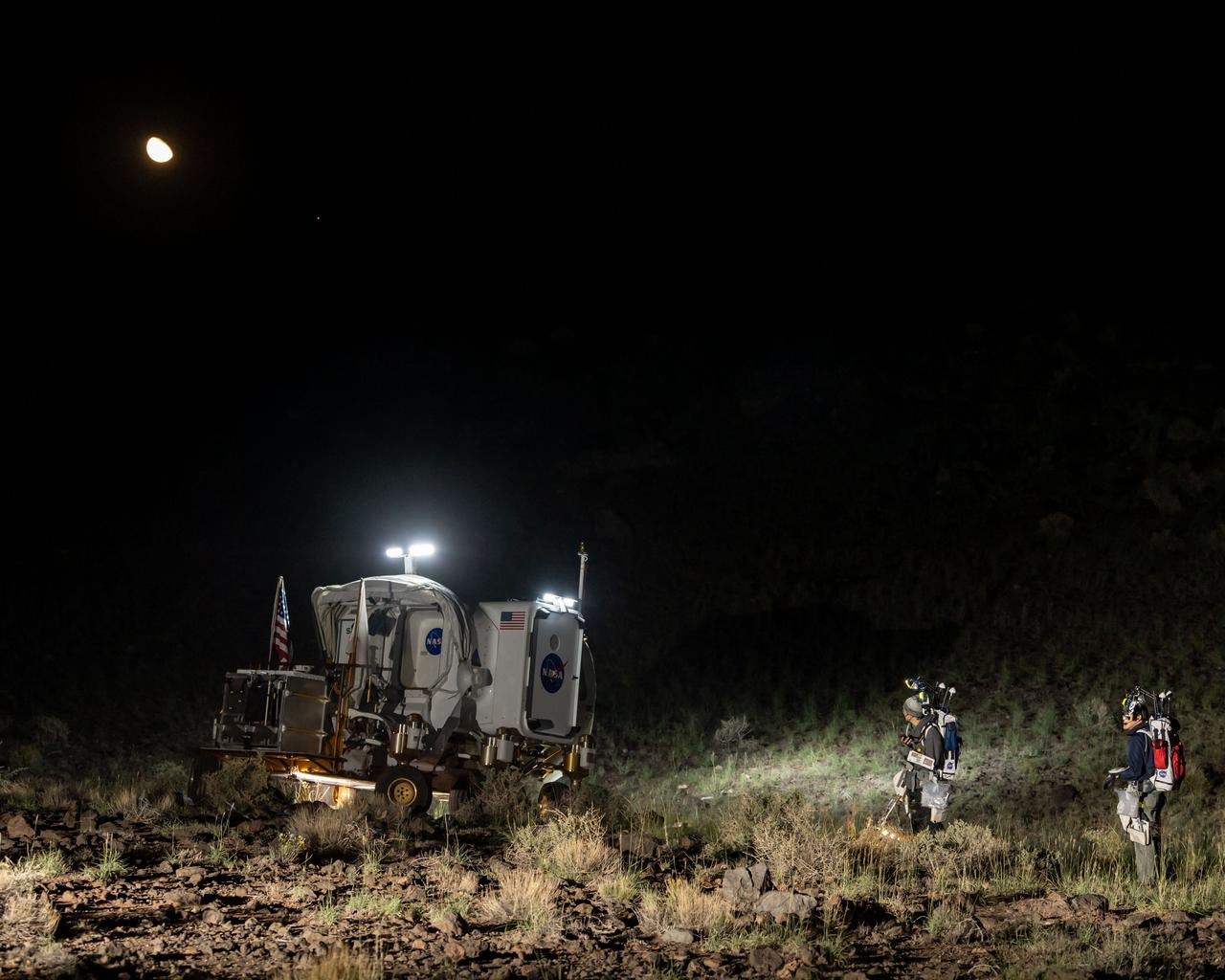
The Desert Research and Technology Studies (DesertRATS) is one of NASA’s analog missions to test hardware and operational scenarios in a remote environment with geographic similarities to the Moon and Mars. In October 2022, NASA evaluated rover design and operations, communications with the Mission Control Center and a Science Evaluation Room at NASA’s Johnson Space Center in Houston. A key element of the DesertRATS analog is the pressurized rover, a capability that is planned for astronaut surface exploration at the Moon and Mars. NASA has a study agreement with the Japan Aerospace Exploration Agency (JAXA) for development of the Artemis pressurized rover, and JAXA representatives joined NASA at DesertRATS.
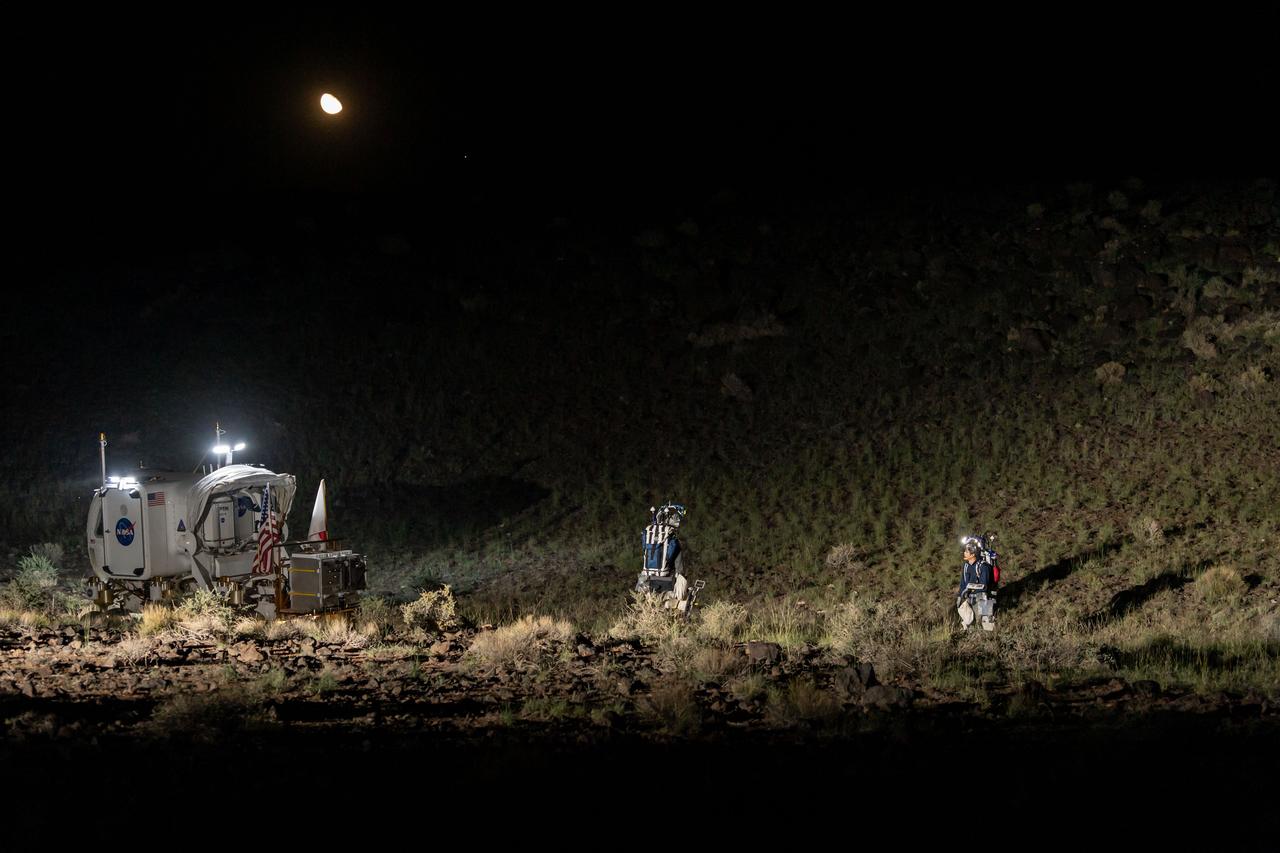
The Desert Research and Technology Studies (DesertRATS) is one of NASA’s analog missions to test hardware and operational scenarios in a remote environment with geographic similarities to the Moon and Mars. In October 2022, NASA evaluated rover design and operations, communications with the Mission Control Center and a Science Evaluation Room at NASA’s Johnson Space Center in Houston. A key element of the DesertRATS analog is the pressurized rover, a capability that is planned for astronaut surface exploration at the Moon and Mars. NASA has a study agreement with the Japan Aerospace Exploration Agency (JAXA) for development of the Artemis pressurized rover, and JAXA representatives joined NASA at DesertRATS.

The Desert Research and Technology Studies (DesertRATS) is one of NASA’s analog missions to test hardware and operational scenarios in a remote environment with geographic similarities to the Moon and Mars. In October 2022, NASA evaluated rover design and operations, communications with the Mission Control Center and a Science Evaluation Room at NASA’s Johnson Space Center in Houston. A key element of the DesertRATS analog is the pressurized rover, a capability that is planned for astronaut surface exploration at the Moon and Mars. NASA has a study agreement with the Japan Aerospace Exploration Agency (JAXA) for development of the Artemis pressurized rover, and JAXA representatives joined NASA at DesertRATS.
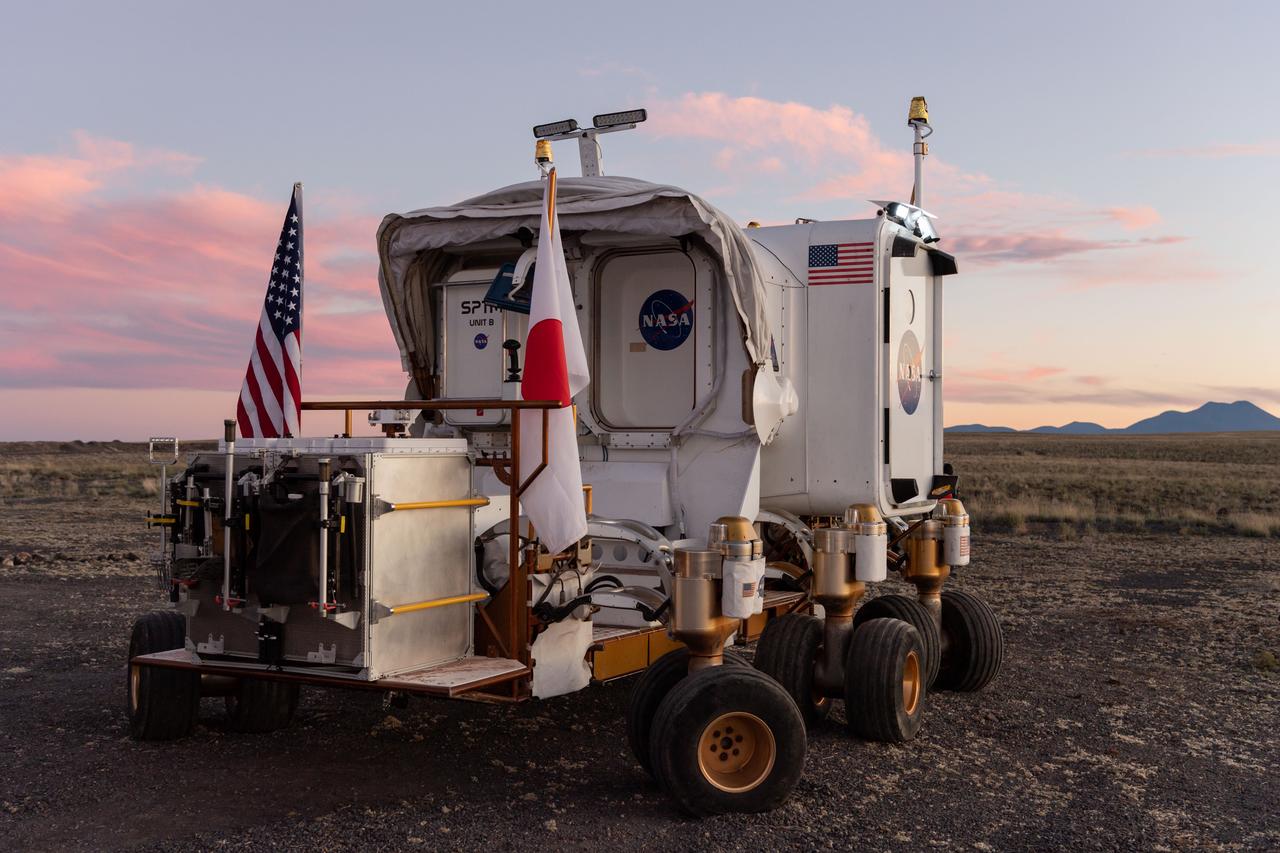
The Desert Research and Technology Studies (DesertRATS) is one of NASA’s analog missions to test hardware and operational scenarios in a remote environment with geographic similarities to the Moon and Mars. In October 2022, NASA evaluated rover design and operations, communications with the Mission Control Center and a Science Evaluation Room at NASA’s Johnson Space Center in Houston. A key element of the DesertRATS analog is the pressurized rover, a capability that is planned for astronaut surface exploration at the Moon and Mars. NASA has a study agreement with the Japan Aerospace Exploration Agency (JAXA) for development of the Artemis pressurized rover, and JAXA representatives joined NASA at DesertRATS.
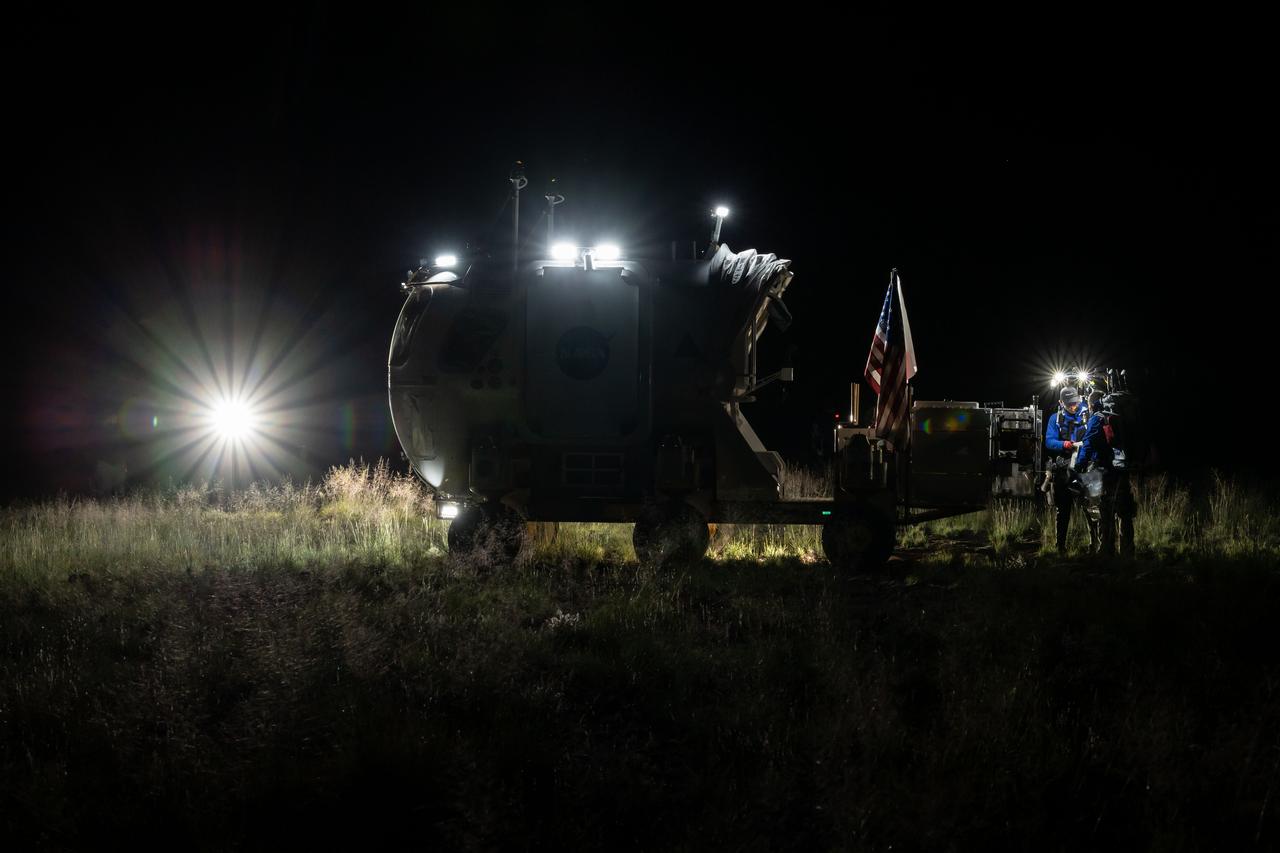
The Desert Research and Technology Studies (DesertRATS) is one of NASA’s analog missions to test hardware and operational scenarios in a remote environment with geographic similarities to the Moon and Mars. In October 2022, NASA evaluated rover design and operations, communications with the Mission Control Center and a Science Evaluation Room at NASA’s Johnson Space Center in Houston. A key element of the DesertRATS analog is the pressurized rover, a capability that is planned for astronaut surface exploration at the Moon and Mars. NASA has a study agreement with the Japan Aerospace Exploration Agency (JAXA) for development of the Artemis pressurized rover, and JAXA representatives joined NASA at DesertRATS.
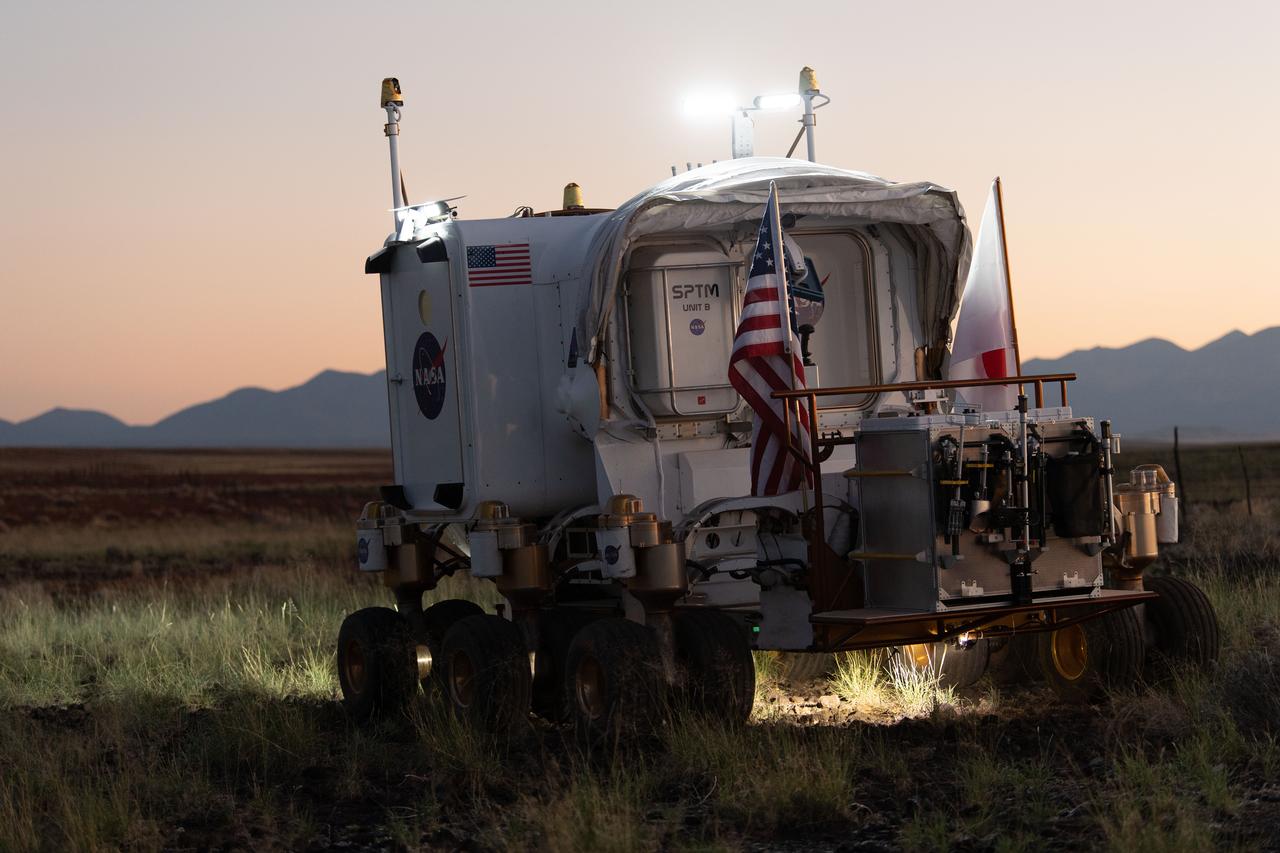
The Desert Research and Technology Studies (DesertRATS) is one of NASA’s analog missions to test hardware and operational scenarios in a remote environment with geographic similarities to the Moon and Mars. In October 2022, NASA evaluated rover design and operations, communications with the Mission Control Center and a Science Evaluation Room at NASA’s Johnson Space Center in Houston. A key element of the DesertRATS analog is the pressurized rover, a capability that is planned for astronaut surface exploration at the Moon and Mars. NASA has a study agreement with the Japan Aerospace Exploration Agency (JAXA) for development of the Artemis pressurized rover, and JAXA representatives joined NASA at DesertRATS.

The Desert Research and Technology Studies (DesertRATS) is one of NASA’s analog missions to test hardware and operational scenarios in a remote environment with geographic similarities to the Moon and Mars. In October 2022, NASA evaluated rover design and operations, communications with the Mission Control Center and a Science Evaluation Room at NASA’s Johnson Space Center in Houston. A key element of the DesertRATS analog is the pressurized rover, a capability that is planned for astronaut surface exploration at the Moon and Mars. NASA has a study agreement with the Japan Aerospace Exploration Agency (JAXA) for development of the Artemis pressurized rover, and JAXA representatives joined NASA at DesertRATS.

The Desert Research and Technology Studies (DesertRATS) is one of NASA’s analog missions to test hardware and operational scenarios in a remote environment with geographic similarities to the Moon and Mars. In October 2022, NASA evaluated rover design and operations, communications with the Mission Control Center and a Science Evaluation Room at NASA’s Johnson Space Center in Houston. A key element of the DesertRATS analog is the pressurized rover, a capability that is planned for astronaut surface exploration at the Moon and Mars. NASA has a study agreement with the Japan Aerospace Exploration Agency (JAXA) for development of the Artemis pressurized rover, and JAXA representatives joined NASA at DesertRATS.
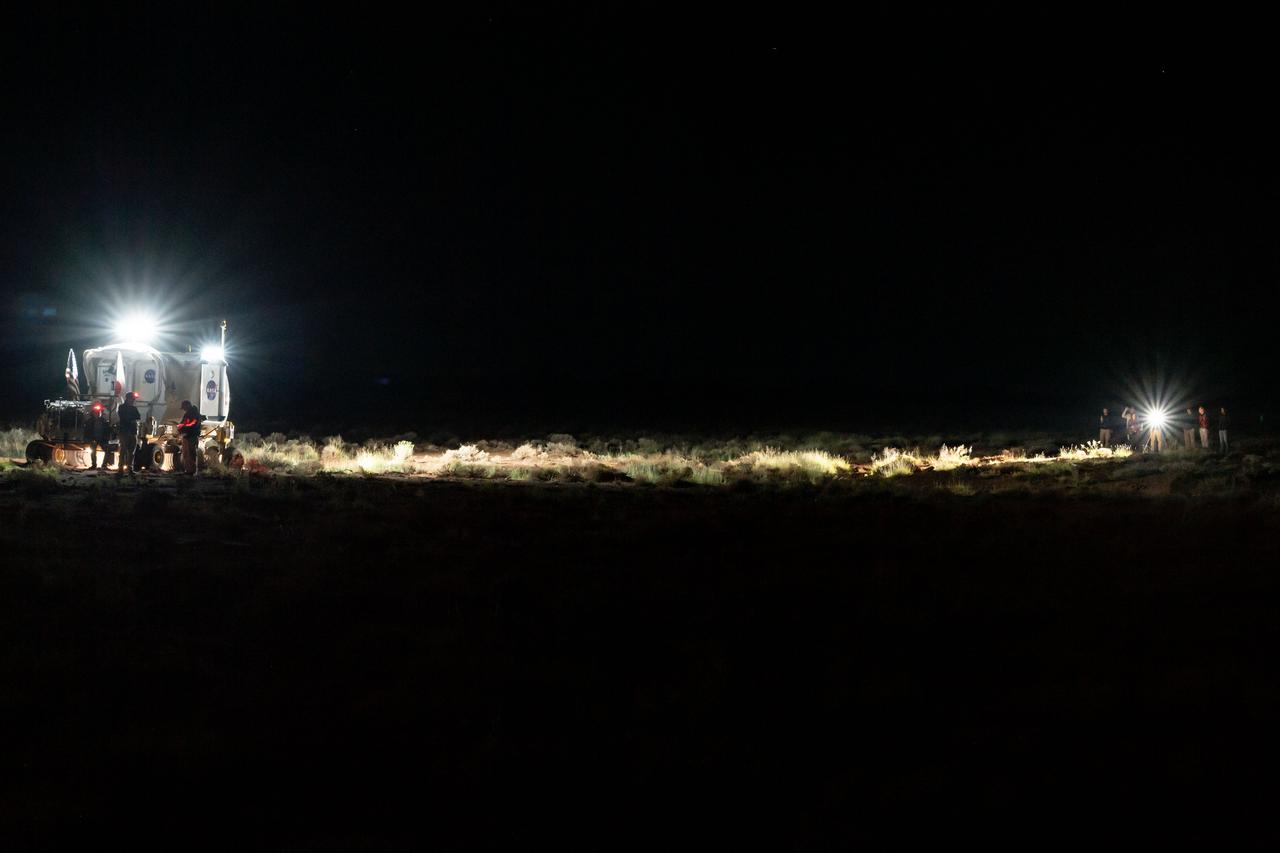
The Desert Research and Technology Studies (DesertRATS) is one of NASA’s analog missions to test hardware and operational scenarios in a remote environment with geographic similarities to the Moon and Mars. In October 2022, NASA evaluated rover design and operations, communications with the Mission Control Center and a Science Evaluation Room at NASA’s Johnson Space Center in Houston. A key element of the DesertRATS analog is the pressurized rover, a capability that is planned for astronaut surface exploration at the Moon and Mars. NASA has a study agreement with the Japan Aerospace Exploration Agency (JAXA) for development of the Artemis pressurized rover, and JAXA representatives joined NASA at DesertRATS.
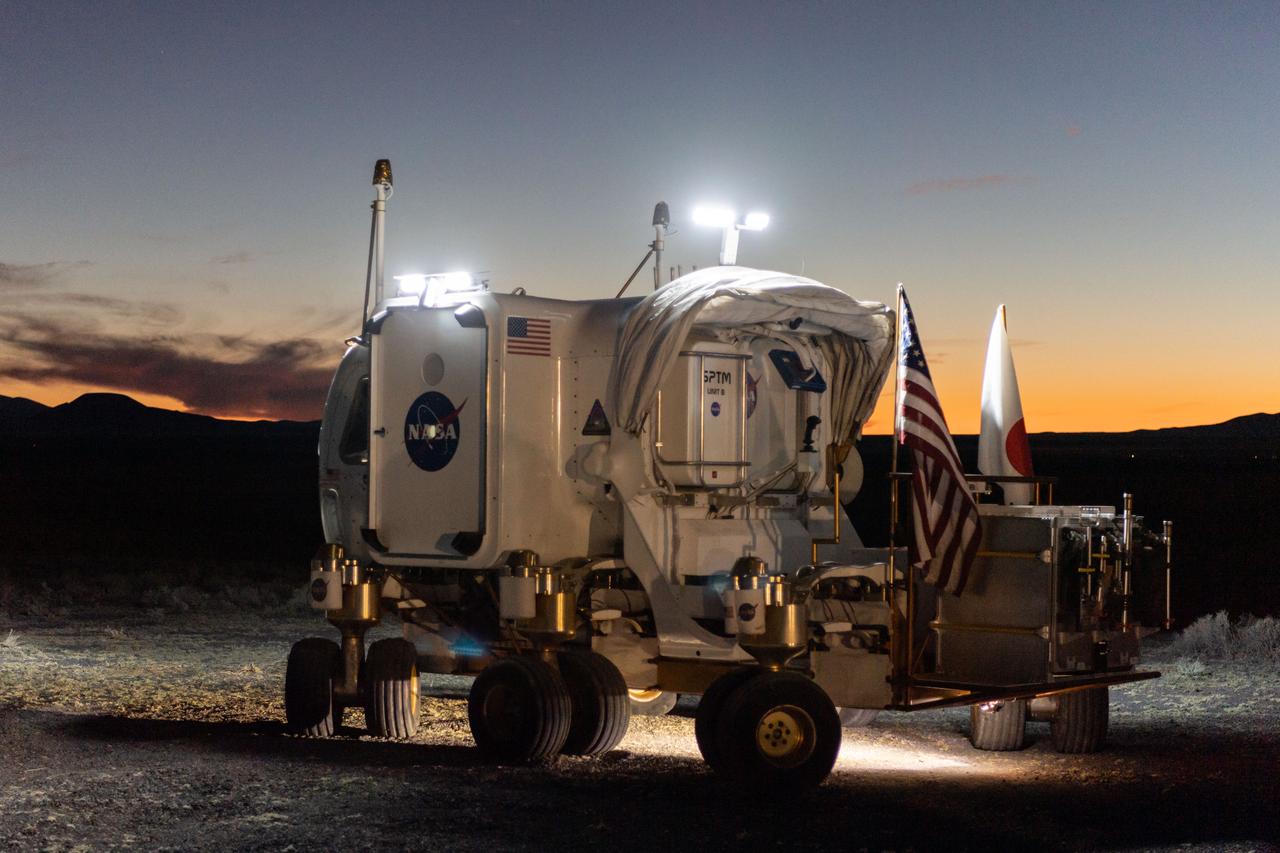
The Desert Research and Technology Studies (DesertRATS) is one of NASA’s analog missions to test hardware and operational scenarios in a remote environment with geographic similarities to the Moon and Mars. In October 2022, NASA evaluated rover design and operations, communications with the Mission Control Center and a Science Evaluation Room at NASA’s Johnson Space Center in Houston. A key element of the DesertRATS analog is the pressurized rover, a capability that is planned for astronaut surface exploration at the Moon and Mars. NASA has a study agreement with the Japan Aerospace Exploration Agency (JAXA) for development of the Artemis pressurized rover, and JAXA representatives joined NASA at DesertRATS.
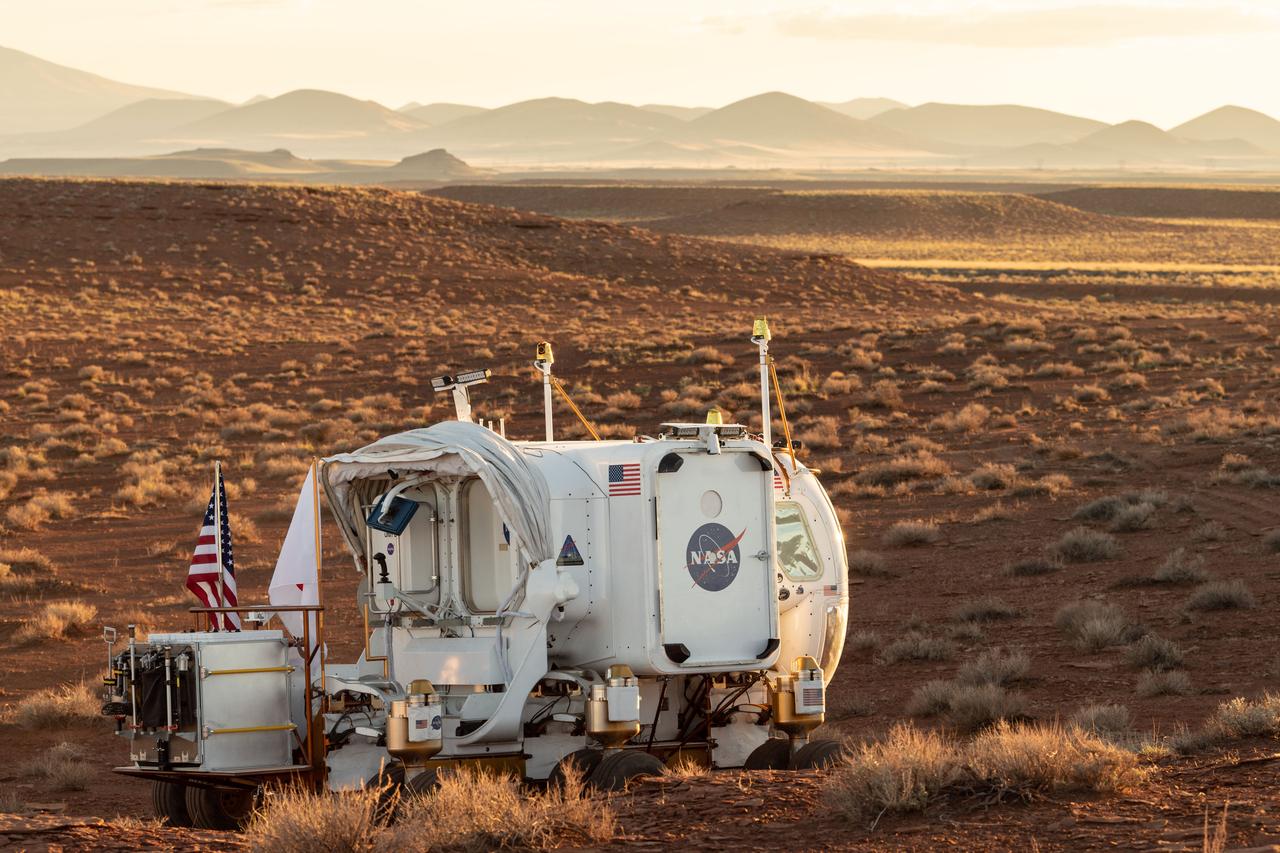
The Desert Research and Technology Studies (DesertRATS) is one of NASA’s analog missions to test hardware and operational scenarios in a remote environment with geographic similarities to the Moon and Mars. In October 2022, NASA evaluated rover design and operations, communications with the Mission Control Center and a Science Evaluation Room at NASA’s Johnson Space Center in Houston. A key element of the DesertRATS analog is the pressurized rover, a capability that is planned for astronaut surface exploration at the Moon and Mars. NASA has a study agreement with the Japan Aerospace Exploration Agency (JAXA) for development of the Artemis pressurized rover, and JAXA representatives joined NASA at DesertRATS.
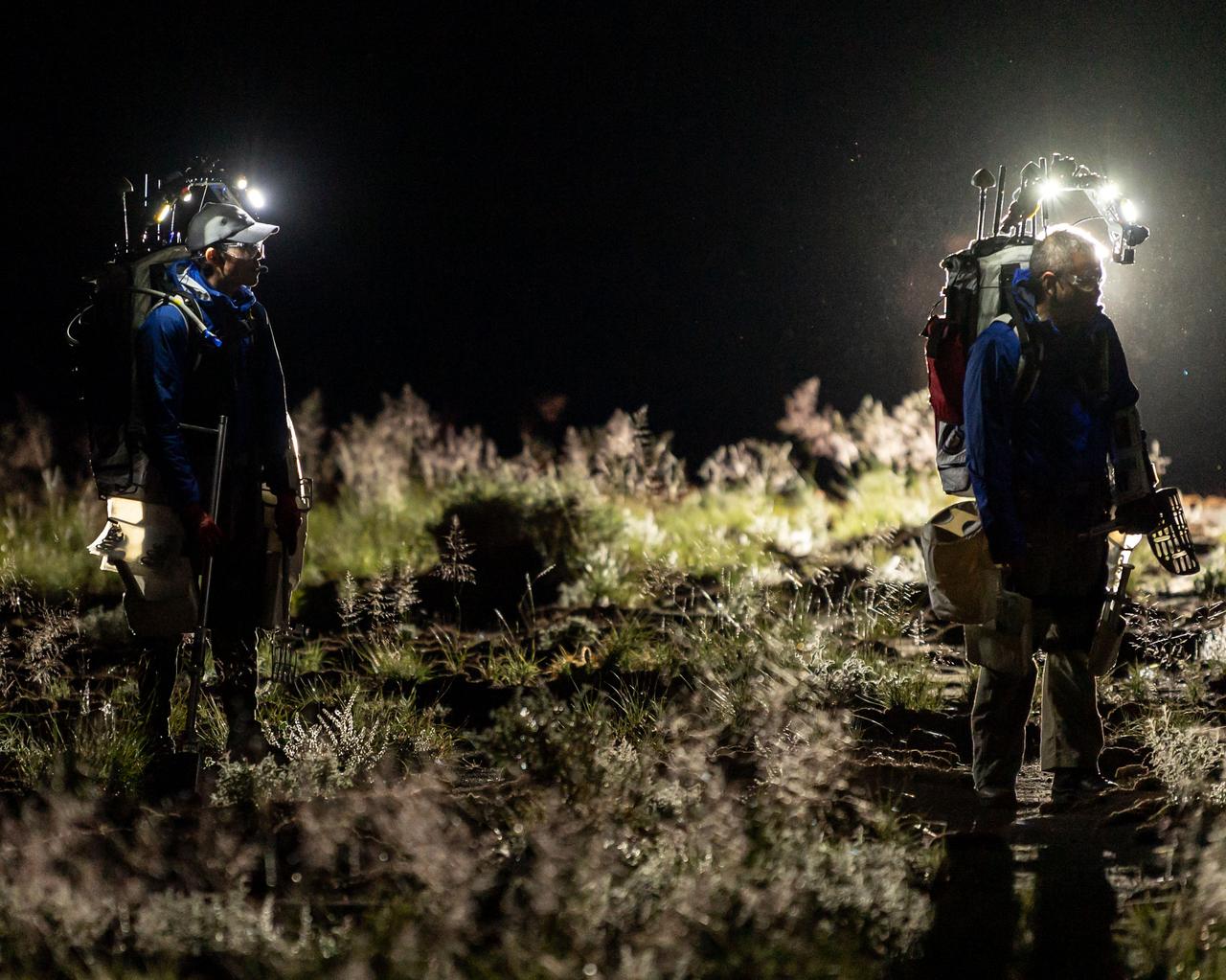
The Desert Research and Technology Studies (DesertRATS) is one of NASA’s analog missions to test hardware and operational scenarios in a remote environment with geographic similarities to the Moon and Mars. In October 2022, NASA evaluated rover design and operations, communications with the Mission Control Center and a Science Evaluation Room at NASA’s Johnson Space Center in Houston. A key element of the DesertRATS analog is the pressurized rover, a capability that is planned for astronaut surface exploration at the Moon and Mars. NASA has a study agreement with the Japan Aerospace Exploration Agency (JAXA) for development of the Artemis pressurized rover, and JAXA representatives joined NASA at DesertRATS.
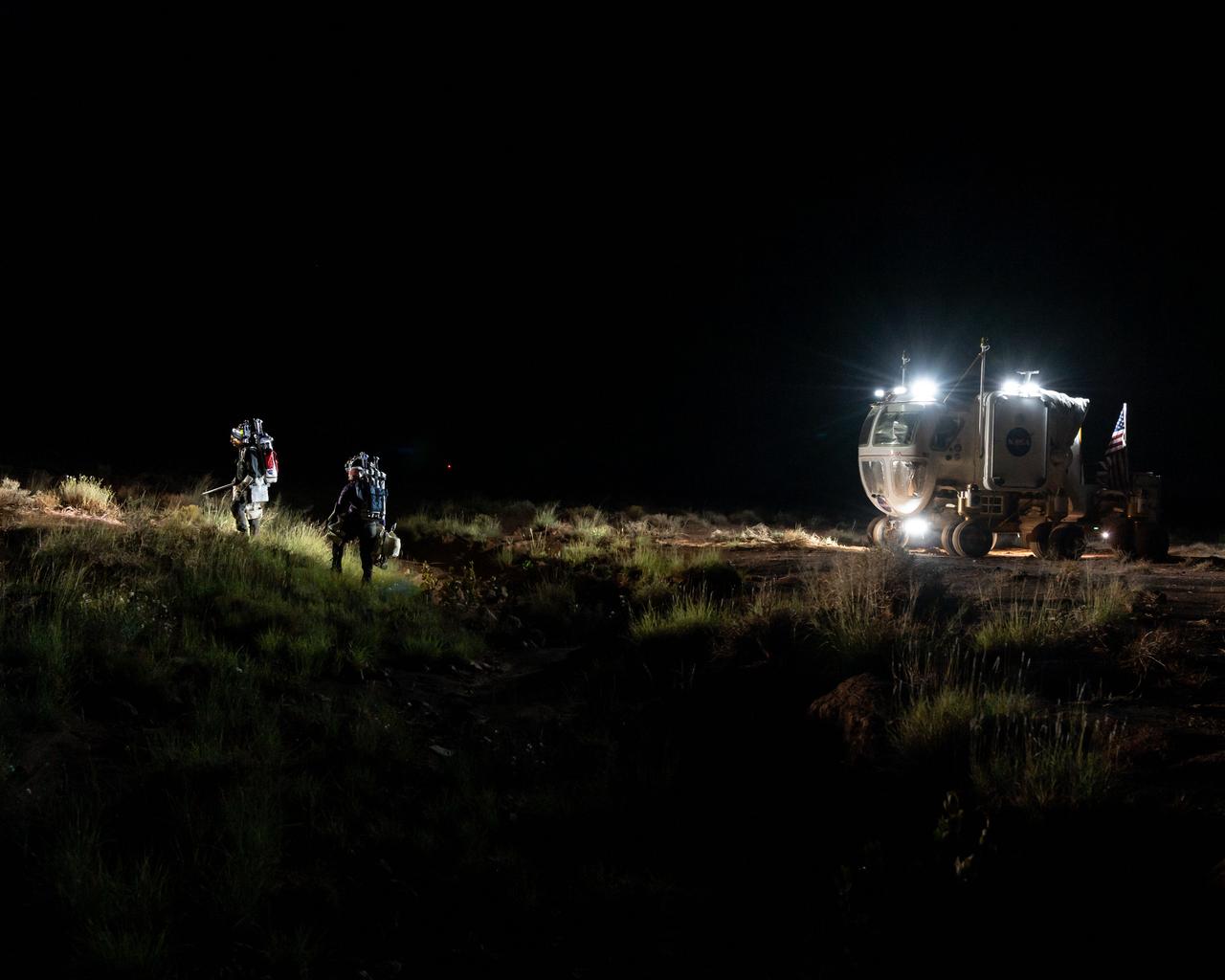
The Desert Research and Technology Studies (DesertRATS) is one of NASA’s analog missions to test hardware and operational scenarios in a remote environment with geographic similarities to the Moon and Mars. In October 2022, NASA evaluated rover design and operations, communications with the Mission Control Center and a Science Evaluation Room at NASA’s Johnson Space Center in Houston. A key element of the DesertRATS analog is the pressurized rover, a capability that is planned for astronaut surface exploration at the Moon and Mars. NASA has a study agreement with the Japan Aerospace Exploration Agency (JAXA) for development of the Artemis pressurized rover, and JAXA representatives joined NASA at DesertRATS.
The Desert Research and Technology Studies (DesertRATS) is one of NASA’s analog missions to test hardware and operational scenarios in a remote environment with geographic similarities to the Moon and Mars. In October 2022, NASA evaluated rover design and operations, communications with the Mission Control Center and a Science Evaluation Room at NASA’s Johnson Space Center in Houston. A key element of the DesertRATS analog is the pressurized rover, a capability that is planned for astronaut surface exploration at the Moon and Mars. NASA has a study agreement with the Japan Aerospace Exploration Agency (JAXA) for development of the Artemis pressurized rover, and JAXA representatives joined NASA at DesertRATS.

The Desert Research and Technology Studies (DesertRATS) is one of NASA’s analog missions to test hardware and operational scenarios in a remote environment with geographic similarities to the Moon and Mars. In October 2022, NASA evaluated rover design and operations, communications with the Mission Control Center and a Science Evaluation Room at NASA’s Johnson Space Center in Houston. A key element of the DesertRATS analog is the pressurized rover, a capability that is planned for astronaut surface exploration at the Moon and Mars. NASA has a study agreement with the Japan Aerospace Exploration Agency (JAXA) for development of the Artemis pressurized rover, and JAXA representatives joined NASA at DesertRATS.
The Desert Research and Technology Studies (DesertRATS) is one of NASA’s analog missions to test hardware and operational scenarios in a remote environment with geographic similarities to the Moon and Mars. In October 2022, NASA evaluated rover design and operations, communications with the Mission Control Center and a Science Evaluation Room at NASA’s Johnson Space Center in Houston. A key element of the DesertRATS analog is the pressurized rover, a capability that is planned for astronaut surface exploration at the Moon and Mars. NASA has a study agreement with the Japan Aerospace Exploration Agency (JAXA) for development of the Artemis pressurized rover, and JAXA representatives joined NASA at DesertRATS.
The Desert Research and Technology Studies (DesertRATS) is one of NASA’s analog missions to test hardware and operational scenarios in a remote environment with geographic similarities to the Moon and Mars. In October 2022, NASA evaluated rover design and operations, communications with the Mission Control Center and a Science Evaluation Room at NASA’s Johnson Space Center in Houston. A key element of the DesertRATS analog is the pressurized rover, a capability that is planned for astronaut surface exploration at the Moon and Mars. NASA has a study agreement with the Japan Aerospace Exploration Agency (JAXA) for development of the Artemis pressurized rover, and JAXA representatives joined NASA at DesertRATS.
The Desert Research and Technology Studies (DesertRATS) is one of NASA’s analog missions to test hardware and operational scenarios in a remote environment with geographic similarities to the Moon and Mars. In October 2022, NASA evaluated rover design and operations, communications with the Mission Control Center and a Science Evaluation Room at NASA’s Johnson Space Center in Houston. A key element of the DesertRATS analog is the pressurized rover, a capability that is planned for astronaut surface exploration at the Moon and Mars. NASA has a study agreement with the Japan Aerospace Exploration Agency (JAXA) for development of the Artemis pressurized rover, and JAXA representatives joined NASA at DesertRATS.
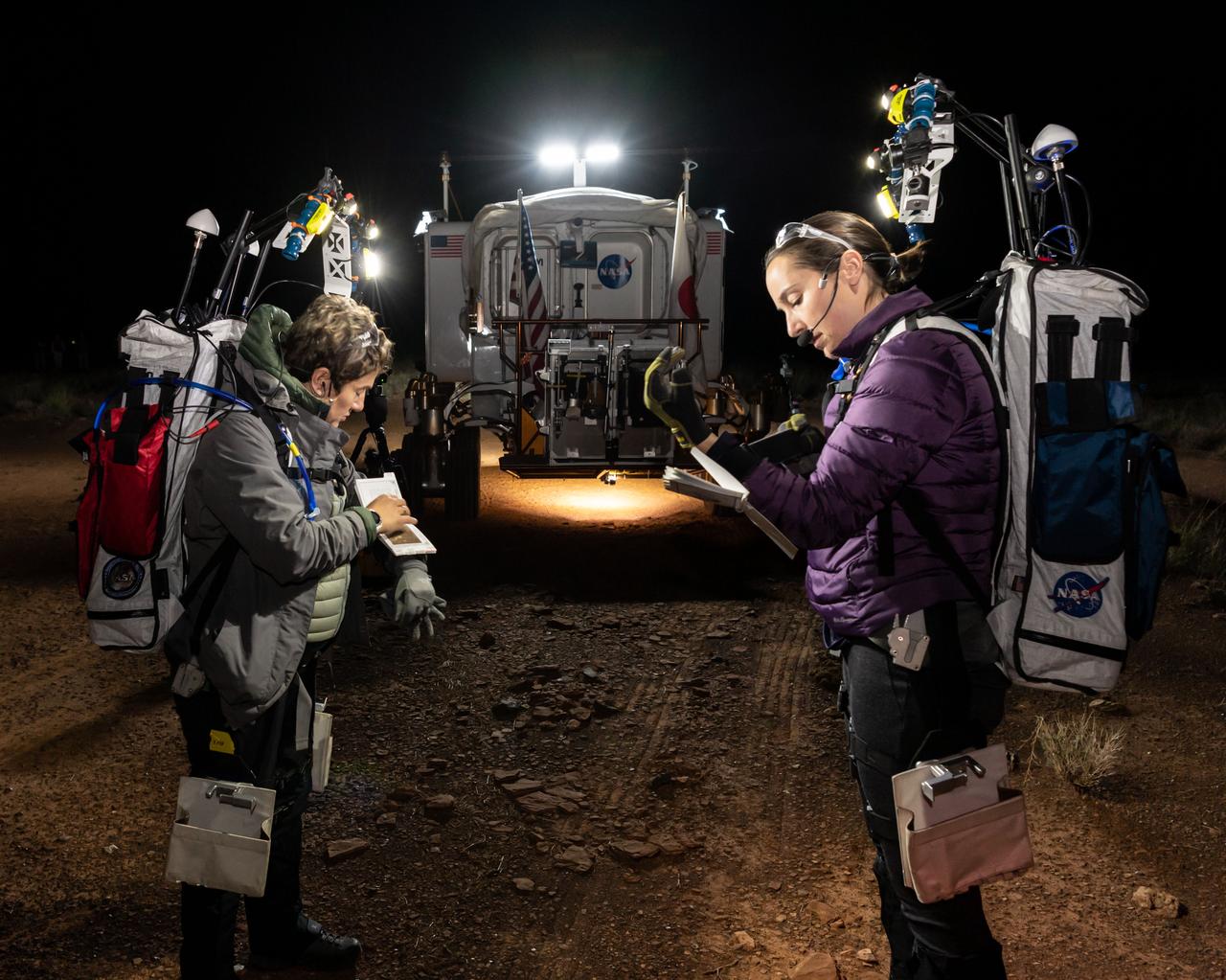
The Desert Research and Technology Studies (DesertRATS) is one of NASA’s analog missions to test hardware and operational scenarios in a remote environment with geographic similarities to the Moon and Mars. In October 2022, NASA evaluated rover design and operations, communications with the Mission Control Center and a Science Evaluation Room at NASA’s Johnson Space Center in Houston. A key element of the DesertRATS analog is the pressurized rover, a capability that is planned for astronaut surface exploration at the Moon and Mars. NASA has a study agreement with the Japan Aerospace Exploration Agency (JAXA) for development of the Artemis pressurized rover, and JAXA representatives joined NASA at DesertRATS.
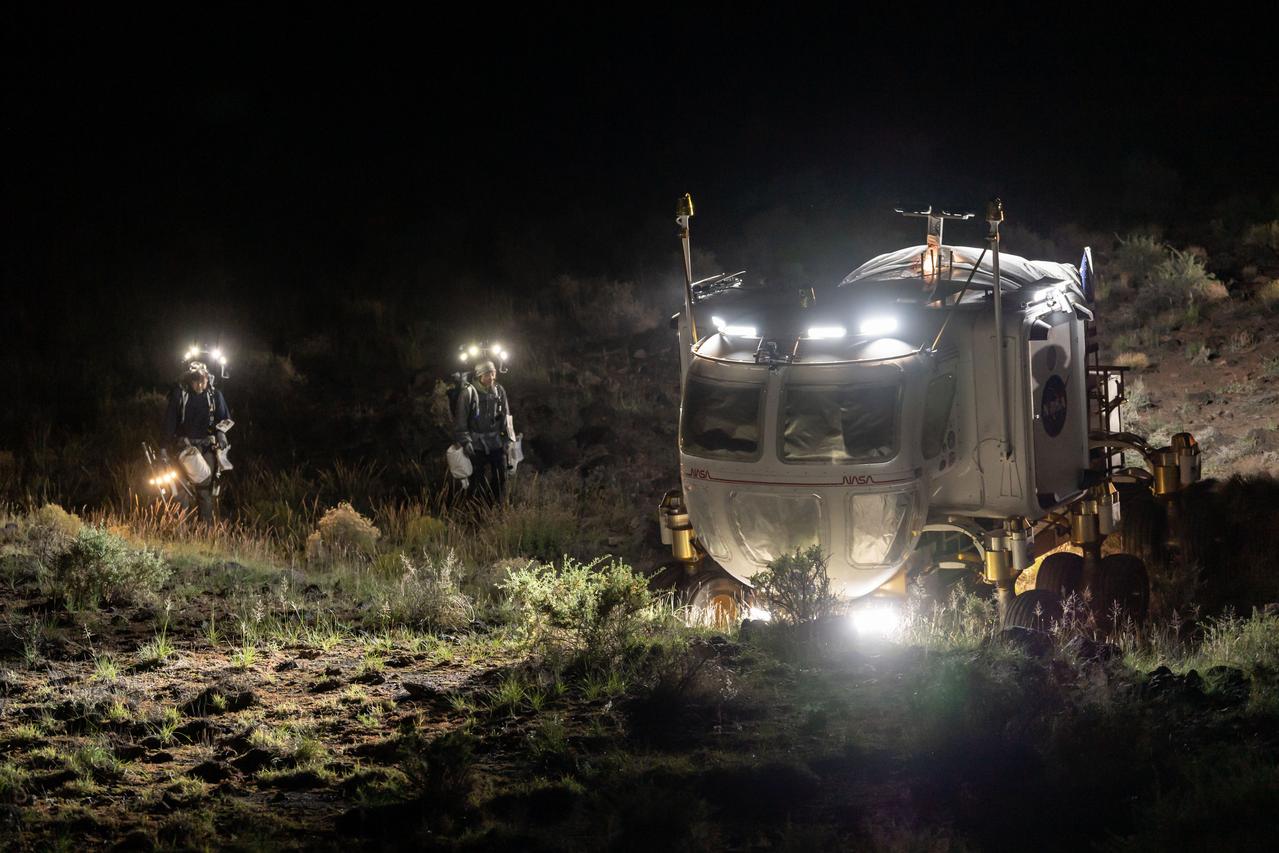
The Desert Research and Technology Studies (DesertRATS) is one of NASA’s analog missions to test hardware and operational scenarios in a remote environment with geographic similarities to the Moon and Mars. In October 2022, NASA evaluated rover design and operations, communications with the Mission Control Center and a Science Evaluation Room at NASA’s Johnson Space Center in Houston. A key element of the DesertRATS analog is the pressurized rover, a capability that is planned for astronaut surface exploration at the Moon and Mars. NASA has a study agreement with the Japan Aerospace Exploration Agency (JAXA) for development of the Artemis pressurized rover, and JAXA representatives joined NASA at DesertRATS.
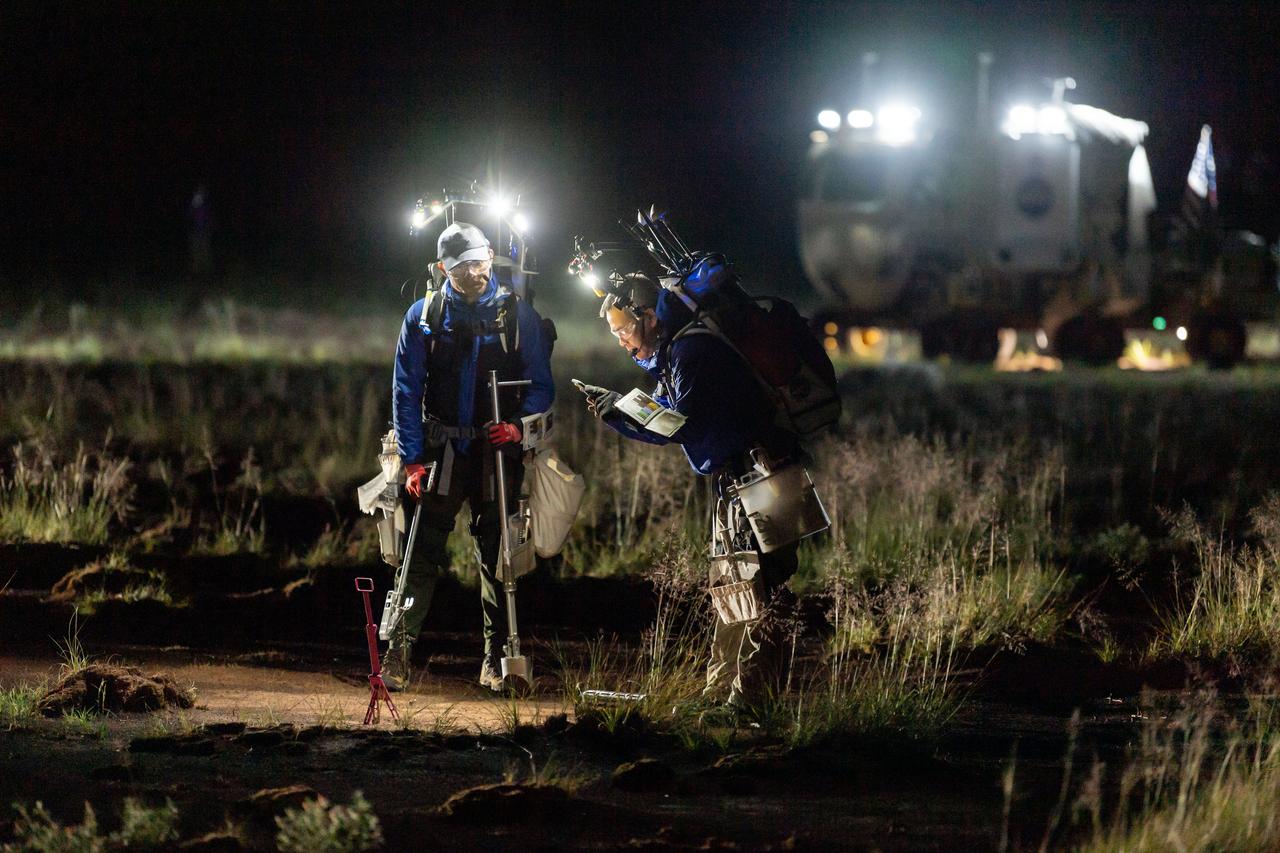
The Desert Research and Technology Studies (DesertRATS) is one of NASA’s analog missions to test hardware and operational scenarios in a remote environment with geographic similarities to the Moon and Mars. In October 2022, NASA evaluated rover design and operations, communications with the Mission Control Center and a Science Evaluation Room at NASA’s Johnson Space Center in Houston. A key element of the DesertRATS analog is the pressurized rover, a capability that is planned for astronaut surface exploration at the Moon and Mars. NASA has a study agreement with the Japan Aerospace Exploration Agency (JAXA) for development of the Artemis pressurized rover, and JAXA representatives joined NASA at DesertRATS.
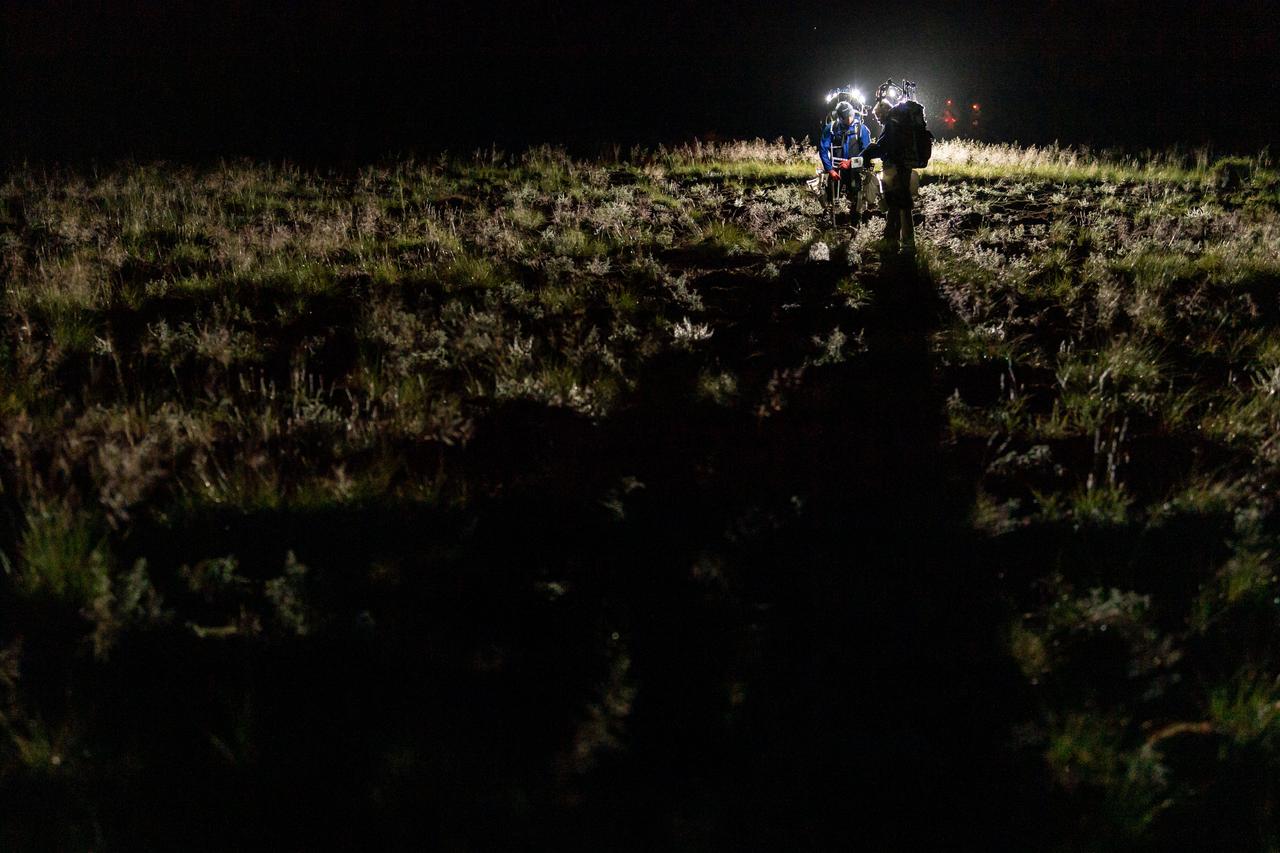
The Desert Research and Technology Studies (DesertRATS) is one of NASA’s analog missions to test hardware and operational scenarios in a remote environment with geographic similarities to the Moon and Mars. In October 2022, NASA evaluated rover design and operations, communications with the Mission Control Center and a Science Evaluation Room at NASA’s Johnson Space Center in Houston. A key element of the DesertRATS analog is the pressurized rover, a capability that is planned for astronaut surface exploration at the Moon and Mars. NASA has a study agreement with the Japan Aerospace Exploration Agency (JAXA) for development of the Artemis pressurized rover, and JAXA representatives joined NASA at DesertRATS.
The Desert Research and Technology Studies (DesertRATS) is one of NASA’s analog missions to test hardware and operational scenarios in a remote environment with geographic similarities to the Moon and Mars. In October 2022, NASA evaluated rover design and operations, communications with the Mission Control Center and a Science Evaluation Room at NASA’s Johnson Space Center in Houston. A key element of the DesertRATS analog is the pressurized rover, a capability that is planned for astronaut surface exploration at the Moon and Mars. NASA has a study agreement with the Japan Aerospace Exploration Agency (JAXA) for development of the Artemis pressurized rover, and JAXA representatives joined NASA at DesertRATS.
The Desert Research and Technology Studies (DesertRATS) is one of NASA’s analog missions to test hardware and operational scenarios in a remote environment with geographic similarities to the Moon and Mars. In October 2022, NASA evaluated rover design and operations, communications with the Mission Control Center and a Science Evaluation Room at NASA’s Johnson Space Center in Houston. A key element of the DesertRATS analog is the pressurized rover, a capability that is planned for astronaut surface exploration at the Moon and Mars. NASA has a study agreement with the Japan Aerospace Exploration Agency (JAXA) for development of the Artemis pressurized rover, and JAXA representatives joined NASA at DesertRATS.
The Desert Research and Technology Studies (DesertRATS) is one of NASA’s analog missions to test hardware and operational scenarios in a remote environment with geographic similarities to the Moon and Mars. In October 2022, NASA evaluated rover design and operations, communications with the Mission Control Center and a Science Evaluation Room at NASA’s Johnson Space Center in Houston. A key element of the DesertRATS analog is the pressurized rover, a capability that is planned for astronaut surface exploration at the Moon and Mars. NASA has a study agreement with the Japan Aerospace Exploration Agency (JAXA) for development of the Artemis pressurized rover, and JAXA representatives joined NASA at DesertRATS.
The Desert Research and Technology Studies (DesertRATS) is one of NASA’s analog missions to test hardware and operational scenarios in a remote environment with geographic similarities to the Moon and Mars. In October 2022, NASA evaluated rover design and operations, communications with the Mission Control Center and a Science Evaluation Room at NASA’s Johnson Space Center in Houston. A key element of the DesertRATS analog is the pressurized rover, a capability that is planned for astronaut surface exploration at the Moon and Mars. NASA has a study agreement with the Japan Aerospace Exploration Agency (JAXA) for development of the Artemis pressurized rover, and JAXA representatives joined NASA at DesertRATS.
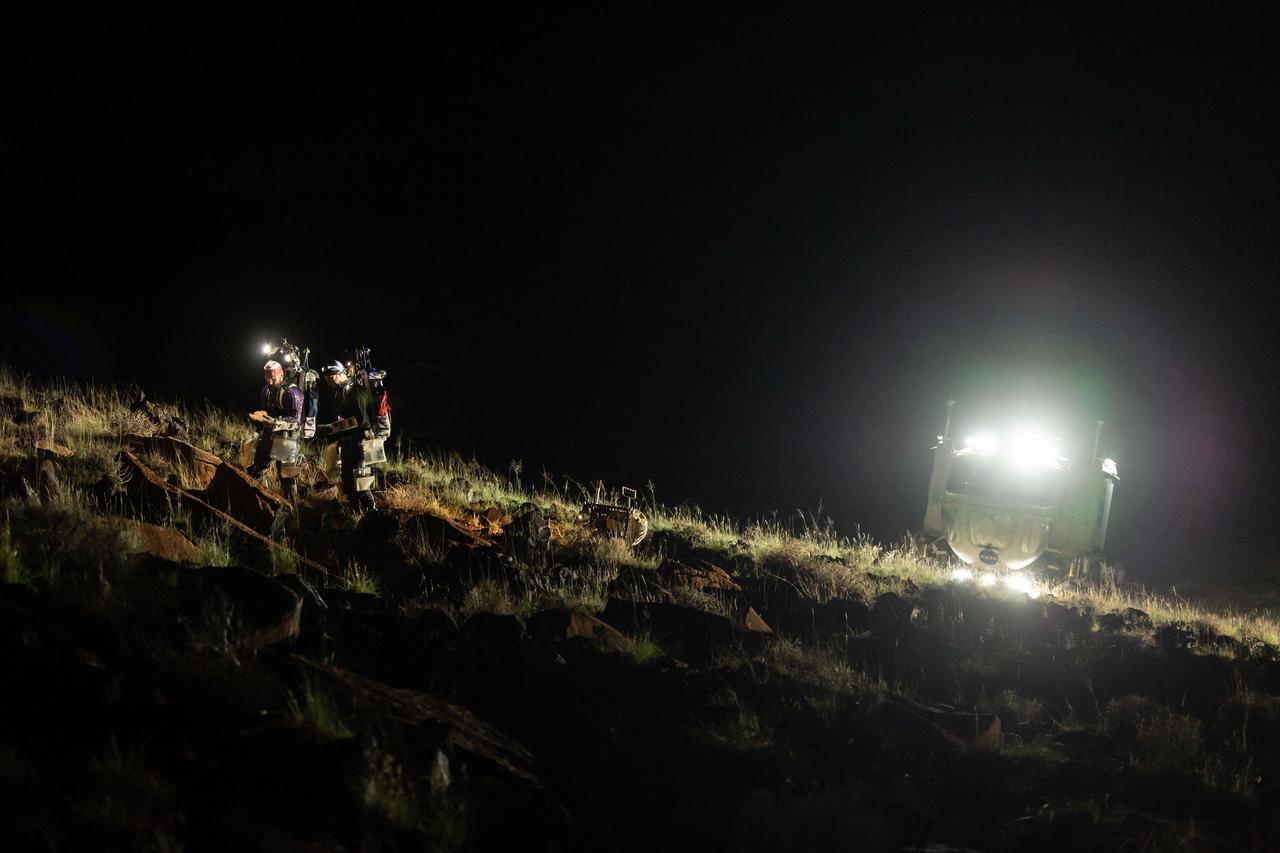
The Desert Research and Technology Studies (DesertRATS) is one of NASA’s analog missions to test hardware and operational scenarios in a remote environment with geographic similarities to the Moon and Mars. In October 2022, NASA evaluated rover design and operations, communications with the Mission Control Center and a Science Evaluation Room at NASA’s Johnson Space Center in Houston. A key element of the DesertRATS analog is the pressurized rover, a capability that is planned for astronaut surface exploration at the Moon and Mars. NASA has a study agreement with the Japan Aerospace Exploration Agency (JAXA) for development of the Artemis pressurized rover, and JAXA representatives joined NASA at DesertRATS.
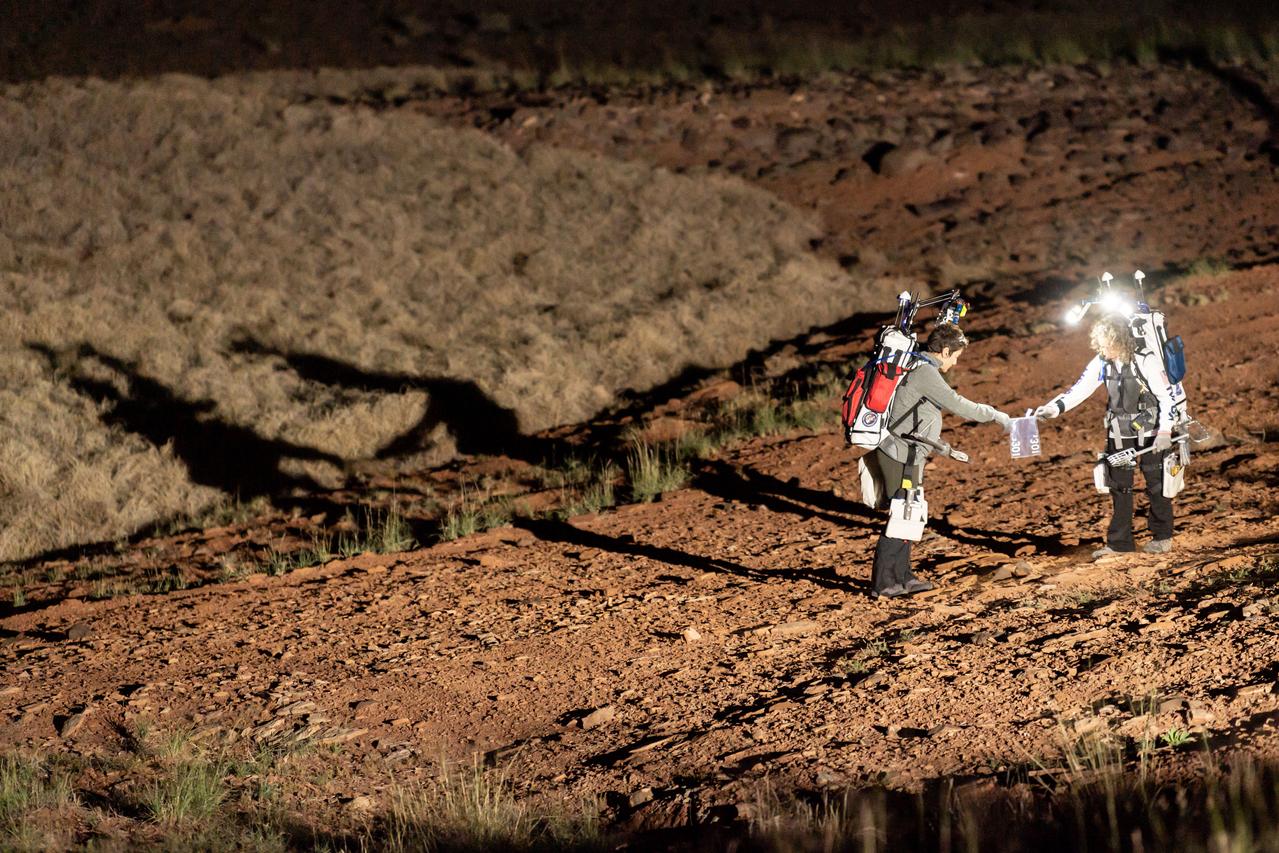
The Desert Research and Technology Studies (DesertRATS) is one of NASA’s analog missions to test hardware and operational scenarios in a remote environment with geographic similarities to the Moon and Mars. In October 2022, NASA evaluated rover design and operations, communications with the Mission Control Center and a Science Evaluation Room at NASA’s Johnson Space Center in Houston. A key element of the DesertRATS analog is the pressurized rover, a capability that is planned for astronaut surface exploration at the Moon and Mars. NASA has a study agreement with the Japan Aerospace Exploration Agency (JAXA) for development of the Artemis pressurized rover, and JAXA representatives joined NASA at DesertRATS.
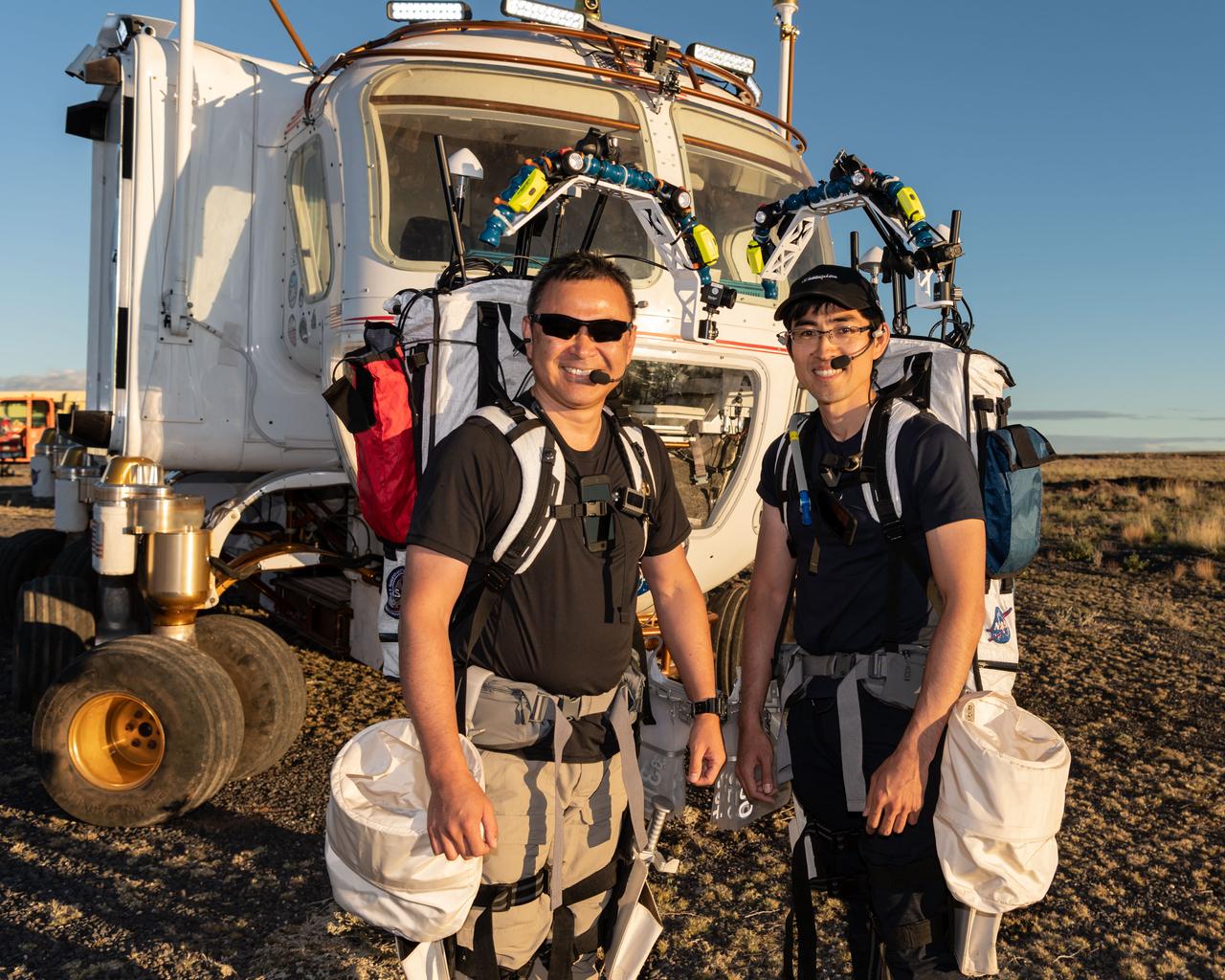
The Desert Research and Technology Studies (DesertRATS) is one of NASA’s analog missions to test hardware and operational scenarios in a remote environment with geographic similarities to the Moon and Mars. In October 2022, NASA evaluated rover design and operations, communications with the Mission Control Center and a Science Evaluation Room at NASA’s Johnson Space Center in Houston. A key element of the DesertRATS analog is the pressurized rover, a capability that is planned for astronaut surface exploration at the Moon and Mars. NASA has a study agreement with the Japan Aerospace Exploration Agency (JAXA) for development of the Artemis pressurized rover, and JAXA representatives joined NASA at DesertRATS.
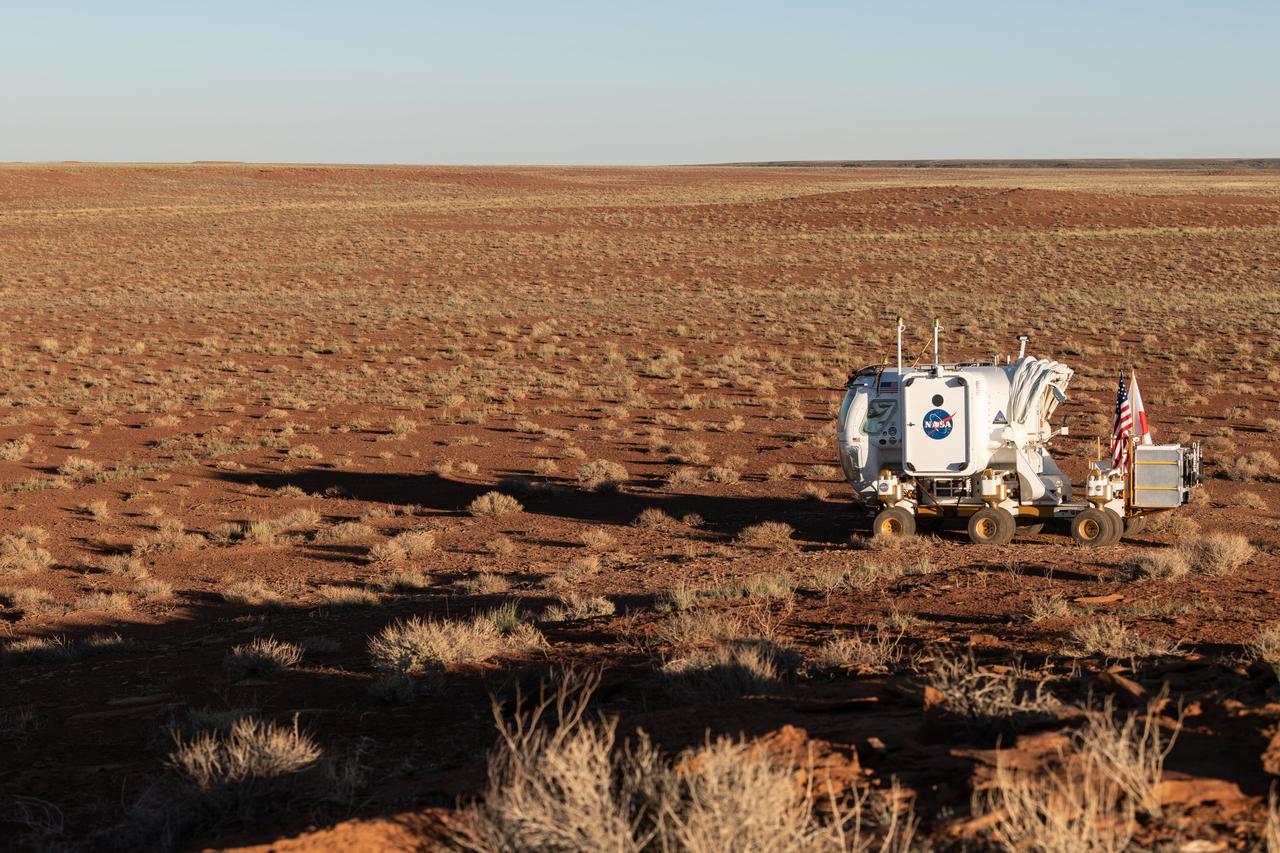
The Desert Research and Technology Studies (DesertRATS) is one of NASA’s analog missions to test hardware and operational scenarios in a remote environment with geographic similarities to the Moon and Mars. In October 2022, NASA evaluated rover design and operations, communications with the Mission Control Center and a Science Evaluation Room at NASA’s Johnson Space Center in Houston. A key element of the DesertRATS analog is the pressurized rover, a capability that is planned for astronaut surface exploration at the Moon and Mars. NASA has a study agreement with the Japan Aerospace Exploration Agency (JAXA) for development of the Artemis pressurized rover, and JAXA representatives joined NASA at DesertRATS.
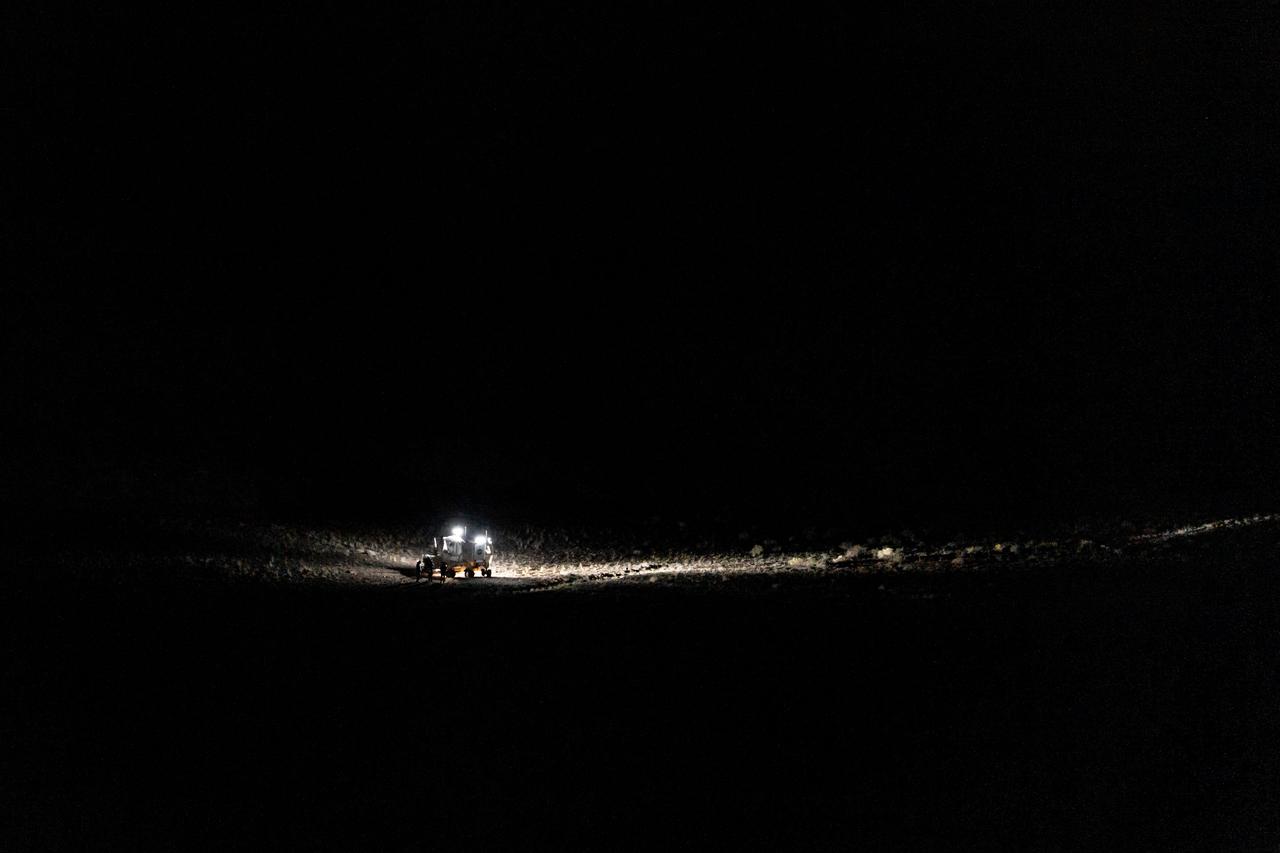
The Desert Research and Technology Studies (DesertRATS) is one of NASA’s analog missions to test hardware and operational scenarios in a remote environment with geographic similarities to the Moon and Mars. In October 2022, NASA evaluated rover design and operations, communications with the Mission Control Center and a Science Evaluation Room at NASA’s Johnson Space Center in Houston. A key element of the DesertRATS analog is the pressurized rover, a capability that is planned for astronaut surface exploration at the Moon and Mars. NASA has a study agreement with the Japan Aerospace Exploration Agency (JAXA) for development of the Artemis pressurized rover, and JAXA representatives joined NASA at DesertRATS.
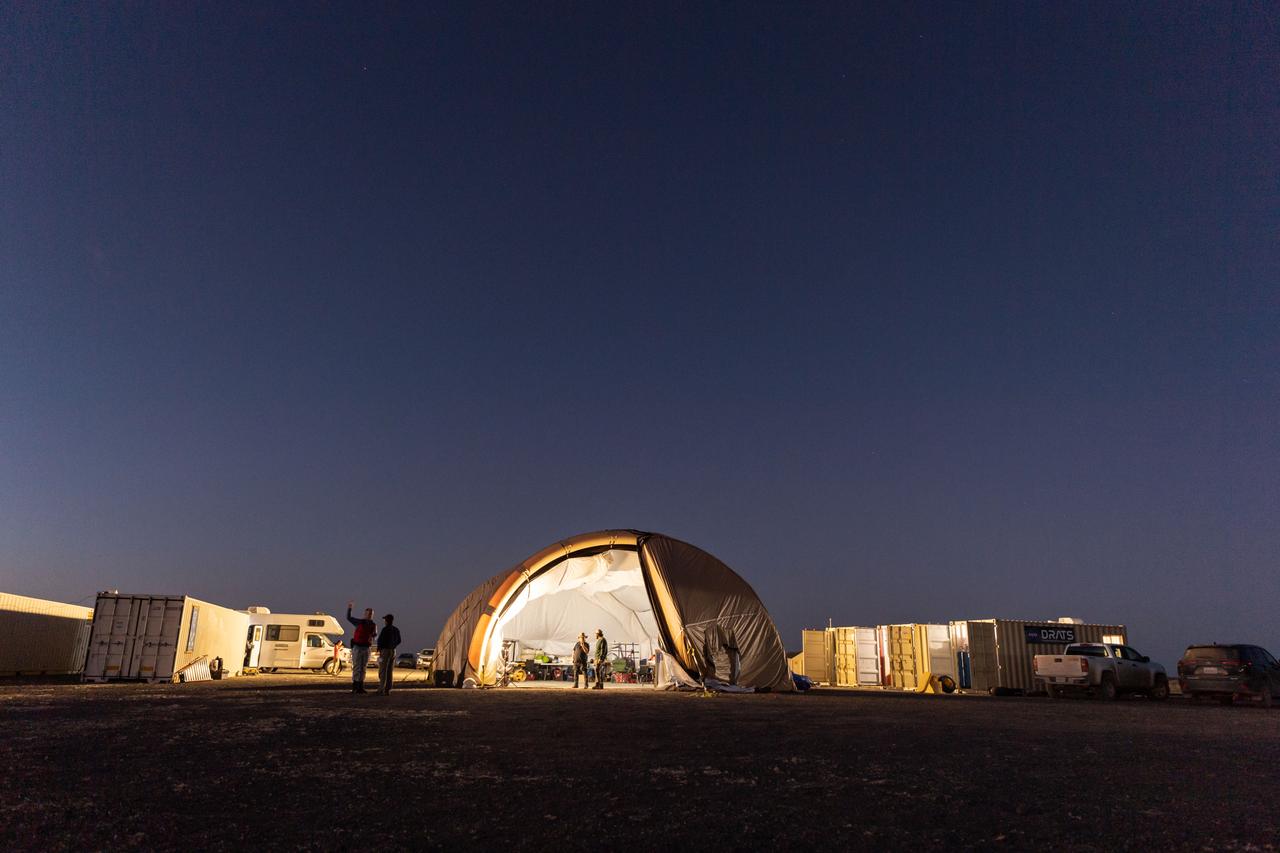
The Desert Research and Technology Studies (DesertRATS) is one of NASA’s analog missions to test hardware and operational scenarios in a remote environment with geographic similarities to the Moon and Mars. In October 2022, NASA evaluated rover design and operations, communications with the Mission Control Center and a Science Evaluation Room at NASA’s Johnson Space Center in Houston. A key element of the DesertRATS analog is the pressurized rover, a capability that is planned for astronaut surface exploration at the Moon and Mars. NASA has a study agreement with the Japan Aerospace Exploration Agency (JAXA) for development of the Artemis pressurized rover, and JAXA representatives joined NASA at DesertRATS.
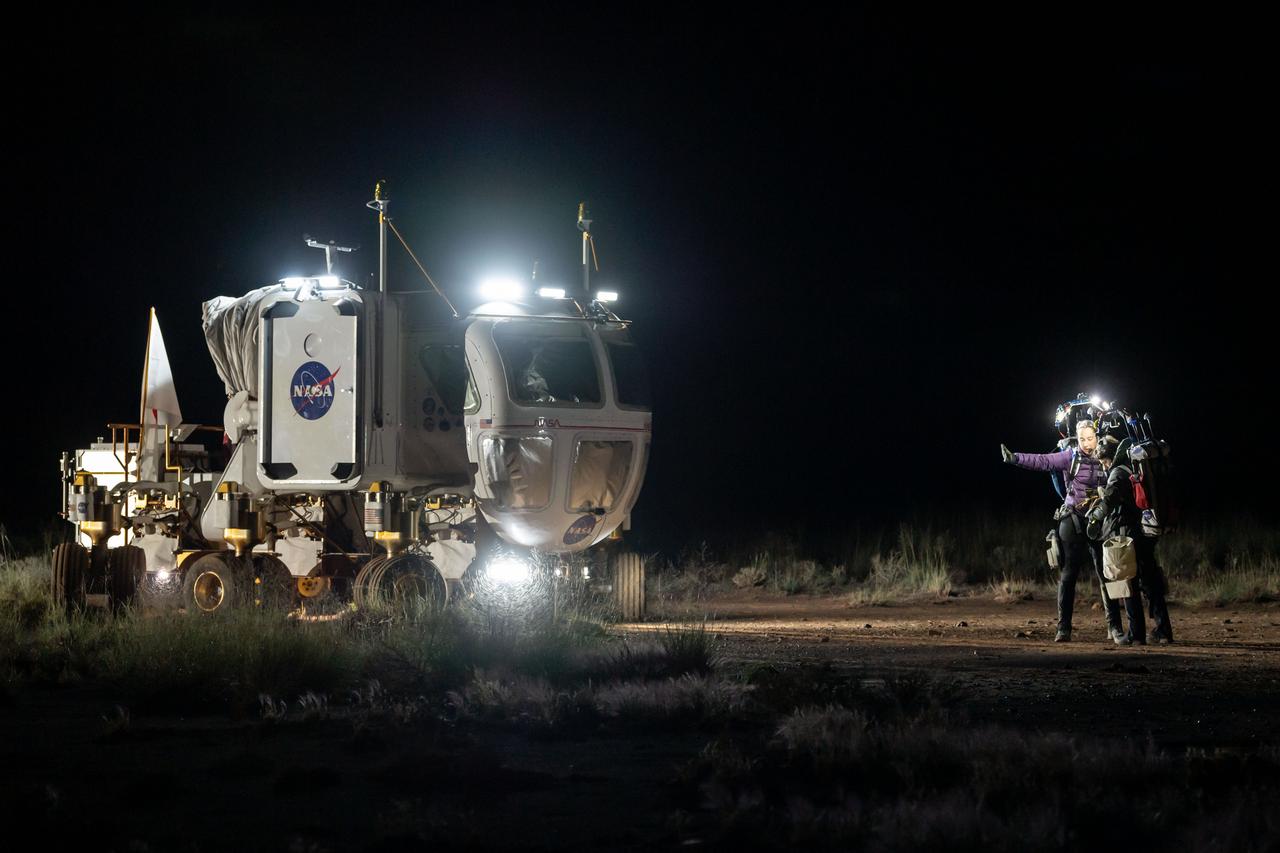
The Desert Research and Technology Studies (DesertRATS) is one of NASA’s analog missions to test hardware and operational scenarios in a remote environment with geographic similarities to the Moon and Mars. In October 2022, NASA evaluated rover design and operations, communications with the Mission Control Center and a Science Evaluation Room at NASA’s Johnson Space Center in Houston. A key element of the DesertRATS analog is the pressurized rover, a capability that is planned for astronaut surface exploration at the Moon and Mars. NASA has a study agreement with the Japan Aerospace Exploration Agency (JAXA) for development of the Artemis pressurized rover, and JAXA representatives joined NASA at DesertRATS.
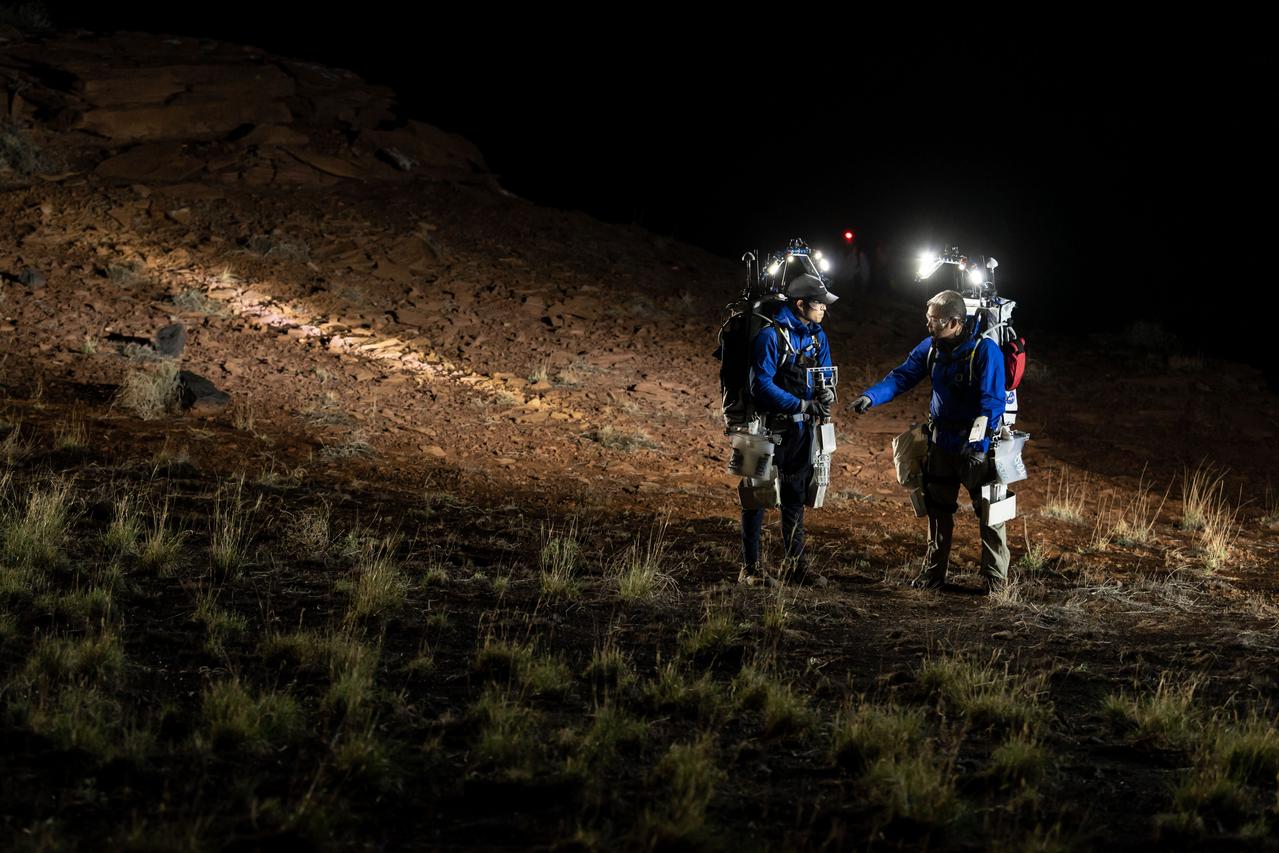
The Desert Research and Technology Studies (DesertRATS) is one of NASA’s analog missions to test hardware and operational scenarios in a remote environment with geographic similarities to the Moon and Mars. In October 2022, NASA evaluated rover design and operations, communications with the Mission Control Center and a Science Evaluation Room at NASA’s Johnson Space Center in Houston. A key element of the DesertRATS analog is the pressurized rover, a capability that is planned for astronaut surface exploration at the Moon and Mars. NASA has a study agreement with the Japan Aerospace Exploration Agency (JAXA) for development of the Artemis pressurized rover, and JAXA representatives joined NASA at DesertRATS.
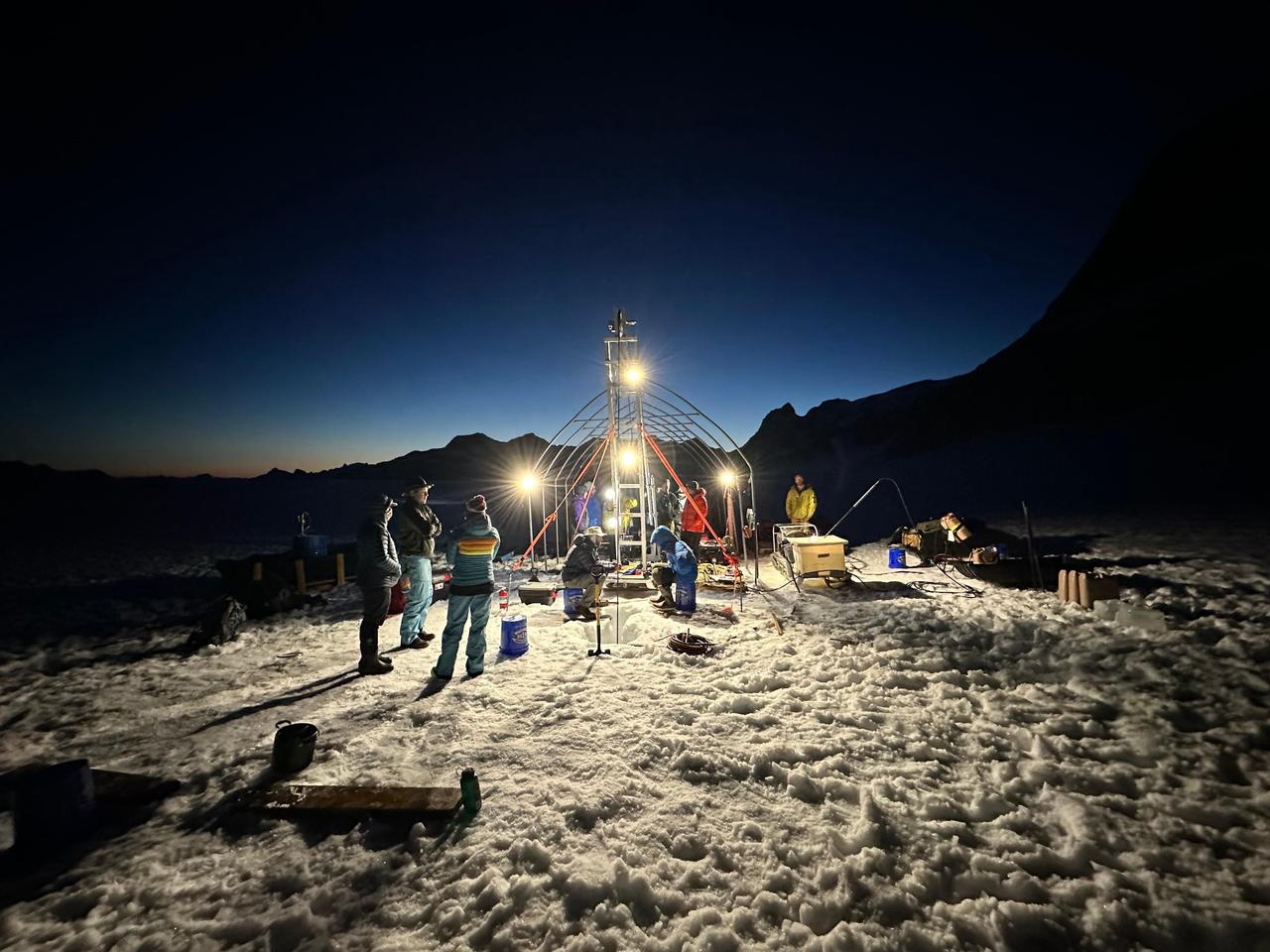
A group of researchers from NASA's Jet Propulsion Laboratory and other institutions spent two weeks on a glacier in Alaska in July 2023 for a project called ORCAA (Ocean Worlds Reconnaissance and Characterization of Astrobiological Analogs). Known as an analog mission, the project is working to answer science questions and test technology in preparation for a potential future mission to explore the surface or subsurface of icy moons like Jupiter's Europa and Saturn's Enceladus. Working at the Juneau Icefield, in coordination with the Juneau Icefield Research Project, the team used a hot-water drill to make a narrow hole in the glacier, melting its way progressively deeper. After three days, the drill reached bedrock, 890 feet (272 meters) below the surface. Science instruments were then sent down the borehole to take a variety of measurements and characterize the water environment. In 2025, the ORCAA team will return to the icefield and target a subglacial lake (a body of water inside the glacier) that has similarities to a reservoir scientists believe exists a few kilometers beneath the icy surface of Europa. ORCAA is funded by NASA's Planetary Science and Technology from Analog Research (PSTAR) program. https://photojournal.jpl.nasa.gov/catalog/PIA26345

Harry Mergler stands at the control board of a differential analyzer in the new Instrument Research Laboratory at the National Advisory Committee for Aeronautics (NACA) Lewis Flight Propulsion Laboratory. The differential analyzer was a multi-variable analog computation machine devised in 1931 by Massachusetts Institute of Technology researcher and future NACA Committee member Vannevar Bush. The mechanical device could solve computations up to the sixth order, but had to be rewired before each new computation. Mergler modified Bush’s differential analyzer in the late 1940s to calculate droplet trajectories for Lewis’ icing research program. In four days Mergler’s machine could calculate what previously required weeks. NACA Lewis built the Instrument Research Laboratory in 1950 and 1951 to house the large analog computer equipment. The two-story structure also provided offices for the Mechanical Computational Analysis, and Flow Physics sections of the Physics Division. The division had previously operated from the lab’s hangar because of its icing research and flight operations activities. Mergler joined the Instrument Research Section of the Physics Division in 1948 after earning an undergraduate degree in Physics from the Case Institute of Technology. Mergler’s focus was on the synthesis of analog computers with the machine tools used to create compressor and turbine blades for jet engines.
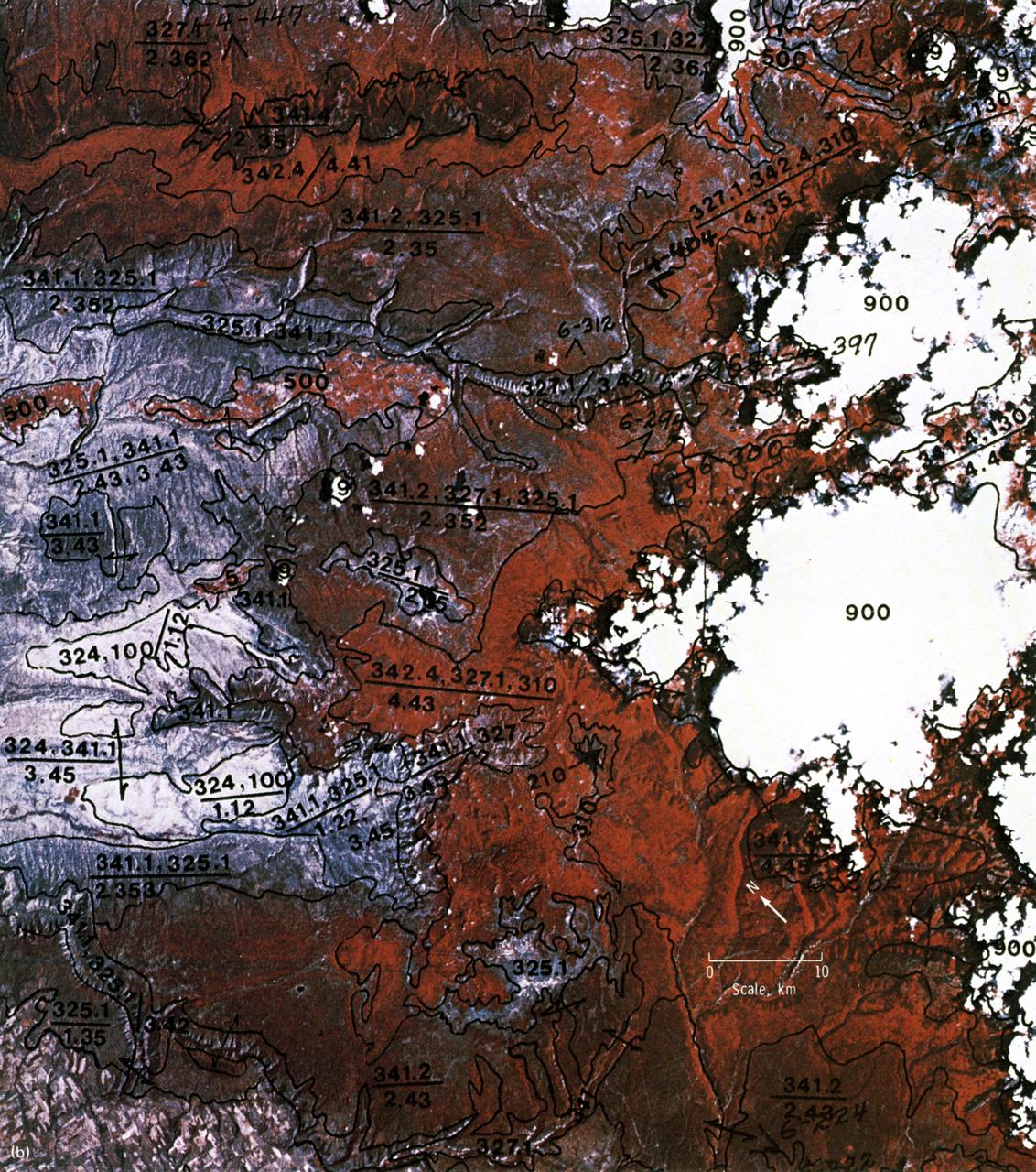
This EREP photograph of the Uncompahgre Plateau area of Colorado illustrates the land use classification using the hierarchical numbering system to depict land forms and vegetative patterns. The numerator is a three-digit number with decimal components identifying the vegetation analog or land use conditions. The denominator uses a three-component decimal system for landscape characterization.
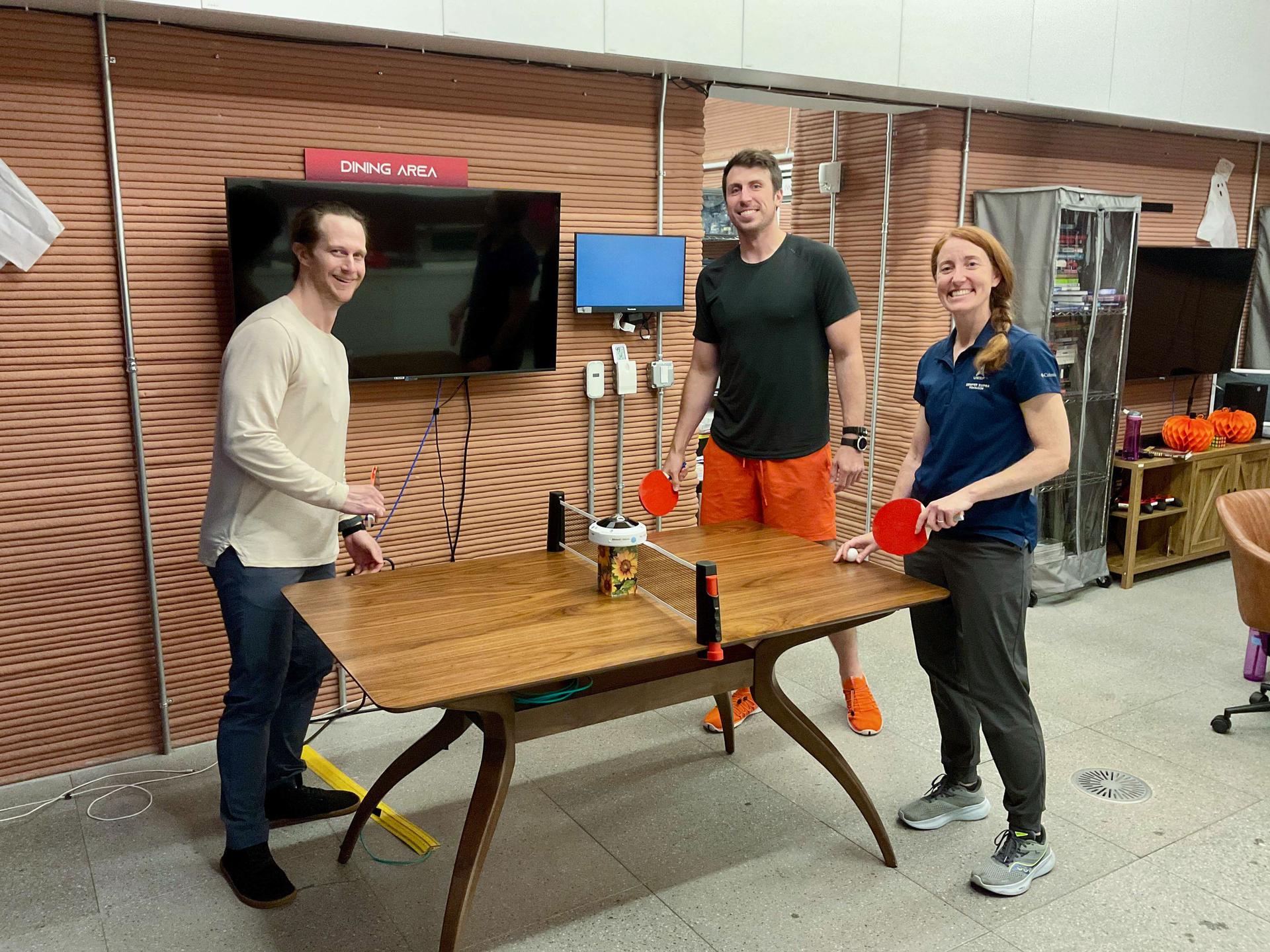
jsc2026e403168 (Nov. 5, 2025) -- The Crew Health and Performance Exploration Analog (CHAPEA) Mission 2 crew spends off-duty time inside the habitat (From left: Matthew Montgomery, Ross Elder, Ellen Ellis). Credit: NASA
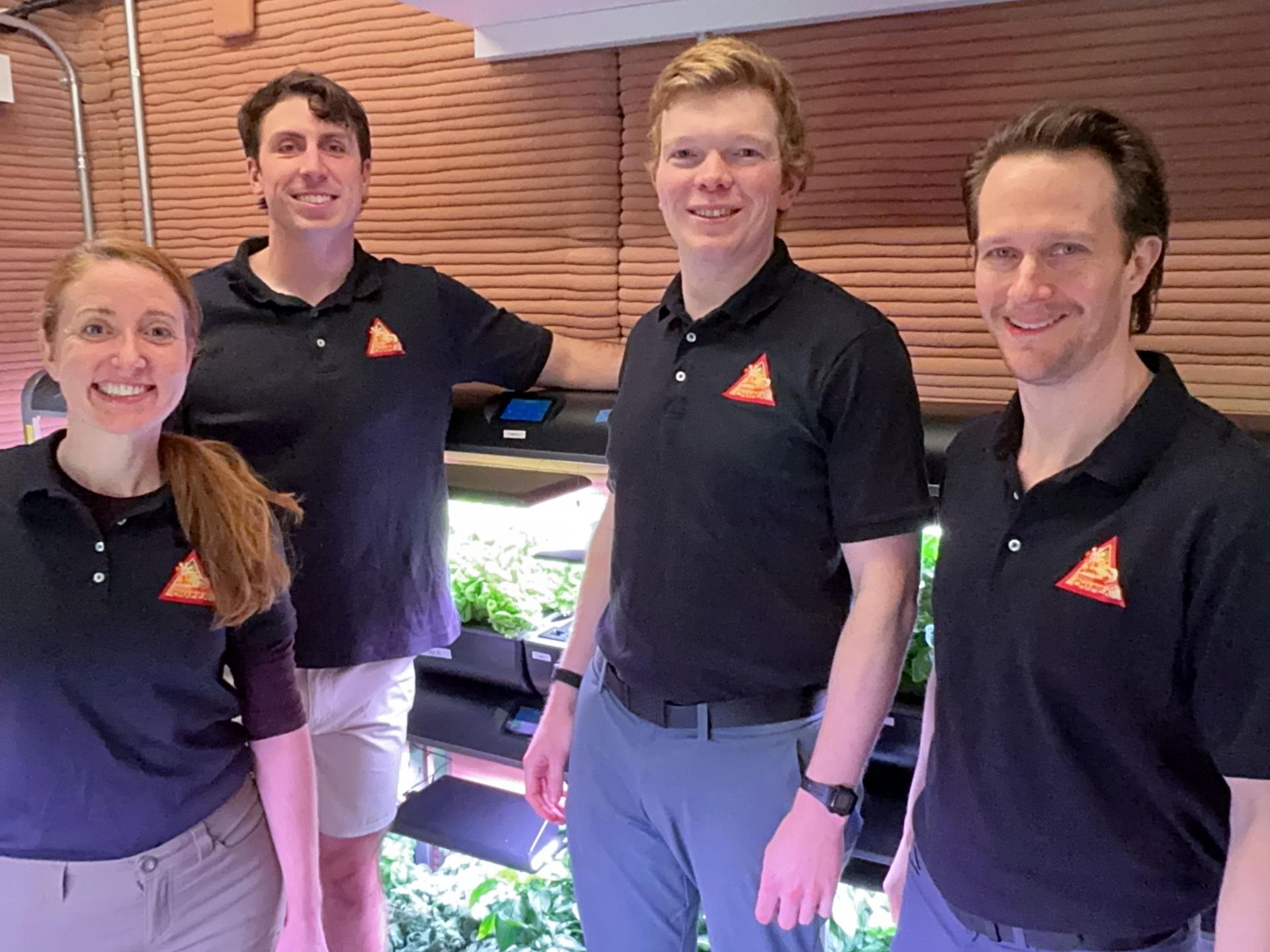
jsc2026e403154 (Jan. 13, 2026) -- The Crew Health and Performance Exploration Analog (CHAPEA) Mission 2 crew stand in front of the habitat garden, marking 100 days inside the habitat (From left: Ellen Ellis, Ross Elder, James Spicer, Matthew Montgomery). Credit: NASA

jsc2026e403163 (Feb. 4, 2026) -- Matthew Montgomery, Crew Health and Performance Exploration Analog (CHAPEA) Mission 2 science officer, showcases vegetables collected during a recent harvest from the hydroponic crop growth system. Credit: NASA
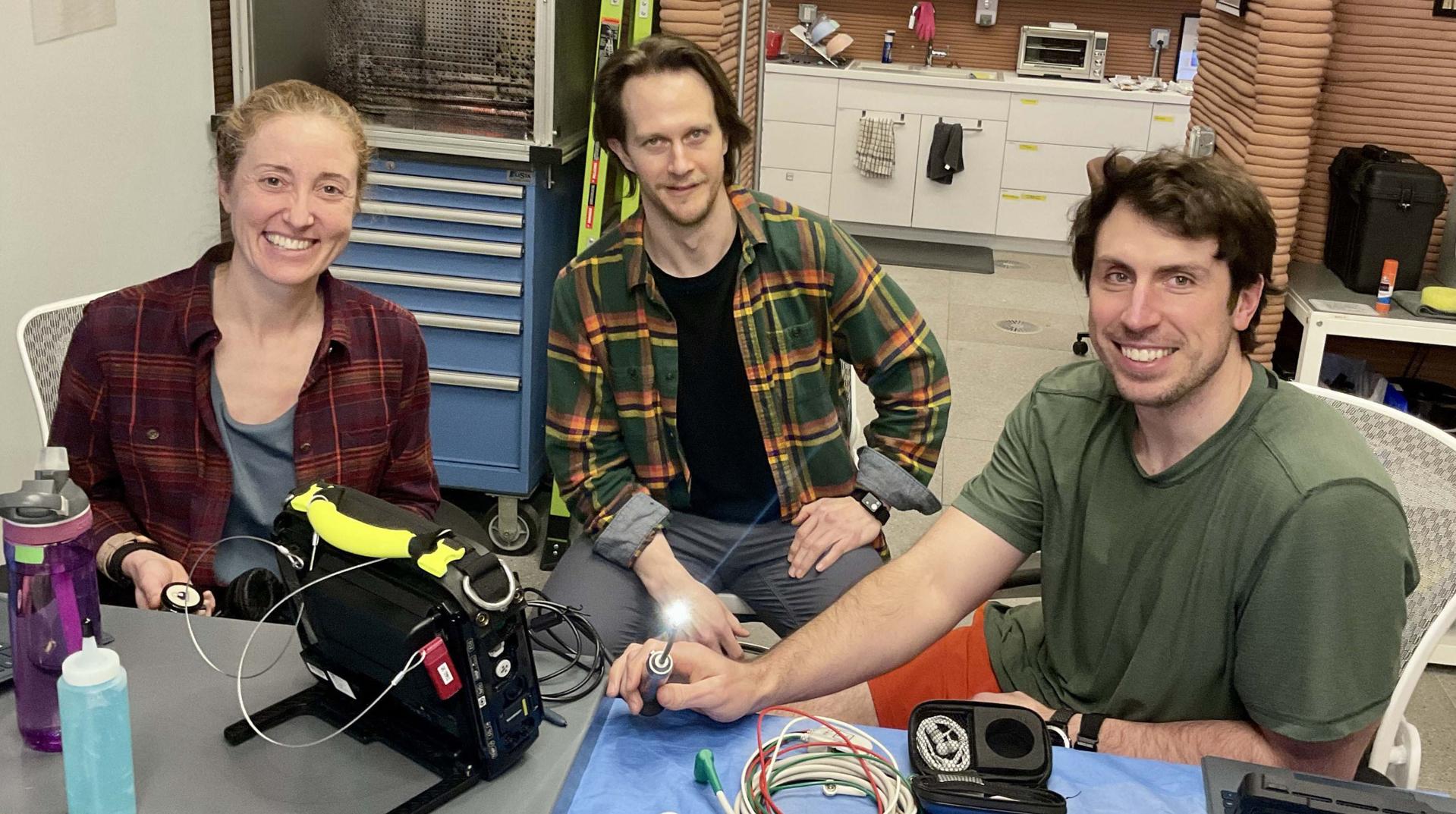
jsc2026e403167 (Feb. 13, 2026) -- The Crew Health and Performance Exploration Analog (CHAPEA) Mission 2 crew working on improving procedures for various medical scenarios using a new medical monitoring device. (From left: Ellen Ellis, Matthew Montgomery, Ross Elder). Credit: NASA
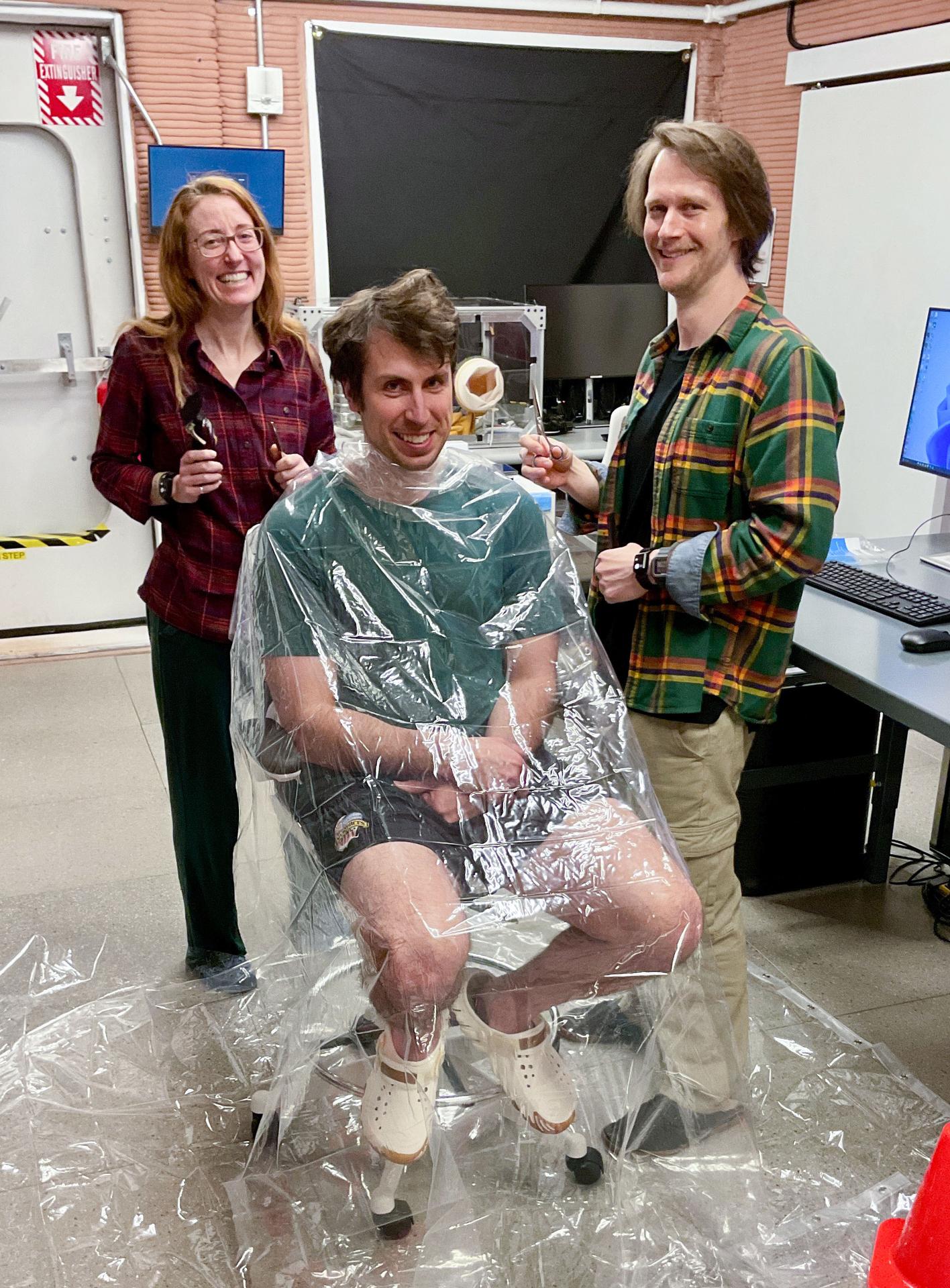
jsc2026e403160 (Jan. 11, 2026) -- Ross Elder, Crew Health and Performance Exploration Analog (CHAPEA) mission 2 commander, receiving a haircut from Ellen Ellis (left), CHAPEA mission 2 medical officer, and Matthew Montgomery (right) CHAPEA mission 2 science officer. Credit: NASA
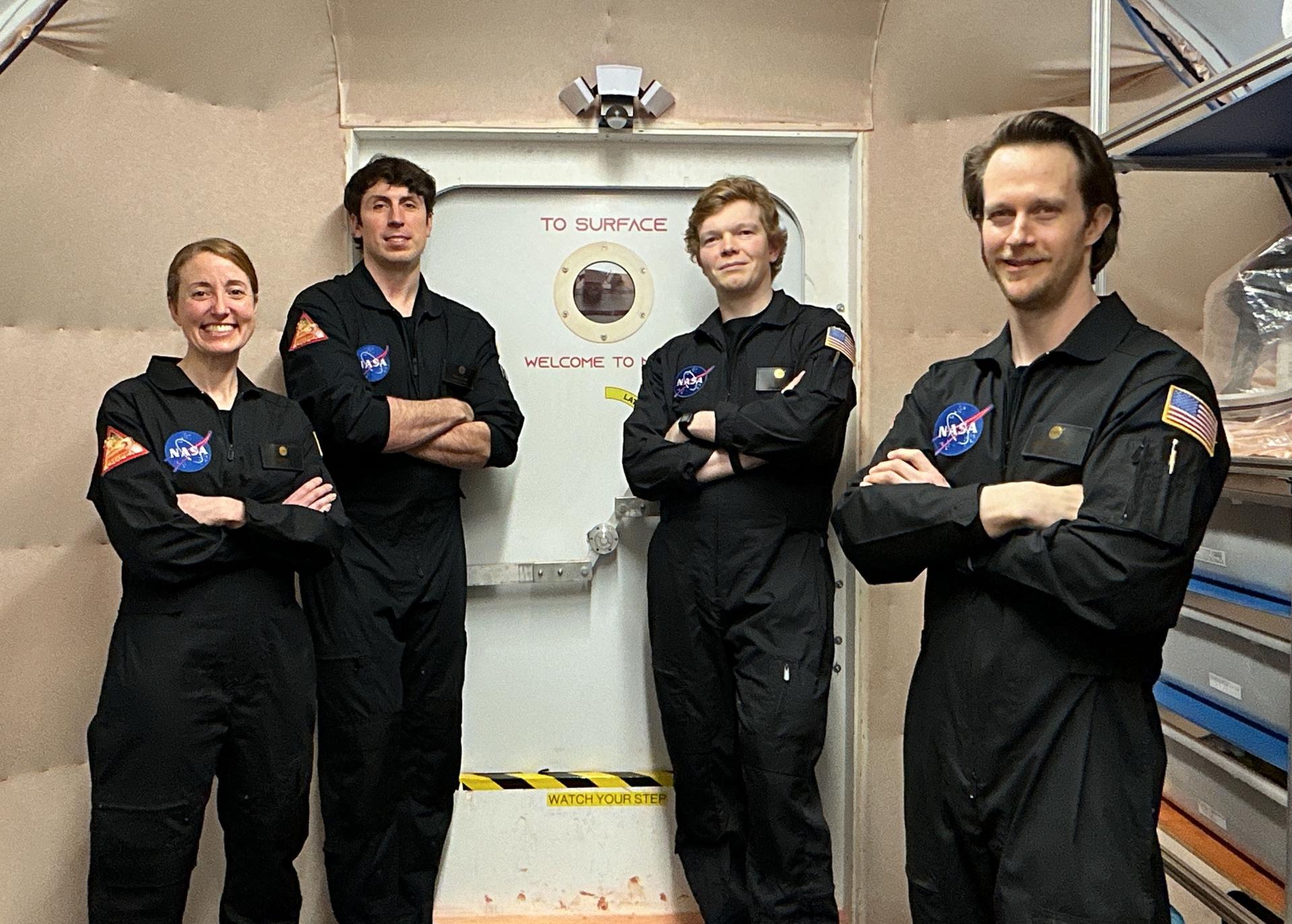
jsc2026e403170 (March 14, 2026) -- Members of NASA’s CHAPEA (Crew Health and Performance Exploration Analog) mission 2 pose for a group photo. (From left to right: Ellen Ellis, Ross Elder, James Spicer, and Matthew Montgomery). Credit: NASA

jsc2026e403176 (June 3, 2026) -- The Crew Health and Performance Exploration Analog (CHAPEA) Mission 2 crew spends off-duty time inside of the habitat (from back left: Ross Elder, Matthew Montgomery, James Spicer, and front left: Ellen Ellis). Credit: NASA
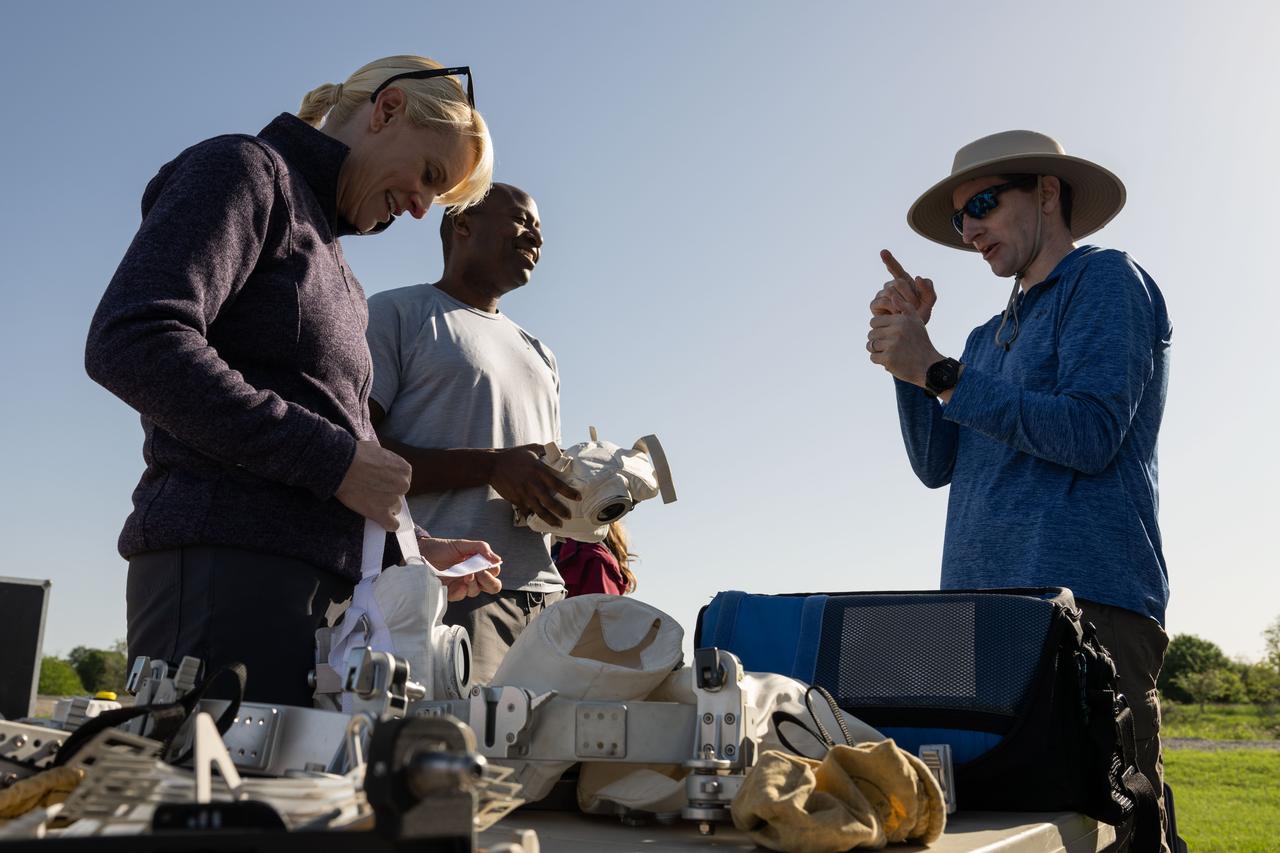
Paul Reichert, astronaut technical imaging instructor, shows NASA astronauts Kate Rubins and Andre Douglas how to use the Handheld Universal Lunar Camera before a simulated moonwalk at NASA’s Johnson Space Center on March 26, 2024. Credits: NASA / Josh Valcarcel
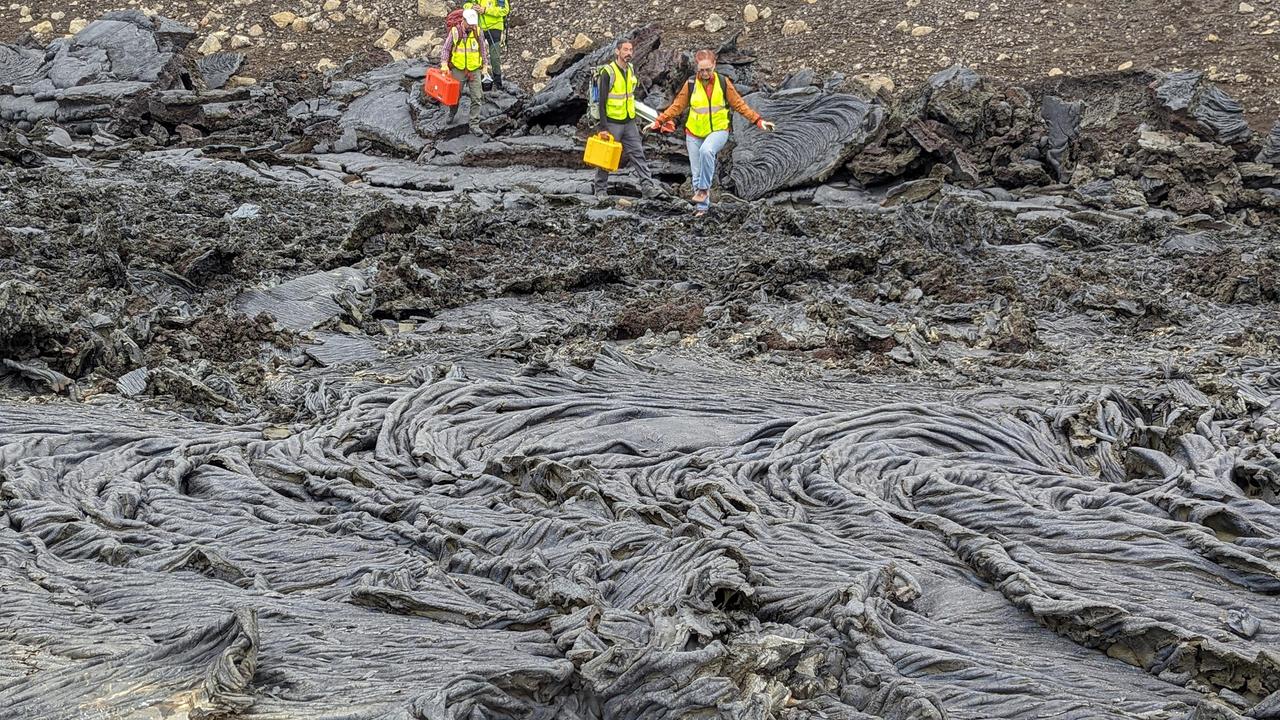
To lay the groundwork for NASA's VERITAS mission (Venus Emissivity, Radio science, InSAR, Topography, And Spectroscopy), members of the mission's international science team traveled in August 2023 to Iceland, using the island as a stand-in, or analog, for Venus. Using several techniques, the team studied a variety of rocky terrain, including this lava field featuring new rock from a recent flow, to better understand what the VERITAS mission will "see" when it studies Venus' surface. The VERITAS orbiter will peer through the planet's thick atmosphere with a suite of powerful science instruments to create global maps of the planet's surface – including topography, radar images, rock type, and gravity measurements – as well as detect surface changes. VERITAS is designed to understand what processes are currently active, search for evidence of past and current interior water, and understand the geologic evolution of the planet, illuminating how rocky planets throughout the galaxy evolve. https://photojournal.jpl.nasa.gov/catalog/PIA25838
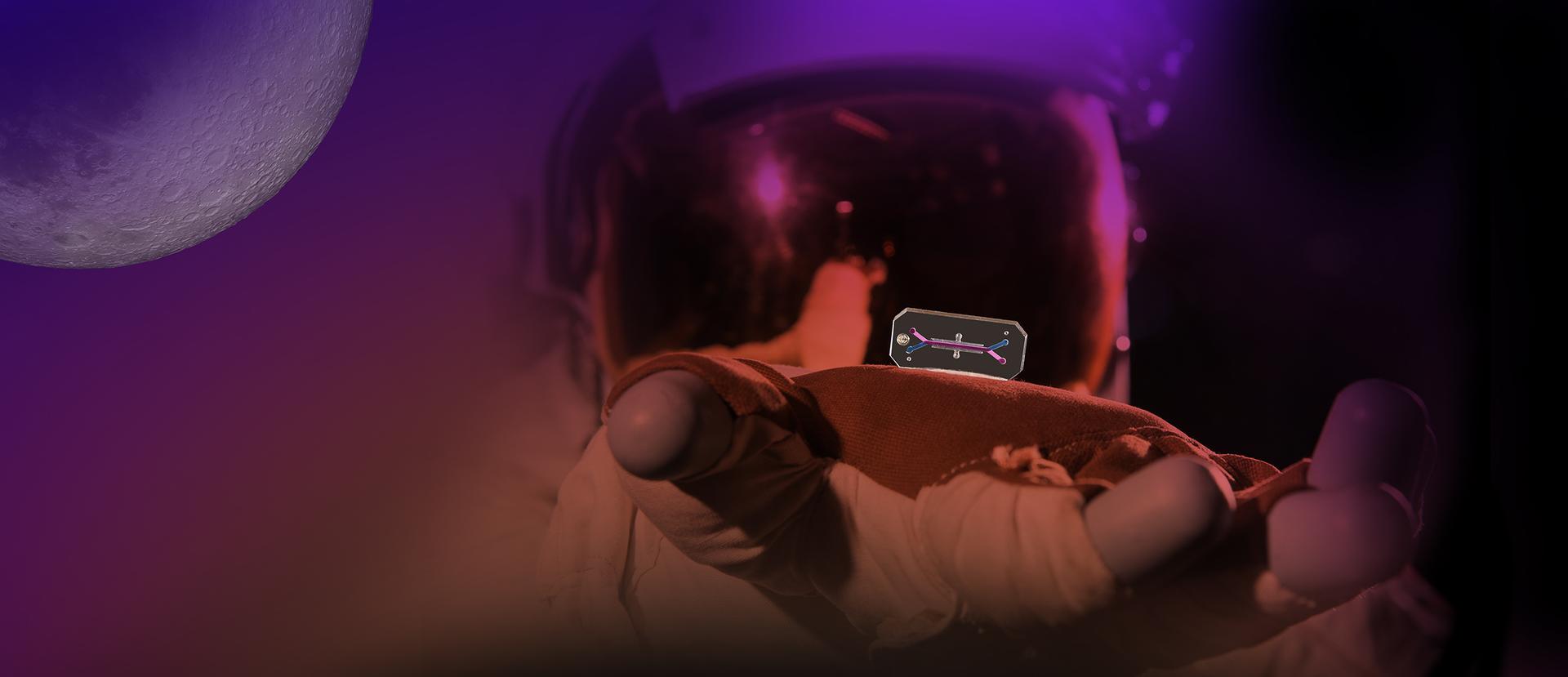
The AVATAR (A Virtual Astronaut Tissue Analog Response) investigation will use organ-on-a-chip devices, or organ chips, to study a effects of increased radiation and microgravity on human health. Artemis II AVATAR is a small experiment flying aboard Artemis II that could lead to big impacts in healthcare, both for astronauts in space and citizens on Earth. For more information on AVATAR: go.nasa.gov/4m5dGH9
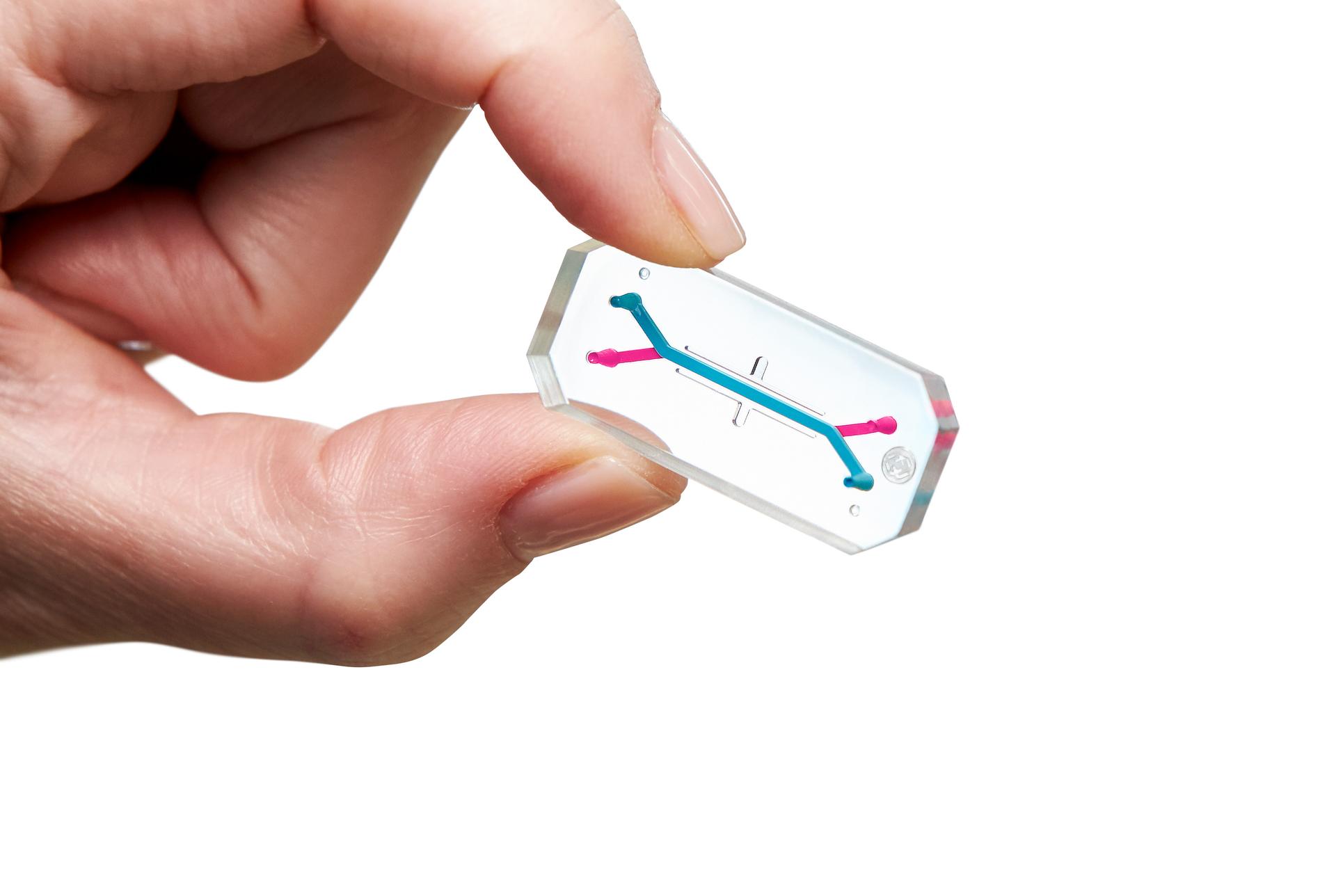
The AVATAR (A Virtual Astronaut Tissue Analog Response) investigation will use organ-on-a-chip devices, or organ chips, to study a effects of increased radiation and microgravity on human health. Artemis II AVATAR is a small experiment flying aboard Artemis II that could lead to big impacts in healthcare, both for astronauts in space and citizens on Earth. For more information on AVATAR: go.nasa.gov/4m5dGH9
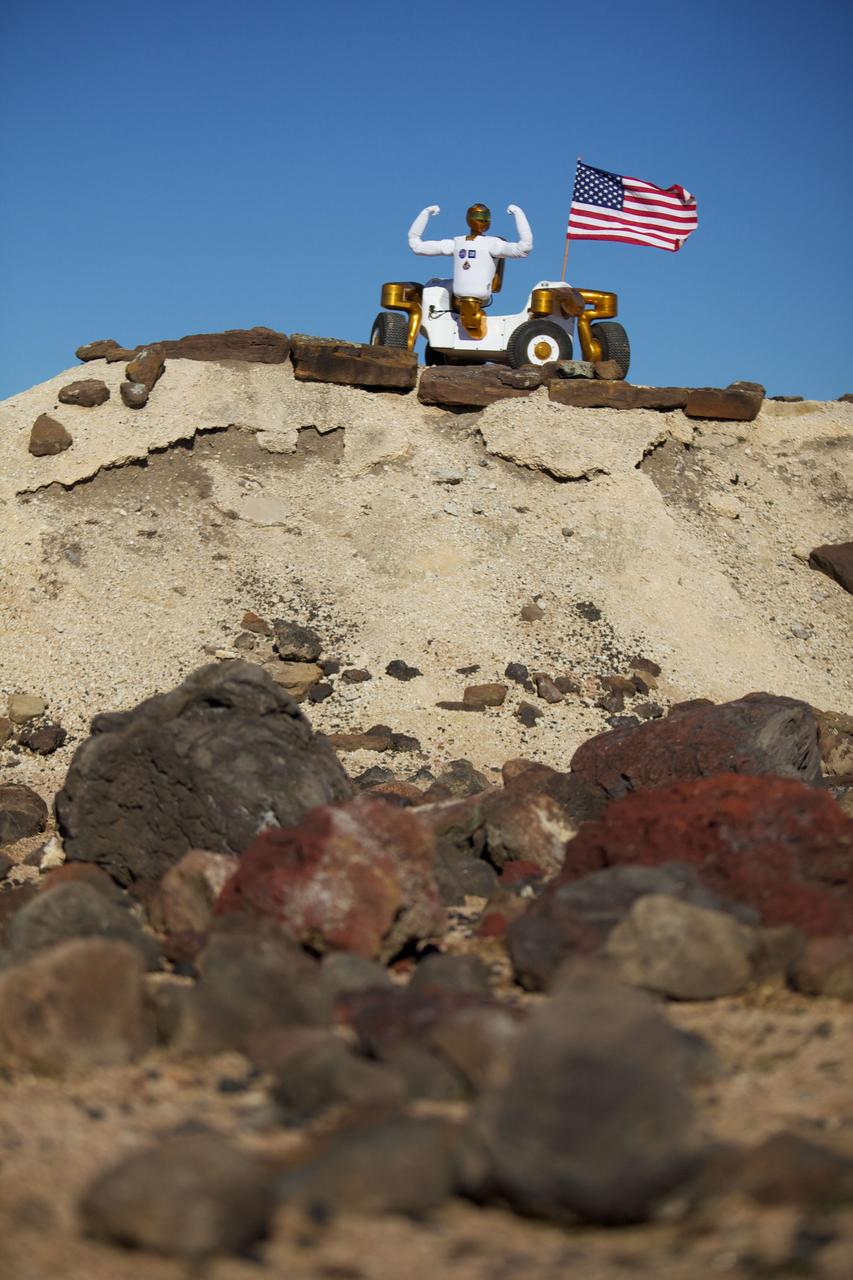
JSC2011-E-017946 (February 2011) --- Robonaut 2 poses atop its new wheeled base, Centaur 2, at the Johnson Space Center Planetary Analog Test Site. The Centaur base builds off of lessons learned through the Space Exploration Vehicle, a rover for astronauts, and could allow the dexterous humanoid robot to help with the future exploration of distant planetary surfaces. Photo credit: NASA or National Aeronautics and Space Administration
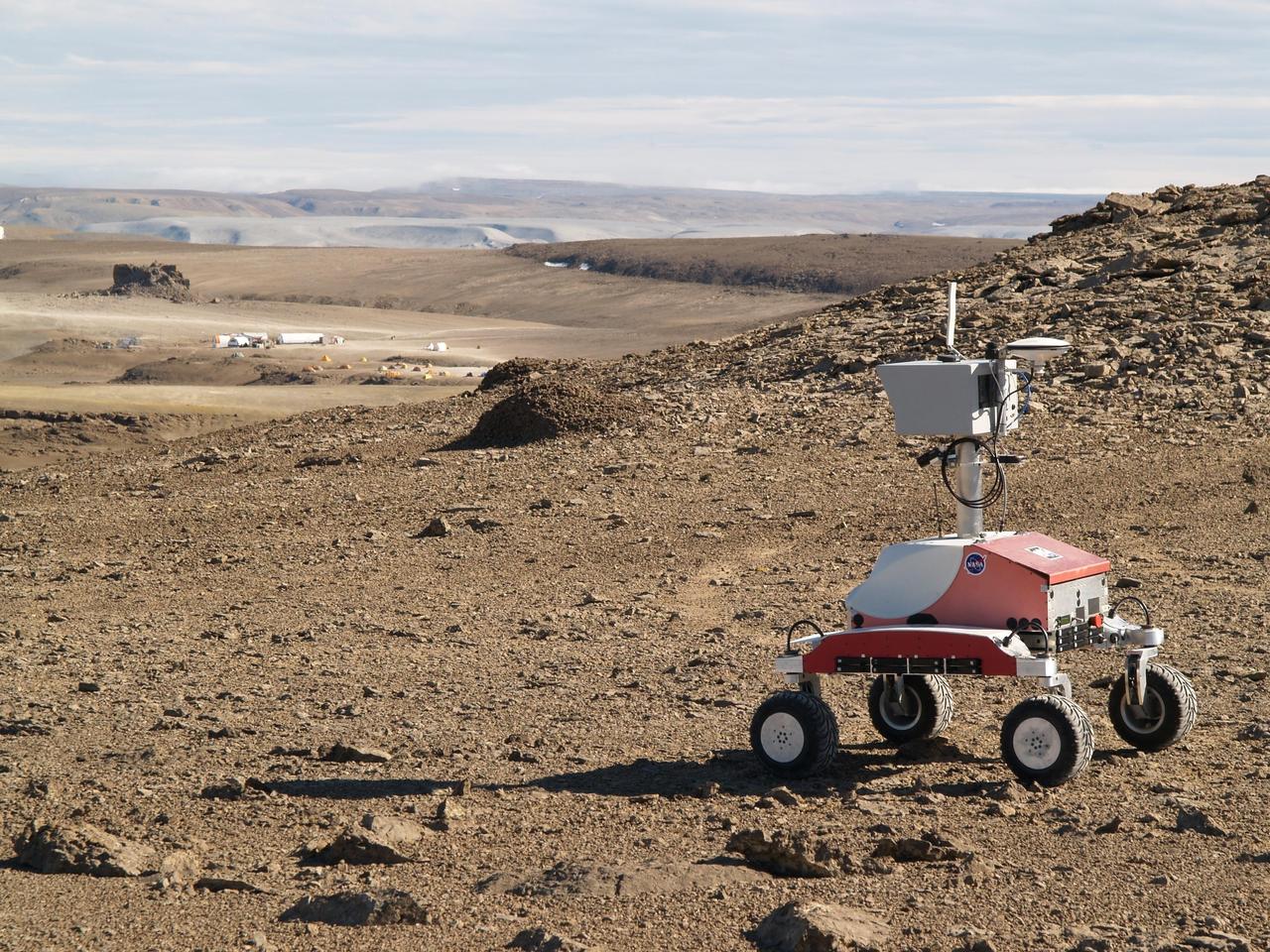
Haughton-Mars Project: - Photo credit to Lorenzo Flueckiger (CMU West) K-10 Rover 'Red' descending Drill Hill toward base campl at Haughton Creator Devon Island, Nunavut, in the Canadian high arctic. Which lies in the 'frost rubble zone' of the Earth, i.e., in a polar desert environment and is the only crater known to lie in such an environment. Beginning in 1997, the crater and its surroundings are studied as a promising Mars analog by the NASA-led Haughton-Mars Project. (photo reference K10-red-hughton-hill.jpg)
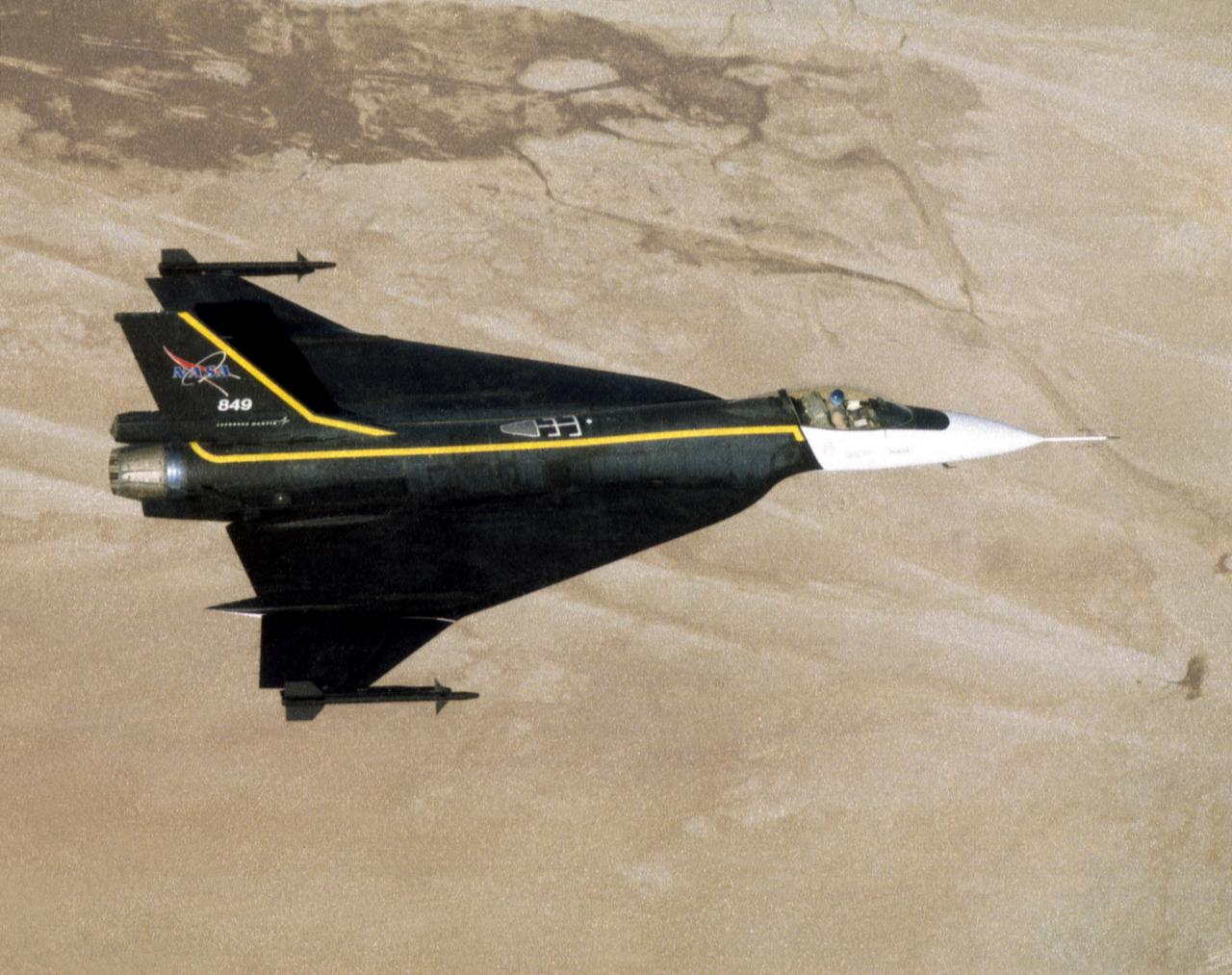
An image of the F-16XL #1 during its functional flight check of the Digital Flight Control System (DFCS) on December 16, 1997. The mission was flown by NASA research pilot Dana Purifoy, and lasted 1 hour and 25 minutes. The tests included pilot familiarly, functional check, and handling qualities evaluation maneuvers to a speed of Mach 0.6 and 300 knots. Purifoy completed all the briefed data points with no problems, and reported that the DFCS handled as well, if not better than the analog computer system that it replaced.
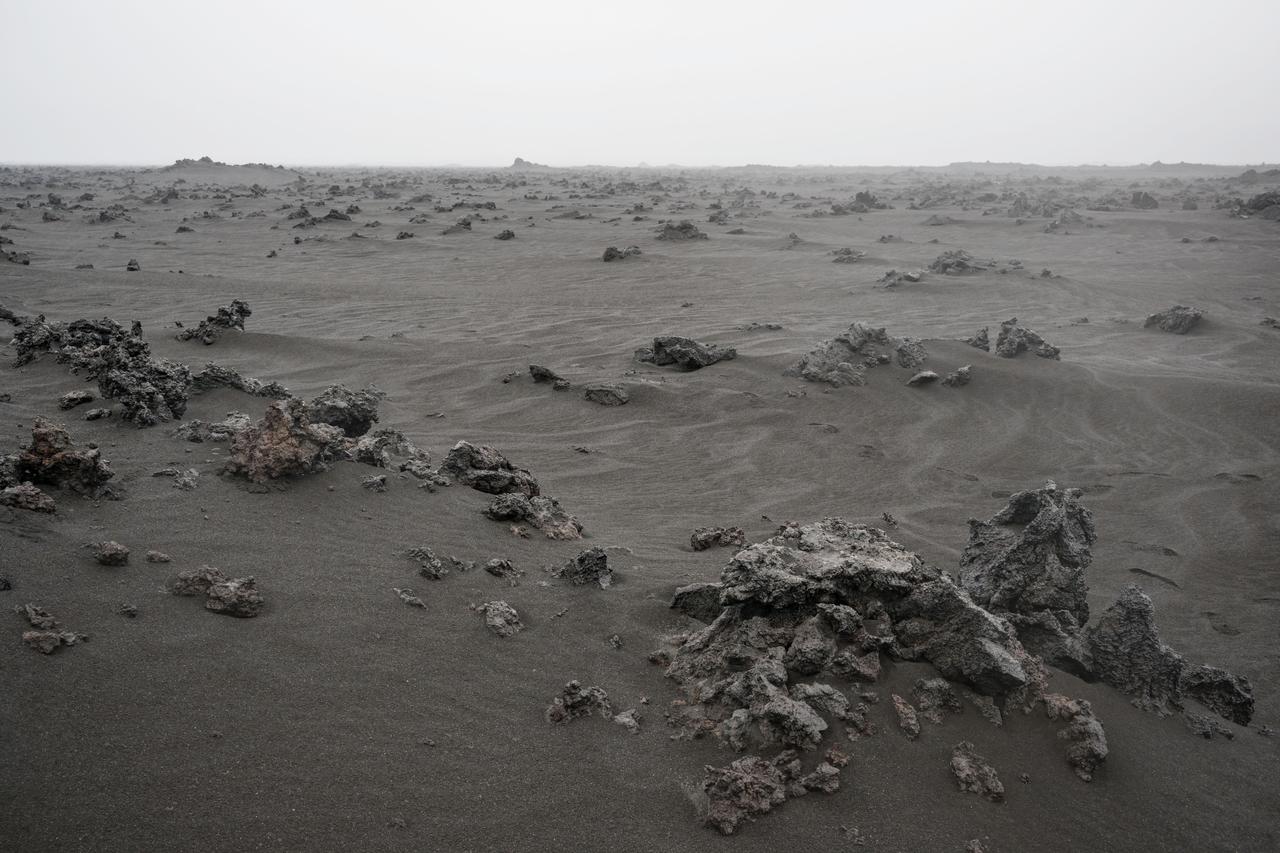
A view of the Holuhraun lava field from the Bárðarbunga volcano, located in Vatnajökull National Park in Iceland. The image shows the rubbly textured basaltic lava flow that has been partially buried by wind-blown sediment. Iceland has been used as a planetary analog for geology training for astronauts since the Apollo missions because of the geologic similarities to the Moon.
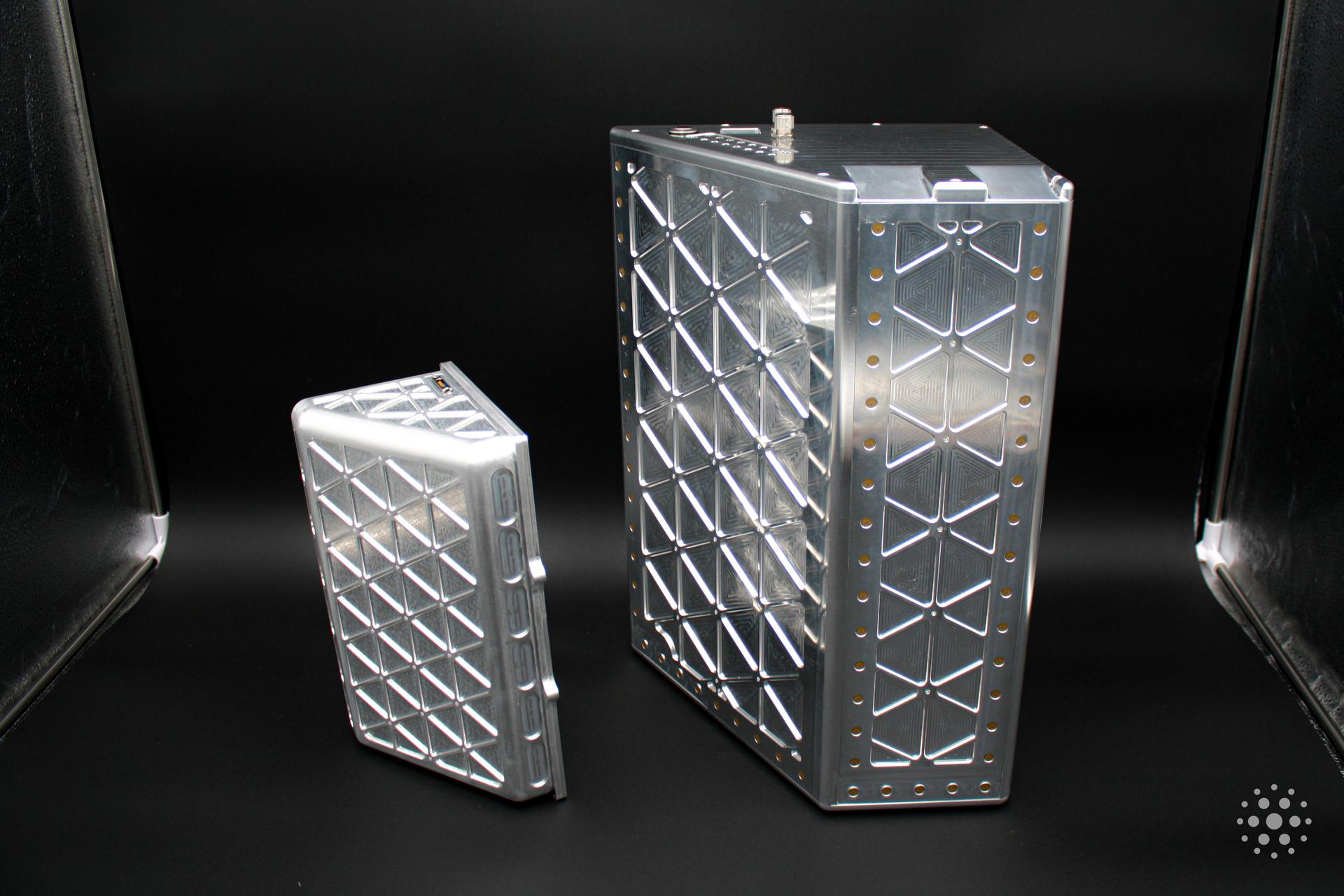
This is the hardware that will contain the AVATAR chips during the Artemis II flight. The AVATAR (A Virtual Astronaut Tissue Analog Response) investigation will use organ-on-a-chip devices, or organ chips, to study a effects of increased radiation and microgravity on human health. Artemis II AVATAR is a small experiment flying aboard Artemis II that could lead to big impacts in healthcare, both for astronauts in space and citizens on Earth. For more information on AVATAR: go.nasa.gov/4m5dGH9
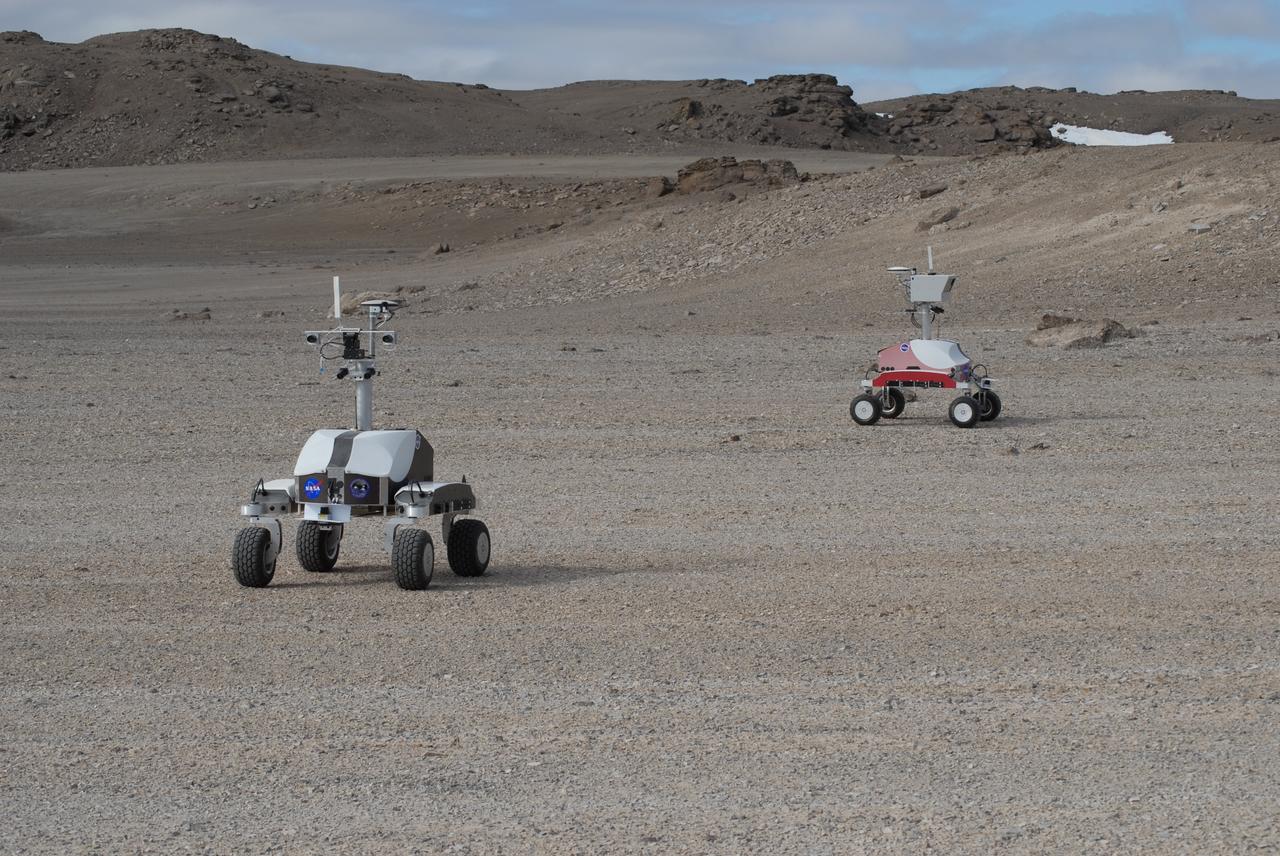
Haughton-Mars Project: - Photo credit to Matt Deans (NASA) K-10 Rover 'Black' and K-10 'RED' conducting systematic site survey at Haughton Creater Devon Island, Nunavut, in the Canadian high arctic. Which lies in the 'frost rubble zone' of the Earth, i.e., in a polar desert environment and is the only crater known to lie in such an environment. Beginning in 1997, the crater and its surroundings are studied as a promising Mars analog by the NASA-led Haughton-Mars Project. (photo reference MCD_0888.JPG)

Haughton-Mars Project: - Photo credit to Matt Deans (NASA) K-10 Rover 'Red' base camp at Haughton Creater Devon Island, Nunavut, in the Canadian high arctic. Which lies in the 'frost rubble zone' of the Earth, i.e., in a polar desert environment and is the only crater known to lie in such an environment. Beginning in 1997, the crater and its surroundings are studied as a promising Mars analog by the NASA-led Haughton-Mars Project. (photo reference MCD_0859.JPG)

JSC2011-E-017945 (February 2011) --- Robonaut 2 poses atop its new wheeled base, Centaur 2, at the Johnson Space Center Planetary Analog Test Site. The Centaur base builds off of lessons learned through the Space Exploration Vehicle, a rover for astronauts, and could allow the dexterous humanoid robot to help with the future exploration of distant planetary surfaces. Photo credit: NASA or National Aeronautics and Space Administration
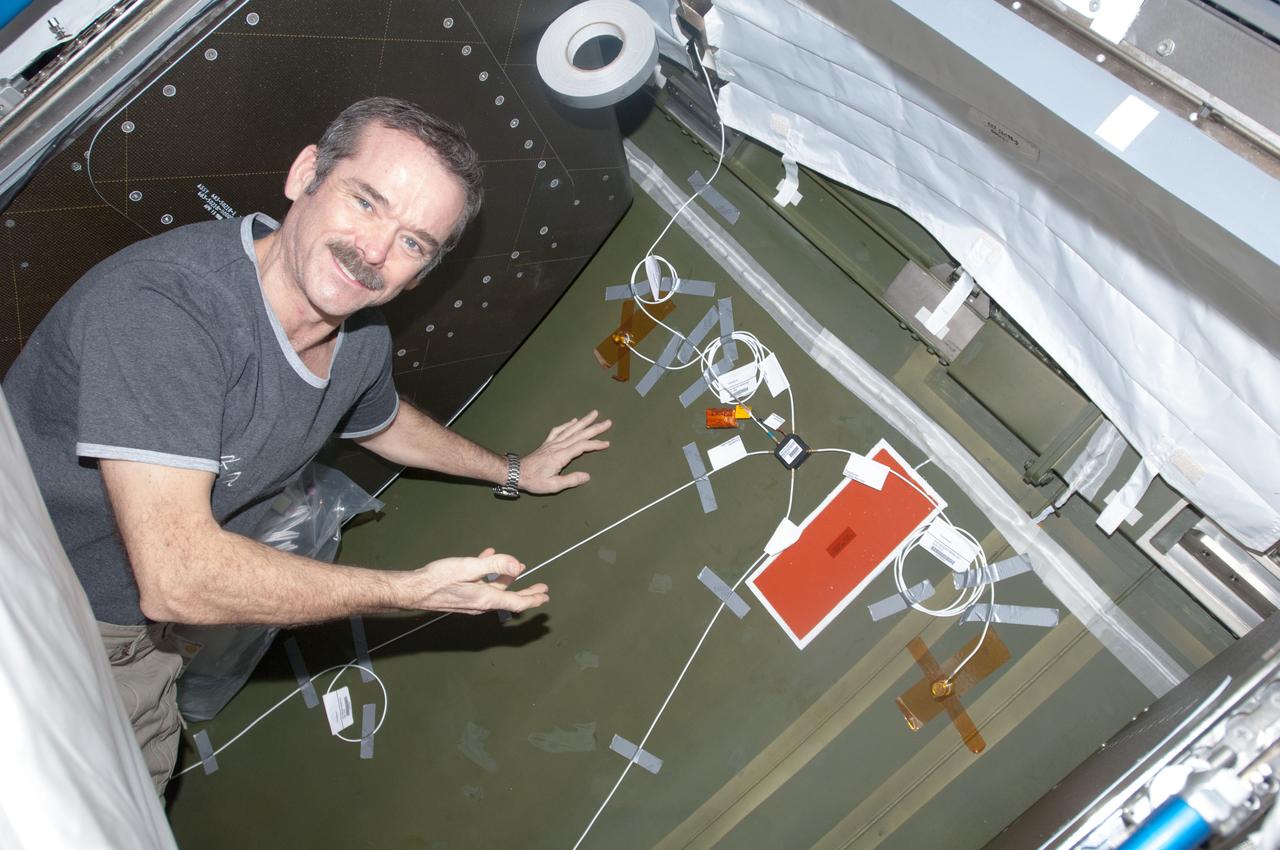
View of Canadian Space Agency (CSA) Chris Hadfield,Expedition 34 Flight Engineer (FE),installing Ultra-Sonic Background Noise Tests (UBNT) sensors behind rack in the U.S. Laboratory using the International Space Station (ISS) as Testbed for Analog Research (ISTAR) procedures. These sensors detect high frequency noise levels generated by ISS hardware and equipment operating within the U.S. Laboratory. Photo was taken during Expedition 34.
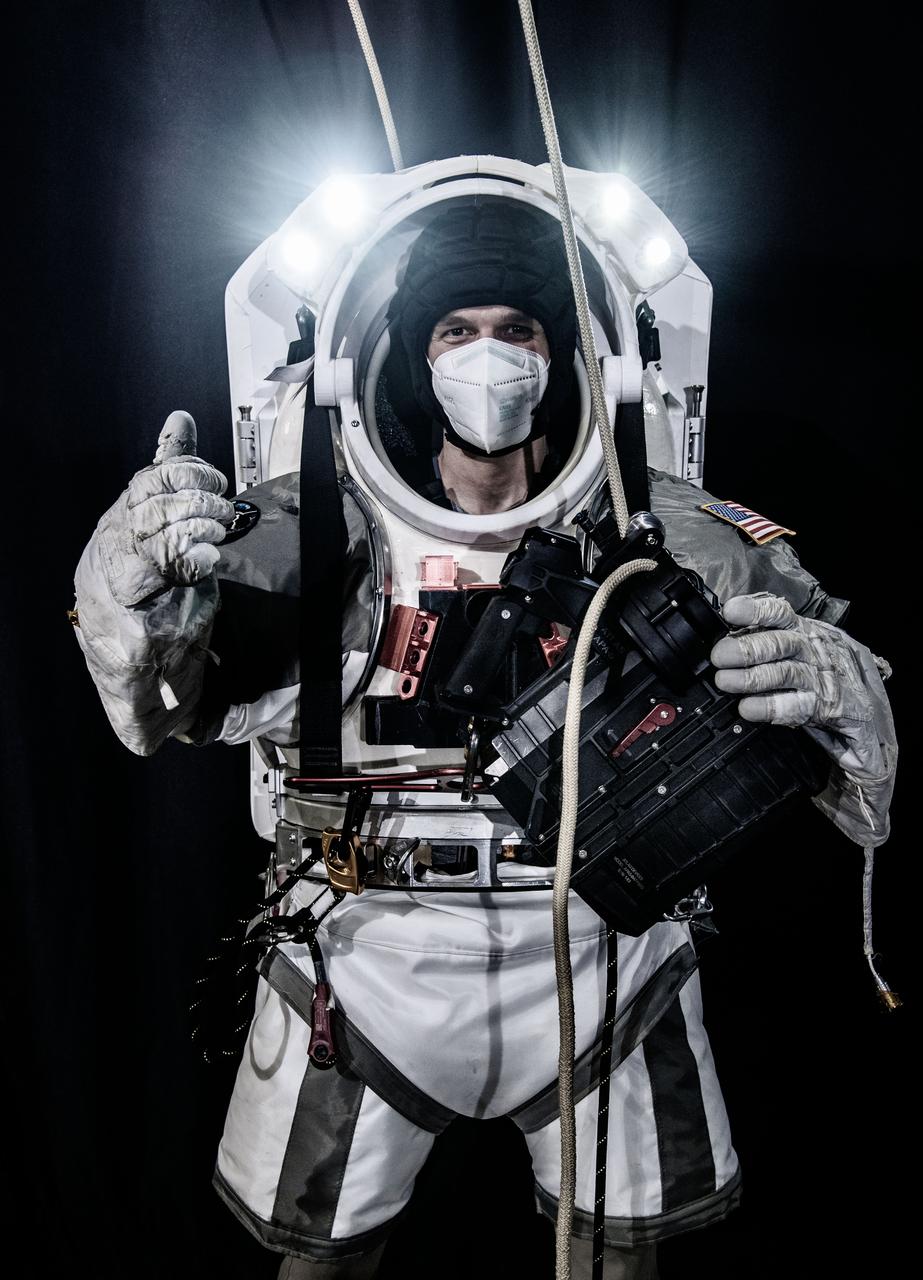
Nate Ball of Atlas Devices prepares to test an APA-5 powered rope ascender with the Exploration Conop (EXCON) Suit, a new xEMU spacesuit simulator. Atlas uses this device in terrestrial applications of powered ascenders including rescue and vertical mobility. This photo was taken when NASA began researching if these capabilities may have analogous applications for lunar surface operations. Photo Date: April 29, 2021. Location: Building 49 High Bay. Photographer: Robert Markowitz

The AVATAR (A Virtual Astronaut Tissue Analog Response) investigation will use organ-on-a-chip devices, or organ chips, to study a effects of increased radiation and microgravity on human health. Artemis II AVATAR is a small experiment flying aboard Artemis II that could lead to big impacts in healthcare, both for astronauts in space and citizens on Earth. For more information on AVATAR: go.nasa.gov/4m5dGH9
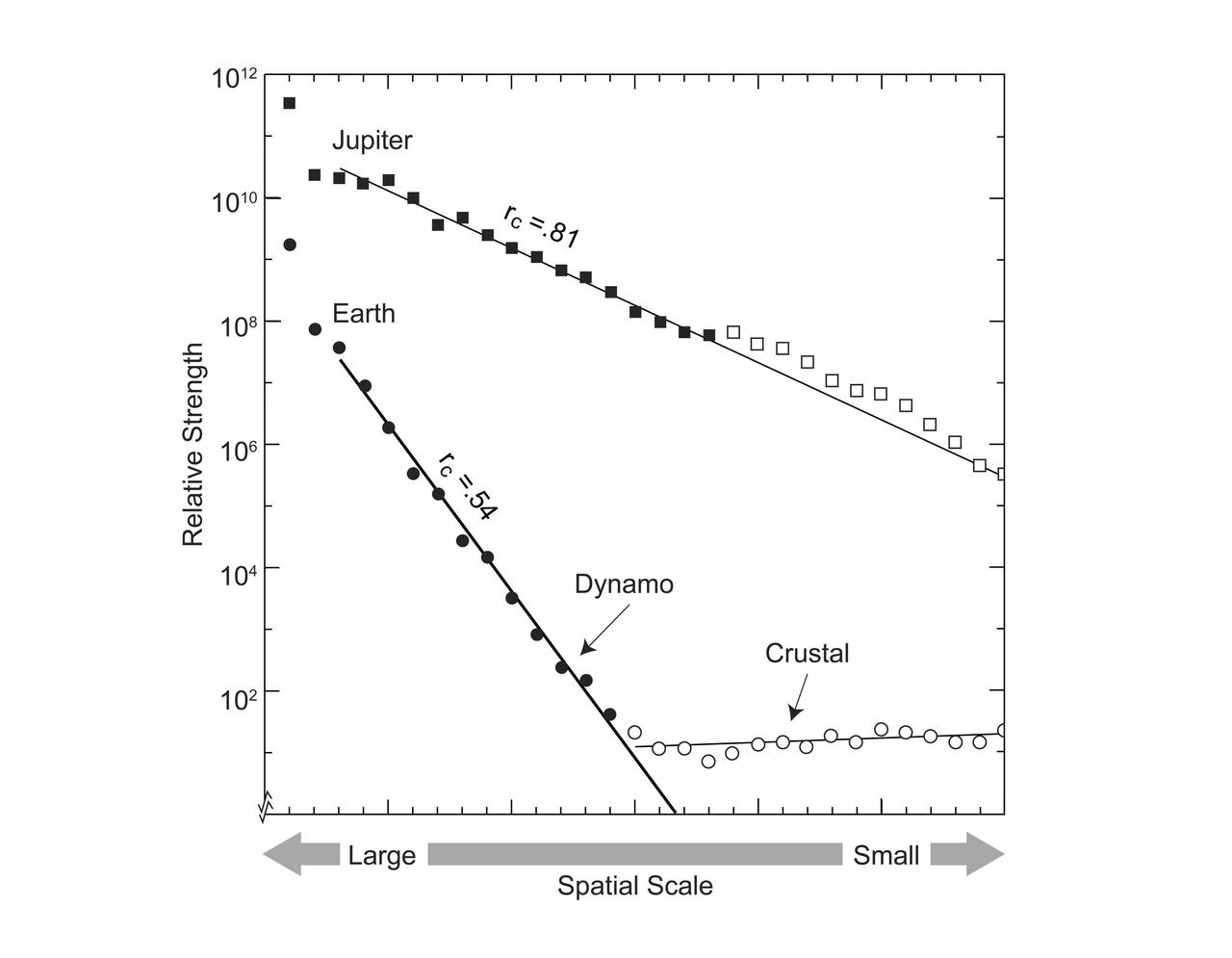
This graphic compares the magnetic fields of Earth and Jupiter, characterizing the field on the surface of each planet in terms of spatial scale, with large scale to the left, and small scale to the right. The linear progression of terms characterizing Earth's field identifies a dynamo core radius at 0.54 planet radius and crustal magnetization at smaller scales. By analogy, the new Jupiter model identifies a dynamo core radius at 0.81 planet radius, in the convective metallic hydrogen just beneath a zone stabilized by helium rain. https://photojournal.jpl.nasa.gov/catalog/PIA25064
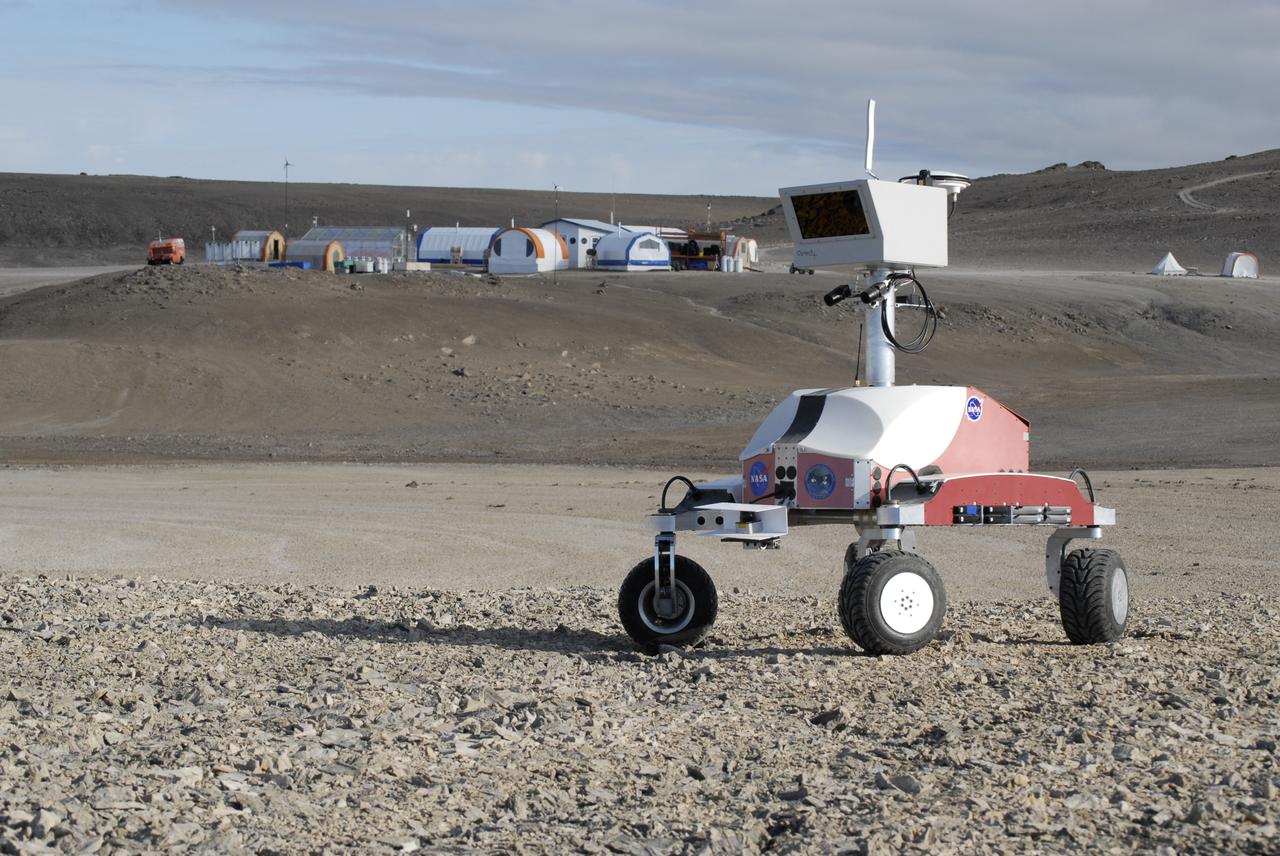
Haughton-Mars Project: - Photo credit to Matt Deans (NASA) K-10 Rover 'Red' base camp at Haughton Creater Devon Island, Nunavut, in the Canadian high arctic. Which lies in the 'frost rubble zone' of the Earth, i.e., in a polar desert environment and is the only crater known to lie in such an environment. Beginning in 1997, the crater and its surroundings are studied as a promising Mars analog by the NASA-led Haughton-Mars Project. (photo reference MCD_0838.JPG)
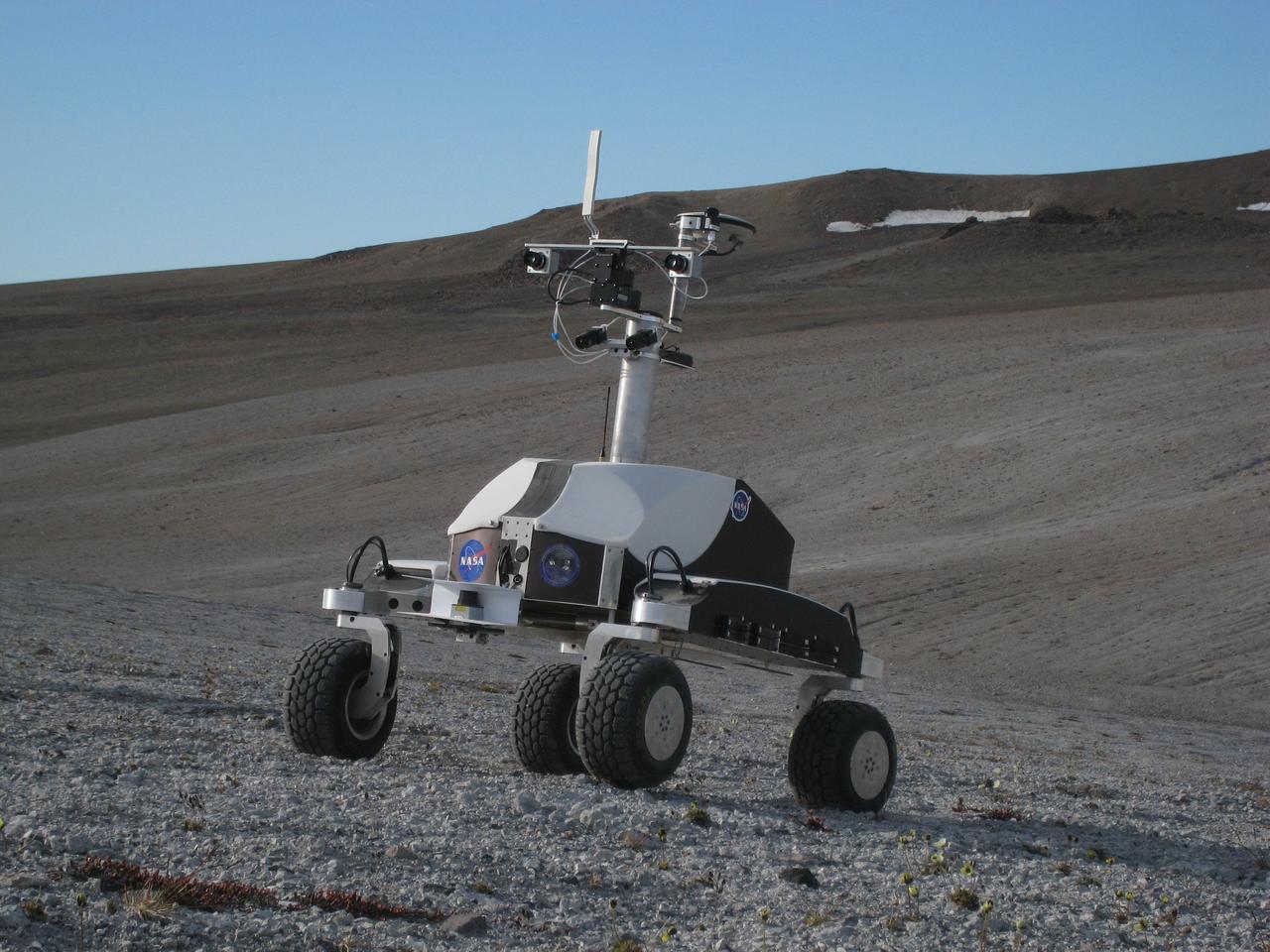
Haughton-Mars Project: - Photo credit to Matt Deans (NASA) K-10 Rover 'Black' driving on 'Drill Hill at Haughton Creater Devon Island, Nunavut, in the Canadian high arctic. Which lies in the 'frost rubble zone' of the Earth, i.e., in a polar desert environment and is the only crater known to lie in such an environment. Beginning in 1997, the crater and its surroundings are studied as a promising Mars analog by the NASA-led Haughton-Mars Project. (photo reference IMG_1278.JPG)
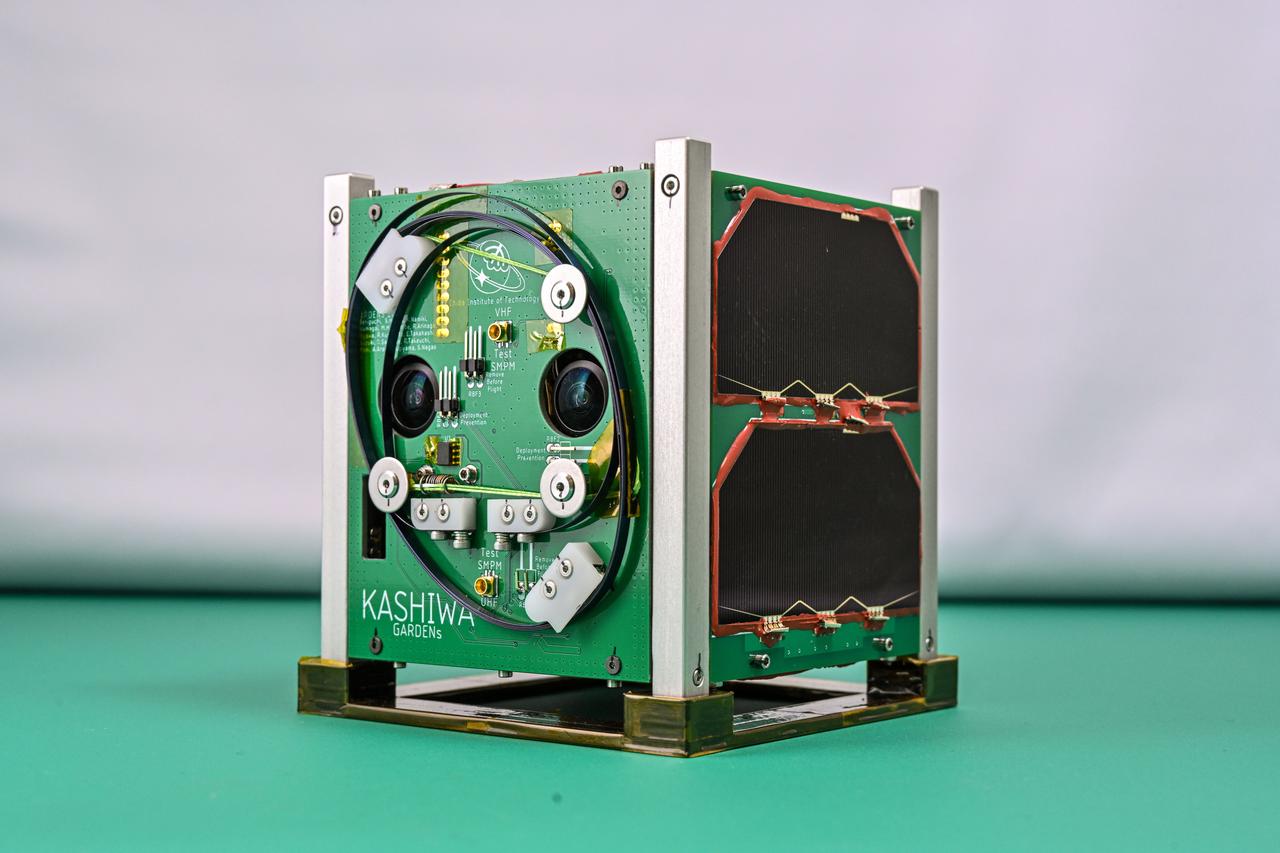
jsc2024e006095 (11/8/2023) --- Image of the KASHIWA flight units. KASHIWA, developed by the Growing Advanced and Refined space Development ENgineering succession and under the satellite (GARDENs) program is a project from Chiba Institute of Technology. The KASHIWA mission is to demonstrate stereo cameras for ranging, to demonstrate the APRS (Automatic Packet Reporting System) for digipeating through the satellite, to demonstrate analog audio using geomagnetic sensor and earth observation with camera.
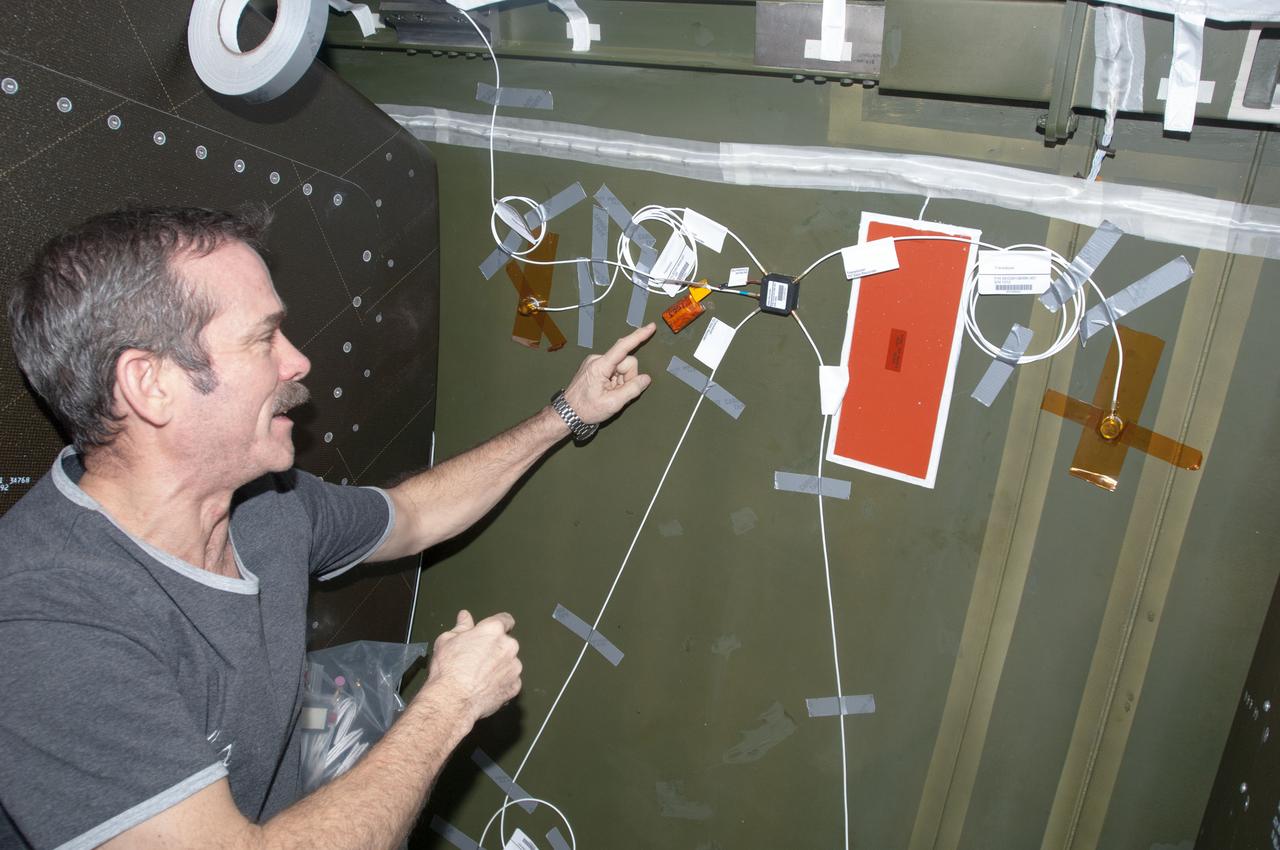
ISS034-E-038211 (1 Feb. 2013) --- Canadian Space Agency astronaut Chris Hadfield, Expedition 34 flight engineer, installs Ultra-Sonic Background Noise Tests (UBNT) sensors behind a rack in the Destiny laboratory, using the International Space Station (ISS) as Testbed for Analog Research (ISTAR) procedures. These sensors detect high frequency noise levels generated by ISS hardware and equipment operating within Destiny.