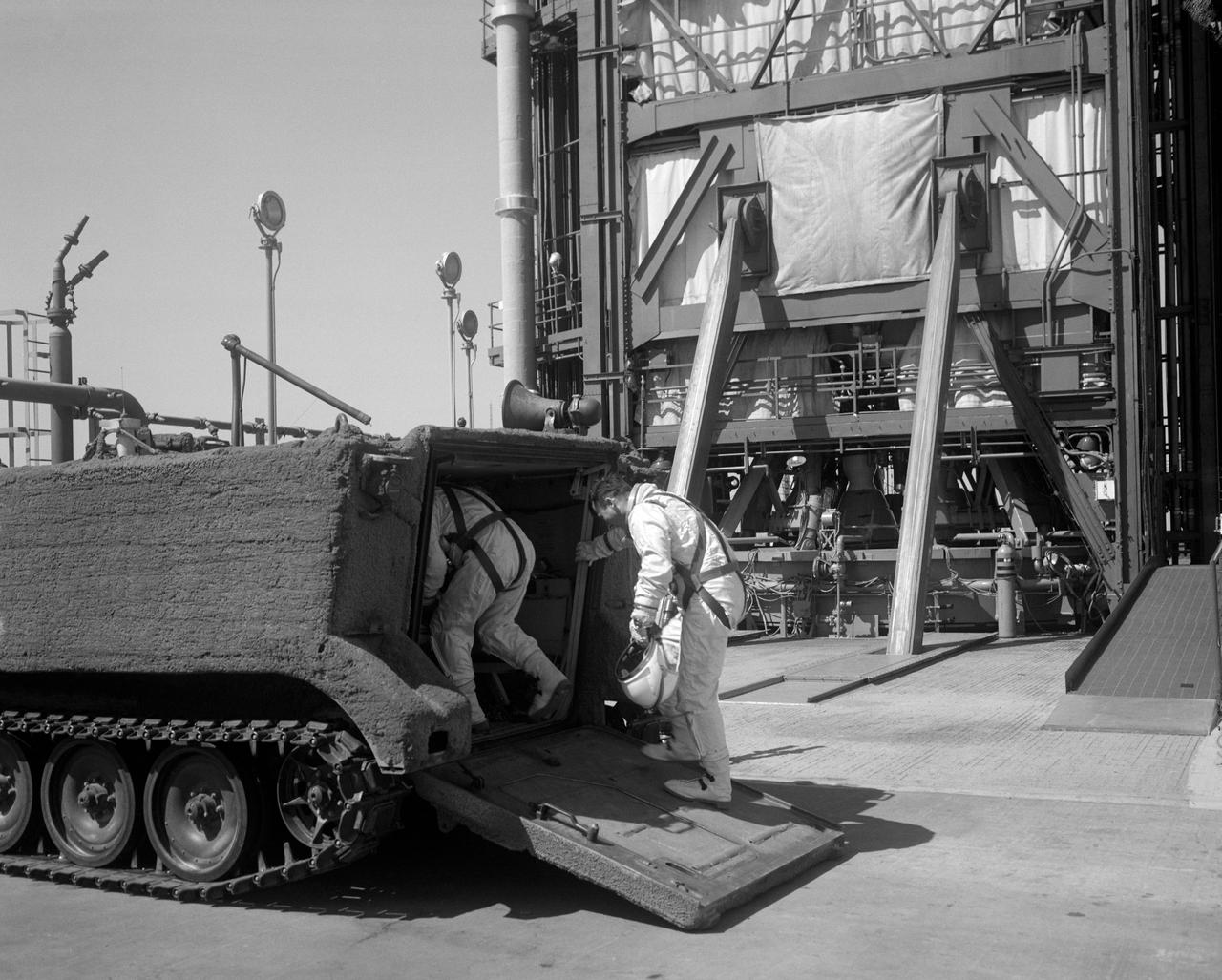
S65-20637 (1965) --- Astronauts John W. Young, pilot, and Virgil I. Grissom, command pilot, for the Gemini-Titan 3 flight, are shown entering launch pad abort rescue vehicle during training exercise.
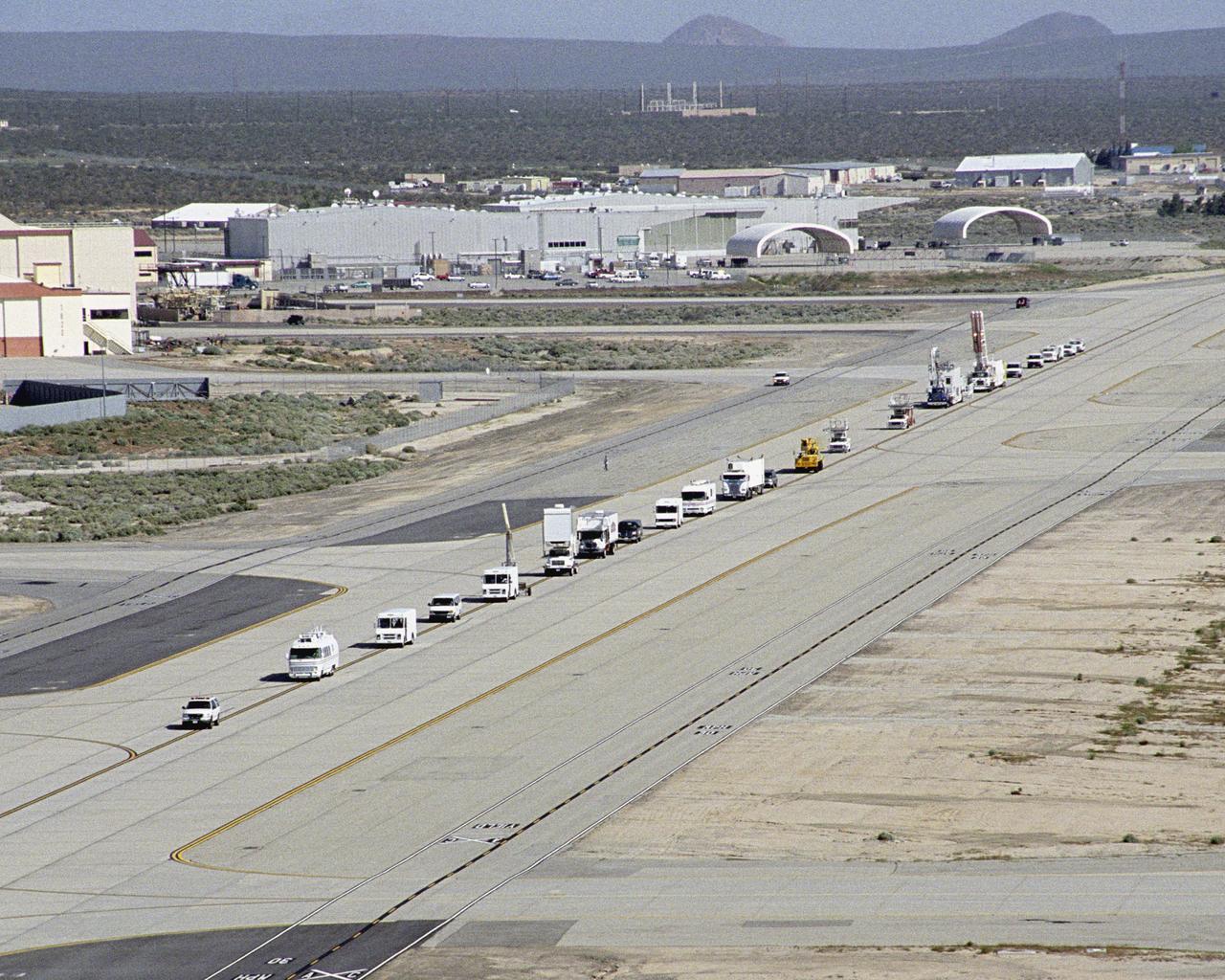
A long string of specialized NASA vehicles convoys down a taxiway at Edwards Air Force Base to begin a Space Shuttle rescue and recovery training exercise.
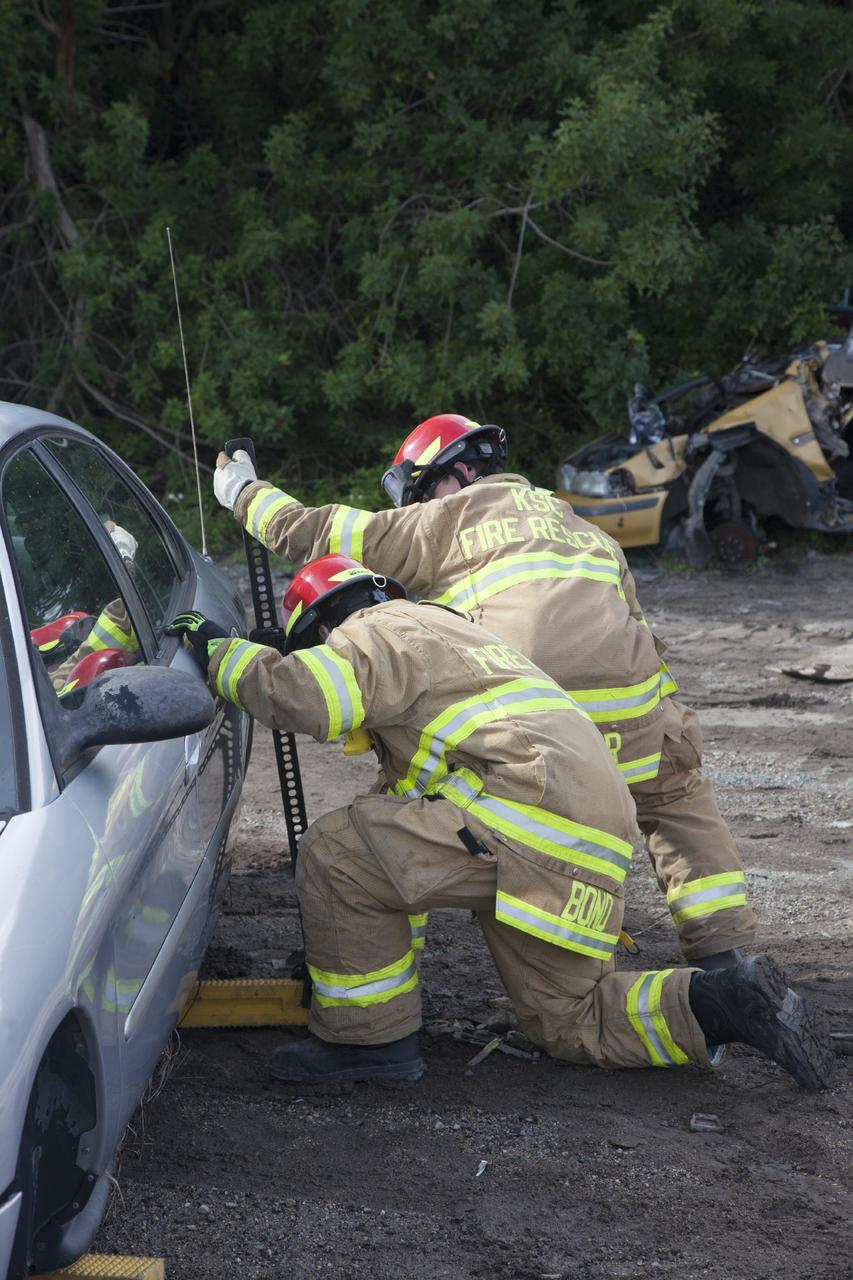
CAPE CANAVERAL, Fla. – Special Rescue Operations firefighters with NASA Fire Rescue Services in the Protective Services Office at NASA’s Kennedy Space Center in Florida practice vehicle extrication training at an auto salvage yard near the center. Two firefighters insert blocks under the vehicle to stabilize it. They will use the Jaws of Life on the vehicle to simulate the rescue of a trapped and injured person. Other rescue equipment includes axes, tools to punch through and clear away the windshield and windows and a hydraulic cutting tool that is used to remove the roof of a car. Kennedy’s firefighters recently achieved Pro Board Certification in aerial fire truck operations. With the completion of vehicle extrication and Jaws of Life training, the Protective Services Office is one step closer to achieving certification in vehicle machinery extrication. Kennedy’s firefighters are with G4S Government Solutions Inc., on the Kennedy Protective Services Contract. Photo credit: NASA/Daniel Casper
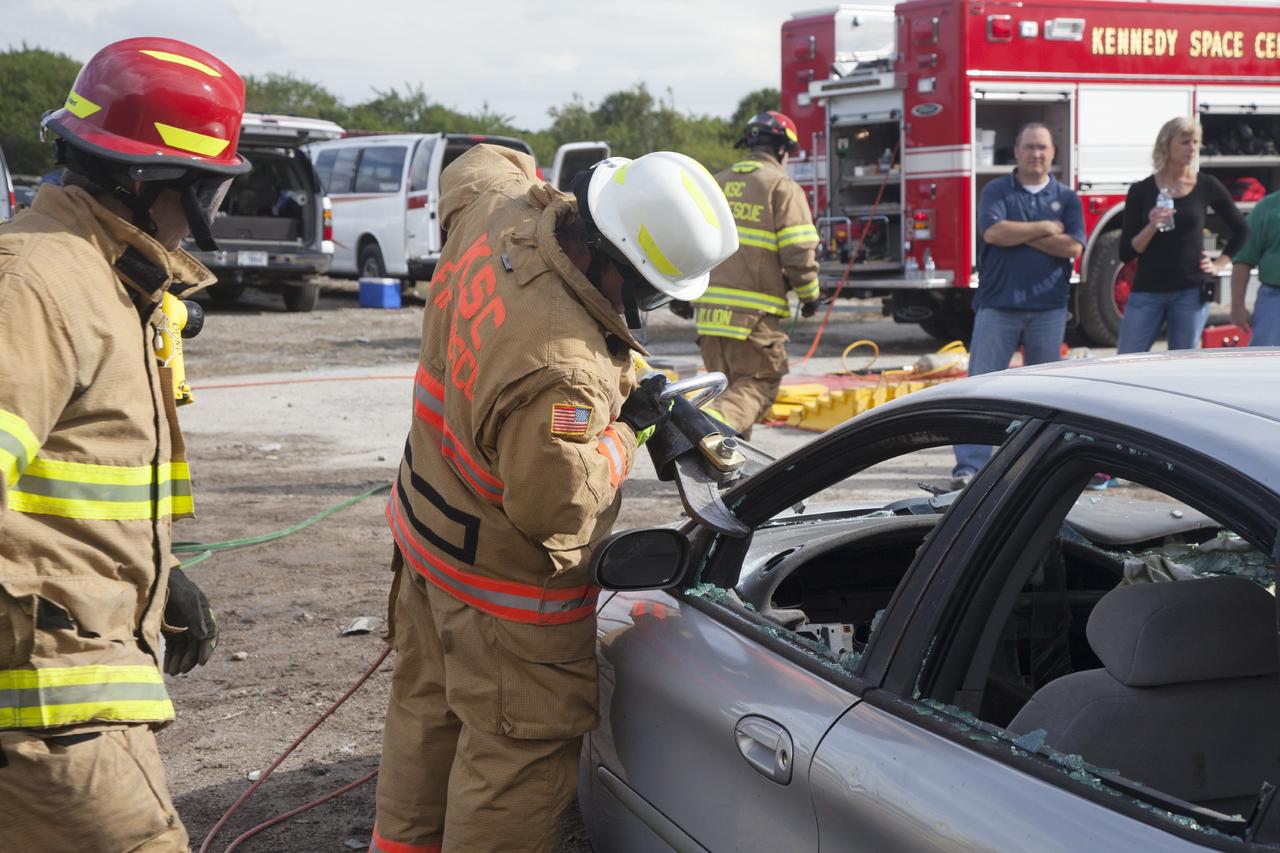
CAPE CANAVERAL, Fla. – Special Rescue Operations firefighters with NASA Fire Rescue Services in the Protective Services Office at NASA’s Kennedy Space Center in Florida practice vehicle extrication training at an auto salvage yard near the center. A firefighter uses a special hydraulic tool to cut through the vehicle in order to remove the roof. They will use the Jaws of Life on the vehicle to simulate the rescue of a trapped and injured person. Other rescue equipment includes axes and tools to punch through and clear away windshields and windows. Kennedy’s firefighters recently achieved Pro Board Certification in aerial fire truck operations. With the completion of vehicle extrication and Jaws of Life training, the Protective Services Office is one step closer to achieving certification in vehicle machinery extrication. Kennedy’s firefighters are with G4S Government Solutions Inc., on the Kennedy Protective Services Contract. Photo credit: NASA/Daniel Casper
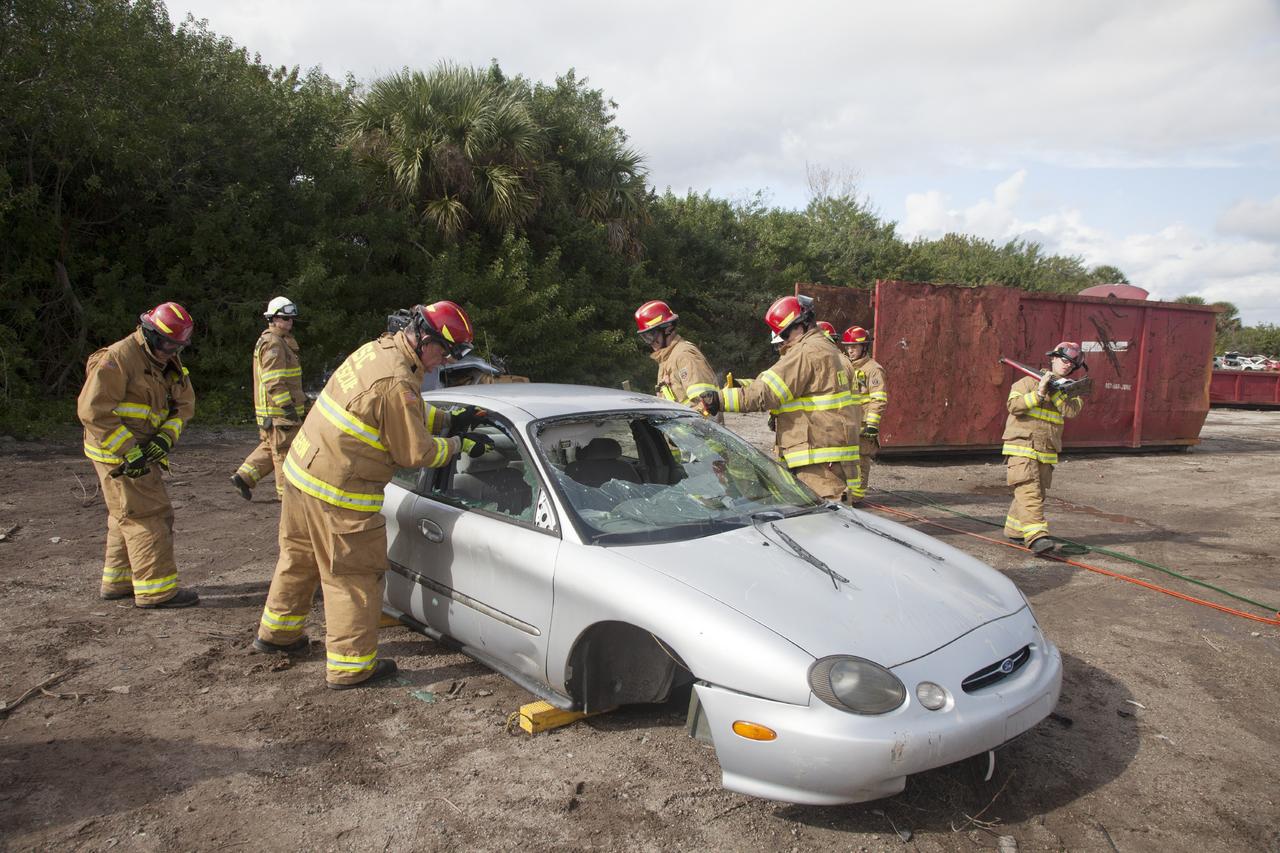
CAPE CANAVERAL, Fla. – Special Rescue Operations firefighters with NASA Fire Rescue Services in the Protective Services Office at NASA’s Kennedy Space Center in Florida practice vehicle extrication training at an auto salvage yard near the center. Stabilizing blocks have been placed underneath the car. Firefighters practiced knocking out the windshield and windows with axes and other tools. They will use the Jaws of Life on the vehicle to simulate the rescue of a trapped and injured person. Other rescue equipment includes a hydraulic cutting tool that is used to remove the roof of a car. Kennedy’s firefighters recently achieved Pro Board Certification in aerial fire truck operations. With the completion of vehicle extrication and Jaws of Life training, the Protective Services Office is one step closer to achieving certification in vehicle machinery extrication. Kennedy’s firefighters are with G4S Government Solutions Inc., on the Kennedy Protective Services Contract. Photo credit: NASA/Daniel Casper
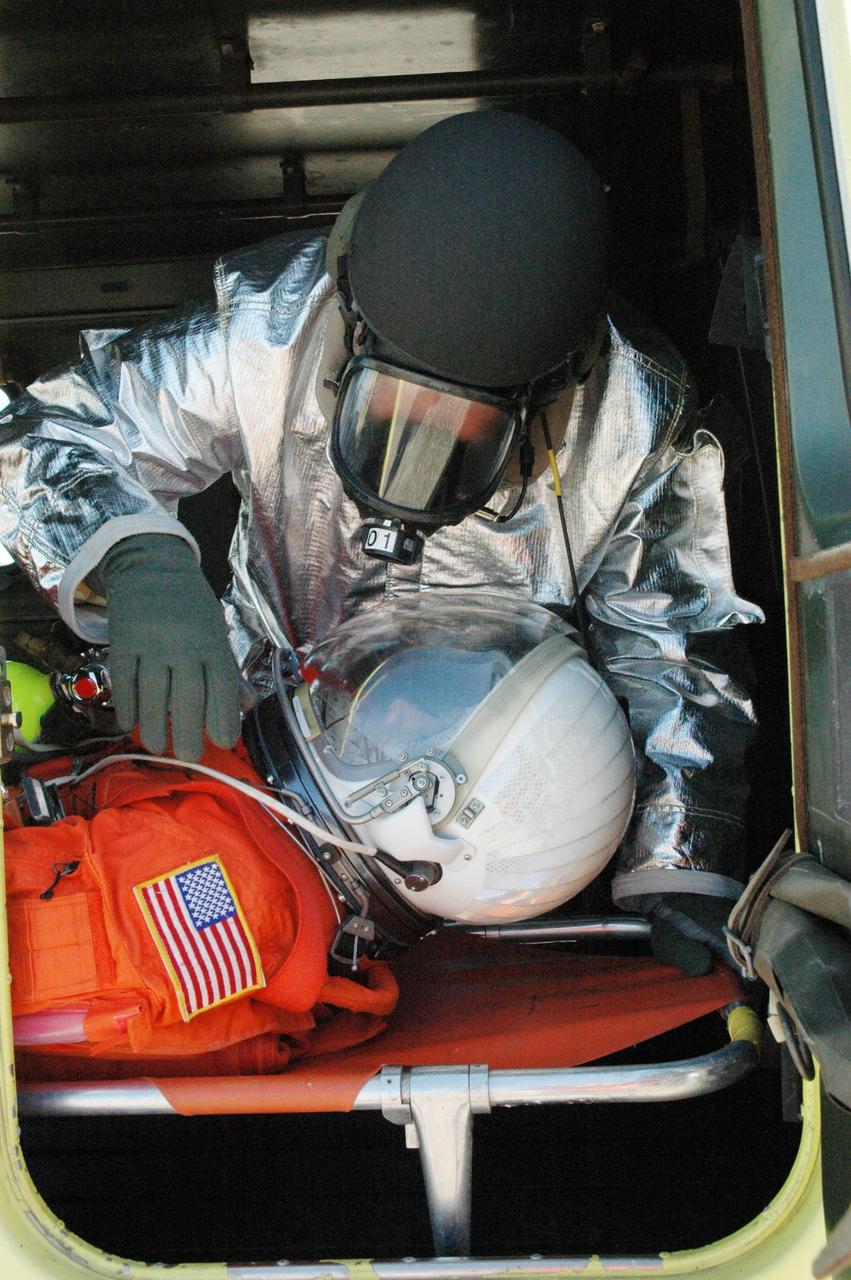
KENNEDY SPACE CENTER, FLA. - At NASA Kennedy Space Center's Shuttle Landing Facility, an emergency rescue worker tends to an "injured astronaut" inside a rescue vehicle. Volunteers and emergency rescue workers are participating in a simulated emergency landing of a shuttle crew. Known as a Mode VI exercise, the operation uses volunteer workers from the Center to pose as astronauts. The purpose of the simulation is to exercise emergency preparedness personnel, equipment and facilities in rescuing astronauts from a downed orbiter and providing immediate medical attention. Photo credit: NASA/Troy Cryder
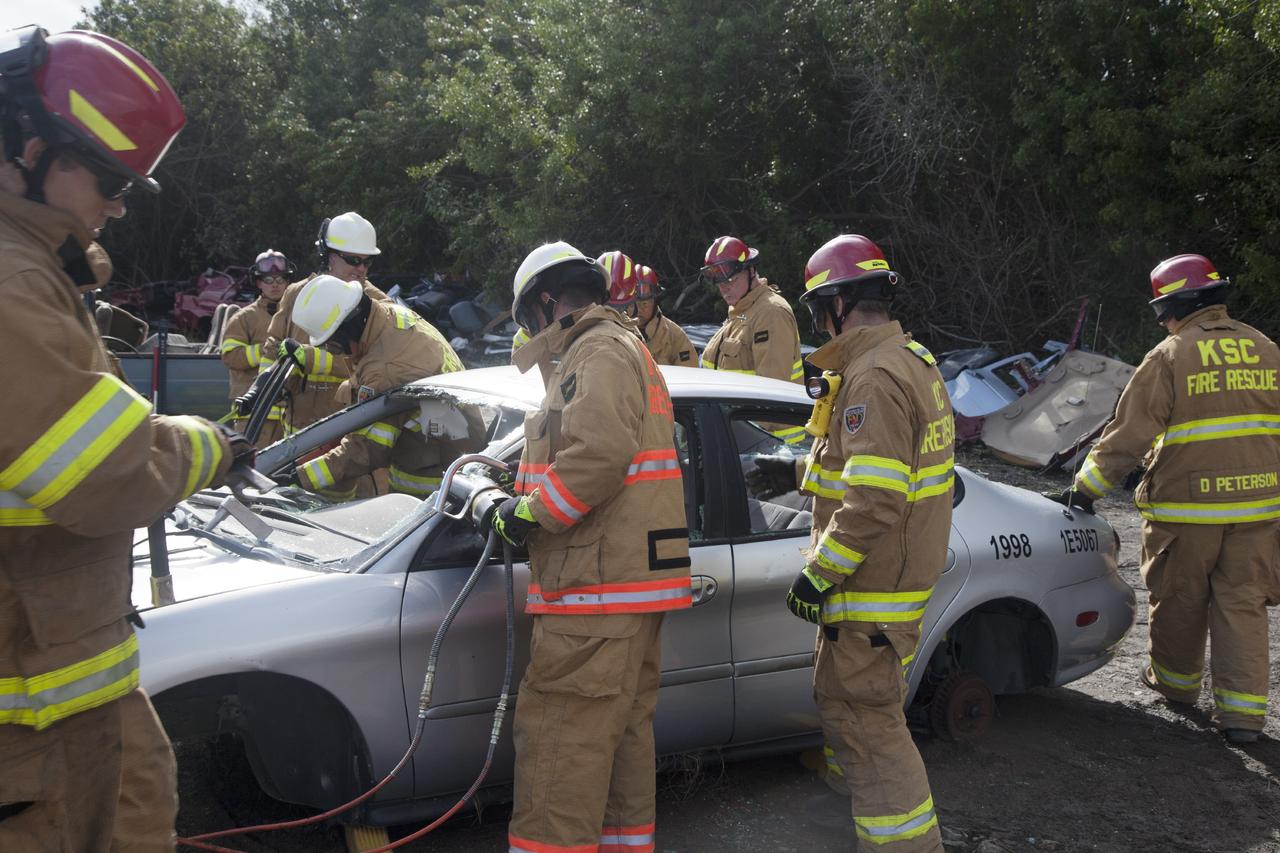
CAPE CANAVERAL, Fla. – Special Rescue Operations firefighters with NASA Fire Rescue Services in the Protective Services Office at NASA’s Kennedy Space Center in Florida practice vehicle extrication training at an auto salvage yard near the center. A firefighter uses a special hydraulic tool to cut through a section of the car to remove the roof, while other firefighters clear the windows and prepare to use the Jaws of Life to simulate the rescue of a trapped and injured person. Other rescue equipment being used includes axes and tools to punch through and clear away windshields and windows. Kennedy’s firefighters recently achieved Pro Board Certification in aerial fire truck operations. With the completion of vehicle extrication and Jaws of Life training, the Protective Services Office is one step closer to achieving certification in vehicle machinery extrication. Kennedy’s firefighters are with G4S Government Solutions Inc., on the Kennedy Protective Services Contract. Photo credit: NASA/Daniel Casper
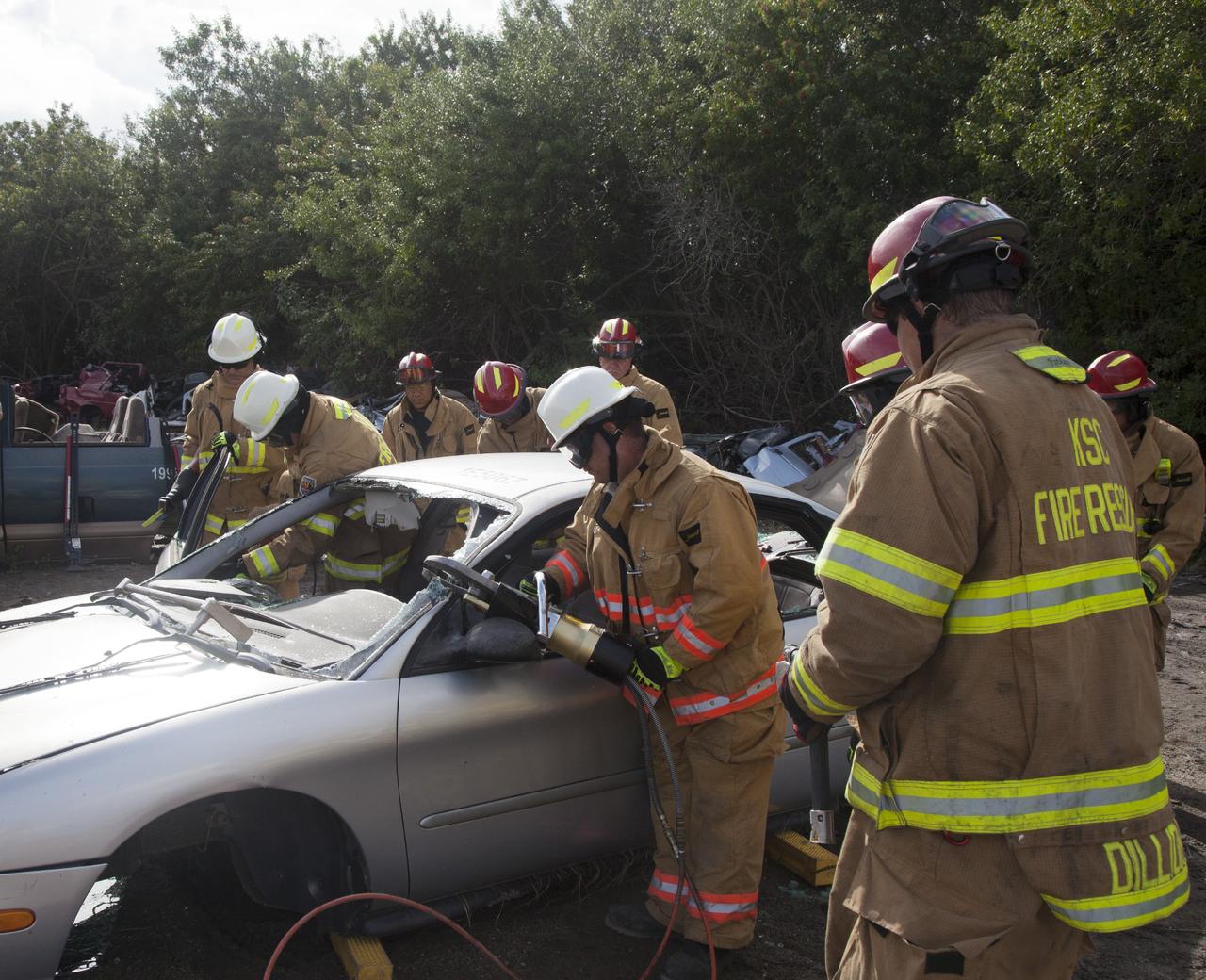
CAPE CANAVERAL, Fla. – Special Rescue Operations firefighters with NASA Fire Rescue Services in the Protective Services Office at NASA’s Kennedy Space Center in Florida practice vehicle extrication training at an auto salvage yard near the center. A firefighter uses a special hydraulic tool to cut through a section of the car to remove the roof, while other firefighters clear the windows and prepare to use the Jaws of Life to simulate the rescue of a trapped and injured person. Other rescue equipment being used includes axes and tools to punch through and clear away windshields and windows. Kennedy’s firefighters recently achieved Pro Board Certification in aerial fire truck operations. With the completion of vehicle extrication and Jaws of Life training, the Protective Services Office is one step closer to achieving certification in vehicle machinery extrication. Kennedy’s firefighters are with G4S Government Solutions Inc., on the Kennedy Protective Services Contract. Photo credit: NASA/Daniel Casper
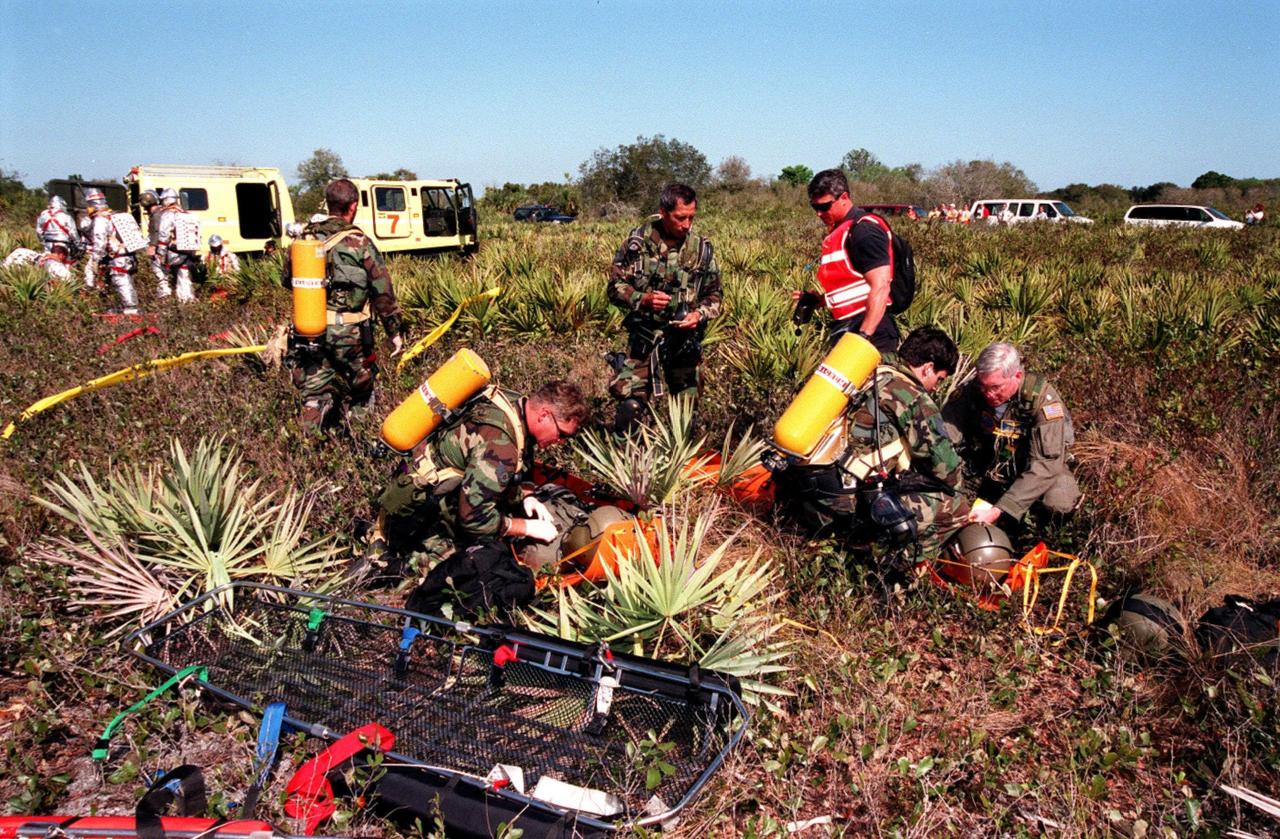
KENNEDY SPACE CENTER, FLA. -- In the simulated rescue mission, the KSC response team takes part in the unlikely scenario of a Shuttle mishap at the Shuttle Landing Facility. The Mode 7 simulation of an astronaut rescue exercised all aspects of command and control, search and rescue, and medical procedures required for a successful rescue. The remote location of the mock-up prevents a totally land-based crew rescue, and calls on a NASA UH-1 helicopter to locate the site and four Air Force HH-60 helicopters to drop emergency equipment and fire/rescue workers to prepare the "crew" for preliminary triage. The helicopters later are used to remove the crew five astronaut candidates, one representative from the Vehicle Integration Test office, and one fire/rescue worker. The exercise concluded with airlifted "patients" arriving safely in the emergency rooms of participating area hospitals.
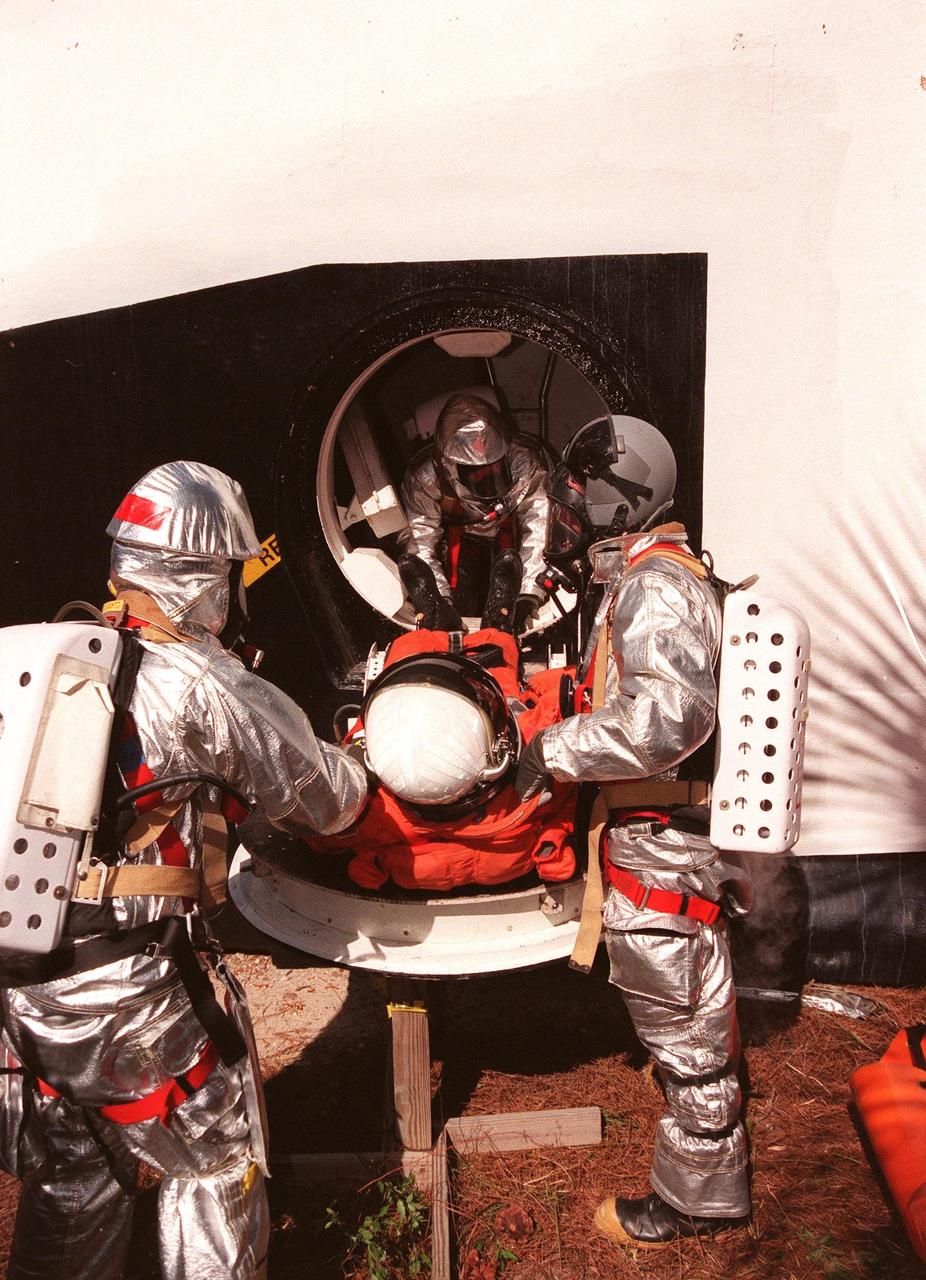
KENNEDY SPACE CENTER, FLA. -- During a simulated rescue mission in the woods near the Shuttle Landing Facility, the KSC response team removes a Shuttle "crew" member from the mock orbiter. The response team is training for the unlikely scenario of a Shuttle mishap at the SLF. The Mode 7 simulation of an astronaut rescue exercises all aspects of command and control, search and rescue, and medical procedures required for a successful rescue. The remote location of the mock-up prevents a totally land-based crew rescue, and calls on a NASA UH-1 helicopter to locate the site and four Air Force HH-60 helicopters to drop emergency equipment and fire/rescue workers to prepare the "crew" for preliminary triage. The helicopters later are used to remove the crew five astronaut candidates, one representative from the Vehicle Integration Test office, and one fire/rescue worker. The exercise concluded with airlifted "patients" arriving safely in the emergency rooms of participating area hospitals
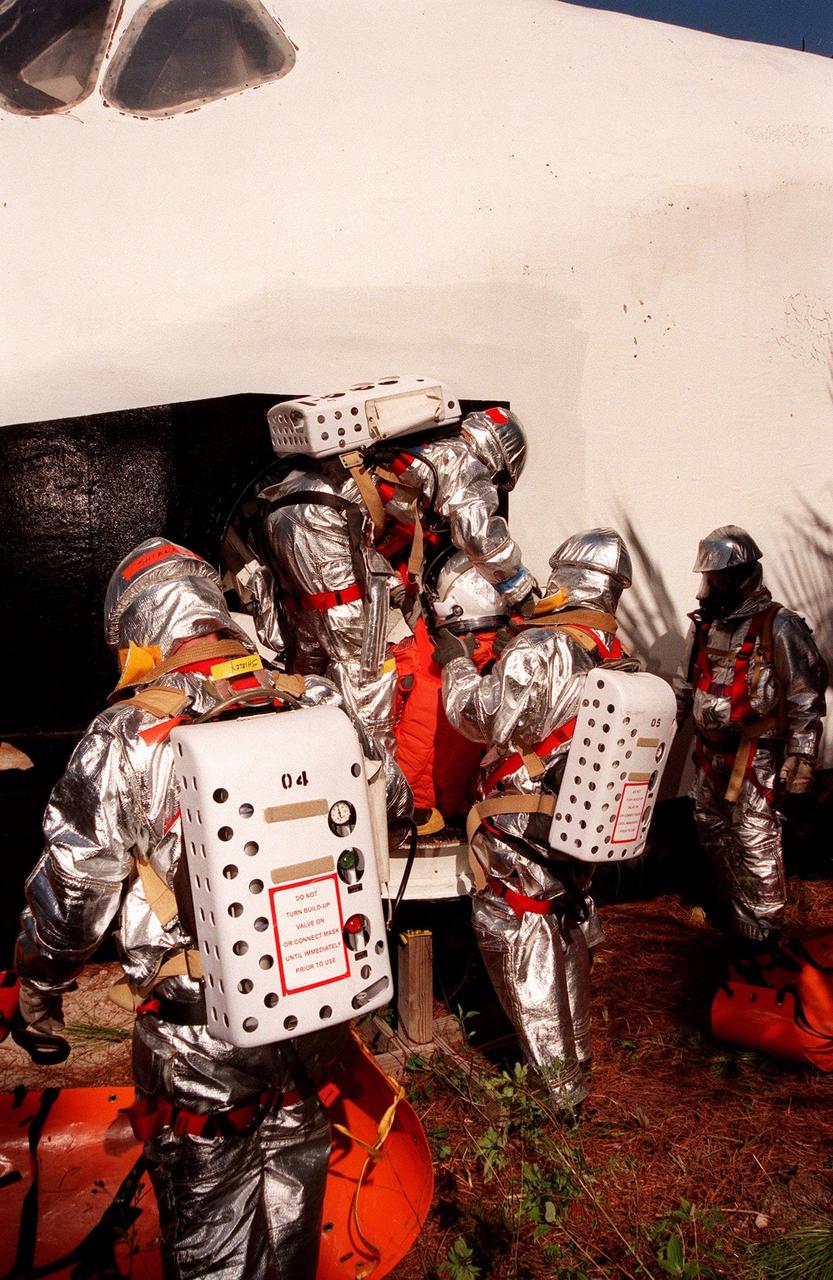
During a simulated rescue mission in the woods near the Shuttle Landing Facility (SLF), the KSC response team removes a crew member from a mock Shuttle. The response team is training for the unlikely scenario of a Shuttle mishap at the SLF. The Mode 7 simulation of an astronaut rescue exercises all aspects of command and control, search and rescue, and medical procedures required for a successful rescue. The remote location of the mock-up prevents a totally land-based crew rescue, and calls on a NASA UH-1 helicopter to locate the site and four Air Force HH-60 helicopters to drop emergency equipment and fire/rescue workers to prepare the "crew" for preliminary triage. The helicopters later are used to remove the crew five astronaut candidates, one representative from the Vehicle Integration Test office, and one fire/rescue worker. The exercise concluded with airlifted "patients" arriving safely in the emergency rooms of participating area hospitals
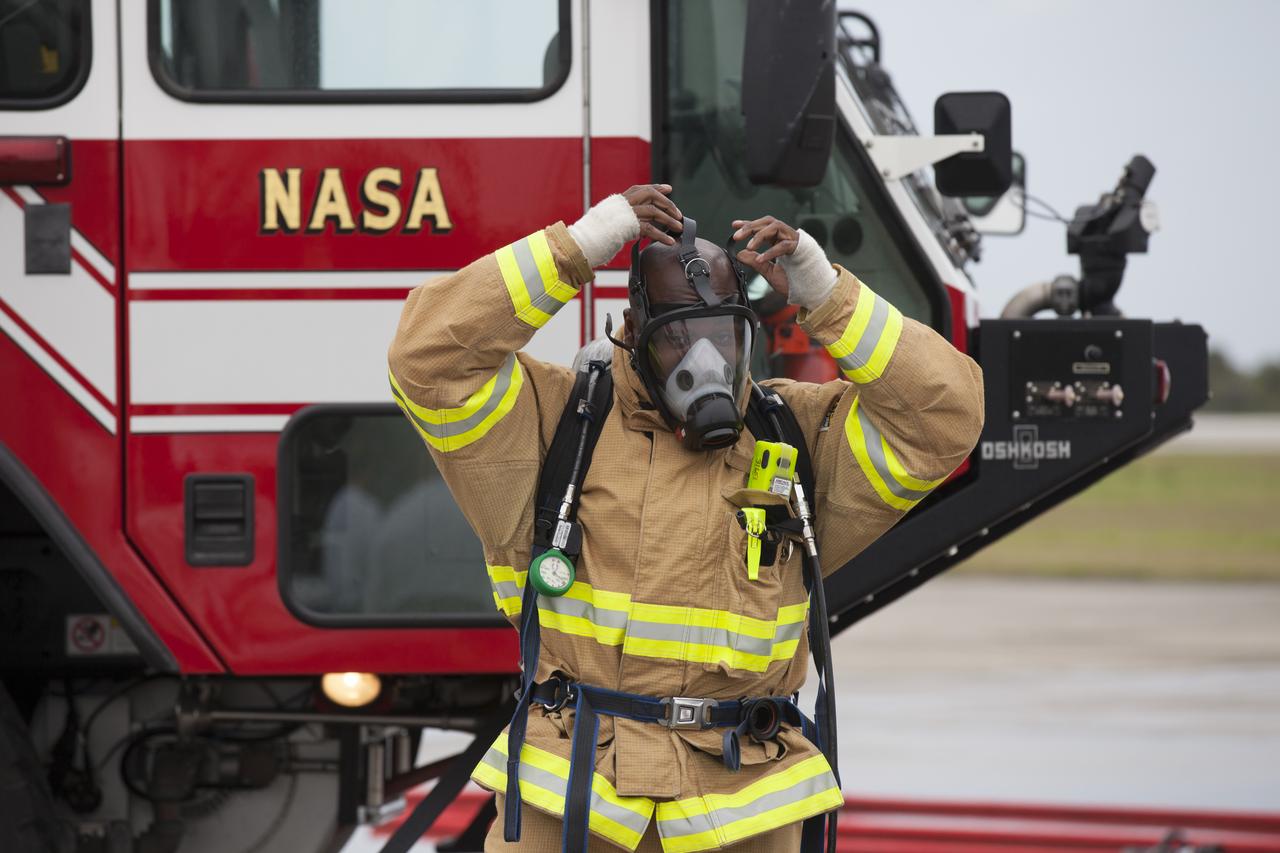
CAPE CANAVERAL, Fla. - Special Rescue Operations firefighters with NASA Fire Rescue Services in the Protective Services Office at NASA’s Kennedy Space Center in Florida practice firefighting skills at the Shuttle Landing Facility. A firefighter dons protective gear to prepare for the training simulation. Kennedy’s firefighters recently achieved Pro Board Certification in aerial fire truck operations and completed vehicle extrication training using the Jaws of Life. The Protective Services Office is one step closer to achieving certification in vehicle machinery extrication and other rescue skills. Kennedy’s firefighters are with G4S Government Solutions Inc., on the Kennedy Protective Services Contract. Photo credit: NASA/Kim Shiflett
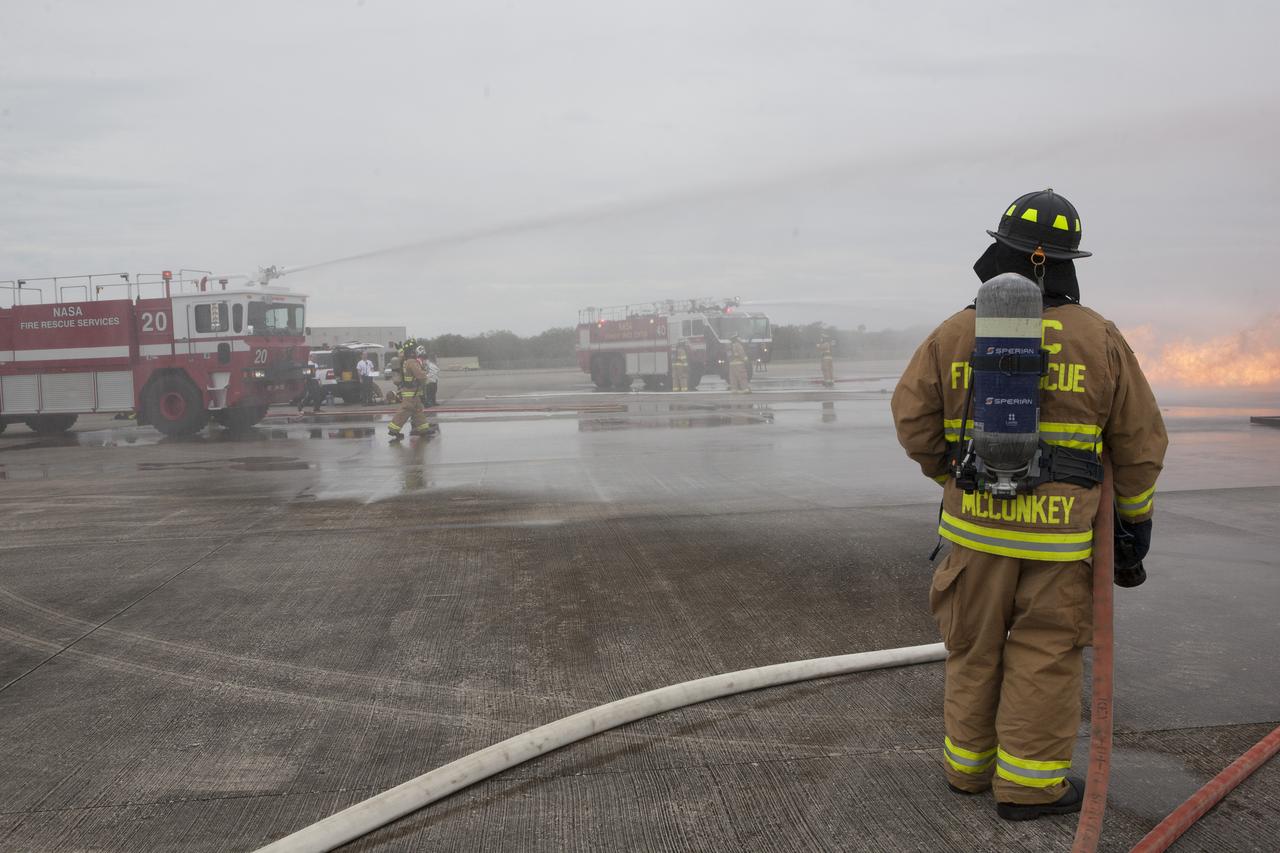
CAPE CANAVERAL, Fla. - Special Rescue Operations firefighters with NASA Fire Rescue Services in the Protective Services Office at NASA’s Kennedy Space Center in Florida prepare to participate in a training exercise at the Shuttle Landing Facility. A small fire is burning near a mock-up of a plane during the training exercise. Kennedy’s firefighters recently achieved Pro Board Certification in aerial fire truck operations and completed vehicle extrication training using the Jaws of Life. The Protective Services Office is one step closer to achieving certification in vehicle machinery extrication and other rescue skills. Kennedy’s firefighters are with G4S Government Solutions Inc., on the Kennedy Protective Services Contract. Photo credit: NASA/Kim Shiflett
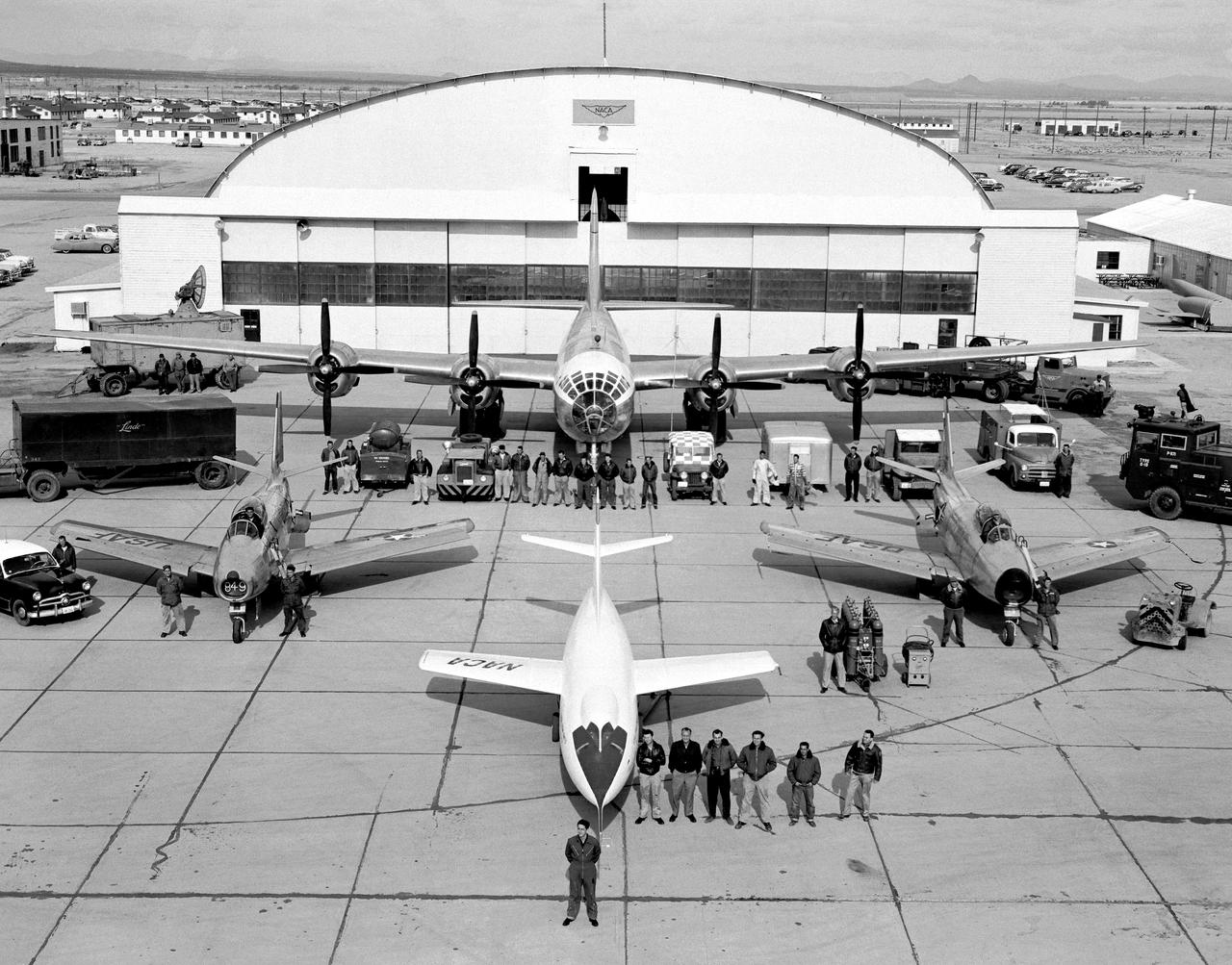
These people and this equipment supported the flight of the NACA D-558-2 Skyrocket at the High-Speed Flight Station at South Base, Edwards AFB. Note the two Sabre chase planes, the P2B-1S launch aircraft, and the profusion of ground support equipment, including communications, tracking, maintenance, and rescue vehicles. Research pilot A. Scott Crossfield stands in front of the Skyrocket.
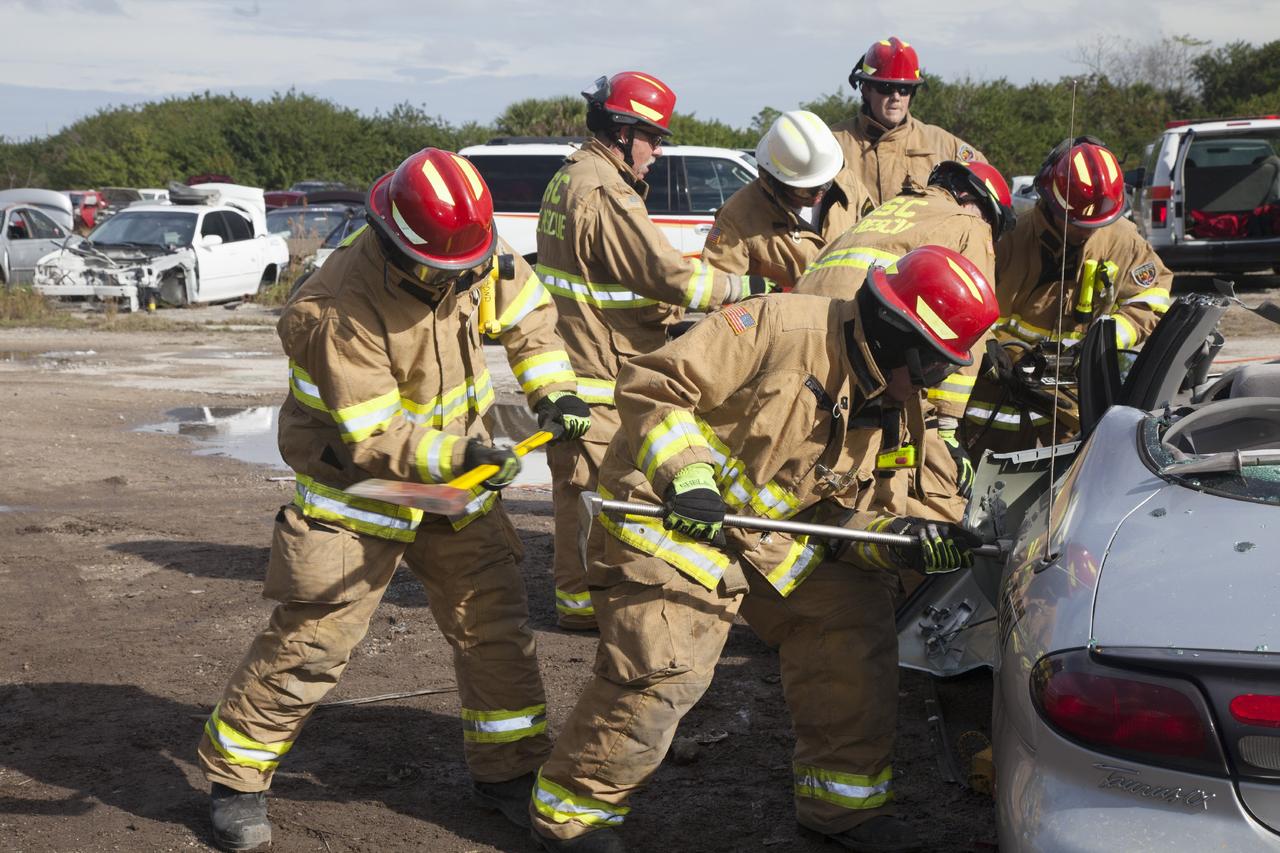
CAPE CANAVERAL, Fla. – Special Rescue Operations firefighters with NASA Fire Rescue Services in the Protective Services Office at NASA’s Kennedy Space Center in Florida practice vehicle extrication training at an auto salvage yard near the center. In the foreground, a firefighter with an axe assists as another firefighter uses a special tool to punch through the door of the vehicle. A special hydraulic cutting tool and reciprocating saw were used to cut through and remove the roof. In the background, other firefighters are practicing with the Jaws of Life to simulate the rescue of a trapped and injured person. Kennedy’s firefighters recently achieved Pro Board Certification in aerial fire truck operations. With the completion of vehicle extrication and Jaws of Life training, the Protective Services Office is one step closer to achieving certification in vehicle machinery extrication. Kennedy’s firefighters are with G4S Government Solutions Inc., on the Kennedy Protective Services Contract. Photo credit: NASA/Daniel Casper
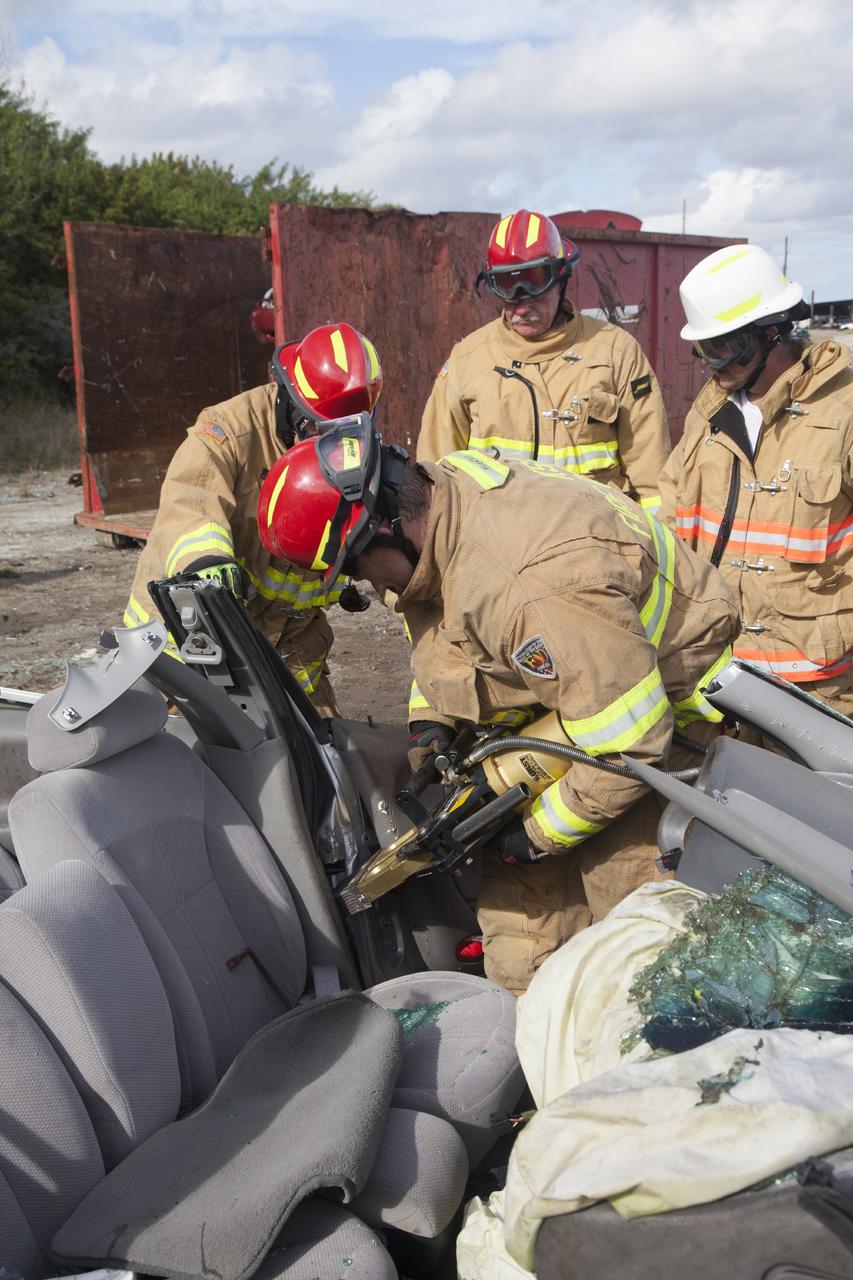
CAPE CANAVERAL, Fla. – Special Rescue Operations firefighters with NASA Fire Rescue Services in the Protective Services Office at NASA’s Kennedy Space Center in Florida practice vehicle extrication training at an auto salvage yard near the center. A firefighter uses the Jaws of Life to finish removing the door from the vehicle and simulate the rescue of a trapped and injured person. A special hydraulic cutting tool and reciprocating saw were used to cut through and remove the roof. An axe and other special tools were used to punch through and clear away the windshield and windows. Kennedy’s firefighters recently achieved Pro Board Certification in aerial fire truck operations. With the completion of vehicle extrication and Jaws of Life training, the Protective Services Office is one step closer to achieving certification in vehicle machinery extrication. Kennedy’s firefighters are with G4S Government Solutions Inc., on the Kennedy Protective Services Contract. Photo credit: NASA/Daniel Casper
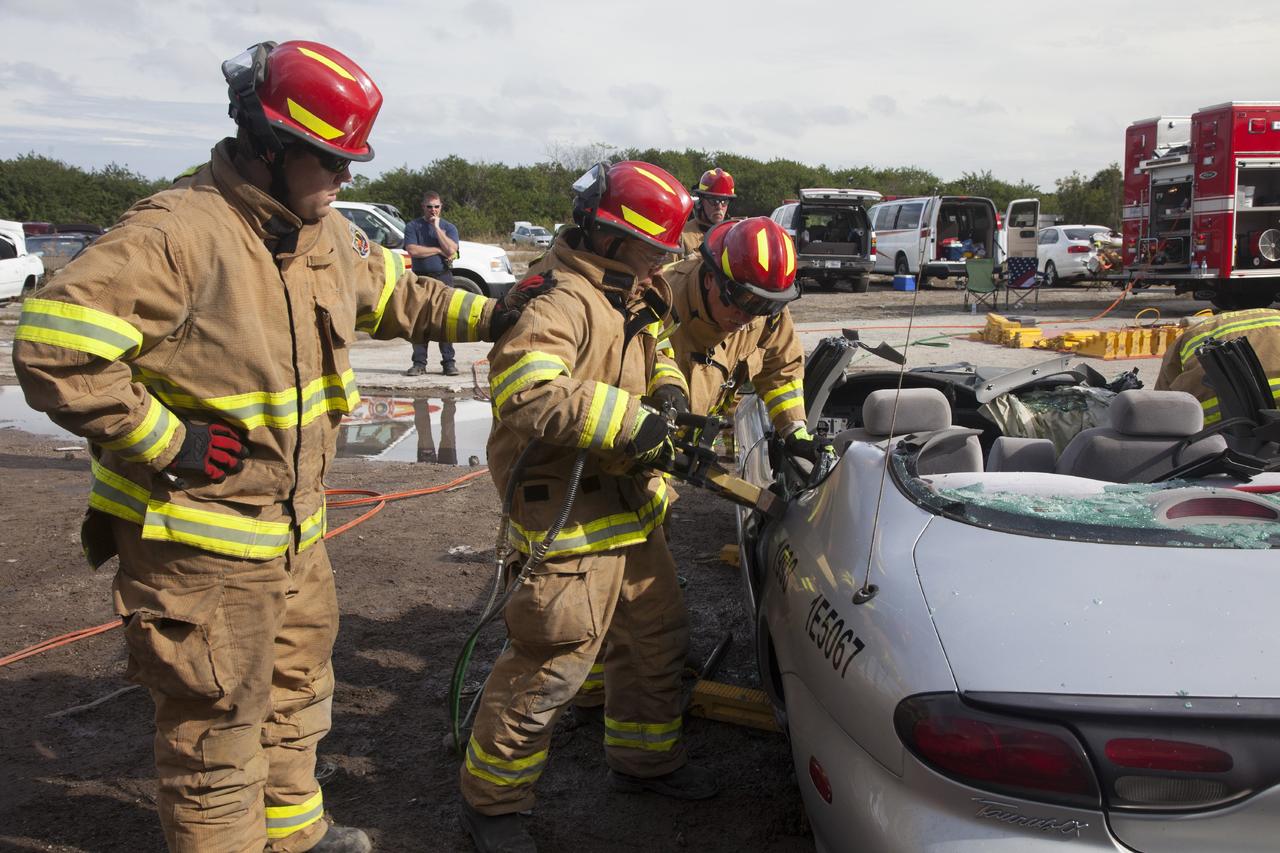
CAPE CANAVERAL, Fla. – Special Rescue Operations firefighters with NASA Fire Rescue Services in the Protective Services Office at NASA’s Kennedy Space Center in Florida practice vehicle extrication training at an auto salvage yard near the center. Two firefighters assist as another firefighter uses the Jaws of Life on the car to simulate the rescue of a trapped and injured person. A special hydraulic cutting tool and reciprocating saw were used to remove the roof of the vehicle. Other firefighters used axes and special tools to punch through and clear away the windshield and the windows. Kennedy’s firefighters recently achieved Pro Board Certification in aerial fire truck operations. With the completion of vehicle extrication and Jaws of Life training, the Protective Services Office is one step closer to achieving certification in vehicle machinery extrication. Kennedy’s firefighters are with G4S Government Solutions Inc., on the Kennedy Protective Services Contract. Photo credit: NASA/Daniel Casper
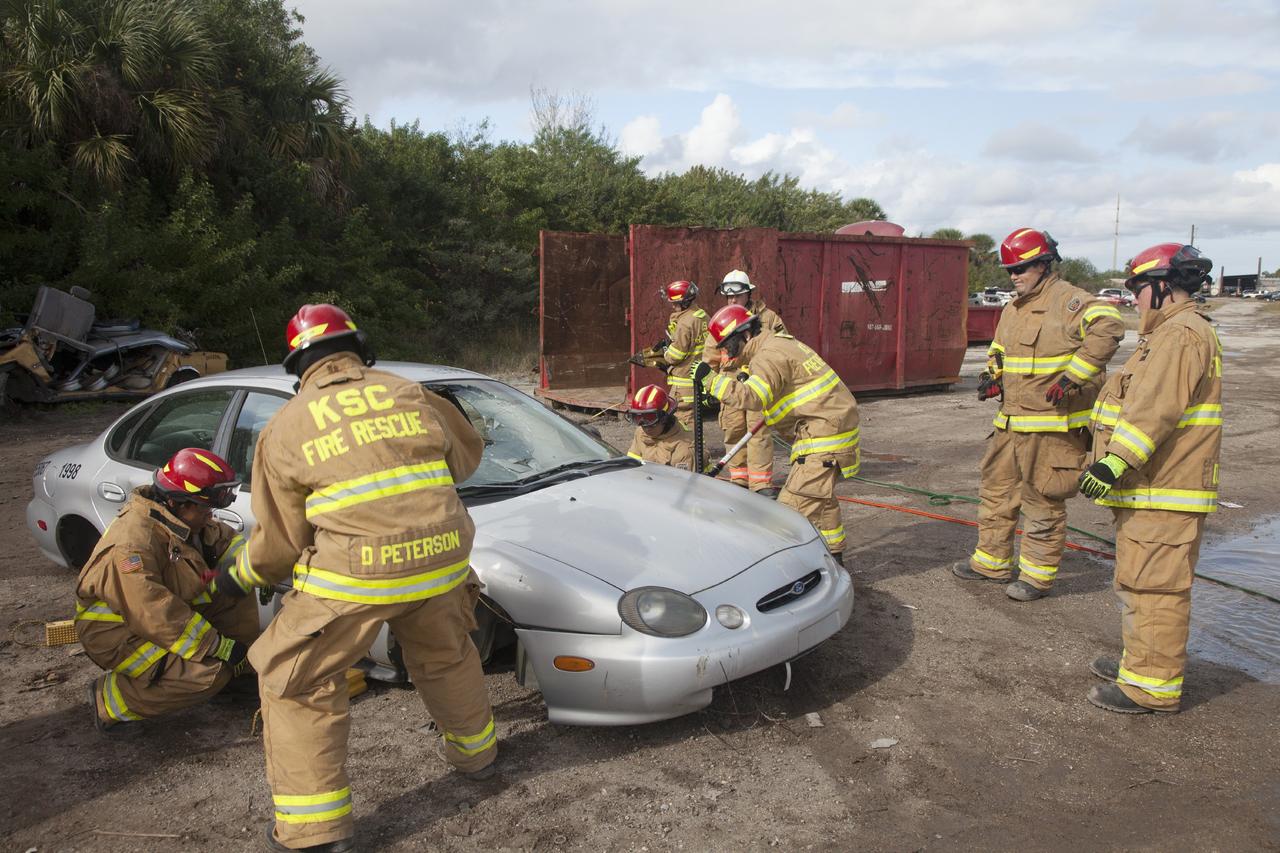
CAPE CANAVERAL, Fla. – Special Rescue Operations firefighters with NASA Fire Rescue Services in the Protective Services Office at NASA’s Kennedy Space Center in Florida practice vehicle extrication training at an auto salvage yard near the center. The firefighters used the Jaws of Life on the vehicle to simulate the rescue of a trapped and injured person. Other equipment used includes axes, tools to punch through and clear away the windshield and windows and a hydraulic cutting tool that is used to remove the roof of a car. Kennedy’s firefighters recently achieved Pro Board Certification in aerial fire truck operations. With the completion of vehicle extrication and Jaws of Life training, the Protective Services Office is one step closer to achieving certification in vehicle machinery extrication. Kennedy’s firefighters are with G4S Government Solutions Inc., on the Kennedy Protective Services Contract. Photo credit: NASA/Daniel Casper
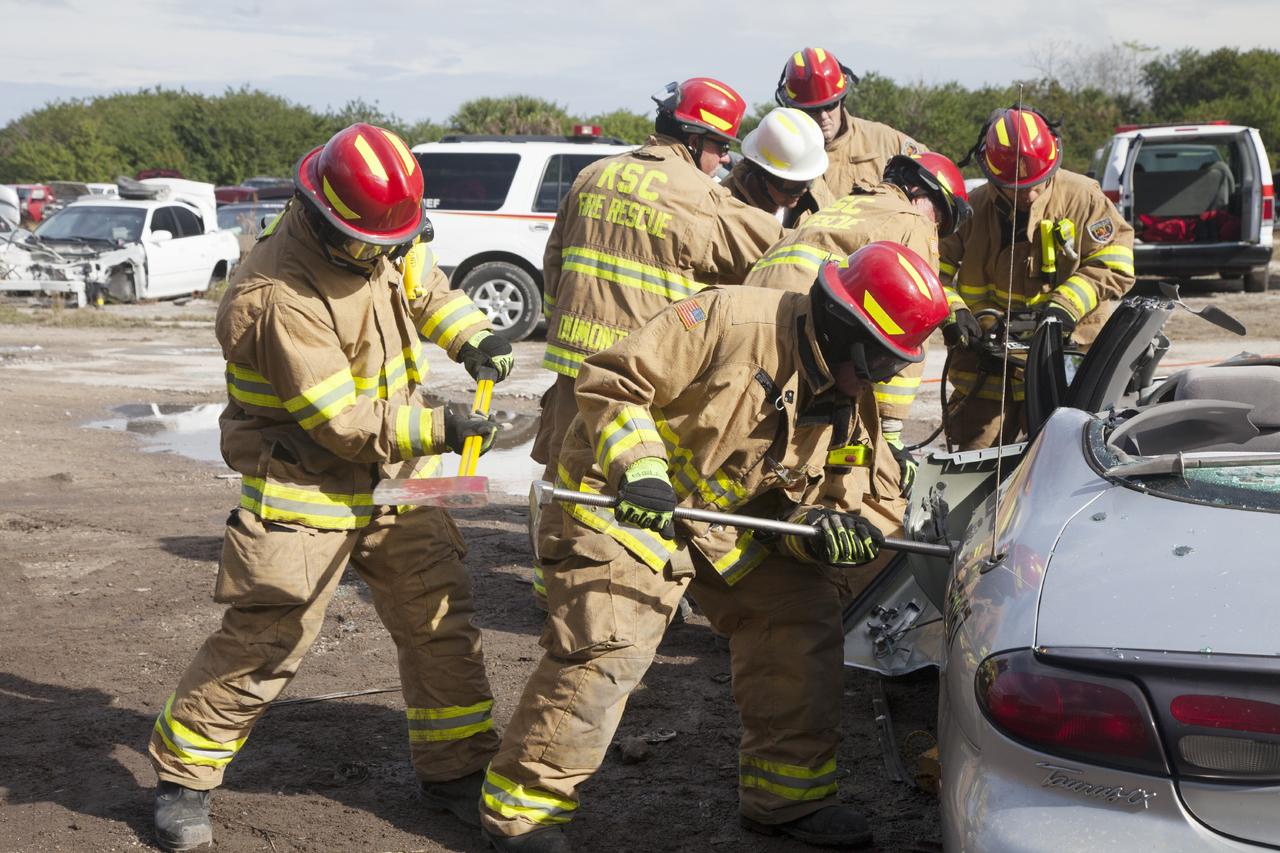
CAPE CANAVERAL, Fla. – Special Rescue Operations firefighters with NASA Fire Rescue Services in the Protective Services Office at NASA’s Kennedy Space Center in Florida practice vehicle extrication training at an auto salvage yard near the center. In the foreground, a firefighter with an axe assists as another firefighter uses a special tool to punch through the door of the vehicle. A special hydraulic cutting tool and reciprocating saw were used to cut through and remove the roof. In the background, other firefighters are practicing with the Jaws of Life to simulate the rescue of a trapped and injured person. Kennedy’s firefighters recently achieved Pro Board Certification in aerial fire truck operations. With the completion of vehicle extrication and Jaws of Life training, the Protective Services Office is one step closer to achieving certification in vehicle machinery extrication. Kennedy’s firefighters are with G4S Government Solutions Inc., on the Kennedy Protective Services Contract. Photo credit: NASA/Daniel Casper
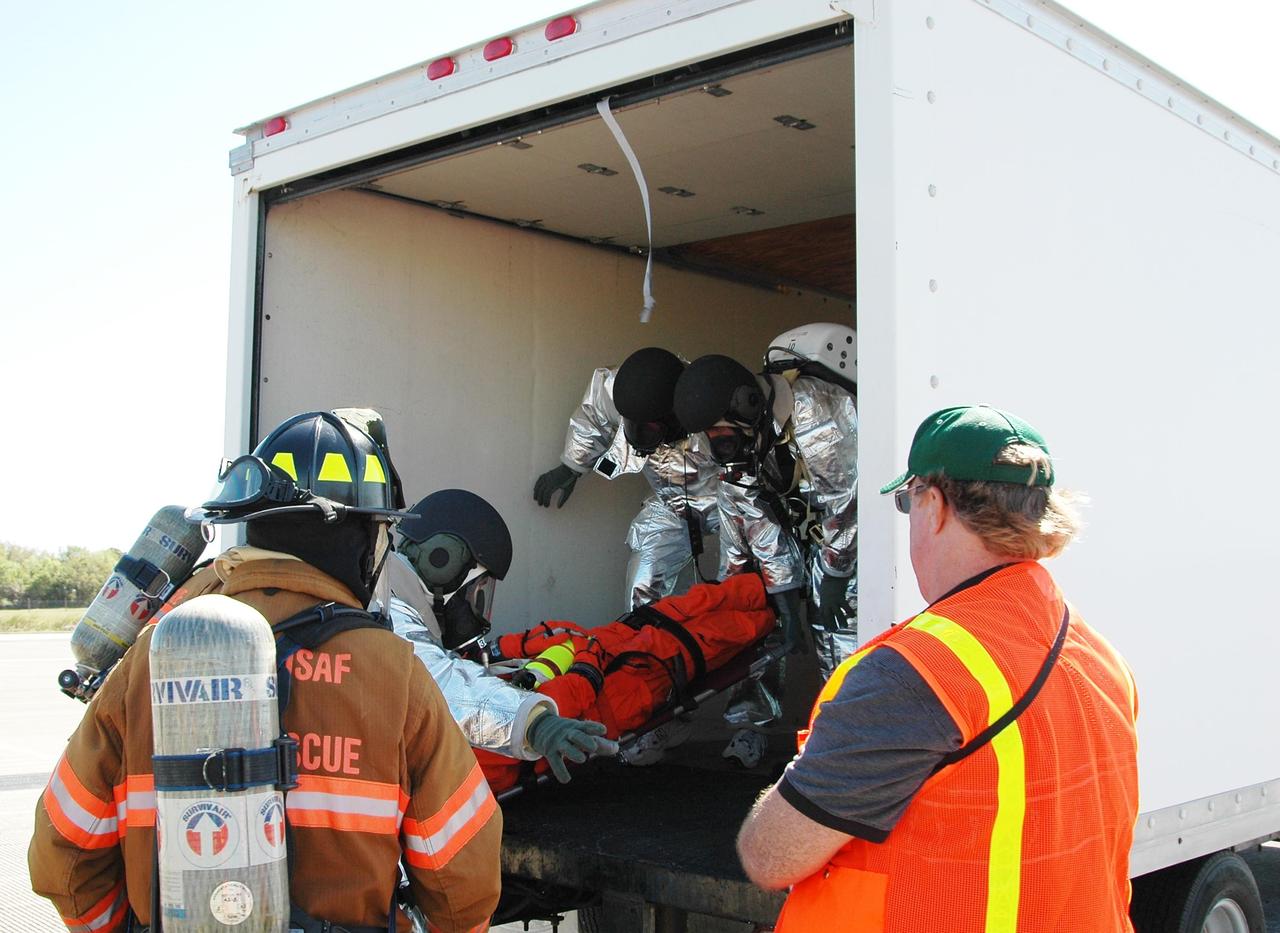
KENNEDY SPACE CENTER, FLA. - In a simulated emergency landing of a shuttle crew at NASA Kennedy Space Center's Shuttle Landing Facility, emergency rescue personnel place an "injured astronaut" into a rescue vehicle. Known as a Mode VI exercise, the operation uses volunteer workers from the Center to pose as astronauts. The purpose of the simulation is to exercise emergency preparedness personnel, equipment and facilities in rescuing astronauts from a downed orbiter and providing immediate medical attention. Photo credit: NASA/Kim Shiflett
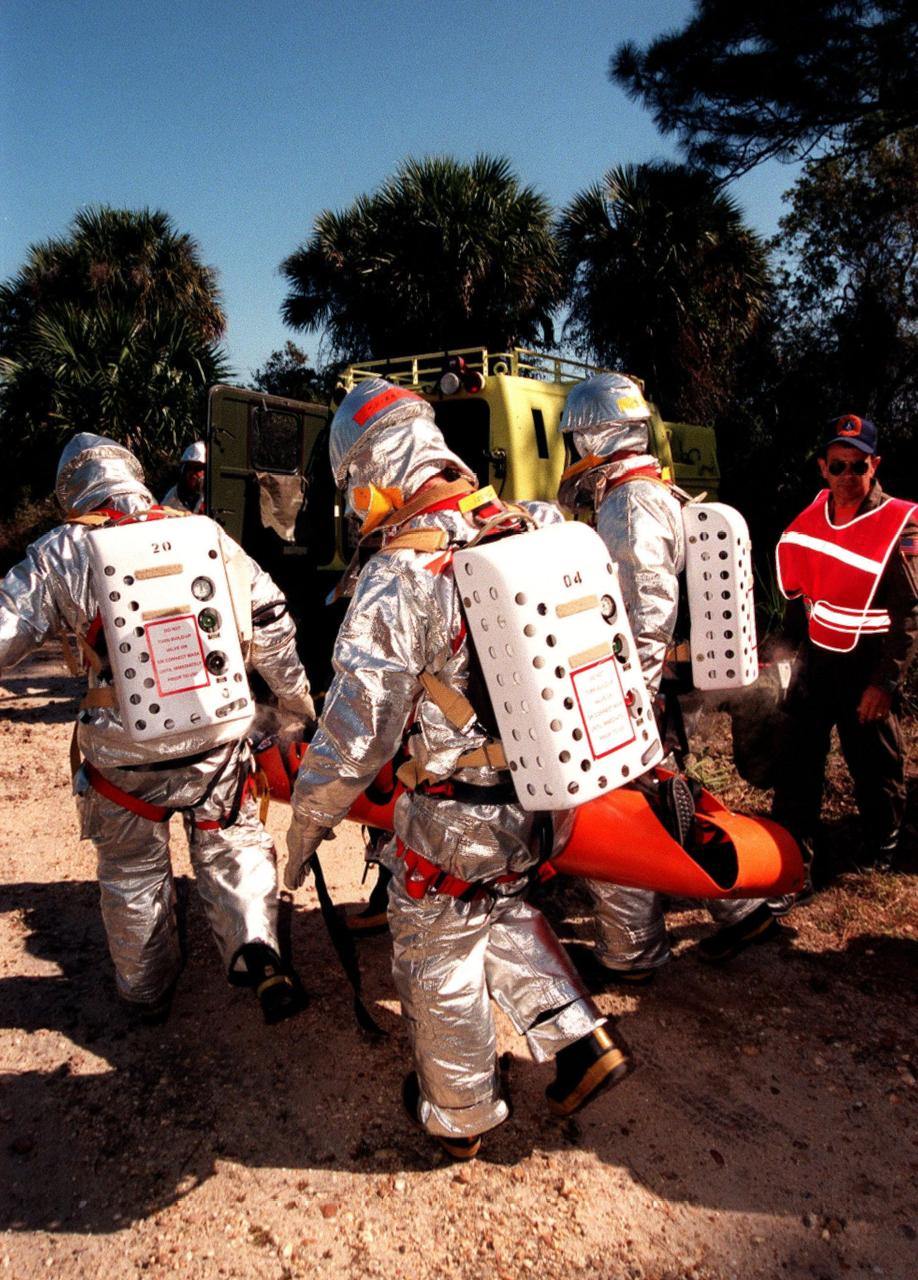
KENNEDY SPACE CENTER, FLA. -- In the woods next to the Shuttle Landing Facility (SLF), the KSC response team takes part in training for the unlikely scenario of a Shuttle mishap at the SLF. The Mode 7 simulation of an astronaut rescue exercises all aspects of command and control, search and rescue, and medical procedures required for a successful rescue. The remote location of the mock-up prevents a totally land-based crew rescue, and calls on a NASA UH-1 helicopter to locate the site and four Air Force HH-60 helicopters to drop emergency equipment and fire/rescue workers to prepare the "crew" for preliminary triage. The helicopters later are used to remove the crew five astronaut candidates, one representative from the Vehicle Integration Test office, and one fire/rescue worker. The exercise concluded with airlifted "patients" arriving safely in the emergency rooms of participating area hospitals
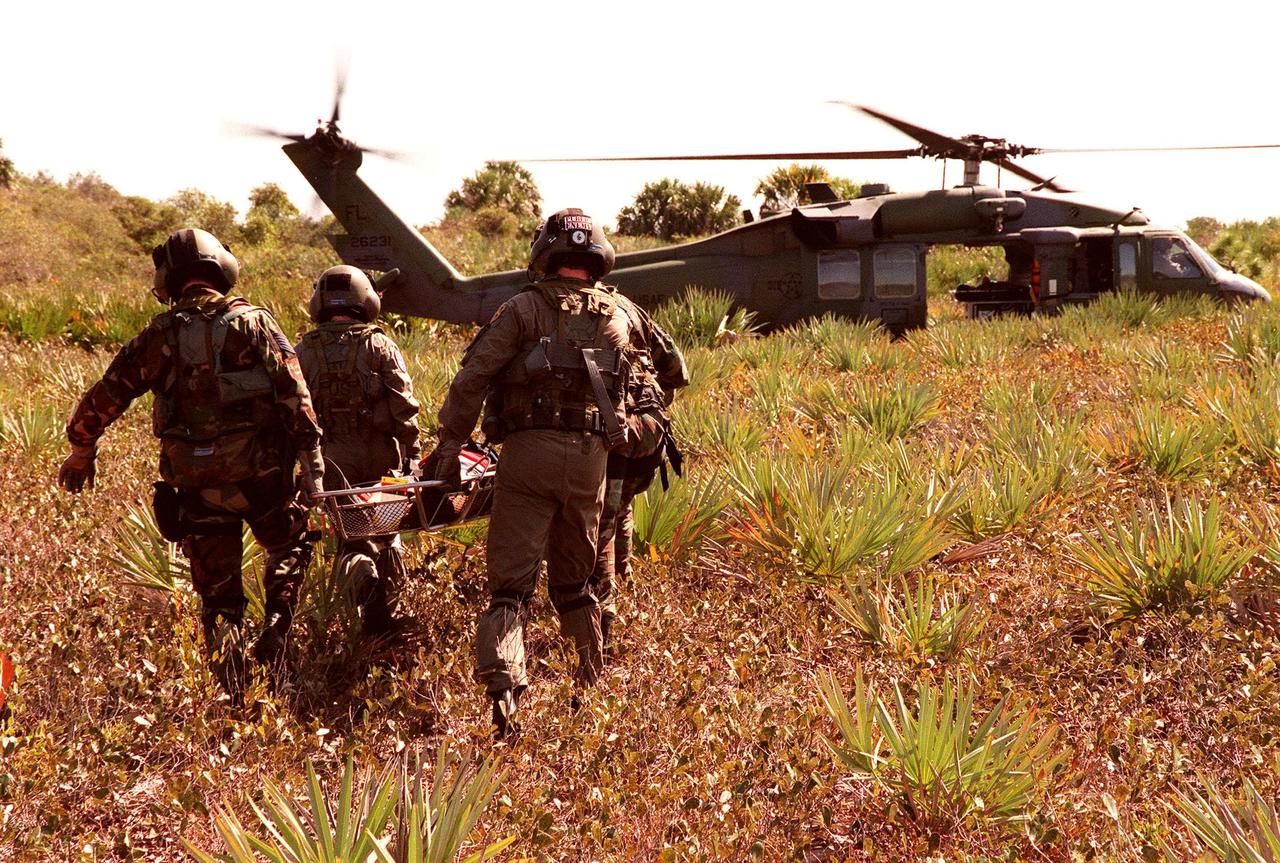
KENNEDY SPACE CENTER, FLA. -- During a simulated rescue mission in the woods near the Shuttle Landing Facility (SLF), the KSC response team practices carrying an injured crew member to an Air Force HH-60 helicopter for transport to a local hospital. The response team is training for the unlikely scenario of a Shuttle mishap at the SLF. The Mode 7 simulation of an astronaut rescue exercises all aspects of command and control, search and rescue, and medical procedures required for a successful rescue. The remote location of the mock-up prevents a totally land-based crew rescue, and calls on a NASA UH-1 helicopter to locate the site and four Air Force HH-60 helicopters to reach the site, drop emergency equipment and later remove the "crew" five astronaut candidates, one representative from the Vehicle Integration Test office, and one fire/rescue worker. The exercise will conclude with airlifted "patients" arriving safely in the emergency rooms of participating area hospitals
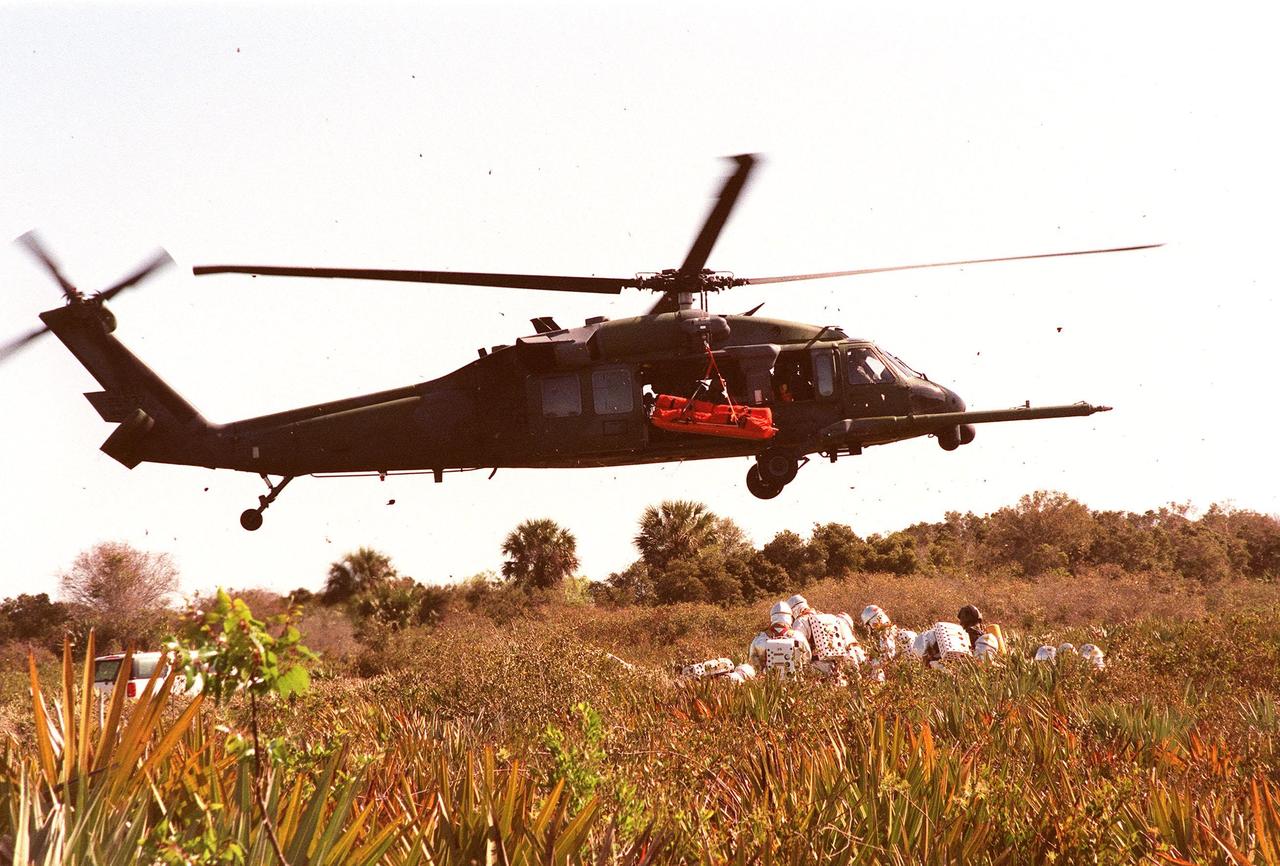
KENNEDY SPACE CENTER, FLA. -- During a simulated rescue mission in the woods near the Shuttle Landing Facility (SLF), the KSC response team practices lifting an injured crew member to an Air Force HH-60 helicopter for transport to a local hospital. The response team is training for the unlikely scenario of a Shuttle mishap at the SLF. The Mode 7 simulation of an astronaut rescue exercises all aspects of command and control, search and rescue, and medical procedures required for a successful rescue. The remote location of the mock-up prevents a totally land-based crew rescue, and calls on a NASA UH-1 helicopter to locate the site and four Air Force HH-60 helicopters to reach and prepare the "crew" five astronaut candidates, one representative from the Vehicle Integration Test office, and one fire/rescue worker for preliminary triage. The exercise will conclude with airlifted "patients" arriving safely in the emergency rooms of participating area hospitals
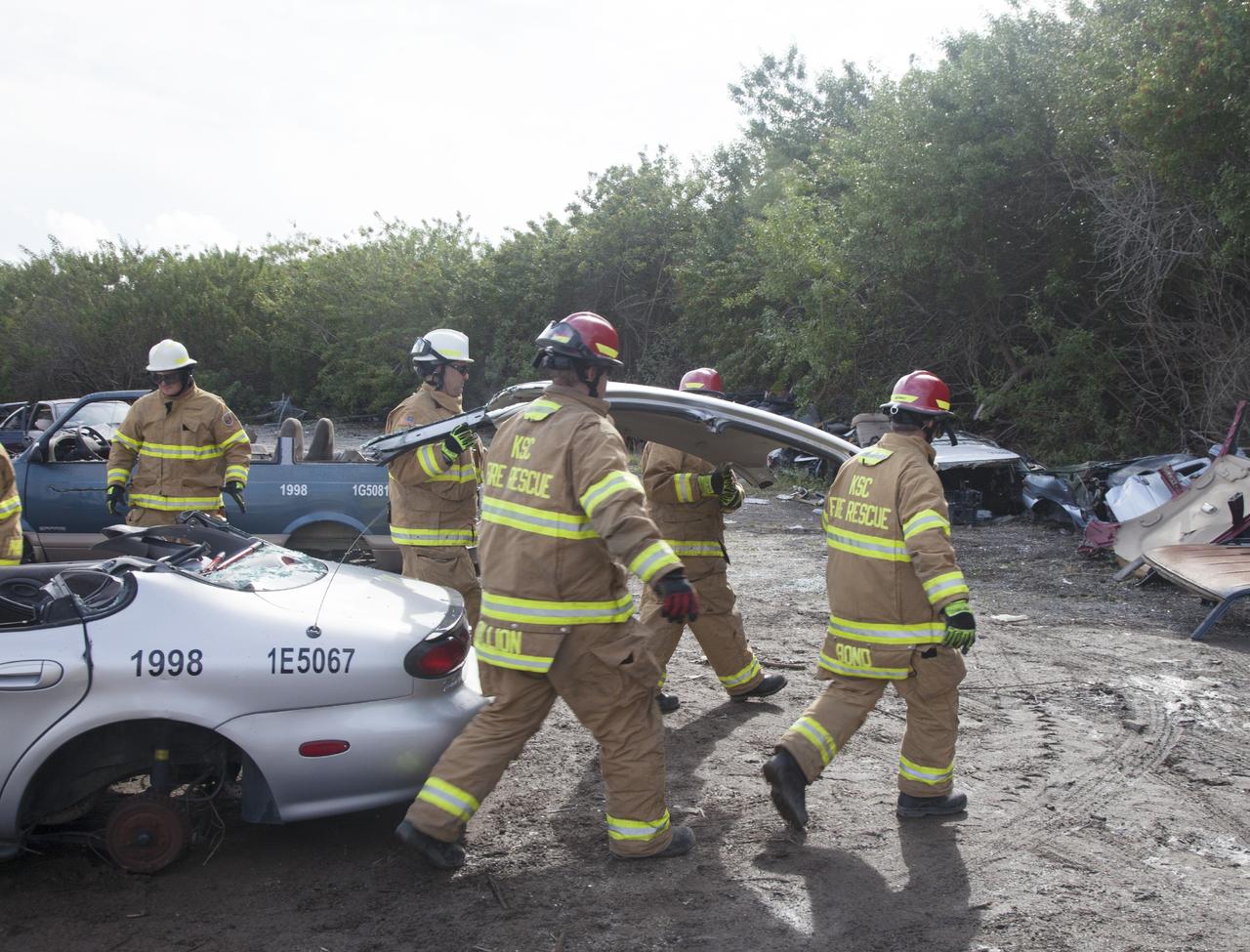
CAPE CANAVERAL, Fla. – Special Rescue Operations firefighters with NASA Fire Rescue Services in the Protective Services Office at NASA’s Kennedy Space Center in Florida practice vehicle extrication training at an auto salvage yard near the center. Firefighters carry away the roof of the car that was removed using a special hydraulic cutting tool and reciprocating saw. Other firefighters used axes and special tools to punch through and clear away the windshield and windows. They will use the Jaws of Life to simulate the rescue of a trapped and injured person. Kennedy’s firefighters recently achieved Pro Board Certification in aerial fire truck operations. With the completion of vehicle extrication and Jaws of Life training, the Protective Services Office is one step closer to achieving certification in vehicle machinery extrication. Kennedy’s firefighters are with G4S Government Solutions Inc., on the Kennedy Protective Services Contract. Photo credit: NASA/Daniel Casper
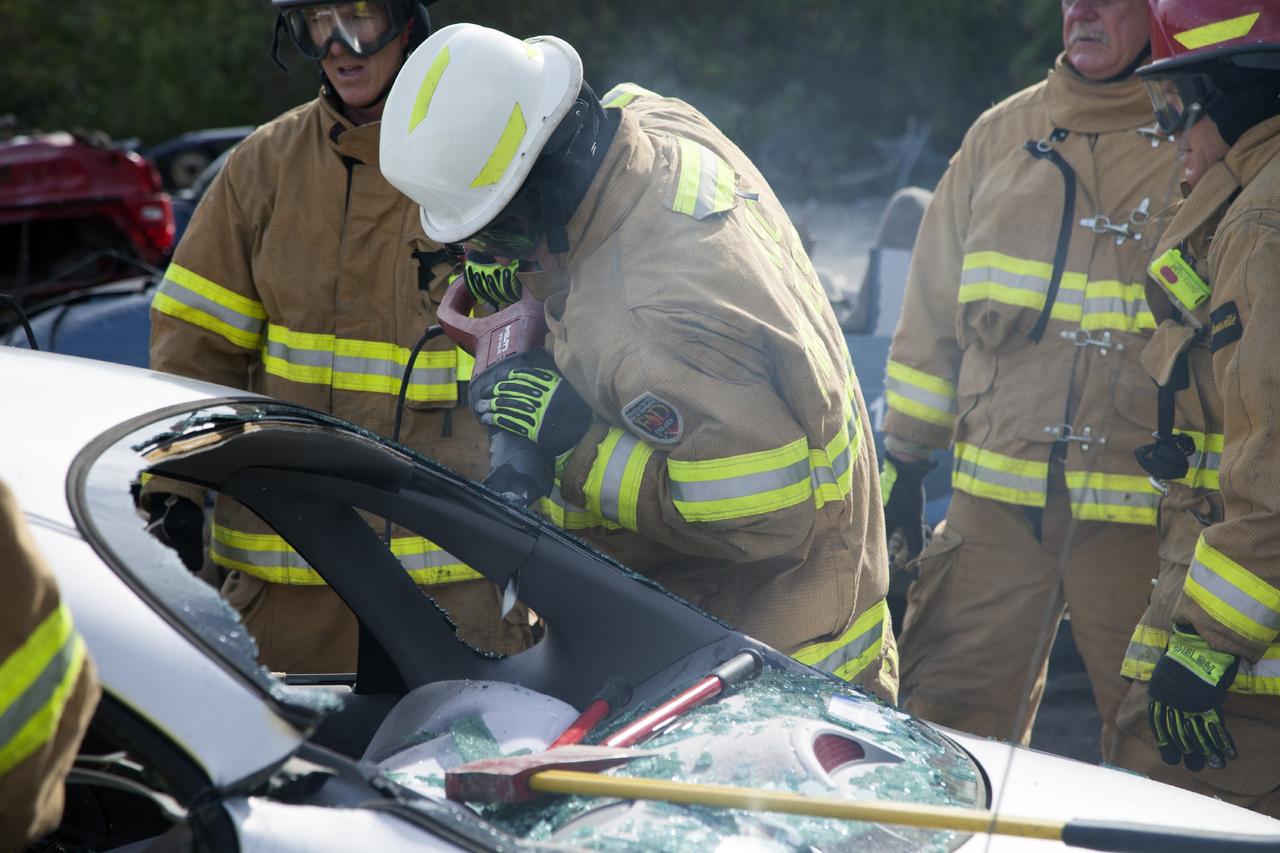
CAPE CANAVERAL, Fla. – Special Rescue Operations firefighters with NASA Fire Rescue Services in the Protective Services Office at NASA’s Kennedy Space Center in Florida practice vehicle extrication training at an auto salvage yard near the center. A firefighter uses a reciprocating saw to cut through a section of the car to remove the roof. Other firefighters used axes and special tools to punch through and clear away the windshield and windows. They will use the Jaws of Life to simulate the rescue of a trapped and injured person. Kennedy’s firefighters recently achieved Pro Board Certification in aerial fire truck operations. With the completion of vehicle extrication and Jaws of Life training, the Protective Services Office is one step closer to achieving certification in vehicle machinery extrication. Kennedy’s firefighters are with G4S Government Solutions Inc., on the Kennedy Protective Services Contract. Photo credit: NASA/Daniel Casper
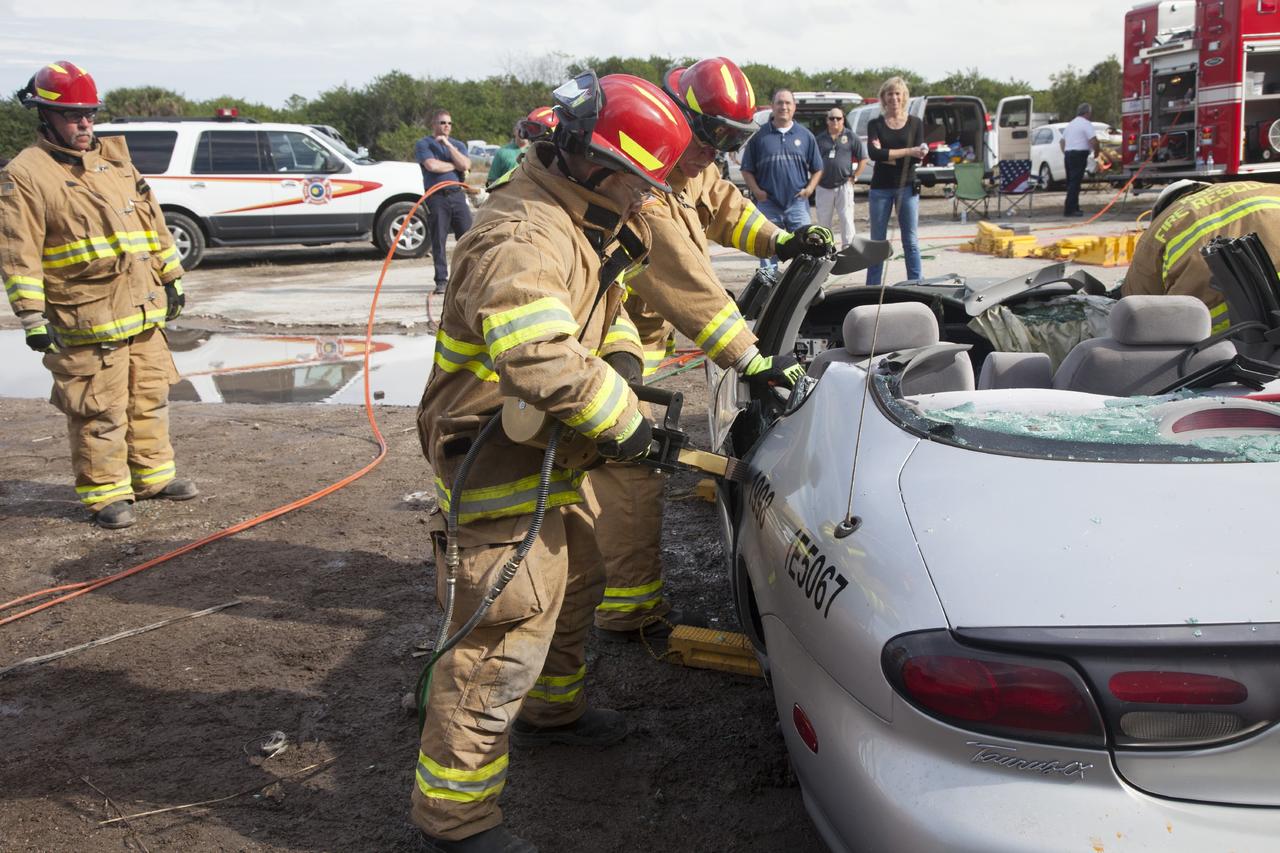
CAPE CANAVERAL, Fla. – Special Rescue Operations firefighters with NASA Fire Rescue Services in the Protective Services Office at NASA’s Kennedy Space Center in Florida practice vehicle extrication training at an auto salvage yard near the center. Firefighters have removed the roof of the car using a special hydraulic cutting tool and reciprocating saw. Other firefighters have used axes and special tools to punch through and clear away the windshield and windows. Another firefighter uses the Jaws of Life on the car to simulate the rescue of a trapped and injured person. Kennedy’s firefighters recently achieved Pro Board Certification in aerial fire truck operations. With the completion of vehicle extrication and Jaws of Life training, the Protective Services Office is one step closer to achieving certification in vehicle machinery extrication. Kennedy’s firefighters are with G4S Government Solutions Inc., on the Kennedy Protective Services Contract. Photo credit: NASA/Daniel Casper
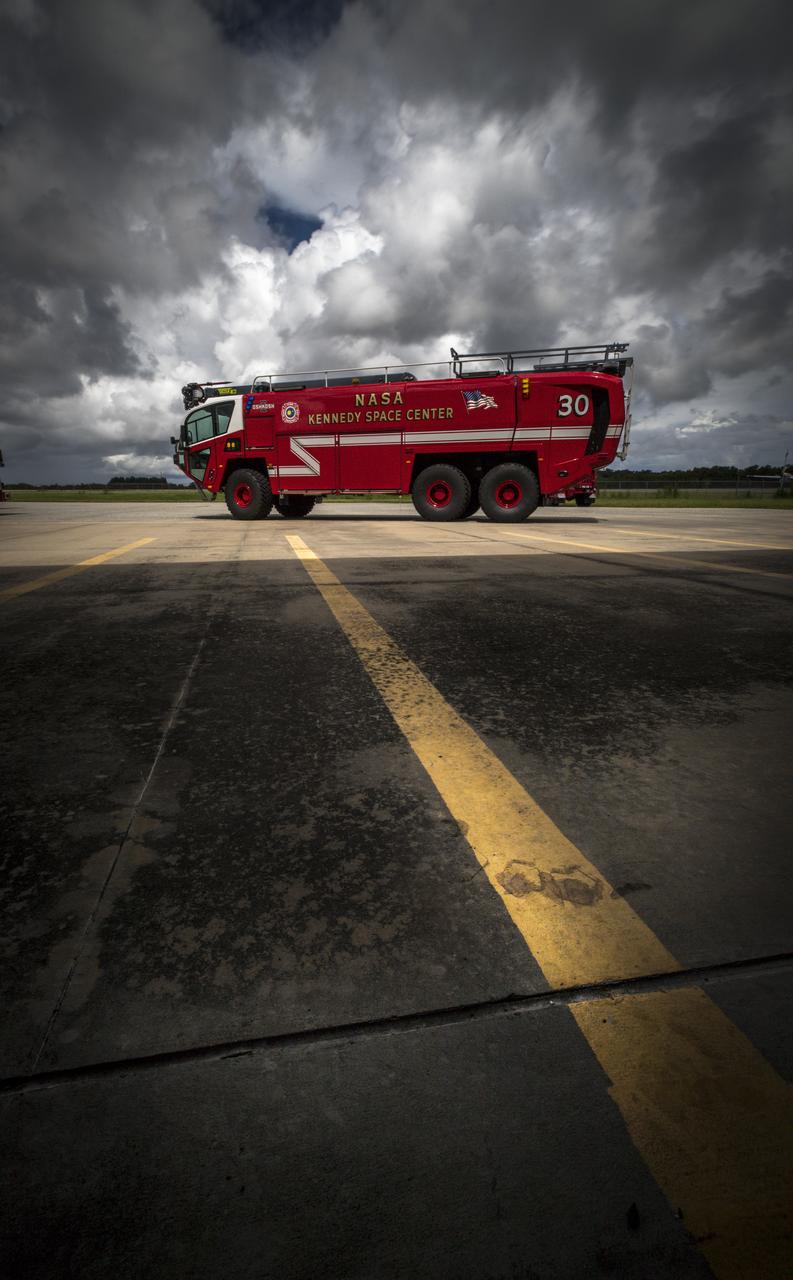
A new Aircraft Rescue and Fire Fighting vehicle is backdropped by the Shuttle Landing Facility runway at NASA’s Kennedy Space Center in Florida. The state-of-the-art truck replaces a 28-year-old vehicle. Kennedy is upgrading its fleet of emergency vehicles to enhance its safety and security posture at the growing, multi-user spaceport.
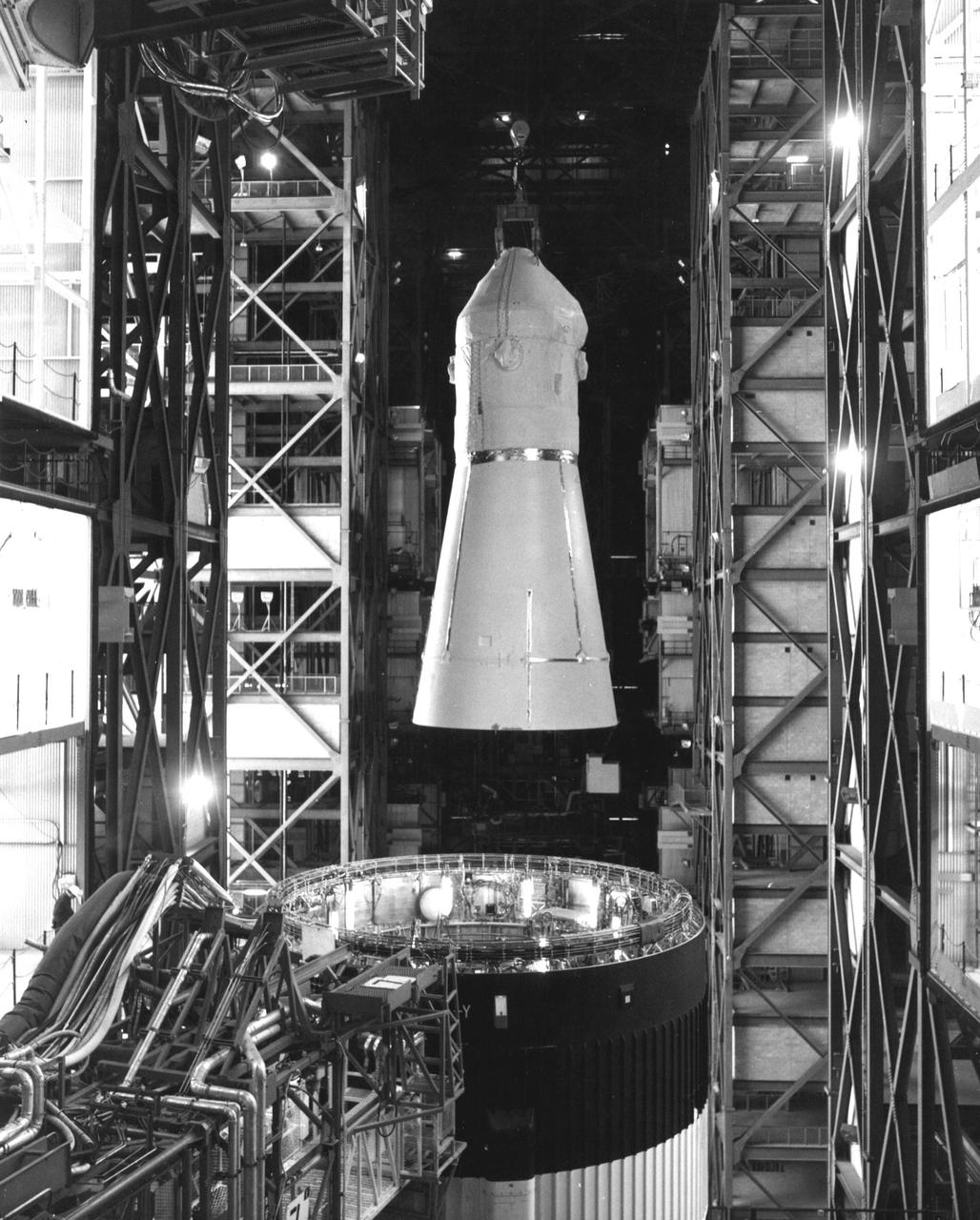
KENNEDY SPACE CENTER, FLA. -- The command_service module for the Skylab Rescue Vehicle was removed from its Saturn IB rocket in the Vehicle Assembly Building here today. The Skylab Program ended with splashdown of the Skylab 4 crew in the Pacific Ocean Feb. 8, ending the need for the rescue vehicle on Complex 39's Pad B since early December. The SaturnIB_Apollo was returned to the VAB last week and is now being dismantled. The spacecraft is to be taken to the Manned Spacecraft Operations Building in the KSC Industrial Area Feb. 20. Both the spacecraft and rocket will be stored at KSC as backup flight hardware for the Apollo-Soyuz Test Project in 1975.
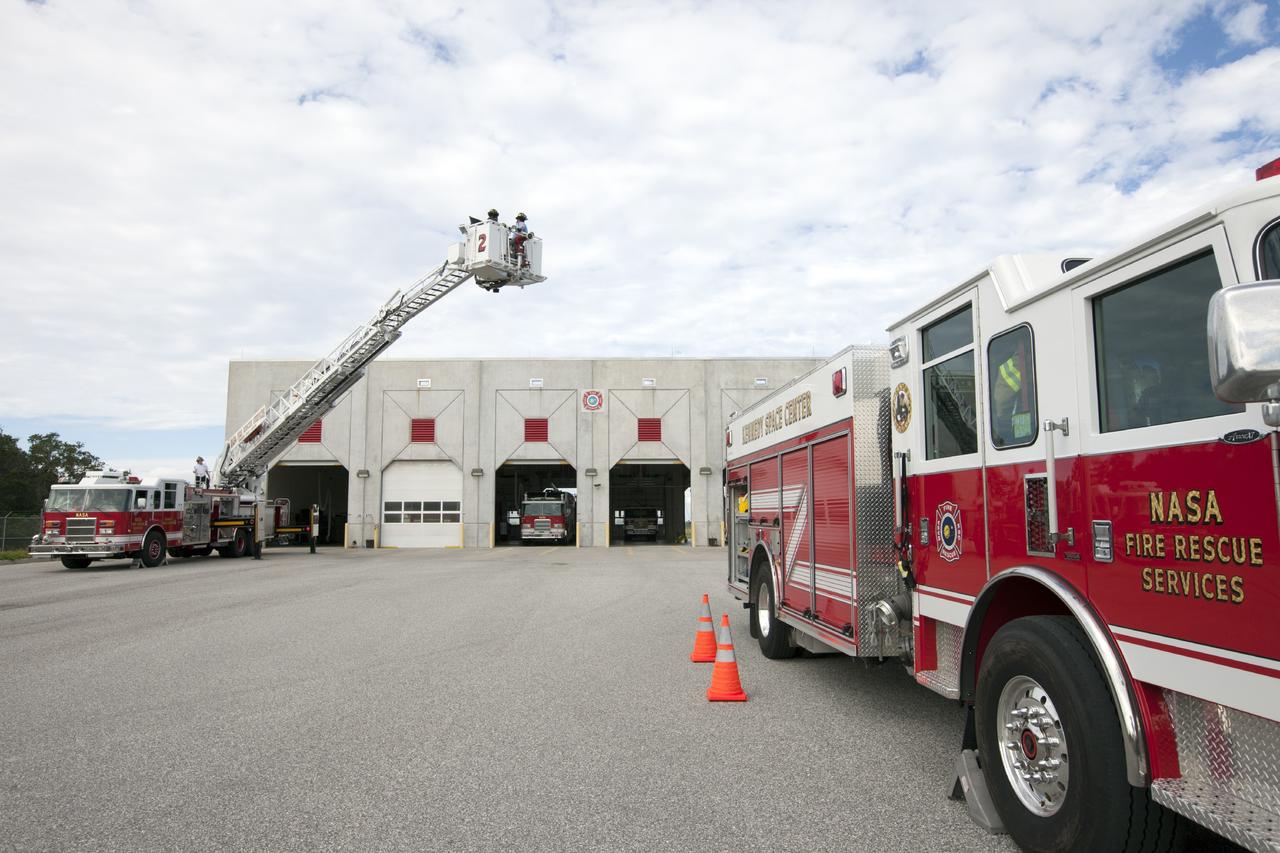
CAPE CANAVERAL, Fla. – At Fire Station No. 2 near the Shuttle Landing Facility at NASA’s Kennedy Space Center in Florida, Fire Rescue Services personnel have deployed and extended the ladder on the aerial fire truck during training in order to be certified in the operation and use of the vehicle. Two fire rescue workers are in the bucket practicing harness procedures. The center’s Fire Rescue Services recently achieved Pro Board Certification in aerial fire truck operations. Pro Board Certification is a globally recognized certification that puts on multiple courses that all fire departments throughout the world recognize and use to train their personnel. The unique aerial truck contains a 100-foot extendable ladder with a bucket at the end of it that can be used for rescues from taller buildings or aircraft rescue firefighting. Photo credit: NASA/Kim Shiflett
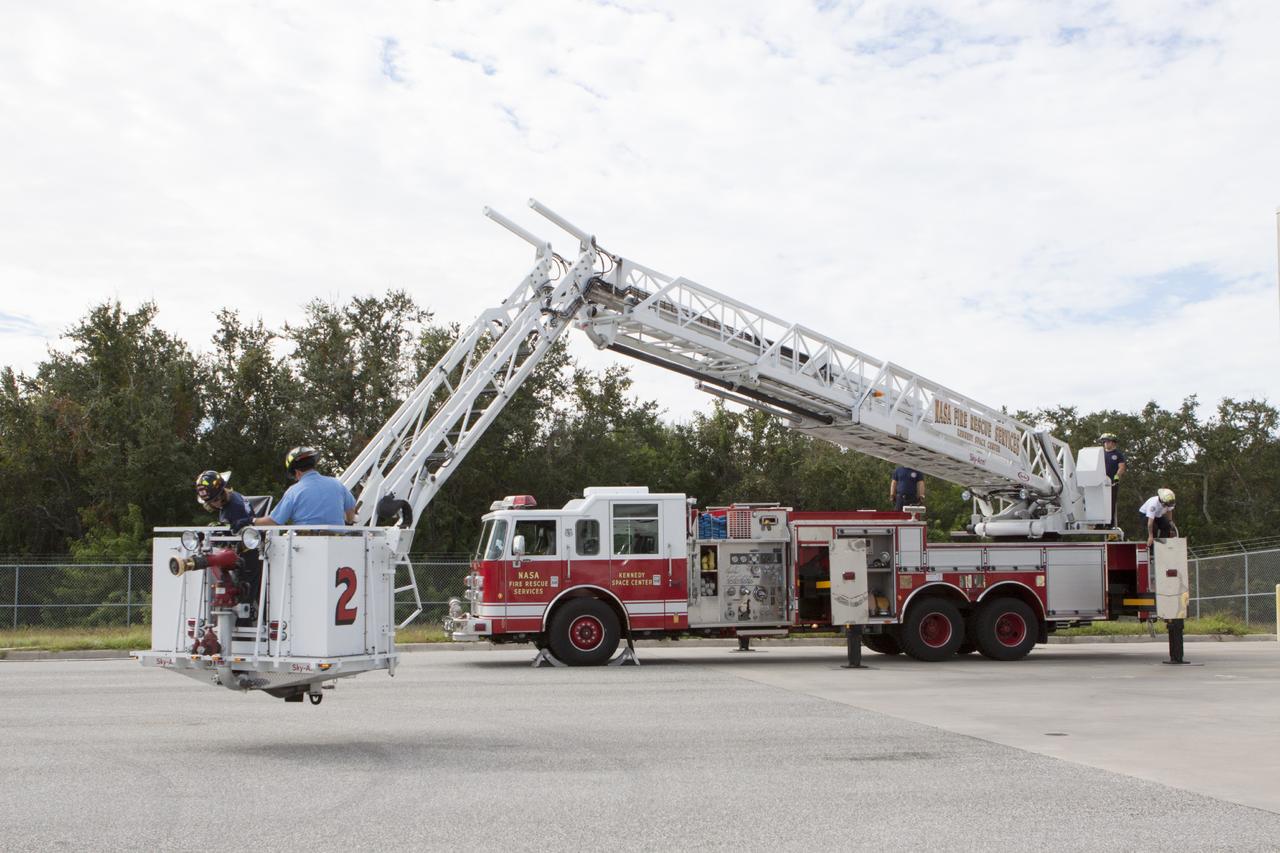
CAPE CANAVERAL, Fla. – At Fire Station No. 2 near the Shuttle Landing Facility at NASA’s Kennedy Space Center in Florida, Fire Rescue Services personnel lower the extendable ladder so that two fire rescue workers can exit the bucket during training to be certified in the operation and use of the vehicle. The center’s Fire Rescue Services recently achieved Pro Board Certification in aerial fire truck operations. Pro Board Certification is a globally recognized certification that puts on multiple courses that all fire departments throughout the world recognize and use to train their personnel. The unique aerial truck contains a 100-foot extendable ladder with a bucket at the end of it that can be used for rescues from taller buildings or aircraft rescue firefighting. Photo credit: NASA/Kim Shiflett
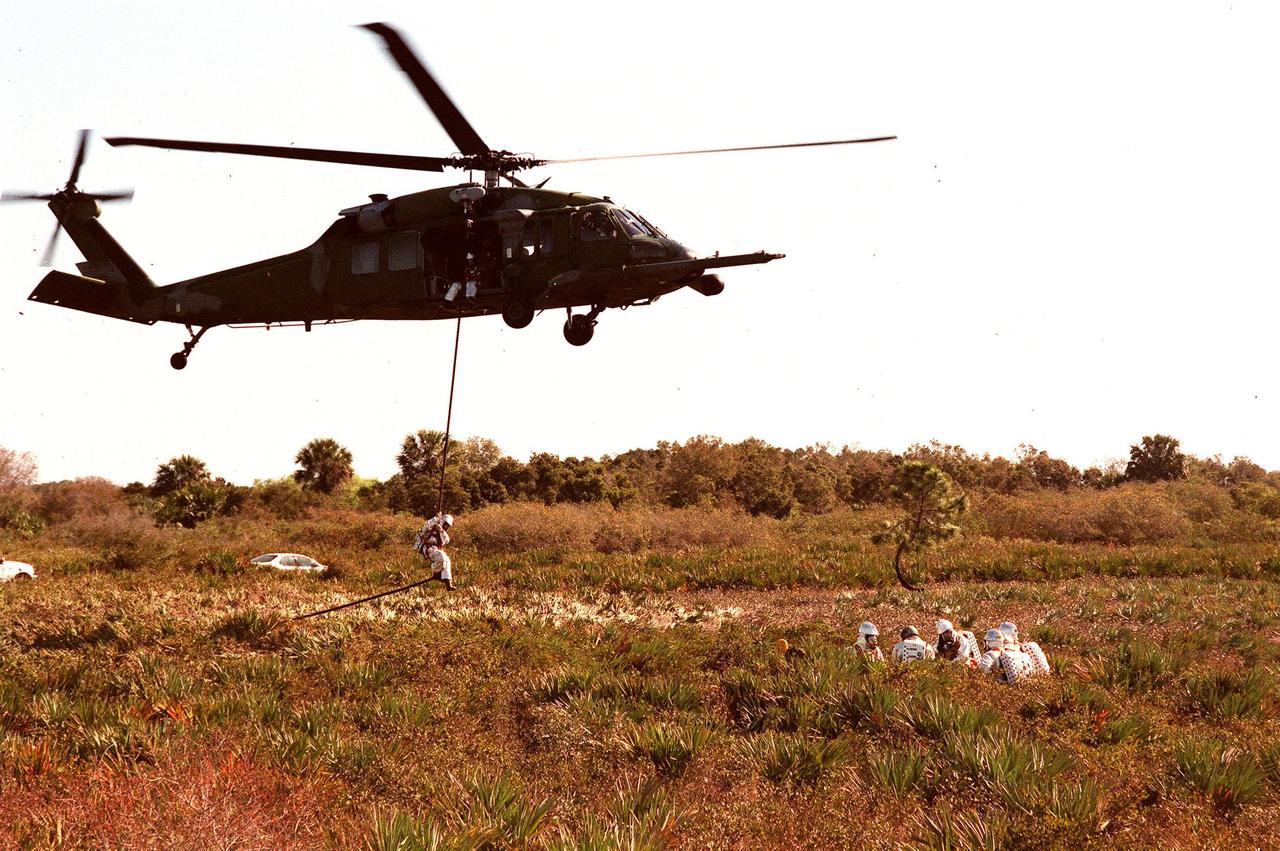
KENNEDY SPACE CENTER, FLA. -- During a simulated rescue mission in the woods near the Shuttle Landing Facility (SLF), a fire/rescue worker practices disembarking from an Air Force HH-60 helicopter. The KSC response team is training for the unlikely scenario of a Shuttle mishap at the SLF. The Mode 7 simulation of an astronaut rescue exercises all aspects of command and control, search and rescue, and medical procedures required for a successful rescue. The remote location of the mock-up prevents a totally land-based crew rescue, and calls on a NASA UH-1 helicopter to locate the site and four Air Force HH-60 helicopters to drop emergency equipment and fire/rescue workers to prepare the "crew" for preliminary traige. The helicopters are used later to remove the crew five astronaut candidates, one representative from the Vehicle Integration Test office, and one fire/rescue worker. The exercise will conclude with airlifted "patients" arriving safely in the emergency rooms of participating area hospitals
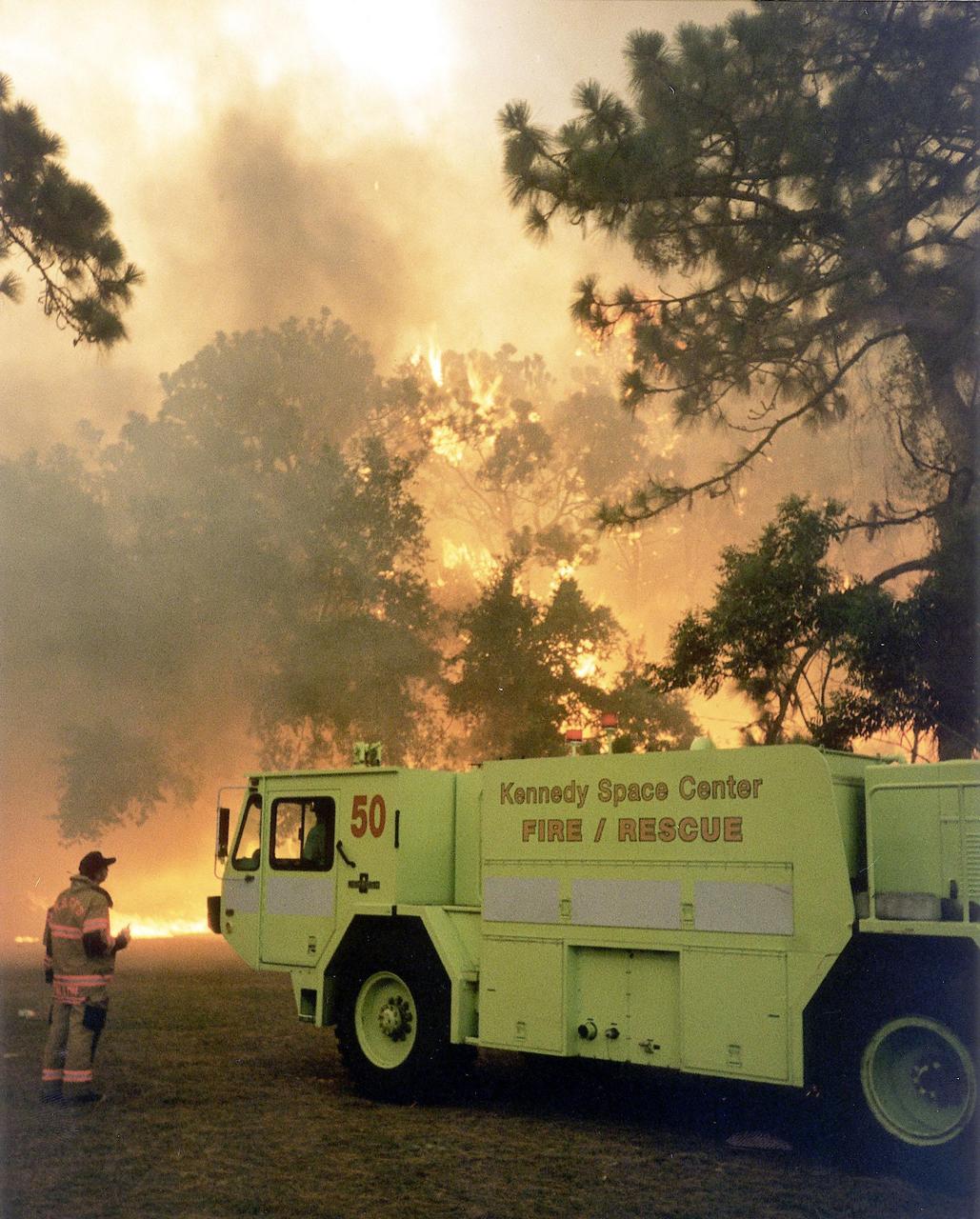
KENNEDY SPACE CENTER, FLA. -- Kennedy Space Center firefighters support firefighting efforts in north Brevard County with an aircraft rescue firefighting vehicle capable of holding 1,000 gallons of water.

CAPE CANAVERAL, Fla. -- At NASA's Kennedy Space Center in Florida, paramedics remove George Jacobs, NASA's deputy director of Center Operations, from a vehicle simulating a rescue operation. Jacobs served as a "volunteer patient" during the activity. The activity taking place in Kennedy's Launch Complex 39 turn-basin parking lot was only one of several drills. It was part of a new training program that was developed by Kennedy's Fire Rescue department along with NASA Aircraft Operations to sharpen the skills needed to help rescue personnel learn how to collaborate with helicopter pilots in taking injured patients to hospitals as quickly as possible. Photo credit: NASA/Dan Casper
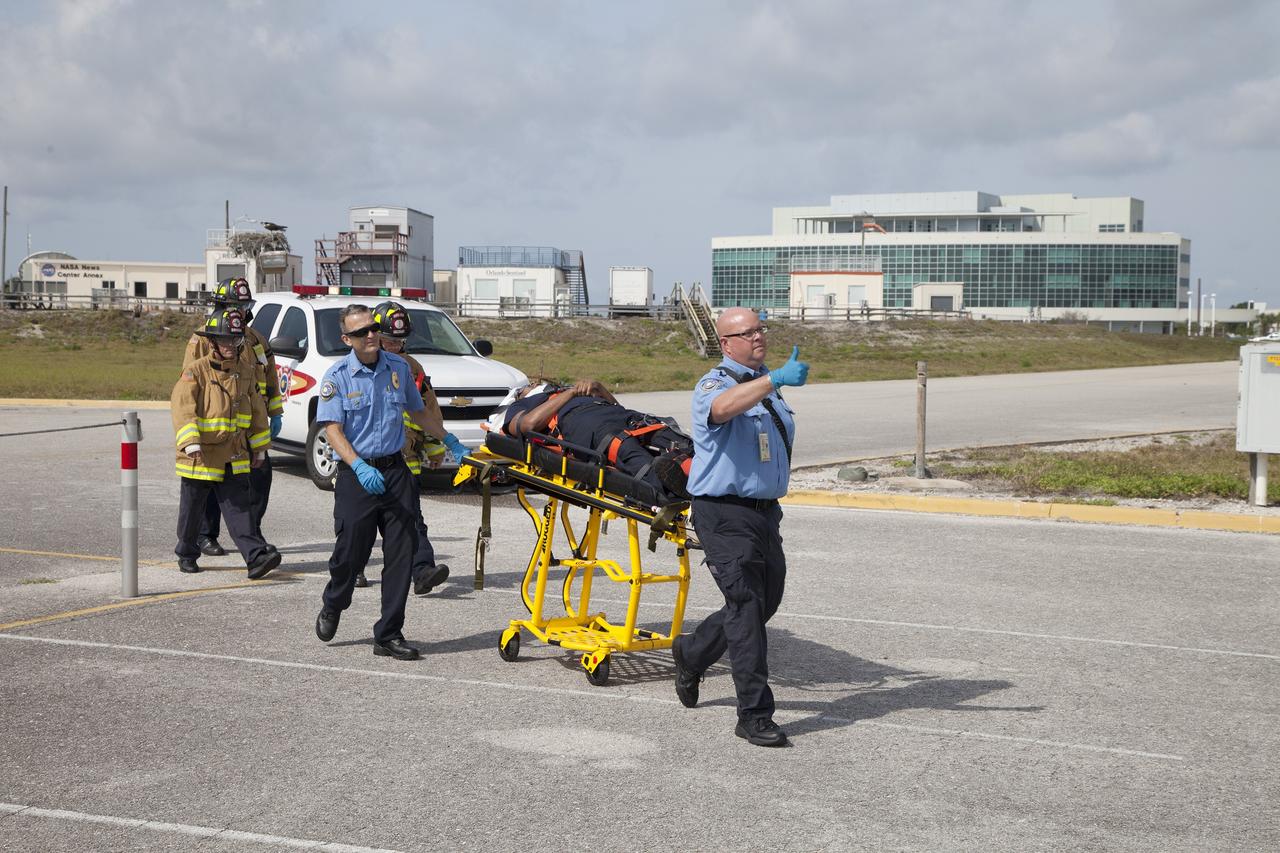
CAPE CANAVERAL, Fla. -- At NASA's Kennedy Space Center in Florida, paramedics and Fire Rescue personnel move a stretcher to the waiting helicopter as they work quickly to have the patient ready to transport after he was removed from a vehicle. The activity taking place in Kennedy's Launch Complex 39 turn-basin parking lot was only one of several drills. It was part of a new training program that was developed by Kennedy's Fire Rescue department along with NASA Aircraft Operations to sharpen the skills needed to help rescue personnel learn how to collaborate with helicopter pilots in taking injured patients to hospitals as quickly as possible. Photo credit: NASA/Dan Casper
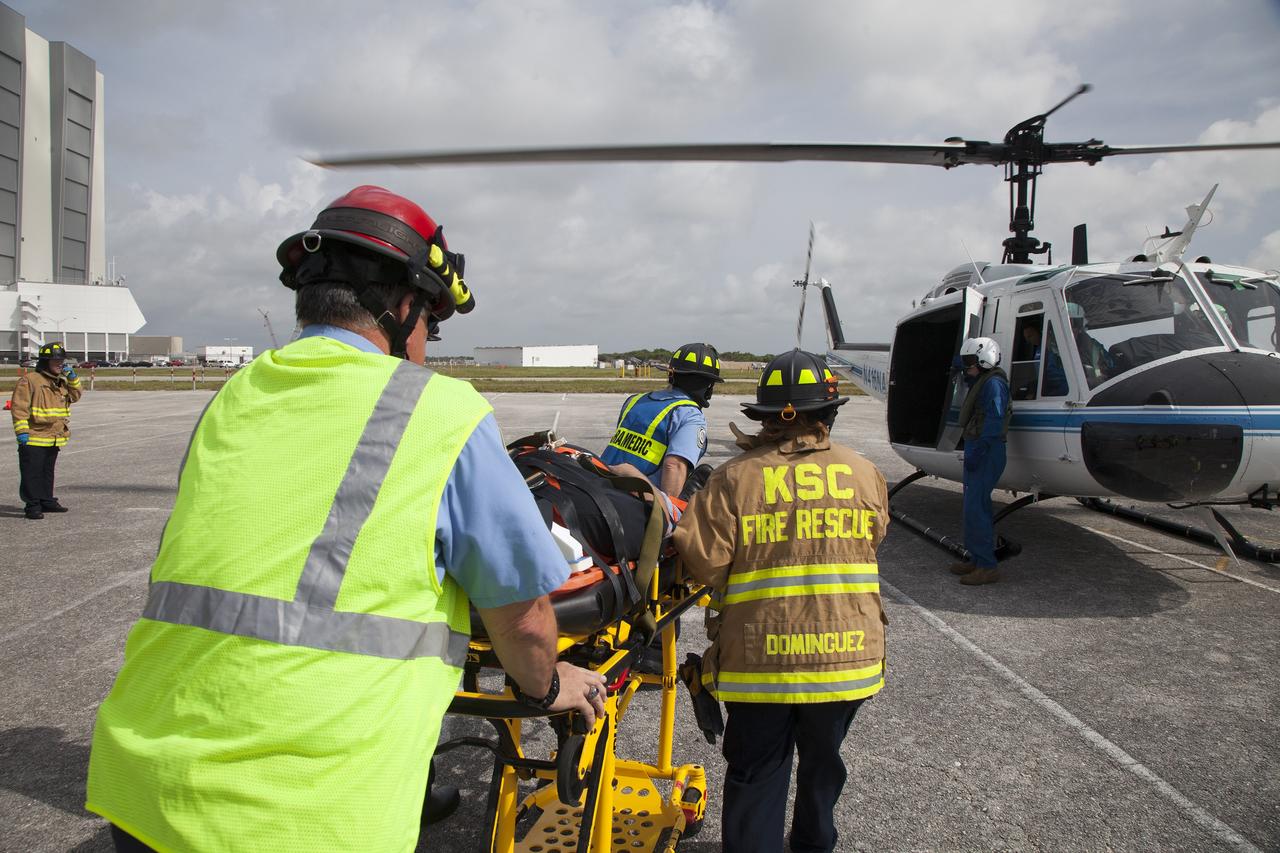
CAPE CANAVERAL, Fla. -- At NASA's Kennedy Space Center in Florida, Paramedics and Fire Rescue personnel move a stretcher to the waiting helicopter as they work quickly to have the patient ready to transport after he was removed from a vehicle. The activity taking place in Kennedy's Launch Complex 39 turn-basin parking lot was only one of several drills. It was part of a new training program that was developed by Kennedy's Fire Rescue department along with NASA Aircraft Operations to sharpen the skills needed to help rescue personnel learn how to collaborate with helicopter pilots in taking injured patients to hospitals as quickly as possible. Photo credit: NASA/Dan Casper
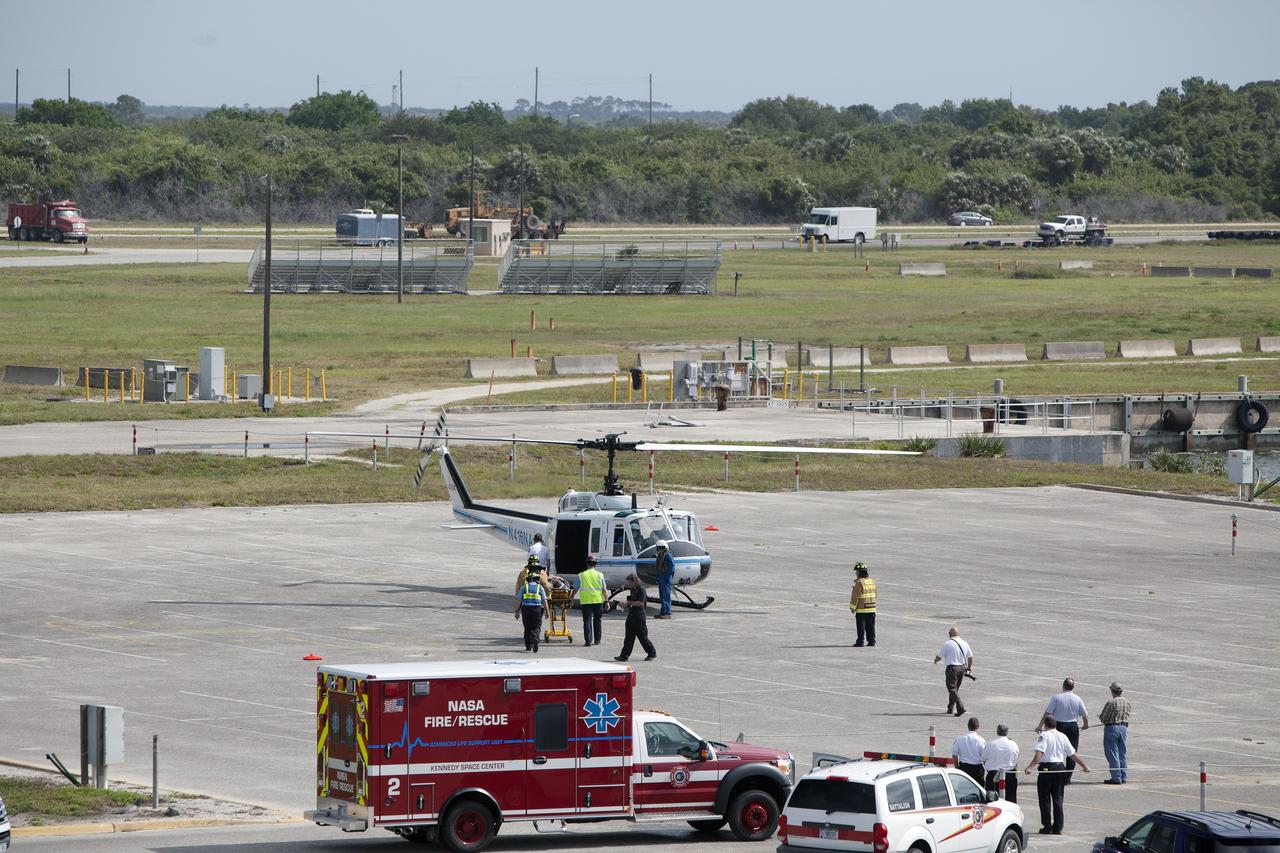
CAPE CANAVERAL, Fla. -- At NASA's Kennedy Space Center in Florida, paramedics and Fire Rescue personnel move a stretcher to the waiting helicopter as they work quickly to have the patient ready to transport five minutes after he was removed from a vehicle. The activity taking place in Kennedy's Launch Complex 39 turn-basin parking lot was only one of several drills. It was part of a new training program that was developed by Kennedy's Fire Rescue department along with NASA Aircraft Operations to sharpen the skills needed to help rescue personnel learn how to collaborate with helicopter pilots in taking injured patients to hospitals as quickly as possible. Photo credit: NASA/Dan Casper
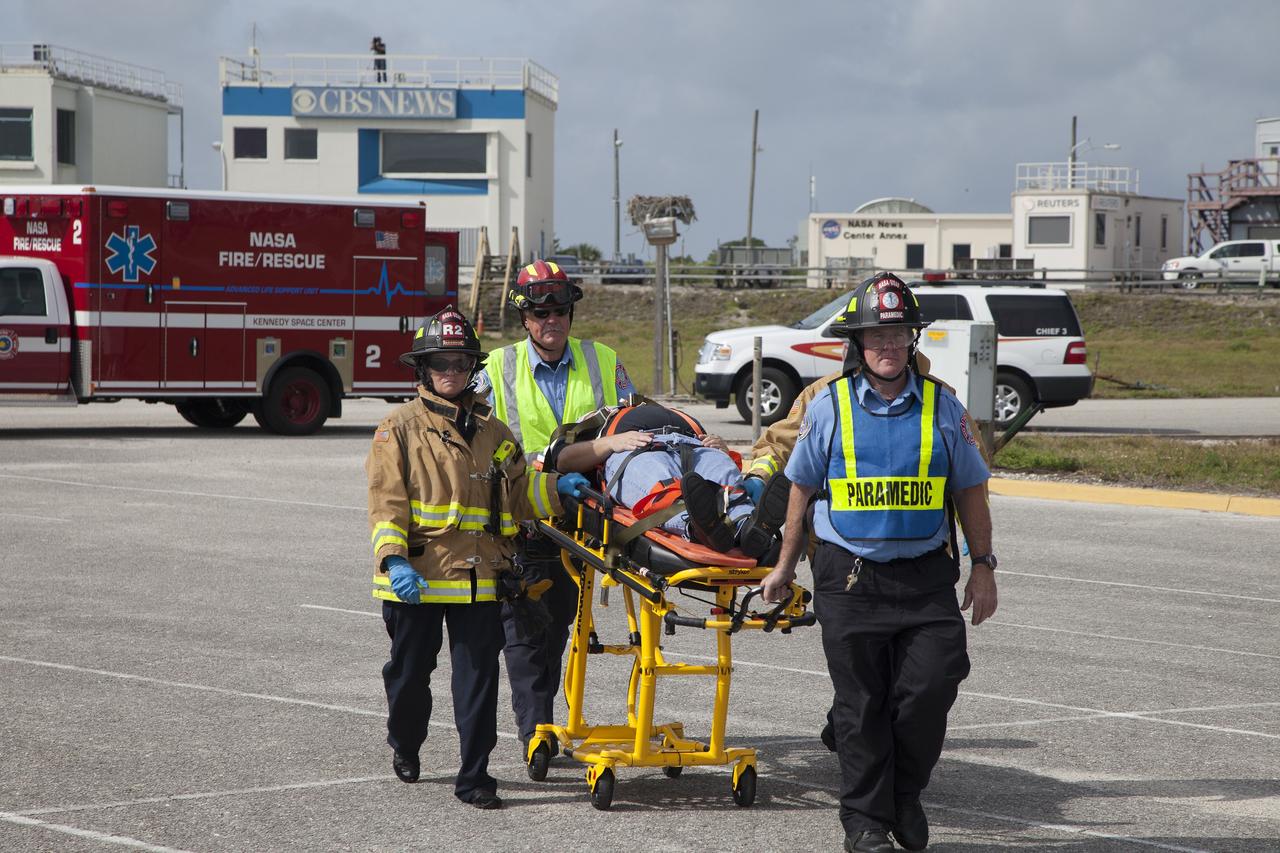
CAPE CANAVERAL, Fla. -- At NASA's Kennedy Space Center in Florida, Paramedics and Fire Rescue personnel move a stretcher to the waiting helicopter as they work quickly to have the patient ready to transport after he was removed from a vehicle. The activity taking place in Kennedy's Launch Complex 39 turn-basin parking lot was only one of several drills. It was part of a new training program that was developed by Kennedy's Fire Rescue department along with NASA Aircraft Operations to sharpen the skills needed to help rescue personnel learn how to collaborate with helicopter pilots in taking injured patients to hospitals as quickly as possible. Photo credit: NASA/Dan Casper
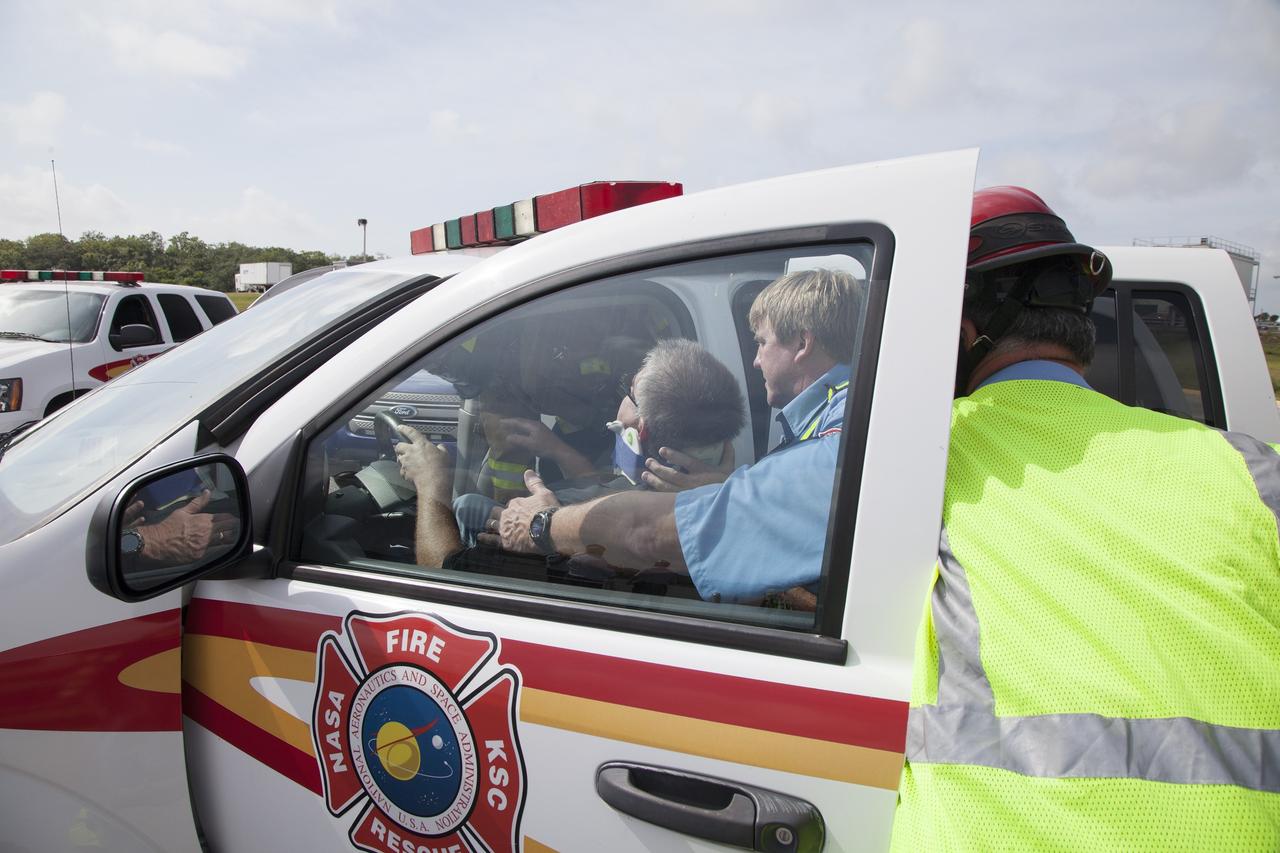
CAPE CANAVERAL, Fla. -- At NASA's Kennedy Space Center in Florida, paramedics remove George Jacobs, NASA's deputy director of Center Operations, from a vehicle simulating a rescue operation. Jacobs served as a "volunteer patient" during the activity. The activity taking place in Kennedy's Launch Complex 39 turn-basin parking lot was only one of several drills. It was part of a new training program that was developed by Kennedy's Fire Rescue department along with NASA Aircraft Operations to sharpen the skills needed to help rescue personnel learn how to collaborate with helicopter pilots in taking injured patients to hospitals as quickly as possible. Photo credit: NASA/Dan Casper
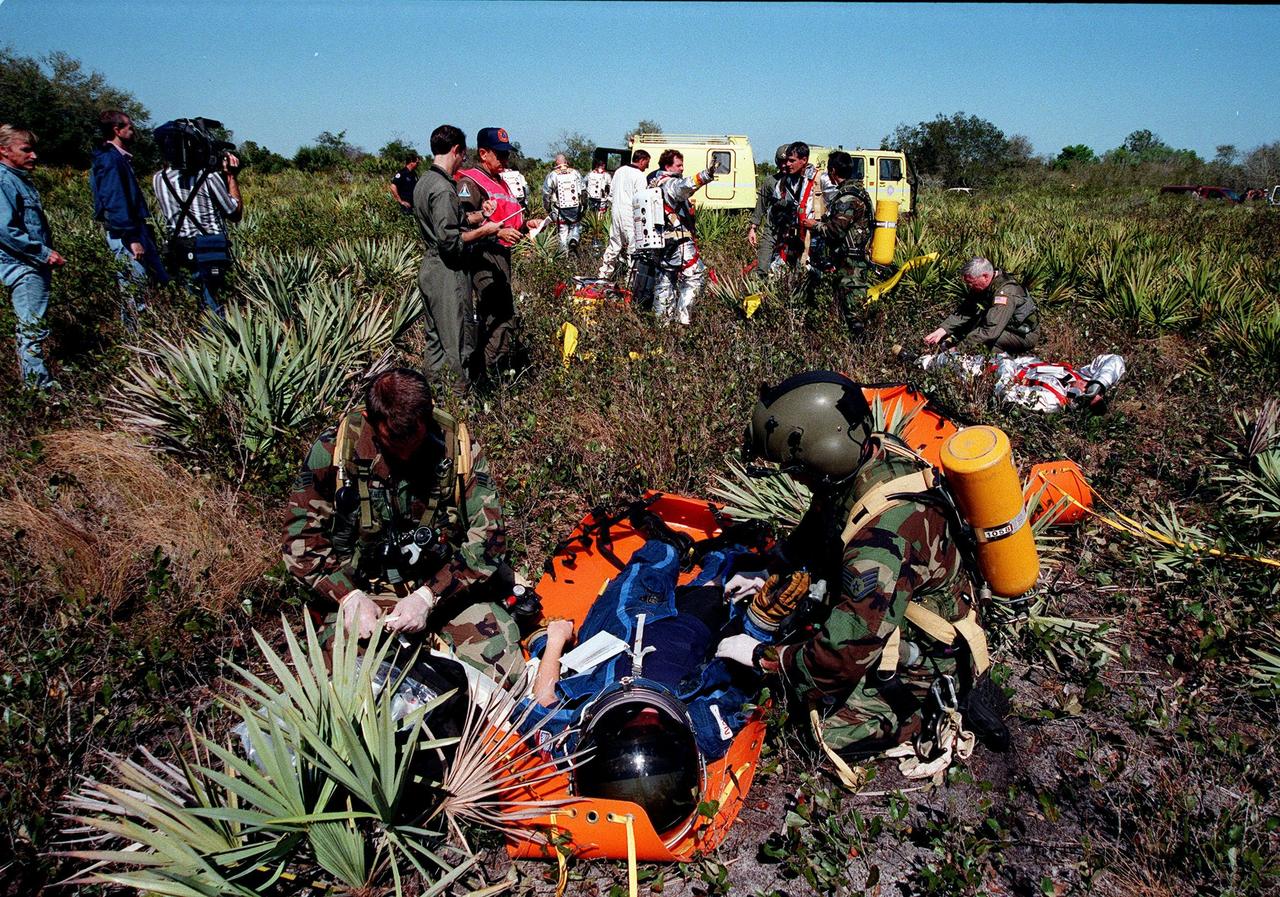
KENNEDY SPACE CENTER, FLA. -- During a simulated rescue mission in the woods near the Shuttle Landing Facility (SLF), the KSC response team practices stabilizing an injured crew member before transport to a local hospital by helicopter. The response team is training for the unlikely scenario of a Shuttle mishap at the SLF. The Mode 7 simulation of an astronaut rescue exercises all aspects of command and control, search and rescue, and medical procedures required for a successful rescue. The remote location of the mock-up prevents a totally land-based crew rescue, and calls on a NASA UH-1 helicopter to locate the site and four Air Force HH-60 helicopters to drop emergency equipment and fire/rescue workers who will prepare the "crew" for preliminary triage. The helicopters later will help remove the crew five astronaut candidates, one representative from the Vehicle Integration Test office, and one fire/rescue worker. The exercise will conclude with airlifted "patients" arriving safely in the emergency rooms of participating area hospitals
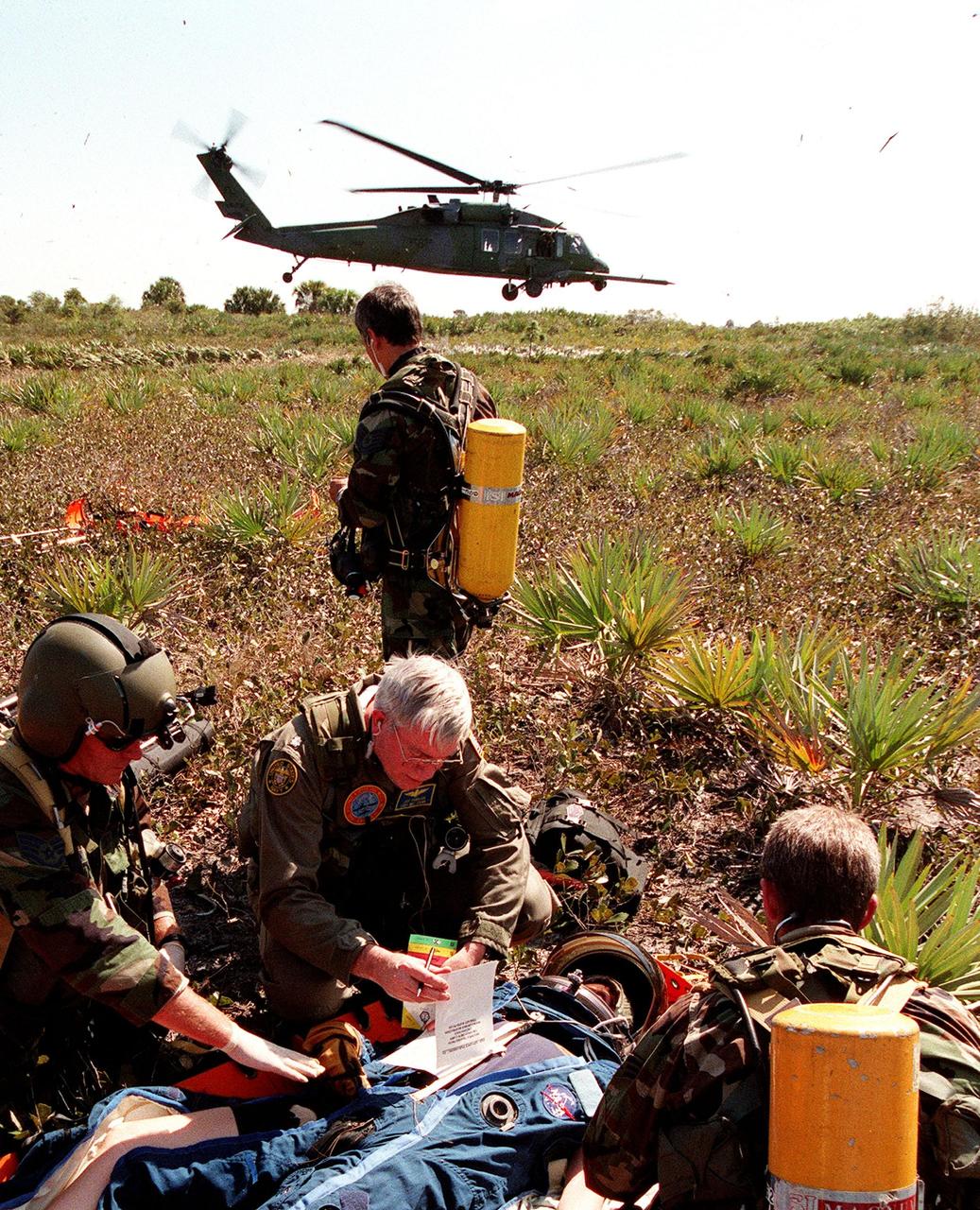
KENNEDY SPACE CENTER, FLA. -- During a simulated rescue mission in the woods near the Shuttle Landing Facility (SLF), the KSC response team practices stabilizing an injured crew member before transport to a local hospital by an Air Force HH-60 helicopter. The response team is training for the unlikely scenario of a Shuttle mishap at the SLF. The Mode 7 simulation of an astronaut rescue exercises all aspects of command and control, search and rescue, and medical procedures required for a successful rescue. The remote location of the mock-up prevents a totally land-based crew rescue, and calls on a NASA UH-1 helicopter to locate the site and four HH-60 helicopters to drop emergency equipment and fire/rescue workers to prepare the "crew" for preliminary triage. The helicopters are then used to remove the crew five astronaut candidates, one representative from the Vehicle Integration Test office, and one fire/rescue worker. The exercise will conclude with airlifted "patients" arriving safely in the emergency rooms of participating area hospitals
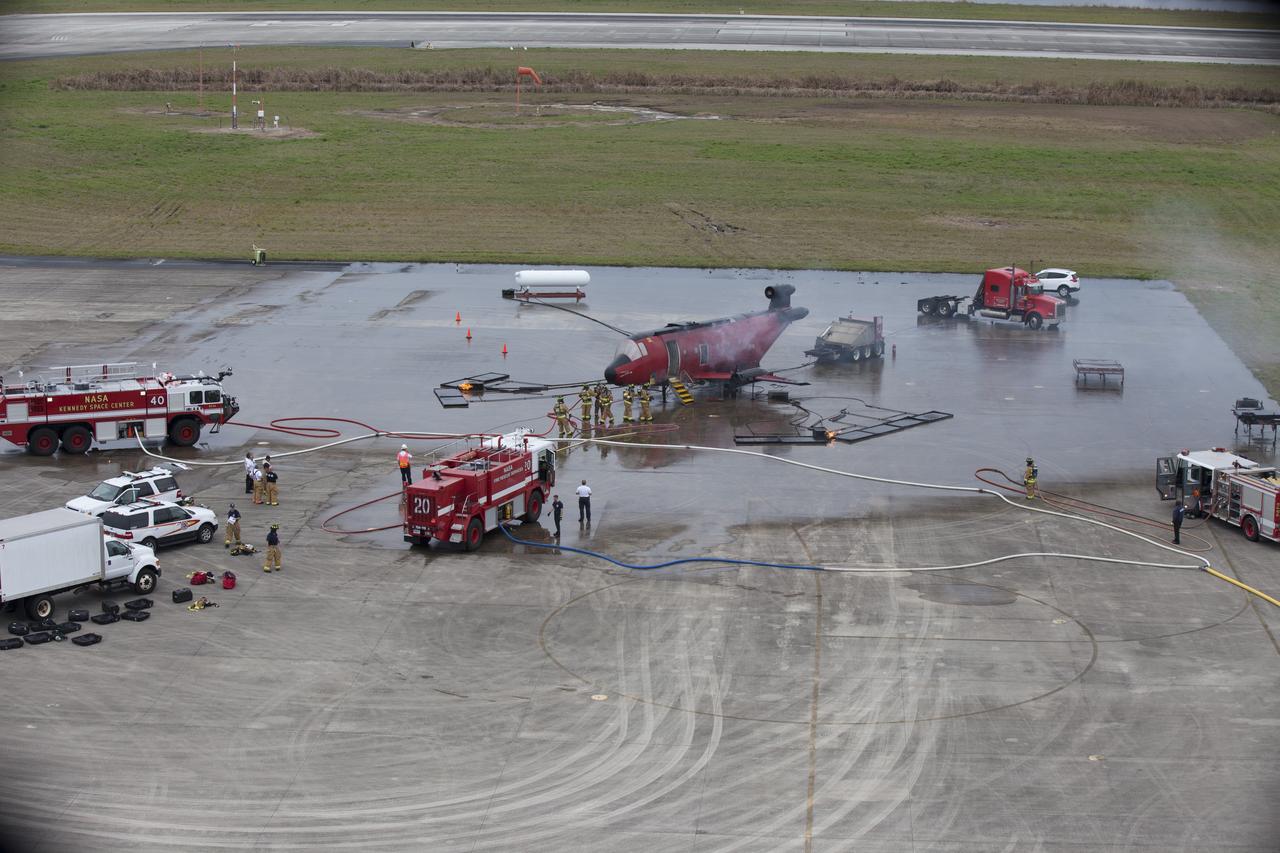
CAPE CANAVERAL, Fla. - Special Rescue Operations firefighters with NASA Fire Rescue Services in the Protective Services Office at NASA’s Kennedy Space Center in Florida participate in a training exercise at the Shuttle Landing Facility. Firefighters use fire trucks and hoses to extinguish flames burning on and around a mock-up of a small plane. Kennedy’s firefighters recently achieved Pro Board Certification in aerial fire truck operations and completed vehicle extrication training using the Jaws of Life. The Protective Services Office is one step closer to achieving certification in vehicle machinery extrication and other rescue skills. Kennedy’s firefighters are with G4S Government Solutions Inc., on the Kennedy Protective Services Contract. Photo credit: NASA/Kim Shiflett
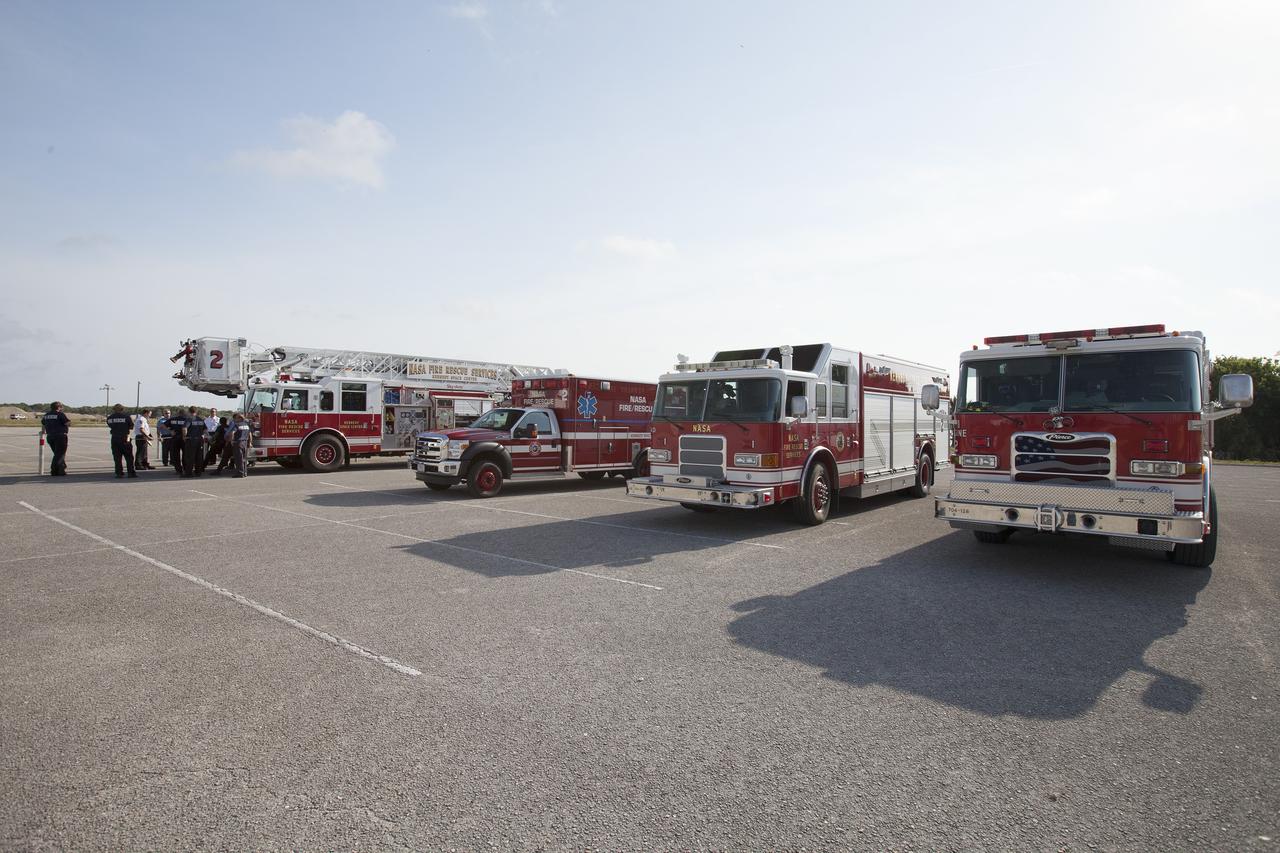
CAPE CANAVERAL, Fla. -- At NASA's Kennedy Space Center in Florida, Fire Rescue vehicles line up in a parking area near the Vehicle Assembly Building for training with pilots in NASA Aircraft Operations. The exercise is designed to develop procedures for using agency helicopters to transport injured patients to a local hospital. The activity taking place in Kennedy's Launch Complex 39 turn-basin parking lot was only one of several drills. It was part of a new training program that was developed by Kennedy's Fire Rescue department along with NASA Aircraft Operations to sharpen the skills needed to help rescue personnel learn how to collaborate with helicopter pilots in taking injured patients to hospitals as quickly as possible. Photo credit: NASA/Dan Casper
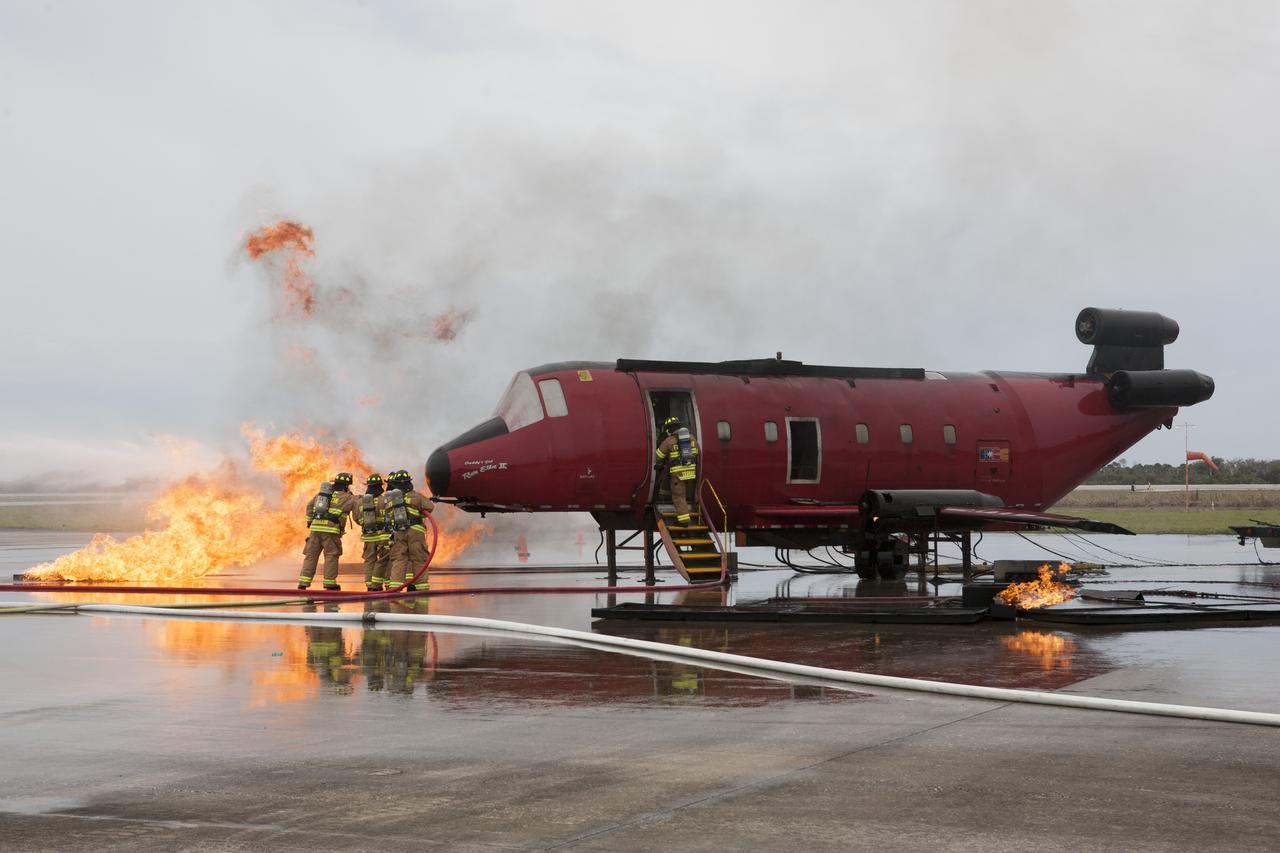
CAPE CANAVERAL, Fla. - Special Rescue Operations firefighters with NASA Fire Rescue Services in the Protective Services Office at NASA’s Kennedy Space Center in Florida participate in a training exercise at the Shuttle Landing Facility. Firefighters, wearing protective gear, use hoses to put out a fire burning near the mock-up of a small plane as another firefighter checks inside the plane. Kennedy’s firefighters recently achieved Pro Board Certification in aerial fire truck operations and completed vehicle extrication training using the Jaws of Life. The Protective Services Office is one step closer to achieving certification in vehicle machinery extrication and other rescue skills. Kennedy’s firefighters are with G4S Government Solutions Inc., on the Kennedy Protective Services Contract. Photo credit: NASA/Kim Shiflett
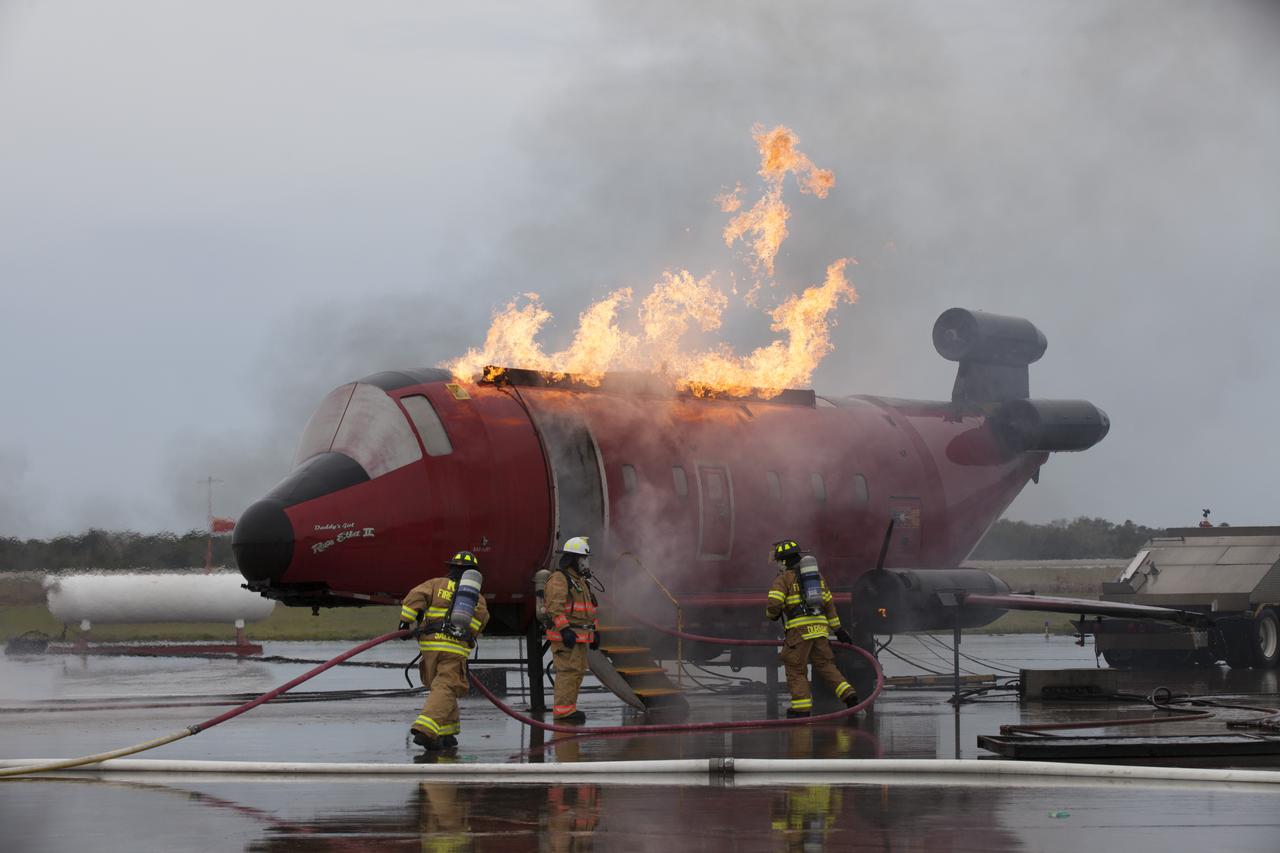
CAPE CANAVERAL, Fla. - Special Rescue Operations firefighters with NASA Fire Rescue Services in the Protective Services Office at NASA’s Kennedy Space Center in Florida participate in a training exercise at the Shuttle Landing Facility. Firefighters, wearing protective gear, use hoses to put out a fire burning on a mock-up of a small plane. Kennedy’s firefighters recently achieved Pro Board Certification in aerial fire truck operations and completed vehicle extrication training using the Jaws of Life. The Protective Services Office is one step closer to achieving certification in vehicle machinery extrication and other rescue skills. Kennedy’s firefighters are with G4S Government Solutions Inc., on the Kennedy Protective Services Contract. Photo credit: NASA/Kim Shiflett
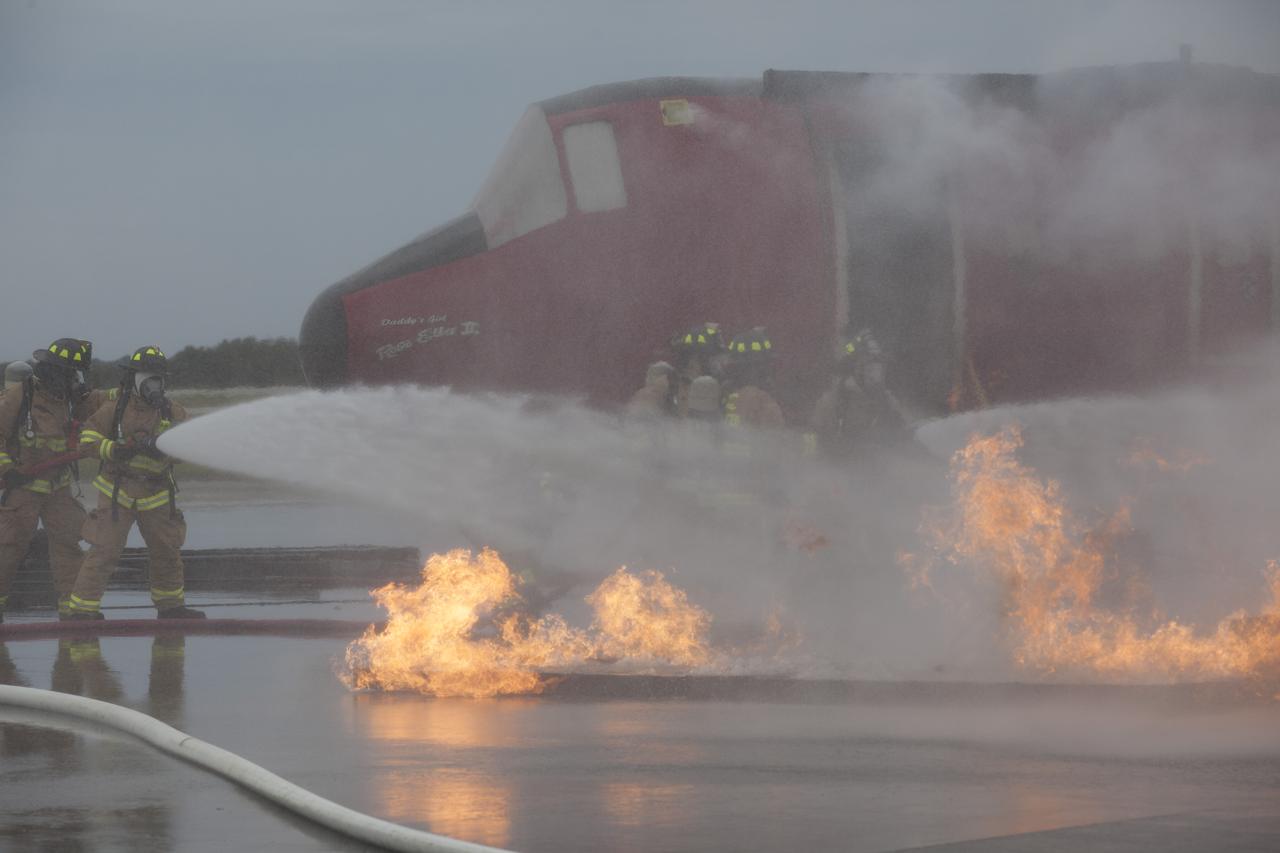
CAPE CANAVERAL, Fla. - Special Rescue Operations firefighters with NASA Fire Rescue Services in the Protective Services Office at NASA’s Kennedy Space Center in Florida participate in a training exercise at the Shuttle Landing Facility. Firefighters, wearing protective gear, use hoses to put out a fire burning close to a mock-up of a small plane. Kennedy’s firefighters recently achieved Pro Board Certification in aerial fire truck operations and completed vehicle extrication training using the Jaws of Life. The Protective Services Office is one step closer to achieving certification in vehicle machinery extrication and other rescue skills. Kennedy’s firefighters are with G4S Government Solutions Inc., on the Kennedy Protective Services Contract. Photo credit: NASA/Kim Shiflett
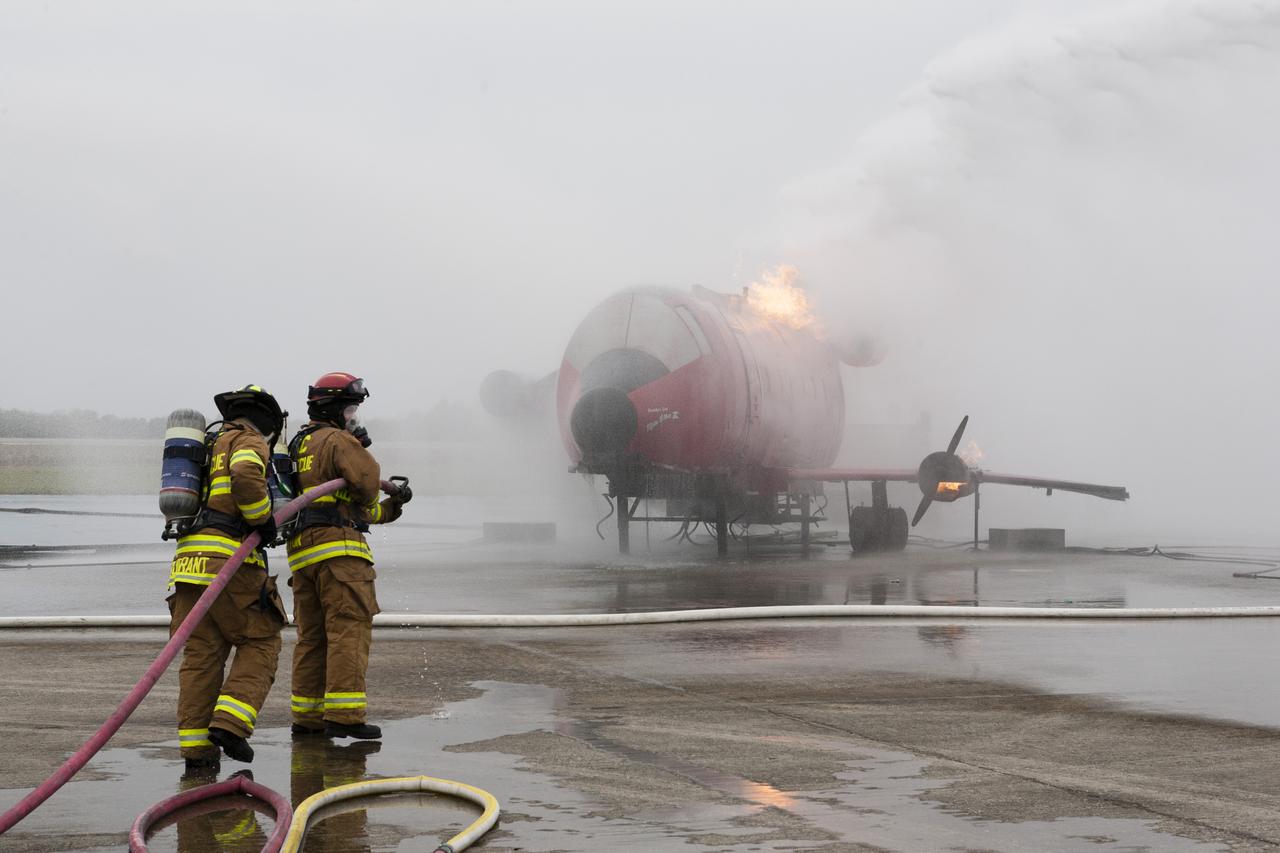
CAPE CANAVERAL, Fla. - During a training exercise, Special Rescue Operations firefighters with NASA Fire Rescue Services in the Protective Services Office at NASA’s Kennedy Space Center in Florida use hoses to put out a fire burning on a mock-up of a small plane at the Shuttle Landing Facility. They are wearing protective gear for the training exercise. Kennedy’s firefighters recently achieved Pro Board Certification in aerial fire truck operations and completed vehicle extrication training using the Jaws of Life. The Protective Services Office is one step closer to achieving certification in vehicle machinery extrication and other rescue skills. Kennedy’s firefighters are with G4S Government Solutions Inc., on the Kennedy Protective Services Contract. Photo credit: NASA/Kim Shiflett
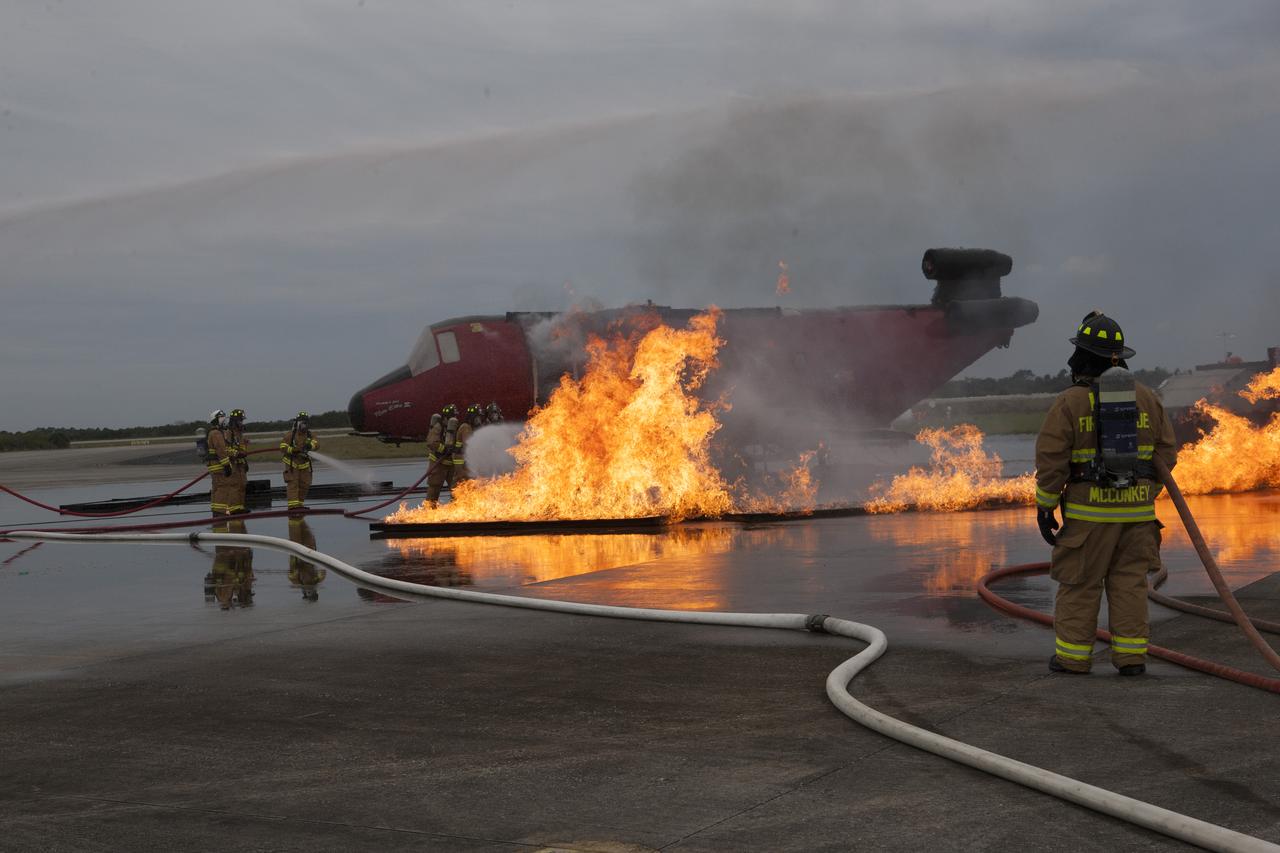
CAPE CANAVERAL, Fla. - Special Rescue Operations firefighters with NASA Fire Rescue Services in the Protective Services Office at NASA’s Kennedy Space Center in Florida participate in a training exercise at the Shuttle Landing Facility. Firefighters, wearing protective gear, use hoses to put out a fire burning near the mock-up of a small plane. Kennedy’s firefighters recently achieved Pro Board Certification in aerial fire truck operations and completed vehicle extrication training using the Jaws of Life. The Protective Services Office is one step closer to achieving certification in vehicle machinery extrication and other rescue skills. Kennedy’s firefighters are with G4S Government Solutions Inc., on the Kennedy Protective Services Contract. Photo credit: NASA/Kim Shiflett
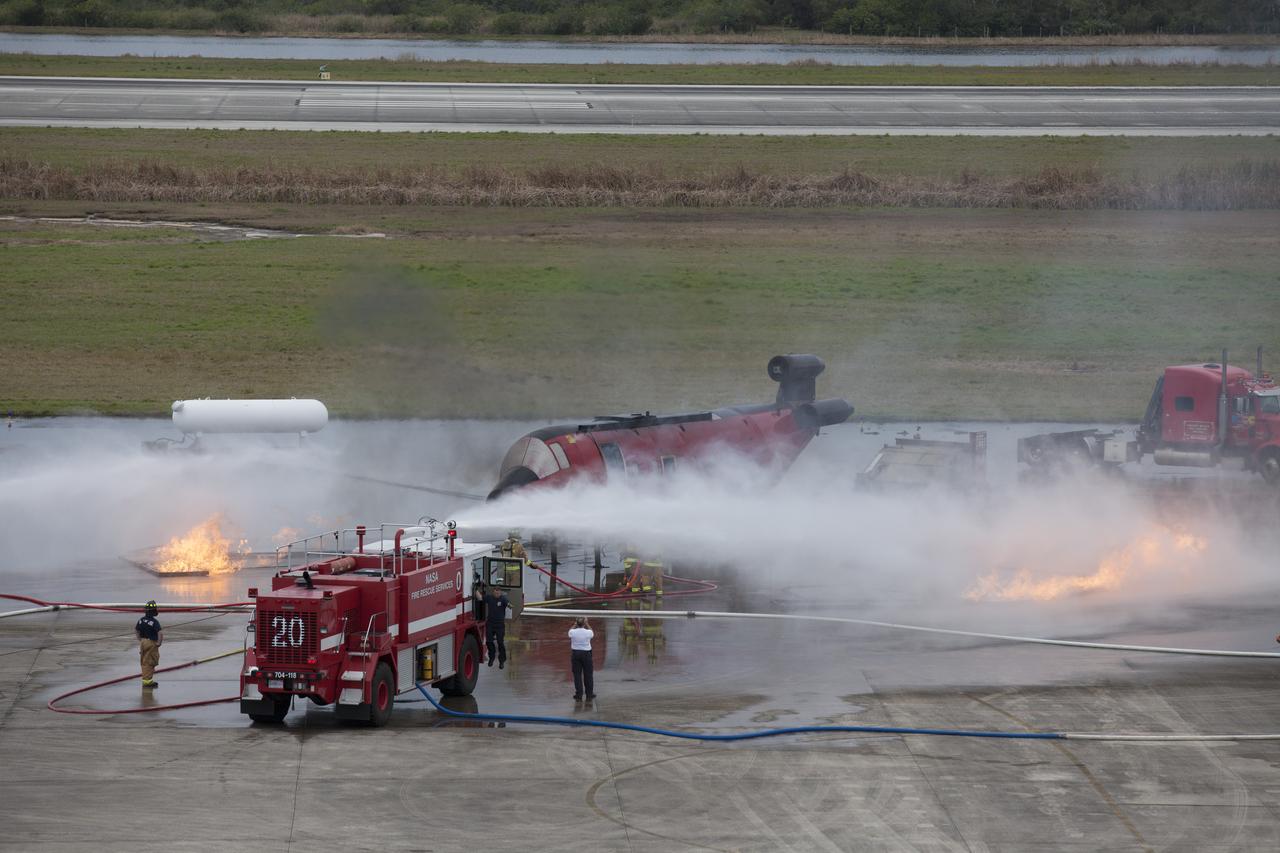
CAPE CANAVERAL, Fla. - Special Rescue Operations firefighters with NASA Fire Rescue Services in the Protective Services Office at NASA’s Kennedy Space Center in Florida participate in a training exercise at the Shuttle Landing Facility. Firefighters use a fire truck to put out a fire burning close to a mock-up of a small plane and a truck. Kennedy’s firefighters recently achieved Pro Board Certification in aerial fire truck operations and completed vehicle extrication training using the Jaws of Life. The Protective Services Office is one step closer to achieving certification in vehicle machinery extrication and other rescue skills. Kennedy’s firefighters are with G4S Government Solutions Inc., on the Kennedy Protective Services Contract. Photo credit: NASA/Kim Shiflett
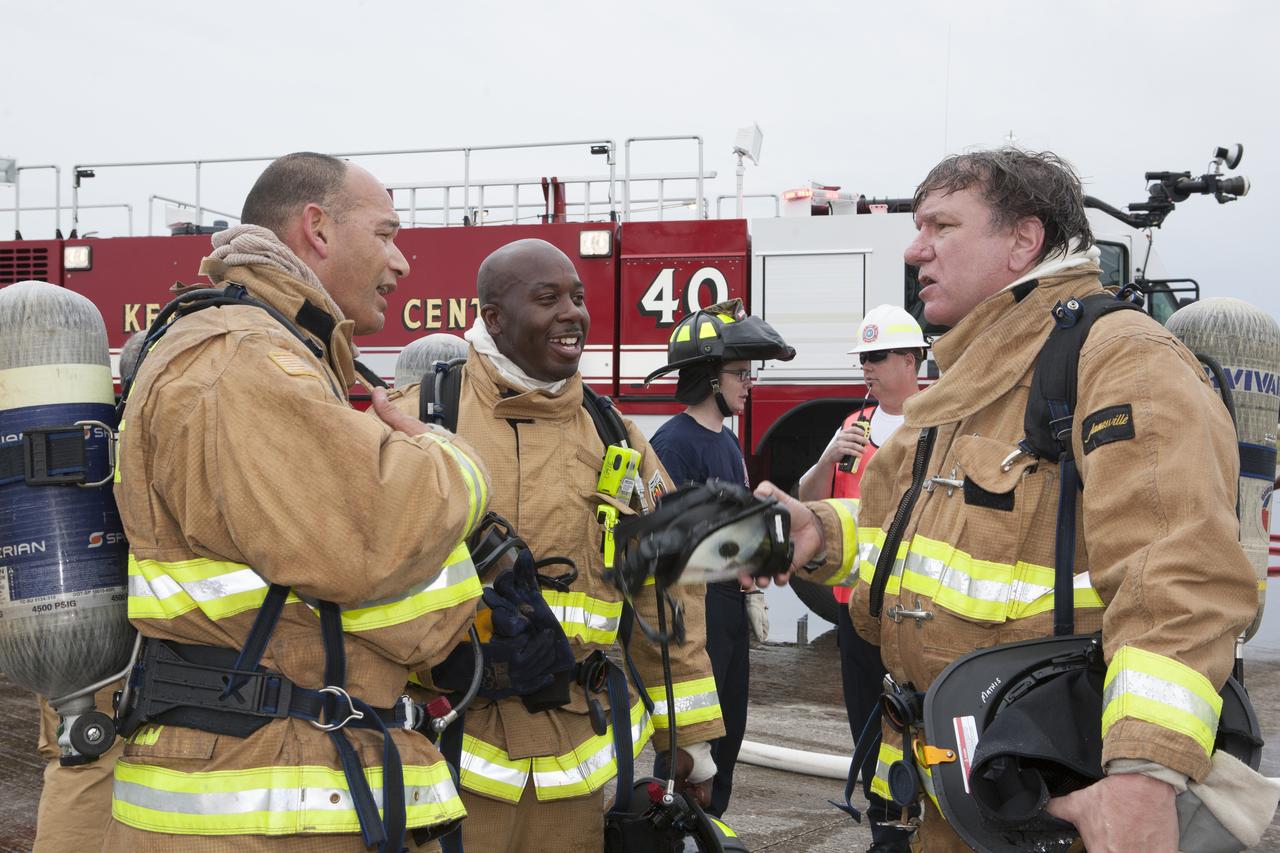
CAPE CANAVERAL, Fla. - Special Rescue Operations firefighters with NASA Fire Rescue Services in the Protective Services Office at NASA’s Kennedy Space Center in Florida review procedures after participating in a training exercise at the Shuttle Landing Facility. During the training simulation, firefighters used fire trucks and hoses to extinguish flames burning on and around a mock-up of a small plane. Kennedy’s firefighters recently achieved Pro Board Certification in aerial fire truck operations and completed vehicle extrication training using the Jaws of Life. The Protective Services Office is one step closer to achieving certification in vehicle machinery extrication and other rescue skills. Kennedy’s firefighters are with G4S Government Solutions Inc., on the Kennedy Protective Services Contract. Photo credit: NASA/Kim Shiflett
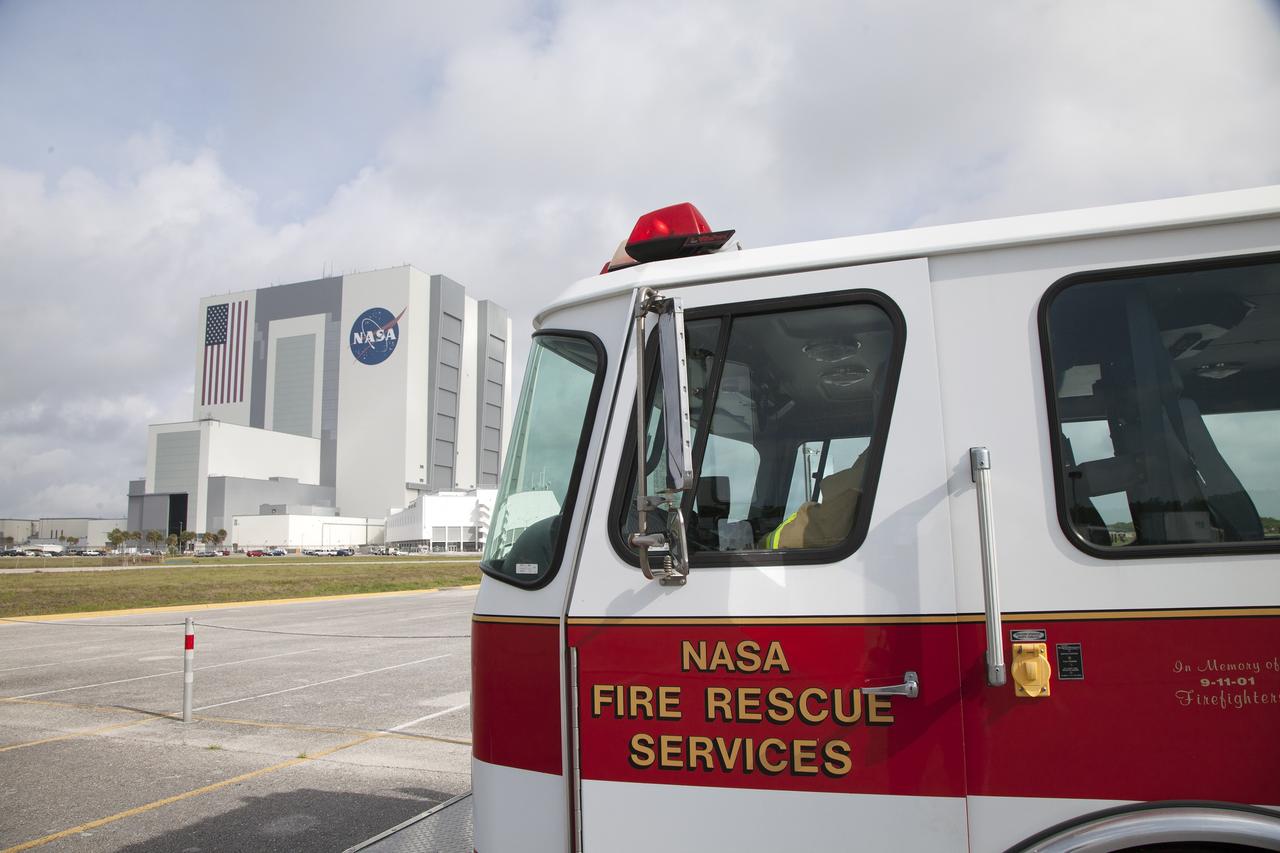
CAPE CANAVERAL, Fla. -- At NASA's Kennedy Space Center in Florida, a Fire Rescue vehicle stands by in a parking area near the Vehicle Assembly Building for training with pilots in NASA Aircraft Operations. The exercise is designed to develop procedures for using agency helicopters to transport injured patients to a local hospital. The activity taking place in Kennedy's Launch Complex 39 turn-basin parking lot was only one of several drills. It was part of a new training program that was developed by Kennedy's Fire Rescue department along with NASA Aircraft Operations to sharpen the skills needed to help rescue personnel learn how to collaborate with helicopter pilots in taking injured patients to hospitals as quickly as possible. Photo credit: NASA/Dan Casper
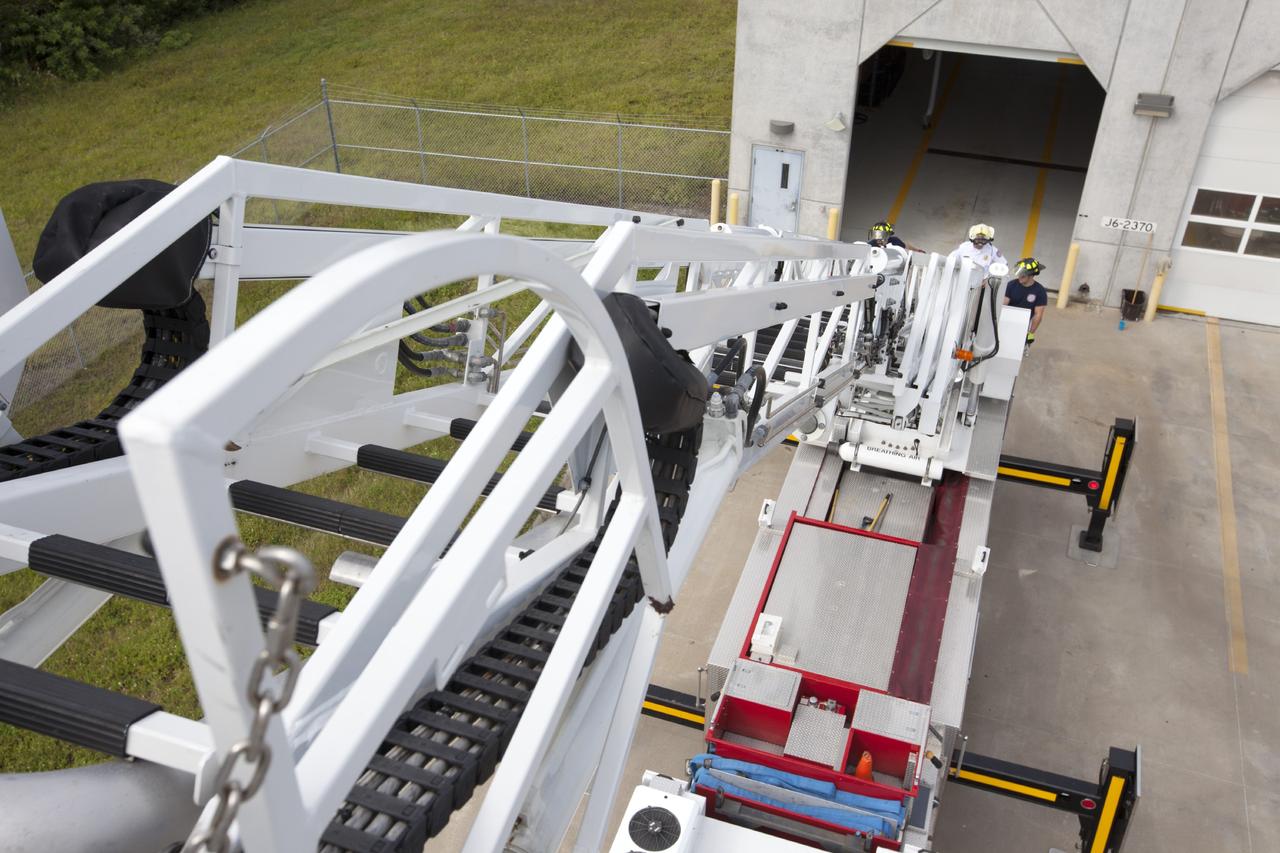
CAPE CANAVERAL, Fla. – At Fire Station No. 2 near the Shuttle Landing Facility at NASA’s Kennedy Space Center in Florida, Fire Rescue Services personnel have deployed and extended the ladder on the aerial fire truck during training in order to be certified in the operation and use of the vehicle. The stabilizers have been deployed on either side of the fire truck. The center’s Fire Rescue Services recently achieved Pro Board Certification in aerial fire truck operations. Pro Board Certification is a globally recognized certification that puts on multiple courses that all fire departments throughout the world recognize and use to train their personnel. The unique aerial truck contains a 100-foot extendable ladder with a bucket at the end of it that can be used for rescues from taller buildings or aircraft rescue firefighting. Photo credit: NASA/Kim Shiflett
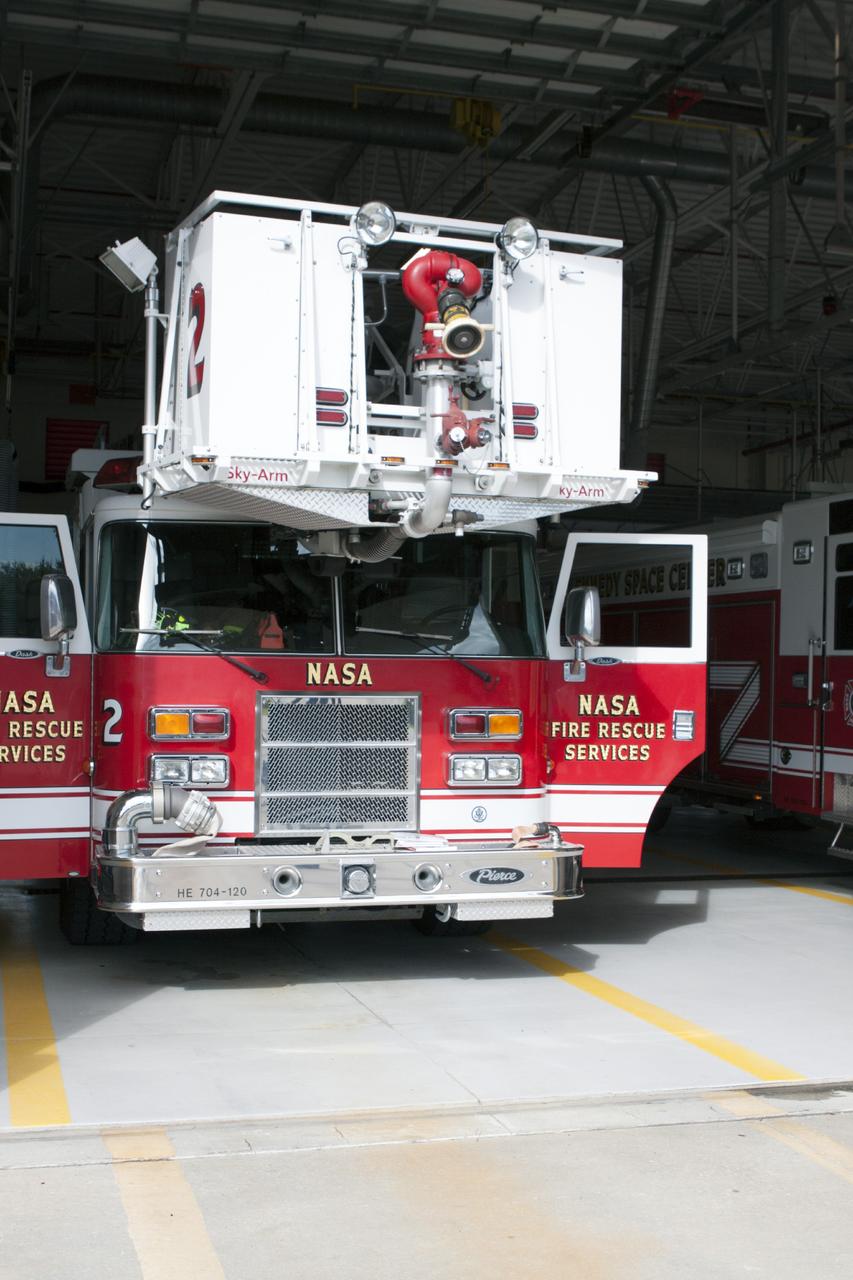
CAPE CANAVERAL, Fla. – At Fire Station No. 2 near the Shuttle Landing Facility at NASA’s Kennedy Space Center in Florida, the aerial fire truck sits in a bay as Fire Rescue Services personnel prepare to drive the fire truck out of the bay and then operate the extendable ladder during training in order to be certified in the operation and use of the vehicle. The center’s Fire Rescue Services recently achieved Pro Board Certification in aerial fire truck operations. Pro Board Certification is a globally recognized certification that puts on multiple courses that all fire departments throughout the world recognize and use to train their personnel. The unique aerial truck contains a 100-foot extendable ladder with a bucket at the end of it that can be used for rescues from taller buildings or aircraft rescue firefighting. Photo credit: NASA/Kim Shiflett
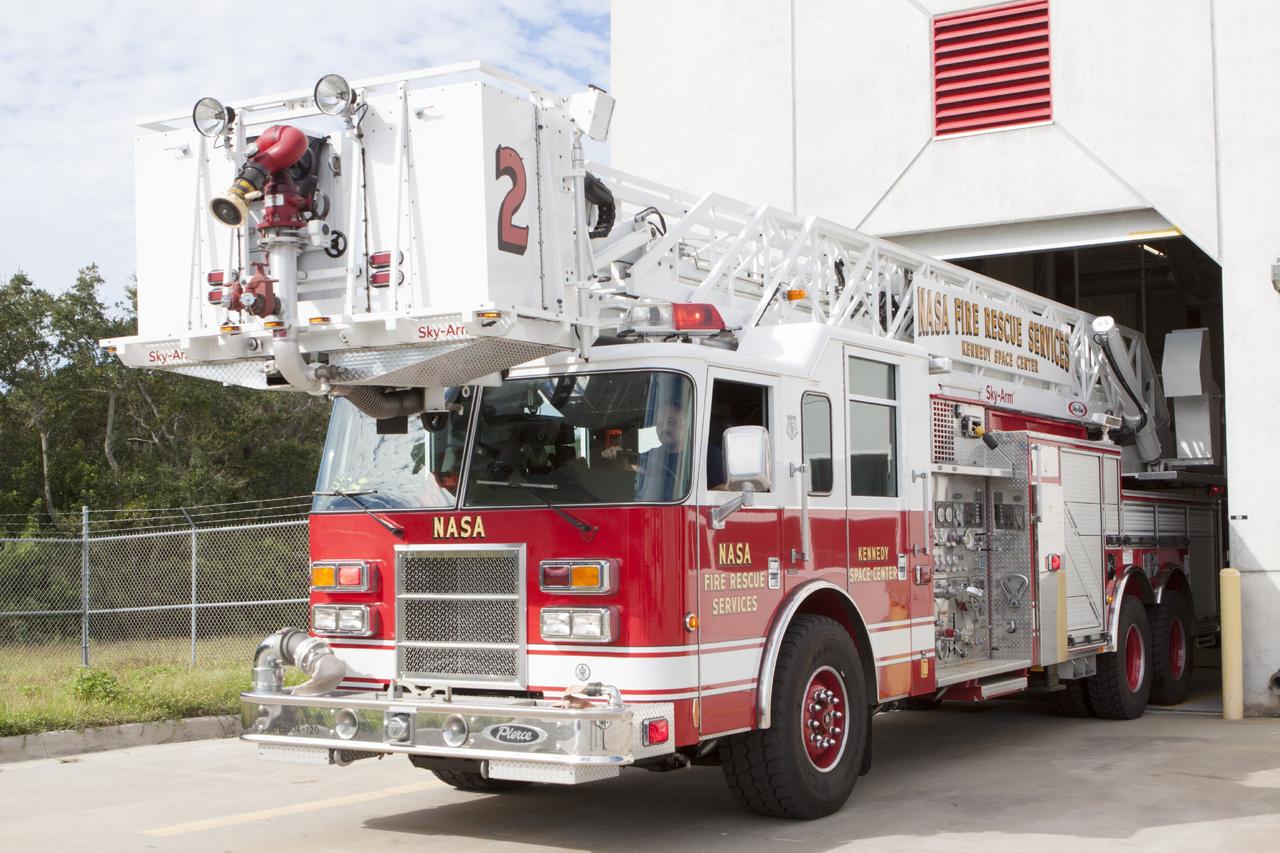
CAPE CANAVERAL, Fla. – At Fire Station No. 2 near the Shuttle Landing Facility at NASA’s Kennedy Space Center in Florida, the aerial fire truck is being driven out of the bay so that Fire Rescue Services personnel can be trained and certified in the operation and use of the vehicle. The center’s Fire Rescue Services recently achieved Pro Board Certification in aerial fire truck operations. Pro Board Certification is a globally recognized certification that puts on multiple courses that all fire departments throughout the world recognize and use to train their personnel. The unique aerial truck contains a 100-foot extendable ladder with a bucket at the end of it that can be used for rescues from taller buildings or aircraft rescue firefighting. Photo credit: NASA/Kim Shiflett
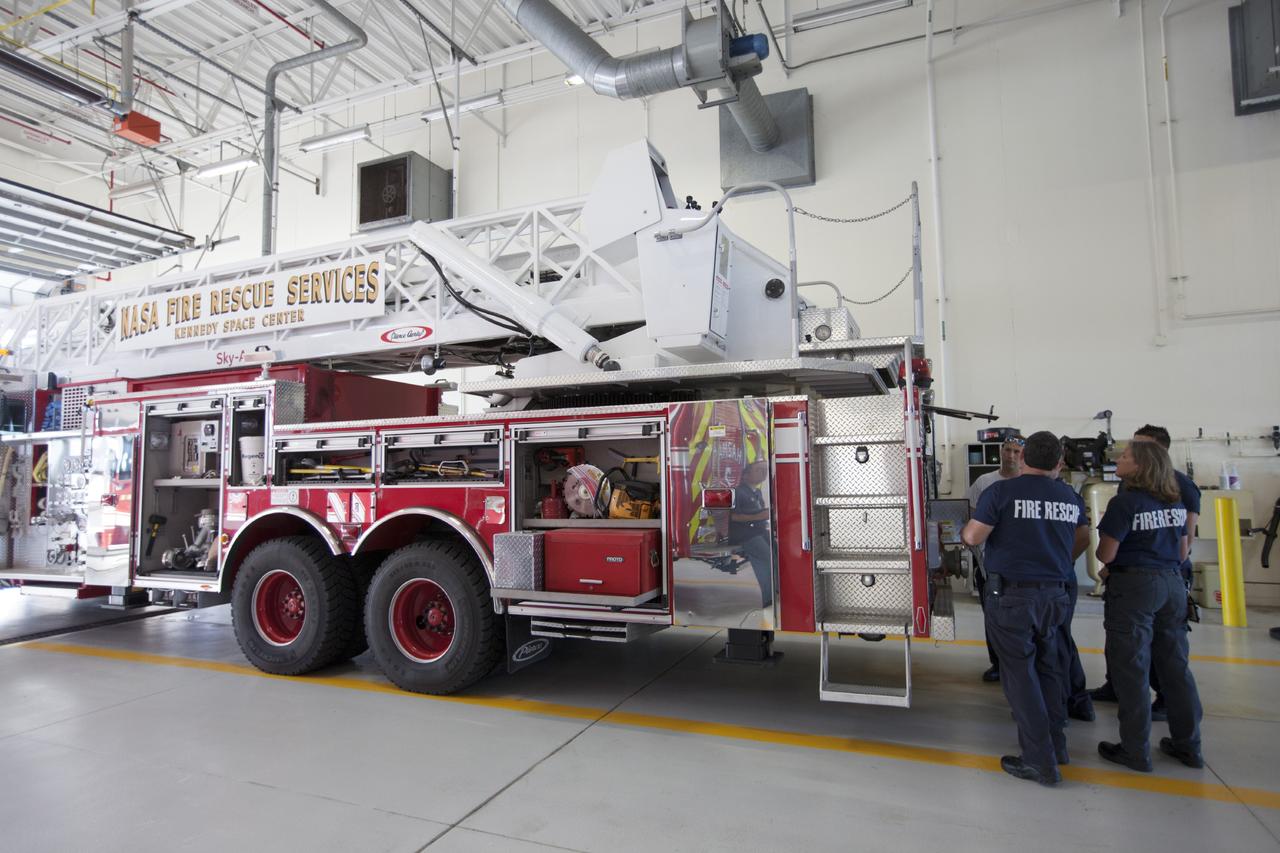
CAPE CANAVERAL, Fla. – At Fire Station No. 2 near the Shuttle Landing Facility at NASA’s Kennedy Space Center in Florida, Fire Rescue Services personnel review procedures and check equipment on the aerial fire truck as part of the training to be certified in the operation and use of the vehicle. The center’s Fire Rescue Services recently achieved Pro Board Certification in aerial fire truck operations. Pro Board Certification is a globally recognized certification that puts on multiple courses that all fire departments throughout the world recognize and use to train their personnel. The unique aerial truck contains a 100-foot extendable ladder with a bucket at the end of it that can be used for rescues from taller buildings or aircraft rescue firefighting. Photo credit: NASA/Kim Shiflett
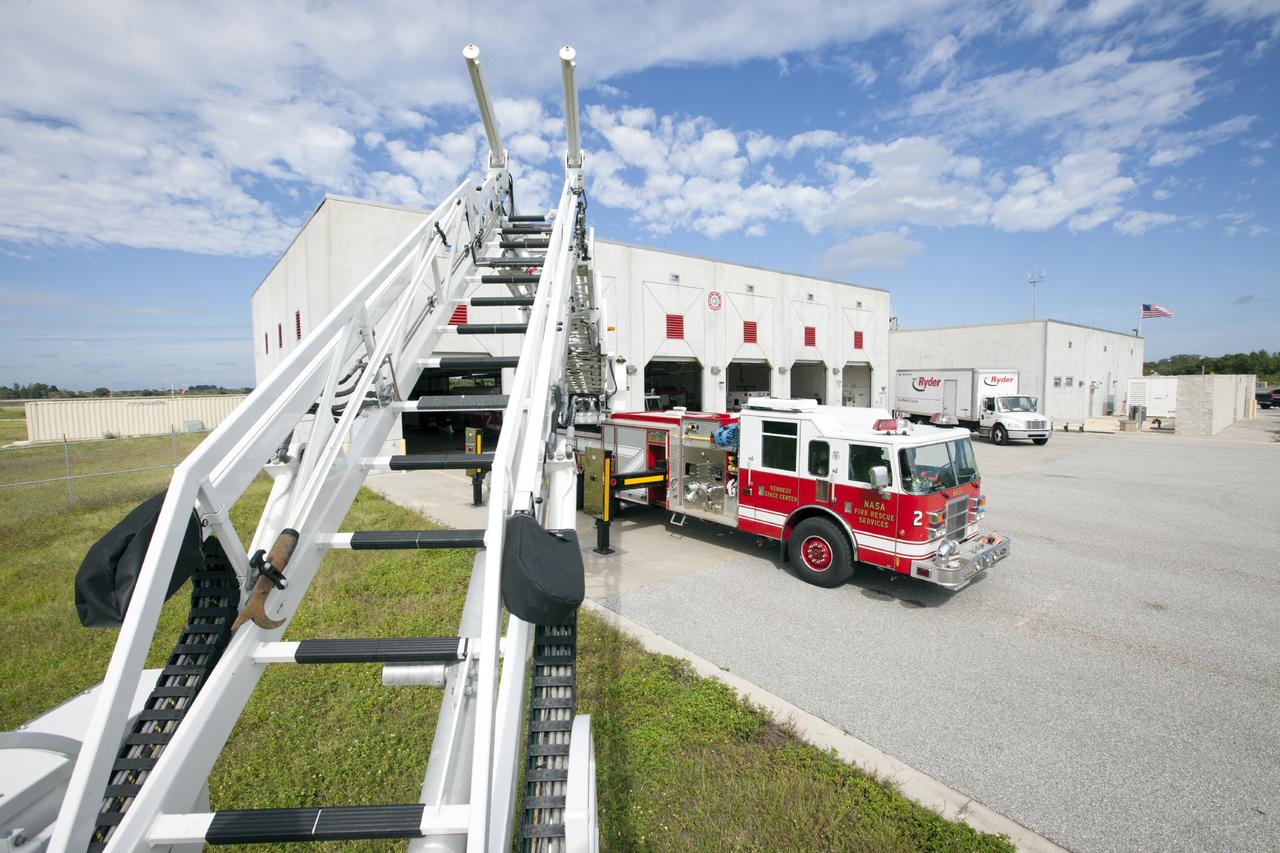
CAPE CANAVERAL, Fla. – At Fire Station No. 2 near the Shuttle Landing Facility at NASA’s Kennedy Space Center in Florida, Fire Rescue Services personnel have deployed and extended the ladder on the aerial fire truck during training in order to be certified in the operation and use of the vehicle. The stabilizers have been deployed on either side of the fire truck. The center’s Fire Rescue Services recently achieved Pro Board Certification in aerial fire truck operations. Pro Board Certification is a globally recognized certification that puts on multiple courses that all fire departments throughout the world recognize and use to train their personnel. The unique aerial truck contains a 100-foot extendable ladder with a bucket at the end of it that can be used for rescues from taller buildings or aircraft rescue firefighting. Photo credit: NASA/Kim Shiflett
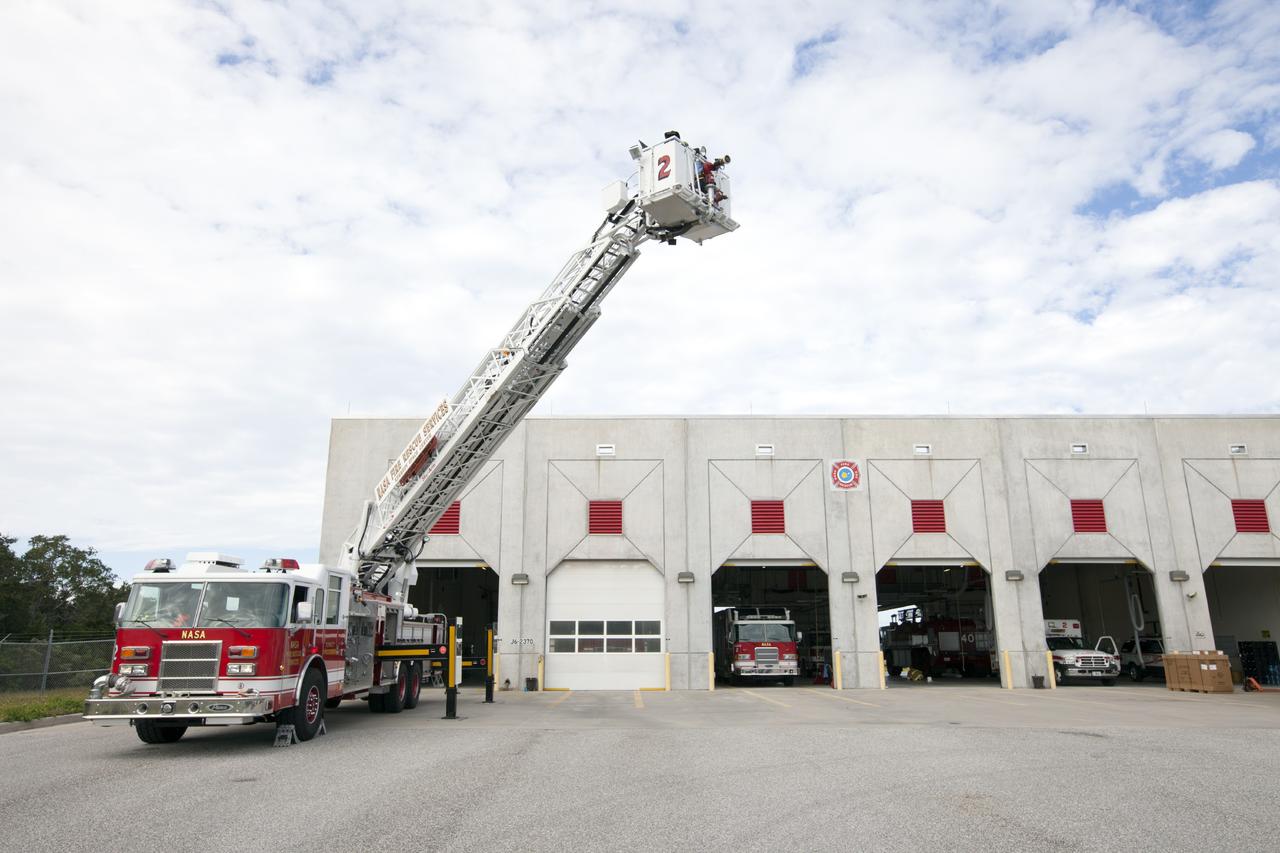
CAPE CANAVERAL, Fla. – At Fire Station No. 2 near the Shuttle Landing Facility at NASA’s Kennedy Space Center in Florida, Fire Rescue Services personnel have deployed the ladder on the aerial fire truck during training in order to be certified in the operation and use of the vehicle. The center’s Fire Rescue Services recently achieved Pro Board Certification in aerial fire truck operations. Pro Board Certification is a globally recognized certification that puts on multiple courses that all fire departments throughout the world recognize and use to train their personnel. The unique aerial truck contains a 100-foot extendable ladder with a bucket at the end of it that can be used for rescues from taller buildings or aircraft rescue firefighting. Photo credit: NASA/Kim Shiflett
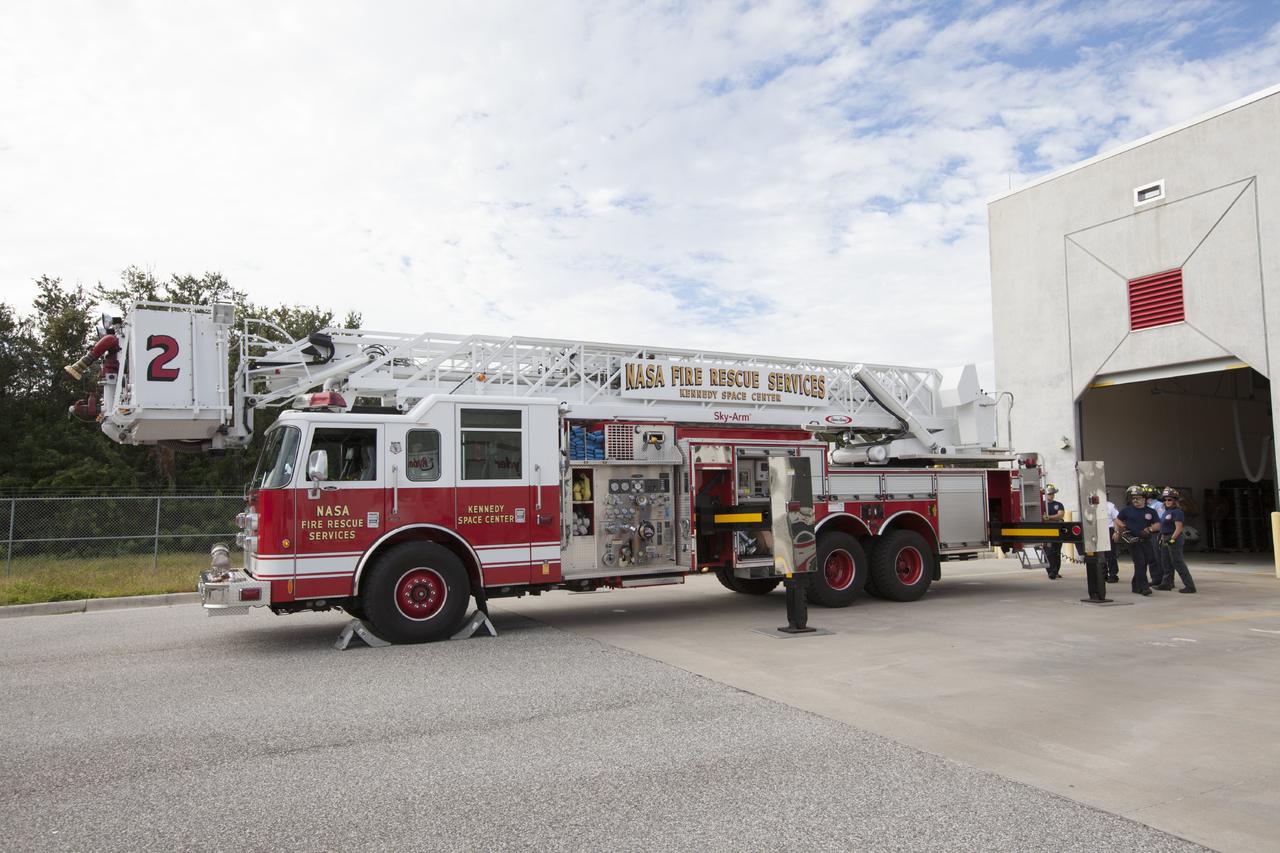
CAPE CANAVERAL, Fla. – At Fire Station No. 2 near the Shuttle Landing Facility at NASA’s Kennedy Space Center in Florida, the aerial fire truck has been moved out of the bay and Fire Rescue Services personnel have deployed the stabilizers on either side of the truck in order to prepare for training to be certified in the operation and use of the vehicle. The center’s Fire Rescue Services recently achieved Pro Board Certification in aerial fire truck operations. Pro Board Certification is a globally recognized certification that puts on multiple courses that all fire departments throughout the world recognize and use to train their personnel. The unique aerial truck contains a 100-foot extendable ladder with a bucket at the end of it that can be used for rescues from taller buildings or aircraft rescue firefighting. Photo credit: NASA/Kim Shiflett
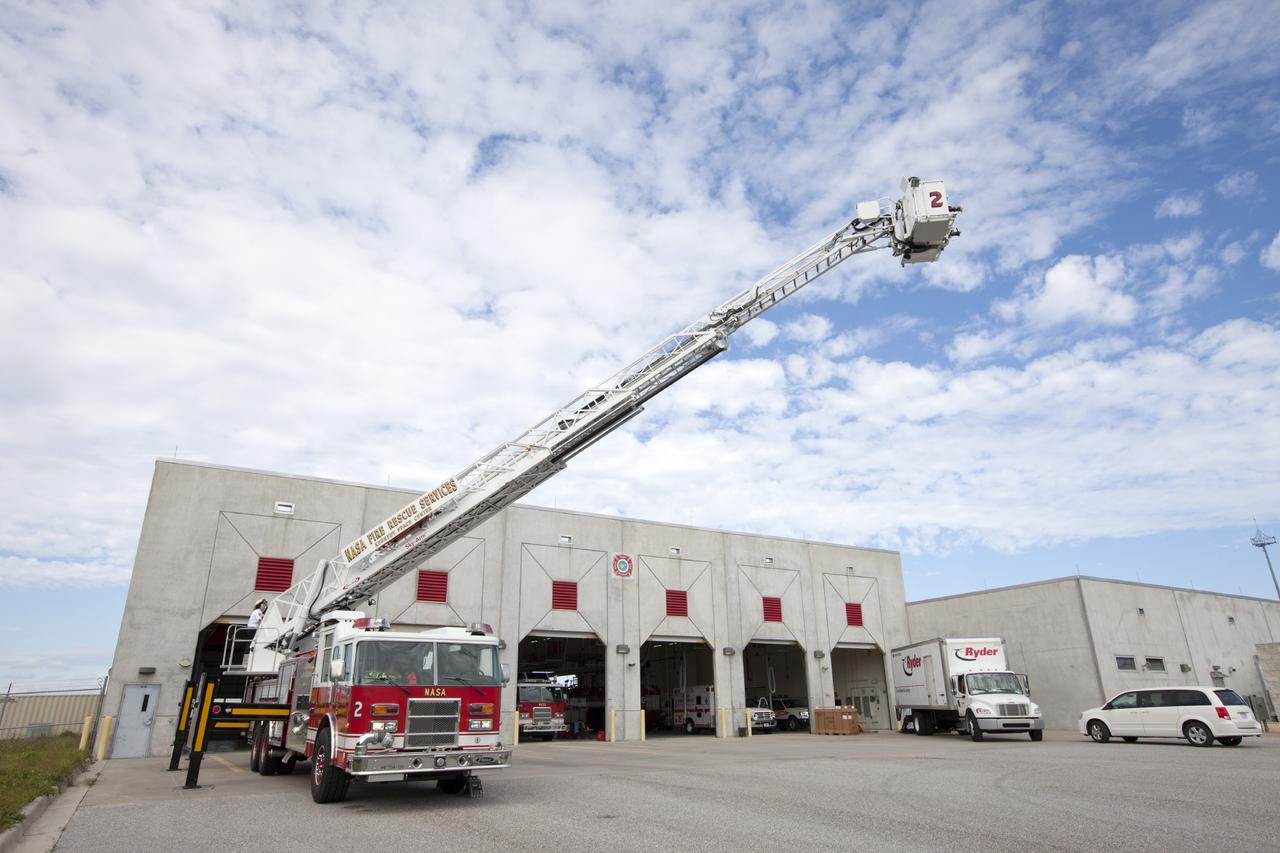
CAPE CANAVERAL, Fla. – At Fire Station No. 2 near the Shuttle Landing Facility at NASA’s Kennedy Space Center in Florida, Fire Rescue Services personnel have deployed the ladder on the aerial fire truck during training in order to be certified in the operation and use of the vehicle. The center’s Fire Rescue Services recently achieved Pro Board Certification in aerial fire truck operations. Pro Board Certification is a globally recognized certification that puts on multiple courses that all fire departments throughout the world recognize and use to train their personnel. The unique aerial truck contains a 100-foot extendable ladder with a bucket at the end of it that can be used for rescues from taller buildings or aircraft rescue firefighting. Photo credit: NASA/Kim Shiflett
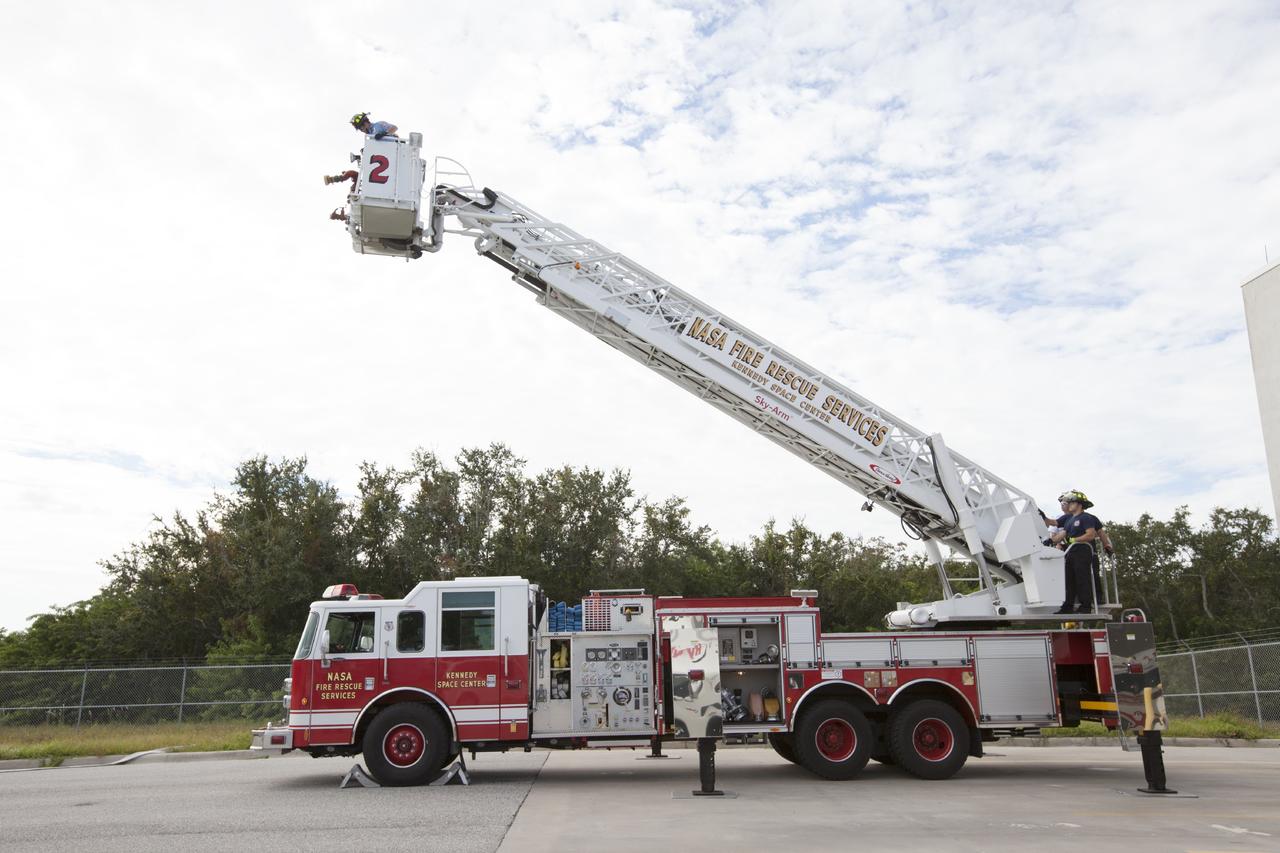
CAPE CANAVERAL, Fla. – At Fire Station No. 2 near the Shuttle Landing Facility at NASA’s Kennedy Space Center in Florida, Fire Rescue Services personnel have deployed and extended the ladder on the aerial fire truck during training in order to be certified in the operation and use of the vehicle. The center’s Fire Rescue Services recently achieved Pro Board Certification in aerial fire truck operations. Pro Board Certification is a globally recognized certification that puts on multiple courses that all fire departments throughout the world recognize and use to train their personnel. The unique aerial truck contains a 100-foot extendable ladder with a bucket at the end of it that can be used for rescues from taller buildings or aircraft rescue firefighting. Photo credit: NASA/Kim Shiflett
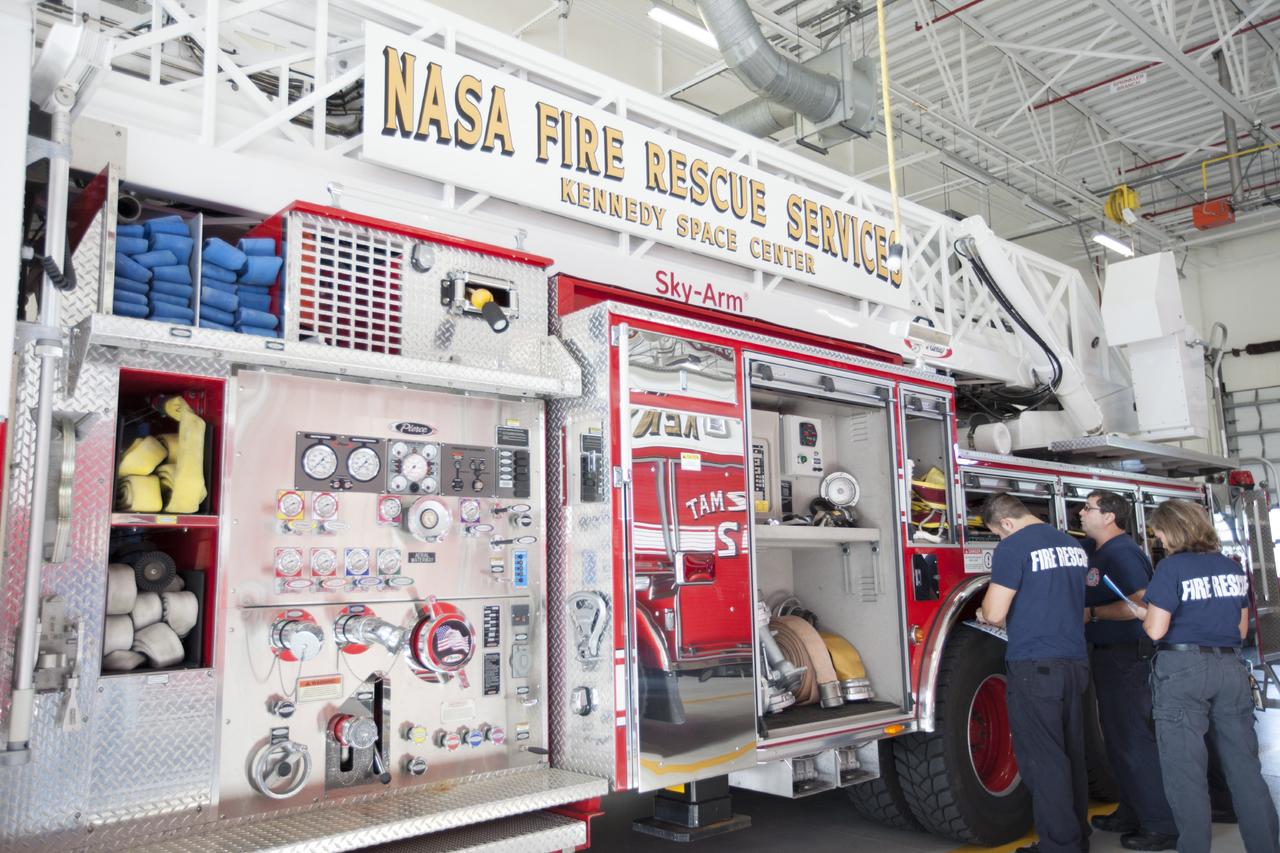
CAPE CANAVERAL, Fla. – At Fire Station No. 2 near the Shuttle Landing Facility at NASA’s Kennedy Space Center in Florida, Fire Rescue Services personnel review procedures and check equipment on the aerial fire truck as part of the training to be certified in the operation and use of the vehicle. The center’s Fire Rescue Services recently achieved Pro Board Certification in aerial fire truck operations. Pro Board Certification is a globally recognized certification that puts on multiple courses that all fire departments throughout the world recognize and use to train their personnel. The unique aerial truck contains a 100-foot extendable ladder with a bucket at the end of it that can be used for rescues from taller buildings or aircraft rescue firefighting. Photo credit: NASA/Kim Shiflett
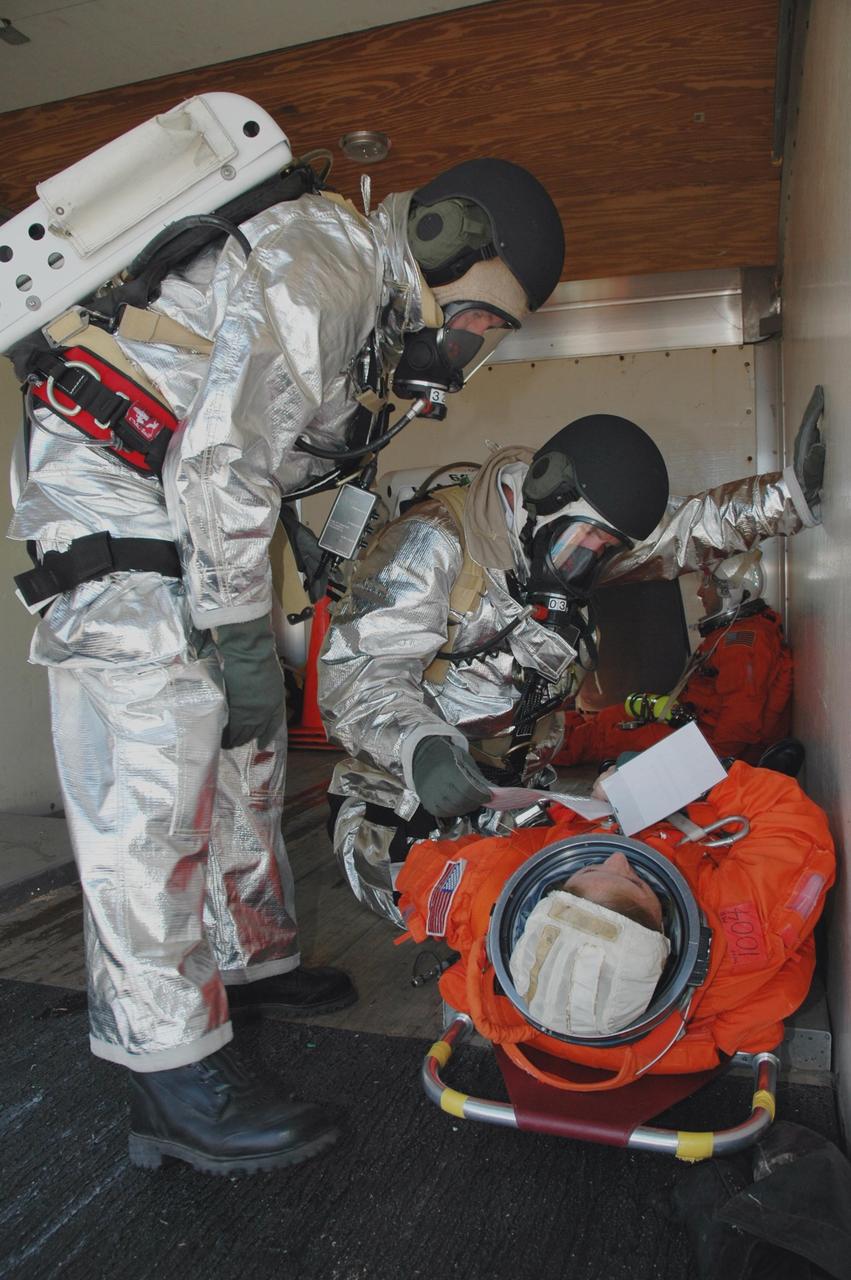
KENNEDY SPACE CENTER, FLA. - At NASA Kennedy Space Center's Shuttle Landing Facility, emergency personnel tends to an "injured astronaut" inside a rescue vehicle during a simulated emergency landing of a shuttle crew. Known as a Mode VI exercise, the operation uses volunteer workers from the Center to pose as astronauts. The purpose of the simulation is to exercise emergency preparedness personnel, equipment and facilities in rescuing astronauts from a downed orbiter and providing immediate medical attention. Photo credit: NASA/Jim Grossmann
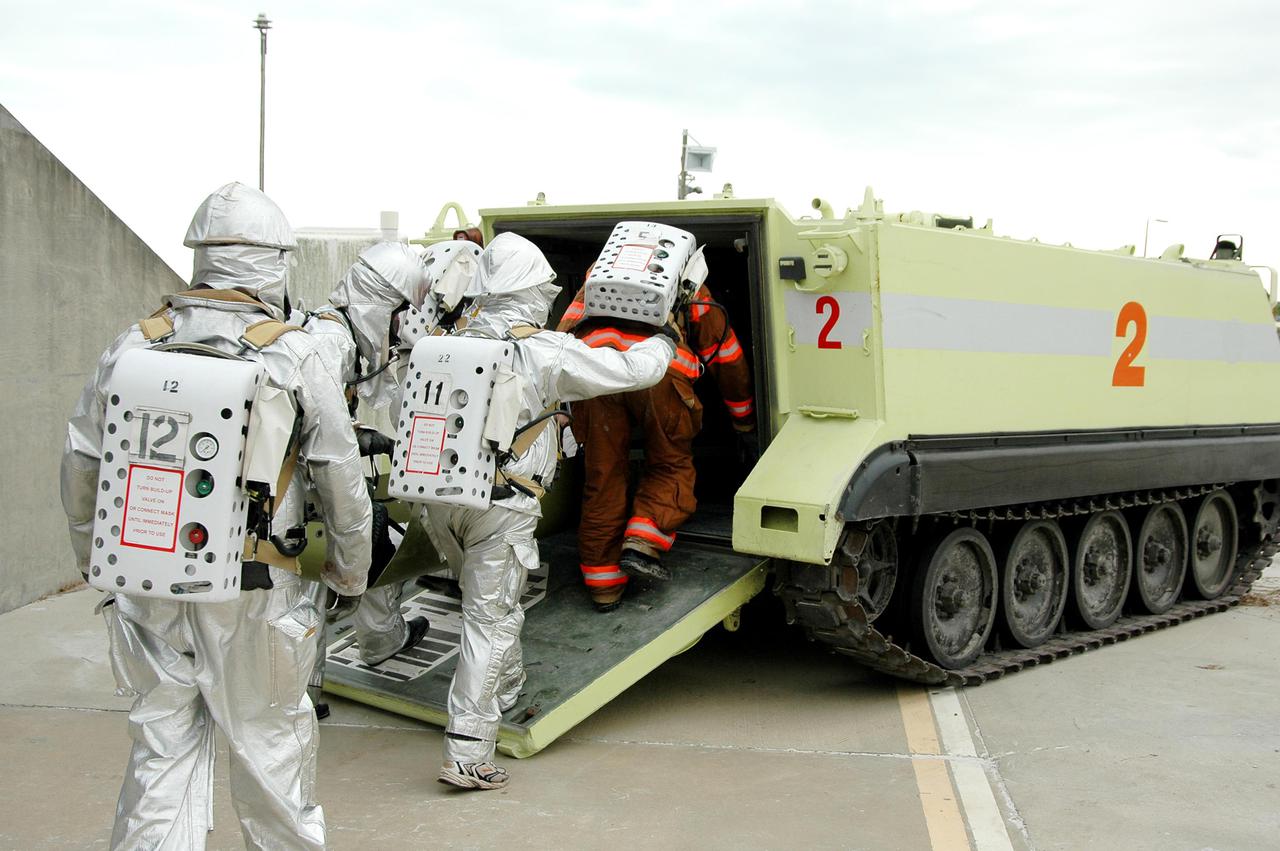
KENNEDY SPACE CENTER, FLA. - During a simulated launch countdown_emergency simulation on Launch Pad 39A, the rescue team helps astronaut-suited workers climb into an M-113 armored personnel carrier for transport away from the pad. The four-hour exercise simulated normal launch countdown operations, with the added challenge of a fictitious event causing an evacuation of the vehicle and launch pad. It tested the team’s rescue approaches on the Fixed Service Structure, slidewire basket evacuation, triage care and transportation of injured personnel to hospitals, as well as communications and coordination.
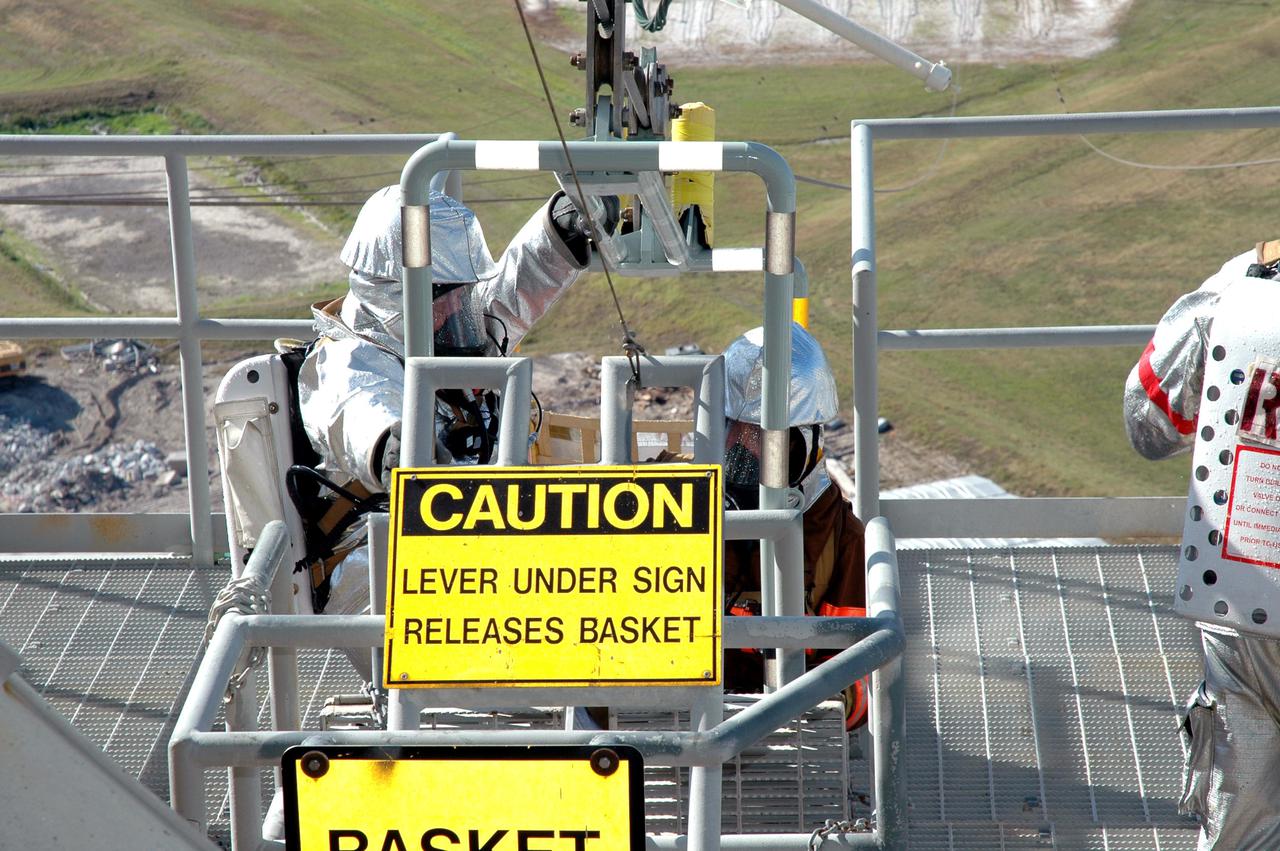
KENNEDY SPACE CENTER, FLA. - On Launch Pad 39A, a rescue force climbs into slidewire baskets on the Fixed Service Structure during an emergency egress scenario. The four-hour exercise simulated normal launch countdown operations, with the added challenge of a fictitious event causing an evacuation of the vehicle and launch pad. It tested the team’s rescue approaches on the Fixed Service Structure, slidewire basket evacuation, triage care and transportation of injured personnel to hospitals, as well as communications and coordination.
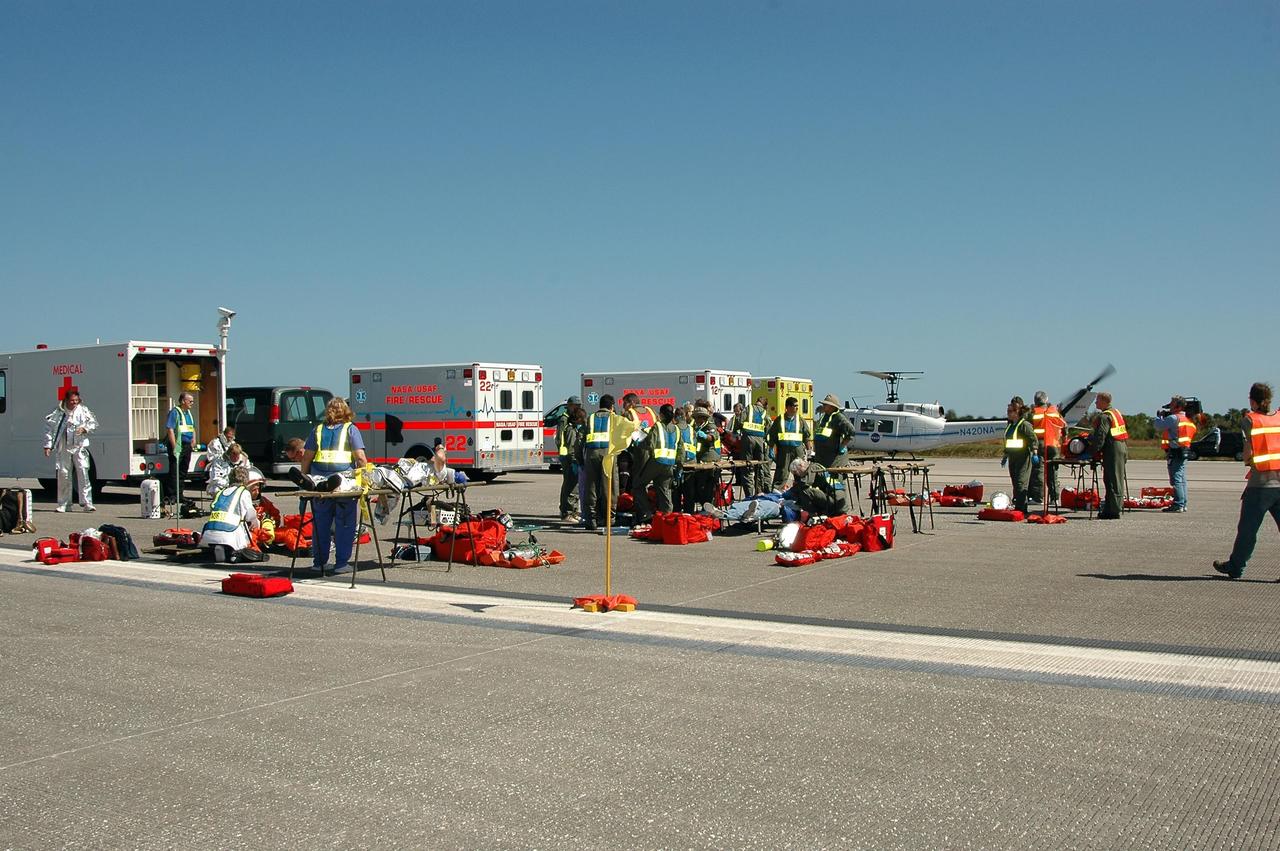
KENNEDY SPACE CENTER, FLA. - At NASA Kennedy Space Center's Shuttle Landing Facility, rescue vehicles and personnel are lined up to take part in the simulated emergency landing of a shuttle crew. Known as a Mode VI exercise, the operation uses volunteer workers from the Center to pose as astronauts. The purpose of the simulation is to exercise emergency preparedness personnel, equipment and facilities in rescuing astronauts from a downed orbiter and providing immediate medical attention. Photo credit: NASA/Kim Shiflett
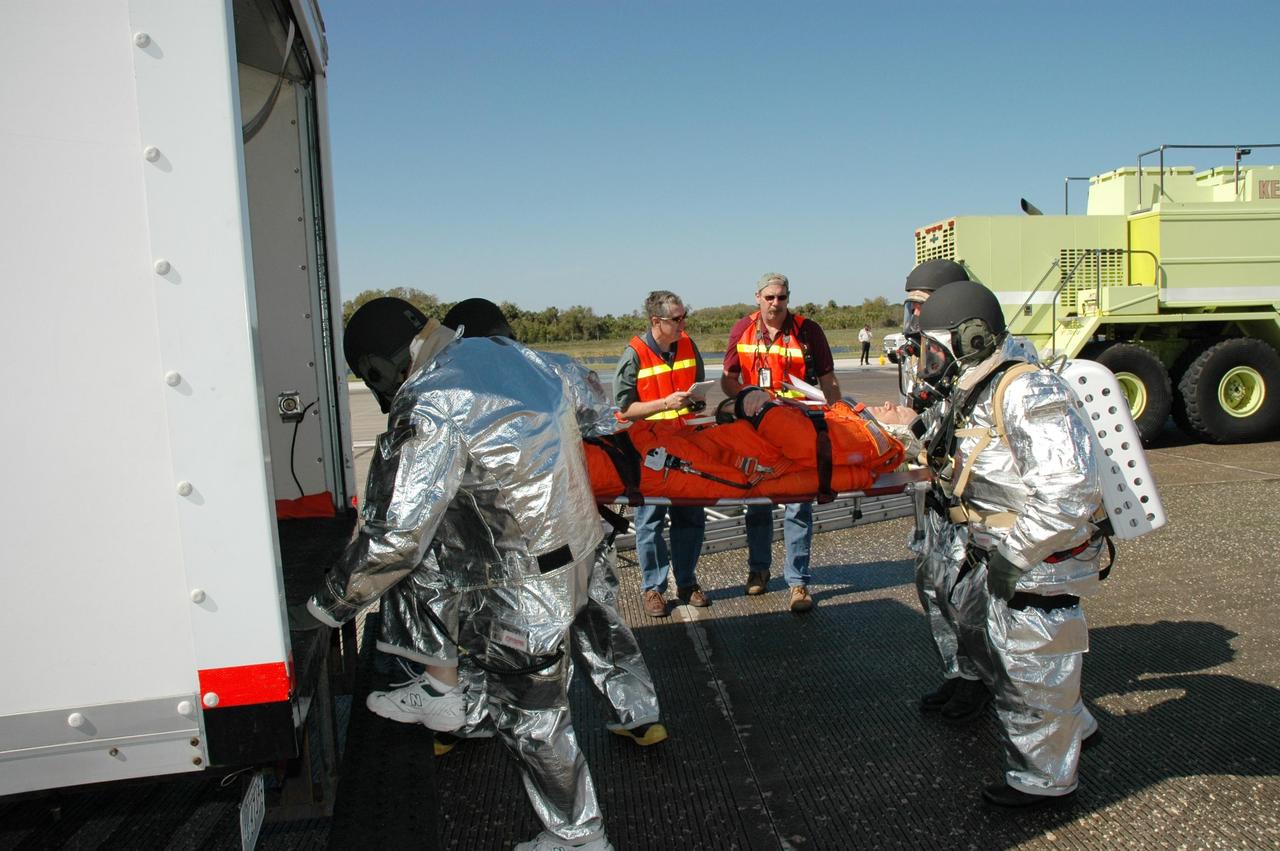
KENNEDY SPACE CENTER, FLA. - At NASA Kennedy Space Center's Shuttle Landing Facility, emergency personnel carry an "injured astronaut" to a rescue vehicle during a simulated emergency landing of a shuttle crew. Known as a Mode VI exercise, the operation uses volunteer workers from the Center to pose as astronauts. The purpose of the simulation is to exercise emergency preparedness personnel, equipment and facilities in rescuing astronauts from a downed orbiter and providing immediate medical attention. Photo credit: NASA/Jim Grossmann
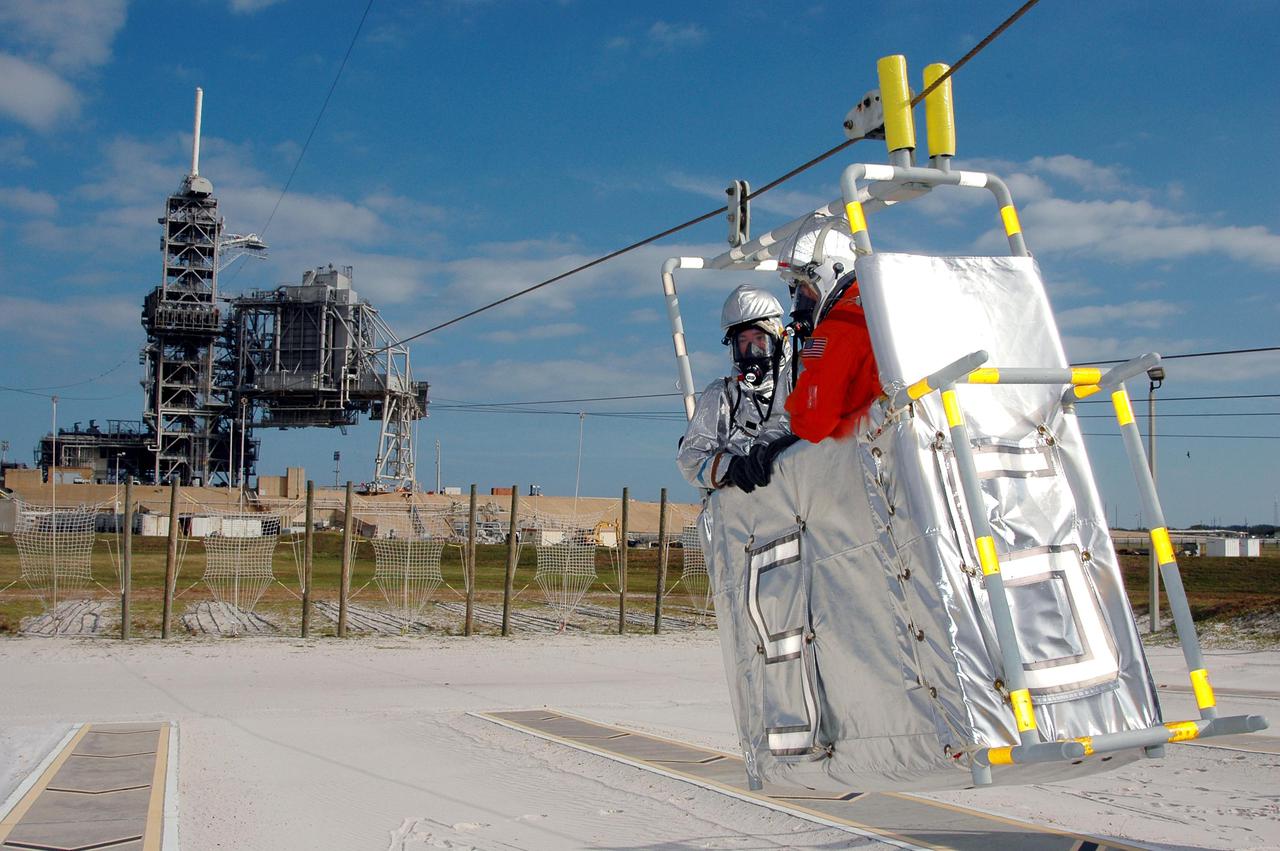
KENNEDY SPACE CENTER, FLA. - On Launch Pad 39A, a rescue team member and astronaut-suited worker approach landing in a slidewire basket reaching from the Fixed Service Structure in the background during an emergency egress scenario. The four-hour exercise simulated normal launch countdown operations, with the added challenge of a fictitious event causing an evacuation of the vehicle and launch pad. It tested the team’s rescue approaches on the Fixed Service Structure, slidewire basket evacuation, triage care and transportation of injured personnel to hospitals, as well as communications and coordination.
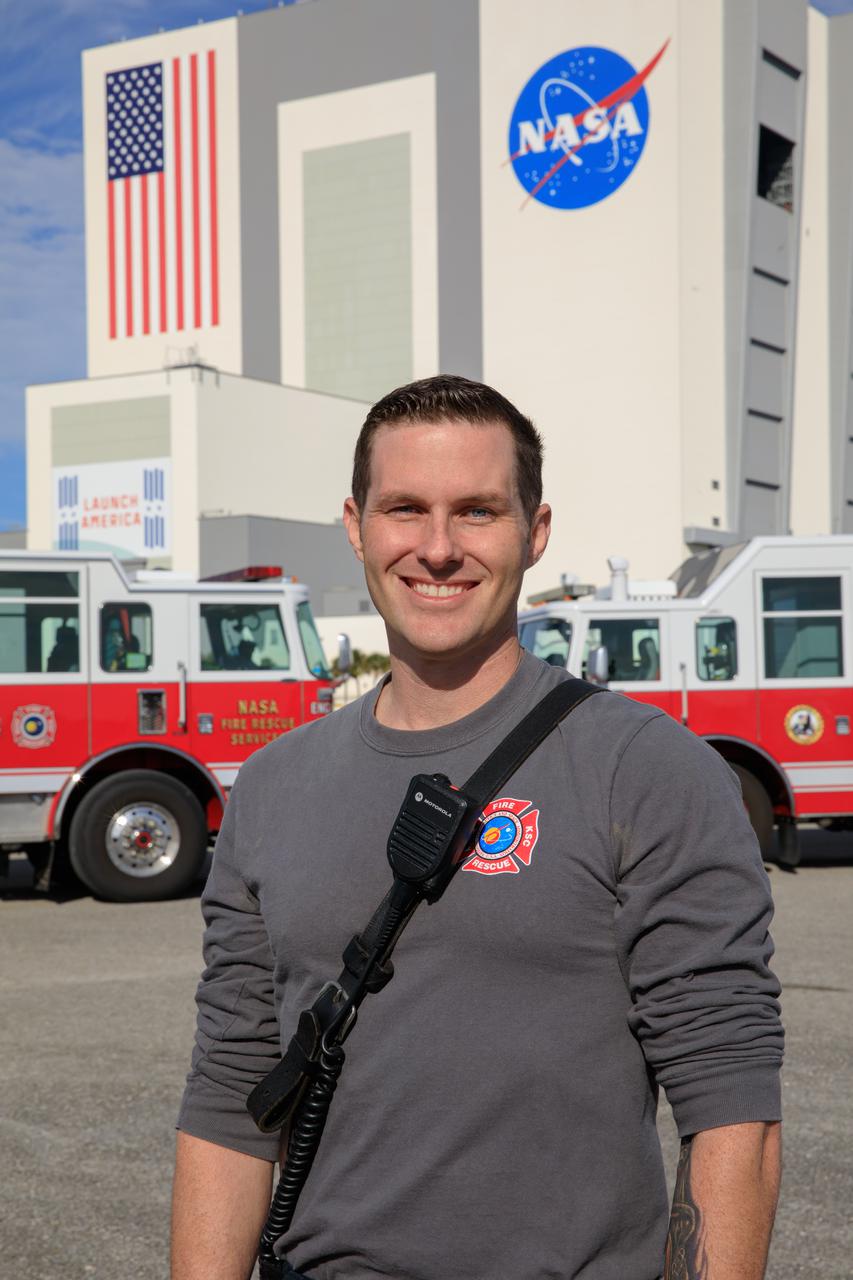
NASA Kennedy Space Center firefighter Andrew Morgan is selected as the Space Coast Fire Chiefs Association’s 2020 Firefighter of the Year. A member of the Technical Rescue Team, Morgan scaled down the side of the Florida spaceport’s Vehicle Assembly Building to rescue a team of painters when their scaffolding motor broke in October 2020, leaving them stranded 375 feet off the ground.
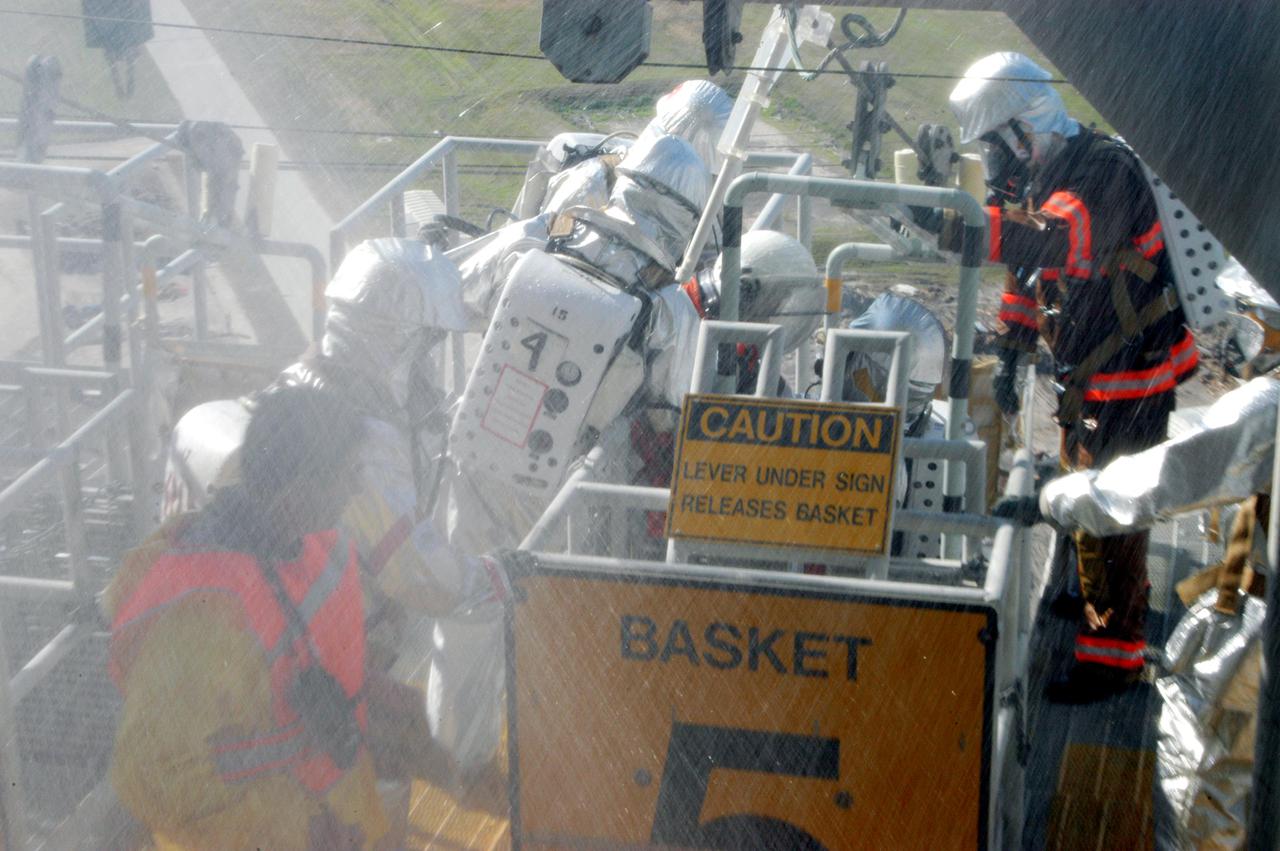
KENNEDY SPACE CENTER, FLA. - On Launch Pad 39-A, a rescue force helps co-workers as part of an emergency egress scenario. The four-hour exercise simulated normal launch countdown operations, with the added challenge of a fictitious event causing an evacuation of the vehicle and launch pad. It tested the team’s rescue approaches on the Fixed Service Structure, slidewire basket evacuation, triage care and transportation of injured personnel to hospitals, as well as communications and coordination.
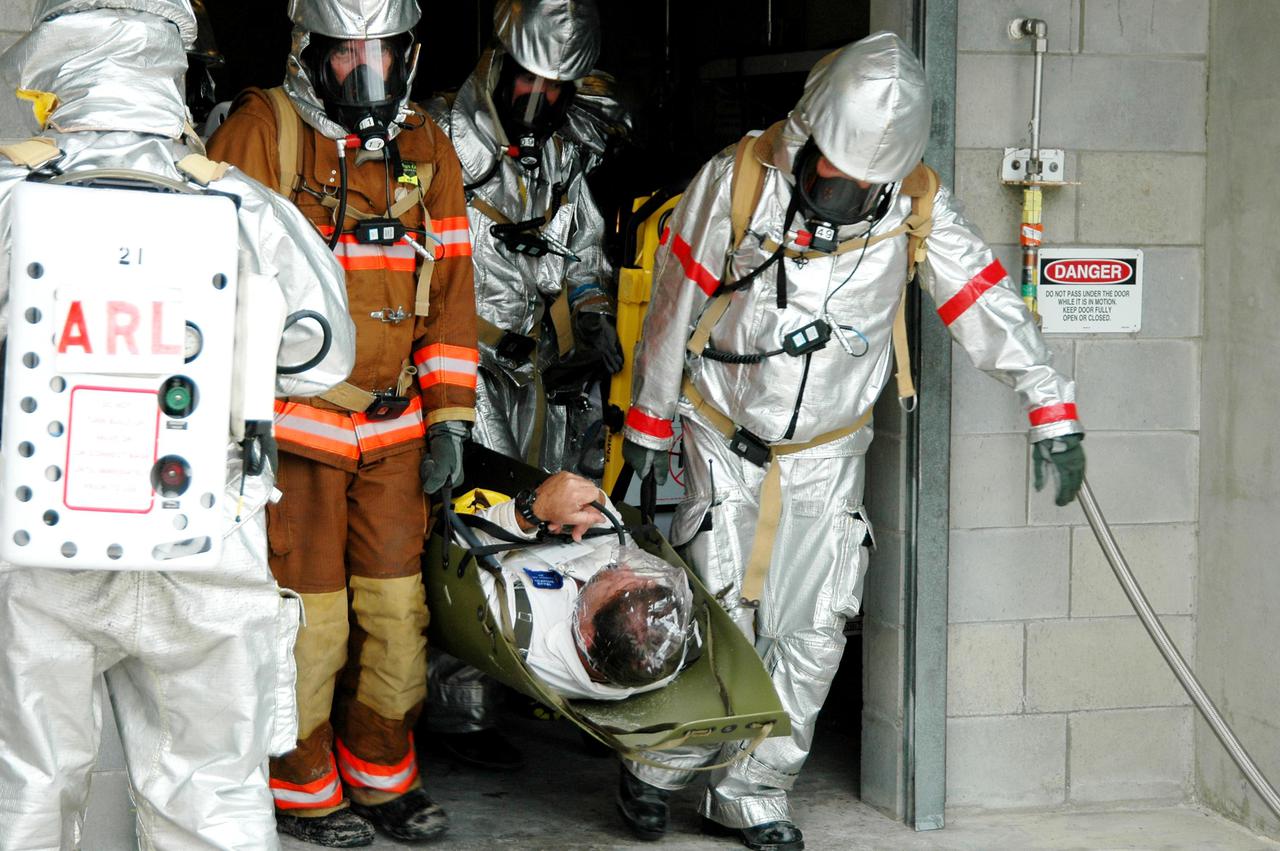
KENNEDY SPACE CENTER, FLA. - During a simulated launch countdown_emergency simulation on Launch Pad 39A, the rescue team carries “injured” astronaut-suited workers out of the pad bunker. The four-hour exercise simulated normal launch countdown operations, with the added challenge of a fictitious event causing an evacuation of the vehicle and launch pad. It tested the team’s rescue approaches on the Fixed Service Structure, slidewire basket evacuation, triage care and transportation of injured personnel to hospitals, as well as communications and coordination.
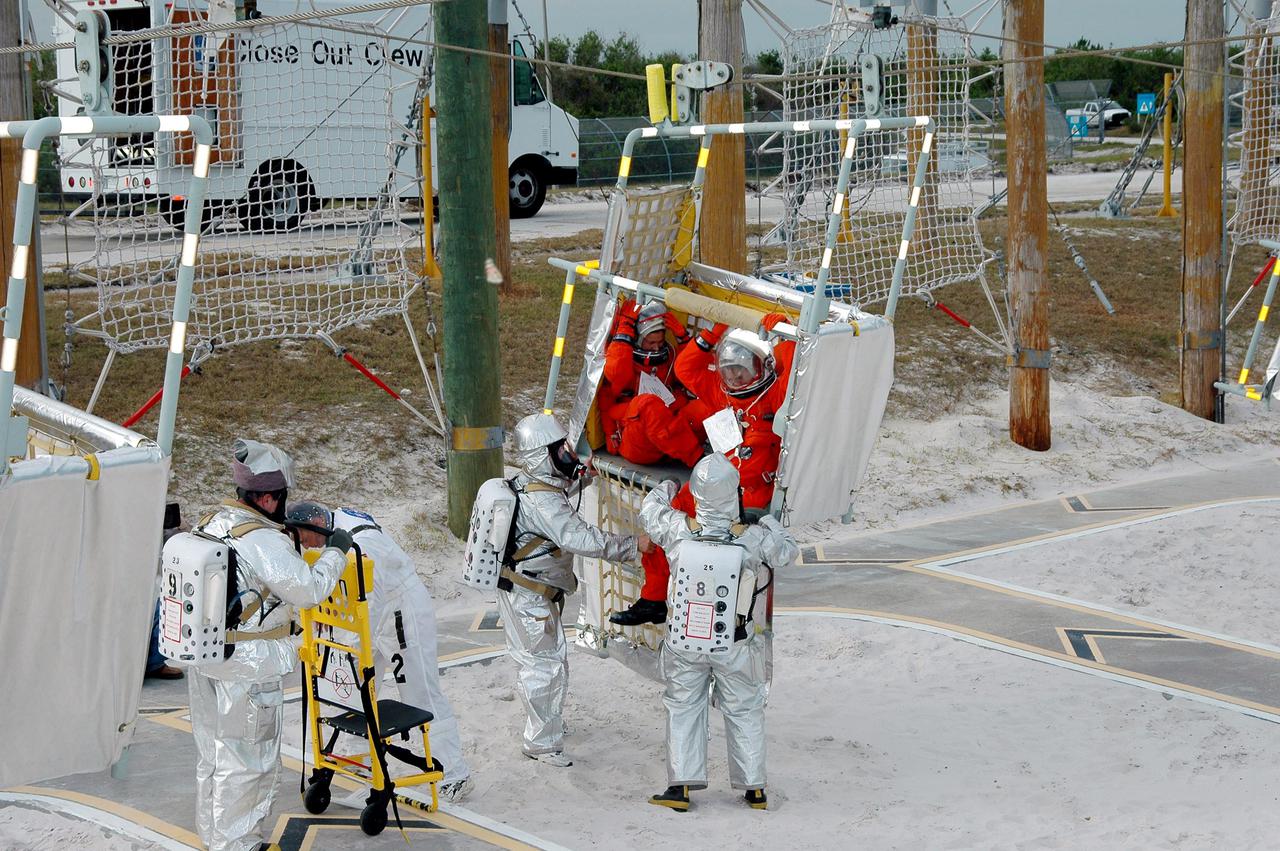
KENNEDY SPACE CENTER, FLA. - On Launch Pad 39A, rescue team members and astronaut-suited workers exit a slidewire basket during an emergency egress scenario. The four-hour exercise simulated normal launch countdown operations, with the added challenge of a fictitious event causing an evacuation of the vehicle and launch pad. It tested the team’s rescue approaches on the Fixed Service Structure, slidewire basket evacuation, triage care and transportation of injured personnel to hospitals, as well as communications and coordination.
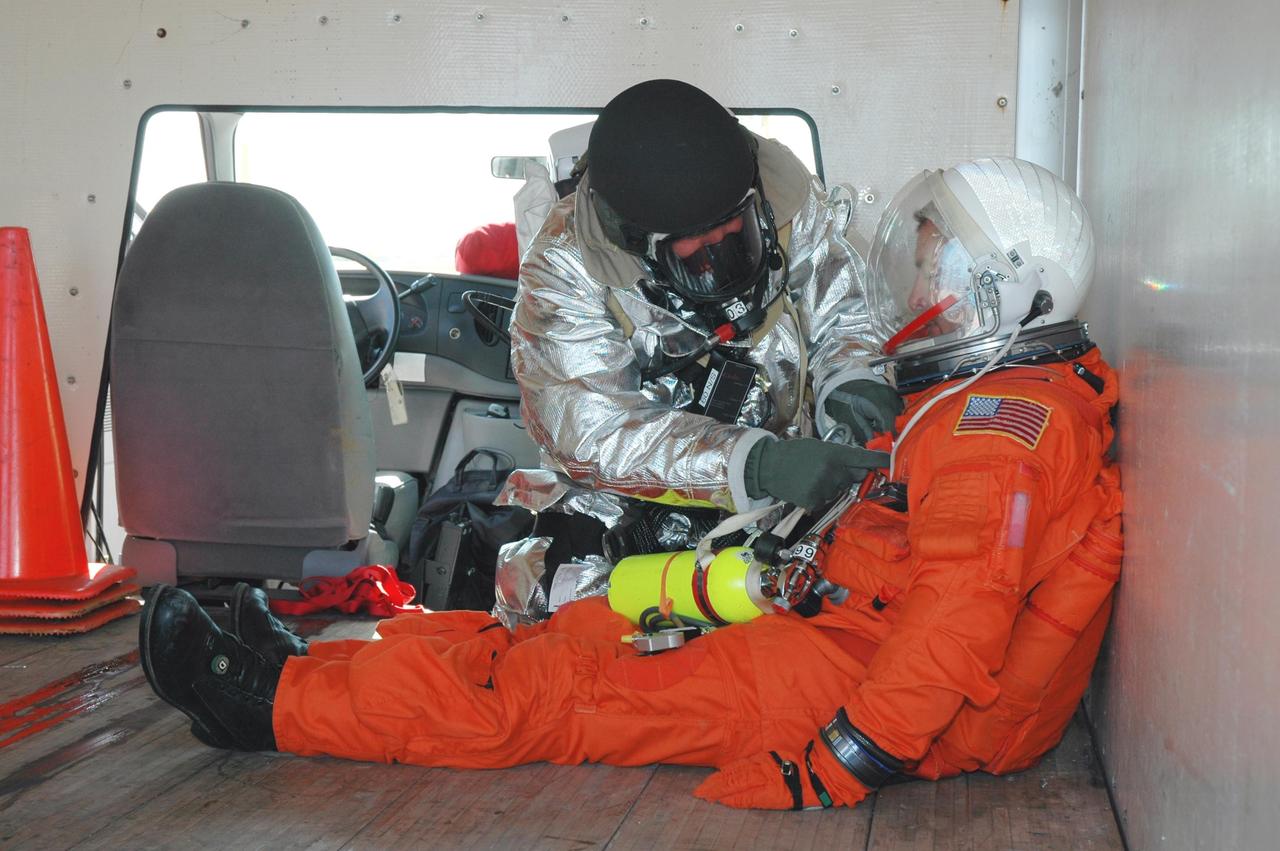
KENNEDY SPACE CENTER, FLA. - At NASA Kennedy Space Center's Shuttle Landing Facility, emergency personnel tends to an "injured astronaut" inside a rescue vehicle during a simulated emergency landing of a shuttle crew. Known as a Mode VI exercise, the operation uses volunteer workers from the Center to pose as astronauts. The purpose of the simulation is to exercise emergency preparedness personnel, equipment and facilities in rescuing astronauts from a downed orbiter and providing immediate medical attention. Photo credit: NASA/Jim Grossmann
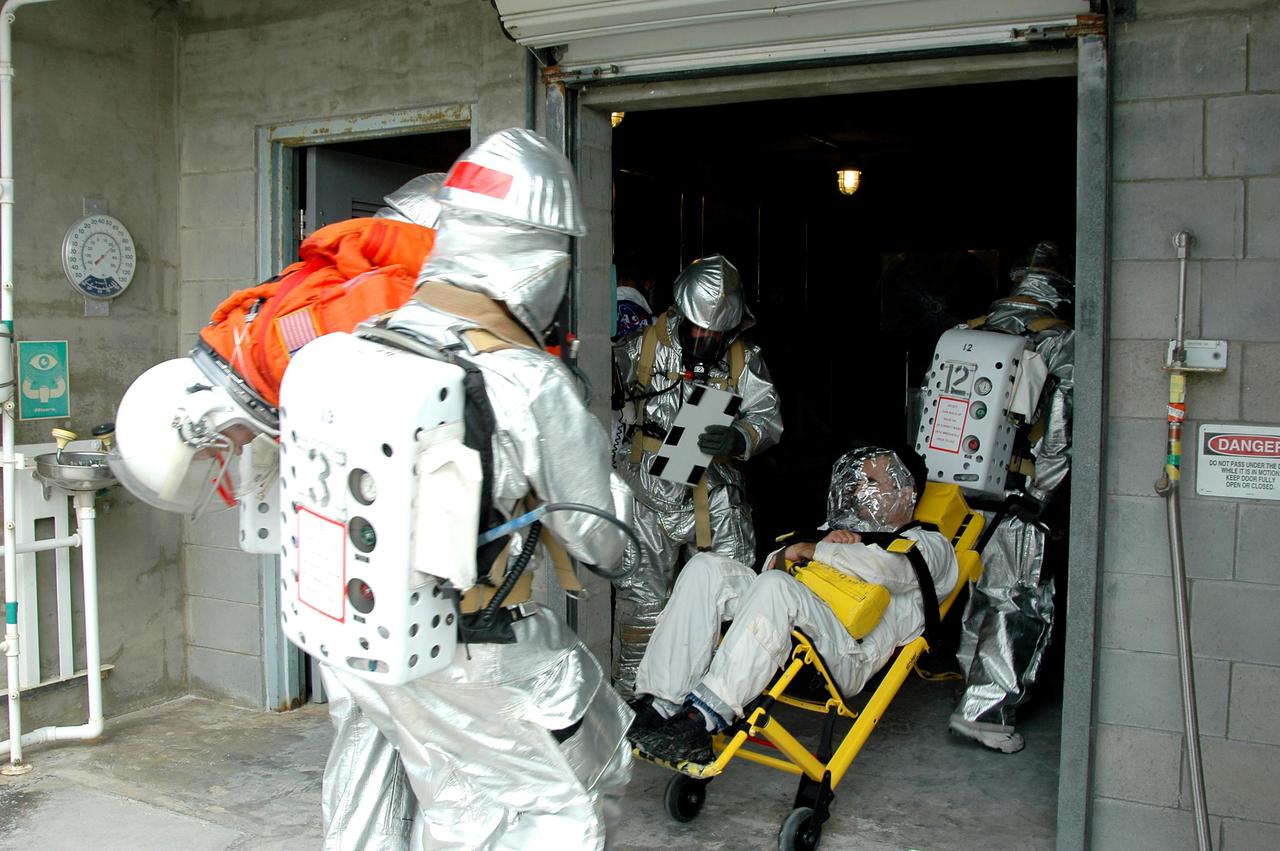
KENNEDY SPACE CENTER, FLA. - During a simulated launch countdown_emergency simulation on Launch Pad 39A, the rescue team takes “injured” astronaut-suited workers into the pad bunker. The four-hour exercise simulated normal launch countdown operations, with the added challenge of a fictitious event causing an evacuation of the vehicle and launch pad. It tested the team’s rescue approaches on the Fixed Service Structure, slidewire basket evacuation, triage care and transportation of injured personnel to hospitals, as well as communications and coordination.
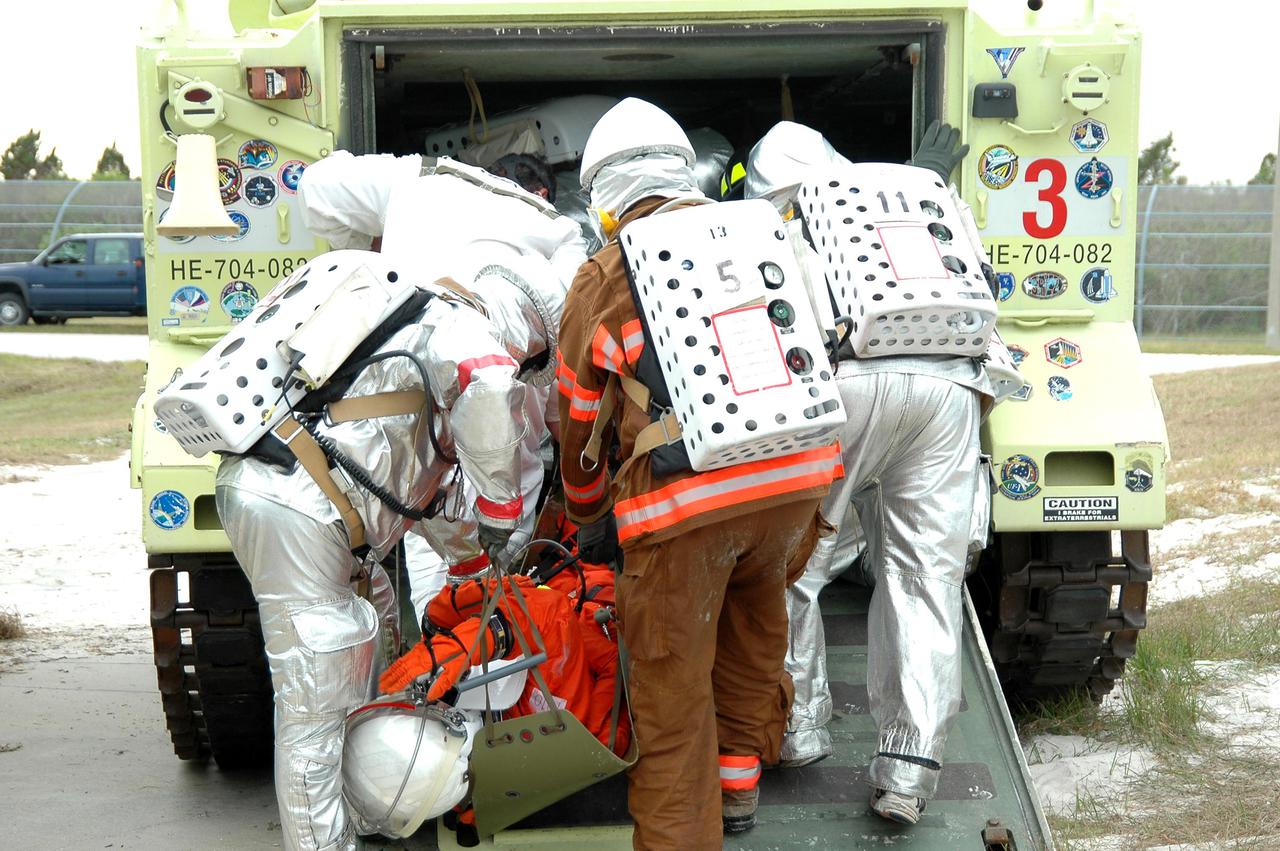
KENNEDY SPACE CENTER, FLA. - During a simulated launch countdown_emergency simulation on Launch Pad 39A, the rescue team carries “injured” astronaut-suited workers into an M-113 armored personnel carrier for transport away from the pad. The four-hour exercise simulated normal launch countdown operations, with the added challenge of a fictitious event causing an evacuation of the vehicle and launch pad. It tested the team’s rescue approaches on the Fixed Service Structure, slidewire basket evacuation, triage care and transportation of injured personnel to hospitals, as well as communications and coordination.
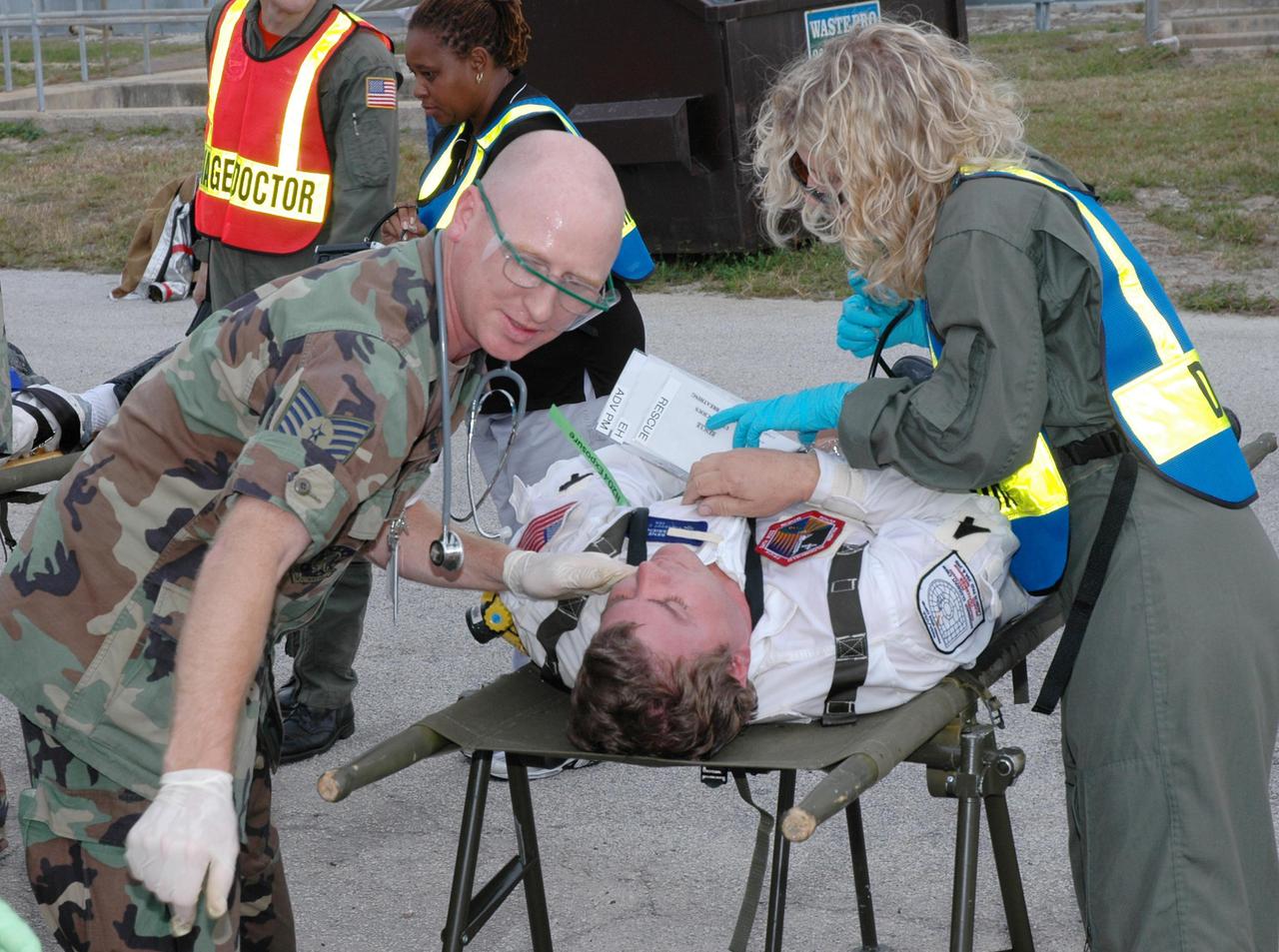
KENNEDY SPACE CENTER, FLA. - During a simulated launch countdown_emergency simulation on Launch Pad 39A, the rescue team performs triage on “injured” astronaut-suited workers. Pad team members participated in the four-hour exercise simulating normal launch countdown operations, with the added challenge of a fictitious event causing an evacuation of the vehicle and launch pad. The simulation tested the team’s rescue approaches on the Fixed Service Structure, slidewire basket evacuation, triage care and transportation of injured personnel to hospitals, as well as communications and coordination.
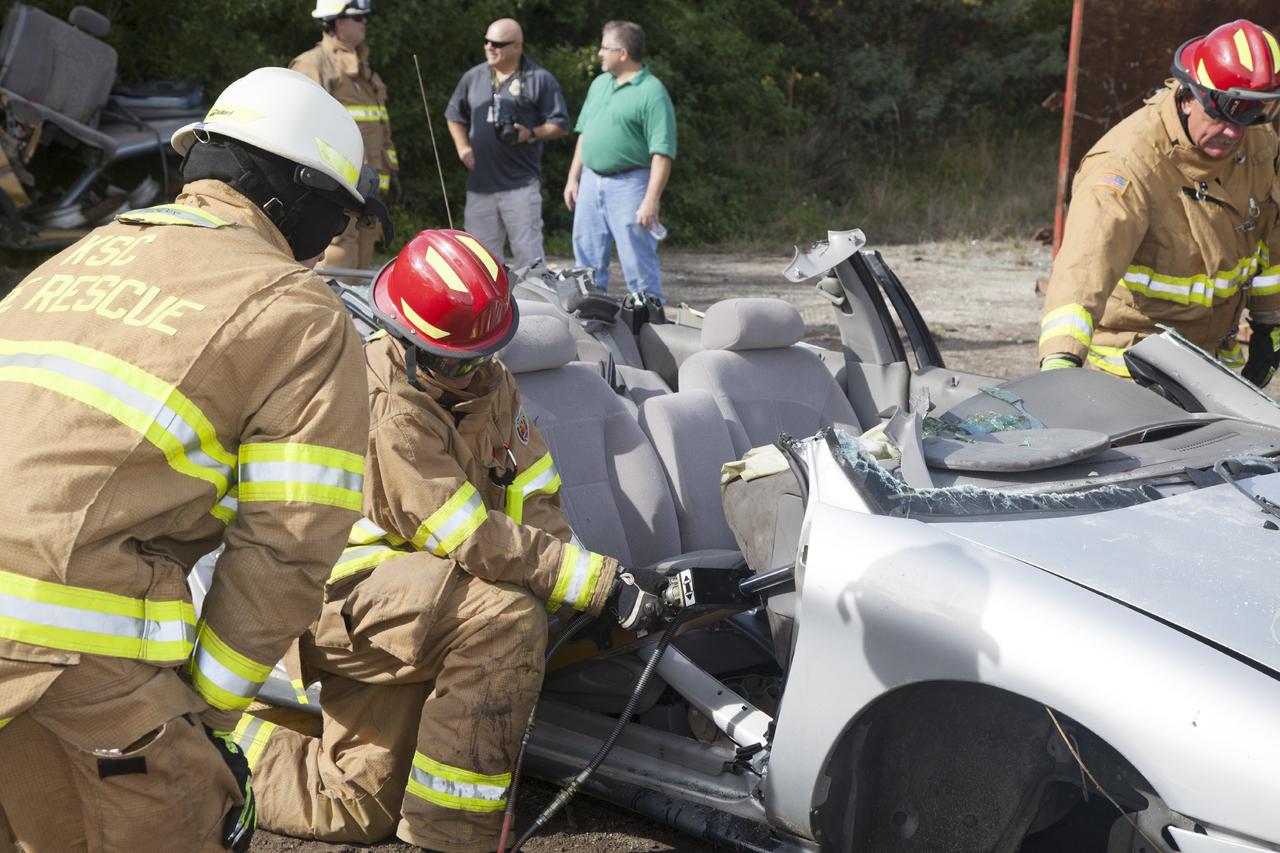
CAPE CANAVERAL, Fla. – Special Rescue Operations firefighters with NASA Fire Rescue Services in the Protective Services Office at NASA’s Kennedy Space Center in Florida practice vehicle extrication training at an auto salvage yard near the center. A firefighter uses a spreader to push the dashboard away from the seat. They used the Jaws of Life to remove the door from the vehicle and simulate the rescue of a trapped and injured person. A special hydraulic cutting tool and reciprocating saw were used to cut through and remove the roof. An axe and other special tools were used to punch through and clear away the windshield and windows. Kennedy’s firefighters recently achieved Pro Board Certification in aerial fire truck operations. With the completion of vehicle extrication and Jaws of Life training, the Protective Services Office is one step closer to achieving certification in vehicle machinery extrication. Kennedy’s firefighters are with G4S Government Solutions Inc., on the Kennedy Protective Services Contract. Photo credit: NASA/Daniel Casper
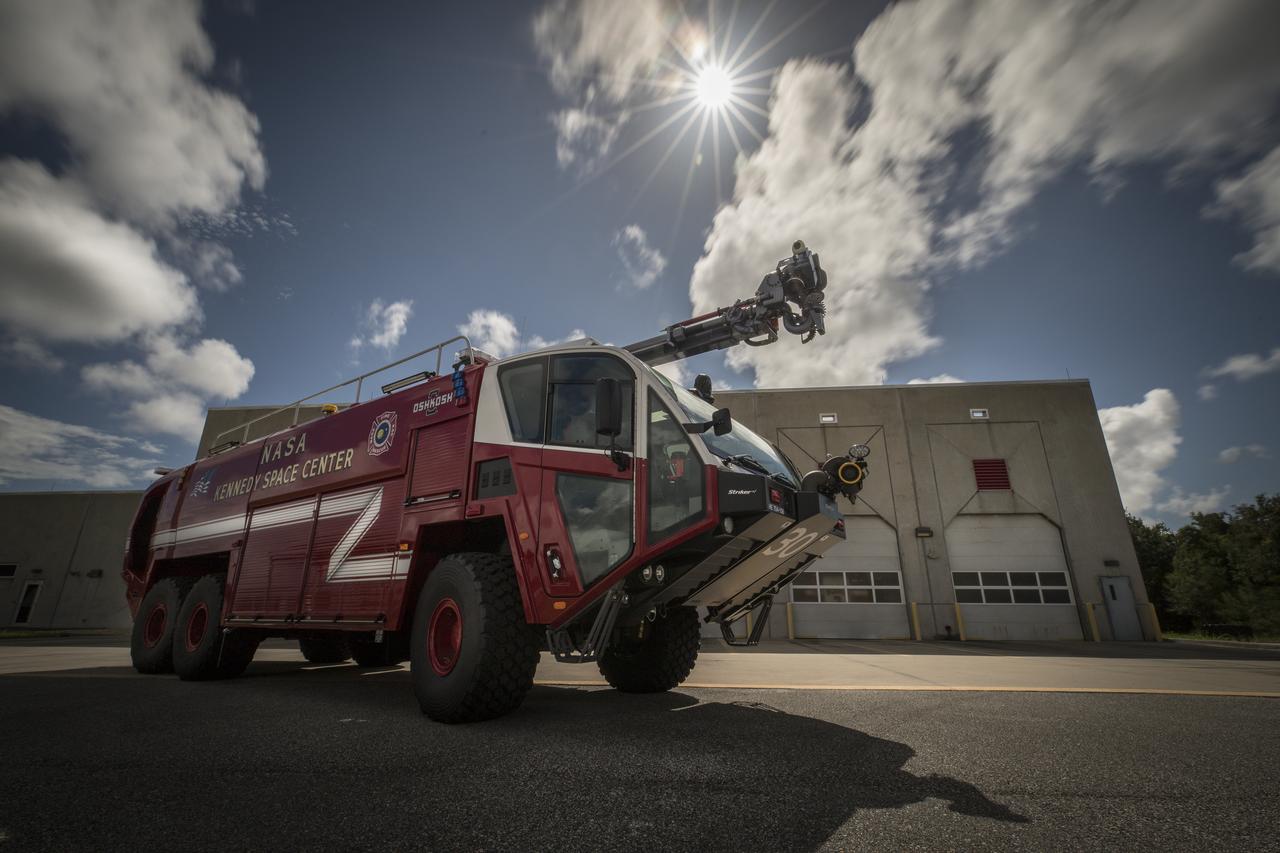
A new Aircraft Rescue and Fire Fighting vehicle is photographed in front of Fire Station No. 2 near the Shuttle Landing Facility runway at NASA’s Kennedy Space Center in Florida. The state-of-the-art truck replaces a 28-year-old vehicle. Kennedy is upgrading its fleet of emergency vehicles to enhance its safety and security posture at the growing, multi-user spaceport.
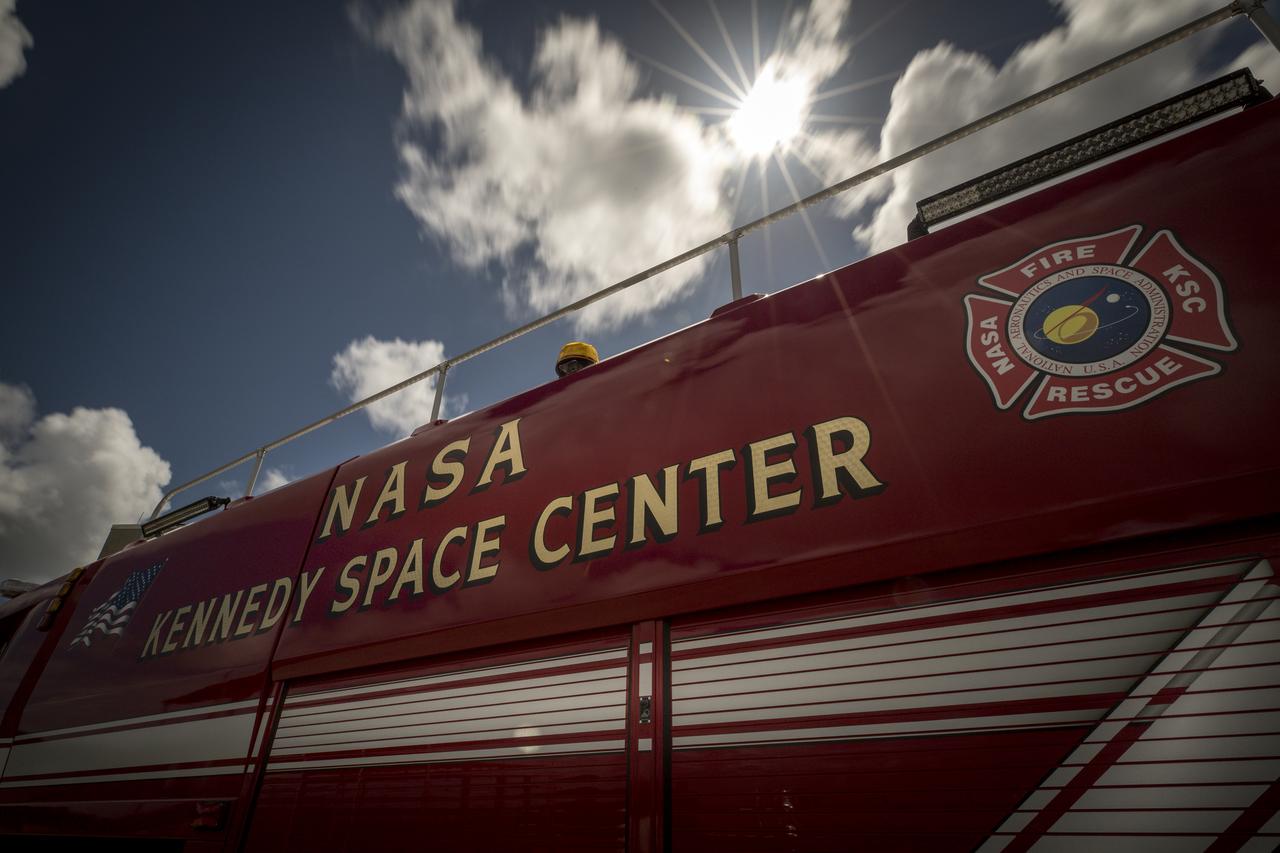
A new Aircraft Rescue and Fire Fighting vehicle is photographed in front of Fire Station No. 2 near the Shuttle Landing Facility runway at NASA’s Kennedy Space Center in Florida. The state-of-the-art truck replaces a 28-year-old vehicle. Kennedy is upgrading its fleet of emergency vehicles to enhance its safety and security posture at the growing, multi-user spaceport.
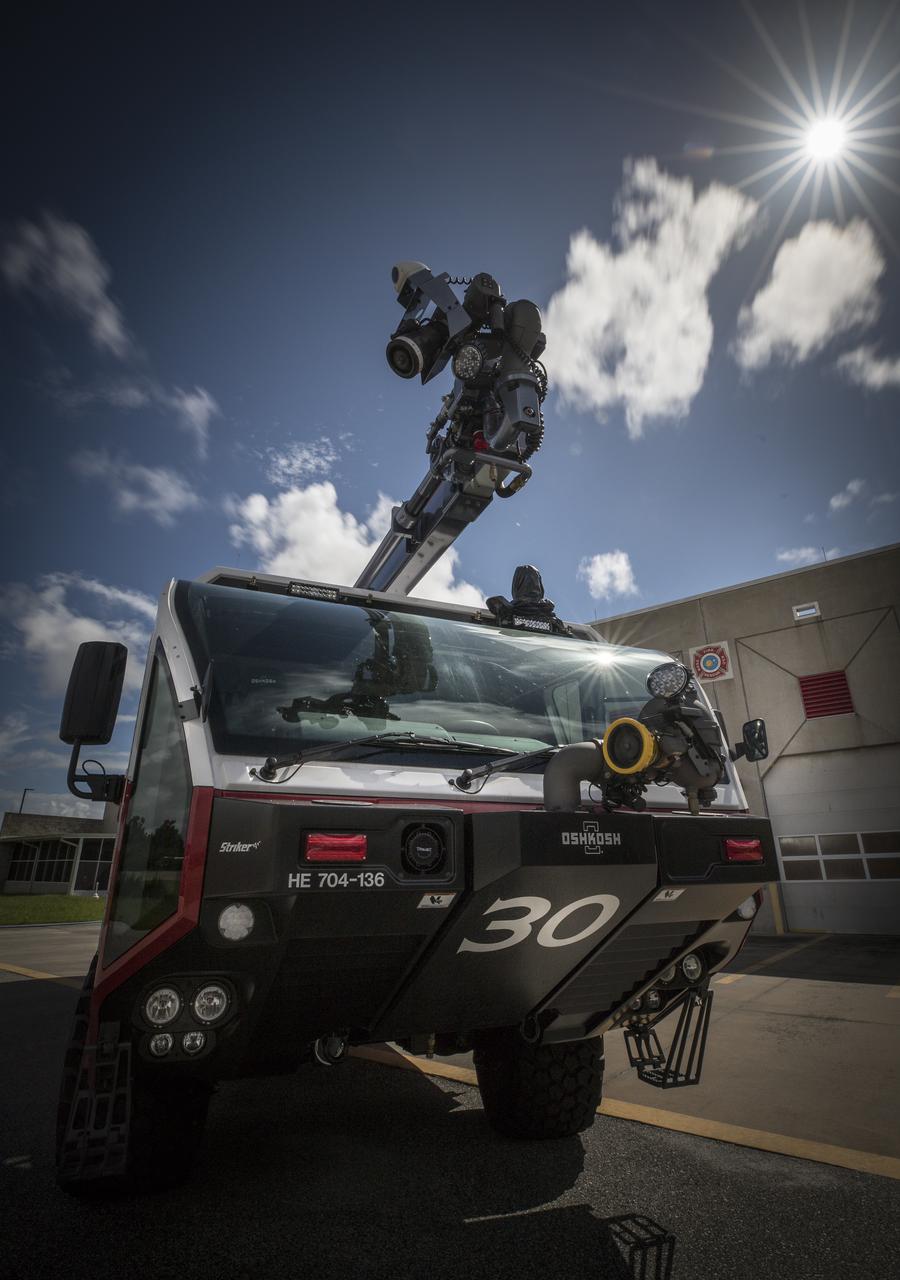
A new Aircraft Rescue and Fire Fighting vehicle is photographed in front of Fire Station No. 2 near the Shuttle Landing Facility runway at NASA’s Kennedy Space Center in Florida. The state-of-the-art truck replaces a 28-year-old vehicle. Kennedy is upgrading its fleet of emergency vehicles to enhance its safety and security posture at the growing, multi-user spaceport.
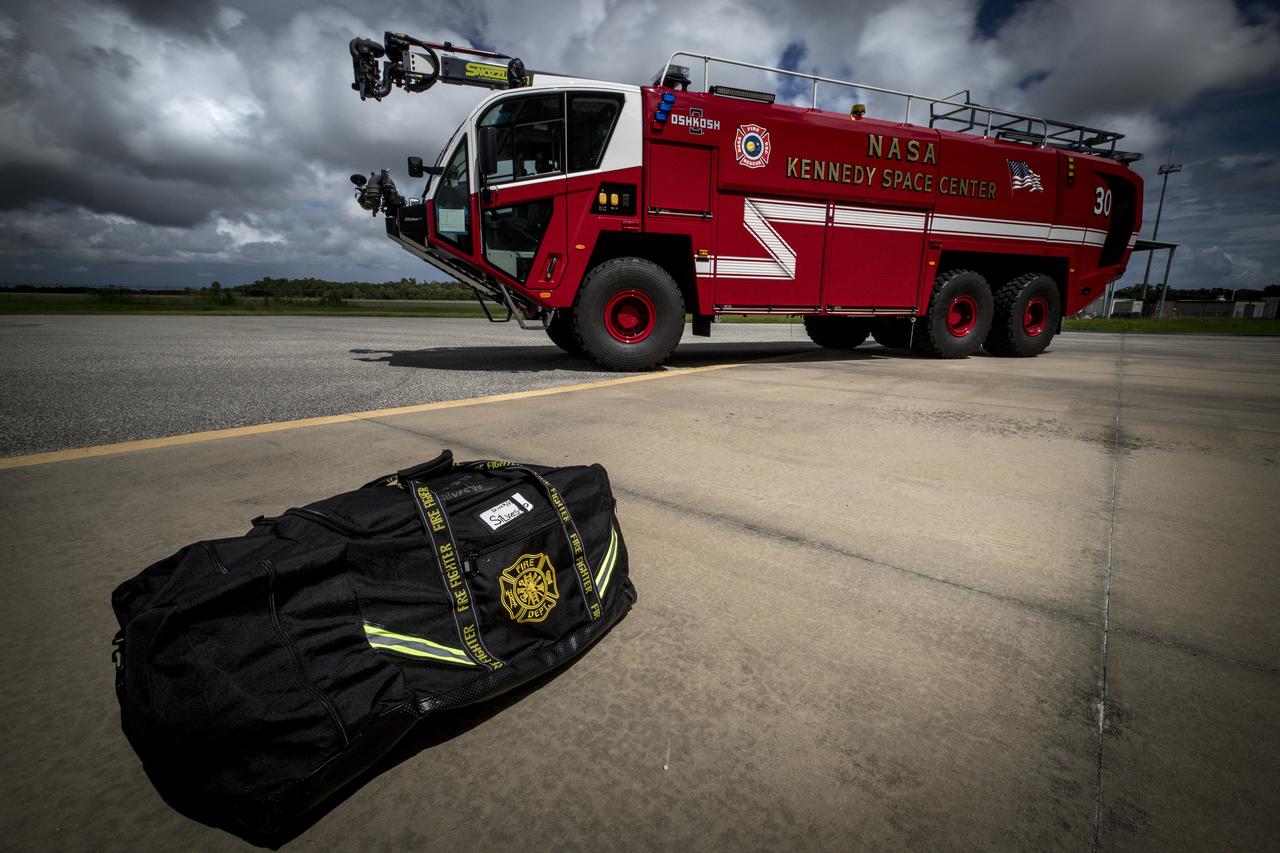
A new Aircraft Rescue and Fire Fighting vehicle is photographed in front of Fire Station No. 2 near the Shuttle Landing Facility runway at NASA’s Kennedy Space Center in Florida. The state-of-the-art truck replaces a 28-year-old vehicle. Kennedy is upgrading its fleet of emergency vehicles to enhance its safety and security posture at the growing, multi-user spaceport.
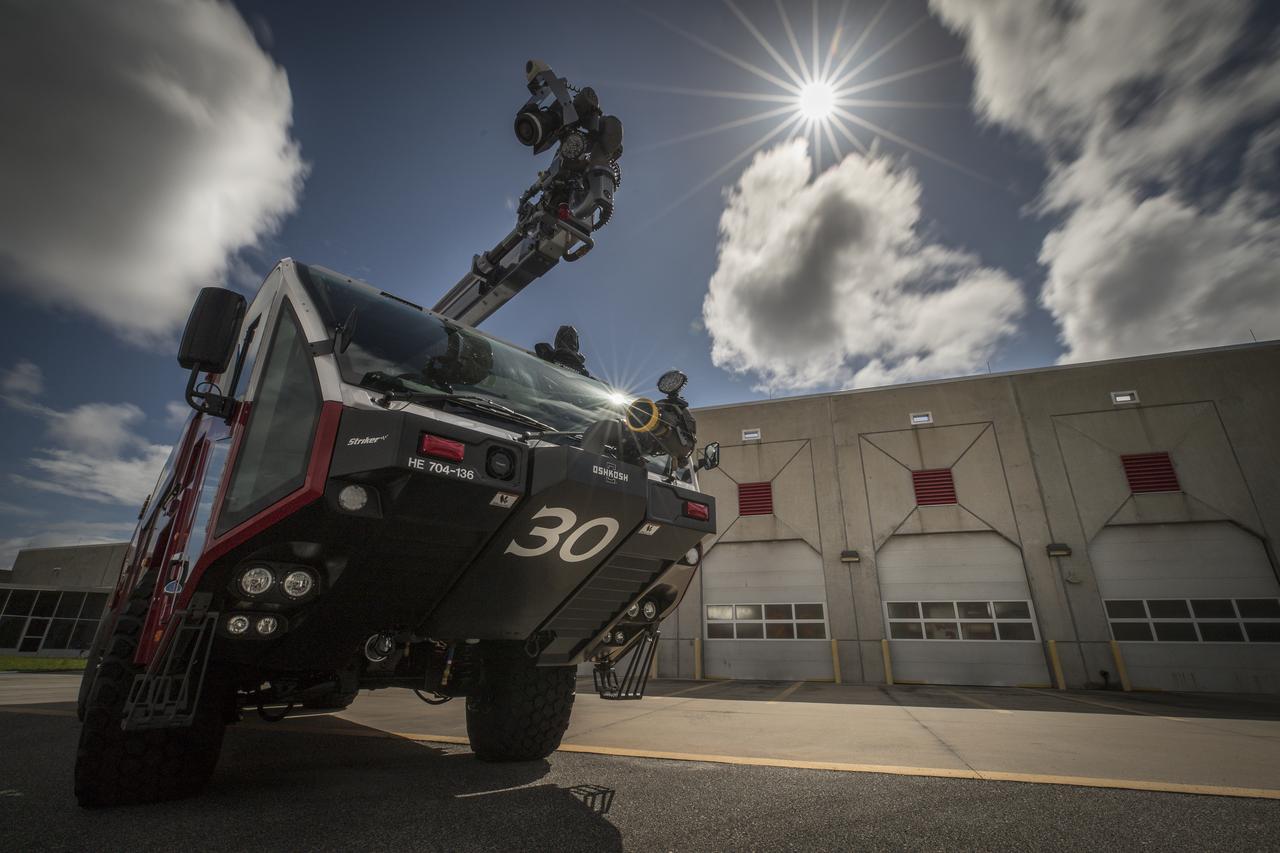
A new Aircraft Rescue and Fire Fighting vehicle is photographed in front of Fire Station No. 2 near the Shuttle Landing Facility runway at NASA’s Kennedy Space Center in Florida. The state-of-the-art truck replaces a 28-year-old vehicle. Kennedy is upgrading its fleet of emergency vehicles to enhance its safety and security posture at the growing, multi-user spaceport.
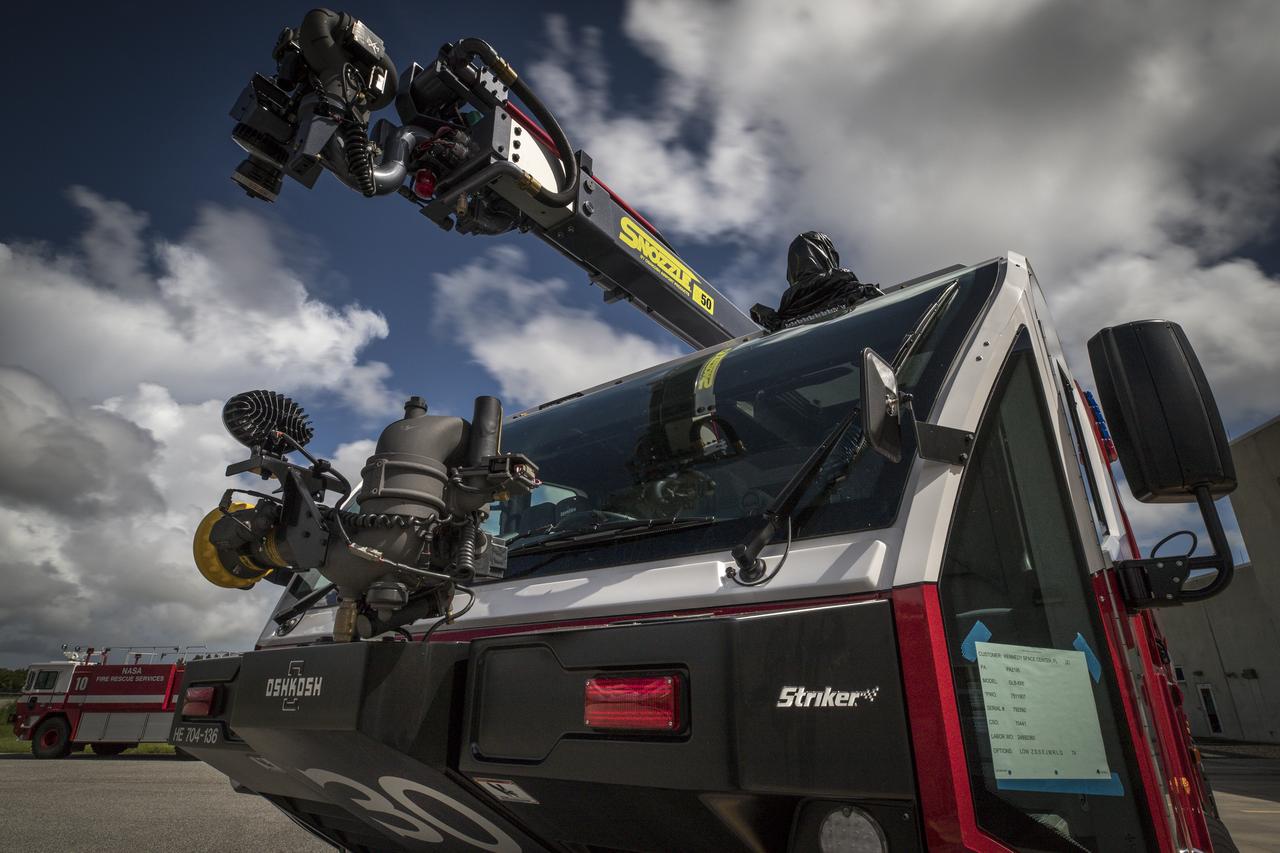
A new Aircraft Rescue and Fire Fighting vehicle is photographed in front of Fire Station No. 2 near the Shuttle Landing Facility runway at NASA’s Kennedy Space Center in Florida. The state-of-the-art truck replaces a 28-year-old vehicle. Kennedy is upgrading its fleet of emergency vehicles to enhance its safety and security posture at the growing, multi-user spaceport.
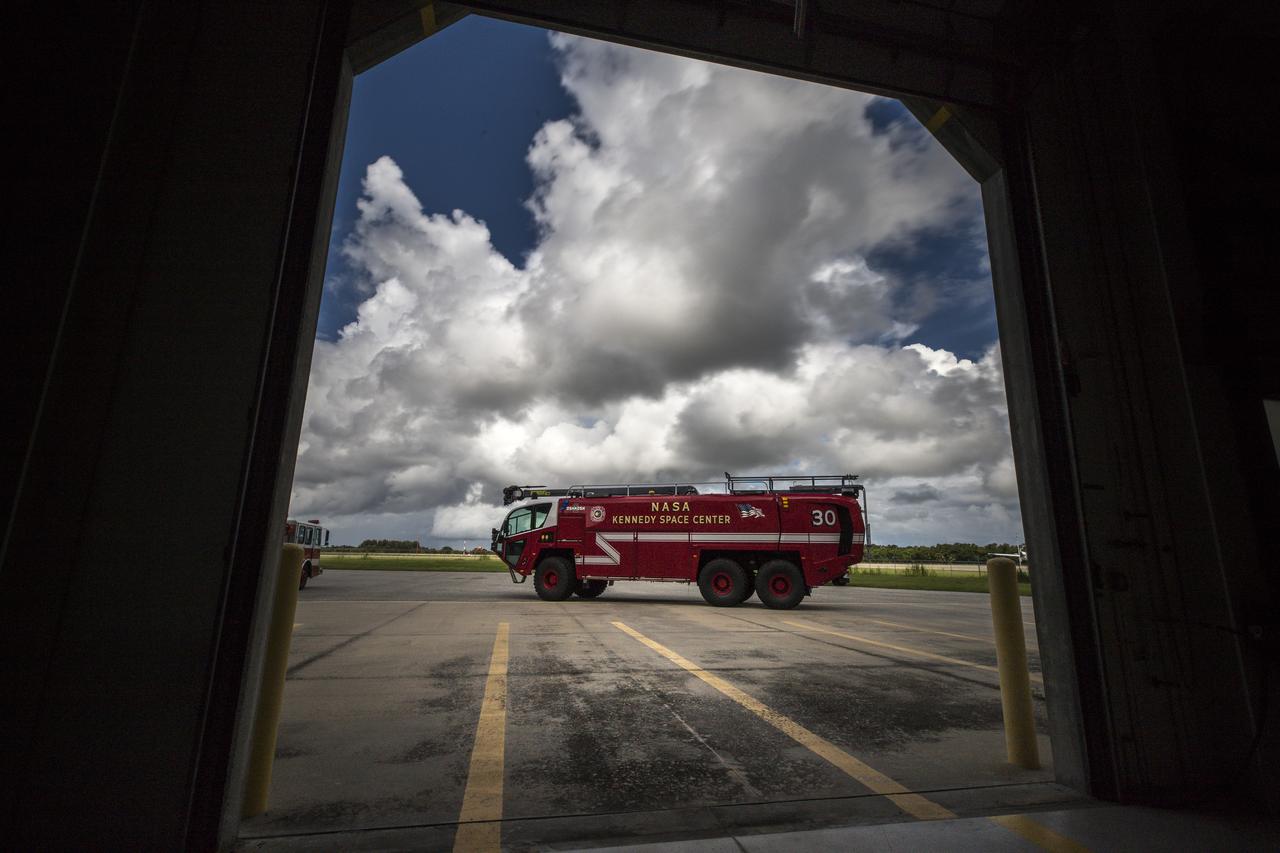
A new Aircraft Rescue and Fire Fighting vehicle is photographed through the open door of Fire Station No. 2 near the Shuttle Landing Facility runway at NASA’s Kennedy Space Center in Florida. The state-of-the-art truck replaces a 28-year-old vehicle. Kennedy is upgrading its fleet of emergency vehicles to enhance its safety and security posture at the growing, multi-user spaceport.
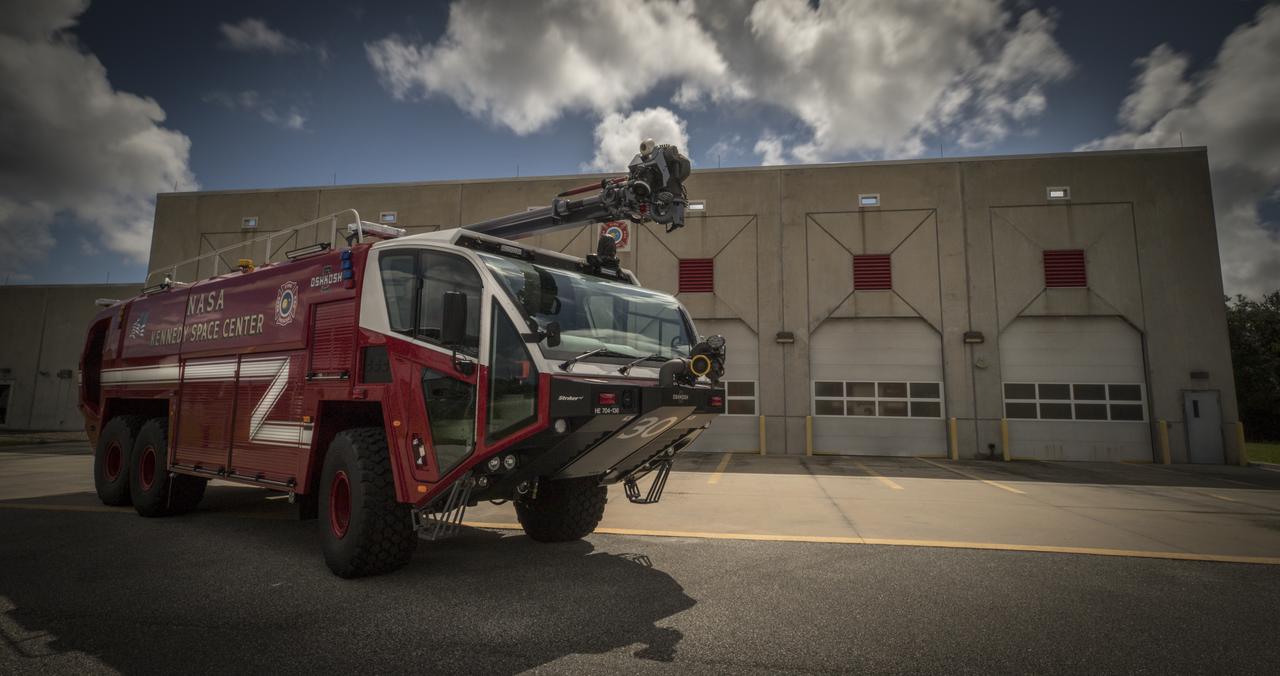
A new Aircraft Rescue and Fire Fighting vehicle is photographed in front of Fire Station No. 2 near the Shuttle Landing Facility runway at NASA’s Kennedy Space Center in Florida. The state-of-the-art truck replaces a 28-year-old vehicle. Kennedy is upgrading its fleet of emergency vehicles to enhance its safety and security posture at the growing, multi-user spaceport.
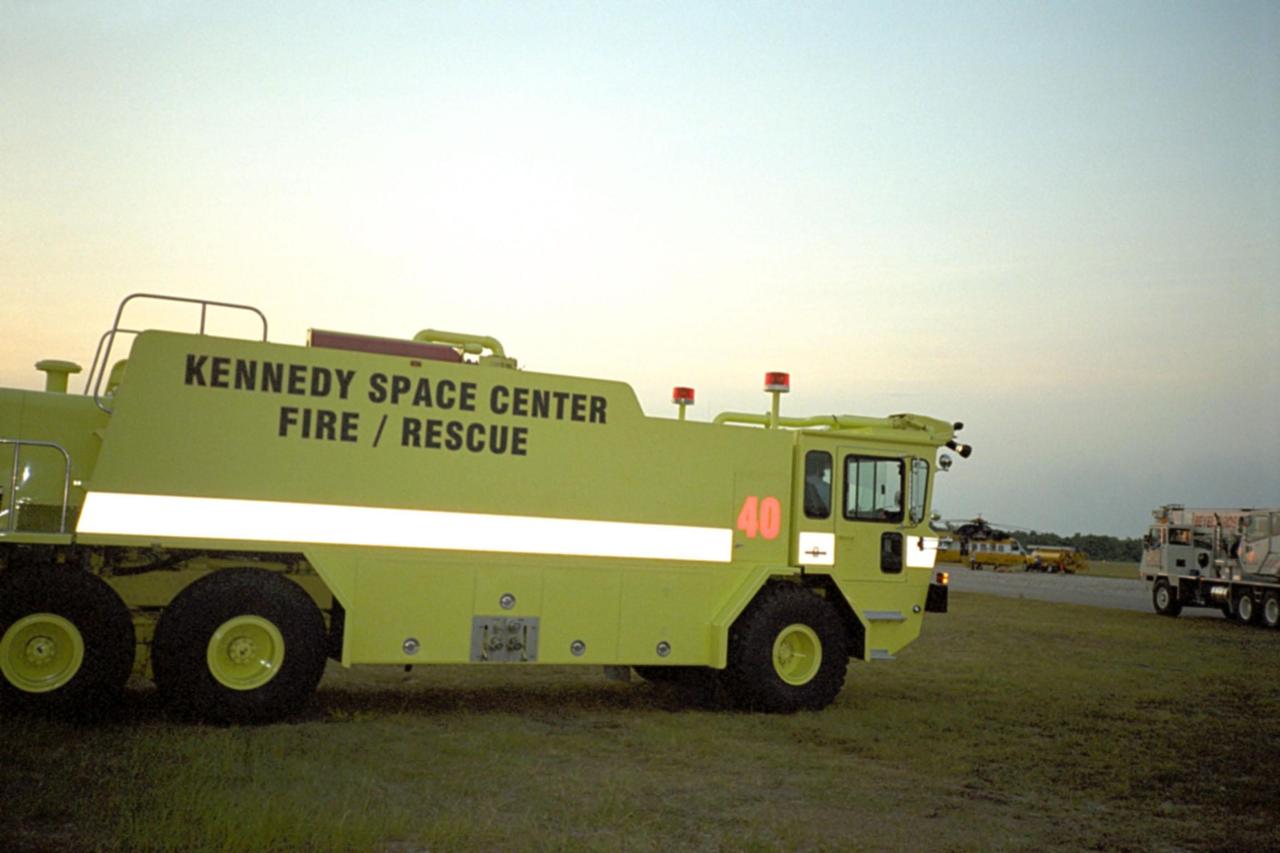
A Kennedy Space Center aircraft rescue firefighting vehicle supports heavy traffic at the Space Coast Regional Airport in Titusville, Florida, where aircraft capable of carrying water were staged during the recent brushfires throughout Florida. Aircraft were supporting firefighting efforts in Brevard, Volusia, and Flagler counties
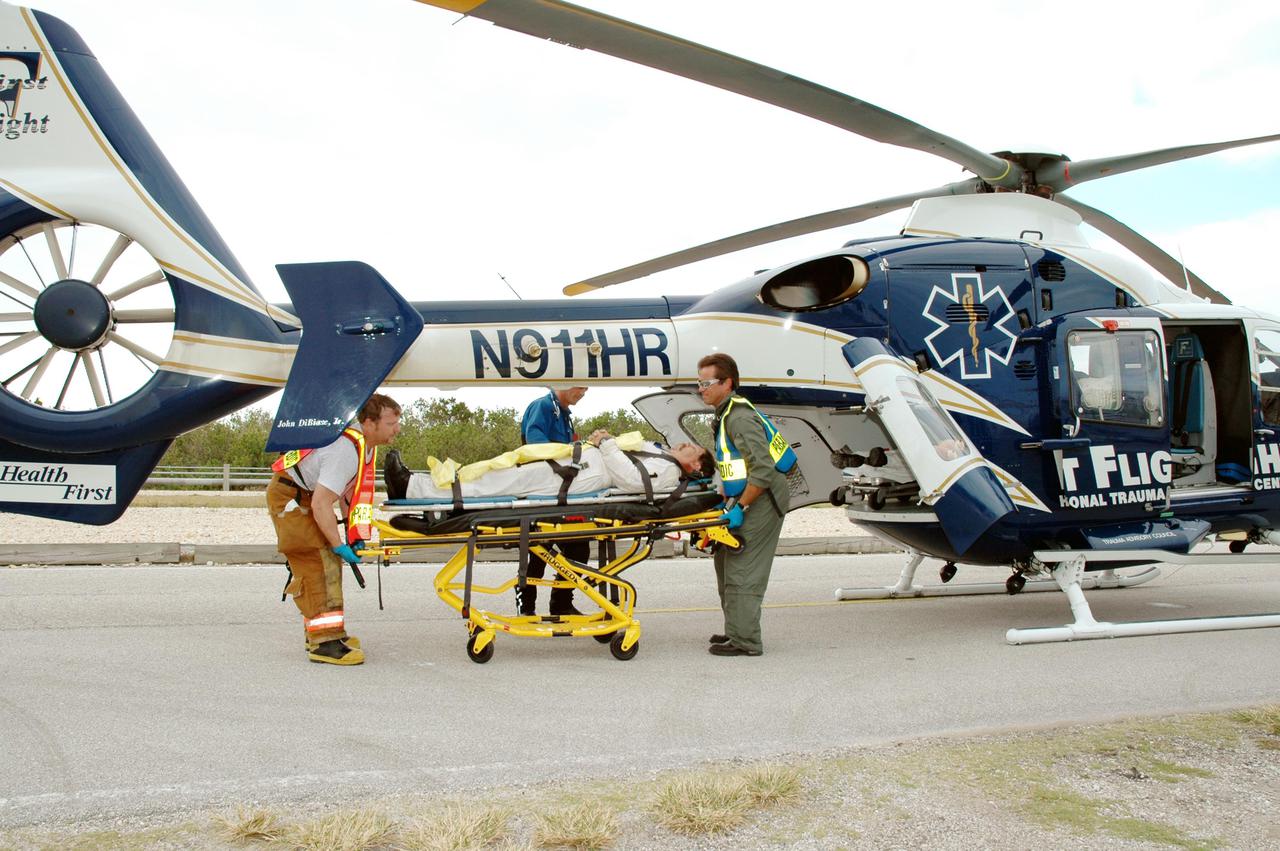
KENNEDY SPACE CENTER, FLA. - During a simulated launch countdown_emergency simulation on Launch Pad 39A, astronaut-suited workers are placed in a medical-rescue helicopter for transport to a hospital participating in the simulation. Pad team members took part in the four-hour exercise simulating normal launch countdown operations, with the added challenge of a fictitious event causing an evacuation of the vehicle and launch pad. The simulation tested the team’s rescue approaches on the Fixed Service Structure, slidewire basket evacuation, triage care and transportation of injured personnel to hospitals, as well as communications and coordination.
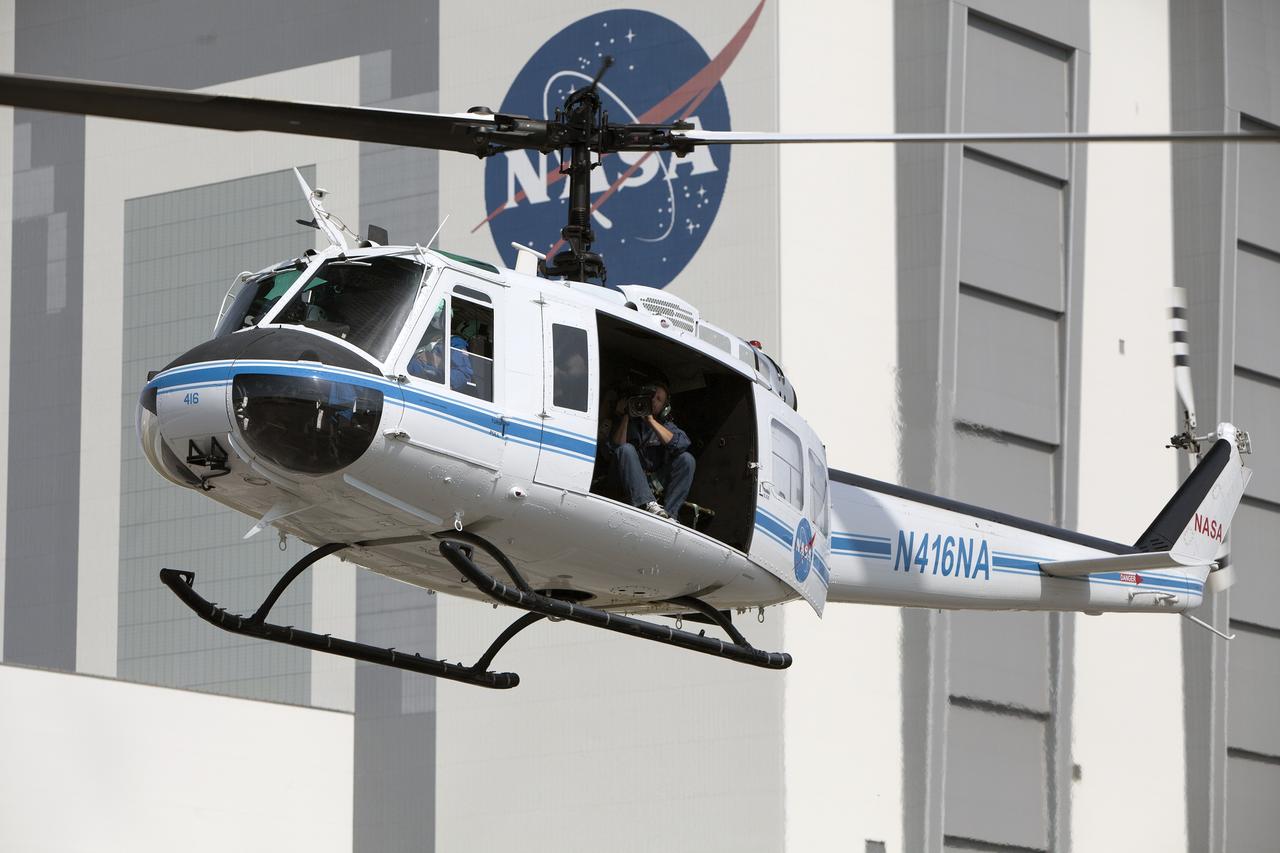
CAPE CANAVERAL, Fla. -- At NASA's Kennedy Space Center in Florida, an agency helicopter flies over the Vehicle Assembly Building prior to landing for a training exercise. The activity taking place in Kennedy's Launch Complex 39 turn-basin parking lot was only one of several drills. It was part of a new training program that was developed by Kennedy's Fire Rescue department along with NASA Aircraft Operations to sharpen the skills needed to help rescue personnel learn how to collaborate with helicopter pilots in taking injured patients to hospitals as quickly as possible. Photo credit: NASA/Dan Casper
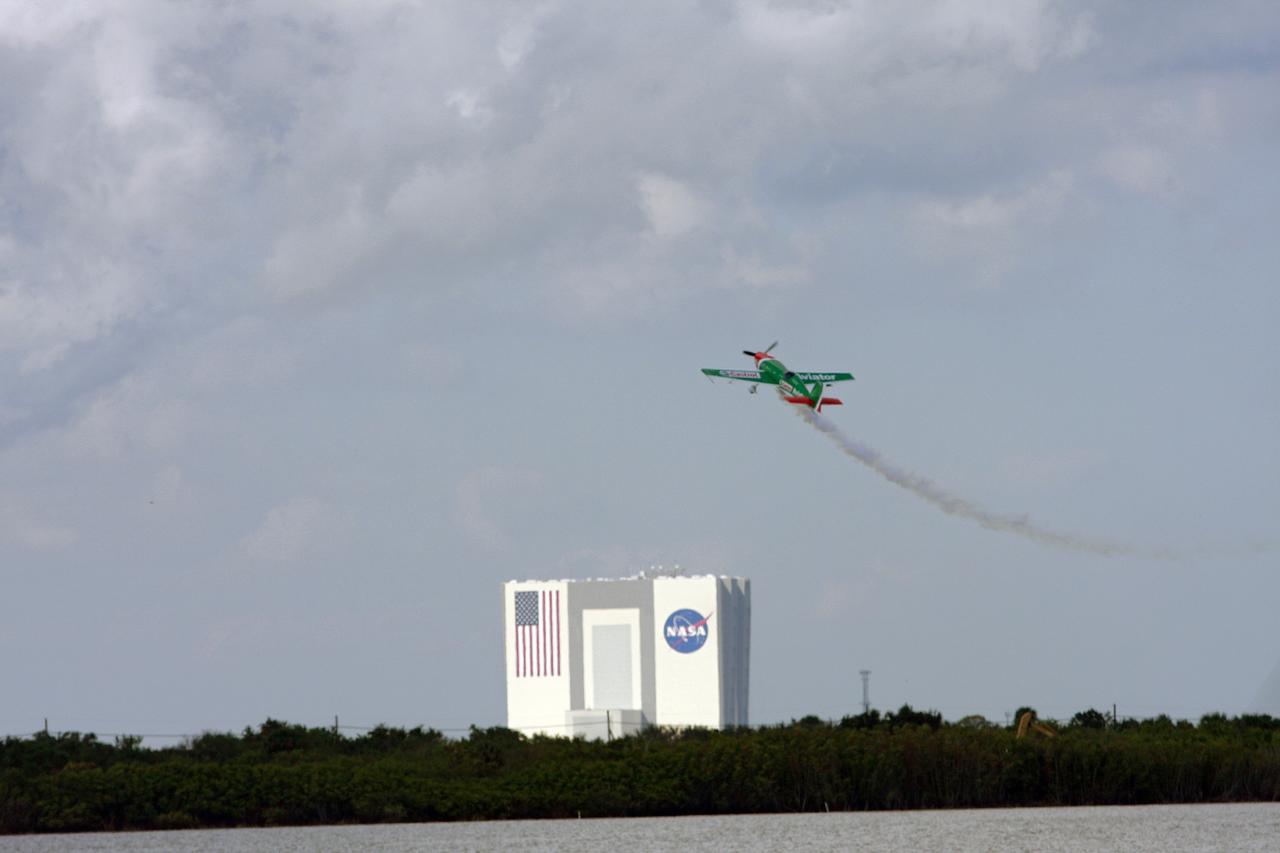
CAPE CANAVERAL, Fla. – With the Vehicle Assembly Building at NASA's Kennedy Space Center in Florida as a backdrop, this Castrol Aviator EXTRA 300SHP stunt plane, an unlimited-level aerobatic two-seat monoplane, performs aerobatic maneuvers during the Kennedy Space Center Visitor Complex Space and Air Show held Nov. 8-9. This year’s show brought together the best in military aircraft, such as the F/A-18 Super Hornet and F-16 Fighting Falcon, coupled with precision pilots and veteran astronauts to celebrate spaceflight and aviation. The event included a water rescue demonstration by the 920th Rescue Wing. Photo credit: NASA/Troy Cryder
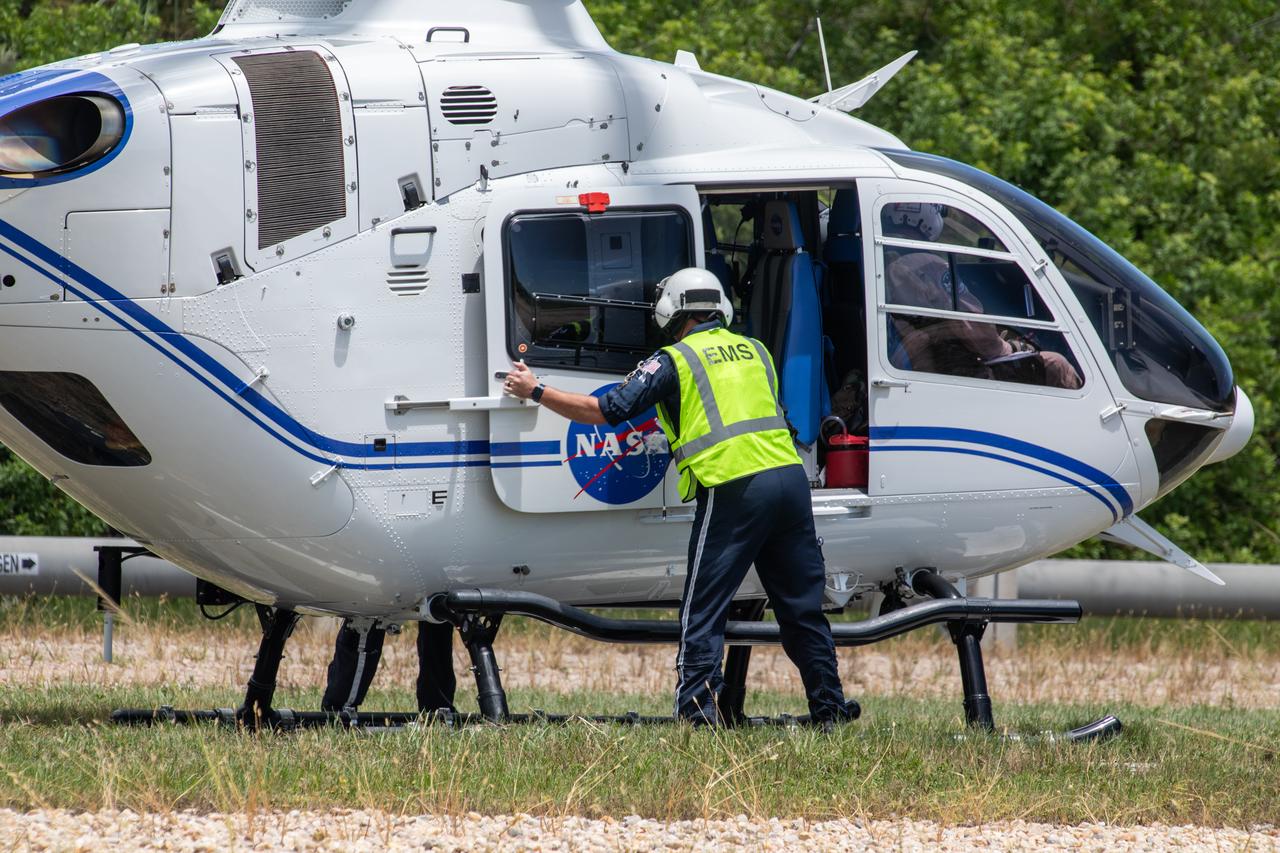
Medical and fire-rescue personnel participate in the Artemis II mission emergency escape or egress verification and validation tests near Launch Complex 39 at NASA's Kennedy Space Center in Florida on Monday, Aug. 12, 2024. During the multi-day tests, members of the closeout crew, pad rescue team, and the Exploration Ground Systems Program practiced the process of getting in and out of the emergency egress baskets then down to the launch pad where they would be transported to emergency transport vehicles and driven to safety. Prior to this test and throughout the course of several months, teams conducted basket release demonstrations to validate the system.
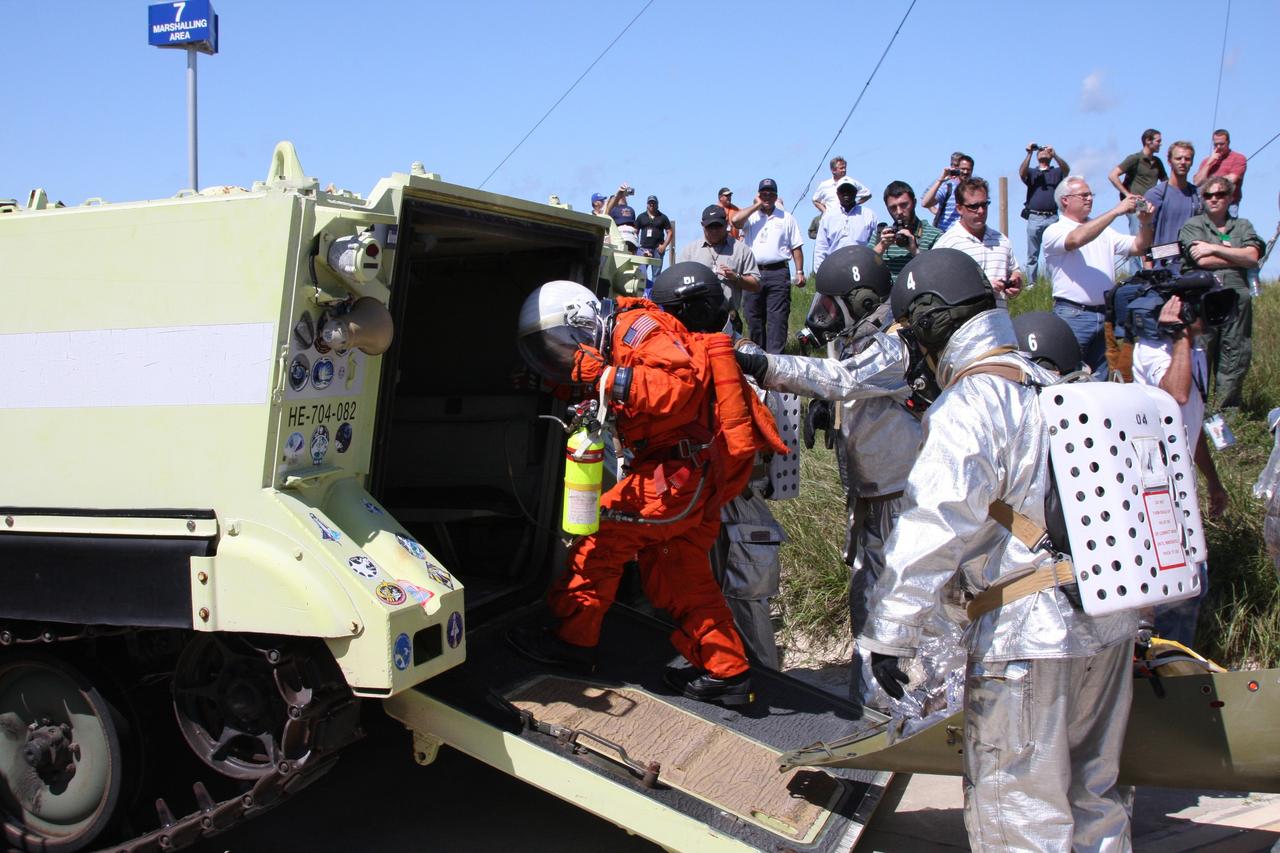
CAPE CANAVERAL, Fla. – At the Launch Pad 39A slidewire basket landing site at NASA's Kennedy Space Center in Florida, a Mode II-IV exercise is underway, involving NASA fire rescue personnel, volunteers portraying astronauts with simulated injuries, helicopters and personnel from the Air Force’s 920th Rescue Wing and medical trauma teams at three central Florida hospitals. Here, participants move into an M-113 armored personnel vehicle for transport from the pad. The drill allows teams to practice an emergency response at Pad 39A, including helicopter evacuation to local hospitals. The Space Shuttle Program and U.S. Air Force are conducting the emergency simulation. Photo credit: NASA/Dimitri Gerondidakis
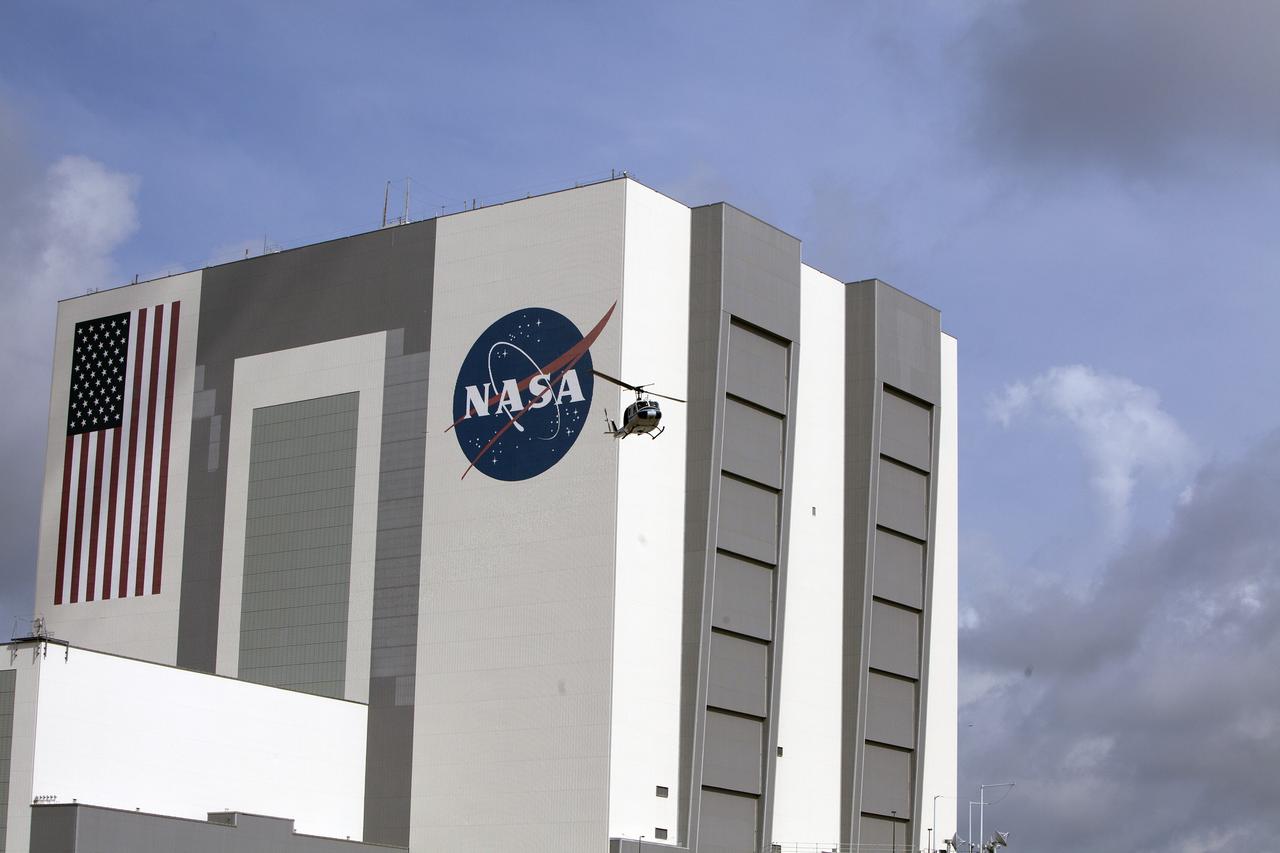
CAPE CANAVERAL, Fla. -- At NASA's Kennedy Space Center in Florida, an agency helicopter flies past the Vehicle Assembly Building prior to landing for a training exercise. The activity taking place in Kennedy's Launch Complex 39 turn-basin parking lot was only one of several drills. It was part of a new training program that was developed by Kennedy's Fire Rescue department along with NASA Aircraft Operations to sharpen the skills needed to help rescue personnel learn how to collaborate with helicopter pilots in taking injured patients to hospitals as quickly as possible. Photo credit: NASA/Dan Casper
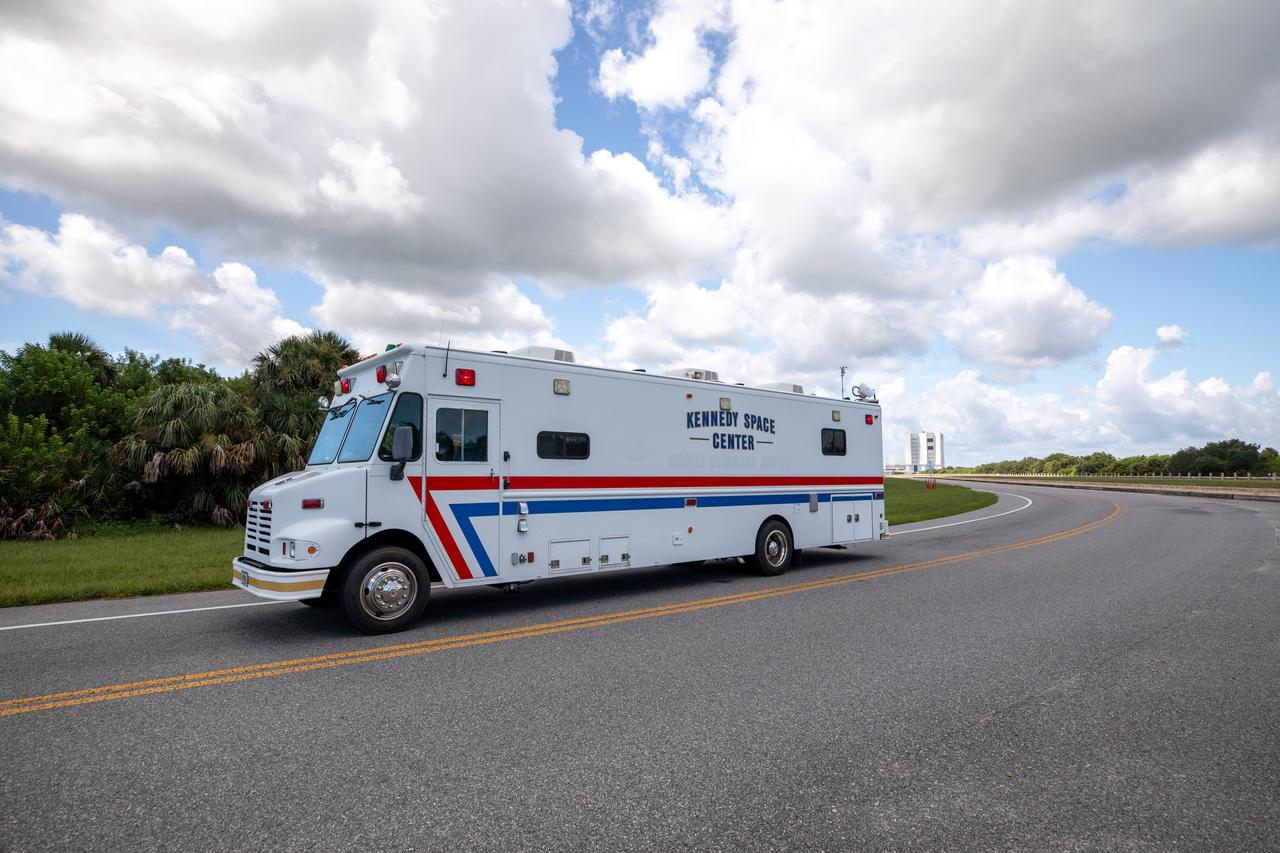
Medical and fire-rescue personnel participate in the Artemis II mission emergency escape or egress verification and validation tests near Launch Complex 39 at NASA's Kennedy Space Center in Florida on Monday, Aug. 12, 2024. During the multi-day tests, members of the closeout crew, pad rescue team, and the Exploration Ground Systems Program practiced the process of getting in and out of the emergency egress baskets then down to the launch pad where they would be transported to emergency transport vehicles and driven to safety. Prior to this test and throughout the course of several months, teams conducted basket release demonstrations to validate the system.
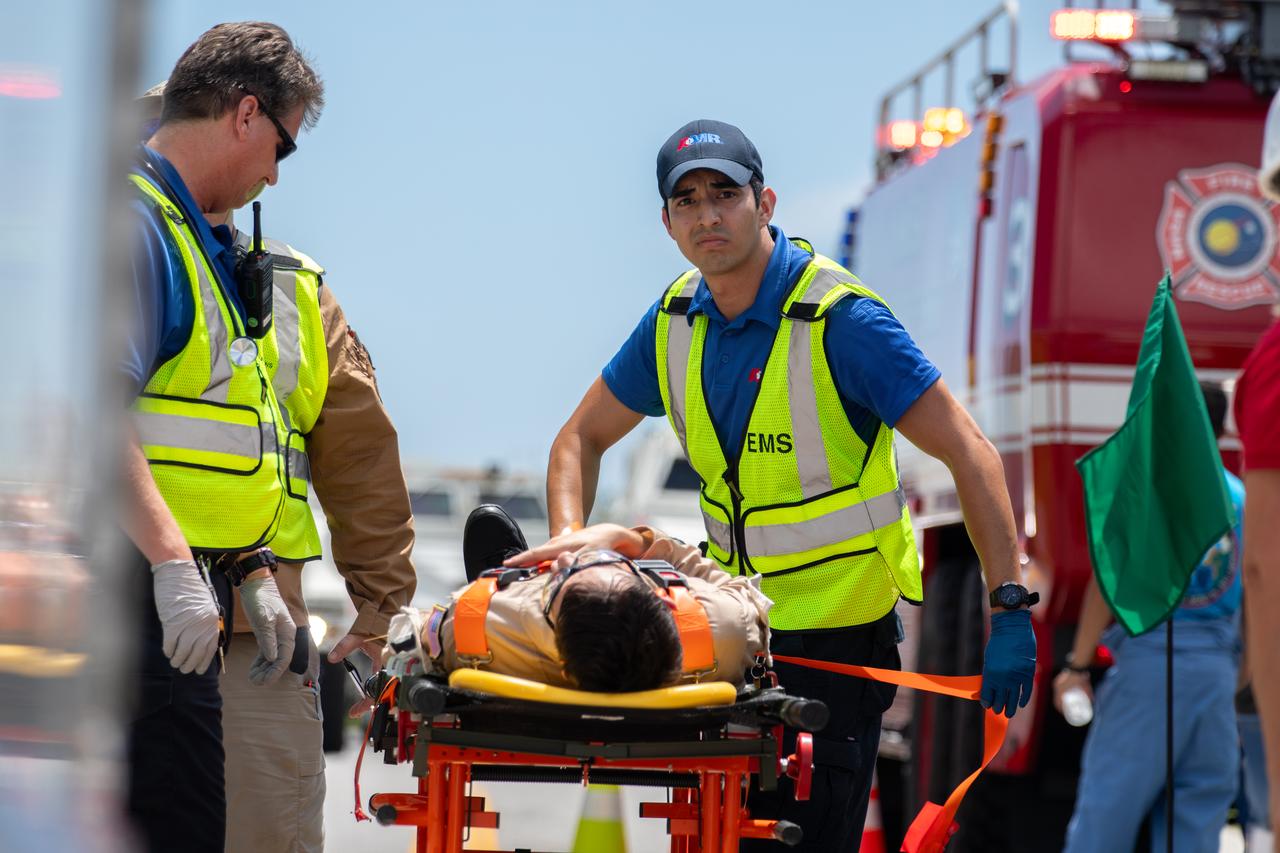
Medical and fire-rescue personnel participate in the Artemis II mission emergency escape or egress verification and validation tests near Launch Complex 39 at NASA's Kennedy Space Center in Florida on Monday, Aug. 12, 2024. During the multi-day tests, members of the closeout crew, pad rescue team, and the Exploration Ground Systems Program practiced the process of getting in and out of the emergency egress baskets then down to the launch pad where they would be transported to emergency transport vehicles and driven to safety. Prior to this test and throughout the course of several months, teams conducted basket release demonstrations to validate the system.
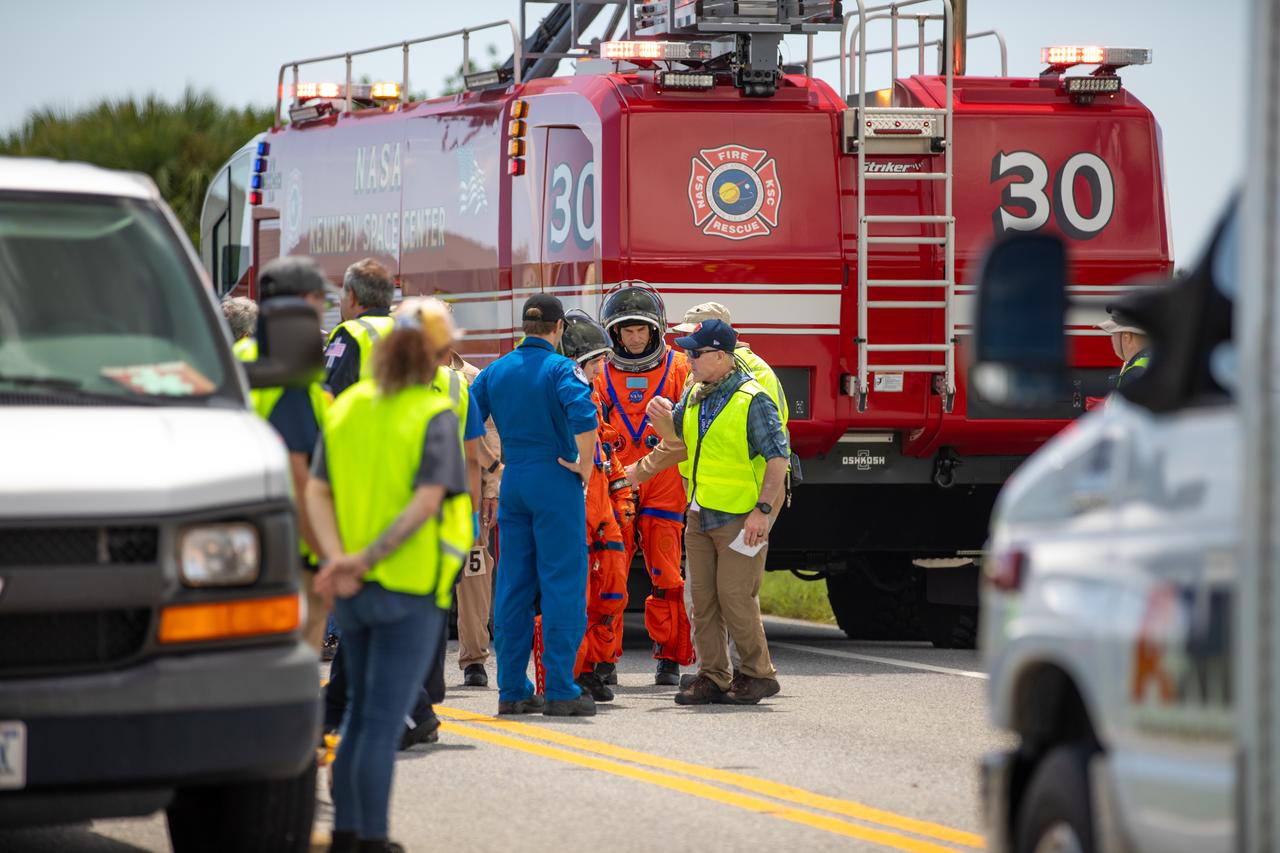
Medical, fire-rescue personnel, and simulated flight crew members participate in the Artemis II mission emergency escape or egress verification and validation tests near Launch Complex 39 at NASA's Kennedy Space Center in Florida on Monday, Aug. 12, 2024. During the multi-day tests, members of the closeout crew, pad rescue team, and the Exploration Ground Systems Program practiced the process of getting in and out of the emergency egress baskets then down to the launch pad where they would be transported to emergency transport vehicles and driven to safety. Prior to this test and throughout the course of several months, teams conducted basket release demonstrations to validate the system.
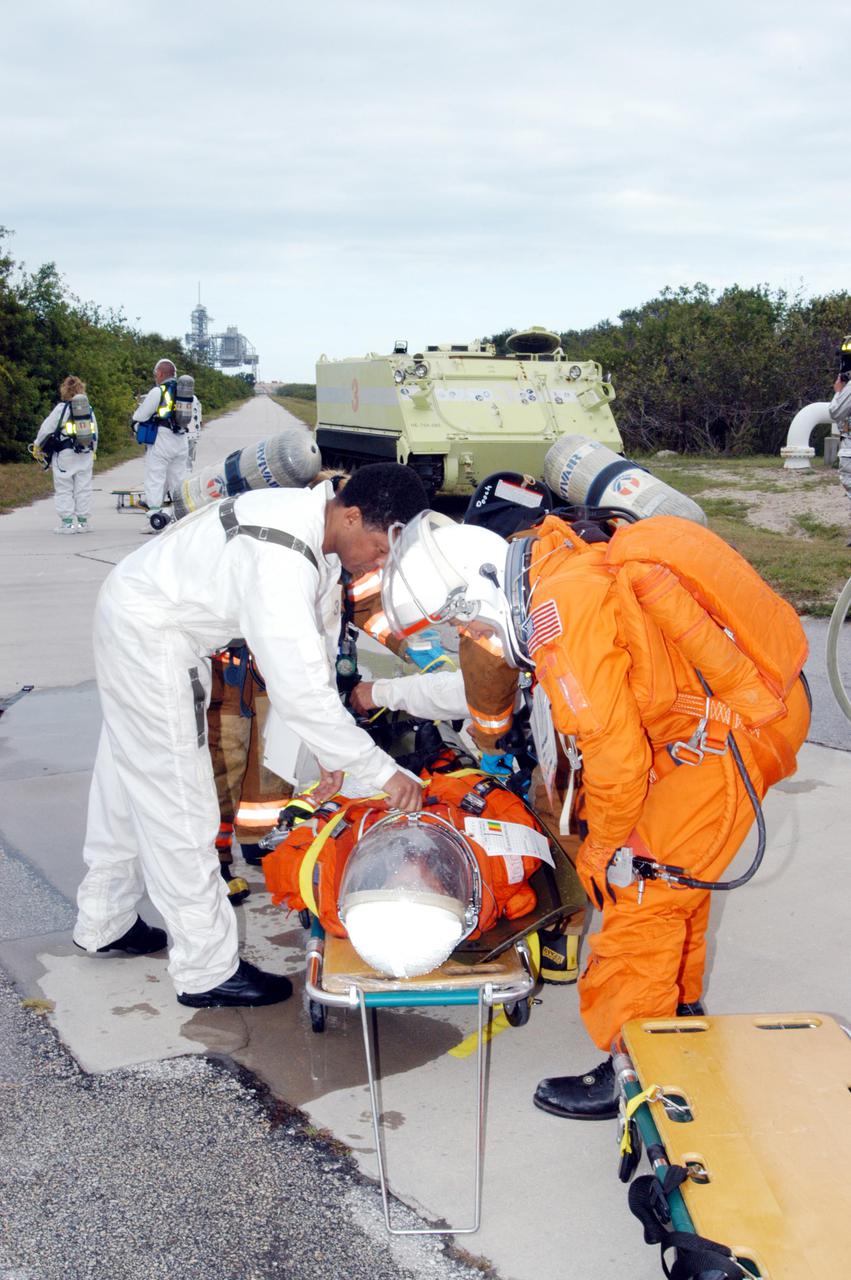
KENNEDY SPACE CENTER, FLA. - During a simulated launch countdown_emergency simulation on Launch Pad 39A, the rescue team moves “injured” astronaut-suited workers out of the M-113 armored personnel carriers that transported them away from the pad (seen in the distance). Pad team members participated in the four-hour exercise simulating normal launch countdown operations, with the added challenge of a fictitious event causing an evacuation of the vehicle and launch pad. The simulation tested the team’s rescue approaches on the Fixed Service Structure, slidewire basket evacuation, triage care and transportation of injured personnel to hospitals, as well as communications and coordination.

Medical and fire-rescue personnel participate in the Artemis II mission emergency escape or egress verification and validation tests near Launch Complex 39 at NASA's Kennedy Space Center in Florida on Monday, Aug. 12, 2024. During the multi-day tests, members of the closeout crew, pad rescue team, and the Exploration Ground Systems Program practiced the process of getting in and out of the emergency egress baskets then down to the launch pad where they would be transported to emergency transport vehicles and driven to safety. Prior to this test and throughout the course of several months, teams conducted basket release demonstrations to validate the system.
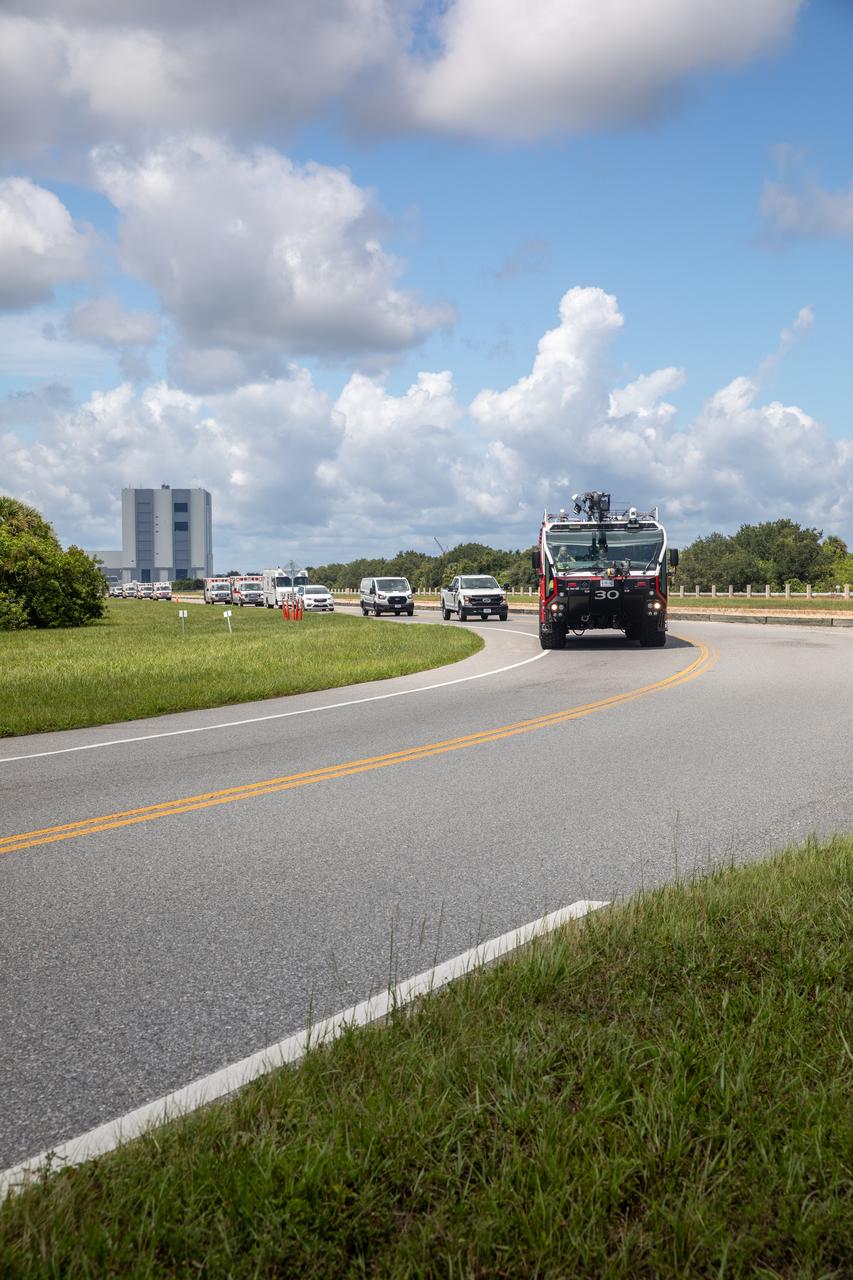
Medical and fire-rescue personnel participate in the Artemis II mission emergency escape or egress verification and validation tests near Launch Complex 39 at NASA's Kennedy Space Center in Florida on Monday, Aug. 12, 2024. During the multi-day tests, members of the closeout crew, pad rescue team, and the Exploration Ground Systems Program practiced the process of getting in and out of the emergency egress baskets then down to the launch pad where they would be transported to emergency transport vehicles and driven to safety. Prior to this test and throughout the course of several months, teams conducted basket release demonstrations to validate the system.

CAPE CANAVERAL, Fla. -- At NASA's Kennedy Space Center in Florida, an agency helicopter flies past the Vehicle Assembly Building prior to landing for a training exercise. The activity taking place in Kennedy's Launch Complex 39 turn-basin parking lot was only one of several drills. It was part of a new training program that was developed by Kennedy's Fire Rescue department along with NASA Aircraft Operations to sharpen the skills needed to help rescue personnel learn how to collaborate with helicopter pilots in taking injured patients to hospitals as quickly as possible. Photo credit: NASA/Dan Casper
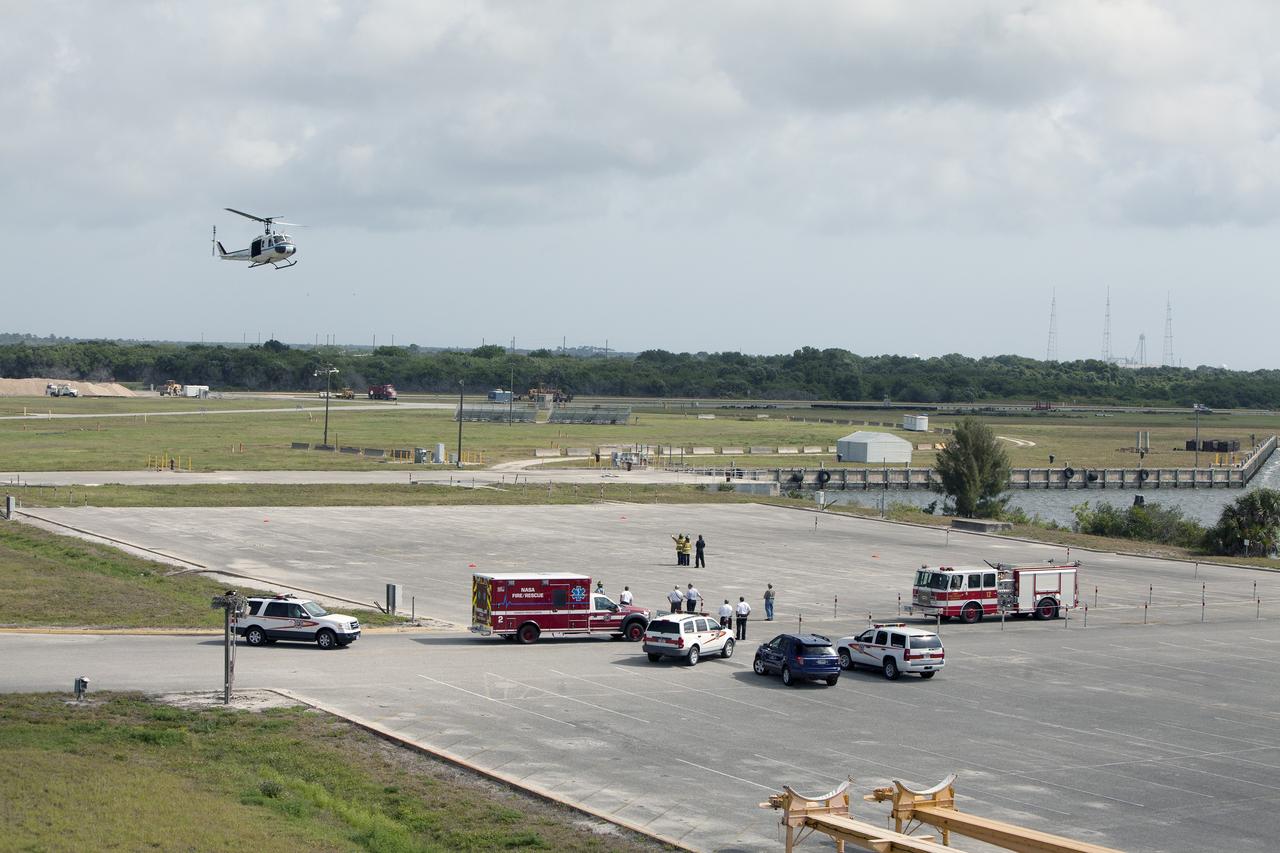
CAPE CANAVERAL, Fla. -- At NASA's Kennedy Space Center in Florida, an agency helicopter flies past the Vehicle Assembly Building prior to landing for a training exercise. The activity taking place in Kennedy's Launch Complex 39 turn-basin parking lot was only one of several drills. It was part of a new training program that was developed by Kennedy's Fire Rescue department along with NASA Aircraft Operations to sharpen the skills needed to help rescue personnel learn how to collaborate with helicopter pilots in taking injured patients to hospitals as quickly as possible. Photo credit: NASA/Dan Casper

CAPE CANAVERAL, Fla. -- In the Multi-Payload Processing Facility at NASA's Kennedy Space Center in Florida, workers take photos and video of fire and rescue personnel, as well as a closeout crew, participating in an exercise known as crew egress evaluation from an Orion mock-up. The spacecraft is replicated in all areas that could affect a crew's escape, including the area that seals to a launch pad's White Room. The exercise focuses on whether astronauts and their rescue crews can exit the vehicle quickly in the event of a pad emergency. For more information on Orion, visit www.nasa.gov/orion. Photo credit: NASA/Dimitri Gerondidakis
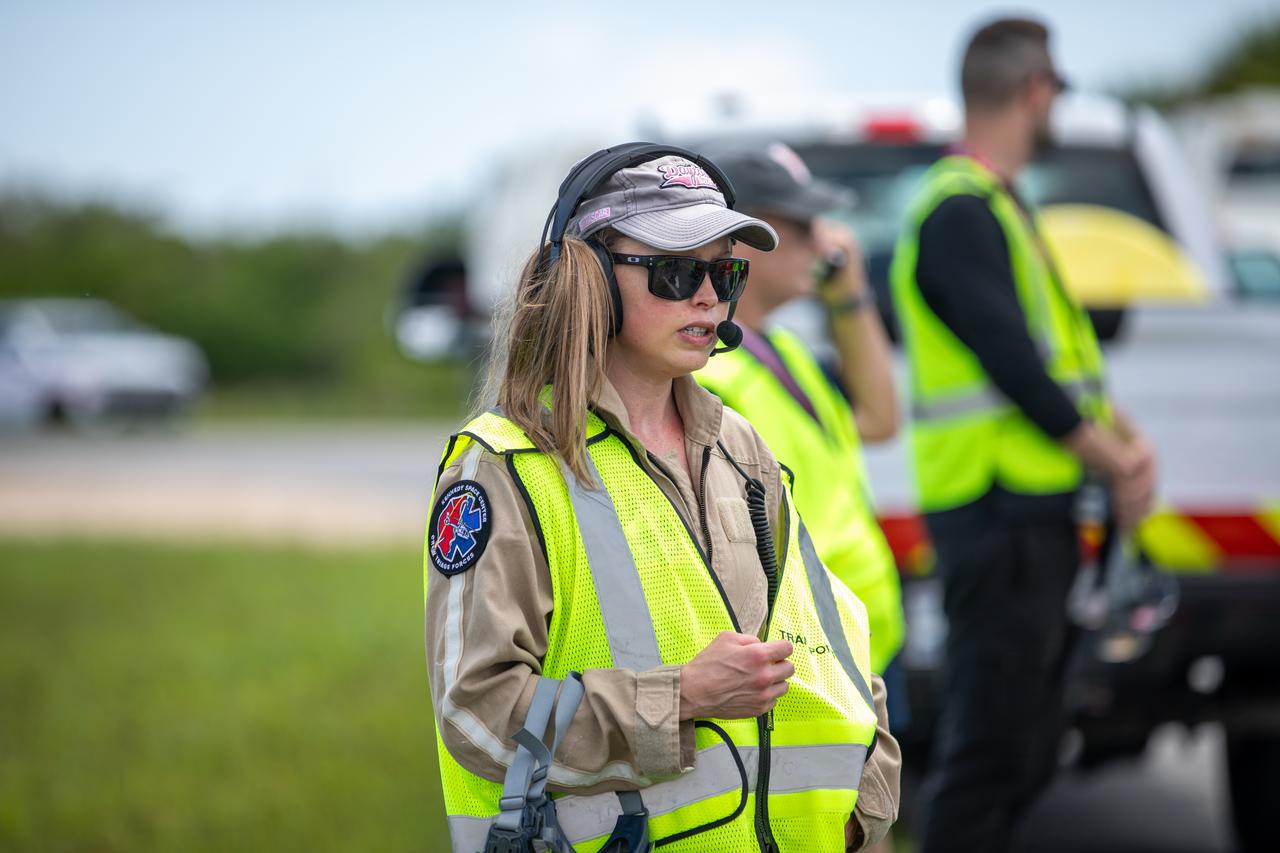
Medical and fire-rescue personnel participate in the Artemis II mission emergency escape or egress verification and validation tests near Launch Complex 39 at NASA's Kennedy Space Center in Florida on Monday, Aug. 12, 2024. During the multi-day tests, members of the closeout crew, pad rescue team, and the Exploration Ground Systems Program practiced the process of getting in and out of the emergency egress baskets then down to the launch pad where they would be transported to emergency transport vehicles and driven to safety. Prior to this test and throughout the course of several months, teams conducted basket release demonstrations to validate the system.