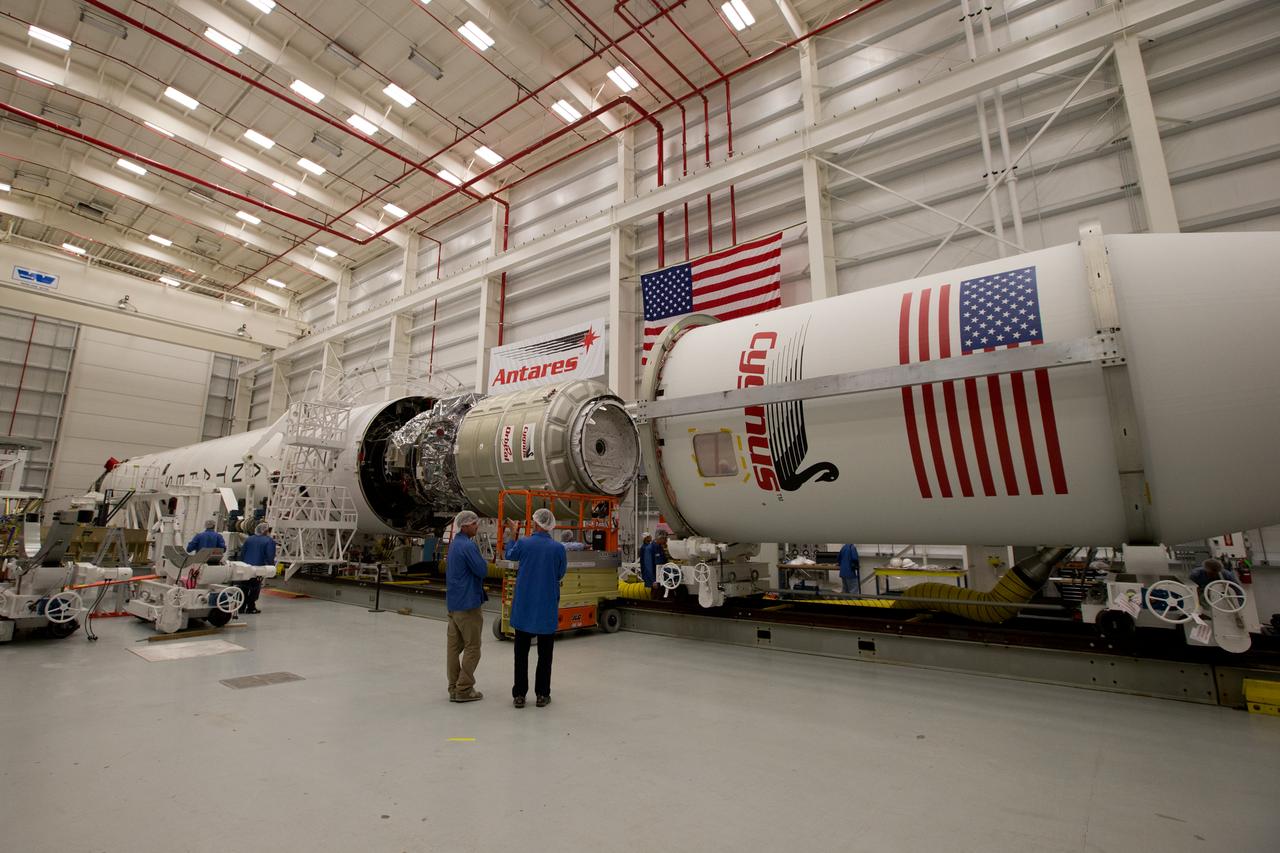
The payload fairing is installed on the Orbital Sciences Antares rocket at the Horizontal Integration Facility at NASA's Wallops Flight Facility on Virginia's Eastern Shore, Tuesday, July 8, 2014. The Antares rocket is scheduled to roll-out to Virginia's Mid-Atlantic Regional Spaceport Pad 0A Wednesday, July 9, ahead of its scheduled launch July 11. The Antares rocket will carry Orbital's unmanned Cygnus spacecraft to the International Space Station. This Orbital-2 mission's cargo is more than 3,000 pounds of supplies for the station, including science experiments to expand the research capability of the Expedition 40 crew members aboard the orbiting laboratory, crew provisions, spare parts and experiment hardware. Credit: NASA's Wallops Flight Facility <b><a href="http://www.nasa.gov/audience/formedia/features/MP_Photo_Guidelines.html" rel="nofollow">NASA image use policy.</a></b> <b><a href="http://www.nasa.gov/centers/goddard/home/index.html" rel="nofollow">NASA Goddard Space Flight Center</a></b> enables NASA’s mission through four scientific endeavors: Earth Science, Heliophysics, Solar System Exploration, and Astrophysics. Goddard plays a leading role in NASA’s accomplishments by contributing compelling scientific knowledge to advance the Agency’s mission. <b>Follow us on <a href="http://twitter.com/NASAGoddardPix" rel="nofollow">Twitter</a></b> <b>Like us on <a href="http://www.facebook.com/pages/Greenbelt-MD/NASA-Goddard/395013845897?ref=tsd" rel="nofollow">Facebook</a></b> <b>Find us on <a href="http://instagram.com/nasagoddard?vm=grid" rel="nofollow">Instagram</a></b>
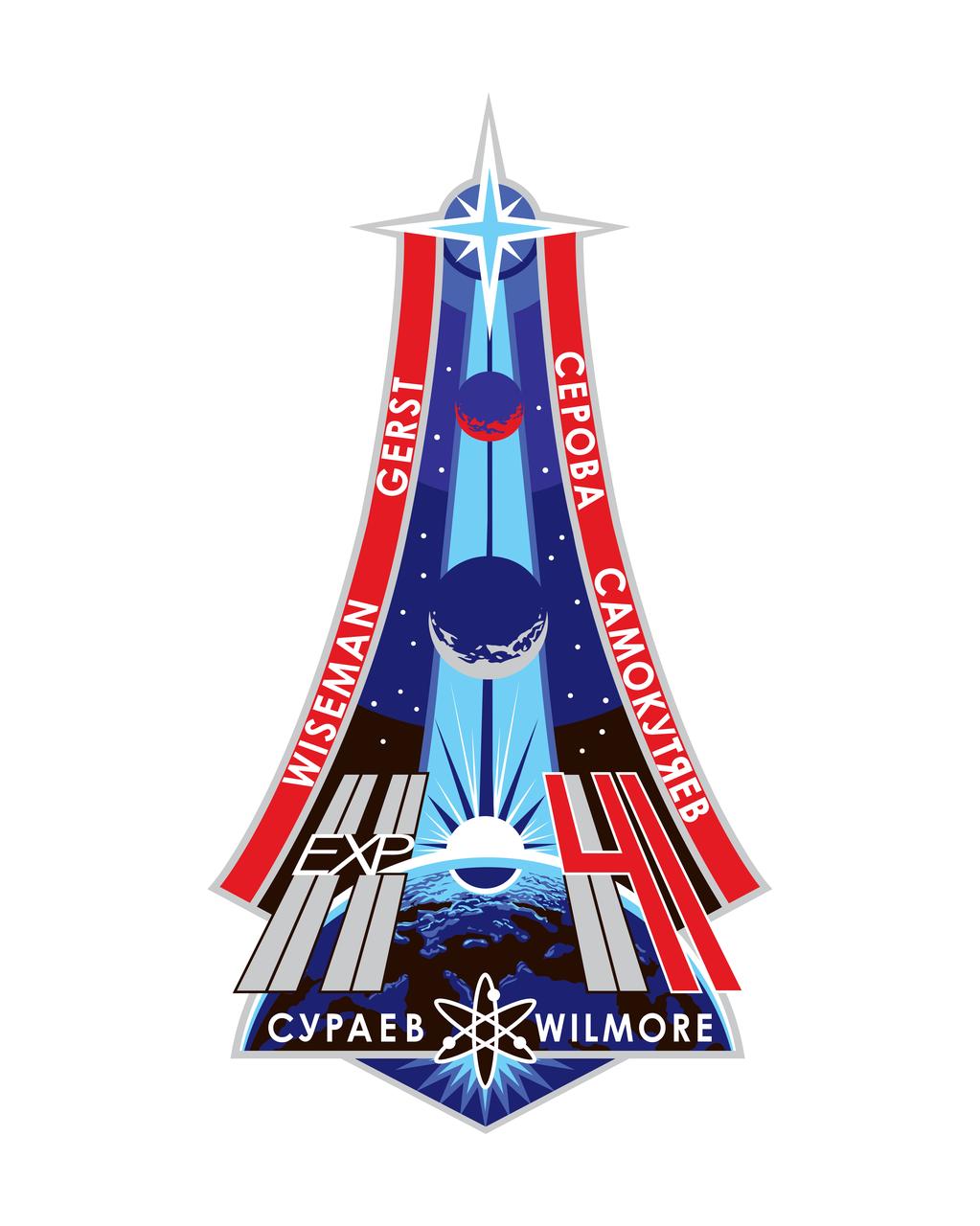
ISS041-S-001 (July 2013) --- The Expedition 41 crew members have released their patch and have written some text to go along with it: ?Portraying the road of human exploration into our vastly unknown universe, all elements of the Expedition 41 patch build from the foundation, our Earth, to the stars beyond our solar system. The focus of our six-month expedition to the International Space Station (ISS) is Earth and its inhabitants as well as a scientific look out into our universe. The distinguishing ISS solar arrays reach onward and serve as the central element, with the icon of an atom underneath representing the multitude of research onboard that will bring new discoveries for the benefit of humanity. The sun is rising over Earth?s horizon, spreading its light along the road of human exploration. Equipped with the knowledge and inspiration gained from ISS, our successful multinational cooperation will lead human space exploration to the moon, Mars, and ultimately, the stars. We are Expedition 41. Join us for the adventure.? Photo credit: NASA Note: The NASA insignia design for shuttle and space station flights is reserved for use by the astronauts and for other official use as the NASA Administrator may authorize. Public availability has been approved only in the form of illustrations by the various news media. When and if there is any change in this policy, which is not anticipated, it will be publicly announced.
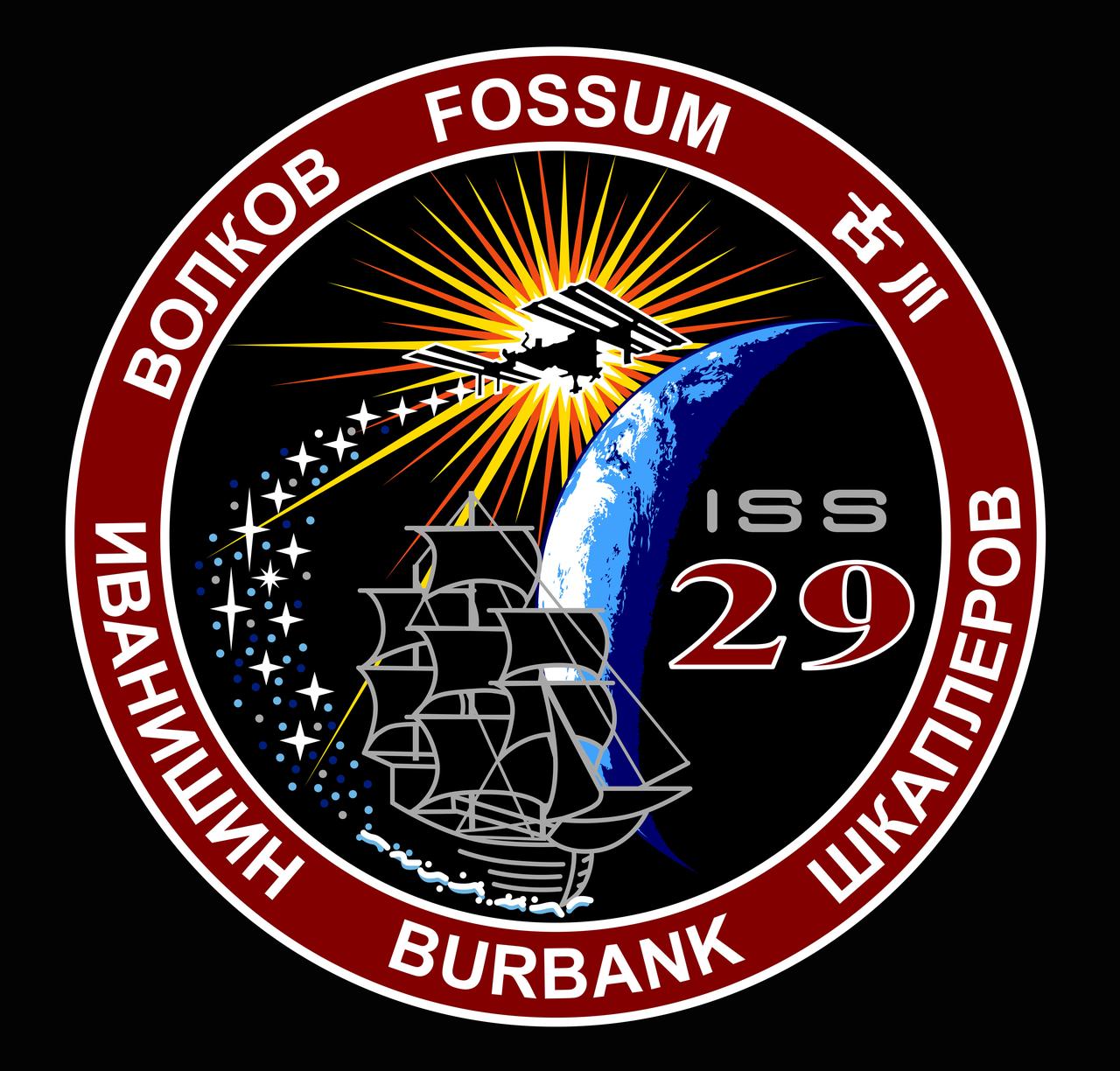
ISS029-S-001 (23 March 2011) --- On the Expedition 29 patch, the International Space Station (ISS) is shown following the path of the historic 18th century explorer, Captain James Cook, and his ship, Endeavour. During Cook?s three main voyages, he explored and mapped major portions of the oceans and coastlines under the flight path of the ISS and added immeasurably to the body of knowledge of that time. As the ISS sails a stardust trail ? following the spirit of Endeavour sailing toward the dark unknown and new discoveries ? it enlightens Earth below. Through the centuries, the quest for new discoveries has been a significant element of the human character, inspiring us to endure hardships and separation to be part of a mission which is greater than any individual. A spokesman for the crew stated, ?The crew of Expedition 29 is proud to continue the journey in this greatest of all human endeavors.? The NASA insignia design for shuttle and space station flights is reserved for use by the astronauts and for other official use as the NASA Administrator may authorize. Public availability has been approved only in the form of illustrations by the various news media. When and if there is any change in this policy, which is not anticipated, it will be publicly announced. Photo credit: NASA or National Aeronautics and Space Administration
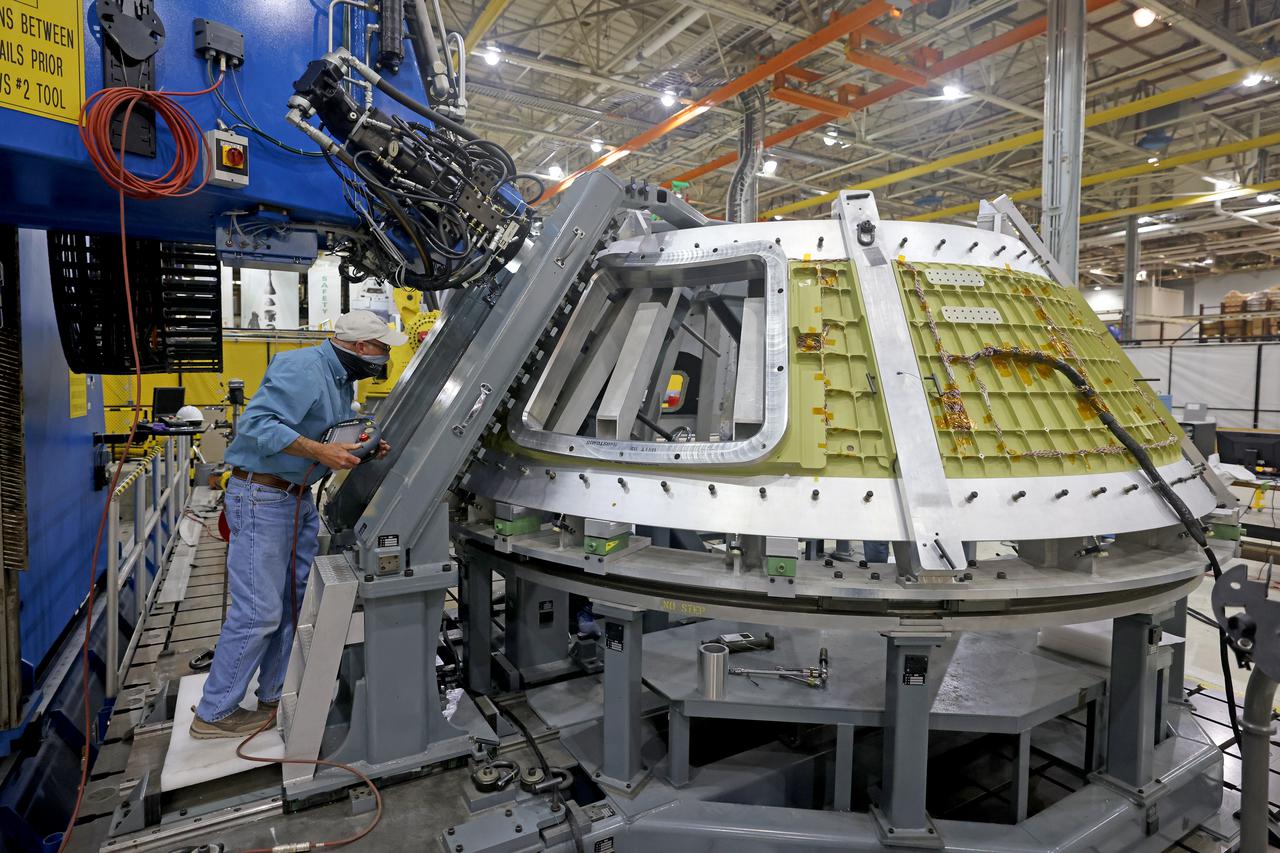
At NASA’s Michoud Assembly Facility in New Orleans, technicians from Orion prime contractor Lockheed Martin have welded together three cone-shaped panels on Orion’s crew module for the Artemis III mission that will land the first woman and next man on the Moon. The crew module’s primary structure, the pressure vessel, is comprised of seven machined aluminum alloy pieces that are welded together through a weld process that produces a strong, air-tight habitable space for astronauts during the mission. The pressure vessel is designed to withstand the harsh and demanding environment of deep space, and is the core structure upon which all the other elements of Orion’s crew module are integrated. Infographic showing the seven pieces of Orion's underlying structure With welding complete on the crew module cone panels – one of which contains windows providing astronauts views of the Moon and Earth – work will begin joining the forward bulkhead to the tunnel to create the top of the spacecraft, followed by the barrel and aft bulkhead join to form the bottom of Orion. Last, the forward bulkhead will be welded to the top of the panels and, for the seventh and closeout weld, the bottom of the cone panels will be joined to the barrel to complete the pressure vessel. Once welding of the Artemis III crew module primary structure is complete, it will be shipped to NASA’s Kennedy Space Center in Florida where it will undergo further assembly beginning this fall. Orion, the Space Launch System, and Exploration Ground Systems programs are foundational elements of the Artemis program. Artemis I will be the first integrated flight test of Orion and SLS and is targeted to launch later this year. Artemis II will follow and is the first crewed mission, taking humans farther into space than ever before. Image credit: NASA/Michael DeMocker
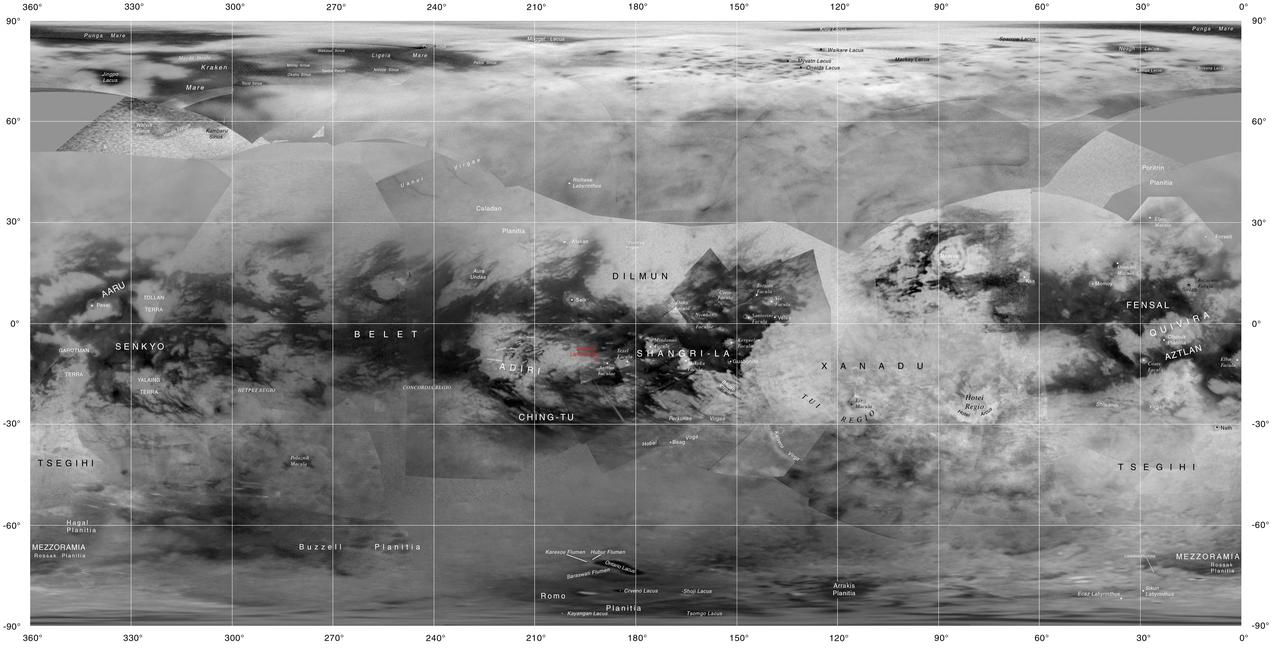
This map of Titan shows the names of many (but not all) features on the Saturnian moon that have been approved by the International Astronomical Union. This map was produced by the USGS Astrogeology Science Center for the International Astronomical Union (IAU) Working Group for Planetary System Nomenclature. http://photojournal.jpl.nasa.gov/catalog/PIA20713
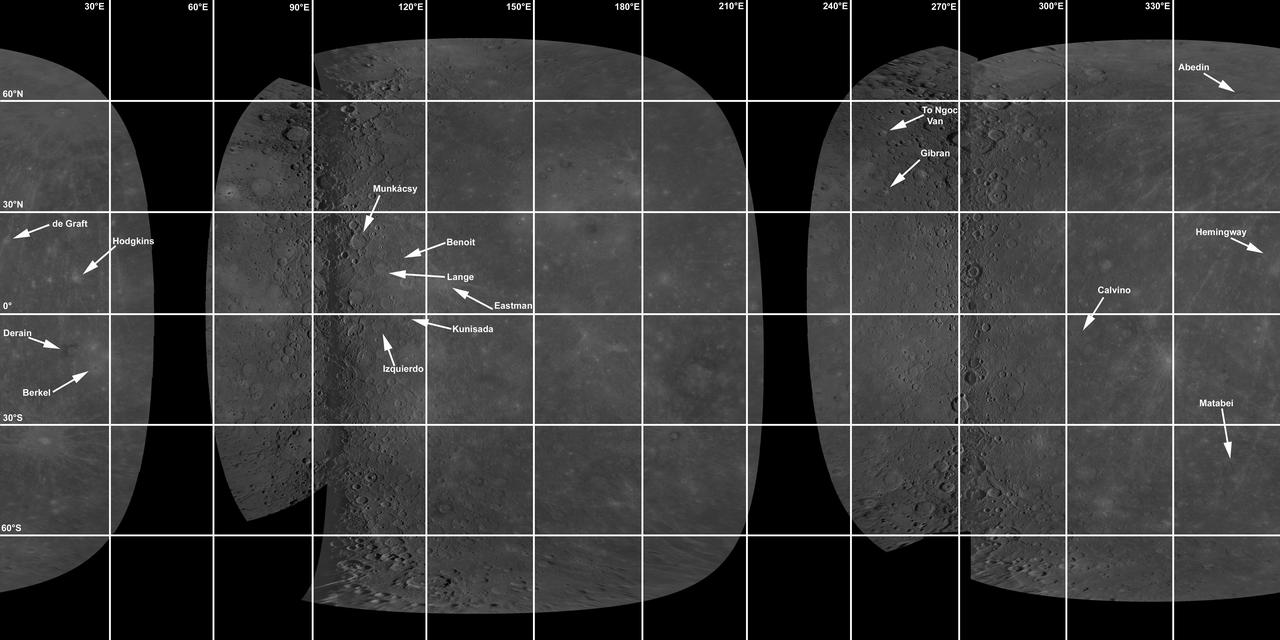
The International Astronomical Union recently approved names for 16 impact craters on Mercury. Several of the craters are from areas seen for the first time at close range by MESSENGER during its second Mercury flyby.
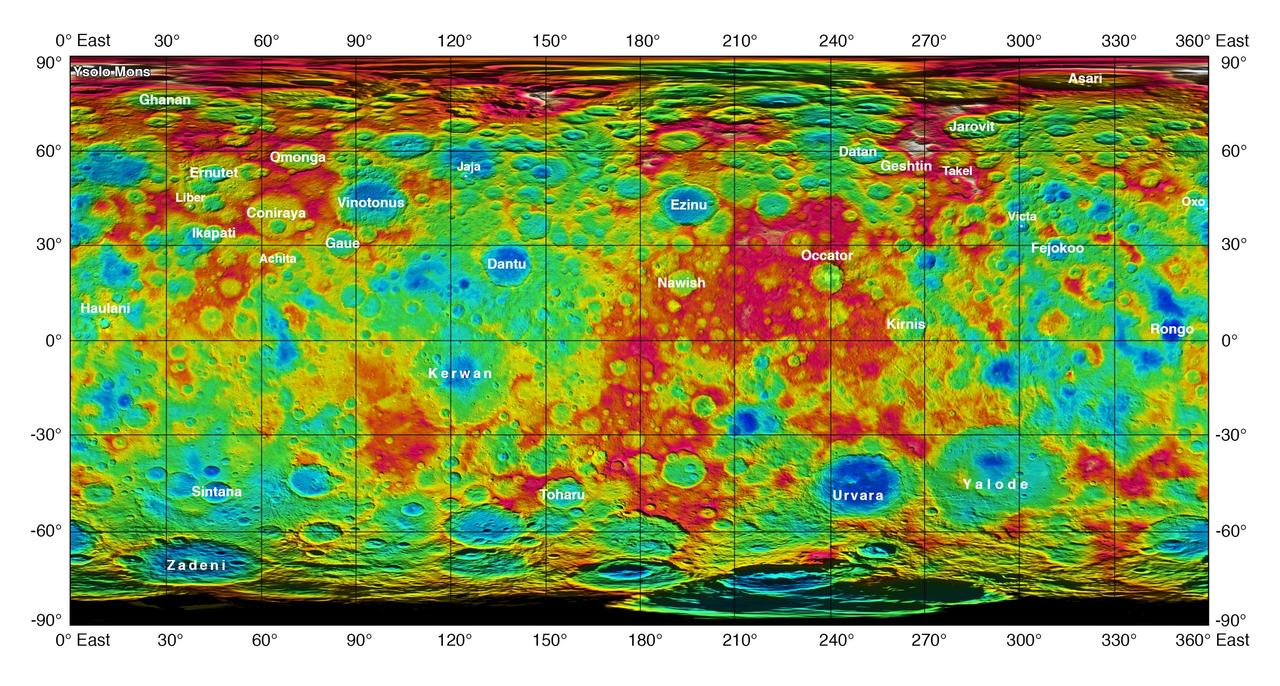
This color-coded map from NASA Dawn mission shows the highs and lows of topography on the surface of dwarf planet Ceres. It is labeled with names of features approved by the International Astronomical Union. http://photojournal.jpl.nasa.gov/catalog/PIA19974
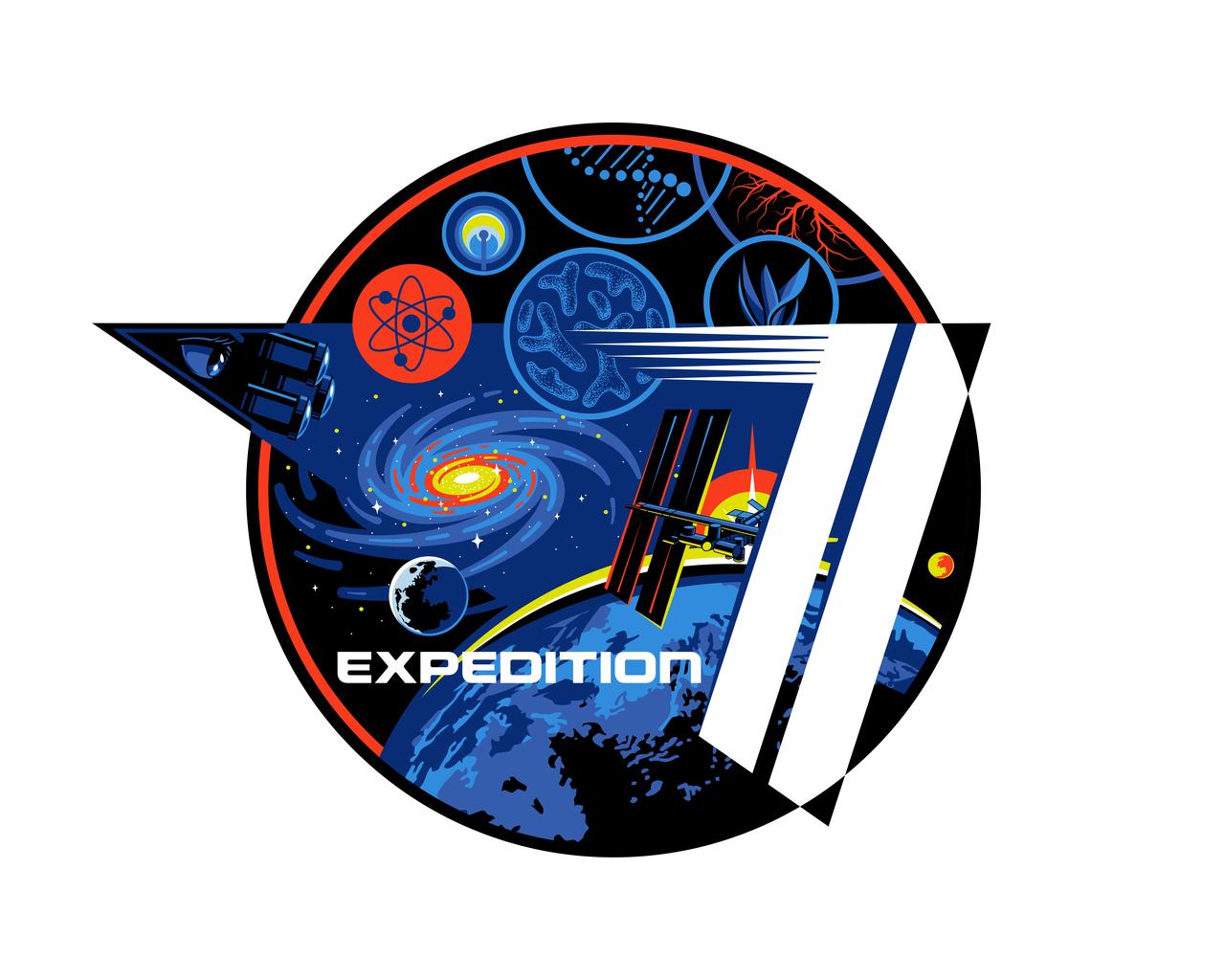
iss071-s-001 (Aug. 31, 2023) --- For nearly a quarter of a century the International Space Station (ISS) has hosted crews and accommodated science experiments even as it has continued to evolve into the highly capable orbiting laboratory of today. With its unique vantage point, the ISS serves as an intersection for discoveries ranging from the vast, such as the search for dark matter and cosmological origins, to the near, such as detailed observation of our home planet and its atmosphere, to the microscopic, including behavior of microbial life, DNA sequencing, and molecular biology in the microgravity environment. The Expedition 71 patch celebrates this science as well as the thousands of multinational scientists and technicians that have contributed to numerous groundbreaking experiments. The ISS is the ultimate destination for the scientifically curious. The symbology represents onboard research into quantum behavior of novel states of matter, antibodies and immune function, the search for dark matter, flame and combustion physics, DNA expression, plant growth and root behavior, and direct earth observation. The human eye and microscope objectives at upper left form the apex of a cone of vision culminating in the Expedition number 71, and represents the deliberate and disciplined practice of scientific observation. Earth’s moon and Mars are also depicted as next steps for exploration, with an anticipation of further rich scientific discovery using many techniques and skills honed aboard the ISS.

This image contains the initial, informal names being used by NASA's New Horizons team for the features on Pluto's Sputnik Planum (plain). Names were selected based on the input the team received from the Our Pluto naming campaign. Names have not yet been approved by the International Astronomical Union (IAU). For more information on the maps and feature naming, visit http://www.ourpluto.org/maps. http://photojournal.jpl.nasa.gov/catalog/PIA19865
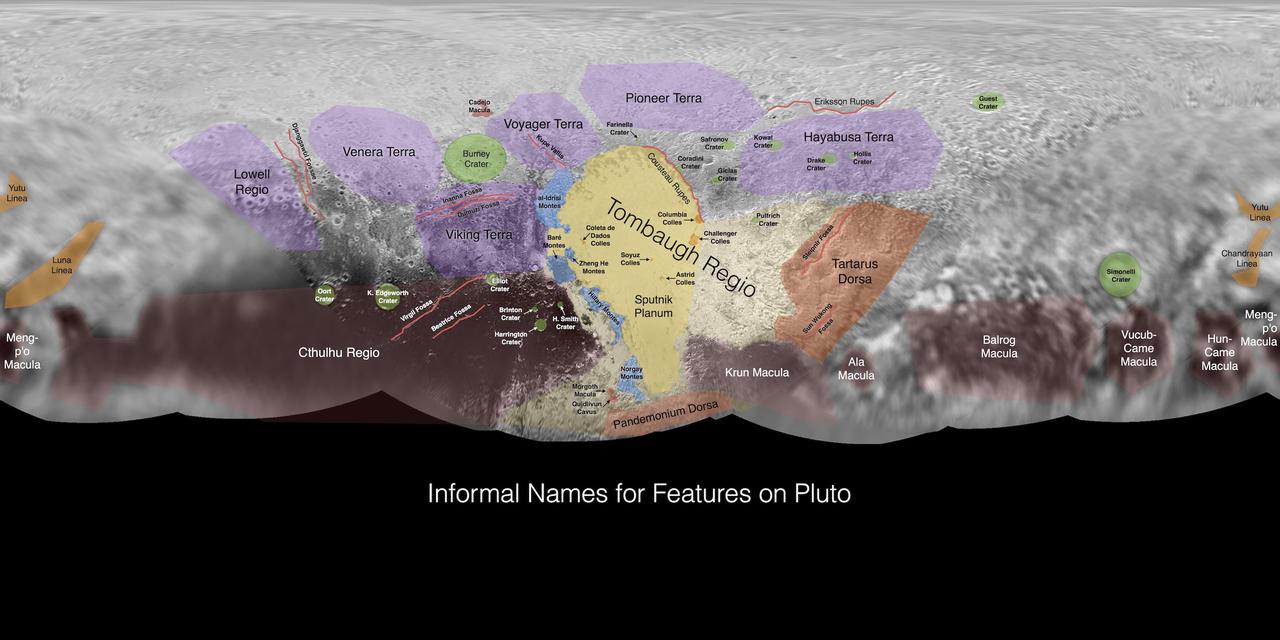
This image contains the initial, informal names being used by NASA's New Horizons team for the features and regions on the surface of Pluto. Names were selected based on the input the team received from the Our Pluto naming campaign. Names have not yet been approved by the International Astronomical Union (IAU). For more information on the maps and feature naming, visit http://www.ourpluto.org/maps. http://photojournal.jpl.nasa.gov/catalog/PIA19863
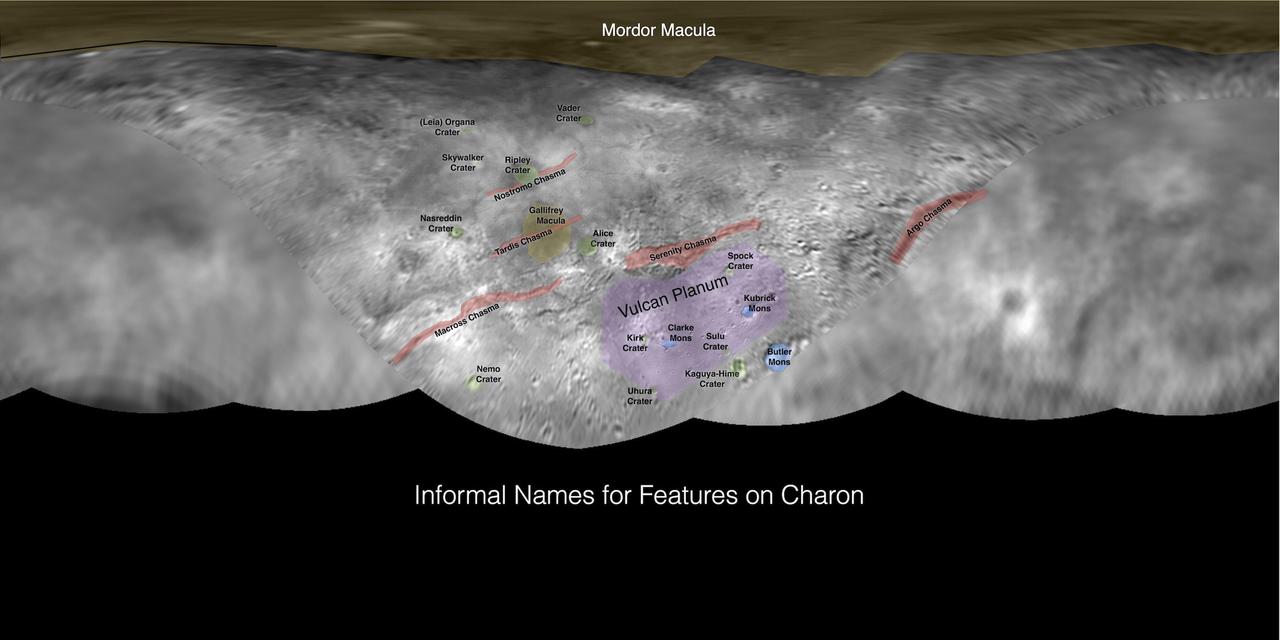
This image contains the initial, informal names being used by NASA's New Horizons team for the features on Pluto's largest moon, Charon. Names were selected based on the input the team received from the Our Pluto naming campaign. Names have not yet been approved by the International Astronomical Union (IAU). For more information on the maps and feature naming, visit http://www.ourpluto.org/maps. http://photojournal.jpl.nasa.gov/catalog/PIA19864
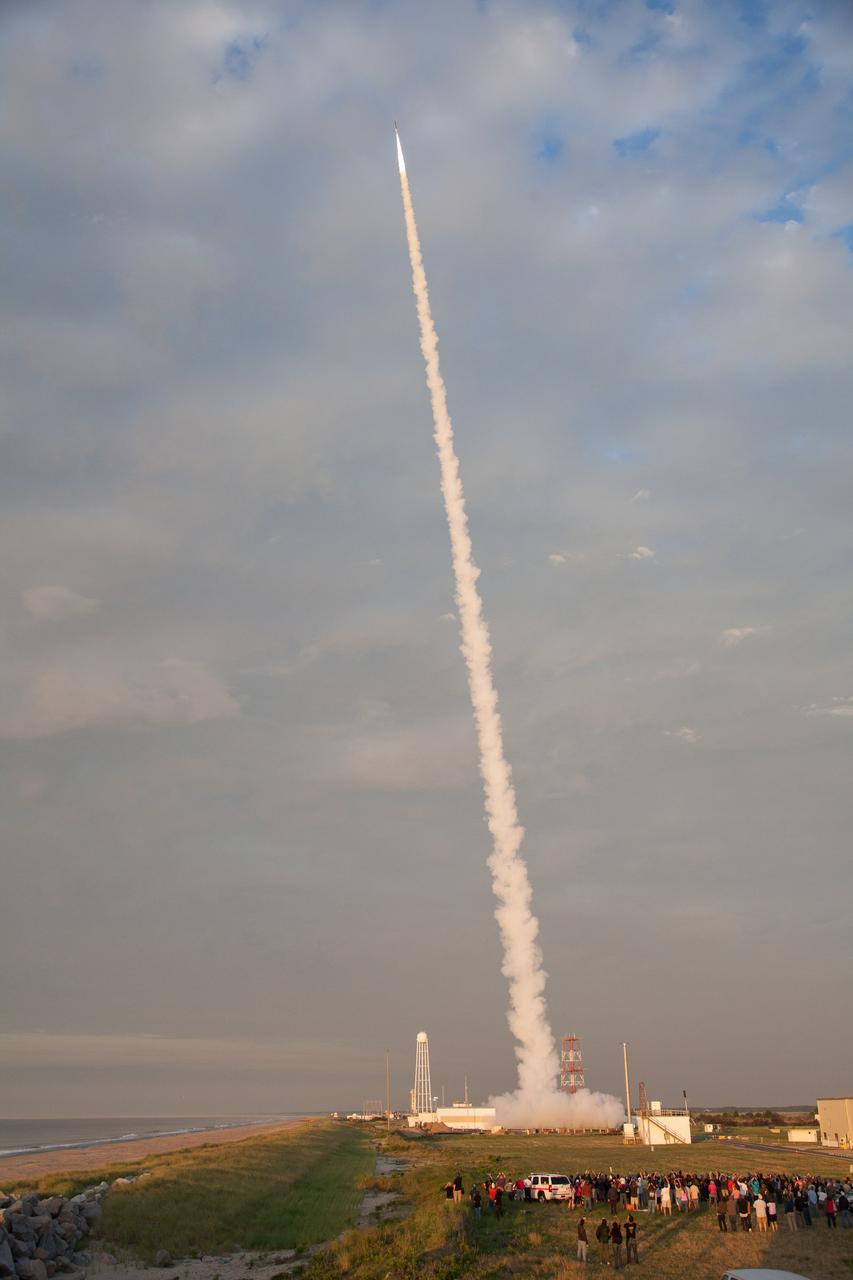
NASA successfully launched a NASA Terrier-Improved Orion suborbital sounding rocket carrying student experiments with the RockOn/RockSat-C programs at 6 a.m., today More than 200 middle school and university students and instructors participating in Rocket Week at Wallops were on hand to witness the launch. Through RockOn and RockSat-C students are learning and applying skills required to develop experiments for suborbital rocket flight. In addition, middle school educators through the Wallops Rocket Academy for Teachers (WRATS) are learning about applying rocketry basics in their curriculum. The payload flew to an altitude of 71.4 miles and descended by parachute into the Atlantic Ocean off the coast of Wallops. Payload recovery is in progress. The next launch from NASA’s Wallops Flight Facility is a Black Brant IX suborbital sounding rocket currently scheduled between 6 and 10 a.m., July 7. For more information on NASA’s Wallops Flight Facility, visit: <a href="http://www.nasa.gov/wallops" rel="nofollow">www.nasa.gov/wallops</a> <b><a href="http://www.nasa.gov/audience/formedia/features/MP_Photo_Guidelines.html" rel="nofollow">NASA image use policy.</a></b> <b><a href="http://www.nasa.gov/centers/goddard/home/index.html" rel="nofollow">NASA Goddard Space Flight Center</a></b> enables NASA’s mission through four scientific endeavors: Earth Science, Heliophysics, Solar System Exploration, and Astrophysics. Goddard plays a leading role in NASA’s accomplishments by contributing compelling scientific knowledge to advance the Agency’s mission. <b>Follow us on <a href="http://twitter.com/NASAGoddardPix" rel="nofollow">Twitter</a></b> <b>Like us on <a href="http://www.facebook.com/pages/Greenbelt-MD/NASA-Goddard/395013845897?ref=tsd" rel="nofollow">Facebook</a></b> <b>Find us on <a href="http://instagrid.me/nasagoddard/?vm=grid" rel="nofollow">Instagram</a></b>
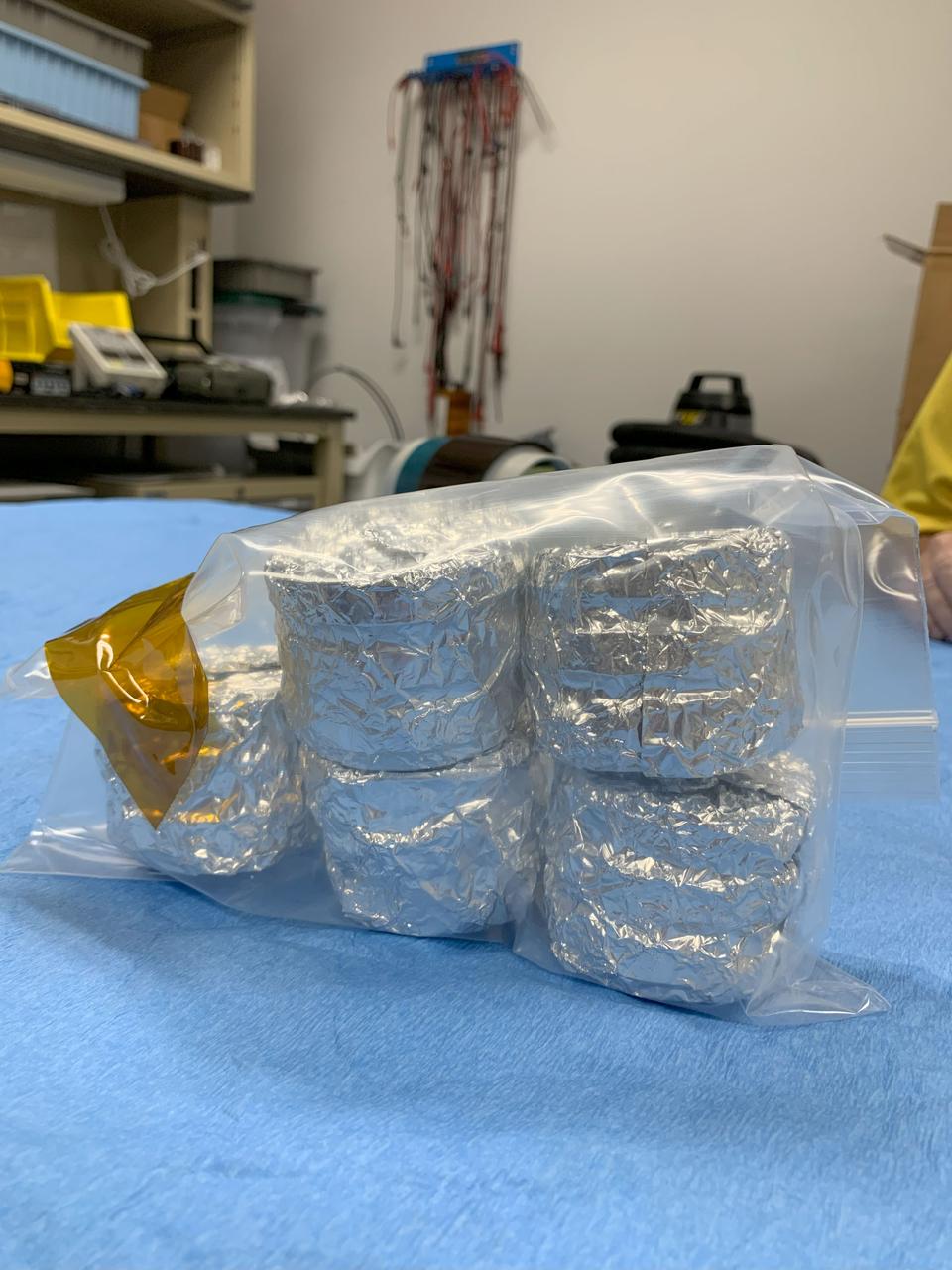
jsc2024e062114 (9/13/2024) --- The ANT1 Radiation Tolerance Experiment with Moss in Orbit on the Space Station (ARTEMOSS) payload: five of the Petri plate stacks are inserted into a flight-approved Zip lock bag and sealed with the zipper seal, a square of the flight-approved Tedlar tape is used for designation of top-bottom orientation relevant for preflight operations and launch. The ARTEMOSS investigation examines whether and how an Antarctic moss repairs damage caused by cosmic radiation and microgravity. Image courtesy of Agata Zupanska.
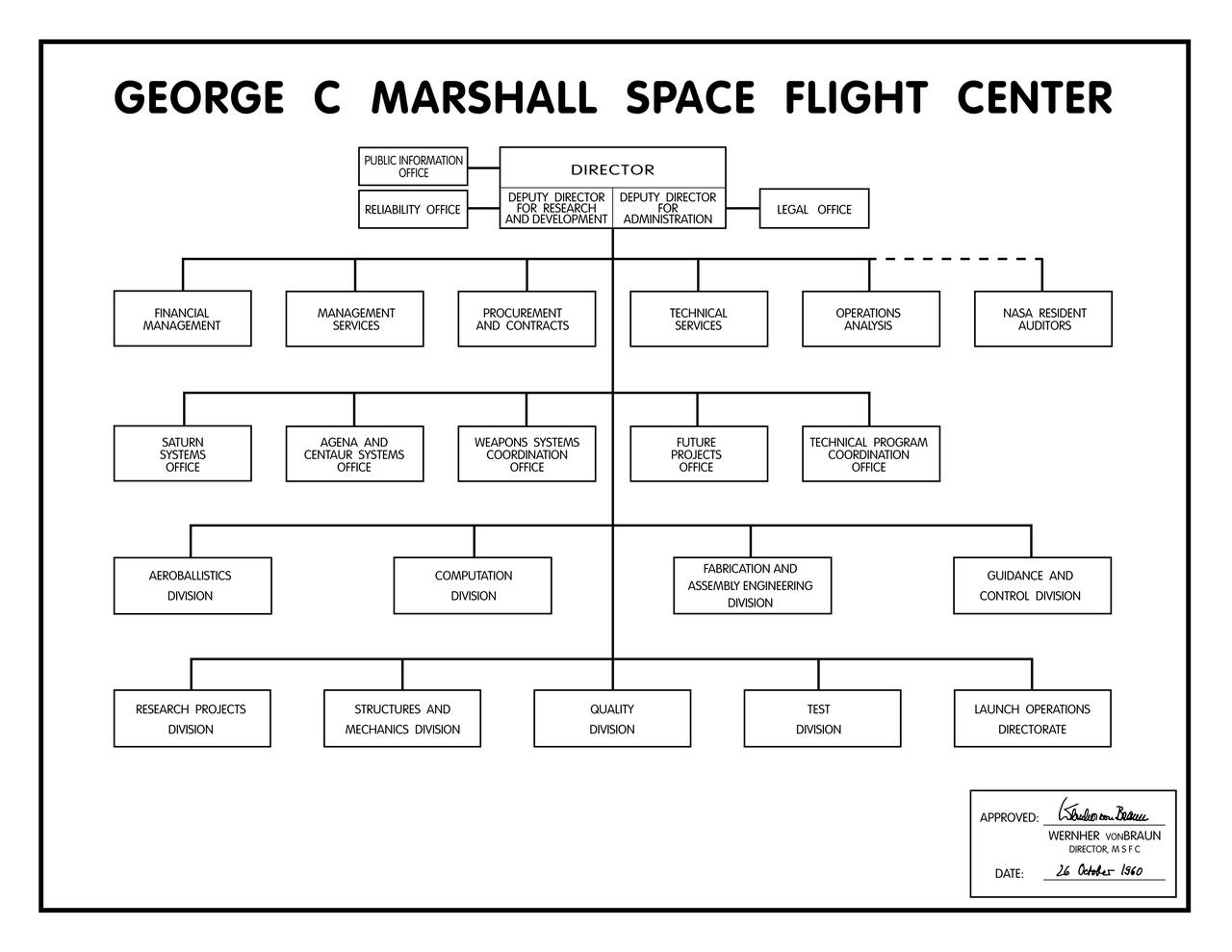
The first organizational chart of the George C. Marshall Space Flight Center (MSFC) which was approved and signed by Dr. Wernher von Braun, Director, MSFC, on 26 October 1960.
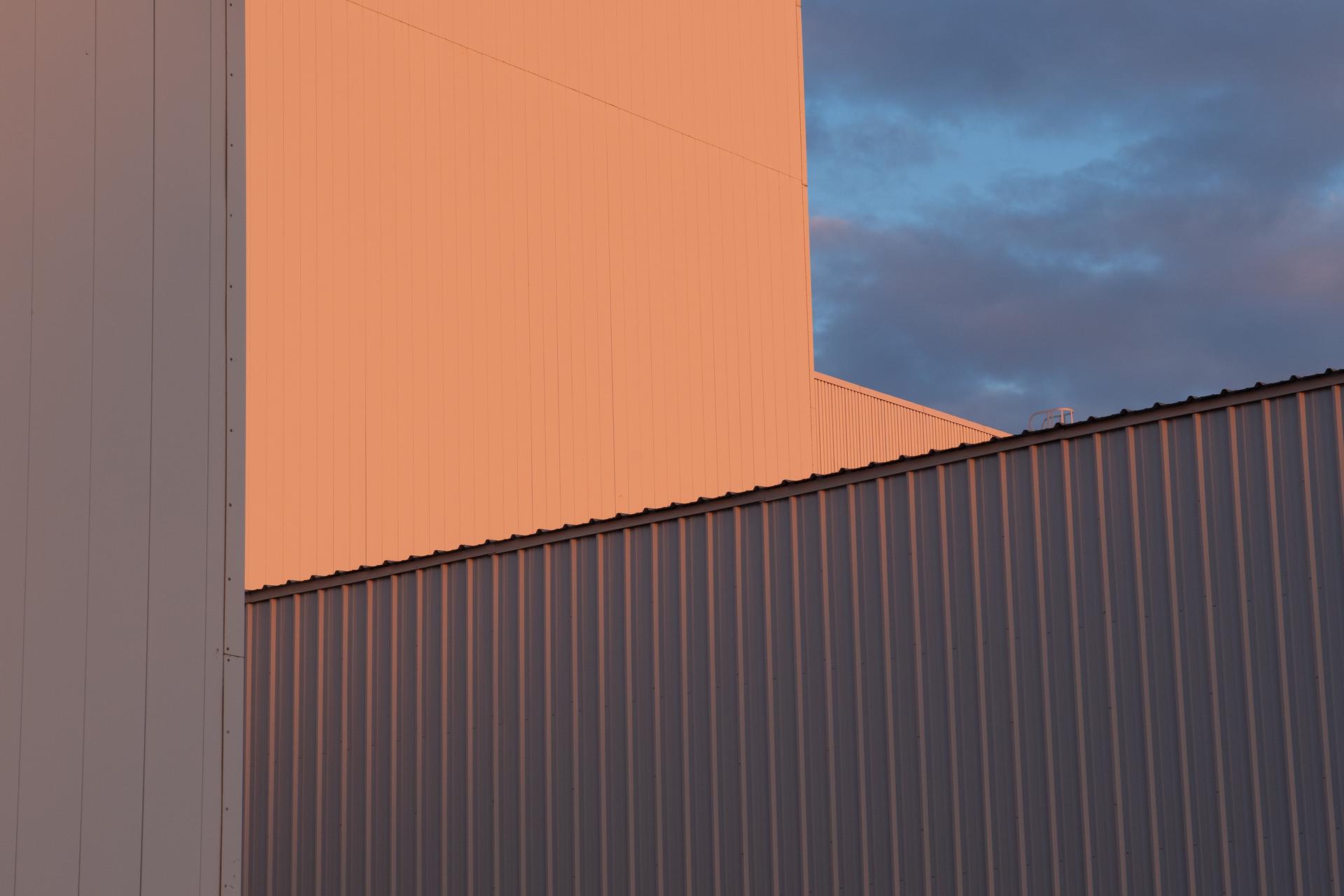
Sunlight washes over the exterior of the integration and testing facility at Goddard Space Flight Center, Greenbelt, Md., Feb 20, 2023. This photo is approved for public release. NASA/Mike Guinto
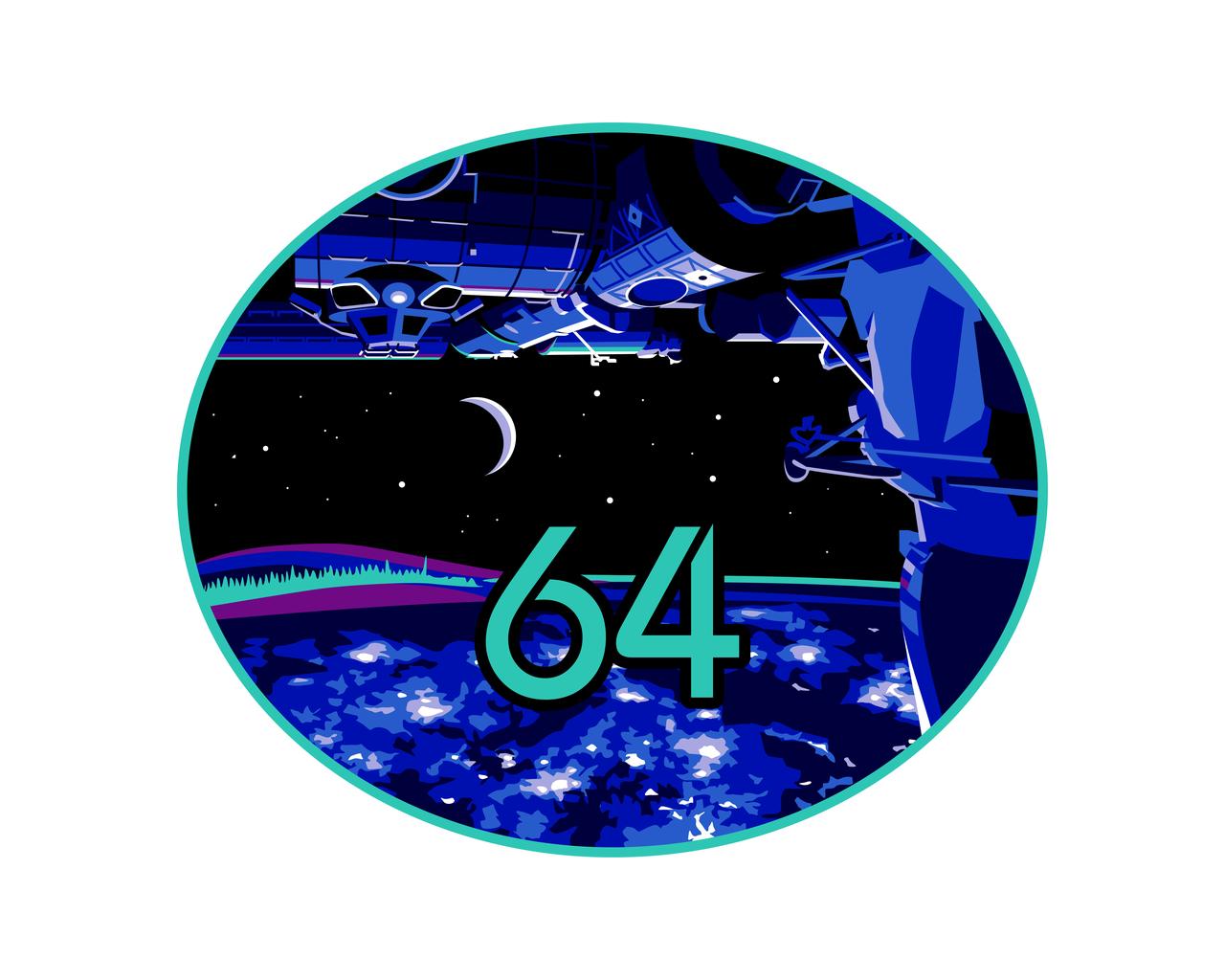
iss064-s-001 (June 17, 2020) --- The official insignia for the Expedition 64 crew.
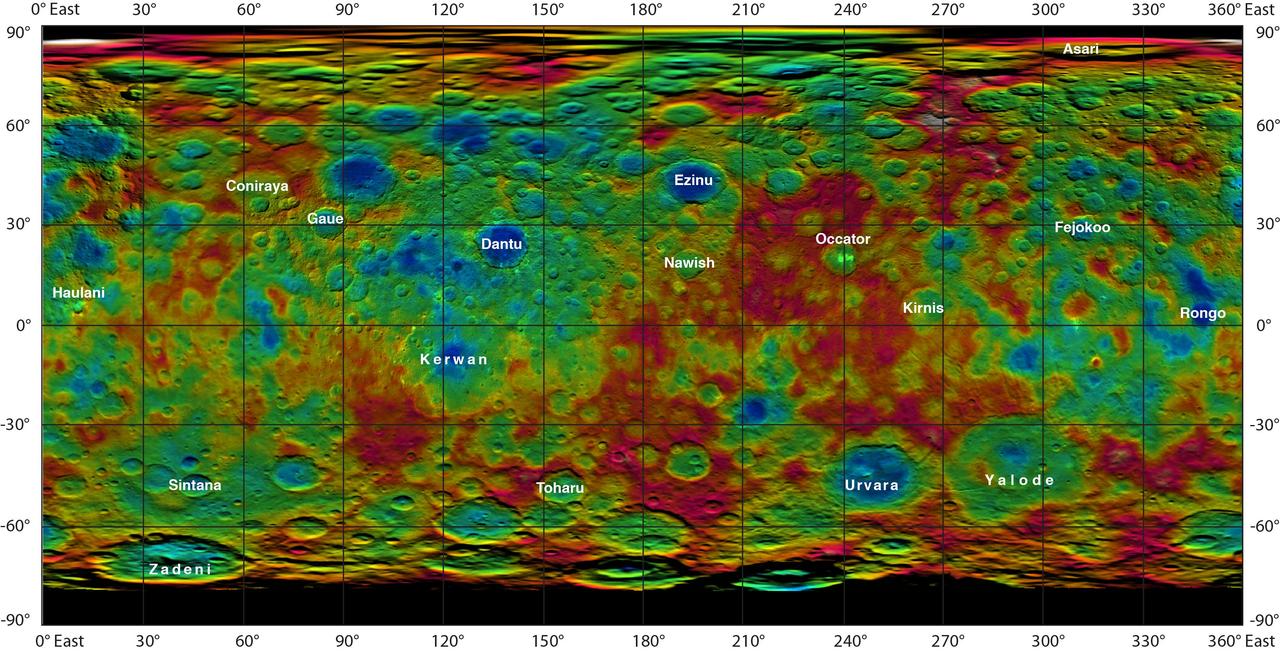
This color-coded map from NASA Dawn mission shows the highs and lows of topography on the surface of dwarf planet Ceres. It is labeled with names of features approved by the International Astronomical Union. Occator, the mysterious crater containing Ceres' mysterious bright spots, is named after the Roman agriculture deity of harrowing, a method of leveling soil. They retain their bright appearance in this map, although they are color-coded in the same green elevation of the crater floor in which they sit. The color scale extends about 5 miles (7.5 kilometers) below the surface in indigo to 5 miles (7.5 kilometers) above the surface in white. The topographic map was constructed from analyzing images from Dawn's framing camera taken from varying sun and viewing angles. The map was combined with an image mosaic of Ceres and projected as an simple cylindrical projection. http://photojournal.jpl.nasa.gov/catalog/PIA19606
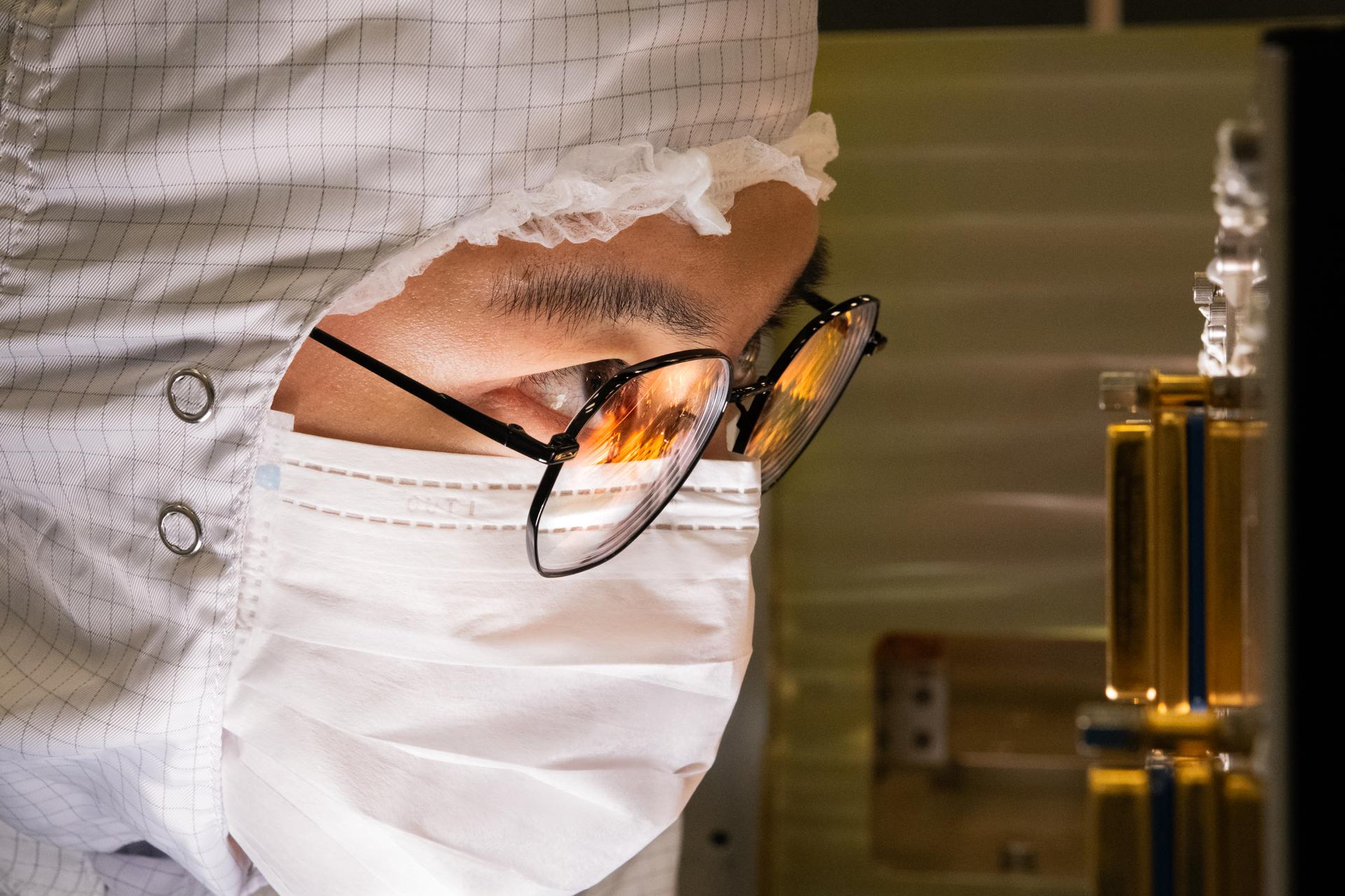
OSAM-1 electronics engineer, Sam Zhao, peers inside the robotic electronics unit inside the cleanroom at Goddard Space Flight Center, Greenbelt, Md., Oct 8, 2024. This photo has been approved for public release by OSAM-1 project management and Nasa Export Control. NASA/Mike Guinto

Aircraft maintenance crews at NASA‘s Armstrong Flight Research Center prepare the remotely-piloted Ikhana aircraft for a test flight. The test flight was performed to validate key technologies and operations necessary for FAA’s approval to fly the aircraft in the National Airspace System June 12, 2018, without a safety chase aircraft.
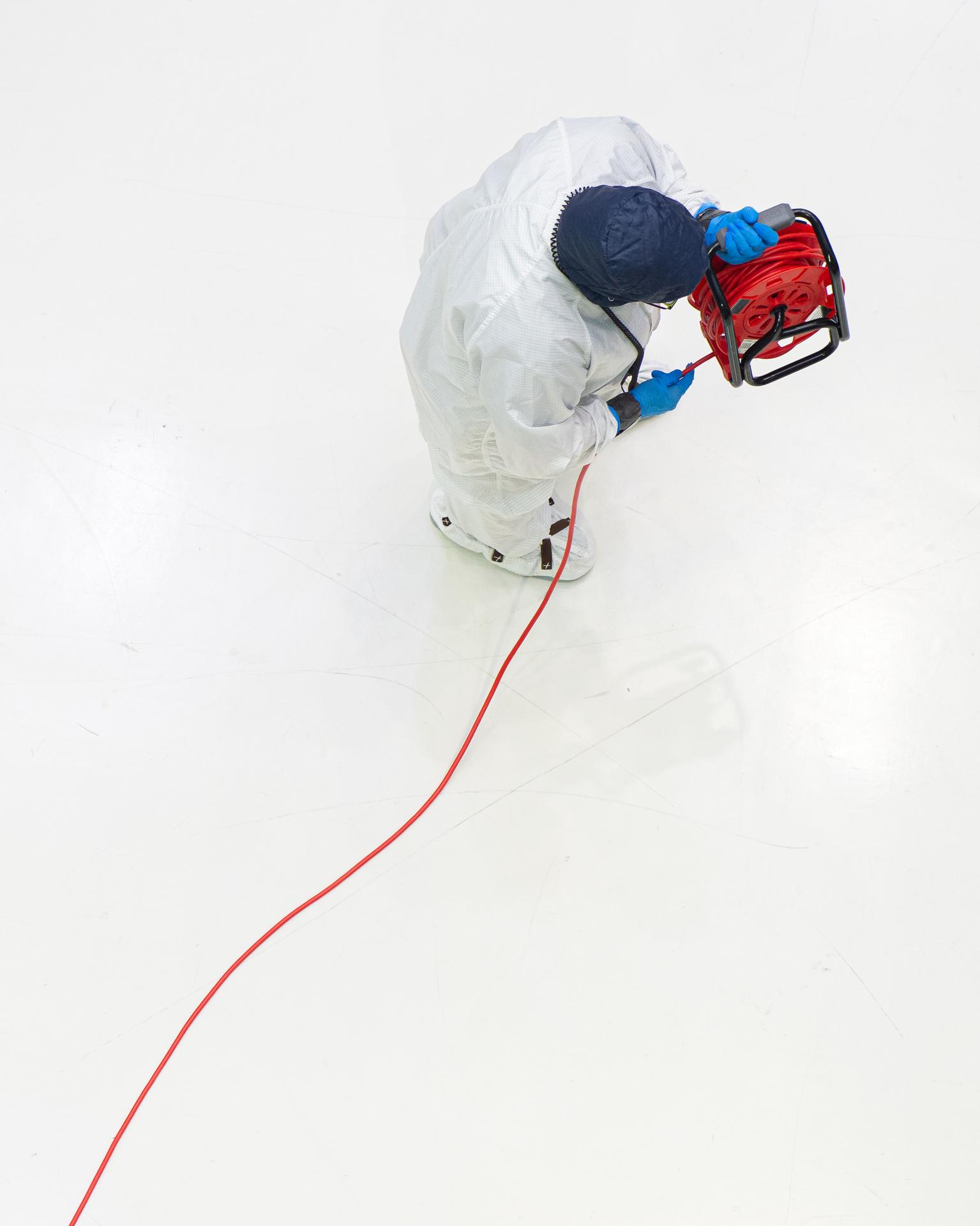
Quality Assurance engineer Lucinda Taylor unreels a power cord across the cleanroom floor at Goddard Space Flight Center, Greenbelt Md., April 21, 2025. This photo has been reviewed by export control and is approved for public release. NASA/Mike Guinto
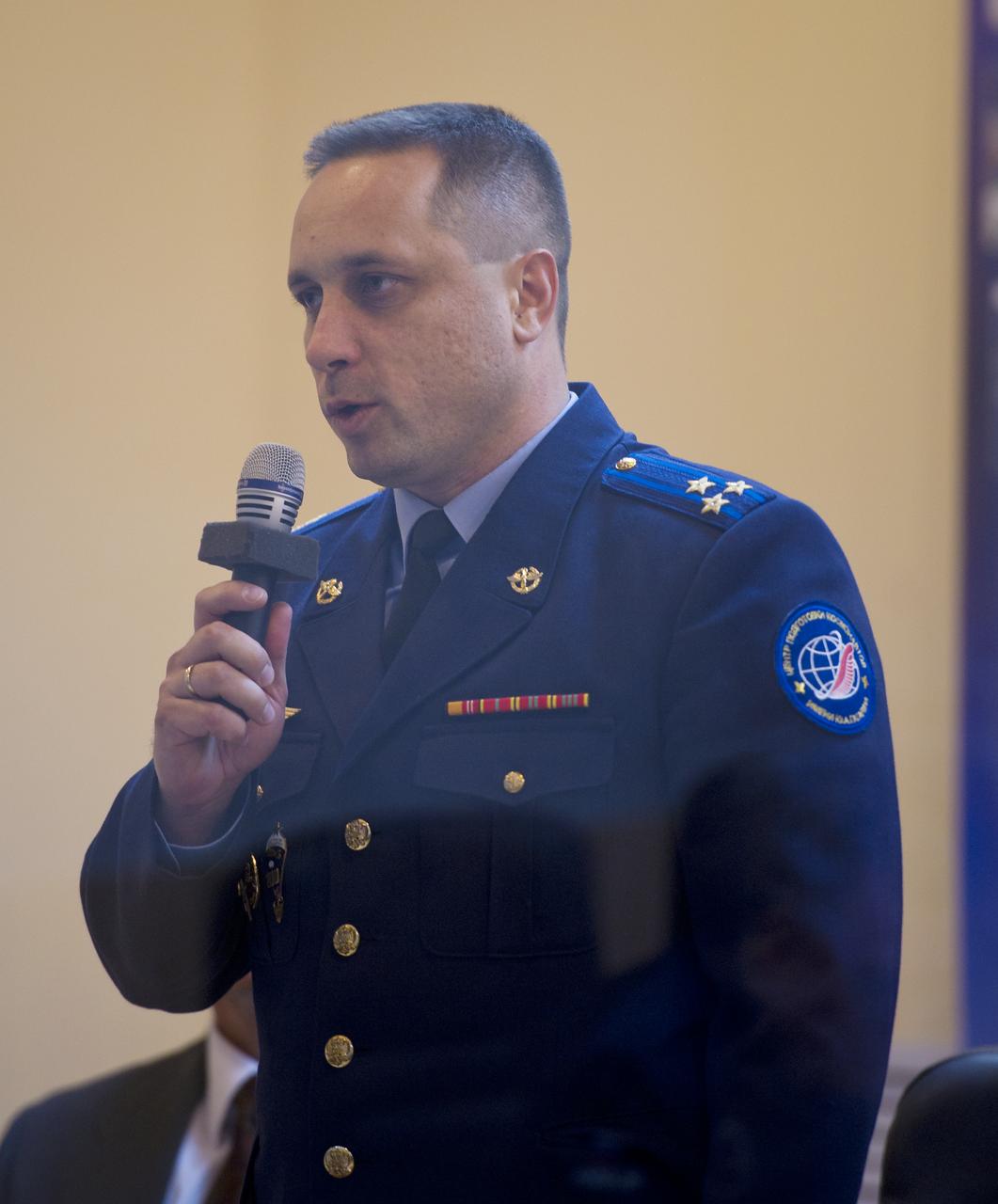
Expedition 29 Soyuz Commander Anton Shkaplerov speaks during the State Commission meeting to approve the Soyuz launch of Expedition 29 to the International Space Station, Saturday, Nov. 12, 2011 at the Cosmonaut Hotel in Baikonur, Kazakhstan. The mission is set to launch November 14 from the Baikonur Cosmodrome. Photo Credit: (NASA/Carla Cioffi)
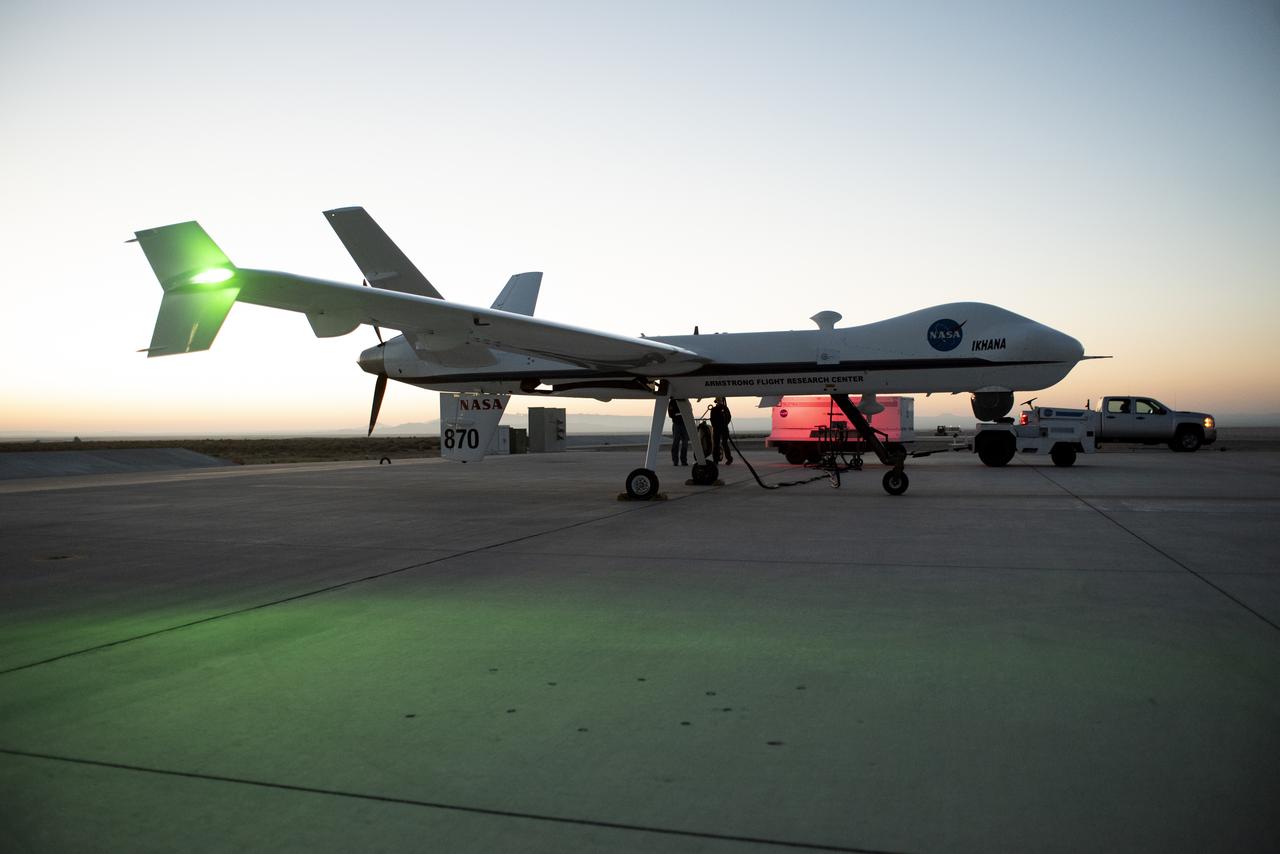
Aircraft maintenance crews at NASA‘s Armstrong Flight Research Center prepare the remotely-piloted Ikhana aircraft for a test flight of Ikhana. The test flight was performed to validate key technologies and operations necessary for FAA’s approval to fly the aircraft in the National Airspace System June 12, 2018, without a safety chase aircraft.

Members of the State Commission meet to approve the Soyuz launch of Expedition 19 Commander Gennady I. Padalka, Flight Engineer Michael R. Barratt and Spaceflight Participant Charles Simonyi on Wednesday, March 25, 2009 in Baikonur, Kazakhstan. Photo Credit: (NASA/Bill Ingalls)
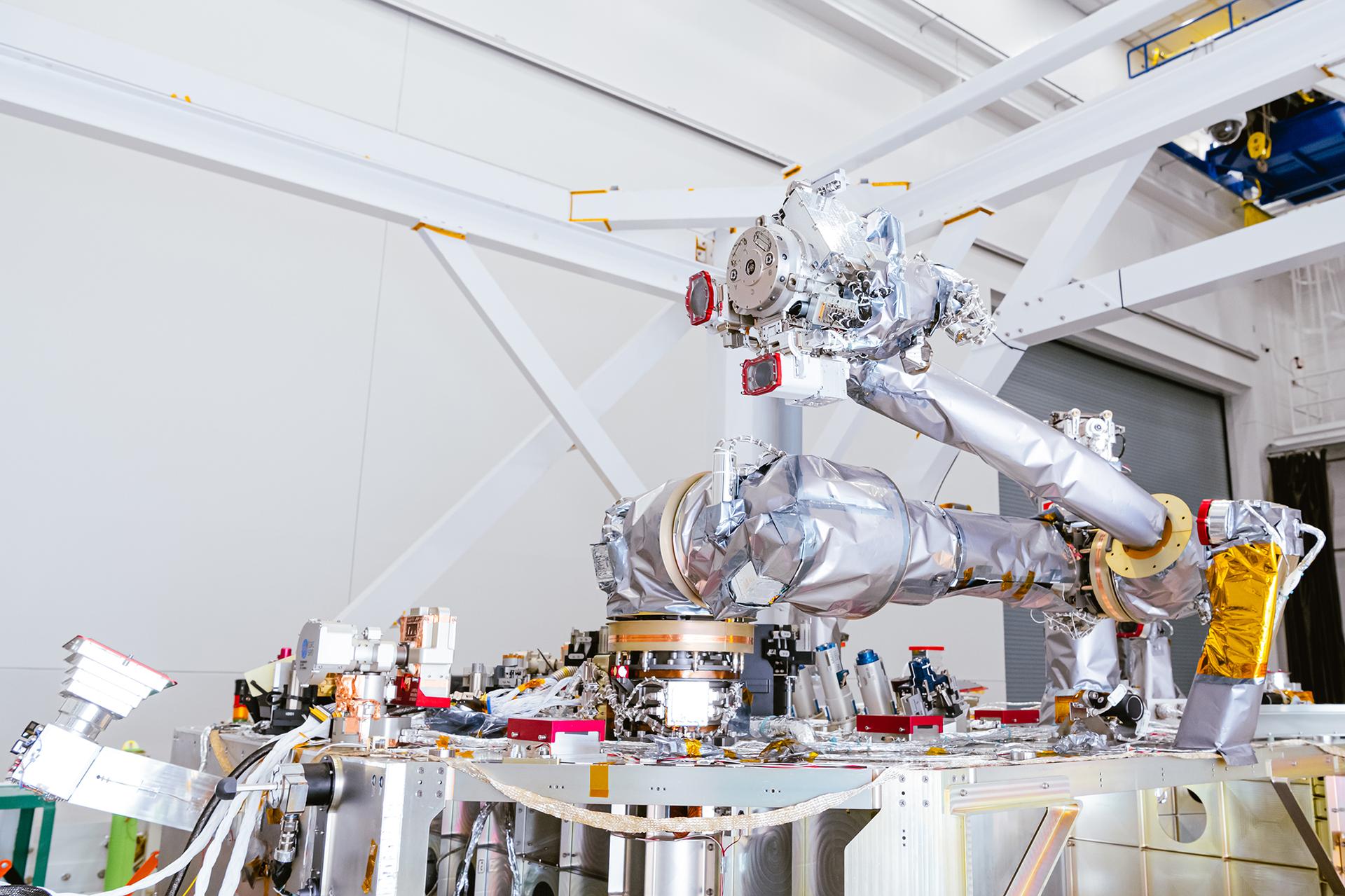
A detail view of one of the OSAM-1 robotic arms after being integrated onto the flight payload top-deck at Goddard Space Flight Center, Greenbelt., Md Oct 4, 2024. This photo has been approved for public release. NASA/Mike Guinto
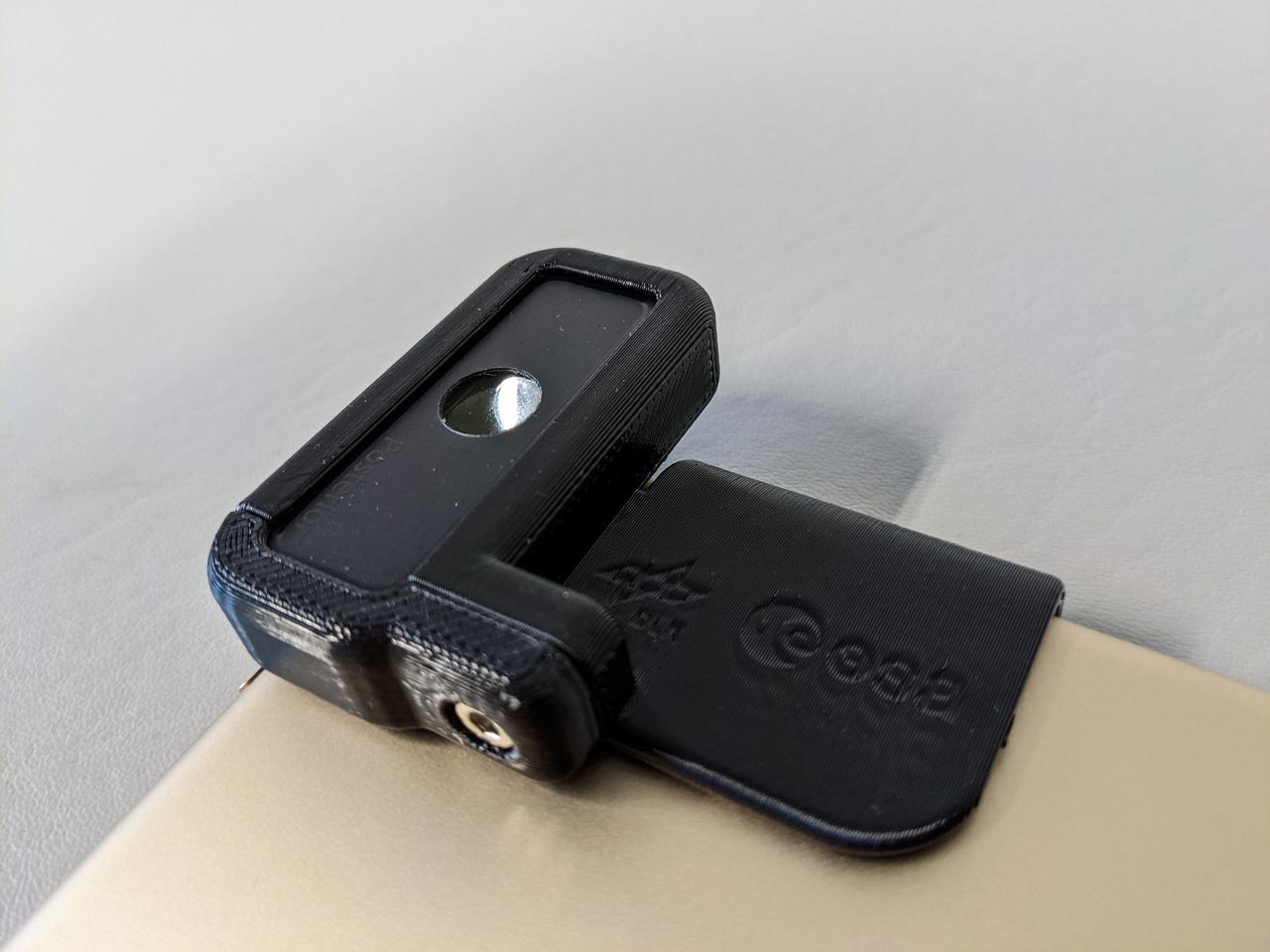
jsc2021e031163 (2/17/2021) --- A preflight view of the experiment hardware for DLR-EAC Retinal Diagnostics Study. The DLR-EAC Retinal Diagnostics Study (Retinal Diagnostics) utilizes a commercially available ophthalmology lens, approved for routine clinical use with mobile devices, to capture images of the human retina in space. Image courtesy of DLR and EAC.
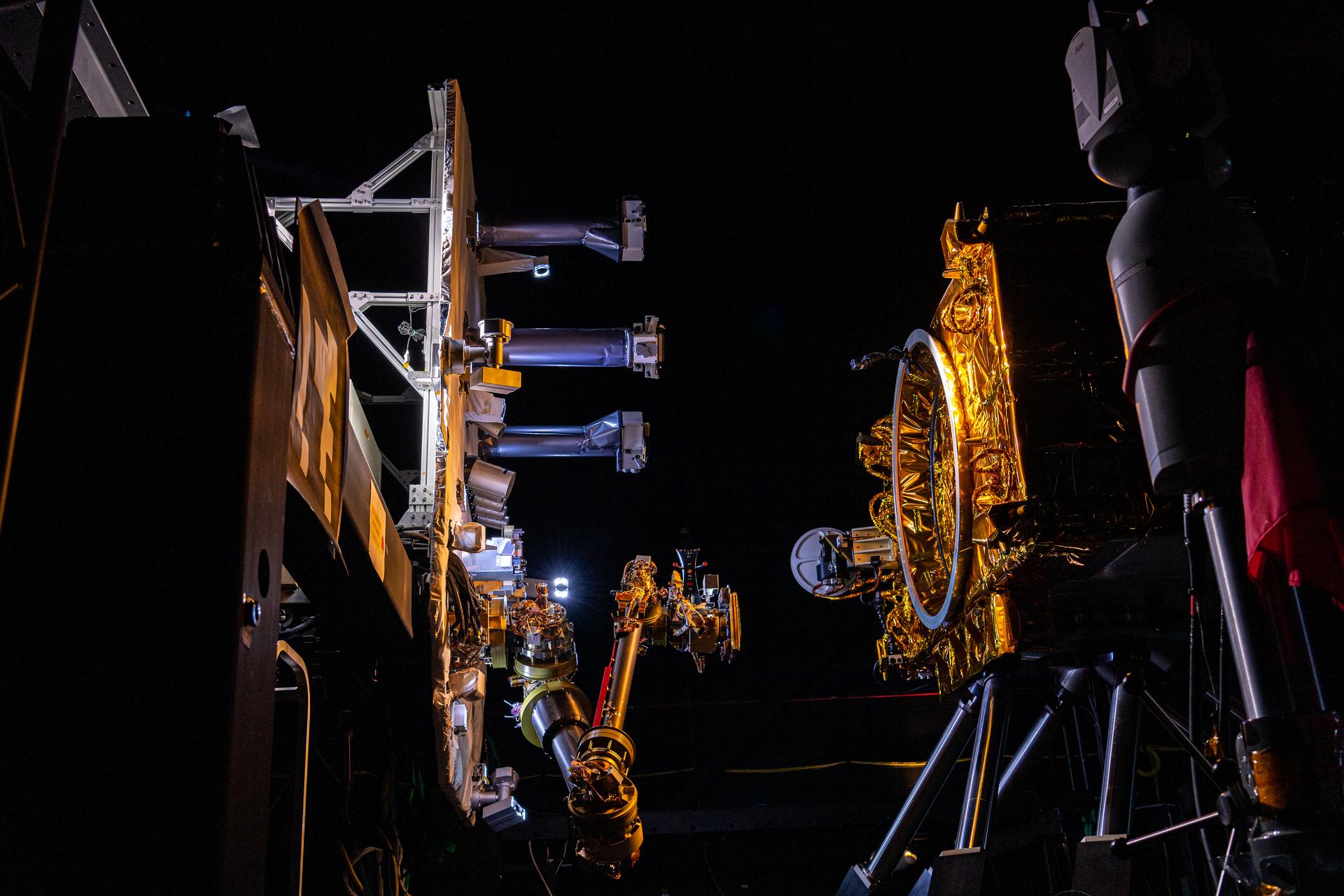
Detail shot of the OSAM-1 auto-capture test bed performing a test of the robot arm inside the robotics operations center at Goddard Space Flight Center, Greenbelt Md., Feb 23, 2023. This photo has been approved for public release. NASA/Mike Guinto
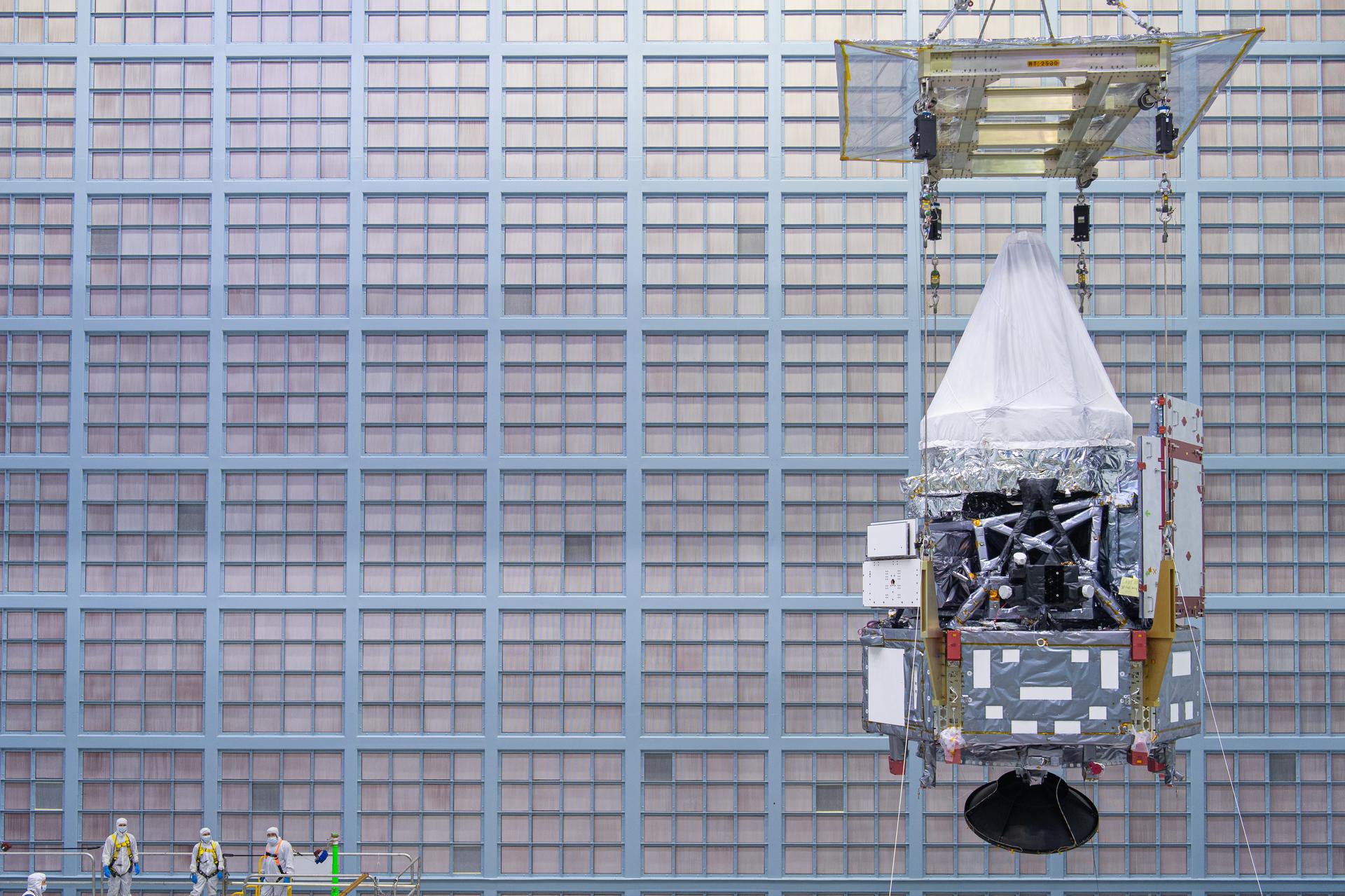
The Roman Space Telescope's Spacecraft Bus and Integrated Payload Assembly is crane lifted inside the cleanroom at Goddard Space Flight Center, Greenbelt Md., June 12, 2025. This photo has been approved for public release. NASA/Mike Guinto
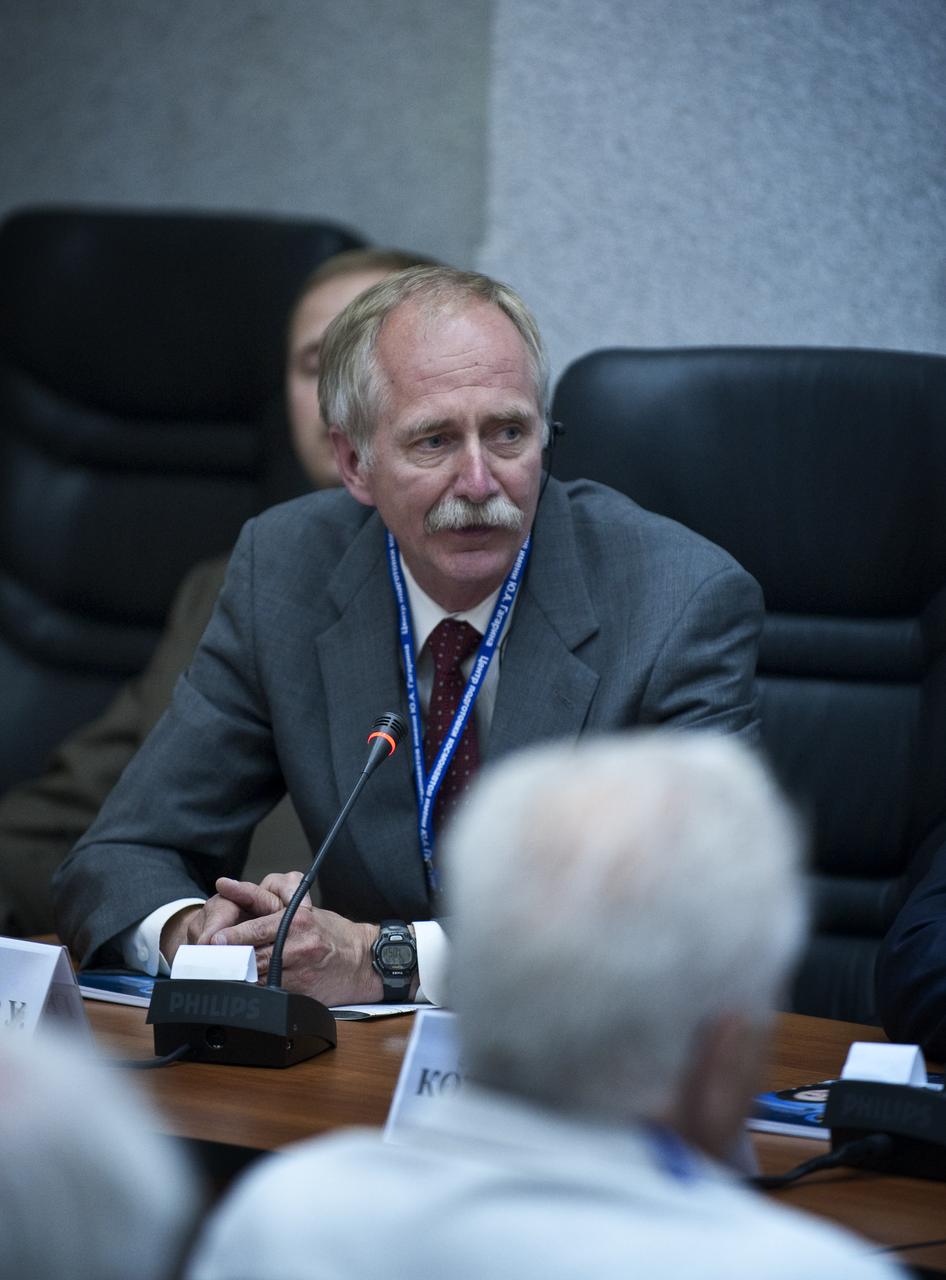
William Gerstenmaier, Associate Administrator for Space Operations, speaks during the State Commission meeting to approve the Soyuz launch of Expedition 24 Flight Engineers Doug Wheelock, Shannon Walker and Soyuz Commander Fyodor Yurchikhin on Monday, June 14, 2010 in Baikonur, Kazakhstan. Photo Credit: (NASA/Carla Cioffi)

Members of the State Commission meet at the Cosmosnaut hotel to approve the Soyuz launch of Expedition 33/34 Flight Engineer Kevin Ford of NASA, Soyuz Commander Oleg Novitskiy and Flight Engineer Evgeny Tarelkin of ROSCOSMOS on Monday, Oct. 22, 2012 in Baikonur, Kazakhstan. Photo Credit: (NASA/Bill Ingalls)

Leah Martin, NASA Communications, participates in a social panel on Monday, June 24, 2024, at NASA’s Kennedy Space Center in Florida to discuss National Oceanic and Atmospheric Administration (NOAA) GOES-U (Geostationary Operational Environmental Satellite U) mission. The GOES-U satellite is the final addition to GOES-R series, which serves a critical role in providing continuous coverage of the Western Hemisphere, including monitoring tropical systems in the eastern Pacific and Atlantic oceans. The two-hour launch window opens at 5:16 p.m. EDT Tuesday, June 25, for the satellite’s launch on a SpaceX Falcon Heavy rocket from Launch Complex 39A at NASA’s Kennedy Space Center in Florida.
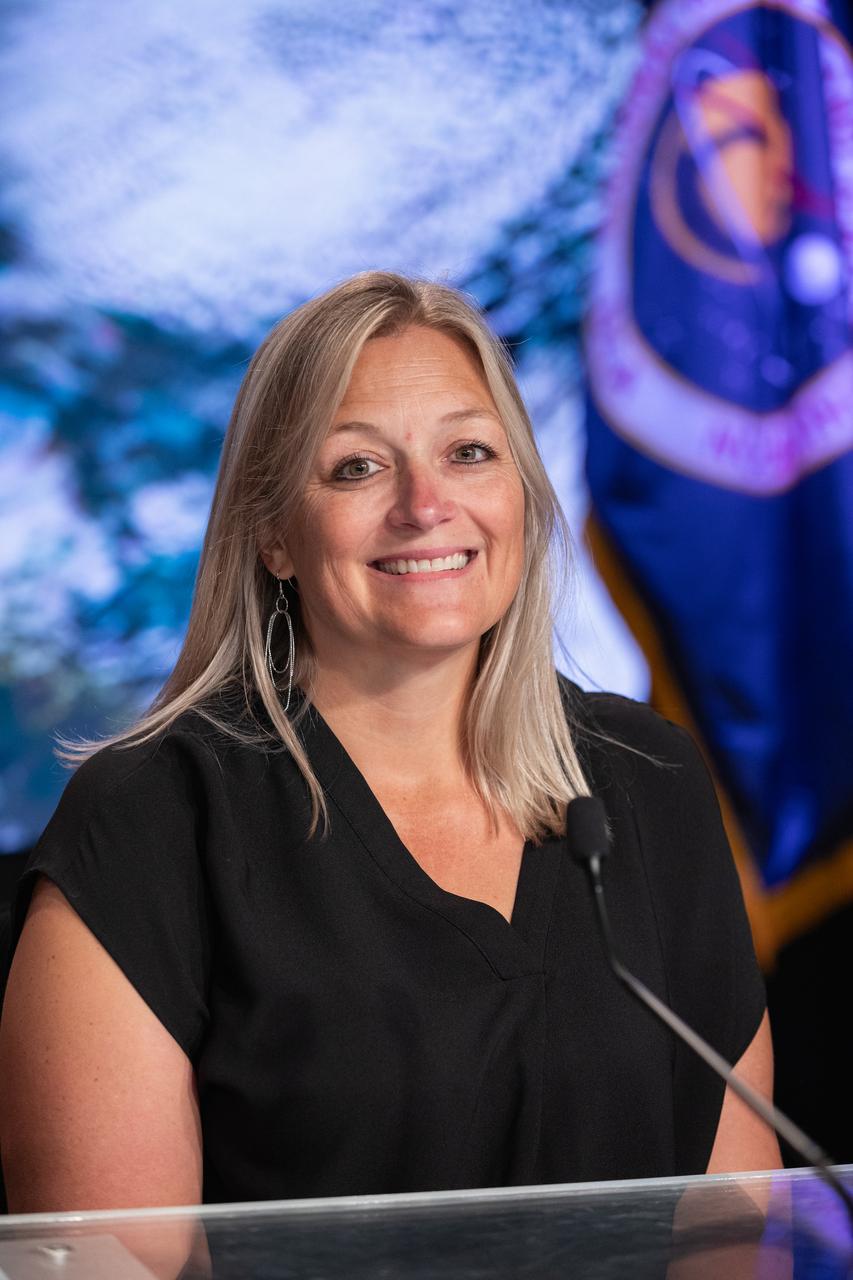
Allana Nepomuceno, senior manager, GOES-U Assembly, Test, and Launch Operations, Lockheed Martin, participates in a social panel on Monday, June 24, 2024, at NASA’s Kennedy Space Center in Florida to discuss National Oceanic and Atmospheric Administration (NOAA) GOES-U (Geostationary Operational Environmental Satellite U) mission. The GOES-U satellite is the final addition to GOES-R series, which serves a critical role in providing continuous coverage of the Western Hemisphere, including monitoring tropical systems in the eastern Pacific and Atlantic oceans. The two-hour launch window opens at 5:16 p.m. EDT Tuesday, June 25, for the satellite’s launch on a SpaceX Falcon Heavy rocket from Launch Complex 39A at NASA’s Kennedy Space Center in Florida.

Dakota Smith, satellite analyst and communicator, NOAA’s Cooperative Institute for Research in the Atmosphere, participates in a social panel on Monday, June 24, 2024, at NASA’s Kennedy Space Center in Florida to discuss National Oceanic and Atmospheric Administration (NOAA) GOES-U (Geostationary Operational Environmental Satellite U) mission. The GOES-U satellite is the final addition to GOES-R series, which serves a critical role in providing continuous coverage of the Western Hemisphere, including monitoring tropical systems in the eastern Pacific and Atlantic oceans. The two-hour launch window opens at 5:16 p.m. EDT Tuesday, June 25, for the satellite’s launch on a SpaceX Falcon Heavy rocket from Launch Complex 39A at NASA’s Kennedy Space Center in Florida.
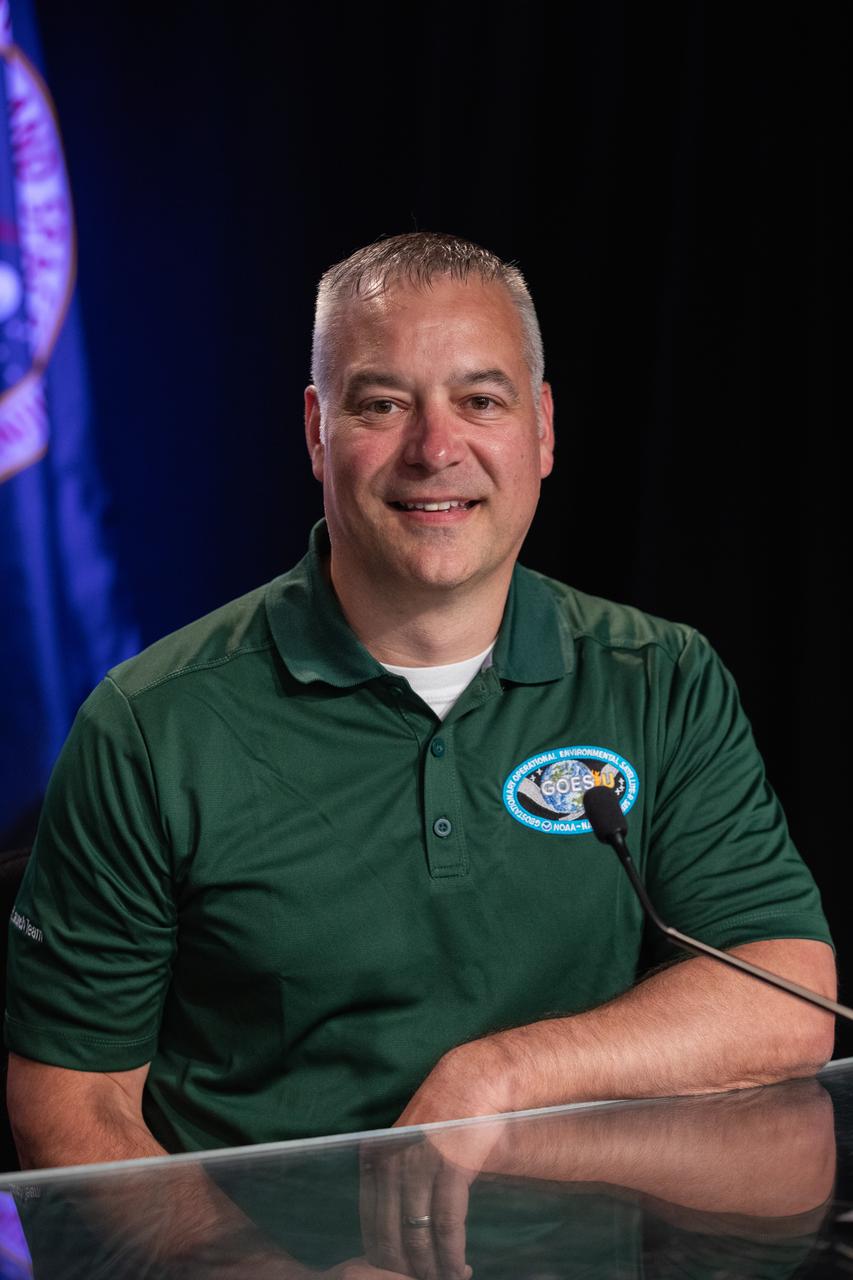
Chris Reith, program manager, Advanced Baseline Imager, L3Harris Technologies, participates in a social panel on Monday, June 24, 2024, at NASA’s Kennedy Space Center in Florida to discuss National Oceanic and Atmospheric Administration (NOAA) GOES-U (Geostationary Operational Environmental Satellite U) mission. The GOES-U satellite is the final addition to GOES-R series, which serves a critical role in providing continuous coverage of the Western Hemisphere, including monitoring tropical systems in the eastern Pacific and Atlantic oceans. The two-hour launch window opens at 5:16 p.m. EDT Tuesday, June 25, for the satellite’s launch on a SpaceX Falcon Heavy rocket from Launch Complex 39A at NASA’s Kennedy Space Center in Florida.
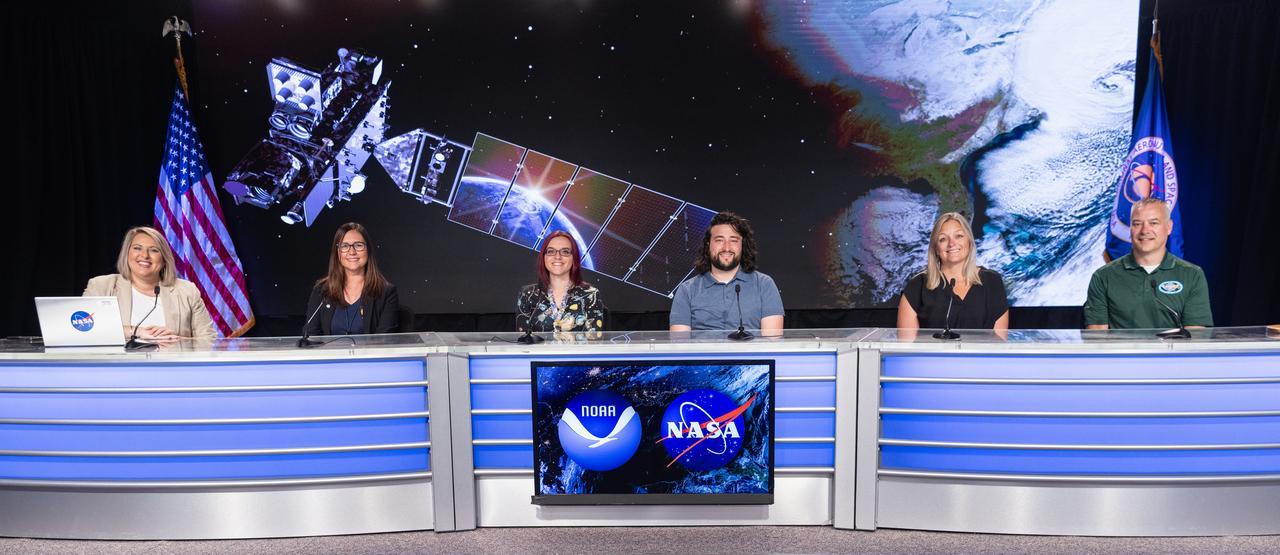
Officials from NASA, National Oceanic and Atmospheric Administration (NOAA), and other mission managers participate in a social panel on Monday, June 24, 2024, at NASA’s Kennedy Space Center in Florida for the launch of GOES-U (Geostationary Operational Environmental Satellite U) mission. From left to right, Leah Martin, NASA Communications; Ellen Ramirez, deputy division chief, Mission Operations Division, National Environmental Satellite, Data, and Information Service Office of Satellite and Product Operations, NOAA; Jade Zsiros, telemetry engineer, NASA’s Launch Services Program; Dakota Smith, satellite analyst and communicator, NOAA’s Cooperative Institute for Research in the Atmosphere; Allana Nepomuceno, senior manager, GOES-U Assembly, Test, and Launch Operations, Lockheed Martin; Chris Reith, program manager, Advanced Baseline Imager, L3Harris Technologies. The two-hour launch window opens at 5:16 p.m. EDT Tuesday, June 25, for the satellite’s launch on a SpaceX Falcon Heavy rocket from Launch Complex 39A at NASA’s Kennedy Space Center in Florida.
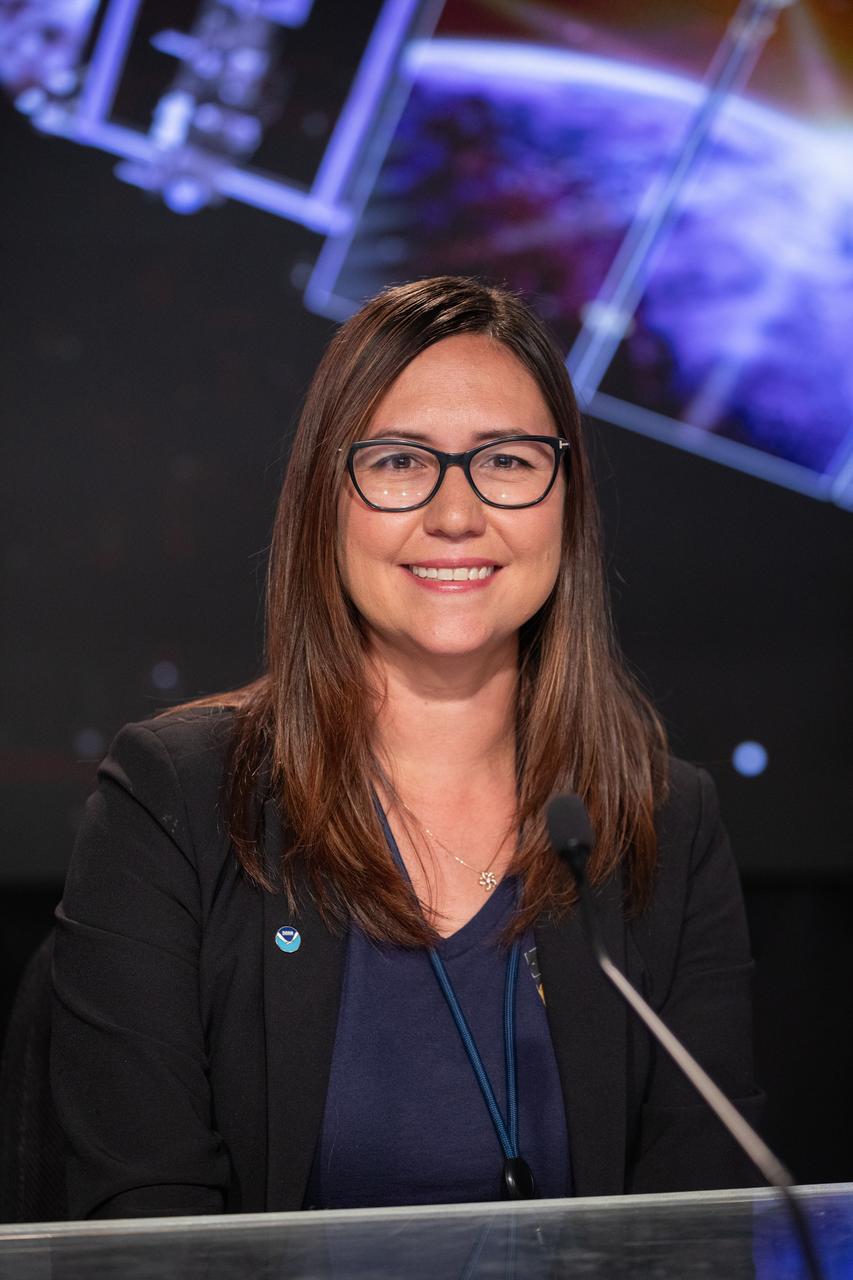
Ellen Ramirez, deputy division chief, Mission Operations Division, National Environmental Satellite, Data, and Information Service Office of Satellite and Product Operations, NOAA, participates in a social panel on Monday, June 24, 2024, at NASA’s Kennedy Space Center in Florida to discuss National Oceanic and Atmospheric Administration (NOAA) GOES-U (Geostationary Operational Environmental Satellite U) mission. The GOES-U satellite is the final addition to GOES-R series, which serves a critical role in providing continuous coverage of the Western Hemisphere, including monitoring tropical systems in the eastern Pacific and Atlantic oceans. The two-hour launch window opens at 5:16 p.m. EDT Tuesday, June 25, for the satellite’s launch on a SpaceX Falcon Heavy rocket from Launch Complex 39A at NASA’s Kennedy Space Center in Florida.
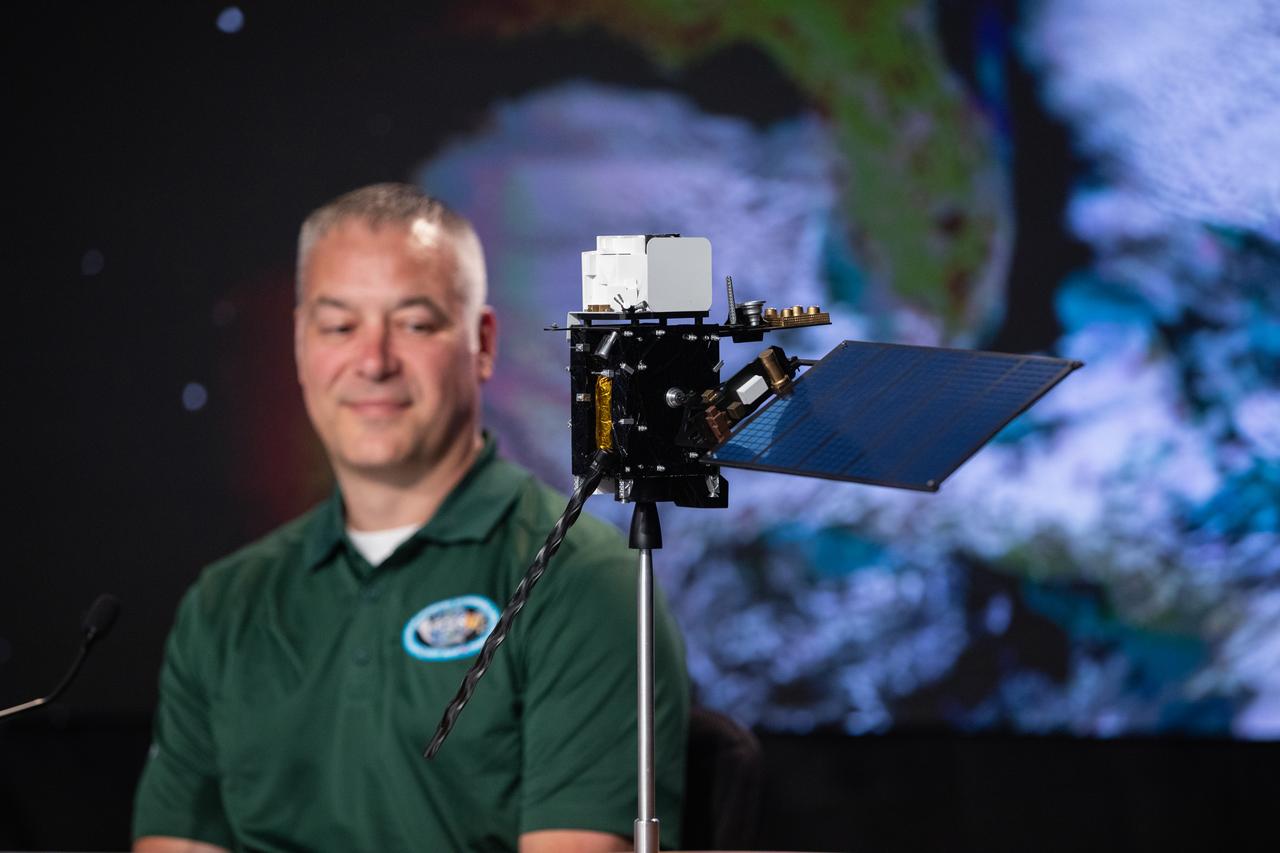
Chris Reith, program manager, Advanced Baseline Imager, L3Harris Technologies, participates in a social panel on Monday, June 24, 2024, at NASA’s Kennedy Space Center in Florida to discuss National Oceanic and Atmospheric Administration (NOAA) GOES-U (Geostationary Operational Environmental Satellite U) mission. The GOES-U satellite is the final addition to GOES-R series, which serves a critical role in providing continuous coverage of the Western Hemisphere, including monitoring tropical systems in the eastern Pacific and Atlantic oceans. The two-hour launch window opens at 5:16 p.m. EDT Tuesday, June 25, for the satellite’s launch on a SpaceX Falcon Heavy rocket from Launch Complex 39A at NASA’s Kennedy Space Center in Florida.
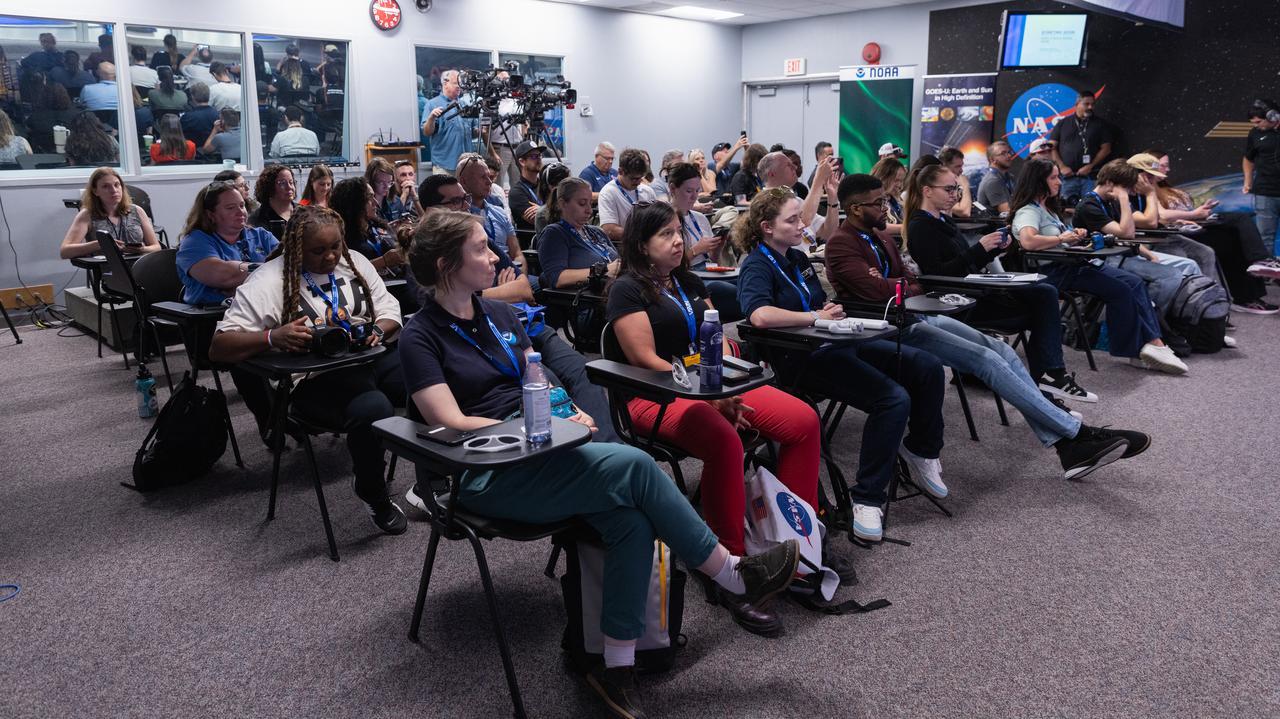
Officials from NASA, National Oceanic and Atmospheric Administration (NOAA), and other mission managers participate in a social panel on Monday, June 24, 2024, at NASA’s Kennedy Space Center in Florida for the launch of GOES-U (Geostationary Operational Environmental Satellite U) mission. The two-hour launch window opens at 5:16 p.m. EDT Tuesday, June 25, for the satellite’s launch on a SpaceX Falcon Heavy rocket from Launch Complex 39A at NASA’s Kennedy Space Center in Florida.

Jade Zsiros, telemetry engineer, NASA’s Launch Services Program, participates in a social panel on Monday, June 24, 2024, at NASA’s Kennedy Space Center in Florida to discuss National Oceanic and Atmospheric Administration (NOAA) GOES-U (Geostationary Operational Environmental Satellite U) mission. The GOES-U satellite is the final addition to GOES-R series, which serves a critical role in providing continuous coverage of the Western Hemisphere, including monitoring tropical systems in the eastern Pacific and Atlantic oceans. The two-hour launch window opens at 5:16 p.m. EDT Tuesday, June 25, for the satellite’s launch on a SpaceX Falcon Heavy rocket from Launch Complex 39A at NASA’s Kennedy Space Center in Florida.
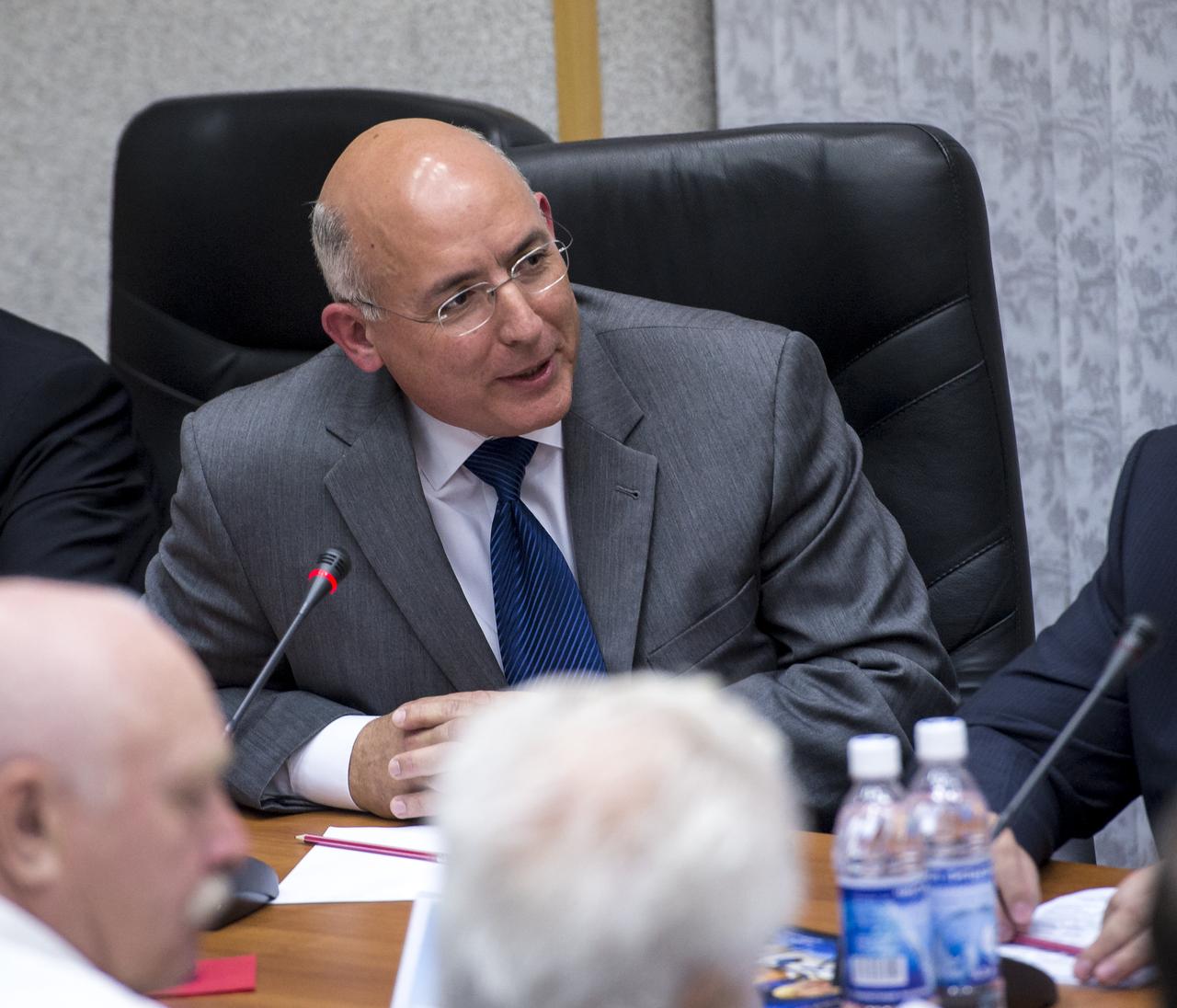
Michael Suffredini, manager, International Space Station (ISS) Program, speaks during the State Commission meeting to approve the Soyuz launch of Expedition 36 Soyuz Commander Fyodor Yurchikhin of the Russian Federal Space Agency (Roscosmos), Flight Engineers; Karen Nyberg of NASA, and Luca Parmitano at the Cosmonaut Hotel, Monday, May 27, 2013, in Kazakhstan. Photo credit: (NASA/Bill Ingalls)

Expedition 28 NASA Flight Engineer Mike Fossum stands during the State Commission meeting to approve the Soyuz launch of Expedition 28 to the International Space Station, Monday, June 6, 2011, at the Cosmonaut Hotel in Baikonur, Kazakhstan. The mission is set to launch on Tuesday, June 8, from the Baikonur Cosmodrome. Photo Credit: (NASA/Carla Cioffi)
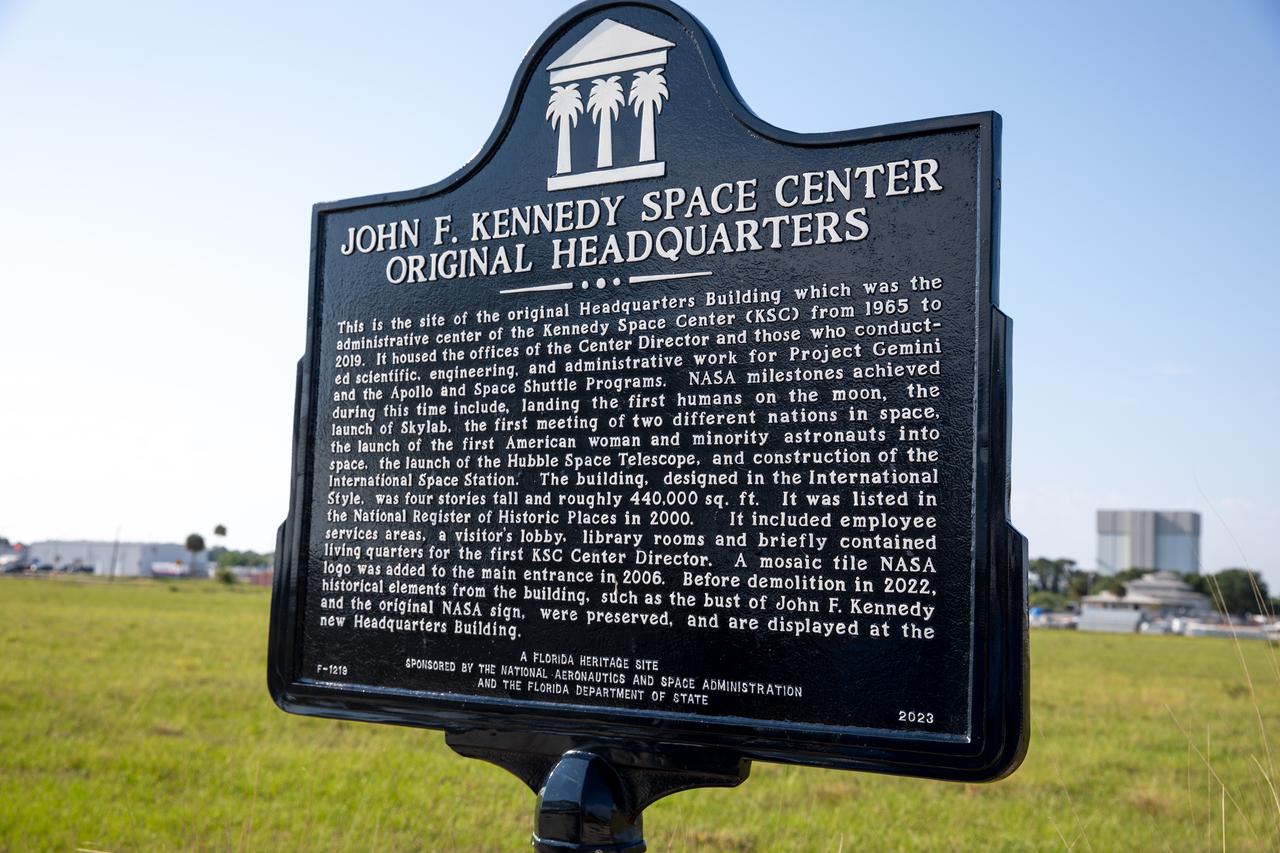
A large bronze historical marker plaque is unveiled Tuesday, May 28, 2024, at the location of NASA Kennedy Space Center’s original headquarters building. Approved in April 2023 as part of the State of Florida’s Historical Markers program in celebration of National Historic Preservation Month, the marker commemorates the early days of space exploration and is displayed permanently just west of the seven-story, 200,000 square foot Central Campus Headquarters Building, which replaced the old building in 2019.
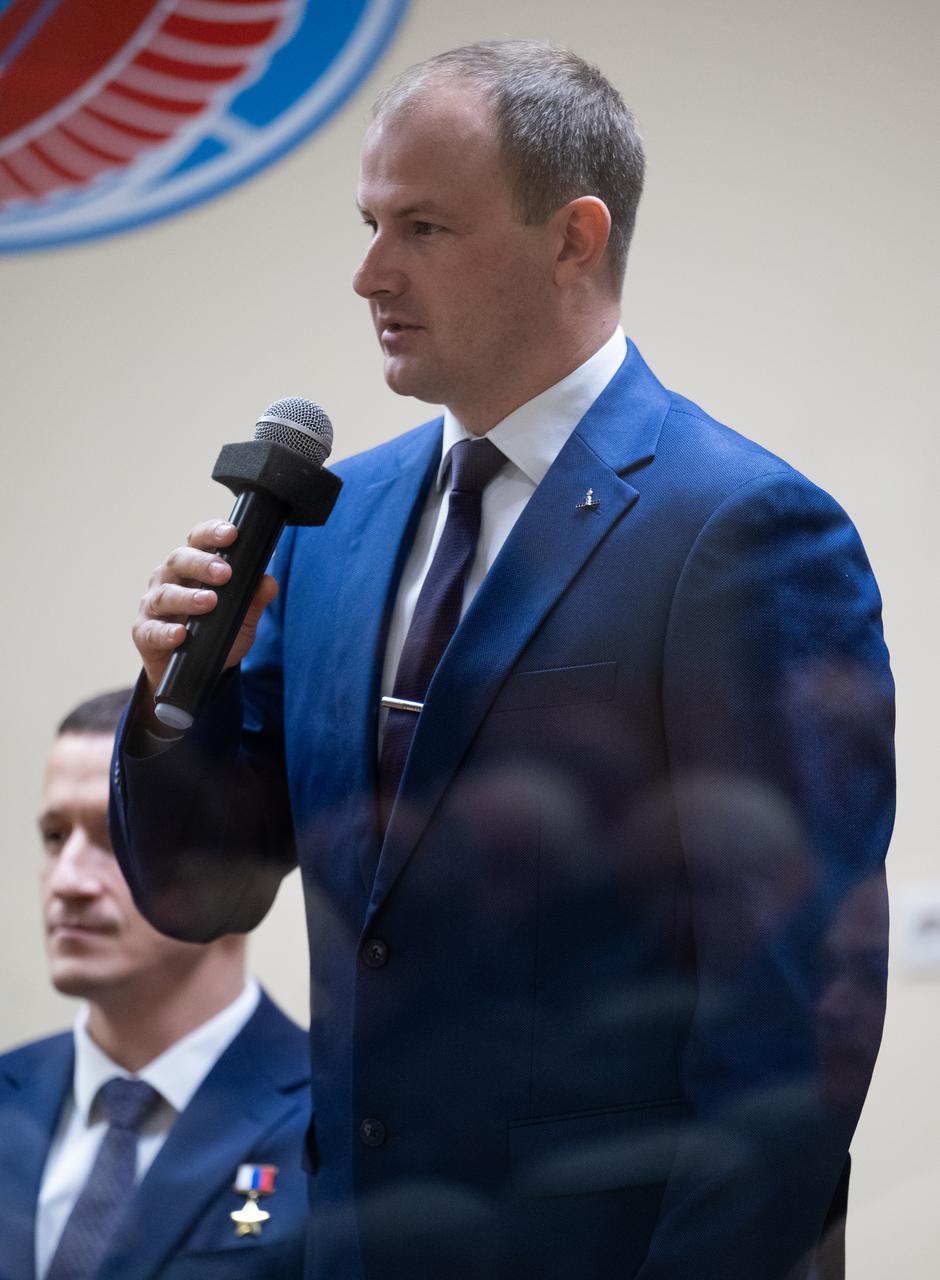
Expedition 73 backup crewmember Sergey Mikaev of Roscosmos is seen during the State Commission meeting to approve the Soyuz launch of Expedition 73 to the International Space Station, Monday, April 7, 2025, at the Cosmonaut Hotel in Baikonur, Kazakhstan. Expedition 73 crew members: NASA astronaut Jonny Kim, and Roscosmos cosmonauts Sergey Ryzhikov and Alexey Zubritskiy, are scheduled to launch aboard their Soyuz MS-27 spacecraft on April 8. Photo Credit: (NASA/Joel Kowsky)
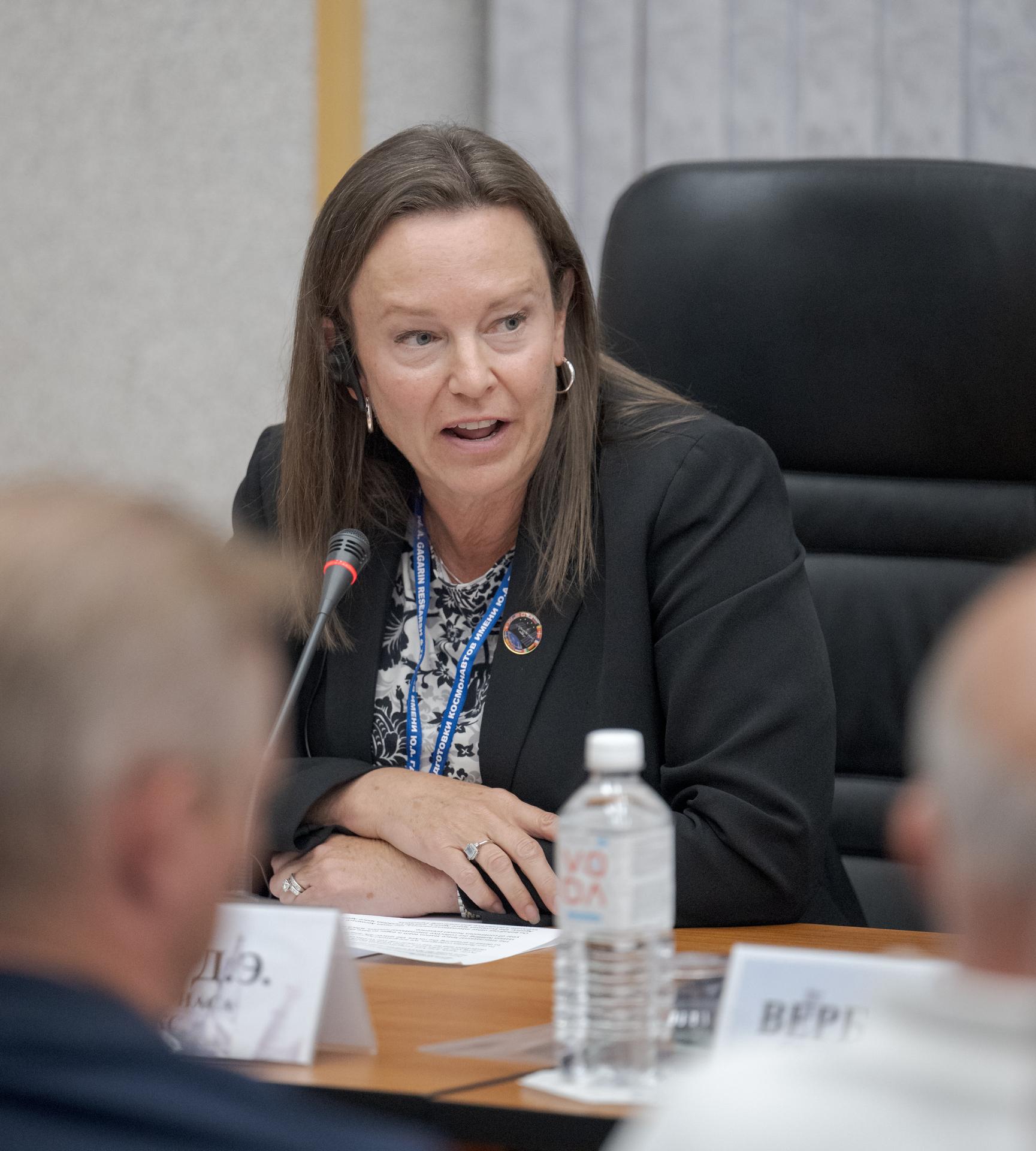
NASA International Space Station Program Deputy Manager, Dina Contella, is seen during the State Commission meeting to approve the Soyuz launch of Expedition 75 to the International Space Station, Monday, July 13, 2026 at the Cosmonaut Hotel in Baikonur, Kazakhstan. Expedition 75 crewmembers: NASA astronaut Anil Menon, Roscosmos cosmonauts Pyotr Dubrov and Anna Kikina are scheduled to launch aboard the Soyuz MS-29 spacecraft to the International Space Station on July 14. Photo Credit: (NASA/Bill Ingalls)

Expedition 65 NASA astronaut Mark Vande Hei, left, Roscosmos cosmonauts Oleg Novitskiy and Pyotr Dubrov, right, are seen during the State Commission meeting to approve the Soyuz launch of Expedition 65 to the International Space Station, Thursday, April 8, 2021 at the Cosmonaut Hotel in Baikonur, Kazakhstan. The trio are scheduled to launch to the International Space Station aboard the Soyuz MS-18 spacecraft on April 9. Photo Credit: (NASA/Bill Ingalls)
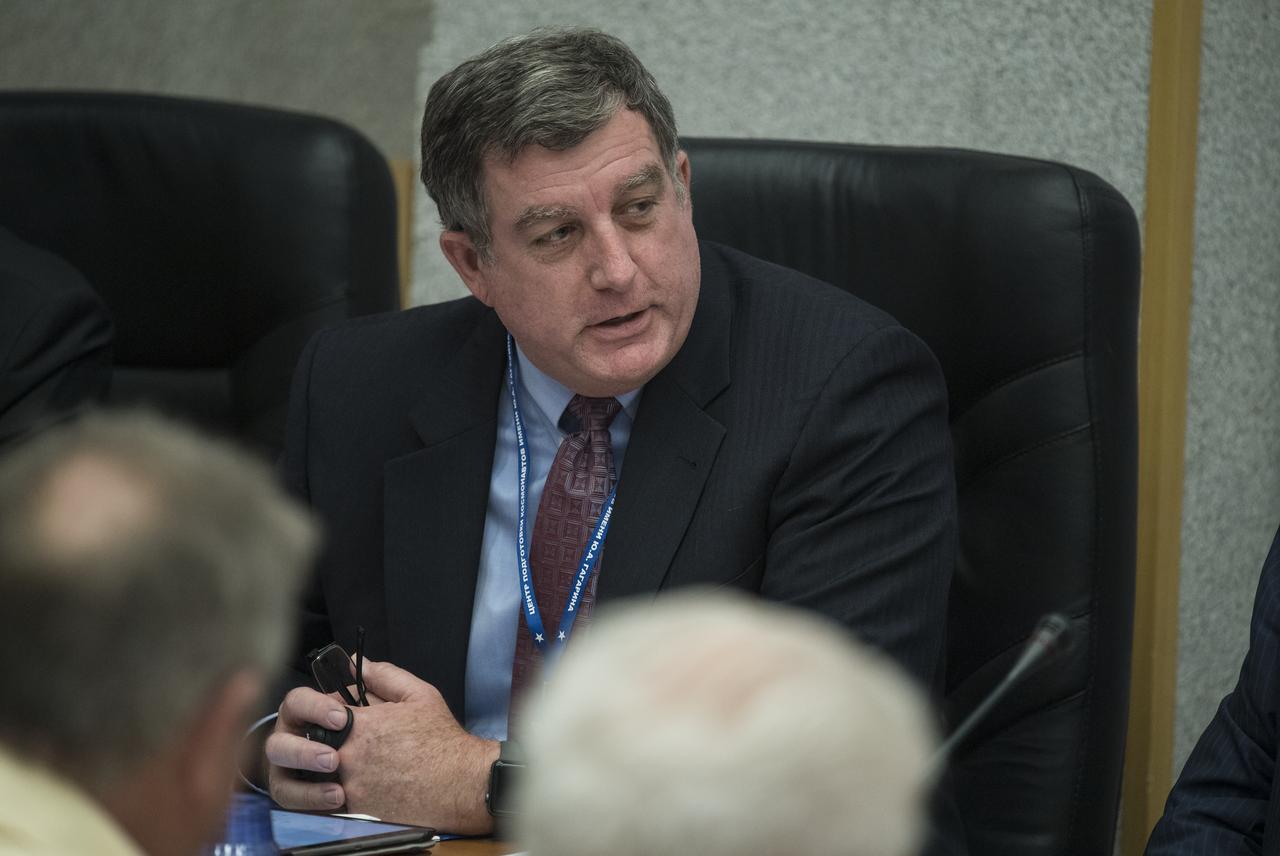
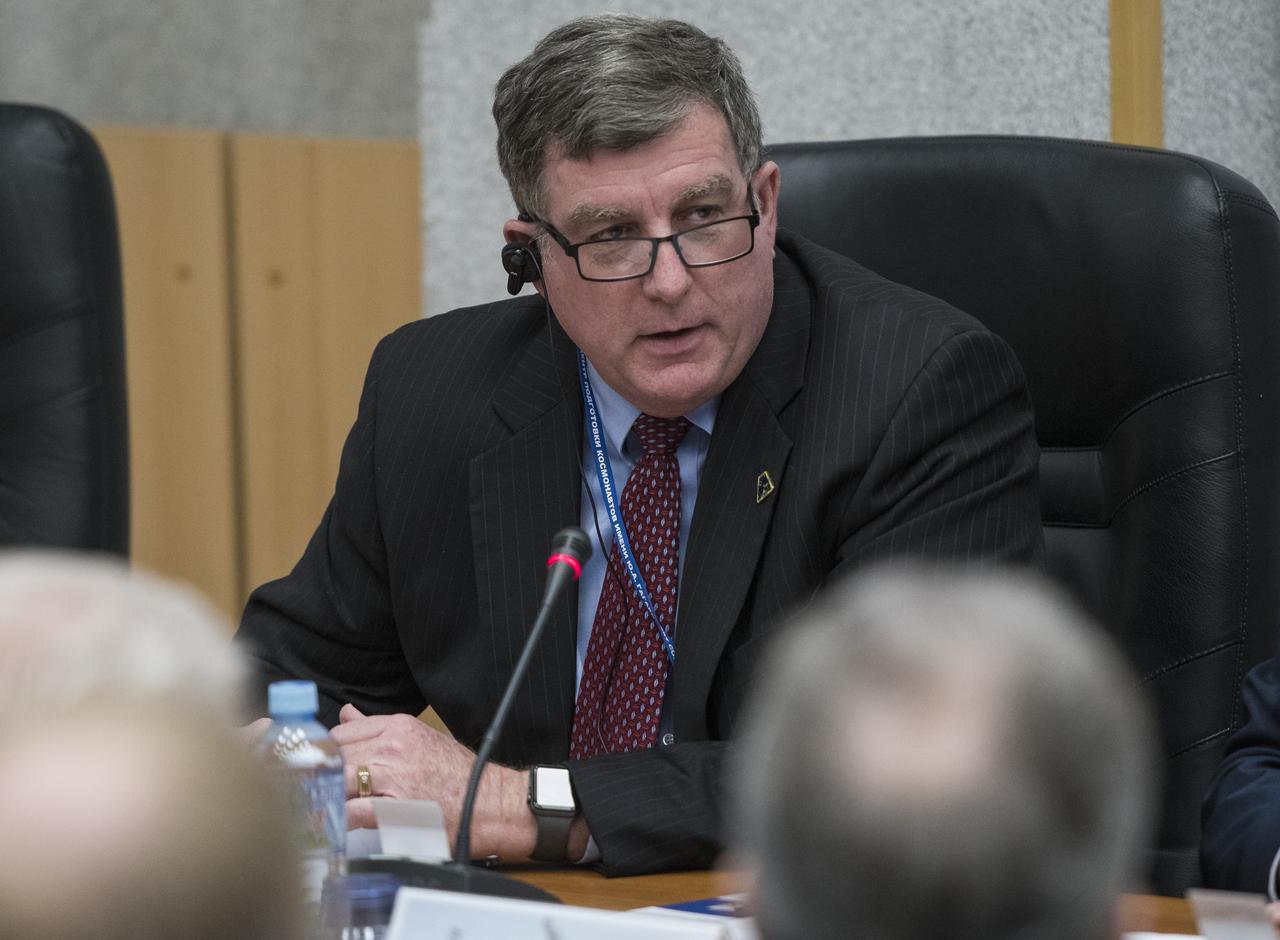
NASA International Space Station Program Manager Kirk Shireman is seen during the State Commission meeting to approve the Soyuz launch of Expedition 56 to the International Space Station, Tuesday, June 5, 2018 at the Cosmonaut Hotel in Baikonur, Kazakhstan. Expedition 56 Soyuz Commander Sergey Prokopyev of Roscosmos, Serena Auñón-Chancellor of NASA, and Alexander Gerst of ESA (European Space Agency) are scheduled to launch to the International Space Station aboard the Soyuz MS-09 spacecraft on Wednesday, June 6. Photo Credit: (NASA/Joel Kowsky)
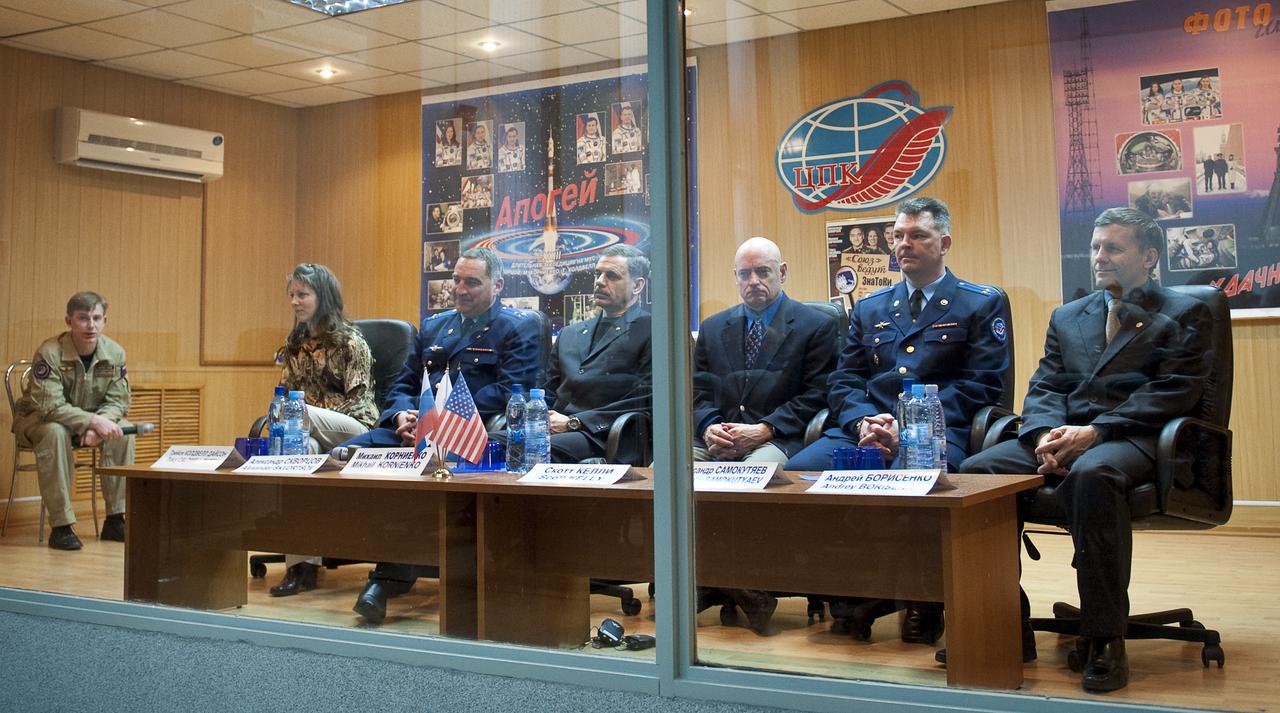
Expedition 23 prime and backup crew members, from left, NASA's Tracy Caldwell Dyson, Russian Aleksander Skvortsov, Russian Mikhail Kornienko, NASA's Scott Kelly, Russian Alexander Samokutyayev, and Russian Andrei Borisenko are seen during the State Commission meeting to approve the Soyuz launch of Caldwell Dyson, Skvortsov and Kornienko, Thursday, April 1, 2010 in Baikonur, Kazakhstan. The crew is kept in a separate room with a glass window in order to help maintain their health. Photo Credit: (NASA/Bill Ingalls)

Kuniaki Shiraki, President of the Japan Aerospace Exploration Agency (JAXA) speaks during the State Commission meeting to approve the Soyuz launch of Expedition 28 to the International Space Station, Monday, June 6, 2011, at the Cosmonaut Hotel in Baikonur, Kazakhstan. The mission is set to launch on Tuesday, June 8, from the Baikonur Cosmodrome. Photo Credit: (NASA/Carla Cioffi)
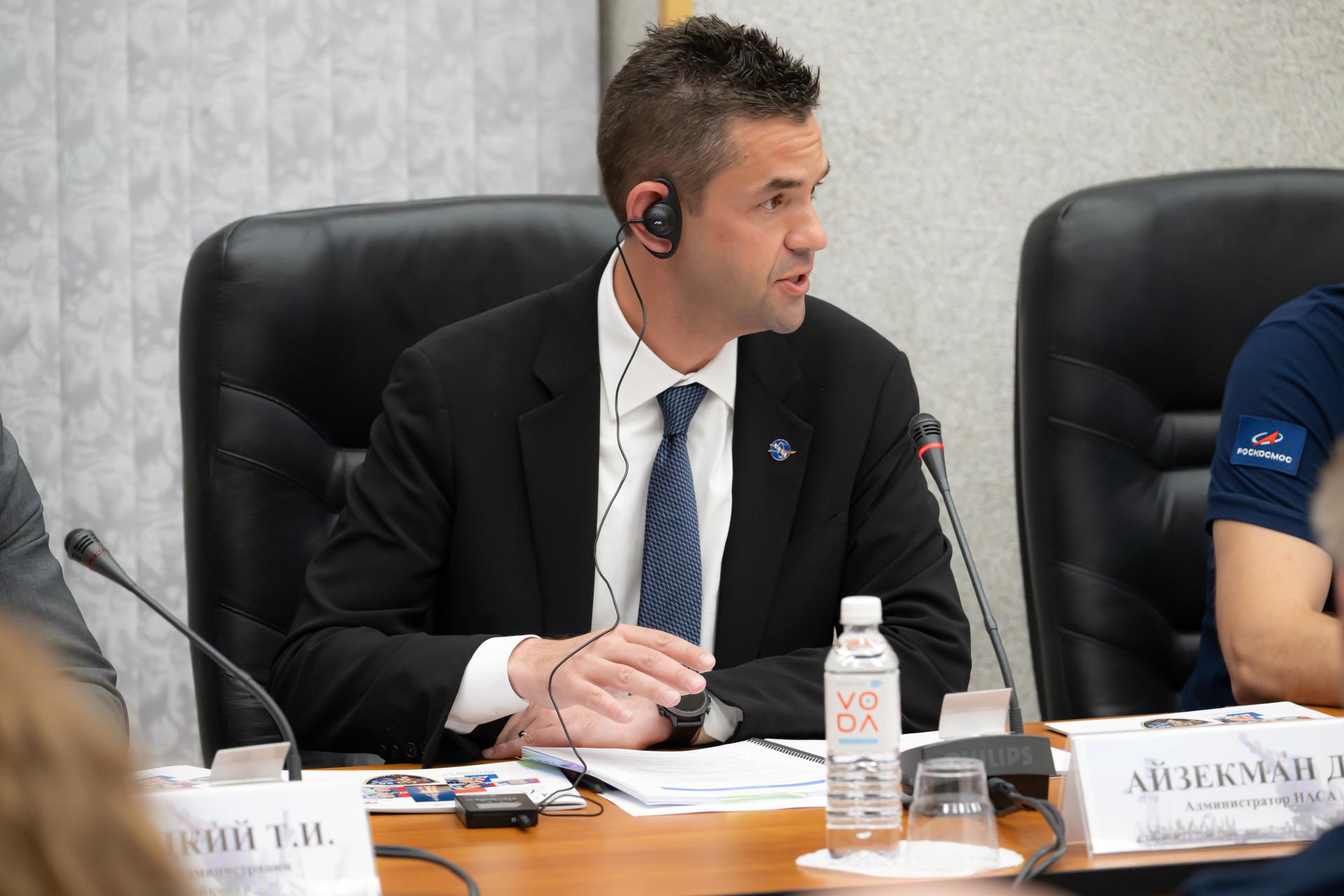
NASA Administrator Jared Isaacman speaks during the State Commission meeting to approve the Soyuz MS-29 launch to the International Space Station, Monday, July 13, 2026, at the Cosmonaut Hotel in Baikonur, Kazakhstan. Expedition 75 crewmembers NASA astronaut Anil Menon and Roscosmos cosmonauts Pyotr Dubrov and Anna Kikina are scheduled to launch aboard the Soyuz MS-29 spacecraft to the International Space Station on July 14. Photo Credit: (NASA/John Kraus)

Expedition 28 Japan Aerospace Exploration Agency (JAXA) Flight Engineer Satoshi Furukawa stands during the State Commission meeting to approve the Soyuz launch of Expedition 28 to the International Space Station, Monday, June 6, 2011, at the Cosmonaut Hotel in Baikonur, Kazakhstan. The mission is set to launch on Tuesday, June 8 from the Baikonur Cosmodrome. Photo Credit: (NASA/Carla Cioffi)

U.S. Ambassador to Russia Jon Huntsman Jr. is seen during the State Commission meeting to approve the Soyuz launch of Expedition 56 to the International Space Station, Tuesday, June 5, 2018 at the Cosmonaut Hotel in Baikonur, Kazakhstan. Expedition 56 Soyuz Commander Sergey Prokopyev of Roscosmos, Serena Auñón-Chancellor of NASA, and Alexander Gerst of ESA (European Space Agency) are scheduled to launch to the International Space Station aboard the Soyuz MS-09 spacecraft on Wednesday, June 6. Photo Credit: (NASA/Joel Kowsky)
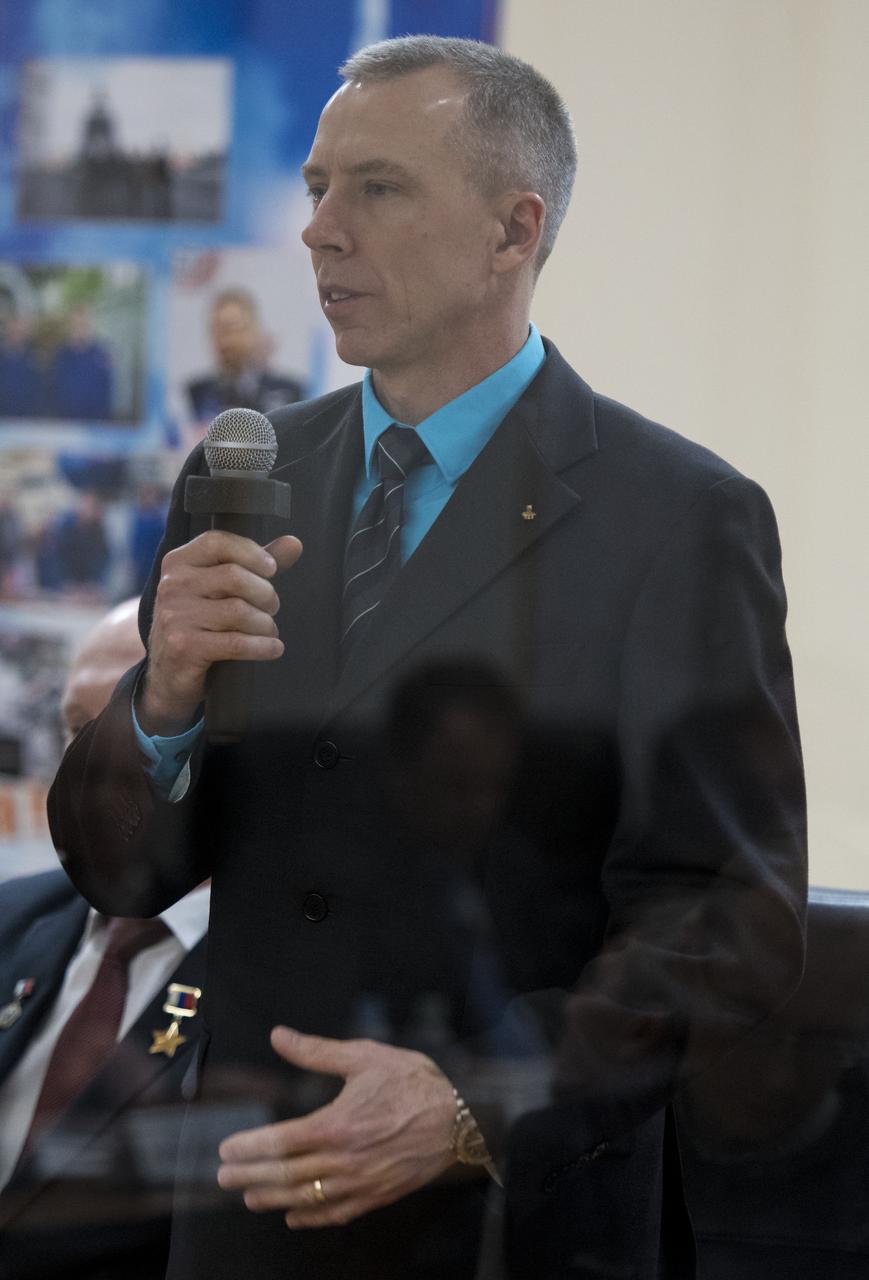
Expedition 55 flight engineer Drew Feustel of NASA is seen during the State Commission meeting to approve the Soyuz launch of Expedition 55 to the International Space Station, Tuesday, March 20, 2018. Feustel, Soyuz Commander Oleg Artemyev of Roscosmos, and flight engineer Ricky Arnold of NASA are scheduled to launch to the International Space Station aboard the Soyuz MS-08 spacecraft on Wednesday, March, 21. Photo Credit: (NASA/Joel Kowsky)

Expedition 74 crewmembers: NASA astronaut Chris Williams, left, Roscosmos cosmonauts Sergey Kud-Sverchkov and Sergei Mikaev, right, are seen during the State Commission meeting to approve the Soyuz launch of Expedition 74 to the International Space Station, Wednesday, Nov. 26, 2025 at the Cosmonaut Hotel in Baikonur, Kazakhstan. Williams, Kud-Sverchkov and Mikaev, are scheduled to launch aboard their Soyuz MS-28 spacecraft on November 27. Photo Credit: (NASA/Bill Ingalls)

jsc2020e016783 - At the Gagarin Cosmonaut Training Center in Star City, Russia, Expedition 63 crewmembers Chris Cassidy of NASA (left) and Anatoly Ivanishin (center) and Ivan Vagner of Roscosmos (right) listen as the Russian State Commission approves them for launch March 23 on the eve of their departure for their launch site at the Baikonur Cosmodrome in Kazakhstan. Cassidy, Ivanishin and Vagner will launch April 9 on the Soyuz MS-16 spacecraft from Baikonur for a six-and-a-half month mission on the International Space Station...Andrey Shelepin/Gagarin Cosmonaut Training Center.
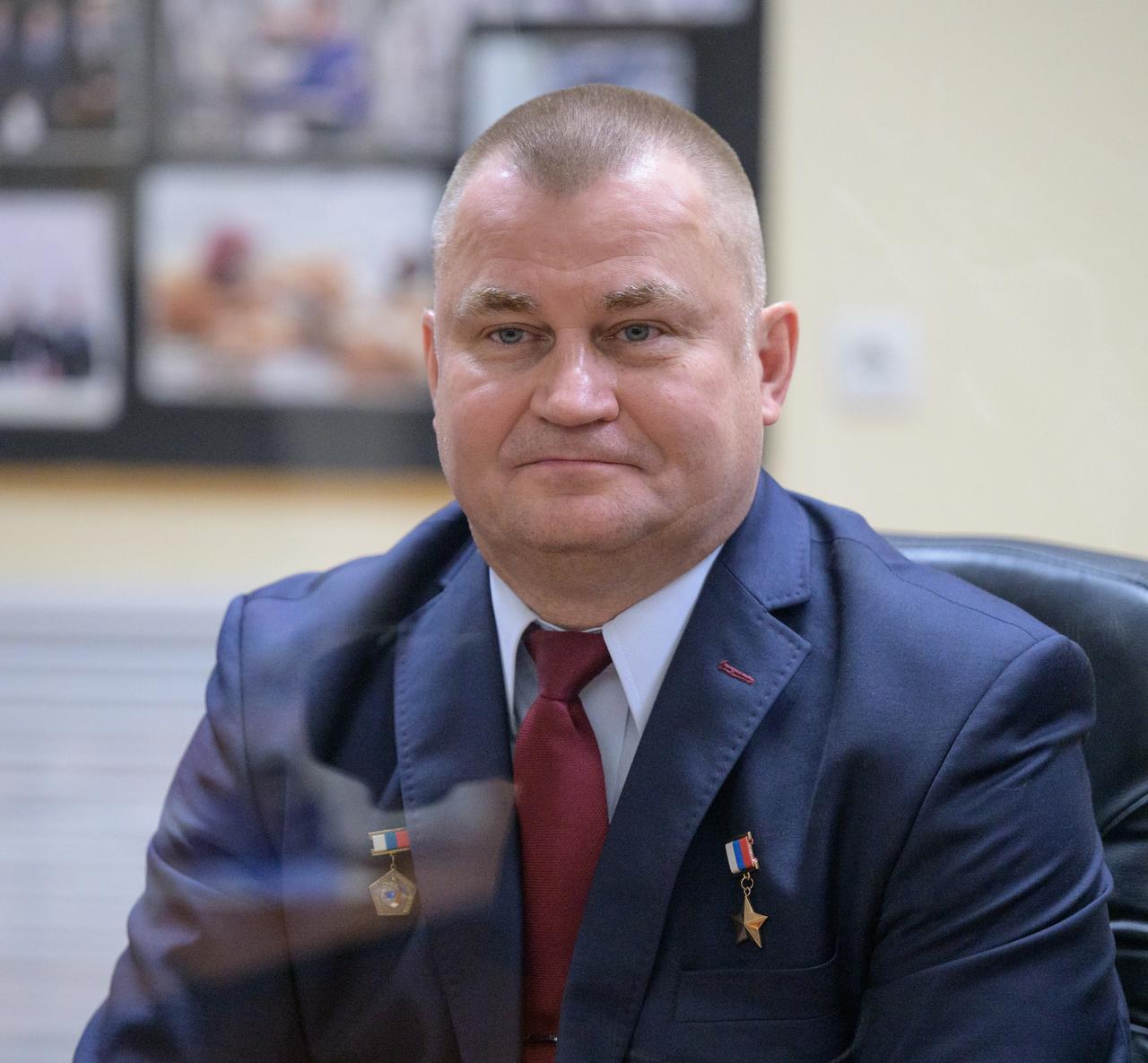
Roscosmos cosmonaut Alexey Ovchinin is seen during the State Commission meeting to approve the Soyuz launch of Expedition 72 crew to the International Space Station, Tuesday, Sept. 10, 2024 at the Cosmonaut Hotel in Baikonur, Kazakhstan. Expedition 72 crew members: NASA astronaut Don Pettit, Roscosmos cosmonauts Alexey Ovchinin, and Ivan Vagner, are scheduled to launch aboard their Soyuz MS-26 spacecraft on September 11. Photo Credit: (NASA/Bill Ingalls)

NASA ISS Program Manager Joel Montalbano gives remarks during the State Commission meeting to approve the Soyuz launch of Expedition 70 to the international Space Station, Thursday, Sept. 14, 2023 at the Cosmonaut Hotel in Baikonur, Kazakhstan. Expedition 70 NASA astronaut Loral O'Hara, Roscosmos cosmonauts Oleg Kononenko, and Nikolai Chub are scheduled to launch aboard their Soyuz MS-24 spacecraft on Sept. 15. Photo Credit: (NASA/Bill Ingalls)
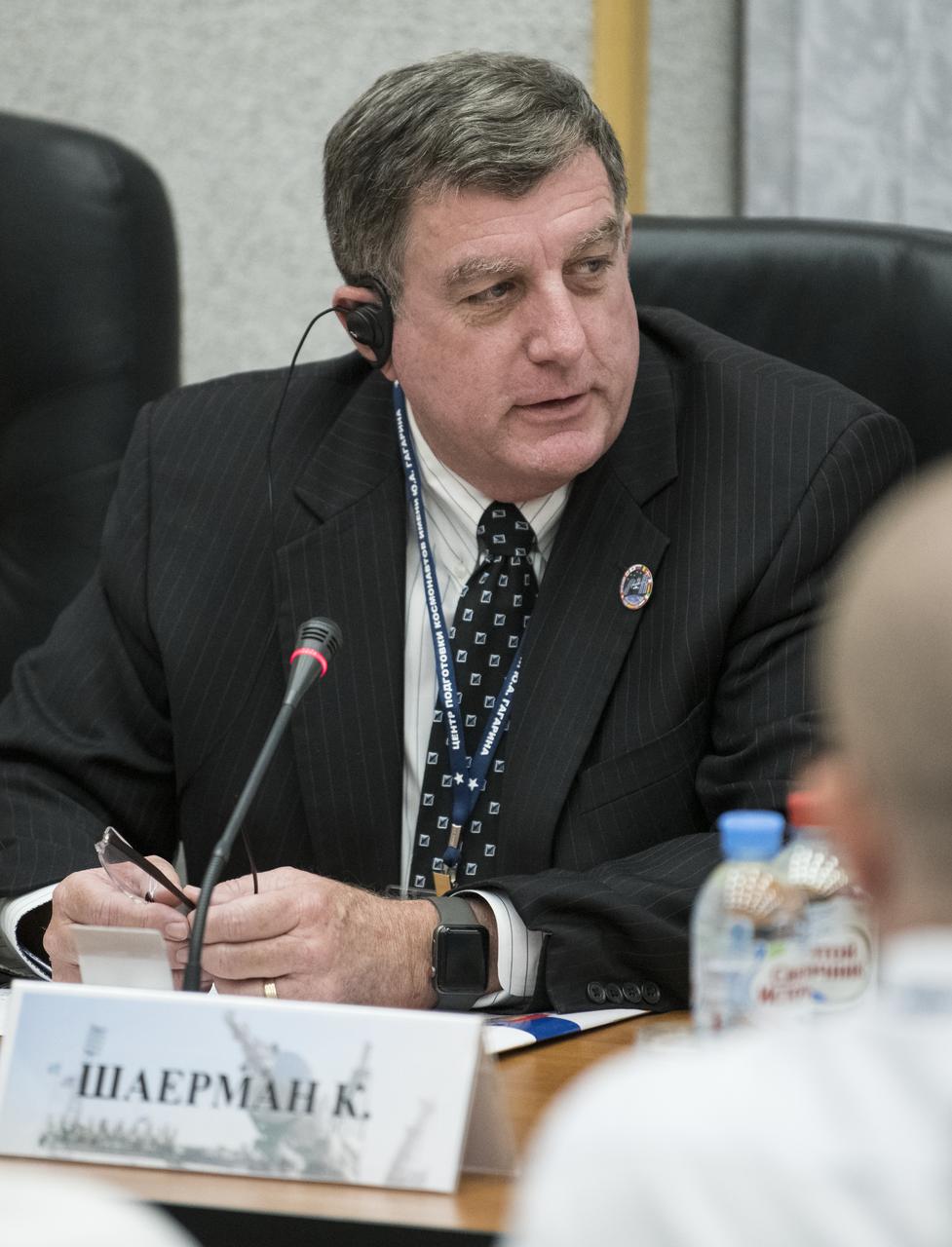
NASA International Space Station Program Manager Kirk Shireman is seen during the State Commission meeting to approve the Soyuz launch of Expedition 60 to the International Space Station, Friday, July 19, 2019 at the Cosmonaut Hotel in Baikonur, Kazakhstan. Expedition 60 Soyuz Commander Alexander Skvortsov of Roscosmos, Andrew Morgan of NASA, and Luca Parmitano of ESA (European Space Agency) are scheduled to launch to the International Space Station aboard the Soyuz MS-13 spacecraft on Saturday, July 20. Photo Credit: (NASA/Joel Kowsky)

Igor Komarov, Director of Roscosmos, makes remarks during the State Commission meeting to approve the Soyuz launch of Expedition 51 to the International Space Station, Wednesday, April 19, 2017 at the Cosmonaut Hotel in Baikonur, Kazakhstan. Launch of the Soyuz rocket is scheduled for April 20 and will carry Expedition 51 Soyuz Commander Fyodor Yurchikhin of Roscosmos and Flight Engineer Jack Fischer of NASA into orbit to begin their four and a half month mission on the International Space Station. Photo Credit: (NASA/Aubrey Gemignani)
![CAPE CANAVERAL, Fla. – In the Astrotech payload processing facility in Titusville, Fla. , the STSS Demonstrator SV-1 spacecraft is lowered toward the orbital insertion system. The spacecraft is a midcourse tracking technology demonstrator, part of an evolving ballistic missile defense system. STSS is capable of tracking objects after boost phase and provides trajectory information to other sensors. It will be launched by NASA for the Missile Defense Agency in late summer. Photo credit: NASA/Tim Jacobs (Approved for Public Release 09-MDA-4800 [30 July 09] )](https://images-assets.nasa.gov/image/KSC-2009-4625/KSC-2009-4625~medium.jpg)
CAPE CANAVERAL, Fla. – In the Astrotech payload processing facility in Titusville, Fla. , the STSS Demonstrator SV-1 spacecraft is lowered toward the orbital insertion system. The spacecraft is a midcourse tracking technology demonstrator, part of an evolving ballistic missile defense system. STSS is capable of tracking objects after boost phase and provides trajectory information to other sensors. It will be launched by NASA for the Missile Defense Agency in late summer. Photo credit: NASA/Tim Jacobs (Approved for Public Release 09-MDA-4800 [30 July 09] )
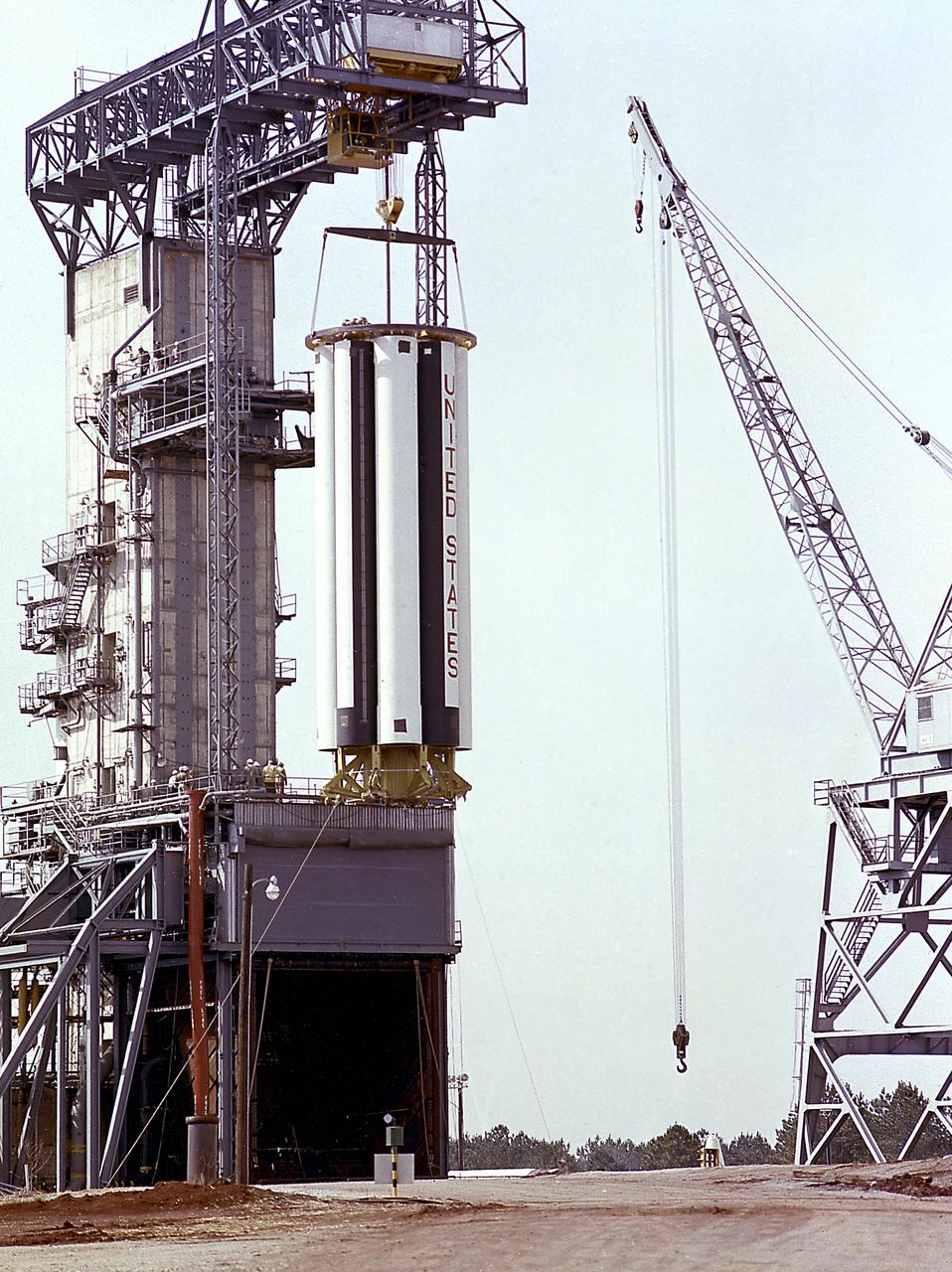
The Saturn Project was approved on January 18, 1960, as a program of the highest national priority. The formal test program to prove out the clustered-booster concept was well underway at Redstone Arsenal. This photograph depicts a mockup of the Saturn booster (S-I stage) being installed in the Army Ballistic Missile Agency (ABMA) test stand, on January 19, 1960, to check mating of the booster and stand and servicing methods.
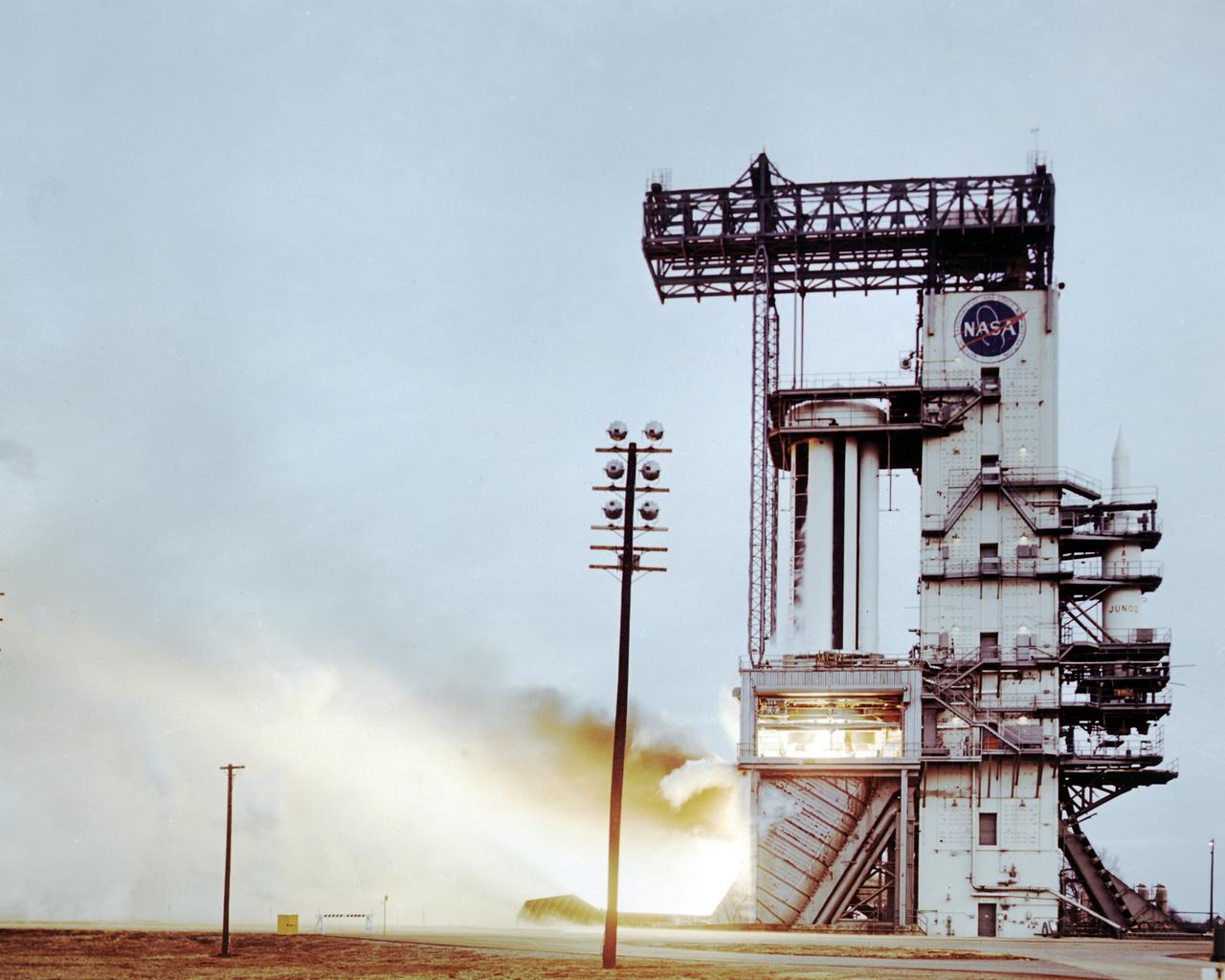
The Saturn project was approved on January 18, 1960 as a program of the highest national priority. The formal test program to prove out the clustered-booster concept was well underway. A series of static tests of the Saturn I booster (S-I stage) began June 3, 1960 at the Marshall Space Flight Center (MSFC). This photograph depicts the Saturn I S-I stage equipped with eight H-1 engines, being successfully test-fired on February 4, 1961. A Juno rocket is visible on the right side of the test stand.
![CAPE CANAVERAL, Fla. – In the Astrotech payload processing facility in Titusville, Fla. , the STSS Demonstrator SV-1 spacecraft is lifted from its shipping crate. The spacecraft is a midcourse tracking technology demonstrator, part of an evolving ballistic missile defense system. STSS is capable of tracking objects after boost phase and provides trajectory information to other sensors. It will be launched by NASA for the Missile Defense Agency in late summer. Photo credit: NASA/Tim Jacobs (Approved for Public Release 09-MDA-4800 [30 July 09] )](https://images-assets.nasa.gov/image/KSC-2009-4620/KSC-2009-4620~medium.jpg)
CAPE CANAVERAL, Fla. – In the Astrotech payload processing facility in Titusville, Fla. , the STSS Demonstrator SV-1 spacecraft is lifted from its shipping crate. The spacecraft is a midcourse tracking technology demonstrator, part of an evolving ballistic missile defense system. STSS is capable of tracking objects after boost phase and provides trajectory information to other sensors. It will be launched by NASA for the Missile Defense Agency in late summer. Photo credit: NASA/Tim Jacobs (Approved for Public Release 09-MDA-4800 [30 July 09] )

Members of the State Commission meet to approve the Soyuz rocket launch of Expedition 38 Soyuz Commander Mikhail Tyurin of Roscosmos, Flight Engineer Koichi Wakata of the Japan Aerospace Exploration Agency, and, Flight Engineer Rick Mastracchio of NASA for a six month mission aboard the International Space Station, Wednesday, Nov. 6, 2013 at the Cosmonaut Hotel in Baikonur, Kazakhstan. Photo Credit: (NASA/Bill Ingalls)

Vladimir Popovkin, Head of the Russian Federal Space Agency (ROSCOSMOS) speaks during the State Commission meeting to approve the Soyuz launch of Expedition 29 to the International Space Station, Saturday, Nov. 12, 2011, at the Cosmonaut Hotel in Baikonur, Kazakhstan. The mission is set to launch November 14 from the Baikonur Cosmodrome. Photo Credit: (NASA/Carla Cioffi)

Expedition 29 backup crew members NASA Flight Engineer Joseph Acaba, far left, Russian Soyuz Commander Gennady Padalka, center, and Russian Flight Engineer Sergei Revin are seen the State Commission meeting to approve the Soyuz launch of Expedition 29 to the International Space Station in Baikonur, Kazakhstan on Saturday, Nov. 12, 2011. Photo Credit: (NASA/Carla Cioffi)
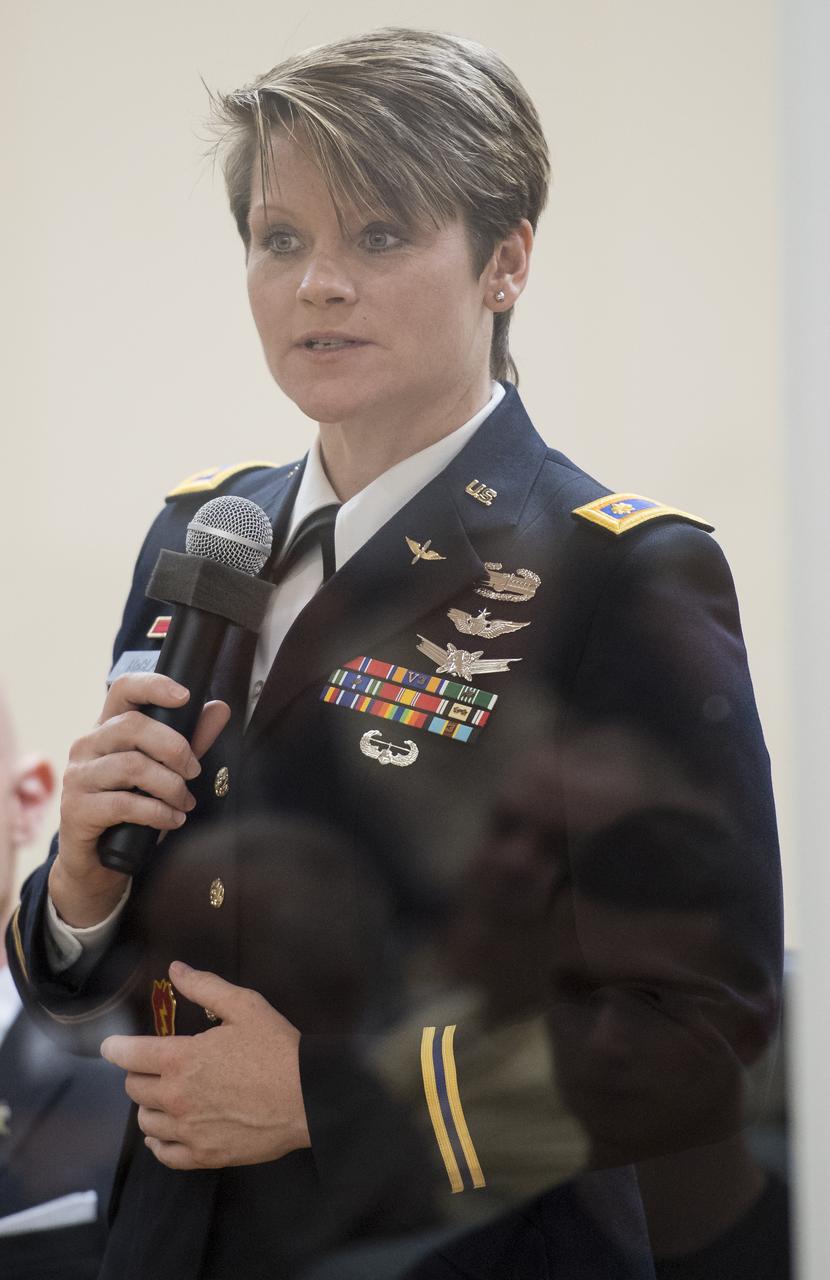
Expedition 56 backup crew member Anne McClain of NASA is seen during the State Commission meeting to approve the Soyuz launch of Expedition 56 to the International Space Station, Tuesday, June 5, 2018. Expedition 56 Soyuz Commander Sergey Prokopyev of Roscosmos, Serena Auñón-Chancellor of NASA, and Alexander Gerst of ESA (European Space Agency) are scheduled to launch to the International Space Station aboard the Soyuz MS-09 spacecraft on Wednesday, June 6. Photo Credit: (NASA/Joel Kowsky)
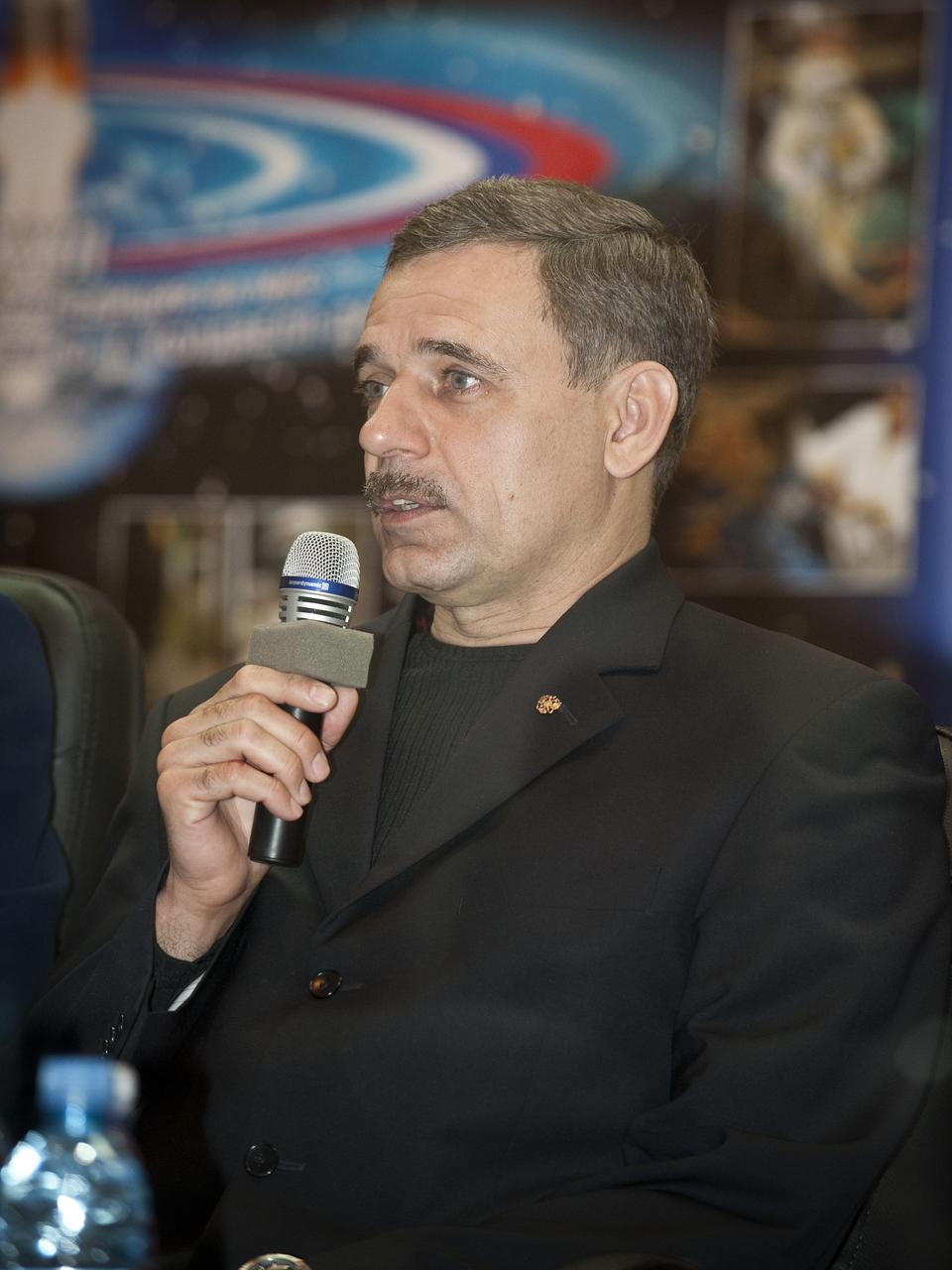
Expedition 23 Flight Engineer Mikhail Kornienko says a few words during the State Commission meeting to approve the Soyuz launch of Kornienko, Expedition 23 Soyuz Commander Alexander Skvortsov and Expedition 23 Flight Engineer Tracy Caldwell Dyson on Thursday, April 1, 2010 in Baikonur, Kazakhstan. The crew is kept in a separate room with a glass window in order to help maintain their health. Photo Credit: (NASA/Bill Ingalls)
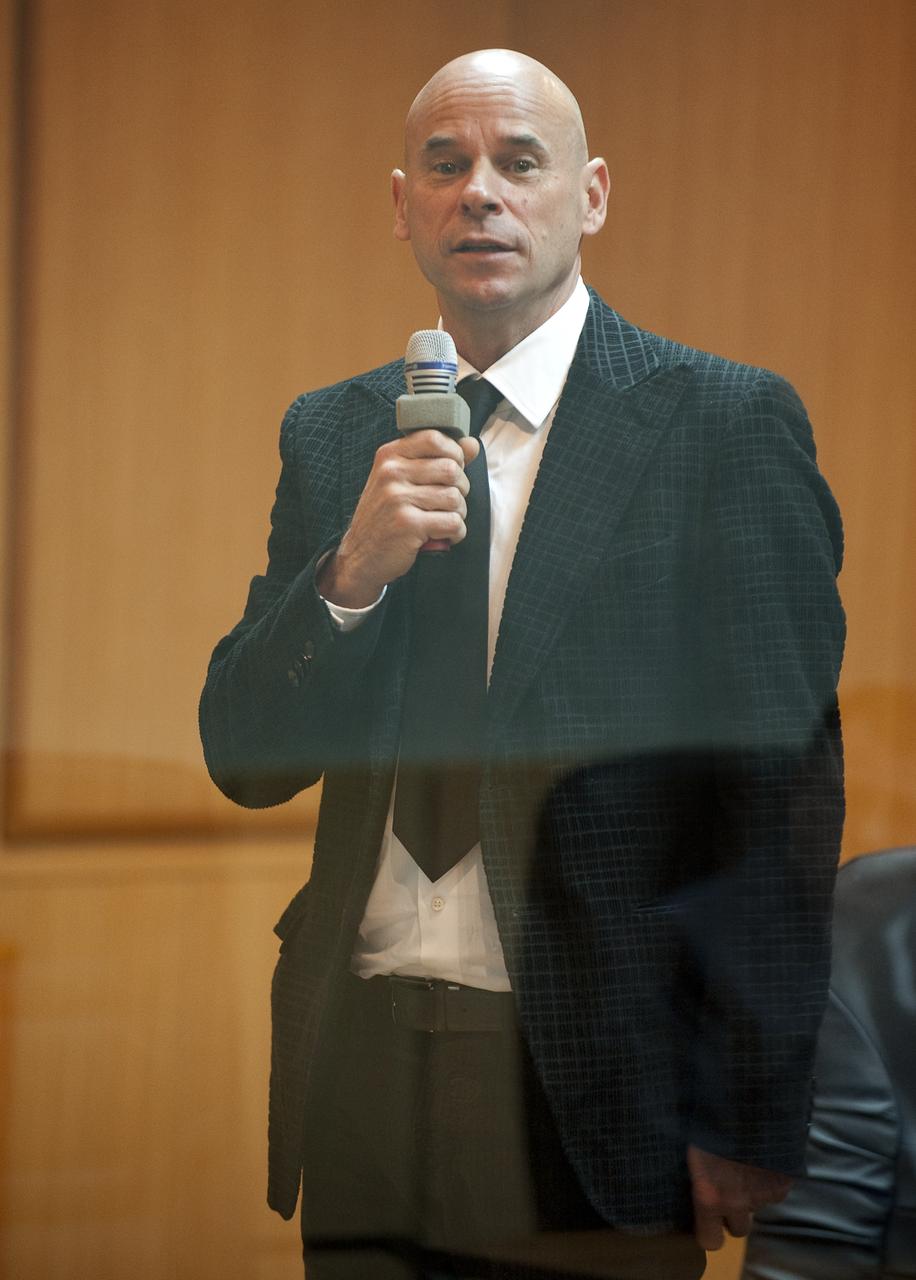
Spaceflight Participant Guy Laliberté, speaks during the State Commission meeting to approve the Soyuz launch of Expedition 21 Flight Engineer Jeffrey N. Williams, Expedition 21 Flight Engineer Maxim Suraev, and Laliberté on Tuesday, Sept. 29, 2009 in Baikonur, Kazakhstan. The crew is kept in a separate room with a glass window in order to help maintain their health. Photo Credit: (NASA/Bill Ingalls)

Roscosmos Director General Dmitry Bakanov is seen during the State Commission meeting to approve the Soyuz launch of Expedition 73 to the International Space Station, Monday, April 7, 2025, at the Cosmonaut Hotel in Baikonur, Kazakhstan. Expedition 73 crew members: NASA astronaut Jonny Kim, and Roscosmos cosmonauts Sergey Ryzhikov and Alexey Zubritskiy, are scheduled to launch aboard their Soyuz MS-27 spacecraft on April 8. Photo Credit: (NASA/Joel Kowsky)
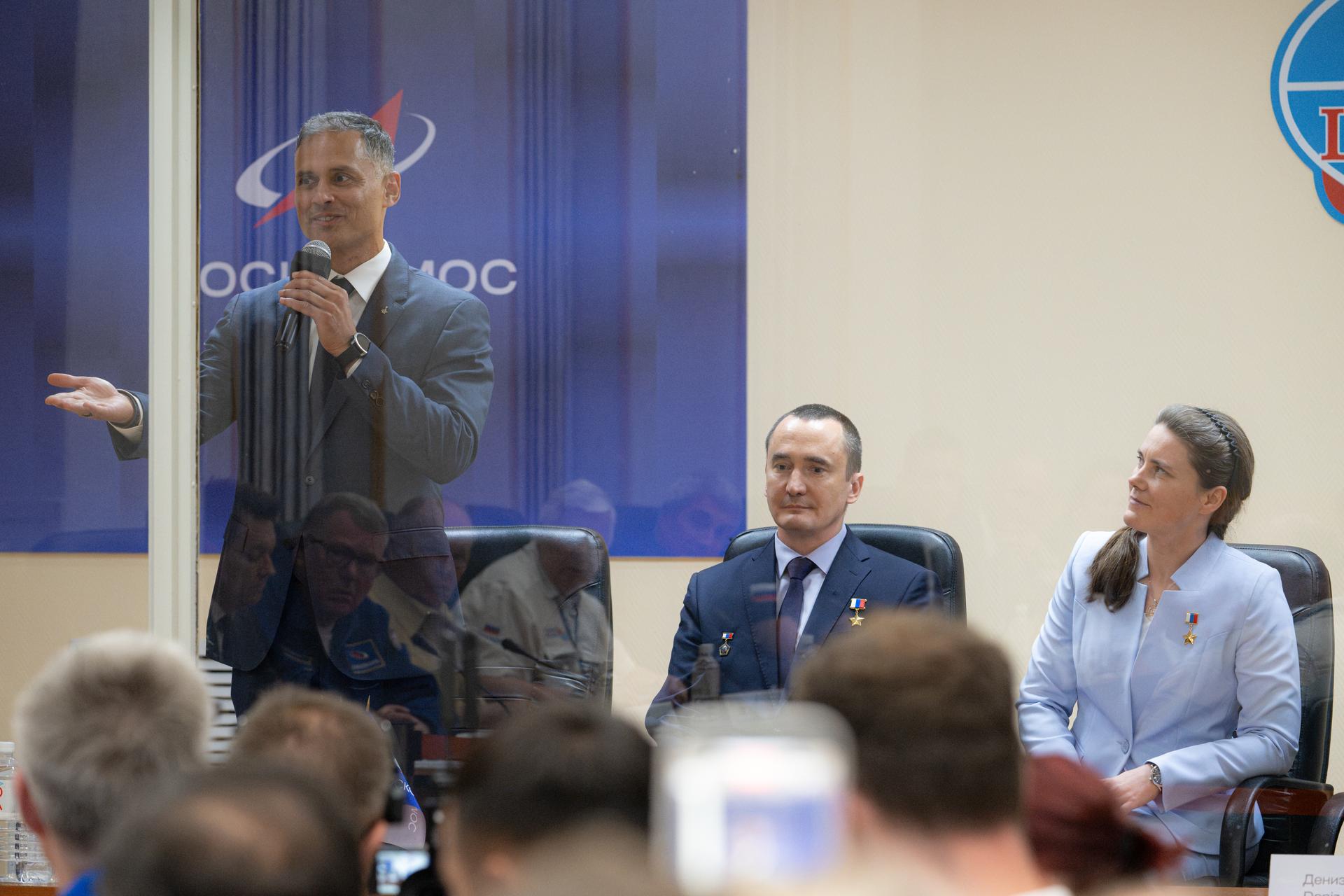
Expedition 75 crewmembers NASA astronaut Anil Menon, left, and Roscosmos cosmonauts Pyotr Dubrov and Anna Kikina, right, are seen during the State Commission meeting to approve the Soyuz MS-29 launch to the International Space Station, Monday, July 13, 2026, at the Cosmonaut Hotel in Baikonur, Kazakhstan. Menon, Dubrov, and Kikina are scheduled to launch aboard the Soyuz MS-29 spacecraft to the International Space Station on July 14. Photo Credit: (NASA/John Kraus)
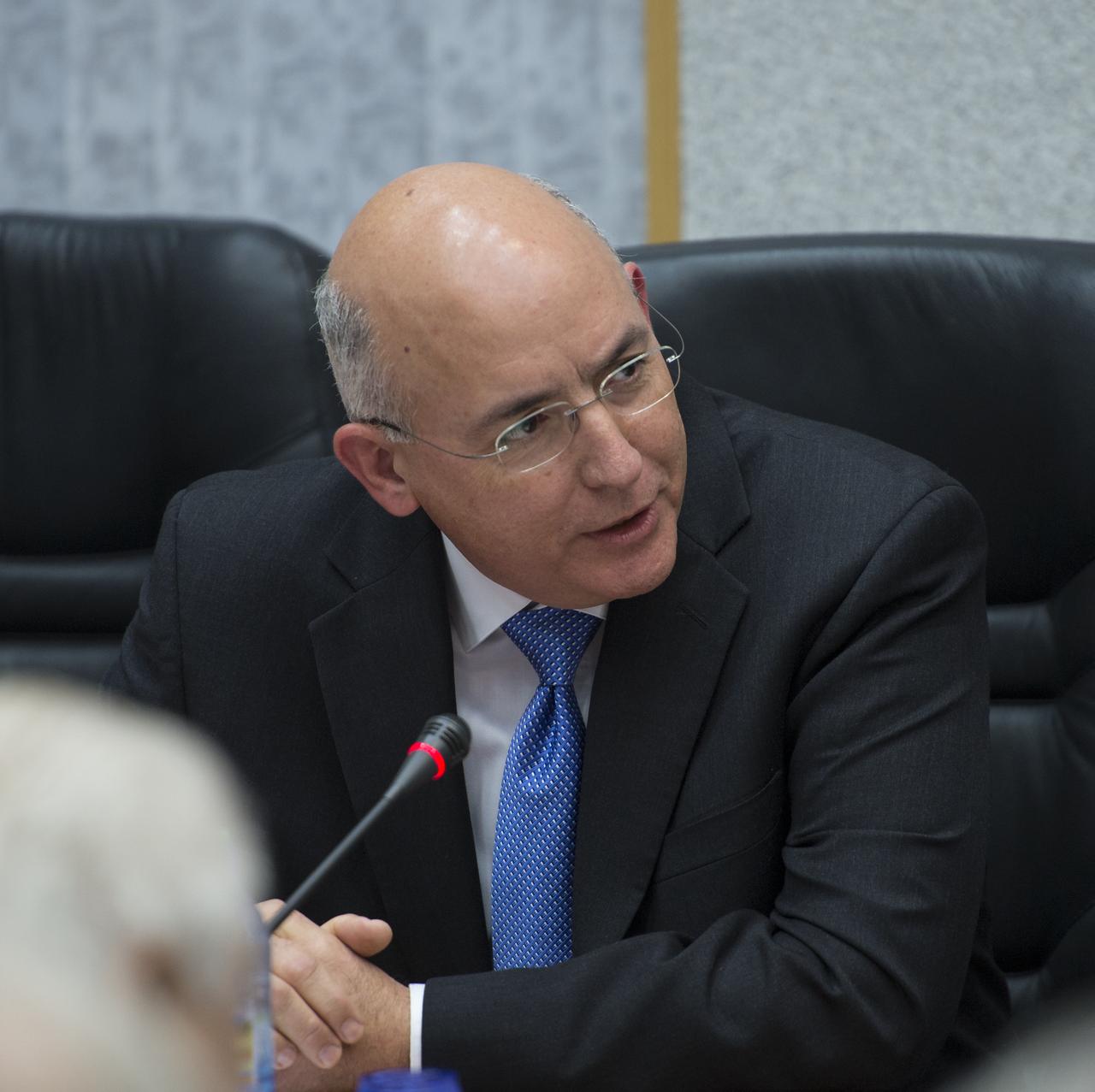
Michael Suffredini, NASA International Space Station Program Manager, speaks during the State Commission meeting to approve the Soyuz launch of Expedition 42 to the International Space Station, Saturday, Nov. 22, 2014, at the Cosmonaut Hotel in Baikonur, Kazakhstan. The mission is set to launch Nov. 24 from the Baikonur Cosmodrome. Photo Credit: (NASA/Aubrey Gemignani)
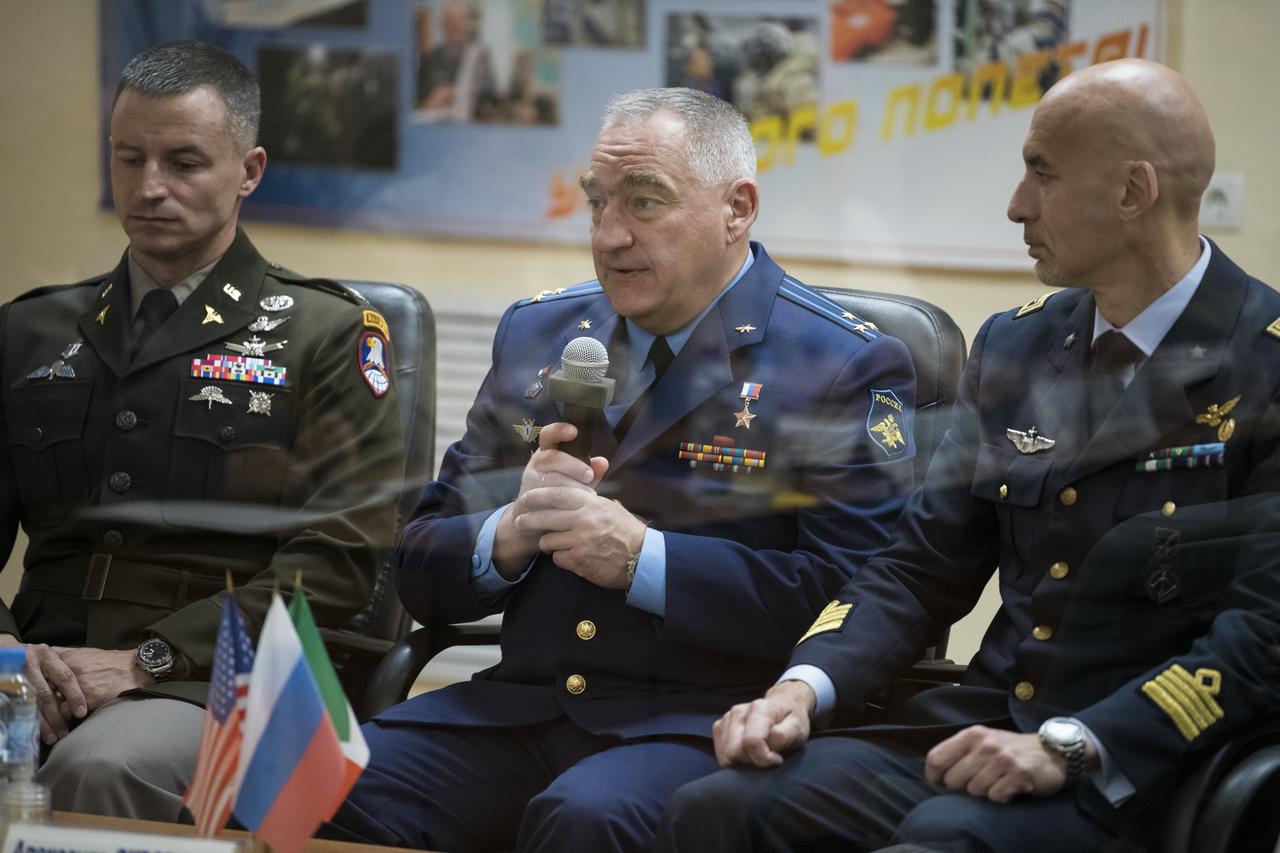
Expedition 60 Soyuz Commander Alexander Skvortsov of Roscosmos, center, speaks during the State Commission meeting to approve the Soyuz launch of Expedition 60 to the International Space Station, Friday, July 19, 2019 at the Cosmonaut Hotel in Baikonur, Kazakhstan. Skvortsov, Andrew Morgan of NASA, left, and Luca Parmitano of ESA (European Space Agency), right, are scheduled to launch to the International Space Station aboard the Soyuz MS-13 spacecraft on Saturday, July 20. Photo Credit: (NASA/Joel Kowsky)
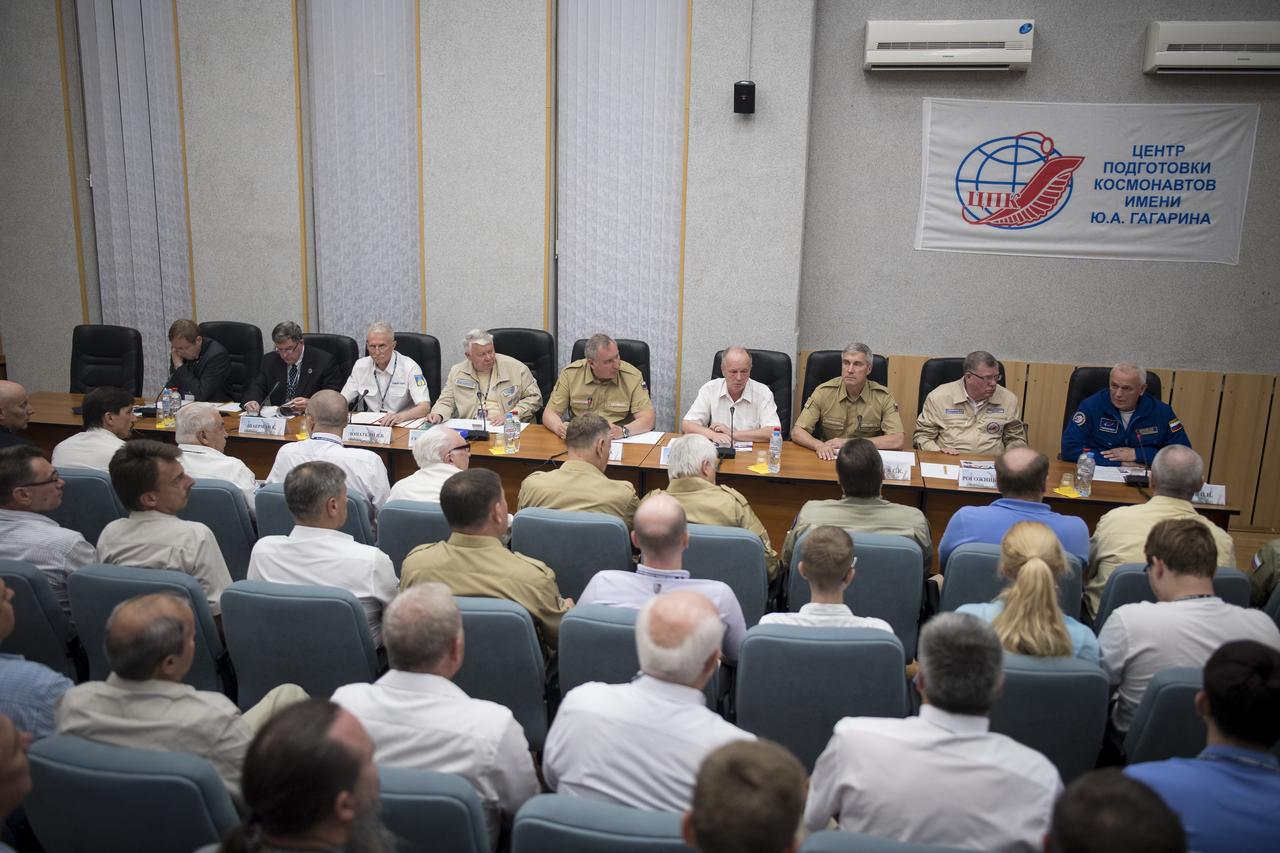
Members of the State Commission meet to approve the Soyuz launch of Expedition 60 to the International Space Station, Friday, July 19, 2019 at the Cosmonaut Hotel in Baikonur, Kazakhstan. Expedition 60 Soyuz Commander Alexander Skvortsov of Roscosmos, Andrew Morgan of NASA, and Luca Parmitano of ESA (European Space Agency) are scheduled to launch to the International Space Station aboard the Soyuz MS-13 spacecraft on Saturday, July 20. Photo Credit: (NASA/Joel Kowsky)
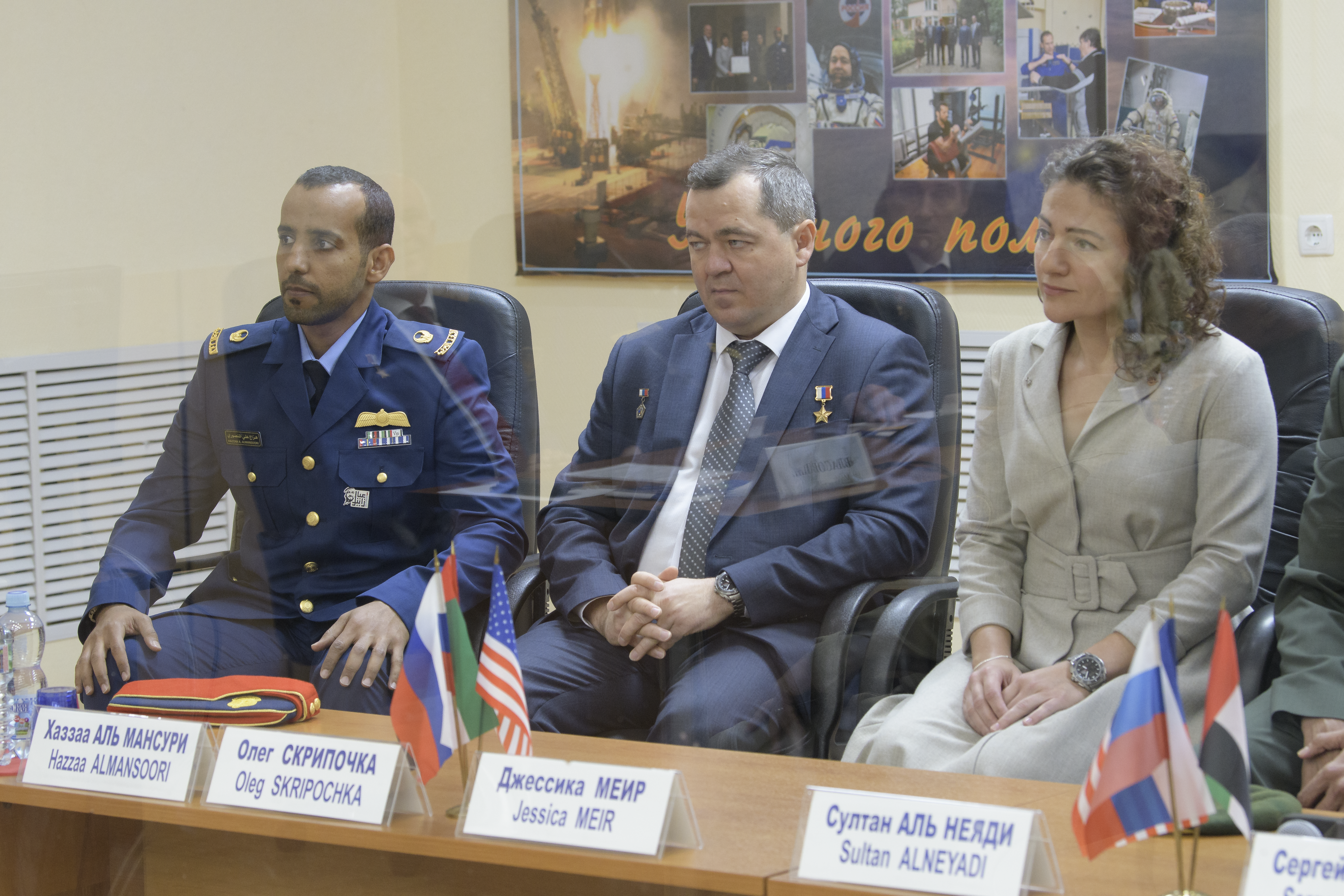
Spaceflight participant Hazzaa Ali Almansoori of the United Arab Emirates, left, Expedition 61 prime crew members Oleg Skripochka of Roscosmos, and Jessica Meir of NASA are seen during the State Commission meeting to approve the crew's Soyuz launch to the International Space Station, Tuesday, Sept. 24, 2019 at the Cosmonaut Hotel in Baikonur, Kazakhstan. Meir, Skripochka and Almansoori will launch September 25th on the Soyuz MS-15 spacecraft from the Baikonur Cosmodrome to the International Space Station. Photo Credit: (NASA/Bill Ingalls)

NASA Deputy Associate Administrator for NASA's Space Operations Mission Directorate, Joel Montalbano, is seen during the State Commission meeting to approve the Soyuz launch of Expedition 74 to the International Space Station, Wednesday, Nov. 26, 2025 at the Cosmonaut Hotel in Baikonur, Kazakhstan. Expedition 74 crewmembers: NASA astronaut Chris Williams, Roscosmos cosmonauts Sergey Kud-Sverchkov and Sergei Mikaev, are scheduled to launch aboard their Soyuz MS-28 spacecraft on November 27. Photo Credit: (NASA/Bill Ingalls)
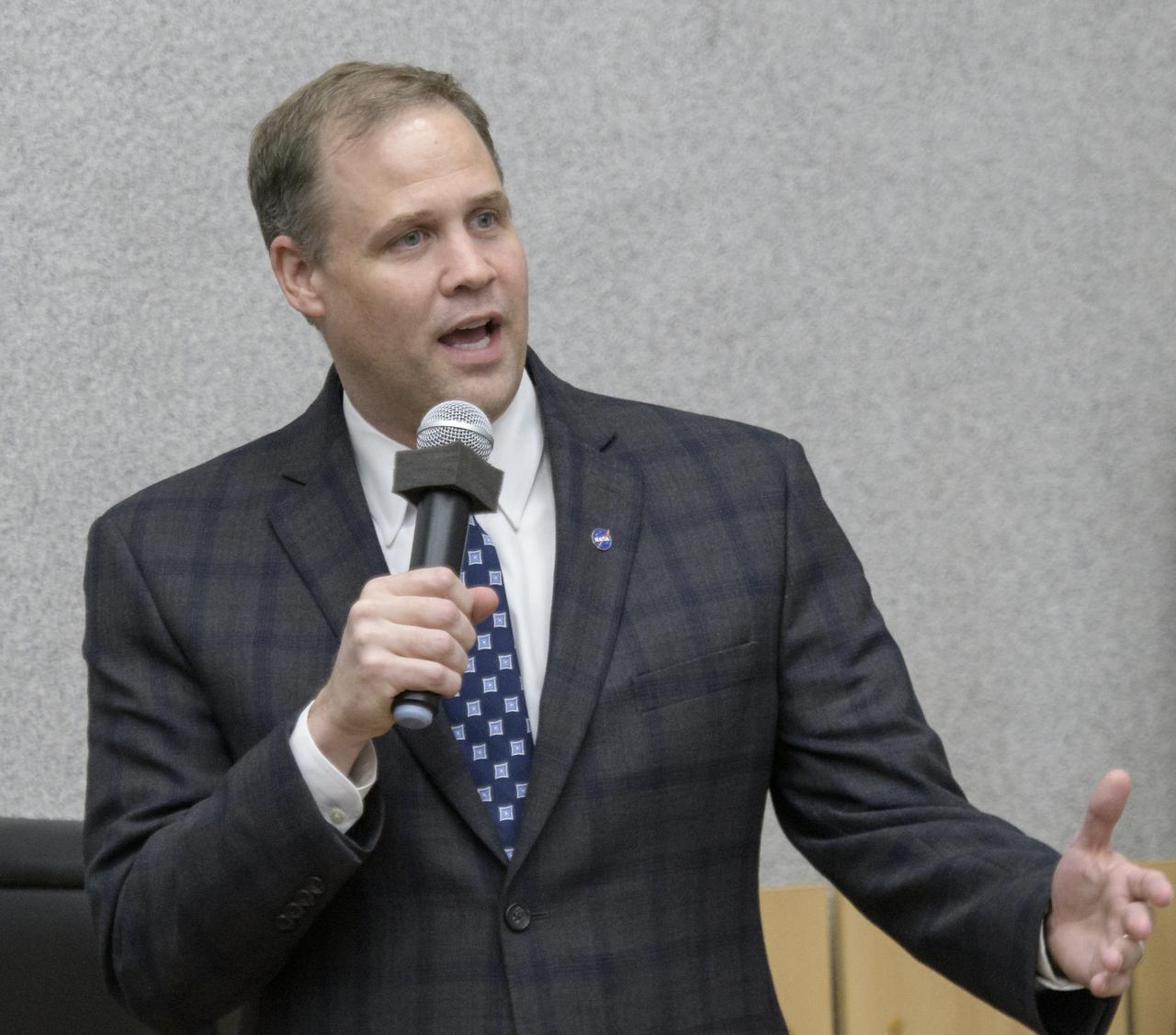
NASA Administrator Jim Bridenstine gives remarks during the State Commission meeting to approve the Soyuz launch of Expedition 57 to the International Space Station, Wednesday, Oct. 10, 2018 at the Cosmonaut Hotel in Baikonur, Kazakhstan. Expedition 57 Flight Engineer Nick Hague of NASA and Flight Engineer Alexey Ovchinin of Roscosmos are scheduled to launch on October 11 and will spend the next six months living and working aboard the International Space Station. Photo Credit: (NASA/Bill Ingalls)
NASA International Space Station Program Manager Kirk Shireman is seen during the State Commission meeting to approve the Soyuz launch of Expedition 55 to the International Space Station, Tuesday, March 20, 2018. Expedition 55 Soyuz Commander Oleg Artemyev of Roscosmos, flight engineer Ricky Arnold and flight engineer Drew Feustel of NASA are scheduled to launch to the International Space Station aboard the Soyuz MS-08 spacecraft on Wednesday, March, 21. Photo Credit: (NASA/Joel Kowsky)
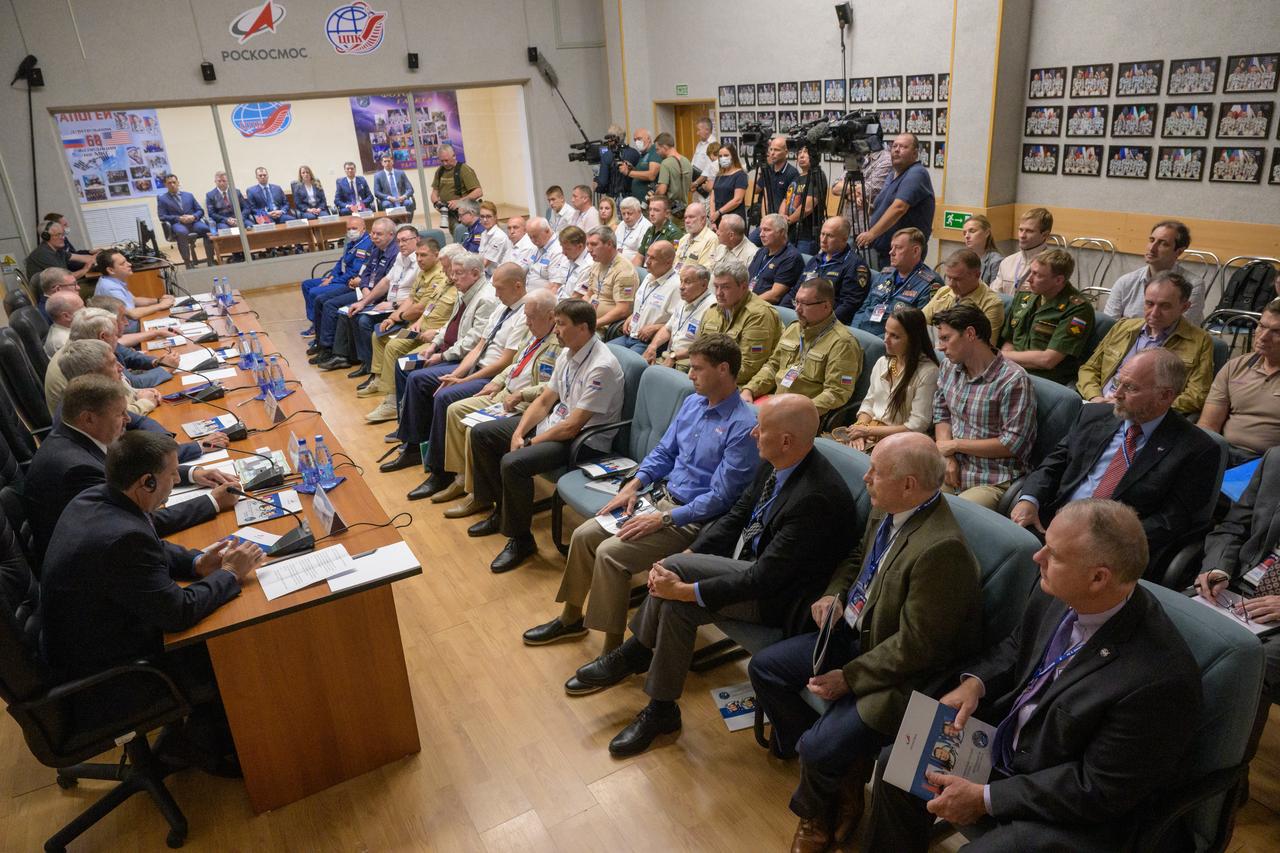
The State Commission meets to approve the Soyuz launch of Expedition 68 to the International Space Station, Tuesday, Sept. 20, 2022, at the Cosmonaut Hotel in Baikonur, Kazakhstan. Expedition 68 astronaut Frank Rubio of NASA, and cosmonauts Sergey Prokopyev and Dmitri Petelin of Roscosmos, are scheduled to launch to the International Space Station aboard the Soyuz MS-22 spacecraft on Sept. 21. Photo Credit: (NASA/Bill Ingalls)

NASA Expedition 51 backup crew member Randy Bresnik speaks during the State Commission meeting to approve the Soyuz launch of Expedition 51 to the International Space Station, Wednesday, April 19, 2017 at the Cosmonaut Hotel in Baikonur, Kazakhstan. The mission is set to launch April 20 from the Baikonur Cosmodrome. Photo Credit: (NASA/Aubrey Gemignani)
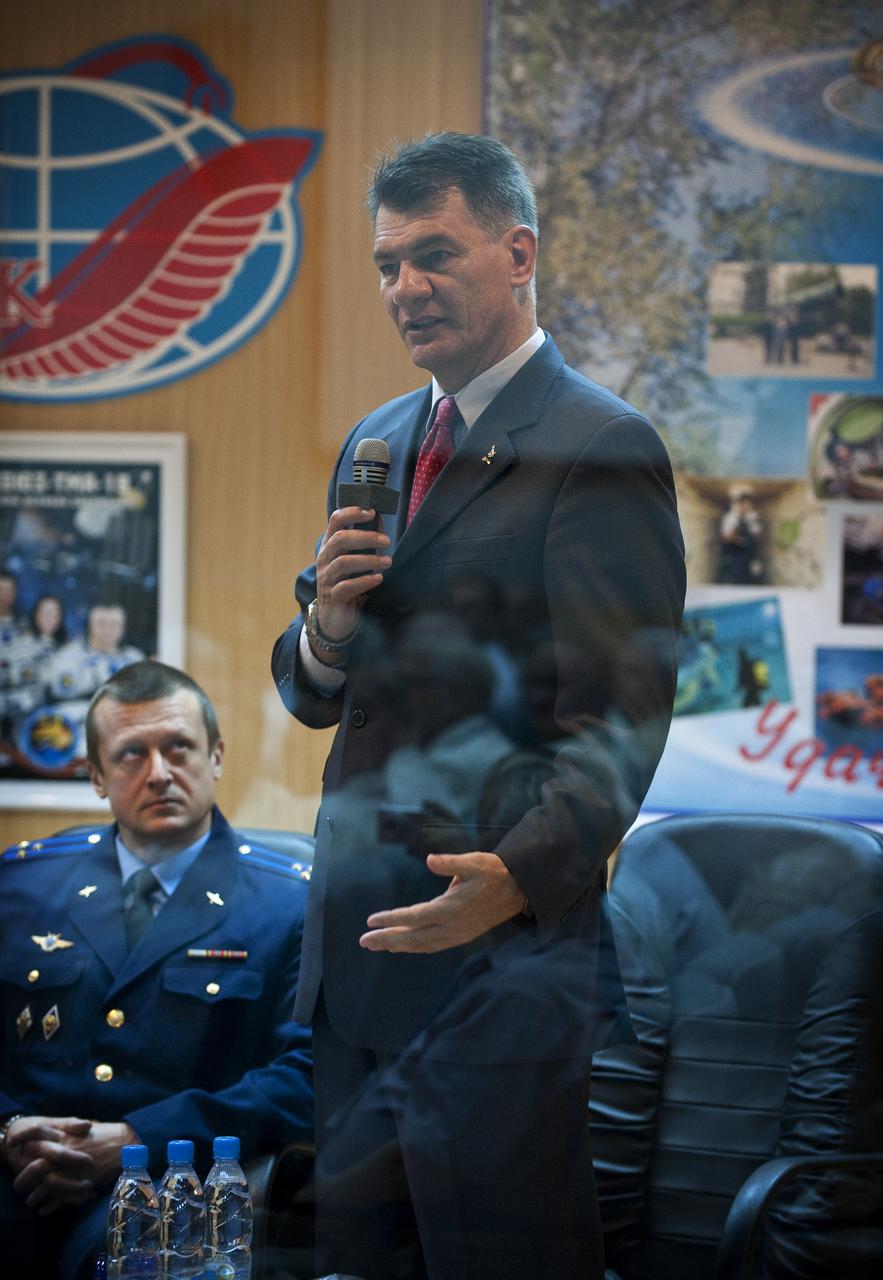
European Space Agency back-up crew member Paolo Nespoli of Italy speaks during the State Commission meeting to approve the Soyuz launch of Expedition 24 Flight Engineers Doug Wheelock, Shannon Walker and Soyuz Commander Fyodor Yurchikhin on Monday, June 14, 2010 in Baikonur, Kazakhstan. Photo Credit: (NASA/Carla Cioffi)

Expedition 70 astronaut Loral O'Hara is seen in quarantine behind glass during the State Commission meeting to approve the Soyuz launch of Expedition 70 to the international Space Station, Thursday, Sept. 14, 2023 at the Cosmonaut Hotel in Baikonur, Kazakhstan. O'Hara and Roscosmos cosmonauts Oleg Kononenko, and Nikolai Chub are scheduled to launch aboard their Soyuz MS-24 spacecraft on Sept. 15. Photo Credit: (NASA/Bill Ingalls)

Igor Komarov, Director of Roscosmos, is seen during the State Commission meeting to approve the Soyuz launch of Expedition 55 to the International Space Station, Tuesday, March 20, 2018. Expedition 55 Soyuz Commander Oleg Artemyev of Roscosmos, flight engineer Ricky Arnold and flight engineer Drew Feustel of NASA are scheduled to launch to the International Space Station aboard the Soyuz MS-08 spacecraft on Wednesday, March, 21. Photo Credit: (NASA/Joel Kowsky)

Expedition 70 cosmonaut Nikolai Chub, is seen in quarantine behind glass during the State Commission meeting to approve the Soyuz launch of Expedition 70 to the international Space Station, Thursday, Sept. 14, 2023 at the Cosmonaut Hotel in Baikonur, Kazakhstan. Expedition 70 NASA astronaut Loral O'Hara, Roscosmos cosmonauts Oleg Kononenko, and Nikolai Chub are scheduled to launch aboard their Soyuz MS-24 spacecraft on Sept. 15. Photo Credit: (NASA/Bill Ingalls)
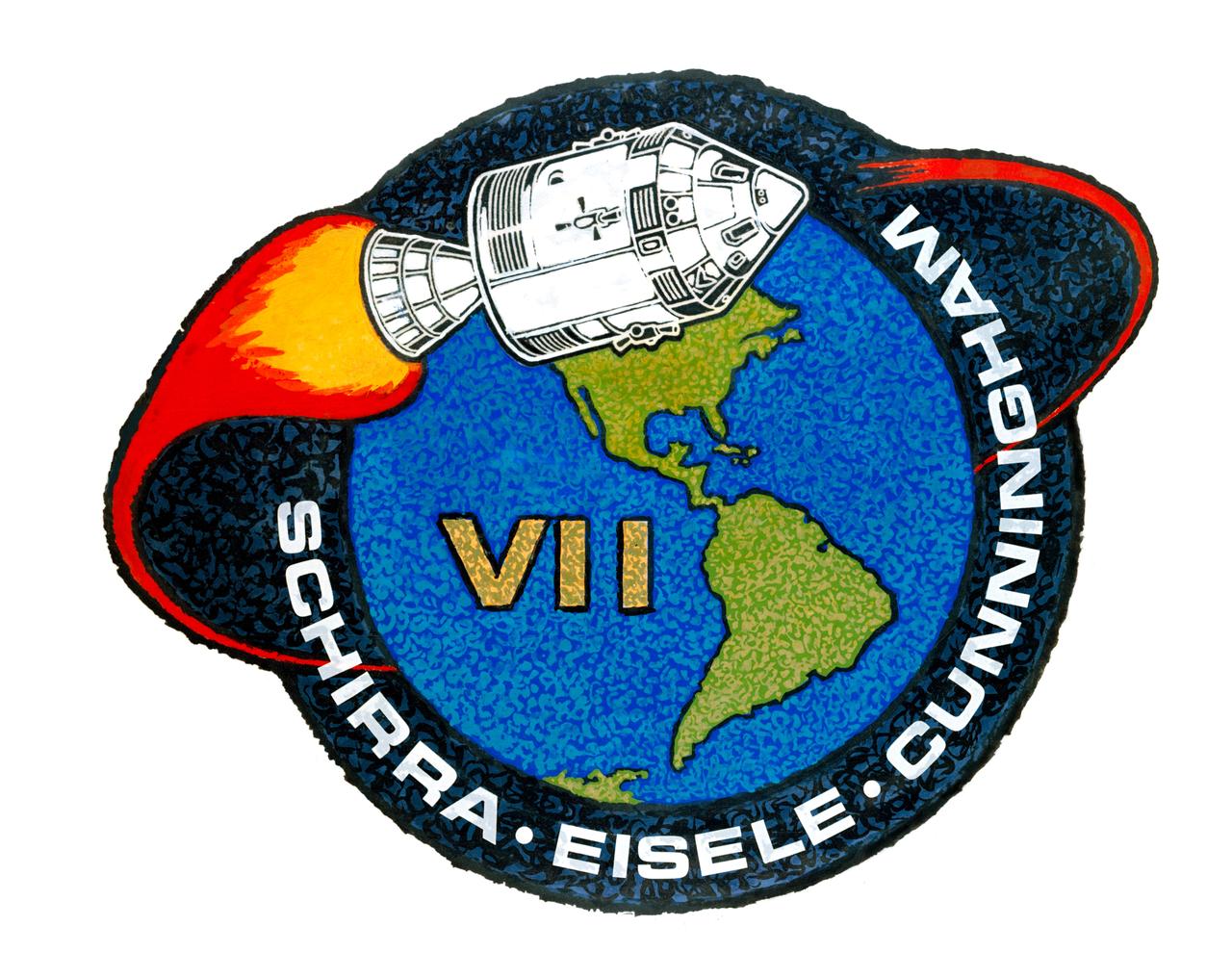
S68-26668 (June 1968) --- The official emblem of Apollo 7, the first manned Apollo space mission. The crew will consist of astronauts Walter M. Schirra Jr., Donn F. Eisele, and Walter Cunningham. The NASA insignia design for Apollo flights is reserved for use by the astronauts and for the official use as the NASA Administrator may authorize. Public availability has been approved only in the form of illustrations by the various news media. When and if there is any change in this policy, which we do not anticipate, it will be publicly announced.
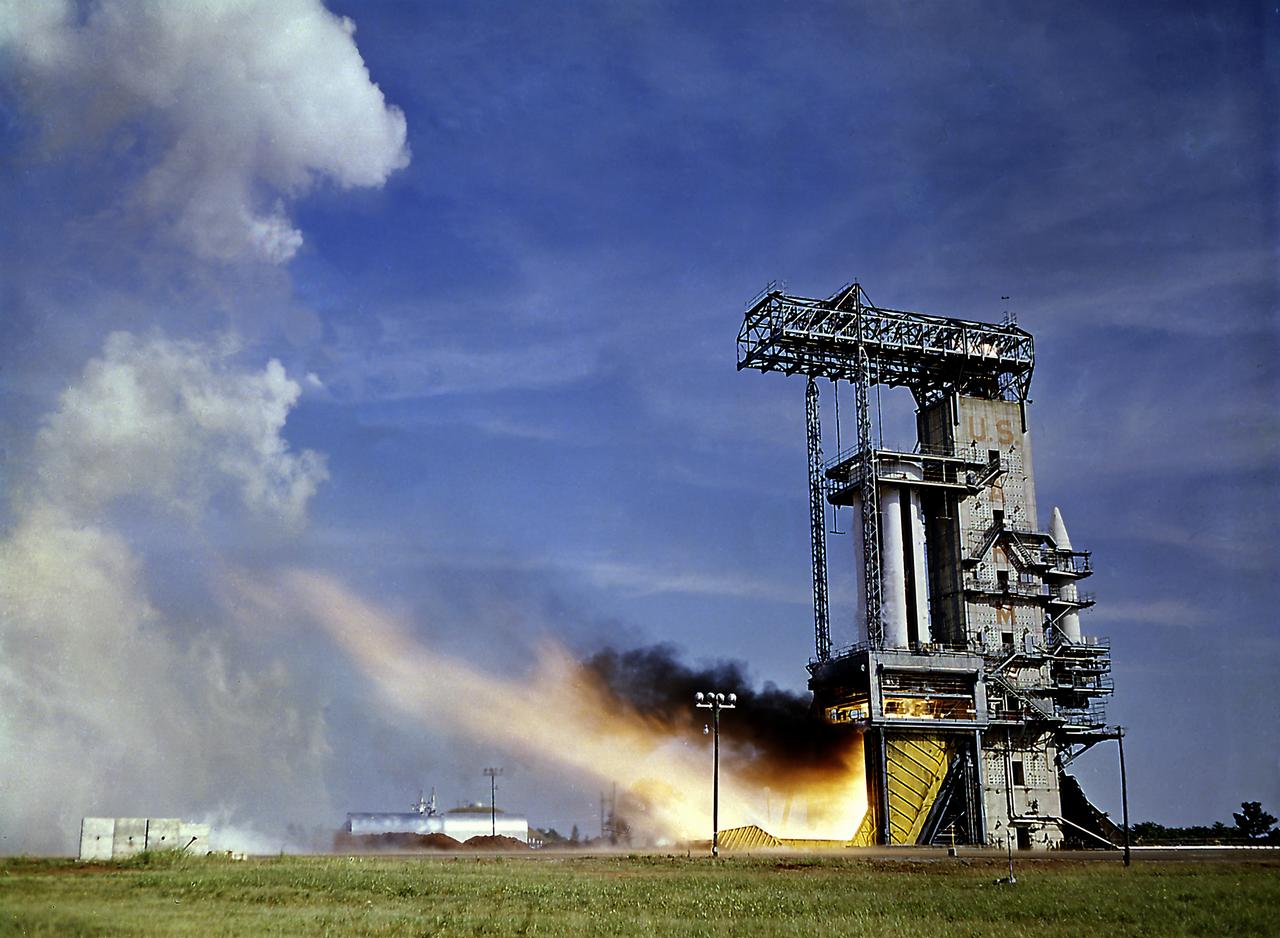
The Saturn Project was approved on January 18, 1960 as a program of the highest national priority. The formal test program to prove out the clustered-booster concept was well underway. A series of static tests of the Saturn I booster (S-I stage) began June 3, 1960 at the Marshall Space Flight Center (MSFC). This photograph depicts the Saturn I S-I stage equipped with eight H-1 engines, being successfully test-fired for the duration of 121 seconds on June 15, 1960.
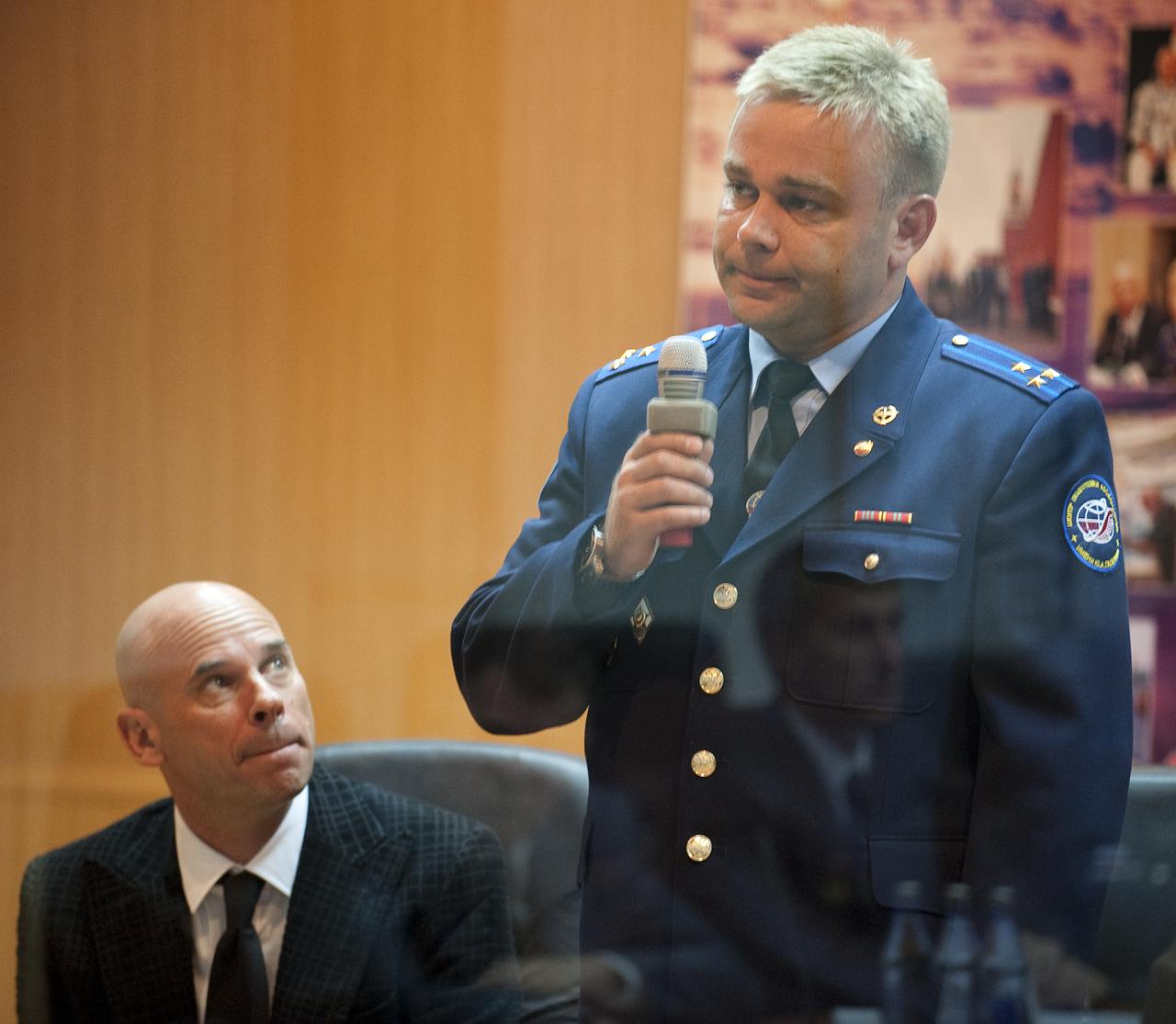
Spaceflight Participant Guy Laliberté, left, listens as Expedition 21 Flight Engineer Maxim Suraev speaks during the State Commission meeting to approve the Soyuz launch of Expedition 21 Flight Engineer Jeffrey N. Williams, Expedition 21 Flight Engineer Maxim Suraev, and Spaceflight Participant Guy Laliberté on Tuesday, Sept. 29, 2009 in Baikonur, Kazakhstan. The crew is kept in a separate room with a glass window in order to help maintain their health. Photo Credit: (NASA/Bill Ingalls)

Jean-Jacques Dordain, ESA Director-General, speaks during the State Commission meeting to approve the Soyuz launch of Expedition 36 Soyuz Commander Fyodor Yurchikhin of the Russian Federal Space Agency (Roscosmos), Flight Engineers; Karen Nyberg of NASA, and Luca Parmitano at the Cosmonaut Hotel, Monday, May 27, 2013, in Kazakhstan. Photo credit: (NASA/Bill Ingalls)
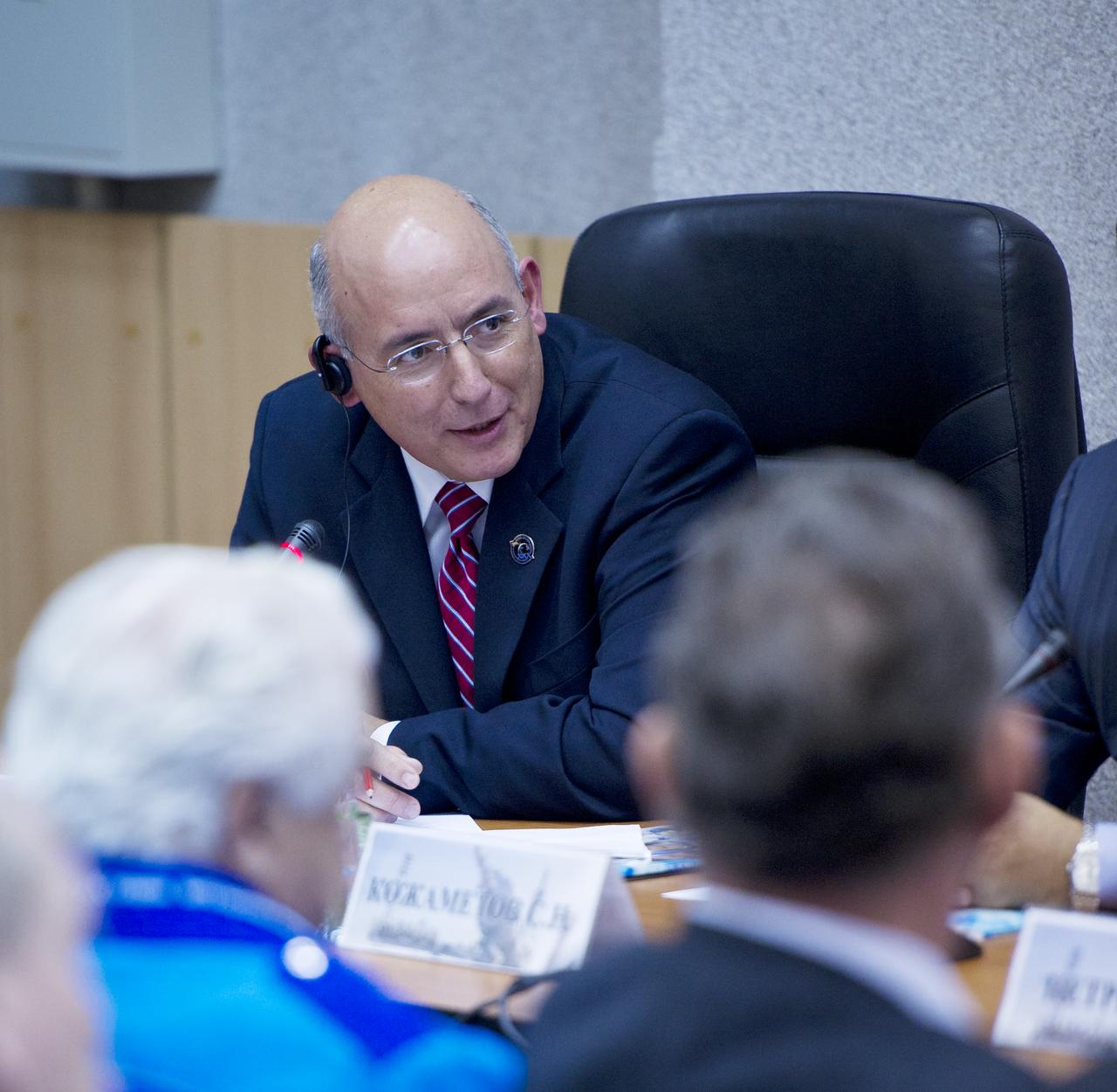
Michael Suffredini, Manager, International Space Station (ISS) Program speaks during the State Commission meeting to approve the Soyuz launch of Expedition 29 to the International Space Station, Saturday, Nov. 12, 2011, at the Cosmonaut Hotel in Baikonur, Kazakhstan. The mission is set to launch November 14 from the Baikonur Cosmodrome. Photo Credit: (NASA/Carla Cioffi)

Dmitry Rogozin, Director General of Roscosmos, is seen during the State Commission meeting to approve the Soyuz launch of Expedition 60 to the International Space Station, Friday, July 19, 2019 at the Cosmonaut Hotel in Baikonur, Kazakhstan. Expedition 60 Soyuz Commander Alexander Skvortsov of Roscosmos, Andrew Morgan of NASA, and Luca Parmitano of ESA (European Space Agency) are scheduled to launch to the International Space Station aboard the Soyuz MS-13 spacecraft on Saturday, July 20. Photo Credit: (NASA/Joel Kowsky)
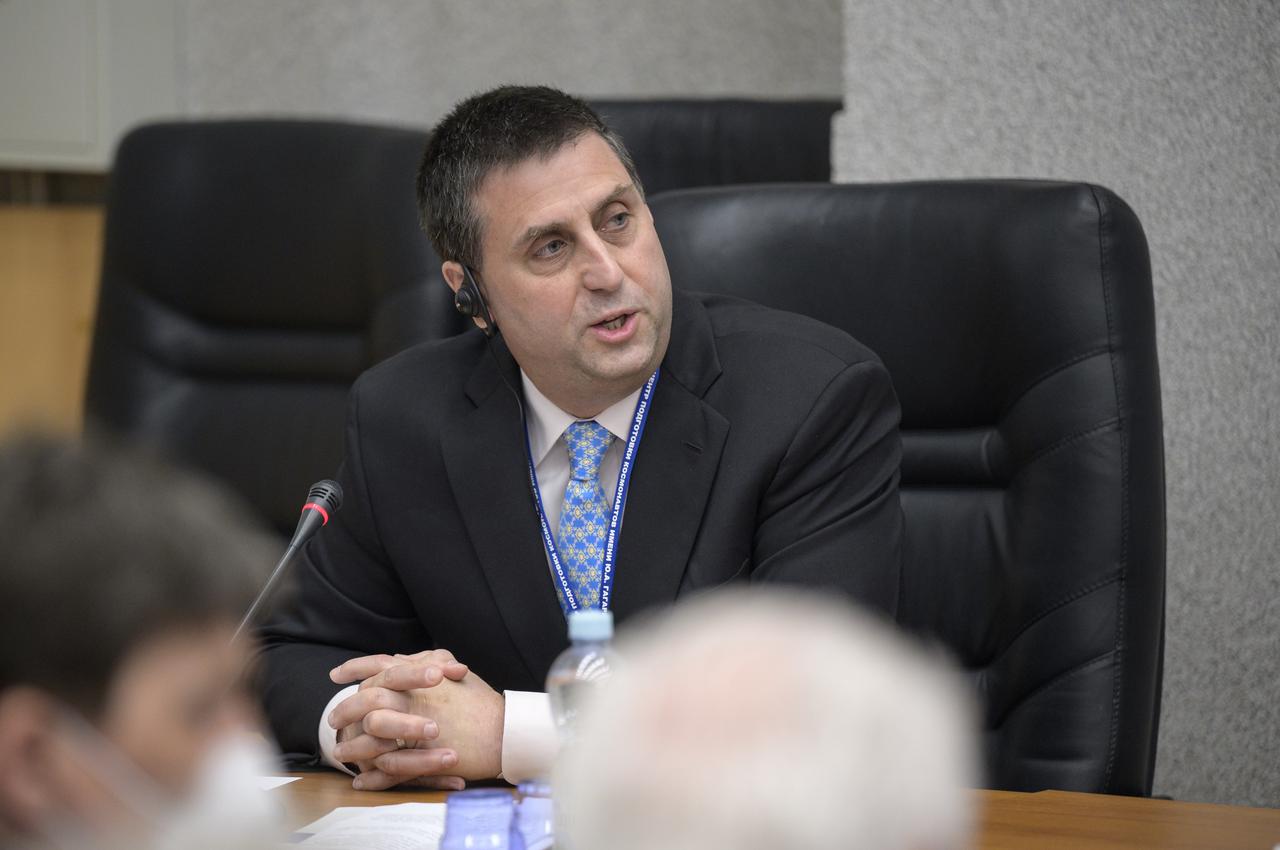
NASA ISS Program Manager Joel Montalbano is seen during the State Commission meeting to approve the Soyuz launch of Expedition 65 to the International Space Station, Thursday, April 8, 2021 at the Cosmonaut Hotel in Baikonur, Kazakhstan. Expedition 65 NASA astronaut Mark Vande Hei, Roscosmos cosmonauts Pyotr Dubrov and Oleg Novitskiy, are scheduled to launch to the International Space Station aboard the Soyuz MS-18 spacecraft on April 9. Photo Credit: (NASA/Bill Ingalls)
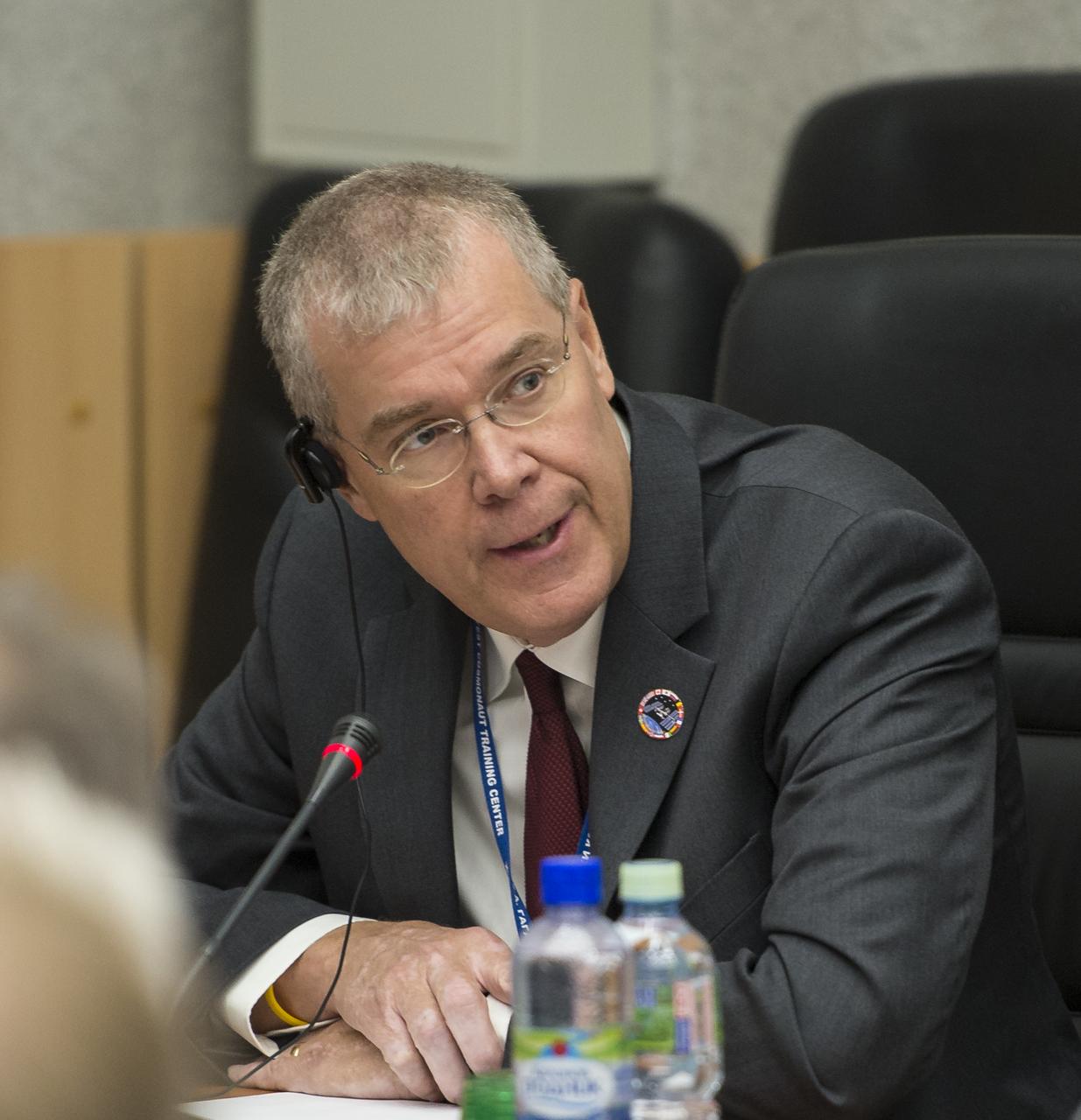
Dan Hartman, NASA Deputy Space Station Program Manager, speaks during the State Commission meeting to approve the Soyuz launch of Expedition 51 to the International Space Station, Wednesday, April 19, 2017, at the Cosmonaut Hotel in Baikonur, Kazakhstan. The mission is set to launch April 20 from the Baikonur Cosmodrome. Photo Credit: (NASA/Aubrey Gemignani)

Chief, State Organization, Gagarin Research and Test Cosmonaut Training Center, Sergei Krikalev, speaks during the State Commission meeting to approve the Soyuz launch of Expedition 36 Soyuz Commander Fyodor Yurchikhin of the Russian Federal Space Agency (Roscosmos), Flight Engineers; Karen Nyberg of NASA, and Luca Parmitano at the Cosmonaut Hotel, Monday, May 27, 2013, in Kazakhstan. Photo credit: (NASA/Bill Ingalls)
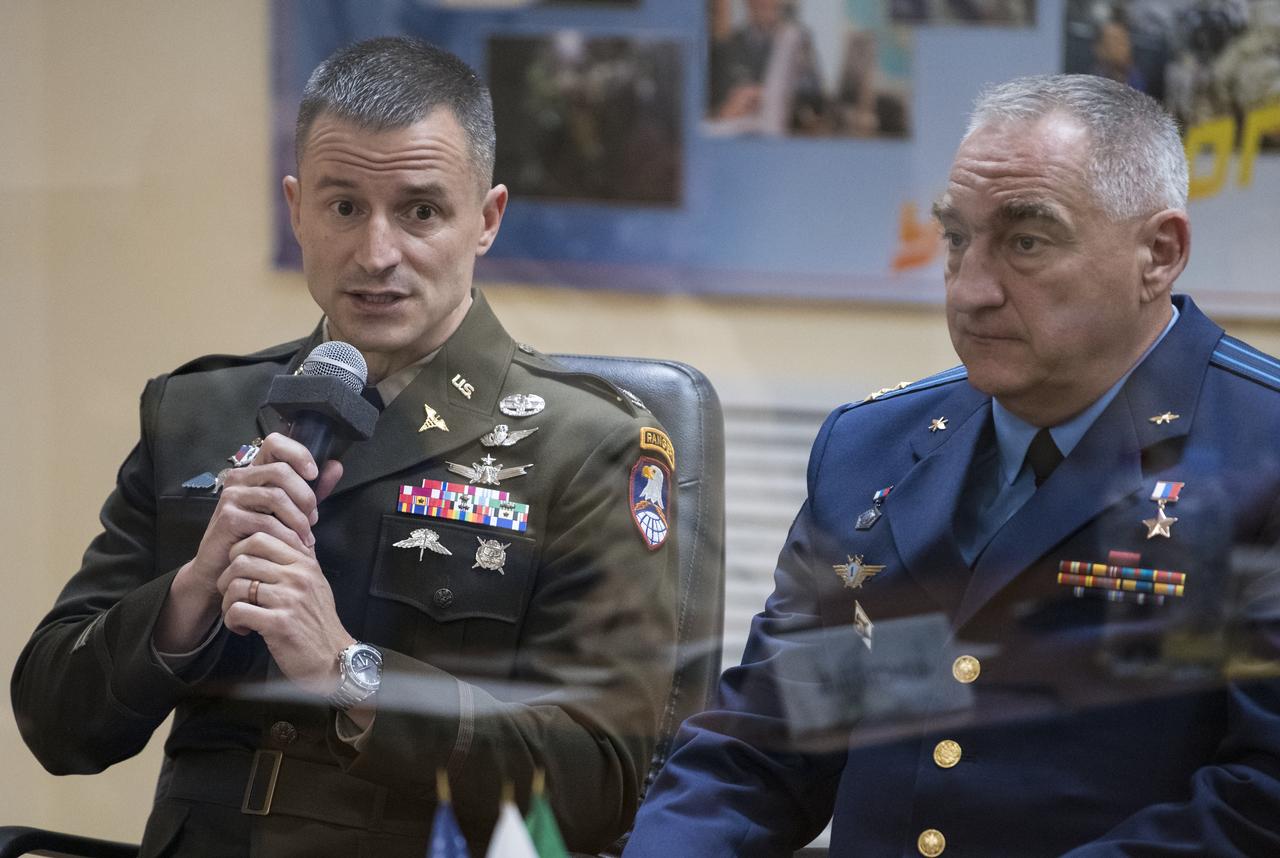
Expedition 60 flight engineer Andrew Morgan of NASA speaks during the State Commission meeting to approve the Soyuz launch of Expedition 60 to the International Space Station, Friday, July 19, 2019 at the Cosmonaut Hotel in Baikonur, Kazakhstan. Morgan, Soyuz Commander Alexander Skvortsov of Roscosmos, and Luca Parmitano of ESA (European Space Agency) are scheduled to launch to the International Space Station aboard the Soyuz MS-13 spacecraft on Saturday, July 20. Photo Credit: (NASA/Joel Kowsky)
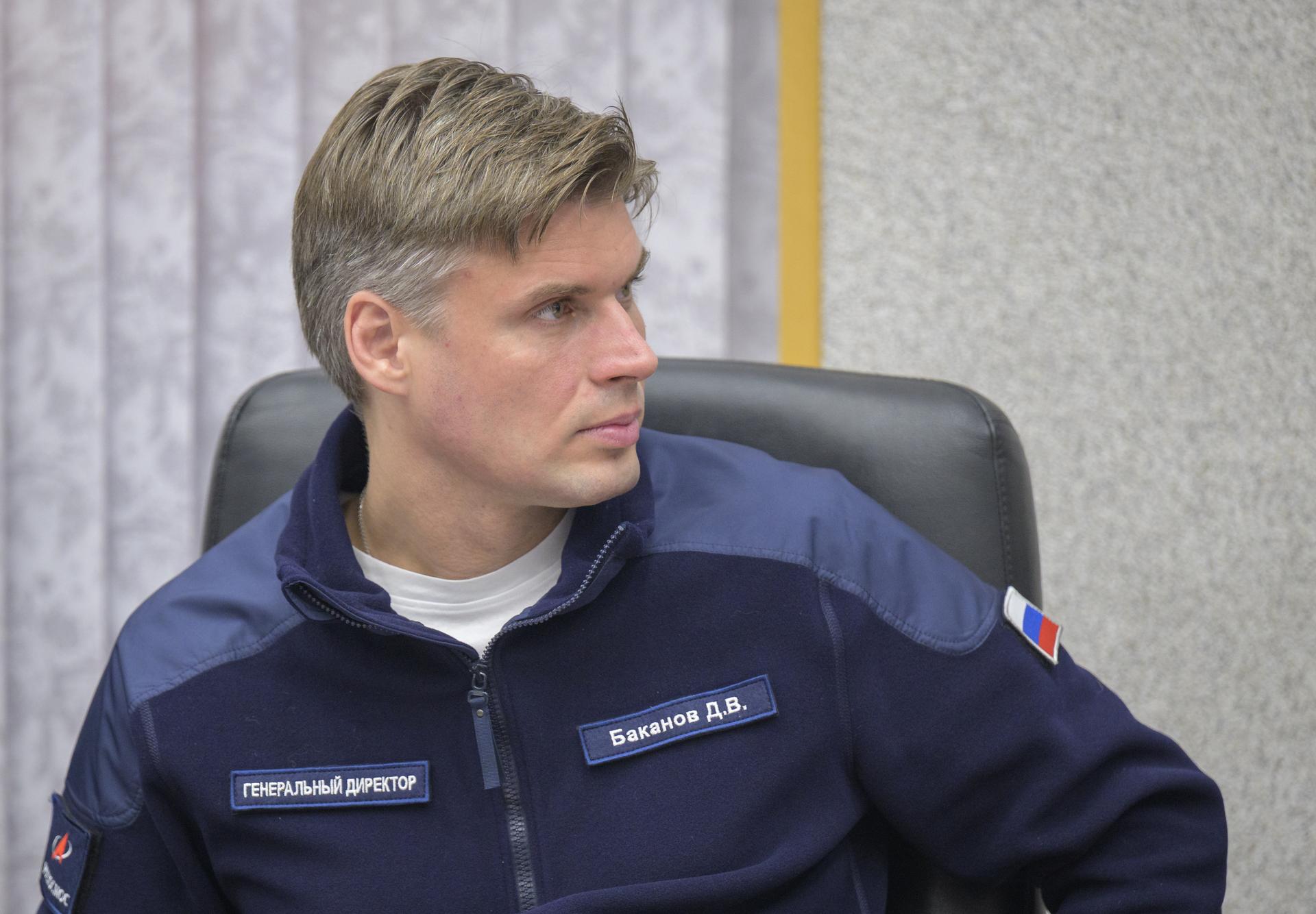
Roscosmos Director General Dmitry Bakanov is seen during the State Commission meeting to approve the Soyuz launch of Expedition 74 to the International Space Station, Wednesday, Nov. 26, 2025 at the Cosmonaut Hotel in Baikonur, Kazakhstan. Expedition 74 crewmembers: NASA astronaut Chris Williams, Roscosmos cosmonauts Sergey Kud-Sverchkov and Sergei Mikaev, are scheduled to launch aboard their Soyuz MS-28 spacecraft on November 27. Photo Credit: (NASA/Bill Ingalls)

Expedition 56 Soyuz Commander Sergey Prokopyev of Roscosmos is seen during the State Commission meeting to approve the Soyuz launch of Expedition 56 to the International Space Station, Tuesday, June 5, 2018 at the Cosmonaut Hotel in Baikonur, Kazakhstan. Prokopyev, Serena Auñón-Chancellor of NASA, and Alexander Gerst of ESA (European Space Agency) are scheduled to launch to the International Space Station aboard the Soyuz MS-09 spacecraft on Wednesday, June 6. Photo Credit: (NASA/Joel Kowsky)
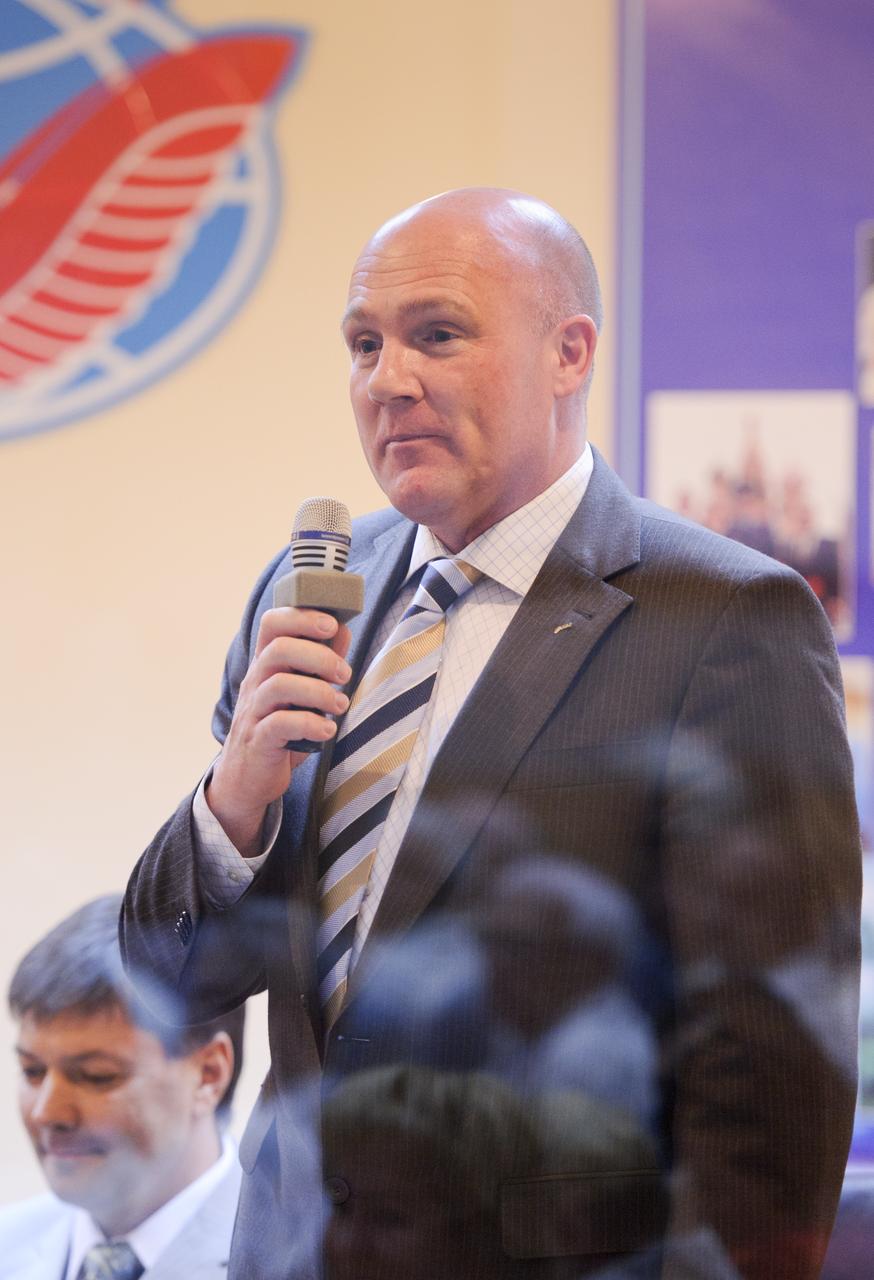
European Space Agency (ESA) backup Flight Engineer Andre Kuipers speaks during the State Commission meeting to approve the Soyuz launch of Expedition 28 to the International Space Station, Monday, June 6, 2011, at the Cosmonaut Hotel in Baikonur, Kazakhstan. The mission is set to launch on Tuesday, June 8, from the Baikonur Cosmodrome. Photo Credit: (NASA/Carla Cioffi)

NASA ISS Deputy Program Manager Joel Montalbano delivers remarks during the State Commission meeting to approve the Expedition 59 crew's Soyuz launch to the International Space Station, Wednesday, March 13, 2019 at the Cosmonaut Hotel in Baikonur, Kazakhstan. Hague, Koch, and Ovchinin will launch March 14, U.S. time, on the Soyuz MS-12 spacecraft from the Baikonur Cosmodrome for a six-and-a-half month mission on the International Space Station. Photo Credit: (NASA/Bill Ingalls)
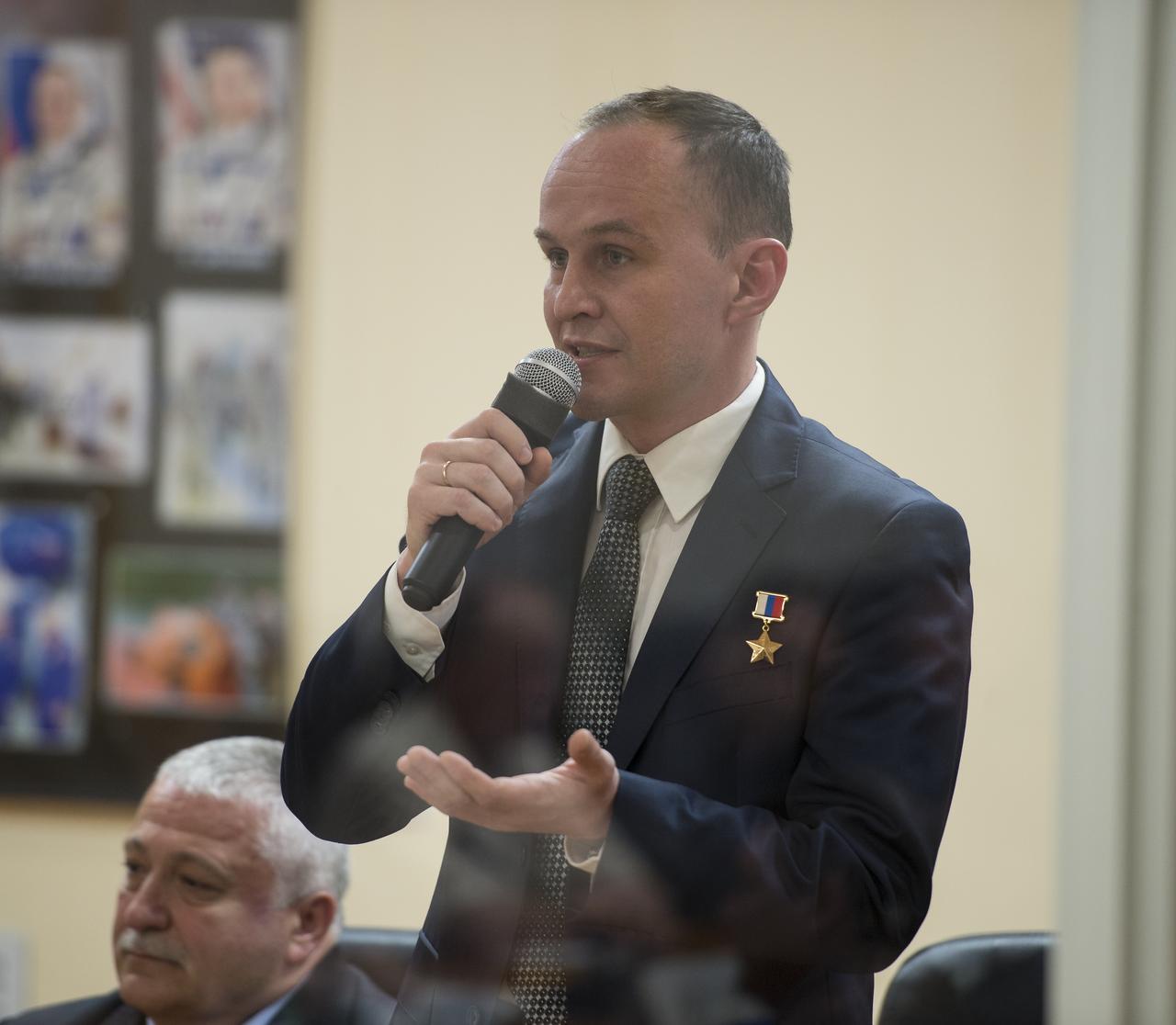
Expedition 51 backup crew member Sergey Ryazanskiy of Roscosmos speaks during the State Commission meeting to approve the Soyuz launch of Expedition 51 to the International Space Station, Wednesday, April 19, 2017 at the Cosmonaut Hotel in Baikonur, Kazakhstan. The mission is set to launch April 20 from the Baikonur Cosmodrome. Photo Credit: (NASA/Aubrey Gemignani)
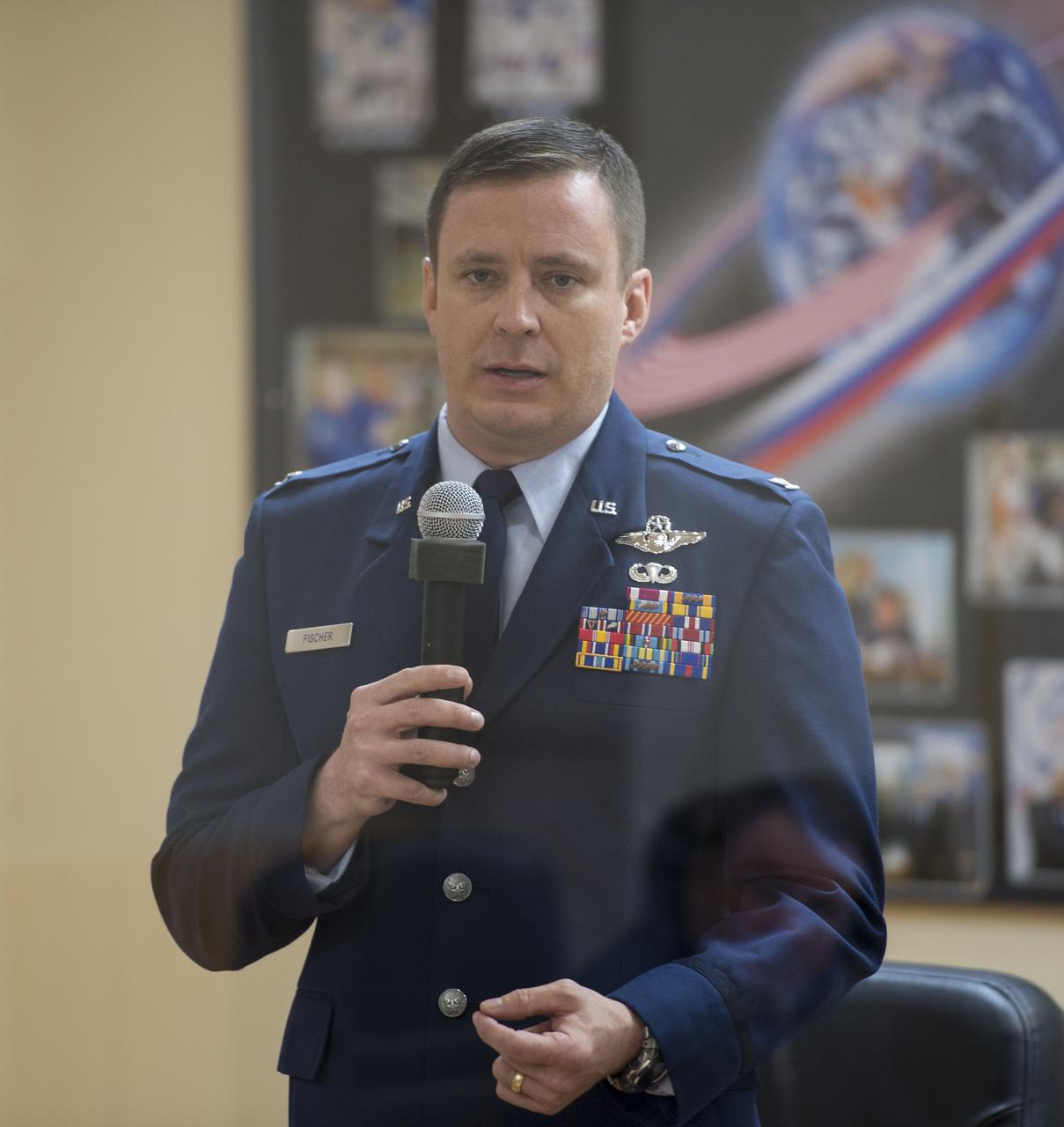
Expedition 51 Flight Engineer Jack Fischer speaks from behind glass, while in quarantine, during the State Commission meeting to approve the Soyuz launch of Expedition 51 to the International Space Station, Wednesday, April 19, 2017, at the Cosmonaut Hotel in Baikonur, Kazakhstan. Launch of the Soyuz rocket is scheduled for April 20 and will carry Fischer and Soyuz Commander Fyodor Yurchikhin of Roscosmos into orbit to begin their four and a half month mission on the International Space Station. Photo Credit: (NASA/Aubrey Gemignani)

Expedition 56 flight engineer Alexander Gerst of ESA (European Space Agency) is seen during the State Commission meeting to approve the Soyuz launch of Expedition 56 to the International Space Station, Tuesday, June 5, 2018 at the Cosmonaut Hotel in Baikonur, Kazakhstan. Gerst, Soyuz Commander Sergey Prokopyev of Roscosmos, and Serena Auñón-Chancellor of NASA are scheduled to launch to the International Space Station aboard the Soyuz MS-09 spacecraft on Wednesday, June 6. Photo Credit: (NASA/Joel Kowsky)
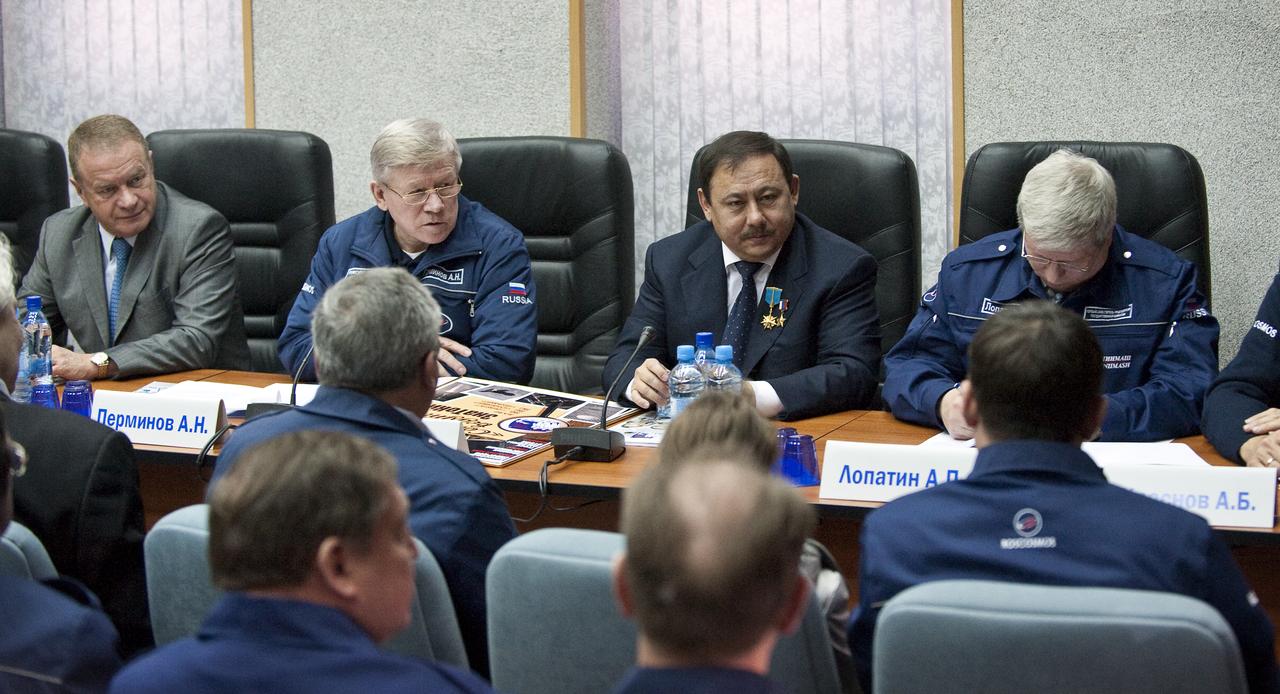
Anatoly Perminov, head of the Russian Federal Space Agency (ROSCOSMOS), second from left, speaks during the State Commission meeting to approve the Soyuz launch of Expedition 23 Soyuz Commander Alexander Skvortsov, Flight Engineer Tracy Caldwell Dyson and Flight Engineer Mikhail Kornienko on Thursday, April 1, 2010, in Baikonur, Kazakhstan. Photo Credit: (NASA/Carla Cioffi)