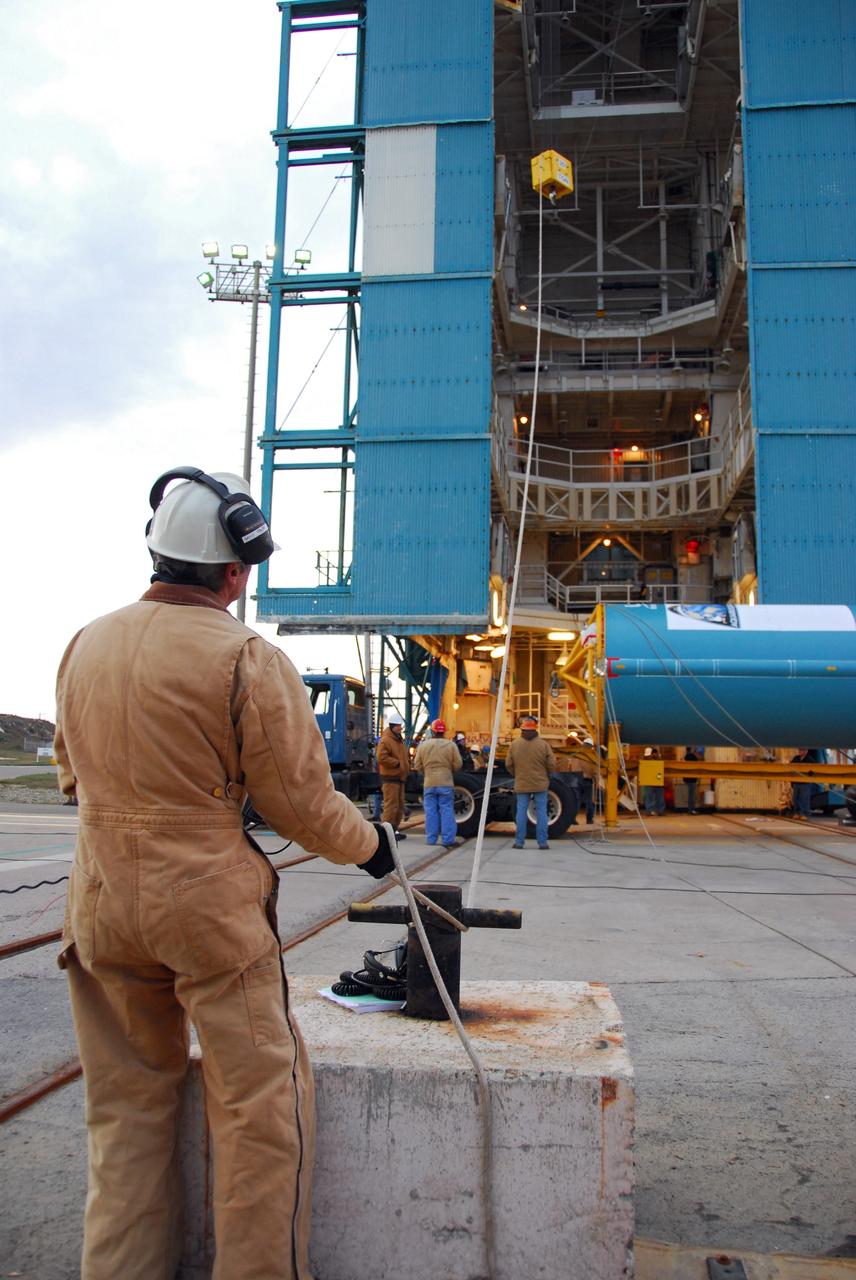
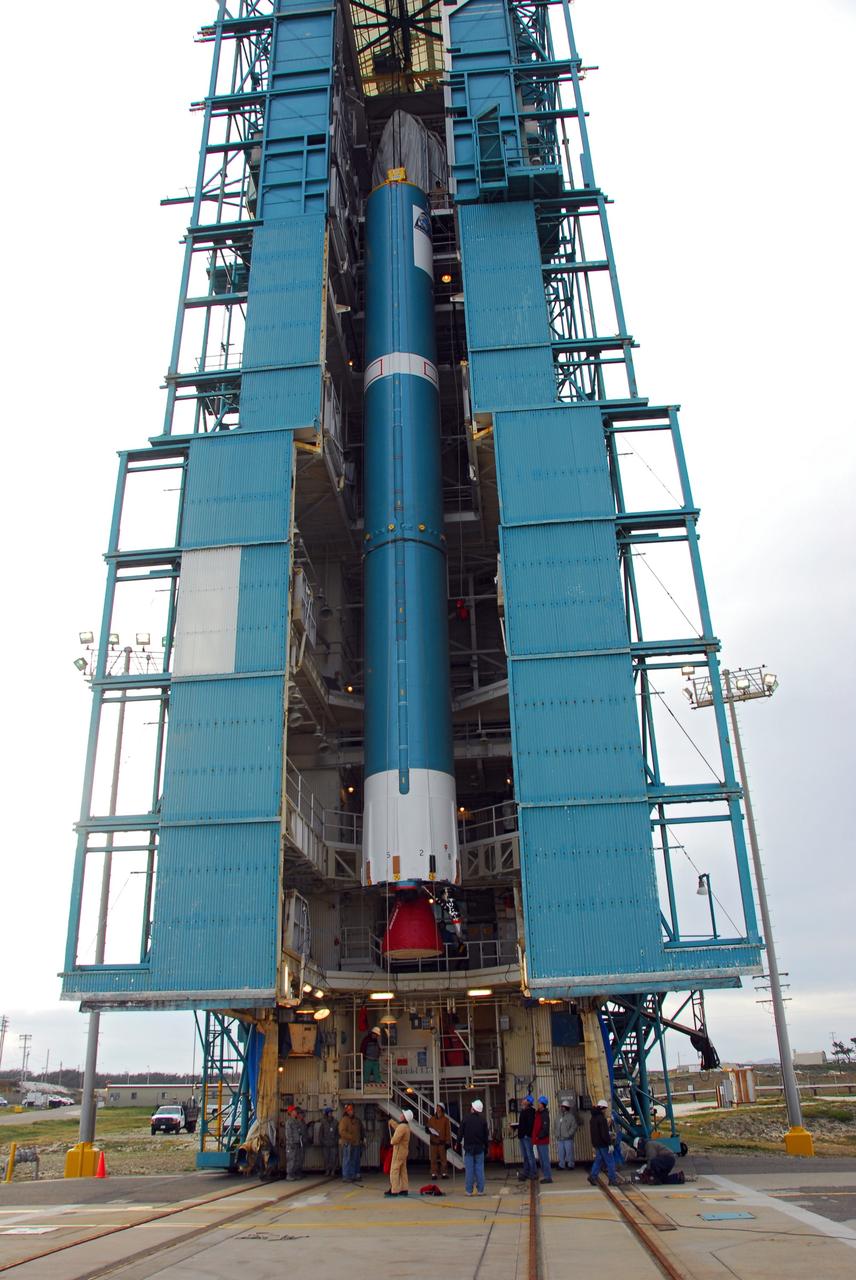
VANDENBERG AIR FORCE BASE, Calif. -- The first stage of the United Launch Alliance Delta II rocket that will carry the Aquarius/SAC-D spacecraft into low Earth orbit is being prepared for its vertical lift into the service tower at NASA's Space Launch Complex-2 (SLC-2) at Vandenberg Air Force Base in California. Following final tests, the spacecraft will be integrated to the Delta II in preparation for the targeted June launch. Aquarius, the NASA-built primary instrument on the SAC-D spacecraft, on its three-year mission, will provide new insights into how variations in ocean surface salinity relate to fundamental climate processes. Photo credit: NASA/VAFB
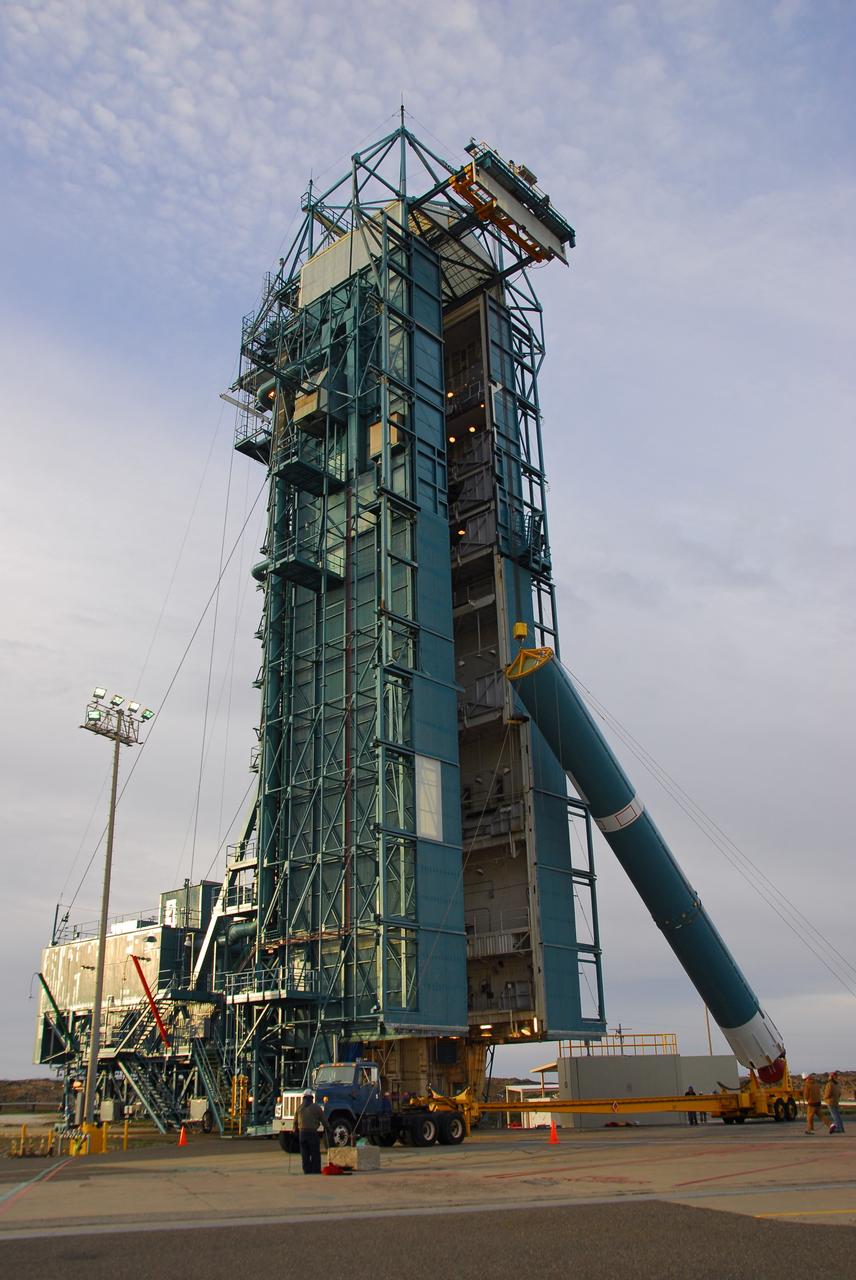
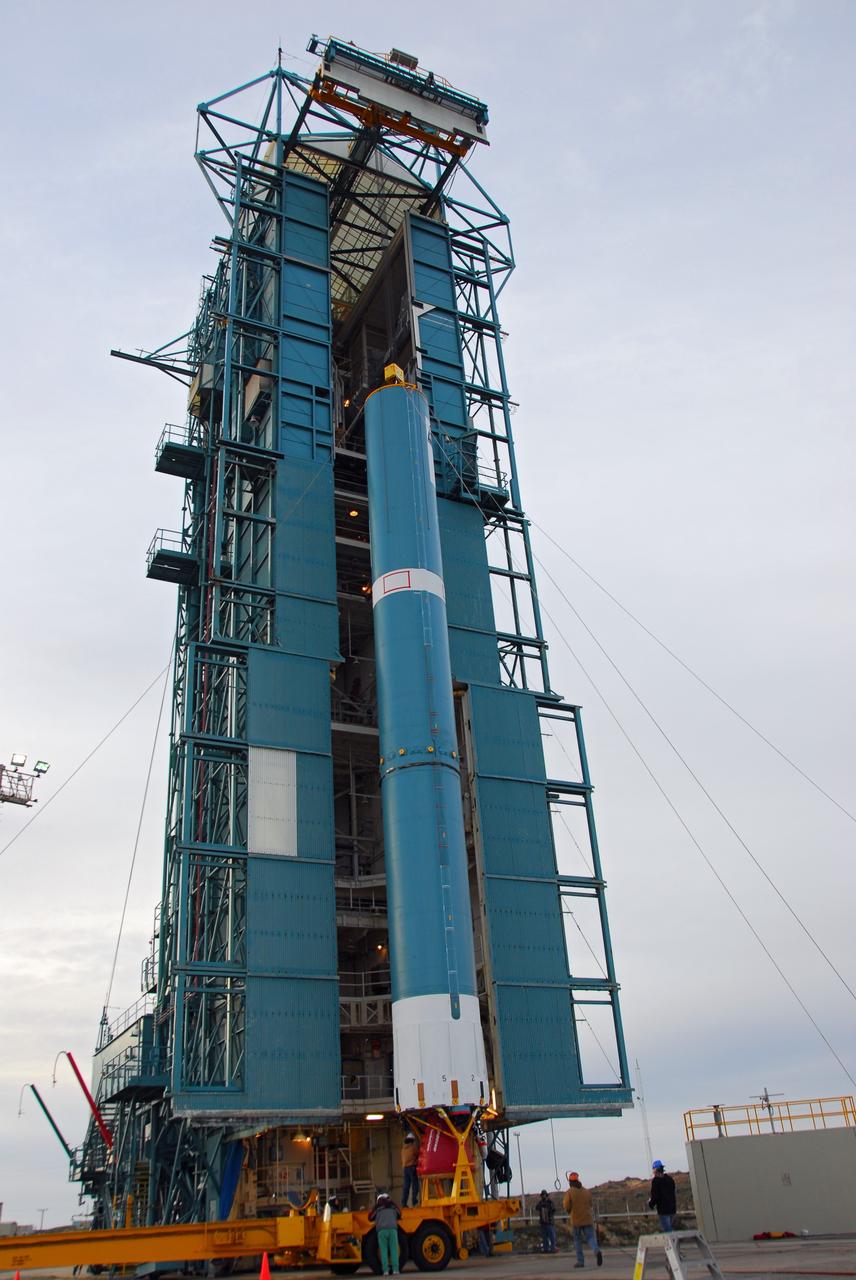
VANDENBERG AIR FORCE BASE, Calif. -- With the aid of an overhead crane, workers lift the first stage of the United Launch Alliance Delta II rocket that will carry the Aquarius/SAC-D spacecraft into low Earth orbit, into the service tower at NASA's Space Launch Complex-2 (SLC-2) at Vandenberg Air Force Base in California. Following final tests, the spacecraft will be integrated to the Delta II in preparation for the targeted June launch. Aquarius, the NASA-built instrument on the SAC-D spacecraft, on its three-year mission, will provide new insights into how variations in ocean surface salinity relate to fundamental climate processes. Photo credit: NASA/VAFB
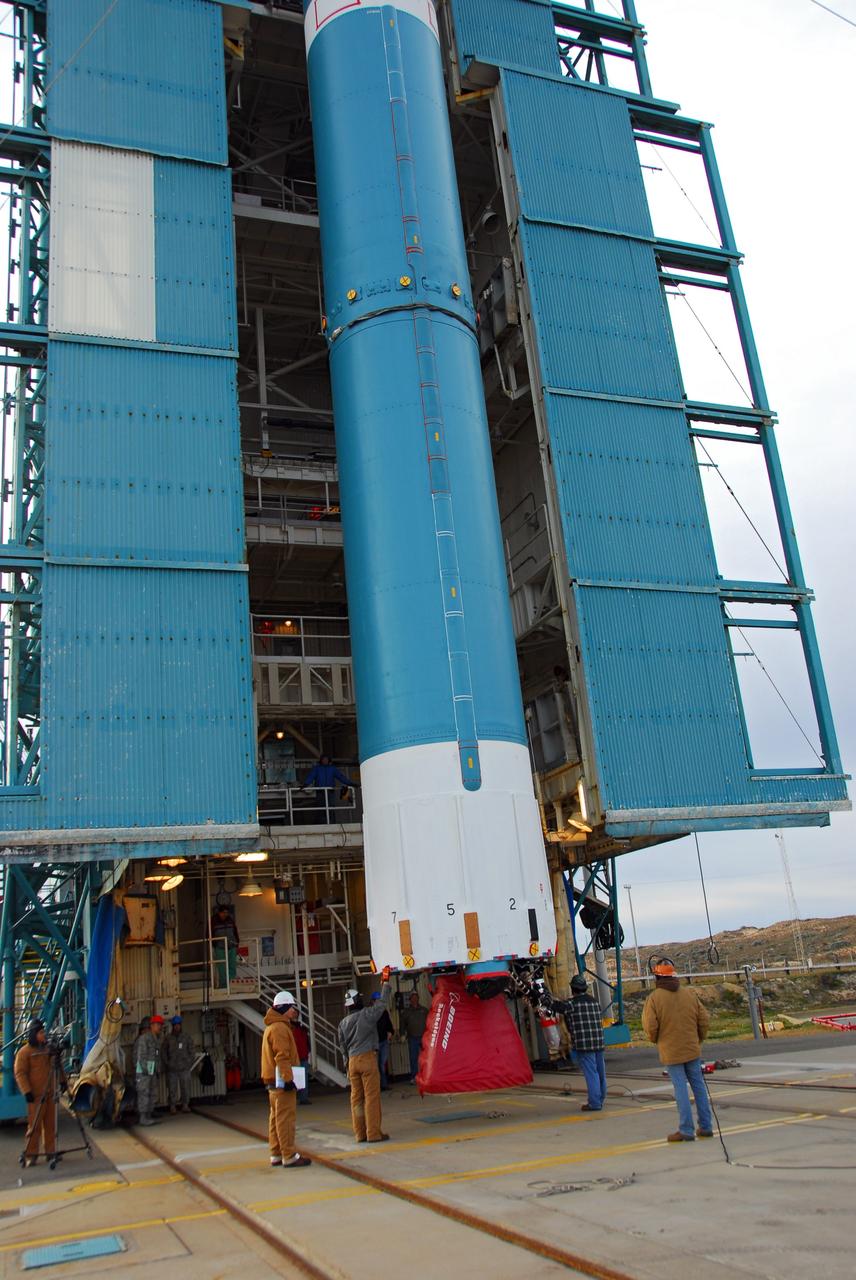
VANDENBERG AIR FORCE BASE, Calif. -- With the aid of an overhead crane, workers guide the first stage of the United Launch Alliance Delta II rocket that will carry the Aquarius/SAC-D spacecraft into low Earth orbit, into the service tower at NASA's Space Launch Complex-2 (SLC-2) at Vandenberg Air Force Base in California. Following final tests, the spacecraft will be integrated to the Delta II in preparation for the targeted June launch. Aquarius, the NASA-built instrument on the SAC-D spacecraft, on its three-year mission, will provide new insights into how variations in ocean surface salinity relate to fundamental climate processes. Photo credit: NASA/VAFB
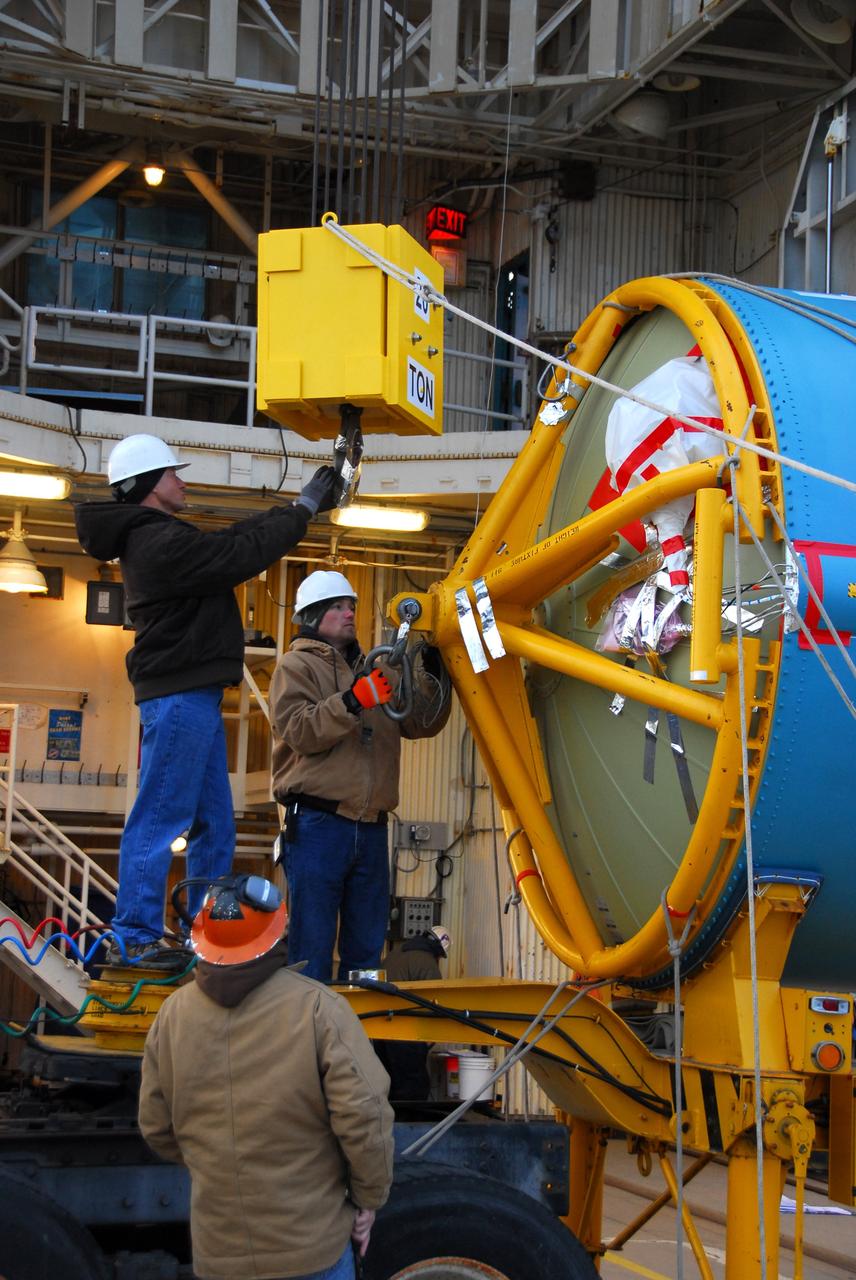
VANDENBERG AIR FORCE BASE, Calif. -- Workers prepare the first stage of the United Launch Alliance Delta II rocket that will carry the Aquarius/SAC-D spacecraft into low Earth orbit, for its vertical lift into the service tower at NASA's Space Launch Complex-2 (SLC-2) at Vandenberg Air Force Base in California. Following final tests, the spacecraft will be integrated to the Delta II in preparation for the targeted June launch. Aquarius, the NASA-built instrument on the SAC-D spacecraft, on its three-year mission, will provide new insights into how variations in ocean surface salinity relate to fundamental climate processes. Photo credit: NASA/VAFB
VANDENBERG AIR FORCE BASE, Calif. -- With the aid of an overhead crane, workers guide the first stage of the United Launch Alliance Delta II rocket that will carry the Aquarius/SAC-D spacecraft into low Earth orbit, into the service tower at NASA's Space Launch Complex-2 (SLC-2) at Vandenberg Air Force Base in California. Following final tests, the spacecraft will be integrated to the Delta II in preparation for the targeted June launch. Aquarius, the NASA-built instrument on the SAC-D spacecraft, on its three-year mission, will provide new insights into how variations in ocean surface salinity relate to fundamental climate processes. Photo credit: NASA/VAFB
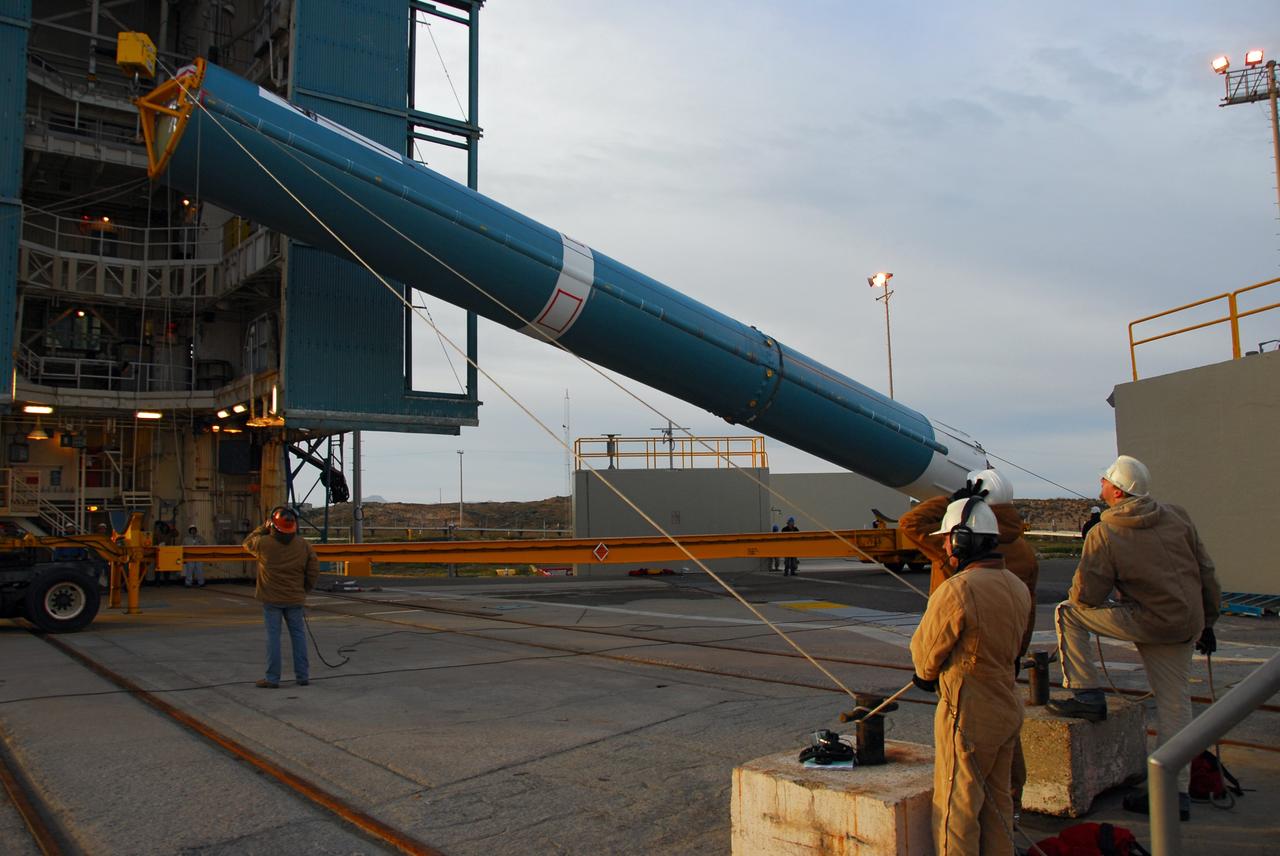
VANDENBERG AIR FORCE BASE, Calif. -- With the aid of an overhead crane, workers lift the first stage of the United Launch Alliance Delta II rocket that will carry the Aquarius/SAC-D spacecraft into low Earth orbit, into the service tower at NASA's Space Launch Complex-2 (SLC-2) at Vandenberg Air Force Base in California. Following final tests, the spacecraft will be integrated to the Delta II in preparation for the targeted June launch. Aquarius, the NASA-built instrument on the SAC-D spacecraft, on its three-year mission, will provide new insights into how variations in ocean surface salinity relate to fundamental climate processes. Photo credit: NASA/VAFB

VANDENBERG AIR FORCE BASE, Calif. -- The first stage of the United Launch Alliance Delta II rocket that will carry the Aquarius/SAC-D satellite into low Earth orbit arrives to the launch pad at NASA's Space Launch Complex-2 (SLC-2) at Vandenberg Air Force Base in California. Following final tests, the spacecraft will be integrated to the Delta II in preparation for the targeted June launch. Aquarius, the NASA-built primary instrument on the SAC-D spacecraft, on its three-year mission, will provide new insights into how variations in ocean surface salinity relate to fundamental climate processes. Photo credit: NASA/VAFB
VANDENBERG AIR FORCE BASE, Calif. -- With the aid of an overhead crane, workers lift the first stage of the United Launch Alliance Delta II rocket that will carry the Aquarius/SAC-D spacecraft into low Earth orbit, into the service tower at NASA's Space Launch Complex-2 (SLC-2) at Vandenberg Air Force Base in California. Following final tests, the spacecraft will be integrated to the Delta II in preparation for the targeted June launch. Aquarius, the NASA-built instrument on the SAC-D spacecraft, on its three-year mission, will provide new insights into how variations in ocean surface salinity relate to fundamental climate processes. Photo credit: NASA/VAFB
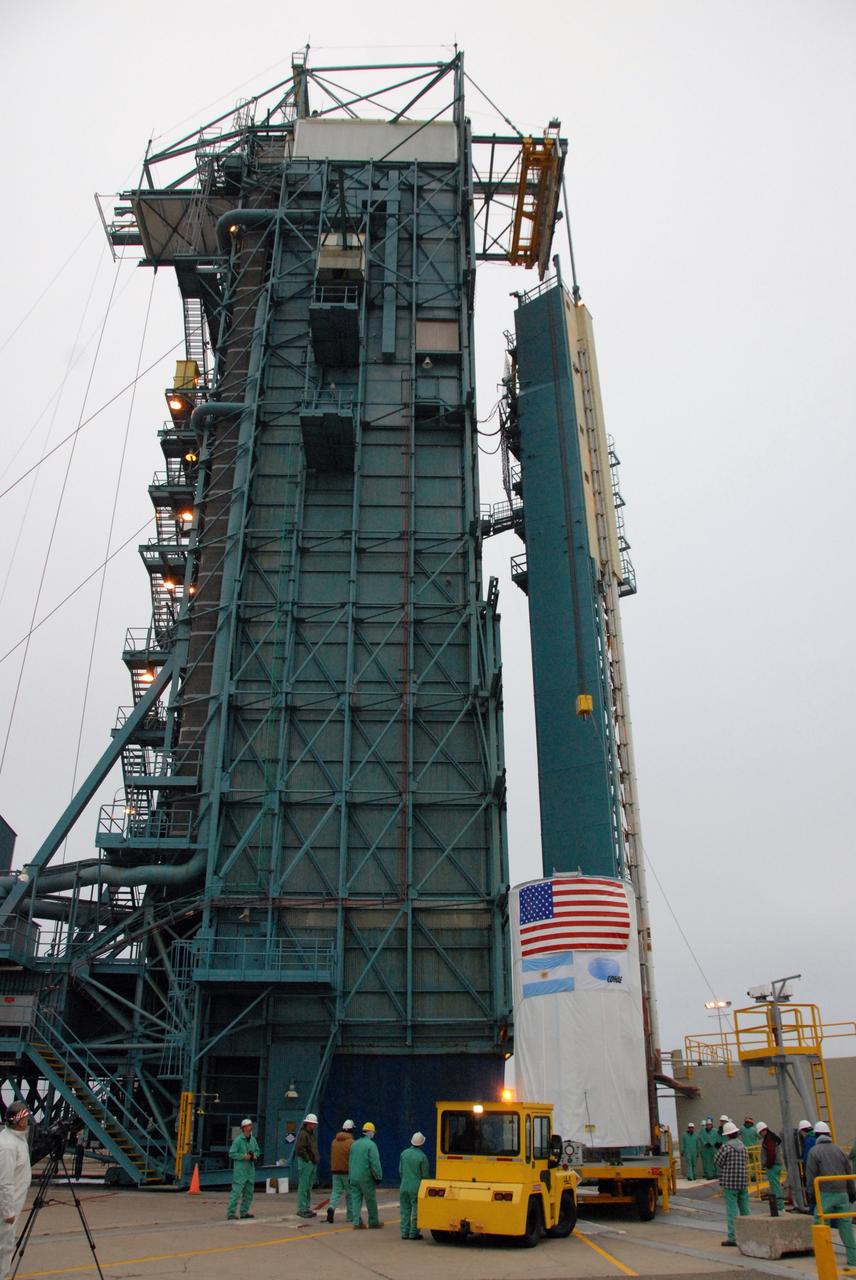
VANDENBERG AIR FORCE BASE, Calif. -- Workers attach an overhead crane to the Aquarius/SAC-D spacecraft, secured inside its payload transportation canister, for lifting into the mobile service tower at NASA's Space Launch Complex-2 (SLC-2) at Vandenberg Air Force Base in California. There, the spacecraft will be integrated to a United Launch Alliance Delta II rocket in preparation for the targeted June liftoff. Aquarius, the NASA-built instrument on the SAC-D spacecraft, will provide new insights into how variations in ocean surface salinity relate to fundamental climate processes on its three-year mission. Photo credit: NASA/VAFB
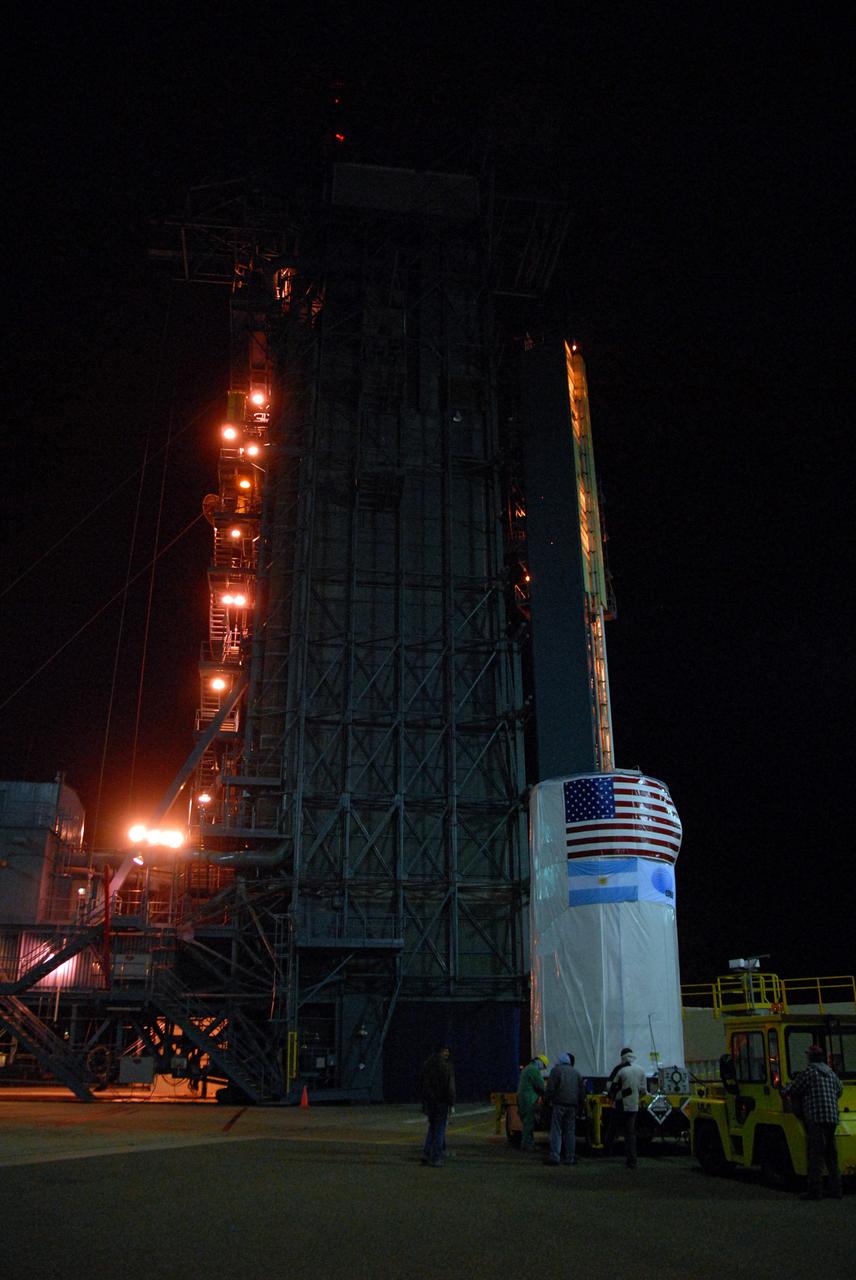
VANDENBERG AIR FORCE BASE, Calif. -- The Aquarius/SAC-D spacecraft, secured inside its payload transportation canister, has been delivered to NASA's Space Launch Complex-2 (SLC-2) at Vandenberg Air Force Base in California. There, the spacecraft will be integrated to a United Launch Alliance Delta II rocket in preparation for the targeted June liftoff. Aquarius, the NASA-built instrument on the SAC-D spacecraft, will provide new insights into how variations in ocean surface salinity relate to fundamental climate processes on its three-year mission. Photo credit: NASA/VAFB
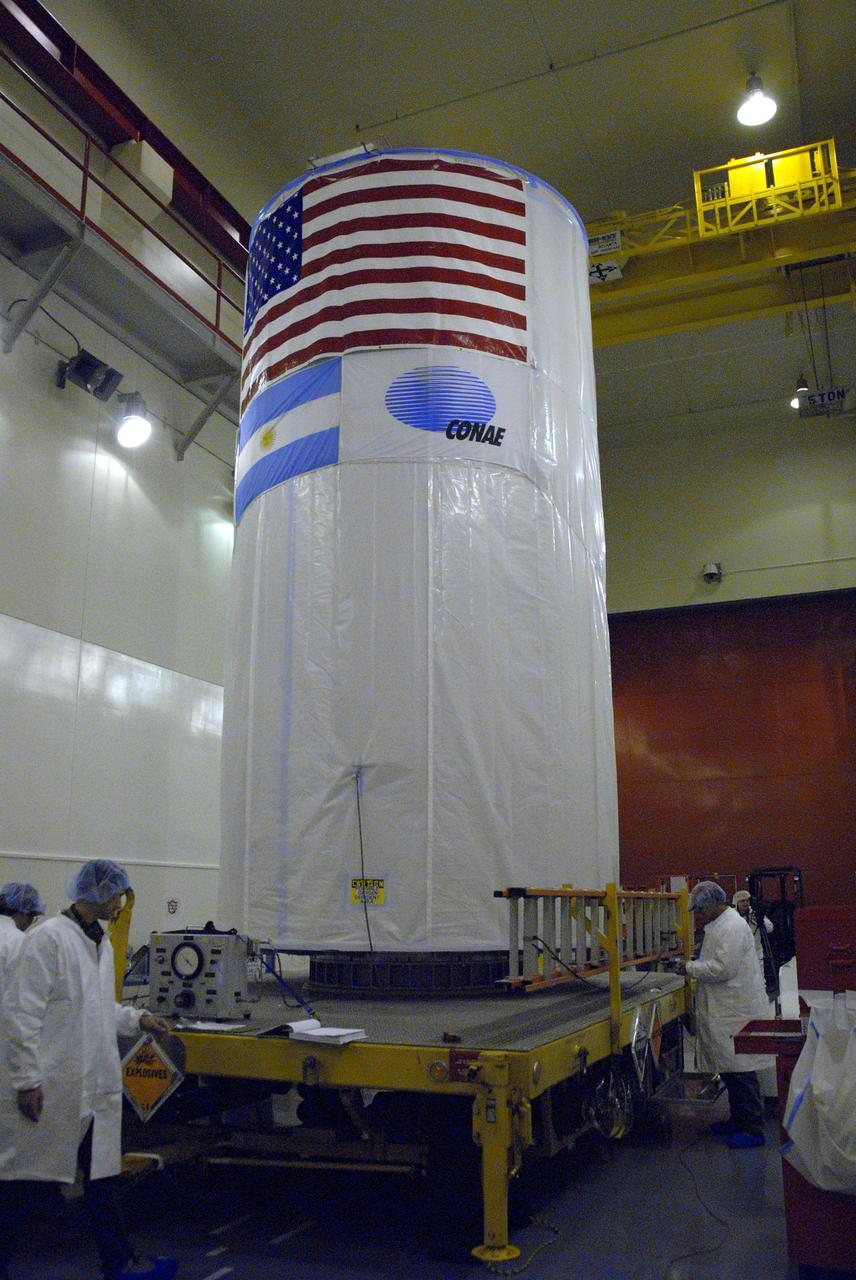
VANDENBERG AIR FORCE BASE, Calif. -- The Aquarius/SAC-D spacecraft is secured inside its payload transportation canister for transfer to NASA's Space Launch Complex-2 (SLC-2) at Vandenberg Air Force Base in California. There, the spacecraft will be integrated to a United Launch Alliance Delta II rocket in preparation for the targeted June liftoff. Aquarius, the NASA-built instrument on the SAC-D spacecraft, will provide new insights into how variations in ocean surface salinity relate to fundamental climate processes on its three-year mission. Photo credit: NASA/VAFB
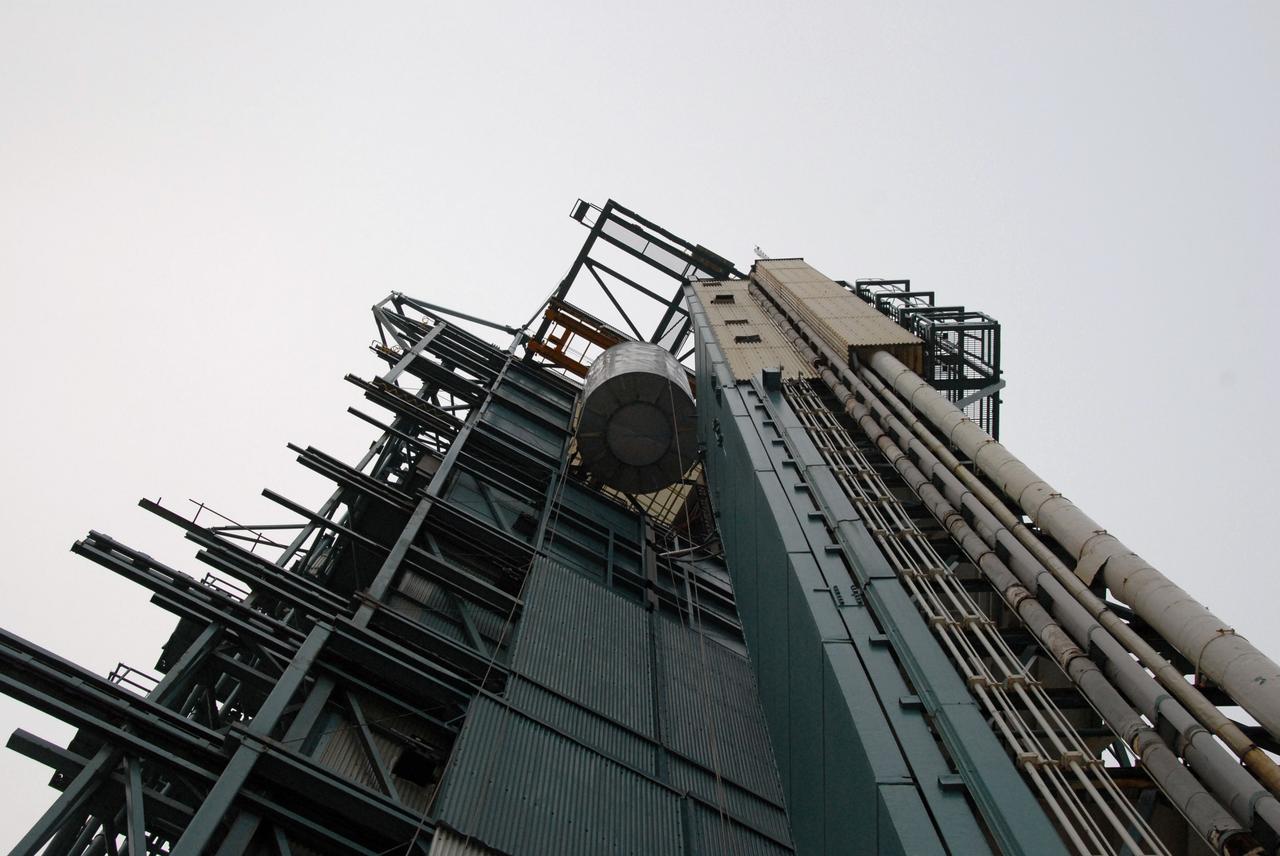
VANDENBERG AIR FORCE BASE, Calif. -- An overhead crane lifts the Aquarius/SAC-D spacecraft, secured inside its payload transportation canister, into the mobile service tower at NASA's Space Launch Complex-2 (SLC-2) at Vandenberg Air Force Base in California. There, the spacecraft will be integrated to a United Launch Alliance Delta II rocket in preparation for the targeted June liftoff. Aquarius, the NASA-built instrument on the SAC-D spacecraft, will provide new insights into how variations in ocean surface salinity relate to fundamental climate processes on its three-year mission. Photo credit: NASA/VAFB
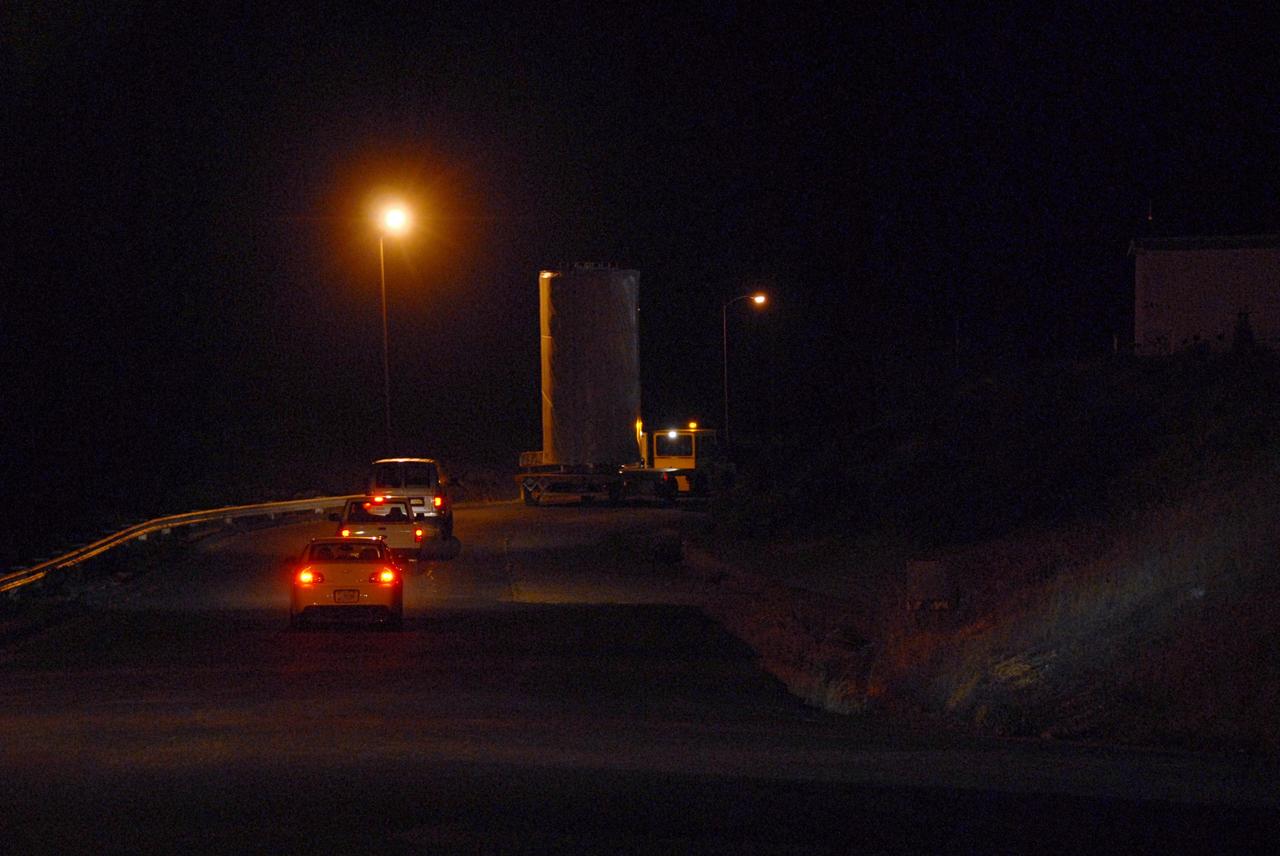
VANDENBERG AIR FORCE BASE, Calif. -- The Aquarius/SAC-D spacecraft, secured inside its payload transportation canister, is being transferred to NASA's Space Launch Complex-2 (SLC-2) at Vandenberg Air Force Base in California. There, the spacecraft will be integrated to a United Launch Alliance Delta II rocket in preparation for the targeted June liftoff. Aquarius, the NASA-built instrument on the SAC-D spacecraft, will provide new insights into how variations in ocean surface salinity relate to fundamental climate processes on its three-year mission. Photo credit: NASA/VAFB
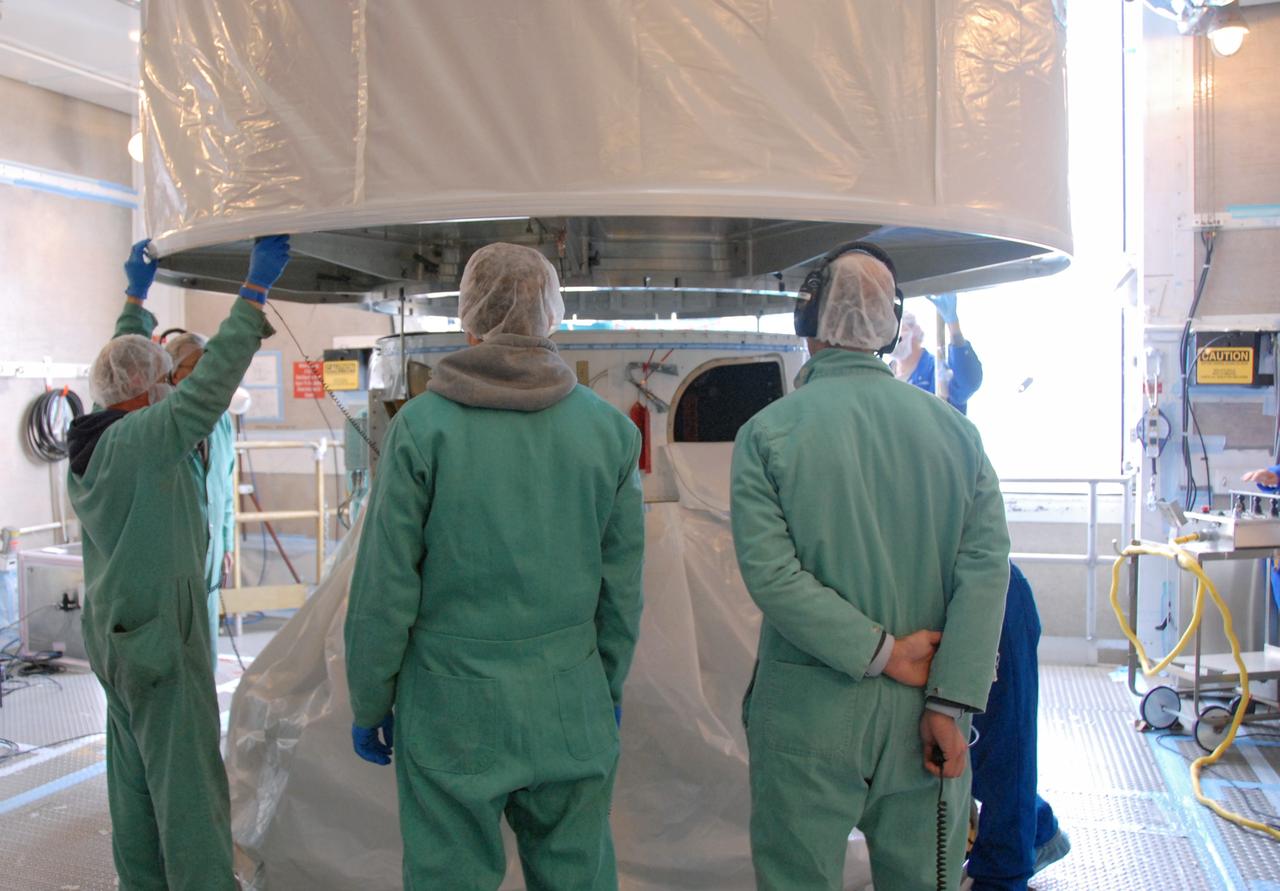
VANDENBERG AIR FORCE BASE, Calif. -- Workers remove the payload transportation canister from the Aquarius/SAC-D spacecraft, after it was lifted into the mobile service tower at NASA's Space Launch Complex-2 (SLC-2) at Vandenberg Air Force Base in California. There, the spacecraft will be integrated to a United Launch Alliance Delta II rocket in preparation for the targeted June liftoff. Aquarius, the NASA-built instrument on the SAC-D spacecraft, will provide new insights into how variations in ocean surface salinity relate to fundamental climate processes on its three-year mission. Photo credit: NASA/VAFB
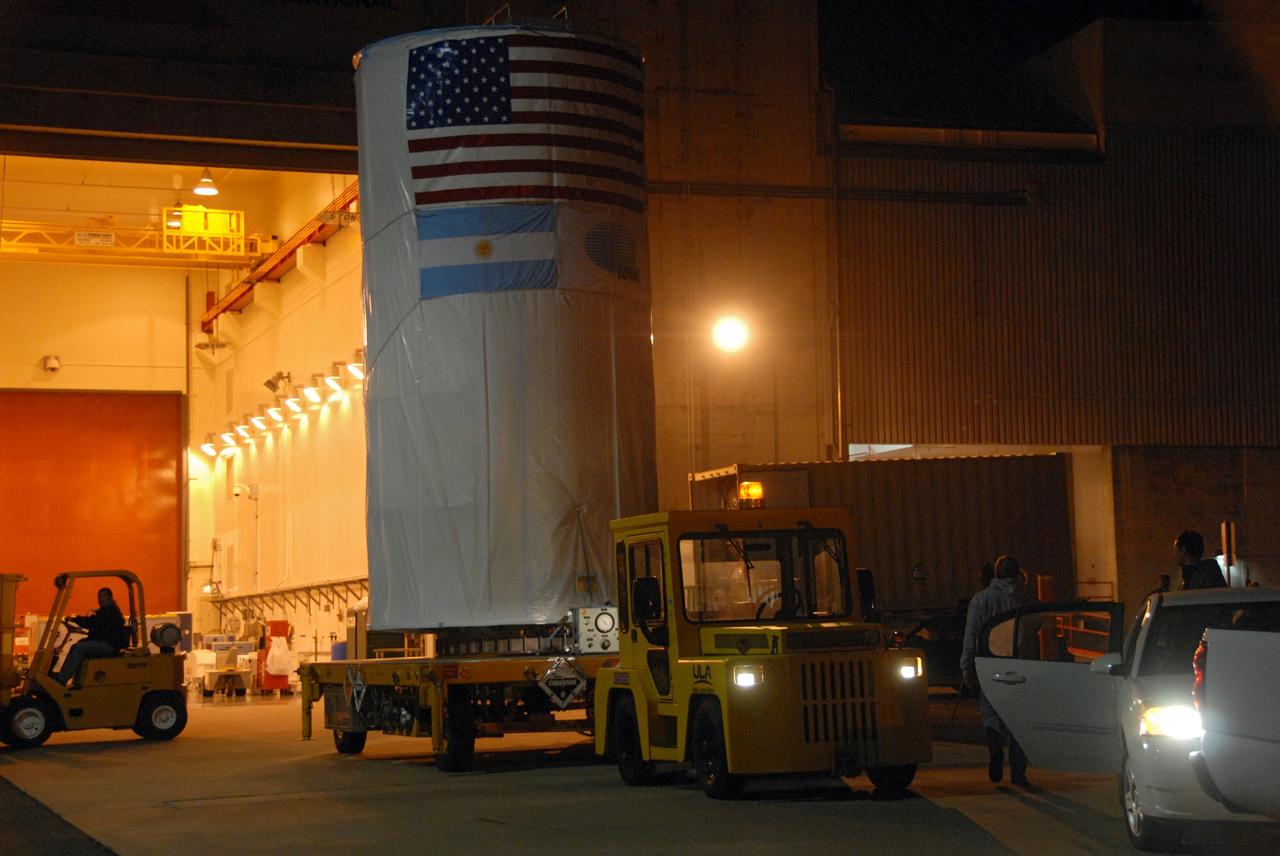
VANDENBERG AIR FORCE BASE, Calif. -- The Aquarius/SAC-D spacecraft, secured inside its payload transportation canister, is being transferred to NASA's Space Launch Complex-2 (SLC-2) at Vandenberg Air Force Base in California. There, the spacecraft will be integrated to a United Launch Alliance Delta II rocket in preparation for the targeted June liftoff. Aquarius, the NASA-built instrument on the SAC-D spacecraft, will provide new insights into how variations in ocean surface salinity relate to fundamental climate processes on its three-year mission. Photo credit: NASA/VAFB
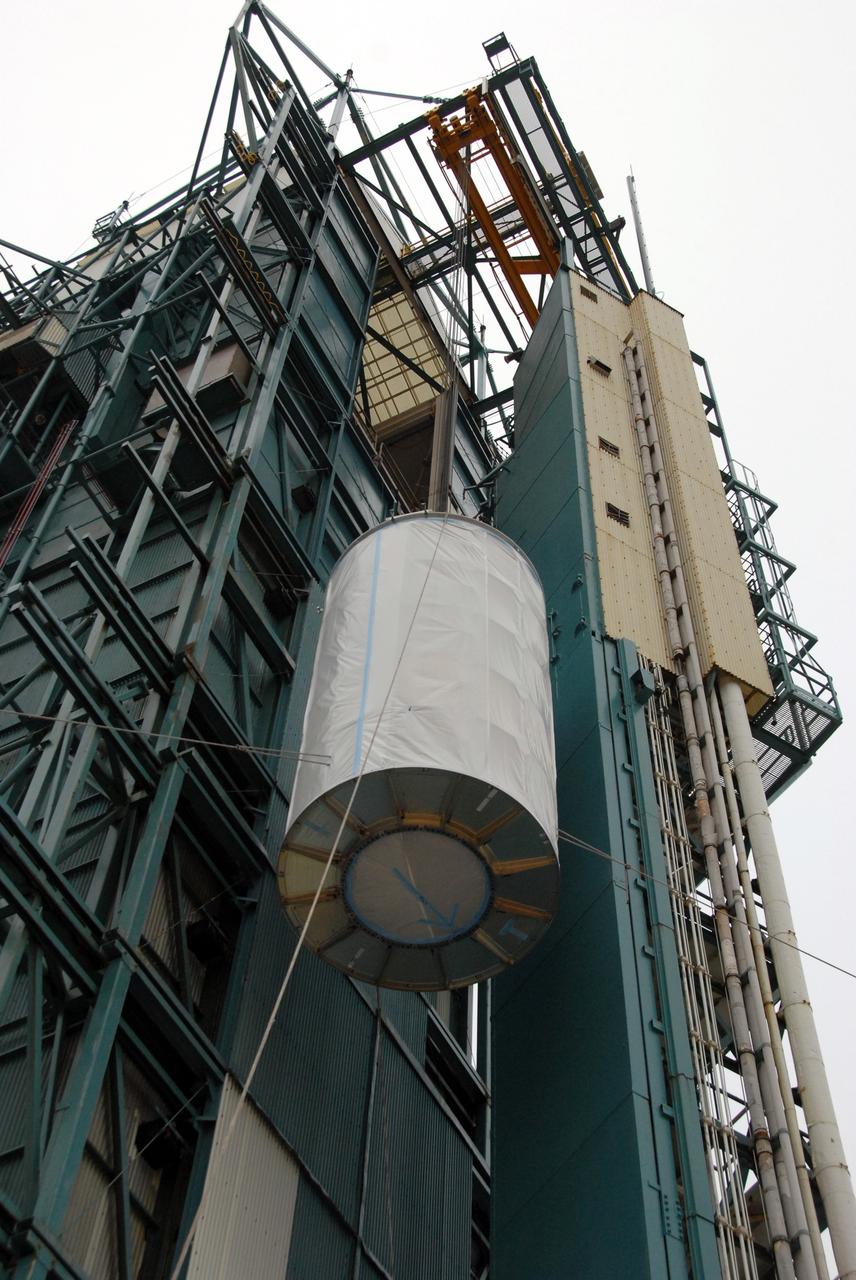
VANDENBERG AIR FORCE BASE, Calif. -- An overhead crane lifts the Aquarius/SAC-D spacecraft, secured inside its payload transportation canister, into the mobile service tower at NASA's Space Launch Complex-2 (SLC-2) at Vandenberg Air Force Base in California. There, the spacecraft will be integrated to a United Launch Alliance Delta II rocket in preparation for the targeted June liftoff. Aquarius, the NASA-built instrument on the SAC-D spacecraft, will provide new insights into how variations in ocean surface salinity relate to fundamental climate processes on its three-year mission. Photo credit: NASA/VAFB
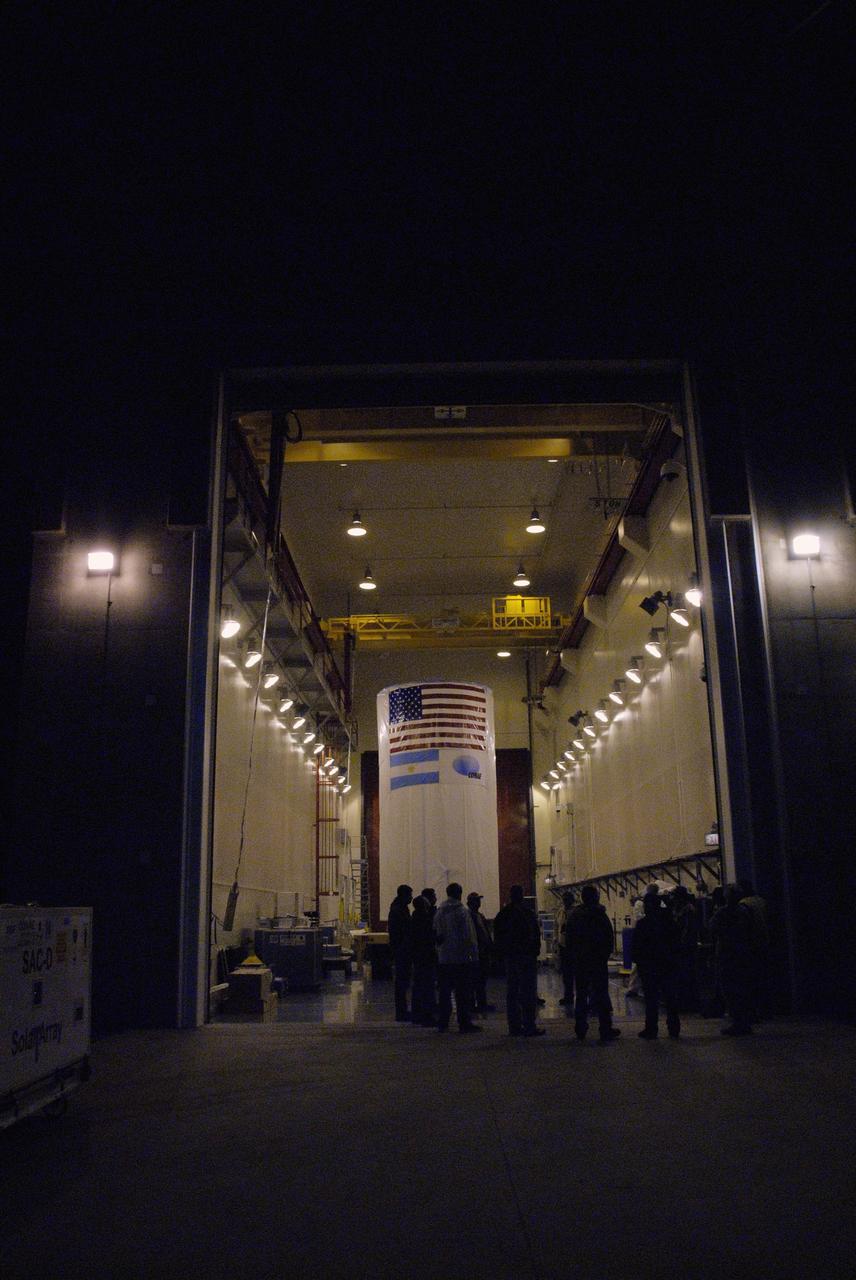
VANDENBERG AIR FORCE BASE, Calif. -- The Aquarius/SAC-D spacecraft is secured inside its payload transportation canister for transfer to NASA's Space Launch Complex-2 (SLC-2) at Vandenberg Air Force Base in California. There, the spacecraft will be integrated to a United Launch Alliance Delta II rocket in preparation for the targeted June liftoff. Aquarius, the NASA-built instrument on the SAC-D spacecraft, will provide new insights into how variations in ocean surface salinity relate to fundamental climate processes on its three-year mission. Photo credit: NASA/VAFB
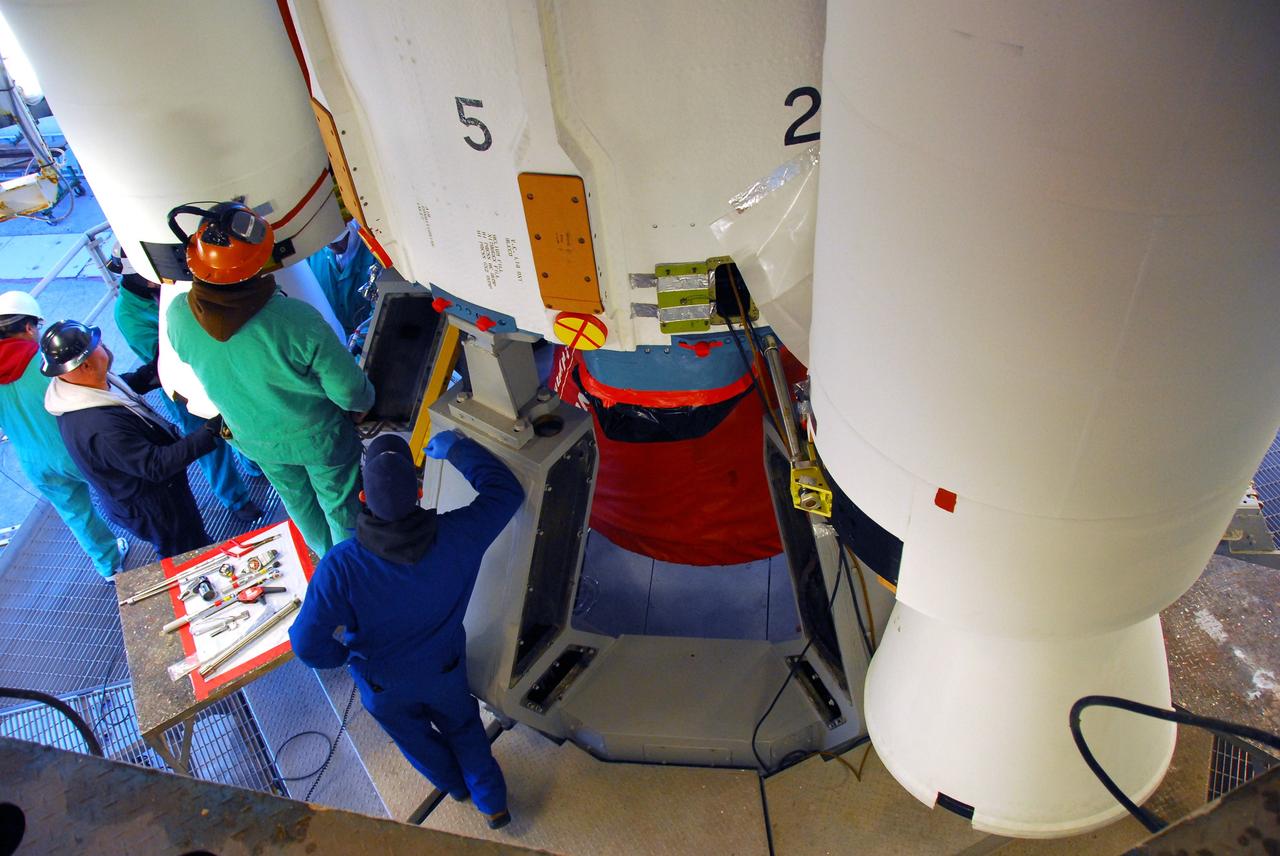
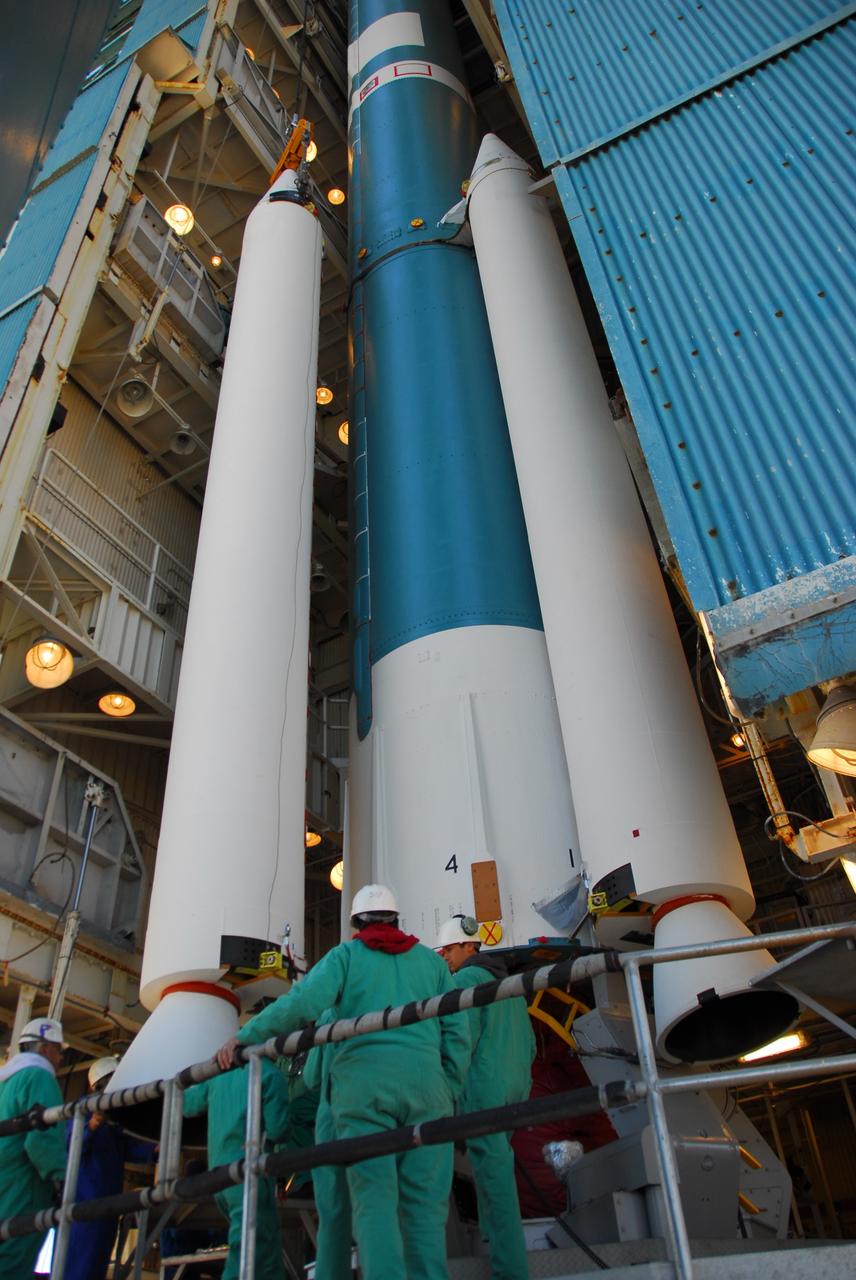
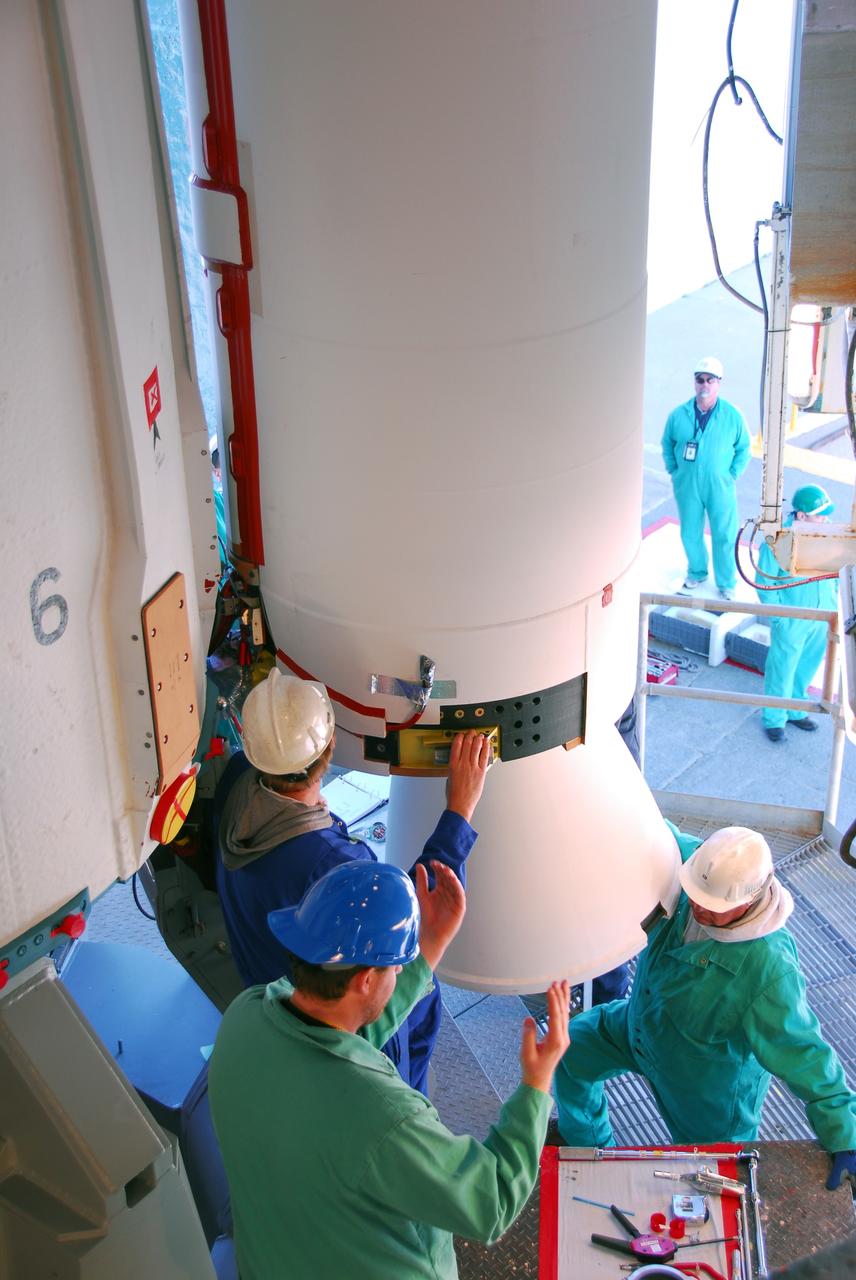
VANDENBERG AIR FORCE BASE, Calif. -- Workers attach one of three solid rocket motors to a United Launch Alliance Delta II launch vehicle in the service tower at NASA's Space Launch Complex-2 (SLC-2) at Vandenberg Air Force Base in California. Following final tests, the spacecraft will be integrated to the Delta II in preparation for the targeted June launch. Aquarius, the NASA-built instrument on the SAC-D spacecraft will provide new insights into how variations in ocean surface salinity relate to fundamental climate processes on its three-year mission. Photo credit: NASA/VAFB
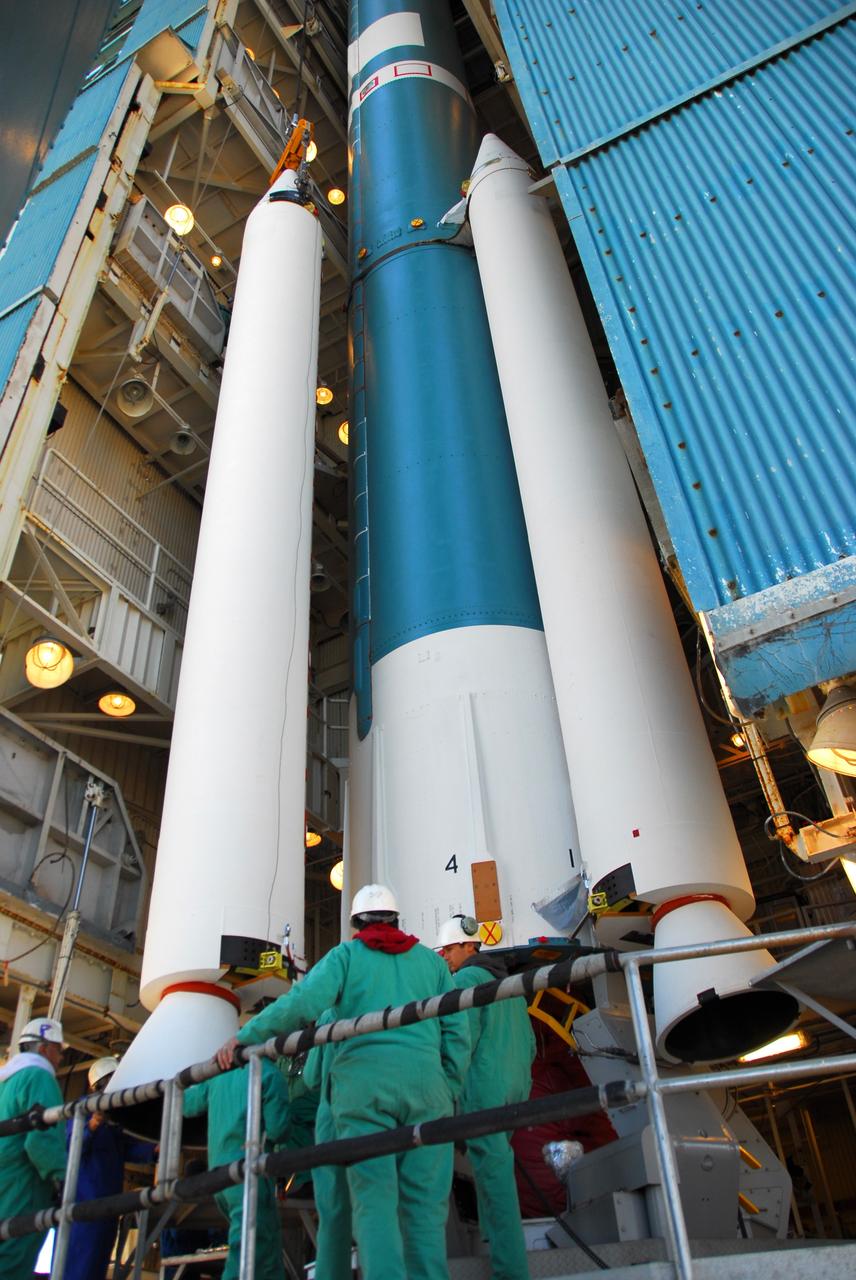
VANDENBERG AIR FORCE BASE, Calif. -- Workers attach one of three solid rocket motors to a United Launch Alliance Delta II launch vehicle in the service tower at NASA's Space Launch Complex-2 (SLC-2) at Vandenberg Air Force Base in California. Following final tests, the spacecraft will be integrated to the Delta II in preparation for the targeted June launch. Aquarius, the NASA-built instrument on the SAC-D spacecraft will provide new insights into how variations in ocean surface salinity relate to fundamental climate processes on its three-year mission. Photo credit: NASA/VAFB
VANDENBERG AIR FORCE BASE, Calif. -- Workers attach one of three solid rocket motors to a United Launch Alliance Delta II launch vehicle in the service tower at NASA's Space Launch Complex-2 (SLC-2) at Vandenberg Air Force Base in California. Following final tests, the spacecraft will be integrated to the Delta II in preparation for the targeted June launch. Aquarius, the NASA-built instrument on the SAC-D spacecraft will provide new insights into how variations in ocean surface salinity relate to fundamental climate processes on its three-year mission. Photo credit: NASA/VAFB
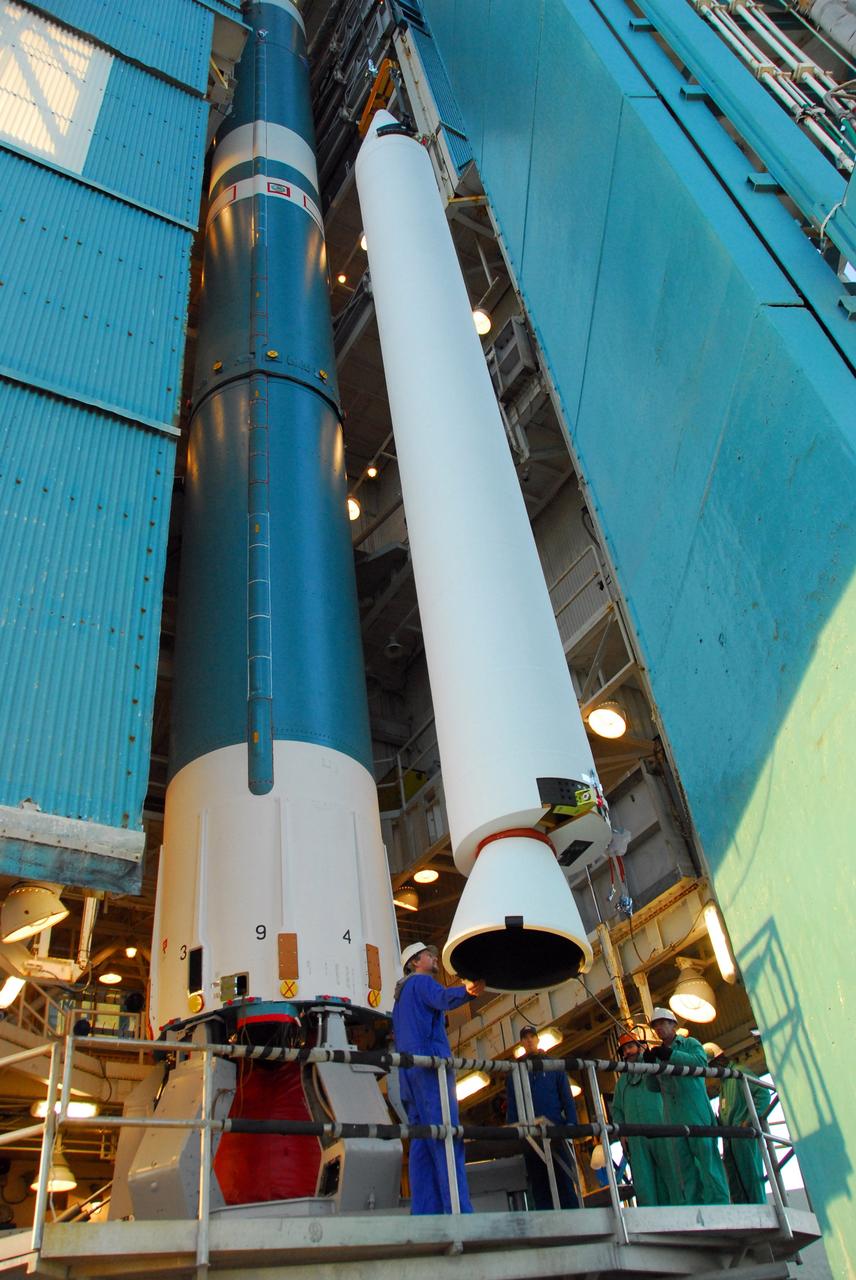
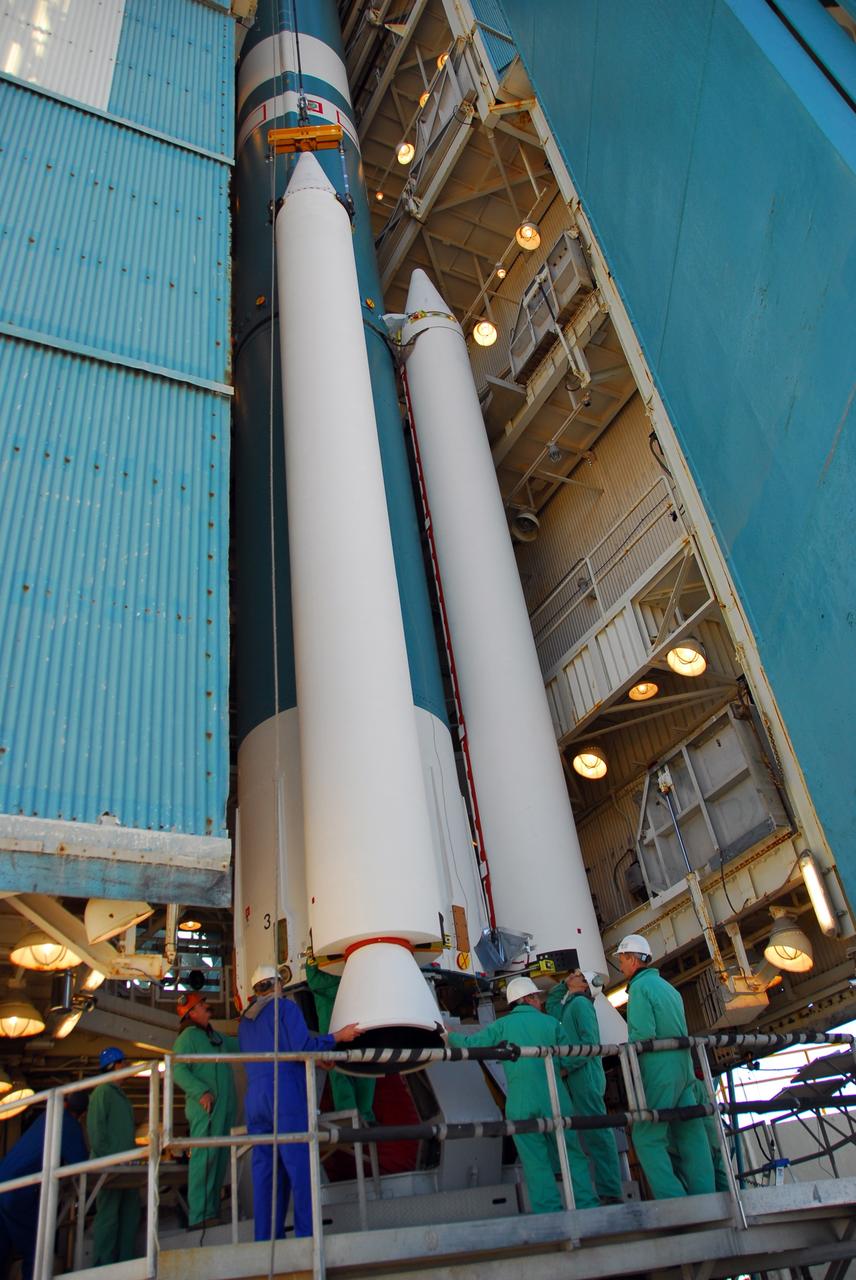
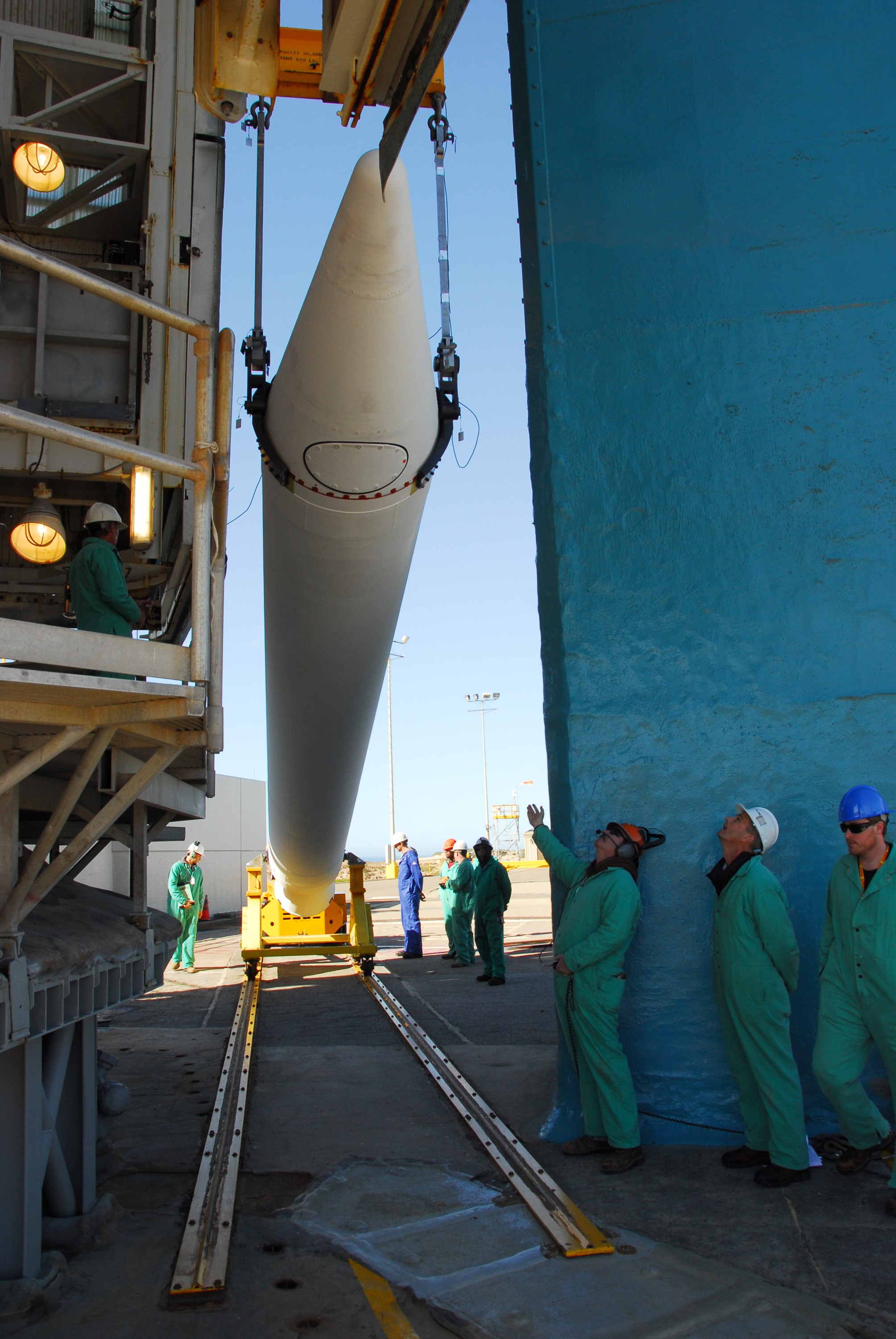
VANDENBERG AIR FORCE BASE, Calif. -- With the aid of an overhead crane workers lift one of three United Launch Alliance Delta II solid rocket motors into the service tower at NASA's Space Launch Complex-2 (SLC-2) at Vandenberg Air Force Base in California. Following final tests, the spacecraft will be integrated to the Delta II in preparation for the targeted June launch. Aquarius, the NASA-built instrument on the SAC-D spacecraft will provide new insights into how variations in ocean surface salinity relate to fundamental climate processes on its three-year mission. Photo credit: NASA/VAFB
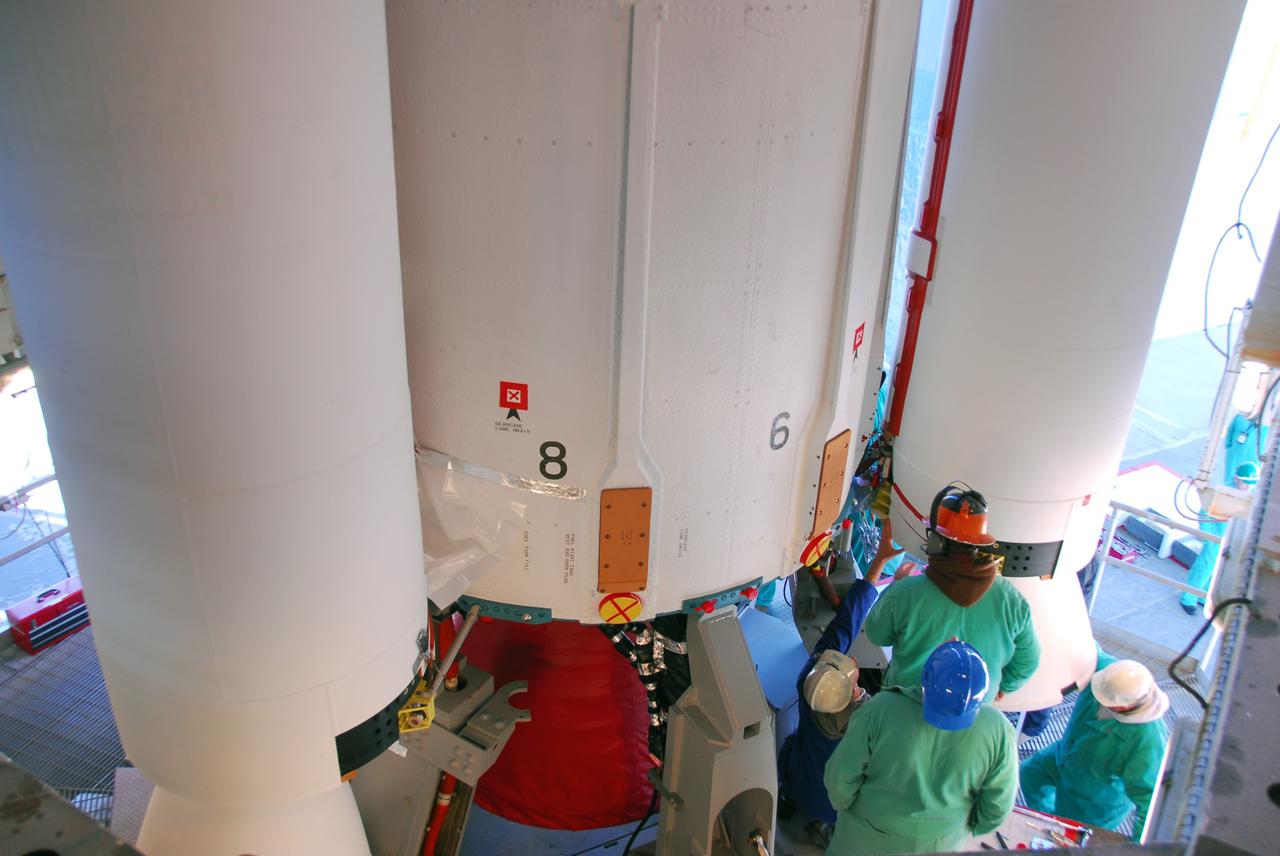
VANDENBERG AIR FORCE BASE, Calif. -- Workers attach one of three solid rocket motors to a United Launch Alliance Delta II launch vehicle in the service tower at NASA's Space Launch Complex-2 (SLC-2) at Vandenberg Air Force Base in California. Following final tests, the spacecraft will be integrated to the Delta II in preparation for the targeted June launch. Aquarius, the NASA-built instrument on the SAC-D spacecraft will provide new insights into how variations in ocean surface salinity relate to fundamental climate processes on its three-year mission. Photo credit: NASA/VAFB
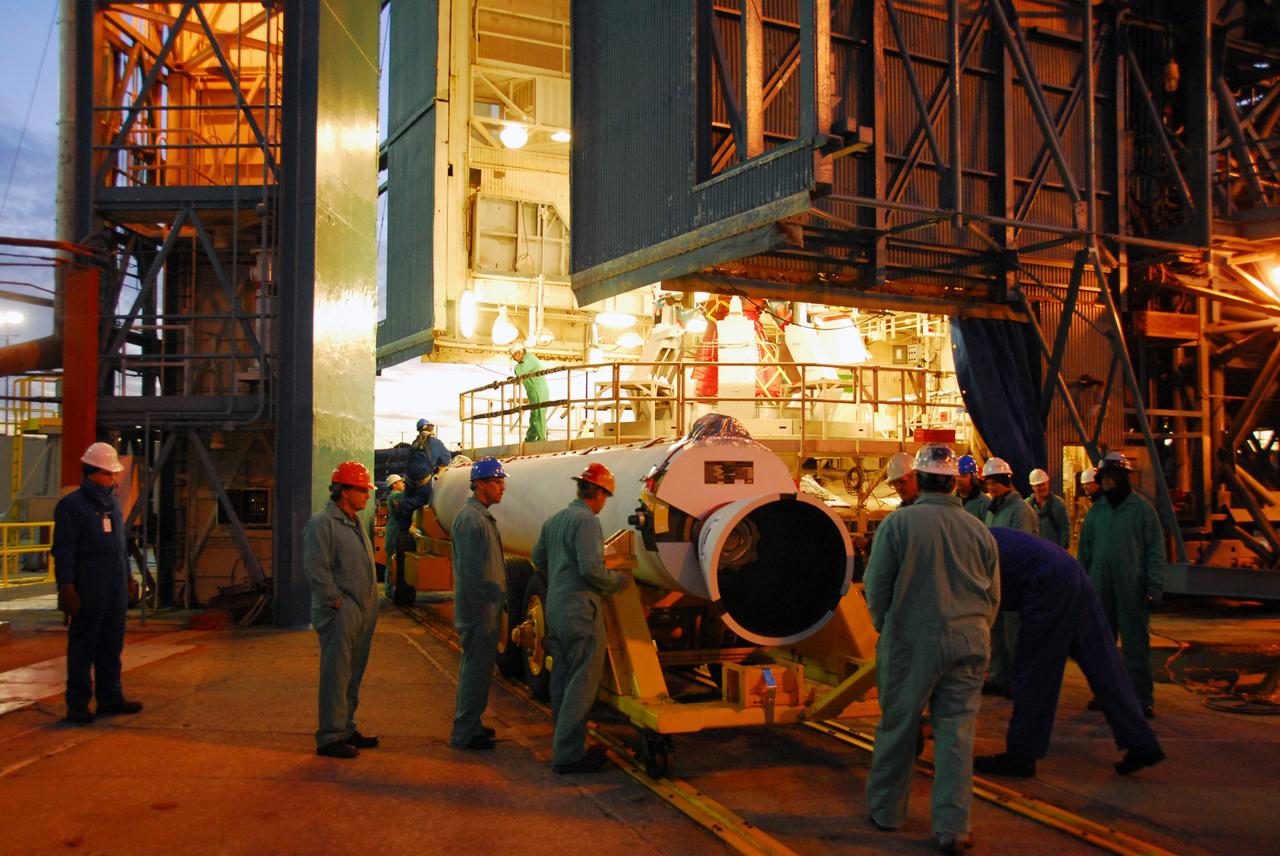
VANDENBERG AIR FORCE BASE, Calif. -- Workers prepare one of three United Launch Alliance Delta II solid rocket motors for its lift into the service tower at NASA's Space Launch Complex-2 (SLC-2) at Vandenberg Air Force Base in California. Following final tests, the spacecraft will be integrated to the Delta II in preparation for the targeted June launch. Aquarius, the NASA-built instrument on the SAC-D spacecraft will provide new insights into how variations in ocean surface salinity relate to fundamental climate processes on its three-year mission. Photo credit: NASA/VAFB
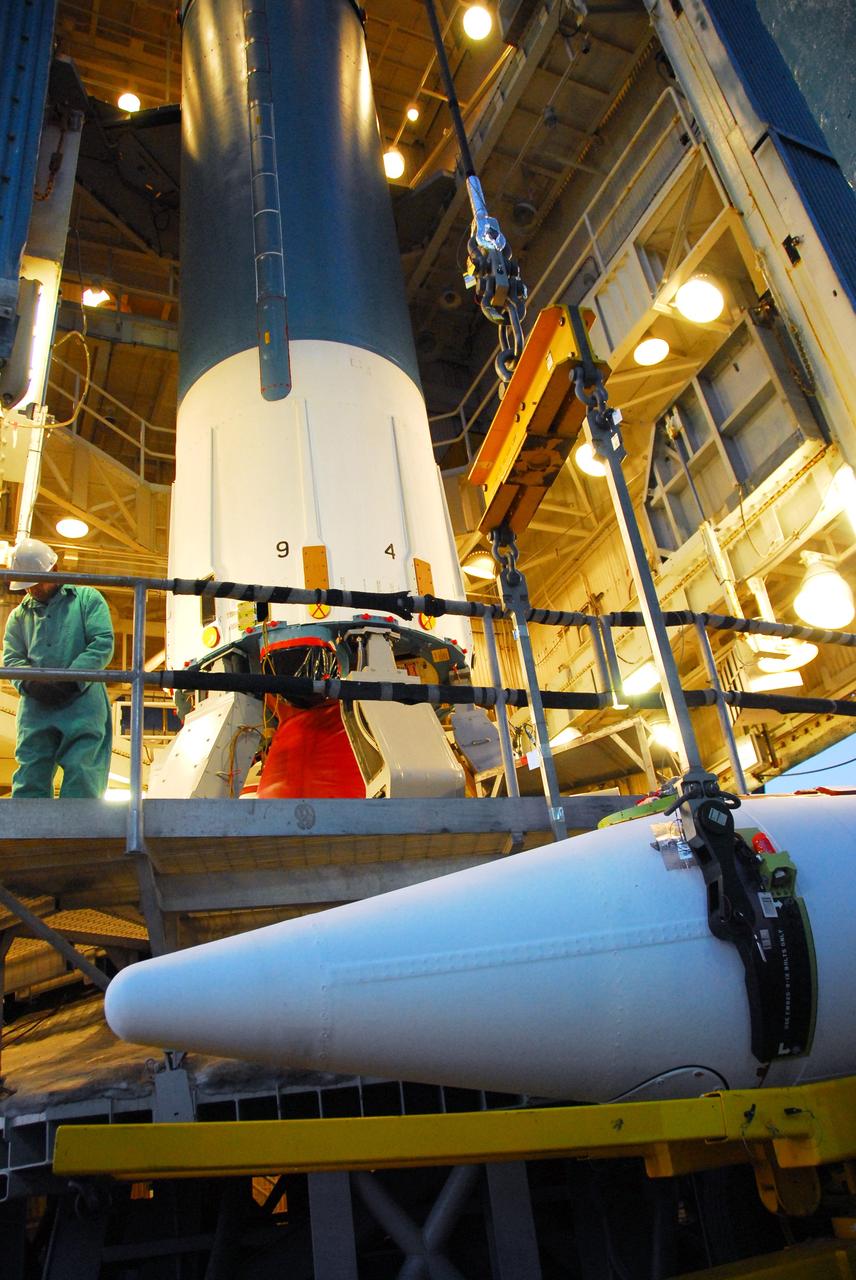
VANDENBERG AIR FORCE BASE, Calif. -- With the aid of an overhead crane workers lift one of three United Launch Alliance Delta II solid rocket motors into the service tower at NASA's Space Launch Complex-2 (SLC-2) at Vandenberg Air Force Base in California. Following final tests, the spacecraft will be integrated to the Delta II in preparation for the targeted June launch. Aquarius, the NASA-built instrument on the SAC-D spacecraft will provide new insights into how variations in ocean surface salinity relate to fundamental climate processes on its three-year mission. Photo credit: NASA/VAFB
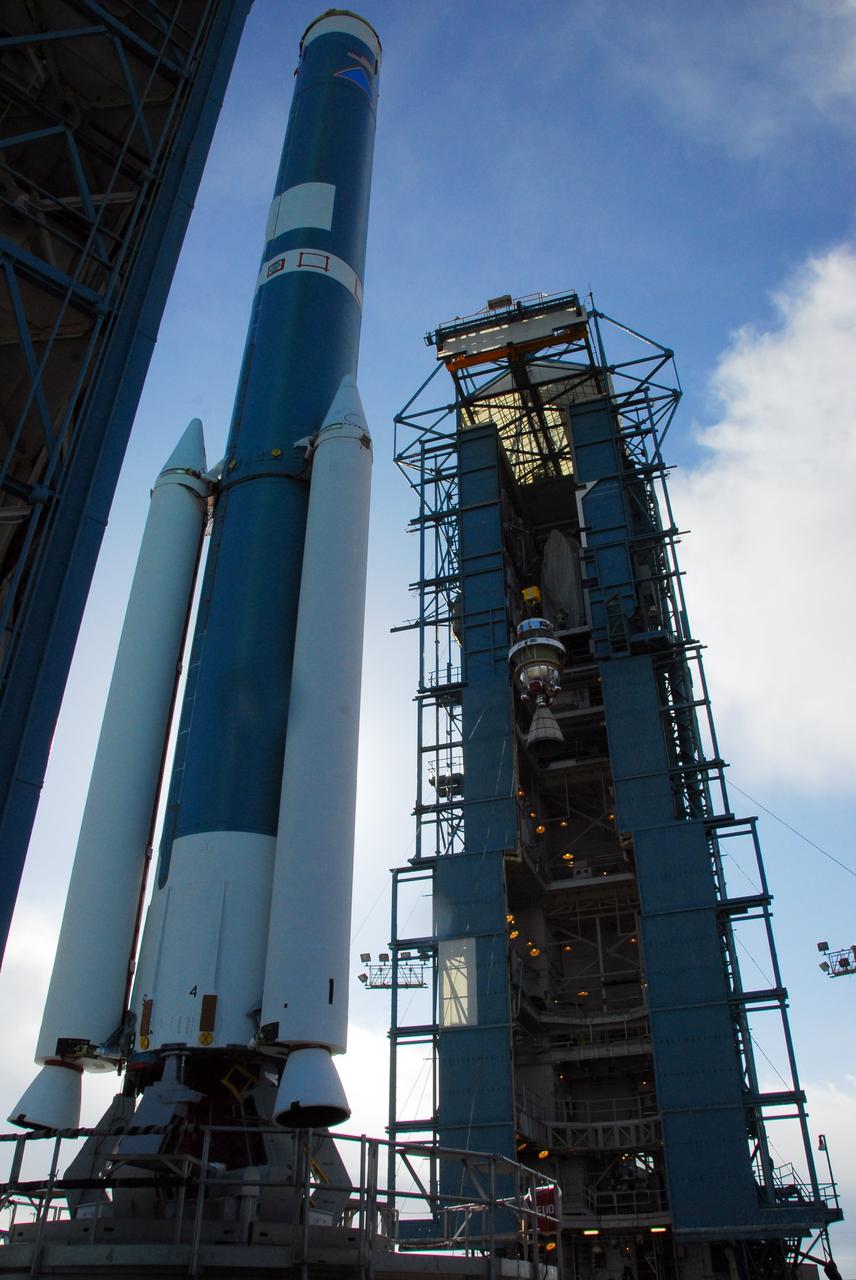
VANDENBERG AIR FORCE BASE, Calif. -- With the help of an overhead crane workers lift the United Launch Alliance Delta II second stage motor to the top of the service tower for mating with the first stage at NASA's Space Launch Complex-2 (SLC-2) at Vandenberg Air Force Base in California. Following final tests, the Aquarius/SAC-D spacecraft will be integrated to the Delta II launch vehicle in preparation for the targeted June liftoff. Aquarius, the NASA-built instrument on the SAC-D spacecraft will provide new insights into how variations in ocean surface salinity relate to fundamental climate processes on its three-year mission. Photo credit: NASA/VAFB
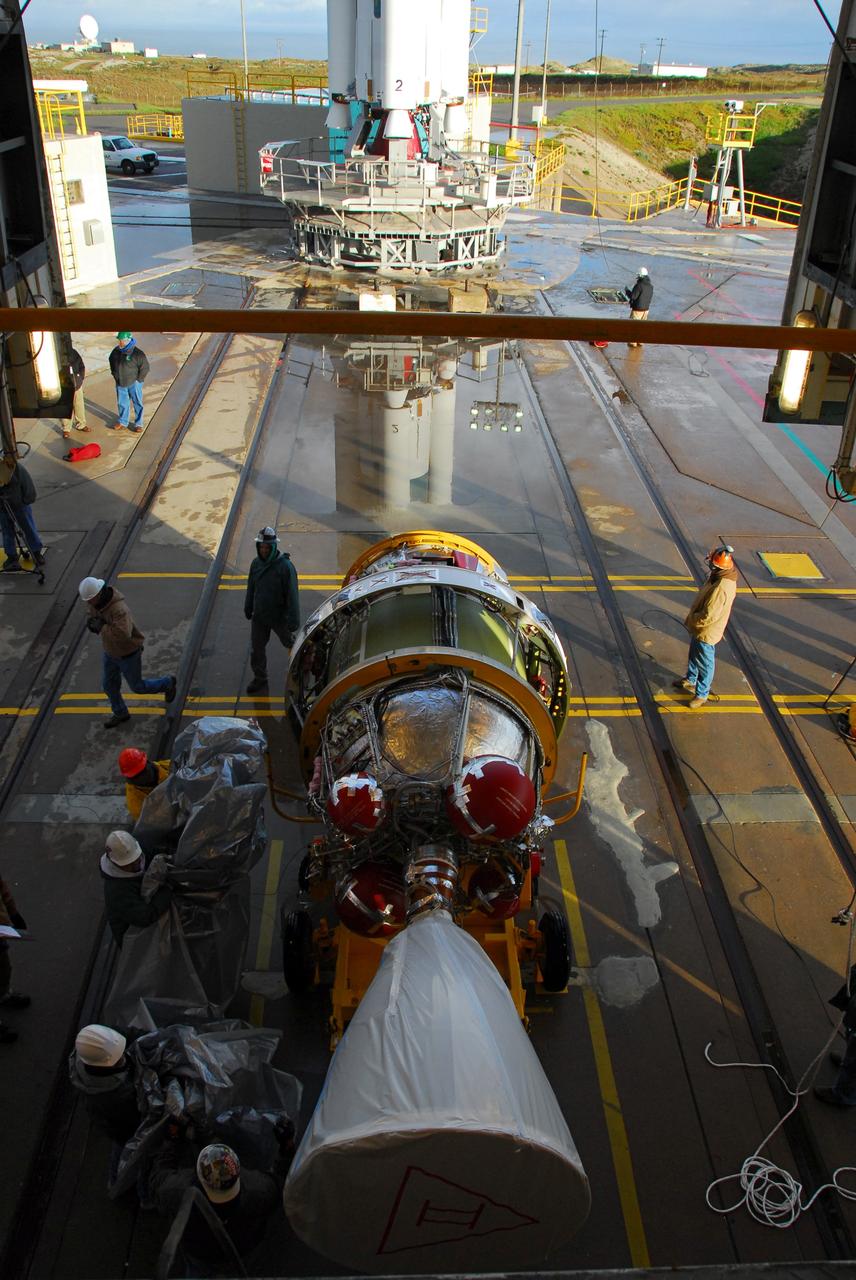
VANDENBERG AIR FORCE BASE, Calif. -- Workers prepare the United Launch Alliance Delta II second stage motor for lifting into the service tower at NASA's Space Launch Complex-2 (SLC-2) at Vandenberg Air Force Base in California. Following final tests, the Aquarius/SAC-D spacecraft will be integrated to the Delta II launch vehicle in preparation for the targeted June liftoff. Aquarius, the NASA-built instrument on the SAC-D spacecraft will provide new insights into how variations in ocean surface salinity relate to fundamental climate processes on its three-year mission. Photo credit: NASA/VAFB
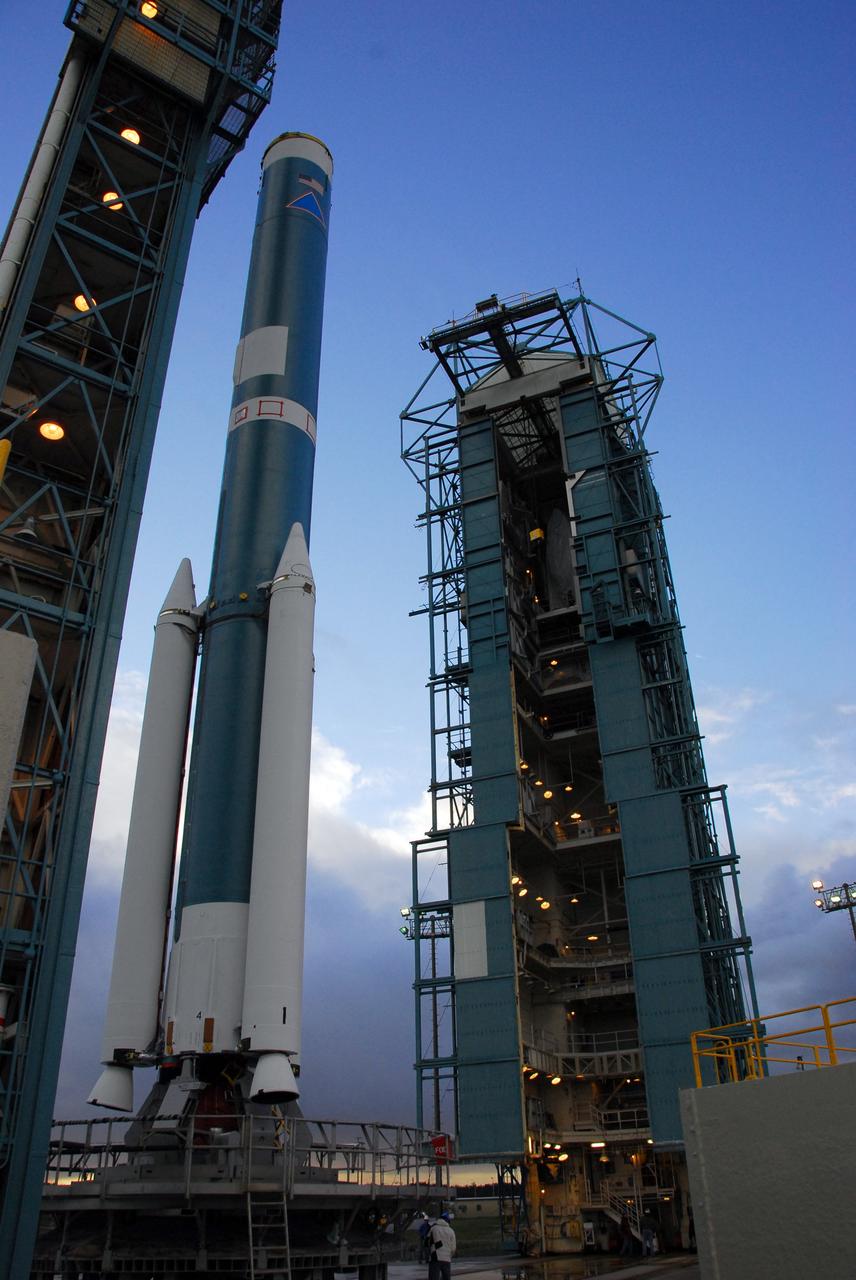
VANDENBERG AIR FORCE BASE, Calif. -- The United Launch Alliance Delta II rocket is moved away from the service tower as workers prepare to lift the second stage to the top of the tower for mating with the first stage at NASA's Space Launch Complex-2 (SLC-2) at Vandenberg Air Force Base in California. Following final tests, the Aquarius/SAC-D spacecraft will be integrated to the Delta II launch vehicle in preparation for the targeted June liftoff. Aquarius, the NASA-built instrument on the SAC-D spacecraft will provide new insights into how variations in ocean surface salinity relate to fundamental climate processes on its three-year mission. Photo credit: NASA/VAFB
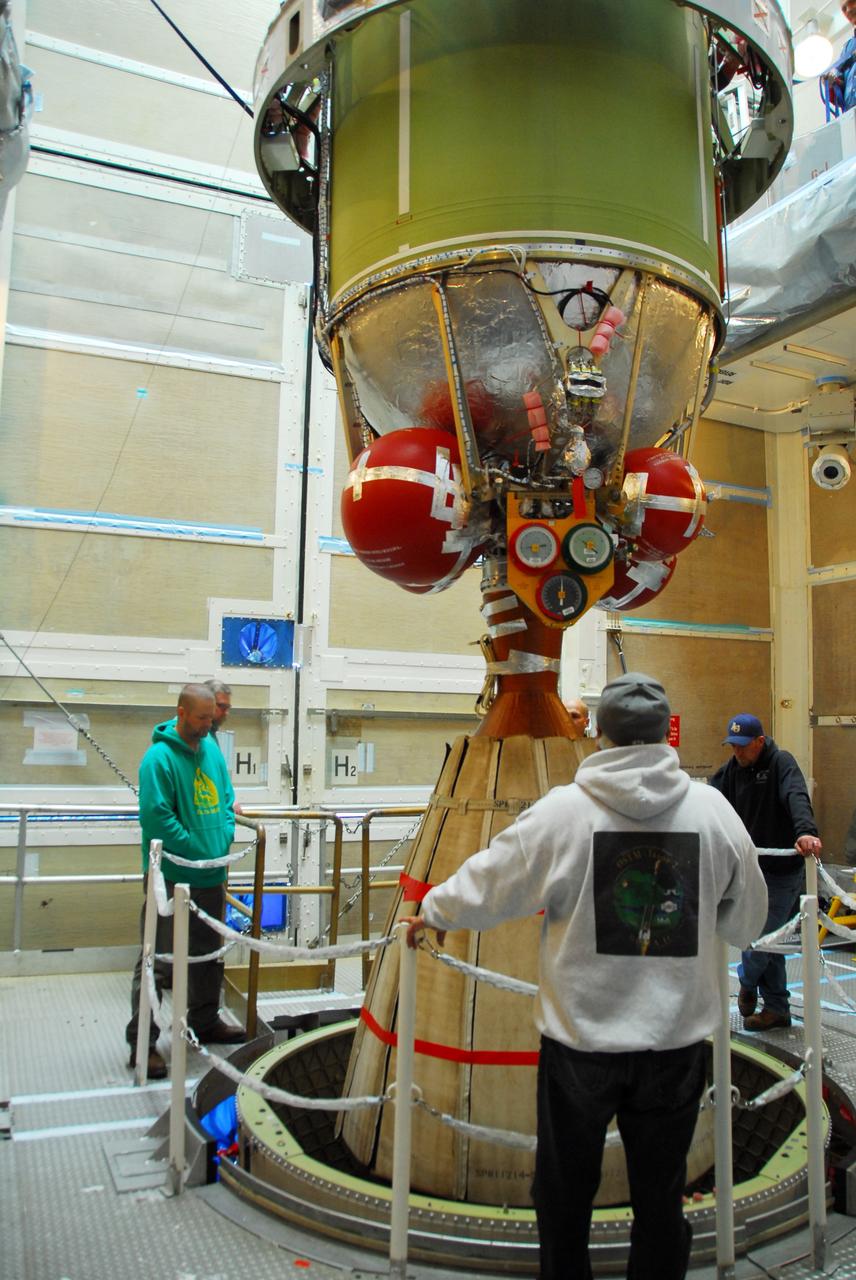
VANDENBERG AIR FORCE BASE, Calif. -- Workers using an overhead crane lower the United Launch Alliance Delta II second stage motor toward the first stage for mating at NASA's Space Launch Complex-2 (SLC-2) at Vandenberg Air Force Base in California. Following final tests, the Aquarius/SAC-D spacecraft will be integrated to the Delta II launch vehicle in preparation for the targeted June liftoff. Aquarius, the NASA-built instrument on the SAC-D spacecraft will provide new insights into how variations in ocean surface salinity relate to fundamental climate processes on its three-year mission. Photo credit: NASA/VAFB
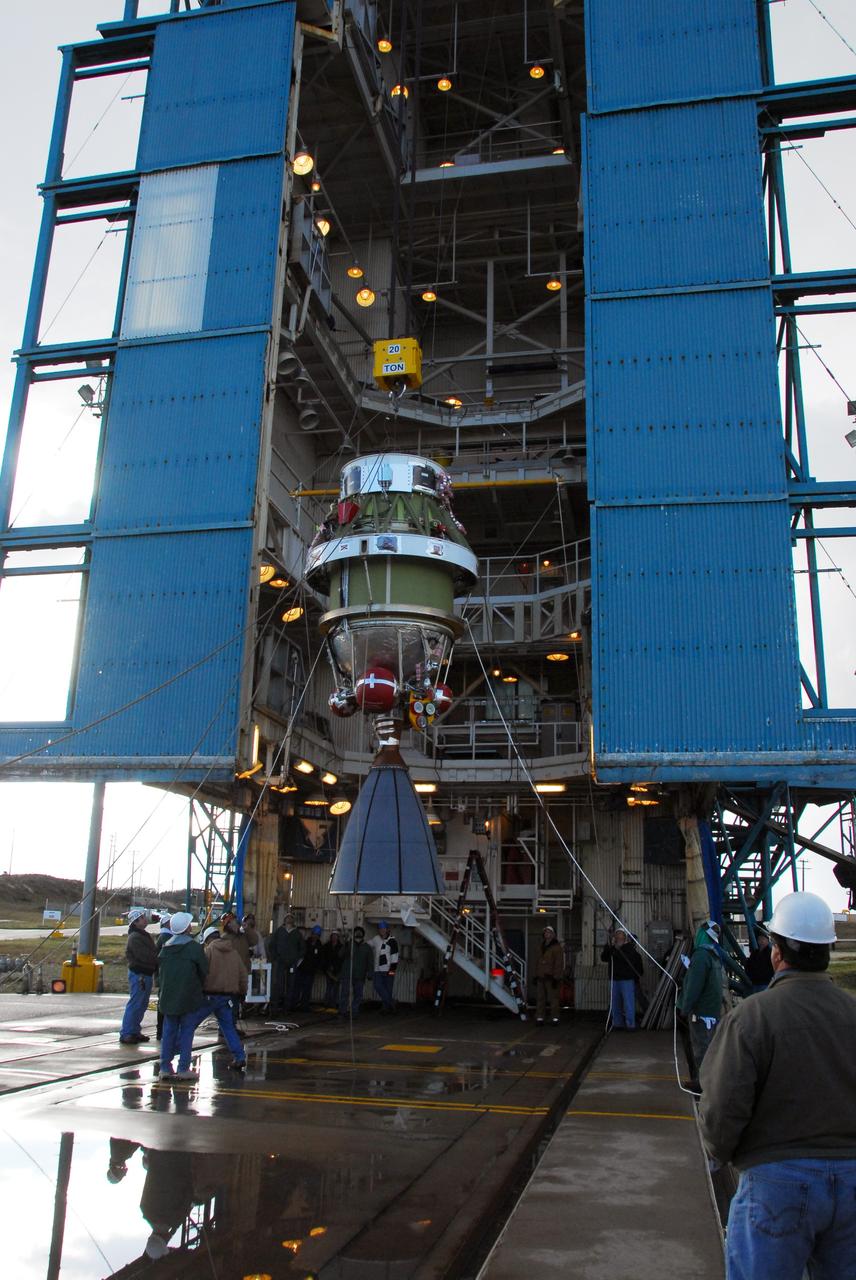
VANDENBERG AIR FORCE BASE, Calif. -- With the help of an overhead crane workers lift the United Launch Alliance Delta II second stage motor to the top of the service tower for mating with the first stage at NASA's Space Launch Complex-2 (SLC-2) at Vandenberg Air Force Base in California. Following final tests, the Aquarius/SAC-D spacecraft will be integrated to the Delta II launch vehicle in preparation for the targeted June liftoff. Aquarius, the NASA-built instrument on the SAC-D spacecraft will provide new insights into how variations in ocean surface salinity relate to fundamental climate processes on its three-year mission. Photo credit: NASA/VAFB
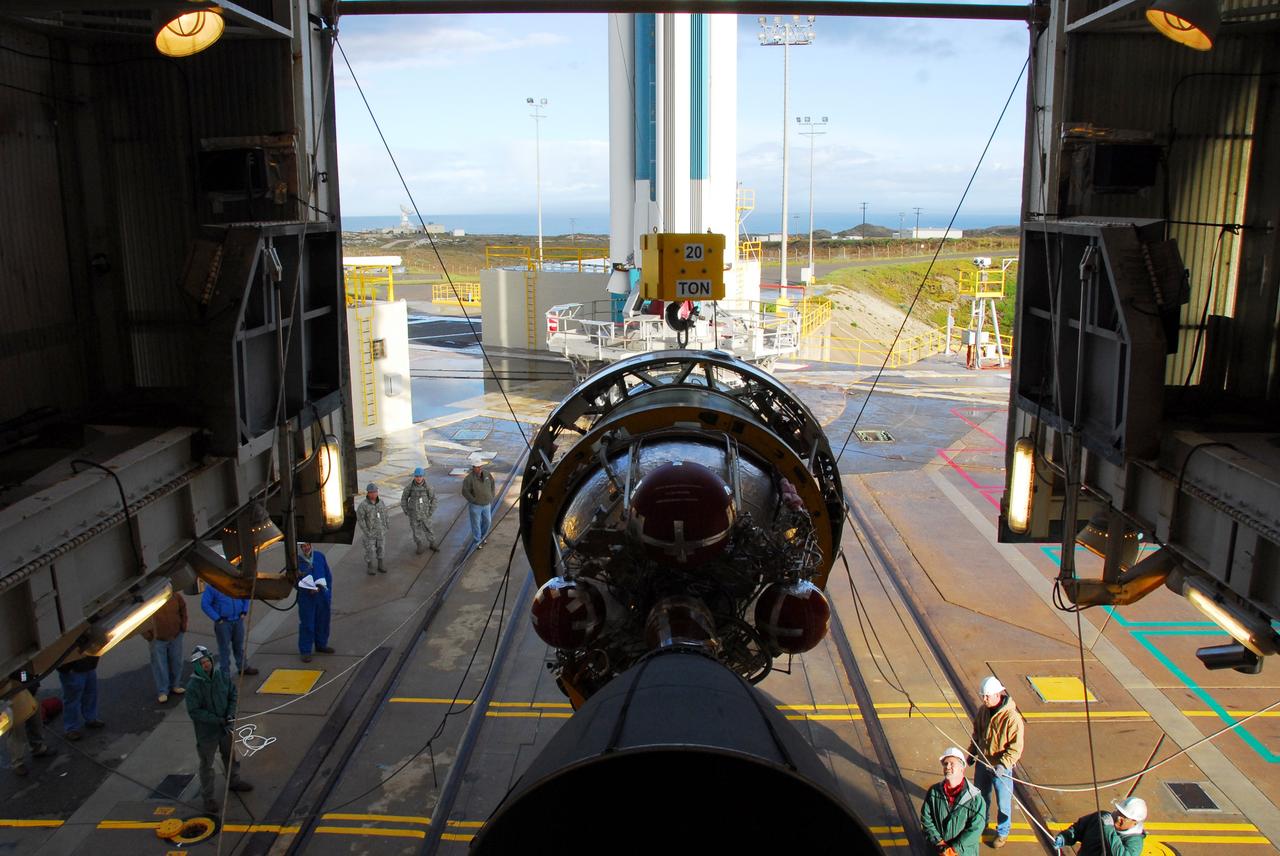
VANDENBERG AIR FORCE BASE, Calif. -- Workers attach cables from an overhead crane to the United Launch Alliance Delta II second stage motor for mating to the first stage at NASA's Space Launch Complex-2 (SLC-2) at Vandenberg Air Force Base in California. Following final tests, the Aquarius/SAC-D spacecraft will be integrated to the Delta II launch vehicle in preparation for the targeted June liftoff. Aquarius, the NASA-built instrument on the SAC-D spacecraft will provide new insights into how variations in ocean surface salinity relate to fundamental climate processes on its three-year mission. Photo credit: NASA/VAFB
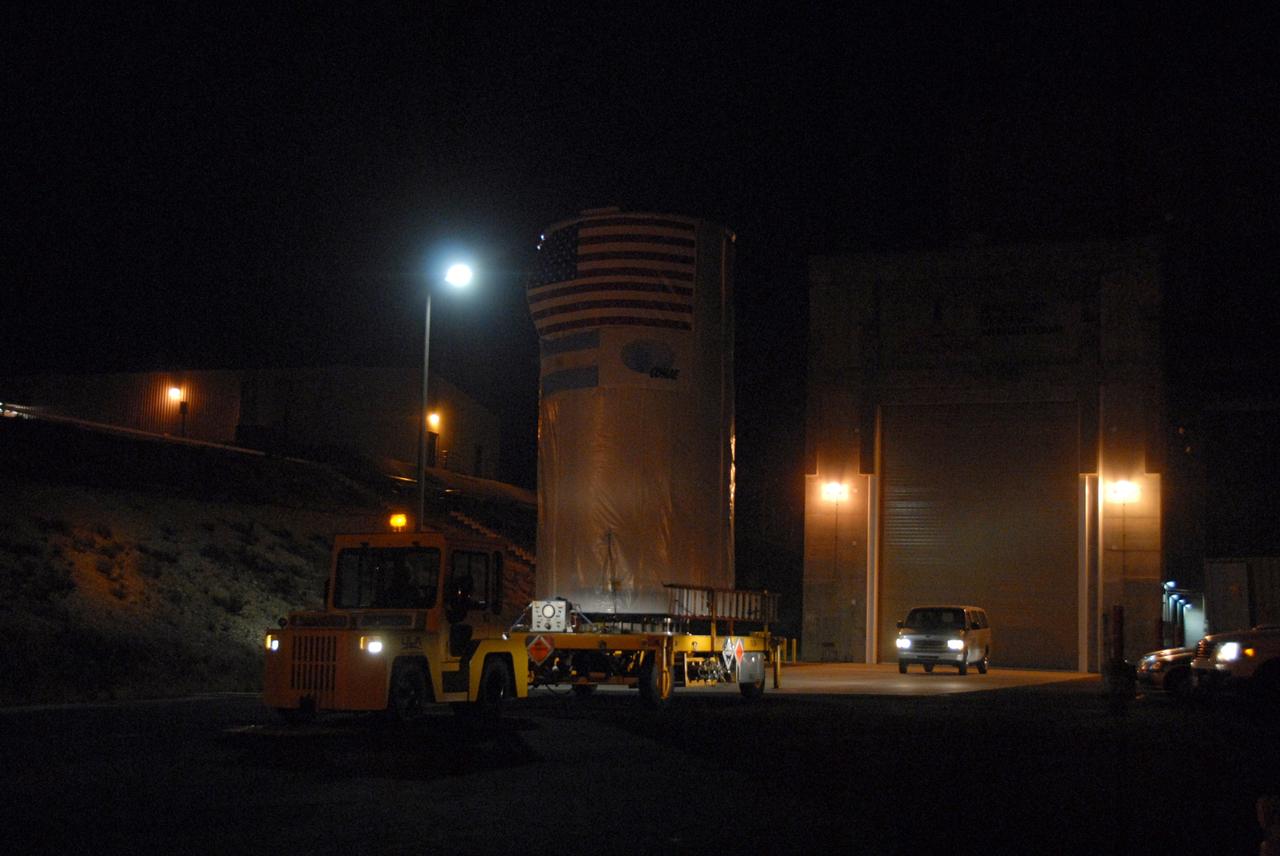
VANDENBERG AIR FORCE BASE, Calif. -- At Vandenberg Air Force Base in California, NASA's Aquarius/SAC-D spacecraft, secured inside its payload transportation canister, is being transferred to Space Launch Complex-2. There, the spacecraft will be integrated to a United Launch Alliance Delta II rocket in preparation for the targeted June liftoff. Aquarius, the NASA-built primary instrument on the SAC-D spacecraft, will provide new insights into how variations in ocean surface salinity relate to fundamental climate processes on its three-year mission. Photo credit: NASA/VAFB
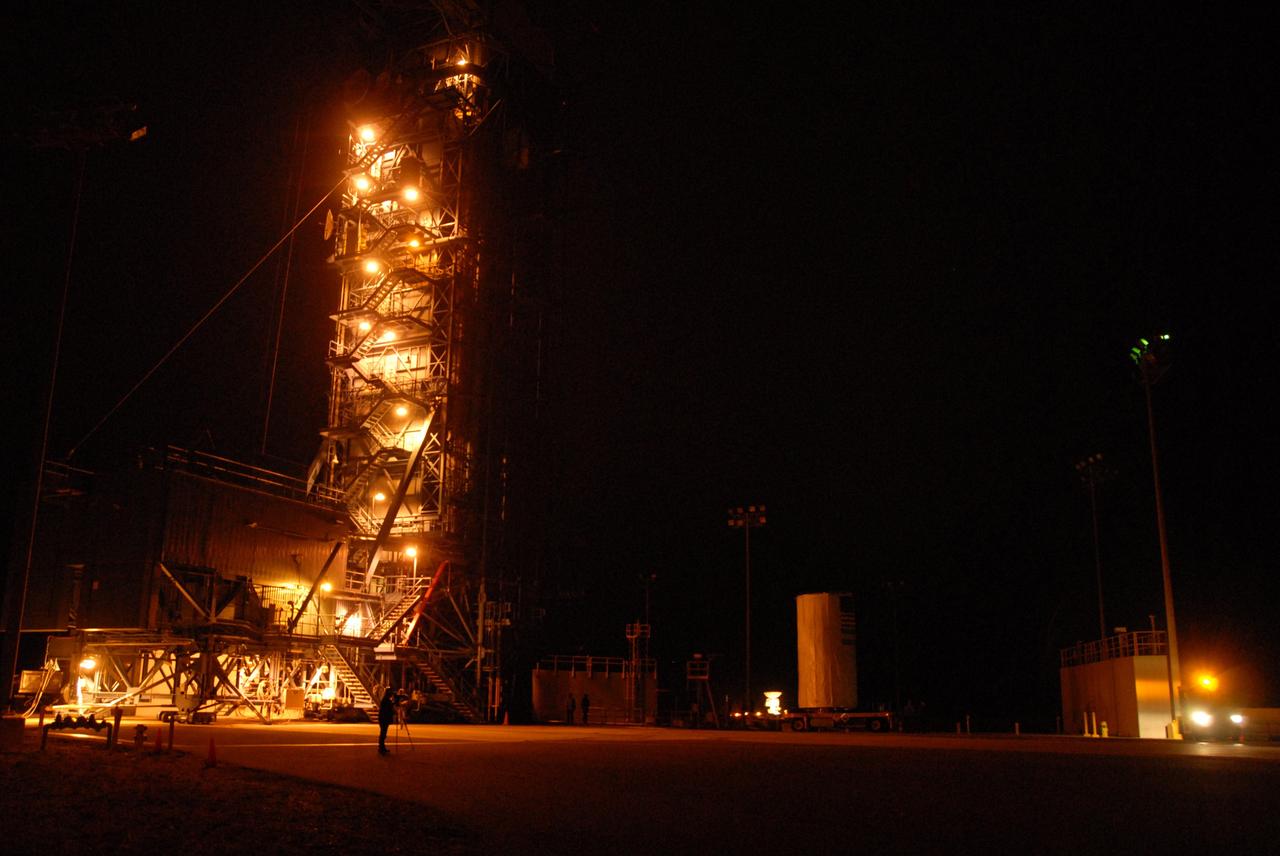
VANDENBERG AIR FORCE BASE, Calif. -- The Aquarius/SAC-D spacecraft, secured inside its payload transportation canister, has been delivered to Space Launch Complex-2. There, the spacecraft will be integrated to a United Launch Alliance Delta II rocket in preparation for the targeted June liftoff. Aquarius, the NASA-built instrument on the SAC-D spacecraft, will provide new insights into how variations in ocean surface salinity relate to fundamental climate processes on its three-year mission. Photo credit: NASA/VAFB
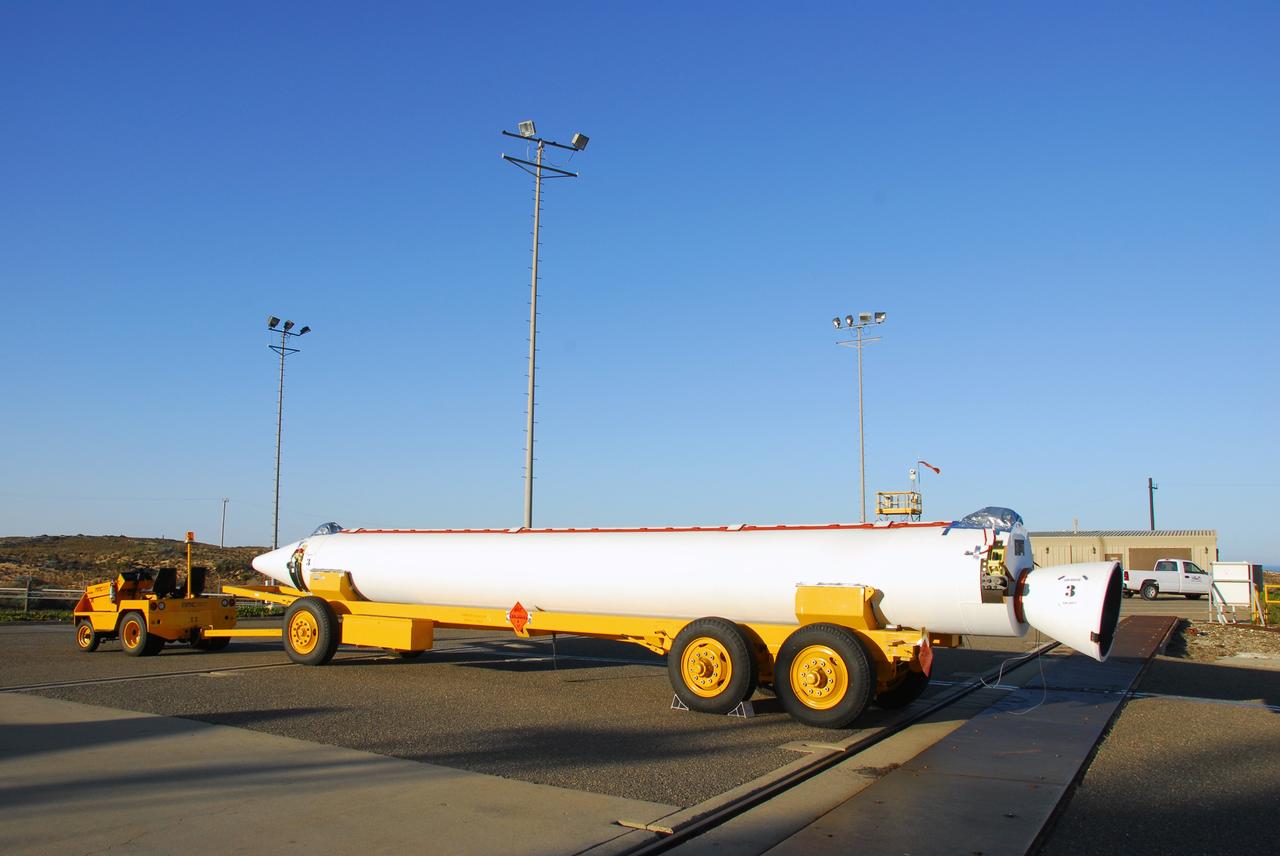
VANDENBERG AIR FORCE BASE, Calif. --At Vandenberg Air Force Base in California, one of three United Space Alliance Delta II solid rocket motors is atop a tug for the move from the solid motor facility to Space Launch Complex-2 West (SLC-2W). Scheduled to launch in June, the Delta II rocket will carry NASA's Aquarius satellite into low Earth orbit. Aquarius' mission will be to provide monthly maps of global changes in sea surface salinity. By measuring ocean salinity from space, Aquarius will provide new insights into how the massive natural exchange of freshwater between the ocean, atmosphere and sea ice influences ocean circulation, weather and climate. Also going up with the satellite are optical and thermal cameras, a microwave radiometer and the SAC-D spacecraft, which were developed with the help of institutions in Italy, France, Canada and Argentina. Photo credit: VAFB/30th Space Wing

VANDENBERG AIR FORCE BASE, Calif. --As the sun rises over Vandenberg Air Force Base in California, a crane begins to raise one of three United Launch Alliance Delta II solid rocket motors on the pad at Space Launch Complex-2 West (SLC-2W). Scheduled to launch in June, the Delta II rocket will carry NASA's Aquarius satellite into low Earth orbit. Aquarius' mission will be to provide monthly maps of global changes in sea surface salinity. By measuring ocean salinity from space, Aquarius will provide new insights into how the massive natural exchange of freshwater between the ocean, atmosphere and sea ice influences ocean circulation, weather and climate. Also going up with the satellite are optical and thermal cameras, a microwave radiometer and the SAC-D spacecraft, which were developed with the help of institutions in Italy, France, Canada and Argentina. Photo credit: VAFB/30th Space Wing
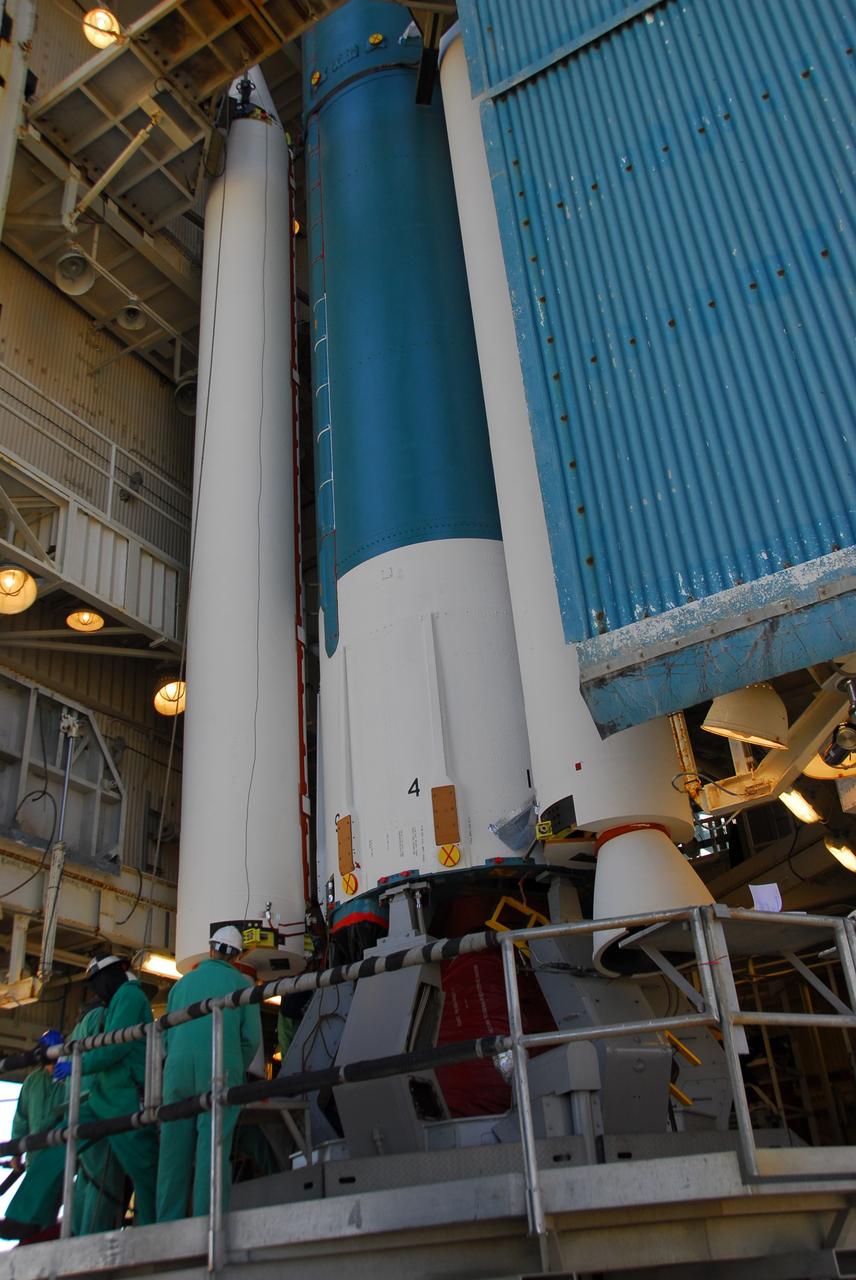
VANDENBERG AIR FORCE BASE, Calif. --At Vandenberg Air Force Base in California, United Launch Alliance technicians finish installing one of three Delta II solid rocket motors on the pad at Space Launch Complex-2 West (SLC-2W). A second motor was installed earlier in the morning. Scheduled to launch in June, the Delta II rocket will carry NASA's Aquarius satellite into low Earth orbit. Aquarius' mission will be to provide monthly maps of global changes in sea surface salinity. By measuring ocean salinity from space, Aquarius will provide new insights into how the massive natural exchange of freshwater between the ocean, atmosphere and sea ice influences ocean circulation, weather and climate. Also going up with the satellite are optical and thermal cameras, a microwave radiometer and the SAC-D spacecraft, which were developed with the help of institutions in Italy, France, Canada and Argentina. Photo credit: VAFB/30th Space Wing
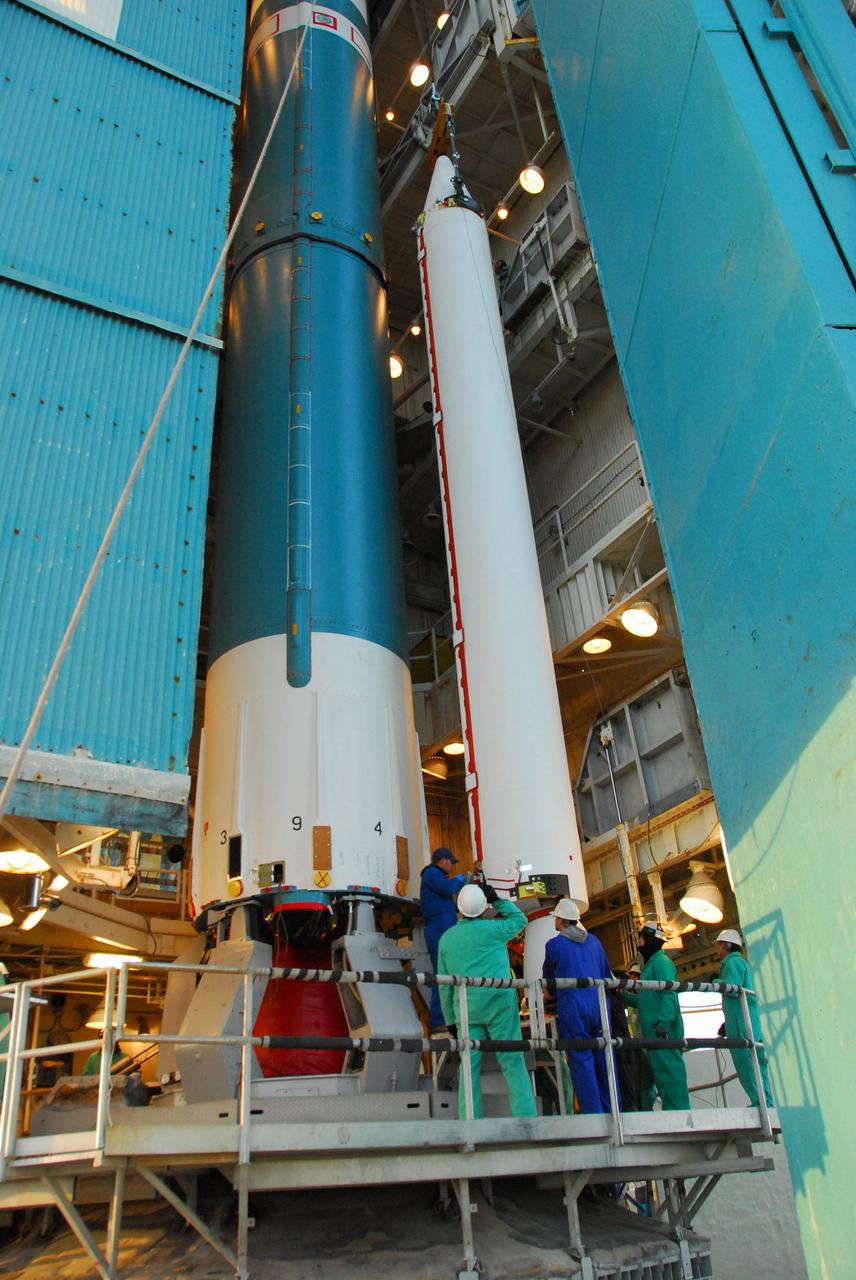
VANDENBERG AIR FORCE BASE, Calif. --As the sun rises over Vandenberg Air Force Base in California, a crane raises one of three United Launch Alliance Delta II solid rocket motors on the pad at Space Launch Complex-2 West (SLC-2W). Scheduled to launch in June, the Delta II rocket will carry NASA's Aquarius satellite into low Earth orbit. Aquarius' mission will be to provide monthly maps of global changes in sea surface salinity. By measuring ocean salinity from space, Aquarius will provide new insights into how the massive natural exchange of freshwater between the ocean, atmosphere and sea ice influences ocean circulation, weather and climate. Also going up with the satellite are optical and thermal cameras, a microwave radiometer and the SAC-D spacecraft, which were developed with the help of institutions in Italy, France, Canada and Argentina. Photo credit: VAFB/30th Space Wing
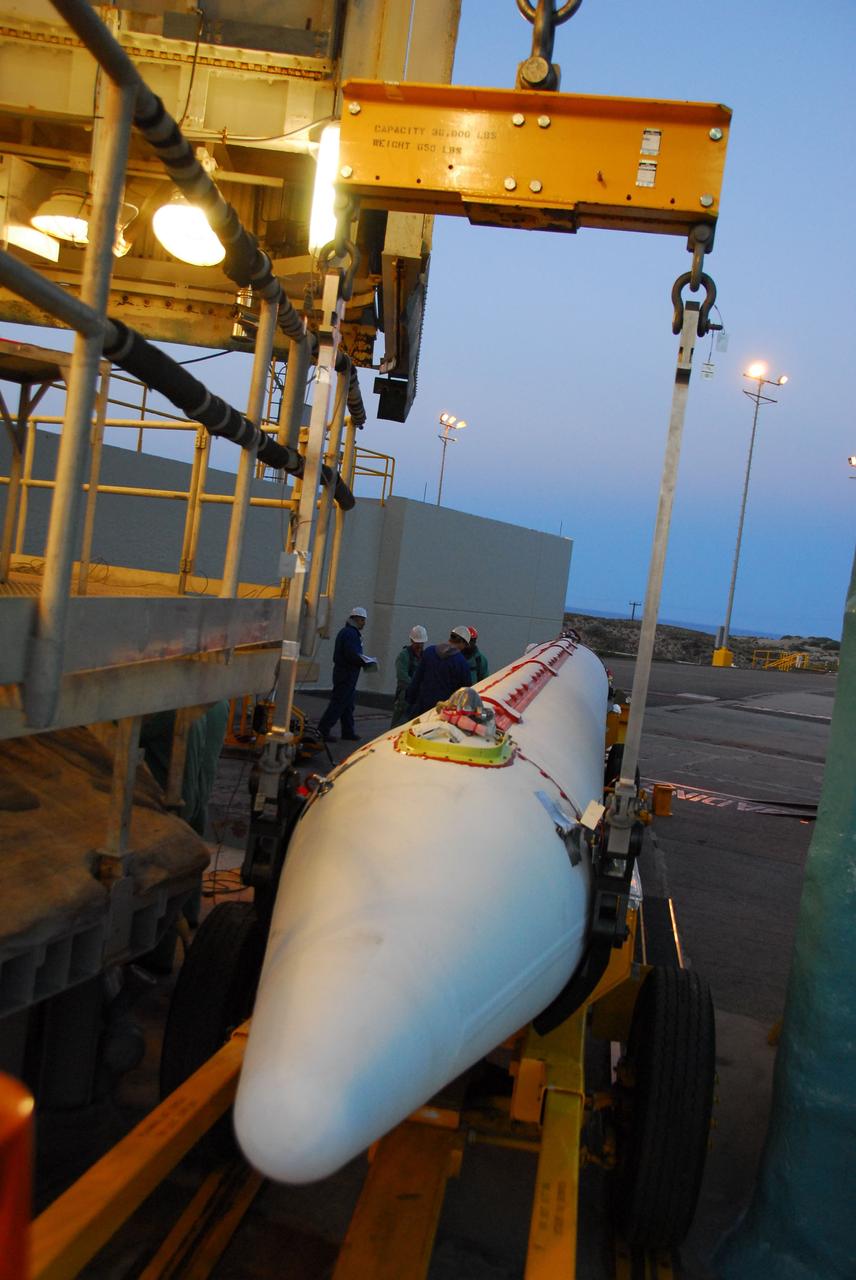
VANDENBERG AIR FORCE BASE, Calif. --As the sun rises over Vandenberg Air Force Base in California, United Launch Alliance technicians prepare to raise one of three Delta II solid rocket motors on the pad at Space Launch Complex-2 West (SLC-2W). Scheduled to launch in June, the Delta II rocket will carry NASA's Aquarius satellite into low Earth orbit. Aquarius' mission will be to provide monthly maps of global changes in sea surface salinity. By measuring ocean salinity from space, Aquarius will provide new insights into how the massive natural exchange of freshwater between the ocean, atmosphere and sea ice influences ocean circulation, weather and climate. Also going up with the satellite are optical and thermal cameras, a microwave radiometer and the SAC-D spacecraft, which were developed with the help of institutions in Italy, France, Canada and Argentina. Photo credit: VAFB/30th Space Wing
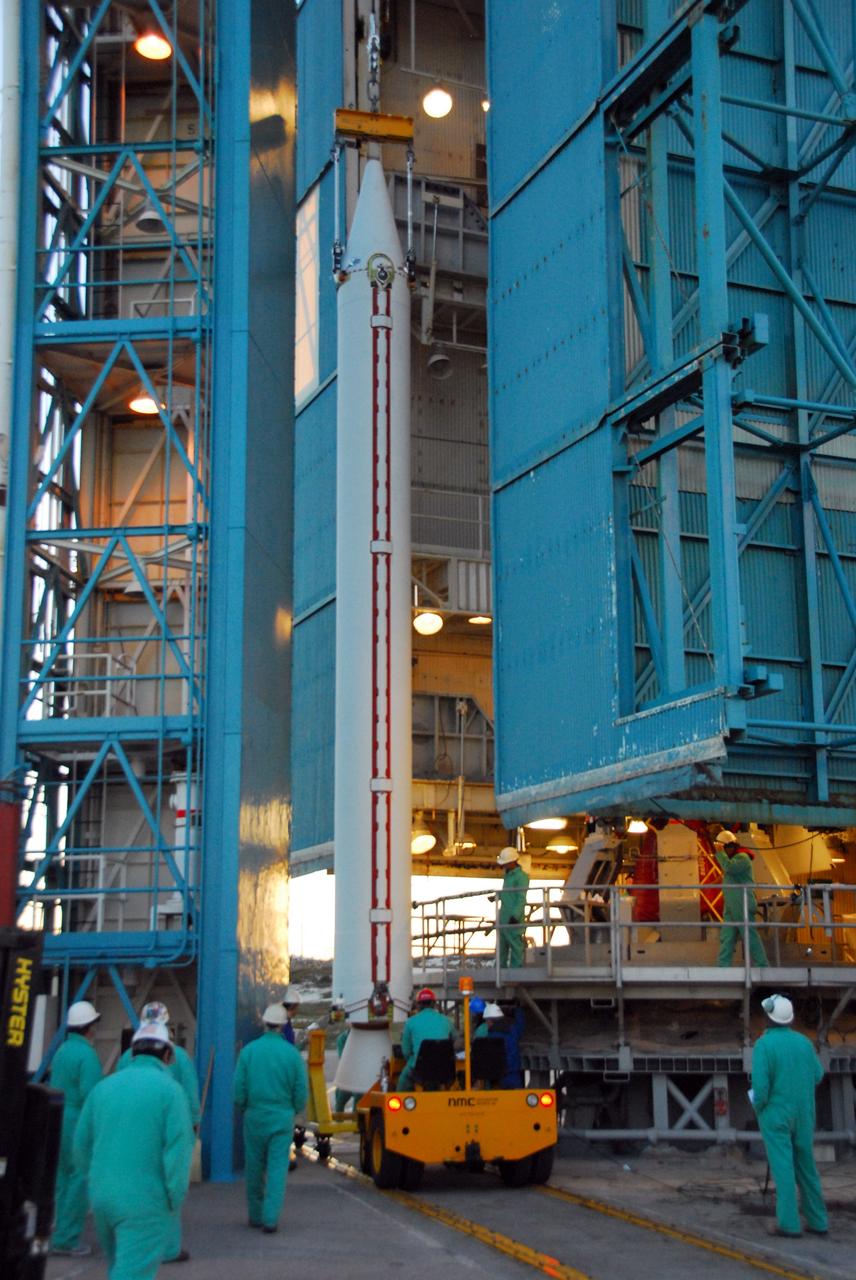
VANDENBERG AIR FORCE BASE, Calif. --As the sun rises over Vandenberg Air Force Base in California, a crane raises one of three United Launch Alliance Delta II solid rocket motors on the pad at Space Launch Complex-2 West (SLC-2W). Scheduled to launch in June, the Delta II rocket will carry NASA's Aquarius satellite into low Earth orbit. Aquarius' mission will be to provide monthly maps of global changes in sea surface salinity. By measuring ocean salinity from space, Aquarius will provide new insights into how the massive natural exchange of freshwater between the ocean, atmosphere and sea ice influences ocean circulation, weather and climate. Also going up with the satellite are optical and thermal cameras, a microwave radiometer and the SAC-D spacecraft, which were developed with the help of institutions in Italy, France, Canada and Argentina. Photo credit: VAFB/30th Space Wing
VANDENBERG AIR FORCE BASE, Calif. --At Vandenberg Air Force Base in California, a crane raises one of three United Launch Alliance Delta II solid rocket motors on the pad at Space Launch Complex-2 West (SLC-2W). A second motor was installed earlier in the morning. Scheduled to launch in June, the Delta II rocket will carry NASA's Aquarius satellite into low Earth orbit. Aquarius' mission will be to provide monthly maps of global changes in sea surface salinity. By measuring ocean salinity from space, Aquarius will provide new insights into how the massive natural exchange of freshwater between the ocean, atmosphere and sea ice influences ocean circulation, weather and climate. Also going up with the satellite are optical and thermal cameras, a microwave radiometer and the SAC-D spacecraft, which were developed with the help of institutions in Italy, France, Canada and Argentina. Photo credit: VAFB/30th Space Wing
VANDENBERG AIR FORCE BASE, Calif. --At Vandenberg Air Force Base in California, a crane raises one of three United Launch Alliance Delta II solid rocket motors on the pad at Space Launch Complex-2 West (SLC-2W). Scheduled to launch in June, the Delta II rocket will carry NASA's Aquarius satellite into low Earth orbit. Aquarius' mission will be to provide monthly maps of global changes in sea surface salinity. By measuring ocean salinity from space, Aquarius will provide new insights into how the massive natural exchange of freshwater between the ocean, atmosphere and sea ice influences ocean circulation, weather and climate. Also going up with the satellite are optical and thermal cameras, a microwave radiometer and the SAC-D spacecraft, which were developed with the help of institutions in Italy, France, Canada and Argentina. Photo credit: VAFB/30th Space Wing
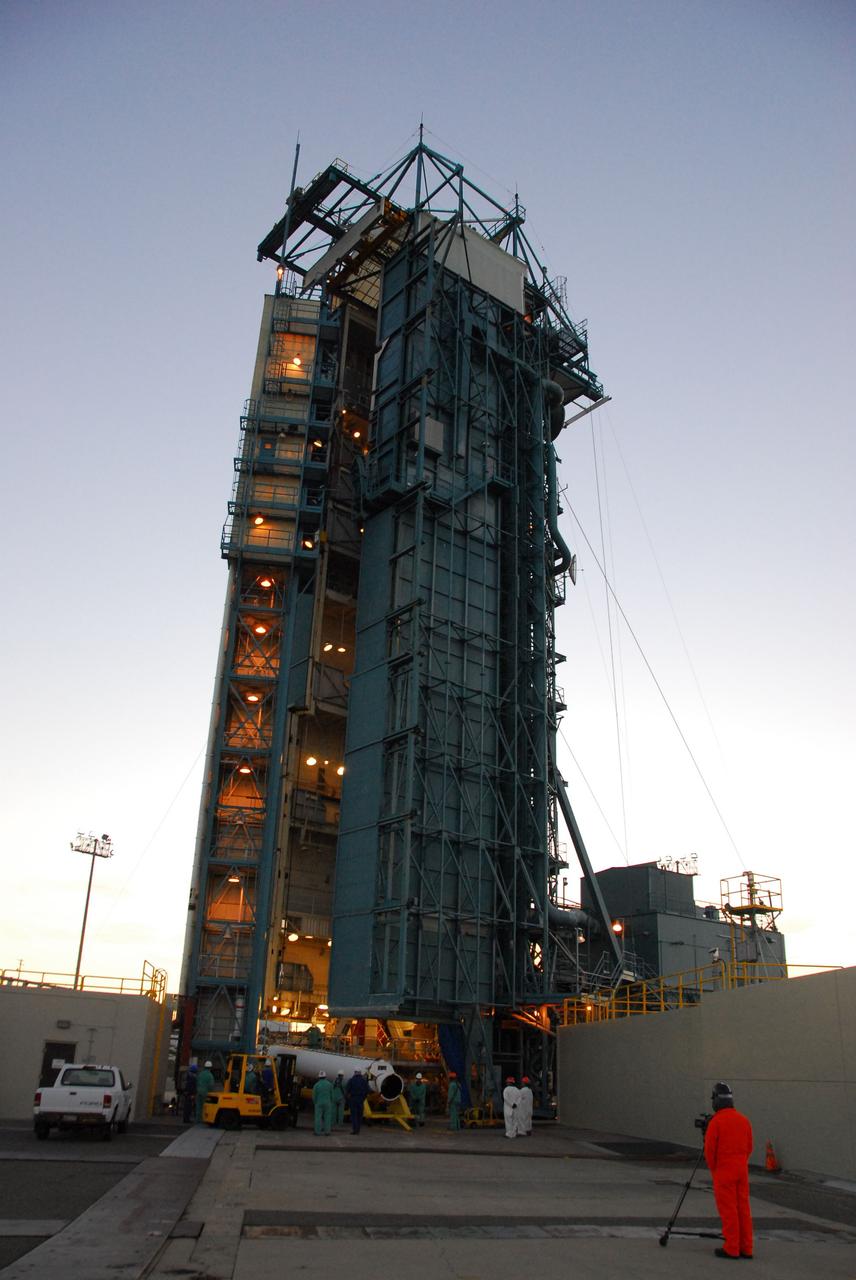
VANDENBERG AIR FORCE BASE, Calif. --As the sun rises over Vandenberg Air Force Base in California, United Launch Alliance technicians prepare to raise one of three Delta II solid rocket motors on the pad at Space Launch Complex-2 West (SLC-2W). Scheduled to launch in June, the Delta II rocket will carry NASA's Aquarius satellite into low Earth orbit. Aquarius' mission will be to provide monthly maps of global changes in sea surface salinity. By measuring ocean salinity from space, Aquarius will provide new insights into how the massive natural exchange of freshwater between the ocean, atmosphere and sea ice influences ocean circulation, weather and climate. Also going up with the satellite are optical and thermal cameras, a microwave radiometer and the SAC-D spacecraft, which were developed with the help of institutions in Italy, France, Canada and Argentina. Photo credit: VAFB/30th Space Wing
VANDENBERG AIR FORCE BASE, Calif. --At Vandenberg Air Force Base in California, United Launch Alliance technicians finish installing one of three Delta II solid rocket motors on the pad at Space Launch Complex-2 West (SLC-2W). Scheduled to launch in June, the Delta II rocket will carry NASA's Aquarius satellite into low Earth orbit. Aquarius' mission will be to provide monthly maps of global changes in sea surface salinity. By measuring ocean salinity from space, Aquarius will provide new insights into how the massive natural exchange of freshwater between the ocean, atmosphere and sea ice influences ocean circulation, weather and climate. Also going up with the satellite are optical and thermal cameras, a microwave radiometer and the SAC-D spacecraft, which were developed with the help of institutions in Italy, France, Canada and Argentina. Photo credit: VAFB/30th Space Wing
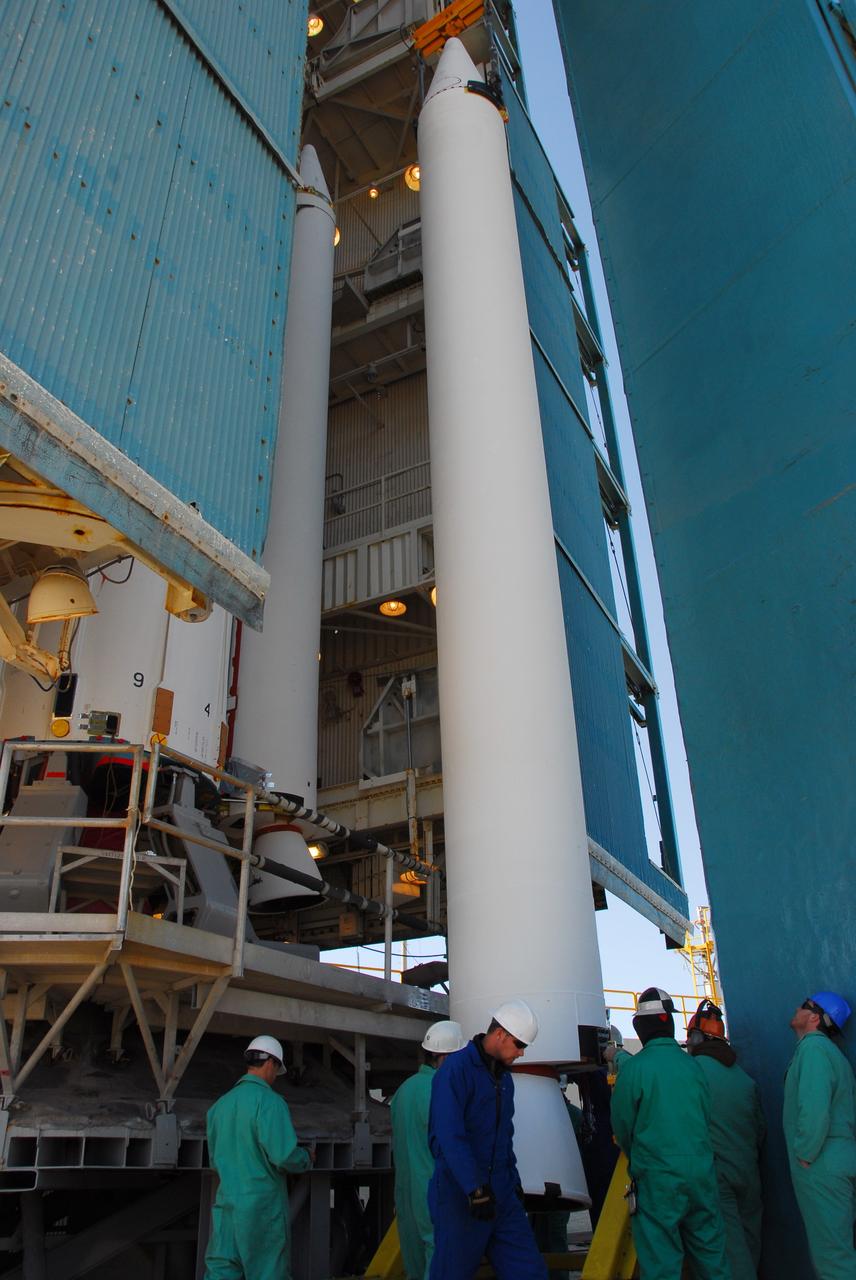
VANDENBERG AIR FORCE BASE, Calif. --At Vandenberg Air Force Base in California, a crane raises one of three United Launch Alliance Delta II solid rocket motors on the pad at Space Launch Complex-2 West (SLC-2W). A second motor was installed earlier in the morning. Scheduled to launch in June, the Delta II rocket will carry NASA's Aquarius satellite into low Earth orbit. Aquarius' mission will be to provide monthly maps of global changes in sea surface salinity. By measuring ocean salinity from space, Aquarius will provide new insights into how the massive natural exchange of freshwater between the ocean, atmosphere and sea ice influences ocean circulation, weather and climate. Also going up with the satellite are optical and thermal cameras, a microwave radiometer and the SAC-D spacecraft, which were developed with the help of institutions in Italy, France, Canada and Argentina. Photo credit: VAFB/30th Space Wing
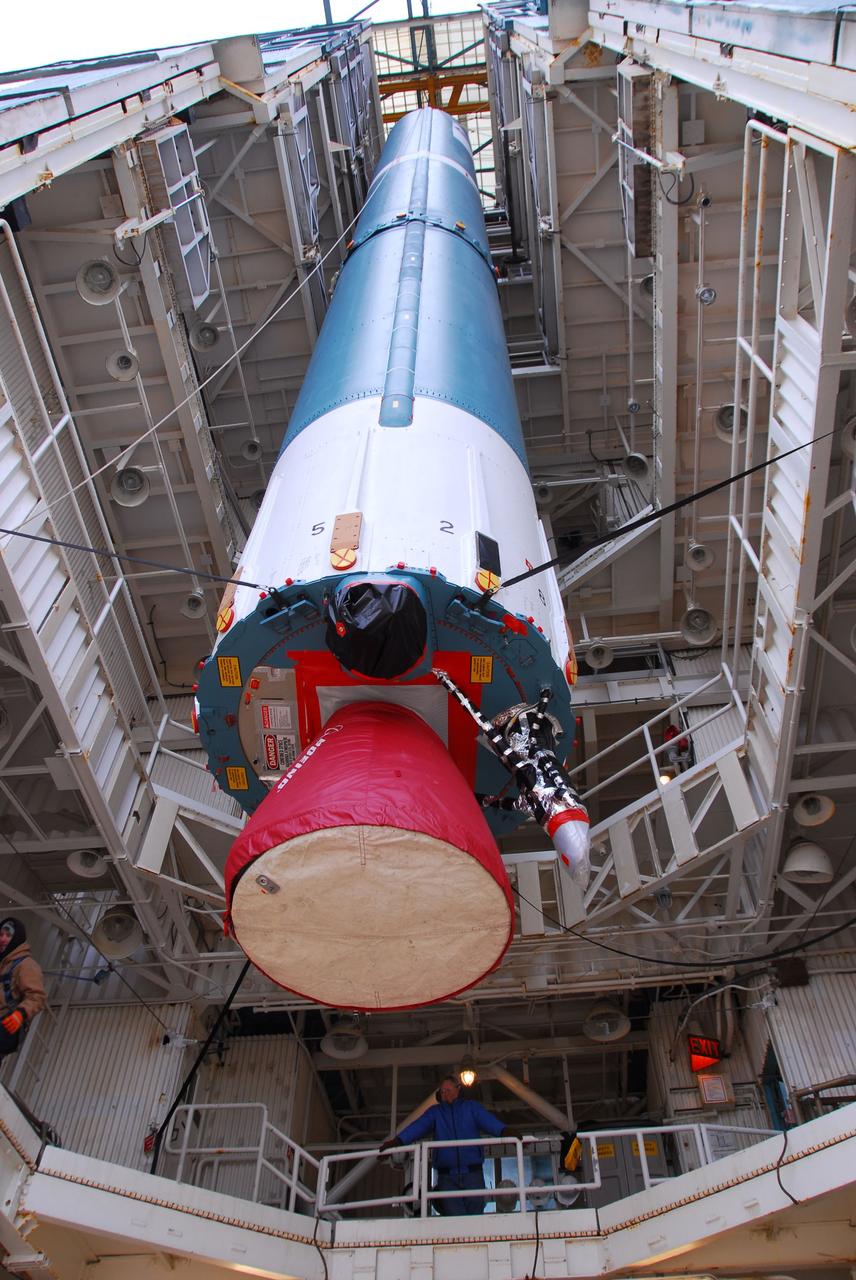
VANDENBERG AIR FORCE BASE, Calif. -- The first stage of the Delta II rocket that will carry NASA's Aquarius satellite into low Earth orbit is raised onto the launch pad at Vandenberg Air Force Base's Space Launch Complex-2 (SLC-2) in California. While the Delta II rocket is stacked on SLC-2, teams for NASA's Glory spacecraft and Orbital Sciences Taurus XL rocket are in launch preparation mode at Vandenberg's nearby Space Launch Complex 576-E. Scheduled to launch in June, Aquarius' mission will be to provide monthly maps of global changes in sea surface salinity. By measuring ocean salinity from space, Aquarius will provide new insights into how the massive natural exchange of freshwater between the ocean, atmosphere and sea ice influences ocean circulation, weather and climate. Also going up with the satellite are optical and thermal cameras, a microwave radiometer and the SAC-D spacecraft, which were developed with the help of institutions in Italy, France, Canada and Argentina. Photo credit: NASA/VAFB

VANDENBERG AIR FORCE BASE, Calif. -- The first stage of the Delta II rocket that will carry NASA's Aquarius satellite into low Earth orbit arrives to the launch pad at Vandenberg Air Force Base's Space Launch Complex-2 (SLC-2) in California. While the Delta II rocket is stacked on SLC-2, teams for NASA's Glory spacecraft and Orbital Sciences Taurus XL rocket are in launch preparation mode at Vandenberg's nearby Space Launch Complex 576-E. Scheduled to launch in June, Aquarius' mission will be to provide monthly maps of global changes in sea surface salinity. By measuring ocean salinity from space, Aquarius will provide new insights into how the massive natural exchange of freshwater between the ocean, atmosphere and sea ice influences ocean circulation, weather and climate. Also going up with the satellite are optical and thermal cameras, a microwave radiometer and the SAC-D spacecraft, which were developed with the help of institutions in Italy, France, Canada and Argentina. Photo credit: NASA/VAFB
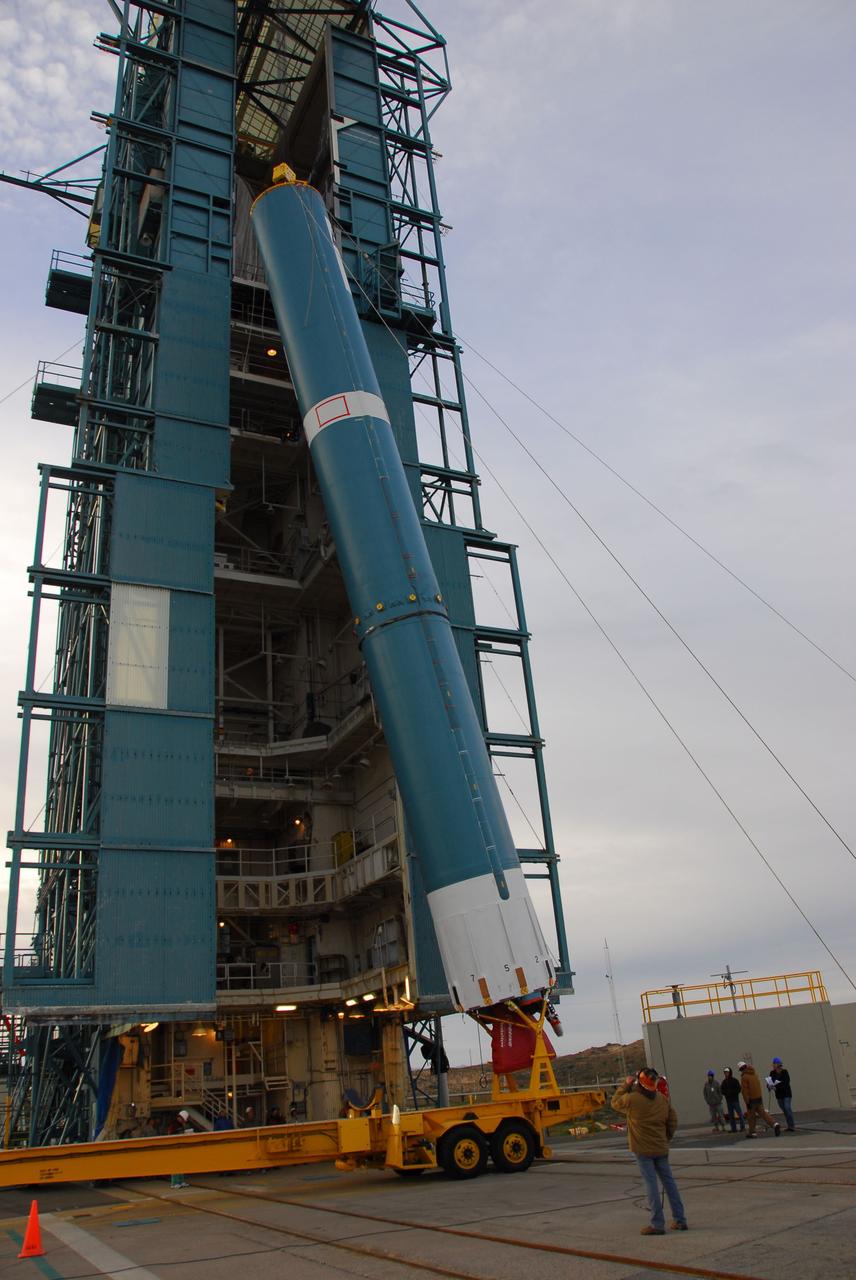
VANDENBERG AIR FORCE BASE, Calif. -- The first stage of the Delta II rocket that will carry NASA's Aquarius satellite into low Earth orbit is raised onto the launch pad at Vandenberg Air Force Base's Space Launch Complex-2 (SLC-2) in California. While the Delta II rocket is stacked on SLC-2, teams for NASA's Glory spacecraft and Orbital Sciences Taurus XL rocket are in launch preparation mode at Vandenberg's nearby Space Launch Complex 576-E. Scheduled to launch in June, Aquarius' mission will be to provide monthly maps of global changes in sea surface salinity. By measuring ocean salinity from space, Aquarius will provide new insights into how the massive natural exchange of freshwater between the ocean, atmosphere and sea ice influences ocean circulation, weather and climate. Also going up with the satellite are optical and thermal cameras, a microwave radiometer and the SAC-D spacecraft, which were developed with the help of institutions in Italy, France, Canada and Argentina. Photo credit: NASA/VAFB
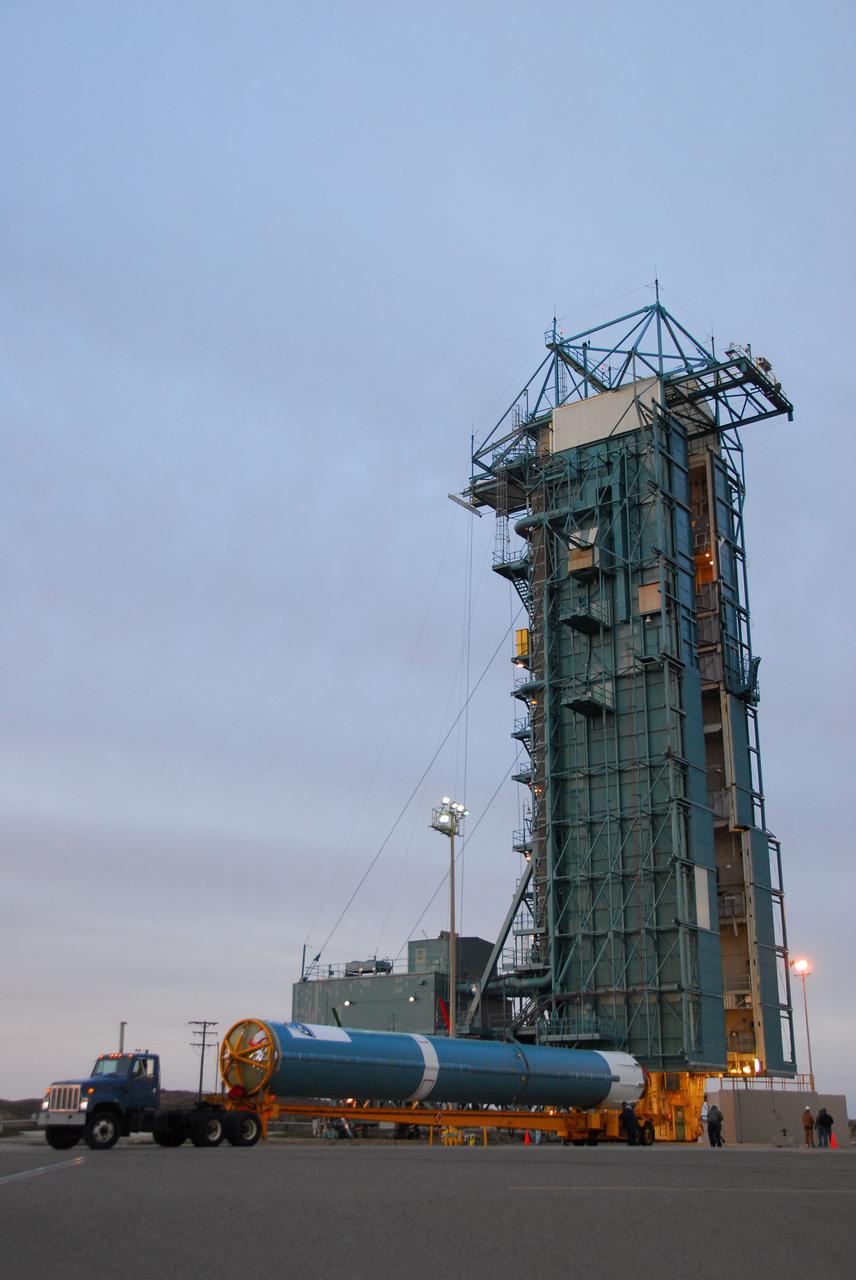
VANDENBERG AIR FORCE BASE, Calif. -- The first stage of the Delta II rocket that will carry NASA's Aquarius satellite into low Earth orbit arrives to the launch pad at Vandenberg Air Force Base's Space Launch Complex-2 (SLC-2) in California. While the Delta II rocket is stacked on SLC-2, teams for NASA's Glory spacecraft and Orbital Sciences Taurus XL rocket are in launch preparation mode at Vandenberg's nearby Space Launch Complex 576-E. Scheduled to launch in June, Aquarius' mission will be to provide monthly maps of global changes in sea surface salinity. By measuring ocean salinity from space, Aquarius will provide new insights into how the massive natural exchange of freshwater between the ocean, atmosphere and sea ice influences ocean circulation, weather and climate. Also going up with the satellite are optical and thermal cameras, a microwave radiometer and the SAC-D spacecraft, which were developed with the help of institutions in Italy, France, Canada and Argentina. Photo credit: NASA/VAFB
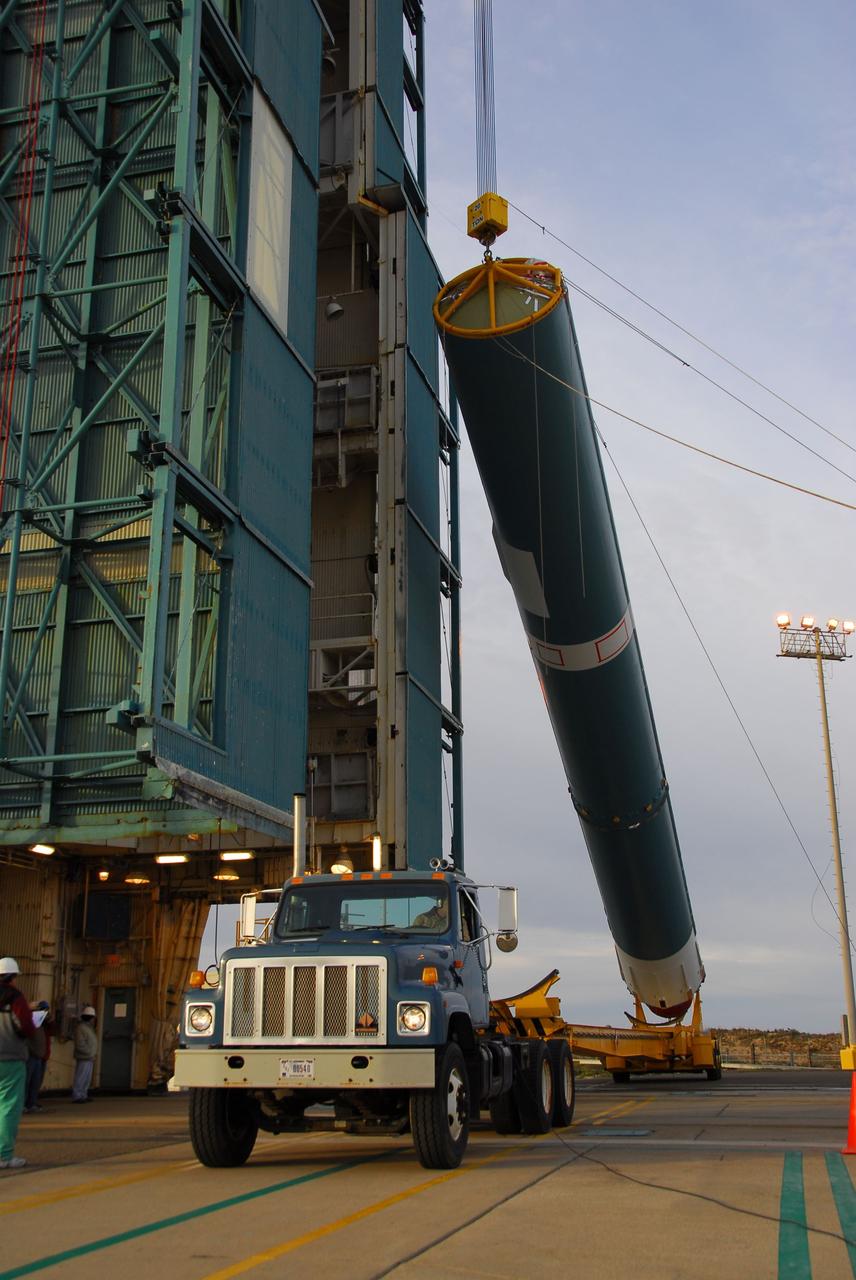
VANDENBERG AIR FORCE BASE, Calif. -- The first stage of the Delta II rocket that will carry NASA's Aquarius satellite into low Earth orbit is raised onto the launch pad at Vandenberg Air Force Base's Space Launch Complex-2 (SLC-2) in California. While the Delta II rocket is stacked on SLC-2, teams for NASA's Glory spacecraft and Orbital Sciences Taurus XL rocket are in launch preparation mode at Vandenberg's nearby Space Launch Complex 576-E. Scheduled to launch in June, Aquarius' mission will be to provide monthly maps of global changes in sea surface salinity. By measuring ocean salinity from space, Aquarius will provide new insights into how the massive natural exchange of freshwater between the ocean, atmosphere and sea ice influences ocean circulation, weather and climate. Also going up with the satellite are optical and thermal cameras, a microwave radiometer and the SAC-D spacecraft, which were developed with the help of institutions in Italy, France, Canada and Argentina. Photo credit: NASA/VAFB
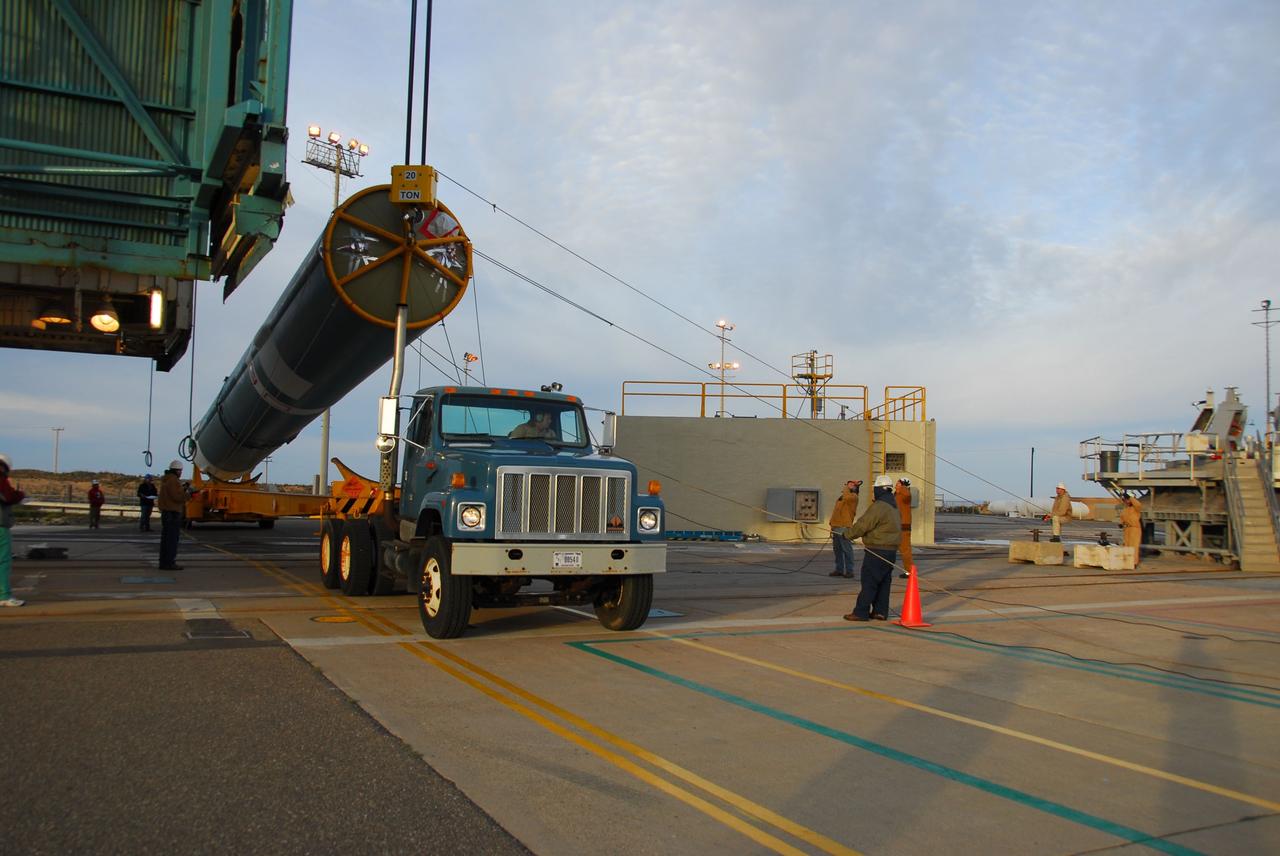
VANDENBERG AIR FORCE BASE, Calif. -- The first stage of the Delta II rocket that will carry NASA's Aquarius satellite into low Earth orbit is raised onto the launch pad at Vandenberg Air Force Base's Space Launch Complex-2 (SLC-2) in California. While the Delta II rocket is stacked on SLC-2, teams for NASA's Glory spacecraft and Orbital Sciences Taurus XL rocket are in launch preparation mode at Vandenberg's nearby Space Launch Complex 576-E. Scheduled to launch in June, Aquarius' mission will be to provide monthly maps of global changes in sea surface salinity. By measuring ocean salinity from space, Aquarius will provide new insights into how the massive natural exchange of freshwater between the ocean, atmosphere and sea ice influences ocean circulation, weather and climate. Also going up with the satellite are optical and thermal cameras, a microwave radiometer and the SAC-D spacecraft, which were developed with the help of institutions in Italy, France, Canada and Argentina. Photo credit: NASA/VAFB
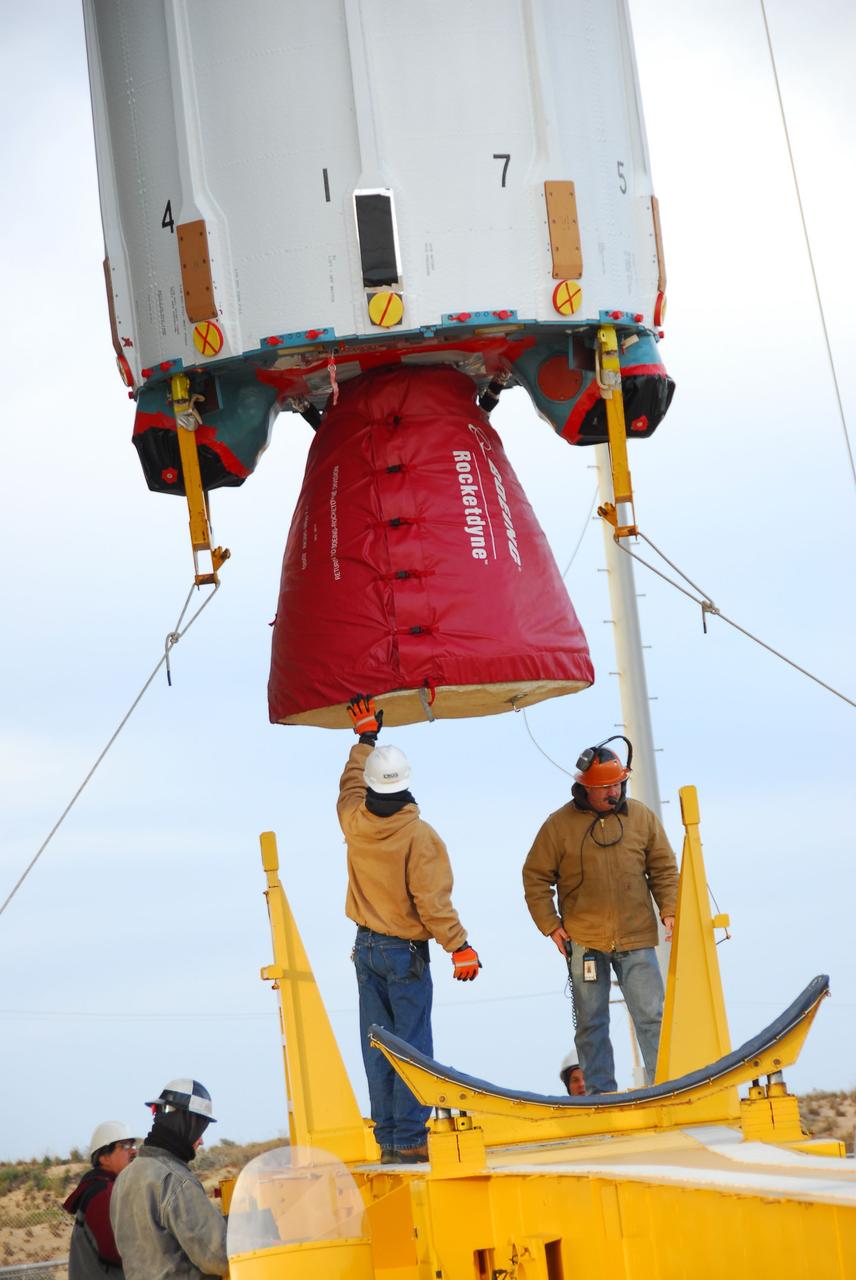
VANDENBERG AIR FORCE BASE, Calif. -- Technicians guide the first stage of the Delta II rocket that will carry NASA's Aquarius satellite into low Earth orbit onto the launch pad at Vandenberg Air Force Base's Space Launch Complex-2 (SLC-2) in California. While the Delta II rocket is stacked on SLC-2, teams for NASA's Glory spacecraft and Orbital Sciences Taurus XL rocket are in launch preparation mode at Vandenberg's nearby Space Launch Complex 576-E. Scheduled to launch in June, Aquarius' mission will be to provide monthly maps of global changes in sea surface salinity. By measuring ocean salinity from space, Aquarius will provide new insights into how the massive natural exchange of freshwater between the ocean, atmosphere and sea ice influences ocean circulation, weather and climate. Also going up with the satellite are optical and thermal cameras, a microwave radiometer and the SAC-D spacecraft, which were developed with the help of institutions in Italy, France, Canada and Argentina. Photo credit: NASA/VAFB
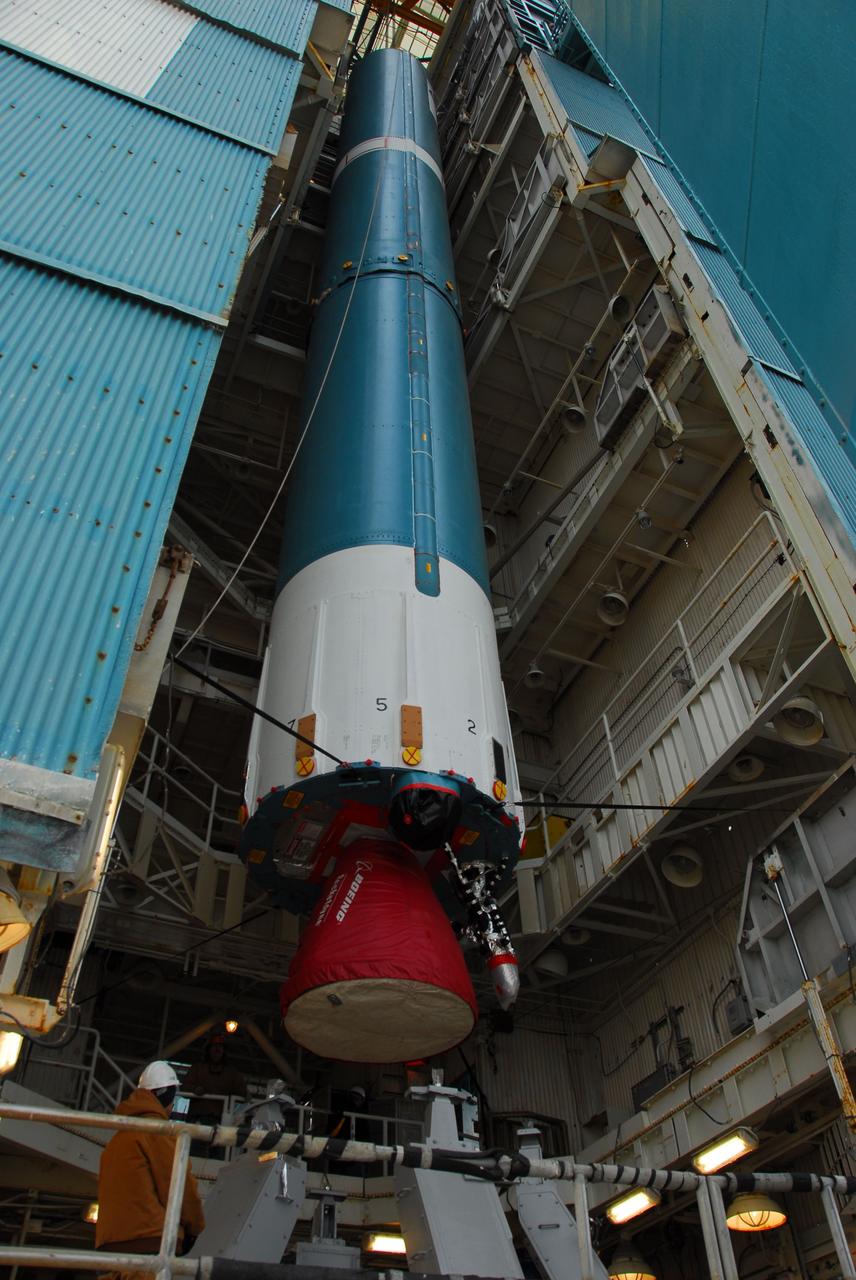
VANDENBERG AIR FORCE BASE, Calif. -- The first stage of the Delta II rocket that will carry NASA's Aquarius satellite into low Earth orbit is raised onto the launch pad at Vandenberg Air Force Base's Space Launch Complex-2 (SLC-2) in California. While the Delta II rocket is stacked on SLC-2, teams for NASA's Glory spacecraft and Orbital Sciences Taurus XL rocket are in launch preparation mode at Vandenberg's nearby Space Launch Complex 576-E. Scheduled to launch in June, Aquarius' mission will be to provide monthly maps of global changes in sea surface salinity. By measuring ocean salinity from space, Aquarius will provide new insights into how the massive natural exchange of freshwater between the ocean, atmosphere and sea ice influences ocean circulation, weather and climate. Also going up with the satellite are optical and thermal cameras, a microwave radiometer and the SAC-D spacecraft, which were developed with the help of institutions in Italy, France, Canada and Argentina. Photo credit: NASA/VAFB
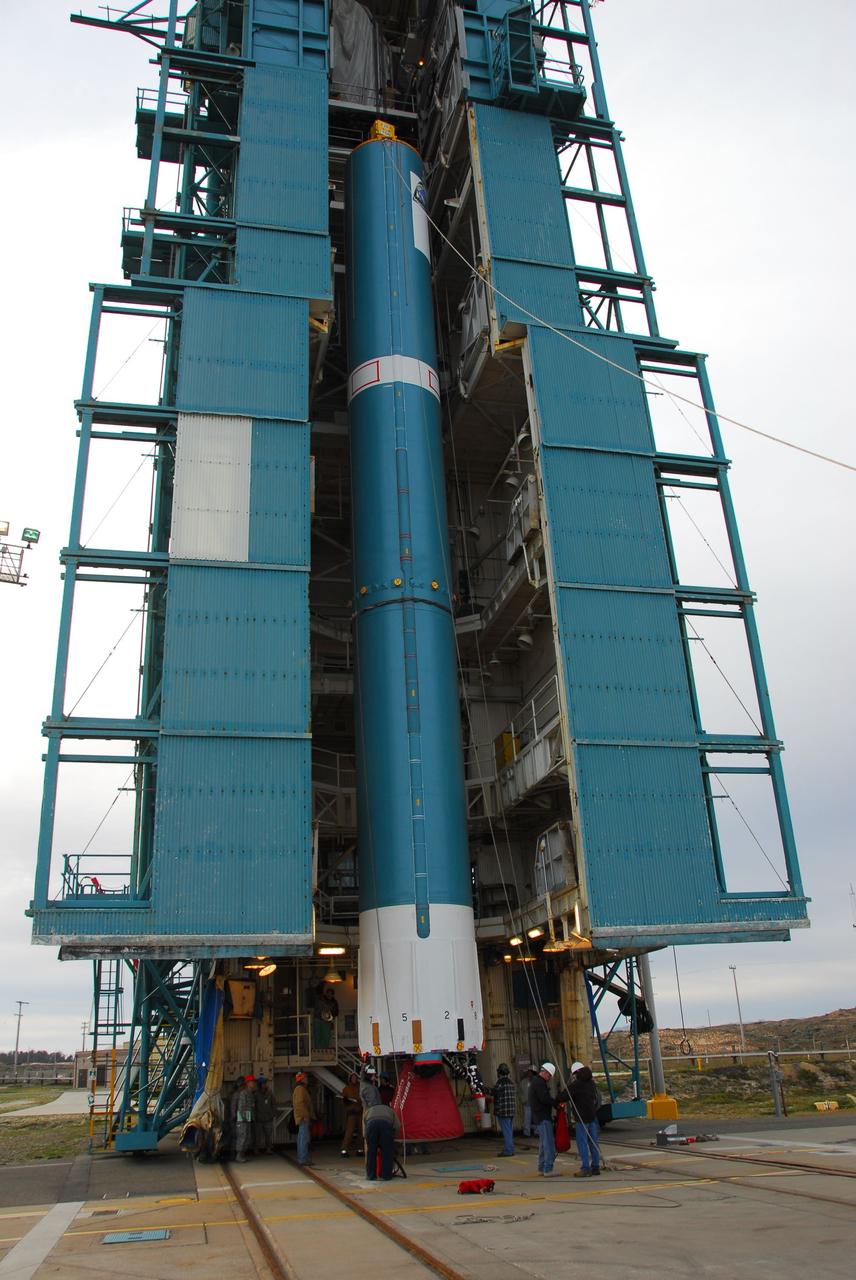
VANDENBERG AIR FORCE BASE, Calif. -- Technicians guide the first stage of the Delta II rocket that will carry NASA's Aquarius satellite into low Earth orbit onto the launch pad at Vandenberg Air Force Base's Space Launch Complex-2 (SLC-2) in California. While the Delta II rocket is stacked on SLC-2, teams for NASA's Glory spacecraft and Orbital Sciences Taurus XL rocket are in launch preparation mode at Vandenberg's nearby Space Launch Complex 576-E. Scheduled to launch in June, Aquarius' mission will be to provide monthly maps of global changes in sea surface salinity. By measuring ocean salinity from space, Aquarius will provide new insights into how the massive natural exchange of freshwater between the ocean, atmosphere and sea ice influences ocean circulation, weather and climate. Also going up with the satellite are optical and thermal cameras, a microwave radiometer and the SAC-D spacecraft, which were developed with the help of institutions in Italy, France, Canada and Argentina. Photo credit: NASA/VAFB
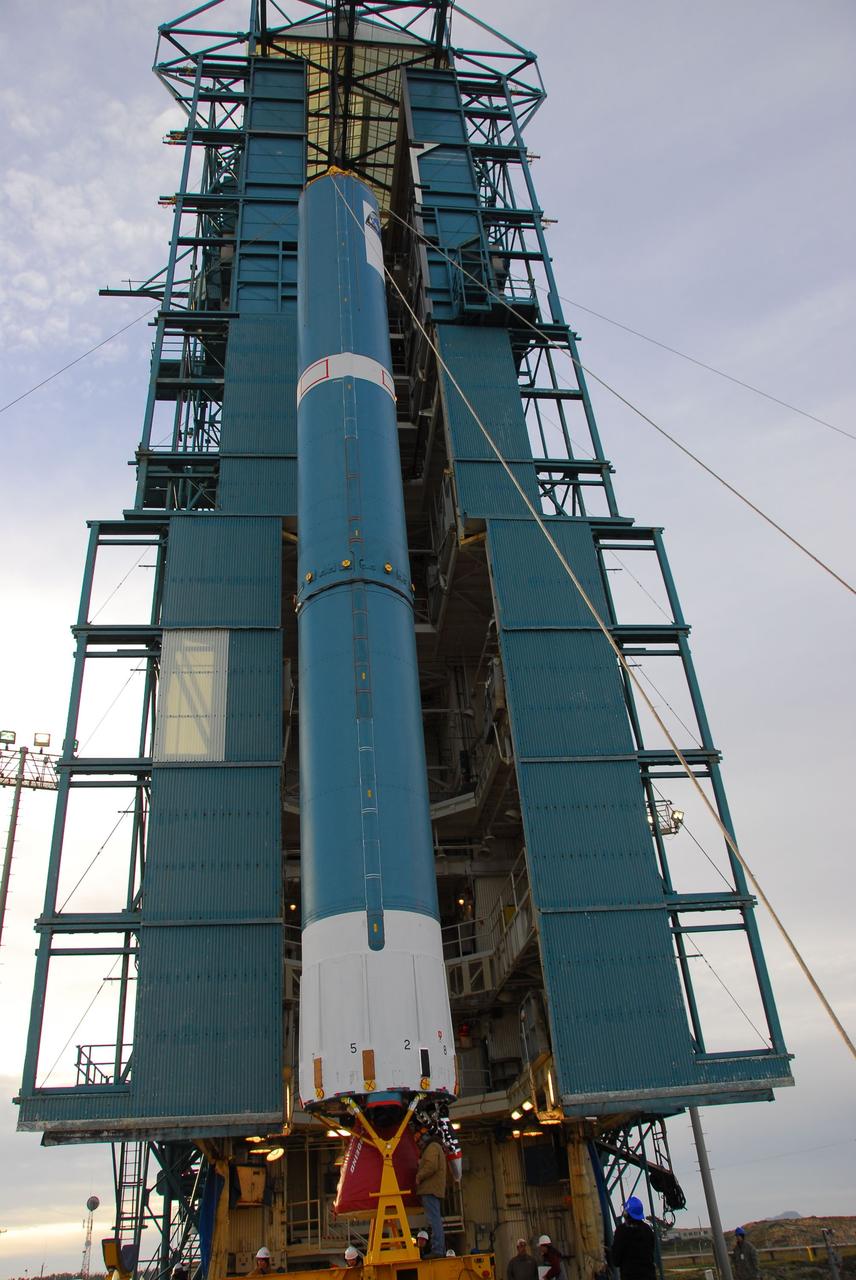
VANDENBERG AIR FORCE BASE, Calif. -- Technicians guide the first stage of the Delta II rocket that will carry NASA's Aquarius satellite into low Earth orbit onto the launch pad at Vandenberg Air Force Base's Space Launch Complex-2 (SLC-2) in California. While the Delta II rocket is stacked on SLC-2, teams for NASA's Glory spacecraft and Orbital Sciences Taurus XL rocket are in launch preparation mode at Vandenberg's nearby Space Launch Complex 576-E. Scheduled to launch in June, Aquarius' mission will be to provide monthly maps of global changes in sea surface salinity. By measuring ocean salinity from space, Aquarius will provide new insights into how the massive natural exchange of freshwater between the ocean, atmosphere and sea ice influences ocean circulation, weather and climate. Also going up with the satellite are optical and thermal cameras, a microwave radiometer and the SAC-D spacecraft, which were developed with the help of institutions in Italy, France, Canada and Argentina. Photo credit: NASA/VAFB
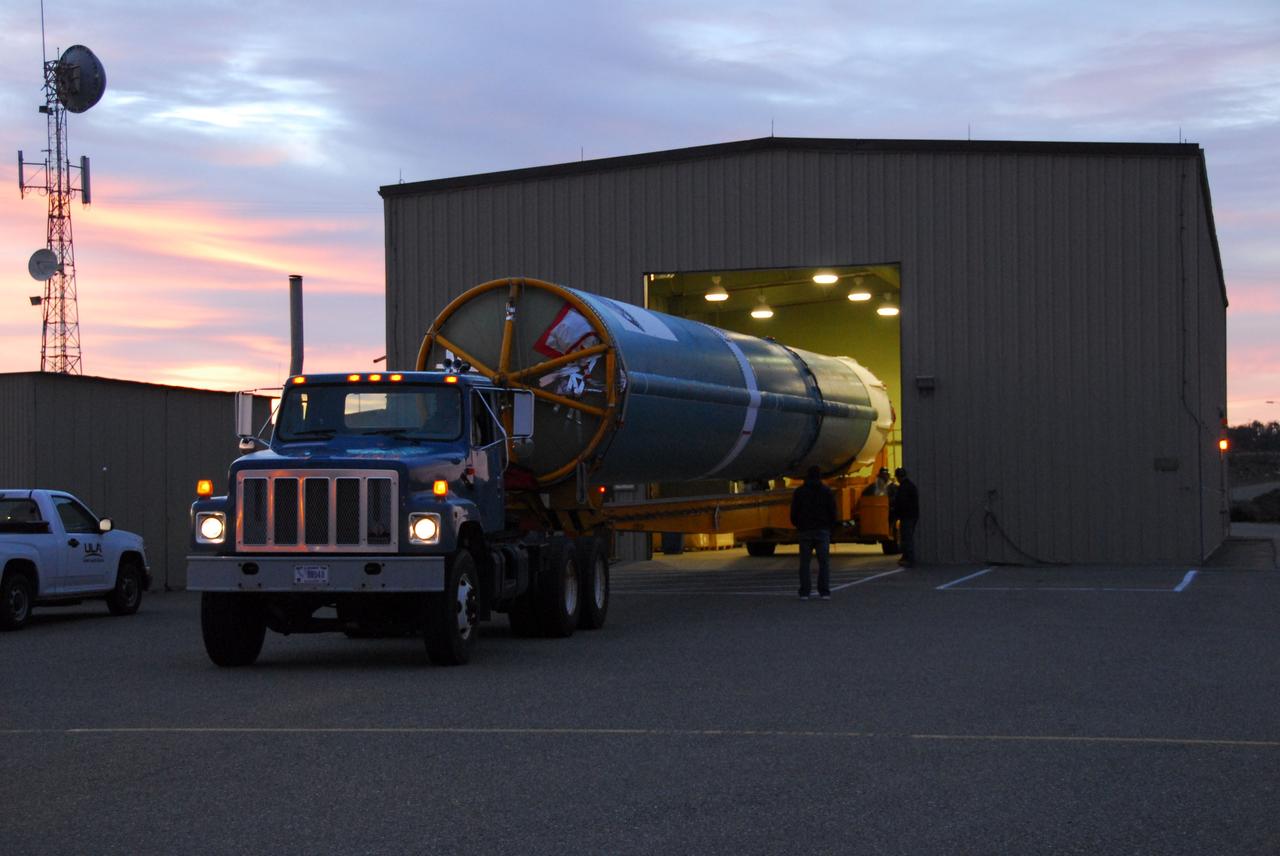
VANDENBERG AIR FORCE BASE, Calif. -- As the sun rises over Vandenberg Air Force Base in California, the first stage of the Delta II rocket that will carry NASA's Aquarius satellite into low Earth orbit is on its way to Space Launch Complex-2 (SLC-2). While the Delta II rocket is stacked on SLC-2, teams for NASA's Glory spacecraft and Orbital Sciences Taurus XL rocket are in launch preparation mode at Vandenberg's nearby Space Launch Complex 576-E. Scheduled to launch in June, Aquarius' mission will be to provide monthly maps of global changes in sea surface salinity. By measuring ocean salinity from space, Aquarius will provide new insights into how the massive natural exchange of freshwater between the ocean, atmosphere and sea ice influences ocean circulation, weather and climate. Also going up with the satellite are optical and thermal cameras, a microwave radiometer and the SAC-D spacecraft, which were developed with the help of institutions in Italy, France, Canada and Argentina. Photo credit: NASA/VAFB
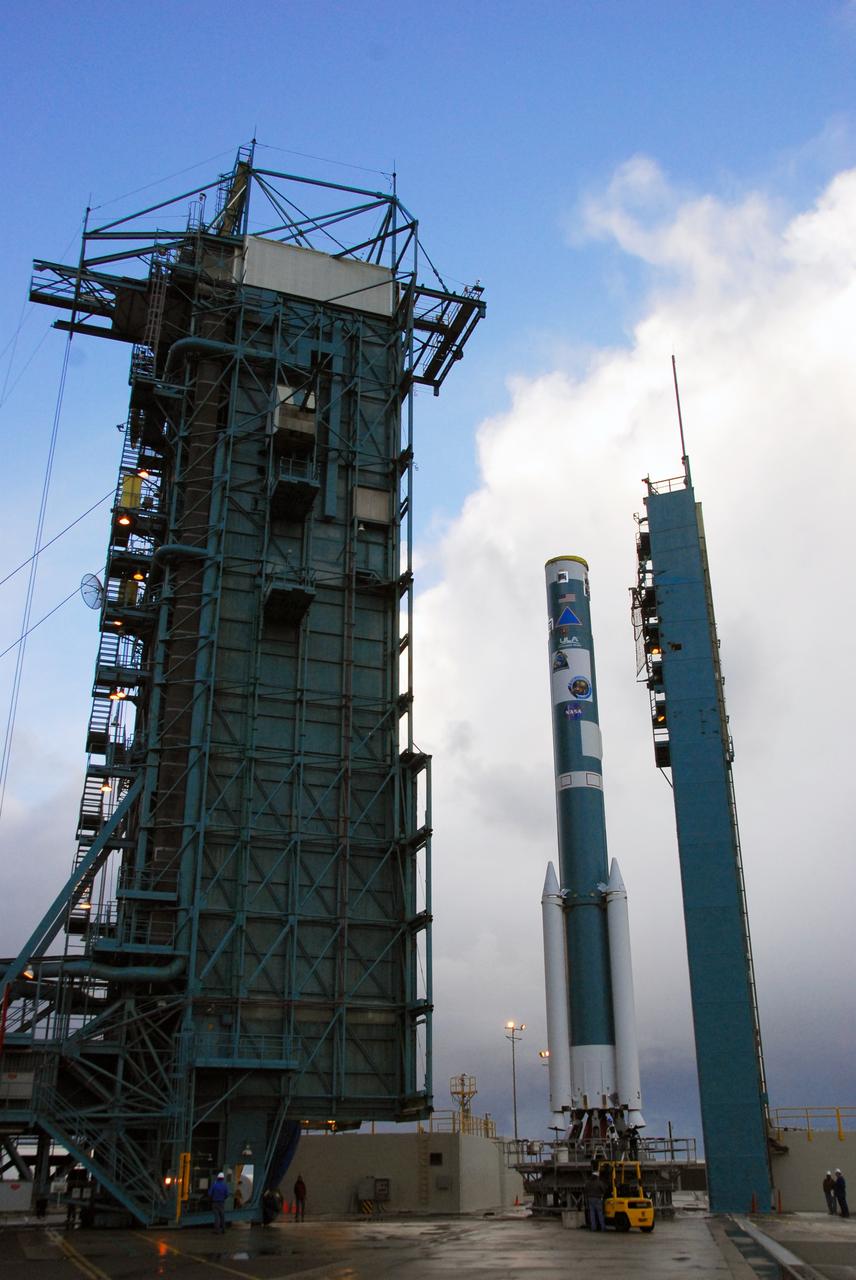
VANDENBERG AIR FORCE BASE, Calif. -- The Space Launch Complex-2 (SLC-2) service tower at Vandenberg Air Force Base in California is moved to allow United Launch Alliance technicians to hoist into position the second stage of the Delta II rocket that will carry NASA's Aquarius satellite into low Earth orbit. Scheduled to launch in June, Aquarius' mission will be to provide monthly maps of global changes in sea surface salinity. By measuring ocean salinity from space, Aquarius will provide new insights into how the massive natural exchange of freshwater between the ocean, atmosphere and sea ice influences ocean circulation, weather and climate. Also going up with the satellite are optical and thermal cameras, a microwave radiometer and the SAC-D spacecraft, which were developed with the help of institutions in Italy, France, Canada and Argentina. Photo credit: VAFB/30th Space Wing
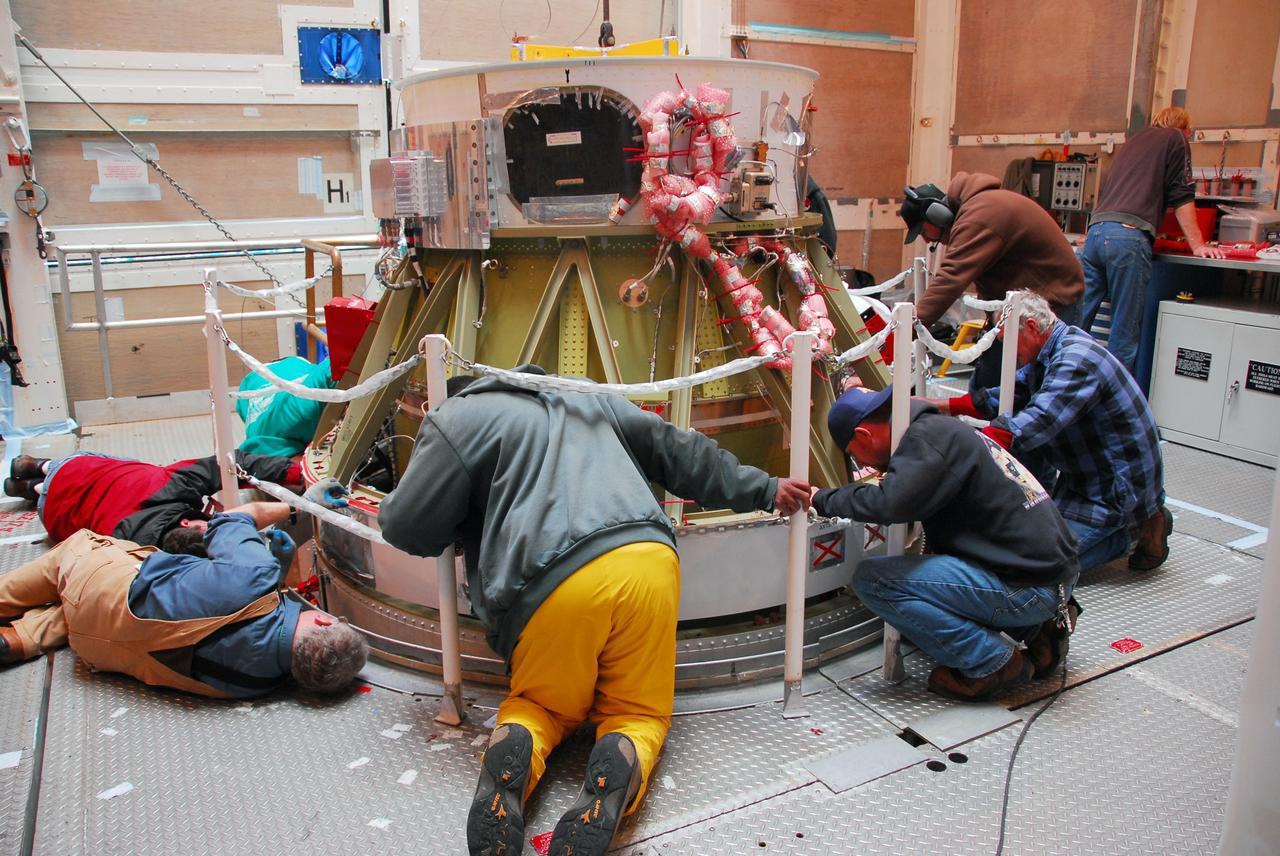
VANDENBERG AIR FORCE BASE, Calif. -- With the Space Launch Complex-2 (SLC-2) service tower at Vandenberg Air Force Base in California back in place, United Space Alliance technicians complete the installation of the second stage of a Delta II rocket to the first stage. The rocket is being prepared to launch NASA's Aquarius satellite into low Earth orbit. Scheduled to launch in June, Aquarius' mission will be to provide monthly maps of global changes in sea surface salinity. By measuring ocean salinity from space, Aquarius will provide new insights into how the massive natural exchange of freshwater between the ocean, atmosphere and sea ice influences ocean circulation, weather and climate. Also going up with the satellite are optical and thermal cameras, a microwave radiometer and the SAC-D spacecraft, which were developed with the help of institutions in Italy, France, Canada and Argentina. Photo credit: VAFB/30th Space Wing
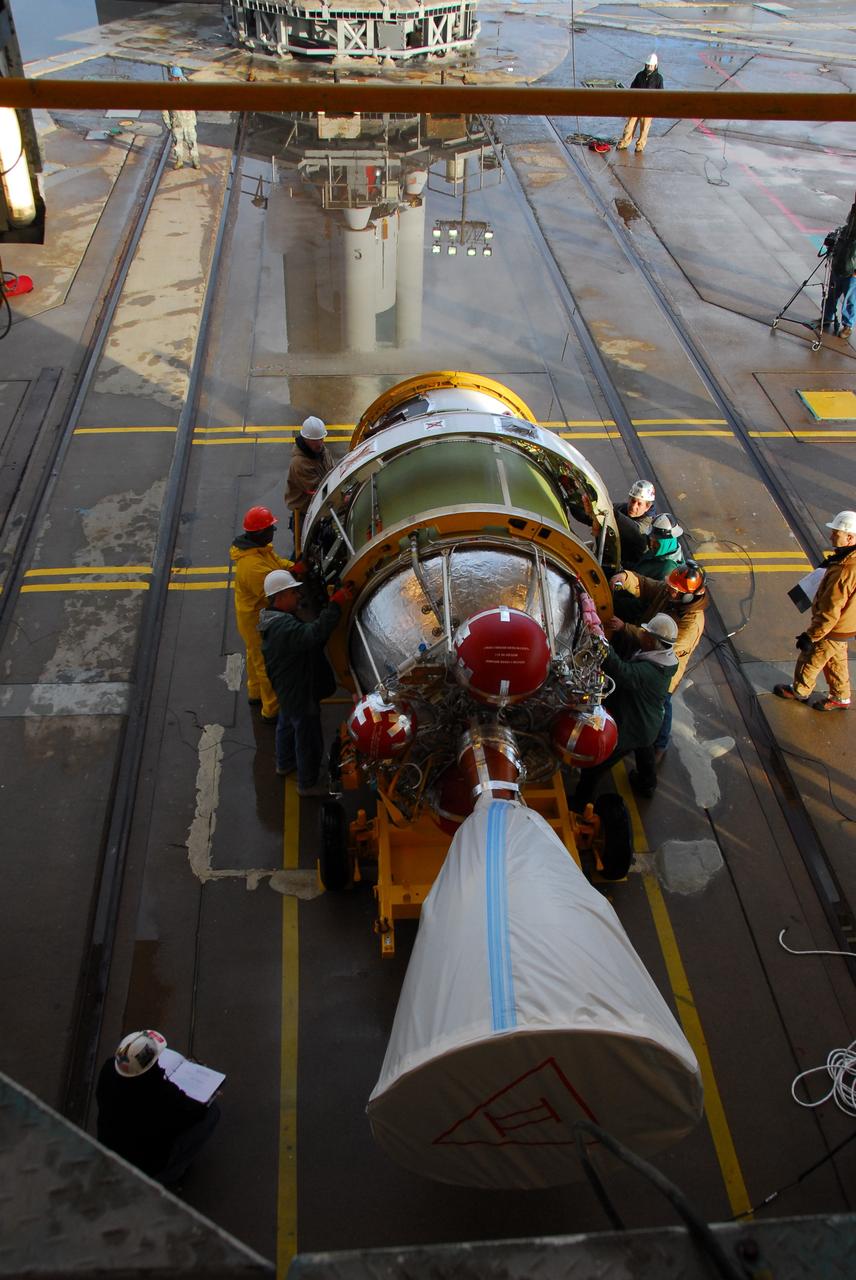
VANDENBERG AIR FORCE BASE, Calif. -- United Space Alliance technicians prepare to hoist the second stage of a Delta II rocket into position in the Space Launch Complex-2 (SLC-2) service tower at Vandenberg Air Force Base in California. The rocket is being prepared to launch NASA's Aquarius satellite into low Earth orbit. Scheduled to launch in June, Aquarius' mission will be to provide monthly maps of global changes in sea surface salinity. By measuring ocean salinity from space, Aquarius will provide new insights into how the massive natural exchange of freshwater between the ocean, atmosphere and sea ice influences ocean circulation, weather and climate. Also going up with the satellite are optical and thermal cameras, a microwave radiometer and the SAC-D spacecraft, which were developed with the help of institutions in Italy, France, Canada and Argentina. Photo credit: VAFB/30th Space Wing
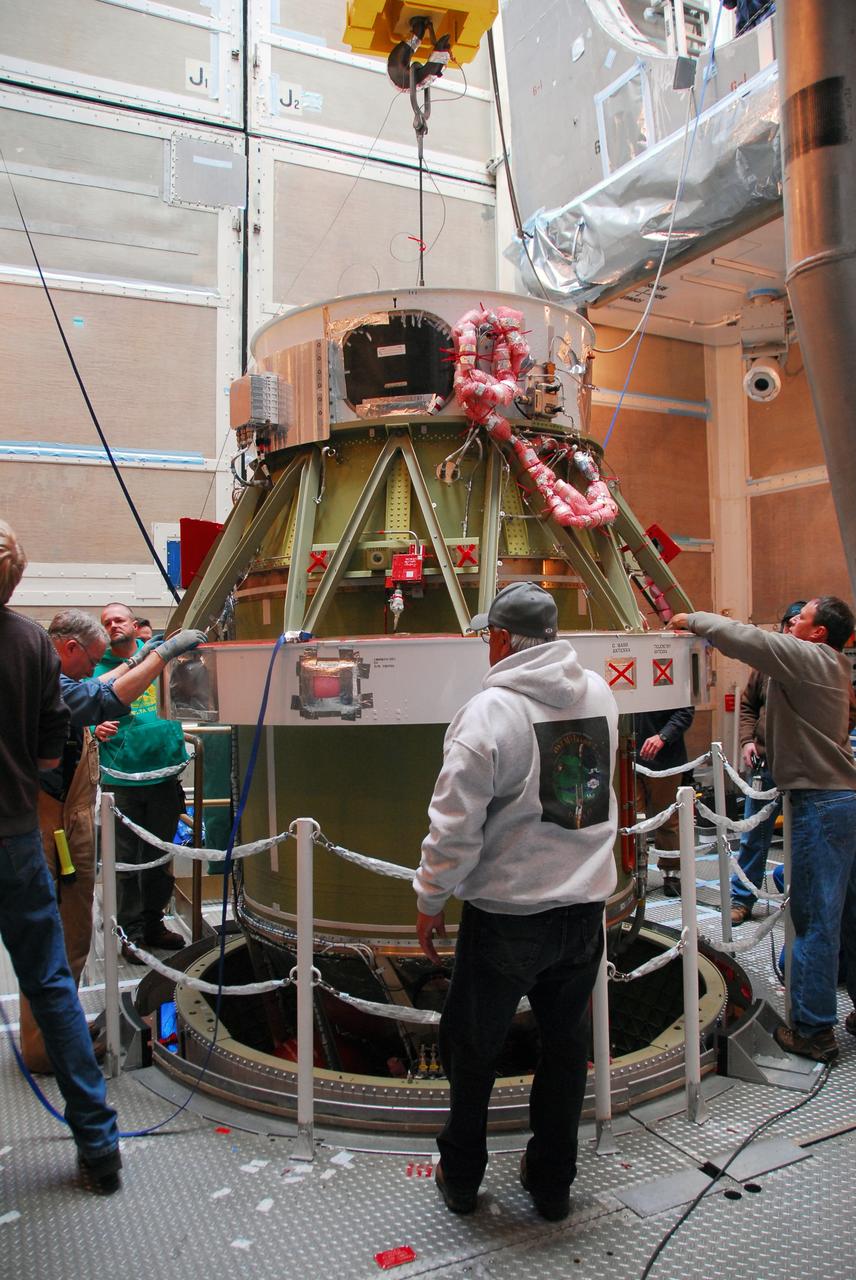
VANDENBERG AIR FORCE BASE, Calif. -- With the Space Launch Complex-2 (SLC-2) service tower at Vandenberg Air Force Base in California back in place, United Space Alliance technicians lower the second stage of a Delta II rocket into position over the first stage and three solid rocket motors. The rocket is being prepared to launch NASA's Aquarius satellite into low Earth orbit. Scheduled to launch in June, Aquarius' mission will be to provide monthly maps of global changes in sea surface salinity. By measuring ocean salinity from space, Aquarius will provide new insights into how the massive natural exchange of freshwater between the ocean, atmosphere and sea ice influences ocean circulation, weather and climate. Also going up with the satellite are optical and thermal cameras, a microwave radiometer and the SAC-D spacecraft, which were developed with the help of institutions in Italy, France, Canada and Argentina. Photo credit: VAFB/30th Space Wing
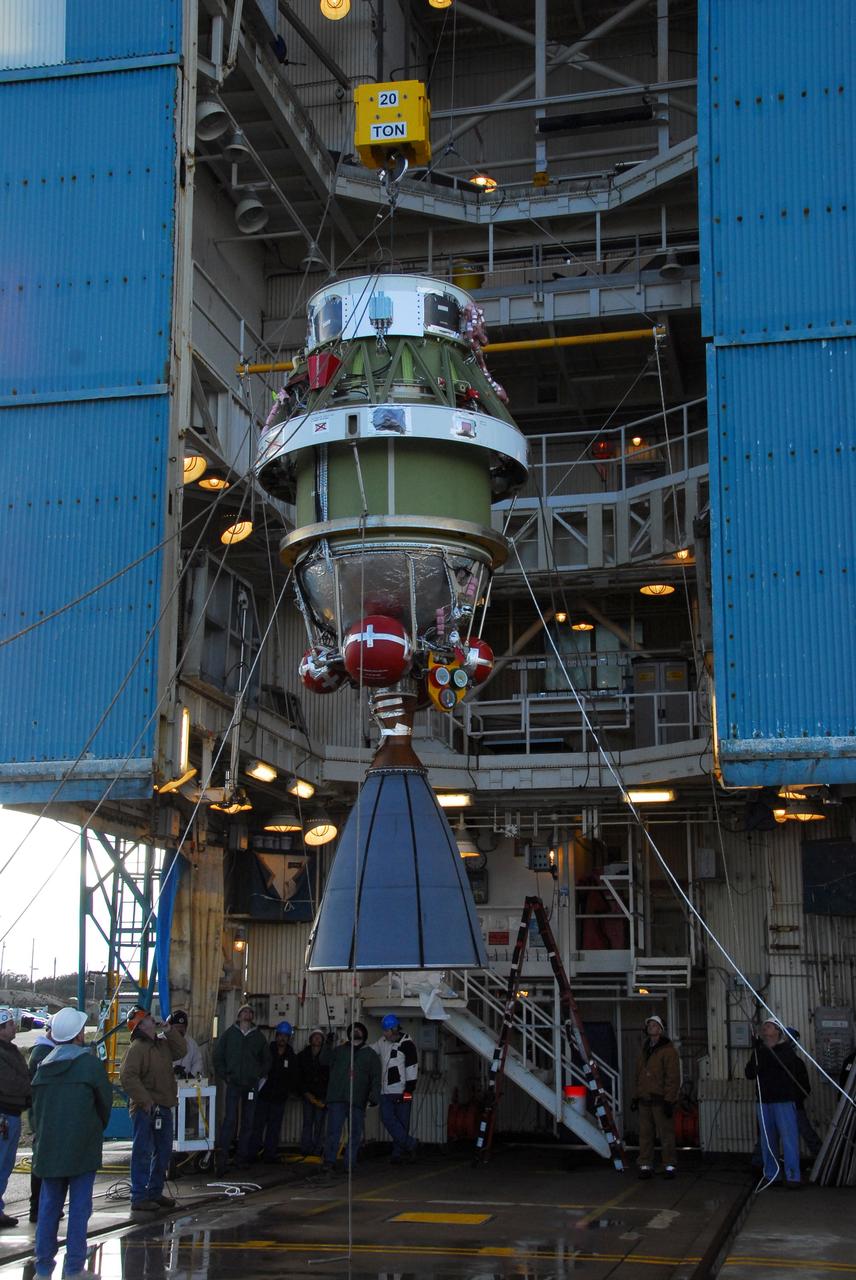
VANDENBERG AIR FORCE BASE, Calif. -- United Space Alliance technicians hoist the second stage of a Delta II rocket into position in the Space Launch Complex-2 (SLC-2) service tower at Vandenberg Air Force Base in California. The rocket is being prepared to launch NASA's Aquarius satellite into low Earth orbit. Scheduled to launch in June, Aquarius' mission will be to provide monthly maps of global changes in sea surface salinity. By measuring ocean salinity from space, Aquarius will provide new insights into how the massive natural exchange of freshwater between the ocean, atmosphere and sea ice influences ocean circulation, weather and climate. Also going up with the satellite are optical and thermal cameras, a microwave radiometer and the SAC-D spacecraft, which were developed with the help of institutions in Italy, France, Canada and Argentina. Photo credit: VAFB/30th Space Wing
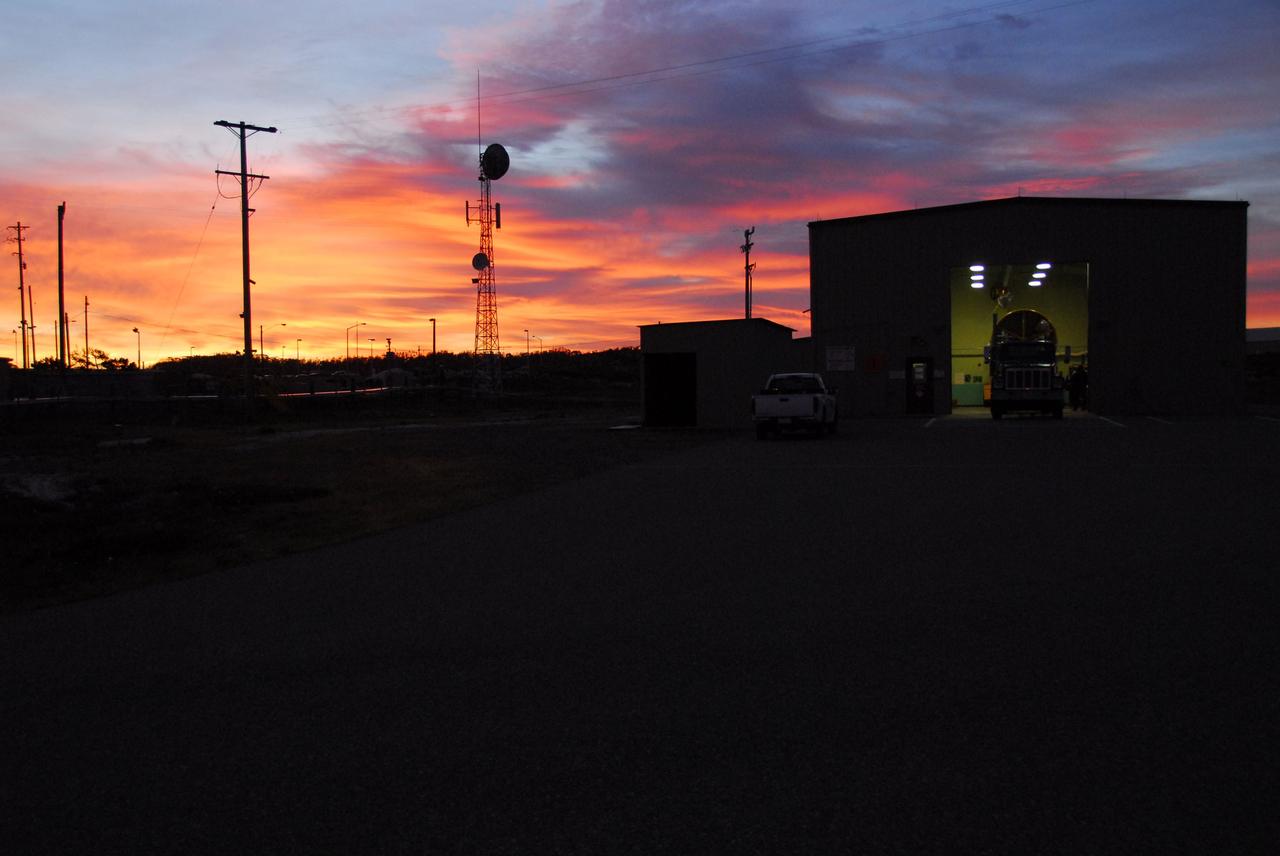
VANDENBERG AIR FORCE BASE, Calif. -- As the sun rises over Vandenberg Air Force Base in California, the first stage of the United Launch Alliance Delta II rocket that will carry the Aquarius/SAC-D satellite into low Earth orbit is prepared for its move to Space Launch Complex-2 (SLC-2). Scheduled to launch in June, Aquarius' mission will be to provide monthly maps of global changes in sea surface salinity. By measuring ocean salinity from space, Aquarius will provide new insights into how the massive natural exchange of freshwater between the ocean, atmosphere and sea ice influences ocean circulation, weather and climate. Also going up with the satellite are optical and thermal cameras, a microwave radiometer and the SAC-D spacecraft, which were developed with the help of institutions in Italy, France, Canada and Argentina. Photo credit: NASA/VAFB
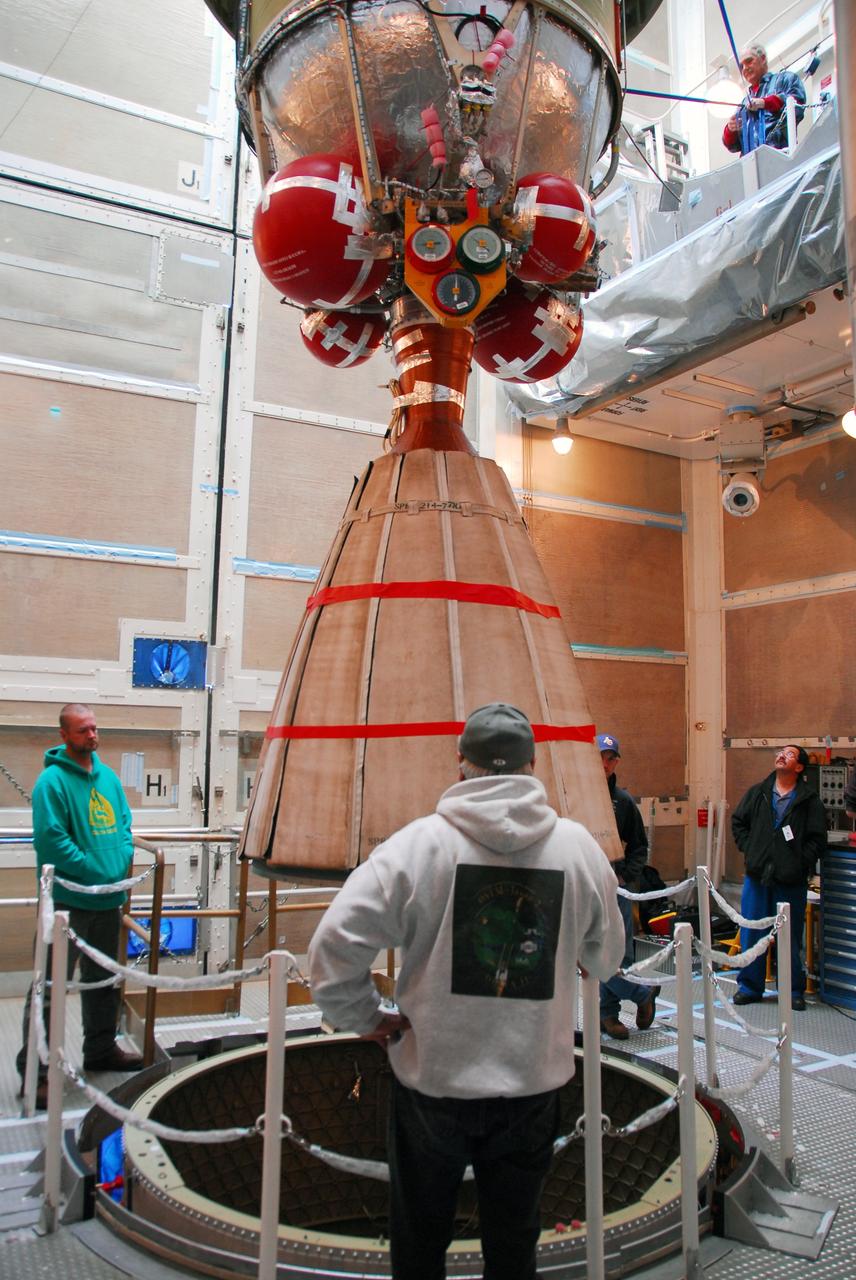
VANDENBERG AIR FORCE BASE, Calif. -- With the Space Launch Complex-2 (SLC-2) service tower at Vandenberg Air Force Base in California back in place, United Space Alliance technicians lower the second stage of a Delta II rocket into position over the first stage. The rocket is being prepared to launch NASA's Aquarius satellite into low Earth orbit. Scheduled to launch in June, Aquarius' mission will be to provide monthly maps of global changes in sea surface salinity. By measuring ocean salinity from space, Aquarius will provide new insights into how the massive natural exchange of freshwater between the ocean, atmosphere and sea ice influences ocean circulation, weather and climate. Also going up with the satellite are optical and thermal cameras, a microwave radiometer and the SAC-D spacecraft, which were developed with the help of institutions in Italy, France, Canada and Argentina. Photo credit: VAFB/30th Space Wing
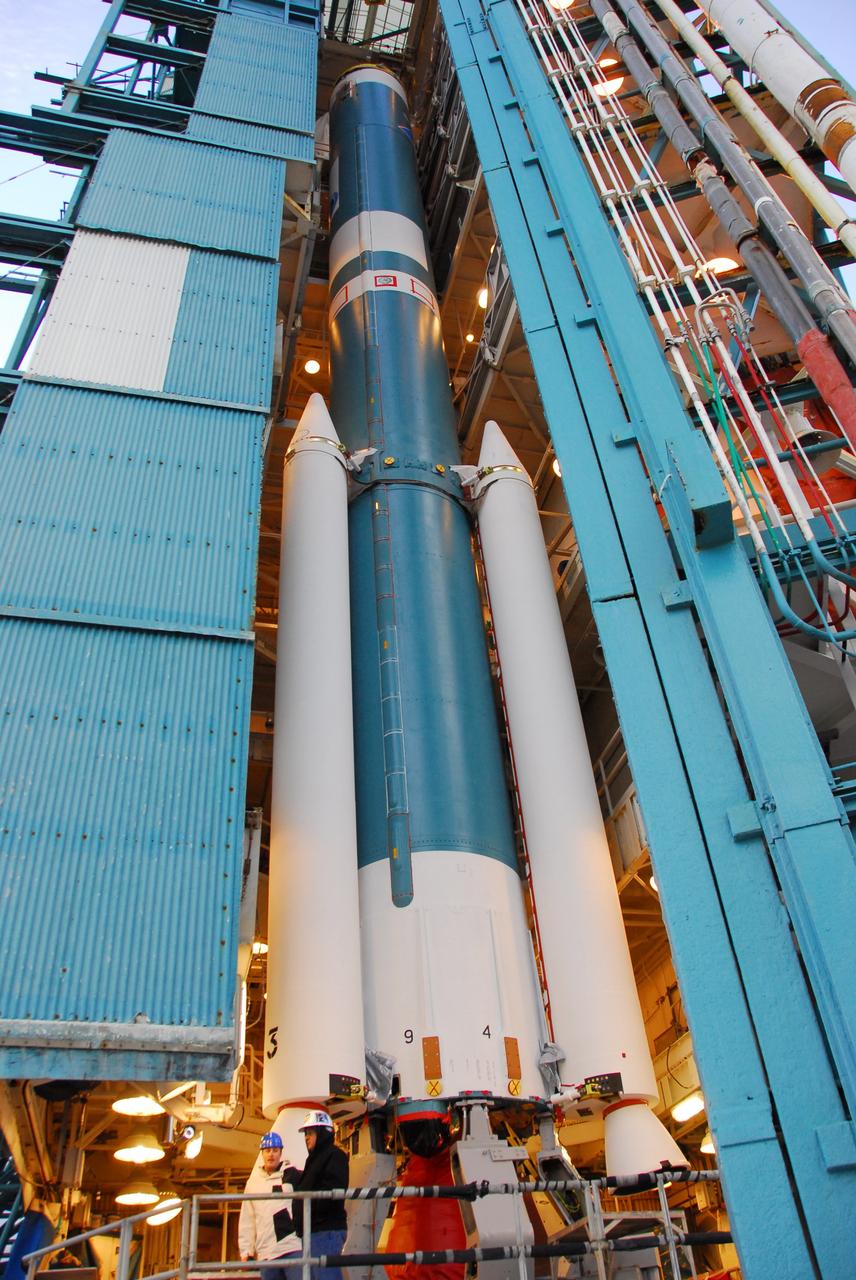
VANDENBERG AIR FORCE BASE, Calif. -- United Space Alliance technicians prepare to move the Space Launch Complex-2 (SLC-2) service tower at Vandenberg Air Force Base in California. The move will allow technicians to hoist into position the second stage of the Delta II rocket that will carry NASA's Aquarius satellite into low Earth orbit. Scheduled to launch in June, Aquarius' mission will be to provide monthly maps of global changes in sea surface salinity. By measuring ocean salinity from space, Aquarius will provide new insights into how the massive natural exchange of freshwater between the ocean, atmosphere and sea ice influences ocean circulation, weather and climate. Also going up with the satellite are optical and thermal cameras, a microwave radiometer and the SAC-D spacecraft, which were developed with the help of institutions in Italy, France, Canada and Argentina. Photo credit: VAFB/30th Space Wing
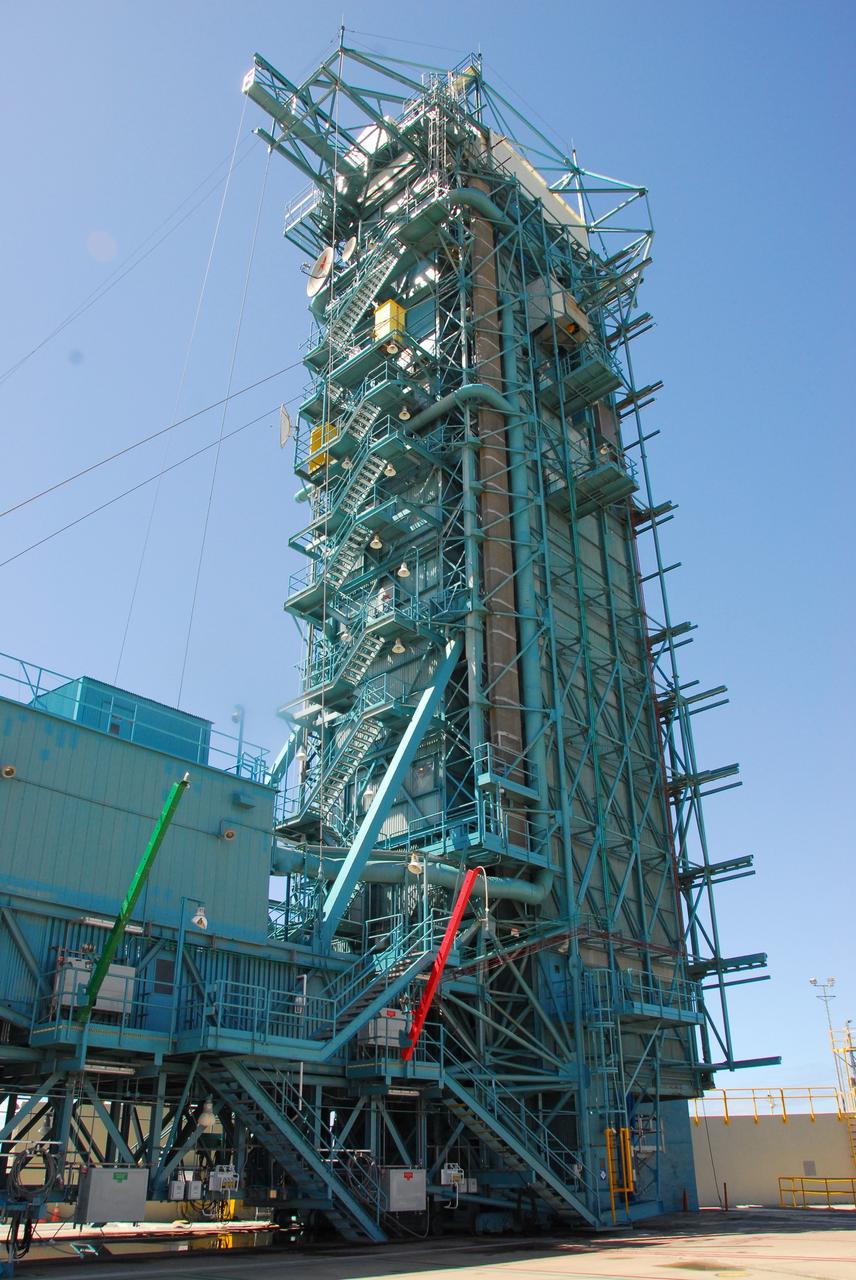
VANDENBERG AIR FORCE BASE, Calif. -- With the Space Launch Complex-2 (SLC-2) service tower at Vandenberg Air Force Base in California back in place, the first and second stages, and three solid rocket motors of a Delta II rocket are in their launch configuration. The rocket is being prepared to launch NASA's Aquarius satellite into low Earth orbit. Scheduled to launch in June, Aquarius' mission will be to provide monthly maps of global changes in sea surface salinity. By measuring ocean salinity from space, Aquarius will provide new insights into how the massive natural exchange of freshwater between the ocean, atmosphere and sea ice influences ocean circulation, weather and climate. Also going up with the satellite are optical and thermal cameras, a microwave radiometer and the SAC-D spacecraft, which were developed with the help of institutions in Italy, France, Canada and Argentina. Photo credit: VAFB/30th Space Wing
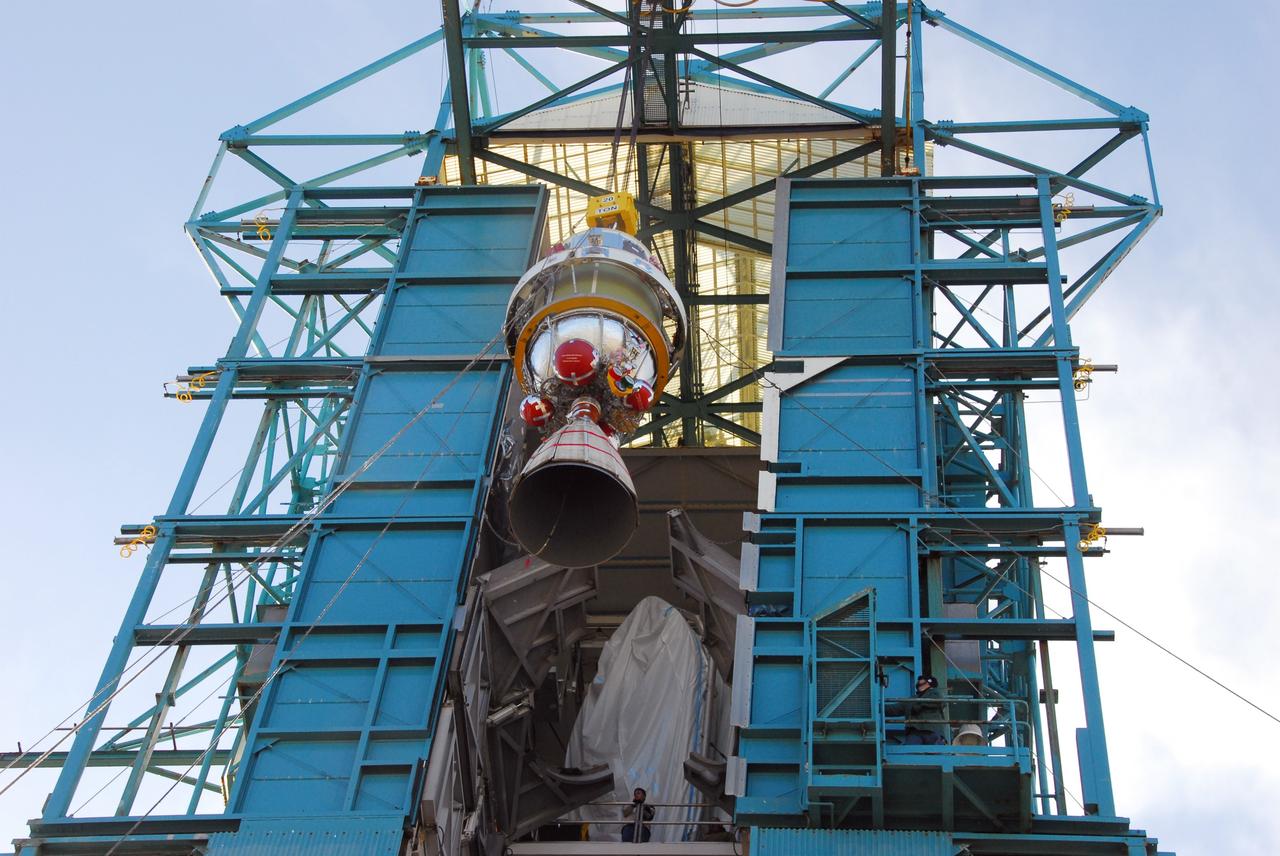
VANDENBERG AIR FORCE BASE, Calif. -- United Space Alliance technicians hoist the second stage of a Delta II rocket into position in the Space Launch Complex-2 (SLC-2) service tower at Vandenberg Air Force Base in California. The rocket is being prepared to launch NASA's Aquarius satellite into low Earth orbit. Scheduled to launch in June, Aquarius' mission will be to provide monthly maps of global changes in sea surface salinity. By measuring ocean salinity from space, Aquarius will provide new insights into how the massive natural exchange of freshwater between the ocean, atmosphere and sea ice influences ocean circulation, weather and climate. Also going up with the satellite are optical and thermal cameras, a microwave radiometer and the SAC-D spacecraft, which were developed with the help of institutions in Italy, France, Canada and Argentina. Photo credit: VAFB/30th Space Wing
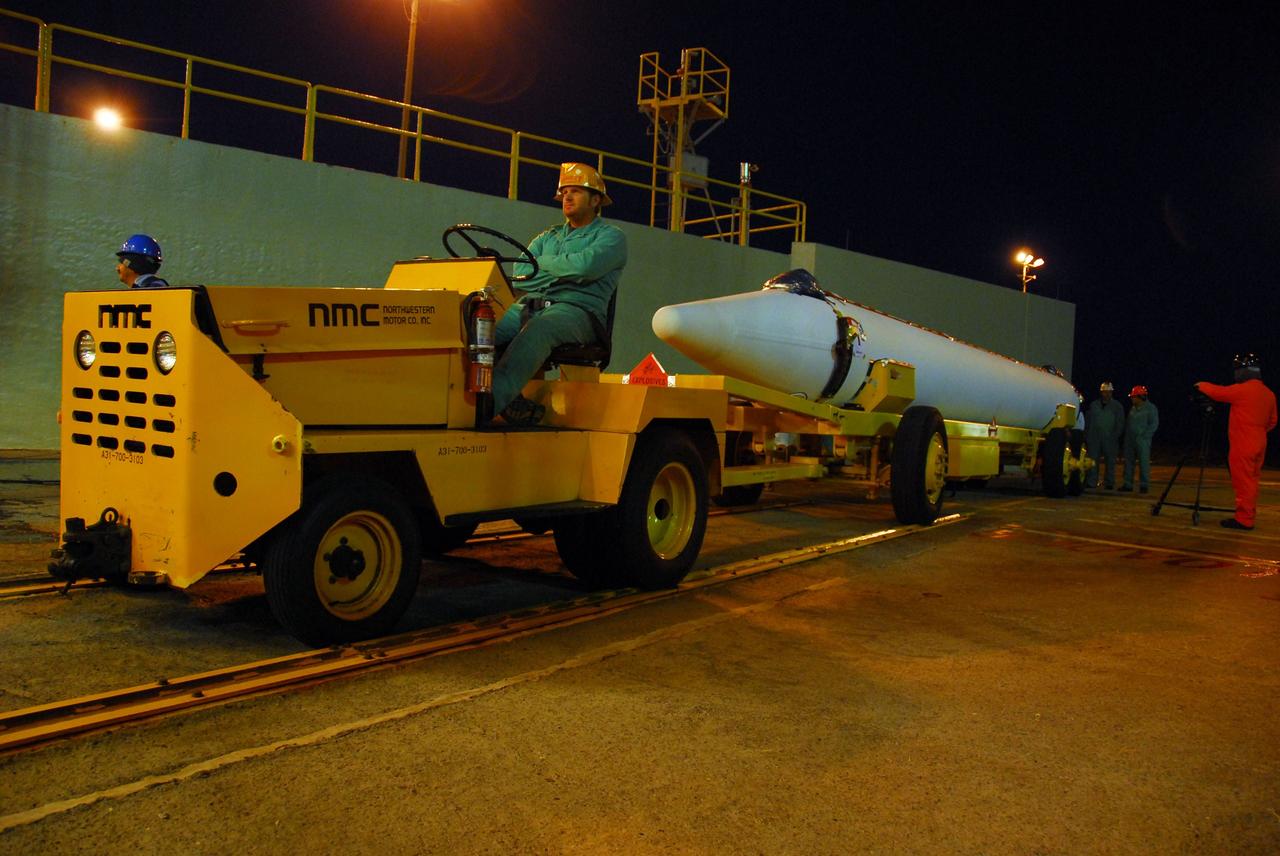
VANDENBERG AIR FORCE BASE, Calif. --Before the sun rises over Vandenberg Air Force Base in California, United Launch Alliance technicians prepare to move one of three Delta II solid rocket motors from the solid motor facility to Space Launch Complex-2 West (SLC-2W) atop a tug. ULA technician Eric Chambless is in the tug's driver seat. Scheduled to launch in June, the Delta II rocket will carry NASA's Aquarius satellite into low Earth orbit. Aquarius' mission will be to provide monthly maps of global changes in sea surface salinity. By measuring ocean salinity from space, Aquarius will provide new insights into how the massive natural exchange of freshwater between the ocean, atmosphere and sea ice influences ocean circulation, weather and climate. Also going up with the satellite are optical and thermal cameras, a microwave radiometer and the SAC-D spacecraft, which were developed with the help of institutions in Italy, France, Canada and Argentina. Photo credit: VAFB/30th Space Wing