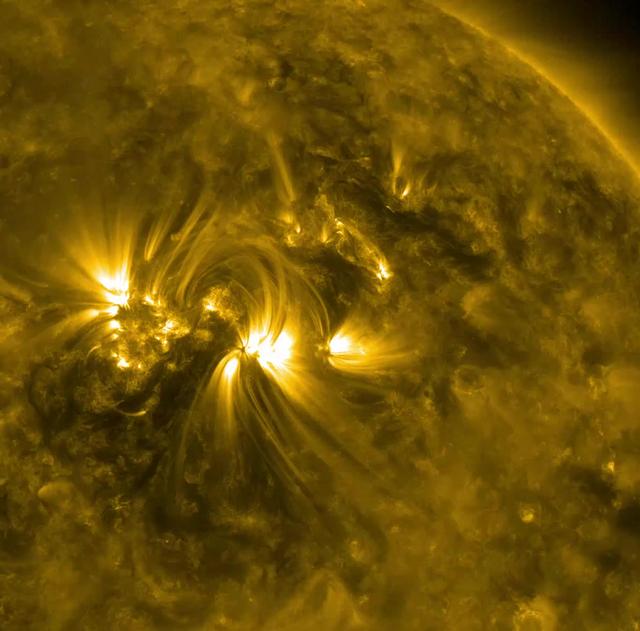
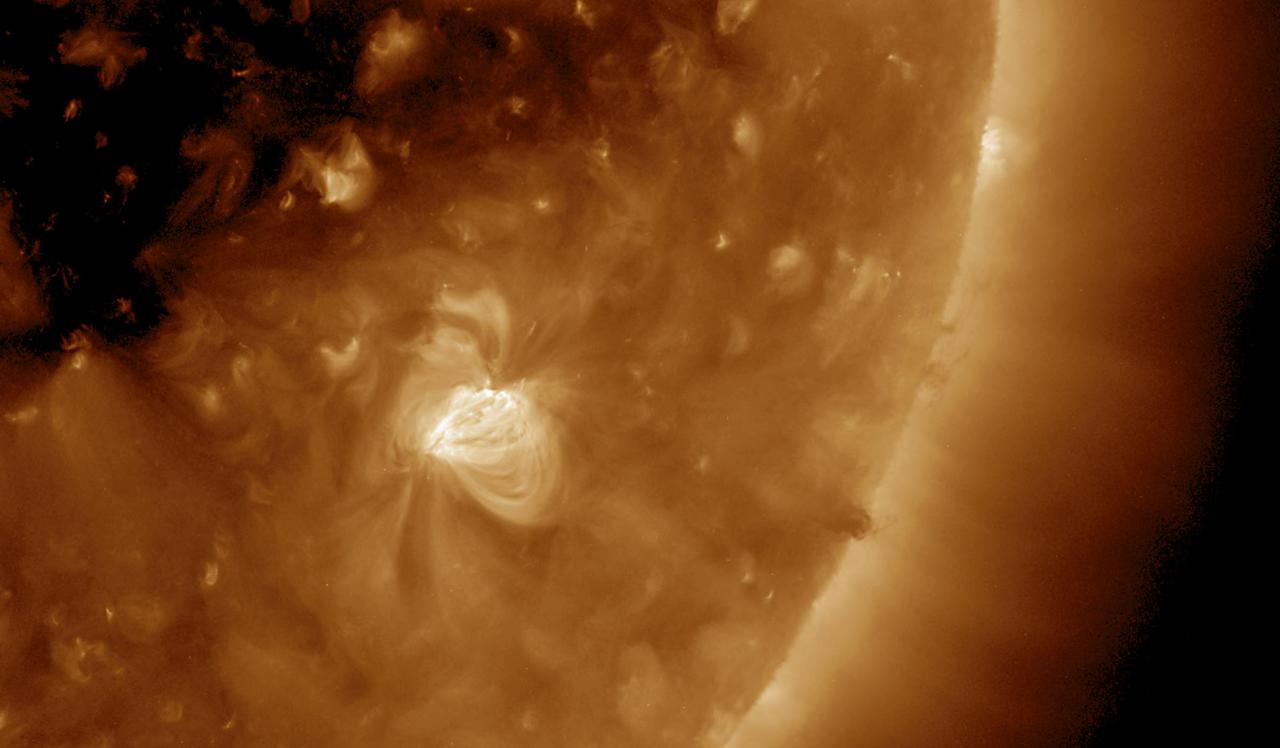
The magnetic field lines between a pair of active regions formed a beautiful set of swaying arches, seen in this footage captured by NASA’s Solar Dynamics Observatory on April 24-26, 2017. The arches are traced out by charged particles spinning along the magnetic field lines. These arches, which form a connection between regions of opposite magnetic polarity, are visible in exquisite detail in this wavelength of extreme ultraviolet light. Extreme ultraviolet light is typically invisible to our eyes, but is colorized here in gold. Read more: <a href="https://go.nasa.gov/2pGgYZt" rel="nofollow">go.nasa.gov/2pGgYZt</a> <b><a href="http://www.nasa.gov/audience/formedia/features/MP_Photo_Guidelines.html" rel="nofollow">NASA image use policy.</a></b> <b><a href="http://www.nasa.gov/centers/goddard/home/index.html" rel="nofollow">NASA Goddard Space Flight Center</a></b> enables NASA’s mission through four scientific endeavors: Earth Science, Heliophysics, Solar System Exploration, and Astrophysics. Goddard plays a leading role in NASA’s accomplishments by contributing compelling scientific knowledge to advance the Agency’s mission. <b>Follow us on <a href="http://twitter.com/NASAGoddardPix" rel="nofollow">Twitter</a></b> <b>Like us on <a href="http://www.facebook.com/pages/Greenbelt-MD/NASA-Goddard/395013845897?ref=tsd" rel="nofollow">Facebook</a></b> <b>Find us on <a href="http://instagrid.me/nasagoddard/?vm=grid" rel="nofollow">Instagram</a></b>

The magnetic field lines between a pair of active regions formed a beautiful set of swaying arches, seen in this footage captured by NASA’s Solar Dynamics Observatory on April 24-26, 2017. The arches are traced out by charged particles spinning along the magnetic field lines. These arches, which form a connection between regions of opposite magnetic polarity, are visible in exquisite detail in this wavelength of extreme ultraviolet light. Extreme ultraviolet light is typically invisible to our eyes, but is colorized here in gold. Credit: NASA/Goddard/SDO <b><a href="http://www.nasa.gov/audience/formedia/features/MP_Photo_Guidelines.html" rel="nofollow">NASA image use policy.</a></b> <b><a href="http://www.nasa.gov/centers/goddard/home/index.html" rel="nofollow">NASA Goddard Space Flight Center</a></b> enables NASA’s mission through four scientific endeavors: Earth Science, Heliophysics, Solar System Exploration, and Astrophysics. Goddard plays a leading role in NASA’s accomplishments by contributing compelling scientific knowledge to advance the Agency’s mission. <b>Follow us on <a href="http://twitter.com/NASAGoddardPix" rel="nofollow">Twitter</a></b> <b>Like us on <a href="http://www.facebook.com/pages/Greenbelt-MD/NASA-Goddard/395013845897?ref=tsd" rel="nofollow">Facebook</a></b> <b>Find us on <a href="http://instagrid.me/nasagoddard/?vm=grid" rel="nofollow">Instagram</a></b>
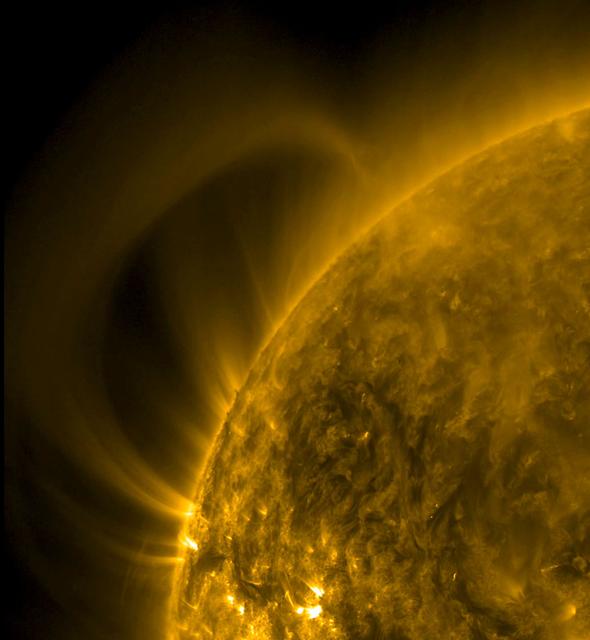
A giant arch of plasma rose up out of the Sun and then stretched itself until it had reached back to a point behind our view of the Sun (Sept, 17-18, 2014). Since it emerged from a magnetically intense active region, the arch is likely connecting to another active region over the Sun's horizon. We rarely see material extend this distance. The images were observed in the extreme ultraviolet wavelength of 171 Angstroms. Credit: NASA/Solar Dynamics Observatory <b><a href="http://www.nasa.gov/audience/formedia/features/MP_Photo_Guidelines.html" rel="nofollow">NASA image use policy.</a></b> <b><a href="http://www.nasa.gov/centers/goddard/home/index.html" rel="nofollow">NASA Goddard Space Flight Center</a></b> enables NASA’s mission through four scientific endeavors: Earth Science, Heliophysics, Solar System Exploration, and Astrophysics. Goddard plays a leading role in NASA’s accomplishments by contributing compelling scientific knowledge to advance the Agency’s mission. <b>Follow us on <a href="http://twitter.com/NASAGoddardPix" rel="nofollow">Twitter</a></b> <b>Like us on <a href="http://www.facebook.com/pages/Greenbelt-MD/NASA-Goddard/395013845897?ref=tsd" rel="nofollow">Facebook</a></b> <b>Find us on <a href="http://instagram.com/nasagoddard?vm=grid" rel="nofollow">Instagram</a></b>
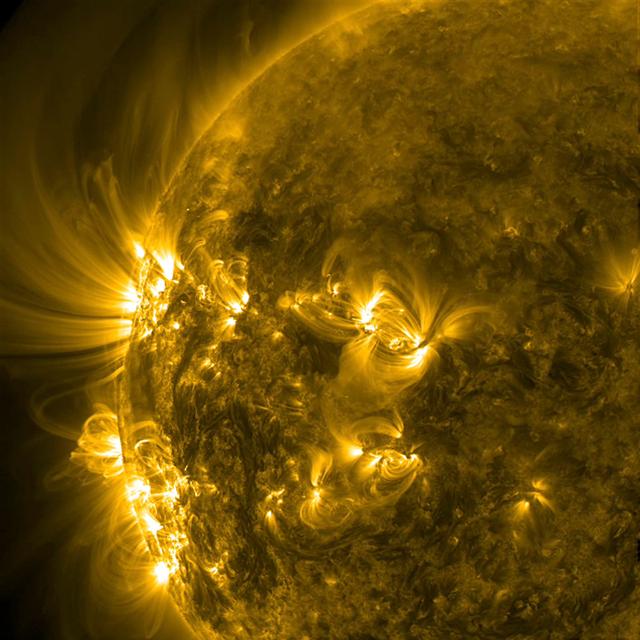
Two active regions with their intense magnetic fields produced towering arches and spiraling coils of solar loops above them (June 29 - July 1, 2014) as they rotated into view. When viewed in extreme ultraviolet light, magnetic field lines are revealed by charged particles that travel along them. These active regions appear as dark sunspots when viewed in filtered light. This image was taken on June 30 at 10:33 UT. Credit: NASA/Solar Dynamics Observatory Two active regions with their intense magnetic fields produced towering arches and spiraling coils of solar loops above them (June 29 - July 1, 2014) as they rotated into view. When viewed in extreme ultraviolet light, magnetic field lines are revealed by charged particles that travel along them. These active regions appear as dark sunspots when viewed in filtered light. Note the small blast in the upper of the two major active regions, followed by more coils of loops as the region reorganizes itself. The still was taken on June 30 at 10:33 UT. Credit: Solar Dynamics Observatory/NASA.
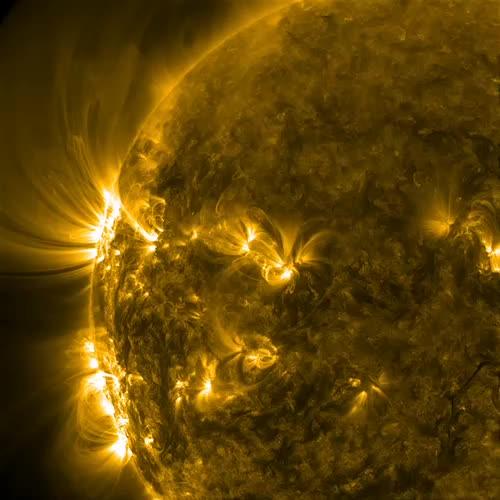
Two active regions with their intense magnetic fields produced towering arches and spiraling coils of solar loops above them (June 29 - July 1, 2014) as they rotated into view. When viewed in extreme ultraviolet light, magnetic field lines are revealed by charged particles that travel along them. These active regions appear as dark sunspots when viewed in filtered light. Note the small blast in the upper of the two major active regions, followed by more coils of loops as the region reorganizes itself. The still was taken on June 30 at 10:33 UT. Credit: NASA/Solar Dynamics Observatory Two active regions with their intense magnetic fields produced towering arches and spiraling coils of solar loops above them (June 29 - July 1, 2014) as they rotated into view. When viewed in extreme ultraviolet light, magnetic field lines are revealed by charged particles that travel along them. These active regions appear as dark sunspots when viewed in filtered light. Note the small blast in the upper of the two major active regions, followed by more coils of loops as the region reorganizes itself. The still was taken on June 30 at 10:33 UT. Credit: Solar Dynamics Observatory/NASA.

This still image from an animation from NASA GSFC Solar Dynamics Observatory shows magnetically charged particles forming a nicely symmetrical arch at the edge of the Sun as they followed the magnetic field lines of an active region Aug.4-5, 2015. Before long the arch begins to fade, but a fainter and taller arch appears for a time in the same place. Note that several other bright active regions display similar kinds of loops above them. These images of ionized iron at about one million degrees were taken in a wavelength of extreme ultraviolet light. The video covers about 30 hours of activity. http://photojournal.jpl.nasa.gov/catalog/PIA19874
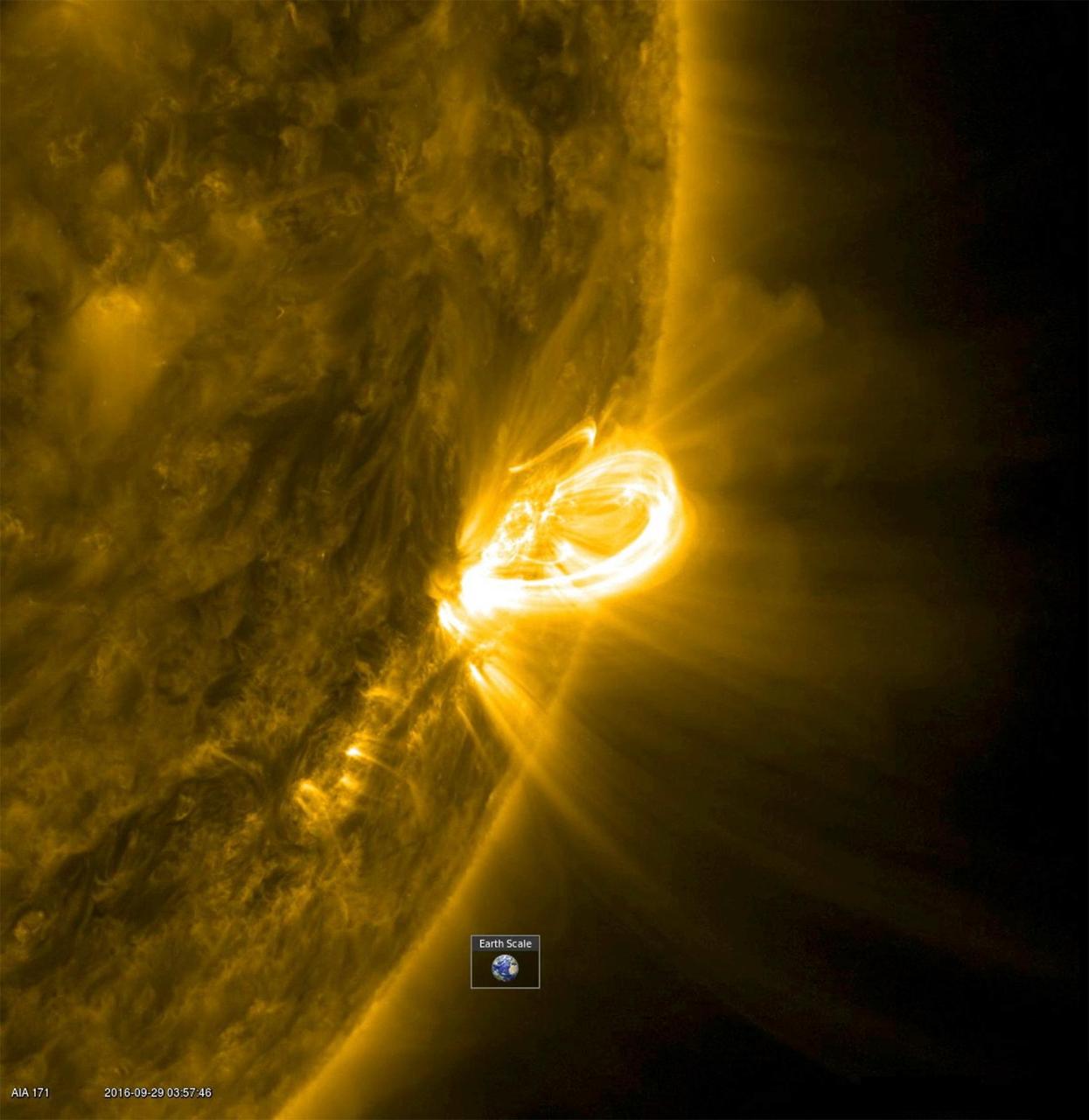
When an active region rotated into a profile view, SDO was able to capture the magnificent loops arching above an active region (Sept. 28-29, 2016). Active region are areas of strong magnetic fields. The magnetic field lines above these regions are illuminated by charged particles spiraling along them. The images were taken in a wavelength of extreme ultraviolet light. The video covers 12 hours of activity. The Earth was inset to give a sense of the scale of these towering arches. Movies are available at http://photojournal.jpl.nasa.gov/catalog/PIA21101

This new NASA/ESA Hubble Space Telescope image presents the Arches Cluster, the densest known star cluster in the Milky Way. It is located about 25 000 light-years from Earth in the constellation of Sagittarius (The Archer), close to the heart of our galaxy, the Milky Way. It is, like its neighbour the Quintuplet Cluster, a fairly young astronomical object at between two and four million years old. The Arches cluster is so dense that in a region with a radius equal to the distance between the Sun and its nearest star there would be over 100 000 stars! At least 150 stars within the cluster are among the brightest ever discovered in the the Milky Way. These stars are so bright and massive, that they will burn their fuel within a short time, on a cosmological scale, just a few million years, and die in spectacular supernova explosions. Due to the short lifetime of the stars in the cluster, the gas between the stars contains an unusually high amount of heavier elements, which were produced by earlier generations of stars. Despite its brightness the Arches Cluster cannot be seen with the naked eye. The visible light from the cluster is completely obscured by gigantic clouds of dust in this region. To make the cluster visible astronomers have to use detectors which can collect light from the X-ray, infrared, and radio bands, as these wavelengths can pass through the dust clouds. This observation shows the Arches Cluster in the infrared and demonstrates the leap in Hubble’s performance since its 1999 image of same object.
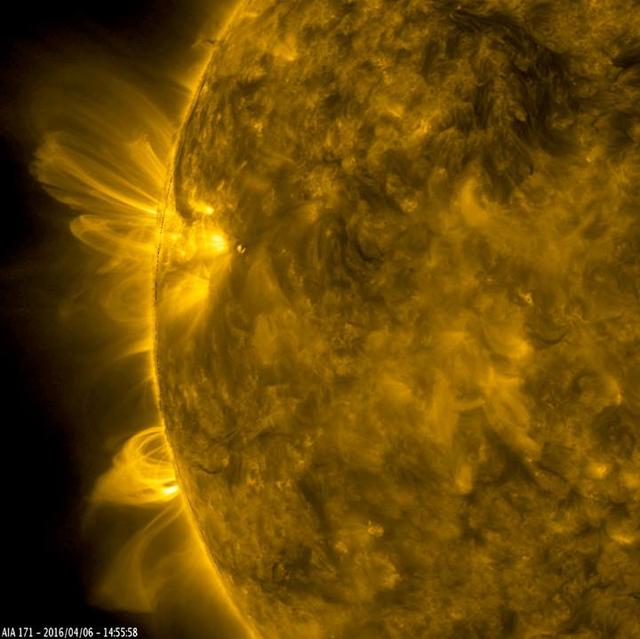
This still image from an animation from NASA GSFC Solar Dynamics Observatory shows arches of magnetic field lines towered over the edge of the Sun as a pair of active regions began to rotate into view Apr. 5-6, 2016.

NASA’s Solar Dynamics Observatory caught this image of an eruption on the side of the sun on June 18, 2015. The eruption ultimately escaped the sun, growing into a substantial coronal mass ejection, or CME — a giant cloud of solar material traveling through space. This imagery is shown in the 304 Angstrom wavelength of extreme ultraviolet light, a wavelength that highlights material in the low parts of the sun’s atmosphere and that is typically colorized in red. The video clip covers about four hours of the event. Credit: NASA/Goddard/SDO Download: <a href="http://svs.gsfc.nasa.gov/goto?11908" rel="nofollow">svs.gsfc.nasa.gov/goto?11908</a> <b><a href="http://www.nasa.gov/audience/formedia/features/MP_Photo_Guidelines.html" rel="nofollow">NASA image use policy.</a></b> <b><a href="http://www.nasa.gov/centers/goddard/home/index.html" rel="nofollow">NASA Goddard Space Flight Center</a></b> enables NASA’s mission through four scientific endeavors: Earth Science, Heliophysics, Solar System Exploration, and Astrophysics. Goddard plays a leading role in NASA’s accomplishments by contributing compelling scientific knowledge to advance the Agency’s mission. <b>Follow us on <a href="http://twitter.com/NASAGoddardPix" rel="nofollow">Twitter</a></b> <b>Like us on <a href="http://www.facebook.com/pages/Greenbelt-MD/NASA-Goddard/395013845897?ref=tsd" rel="nofollow">Facebook</a></b> <b>Find us on <a href="http://instagrid.me/nasagoddard/?vm=grid" rel="nofollow">Instagram</a></b>

The magnetic field lines between a pair of active regions formed a beautiful set of swaying arches rising up above them Apr. 24-26, 2017, as seen by NASA Solar Dynamics Observatory. The connection between opposing poles of polarity is visible in exquisite detail in this wavelength of extreme ultraviolet light. What we are really seeing are charged particles spinning along the magnetic field lines. Other field lines are traced as they reach out in other directions as well. Videos can be seen at https://photojournal.jpl.nasa.gov/catalog/PIA21604
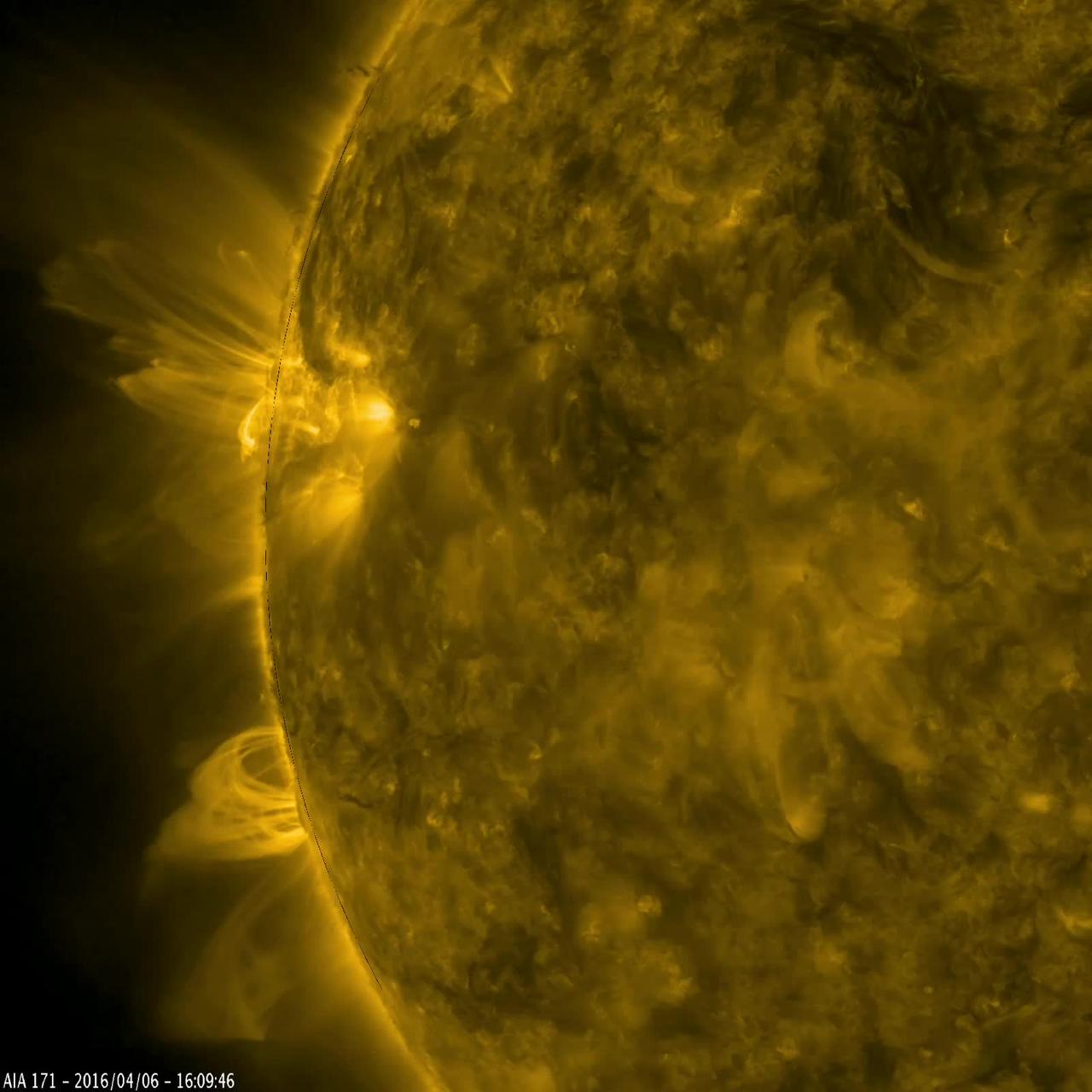
Arches of magnetic field lines towered over the sun’s edge as a pair of active regions began to rotate into view in this video captured by NASA’s Solar Dynamics Observatory on April 5-6, 2016. Active regions are areas of very concentrated magnetic field. Charged particles spiraling along these magnetic fields emit extreme ultraviolet light, which is typically not visible to our eyes, but colorized here in gold. The light given off from the particles helps trace out the magnetic field lines, which are otherwise invisible. Scientists use images such as this to observe how magnetic fields move around the sun and learn more about what causes active regions. Credit: NASA/Goddard/SDO <b><a href="http://www.nasa.gov/audience/formedia/features/MP_Photo_Guidelines.html" rel="nofollow">NASA image use policy.</a></b> <b><a href="http://www.nasa.gov/centers/goddard/home/index.html" rel="nofollow">NASA Goddard Space Flight Center</a></b> enables NASA’s mission through four scientific endeavors: Earth Science, Heliophysics, Solar System Exploration, and Astrophysics. Goddard plays a leading role in NASA’s accomplishments by contributing compelling scientific knowledge to advance the Agency’s mission. <b>Follow us on <a href="http://twitter.com/NASAGoddardPix" rel="nofollow">Twitter</a></b> <b>Like us on <a href="http://www.facebook.com/pages/Greenbelt-MD/NASA-Goddard/395013845897?ref=tsd" rel="nofollow">Facebook</a></b> <b>Find us on <a href="http://instagrid.me/nasagoddard/?vm=grid" rel="nofollow">Instagram</a></b>
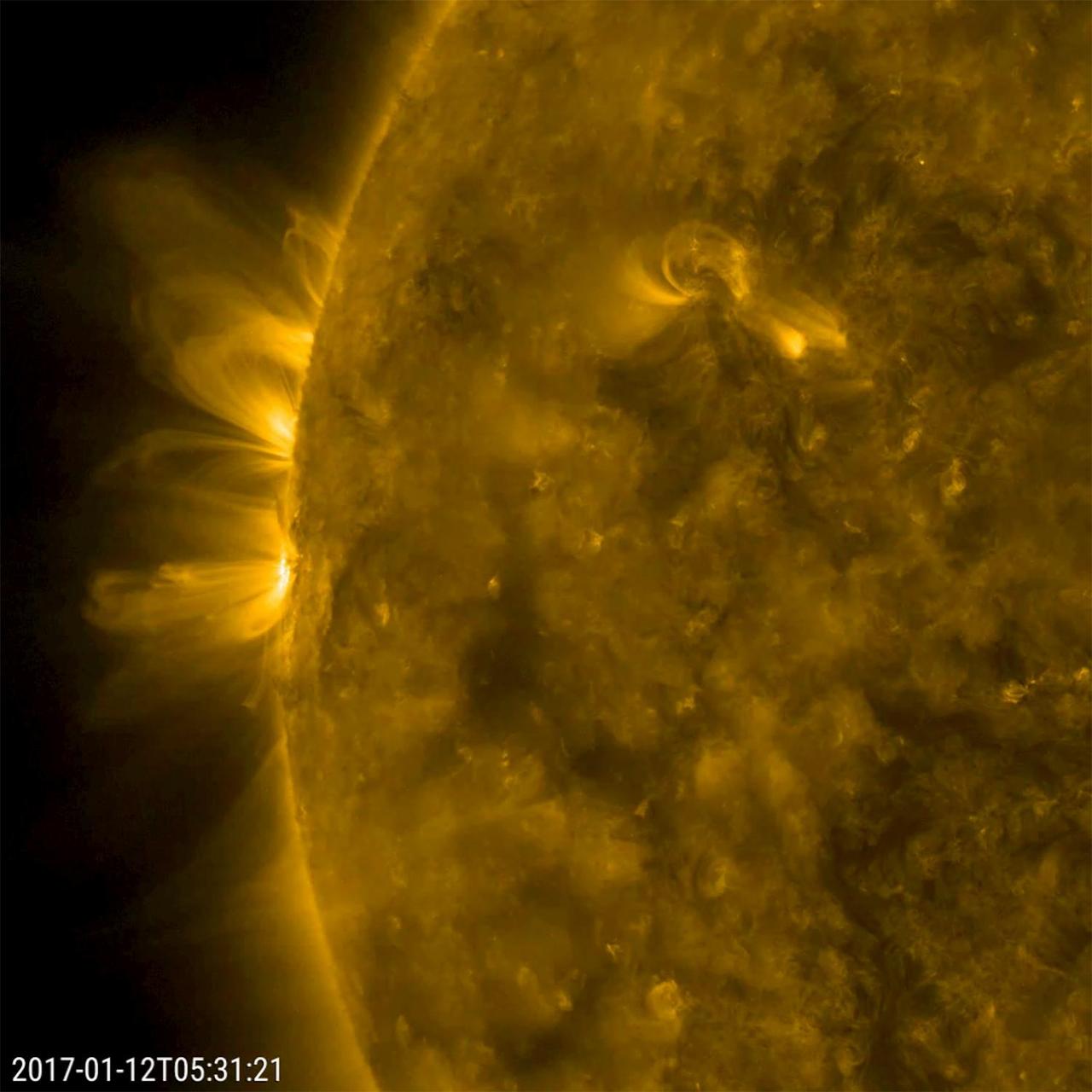
Magnetic arcs of plasma that spiraled above two active regions held their shape fairly well over 18 hours (Jan. 11-12, 2017). The charged plasma is being controlled the magnetic field lines of the active regions. The field lines become clearly visible when viewed in this wavelength of extreme ultraviolet light. Often the arches bend and twist more dynamically than the relatively stable ones seen here. Movies are available at http://photojournal.jpl.nasa.gov/catalog/PIA12327
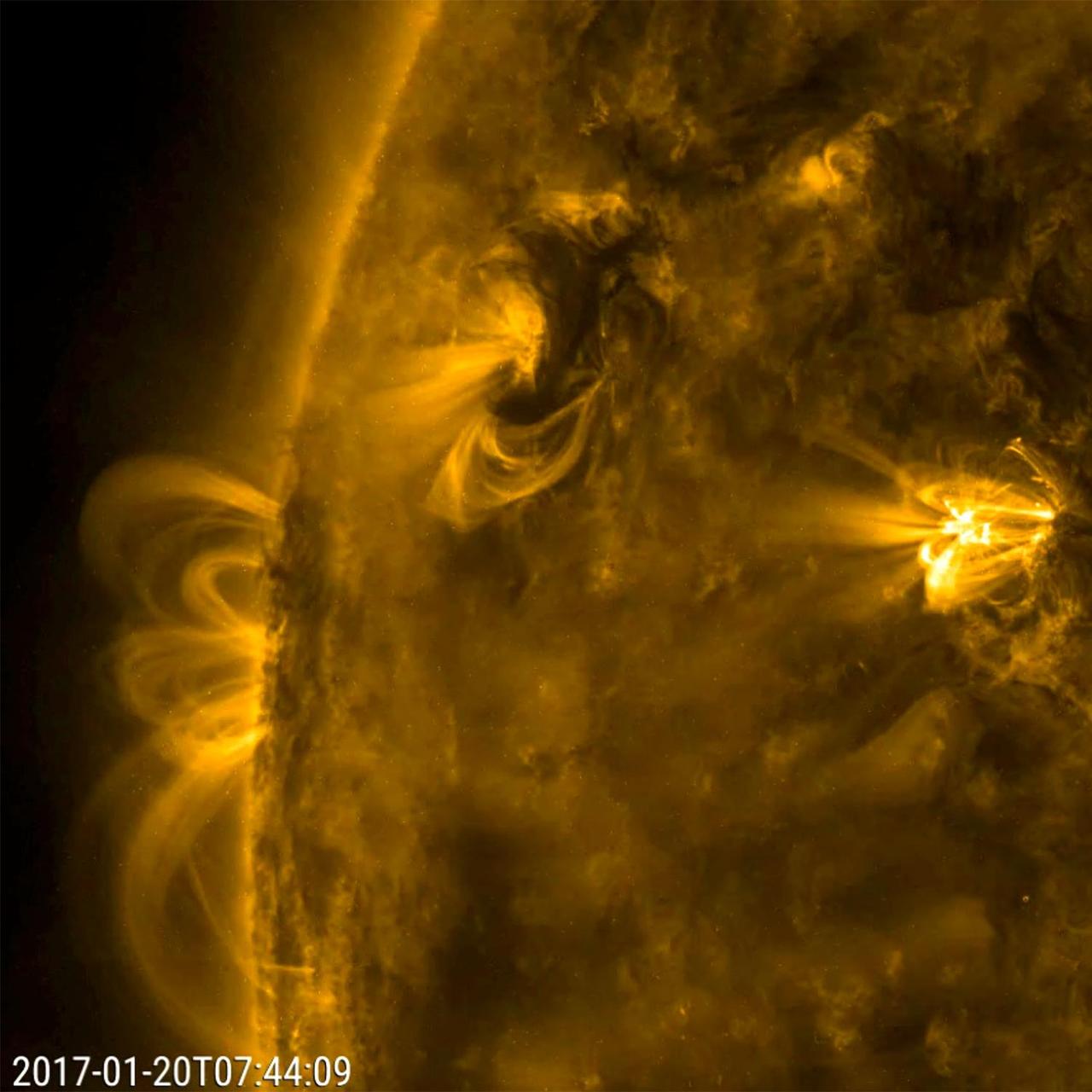
On Jan. 20, 2017, NASA Solar Dynamics Observatory captured a small area of the sun highlighted three active region. Over half a day this active region sent dark swirls of plasma and bright magnetic arches twisting and turning above it. All the activity in the three areas was driven by competing magnetic forces. The dynamic action was observed in a wavelength of extreme ultraviolet light. Movies are available at http://photojournal.jpl.nasa.gov/catalog/PIA11703
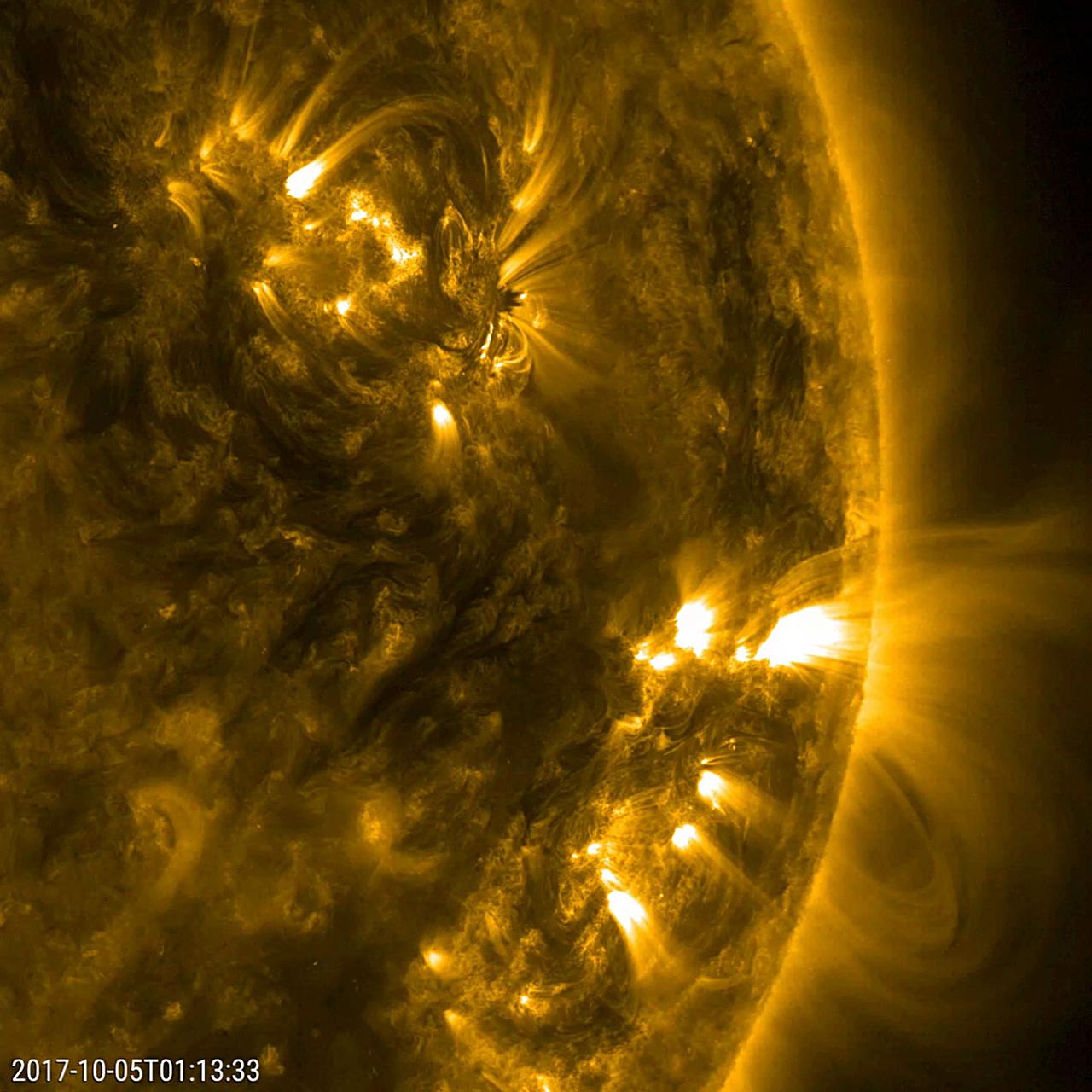
This close-up video clip shows a pair of active regions (the brighter areas) move and change as they rotate with the sun over just a 17-hour period (Oct. 4-5, 2017). They were observed in a wavelength of extreme ultraviolet light that reveals plasma heated to over a million degrees. The arches above the regions consist of charge particles spinning along and revealing magnetic field lines. Each one shows a few minor bursts of material none of them were serious. Animations are available at https://photojournal.jpl.nasa.gov/catalog/PIA22039
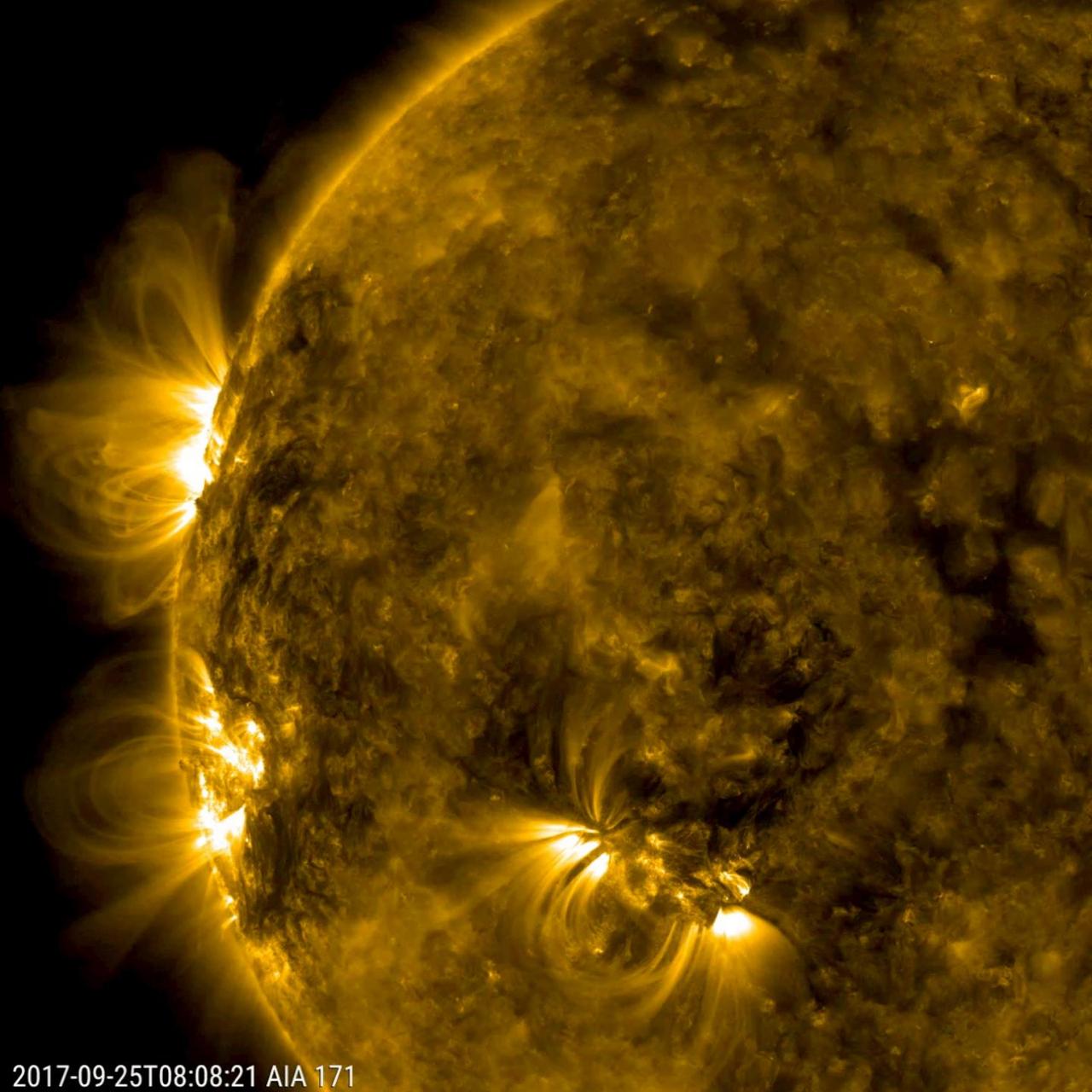
Three distinct active regions with towering arches above them rotated into view over a three-day period (Sept. 24-26, 2017). In extreme ultraviolet light, charged particles that are spinning along the ever-changing magnetic field lines above the active regions make the lines visible. To give some sense of scale, the largest arches rose up many times the size of Earth. Movies are available at https://photojournal.jpl.nasa.gov/catalog/PIA22038
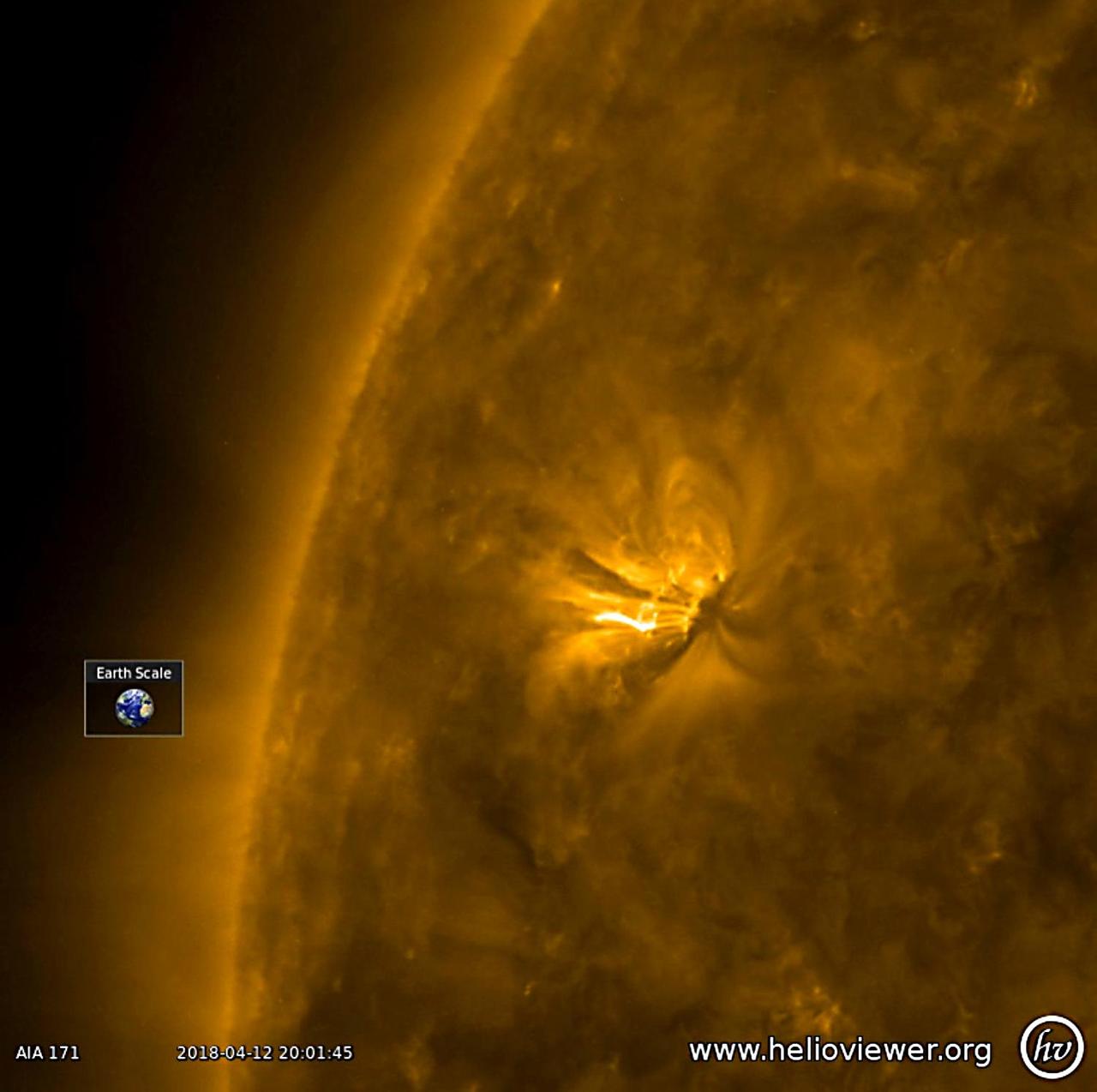
A good-sized active region with bright, towering arches began to rotate into view (Apr. 18-19, 2018). The arches consist of charged particles spiraling along magnetic field lines revealed in this wavelength of extreme ultraviolet light. They rise up above the sun's surface many times the size of Earth. The video covers just 16 hours of activity. We will keep our eyes on this region to see if it has the kind of dynamism to produce solar storms. Videos are available at https://photojournal.jpl.nasa.gov/catalog/PIA22430

N-238 60MW Aerodynamic Heating Facility outside of test section with Jean Brian (Arch heater, high pressure water manifold, & water cooled 8' conical nozzle)
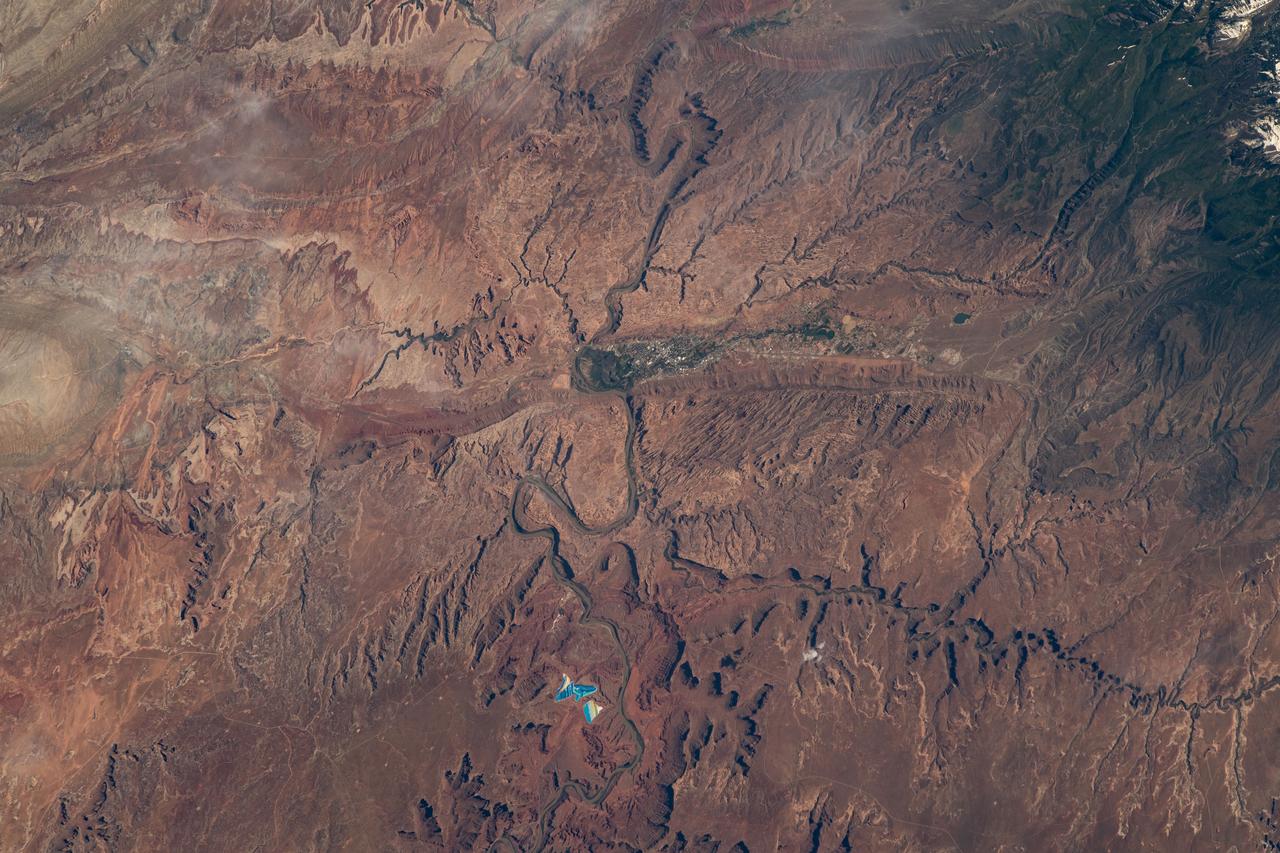
iss069e020294 (June 12, 2023) --- Moab, Utah, near the scenic Arches and Canyonlands National Parks, is pictured from the International Space Station as it orbited 258 miles above.
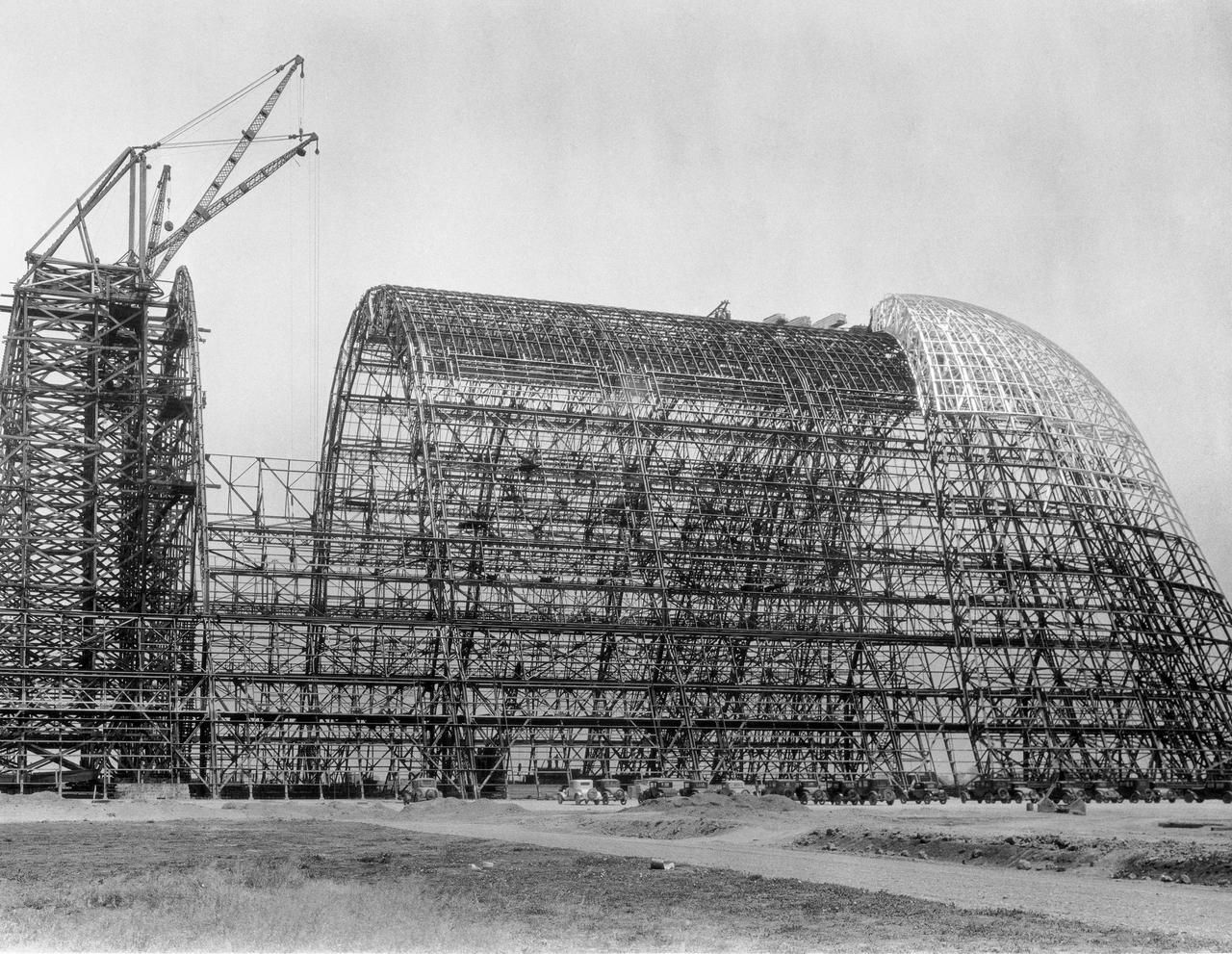
Navy Naval Air Station Moffett Field Public works Serial 1514 - Contract NOy-5604, Earl W. Heple & J.H. Pomeroy contractors Hangar 2 'Contruction of Arch'

A small prominence observed in profile arched up and sent streams of plasma curling back into the sun over a 30-hour period (Dec. 13-14, 2017). We are observing charged particles streaming along magnetic field lines made visible in extreme ultraviolet light. Prominences are cooler strands of plasma tethered above the sun's surface by magnetic forces. They are quite unstable and frequently fall apart within hours or days. Movies are available at https://photojournal.jpl.nasa.gov/catalog/PIA22196
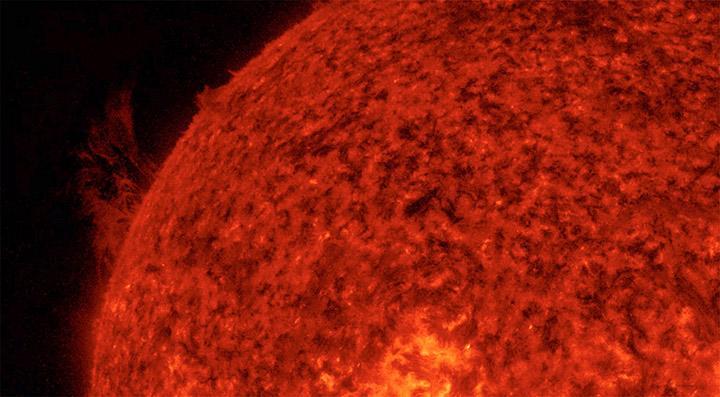
Strands and arches of plasma streamed above the edge of the Sun for over a day, pulled by powerful magnetic forces (Aug. 11-12, 2016). The tug and pull of material heated to about 60,000 degrees C. was viewed in extreme ultraviolet light. This kind of dynamic flow of materials is rather common, though this grouping was larger than most. http://photojournal.jpl.nasa.gov/catalog/PIA17913
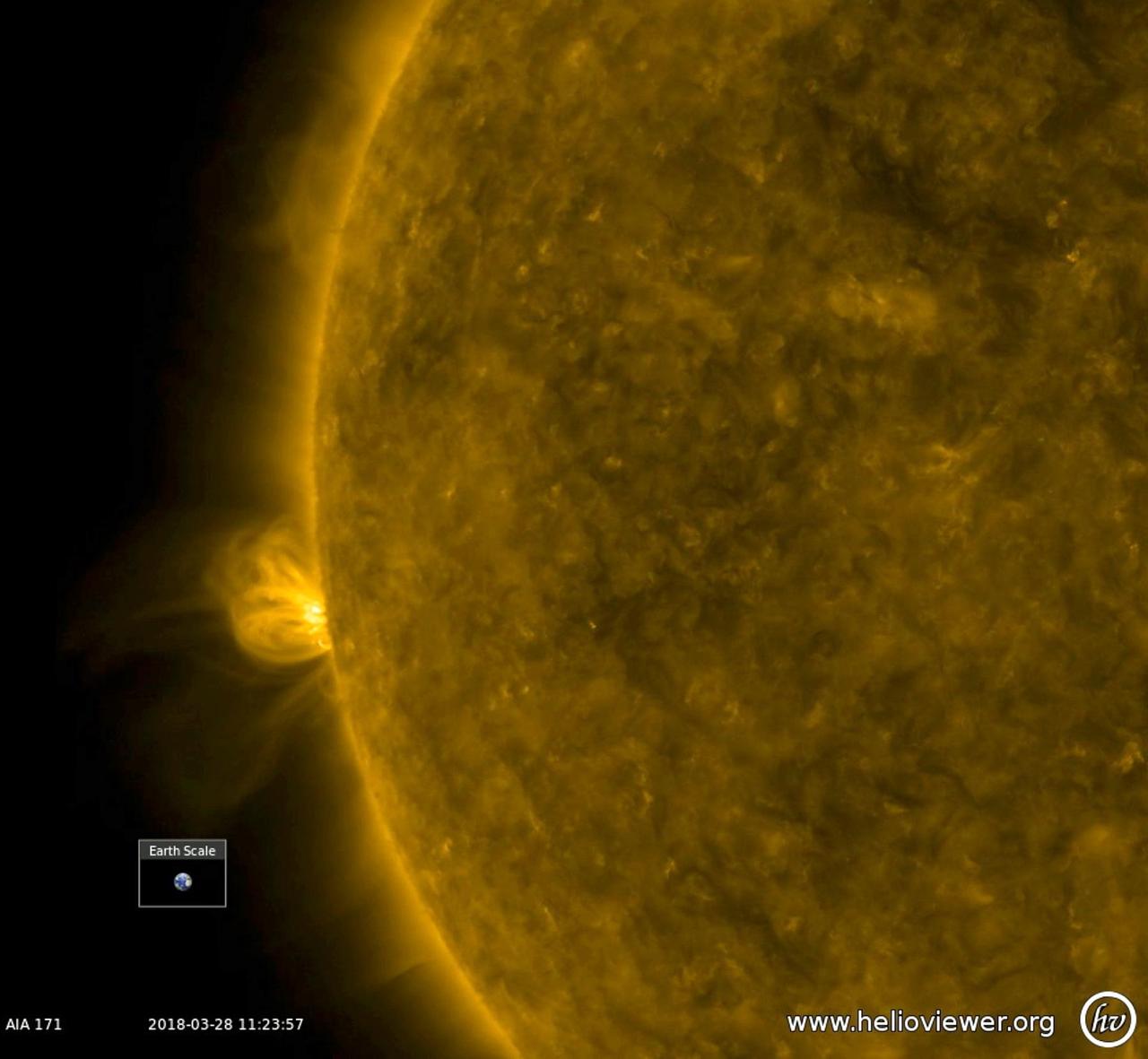
With no active regions currently on the face of the sun, a bristling active region has begun to rotate into view (Mar. 27-28, 2018). In this extreme ultraviolet view, the active region has numerous arches of bright, magnetic field lines blossoming out and towering above it. Whether this region will produce solar storms remains to be seen, but at least there is some new activity to observe. The video was produced with Helioviewer software. Animations are available at https://photojournal.jpl.nasa.gov/catalog/PIA22411
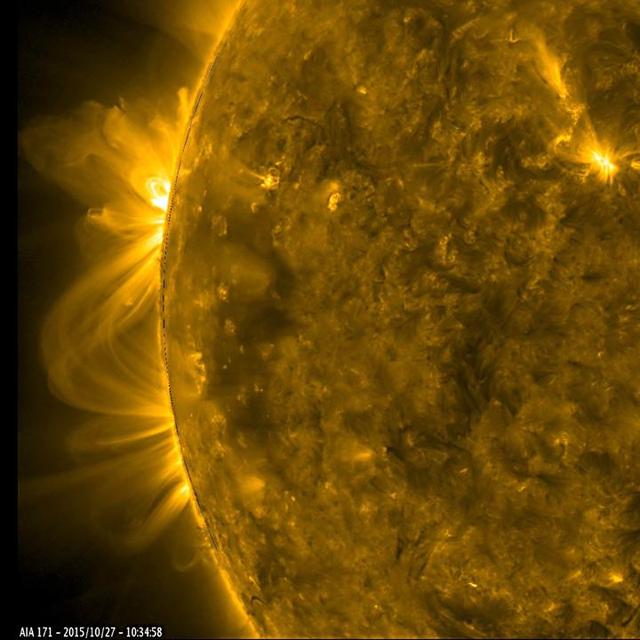
As a pair of active regions began to rotate into view, their towering magnetic field lines above them bloomed into a dazzling display of twisting arches (Oct. 27-28, 2015). Some of the lines reached over and connected with the neighboring active region. Active regions are usually the source of solar storms. The images were taken in a wavelength of extreme ultraviolet light. http://photojournal.jpl.nasa.gov/catalog/PIA20048

A prominence rose up above the sun, sent an arch of plasma to link up magnetically with an active region over a one-day period (Jan, 9-10, 2017). Then the flow of plasma seemed to largely change direction and head back where it came from. Finally, amidst the confused patterns of movement, it dissipated and fell away. Prominences are cooler clouds of charged particles tenuously tethered to the sun by magnetic forces. Images were taken in a wavelength of extreme ultraviolet light. Movies are available at https://photojournal.jpl.nasa.gov/catalog/PIA22199
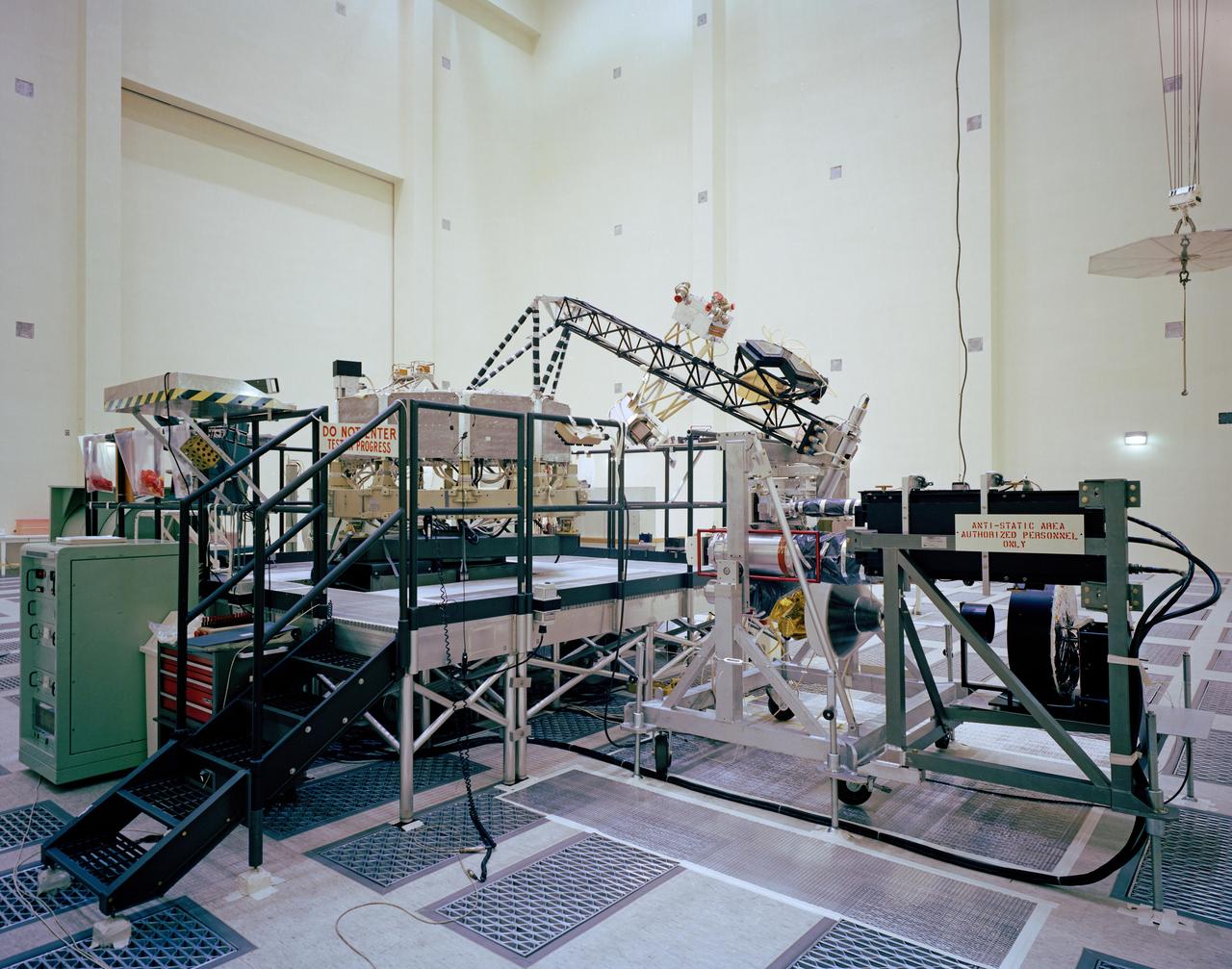
This archival photo shows the system test configuration for Voyager on October 1, 1976. The spacecraft's 10-sided bus is visible behind the catwalk railing in the foreground. The boom that holds several of the spacecraft's science instruments arches above the railing. https://photojournal.jpl.nasa.gov/catalog/PIA21729

The Sun's rotation brought a new active region into view, revealing the dynamic arches and twisting streams of its magnetic field (Oct. 10-11, 2018). A new active region is becoming more of a rare sight, as the Sun is currently approaching solar minimum -- the point of the 11-year solar cycle when activity is most reduced. The video clip, showing images taken in a wavelength of extreme ultraviolet light covers 33 hours and consists of over 500 frames (i.e., one frame selected every 4 minutes). Animations are available at https://photojournal.jpl.nasa.gov/catalog/PIA18139
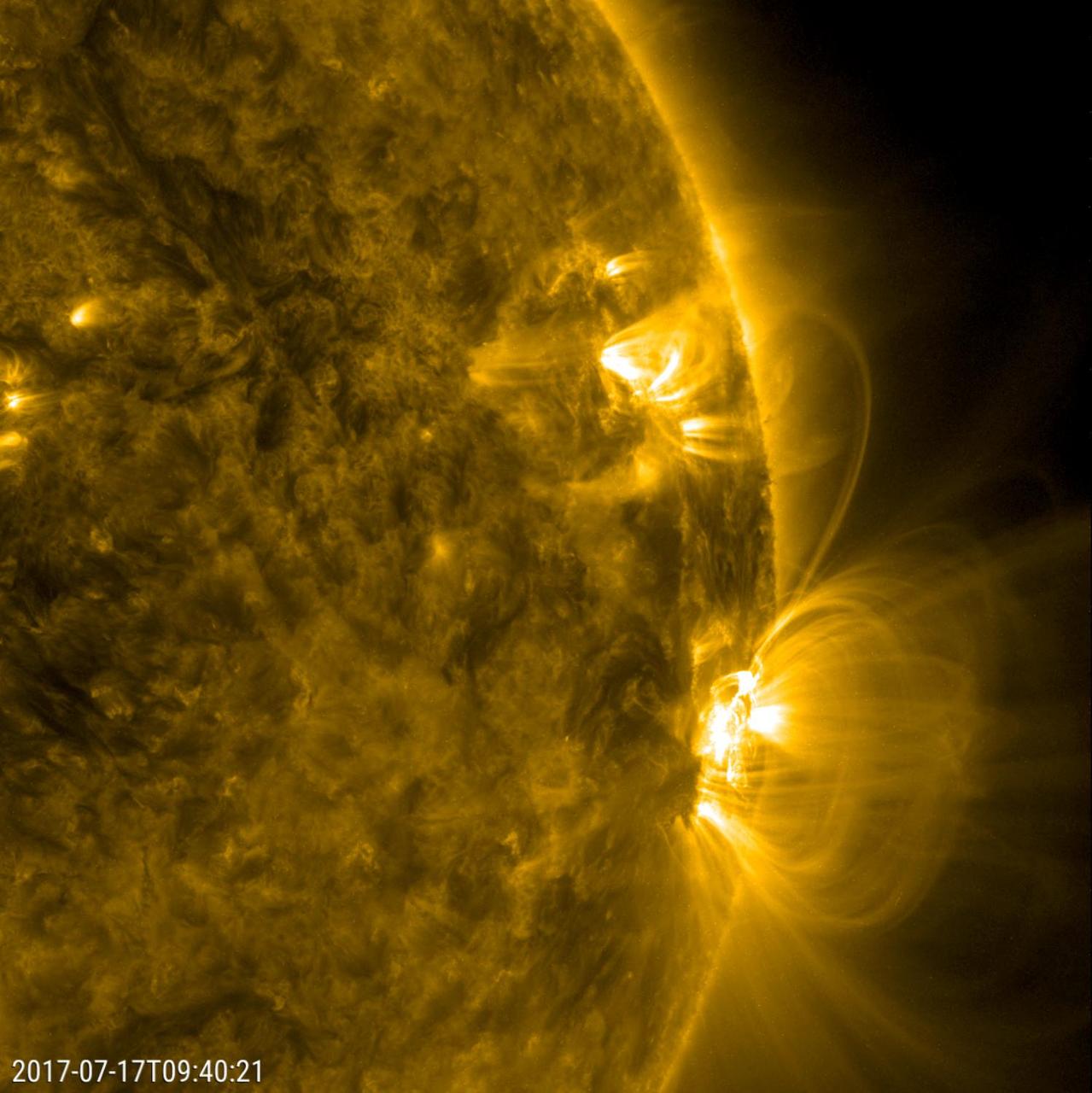
Numerous arches of magnetic field lines danced and swayed above a large active region over about a 30-hour period (July 17-18, 2017). We can also see the magnetic field lines from the large active region reached out and connected with a smaller active region. Those linked lines then strengthened (become brighter), but soon began to develop a kink in them and rather swiftly faded from view. All of this activity is driven by strong magnetic forces associated with the active regions. The images were taken in a wavelength of extreme ultraviolet light. https://photojournal.jpl.nasa.gov/catalog/PIA21838
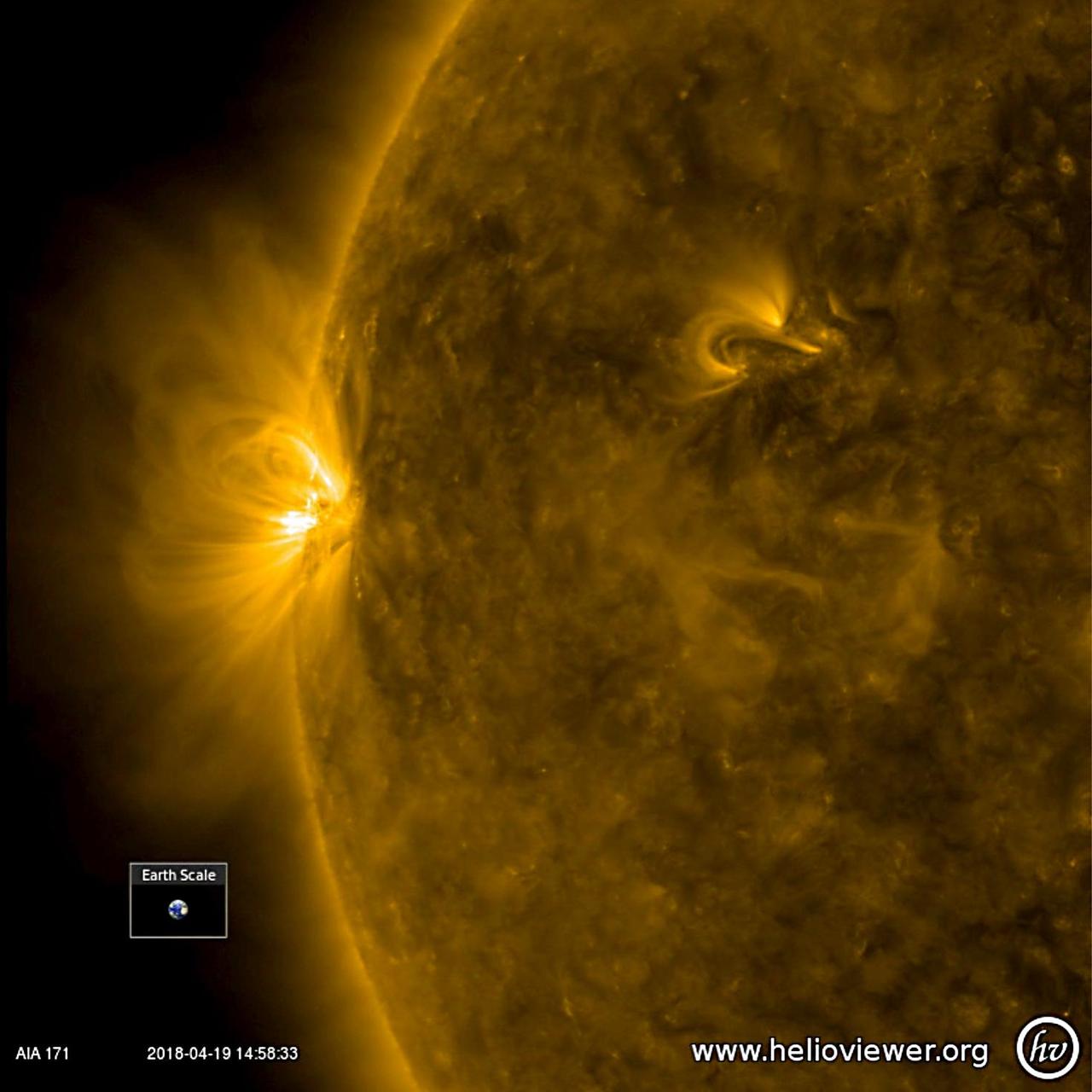
The sun featured just one, rather small active region over the past few days, but it developed rapidly and sported a lot of magnetic activity in just one day (Apr. 11-12, 2018). The activity was observed in a wavelength of extreme ultraviolet light. The loops and twisting arches above it are evidence of magnetic forces tangling with each other. The video clip was produced using Helioviewer software. Movies are available at https://photojournal.jpl.nasa.gov/catalog/PIA06676
A close-up view of one day in the life of a rather small active region shows the agitation and dynamism of its magnetic field (Dec. 21, 2016). This wavelength of extreme ultraviolet light reveals particles as they spin along the cascading arches of magnetic field lines above the active region. Some darker plasma rises up and spins around at the edge of the sun near the end of the video clip also being pulled by unseen magnetic forces. Movies are available at http://photojournal.jpl.nasa.gov/catalog/PIA15032

This NASA/ESA Hubble Space Telescope image presents the Arches Cluster, the densest known star cluster in the Milky Way. It is located about 25,000 light-years from Earth in the constellation of Sagittarius (The Archer), close to the heart of our galaxy, the Milky Way. It is, like its neighbor the Quintuplet Cluster, a fairly young astronomical object at between two and four million years old. The Arches cluster is so dense that in a region with a radius equal to the distance between the sun and its nearest star there would be over 100,000 stars! At least 150 stars within the cluster are among the brightest ever discovered in the Milky Way. These stars are so bright and massive that they will burn their fuel within a short time (on a cosmological scale that means just a few million years). Then they will die in spectacular supernova explosions. Due to the short lifetime of the stars in the cluster the gas between the stars contains an unusually high amount of heavier elements, which were produced by earlier generations of stars. Despite its brightness the Arches Cluster cannot be seen with the naked eye. The visible light from the cluster is completely obscured by gigantic clouds of dust in this region. To make the cluster visible astronomers have to use detectors which can collect light from the X-ray, infrared, and radio bands, as these wavelengths can pass through the dust clouds. This observation shows the Arches Cluster in the infrared and demonstrates the leap in Hubble’s performance since its 1999 image of same object. Credit: NASA/ESA <b><a href="http://www.nasa.gov/centers/goddard/home/index.html" rel="nofollow">NASA Goddard Space Flight Center</a></b> enables NASA’s mission through four scientific endeavors: Earth Science, Heliophysics, Solar System Exploration, and Astrophysics. Goddard plays a leading role in NASA’s accomplishments by contributing compelling scientific knowledge to advance the Agency’s mission. <b>Follow us on <a href="http://twitter.com/NASAGoddardPix" rel="nofollow">Twitter</a></b> <b>Like us on <a href="http://www.facebook.com/pages/Greenbelt-MD/NASA-Goddard/395013845897?ref=tsd" rel="nofollow">Facebook</a></b> <b>Find us on <a href="http://instagrid.me/nasagoddard/?vm=grid" rel="nofollow">Instagram</a></b>
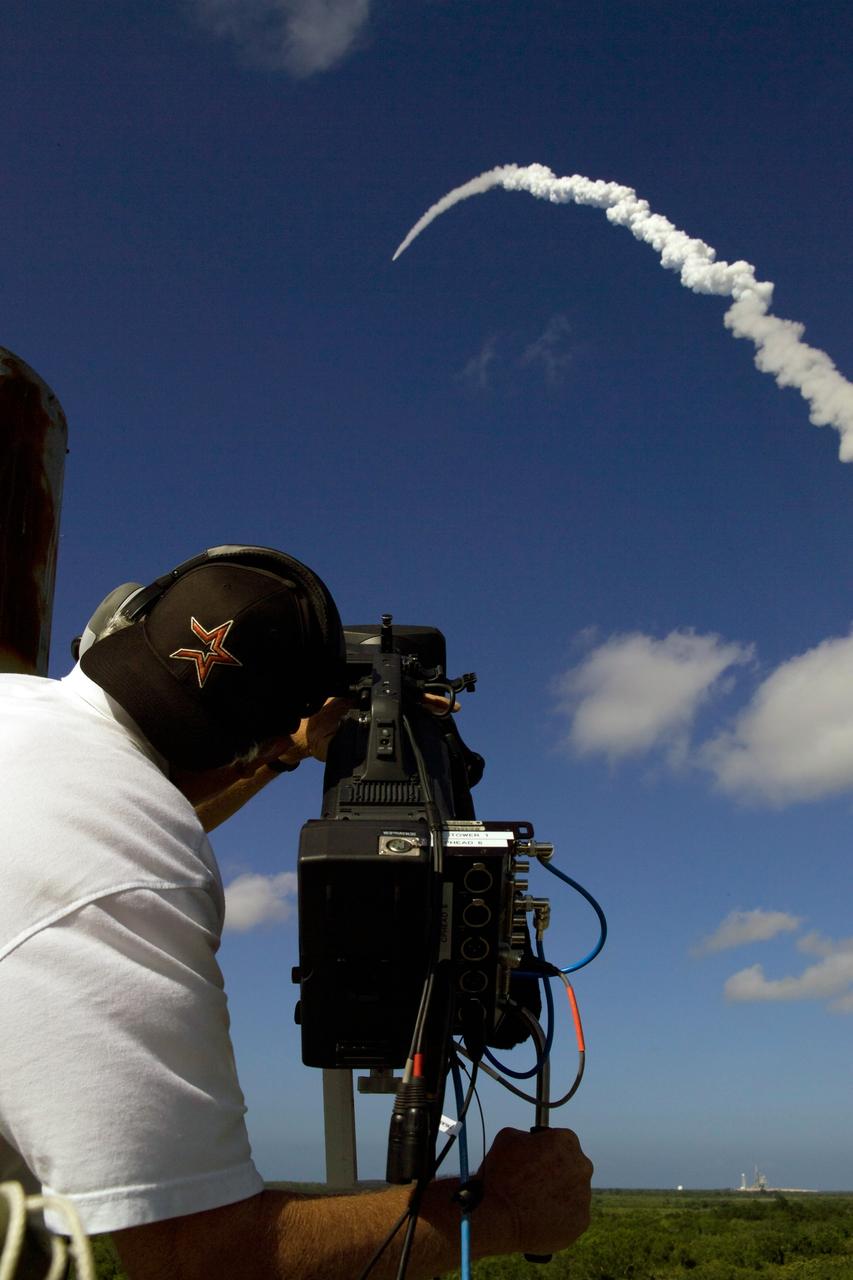
CAPE CANAVERAL, Fla. -- A videographer with NASA's Kennedy Space Center captures the arch of space shuttle Discovery's launch through the clear blue sky toward space on its STS-124 mission to the International Space Station. Launch was on time at 5:02 p.m. EDT. Discovery is making its 35th flight. The STS-124 mission is the 26th in the assembly of the space station. It is the second of three flights launching components to complete the Japan Aerospace Exploration Agency's Kibo laboratory. The shuttle crew will install Kibo's large Japanese Pressurized Module and its remote manipulator system, or RMS. The 14-day flight includes three spacewalks. Photo credit: NASA/Jeff Wolfe
A prominence at the edge of the sun provided us with a splendid view of solar plasma as it churned and streamed over less than one day (June 25-26, 2017). The charged particles of plasma were being manipulated by strong magnetic forces. When viewed in this wavelength of extreme ultraviolet light, we can trace the movements of the particles. Such occurrences are fairly common but much easier to see when they are near the sun's edge. For a sense of scale, the arch of prominence in the still image has risen up several times the size of Earth. Movies are available at https://photojournal.jpl.nasa.gov/catalog/PIA21783

A prominence at the edge of the sun provided us with a splendid view of solar plasma as it churned and streamed over less than one day (June 25-26, 2017). The charged particles of plasma were being manipulated by strong magnetic forces. When viewed in this wavelength of extreme ultraviolet light, we can trace the movements of the particles. Such occurrences are fairly common but much easier to see when they are near the sun's edge. For a sense of scale, the arch of prominence in the still image has risen up several times the size of Earth. Movies are available at https://photojournal.jpl.nasa.gov/catalog/PIA21768

Some of the prominences that float like lazy clouds above the solar surface suddenly erupt and break away from the Sun in cataclysmic action. The trigger of this coronal transient, like many others seen by Skylab's coronagraph, was an eruptive prominence that surged outward from the limb of the Sun, ejecting matter that disturbed the outer corona. This image is of the surge in action in ultraviolet light of ionized helium. Simultaneous observations like this made possible an almost immediate understanding of the new-found cosmic phenomenon. The elbow prominence was accidentally photographed by Astronaut Garriott (Skylab-3) while observing a small flare near the limb of the Sun beneath the mighty arch on August 9, 1973.
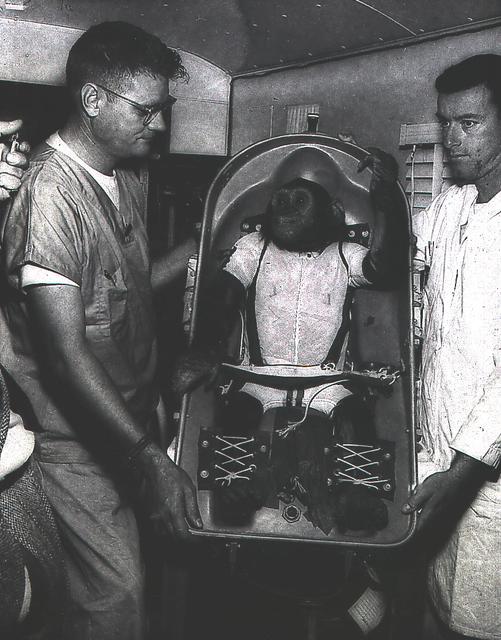
A three-year-old chimpanzee, named Ham, in the biopack couch for the MR-2 suborbital test flight. On January 31, 1961, a Mercury-Redstone launch from Cape Canaveral carried the chimpanzee "Ham" over 640 kilometers down range in an arching trajectory that reached a peak of 254 kilometers above the Earth. The mission was successful and Ham performed his lever-pulling task well in response to the flashing light. NASA used chimpanzees and other primates to test the Mercury Capsule before launching the first American astronaut Alan Shepard in May 1961. The successful flight and recovery confirmed the soundness of the Mercury-Redstone systems.
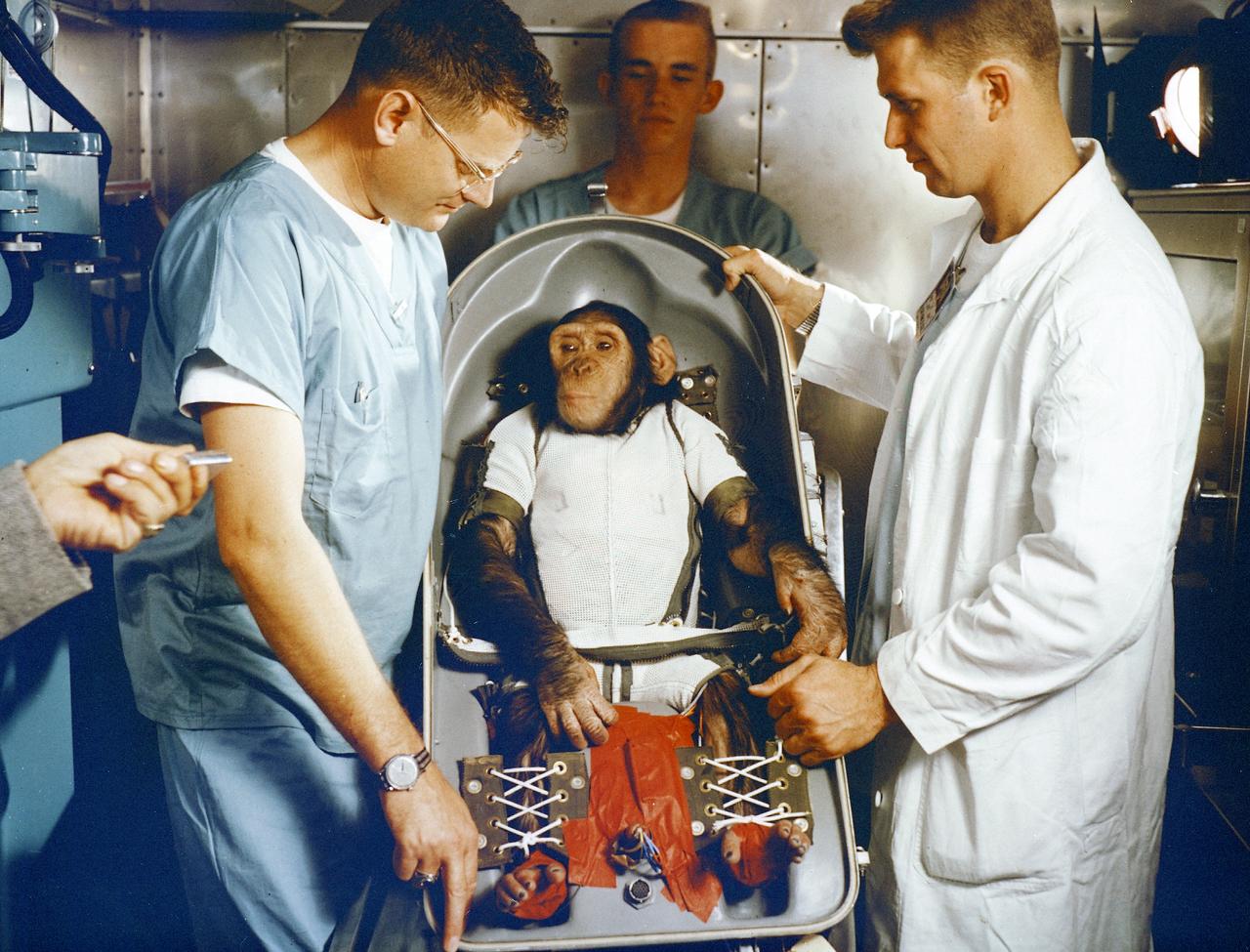
A three-year-old chimpanzee, named Ham, in the biopack couch for the MR-2 suborbital test flight. On January 31, 1961, a Mercury-Redstone launch from Cape Canaveral carried the chimpanzee "Ham" over 640 kilometers down range in an arching trajectory that reached a peak of 254 kilometers above the Earth. The mission was successful and Ham performed his lever-pulling task well in response to the flashing light. NASA used chimpanzees and other primates to test the Mercury Capsule before launching the first American astronaut Alan Shepard in May 1961. The successful flight and recovery confirmed the soundness of the Mercury-Redstone systems.

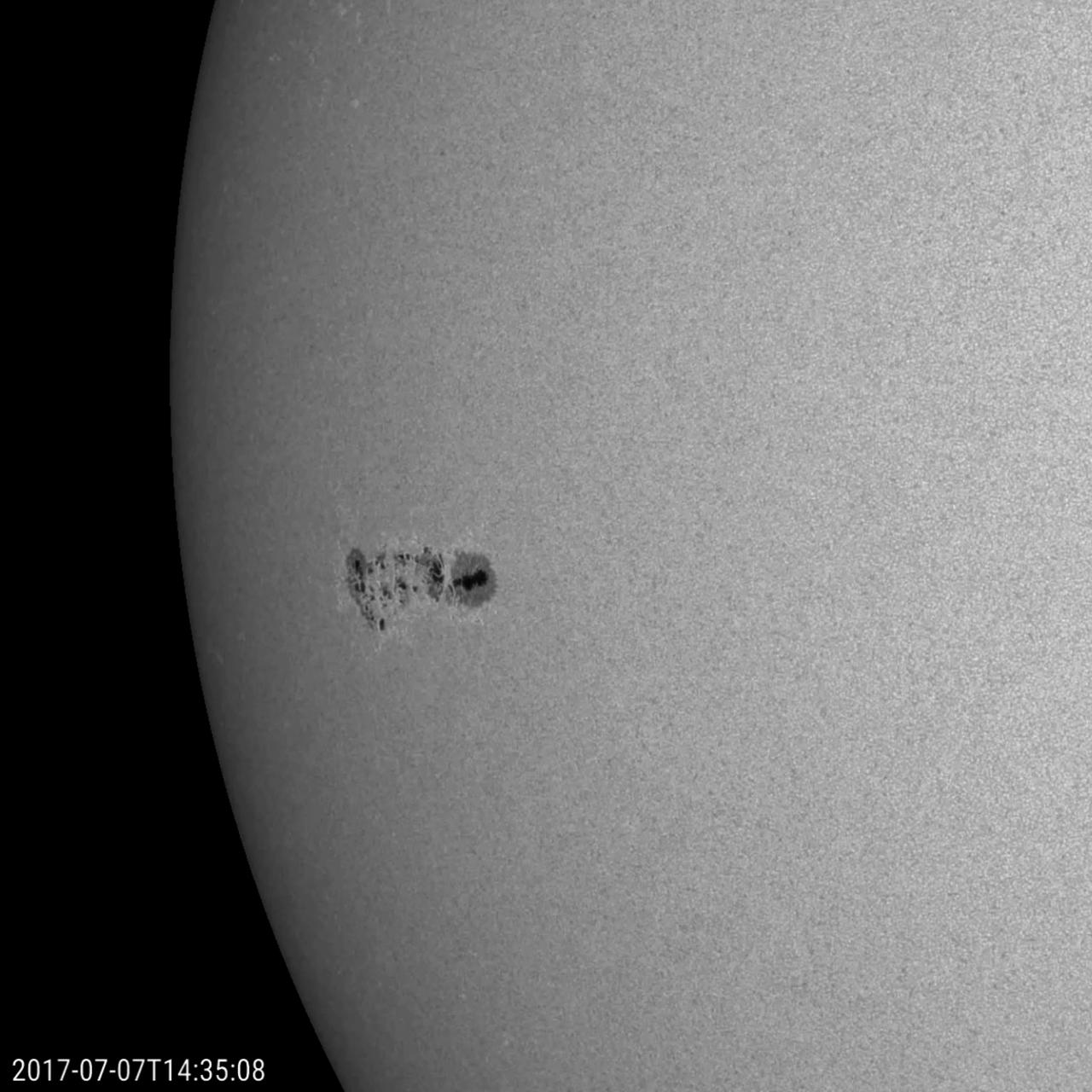
Several small sunspots appeared this week, giving NASA Solar Dynamics Observatory a chance to illustrate their sources Mar. 2, 2017. The first image is a magnetogram or magnetic image of the sun's surface. The MDI instrument can observe where positive and negative particles are moving toward or away from strong magnetic areas. These active regions have stronger magnetic fields and appear as strongly black or white. The yellow image shows the surface in filtered light, and there the same active regions appear as dark, cooler splotches called sunspots. Higher up in the sun's atmosphere, the golden image (in extreme ultraviolet light) shows arches of light above the active regions, which are charged particles spinning along magnetic field lines. Note that they all align very well with each other. Magnetic forces are the dynamic drivers here in these regions of the sun. Movies are available at http://photojournal.jpl.nasa.gov/catalog/PIA21557
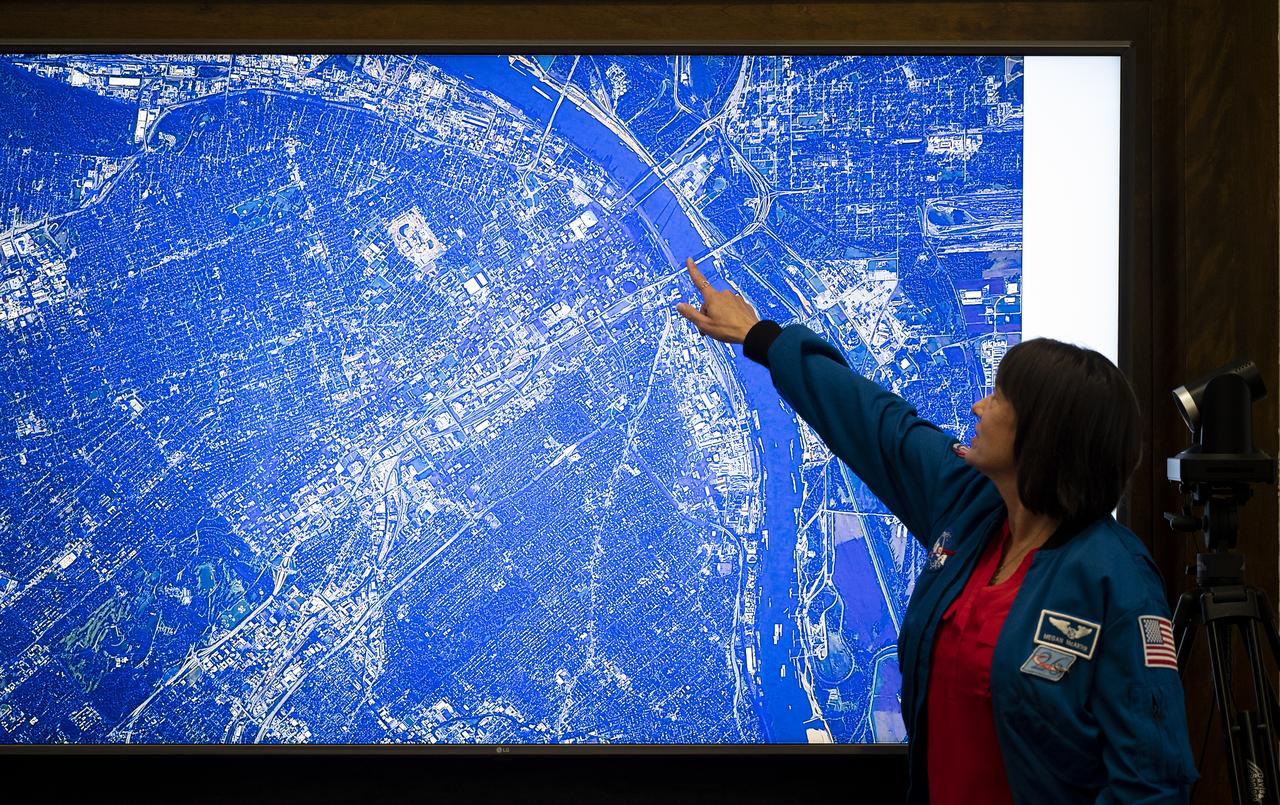
NASA astronaut Megan McArthur points to the shadow of the Gateway Arch on the Mississippi River in St. Louis while showing images of National Parks taken from the International Space Station during Expeditions 65 and 66 during a presentation to leadership and rangers who participate in the National Park Service’s astronomy and dark sky programs, Thursday, June 9, 2022 at the U.S. Department of the Interior in Washington, DC. McArthur, NASA astronaut Shane Kimbrough, Japan Aerospace Exploration Agency (JAXA) astronaut Akihiko Hoshide, and ESA (European Space Agency) astronaut Thomas Pesquet, flew on NASA’s SpaceX Crew-2 mission, the second crew rotation mission to the International Space Station as part of the agency’s Commercial Crew Program, and spent 198 days aboard the orbiting laboratory as part of Expeditions 65 and 66. Photo Credit: (NASA/Joel Kowsky)
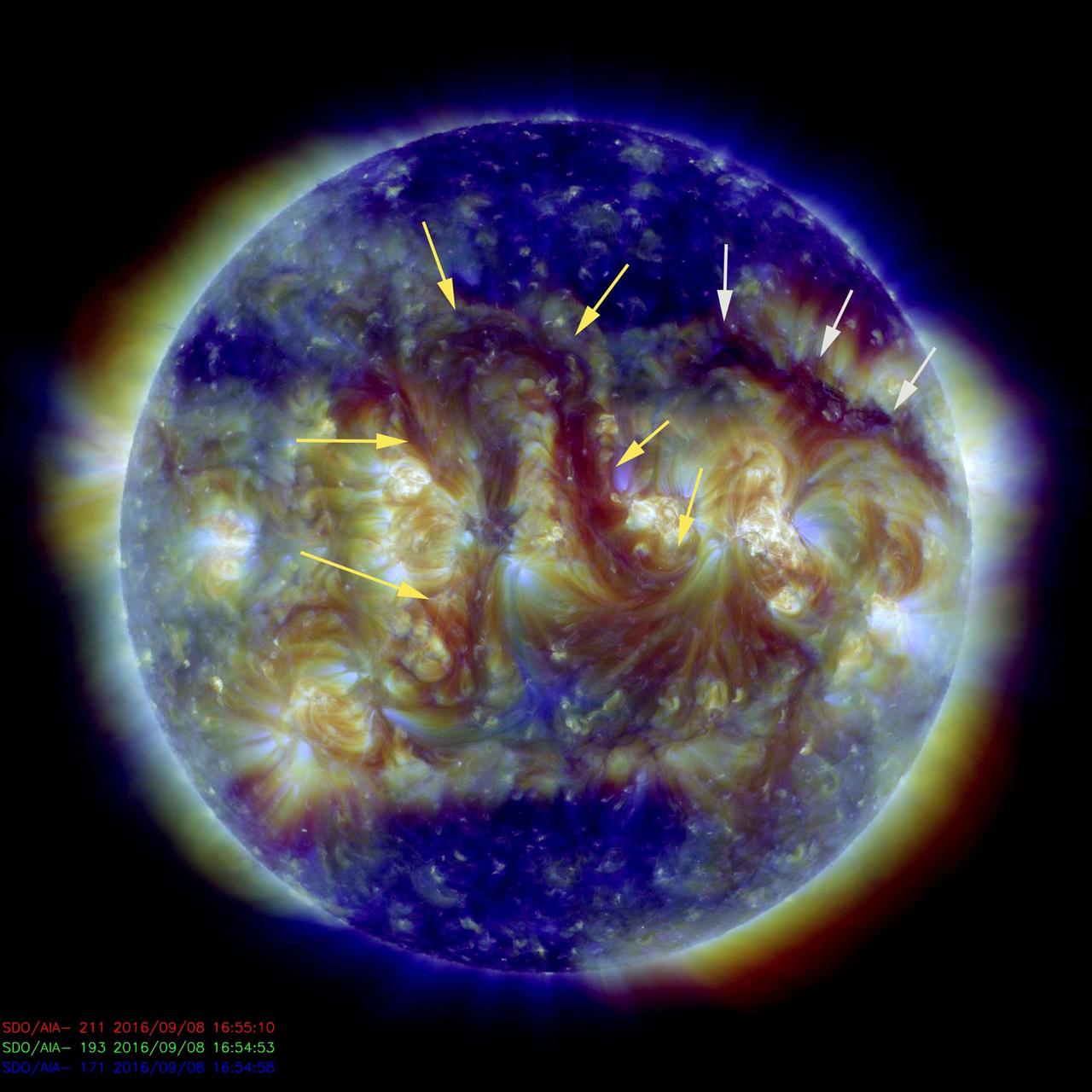
The two most noteworthy features on the sun this week were a pair of elongated filaments (Sept. 8, 2016). The central one was twisted into the shape of an elaborate arch at the center of the sun (yellow arrows). If this were straightened out, it would extend just about across the entire sun, almost a million miles (1.6 million Km). The other, smaller filament, (white arrows) if made straight, might reach about half that distance. Still, pretty impressive. Filaments are elongated strands of plasma suspended above the sun by magnetic forces. They are notoriously unstable and often break apart within a few days. The image was made by combining three images in different wavelengths of extreme ultraviolet light http://photojournal.jpl.nasa.gov/catalog/PIA16996
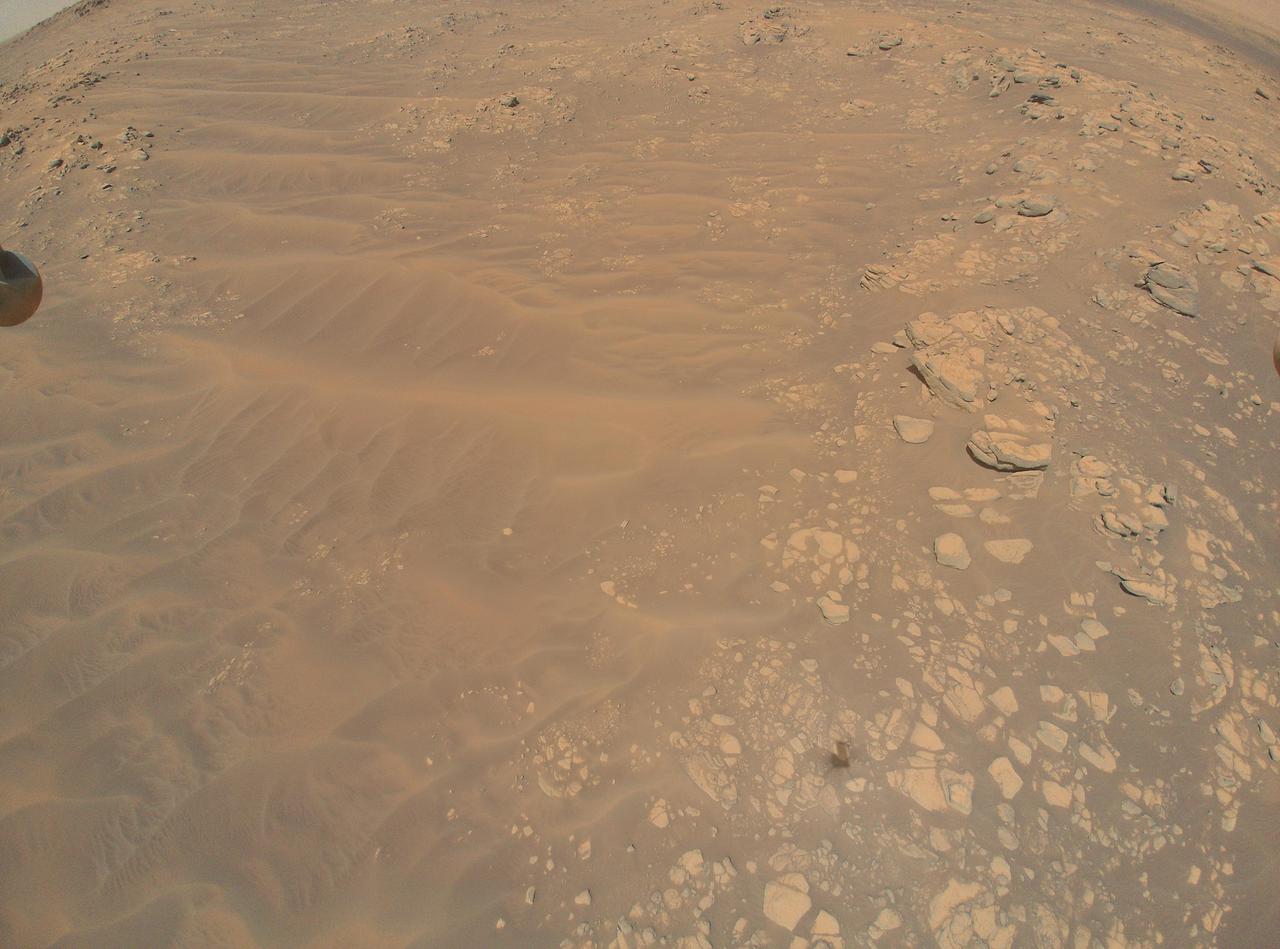
This image sand dunes, boulders, and rocky outcrops of the "South Séítah" region of Mars' Jezero Crater was captured by NASA's Ingenuity Mars Helicopter during its 12th flight, on August 16, 2021. Ingenuity's shadow is visible in the lower third of the image, just right of center. A portion of the foot on one of the helicopter's four landing legs is visible along the upper-left edge of the image. In the upper-right corner (arching toward the top middle of the image) is a ridgeline that is of interest to the Perseverance rover science team. Taken from an altitude of 33 feet (10 meters), the image is one of 10 collected during the flight at the request of the Mars Perseverance rover science team, which is considering whether to explore the location further. https://photojournal.jpl.nasa.gov/catalog/PIA24801
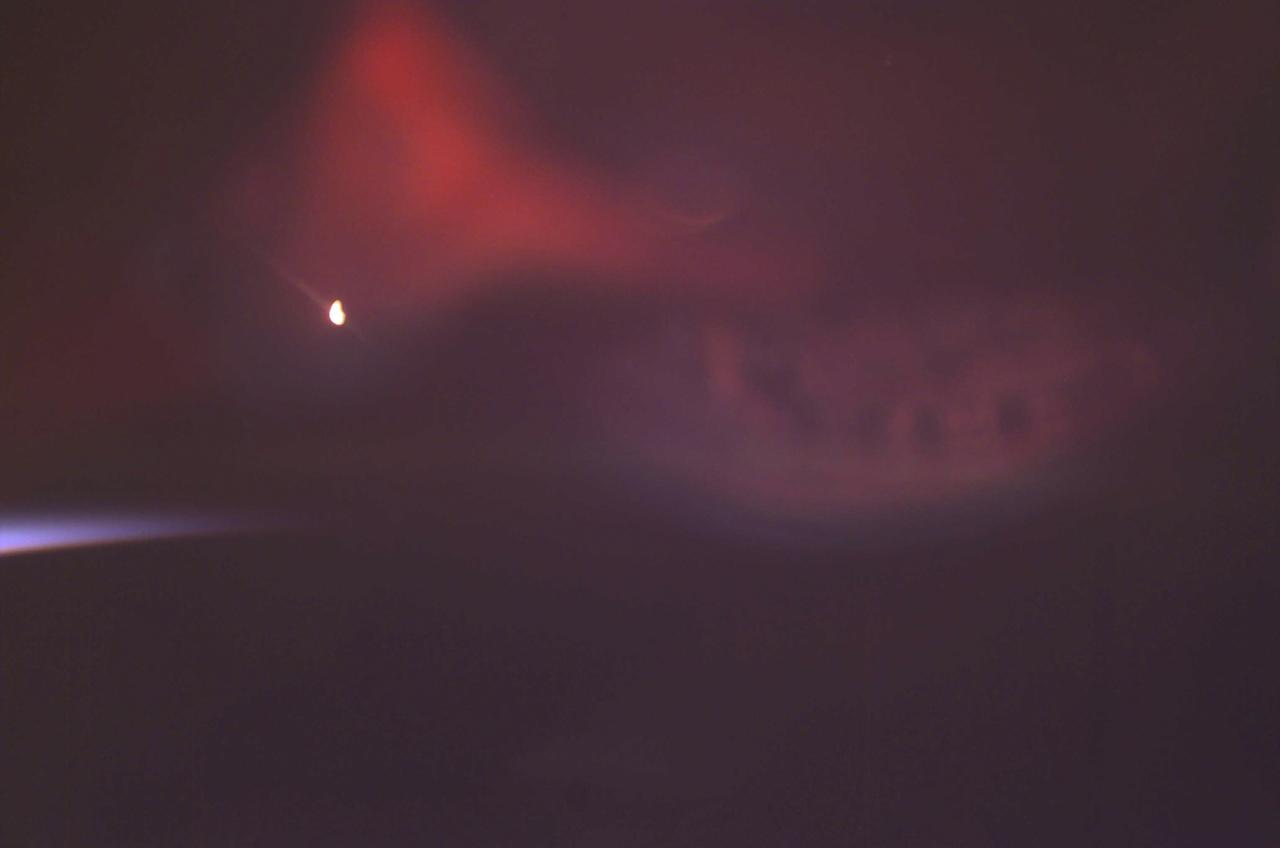
Auroras are caused when high-energy electrons pour down from the Earth's magnetosphere and collide with atoms. Red aurora, as captured here by a still digital camera aboard the International Space Station (ISS), occurs from 200 km to as high as 500 km altitude and is caused by the emission of 6300 Angstrom wavelength light from oxygen atoms. The light is emitted when the atoms return to their original unexcited state. The white spot in the image is from a light on inside of the ISS that is reflected off the inside of the window. The pale blue arch on the left side of the frame is sunlight reflecting off the atmospheric limb of the Earth. At times of peaks in solar activity, there are more geomagnetic storms and this increases the auroral activity viewed on Earth and by astronauts from orbit.
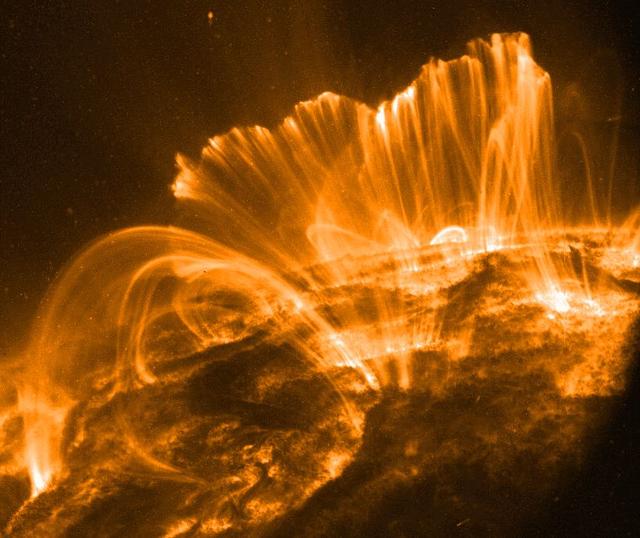
Explanation: In this picture, the Sun's surface is quite dark. A frame from a movie recorded on November 9th by the orbiting TRACE telescope, it shows coronal loops lofted over a solar active region. Glowing brightly in extreme ultraviolet light, the hot plasma entrained above the Sun along arching magnetic fields is cooling and raining back down on the solar surface. Hours earlier, on November 8th, astronomers had watched this particular active region produce a not so spectacular solar flare. Still, the M-class flare spewed forth an intense storm of particles, suddenly showering satellites near the Earth with high energy protons. The flare event was also associated with a large coronal mass ejection, a massive cloud of material which impacted our fair planet's magnetic field about 31 hours later. The result ... a strong geomagnetic storm. Credit: NASA/GSFC/TRACE To learn more go to: <a href="http://nasascience.nasa.gov/missions/trace" rel="nofollow">nasascience.nasa.gov/missions/trace</a> To learn more about NASA's Sun Earth Day go here: <a href="http://sunearthday.nasa.gov/2010/index.php" rel="nofollow">sunearthday.nasa.gov/2010/index.php</a>
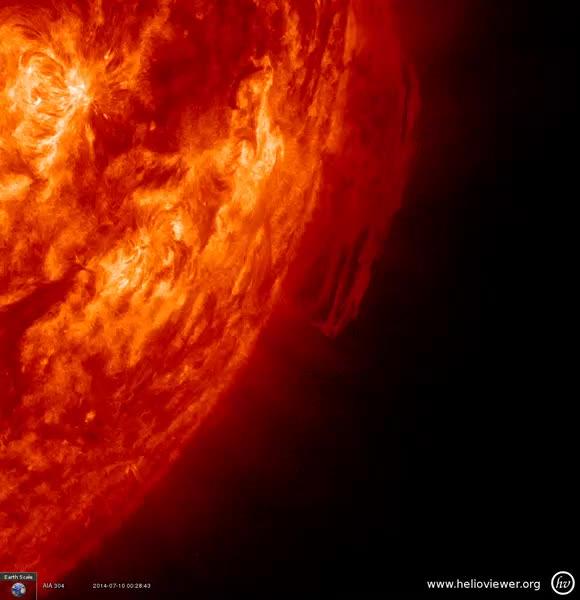
A long arch of plasma (called a prominence) was pulled this way and that by magnetic forces for a week before it finally dissipated (July 10-16, 2014). This close up was captured in extreme ultraviolet light. Credit: NASA/SDO <b><a href="http://www.nasa.gov/audience/formedia/features/MP_Photo_Guidelines.html" rel="nofollow">NASA image use policy.</a></b> <b><a href="http://www.nasa.gov/centers/goddard/home/index.html" rel="nofollow">NASA Goddard Space Flight Center</a></b> enables NASA’s mission through four scientific endeavors: Earth Science, Heliophysics, Solar System Exploration, and Astrophysics. Goddard plays a leading role in NASA’s accomplishments by contributing compelling scientific knowledge to advance the Agency’s mission. <b>Follow us on <a href="http://twitter.com/NASAGoddardPix" rel="nofollow">Twitter</a></b> <b>Like us on <a href="http://www.facebook.com/pages/Greenbelt-MD/NASA-Goddard/395013845897?ref=tsd" rel="nofollow">Facebook</a></b> <b>Find us on <a href="http://instagram.com/nasagoddard?vm=grid" rel="nofollow">Instagram</a></b>
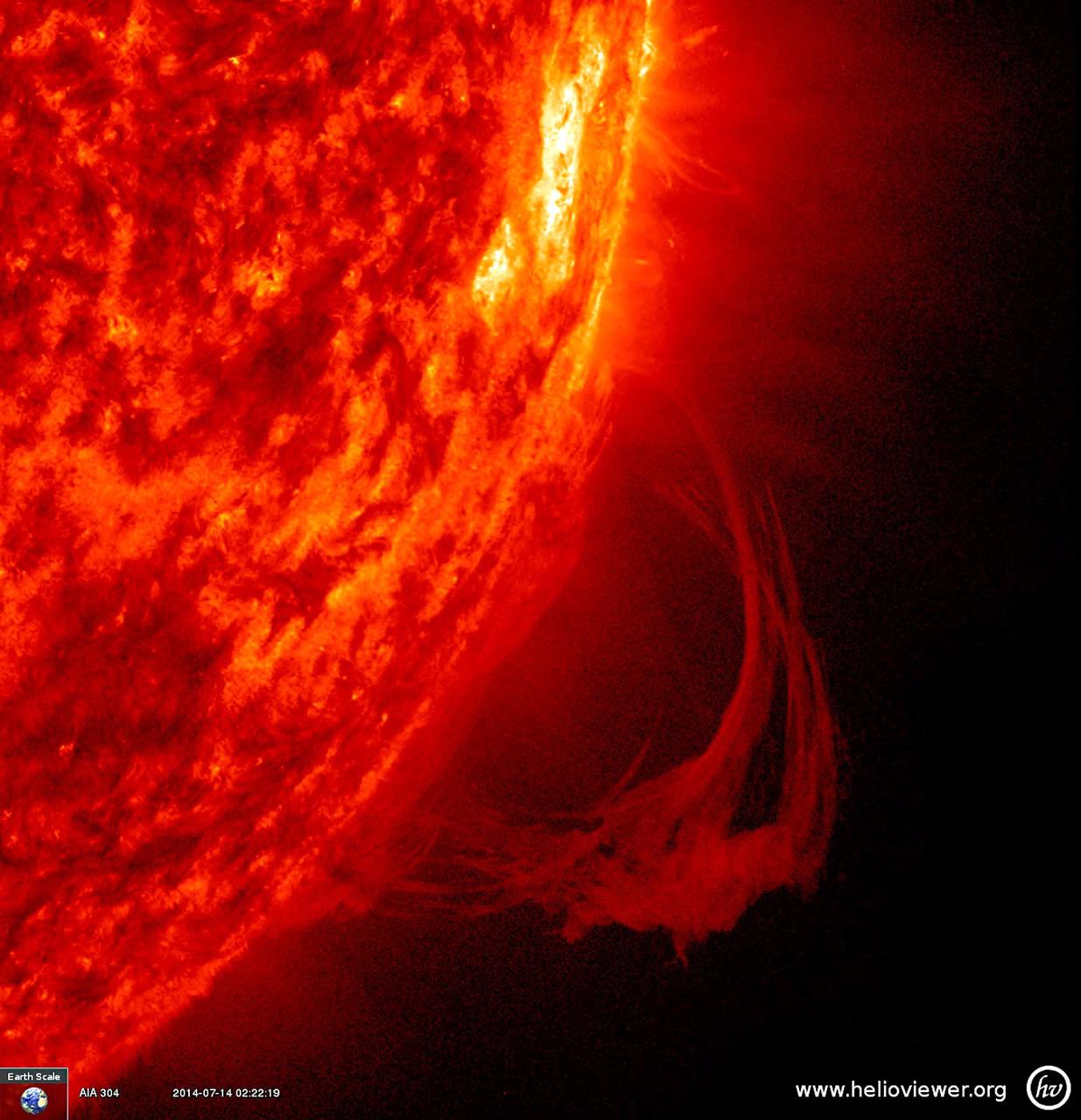
A long arch of plasma (called a prominence) was pulled this way and that by magnetic forces for a week before it finally dissipated (July 10-16, 2014). This close up was captured in extreme ultraviolet light. The Earth scale in the lower left corner gives one a sense of the length of the prominence. Credit: NASA/SDO <b><a href="http://www.nasa.gov/audience/formedia/features/MP_Photo_Guidelines.html" rel="nofollow">NASA image use policy.</a></b> <b><a href="http://www.nasa.gov/centers/goddard/home/index.html" rel="nofollow">NASA Goddard Space Flight Center</a></b> enables NASA’s mission through four scientific endeavors: Earth Science, Heliophysics, Solar System Exploration, and Astrophysics. Goddard plays a leading role in NASA’s accomplishments by contributing compelling scientific knowledge to advance the Agency’s mission. <b>Follow us on <a href="http://twitter.com/NASAGoddardPix" rel="nofollow">Twitter</a></b> <b>Like us on <a href="http://www.facebook.com/pages/Greenbelt-MD/NASA-Goddard/395013845897?ref=tsd" rel="nofollow">Facebook</a></b> <b>Find us on <a href="http://instagram.com/nasagoddard?vm=grid" rel="nofollow">Instagram</a></b>
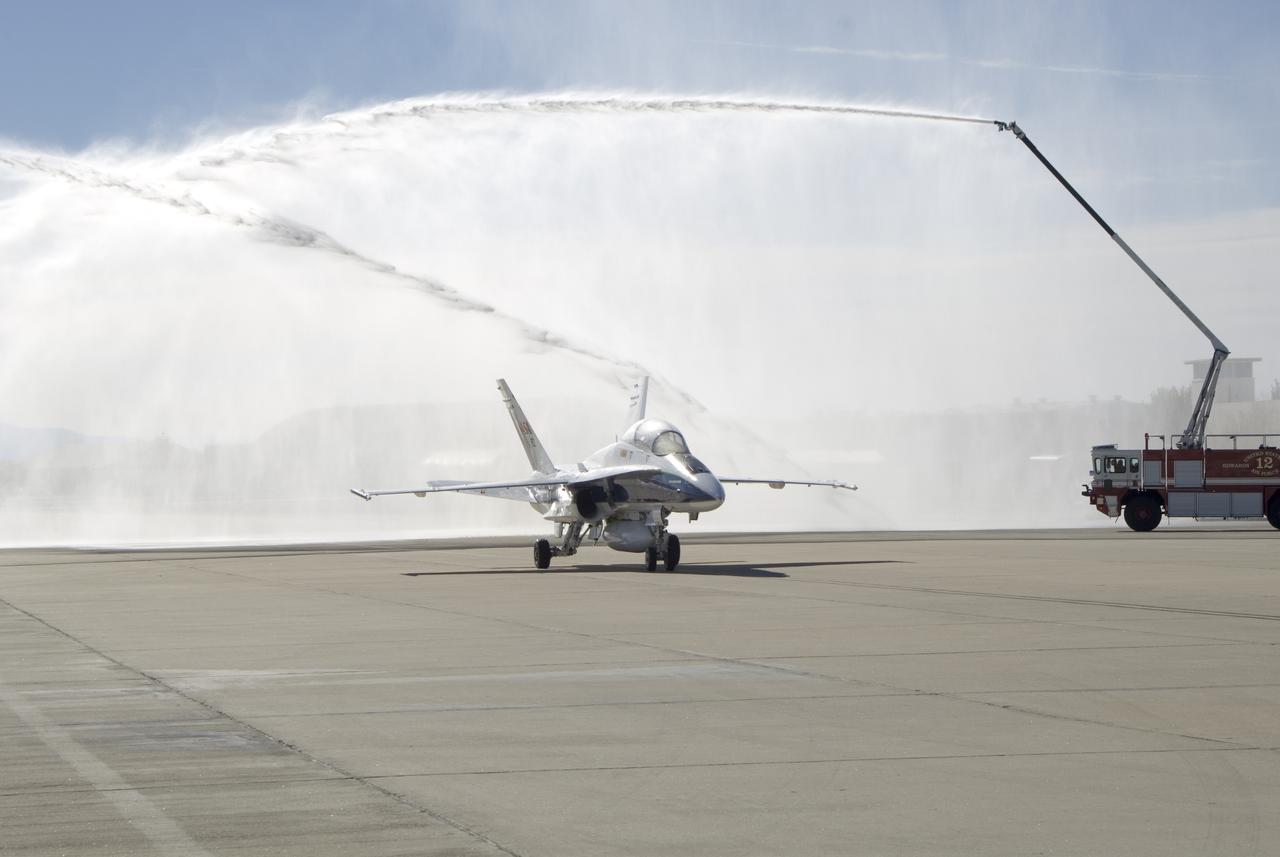
Long-time NASA Dryden research pilot and former astronaut C. Gordon Fullerton capped an almost 50-year flying career, including more than 38 years with NASA, with a final flight in a NASA F/A-18 on Dec. 21, 2007. Fullerton and Dryden research pilot Jim Smolka flew a 90-minute pilot proficiency formation aerobatics flight with another Dryden F/A-18 and a Dryden T-38 before concluding with two low-level formation flyovers of Dryden before landing. Fullerton was honored with a water-cannon spray arch provided by two fire trucks from the Edwards Air Force Base fire department as he taxied the F/A-18 up to the Dryden ramp, and was then greeted by his wife Marie and several hundred Dryden staff after his final flight. Fullerton began his flying career with the U.S. Air Force in 1958 after earning bachelor's and master's degrees in mechanical engineering from the California Institute of Technology. Initially trained as a fighter pilot, he later transitioned to multi-engine bombers and became a bomber operations test pilot after attending the Air Force Aerospace Research Pilot School at Edwards Air Force Base, Calif. He then was assigned to the flight crew for the planned Air Force Manned Orbital Laboratory in 1966. Upon cancellation of that program, the Air Force assigned Fullerton to NASA's astronaut corps in 1969. He served on the support crews for the Apollo 14, 15, 16 and 17 lunar missions, and was later assigned to one of the two flight crews that piloted the space shuttle prototype Enterprise during the Approach and Landing Test program at Dryden. He then logged some 382 hours in space when he flew on two early space shuttle missions, STS-3 on Columbia in 1982 and STS-51F on Challenger in 1985. He joined the flight crew branch at NASA Dryden after leaving the astronaut corps in 1986. During his 21 years at Dryden, Fullerton was project pilot on a number of high-profile research efforts, including the Propulsion Controlled Aircraft, the high-speed landing tests of
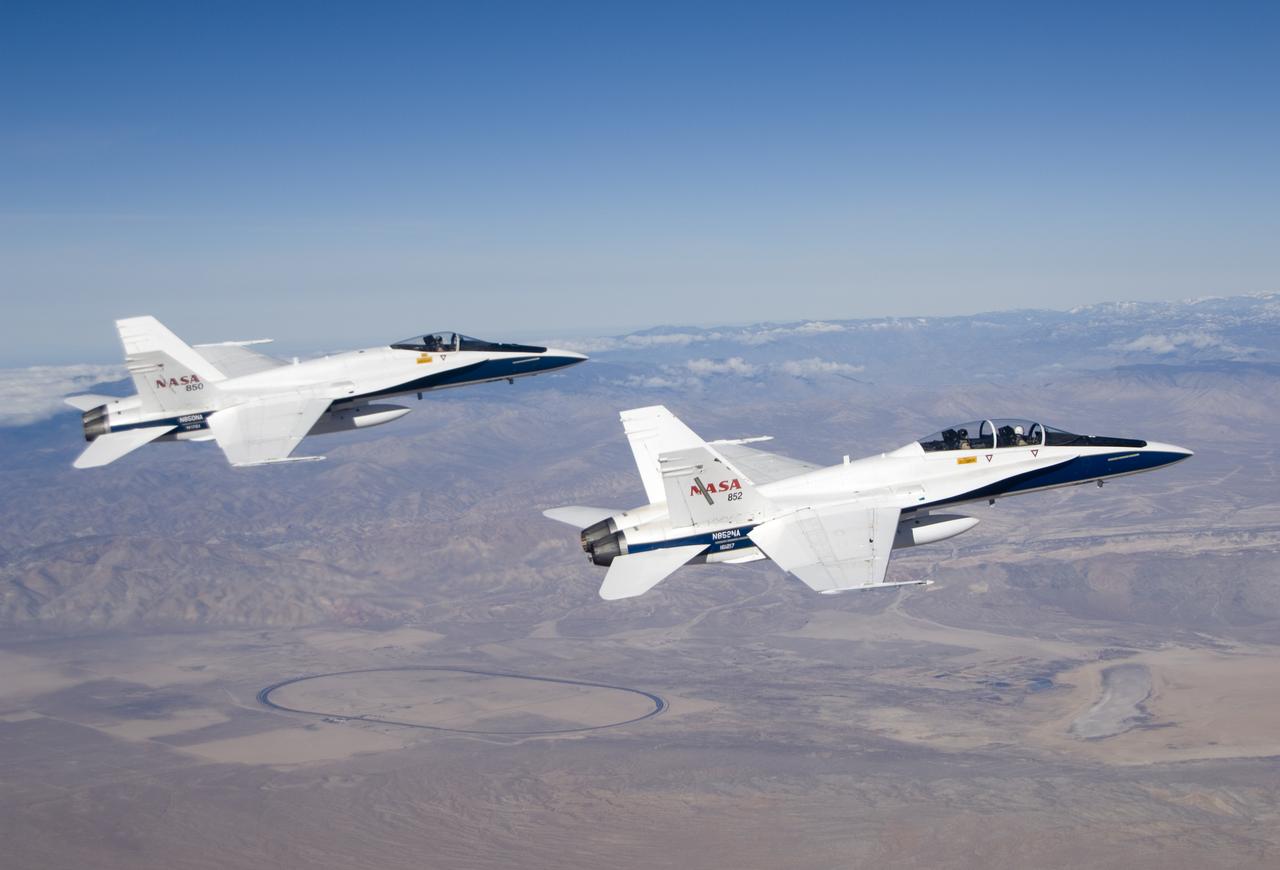
Long-time NASA Dryden research pilot and former astronaut C. Gordon Fullerton capped an almost 50-year flying career, including more than 38 years with NASA, with a final flight in a NASA F/A-18 on Dec. 21, 2007. Fullerton and Dryden research pilot Jim Smolka flew a 90-minute pilot proficiency formation aerobatics flight with another Dryden F/A-18 and a Dryden T-38 before concluding with two low-level formation flyovers of Dryden before landing. Fullerton was honored with a water-cannon spray arch provided by two fire trucks from the Edwards Air Force Base fire department as he taxied the F/A-18 up to the Dryden ramp, and was then greeted by his wife Marie and several hundred Dryden staff after his final flight. Fullerton began his flying career with the U.S. Air Force in 1958 after earning bachelor's and master's degrees in mechanical engineering from the California Institute of Technology. Initially trained as a fighter pilot, he later transitioned to multi-engine bombers and became a bomber operations test pilot after attending the Air Force Aerospace Research Pilot School at Edwards Air Force Base, Calif. He then was assigned to the flight crew for the planned Air Force Manned Orbital Laboratory in 1966. Upon cancellation of that program, the Air Force assigned Fullerton to NASA's astronaut corps in 1969. He served on the support crews for the Apollo 14, 15, 16 and 17 lunar missions, and was later assigned to one of the two flight crews that piloted the space shuttle prototype Enterprise during the Approach and Landing Test program at Dryden. He then logged some 382 hours in space when he flew on two early space shuttle missions, STS-3 on Columbia in 1982 and STS-51F on Challenger in 1985. He joined the flight crew branch at NASA Dryden after leaving the astronaut corps in 1986. During his 21 years at Dryden, Fullerton was project pilot on a number of high-profile research efforts, including the Propulsion Controlled Aircraft, the high-speed landing tests of sp
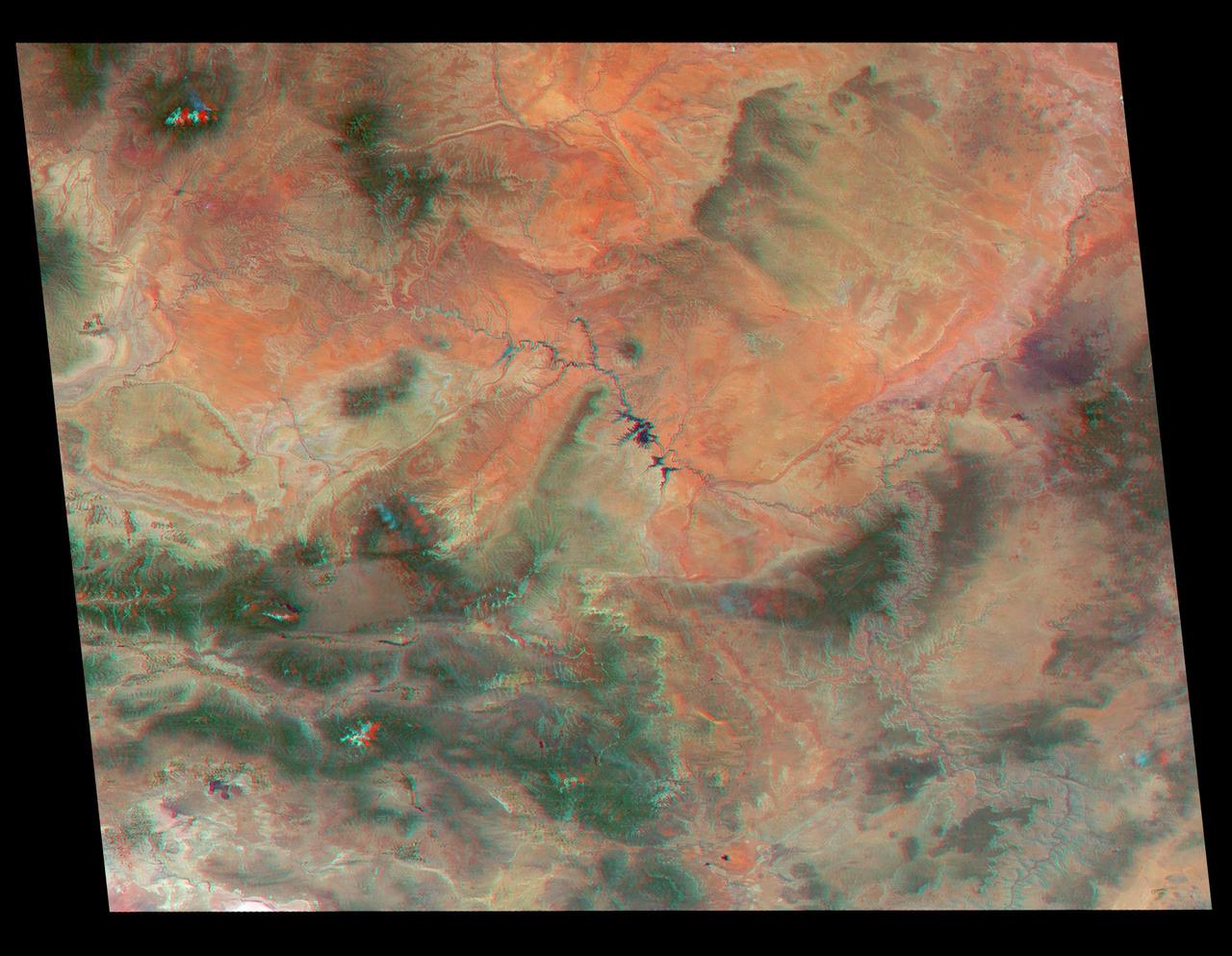
Just in time for the U.S. National Park Service's Centennial celebration on Aug. 25, NASA's Multiangle Imaging SpectroRadiometer (MISR) instrument aboard NASA's Terra satellite is releasing four new anaglyphs that showcase 33 of our nation's national parks, monuments, historical sites and recreation areas in glorious 3D. Shown in the annotated image are Walnut Canyon National Monument, Sunset Crater Volcano National Monument, Wupatki National Monument, Grand Canyon National Park, Pipe Spring National Monument, Zion National Park, Cedar Breaks National Monument, Bryce Canyon National Park, Capitol Reef National Park, Navajo National Monument, Glen Canyon National Recreation Area, Natural Bridges National Monument, Canyonlands National Park, and Arches National Park. MISR views Earth with nine cameras pointed at different angles, giving it the unique capability to produce anaglyphs, stereoscopic images that allow the viewer to experience the landscape in three dimensions. The anaglyphs were made by combining data from MISR's vertical-viewing and 46-degree forward-pointing camera. You will need red-blue glasses in order to experience the 3D effect; ensure you place the red lens over your left eye. The images have been rotated so that north is to the left in order to enable 3D viewing because the Terra satellite flies from north to south. All of the images are 235 miles (378 kilometers) from west to east. These data were acquired June 18, 2016, Orbit 87774. http://photojournal.jpl.nasa.gov/catalog/PIA20889
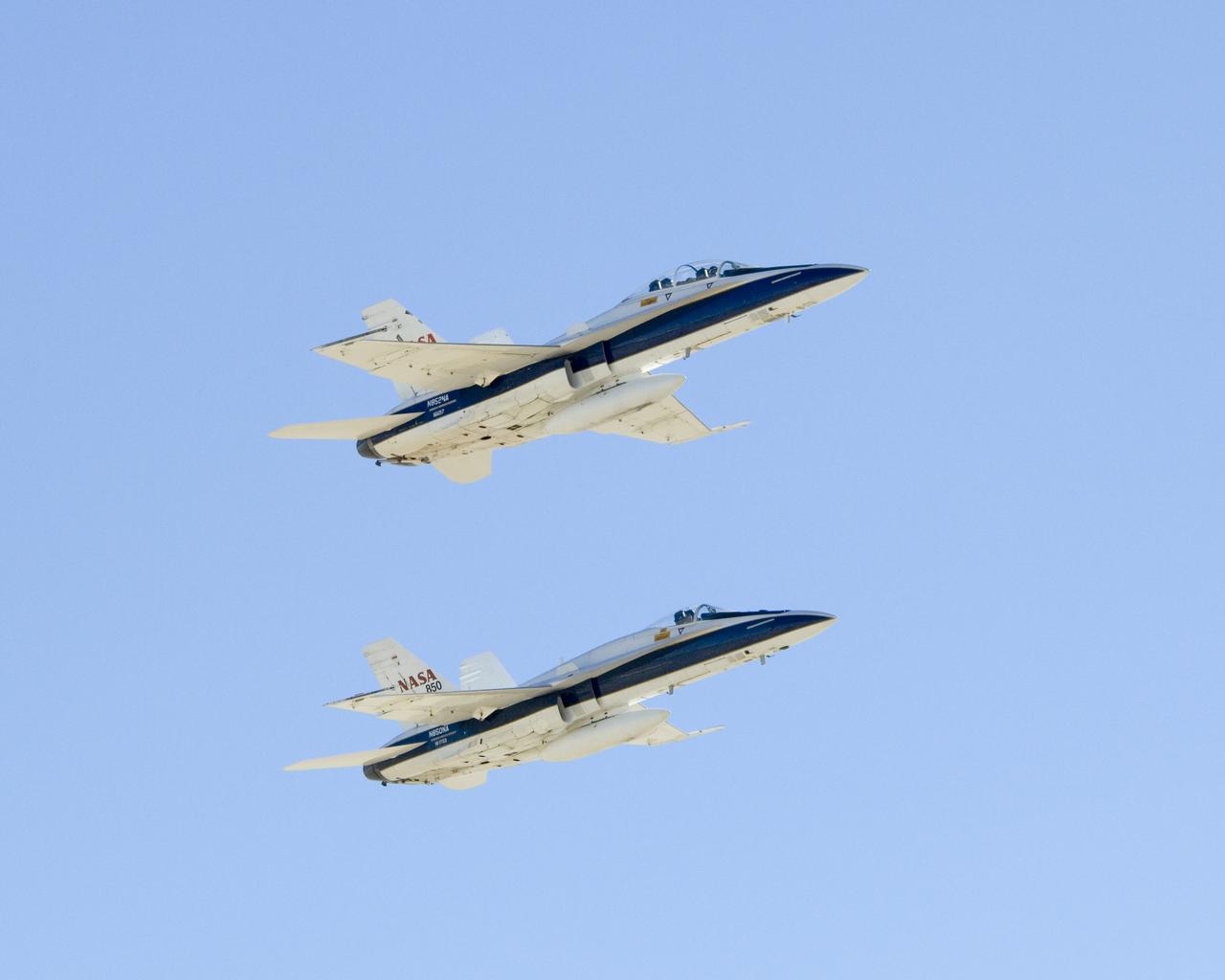
Long-time NASA Dryden research pilot and former astronaut C. Gordon Fullerton capped an almost 50-year flying career, including more than 38 years with NASA, with a final flight in a NASA F/A-18 on Dec. 21, 2007. Fullerton and Dryden research pilot Jim Smolka flew a 90-minute pilot proficiency formation aerobatics flight with another Dryden F/A-18 and a Dryden T-38 before concluding with two low-level formation flyovers of Dryden before landing. Fullerton was honored with a water-cannon spray arch provided by two fire trucks from the Edwards Air Force Base fire department as he taxied the F/A-18 up to the Dryden ramp, and was then greeted by his wife Marie and several hundred Dryden staff after his final flight. Fullerton began his flying career with the U.S. Air Force in 1958 after earning bachelor's and master's degrees in mechanical engineering from the California Institute of Technology. Initially trained as a fighter pilot, he later transitioned to multi-engine bombers and became a bomber operations test pilot after attending the Air Force Aerospace Research Pilot School at Edwards Air Force Base, Calif. He then was assigned to the flight crew for the planned Air Force Manned Orbital Laboratory in 1966. Upon cancellation of that program, the Air Force assigned Fullerton to NASA's astronaut corps in 1969. He served on the support crews for the Apollo 14, 15, 16 and 17 lunar missions, and was later assigned to one of the two flight crews that piloted the space shuttle prototype Enterprise during the Approach and Landing Test program at Dryden. He then logged some 382 hours in space when he flew on two early space shuttle missions, STS-3 on Columbia in 1982 and STS-51F on Challenger in 1985. He joined the flight crew branch at NASA Dryden after leaving the astronaut corps in 1986. During his 21 years at Dryden, Fullerton was project pilot on a number of high-profile research efforts, including the Propulsion Controlled Aircraft, the high-speed landing tests of
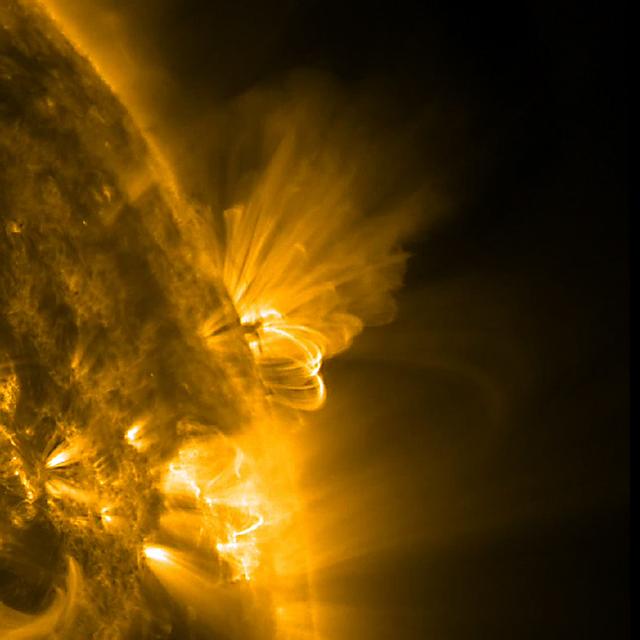
This close-up image of the sun presents an active region in profile as it rotated out of view. We can observe both the bright arching field lines and smaller pieces of darker matter in their midst being pulled back and forth just above the Sun's surface over about 36 hours (July 20-22, 2011). Both of these physical responses were caused by strong, tangled magnetic forces that are constantly evolving and reorganizing within the active region. Other active regions can be seen in the foreground as well. The image and movie were taken in extreme ultraviolet light of ionized iron heated to one million degrees. To view a hd video of this event go here: <a href="http://www.flickr.com/photos/gsfc/6006013038">www.flickr.com/photos/gsfc/6006013038</a> Credit: NASA/GSFC/SDO <b><a href="http://www.nasa.gov/centers/goddard/home/index.html" rel="nofollow">NASA Goddard Space Flight Center</a></b> enables NASA’s mission through four scientific endeavors: Earth Science, Heliophysics, Solar System Exploration, and Astrophysics. Goddard plays a leading role in NASA’s accomplishments by contributing compelling scientific knowledge to advance the Agency’s mission. <b>Follow us on <a href="http://twitter.com/NASA_GoddardPix" rel="nofollow">Twitter</a></b> <b>Like us on <a href="http://www.facebook.com/pages/Greenbelt-MD/NASA-Goddard/395013845897?ref=tsd" rel="nofollow">Facebook</a></b> <b>Find us on <a href="http://web.stagram.com/n/nasagoddard/?vm=grid" rel="nofollow">Instagram</a></b>
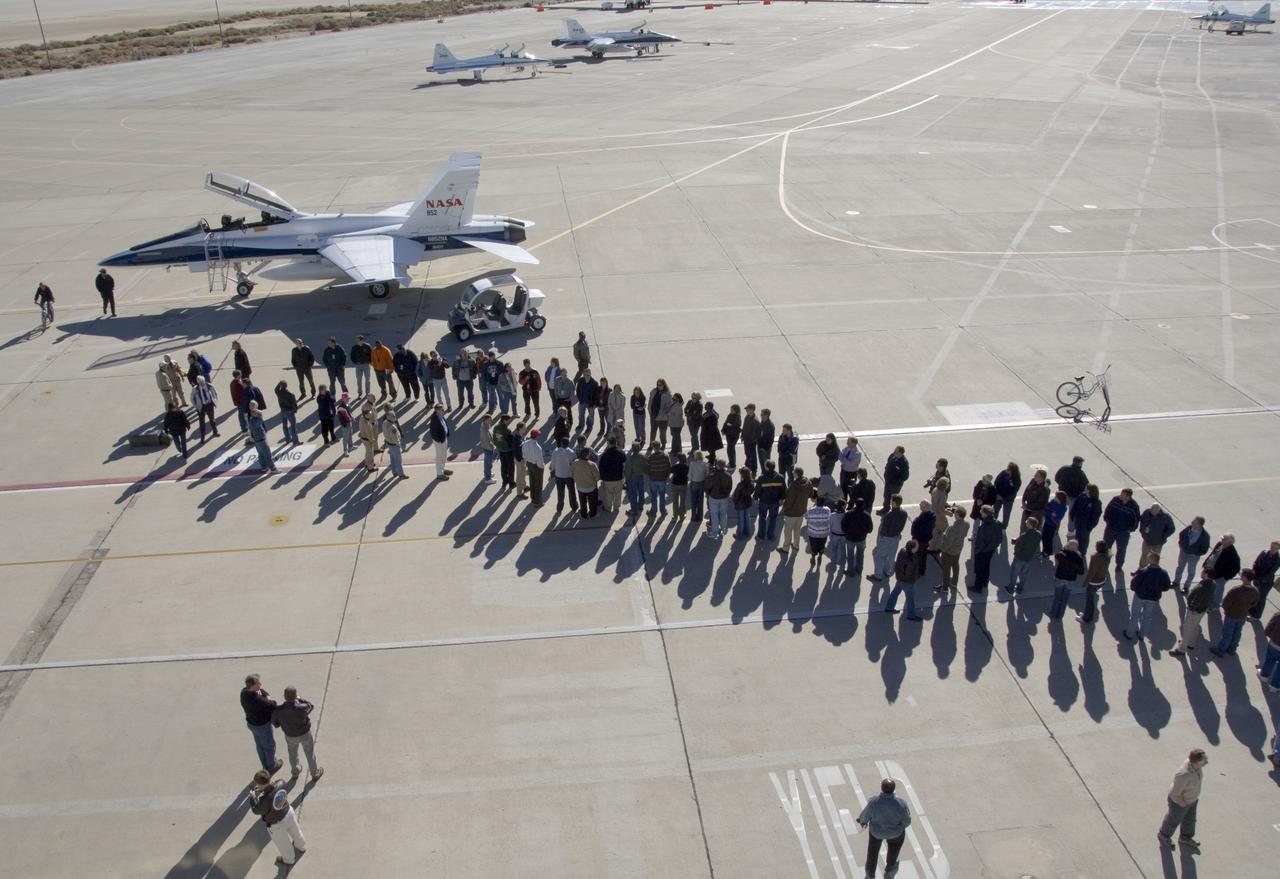
Long-time NASA Dryden research pilot and former astronaut C. Gordon Fullerton capped an almost 50-year flying career, including more than 38 years with NASA, with a final flight in a NASA F/A-18 on Dec. 21, 2007. Fullerton and Dryden research pilot Jim Smolka flew a 90-minute pilot proficiency formation aerobatics flight with another Dryden F/A-18 and a Dryden T-38 before concluding with two low-level formation flyovers of Dryden before landing. Fullerton was honored with a water-cannon spray arch provided by two fire trucks from the Edwards Air Force Base fire department as he taxied the F/A-18 up to the Dryden ramp, and was then greeted by his wife Marie and several hundred Dryden staff after his final flight. Fullerton began his flying career with the U.S. Air Force in 1958 after earning bachelor's and master's degrees in mechanical engineering from the California Institute of Technology. Initially trained as a fighter pilot, he later transitioned to multi-engine bombers and became a bomber operations test pilot after attending the Air Force Aerospace Research Pilot School at Edwards Air Force Base, Calif. He then was assigned to the flight crew for the planned Air Force Manned Orbital Laboratory in 1966. Upon cancellation of that program, the Air Force assigned Fullerton to NASA's astronaut corps in 1969. He served on the support crews for the Apollo 14, 15, 16 and 17 lunar missions, and was later assigned to one of the two flight crews that piloted the space shuttle prototype Enterprise during the Approach and Landing Test program at Dryden. He then logged some 382 hours in space when he flew on two early space shuttle missions, STS-3 on Columbia in 1982 and STS-51F on Challenger in 1985. He joined the flight crew branch at NASA Dryden after leaving the astronaut corps in 1986. During his 21 years at Dryden, Fullerton was project pilot on a number of high-profile research efforts, including the Propulsion Controlled Aircraft, the high-speed landing tests of
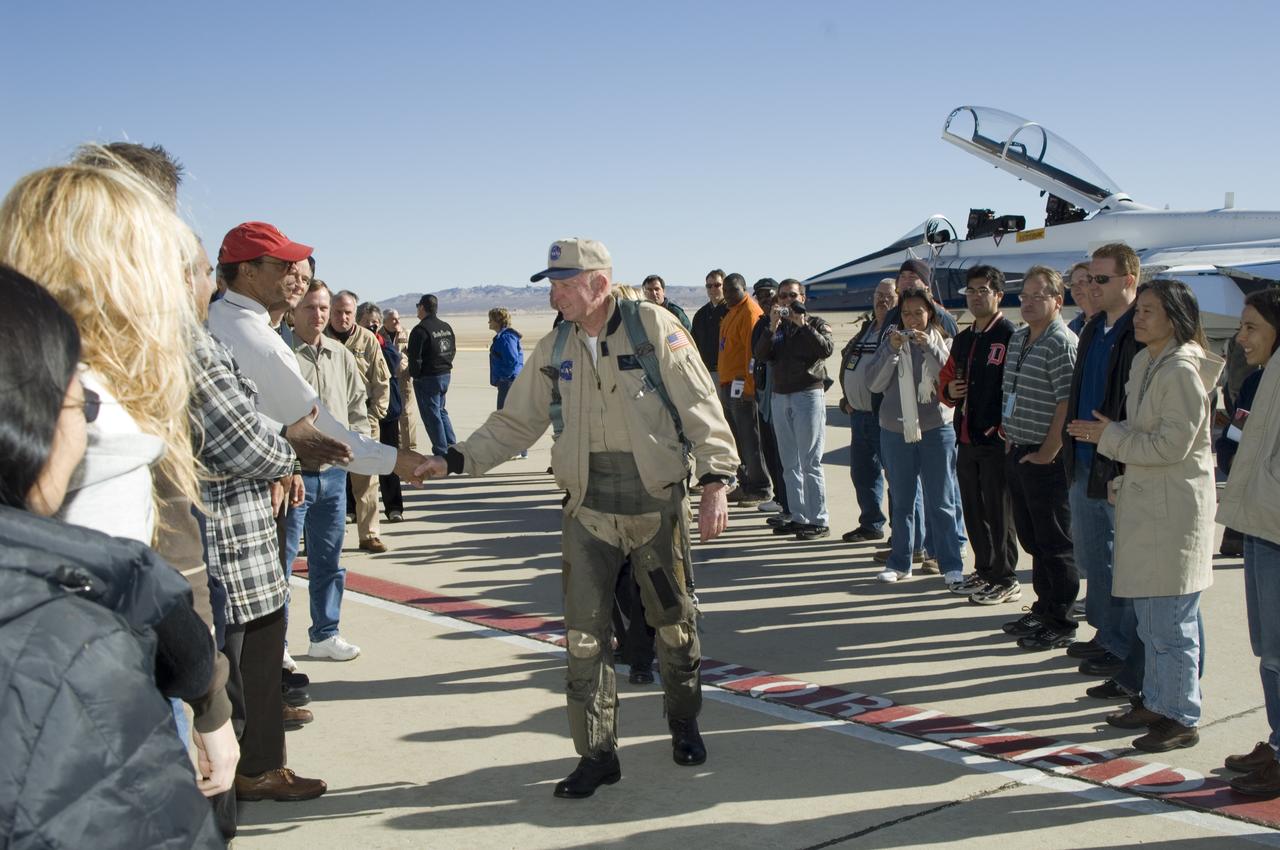
Long-time NASA Dryden research pilot and former astronaut C. Gordon Fullerton capped an almost 50-year flying career, including more than 38 years with NASA, with a final flight in a NASA F/A-18 on Dec. 21, 2007. Fullerton and Dryden research pilot Jim Smolka flew a 90-minute pilot proficiency formation aerobatics flight with another Dryden F/A-18 and a Dryden T-38 before concluding with two low-level formation flyovers of Dryden before landing. Fullerton was honored with a water-cannon spray arch provided by two fire trucks from the Edwards Air Force Base fire department as he taxied the F/A-18 up to the Dryden ramp, and was then greeted by his wife Marie and several hundred Dryden staff after his final flight. Fullerton began his flying career with the U.S. Air Force in 1958 after earning bachelor's and master's degrees in mechanical engineering from the California Institute of Technology. Initially trained as a fighter pilot, he later transitioned to multi-engine bombers and became a bomber operations test pilot after attending the Air Force Aerospace Research Pilot School at Edwards Air Force Base, Calif. He then was assigned to the flight crew for the planned Air Force Manned Orbital Laboratory in 1966. Upon cancellation of that program, the Air Force assigned Fullerton to NASA's astronaut corps in 1969. He served on the support crews for the Apollo 14, 15, 16 and 17 lunar missions, and was later assigned to one of the two flight crews that piloted the space shuttle prototype Enterprise during the Approach and Landing Test program at Dryden. He then logged some 382 hours in space when he flew on two early space shuttle missions, STS-3 on Columbia in 1982 and STS-51F on Challenger in 1985. He joined the flight crew branch at NASA Dryden after leaving the astronaut corps in 1986. During his 21 years at Dryden, Fullerton was project pilot on a number of high-profile research efforts, including the Propulsion Controlled Aircraft, the high-speed landing tests of
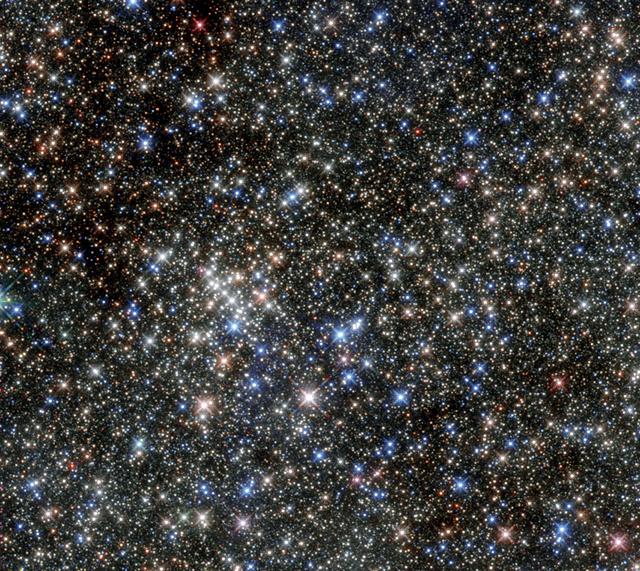
Although this cluster of stars gained its name due to its five brightest stars, it is home to hundreds more. The huge number of massive young stars in the cluster is clearly captured in this NASA/ESA Hubble Space Telescope image. The cluster is located close to the Arches Cluster and is just 100 light-years from the centre of our galaxy. The cluster’s proximity to the dust at the centre of the galaxy means that much of its visible light is blocked, which helped to keep the cluster unknown until its discovery in 1990, when it was revealed by observations in the infrared. Infrared images of the cluster, like the one shown here, allow us to see through the obscuring dust to the hot stars in the cluster. The Quintuplet Cluster hosts two extremely rare luminous blue variable stars: the Pistol Star and the lesser known V4650 Sgr. If you were to draw a line horizontally through the centre of this image from left to right, you could see the Pistol Star hovering just above the line about one third of the way along it. The Pistol Star is one of the most luminous known stars in the Milky Way and takes its name from the shape of the Pistol Nebula that it illuminates, but which is not visible in this infrared image. The exact age and future of the Pistol Star are uncertain, but it is expected to end in a supernova or even a hypernova in one to three million years. The cluster also contains a number of red supergiants. These stars are among the largest in the galaxy and are burning their fuel at an incredible speed, meaning they will have a very short lifetime. Their presence suggests an average cluster age of nearly four million years. At the moment these stars are on the verge of exploding as supernovae. During their spectacular deaths they will release vast amounts of energy which, in turn, will heat the material — dust and gas — between the other stars. This observation shows the Quintuplet Cluster in the infrared and demonstrates the leap in Hubble’s performance sinc
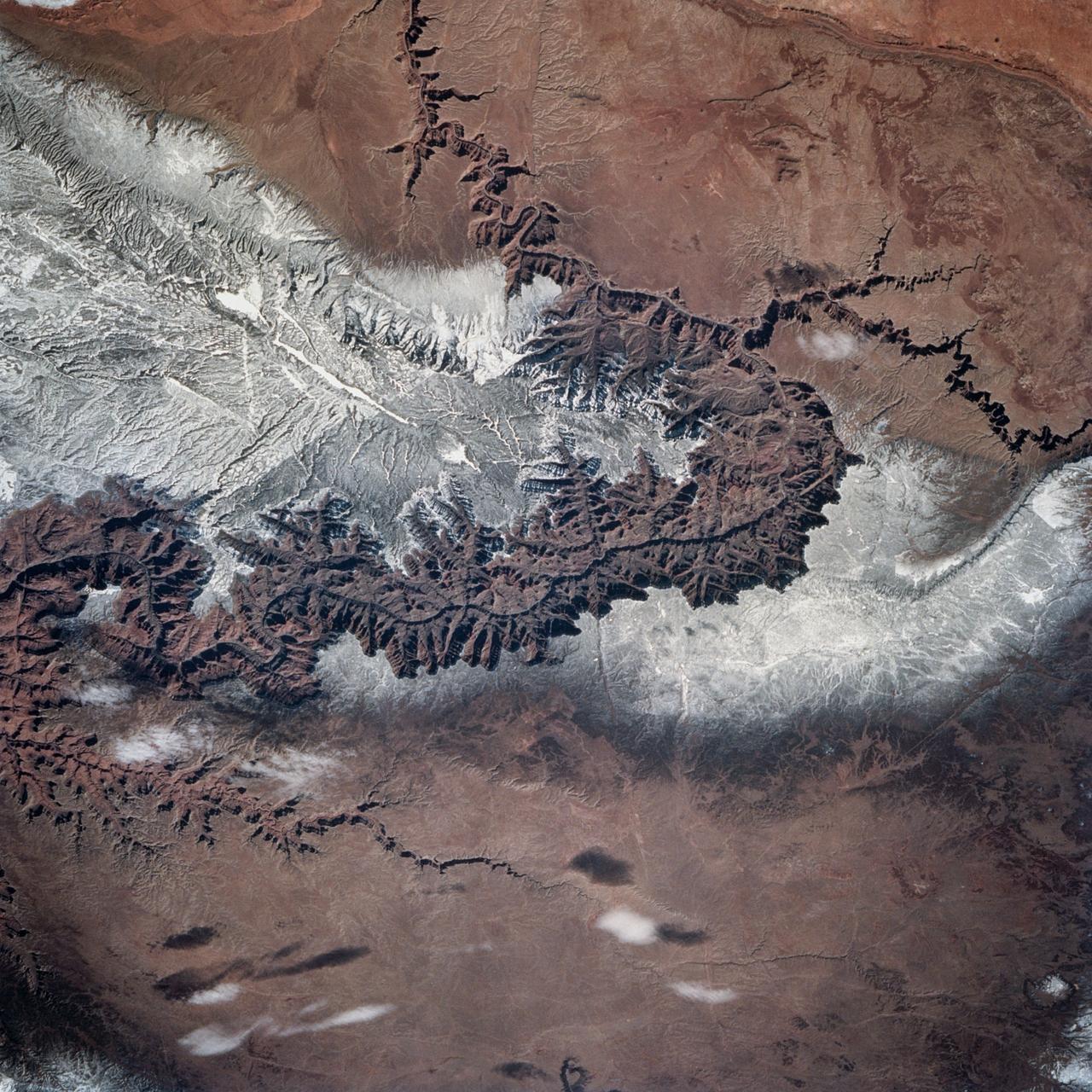
STS060-83-004 (3-11 Feb 1994) --- In this winter scene of the Grand Canyon of Arizona, the canyon is particularly well revealed because snow lies on the rims of the canyon, and exits mid-right; the Little Colorado River enters from the left, joining the Colorado just upstream of its big bend. Visitors to the South Rim can view the canyon in both the east-west and north-south reaches. The South Rim is closer to centers of transportation so that tourists mostly see the canyon from this area, that is from about 7,000 feet. The canyon floor lies at 2,000 feet in this sector. The most heavily snow covered area is the highest, reaching more than 9,000 feet (bottom right). Visitors see this protected area by hiking and mule and helicopter rides. The ecology of this part of the Colorado has been changed since the building of a lake upstream: river water is now derived from snow melt water from the bottom of the lake. This water is much colder than the water which used to flow through the canyon. According to NASA scientists, the view is unusual because the snow also reveals so well the higher country around the canyon, a swath stretching from bottom right to middle left of the view. This higher swath is an arch of uplifted rocks known as the Kaibab Plateau, raised vertically by tectonic forces in the recent geologic past. Despite this up parching, the Colorado River managed to maintain its course to the sea by cutting an ever deeper canyon into the Plateau. The white snow cover hides the fact that the Kaibab Plateau is thickly forested and thus appears dark green in summer, except in areas of clear-cutting. Since the Plateau reaches altitudes of 6 to 9,000 feet, it is both cooler and moister than the surrounding lower desert floor (top and bottom in this view) - where sparse vegetation and rocky country appear as brown colors. The zone of dark color running parallel to the snow line is all that can be seen of the pine forest on the south flanks of the Plateau.
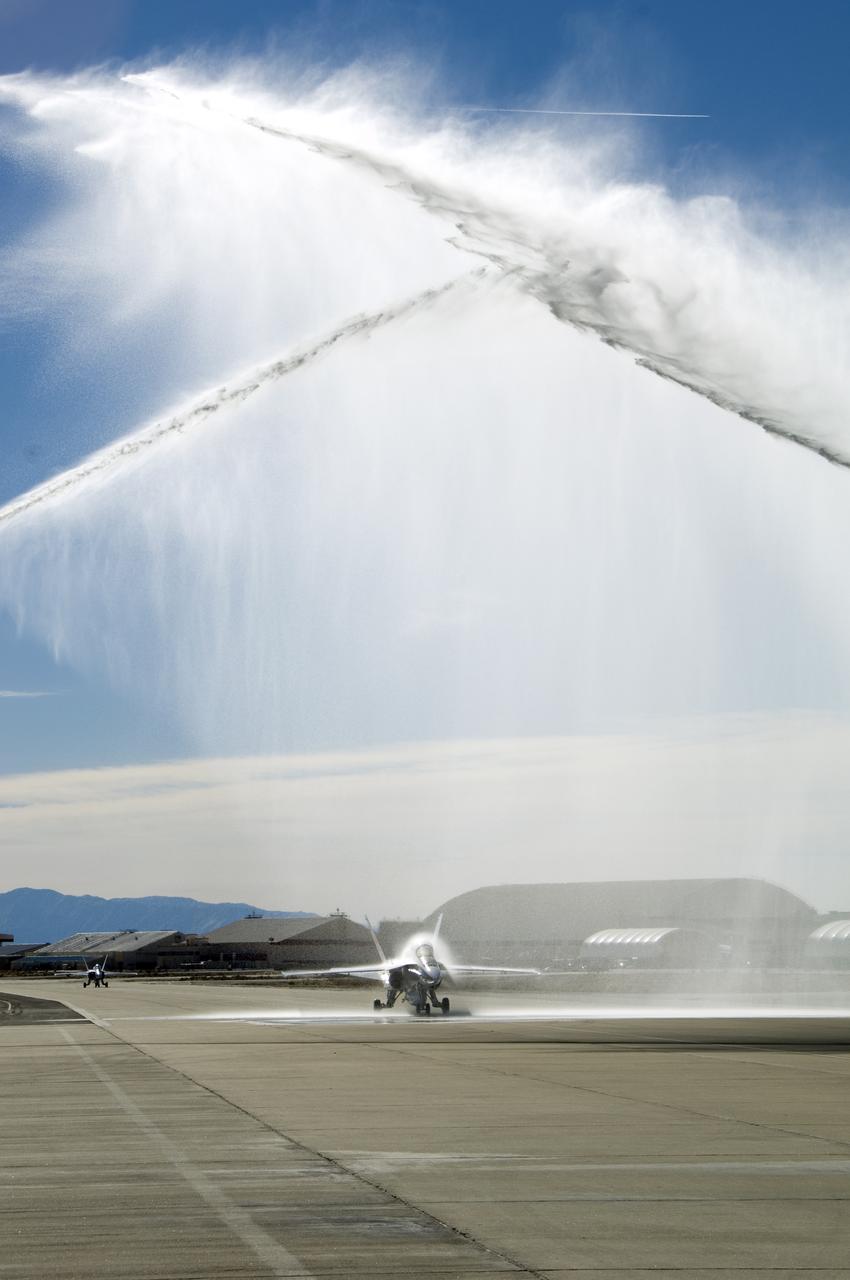
Long-time NASA Dryden research pilot and former astronaut C. Gordon Fullerton capped an almost 50-year flying career, including more than 38 years with NASA, with a final flight in a NASA F/A-18 on Dec. 21, 2007. Fullerton and Dryden research pilot Jim Smolka flew a 90-minute pilot proficiency formation aerobatics flight with another Dryden F/A-18 and a Dryden T-38 before concluding with two low-level formation flyovers of Dryden before landing. Fullerton was honored with a water-cannon spray arch provided by two fire trucks from the Edwards Air Force Base fire department as he taxied the F/A-18 up to the Dryden ramp, and was then greeted by his wife Marie and several hundred Dryden staff after his final flight. Fullerton began his flying career with the U.S. Air Force in 1958 after earning bachelor's and master's degrees in mechanical engineering from the California Institute of Technology. Initially trained as a fighter pilot, he later transitioned to multi-engine bombers and became a bomber operations test pilot after attending the Air Force Aerospace Research Pilot School at Edwards Air Force Base, Calif. He then was assigned to the flight crew for the planned Air Force Manned Orbital Laboratory in 1966. Upon cancellation of that program, the Air Force assigned Fullerton to NASA's astronaut corps in 1969. He served on the support crews for the Apollo 14, 15, 16 and 17 lunar missions, and was later assigned to one of the two flight crews that piloted the space shuttle prototype Enterprise during the Approach and Landing Test program at Dryden. He then logged some 382 hours in space when he flew on two early space shuttle missions, STS-3 on Columbia in 1982 and STS-51F on Challenger in 1985. He joined the flight crew branch at NASA Dryden after leaving the astronaut corps in 1986. During his 21 years at Dryden, Fullerton was project pilot on a number of high-profile research efforts, including the Propulsion Controlled Aircraft, the high-speed landing tests of
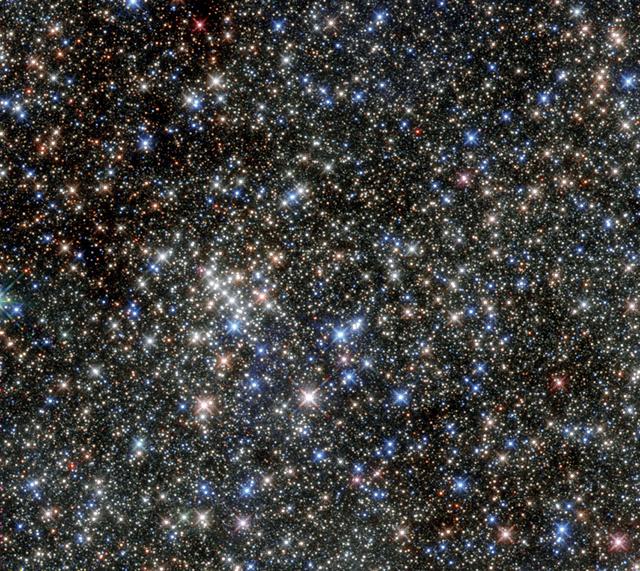
Although this cluster of stars gained its name due to its five brightest stars, it is home to hundreds more. The huge number of massive young stars in the cluster is clearly captured in this NASA/ESA Hubble Space Telescope image. The cluster is located close to the Arches Cluster and is just 100 light-years from the center of our galaxy. The cluster’s proximity to the dust at the center of the galaxy means that much of its visible light is blocked, which helped to keep the cluster unknown until its discovery in 1990, when it was revealed by infrared observations. Infrared images of the cluster, like the one shown here, allow us to see through the obscuring dust to the hot stars in the cluster. The Quintuplet Cluster hosts two extremely rare luminous blue variable stars: the Pistol Star and the lesser known V4650 Sgr. If you were to draw a line horizontally through the center of this image from left to right, you could see the Pistol Star hovering just above the line about one third of the way along it. The Pistol Star is one of the most luminous known stars in the Milky Way and takes its name from the shape of the Pistol Nebula that it illuminates, but which is not visible in this infrared image. The exact age and future of the Pistol Star are uncertain, but it is expected to end in a supernova or even a hypernova in one to three million years. The cluster also contains a number of red supergiants. These stars are among the largest in the galaxy and are burning their fuel at an incredible speed, meaning they will have a very short lifetime. Their presence suggests an average cluster age of nearly four million years. At the moment these stars are on the verge of exploding as supernovae. During their spectacular deaths they will release vast amounts of energy which, in turn, will heat the material — dust and gas — between the other stars. This observation shows the Quintuplet Cluster in the infrared and demonstrates the leap in Hubble’s performance since its 1999 image of same object. Credit: ESA/NASA <b><a href="http://www.nasa.gov/audience/formedia/features/MP_Photo_Guidelines.html" rel="nofollow">NASA image use policy.</a></b> <b><a href="http://www.nasa.gov/centers/goddard/home/index.html" rel="nofollow">NASA Goddard Space Flight Center</a></b> enables NASA’s mission through four scientific endeavors: Earth Science, Heliophysics, Solar System Exploration, and Astrophysics. Goddard plays a leading role in NASA’s accomplishments by contributing compelling scientific knowledge to advance the Agency’s mission. <b>Follow us on <a href="http://twitter.com/NASAGoddardPix" rel="nofollow">Twitter</a></b> <b>Like us on <a href="http://www.facebook.com/pages/Greenbelt-MD/NASA-Goddard/395013845897?ref=tsd" rel="nofollow">Facebook</a></b> <b>Find us on <a href="http://instagrid.me/nasagoddard/?vm=grid" rel="nofollow">Instagram</a></b>
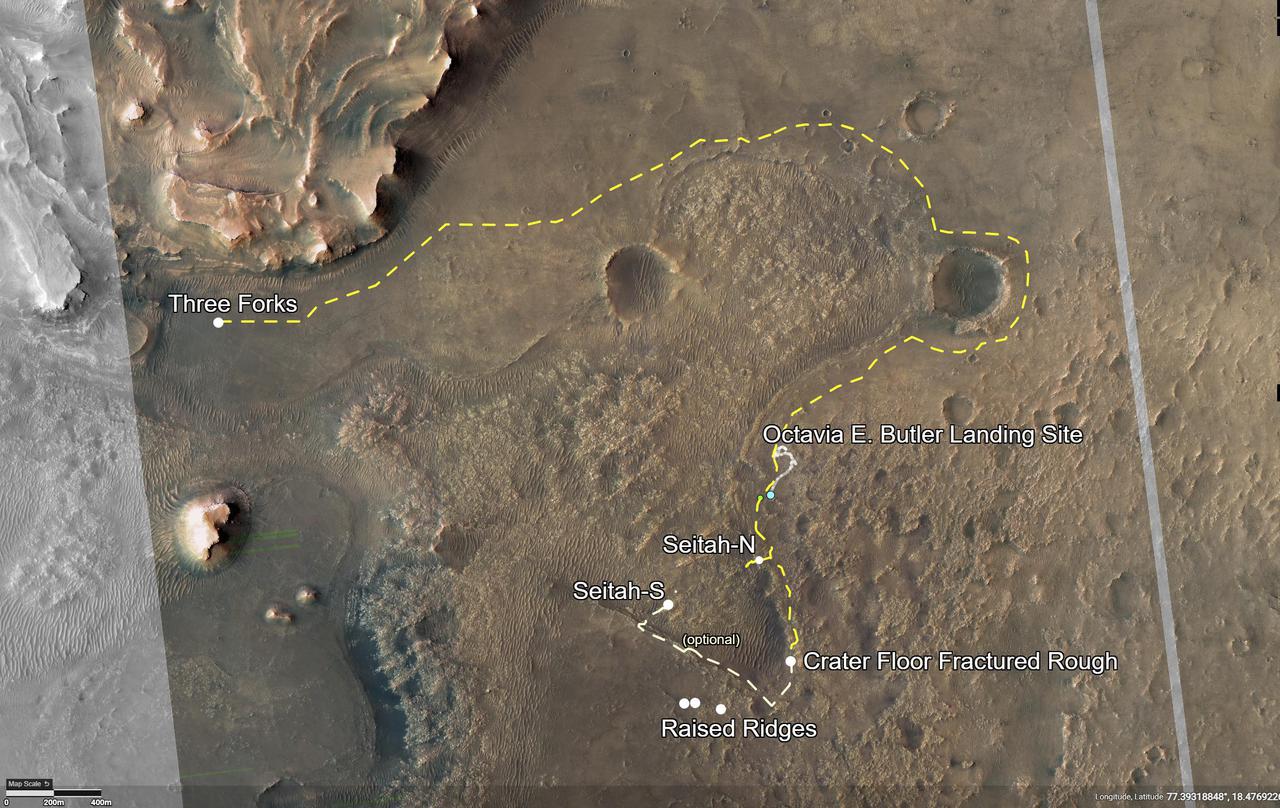
This annotated image of Mars' Jezero Crater depicts the route NASA's Perseverance rover will take during its first science campaign – as well as its path to the location of its second science campaign. The image was provided by the High Resolution Imaging Experiment (HiRISE) aboard NASA's Mars Reconnaissance orbiter. Perseverance's first science campaign sends the rover south and west of the Octavia E. Butler Landing Site to investigate and sample several of the deepest, and potentially oldest, accessible geologic units in Jezero Crater – the "Séítah" unit (which in Navajo language means "amidst the sand"), and the "Cratered Floor Fractured Rough." At the completion of the science campaign, Perseverance will return to the "Octavia E. Butler" landing site on its way north, then head west toward the location where its second science campaign will begin. The first science campaign (depicted with yellow hash marks) begins with the rover performing an arching drive southward from its landing site to Séítah-North (Séítah-N). At that point the rover will travel west a short distance to an overlook where it can view much of the Séítah unit. The "Séítah-N Overlook" could also become an area of scientific interest – with Perseverance performing a "toe dip" into the unit to collect remote-sensing measurements of geologic targets. Once its time at the Séítah-N Overlook is complete, Perseverance will head east, then south toward a spot where the science team can study the Crater Floor Fractured Rough in greater detail. The first core sample collected by the mission will also take place at this location. After Cratered Floor Fractured Rough, the Perseverance rover team will evaluate whether additional exploration (depicted with light-yellow hash marks) farther south – and then west – is warranted. Whether Perseverance travels beyond the Cratered Floor Fractured Rough during this first science campaign, the rover will eventually retrace its steps. As Perseverance passes the Octavia B. Butler landing site, the first science campaign will conclude. At that point, several months of travel lay ahead as Perseverance makes its way to "Three Forks," where the second science campaign will begin. From Three Forks, Perseverance can access geologic locations at the base of the ancient delta (the fan-shaped remains of the confluence of an ancient river and a lake), as well as ascend the delta by driving up a valley wall to the northwest. https://photojournal.jpl.nasa.gov/catalog/PIA24596

What looks much like craggy mountains on a moonlit evening is actually the edge of a nearby, young, star-forming region NGC 3324 in the Carina Nebula. Captured in infrared light by the Near-Infrared Camera (NIRCam) on NASA’s James Webb Space Telescope, this image reveals previously obscured areas of star birth. Called the Cosmic Cliffs, the region is actually the edge of a gigantic, gaseous cavity within NGC 3324, roughly 7,600 light-years away. The cavernous area has been carved from the nebula by the intense ultraviolet radiation and stellar winds from extremely massive, hot, young stars located in the center of the bubble, above the area shown in this image. The high-energy radiation from these stars is sculpting the nebula’s wall by slowly eroding it away. NIRCam – with its crisp resolution and unparalleled sensitivity – unveils hundreds of previously hidden stars, and even numerous background galaxies. Several prominent features in this image are described below. • The “steam” that appears to rise from the celestial “mountains” is actually hot, ionized gas and hot dust streaming away from the nebula due to intense, ultraviolet radiation. • Dramatic pillars rise above the glowing wall of gas, resisting the blistering ultraviolet radiation from the young stars. • Bubbles and cavities are being blown by the intense radiation and stellar winds of newborn stars. • Protostellar jets and outflows, which appear in gold, shoot from dust-enshrouded, nascent stars. • A “blow-out” erupts at the top-center of the ridge, spewing gas and dust into the interstellar medium. • An unusual “arch” appears, looking like a bent-over cylinder. This period of very early star formation is difficult to capture because, for an individual star, it lasts only about 50,000 to 100,000 years – but Webb’s extreme sensitivity and exquisite spatial resolution have chronicled this rare event. Located roughly 7,600 light-years away, NGC 3324 was first catalogued by James Dunlop in 1826. Visible from the Southern Hemisphere, it is located at the northwest corner of the Carina Nebula (NGC 3372), which resides in the constellation Carina. The Carina Nebula is home to the Keyhole Nebula and the active, unstable supergiant star called Eta Carinae. NIRCam was built by a team at the University of Arizona and Lockheed Martin’s Advanced Technology Center.