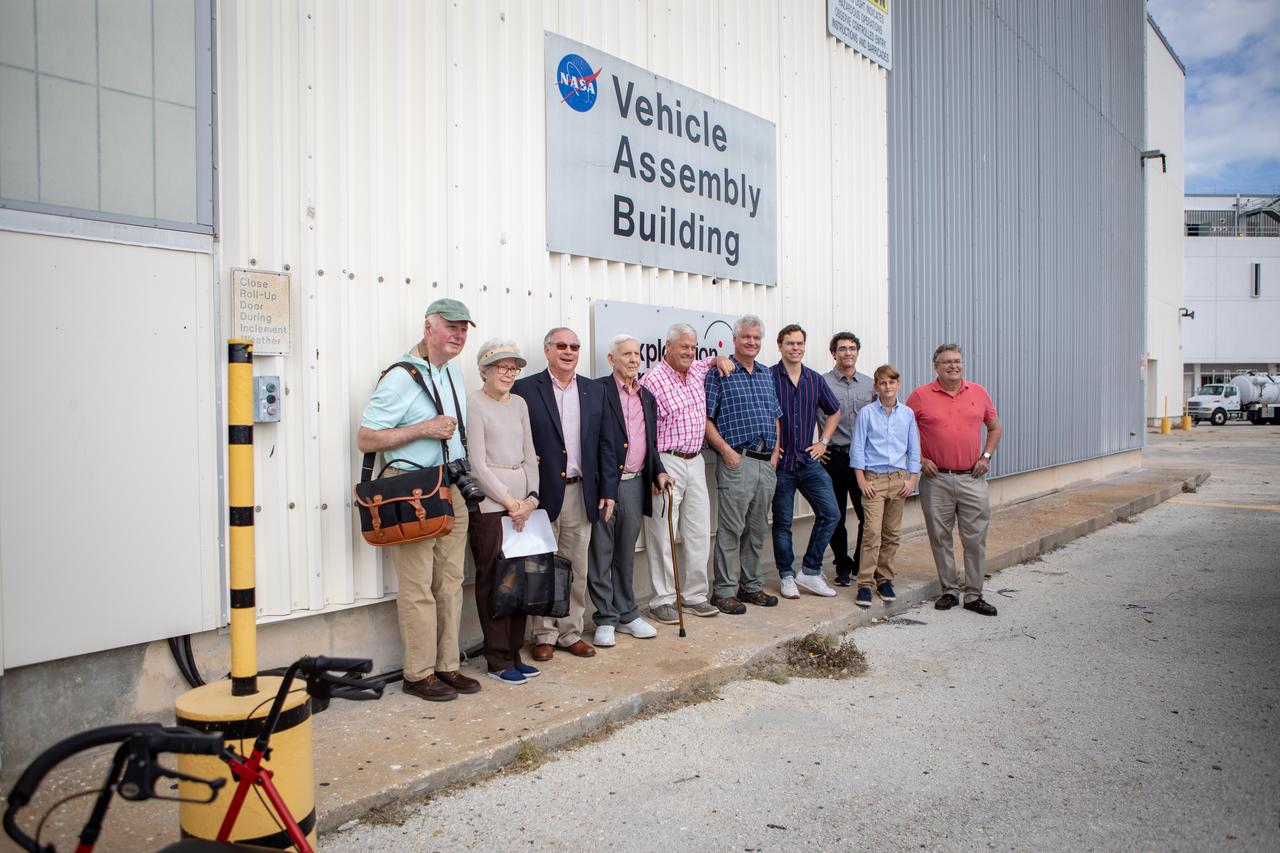
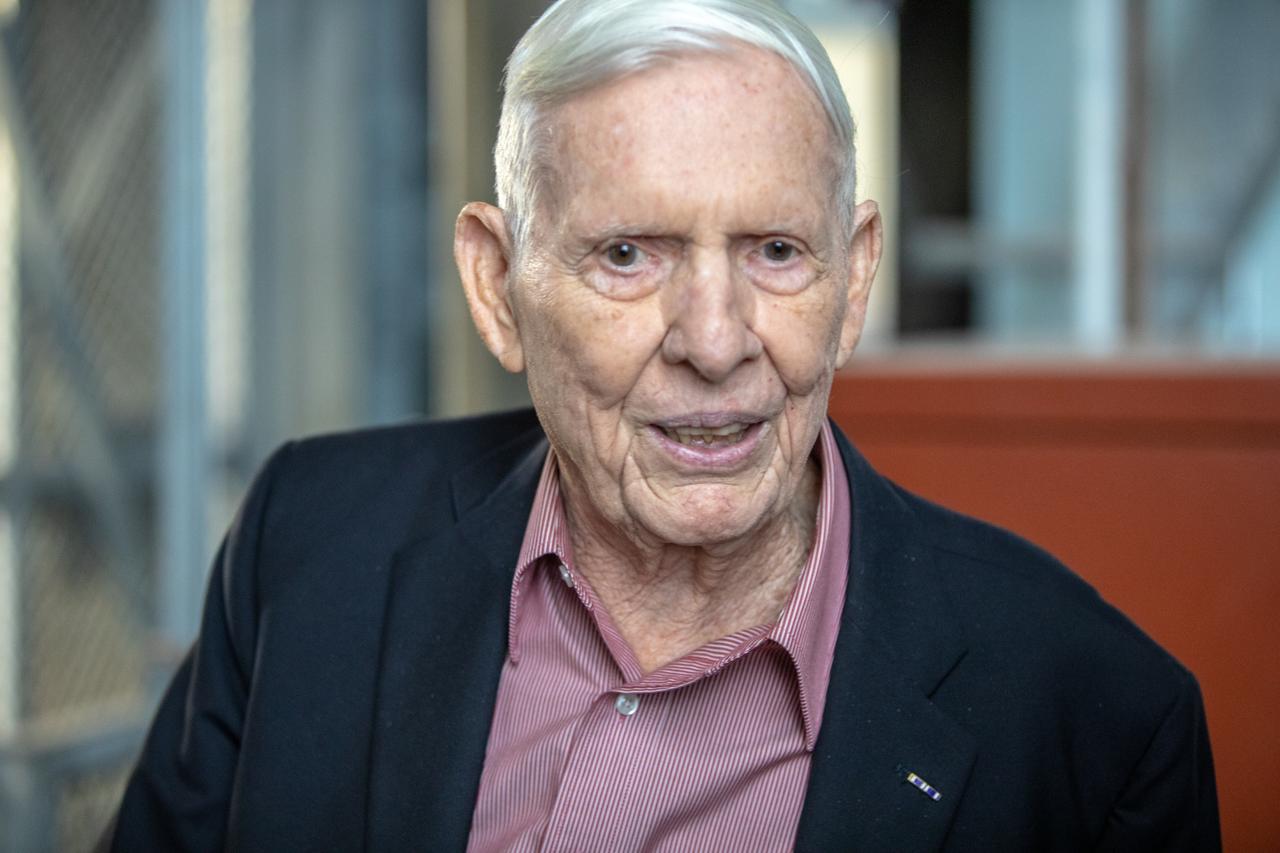
Family members of the original Vehicle Assembly Building (VAB) architect tour the iconic facility on Nov. 22, 2019 at NASA’s Kennedy Space Center in Florida. Among the visitors are Dick Bergmann, far right, original lead designer for the VAB. In view, far left, is Kelvin Manning, Kennedy’s associate director, technical. The Florida Section American Society of Civil Engineers bestowed its National Historic Civil Engineering Landmark award to the facility. The VAB is the first building at Kennedy Space Center to earn this distinction. At the time of its completion, the 129-million-cubic-foot structure was the largest building in the world. Originally designed and built to accommodate the Saturn V/Apollo used in Project Apollo, the VAB was later modified for its role in the Space Shuttle Program.
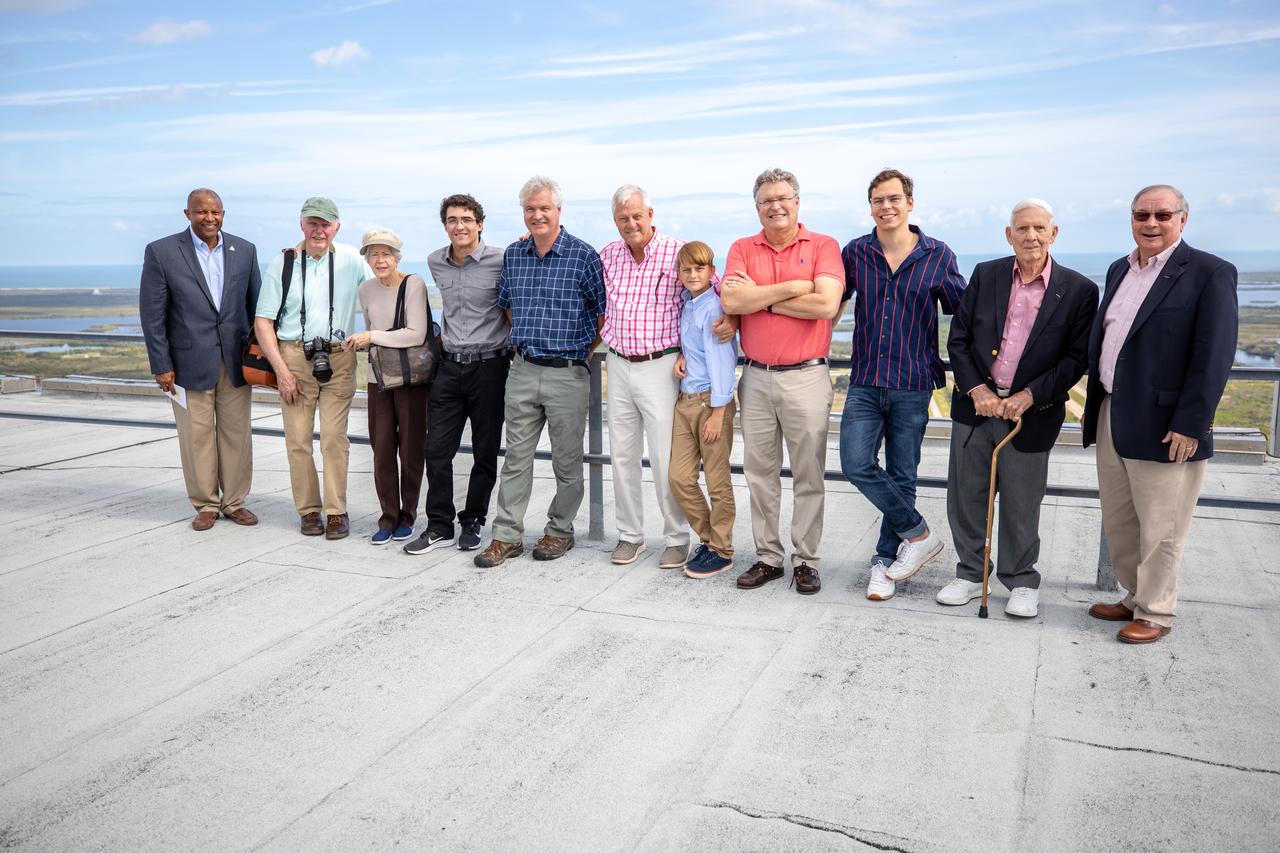
Dick Bergmann, second from left, original lead designer for the Vehicle Assembly Building (VAB), and Phil Moyer, second from right, original project lead, are on the roof of the VAB during a tour of Kennedy Space Center in Florida with descendants of Max Urbahn, the original architect, on Nov. 22, 2019. At far left is Kelvin Manning, Kennedy associate director, technical. The Florida Section American Society of Civil Engineers bestowed its National Historic Civil Engineering Landmark award to the facility. The VAB is the first building at Kennedy Space Center to earn this distinction. At the time of its completion, the 129-million-cubic-foot structure was the largest building in the world. Originally designed and built to accommodate the Saturn V/Apollo used in Project Apollo, the VAB was later modified for its role in the Space Shuttle Program.
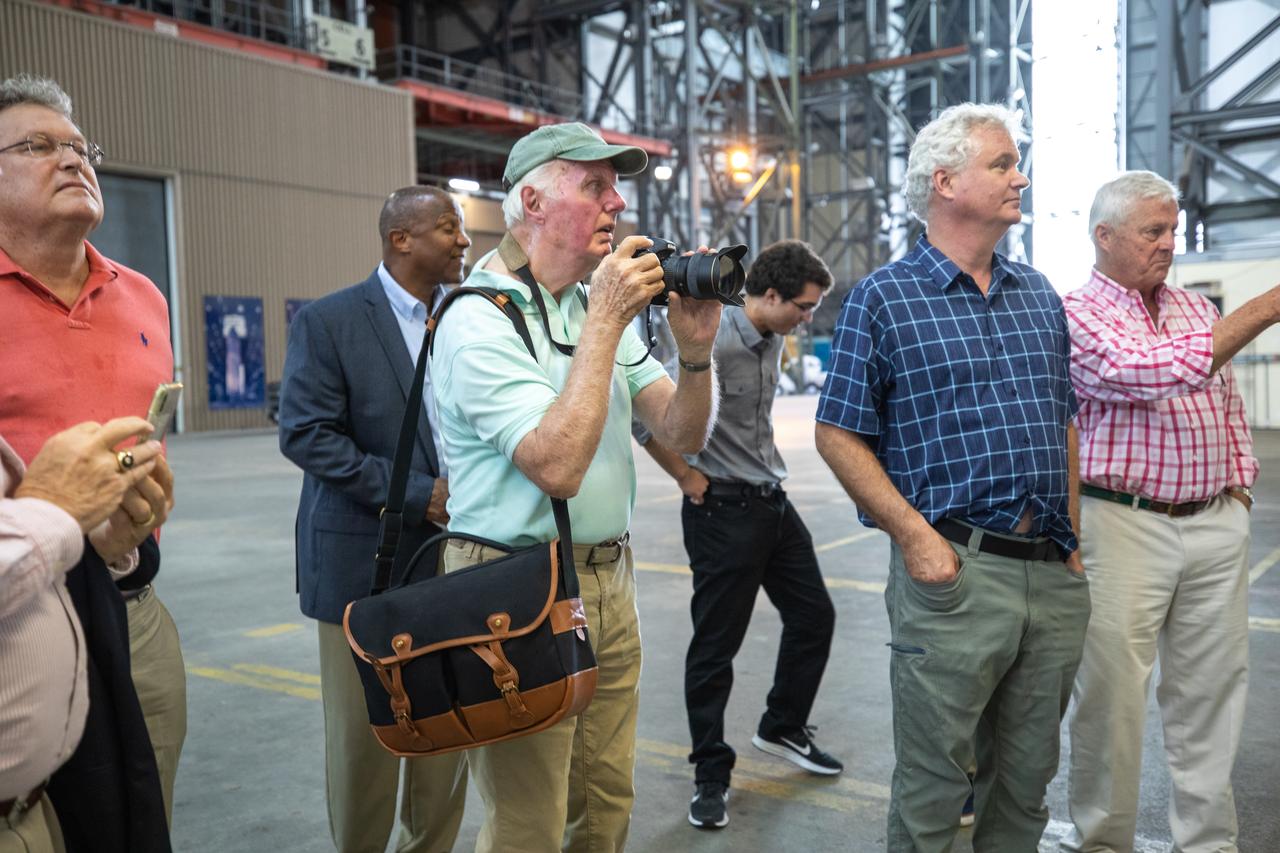
Dick Bergmann, far left in front, original lead designer for the Vehicle Assembly Building (VAB), tours the iconic facility at Kennedy Space Center in Florida with descendants of Max Urbahn, the original architect, on Nov. 22, 2019. Behind Bergmann is Kelvin Manning, Kennedy associate director, technical. The Florida Section American Society of Civil Engineers bestowed its National Historic Civil Engineering Landmark award to the facility. The VAB is the first building at Kennedy Space Center to earn this distinction. At the time of its completion, the 129-million-cubic-foot structure was the largest building in the world. Originally designed and built to accommodate the Saturn V/Apollo used in Project Apollo, the VAB was later modified for its role in the Space Shuttle Program.
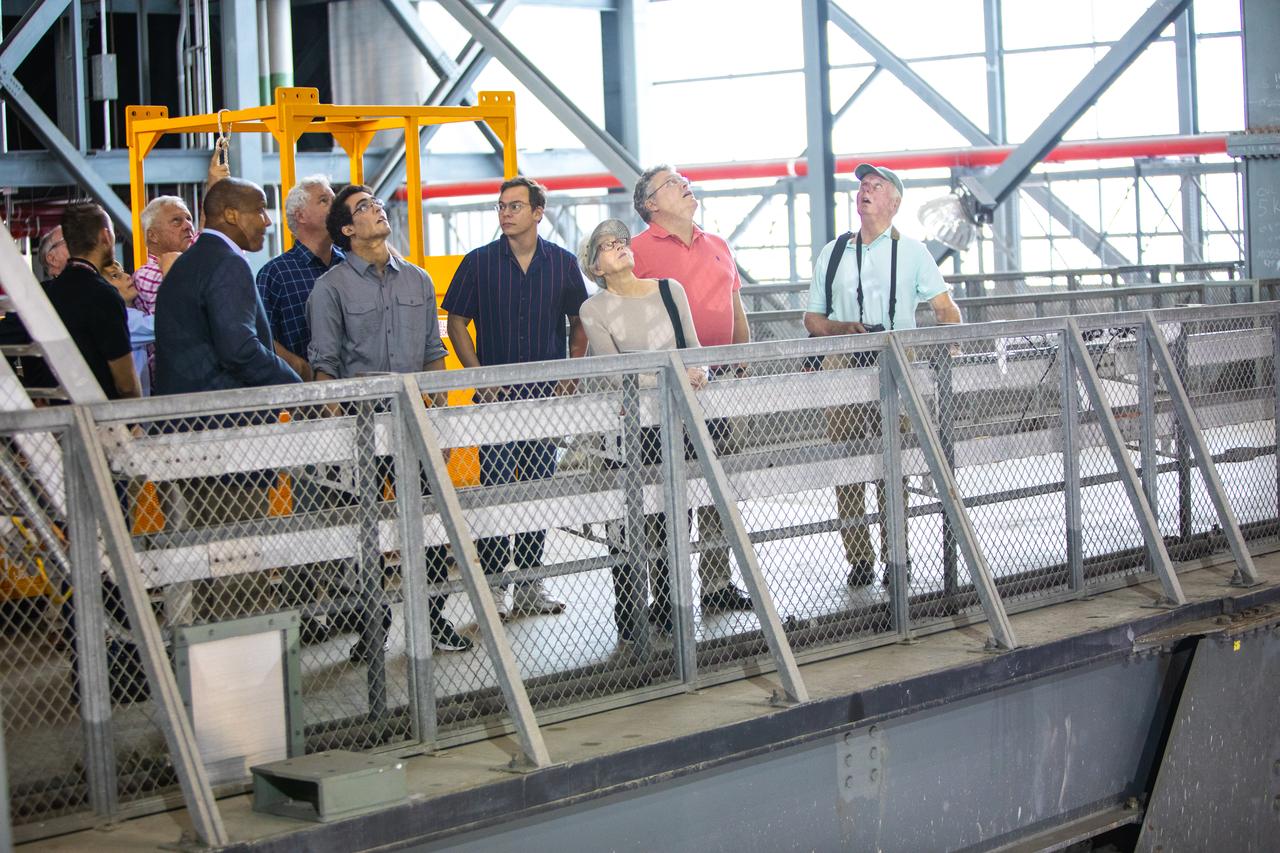
Dick Bergmann, far left, original lead designer for the Vehicle Assembly Building (VAB); and Phil Moyer, fourth from left, original project lead for the VAB, tour the iconic facility at Kennedy Space Center in Florida with descendants of Max Urbahn, the original architect, on Nov. 22, 2019. The Florida Section American Society of Civil Engineers bestowed its National Historic Civil Engineering Landmark award to the facility. The VAB is the first building at Kennedy Space Center to earn this distinction. At the time of its completion, the 129-million-cubic-foot structure was the largest building in the world. Originally designed and built to accommodate the Saturn V/Apollo used in Project Apollo, the VAB was later modified for its role in the Space Shuttle Program.
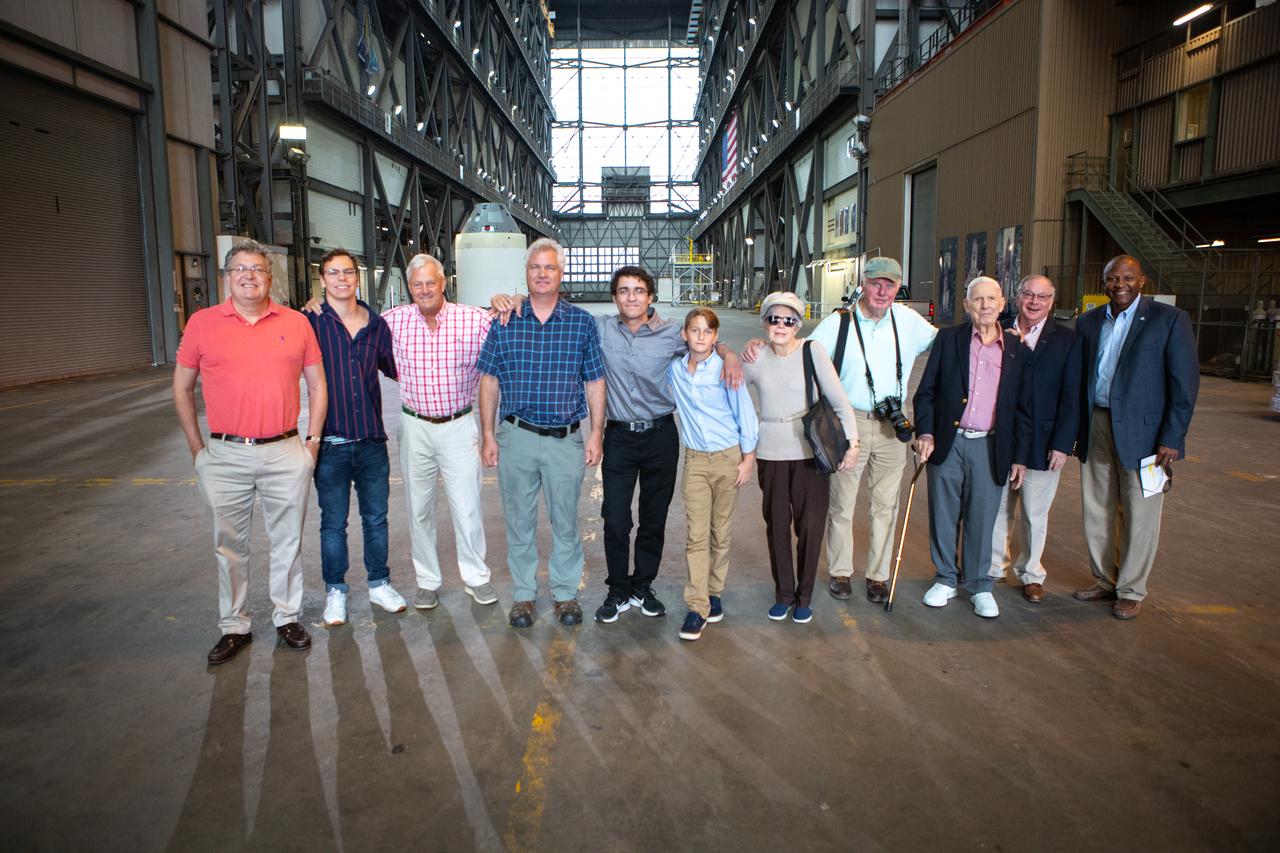
Phil Moyer, third from right, original project lead for the Vehicle Assembly Building (VAB); and Dick Bergmann, fourth from right, original lead designer for the VAB, tour the iconic facility with the families of the original architect on Nov. 22, 2019 at NASA’s Kennedy Space Center in Florida. At far right is Kelvin Manning, Kennedy’s associate director, technical. The Florida Section American Society of Civil Engineers bestowed the historic building with its National Historic Civil Engineering Landmark award during a ceremony on Jan. 10, 2020. The VAB is the first building at Kennedy Space Center to earn this distinction. At the time of its completion, the 129-million-cubic-foot structure was the largest building in the world. Originally designed and built to accommodate the Saturn V/Apollo used in Project Apollo, the VAB was later modified for its role in the Space Shuttle Program.

Family members of the original Vehicle Assembly Building (VAB) architect ride in an elevator during a tour of the iconic facility on Nov. 22, 2019 at NASA’s Kennedy Space Center in Florida. Among the visitors are Phil Moyer, in front, original project lead for the VAB; and Dick Bergmann, in the light green shirt, original lead designer for the VAB. The Florida Section American Society of Civil Engineers bestowed its National Historic Civil Engineering Landmark award to the facility. The VAB is the first building at Kennedy Space Center to earn this distinction. At the time of its completion, the 129-million-cubic-foot structure was the largest building in the world. Originally designed and built to accommodate the Saturn V/Apollo used in Project Apollo, the VAB was later modified for its role in the Space Shuttle Program.
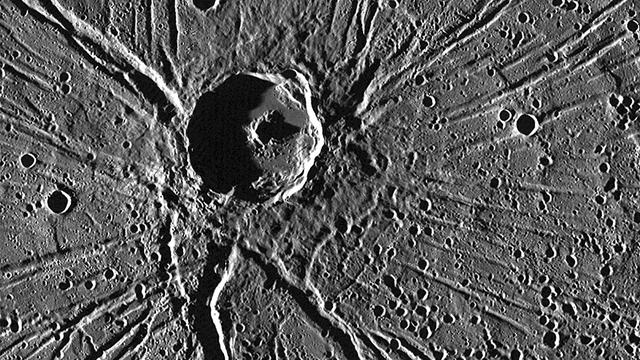
One of the most captivating views acquired during NASA MESSENGER first Mercury flyby was of the crater Apollodorus surrounded by the radiating troughs of Pantheon Fossae. The team nicknamed the combined feature as "the spider." Since then, MESSENGER has acquired many other striking views of this unique feature located near the center of Caloris basin. Although Apollodorus of Damascus (the namesake of the crater) is thought to be the architect of the Pantheon in Rome (the namesake of the fossae), the crater Apollodorus is thought to be unrelated to the creation of Pantheon Fossae. Instrument: Mercury Dual Imaging System (MDIS) Center Latitude: 39.1° Center Longitude: 164.3° E Scale: Apollodorus has a diameter of 42 kilometers (26 miles) http://photojournal.jpl.nasa.gov/catalog/PIA19410
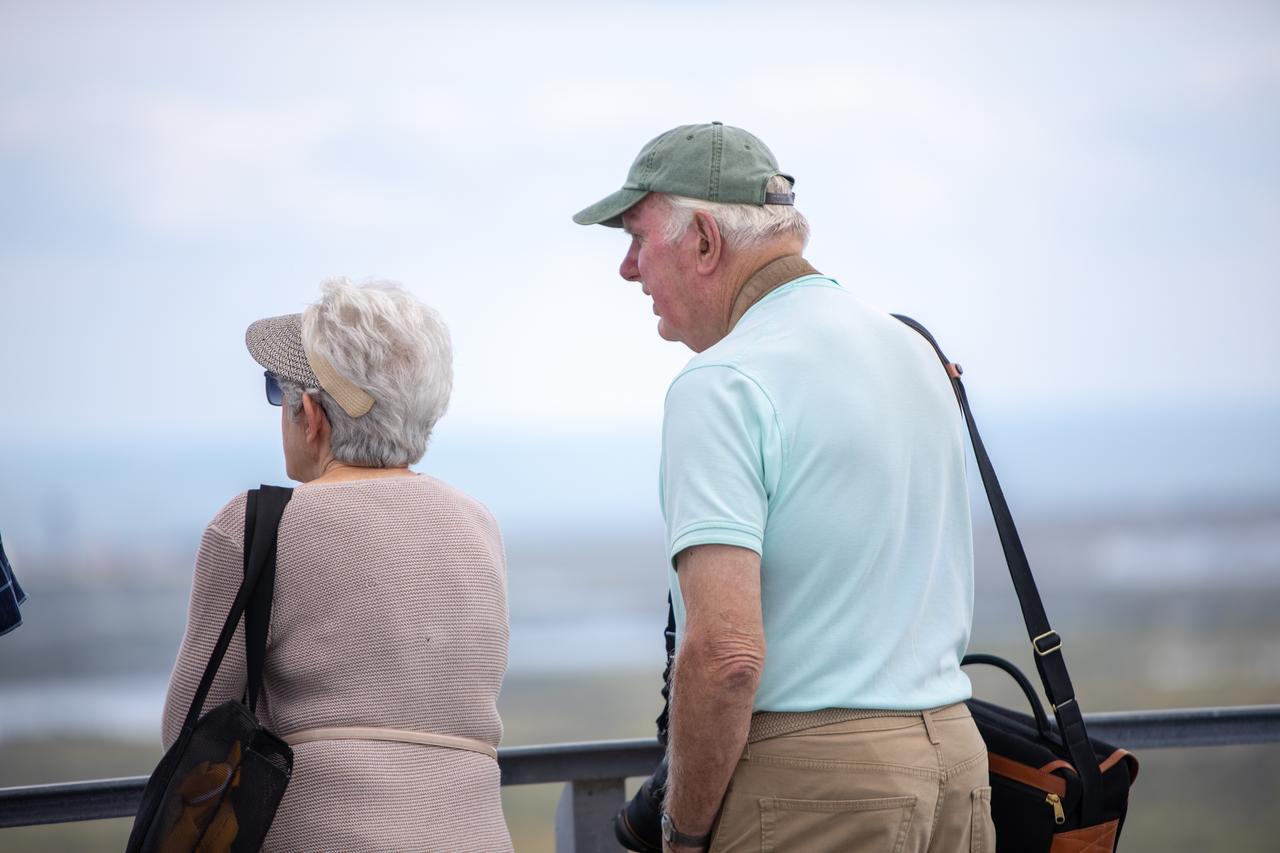
Dick Bergmann, at right, original lead designer for the Vehicle Assembly Building, stands on the roof of the iconic facility during a tour on Nov. 22, 2019 at NASA’s Kennedy Space Center in Florida. The VAB was recognized with the National Historic Civil Engineering Landmark award by the Florida Section American Society of Civil Engineers during a ceremony on Jan. 10, 2020. The VAB is the first building at Kennedy Space Center to earn this distinction. At the time of its completion, the 129-million-cubic-foot structure was the largest building in the world. Originally designed and built to accommodate the Saturn V/Apollo used in Project Apollo, the VAB was later modified for its role in the Space Shuttle Program.
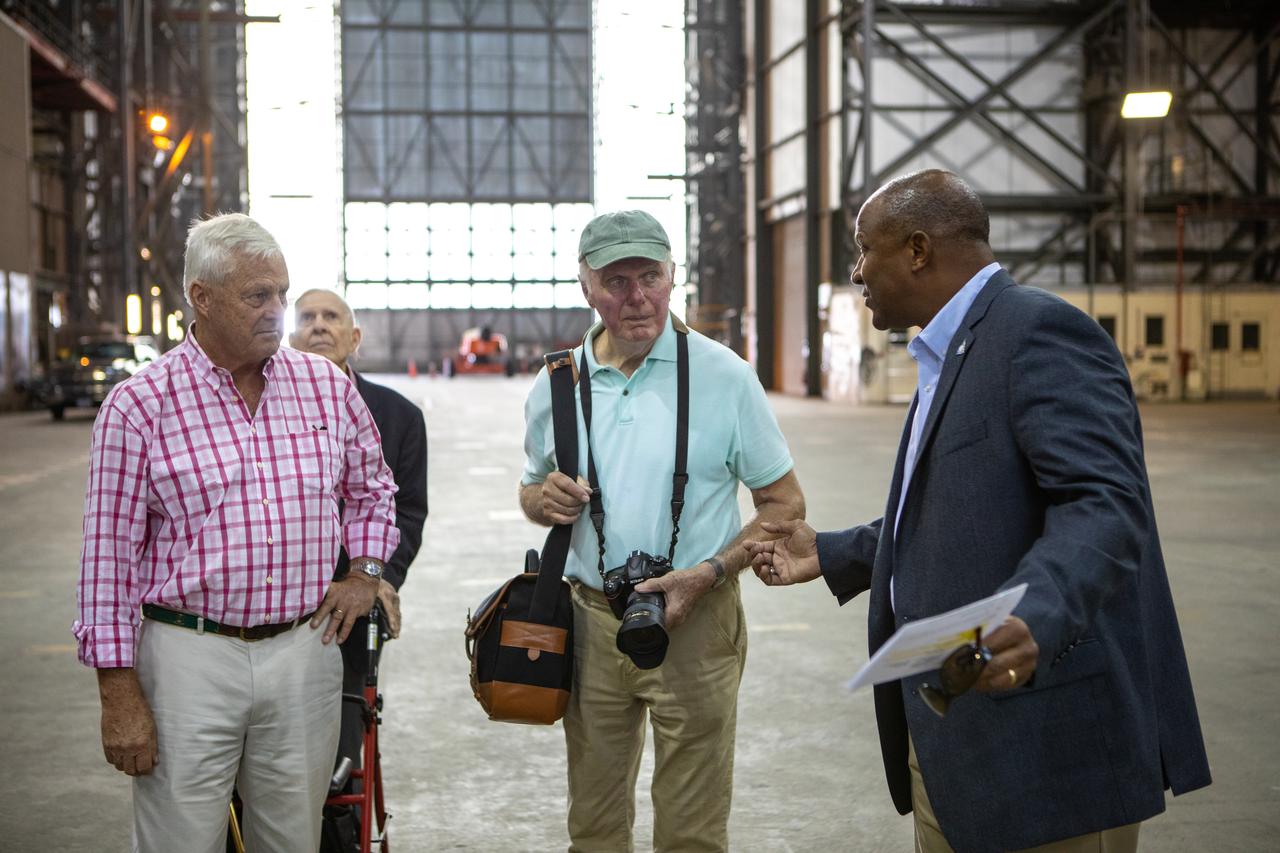
Kelvin Manning, at right, Kennedy Space Center’s associate director, technical, speaks to Dick Bergmann, center, original lead designer for the Vehicle Assembly (VAB), during a tour of the iconic facility on Nov. 22, 2019, at NASA’s Kennedy Space Center in Florida. The VAB was recognized with the National Historic Civil Engineering Landmark award by the Florida Section American Society of Civil Engineers during a ceremony on Jan. 10, 2020. The VAB is the first building at Kennedy to earn this distinction. At the time of its completion, the 129-million-cubic-foot structure was the largest building in the world. Originally designed and built to accommodate the Saturn V/Apollo used in Project Apollo, the VAB was later modified for its role in the Space Shuttle Program.

Phil Moyer, original project lead for the Vehicle Assembly Building (VAB), tours the Vehicle Assembly Building on Nov. 22, 2019 at NASA’s Kennedy Space Center in Florida. The VAB was recognized with the National Historic Civil Engineering Landmark award by the Florida Section American Society of Civil Engineers during a ceremony on Jan. 10, 2020. The VAB is the first building at Kennedy Space Center to earn this distinction. At the time of its completion, the 129-million-cubic-foot structure was the largest building in the world. Originally designed and built to accommodate the Saturn V/Apollo used in Project Apollo, the VAB was later modified for its role in the Space Shuttle Program.
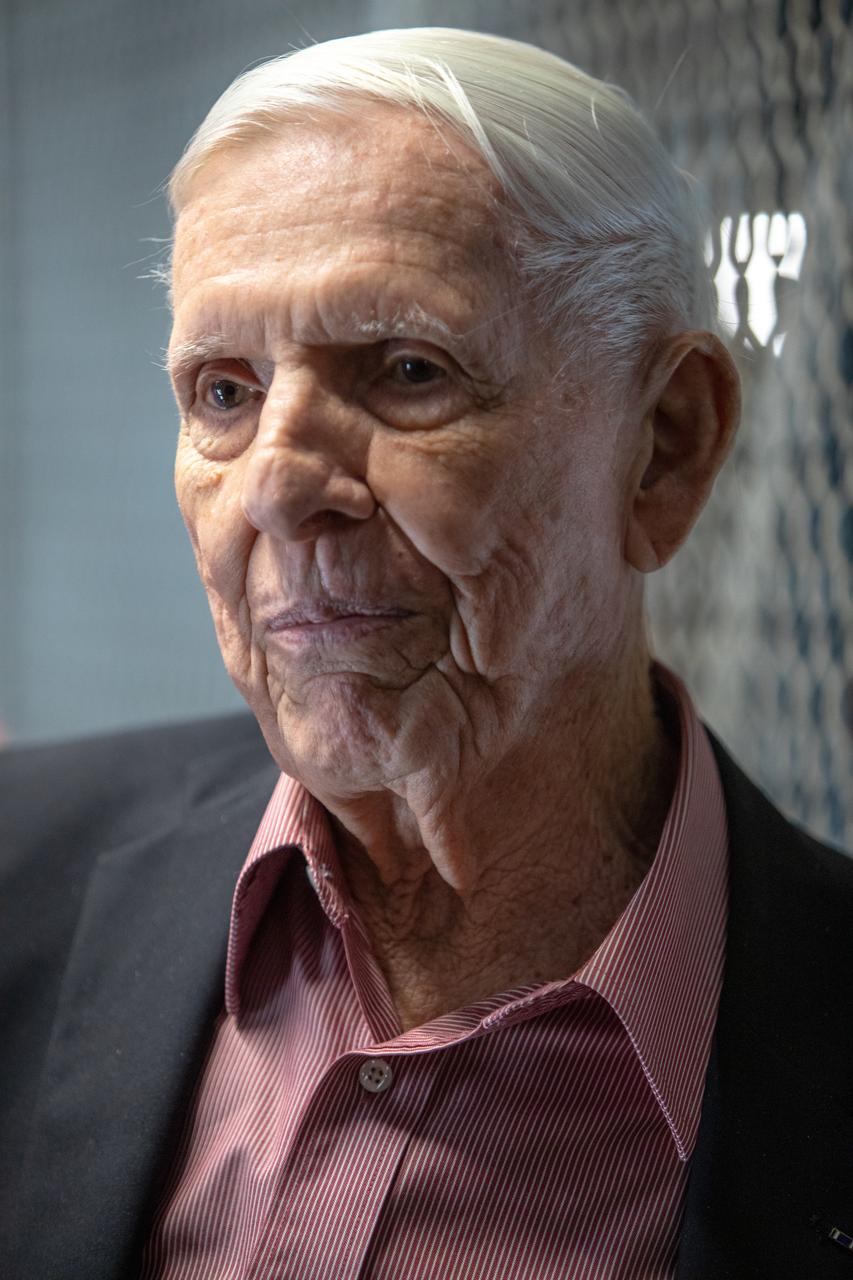
Phil Moyer, original project lead for the Vehicle Assembly Building (VAB), tours the Vehicle Assembly Building on Nov. 22, 2019 at NASA’s Kennedy Space Center in Florida. The VAB was recognized with the National Historic Civil Engineering Landmark award by the Florida Section American Society of Civil Engineers during a ceremony on Jan. 10, 2020. The VAB is the first building at Kennedy Space Center to earn this distinction. At the time of its completion, the 129-million-cubic-foot structure was the largest building in the world. Originally designed and built to accommodate the Saturn V/Apollo used in Project Apollo, the VAB was later modified for its role in the Space Shuttle Program.
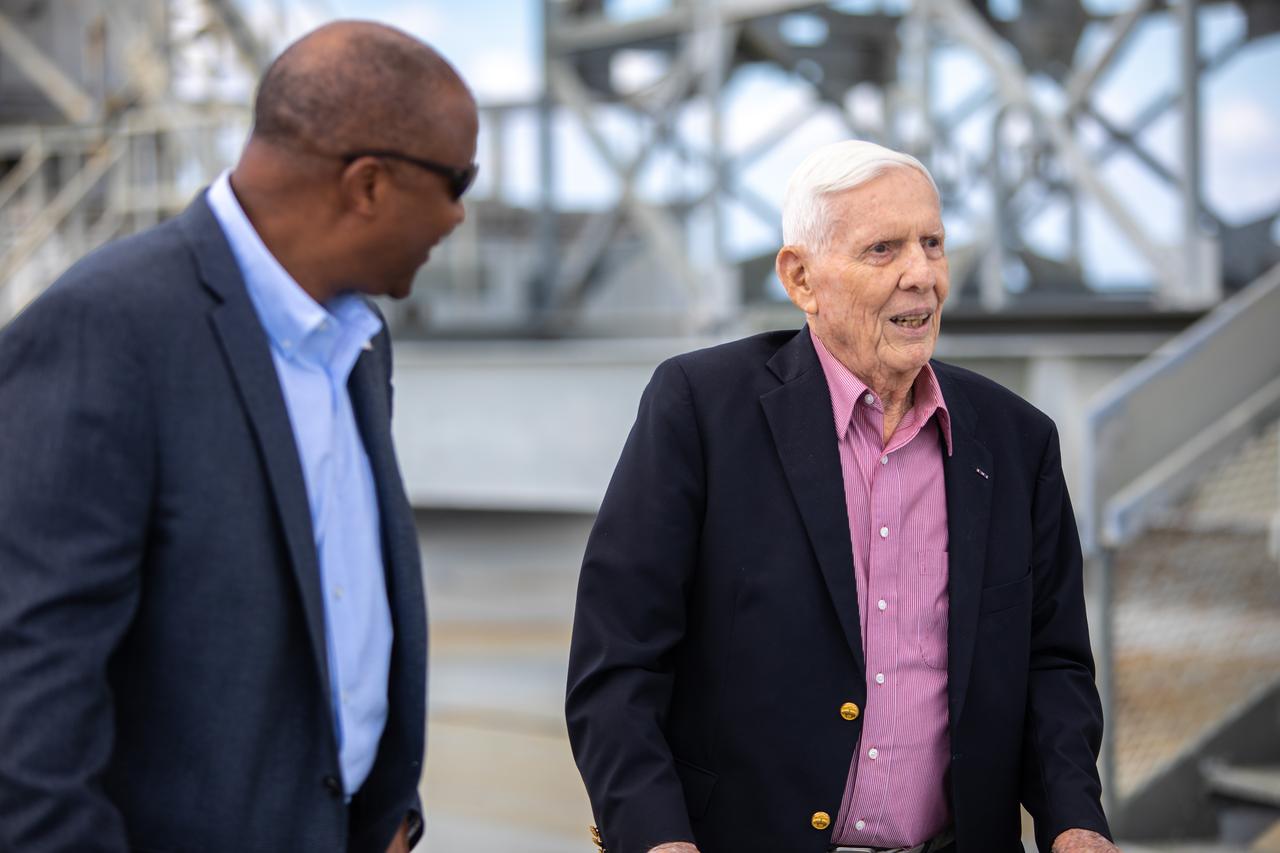
Phil Moyer, at right, original project lead for the Vehicle Assembly Building (VAB), tours the iconic facility on Nov. 22, 2019 at NASA’s Kennedy Space Center in Florida. At left is Kelvin Manning, Kennedy’s associate director, technical. The VAB was recognized with the National Historic Civil Engineering Landmark award by the Florida Section American Society of Civil Engineers during a ceremony on Jan. 10, 2020. The VAB is the first building at Kennedy Space Center to earn this distinction. At the time of its completion, the 129-million-cubic-foot structure was the largest building in the world. Originally designed and built to accommodate the Saturn V/Apollo used in Project Apollo, the VAB was later modified for its role in the Space Shuttle Program.
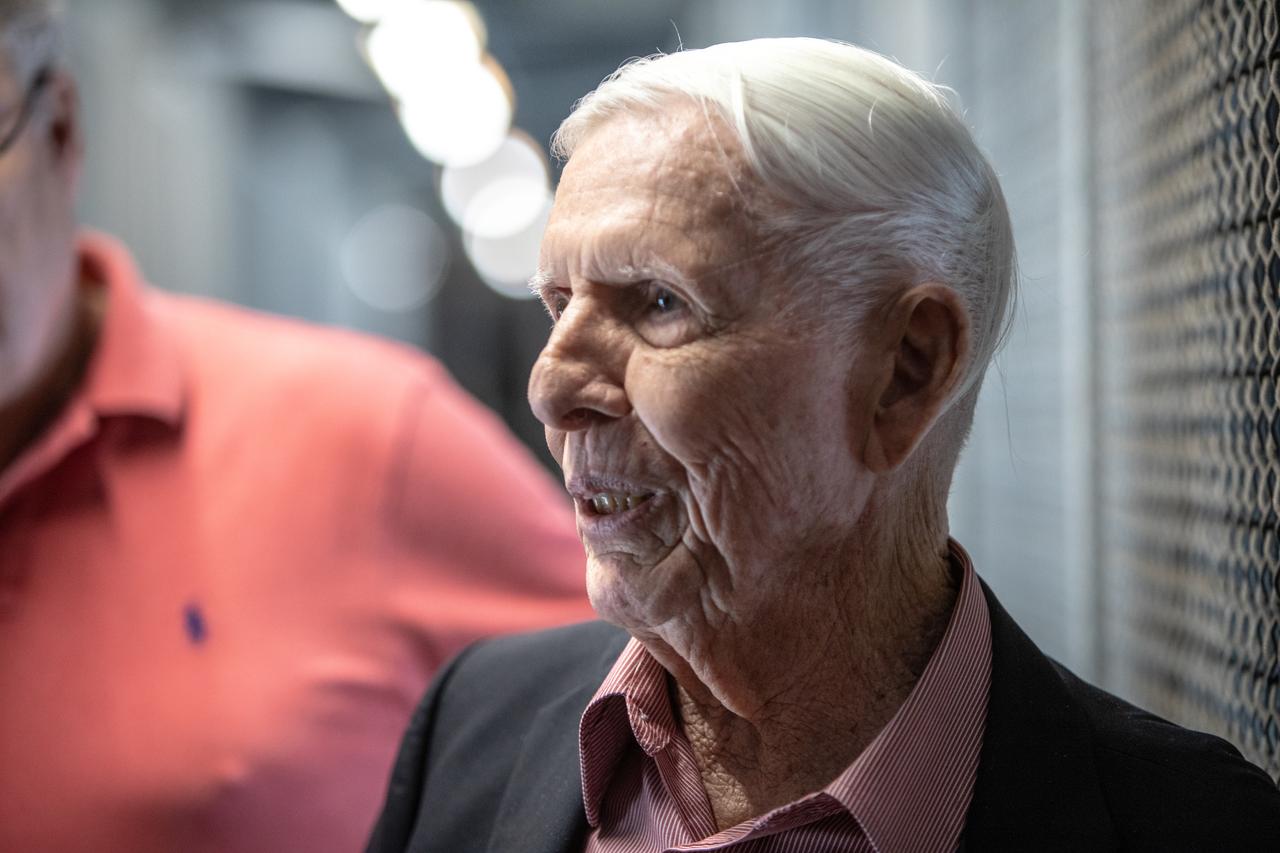
Phil Moyer, original project lead for the Vehicle Assembly Building (VAB), tours the Vehicle Assembly Building on Nov. 22, 2019 at NASA’s Kennedy Space Center in Florida. The VAB was recognized with the National Historic Civil Engineering Landmark award by the Florida Section American Society of Civil Engineers during a ceremony on Jan. 10, 2020. The VAB is the first building at Kennedy Space Center to earn this distinction. At the time of its completion, the 129-million-cubic-foot structure was the largest building in the world. Originally designed and built to accommodate the Saturn V/Apollo used in Project Apollo, the VAB was later modified for its role in the Space Shuttle Program.
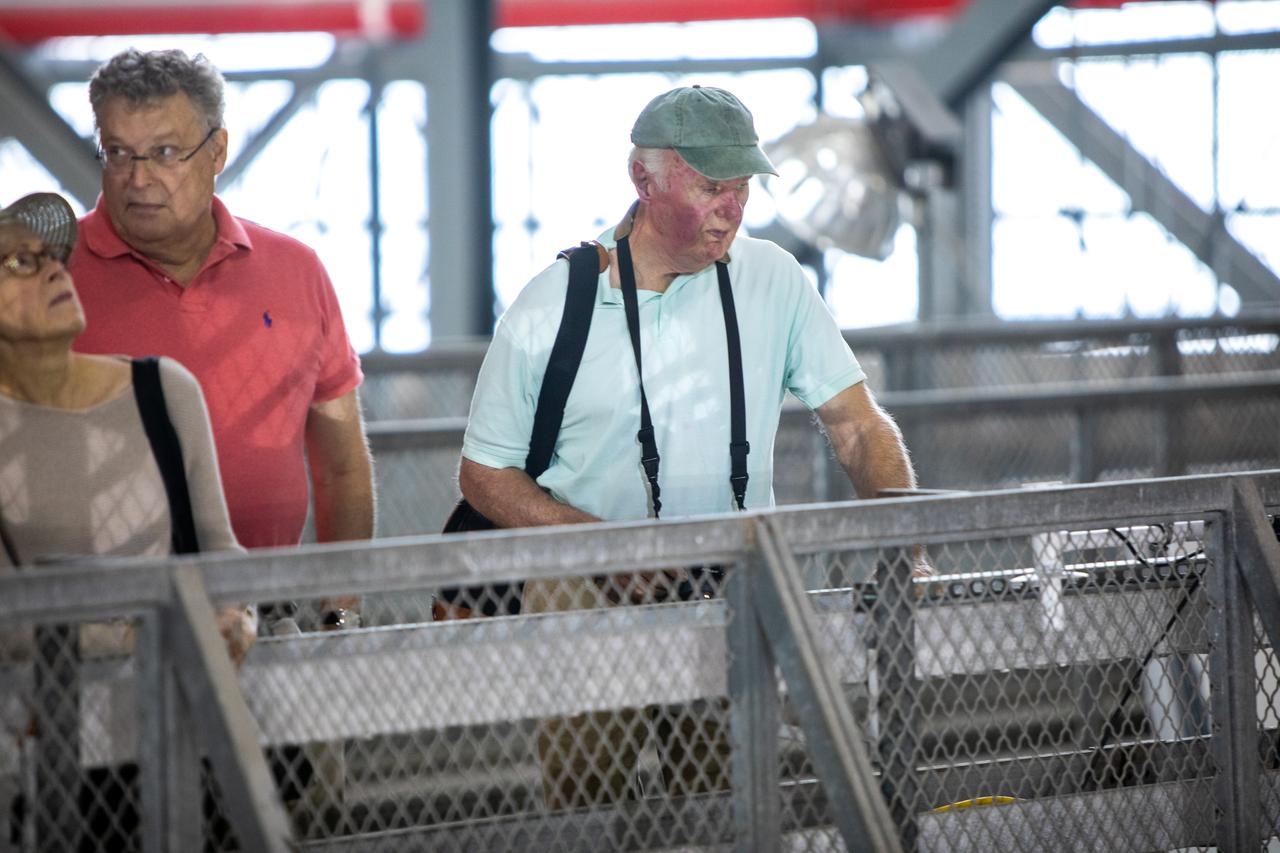
Dick Bergmann, at right, original lead designer for the Vehicle Assembly Building, tours the iconic facility on Nov. 22, 2019 at NASA’s Kennedy Space Center in Florida. Vehicle Assembly Building with the National Historic Civil Engineering Landmark award. The Florida Section American Society of Civil Engineers bestowed its National Historic Civil Engineering Landmark award during a ceremony on Jan. 10, 2020. The VAB is the first building at Kennedy Space Center to earn this distinction. At the time of its completion, the 129-million-cubic-foot structure was the largest building in the world. Originally designed and built to accommodate the Saturn V/Apollo used in Project Apollo, the VAB was later modified for its role in the Space Shuttle Program.
Phil Moyer, original project lead for the Vehicle Assembly Building (VAB), tours the Vehicle Assembly Building on Nov. 22, 2019 at NASA’s Kennedy Space Center in Florida. The VAB was recognized with the National Historic Civil Engineering Landmark award by the Florida Section American Society of Civil Engineers during a ceremony on Jan. 10, 2020. The VAB is the first building at Kennedy Space Center to earn this distinction. At the time of its completion, the 129-million-cubic-foot structure was the largest building in the world. Originally designed and built to accommodate the Saturn V/Apollo used in Project Apollo, the VAB was later modified for its role in the Space Shuttle Program.
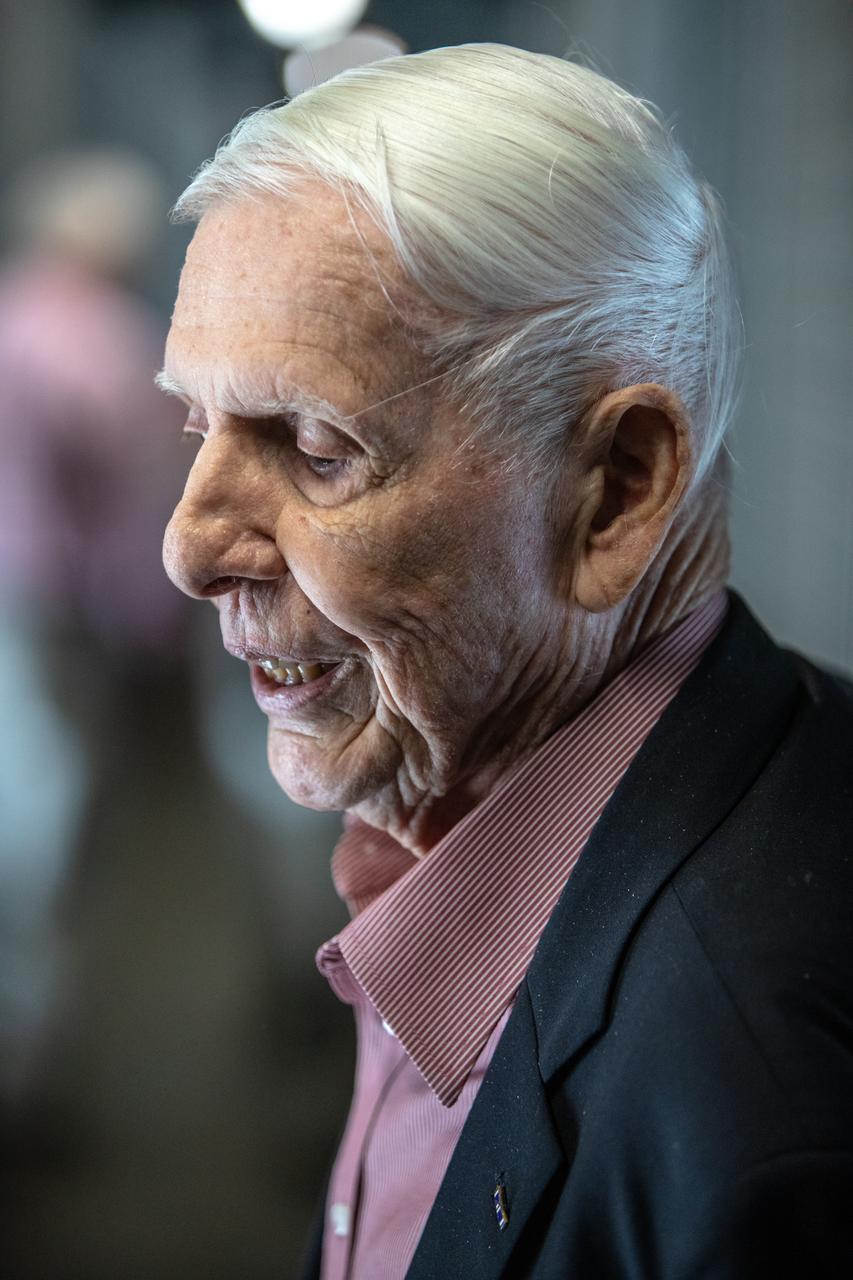
Phil Moyer, original project lead for the Vehicle Assembly Building (VAB), tours the Vehicle Assembly Building on Nov. 22, 2019 at NASA’s Kennedy Space Center in Florida. The VAB was recognized with the National Historic Civil Engineering Landmark award by the Florida Section American Society of Civil Engineers during a ceremony on Jan. 10, 2020. The VAB is the first building at Kennedy Space Center to earn this distinction. At the time of its completion, the 129-million-cubic-foot structure was the largest building in the world. Originally designed and built to accommodate the Saturn V/Apollo used in Project Apollo, the VAB was later modified for its role in the Space Shuttle Program.
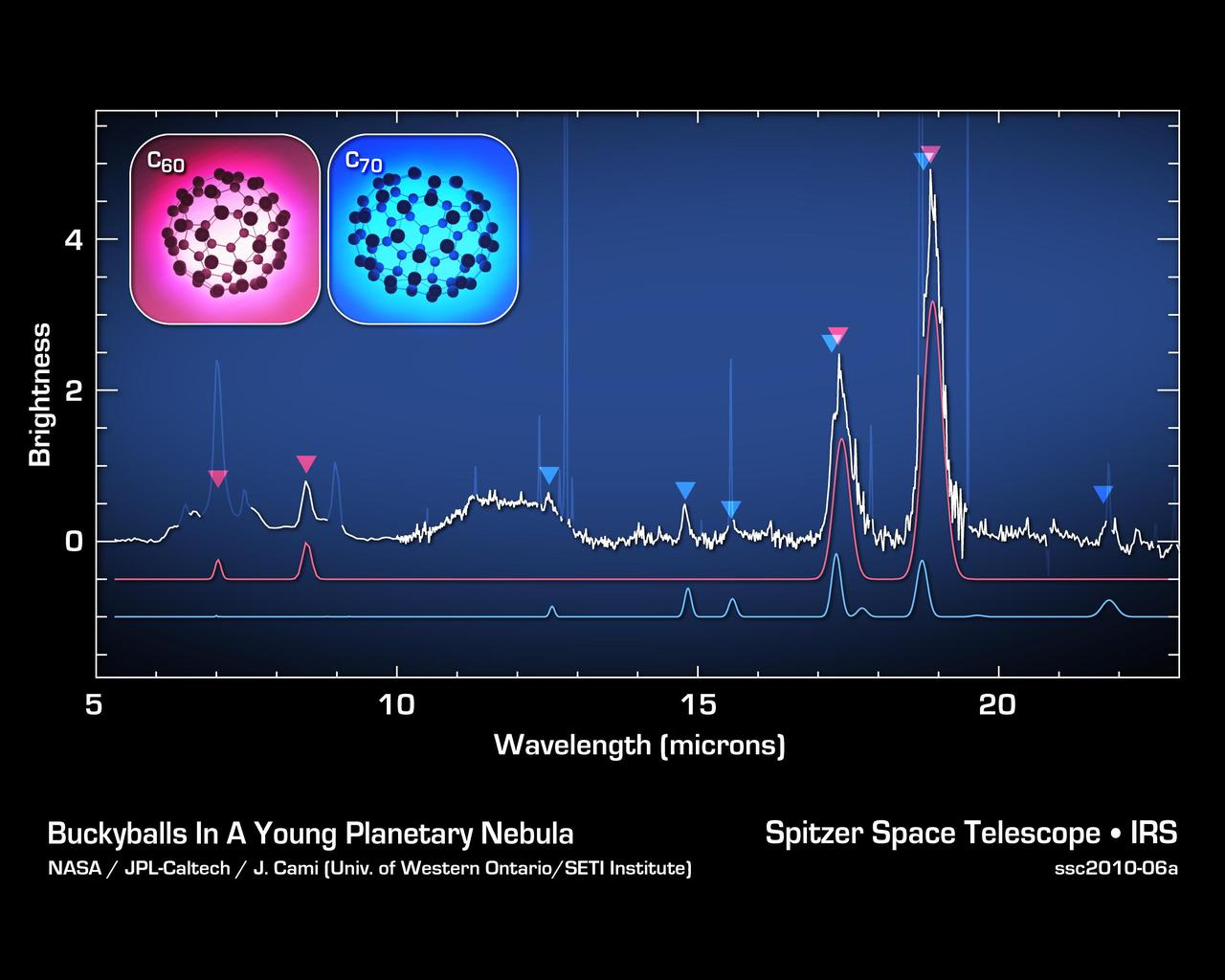
These data from NASA Spitzer Space Telescope show the signatures of buckyballs in space. Buckyballs, also called C60 or buckministerfullerenes, after architect Buckminister Fuller geodesic domes.
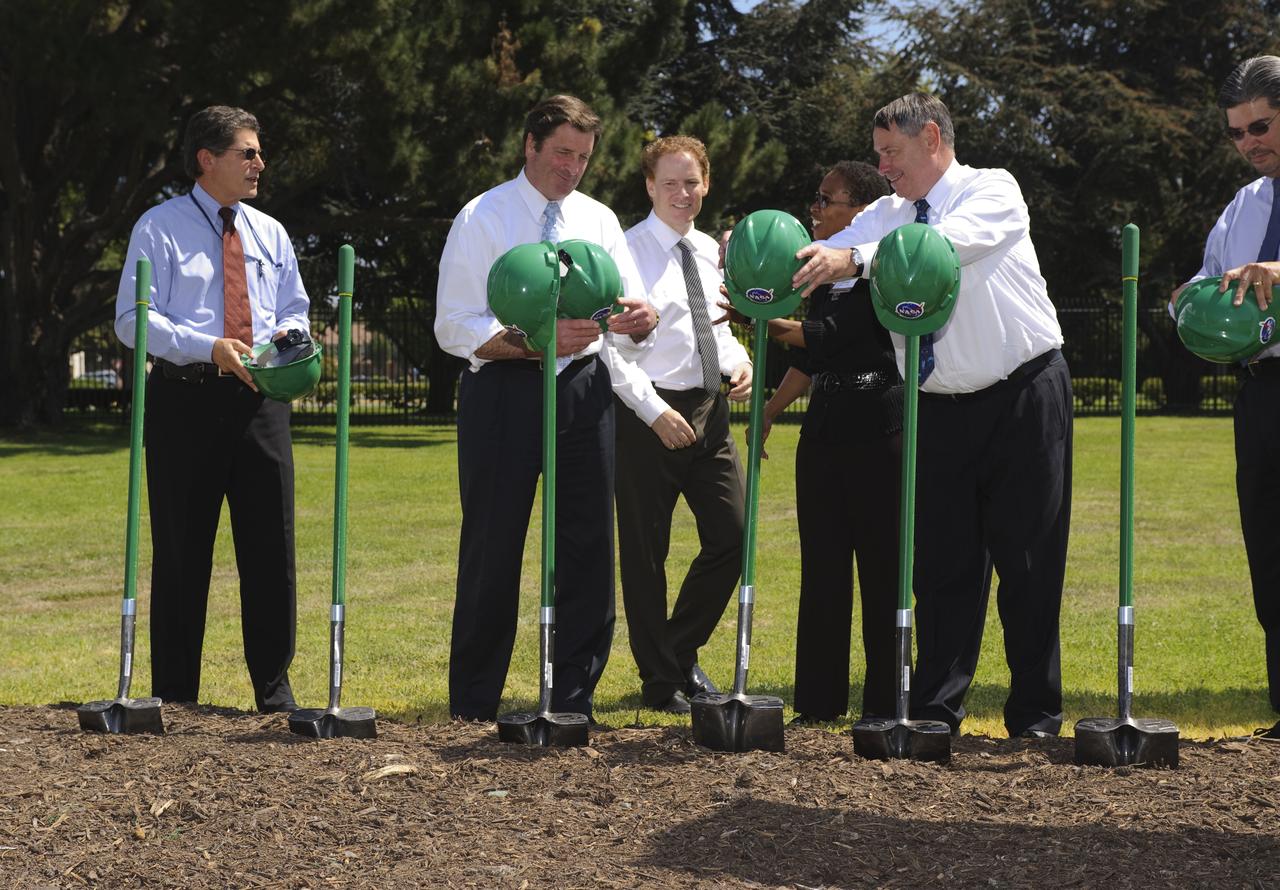
Sustainability Base Ground Breaking ceremony with Steve Zornetzer, Associate Director Ames Research Center, Lt. Governor John Garamendi of California, Kenvin Burke, Jane Grant, Architect AECOM, Pete Worden, Director Ames Research Center, Swinerton Builders Rep. ready to turn the first shovel.
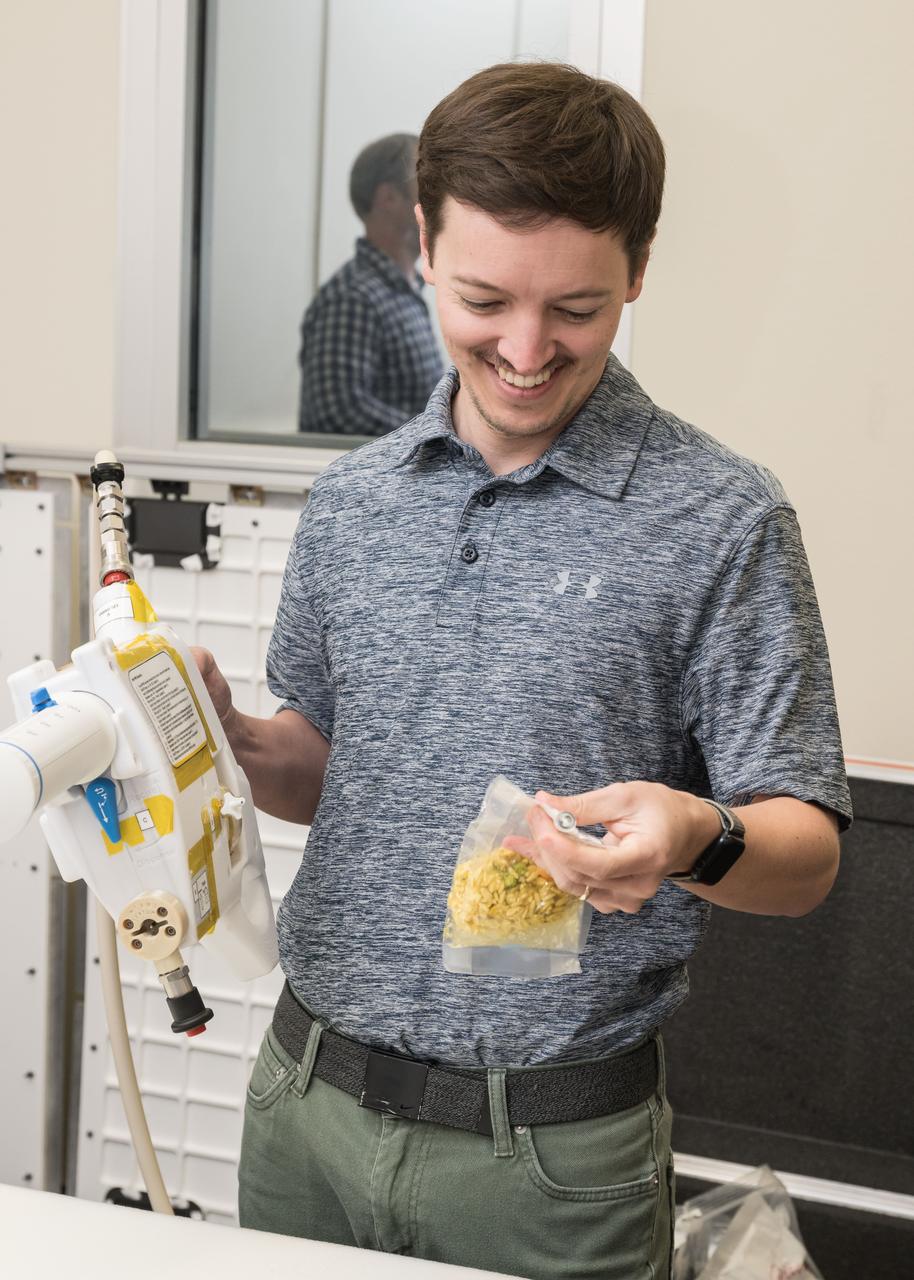
jsc2024e040722 -- Brett Montoya, a lead space architect in the Center for Design and Space Architecture at Johnson Space Center, rehydrates a package of food using the Mini Potable Water Dispenser during a protype testing session at Johnson's Space Center. Photo Credit: NASA/David DeHoyos
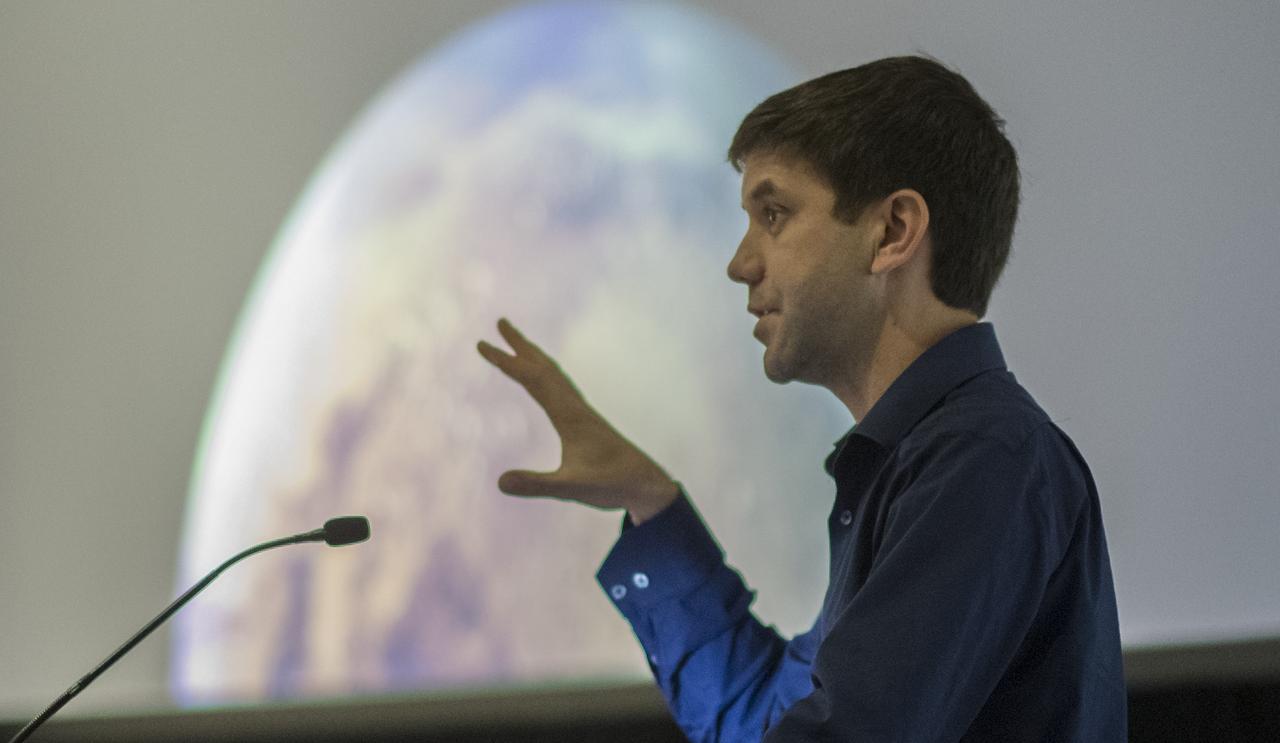
Andrew Klesh, a Mission Architect at NASA’s Jet Propulsion Laboratory is seen during a keynote titled “MarCO: Flight Results from the First Interplanetary CubeSat Mission” at the 70th International Astronautical Congress, Friday, Oct. 25, 2019, at the Walter E. Washington Convention Center in Washington. Photo Credit: (NASA/Joel Kowsky)
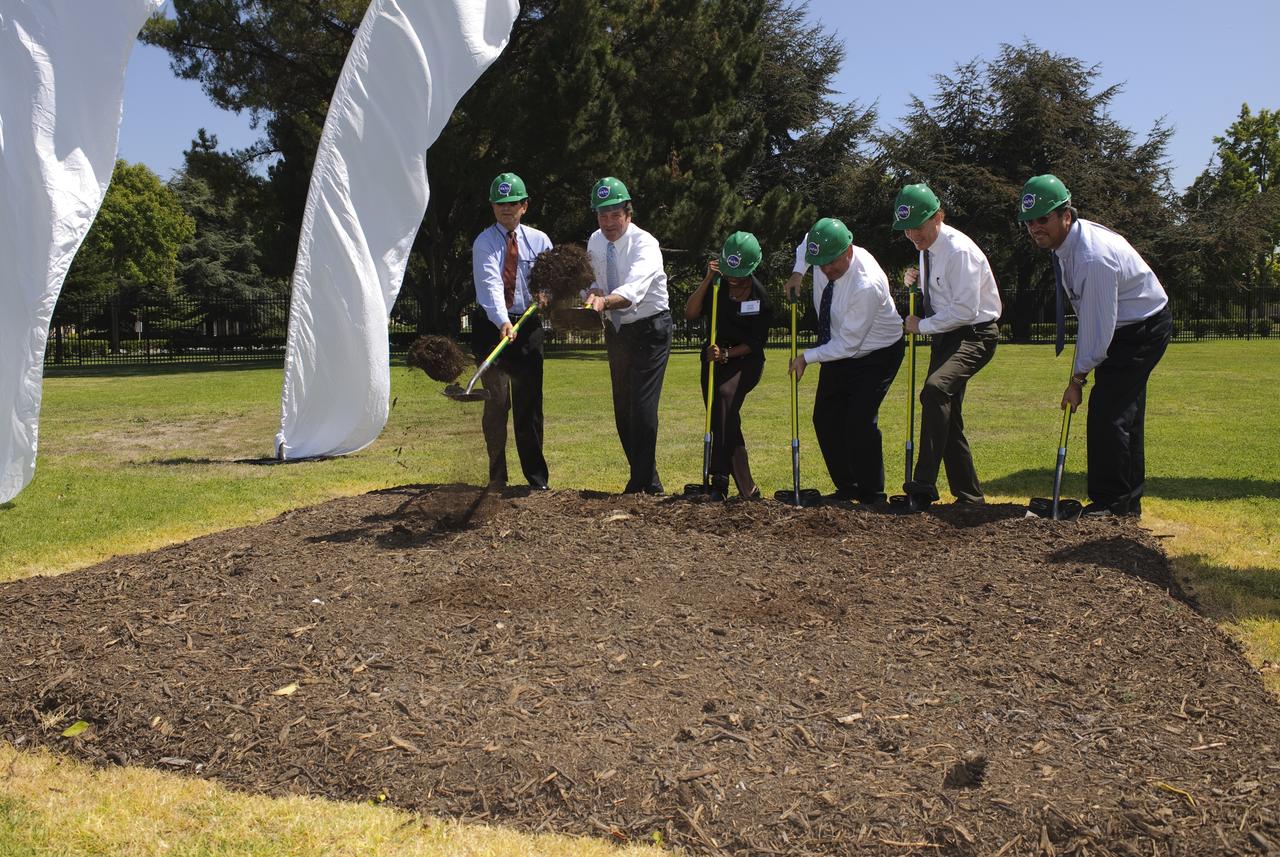
Sustainability Base Ground Breaking ceremony with Steve Zornetzer, Associate Director Ames Research Center, Lt. Governor John Garamendi of California, Jane Grant, Architect AECOM, Pete Worden, Director Ames Research Center, Kenvin Burke, Swinerton Builders Rep. ready to turn the first shovel.
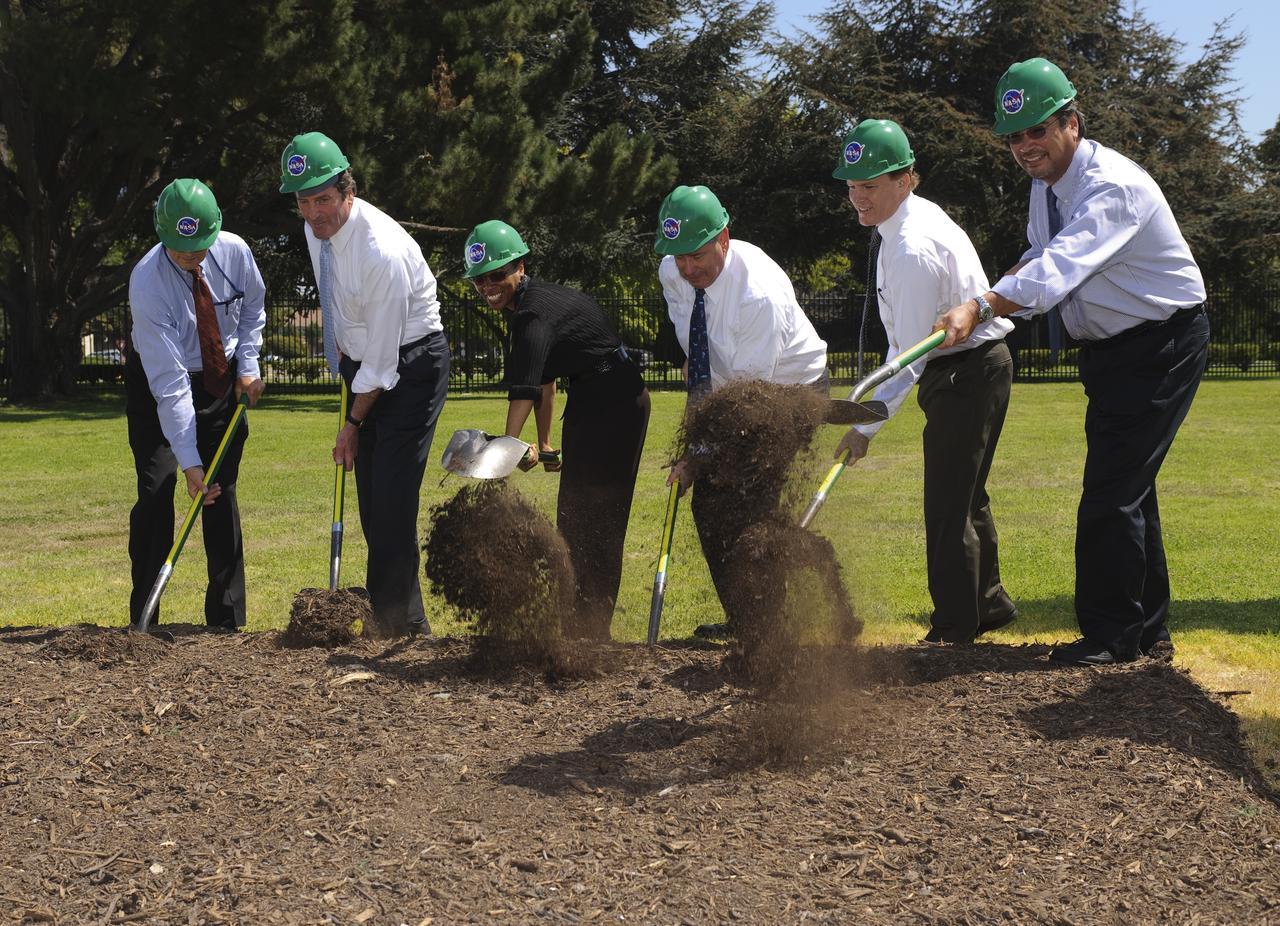
Sustainability Base Ground Breaking ceremony with Steve Zornetzer, Associate Director Ames Research Center, Lt. Governor John Garamendi of California, Jane Grant, Architect AECOM, Pete Worden, Director Ames Research Center, Kenvin Burke, Swinerton Builders Rep. ready to turn the first shovel.
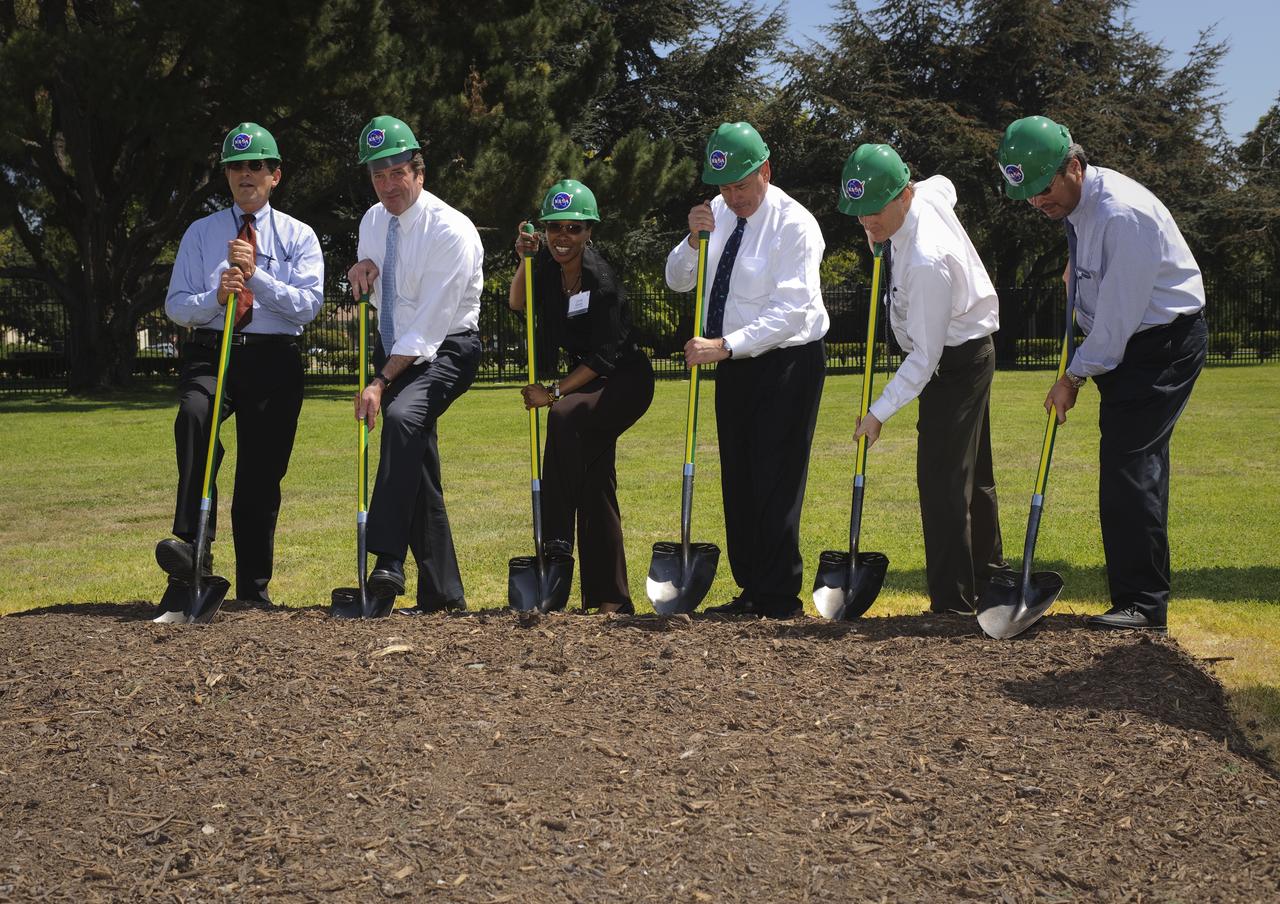
Sustainability Base Ground Breaking ceremony with Steve Zornetzer, Associate Director Ames Research Center, Lt. Governor John Garamendi of California, Jane Grant, Architect AECOM, Pete Worden, Director Ames Research Center, Kenvin Burke, Swinerton Builders Rep. ready to turn the first shovel.
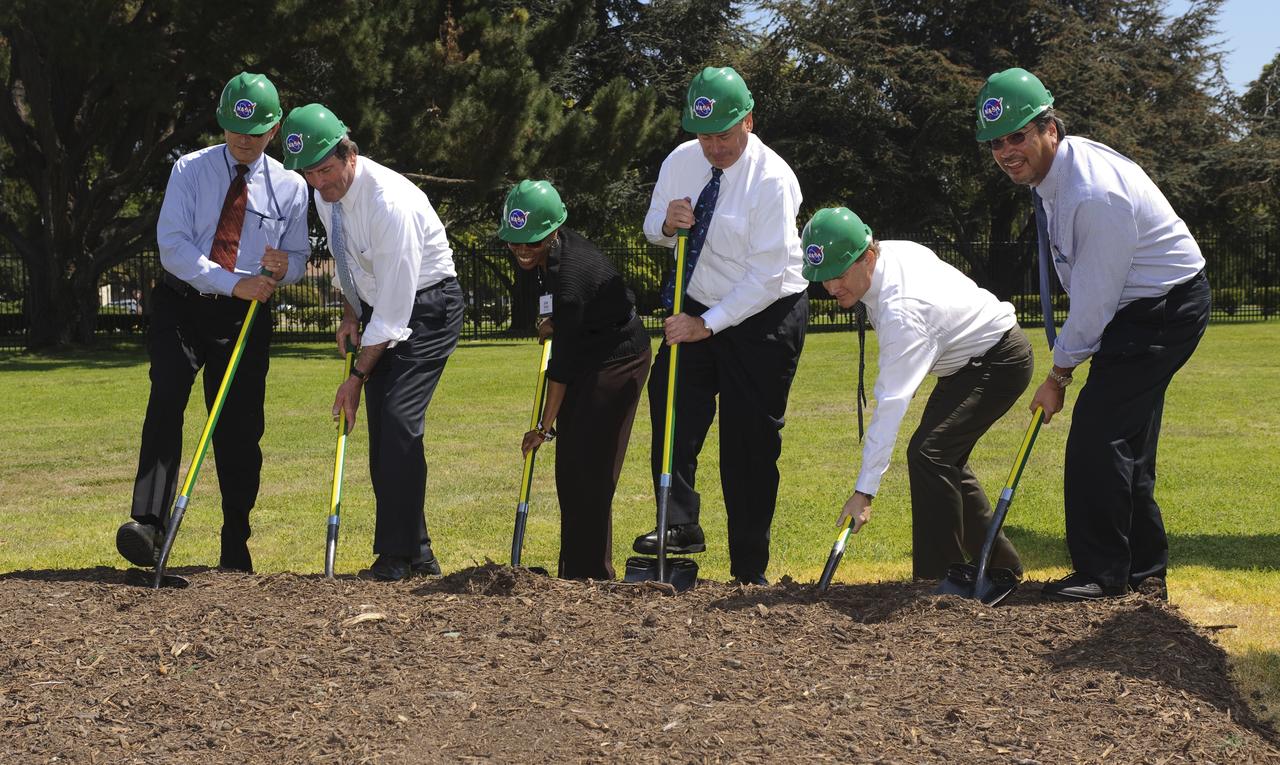
Sustainability Base Ground Breaking ceremony with Steve Zornetzer, Associate Director Ames Research Center, Lt. Governor John Garamendi of California, Jane Grant, Architect AECOM, Pete Worden, Director Ames Research Center, Kenvin Burke, Swinerton Builders Rep. ready to turn the first shovel.
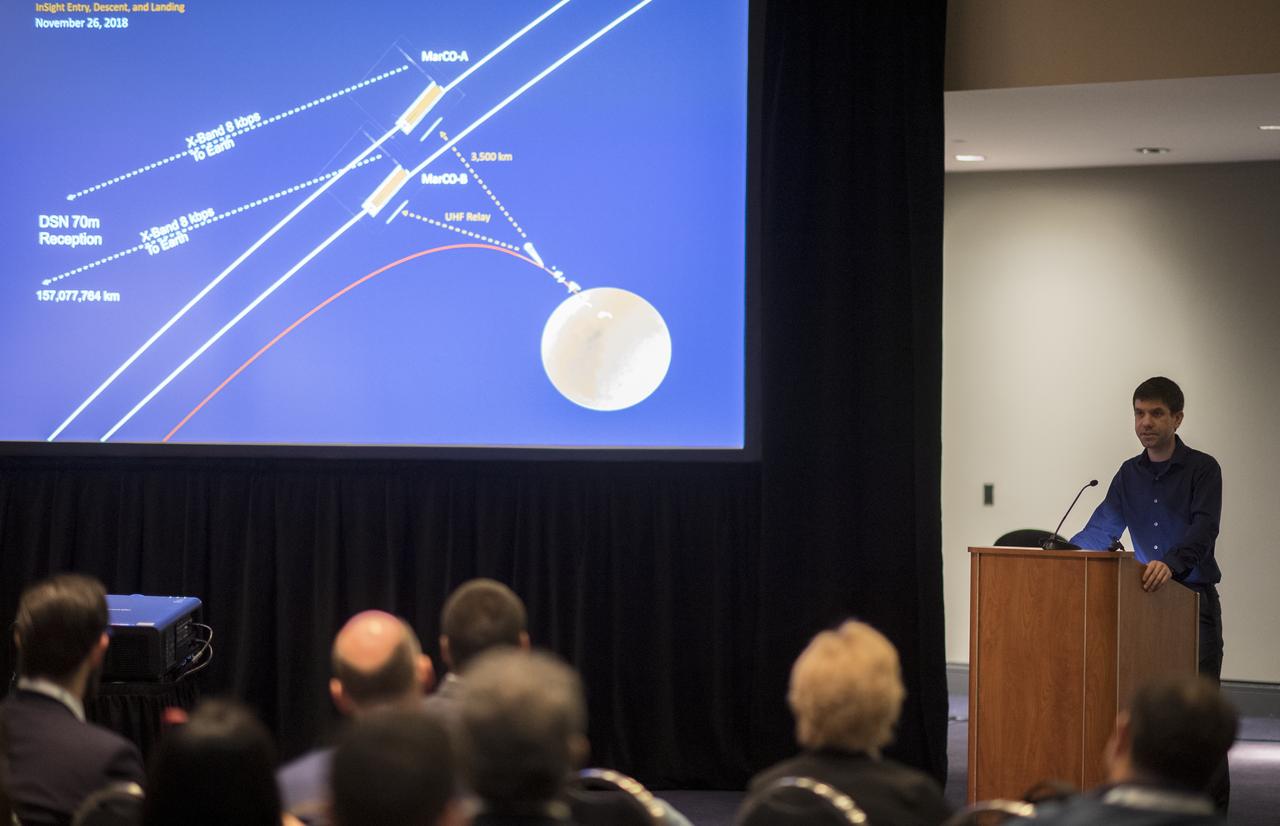
Andrew Klesh, a Mission Architect at NASA’s Jet Propulsion Laboratory is seen during a keynote titled “MarCO: Flight Results from the First Interplanetary CubeSat Mission” at the 70th International Astronautical Congress, Friday, Oct. 25, 2019, at the Walter E. Washington Convention Center in Washington. Photo Credit: (NASA/Joel Kowsky)
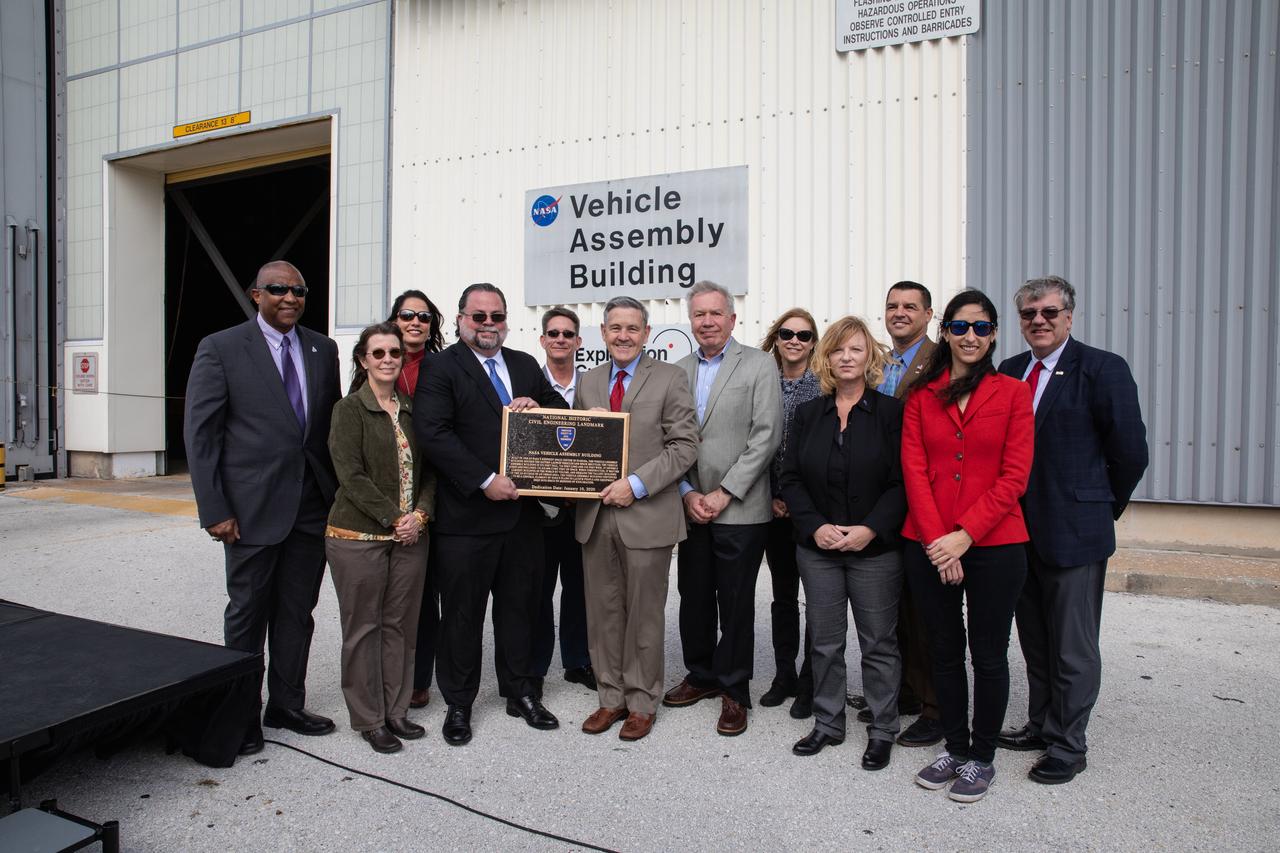
Kennedy Space Center Director Bob Cabana, center, accepts the National Historic Civil Engineering Landmark award from the Florida Section American Society of Civil Engineers (ASCE) for the Vehicle Assembly Building during a ceremony in front of the iconic facility on Jan. 10, 2020. Holding the award with Cabana is Peter Moore, ASCE Region 5 director. At far left is Kelvin Manning, associate director, technical. The ASCE nominated the historic building and bestowed the award. The VAB is the first building at Kennedy Space Center to earn this distinction. At the time of its completion, the 129-million-cubic-foot structure was the largest building in the world. Originally designed and built to accommodate the Saturn V/Apollo used in Project Apollo, the VAB was later modified for its role in the Space Shuttle Program.
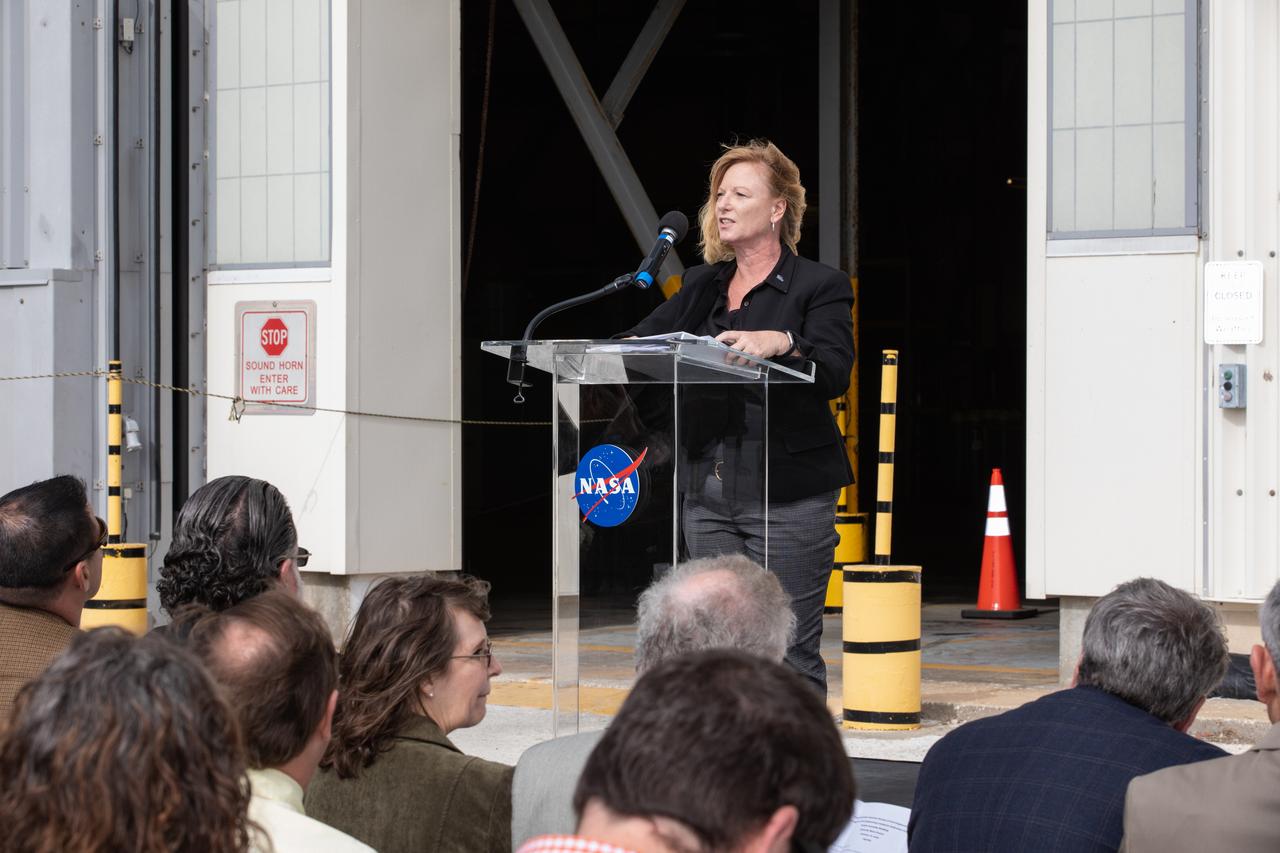
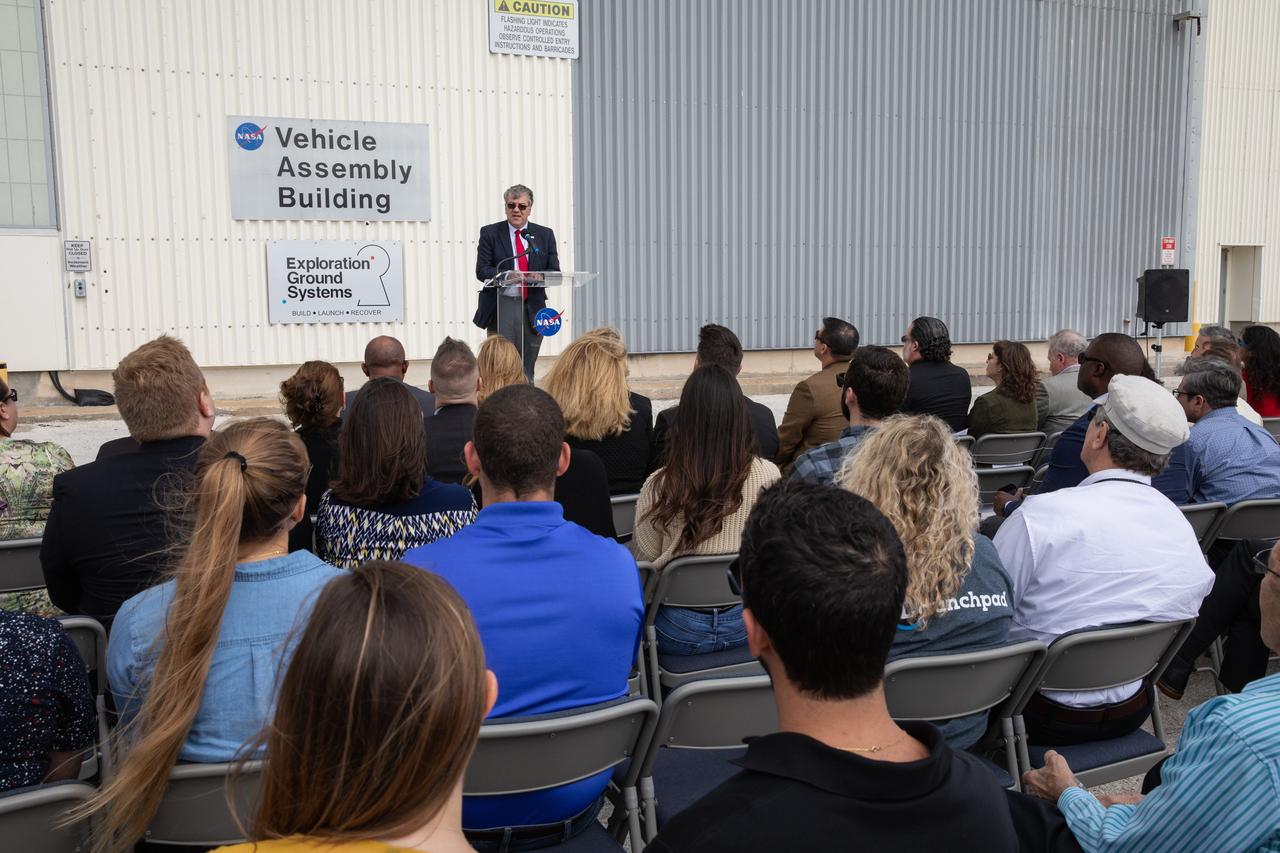
Kathleen Ruvarac, History and Heritage Committee chairperson with the American Society of Civil Engineers (ASCE), speaks to attendees during a ceremony on Jan. 10, 2020, to recognize the Vehicle Assembly Building with the National Historic Civil Engineering Landmark award. The Florida Section ASCE nominated the historic building and bestowed the award. The VAB is the first building at Kennedy Space Center to earn this distinction. At the time of its completion, the 129-million-cubic-foot structure was the largest building in the world. Originally designed and built to accommodate the Saturn V/Apollo used in Project Apollo, the VAB was later modified for its role in the Space Shuttle Program.
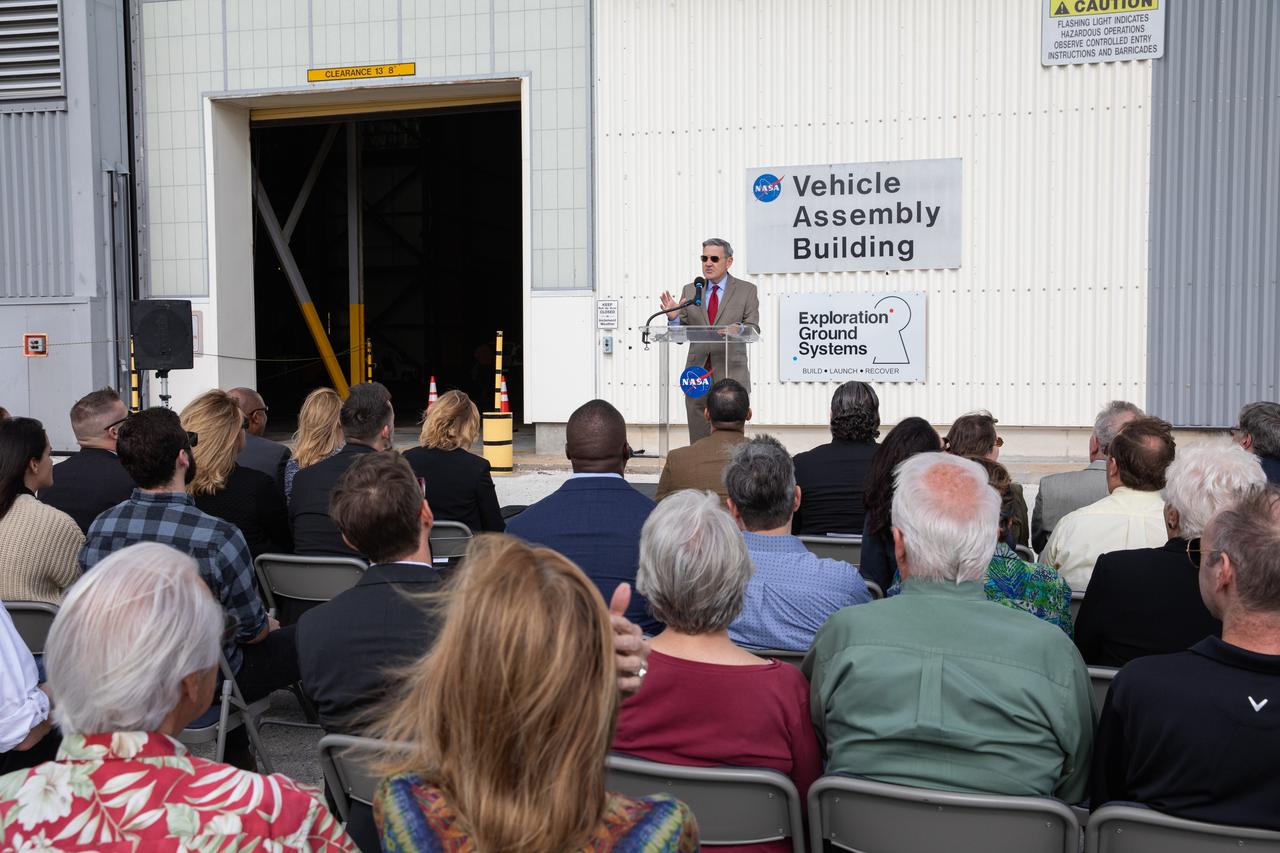
Kennedy Space Center Director Bob Cabana, speaks to attendees during a ceremony on Jan. 10, 2020, to recognize the Vehicle Assembly Building with the National Historic Civil Engineering Landmark award. The Florida Section American Society of Civil Engineers nominated the historic building and bestowed the award. The VAB is the first building at Kennedy Space Center to earn this distinction. At the time of its completion, the 129-million-cubic-foot structure was the largest building in the world. Originally designed and built to accommodate the Saturn V/Apollo used in Project Apollo, the VAB was later modified for its role in the Space Shuttle Program.
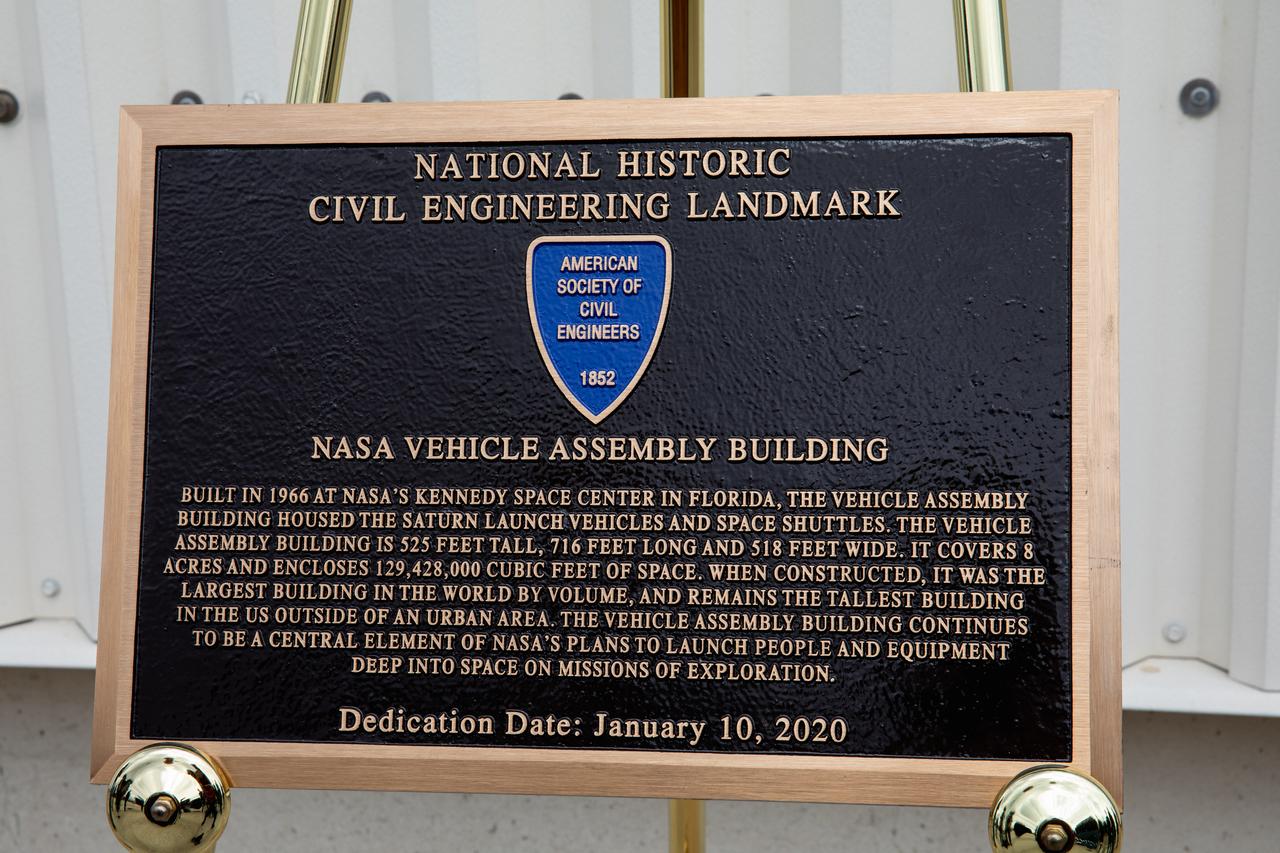
The Florida Section of the American Society of Civil Engineers bestowed the ASCE National Historic Civil Engineering Landmark award to Kennedy Space Center’s iconic Vehicle Assembly Building during a ceremony on Jan. 10, 2020. The VAB is the first building at Kennedy Space Center to earn this distinction. At the time of its completion, the 129-million-cubic-foot structure was the largest building in the world. Originally designed and built to accommodate the Saturn V/Apollo used in Project Apollo, the VAB was later modified for its role in the Space Shuttle Program.
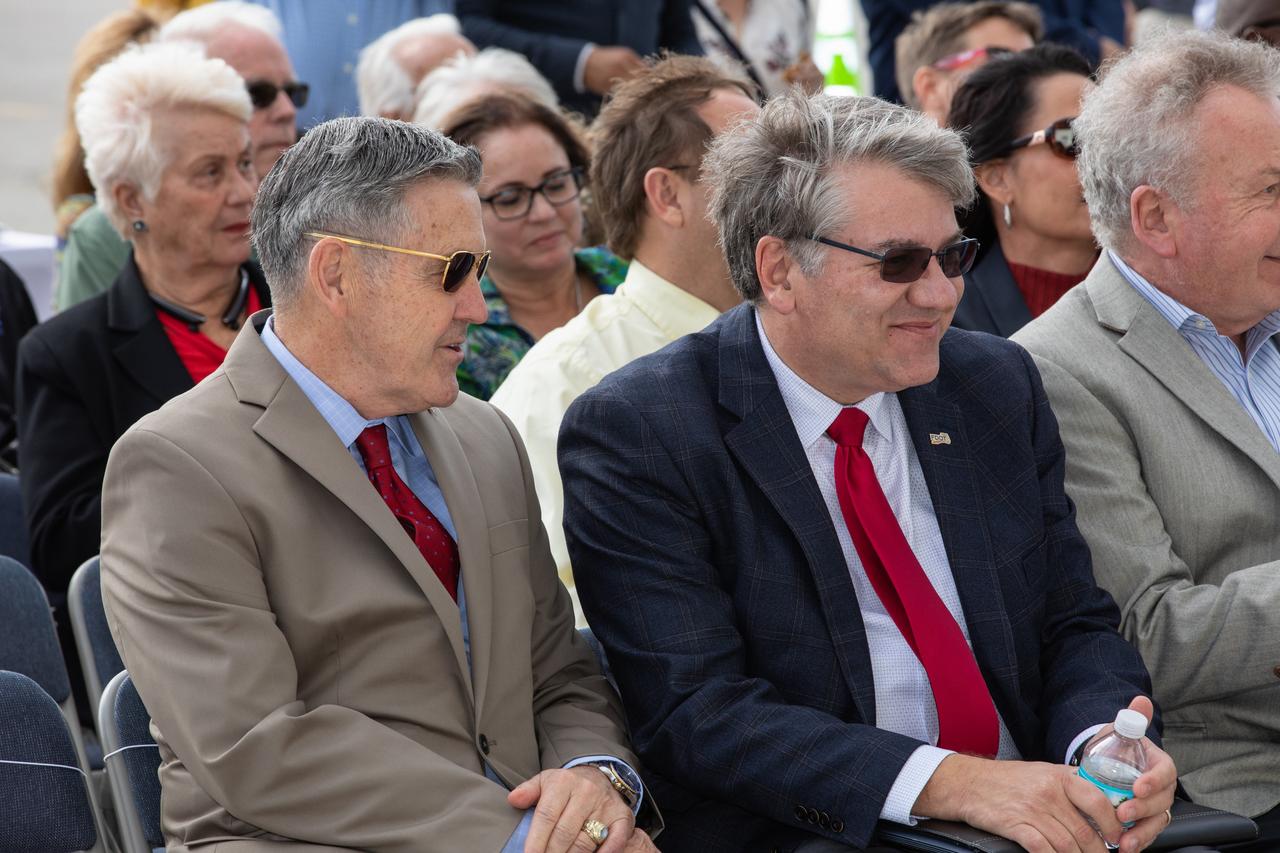
Kennedy Space Center Director Bob Cabana, left, talks with Florida Department of Transportation Secretary Kevin Thibault during a ceremony on Jan. 10, 2020, to recognize the Vehicle Assembly Building with the National Historic Civil Engineering Landmark award. The Florida Section American Society of Civil Engineers nominated the historic building and bestowed the award. The VAB is the first building at Kennedy Space Center to earn this distinction. At the time of its completion, the 129-million-cubic-foot structure was the largest building in the world. Originally designed and built to accommodate the Saturn V/Apollo used in Project Apollo, the VAB was later modified for its role in the Space Shuttle Program.
Florida Department of Transportation Secretary Kevin Thibault speaks to attendees during a ceremony on Jan. 10, 2020, to recognize the Vehicle Assembly Building with the National Historic Civil Engineering Landmark award. The Florida Section American Society of Civil Engineers nominated the historic building and bestowed the award. The VAB is the first building at Kennedy Space Center to earn this distinction. At the time of its completion, the 129-million-cubic-foot structure was the largest building in the world. Originally designed and built to accommodate the Saturn V/Apollo used in Project Apollo, the VAB was later modified for its role in the Space Shuttle Program.
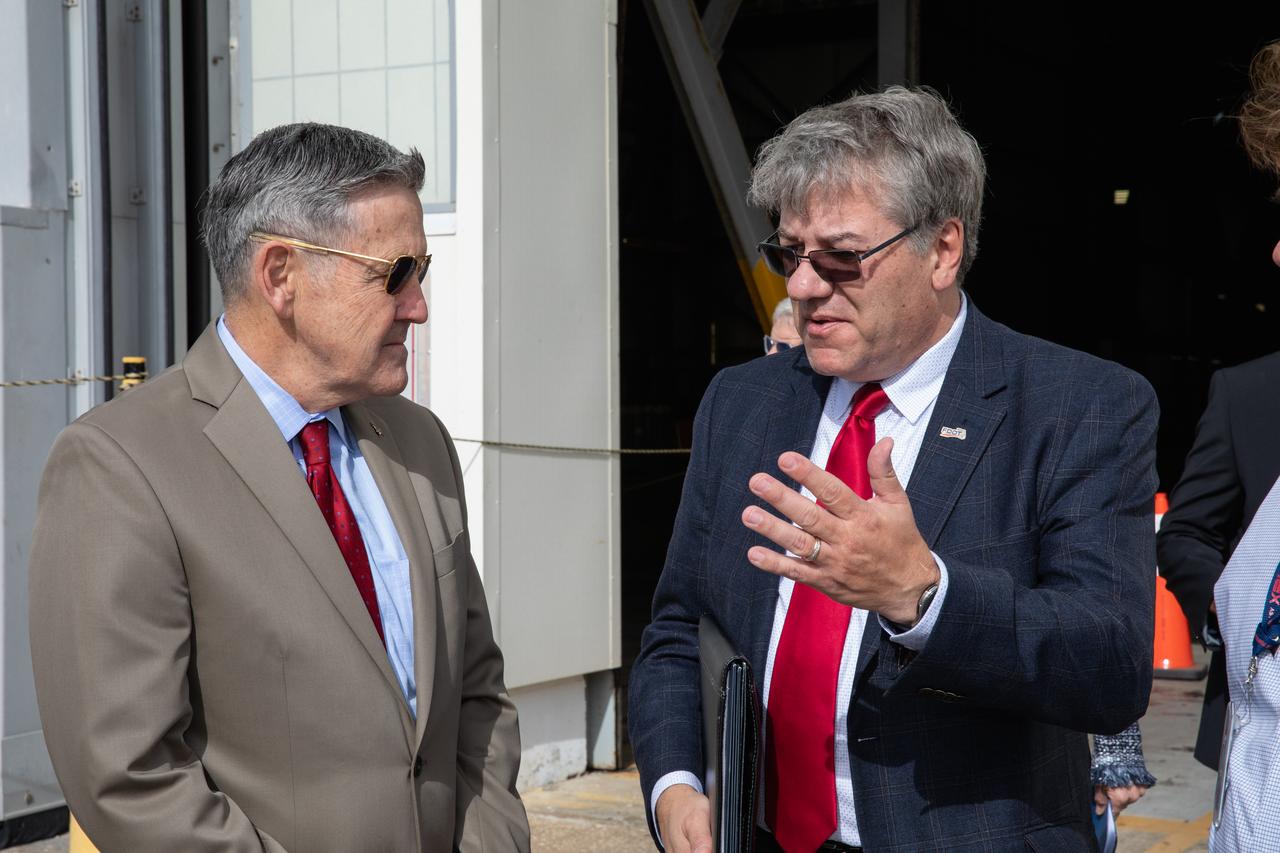
Kennedy Space Center Director Bob Cabana, left, talks with Florida Department of Transportation Secretary Kevin Thibault during a ceremony on Jan. 10, 2020, to recognize the Vehicle Assembly Building with the National Historic Civil Engineering Landmark award. The Florida Section American Society of Civil Engineers nominated the historic building and bestowed the award. The VAB is the first building at Kennedy Space Center to earn this distinction. At the time of its completion, the 129-million-cubic-foot structure was the largest building in the world. Originally designed and built to accommodate the Saturn V/Apollo used in Project Apollo, the VAB was later modified for its role in the Space Shuttle Program.
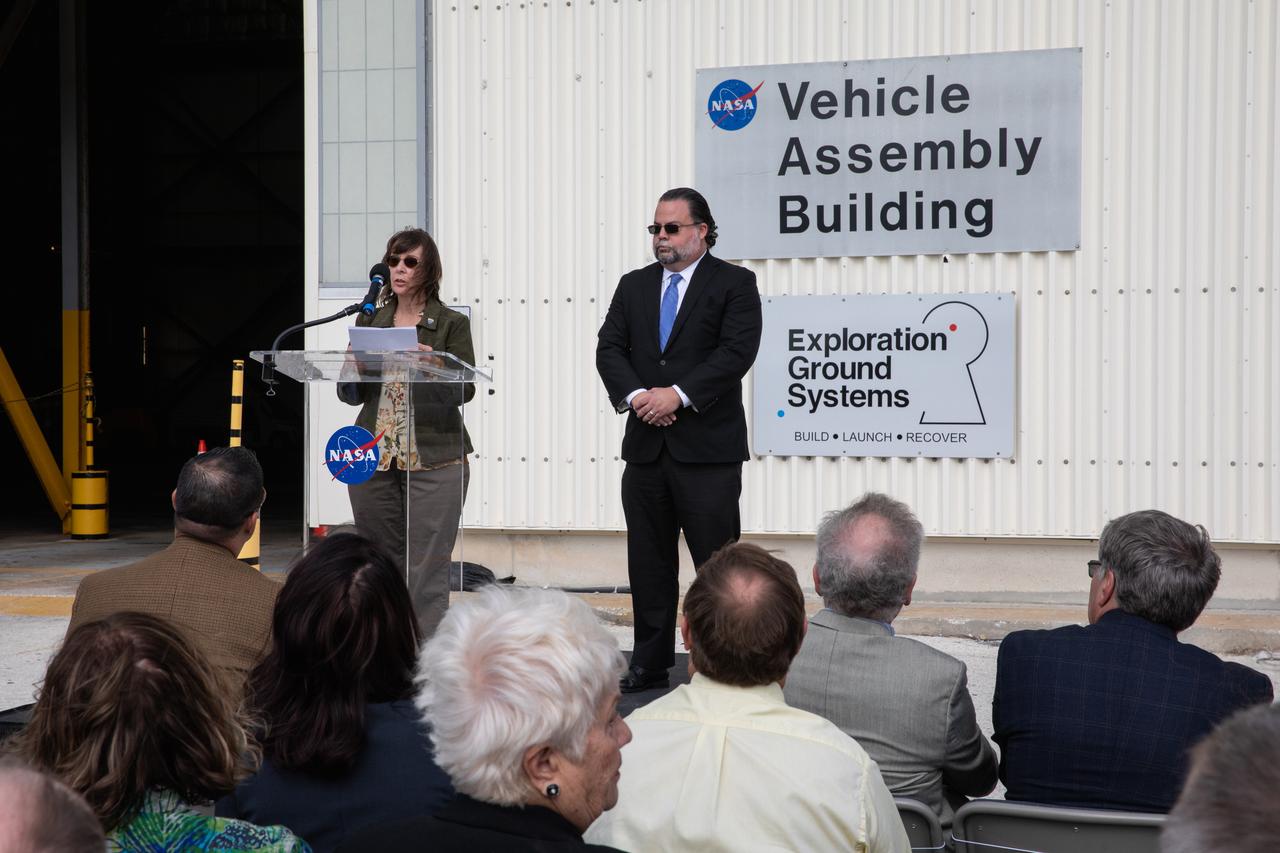
Carol Stevens, History and Heritage Committee member with the American Society of Civil Engineers (ASCE), speaks to attendees during a ceremony on Jan. 10, 2020, to recognize the Vehicle Assembly Building with the National Historic Civil Engineering Landmark award. At right is Peter Moore, ASCE Region 5 director. The Florida Section ASCE nominated the historic building and bestowed the award. The VAB is the first building at Kennedy Space Center to earn this distinction. At the time of its completion, the 129-million-cubic-foot structure was the largest building in the world. Originally designed and built to accommodate the Saturn V/Apollo used in Project Apollo, the VAB was later modified for its role in the Space Shuttle Program.
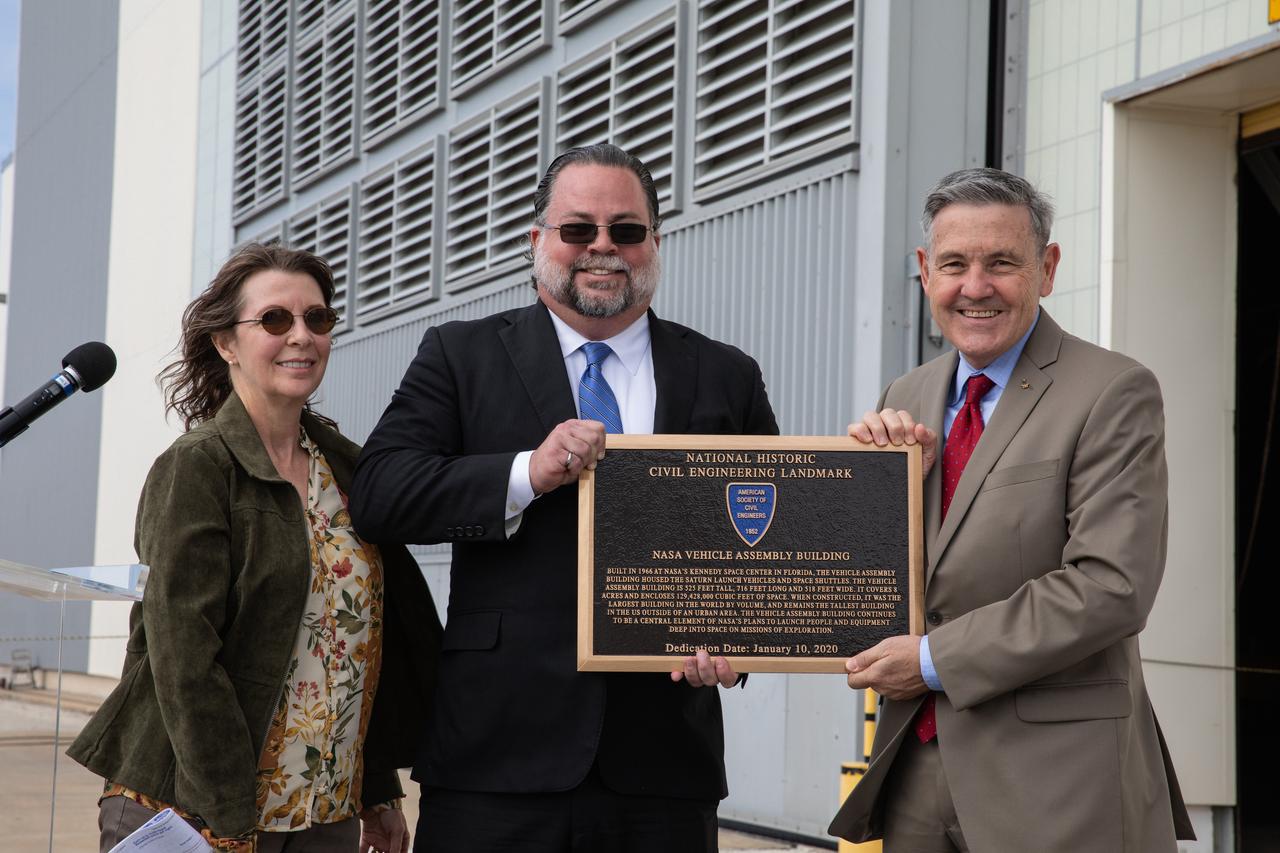
Kennedy Space Center Director Bob Cabana, far right, accepts the National Historic Civil Engineering Landmark award from the Florida Section American Society of Civil Engineers (ASCE) for the Vehicle Assembly Building during a ceremony in front of the iconic facility on Jan. 10, 2020. Next to Cabana, from left are Carol Stevens, ASCE Society of History and Heritage Committee member; and Peter Moore, ASCE Region 5 director. The ASCE nominated the historic building and bestowed the award. The VAB is the first building at Kennedy Space Center to earn this distinction. At the time of its completion, the 129-million-cubic-foot structure was the largest building in the world. Originally designed and built to accommodate the Saturn V/Apollo used in Project Apollo, the VAB was later modified for its role in the Space Shuttle Program.
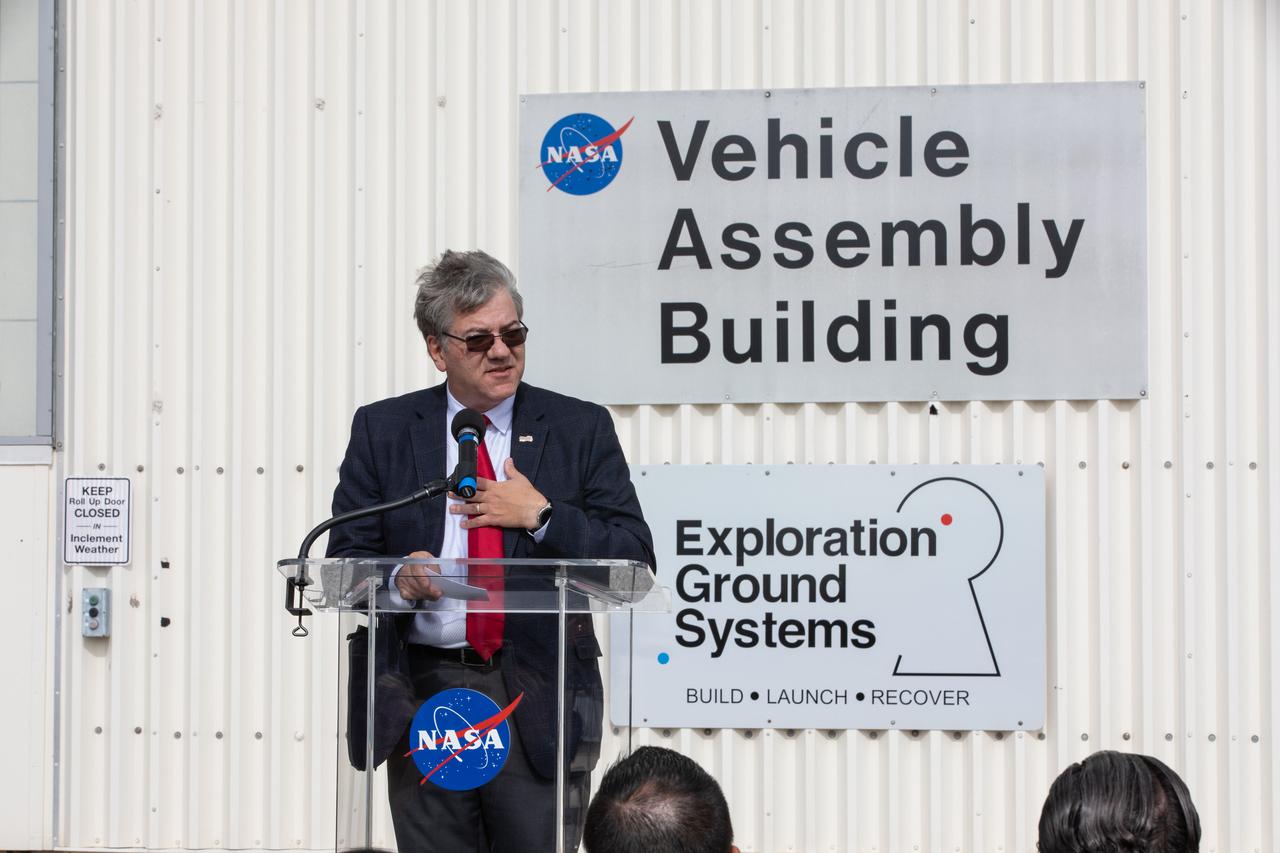
Florida Department of Transportation Secretary Kevin Thibault speaks to attendees during a ceremony on Jan. 10, 2020, to recognize the Vehicle Assembly Building with the National Historic Civil Engineering Landmark award. The Florida Section American Society of Civil Engineers nominated the historic building and bestowed the award. The VAB is the first building at Kennedy Space Center to earn this distinction. At the time of its completion, the 129-million-cubic-foot structure was the largest building in the world. Originally designed and built to accommodate the Saturn V/Apollo used in Project Apollo, the VAB was later modified for its role in the Space Shuttle Program.
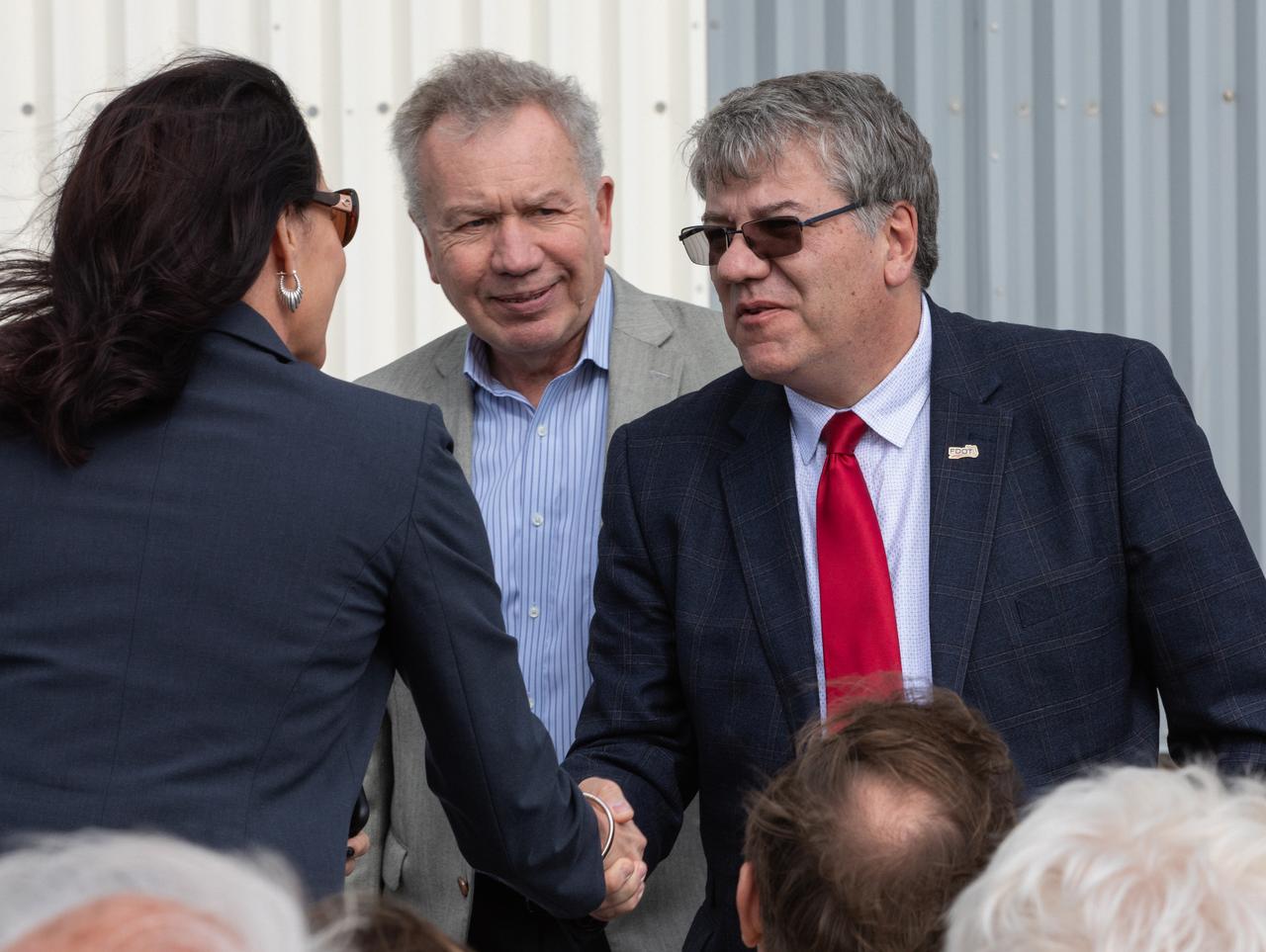
Florida Department of Transportation Secretary Kevin Thibault shakes hands with an attendee during a ceremony on Jan. 10, 2020, to recognize the Vehicle Assembly Building with the National Historic Civil Engineering Landmark award. The Florida Section American Society of Civil Engineers (ASCE) nominated the historic building and bestowed the award. Standing next to Thibault is Glenn Bell, ASCE Society of Structural Engineering Institute president. The VAB is the first building at Kennedy Space Center to earn this distinction. At the time of its completion, the 129-million-cubic-foot structure was the largest building in the world. Originally designed and built to accommodate the Saturn V/Apollo used in Project Apollo, the VAB was later modified for its role in the Space Shuttle Program.
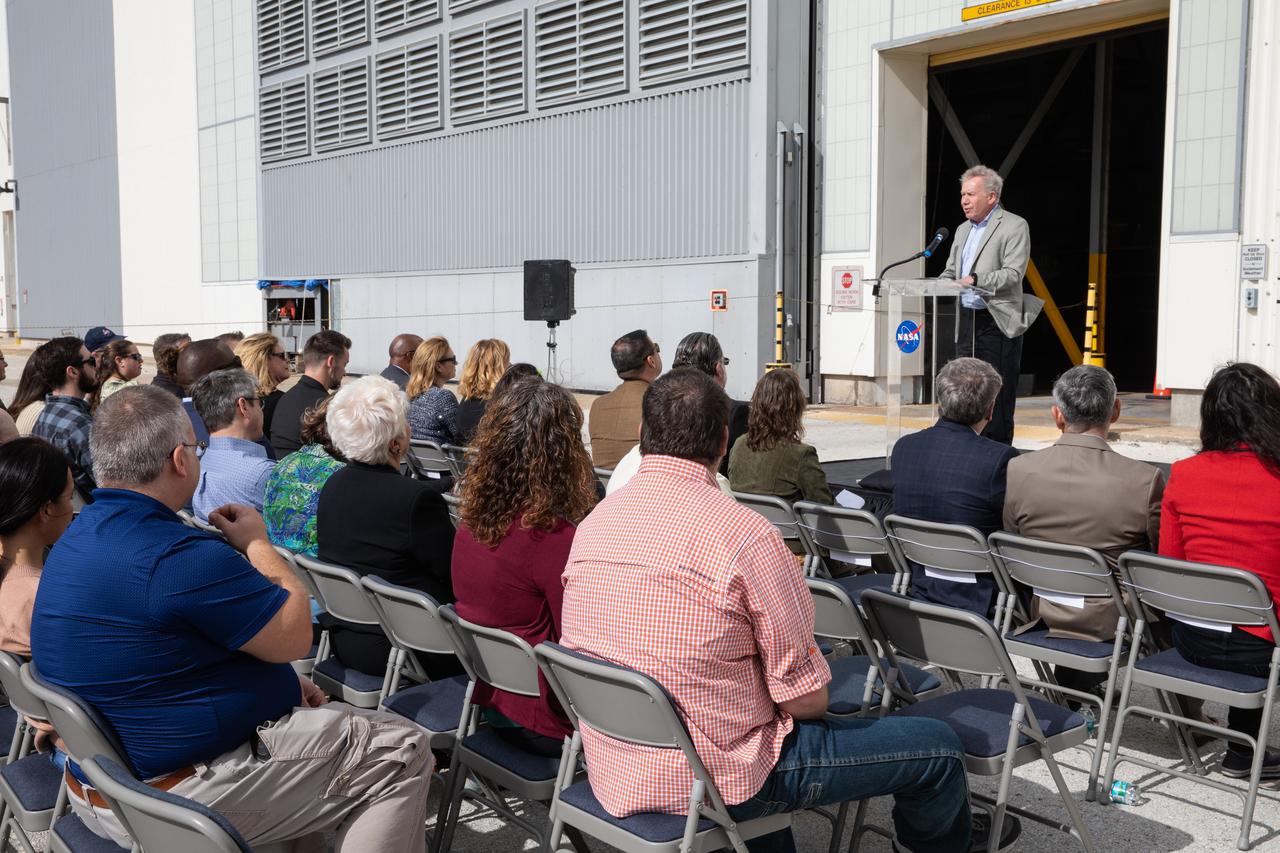
Glenn Bell, American Society of Civil Engineers (ASCE) Society of Structural Engineering Institute president speaks to attendees during a ceremony on Jan. 10, 2020, to recognize the Vehicle Assembly Building with the National Historic Civil Engineering Landmark award. The Florida Section ASCE nominated the historic building and bestowed the award. The VAB is the first building at Kennedy Space Center to earn this distinction. At the time of its completion, the 129-million-cubic-foot structure was the largest building in the world. Originally designed and built to accommodate the Saturn V/Apollo used in Project Apollo, the VAB was later modified for its role in the Space Shuttle Program.
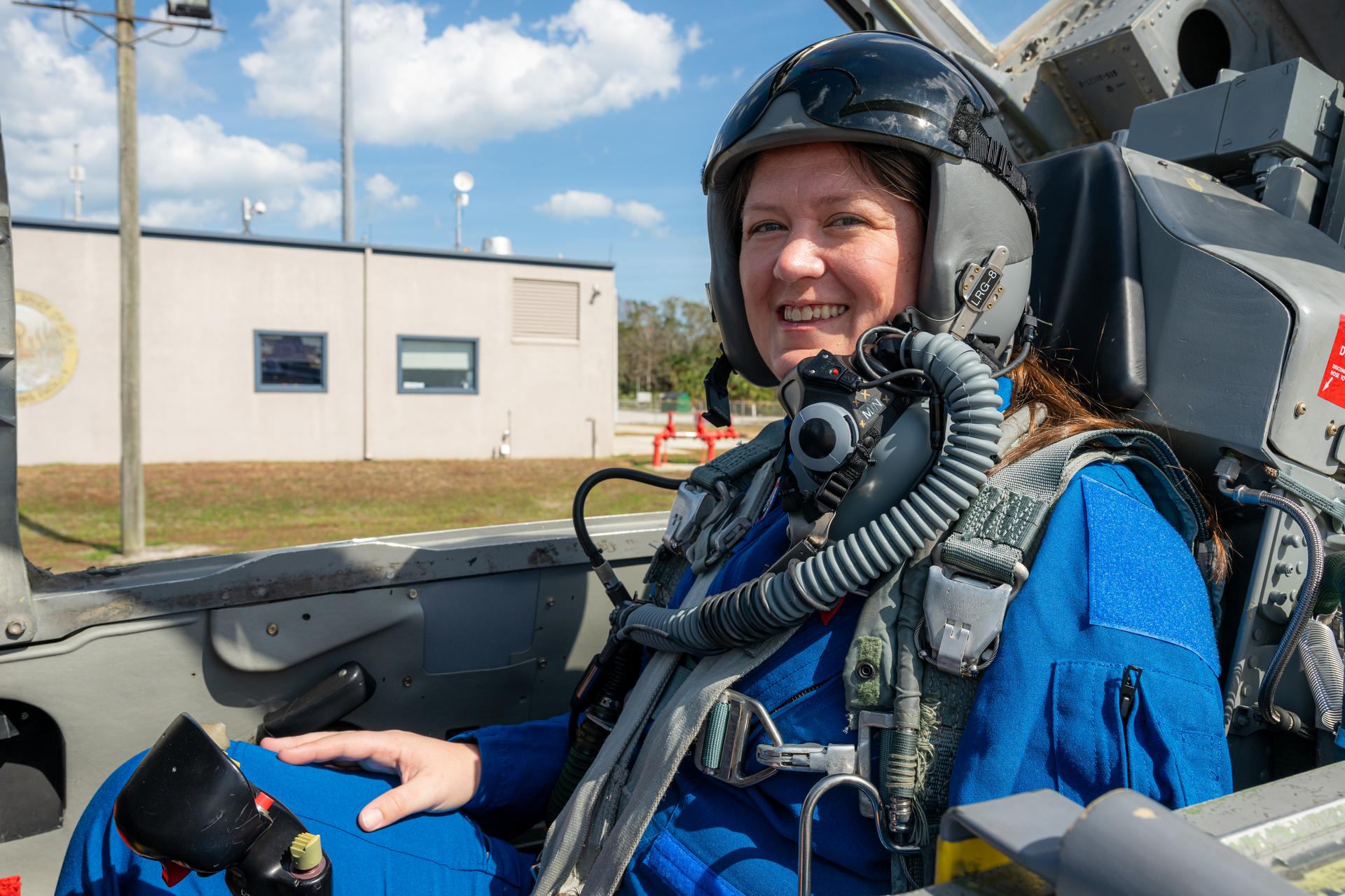
NASA employee Megan Vansant, chief architect and demolition program manager at NASA’s Marshall Space Flight Center, participates in an employee incentive flying event with NASA Administrator Jared Isaacman's personal F-5 aircraft, Friday, Feb. 20, 2026, at NASA’s Kennedy Space Center in Florida. Photo Credit: (NASA/John Kraus)
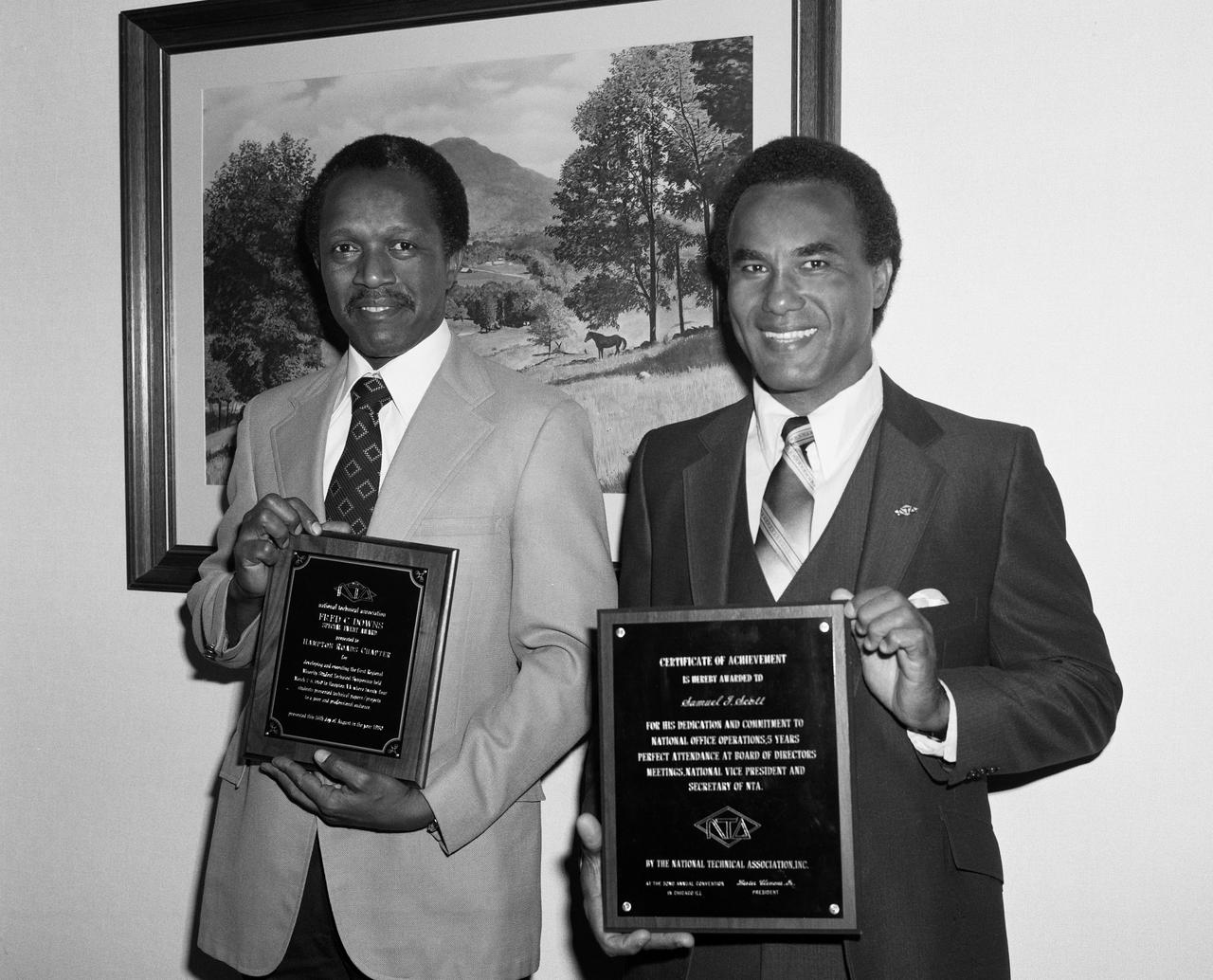
From left to right; Gilbert A. Haynes holding the NTA Fred C. Downs Special Event Award and Samuel J. Scott with award for their participation in the local Hampton Roads Chapter of the (NTA) National Technical Association. The guidance and counseling of minority youth is one of NTA's prime objectives. Formed in 1925, NTA has 15 chapters comprised of architects,engineers, scientists, and educators. NTA activities are directed toward encouraging and assisting public and private institutions in identifying potential minority technical talent.
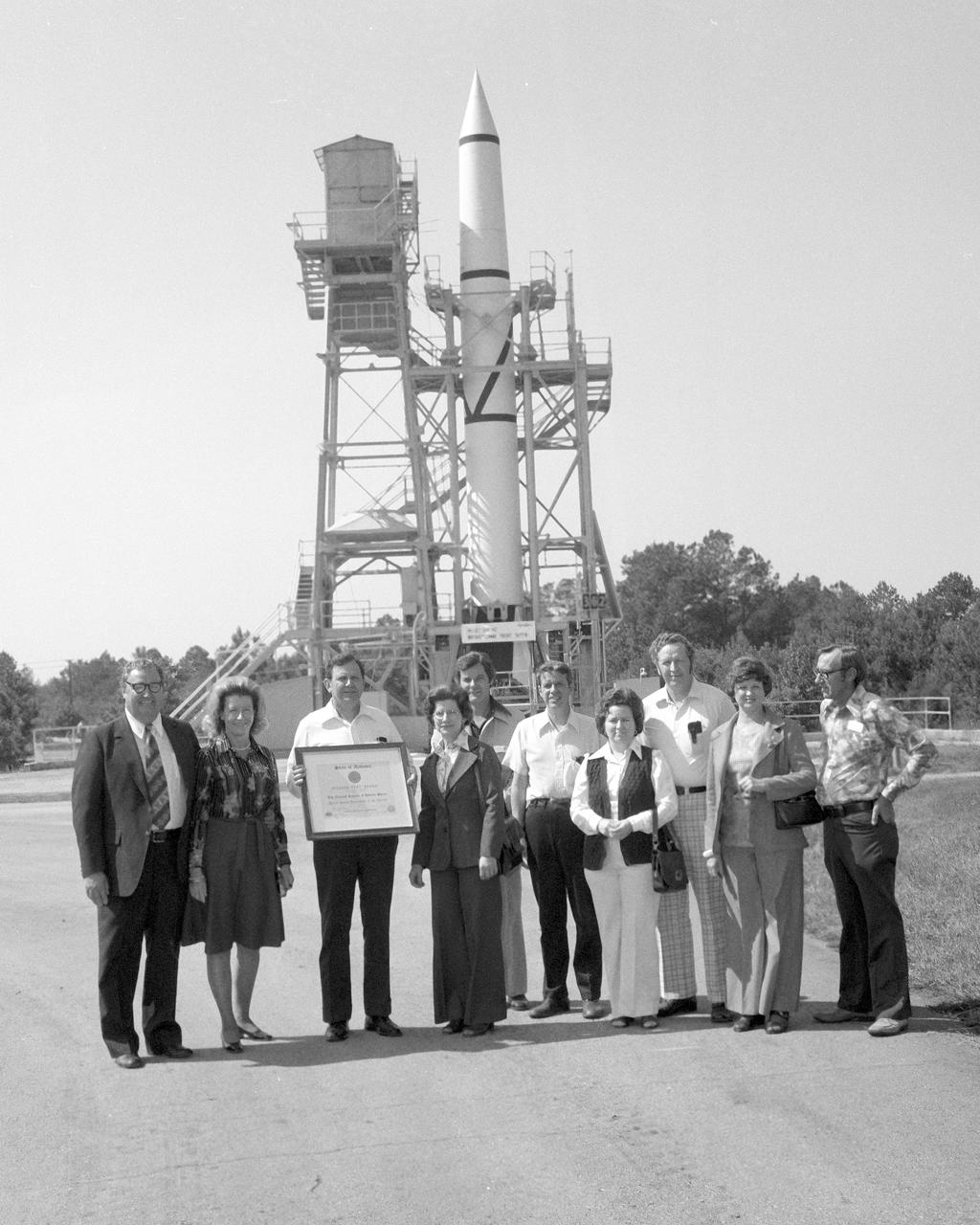
On October 02, 1976, Marshall Space Flight Center’s (MSFC) Redstone test stand was received into the National Registry of Historical Places. Photographed in front of the Redstone test stand along with their wives are (left to right), Madison County Commission Chairman James Record, Dr. William R. Lucas, MSFC Center Director from June 15, 1974 until July 3, 1986, (holding certificate), Ed, Buckbee, Space and Rocket Center Director; Harvie Jones, Huntsville Architect; Dick Smith; and Joe Jones.
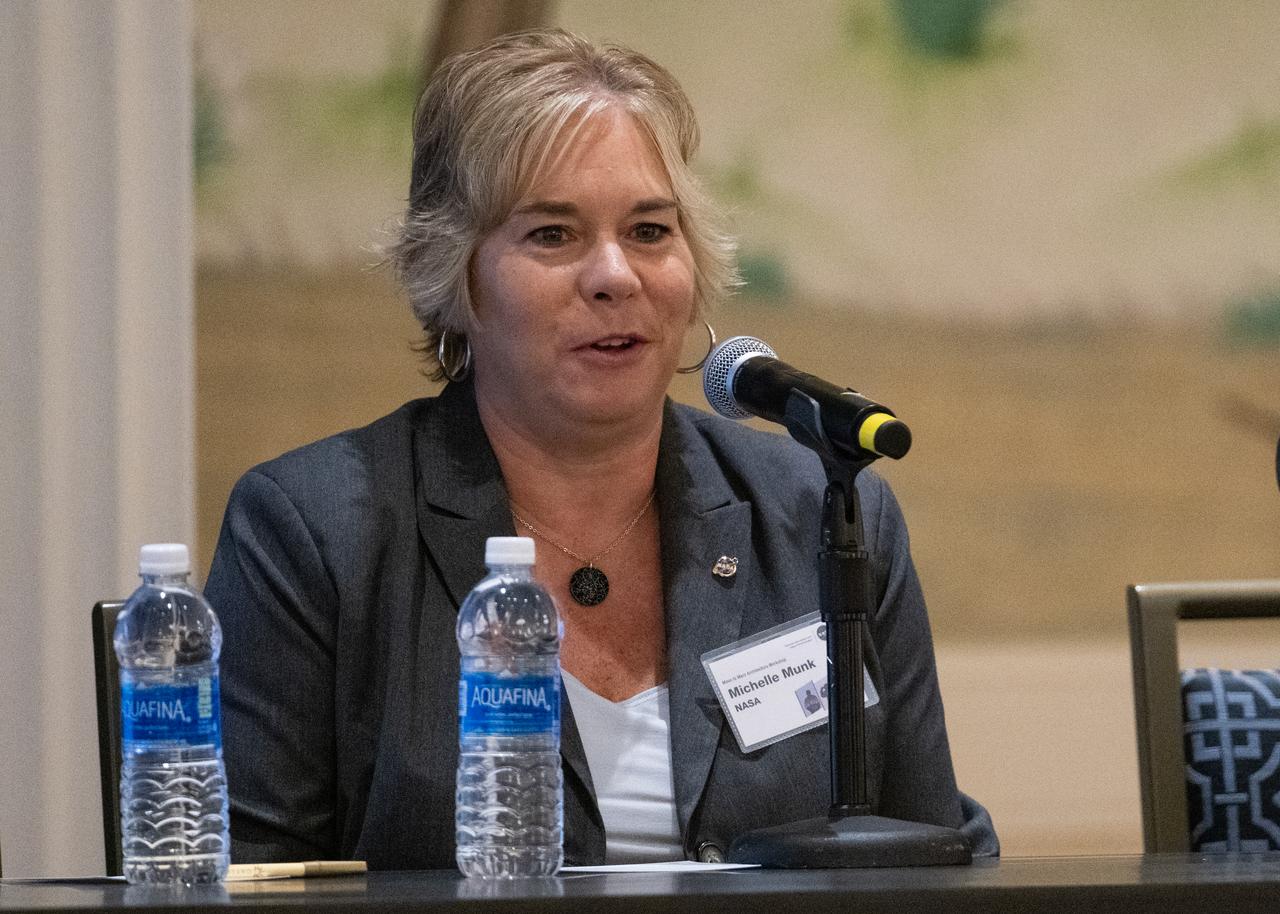
Michelle Munk, chief architect for NASA’s Space Technology Mission Directorate, speaks during NASA’s Moon to Mars Architecture Workshop, Tuesday, June 27, 2023, at the Gaylord National Resort and Convention Center in National Harbor, Md. Following the release of the 2022 Architecture Concept Review, NASA is conducting the workshop to engage the broader space community and collect feedback from U.S. industry and academia to inform the Moon to Mars mission architecture and operational delivery. Photo Credit: (NASA/Joel Kowsky)
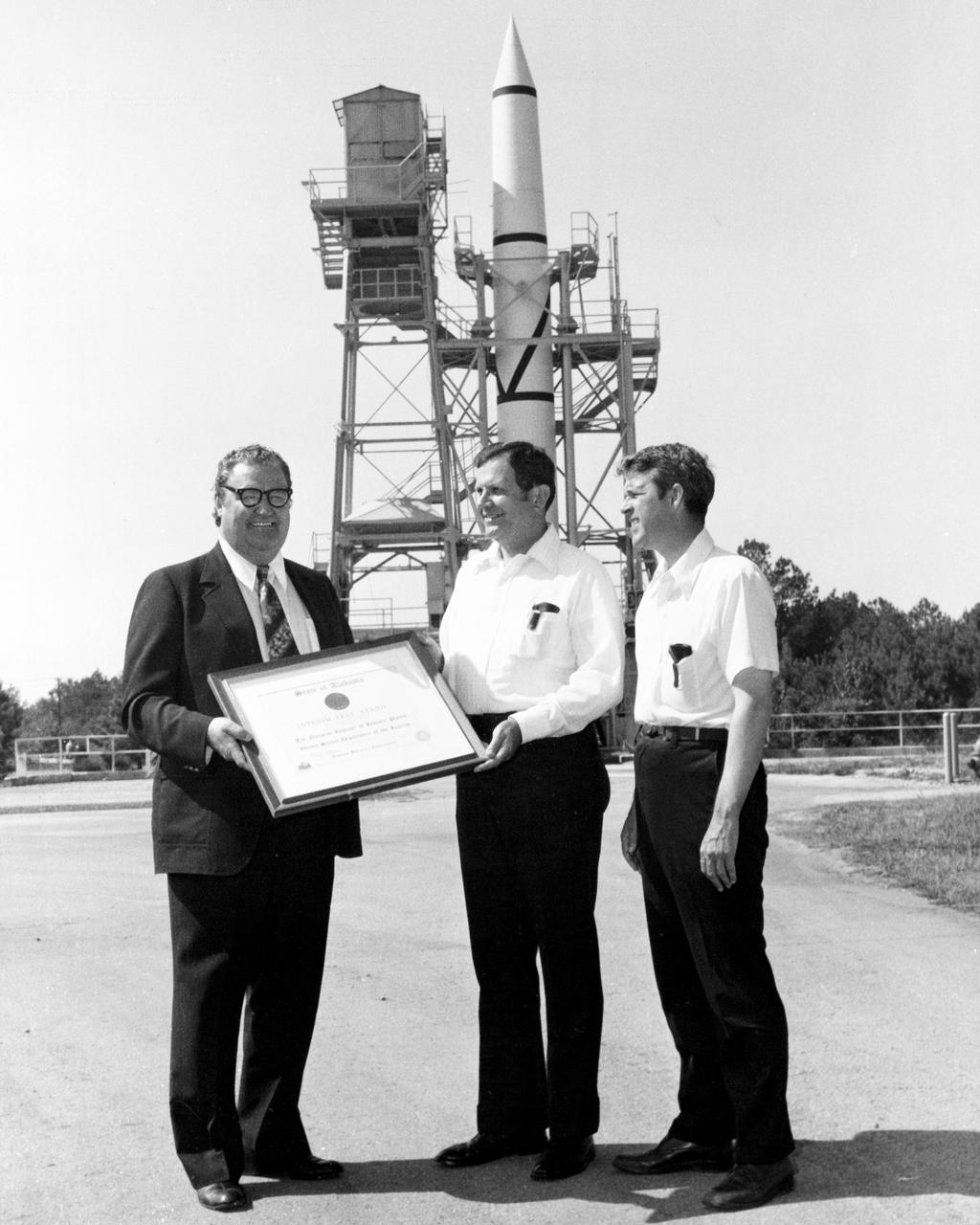
On October 02, 1976, Marshall Space Flight Center’s (MSFC) Redstone test stand was received into the National Registry of Historical Places. Photographed in front of the Redstone test stand are Dr. William R. Lucas, MSFC Center Director from June 15, 1974 until July 3, 1986, as he is accepting a certificate of registration from Madison County Commission Chairman James Record, and Huntsville architect Harvie Jones.
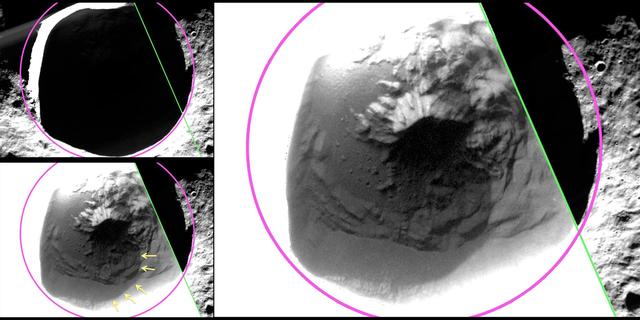
MESSENGER's low-altitude campaign has enabled imaging of Fuller crater (named after American architect Buckminster Fuller) in greater detail than previously possible. The top left panel shows an image of Fuller, with the crater rim outlined in pink and the edge of a low-altitude broadband MDIS image in green. The large panel applies a different stretch to the same MDIS broadband image in the first panel, revealing details of the shadowed surface inside Fuller! In particular, as highlighted with yellow arrows in the bottom left panel, the image reveals a region inside Fuller that is lower in reflectance. The edge of the low-reflectance region has a sharp and well-defined boundary, even when imaged at 46 m/pixel, suggesting that the low-reflectance material is sufficiently young to have preserved a sharp boundary against lateral mixing by impact cratering. Models for surface and near-surface temperature within Fuller crater predict a region that is sufficiently cold to host long-lived water ice beneath the surface but too hot to support water ice at the surface. The low-reflectance region revealed in the images matches the thermal characteristics expected for a lag deposit of volatile, organic-rich material that overlies the water ice. http://photojournal.jpl.nasa.gov/catalog/PIA19244
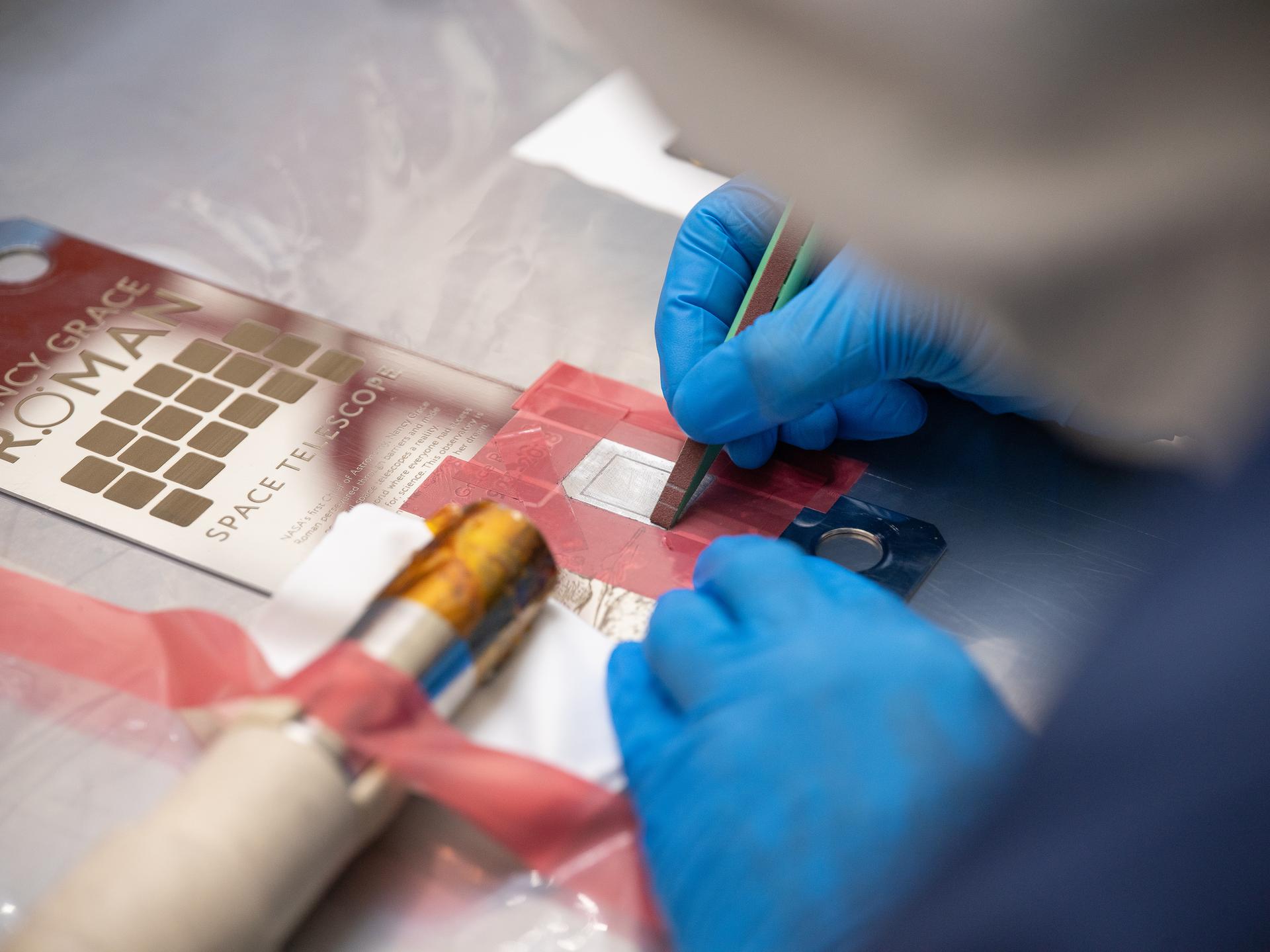
A technician inside the Payload Hazardous Servicing Facility at NASA’s Kennedy Space Center in Florida installs a memory card containing a total of 1,350,144 names as part of a commemorative plaque on the Nancy Grace Roman Space Telescope on Friday, July 17, 2026. The names, submitted by people from across the globe, including astronauts from NASA’s Artemis II and Artemis III missions, will travel with the Roman observatory to the Sun-Earth Lagrange point 2, or L2, about one million miles from Earth, where the Sun’s and Earth’s gravity balance out. Roman is named after Dr. Nancy Grace Roman, NASA’s first chief astronomer and one of the architects of the agency’s modern science program.
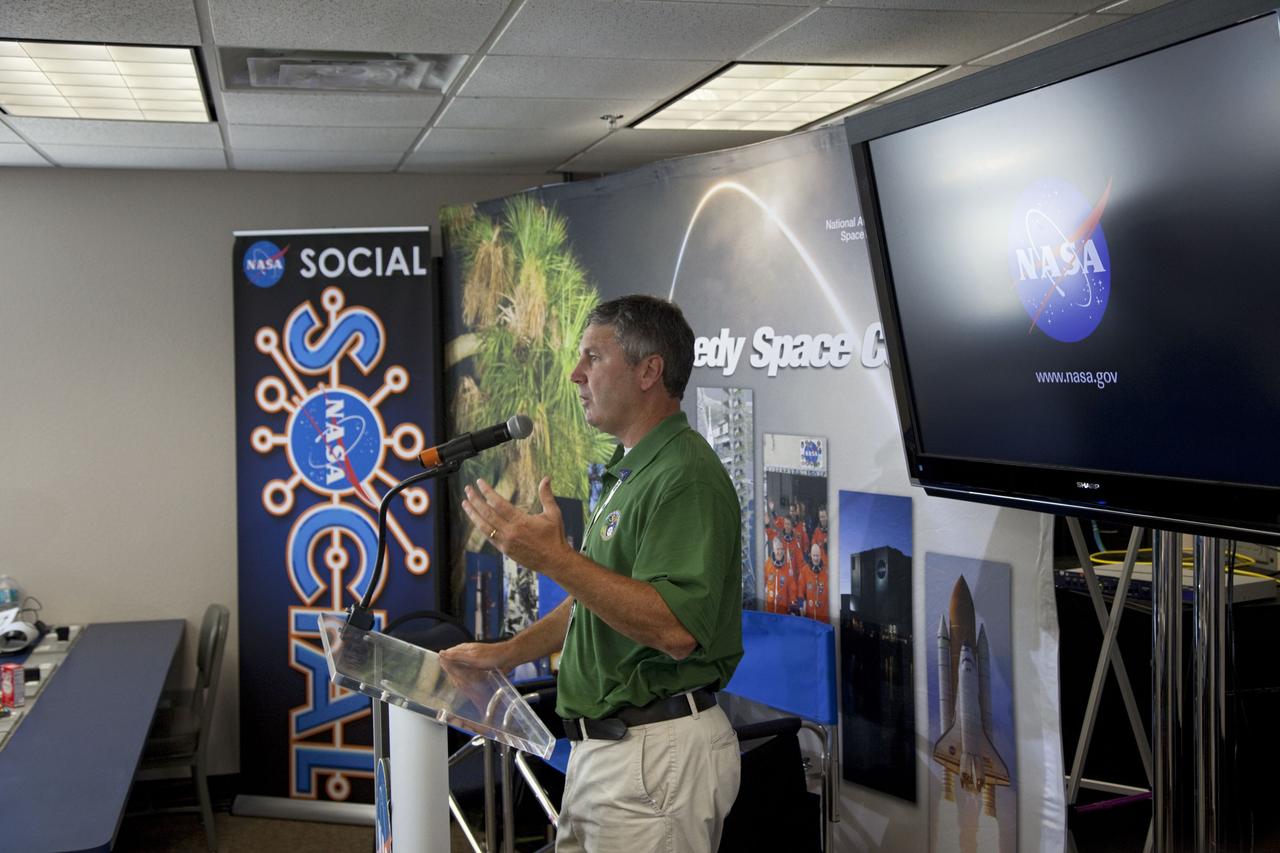
CAPE CANAVERAL, Fla. -- Scott Colloredo, chief architect for the Kennedy Space Center's Ground System Development and Operations Program, speaks to about 45 of NASA’s social media followers during two days of presentations on the Kennedy's past, present and future. The social media participants gathered at the Florida spaceport on Aug. 2 and 3, 2012 to hear from key former and current leaders who related stories of the space agency's efforts to explore the unknown. It was the first social media event totally run by Kennedy. Photo credit: NASA/ Gianni Woods
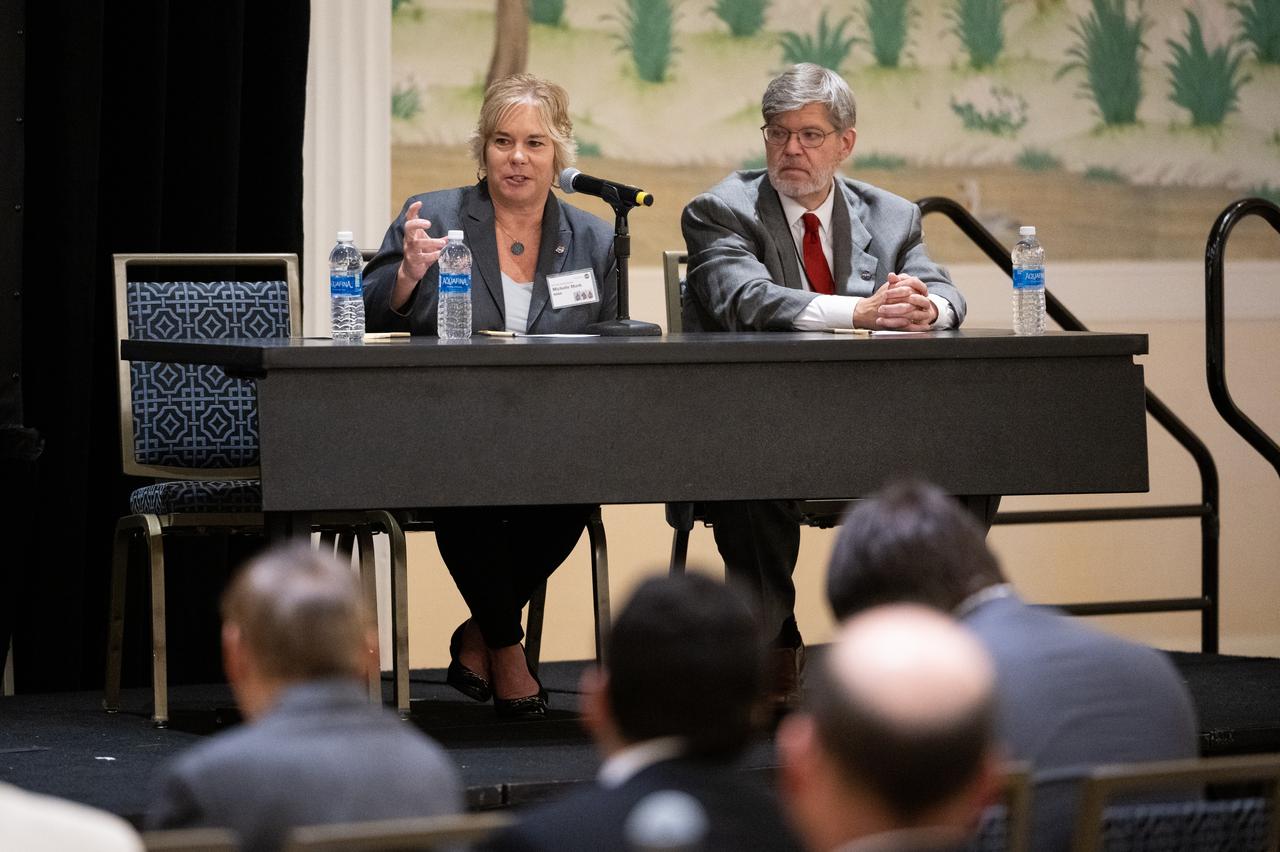
Michelle Munk, chief architect for NASA’s Space Technology Mission Directorate, left, answers a question alongside Joel Kearns, deputy associate administrator for Exploration in NASA's Science Mission Directorate, during NASA’s Moon to Mars Architecture Workshop, Tuesday, June 27, 2023, at the Gaylord National Resort and Convention Center in National Harbor, Md. Following the release of the 2022 Architecture Concept Review, NASA is conducting the workshop to engage the broader space community and collect feedback from U.S. industry and academia to inform the Moon to Mars mission architecture and operational delivery. Photo Credit: (NASA/Joel Kowsky)
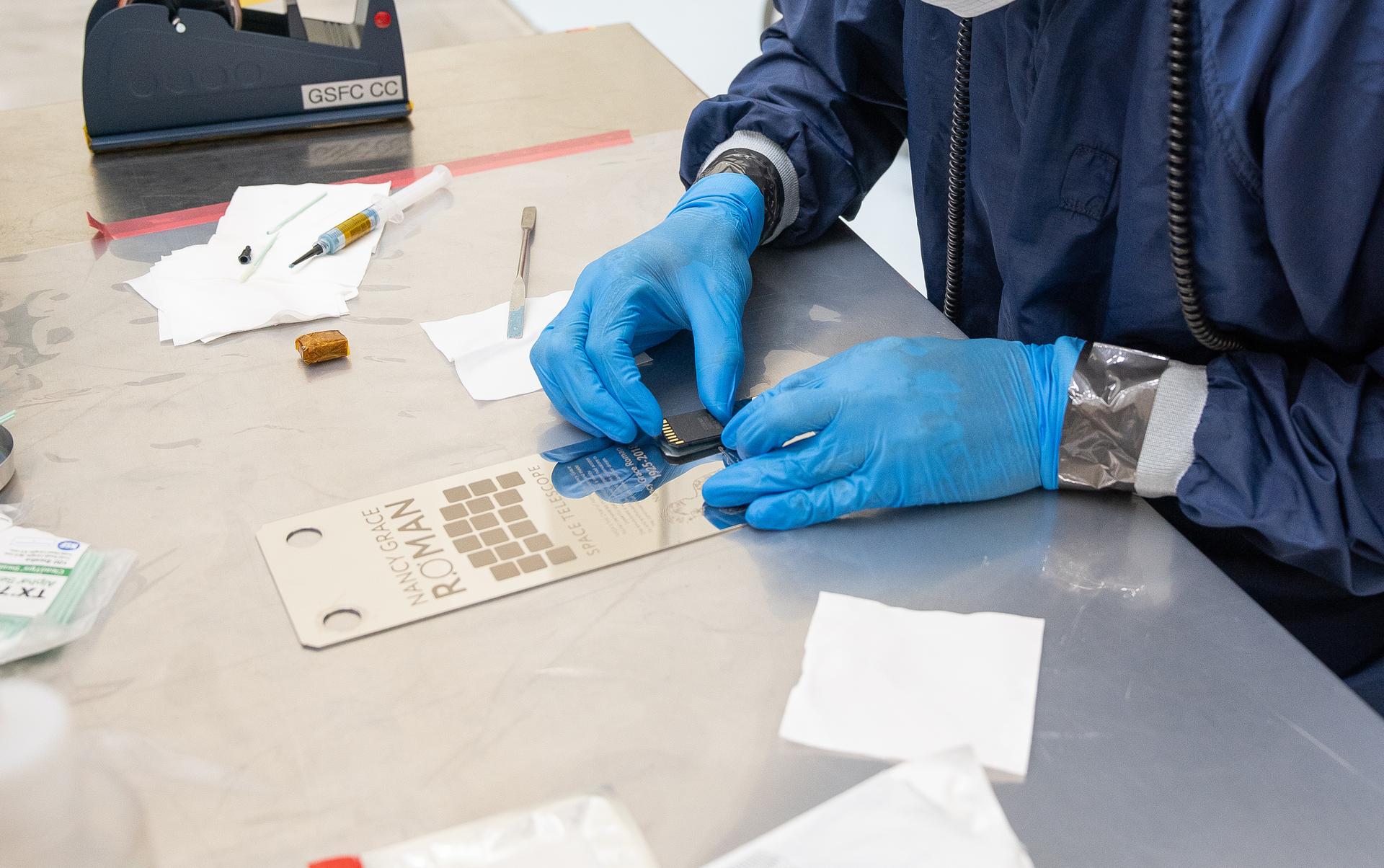
A technician inside the Payload Hazardous Servicing Facility at NASA’s Kennedy Space Center in Florida installs a memory card containing a total of 1,350,144 names as part of a commemorative plaque on the Nancy Grace Roman Space Telescope on Friday, July 17, 2026. The names, submitted by people from across the globe, including astronauts from NASA’s Artemis II and Artemis III missions, will travel with the Roman observatory to the Sun-Earth Lagrange point 2, or L2, about one million miles from Earth, where the Sun’s and Earth’s gravity balance out. Roman is named after Dr. Nancy Grace Roman, NASA’s first chief astronomer and one of the architects of the agency’s modern science program.
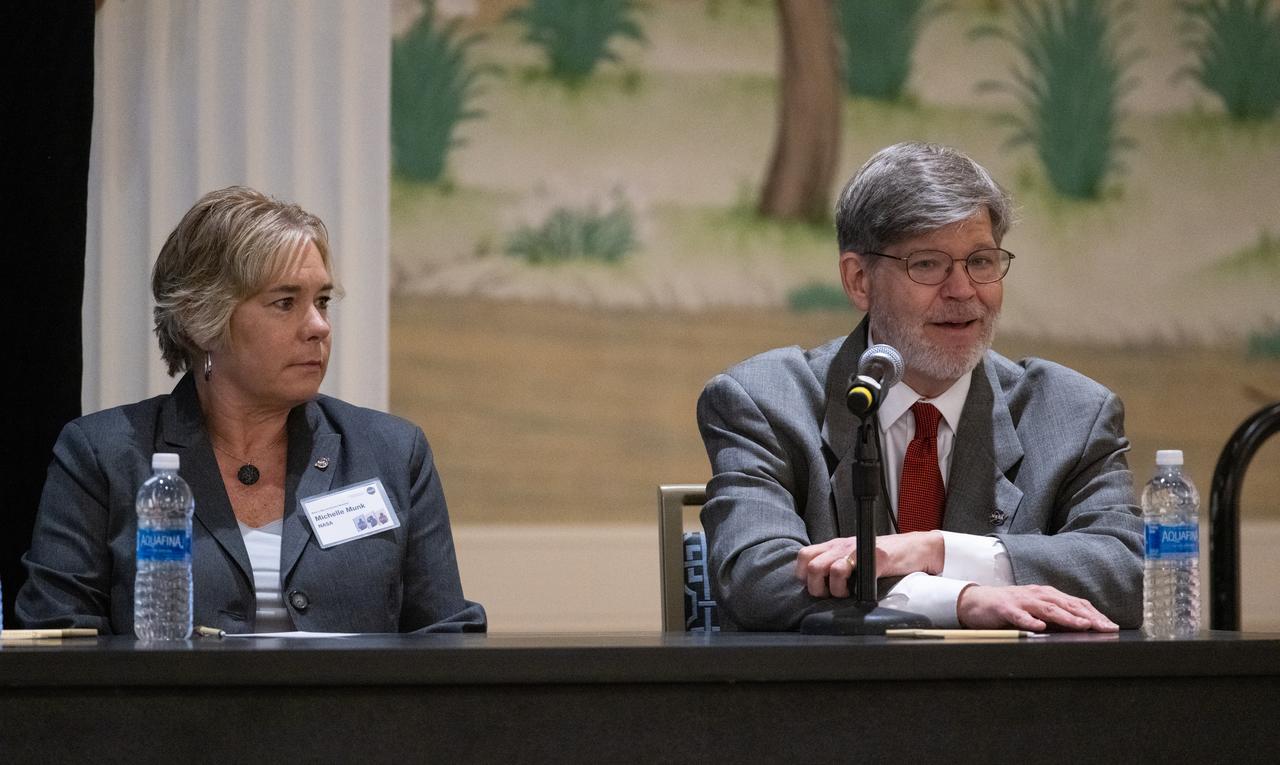
Michelle Munk, chief architect for NASA’s Space Technology Mission Directorate, left, and Joel Kearns, deputy associate administrator for Exploration in NASA's Science Mission Directorate, are seen during NASA’s Moon to Mars Architecture Workshop, Tuesday, June 27, 2023, at the Gaylord National Resort and Convention Center in National Harbor, Md. Following the release of the 2022 Architecture Concept Review, NASA is conducting the workshop to engage the broader space community and collect feedback from U.S. industry and academia to inform the Moon to Mars mission architecture and operational delivery. Photo Credit: (NASA/Joel Kowsky)
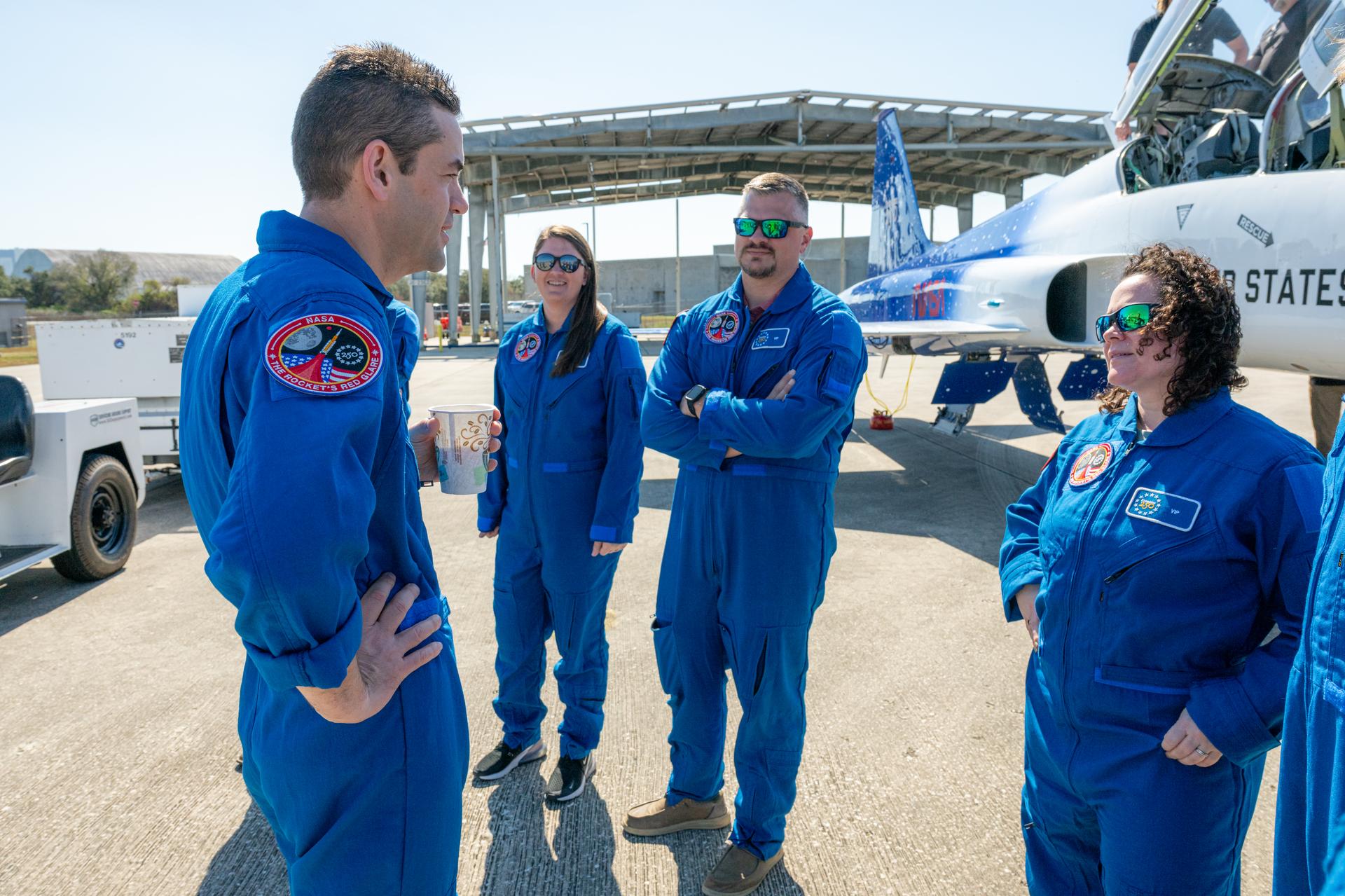
NASA Administrator Jared Isaacman, left, speaks with NASA employees Megan Vansant, chief architect and demolition program manager at NASA’s Marshall Space Flight Center, second from left; James Hamilton, propellant and pressurant manager at NASA’s Stennis Space Center, third from left; and Brittany Bouché, acting deputy chief of facility engineering services at NASA’s Stennis Space Center, right, following an employee incentive flying event using Isaacman's personal F-5 aircraft, Saturday, Feb. 21, 2026, at NASA’s Kennedy Space Center in Florida. Photo Credit: (NASA/John Kraus)
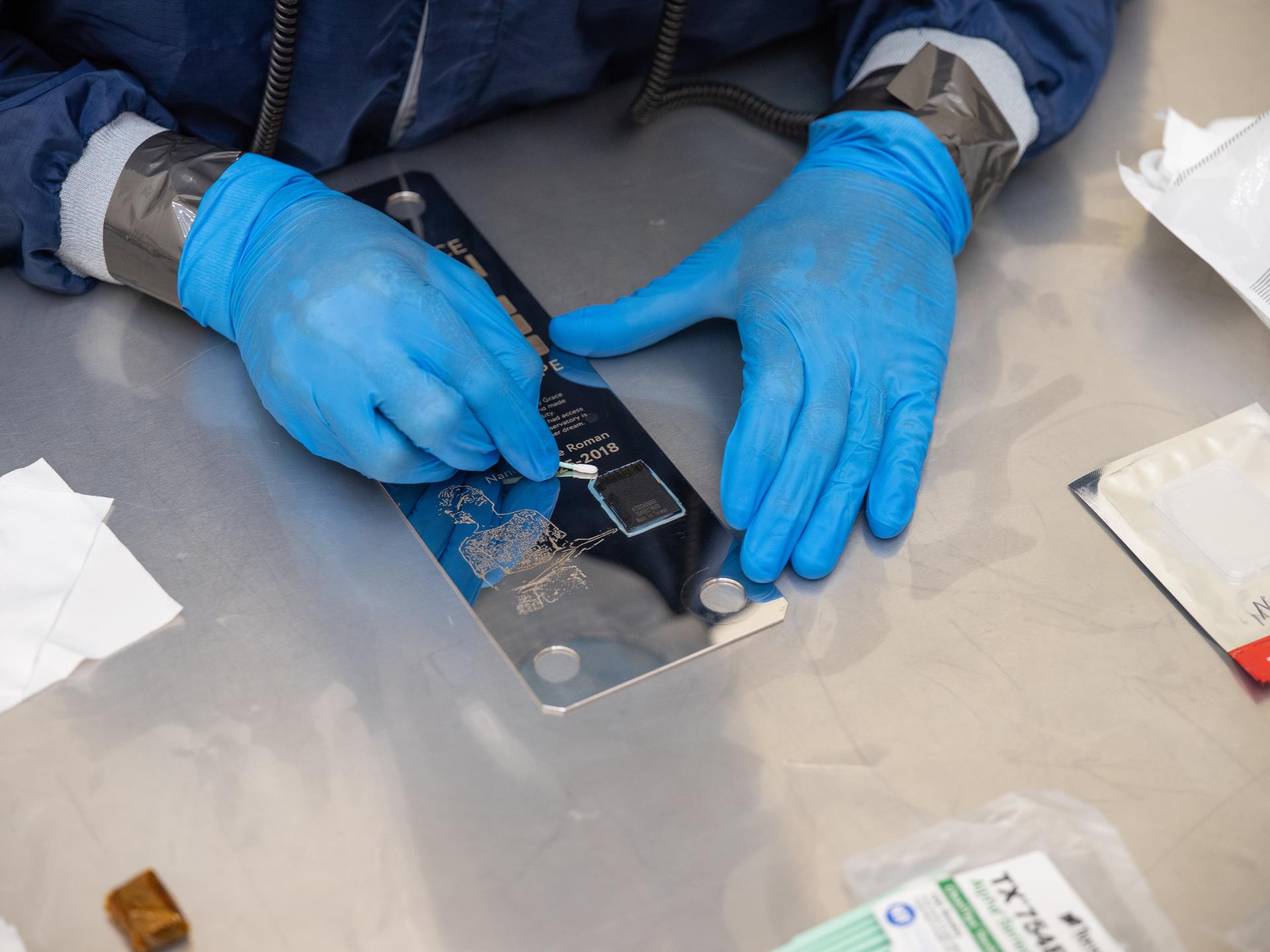
A technician inside the Payload Hazardous Servicing Facility at NASA’s Kennedy Space Center in Florida installs a memory card containing a total of 1,350,144 names as part of a commemorative plaque on the Nancy Grace Roman Space Telescope on Friday, July 17, 2026. The names, submitted by people from across the globe, including astronauts from NASA’s Artemis II and Artemis III missions, will travel with the Roman observatory to the Sun-Earth Lagrange point 2, or L2, about one million miles from Earth, where the Sun’s and Earth’s gravity balance out. Roman is named after Dr. Nancy Grace Roman, NASA’s first chief astronomer and one of the architects of the agency’s modern science program.
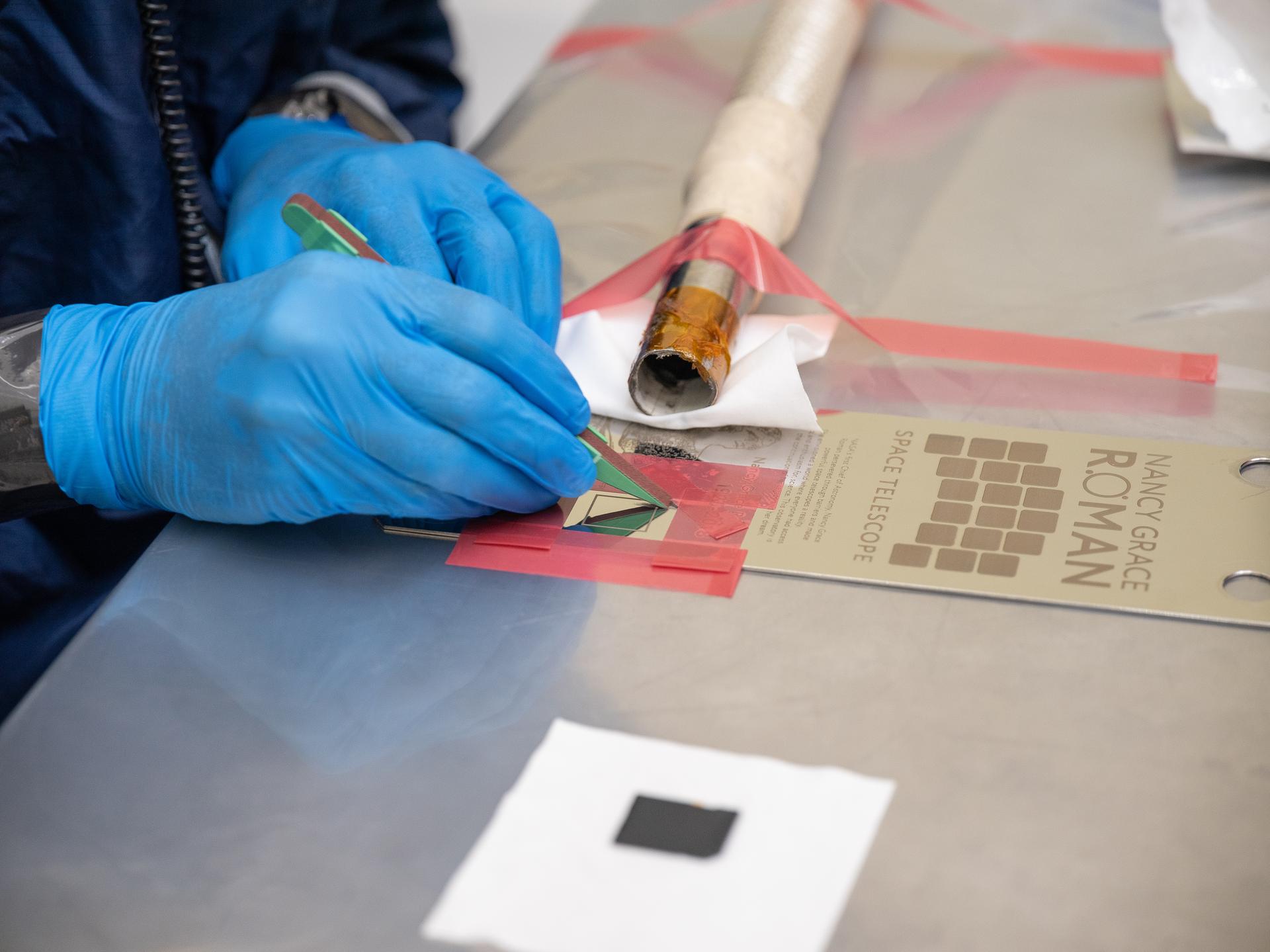
A technician inside the Payload Hazardous Servicing Facility at NASA’s Kennedy Space Center in Florida installs a memory card containing a total of 1,350,144 names as part of a commemorative plaque on the Nancy Grace Roman Space Telescope on Friday, July 17, 2026. The names, submitted by people from across the globe, including astronauts from NASA’s Artemis II and Artemis III missions, will travel with the Roman observatory to the Sun-Earth Lagrange point 2, or L2, about one million miles from Earth, where the Sun’s and Earth’s gravity balance out. Roman is named after Dr. Nancy Grace Roman, NASA’s first chief astronomer and one of the architects of the agency’s modern science program.
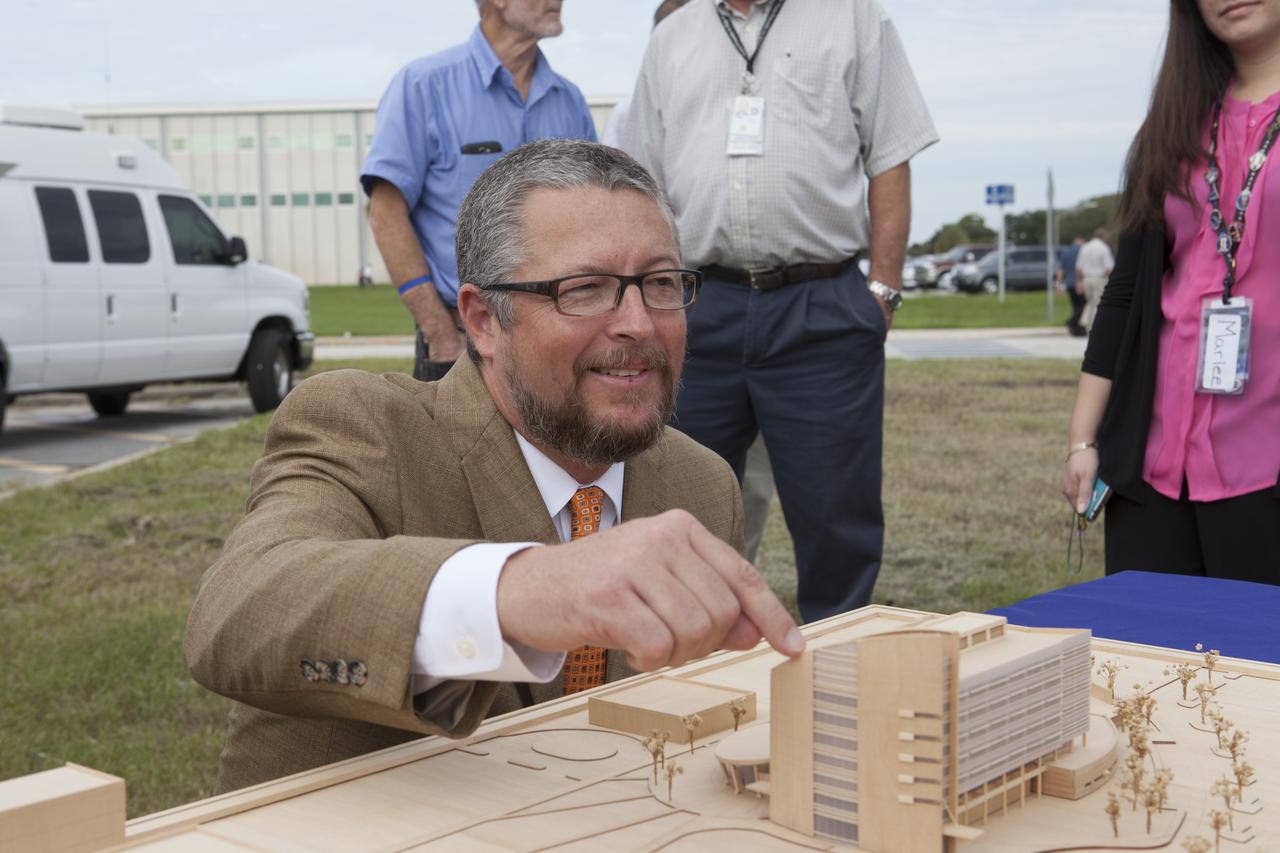
Groundbreaking for the new Central Campus took place in the Industrial Area at NASA's Kennedy Space Center in Florida. Steve Belflower, vice president of HuntonBrady Architects of Orlando, points to a scale model of the Central Campus building on display during the groundbreaking ceremony. Kennedy is transforming into a multi-user, 21st century spaceport supporting both commercial and government users and operations. Central Campus Phase I includes construction of a new Headquarters Building as one of the major components of the strategy. The new Headquarters Building will be a seven-story, 200,000-square-foot facility that will house about 500 NASA civil service and contractor employees.
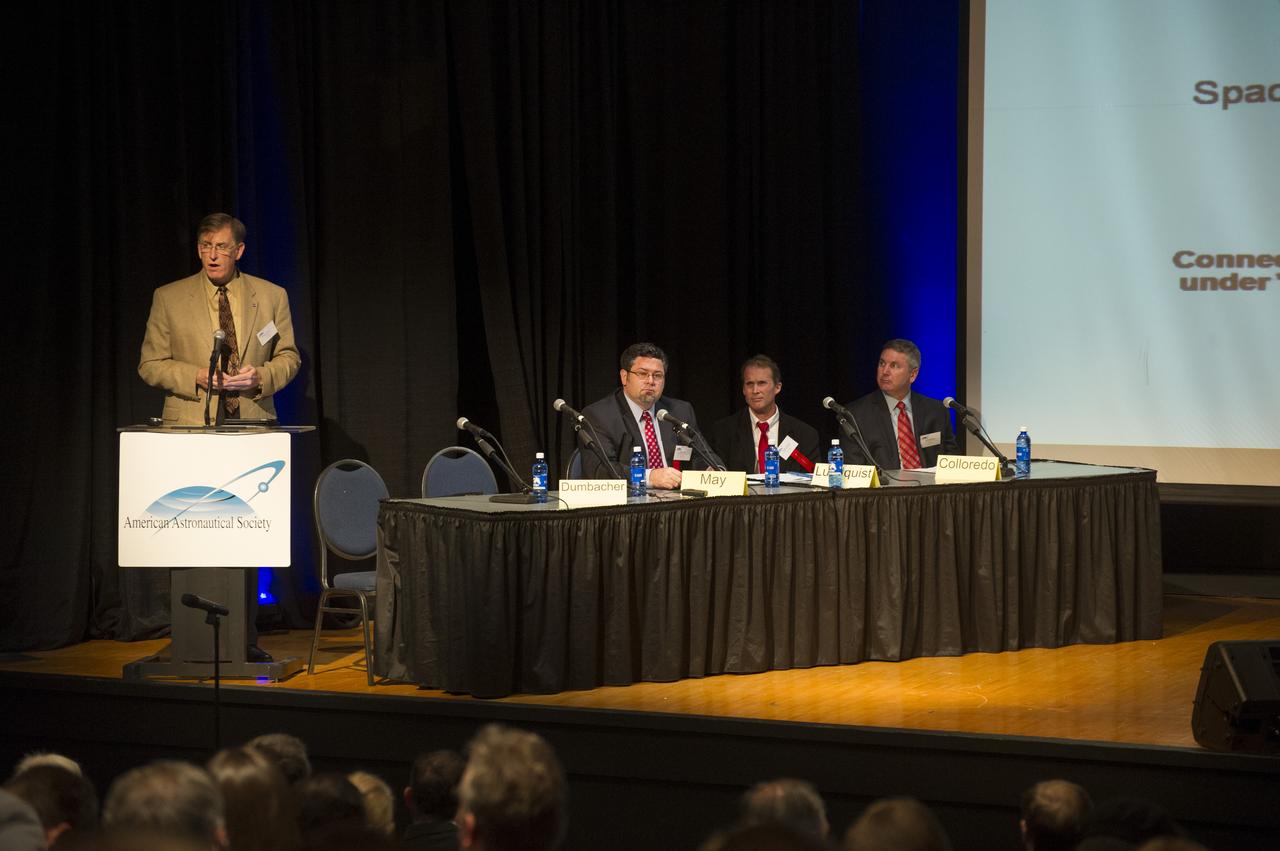
DAN DUMBACHER, LEFT, NASA'S DEPUTY ASSOCIATE ADMINISTRATOR FOR EXPLORATION SYSTEMS DEVELOPMENT, MODERATES A PANEL TITLED "NASA HUMAN SPACE EXPLORATION PLANS AND UPDATE" AT THE 5TH VON BRAUN MEMORIAL SYMPOSIUM AT THE UNIVERSITY OF ALABAMA IN HUNTSVILLE ON OCT. 16. FEATURED PANELISTS INCLUDED, SEATED FROM LEFT, SPACE LAUNCH SYSTEM PROGRAM MANAGER TODD MAY FROM THE MARSHALL SPACE FLIGHT CENTER, ORION CREW AND SERVICE MODULE MANAGER CHARLIE LUNDQUIST FROM THE JOHNSON SPACE CENTER, AND CHIEF ARCHITECT OF THE GROUND SYSTEMS DEVELOPMENT AND OPERATIONS PROGRAM SCOTT COLLOREDO FROM THE KENNEDYSPACE CENTER.
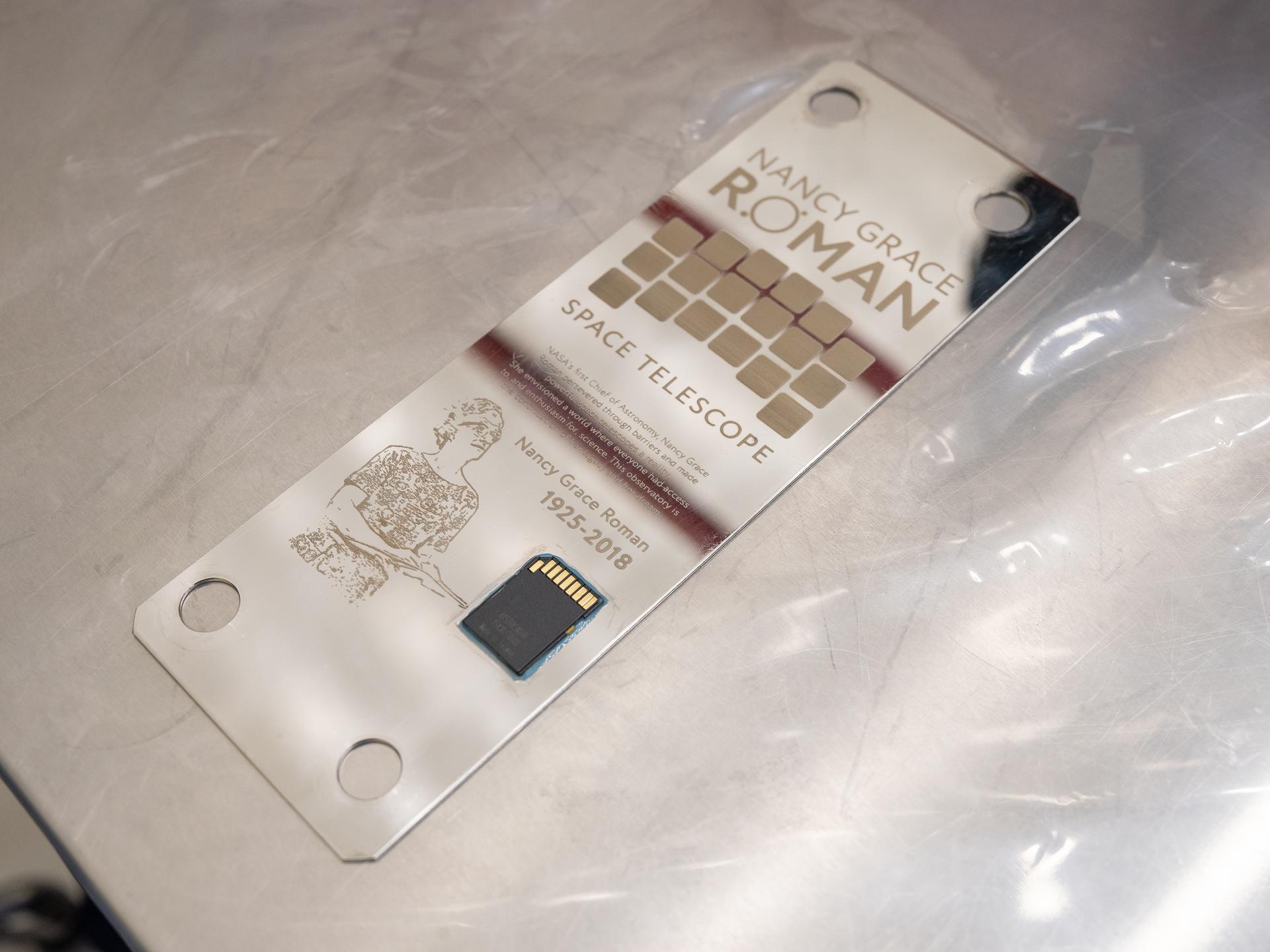
A technician inside the Payload Hazardous Servicing Facility at NASA’s Kennedy Space Center in Florida installs a memory card containing a total of 1,350,144 names as part of a commemorative plaque on the Nancy Grace Roman Space Telescope on Friday, July 17, 2026. The names, submitted by people from across the globe, including astronauts from NASA’s Artemis II and Artemis III missions, will travel with the Roman observatory to the Sun-Earth Lagrange point 2, or L2, about one million miles from Earth, where the Sun’s and Earth’s gravity balance out. Roman is named after Dr. Nancy Grace Roman, NASA’s first chief astronomer and one of the architects of the agency’s modern science program.
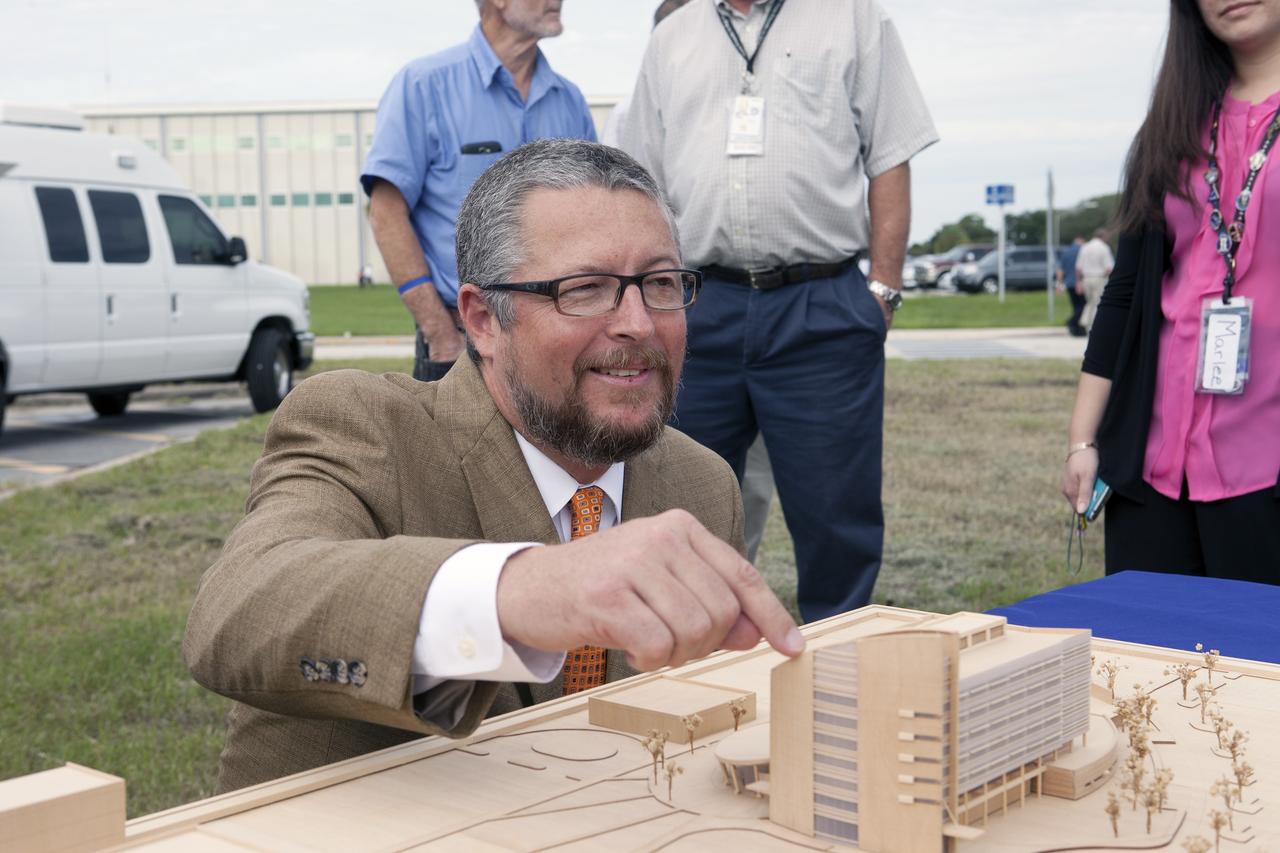
CAPE CANAVERAL, Fla. – Groundbreaking for the new Central Campus took place in the Industrial Area at NASA's Kennedy Space Center in Florida. Steve Belflower, vice president of HuntonBrady Architects of Orlando, points to a scale model of the Central Campus building on display during the groundbreaking ceremony. Kennedy is transforming into a multi-user, 21st century spaceport supporting both commercial and government users and operations. Central Campus Phase I includes construction of a new Headquarters Building as one of the major components of the strategy. The new Headquarters Building will be a seven-story, 200,000-square-foot facility that will house about 500 NASA civil service and contractor employees. Photo credit: NASA/Kim Shiflett
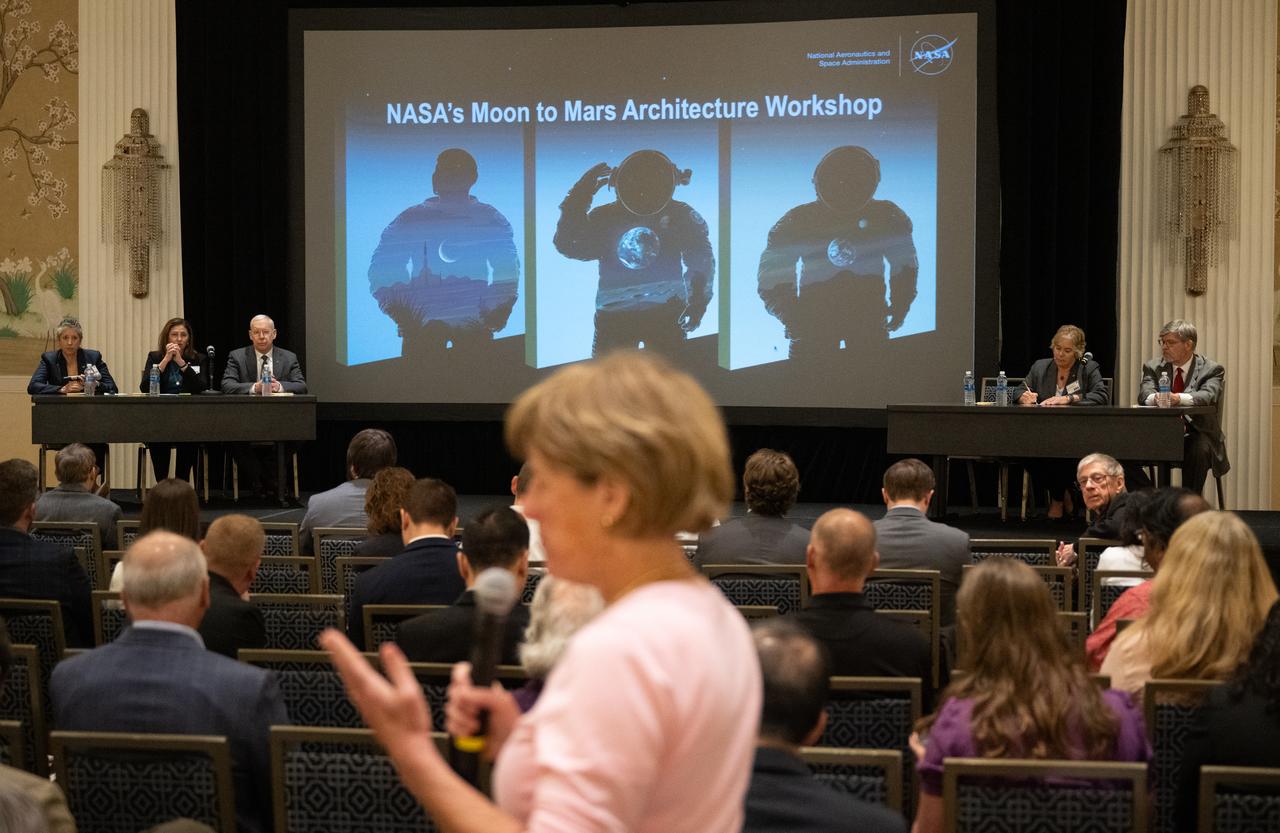
Nujoud Merancy, architecture lead for NASA's Exploration Systems Development Mission Directorate, Catherine Koerner, deputy associate administrator for NASA's Exploration Systems Development Mission Directorate, Patrick Forrester, special advisor in NASA's Space Operations Mission Directorate, Michelle Munk, chief architect for NASA’s Space Technology Mission Directorate, and Joel Kearns, deputy associate administrator for Exploration in NASA's Science Mission Directorate, listen to a question during NASA’s Moon to Mars Architecture Workshop, Tuesday, June 27, 2023, at the Gaylord National Resort and Convention Center in National Harbor, Md. Following the release of the 2022 Architecture Concept Review, NASA is conducting the workshop to engage the broader space community and collect feedback from U.S. industry and academia to inform the Moon to Mars mission architecture and operational delivery. Photo Credit: (NASA/Joel Kowsky)
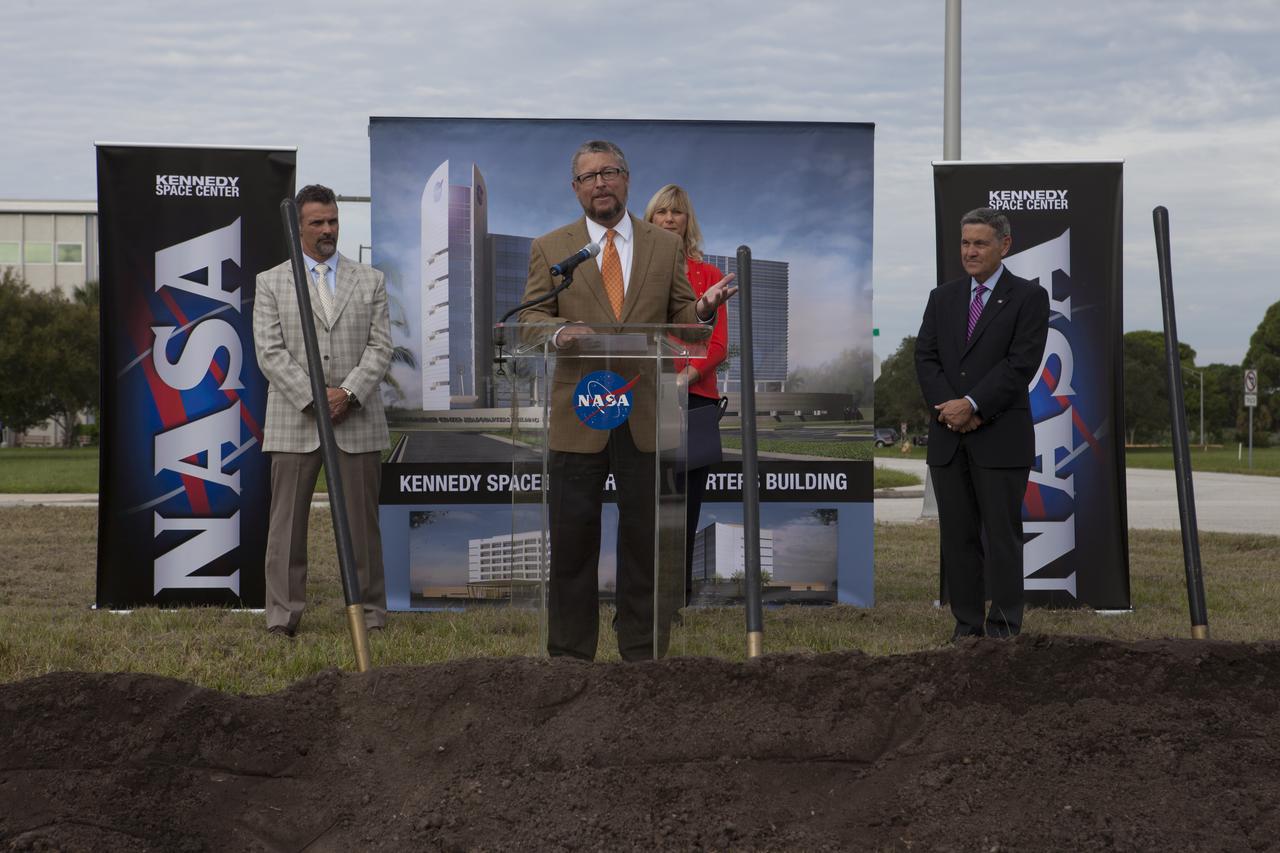
Groundbreaking for the new Central Campus took place in the Industrial Area at NASA's Kennedy Space Center in Florida. Steve Belflower, vice president of HuntonBrady Architects of Orlando, speaks to members of the media and guests during the groundbreaking ceremony. Behind him is Nancy Bray, director of Kennedy's Center Operations Directorate. To his right is Kennedy Center Director Bob Cabana. To his left is Kirk Hazen, southeast district manager and vice president of Hensel Phelps, the construction contractor. Kennedy is transforming into a multi-user, 21st century spaceport supporting both commercial and government users and operations. Central Campus Phase I includes construction of a new Headquarters Building as one of the major components of the strategy. The new Headquarters Building will be a seven-story, 200,000-square-foot facility that will house about 500 NASA civil service and contractor employees.
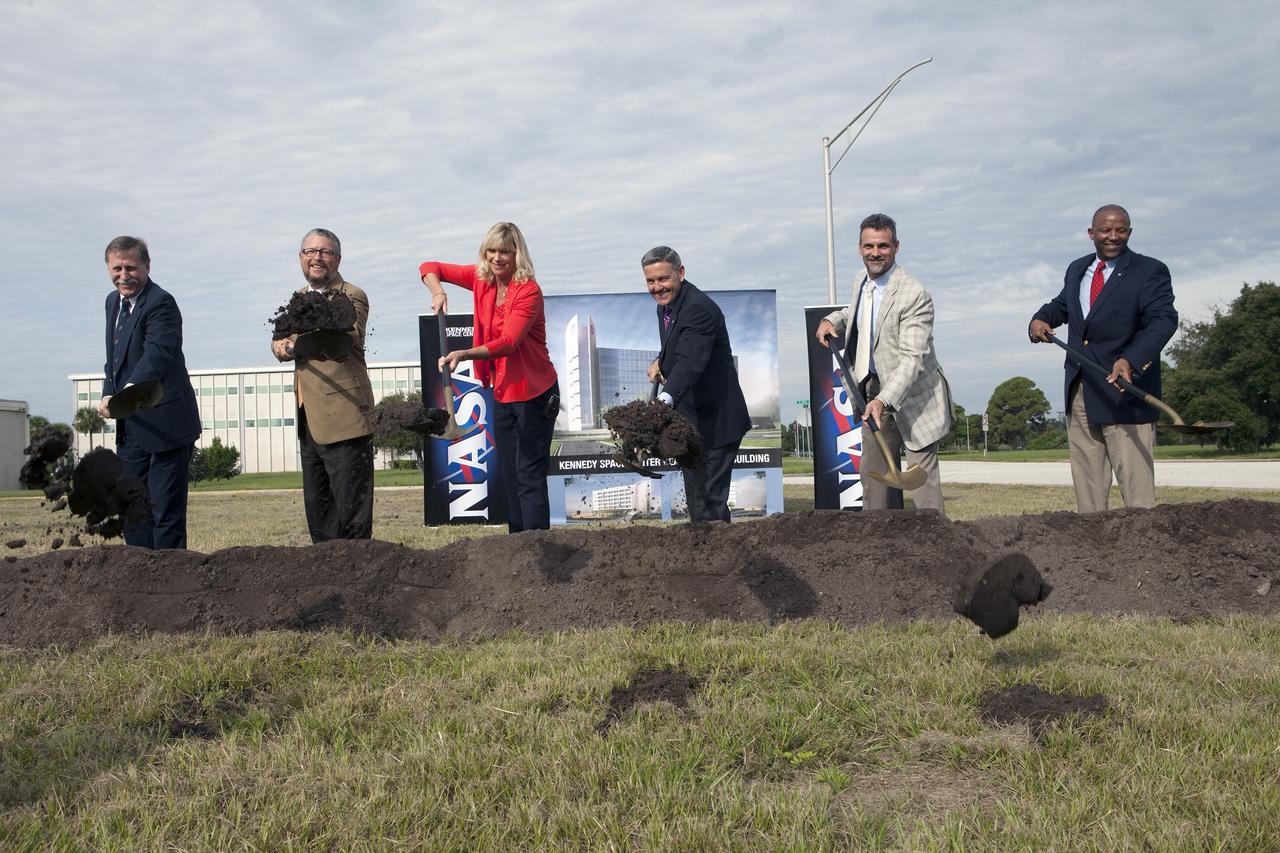
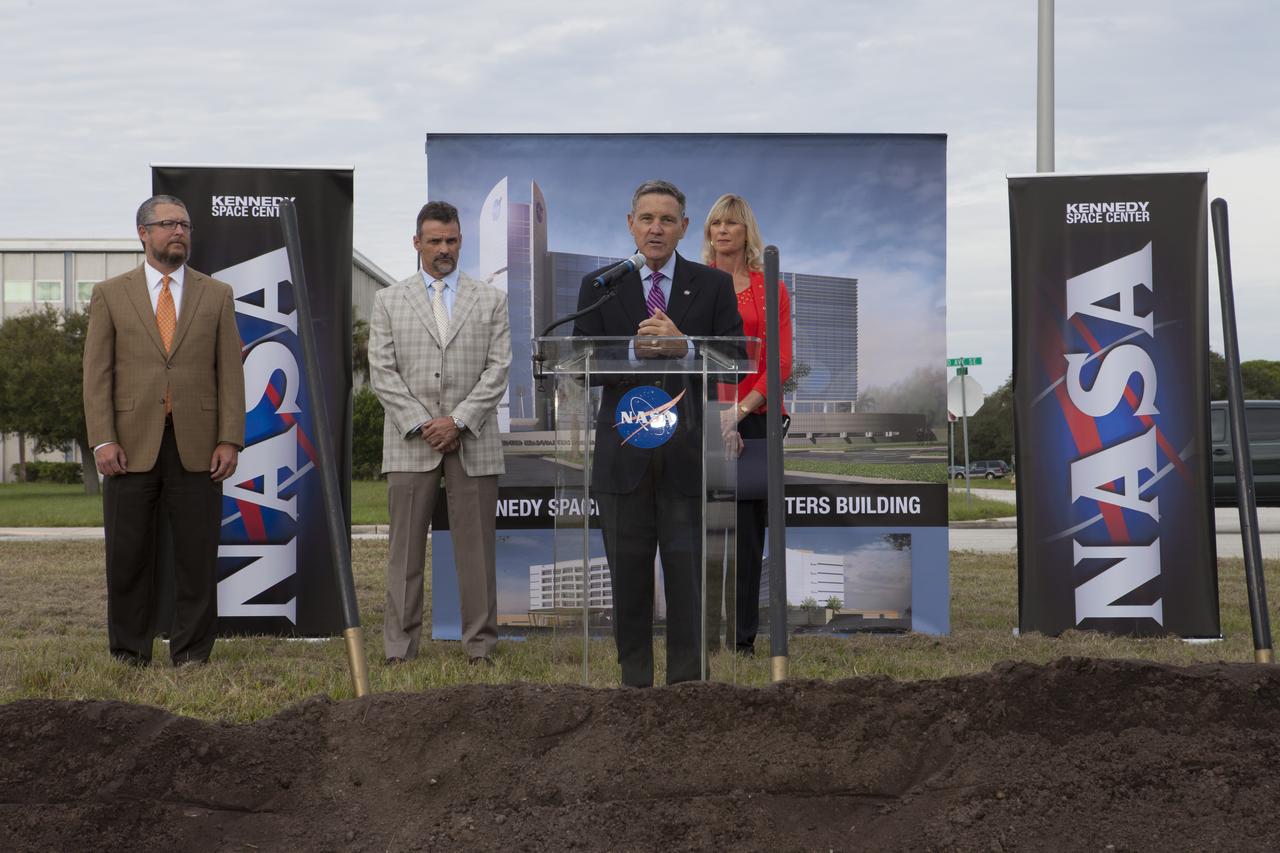
CAPE CANAVERAL, Fla. – Groundbreaking for the new Central Campus took place in the Industrial Area at NASA's Kennedy Space Center in Florida. Digging in with shovels during the groundbreaking ceremony, are Dan Tweed, associate director for Facilities at Kennedy Steve Belflower, vice president of HuntonBrady Architects of Orlando Nancy Bray, director of Kennedy's Center Operations Directorate Kennedy Center Director Bob Cabana Kirk Hazen, southeast district manager and vice president of Hensel Phelps, the construction contractor and Kelvin Manning, Kennedy's associate director. Kennedy is transforming into a multi-user, 21st century spaceport supporting both commercial and government users and operations. Central Campus Phase I includes construction of a new Headquarters Building as one of the major components of the strategy. The new Headquarters Building will be a seven-story, 200,000-square-foot facility that will house about 500 NASA civil service and contractor employees. Photo credit: NASA/Kim Shiflett
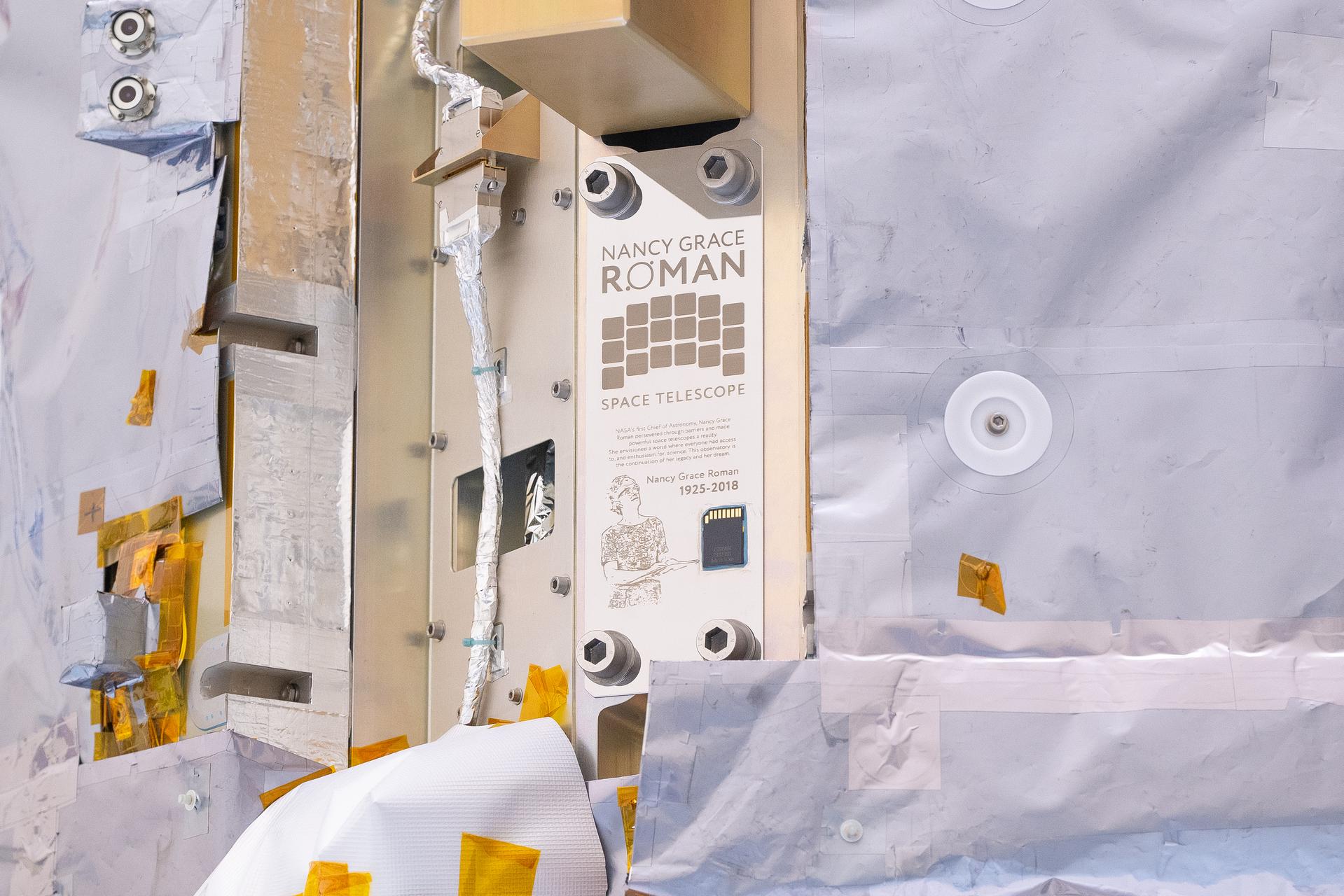
Technicians inside the Payload Hazardous Servicing Facility at NASA’s Kennedy Space Center complete installation of a commemorative plaque on the agency’s Nancy Grace Roman Space Telescope, as photographed on Tuesday, July 28, 2026. In addition to honoring the legacy of Dr. Nancy Grace Roman, NASA’s first chief astronomer and one of the architects of the agency’s modern science program, the plaque features a memory card containing a total of 1,350,144 names submitted by people from across the globe, including astronauts from NASA’s Artemis II and Artemis III missions. The Roman observatory will travel to the Sun-Earth Lagrange point 2, or L2, about one million miles from Earth, where the Sun’s and Earth’s gravity balance out, to complete a statistical census of planetary systems in our galaxy and settle essential questions in the areas of dark energy, exoplanets, and infrared astrophysics.
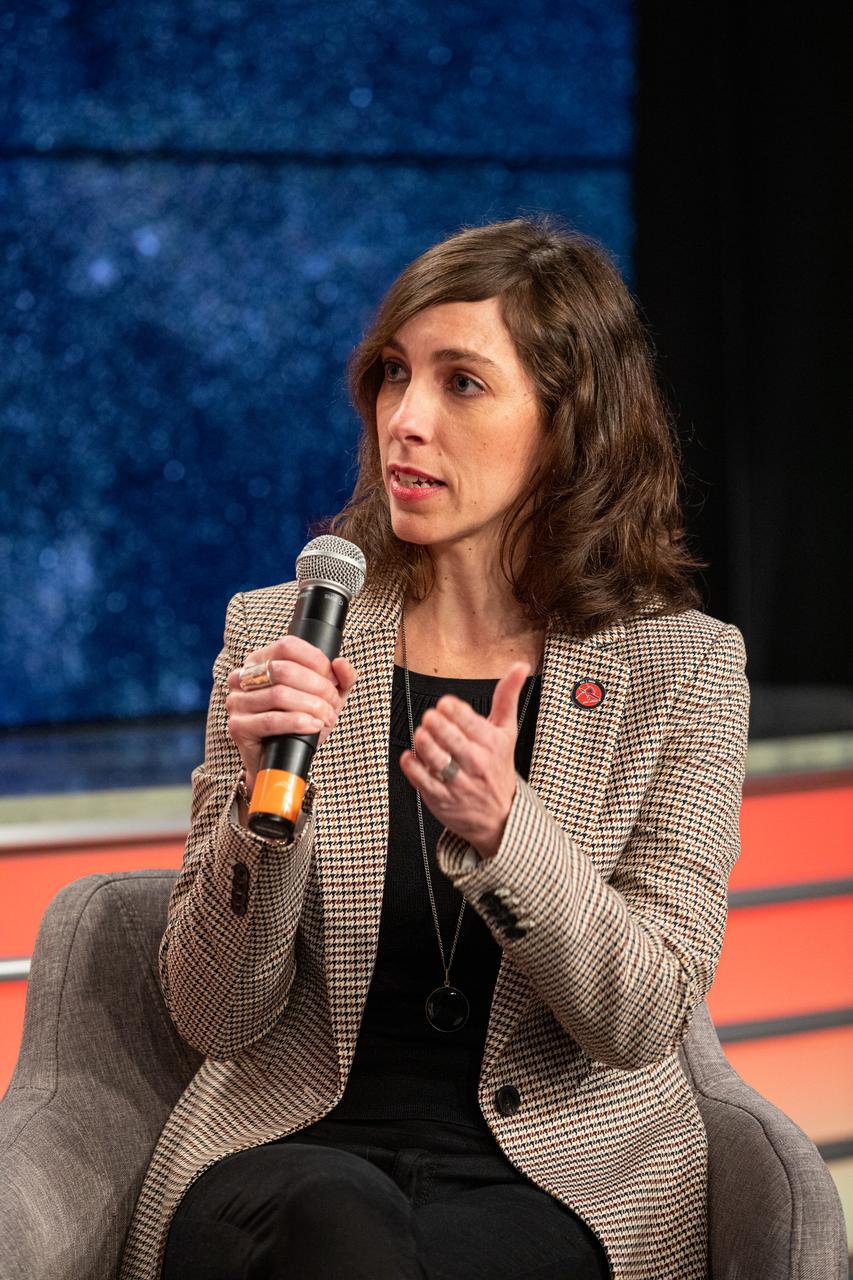
Ana Leon, Solar Orbiter contamination control architect with Airbus Defence and Space, participates in a Spanish Facebook Live event for the Solar Orbiter mission in the Press Site auditorium at NASA’s Kennedy Space Center in Florida on Jan. 29, 2020. Solar Orbiter is an international cooperative mission between ESA (European Space Agency) and NASA. The mission aims to study the Sun, its outer atmosphere and solar wind. The spacecraft will provide the first images of the Sun’s poles. NASA’s Launch Services Program based at Kennedy is managing the launch. The spacecraft has been developed by Airbus Defence and Space. Solar Orbiter will launch in February 2020 aboard a United Launch Alliance Atlas V rocket from Space Launch Complex 41 at Cape Canaveral Air Force Station in Florida.
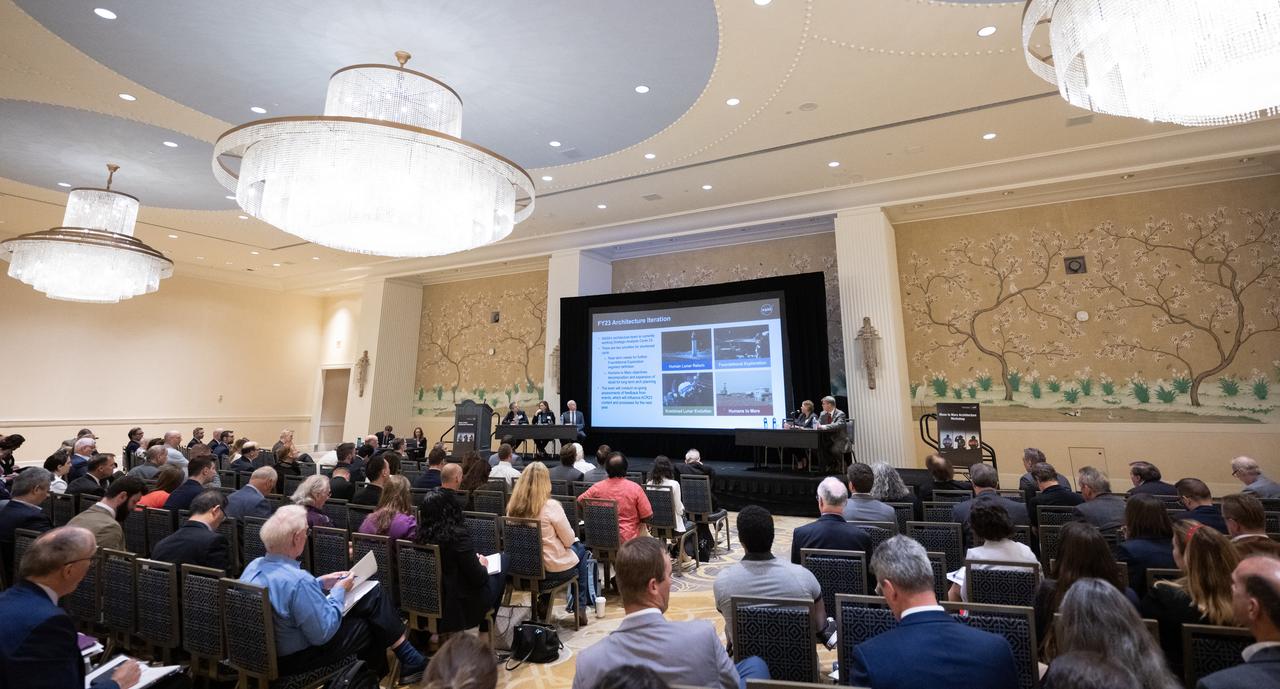
Nujoud Merancy, architecture lead for NASA's Exploration Systems Development Mission Directorate, Catherine Koerner, deputy associate administrator for NASA's Exploration Systems Development Mission Directorate, Patrick Forrester, special advisor in NASA's Space Operations Mission Directorate, Michelle Munk, chief architect for NASA’s Space Technology Mission Directorate, and Joel Kearns, deputy associate administrator for Exploration in NASA's Science Mission Directorate, are seen on stage during NASA’s Moon to Mars Architecture Workshop, Tuesday, June 27, 2023, at the Gaylord National Resort and Convention Center in National Harbor, Md. Following the release of the 2022 Architecture Concept Review, NASA is conducting the workshop to engage the broader space community and collect feedback from U.S. industry and academia to inform the Moon to Mars mission architecture and operational delivery. Photo Credit: (NASA/Joel Kowsky)
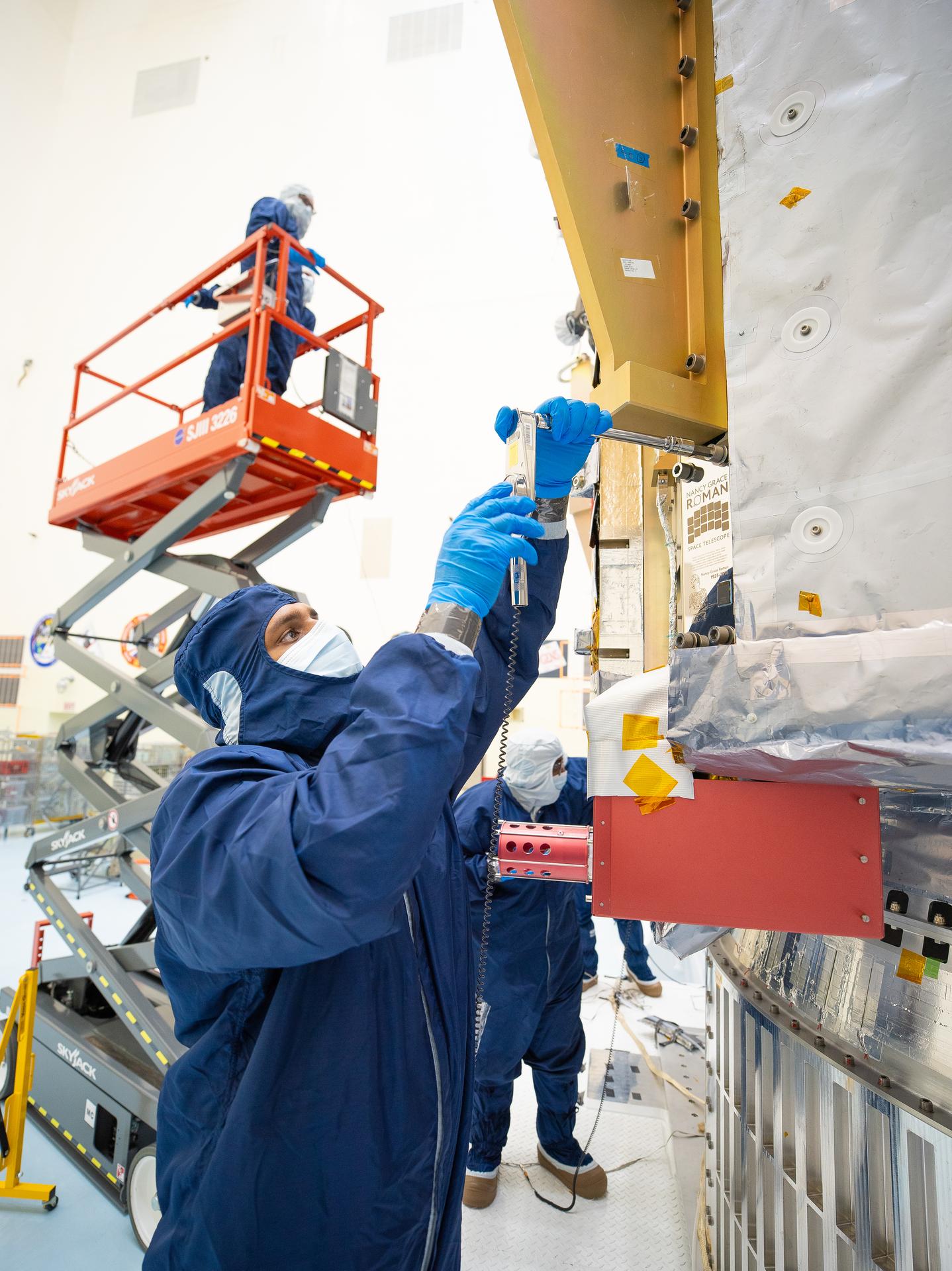
Technicians inside the Payload Hazardous Servicing Facility at NASA’s Kennedy Space Center in Florida install a commemorative plaque on the Nancy Grace Roman Space Telescope on Monday, July 27, 2026. In addition to honoring the legacy of Dr. Nancy Grace Roman, NASA’s first chief astronomer and one of the architects of the agency’s modern science program, the plaque features a memory card containing a total of 1,350,144 names submitted by people from across the globe, including astronauts from NASA’s Artemis II and Artemis III missions. The Roman observatory will travel to the Sun-Earth Lagrange point 2, or L2, about one million miles from Earth, where the Sun’s and Earth’s gravity balance out, to complete a statistical census of planetary systems in our galaxy and settle essential questions in the areas of dark energy, exoplanets, and infrared astrophysics.
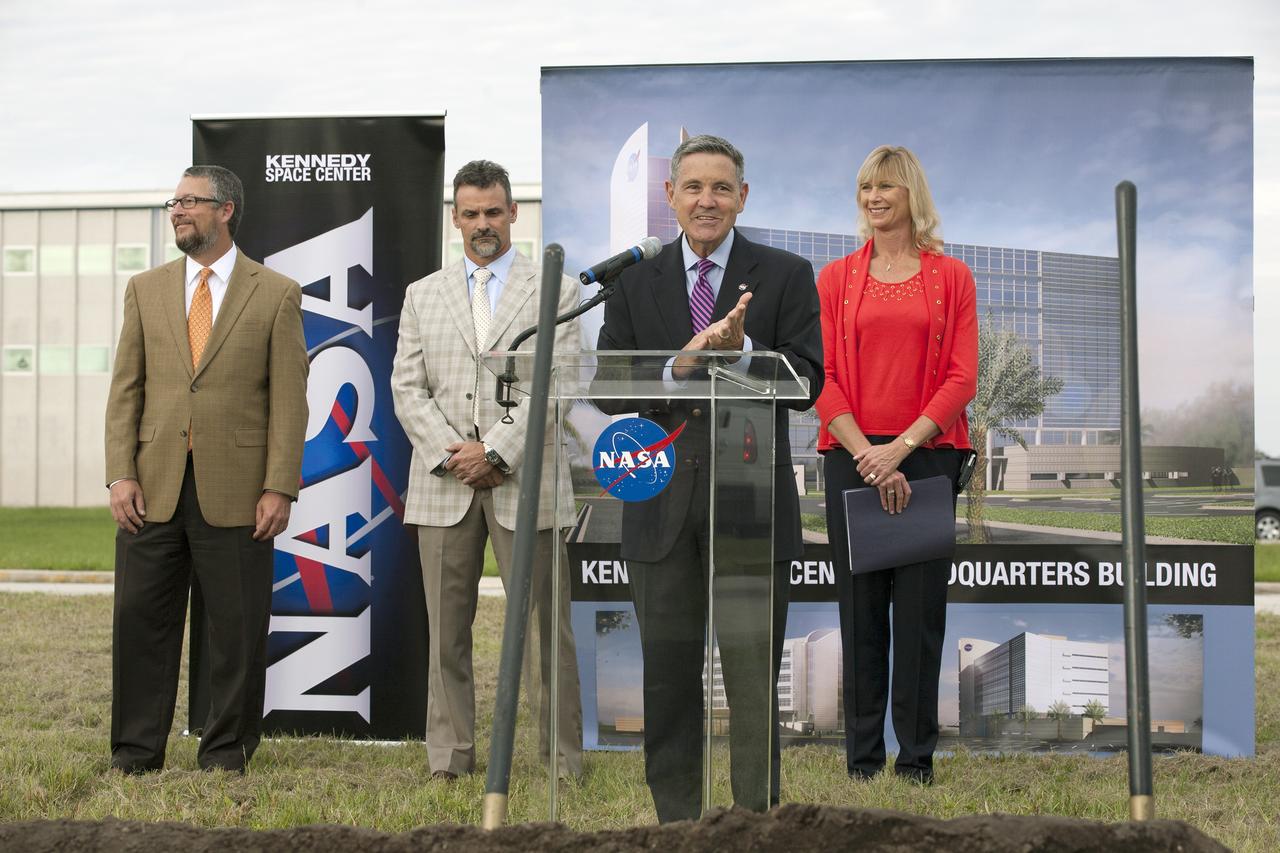
CAPE CANAVERAL, Fla. – Groundbreaking for the new Central Campus took place in the Industrial Area at NASA's Kennedy Space Center in Florida. Kennedy Center Director Bob Cabana speaks to members of the media and guests during the groundbreaking ceremony. To his right is Nancy Bray, director of Kennedy's Center Operations Directorate. From far left, are Steve Belflower, vice president of HuntonBrady Architects of Orlando, and Kirk Hazen, southeast district manager and vice president of Hensel Phelps, the construction contractor. Kennedy is transforming into a multi-user, 21st century spaceport supporting both commercial and government users and operations. Central Campus Phase I includes construction of a new Headquarters Building as one of the major components of the strategy. The new Headquarters Building will be a seven-story, 200,000-square-foot facility that will house about 500 NASA civil service and contractor employees. Photo credit: NASA/Kim Shiflett
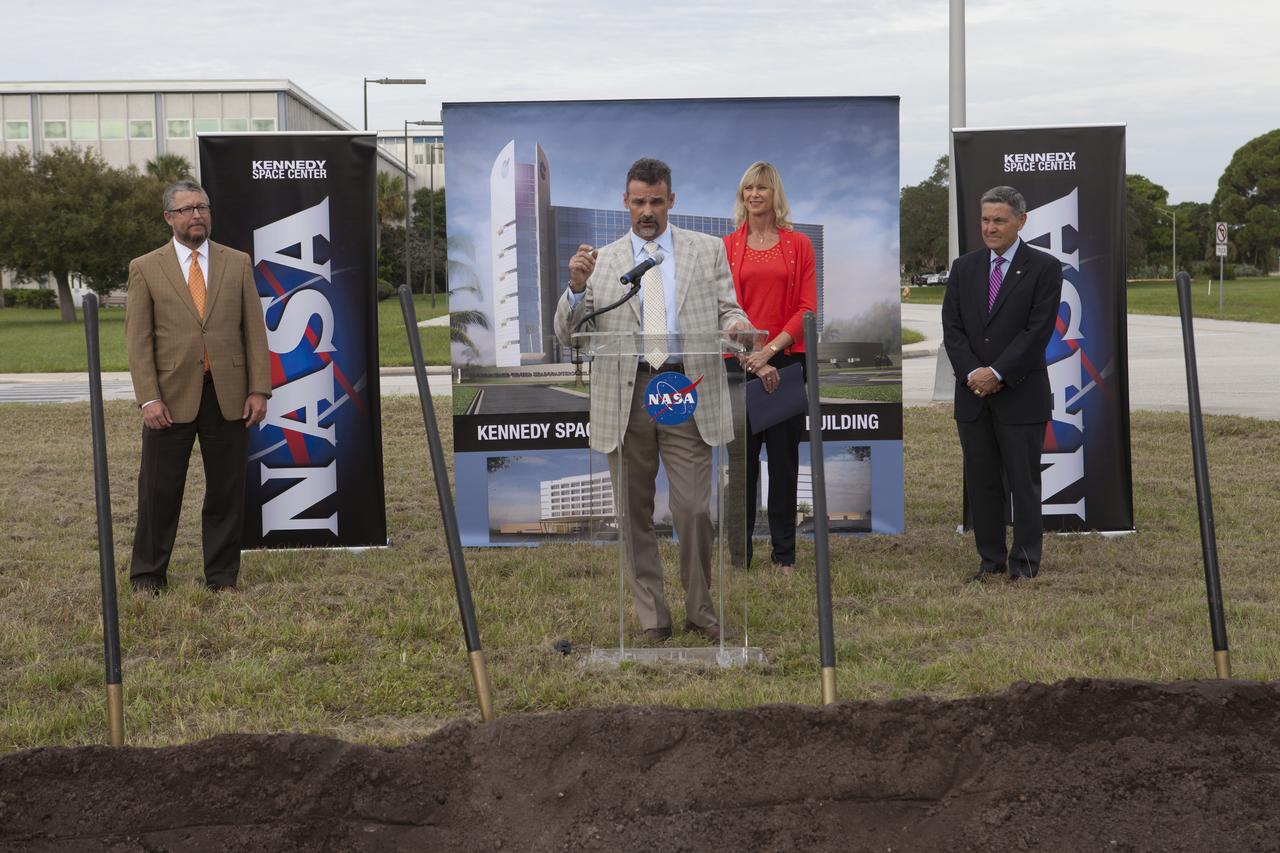
Groundbreaking for the new Central Campus took place in the Industrial Area at NASA's Kennedy Space Center in Florida. Kirk Hazen, southeast district manager and vice president of Hensel Phelps, the construction contractor, speaks to members of the media and guests during the groundbreaking ceremony. Behind him is Nancy Bray, director of Kennedy's Center Operations Directorate. To his right is Kennedy Center Director Bob Cabana. To his left is Steve Belflower, vice president of HuntonBrady Architects of Orlando. Kennedy is transforming into a multi-user, 21st century spaceport supporting both commercial and government users and operations. Central Campus Phase I includes construction of a new Headquarters Building as one of the major components of the strategy. The new Headquarters Building will be a seven-story, 200,000-square-foot facility that will house about 500 NASA civil service and contractor employees.
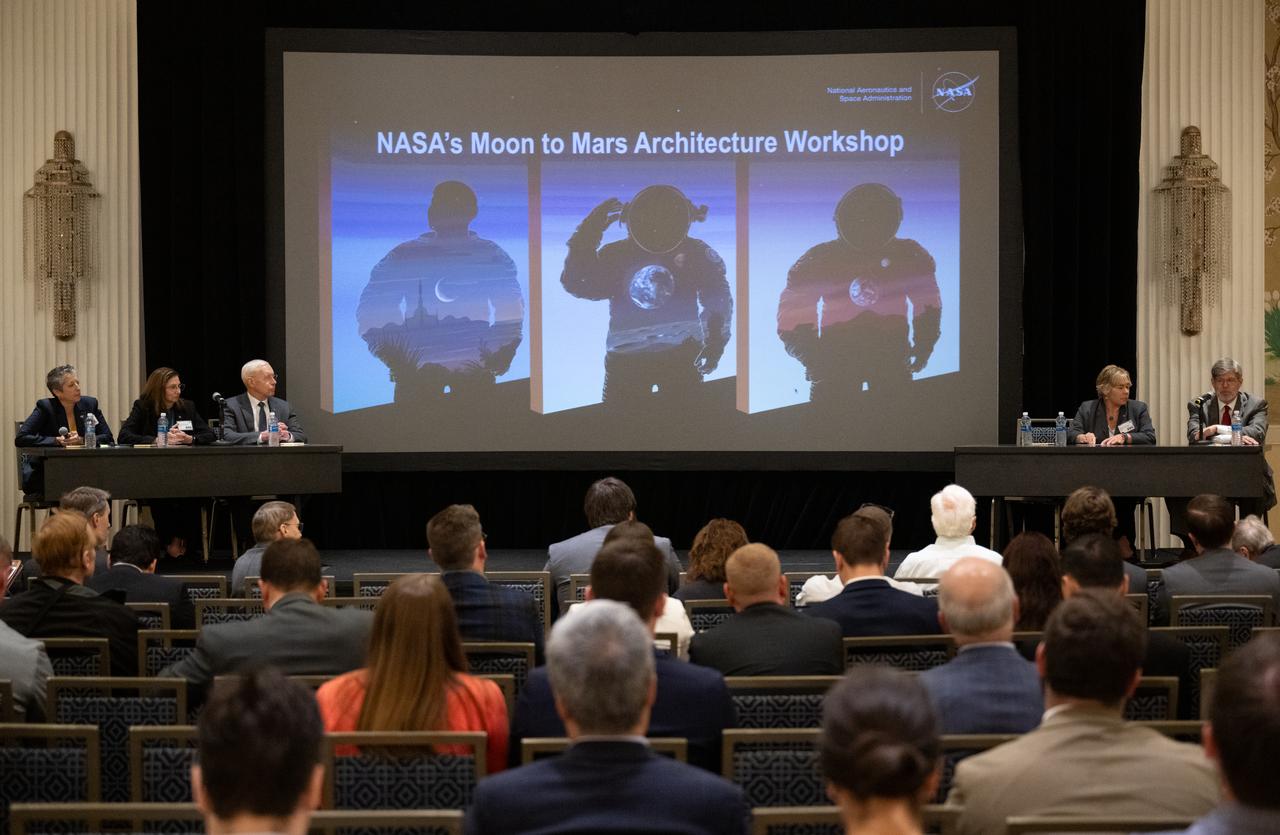
Nujoud Merancy, architecture lead for NASA's Exploration Systems Development Mission Directorate, Catherine Koerner, deputy associate administrator for NASA's Exploration Systems Development Mission Directorate, Patrick Forrester, special advisor in NASA's Space Operations Mission Directorate, Michelle Munk, chief architect for NASA’s Space Technology Mission Directorate, and Joel Kearns, deputy associate administrator for Exploration in NASA's Science Mission Directorate, are seen on stage during NASA’s Moon to Mars Architecture Workshop, Tuesday, June 27, 2023, at the Gaylord National Resort and Convention Center in National Harbor, Md. Following the release of the 2022 Architecture Concept Review, NASA is conducting the workshop to engage the broader space community and collect feedback from U.S. industry and academia to inform the Moon to Mars mission architecture and operational delivery. Photo Credit: (NASA/Joel Kowsky)
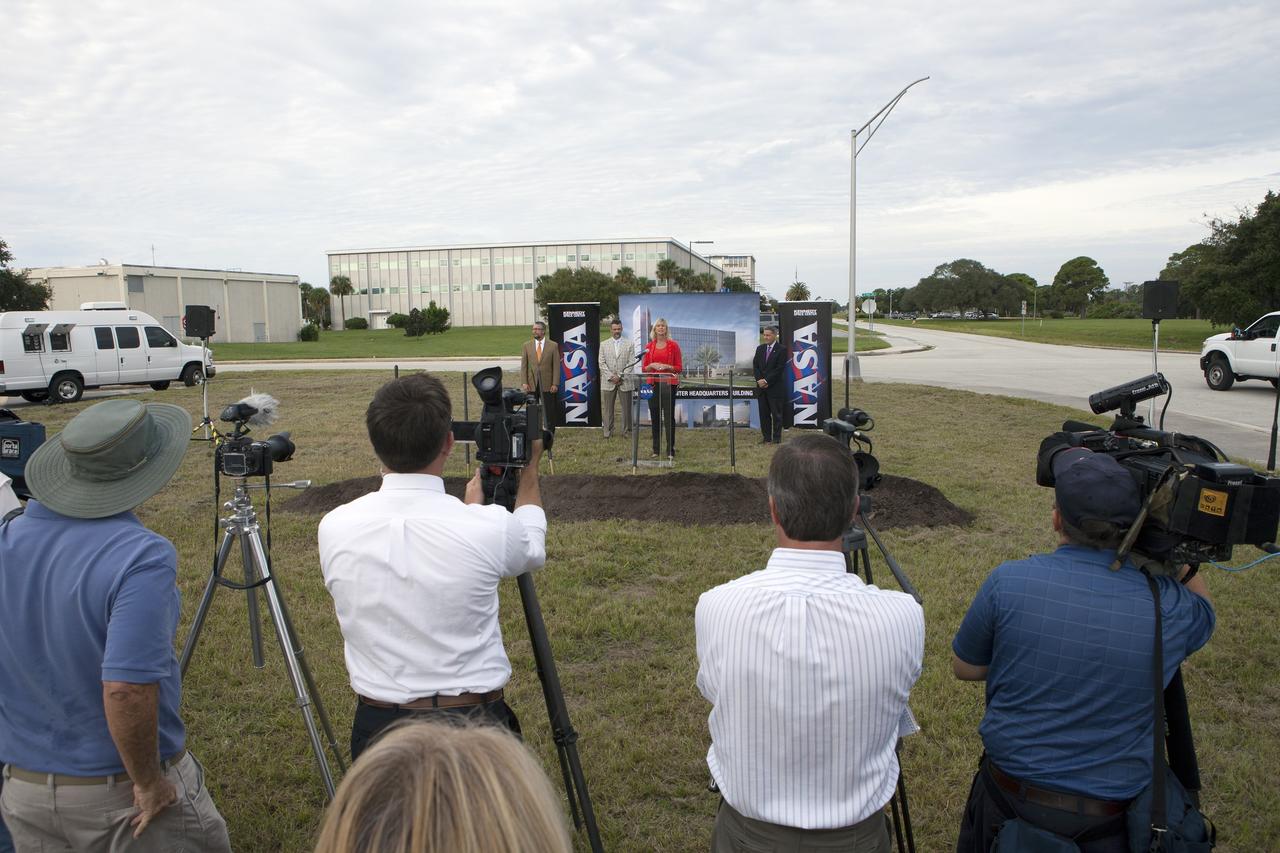
CAPE CANAVERAL, Fla. – Groundbreaking for the new Central Campus took place in the Industrial Area at NASA's Kennedy Space Center in Florida. Nancy Bray, director of Kennedy's Center Operations Directorate, speaks to members of the media and guests during the ceremony. To her right is Kennedy Center Director Bob Cabana. From far left, are Steve Belflower, vice president of HuntonBrady Architects of Orlando, and Kirk Hazen, southeast district manager and vice president of Hensel Phelps, the construction contractor. Kennedy is transforming into a multi-user, 21st century spaceport supporting both commercial and government users and operations. Central Campus Phase I includes construction of a new Headquarters Building as one of the major components of the strategy. The new Headquarters Building will be a seven-story, 200,000-square-foot facility that will house about 500 NASA civil service and contractor employees. Photo credit: NASA/Kim Shiflett
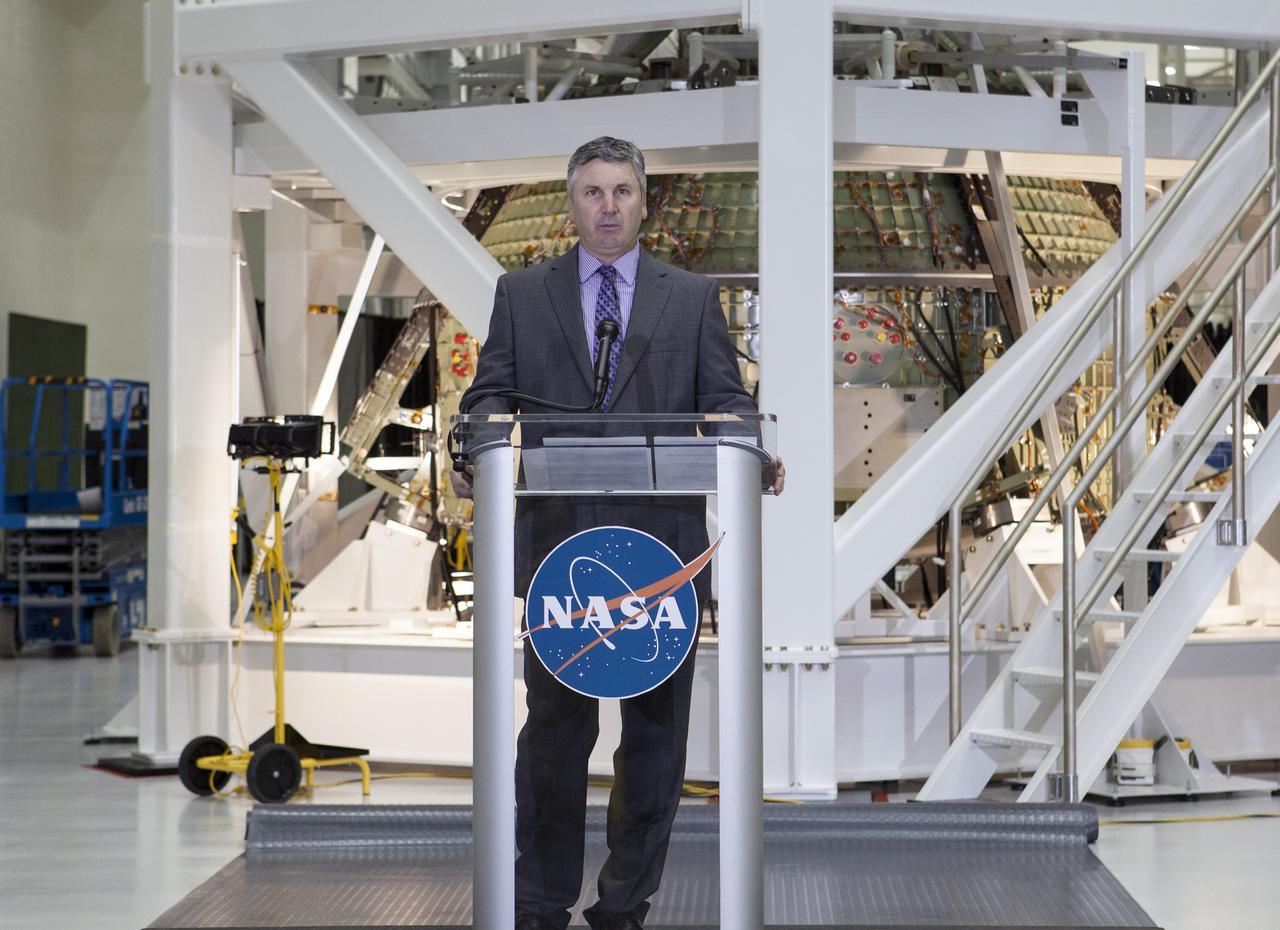
CAPE CANAVERAL, Fla. – In the Operations and Checkout Building OandC at the Kennedy Space Center in Florida, Scott Colloredo, chief architect for the Ground Systems Development and Operations Program, speaks to news media representatives updating progress on preparing the Orion spacecraft for its first uncrewed mission, Exploration Flight Test-1 EFT-1 in 2014. The crew module is seen behind Colloredo in its test stand. Launched atop NASA's heavy-lift Space Launch System rocket, Orion is now targeted to take astronauts in a sample return mission to an asteroid as early as 2021. On the third anniversary of President Barack Obama issuing his challenge to NASA to send astronauts to an asteroid, news media representatives were given an opportunity to see up-close the Orion spacecraft which could take astronauts on such a flight. They also heard from key leaders of that effort in Kennedy's OandC where Orion's assembly is taking place. Photo credit: NASA_Kim Shiflett
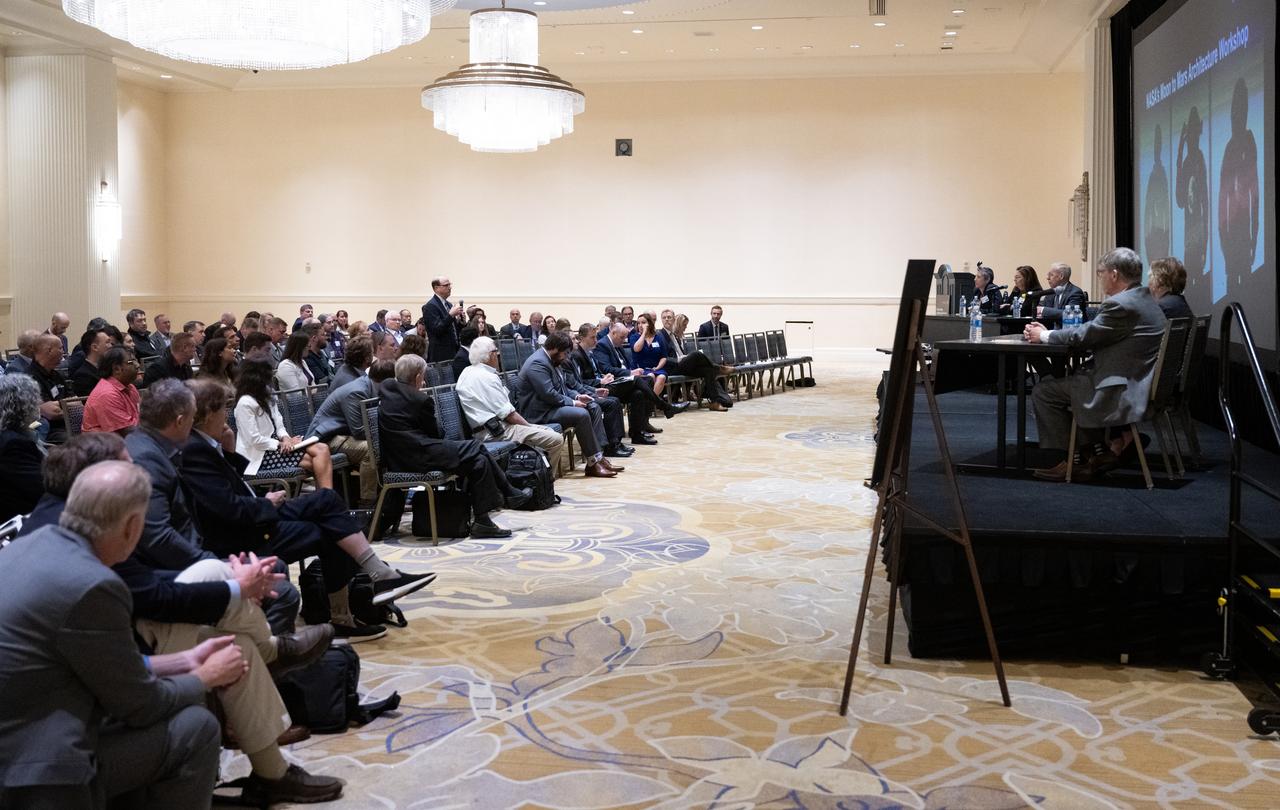
Nujoud Merancy, architecture lead for NASA's Exploration Systems Development Mission Directorate, Catherine Koerner, deputy associate administrator for NASA's Exploration Systems Development Mission Directorate, Patrick Forrester, special advisor in NASA's Space Operations Mission Directorate, Michelle Munk, chief architect for NASA’s Space Technology Mission Directorate, and Joel Kearns, deputy associate administrator for Exploration in NASA's Science Mission Directorate, listen to a question during NASA’s Moon to Mars Architecture Workshop, Tuesday, June 27, 2023, at the Gaylord National Resort and Convention Center in National Harbor, Md. Following the release of the 2022 Architecture Concept Review, NASA is conducting the workshop to engage the broader space community and collect feedback from U.S. industry and academia to inform the Moon to Mars mission architecture and operational delivery. Photo Credit: (NASA/Joel Kowsky)
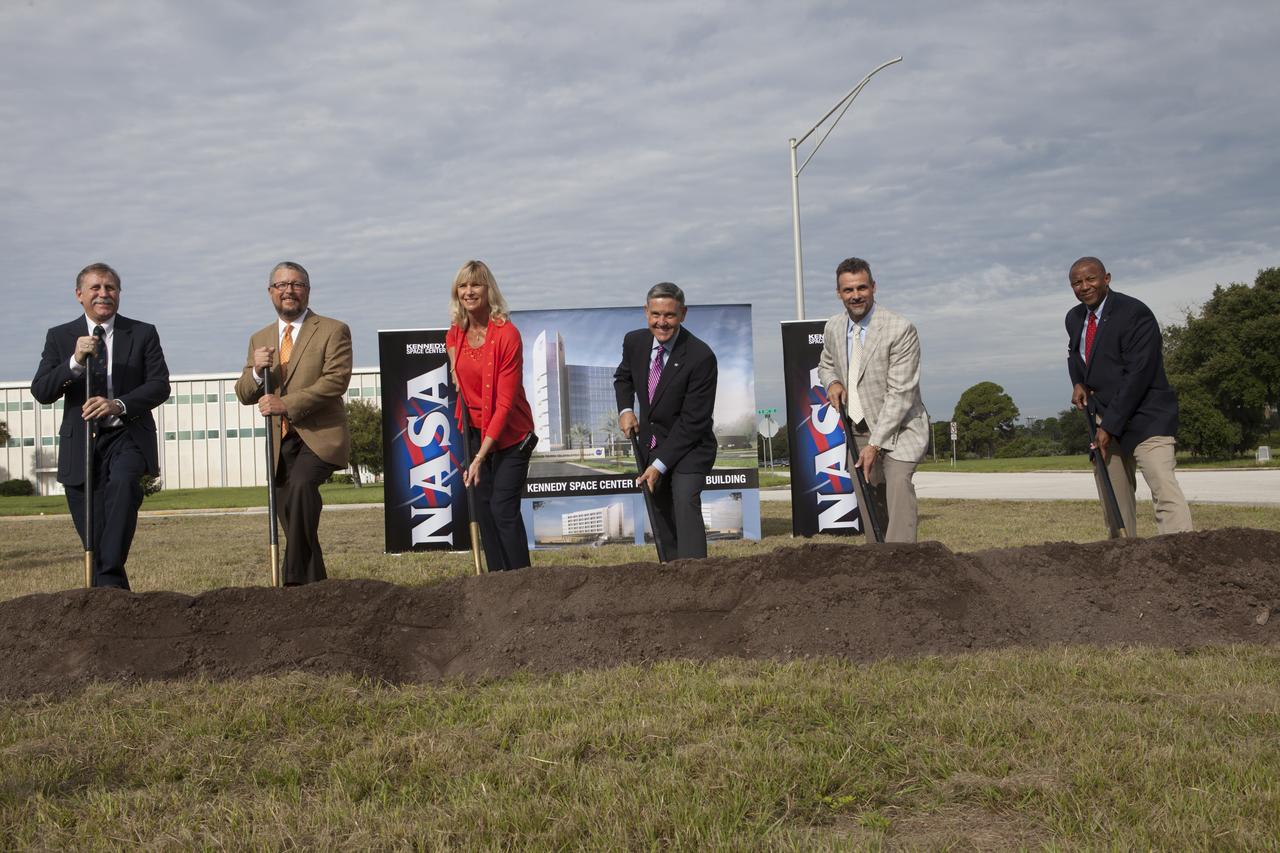
Groundbreaking for the new Central Campus took place in the Industrial Area at NASA's Kennedy Space Center in Florida. Digging in with shovels during the groundbreaking ceremony, are Dan Tweed, associate director for Facilities at Kennedy Steve Belflower, vice president of HuntonBrady Architects of Orlando Nancy Bray, director of Kennedy's Center Operations Directorate Kennedy Center Director Bob Cabana Kirk Hazen, southeast district manager and vice president of Hensel Phelps, the construction contractor and Kelvin Manning, Kennedy's associate director. Kennedy is transforming into a multi-user, 21st century spaceport supporting both commercial and government users and operations. Central Campus Phase I includes construction of a new Headquarters Building as one of the major components of the strategy. The new Headquarters Building will be a seven-story, 200,000-square-foot facility that will house about 500 NASA civil service and contractor employees.
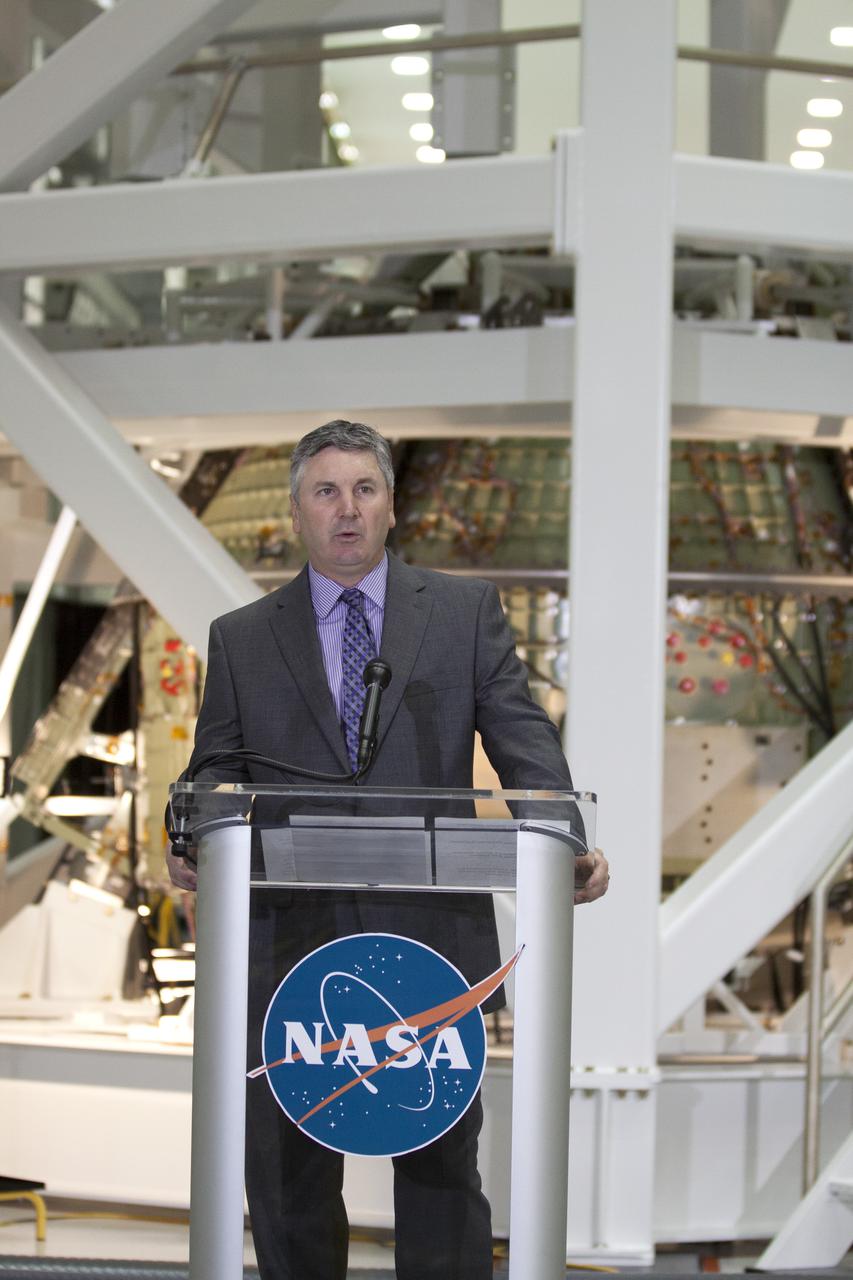
CAPE CANAVERAL, Fla. – In the Operations and Checkout Building OandC at the Kennedy Space Center in Florida, Scott Colloredo, chief architect for the Ground Systems Development and Operations Program, speaks to news media representatives updating progress on preparing the Orion spacecraft for its first uncrewed mission, Exploration Flight Test-1 EFT-1 in 2014. The crew module is seen behind Hefner in its test stand. Launched atop NASA's heavy-lift Space Launch System rocket, Orion is now targeted to take astronauts in a sample return mission to an asteroid as early as 2021. On the third anniversary of President Barack Obama issuing his challenge to NASA to send astronauts to an asteroid, news media representatives were given an opportunity to see up-close the Orion spacecraft which could take astronauts on such a flight. They also heard from key leaders of that effort in Kennedy's OandC where Orion's assembly is taking place. Photo credit: NASA_Kim Shiflett
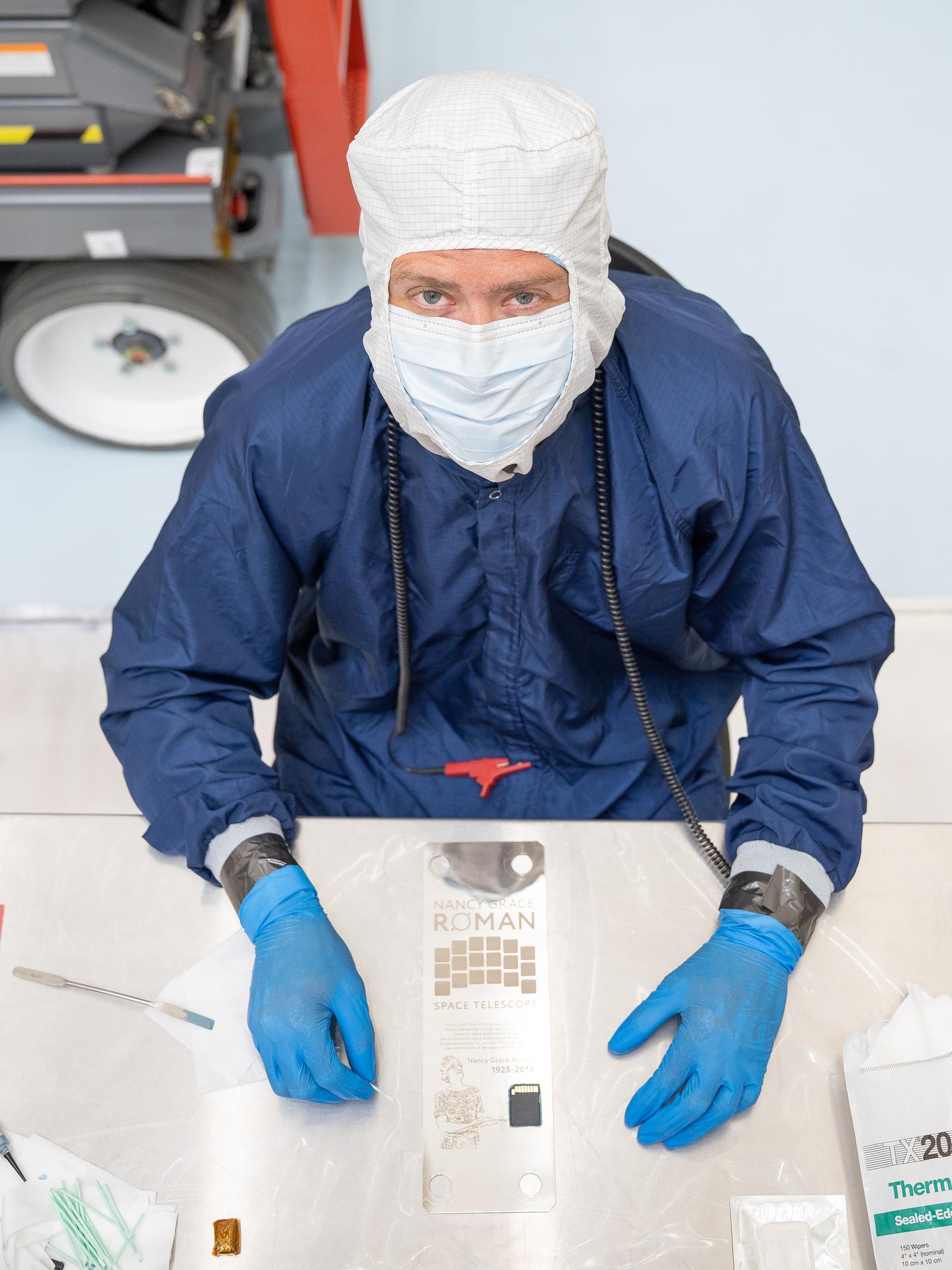
Inside the Payload Hazardous Servicing Facility at NASA’s Kennedy Space Center in Florida, Harry Willems, a mechanical technician from the agency’s Goddard Space Flight Center in Greenbelt, Maryland, installs a memory card containing a total of 1,350,144 names as part of a commemorative plaque on the Nancy Grace Roman Space Telescope on Friday, July 17, 2026. The names, submitted by people from across the globe, including astronauts from NASA’s Artemis II and Artemis III missions, will travel with the Roman observatory to the Sun-Earth Lagrange point 2, or L2, about one million miles from Earth, where the Sun’s and Earth’s gravity balance out. Roman is named after Dr. Nancy Grace Roman, NASA’s first chief astronomer and one of the architects of the agency’s modern science program.
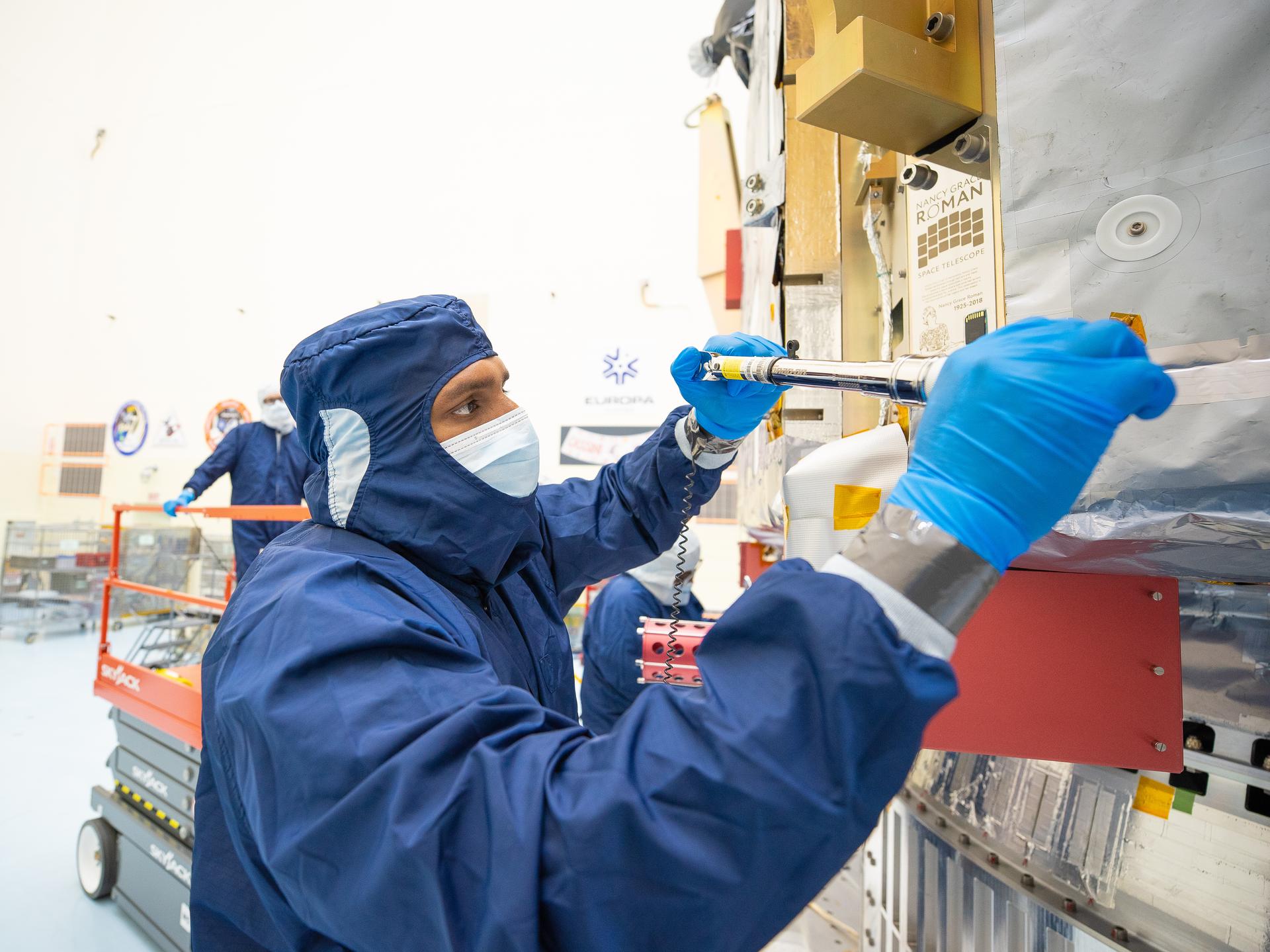
Technicians inside the Payload Hazardous Servicing Facility at NASA’s Kennedy Space Center in Florida install a commemorative plaque on the Nancy Grace Roman Space Telescope on Monday, July 27, 2026. In addition to honoring the legacy of Dr. Nancy Grace Roman, NASA’s first chief astronomer and one of the architects of the agency’s modern science program, the plaque features a memory card containing a total of 1,350,144 names submitted by people from across the globe, including astronauts from NASA’s Artemis II and Artemis III missions. The Roman observatory will travel to the Sun-Earth Lagrange point 2, or L2, about one million miles from Earth, where the Sun’s and Earth’s gravity balance out, to complete a statistical census of planetary systems in our galaxy and settle essential questions in the areas of dark energy, exoplanets, and infrared astrophysics.
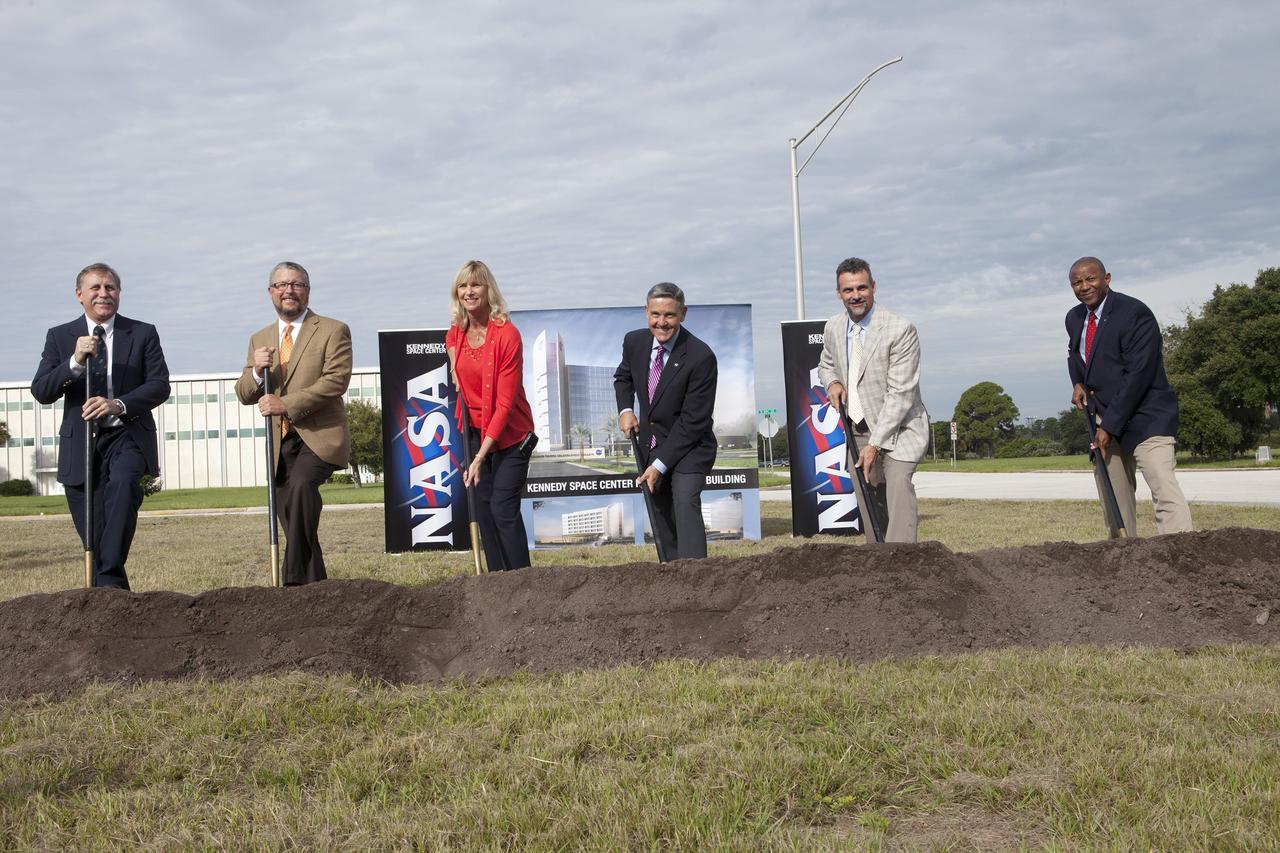
CAPE CANAVERAL, Fla. – Groundbreaking for the new Central Campus took place in the Industrial Area at NASA's Kennedy Space Center in Florida. Digging in with shovels during the groundbreaking ceremony, are Dan Tweed, associate director for Facilities at Kennedy Steve Belflower, vice president of HuntonBrady Architects of Orlando Nancy Bray, director of Kennedy's Center Operations Directorate Kennedy Center Director Bob Cabana Kirk Hazen, southeast district manager and vice president of Hensel Phelps, the construction contractor and Kelvin Manning, Kennedy's associate director. Kennedy is transforming into a multi-user, 21st century spaceport supporting both commercial and government users and operations. Central Campus Phase I includes construction of a new Headquarters Building as one of the major components of the strategy. The new Headquarters Building will be a seven-story, 200,000-square-foot facility that will house about 500 NASA civil service and contractor employees. Photo credit: NASA/Kim Shiflett
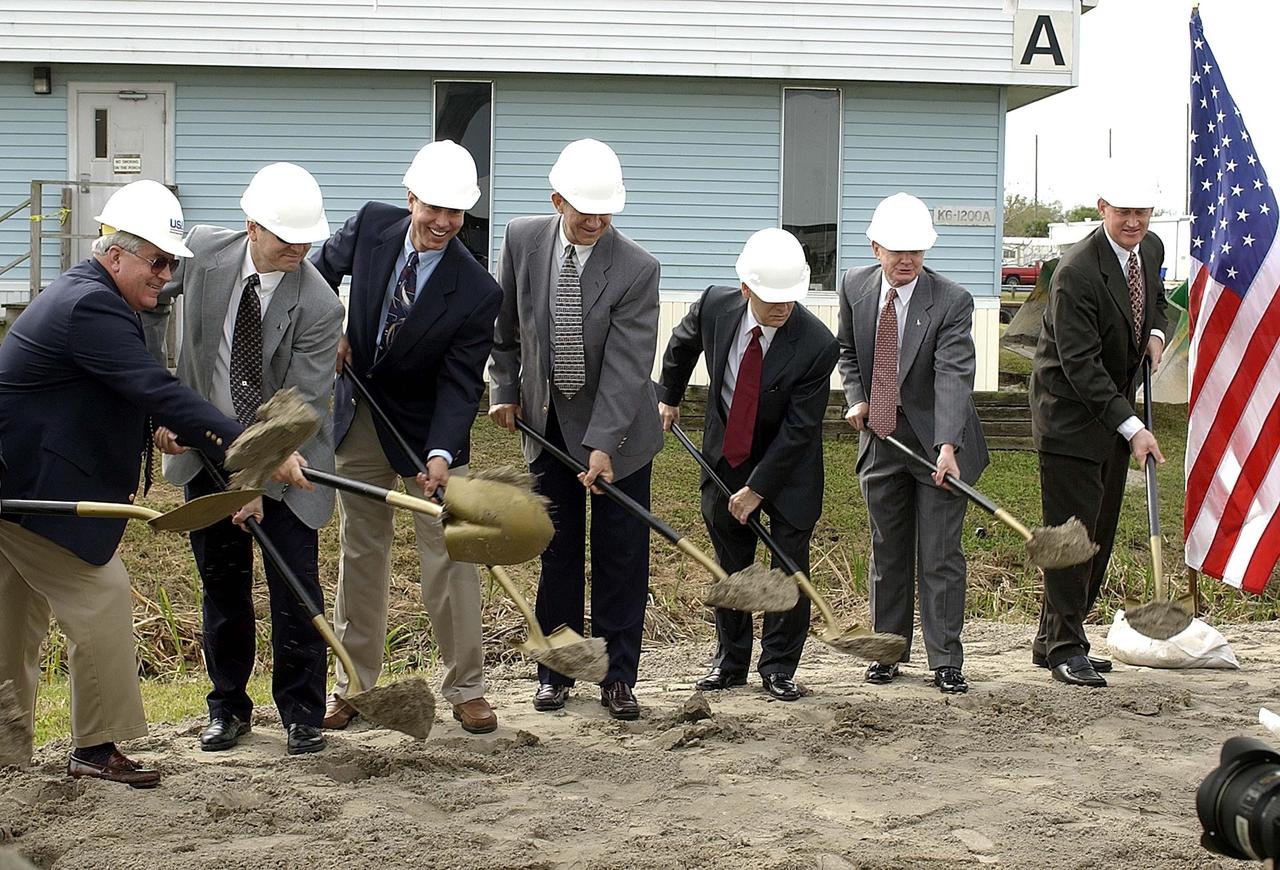
KENNEDY SPACE CENTER, FLA. -- -- Lifting their shovels for the groundbreaking of the Operations Support Building II are (left to right) Bill Pickavance, Vice President & Deputy Program Manager Florida Operations, United Space Alliance; Mike Wetmore, director of Shuttle Processing; Miguel Morales, chief, Facilities Division, Spaceport Services; Mike Sumner, chief of operations, Spaceport Services; David Wolfberg, designer of the facility, with Architect and Engineers Wolfberg, Alvarez and Partners of Coral Gables; Roy Bridges, KSC director; and Don Minderman, OSB II project manager, Spaceport Services. Not shown: David Boland, David Boland Inc.(construction company). The new building will replace modular housing constructed more than 20 years ago and house NASA and contractor support staff for shuttle operations. The demolition of the modular buildings has begun and construction will immediately follow. The new structure is projected to be ready in April 2005.
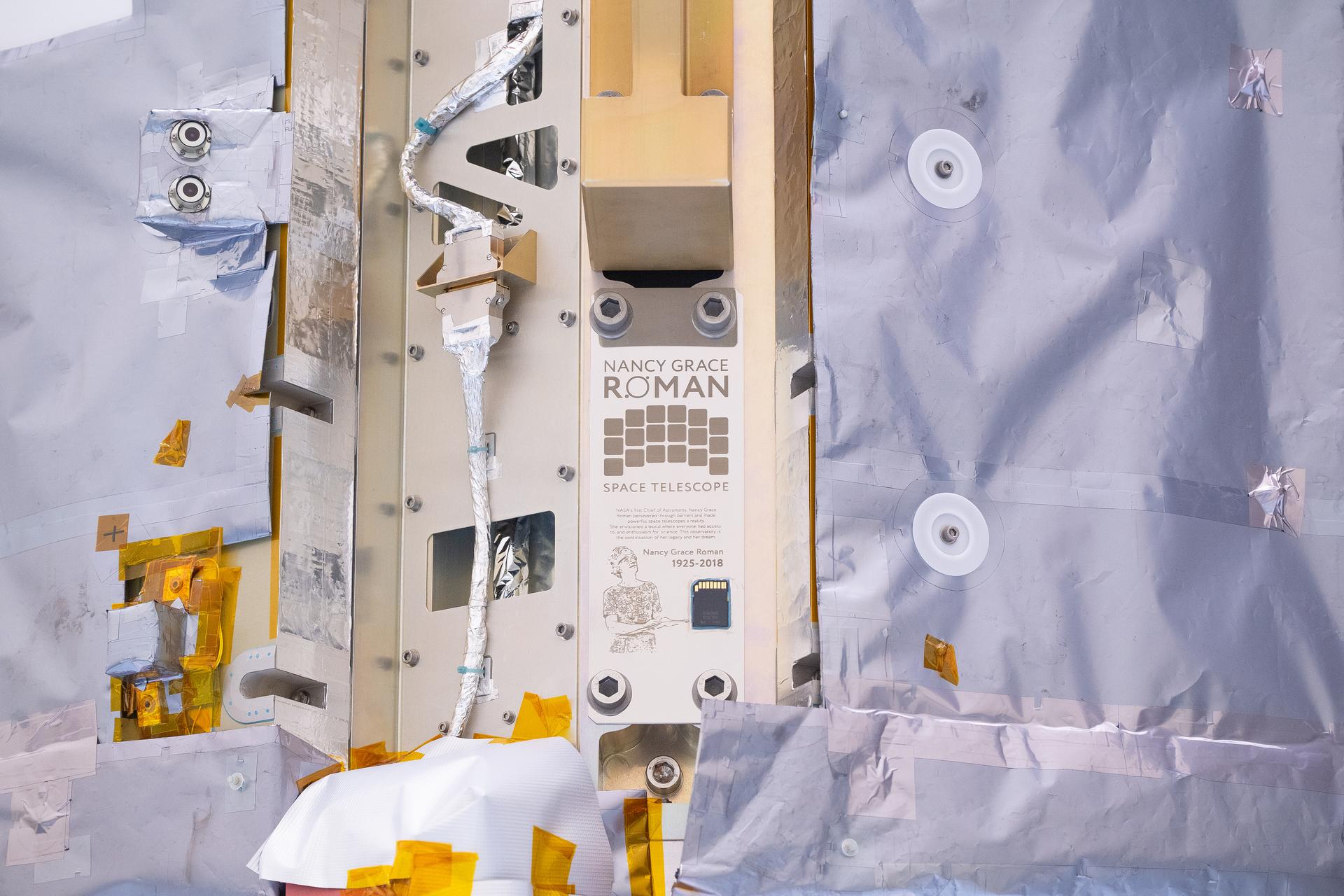
Technicians inside the Payload Hazardous Servicing Facility at NASA’s Kennedy Space Center complete installation of a commemorative plaque on the agency’s Nancy Grace Roman Space Telescope, as photographed on Tuesday, July 28, 2026. In addition to honoring the legacy of Dr. Nancy Grace Roman, NASA’s first chief astronomer and one of the architects of the agency’s modern science program, the plaque features a memory card containing a total of 1,350,144 names submitted by people from across the globe, including astronauts from NASA’s Artemis II and Artemis III missions. The Roman observatory will travel to the Sun-Earth Lagrange point 2, or L2, about one million miles from Earth, where the Sun’s and Earth’s gravity balance out, to complete a statistical census of planetary systems in our galaxy and settle essential questions in the areas of dark energy, exoplanets, and infrared astrophysics.
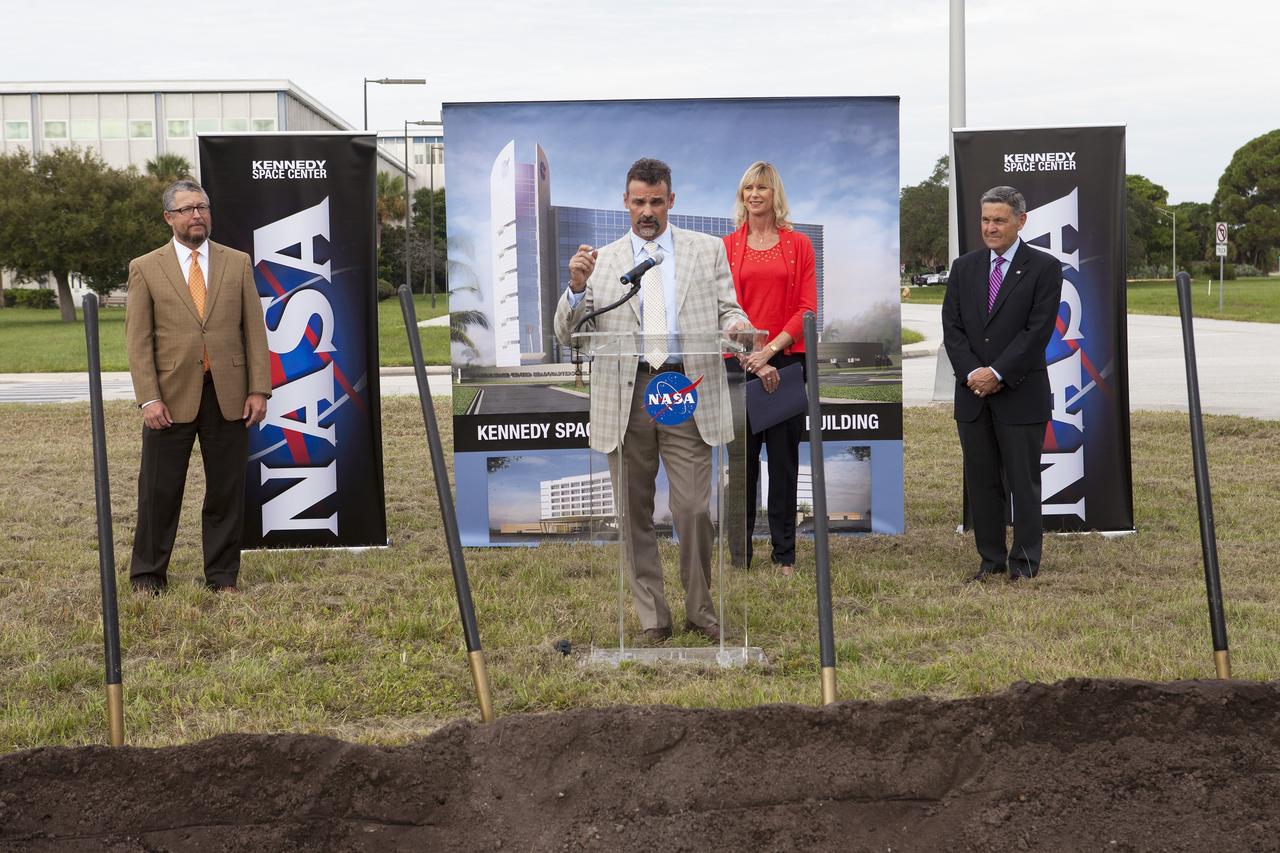
CAPE CANAVERAL, Fla. – Groundbreaking for the new Central Campus took place in the Industrial Area at NASA's Kennedy Space Center in Florida. Kirk Hazen, southeast district manager and vice president of Hensel Phelps, the construction contractor, speaks to members of the media and guests during the groundbreaking ceremony. Behind him is Nancy Bray, director of Kennedy's Center Operations Directorate. To his right is Kennedy Center Director Bob Cabana. To his left is Steve Belflower, vice president of HuntonBrady Architects of Orlando. Kennedy is transforming into a multi-user, 21st century spaceport supporting both commercial and government users and operations. Central Campus Phase I includes construction of a new Headquarters Building as one of the major components of the strategy. The new Headquarters Building will be a seven-story, 200,000-square-foot facility that will house about 500 NASA civil service and contractor employees. Photo credit: NASA/Kim Shiflett
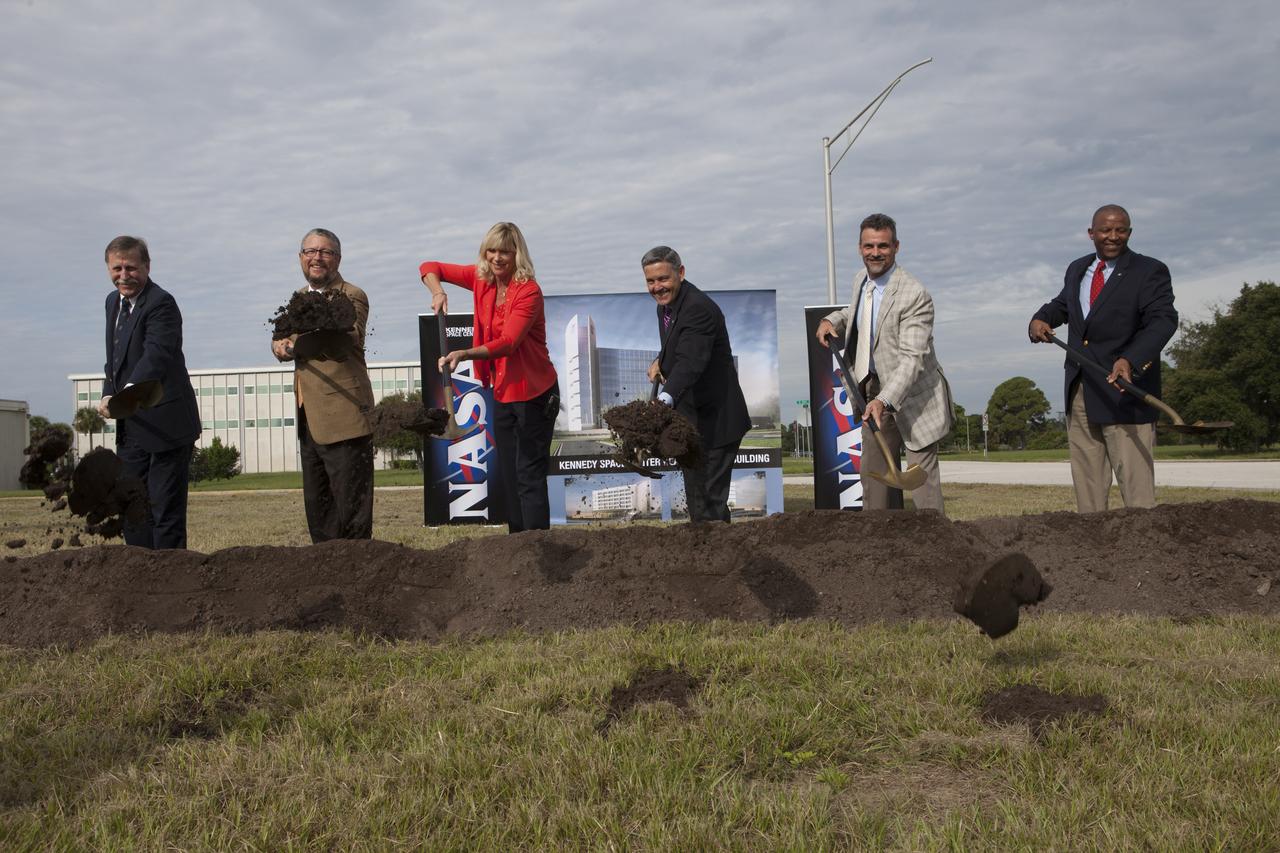
Groundbreaking for the new Central Campus took place in the Industrial Area at NASA's Kennedy Space Center in Florida. Digging in with shovels during the groundbreaking ceremony, are Dan Tweed, associate director for Facilities at Kennedy Steve Belflower, vice president of HuntonBrady Architects of Orlando Nancy Bray, director of Kennedy's Center Operations Directorate Kennedy Center Director Bob Cabana Kirk Hazen, southeast district manager and vice president of Hensel Phelps, the construction contractor and Kelvin Manning, Kennedy's associate director. Kennedy is transforming into a multi-user, 21st century spaceport supporting both commercial and government users and operations. Central Campus Phase I includes construction of a new Headquarters Building as one of the major components of the strategy. The new Headquarters Building will be a seven-story, 200,000-square-foot facility that will house about 500 NASA civil service and contractor employees.
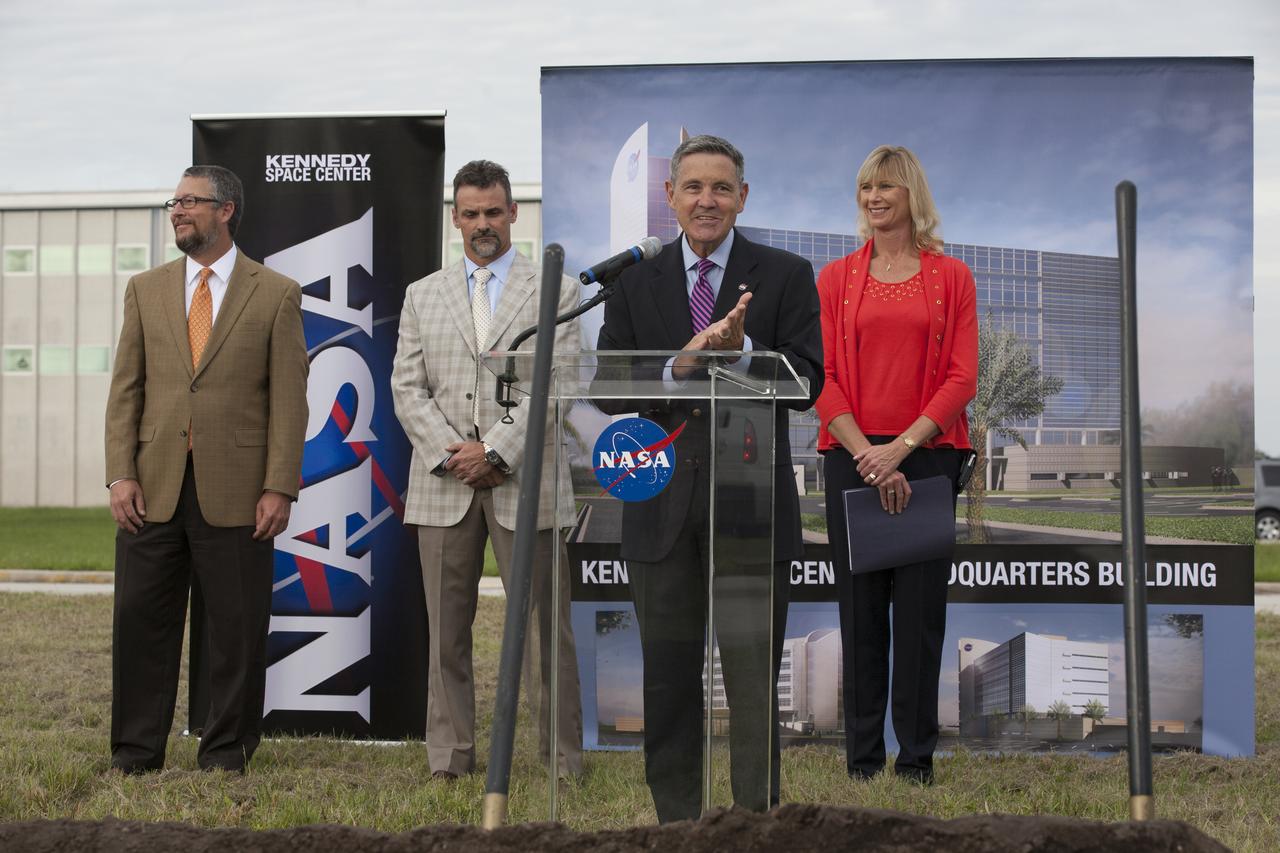
Groundbreaking for the new Central Campus took place in the Industrial Area at NASA's Kennedy Space Center in Florida. Kennedy Center Director Bob Cabana speaks to members of the media and guests during the groundbreaking ceremony. To his right is Nancy Bray, director of Kennedy's Center Operations Directorate. From far left, are Steve Belflower, vice president of HuntonBrady Architects of Orlando, and Kirk Hazen, southeast district manager and vice president of Hensel Phelps, the construction contractor. Kennedy is transforming into a multi-user, 21st century spaceport supporting both commercial and government users and operations. Central Campus Phase I includes construction of a new Headquarters Building as one of the major components of the strategy. The new Headquarters Building will be a seven-story, 200,000-square-foot facility that will house about 500 NASA civil service and contractor employees.
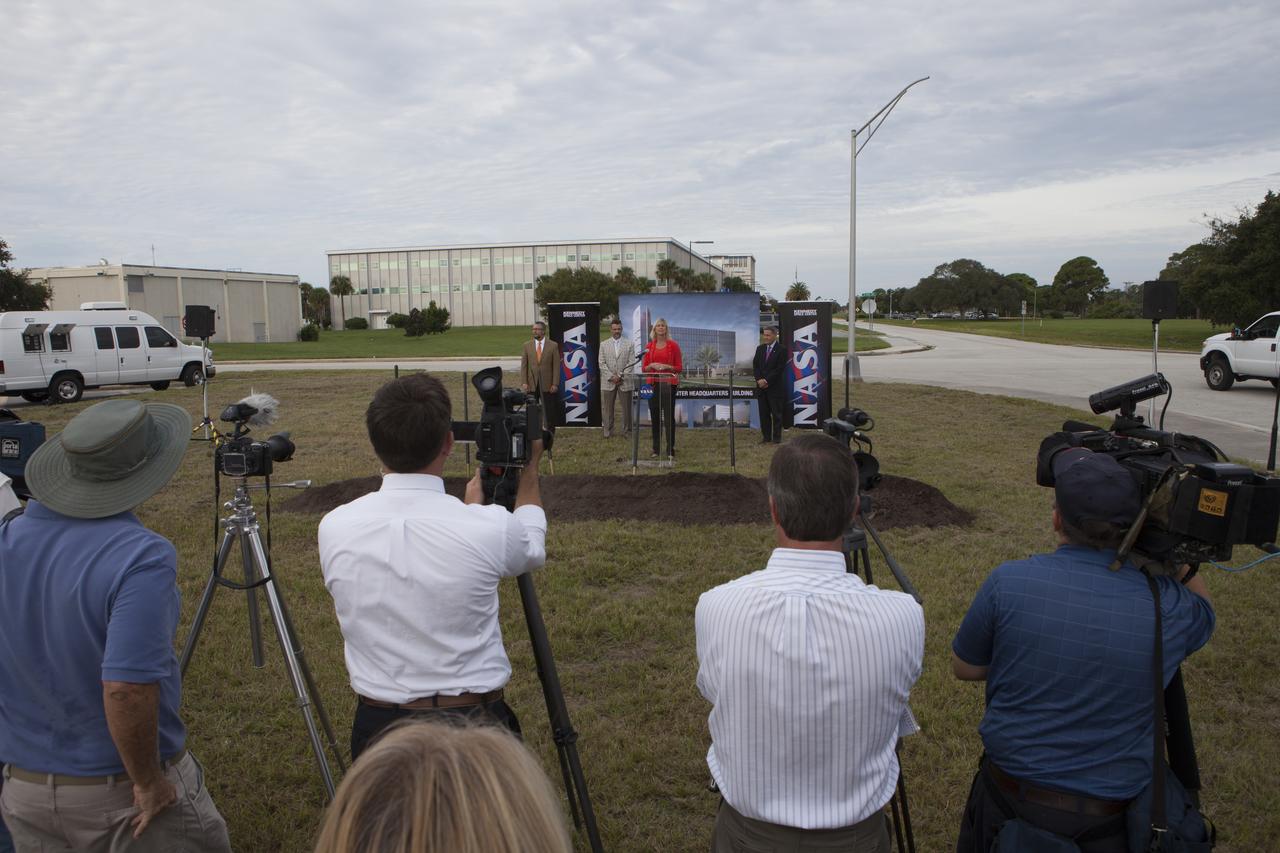
Groundbreaking for the new Central Campus took place in the Industrial Area at NASA's Kennedy Space Center in Florida. Nancy Bray, director of Kennedy's Center Operations Directorate, speaks to members of the media and guests during the ceremony. To her right is Kennedy Center Director Bob Cabana. From far left, are Steve Belflower, vice president of HuntonBrady Architects of Orlando, and Kirk Hazen, southeast district manager and vice president of Hensel Phelps, the construction contractor. Kennedy is transforming into a multi-user, 21st century spaceport supporting both commercial and government users and operations. Central Campus Phase I includes construction of a new Headquarters Building as one of the major components of the strategy. The new Headquarters Building will be a seven-story, 200,000-square-foot facility that will house about 500 NASA civil service and contractor employees.
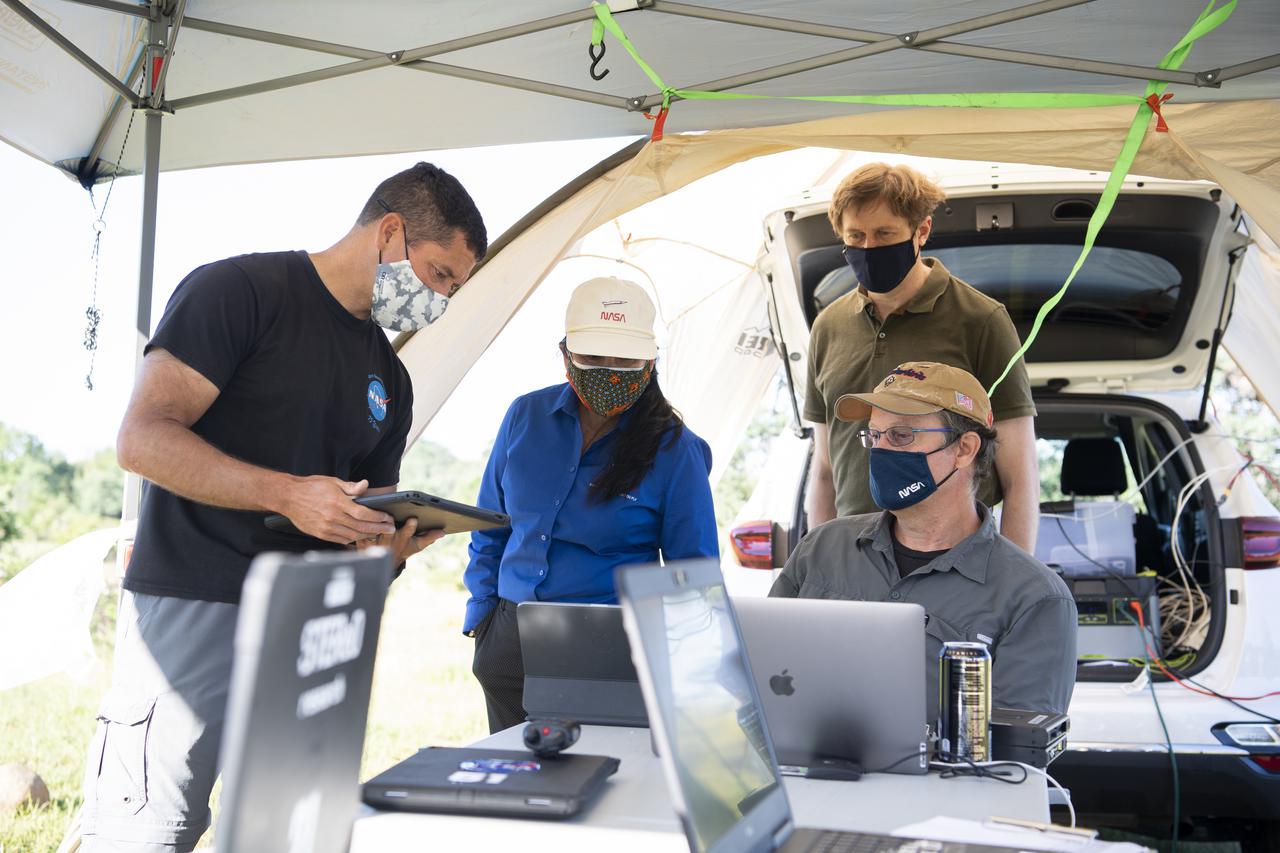
Joey Mercer, principle investigator for STEReO, the Scalable Traffic Management for Emergency Response Operations project, at NASA's Ames Research Center, left, Huy Tran, director of aeronautics at NASA's Ames Research Center, center, and Richard Barhydt, station director of the U.S. Forest Service's Pacific Southwest Research Station, standing right, speak with George Lawton, system architect for STEReO at NASA's Ames Research Center, seated right, during STEReO test activities, Tuesday, May 4, 2021 as Cal Fire conducts aerial fire fighting training exercises near Redding, California. STEReO, the Scalable Traffic Management for Emergency Response Operations project, led by NASA’s Ames Research Center, builds on NASA’s expertise in air traffic management, human factors research, and autonomous technology development to apply the agency’s work in Unmanned Aircraft Systems Traffic Management, or UTM, to public safety uses. Photo Credit: (NASA/Joel Kowsky)
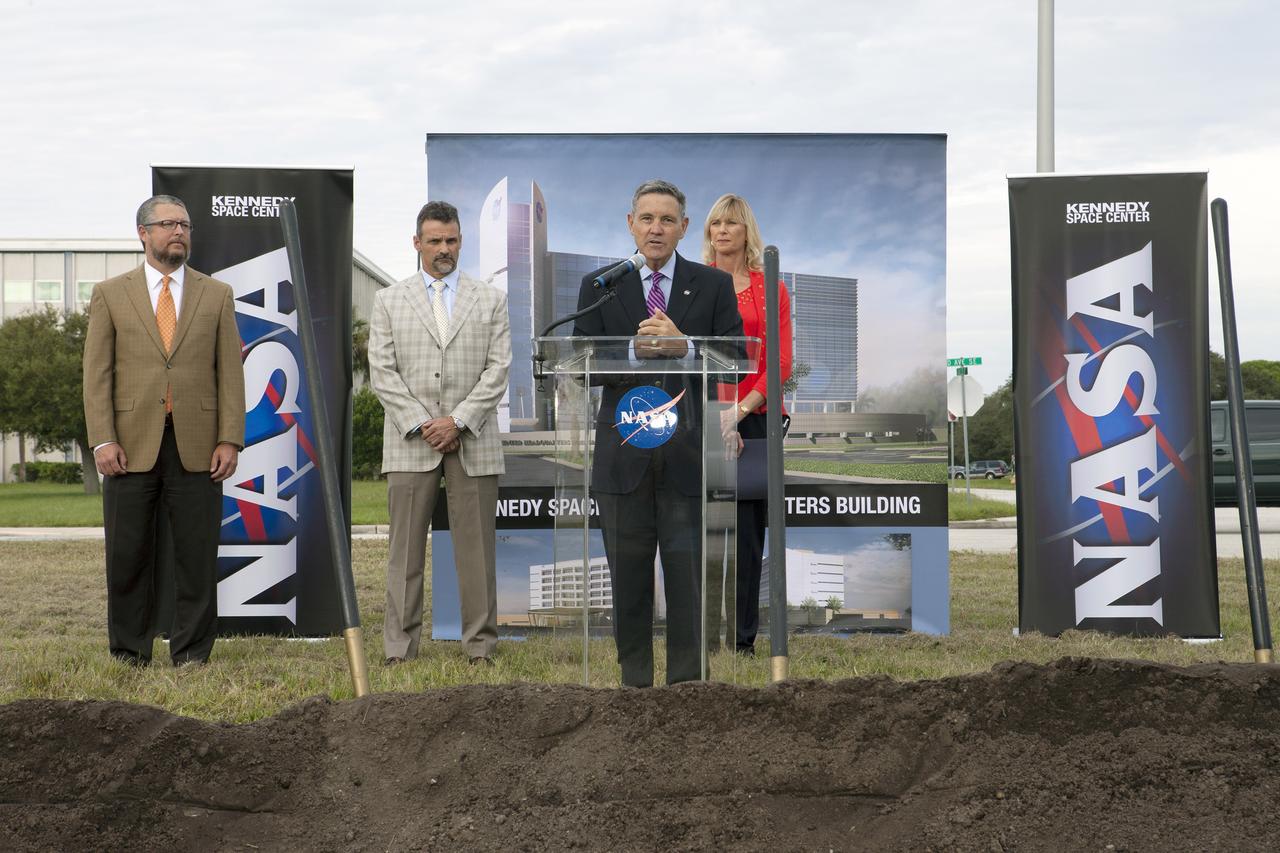
CAPE CANAVERAL, Fla. – Groundbreaking for the new Central Campus took place in the Industrial Area at NASA's Kennedy Space Center in Florida. Kennedy Center Director Bob Cabana speaks to members of the media and guests during the ceremony. Behind Cabana is Nancy Bray, director of Kennedy's Center Operations Directorate. From far left, are Steve Belflower, vice president of HuntonBrady Architects of Orlando, and Kirk Hazen, southeast district manager and vice president of Hensel Phelps, the construction contractor. Kennedy is transforming into a multi-user, 21st century spaceport supporting both commercial and government users and operations. Central Campus Phase I includes construction of a new Headquarters Building as one of the major components of the strategy. The new Headquarters Building will be a seven-story, 200,000-square-foot facility that will house about 500 NASA civil service and contractor employees. Photo credit: NASA/Kim Shiflett
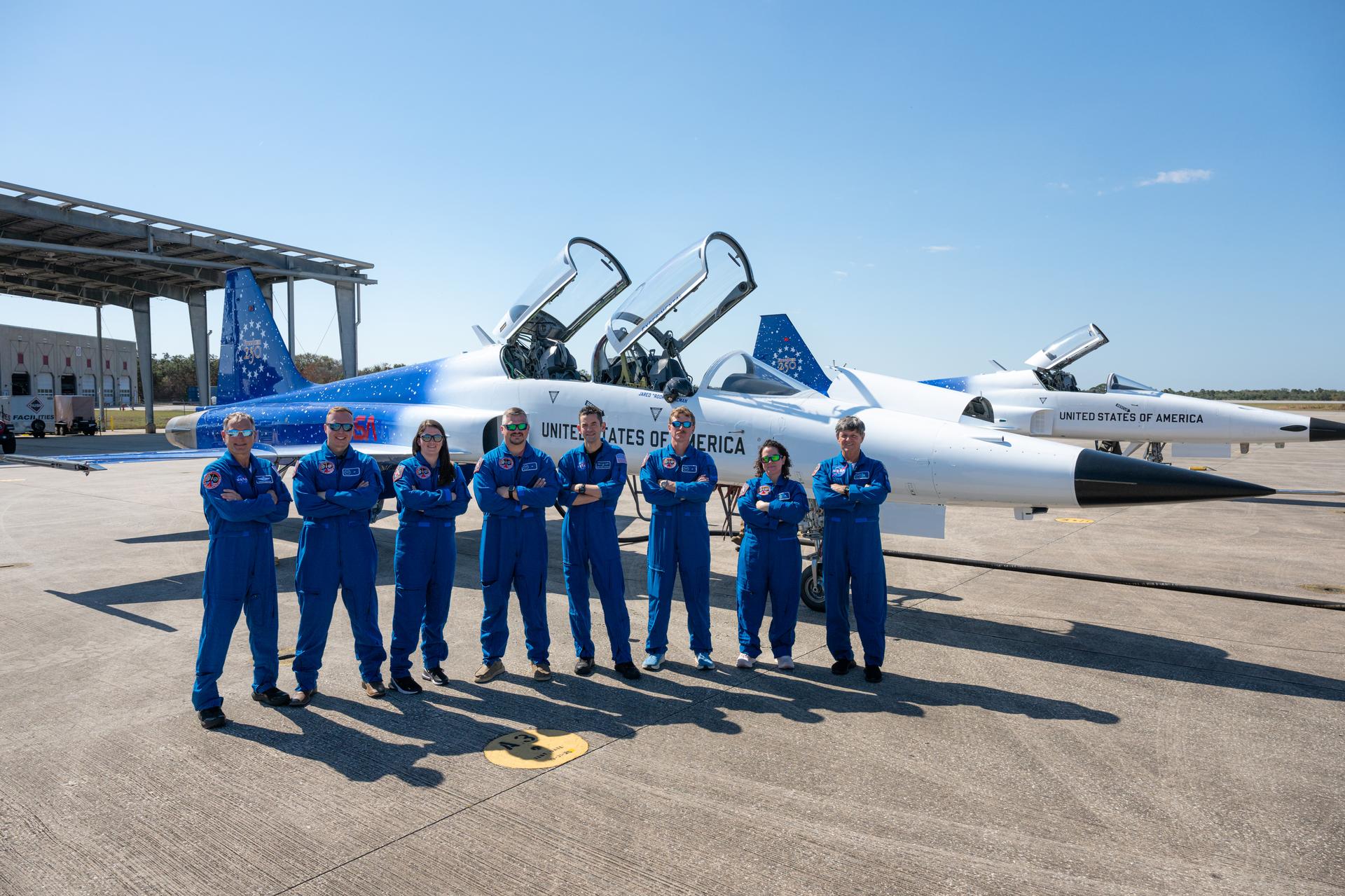
NASA Administrator Jared Isaacman, fifth from left, poses for a photograph with NASA employees and F-5 pilots following an employee incentive flying event using Isaacman's personal F-5 aircraft, Saturday, Feb. 21, 2026, at NASA’s Kennedy Space Center in Florida. From left to right: Sean Gustafson, pilot and senior advisor to the administrator; Kristian Miasek, ET-10 test engineer at NASA’s Marshall Space Flight Center; Megan Vansant, chief architect and demolition program manager at NASA’s Marshall Space Flight Center; James Hamilton, propellant and pressurant manager at NASA’s Stennis Space Center; NASA Administrator Jared Isaacman; Briou Bourgeois, E-3 test director at NASA’s Stennis Space Center; Brittany Bouché, acting deputy chief of facility engineering services at NASA’s Stennis Space Center; and Jerry Kerby, pilot. Photo Credit: (NASA/John Kraus)
Groundbreaking for the new Central Campus took place in the Industrial Area at NASA's Kennedy Space Center in Florida. Kennedy Center Director Bob Cabana speaks to members of the media and guests during the ceremony. Behind Cabana is Nancy Bray, director of Kennedy's Center Operations Directorate. From far left, are Steve Belflower, vice president of HuntonBrady Architects of Orlando, and Kirk Hazen, southeast district manager and vice president of Hensel Phelps, the construction contractor. Kennedy is transforming into a multi-user, 21st century spaceport supporting both commercial and government users and operations. Central Campus Phase I includes construction of a new Headquarters Building as one of the major components of the strategy. The new Headquarters Building will be a seven-story, 200,000-square-foot facility that will house about 500 NASA civil service and contractor employees.
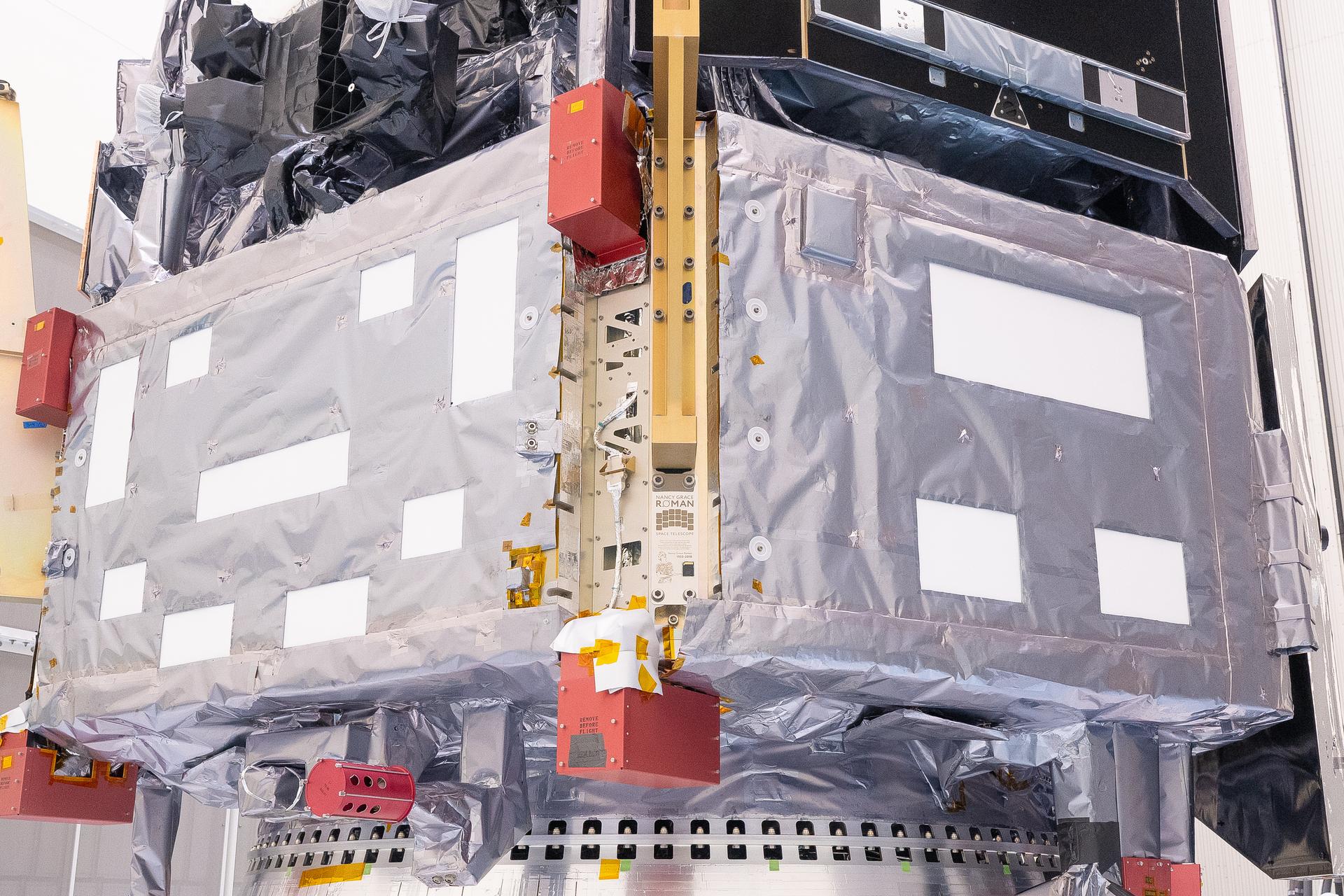
Technicians inside the Payload Hazardous Servicing Facility at NASA’s Kennedy Space Center complete installation of a commemorative plaque on the agency’s Nancy Grace Roman Space Telescope, as photographed on Tuesday, July 28, 2026. In addition to honoring the legacy of Dr. Nancy Grace Roman, NASA’s first chief astronomer and one of the architects of the agency’s modern science program, the plaque features a memory card containing a total of 1,350,144 names submitted by people from across the globe, including astronauts from NASA’s Artemis II and Artemis III missions. The Roman observatory will travel to the Sun-Earth Lagrange point 2, or L2, about one million miles from Earth, where the Sun’s and Earth’s gravity balance out, to complete a statistical census of planetary systems in our galaxy and settle essential questions in the areas of dark energy, exoplanets, and infrared astrophysics.
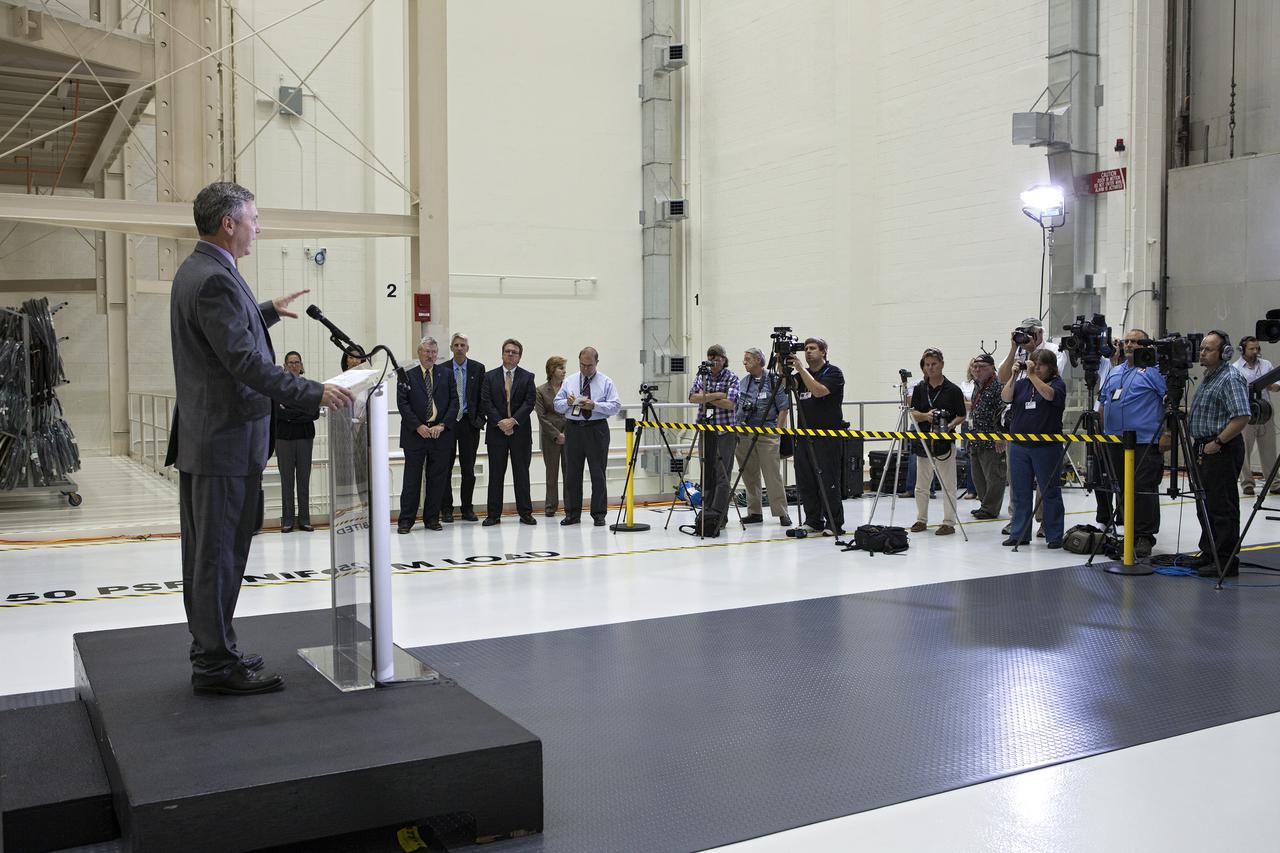
CAPE CANAVERAL, Fla. – In the Operations and Checkout Building OandC at the Kennedy Space Center in Florida, Scott Colloredo, chief architect for the Ground Systems Development and Operations Program, speaks to news media representatives updating progress on preparing the Orion spacecraft for its first uncrewed mission, Exploration Flight Test-1 EFT-1 in 2014. The crew module is seen behind Hefner in its test stand. Launched atop NASA's heavy-lift Space Launch System rocket, Orion is now targeted to take astronauts in a sample return mission to an asteroid as early as 2021. On the third anniversary of President Barack Obama issuing his challenge to NASA to send astronauts to an asteroid, news media representatives were given an opportunity to see up-close the Orion spacecraft which could take astronauts on such a flight. They also heard from key leaders of that effort in Kennedy's OandC where Orion's assembly is taking place. Photo credit: NASA_Kim Shiflett
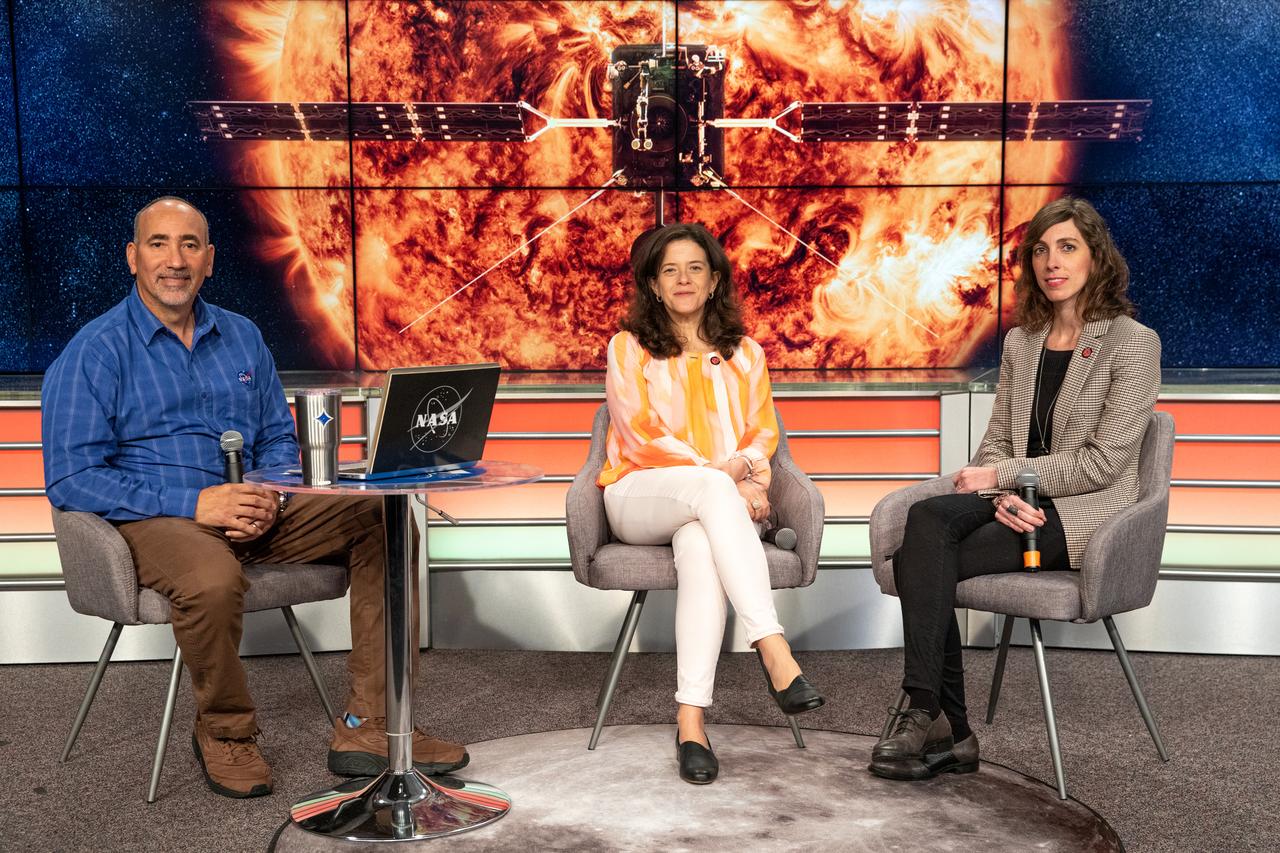
At left, Albert Sierra, Launch Services Program, moderates a Spanish Facebook Live event for the Solar Orbiter mission, with Teresa Nieves-chinchilla, deputy project scientist at NASA’s Goddard Space Flight Center in Greenbelt, Maryland, and Ana Leon, Solar Orbiter contamination control architect with Airbus Defence and Space. The event was held in the Press Site auditorium at the agency’s Kennedy Space Center in Florida on Jan. 29, 2020. Solar Orbiter is an international cooperative mission between ESA (European Space Agency) and NASA. The mission aims to study the Sun, its outer atmosphere and solar wind. The spacecraft will provide the first images of the Sun’s poles. NASA’s Launch Services Program based at Kennedy is managing the launch. The spacecraft has been developed by Airbus Defence and Space. Solar Orbiter will launch in February 2020 aboard a United Launch Alliance Atlas V rocket from Space Launch Complex 41 at Cape Canaveral Air Force Station in Florida.
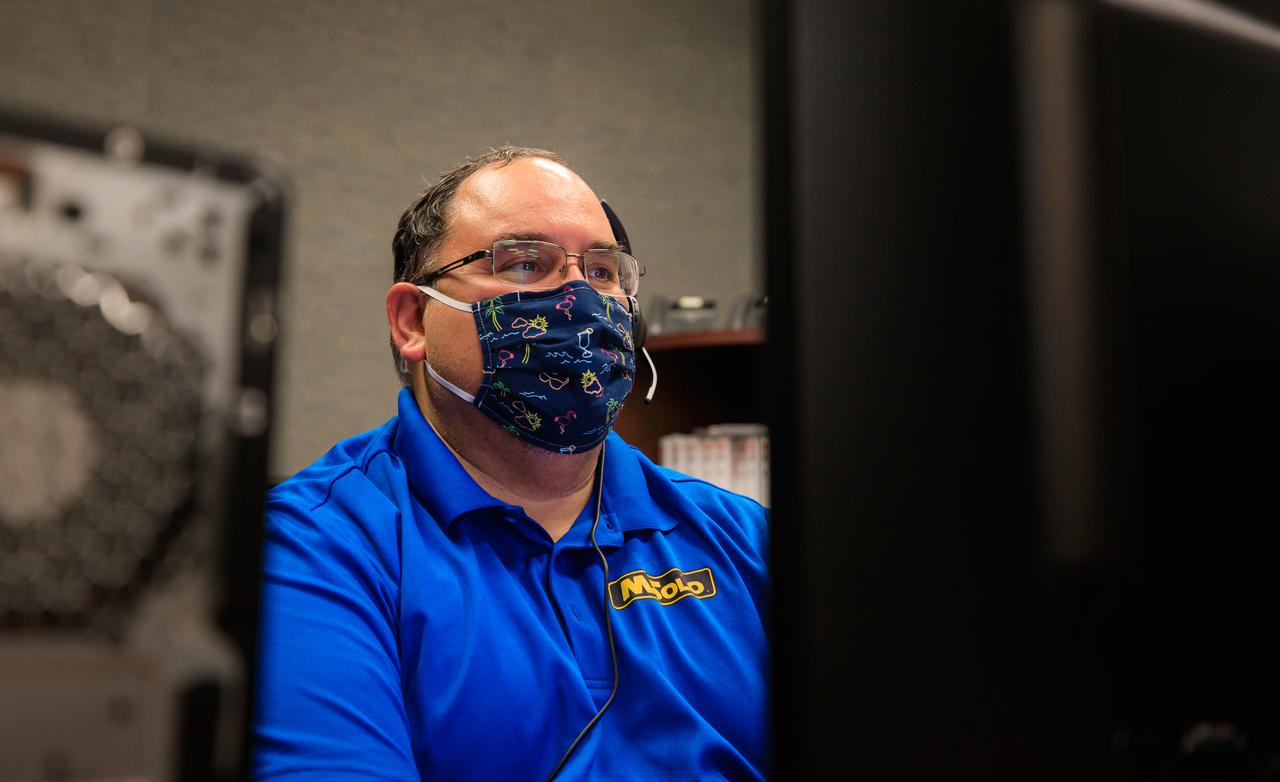
Rolando Nieves, software architect for NASA’s Mass Spectrometer observing lunar operations (MSolo) takes part in a joint simulation of the Peregrine One Mission on March 26, 2021, where MSolo is connected from inside the Neil Armstrong Operations and Checkout Building at NASA’s Kennedy Space Center in Florida to Astrobotic’s mission control facility in Pittsburgh, Pennsylvania. MSolo is a commercial off-the-shelf mass spectrometer modified to work in space and it will help analyze the chemical makeup of landing sites on the Moon, as well as study water on the lunar surface. This was the first mission round of simulations for Peregrine Mission One to develop and refine procedures between Astrobotic’s Peregrine Lander and MSolo. Later, there will be other simulations with multiple instruments. Peregrine Mission One will be one of NASA’s first Commercial Lunar Payload Delivery Service (CLPS) missions where under the Artemis program, commercial deliveries beginning in 2021 will perform science experiments, test technologies and demonstrate capabilities to help NASA explore the Moon and prepare for human missions.
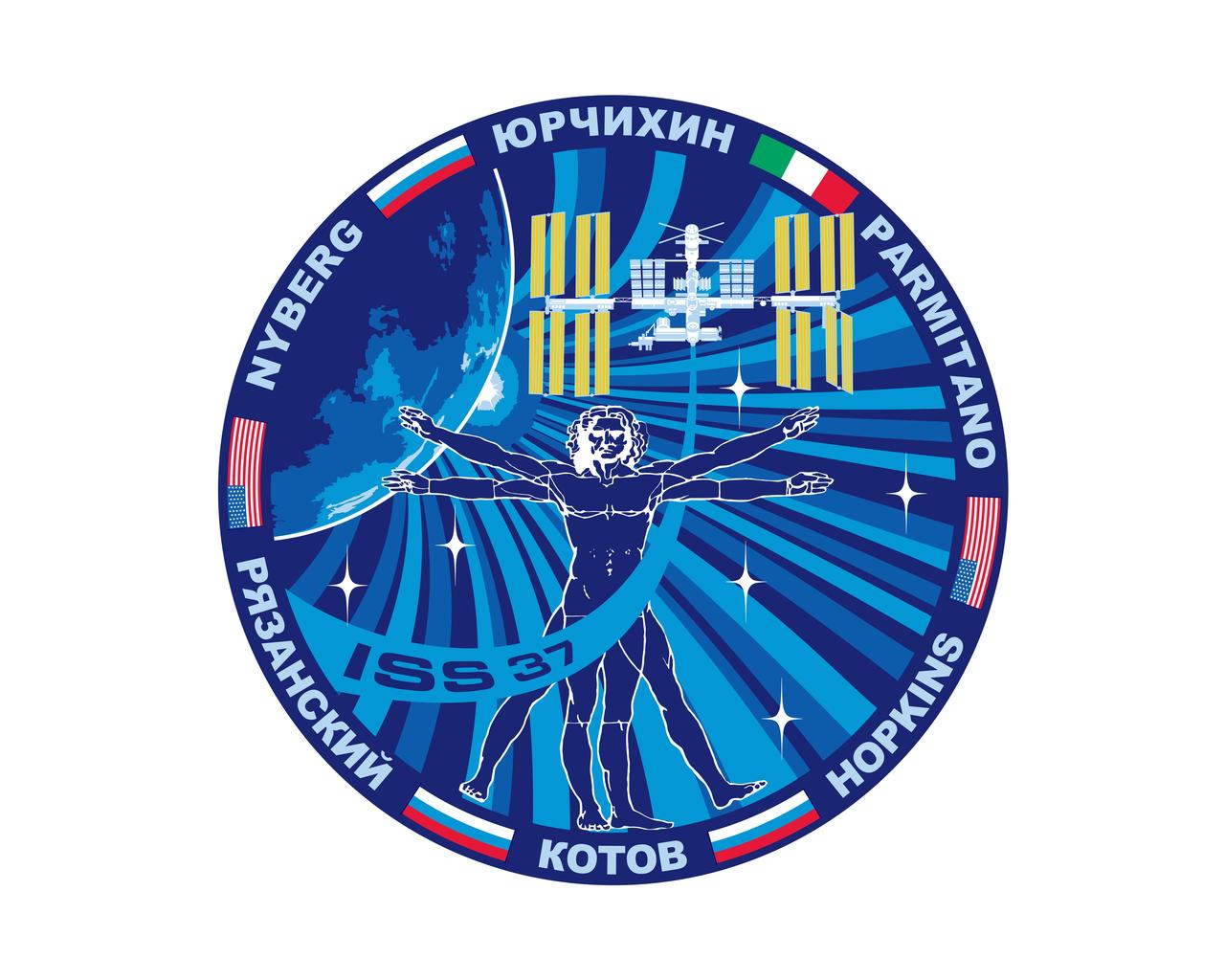
ISS037-S-001 (August 2012) --- Leonardo da Vinci's Vitruvian Man, created some 525 years ago, as a blend of art and science and a symbol of the medical profession, is depicted amongst the orbits of a variety of satellites circling the Earth at great speed. Da Vinci's drawing, based on the proportions of man as described by the Roman architect Vitruvius, is often used as a symbol of symmetry of the human body and the universe as a whole. Almost perfect in symmetry as well, the International Space Station, with its solar wings spread out and illuminated by the first rays of dawn, is pictured as a mighty beacon arcing upwards across our night skies, the ultimate symbol of science and technology of our age. Six stars represent the six members of Expedition 37 crew, which includes two cosmonauts with a medical background, as well as a native of Da Vinci's Italy. The design for insignia for space station flights is reserved for use by the crew members and for other official use as the NASA Administrator may authorize. Public availability has been approved only in the form of illustrations by the various news media. When and if there is any change in this policy, which is not anticipated, it will be publicly announced.
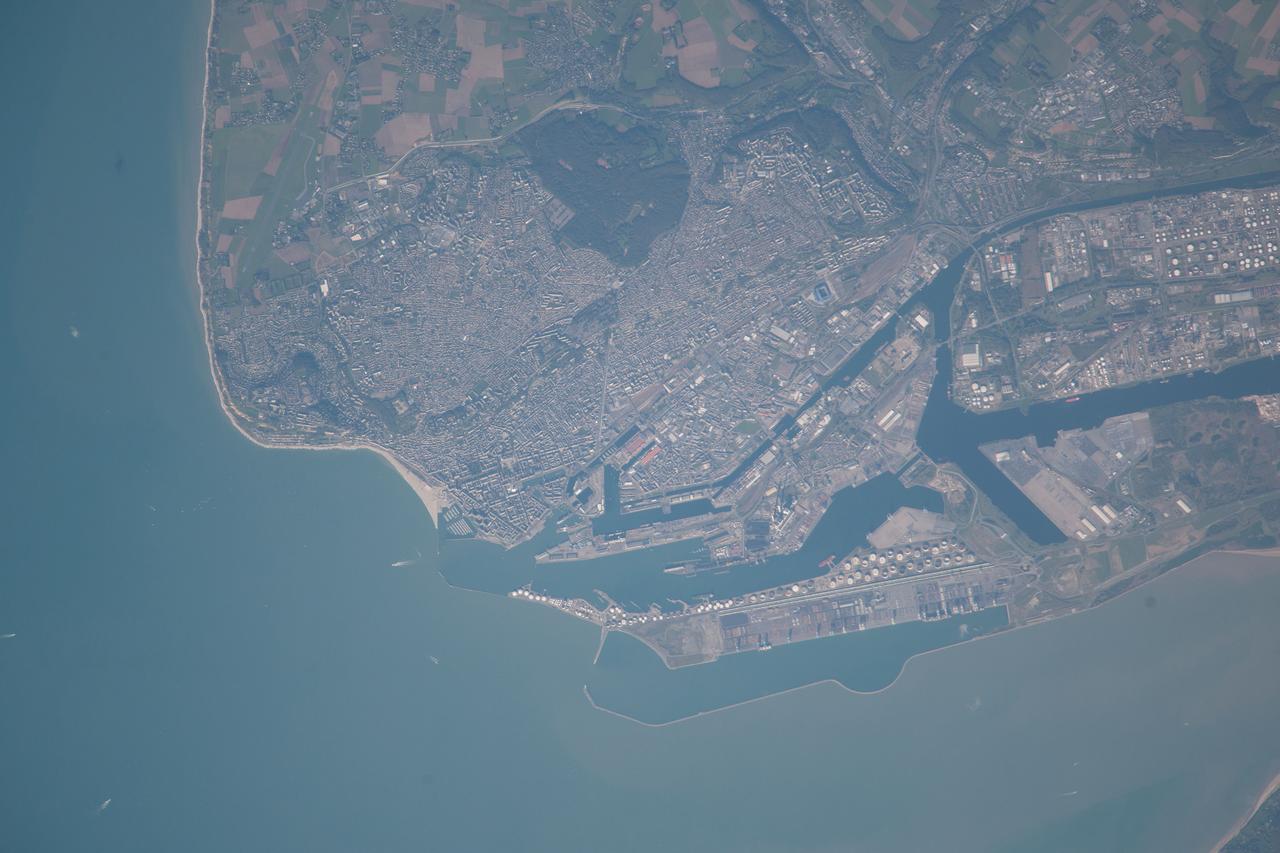
ISS037-E-021618 (26 Oct. 2013) --- Le Havre, France is featured in this image photographed by an Expedition 37 crew member on the International Space Station. The port city of Le Havre, France is located at the confluence of the Seine River and the English Channel along the northern coastline of the country (Upper Normandy region). Le Havre is the largest container port in France, and the second largest in terms of total traffic after Marseille. The extensive port facilities, visible at center, include numerous docks (large cargo ships are clearly visible in this detailed photograph), storage tanks for petro- and other chemicals, and large industrial and warehouse facilities with white rooftops. The port also serves seagoing pleasure cruise vessels. The southern edge of the port facility along the Seine includes a seawall-enclosed ship turning area (lower center). The Montgeon Forest, visible as a large green region at upper center, includes 200 hectares of woodland and 30 hectares of meadows and lawns. The urban area of Le Havre, to the north of the port facilities, was largely destroyed during World War II. After the war, the city was rebuilt following the vision of architect Auguste Perret. Perret favored the use of reinforced and precast concrete in building structures, and much of the city built between 1945 and 1964 follows his plan in both form and materials ? leading to the designation of Le Havre as a UNESCO World Heritage Site.
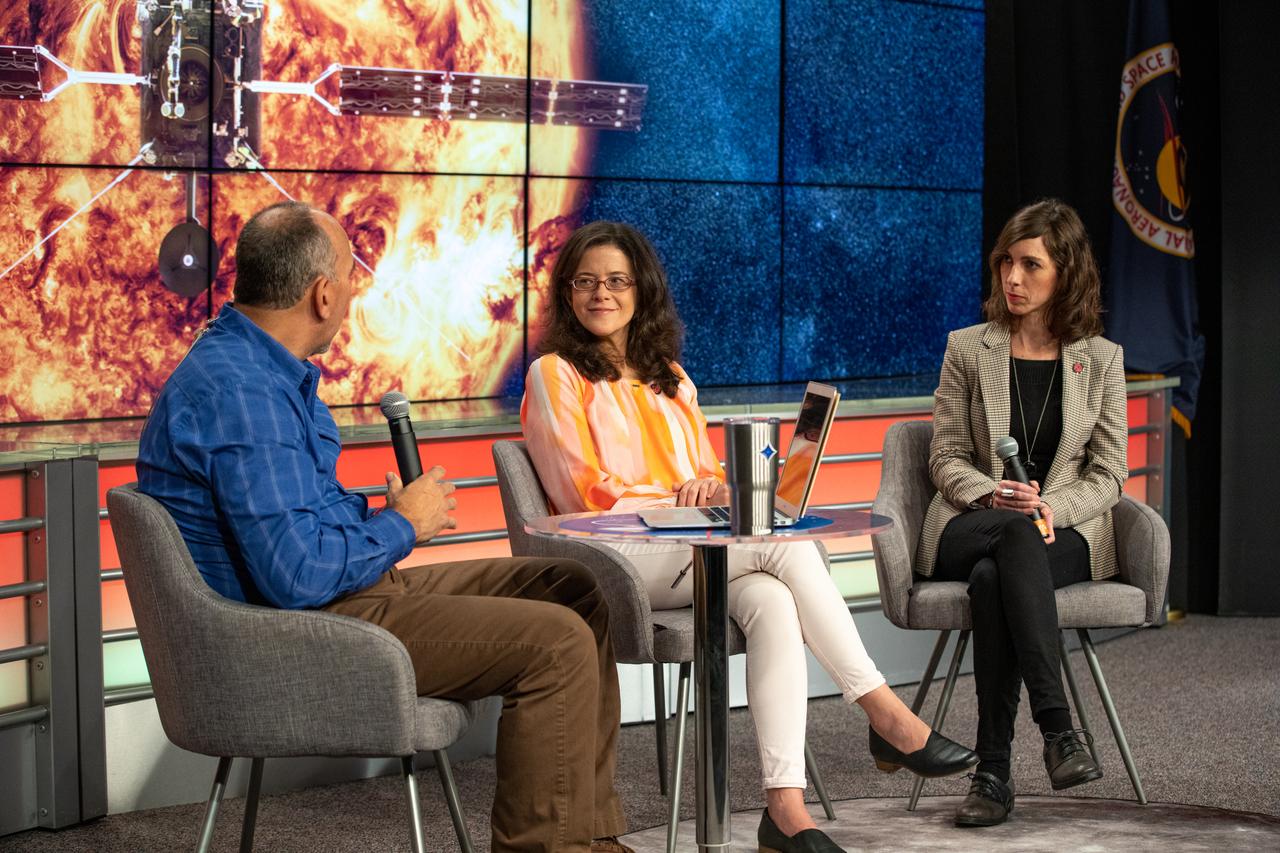
At left, Albert Sierra, Launch Services Program, moderates a Spanish Facebook Live event for the Solar Orbiter mission, with Teresa Nieves-chinchilla, deputy project scientist at NASA’s Goddard Space Flight Center in Greenbelt, Maryland, and Ana Leon, Solar Orbiter contamination control architect with Airbus Defence and Space. The event was held in the Press Site auditorium at the agency’s Kennedy Space Center in Florida on Jan. 29, 2020. Solar Orbiter is an international cooperative mission between ESA (European Space Agency) and NASA. The mission aims to study the Sun, its outer atmosphere and solar wind. The spacecraft will provide the first images of the Sun’s poles. NASA’s Launch Services Program based at Kennedy is managing the launch. The spacecraft has been developed by Airbus Defence and Space. Solar Orbiter will launch in February 2020 aboard a United Launch Alliance Atlas V rocket from Space Launch Complex 41 at Cape Canaveral Air Force Station in Florida.
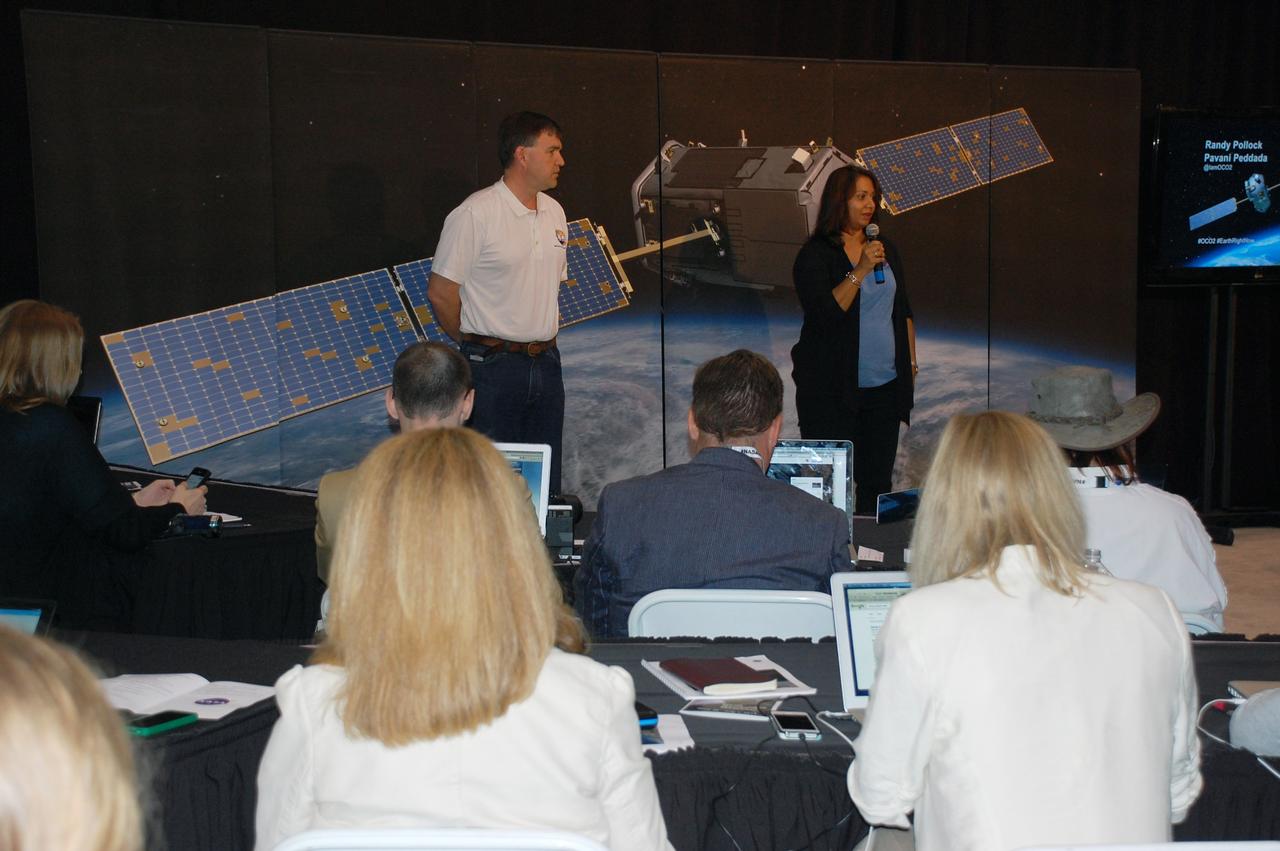
VANDENBERG AIR FORCE BASE, Calif. – Randy Pollock, project architect for NASA's Orbiting Carbon Observatory-2, or OCO-2, from NASA's Jet Propulsion Laboratory, or JPL, and Pavani Peddada, OCO-2 engineer from JPL, discuss the observatory with representatives of social media outlets attending a NASA Social at Vandenberg Air Force Base in California. Launch of OCO-2 aboard a United Launch Alliance Delta II rocket from Space Launch Complex 2 is scheduled for 5:56 a.m. EDT on July 1. The social media users selected to attend the two-day event on June 30 and July 1 are given the same access as news media in an effort to align their experience with those of traditional media. OCO-2 is NASA’s first mission dedicated to studying atmospheric carbon dioxide, the leading human-produced greenhouse gas driving changes in Earth’s climate. OCO-2 will provide a new tool for understanding the human and natural sources of carbon dioxide emissions and the natural "sinks" that absorb carbon dioxide and help control its buildup. The observatory will measure the global geographic distribution of these sources and sinks and study their changes over time. To learn more about OCO-2, visit http://www.nasa.gov/oco2. Photo credit: NASA/Ben Smegelsky
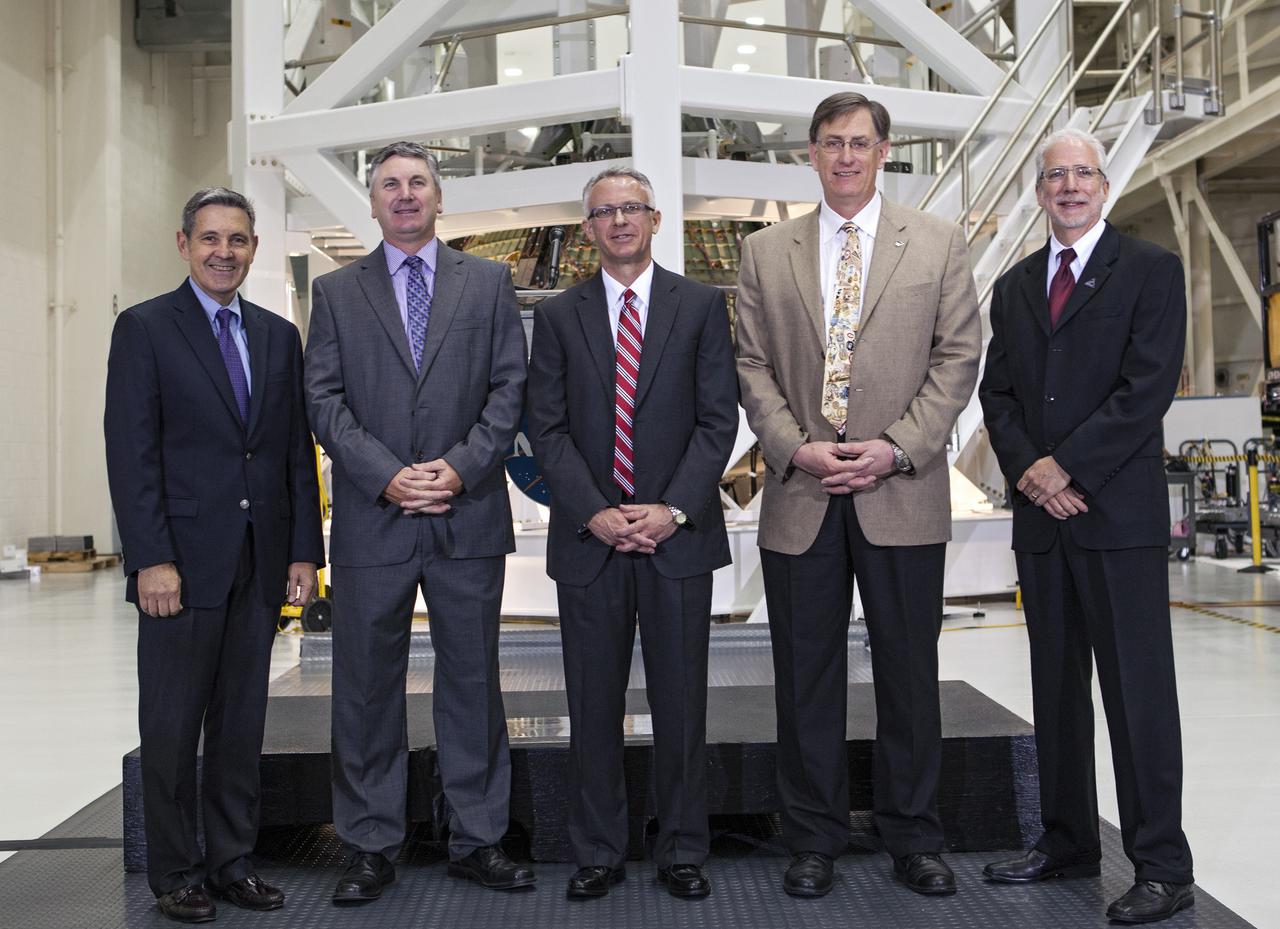
CAPE CANAVERAL, Fla. – In the Operations and Checkout Building OandC at the Kennedy Space Center in Florida, news media representatives were updated progress on preparing the Orion spacecraft for its first uncrewed mission, Exploration Flight Test-1 EFT-1 in 2014. Speakers included, from left, Kennedy Director Bob Cabana Scott Colloredo, chief architect for the Ground Systems Development and Operations Program Keith Hefner, NASA's Space Launch System program planning and control manager Dan Dumbacher, NASA's deputy associate administrator for Exploration Systems Development and Mark Geyer, NASA's Orion program manager. Launched atop NASA's heavy-lift Space Launch System rocket, Orion is now targeted to take astronauts in a sample return mission to an asteroid as early as 2021. On the third anniversary of President Barack Obama issuing his challenge to NASA to send astronauts to an asteroid, news media representatives were given an opportunity to see up-close the Orion spacecraft which could take astronauts on such a flight. They also heard from key leaders of that effort in Kennedy's OandC where Orion's assembly is taking place. Photo credit: NASA_Kim Shiflett
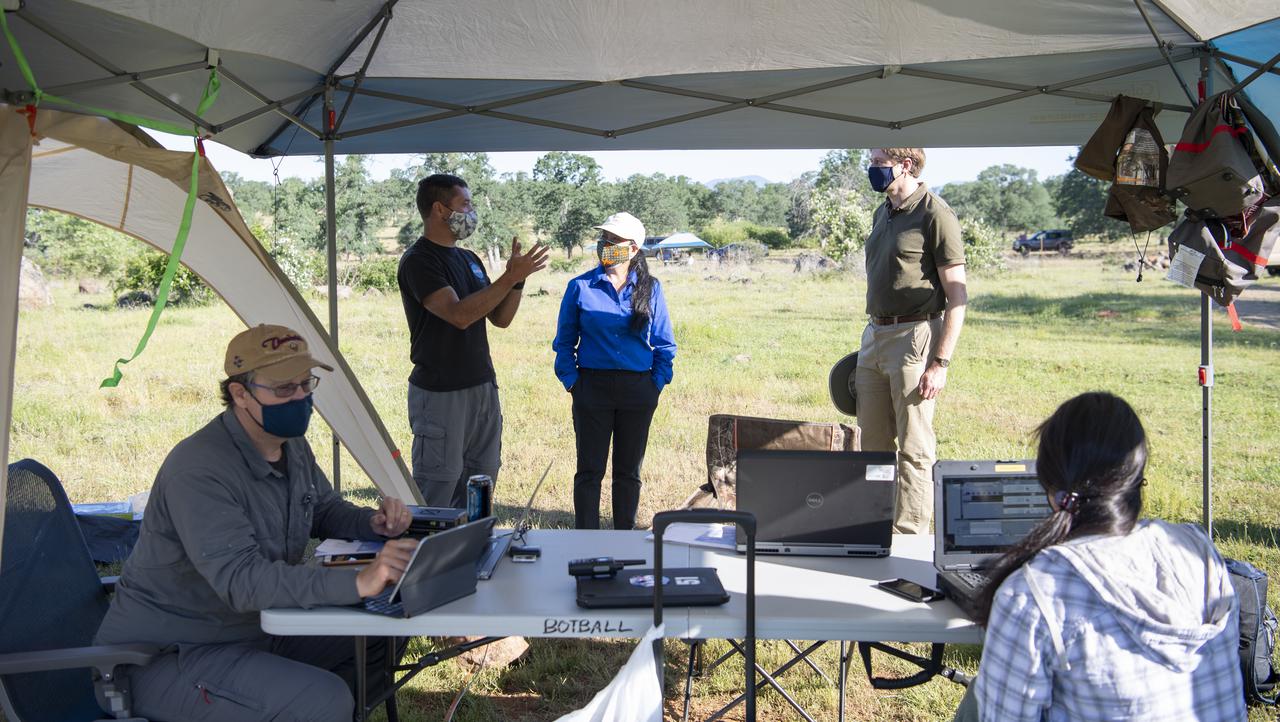
George Lawton, system architect for STEReO, the Scalable Traffic Management for Emergency Response Operations project, at NASA's Ames Research Center, seated left, and Yasmin Arbab, human factors researcher and research laptop operator for STEReO at NASA's Ames Research Center, seated right, are seen as Joey Mercer, principle investigator for STEReO at NASA's Ames Research Center, standing left, speaks with Huy Tran, director of aeronautics at NASA's Ames Research Center, center, and Richard Barhydt, station director of the U.S. Forest Service's Pacific Southwest Research Station, right, during STEReO test activities, Tuesday, May 4, 2021 as Cal Fire conducts aerial fire fighting training exercises near Redding, California. STEReO, the Scalable Traffic Management for Emergency Response Operations project, led by NASA’s Ames Research Center, builds on NASA’s expertise in air traffic management, human factors research, and autonomous technology development to apply the agency’s work in Unmanned Aircraft Systems Traffic Management, or UTM, to public safety uses. Photo Credit: (NASA/Joel Kowsky)
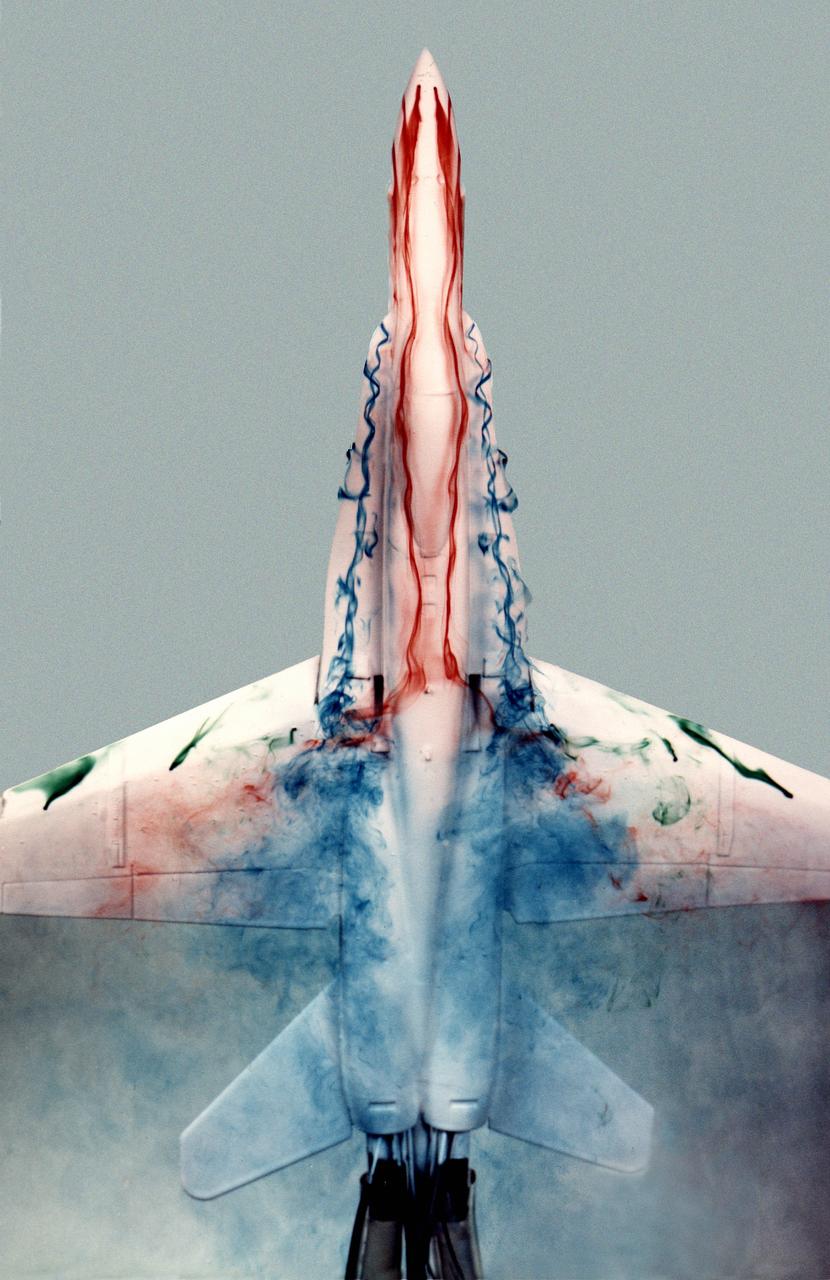
This image shows a plastic 1/48-scale model of an F-18 aircraft inside the "Water Tunnel" more formally known as the NASA Dryden Flow Visualization Facility. Water is pumped through the tunnel in the direction of normal airflow over the aircraft; then, colored dyes are pumped through tubes with needle valves. The dyes flow back along the airframe and over the airfoils highlighting their aerodynamic characteristics. The aircraft can also be moved through its pitch axis to observe airflow disruptions while simulating actual flight at high angles of attack. The Water Tunnel at NASA's Dryden Flight Research Center, Edwards, CA, became operational in 1983 when Dryden was a Flight Research Facility under the management of the Ames Research Center in Mountain View, CA. As a medium for visualizing fluid flow, water has played a significant role. Its use dates back to Leonardo da Vinci (1452-1519), the Renaissance Italian engineer, architect, painter, and sculptor. In more recent times, water tunnels have assisted the study of complex flows and flow-field interactions on aircraft shapes that generate strong vortex flows. Flow visualization in water tunnels assists in determining the strength of vortices, their location, and possible methods of controlling them. The design of the Dryden Water Tunnel imitated that of the Northrop Corporation's tunnel in Hawthorne, CA. Called the Flow Visualization Facility, the Dryden tunnel was built to assist researchers in understanding the aerodynamics of aircraft configured in such a way that they create strong vortex flows, particularly at high angles of attack. The tunnel provides results that compare well with data from aircraft in actual flight in another fluid-air. Other uses of the tunnel have included study of how such flight hardware as antennas, probes, pylons, parachutes, and experimental fixtures affect airflow. The facility has also been helpful in finding the best locations for emitting smoke from flight vehicles for flow vi
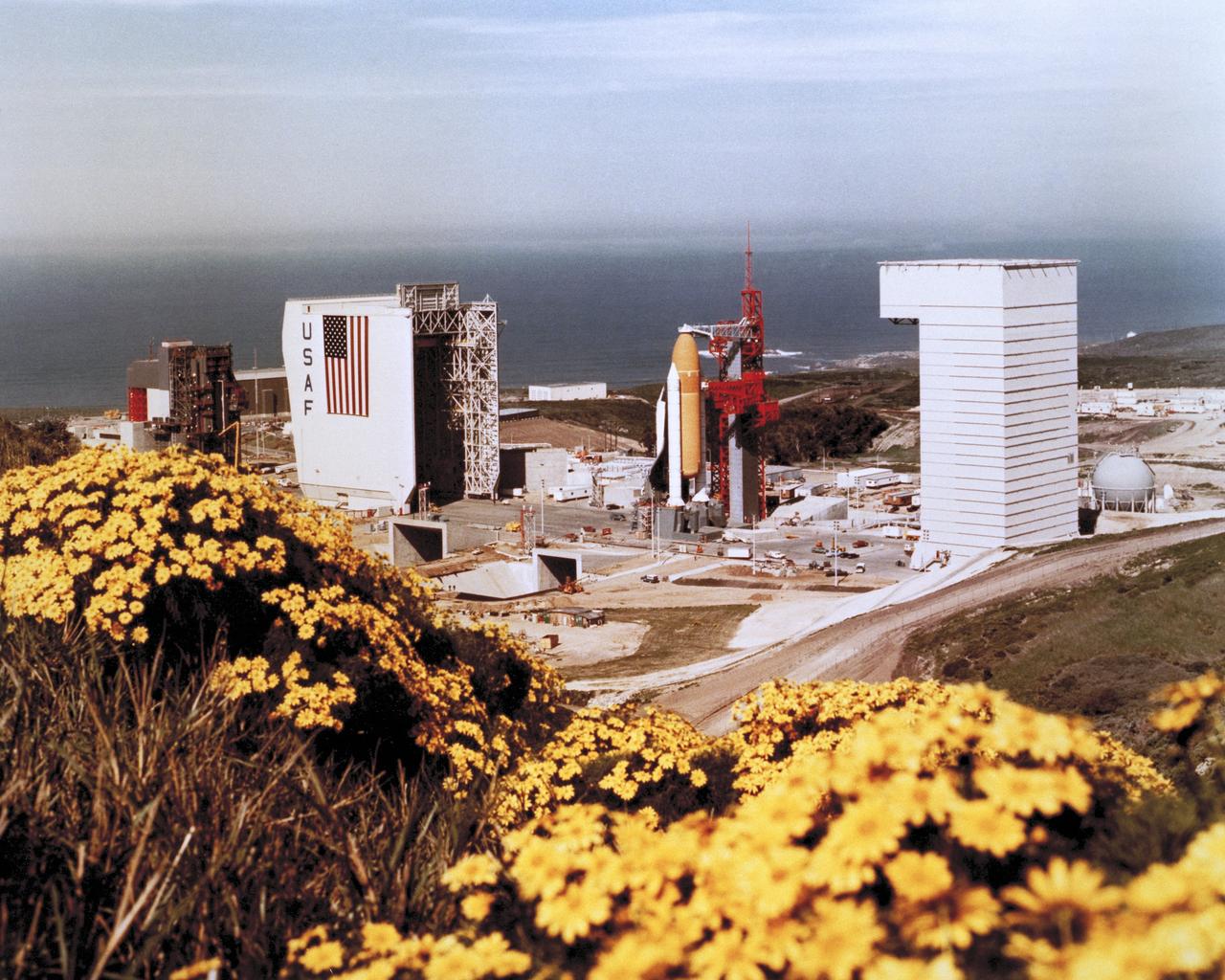
VANDENBERG AIR FORCE BASE, Calif. -- At Vandenberg Air Force Base in the early '80s, the Space Shuttle Enterprise undergoes Pathfinder fit checks at a tower. The Enterprise was built as a test vehicle and was not equipped for spaceflight. Enterprise eventually became the property of the Smithsonian Institution. Vandenberg AFB is located on the Central Coast of California about 150 miles northwest of Los Angeles. The property is comprised of parts of five Mexican land grants and a sixth grant that was transferred virtually intact to the Army. Vandenberg now is operated by the 30th Space Wing, and is the only military installation in the United States from which unmanned government and commercial satellites are launched into polar orbit. It is also the only site from which intercontinental ballistic missiles ICBMs are launched toward the Kwajalein Atoll to verify weapon systems performance. Vandenberg's military service dates back to 1941, when known as Camp Cooke it served as an Army training facility for armored and infantry troops. The main camp closed in June 1946 and was reactivated in August 1950 after the outbreak of the Korean War. The 13th and 20th Armored Divisions and the 40th, 44th, 86th, and 91st Infantry Divisions trained at Cooke. With the advent of the missile age in the 1950s, the Air Force persuaded Secretary of Defense Charles E. Wilson to direct the Army to transfer 64,000 acres of North Camp Cooke to the Air Force for use as a missile launch and training base. In 1958, Camp Cooke was renamed Vandenberg Air Force Base in honor of the late General Hoyt S. Vandenberg, second Air Force Chief of Staff of the United States Air Force and chief architect of today's modern Air Force. Photo Credit: NASA