
Mercury Geological Architecture

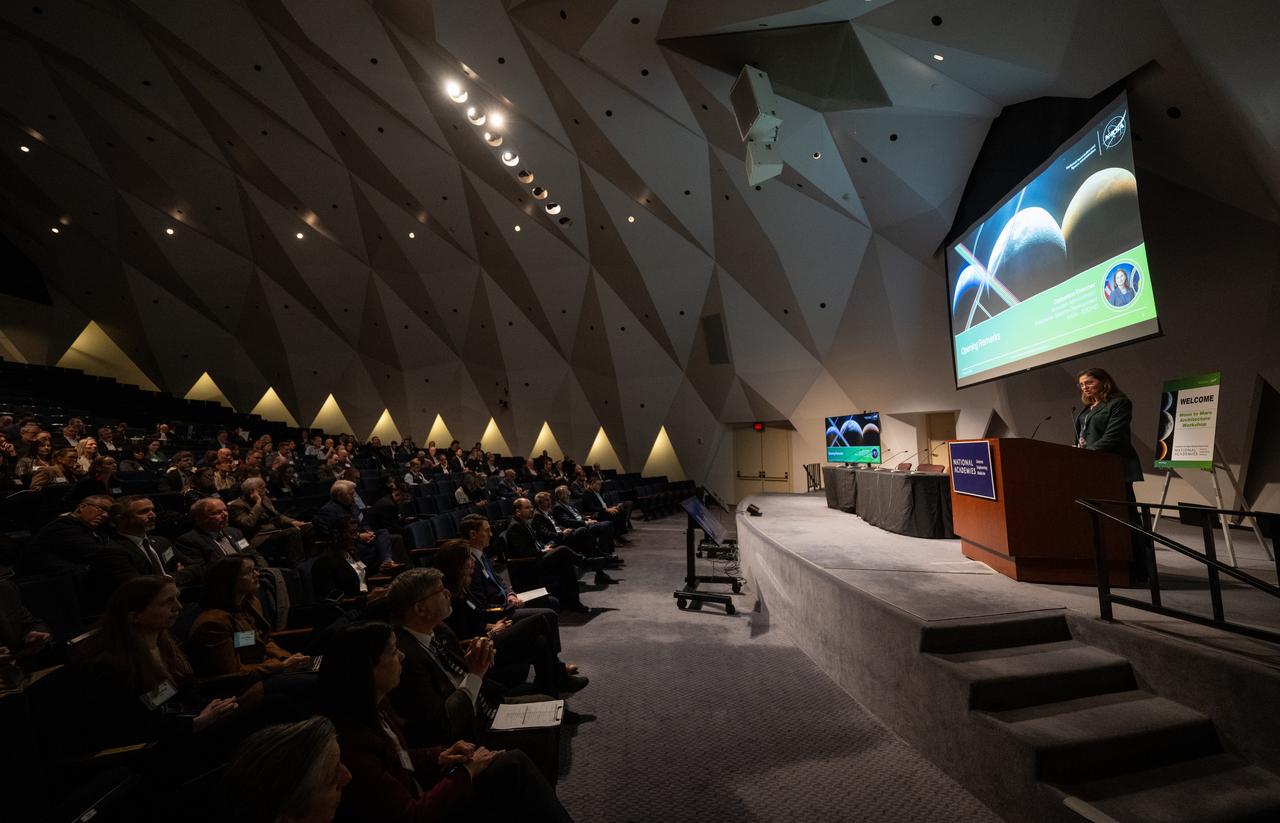
The opening presentation slide for the Moon to Mars Architecture Workshop is seen on monitors, Tuesday, Feb. 20, 2024, at the National Academy of Sciences in Washington. NASA held the workshop to engage the broader space community and collect feedback from U.S. industry and academia and international partners to inform NASA's Moon to Mars Architecture, the agency's roadmap for human exploration of the Moon and Mars. Photo Credit: (NASA/Bill Ingalls)

Nujoud Merancy, architecture lead for NASA's Exploration Systems Development Mission Directorate, speaks during NASA’s Moon to Mars Architecture Workshop, Tuesday, June 27, 2023, at the Gaylord National Resort and Convention Center in National Harbor, Md. Following the release of the 2022 Architecture Concept Review, NASA is conducting the workshop to engage the broader space community and collect feedback from U.S. industry and academia to inform the Moon to Mars mission architecture and operational delivery. Photo Credit: (NASA/Joel Kowsky)
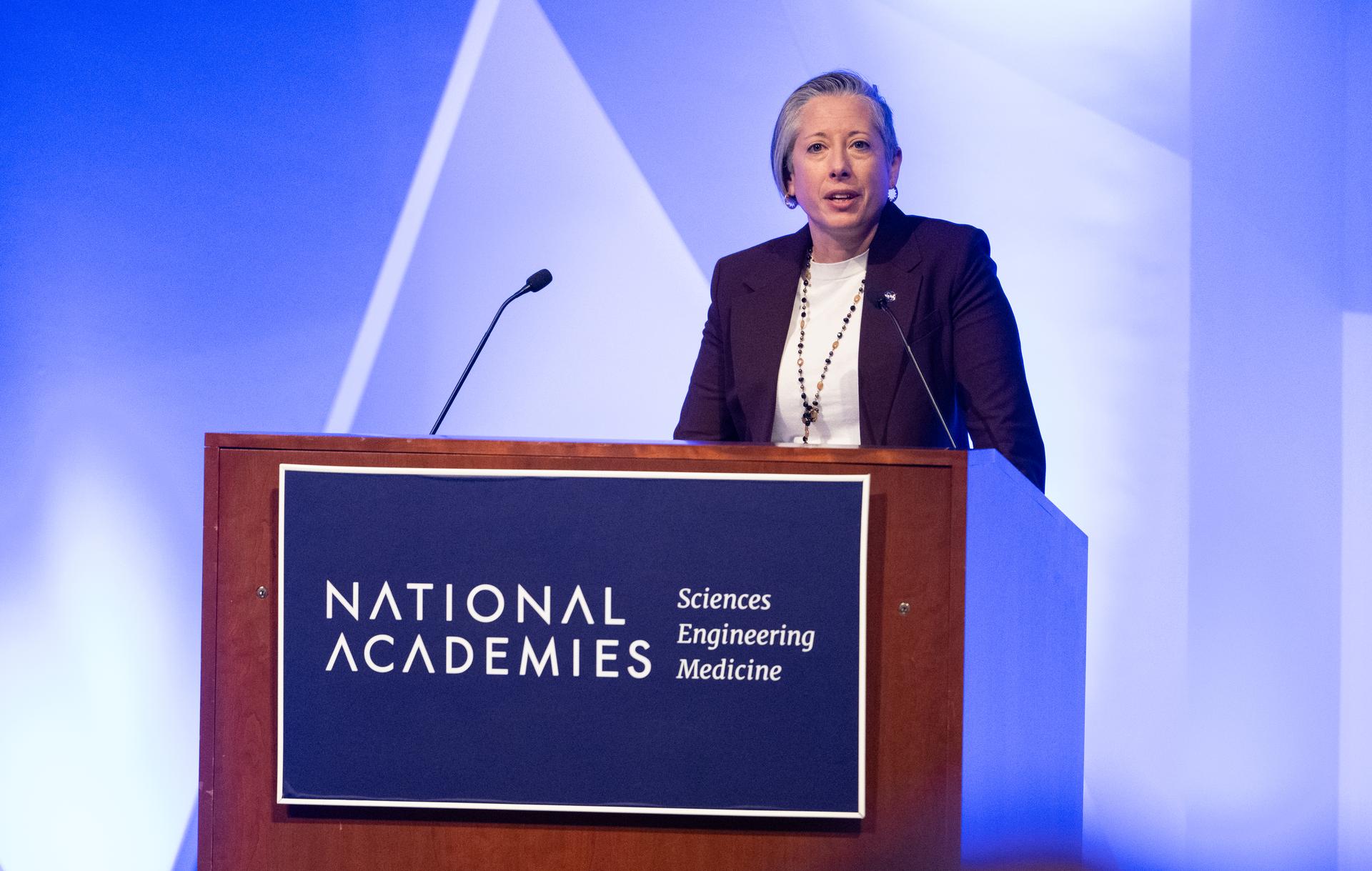
Nujoud Merancy, deputy associate administrator for the Strategy and Architecture Office in NASA’s Exploration Systems Development Mission Directorate speaks at the Moon to Mars Architecture Workshop, Wednesday, Jan. 21, 2026, at the National Academy of Sciences in Washington. NASA held the workshop to engage the broader space community and collect feedback from U.S. industry and academia and international partners to inform NASA's Moon to Mars Architecture, the agency's roadmap for human exploration of the Moon and Mars. Photo Credit: (NASA/Joel Kowsky)
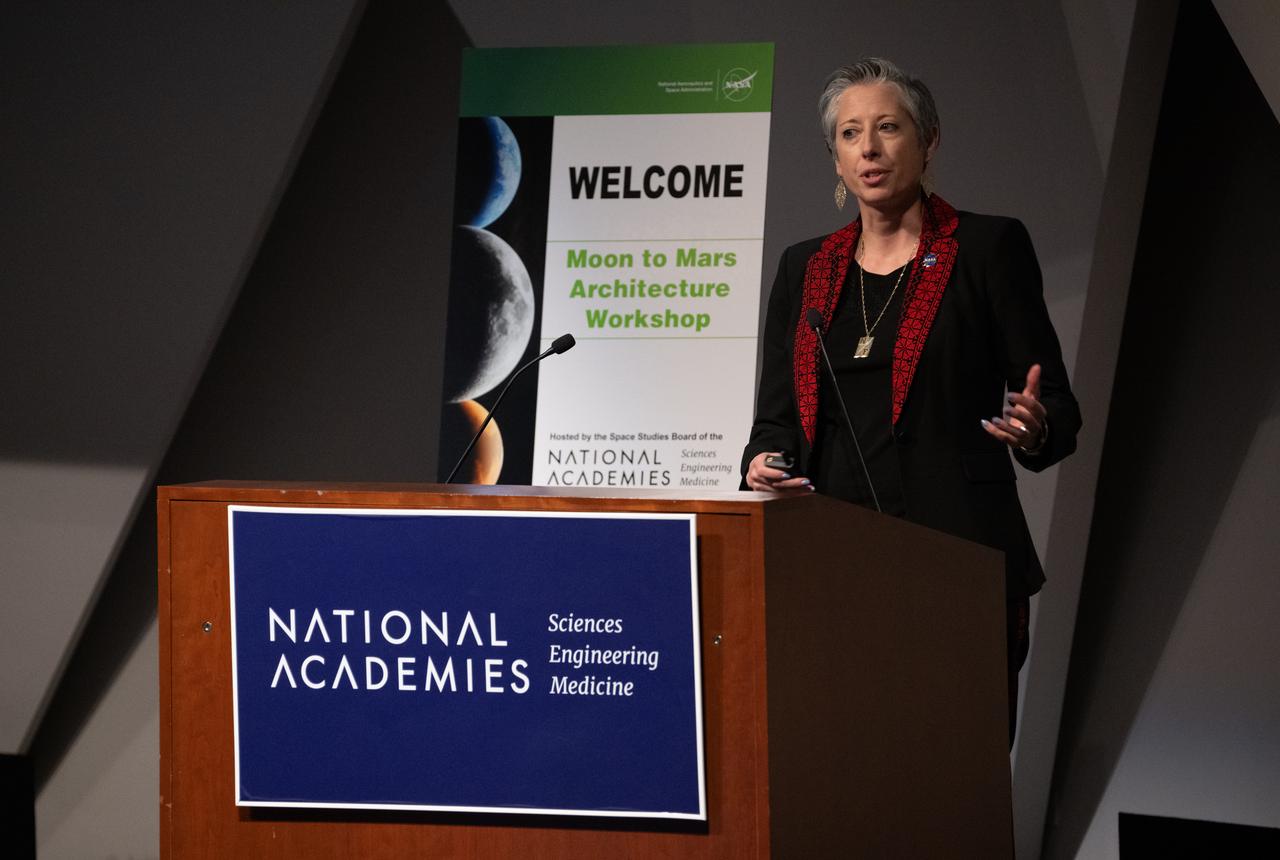
Nujoud Merancy, deputy associate administrator for the Strategy & Architecture Office in NASA’s Exploration Systems Development Mission Directorate gives remarks at the Moon to Mars Architecture Workshop, Wednesday, Feb. 12, 2025, at the National Academy of Sciences in Washington. NASA held the workshop to engage the broader space community and collect feedback from U.S. industry and academia and international partners to inform NASA's Moon to Mars Architecture, the agency's roadmap for human exploration of the Moon and Mars. Photo Credit: (NASA/Joel Kowsky)
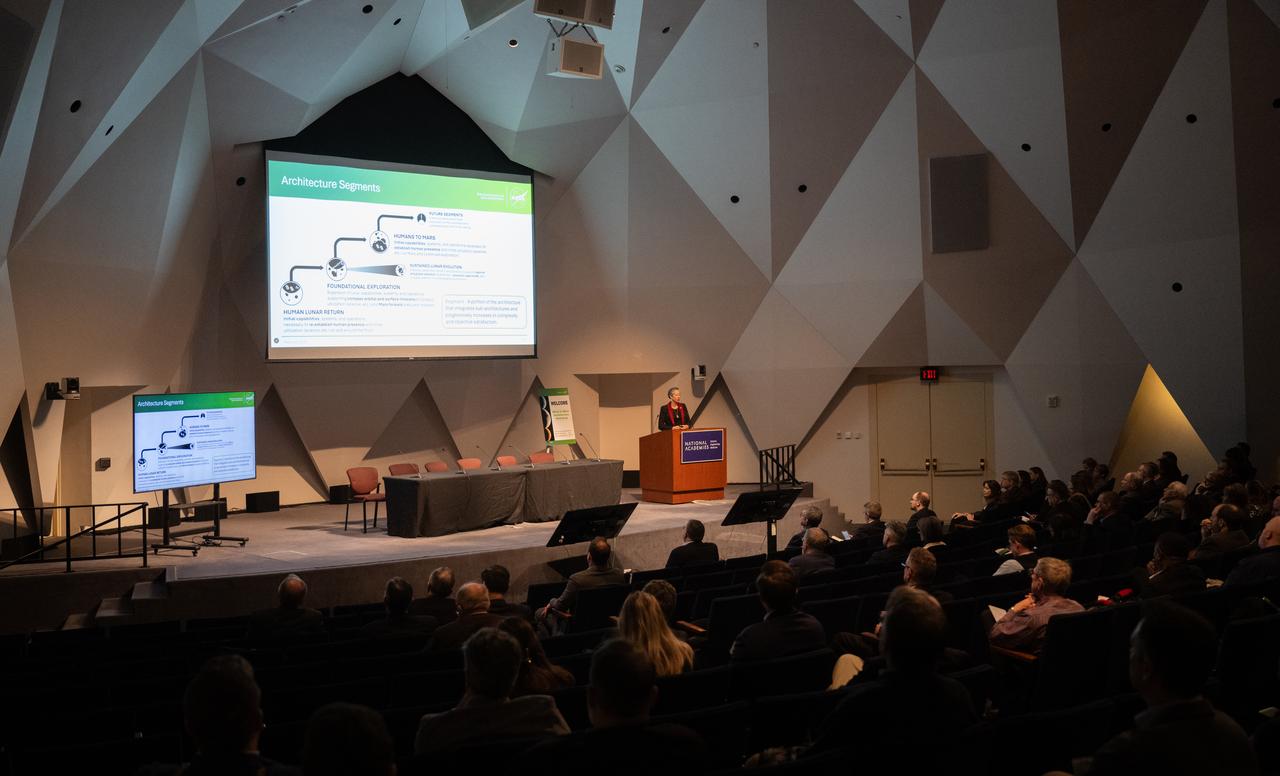
Nujoud Merancy, deputy associate administrator for the Strategy & Architecture Office in NASA’s Exploration Systems Development Mission Directorate gives remarks at the Moon to Mars Architecture Workshop, Wednesday, Feb. 12, 2025, at the National Academy of Sciences in Washington. NASA held the workshop to engage the broader space community and collect feedback from U.S. industry and academia and international partners to inform NASA's Moon to Mars Architecture, the agency's roadmap for human exploration of the Moon and Mars. Photo Credit: (NASA/Joel Kowsky)
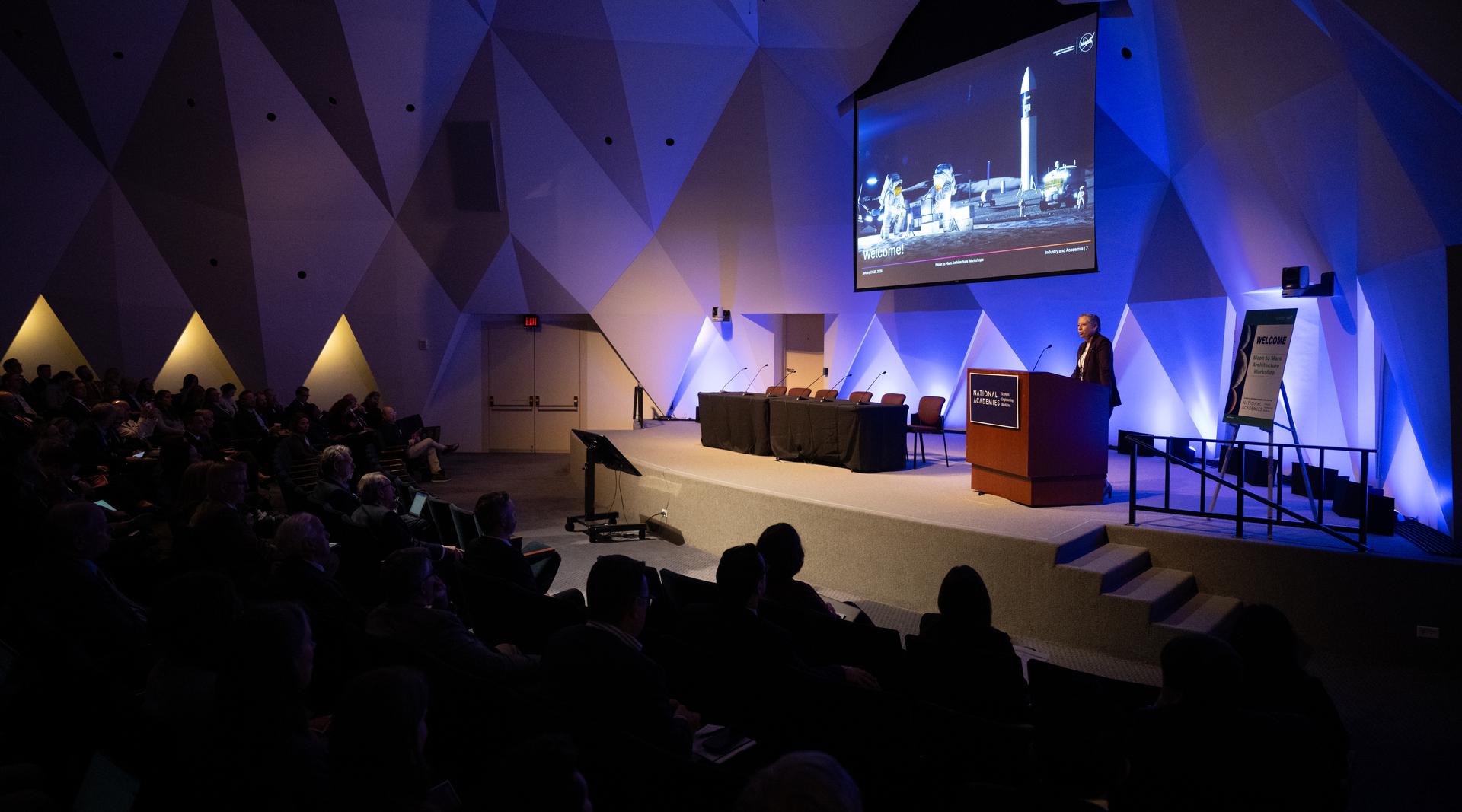
Nujoud Merancy, deputy associate administrator for the Strategy and Architecture Office in NASA’s Exploration Systems Development Mission Directorate speaks at the Moon to Mars Architecture Workshop, Wednesday, Jan. 21, 2026, at the National Academy of Sciences in Washington. NASA held the workshop to engage the broader space community and collect feedback from U.S. industry and academia and international partners to inform NASA's Moon to Mars Architecture, the agency's roadmap for human exploration of the Moon and Mars. Photo Credit: (NASA/Joel Kowsky)

Attendees of NASA’s Moon to Mars Architecture Workshop pose for a group picture, Tuesday, June 27, 2023, at the Gaylord National Resort and Convention Center in National Harbor, Md. Following the release of the 2022 Architecture Concept Review, NASA is conducting the workshop to engage the broader space community and collect feedback from U.S. industry and academia to inform the Moon to Mars mission architecture and operational delivery. Photo Credit: (NASA/Joel Kowsky)

Catherine Koerner, deputy associate administrator for NASA's Exploration Systems Development Mission Directorate, speaks during NASA’s Moon to Mars Architecture Workshop, Tuesday, June 27, 2023, at the Gaylord National Resort and Convention Center in National Harbor, Md. Following the release of the 2022 Architecture Concept Review, NASA is conducting the workshop to engage the broader space community and collect feedback from U.S. industry and academia to inform the Moon to Mars mission architecture and operational delivery. Photo Credit: (NASA/Joel Kowsky)

Michelle Munk, chief architect for NASA’s Space Technology Mission Directorate, speaks during NASA’s Moon to Mars Architecture Workshop, Tuesday, June 27, 2023, at the Gaylord National Resort and Convention Center in National Harbor, Md. Following the release of the 2022 Architecture Concept Review, NASA is conducting the workshop to engage the broader space community and collect feedback from U.S. industry and academia to inform the Moon to Mars mission architecture and operational delivery. Photo Credit: (NASA/Joel Kowsky)

Joel Kearns, deputy associate administrator for Exploration in NASA's Science Mission Directorate, speaks during NASA’s Moon to Mars Architecture Workshop, Tuesday, June 27, 2023, at the Gaylord National Resort and Convention Center in National Harbor, Md. Following the release of the 2022 Architecture Concept Review, NASA is conducting the workshop to engage the broader space community and collect feedback from U.S. industry and academia to inform the Moon to Mars mission architecture and operational delivery. Photo Credit: (NASA/Joel Kowsky)
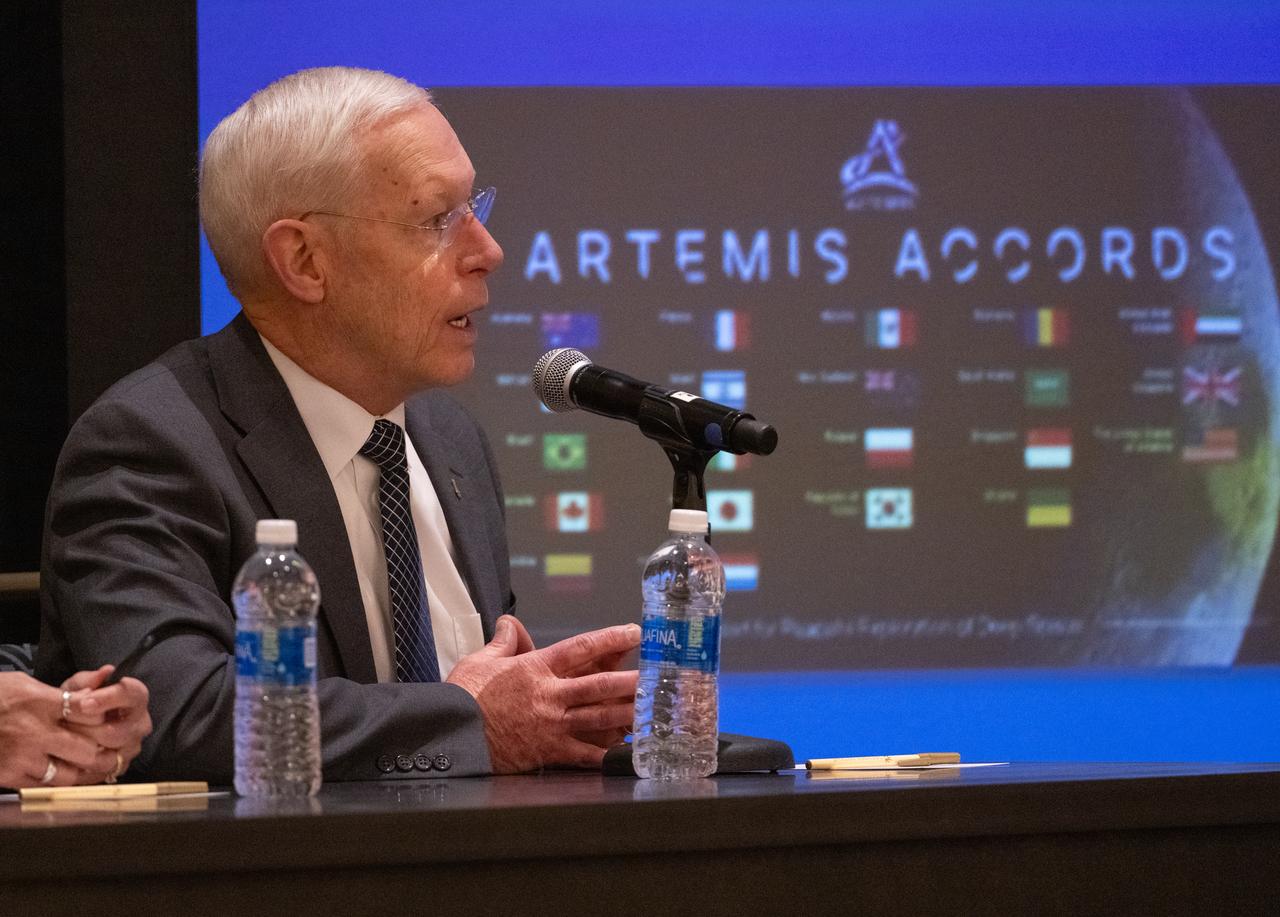
Patrick Forrester, special advisor in NASA's Space Operations Mission Directorate, speaks during NASA’s Moon to Mars Architecture Workshop, Tuesday, June 27, 2023, at the Gaylord National Resort and Convention Center in National Harbor, Md. Following the release of the 2022 Architecture Concept Review, NASA is conducting the workshop to engage the broader space community and collect feedback from U.S. industry and academia to inform the Moon to Mars mission architecture and operational delivery. Photo Credit: (NASA/Joel Kowsky)

Catherine Koerner, deputy associate administrator for NASA's Exploration Systems Development Mission Directorate, speaks during NASA’s Moon to Mars Architecture Workshop, Tuesday, June 27, 2023, at the Gaylord National Resort and Convention Center in National Harbor, Md. Following the release of the 2022 Architecture Concept Review, NASA is conducting the workshop to engage the broader space community and collect feedback from U.S. industry and academia to inform the Moon to Mars mission architecture and operational delivery. Photo Credit: (NASA/Joel Kowsky)
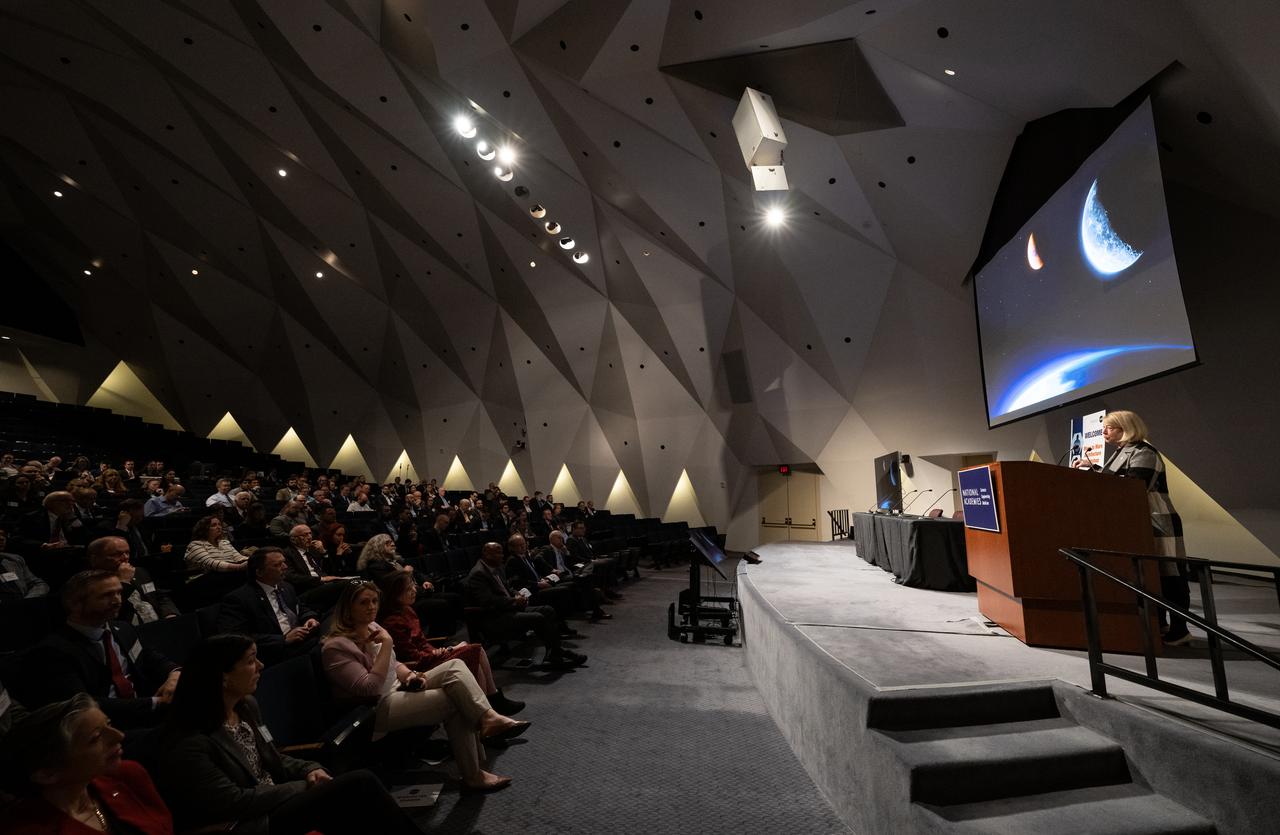
NASA Deputy Administrator Pam Melroy gives opening remarks at the Moon to Mars Architecture Workshop, Thursday, Feb. 22, 2024, at the National Academy of Sciences in Washington. NASA held the workshop to engage the broader space community and collect feedback from U.S. industry and academia and international partners to inform NASA's Moon to Mars Architecture, the agency's roadmap for human exploration of the Moon and Mars.
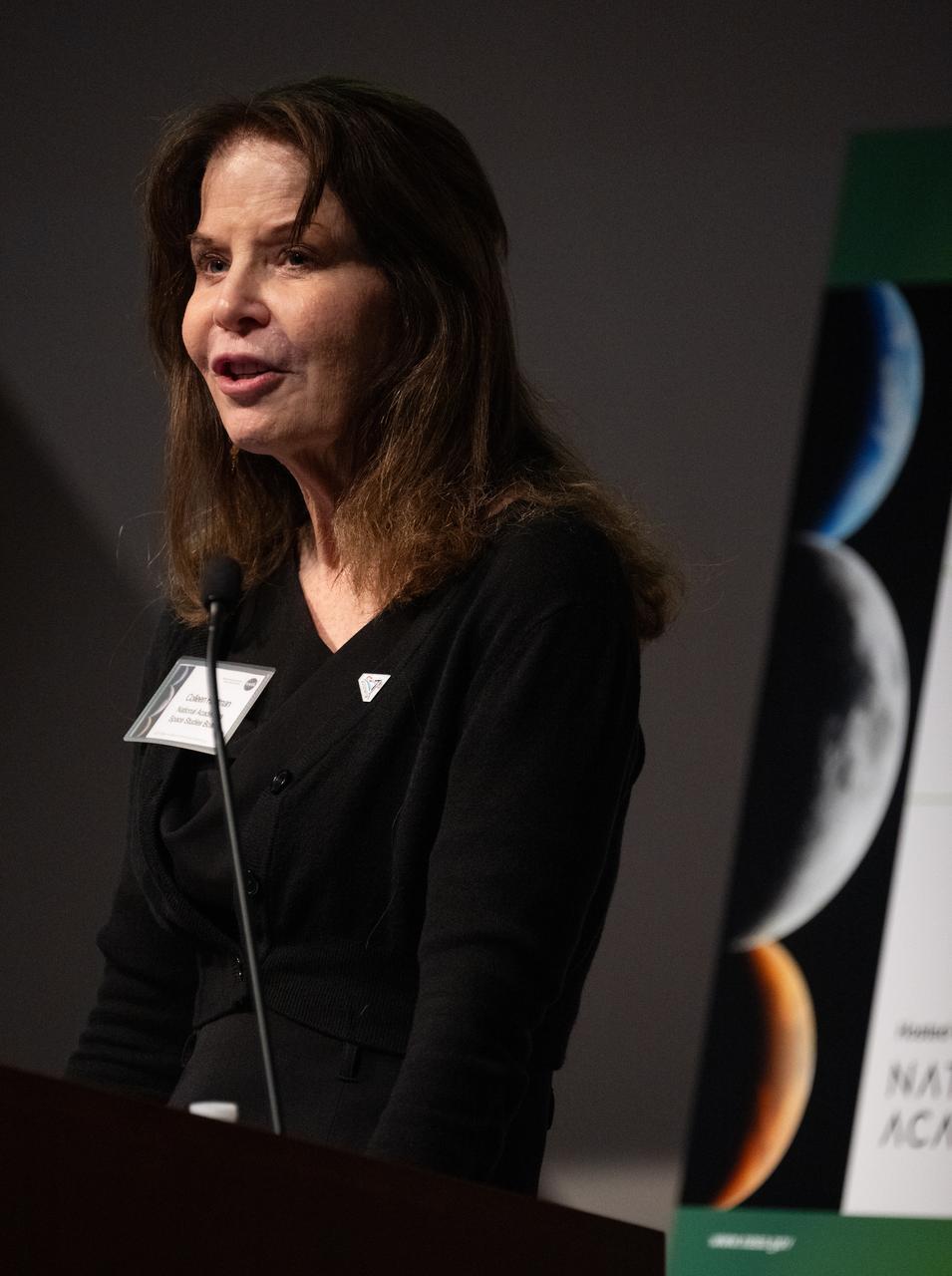
Colleen Hartman, director of the Space Studies Board at the National Academy of Sciences gives opening remarks at the Moon to Mars Architecture Workshop, Wednesday, Feb. 12, 2025, at the National Academy of Sciences in Washington. NASA held the workshop to engage the broader space community and collect feedback from U.S. industry and academia and international partners to inform NASA's Moon to Mars Architecture, the agency's roadmap for human exploration of the Moon and Mars. Photo Credit: (NASA/Joel Kowsky)
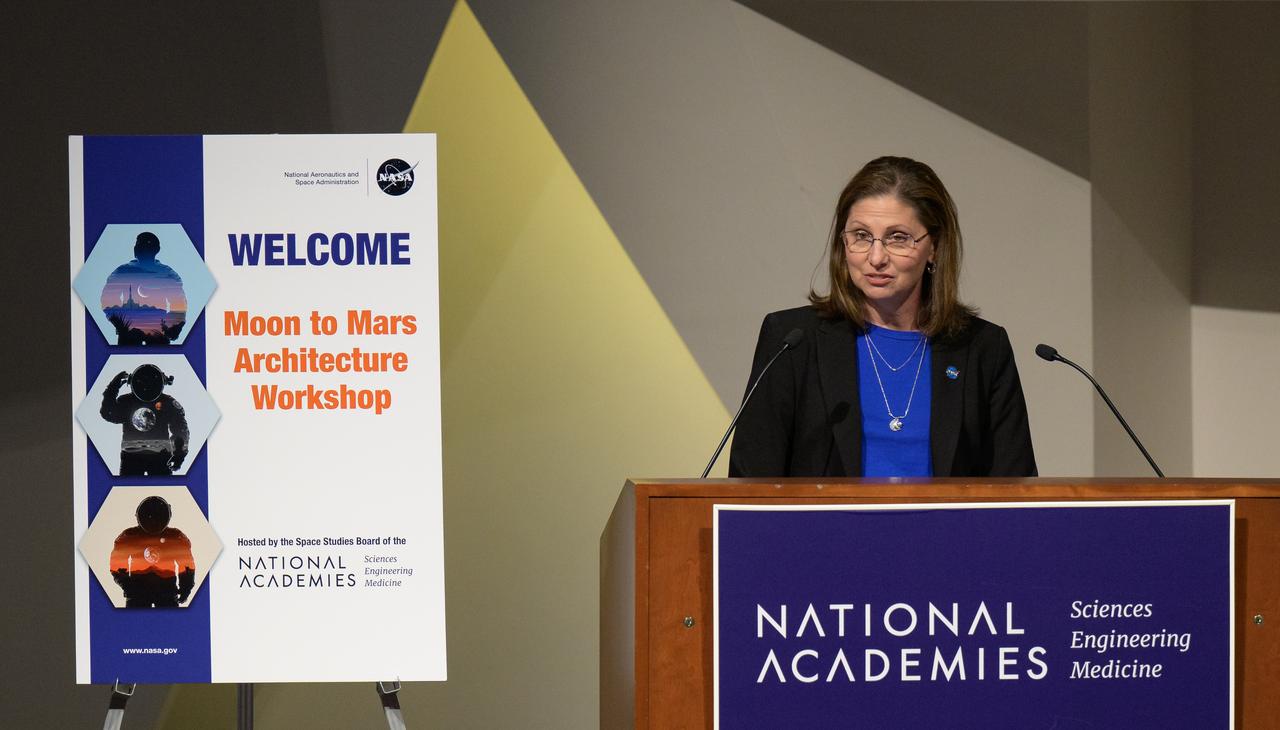
NASA Associate Administrator for Exploration Systems Development, Catherine Koerner, gives opening remarks at the Moon to Mars Architecture Workshop, Tuesday, Feb. 20, 2024, at the National Academy of Sciences in Washington. NASA held the workshop to engage the broader space community and collect feedback from U.S. industry and academia and international partners to inform NASA's Moon to Mars Architecture, the agency's roadmap for human exploration of the Moon and Mars. Photo Credit: (NASA/Bill Ingalls)
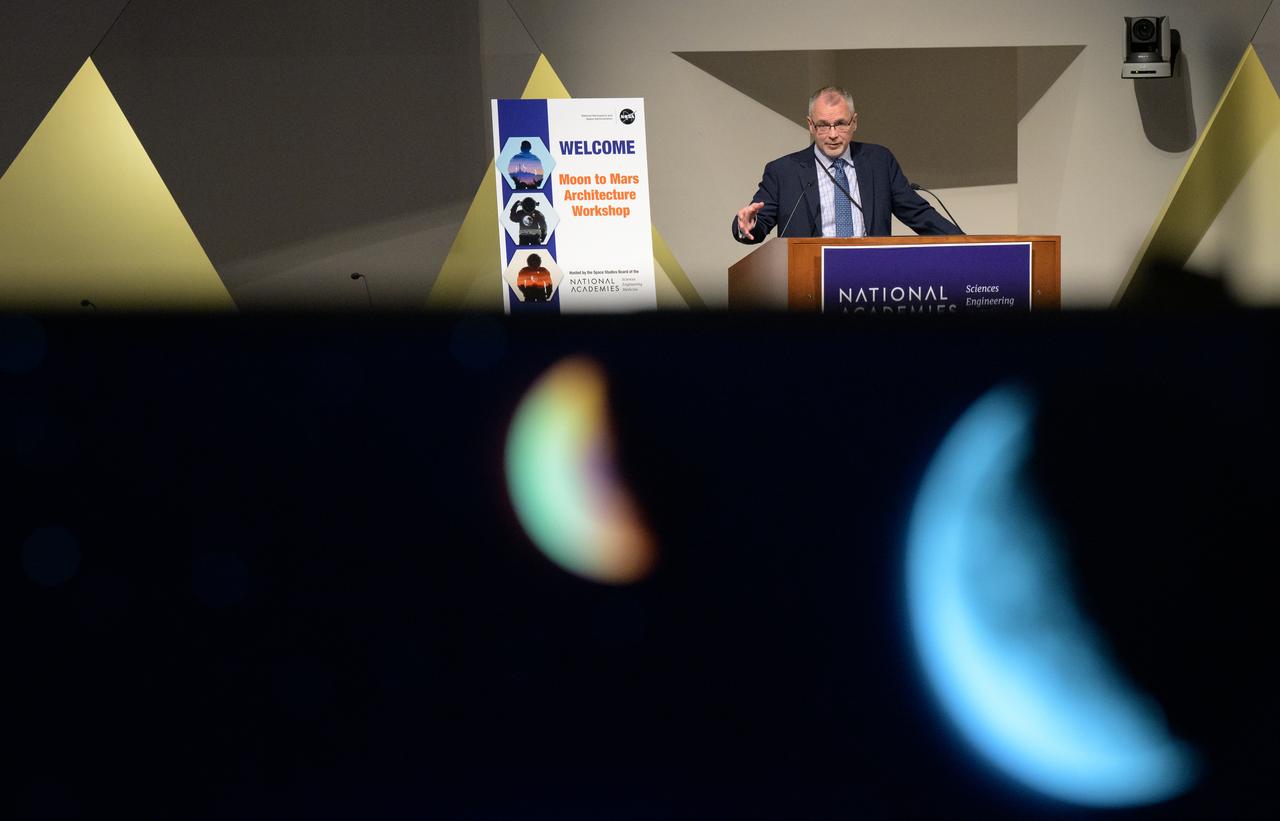
NASA Associate Administrator Jim Free gives opening remarks at the Moon to Mars Architecture Workshop, Tuesday, Feb. 20, 2024, at the National Academy of Sciences in Washington. NASA held the workshop to engage the broader space community and collect feedback from U.S. industry and academia and international partners to inform NASA's Moon to Mars Architecture, the agency's roadmap for human exploration of the Moon and Mars. Photo Credit: (NASA/Bill Ingalls)
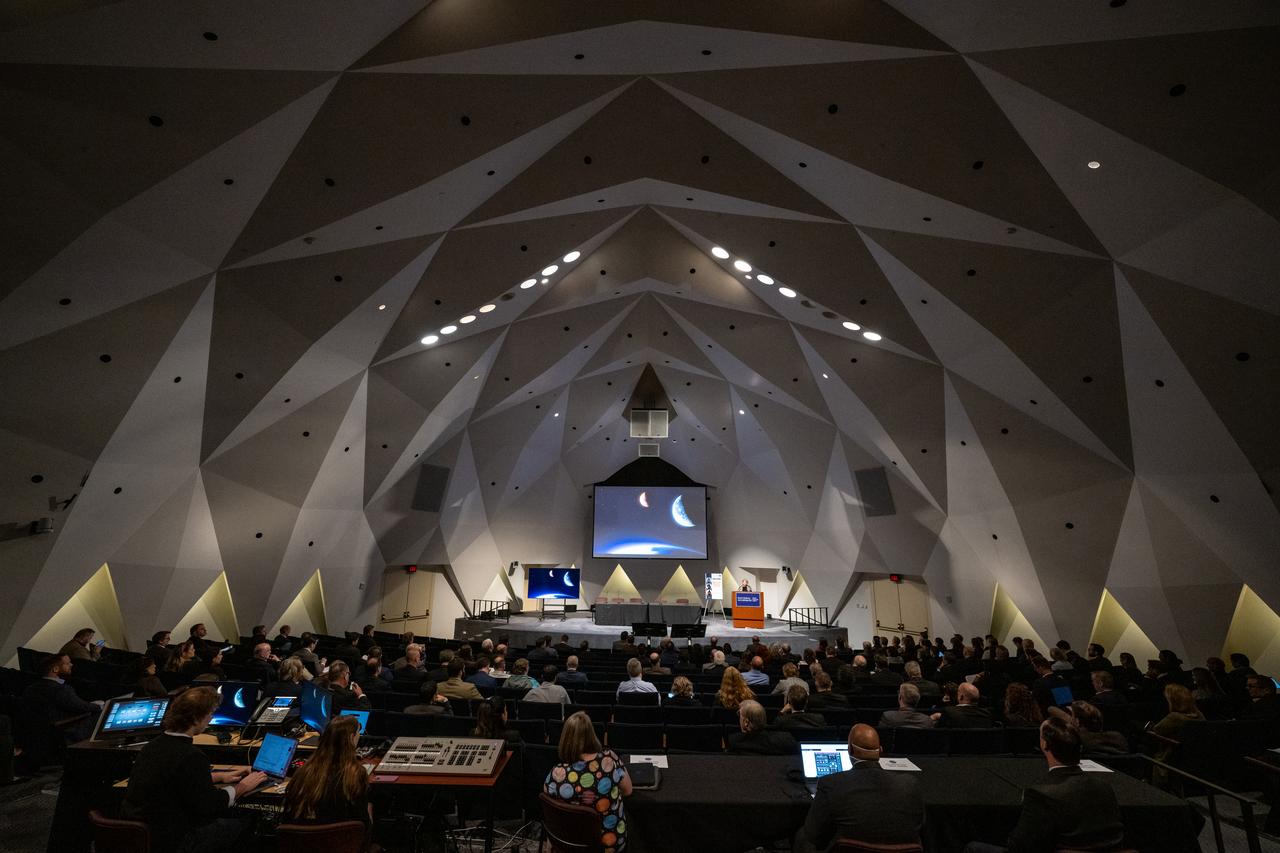
NASA Deputy Administrator Pam Melroy gives opening remarks at the Moon to Mars Architecture Workshop, Thursday, Feb. 22, 2024, at the National Academy of Sciences in Washington. NASA held the workshop to engage the broader space community and collect feedback from U.S. industry and academia and international partners to inform NASA's Moon to Mars Architecture, the agency's roadmap for human exploration of the Moon and Mars.

Lori Glaze, acting associate administrator for NASA's Exploration Systems Development Mission Directorate, gives opening remarks at the Moon to Mars Architecture Workshop, Wednesday, Jan. 21, 2026, at the National Academy of Sciences in Washington. NASA held the workshop to engage the broader space community and collect feedback from U.S. industry and academia and international partners to inform NASA's Moon to Mars Architecture, the agency's roadmap for human exploration of the Moon and Mars. Photo Credit: (NASA/Joel Kowsky)
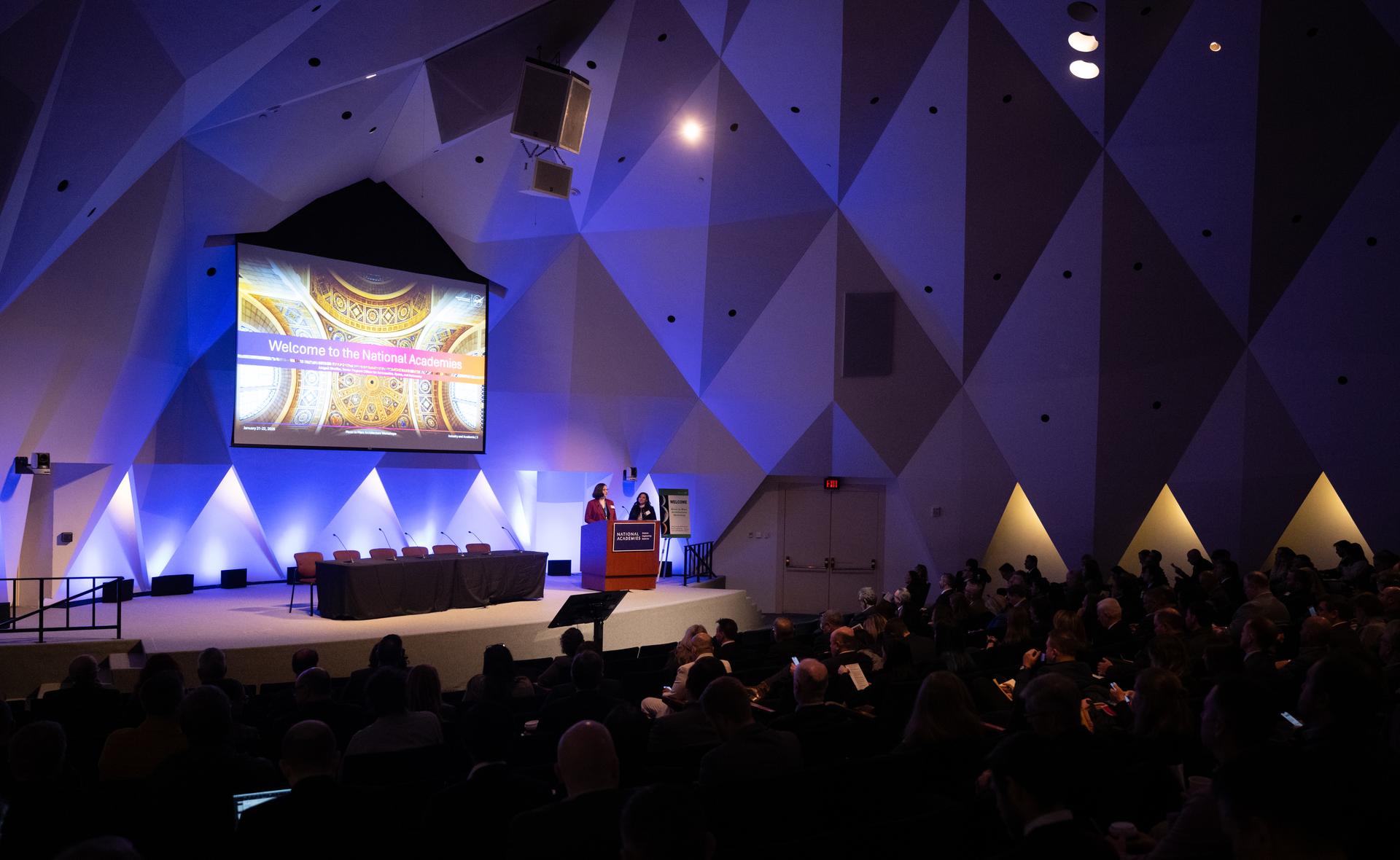
Abigail Sheffer, senior program office for Aeronautics, Space, and Astronomy at the National Academy of Sciences speaks at the Moon to Mars Architecture Workshop, Wednesday, Jan. 21, 2026, at the National Academy of Sciences in Washington. NASA held the workshop to engage the broader space community and collect feedback from U.S. industry and academia and international partners to inform NASA's Moon to Mars Architecture, the agency's roadmap for human exploration of the Moon and Mars. Photo Credit: (NASA/Joel Kowsky)
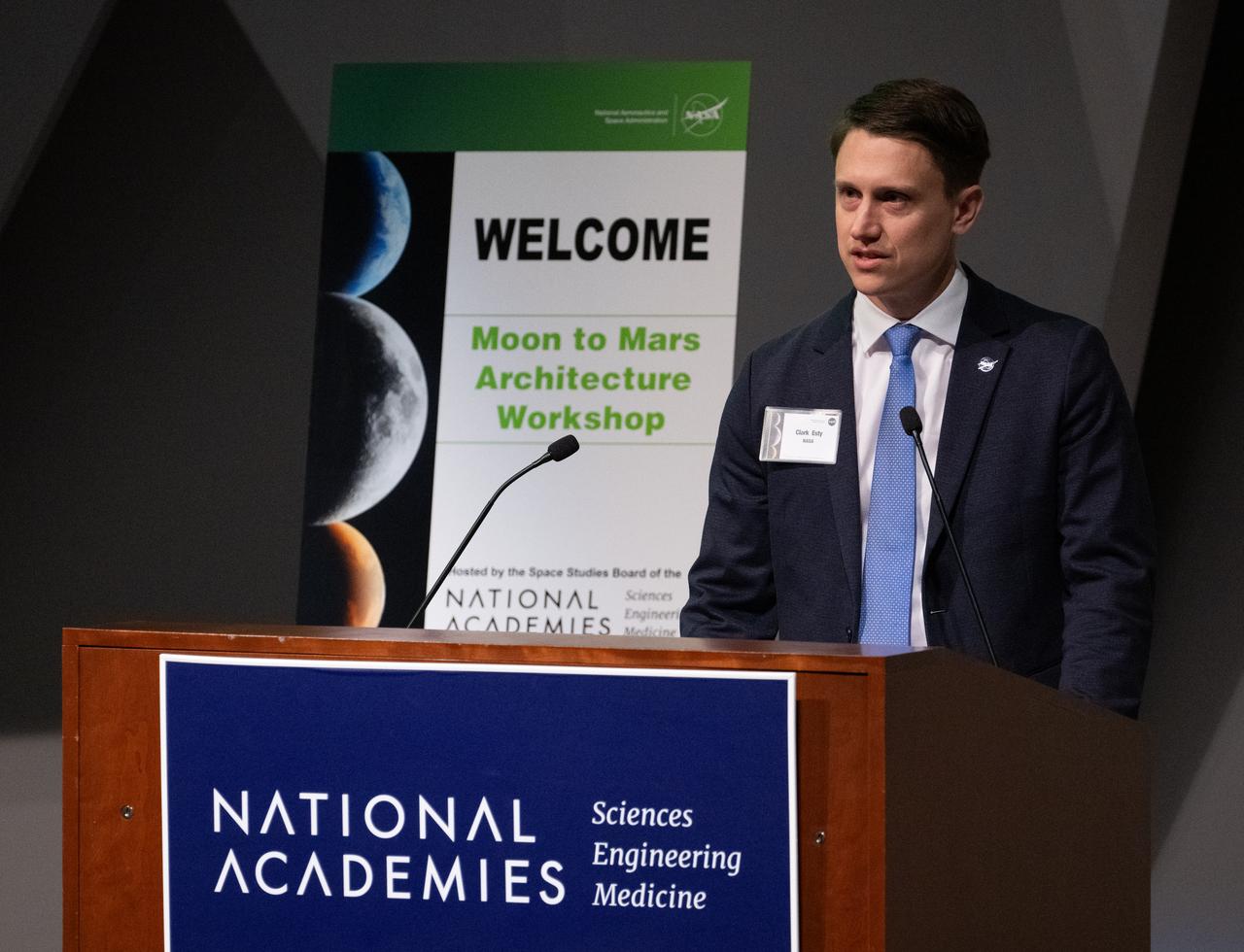
Clark Esty, executive officer for NASA’s Exploration Systems Development Mission Directorate speaks at the Moon to Mars Architecture Workshop, Wednesday, Feb. 12, 2025, at the National Academy of Sciences in Washington. NASA held the workshop to engage the broader space community and collect feedback from U.S. industry and academia and international partners to inform NASA's Moon to Mars Architecture, the agency's roadmap for human exploration of the Moon and Mars. Photo Credit: (NASA/Joel Kowsky)
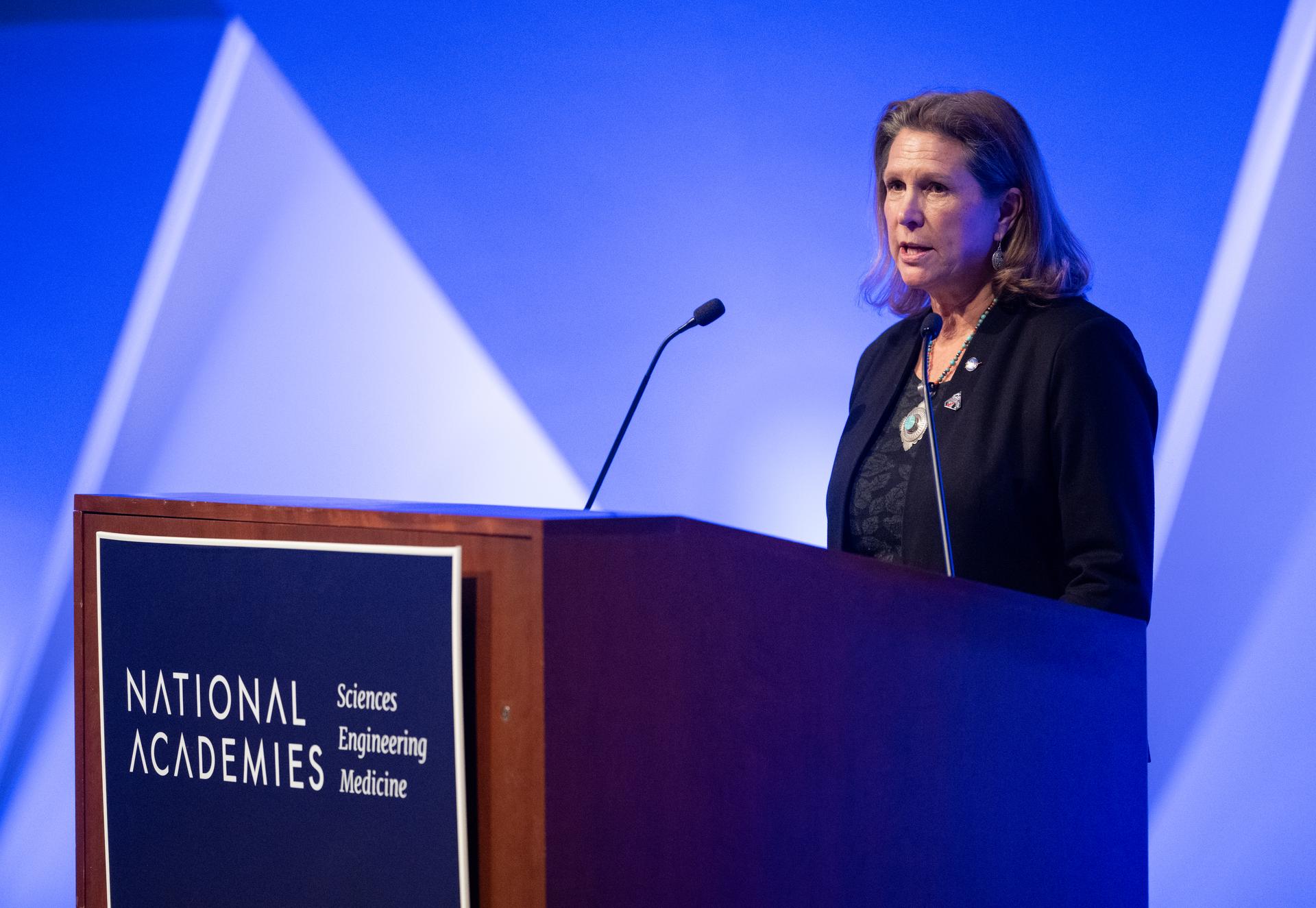
Lori Glaze, acting associate administrator for NASA's Exploration Systems Development Mission Directorate, gives opening remarks at the Moon to Mars Architecture Workshop, Wednesday, Jan. 21, 2026, at the National Academy of Sciences in Washington. NASA held the workshop to engage the broader space community and collect feedback from U.S. industry and academia and international partners to inform NASA's Moon to Mars Architecture, the agency's roadmap for human exploration of the Moon and Mars. Photo Credit: (NASA/Joel Kowsky)
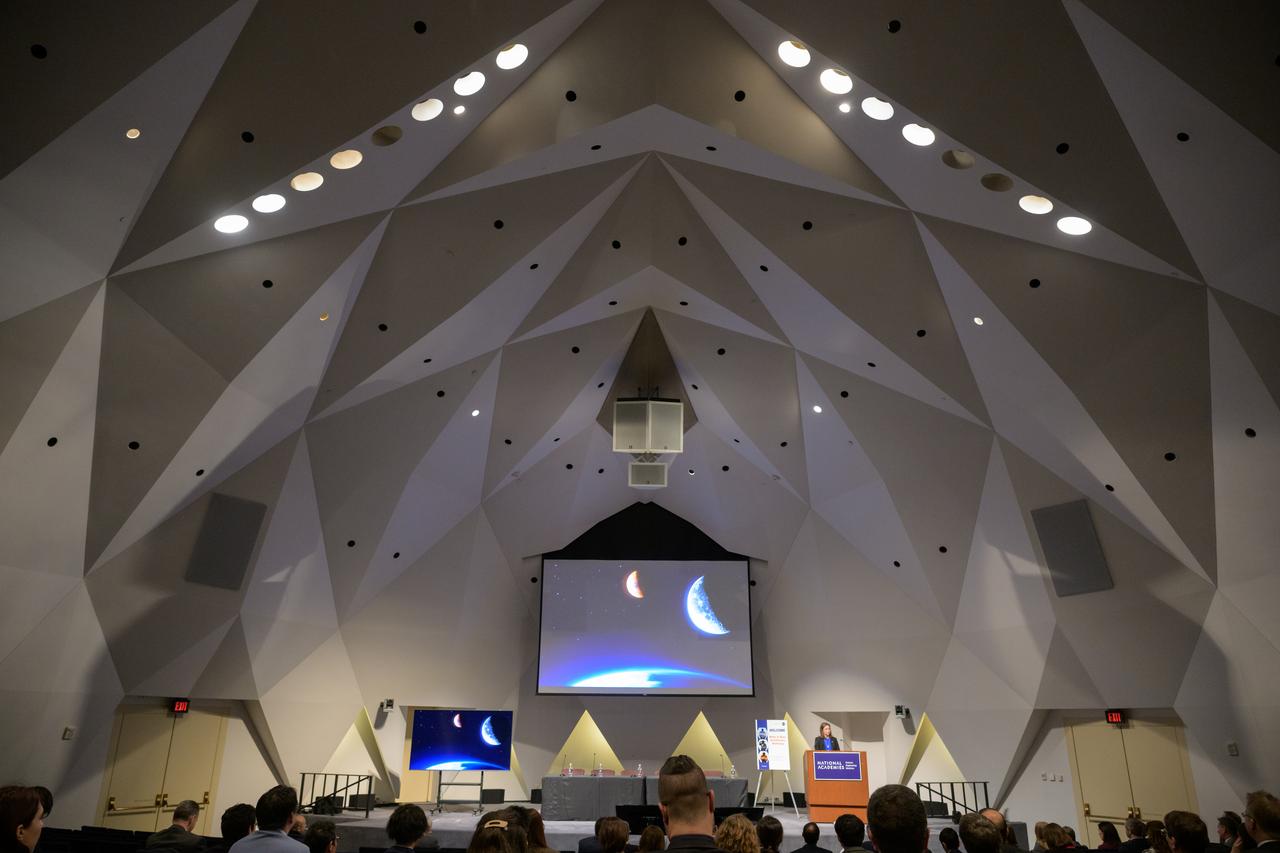
NASA Associate Administrator for Exploration Systems Development, Catherine Koerner, gives opening remarks at the Moon to Mars Architecture Workshop, Tuesday, Feb. 20, 2024, at the National Academy of Sciences in Washington. NASA held the workshop to engage the broader space community and collect feedback from U.S. industry and academia and international partners to inform NASA's Moon to Mars Architecture, the agency's roadmap for human exploration of the Moon and Mars. Photo Credit: (NASA/Bill Ingalls)
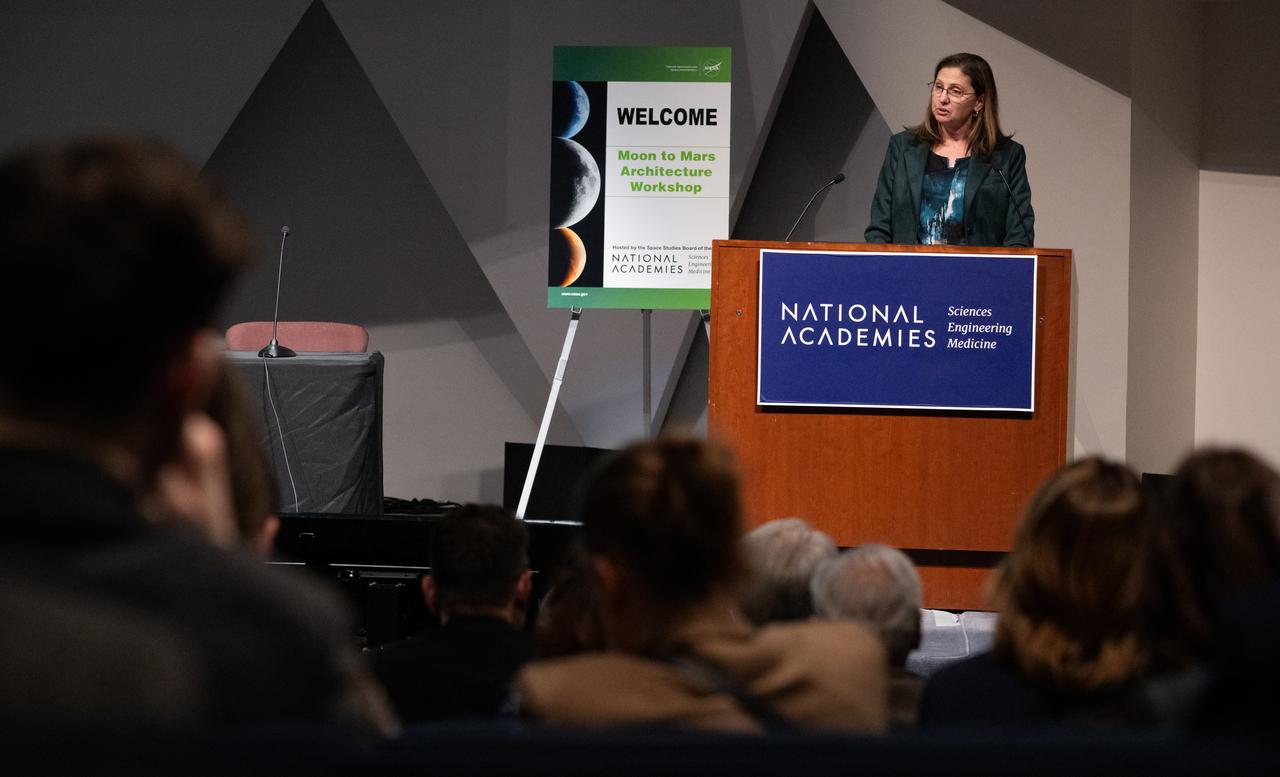
Catherine Koerner, associate administrator for NASA’s Exploration Systems Development Mission Directorate, gives opening remarks at the Moon to Mars Architecture Workshop, Wednesday, Feb. 12, 2025, at the National Academy of Sciences in Washington. NASA held the workshop to engage the broader space community and collect feedback from U.S. industry and academia and international partners to inform NASA's Moon to Mars Architecture, the agency's roadmap for human exploration of the Moon and Mars. Photo Credit: (NASA/Joel Kowsky)
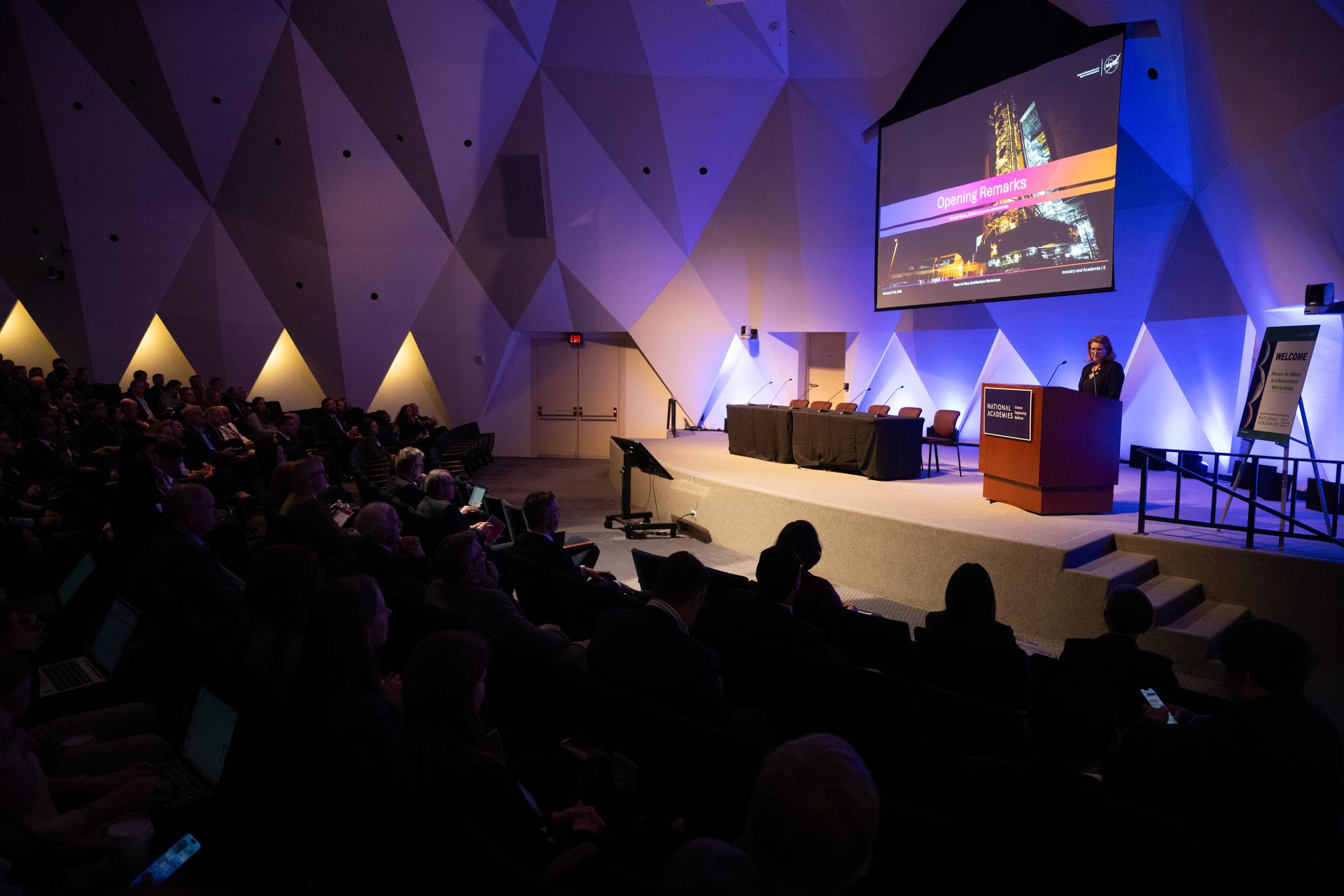
Lori Glaze, acting associate administrator for NASA's Exploration Systems Development Mission Directorate, gives opening remarks at the Moon to Mars Architecture Workshop, Wednesday, Jan. 21, 2026, at the National Academy of Sciences in Washington. NASA held the workshop to engage the broader space community and collect feedback from U.S. industry and academia and international partners to inform NASA's Moon to Mars Architecture, the agency's roadmap for human exploration of the Moon and Mars. Photo Credit: (NASA/Joel Kowsky)

Lori Glaze, acting associate administrator for NASA's Exploration Systems Development Mission Directorate, gives opening remarks at the Moon to Mars Architecture Workshop, Wednesday, Jan. 21, 2026, at the National Academy of Sciences in Washington. NASA held the workshop to engage the broader space community and collect feedback from U.S. industry and academia and international partners to inform NASA's Moon to Mars Architecture, the agency's roadmap for human exploration of the Moon and Mars. Photo Credit: (NASA/Joel Kowsky)
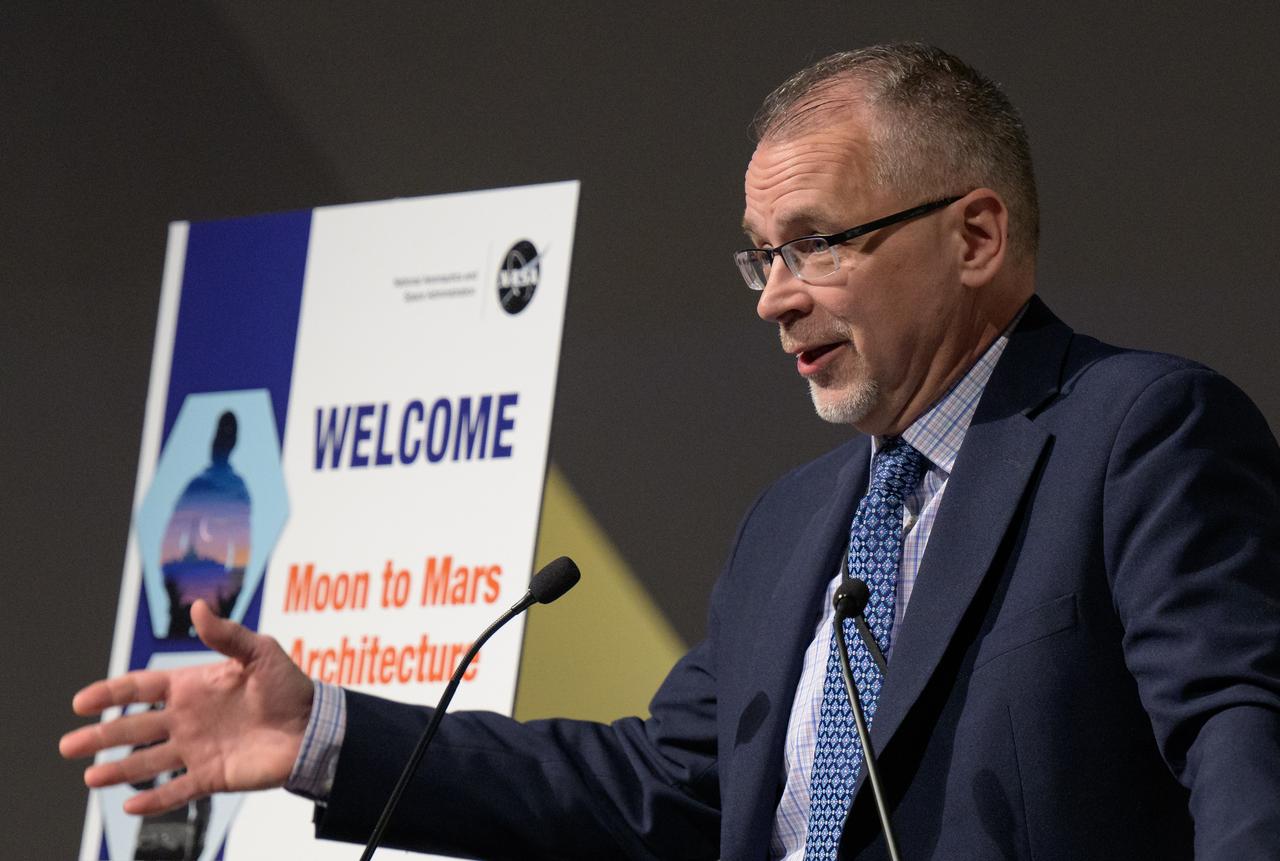
NASA Associate Administrator Jim Free gives opening remarks at the Moon to Mars Architecture Workshop, Tuesday, Feb. 20, 2024, at the National Academy of Sciences in Washington. NASA held the workshop to engage the broader space community and collect feedback from U.S. industry and academia and international partners to inform NASA's Moon to Mars Architecture, the agency's roadmap for human exploration of the Moon and Mars. Photo Credit: (NASA/Bill Ingalls)
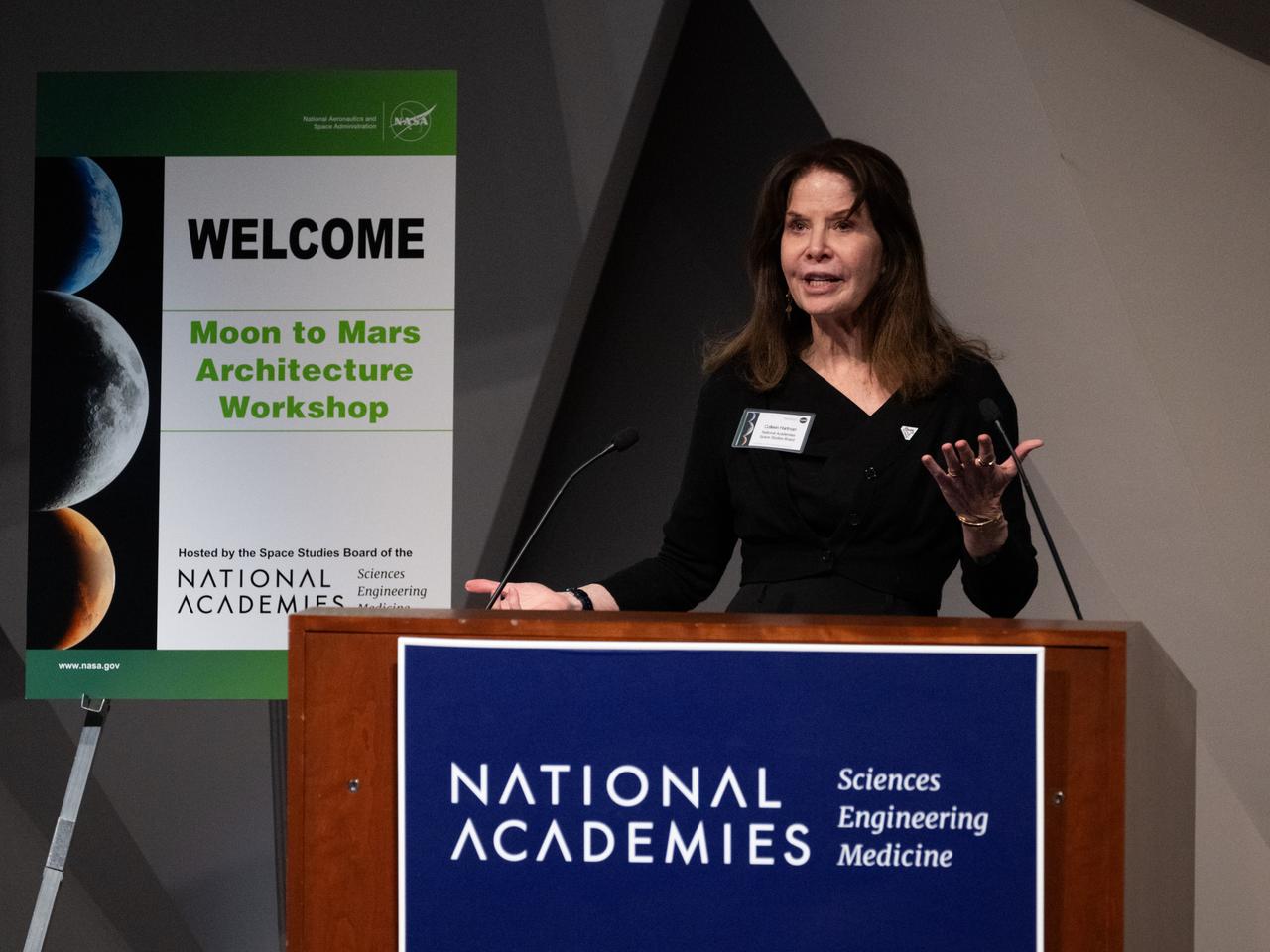
Colleen Hartman, director of the Space Studies Board at the National Academy of Sciences gives opening remarks at the Moon to Mars Architecture Workshop, Wednesday, Feb. 12, 2025, at the National Academy of Sciences in Washington. NASA held the workshop to engage the broader space community and collect feedback from U.S. industry and academia and international partners to inform NASA's Moon to Mars Architecture, the agency's roadmap for human exploration of the Moon and Mars. Photo Credit: (NASA/Joel Kowsky)
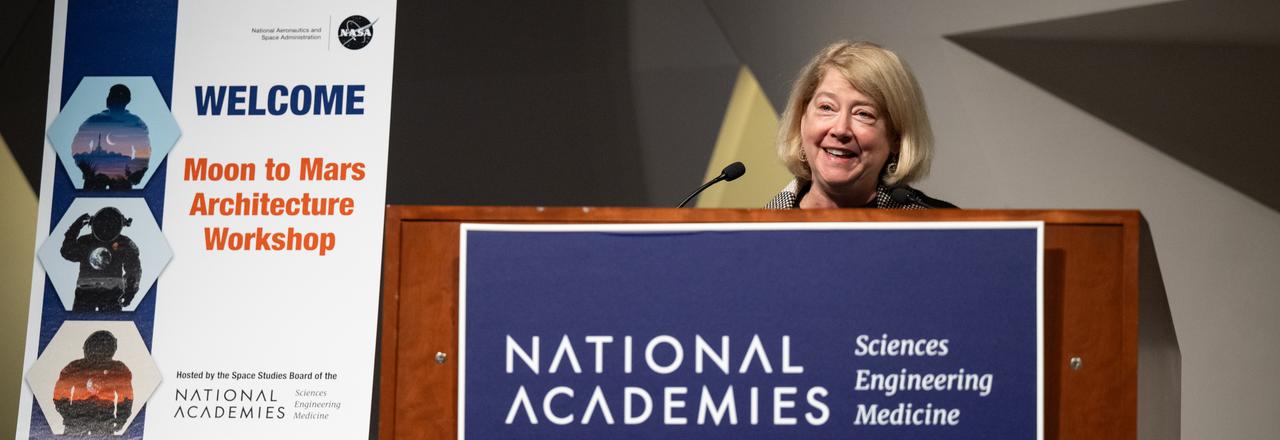
NASA Deputy Administrator Pam Melroy gives opening remarks at the Moon to Mars Architecture Workshop, Thursday, Feb. 22, 2024, at the National Academy of Sciences in Washington. NASA held the workshop to engage the broader space community and collect feedback from U.S. industry and academia and international partners to inform NASA's Moon to Mars Architecture, the agency's roadmap for human exploration of the Moon and Mars.
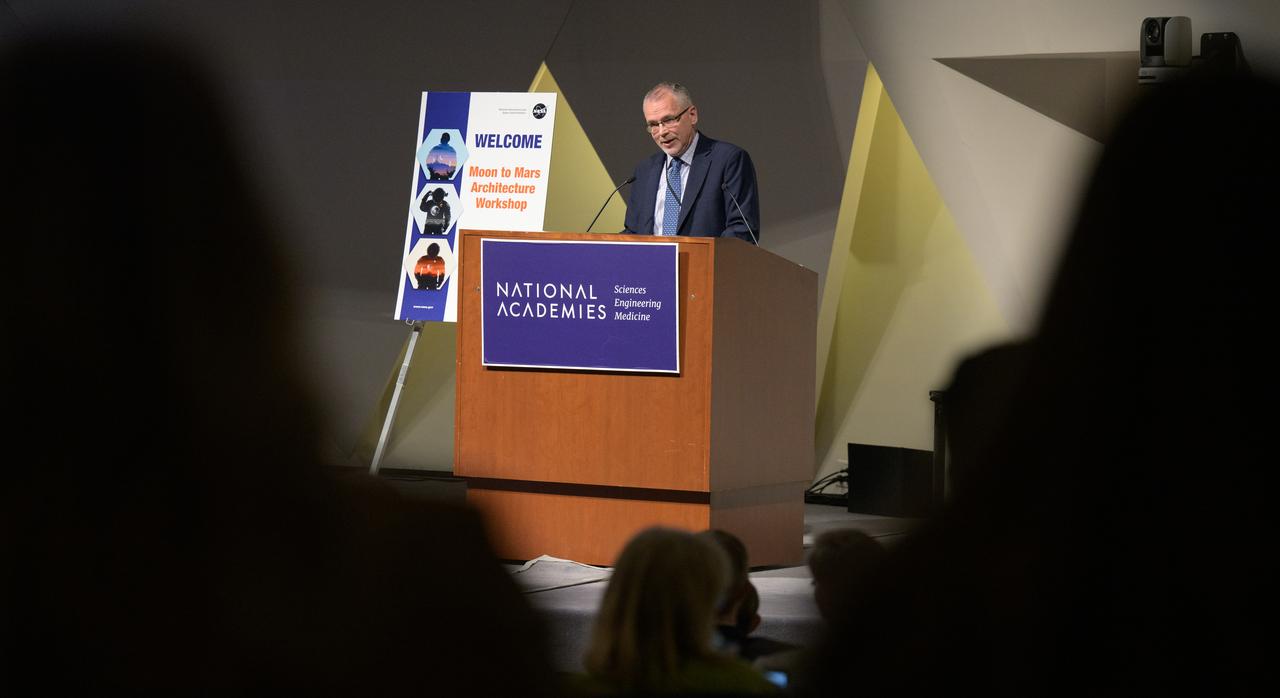
NASA Associate Administrator Jim Free gives opening remarks at the Moon to Mars Architecture Workshop, Tuesday, Feb. 20, 2024, at the National Academy of Sciences in Washington. NASA held the workshop to engage the broader space community and collect feedback from U.S. industry and academia and international partners to inform NASA's Moon to Mars Architecture, the agency's roadmap for human exploration of the Moon and Mars. Photo Credit: (NASA/Bill Ingalls)
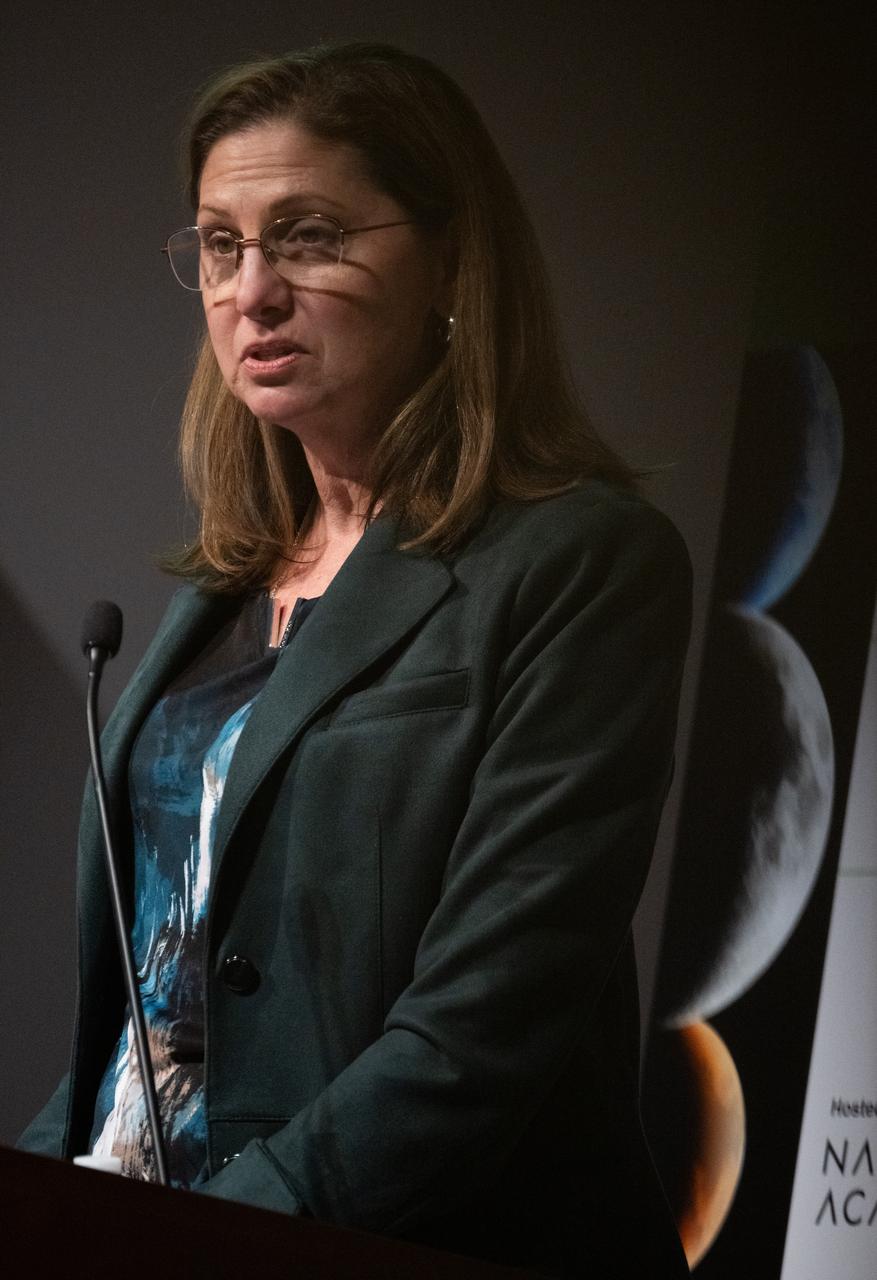
Catherine Koerner, associate administrator for NASA’s Exploration Systems Development Mission Directorate, gives opening remarks at the Moon to Mars Architecture Workshop, Wednesday, Feb. 12, 2025, at the National Academy of Sciences in Washington. NASA held the workshop to engage the broader space community and collect feedback from U.S. industry and academia and international partners to inform NASA's Moon to Mars Architecture, the agency's roadmap for human exploration of the Moon and Mars. Photo Credit: (NASA/Joel Kowsky)
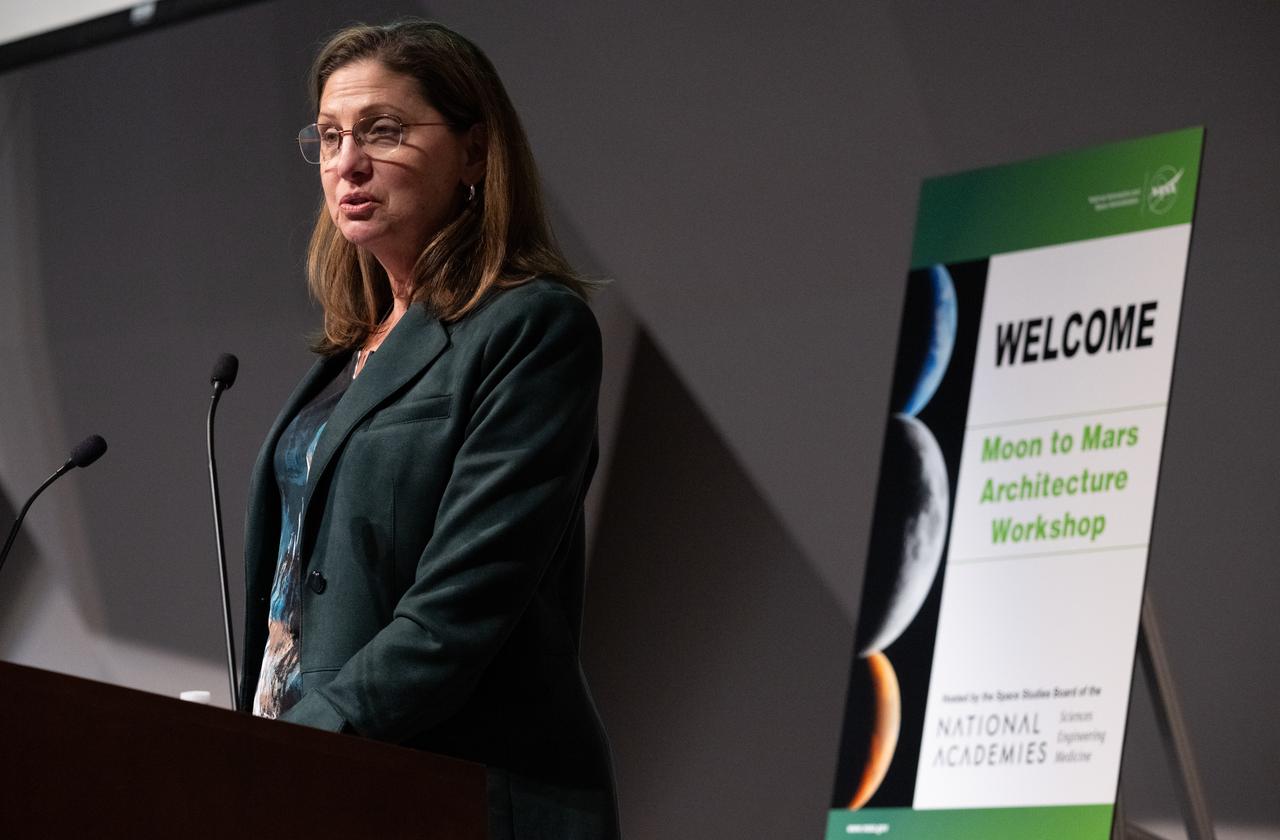
Catherine Koerner, associate administrator for NASA’s Exploration Systems Development Mission Directorate, gives opening remarks at the Moon to Mars Architecture Workshop, Wednesday, Feb. 12, 2025, at the National Academy of Sciences in Washington. NASA held the workshop to engage the broader space community and collect feedback from U.S. industry and academia and international partners to inform NASA's Moon to Mars Architecture, the agency's roadmap for human exploration of the Moon and Mars. Photo Credit: (NASA/Joel Kowsky)

NASA Associate Administrator for Exploration Systems Development, Catherine Koerner, gives opening remarks at the Moon to Mars Architecture Workshop, Tuesday, Feb. 20, 2024, at the National Academy of Sciences in Washington. NASA held the workshop to engage the broader space community and collect feedback from U.S. industry and academia and international partners to inform NASA's Moon to Mars Architecture, the agency's roadmap for human exploration of the Moon and Mars. Photo Credit: (NASA/Bill Ingalls)
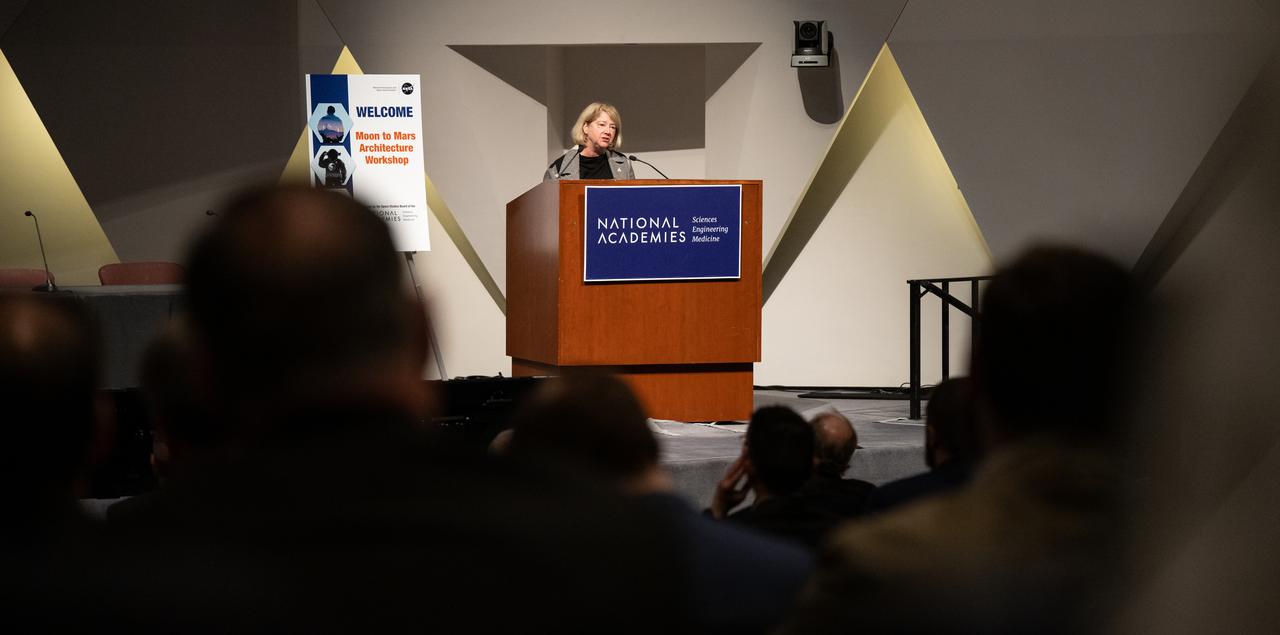
NASA Deputy Administrator Pam Melroy gives opening remarks at the Moon to Mars Architecture Workshop, Thursday, Feb. 22, 2024, at the National Academy of Sciences in Washington. NASA held the workshop to engage the broader space community and collect feedback from U.S. industry and academia and international partners to inform NASA's Moon to Mars Architecture, the agency's roadmap for human exploration of the Moon and Mars.
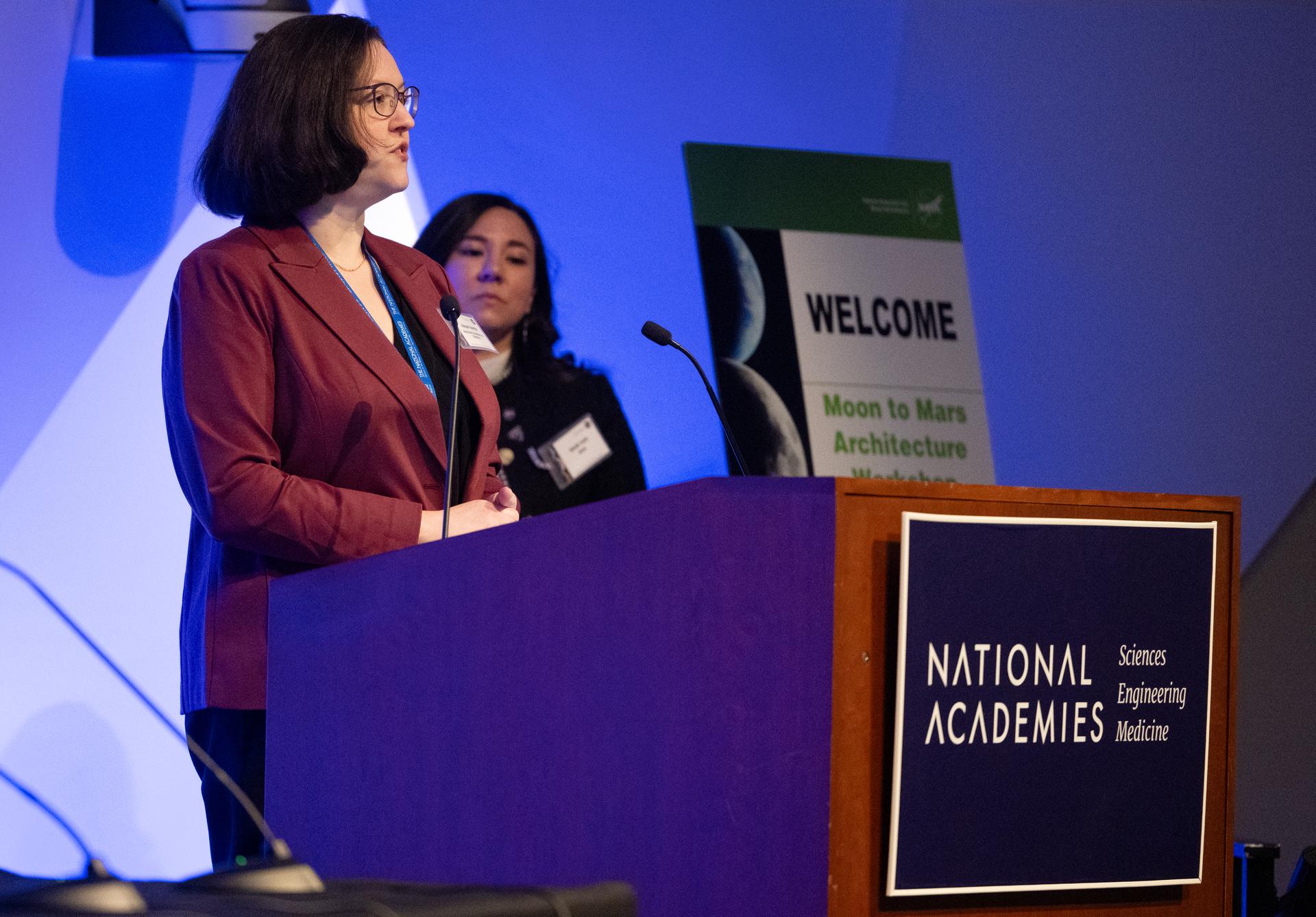
Abigail Sheffer, senior program office for Aeronautics, Space, and Astronomy at the National Academy of Sciences speaks at the Moon to Mars Architecture Workshop, Wednesday, Jan. 21, 2026, at the National Academy of Sciences in Washington. NASA held the workshop to engage the broader space community and collect feedback from U.S. industry and academia and international partners to inform NASA's Moon to Mars Architecture, the agency's roadmap for human exploration of the Moon and Mars. Photo Credit: (NASA/Joel Kowsky)
Catherine Koerner, associate administrator for NASA’s Exploration Systems Development Mission Directorate, gives opening remarks at the Moon to Mars Architecture Workshop, Wednesday, Feb. 12, 2025, at the National Academy of Sciences in Washington. NASA held the workshop to engage the broader space community and collect feedback from U.S. industry and academia and international partners to inform NASA's Moon to Mars Architecture, the agency's roadmap for human exploration of the Moon and Mars. Photo Credit: (NASA/Joel Kowsky)
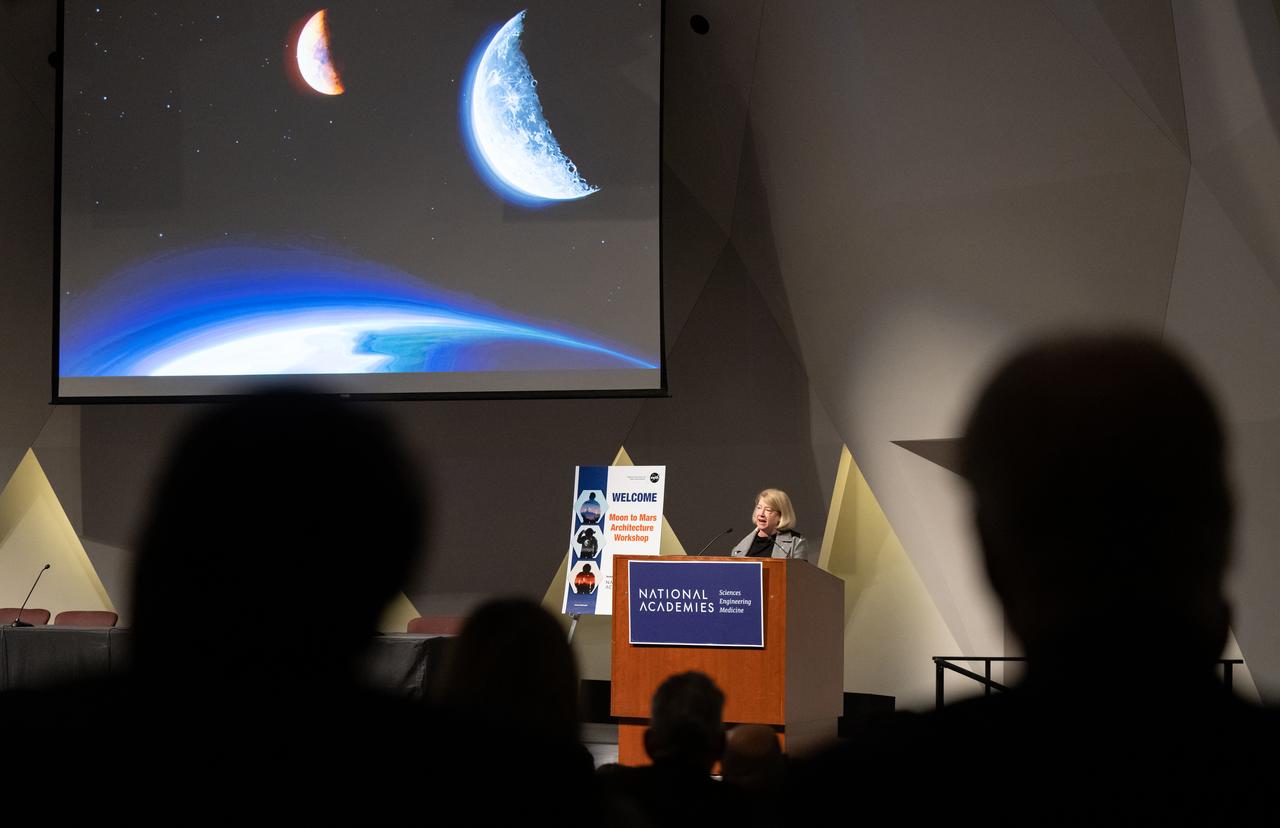
NASA Deputy Administrator Pam Melroy gives opening remarks at the Moon to Mars Architecture Workshop, Thursday, Feb. 22, 2024, at the National Academy of Sciences in Washington. NASA held the workshop to engage the broader space community and collect feedback from U.S. industry and academia and international partners to inform NASA's Moon to Mars Architecture, the agency's roadmap for human exploration of the Moon and Mars.
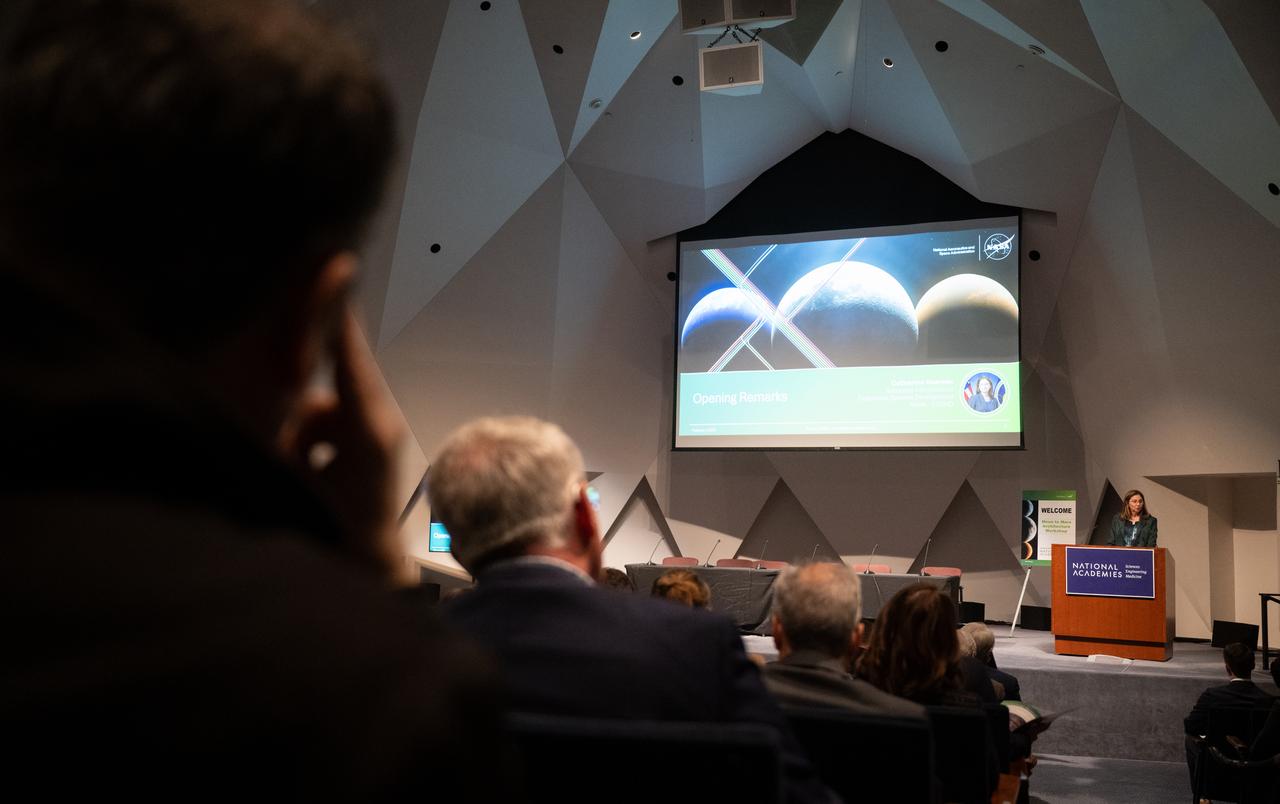
Catherine Koerner, associate administrator for NASA’s Exploration Systems Development Mission Directorate, gives opening remarks at the Moon to Mars Architecture Workshop, Wednesday, Feb. 12, 2025, at the National Academy of Sciences in Washington. NASA held the workshop to engage the broader space community and collect feedback from U.S. industry and academia and international partners to inform NASA's Moon to Mars Architecture, the agency's roadmap for human exploration of the Moon and Mars. Photo Credit: (NASA/Joel Kowsky)
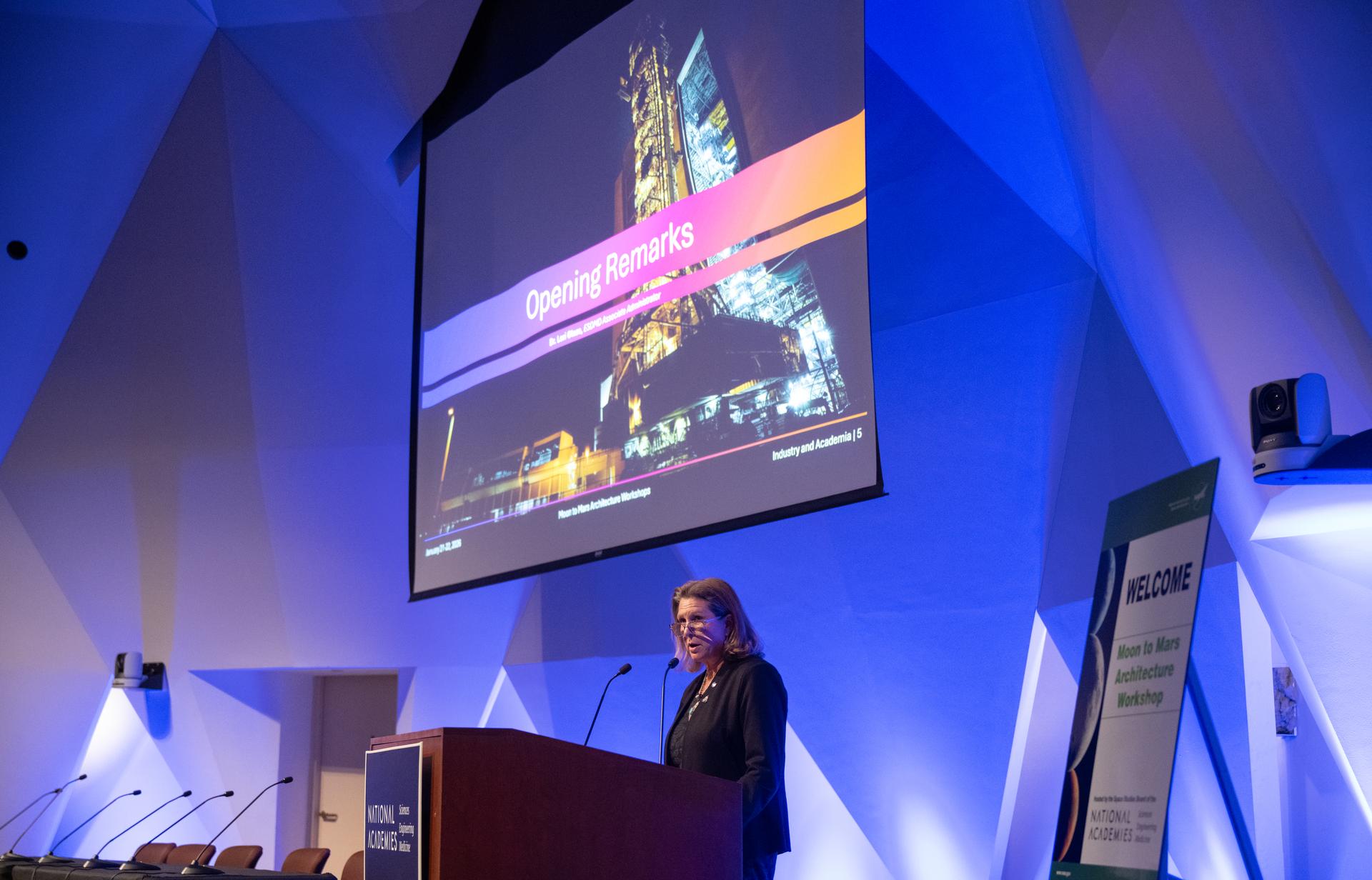
Lori Glaze, acting associate administrator for NASA's Exploration Systems Development Mission Directorate, gives opening remarks at the Moon to Mars Architecture Workshop, Wednesday, Jan. 21, 2026, at the National Academy of Sciences in Washington. NASA held the workshop to engage the broader space community and collect feedback from U.S. industry and academia and international partners to inform NASA's Moon to Mars Architecture, the agency's roadmap for human exploration of the Moon and Mars. Photo Credit: (NASA/Joel Kowsky)
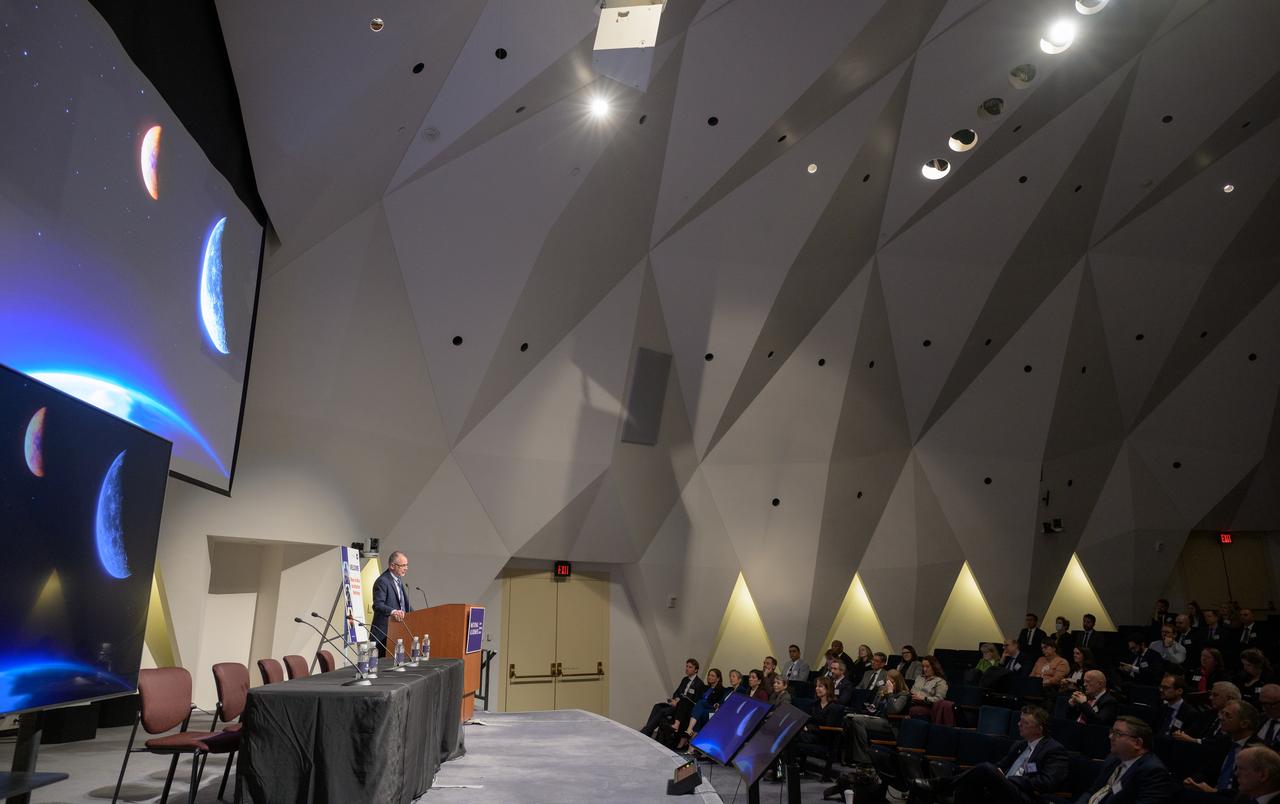
NASA Associate Administrator Jim Free gives opening remarks at the Moon to Mars Architecture Workshop, Tuesday, Feb. 20, 2024, at the National Academy of Sciences in Washington. NASA held the workshop to engage the broader space community and collect feedback from U.S. industry and academia and international partners to inform NASA's Moon to Mars Architecture, the agency's roadmap for human exploration of the Moon and Mars. Photo Credit: (NASA/Bill Ingalls)

Sarah Luna, executive officer for NASA’s Exploration Systems Development Mission Directorate speaks at the Moon to Mars Architecture Workshop, Wednesday, Jan. 21, 2026, at the National Academy of Sciences in Washington. NASA held the workshop to engage the broader space community and collect feedback from U.S. industry and academia and international partners to inform NASA's Moon to Mars Architecture, the agency's roadmap for human exploration of the Moon and Mars. Photo Credit: (NASA/Joel Kowsky)
Nujoud Merancy, architecture lead for NASA's Exploration Systems Development Mission Directorate, left, and Catherine Koerner, deputy associate administrator for NASA's Exploration Systems Development Mission Directorate, are seen during NASA’s Moon to Mars Architecture Workshop, Tuesday, June 27, 2023, at the Gaylord National Resort and Convention Center in National Harbor, Md. Following the release of the 2022 Architecture Concept Review, NASA is conducting the workshop to engage the broader space community and collect feedback from U.S. industry and academia to inform the Moon to Mars mission architecture and operational delivery. Photo Credit: (NASA/Joel Kowsky)

Nujoud Merancy, architecture lead for NASA's Exploration Systems Development Mission Directorate, left, and Catherine Koerner, deputy associate administrator for NASA's Exploration Systems Development Mission Directorate, are seen during NASA’s Moon to Mars Architecture Workshop, Tuesday, June 27, 2023, at the Gaylord National Resort and Convention Center in National Harbor, Md. Following the release of the 2022 Architecture Concept Review, NASA is conducting the workshop to engage the broader space community and collect feedback from U.S. industry and academia to inform the Moon to Mars mission architecture and operational delivery. Photo Credit: (NASA/Joel Kowsky)
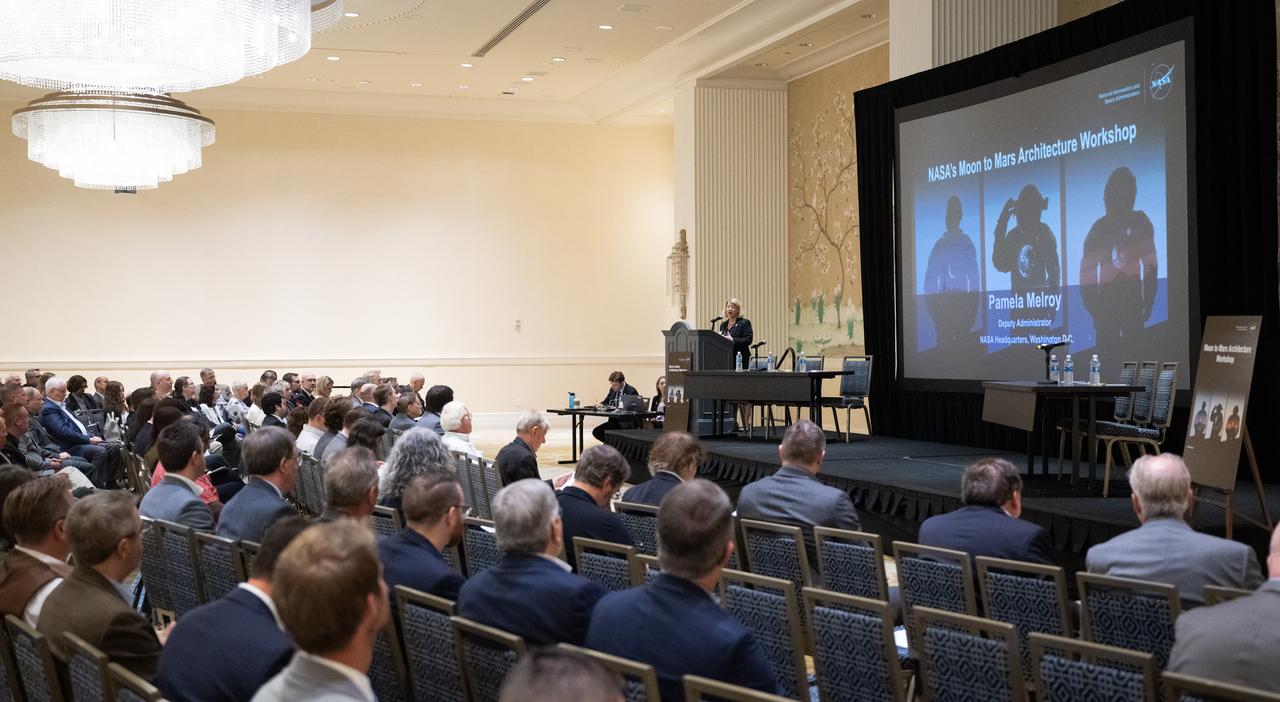
NASA Deputy Administrator Pam Melroy delivers opening remarks during NASA’s Moon to Mars Architecture Workshop, Tuesday, June 27, 2023, at the Gaylord National Resort and Convention Center in National Harbor, Md. Following the release of the 2022 Architecture Concept Review, NASA is conducting the workshop to engage the broader space community and collect feedback from U.S. industry and academia to inform the Moon to Mars mission architecture and operational delivery. Photo Credit: (NASA/Joel Kowsky)
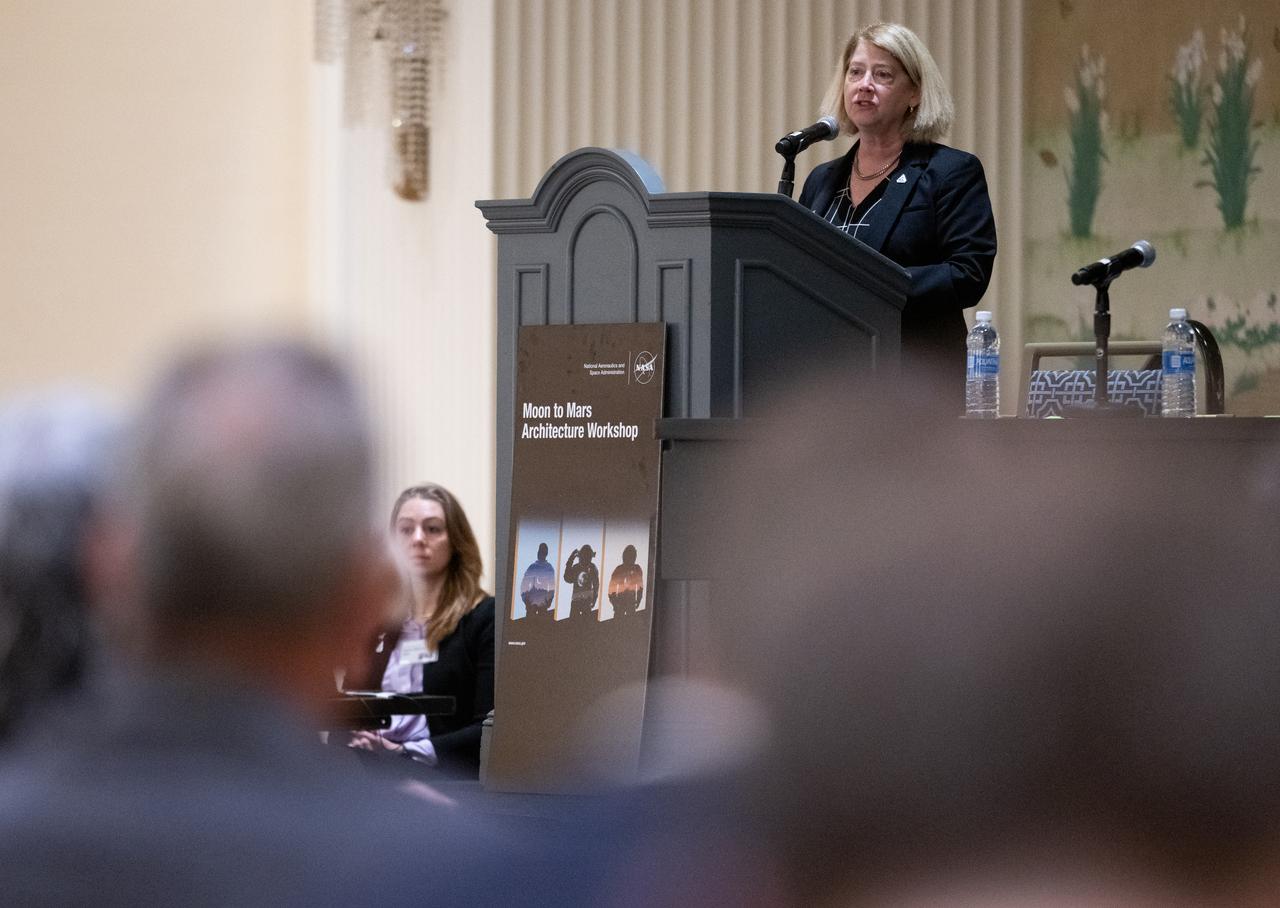
NASA Deputy Administrator Pam Melroy delivers opening remarks during NASA’s Moon to Mars Architecture Workshop, Tuesday, June 27, 2023, at the Gaylord National Resort and Convention Center in National Harbor, Md. Following the release of the 2022 Architecture Concept Review, NASA is conducting the workshop to engage the broader space community and collect feedback from U.S. industry and academia to inform the Moon to Mars mission architecture and operational delivery. Photo Credit: (NASA/Joel Kowsky)
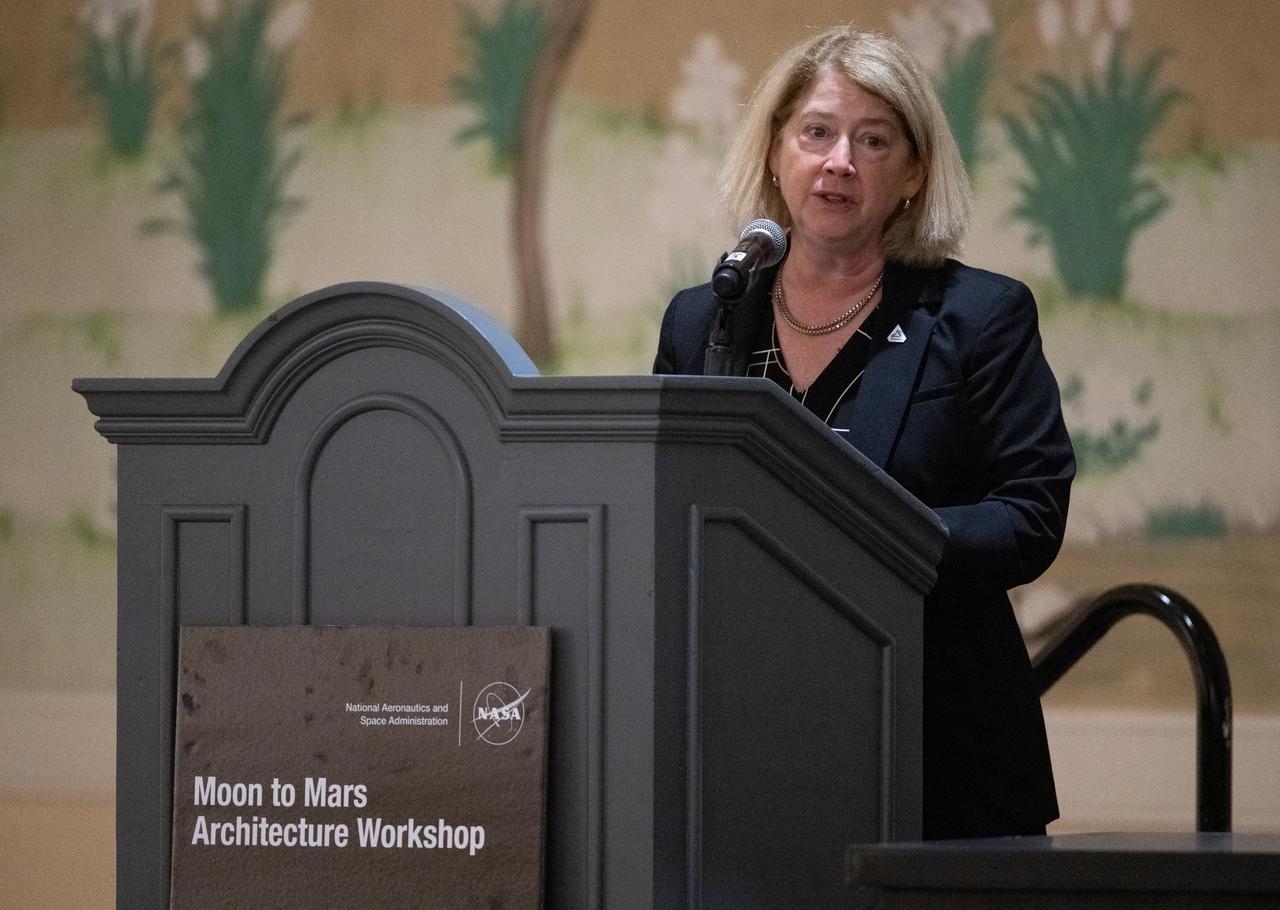
NASA Deputy Administrator Pam Melroy delivers opening remarks during NASA’s Moon to Mars Architecture Workshop, Tuesday, June 27, 2023, at the Gaylord National Resort and Convention Center in National Harbor, Md. Following the release of the 2022 Architecture Concept Review, NASA is conducting the workshop to engage the broader space community and collect feedback from U.S. industry and academia to inform the Moon to Mars mission architecture and operational delivery. Photo Credit: (NASA/Joel Kowsky)

Catherine Koerner, deputy associate administrator for NASA's Exploration Systems Development Mission Directorate, center, is seen alongside Nujoud Merancy, architecture lead for NASA's Exploration Systems Development Mission Directorate, left, and Patrick Forrester, special advisor in NASA's Space Operations Mission Directorate, right, during NASA’s Moon to Mars Architecture Workshop, Tuesday, June 27, 2023, at the Gaylord National Resort and Convention Center in National Harbor, Md. Following the release of the 2022 Architecture Concept Review, NASA is conducting the workshop to engage the broader space community and collect feedback from U.S. industry and academia to inform the Moon to Mars mission architecture and operational delivery. Photo Credit: (NASA/Joel Kowsky)
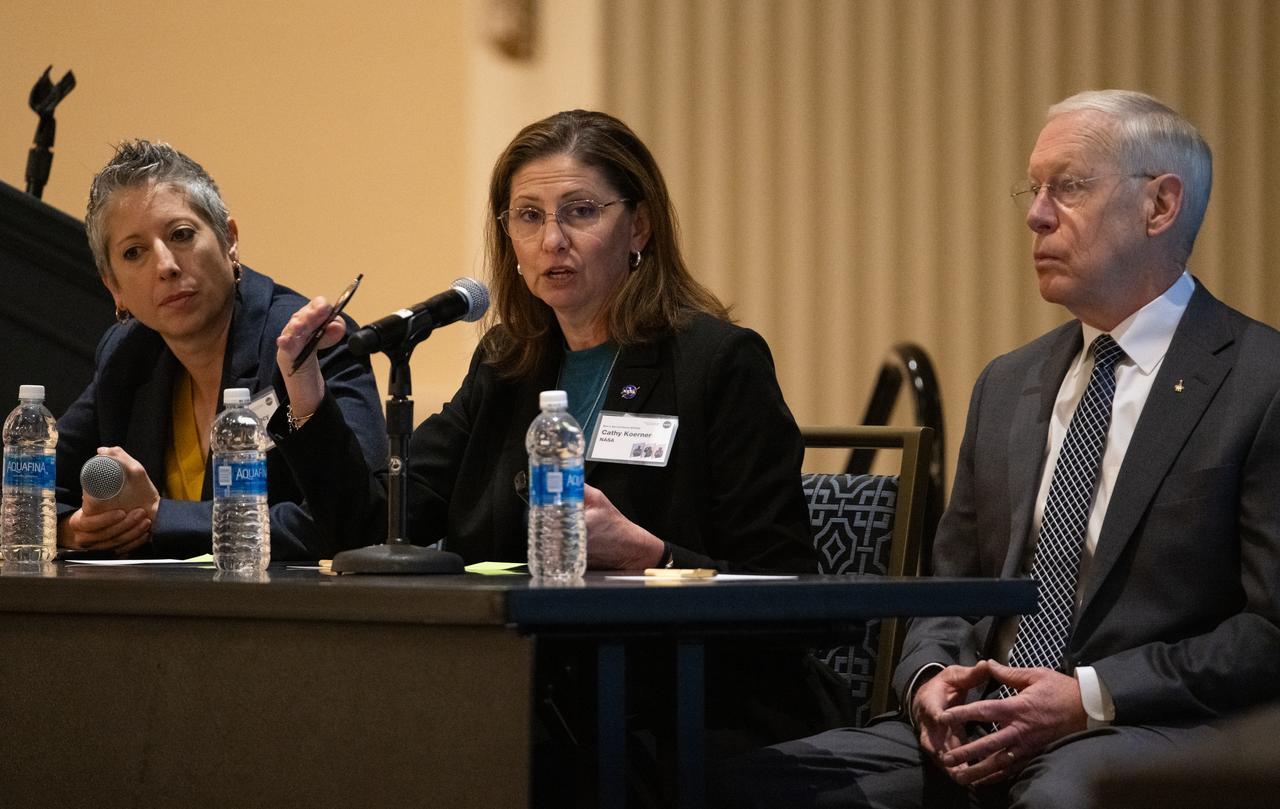
Catherine Koerner, deputy associate administrator for NASA's Exploration Systems Development Mission Directorate, center, is seen alongside Nujoud Merancy, architecture lead for NASA's Exploration Systems Development Mission Directorate, left, and Patrick Forrester, special advisor in NASA's Space Operations Mission Directorate, right, during NASA’s Moon to Mars Architecture Workshop, Tuesday, June 27, 2023, at the Gaylord National Resort and Convention Center in National Harbor, Md. Following the release of the 2022 Architecture Concept Review, NASA is conducting the workshop to engage the broader space community and collect feedback from U.S. industry and academia to inform the Moon to Mars mission architecture and operational delivery. Photo Credit: (NASA/Joel Kowsky)

Michelle Munk, chief architect for NASA’s Space Technology Mission Directorate, left, answers a question alongside Joel Kearns, deputy associate administrator for Exploration in NASA's Science Mission Directorate, during NASA’s Moon to Mars Architecture Workshop, Tuesday, June 27, 2023, at the Gaylord National Resort and Convention Center in National Harbor, Md. Following the release of the 2022 Architecture Concept Review, NASA is conducting the workshop to engage the broader space community and collect feedback from U.S. industry and academia to inform the Moon to Mars mission architecture and operational delivery. Photo Credit: (NASA/Joel Kowsky)

Michelle Munk, chief architect for NASA’s Space Technology Mission Directorate, left, and Joel Kearns, deputy associate administrator for Exploration in NASA's Science Mission Directorate, are seen during NASA’s Moon to Mars Architecture Workshop, Tuesday, June 27, 2023, at the Gaylord National Resort and Convention Center in National Harbor, Md. Following the release of the 2022 Architecture Concept Review, NASA is conducting the workshop to engage the broader space community and collect feedback from U.S. industry and academia to inform the Moon to Mars mission architecture and operational delivery. Photo Credit: (NASA/Joel Kowsky)
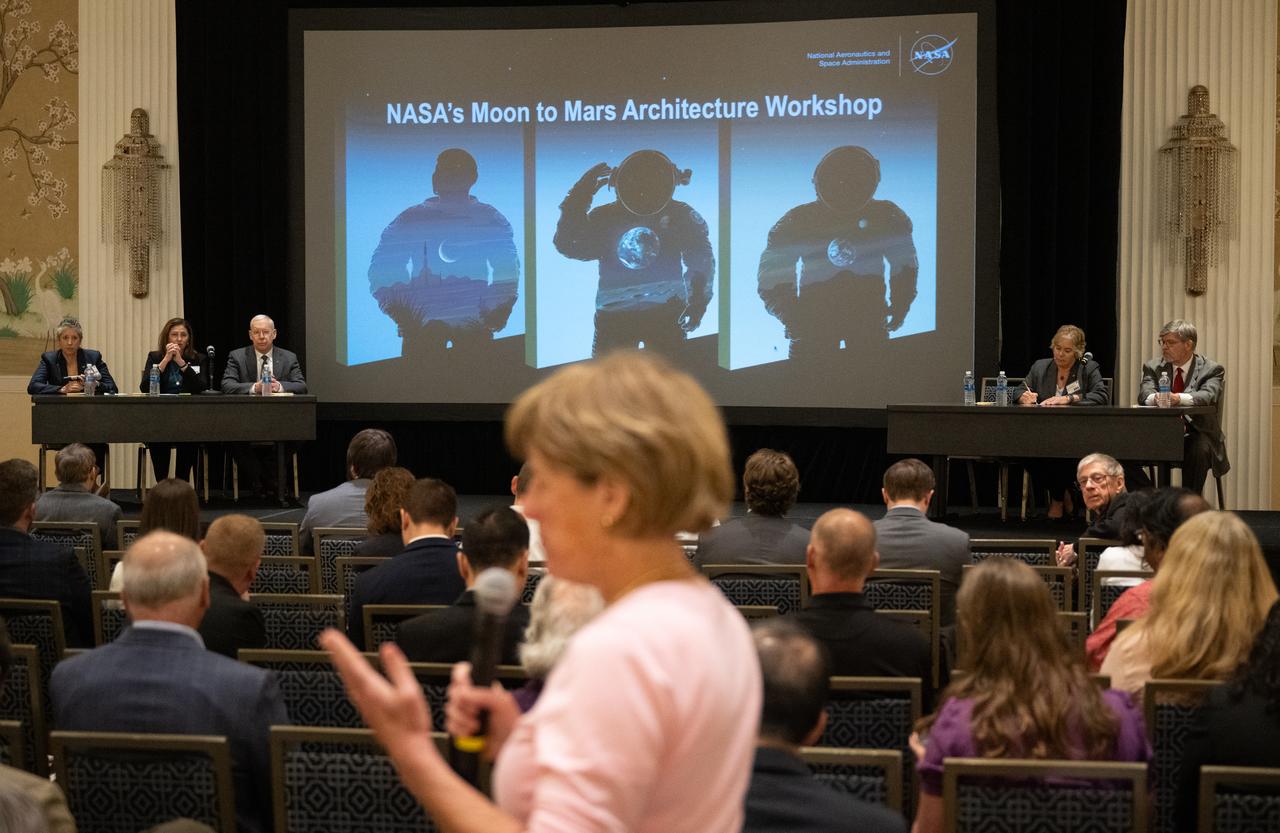
Nujoud Merancy, architecture lead for NASA's Exploration Systems Development Mission Directorate, Catherine Koerner, deputy associate administrator for NASA's Exploration Systems Development Mission Directorate, Patrick Forrester, special advisor in NASA's Space Operations Mission Directorate, Michelle Munk, chief architect for NASA’s Space Technology Mission Directorate, and Joel Kearns, deputy associate administrator for Exploration in NASA's Science Mission Directorate, listen to a question during NASA’s Moon to Mars Architecture Workshop, Tuesday, June 27, 2023, at the Gaylord National Resort and Convention Center in National Harbor, Md. Following the release of the 2022 Architecture Concept Review, NASA is conducting the workshop to engage the broader space community and collect feedback from U.S. industry and academia to inform the Moon to Mars mission architecture and operational delivery. Photo Credit: (NASA/Joel Kowsky)
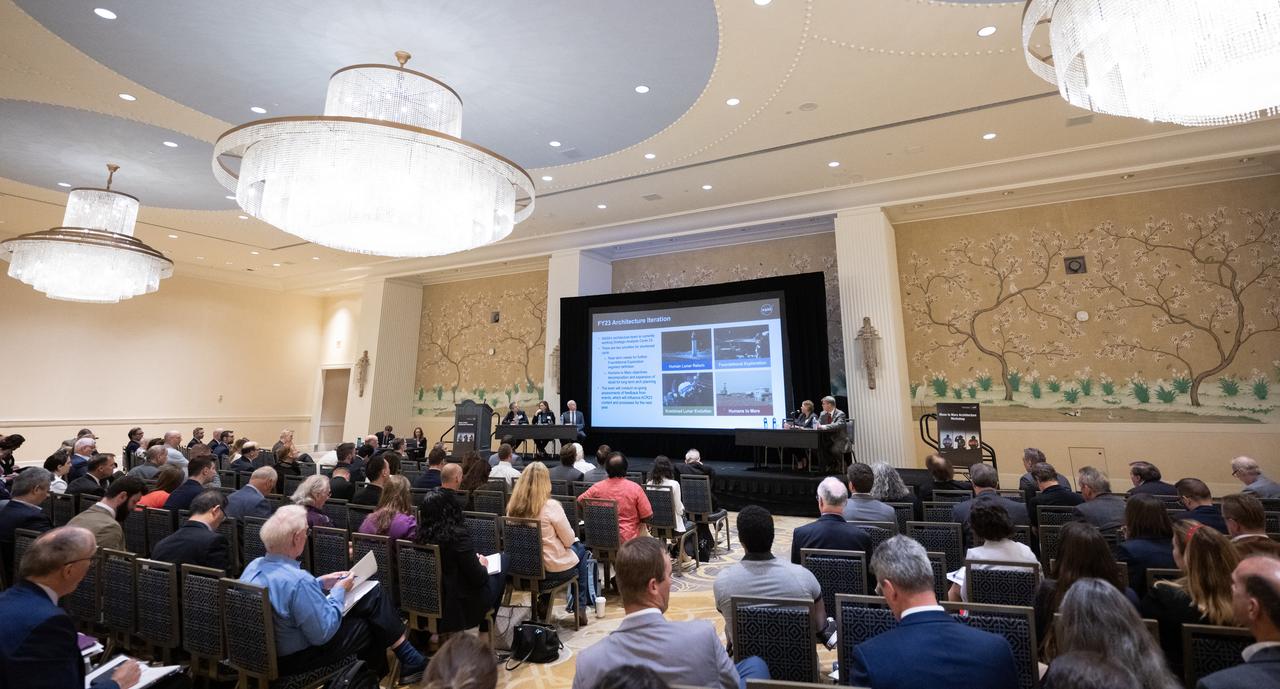
Nujoud Merancy, architecture lead for NASA's Exploration Systems Development Mission Directorate, Catherine Koerner, deputy associate administrator for NASA's Exploration Systems Development Mission Directorate, Patrick Forrester, special advisor in NASA's Space Operations Mission Directorate, Michelle Munk, chief architect for NASA’s Space Technology Mission Directorate, and Joel Kearns, deputy associate administrator for Exploration in NASA's Science Mission Directorate, are seen on stage during NASA’s Moon to Mars Architecture Workshop, Tuesday, June 27, 2023, at the Gaylord National Resort and Convention Center in National Harbor, Md. Following the release of the 2022 Architecture Concept Review, NASA is conducting the workshop to engage the broader space community and collect feedback from U.S. industry and academia to inform the Moon to Mars mission architecture and operational delivery. Photo Credit: (NASA/Joel Kowsky)
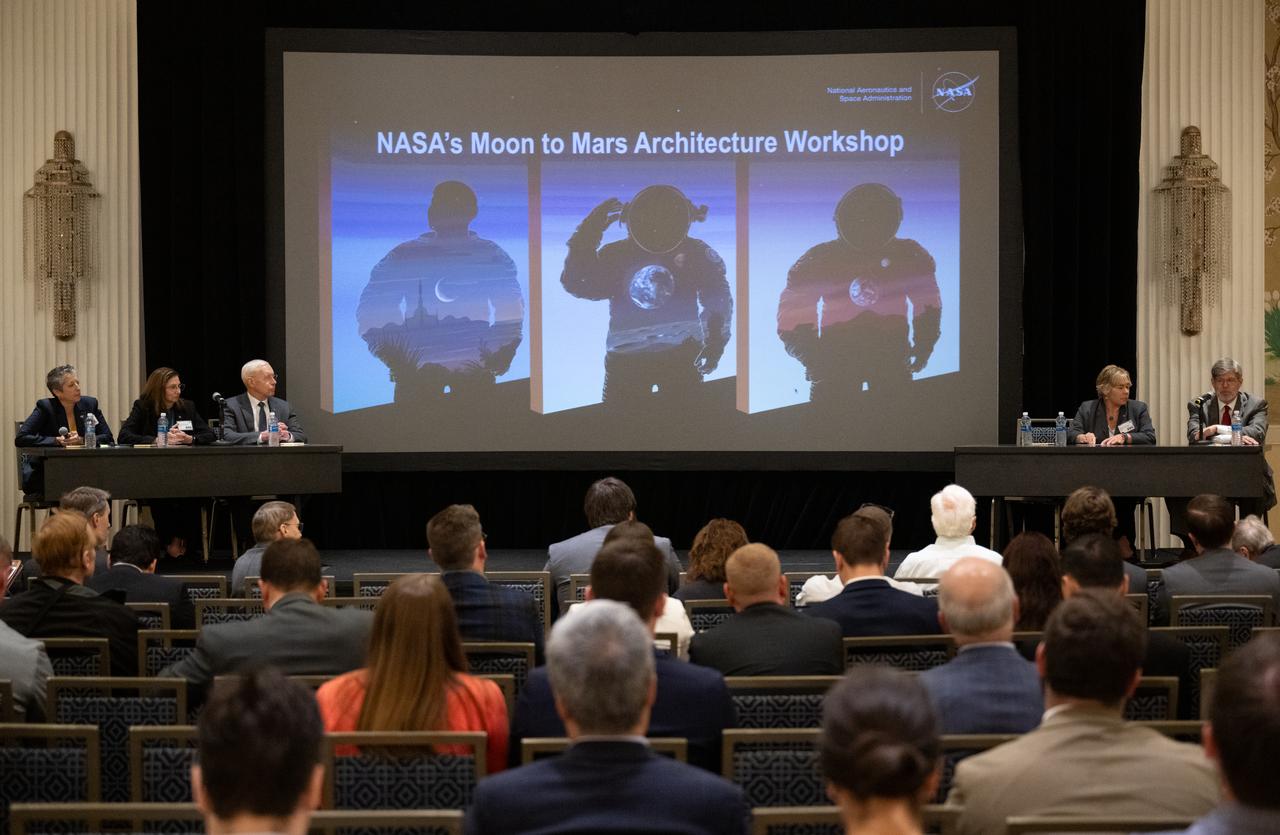
Nujoud Merancy, architecture lead for NASA's Exploration Systems Development Mission Directorate, Catherine Koerner, deputy associate administrator for NASA's Exploration Systems Development Mission Directorate, Patrick Forrester, special advisor in NASA's Space Operations Mission Directorate, Michelle Munk, chief architect for NASA’s Space Technology Mission Directorate, and Joel Kearns, deputy associate administrator for Exploration in NASA's Science Mission Directorate, are seen on stage during NASA’s Moon to Mars Architecture Workshop, Tuesday, June 27, 2023, at the Gaylord National Resort and Convention Center in National Harbor, Md. Following the release of the 2022 Architecture Concept Review, NASA is conducting the workshop to engage the broader space community and collect feedback from U.S. industry and academia to inform the Moon to Mars mission architecture and operational delivery. Photo Credit: (NASA/Joel Kowsky)
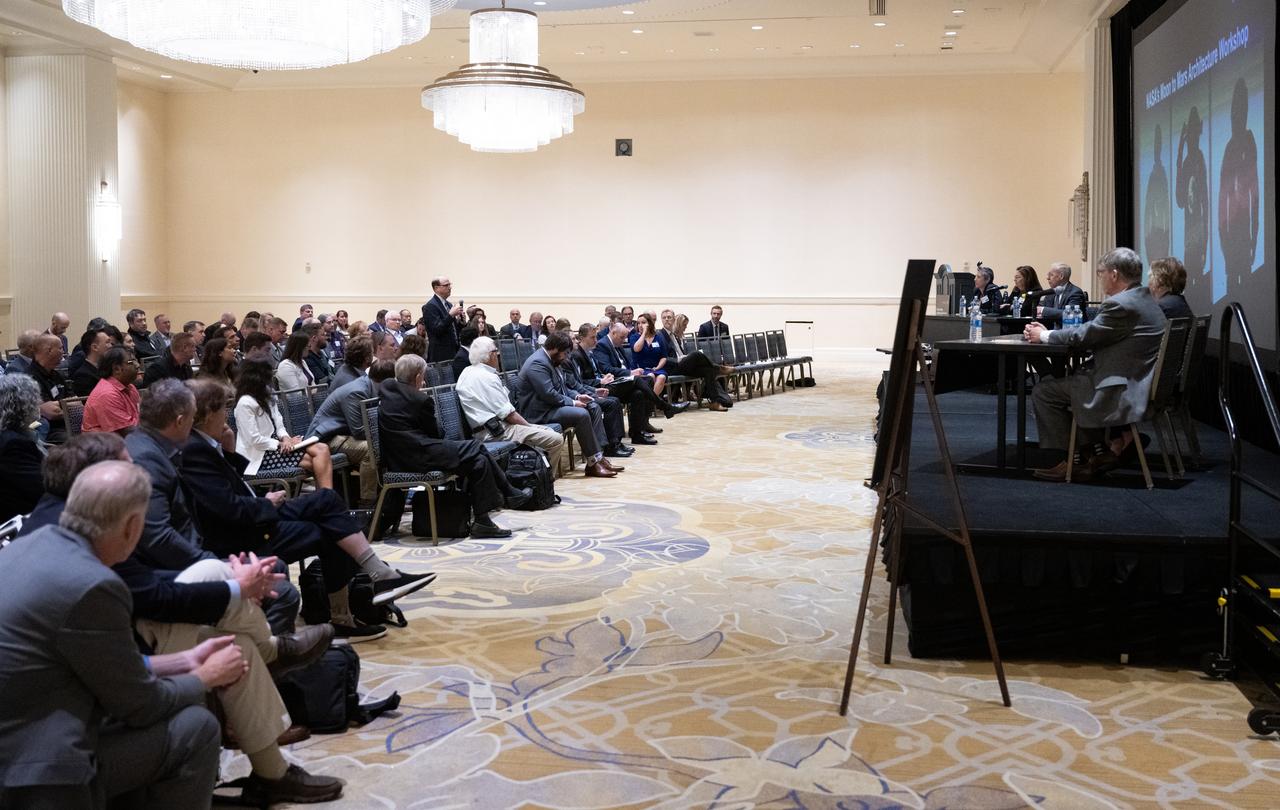
Nujoud Merancy, architecture lead for NASA's Exploration Systems Development Mission Directorate, Catherine Koerner, deputy associate administrator for NASA's Exploration Systems Development Mission Directorate, Patrick Forrester, special advisor in NASA's Space Operations Mission Directorate, Michelle Munk, chief architect for NASA’s Space Technology Mission Directorate, and Joel Kearns, deputy associate administrator for Exploration in NASA's Science Mission Directorate, listen to a question during NASA’s Moon to Mars Architecture Workshop, Tuesday, June 27, 2023, at the Gaylord National Resort and Convention Center in National Harbor, Md. Following the release of the 2022 Architecture Concept Review, NASA is conducting the workshop to engage the broader space community and collect feedback from U.S. industry and academia to inform the Moon to Mars mission architecture and operational delivery. Photo Credit: (NASA/Joel Kowsky)
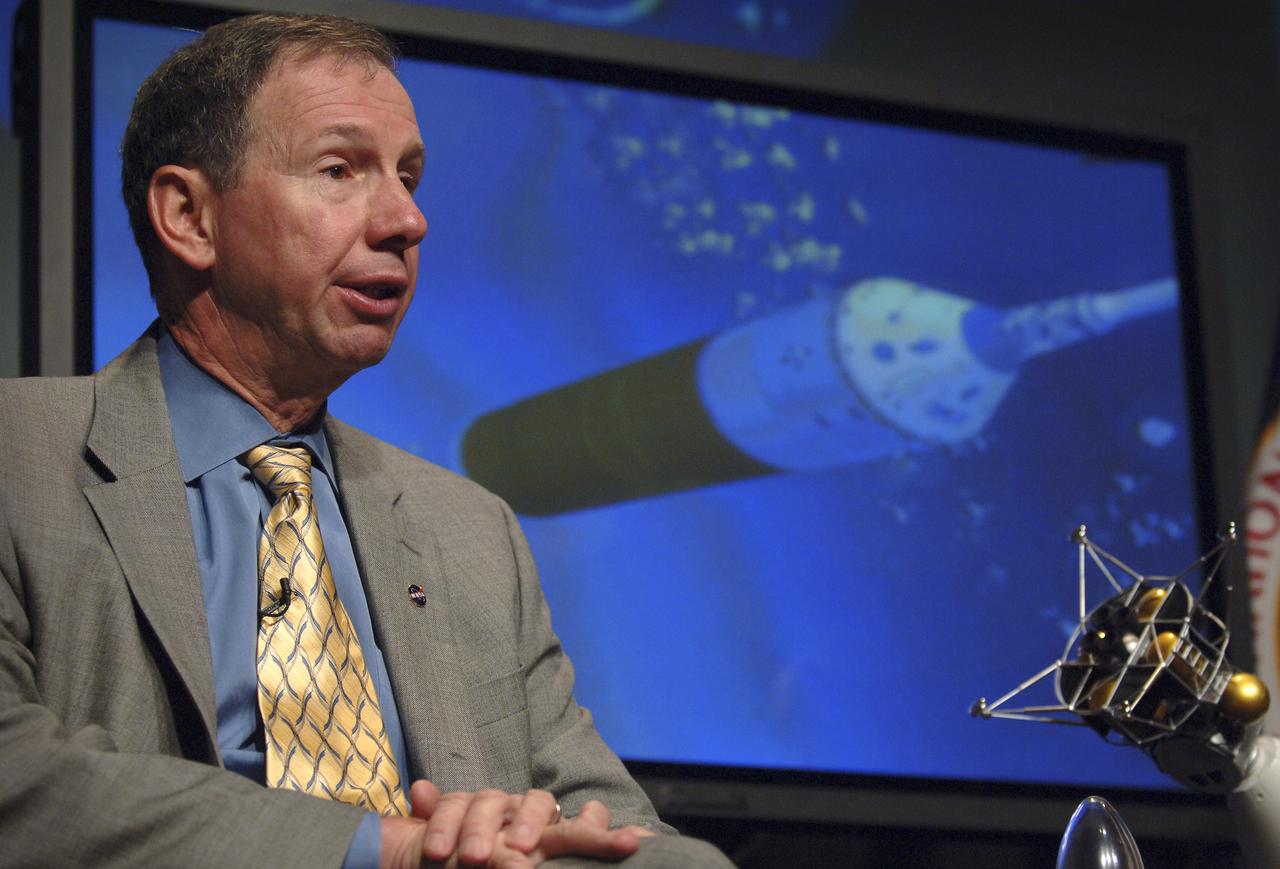
NASA Administrator Michael Griffin discusses the results of the agency's exploration architecture study on Monday, Sept. 19, 2005, at NASA Headquarters in Washington. The study made specific design recommendations for a vehicle to carry crews into space, a family of launch vehicles to take missions to the moon and beyond, and a "lunar mission architecture" for landing on the moon. Photo Credit: (NASA/Bill Ingalls)

NASA Administrator Michael Griffin discusses the results of the agency's exploration architecture study on Monday, Sept. 19, 2005, at NASA Headquarters in Washington. The study made specific design recommendations for a vehicle to carry crews into space, a family of launch vehicles to take missions to the moon and beyond, and a "lunar mission architecture" for landing on the moon. Photo Credit: (NASA/Bill Ingalls)
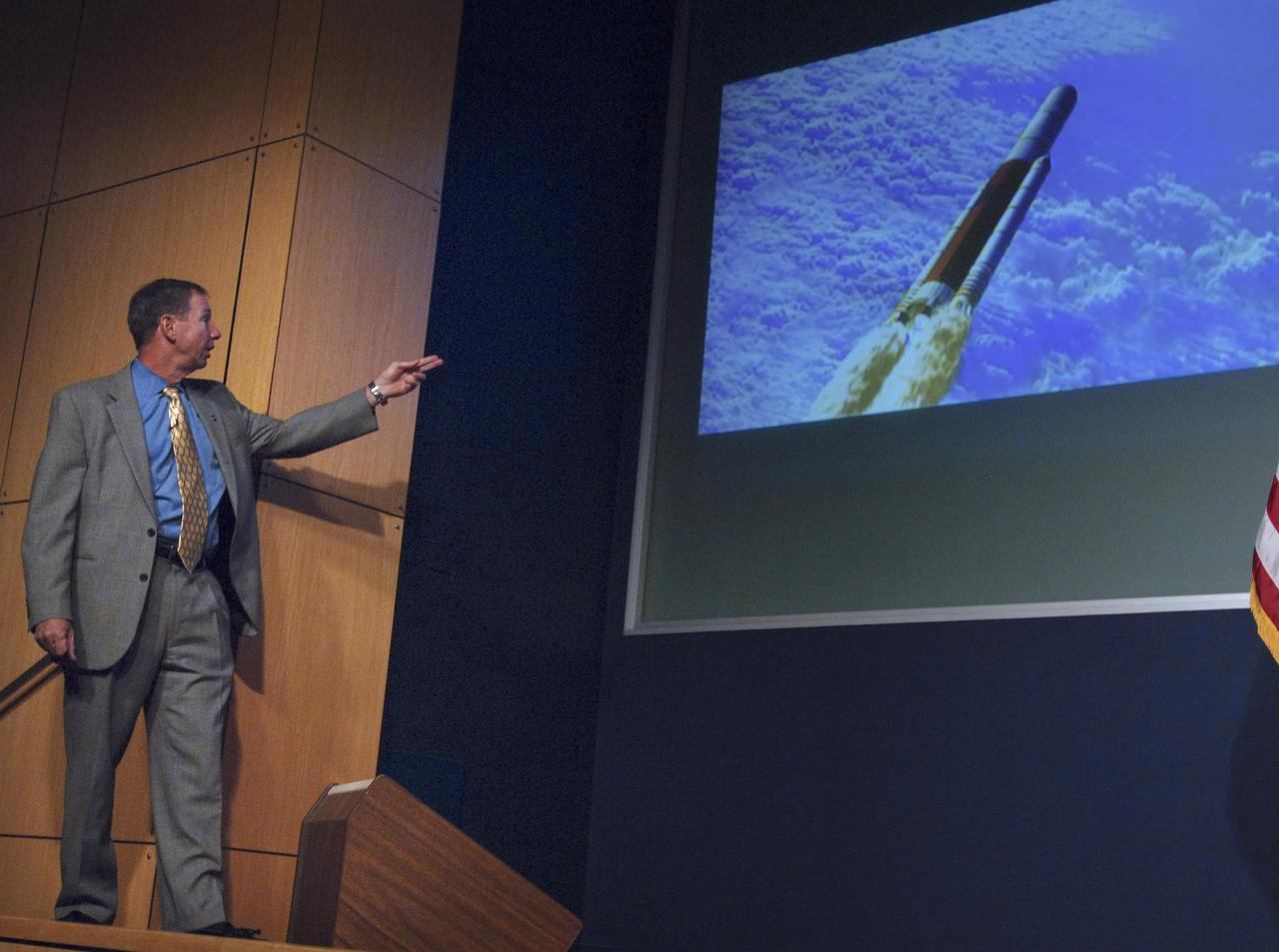
NASA Administrator Michael Griffin discusses the results of the agency's exploration architecture study on Monday, Sept. 19, 2005, at NASA Headquarters in Washington. The study made specific design recommendations for a vehicle to carry crews into space, a family of launch vehicles to take missions to the moon and beyond, and a "lunar mission architecture" for landing on the moon. Photo Credit: (NASA/Bill Ingalls)
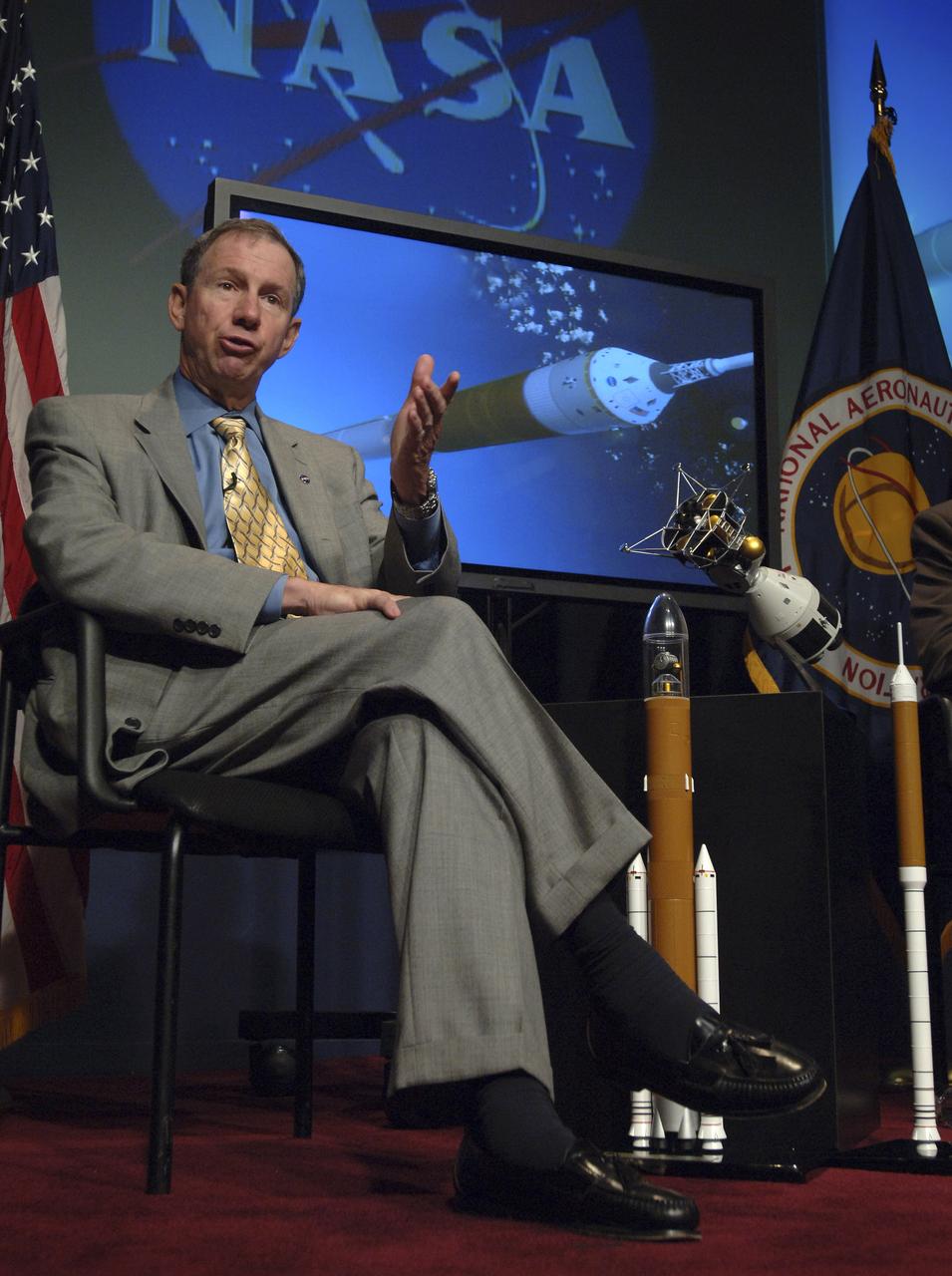
NASA Administrator Michael Griffin discusses the results of the agency's exploration architecture study on Monday, Sept. 19, 2005, at NASA Headquarters in Washington. The study made specific design recommendations for a vehicle to carry crews into space, a family of launch vehicles to take missions to the moon and beyond, and a "lunar mission architecture" for landing on the moon. Photo Credit: (NASA/Bill Ingalls)
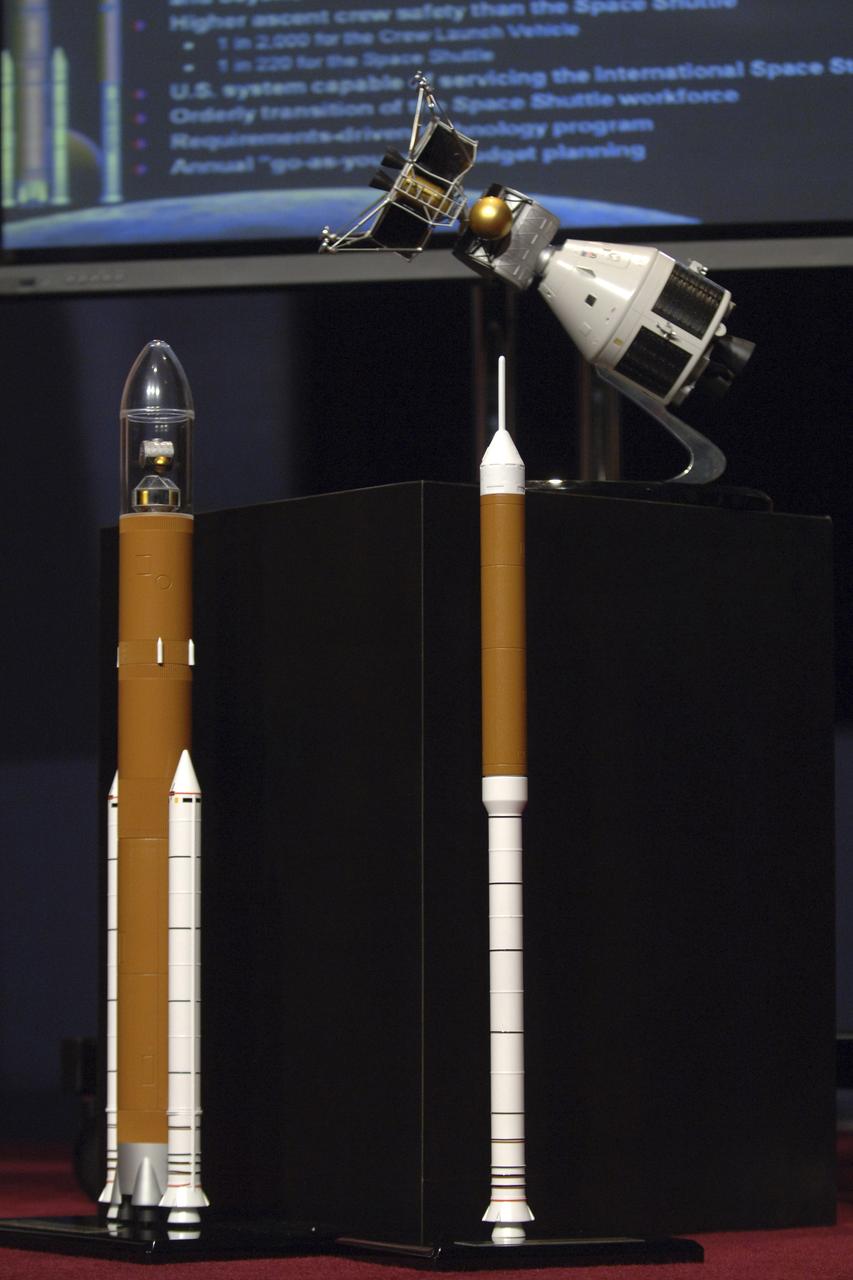
NASA Administrator Michael Griffin discusses the results of the agency's exploration architecture study on Monday, Sept. 19, 2005, at NASA Headquarters in Washington. The study made specific design recommendations for a vehicle to carry crews into space, a family of launch vehicles to take missions to the moon and beyond, and a "lunar mission architecture" for landing on the moon. Photo Credit: (NASA/Bill Ingalls)
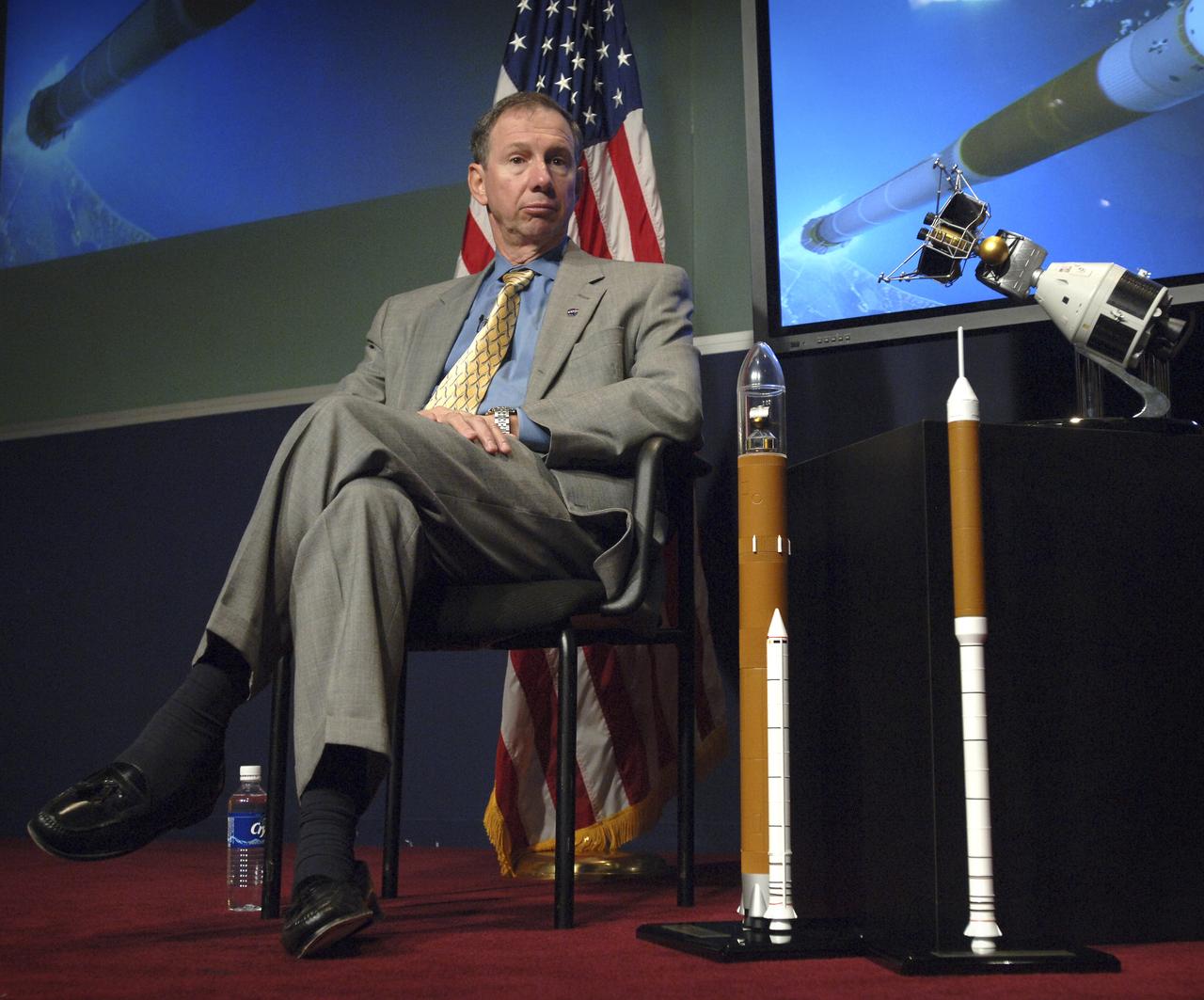
NASA Administrator Michael Griffin discusses the results of the agency's exploration architecture study on Monday, Sept. 19, 2005, at NASA Headquarters in Washington. The study made specific design recommendations for a vehicle to carry crews into space, a family of launch vehicles to take missions to the moon and beyond, and a "lunar mission architecture" for landing on the moon. Photo Credit: (NASA/Bill Ingalls)
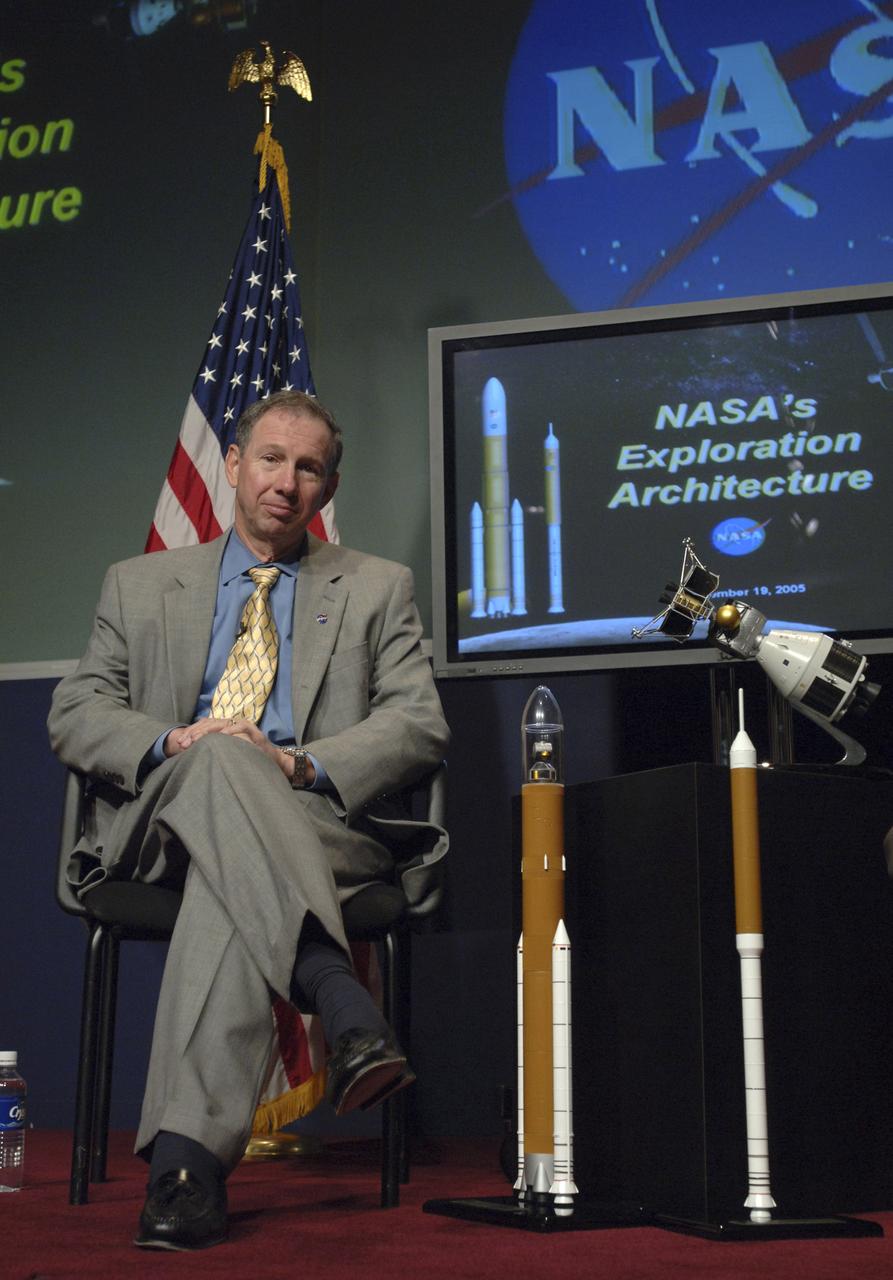
NASA Administrator Michael Griffin discusses the results of the agency's exploration architecture study on Monday, Sept. 19, 2005, at NASA Headquarters in Washington. The study made specific design recommendations for a vehicle to carry crews into space, a family of launch vehicles to take missions to the moon and beyond, and a "lunar mission architecture" for landing on the moon. Photo Credit: (NASA/Bill Ingalls)
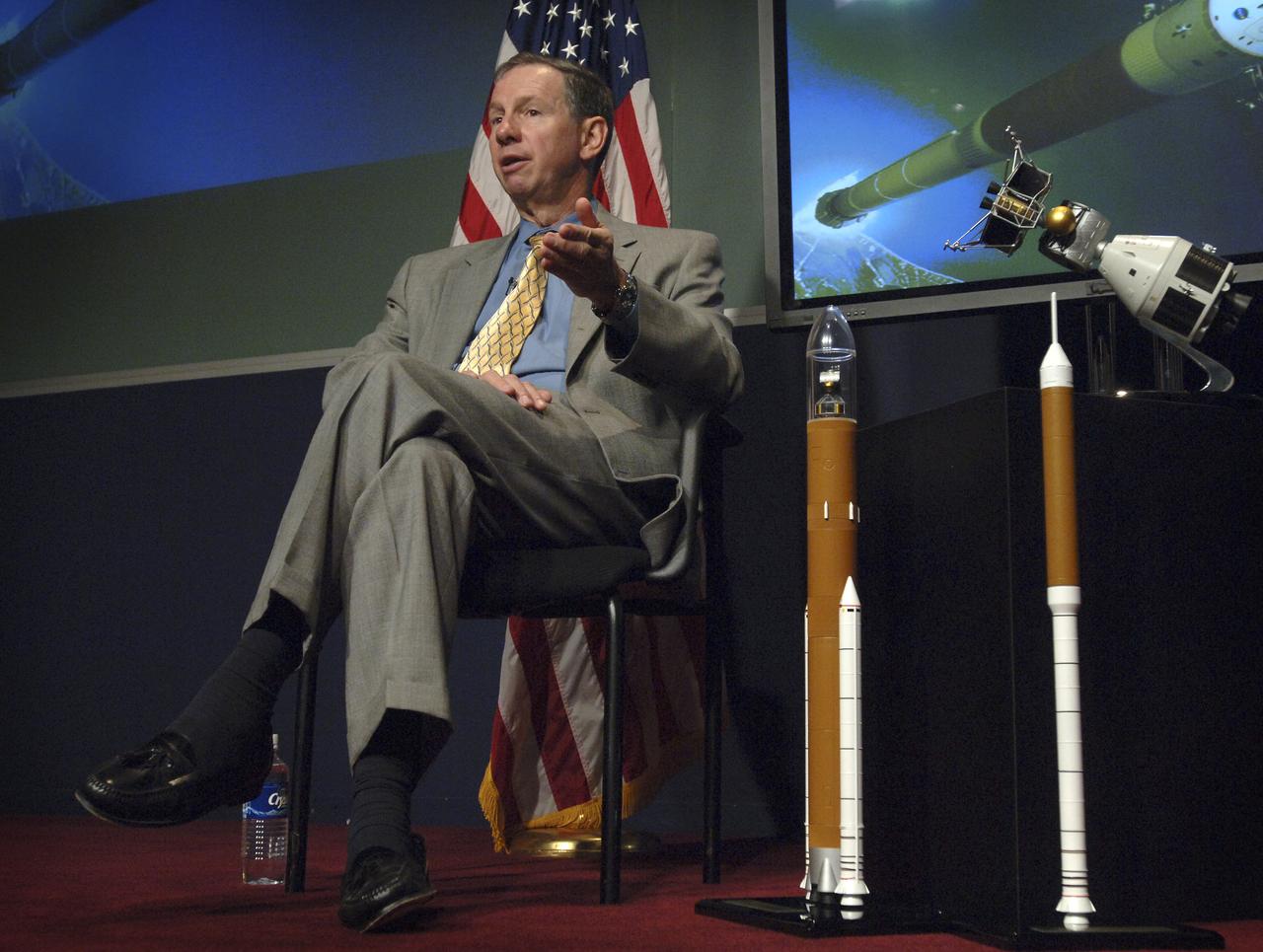
NASA Administrator Michael Griffin discusses the results of the agency's exploration architecture study on Monday, Sept. 19, 2005, at NASA Headquarters in Washington. The study made specific design recommendations for a vehicle to carry crews into space, a family of launch vehicles to take missions to the moon and beyond, and a "lunar mission architecture" for landing on the moon. Photo Credit: (NASA/Bill Ingalls)

This illustration of Moon to Mars multidisciplinary science shows astronauts collecting and analyzing lunar regolith. NASA’s Moon to Mars Objectives establish an objectives-based approach to the agency's human deep space exploration efforts; NASA’s Moon to Mars Architecture approach distills the objectives into operational capabilities and elements.

This illustration of Moon to Mars transportation and habitation shows astronauts driving a pressurized rover away from the dome of a translucent lunar habitat. NASA’s Moon to Mars Objectives establish an objectives-based approach to the agency's human deep space exploration efforts; NASA’s Moon to Mars Architecture approach distills the objectives into operational capabilities and elements.
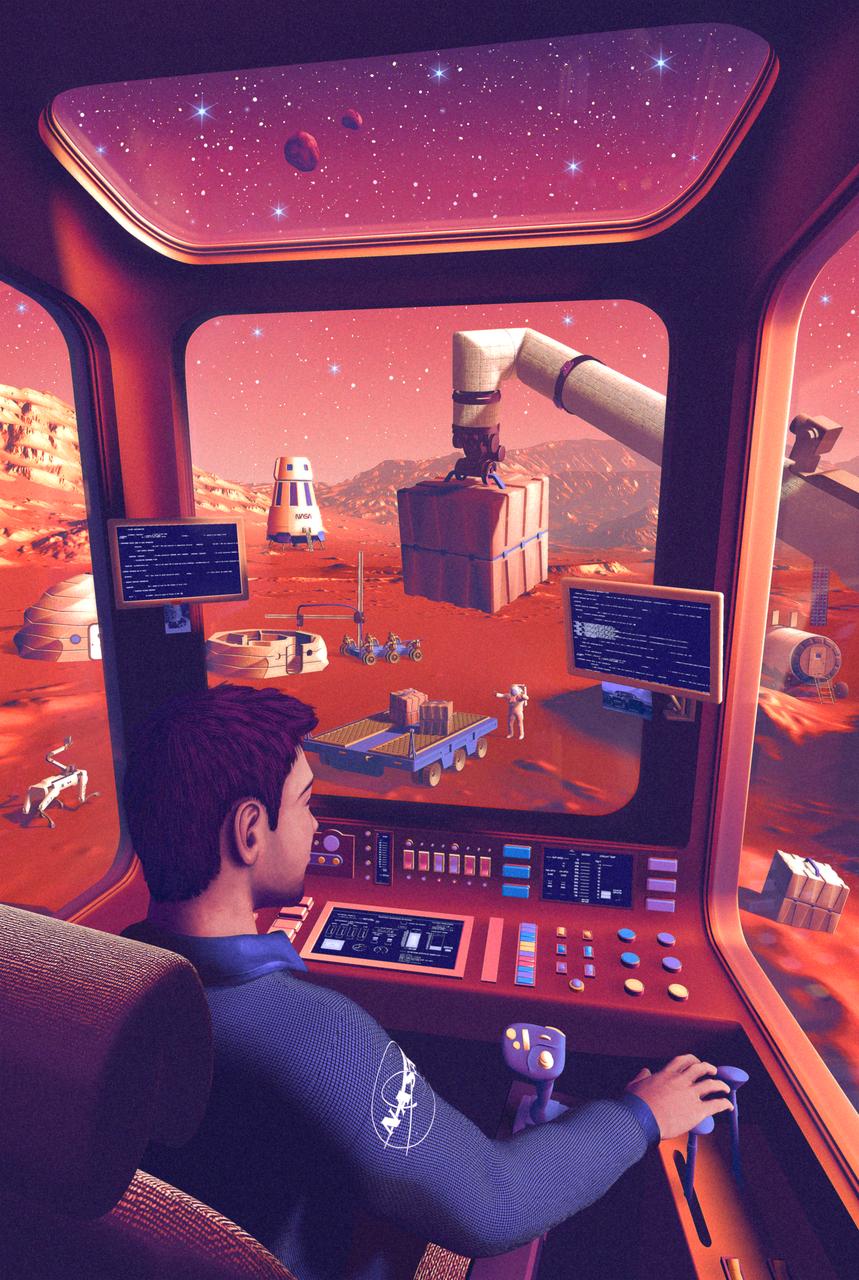
This illustration of Moon to Mars operations shows an astronaut piloting a robotic arm to manipulate cargo on Mars. NASA’s Moon to Mars Objectives establish an objectives-based approach to the agency's human deep space exploration efforts; NASA’s Moon to Mars Architecture approach distills the objectives into operational capabilities and elements.
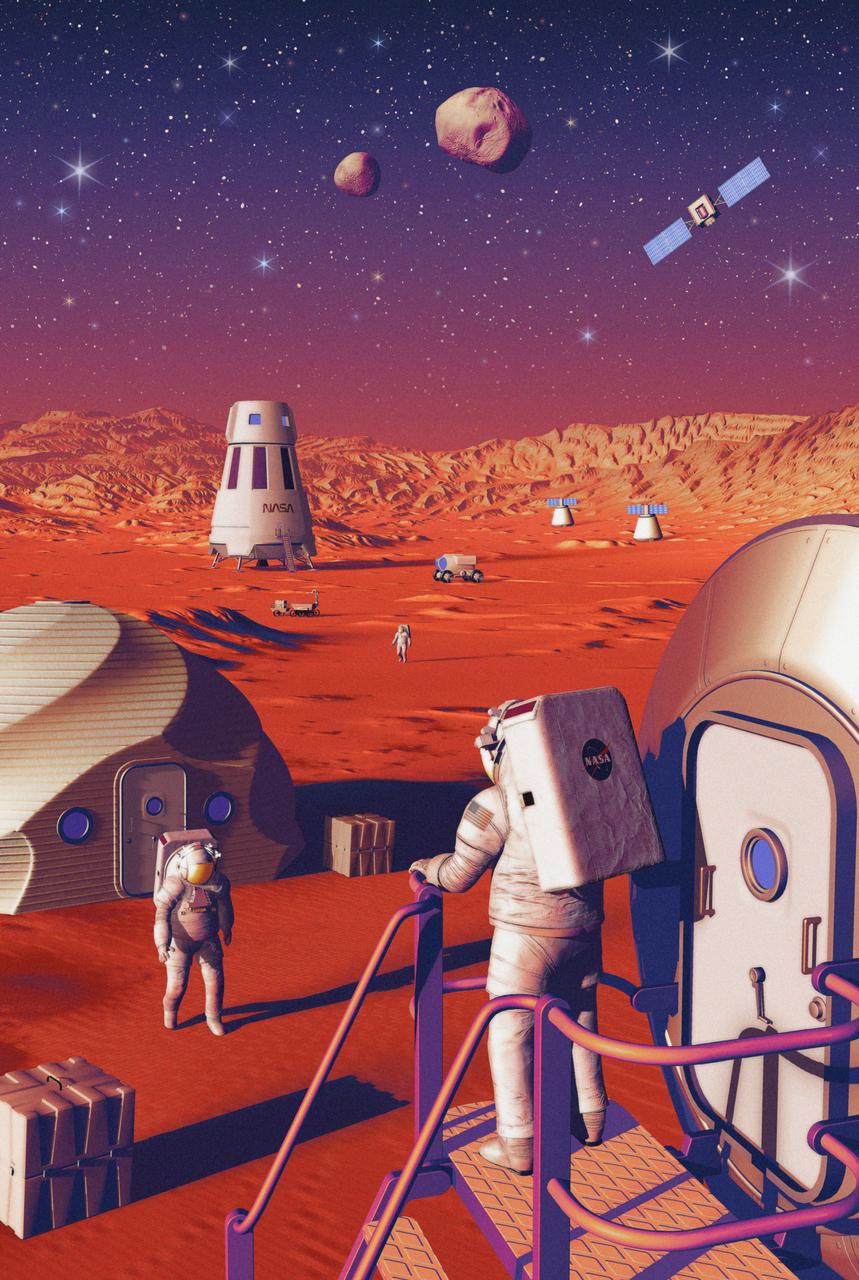
This illustration of Moon to Mars infrastructure shows astronauts living and working on the surface of Mars. NASA’s Moon to Mars Objectives establish an objectives-based approach to the agency's human deep space exploration efforts; NASA’s Moon to Mars Architecture approach distills the objectives into operational capabilities and elements.
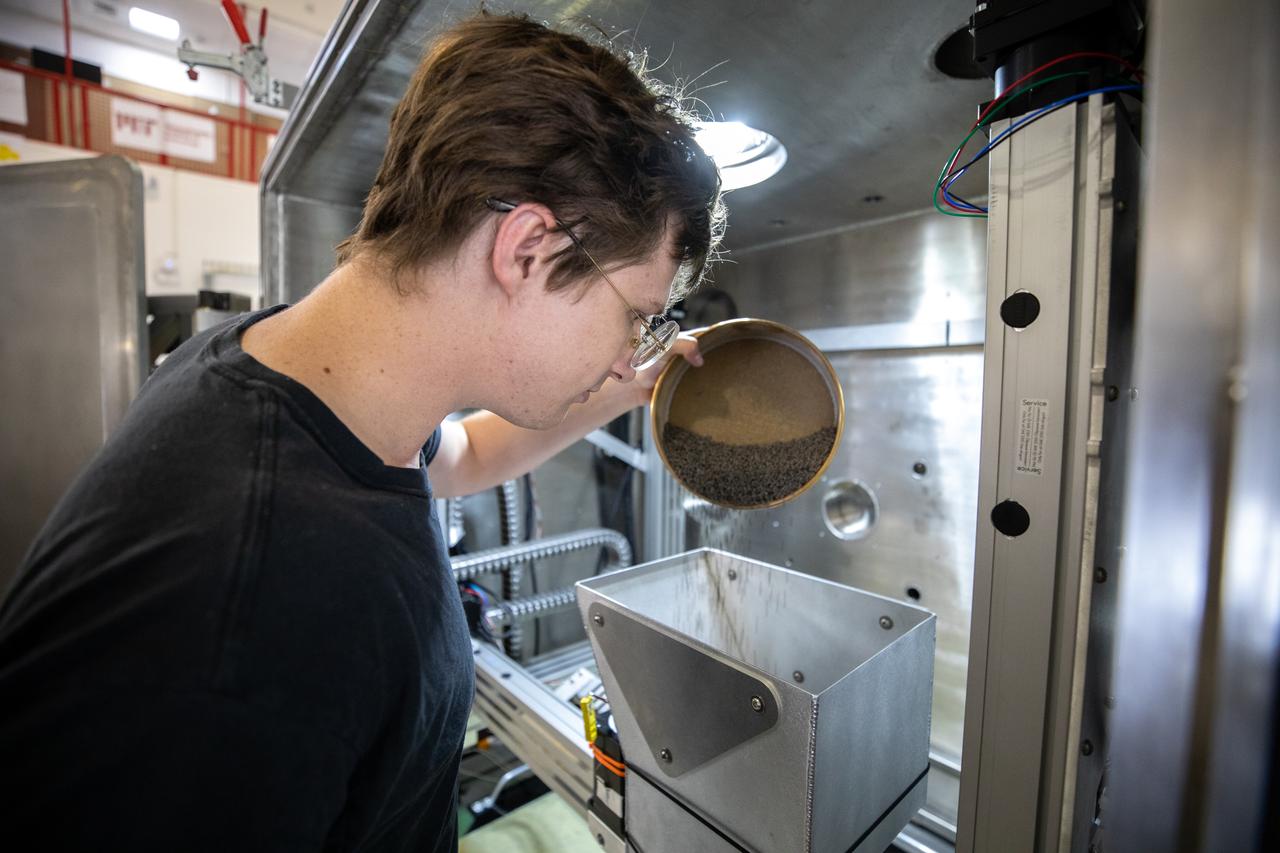
Materials engineer Thomas Lipscomb tests a 3D printer on July 28, 2022, at Swamp Works at NASA’s Kennedy Space Center in Florida, as part of the Relevant Environment Additive Construction Technology (REACT) project. Among the key objectives of the project is developing an architectural and structural design for a shelter that provides protection to habitable assets on the lunar surface. Testing REACT derives from NASA’s 2020 Announcement of Collaboration Opportunity with AI SpaceFactory – an architectural and construction technology company and winner of NASA’s 3D Printed Habitat Challenge.
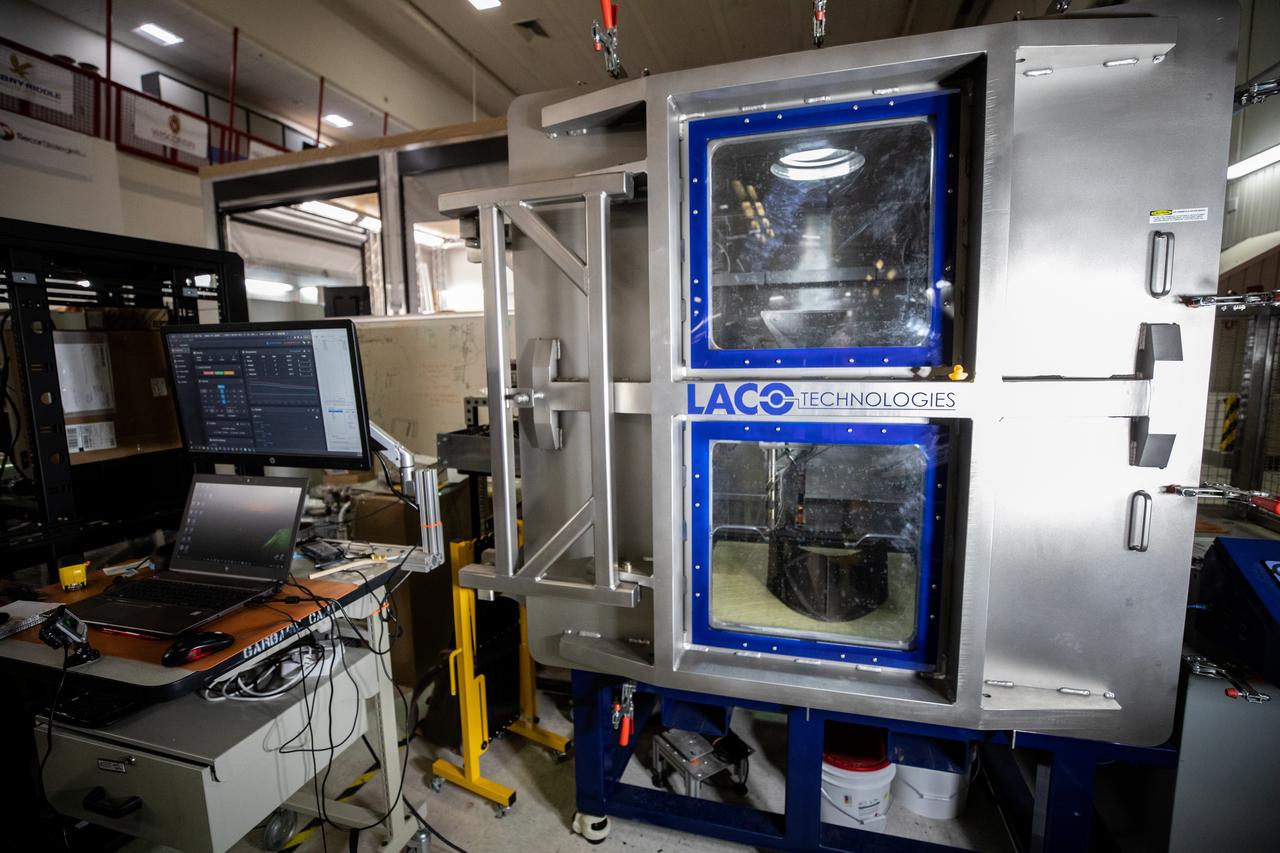
A team at NASA’s Kennedy Space Center in Florida tests a 3D printer on July 28, 2022, at the Florida spaceport’s Swamp Works, as part of the Relevant Environment Additive Construction Technology (REACT) project. Among the key objectives of the project is developing an architectural and structural design for a shelter that provides protection to habitable assets on the lunar surface. Testing REACT derives from NASA’s 2020 Announcement of Collaboration Opportunity with AI SpaceFactory – an architectural and construction technology company and winner of NASA’s 3D Printed Habitat Challenge.

Chemist Tesia Irwin tests a 3D printer on July 28, 2022, at Swamp Works at NASA’s Kennedy Space Center in Florida, as part of the Relevant Environment Additive Construction Technology (REACT) project. Among the key objectives of the project is developing an architectural and structural design for a shelter that provides protection to habitable assets on the lunar surface. Testing REACT derives from NASA’s 2020 Announcement of Collaboration Opportunity with AI SpaceFactory – an architectural and construction technology company and winner of NASA’s 3D Printed Habitat Challenge.
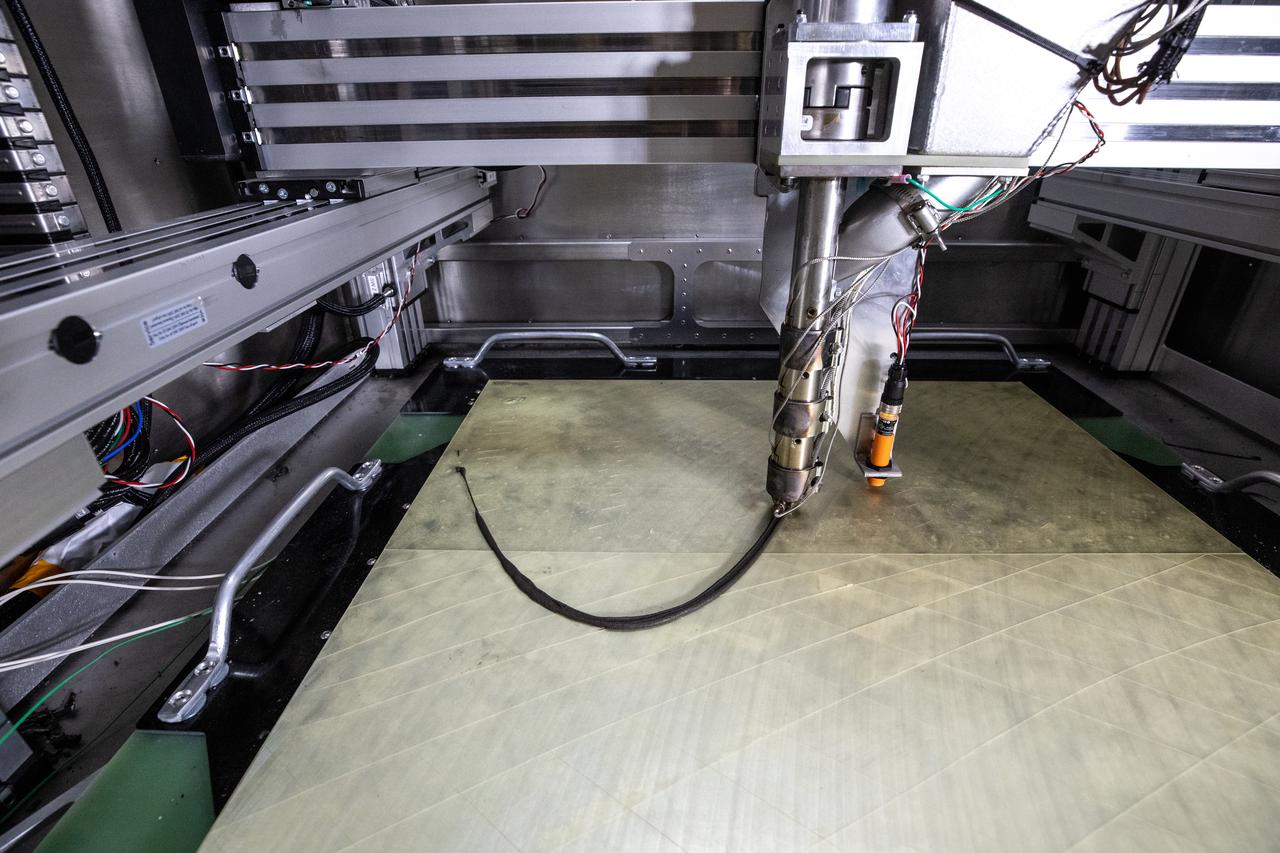
Shown is a Zero Launch Mass 3D printer on July 28, 2022, at NASA’s Kennedy Space Center’s Swamp Works. A team at the Florida spaceport tested the printer as part of the Relevant Environment Additive Construction Technology (REACT) project. Among the key objectives of the project is developing an architectural and structural design for a shelter that provides protection to habitable assets on the lunar surface. Testing REACT derives from NASA’s 2020 Announcement of Collaboration Opportunity with AI SpaceFactory – an architectural and construction technology company and winner of NASA’s 3D Printed Habitat Challenge.
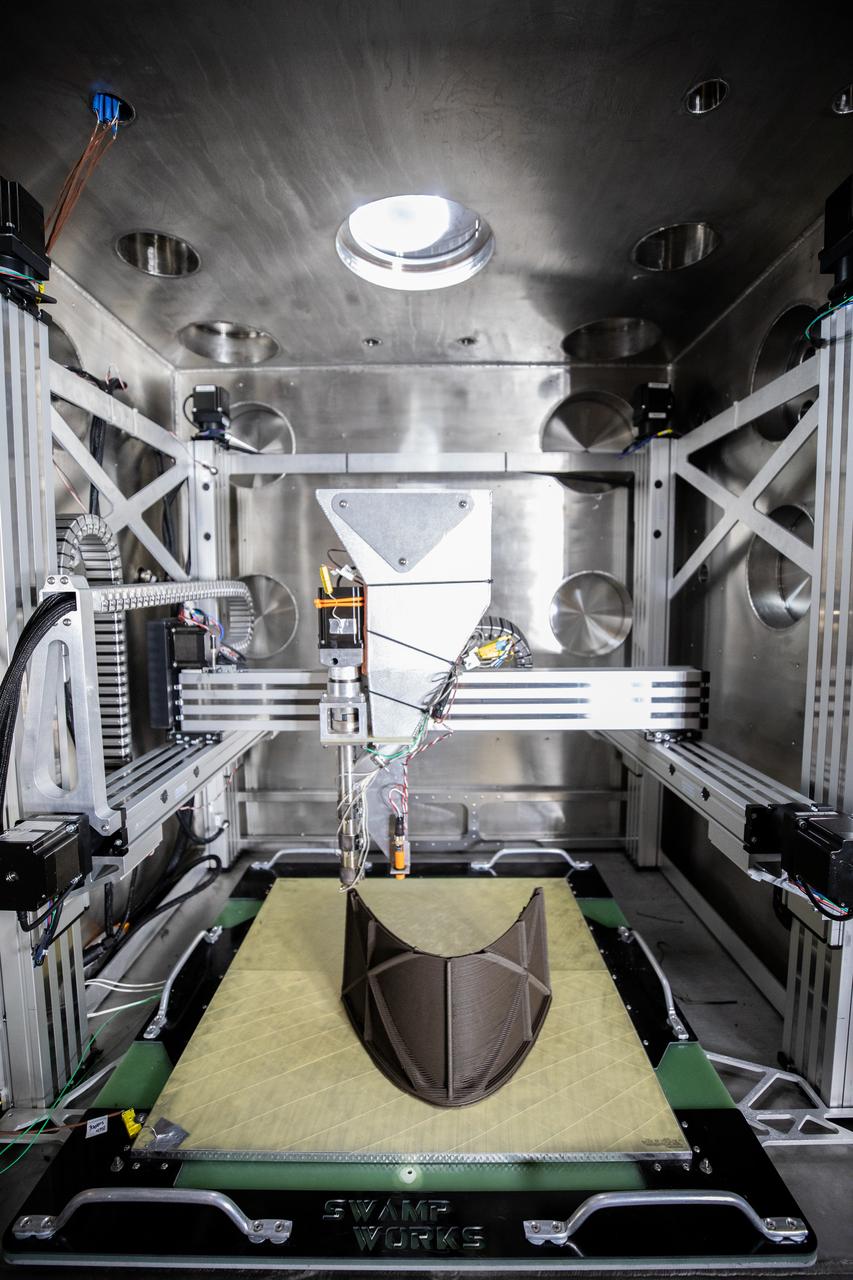
A team at NASA’s Kennedy Space Center in Florida tests a 3D printer on July 28, 2022, at the Florida spaceport’s Swamp Works, as part of the Relevant Environment Additive Construction Technology (REACT) project. Among the key objectives of the project is developing an architectural and structural design for a shelter that provides protection to habitable assets on the lunar surface. Testing REACT derives from NASA’s 2020 Announcement of Collaboration Opportunity with AI SpaceFactory – an architectural and construction technology company and winner of NASA’s 3D Printed Habitat Challenge.
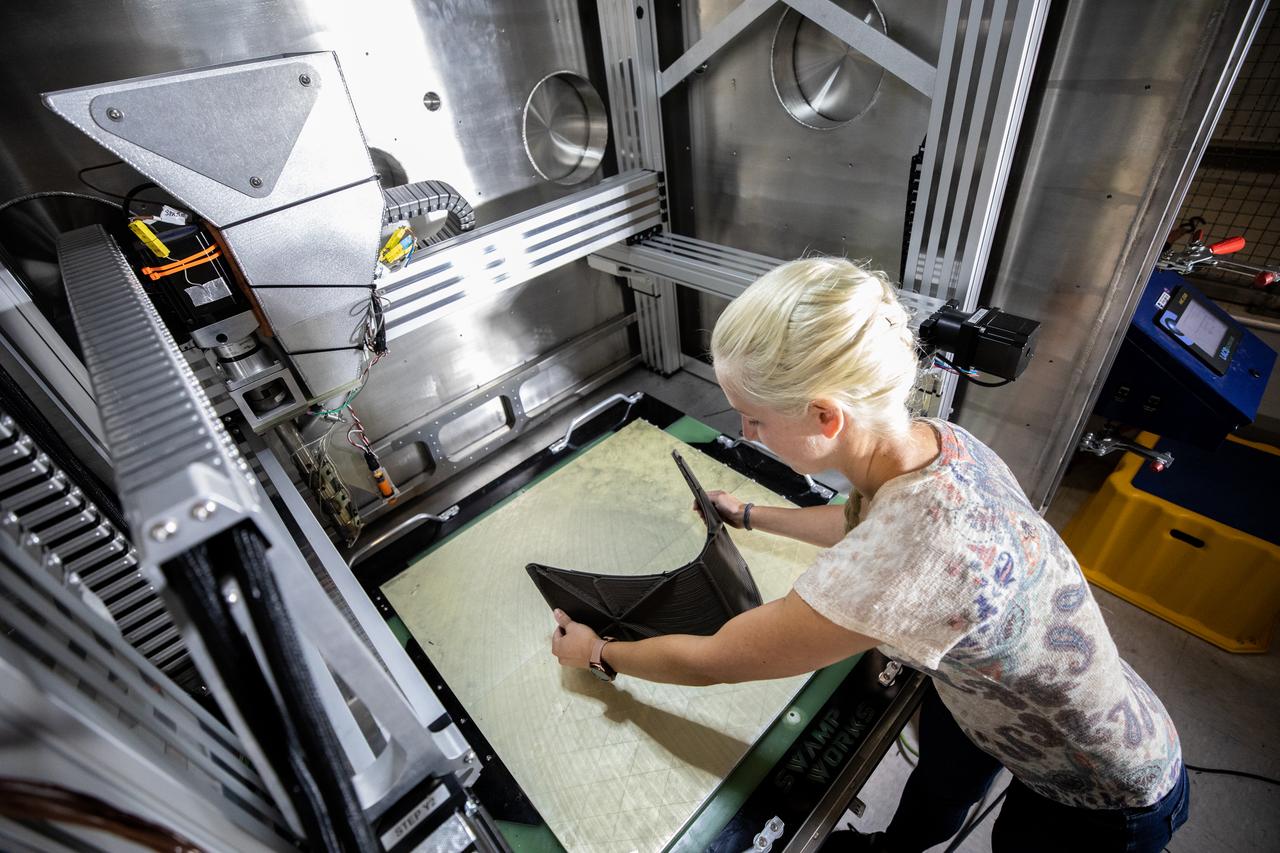
Chemist Tesia Irwin tests a 3D printer on July 28, 2022, at Swamp Works at NASA’s Kennedy Space Center in Florida, as part of the Relevant Environment Additive Construction Technology (REACT) project. Among the key objectives of the project is developing an architectural and structural design for a shelter that provides protection to habitable assets on the lunar surface. Testing REACT derives from NASA’s 2020 Announcement of Collaboration Opportunity with AI SpaceFactory – an architectural and construction technology company and winner of NASA’s 3D Printed Habitat Challenge.
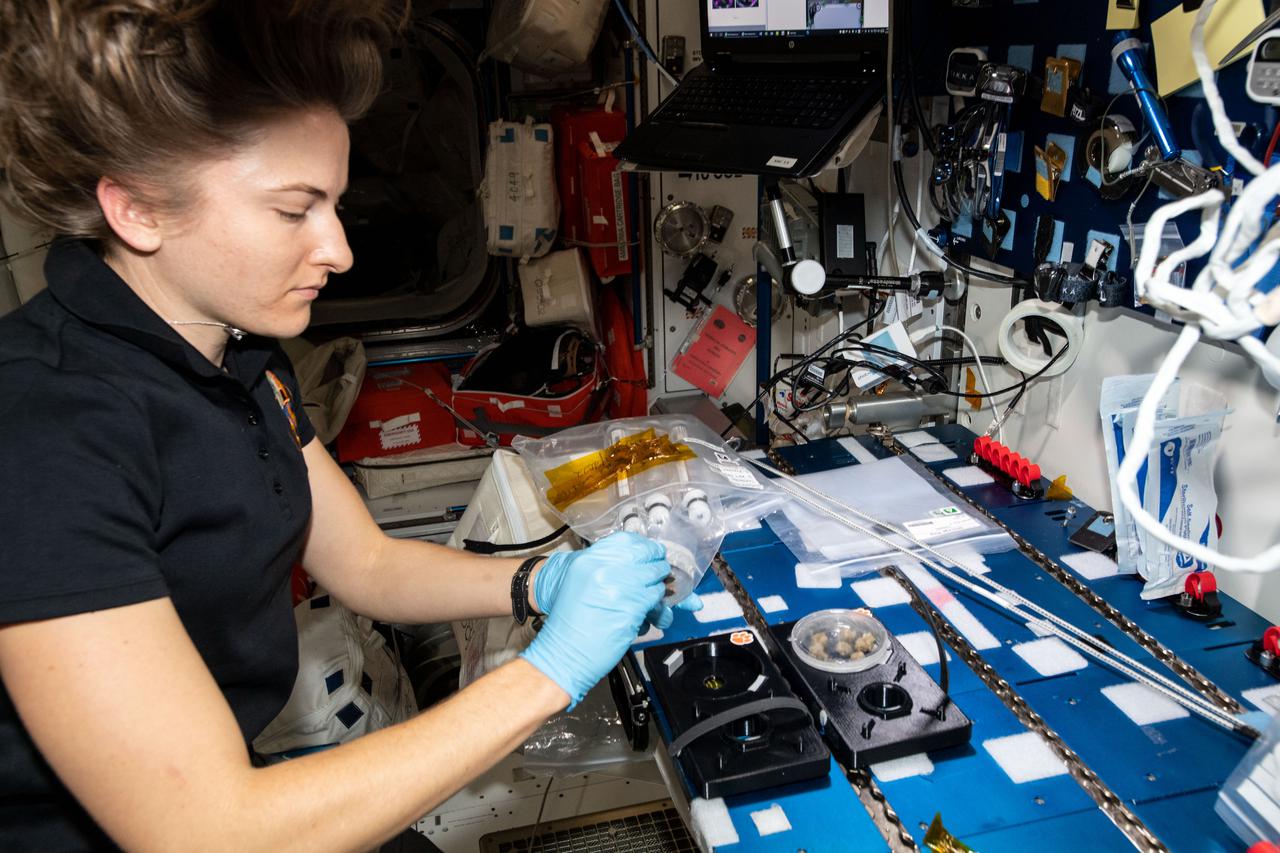
iss066e139750 (Feb. 10, 2022) --- NASA astronaut and Expedition 66 Flight Engineer Kayla Barron harvests cotton cell samples grown for the Plant Habitat-05 space agriculture experiment that is exploring the genetic architecture of plant regeneration.
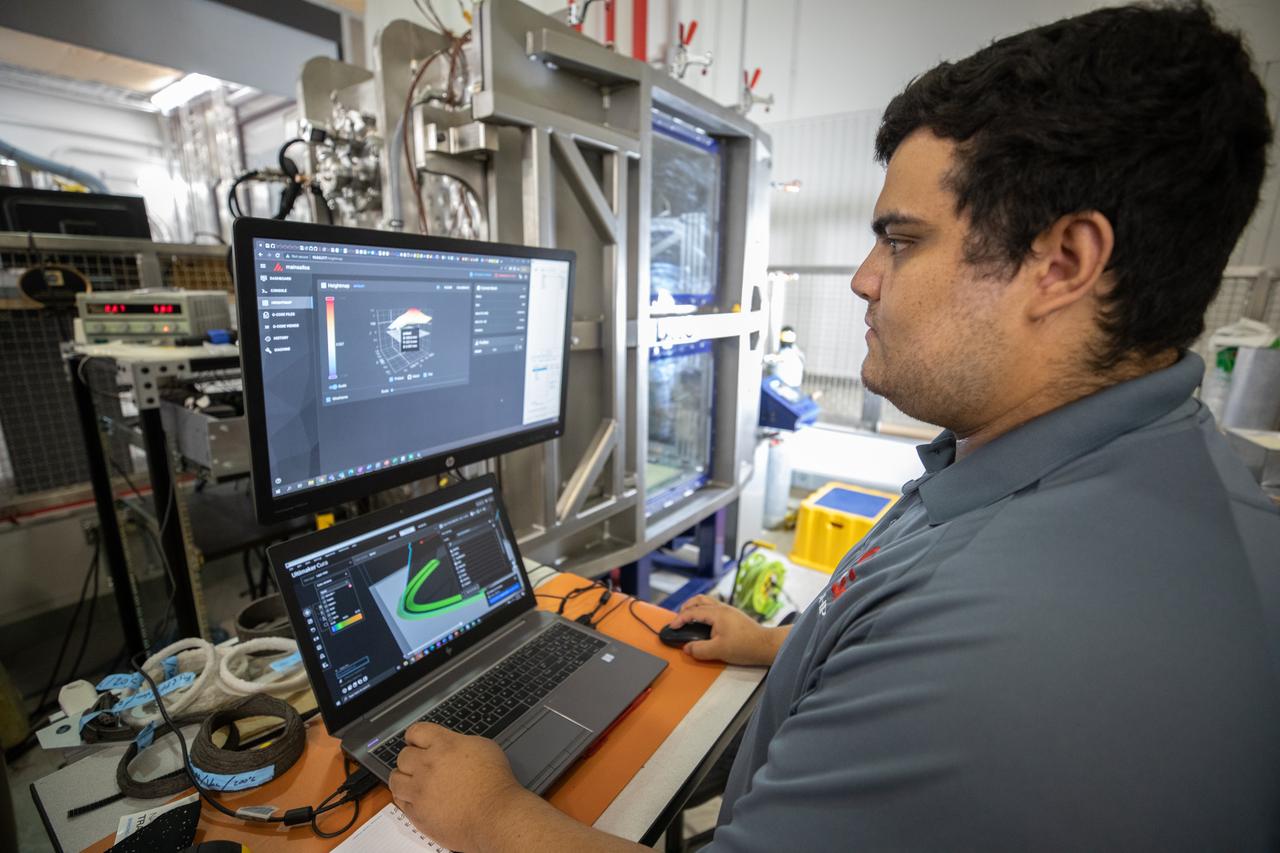
NASA Internships, Fellowships, and Scholarships (NIFS) intern Leonel Herrera tests a 3D printer on July 28, 2022, at Swamp Works at NASA’s Kennedy Space Center in Florida, as part of the Relevant Environment Additive Construction Technology (REACT) project. Among the key objectives of the project is developing an architectural and structural design for a shelter that provides protection to habitable assets on the lunar surface. Testing REACT derives from NASA’s 2020 Announcement of Collaboration Opportunity with AI SpaceFactory – an architectural and construction technology company and winner of NASA’s 3D Printed Habitat Challenge.
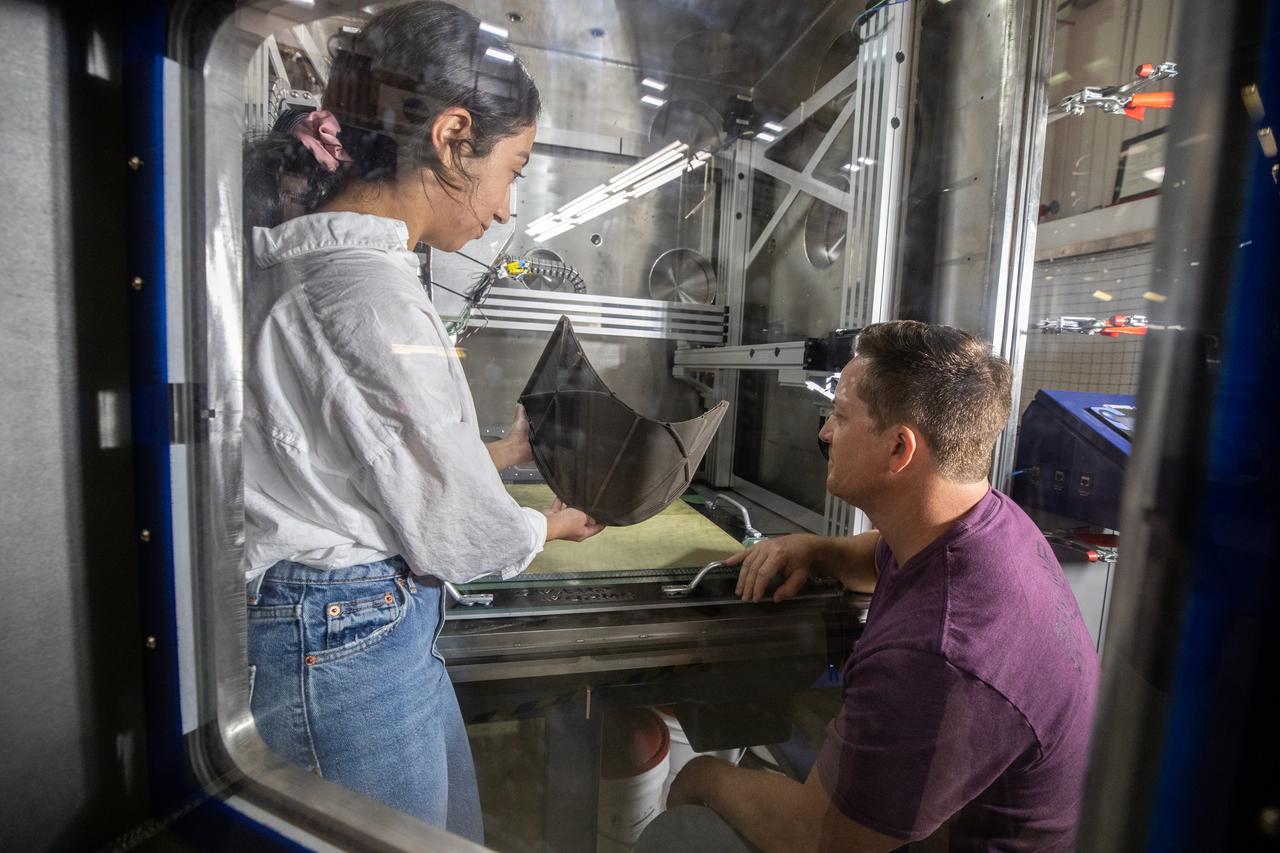
Chemist Nilab Azim, left, and Nathan Gelino, principal investigator with NASA’s Exploration Research and Technology programs, test a 3D printer on July 28, 2022, at Swamp Works at the agency’s Kennedy Space Center in Florida, as part of the Relevant Environment Additive Construction Technology (REACT) project. Among the key objectives of the project is developing an architectural and structural design for a shelter that provides protection to habitable assets on the lunar surface. Testing REACT derives from NASA’s 2020 Announcement of Collaboration Opportunity with AI SpaceFactory – an architectural and construction technology company and winner of NASA’s 3D Printed Habitat Challenge.
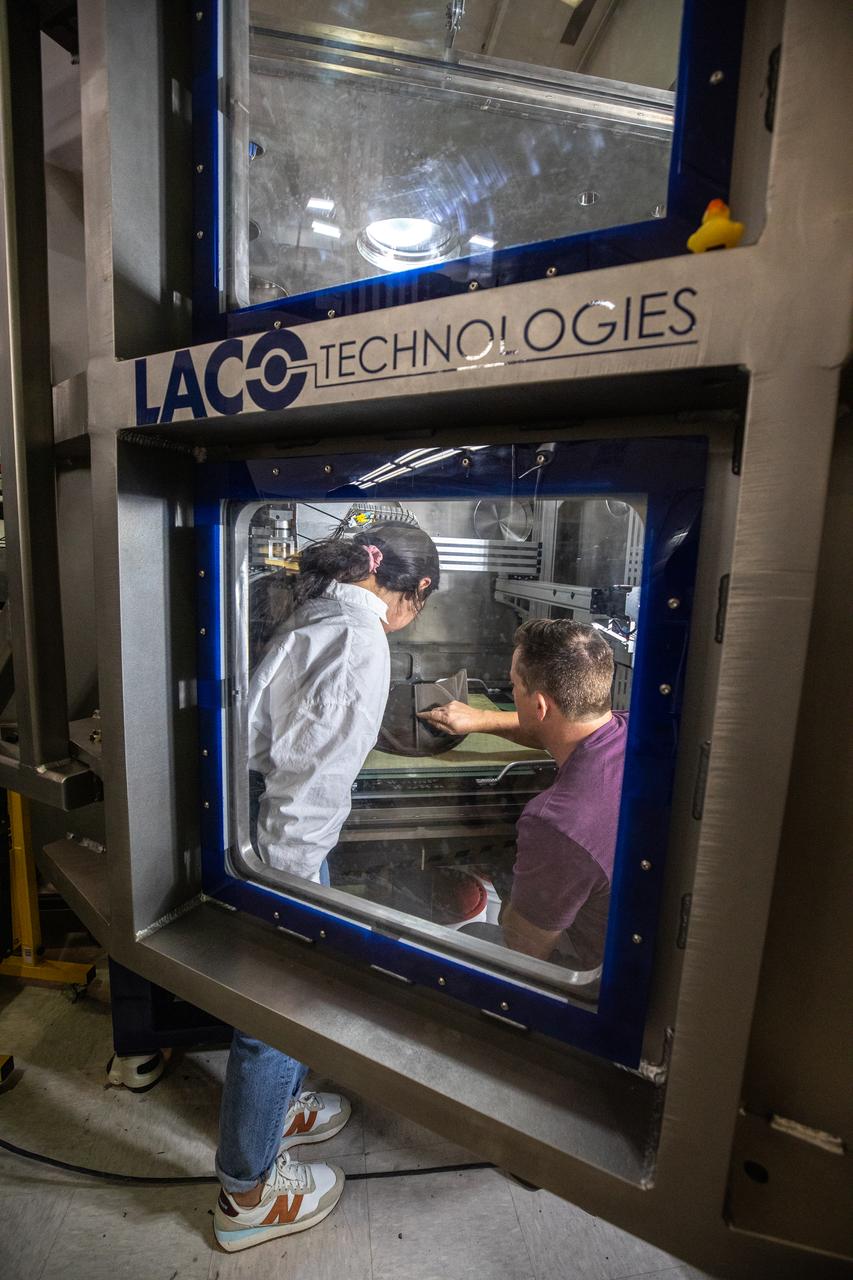
Chemist Nilab Azim, left, and Nathan Gelino, principal investigator with NASA’s Exploration Research and Technology programs, test a 3D printer on July 28, 2022, at Swamp Works at the agency’s Kennedy Space Center in Florida, as part of the Relevant Environment Additive Construction Technology (REACT) project. Among the key objectives of the project is developing an architectural and structural design for a shelter that provides protection to habitable assets on the lunar surface. Testing REACT derives from NASA’s 2020 Announcement of Collaboration Opportunity with AI SpaceFactory – an architectural and construction technology company and winner of NASA’s 3D Printed Habitat Challenge.
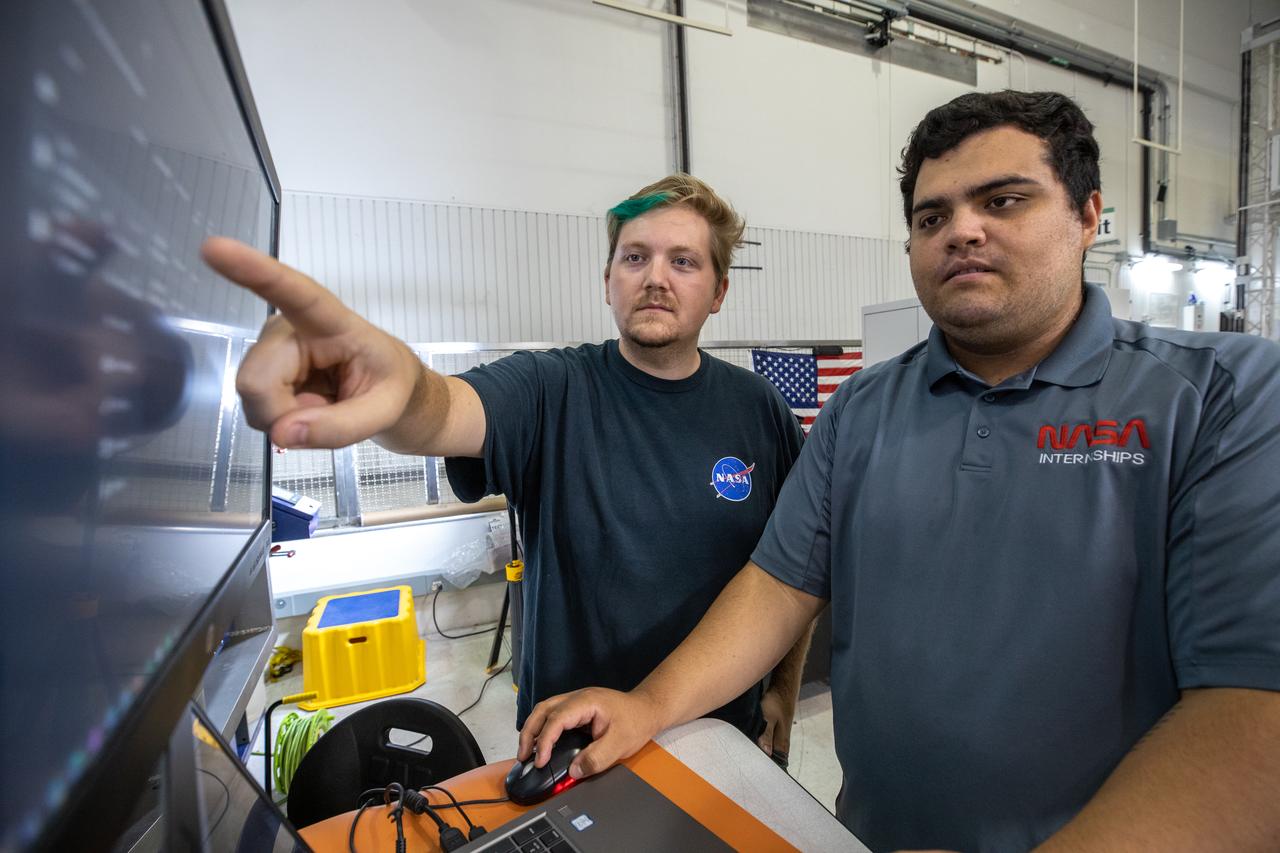
NASA engineer Evan Bell, left, and NASA Internships, Fellowships, and Scholarships (NIFS) intern Leonel Herrera test a 3D printer on July 28, 2022, at Swamp Works at NASA’s Kennedy Space Center in Florida, as part of the Relevant Environment Additive Construction Technology (REACT) project. Among the key objectives of the project is developing an architectural and structural design for a shelter that provides protection to habitable assets on the lunar surface. Testing REACT derives from NASA’s 2020 Announcement of Collaboration Opportunity with AI SpaceFactory – an architectural and construction technology company and winner of NASA’s 3D Printed Habitat Challenge.
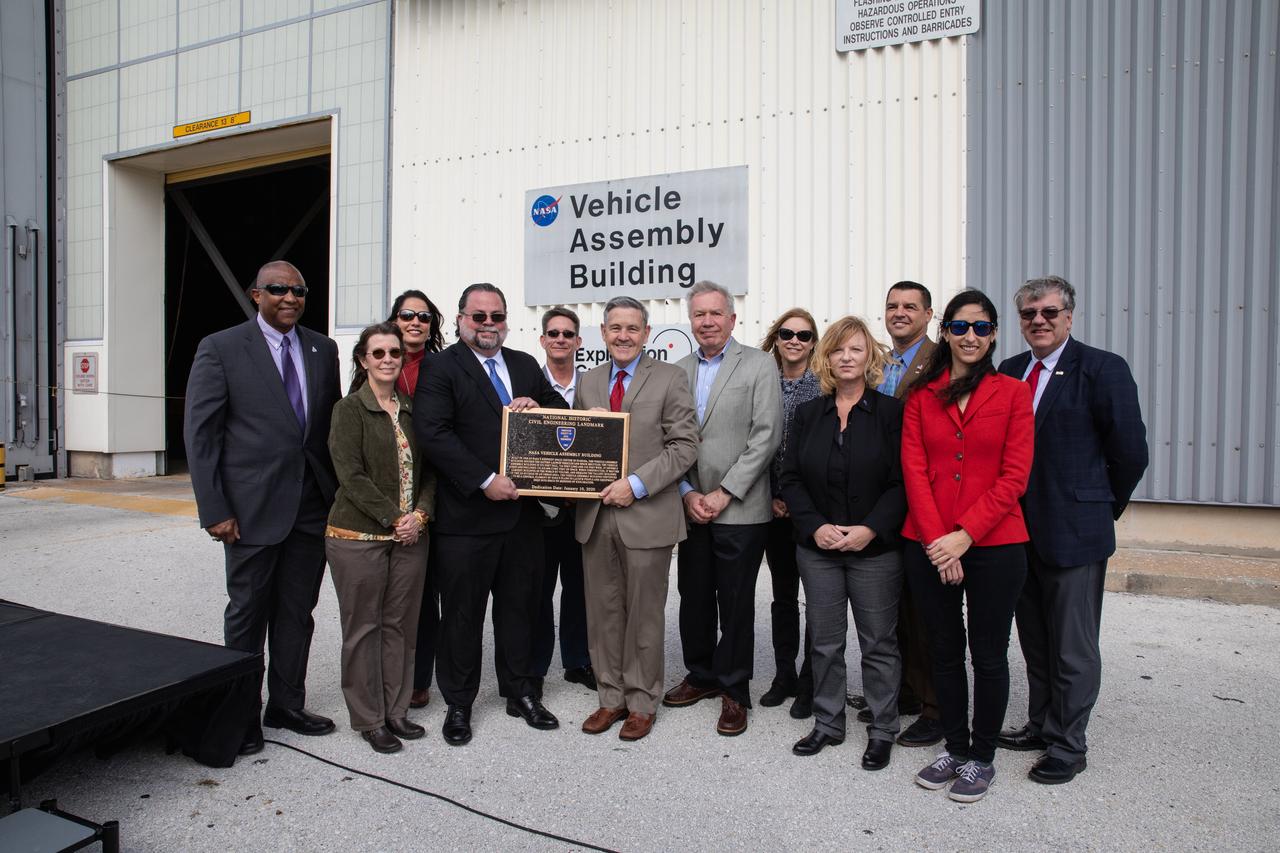
Kennedy Space Center Director Bob Cabana, center, accepts the National Historic Civil Engineering Landmark award from the Florida Section American Society of Civil Engineers (ASCE) for the Vehicle Assembly Building during a ceremony in front of the iconic facility on Jan. 10, 2020. Holding the award with Cabana is Peter Moore, ASCE Region 5 director. At far left is Kelvin Manning, associate director, technical. The ASCE nominated the historic building and bestowed the award. The VAB is the first building at Kennedy Space Center to earn this distinction. At the time of its completion, the 129-million-cubic-foot structure was the largest building in the world. Originally designed and built to accommodate the Saturn V/Apollo used in Project Apollo, the VAB was later modified for its role in the Space Shuttle Program.
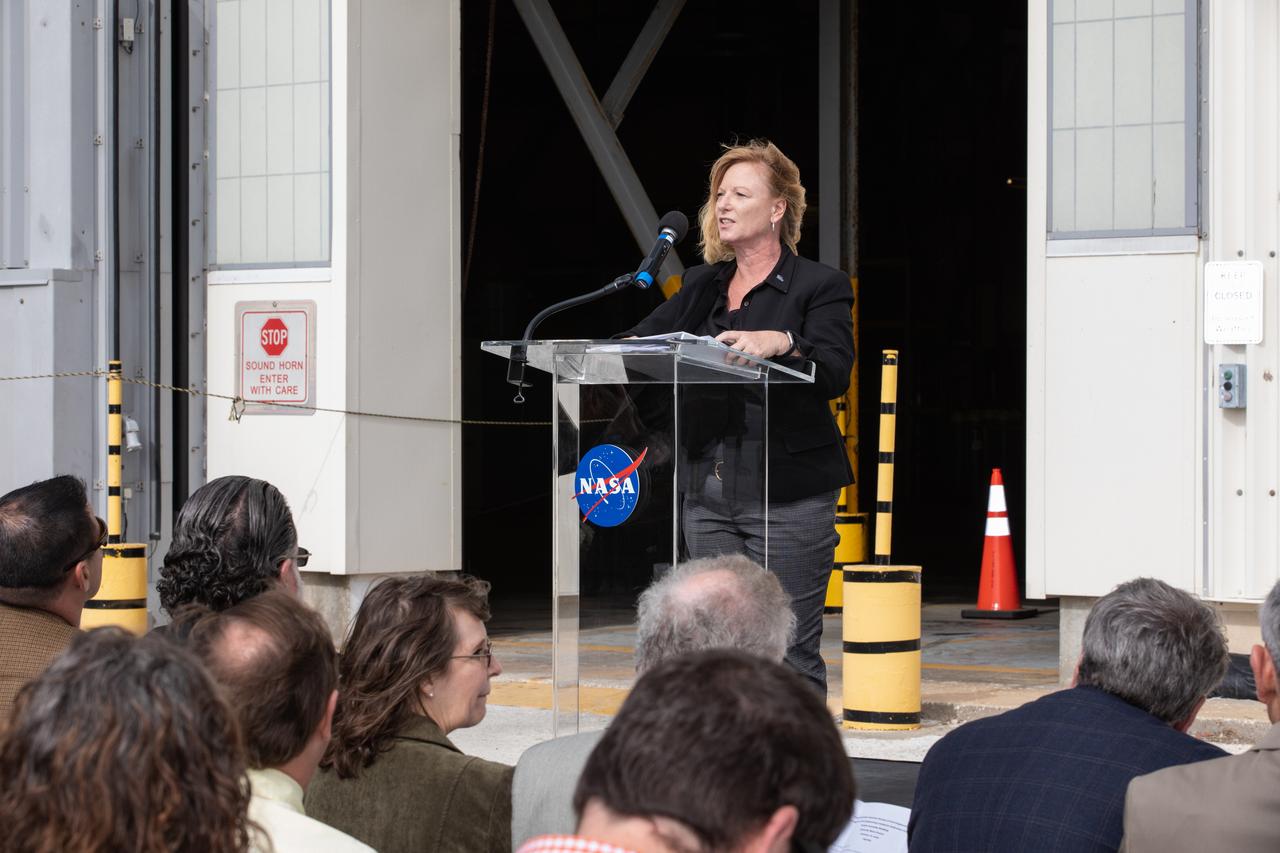
Kathleen Ruvarac, History and Heritage Committee chairperson with the American Society of Civil Engineers (ASCE), speaks to attendees during a ceremony on Jan. 10, 2020, to recognize the Vehicle Assembly Building with the National Historic Civil Engineering Landmark award. The Florida Section ASCE nominated the historic building and bestowed the award. The VAB is the first building at Kennedy Space Center to earn this distinction. At the time of its completion, the 129-million-cubic-foot structure was the largest building in the world. Originally designed and built to accommodate the Saturn V/Apollo used in Project Apollo, the VAB was later modified for its role in the Space Shuttle Program.
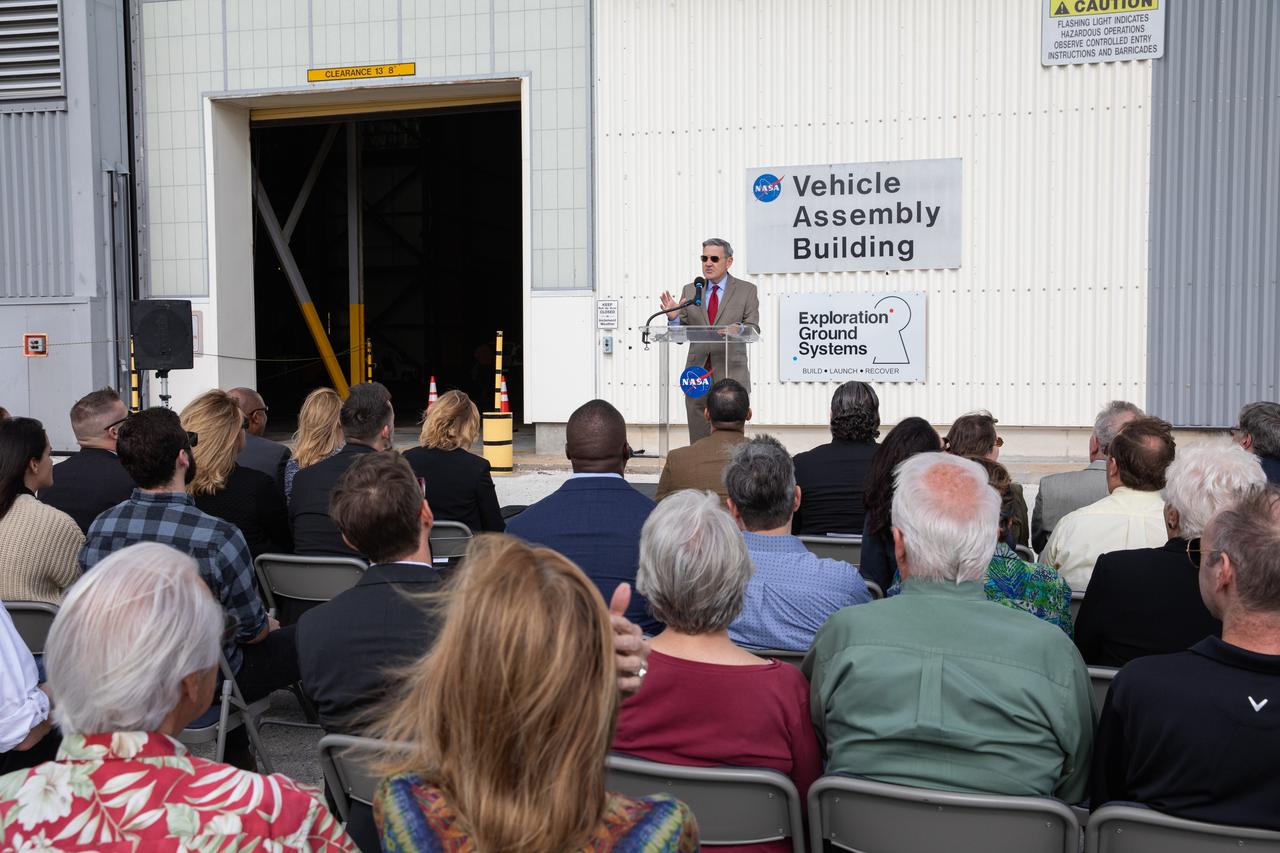
Kennedy Space Center Director Bob Cabana, speaks to attendees during a ceremony on Jan. 10, 2020, to recognize the Vehicle Assembly Building with the National Historic Civil Engineering Landmark award. The Florida Section American Society of Civil Engineers nominated the historic building and bestowed the award. The VAB is the first building at Kennedy Space Center to earn this distinction. At the time of its completion, the 129-million-cubic-foot structure was the largest building in the world. Originally designed and built to accommodate the Saturn V/Apollo used in Project Apollo, the VAB was later modified for its role in the Space Shuttle Program.
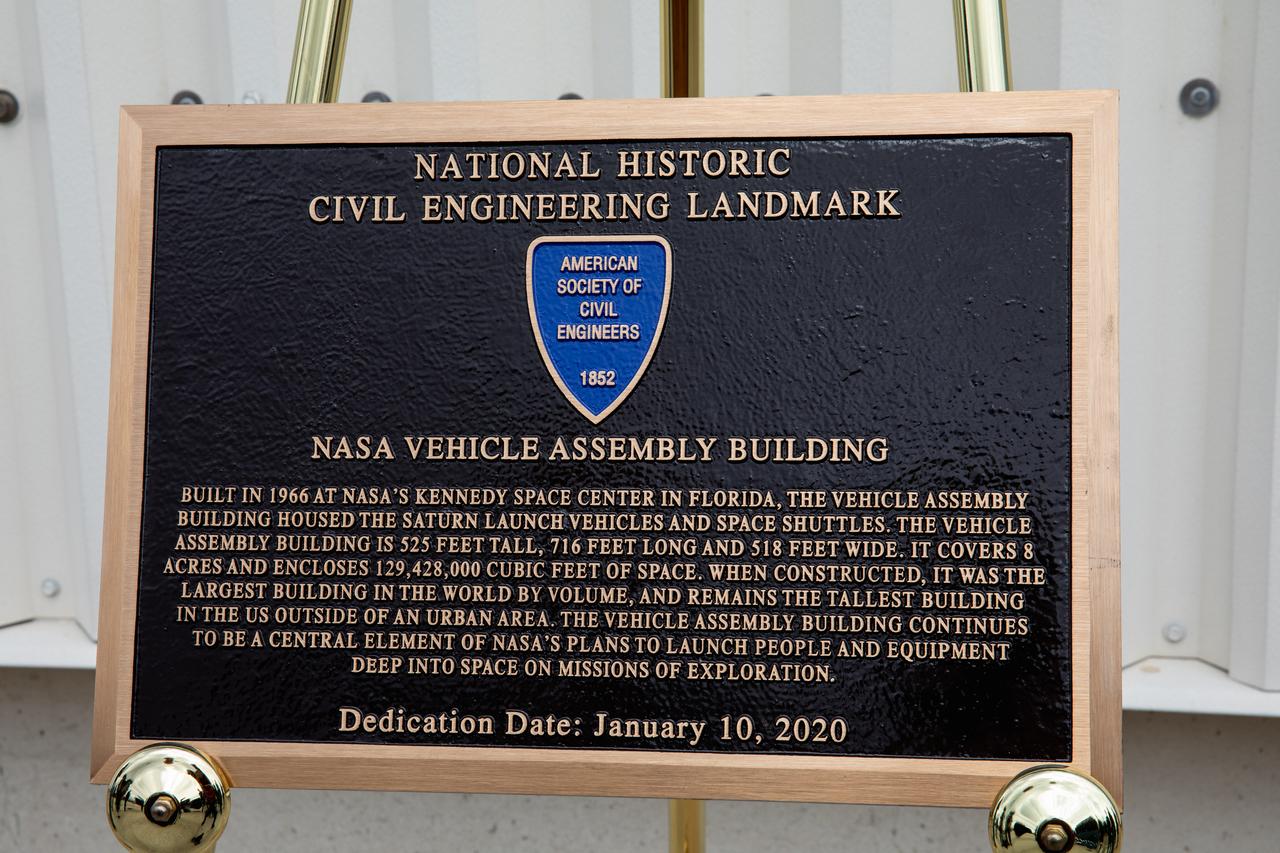
The Florida Section of the American Society of Civil Engineers bestowed the ASCE National Historic Civil Engineering Landmark award to Kennedy Space Center’s iconic Vehicle Assembly Building during a ceremony on Jan. 10, 2020. The VAB is the first building at Kennedy Space Center to earn this distinction. At the time of its completion, the 129-million-cubic-foot structure was the largest building in the world. Originally designed and built to accommodate the Saturn V/Apollo used in Project Apollo, the VAB was later modified for its role in the Space Shuttle Program.

Kennedy Space Center Director Bob Cabana, left, talks with Florida Department of Transportation Secretary Kevin Thibault during a ceremony on Jan. 10, 2020, to recognize the Vehicle Assembly Building with the National Historic Civil Engineering Landmark award. The Florida Section American Society of Civil Engineers nominated the historic building and bestowed the award. The VAB is the first building at Kennedy Space Center to earn this distinction. At the time of its completion, the 129-million-cubic-foot structure was the largest building in the world. Originally designed and built to accommodate the Saturn V/Apollo used in Project Apollo, the VAB was later modified for its role in the Space Shuttle Program.
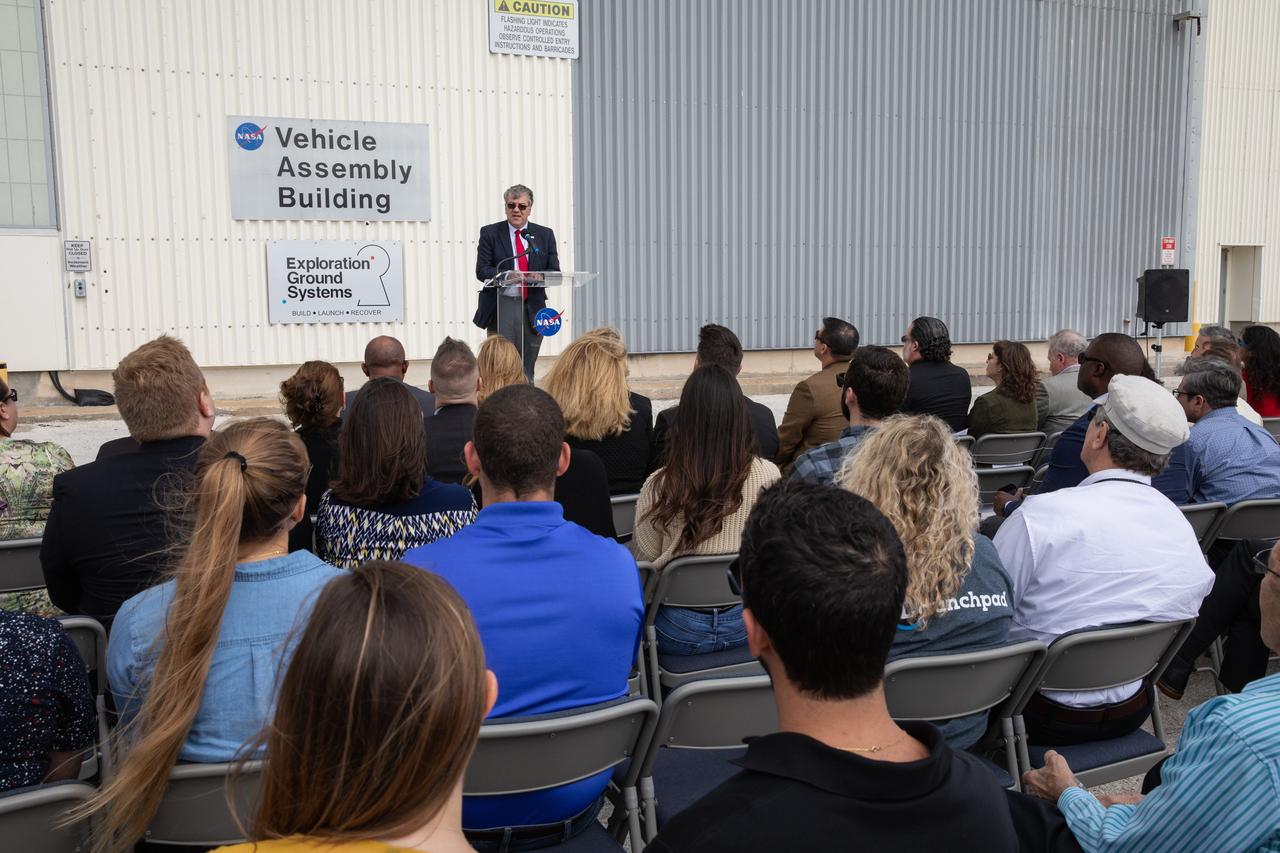
Florida Department of Transportation Secretary Kevin Thibault speaks to attendees during a ceremony on Jan. 10, 2020, to recognize the Vehicle Assembly Building with the National Historic Civil Engineering Landmark award. The Florida Section American Society of Civil Engineers nominated the historic building and bestowed the award. The VAB is the first building at Kennedy Space Center to earn this distinction. At the time of its completion, the 129-million-cubic-foot structure was the largest building in the world. Originally designed and built to accommodate the Saturn V/Apollo used in Project Apollo, the VAB was later modified for its role in the Space Shuttle Program.

Kennedy Space Center Director Bob Cabana, left, talks with Florida Department of Transportation Secretary Kevin Thibault during a ceremony on Jan. 10, 2020, to recognize the Vehicle Assembly Building with the National Historic Civil Engineering Landmark award. The Florida Section American Society of Civil Engineers nominated the historic building and bestowed the award. The VAB is the first building at Kennedy Space Center to earn this distinction. At the time of its completion, the 129-million-cubic-foot structure was the largest building in the world. Originally designed and built to accommodate the Saturn V/Apollo used in Project Apollo, the VAB was later modified for its role in the Space Shuttle Program.
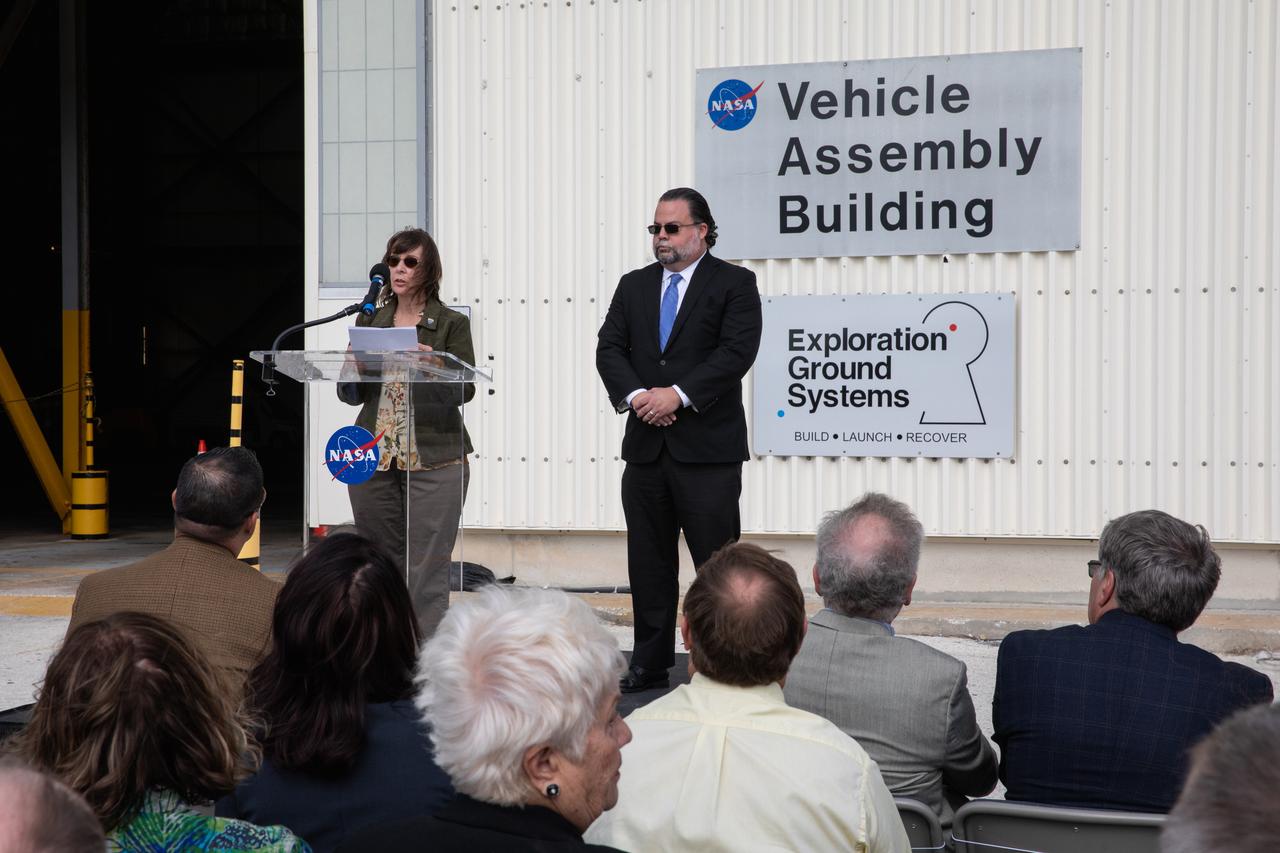
Carol Stevens, History and Heritage Committee member with the American Society of Civil Engineers (ASCE), speaks to attendees during a ceremony on Jan. 10, 2020, to recognize the Vehicle Assembly Building with the National Historic Civil Engineering Landmark award. At right is Peter Moore, ASCE Region 5 director. The Florida Section ASCE nominated the historic building and bestowed the award. The VAB is the first building at Kennedy Space Center to earn this distinction. At the time of its completion, the 129-million-cubic-foot structure was the largest building in the world. Originally designed and built to accommodate the Saturn V/Apollo used in Project Apollo, the VAB was later modified for its role in the Space Shuttle Program.
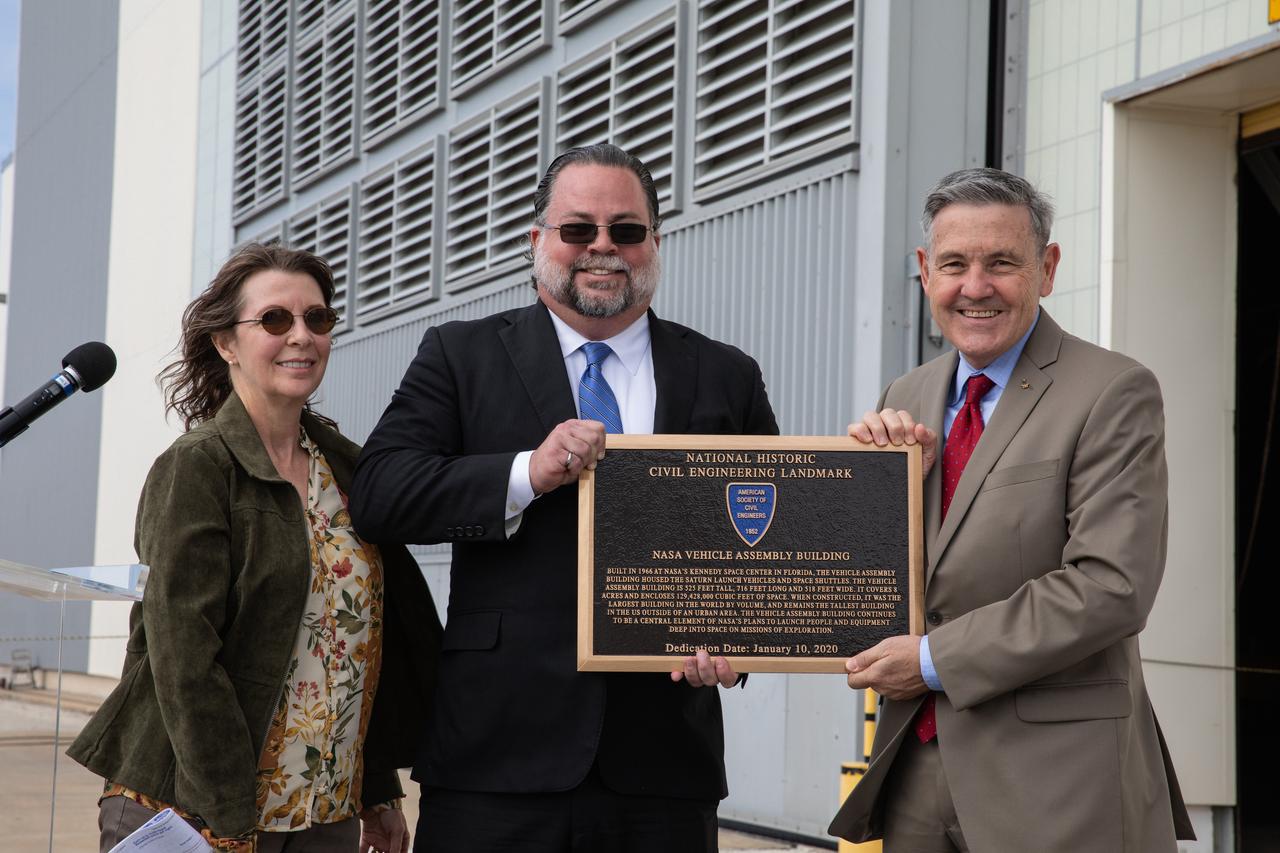
Kennedy Space Center Director Bob Cabana, far right, accepts the National Historic Civil Engineering Landmark award from the Florida Section American Society of Civil Engineers (ASCE) for the Vehicle Assembly Building during a ceremony in front of the iconic facility on Jan. 10, 2020. Next to Cabana, from left are Carol Stevens, ASCE Society of History and Heritage Committee member; and Peter Moore, ASCE Region 5 director. The ASCE nominated the historic building and bestowed the award. The VAB is the first building at Kennedy Space Center to earn this distinction. At the time of its completion, the 129-million-cubic-foot structure was the largest building in the world. Originally designed and built to accommodate the Saturn V/Apollo used in Project Apollo, the VAB was later modified for its role in the Space Shuttle Program.
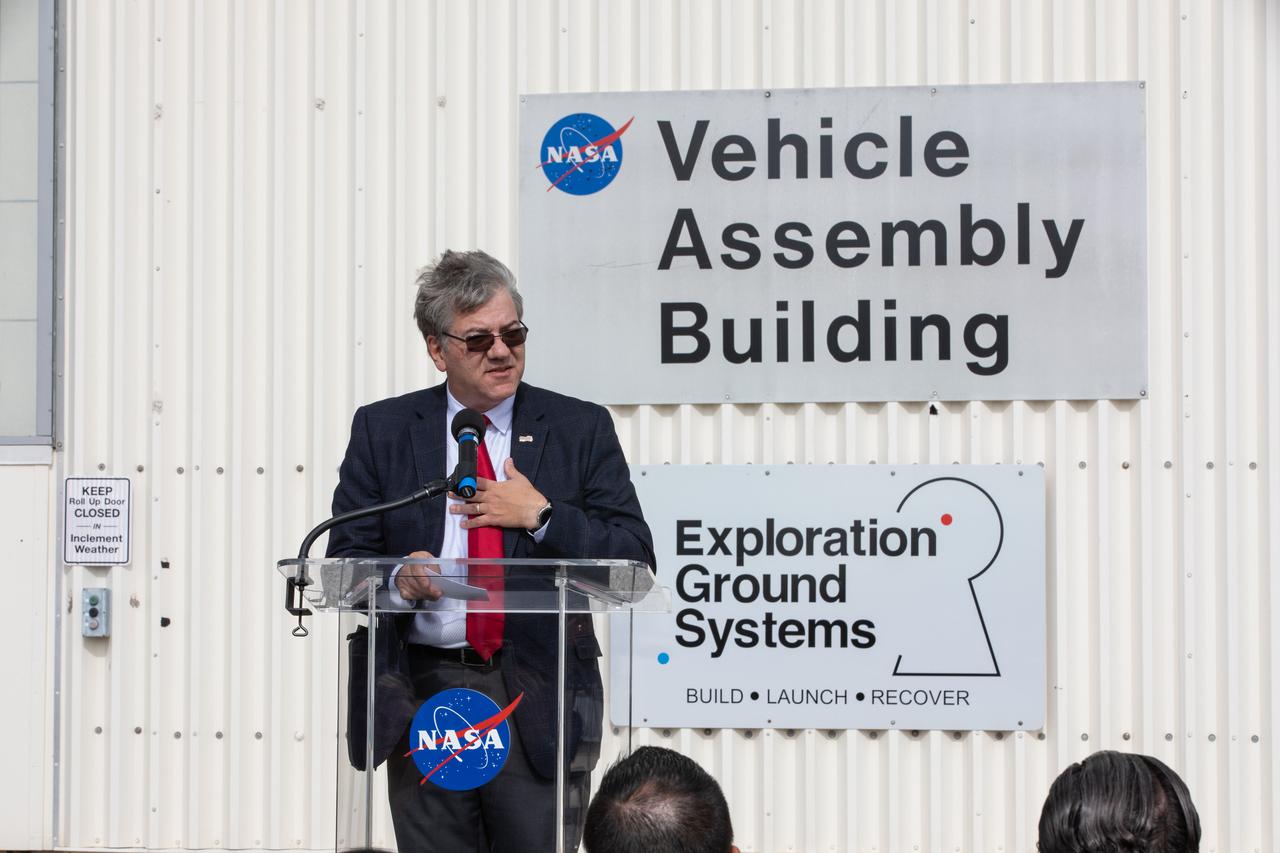
Florida Department of Transportation Secretary Kevin Thibault speaks to attendees during a ceremony on Jan. 10, 2020, to recognize the Vehicle Assembly Building with the National Historic Civil Engineering Landmark award. The Florida Section American Society of Civil Engineers nominated the historic building and bestowed the award. The VAB is the first building at Kennedy Space Center to earn this distinction. At the time of its completion, the 129-million-cubic-foot structure was the largest building in the world. Originally designed and built to accommodate the Saturn V/Apollo used in Project Apollo, the VAB was later modified for its role in the Space Shuttle Program.

Florida Department of Transportation Secretary Kevin Thibault shakes hands with an attendee during a ceremony on Jan. 10, 2020, to recognize the Vehicle Assembly Building with the National Historic Civil Engineering Landmark award. The Florida Section American Society of Civil Engineers (ASCE) nominated the historic building and bestowed the award. Standing next to Thibault is Glenn Bell, ASCE Society of Structural Engineering Institute president. The VAB is the first building at Kennedy Space Center to earn this distinction. At the time of its completion, the 129-million-cubic-foot structure was the largest building in the world. Originally designed and built to accommodate the Saturn V/Apollo used in Project Apollo, the VAB was later modified for its role in the Space Shuttle Program.
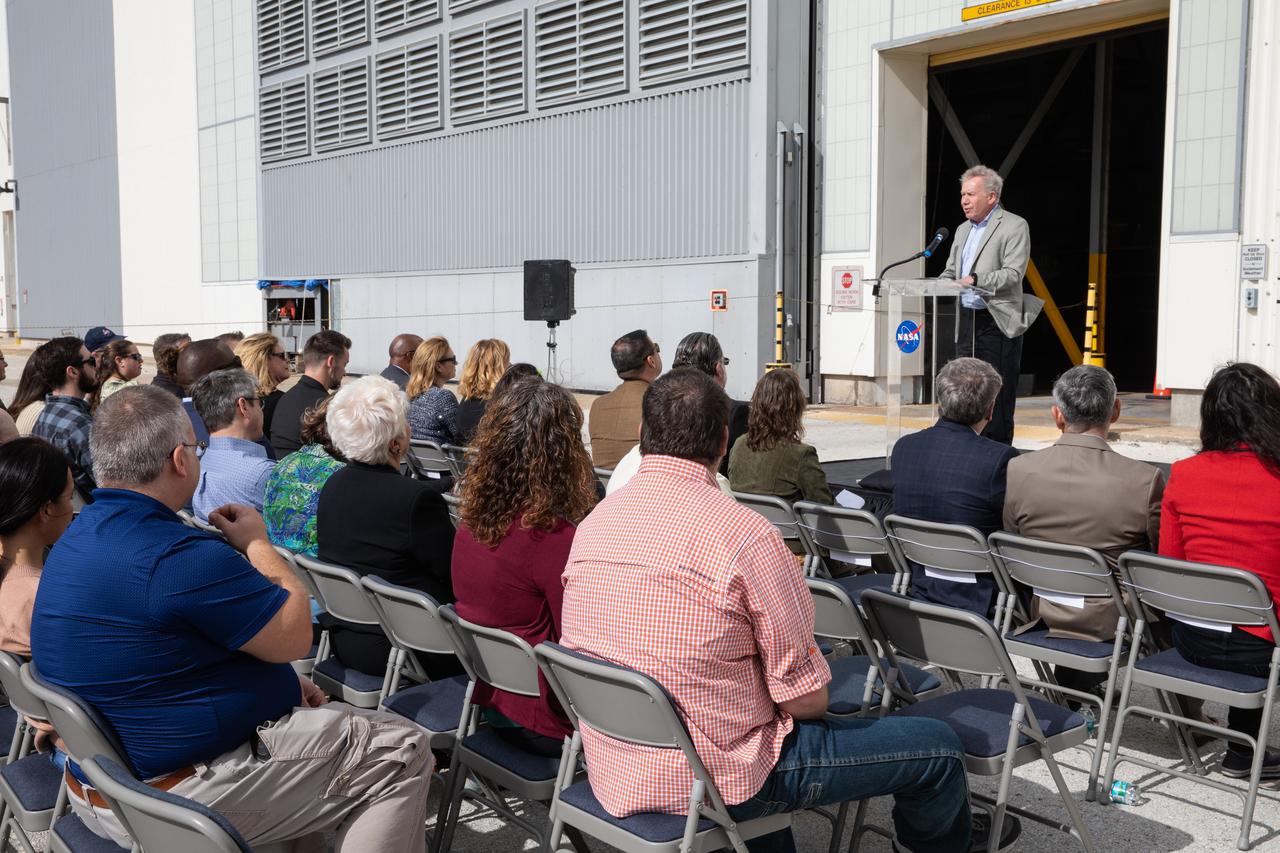
Glenn Bell, American Society of Civil Engineers (ASCE) Society of Structural Engineering Institute president speaks to attendees during a ceremony on Jan. 10, 2020, to recognize the Vehicle Assembly Building with the National Historic Civil Engineering Landmark award. The Florida Section ASCE nominated the historic building and bestowed the award. The VAB is the first building at Kennedy Space Center to earn this distinction. At the time of its completion, the 129-million-cubic-foot structure was the largest building in the world. Originally designed and built to accommodate the Saturn V/Apollo used in Project Apollo, the VAB was later modified for its role in the Space Shuttle Program.
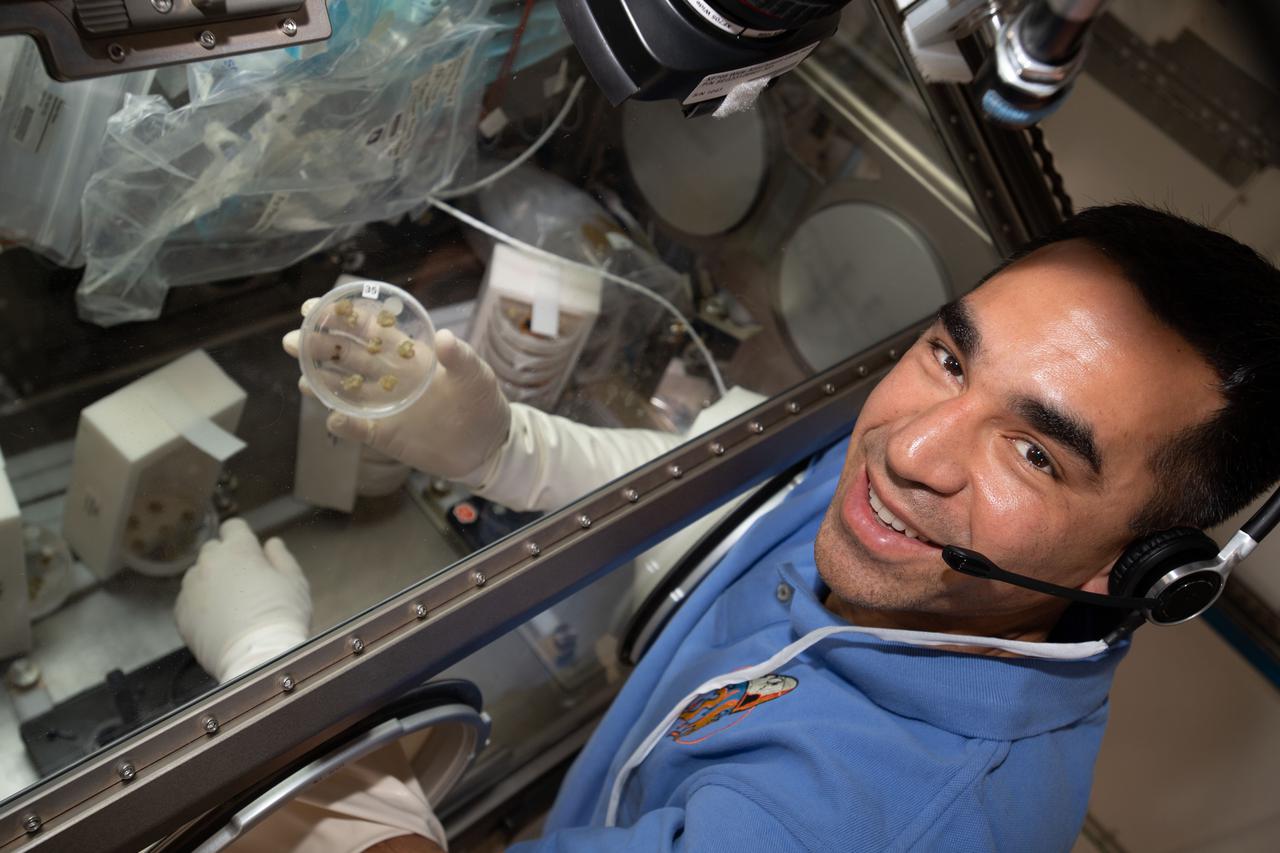
iss066e127275 (Jan. 26, 2022) --- NASA astronaut and Expedition 66 Flight Engineer Raja Chari works inside the Life Science Glovebox and displays cotton cells growing on a petri dish for the Plant Habitat-05 space botany study. The experiment uses the microgravity environment to observe the genetic architecture of plant regeneration.
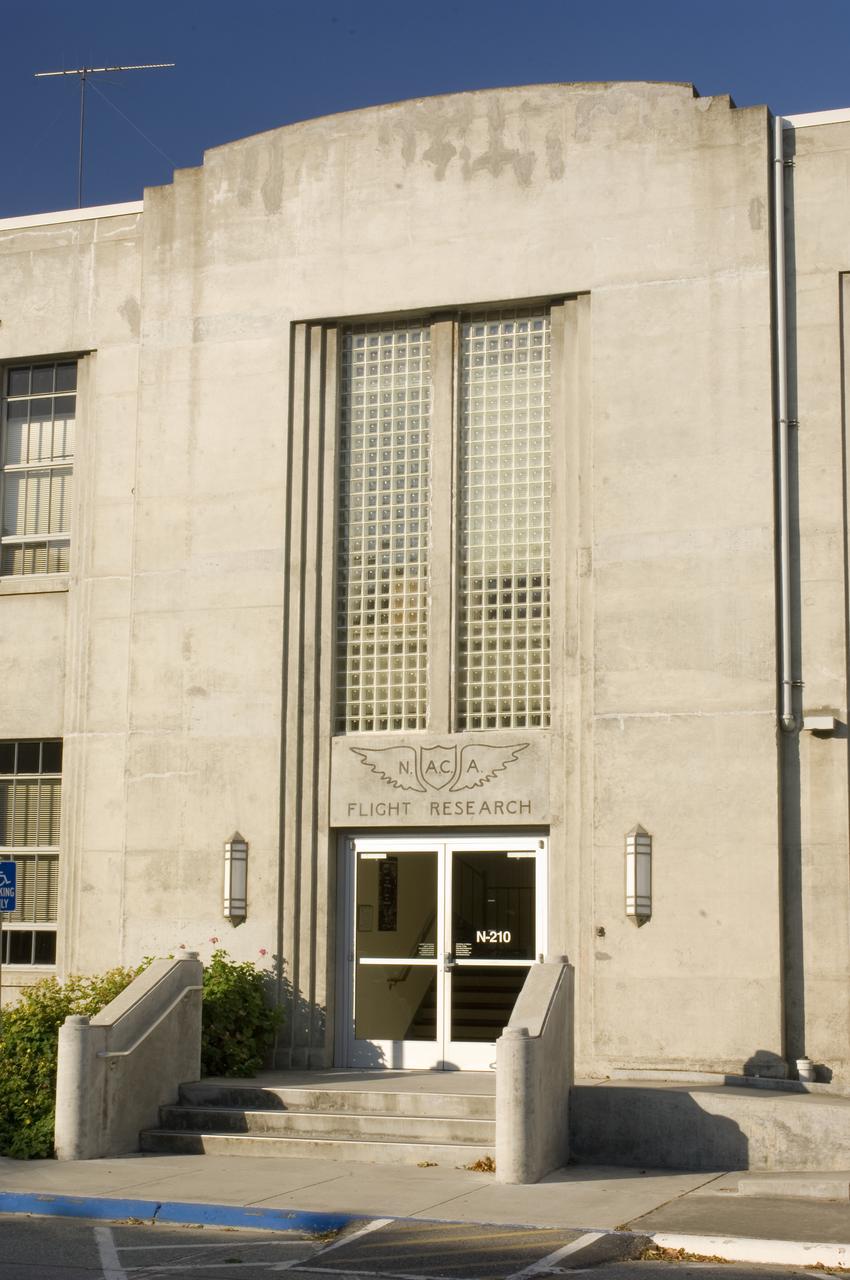
Ames and Moffett Field (MFA) historical sites and memorials Entry of building N-210 Ames Flight System Research Laboratory architectural detail. Eastside showing NACA brass inset wing over front doors, light fixtures flanking the doors and glass brick window wall above the doors
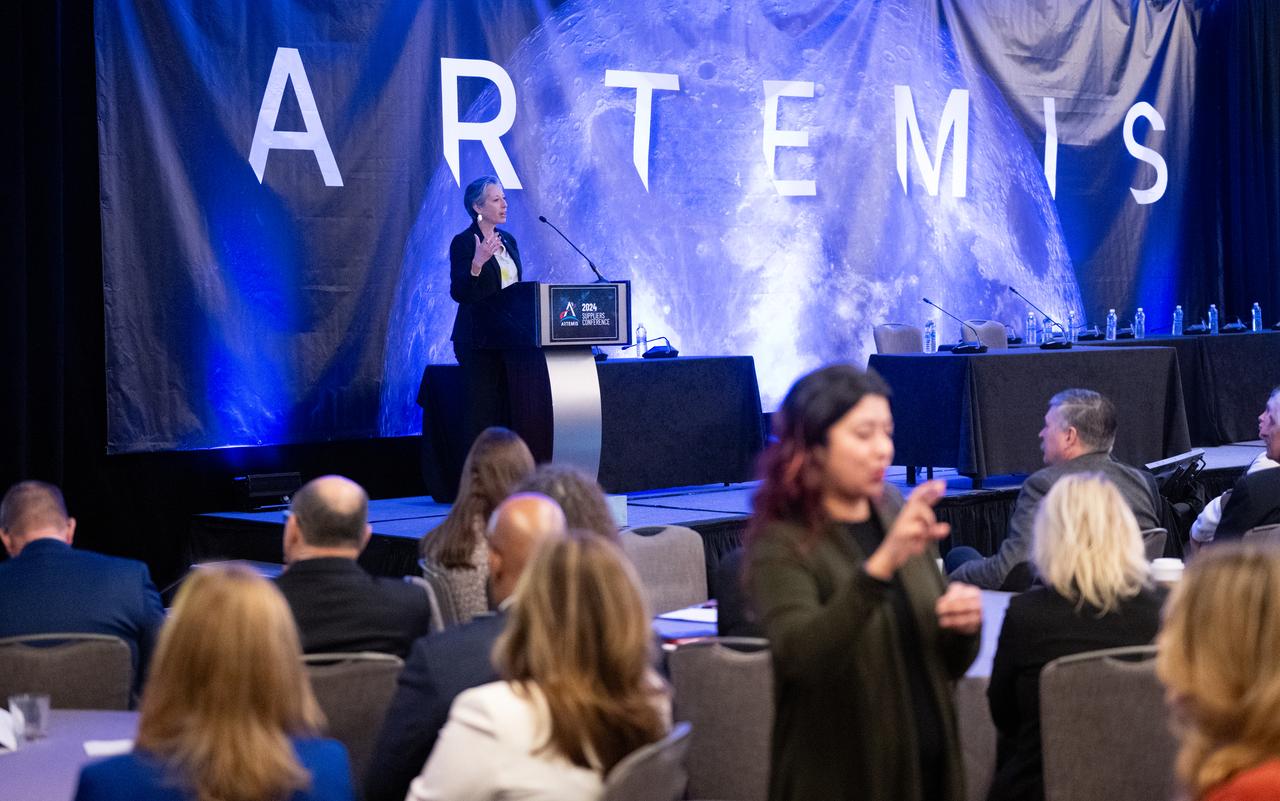
Nujoud Merancy, deputy associate administrator for the Strategy and Architectures Office in NASA’s Exploration Systems Development Mission Directorate, speaks during the 2024 Artemis Suppliers Conference, Tuesday, Feb. 27, 2024, at the Grand Hyatt Hotel in Washington. Photo Credit: (NASA/Joel Kowsky)
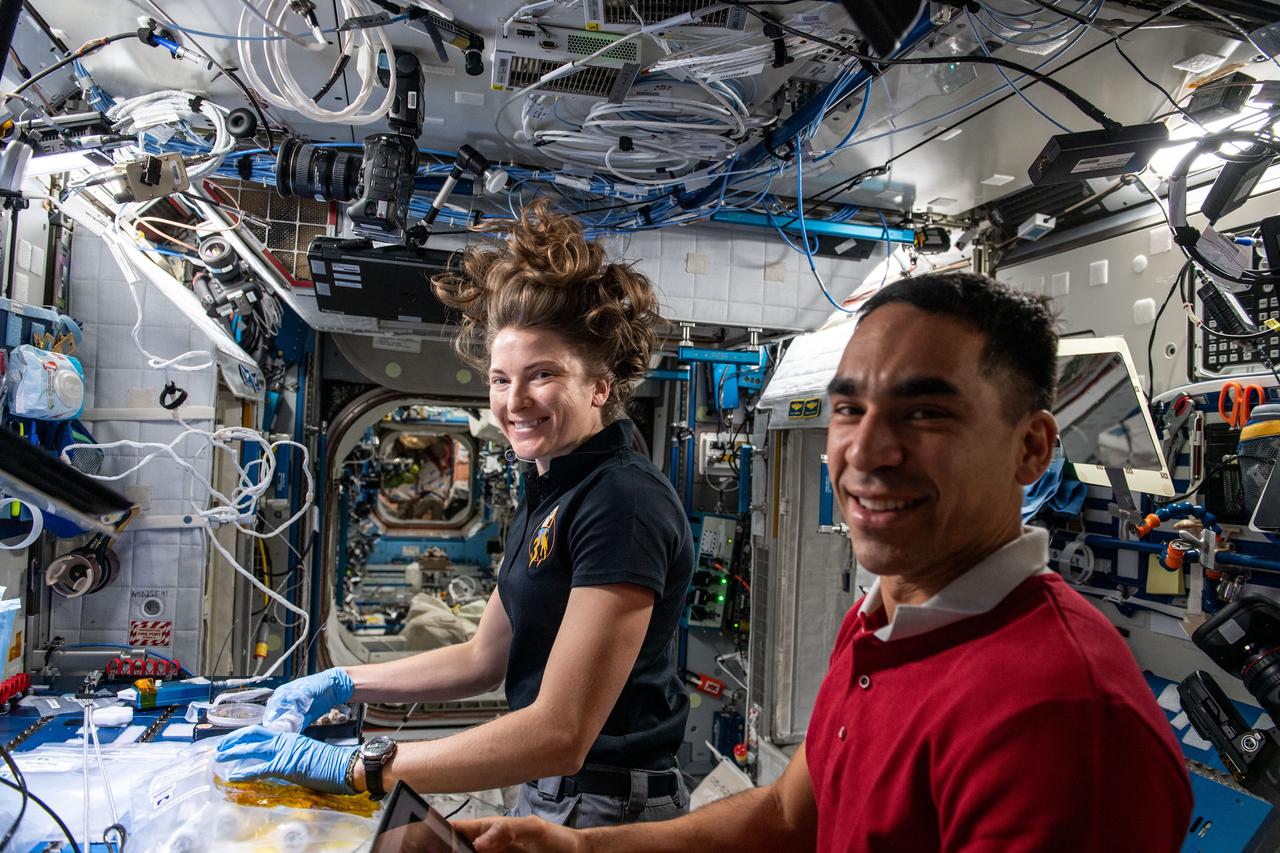
iss066e140558 (Feb. 10, 2022) --- NASA's Expedition 66 Flight Engineers Kayla Barron and Raja Chari harvest cotton cell samples grown for the Plant Habitat-05 space agriculture experiment that is exploring the genetic architecture of plant regeneration.
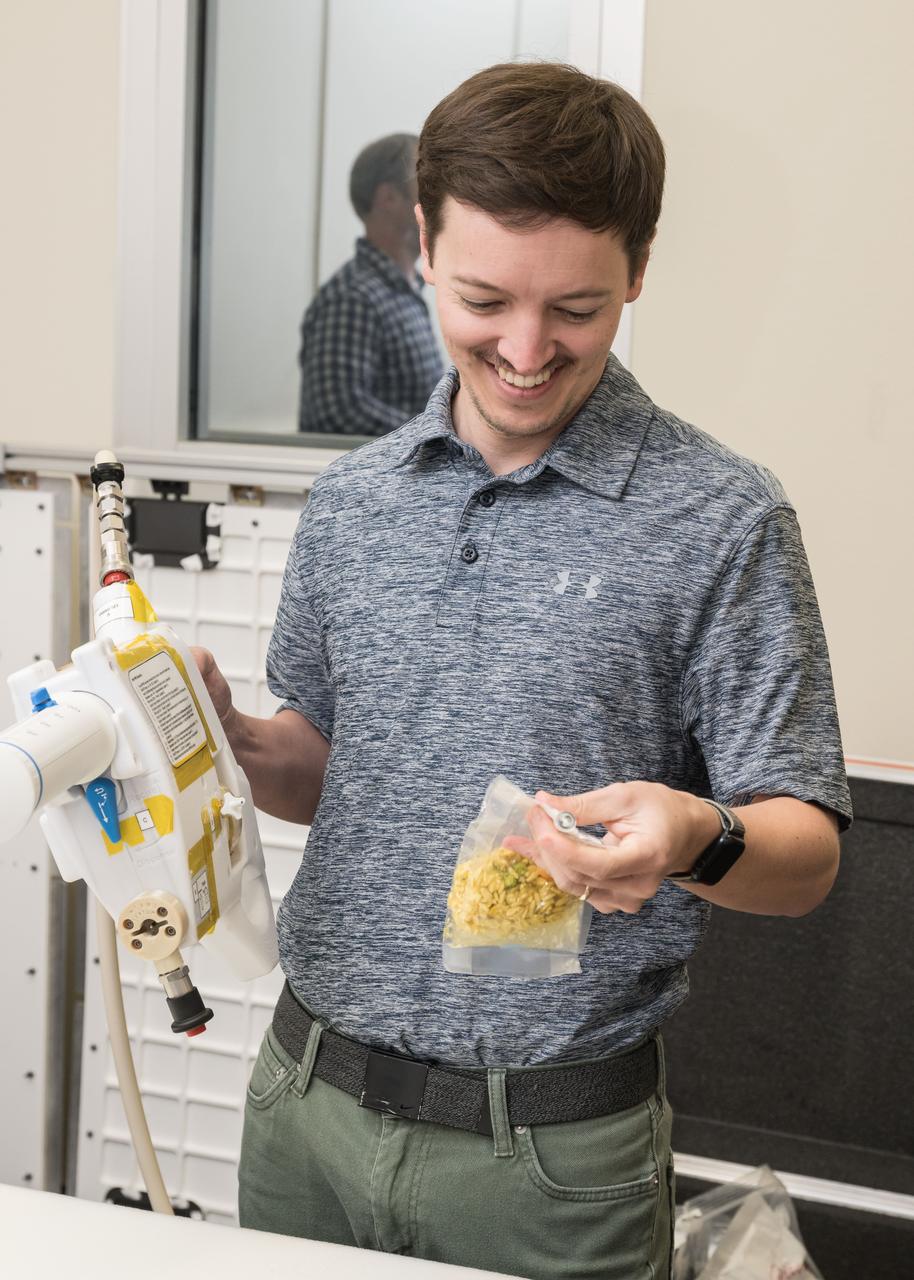
jsc2024e040722 -- Brett Montoya, a lead space architect in the Center for Design and Space Architecture at Johnson Space Center, rehydrates a package of food using the Mini Potable Water Dispenser during a protype testing session at Johnson's Space Center. Photo Credit: NASA/David DeHoyos
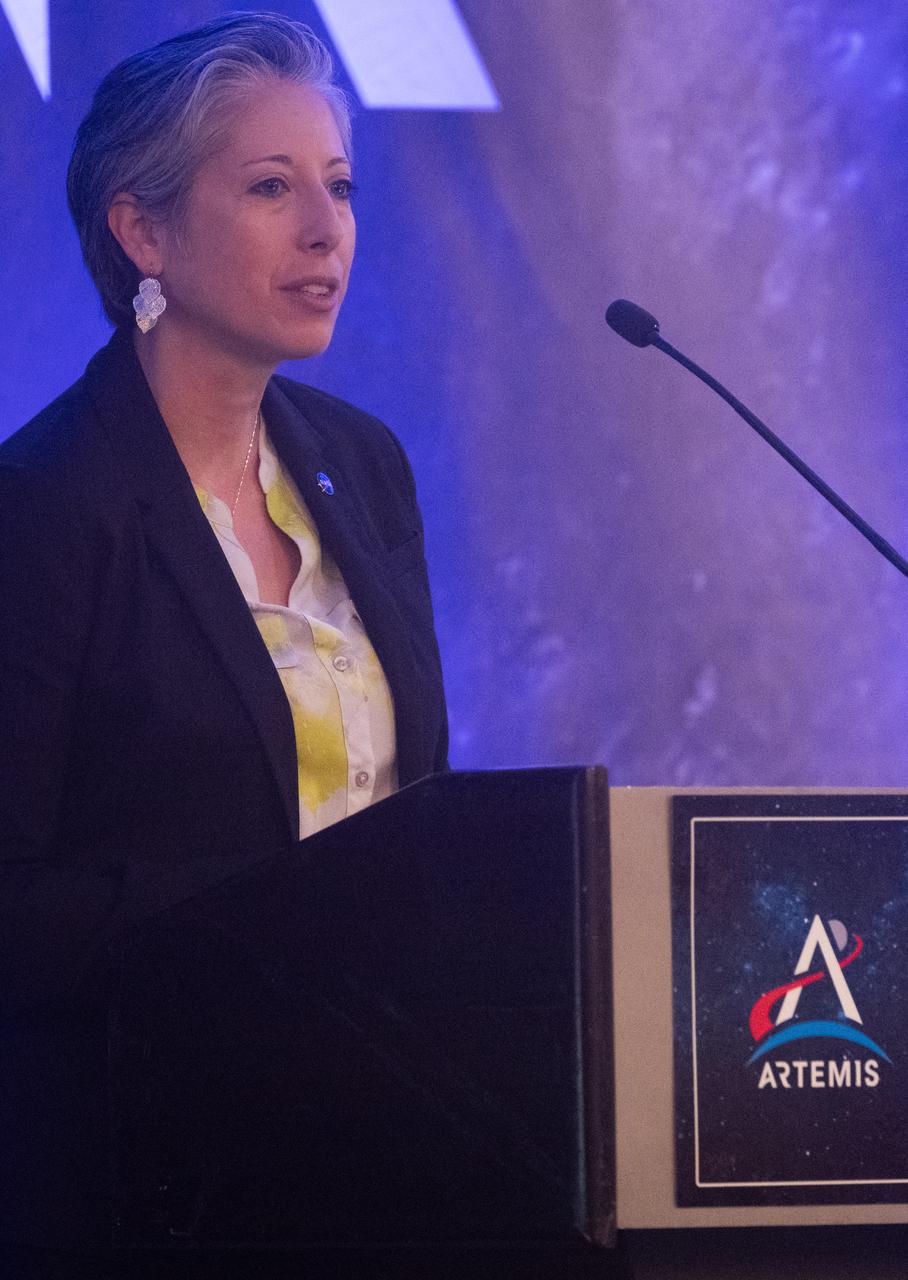
Nujoud Merancy, deputy associate administrator for the Strategy and Architectures Office in NASA’s Exploration Systems Development Mission Directorate, speaks during the 2024 Artemis Suppliers Conference, Tuesday, Feb. 27, 2024, at the Grand Hyatt Hotel in Washington. Photo Credit: (NASA/Joel Kowsky)
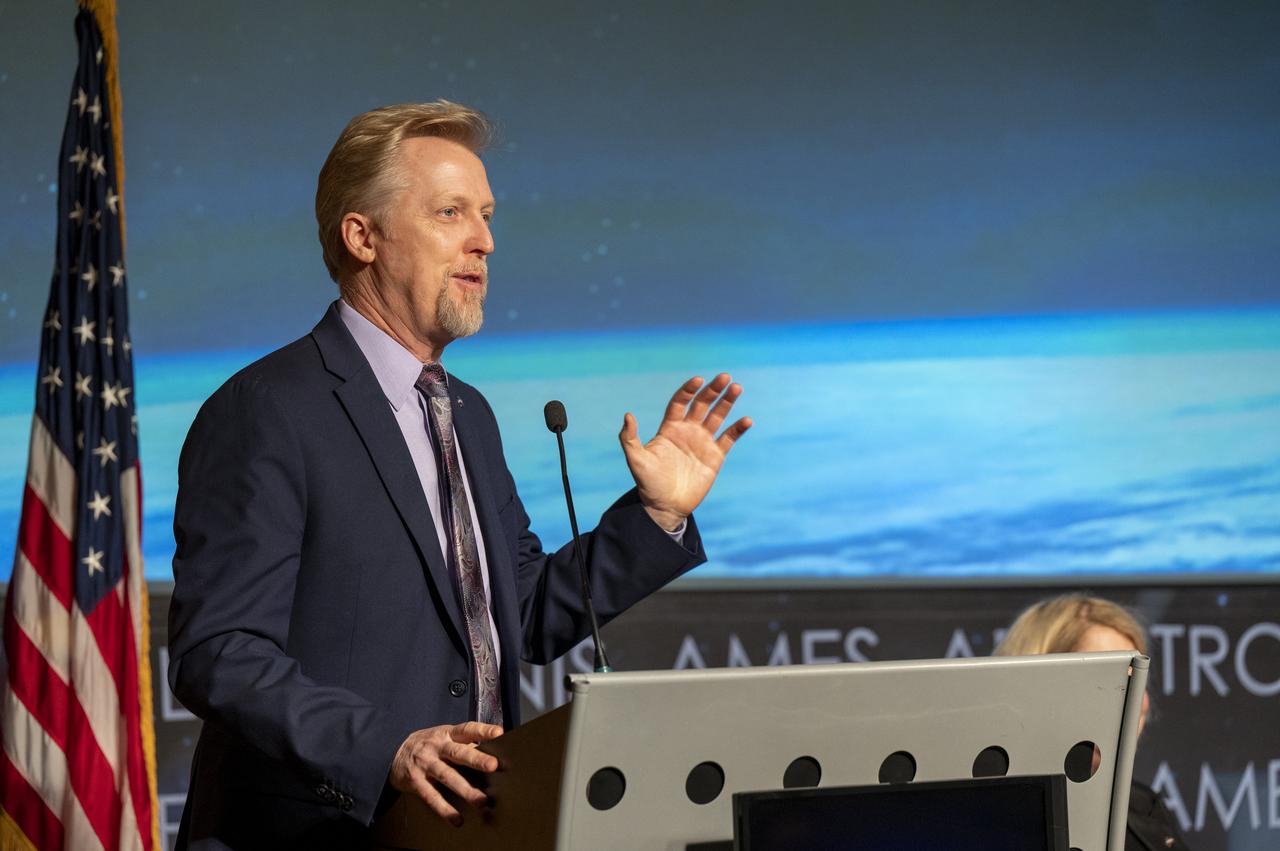
Director of Space Architectures Kurt “Spuds” Vogel delivers remarks during a Moon to Mars Town Hall, Thursday, May 18, 2023, at the Mary W. Jackson NASA Headquarters building in Washington. Photo Credit: (NASA/Keegan Barber)
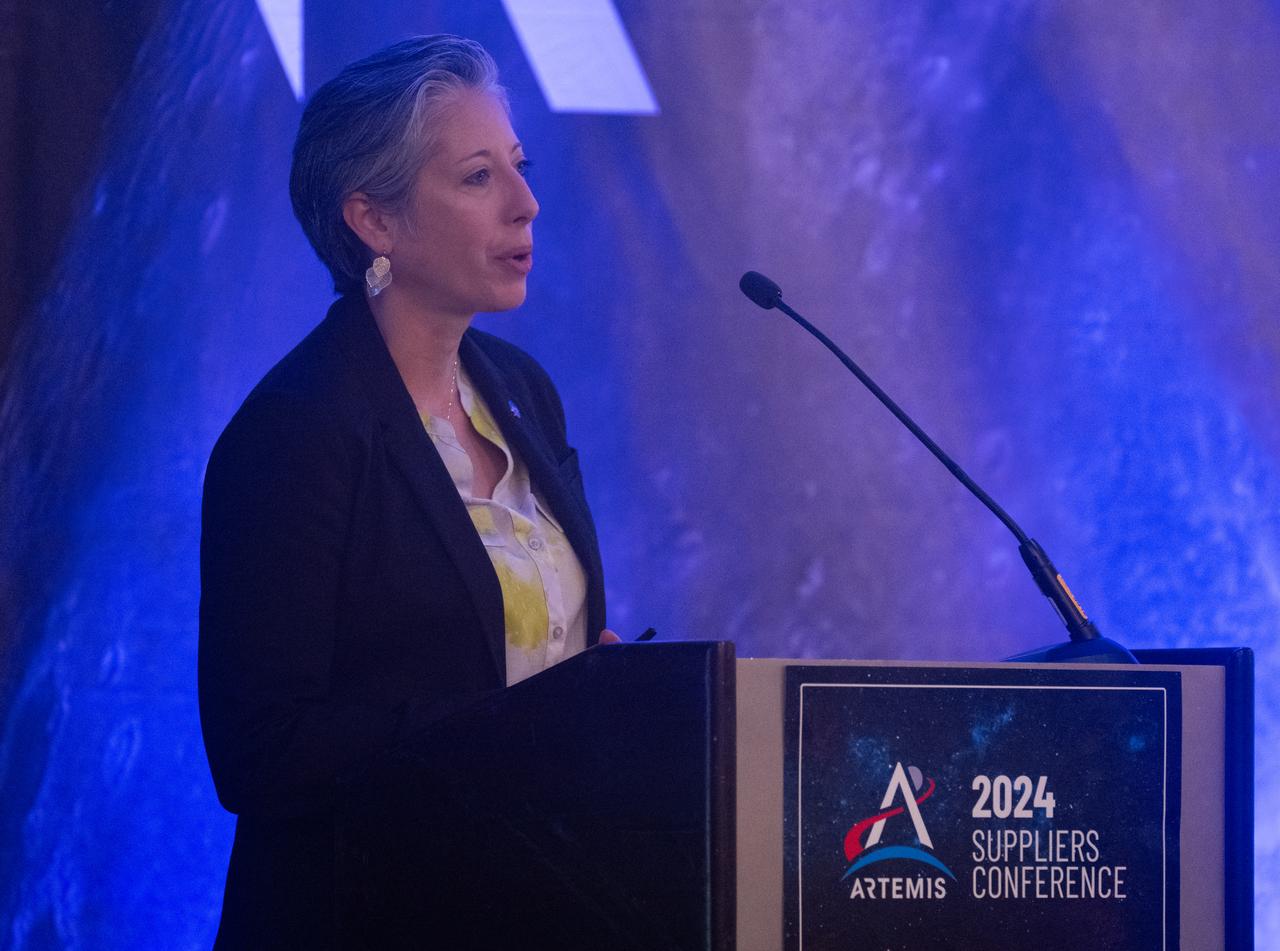
Nujoud Merancy, deputy associate administrator for the Strategy and Architectures Office in NASA’s Exploration Systems Development Mission Directorate, speaks during the 2024 Artemis Suppliers Conference, Tuesday, Feb. 27, 2024, at the Grand Hyatt Hotel in Washington. Photo Credit: (NASA/Joel Kowsky)
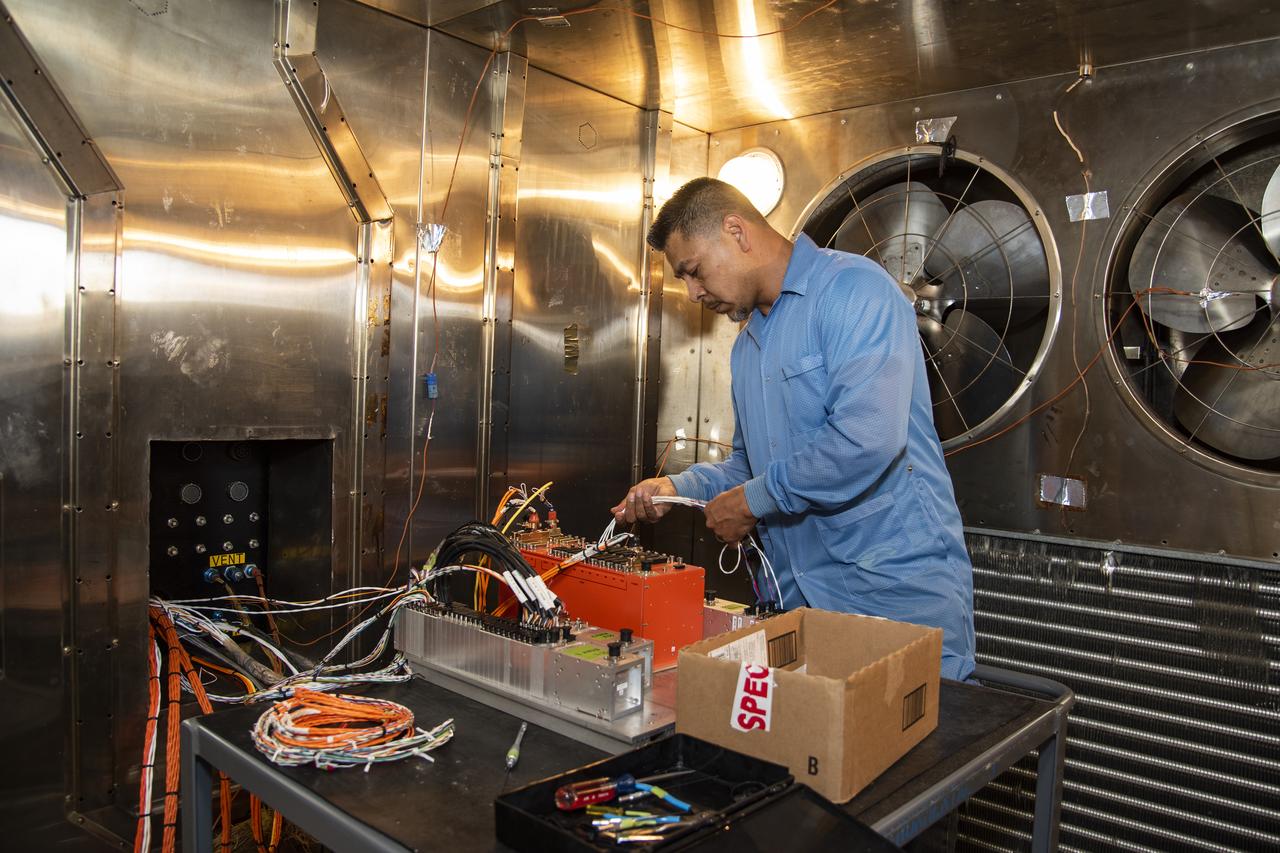
Angelo De La Rosa works inside the Environmental Laboratory’s thermal chamber to attach test articles to the testing architecture at NASA’s Armstrong Flight Research Center in California. The center is testing components for integration into the Orion AA-2 test article scheduled for a test flight of the launch abort system in 2019.
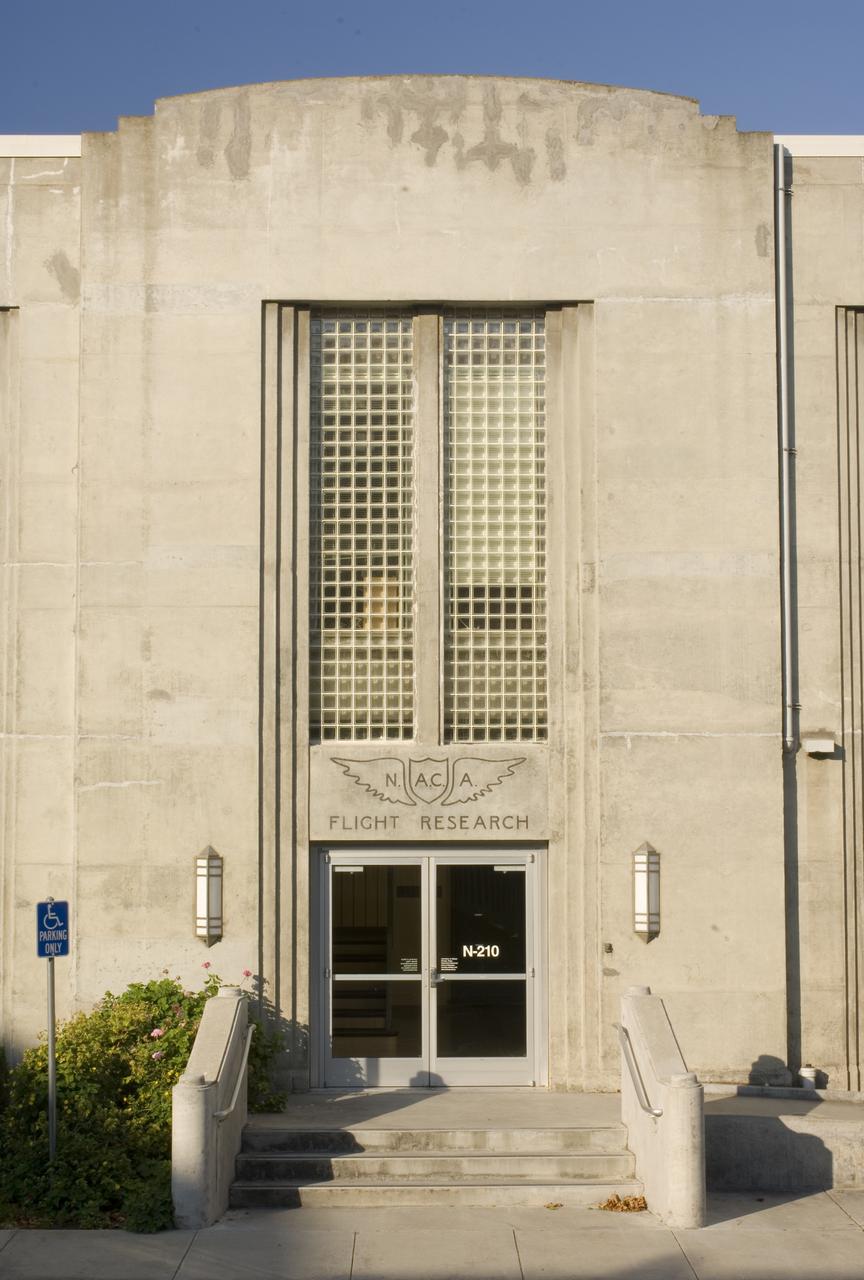
Ames and Moffett Field (MFA) historical sites and memorials Entry of building N-210 Ames Flight System Research Laboratory architectural detail. Eastside showing NACA brass inset wing over front doors, light fixtures flanking the doors and glass brick window wall above the doors
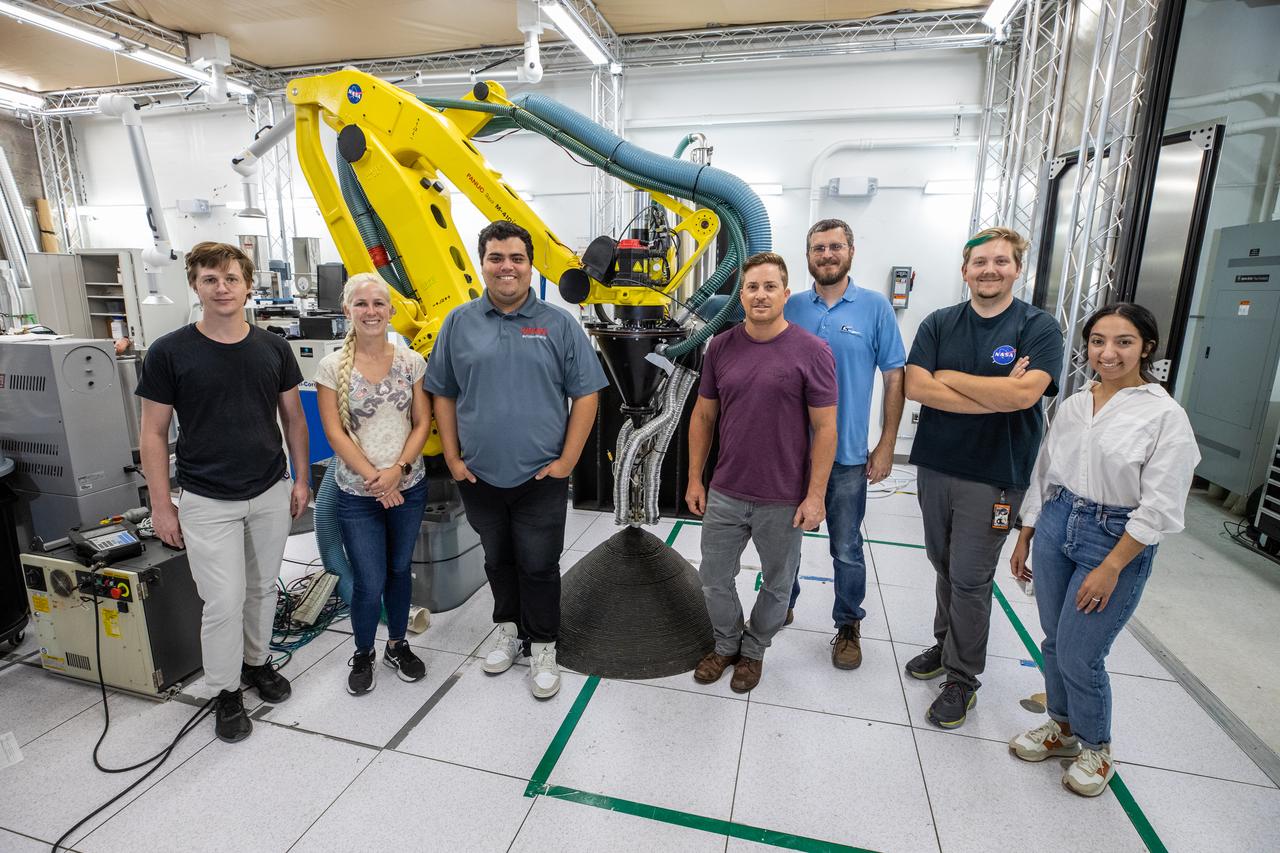
A team at NASA’s Kennedy Space Center in Florida poses with a Zero Launch Mass 3D printer on July 28, 2022, at the Florida spaceport’s Swamp Works, as part of the Relevant Environment Additive Construction Technology (REACT) project. Shown from left to right are: Tommy Lipscomb, materials engineer; Tesia Irwin, chemist; Leonel Herrera, NASA Internships, Fellowships, and Scholarships (NIFS) intern; Nathan Gelino, principal investigator; Matt Nugent, robotics engineer; Evan Bell, robotics engineer; and Nilab Azim, chemist. Among the key objectives of the project is developing an architectural and structural design for a shelter that provides protection to habitable assets on the lunar surface. Testing REACT derives from NASA’s 2020 Announcement of Collaboration Opportunity with AI SpaceFactory – an architectural and construction technology company and winner of NASA’s 3D Printed Habitat Challenge.