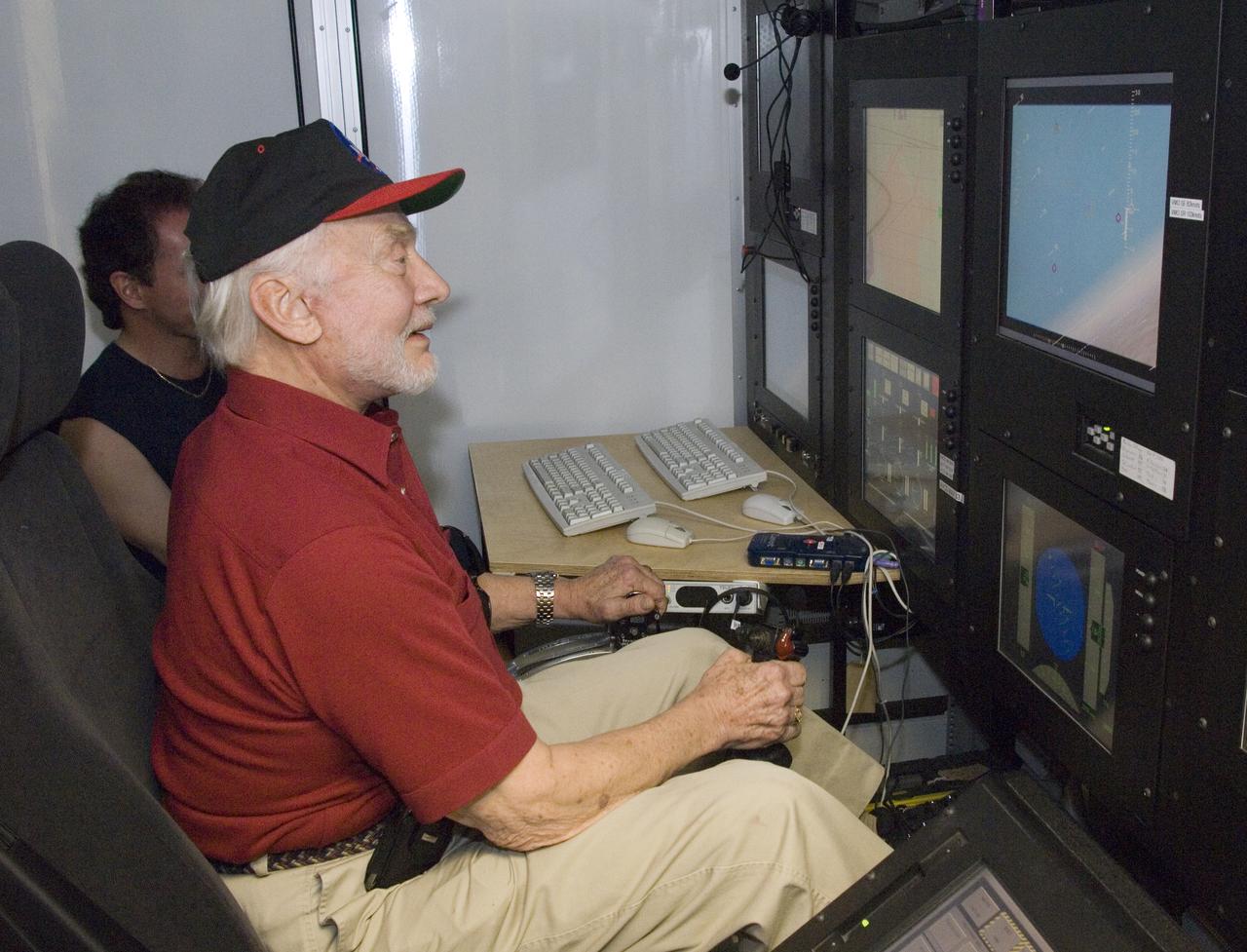
Apollo 11 astronaut Buzz Aldrin tries out the control station for the X-48B Blended Wing Body unmanned subscale demonstrator during a tour of NASA Dryden.
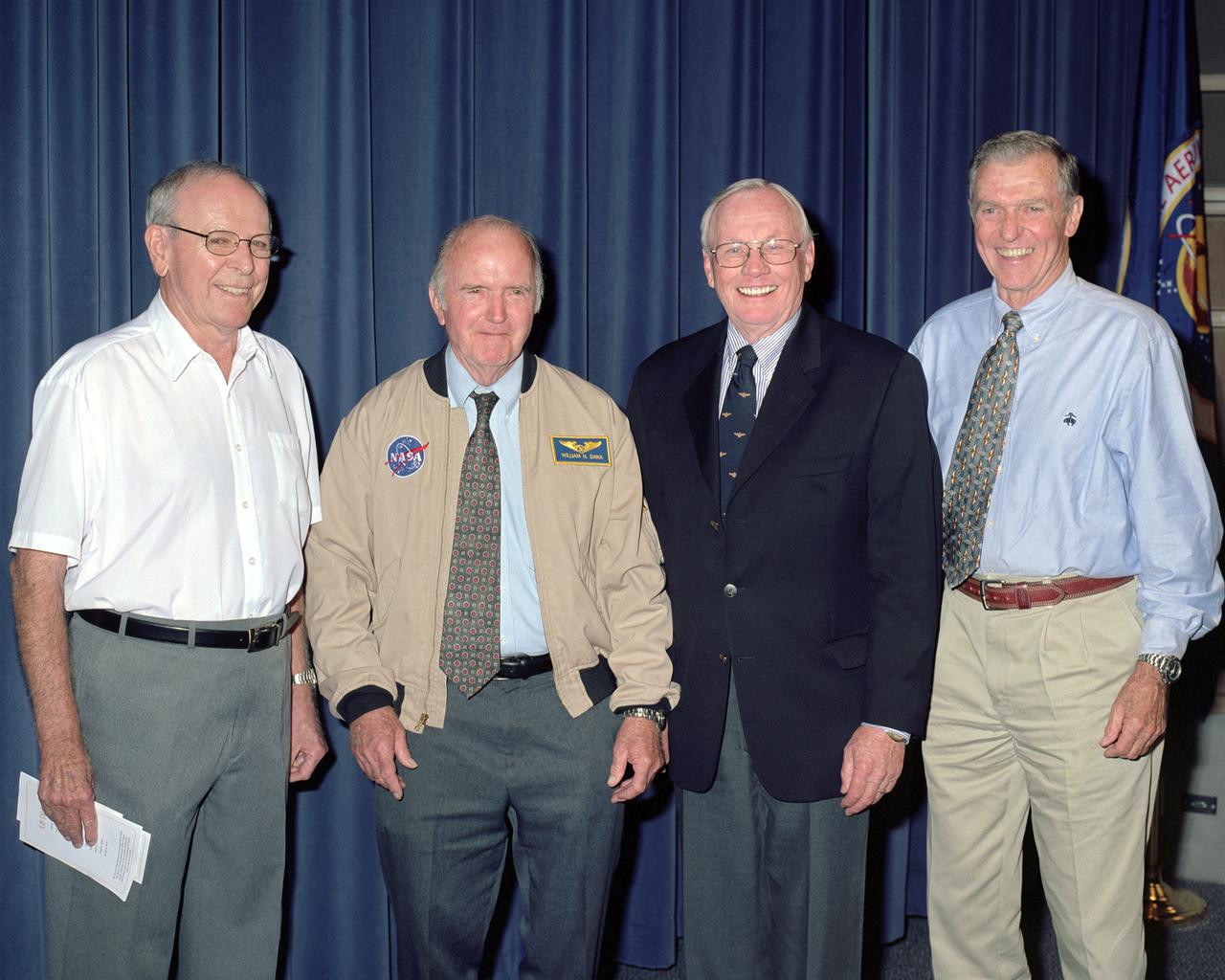
Four of the five surviving X-15 pilots were on hand when astronaut wings were presented to the three NASA pilots who flew the X-15 rocket plane into space in the 1960s, Bill Dana, Joe Walker (deceased) and Jack McKay (deceased). From left, Robert White, Dana, Neil Armstrong, Joe Engle.
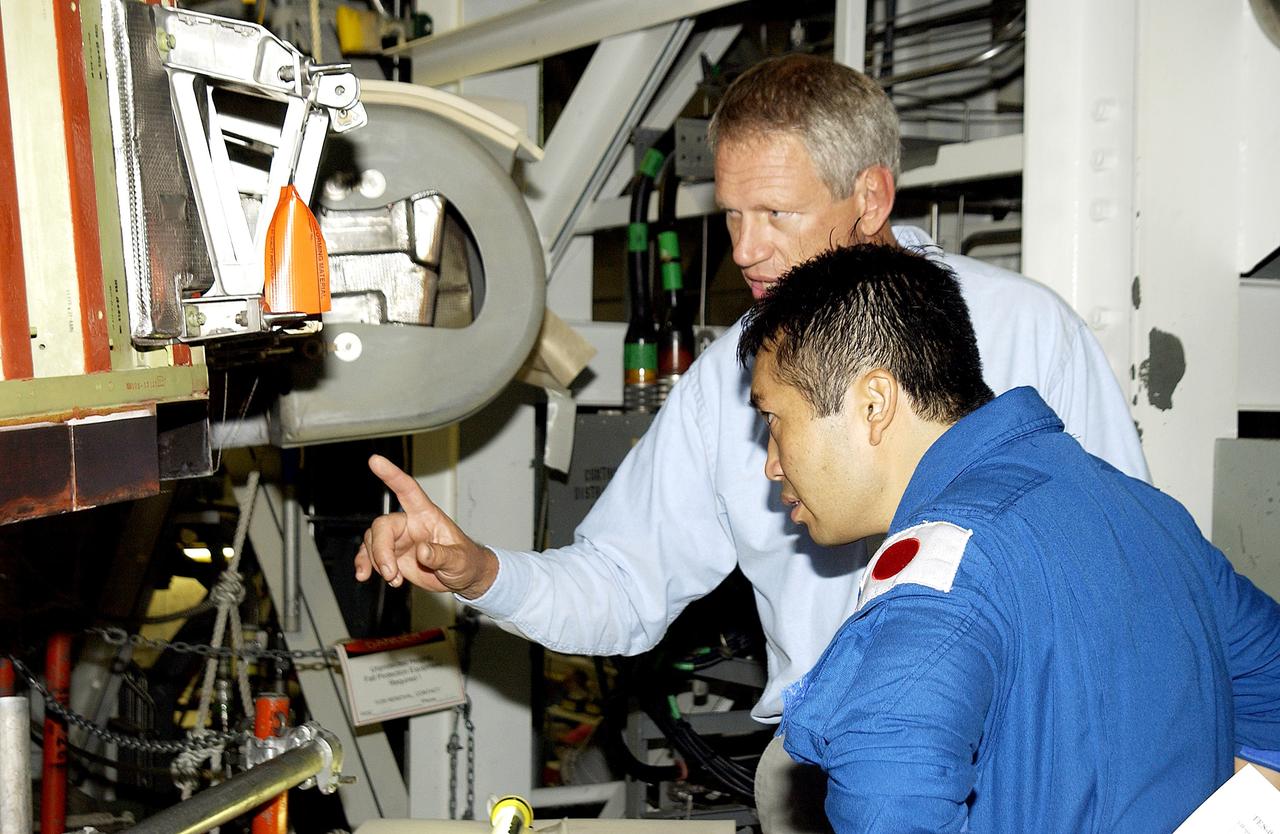
KENNEDY SPACE CENTER, FLA. - Japanese astronaut Koichi Wakata (front) listens to William Gaetjens, with the Vehicle Integration Test Team (VITT), who is providing details about the spar installation (left) on the wing of the orbiter Atlantis. Reinforced Carbon Carbon (RCC) panels are mechanically attached to the wing via the spars - a series of floating joints - to reduce loading on the panels caused by wing deflections. The aluminum and the metallic attachments are protected from exceeding temperature limits by internal insulation.
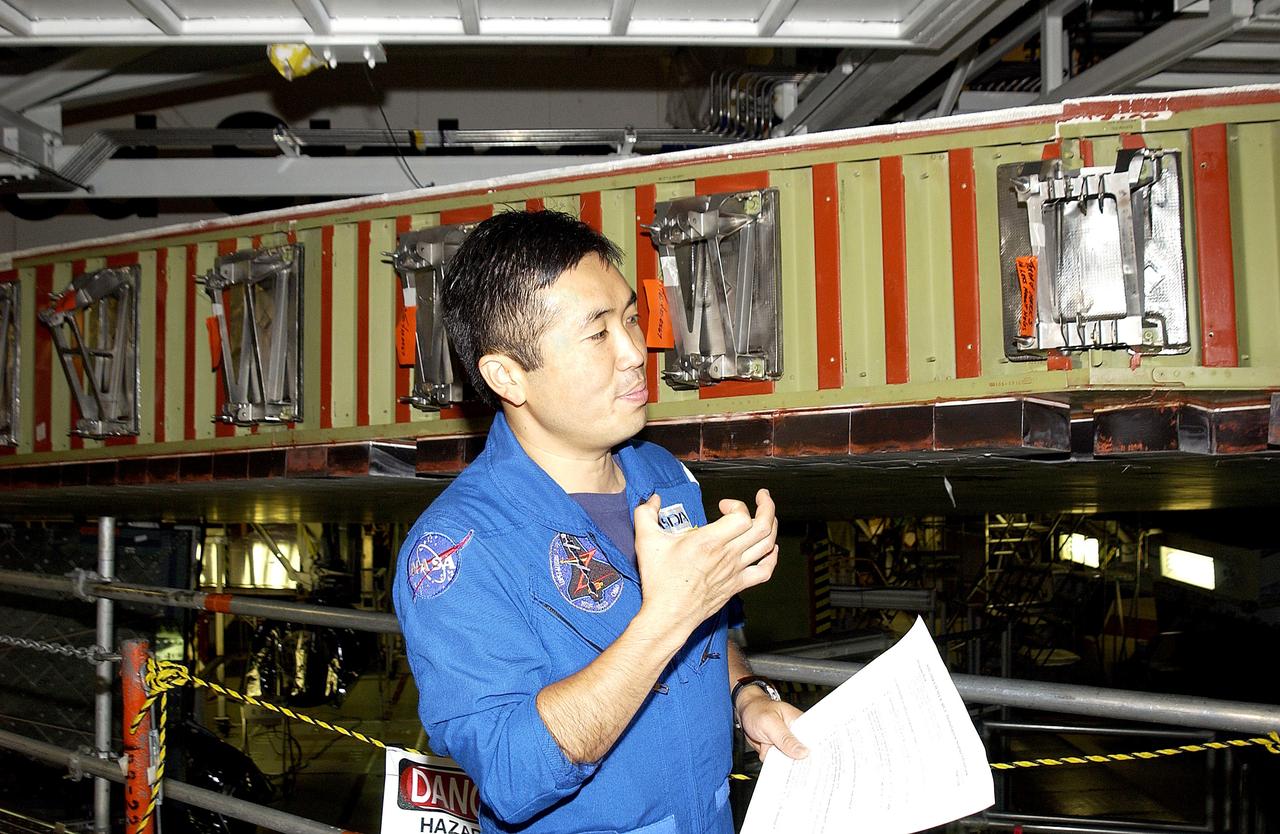
KENNEDY SPACE CENTER, FLA. - Japanese astronaut Koichi Wakata gestures as he examines the spar installation (behind him) on the wing of the orbiter Atlantis. Reinforced Carbon Carbon (RCC) panels are mechanically attached to the wing via the spars - a series of floating joints - to reduce loading on the panels caused by wing deflections. The aluminum and the metallic attachments are protected from exceeding temperature limits by internal insulation.
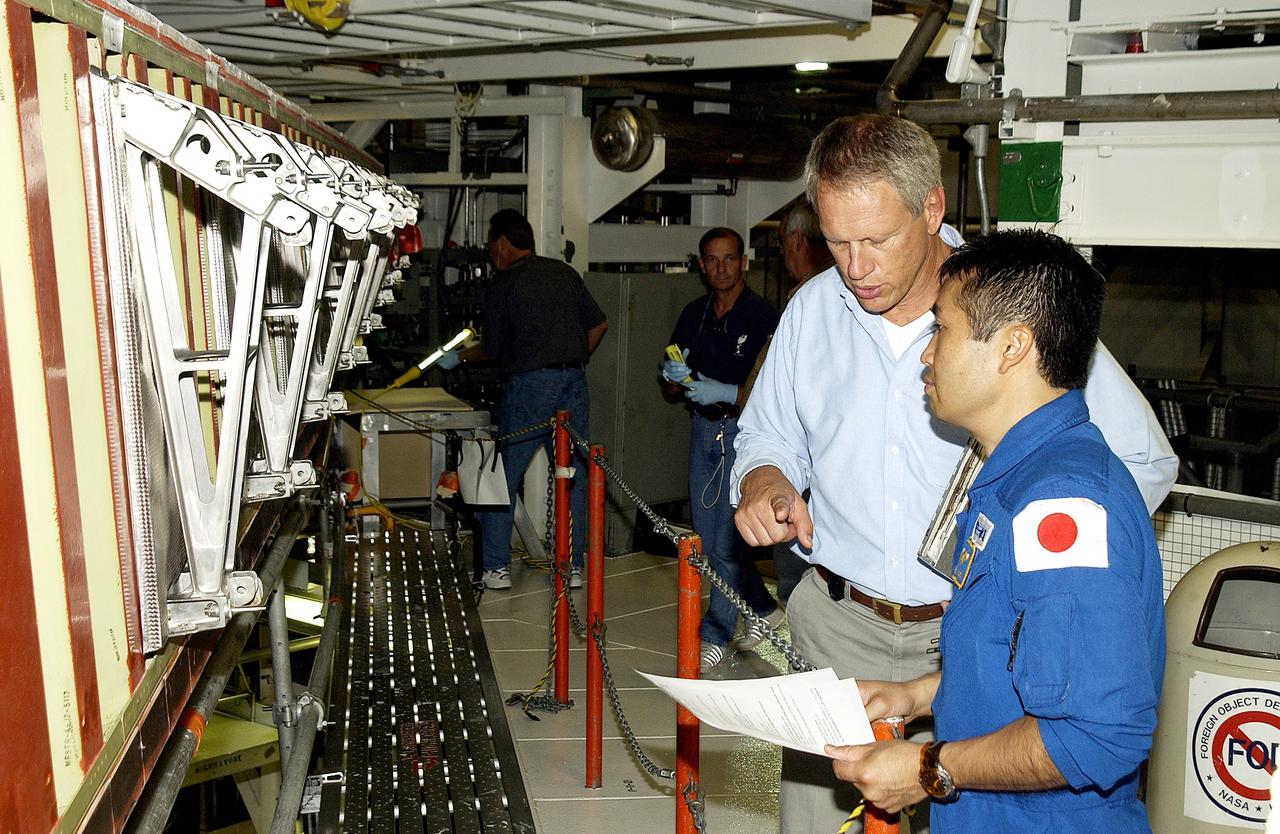
KENNEDY SPACE CENTER, FLA. - Japanese astronaut Koichi Wakata (right) listens to William Gaetjens, with the Vehicle Integration Test Team (VITT), who is providing details about the spar installation (left) on the wing of the orbiter Atlantis. Reinforced Carbon Carbon (RCC) panels are mechanically attached to the wing via the spars - a series of floating joints - to reduce loading on the panels caused by wing deflections. The aluminum and the metallic attachments are protected from exceeding temperature limits by internal insulation.
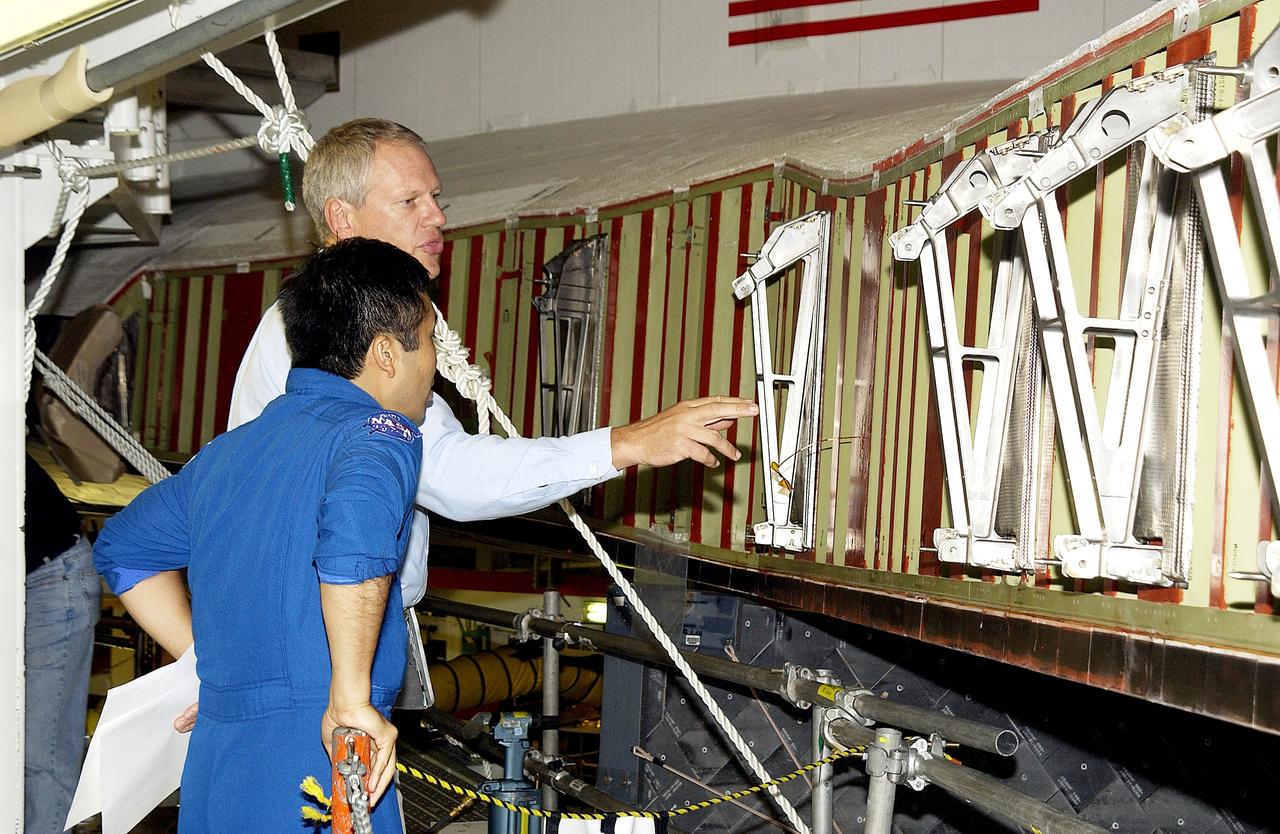
KENNEDY SPACE CENTER, FLA. - William Gaetjens (background), with the Vehicle Integration Test Team (VITT) directs Japanese astronaut Koichi Wakata’s attention to the spars installed on the wing of the orbiter Atlantis. Reinforced Carbon Carbon (RCC) panels are mechanically attached to the wing via the spars - a series of floating joints - to reduce loading on the panels caused by wing deflections. The aluminum and the metallic attachments are protected from exceeding temperature limits by internal insulation.
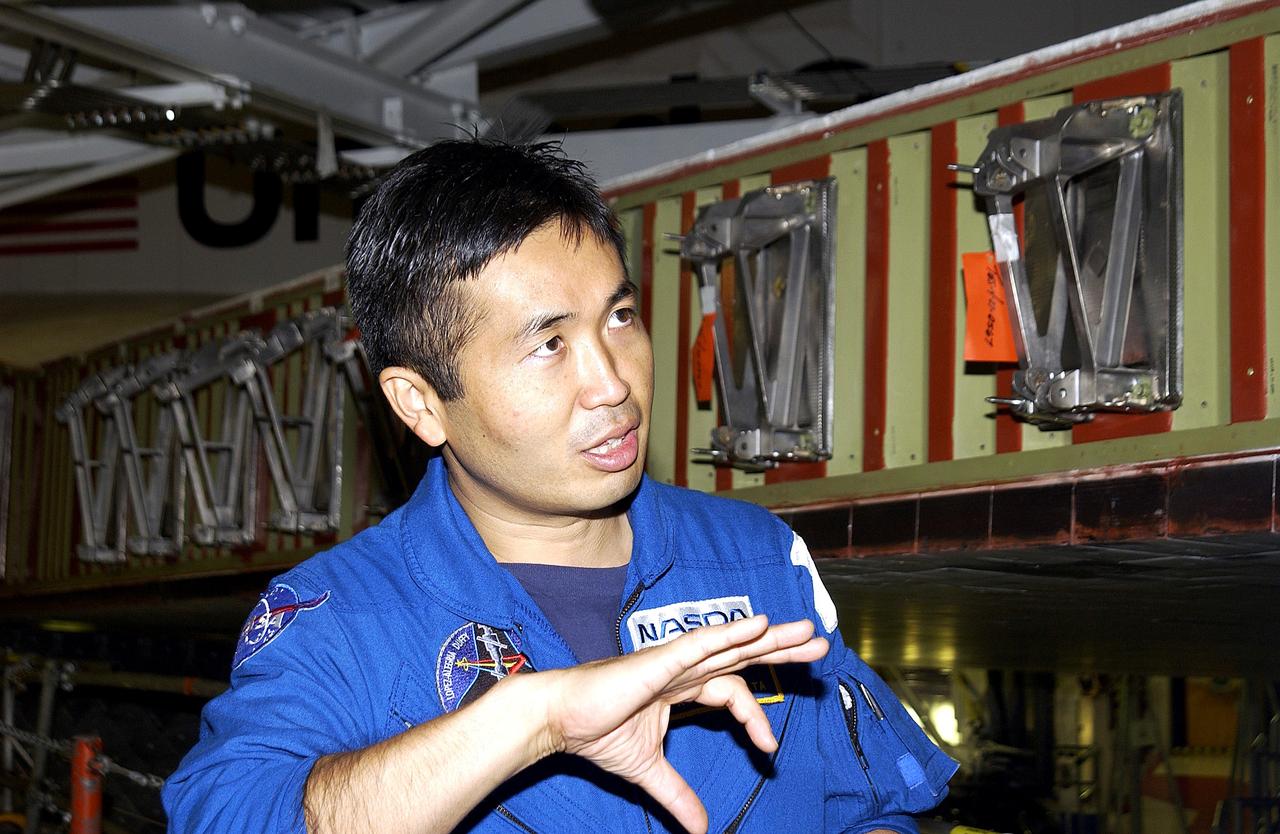
KENNEDY SPACE CENTER, FLA. - Japanese astronaut Koichi Wakata gestures as he examines the spar installation (behind him) on the wing of the orbiter Atlantis. Reinforced Carbon Carbon (RCC) panels are mechanically attached to the wing via the spars - a series of floating joints - to reduce loading on the panels caused by wing deflections. The aluminum and the metallic attachments are protected from exceeding temperature limits by internal insulation.
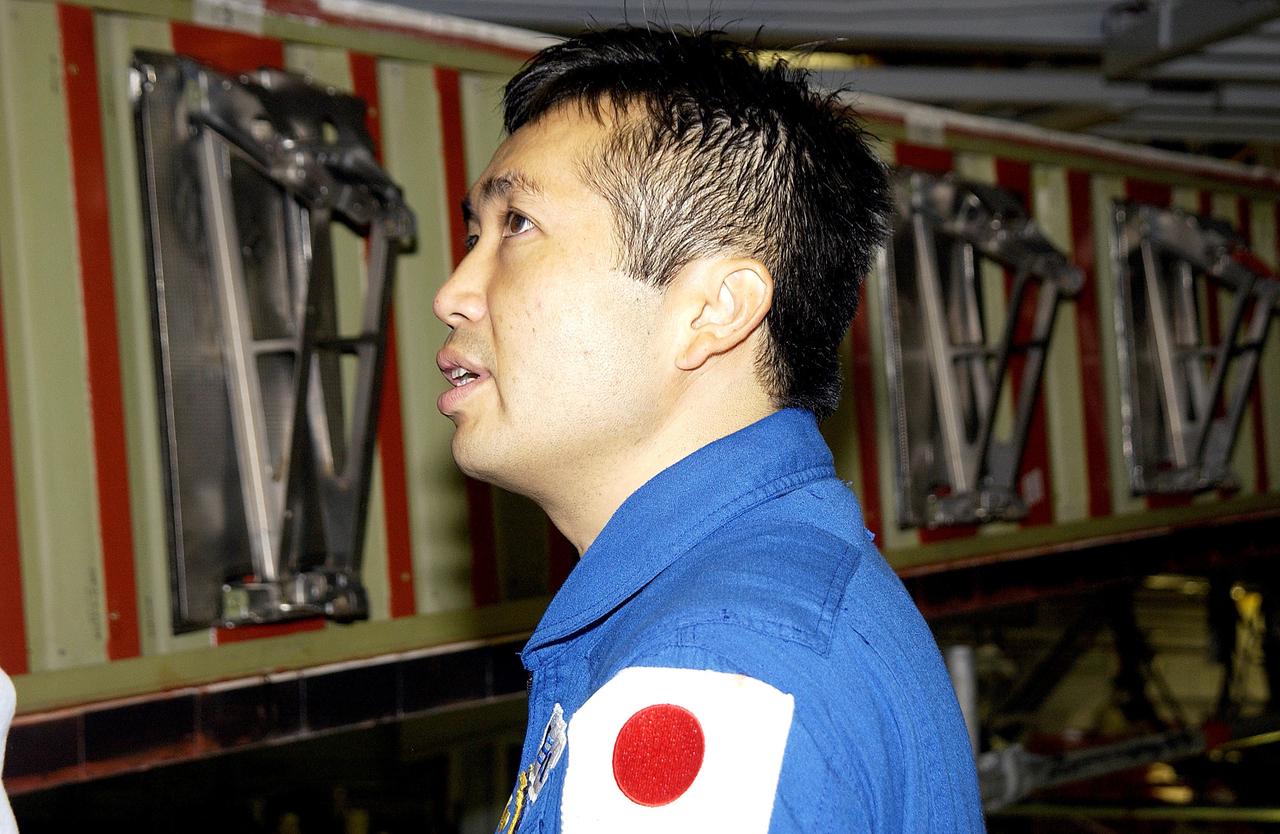
KENNEDY SPACE CENTER, FLA. - Japanese astronaut Koichi Wakata looks at the spars installed on the wing of the orbiter Atlantis. Reinforced Carbon Carbon (RCC) panels are mechanically attached to the wing via the spars - a series of floating joints - to reduce loading on the panels caused by wing deflections. The aluminum and the metallic attachments are protected from exceeding temperature limits by internal insulation.
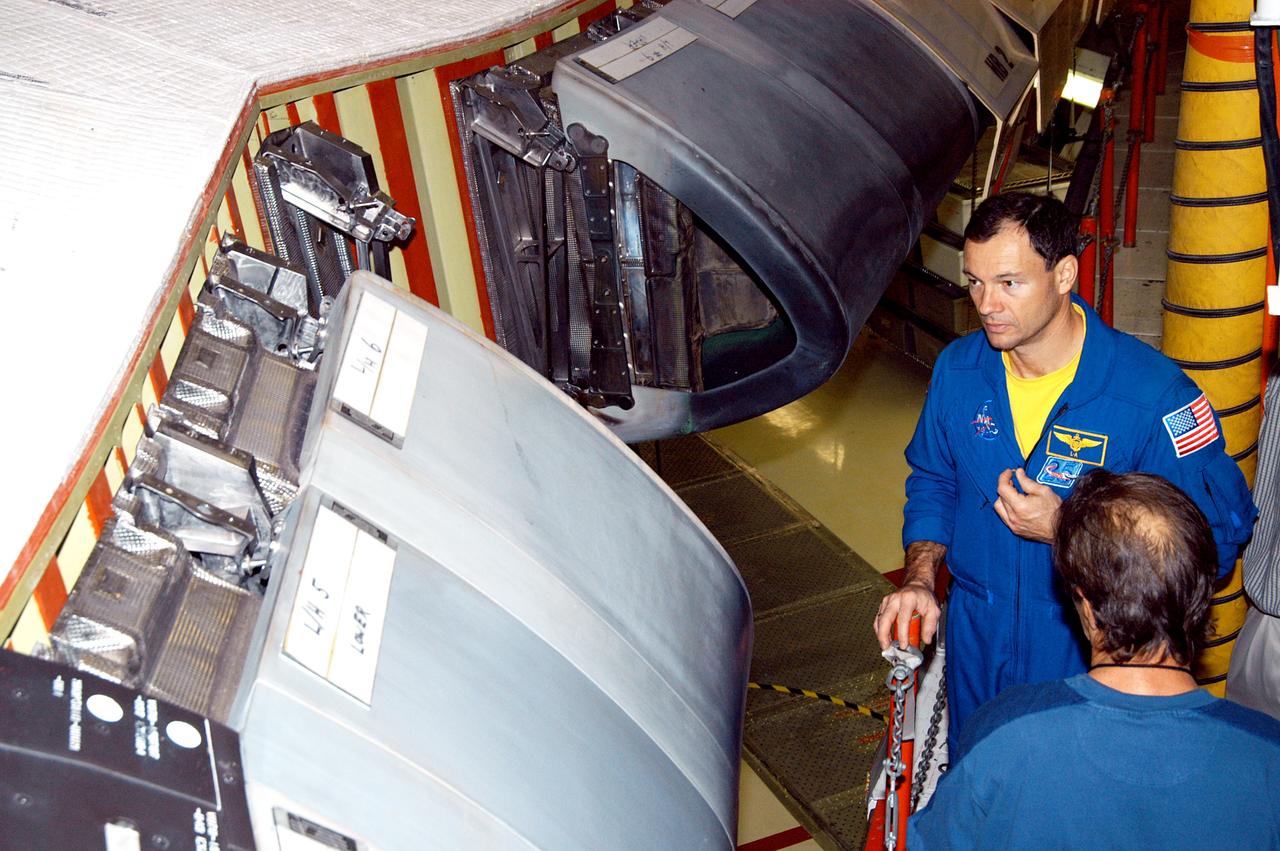
KENNEDY SPACE CENTER, FLA. - In the Orbiter Processing Facility, astronaut Michael E. Lopez-Alegria looks at the Reinforced Carbon Carbon panels used on the leading edge of the wing of the orbiters. He and engineers from around the Agency are on a fact-finding tour for improving the RCC panels used on the wing leading edge. The gray carbon composite RCC panels have sufficient strength to withstand the aerodynamic forces experienced during launch and reentry, which can reach as high as 800 pounds per square foot. The operating range of RCC is from minus 250º F to about 3,000º F, the temperature produced by friction with the atmosphere during reentry.
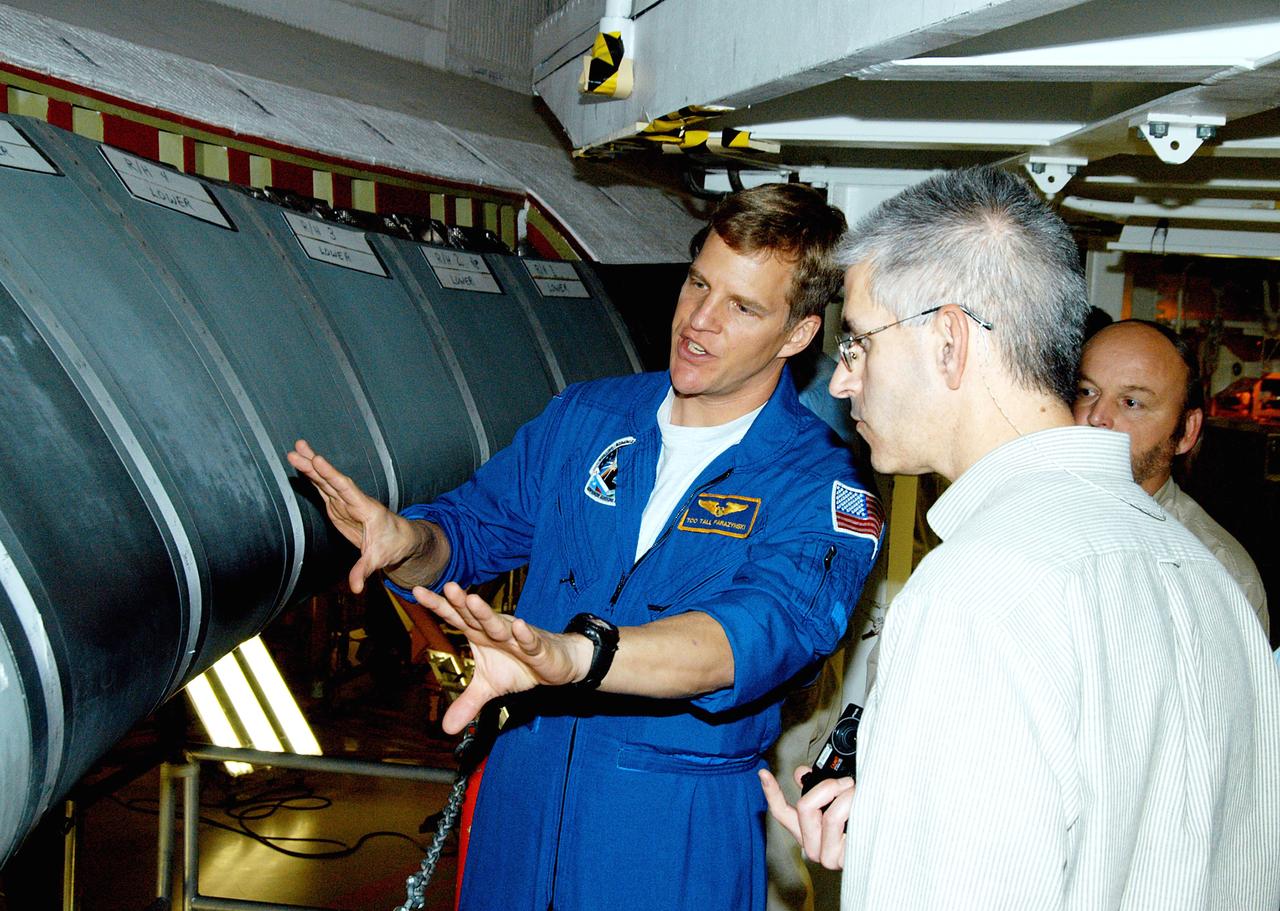
KENNEDY SPACE CENTER, FLA. - In the Orbiter Processing Facility, astronaut Scott E. Parazynski discusses the Reinforced Carbon Carbon panels used on the leading edge of the wing of the orbiters. With him are engineers from around the Agency who are working on improving the RCC panels used on the wing leading edge. The gray carbon composite RCC panels have sufficient strength to withstand the aerodynamic forces experienced during launch and reentry, which can reach as high as 800 pounds per square foot. The operating range of RCC is from minus 250º F to about 3,000º F, the temperature produced by friction with the atmosphere during reentry.
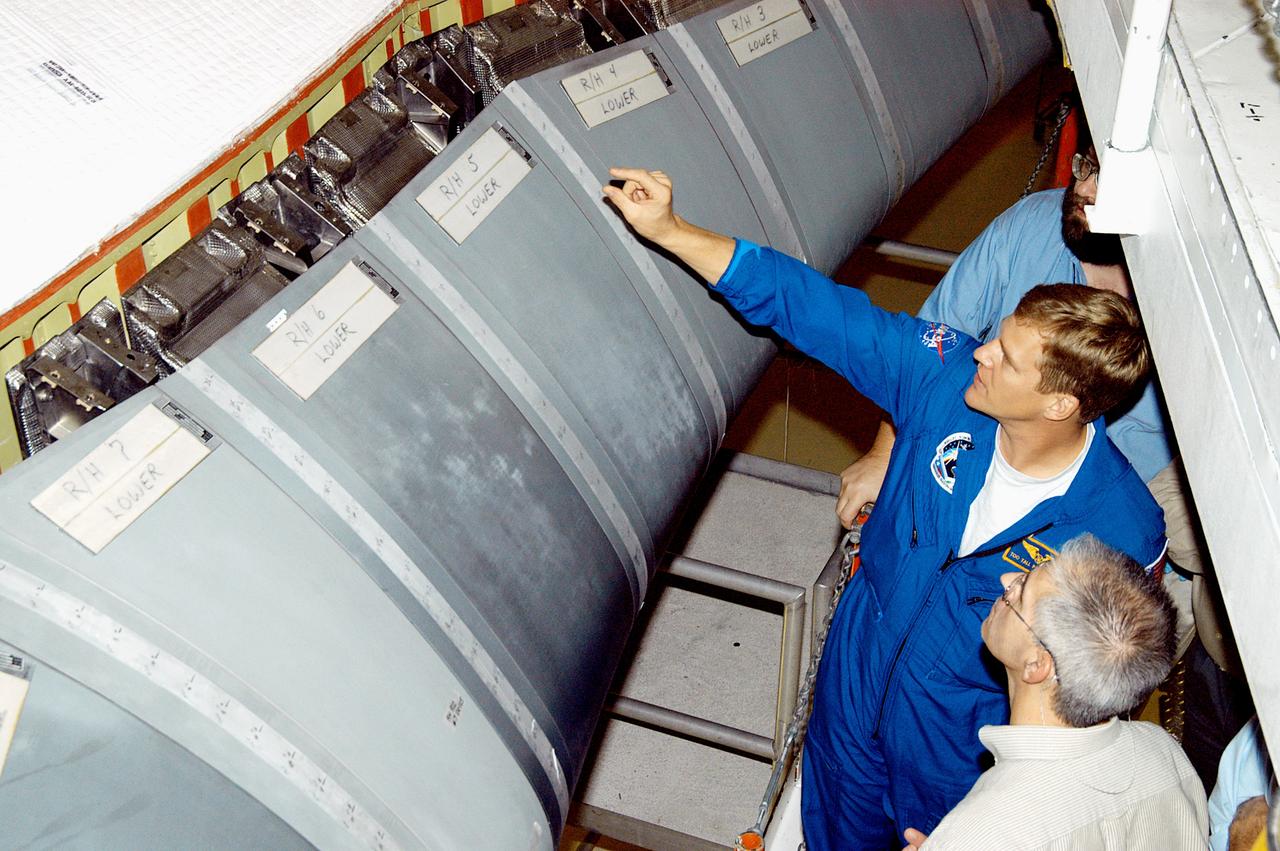
KENNEDY SPACE CENTER, FLA. - In the Orbiter Processing Facility, astronaut Scott E. Parazynski points to the Reinforced Carbon Carbon panels used on the leading edge of the wing of the orbiters. With Parazynski are engineers from around the Agency who are working on improving the RCC panels used on the wing leading edge. The gray carbon composite RCC panels have sufficient strength to withstand the aerodynamic forces experienced during launch and reentry, which can reach as high as 800 pounds per square foot. The operating range of RCC is from minus 250º F to about 3,000º F, the temperature produced by friction with the atmosphere during reentry.
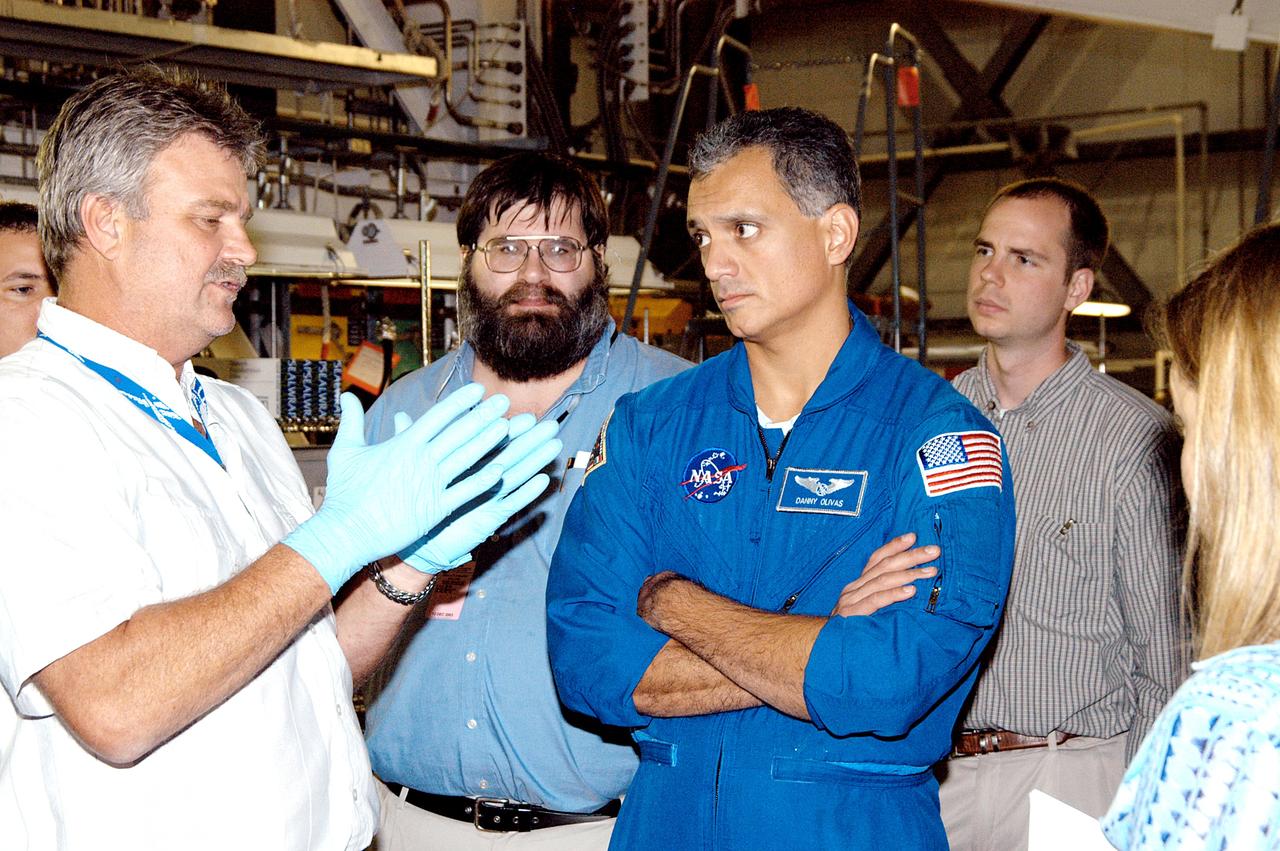
KENNEDY SPACE CENTER, FLA. - - In the Orbiter Processing Facility astronaut Danny Olivas listens to Greg Grantham (left) talking about the Reinforced Carbon Carbon panels used on the leading edge of the wing of the orbiters. Behind Olivas are engineers from around the Agency who are working on improving the RCC panels used on the wing leading edge. The gray carbon composite RCC panels have sufficient strength to withstand the aerodynamic forces experienced during launch and reentry, which can reach as high as 800 pounds per square foot. The operating range of RCC is from minus 250º F to about 3,000º F, the temperature produced by friction with the atmosphere during reentry.
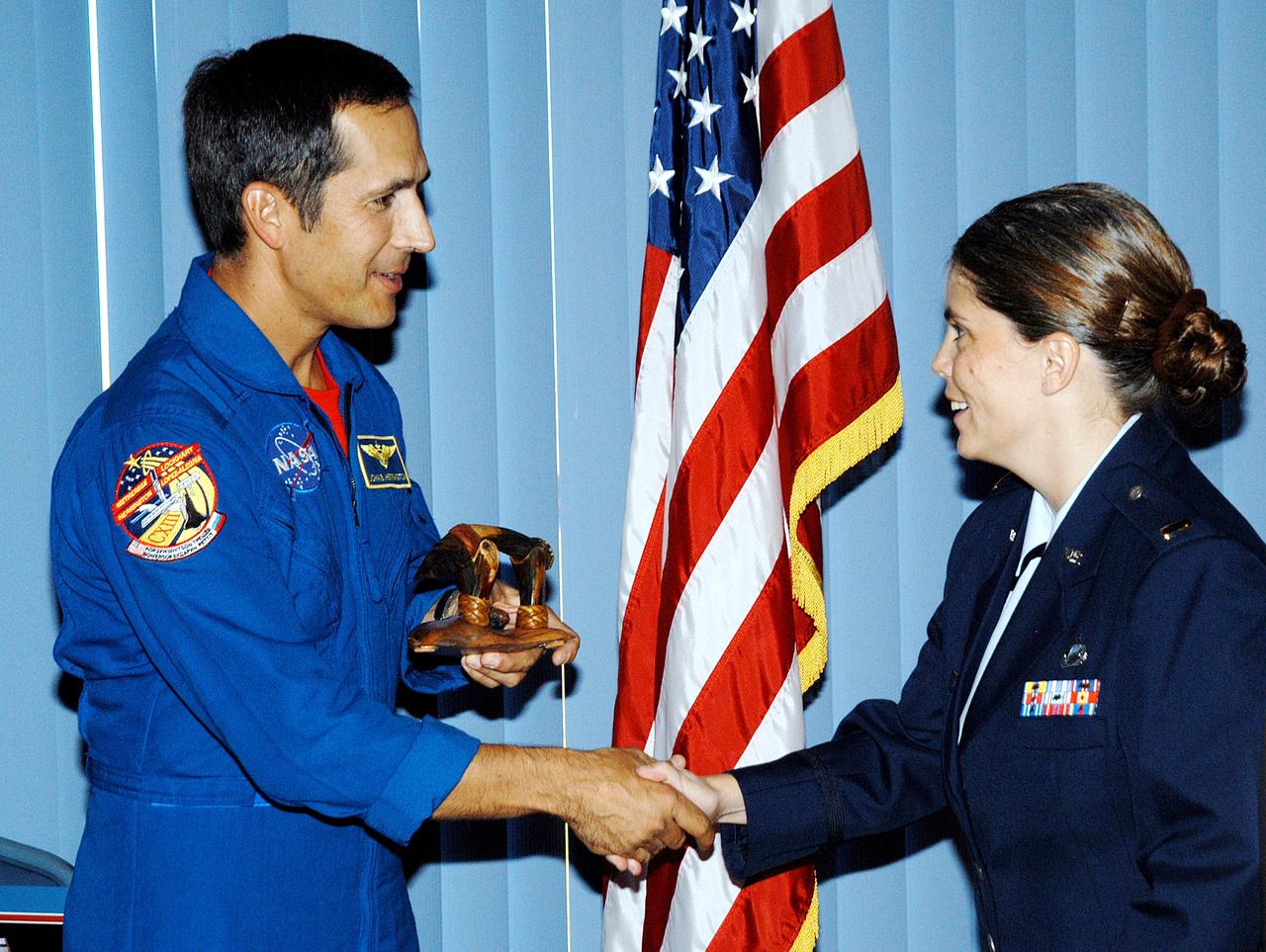
KENNEDY SPACE CENTER, FLA. - Astronaut John Herrington (left) accepts a carved sculpture from 2nd Lt. Bernice Zollner, 45th Space Wing, during a luncheon celebrating Native American Heritage Month held at the Patrick Air Force Base NCO Club. Zollner was emcee of the event. Herrington is a tribally enrolled Chickasaw and the world’s first Native American astronaut, who last flew on mission STS-113 in 2002.
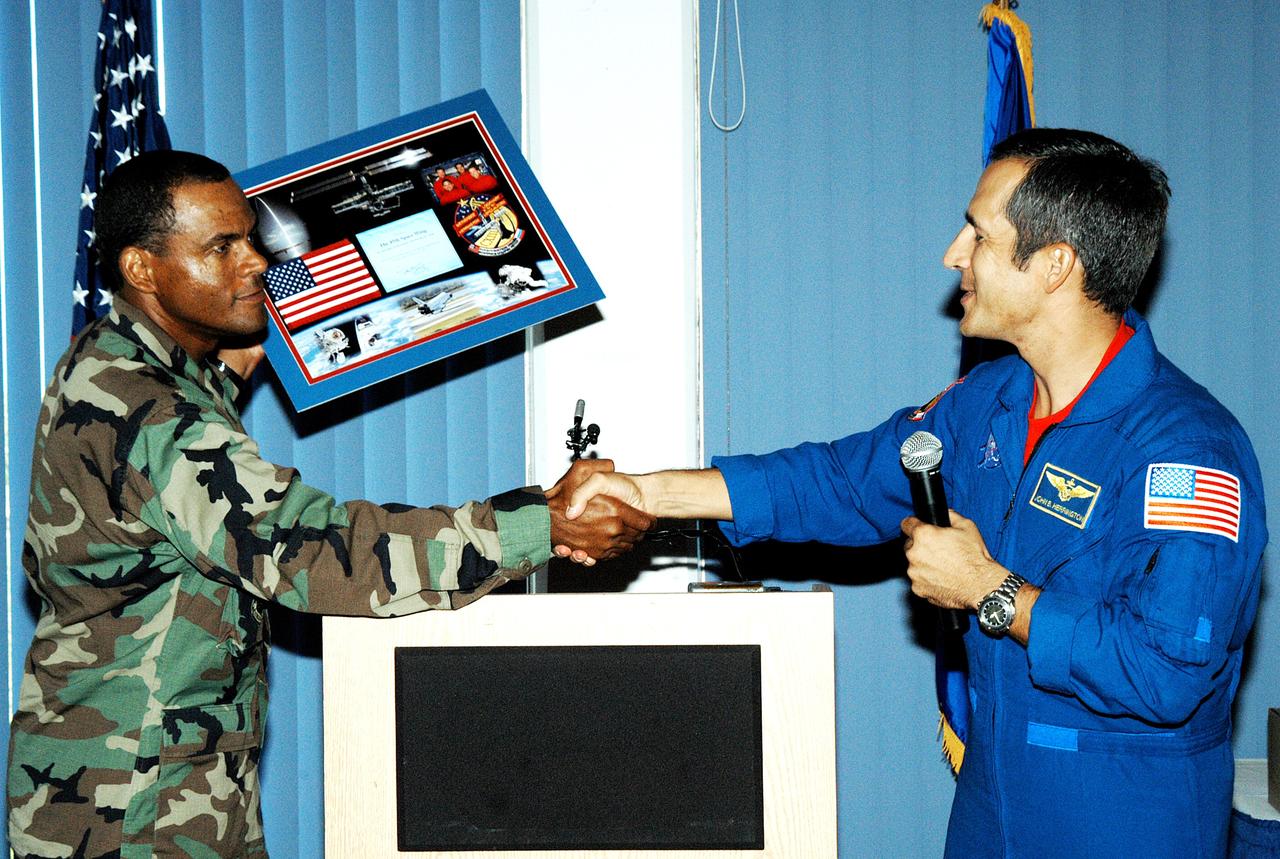
KENNEDY SPACE CENTER, FLA. - Col. Everett Thomas (left), 45th Space Wing, presents a framed memento to astronaut John Herrington during a luncheon celebrating Native American Heritage Month held at the Patrick Air Force Base NCO Club. Herrington is a tribally enrolled Chickasaw and the world’s first Native American astronaut, who last flew on mission STS-113 in 2002.
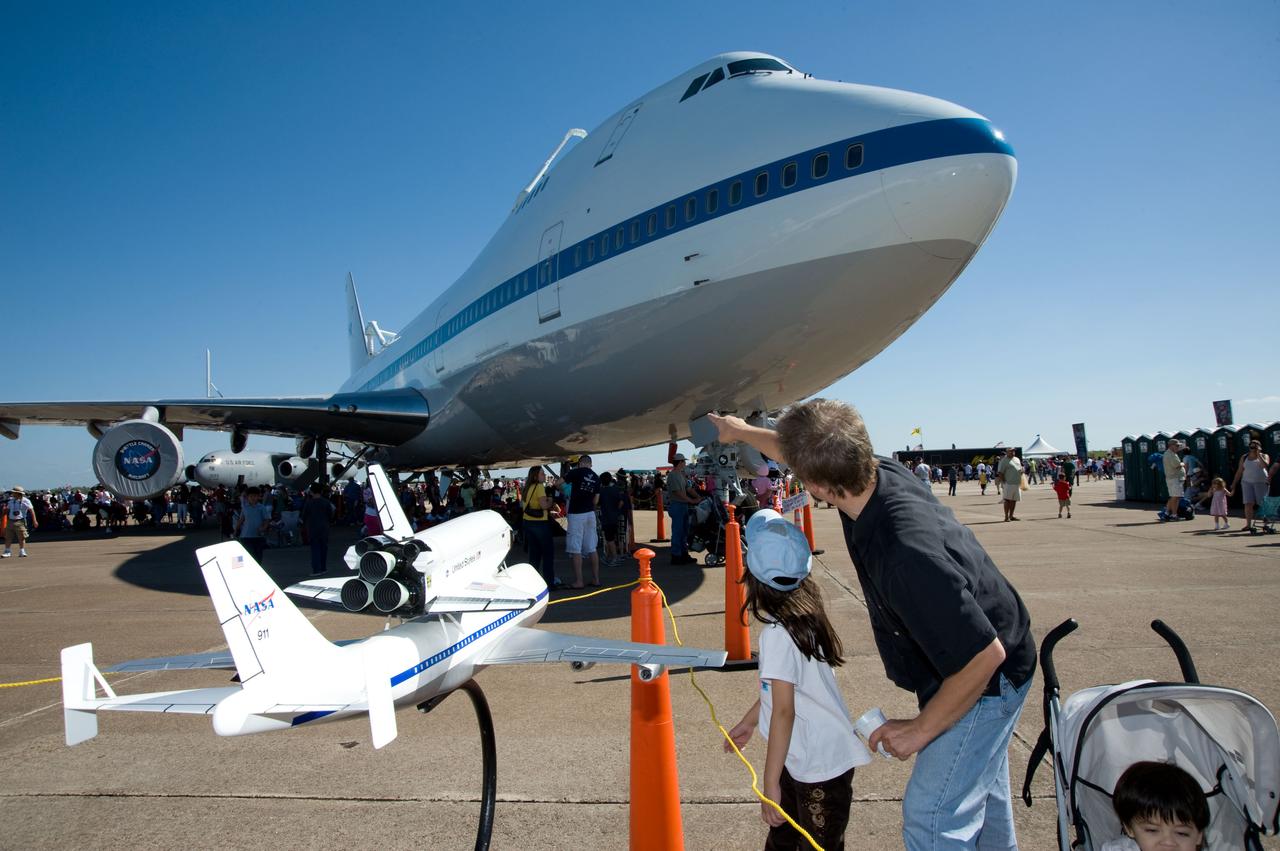
NASA participation in Wings Over Houston Airshow. Exhibits, aircraft displays, astronauts signing autographs, employees interacting with crowds.
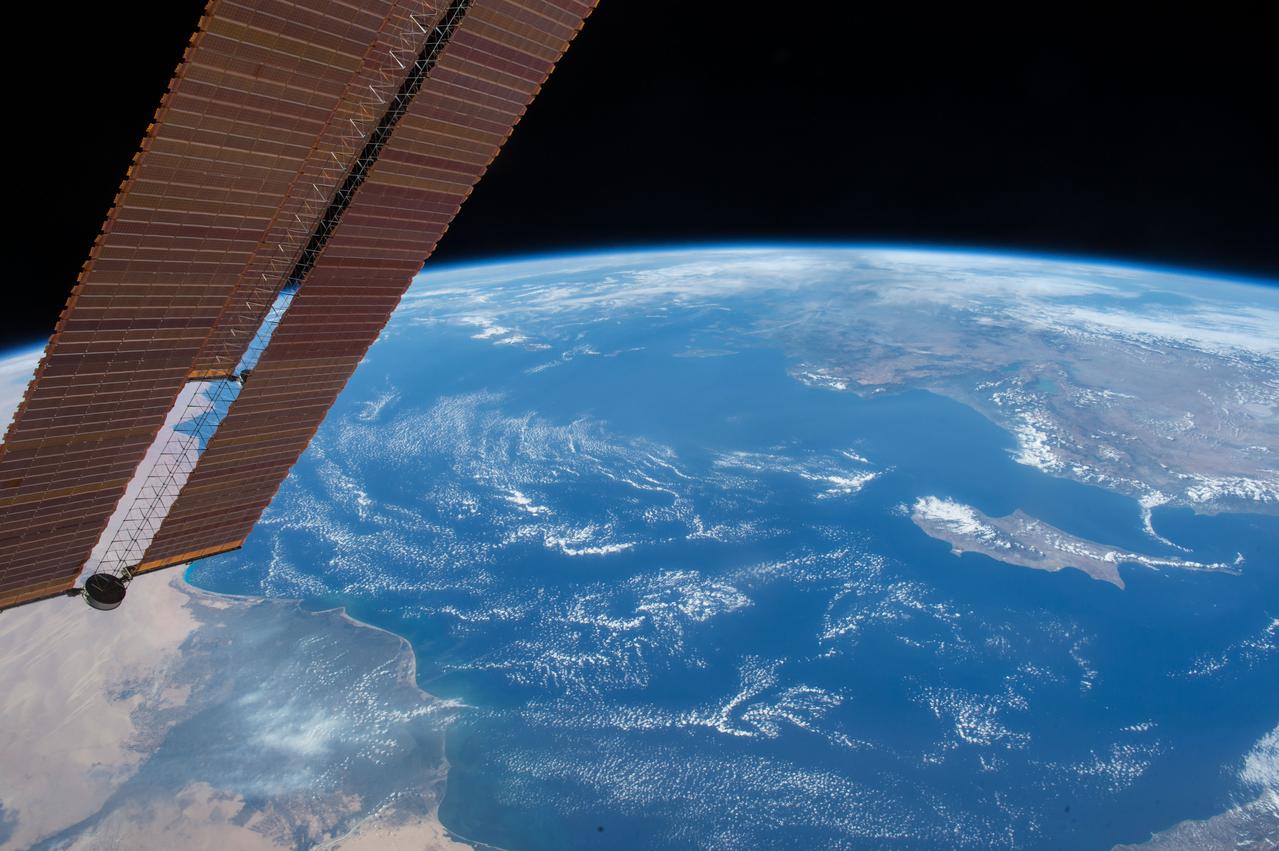
Earth observation (Mediterranean Sea) taken by the Expedition 45 crew. ISS solar array wings (SAWs) are in view. Image was released by astronaut on social media.
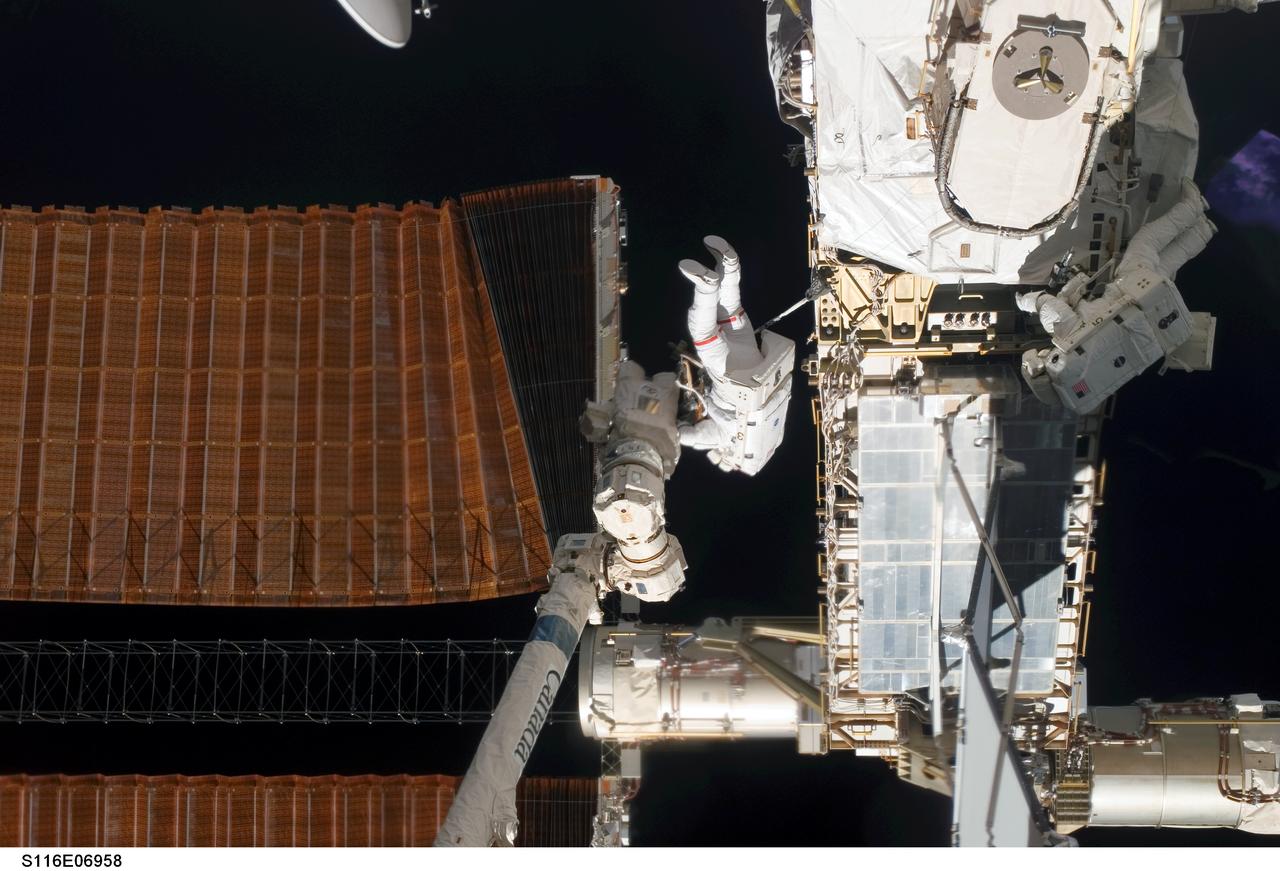
S116-E-06958 (18 Dec. 2006) --- Astronaut Robert L. Curbeam Jr. (center) and European Space Agency (ESA) astronaut Christer Fuglesang (right), both STS-116 mission specialists, work with the port overhead solar array wing on the International Space Station's P6 truss during the mission's fourth session of extravehicular activity (EVA). The spacewalkers used specially-prepared, tape-insulated tools, to guide the array wing neatly inside its blanket box during the 6-hour, 38-minute spacewalk.
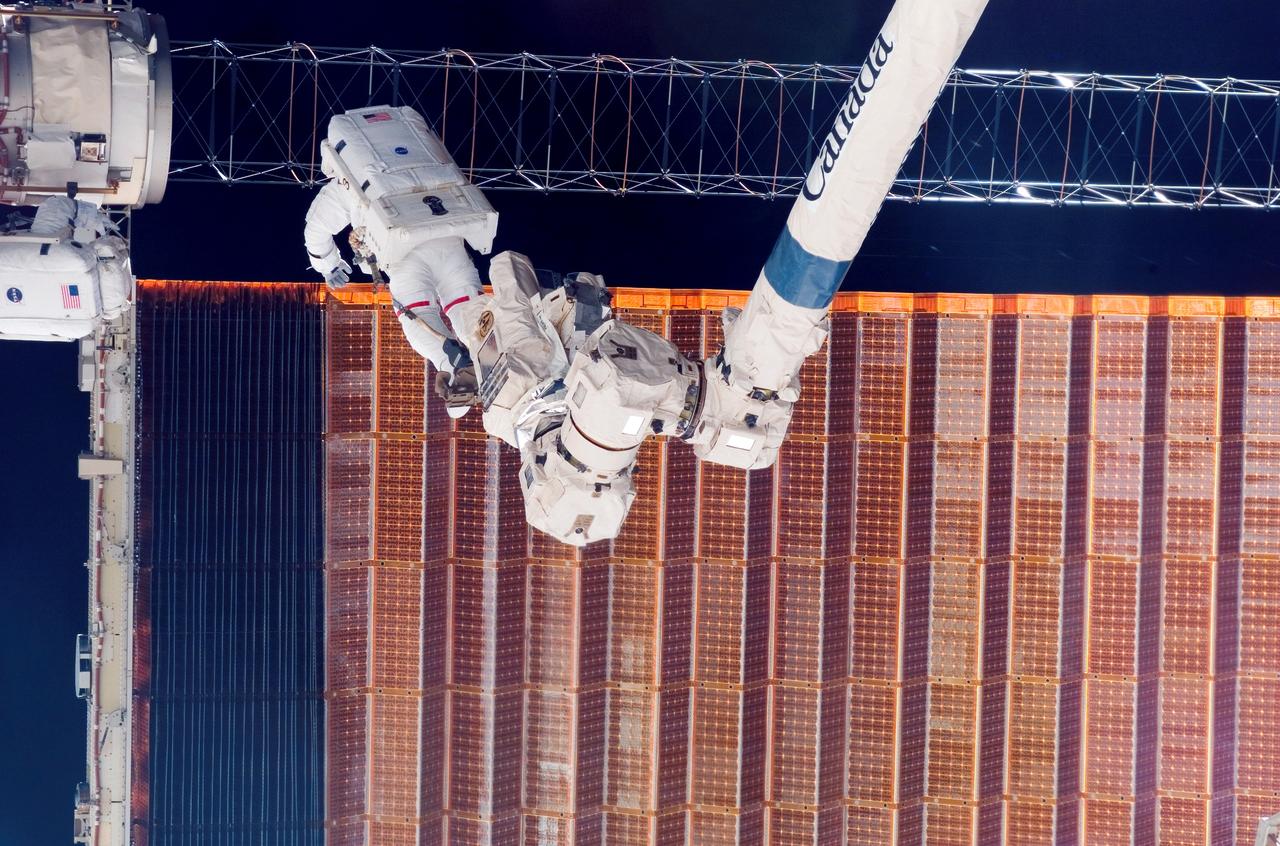
STS-116 astronaut and mission specialist, Robert Curbeam, along with the European Space Agency’s (ESA) Christer Fuglesang (partially out of the frame), are anchored to the International Space Station’s Canadarm2 foot restraints. The two were working on the port overhead solar array wing on the Station’s P6 truss during the mission’s fourth session of Extra Vehicular Activity (EVA). For 6 hours and 38 minutes, the space walkers used specially prepared, tape insulated tools to guide the array wing neatly inside its blanket box.
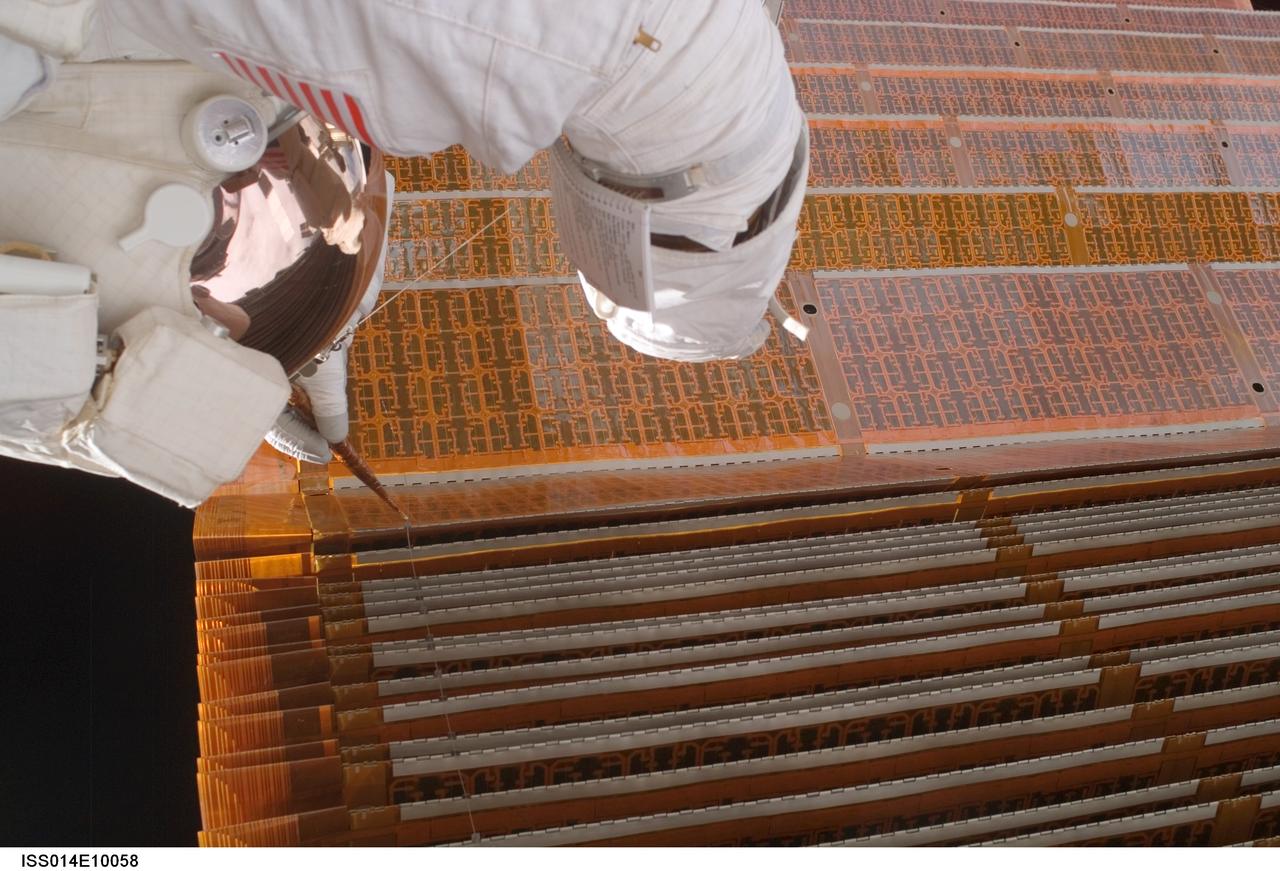
ISS014-E-10058 (18 Dec. 2006) --- Astronaut Robert L. Curbeam Jr., STS-116 mission specialist, works with the port overhead solar array wing on the International Space Station's P6 truss during the mission's fourth session of extravehicular activity (EVA). European Space Agency (ESA) astronaut Christer Fuglesang (out of frame), mission specialist, worked in tandem with Curbeam, using specially prepared, tape-insulated tools, to guide the array wing neatly inside its blanket box during the 6-hour, 38-minute spacewalk.
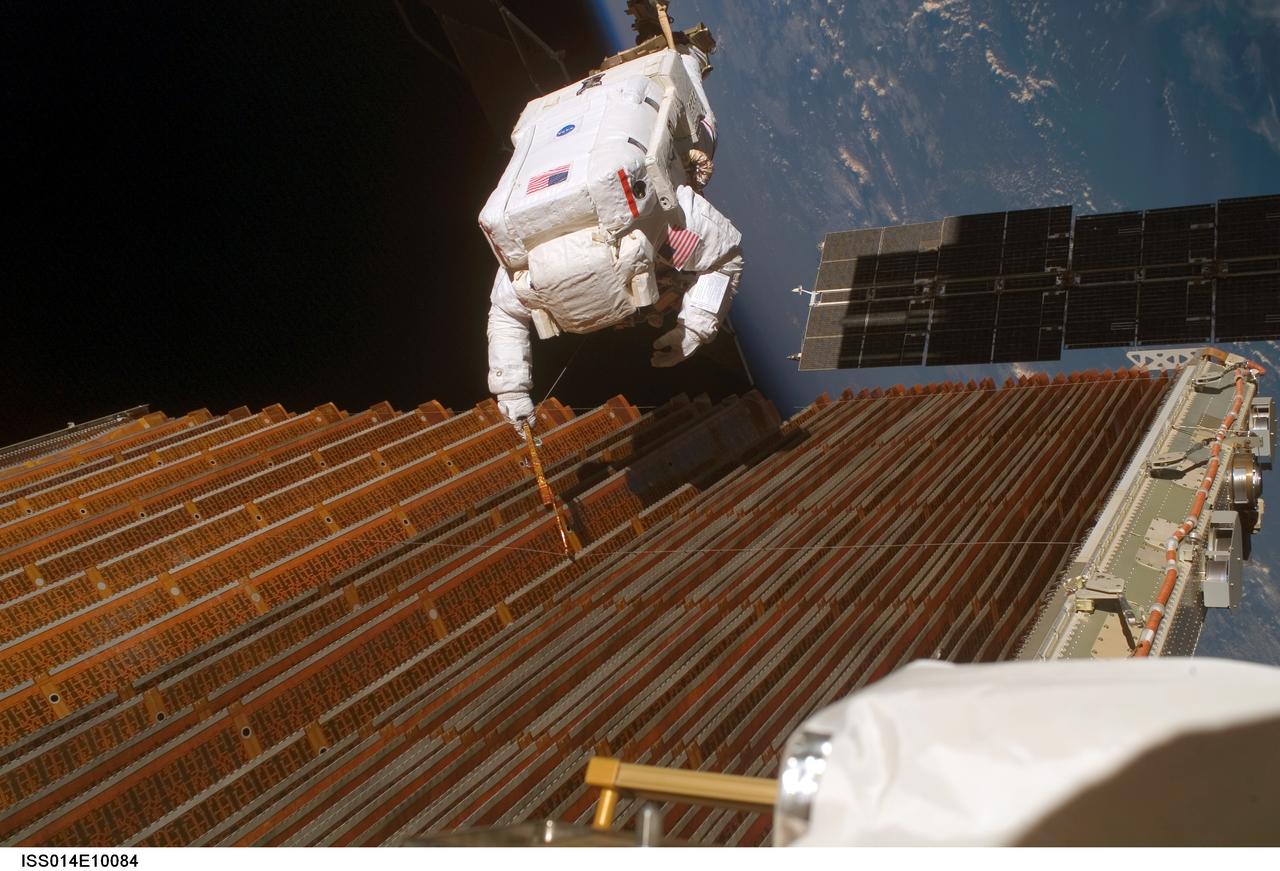
ISS014-E-10084 (18 Dec. 2006) --- Astronaut Robert L. Curbeam Jr., STS-116 mission specialist, works with the port overhead solar array wing on the International Space Station's P6 truss during the mission's fourth session of extravehicular activity (EVA). European Space Agency (ESA) astronaut Christer Fuglesang (out of frame), mission specialist, worked in tandem with Curbeam, using specially prepared, tape-insulated tools, to guide the array wing neatly inside its blanket box during the 6-hour, 38-minute spacewalk.
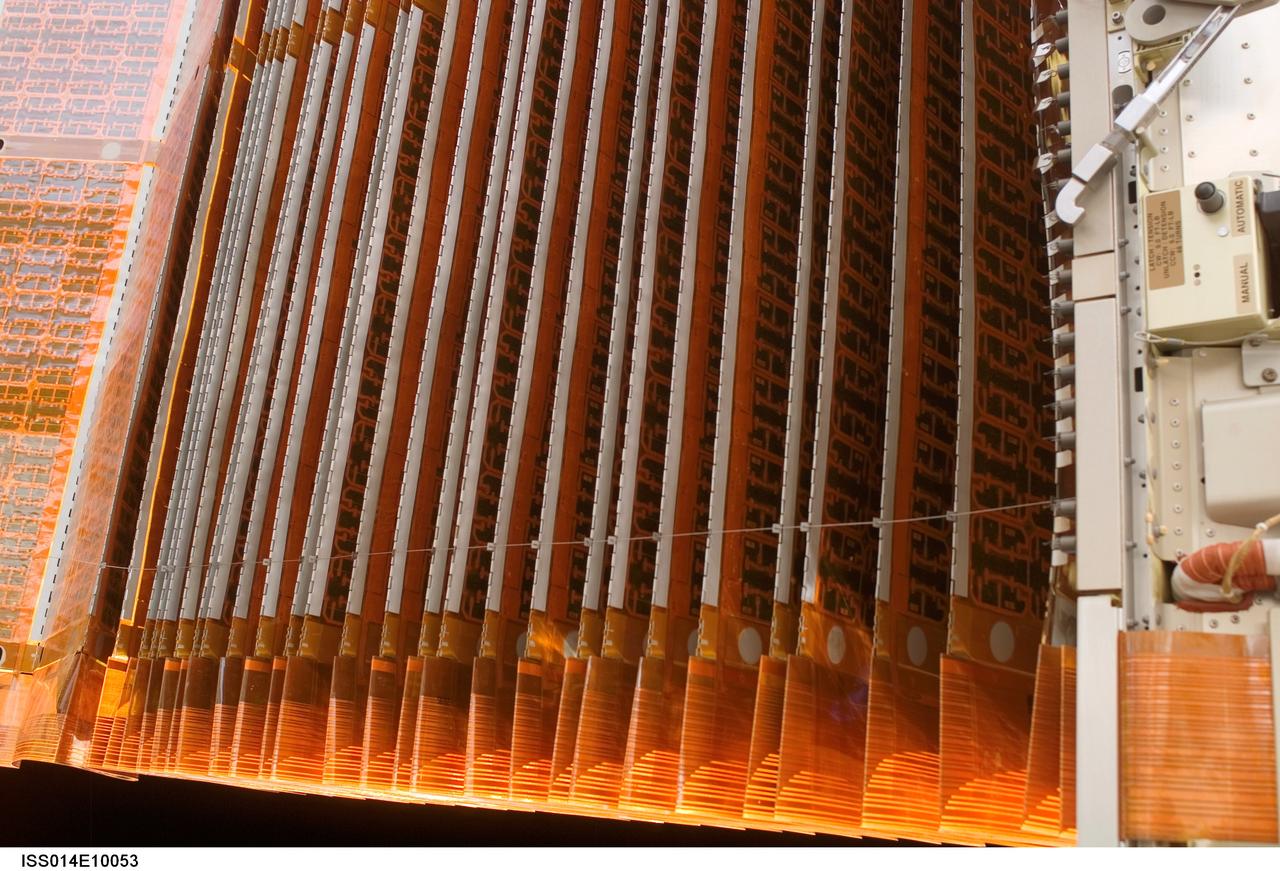
ISS014-E-10053 (18 Dec. 2006) --- A close-up view of the port overhead solar array wing on the International Space Station's P6 truss is featured in this image photographed by a STS-116 crewmember during the mission's fourth session of extravehicular activity (EVA). Astronaut Robert L. Curbeam Jr. (out of frame) and European Space Agency (ESA) astronaut Christer Fuglesang (out of frame), both mission specialists, using specially prepared, tape-insulated tools, guided the array wing neatly inside its blanket box during the 6-hour, 38-minute spacewalk.
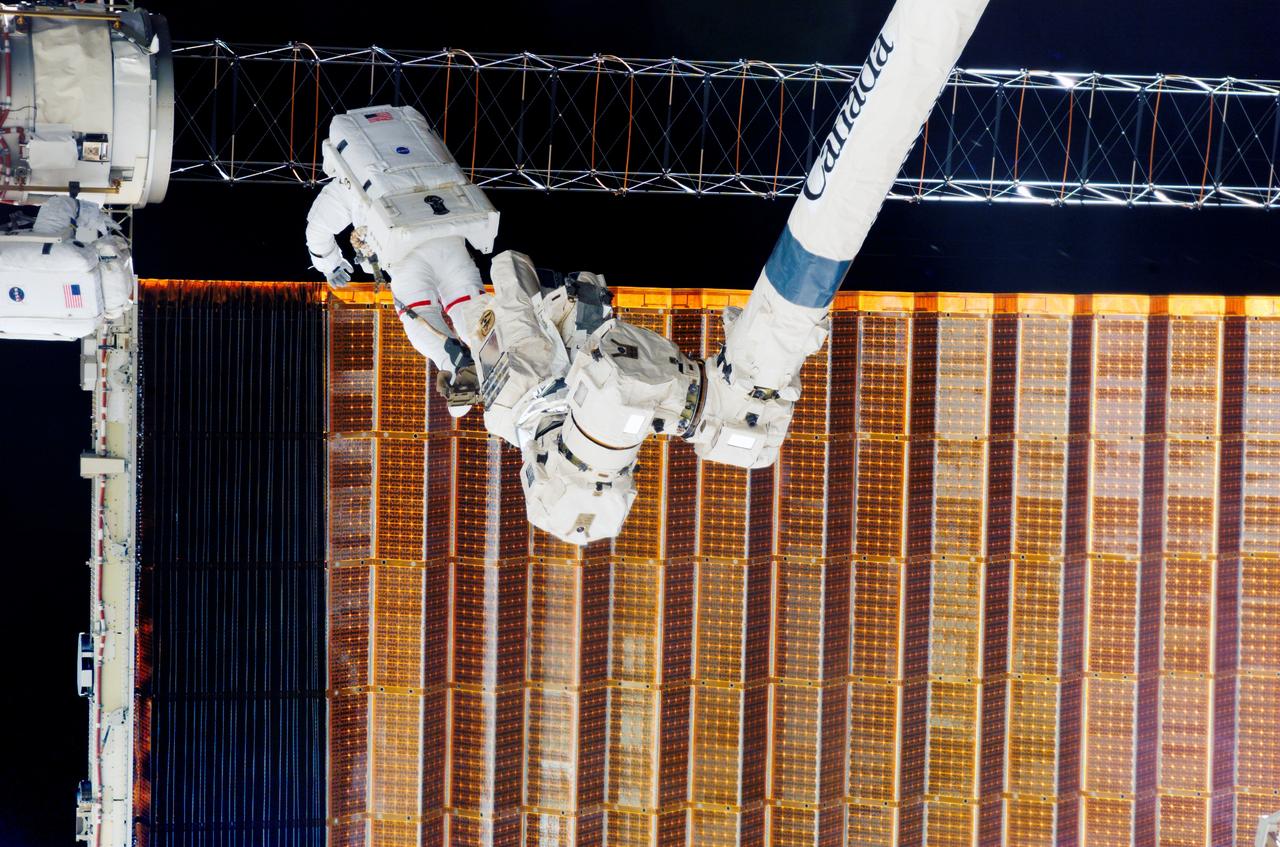
S116-E-06993 (18 Dec. 2006) --- Anchored to the International Space Station's Canadarm2 foot restraint, astronaut Robert L. Curbeam Jr. and European Space Agency (ESA) astronaut Christer Fuglesang (left, partially out of frame), both STS-116 mission specialists, work with the port overhead solar array wing on the station's P6 truss during the mission's fourth session of extravehicular activity (EVA). The spacewalkers used specially-prepared, tape-insulated tools, to guide the array wing neatly inside its blanket box during the 6-hour, 38-minute spacewalk.

ISS014-E-10063 (18 Dec. 2006) --- Astronaut Robert L. Curbeam Jr., STS-116 mission specialist, works with the port overhead solar array wing on the International Space Station's P6 truss during the mission's fourth session of extravehicular activity (EVA). European Space Agency (ESA) astronaut Christer Fuglesang (out of frame), mission specialist, worked in tandem with Curbeam, using specially prepared, tape-insulated tools, to guide the array wing neatly inside its blanket box during the 6-hour, 38-minute spacewalk.
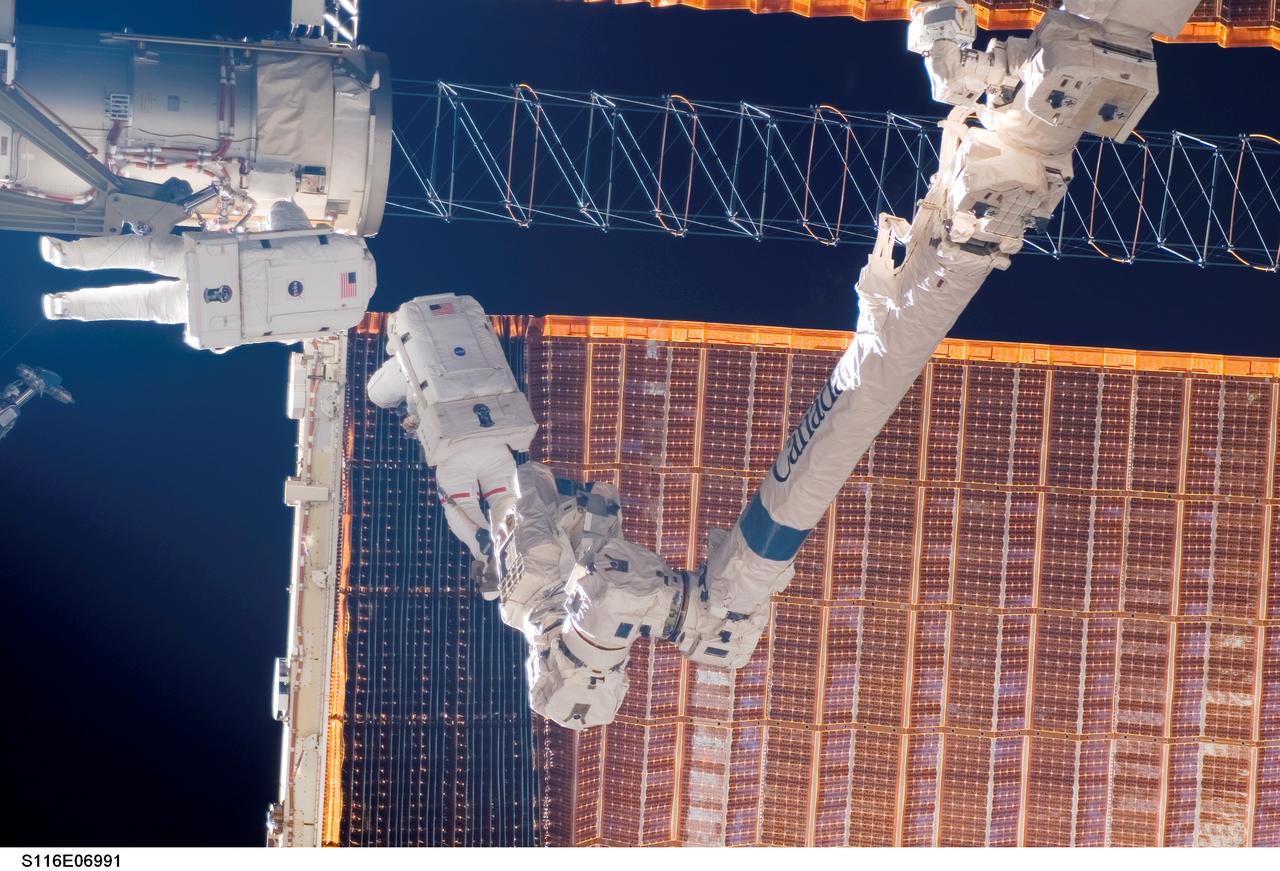
S116-E-06991 (18 Dec. 2006) --- Anchored to the International Space Station's Canadarm2 foot restraint, astronaut Robert L. Curbeam Jr. and European Space Agency (ESA) astronaut Christer Fuglesang (left), both STS-116 mission specialists, work with the port overhead solar array wing on the station's P6 truss during the mission's fourth session of extravehicular activity (EVA). The spacewalkers used specially-prepared, tape-insulated tools, to guide the array wing neatly inside its blanket box during the 6-hour, 38-minute spacewalk.
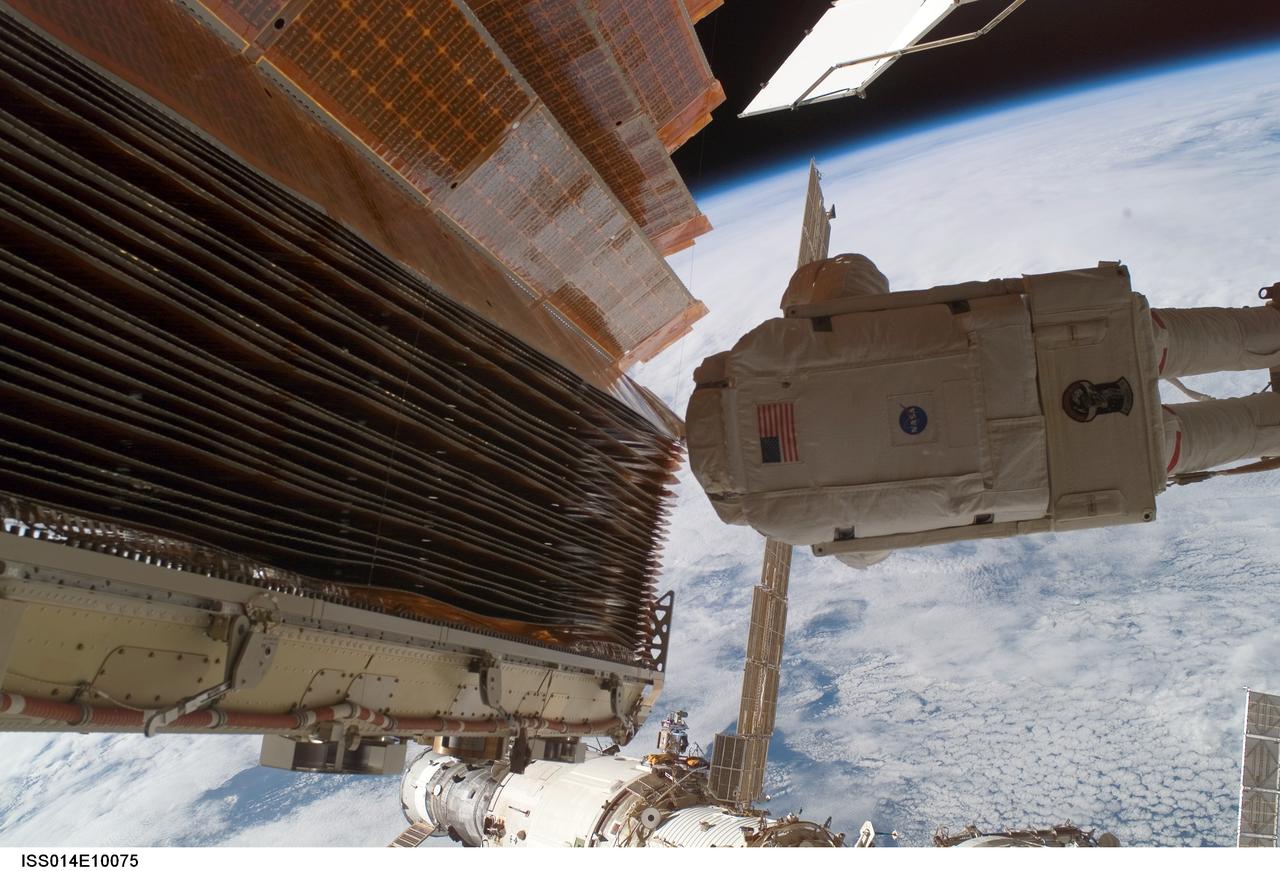
ISS014-E-10075 (18 Dec. 2006) --- Astronaut Robert L. Curbeam Jr., STS-116 mission specialist, works with the port overhead solar array wing on the International Space Station's P6 truss during the mission's fourth session of extravehicular activity (EVA). European Space Agency (ESA) astronaut Christer Fuglesang (out of frame), mission specialist, worked in tandem with Curbeam, using specially prepared, tape-insulated tools, to guide the array wing neatly inside its blanket box during the 6-hour, 38-minute spacewalk.
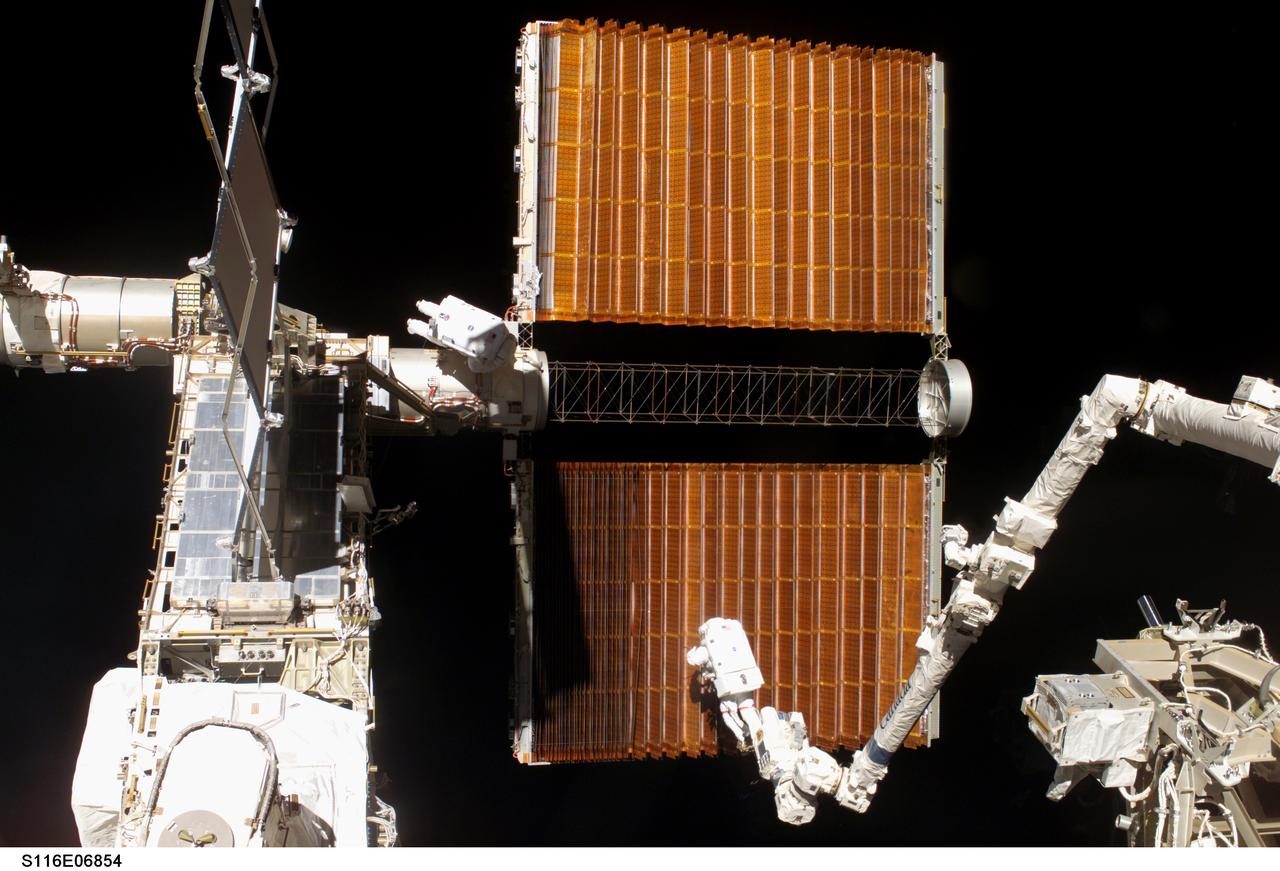
S116-E-06854 (18 Dec. 2006) --- Anchored to the International Space Station's Canadarm2 foot restraint, astronaut Robert L. Curbeam Jr. and European Space Agency (ESA) astronaut Christer Fuglesang (center), both STS-116 mission specialists, work with the port overhead solar array wing on the station's P6 truss during the mission's fourth session of extravehicular activity (EVA). The spacewalkers used specially-prepared, tape-insulated tools, to guide the array wing neatly inside its blanket box during the 6-hour, 38-minute spacewalk.
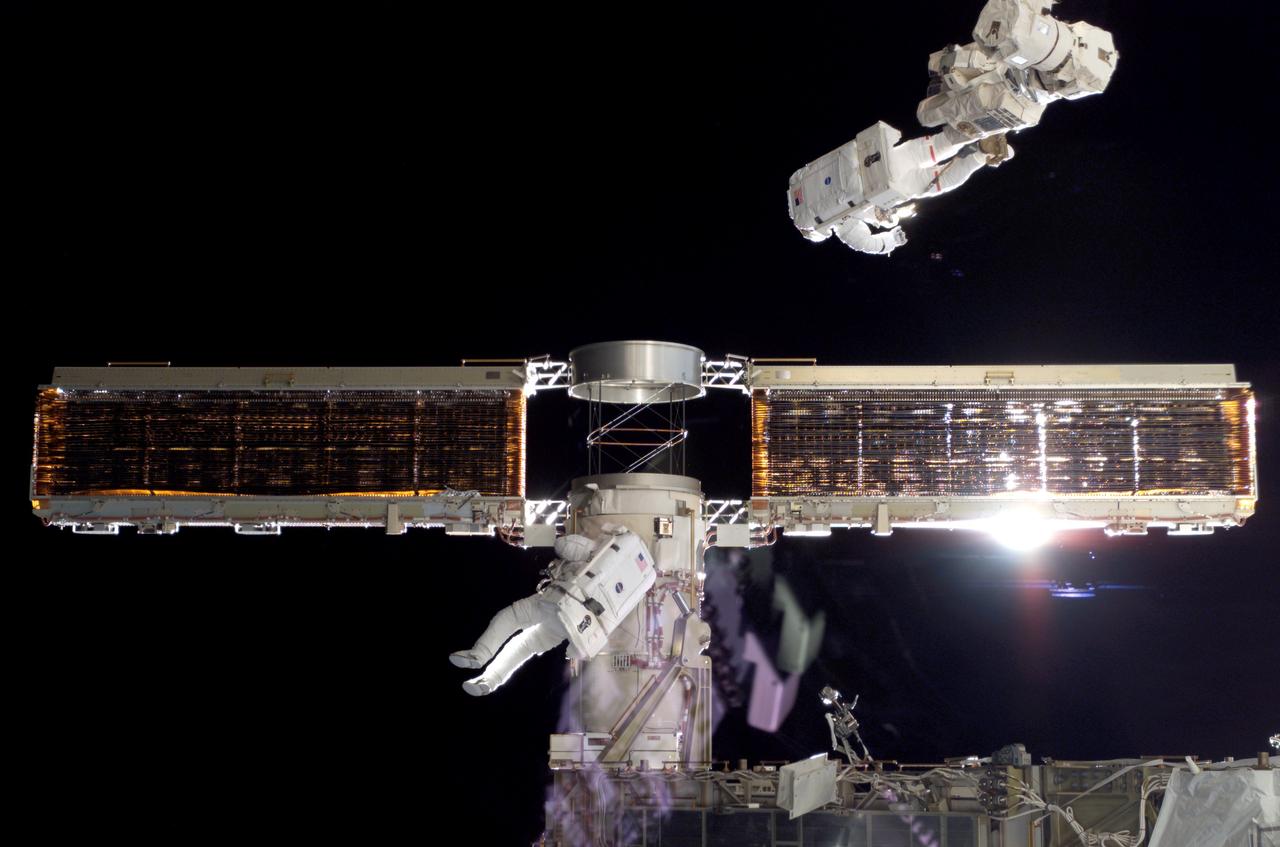
S116-E-06858 (18 Dec. 2006) --- Anchored to the International Space Station's Canadarm2 foot restraint, astronaut Robert L. Curbeam Jr. (top) and European Space Agency (ESA) astronaut Christer Fuglesang (center), both STS-116 mission specialists, work with the port overhead solar array wing on the station's P6 truss during the mission's fourth session of extravehicular activity (EVA). The spacewalkers used specially-prepared, tape-insulated tools, to guide the array wing neatly inside its blanket box during the 6-hour, 38-minute spacewalk.
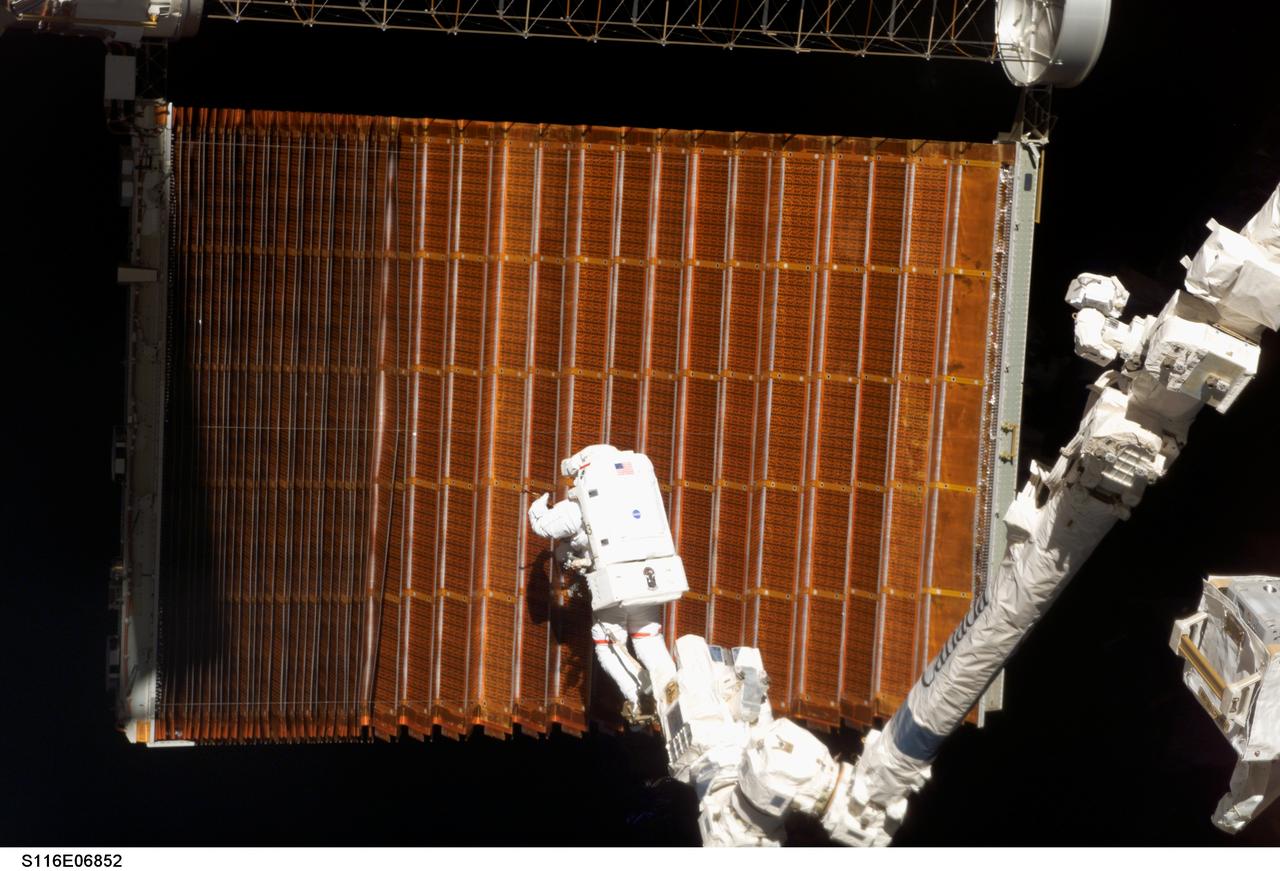
S116-E-06852 (18 Dec. 2006) --- Anchored to the International Space Station's Canadarm2 foot restraint, astronaut Robert L. Curbeam Jr., STS-116 mission specialist, works with the port overhead solar array wing on the International Space Station's P6 truss during the mission's fourth session of extravehicular activity (EVA). European Space Agency (ESA) astronaut Christer Fuglesang (out of frame), mission specialist, worked in tandem with Curbeam, using specially-prepared, tape-insulated tools, to guide the array wing neatly inside its blanket box during the 6-hour, 38-minute spacewalk.
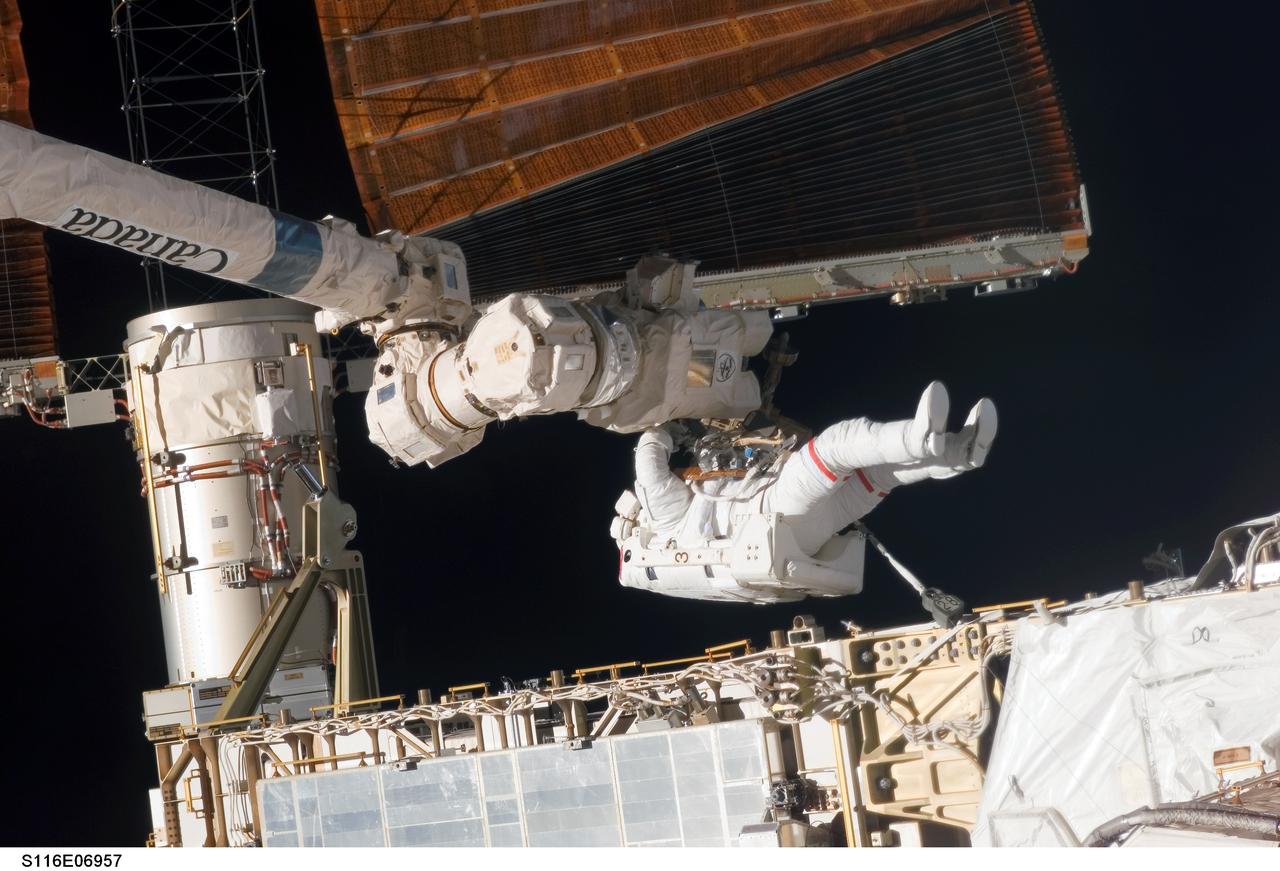
S116-E-06957 (18 Dec. 2006) --- Astronaut Robert L. Curbeam Jr., STS-116 mission specialist, works with the port overhead solar array wing on the International Space Station's P6 truss during the mission's fourth session of extravehicular activity (EVA). European Space Agency (ESA) astronaut Christer Fuglesang (out of frame), mission specialist, worked in tandem with Curbeam, using specially-prepared, tape-insulated tools, to guide the array wing neatly inside its blanket box during the 6-hour, 38-minute spacewalk.
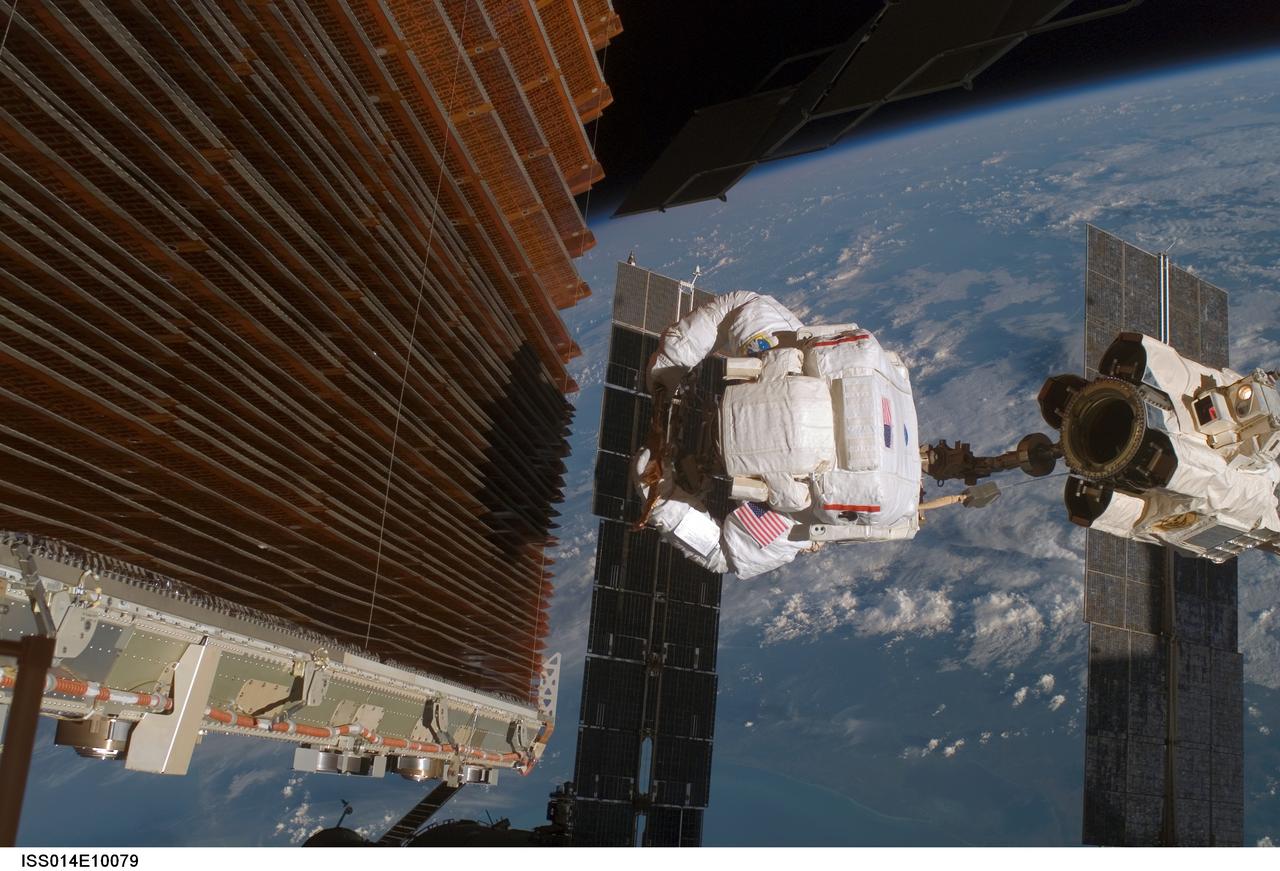
ISS014-E-10079 (18 Dec. 2006) --- Astronaut Robert L. Curbeam Jr., STS-116 mission specialist, works with the port overhead solar array wing on the International Space Station's P6 truss during the mission's fourth session of extravehicular activity (EVA). European Space Agency (ESA) astronaut Christer Fuglesang (out of frame), mission specialist, worked in tandem with Curbeam, using specially prepared, tape-insulated tools, to guide the array wing neatly inside its blanket box during the 6-hour, 38-minute spacewalk.
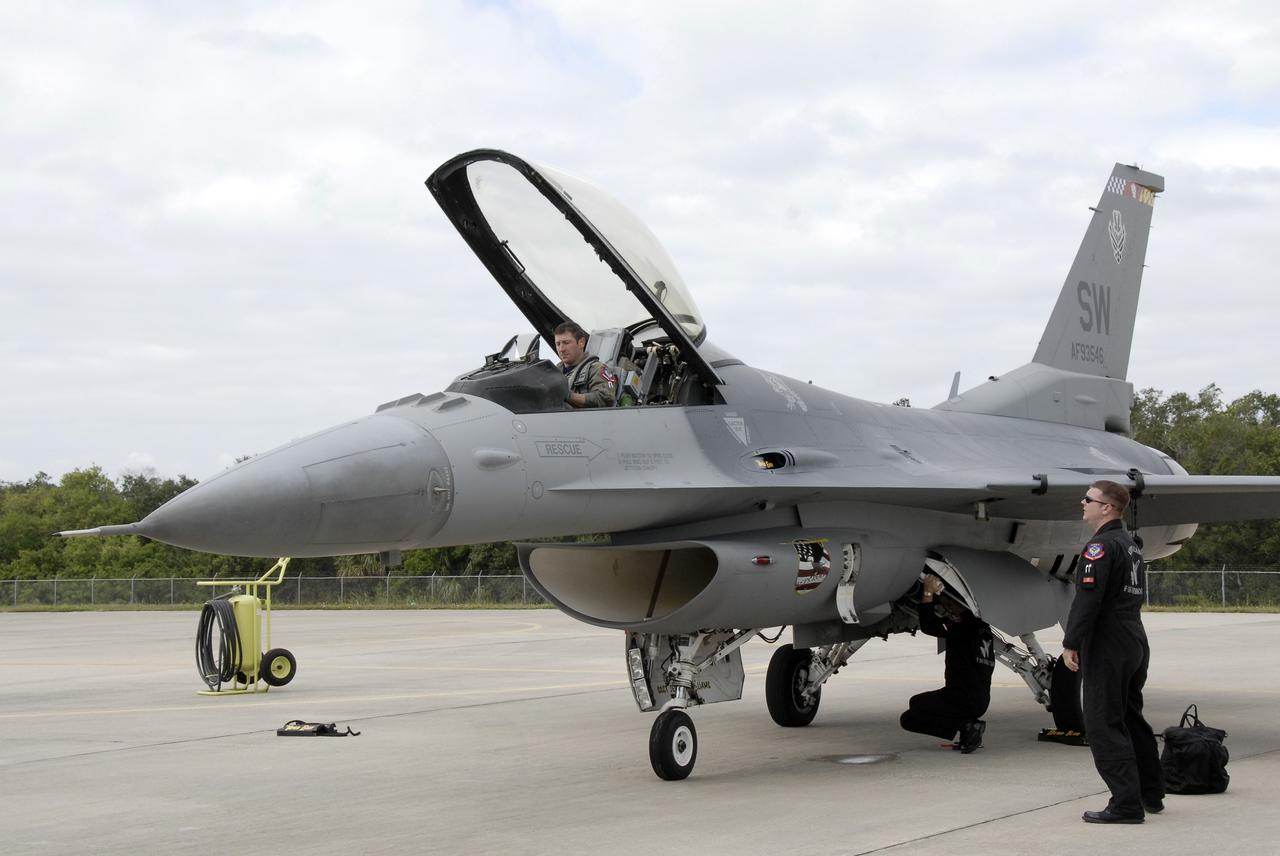
CAPE CANAVERAL, Fla. – A pilot with the 920th Rescue Wing gets ready to disembark his plane after landing at NASA's Kennedy Space Center in Florida. The Rescue Wing will join the U.S. Navy's Blue Angels for the Space and Air Show Nov. 8-9 at the Kennedy Space Center Visitor Complex. The Navy's elite flight demonstration squadron will take to the skies in military aircraft demonstrations by the F-16 Fighting Falcon and F/A-18 Super Hornet jets for the second annual Space & Air Show at Kennedy. This year’s show brings together the best in military aircraft, coupled with precision pilots and veteran astronauts to celebrate spaceflight and aviation. The event includes military aircraft demonstrations by the F-16 Fighting Falcon and a water rescue demonstration by the 920th Rescue Wing. Photo credit: NASA/Kim Shiflett
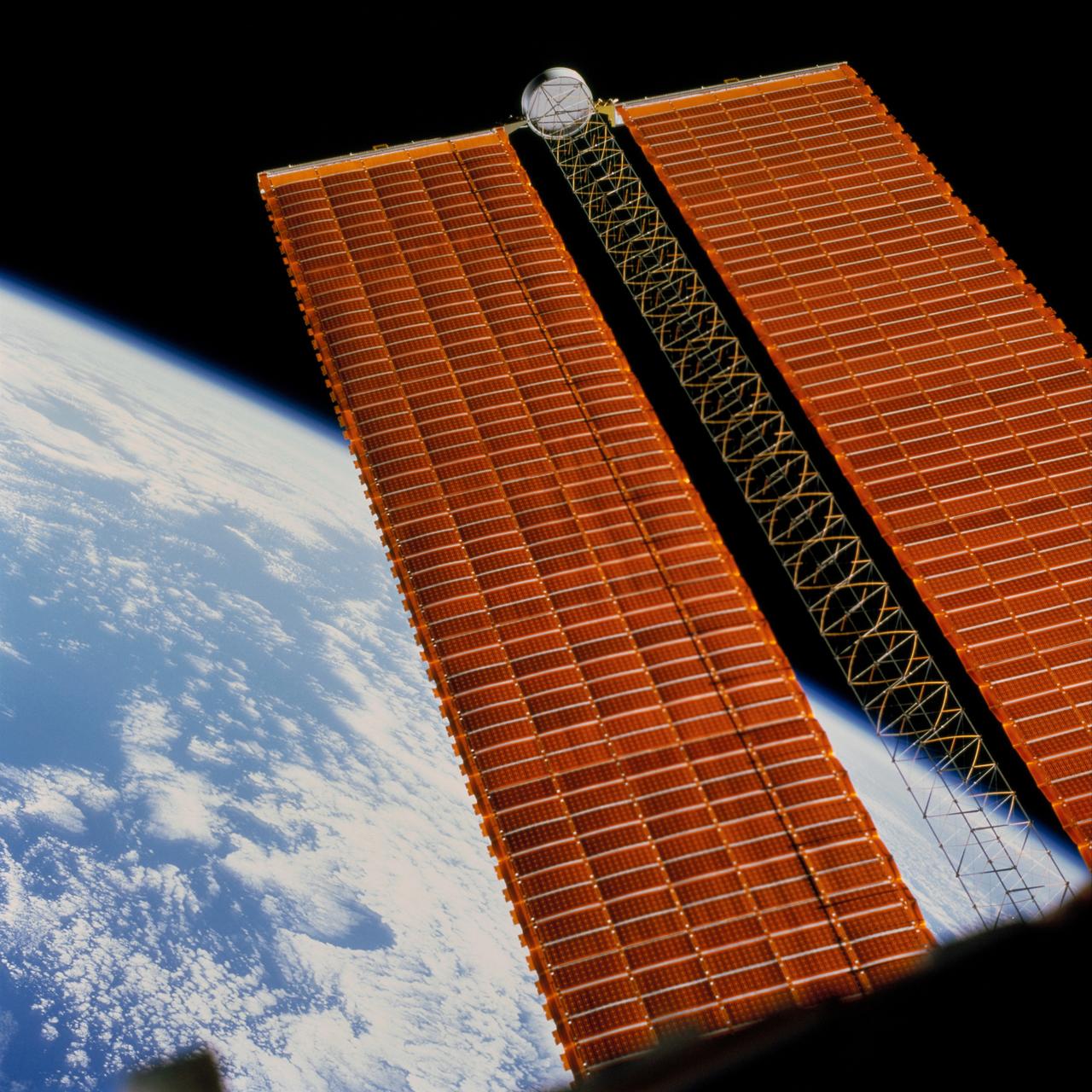
STS097-702-070 (3 December 2000) --- An astronaut inside Endeavour's crew cabin used a handheld 70mm camera to expose this frame of the International Space Station's starboard solar array wing panel, backdropped against an Earth horizon scene.

ISS028-E-006161 (28 May 2011) --- Earth?s thin line of atmosphere and a starry sky just off the port wing of the docked space shuttle Endeavour are featured in this image photographed by NASA astronaut Greg Chamitoff, STS-134 mission specialist, on the International Space Station.
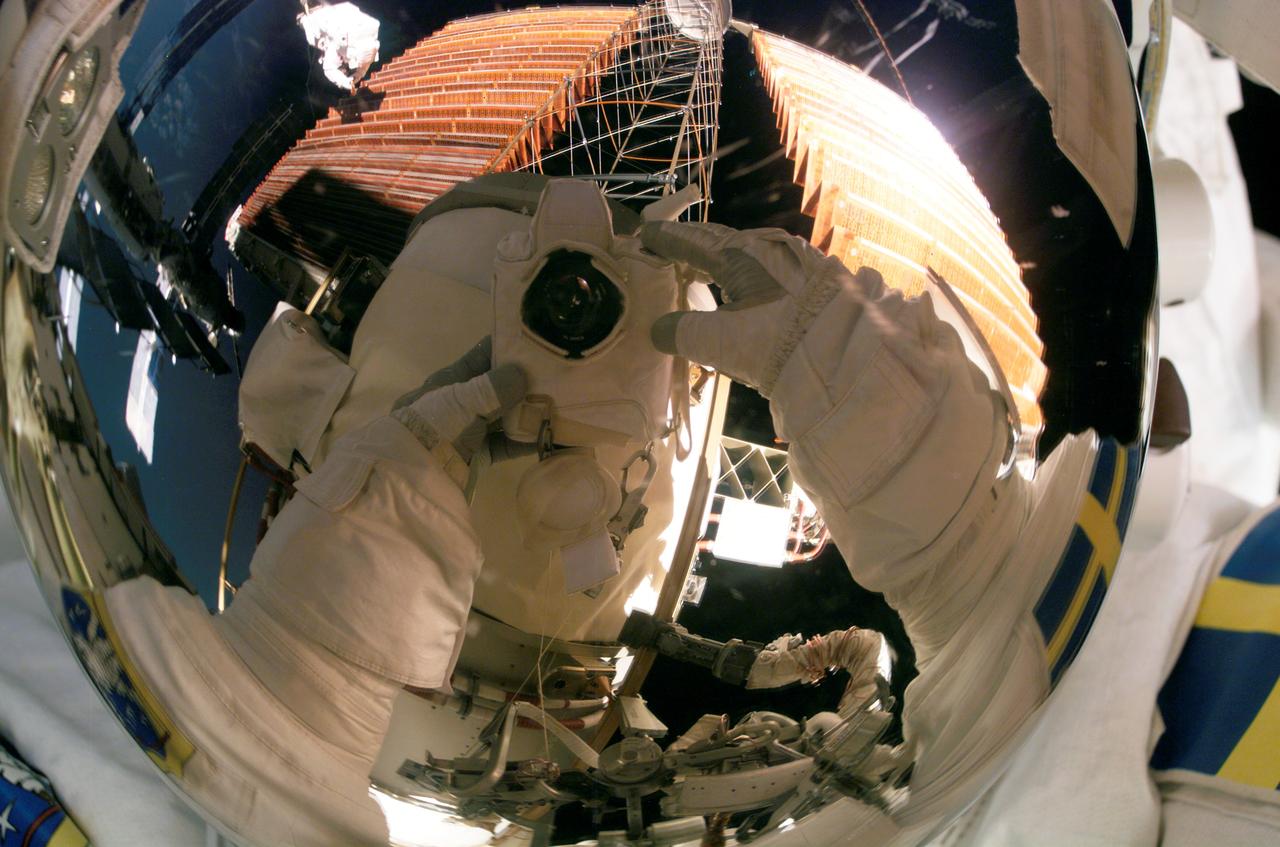
ISS014-E-10089 (18 Dec. 2006) --- European Space Agency (ESA) astronaut Christer Fuglesang, STS-116 mission specialist, uses a digital still camera to expose a photo of his helmet visor during the mission's fourth session of extravehicular activity (EVA) while Space Shuttle Discovery was docked with the International Space Station. Also visible in the reflections in the visor is astronaut Robert L. Curbeam Jr., mission specialist, as he works with the port overhead solar array wing on the station's P6 truss. The spacewalkers worked in tandem, using specially prepared, tape-insulated tools, to guide the array wing neatly inside its blanket box during the 6-hour, 38-minute spacewalk.
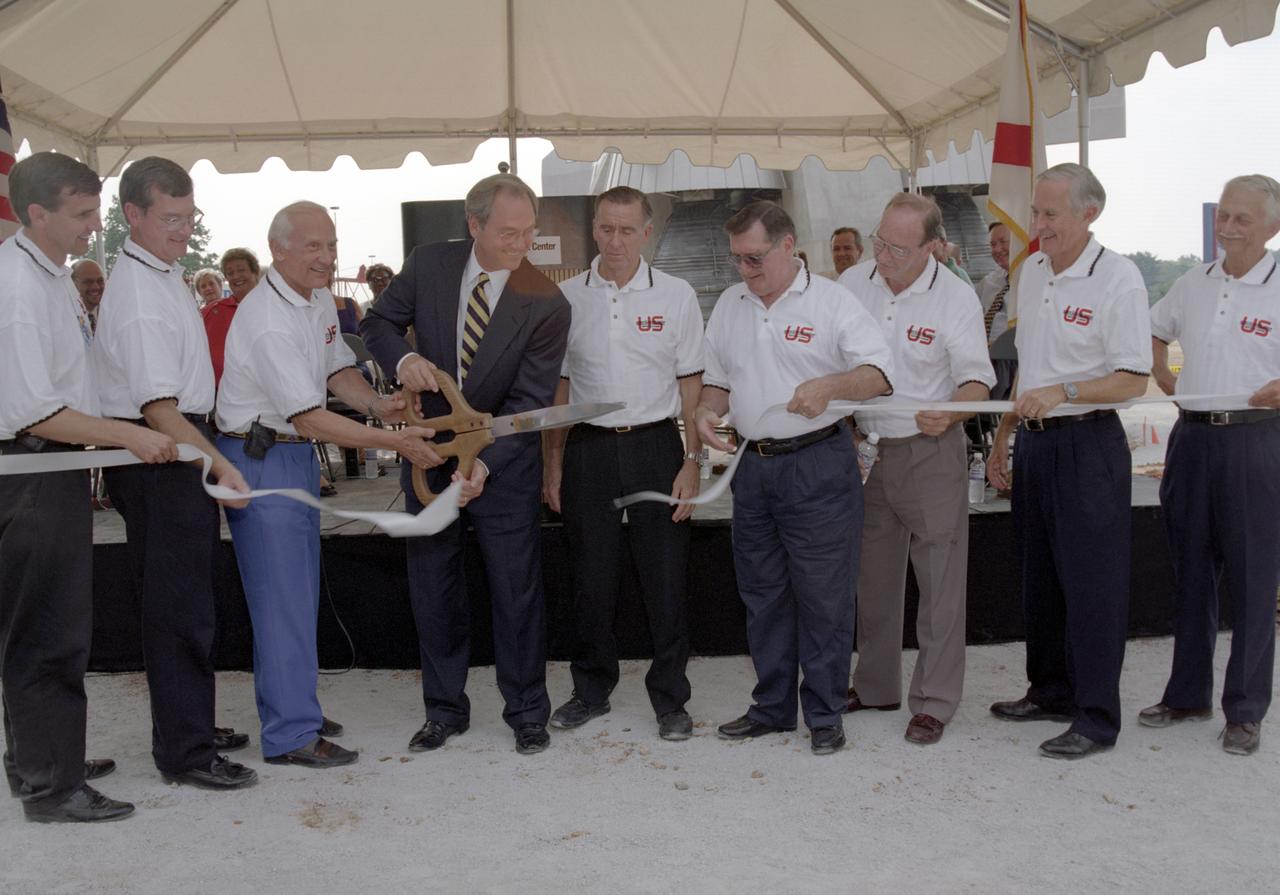
Alabama Governor Don Seigleman cuts the ribbon marking the dedication of the Saturn V rocket replica that was constructed at the U. S. Space and Rocket Center in honor of the 30th arniversary of the lunar landing. Accompanying the Governor are (L/R): Mike Wing, CEO US Space Rocket Center; Mike Gillespie, Madison County Commissioner, Dist. Seven; Buzz Aldrin, Apollo 11 Astronaut; Governor Seigleman; Walt Cunningham, Apollo 7 Astronaut; Dick Gordon, Apollo 12 Astronaut; Ed Mitchell, Apollo 14 Astronaut; Charlie Duke, Apollo 16 Astronaut; and Owen Garriott, Skylab 3 Astronaut.
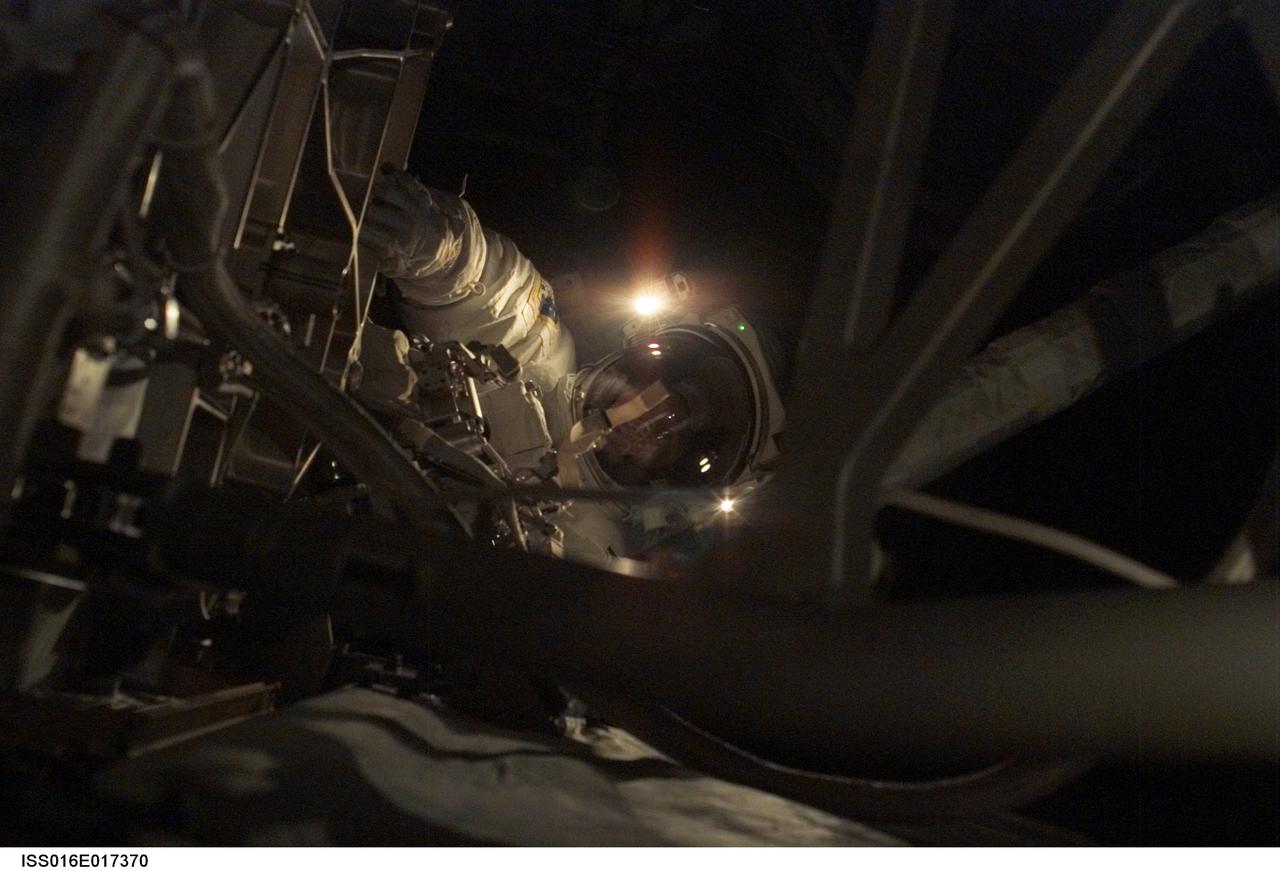
ISS016-E-017370 (18 Dec. 2007) --- Astronaut Peggy A. Whitson, Expedition 16 commander, participates in a session of extravehicular activity (EVA). During the 6-hour, 56-minute spacewalk, Whitson and astronaut Daniel Tani (out of frame), flight engineer, looked for the cause of partial loss of electrical power to one of the International Space Station's two Beta Gimbal Assemblies (BGA) for starboard solar wings and examined damage to the starboard Solar Alpha Rotary Joint (SARJ). The spacewalk was the 100th for the construction and maintenance of the station.
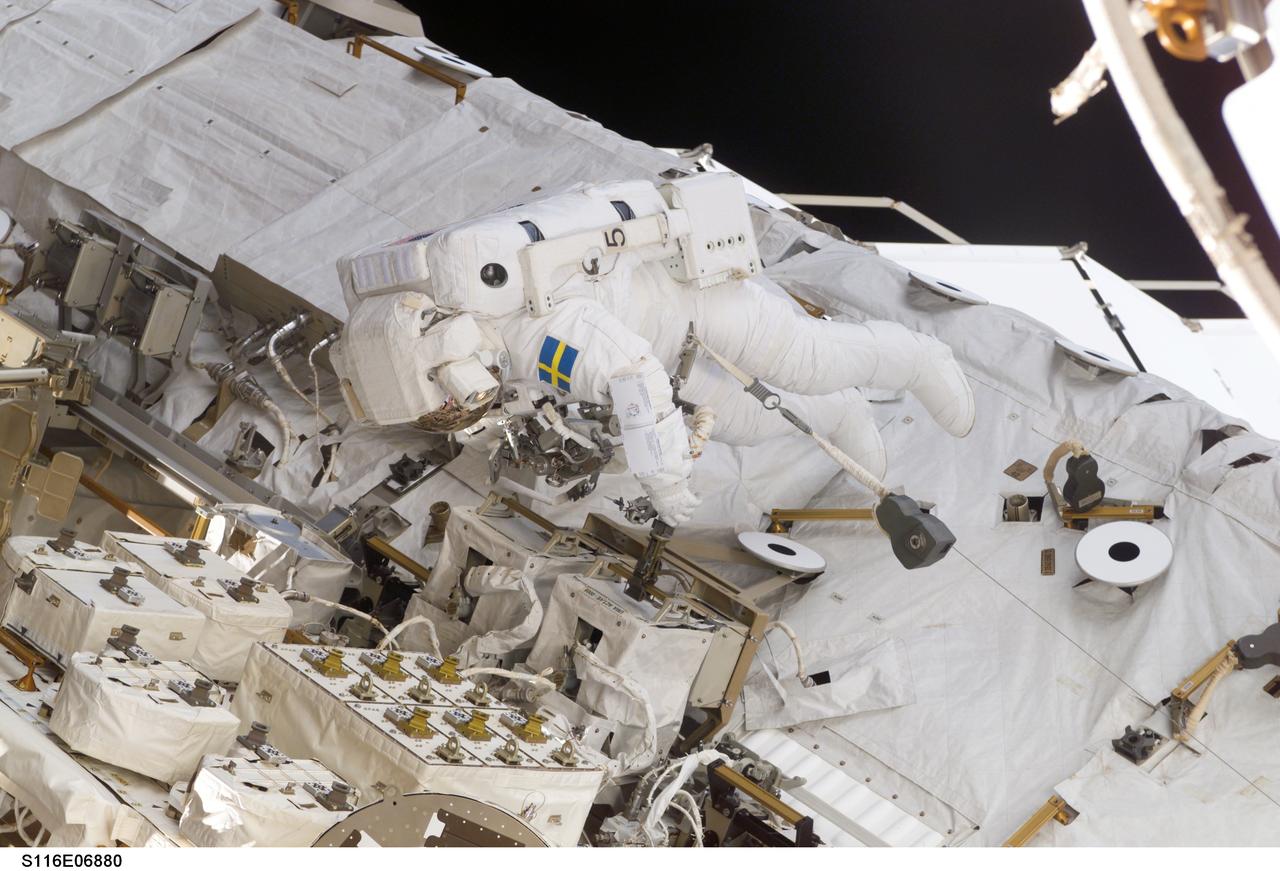
S116-E-06880 (18 Dec. 2006) --- European Space Agency (ESA) astronaut Christer Fuglesang, STS-116 mission specialist, participates in the mission's fourth session of extravehicular activity (EVA) while Space Shuttle Discovery was docked with the International Space Station. Astronaut Robert L. Curbeam Jr. (out of frame), mission specialist, worked in tandem with Fuglesang, using specially-prepared, tape-insulated tools, to guide the array wing neatly inside its blanket box during the 6-hour, 38-minute spacewalk.
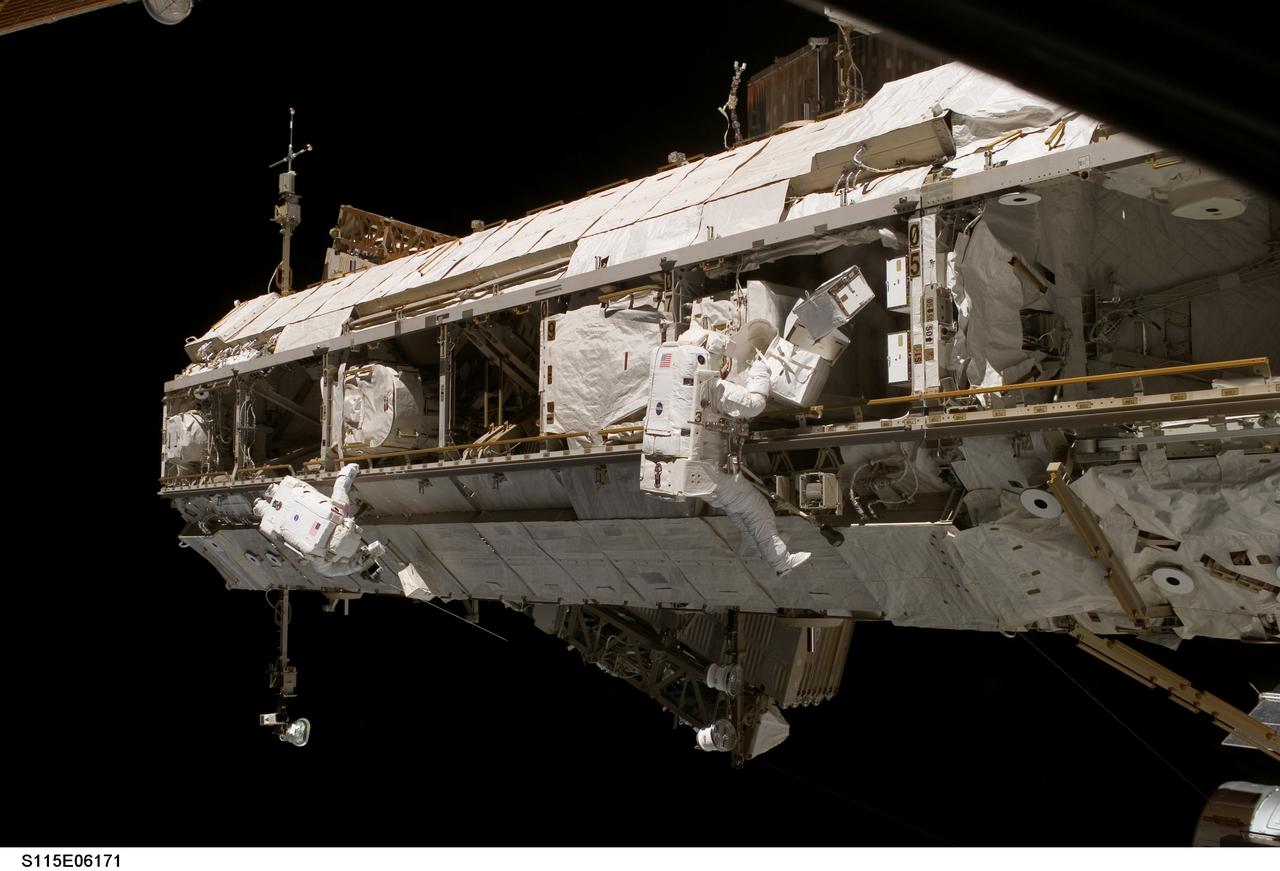
View of Astronaut Joseph R. (Joe) Tanner, STS-115 Mission Specialist (MS), in the red striped Extravehicular Mobility Unit (EMU), as he uses the Infrared (IR) CAM from the Forward (FWD) side of the S1 Truss to take image of the Starboard (STBD) Wing Leading Edge (WLE) of Atlantis for Detailed Test Objective (DTO) 851 while Astronaut Heidemarie M. Stefanyshyn-Piper, STS-115 MS, in the white striped EMU, removes stowed equipment during third Extravehicular Activity (EVA).

ISS016-E-026454 (30 Jan. 2008) --- Astronaut Daniel Tani, Expedition 16 flight engineer, participates in a session of extravehicular activity (EVA) as maintenance and construction continue on the International Space Station. During the 7-hour, 10-minute spacewalk, Tani and astronaut Peggy Whitson (out of frame), commander, replaced a motor, known as the Bearing Motor Roll Ring Module (BMRRM), at the base of one of the station's solar wings. The BMRRM is part of the Beta Gimbal Assembly, which experienced electrical failures Dec. 8.
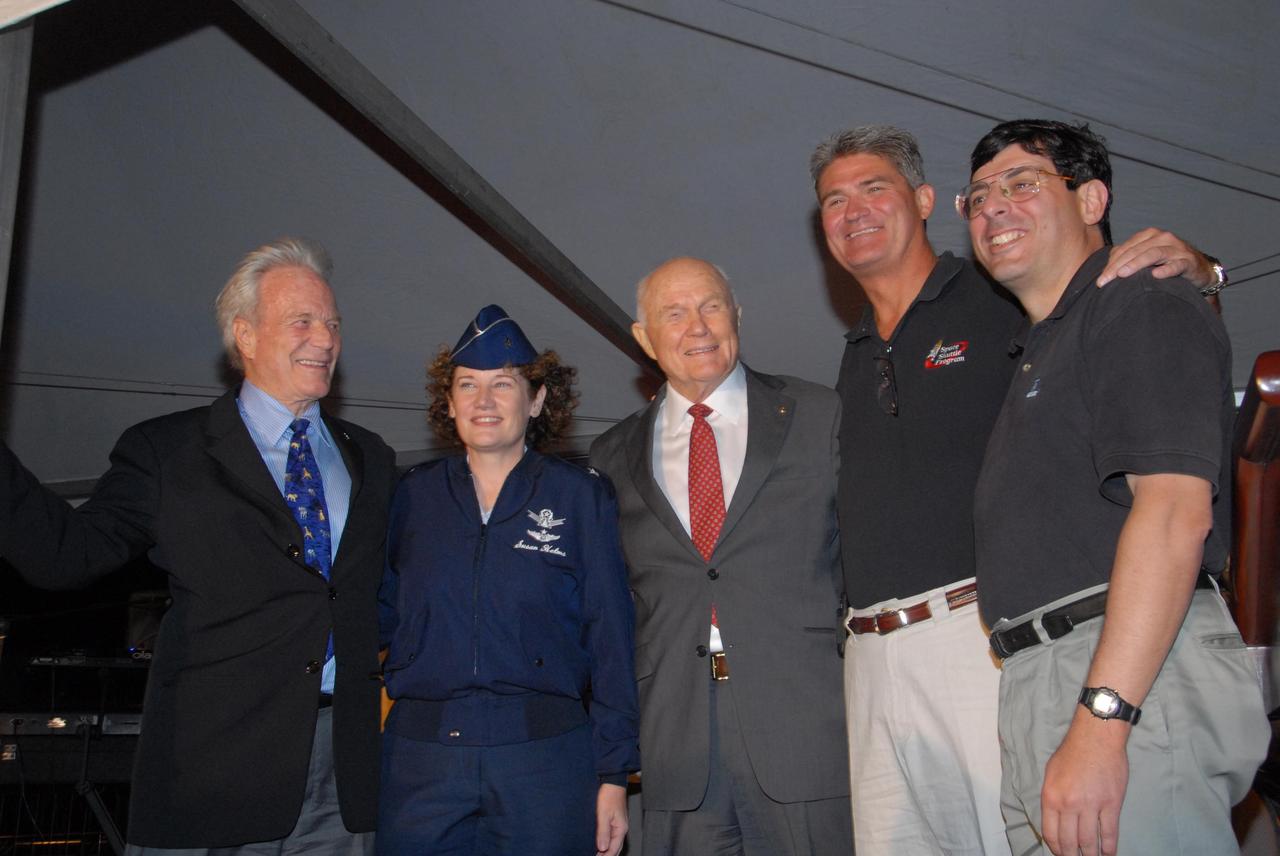
KENNEDY SPACE CENTER, FLA. -- During the World Space Expo held at NASA's Kennedy Space Center Visitor Complex, veteran astronauts pose with current and future VIPs of the Space Program: from left, Mercury astronaut Scott Carpenter; Brig. Gen. Susan J. Helms, Commander of the 45th Space Wing at Patrick Air Force Base and former shuttle astronaut; Mercury astronaut John Glenn, who also flew on space shuttle Discovery for STS-95 in 1998; Kennedy Space Center Director Bill Parsons; and NASA Associate Administrator Chris Scolese. The astronauts were part of the World Space Expo, an event to commemorate humanity's first 50 years in space while looking forward to returning people to the moon and exploring beyond. The expo showcased various panels, presentations and educational programs, as well as an aerial salute featuring the U.S. Air Force Thunderbirds, U.S. Air Force F-22 Raptor, U.S. Navy F-18 Super Hornet, U.S. Air Force F-15 Eagle, the P-51 Mustang Heritage Flight, and the U.S. Air Force 920th Rescue Wing, which was responsible for Mercury and Gemini capsule recovery. The U.S. Army Golden Knights also demonstrated precision skydiving. Photo credit: NASA/George Shelton
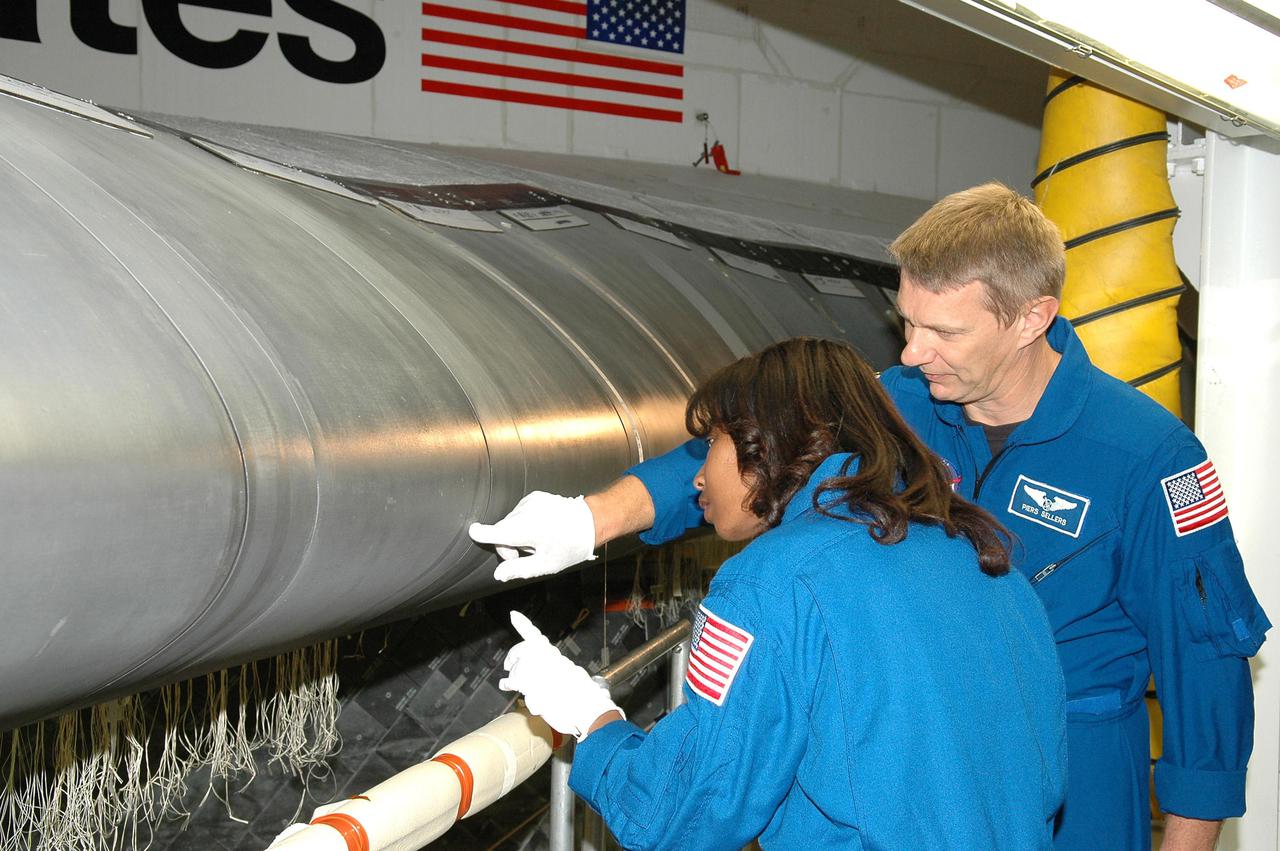
KENNEDY SPACE CENTER, FLA. - In the Orbiter Processing Facility, STS-121 Mission Specialists Stephanie D. Wilson (left) and Piers J. Sellers receive a briefing and up-close look at the wing leading edge of Space Shuttle Atlantis, the orbiter that will take them into space. The leading edge of each of the orbiters’ wings has 22 Reinforced Carbon-Carbon panels, made entirely of carbon composite material. The molded components are approximately 0.25-inch to 0.5-inch thick. The astronauts of the second Return to Flight mission, STS-121, are at Kennedy Space Center to participate in the Crew Equipment Interface Test (CEIT). During CEIT, the crew has an opportunity to get a hands-on look at the orbiter and equipment they will be working with on their mission. Mission STS-121 is scheduled to launch in July.
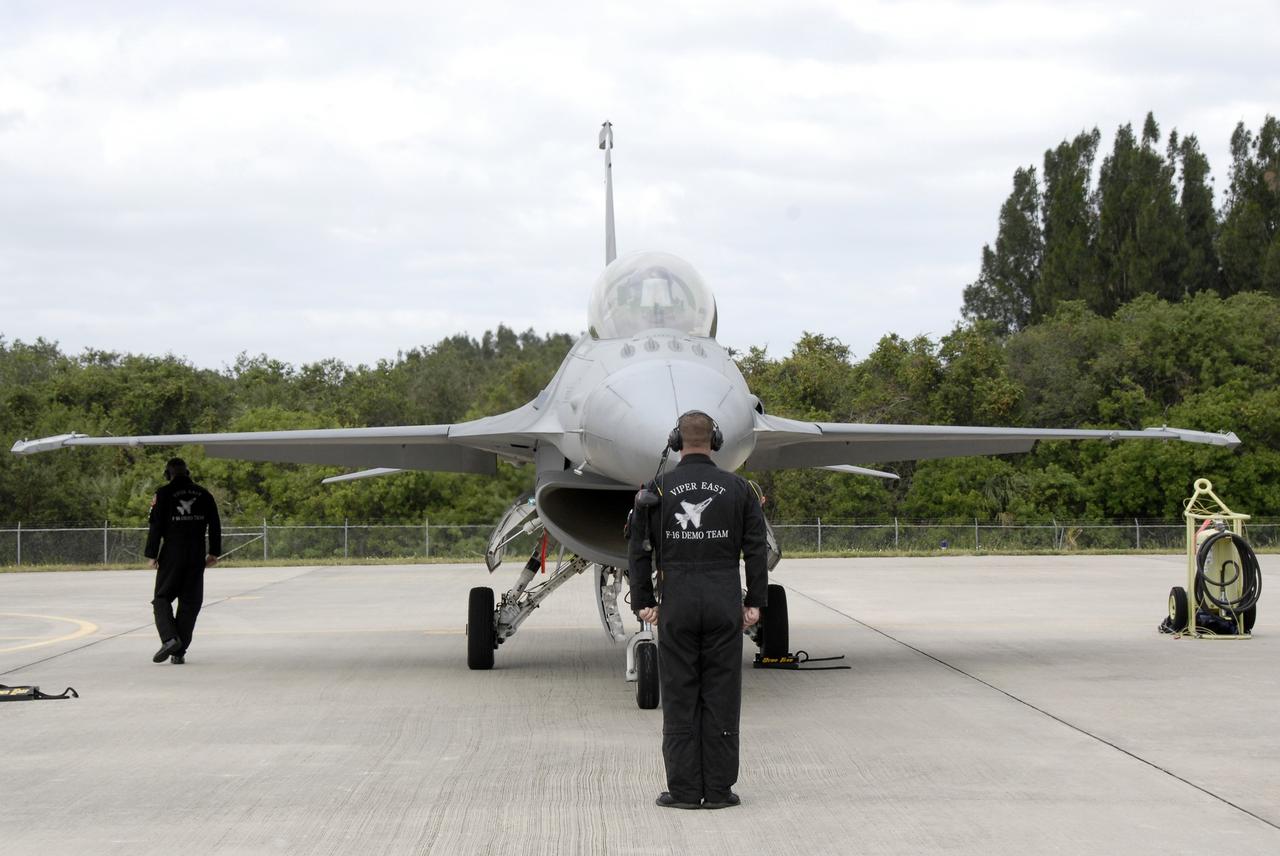
CAPE CANAVERAL, Fla. – Aircraft of the 920th Rescue Wing are lined up at the Shuttle Landing Facility at NASA's Kennedy Space Center in Florida to take part in the Kennedy Space Center Visitor Complex Space and Air Show Nov. 8-9. They will join the U.S. Navy's Blue Angels for the show. The Navy's elite flight demonstration squadron will take to the skies in military aircraft demonstrations by the F-16 Fighting Falcon and F/A-18 Super Hornet jets for the second annual Space & Air Show at Kennedy. This year’s show brings together the best in military aircraft, coupled with precision pilots and veteran astronauts to celebrate spaceflight and aviation. The event includes military aircraft demonstrations by the F-16 Fighting Falcon and a water rescue demonstration by the 920th Rescue Wing. Photo credit: NASA/Kim Shiflett
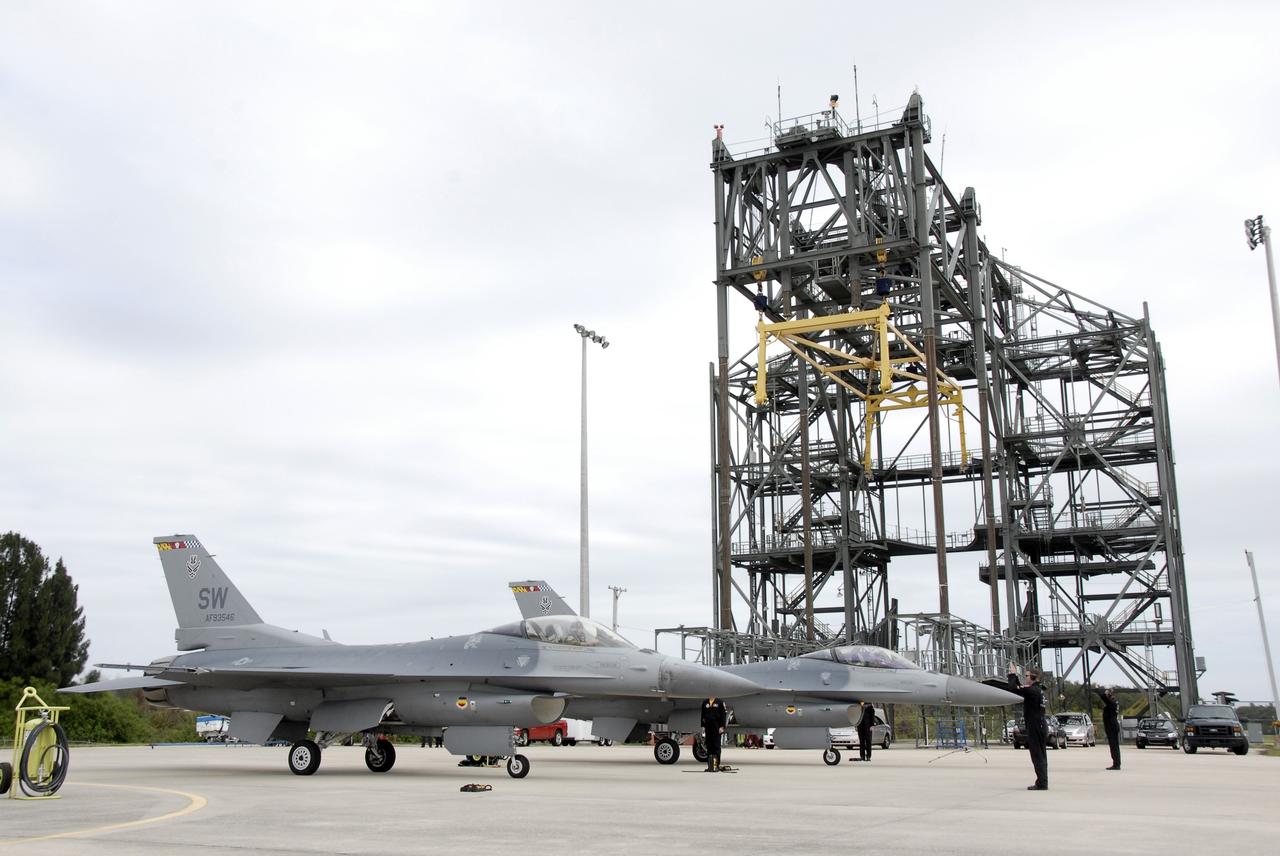
CAPE CANAVERAL, Fla. – Aircraft of the 920th Rescue Wing are lined up at the Shuttle landing Facility at NASA's Kennedy Space Center in Florida to take part in the Kennedy Space Center Visitor Complex Space and Air Show Nov. 8-9. They will join the U.S. Navy's Blue Angels for the show. The Navy's elite flight demonstration squadron will take to the skies in military aircraft demonstrations by the F-16 Fighting Falcon and F/A-18 Super Hornet jets for the second annual Space & Air Show at Kennedy. This year’s show brings together the best in military aircraft, coupled with precision pilots and veteran astronauts to celebrate spaceflight and aviation. The event includes military aircraft demonstrations by the F-16 Fighting Falcon and a water rescue demonstration by the 920th Rescue Wing. Photo credit: NASA/Kim Shiflett
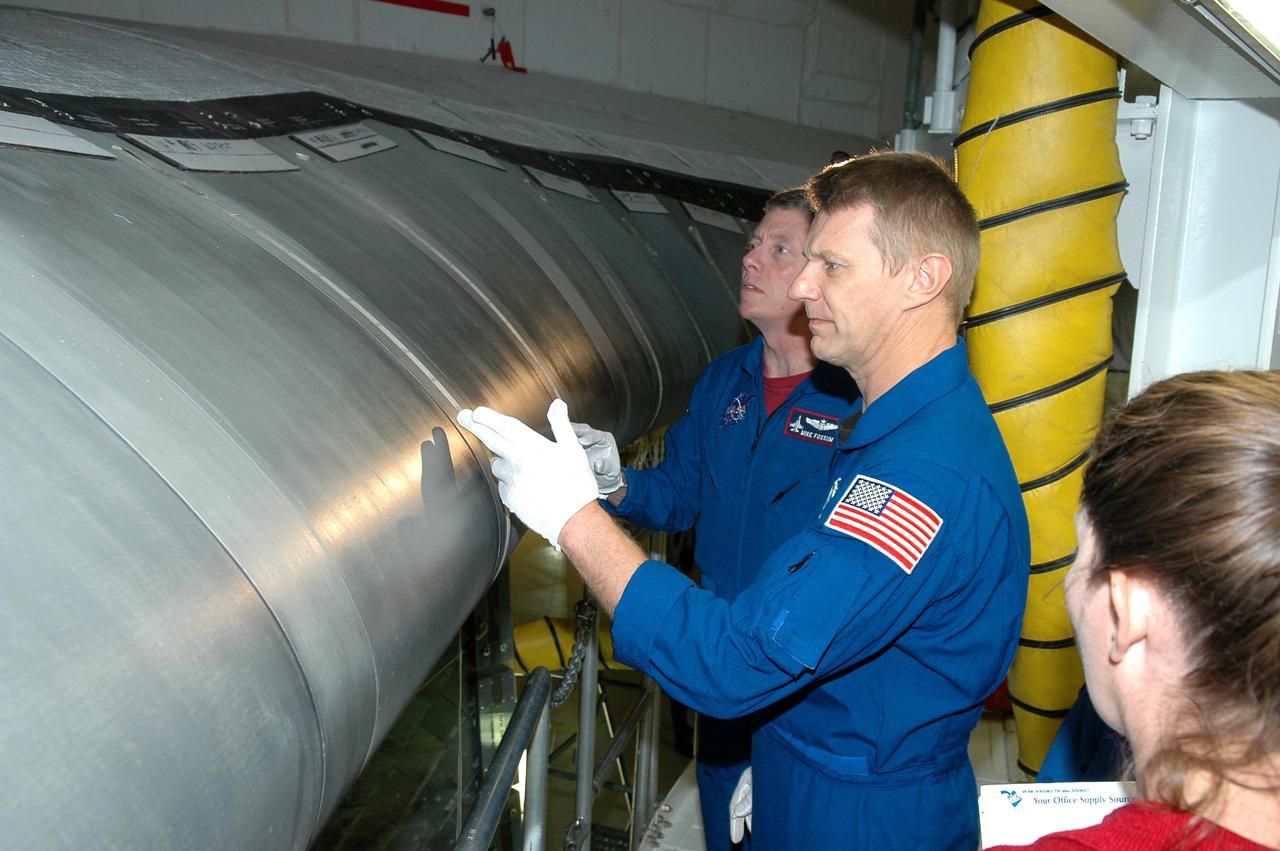
KENNEDY SPACE CENTER, FLA. - In the Orbiter Processing Facility, STS-121 Mission Specialists Michael E. Fossum (left) and Piers J. Sellers receive a briefing and up-close look at the wing leading edge of Space Shuttle Atlantis, the orbiter that will take them into space. The leading edge of each of the orbiters’ wings has 22 Reinforced Carbon-Carbon panels, made entirely of carbon composite material. The molded components are approximately 0.25-inch to 0.5-inch thick. The astronauts of the second Return to Flight mission, STS-121, are at Kennedy Space Center to participate in the Crew Equipment Interface Test (CEIT). During CEIT, the crew has an opportunity to get a hands-on look at the orbiter and equipment they will be working with on their mission. Mission STS-121 is scheduled to launch in July.
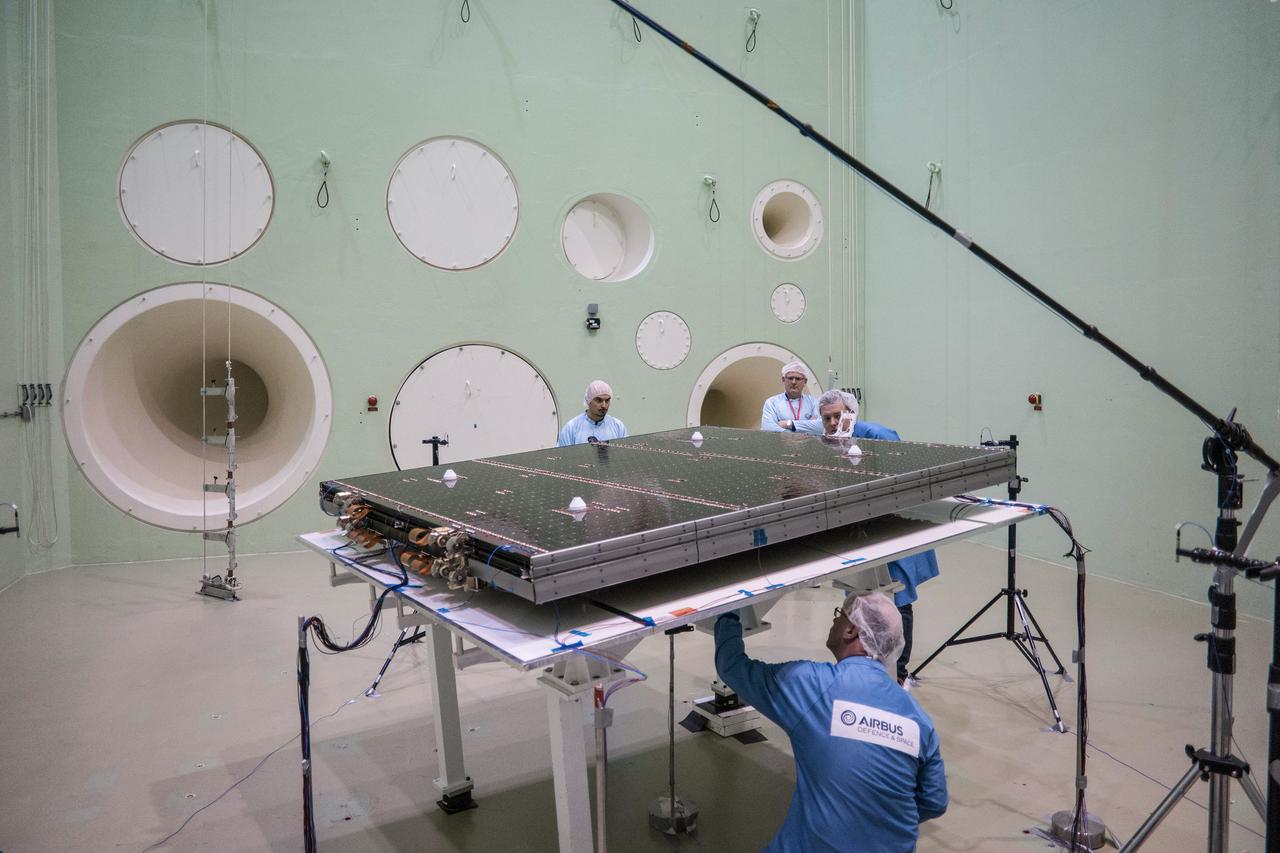
The solar arrays that will provide electricity to the Orion spacecraft were put through launch-day paces at ESA’s Test Centre in the Netherlands to verify that they can handle the rigours of the trip around the Moon... .The wings are seen here on April 11, 2018, on the shaking table that vibrates with the full force of a rumbling rocket. They were also placed in front of enormous speakers that recreate the harsh conditions they can expect on launch day. The solar arrays passed with flying colours... .The wings will be tested on how they deploy before shipping to Bremen, Germany, for integration with the European service module. ESA’s contribution to the Orion mission will provide power, propulsion, water, and air... .The first mission will take Orion around the Moon without astronauts. The solar panels will be folded inside the rocket fairing, once released from NASA’s Space Launch System rocket they will unfold and rotate towards the Sun to start delivering power... .With solar wings tested and fuel tanks installed, Orion is one step closer to its maiden voyage.
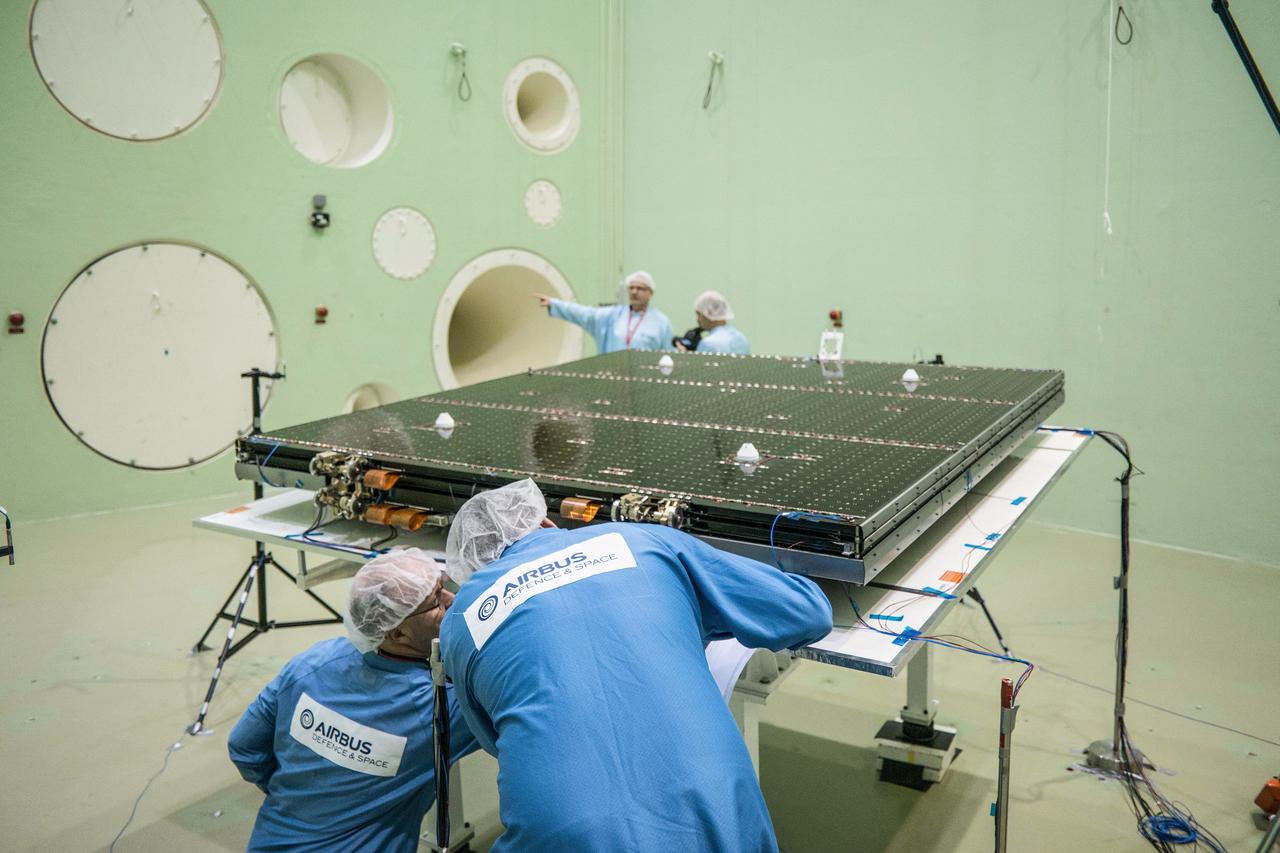
The solar arrays that will provide electricity to the Orion spacecraft were put through launch-day paces at ESA’s Test Centre in the Netherlands to verify that they can handle the rigours of the trip around the Moon... .The wings are seen here on April 11, 2018, on the shaking table that vibrates with the full force of a rumbling rocket. They were also placed in front of enormous speakers that recreate the harsh conditions they can expect on launch day. The solar arrays passed with flying colours... .The wings will be tested on how they deploy before shipping to Bremen, Germany, for integration with the European service module. ESA’s contribution to the Orion mission will provide power, propulsion, water, and air... .The first mission will take Orion around the Moon without astronauts. The solar panels will be folded inside the rocket fairing, once released from NASA’s Space Launch System rocket they will unfold and rotate towards the Sun to start delivering power... .With solar wings tested and fuel tanks installed, Orion is one step closer to its maiden voyage.
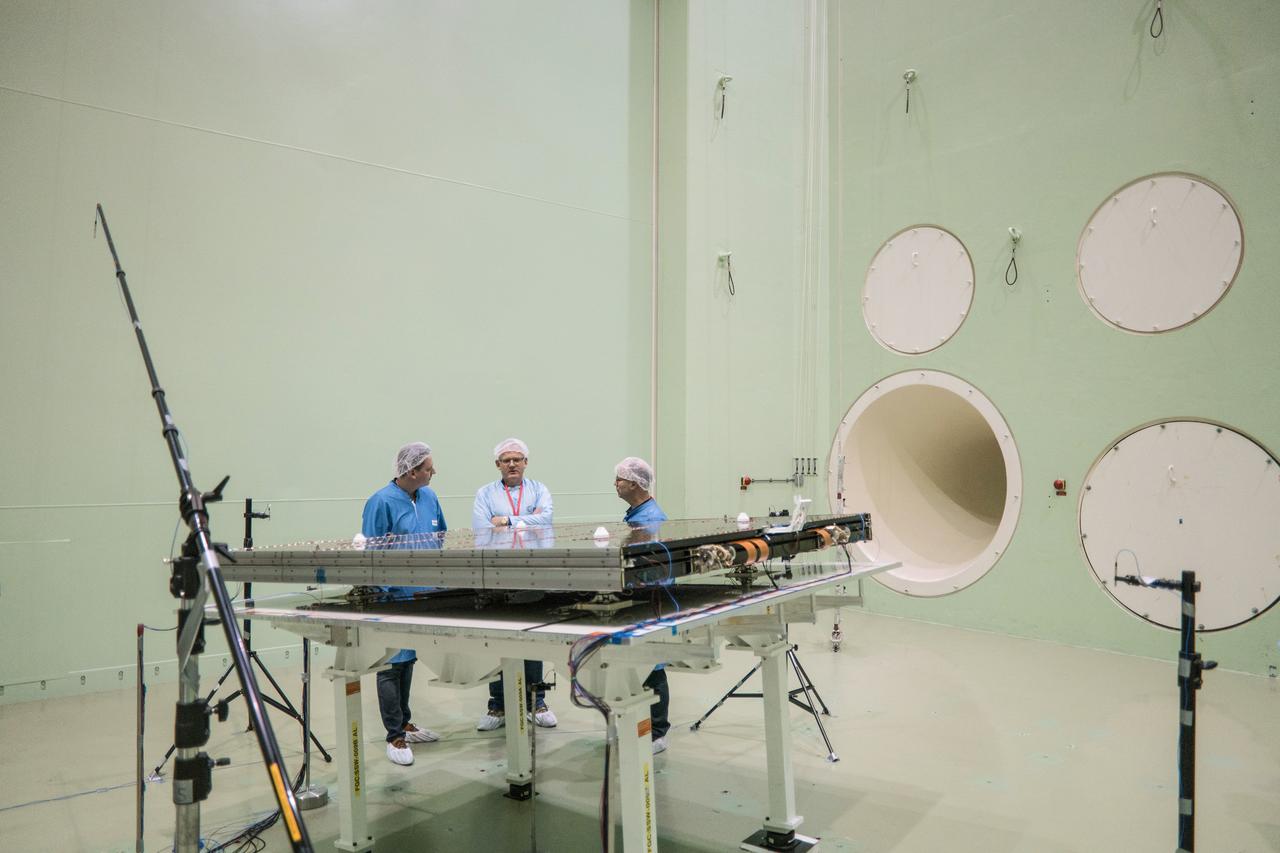
The solar arrays that will provide electricity to the Orion spacecraft were put through launch-day paces at ESA’s Test Centre in the Netherlands to verify that they can handle the rigours of the trip around the Moon... .The wings are seen here on April 11, 2018, on the shaking table that vibrates with the full force of a rumbling rocket. They were also placed in front of enormous speakers that recreate the harsh conditions they can expect on launch day. The solar arrays passed with flying colours... .The wings will be tested on how they deploy before shipping to Bremen, Germany, for integration with the European service module. ESA’s contribution to the Orion mission will provide power, propulsion, water, and air... .The first mission will take Orion around the Moon without astronauts. The solar panels will be folded inside the rocket fairing, once released from NASA’s Space Launch System rocket they will unfold and rotate towards the Sun to start delivering power... .With solar wings tested and fuel tanks installed, Orion is one step closer to its maiden voyage.
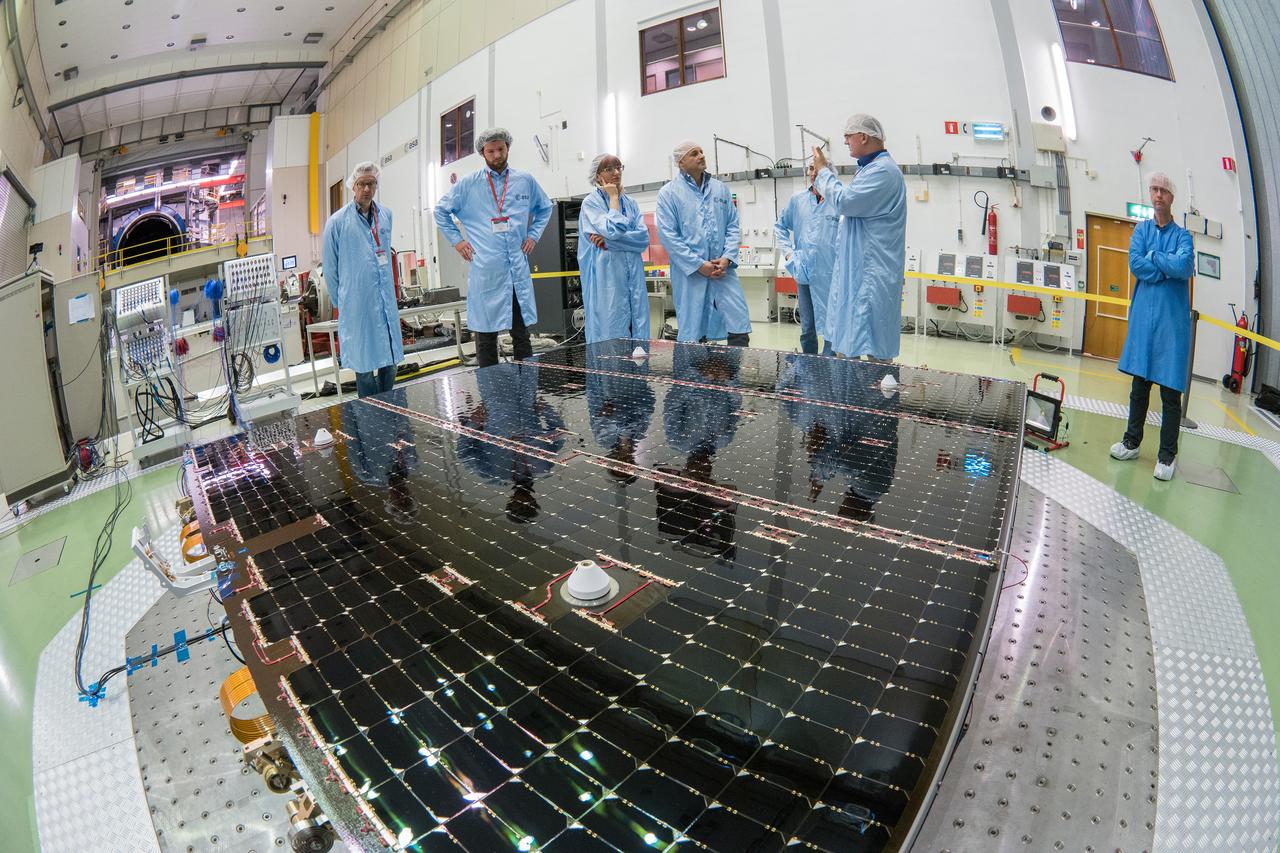
The solar arrays that will provide electricity to the Orion spacecraft were put through launch-day paces at ESA’s Test Centre in the Netherlands to verify that they can handle the rigours of the trip around the Moon... .The wings are seen here on April 11, 2018, on the shaking table that vibrates with the full force of a rumbling rocket. They were also placed in front of enormous speakers that recreate the harsh conditions they can expect on launch day. The solar arrays passed with flying colours... .The wings will be tested on how they deploy before shipping to Bremen, Germany, for integration with the European service module. ESA’s contribution to the Orion mission will provide power, propulsion, water, and air... .The first mission will take Orion around the Moon without astronauts. The solar panels will be folded inside the rocket fairing, once released from NASA’s Space Launch System rocket they will unfold and rotate towards the Sun to start delivering power... .With solar wings tested and fuel tanks installed, Orion is one step closer to its maiden voyage.
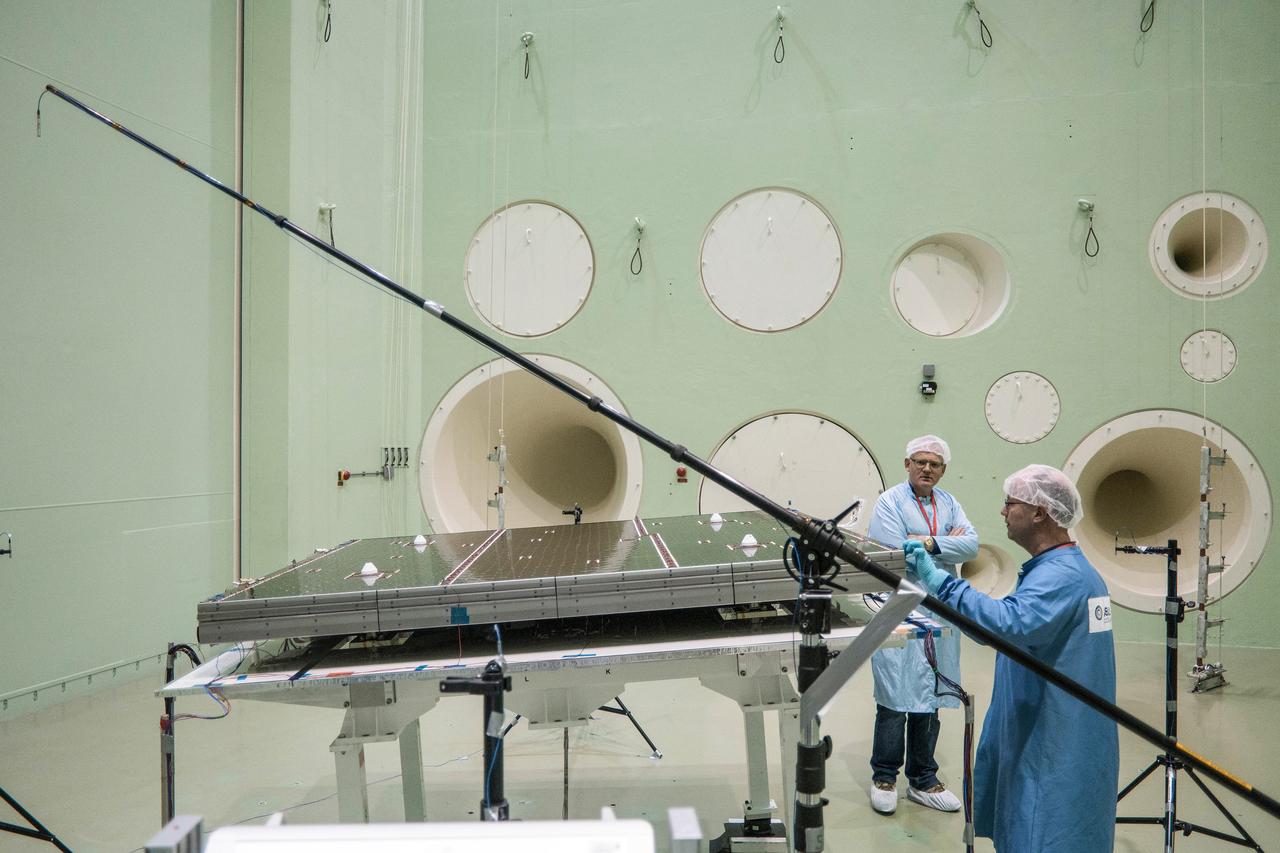
The solar arrays that will provide electricity to the Orion spacecraft were put through launch-day paces at ESA’s Test Centre in the Netherlands to verify that they can handle the rigours of the trip around the Moon... .The wings are seen here on April 11, 2018, on the shaking table that vibrates with the full force of a rumbling rocket. They were also placed in front of enormous speakers that recreate the harsh conditions they can expect on launch day. The solar arrays passed with flying colours... .The wings will be tested on how they deploy before shipping to Bremen, Germany, for integration with the European service module. ESA’s contribution to the Orion mission will provide power, propulsion, water, and air... .The first mission will take Orion around the Moon without astronauts. The solar panels will be folded inside the rocket fairing, once released from NASA’s Space Launch System rocket they will unfold and rotate towards the Sun to start delivering power... .With solar wings tested and fuel tanks installed, Orion is one step closer to its maiden voyage.
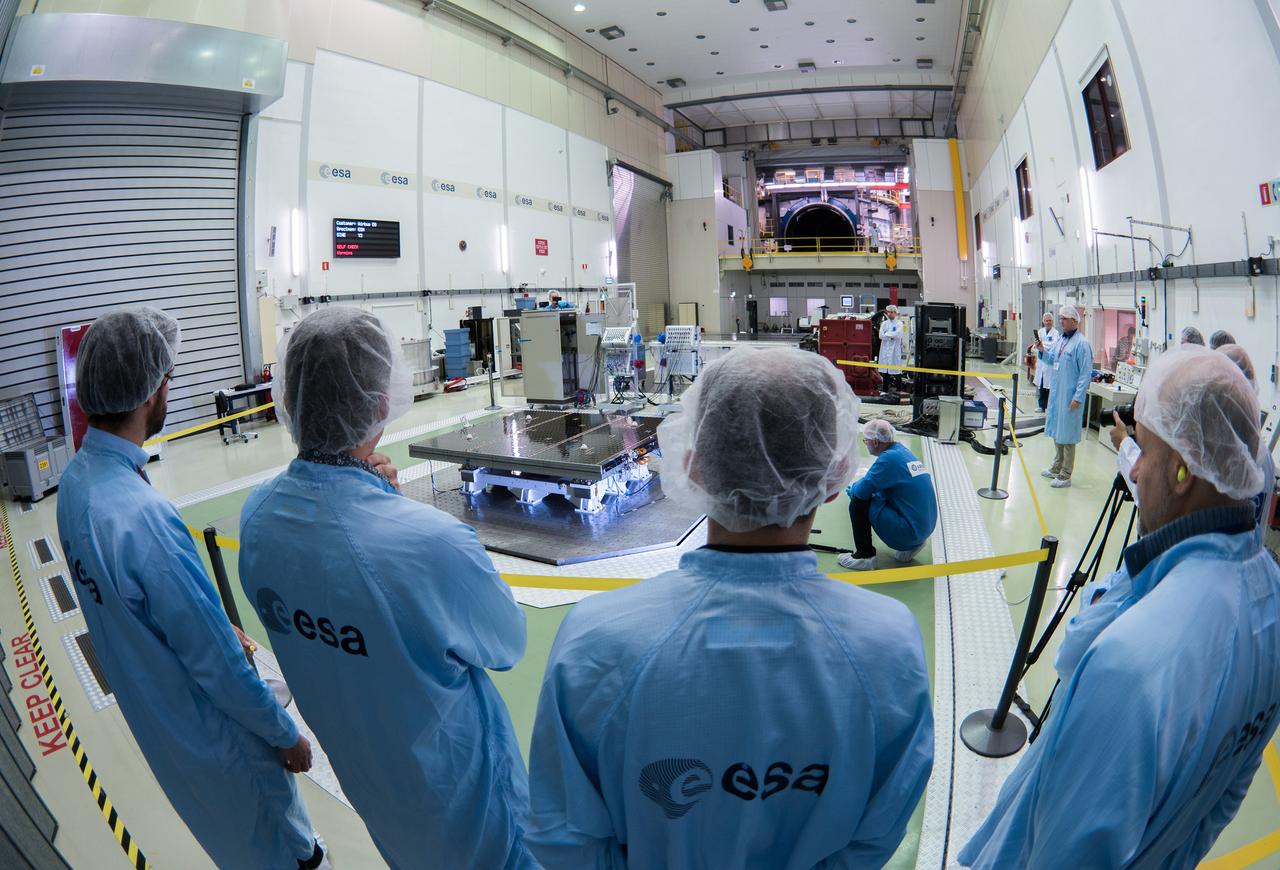
The solar arrays that will provide electricity to the Orion spacecraft were put through launch-day paces at ESA’s Test Centre in the Netherlands to verify that they can handle the rigours of the trip around the Moon... .The wings are seen here on April 11, 2018, on the shaking table that vibrates with the full force of a rumbling rocket. They were also placed in front of enormous speakers that recreate the harsh conditions they can expect on launch day. The solar arrays passed with flying colours... .The wings will be tested on how they deploy before shipping to Bremen, Germany, for integration with the European service module. ESA’s contribution to the Orion mission will provide power, propulsion, water, and air... .The first mission will take Orion around the Moon without astronauts. The solar panels will be folded inside the rocket fairing, once released from NASA’s Space Launch System rocket they will unfold and rotate towards the Sun to start delivering power... .With solar wings tested and fuel tanks installed, Orion is one step closer to its maiden voyage.
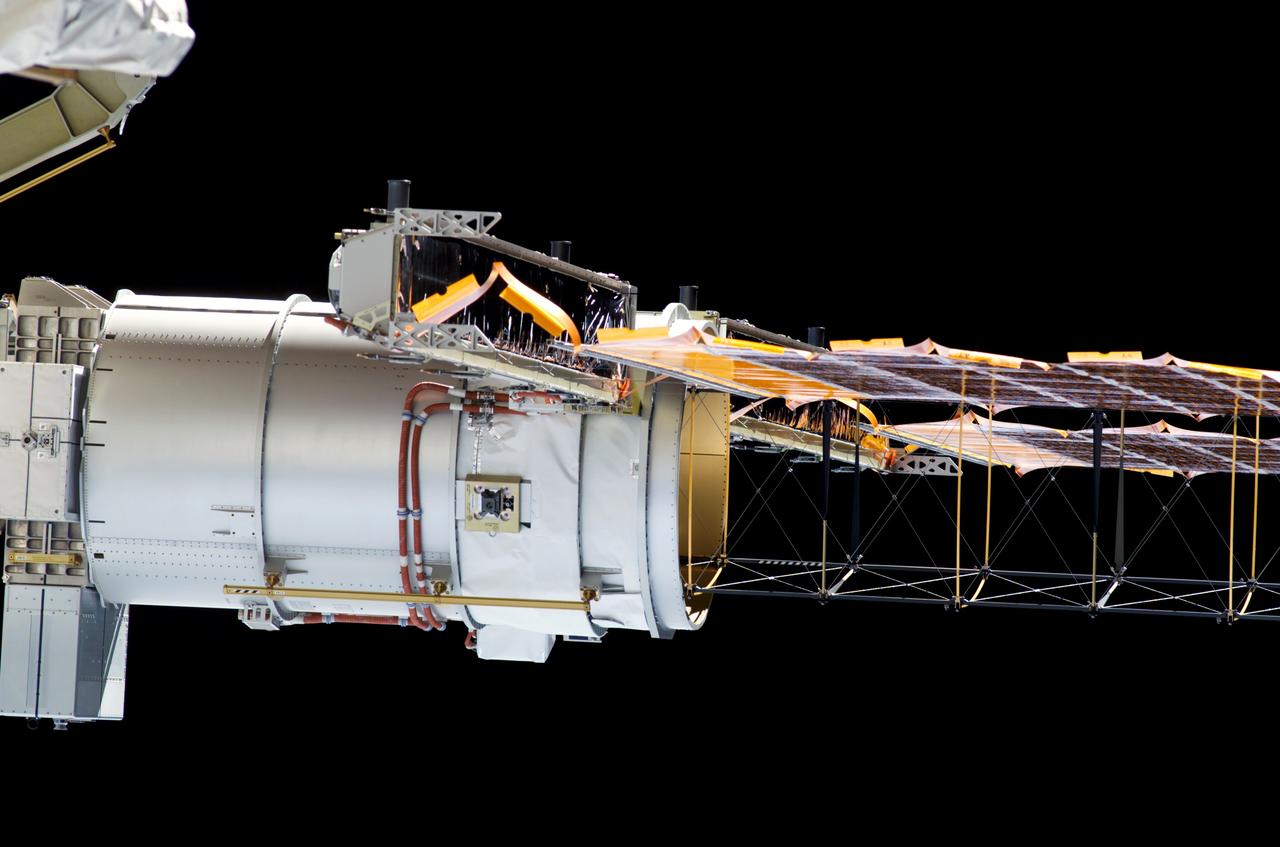
S115-E-06186 (14 Sept. 2006) --- Space Shuttle Atlantis astronauts spread a second set of wings for the International Space Station today. The new solar arrays were fully extended at 7:44 a.m. (CDT). The new arrays span a total of 240 feet and have a width of 38 feet. They are attached to the station's newest component, the P3/P4 integrated truss segment. The installation of the P3/P4, which occurred Sept. 12 and the deployment of the arrays set the stage for future expansion of the station.
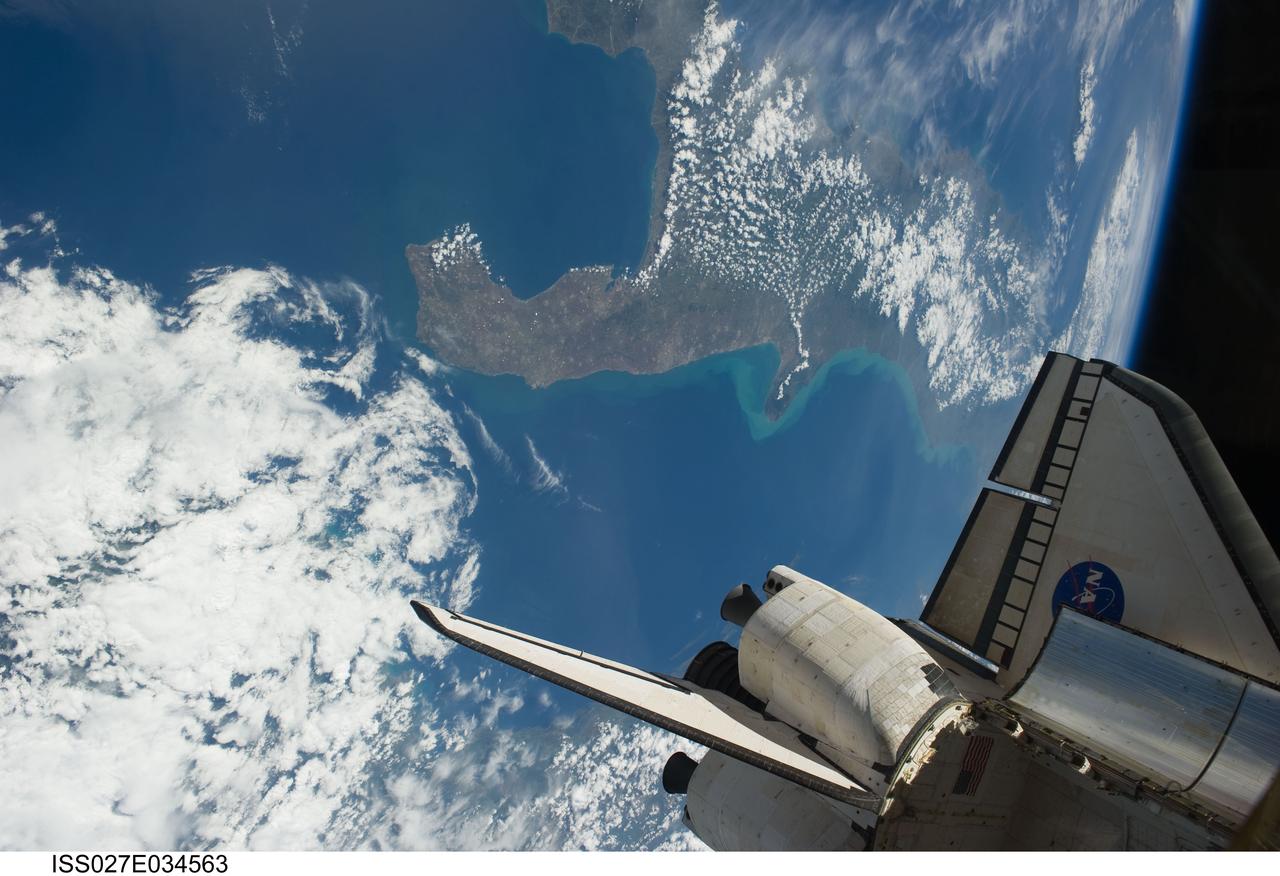
ISS027-E-034563 (19 May 2011) --- Backdropped against a scene showing part of Italy, this image featuring the aft part of the space shuttle Endeavour in the foreground was photographed by an Expedition 27 crew member aboard the International Space Station while the two spacecraft were docked. The vertical stabilizer, the orbital maneuvering system (OMS) pods and the lower part of the port wing are seen. Twelve astronauts and cosmonauts were busy aboard the joint complex, moving hardware and preparing for a May 20 space walk.
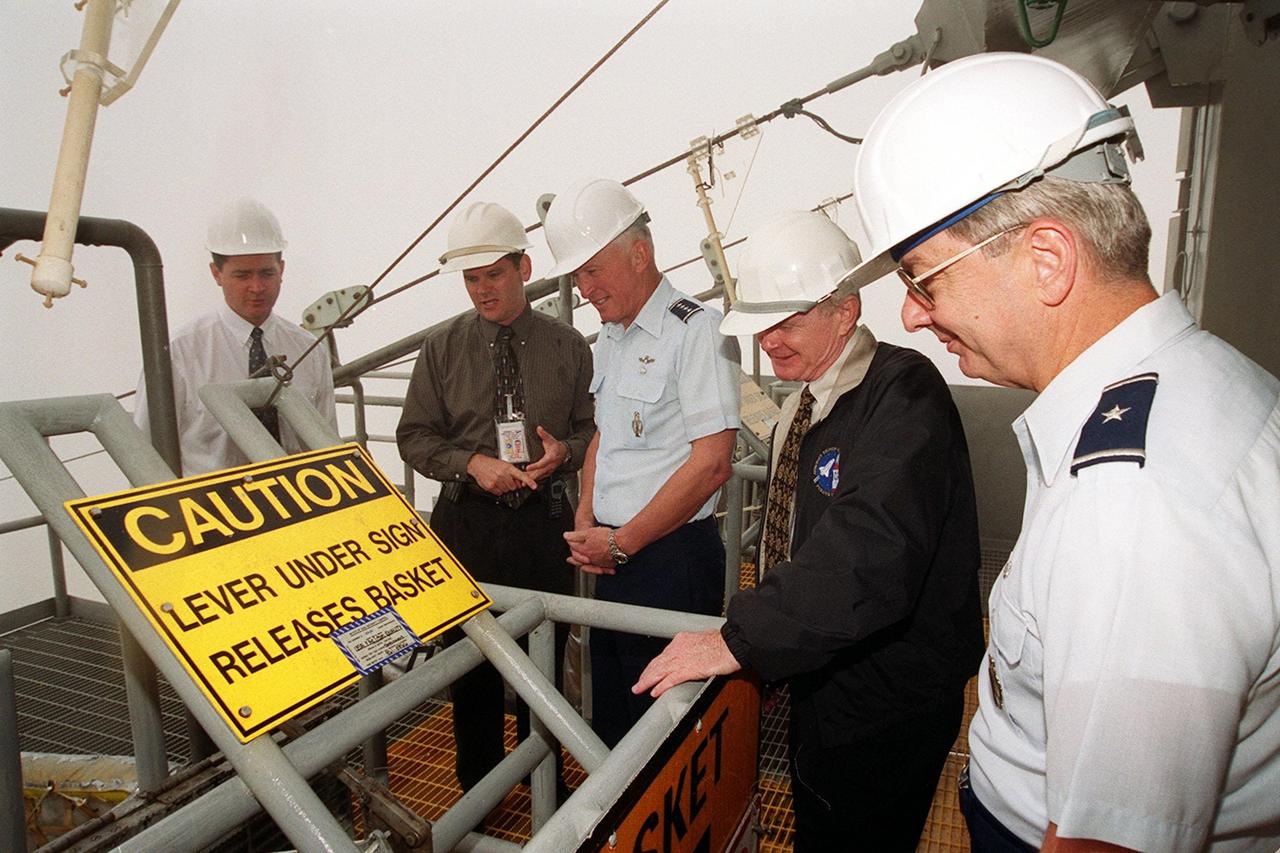
On the Fixed Service Structure on Launch Pad 39B, this distinguished group look at the emergency escape equipment that could be used by astronauts and workers if needed. Gathered around the slidewire basket are Dave King, director of Shuttle Processing; Dave Rainer; Gen. Ralph Everhart, Commander, Space Command; Center Director Roy Bridges; and Brig. Gen. Donald Pettit, Commander of the 45th Space Wing, Cape Canaveral
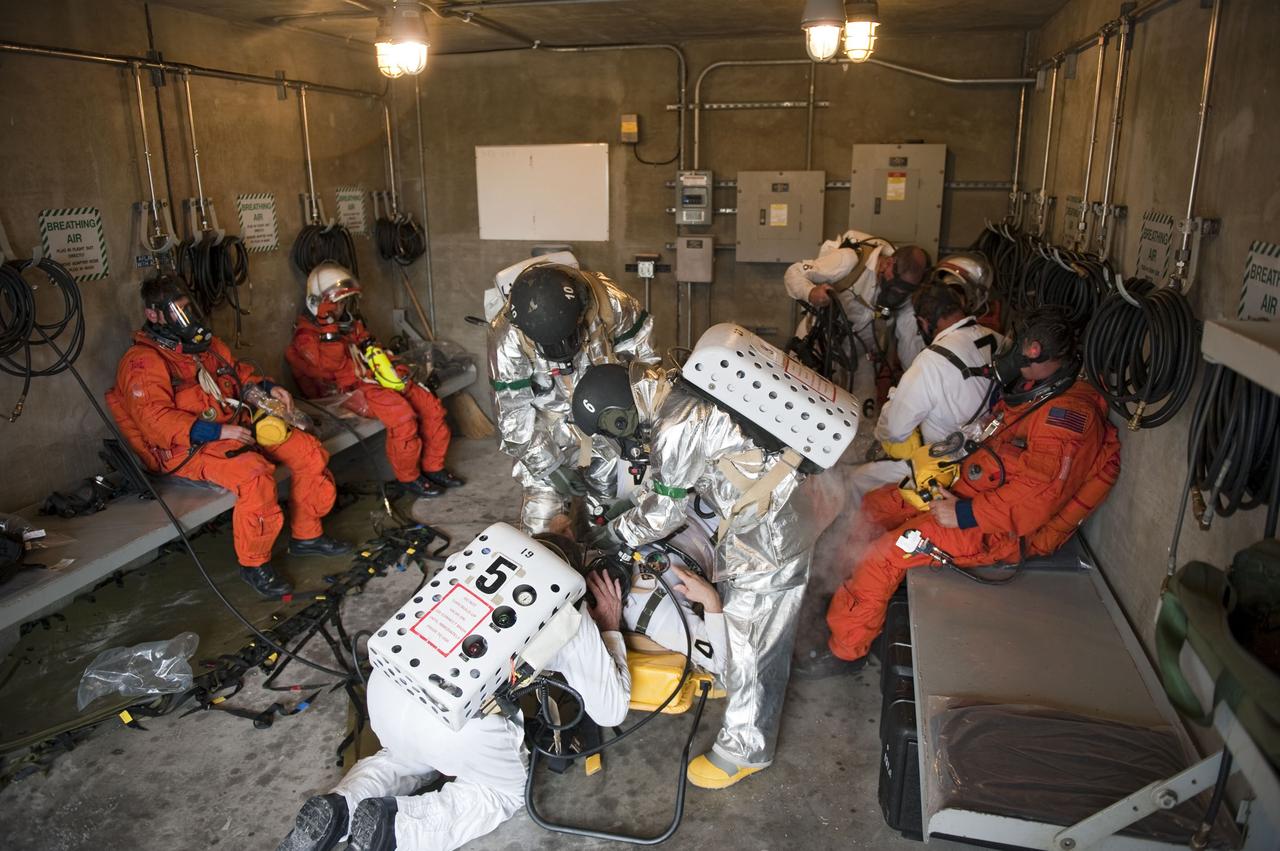
CAPE CANAVERAL, Fla. – An emergency exit, or Mode II/IV, exercise is under way in a bunker of Launch Pad 39A at NASA's Kennedy Space Center in Florida. The exercise involves NASA fire rescue personnel, volunteers portraying astronauts with simulated injuries, helicopters and personnel from the Air Force’s 920th Rescue Wing, and medical trauma teams at three Central Florida hospitals. The drill allows teams to practice an emergency response at the launch pad, including helicopter evacuation to local hospitals. Photo credit: NASA/Kim Shiflett
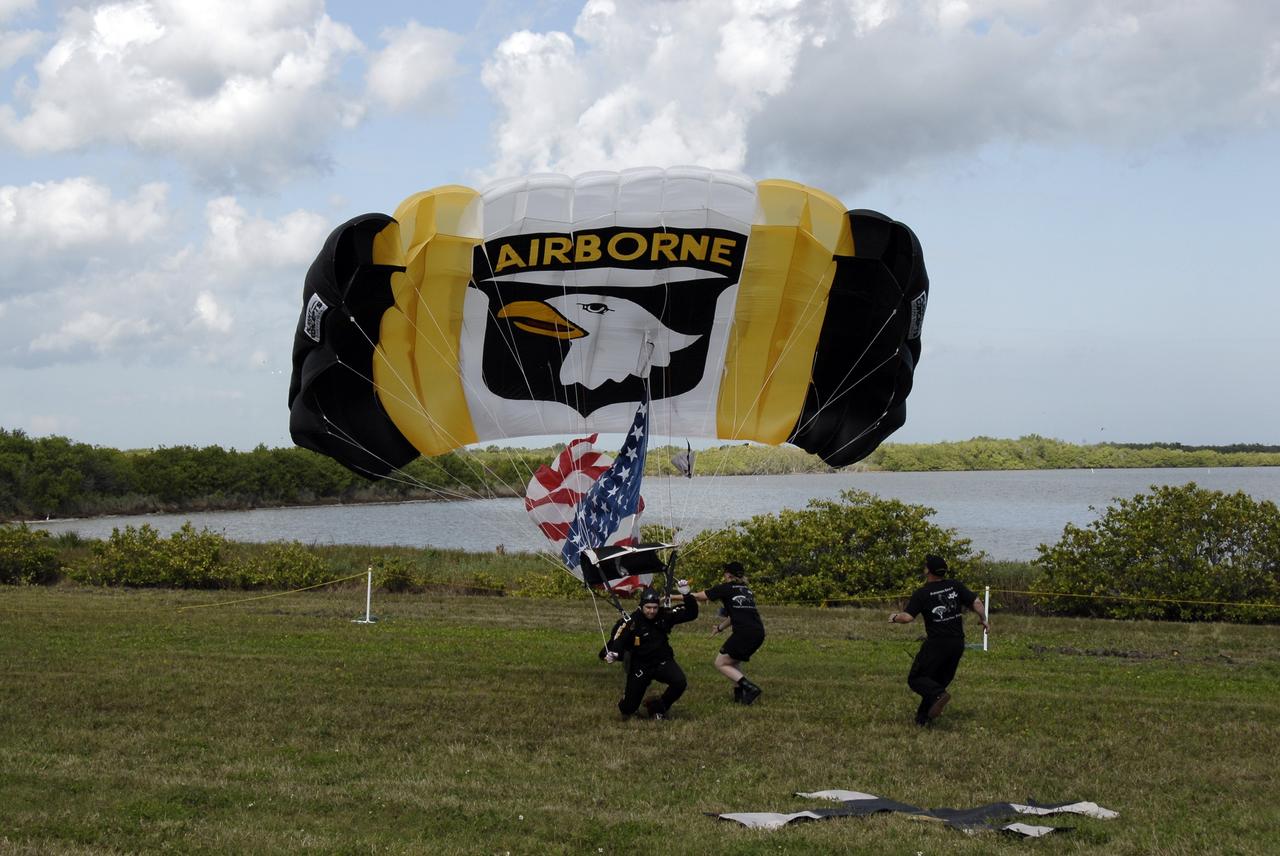
CAPE CANAVERAL, Fla. – A member of the 101st Airborne parachute demonstration team lands at NASA's Kennedy Space Center in Florida. The team performed at the Kennedy Space Center Visitor Complex Space and Air Show Nov. 8-9. This year’s show brought together the best in military aircraft, such as the F/A-18 Super Hornet and F-16 Fighting Falcon, coupled with precision pilots and veteran astronauts to celebrate spaceflight and aviation. The event included a water rescue demonstration by the 920th Rescue Wing. Photo credit: NASA/Kim Shiflett
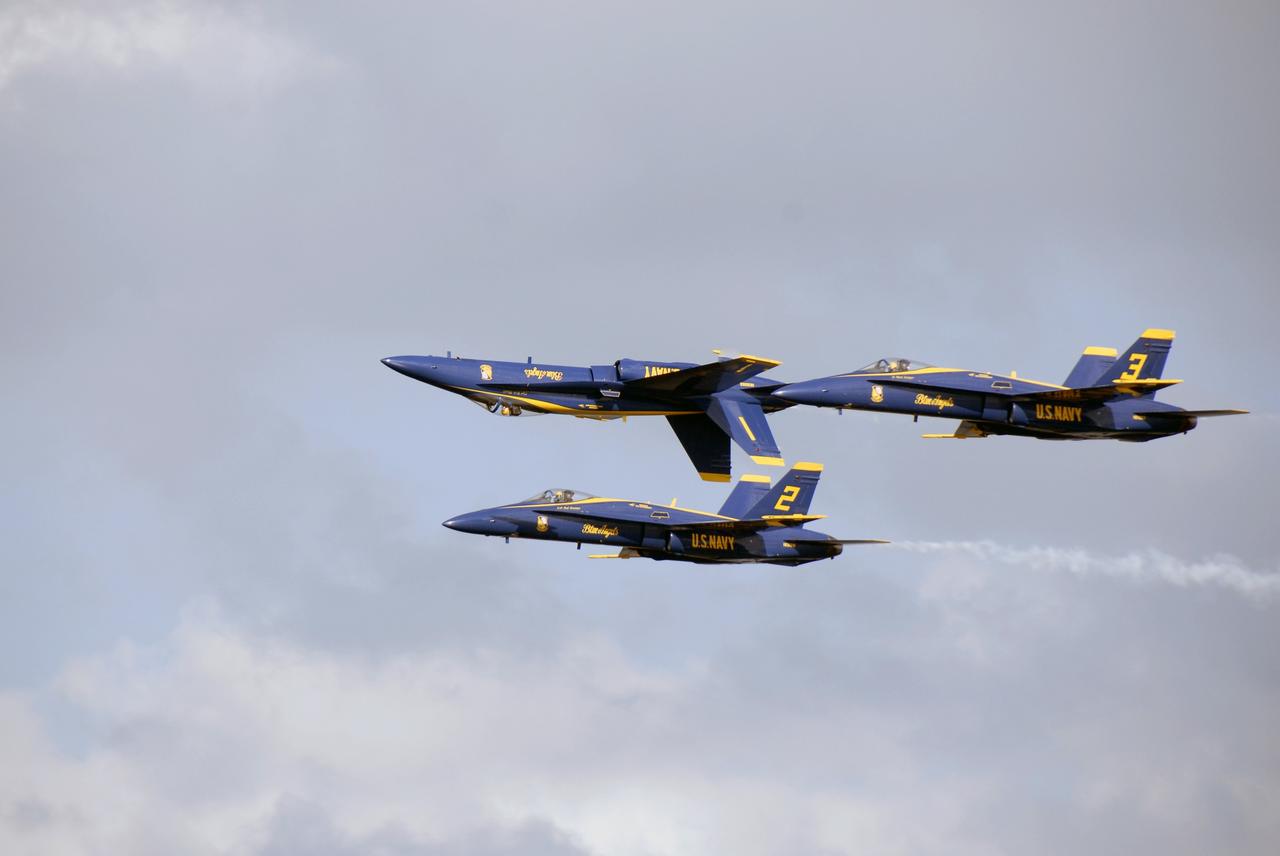
CAPE CANAVERAL, Fla. – The U.S. Navy's Blue Angels perform their tight maneuvers over NASA's Kennedy Space Center in Florida during the Kennedy Space Center Visitor Complex Space and Air Show Nov. 8-9. This year’s show brought together the best in military aircraft, such as the F/A-18 Super Hornet and F-16 Fighting Falcon, coupled with precision pilots and veteran astronauts to celebrate spaceflight and aviation. The event included a water rescue demonstration by the 920th Rescue Wing. Photo credit: NASA/Kim Shiflett
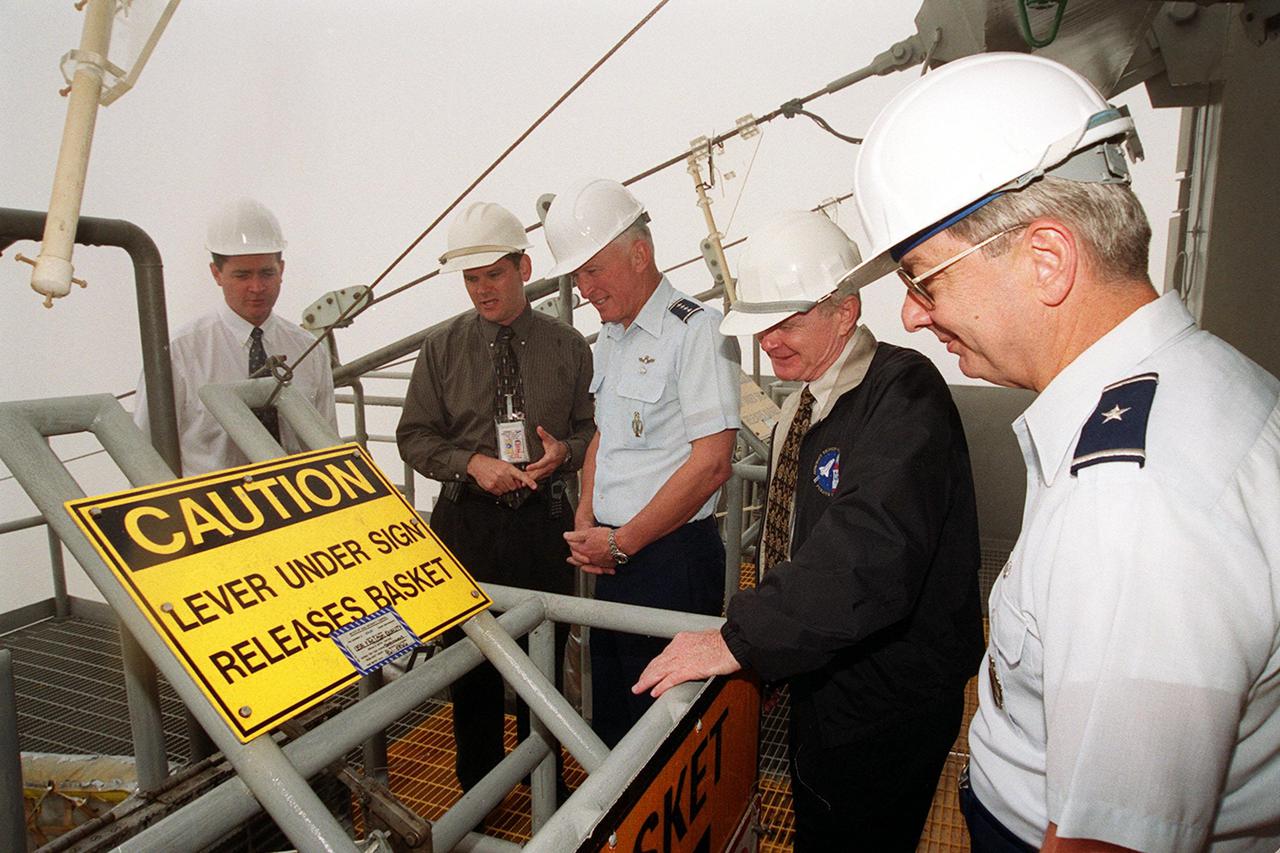
On the Fixed Service Structure on Launch Pad 39B, this distinguished group look at the emergency escape equipment that could be used by astronauts and workers if needed. Gathered around the slidewire basket are Dave King, director of Shuttle Processing; Dave Rainer; Gen. Ralph Everhart, Commander, Space Command; Center Director Roy Bridges; and Brig. Gen. Donald Pettit, Commander of the 45th Space Wing, Cape Canaveral
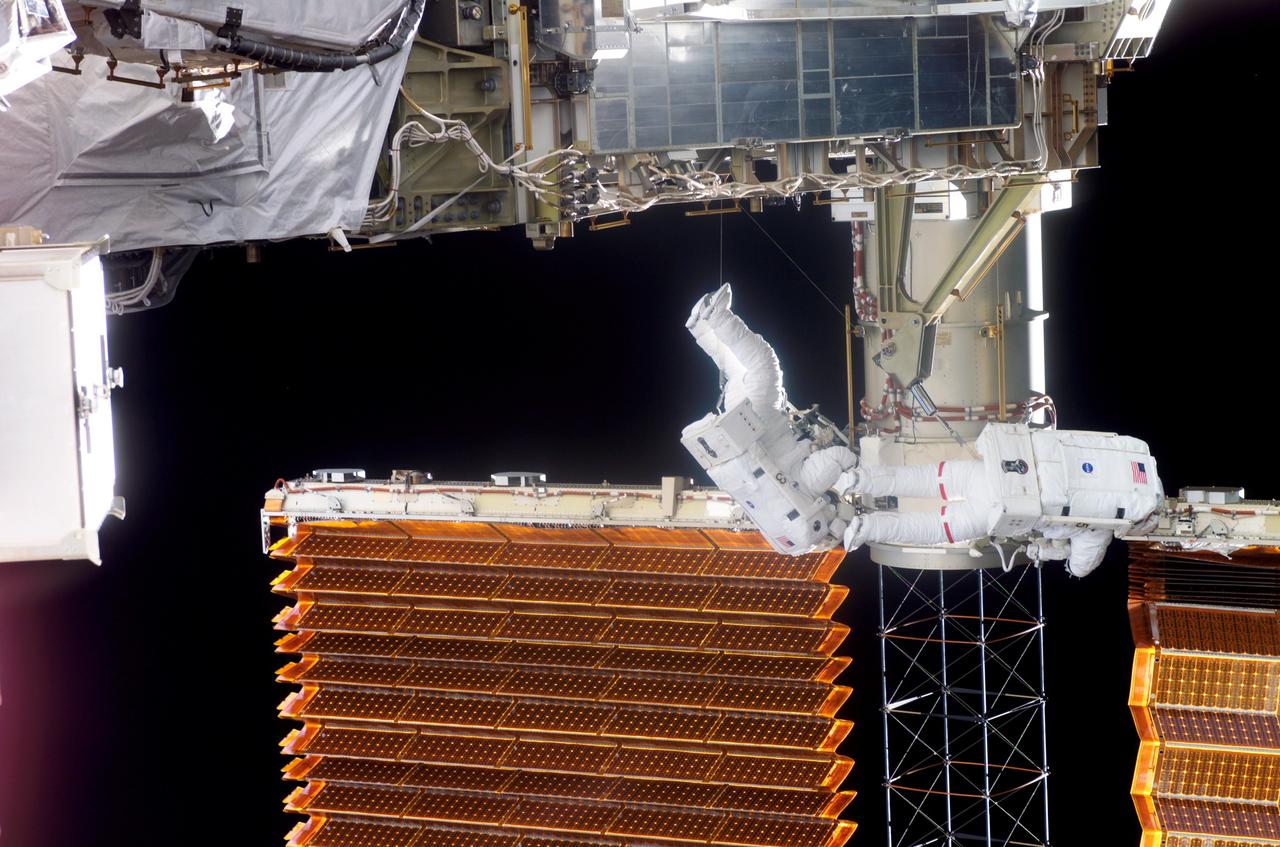
S116-E-06603 (16 Dec. 2006) --- Astronauts Robert L. Curbeam, Jr., (red stripes), STS-116 mission specialist, and Sunita L. Williams, Expedition 14 flight engineer, work near the International Space Station's left P6 solar array wing during the mission's third planned session of extravehicular activity (EVA) as construction resumes on the International Space Station.
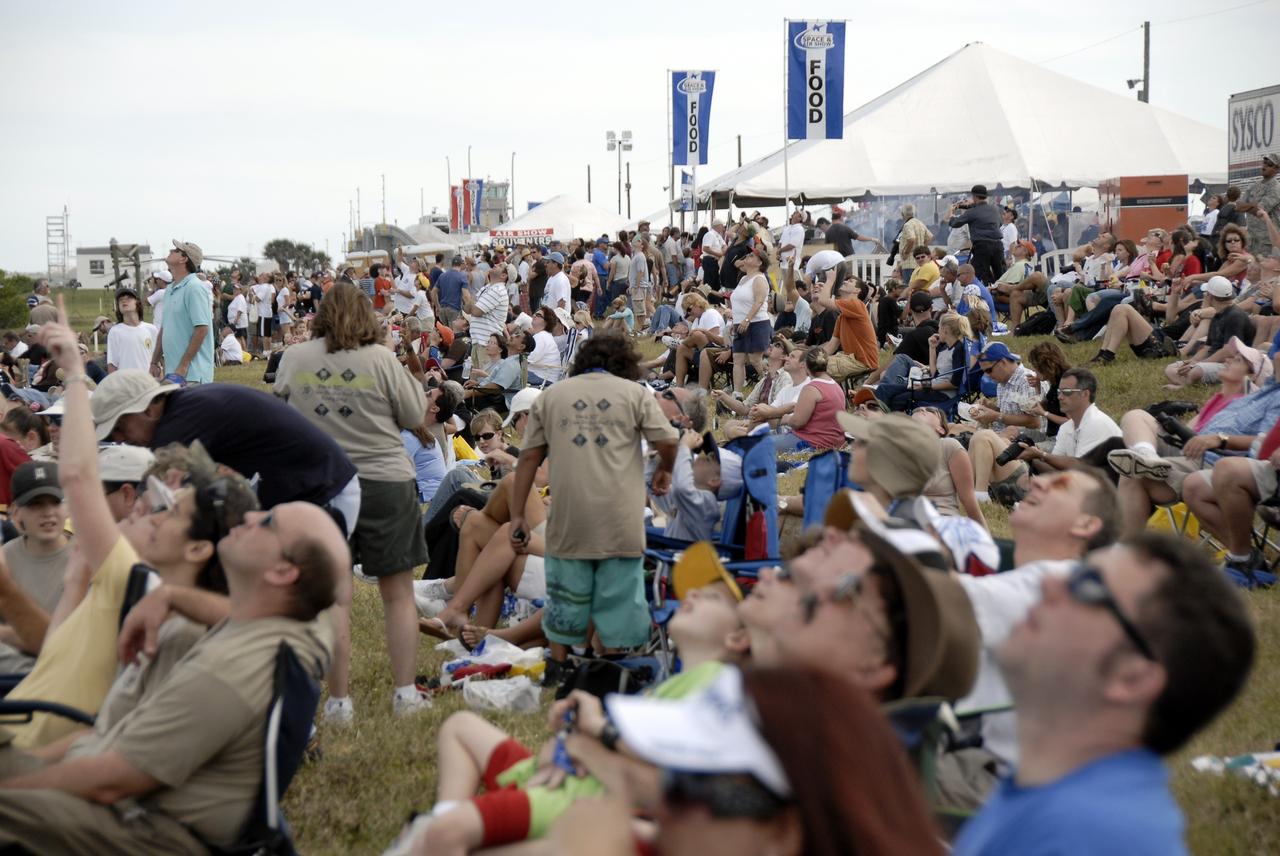
CAPE CANAVERAL, Fla. – Eyes and hands of the crowd of visitors are pointed toward the sky at NASA's Kennedy Space Center in Florida during the Kennedy Space Center Visitor Complex Space and Air Show Nov. 8-9. This year’s show brought together the best in military aircraft, such as the F/A-18 Super Hornet and F-16 Fighting Falcon, coupled with precision pilots and veteran astronauts to celebrate spaceflight and aviation. The event included a water rescue demonstration by the 920th Rescue Wing. Photo credit: NASA/Kim Shiflett
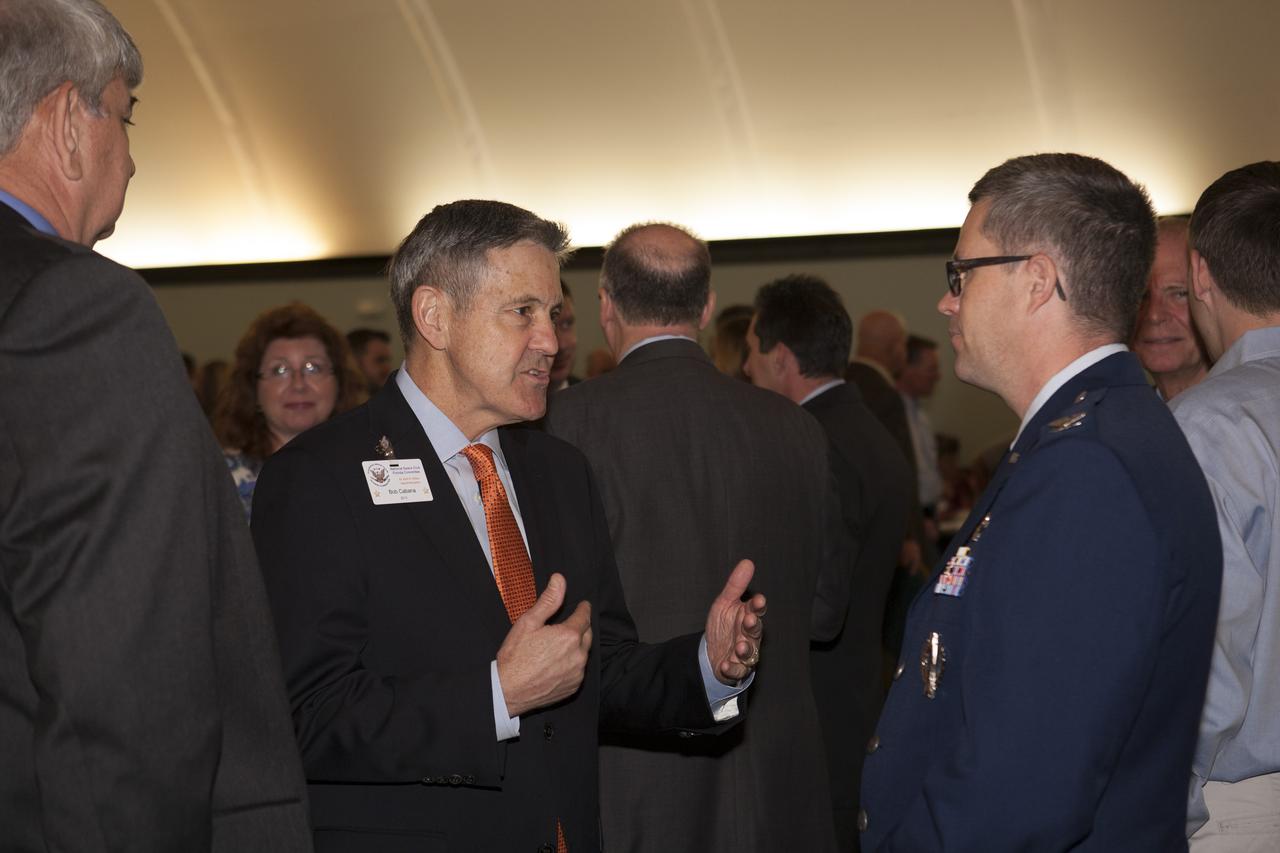
Bob Cabana, center, director of NASA's Kennedy Space Center in Florida, in discussion with Col. Shawn Fairhurst, vice commander of the 45th Space Wing during the National Space Club Florida Committee's luncheon in Cape Canaveral. Cabana, a former astronaut, was the keynote speaker for the luncheon and delivered an update on Kennedy's future as the premier launch center for NASA and other users.
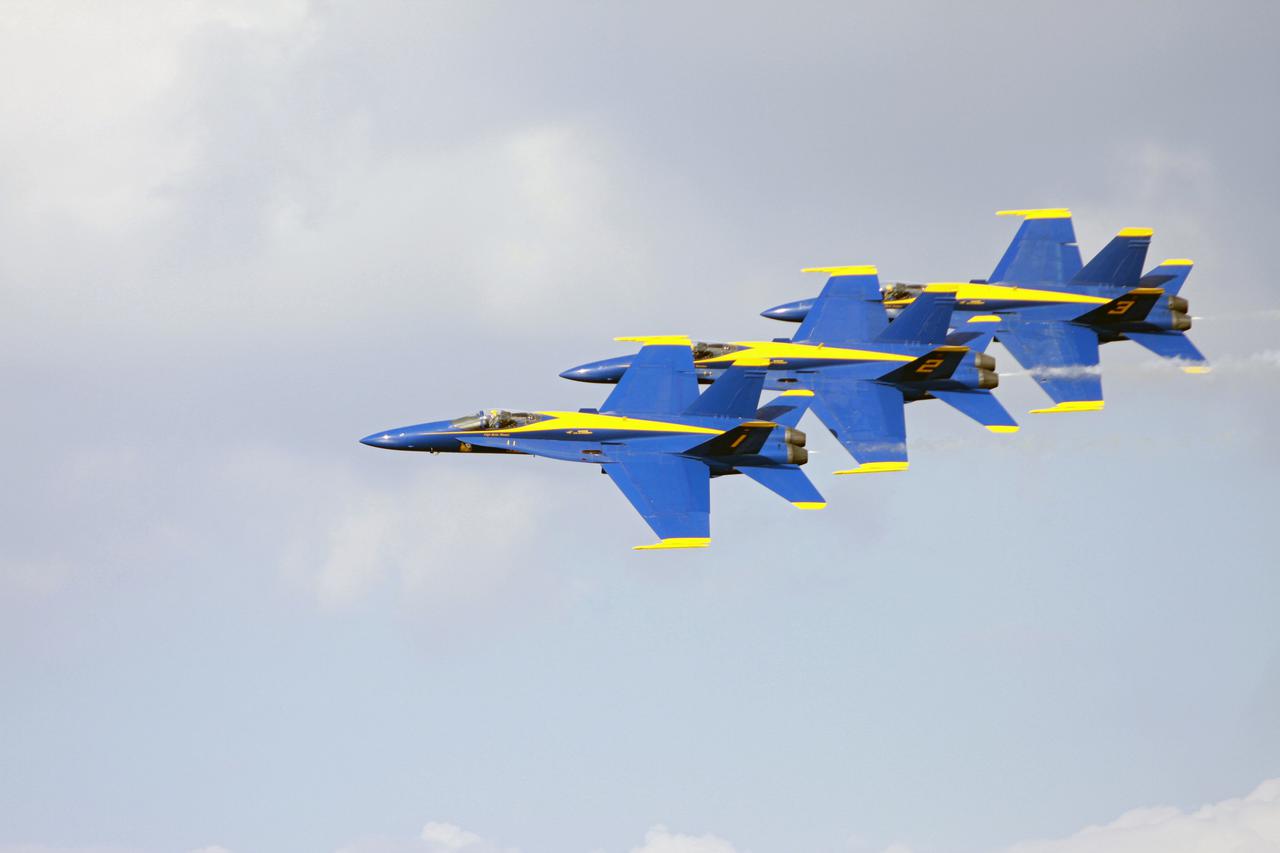
CAPE CANAVERAL, Fla. – The U.S. Navy's Blue Angels perform their tight maneuvers over NASA's Kennedy Space Center in Florida during the Kennedy Space Center Visitor Complex Space and Air Show held Nov. 8-9. This year’s show brought together the best in military aircraft, such as the F_A-18 Super Hornet and F-16 Fighting Falcon, coupled with precision pilots and veteran astronauts to celebrate spaceflight and aviation. The event included a water rescue demonstration by the 920th Rescue Wing. Photo credit: NASA_Troy Cryder
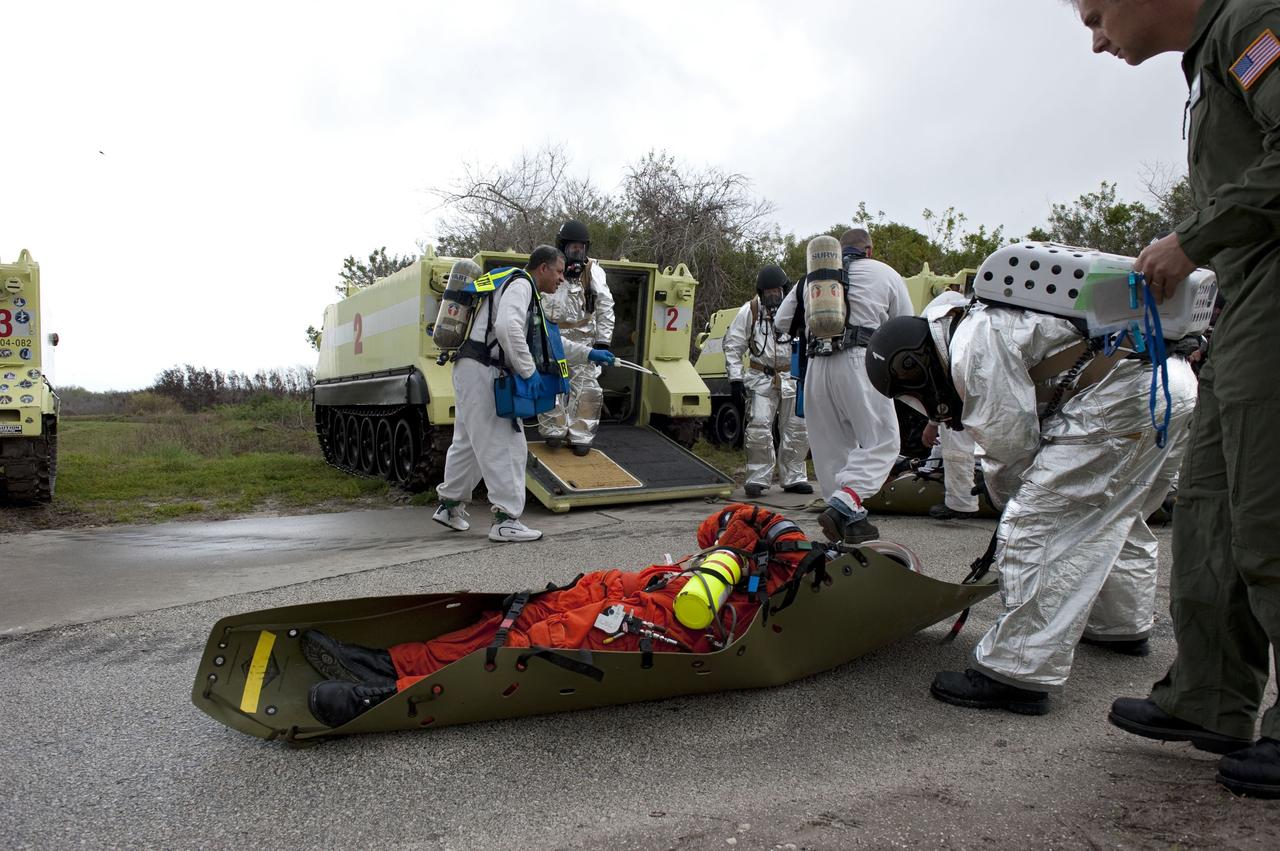
CAPE CANAVERAL, Fla. – An emergency exit, or Mode II/IV, exercise is under way near Launch Pad 39A at NASA's Kennedy Space Center in Florida. The exercise involves NASA fire rescue personnel, volunteers portraying astronauts with simulated injuries, helicopters and personnel from the Air Force’s 920th Rescue Wing, and medical trauma teams at three Central Florida hospitals. The drill allows teams to practice an emergency response at the launch pad, including helicopter evacuation to local hospitals. Photo credit: NASA/Kim Shiflett

CAPE CANAVERAL, Fla. – An emergency exit, or Mode II/IV, exercise is under way near Launch Pad 39A at NASA's Kennedy Space Center in Florida. The exercise involves NASA fire rescue personnel, volunteers portraying astronauts with simulated injuries, helicopters and personnel from the Air Force’s 920th Rescue Wing, and medical trauma teams at three Central Florida hospitals. The drill allows teams to practice an emergency response at the launch pad, including helicopter evacuation to local hospitals. Photo credit: NASA/Kim Shiflett
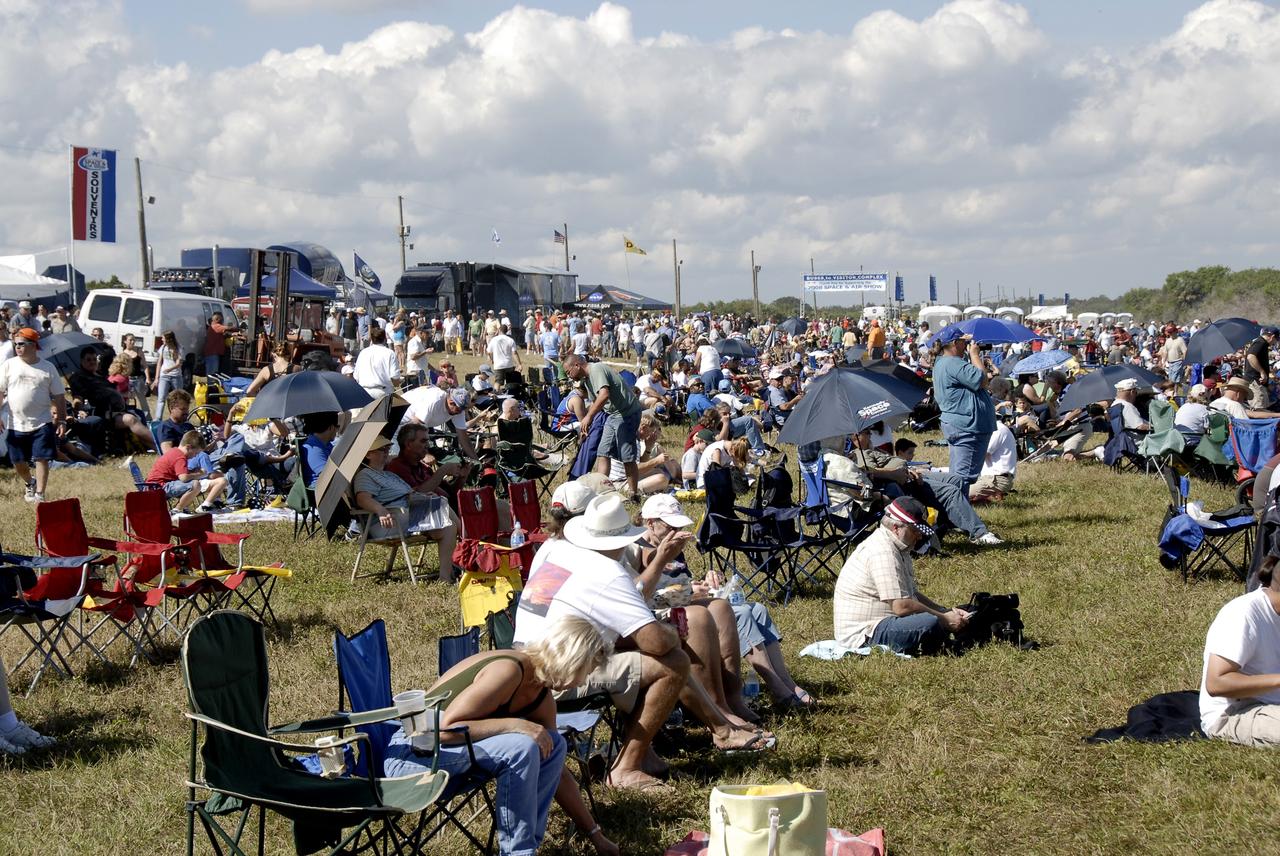
CAPE CANAVERAL, Fla. – Crowds are gathered at NASA's Kennedy Space Center in Florida to watch the U.S. Navy's Blue Angels perform at the Kennedy Space Center Visitor Complex Space and Air Show Nov. 8-9. This year’s show brought together the best in military aircraft, such as the F/A-18 Super Hornet and F-16 Fighting Falcon, coupled with precision pilots and veteran astronauts to celebrate spaceflight and aviation. The event included a water rescue demonstration by the 920th Rescue Wing. Photo credit: NASA/Kim Shiflett
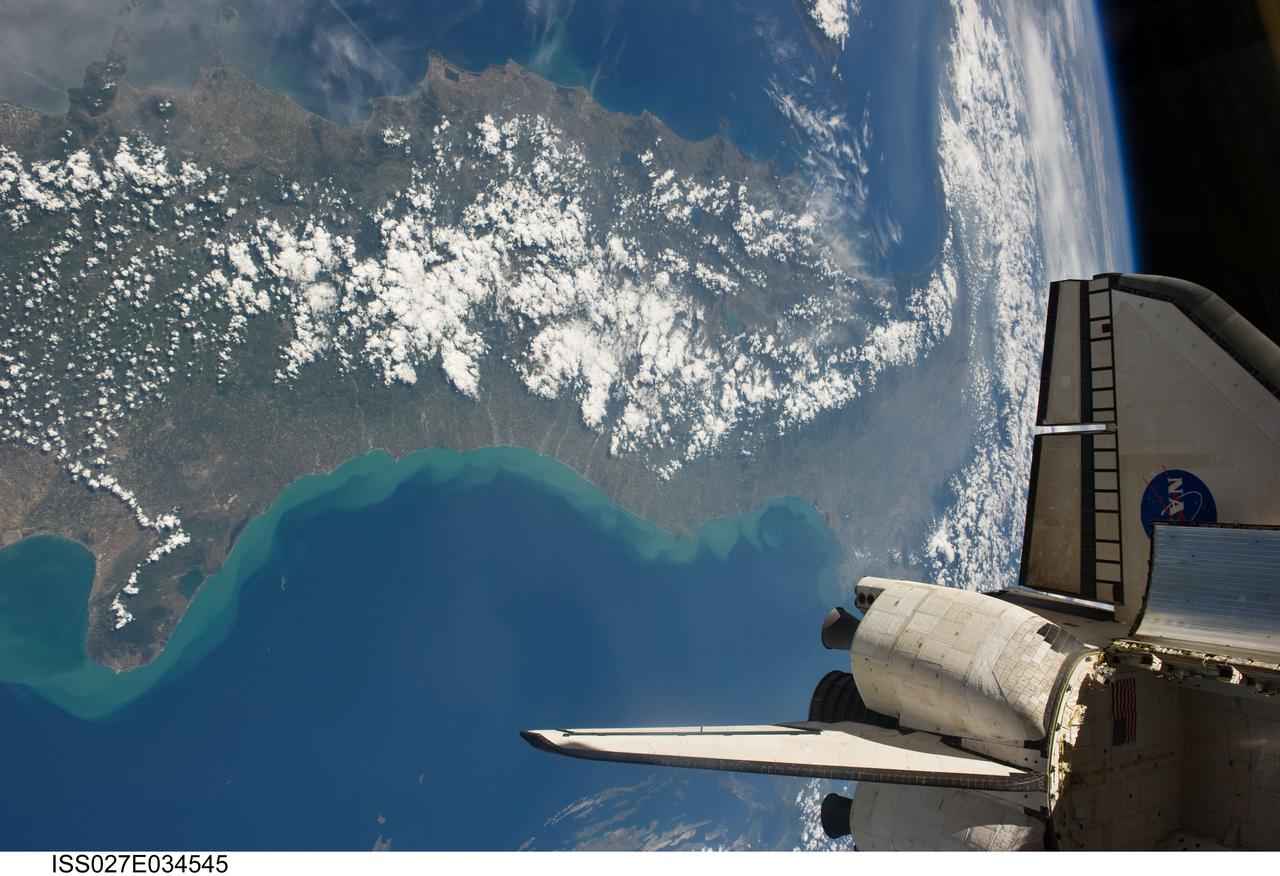
ISS027-E-034545(19 May 2011) --- Backdropped against a scene showing part of Italy, this image featuring an aft section of the space shuttle Endeavour in the foreground was photographed by an Expedition 27 crew member aboard the International Space Station while the two spacecraft were docked. The vertical stabilizer, the orbital maneuvering system (OMS) pods and the lower part of the port wing are seen. Twelve astronauts and cosmonauts were busy aboard the joint complex, moving hardware and preparing for a May 20 space walk.
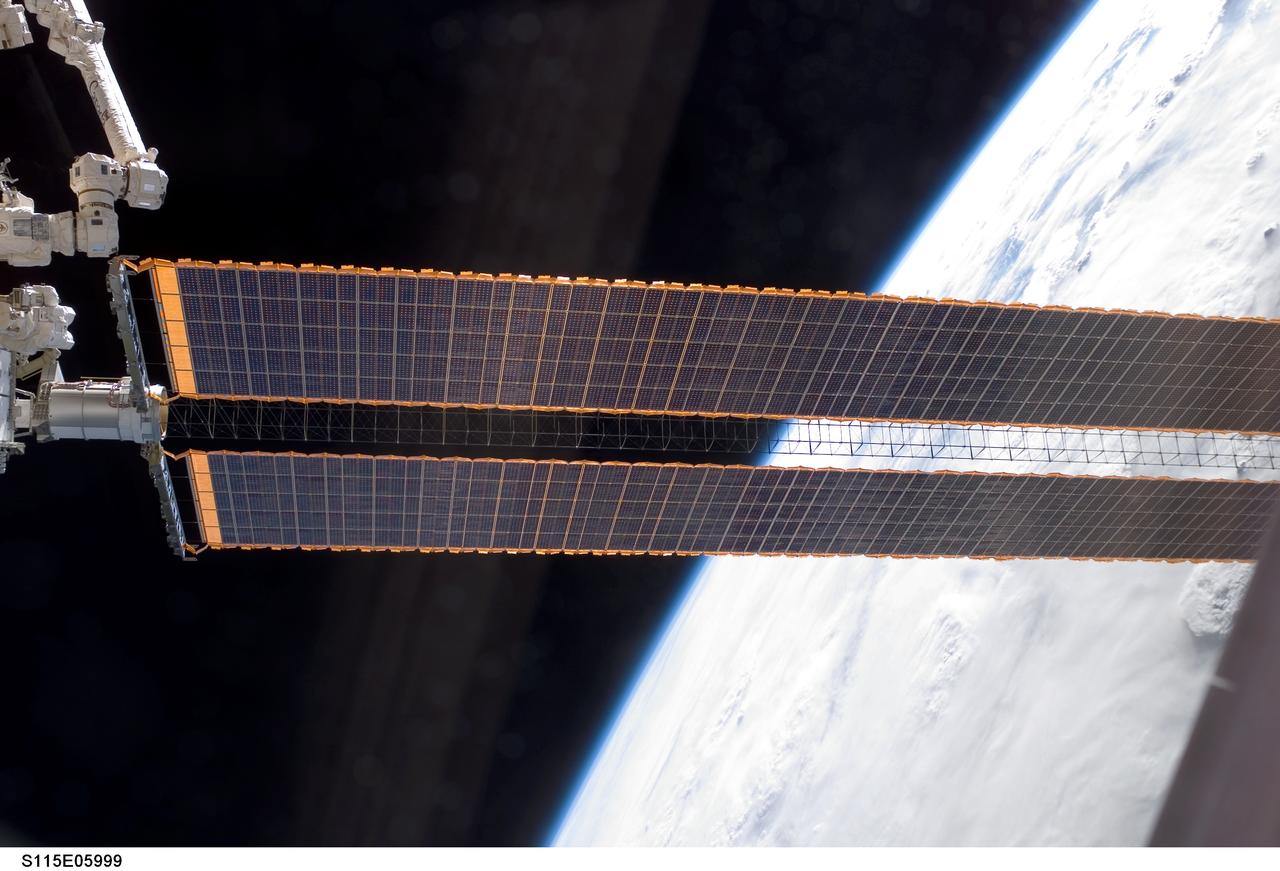
S115-E-05999 (14 Sept. 2006) --- Space Shuttle Atlantis astronauts spread a second set of wings for the International Space Station today. The new solar arrays were fully extended at 7:44 a.m CDT. The new arrays span a total of 240 feet and have a width of 38 feet. They are attached to the station's newest component, the P3/P4 integrated truss segment. The installation of the P3/P4, which occurred Tuesday, and the deployment of the arrays set the stage for future expansion of the station.
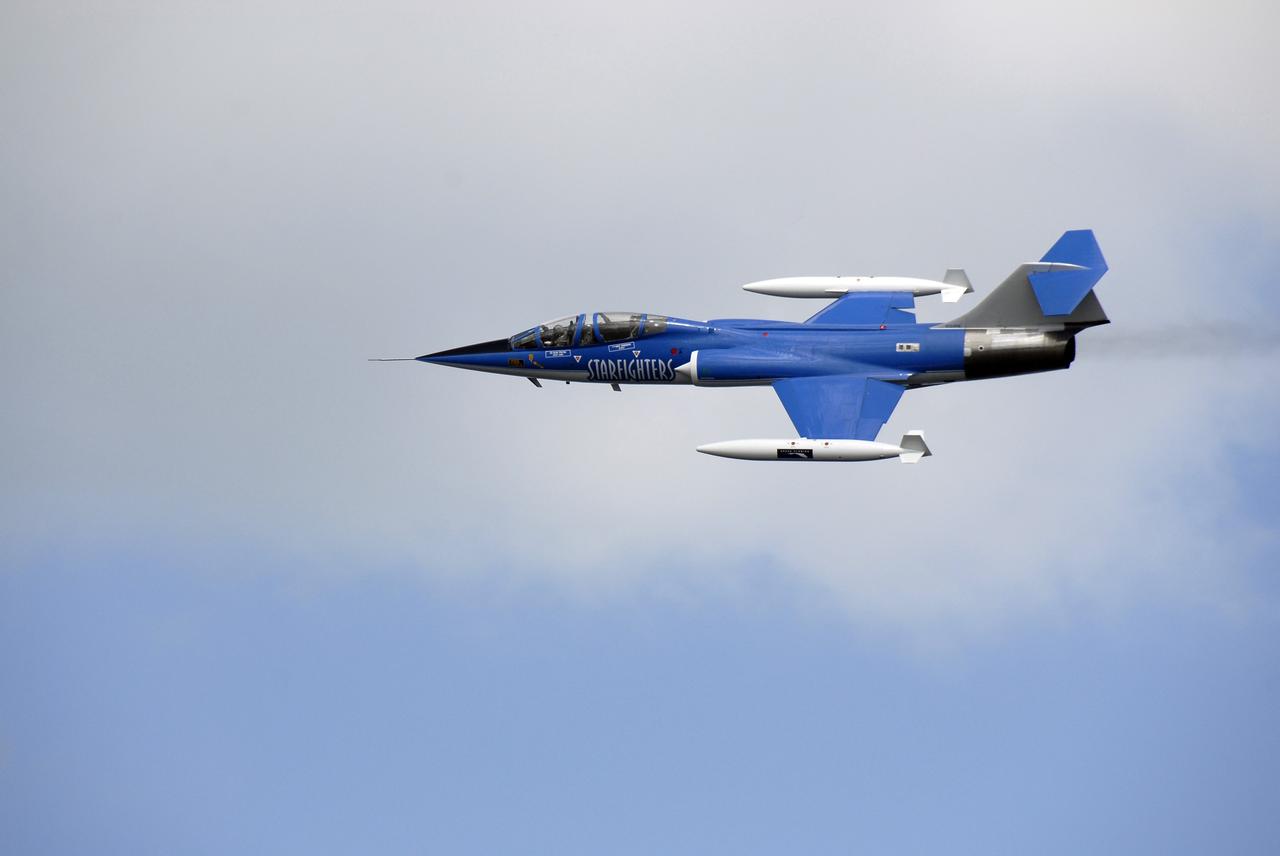
CAPE CANAVERAL, Fla. – An F-104G Starfighter races through the sky over NASA's Kennedy Space Center in Florida during the Kennedy Space Center Visitor Complex Space and Air Show Nov. 8-9. This year’s show brought together the best in military aircraft, such as the F/A-18 Super Hornet and F-16 Fighting Falcon, coupled with precision pilots and veteran astronauts to celebrate spaceflight and aviation. The event included a water rescue demonstration by the 920th Rescue Wing. Photo credit: NASA/Kim Shiflett
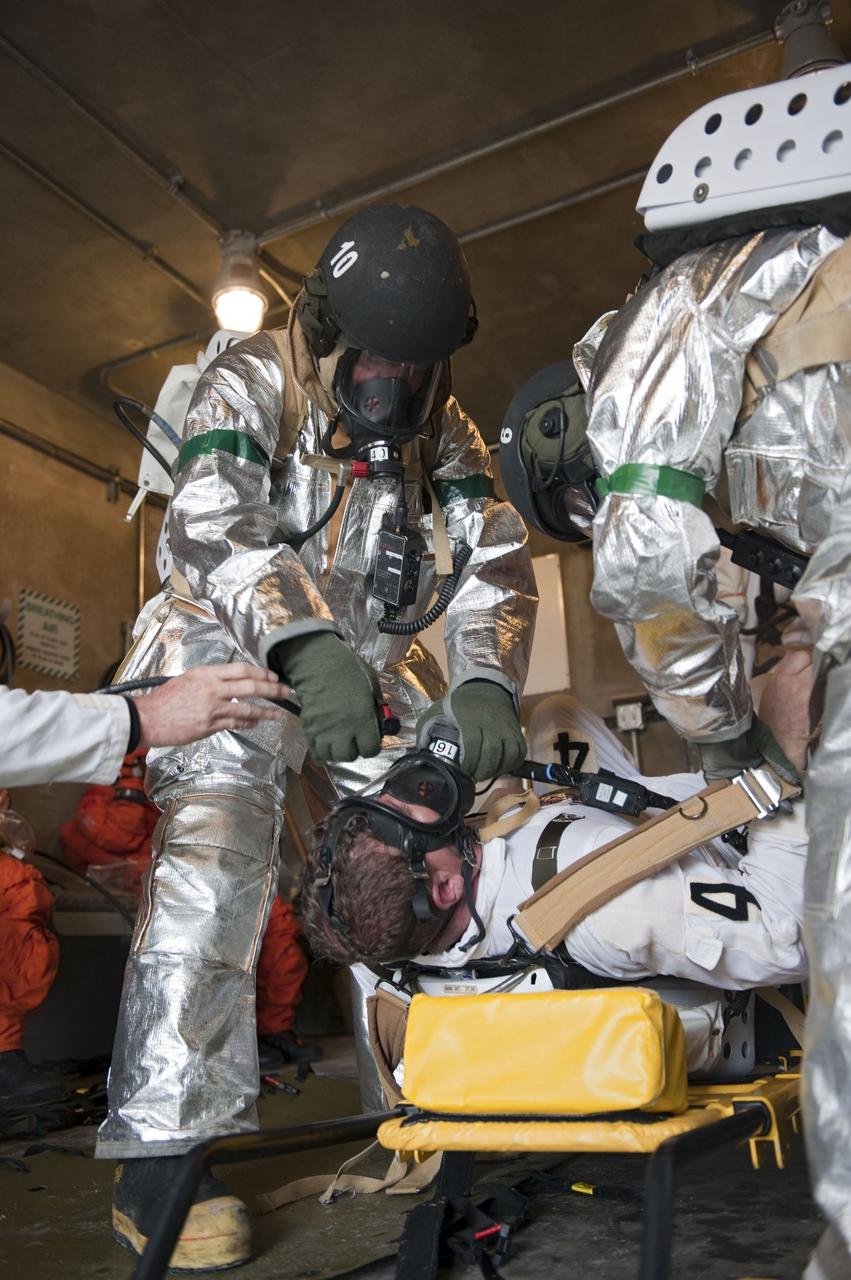
CAPE CANAVERAL, Fla. – An emergency exit, or Mode II/IV, exercise is under way in a bunker of Launch Pad 39A at NASA's Kennedy Space Center in Florida. The exercise involves NASA fire rescue personnel, volunteers portraying astronauts with simulated injuries, helicopters and personnel from the Air Force’s 920th Rescue Wing, and medical trauma teams at three Central Florida hospitals. The drill allows teams to practice an emergency response at the launch pad, including helicopter evacuation to local hospitals. Photo credit: NASA/Kim Shiflett
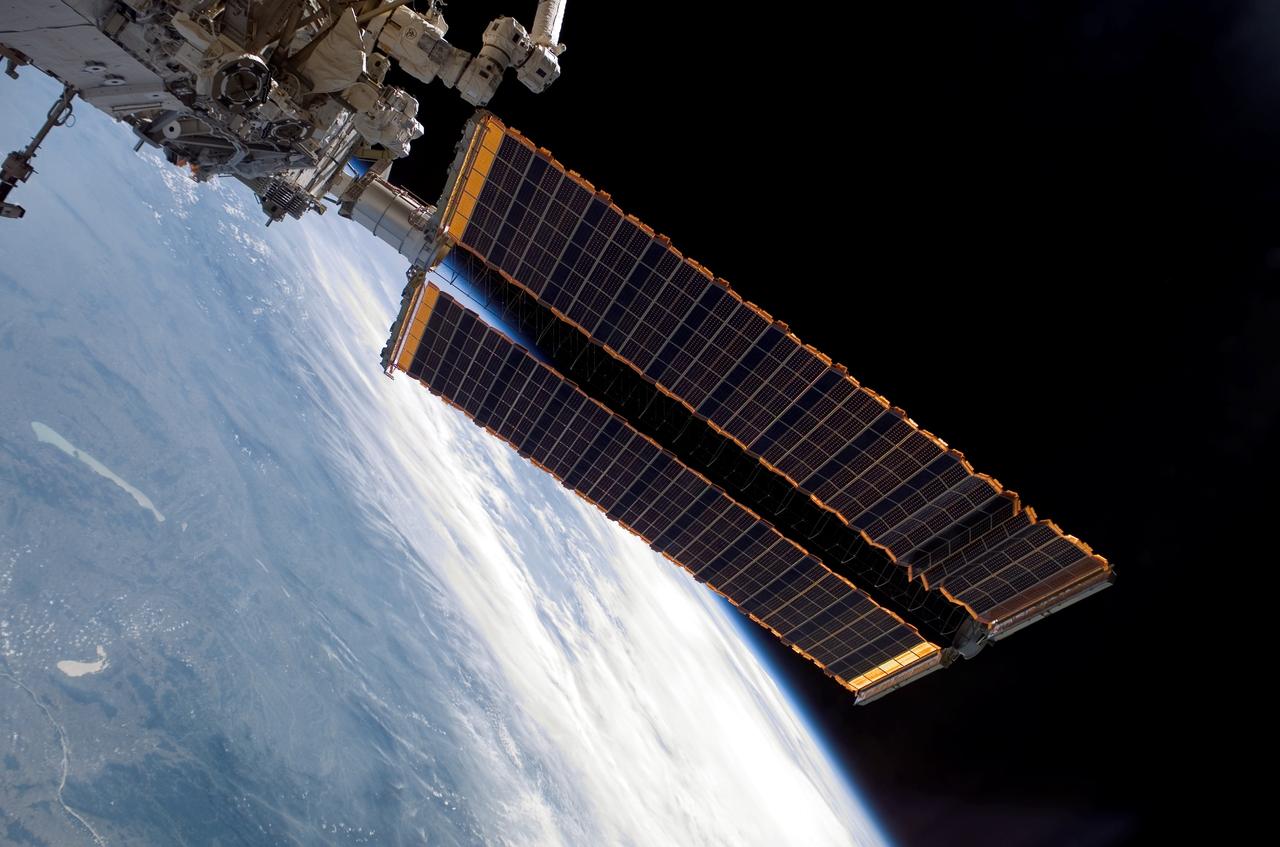
S115-E-05996 (14 Sept. 2006) --- Space Shuttle Atlantis astronauts spread a second set of wings for the International Space Station today. The new solar arrays were fully extended at 7:44 a.m. (CDT). The new arrays span a total of 240 feet and have a width of 38 feet. They are attached to the station's newest component, the P3/P4 integrated truss segment. The installation of the P3/P4, which occurred Tuesday and the deployment of the arrays set the stage for future expansion of the station.
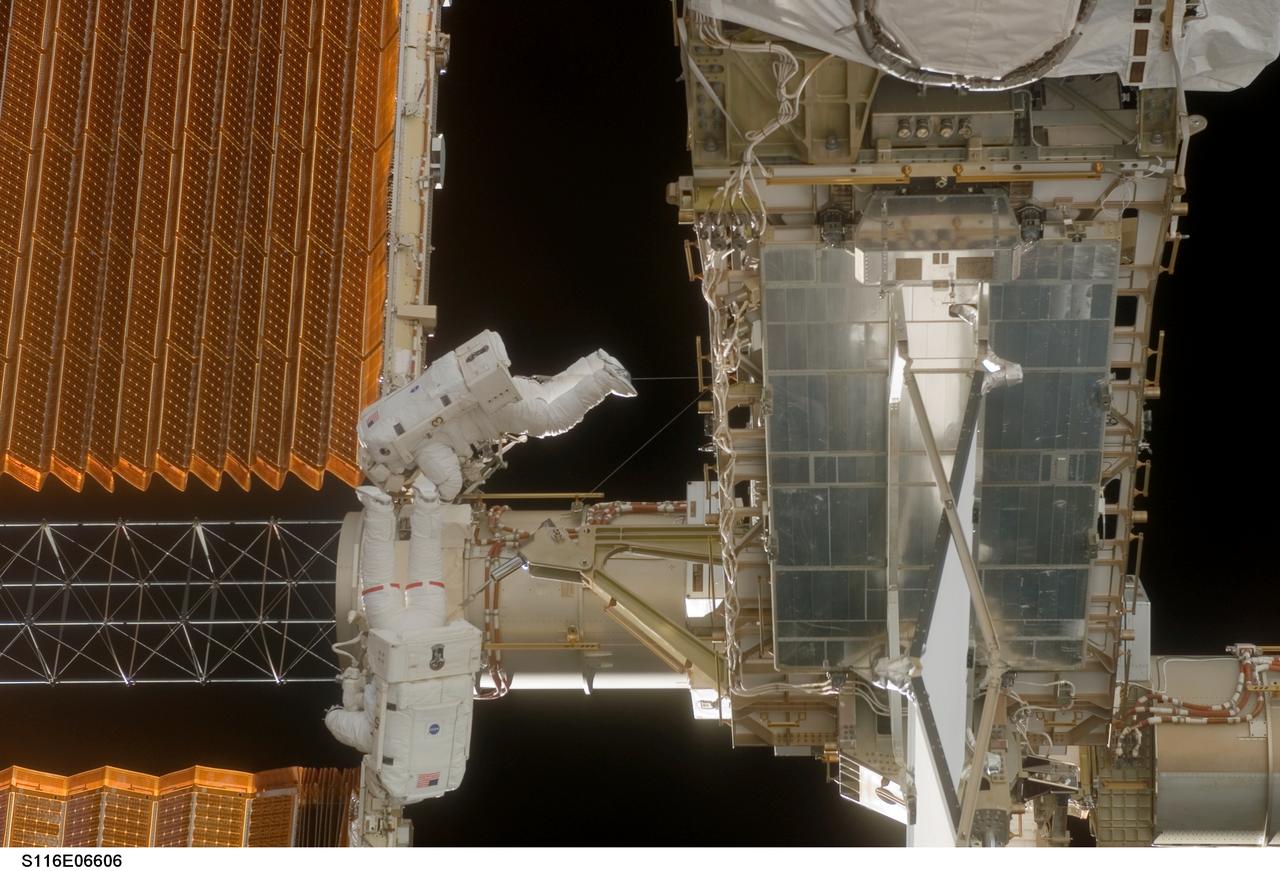
S116-E-06606 (16 Dec. 2006) --- Astronauts Robert L. Curbeam, Jr., (red stripes), STS-116 mission specialist, and Sunita L. Williams, Expedition 14 flight engineer, work near the International Space Station's left P6 solar array wing during the mission's third planned session of extravehicular activity (EVA) as construction resumes on the International Space Station.
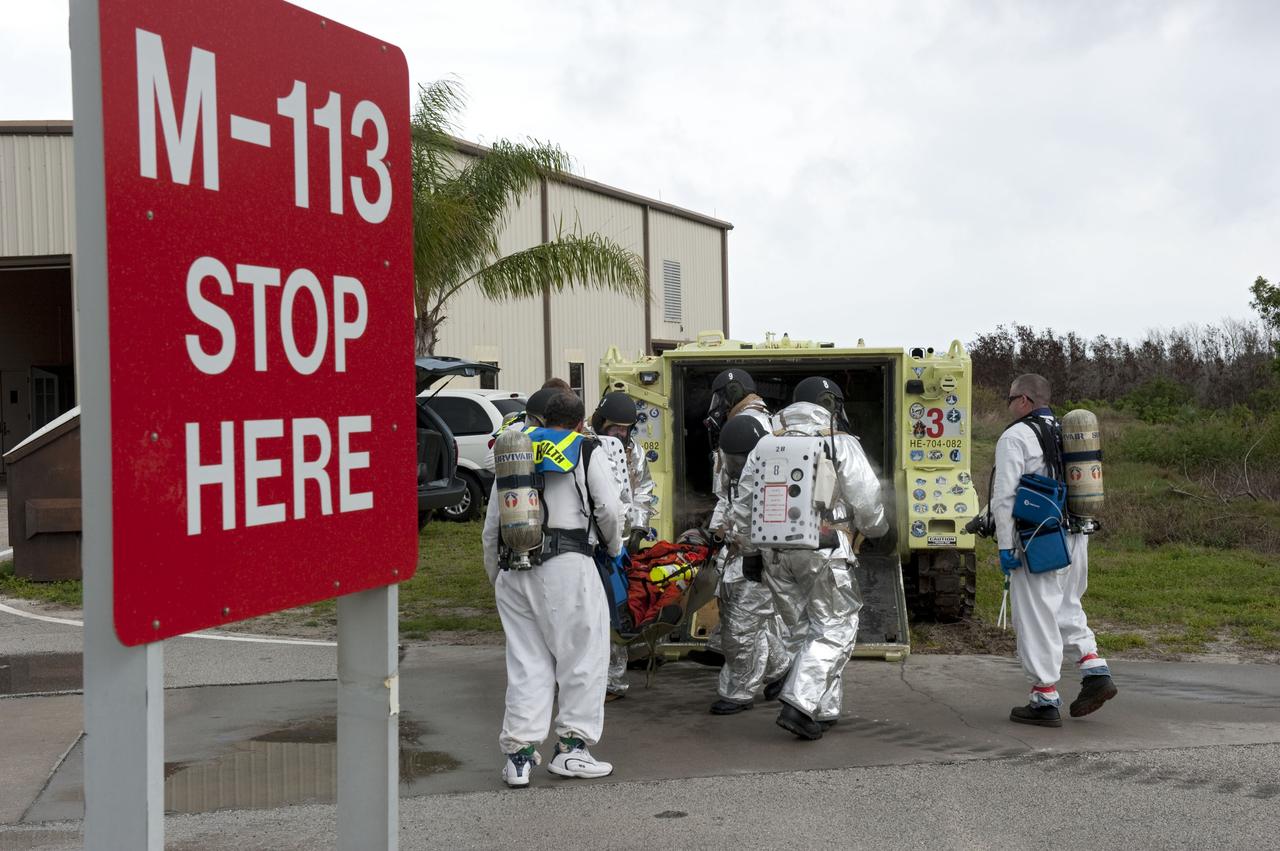
CAPE CANAVERAL, Fla. – An emergency exit, or Mode II/IV, exercise is under way near Launch Pad 39A at NASA's Kennedy Space Center in Florida. The exercise involves NASA fire rescue personnel, volunteers portraying astronauts with simulated injuries, helicopters and personnel from the Air Force’s 920th Rescue Wing, and medical trauma teams at three Central Florida hospitals. The drill allows teams to practice an emergency response at the launch pad, including helicopter evacuation to local hospitals. Photo credit: NASA/Kim Shiflett
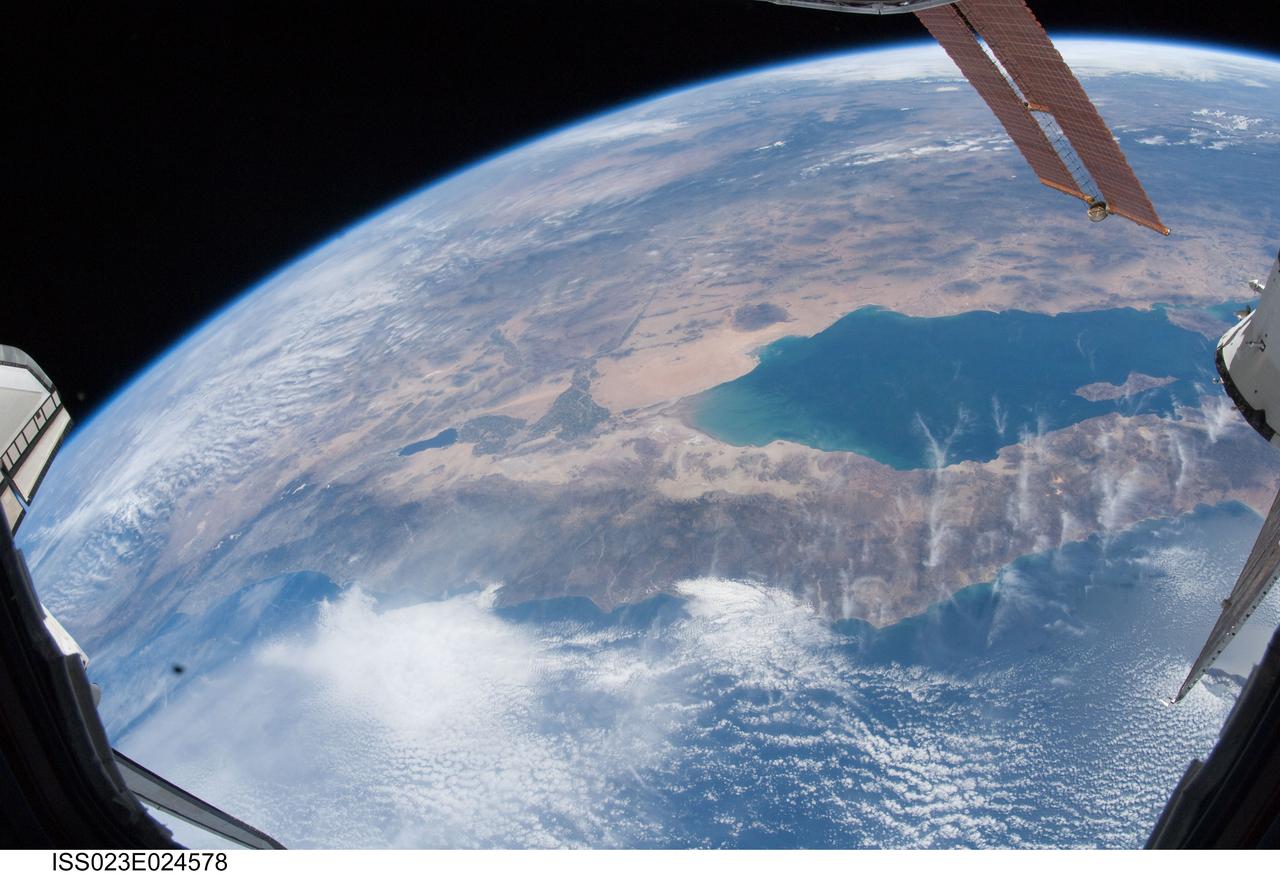
ISS023-E-024578 (15 April 2010) --- The Gulf of California (also known as the Sea of Cortez) and the Salton Sea, share this scene with a tiny part of the space shuttle Discovery (starboard wing at left) and the International Space Station (solar panels, upper right). The two spacecraft have been docked for several days as an aggregation of 13 astronauts and cosmonauts continue work on the orbital outpost. They will undock over the weekend and the shuttle is scheduled to return its crew of seven back home on Earth on April 19.
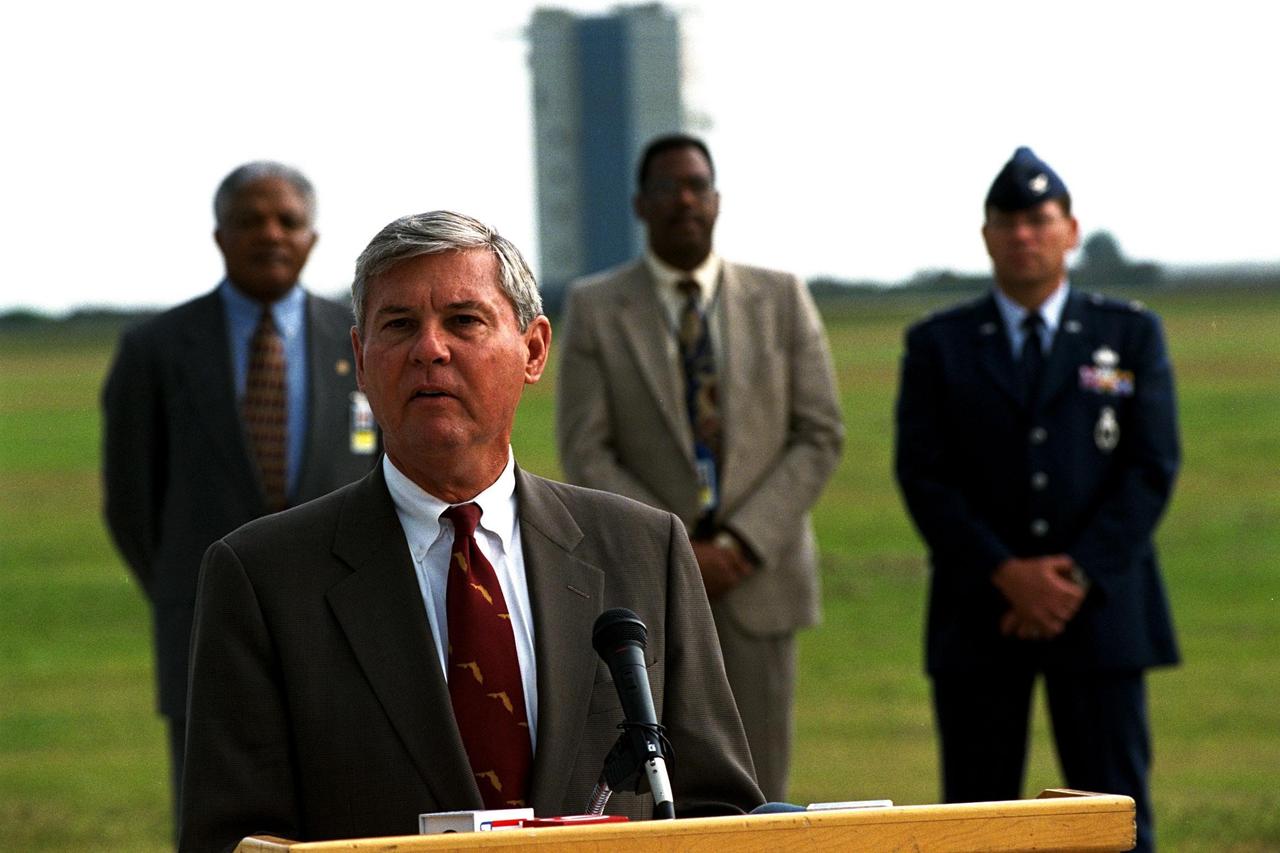
United States Senator Bob Graham of Florida announces important new federal legislation designed to support the nation's continued space industry development. The announcement was made at Launch Complex 46 at the Cape Canaveral Air Station, the dual-use Navy facility recently modified for commercial launches by the State of Florida. In the background, from left to right, are Hugh Brown, Chairman, Spaceport Florida Authority; Charles Johnson, Athena Program Manager, Lockheed Martin Astronautics; and Col. Ron Larivee, Vice Commander, 45th Space Wing
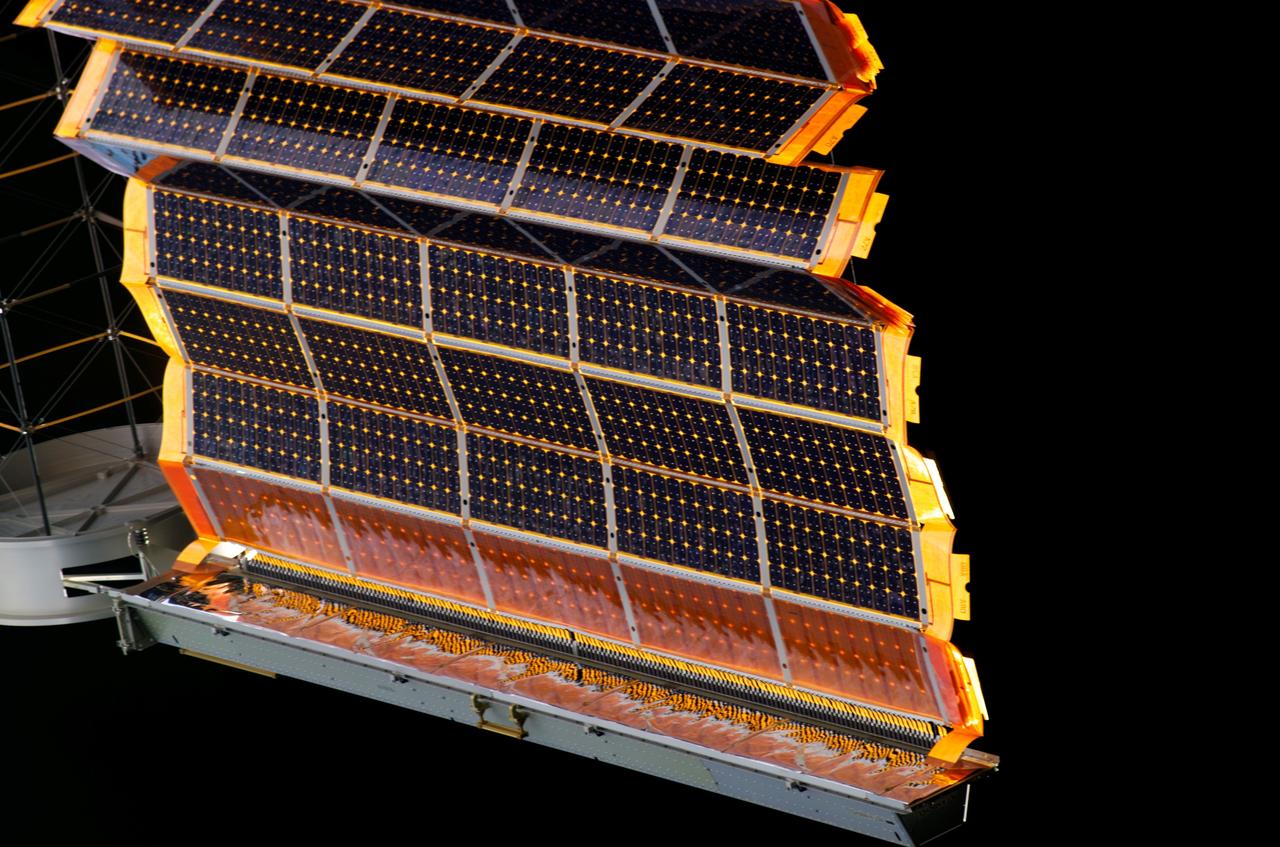
S115-E-06184 (14 Sept. 2006) --- Space Shuttle Atlantis astronauts spread a second set of wings for the International Space Station today. The new solar arrays were fully extended at 7:44 a.m. (CDT). The new arrays span a total of 240 feet and have a width of 38 feet. They are attached to the station's newest component, the P3/P4 integrated truss segment. The installation of the P3/P4, which occurred Sept. 12 and the deployment of the arrays set the stage for future expansion of the station.
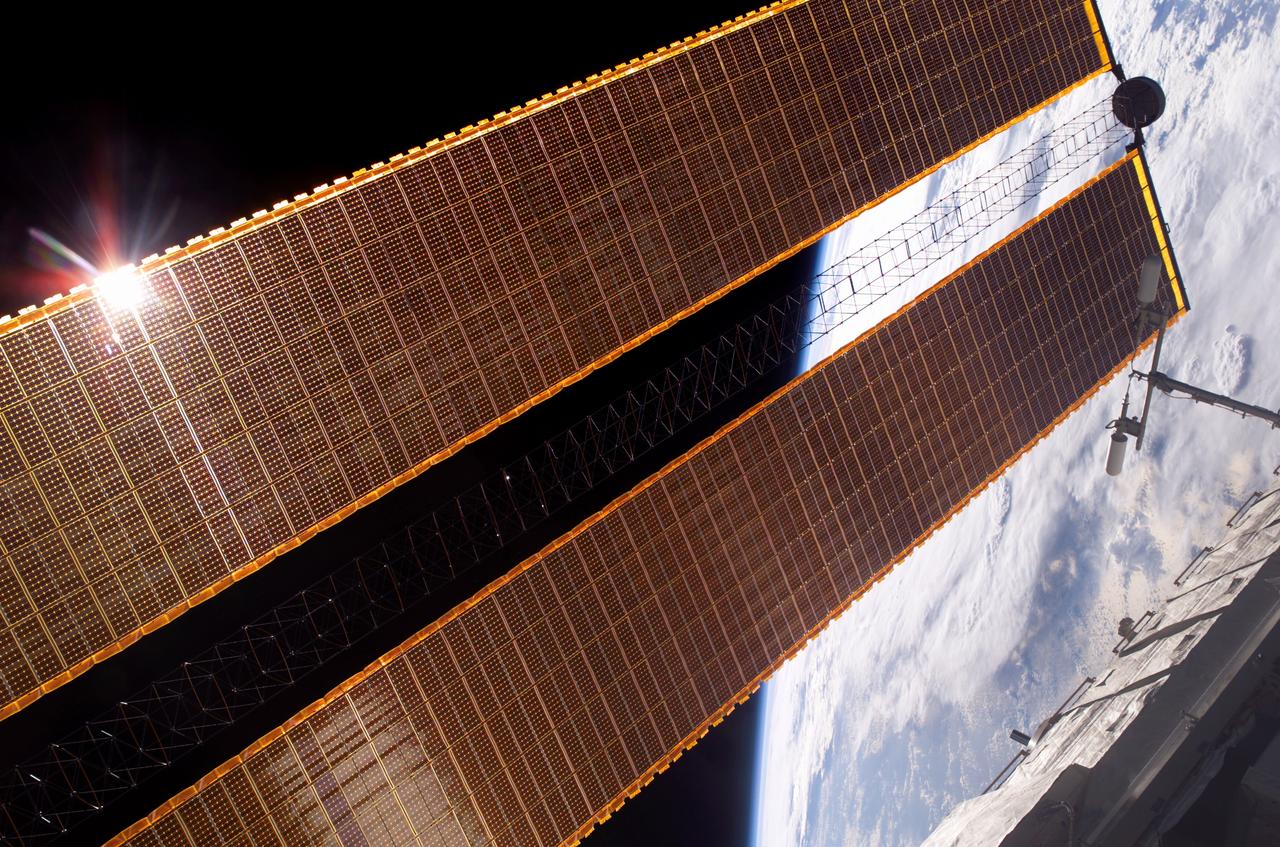
S115-E-06052 (14 Sept. 2006) --- Space Shuttle Atlantis astronauts spread a second set of wings for the International Space Station today. The new solar arrays were fully extended at 7:44 a.m. (CDT). The new arrays span a total of 240 feet and have a width of 38 feet. They are attached to the station's newest component, the P3/P4 integrated truss segment. The installation of the P3/P4, which occurred Tuesday, and the deployment of the arrays set the stage for future expansion of the station.
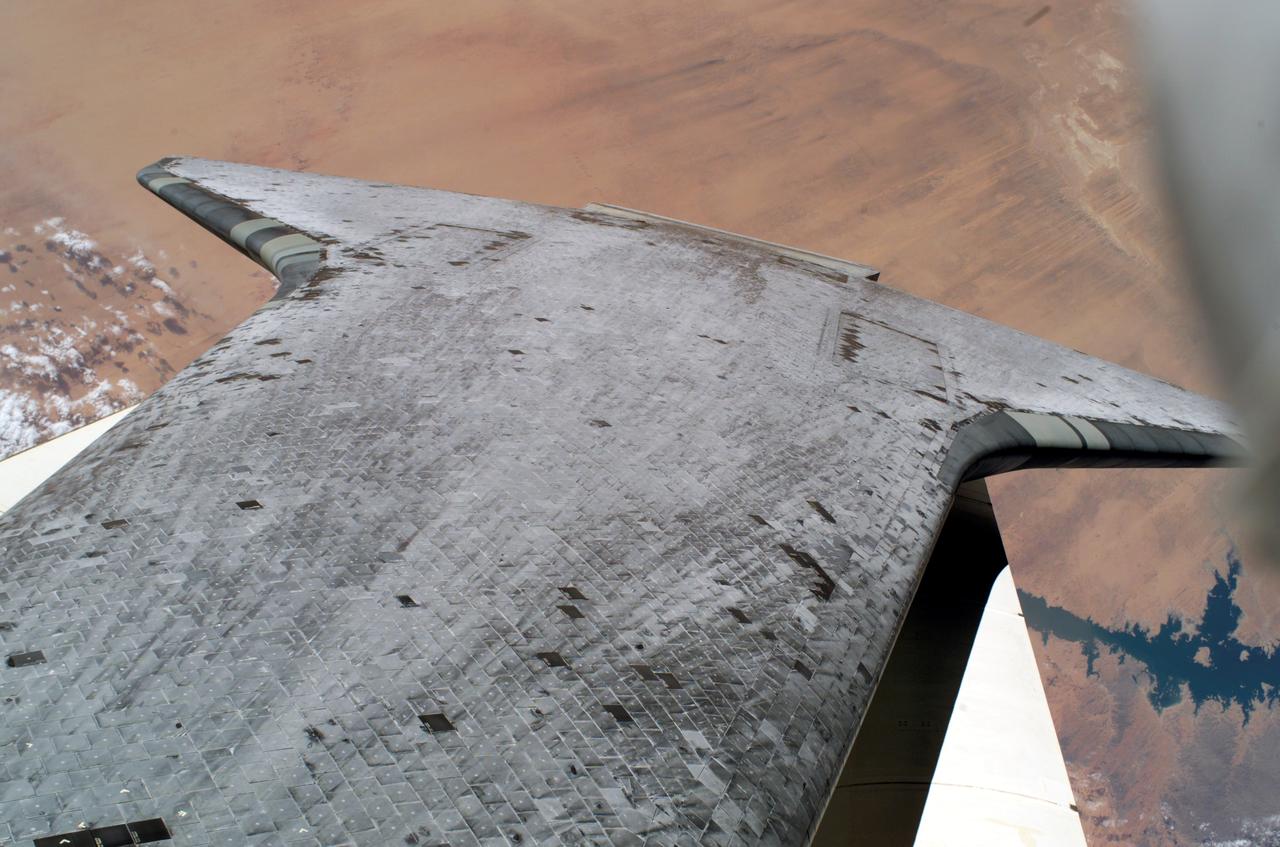
S114-E-6396 (3 August 2005) --- Space Shuttle Discovery’s underside thermal protection tiles are featured in this image photographed by astronaut Stephen K. Robinson, STS-114 mission specialist, during the mission’s third session of extravehicular activities (EVA). Lake Nasser along the Nile River, Egypt is visible near Discovery’s starboard wing.
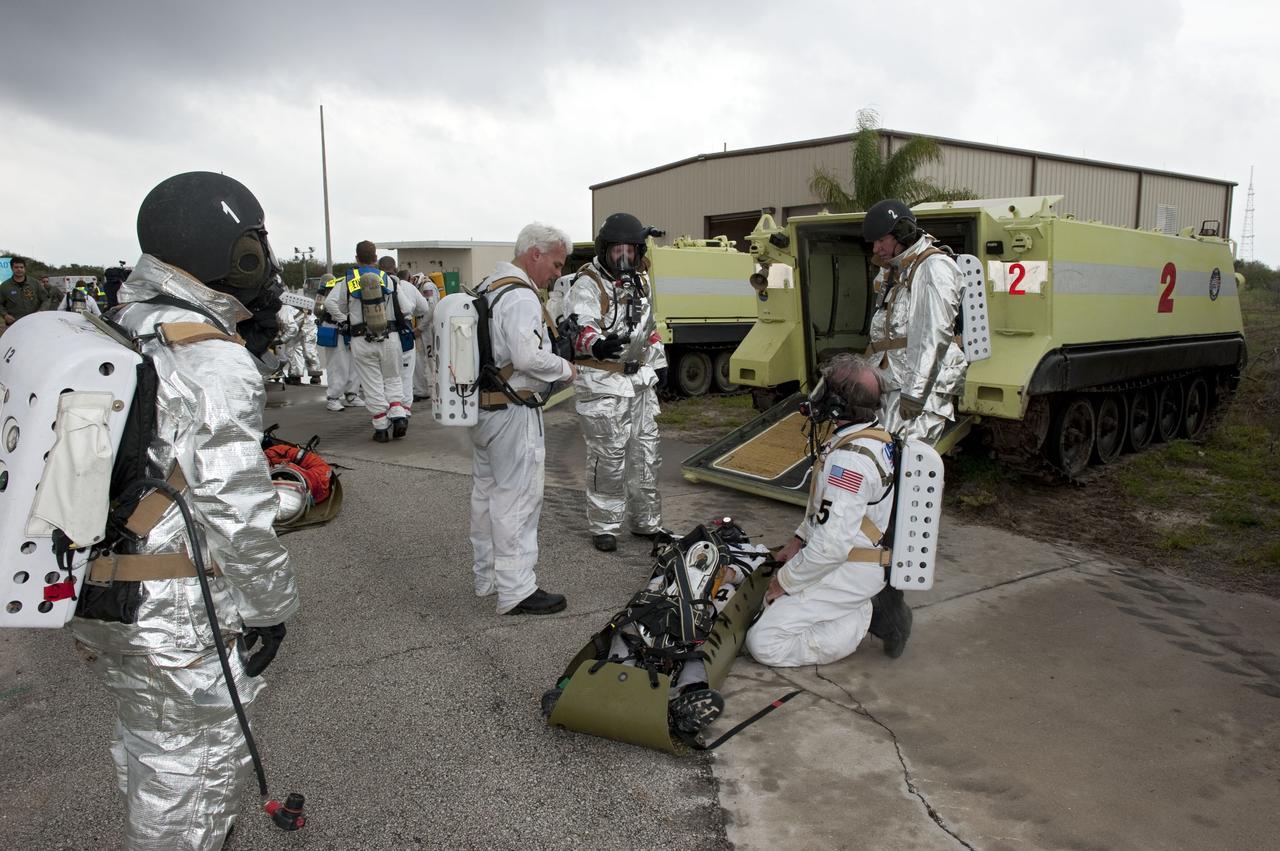
CAPE CANAVERAL, Fla. – An emergency exit, or Mode II/IV, exercise is under way near Launch Pad 39A at NASA's Kennedy Space Center in Florida. The exercise involves NASA fire rescue personnel, volunteers portraying astronauts with simulated injuries, helicopters and personnel from the Air Force’s 920th Rescue Wing, and medical trauma teams at three Central Florida hospitals. The drill allows teams to practice an emergency response at the launch pad, including helicopter evacuation to local hospitals. Photo credit: NASA/Kim Shiflett
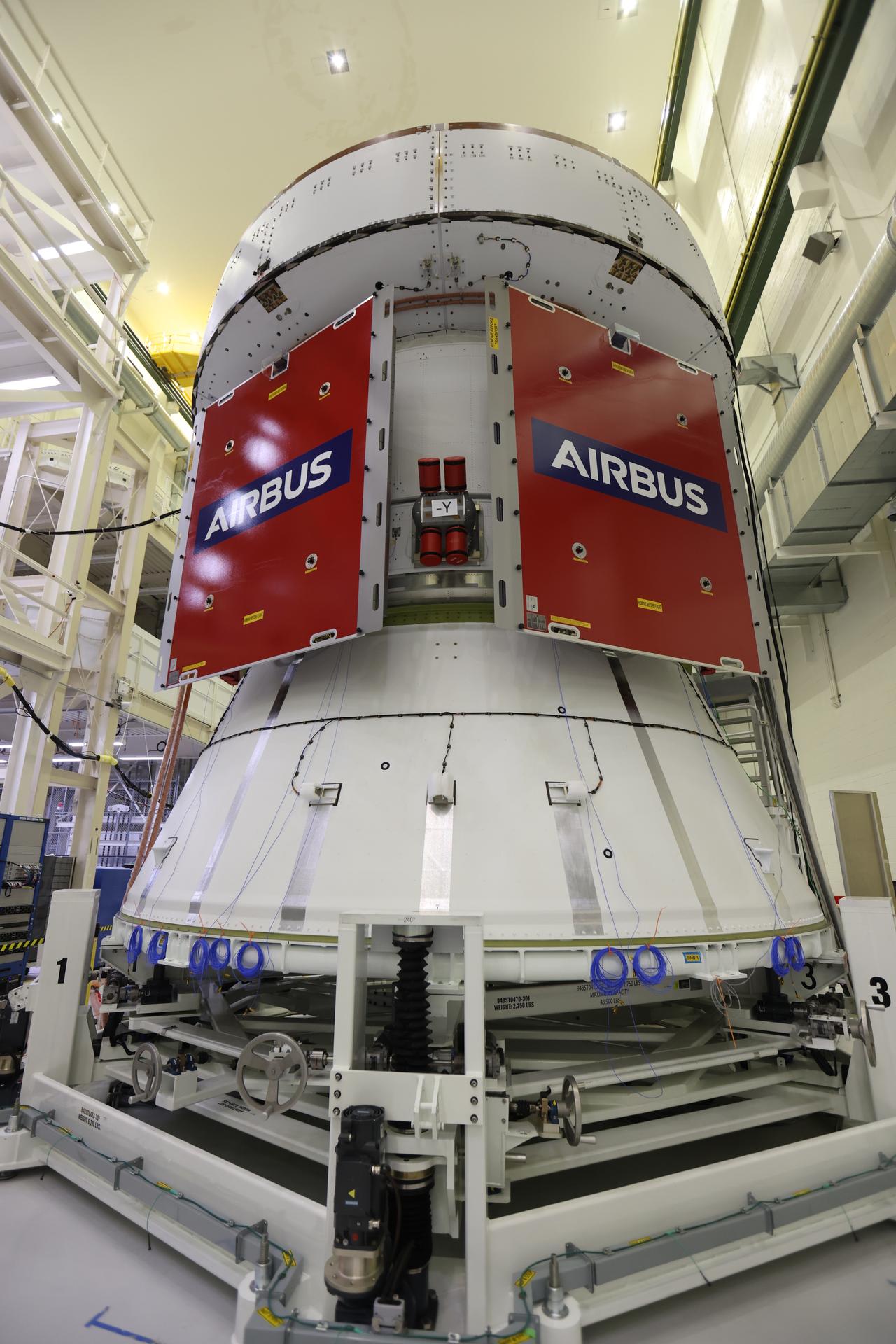
NASA and its partners work on the solar array wings for the agency’s Artemis III Orion spacecraft on Thursday, April 30, 2026, inside the Neil A. Armstrong Operations and Checkout Building at NASA’s Kennedy Space Center in Florida. Orion’s solar arrays, manufactured and installed by ESA (European Space Agency) and its contractor Airbus, have been temporarily installed ahead of acoustic testing on the spacecraft. The Artemis III mission will launch astronauts in 2027 to Earth’s orbit aboard the Orion spacecraft on top of the SLS (Space Launch System) rocket to test rendezvous and docking capabilities between Orion and commercial spacecraft needed to land Artemis IV astronauts on the Moon in 2028.
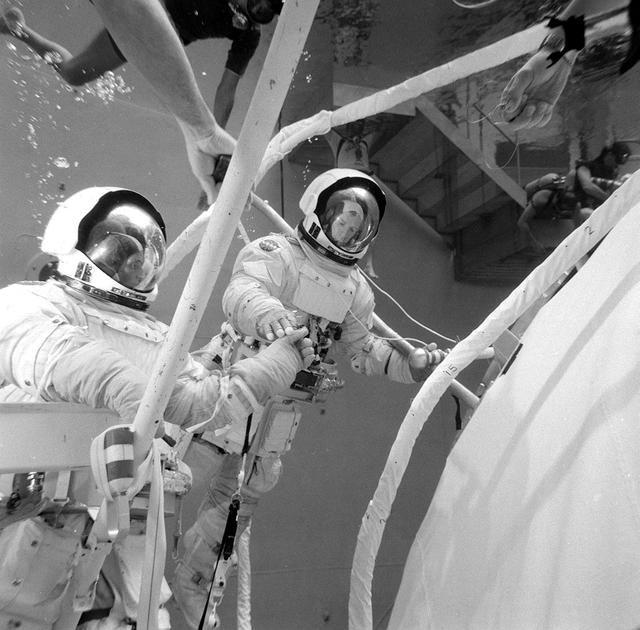
This photograph was taken during testing of an emergency procedure to free jammed solar array panels on the Skylab workshop. A metal strap became tangled over one of the folded solar array panels when Skylab lost its micrometeoroid shield during the launch. This photograph shows astronauts Schweickart and Gibson in the Marshall Space Flight Center (MSFC) Neutral Buoyancy Simulator (NBS) using various cutting tools and methods developed by the MSFC to free the jammed solar wing. Extensive testing and many hours of practice in simulators such as the NBS tank helped prepare the Skylab crewmen for extravehicular performance in the weightless environment. This huge water tank simulated the weightless environment that the astronauts would encounter in space.
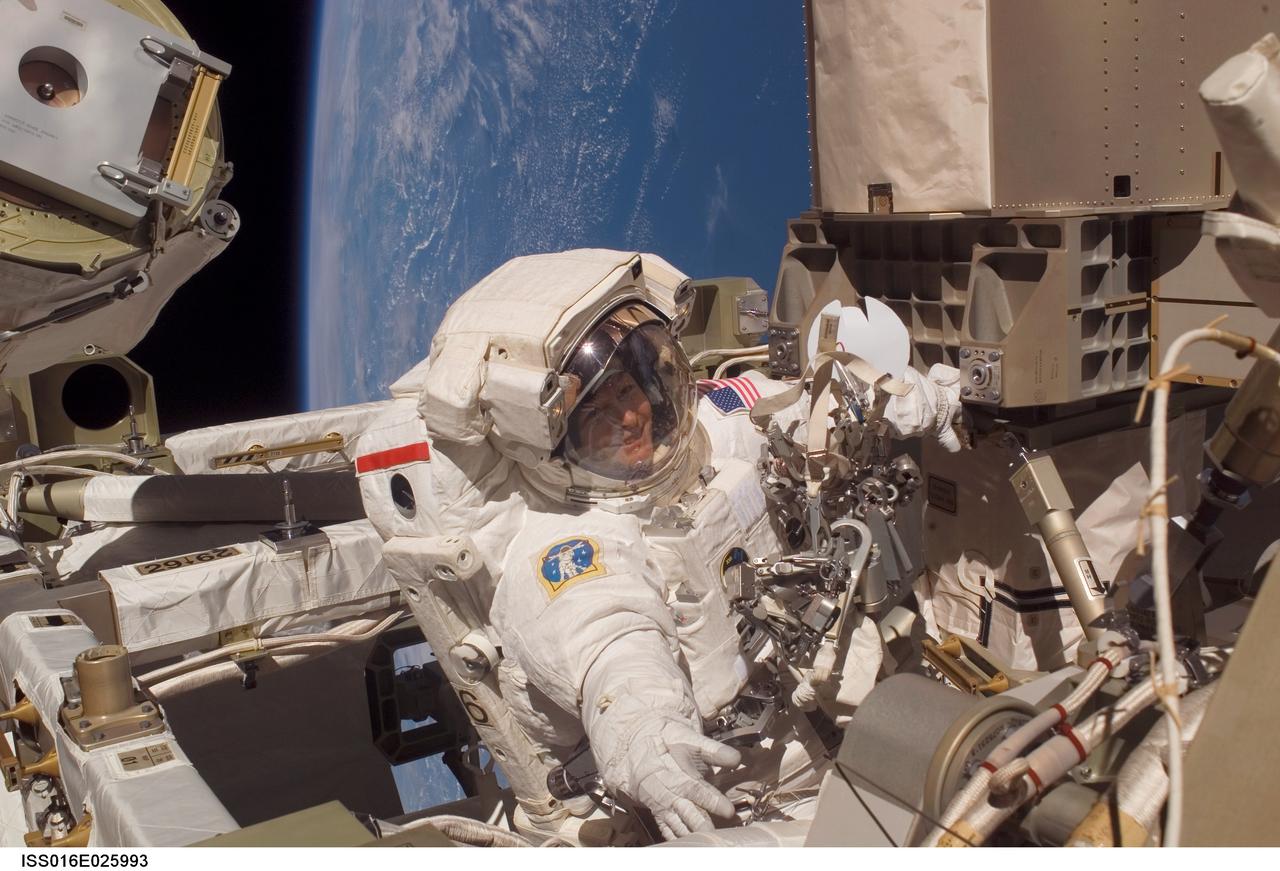
ISS016-E-025993 (30 Jan. 2008) --- Astronaut Peggy Whitson, Expedition 16 commander, participates in a session of extravehicular activity (EVA) as maintenance and construction continue on the International Space Station. During the 7-hour, 10-minute spacewalk, Whitson and astronaut Daniel Tani (out of frame), flight engineer, replaced a motor, known as the Bearing Motor Roll Ring Module (BMRRM), at the base of one of the station's solar wings. The BMRRM is part of the Beta Gimbal Assembly, which experienced electrical failures Dec. 8. A blue and white Earth and the blackness of space provide the backdrop for the scene.
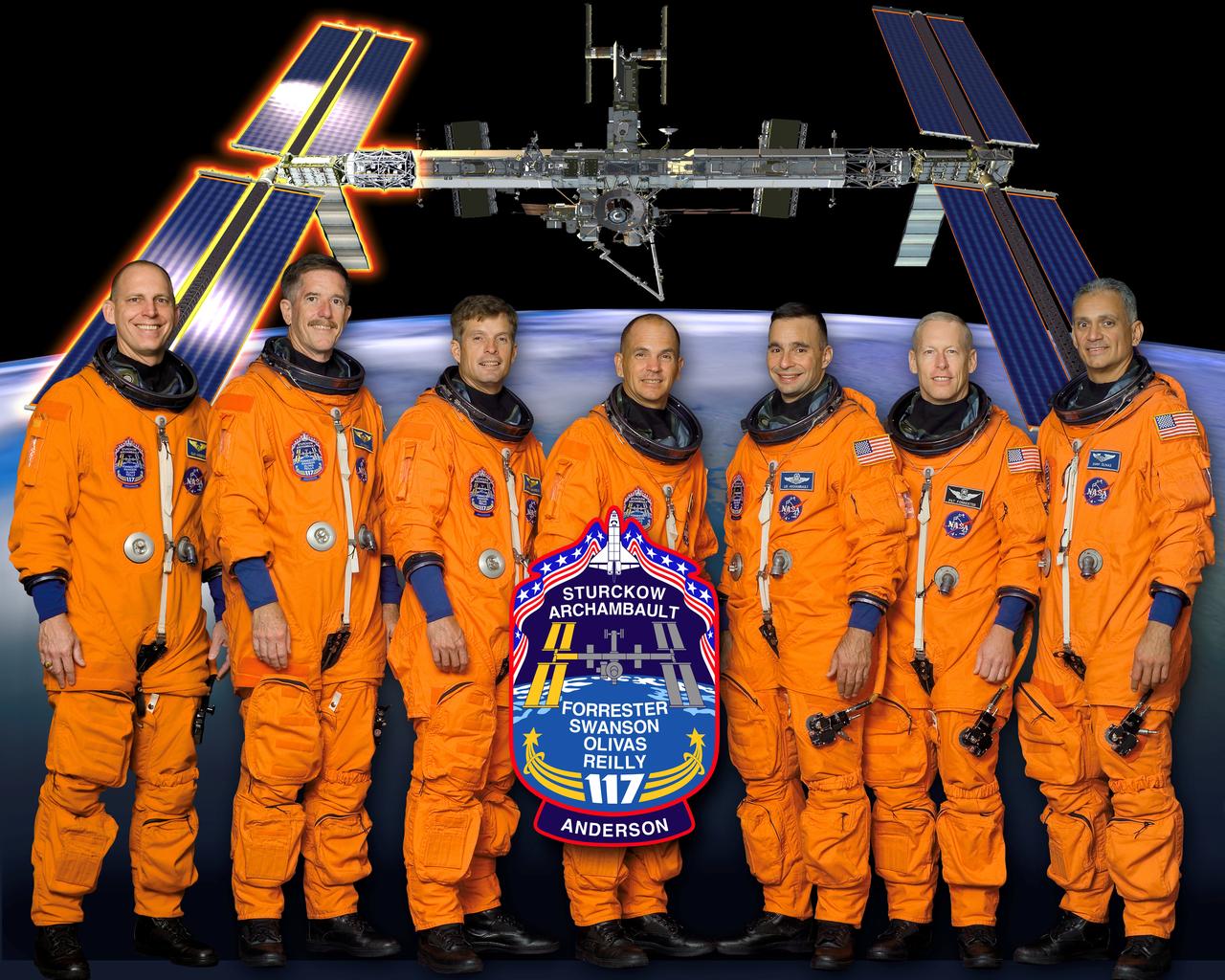
These six STS 117 astronauts, assigned to launch aboard the Space Shuttle Atlantis, are (from the left) astronauts James F. Reilly II, Steven R. Swanson, mission specialists; Frederick W. (Rick) Sturckow, commander; Lee J. Archambault, pilot; and Patrick G. Forrester and John D. (Danny) Olivas, mission specialists. The crewmembers are attired in training versions of their shuttle launch and entry suits. Mission objectives include the addition of the second and third starboard truss segments (S3/S4) with Photovoltaic Radiator (PVR), the deployed third set of solar arrays. The P6 starboard solar array wing and one radiator are to be retracted.
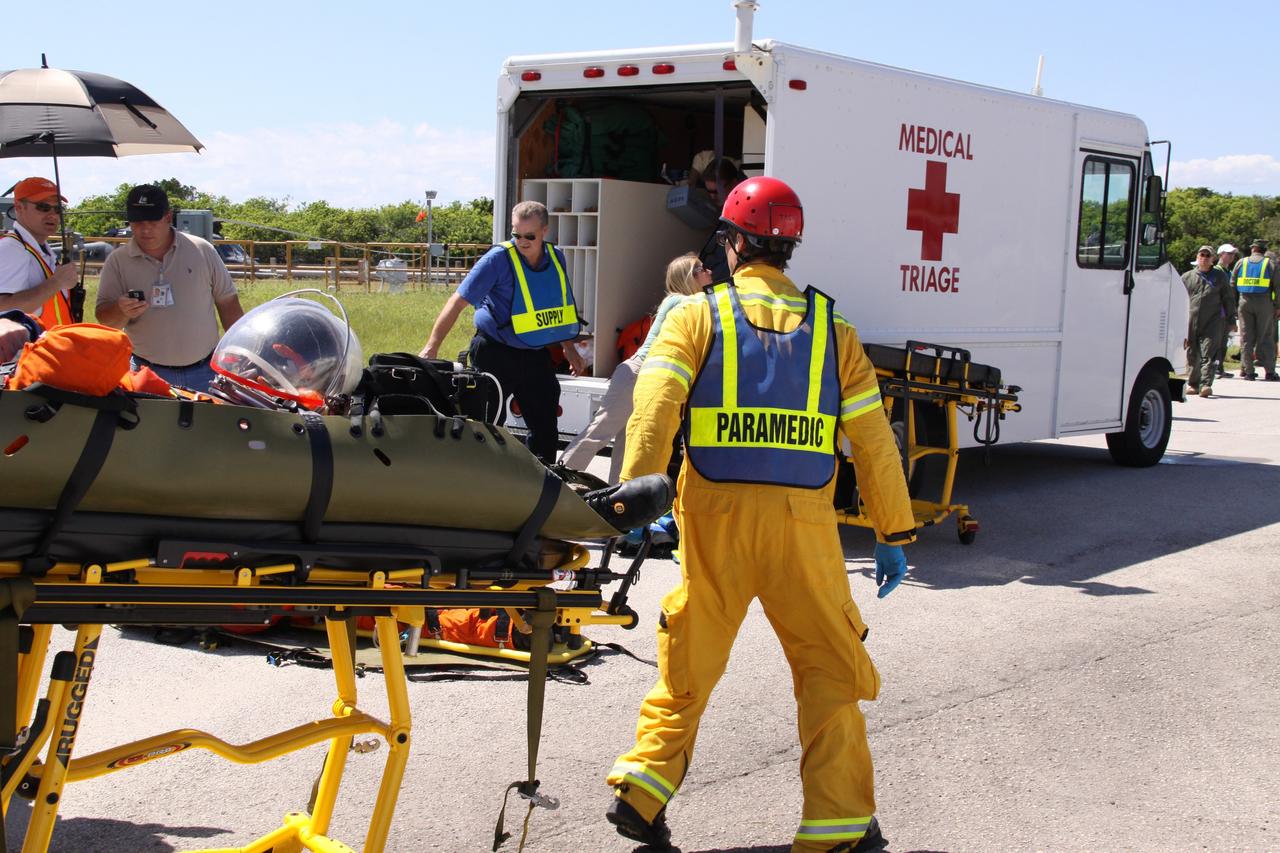
CAPE CANAVERAL, Fla. – At NASA's Kennedy Space Center in Florida, volunteers portraying astronauts are transported to ambulances as part of a Mode II-IV exercise that allows teams to practice an emergency response at Launch Pad 39A, including helicopter evacuation to local hospitals. The exercise involves NASA fire rescue personnel, volunteers portraying astronauts with simulated injuries, helicopters and personnel from the Air Force’s 920th Rescue Wing and medical trauma teams at three central Florida hospitals. The Space Shuttle Program and U.S. Air Force are conducting the emergency simulation. Photo credit: NASA/Jack Pfaller
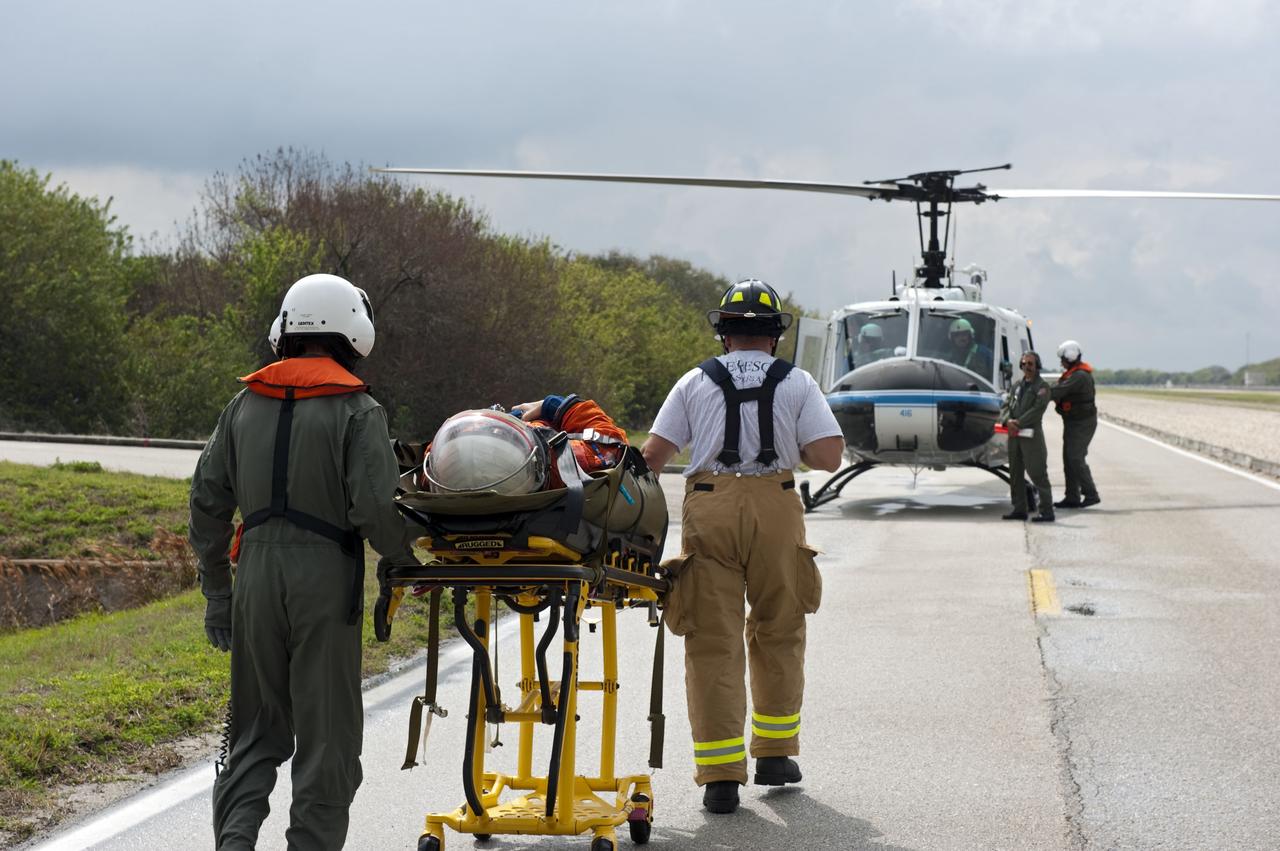
CAPE CANAVERAL, Fla. – Volunteers portraying injured astronauts are transported to a helicopter as part of an emergency exit, or Mode II/IV, exercise that allows teams to practice an emergency response at Launch Pad 39A at NASA's Kennedy Space Center in Florida. The exercise involves NASA fire rescue personnel, volunteers portraying astronauts with simulated injuries, helicopters and personnel from the Air Force’s 920th Rescue Wing, and medical trauma teams at three Central Florida hospitals. The drill allows teams to practice an emergency response at the launch pad, including helicopter evacuation to local hospitals. Photo credit: NASA/Kim Shiflett
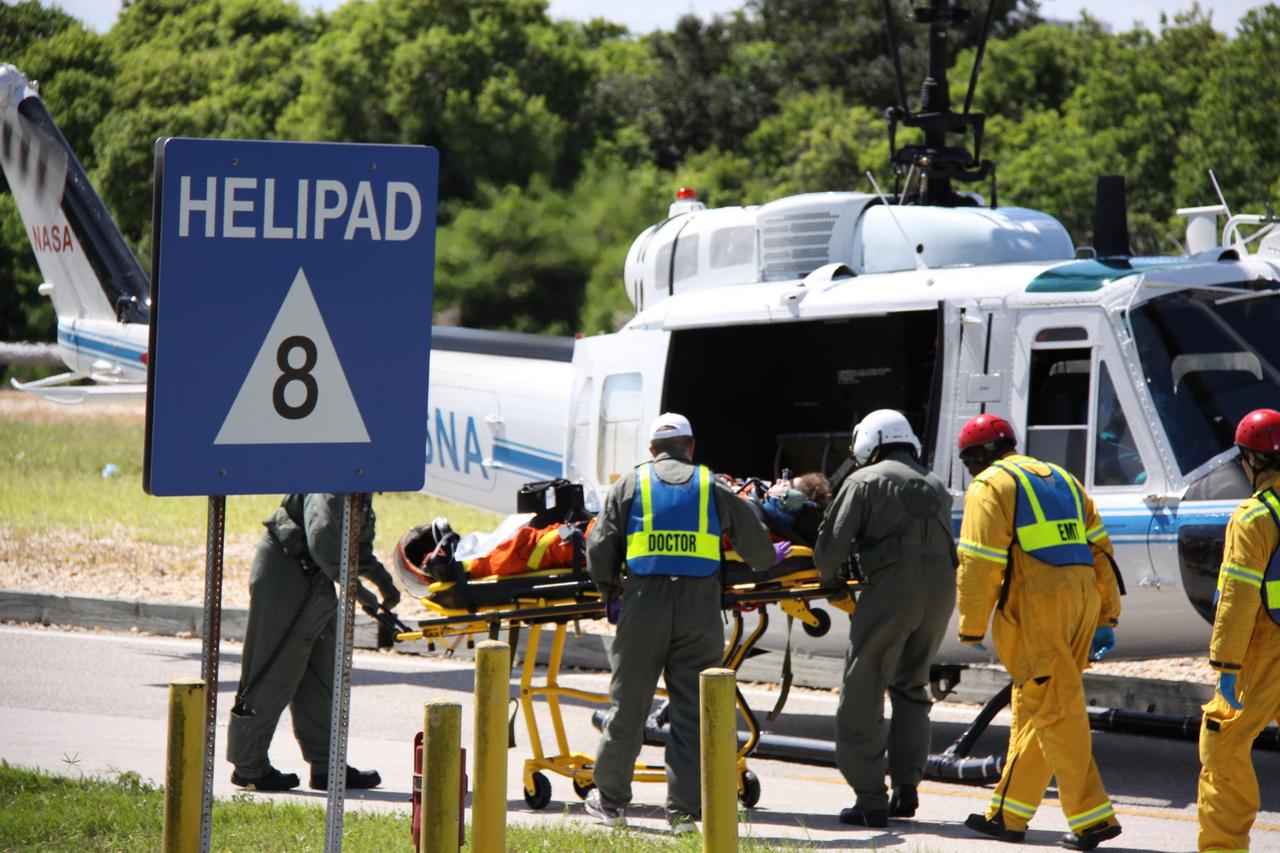
CAPE CANAVERAL, Fla. – At NASA's Kennedy Space Center in Florida, volunteers portraying astronauts are loaded into a helicopter as part of a Mode II-IV exercise that allows teams to practice an emergency response at Launch Pad 39A, including helicopter evacuation to local hospitals. The exercise involves NASA fire rescue personnel, volunteers portraying astronauts with simulated injuries, helicopters and personnel from the Air Force’s 920th Rescue Wing and medical trauma teams at three central Florida hospitals. The Space Shuttle Program and U.S. Air Force are conducting the emergency simulation. Photo credit: NASA/Troy Cryder
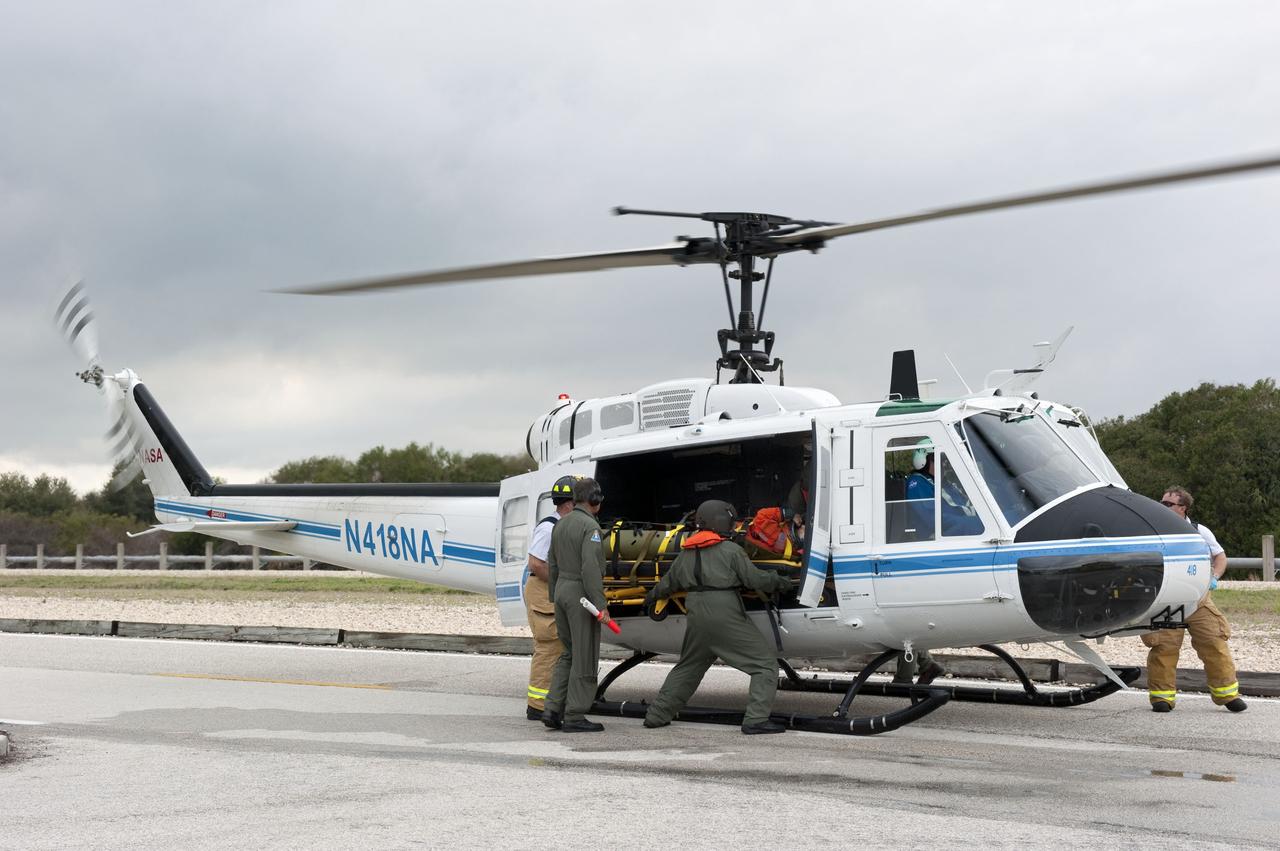
CAPE CANAVERAL, Fla. – Volunteers portraying injured astronauts are loaded onto a helicopter as part of an emergency exit, or Mode II/IV, exercise that allows teams to practice an emergency response at Launch Pad 39A at NASA's Kennedy Space Center in Florida. The exercise involves NASA fire rescue personnel, volunteers portraying astronauts with simulated injuries, helicopters and personnel from the Air Force’s 920th Rescue Wing, and medical trauma teams at three Central Florida hospitals. The drill allows teams to practice an emergency response at the launch pad, including helicopter evacuation to local hospitals. Photo credit: NASA/Kim Shiflett
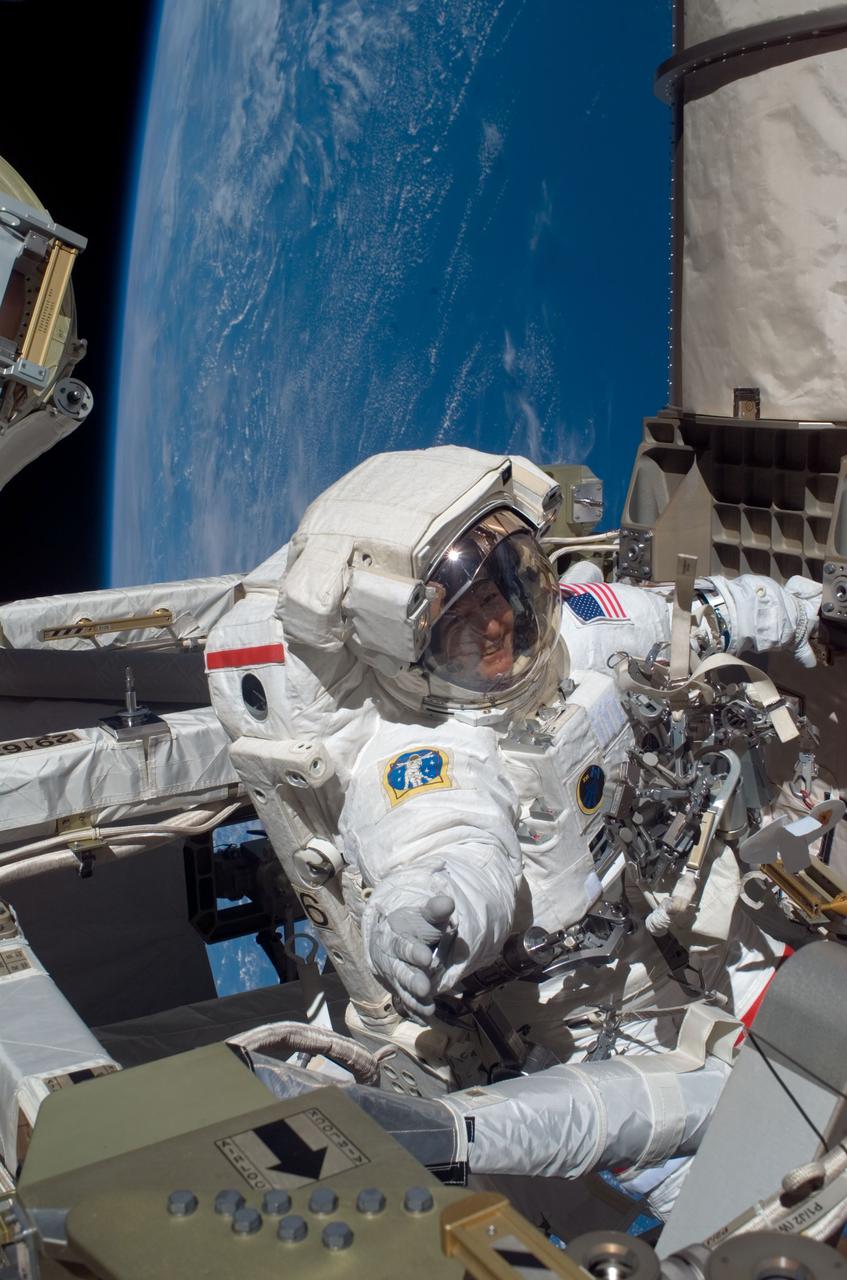
ISS016-E-025998 (30 Jan. 2008) --- Astronaut Peggy Whitson, Expedition 16 commander, participates in a session of extravehicular activity (EVA) as maintenance and construction continue on the International Space Station. During the 7-hour, 10-minute spacewalk, Whitson and astronaut Daniel Tani (out of frame), flight engineer, replaced a motor, known as the Bearing Motor Roll Ring Module (BMRRM), at the base of one of the station's solar wings. The BMRRM is part of the Beta Gimbal Assembly, which experienced electrical failures Dec. 8. A blue and white Earth and the blackness of space provide the backdrop for the scene.
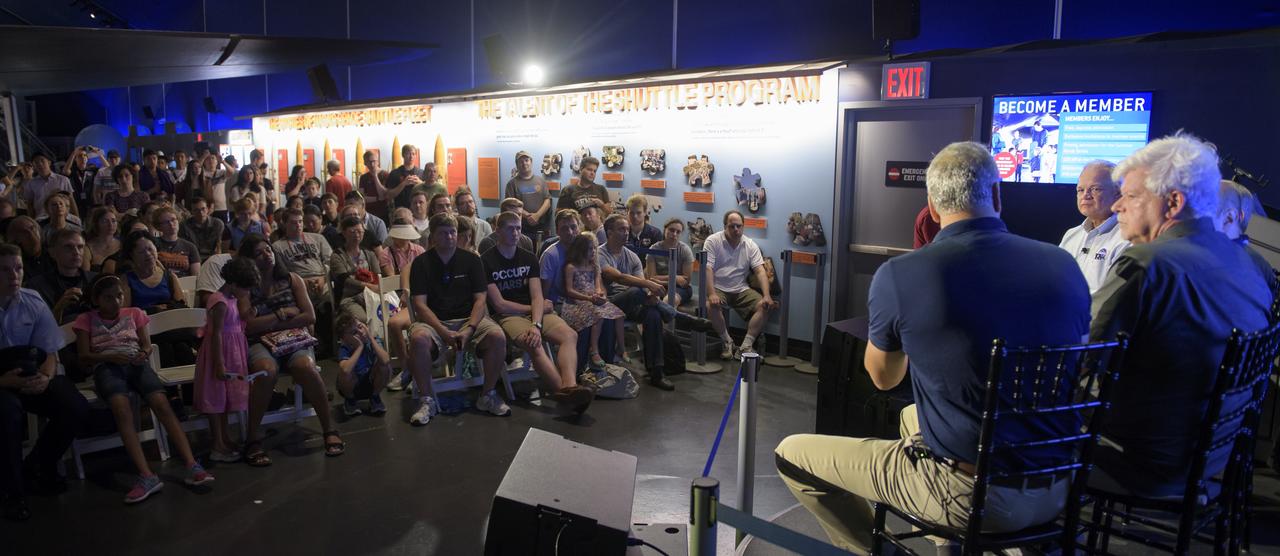
Audience members, seated under the wing of the space shuttle Enterprise, listen as NASA Acting Chief Technologist Douglas Terrier, moderates a panel discussion titled "The Big Picture" with NASA James Webb Space Telescope systems engineer Mike Menzel, SpaceX Director of space operations and former NASA astronaut Garret Reisman, Honeybee Robotics co-founder and chairman Stephen Gorevan, and former NASA astronaut Mike Massimino, Saturday, Aug. 5, 2017 at the Intrepid Sea, Air & Space Museum in New York City. Photo Credit: (NASA/Bill Ingalls)
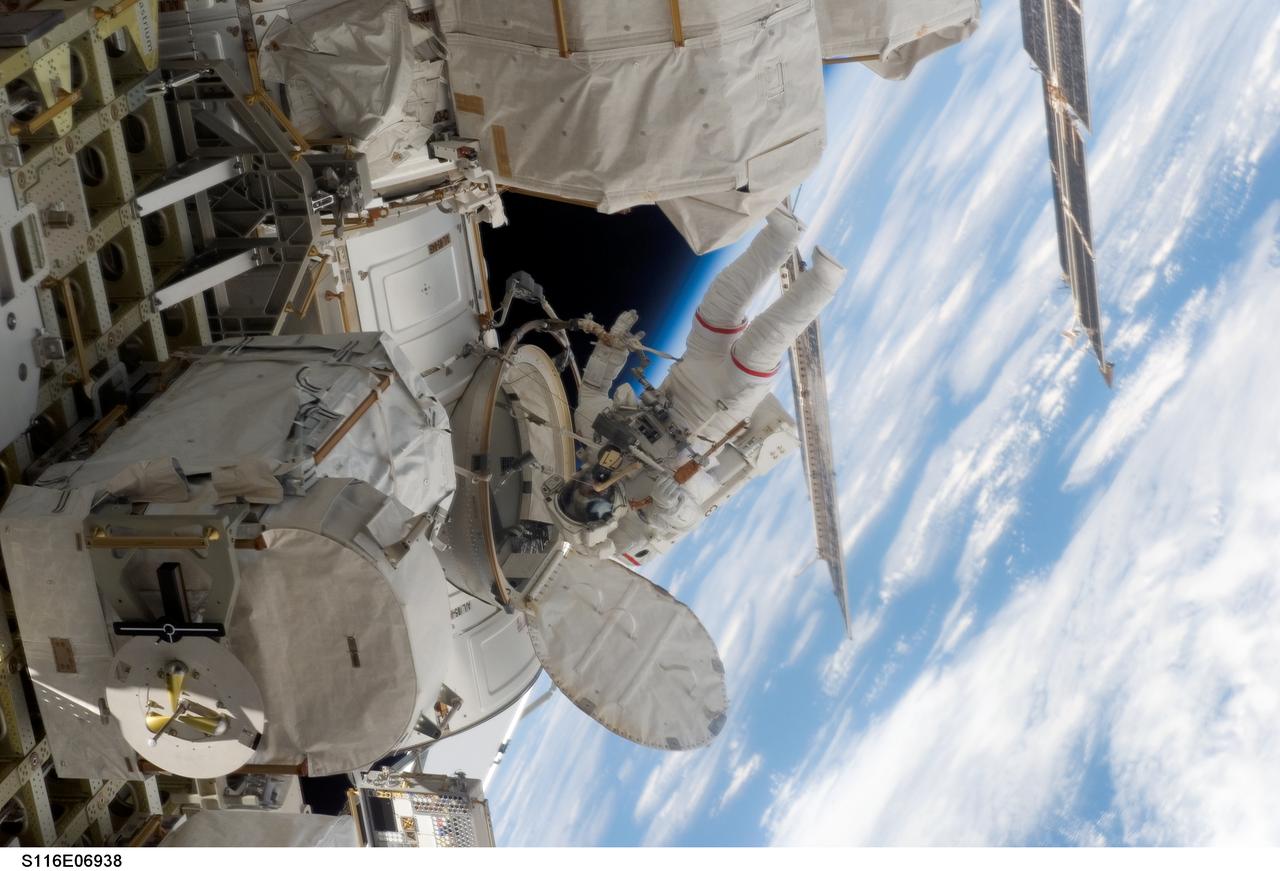
S116-E-06938 (18 Dec. 2006) --- Astronaut Robert L. Curbeam Jr., STS-116 mission specialist, exits the Quest Airlock of the International Space Station as he and European Space Agency (ESA) astronaut Christer Fuglesang (out of frame), mission specialist, begin the mission's fourth session of extravehicular activity (EVA) while Space Shuttle Discovery was docked with the station. Curbeam and Fuglesang worked in tandem, using specially-prepared, tape-insulated tools, to guide the array wing neatly inside its blanket box during the 6-hour, 38-minute spacewalk.
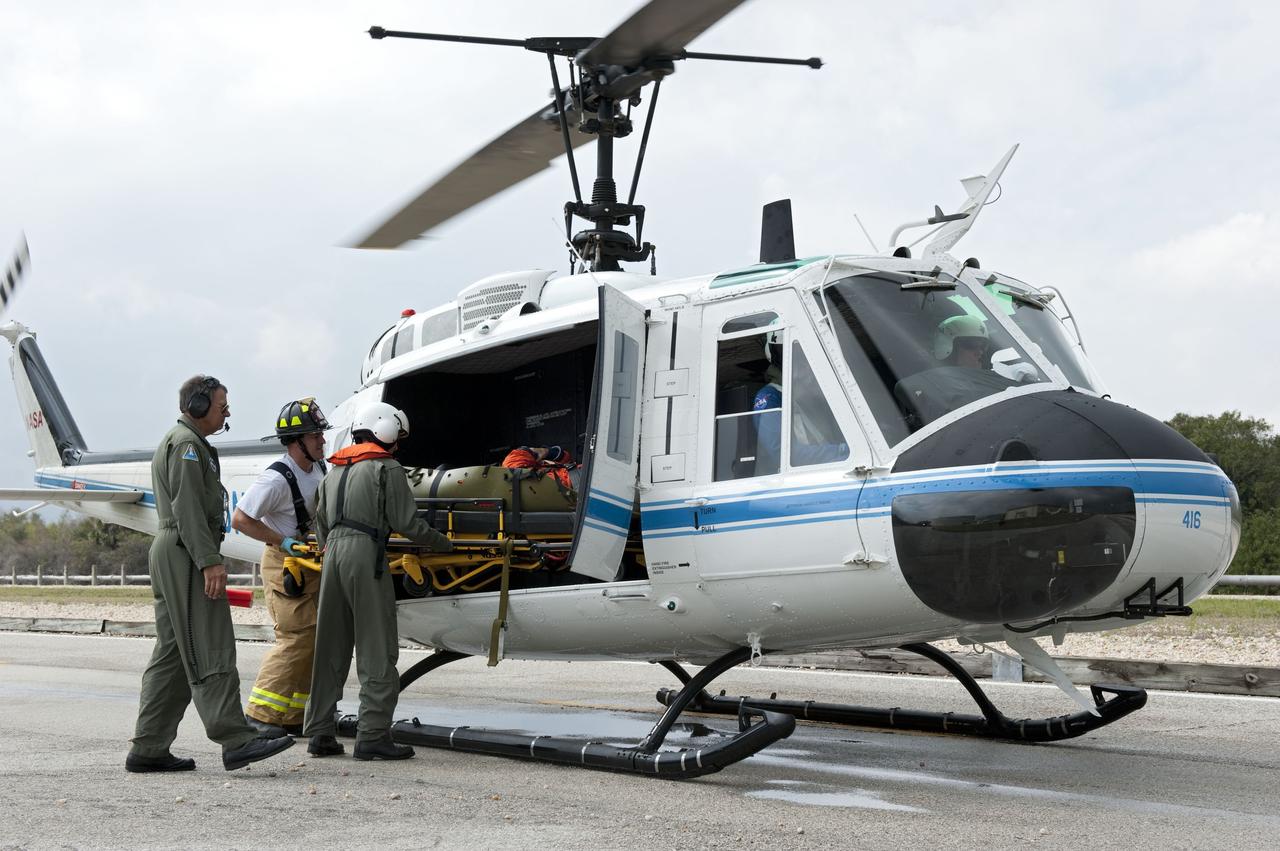
CAPE CANAVERAL, Fla. – Volunteers portraying injured astronauts are loaded onto a helicopter as part of an emergency exit, or Mode II/IV, exercise that allows teams to practice an emergency response at Launch Pad 39A at NASA's Kennedy Space Center in Florida. The exercise involves NASA fire rescue personnel, volunteers portraying astronauts with simulated injuries, helicopters and personnel from the Air Force’s 920th Rescue Wing, and medical trauma teams at three Central Florida hospitals. The drill allows teams to practice an emergency response at the launch pad, including helicopter evacuation to local hospitals. Photo credit: NASA/Kim Shiflett
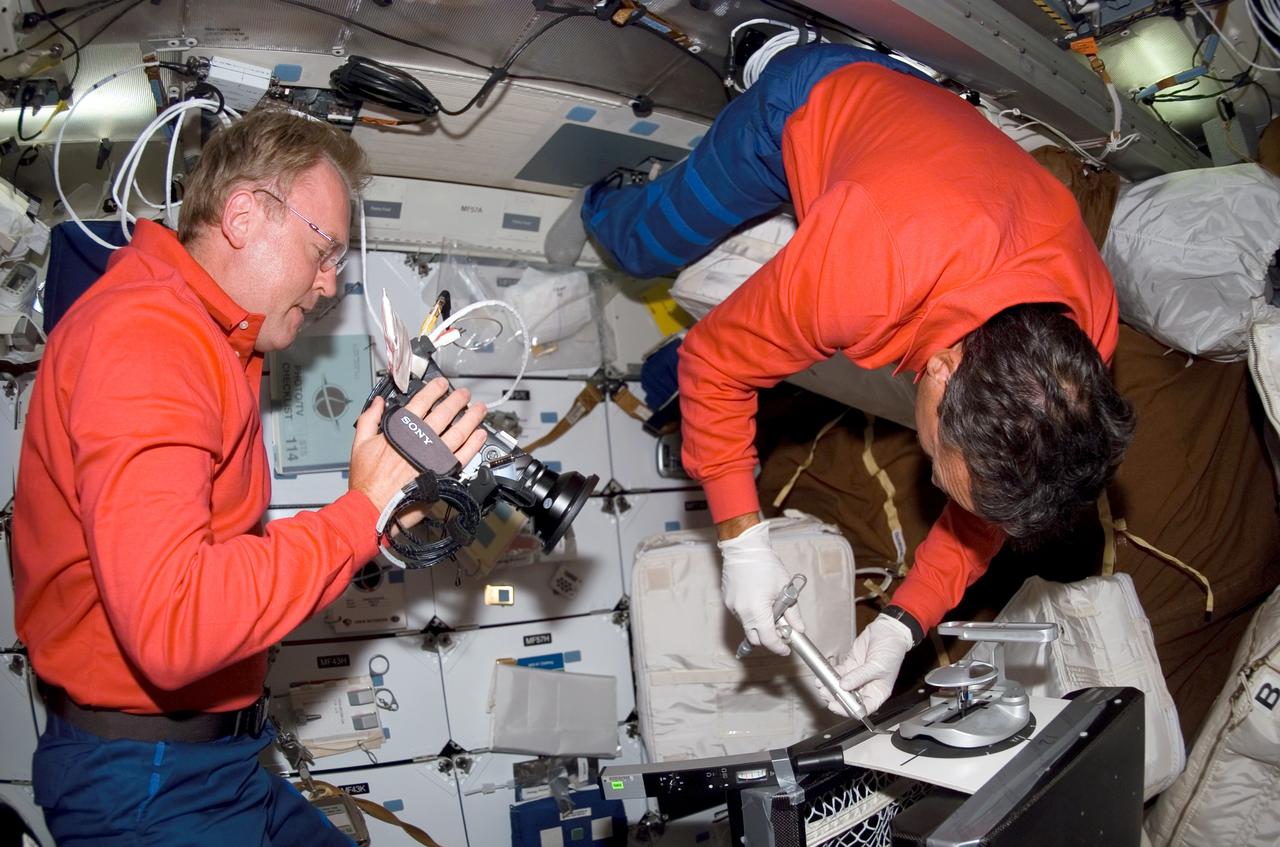
S114-E-7001 (4 August 2005) --- Astronaut Andrew S. W. Thomas, STS-114 mission specialist, photographs a middeck evaluation of the mechanical "plug" option for Reinforced Carbon-Carbon (RCC) repair aboard the Space Shuttle Discovery. Astronaut Charles J. Camarda, mission specialist, uses special pre-designated tools to accomplish the procedure, along with round thin, flexible 7-inch-diamter carbon-silicon cover plates designed to flex up to 0.25 inch to conform to the wing leading edge RCC panels, a hardware attachment mechanism similar to a toggle bolt and sealant.
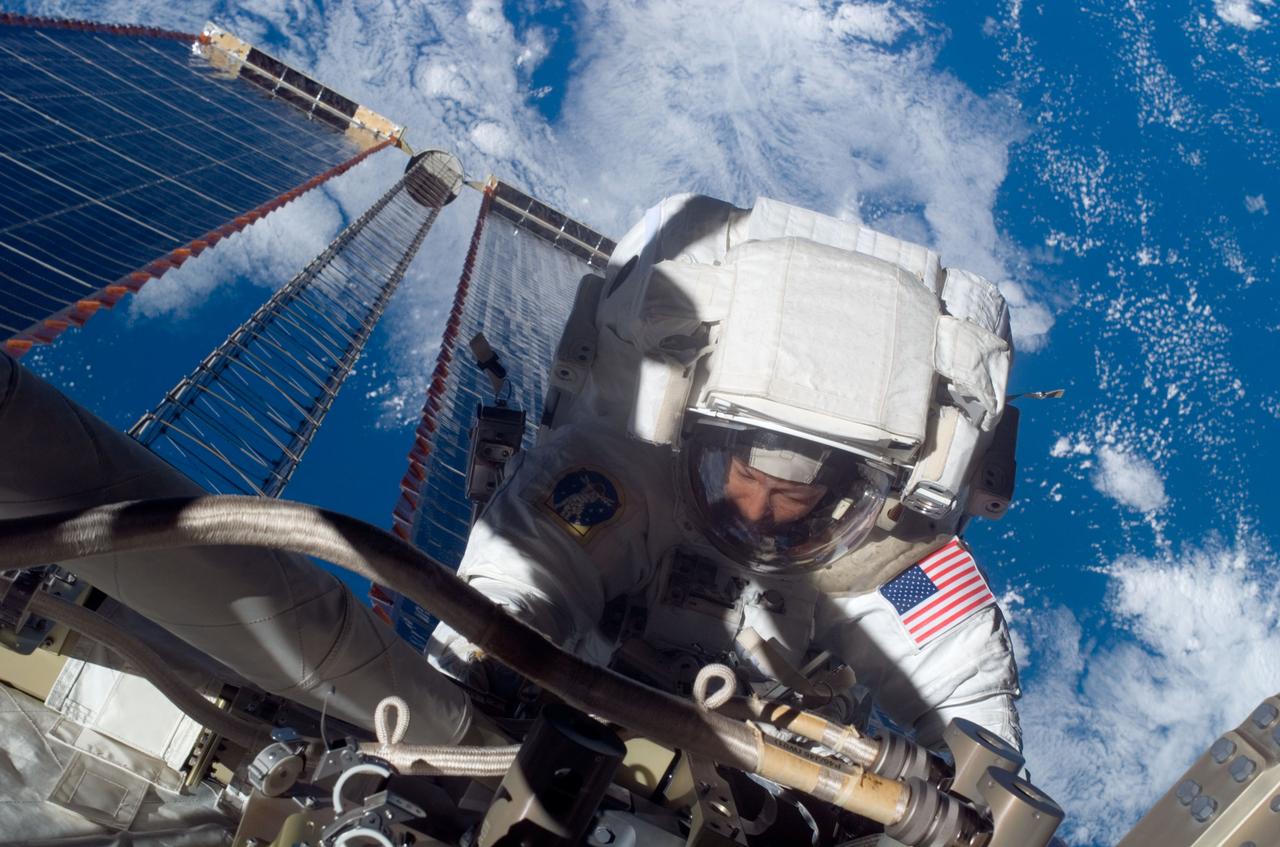
ISS016-E-017499 (18 Dec. 2007) --- Astronaut Peggy A. Whitson, Expedition 16 commander, participates in a session of extravehicular activity (EVA). During the 6-hour, 56-minute spacewalk, Whitson and astronaut Daniel Tani (out of frame), flight engineer, looked for the cause of partial loss of electrical power to one of the International Space Station's two Beta Gimbal Assemblies (BGA) for starboard solar wings and examined damage to the starboard Solar Alpha Rotary Joint (SARJ). The spacewalk was the 100th for the construction and maintenance of the station. A blue and white Earth provides the background for the scene.
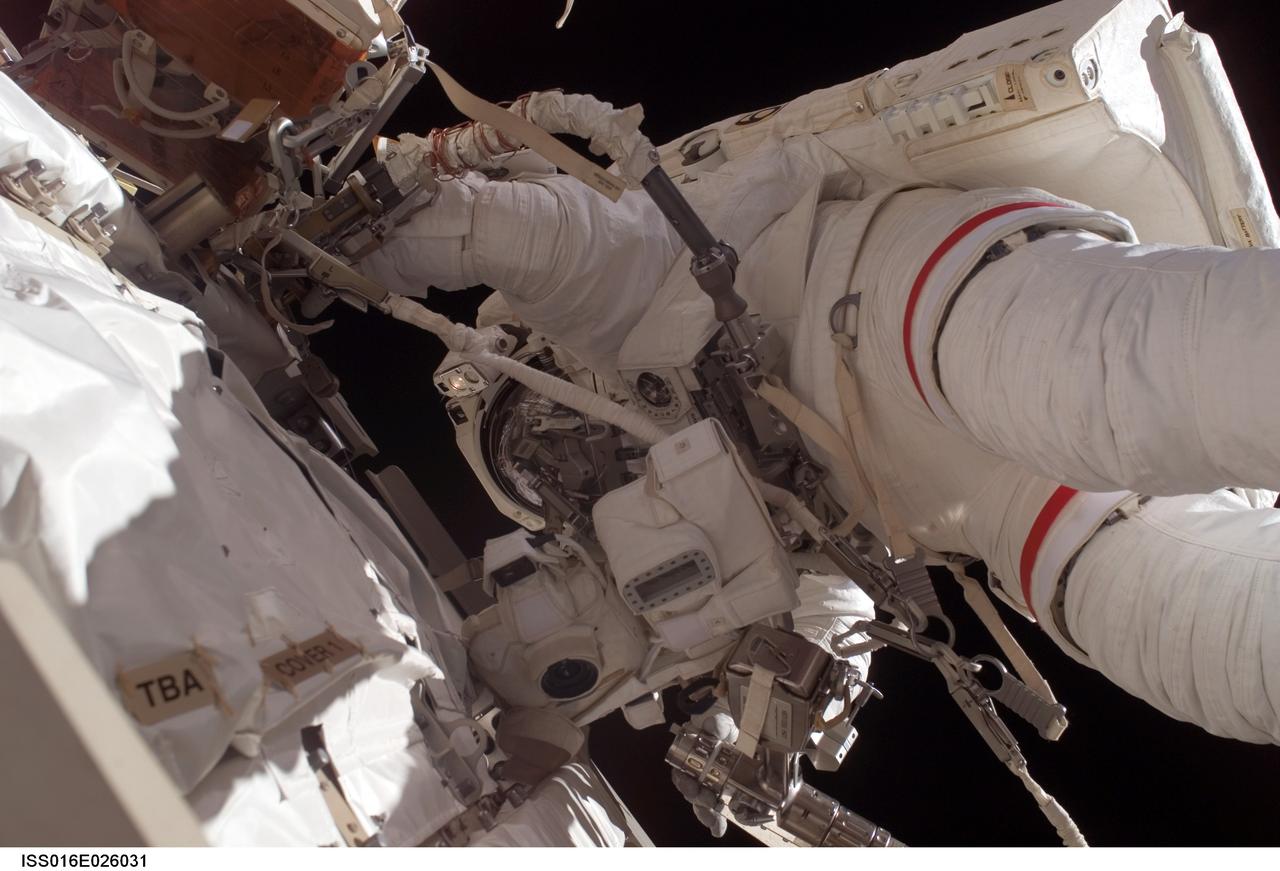
ISS016-E-026031 (30 Jan. 2008) --- Astronaut Peggy Whitson, Expedition 16 commander, participates in a session of extravehicular activity (EVA) as maintenance and construction continue on the International Space Station. During the 7-hour, 10-minute spacewalk, Whitson and astronaut Daniel Tani (out of frame), flight engineer, replaced a motor, known as the Bearing Motor Roll Ring Module (BMRRM), at the base of one of the station's solar wings. The BMRRM is part of the Beta Gimbal Assembly, which experienced electrical failures Dec. 8. A blue and white Earth and the blackness of space provide the backdrop for the scene.
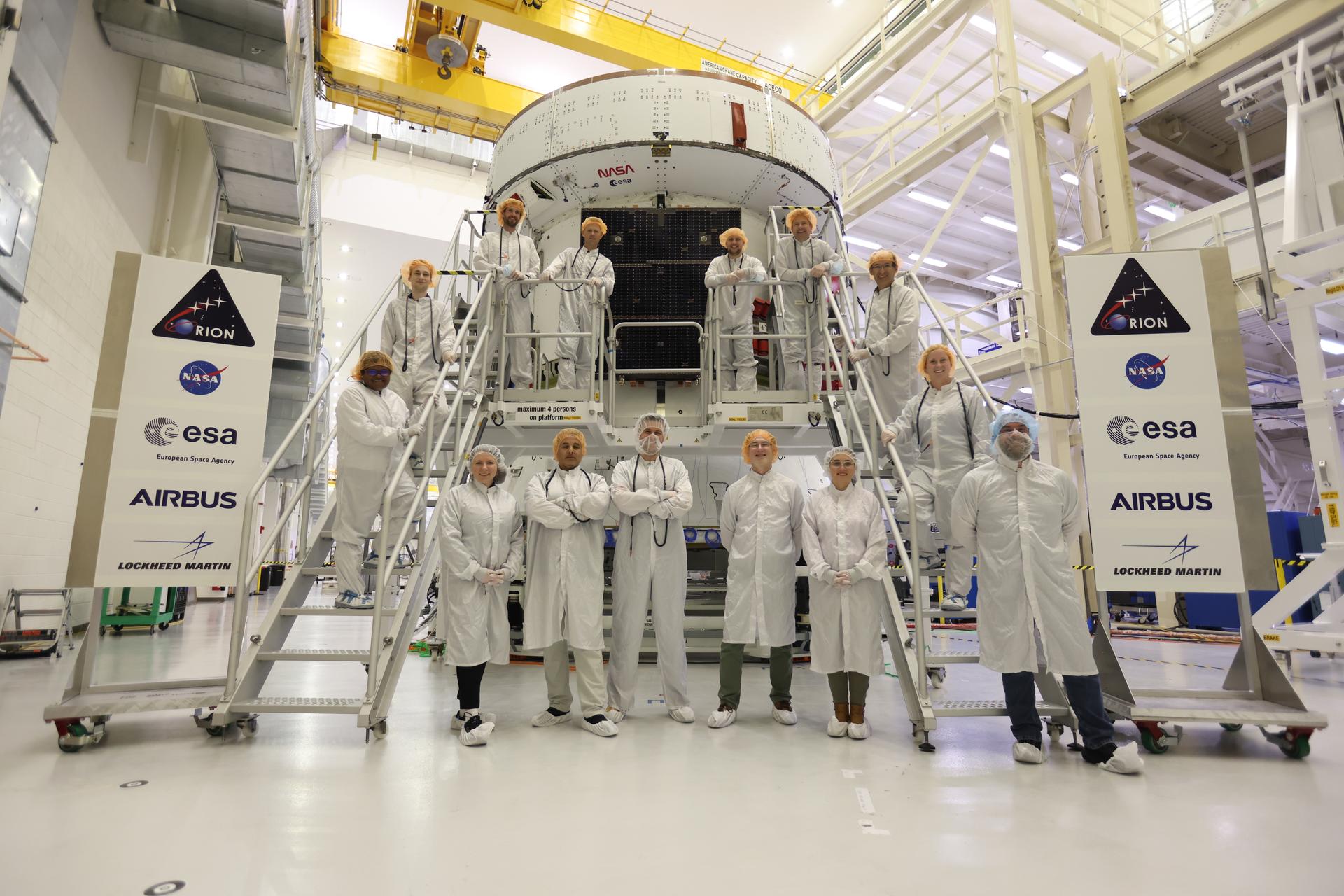
NASA and its partners work on the solar array wings for the agency’s Artemis III Orion spacecraft on Thursday, April 30, 2026, inside the Neil A. Armstrong Operations and Checkout Building at NASA’s Kennedy Space Center in Florida. Orion’s solar arrays, manufactured and installed by ESA (European Space Agency) and its contractor Airbus, have been temporarily installed ahead of acoustic testing on the spacecraft. The Artemis III mission will launch astronauts in 2027 to Earth’s orbit aboard the Orion spacecraft on top of the SLS (Space Launch System) rocket to test rendezvous and docking capabilities between Orion and commercial spacecraft needed to land Artemis IV astronauts on the Moon in 2028.
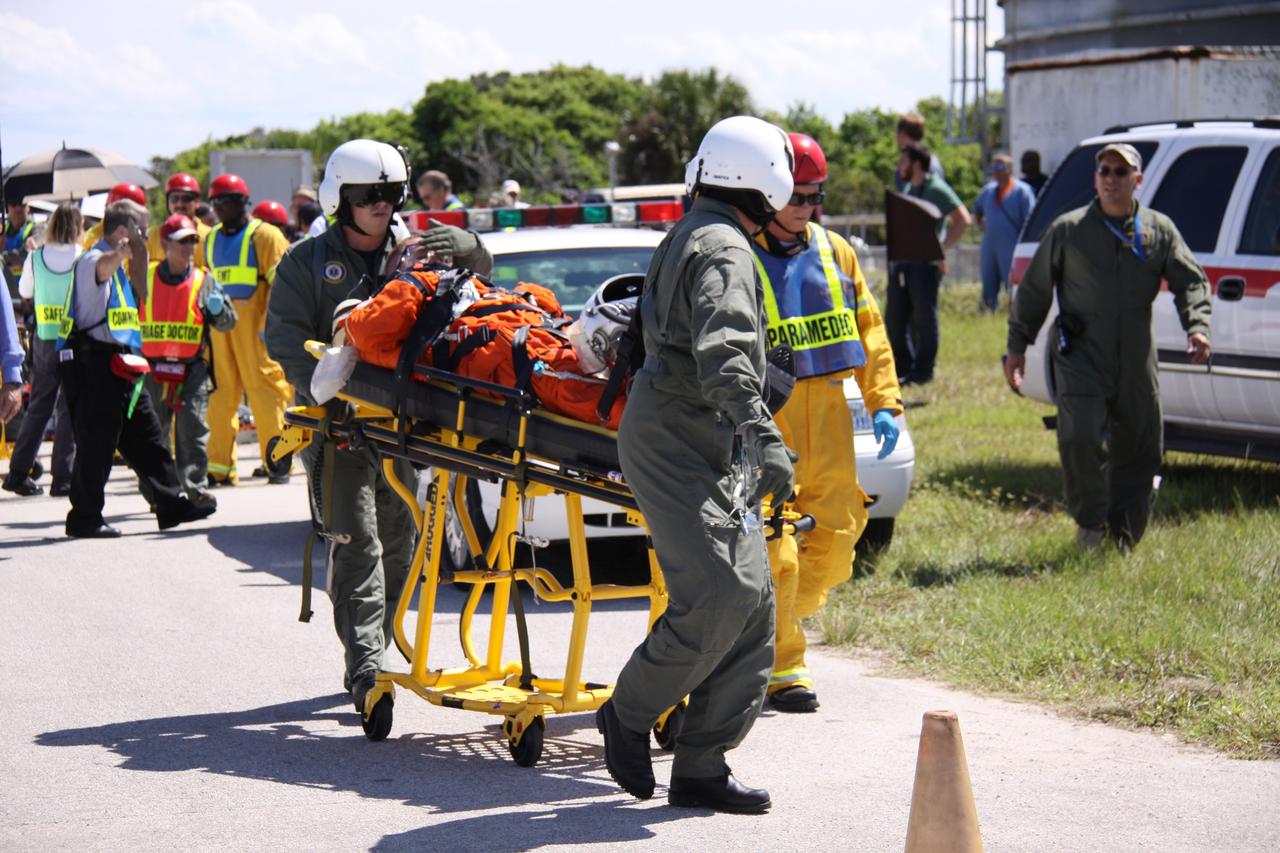
CAPE CANAVERAL, Fla. – At NASA's Kennedy Space Center in Florida, volunteers portraying astronauts are transported to helicopters as part of a Mode II-IV exercise that allows teams to practice an emergency response at Launch Pad 39A, including helicopter evacuation to local hospitals. The exercise involves NASA fire rescue personnel, volunteers portraying astronauts with simulated injuries, helicopters and personnel from the Air Force’s 920th Rescue Wing and medical trauma teams at three central Florida hospitals. The Space Shuttle Program and U.S. Air Force are conducting the emergency simulation. Photo credit: NASA/Troy Cryder
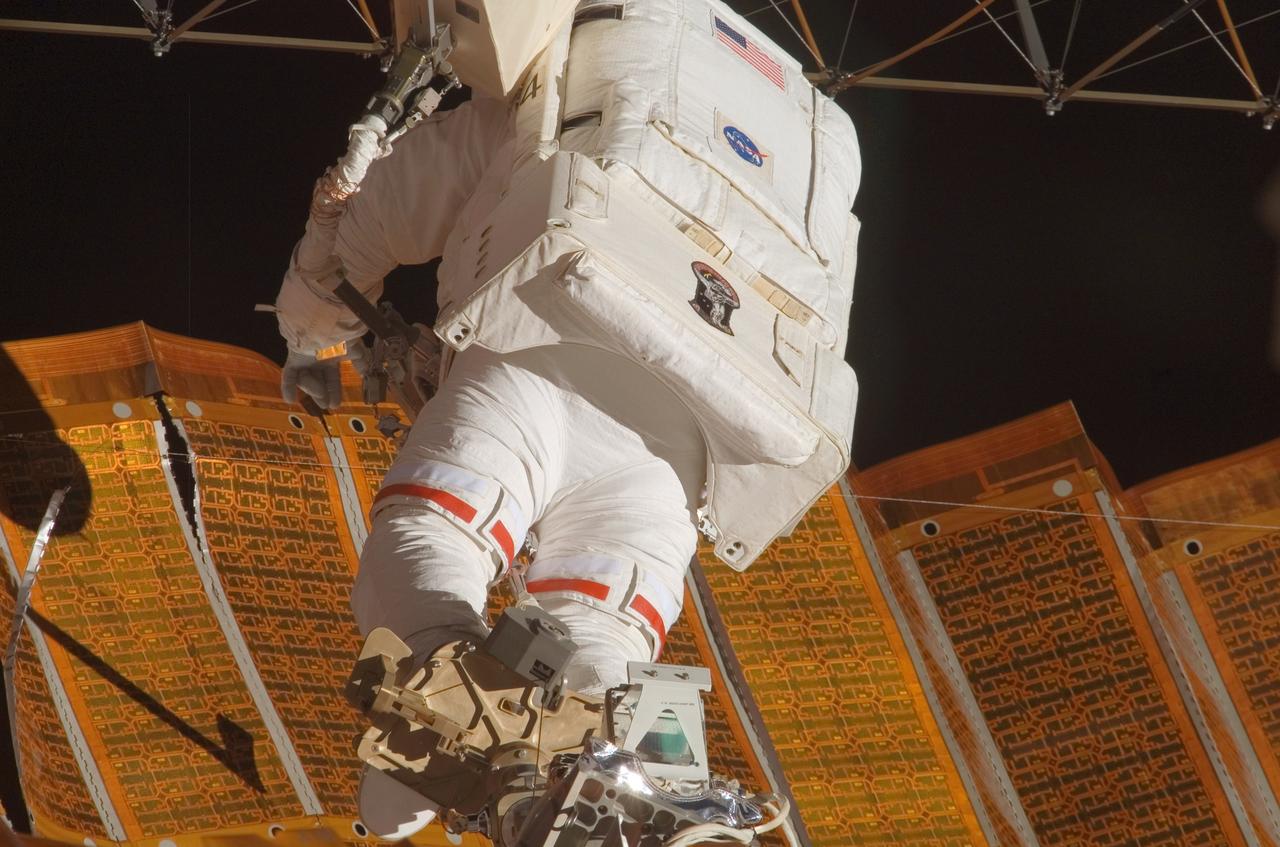
While anchored to a foot restraint on the end of the Orbiter Boom Sensor System (OBSS), astronaut Scott Parazynski, STS-120 mission specialist, participated in the mission's fourth session of extravehicular activity (EVA) while Space Shuttle Discovery was docked with the International Space Station (ISS). During the 7-hour and 19-minute space walk, Parazynski cut a snagged wire and installed homemade stabilizers designed to strengthen the structure and stability of the damaged P6 4B solar array wing. Astronaut Doug Wheelock (out of frame), mission specialist, assisted from the truss by keeping an eye on the distance between Parazynski and the array. Once the repair was complete, flight controllers on the ground successfully completed the deployment of the array.
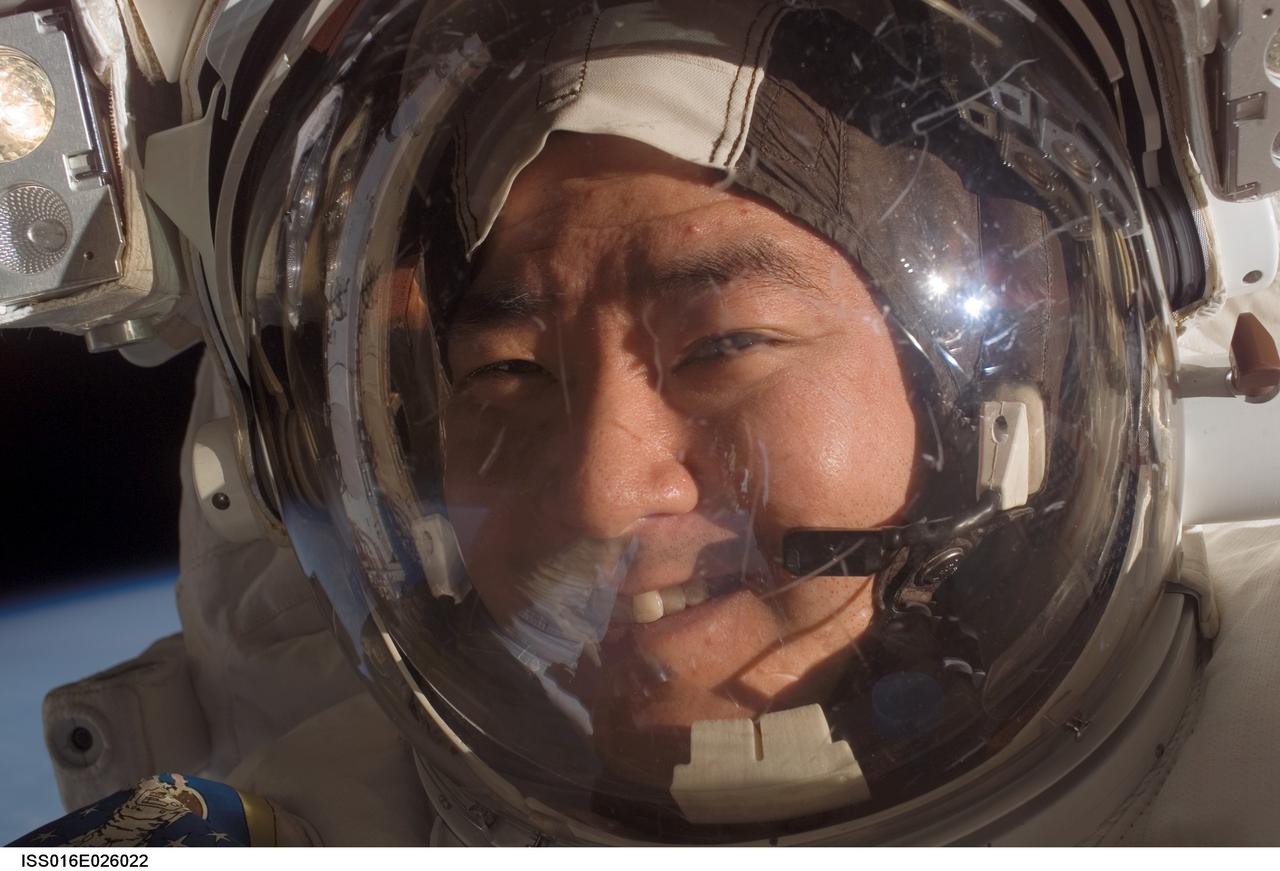
ISS016-E-026022 (30 Jan. 2008) --- The face of astronaut Daniel Tani, Expedition 16 flight engineer, is easily recognizable as he participates in a session of extravehicular activity (EVA) as maintenance and construction continue on the International Space Station. During the 7-hour, 10-minute spacewalk, Tani and astronaut Peggy Whitson (out of frame), commander, replaced a motor, known as the Bearing Motor Roll Ring Module (BMRRM), at the base of one of the station's solar wings. The BMRRM is part of the Beta Gimbal Assembly, which experienced electrical failures Dec. 8.
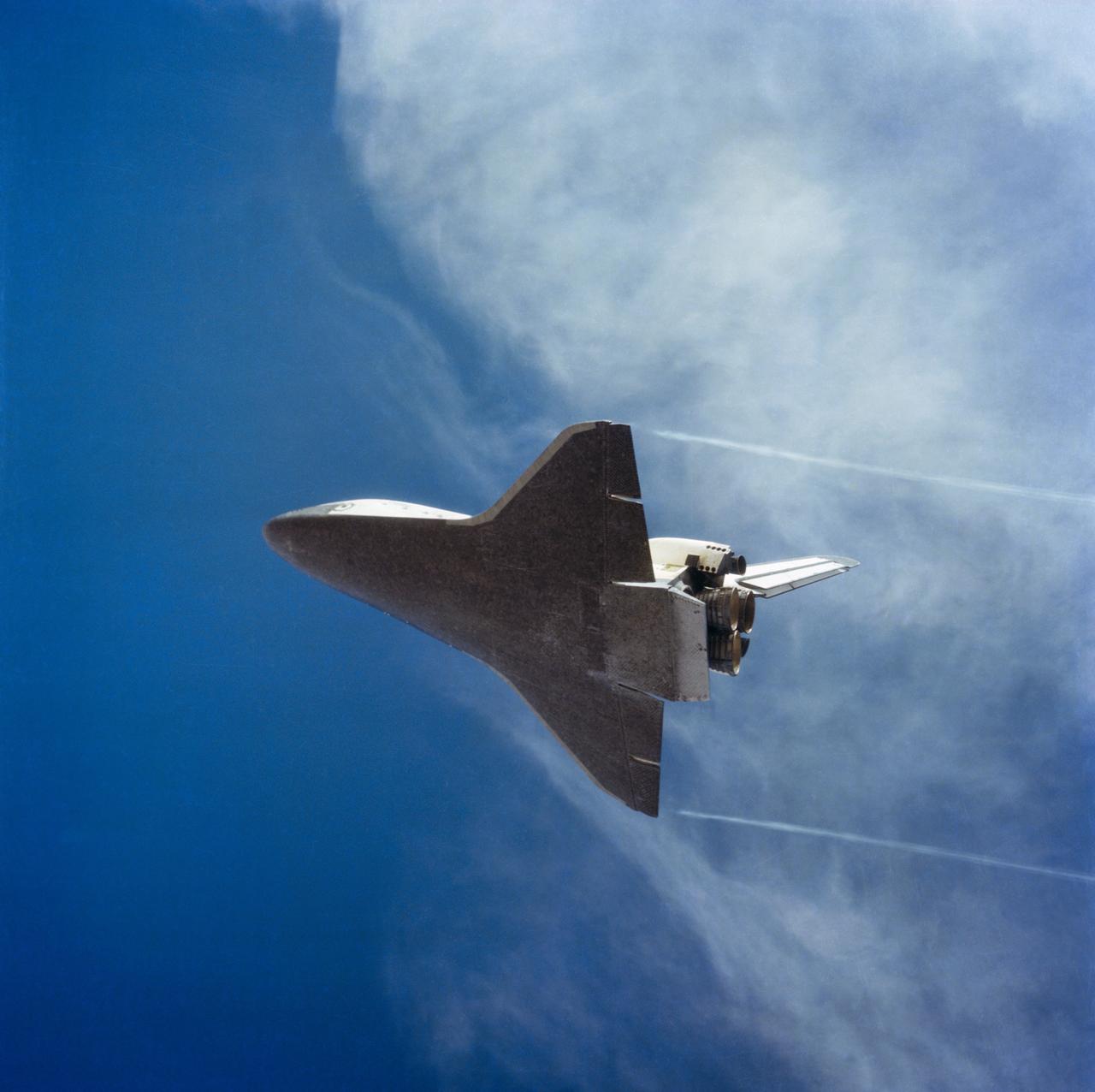
S81-39563 (14 Nov. 1981) --- This view of the space shuttle Columbia (STS-2) was made with a hand-held 70mm camera in the rear station of the T-38 chase plane. Mission specialist/astronaut Kathryn D. Sullivan exposed the frame as astronauts Joe N. Engle and Richard H. Truly aboard the Columbia guided the vehicle to an unpowered but smooth landing on the desert area of Edwards Air Force base in California. The view provides a good study of the high temperature protection material on the underside of the spacecraft which is exposed to the friction on the atmospheric entry on the return to Earth. Also note trails from the wing tips. Photo credit: NASA
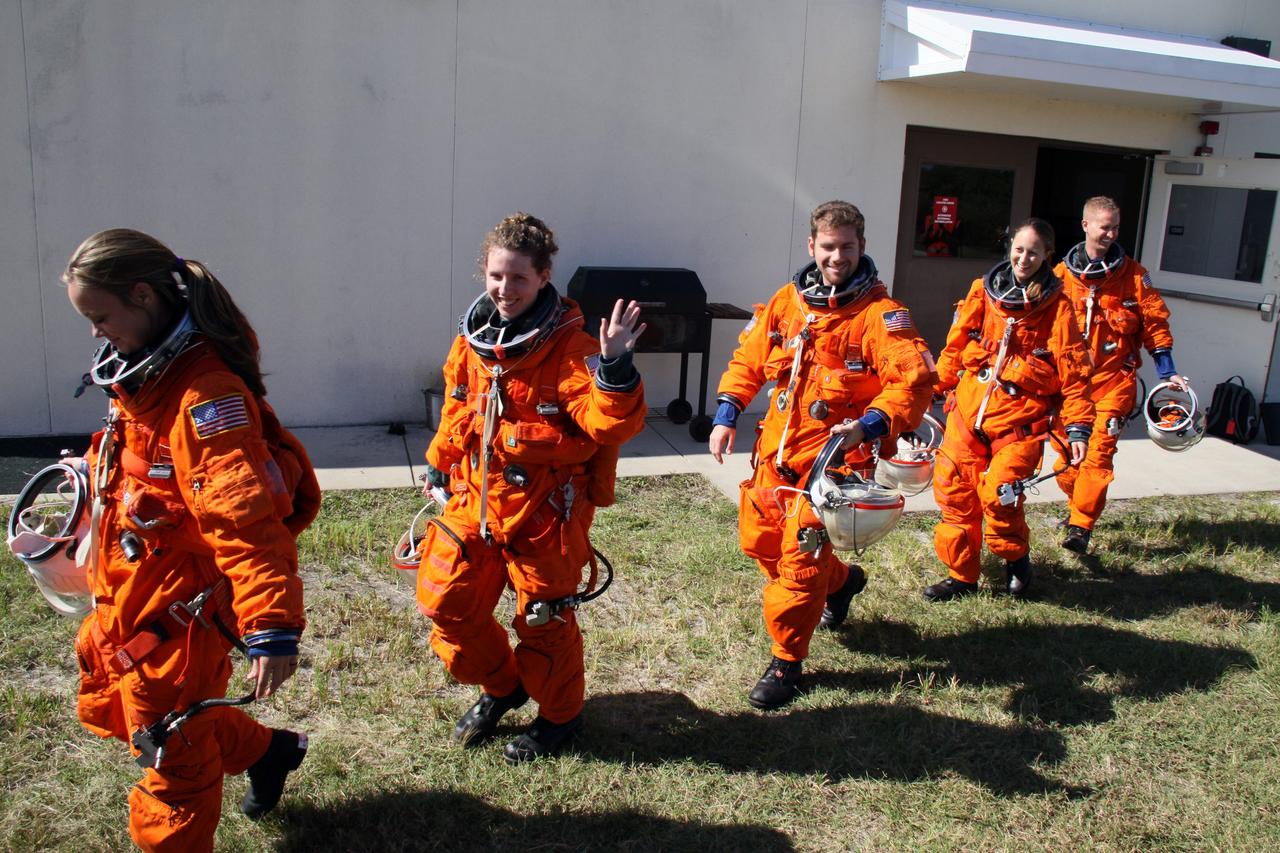
CAPE CANAVERAL, Fla. – At NASA's Kennedy Space Center in Florida, volunteers portraying astronauts are taking part in a Mode II-IV exercise that allows teams to practice an emergency response at Launch Pad 39A, including helicopter evacuation to local hospitals. The exercise involves NASA fire rescue personnel, volunteers portraying astronauts with simulated injuries, helicopters and personnel from the Air Force’s 920th Rescue Wing and medical trauma teams at three central Florida hospitals. The Space Shuttle Program and U.S. Air Force are conducting the emergency simulation. Photo credit: NASA/Troy Cryder
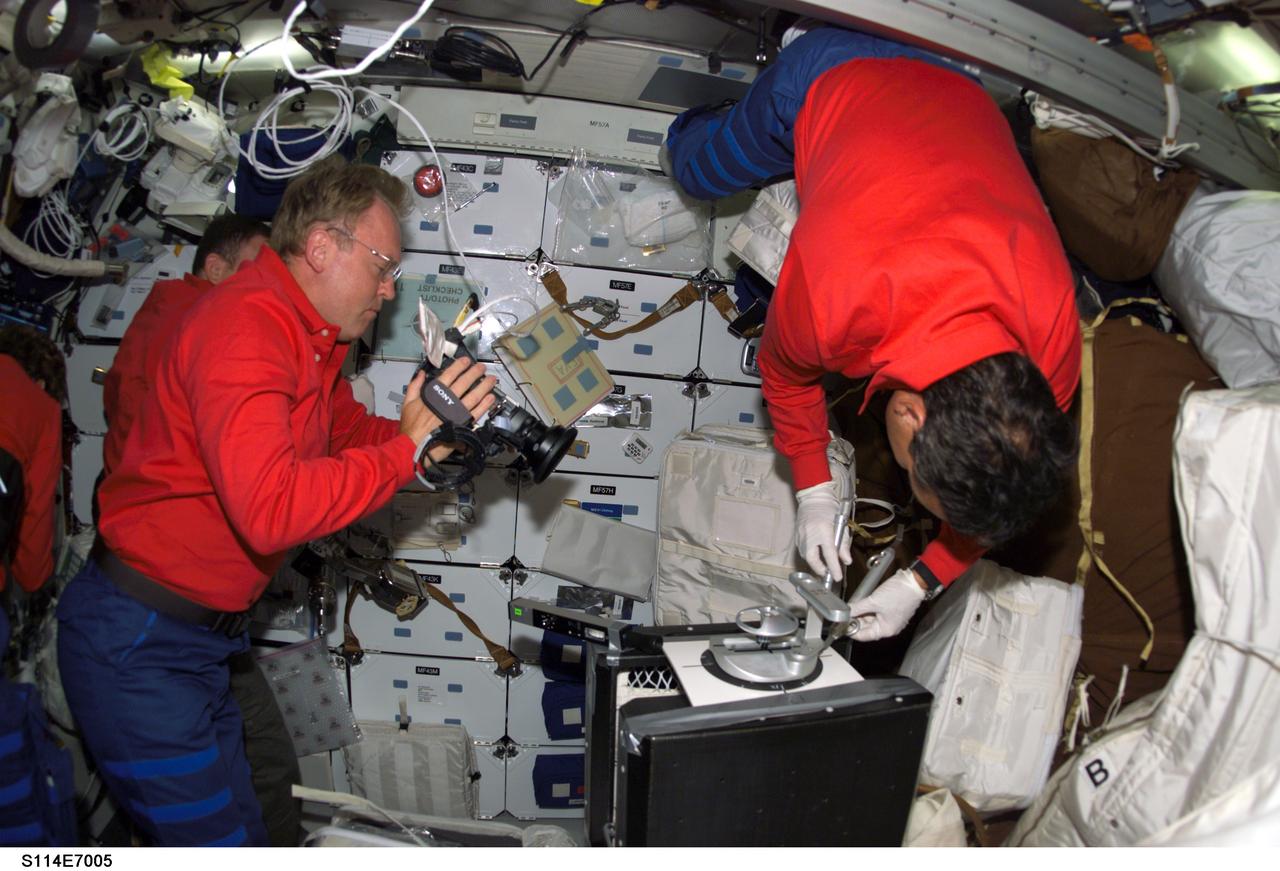
S114-E-7005 (4 August 2005) --- Astronaut Andrew S. W. Thomas, STS-114 mission specialist, photographs a middeck evaluation of the mechanical "plug" option for Reinforced Carbon-Carbon (RCC) repair aboard the Space Shuttle Discovery. Astronaut Charles J. Camarda, mission specialist, uses special pre-designated tools to accomplish the procedure, along with round thin, flexible 7-inch-diamter carbon-silicon cover plates designed to flex up to 0.25 inch to conform to the wing leading edge RCC panels, a hardware attachment mechanism similar to a toggle bolt and sealant.
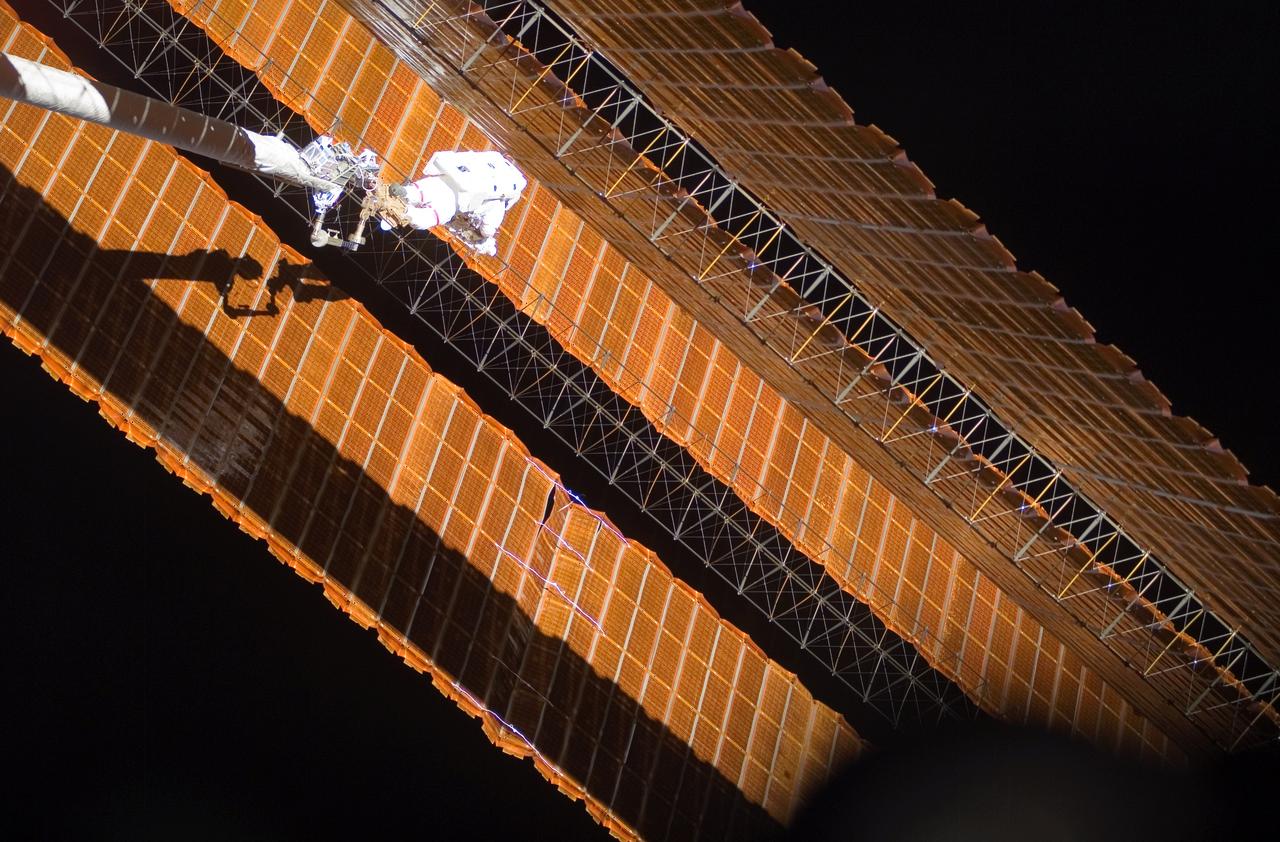
While anchored to a foot restraint on the end of the Orbiter Boom Sensor System (OBSS), astronaut Scott Parazynski, STS-120 mission specialist, participated in the mission's fourth session of extravehicular activity (EVA) while Space Shuttle Discovery was docked with the International Space Station (ISS). During the 7-hour and 19-minute space walk, Parazynski cut a snagged wire and installed homemade stabilizers designed to strengthen the structure and stability of the damaged P6 4B solar array wing. Astronaut Doug Wheelock (out of frame), mission specialist, assisted from the truss by keeping an eye on the distance between Parazynski and the array. Once the repair was complete, flight controllers on the ground successfully completed the deployment of the array.