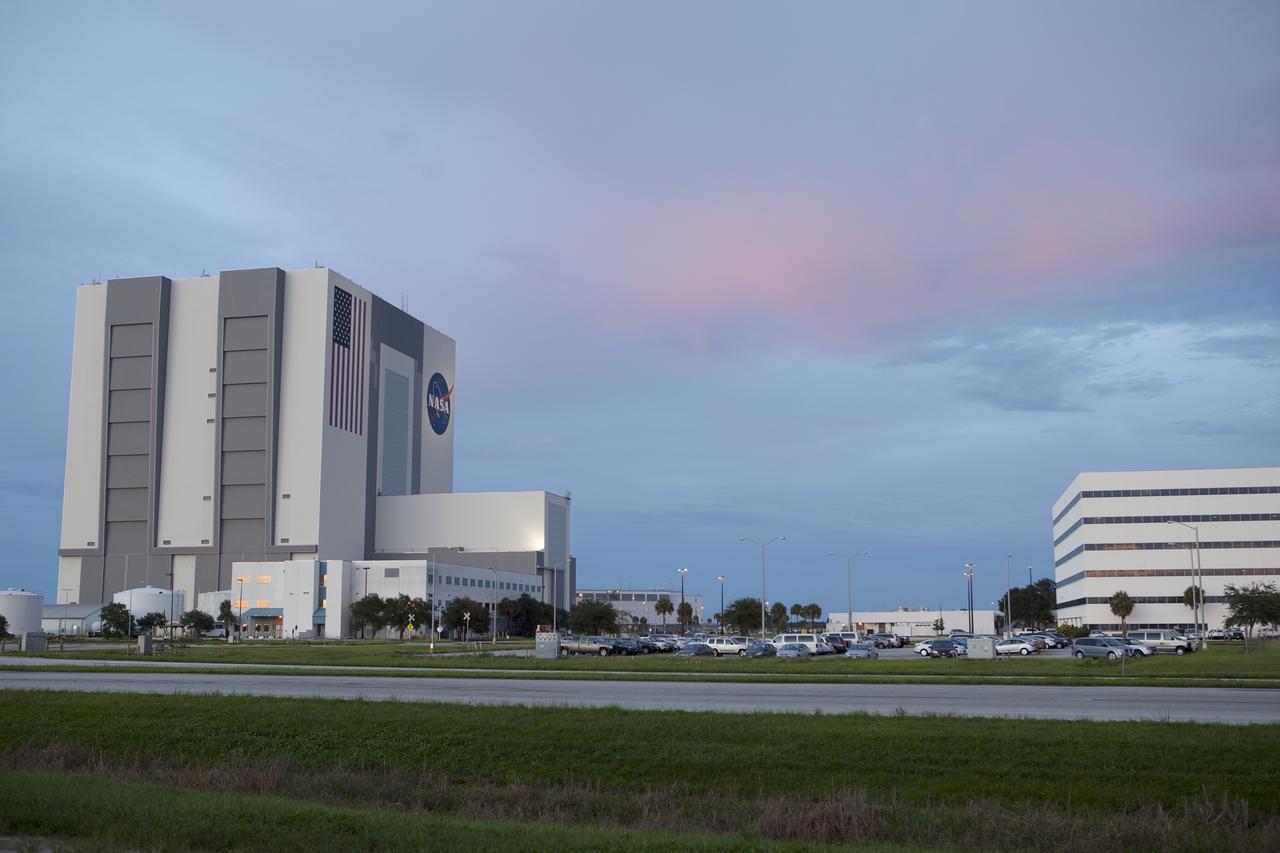
CAPE CANAVERAL, Fla. – The 525-foot-tall Vehicle Assembly Building is the lynchpin of Launch Complex 39 at NASA’s Kennedy Space Center in Florida. As night falls, bringing with it expectations of the appearance of a “supermoon,” changes are underway to transition Kennedy to a multi-user spaceport. The scientific term for the supermoon phenomenon is "perigee moon." Full moons vary in size because of the oval shape of the moon's orbit. The moon follows an elliptical path around Earth with one side about 50,000 kilometers closer than the other. Full moons that occur on the perigee side of the moon's orbit seem extra big and bright. For additional information, visit http://science.nasa.gov/science-news/science-at-nasa/2014/10jul_supermoons/. Photo credit: NASA/Ben Smegelsky
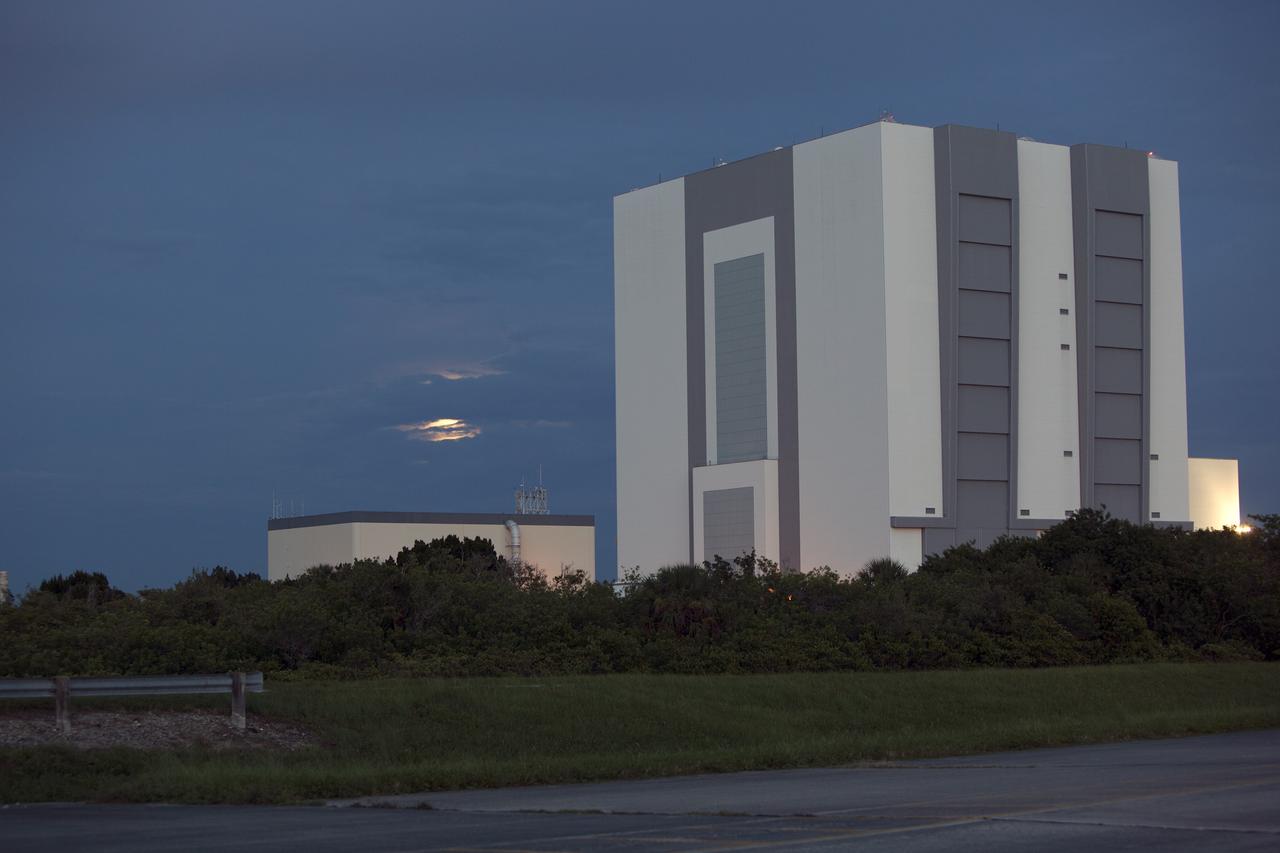
CAPE CANAVERAL, Fla. – A “supermoon” begins to rise through the clouds near the 525-foot-tall Vehicle Assembly Building in Launch Complex 39 at NASA’s Kennedy Space Center in Florida. The scientific term for the supermoon phenomenon is "perigee moon." Full moons vary in size because of the oval shape of the moon's orbit. The moon follows an elliptical path around Earth with one side about 50,000 kilometers closer than the other. Full moons that occur on the perigee side of the moon's orbit seem extra big and bright. For additional information, visit http://science.nasa.gov/science-news/science-at-nasa/2014/10jul_supermoons/. Photo credit: NASA/Ben Smegelsky
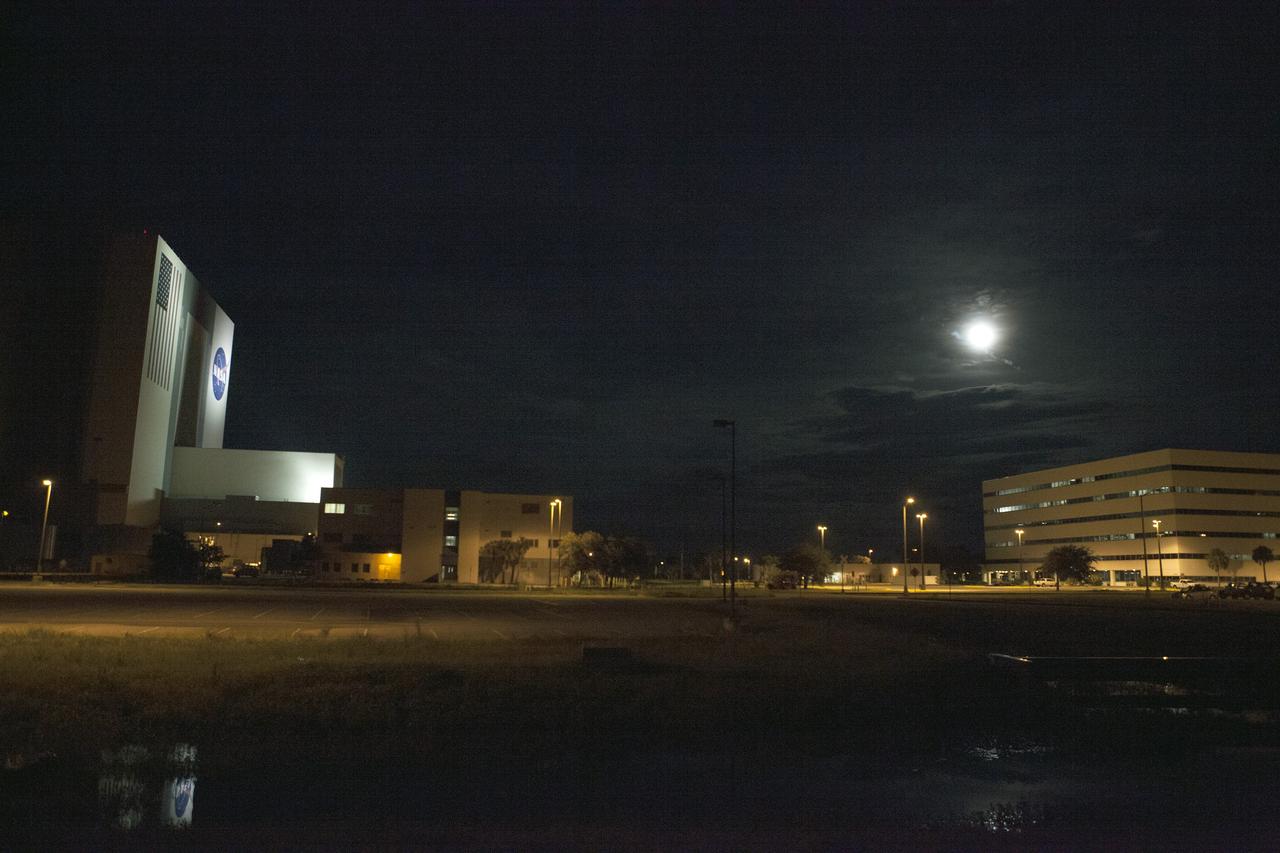
CAPE CANAVERAL, Fla. – A “supermoon” is partially obscured by the clouds over Launch Complex 39 at NASA’s Kennedy Space Center in Florida. At left, the 525-foot-tall Vehicle Assembly Building, illuminated by artificial light, threatens to outshine the moon. The scientific term for the supermoon phenomenon is "perigee moon." Full moons vary in size because of the oval shape of the moon's orbit. The moon follows an elliptical path around Earth with one side about 50,000 kilometers closer than the other. Full moons that occur on the perigee side of the moon's orbit seem extra big and bright. For additional information, visit http://science.nasa.gov/science-news/science-at-nasa/2014/10jul_supermoons/. Photo credit: NASA/Ben Smegelsky