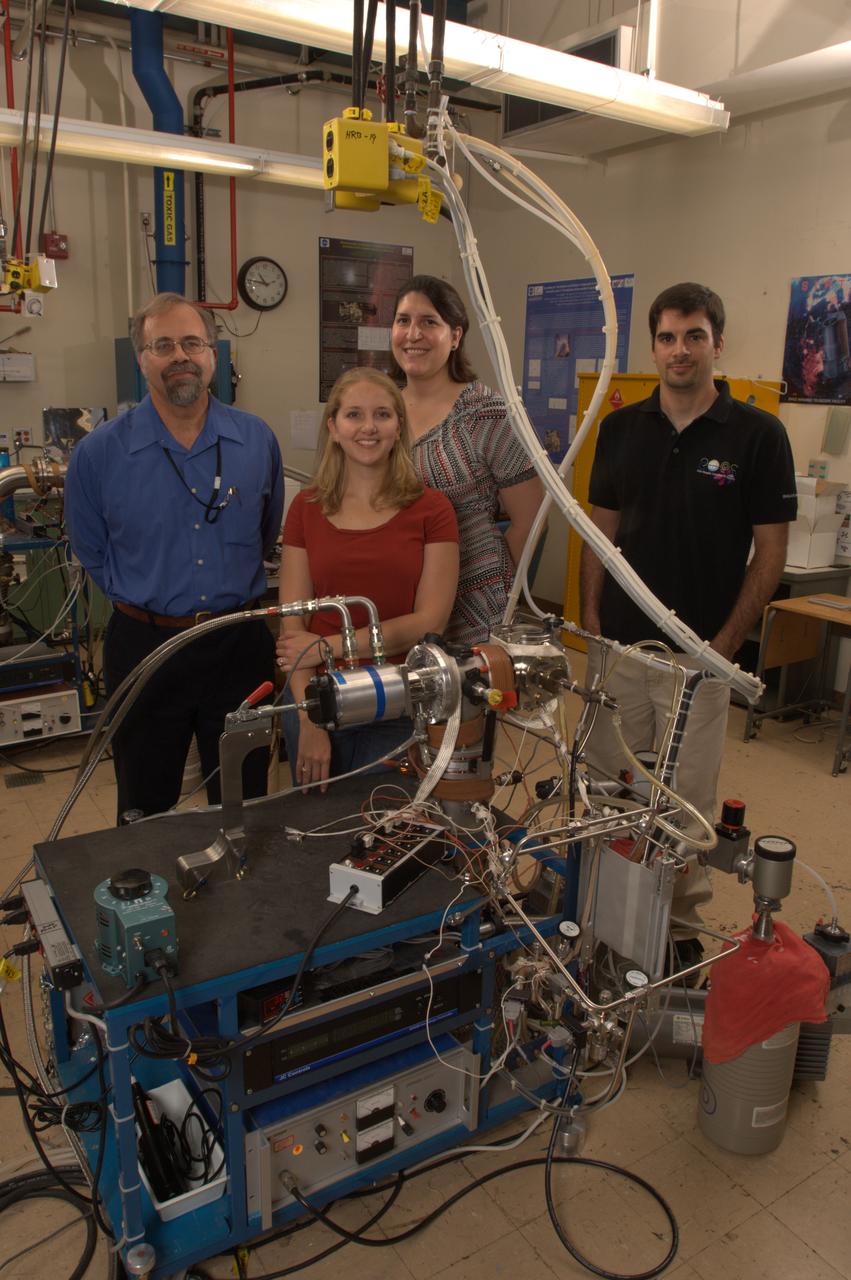
NASA Ames Astrophysics Branch (code-SSA), Photochemistry Lab with Stefanie Milam, Scott Sandford, Rachel Mastrapa, Michel Nuevo (N-245)
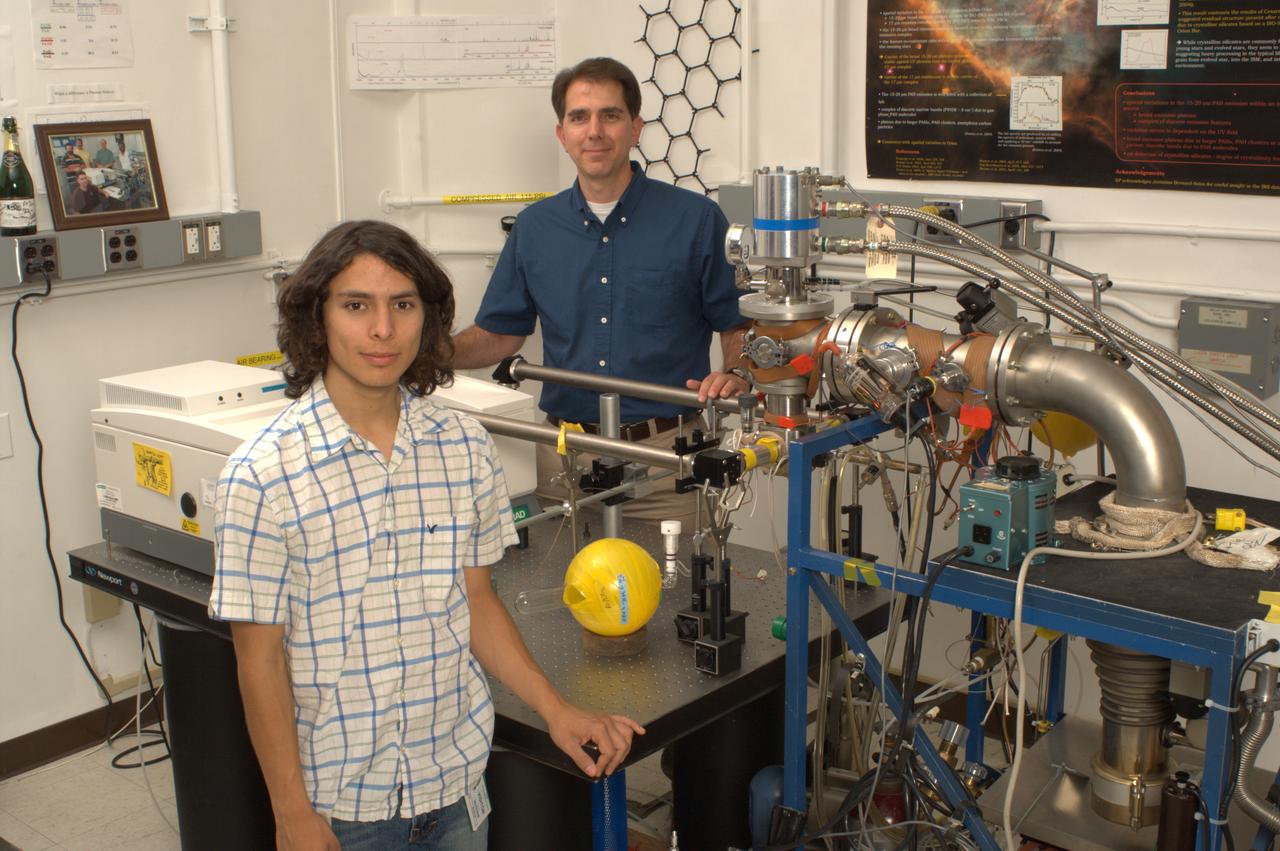
NASA Ames Astrophysics Branch (code-SSA), PAH IR Spectroscopy Lab with Andrew Mattioda and Manuel Olmedo (N-245 rm B-31)
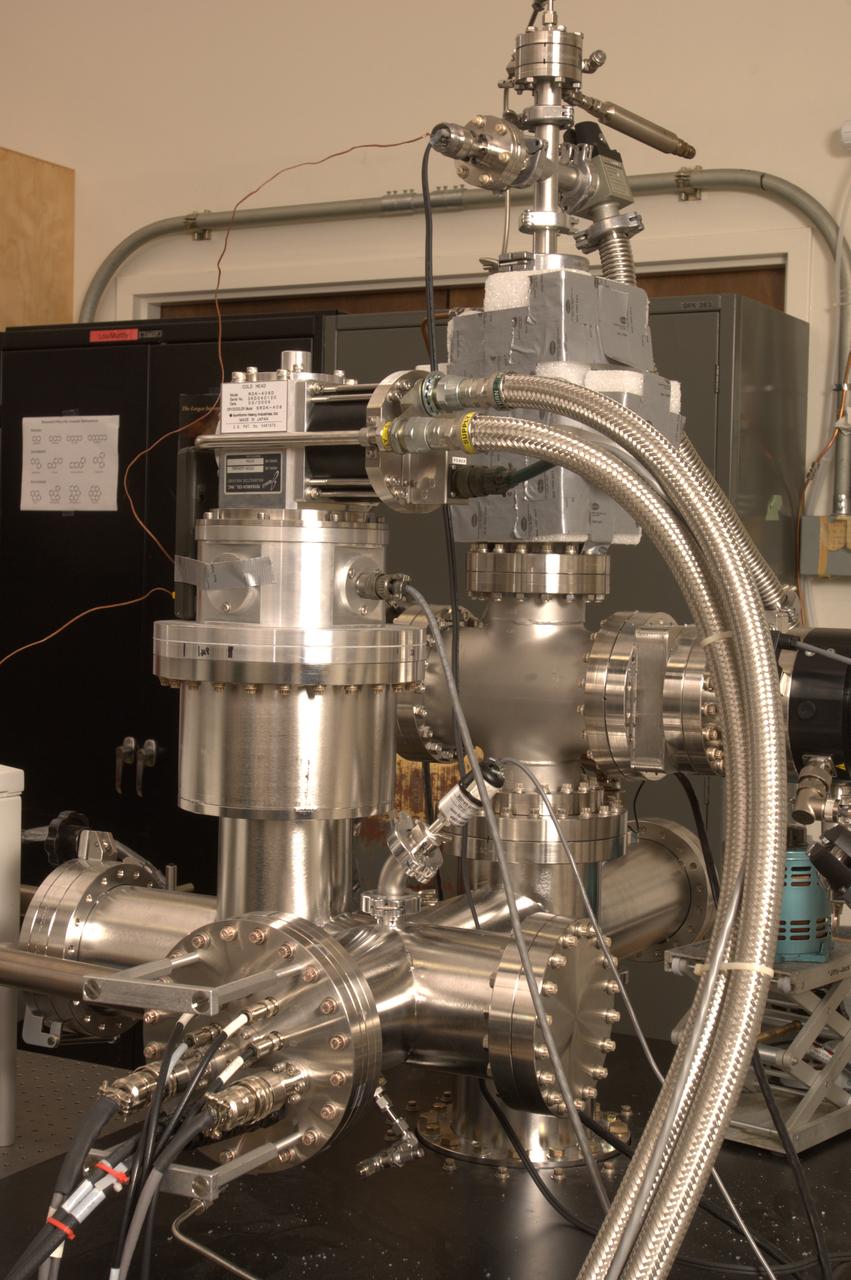
NASA Ames Astrophysics Branch (code-SSA), Small Satellite Support and Instrument Development Lab with Joe Roser, Nathan Bramall and Lou Allamandola (N-245 rm B-111)
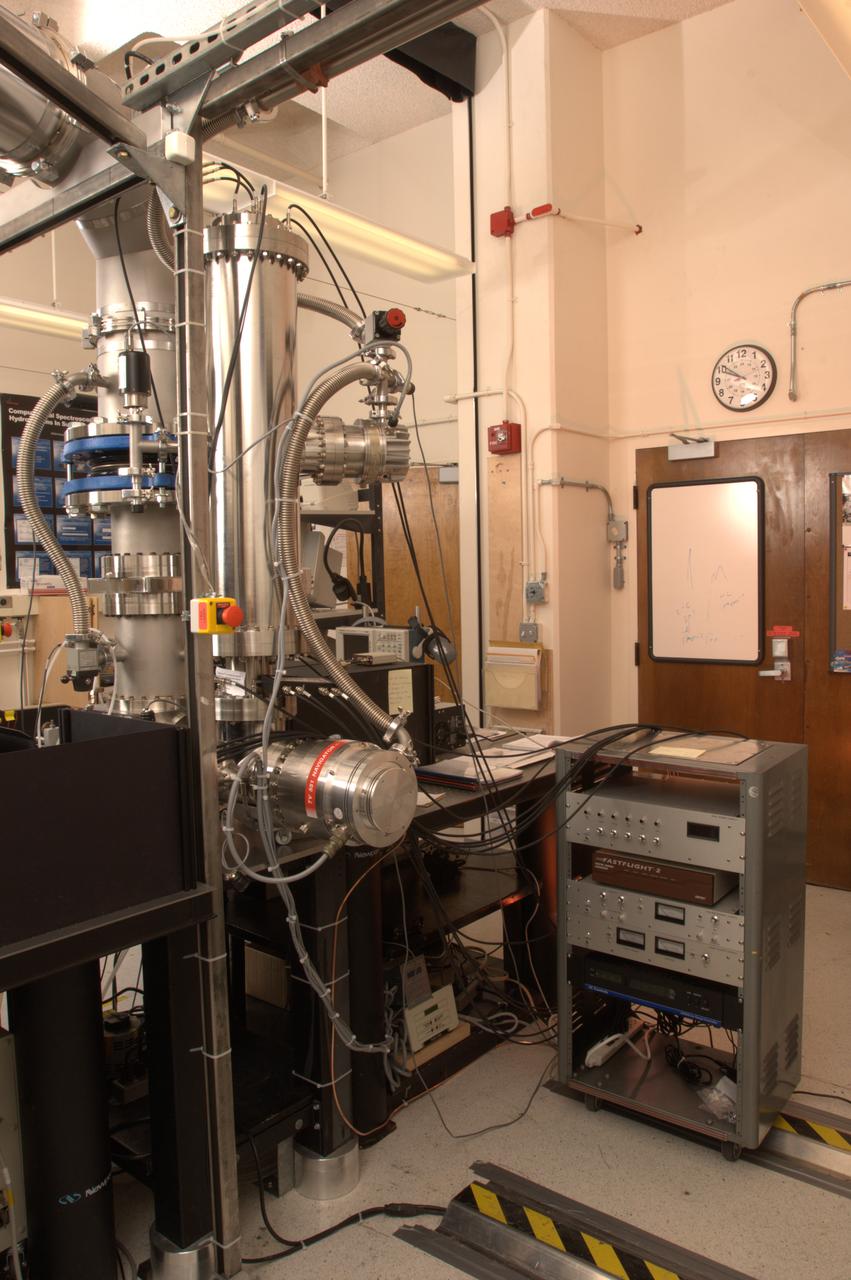
NASA Ames Astrophysics Branch (code-SSA), Pulsed discharge nozzle - Cavity Ring down - Reflection Time of Flight Mass Spectrometer (N-245 rm B-31) (PDN-CRDS-RETOFMS)
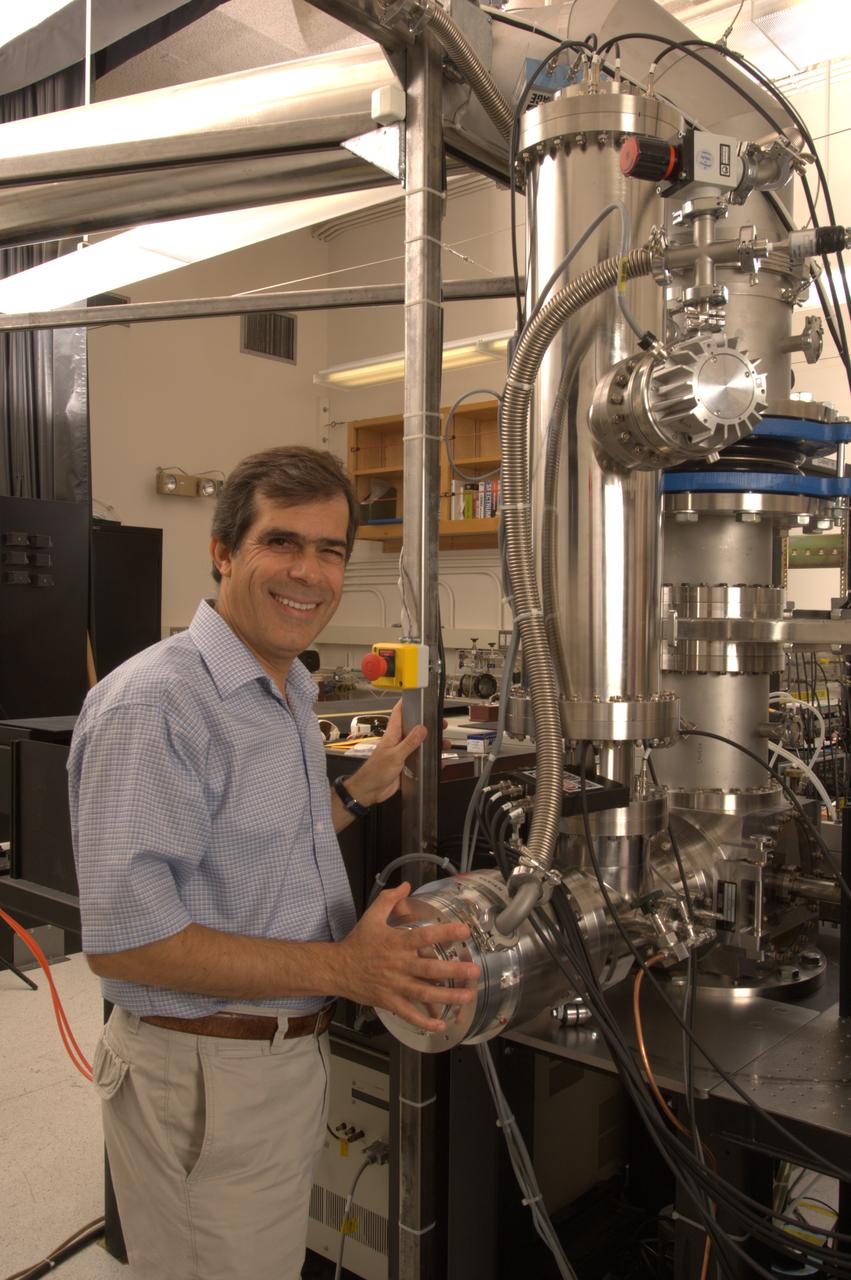
NASA Ames Astrophysics Branch (code-SSA), Pulsed discharge nozzle - Cavity Ring down - Reflection Time of Flight Mass Spectrometer (N-245 rm B-31) (PDN-CRDS-RETOFMS) shown here with Farid Salama
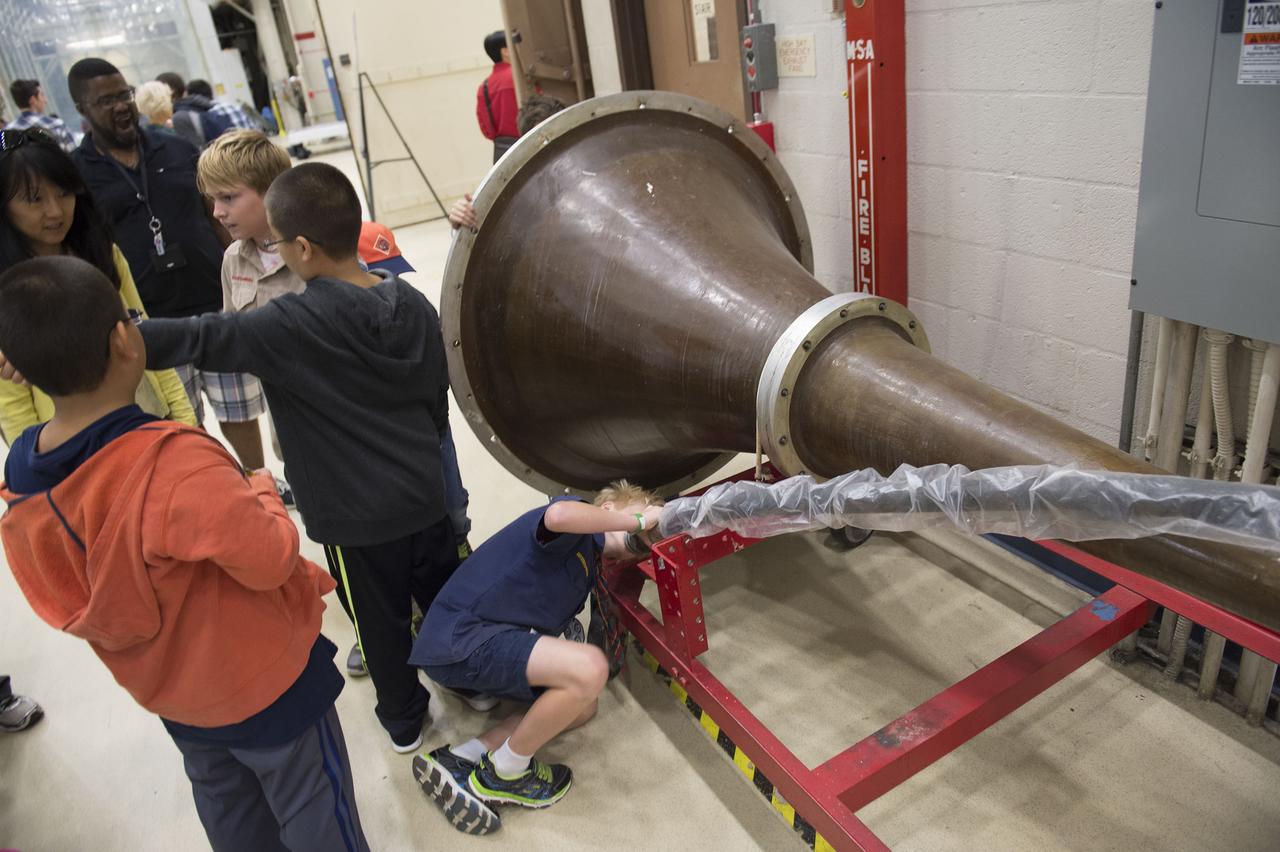
Buildings 7 & 29. Explore@NASAGoddard celebrates the 25th anniversary of the launch of the Hubble Space Telescope. All areas of Goddard’s research – Earth science, heliophysics, planetary science, astrophysics, and engineering and technology – will be presented, as each discipline plays a critical part in NASA's ongoing journey to reach new heights.
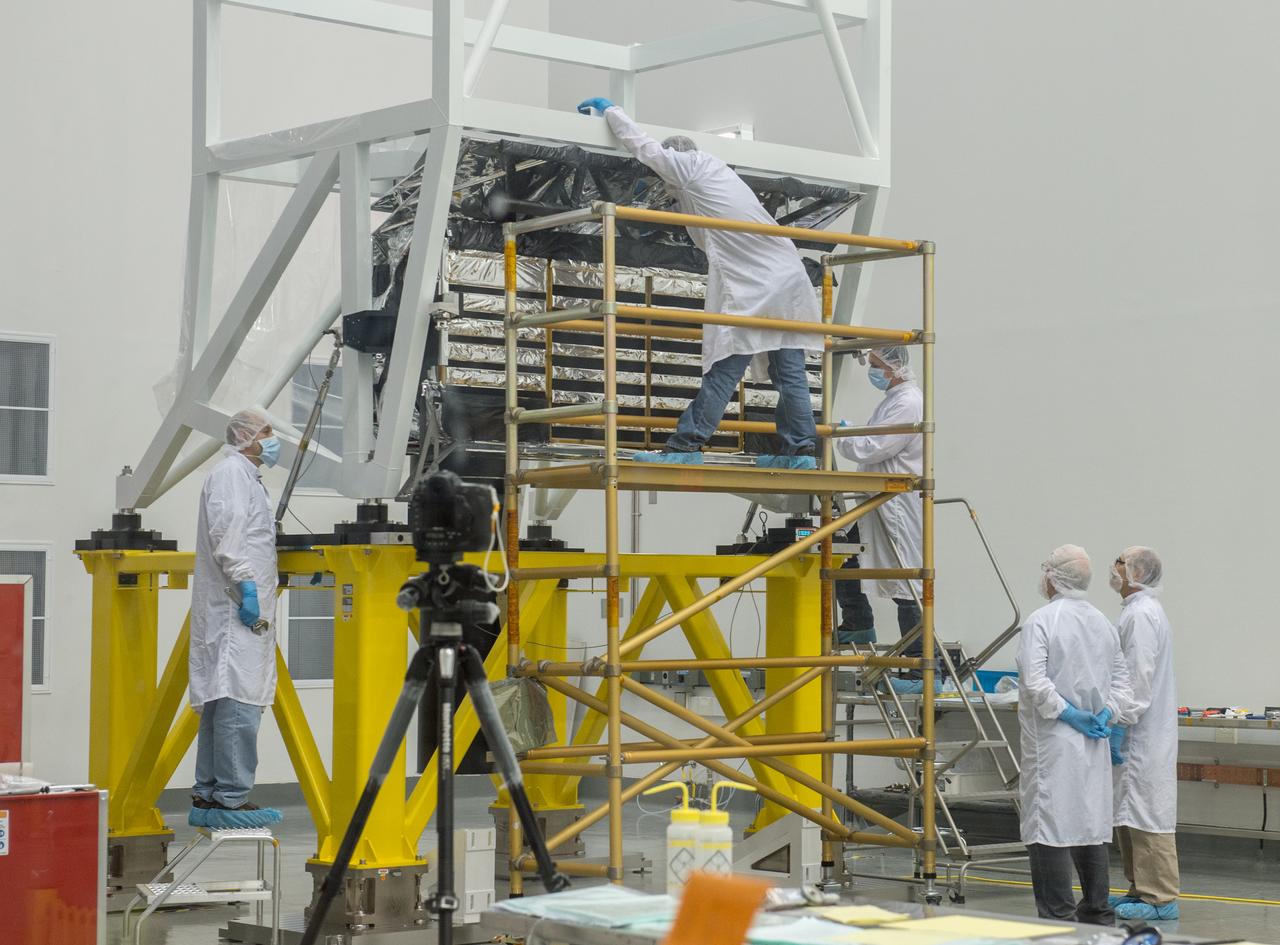
Buildings 7 & 29. Explore@NASAGoddard celebrates the 25th anniversary of the launch of the Hubble Space Telescope. All areas of Goddard’s research – Earth science, heliophysics, planetary science, astrophysics, and engineering and technology – will be presented, as each discipline plays a critical part in NASA's ongoing journey to reach new heights.
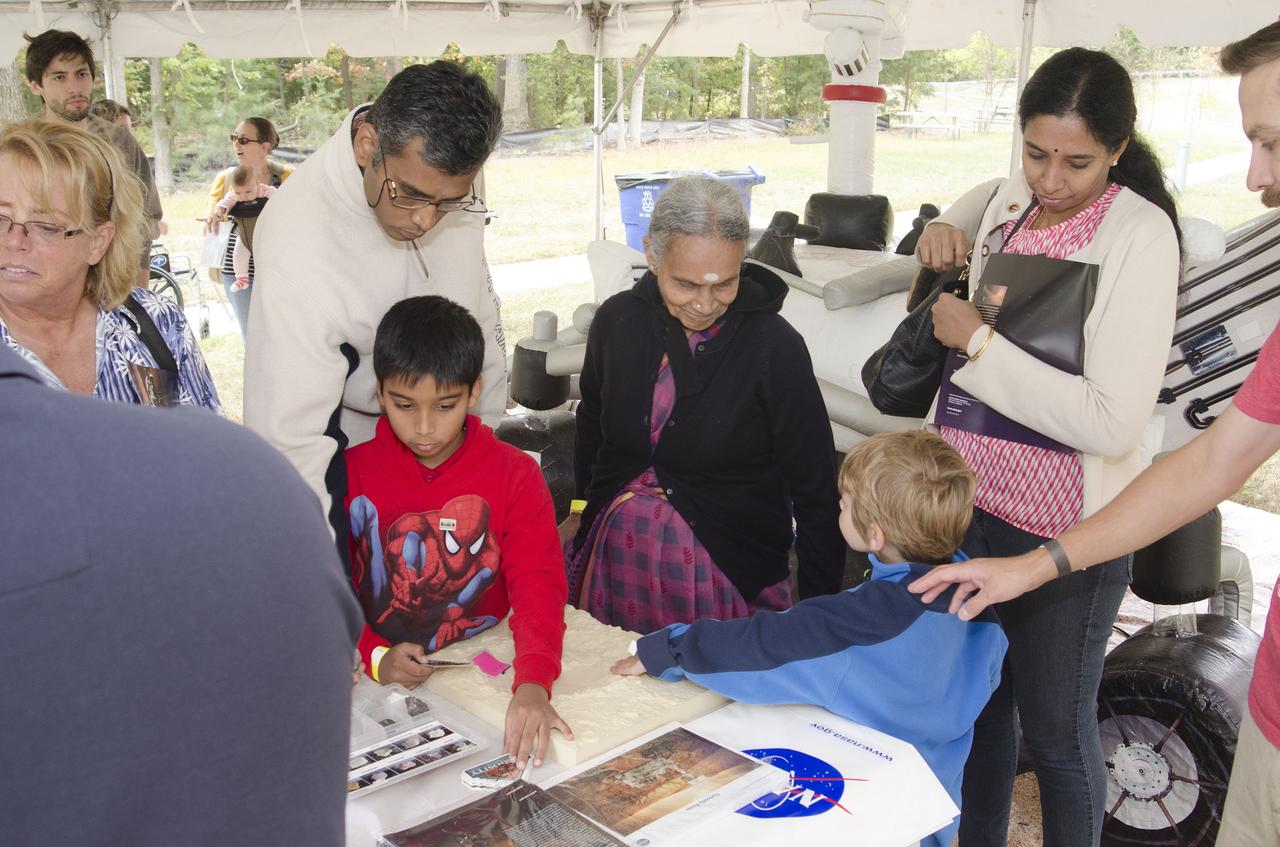
Explore@NASAGoddard celebrates the 25th anniversary of the launch of the Hubble Space Telescope. All areas of Goddard’s research – Earth science, heliophysics, planetary science, astrophysics, and engineering and technology – will be presented, as each discipline plays a critical part in NASA's ongoing journey to reach new heights.
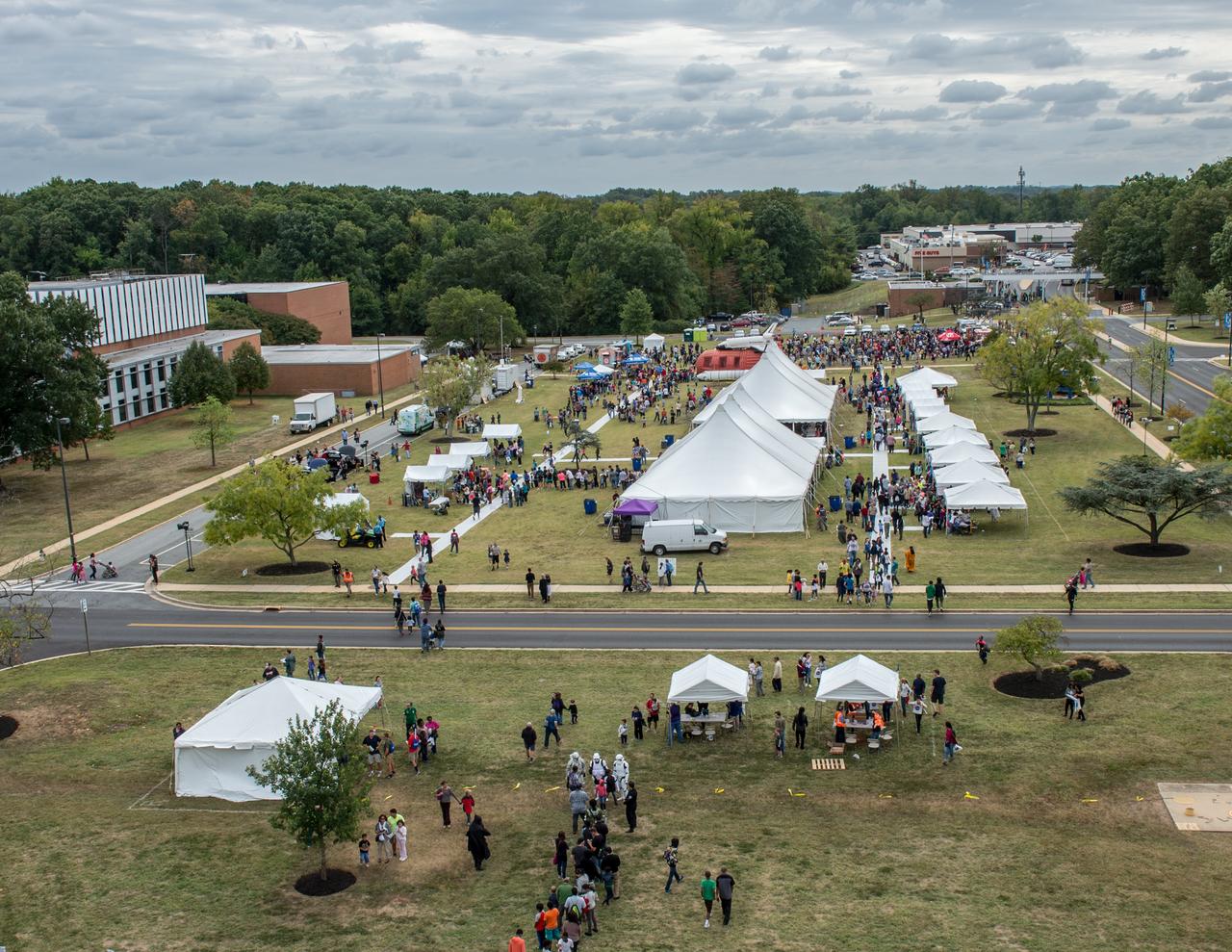
Explore@NASAGoddard celebrates the 25th anniversary of the launch of the Hubble Space Telescope. All areas of Goddard’s research – Earth science, heliophysics, planetary science, astrophysics, and engineering and technology – will be presented, as each discipline plays a critical part in NASA's ongoing journey to reach new heights.
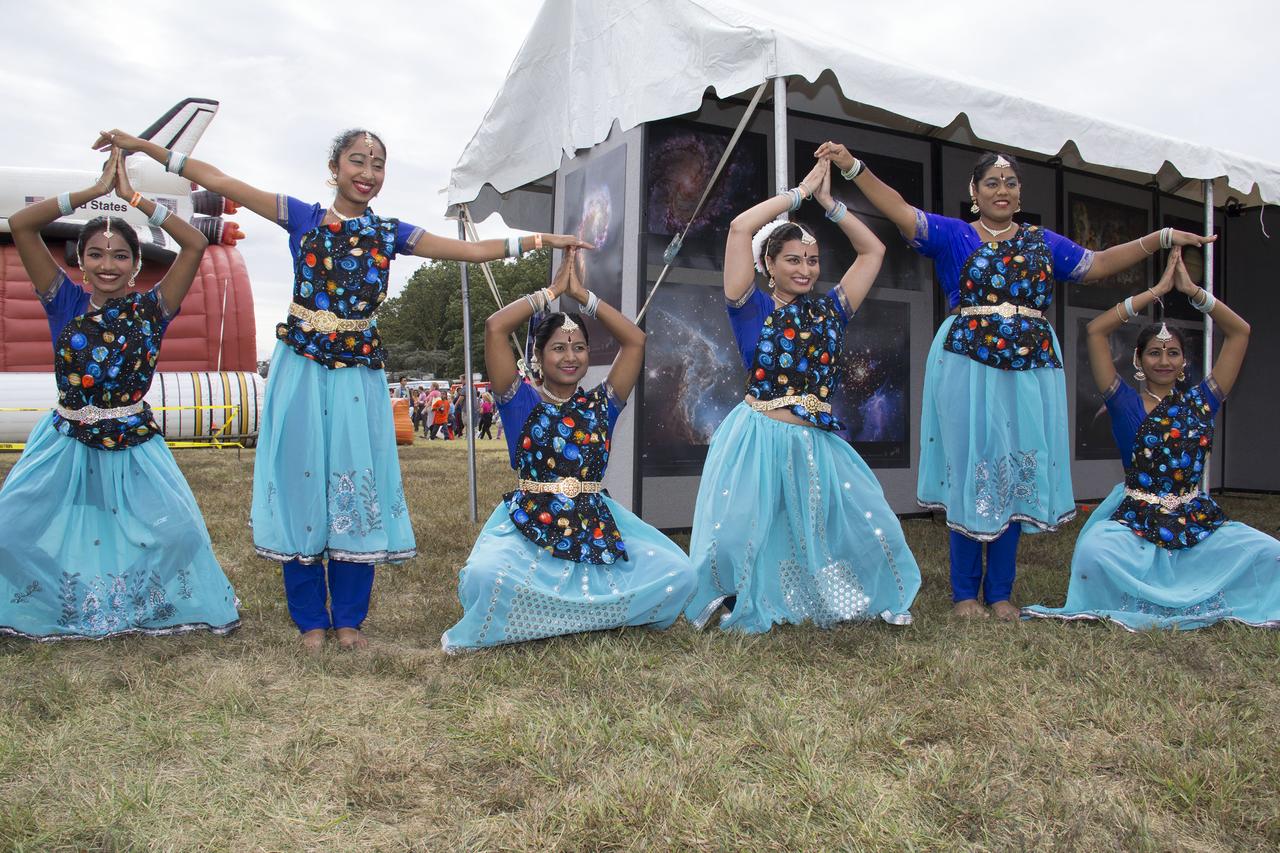
Explore@NASAGoddard celebrates the 25th anniversary of the launch of the Hubble Space Telescope. All areas of Goddard’s research – Earth science, heliophysics, planetary science, astrophysics, and engineering and technology – will be presented, as each discipline plays a critical part in NASA's ongoing journey to reach new heights.
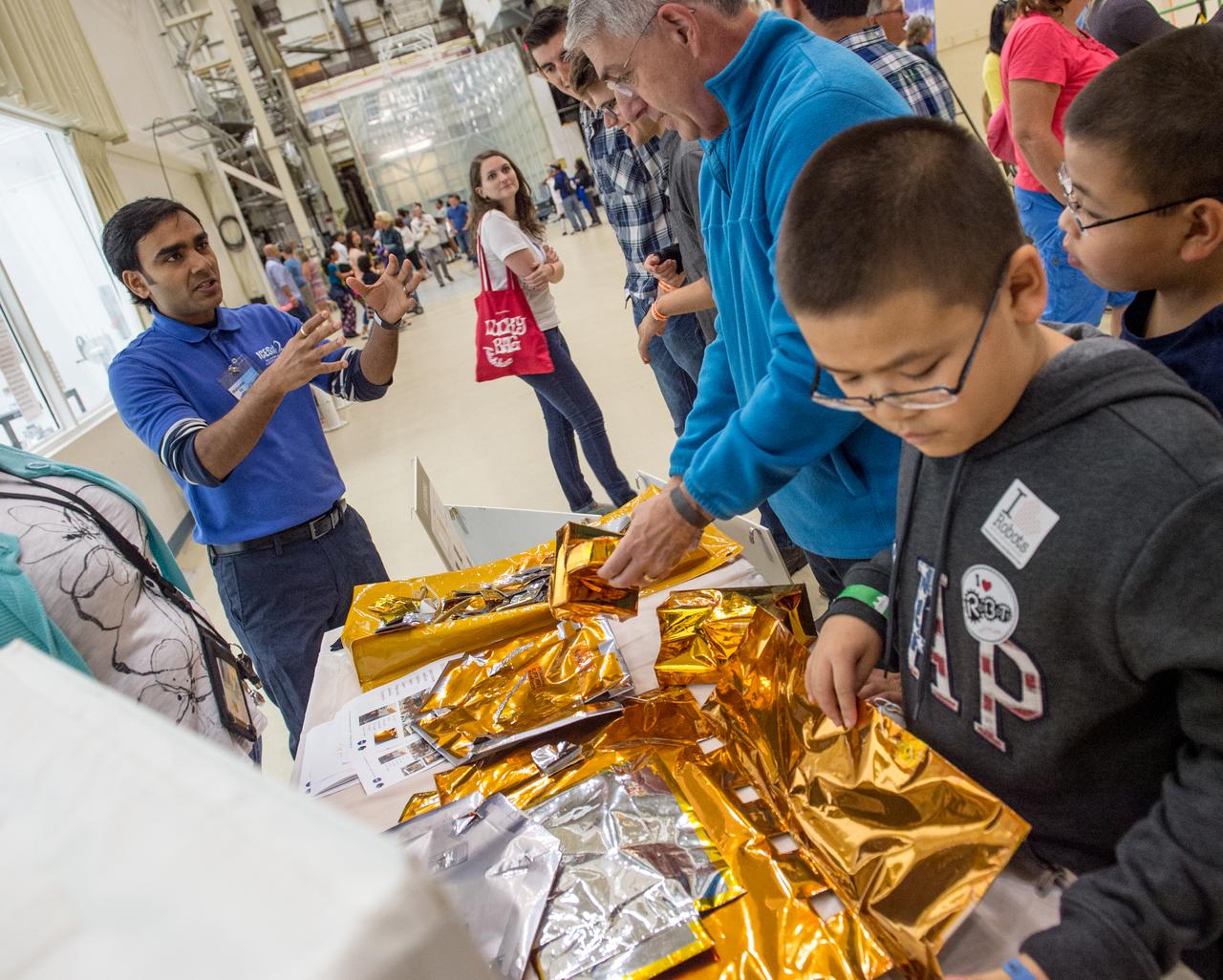
Buildings 7 & 29. Explore@NASAGoddard celebrates the 25th anniversary of the launch of the Hubble Space Telescope. All areas of Goddard’s research – Earth science, heliophysics, planetary science, astrophysics, and engineering and technology – will be presented, as each discipline plays a critical part in NASA's ongoing journey to reach new heights.
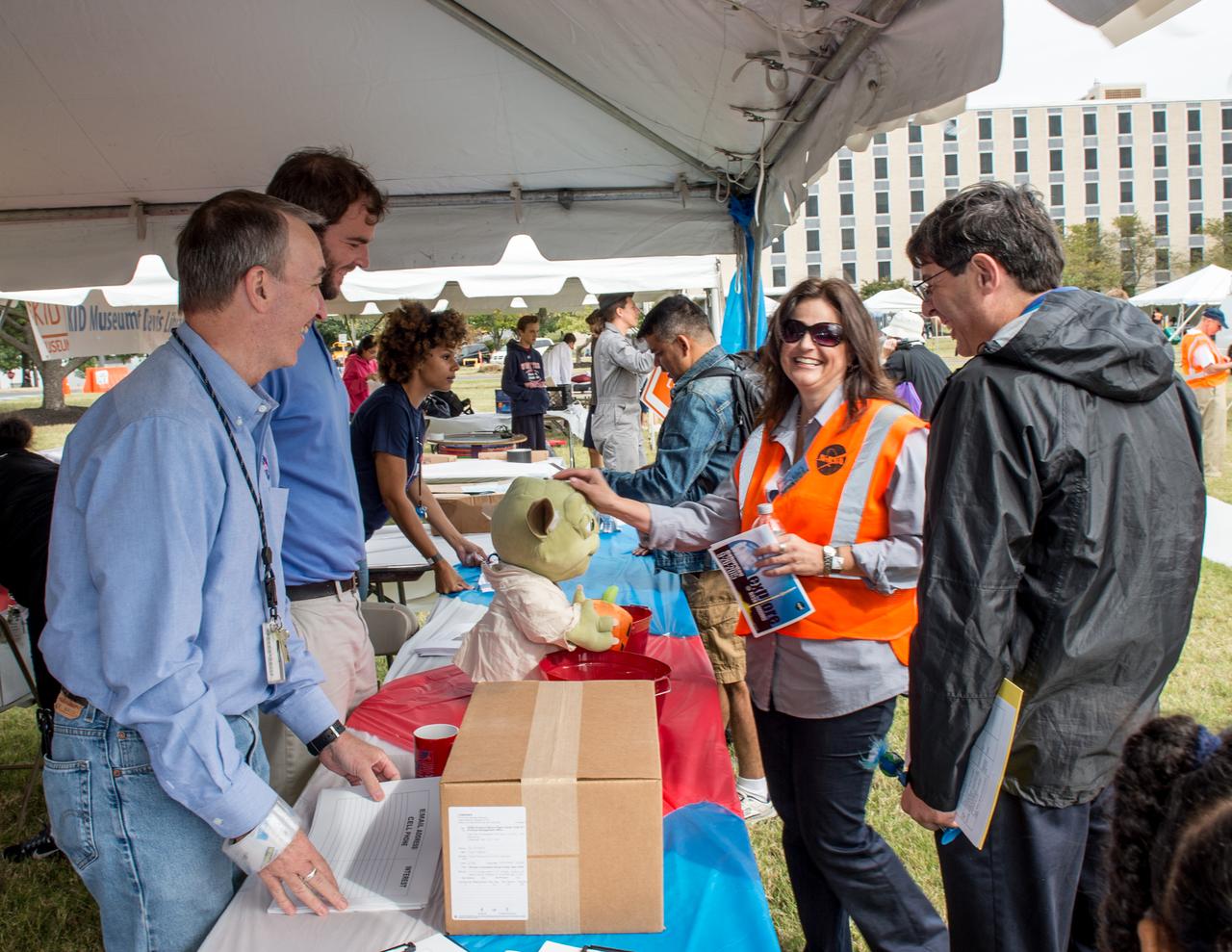
Center Director Chris Scolese visits displays at Explore@NASAGoddard celebrates the 25th anniversary of the launch of the Hubble Space Telescope. All areas of Goddard’s research – Earth science, heliophysics, planetary science, astrophysics, and engineering and technology – will be presented, as each discipline plays a critical part in NASA's ongoing journey to reach new heights.
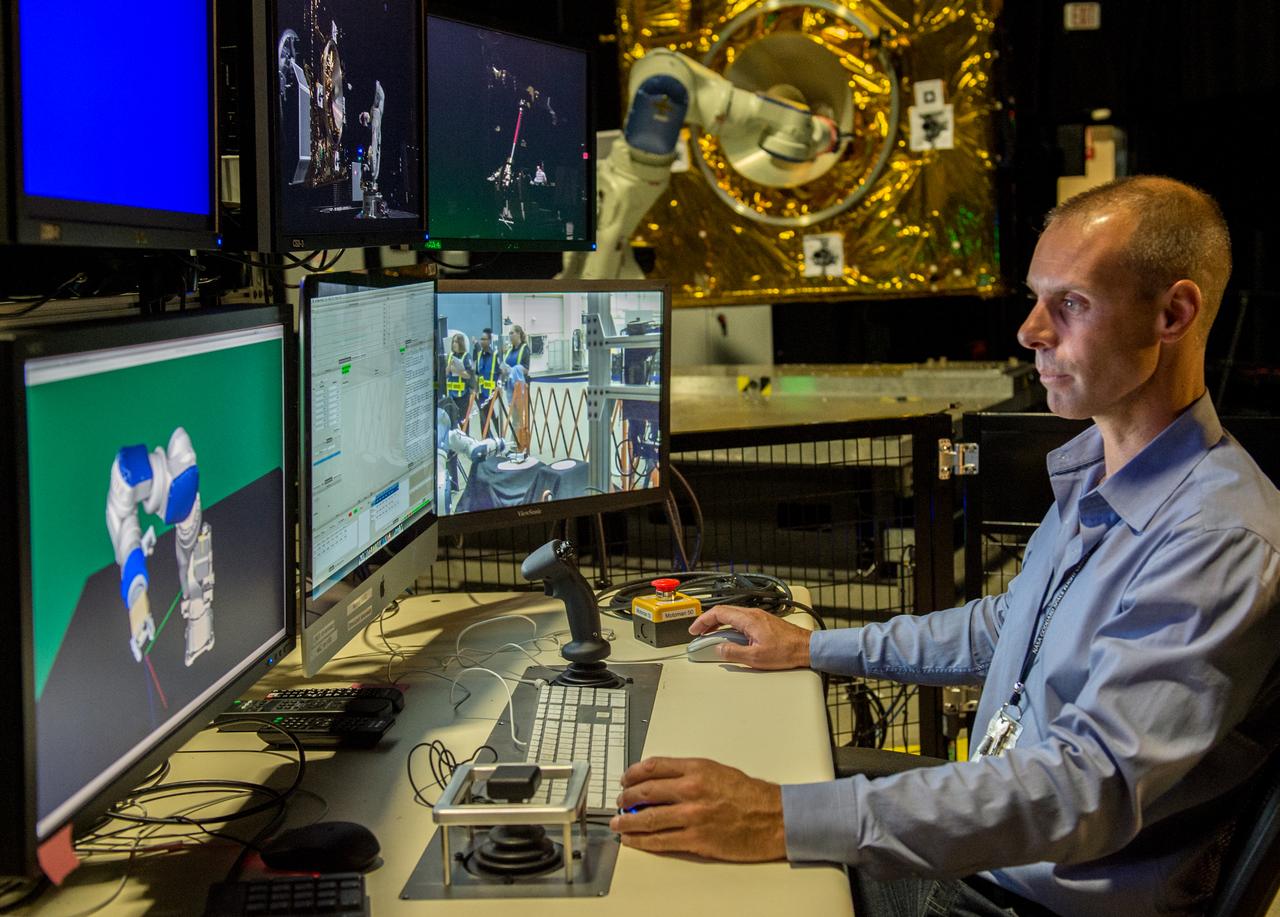
Buildings 7 & 29. Explore@NASAGoddard celebrates the 25th anniversary of the launch of the Hubble Space Telescope. All areas of Goddard’s research – Earth science, heliophysics, planetary science, astrophysics, and engineering and technology – will be presented, as each discipline plays a critical part in NASA's ongoing journey to reach new heights.
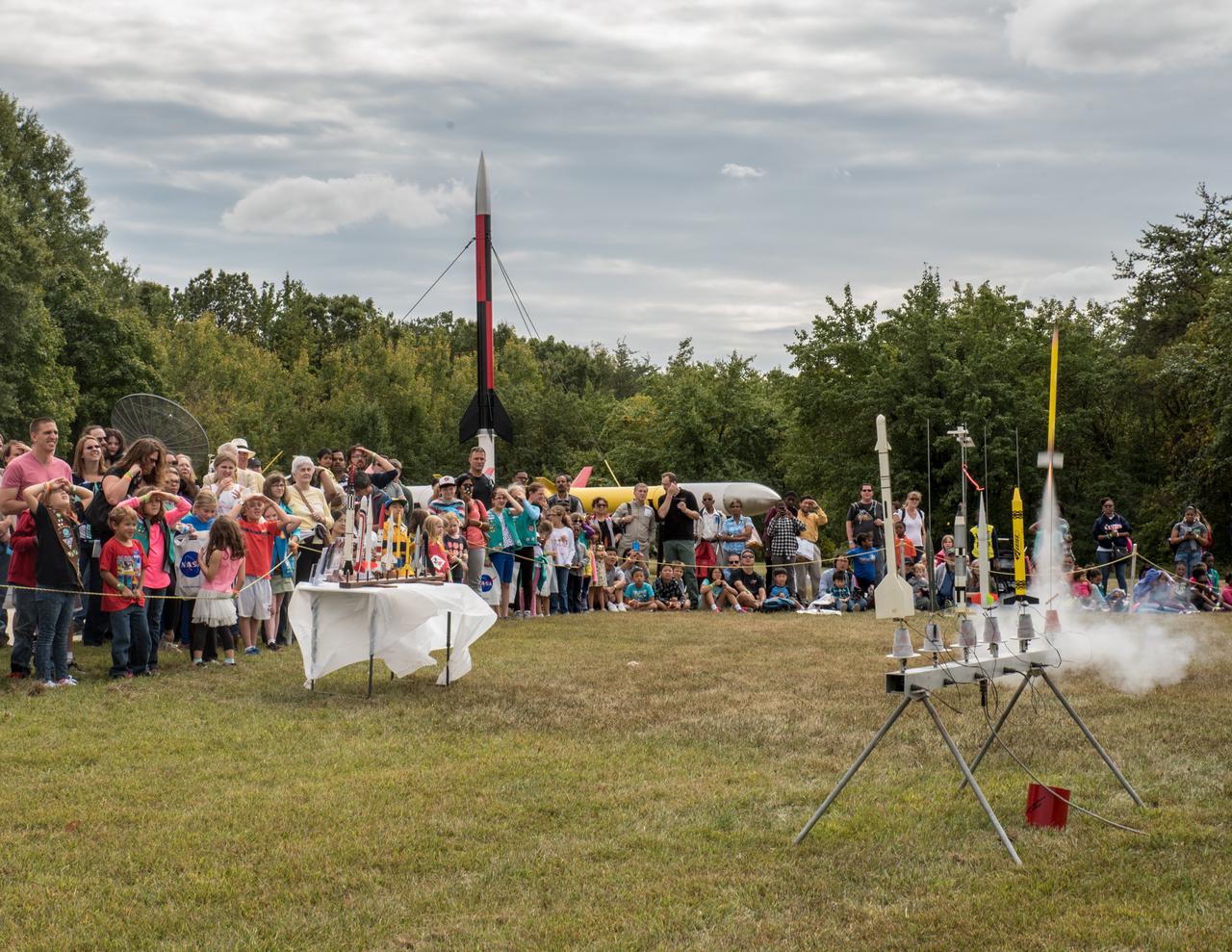
Explore@NASAGoddard celebrates the 25th anniversary of the launch of the Hubble Space Telescope. All areas of Goddard’s research – Earth science, heliophysics, planetary science, astrophysics, and engineering and technology – will be presented, as each discipline plays a critical part in NASA's ongoing journey to reach new heights.
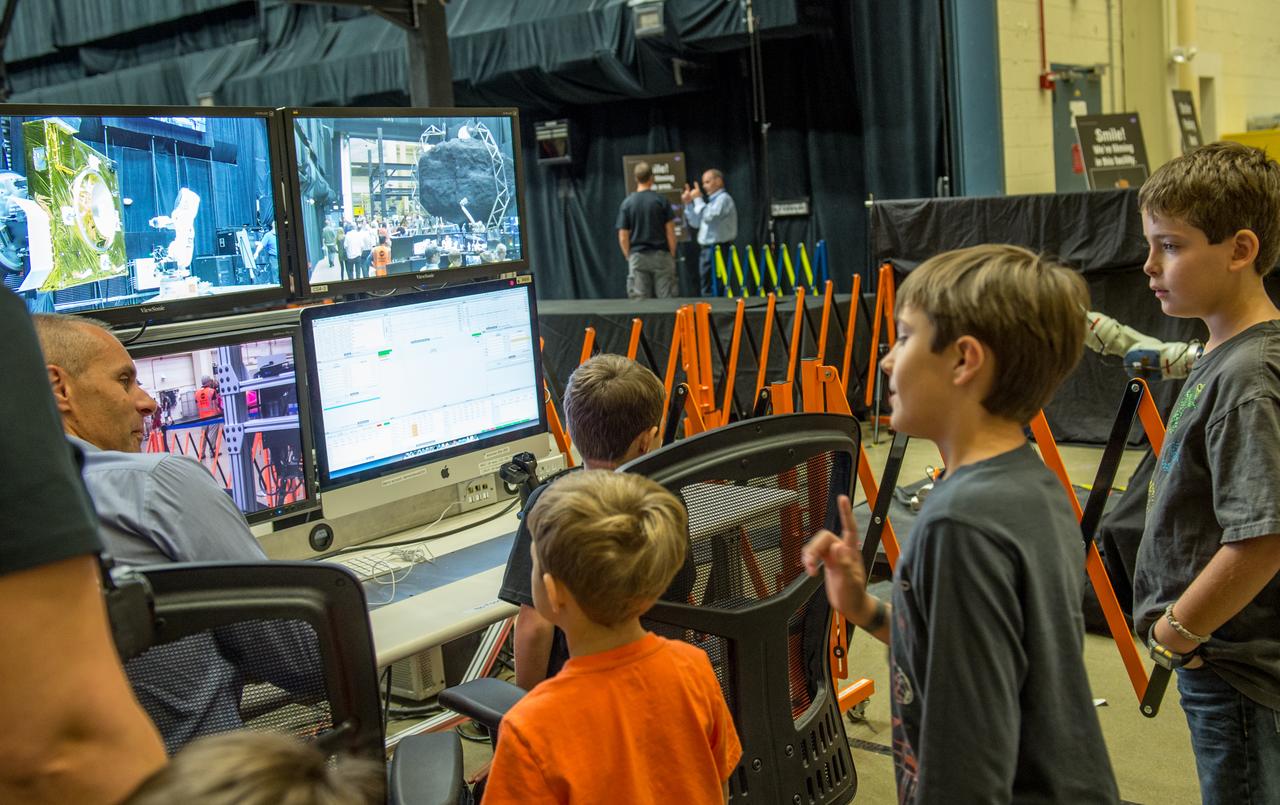
Buildings 7 & 29. Explore@NASAGoddard celebrates the 25th anniversary of the launch of the Hubble Space Telescope. All areas of Goddard’s research – Earth science, heliophysics, planetary science, astrophysics, and engineering and technology – will be presented, as each discipline plays a critical part in NASA's ongoing journey to reach new heights.
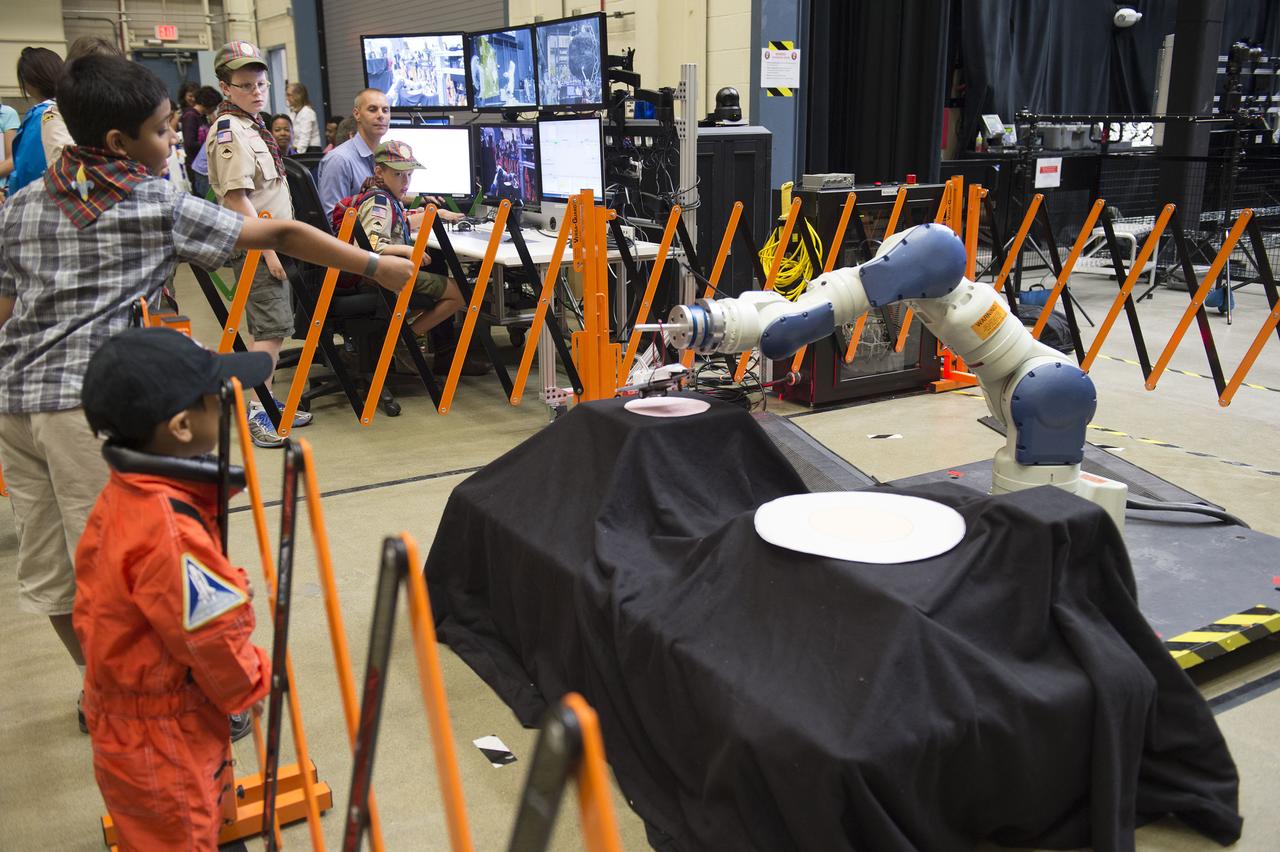
Buildings 7 & 29. Explore@NASAGoddard celebrates the 25th anniversary of the launch of the Hubble Space Telescope. All areas of Goddard’s research – Earth science, heliophysics, planetary science, astrophysics, and engineering and technology – will be presented, as each discipline plays a critical part in NASA's ongoing journey to reach new heights.

Explore@NASAGoddard celebrates the 25th anniversary of the launch of the Hubble Space Telescope. All areas of Goddard’s research – Earth science, heliophysics, planetary science, astrophysics, and engineering and technology – will be presented, as each discipline plays a critical part in NASA's ongoing journey to reach new heights.
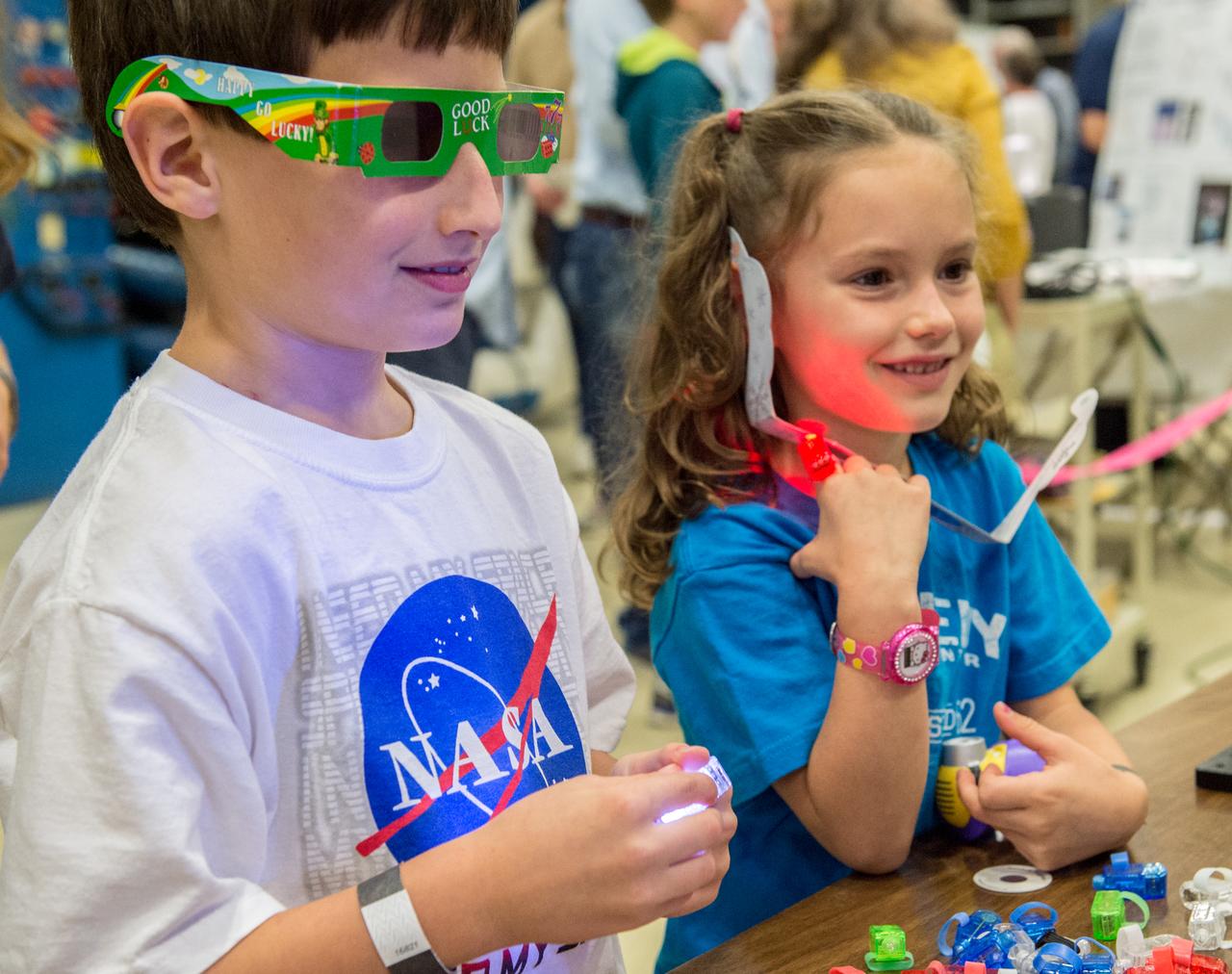
Buildings 7 & 29. Explore@NASAGoddard celebrates the 25th anniversary of the launch of the Hubble Space Telescope. All areas of Goddard’s research – Earth science, heliophysics, planetary science, astrophysics, and engineering and technology – will be presented, as each discipline plays a critical part in NASA's ongoing journey to reach new heights.
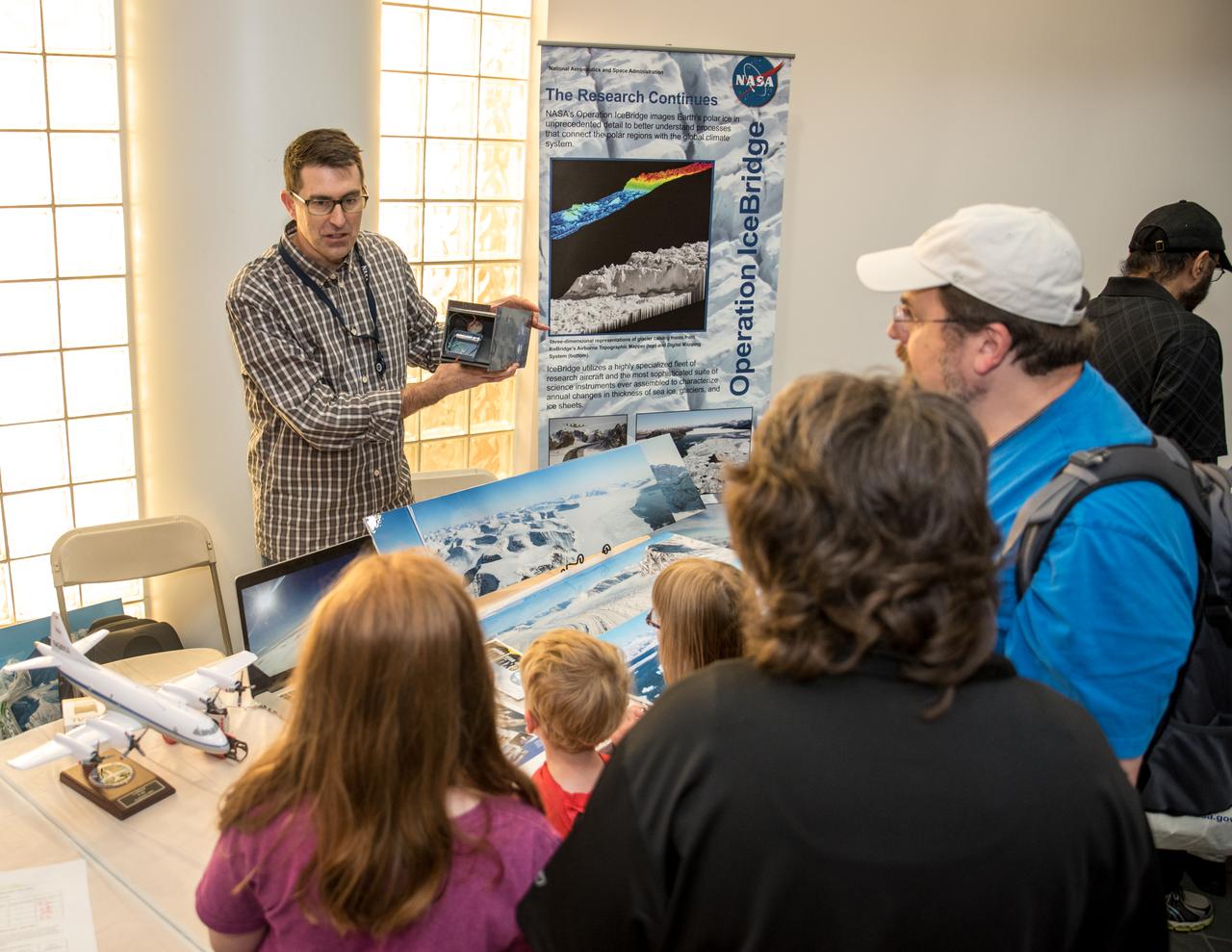
Explore@NASAGoddard celebrates the 25th anniversary of the launch of the Hubble Space Telescope. All areas of Goddard’s research – Earth science, heliophysics, planetary science, astrophysics, and engineering and technology – will be presented, as each discipline plays a critical part in NASA's ongoing journey to reach new heights.
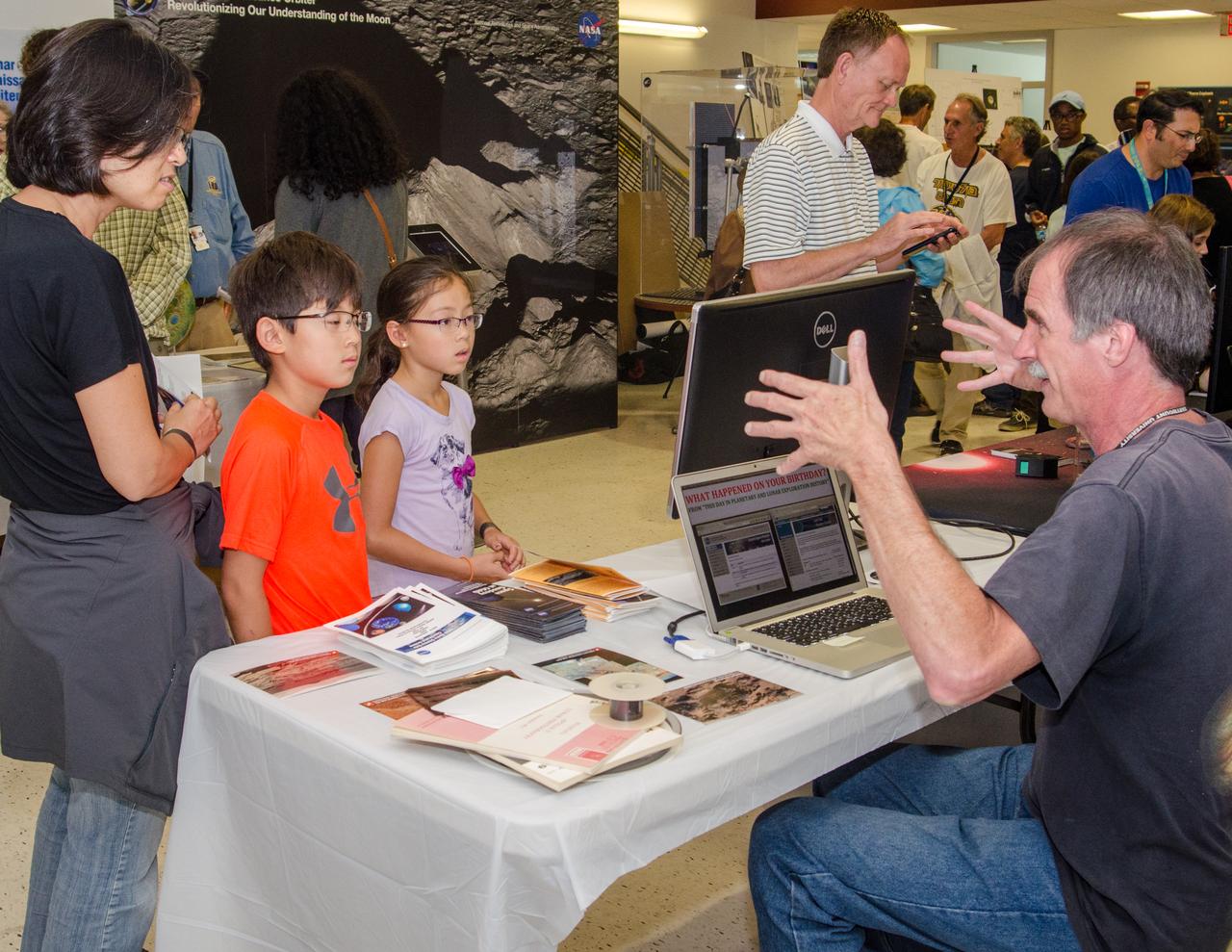
Explore@NASAGoddard celebrates the 25th anniversary of the launch of the Hubble Space Telescope. All areas of Goddard’s research – Earth science, heliophysics, planetary science, astrophysics, and engineering and technology – will be presented, as each discipline plays a critical part in NASA's ongoing journey to reach new heights.
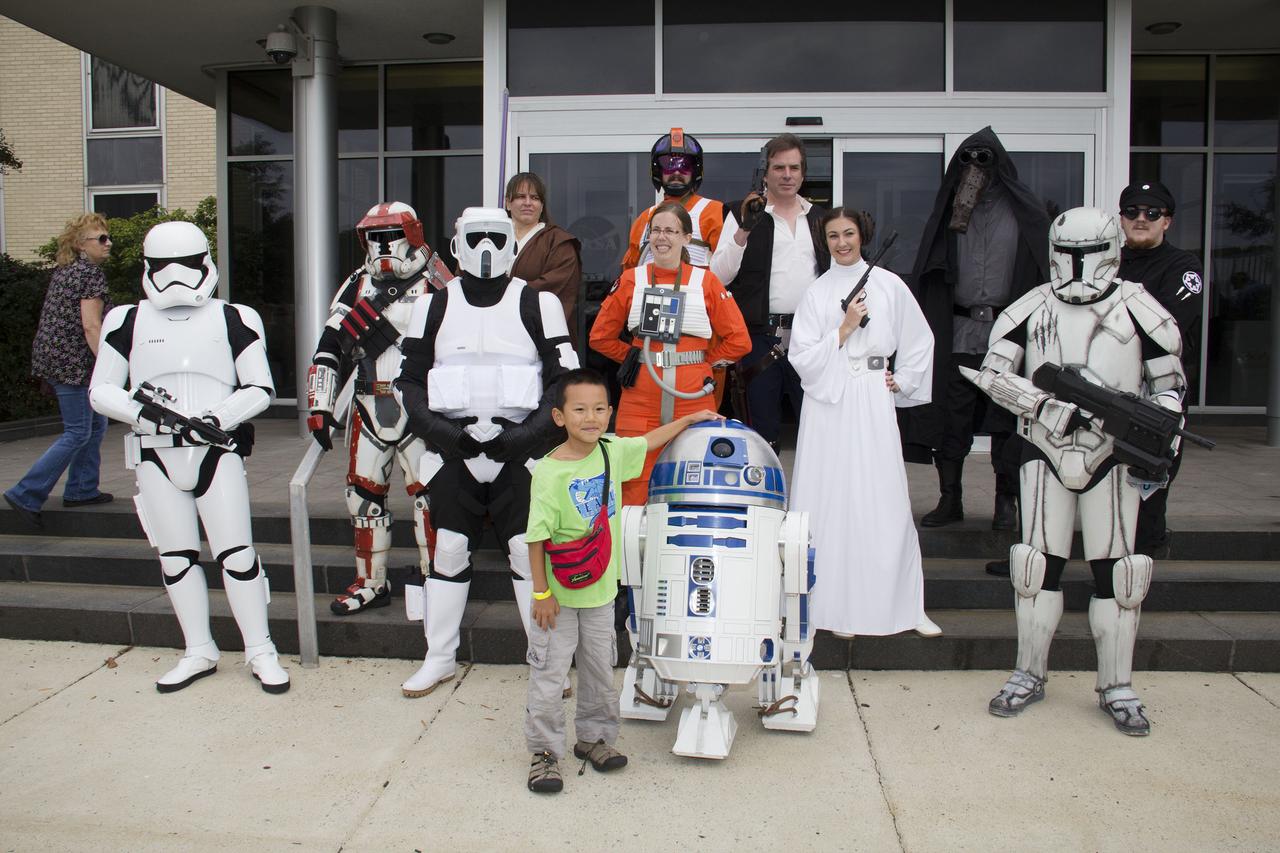
Explore@NASAGoddard celebrates the 25th anniversary of the launch of the Hubble Space Telescope. All areas of Goddard’s research – Earth science, heliophysics, planetary science, astrophysics, and engineering and technology – will be presented, as each discipline plays a critical part in NASA's ongoing journey to reach new heights.
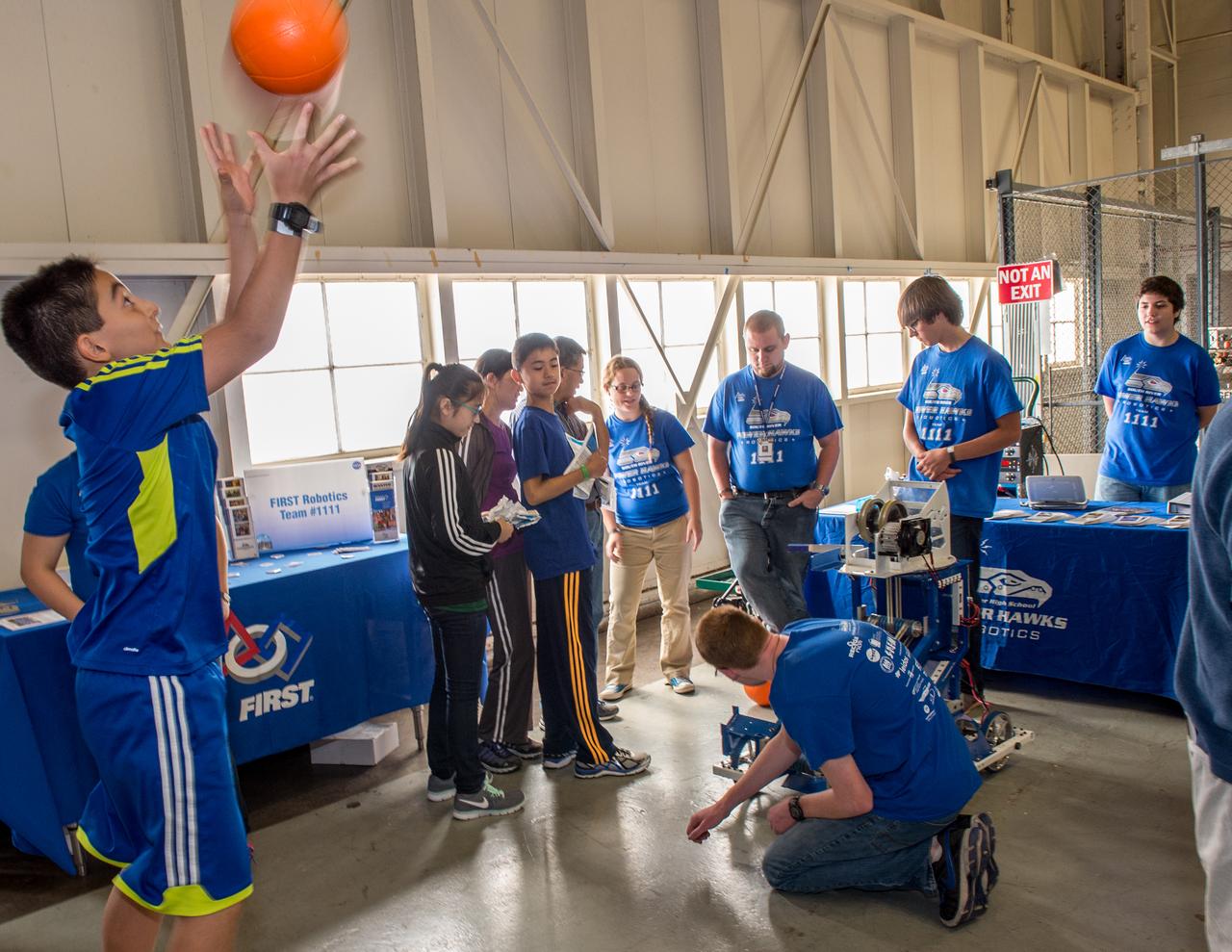
Building 5 Manufacturing Branch. Explore@NASAGoddard celebrates the 25th anniversary of the launch of the Hubble Space Telescope. All areas of Goddard’s research – Earth science, heliophysics, planetary science, astrophysics, and engineering and technology – will be presented, as each discipline plays a critical part in NASA's ongoing journey to reach new heights.
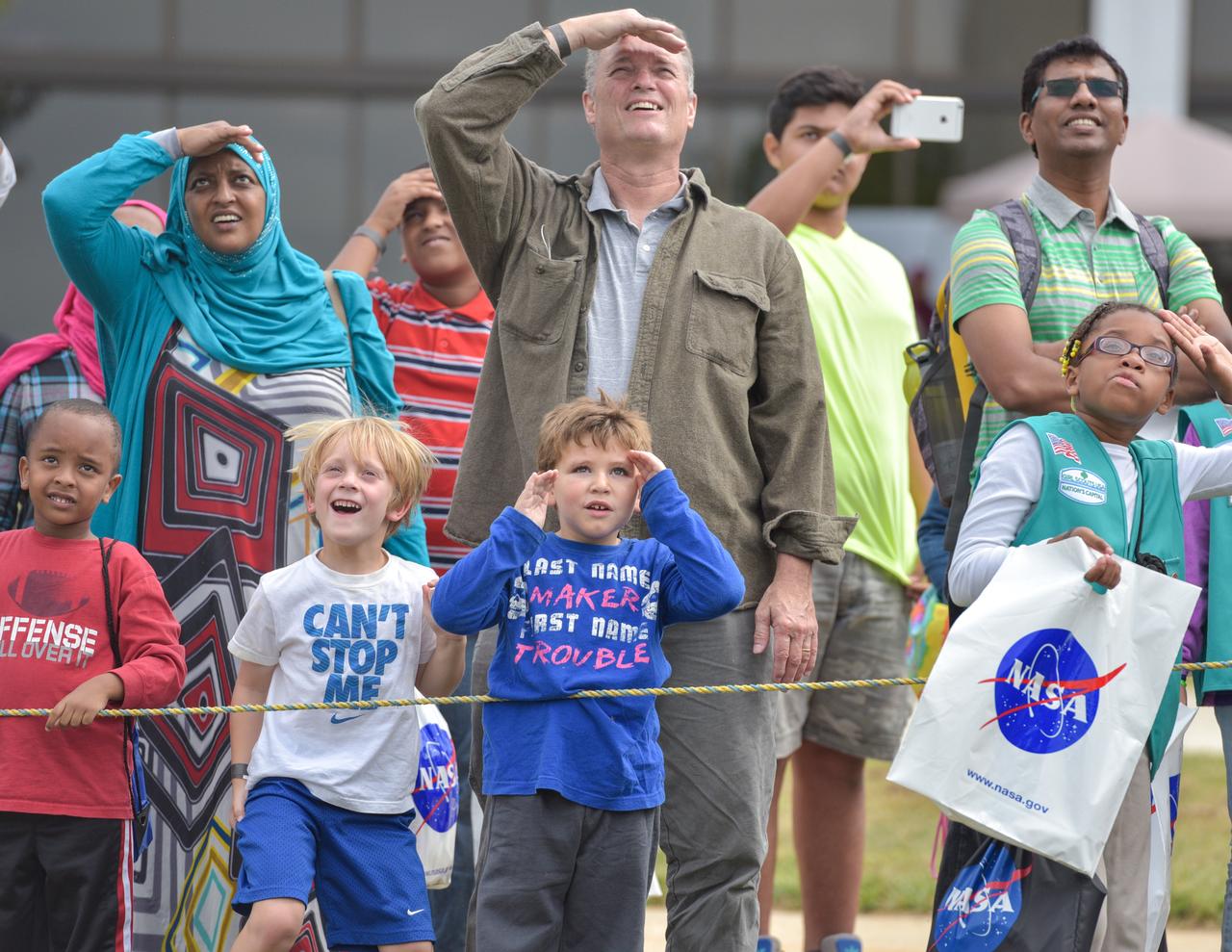
Explore@NASAGoddard celebrates the 25th anniversary of the launch of the Hubble Space Telescope. All areas of Goddard’s research – Earth science, heliophysics, planetary science, astrophysics, and engineering and technology – will be presented, as each discipline plays a critical part in NASA's ongoing journey to reach new heights.
![Jody Singer, director of NASA's Marshall Space Flight Center, speaks to team members March 11 following the FY2020 proposed budget rollout event with NASA Administrator Jim Bridenstine. Singer congratulated the Marshall team for all its hard work on managing and contributing to delivery of the nation's next great rocket, the Space Launch System; communications and science operations oversight for the International Space Station; astrophysics and heliophysics achievements helping to rewrite our understanding of our Sun, the solar system and the cosmos beyond; and more. "We've seen a lot of first-time-in-history [milestones]," Singer said, lauding the center's history of expertise and successful partnerships with industry, academia and government. "We are always looking for creative solutions to serve and do right for the country. We're strong, and we lead the way."](https://images-assets.nasa.gov/image/MSFC-201900090/MSFC-201900090~medium.jpg)
Jody Singer, director of NASA's Marshall Space Flight Center, speaks to team members March 11 following the FY2020 proposed budget rollout event with NASA Administrator Jim Bridenstine. Singer congratulated the Marshall team for all its hard work on managing and contributing to delivery of the nation's next great rocket, the Space Launch System; communications and science operations oversight for the International Space Station; astrophysics and heliophysics achievements helping to rewrite our understanding of our Sun, the solar system and the cosmos beyond; and more. "We've seen a lot of first-time-in-history [milestones]," Singer said, lauding the center's history of expertise and successful partnerships with industry, academia and government. "We are always looking for creative solutions to serve and do right for the country. We're strong, and we lead the way."
![Jody Singer, director of NASA's Marshall Space Flight Center, speaks to team members March 11 following the FY2020 proposed budget rollout event with NASA Administrator Jim Bridenstine. Singer congratulated the Marshall team for all its hard work on managing and contributing to delivery of the nation's next great rocket, the Space Launch System; communications and science operations oversight for the International Space Station; astrophysics and heliophysics achievements helping to rewrite our understanding of our Sun, the solar system and the cosmos beyond; and more. "We've seen a lot of first-time-in-history [milestones]," Singer said, lauding the center's history of expertise and successful partnerships with industry, academia and government. "We are always looking for creative solutions to serve and do right for the country. We're strong, and we lead the way."](https://images-assets.nasa.gov/image/MSFC-201900088/MSFC-201900088~medium.jpg)
Jody Singer, director of NASA's Marshall Space Flight Center, speaks to team members March 11 following the FY2020 proposed budget rollout event with NASA Administrator Jim Bridenstine. Singer congratulated the Marshall team for all its hard work on managing and contributing to delivery of the nation's next great rocket, the Space Launch System; communications and science operations oversight for the International Space Station; astrophysics and heliophysics achievements helping to rewrite our understanding of our Sun, the solar system and the cosmos beyond; and more. "We've seen a lot of first-time-in-history [milestones]," Singer said, lauding the center's history of expertise and successful partnerships with industry, academia and government. "We are always looking for creative solutions to serve and do right for the country. We're strong, and we lead the way."
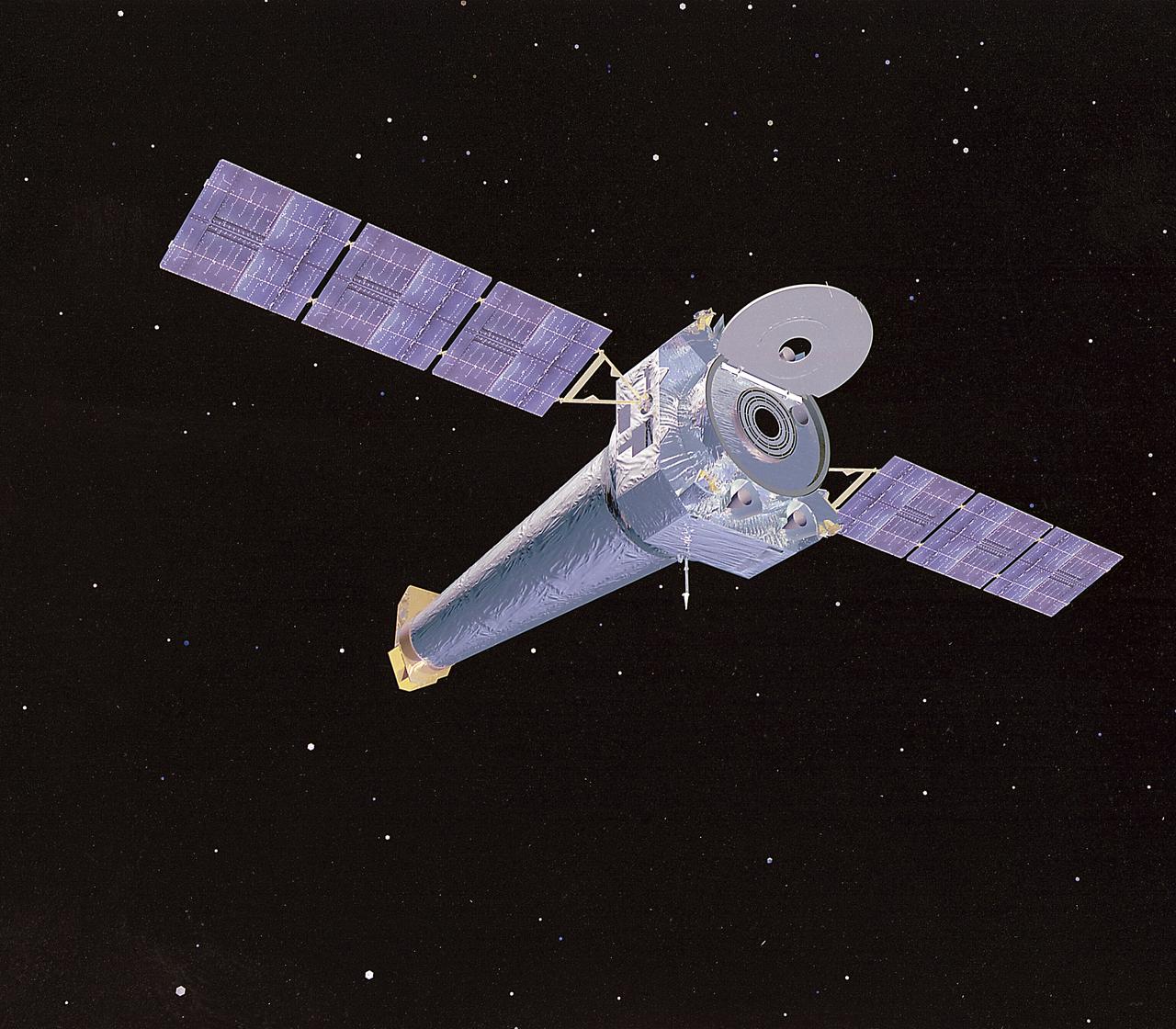
This is a computer rendering of the fully developed Chandra X-Ray Observatory (CXO), formerly Advanced X-Ray Astrophysics Facility (AXAF). In 1999, the AXAF was renamed the CXO in honor of the late Indian-American Novel Laureate Subrahmanyan Chandrasekhar. The CXO is the most sophisticated and the world's most powerful x-ray telescope ever built. It is designed to observe x-rays from high energy regions of the Universe, such as hot gas in the renmants of exploded stars. It produces picture-like images of x-ray emissions analogous to those made in visible light, as well as gathers data on the chemical composition of x-ray radiating objects. The CXO helps astronomers world-wide better understand the structure and evolution of the universe by studying powerful sources of x-ray such as exploding stars, matter falling into black holes, and other exotic celestial objects. The Observatory has three major parts: (1) the x-ray telescope, whose mirrors will focus x-rays from celestial objects; (2) the science instruments that record the x-rays so that x-ray images can be produced and analyzed; and (3) the spacecraft, which provides the environment necessary for the telescope and the instruments to work. TRW, Inc. was the prime contractor for the development of the CXO and NASA's Marshall Space Flight Center was responsible for its project management. The Smithsonian Astrophysical Observatory controls science and flight operations of the CXO for NASA from Cambridge, Massachusetts. The Observatory was launched July 22, 1999 aboard the Space Shuttle Columbia, STS-93 mission. (Image courtesy of TRW).
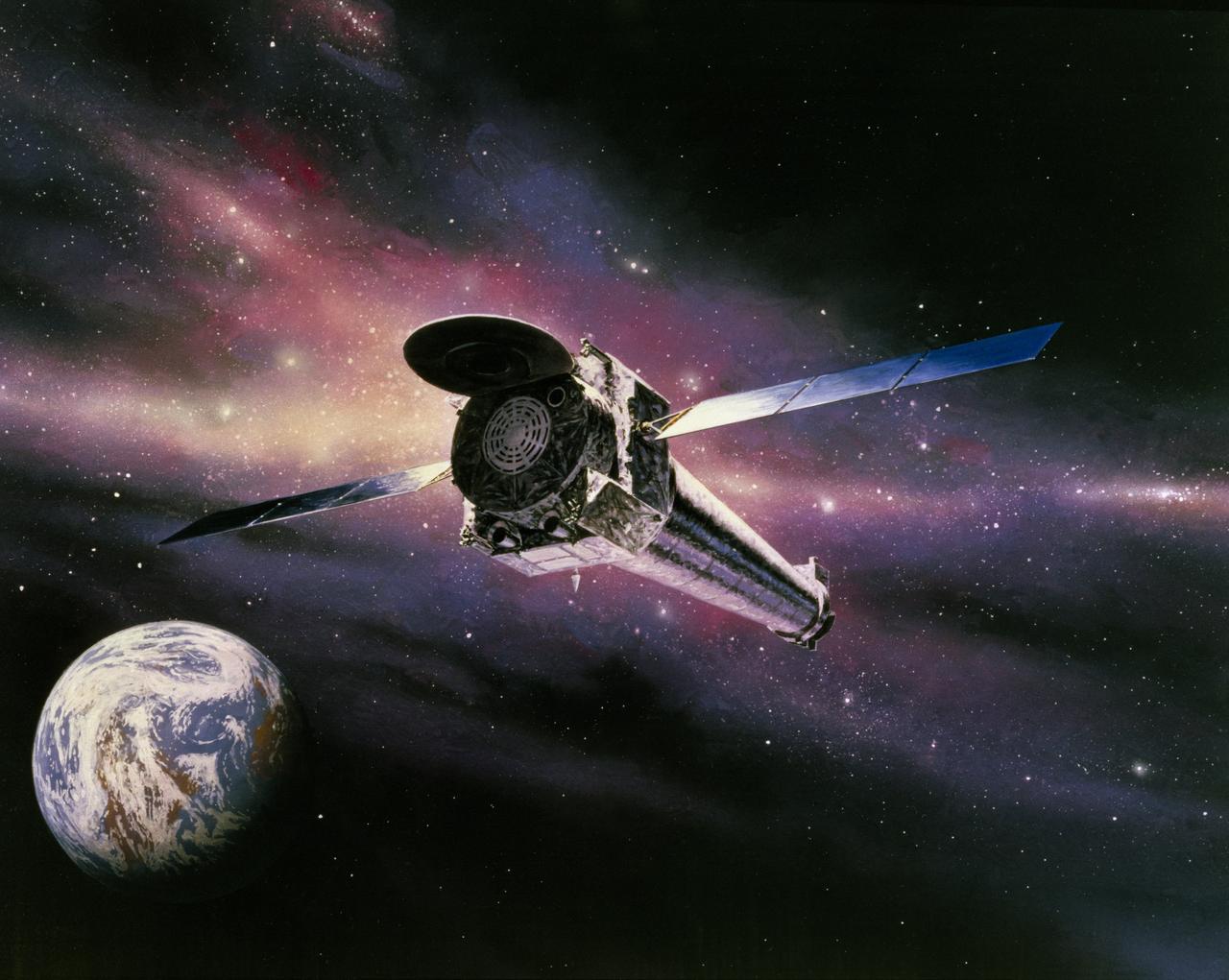
This is an artist's concept of the Chandra X-Ray Observatory (CXO), formerly Advanced X-Ray Astrophysics Facility (AXAF), fully developed in orbit in a star field with Earth. In 1999, the AXAF was renamed the CXO in honor of the late Indian-American Novel Laureate Subrahmanyan Chandrasekhar. The CXO is the most sophisticated and the world's most powerful x-ray telescope ever built. It is designed to observe x-rays from high energy regions of the Universe, such as hot gas in the renmants of exploded stars. It produces picture-like images of x-ray emissions analogous to those made in visible light, as well as gathers data on the chemical composition of x-ray radiating objects. The CXO helps astronomers world-wide better understand the structure and evolution of the universe by studying powerful sources of x-ray such as exploding stars, matter falling into black holes, and other exotic celestial objects. The Observatory has three major parts: (1) the x-ray telescope, whose mirrors will focus x-rays from celestial objects; (2) the science instruments that record the x-rays so that x-ray images can be produced and analyzed; and (3) the spacecraft, which provides the environment necessary for the telescope and the instruments to work. TRW, Inc. was the prime contractor for the development the CXO and NASA's Marshall Space Flight Center was responsible for its project management. The Smithsonian Astrophysical Observatory controls science and flight operations of the CXO for NASA from Cambridge, Massachusetts. The Observatory was launched July 22, 1999 aboard the Space Shuttle Columbia, STS-93 mission. (Image courtesy of TRW).
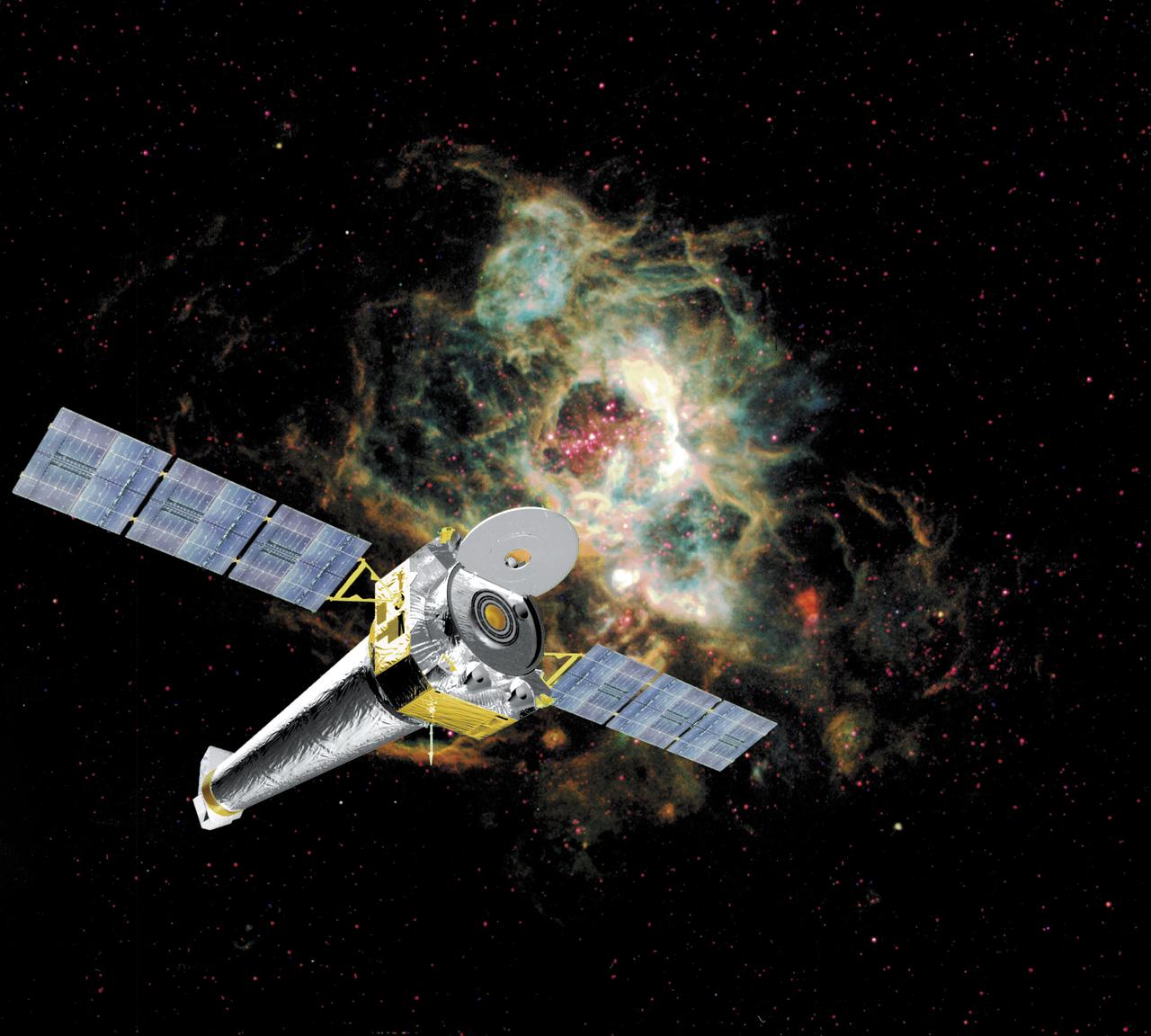
This is a computer rendering of the fully developed Chandra X-ray Observatory (CXO), formerly Advanced X-Ray Astrophysics Facility (AXAF), in orbit in a star field. In 1999, the AXAF was renamed the CXO in honor of the late Indian-American Novel Laureate Subrahmanyan Chandrasekhar. The CXO is the most sophisticated and the world's most powerful x-ray telescope ever built. It is designed to observe x-rays from high energy regions of the Universe, such as hot gas in the renmants of exploded stars. It produces picture-like images of x-ray emissions analogous to those made in visible light, as well as gathers data on the chemical composition of x-ray radiating objects. The CXO helps astronomers world-wide better understand the structure and evolution of the universe by studying powerful sources of x-rays such as exploding stars, matter falling into black holes, and other exotic celestial objects. The Observatory has three major parts: (1) the x-ray telescope, whose mirrors will focus x-rays from celestial objects; (2) the science instruments that record the x-rays so that x-ray images can be produced and analyzed; and (3) the spacecraft, which provides the environment necessary for the telescope and the instruments to work. TRW, Inc. was the prime contractor for the development of the CXO and NASA's Marshall Space Flight Center was responsible for its project management. The Smithsonian Astrophysical Observatory controls science and flight operations of the CXO for NASA from Cambridge, Massachusetts. The Observatory was launched July 22, 1999 aboard the Space Shuttle Columbia, STS-93 mission. (Image courtesy of TRW).
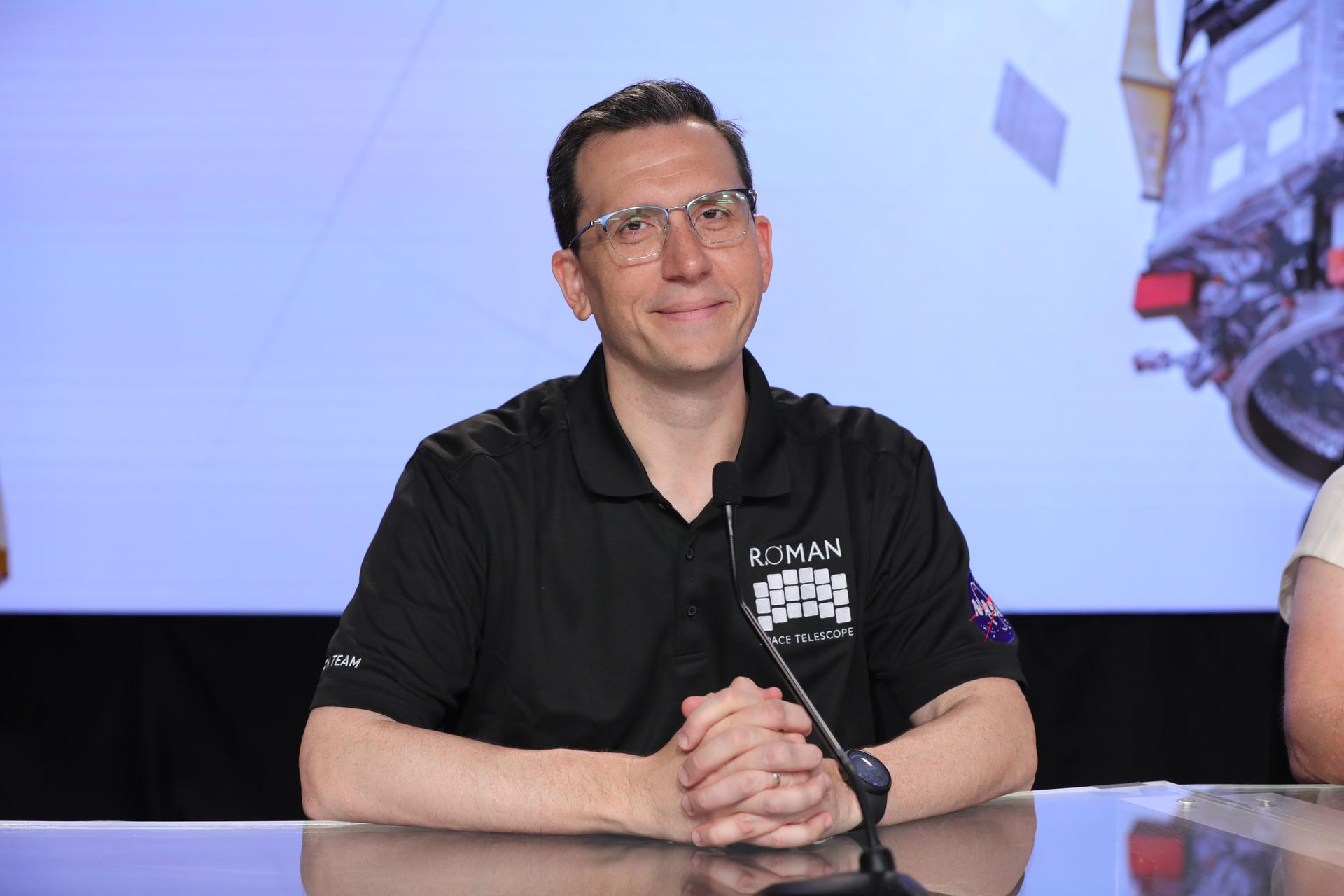
Shawn Domagal-Goldman, director, Astrophysics Division, NASA Headquarters in Washington, participates in a science briefing for NASA’s Nancy Grace Roman Space Telescope inside the NASA News Center’s John Holliman Auditorium at Kennedy Space Center in Florida, on Saturday, Aug. 29, 2026. Roman will investigate dark energy and dark matter, conduct a statistical census of planetary systems, and enable a broad range of additional astrophysics research. Liftoff from Launch Complex 39A at Kennedy is targeted for no earlier than Sunday, Aug. 30, 2026.

This galaxy, known as NGC 2337, resides 25 million light-years away in the constellation of Lynx. NGC 2337 is an irregular galaxy, meaning that it — along with a quarter of all galaxies in the Universe — lacks a distinct, regular appearance. The galaxy was discovered in 1877 by the French astronomer Édouard Stephan who, in the same year, discovered the galactic group Stephan’s Quintet (heic0910i). Although irregular galaxies may never win a beauty prize when competing with their more symmetrical spiral and elliptical peers, astronomers consider them to be very important. Some irregular galaxies may have once fallen into one of the regular classes of the Hubble sequence, but were warped and deformed by a passing cosmic companion. As such, irregular galaxies provide astronomers with a valuable opportunity to learn more about galactic evolution and interaction. Despite the disruption, gravitational interactions between galaxies can kickstart star formation activity within the affected galaxies, which may explain the pockets of blue light scattered throughout NGC 2337. These patches and knots of blue signal the presence of young, newly formed, hot stars. Image credit: ESA/Hubble & NASA Text credit: European Space Agency <b><a href="http://www.nasa.gov/audience/formedia/features/MP_Photo_Guidelines.html" rel="nofollow">NASA image use policy.</a></b> <b><a href="http://www.nasa.gov/centers/goddard/home/index.html" rel="nofollow">NASA Goddard Space Flight Center</a></b> enables NASA’s mission through four scientific endeavors: Earth Science, Heliophysics, Solar System Exploration, and Astrophysics. Goddard plays a leading role in NASA’s accomplishments by contributing compelling scientific knowledge to advance the Agency’s mission. <b>Follow us on <a href="http://twitter.com/NASAGoddardPix" rel="nofollow">Twitter</a></b> <b>Like us on <a href="http://www.facebook.com/pages/Greenbelt-MD/NASA-Goddard/395013845897?ref=tsd" rel="nofollow">Facebook</a></b> <b>Find us on <a href="http://instagrid.me/nasagoddard/?vm=grid" rel="nofollow">Instagram</a></b>
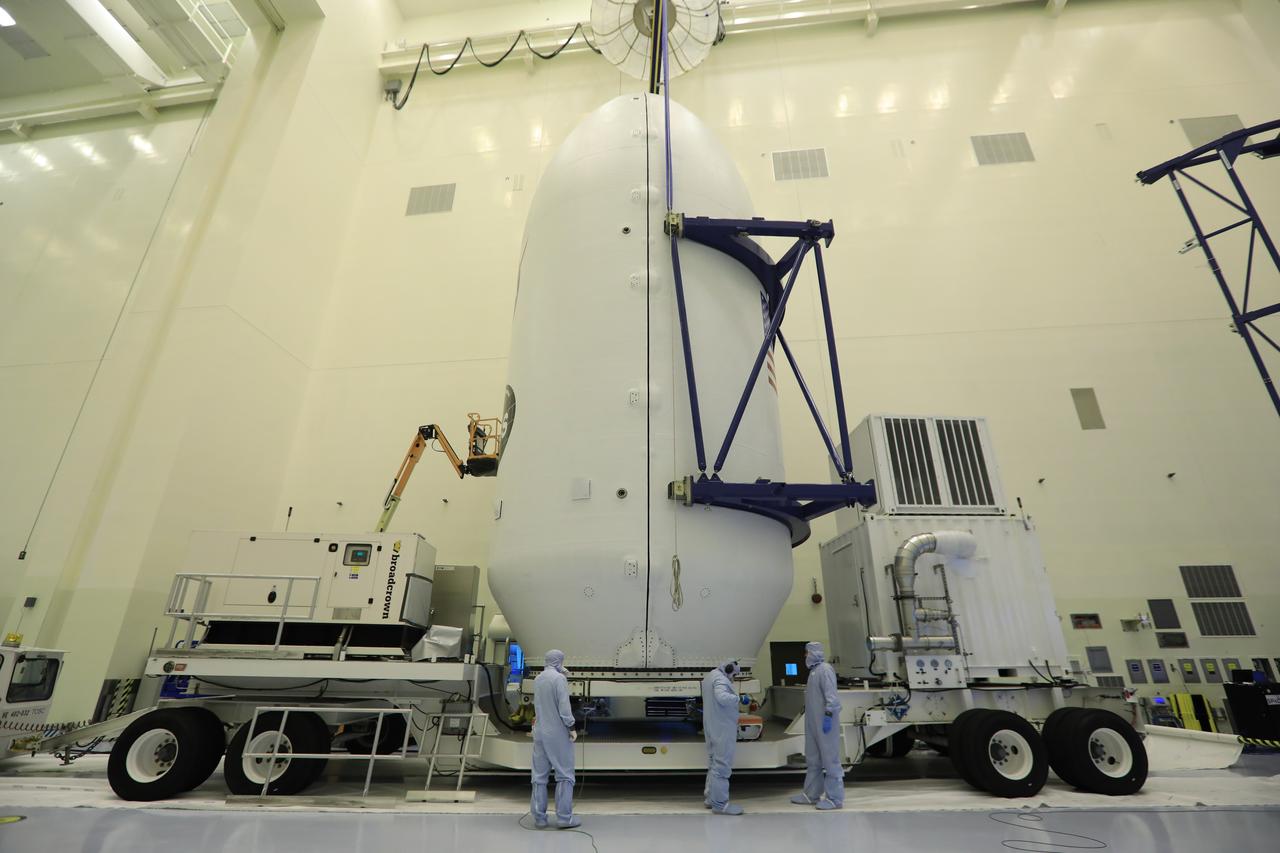
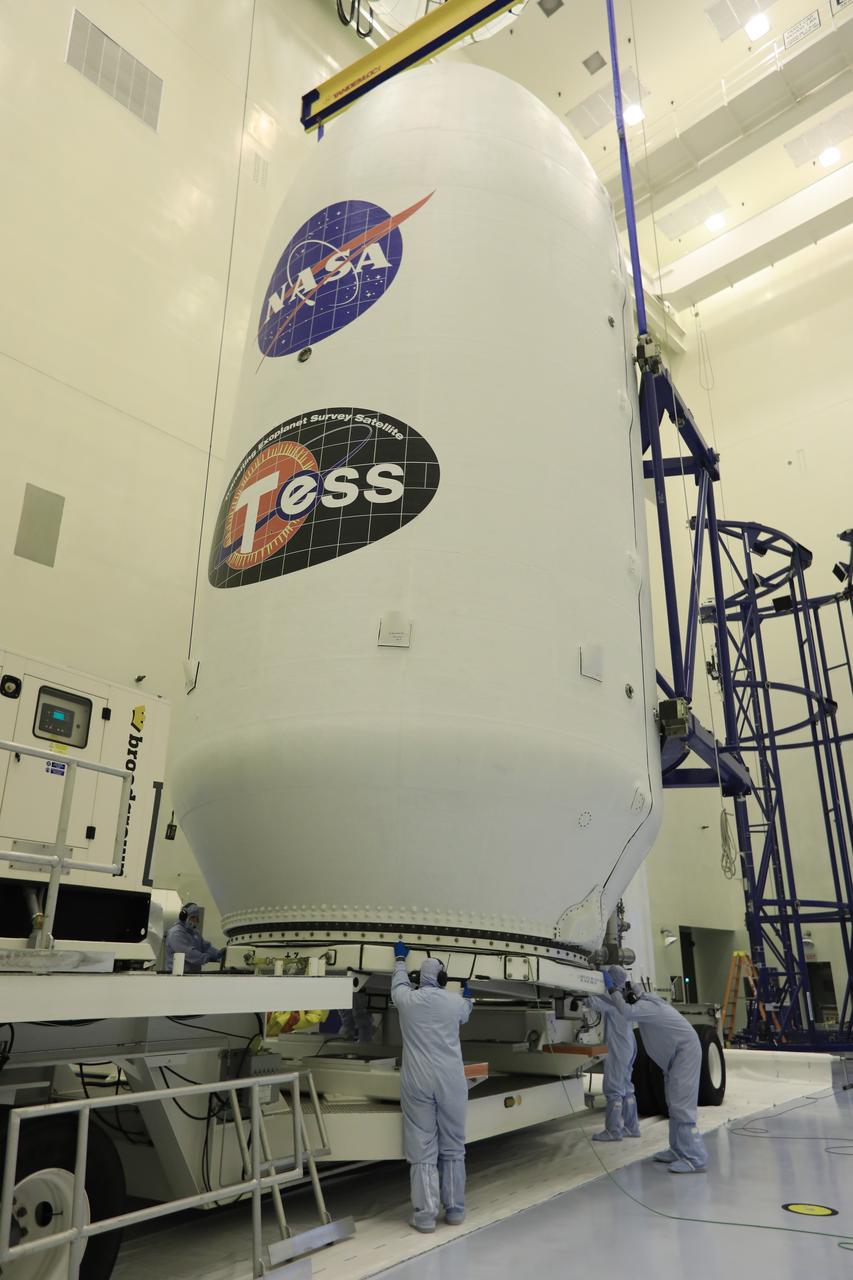
Inside the Payload Hazardous Servicing Facility at NASA's Kennedy Space Center in Florida, the SpaceX payload fairing containing the agency's Transiting Exoplanet Survey Satellite (TESS) is secured onto a transporter. The fairing will be moved to Space Launch Complex 40 at Cape Canaveral Air Force Station. TESS is scheduled to launch on the SpaceX Falcon 9 rocket at 6:32 p.m. EDT on April 16. The satellite is the next step in NASA's search for planets outside our solar system, known as exoplanets. TESS is a NASA Astrophysics Explorer mission led and operated by MIT in Cambridge, Massachusetts, and managed by NASA’s Goddard Space Flight Center in Greenbelt, Maryland. Dr. George Ricker of MIT’s Kavli Institute for Astrophysics and Space Research serves as principal investigator for the mission. Additional partners include Orbital ATK, NASA’s Ames Research Center, the Harvard-Smithsonian Center for Astrophysics and the Space Telescope Science Institute. More than a dozen universities, research institutes and observatories worldwide are participants in the mission. NASA’s Launch Services Program is responsible for launch management.
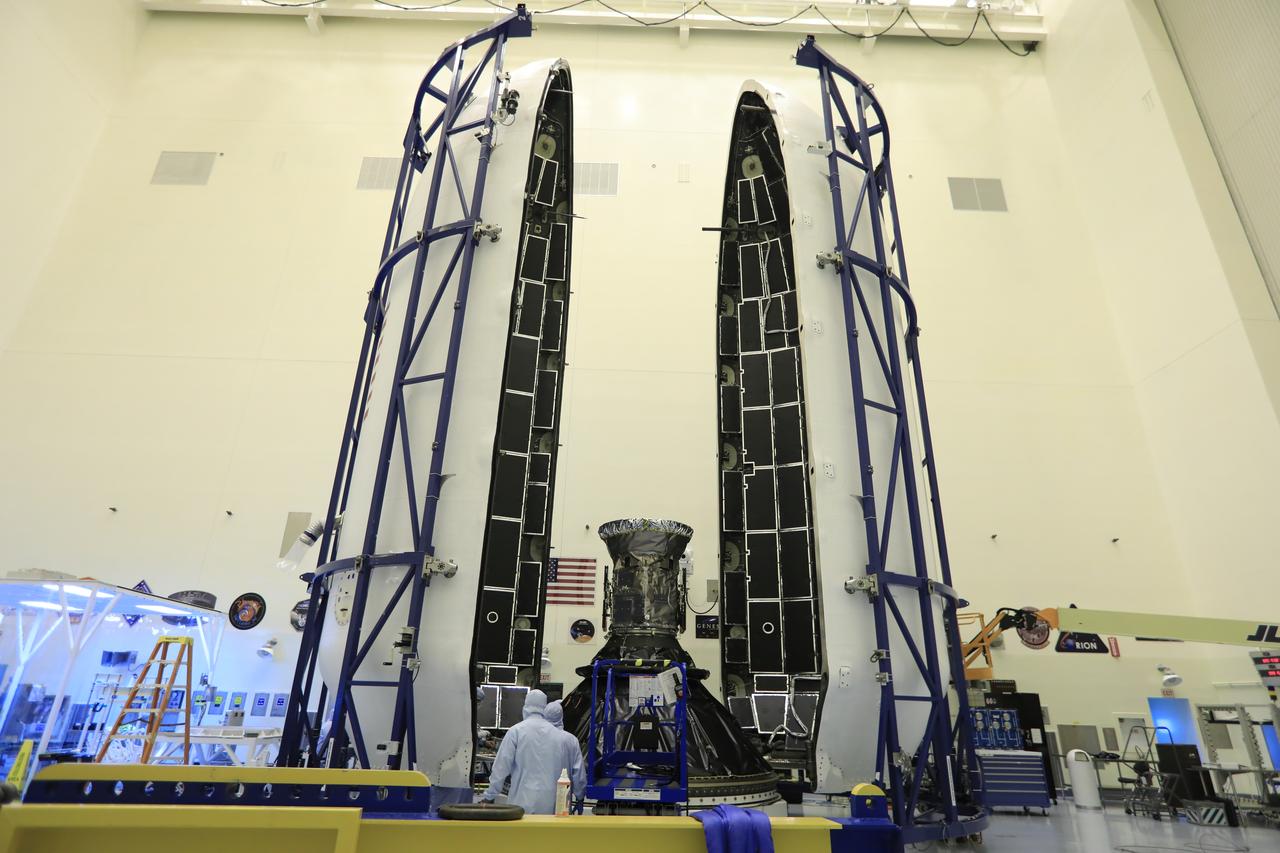
Technicians prepare NASA's Transiting Exoplanet Survey Satellite (TESS) for encapsulation in the SpaceX payload fairing inside the Payload Hazardous Servicing Facility at the agency's Kennedy Space Center in Florida. The satellite is scheduled to launch atop a SpaceX Falcon 9 rocket from Space Launch Complex 40 at Cape Canaveral Air Force Station on April 16. The satellite is the next step in NASA's search for planets outside our solar system, known as exoplanets. TESS is a NASA Astrophysics Explorer mission led and operated by MIT in Cambridge, Massachusetts, and managed by NASA’s Goddard Space Flight Center in Greenbelt, Maryland. Dr. George Ricker of MIT’s Kavli Institute for Astrophysics and Space Research serves as principal investigator for the mission. Additional partners include Orbital ATK, NASA’s Ames Research Center, the Harvard-Smithsonian Center for Astrophysics and the Space Telescope Science Institute. More than a dozen universities, research institutes and observatories worldwide are participants in the mission. NASA’s Launch Services Program is responsible for launch management.
Inside the Payload Hazardous Servicing Facility at NASA's Kennedy Space Center in Florida, technicians assist as the SpaceX payload fairing containing the agency's Transiting Exoplanet Survey Satellite (TESS) is lowered by crane onto a transporter. The fairing will be moved to Space Launch Complex 40 at Cape Canaveral Air Force Station. TESS is scheduled to launch on the SpaceX Falcon 9 rocket at 6:32 p.m. EDT on April 16. The satellite is the next step in NASA's search for planets outside our solar system, known as exoplanets. TESS is a NASA Astrophysics Explorer mission led and operated by MIT in Cambridge, Massachusetts, and managed by NASA’s Goddard Space Flight Center in Greenbelt, Maryland. Dr. George Ricker of MIT’s Kavli Institute for Astrophysics and Space Research serves as principal investigator for the mission. Additional partners include Orbital ATK, NASA’s Ames Research Center, the Harvard-Smithsonian Center for Astrophysics and the Space Telescope Science Institute. More than a dozen universities, research institutes and observatories worldwide are participants in the mission. NASA’s Launch Services Program is responsible for launch management.
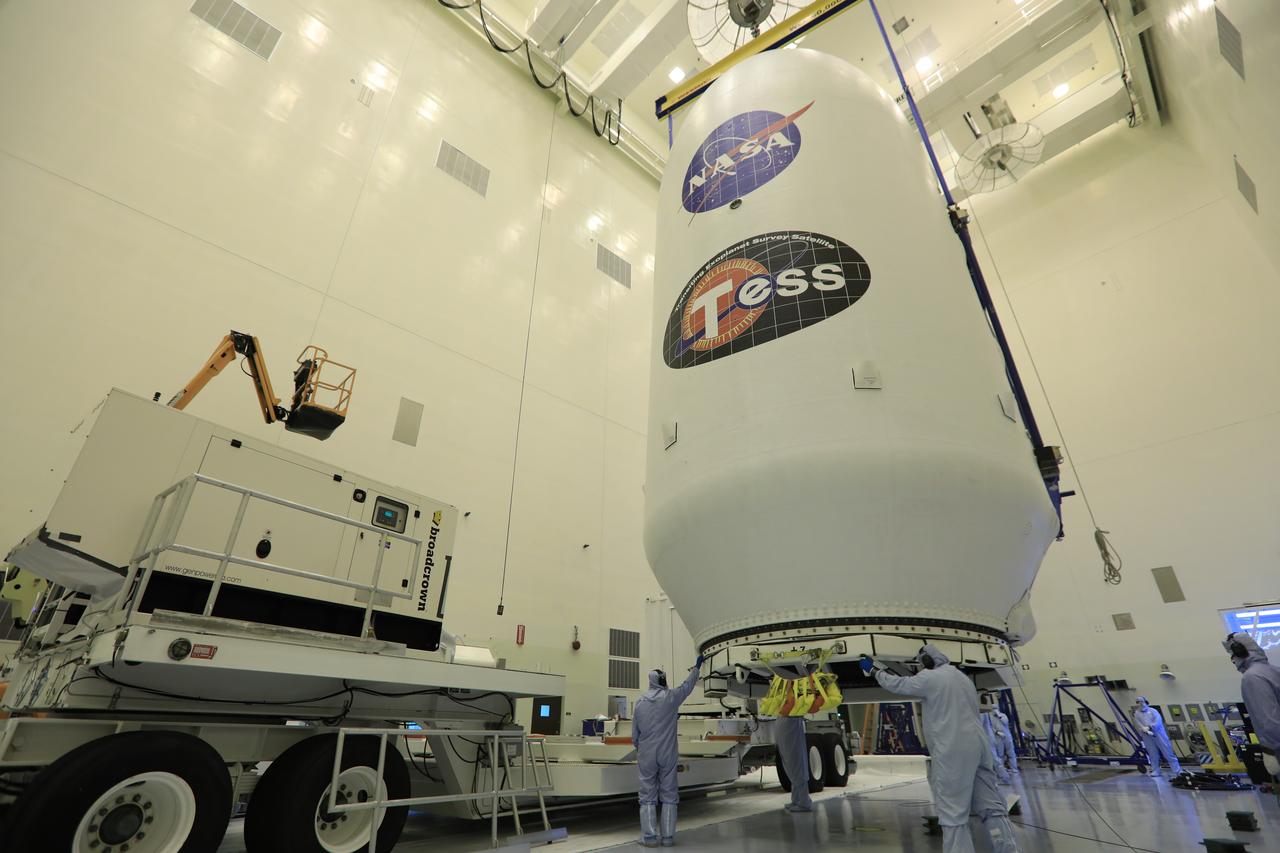
Inside the Payload Hazardous Servicing Facility at NASA's Kennedy Space Center in Florida, technicians assist as the SpaceX payload fairing containing the agency's Transiting Exoplanet Survey Satellite (TESS) is moved by crane to a transporter. The fairing will be moved to Space Launch Complex 40 at Cape Canaveral Air Force Station. TESS is scheduled to launch on the SpaceX Falcon 9 rocket at 6:32 p.m. EDT on April 16. The satellite is the next step in NASA's search for planets outside our solar system, known as exoplanets. TESS is a NASA Astrophysics Explorer mission led and operated by MIT in Cambridge, Massachusetts, and managed by NASA’s Goddard Space Flight Center in Greenbelt, Maryland. Dr. George Ricker of MIT’s Kavli Institute for Astrophysics and Space Research serves as principal investigator for the mission. Additional partners include Orbital ATK, NASA’s Ames Research Center, the Harvard-Smithsonian Center for Astrophysics and the Space Telescope Science Institute. More than a dozen universities, research institutes and observatories worldwide are participants in the mission. NASA’s Launch Services Program is responsible for launch management.
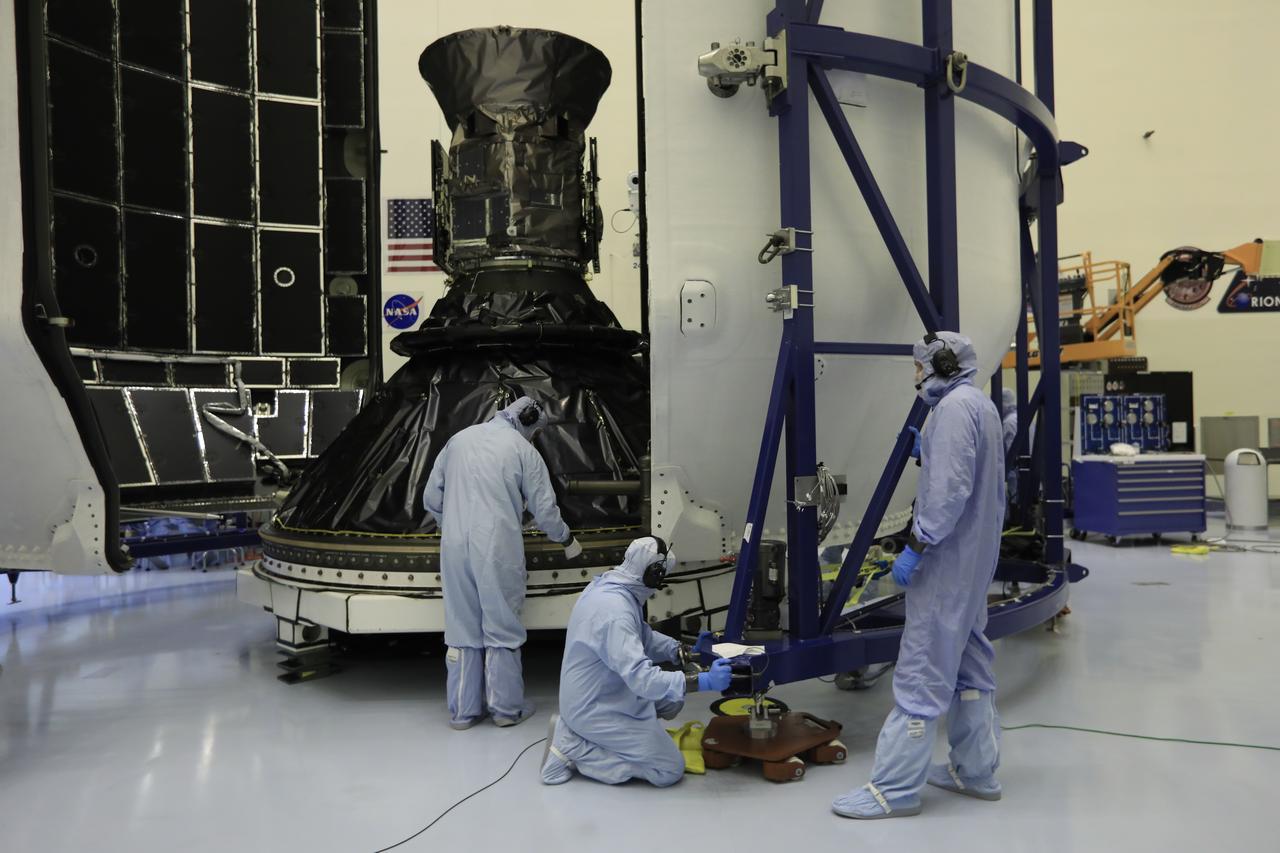
Technicians prepare NASA's Transiting Exoplanet Survey Satellite (TESS) for encapsulation in the SpaceX payload fairing inside the Payload Hazardous Servicing Facility at the agency's Kennedy Space Center in Florida. The satellite is scheduled to launch atop a SpaceX Falcon 9 rocket from Space Launch Complex 40 at Cape Canaveral Air Force Station on April 16. The satellite is the next step in NASA's search for planets outside our solar system, known as exoplanets. TESS is a NASA Astrophysics Explorer mission led and operated by MIT in Cambridge, Massachusetts, and managed by NASA’s Goddard Space Flight Center in Greenbelt, Maryland. Dr. George Ricker of MIT’s Kavli Institute for Astrophysics and Space Research serves as principal investigator for the mission. Additional partners include Orbital ATK, NASA’s Ames Research Center, the Harvard-Smithsonian Center for Astrophysics and the Space Telescope Science Institute. More than a dozen universities, research institutes and observatories worldwide are participants in the mission. NASA’s Launch Services Program is responsible for launch management.
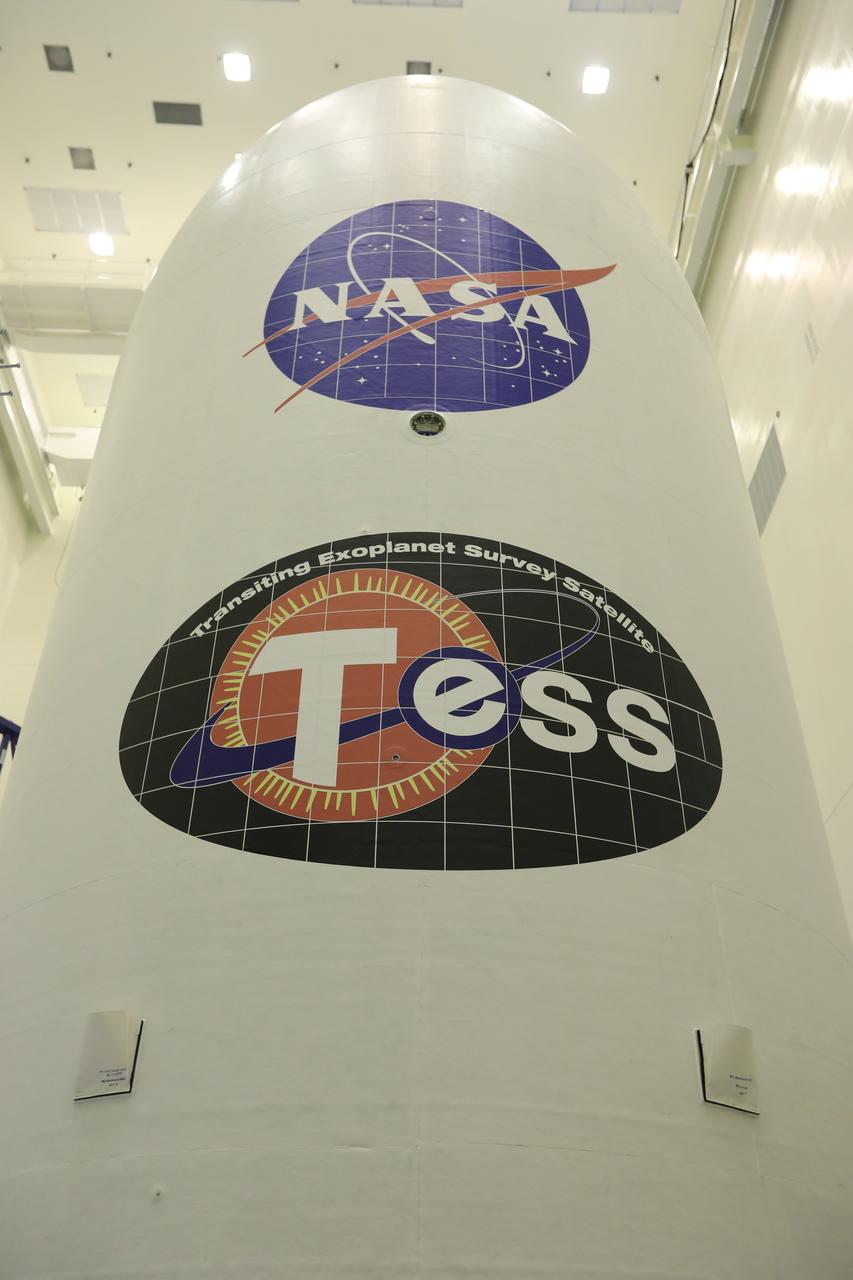
The SpaceX payload fairing containing NASA's Transiting Exoplanet Survey Satellite (TESS) is prepared for the move from the Payload Hazardous Servicing Facility at the agency's Kennedy Space Center in Florida to Space Launch Complex 40 at Cape Canaveral Air Force Station. The satellite is scheduled to launch atop the SpaceX Falcon 9 rocket at 6:32 p.m. EDT on April 16. TESS is the next step in NASA's search for planets outside our solar system, known as exoplanets. TESS is a NASA Astrophysics Explorer mission led and operated by MIT in Cambridge, Massachusetts, and managed by NASA’s Goddard Space Flight Center in Greenbelt, Maryland. Dr. George Ricker of MIT’s Kavli Institute for Astrophysics and Space Research serves as principal investigator for the mission. Additional partners include Orbital ATK, NASA’s Ames Research Center, the Harvard-Smithsonian Center for Astrophysics and the Space Telescope Science Institute. More than a dozen universities, research institutes and observatories worldwide are participants in the mission. NASA’s Launch Services Program is responsible for launch management.
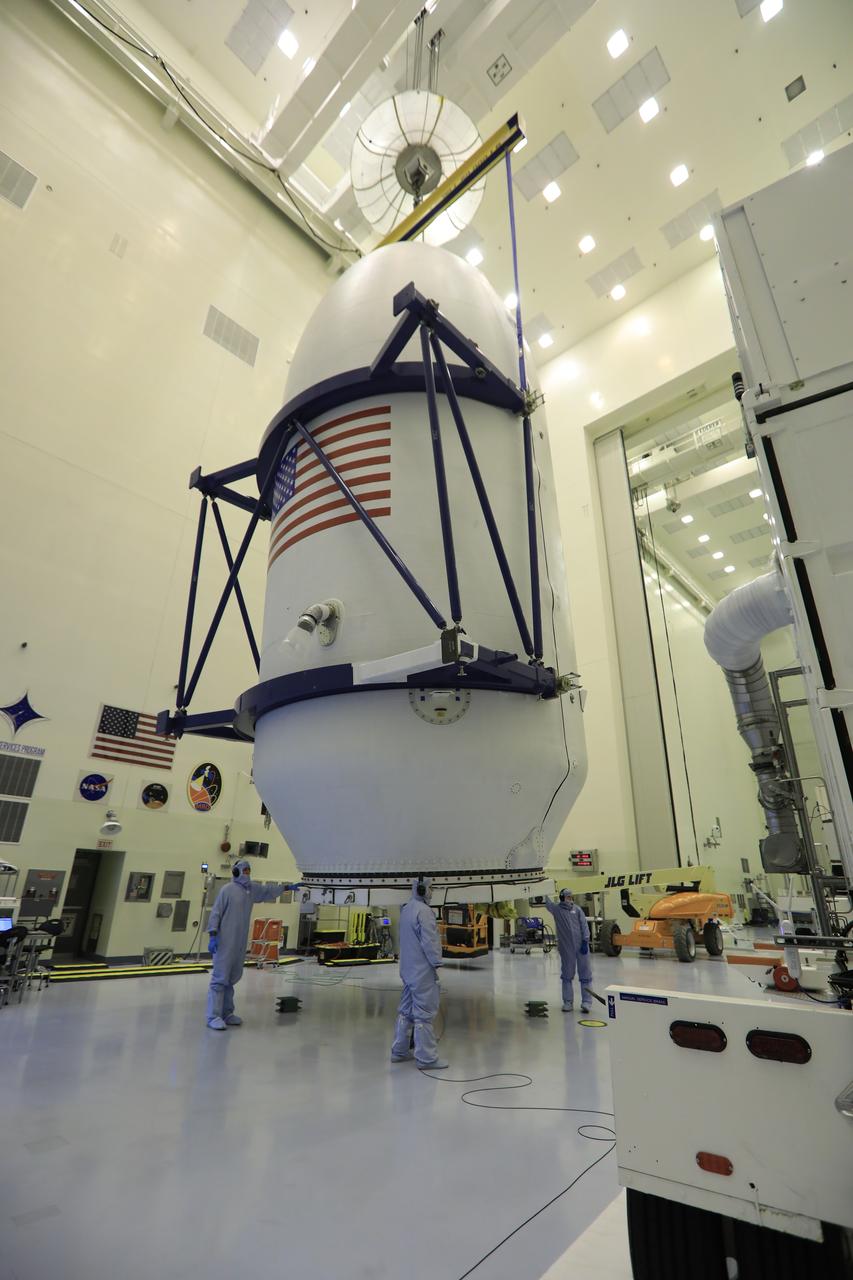
Inside the Payload Hazardous Servicing Facility at NASA's Kennedy Space Center in Florida, technicians assist as the SpaceX payload fairing containing the agency's Transiting Exoplanet Survey Satellite (TESS) is lifted for the move to a transporter. The fairing will be moved to Space Launch Complex 40 at Cape Canaveral Air Force Station. The satellite is scheduled to launch atop the SpaceX Falcon 9 rocket at 6:32 p.m. EDT on April 16. TESS is the next step in NASA's search for planets outside our solar system, known as exoplanets. TESS is a NASA Astrophysics Explorer mission led and operated by MIT in Cambridge, Massachusetts, and managed by NASA’s Goddard Space Flight Center in Greenbelt, Maryland. Dr. George Ricker of MIT’s Kavli Institute for Astrophysics and Space Research serves as principal investigator for the mission. Additional partners include Orbital ATK, NASA’s Ames Research Center, the Harvard-Smithsonian Center for Astrophysics and the Space Telescope Science Institute. More than a dozen universities, research institutes and observatories worldwide are participants in the mission. NASA’s Launch Services Program is responsible for launch management.
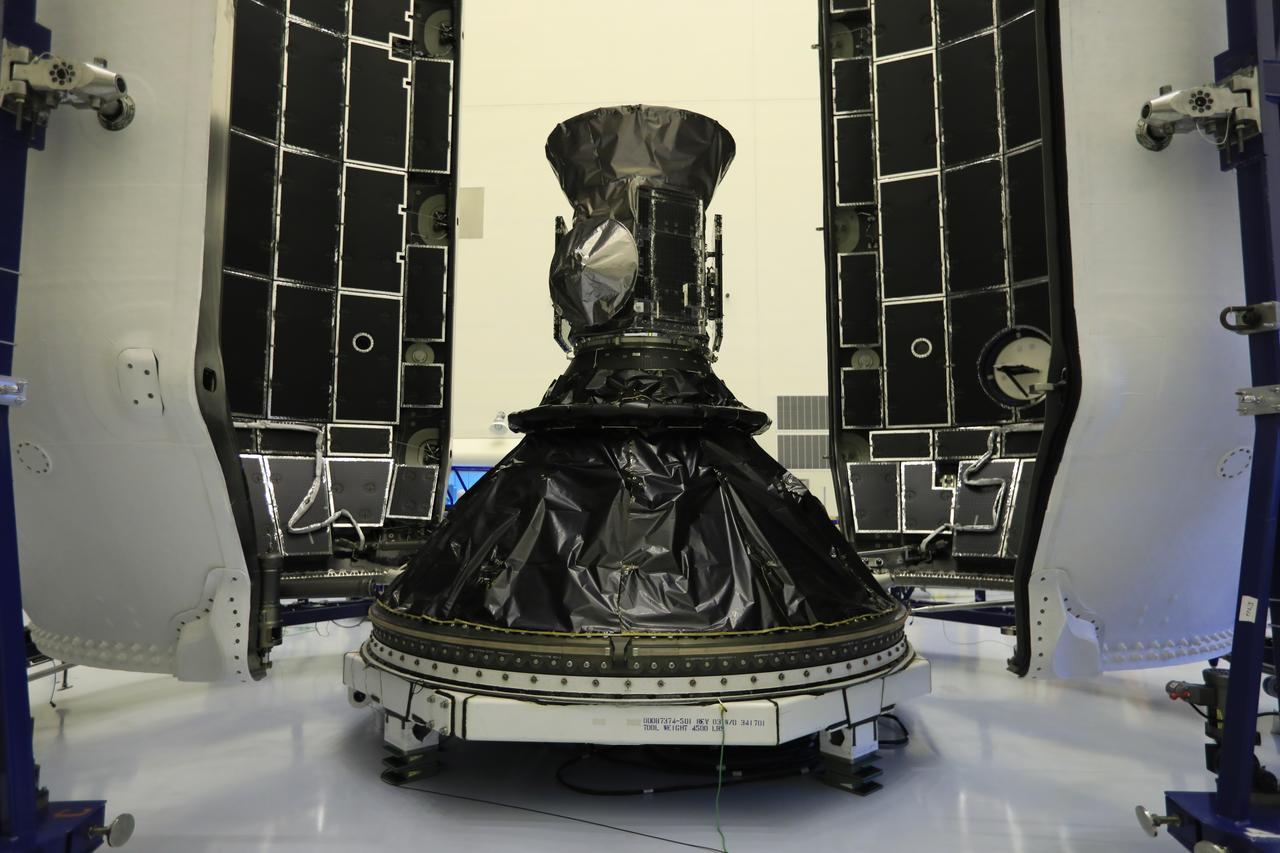
Inside the Payload Hazardous Servicing Facility at NASA's Kennedy Space Center in Florida, NASA's Transiting Exoplanet Survey Satellite (TESS) is being prepared for encapsulation in the SpaceX payload fairing. The satellite is scheduled to launch atop a SpaceX Falcon 9 rocket from Space Launch Complex 40 at Cape Canaveral Air Force Station on April 16. The satellite is the next step in NASA's search for planets outside our solar system, known as exoplanets. TESS is a NASA Astrophysics Explorer mission led and operated by MIT in Cambridge, Massachusetts, and managed by NASA’s Goddard Space Flight Center in Greenbelt, Maryland. Dr. George Ricker of MIT’s Kavli Institute for Astrophysics and Space Research serves as principal investigator for the mission. Additional partners include Orbital ATK, NASA’s Ames Research Center, the Harvard-Smithsonian Center for Astrophysics and the Space Telescope Science Institute. More than a dozen universities, research institutes and observatories worldwide are participants in the mission. NASA’s Launch Services Program is responsible for launch management.
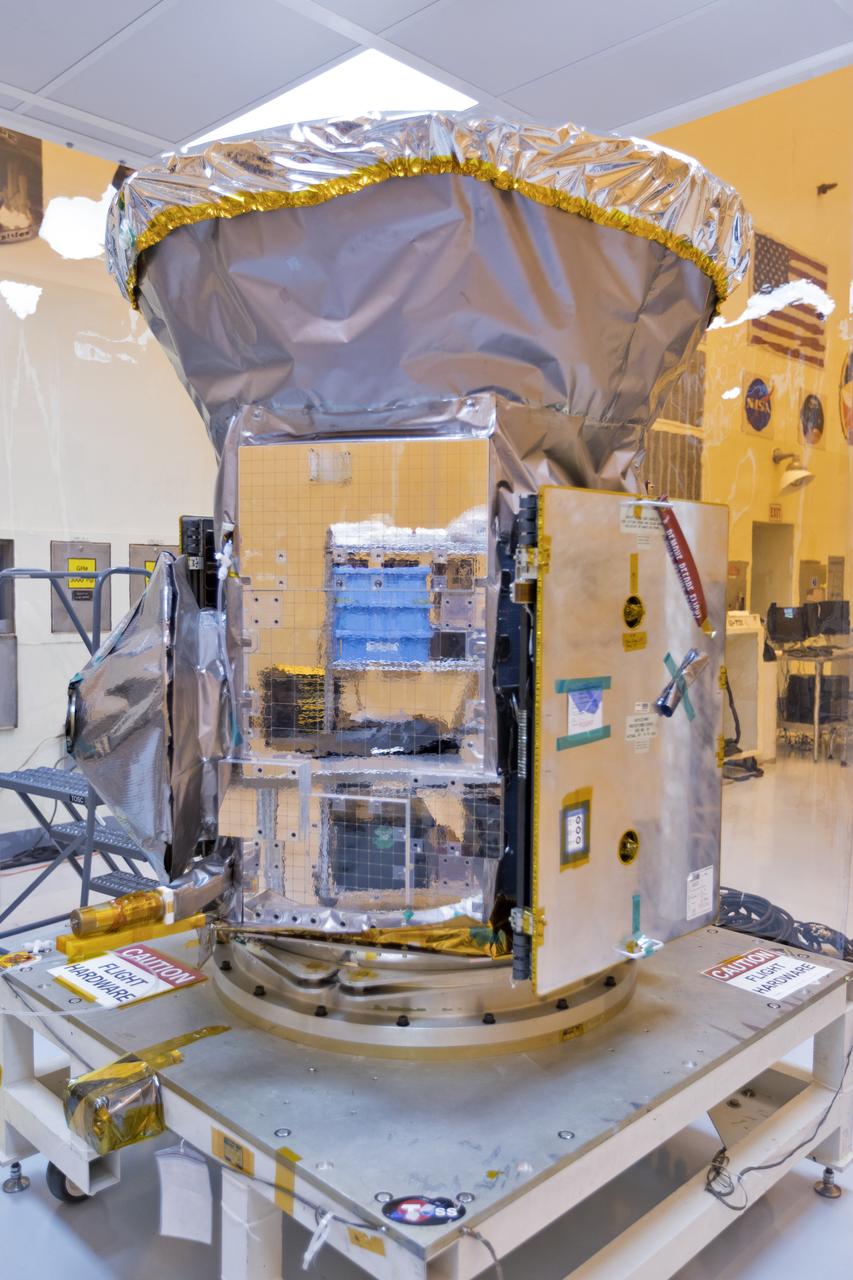
In the Payload Hazardous Servicing Facility at NASA's Kennedy Space Center in Florida, the agency's Transiting Exoplanet Survey Satellite, or TESS, has been uncreated from its shipping container for inspections and preflight processing. The satellite is NASA's next step in the search for planets outside of the solar system also known as "exoplanets." TESS is a NASA Astrophysics Explorer mission led and operated by MIT in Cambridge, Massachusetts, and managed by NASA’s Goddard Space Flight Center in Greenbelt, Maryland. Dr. George Ricker of MIT’s Kavli Institute for Astrophysics and Space Research serves as principal investigator for the mission. Additional partners include Orbital ATK, NASA’s Ames Research Center, and the Harvard-Smithsonian Center for Astrophysics and the Space Telescope Science Institute. More than a dozen universities, research institutes and observatories worldwide are participants in the mission. NASA’s Launch Services Program is responsible for launch management. SpaceX of Hawthorne, California, is the provider of the Falcon 9 launch service. TESS is scheduled to launch atop a Falcon 9 rocket no earlier than April 16, 2018 from Space Launch Complex 41 at Cape Canaveral Air Force Station.
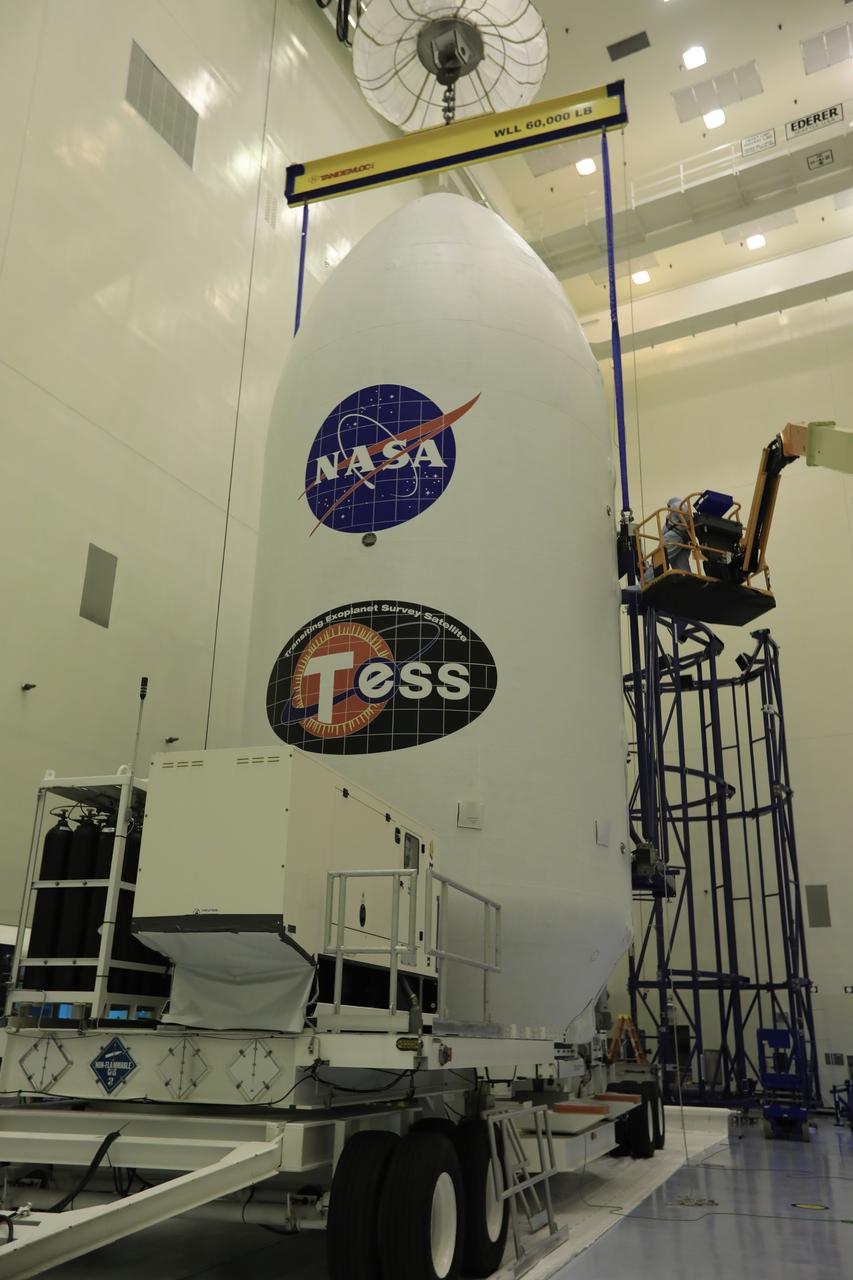
Inside the Payload Hazardous Servicing Facility at NASA's Kennedy Space Center in Florida, the SpaceX payload fairing containing the agency's Transiting Exoplanet Survey Satellite (TESS) is secured onto a transporter. The fairing will be moved to Space Launch Complex 40 at Cape Canaveral Air Force Station. TESS is scheduled to launch on the SpaceX Falcon 9 rocket at 6:32 p.m. EDT on April 16. The satellite is the next step in NASA's search for planets outside our solar system, known as exoplanets. TESS is a NASA Astrophysics Explorer mission led and operated by MIT in Cambridge, Massachusetts, and managed by NASA’s Goddard Space Flight Center in Greenbelt, Maryland. Dr. George Ricker of MIT’s Kavli Institute for Astrophysics and Space Research serves as principal investigator for the mission. Additional partners include Orbital ATK, NASA’s Ames Research Center, the Harvard-Smithsonian Center for Astrophysics and the Space Telescope Science Institute. More than a dozen universities, research institutes and observatories worldwide are participants in the mission. NASA’s Launch Services Program is responsible for launch management.
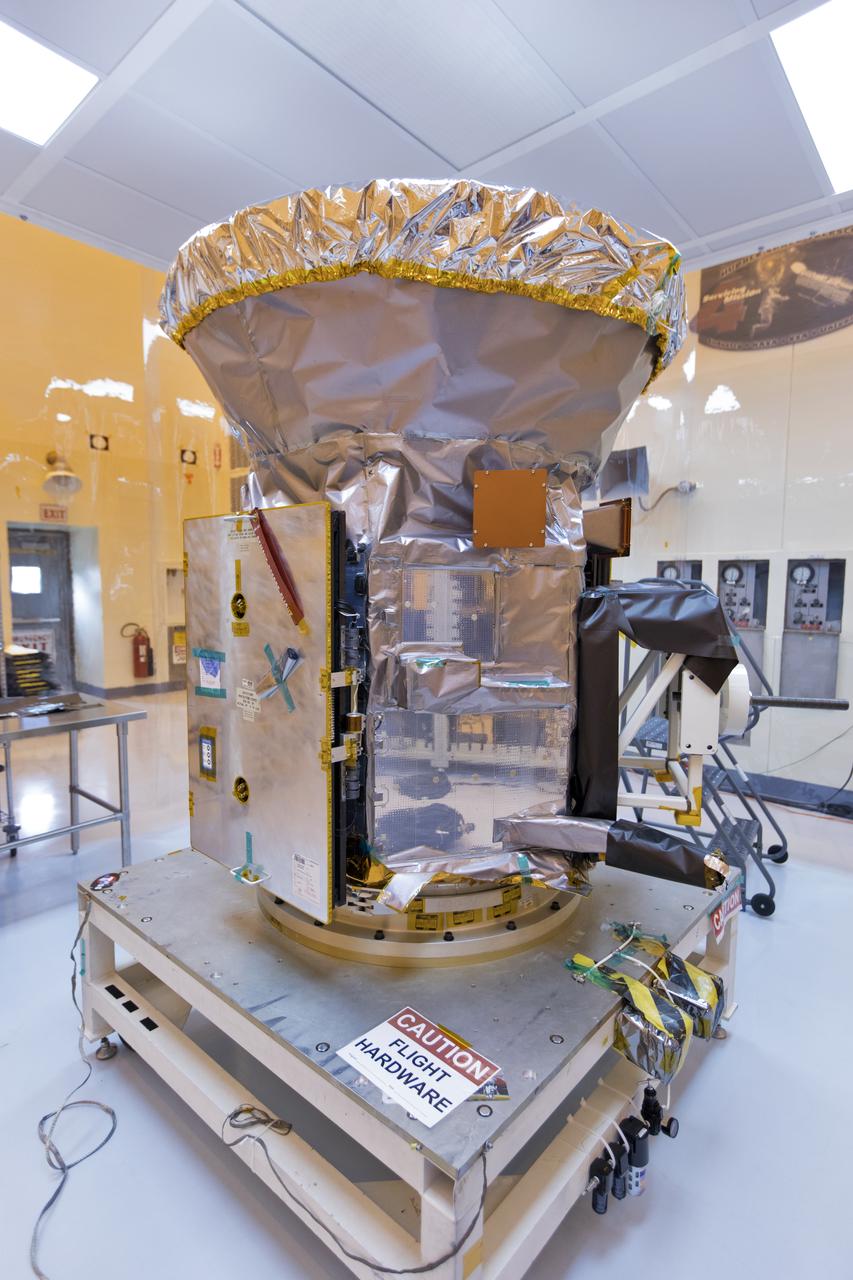
In the Payload Hazardous Servicing Facility at NASA's Kennedy Space Center in Florida, the agency's Transiting Exoplanet Survey Satellite, or TESS, has been uncreated from its shipping container for inspections and preflight processing. The satellite is NASA's next step in the search for planets outside of the solar system also known as "exoplanets." TESS is a NASA Astrophysics Explorer mission led and operated by MIT in Cambridge, Massachusetts, and managed by NASA’s Goddard Space Flight Center in Greenbelt, Maryland. Dr. George Ricker of MIT’s Kavli Institute for Astrophysics and Space Research serves as principal investigator for the mission. Additional partners include Orbital ATK, NASA’s Ames Research Center, and the Harvard-Smithsonian Center for Astrophysics and the Space Telescope Science Institute. More than a dozen universities, research institutes and observatories worldwide are participants in the mission. NASA’s Launch Services Program is responsible for launch management. SpaceX of Hawthorne, California, is the provider of the Falcon 9 launch service. TESS is scheduled to launch atop a Falcon 9 rocket no earlier than April 16, 2018 from Space Launch Complex 41 at Cape Canaveral Air Force Station.
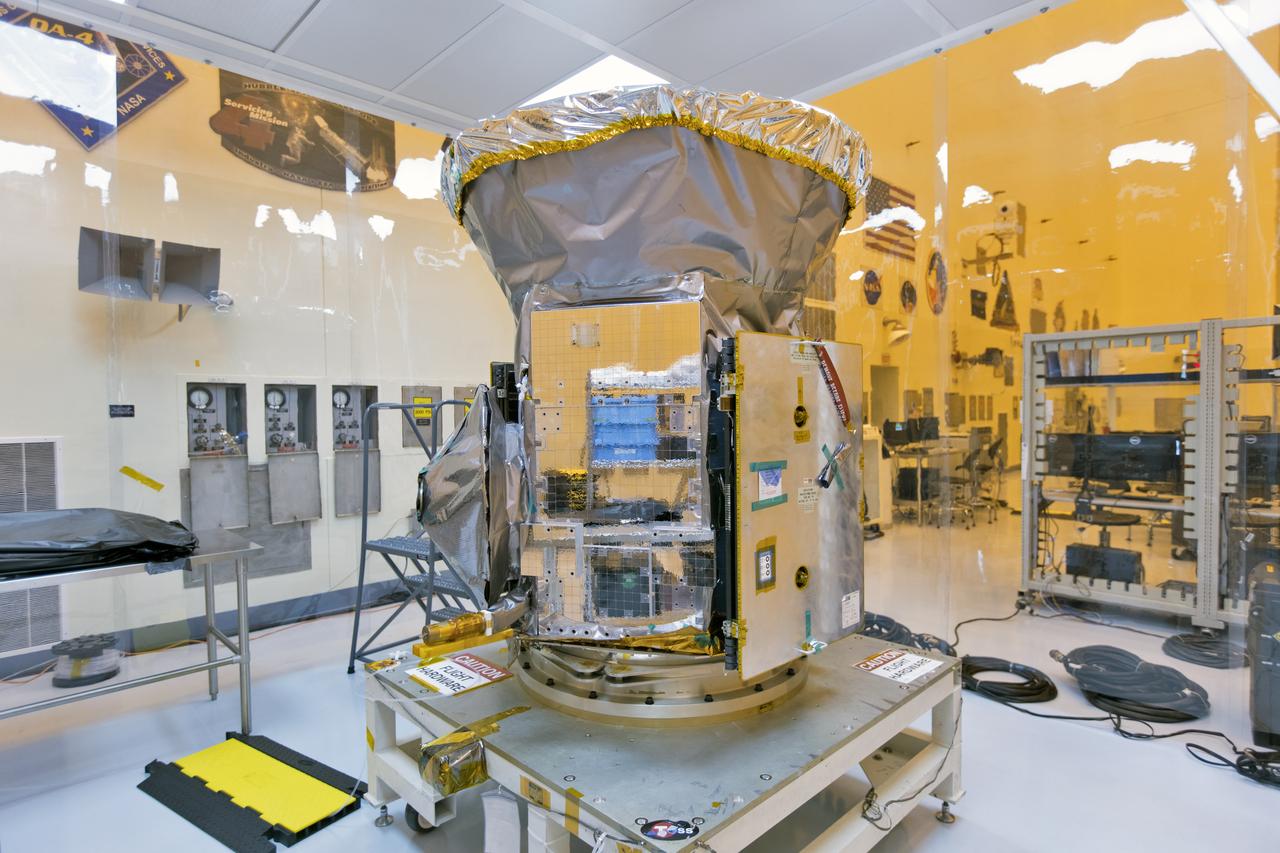
In the Payload Hazardous Servicing Facility at NASA's Kennedy Space Center in Florida, the agency's Transiting Exoplanet Survey Satellite, or TESS, has been uncreated from its shipping container for inspections and preflight processing. The satellite is NASA's next step in the search for planets outside of the solar system also known as "exoplanets." TESS is a NASA Astrophysics Explorer mission led and operated by MIT in Cambridge, Massachusetts, and managed by NASA’s Goddard Space Flight Center in Greenbelt, Maryland. Dr. George Ricker of MIT’s Kavli Institute for Astrophysics and Space Research serves as principal investigator for the mission. Additional partners include Orbital ATK, NASA’s Ames Research Center, and the Harvard-Smithsonian Center for Astrophysics and the Space Telescope Science Institute. More than a dozen universities, research institutes and observatories worldwide are participants in the mission. NASA’s Launch Services Program is responsible for launch management. SpaceX of Hawthorne, California, is the provider of the Falcon 9 launch service. TESS is scheduled to launch atop a Falcon 9 rocket no earlier than April 16, 2018 from Space Launch Complex 41 at Cape Canaveral Air Force Station.
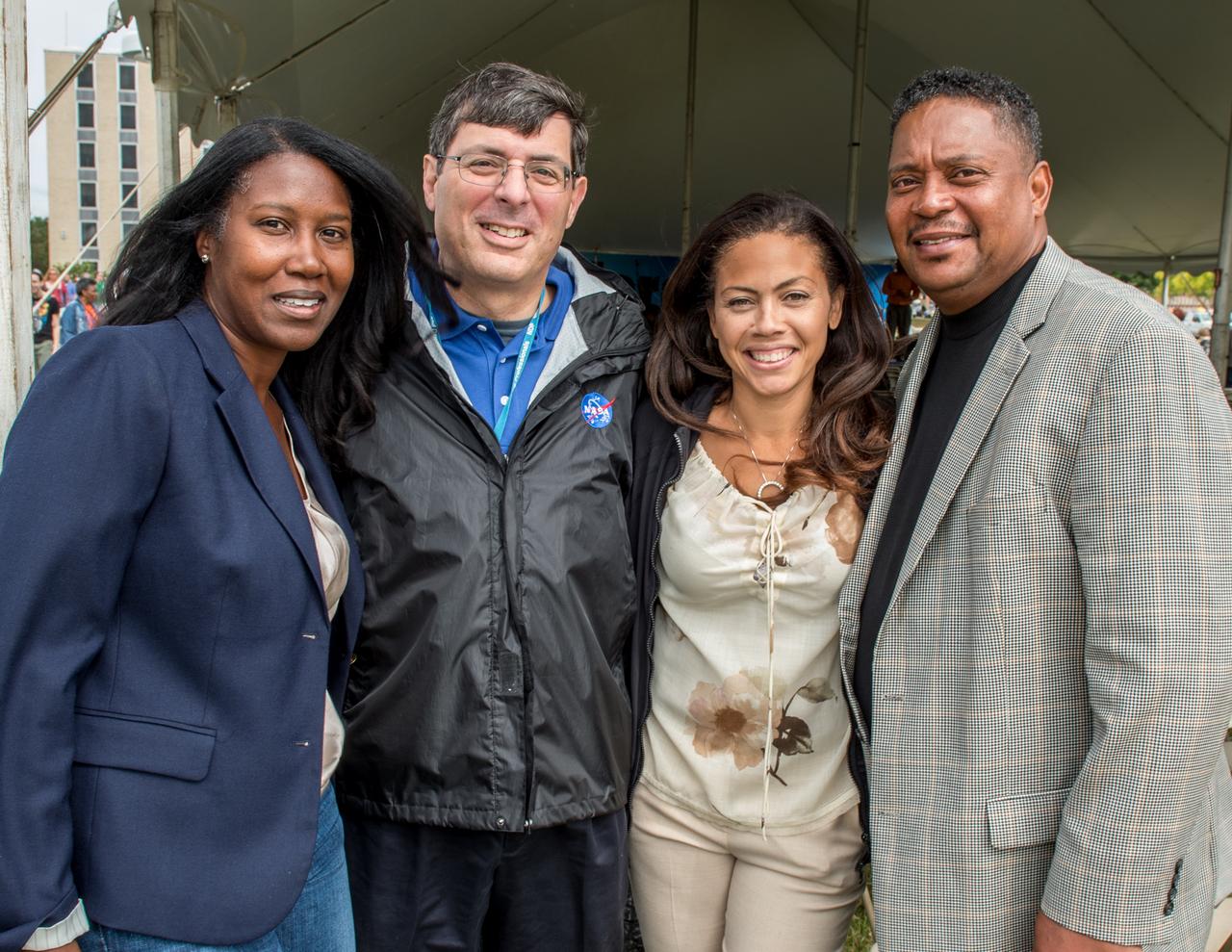
Center Director Chris Scolese with Sobe Restaurant owners Tony and Josette Simpson and Nichelle Schoultz. Explore@NASAGoddard celebrates the 25th anniversary of the launch of the Hubble Space Telescope. All areas of Goddard’s research – Earth science, heliophysics, planetary science, astrophysics, and engineering and technology – will be presented, as each discipline plays a critical part in NASA's ongoing journey to reach new heights.
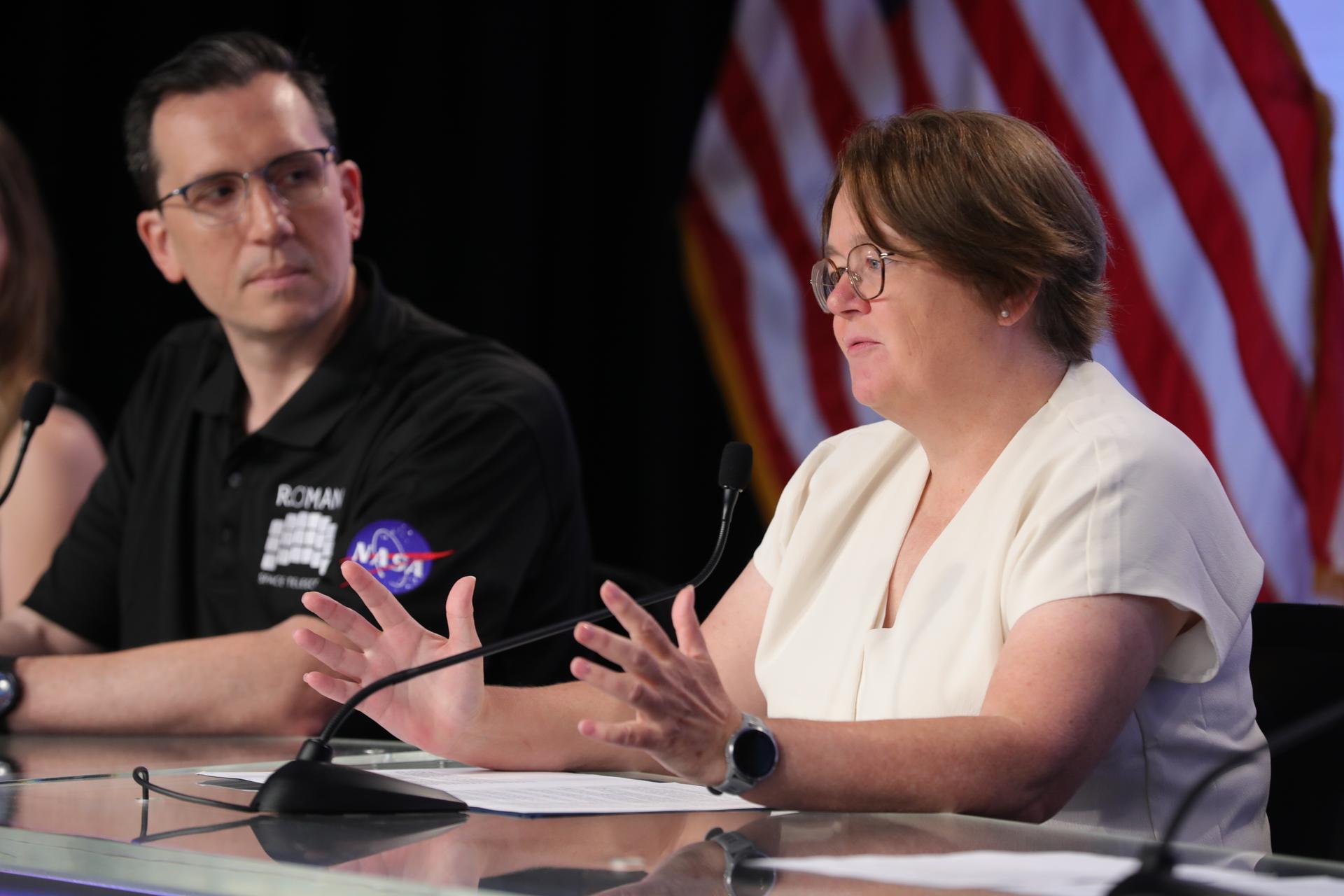
From left, Shawn Domagal-Goldman, director, Astrophysics Division, NASA Headquarters in Washington, and Julie McEnery, Roman telescope senior project scientist, NASA’s Goddard Space Flight Center in Greenbelt, Maryland, participate in a science briefing for NASA’s Nancy Grace Roman Space Telescope inside the NASA News Center’s John Holliman Auditorium at Kennedy Space Center in Florida, on Saturday, Aug. 29, 2026. Roman will investigate dark energy and dark matter, conduct a statistical census of planetary systems, and enable a broad range of additional astrophysics research. Liftoff from Launch Complex 39A at Kennedy is targeted for no earlier than Sunday, Aug. 30, 2026.
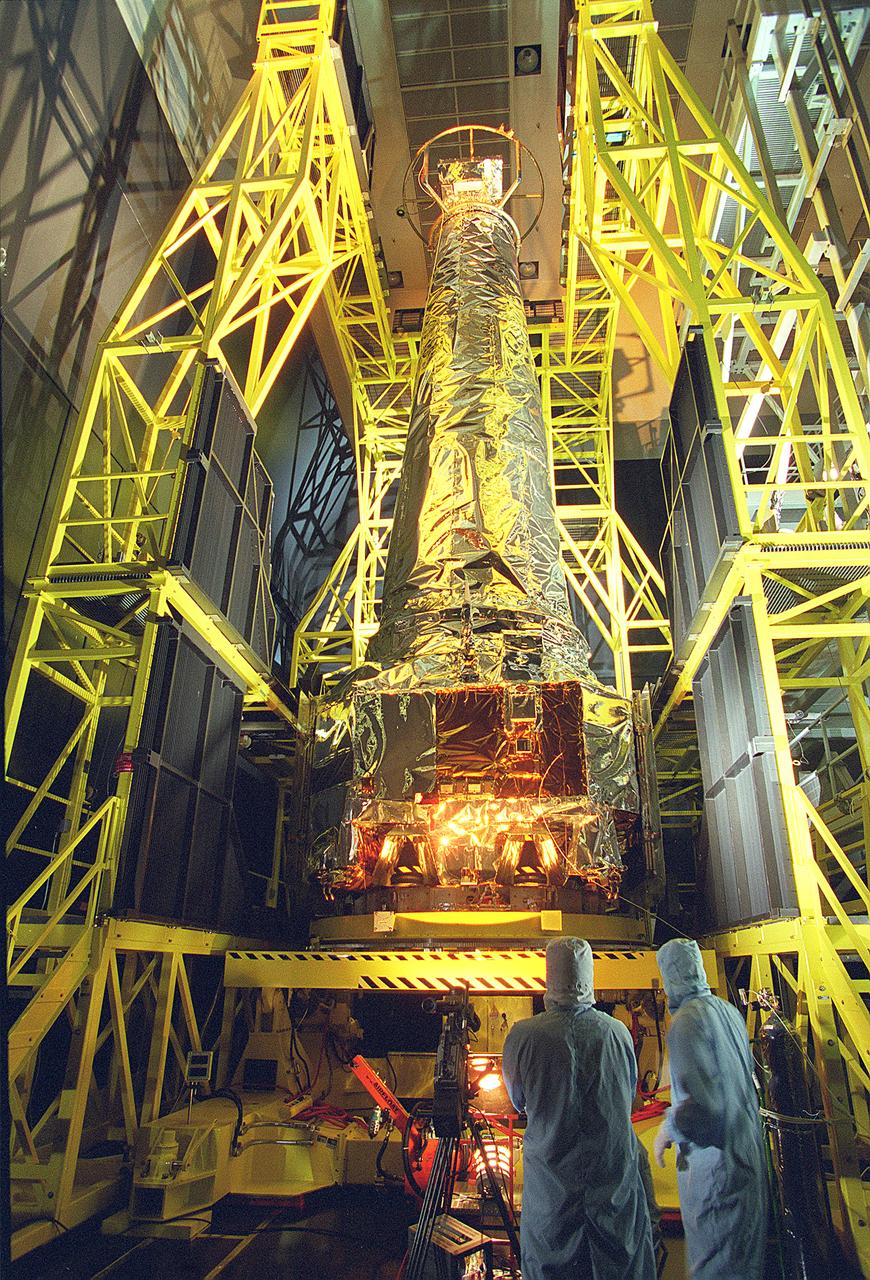
This photograph shows TRW technicians preparing the assembled Chandra X-Ray Observatory (CXO) for an official unveiling at TRW Space and Electronics Group of Redondo Beach, California. The CXO is formerly known as the Advanced X-Ray Astrophysics Facility (AXAF), which was renamed in honor of the late Indian-American Astronomer, Subrahmanyan Chandrasekhar in 1999. The CXO will help astronomers world-wide better understand the structure and evolution of the universe by studying powerful sources of x-rays such as exploding stars, matter falling into black holes, and other exotic celestial objects. X-ray astronomy can only be done from space because Earth's atmosphere blocks x-rays from reaching the surface. The Observatory provides images that are 50 times more detailed than previous x-ray missions. At more than 45 feet in length and weighing more than 5 tons, it will be one of the largest objects ever placed in Earth orbit by the Space Shuttle. TRW, Inc. was the prime contractor and assembled and tested the observatory for NASA. The CXO program is managed by the Marshall Space Flight Center. The Observatory was launched on July 22, 1999 aboard the Space Shuttle Columbia, STS-93 mission. (Image courtesy of TRW)
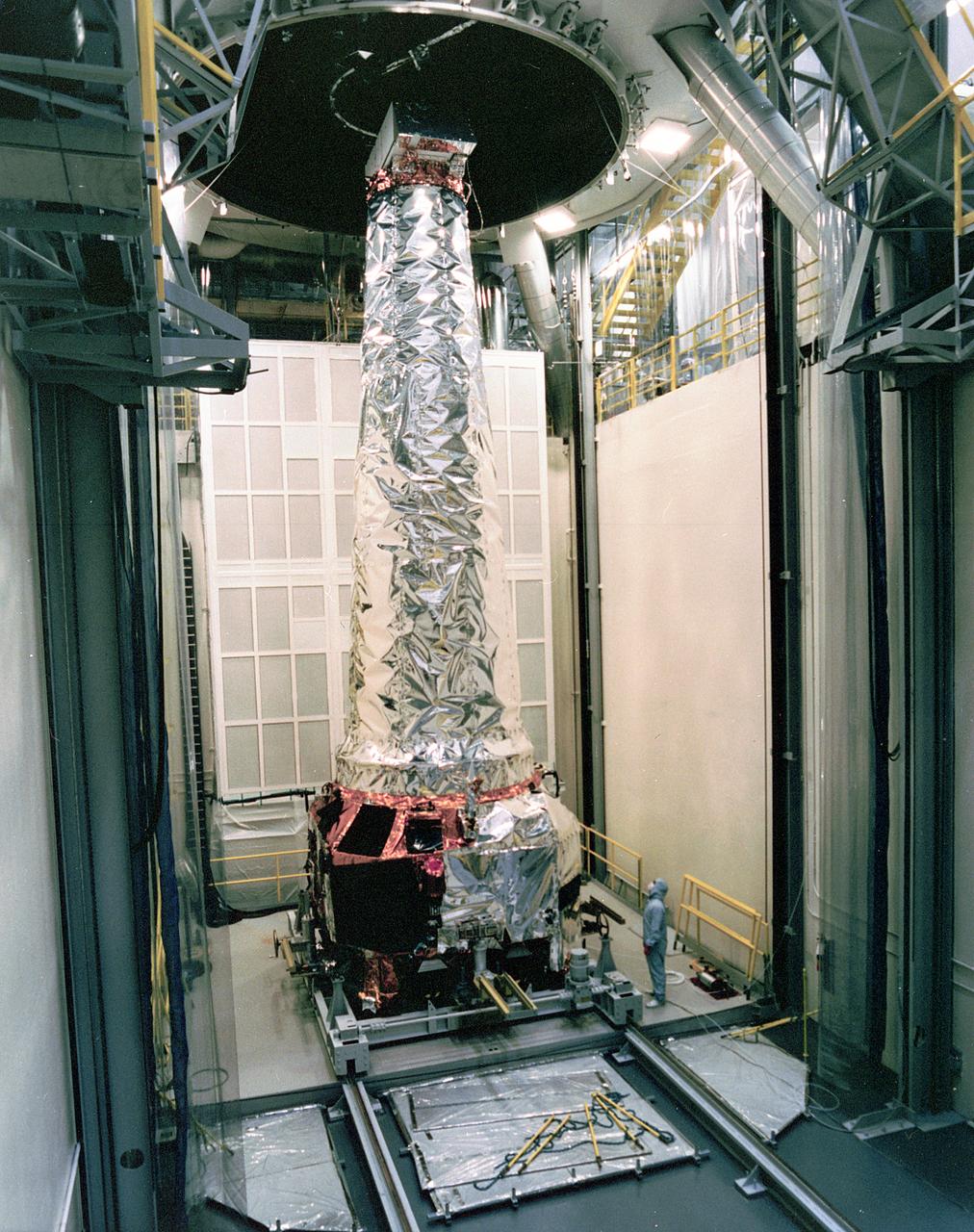
This photograph shows a TRW technician inspecting the completely assembled Chandra X-ray Observatory (CXO) in the Thermal Vacuum Chamber at TRW Space and Electronics Group of Redondo Beach, California. The CXO is formerly known as the Advanced X-Ray Astrophysics Facility (AXAF), which was renamed in honor of the late Indian-American Astronomer, Subrahmanyan Chandrasekhar in 1999. The CXO will help astronomers worldwide better understand the structure and evolution of the universe by studying powerful sources of x-rays such as exploding stars, matter falling into black holes and other exotic celestial objects. X-ray astronomy can only be done from space because Earth's atmosphere blocks x-rays from reaching the surface. The Observatory provides images that are 50 times more detailed than previous x-ray missions. At more than 45 feet in length and weighing more than 5 tons, it will be one of the largest objects ever placed in Earth orbit by the Space Shuttle. TRW, Inc. was the prime contractor and assembled and tested the observatory for NASA. The CXO program is managed by the Marshall Space Flight Center. The Observatory was launched on July 22, 1999 aboard the Space Shuttle Columbia, STS-93 mission. (Image courtesy of TRW)
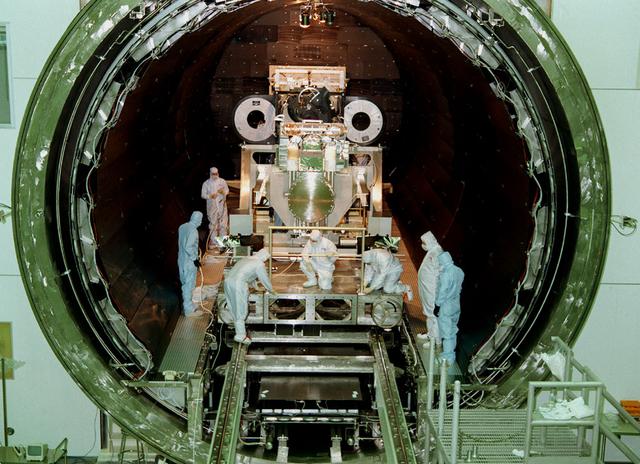
This photo shows the High Resolution Camera (HRC) for the Chandra X-Ray Observatory (CXO), formerly Advanced X-Ray Astrophysics Facility (AXAF), being integrated with the High Resolution Mirror Assembly (HRMA) in Marshall Space Flight Center's (MSFC's) 24-foot Vacuum Chamber at the X-Ray Calibration Facility (XRCF). The AXAF was renamed CXO in 1999. The CXO is the most sophisticated and the world's most poweful x-ray telescope ever built. It observes x-rays from high-energy regions of the universe, such as hot gas in the remnants of exploded stars. The HRC is one of the two instruments used at the focus of CXO, where it will detect x-rays reflected from an assembly of eight mirrors. The unique capabilities of the HRC stem from the close match of its imaging capability to the focusing of the mirrors. When used with CXO mirrors, the HRC makes images that reveal detail as small as one-half an arc second. This is equivalent to the ability to read a newspaper at a distance of 1 kilometer. MSFC's XRCF is the world's largest, most advanced laboratory for simulating x-ray emissions from distant celestial objects. It produces a space-like environment in which components relatedto x-ray telescope imaging are tested and the quality of their performances in space is predicted. TRW, Inc. was the prime contractor for the development of the CXO and NASA's MSFC was responsible for its project management. The Smithsonian Astrophysical Observatory controls science and flight operations of the CXO for NASA from Cambridge, Massachusetts. The CXO was launched July 22, 1999 aboard the Space Shuttle Columbia (STS-93).
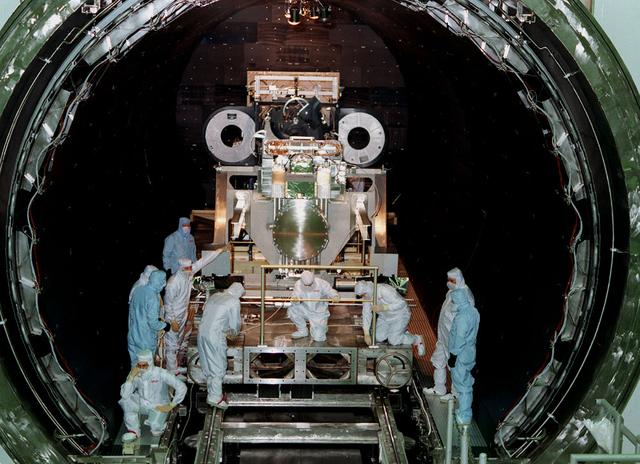
This photo shows the High Resolution Camera (HRC) for the Chandra X-Ray Observatory (CXO), formerly Advanced X-Ray Astrophysics Facility (AXAF), being integrated with the High Resolution Mirror Assembly (HRMA) in Marshall Space Flight Center's (MSFC's) 24-foot Vacuum Chamber at the X-Ray Calibration Facility (XRCF). The AXAF was renamed CXO in 1999. The CXO is the most sophisticated and the world's most powerful x-ray telescope ever built. It observes x-rays from high-energy regions of the universe, such as hot gas in the remnants of exploded stars. The HRC is one of the two instruments used at the focus of CXO, where it will detect x-rays reflected from an assembly of eight mirrors. The unique capabilities of the HRC stem from the close match of its imaging capability to the focusing of the mirrors. When used with CXO mirrors, the HRC makes images that reveal detail as small as one-half an arc second. This is equivalent to the ability to read a newspaper at a distance of 1 kilometer. MSFC's XRCF is the world's largest, most advanced laboratory for simulating x-ray emissions from distant celestial objects. It produces a space-like environment in which components related to x-ray telescope imaging are tested and the quality of their performances in space is predicted. TRW, Inc. was the prime contractor for the development of the CXO and NASA's MSFC was responsible for its project management. The Smithsonian Astrophysical Observatory controls science and flight operations of the CXO for NASA from Cambridge, Massachusetts. The CXO was launched July 22, 1999 aboard the Space Shuttle Columbia (STS-93).
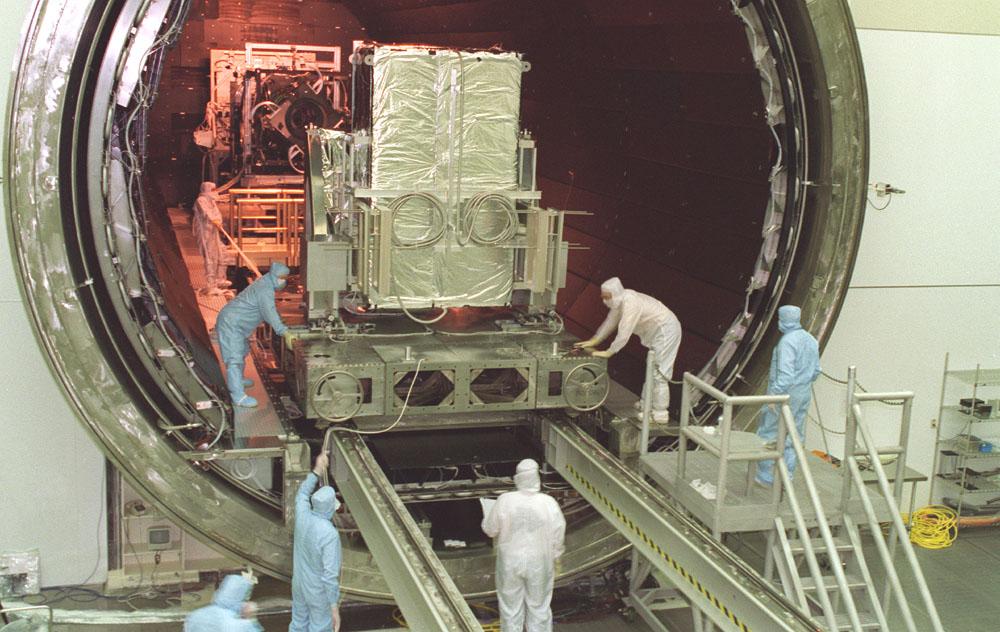
This photograph captures the installation of the Chandra X-Ray Observatory, formerly Advanced X-Ray Astrophysics Facility (AXAF), Advanced Charged-Coupled Device (CCD) Imaging Spectrometer (ACIS) into the Vacuum Chamber at the X-Ray Calibration Facility (XRCF) at Marshall Space Flight Center (MSFC). The AXAF was renamed Chandra X-Ray Observatory (CXO) in 1999. The CXO is the most sophisticated and the world's most powerful x-ray telescope ever built. It observes x-rays from high-energy regions of the universe, such as hot gas in the remnants of exploded stars. The ACIS is one of two focal plane instruments. As the name suggests, this instrument is an array of CCDs similar to those used in a camcorder. This instrument will be especially useful because it can make x-ray images and measure the energies of incoming x-rays. It is the instrument of choice for studying the temperature variation across x-ray sources, such as vast clouds of hot-gas intergalactic space. MSFC's XRCF is the world's largest, most advanced laboratory for simulating x-ray emissions from distant celestial objects. It produces a space-like environment in which components related to x-ray telescope imaging are tested and the quality of their performances in space is predicted. TRW, Inc. was the prime contractor for the development of the CXO and NASA's MSFC was responsible for its project management. The Smithsonian Astrophysical Observatory controls science and flight operations of the CXO for NASA from Cambridge, Massachusetts. The CXO was launched July 22, 1999 aboard the Space Shuttle Columbia (STS-93).
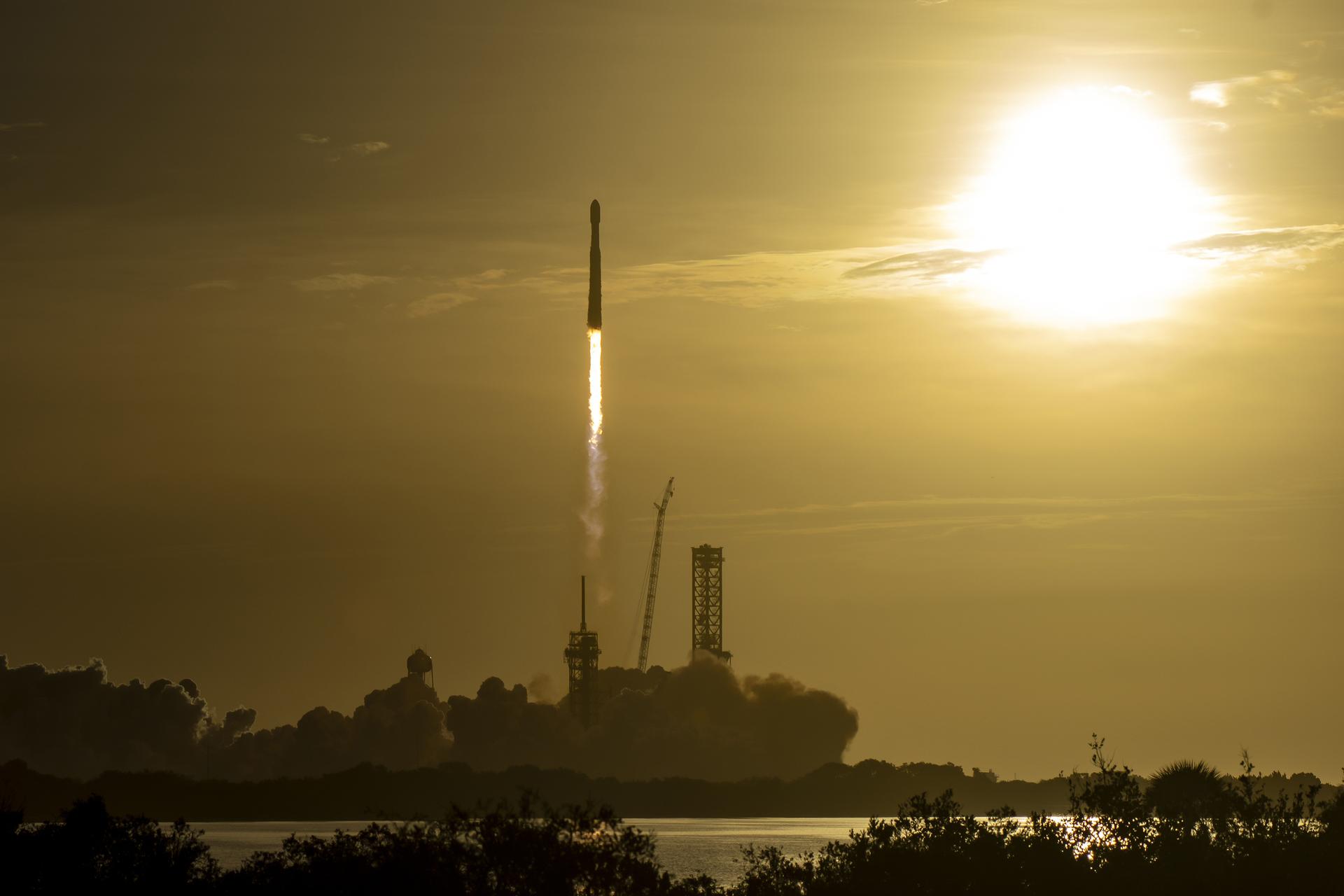
NASA’s Nancy Grace Roman Space Telescope rises to space atop a SpaceX Falcon Heavy rocket from Launch Complex 39A at the agency’s Kennedy Space Center in Florida on Sunday, Aug. 30, 2026. The milestone begins the observatory’s journey to explore the large‑scale structure of the universe. Roman will investigate dark energy and dark matter, conduct a statistical census of planetary systems, and enable a broad range of additional astrophysics research. Liftoff occurred at 7:26 a.m. EDT, from Kennedy’s Launch Complex 39A.
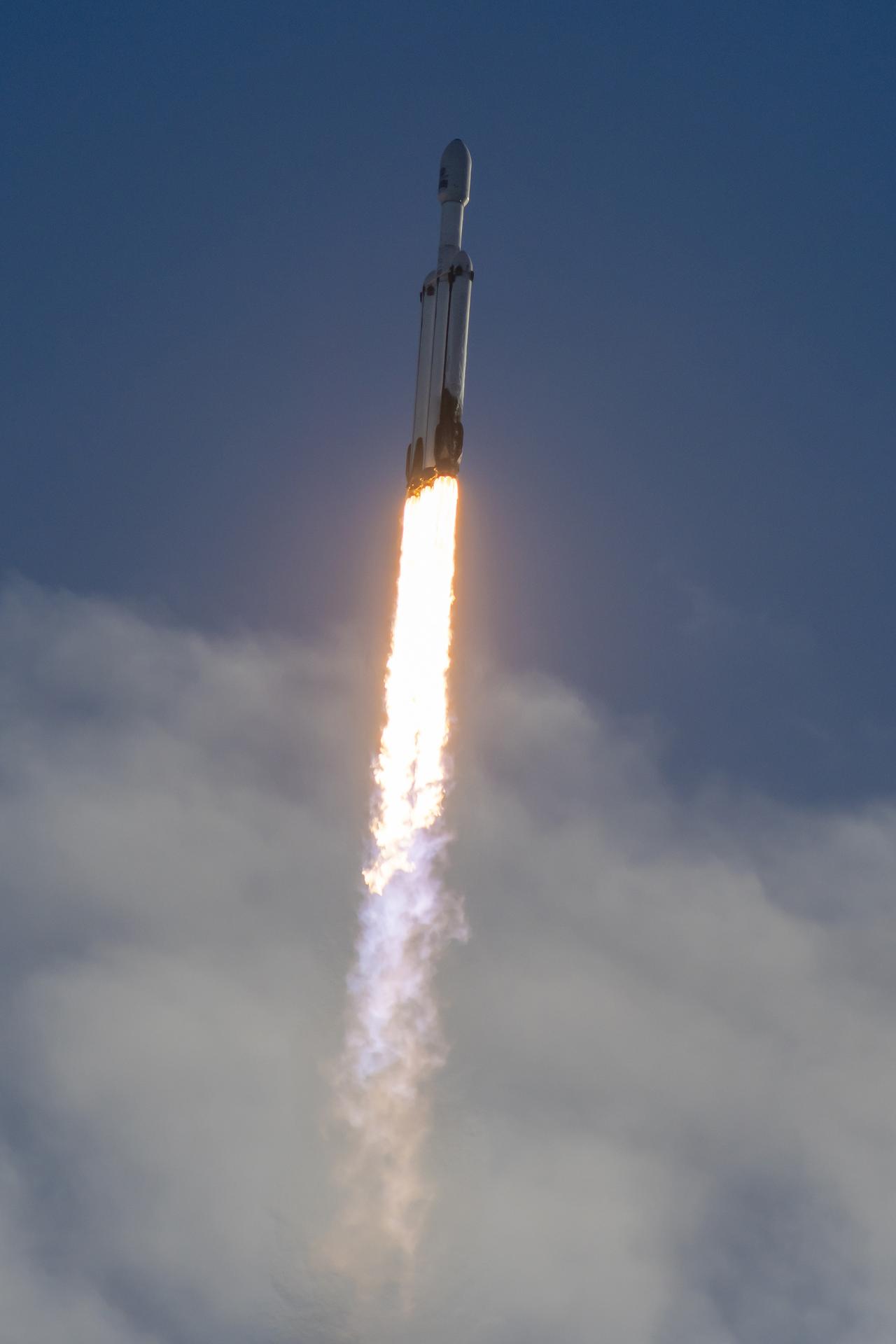
NASA’s Nancy Grace Roman Space Telescope rises to space atop a SpaceX Falcon Heavy rocket from Launch Complex 39A at the agency’s Kennedy Space Center in Florida on Sunday, Aug. 30, 2026. The milestone begins the observatory’s journey to explore the large‑scale structure of the universe. Roman will investigate dark energy and dark matter, conduct a statistical census of planetary systems, and enable a broad range of additional astrophysics research. Liftoff occurred at 7:26 a.m. EDT, from Kennedy’s Launch Complex 39A.
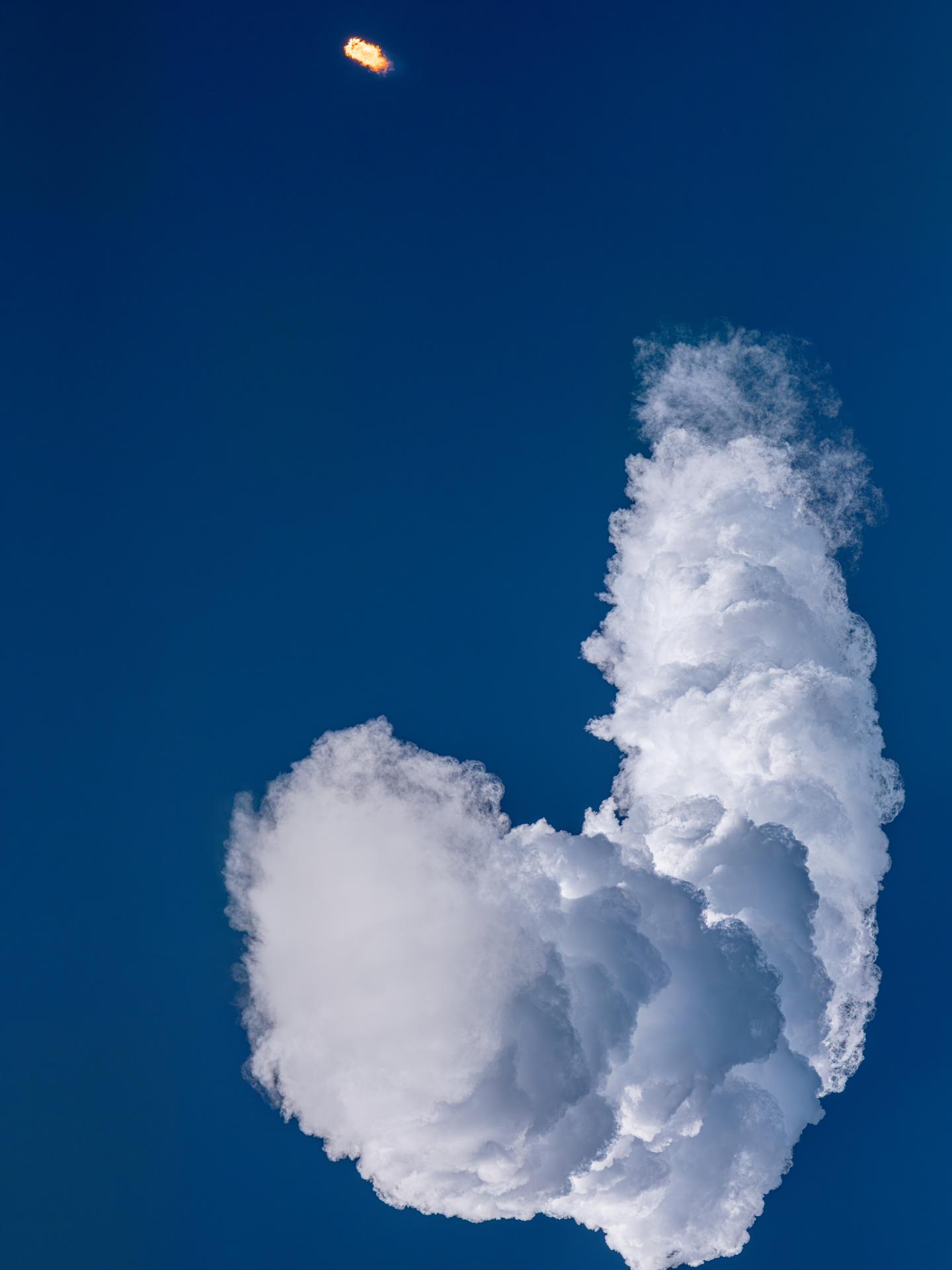
NASA’s Nancy Grace Roman Space Telescope rises to space atop a SpaceX Falcon Heavy rocket from Launch Complex 39A at the agency’s Kennedy Space Center in Florida on Sunday, Aug. 30, 2026. The milestone begins the observatory’s journey to explore the large‑scale structure of the universe. Roman will investigate dark energy and dark matter, conduct a statistical census of planetary systems, and enable a broad range of additional astrophysics research. Liftoff occurred at 7:26 a.m. EDT, from Kennedy’s Launch Complex 39A.
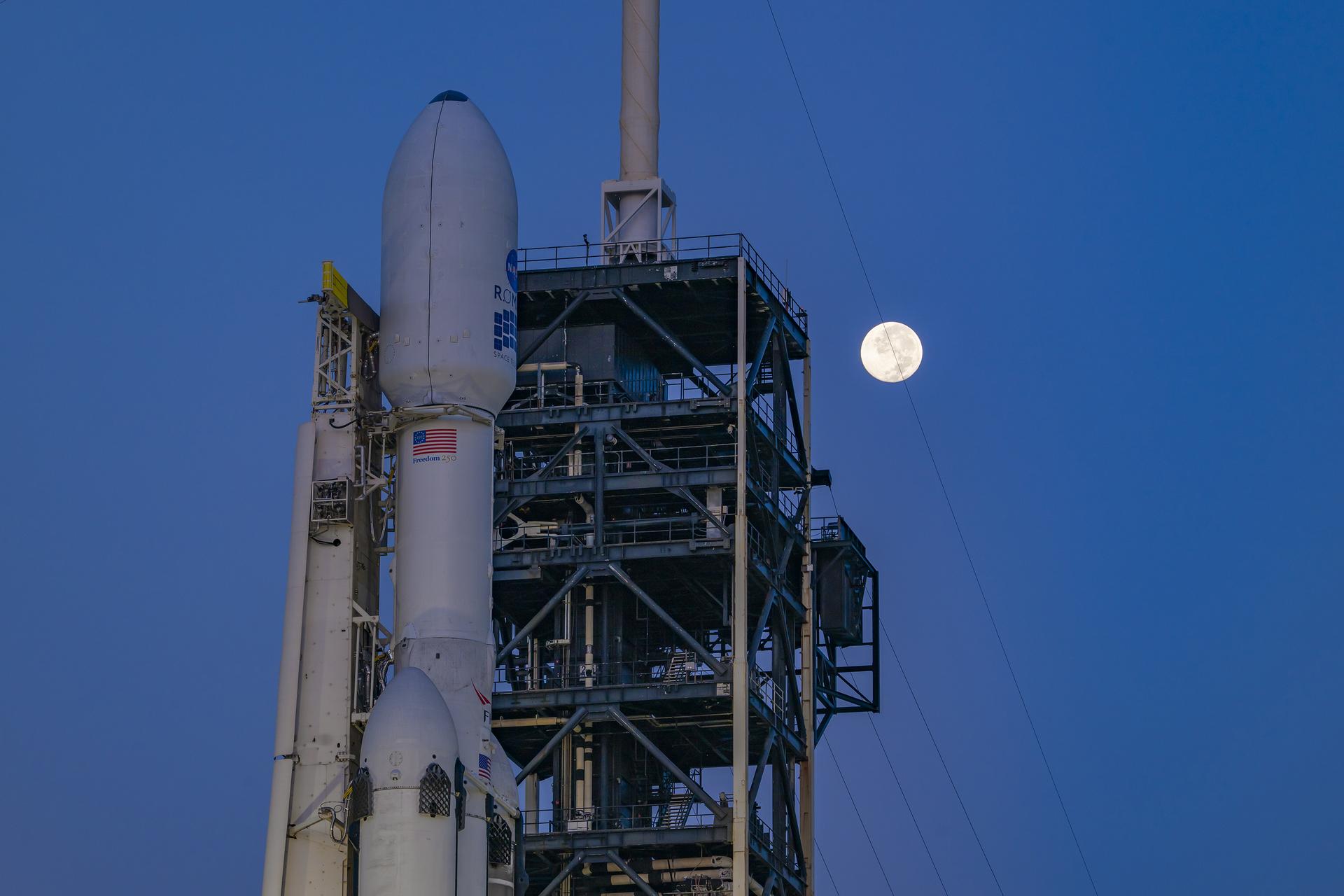
NASA’s Nancy Grace Roman Space Telescope, encapsulated in the SpaceX Falcon Heavy rocket’s fairing, stands vertical on the pad at Launch Complex 39A at NASA’s Kennedy Space Center on Saturday, Aug. 29, 2026. Roman will investigate dark energy and dark matter, conduct a statistical census of planetary systems, and enable a broad range of additional astrophysics research. Liftoff from NASA Kennedy is targeted for 7:26 a.m. EDT Sunday, Aug. 30, 2026.
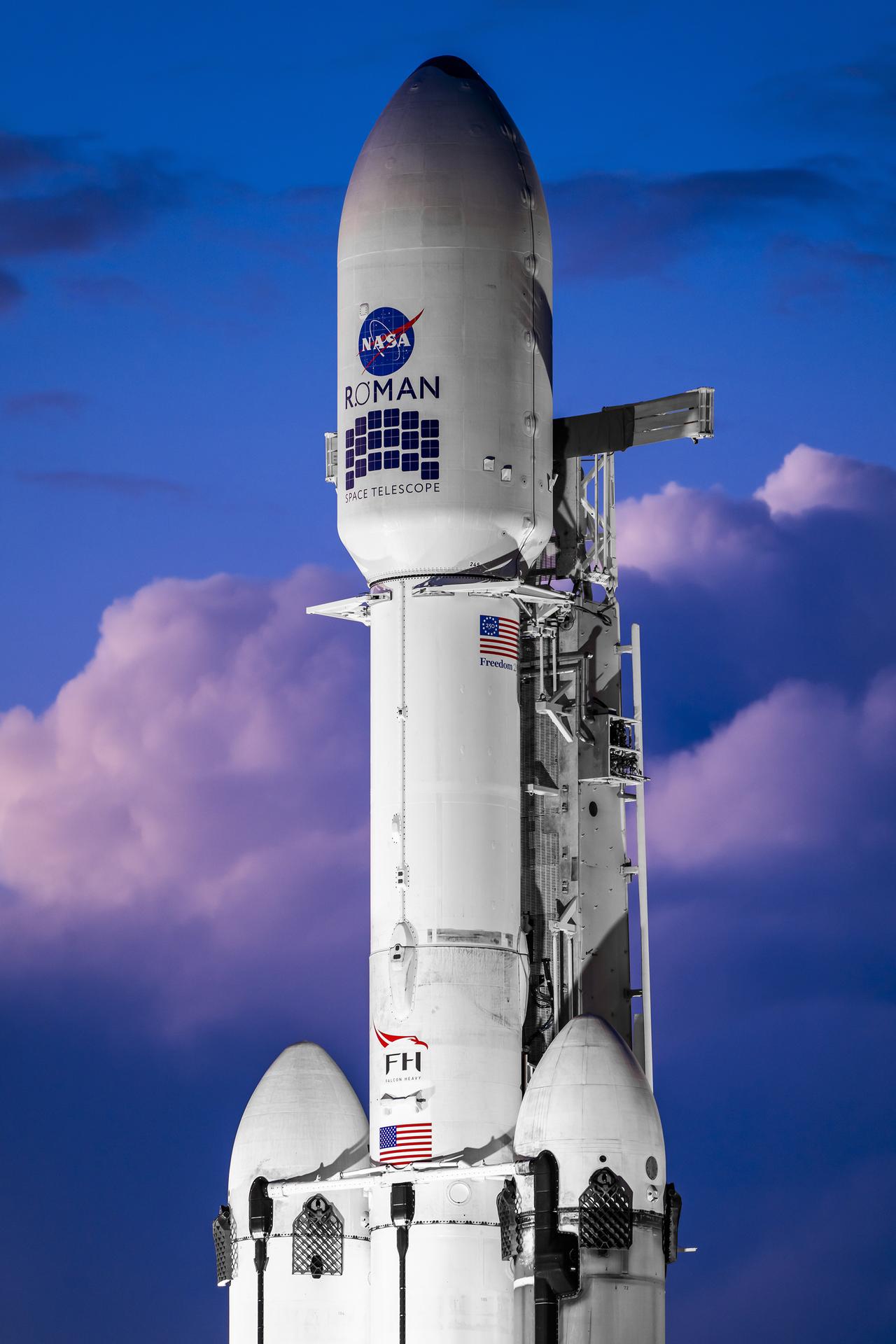
NASA’s Nancy Grace Roman Space Telescope, encapsulated in the SpaceX Falcon Heavy rocket’s fairing, stands vertical on the pad at Launch Complex 39A at NASA’s Kennedy Space Center on Saturday, Aug. 29, 2026. Roman will investigate dark energy and dark matter, conduct a statistical census of planetary systems, and enable a broad range of additional astrophysics research. Liftoff from NASA Kennedy is targeted for 7:26 a.m. EDT Sunday, Aug. 30, 2026.
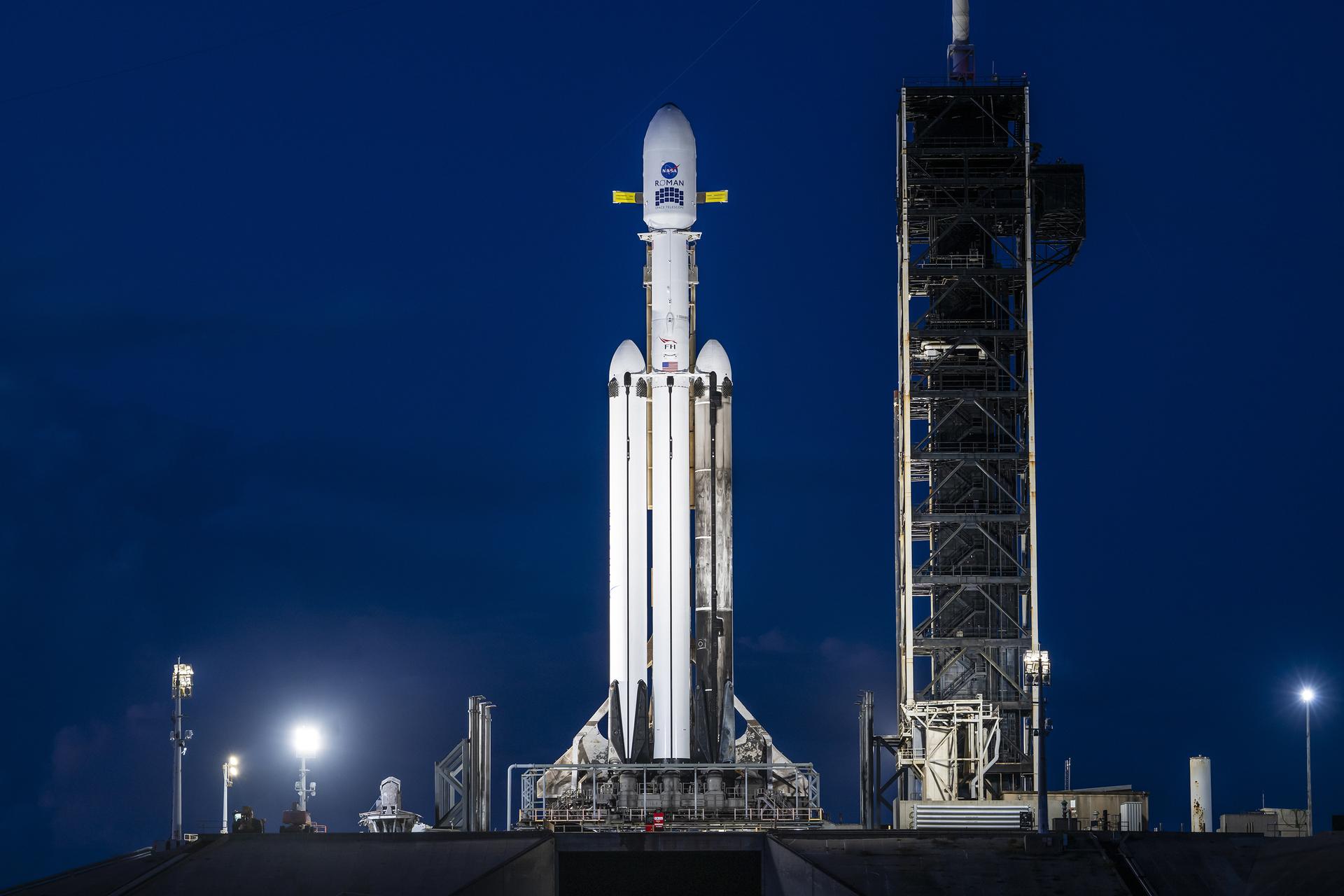
NASA’s Nancy Grace Roman Space Telescope, encapsulated in the SpaceX Falcon Heavy rocket’s fairing, stands vertical on the pad at Launch Complex 39A at NASA’s Kennedy Space Center on Saturday, Aug. 29, 2026. Roman will investigate dark energy and dark matter, conduct a statistical census of planetary systems, and enable a broad range of additional astrophysics research. Liftoff from NASA Kennedy is targeted for 7:26 a.m. EDT Sunday, Aug. 30, 2026.
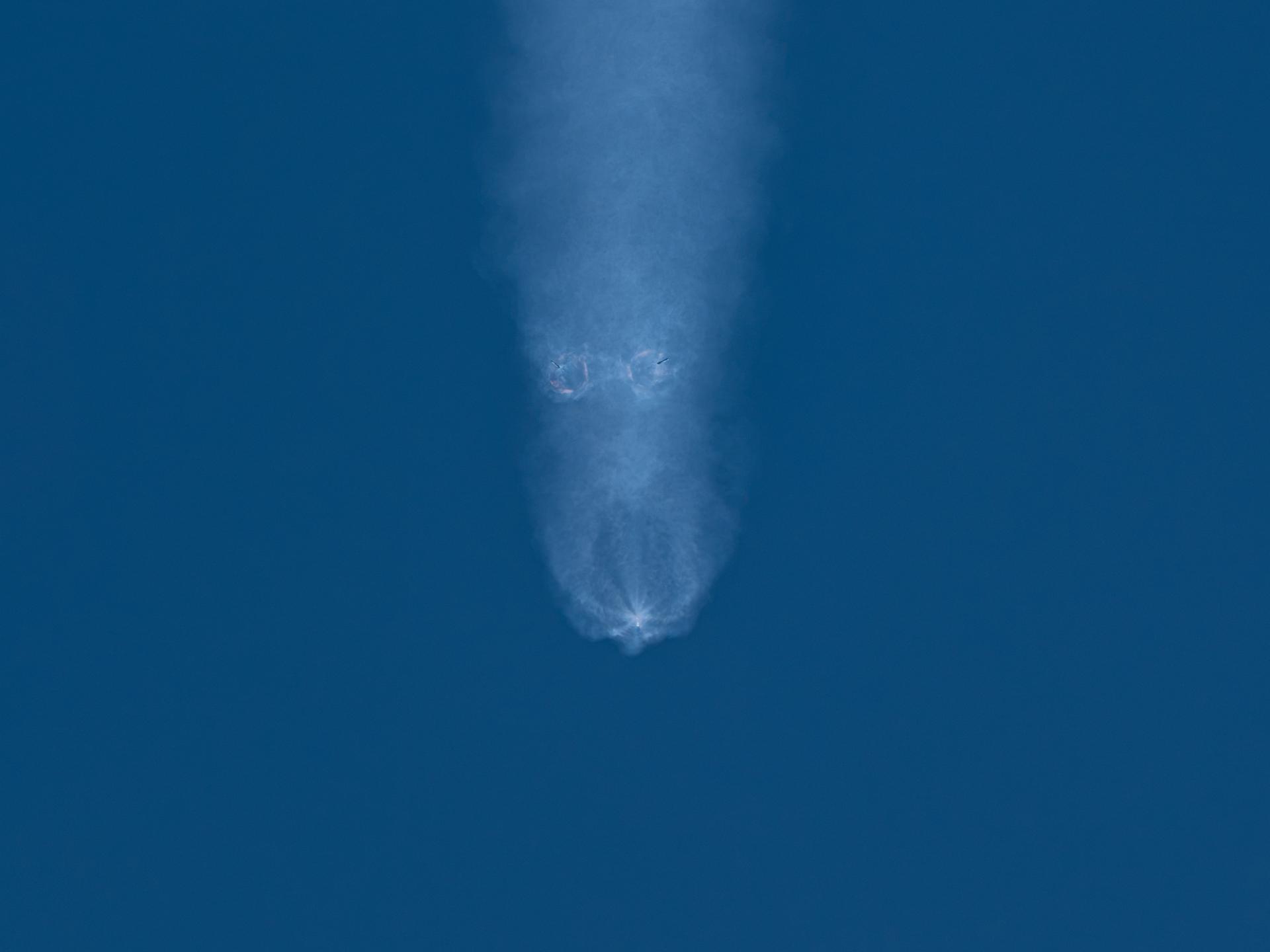
NASA’s Nancy Grace Roman Space Telescope rises to space atop a SpaceX Falcon Heavy rocket from Launch Complex 39A at the agency’s Kennedy Space Center in Florida on Sunday, Aug. 30, 2026. The milestone begins the observatory’s journey to explore the large‑scale structure of the universe. Roman will investigate dark energy and dark matter, conduct a statistical census of planetary systems, and enable a broad range of additional astrophysics research. Liftoff occurred at 7:26 a.m. EDT, from Kennedy’s Launch Complex 39A.
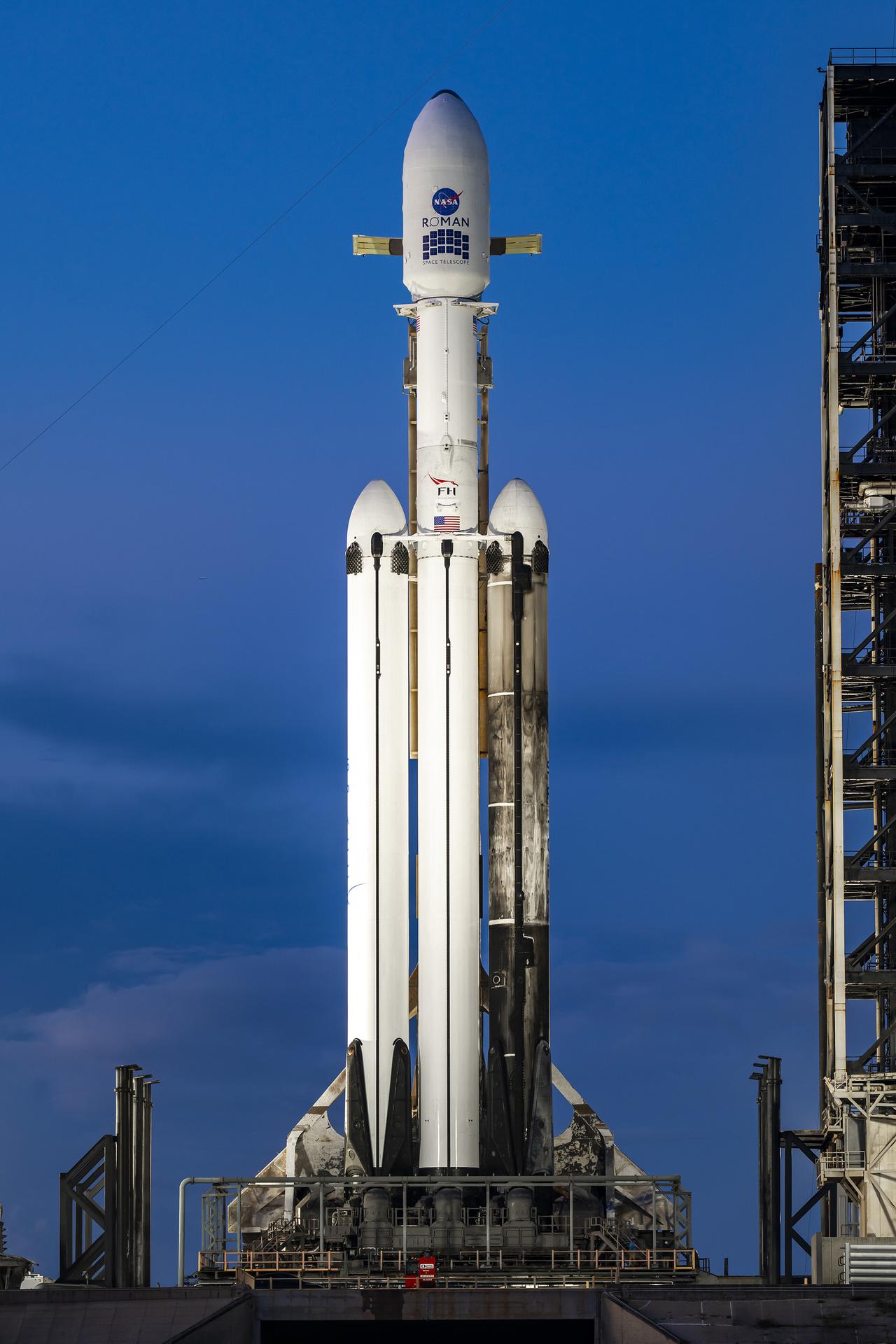
NASA’s Nancy Grace Roman Space Telescope, encapsulated in the SpaceX Falcon Heavy rocket’s fairing, stands vertical on the pad at Launch Complex 39A at NASA’s Kennedy Space Center on Saturday, Aug. 29, 2026. Roman will investigate dark energy and dark matter, conduct a statistical census of planetary systems, and enable a broad range of additional astrophysics research. Liftoff from NASA Kennedy is targeted for 7:26 a.m. EDT Sunday, Aug. 30, 2026.
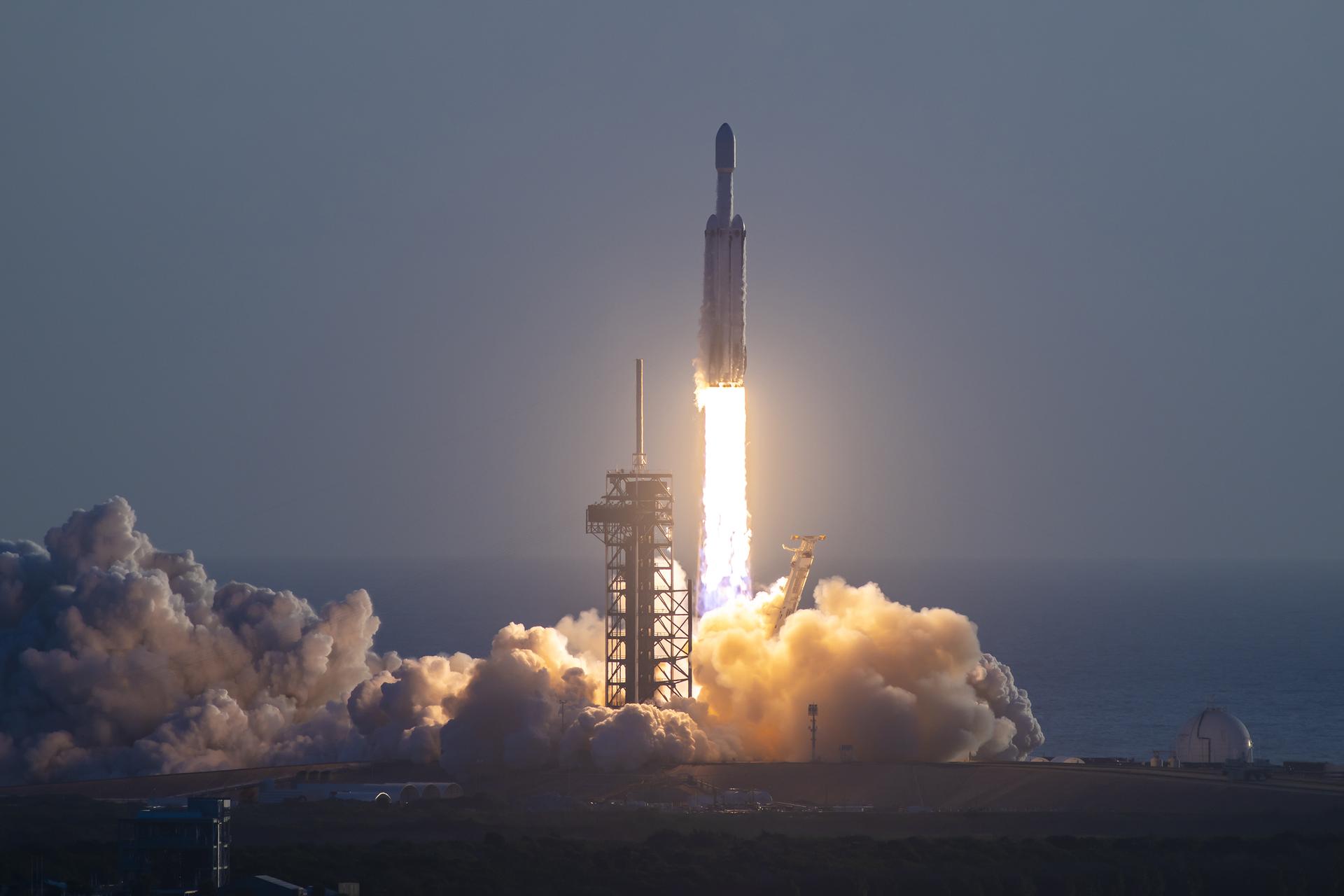
NASA’s Nancy Grace Roman Space Telescope rises to space atop a SpaceX Falcon Heavy rocket from Launch Complex 39A at the agency’s Kennedy Space Center in Florida on Sunday, Aug. 30, 2026. The milestone begins the observatory’s journey to explore the large‑scale structure of the universe. Roman will investigate dark energy and dark matter, conduct a statistical census of planetary systems, and enable a broad range of additional astrophysics research. Liftoff occurred at 7:26 a.m. EDT, from Kennedy’s Launch Complex 39A.
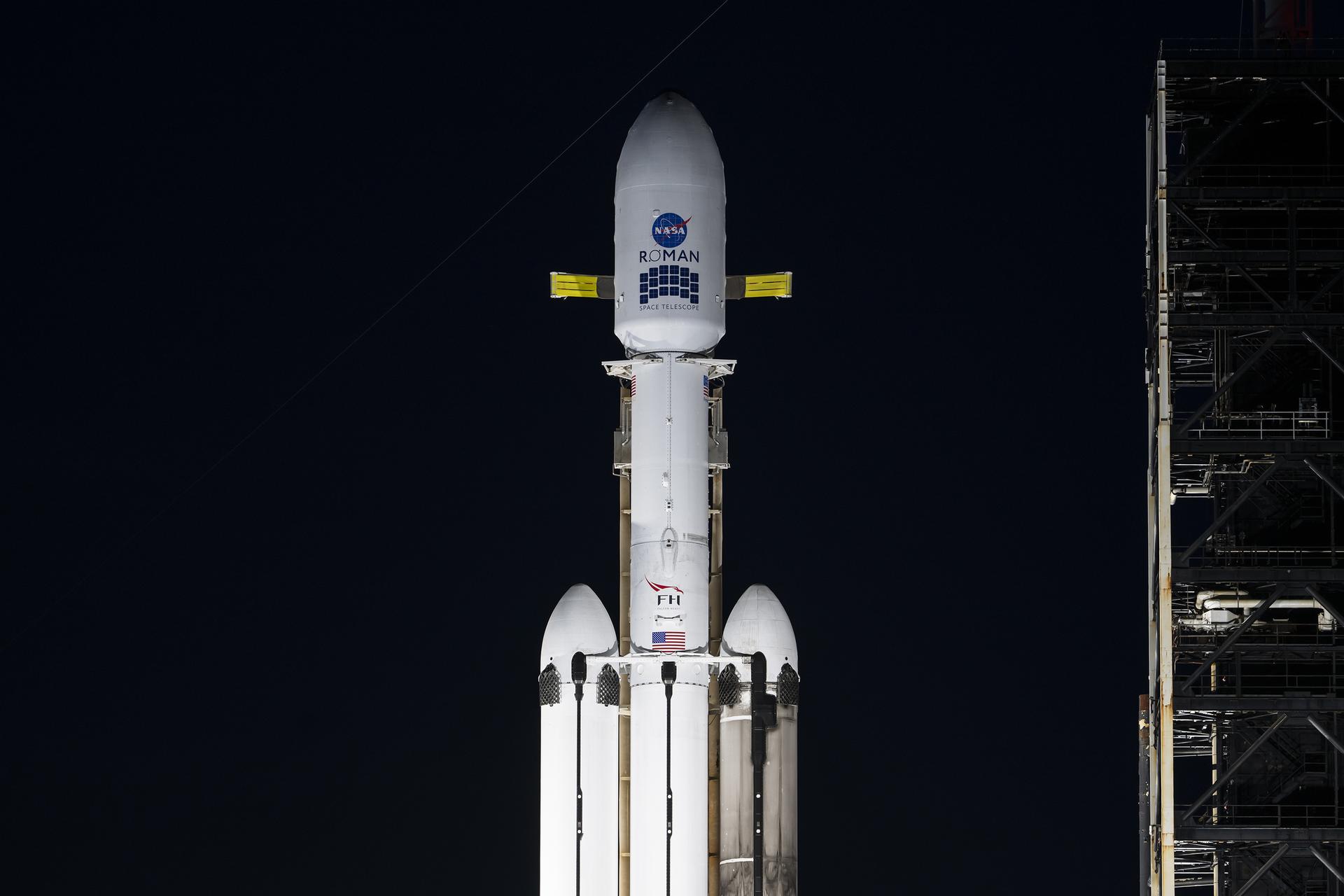
NASA’s Nancy Grace Roman Space Telescope, encapsulated in the SpaceX Falcon Heavy rocket’s fairing, stands vertical on the pad at Launch Complex 39A at NASA’s Kennedy Space Center on Saturday, Aug. 29, 2026. Roman will investigate dark energy and dark matter, conduct a statistical census of planetary systems, and enable a broad range of additional astrophysics research. Liftoff from NASA Kennedy is targeted for 7:26 a.m. EDT Sunday, Aug. 30, 2026.
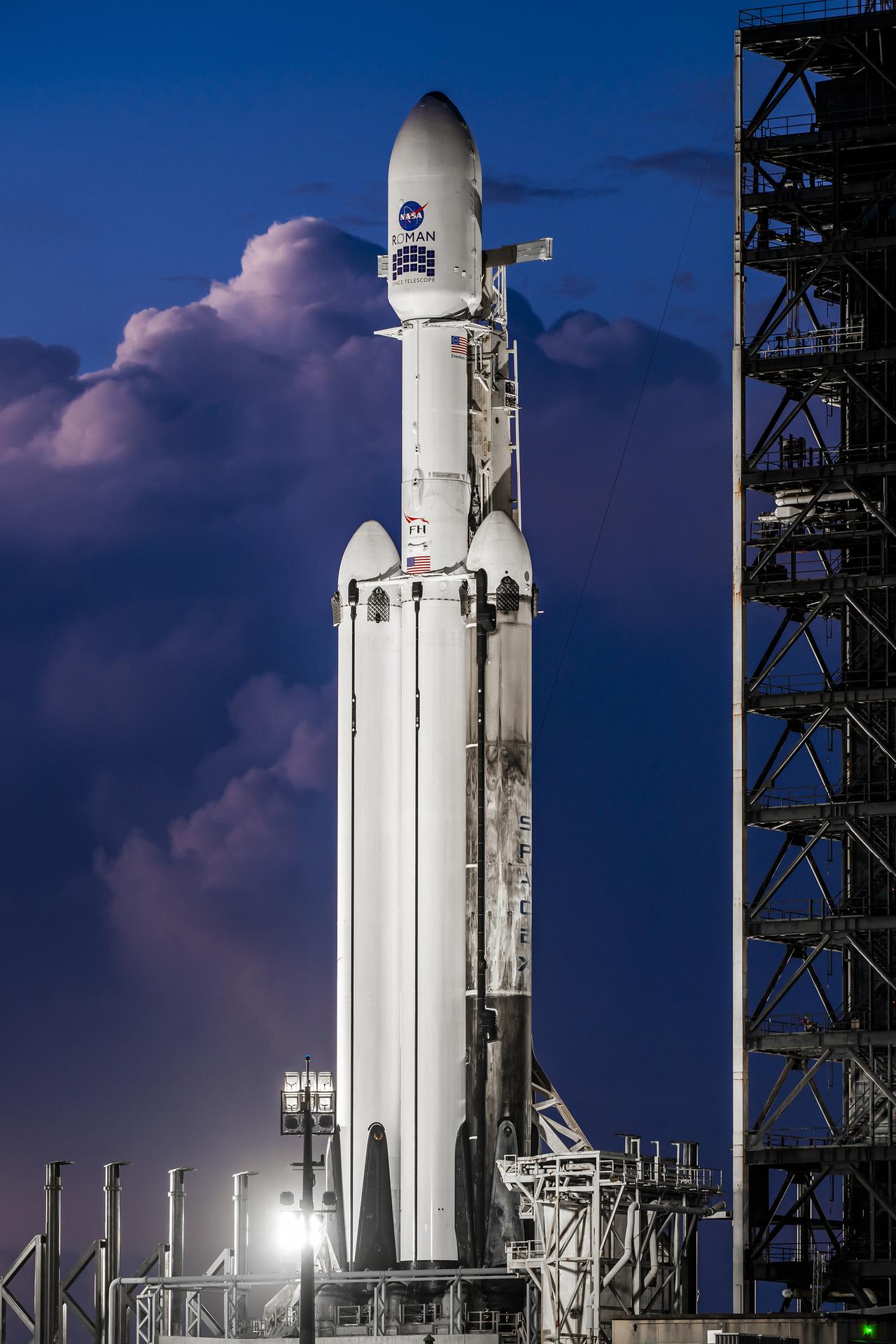
NASA’s Nancy Grace Roman Space Telescope, encapsulated in the SpaceX Falcon Heavy rocket’s fairing, stands vertical on the pad at Launch Complex 39A at NASA’s Kennedy Space Center on Saturday, Aug. 29, 2026. Roman will investigate dark energy and dark matter, conduct a statistical census of planetary systems, and enable a broad range of additional astrophysics research. Liftoff from NASA Kennedy is targeted for 7:26 a.m. EDT Sunday, Aug. 30, 2026.
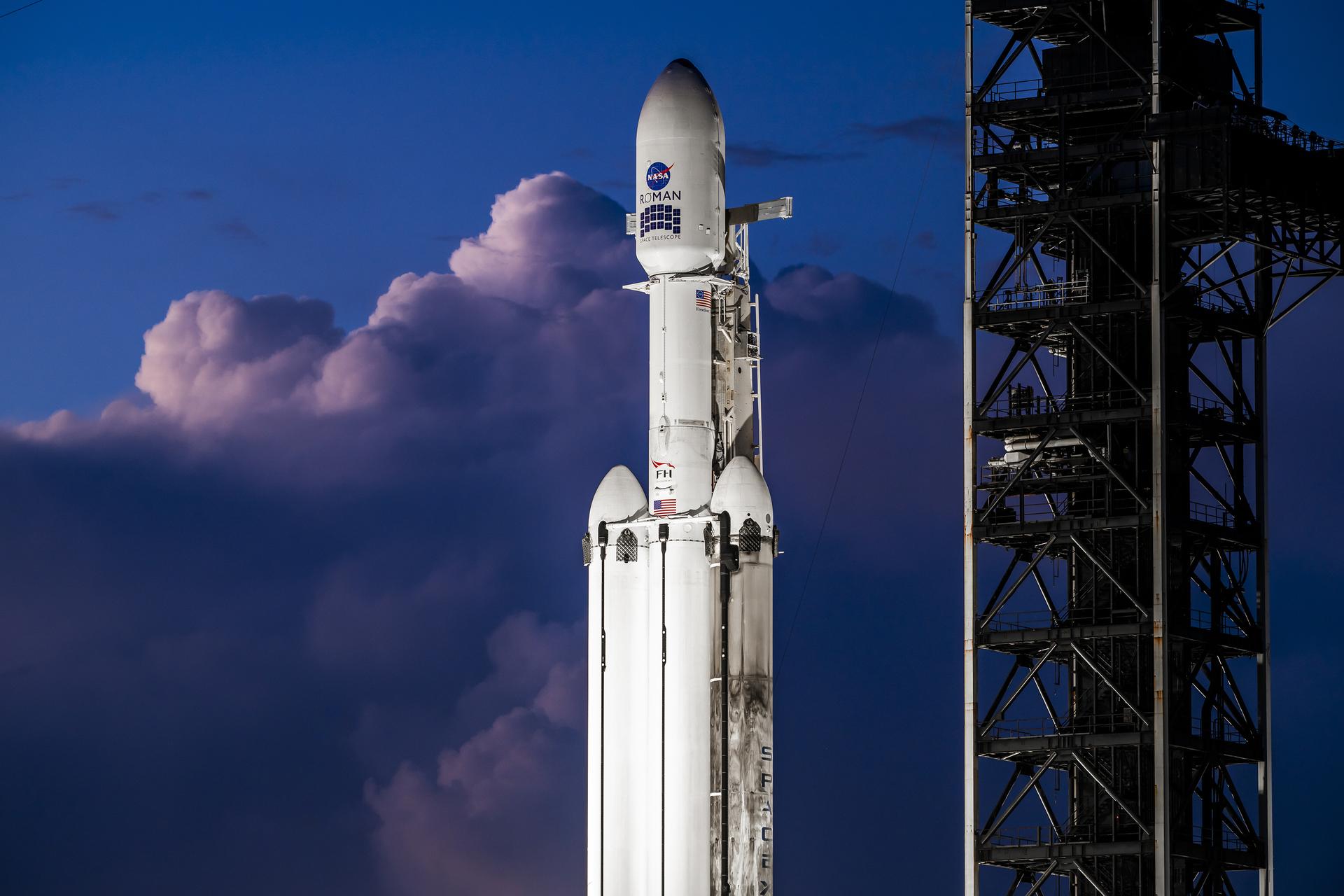
NASA’s Nancy Grace Roman Space Telescope, encapsulated in the SpaceX Falcon Heavy rocket’s fairing, stands vertical on the pad at Launch Complex 39A at NASA’s Kennedy Space Center on Saturday, Aug. 29, 2026. Roman will investigate dark energy and dark matter, conduct a statistical census of planetary systems, and enable a broad range of additional astrophysics research. Liftoff from NASA Kennedy is targeted for 7:26 a.m. EDT Sunday, Aug. 30, 2026.
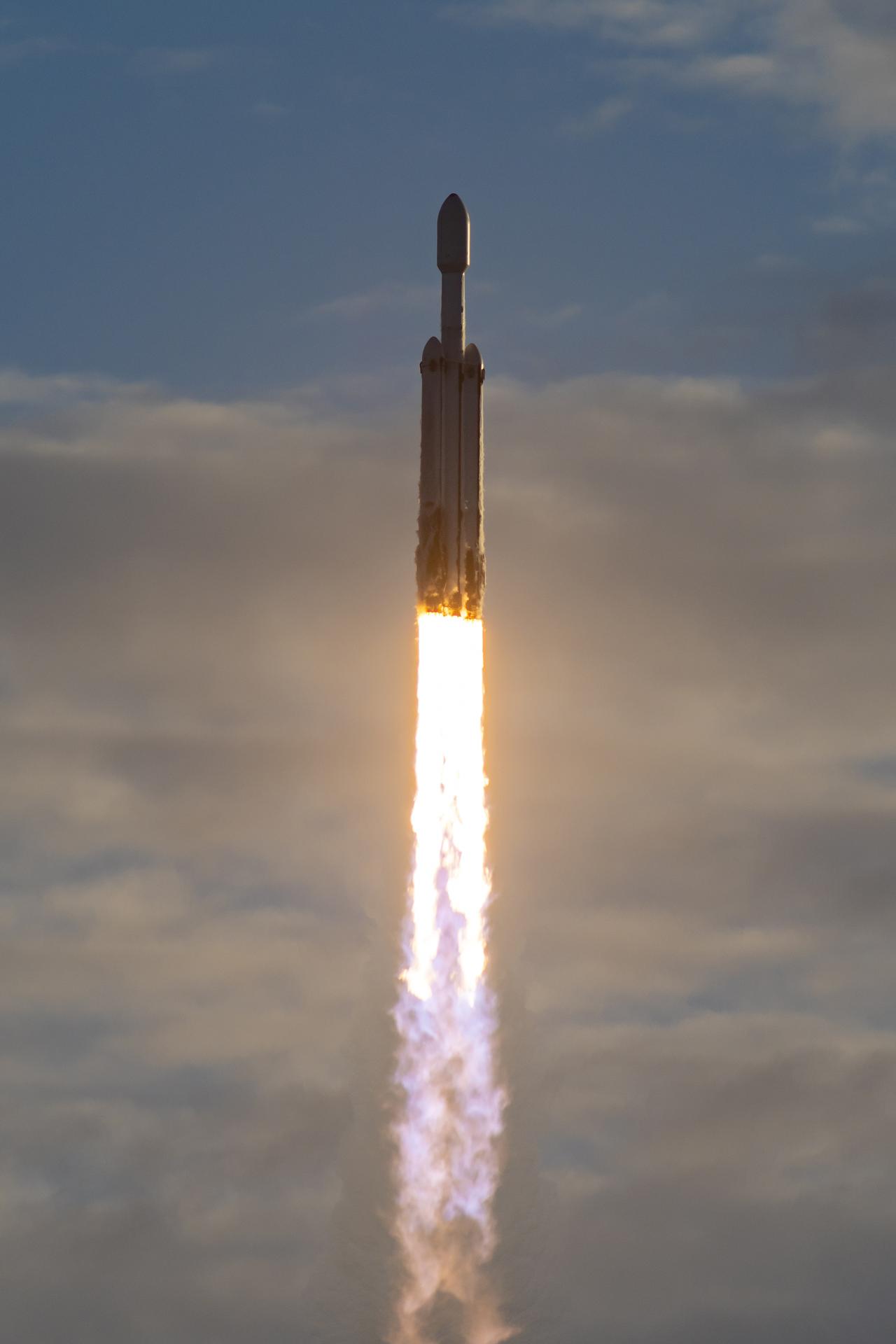
NASA’s Nancy Grace Roman Space Telescope rises to space atop a SpaceX Falcon Heavy rocket from Launch Complex 39A at the agency’s Kennedy Space Center in Florida on Sunday, Aug. 30, 2026. The milestone begins the observatory’s journey to explore the large‑scale structure of the universe. Roman will investigate dark energy and dark matter, conduct a statistical census of planetary systems, and enable a broad range of additional astrophysics research. Liftoff occurred at 7:26 a.m. EDT, from Kennedy’s Launch Complex 39A.
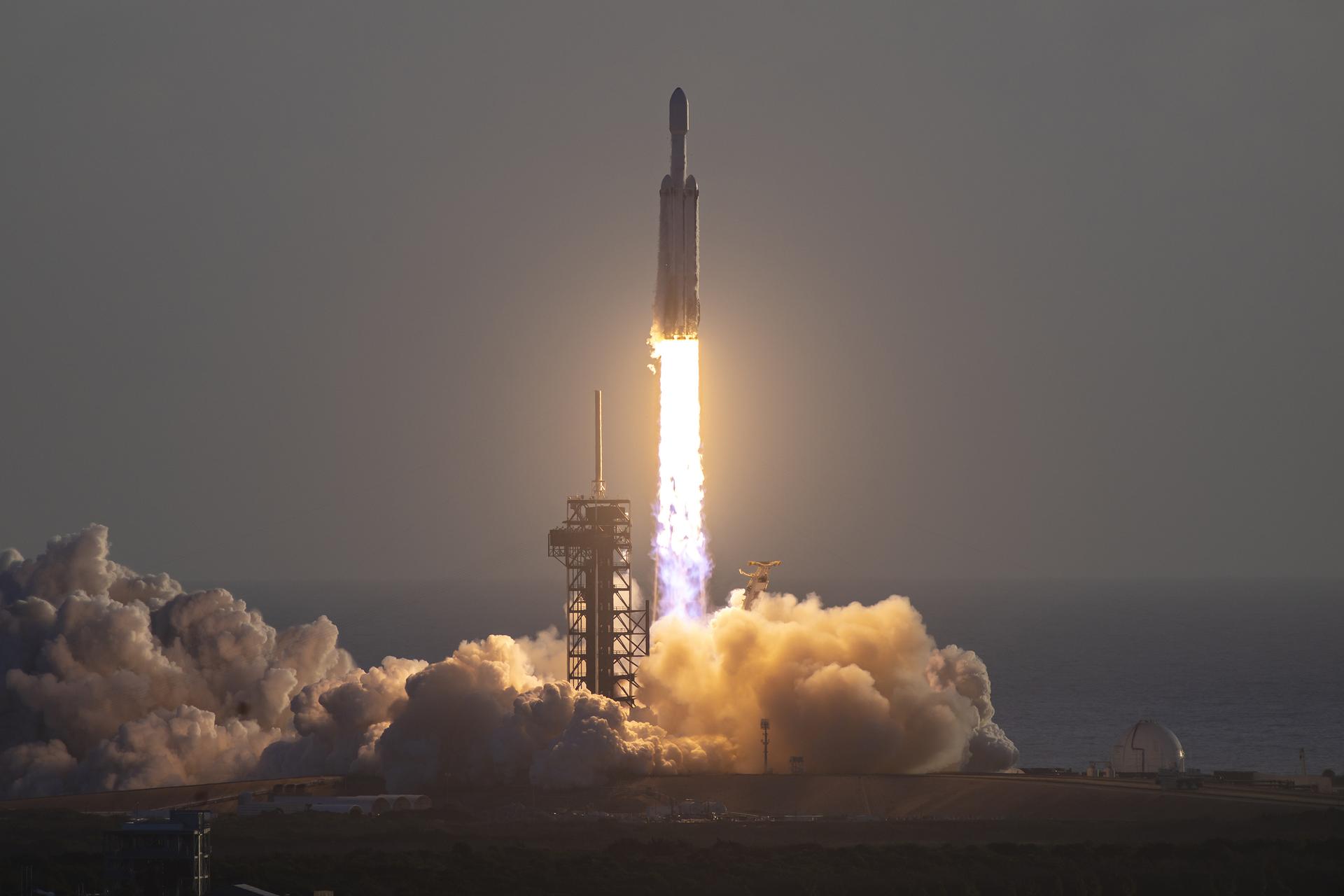
NASA’s Nancy Grace Roman Space Telescope rises to space atop a SpaceX Falcon Heavy rocket from Launch Complex 39A at the agency’s Kennedy Space Center in Florida on Sunday, Aug. 30, 2026. The milestone begins the observatory’s journey to explore the large‑scale structure of the universe. Roman will investigate dark energy and dark matter, conduct a statistical census of planetary systems, and enable a broad range of additional astrophysics research. Liftoff occurred at 7:26 a.m. EDT, from Kennedy’s Launch Complex 39A.
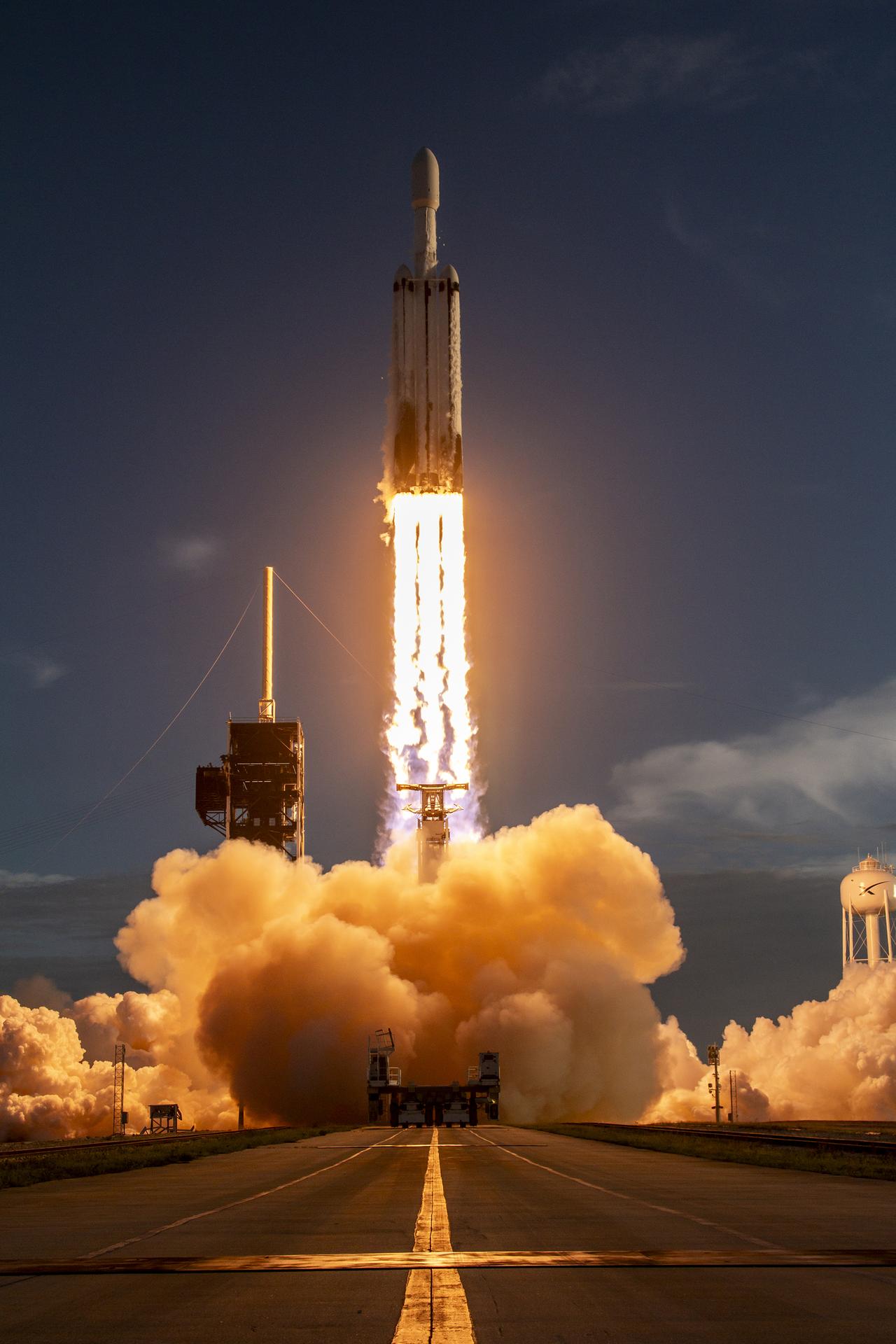
NASA’s Nancy Grace Roman Space Telescope rises to space atop a SpaceX Falcon Heavy rocket from Launch Complex 39A at the agency’s Kennedy Space Center in Florida on Sunday, Aug. 30, 2026. The milestone begins the observatory’s journey to explore the large‑scale structure of the universe. Roman will investigate dark energy and dark matter, conduct a statistical census of planetary systems, and enable a broad range of additional astrophysics research. Liftoff occurred at 7:26 a.m. EDT, from Kennedy’s Launch Complex 39A.
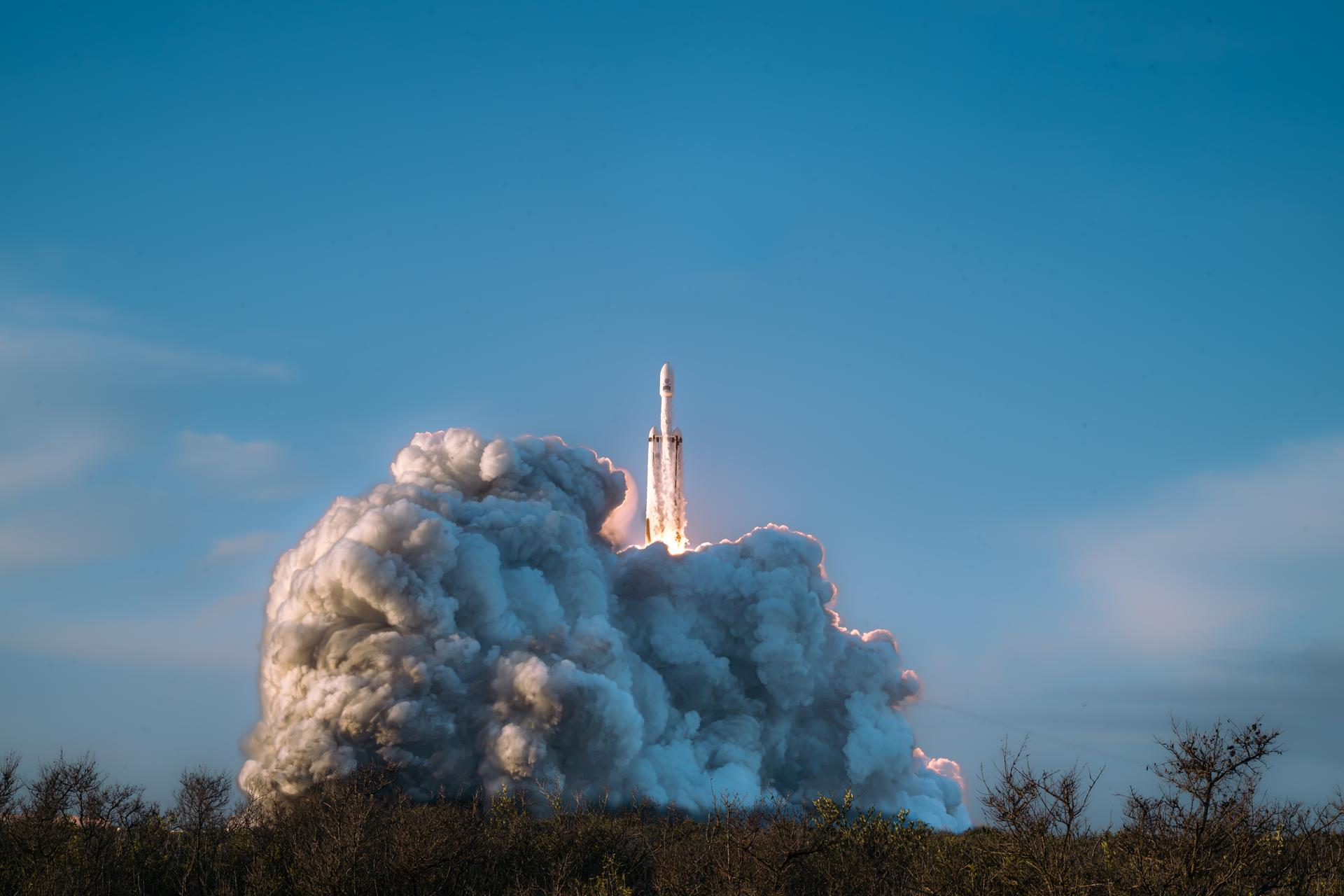
NASA’s Nancy Grace Roman Space Telescope rises to space atop a SpaceX Falcon Heavy rocket from Launch Complex 39A at the agency’s Kennedy Space Center in Florida on Sunday, Aug. 30, 2026. The milestone begins the observatory’s journey to explore the large‑scale structure of the universe. Roman will investigate dark energy and dark matter, conduct a statistical census of planetary systems, and enable a broad range of additional astrophysics research. Liftoff occurred at 7:26 a.m. EDT, from Kennedy’s Launch Complex 39A.
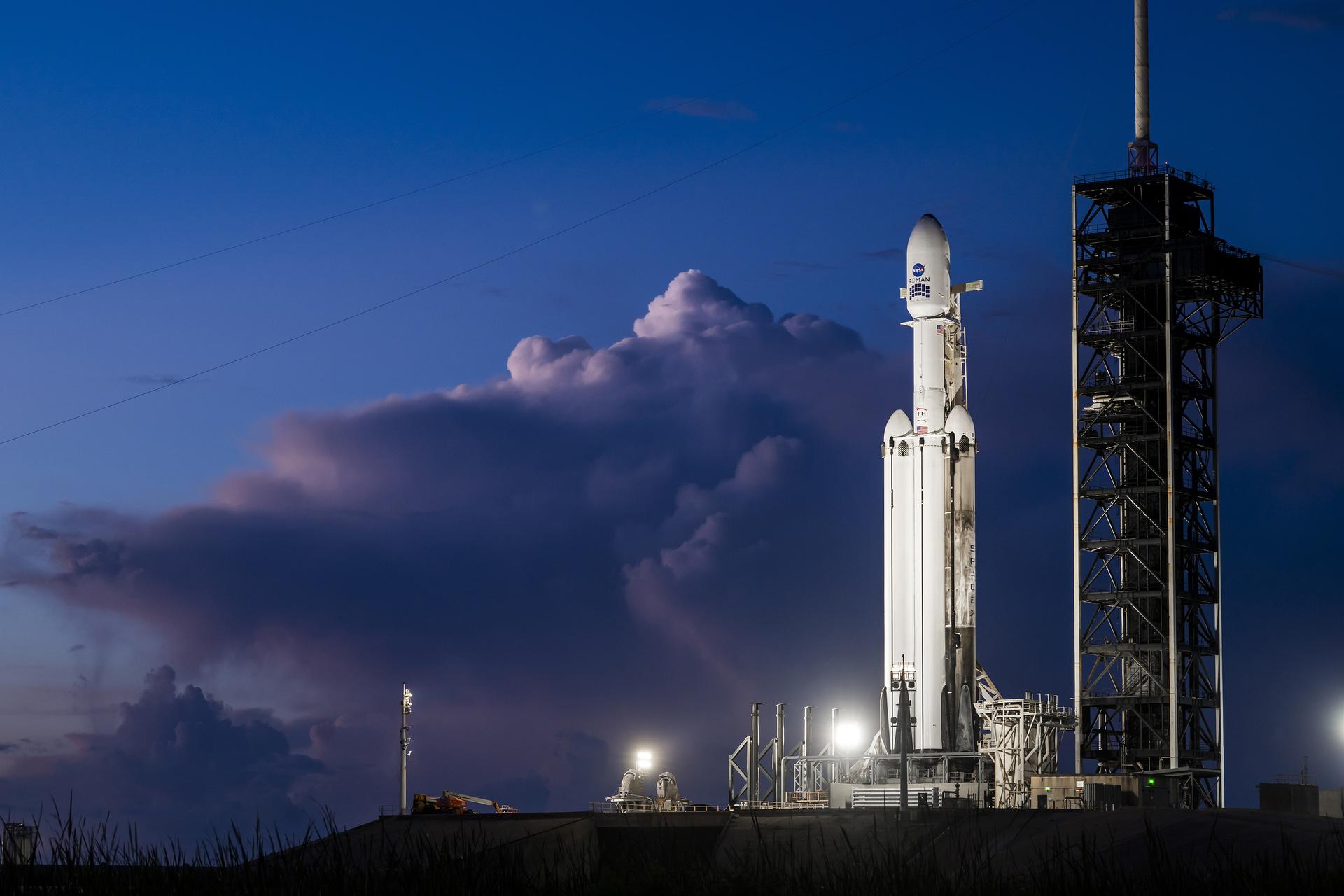
NASA’s Nancy Grace Roman Space Telescope, encapsulated in the SpaceX Falcon Heavy rocket’s fairing, stands vertical on the pad at Launch Complex 39A at NASA’s Kennedy Space Center on Saturday, Aug. 29, 2026. Roman will investigate dark energy and dark matter, conduct a statistical census of planetary systems, and enable a broad range of additional astrophysics research. Liftoff from NASA Kennedy is targeted for 7:26 a.m. EDT Sunday, Aug. 30, 2026.
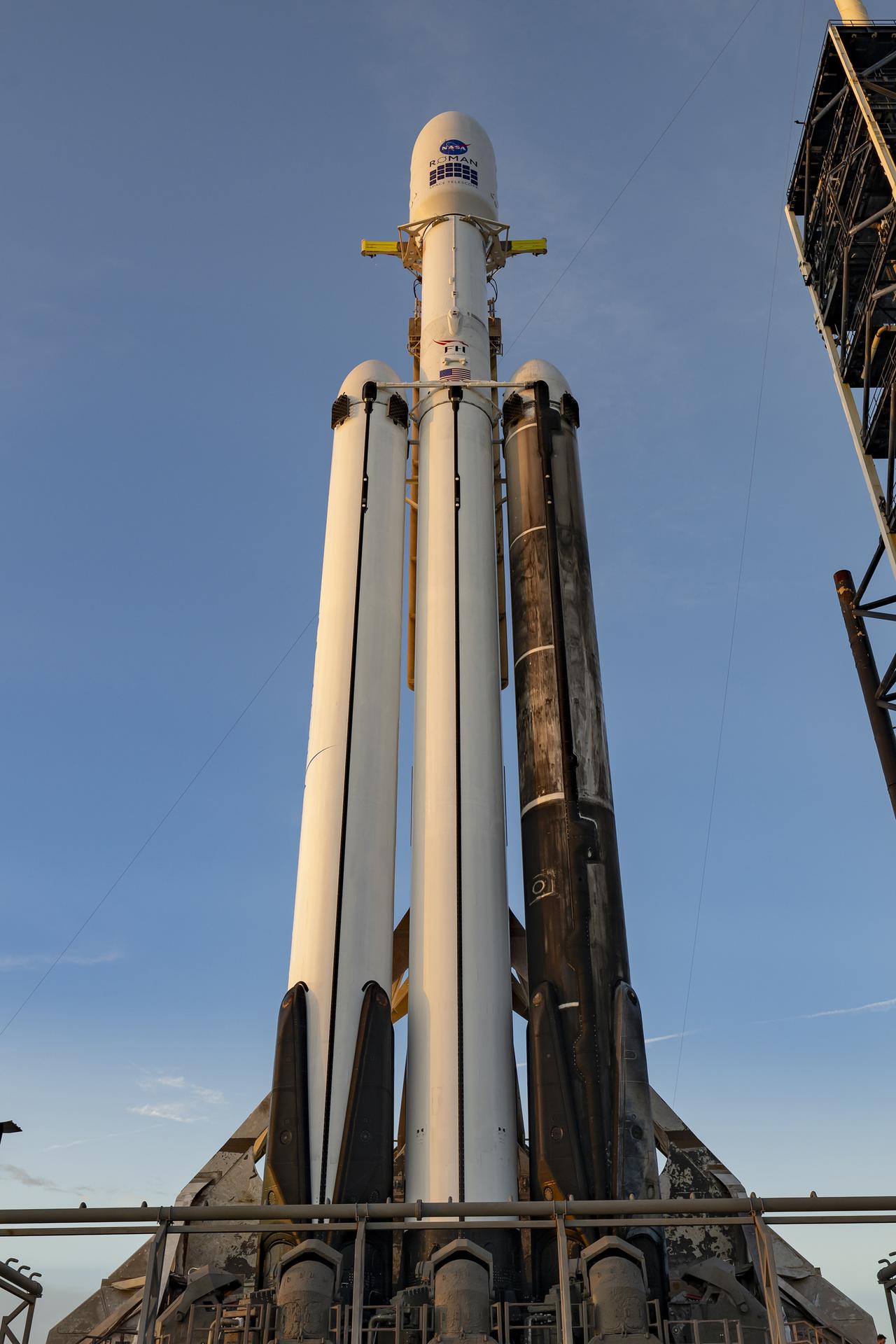
NASA’s Nancy Grace Roman Space Telescope, encapsulated in the SpaceX Falcon Heavy rocket’s fairing, stands vertical on the pad at Launch Complex 39A at NASA’s Kennedy Space Center on Saturday, Aug. 29, 2026. Roman will investigate dark energy and dark matter, conduct a statistical census of planetary systems, and enable a broad range of additional astrophysics research. Liftoff from NASA Kennedy is targeted for 7:26 a.m. EDT Sunday, Aug. 30, 2026.
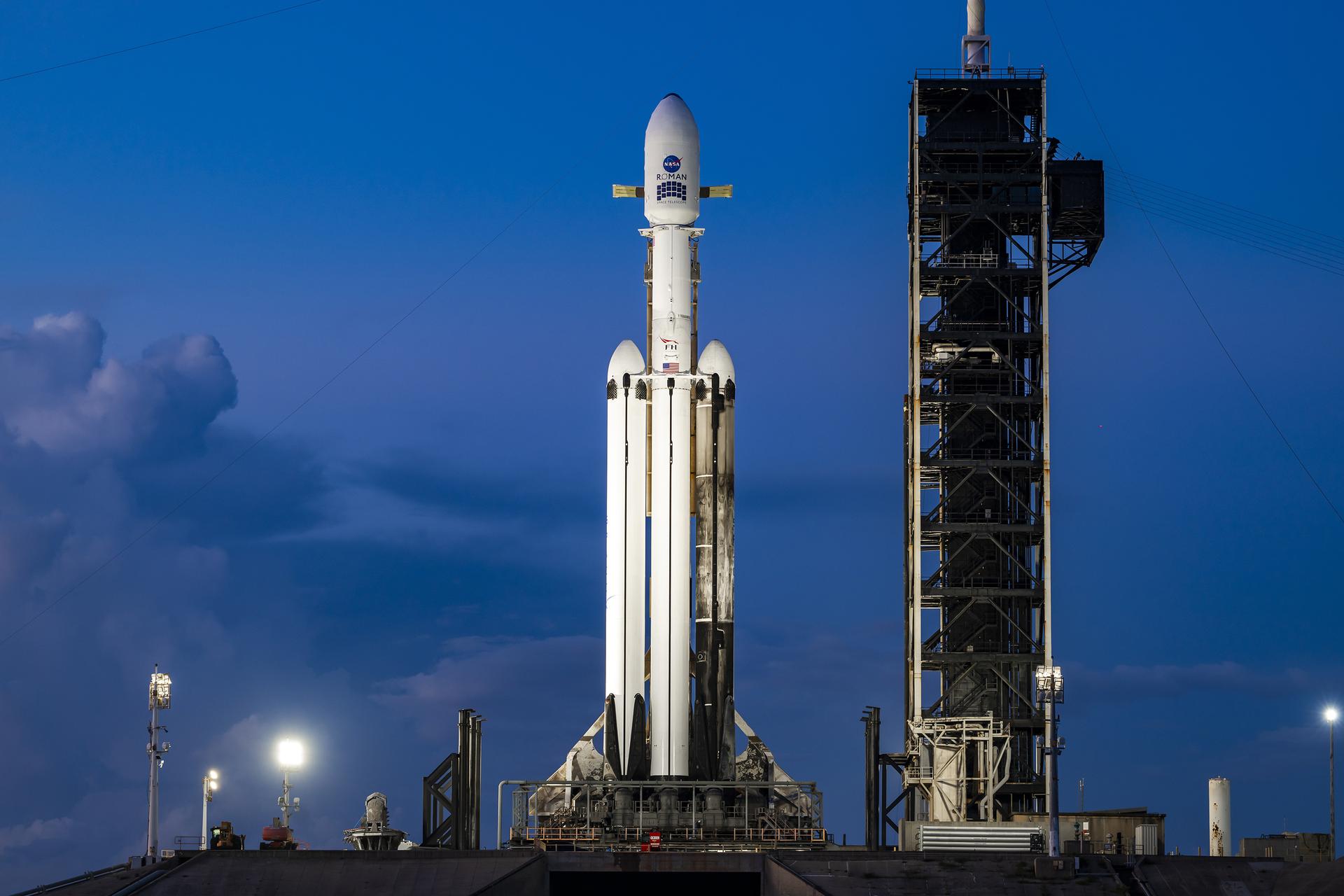
NASA’s Nancy Grace Roman Space Telescope, encapsulated in the SpaceX Falcon Heavy rocket’s fairing, stands vertical on the pad at Launch Complex 39A at NASA’s Kennedy Space Center on Saturday, Aug. 29, 2026. Roman will investigate dark energy and dark matter, conduct a statistical census of planetary systems, and enable a broad range of additional astrophysics research. Liftoff from NASA Kennedy is targeted for 7:26 a.m. EDT Sunday, Aug. 30, 2026.
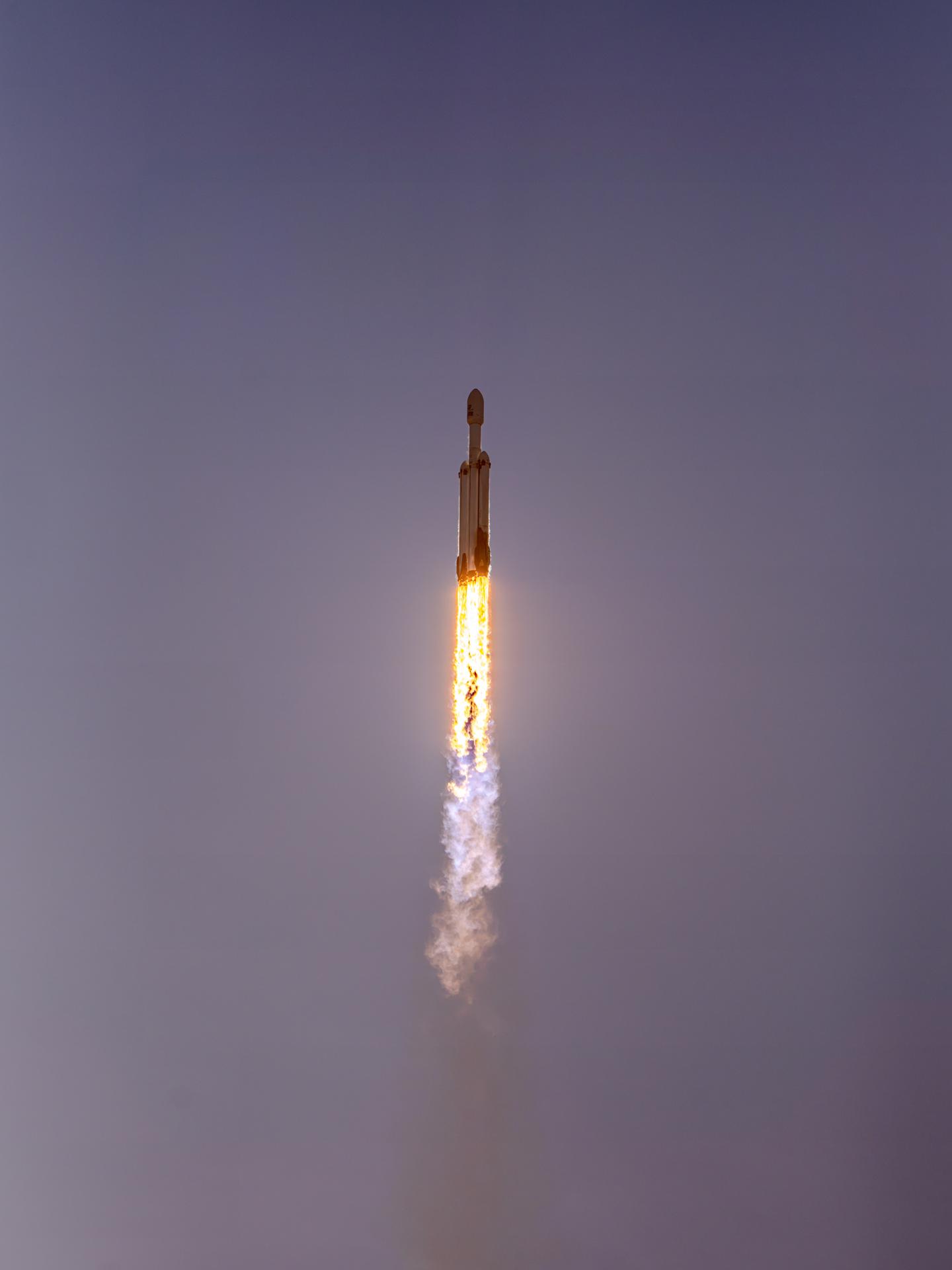
NASA’s Nancy Grace Roman Space Telescope rises to space atop a SpaceX Falcon Heavy rocket from Launch Complex 39A at the agency’s Kennedy Space Center in Florida on Sunday, Aug. 30, 2026. The milestone begins the observatory’s journey to explore the large‑scale structure of the universe. Roman will investigate dark energy and dark matter, conduct a statistical census of planetary systems, and enable a broad range of additional astrophysics research. Liftoff occurred at 7:26 a.m. EDT, from Kennedy’s Launch Complex 39A.
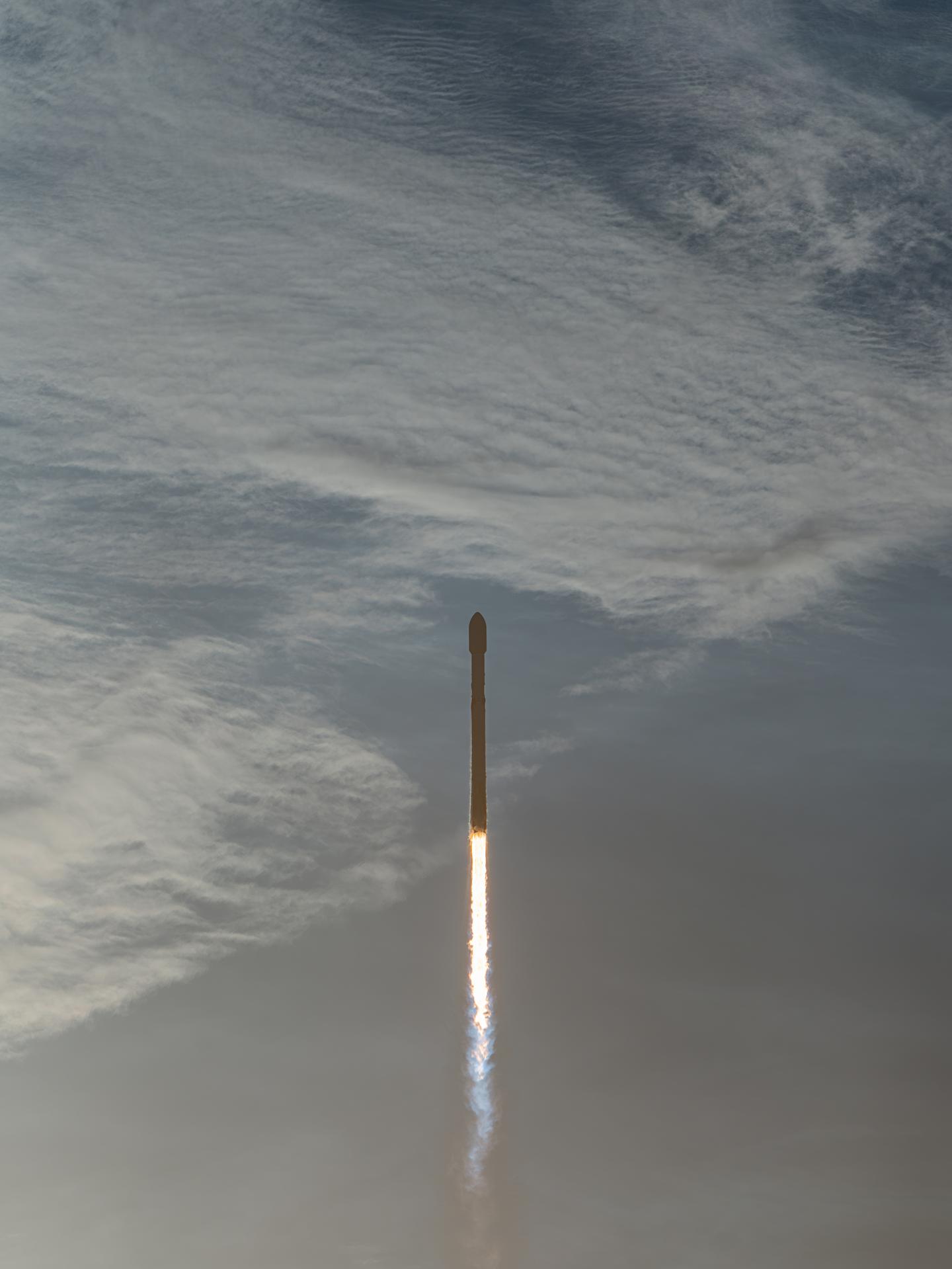
NASA’s Nancy Grace Roman Space Telescope rises to space atop a SpaceX Falcon Heavy rocket from Launch Complex 39A at the agency’s Kennedy Space Center in Florida on Sunday, Aug. 30, 2026. The milestone begins the observatory’s journey to explore the large‑scale structure of the universe. Roman will investigate dark energy and dark matter, conduct a statistical census of planetary systems, and enable a broad range of additional astrophysics research. Liftoff occurred at 7:26 a.m. EDT, from Kennedy’s Launch Complex 39A.
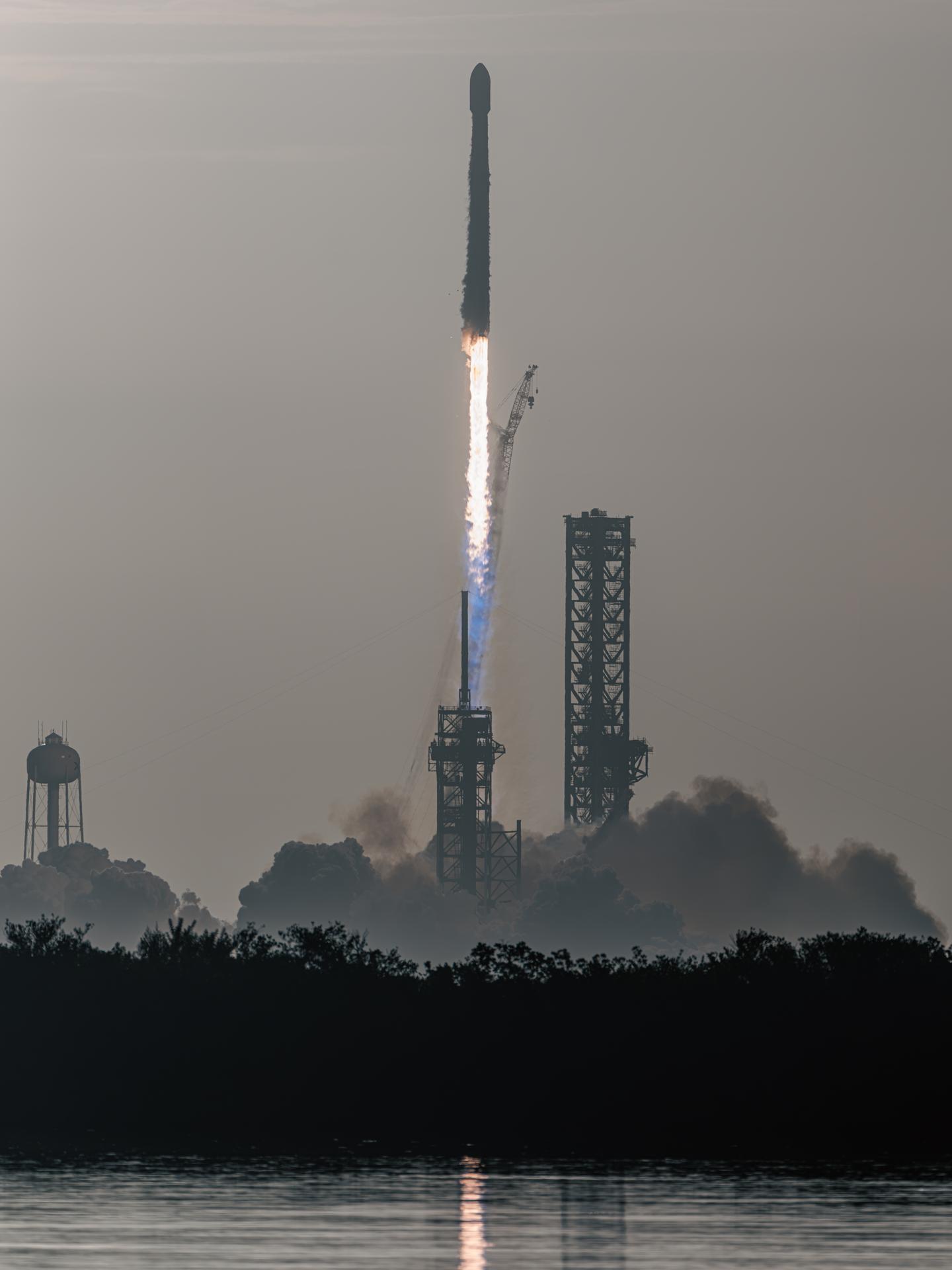
NASA’s Nancy Grace Roman Space Telescope rises to space atop a SpaceX Falcon Heavy rocket from Launch Complex 39A at the agency’s Kennedy Space Center in Florida on Sunday, Aug. 30, 2026. The milestone begins the observatory’s journey to explore the large‑scale structure of the universe. Roman will investigate dark energy and dark matter, conduct a statistical census of planetary systems, and enable a broad range of additional astrophysics research. Liftoff occurred at 7:26 a.m. EDT, from Kennedy’s Launch Complex 39A.
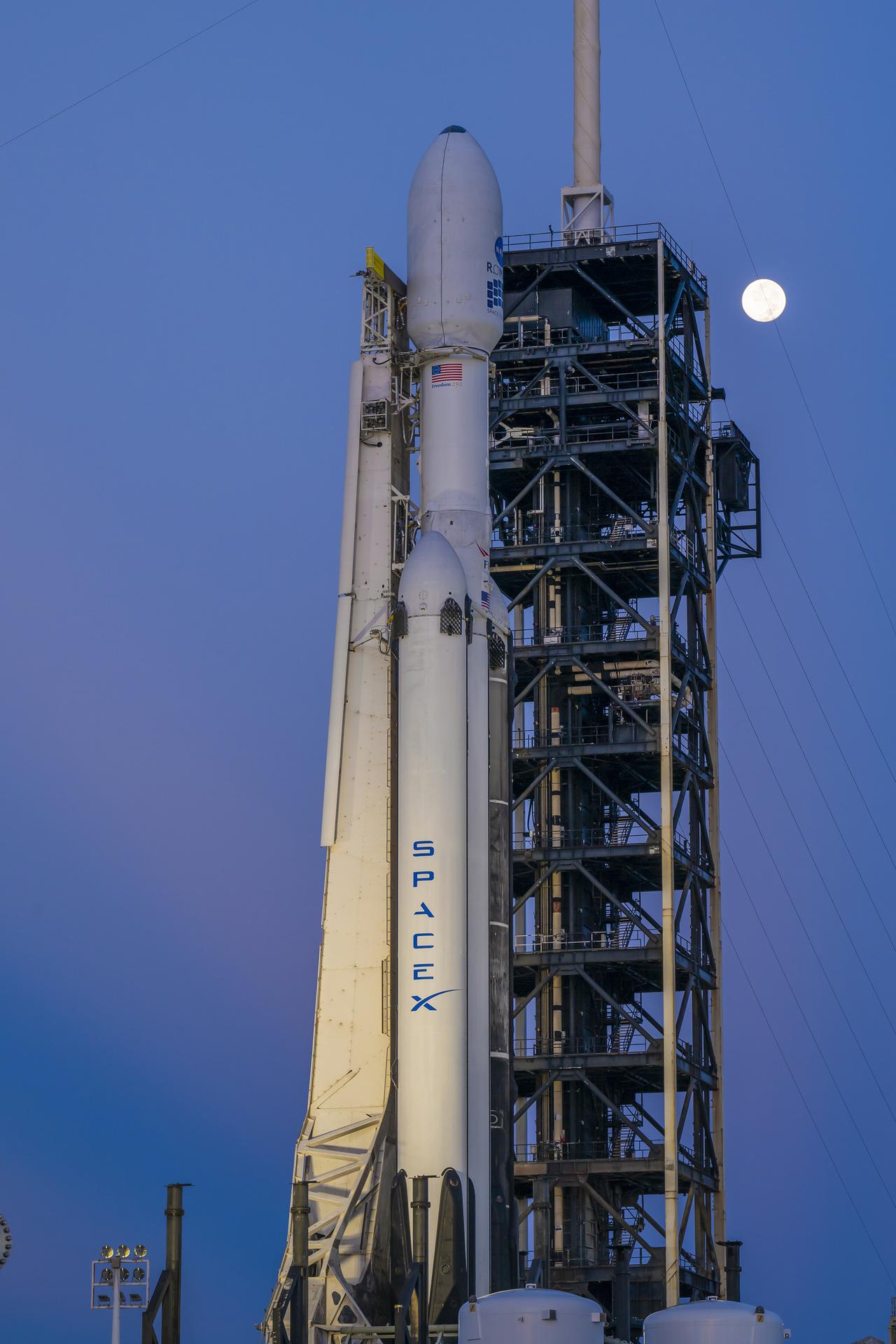
NASA’s Nancy Grace Roman Space Telescope, encapsulated in the SpaceX Falcon Heavy rocket’s fairing, stands vertical on the pad at Launch Complex 39A at NASA’s Kennedy Space Center on Saturday, Aug. 29, 2026. Roman will investigate dark energy and dark matter, conduct a statistical census of planetary systems, and enable a broad range of additional astrophysics research. Liftoff from NASA Kennedy is targeted for 7:26 a.m. EDT Sunday, Aug. 30, 2026.
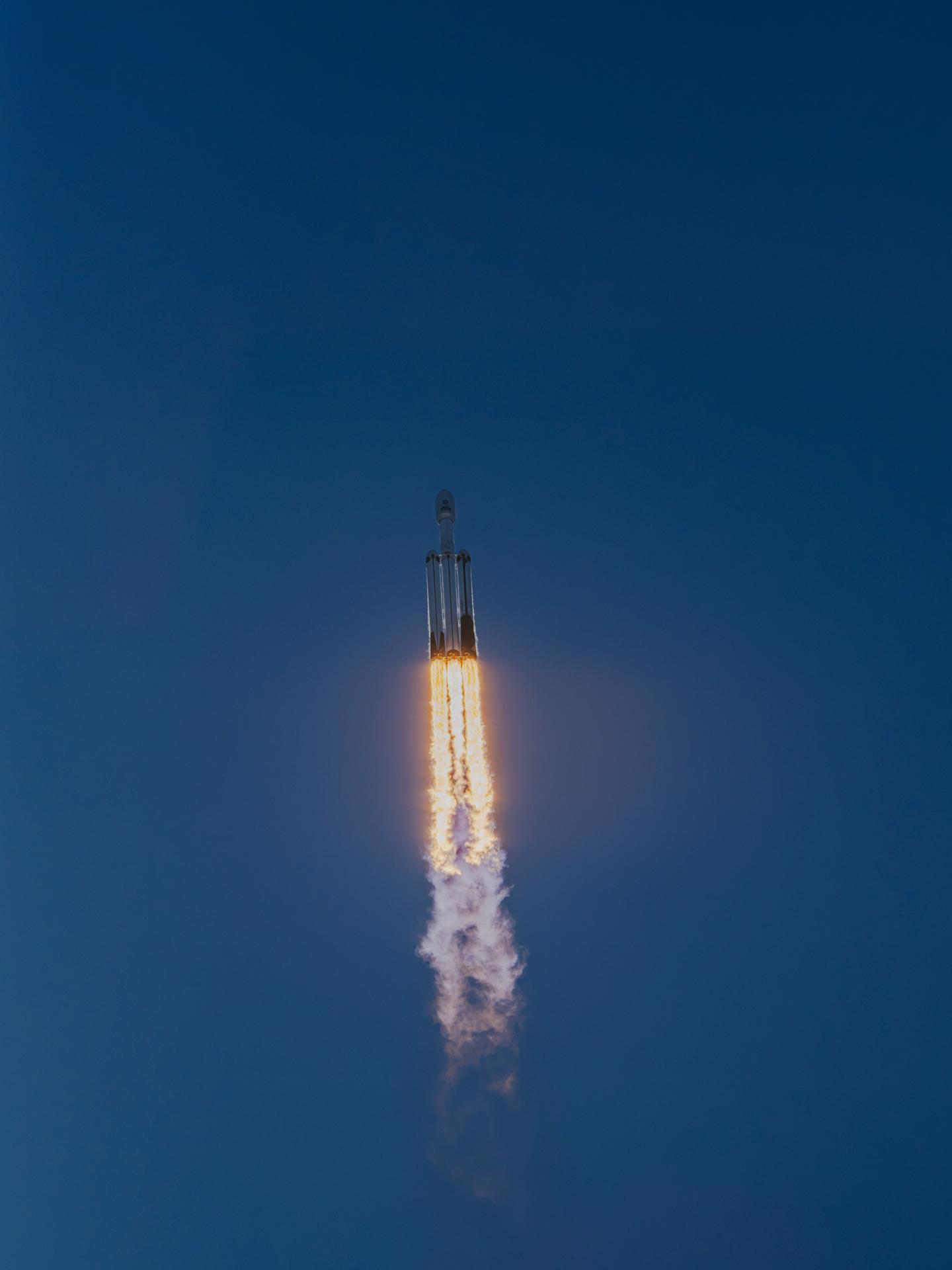
NASA’s Nancy Grace Roman Space Telescope rises to space atop a SpaceX Falcon Heavy rocket from Launch Complex 39A at the agency’s Kennedy Space Center in Florida on Sunday, Aug. 30, 2026. The milestone begins the observatory’s journey to explore the large‑scale structure of the universe. Roman will investigate dark energy and dark matter, conduct a statistical census of planetary systems, and enable a broad range of additional astrophysics research. Liftoff occurred at 7:26 a.m. EDT, from Kennedy’s Launch Complex 39A.
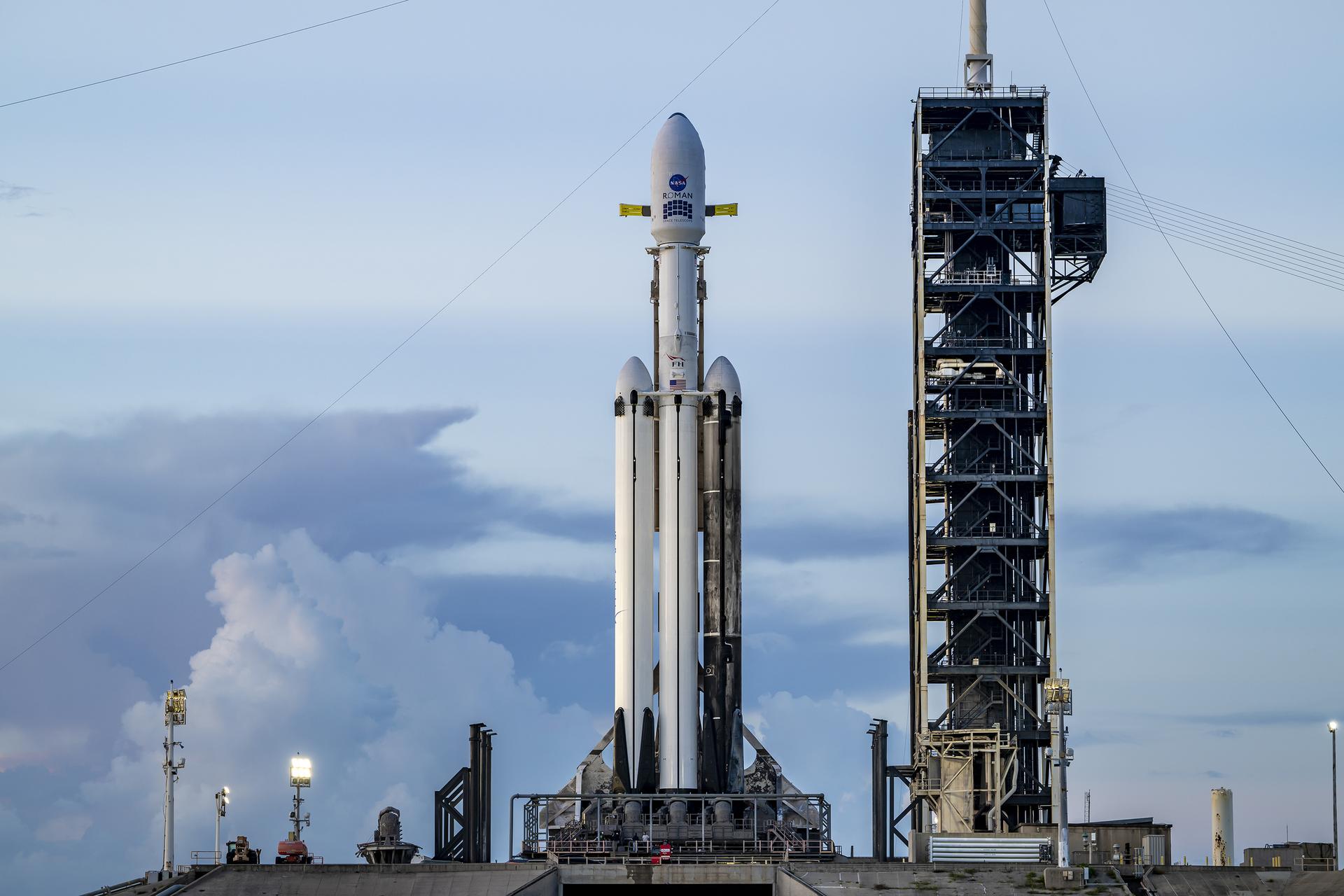
NASA’s Nancy Grace Roman Space Telescope, encapsulated in the SpaceX Falcon Heavy rocket’s fairing, stands vertical on the pad at Launch Complex 39A at NASA’s Kennedy Space Center on Saturday, Aug. 29, 2026. Roman will investigate dark energy and dark matter, conduct a statistical census of planetary systems, and enable a broad range of additional astrophysics research. Liftoff from NASA Kennedy is targeted for 7:26 a.m. EDT Sunday, Aug. 30, 2026.

NASA Astrophysics Division director Paul Hertz is seen during a media briefing where he and other astrophysics experts are discussing the upcoming launch of NASA’s next planet hunter, the Transiting Exoplanet Survey Satellite (TESS), Wednesday, March 28, 2018 at NASA Headquarters in Washington. Photo Credit: (NASA/Bill Ingalls)
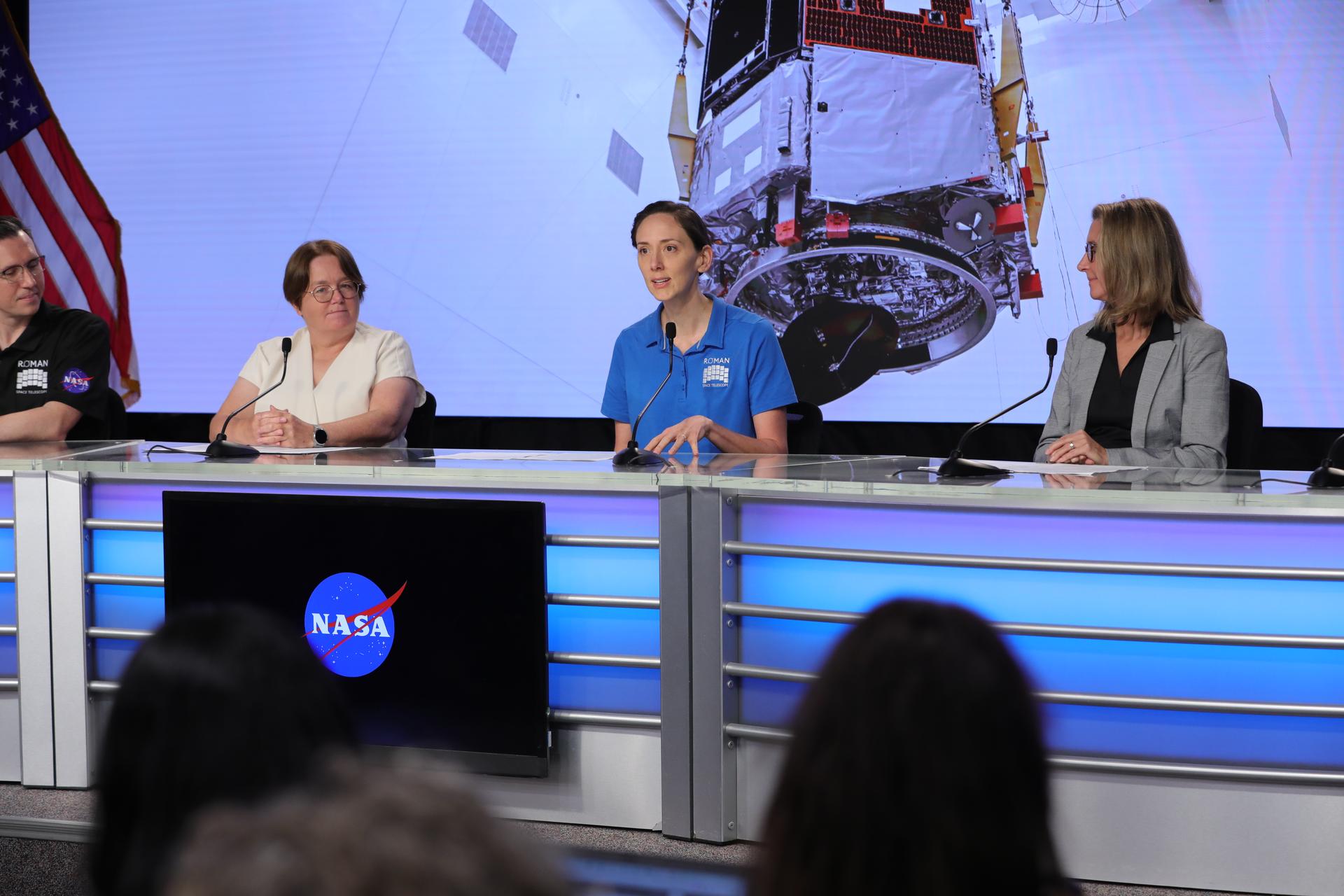
From left, Shawn Domagal-Goldman, director, Astrophysics Division, NASA Headquarters in Washington; Julie McEnery, Roman telescope senior project scientist, NASA’s Goddard Space Flight Center in Greenbelt, Maryland; Vanessa Bailey, Roman Coronagraph Instrument scientist, NASA’s Jet Propulsion Laboratory in Southern California; and Kristen McQuinn, Roman Science Operations Center lead, Space Telescope Science Institute, participate in a science briefing for NASA’s Nancy Grace Roman Space Telescope inside the NASA News Center’s John Holliman Auditorium at Kennedy Space Center in Florida, on Saturday, Aug. 29, 2026. Roman will investigate dark energy and dark matter, conduct a statistical census of planetary systems, and enable a broad range of additional astrophysics research. Liftoff from Launch Complex 39A at Kennedy is targeted for no earlier than Sunday, Aug. 30, 2026.
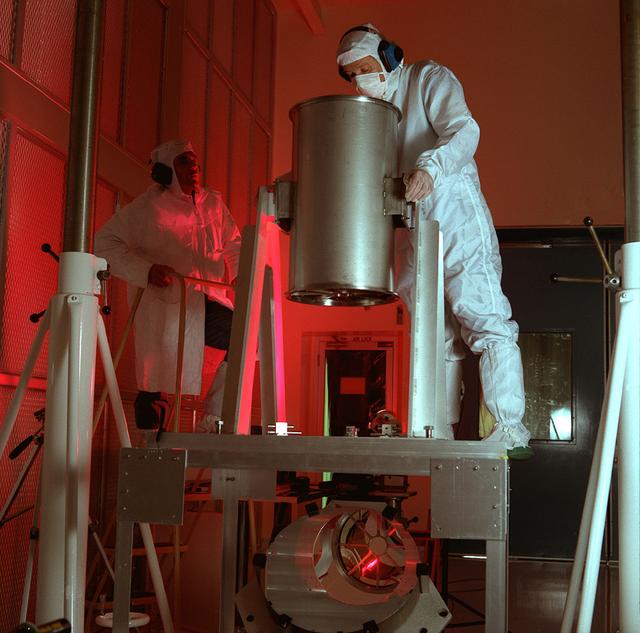
Advanced X-Ray Astrophysics Facility-S (AXAF-S) nickel prototype mirror optical test setup.
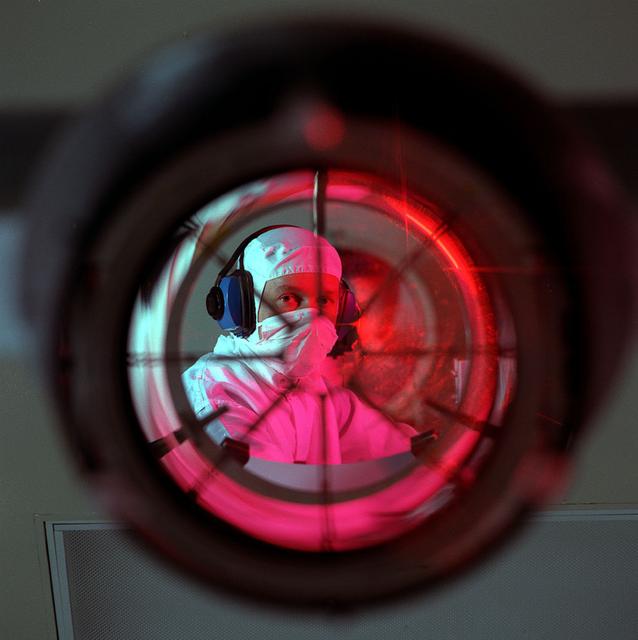
Advanced X-Ray Astrophysics Facility-S (AXAF-S) nickel prototype mirror optical test setup.
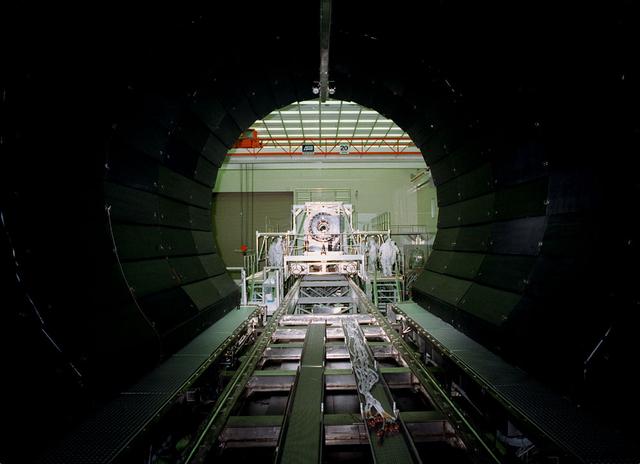
This is a photograph of the Chandra X-Ray Observatory (CXO), formerly Advanced X-Ray Astrophysics Facility (AXAF), High Resolution Mirror Assembly (HRMA) integration at the X-Ray Calibration Facility (XRCF) at the Marshall Space Flight Center (MSFC). The AXAF was renamed CXO in 1999. The CXO is the most sophisticated and the world's most powerful x-ray telescope ever built. It observes x-rays from high-energy regions of the universe, such as hot gas in the remnants of exploded stars. The HRMA, the heart of the telescope system, is contained in the cylindrical "telescope" portion of the observatory. Since high-energy x-rays would penetrate a normal mirror, special cylindrical mirrors were created. The two sets of four nested mirrors resemble tubes within tubes. Incoming x-rays graze off the highly polished mirror surface and are furneled to the instrument section for detection and study. MSFC's XRCF is the world's largest, most advanced laboratory for simulating x-ray emissions from distant celestial objects. It produces a space-like environment in which components related to x-ray telescope imaging are tested and the quality of their performances in space is predicted. TRW, Inc. was the prime contractor for the development of the CXO and NASA's MSCF was responsible for its project management. The Smithsonian Astrophysical Observatory controls science and flight operations of the CXO for NASA from Cambridge, Massachusetts. The CXO was launched July 22, 1999 aboard the Space Shuttle Columbia (STS-93).
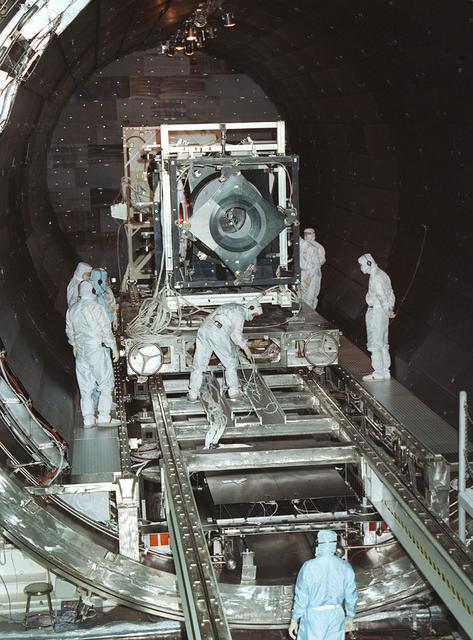
This is a photograph of the Chandra X-Ray Observatory (CXO), formerly Advanced X-Ray Astrophysics Facility (AXAF), High Resolution Mirror Assembly (HRMA) integration at the X-Ray Calibration Facility (XRCF) at the Marshall Space Flight Center (MSFC). The AXAF was renamed CXO in 1999. The CXO is the most sophisticated and the world's most powerful x-ray telescope ever built. It observes x-rays from high-energy regions of the universe, such as hot gas in the remnants of exploded stars. The HRMA, the heart of the telescope system, is contained in the cylindrical "telescope" portion of the observatory. Since high-energy x-rays would penetrate a normal mirror, special cylindrical mirrors were created. The two sets of four nested mirrors resemble tubes within tubes. Incoming x-rays graze off the highly polished mirror surface and are furneled to the instrument section for detection and study. MSFC's XRCF is the world's largest, most advanced laboratory for simulating x-ray emissions from distant celestial objects. It produces a space-like environment in which components related to x-ray telescope imaging are tested and the quality of their performances in space is predicted. TRW, Inc. was the prime contractor for the development of the CXO and NASA's MSFC was responsible for its project management. The Smithsonian Astrophysical Observatory controls science and flight operations of the CXO for NASA from Cambridge, Massachusetts. The CXO was launched July 22, 1999 aboard the Space Shuttle Columbia (STS-93).
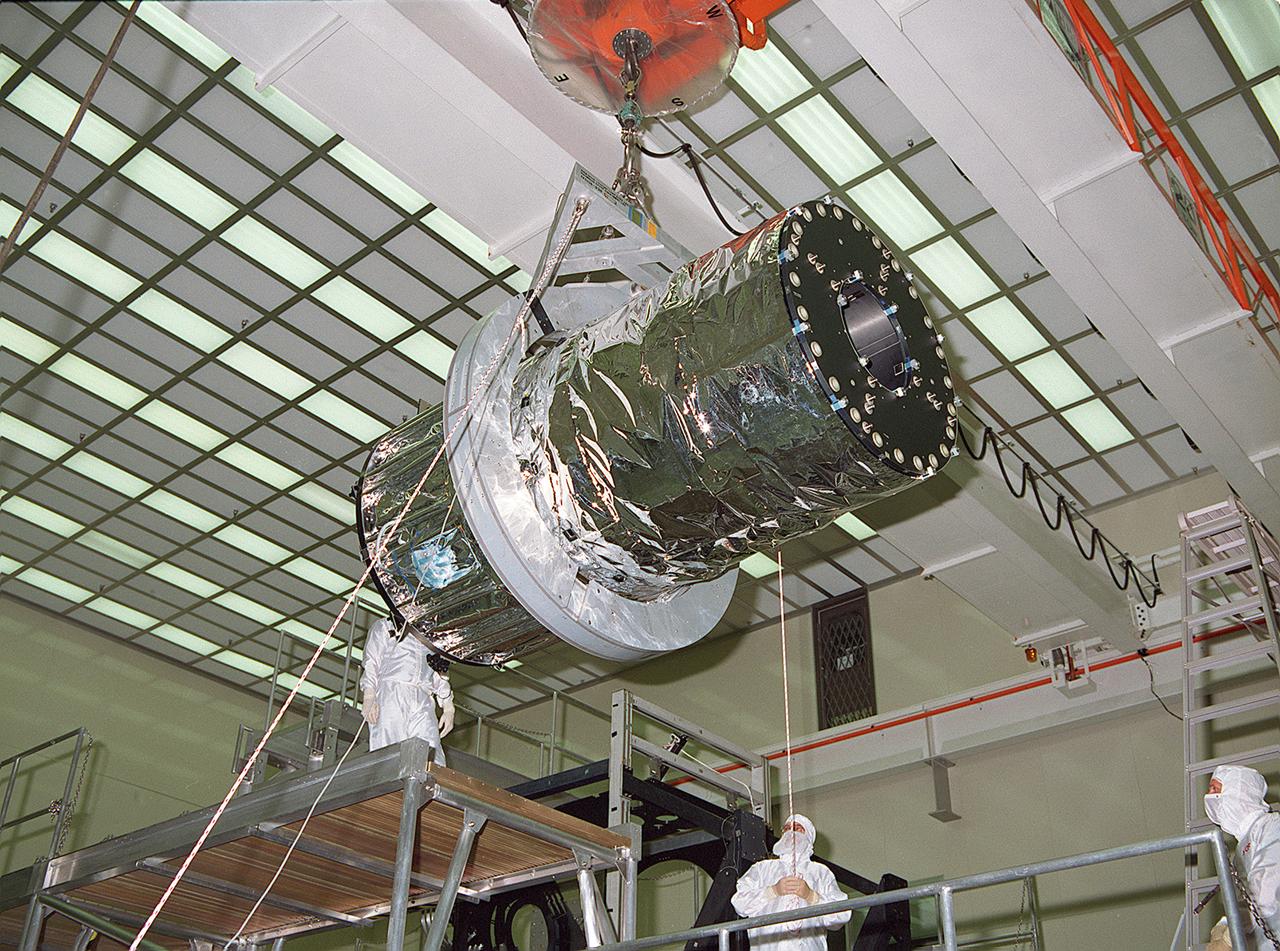
This photograph shows the Chandra X-ray Observatory (CXO), formerly Advanced X-Ray Astrophysics Facility (AXAF), High Resolution Mirror Assembly (HRMA) being removed from the test structure in the X-Ray Calibration Facility (XRCF) at the Marshall Space Flight Center (MSFC). The AXAF was renamed CXO in 1999. The CXO is the most sophisticated and the world's most powerful x-ray telescope ever built. It observes x-rays from high-energy regions of the universe, such as hot gas in the remnants of exploded stars. The HRMA, the heart of the telescope system, is contained in the cylindrical "telescope" portion of the observatory. Since high-energy x-rays would penetrate a normal mirror, special cylindrical mirrors were created. The two sets of four nested mirrors resemble tubes within tubes. Incoming x-rays graze off the highly polished mirror surface and are furneled to the instrument section for detection and study. MSFC's XRCF is the world's largest, most advanced laboratory for simulating x-ray emissions from distant celestial objects. It produces a space-like environment in which components related to x-ray telescope imaging are tested and the quality of their performances in space is predicted. TRW, Inc. was the prime contractor for the development of the CXO and NASA's MSFC was responsible for its project management. The Smithsonian Astrophysical Observatory controls science and flight operations of the CXO for NASA from Cambridge, Massachusetts. The CXO was launched July 22, 1999 aboard the Space Shuttle Columbia (STS-93).
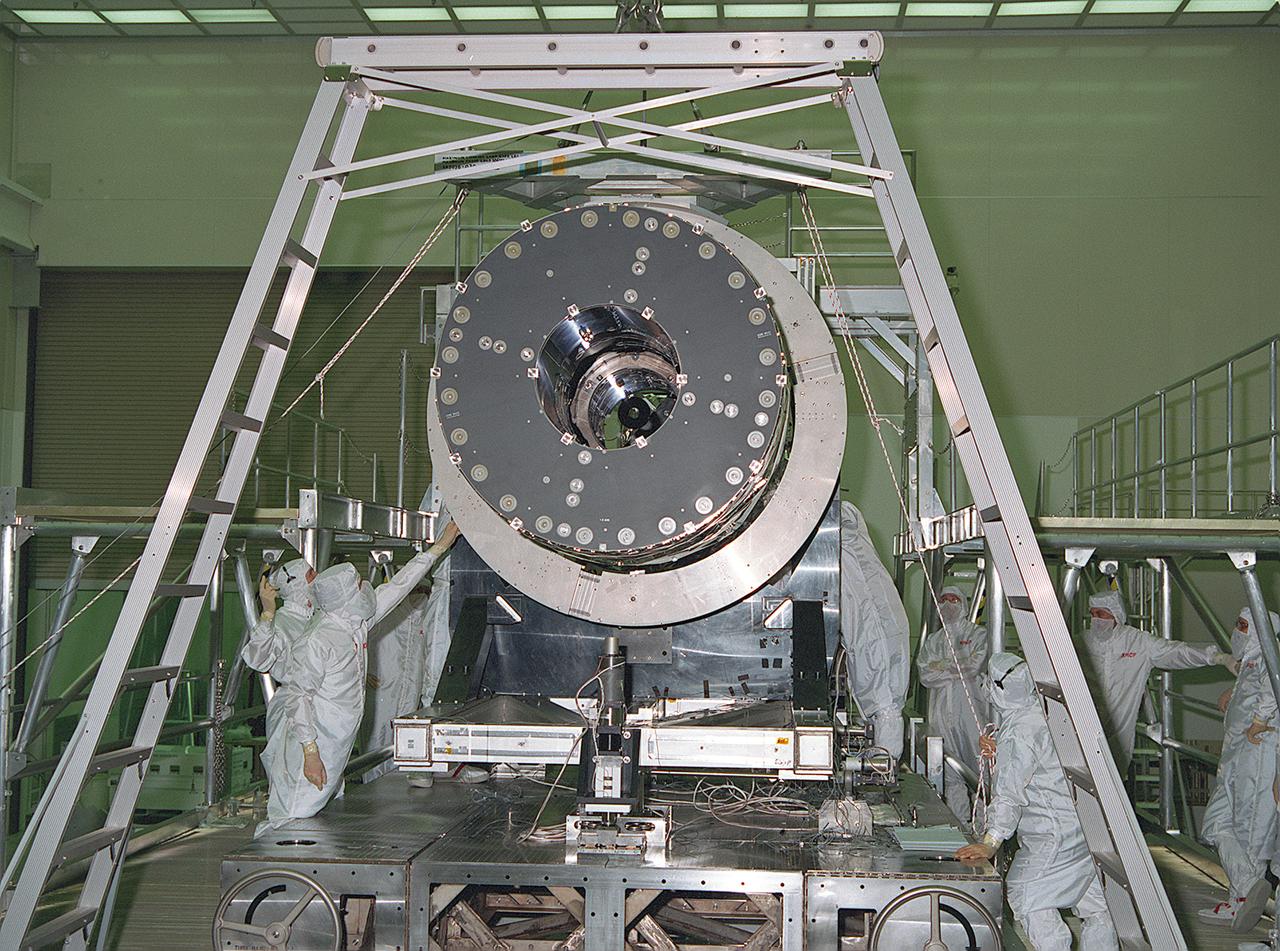
This photograph shows the Chandra X-Ray Observatory (CXO), formerly Advanced X-Ray Astrophysics Facility (AXAF), High Resolution Mirror Assembly (HRMA) being removed from the test structure in the X-Ray Calibration Facility (XRCF) at the Marshall Space Flight Center (MSFC). The AXAF was renamed CXO in 1999. The CXO is the most sophisticated and the world's most powerful x-ray telescope ever built. It observes x-rays from high-energy regions of the universe, such as hot gas in the remnants of exploded stars. The HRMA, the heart of the telescope system, is contained in the cylindrical "telescope" portion of the observatory. Since high-energy x-rays would penetrate a normal mirror, special cylindrical mirrors were created. The two sets of four nested mirrors resemble tubes within tubes. Incoming x-rays graze off the highly polished mirror surface and are furneled to the instrument section for detection and study. MSFC's XRCF is the world's largest, most advanced laboratory for simulating x-ray emissions from distant celestial objects. It produces a space-like environment in which components related to x-ray telescope imaging are tested and the quality of their performances in space is predicted. TRW, Inc. was the prime contractor for the development of the CXO and NASA's MSFC was responsible for its project management. The Smithsonian Astrophysical Observatory controls science and flight operations of the CXO for NASA from Cambridge, Massachusetts. The CXO was launched July 22, 1999 aboard the Space Shuttle Columbia (STS-93).
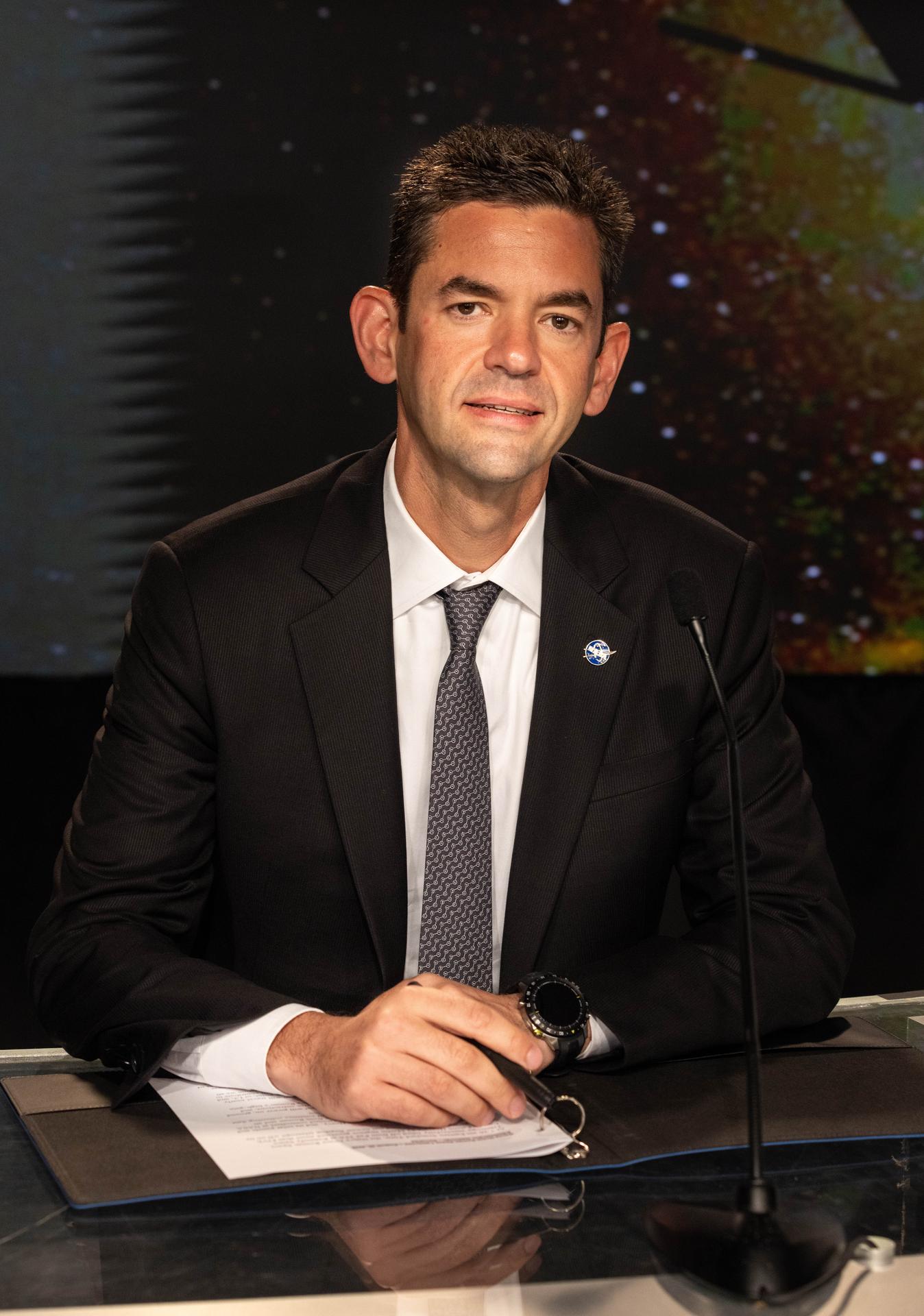
NASA Administrator Jared Isaacman participates in a postlaunch news conference for the agency’s Nancy Grace Roman Space Telescope inside the NASA News Center’s John Holliman Auditorium at Kennedy Space Center in Florida, on Sunday, Aug. 30, 2026. Roman will investigate dark energy and dark matter, conduct a statistical census of planetary systems, and enable a broad range of additional astrophysics research. Liftoff of Roman atop a SpaceX Falcon Heavy rocket occurred at 7:26 a.m. EDT Sunday, Aug. 30, from Kennedy’s Launch Complex 39A.
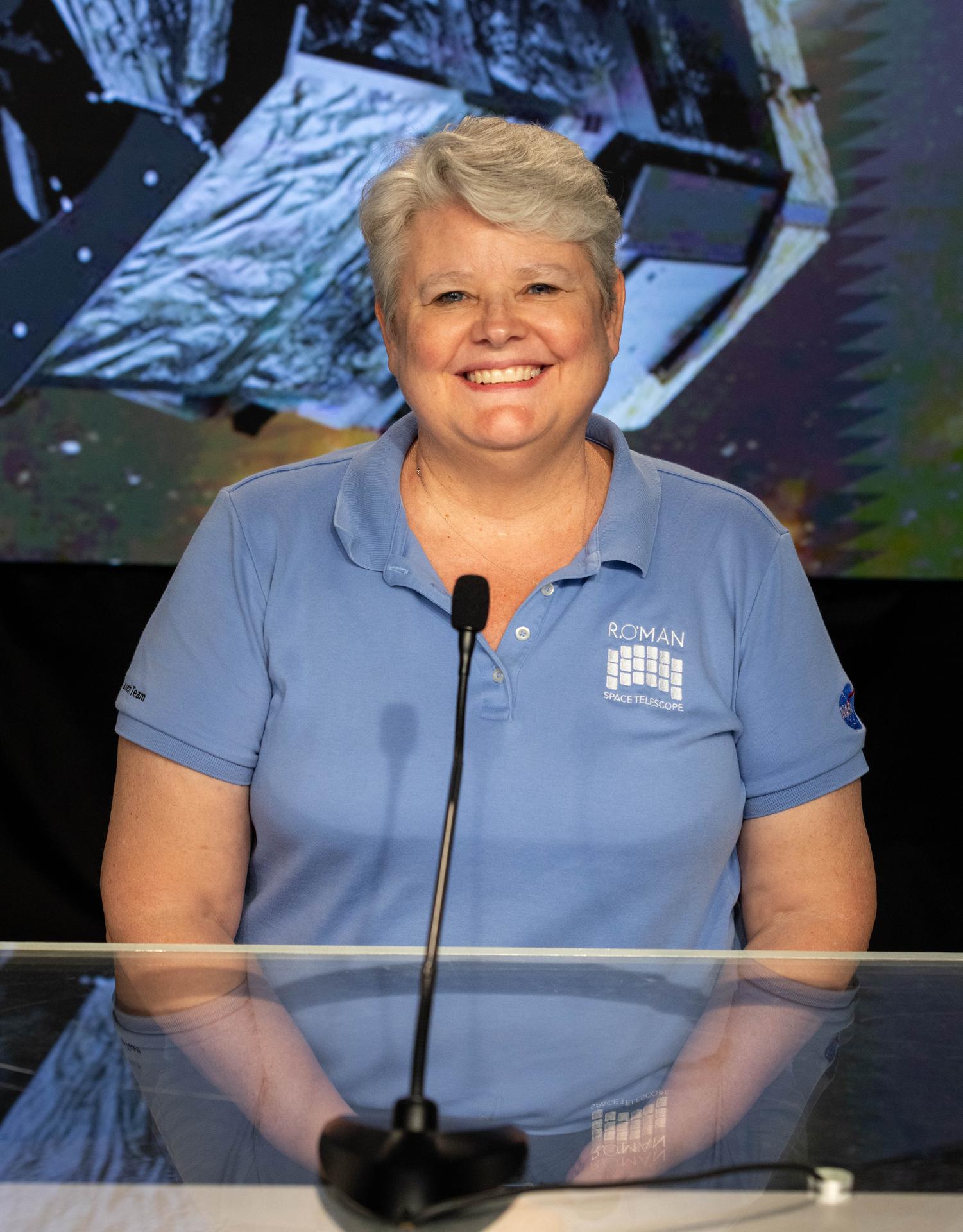
Jackie Townsend, Roman telescope project manager, NASA’s Goddard Space Flight Center in Greenbelt, Maryland, participates in a postlaunch news conference for the agency’s Nancy Grace Roman Space Telescope inside the NASA News Center’s John Holliman Auditorium at Kennedy Space Center in Florida, on Sunday, Aug. 30, 2026. Roman will investigate dark energy and dark matter, conduct a statistical census of planetary systems, and enable a broad range of additional astrophysics research. Liftoff of Roman atop a SpaceX Falcon Heavy rocket occurred at 7:26 a.m. EDT Sunday, Aug. 30, from Kennedy’s Launch Complex 39A
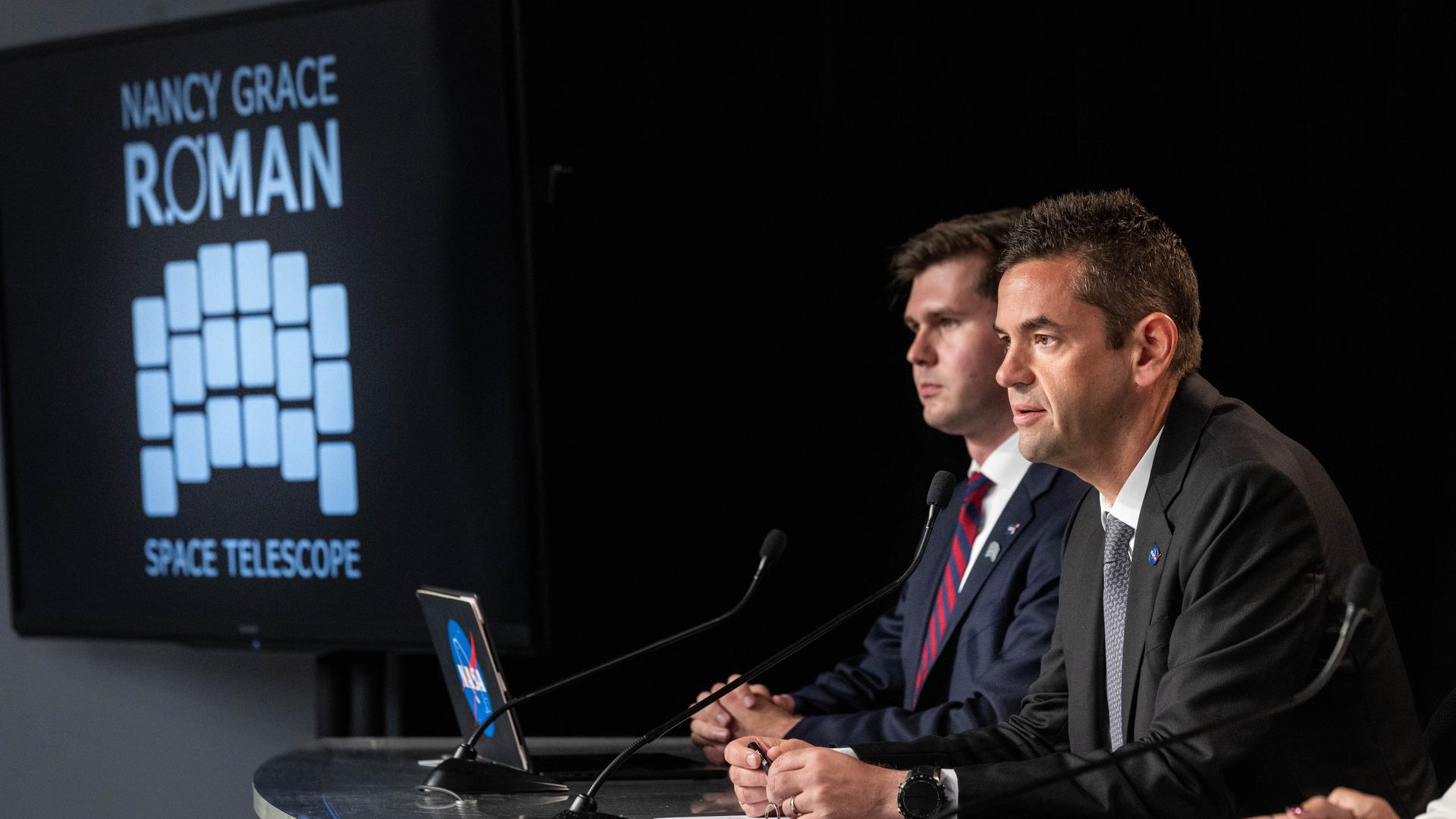
From left, George Alderman, NASA Deputy Press Secretary, and NASA Administrator Jared Isaacman participate in a postlaunch news conference for NASA’s Nancy Grace Roman Space Telescope inside the NASA News Center’s John Holliman Auditorium at Kennedy Space Center in Florida, on Sunday, Aug. 30, 2026. Roman will investigate dark energy and dark matter, conduct a statistical census of planetary systems, and enable a broad range of additional astrophysics research. Liftoff of Roman atop a SpaceX Falcon Heavy rocket occurred at 7:26 a.m. EDT Sunday, Aug. 30, from Kennedy’s Launch Complex 39A.
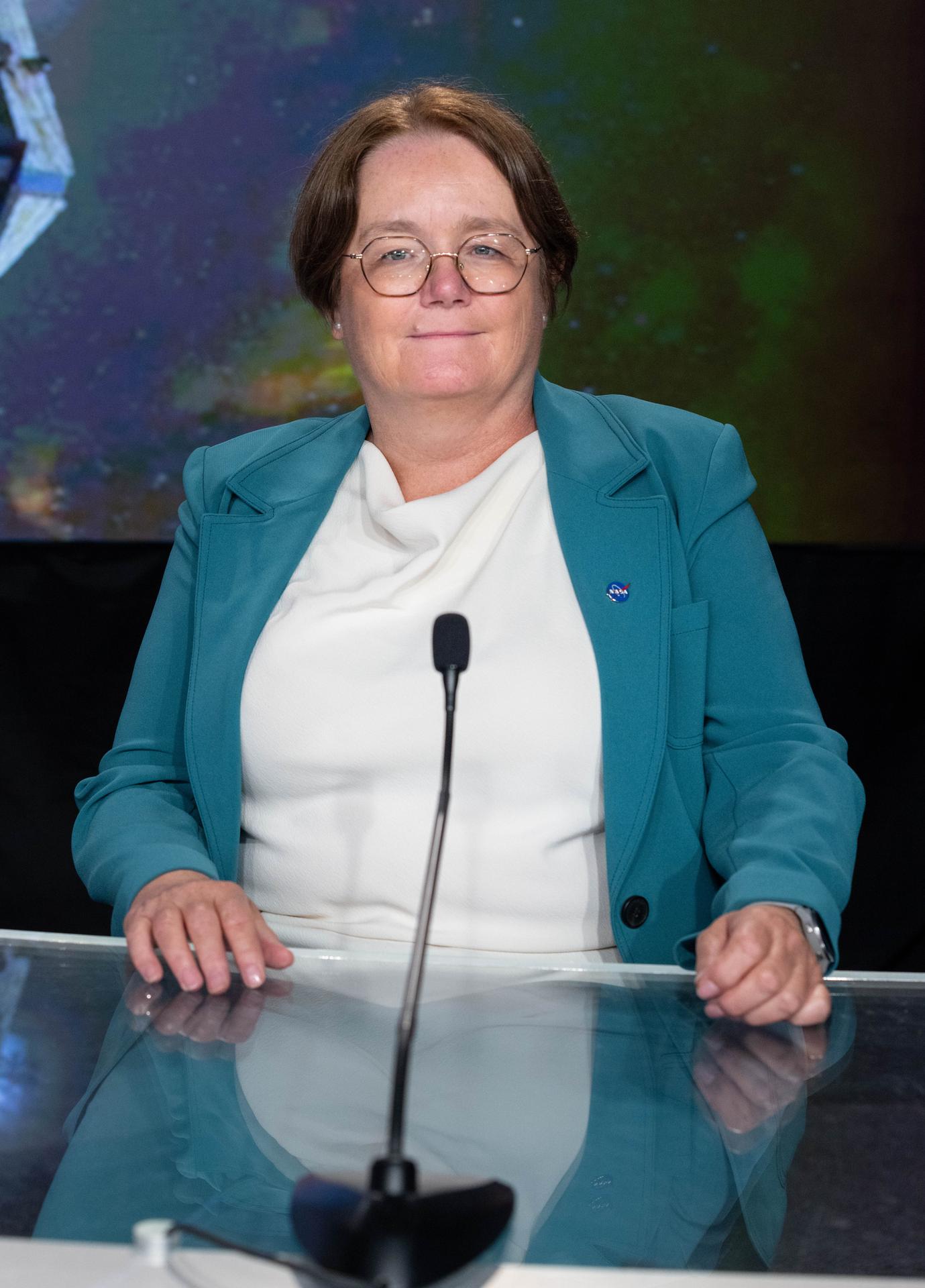
Julie McEnery, Roman telescope senior project scientist, NASA’s Goddard Space Flight Center in Greenbelt, Maryland, participates in a postlaunch news conference for the agency’s Nancy Grace Roman Space Telescope inside the NASA News Center’s John Holliman Auditorium at Kennedy Space Center in Florida, on Sunday, Aug. 30, 2026. Roman will investigate dark energy and dark matter, conduct a statistical census of planetary systems, and enable a broad range of additional astrophysics research. Liftoff of Roman atop a SpaceX Falcon Heavy rocket occurred at 7:26 a.m. EDT Sunday, Aug. 30, from Kennedy’s Launch Complex 39A.
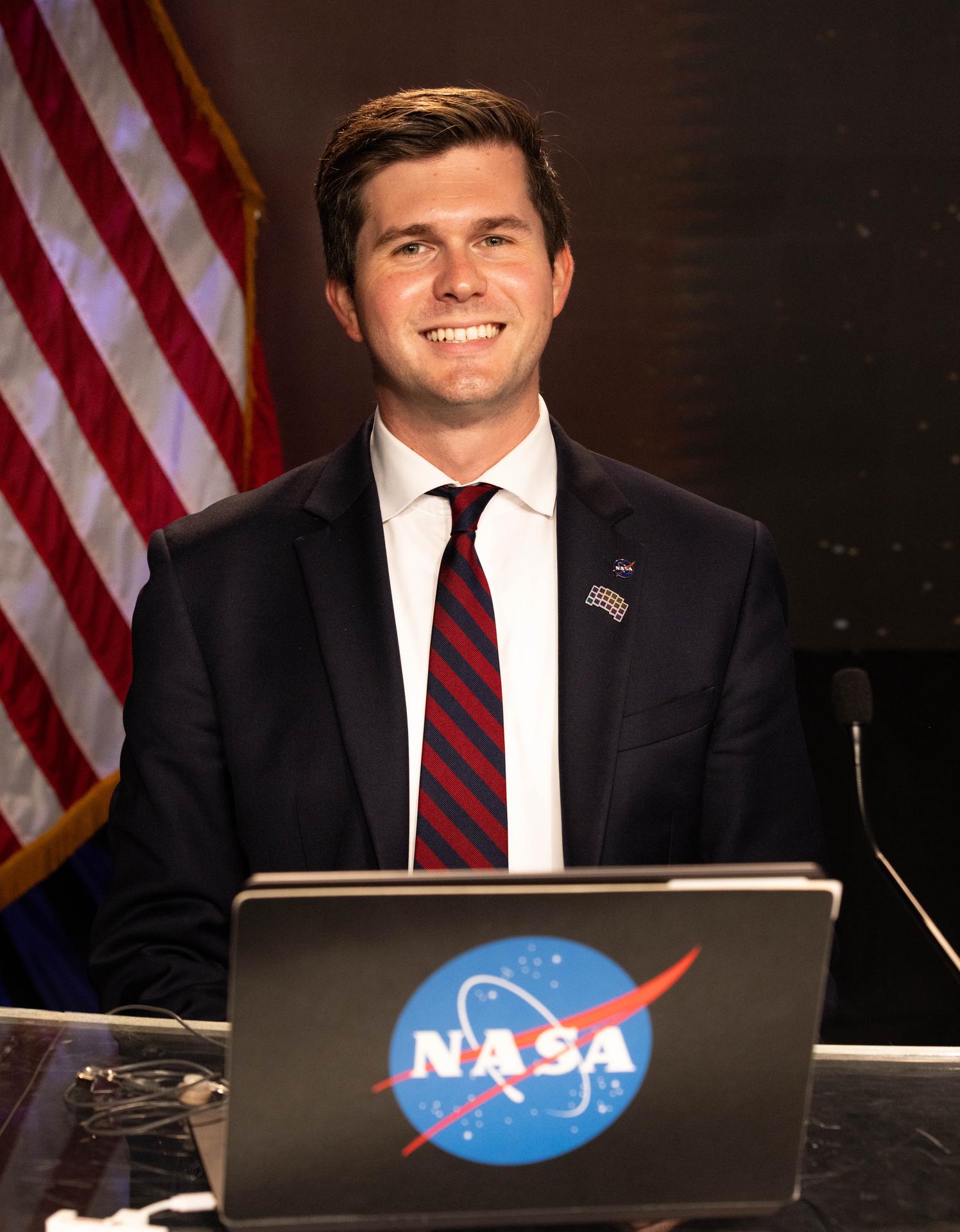
NASA Deputy Press Secretary George Alderman participates in a postlaunch news conference for the agency’s Nancy Grace Roman Space Telescope inside the NASA News Center’s John Holliman Auditorium at Kennedy Space Center in Florida, on Sunday, Aug. 30, 2026. Roman will investigate dark energy and dark matter, conduct a statistical census of planetary systems, and enable a broad range of additional astrophysics research. Liftoff of Roman atop a SpaceX Falcon Heavy rocket occurred at 7:26 a.m. EDT Sunday, Aug. 30, from Kennedy’s Launch Complex 39A.
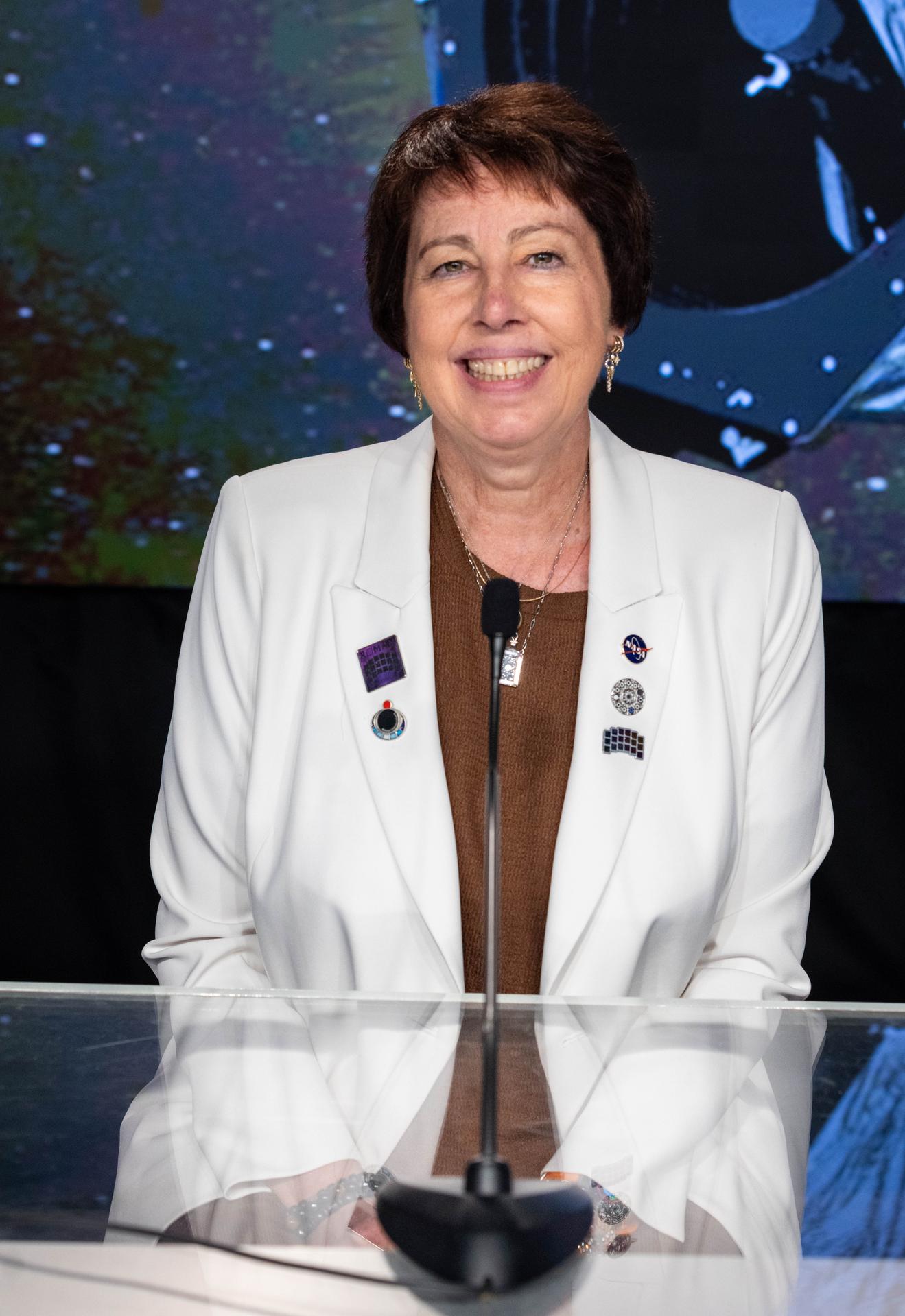
Nicky Fox, associate administrator, Science Mission Directorate, NASA Headquarters in Washington, participates in a postlaunch news conference for the agency’s Nancy Grace Roman Space Telescope inside the NASA News Center’s John Holliman Auditorium at Kennedy Space Center in Florida, on Sunday, Aug. 30, 2026. Roman will investigate dark energy and dark matter, conduct a statistical census of planetary systems, and enable a broad range of additional astrophysics research. Liftoff of Roman atop a SpaceX Falcon Heavy rocket occurred at 7:26 a.m. EDT Sunday, Aug. 30, from Kennedy’s Launch Complex 39A.
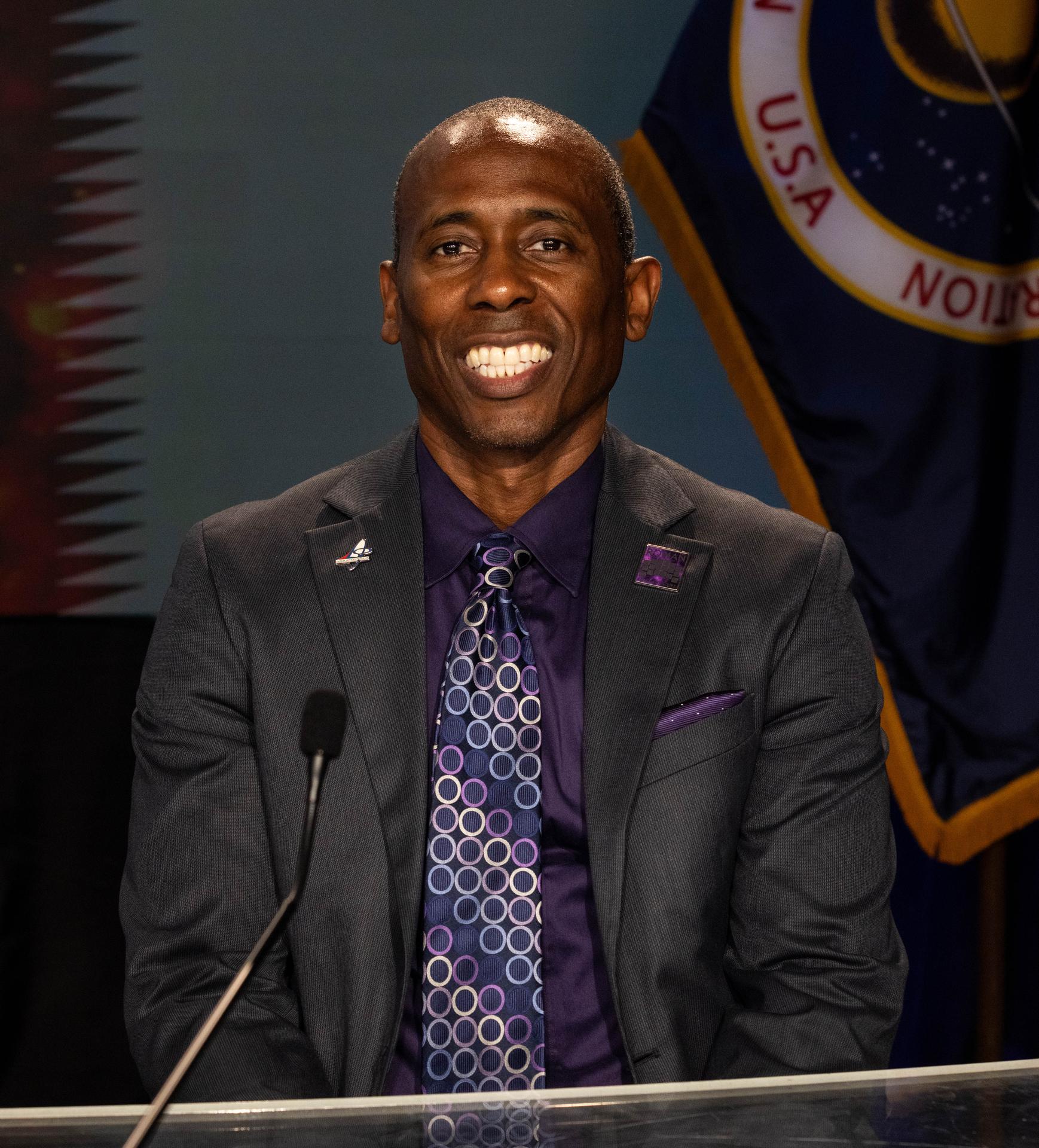
Denton Gibson, launch director, NASA’s Launch Services Program, Kennedy Space Center in Florida, participates in a postlaunch news conference for the agency’s Nancy Grace Roman Space Telescope inside the NASA News Center’s John Holliman Auditorium at Kennedy Space Center in Florida, on Sunday, Aug. 30, 2026. Roman will investigate dark energy and dark matter, conduct a statistical census of planetary systems, and enable a broad range of additional astrophysics research. Liftoff of Roman atop a SpaceX Falcon Heavy rocket occurred at 7:26 a.m. EDT Sunday, Aug. 30, from Kennedy’s Launch Complex 39A.
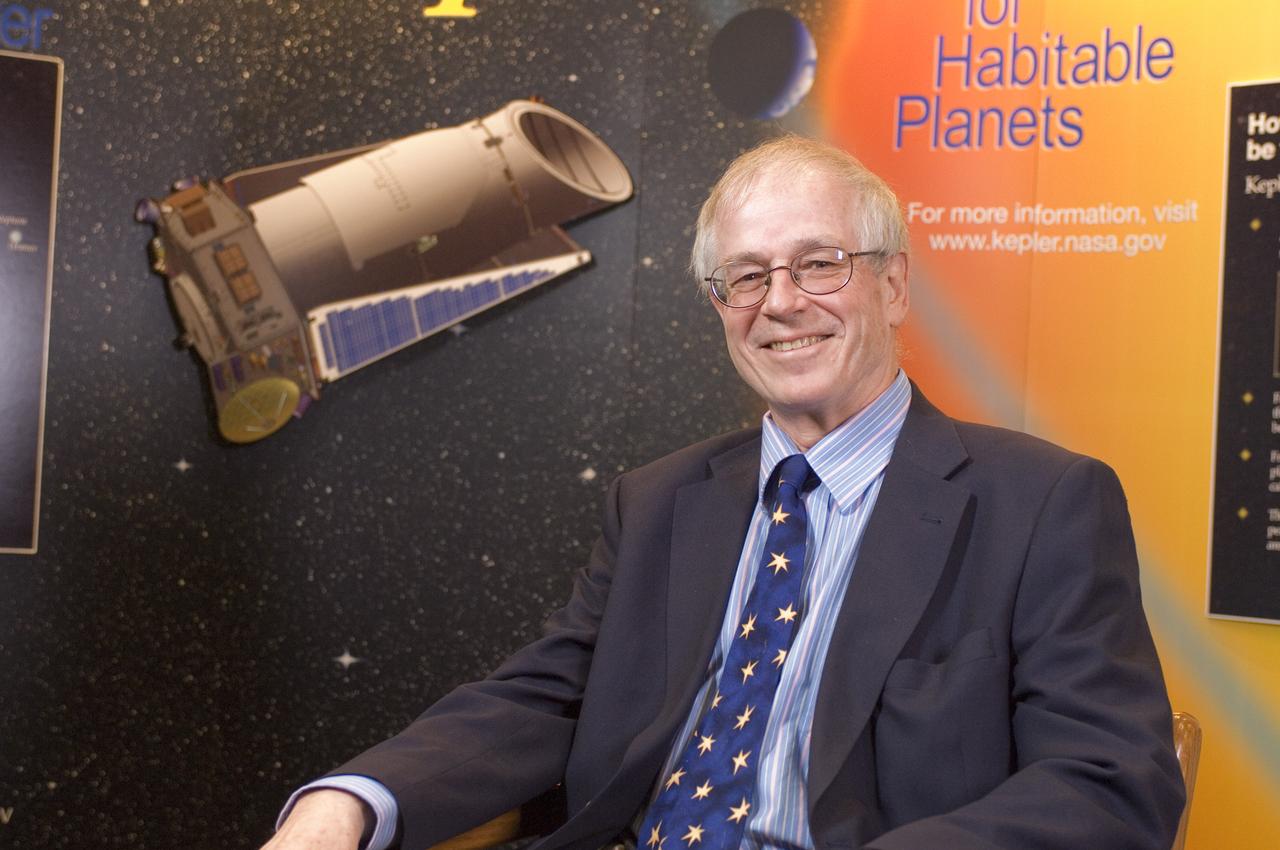
Kepler conference at SETI Institute - interview with Kepler scientist Dave Latham discussing classifying 20 million stars to generate target catalog, Smithsonian Astrophysics Observatory
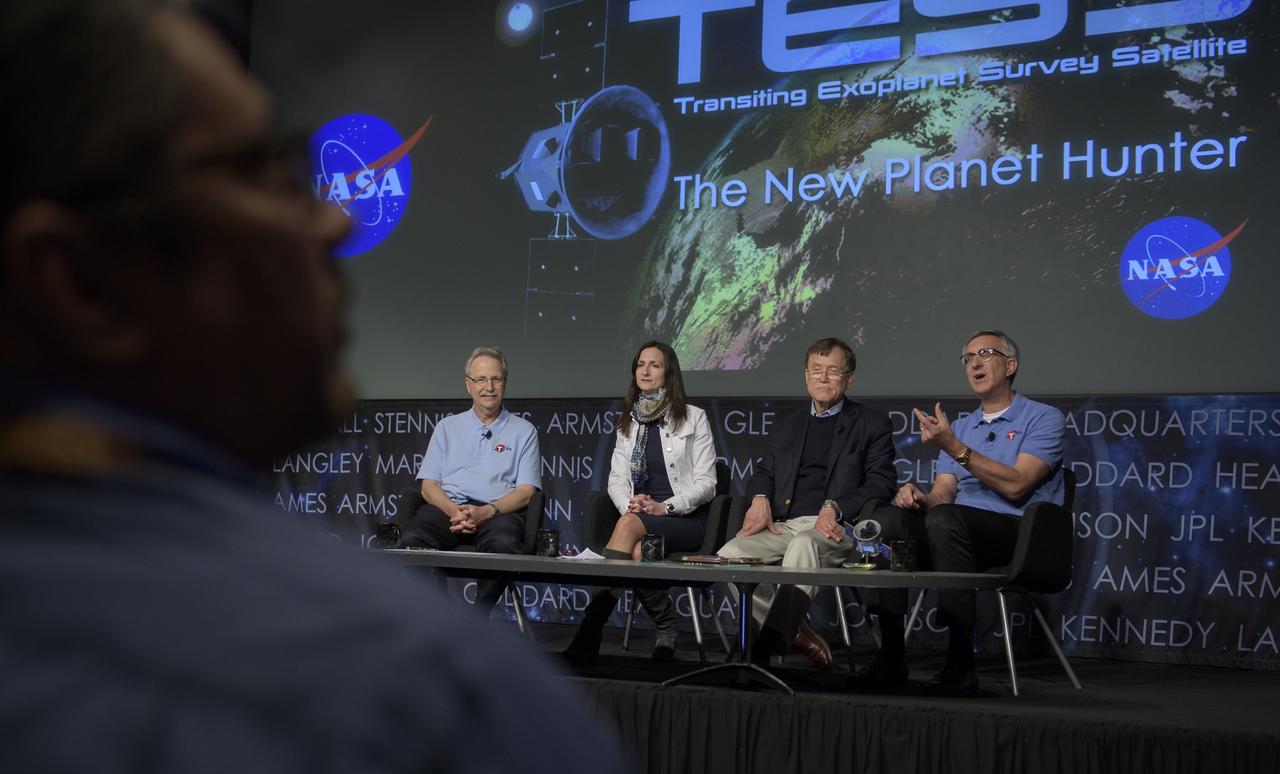
NASA Astrophysics Division director Paul Hertz, left, Sara Seager, TESS deputy director of science, MIT, George Ricker, TESS principal investigator, MIT Kavli Institute for Astrophysics and Space Research, and Jeff Volosin, TESS project manager, NASA’s Goddard Space Flight Center, right, discuss the upcoming launch of NASA’s next planet hunter, the Transiting Exoplanet Survey Satellite (TESS), Wednesday, March 28, 2018 at NASA Headquarters in Washington. Photo Credit: (NASA/Bill Ingalls)
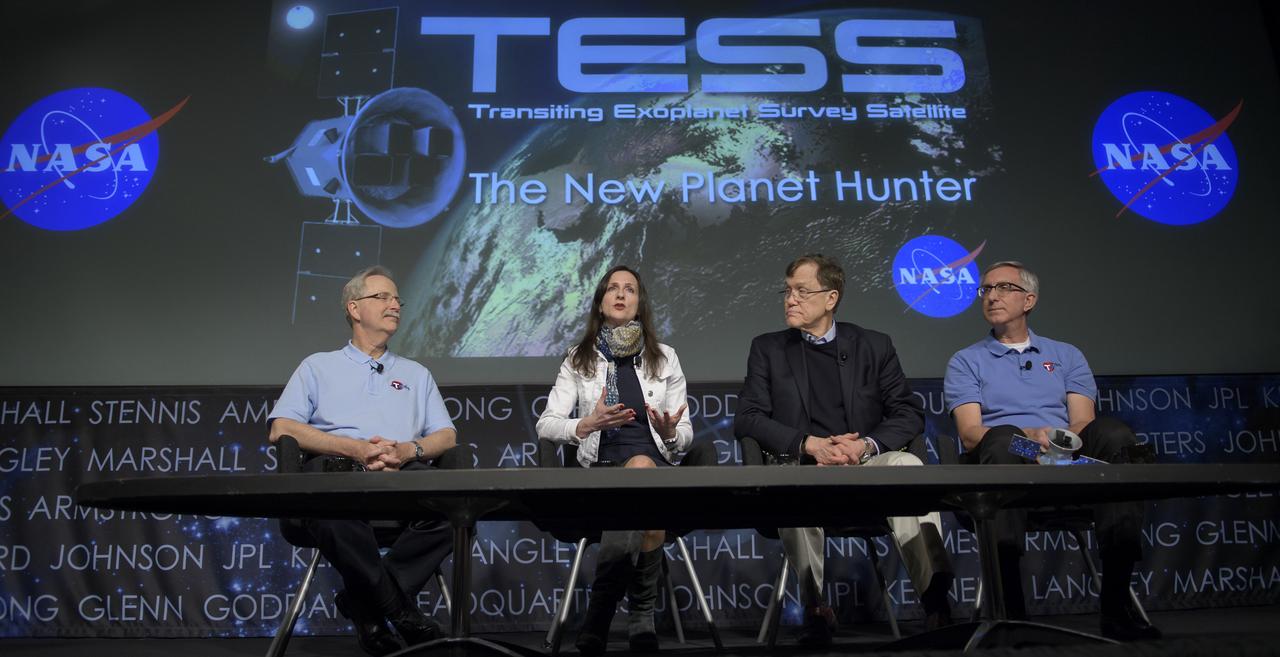
NASA Astrophysics Division director Paul Hertz, left, Sara Seager, TESS deputy director of science, MIT, George Ricker, TESS principal investigator, MIT Kavli Institute for Astrophysics and Space Research, and Jeff Volosin, TESS project manager, NASA’s Goddard Space Flight Center, right, discuss the upcoming launch of NASA’s next planet hunter, the Transiting Exoplanet Survey Satellite (TESS), Wednesday, March 28, 2018 at NASA Headquarters in Washington. Photo Credit: (NASA/Bill Ingalls)
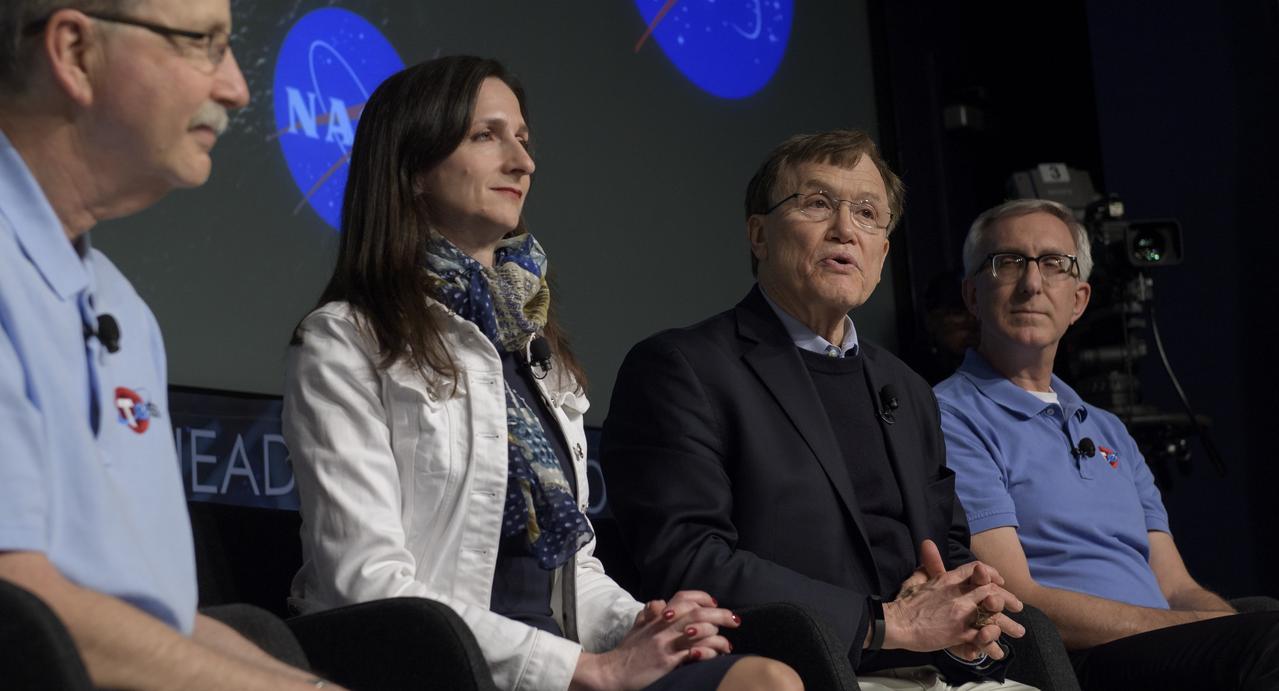
NASA Astrophysics Division director Paul Hertz, left, Sara Seager, TESS deputy director of science, MIT, George Ricker, TESS principal investigator, MIT Kavli Institute for Astrophysics and Space Research, and Jeff Volosin, TESS project manager, NASA’s Goddard Space Flight Center, right, discuss the upcoming launch of NASA’s next planet hunter, the Transiting Exoplanet Survey Satellite (TESS), Wednesday, March 28, 2018 at NASA Headquarters in Washington. Photo Credit: (NASA/Bill Ingalls)
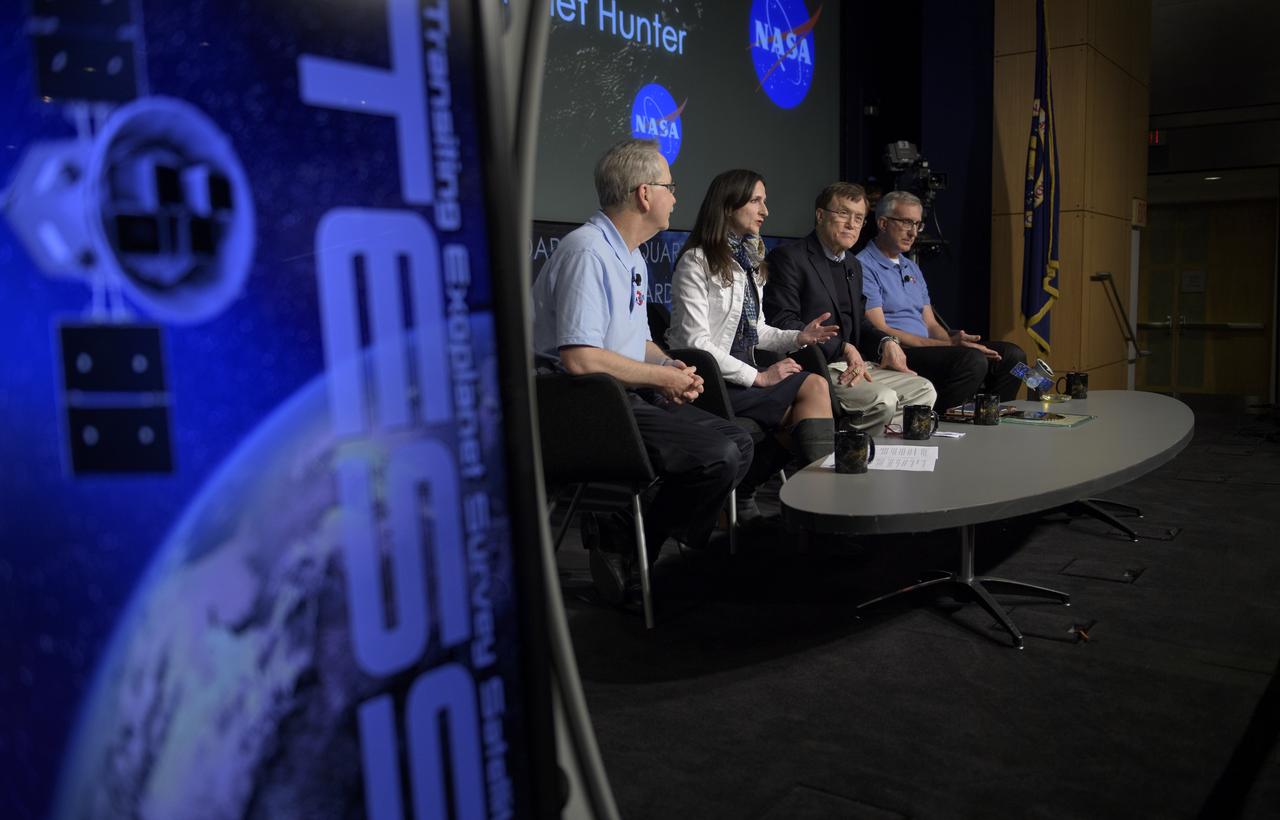
NASA Astrophysics Division director Paul Hertz, left, Sara Seager, TESS deputy director of science, MIT, George Ricker, TESS principal investigator, MIT Kavli Institute for Astrophysics and Space Research, and Jeff Volosin, TESS project manager, NASA’s Goddard Space Flight Center, right, discuss the upcoming launch of NASA’s next planet hunter, the Transiting Exoplanet Survey Satellite (TESS), Wednesday, March 28, 2018 at NASA Headquarters in Washington. Photo Credit: (NASA/Bill Ingalls)
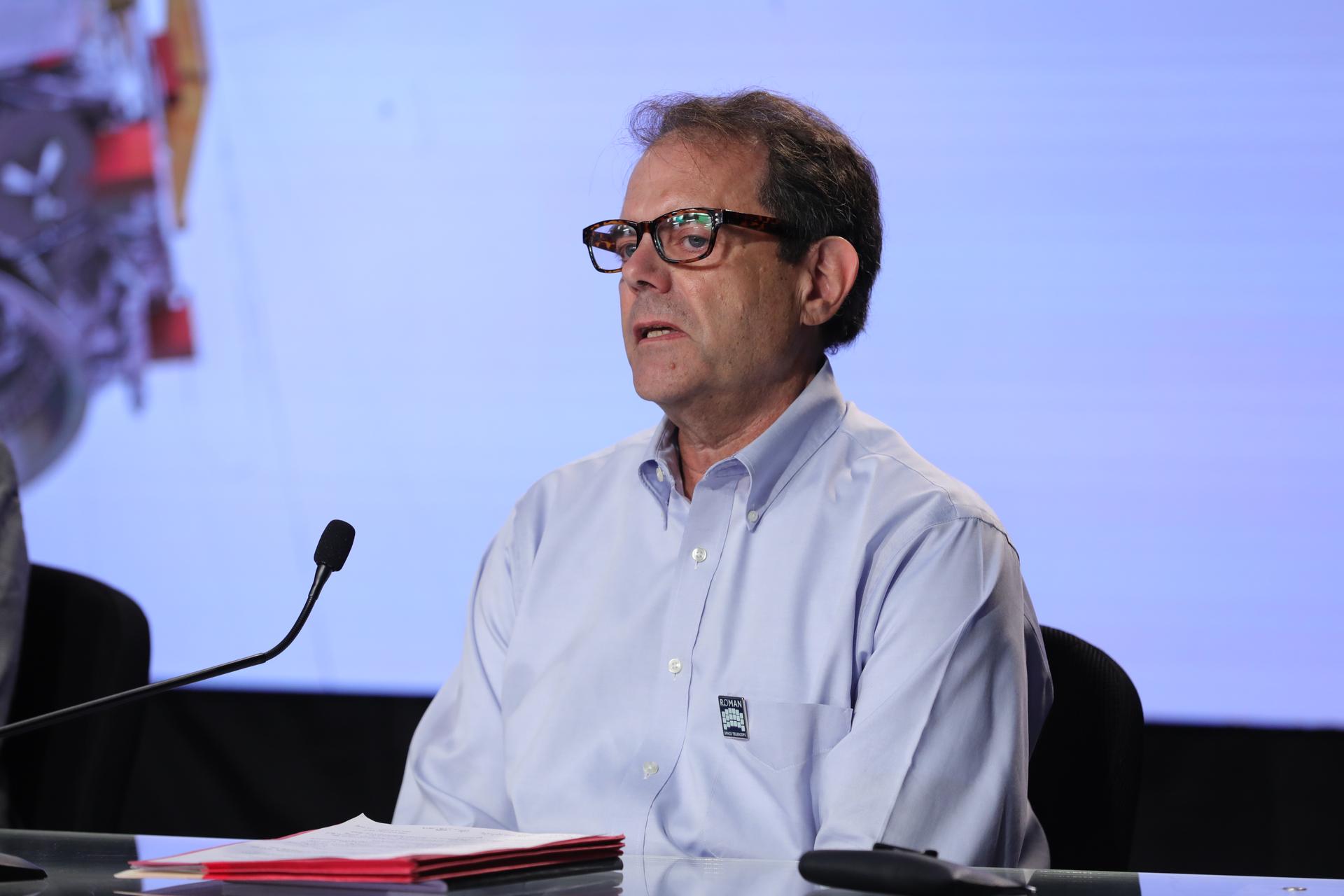
Lee Armus, Roman Science Support Center lead, Caltech/IPAC, participates in a science briefing for NASA’s Nancy Grace Roman Space Telescope inside the NASA News Center’s John Holliman Auditorium at Kennedy Space Center in Florida, on Saturday, Aug. 29, 2026. Roman will investigate dark energy and dark matter, conduct a statistical census of planetary systems, and enable a broad range of additional astrophysics research. Liftoff from Launch Complex 39A at Kennedy is targeted for no earlier than Sunday, Aug. 30, 2026.
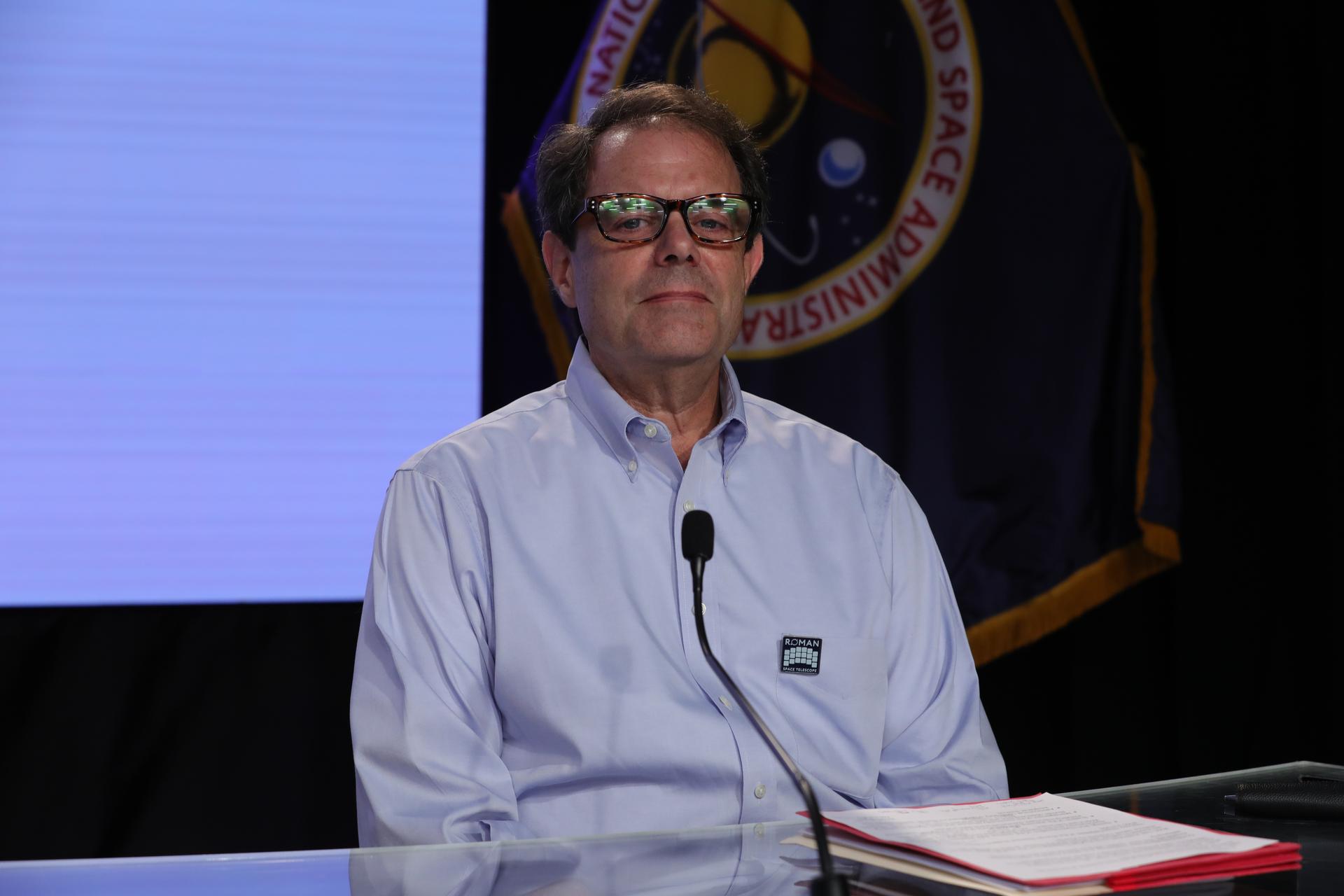
Lee Armus, Roman Science Support Center lead, Caltech/IPAC, participates in a science briefing for NASA’s Nancy Grace Roman Space Telescope inside the NASA News Center’s John Holliman Auditorium at Kennedy Space Center in Florida, on Saturday, Aug. 29, 2026. Roman will investigate dark energy and dark matter, conduct a statistical census of planetary systems, and enable a broad range of additional astrophysics research. Liftoff from Launch Complex 39A at Kennedy is targeted for no earlier than Sunday, Aug. 30, 2026.
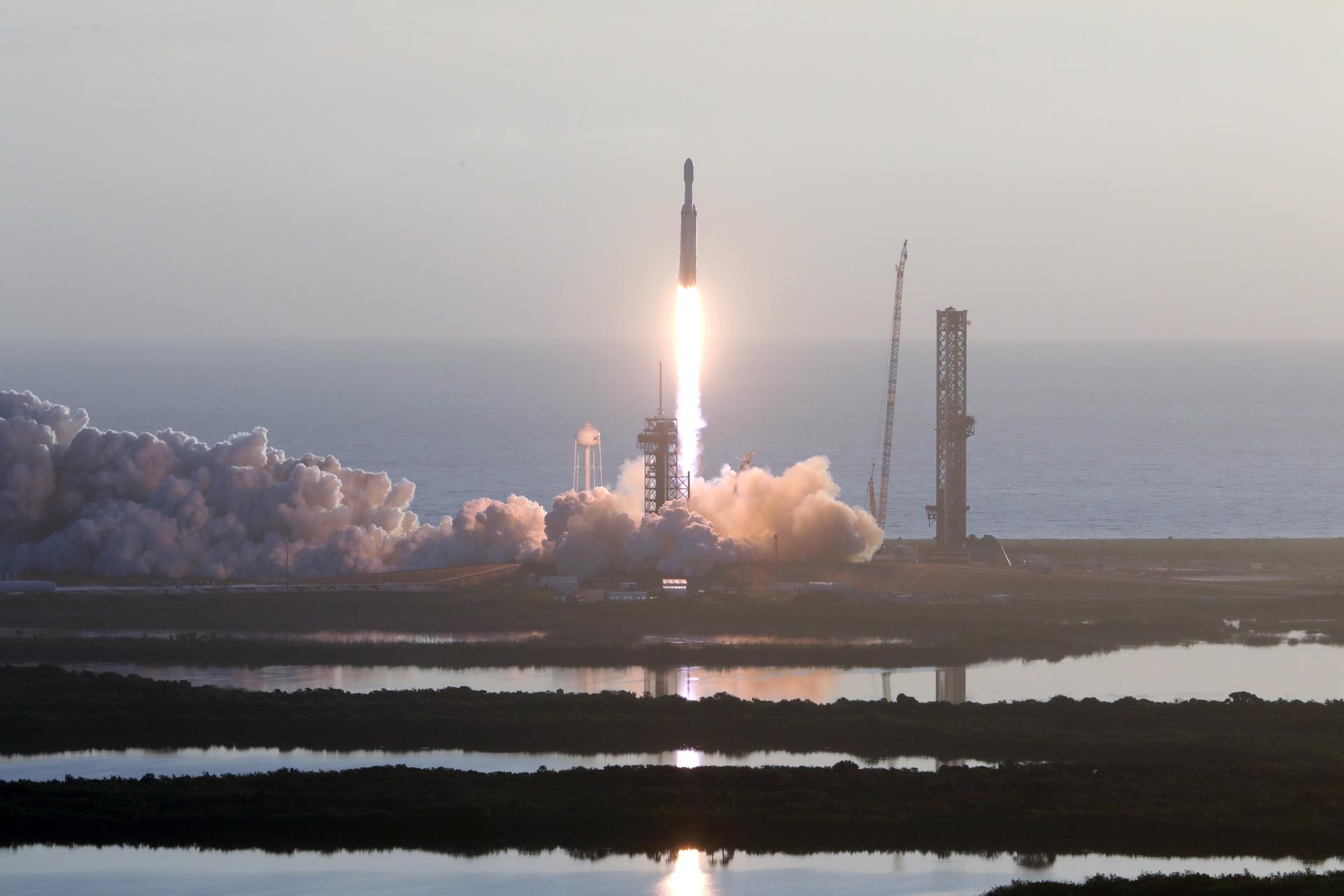
NASA’s Nancy Grace Roman Space Telescope rises to space atop a SpaceX Falcon Heavy rocket from Launch Complex 39A at the agency’s Kennedy Space Center in Florida on Sunday, Aug. 30, 2026. The milestone begins the observatory’s journey to explore the large‑scale structure of the universe. Roman will investigate dark energy and dark matter, conduct a statistical census of planetary systems, and enable a broad range of additional astrophysics research. Liftoff occurred at 7:26 a.m. EDT, from Kennedy’s Launch Complex 39A.
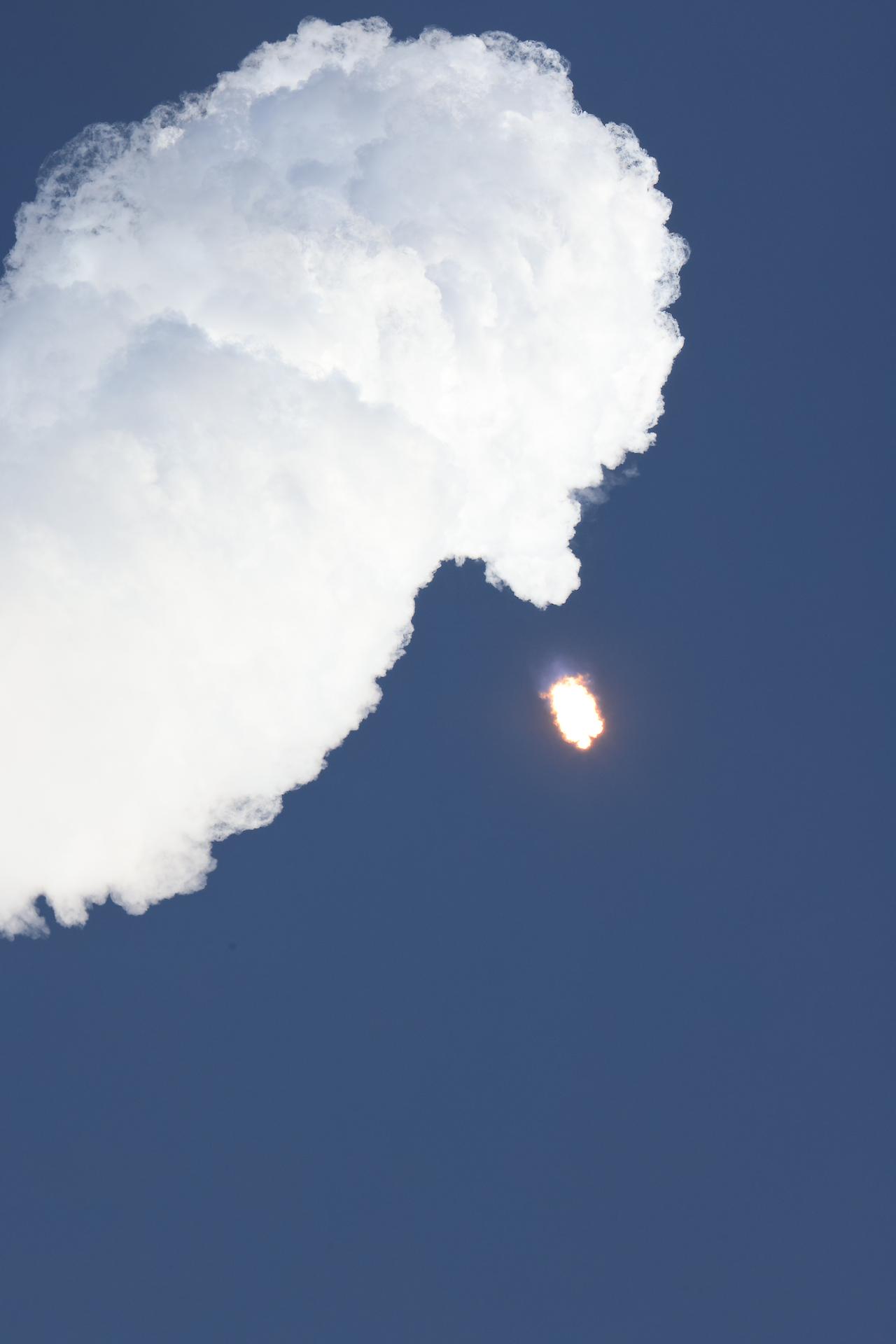
NASA’s Nancy Grace Roman Space Telescope rises to space atop a SpaceX Falcon Heavy rocket from Launch Complex 39A at the agency’s Kennedy Space Center in Florida on Sunday, Aug. 30, 2026. The milestone begins the observatory’s journey to explore the large‑scale structure of the universe. Roman will investigate dark energy and dark matter, conduct a statistical census of planetary systems, and enable a broad range of additional astrophysics research. Liftoff occurred at 7:26 a.m. EDT, from Kennedy’s Launch Complex 39A.
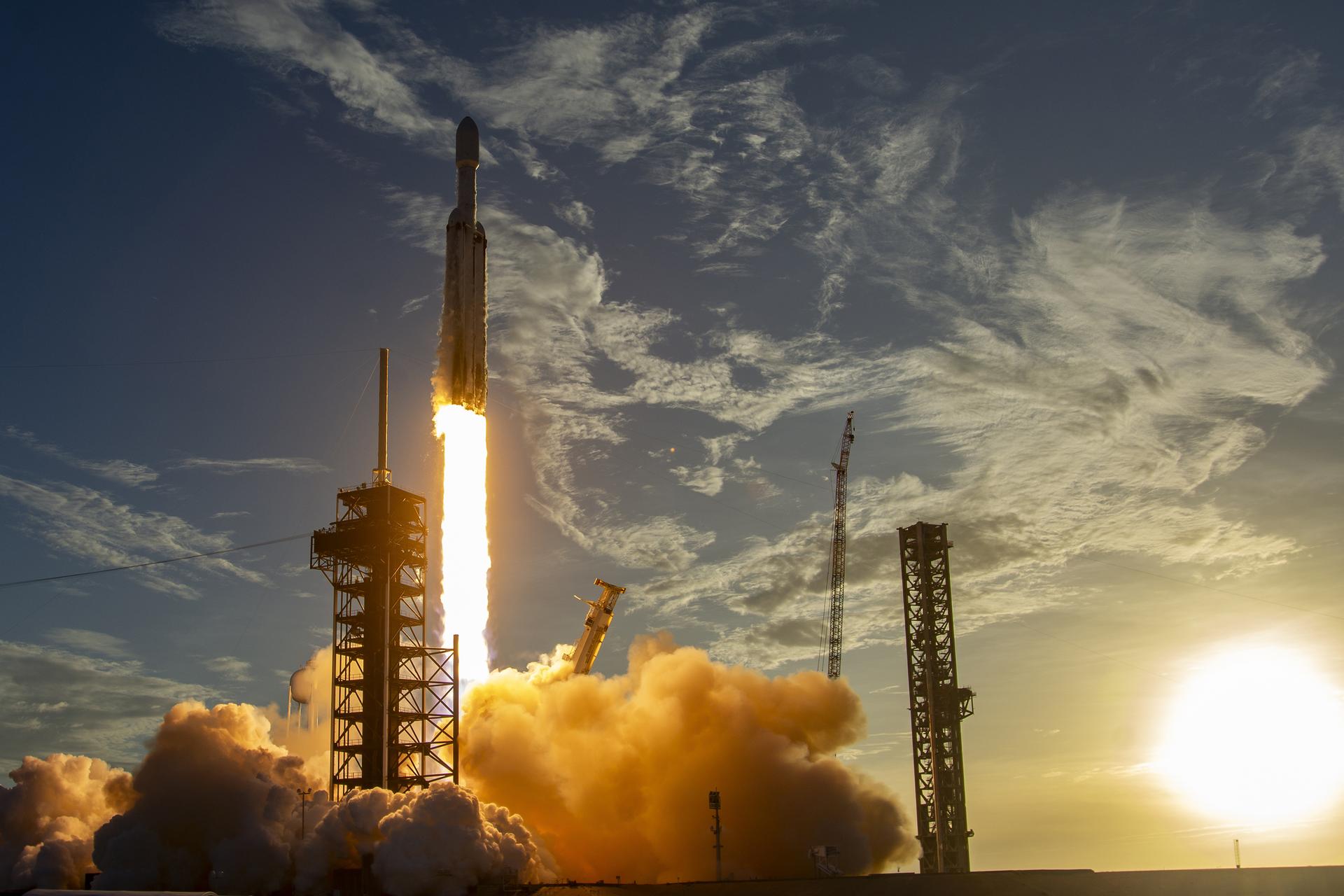
NASA’s Nancy Grace Roman Space Telescope rises to space atop a SpaceX Falcon Heavy rocket from Launch Complex 39A at the agency’s Kennedy Space Center in Florida on Sunday, Aug. 30, 2026. The milestone begins the observatory’s journey to explore the large‑scale structure of the universe. Roman will investigate dark energy and dark matter, conduct a statistical census of planetary systems, and enable a broad range of additional astrophysics research.
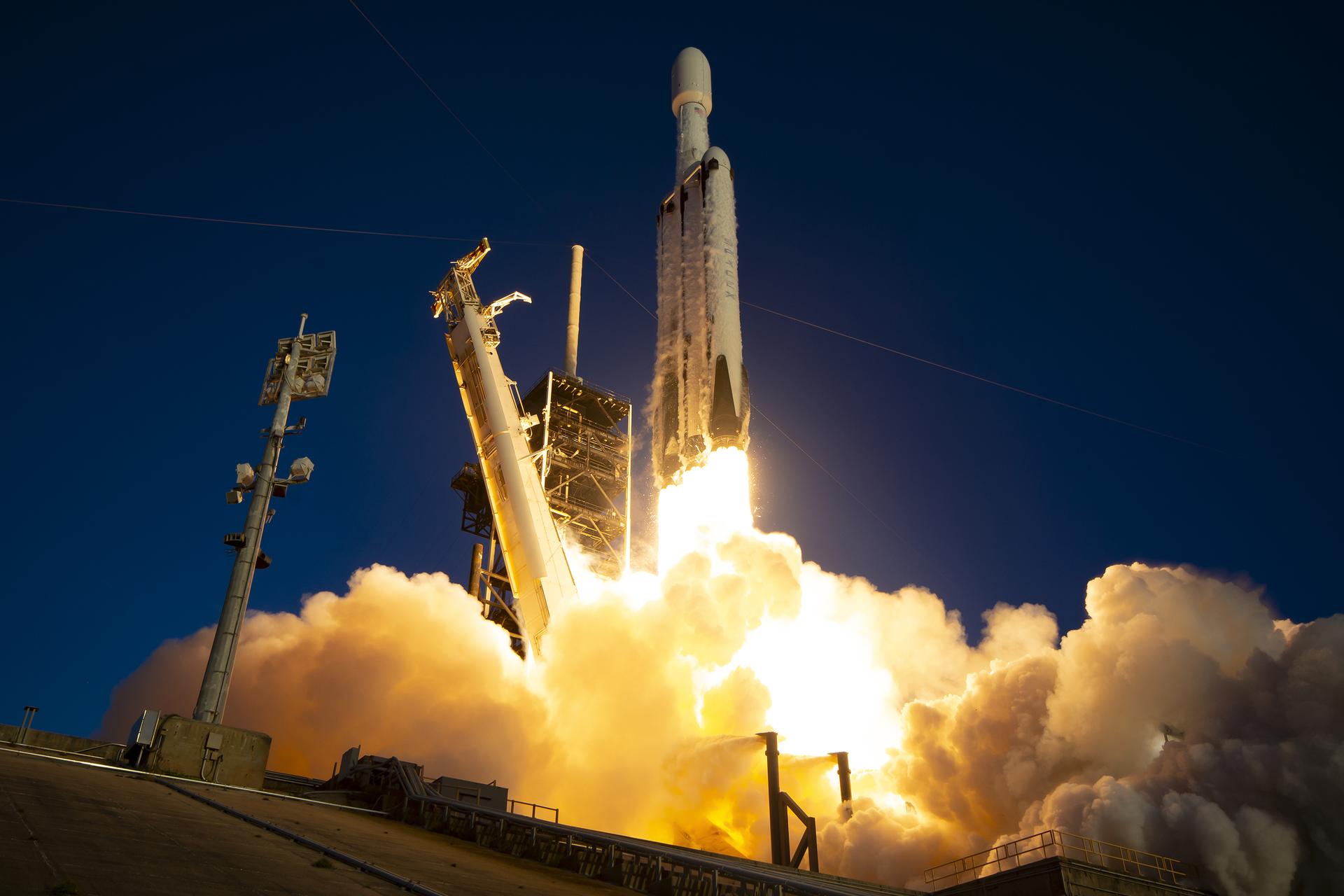
NASA’s Nancy Grace Roman Space Telescope rises to space atop a SpaceX Falcon Heavy rocket from Launch Complex 39A at the agency’s Kennedy Space Center in Florida on Sunday, Aug. 30, 2026. The milestone begins the observatory’s journey to explore the large‑scale structure of the universe. Roman will investigate dark energy and dark matter, conduct a statistical census of planetary systems, and enable a broad range of additional astrophysics research.