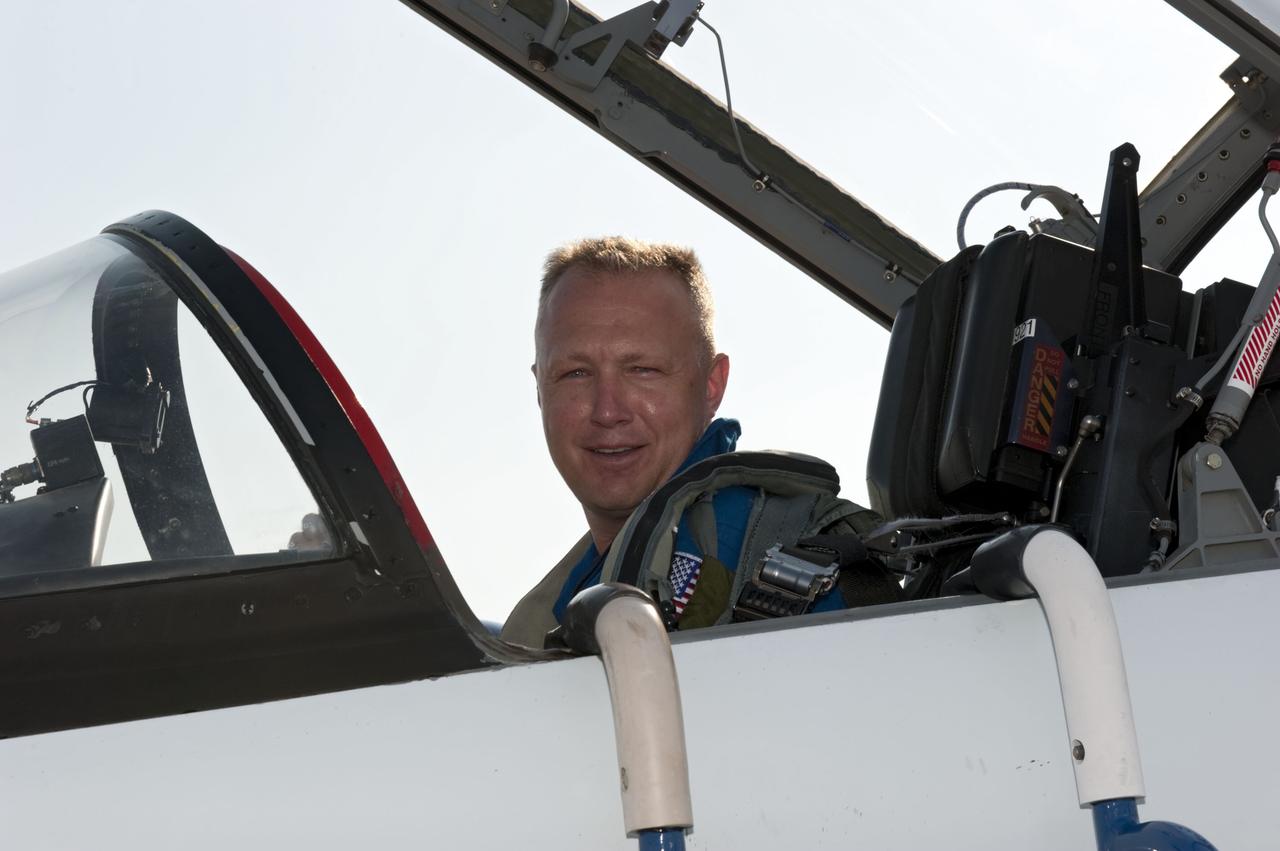
CAPE CANAVERAL, Fla. -- At the Shuttle Landing Facility at NASA's Kennedy Space Center in Florida, STS-135 Pilot Doug Hurley arrived aboard a T-38 jet. The STS-135 crew is at Kennedy to participate in a launch countdown dress rehearsal called the Terminal Countdown Demonstration Test (TCDT) and related training in preparation for the upcoming STS-135 mission. Ferguson, Pilot Doug Hurley and Mission Specialists Sandy Magnus and Rex Walheim are targeted to lift off July 8, taking with them the Raffaello multi-purpose logistics module packed with supplies and spare parts to the International Space Station. The STS-135 mission also will fly a system to investigate the potential for robotically refueling existing satellites and return a failed ammonia pump module to help NASA better understand the failure mechanism and improve pump designs for future systems. STS-135 will be the 33rd flight of Atlantis, the 37th shuttle mission to the space station, and the 135th and final mission of NASA's Space Shuttle Program. For more information visit, www.nasa.gov/mission_pages/shuttle/shuttlemissions/sts135/index.html. Photo credit: NASA/Kim Shiflett
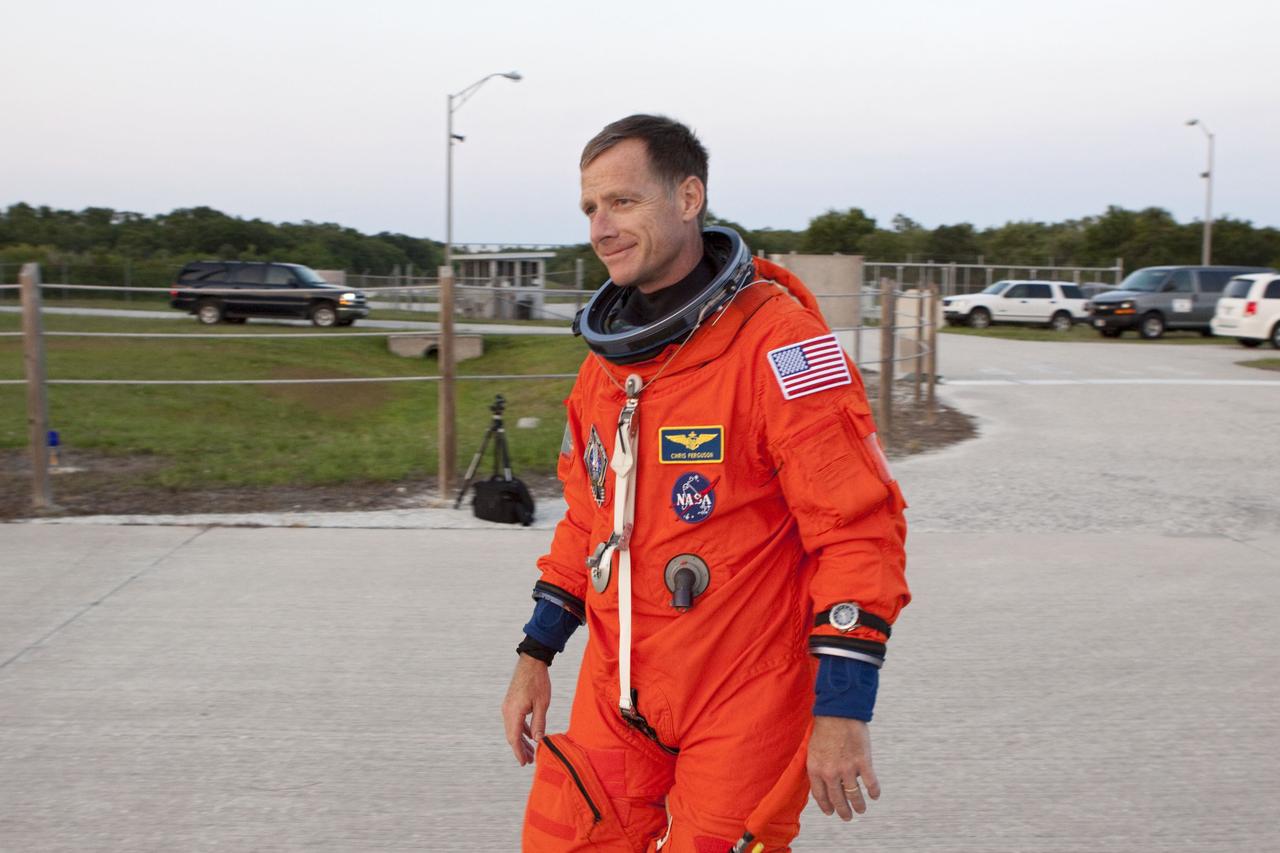
CAPE CANAVERAL, Fla. -- STS-135 Commander Chris Ferguson prepares to perform touch-and-go landings aboard one of two Shuttle Training Aircrafts (STA) on the Shuttle Landing Facility runway at NASA's Kennedy Space Center in Florida. An STA is a Gulfstream II jet that is modified to mimic the shuttle's handling during the final phase of landing. Ferguson and Hurley will practice landings as part of standard training before space shuttle Atlantis' launch to the International Space Station. Atlantis and its crew are targeted to lift off July 8, to deliver the Raffaello multi-purpose logistics module packed with supplies and spare parts to the station. The STS-135 mission also will fly a system to investigate the potential for robotically refueling existing satellites and return a failed ammonia pump module to help NASA better understand the failure mechanism and improve pump designs for future systems. STS-135 will be the 33rd flight of Atlantis, the 37th shuttle mission to the space station, and the 135th and final mission of NASA's Space Shuttle Program. For more information visit, www.nasa.gov/mission_pages/shuttle/shuttlemissions/sts135/index.html. Photo credit: NASA/Troy Cryder

CAPE CANAVERAL, Fla. -- At the Shuttle Landing Facility at NASA's Kennedy Space Center in Florida, STS-135 Commander Chris Ferguson arrived aboard a T-38 jet along with his crew to participate in a launch countdown dress rehearsal called the Terminal Countdown Demonstration Test (TCDT) and related training in preparation for the upcoming STS-135 mission. Ferguson, Pilot Doug Hurley and Mission Specialists Sandy Magnus and Rex Walheim are targeted to lift off July 8, taking with them the Raffaello multi-purpose logistics module packed with supplies and spare parts to the International Space Station. The STS-135 mission also will fly a system to investigate the potential for robotically refueling existing satellites and return a failed ammonia pump module to help NASA better understand the failure mechanism and improve pump designs for future systems. STS-135 will be the 33rd flight of Atlantis, the 37th shuttle mission to the space station, and the 135th and final mission of NASA's Space Shuttle Program. For more information visit, www.nasa.gov/mission_pages/shuttle/shuttlemissions/sts135/index.html. Photo credit: NASA/Kim Shiflett
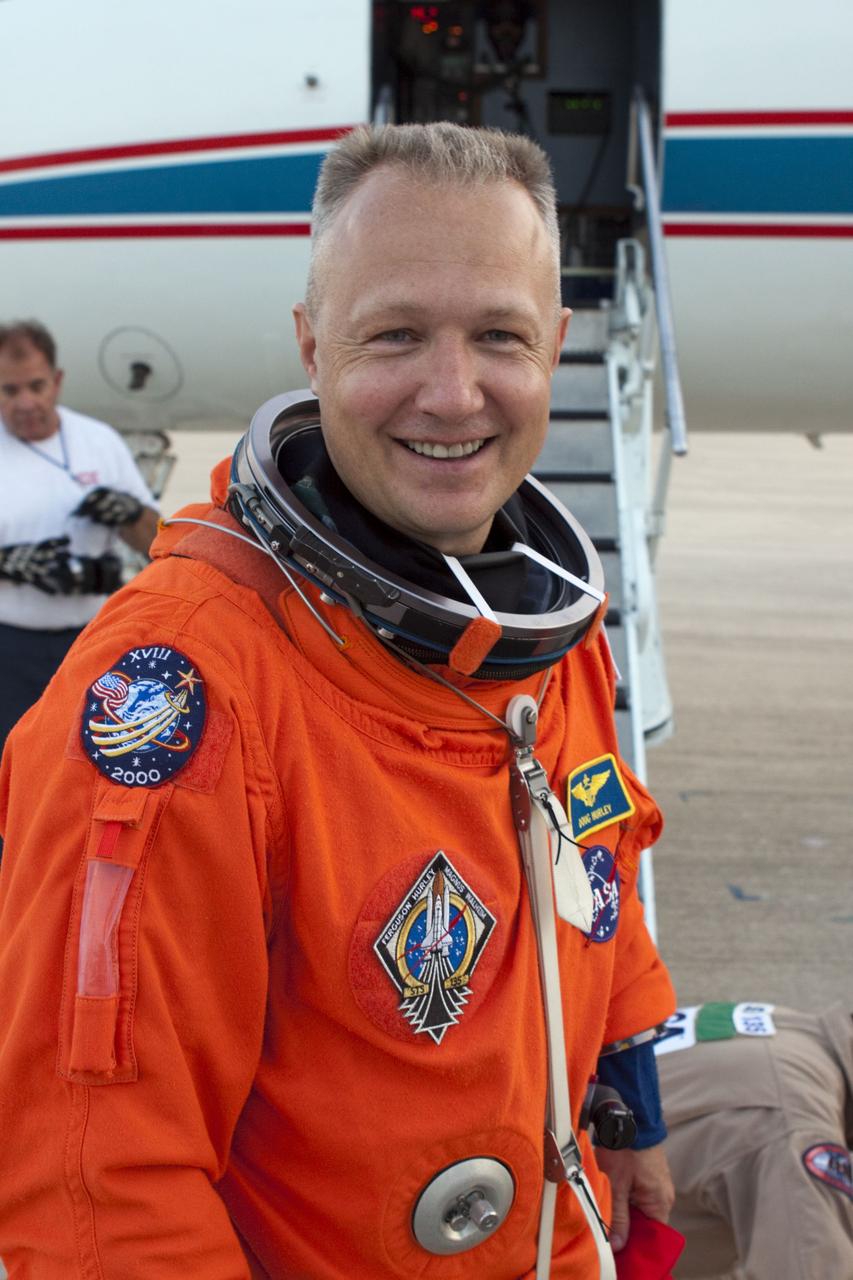
CAPE CANAVERAL, Fla. -- STS-135 Pilot Doug Hurley prepares to perform touch-and-go landings aboard one of two Shuttle Training Aircrafts (STA) on the Shuttle Landing Facility runway at NASA's Kennedy Space Center in Florida. An STA is a Gulfstream II jet that is modified to mimic the shuttle's handling during the final phase of landing. Ferguson and Hurley will practice landings as part of standard training before space shuttle Atlantis' launch to the International Space Station. Atlantis and its crew are targeted to lift off July 8, to deliver the Raffaello multi-purpose logistics module packed with supplies and spare parts to the station. The STS-135 mission also will fly a system to investigate the potential for robotically refueling existing satellites and return a failed ammonia pump module to help NASA better understand the failure mechanism and improve pump designs for future systems. STS-135 will be the 33rd flight of Atlantis, the 37th shuttle mission to the space station, and the 135th and final mission of NASA's Space Shuttle Program. For more information visit, www.nasa.gov/mission_pages/shuttle/shuttlemissions/sts135/index.html. Photo credit: NASA/Troy Cryder
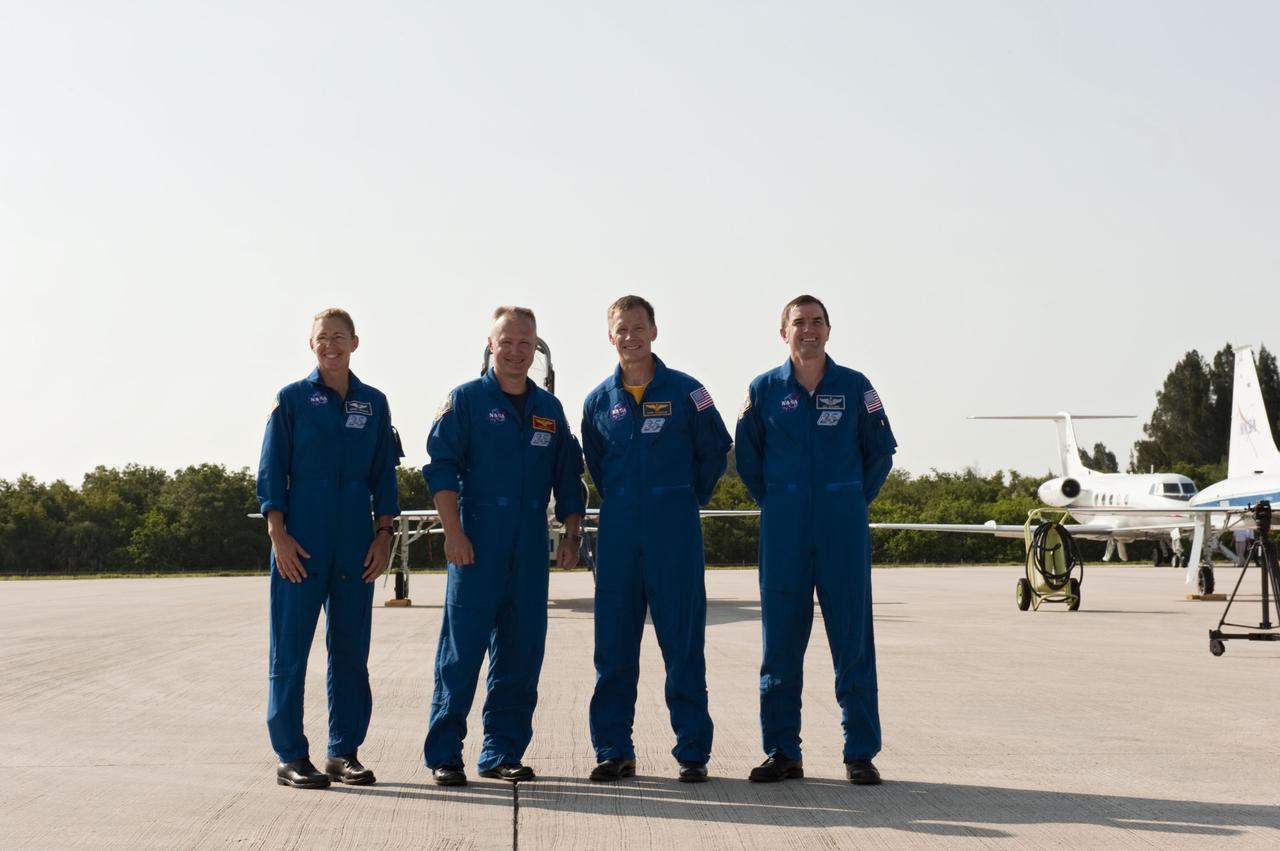
CAPE CANAVERAL, Fla. -- Space shuttle Atlantis' STS-135 crew members pose for a group photo on the Shuttle Landing Facility at NASA's Kennedy Space Center in Florida. From left are Mission Specialist Sandy Magnus, Pilot Doug Hurley, Commander Chris Ferguson and Mission Specialist Rex Walheim. The crew arrived at Kennedy at about 5:30 p.m. EDT to participate in a launch countdown dress rehearsal called the Terminal Countdown Demonstration Test (TCDT) and related training in preparation for the upcoming STS-135 mission. Targeted to lift off July 8, the Atlantis crew will deliver the Raffaello multi-purpose logistics module packed with supplies and spare parts to the International Space Station. Atlantis also will fly a system to investigate the potential for robotically refueling existing satellites and return a failed ammonia pump module to help NASA better understand the failure mechanism and improve pump designs for future systems. STS-135 will be the 33rd flight of Atlantis, the 37th shuttle mission to the station, and the 135th and final mission of NASA's Space Shuttle Program. For more information visit, www.nasa.gov/mission_pages/shuttle/shuttlemissions/sts135/index.html. Photo credit: NASA/Kim Shiflett
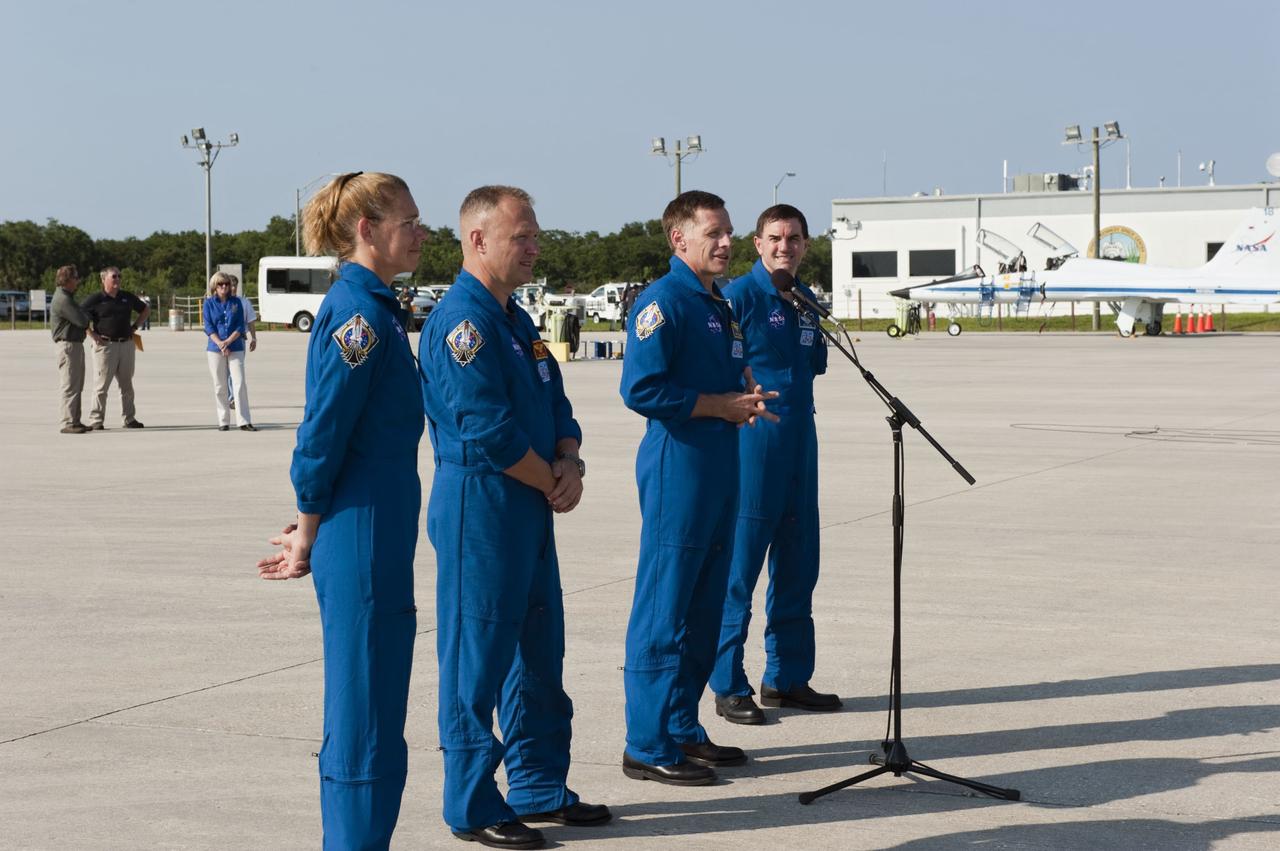
CAPE CANAVERAL, Fla. -- Space shuttle Atlantis' STS-135 crew address the media on the Shuttle Landing Facility at NASA's Kennedy Space Center in Florida. From left are Mission Specialist Sandy Magnus, Pilot Doug Hurley, Commander Chris Ferguson and Mission Specialist Rex Walheim. While at Kennedy, Atlantis' crew will participate in a launch countdown dress rehearsal called the Terminal Countdown Demonstration Test (TCDT) and related training in preparation for the upcoming STS-135 mission. The STS-135 crew members are targeted to lift off on July 8, taking with them the Raffaello multi-purpose logistics module packed with supplies, logistics and spare parts to the International Space Station. The STS-135 mission also will fly a system to investigate the potential for robotically refueling existing satellites and return a failed ammonia pump module to help NASA better understand the failure mechanism and improve pump designs for future systems. STS-135 will be the 33rd flight of Atlantis, the 37th shuttle mission to the space station, and the 135th and final mission of NASA's Space Shuttle Program. For more information visit, www.nasa.gov/mission_pages/shuttle/shuttlemissions/sts135/index.html. Photo credit: NASA/Kim Shiflett

CAPE CANAVERAL, Fla. -- At the Shuttle Landing Facility at NASA's Kennedy Space Center in Florida, the STS-135 crew members arrived aboard their T-38 jets at about 5:30 p.m. EDT to participate in a launch countdown dress rehearsal called the Terminal Countdown Demonstration Test (TCDT) and related training in preparation for the upcoming STS-135 mission. Commander Chris Ferguson, Pilot Doug Hurley and Mission Specialists Sandy Magnus and Rex Walheim are targeted to lift off July 8, taking with them the Raffaello multi-purpose logistics module packed with supplies and spare parts to the International Space Station. The STS-135 mission also will fly a system to investigate the potential for robotically refueling existing satellites and return a failed ammonia pump module to help NASA better understand the failure mechanism and improve pump designs for future systems. STS-135 will be the 33rd flight of Atlantis, the 37th shuttle mission to the space station, and the 135th and final mission of NASA's Space Shuttle Program. For more information visit, www.nasa.gov/mission_pages/shuttle/shuttlemissions/sts135/index.html. Photo credit: NASA/Kim Shiflett
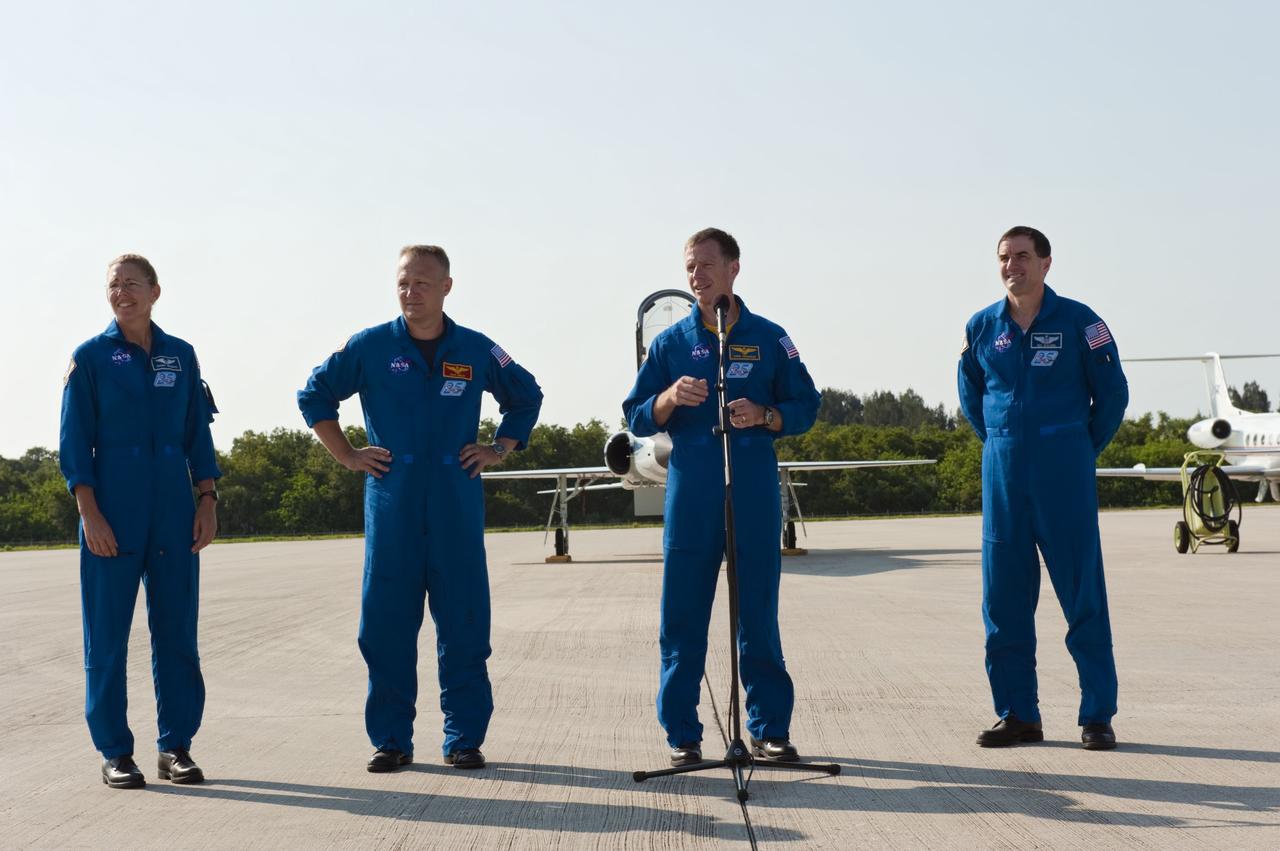
CAPE CANAVERAL, Fla. -- Space shuttle Atlantis' STS-135 crew members address the media on the Shuttle Landing Facility at NASA's Kennedy Space Center in Florida. From left are Mission Specialist Sandy Magnus, Pilot Doug Hurley, Commander Chris Ferguson and Mission Specialist Rex Walheim. The crew arrived at Kennedy at about 5:30 p.m. EDT to participate in a launch countdown dress rehearsal called the Terminal Countdown Demonstration Test (TCDT) and related training in preparation for the upcoming STS-135 mission. Atlantis and its crew are targeted to lift off July 8, taking with them the Raffaello multi-purpose logistics module packed with supplies and spare parts to the International Space Station. The STS-135 mission also will fly a system to investigate the potential for robotically refueling existing satellites and return a failed ammonia pump module to help NASA better understand the failure mechanism and improve pump designs for future systems. STS-135 will be the 33rd flight of Atlantis, the 37th shuttle mission to the International Space Station, and the 135th and final mission of NASA's Space Shuttle Program. For more information visit, www.nasa.gov/mission_pages/shuttle/shuttlemissions/sts135/index.html. Photo credit: NASA/Kim Shiflett
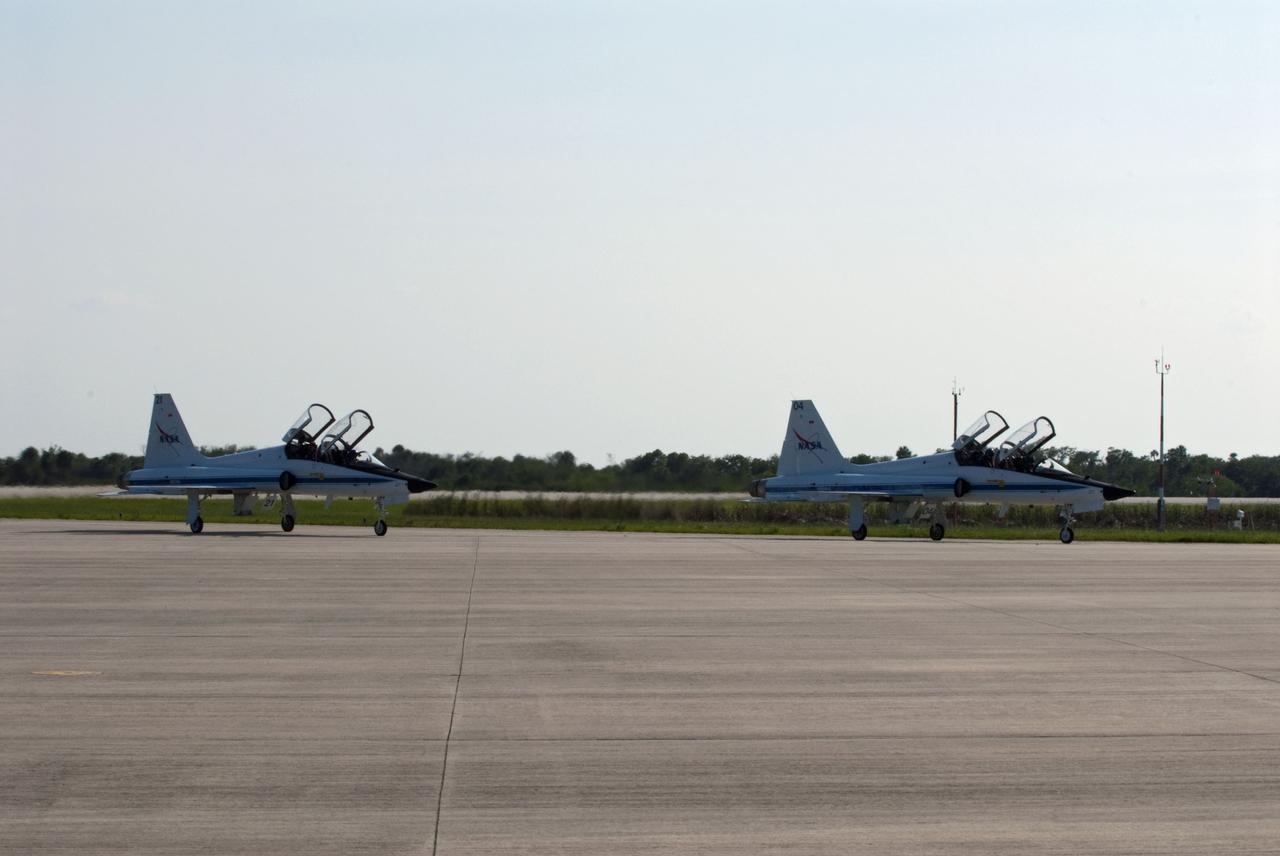
CAPE CANAVERAL, Fla. -- At the Shuttle Landing Facility at NASA's Kennedy Space Center in Florida, space shuttle Atlantis' crew members begin to arrive aboard their T-38 jets. The astronauts are at Kennedy to participate in a launch countdown dress rehearsal called the Terminal Countdown Demonstration Test (TCDT) and related training in preparation for the upcoming STS-135 mission. Atlantis and its crew are targeted to lift off July 8, delivering the Raffaello multi-purpose logistics module packed with supplies, logistics and spare parts to the International Space Station. The STS-135 mission also will fly a system to investigate the potential for robotically refueling existing satellites and return a failed ammonia pump module to help NASA better understand the failure mechanism and improve pump designs for future systems. STS-135 will be the 33rd flight of Atlantis, the 37th shuttle mission to the space station, and the 135th and final mission of NASA's Space Shuttle Program. For more information visit, www.nasa.gov/mission_pages/shuttle/shuttlemissions/sts135/index.html. Photo credit: NASA/Kim Shiflett
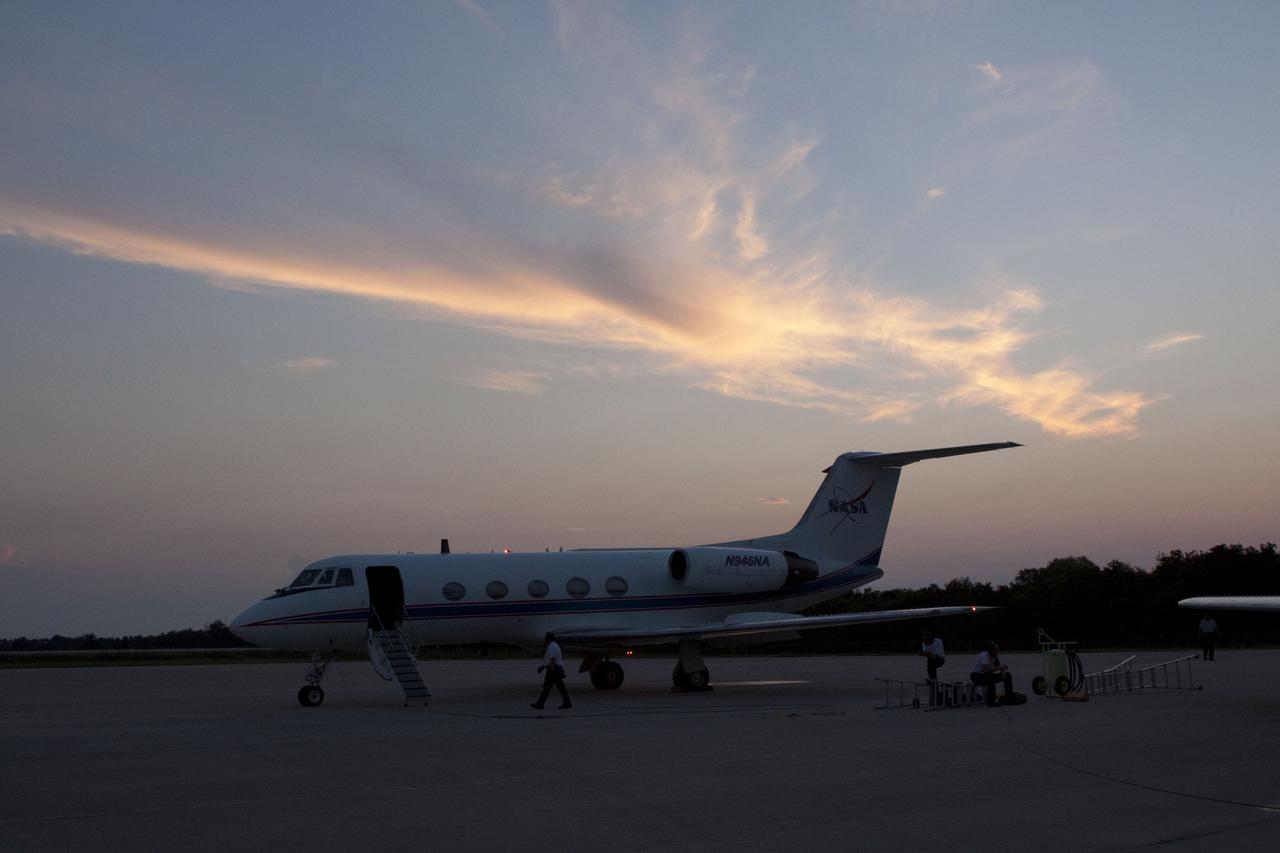
CAPE CANAVERAL, Fla. -- STS-135 Commander Chris Ferguson and Pilot Doug Hurley will perform touch-and-go landings aboard their Shuttle Training Aircrafts (STA) on the Shuttle Landing Facility runway at NASA's Kennedy Space Center in Florida. An STA is a Gulfstream II jet that is modified to mimic the shuttle's handling during the final phase of landing. Ferguson and Hurley will practice landings as part of standard training before space shuttle Atlantis' launch to the International Space Station. Atlantis and its crew are targeted to lift off July 8, to deliver the Raffaello multi-purpose logistics module packed with supplies and spare parts to the station. The STS-135 mission also will fly a system to investigate the potential for robotically refueling existing satellites and return a failed ammonia pump module to help NASA better understand the failure mechanism and improve pump designs for future systems. STS-135 will be the 33rd flight of Atlantis, the 37th shuttle mission to the space station, and the 135th and final mission of NASA's Space Shuttle Program. For more information visit, www.nasa.gov/mission_pages/shuttle/shuttlemissions/sts135/index.html. Photo credit: NASA/Troy Cryder
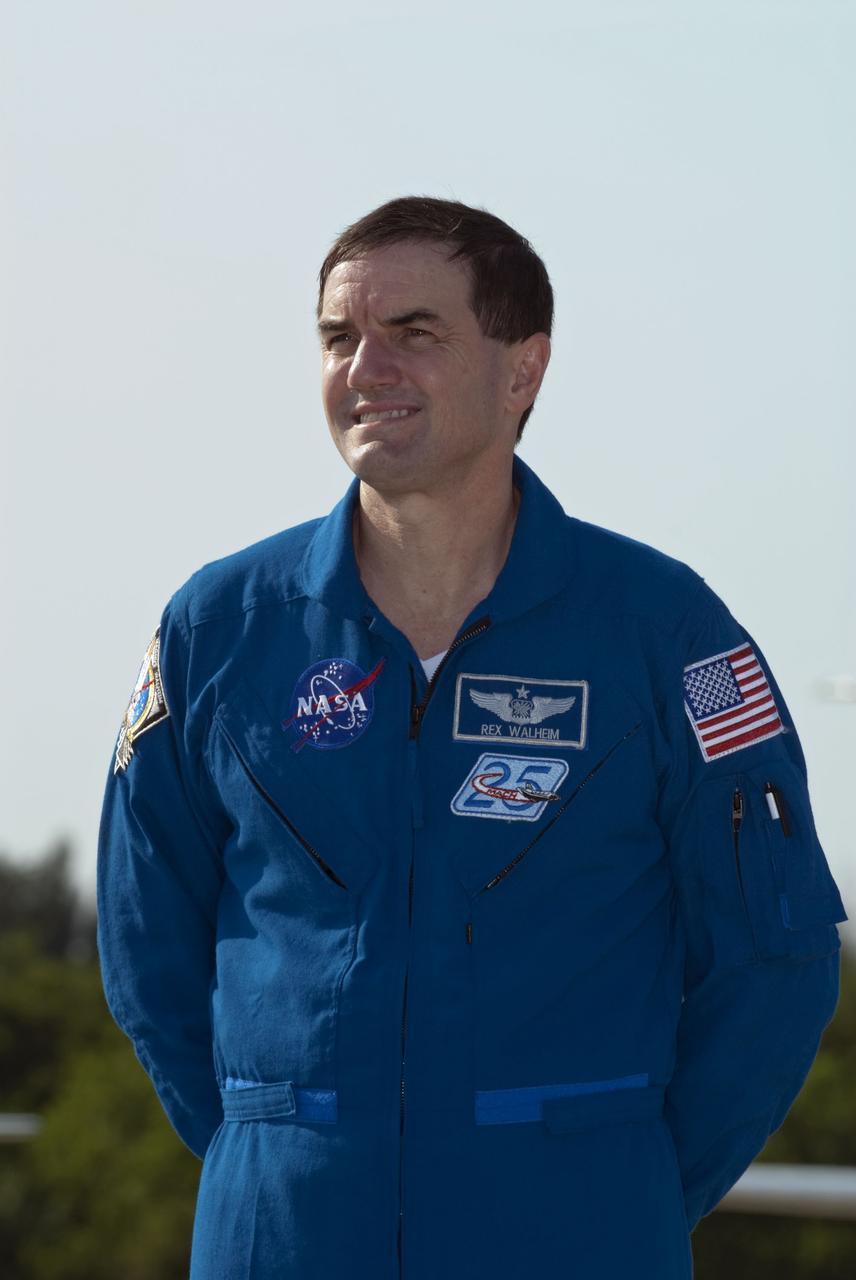
CAPE CANAVERAL, Fla. -- At the Shuttle Landing Facility at NASA's Kennedy Space Center in Florida, STS-135 Mission Specialist Rex Walheim pauses for a photo. The space shuttle Atlantis crew members arrived at Kennedy at about 5:30 p.m. EDT to participate in a launch countdown dress rehearsal called the Terminal Countdown Demonstration Test (TCDT) and related training in preparation for the upcoming STS-135 mission. Atlantis and its crew is targeted to lift off July 8, taking with them the Raffaello multi-purpose logistics module packed with supplies, logistics and spare parts to the International Space Station. The STS-135 mission also will fly a system to investigate the potential for robotically refueling existing satellites and return a failed ammonia pump module to help NASA better understand the failure mechanism and improve pump designs for future systems. STS-135 will be the 33rd flight of Atlantis, the 37th shuttle mission to the space station, and the 135th and final mission of NASA's Space Shuttle Program. For more information visit, www.nasa.gov/mission_pages/shuttle/shuttlemissions/sts135/index.html. Photo credit: NASA/Kim Shiflett
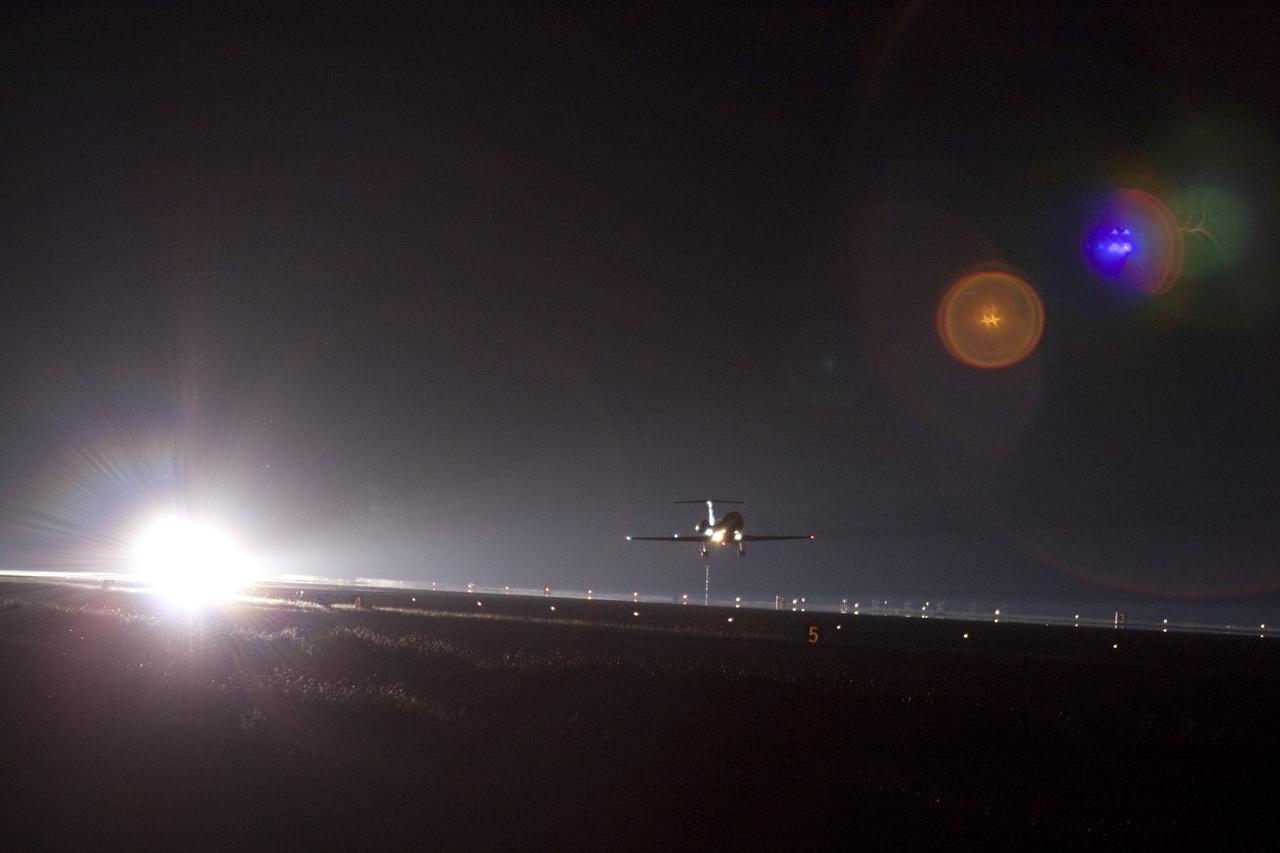
CAPE CANAVERAL, Fla. -- STS-135 Commander Chris Ferguson and Pilot Doug Hurley take off from the Shuttle Landing Facility runway at NASA's Kennedy Space Center in Florida to perform touch-and-go landings aboard their Shuttle Training Aircrafts (STA). An STA is a Gulfstream II jet that is modified to mimic the shuttle's handling during the final phase of landing. Ferguson and Hurley will practice landings as part of standard training before space shuttle Atlantis' launch to the International Space Station. Atlantis and its crew are targeted to lift off July 8, to deliver the Raffaello multi-purpose logistics module packed with supplies and spare parts to the station. The STS-135 mission also will fly a system to investigate the potential for robotically refueling existing satellites and return a failed ammonia pump module to help NASA better understand the failure mechanism and improve pump designs for future systems. STS-135 will be the 33rd flight of Atlantis, the 37th shuttle mission to the space station, and the 135th and final mission of NASA's Space Shuttle Program. For more information visit, www.nasa.gov/mission_pages/shuttle/shuttlemissions/sts135/index.html. Photo credit: NASA/Troy Cryder
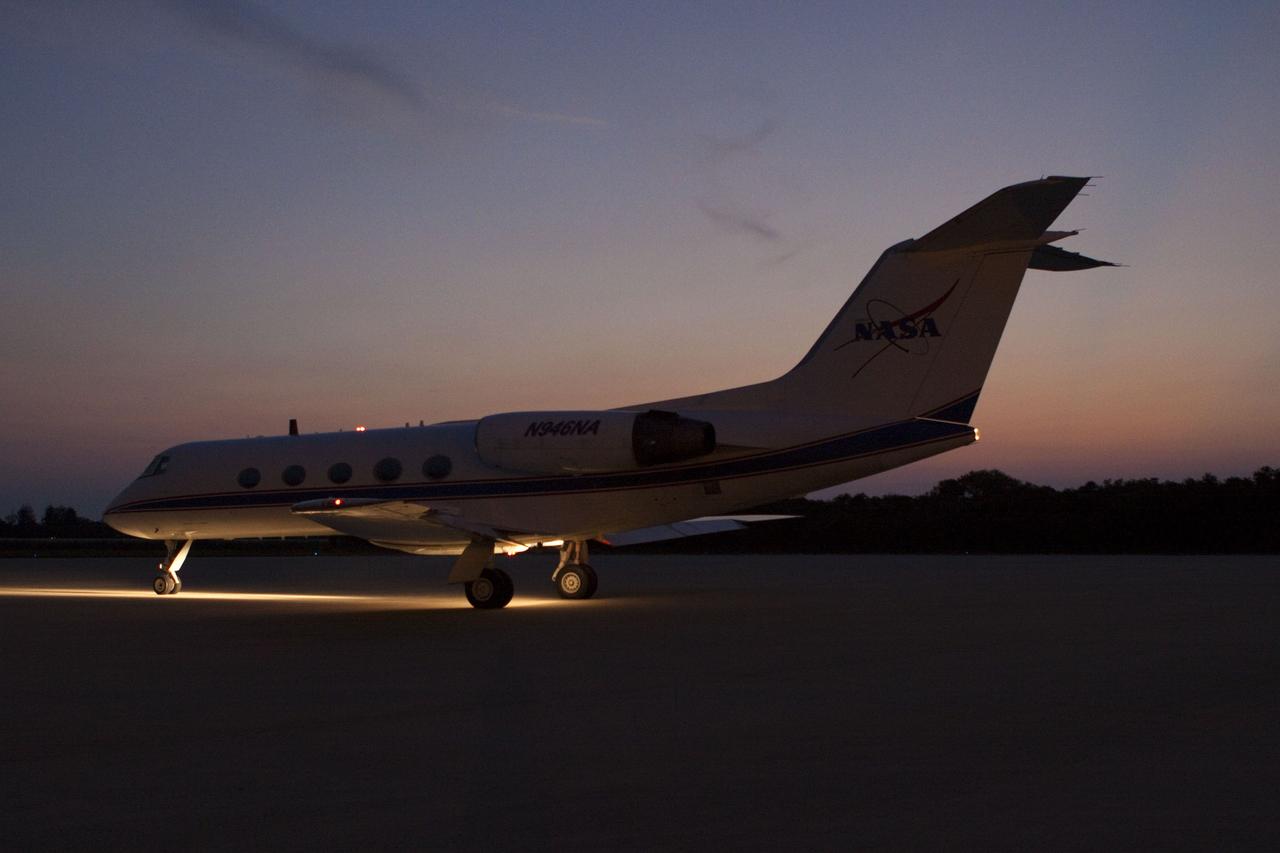
CAPE CANAVERAL, Fla. -- STS-135 Commander Chris Ferguson and Pilot Doug Hurley are ready to take off from the Shuttle Landing Facility runway at NASA's Kennedy Space Center in Florida to perform touch-and-go landings aboard their Shuttle Training Aircrafts (STA). An STA is a Gulfstream II jet that is modified to mimic the shuttle's handling during the final phase of landing. Ferguson and Hurley will practice landings as part of standard training before space shuttle Atlantis' launch to the International Space Station. Atlantis and its crew are targeted to lift off July 8, to deliver the Raffaello multi-purpose logistics module packed with supplies and spare parts to the station. The STS-135 mission also will fly a system to investigate the potential for robotically refueling existing satellites and return a failed ammonia pump module to help NASA better understand the failure mechanism and improve pump designs for future systems. STS-135 will be the 33rd flight of Atlantis, the 37th shuttle mission to the space station, and the 135th and final mission of NASA's Space Shuttle Program. For more information visit, www.nasa.gov/mission_pages/shuttle/shuttlemissions/sts135/index.html. Photo credit: NASA/Troy Cryder
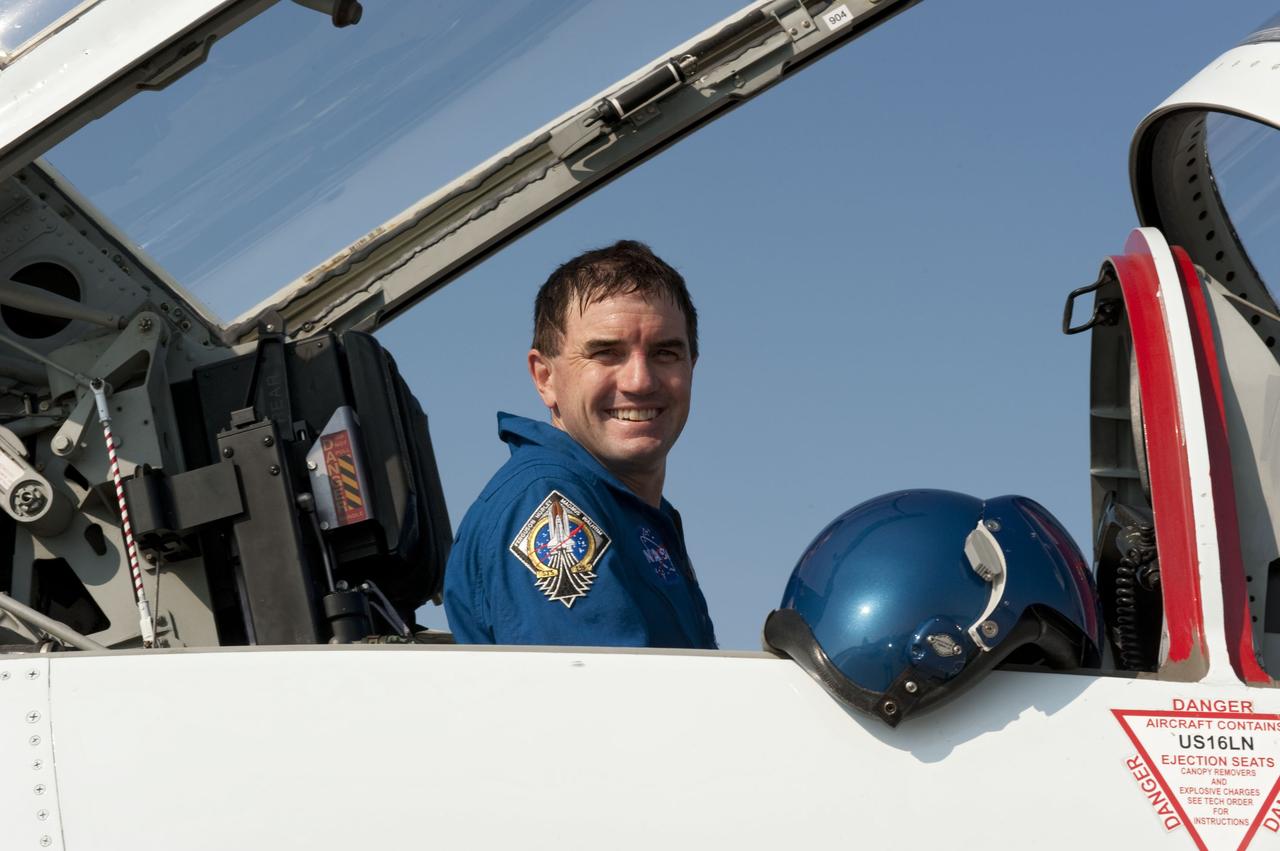
CAPE CANAVERAL, Fla. -- At the Shuttle Landing Facility at NASA's Kennedy Space Center in Florida, STS-135 Mission Specialist Rex Walheim arrives aboard a T-38 jet. The crew arrived at Kennedy at about 5:30 p.m. EDT to participate in a launch countdown dress rehearsal called the Terminal Countdown Demonstration Test (TCDT) and related training in preparation for the upcoming STS-135 mission. Commander Chris Ferguson, Pilot Doug Hurley and Mission Specialists Sandy Magnus and Rex Walheim are targeted to lift off July 8, taking with them the Raffaello multi-purpose logistics module packed with supplies and spare parts to the International Space Station. The STS-135 mission also will fly a system to investigate the potential for robotically refueling existing satellites and return a failed ammonia pump module to help NASA better understand the failure mechanism and improve pump designs for future systems. STS-135 will be the 33rd flight of Atlantis, the 37th shuttle mission to the space station, and the 135th and final mission of NASA's Space Shuttle Program. For more information visit, www.nasa.gov/mission_pages/shuttle/shuttlemissions/sts135/index.html. Photo credit: NASA/Kim Shiflett
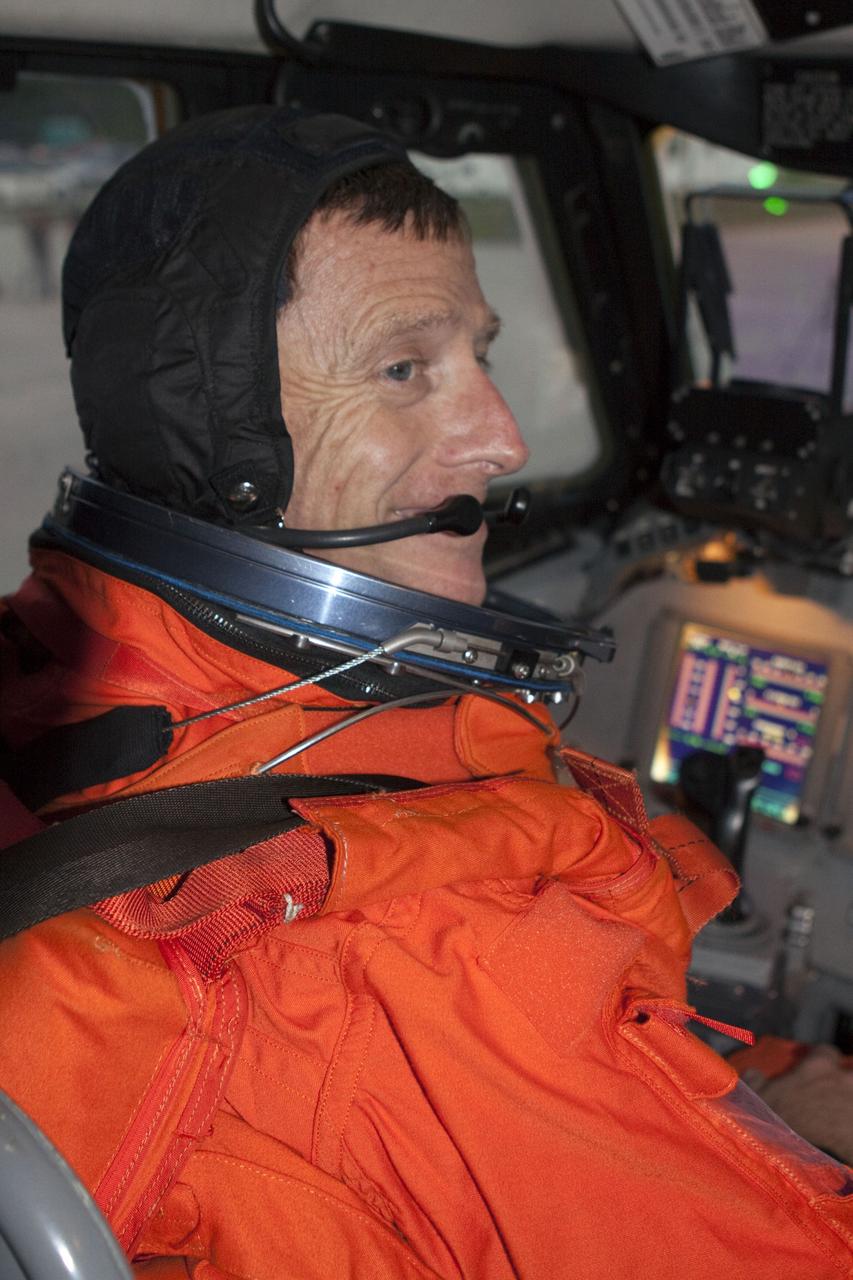
CAPE CANAVERAL, Fla. -- STS-135 Commander Chris Ferguson prepares to perform touch-and-go landings aboard one of two Shuttle Training Aircrafts (STA) on the Shuttle Landing Facility runway at NASA's Kennedy Space Center in Florida. An STA is a Gulfstream II jet that is modified to mimic the shuttle's handling during the final phase of landing. Ferguson and Hurley will practice landings as part of standard training before space shuttle Atlantis' launch to the International Space Station. Atlantis and its crew are targeted to lift off July 8, to deliver the Raffaello multi-purpose logistics module packed with supplies and spare parts to the station. The STS-135 mission also will fly a system to investigate the potential for robotically refueling existing satellites and return a failed ammonia pump module to help NASA better understand the failure mechanism and improve pump designs for future systems. STS-135 will be the 33rd flight of Atlantis, the 37th shuttle mission to the space station, and the 135th and final mission of NASA's Space Shuttle Program. For more information visit, www.nasa.gov/mission_pages/shuttle/shuttlemissions/sts135/index.html. Photo credit: NASA/Troy Cryder
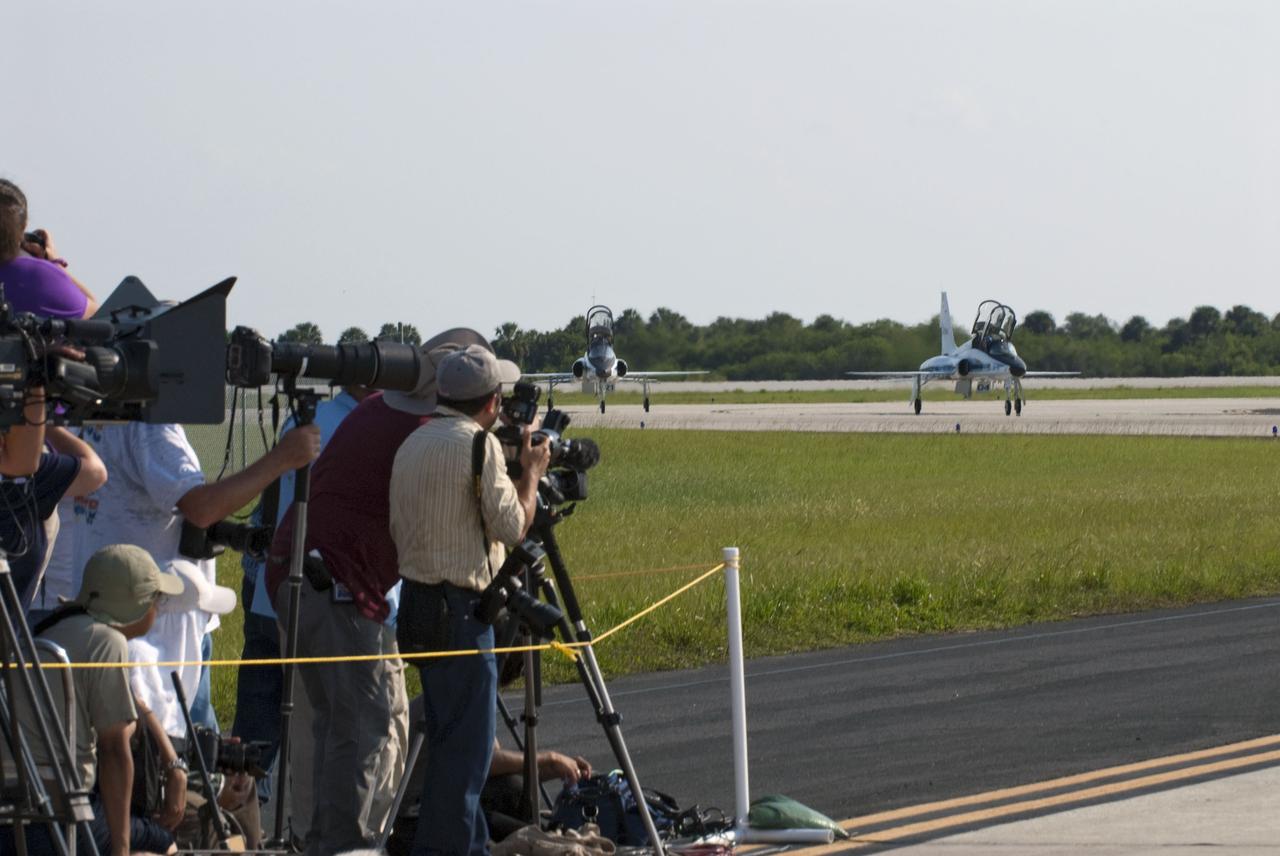
CAPE CANAVERAL, Fla. -- At the Shuttle Landing Facility at NASA's Kennedy Space Center in Florida, space shuttle Atlantis' crew members begin to arrive aboard their T-38 jets while media snap photos of their arrival. The astronauts are at Kennedy to participate in a launch countdown dress rehearsal called the Terminal Countdown Demonstration Test (TCDT) and related training in preparation for the upcoming STS-135 mission. Atlantis is targeted to lift off on July 8, taking with them the Raffaello multi-purpose logistics module packed with supplies, and spare parts to the International Space Station. The STS-135 mission also will fly a system to investigate the potential for robotically refueling existing satellites and return a failed ammonia pump module to help NASA better understand the failure mechanism and improve pump designs for future systems. STS-135 will be the 33rd flight of Atlantis, the 37th shuttle mission to the space station, and the 135th and final mission of NASA's Space Shuttle Program. For more information visit, www.nasa.gov/mission_pages/shuttle/shuttlemissions/sts135/index.html. Photo credit: NASA/Kim Shiflett
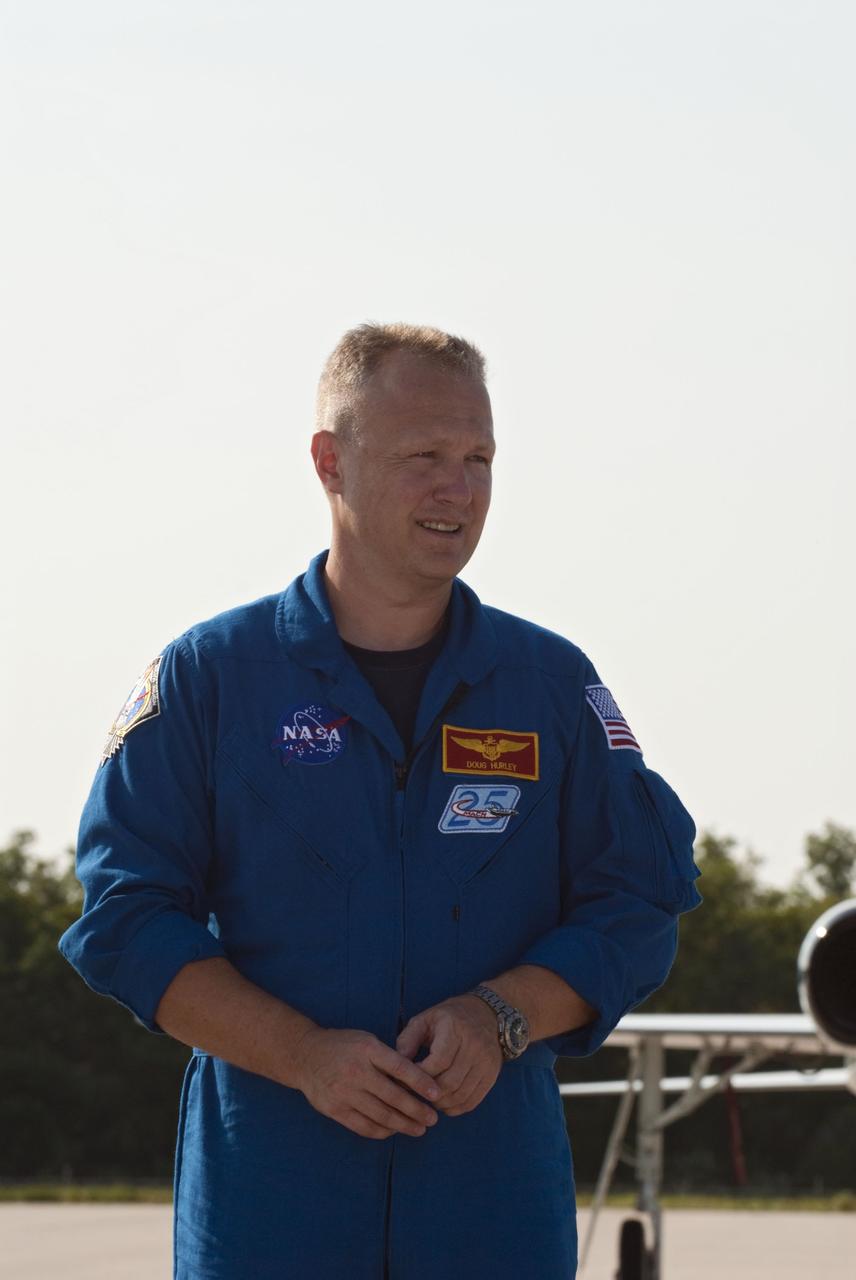
CAPE CANAVERAL, Fla. -- At the Shuttle Landing Facility at NASA's Kennedy Space Center in Florida, STS-135 Pilot Doug Hurley pauses for a photo. The space shuttle Atlantis crew arrived at Kennedy at about 5:30 p.m. EDT to participate in a launch countdown dress rehearsal called the Terminal Countdown Demonstration Test (TCDT) and related training in preparation for the upcoming STS-135 mission. Atlantis and its crew is targeted to lift off on July 8, taking with them the Raffaello multi-purpose logistics module packed with supplies and spare parts to the International Space Station. The STS-135 mission also will fly a system to investigate the potential for robotically refueling existing satellites and return a failed ammonia pump module to help NASA better understand the failure mechanism and improve pump designs for future systems. STS-135 will be the 33rd flight of Atlantis, the 37th shuttle mission to the space station, and the 135th and final mission of NASA's Space Shuttle Program. For more information visit, www.nasa.gov/mission_pages/shuttle/shuttlemissions/sts135/index.html. Photo credit: NASA/Kim Shiflett
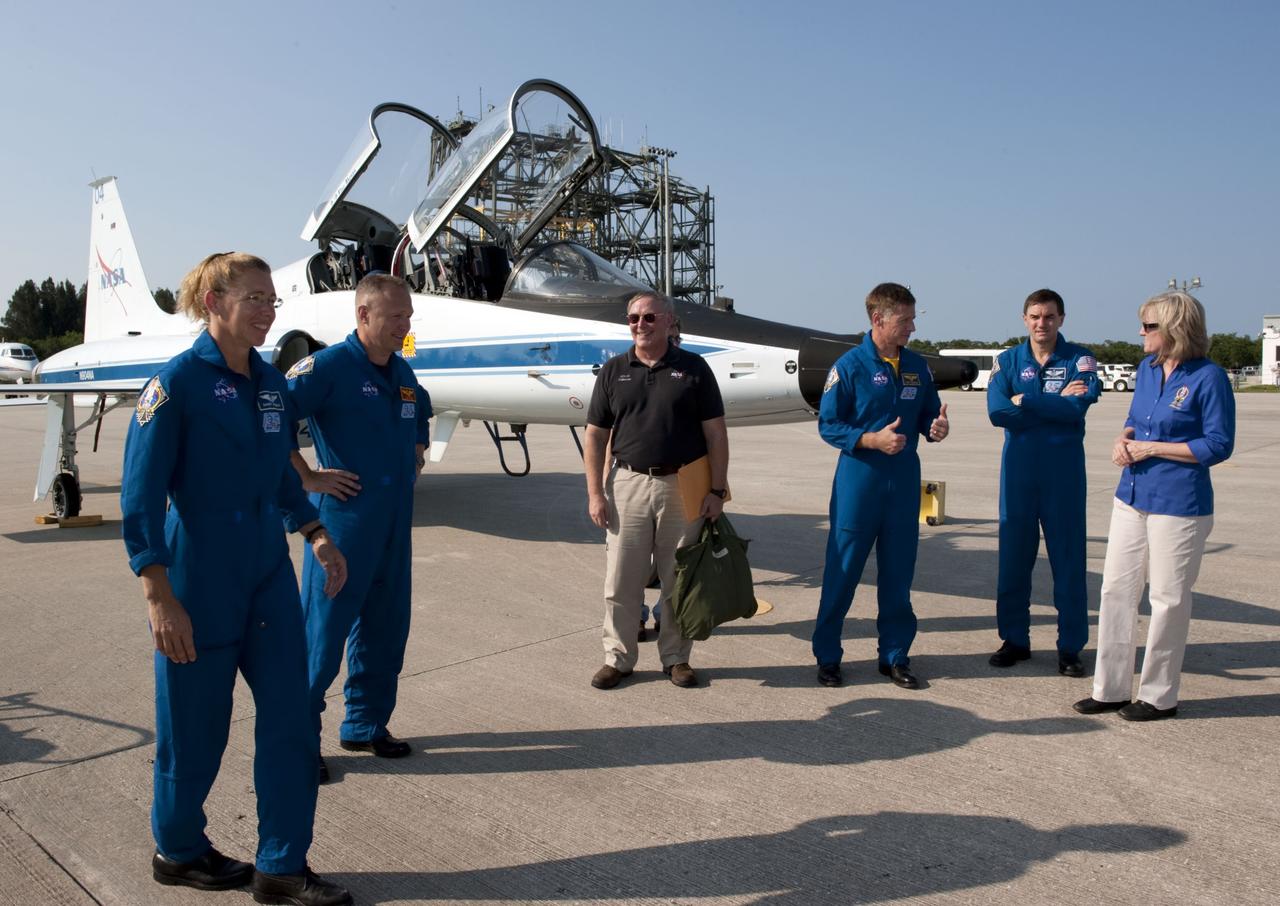
CAPE CANAVERAL, Fla. -- At the Shuttle Landing Facility at NASA's Kennedy Space Center in Florida, NASA Astronaut Jerry Ross (center) and space shuttle Atlantis' NASA Flow Director, Angie Brewer (right) are on hand greet the STS-135 crew. From left are Mission Specialist Sandy Magnus, Pilot Doug Hurley, Commander Chris Ferguson and Mission Specialist Rex Walheim. The crew arrived at Kennedy at about 5:30 p.m. EDT to participate in a launch countdown dress rehearsal called the Terminal Countdown Demonstration Test (TCDT) and related training in preparation for the upcoming STS-135 mission. Atlantis and its crew are targeted to lift off July 8, taking with them the Raffaello multi-purpose logistics module packed with supplies and spare parts to the International Space Station. The STS-135 mission also will fly a system to investigate the potential for robotically refueling existing satellites and return a failed ammonia pump module to help NASA better understand the failure mechanism and improve pump designs for future systems. STS-135 will be the 33rd flight of Atlantis, the 37th shuttle mission to the International Space Station, and the 135th and final mission of NASA's Space Shuttle Program. For more information visit, www.nasa.gov/mission_pages/shuttle/shuttlemissions/sts135/index.html. Photo credit: NASA/Kim Shiflett
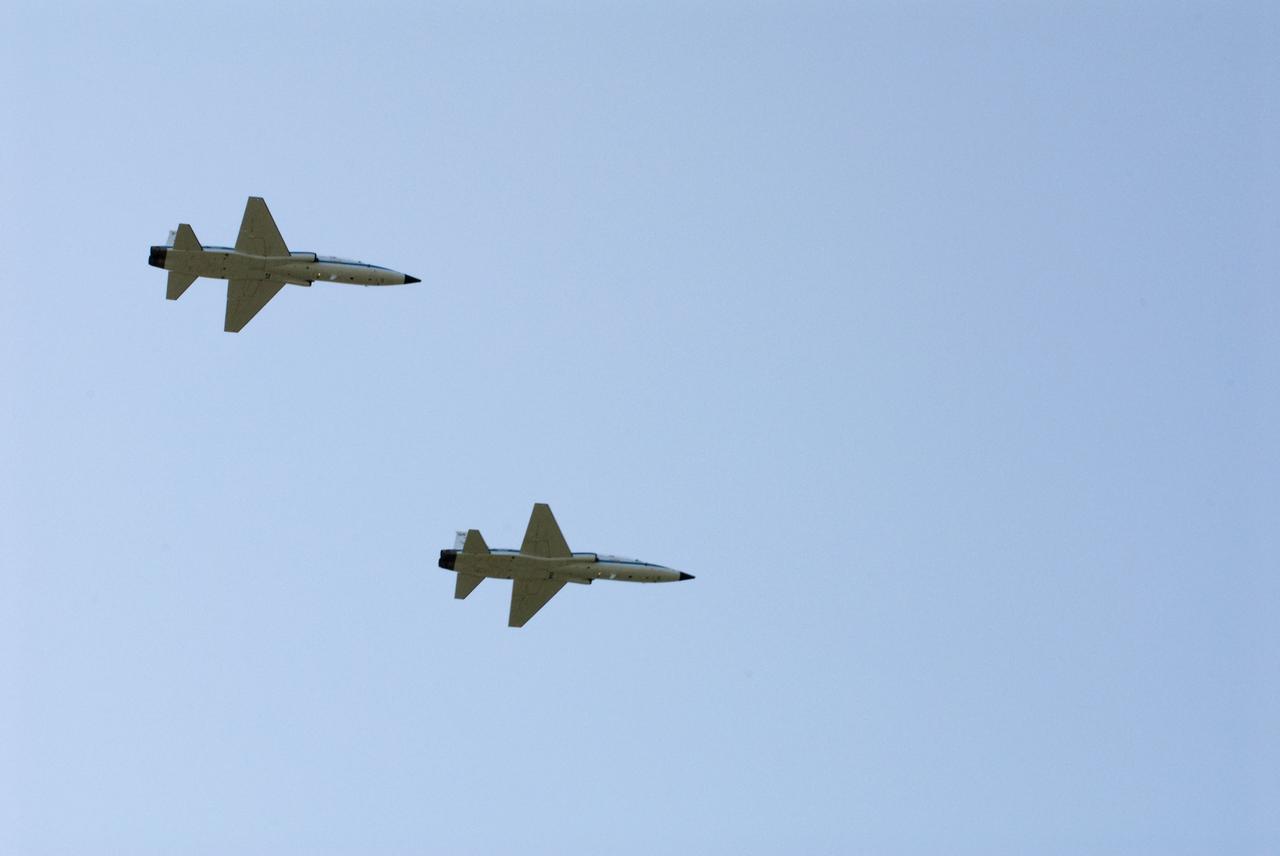
CAPE CANAVERAL, Fla. -- High above NASA's Kennedy Space Center in Florida, space shuttle Atlantis' crew members get ready to land their T-38 jets at the Shuttle Landing Facility. The astronauts are at Kennedy to participate in a launch countdown dress rehearsal called the Terminal Countdown Demonstration Test (TCDT) and related training in preparation for the upcoming STS-135 mission. Atlantis and its crew are targeted to lift off on July 8, taking with them the Raffaello multi-purpose logistics module packed with supplies, logistics and spare parts to the International Space Station. The STS-135 mission also will fly a system to investigate the potential for robotically refueling existing satellites and return a failed ammonia pump module to help NASA better understand the failure mechanism and improve pump designs for future systems. STS-135 will be the 33rd flight of Atlantis, the 37th shuttle mission to the station, and the 135th and final mission of NASA's Space Shuttle Program. For more information visit, www.nasa.gov/mission_pages/shuttle/shuttlemissions/sts135/index.html. Photo credit: NASA/Kim Shiflett
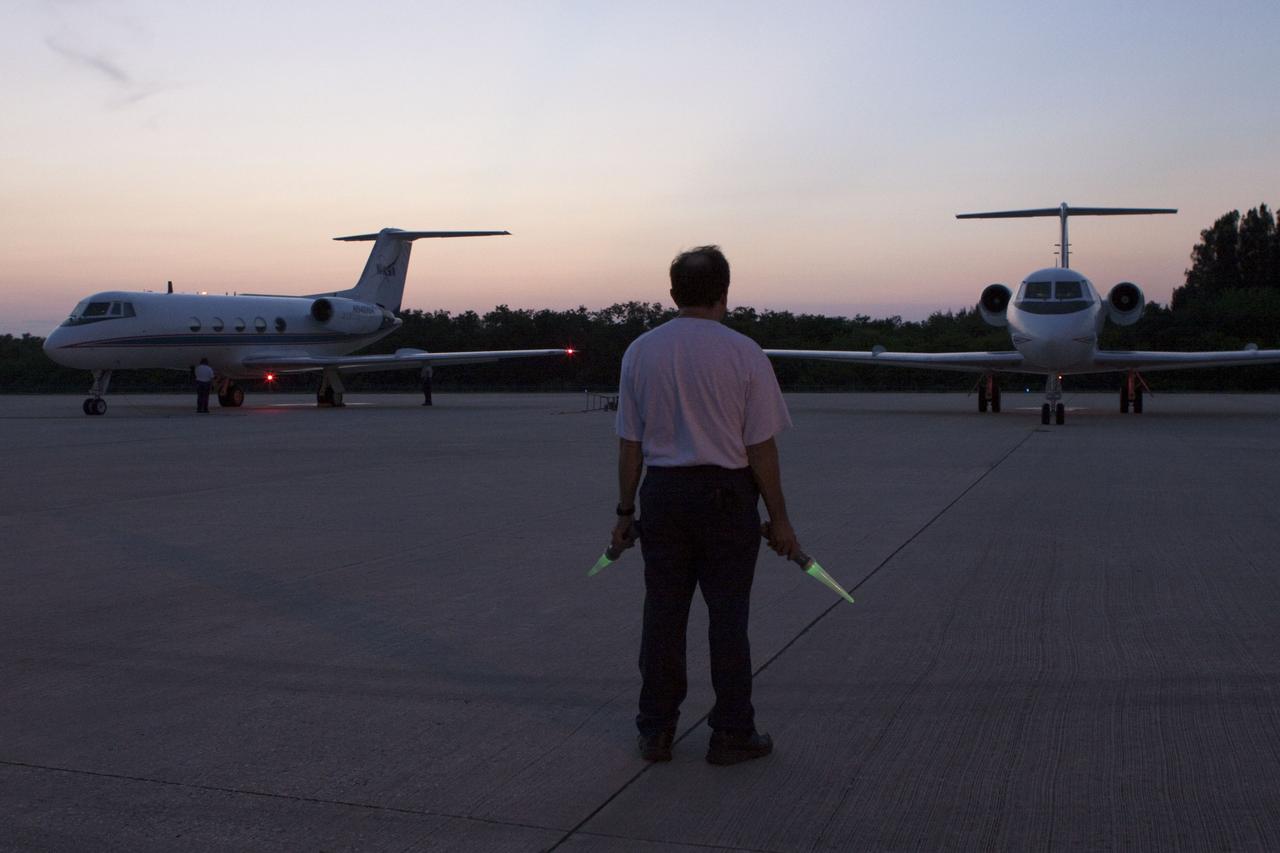
CAPE CANAVERAL, Fla. -- STS-135 Commander Chris Ferguson and Pilot Doug Hurley are signaled for takeoff from the Shuttle Landing Facility runway at NASA's Kennedy Space Center in Florida to perform touch-and-go landings aboard their Shuttle Training Aircrafts (STA). An STA is a Gulfstream II jet that is modified to mimic the shuttle's handling during the final phase of landing. Ferguson and Hurley will practice landings as part of standard training before space shuttle Atlantis' launch to the International Space Station. Atlantis and its crew are targeted to lift off July 8, to deliver the Raffaello multi-purpose logistics module packed with supplies and spare parts to the station. The STS-135 mission also will fly a system to investigate the potential for robotically refueling existing satellites and return a failed ammonia pump module to help NASA better understand the failure mechanism and improve pump designs for future systems. STS-135 will be the 33rd flight of Atlantis, the 37th shuttle mission to the space station, and the 135th and final mission of NASA's Space Shuttle Program. For more information visit, www.nasa.gov/mission_pages/shuttle/shuttlemissions/sts135/index.html. Photo credit: NASA/Troy Cryder
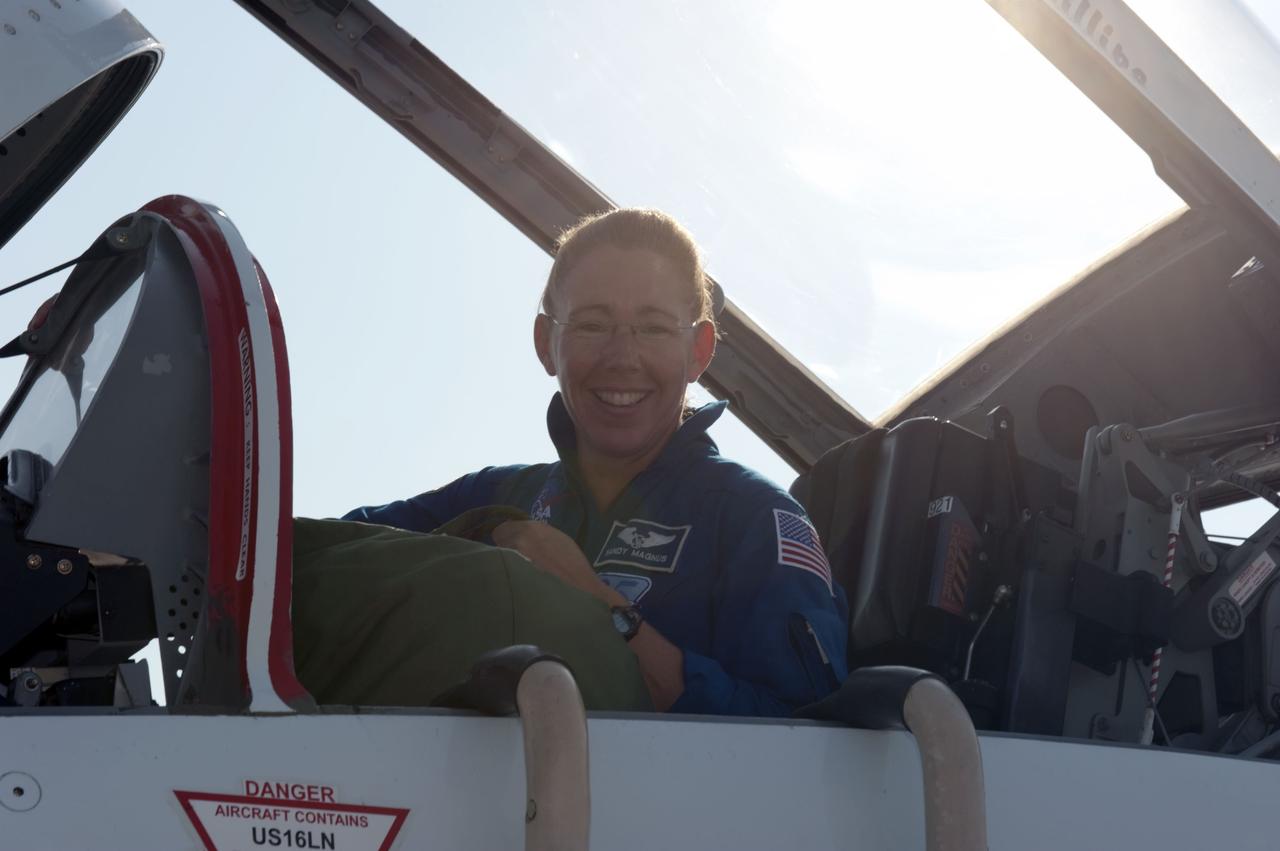
CAPE CANAVERAL, Fla. -- At the Shuttle Landing Facility at NASA's Kennedy Space Center in Florida, STS-135 Mission Specialist Sandy Magnus has arrived aboard a T-38 jet. The crew arrived at Kennedy at about 5:30 p.m. EDT to participate in a launch countdown dress rehearsal called the Terminal Countdown Demonstration Test (TCDT) and related training in preparation for the upcoming STS-135 mission. Commander Chris Ferguson, Pilot Doug Hurley and Mission Specialists Sandy Magnus and Rex Walheim are targeted to lift off July 8, taking with them the Raffaello multi-purpose logistics module packed with supplies and spare parts to the International Space Station. The STS-135 mission also will fly a system to investigate the potential for robotically refueling existing satellites and return a failed ammonia pump module to help NASA better understand the failure mechanism and improve pump designs for future systems. STS-135 will be the 33rd flight of Atlantis, the 37th shuttle mission to the space station, and the 135th and final mission of NASA's Space Shuttle Program. For more information visit, www.nasa.gov/mission_pages/shuttle/shuttlemissions/sts135/index.html. Photo credit: NASA/Kim Shiflett
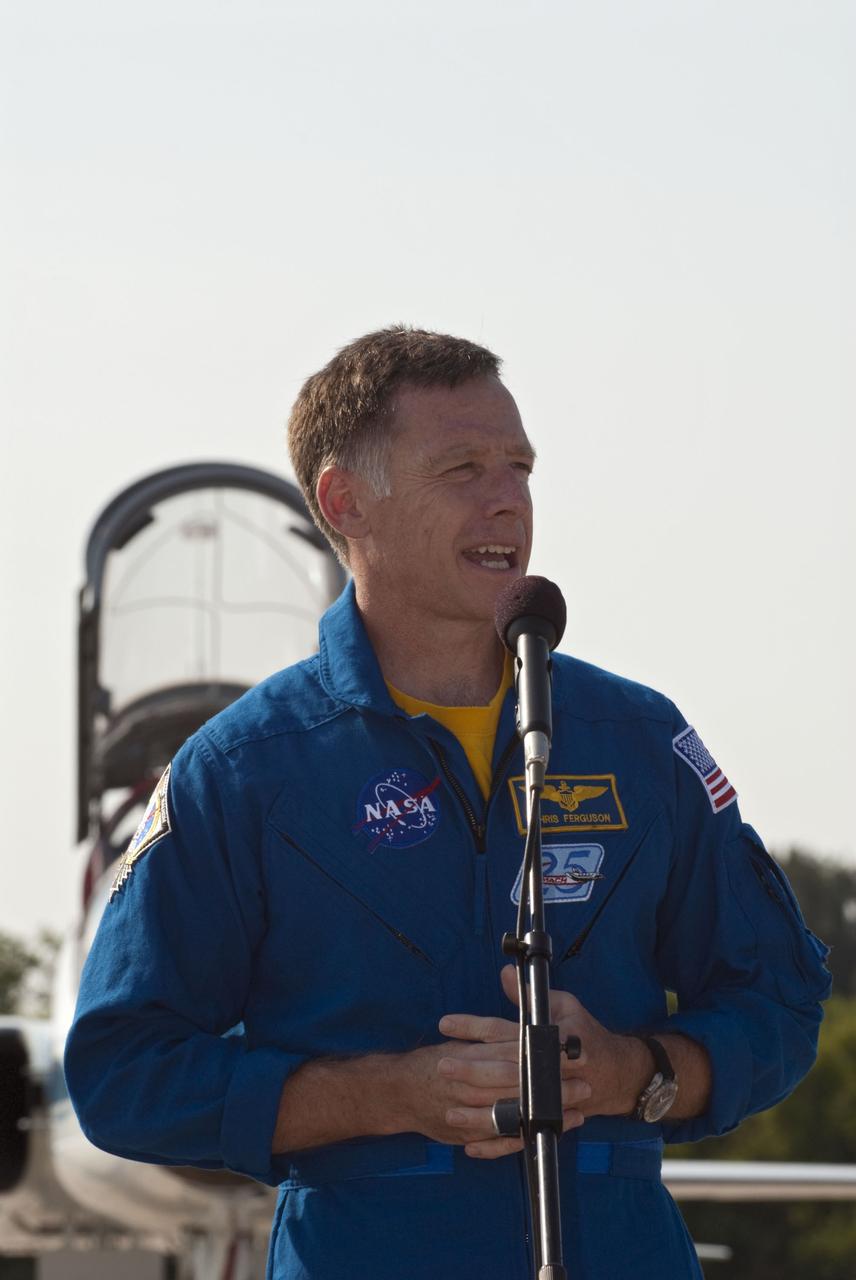
CAPE CANAVERAL, Fla. -- At the Shuttle Landing Facility at NASA's Kennedy Space Center in Florida, STS-135 Commander Chris Ferguson speaks to media. Space shuttle Atlantis' crew arrived at Kennedy at about 5:30 p.m. EDT to participate in a launch countdown dress rehearsal called the Terminal Countdown Demonstration Test (TCDT) and related training in preparation for the upcoming STS-135 mission. The STS-135 crew is targeted to lift off July 8, taking with them the Raffaello multi-purpose logistics module packed with supplies, logistics and spare parts to the International Space Station. The STS-135 mission also will fly a system to investigate the potential for robotically refueling existing satellites and return a failed ammonia pump module to help NASA better understand the failure mechanism and improve pump designs for future systems. STS-135 will be the 33rd flight of Atlantis, the 37th shuttle mission to the space station, and the 135th and final mission of NASA's Space Shuttle Program. For more information visit, www.nasa.gov/mission_pages/shuttle/shuttlemissions/sts135/index.html. Photo credit: NASA/Kim Shiflett
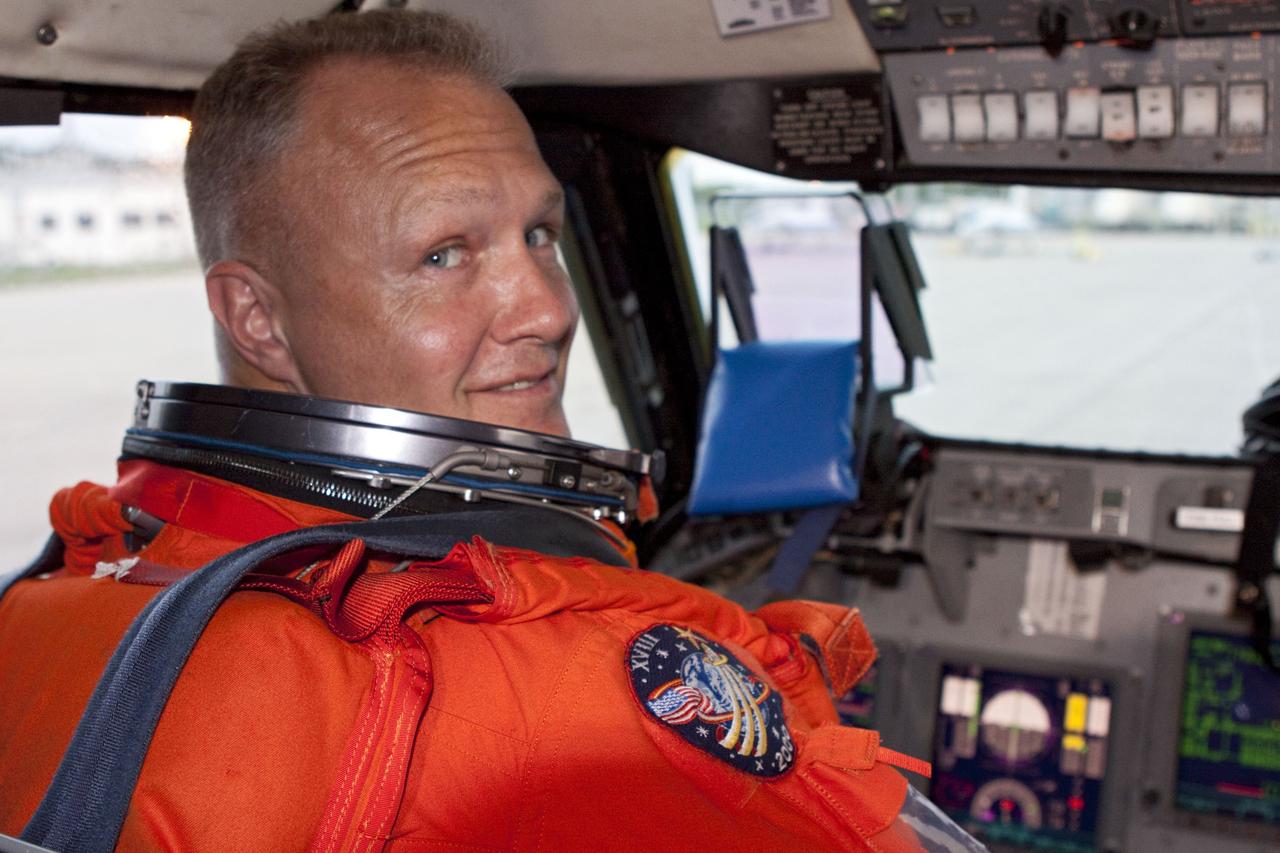
CAPE CANAVERAL, Fla. -- STS-135 Pilot Doug Hurley prepares to perform touch-and-go landings aboard one of two Shuttle Training Aircrafts (STA) on the Shuttle Landing Facility runway at NASA's Kennedy Space Center in Florida. An STA is a Gulfstream II jet that is modified to mimic the shuttle's handling during the final phase of landing. Ferguson and Hurley will practice landings as part of standard training before space shuttle Atlantis' launch to the International Space Station. Atlantis and its crew are targeted to lift off July 8, to deliver the Raffaello multi-purpose logistics module packed with supplies and spare parts to the station. The STS-135 mission also will fly a system to investigate the potential for robotically refueling existing satellites and return a failed ammonia pump module to help NASA better understand the failure mechanism and improve pump designs for future systems. STS-135 will be the 33rd flight of Atlantis, the 37th shuttle mission to the space station, and the 135th and final mission of NASA's Space Shuttle Program. For more information visit, www.nasa.gov/mission_pages/shuttle/shuttlemissions/sts135/index.html. Photo credit: NASA/Troy Cryder
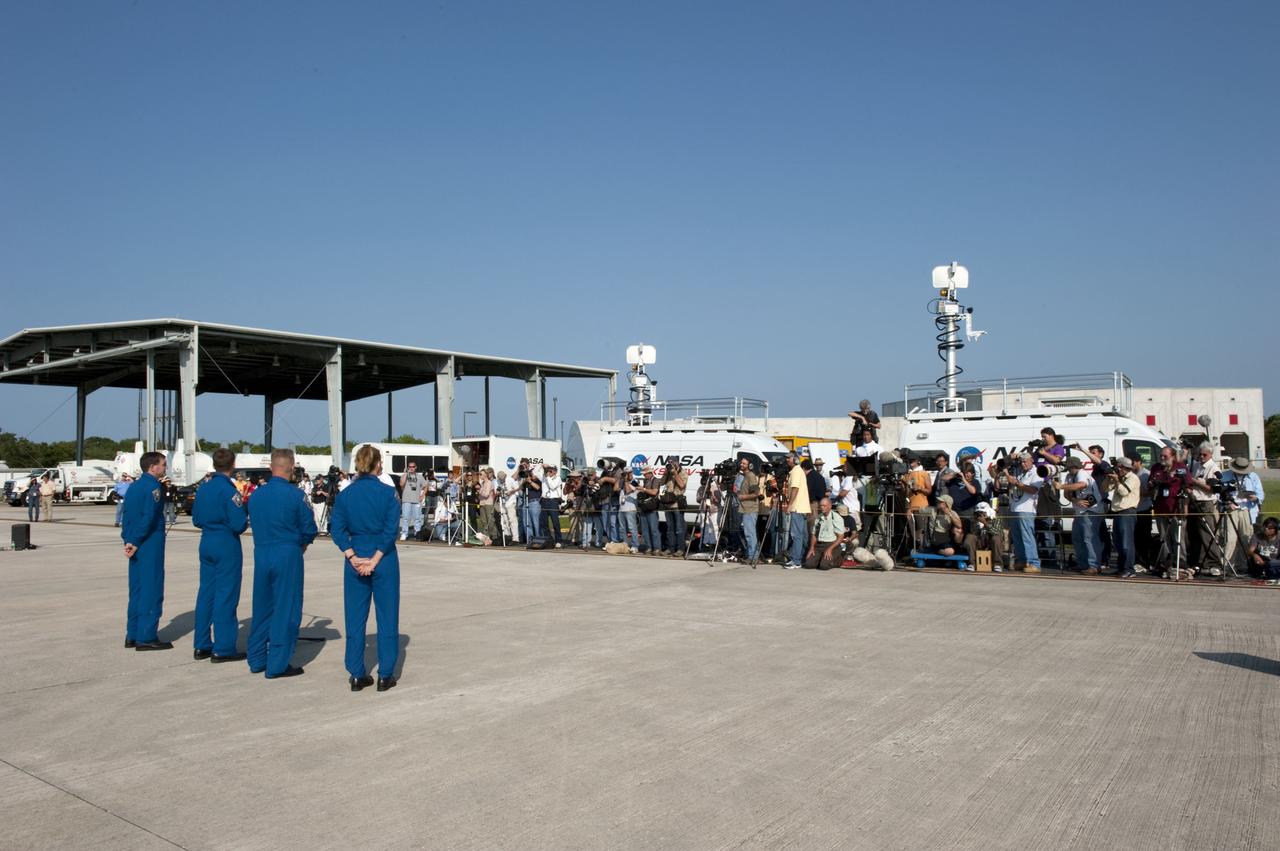
CAPE CANAVERAL, Fla. -- Space shuttle Atlantis' STS-135 crew members address the media on the Shuttle Landing Facility at NASA's Kennedy Space Center in Florida. While at Kennedy, Atlantis' crew will participate in a launch countdown dress rehearsal called the Terminal Countdown Demonstration Test (TCDT) and related training in preparation for the upcoming STS-135 mission. Atlantis and its crew are targeted to lift off on July 8, taking with them the Raffaello multi-purpose logistics module packed with supplies, logistics and spare parts to the International Space Station. The STS-135 mission also will fly a system to investigate the potential for robotically refueling existing satellites and return a failed ammonia pump module to help NASA better understand the failure mechanism and improve pump designs for future systems. STS-135 will be the 33rd flight of Atlantis, the 37th shuttle mission to the space station, and the 135th and final mission of NASA's Space Shuttle Program. For more information visit, www.nasa.gov/mission_pages/shuttle/shuttlemissions/sts135/index.html. Photo credit: NASA/Kim Shiflett
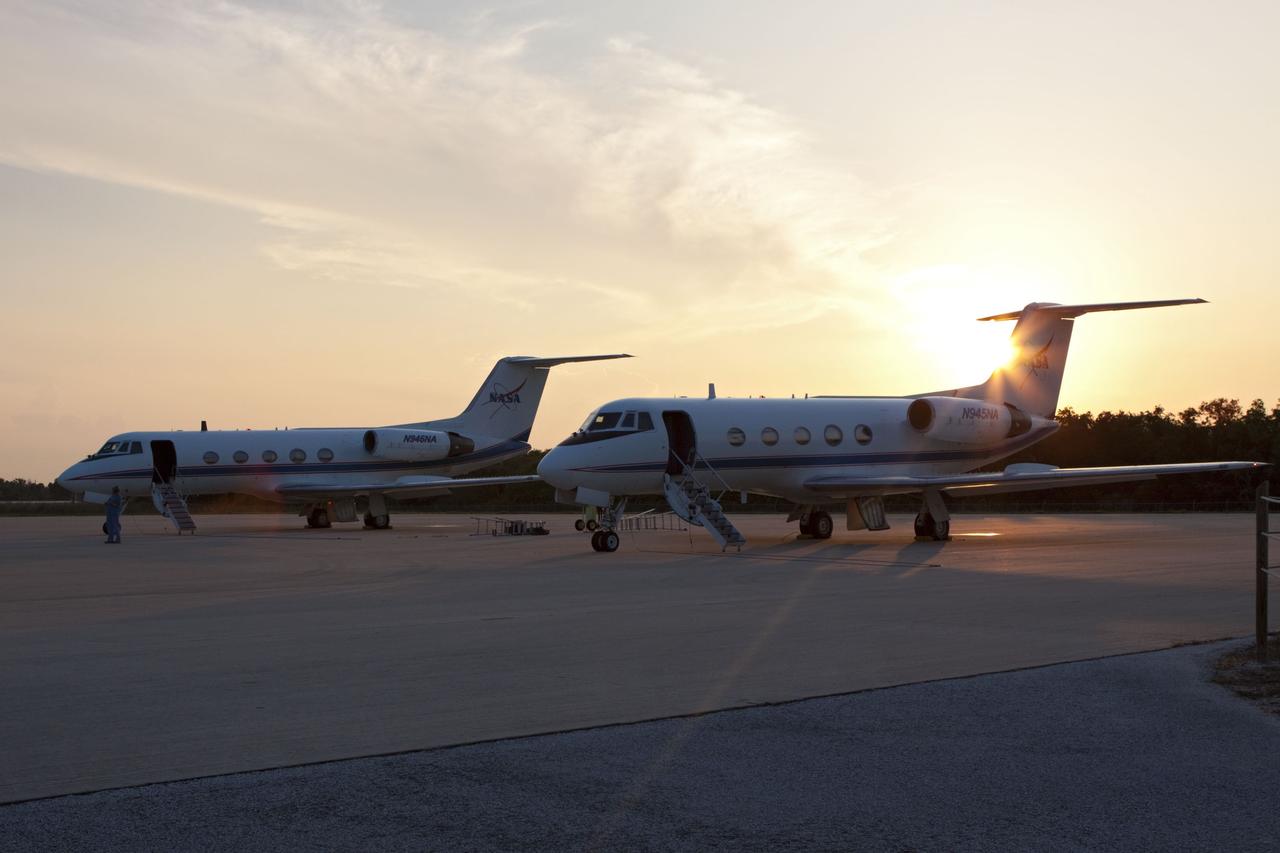
CAPE CANAVERAL, Fla. -- STS-135 Commander Chris Ferguson and Pilot Doug Hurley will perform touch-and-go landings aboard their Shuttle Training Aircrafts (STA) awaiting them on the Shuttle Landing Facility runway at NASA's Kennedy Space Center in Florida. An STA is a Gulfstream II jet that is modified to mimic the shuttle's handling during the final phase of landing. Ferguson and Hurley will practice landings as part of standard training before space shuttle Atlantis' launch to the International Space Station. Atlantis and its crew are targeted to lift off July 8, to deliver the Raffaello multi-purpose logistics module packed with supplies and spare parts to the station. The STS-135 mission also will fly a system to investigate the potential for robotically refueling existing satellites and return a failed ammonia pump module to help NASA better understand the failure mechanism and improve pump designs for future systems. STS-135 will be the 33rd flight of Atlantis, the 37th shuttle mission to the space station, and the 135th and final mission of NASA's Space Shuttle Program. For more information visit, www.nasa.gov/mission_pages/shuttle/shuttlemissions/sts135/index.html. Photo credit: NASA/Troy Cryder
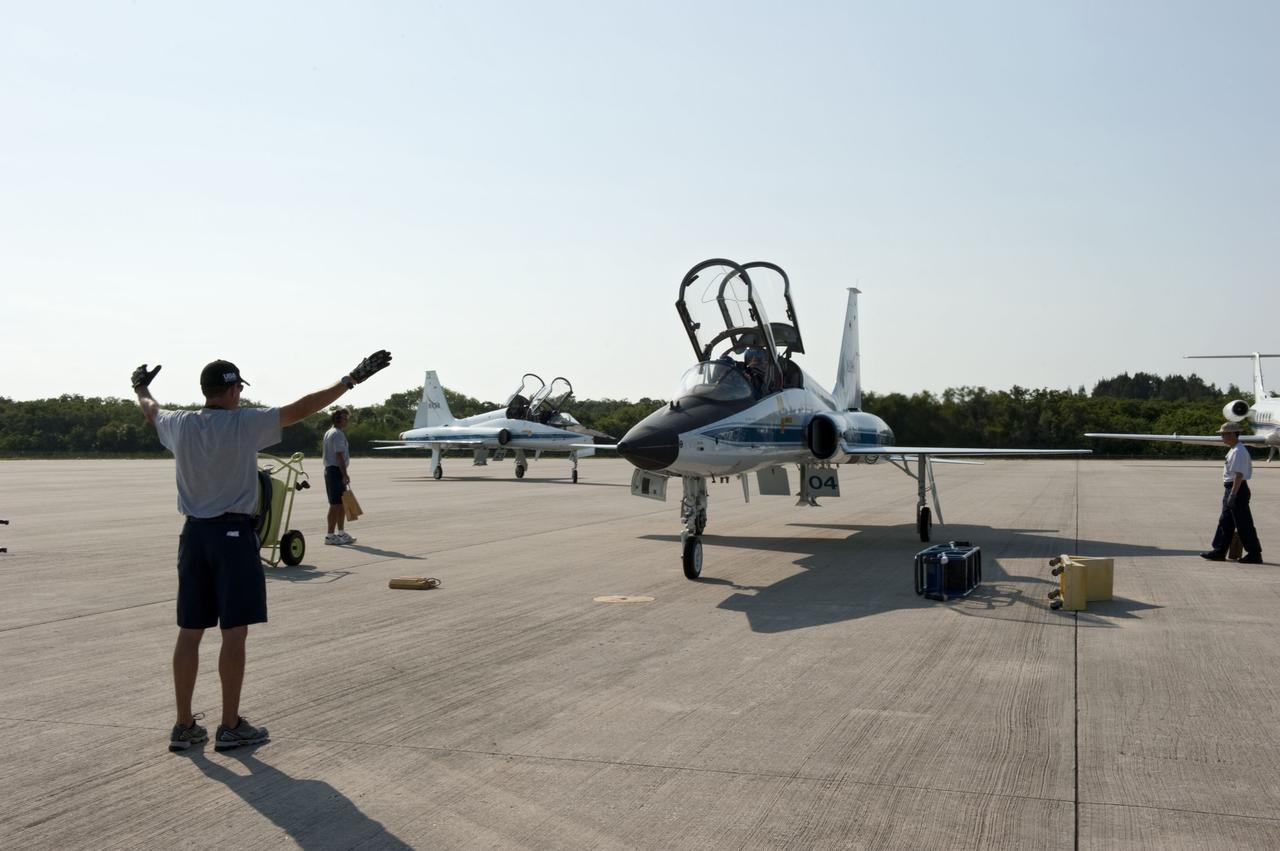
CAPE CANAVERAL, Fla. -- At the Shuttle Landing Facility at NASA's Kennedy Space Center in Florida, the STS-135 crew members arrived aboard their T-38 jets at about 5:30 p.m. EDT to participate in a launch countdown dress rehearsal called the Terminal Countdown Demonstration Test (TCDT) and related training in preparation for the upcoming STS-135 mission. Commander Chris Ferguson, Pilot Doug Hurley and Mission Specialists Sandy Magnus and Rex Walheim are targeted to lift off July 8, taking with them the Raffaello multi-purpose logistics module packed with supplies and spare parts to the International Space Station. The STS-135 mission also will fly a system to investigate the potential for robotically refueling existing satellites and return a failed ammonia pump module to help NASA better understand the failure mechanism and improve pump designs for future systems. STS-135 will be the 33rd flight of Atlantis, the 37th shuttle mission to the space station, and the 135th and final mission of NASA's Space Shuttle Program. For more information visit, www.nasa.gov/mission_pages/shuttle/shuttlemissions/sts135/index.html. Photo credit: NASA/Kim Shiflett
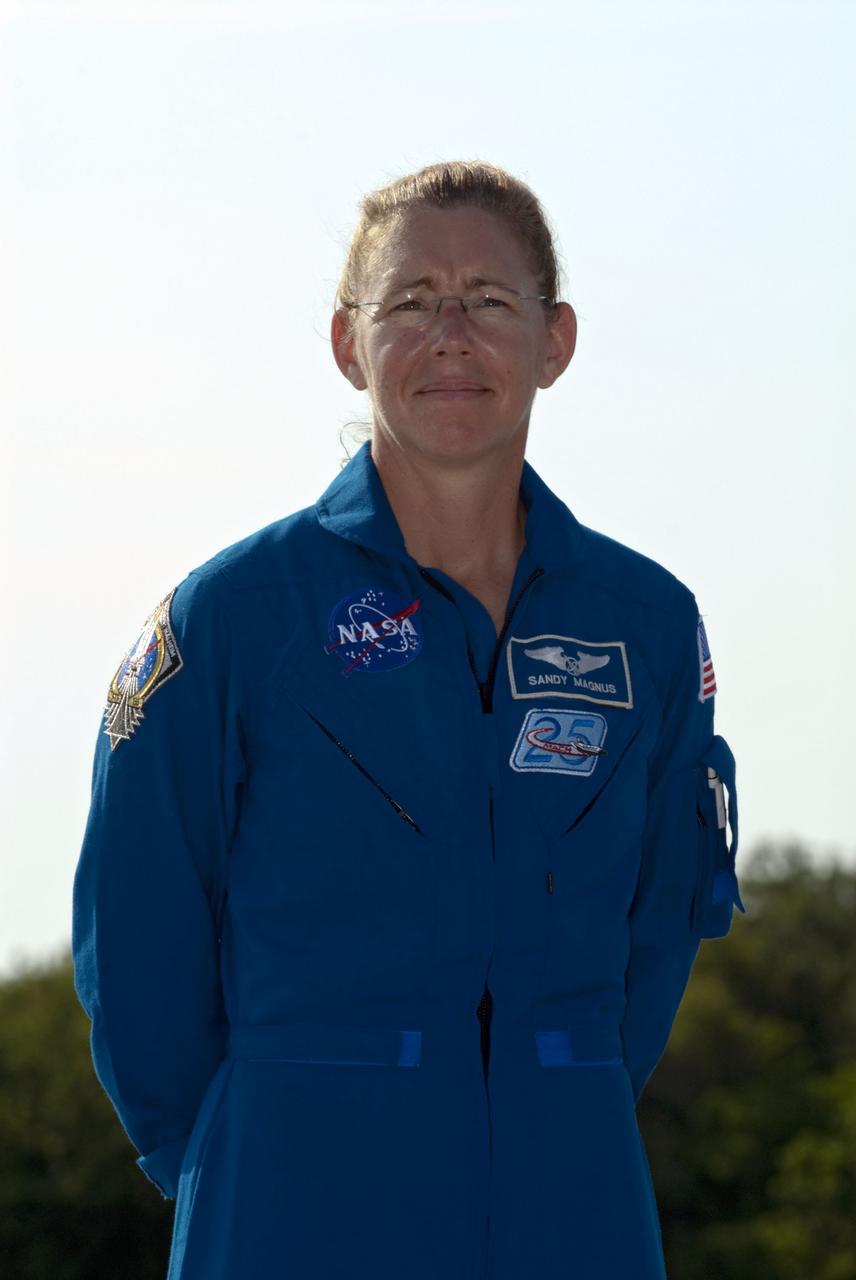
CAPE CANAVERAL, Fla. -- At the Shuttle Landing Facility at NASA's Kennedy Space Center in Florida, STS-135 Mission Specialist Sandy Magnus pauses for a photo. The space shuttle Atlantis crew arrived at Kennedy at about 5:30 p.m. EDT to participate in a launch countdown dress rehearsal called the Terminal Countdown Demonstration Test (TCDT) and related training in preparation for the upcoming STS-135 mission. Atlantis and its crew is targeted to lift off on July 8, taking with them the Raffaello multi-purpose logistics module packed with supplies and spare parts to the International Space Station. The STS-135 mission also will fly a system to investigate the potential for robotically refueling existing satellites and return a failed ammonia pump module to help NASA better understand the failure mechanism and improve pump designs for future systems. STS-135 will be the 33rd flight of Atlantis, the 37th shuttle mission to the space station, and the 135th and final mission of NASA's Space Shuttle Program. For more information visit, www.nasa.gov/mission_pages/shuttle/shuttlemissions/sts135/index.html. Photo credit: NASA/Kim Shiflett
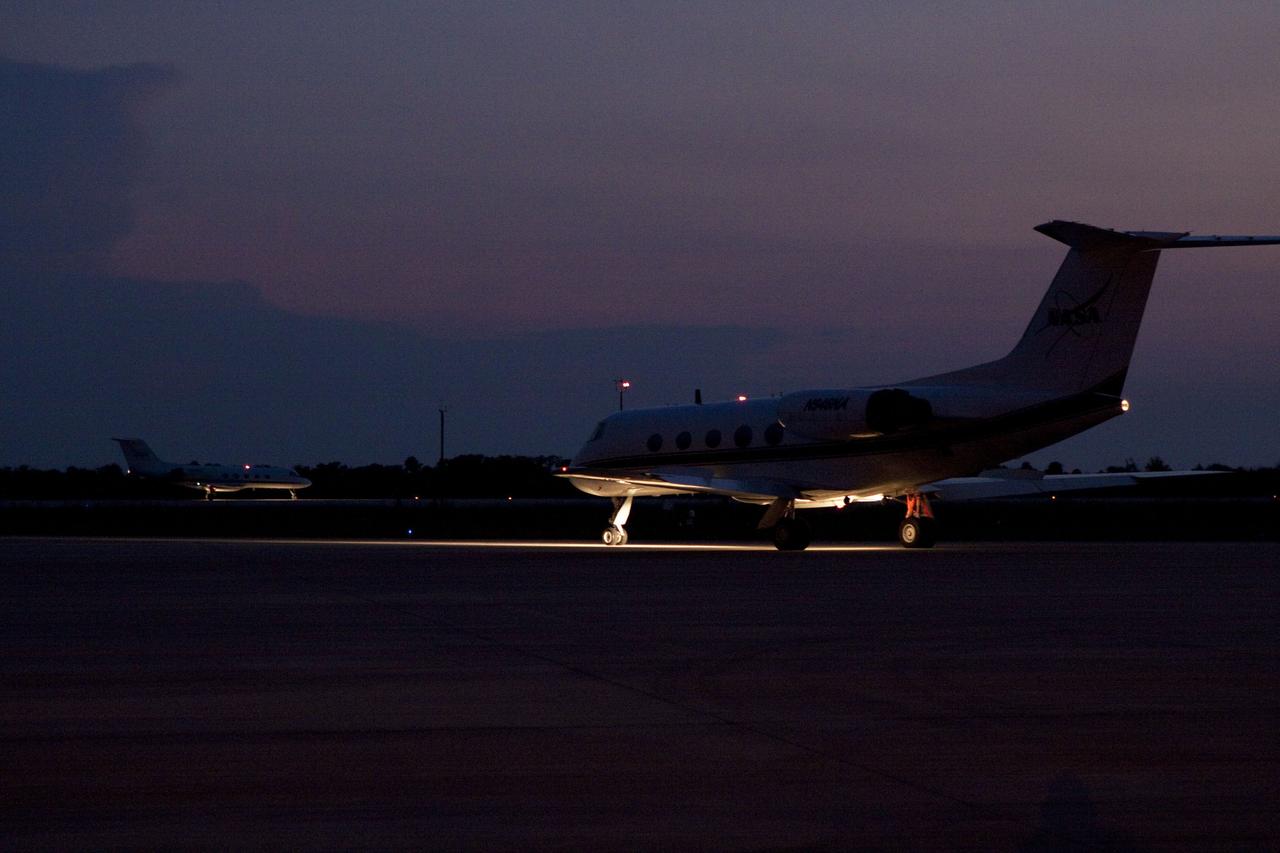
CAPE CANAVERAL, Fla. -- STS-135 Commander Chris Ferguson and Pilot Doug Hurley are ready to take off from the Shuttle Landing Facility runway at NASA's Kennedy Space Center in Florida to perform touch-and-go landings aboard their Shuttle Training Aircrafts (STA). An STA is a Gulfstream II jet that is modified to mimic the shuttle's handling during the final phase of landing. Ferguson and Hurley will practice landings as part of standard training before space shuttle Atlantis' launch to the International Space Station. Atlantis and its crew are targeted to lift off July 8, to deliver the Raffaello multi-purpose logistics module packed with supplies and spare parts to the station. The STS-135 mission also will fly a system to investigate the potential for robotically refueling existing satellites and return a failed ammonia pump module to help NASA better understand the failure mechanism and improve pump designs for future systems. STS-135 will be the 33rd flight of Atlantis, the 37th shuttle mission to the space station, and the 135th and final mission of NASA's Space Shuttle Program. For more information visit, www.nasa.gov/mission_pages/shuttle/shuttlemissions/sts135/index.html. Photo credit: NASA/Troy Cryder