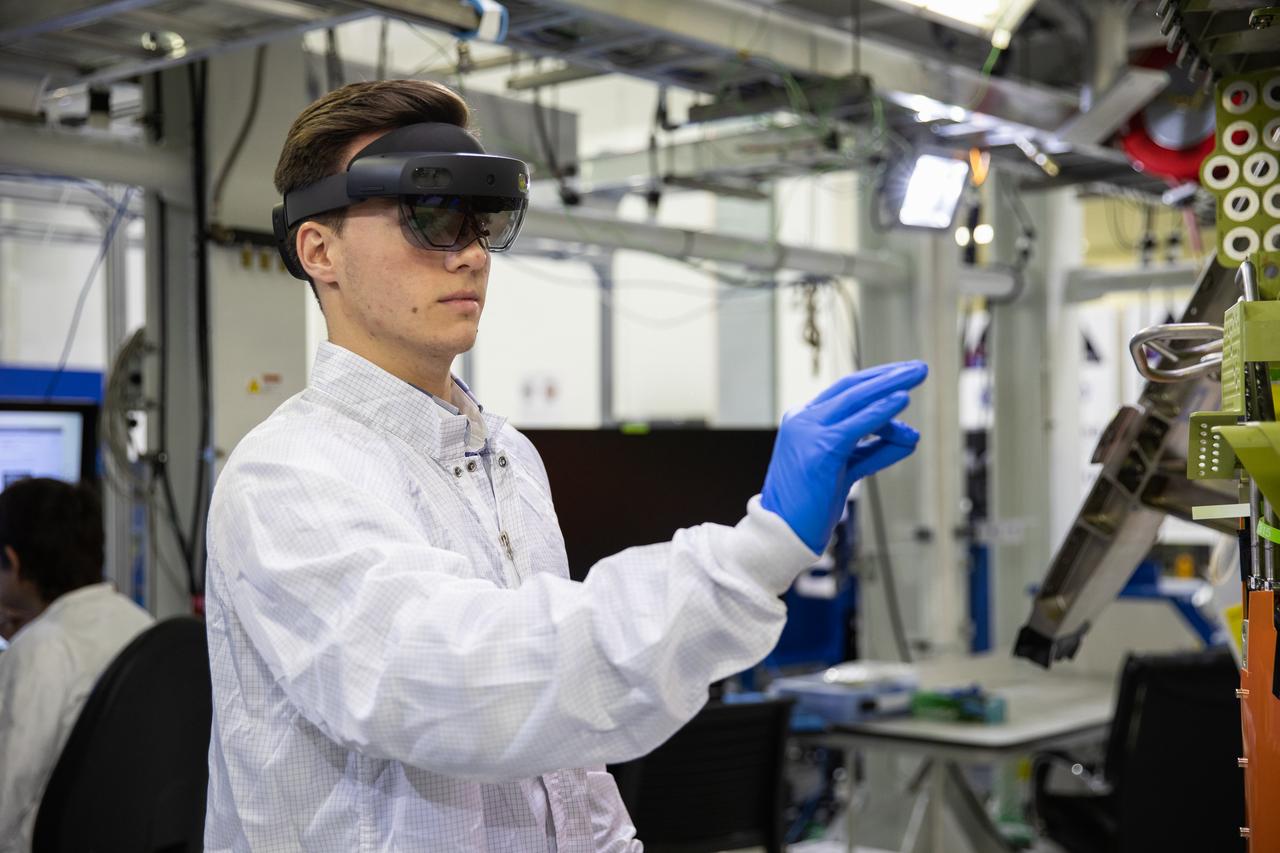
Michael Maxwell, with Lockheed Martin’s augmented reality team, wears a pair of augmented reality (AR) goggles to work on the crew module for NASA’s Artemis II mission inside the high bay of the Neil Armstrong Operations and Checkout Building at the agency’s Kennedy Space Center in Florida on March 18, 2020. Orion manufacturer Lockheed Martin provided the goggles to technicians to help place tapes where components will be installed on the crew module adapter for Artemis II, the first crewed mission aboard the spacecraft. Using the AR goggles saves significant labor and time to complete tasks. Manufactured by Microsoft, the goggles, called HoloLens2, are the second version used by Lockheed.
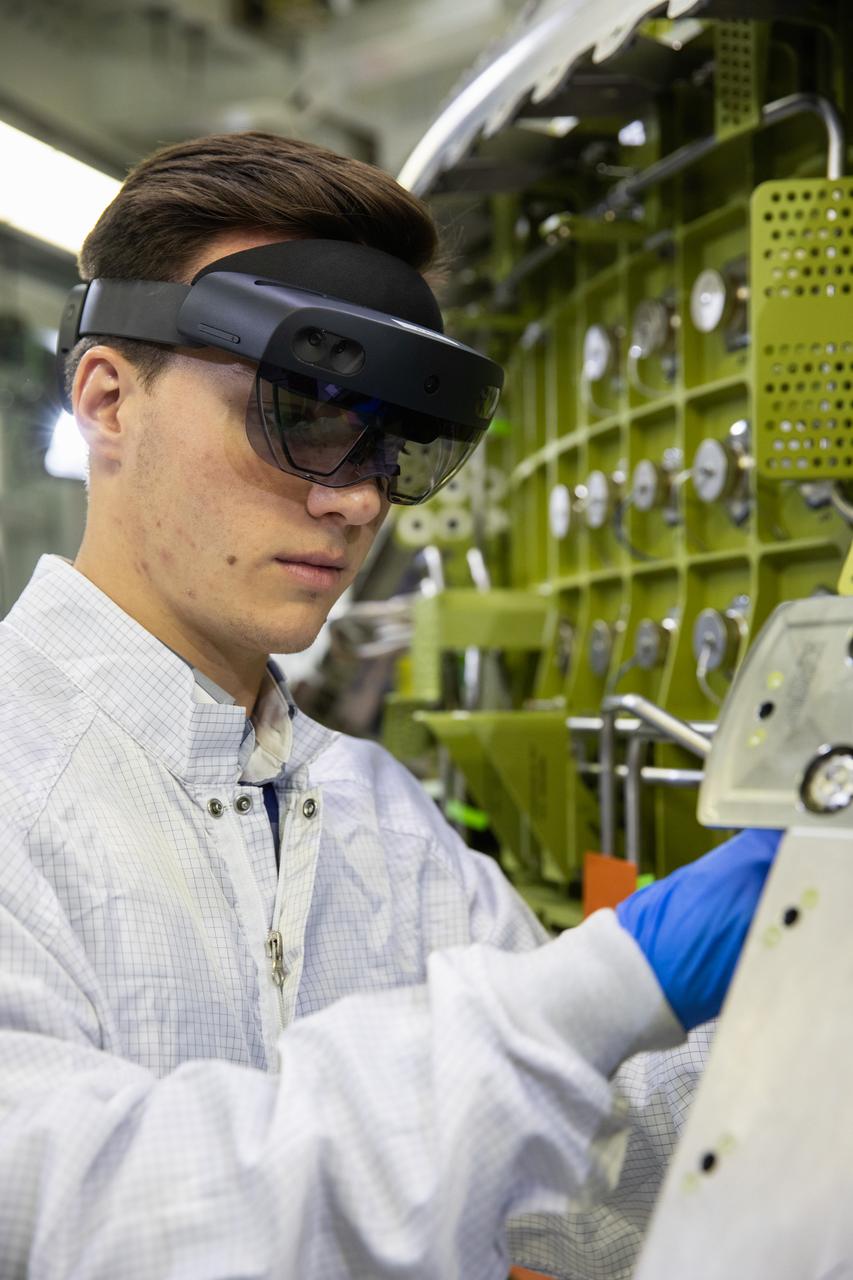
Michael Maxwell, with Lockheed Martin’s augmented reality team, wears a pair of augmented reality (AR) goggles to work on the crew module for NASA’s Artemis II mission inside the high bay of the Neil Armstrong Operations and Checkout Building at the agency’s Kennedy Space Center in Florida on March 18, 2020. Orion manufacturer Lockheed Martin provided the goggles to technicians to help place tapes where components will be installed on the crew module adapter for Artemis II, the first crewed mission aboard the spacecraft. Using the AR goggles saves significant labor and time to complete tasks. Manufactured by Microsoft, the goggles, called HoloLens2, are the second version used by Lockheed.
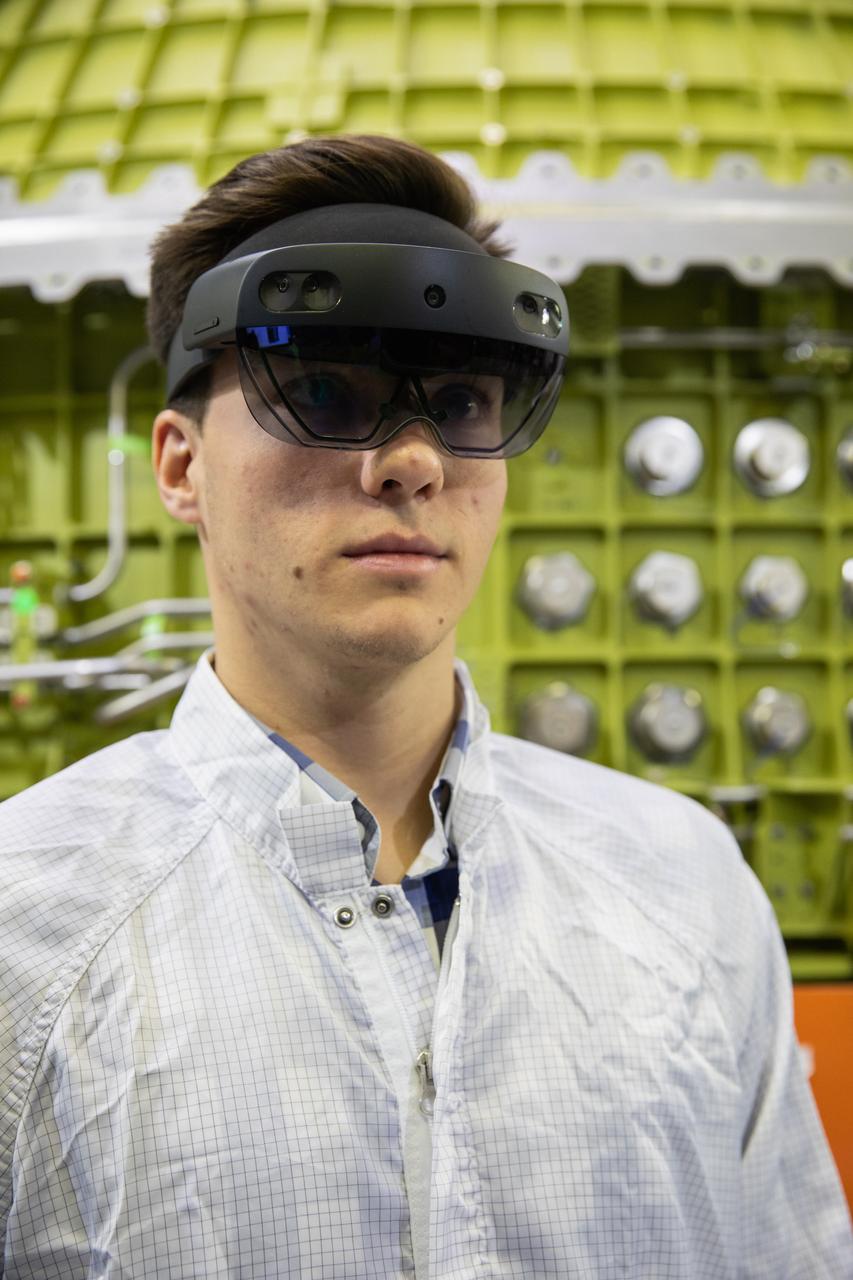
Michael Maxwell, with Lockheed Martin’s augmented reality team, wears a pair of augmented reality (AR) goggles to work on the crew module for NASA’s Artemis II mission inside the high bay of the Neil Armstrong Operations and Checkout Building at the agency’s Kennedy Space Center in Florida on March 18, 2020. Orion manufacturer Lockheed Martin provided the goggles to technicians to help place tapes where components will be installed on the crew module adapter for Artemis II, the first crewed mission aboard the spacecraft. Using the AR goggles saves significant labor and time to complete tasks. Manufactured by Microsoft, the goggles, called HoloLens2, are the second version used by Lockheed.
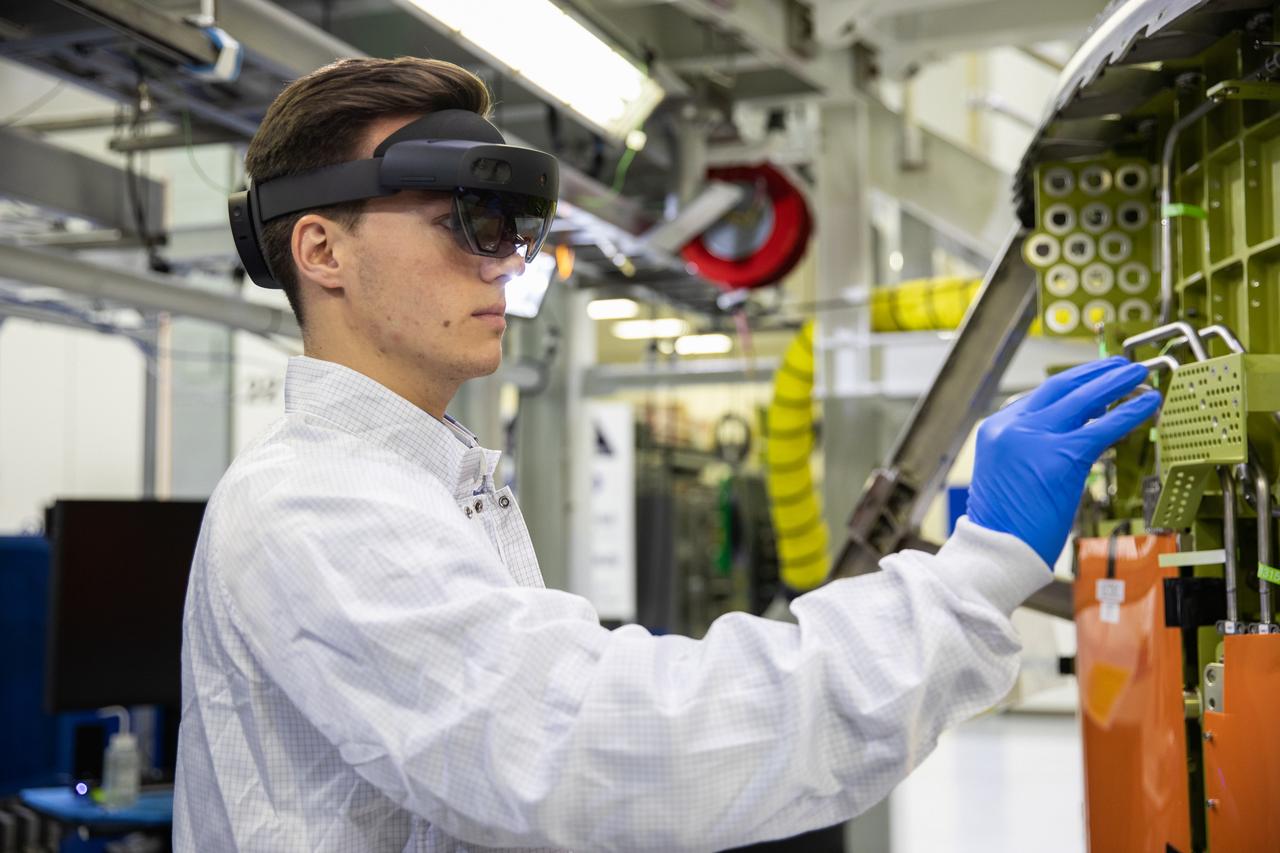
Michael Maxwell, with Lockheed Martin’s augmented reality team, wears a pair of augmented reality (AR) goggles to work on the crew module for NASA’s Artemis II mission inside the high bay of the Neil Armstrong Operations and Checkout Building at the agency’s Kennedy Space Center in Florida on March 18, 2020. Orion manufacturer Lockheed Martin provided the goggles to technicians to help place tapes where components will be installed on the crew module adapter for Artemis II, the first crewed mission aboard the spacecraft. Using the AR goggles saves significant labor and time to complete tasks. Manufactured by Microsoft, the goggles, called HoloLens2, are the second version used by Lockheed.
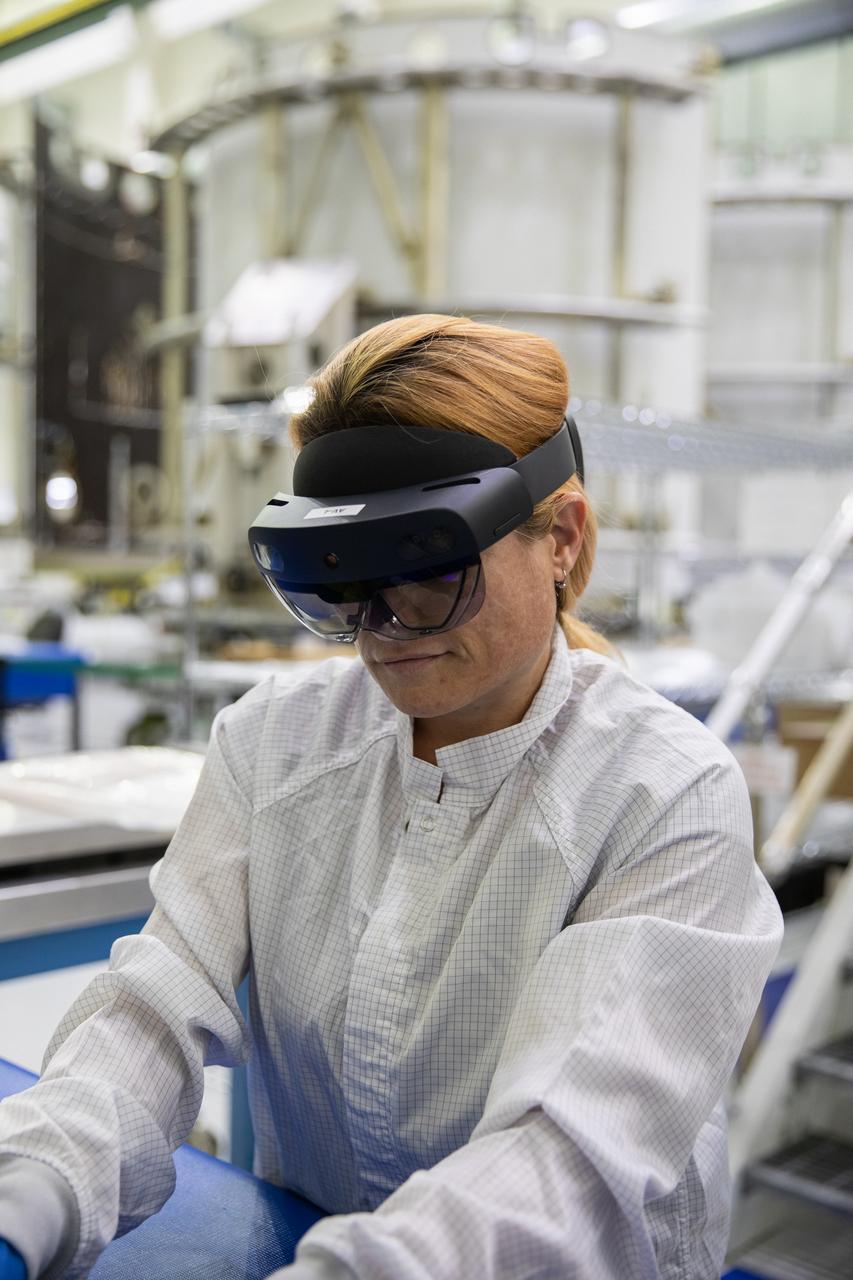
Jennifer Solano, with Lockheed Martin at Kennedy Space Center in Florida, wears a pair of augmented reality (AR) goggles to work on crew module hardware for NASA’s Artemis II mission inside the high bay of the Neil Armstrong Operations and Checkout Building at Kennedy on March 18, 2020. Orion manufacturer Lockheed Martin provided the goggles to technicians to help place tapes where components will be installed on Orion for Artemis II, the first crewed mission aboard the spacecraft. Using the AR goggles saves significant labor and time to complete tasks. Manufactured by Microsoft, the goggles, called HoloLens2, are the second version used by Lockheed.
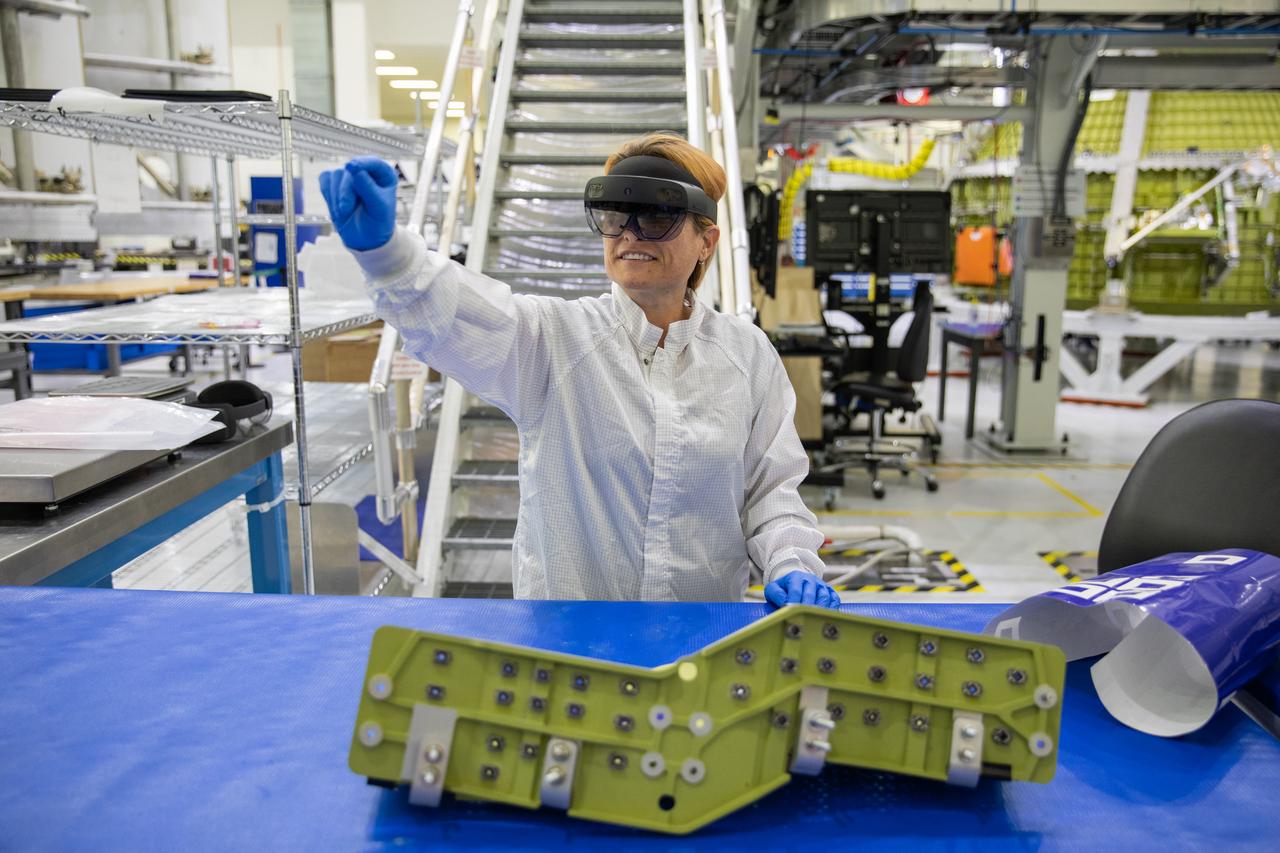
Jennifer Solano, with Lockheed Martin at NASA’s Kennedy Space Center in Florida, demonstrates a pair of augmented reality (AR) goggles as she works on crew module hardware for the agency’s Artemis II mission inside the high bay of the Neil Armstrong Operations and Checkout Building at Kennedy on March 18, 2020. Orion manufacturer Lockheed Martin provided the goggles to technicians to help place tapes where components will be installed on Orion for Artemis II, the first crewed mission aboard the spacecraft. Using the AR goggles saves significant labor and time to complete tasks. Manufactured by Microsoft, the goggles, called HoloLens2, are the second version used by Lockheed.
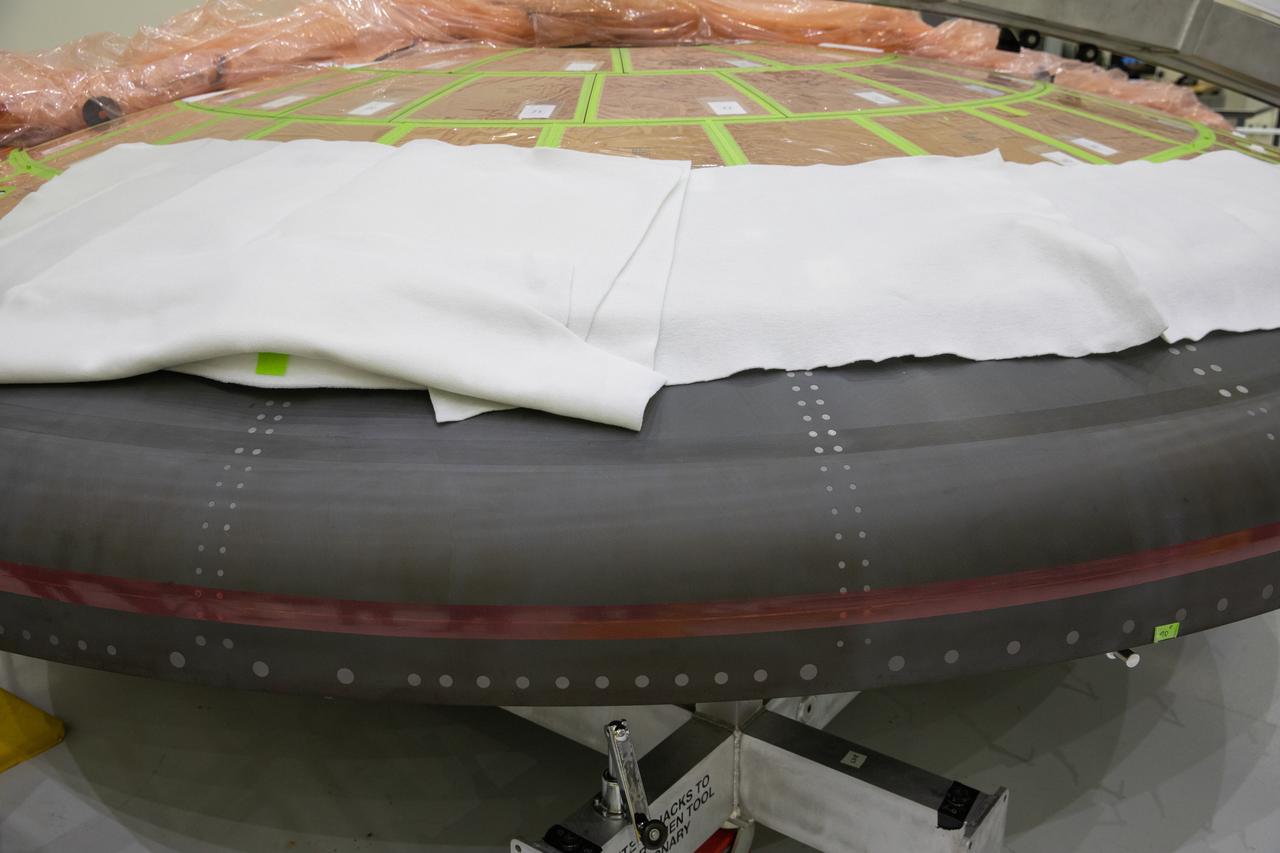
The heat shield for NASA’s Artemis II mission is in view inside the Neil Armstrong Operations and Checkout Building at the agency’s Kennedy Space Center in Florida on March 18, 2020. Using augmented reality (AR) goggles, technicians are completing the work on the heat shield. Orion manufacturer Lockheed Martin provided the goggles to technicians to help place tapes where components will be installed on the crew module, heat shield and other components for Artemis II, the first crewed mission aboard the spacecraft. Using the AR goggles saves significant labor and time to complete tasks. Manufactured by Microsoft, the goggles, called HoloLens2, are the second version used by Lockheed.
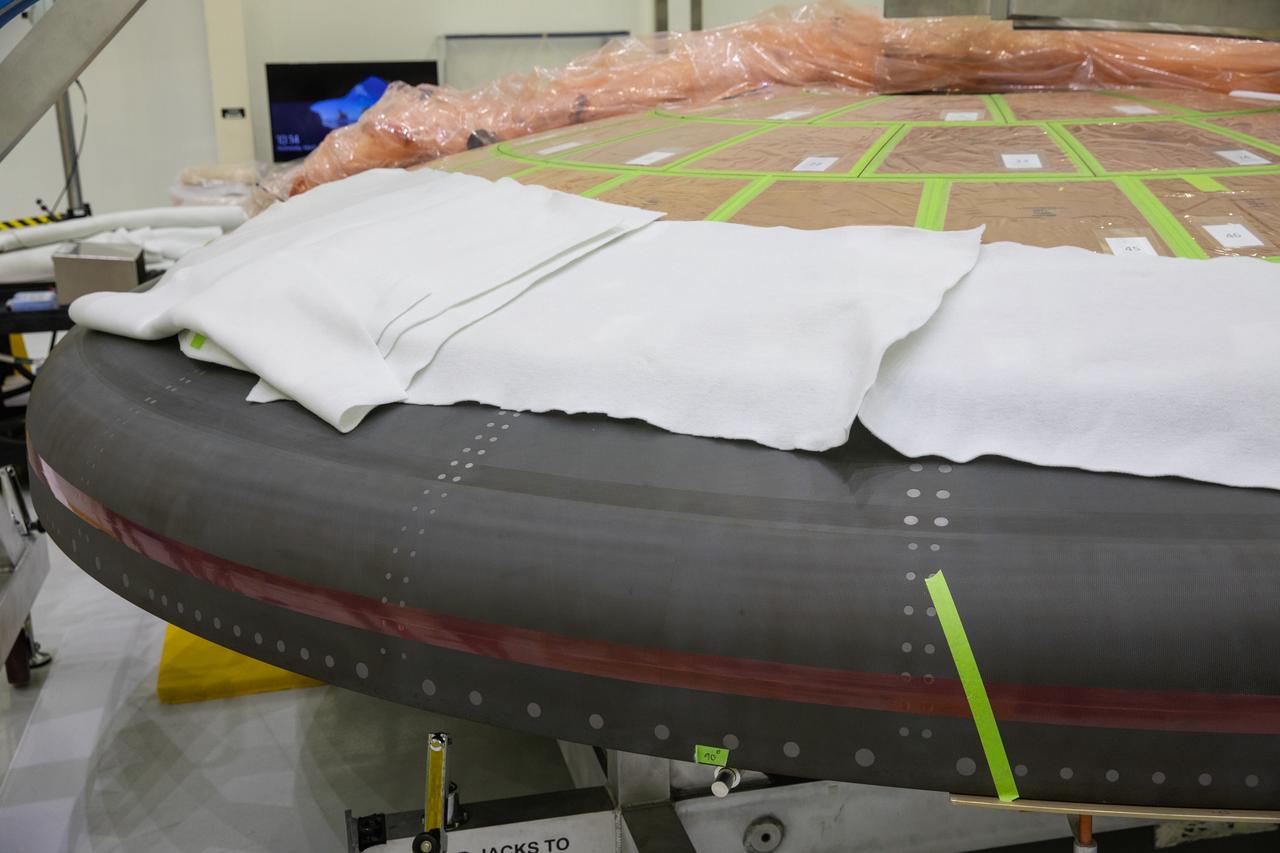
The heat shield for NASA’s Artemis II mission is in view inside the Neil Armstrong Operations and Checkout Building at the agency’s Kennedy Space Center in Florida on March 18, 2020. Using augmented reality (AR) goggles, technicians are completing the work on the heat shield. Orion manufacturer Lockheed Martin provided the goggles to technicians to help place tapes where components will be installed on the crew module, heat shield and other components for Artemis II, the first crewed mission aboard the spacecraft. Using the AR goggles saves significant labor and time to complete tasks. Manufactured by Microsoft, the goggles, called HoloLens2, are the second version used by Lockheed.
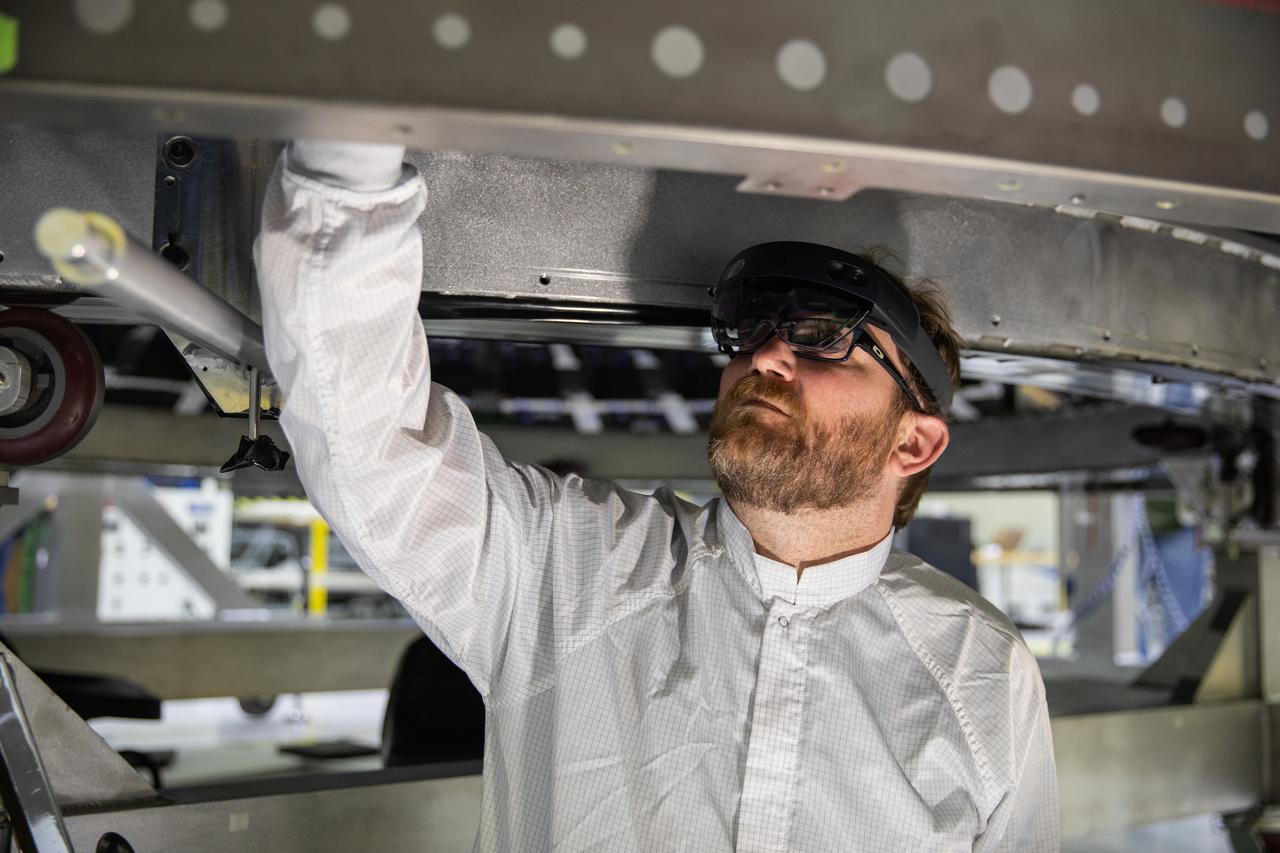
Eric Nolan, a technician with ASRC Federal Data Solutions, wears a pair of augmented reality (AR) goggles as he works on the heat shield for the crew module for NASA’s Artemis II mission inside the high bay of the Neil Armstrong Operations and Checkout Building at the agency’s Kennedy Space Center in Florida on March 18, 2020. Orion manufacturer Lockheed Martin provided the goggles to technicians to help place tapes where components will be installed on Orion for Artemis II, the first crewed mission aboard the spacecraft. Using the AR goggles saves significant labor and time to complete tasks. Manufactured by Microsoft, the goggles, called HoloLens2, are the second version used by Lockheed.
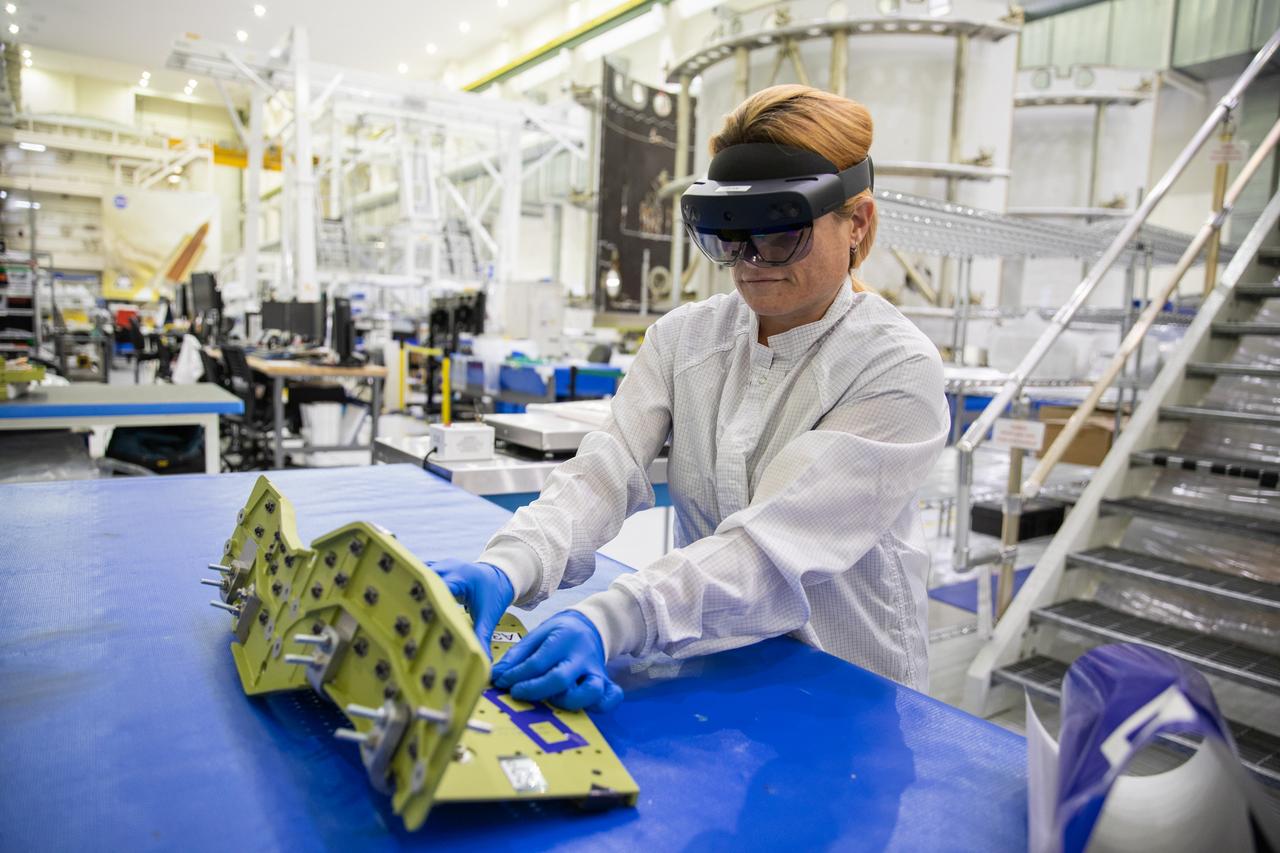
Jennifer Solano, with Lockheed Martin at Kennedy Space Center in Florida, wears a pair of augmented reality (AR) goggles to work on crew module hardware for NASA’s Artemis II mission inside the high bay of the Neil Armstrong Operations and Checkout Building at Kennedy on March 18, 2020. Orion manufacturer Lockheed Martin provided the goggles to technicians to help place tapes where components will be installed on Orion for Artemis II, the first crewed mission aboard the spacecraft. Using the AR goggles saves significant labor and time to complete tasks. Manufactured by Microsoft, the goggles, called HoloLens2, are the second version used by Lockheed.

Jennifer Solano, with Lockheed Martin at Kennedy Space Center in Florida, wears a pair of augmented reality (AR) goggles to work on crew module hardware for NASA’s Artemis II mission inside the high bay of the Neil Armstrong Operations and Checkout Building at Kennedy on March 18, 2020. Orion manufacturer Lockheed Martin provided the goggles to technicians to help place tapes where components will be installed on Orion for Artemis II, the first crewed mission aboard the spacecraft. Using the AR goggles saves significant labor and time to complete tasks. Manufactured by Microsoft, the goggles, called HoloLens2, are the second version used by Lockheed.
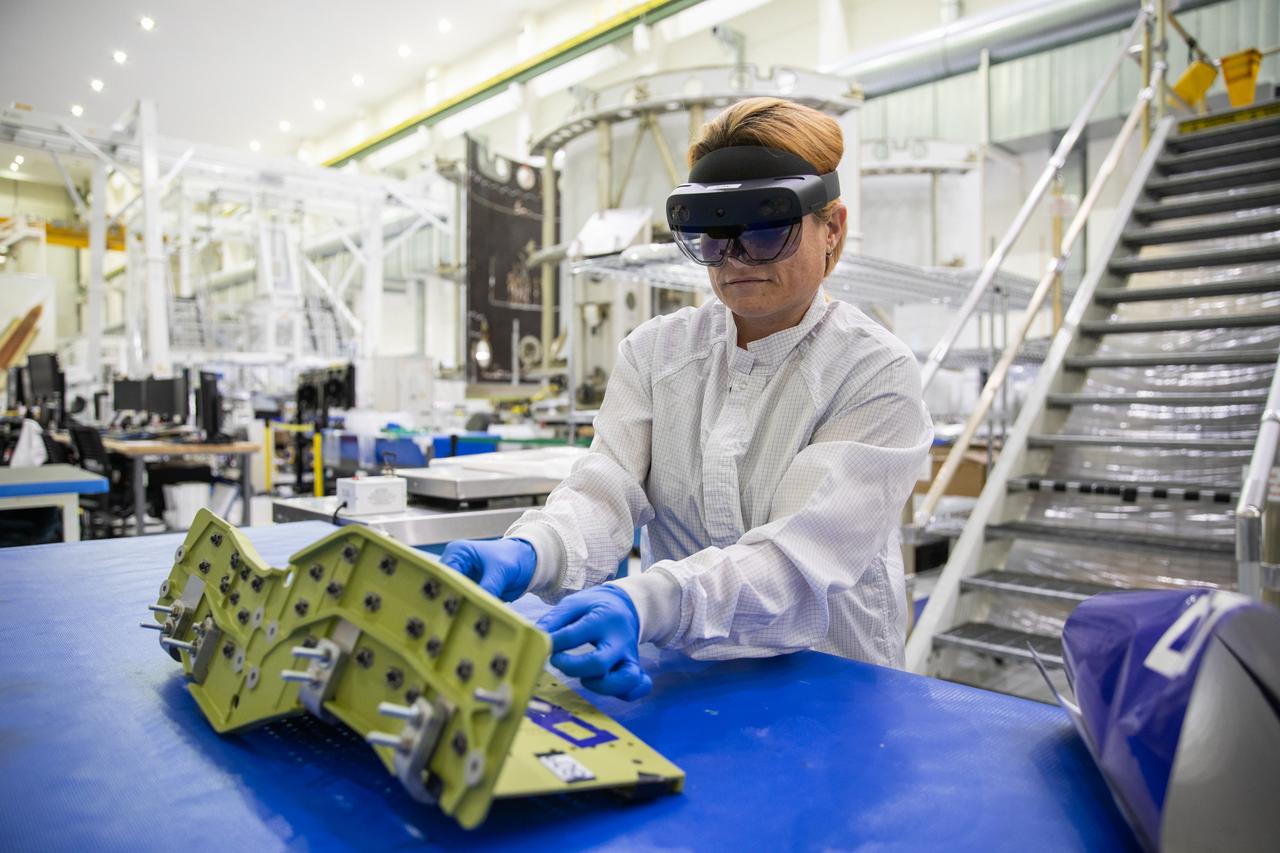
Jennifer Solano, with Lockheed Martin at Kennedy Space Center in Florida, wears a pair of augmented reality (AR) goggles to work on crew module hardware for NASA’s Artemis II mission inside the high bay of the Neil Armstrong Operations and Checkout Building at Kennedy on March 18, 2020. Orion manufacturer Lockheed Martin provided the goggles to technicians to help place tapes where components will be installed on Orion for Artemis II, the first crewed mission aboard the spacecraft. Using the AR goggles saves significant labor and time to complete tasks. Manufactured by Microsoft, the goggles, called HoloLens2, are the second version used by Lockheed.
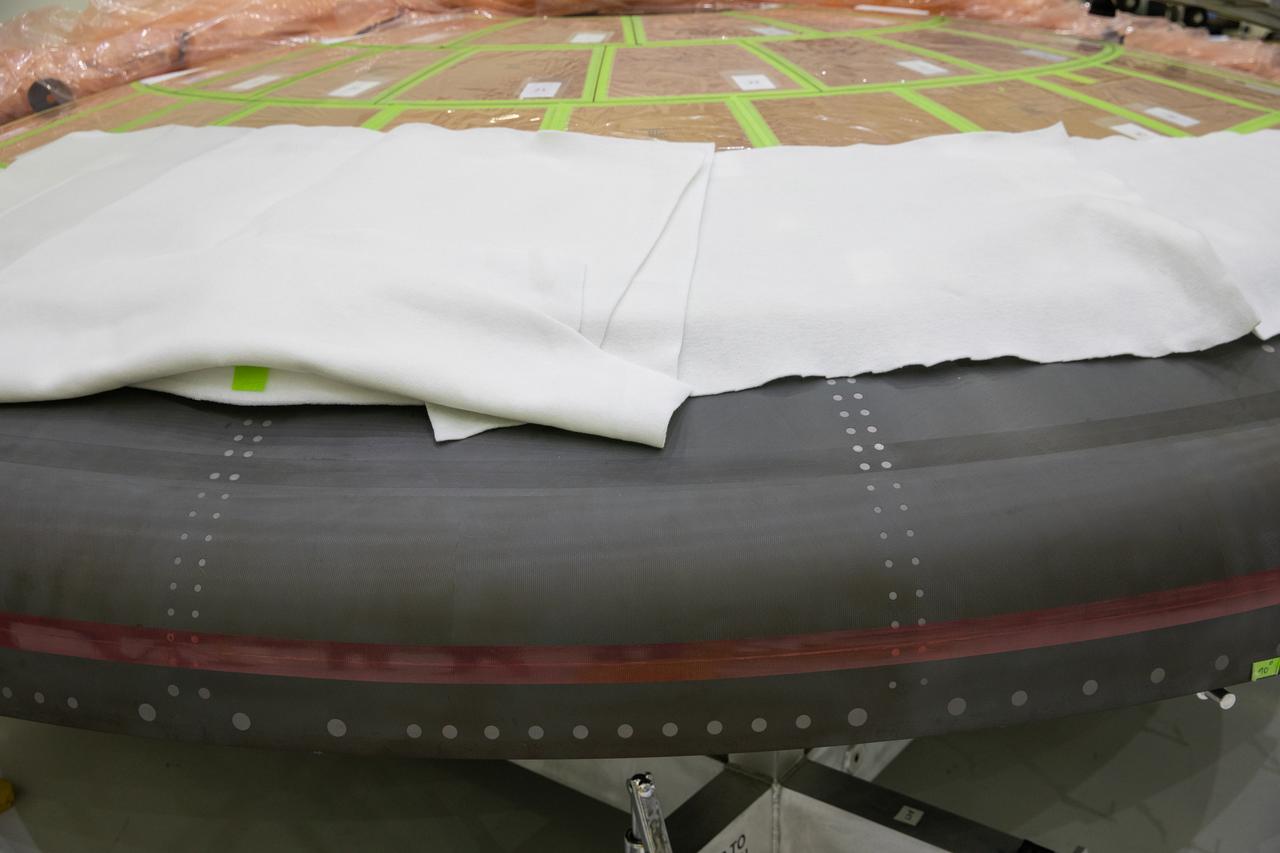
The heat shield for NASA’s Artemis II mission is in view inside the Neil Armstrong Operations and Checkout Building at the agency’s Kennedy Space Center in Florida on March 18, 2020. Using augmented reality (AR) goggles, technicians are completing the work on the heat shield. Orion manufacturer Lockheed Martin provided the goggles to technicians to help place tapes where components will be installed on the crew module, heat shield and other components for Artemis II, the first crewed mission aboard the spacecraft. Using the AR goggles saves significant labor and time to complete tasks. Manufactured by Microsoft, the goggles, called HoloLens2, are the second version used by Lockheed.
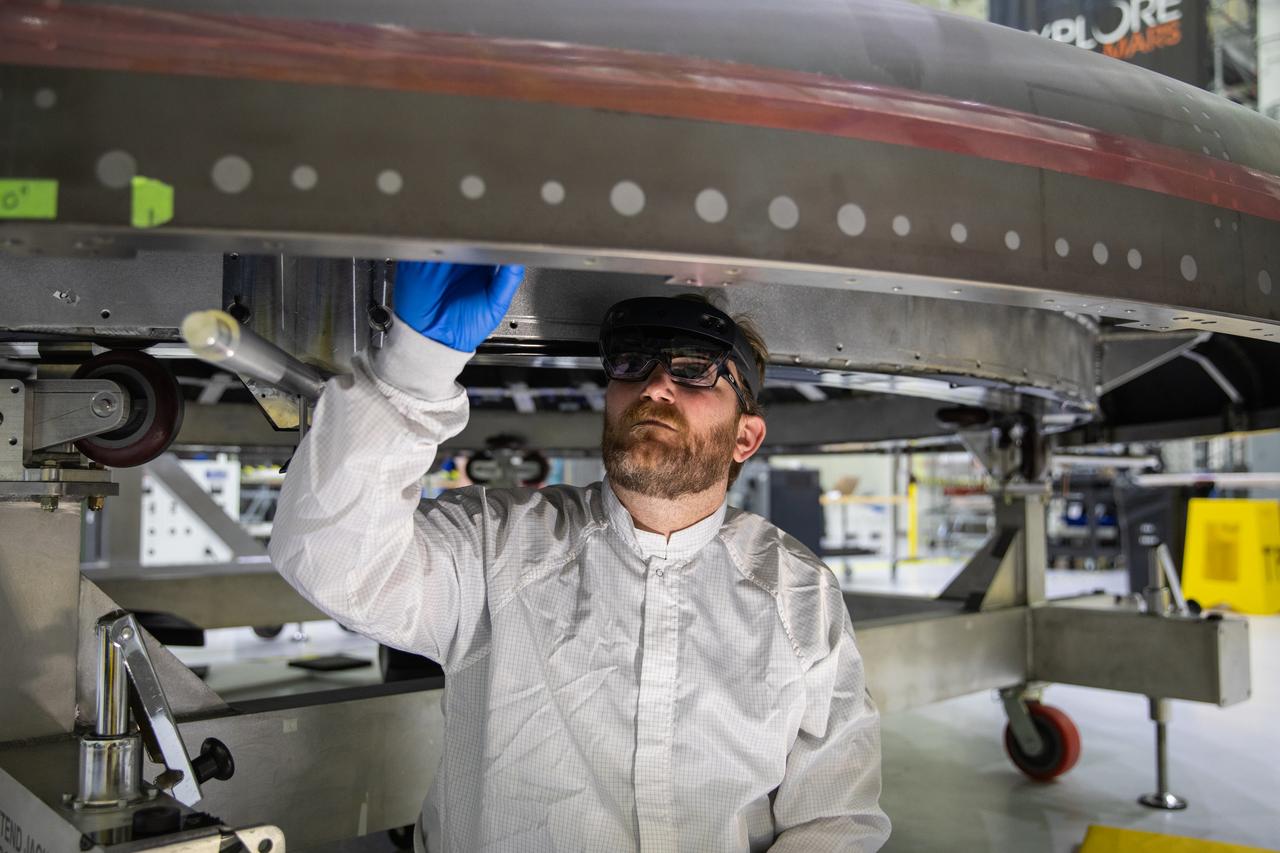
Eric Nolan, a technician with ASRC Federal Data Solutions, wears a pair of augmented reality (AR) goggles as he works on the heat shield for the crew module for NASA’s Artemis II mission inside the high bay of the Neil Armstrong Operations and Checkout Building at the agency’s Kennedy Space Center in Florida on March 18, 2020. Orion manufacturer Lockheed Martin provided the goggles to technicians to help place tapes where components will be installed on Orion for Artemis II, the first crewed mission aboard the spacecraft. Using the AR goggles saves significant labor and time to complete tasks. Manufactured by Microsoft, the goggles, called HoloLens2, are the second version used by Lockheed.
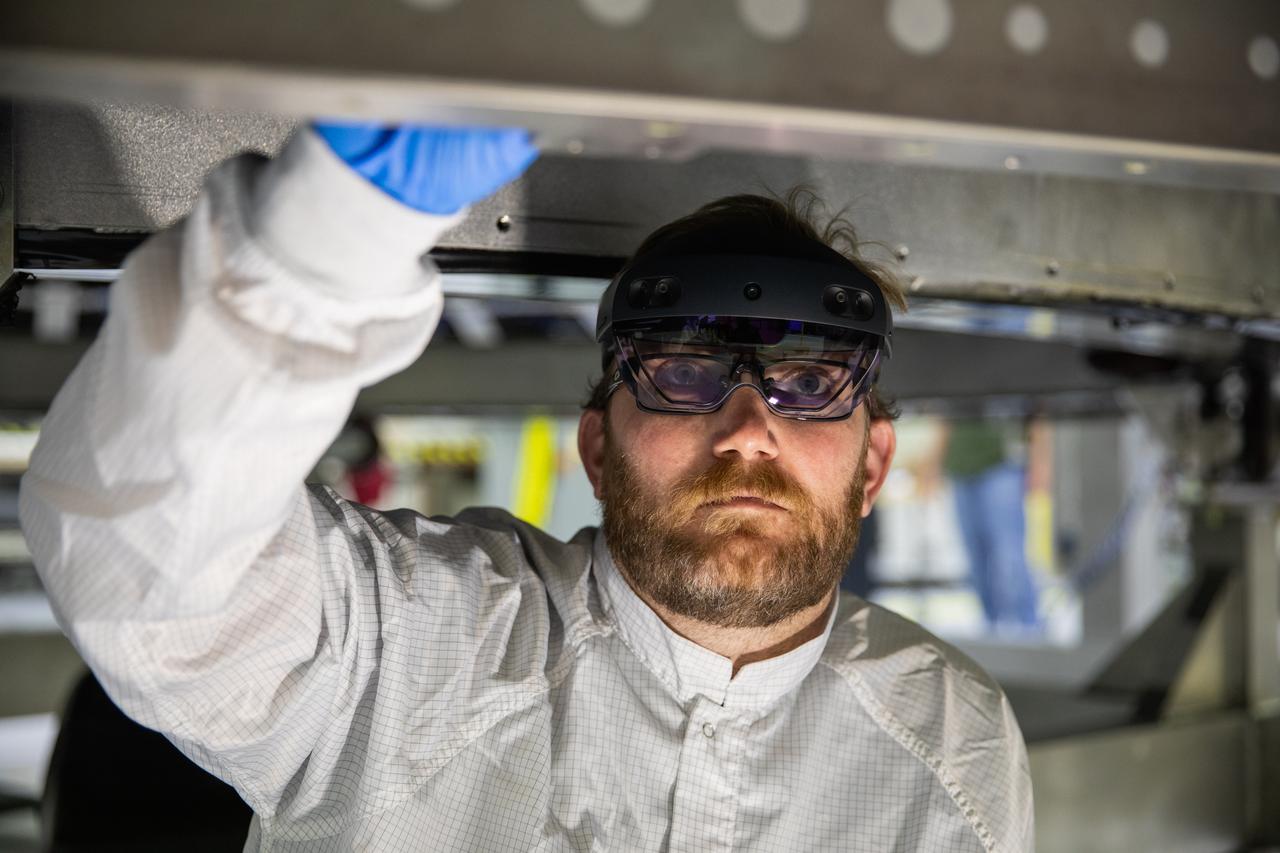
Eric Nolan, a technician with ASRC Federal Data Solutions, wears a pair of augmented reality (AR) goggles as he works on the heat shield for the crew module for NASA’s Artemis II mission inside the high bay of the Neil Armstrong Operations and Checkout Building at the agency’s Kennedy Space Center in Florida on March 18, 2020. Orion manufacturer Lockheed Martin provided the goggles to technicians to help place tapes where components will be installed on Orion for Artemis II, the first crewed mission aboard the spacecraft. Using the AR goggles saves significant labor and time to complete tasks. Manufactured by Microsoft, the goggles, called HoloLens2, are the second version used by Lockheed.
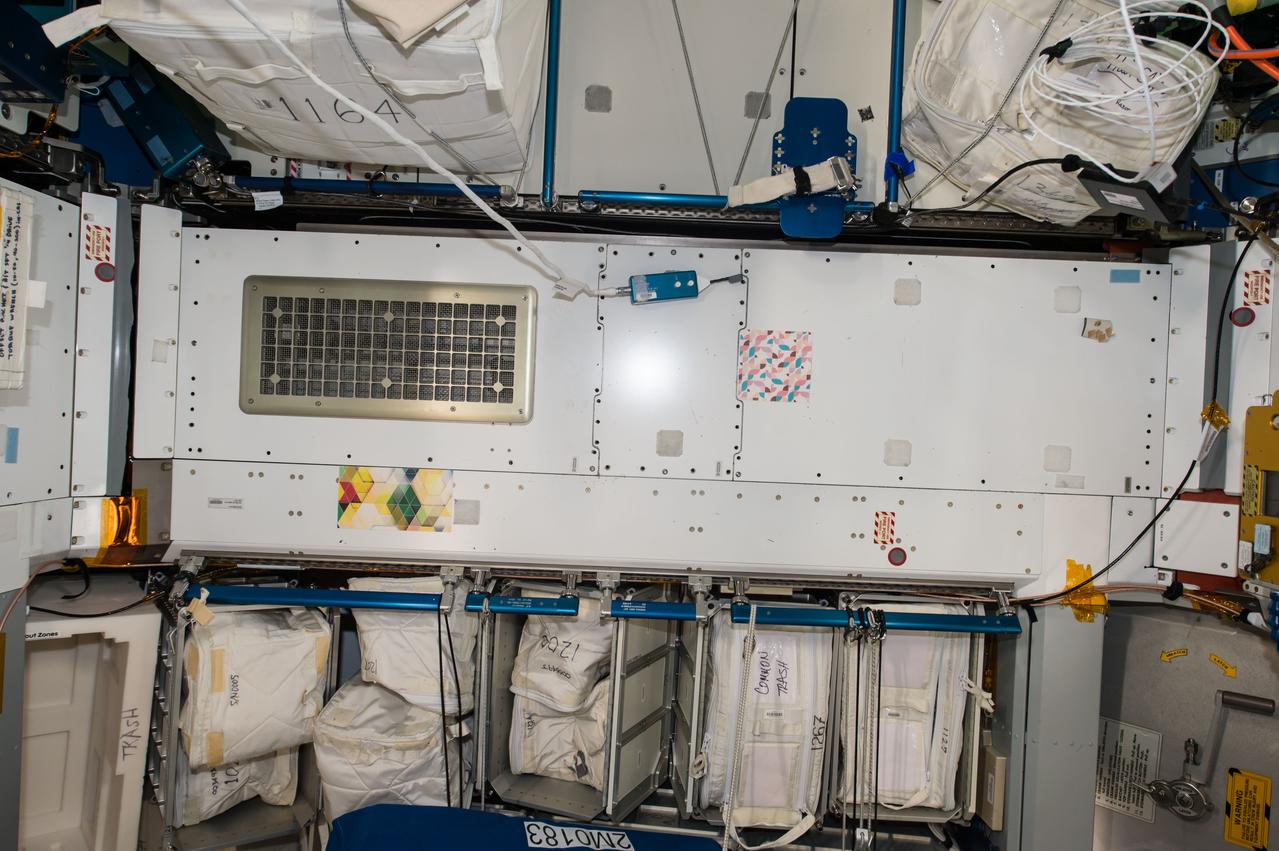
iss053e303473 (11/132017) --- Photo documentation of Augmented Reality Application for Maintenance, Inventory and Stowage (ARAMIS) Maintenance Session abord the International Space Station (ISS). The ARAMIS investigation demonstrates use of augmented reality technology to improve efficiency of operations aboard the space station.
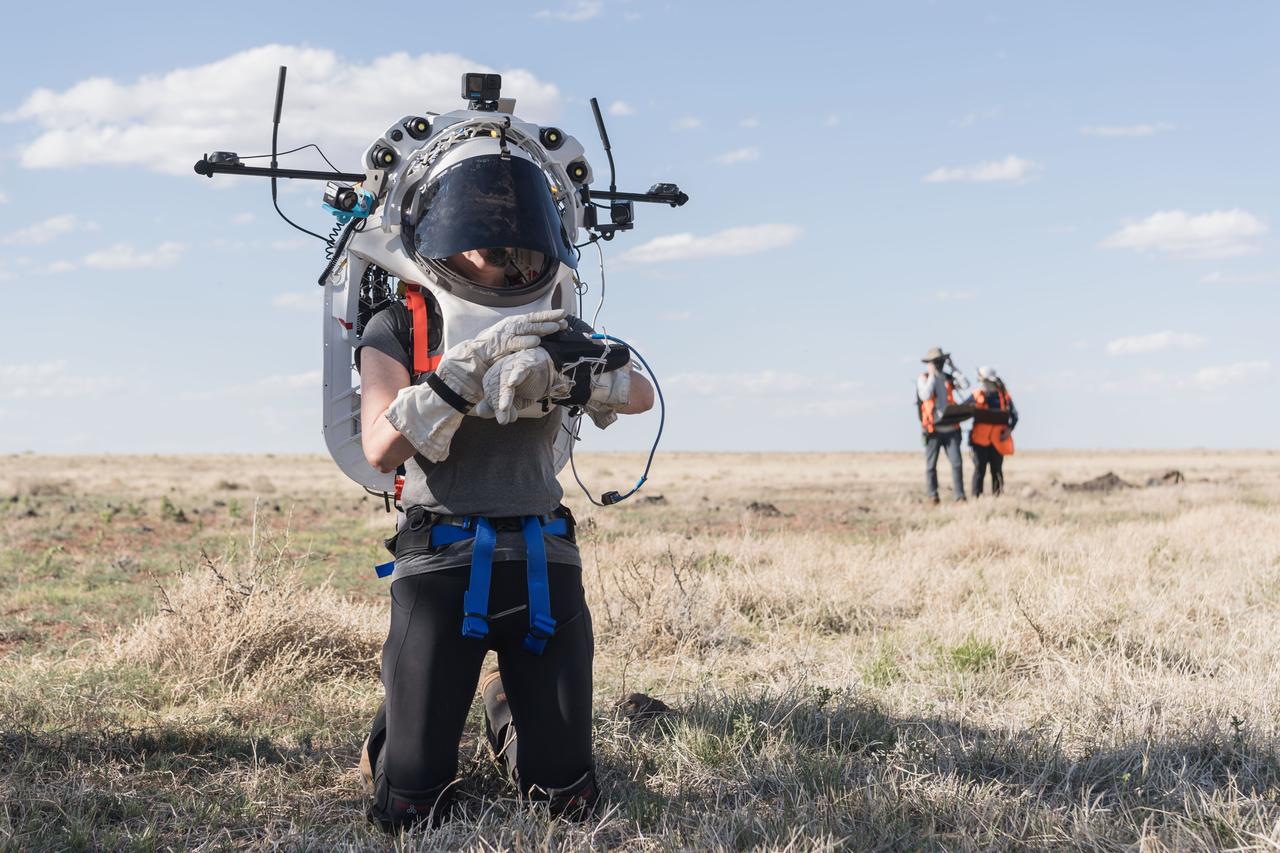
NASA astronaut Kate Rubins uses the hand controller on her wrist to display information while wearing the Joint AR (Joint Augmented Reality Visual Informatics System) display during an advanced technology run in the San Francisco Volcanic Field in Northern Arizona on May 21, 2024. The suit display features include navigation, photo capture, graphical format of consumables, procedure viewing, mission control updates, and other augmented reality cues and graphics. The team successfully tested navigation displays using data from four different data streams: GPS (Global Positioning System)/IMU (Inertial Measurement Unit), camera/IMU, LiDAR (Light Detection and Ranging), and static maps. Technology like this may be used for future Artemis missions to augment mission control communication and help guide crew back to the lunar lander. Credit: NASA/Josh Valcarcel
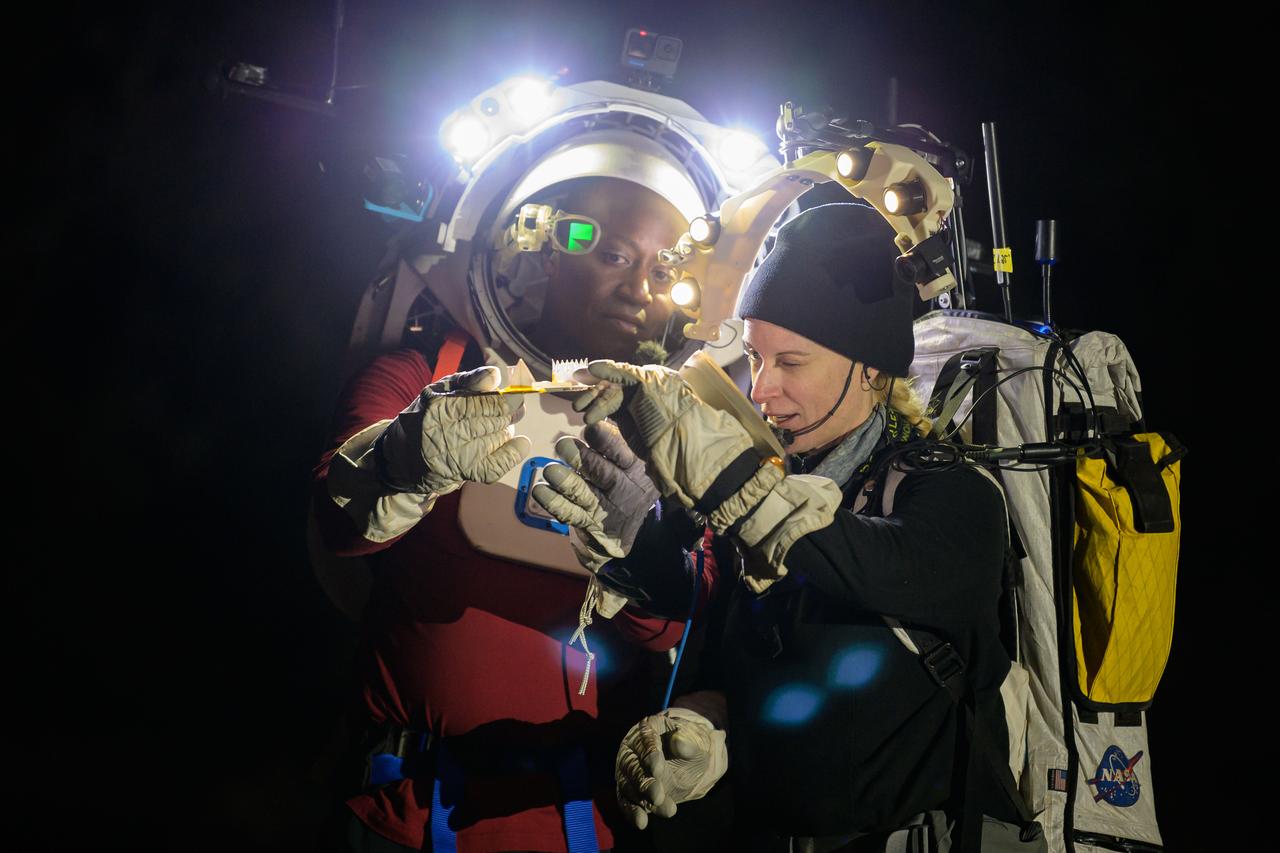
NASA astronauts Andre Douglas and Kate Rubins during a nighttime advanced technology run in the San Francisco Volcanic Field in Northern Arizona on May 21, 2024. Douglas is wearing the Joint AR (Joint Augmented Reality Visual Informatics System) display. The suit display features include navigation, photo capture, graphical format of consumables, procedure viewing, mission control updates, and other augmented reality cues and graphics. The team successfully tested navigation displays using data from four different data streams: GPS (Global Positioning System)/IMU (Inertial Measurement Unit), camera/IMU, LiDAR (Light Detection and Ranging), and static maps. Technology like this may be used for future Artemis missions to augment mission control communication and help guide crew back to the lunar lander. Credit: NASA/Josh Valcarcel

NASA astronaut Andre Douglas wears the Joint AR (Joint Augmented Reality Visual Informatics System) display during a nighttime advanced technology run in the San Francisco Volcanic Field in Northern Arizona on May 21, 2024. The suit display features include navigation, photo capture, graphical format of consumables, procedure viewing, mission control updates, and other augmented reality cues and graphics. The team successfully tested navigation displays using data from four different data streams: GPS (Global Positioning System)/IMU (Inertial Measurement Unit), camera/IMU, LiDAR (Light Detection and Ranging), and static maps. Technology like this may be used for future Artemis missions to augment mission control communication and help guide crew back to the lunar lander. Credit: NASA/Josh Valcarcel
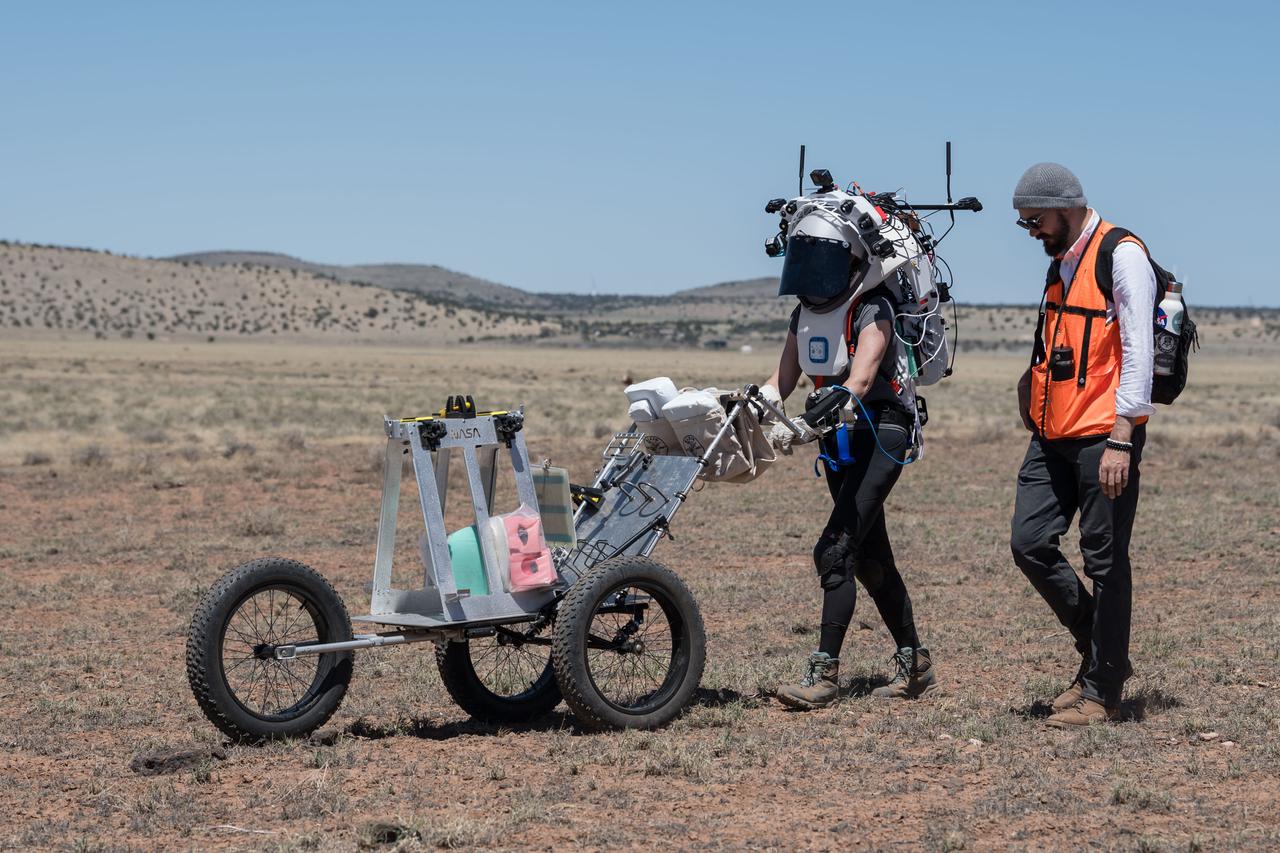
NASA astronaut Kate Rubins pushes a cart through the lunar-like landscape while wearing the Joint AR (Joint Augmented Reality Visual Informatics System) display during an advanced technology run in the San Francisco Volcanic Field in Northern Arizona on May 19, 2024. The suit display features include navigation, photo capture, graphical format of consumables, procedure viewing, mission control updates, and other augmented reality cues and graphics. The team successfully tested navigation displays using data from four different data streams: GPS (Global Positioning System)/IMU (Inertial Measurement Unit), camera/IMU, LiDAR (Light Detection and Ranging), and static maps. Technology like this may be used for future Artemis missions to augment mission control communication and help guide crew back to the lunar lander. Credit: NASA/Josh Valcarcel
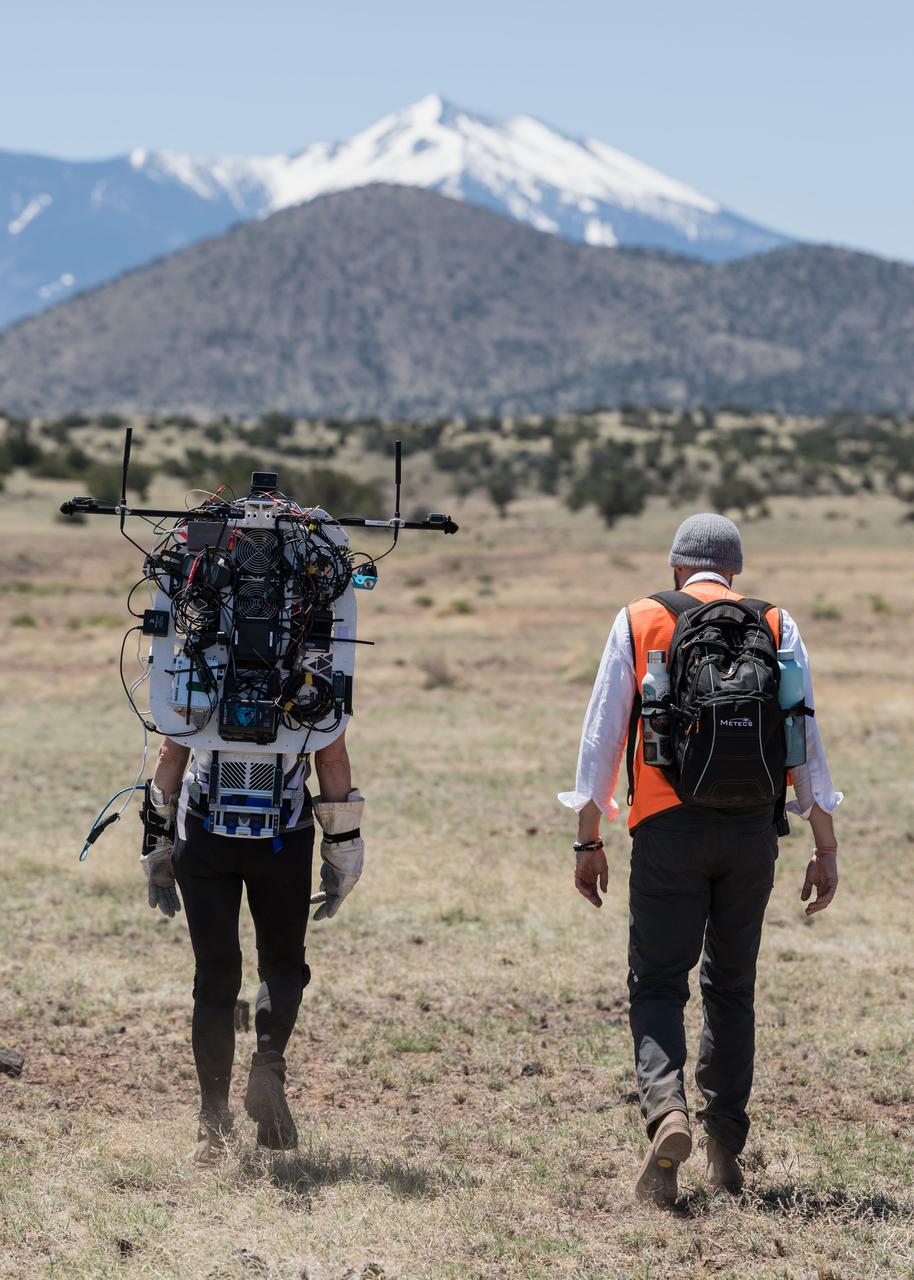
NASA astronaut Kate Rubins walks through the lunar-like landscape wearing the Joint AR (Joint Augmented Reality Visual Informatics System) display during an advanced technology run in the San Francisco Volcanic Field in Northern Arizona on May 19, 2024. The suit display features include navigation, photo capture, graphical format of consumables, procedure viewing, mission control updates, and other augmented reality cues and graphics. The team successfully tested navigation displays using data from four different data streams: GPS (Global Positioning System)/IMU (Inertial Measurement Unit), camera/IMU, LiDAR (Light Detection and Ranging), and static maps. Technology like this may be used for future Artemis missions to augment mission control communication and help guide crew back to the lunar lander. Credit: NASA/Josh Valcarcel
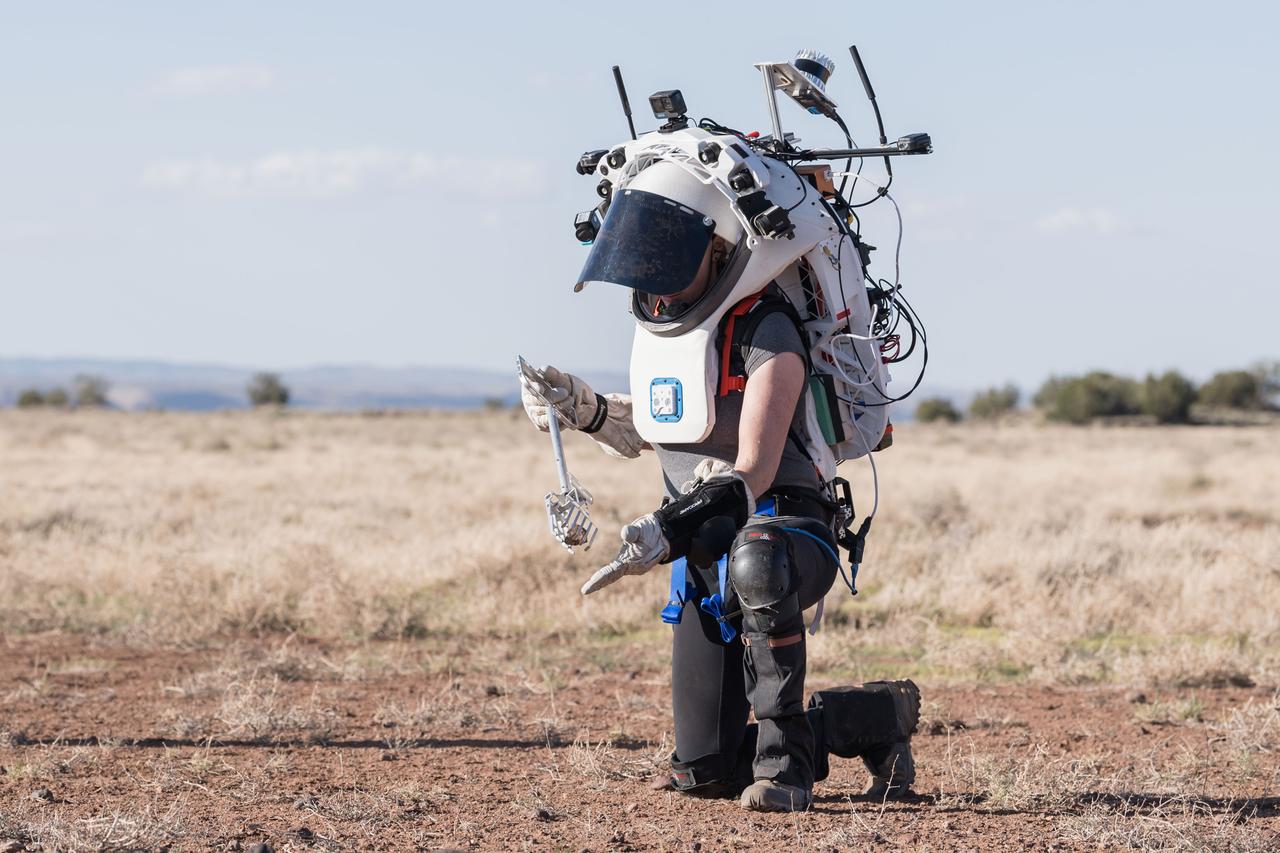
NASA astronaut Kate Rubins uses tongs to pick up a geologic sample while wearing the Joint AR (Joint Augmented Reality Visual Informatics System) display during an advanced technology run in the San Francisco Volcanic Field in Northern Arizona on May 21, 2024. The suit display features include navigation, photo capture, graphical format of consumables, procedure viewing, mission control updates, and other augmented reality cues and graphics. The team successfully tested navigation displays using data from four different data streams: GPS (Global Positioning System)/IMU (Inertial Measurement Unit), camera/IMU, LiDAR (Light Detection and Ranging), and static maps. Technology like this may be used for future Artemis missions to augment mission control communication and help guide crew back to the lunar lander. Credit: NASA/Josh Valcarcel
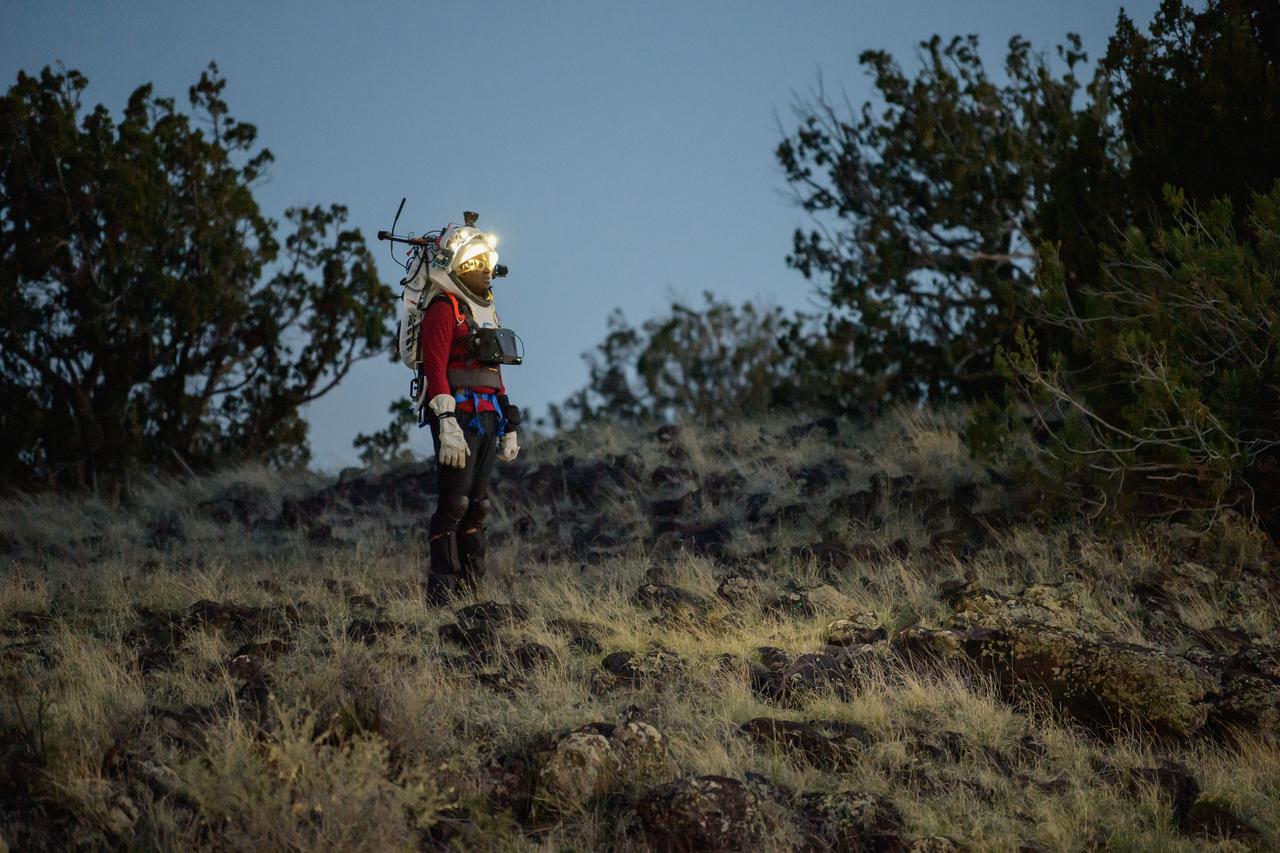
NASA astronaut Andre Douglas views the lunar-like landscape at dusk while wearing the Joint AR (Joint Augmented Reality Visual Informatics System) display during an advanced technology run in the San Francisco Volcanic Field in Northern Arizona on May 21, 2024. The suit display features include navigation, photo capture, graphical format of consumables, procedure viewing, mission control updates, and other augmented reality cues and graphics. The team successfully tested navigation displays using data from four different data streams: GPS (Global Positioning System)/IMU (Inertial Measurement Unit), camera/IMU, LiDAR (Light Detection and Ranging), and static maps. Technology like this may be used for future Artemis missions to augment mission control communication and help guide crew back to the lunar lander. Credit: NASA/Josh Valcarcel
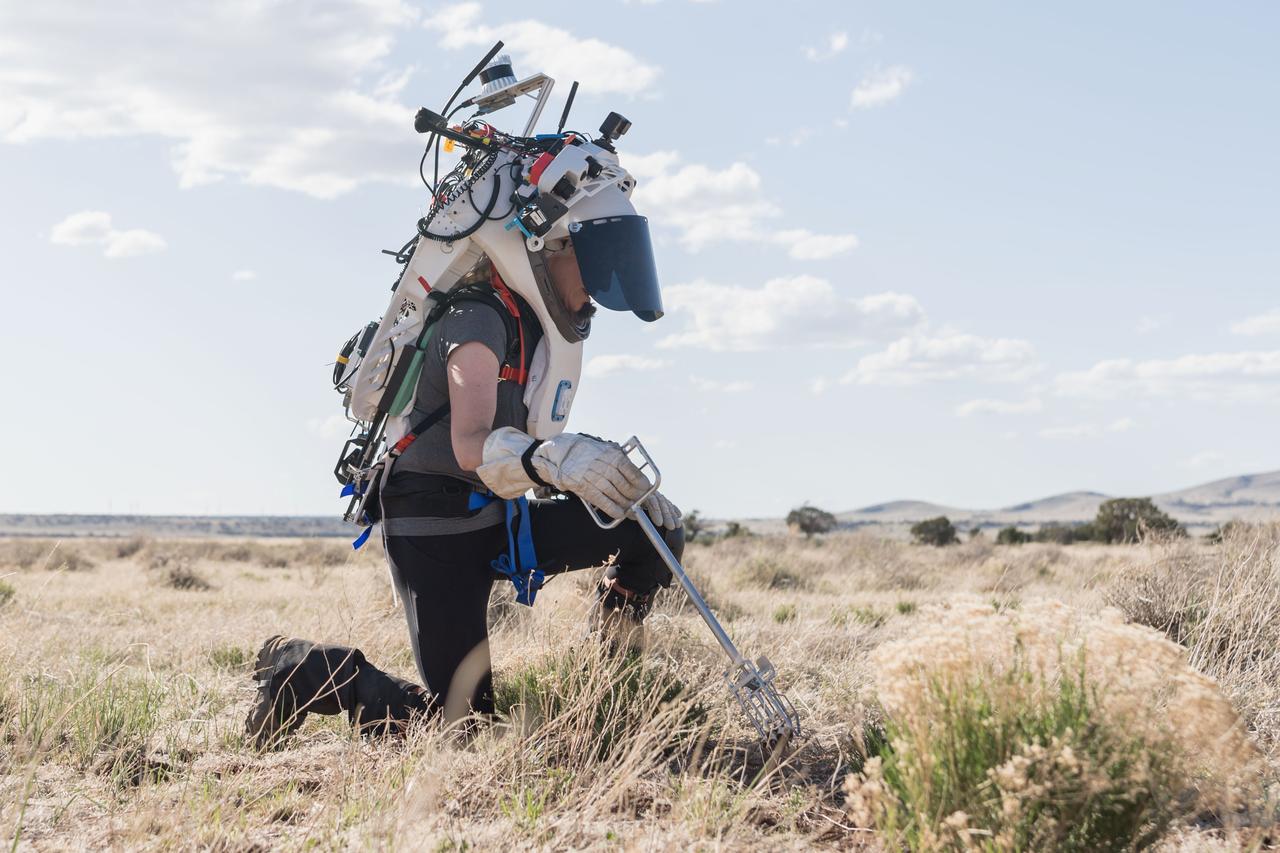
NASA astronaut Kate Rubins uses tongs to collect geologic samples while wearing the Joint AR (Joint Augmented Reality Visual Informatics System) display during an advanced technology run in the San Francisco Volcanic Field in Northern Arizona on May 21, 2024. The suit display features include navigation, photo capture, graphical format of consumables, procedure viewing, mission control updates, and other augmented reality cues and graphics. The team successfully tested navigation displays using data from four different data streams: GPS (Global Positioning System)/IMU (Inertial Measurement Unit), camera/IMU, LiDAR (Light Detection and Ranging), and static maps. Technology like this may be used for future Artemis missions to augment mission control communication and help guide crew back to the lunar lander. Credit: NASA/Josh Valcarcel
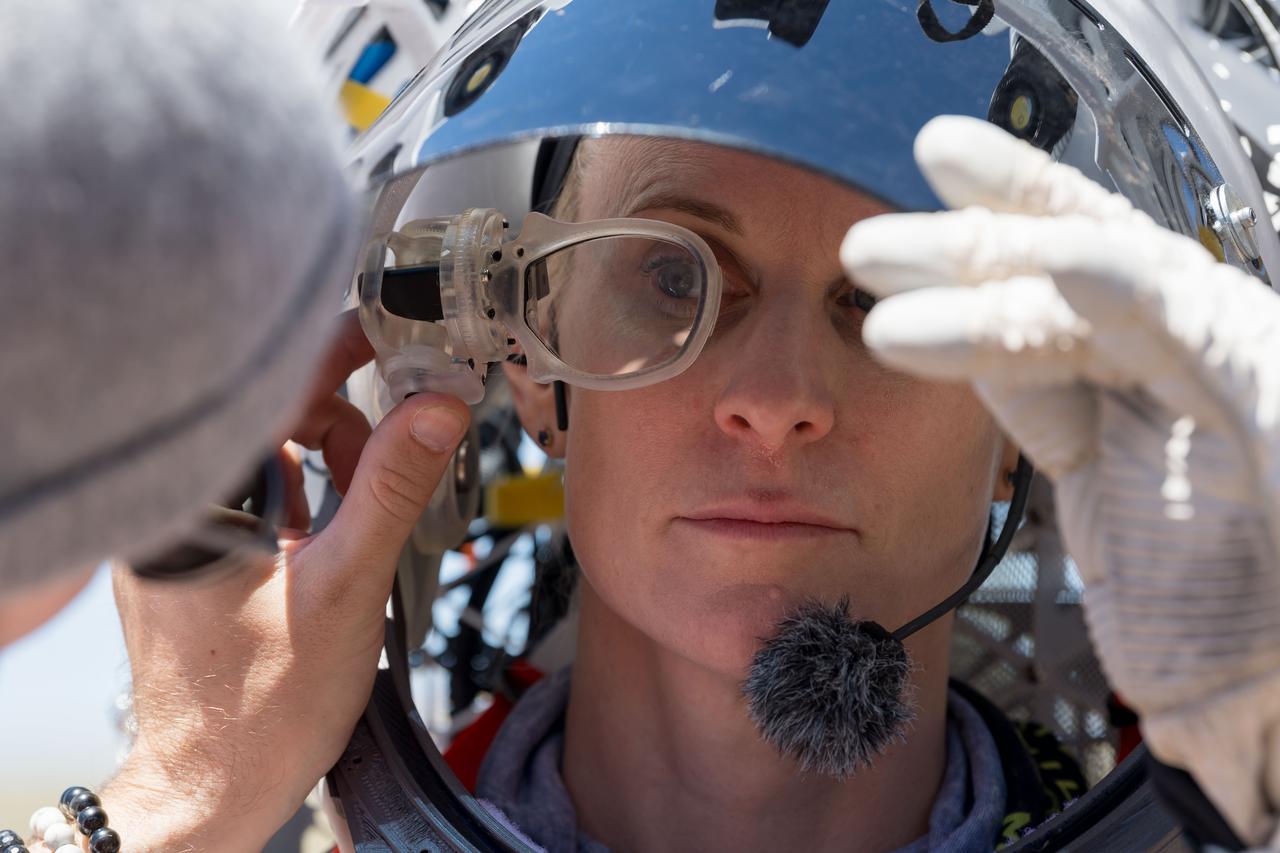
An engineer helps NASA astronaut Kate Rubins adjust the lens on the Joint AR (Joint Augmented Reality Visual Informatics System) display she’s wearing during an advanced technology run in the San Francisco Volcanic Field in Northern Arizona on May 19, 2024. The suit display features include navigation, photo capture, graphical format of consumables, procedure viewing, mission control updates, and other augmented reality cues and graphics. The team successfully tested navigation displays using data from four different data streams: GPS (Global Positioning System)/IMU (Inertial Measurement Unit), camera/IMU, LiDAR (Light Detection and Ranging), and static maps. Technology like this may be used for future Artemis missions to augment mission control communication and help guide crew back to the lunar lander. Credit: NASA/Josh Valcarcel
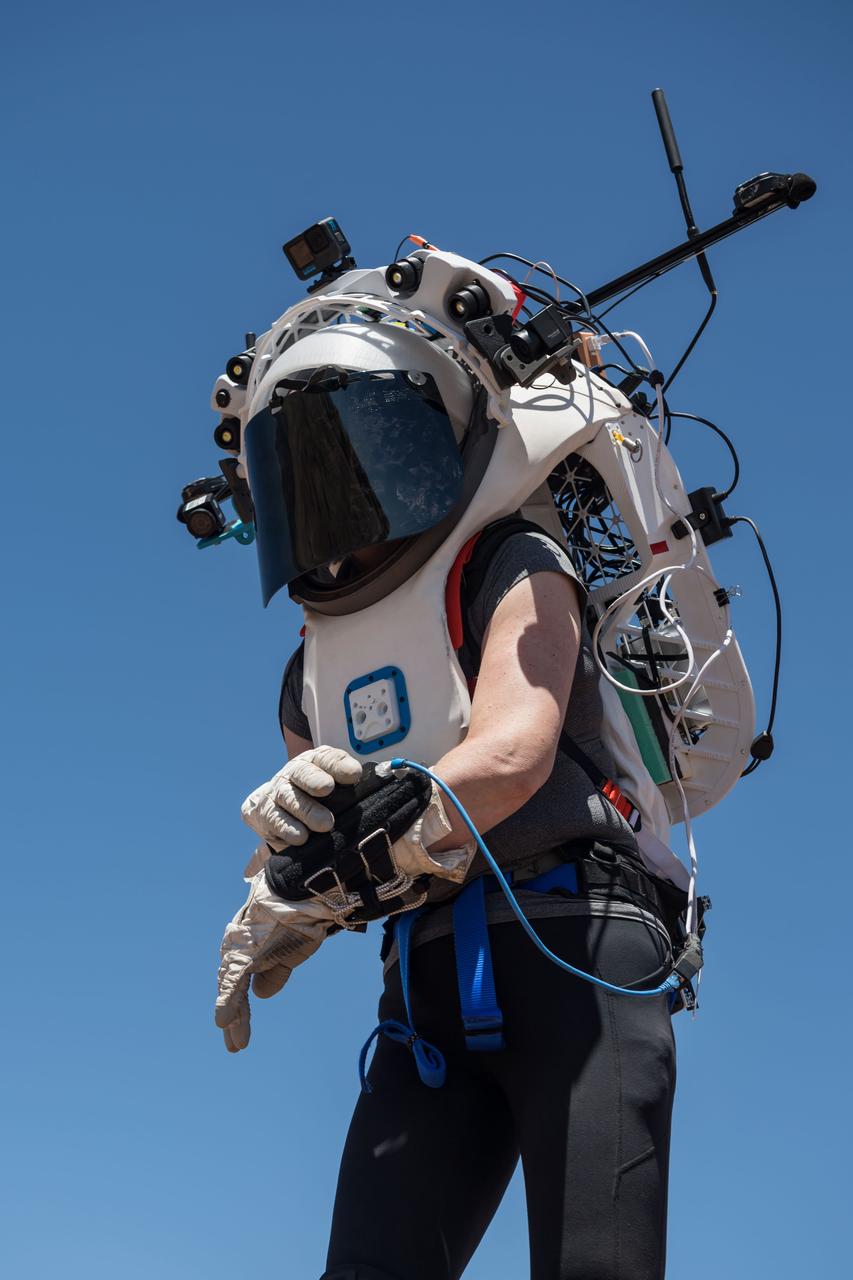
NASA astronaut Kate Rubins uses the hand controller on her wrist to display information while wearing the Joint AR (Joint Augmented Reality Visual Informatics System) display during an advanced technology run in the San Francisco Volcanic Field in Northern Arizona on May 19, 2024. The suit display features include navigation, photo capture, graphical format of consumables, procedure viewing, mission control updates, and other augmented reality cues and graphics. The team successfully tested navigation displays using data from four different data streams: GPS (Global Positioning System)/IMU (Inertial Measurement Unit), camera/IMU, LiDAR (Light Detection and Ranging), and static maps. Technology like this may be used for future Artemis missions to augment mission control communication and help guide crew back to the lunar lander. Credit: NASA/Josh Valcarcel
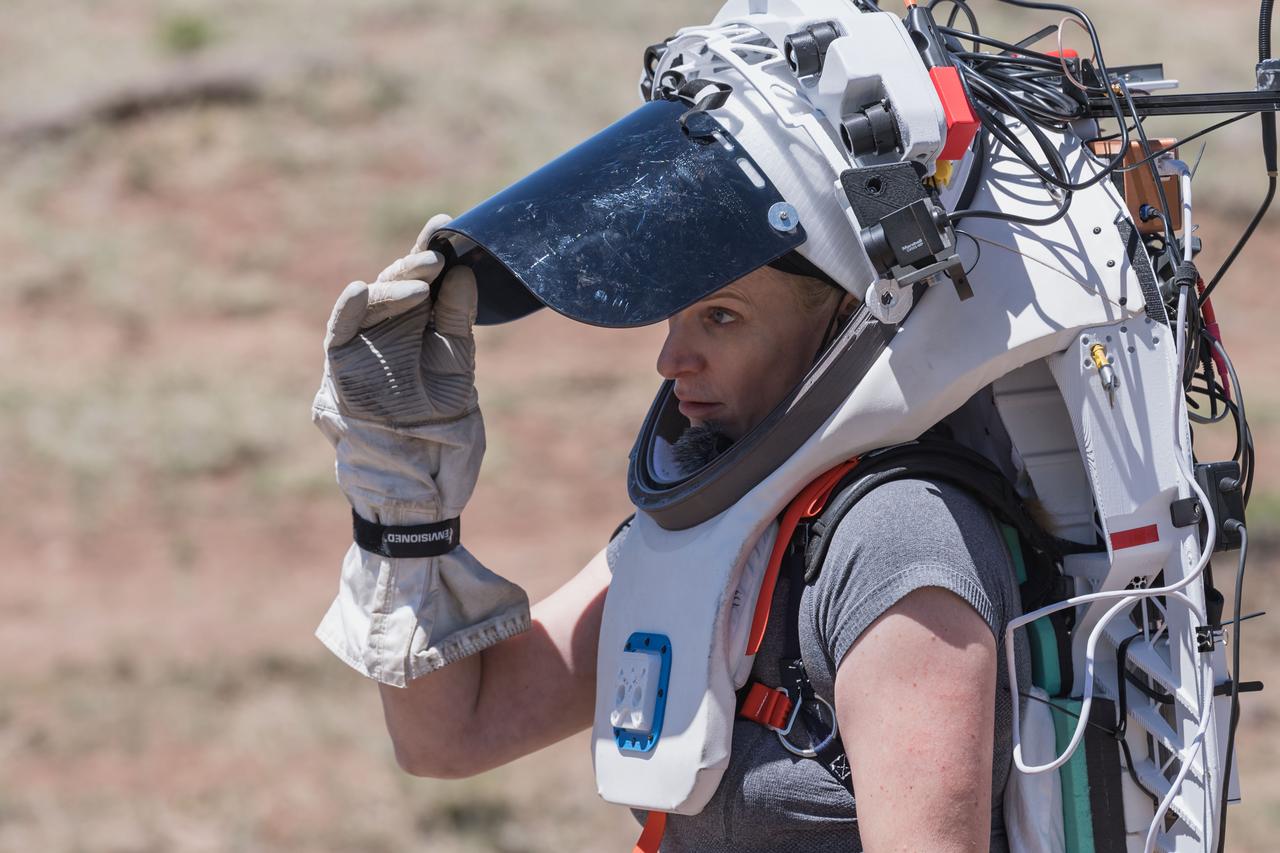
NASA astronaut Kate Rubins opens the sun visor on the Joint AR (Joint Augmented Reality Visual Informatics System) display she’s wearing during an advanced technology run in the San Francisco Volcanic Field in Northern Arizona on May 19, 2024. The suit display features include navigation, photo capture, graphical format of consumables, procedure viewing, mission control updates, and other augmented reality cues and graphics. The team successfully tested navigation displays using data from four different data streams: GPS (Global Positioning System)/IMU (Inertial Measurement Unit), camera/IMU, LiDAR (Light Detection and Ranging), and static maps. Technology like this may be used for future Artemis missions to augment mission control communication and help guide crew back to the lunar lander. Credit: NASA/Josh Valcarcel
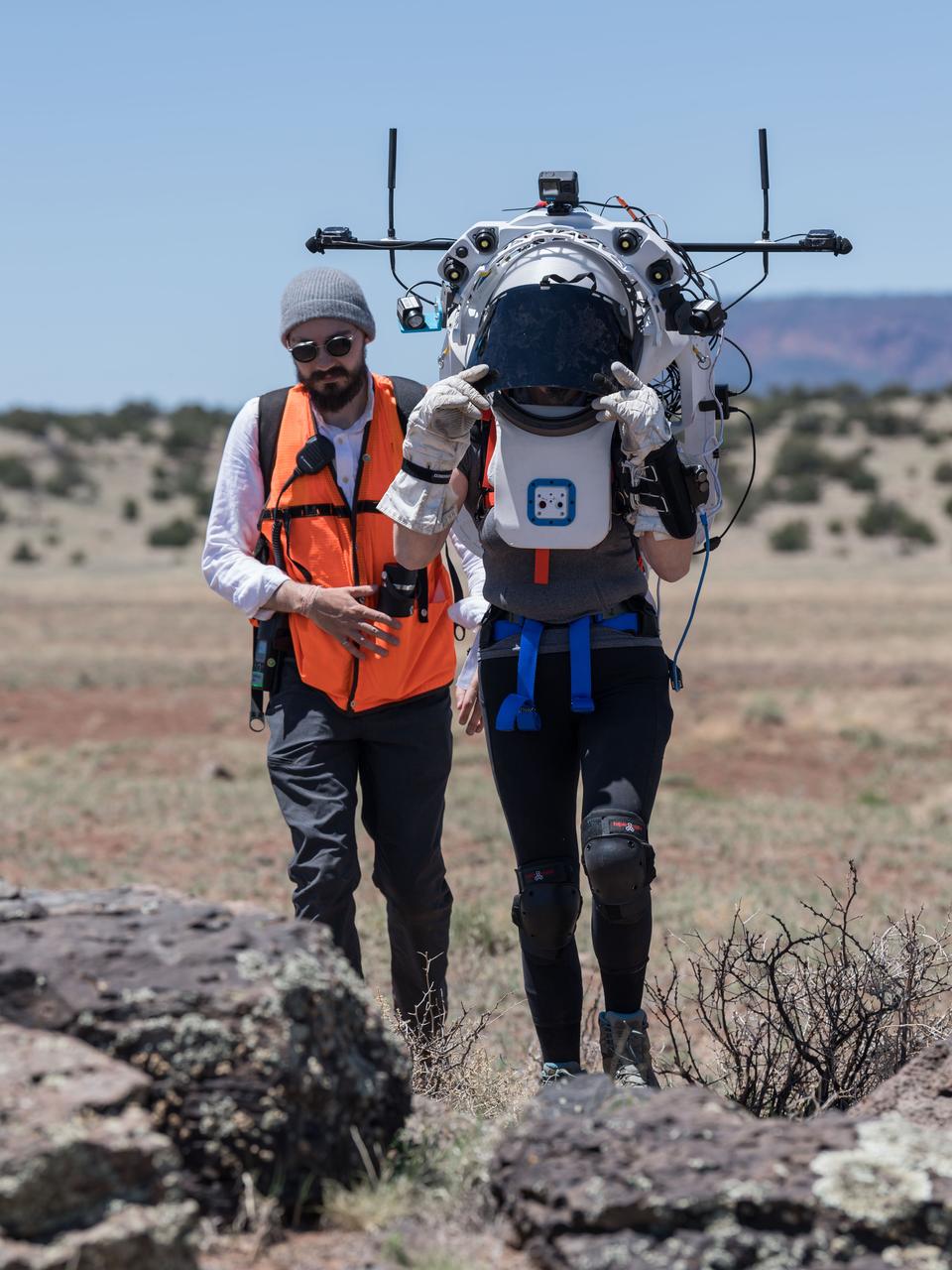
NASA astronaut Kate Rubins walks through the lunar-like landscape wearing the Joint AR (Joint Augmented Reality Visual Informatics System) display during an advanced technology run in the San Francisco Volcanic Field in Northern Arizona on May 19, 2024. The suit display features include navigation, photo capture, graphical format of consumables, procedure viewing, mission control updates, and other augmented reality cues and graphics. The team successfully tested navigation displays using data from four different data streams: GPS (Global Positioning System)/IMU (Inertial Measurement Unit), camera/IMU, LiDAR (Light Detection and Ranging), and static maps. Technology like this may be used for future Artemis missions to augment mission control communication and help guide crew back to the lunar lander. Credit: NASA/Josh Valcarcel
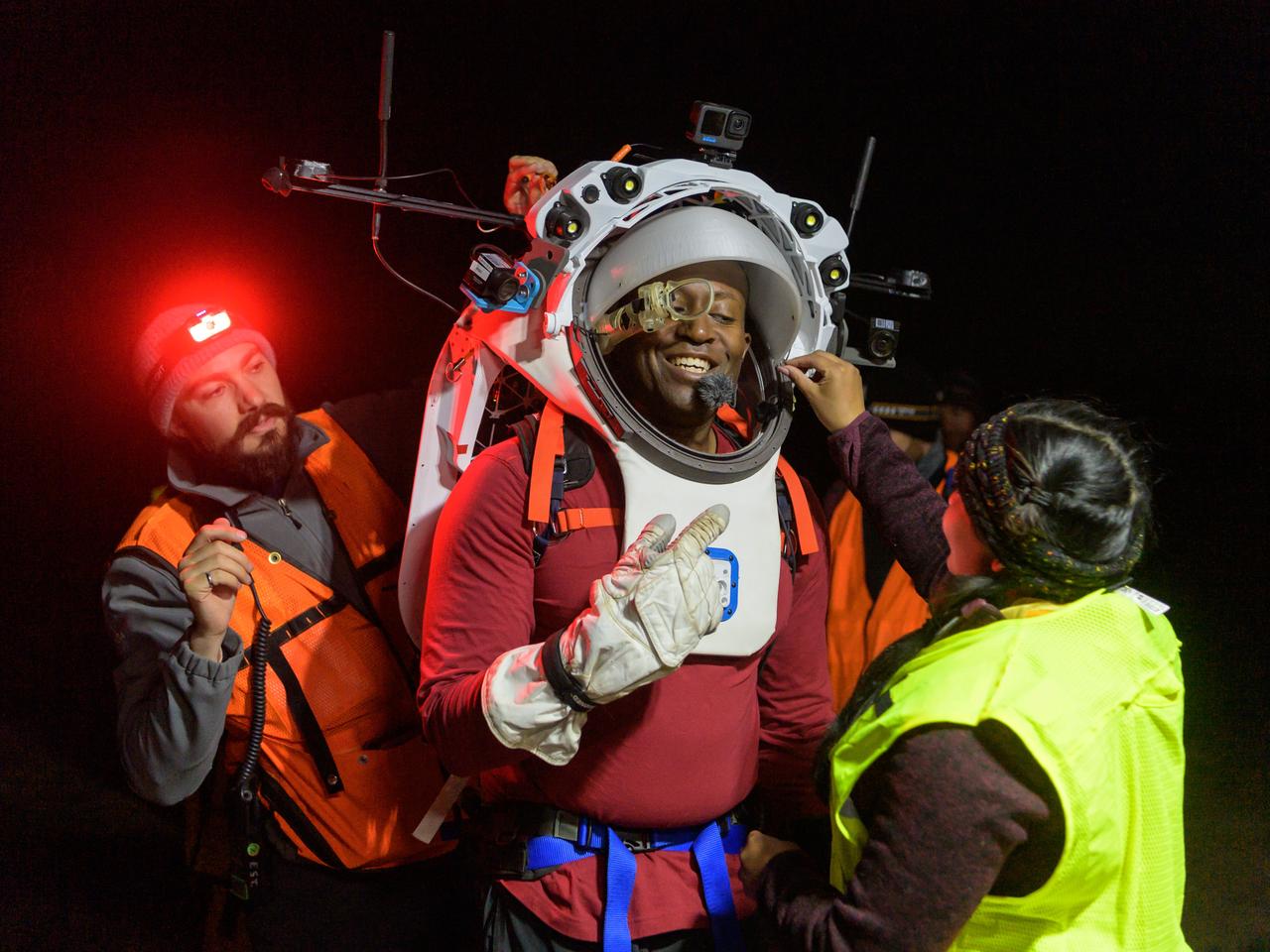
Engineers help NASA astronaut Andre Douglas adjust the Joint AR (Joint Augmented Reality Visual Informatics System) display he’s wearing during a nighttime advanced technology run in the San Francisco Volcanic Field in Northern Arizona on May 21, 2024. The suit display features include navigation, photo capture, graphical format of consumables, procedure viewing, mission control updates, and other augmented reality cues and graphics. The team successfully tested navigation displays using data from four different data streams: GPS (Global Positioning System)/IMU (Inertial Measurement Unit), camera/IMU, LiDAR (Light Detection and Ranging), and static maps. Technology like this may be used for future Artemis missions to augment mission control communication and help guide crew back to the lunar lander. Credit: NASA/Josh Valcarcel
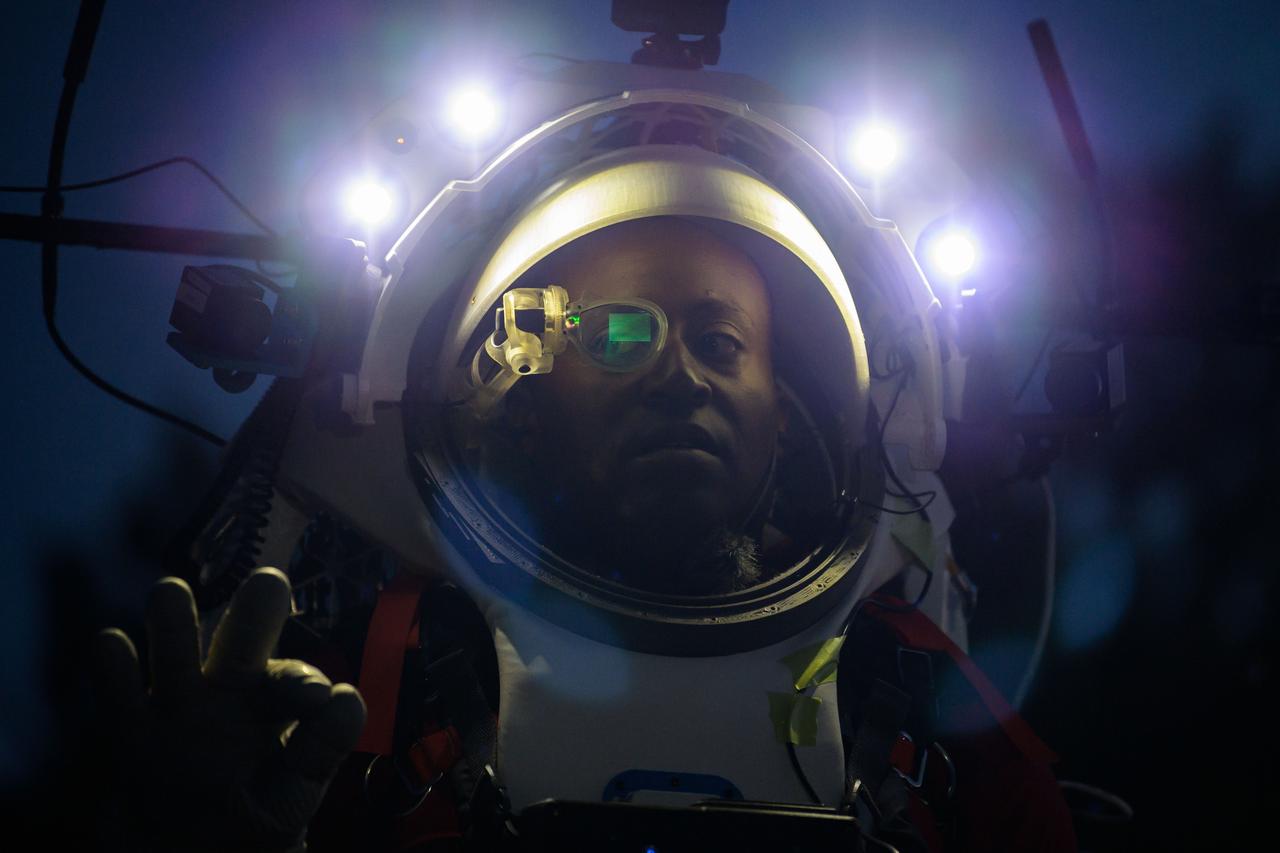
NASA astronaut Andre Douglas wears AR (Augmented Reality) display technology during a nighttime advanced technology run in the San Francisco Volcanic Field in Northern Arizona on May 21, 2024. The monocular lens consists of a pico-projector and waveguide optical element to focus an image for crew to see their real world overlaid with digital information. These unique near-eye form factors may be used to improve the usability and minimally impact the complex biomechanics of working in a pressurized suit environment. Credit: NASA/Josh Valcarcel
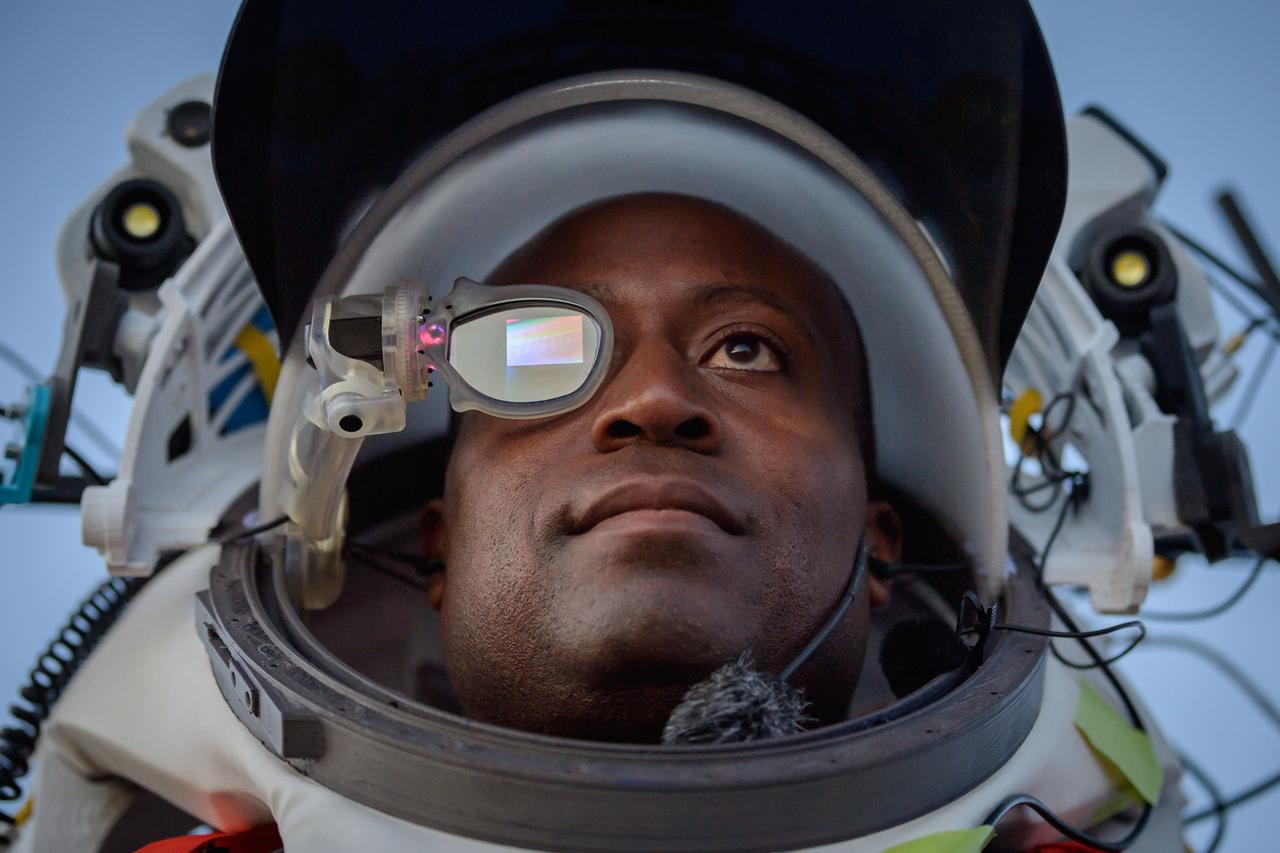
NASA astronaut Andre Douglas wears AR (Augmented Reality) display technology during an advanced technology run in the San Francisco Volcanic Field in Northern Arizona on May 21, 2024. The monocular lens consists of a pico-projector and waveguide optical element to focus an image for crew to see their real world overlaid with digital information. These unique near-eye form factors may be used to improve the usability and minimally impact the complex biomechanics of working in a pressurized suit environment. Credit: NASA/Josh Valcarcel
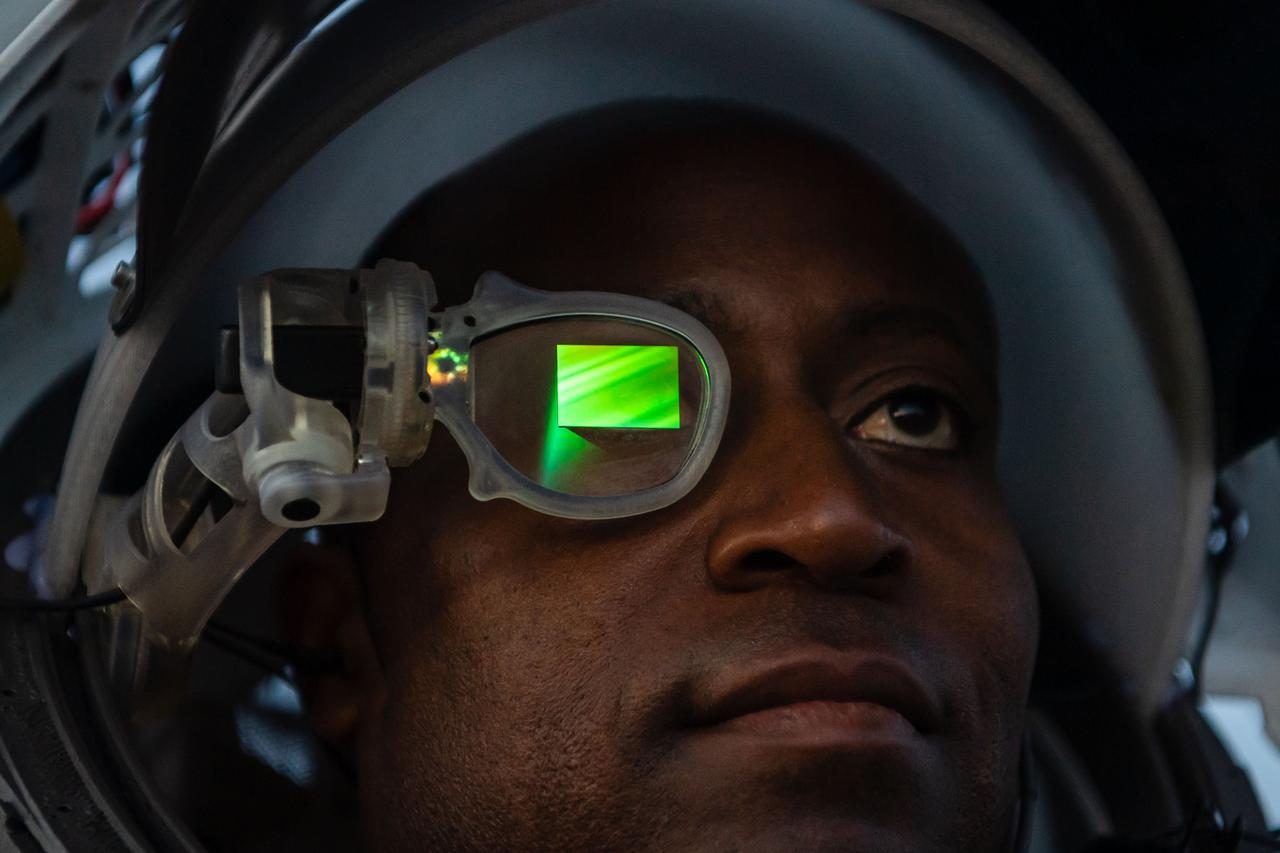
NASA astronaut Andre Douglas wears AR (Augmented Reality) display technology during an advanced technology run in the San Francisco Volcanic Field in Northern Arizona on May 21, 2024. The monocular lens consists of a pico-projector and waveguide optical element to focus an image for crew to see their real world overlaid with digital information. These unique near-eye form factors may be used to improve the usability and minimally impact the complex biomechanics of working in a pressurized suit environment. Credit: NASA/Josh Valcarcel
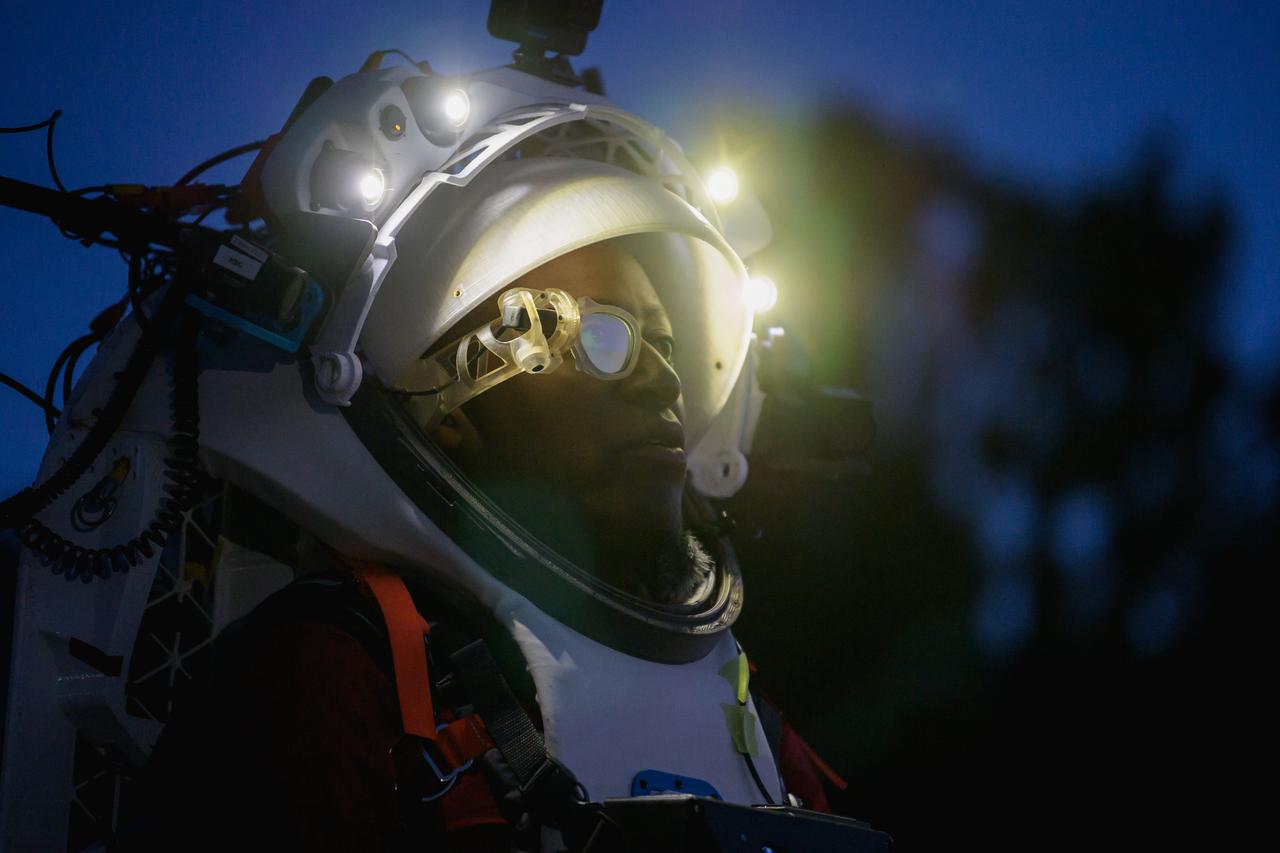
NASA astronaut Andre Douglas wears AR (Augmented Reality) display technology during a nighttime advanced technology run in the San Francisco Volcanic Field in Northern Arizona on May 21, 2024. The monocular lens consists of a pico-projector and waveguide optical element to focus an image for crew to see their real world overlaid with digital information. These unique near-eye form factors may be used to improve the usability and minimally impact the complex biomechanics of working in a pressurized suit environment. Credit: NASA/Josh Valcarcel
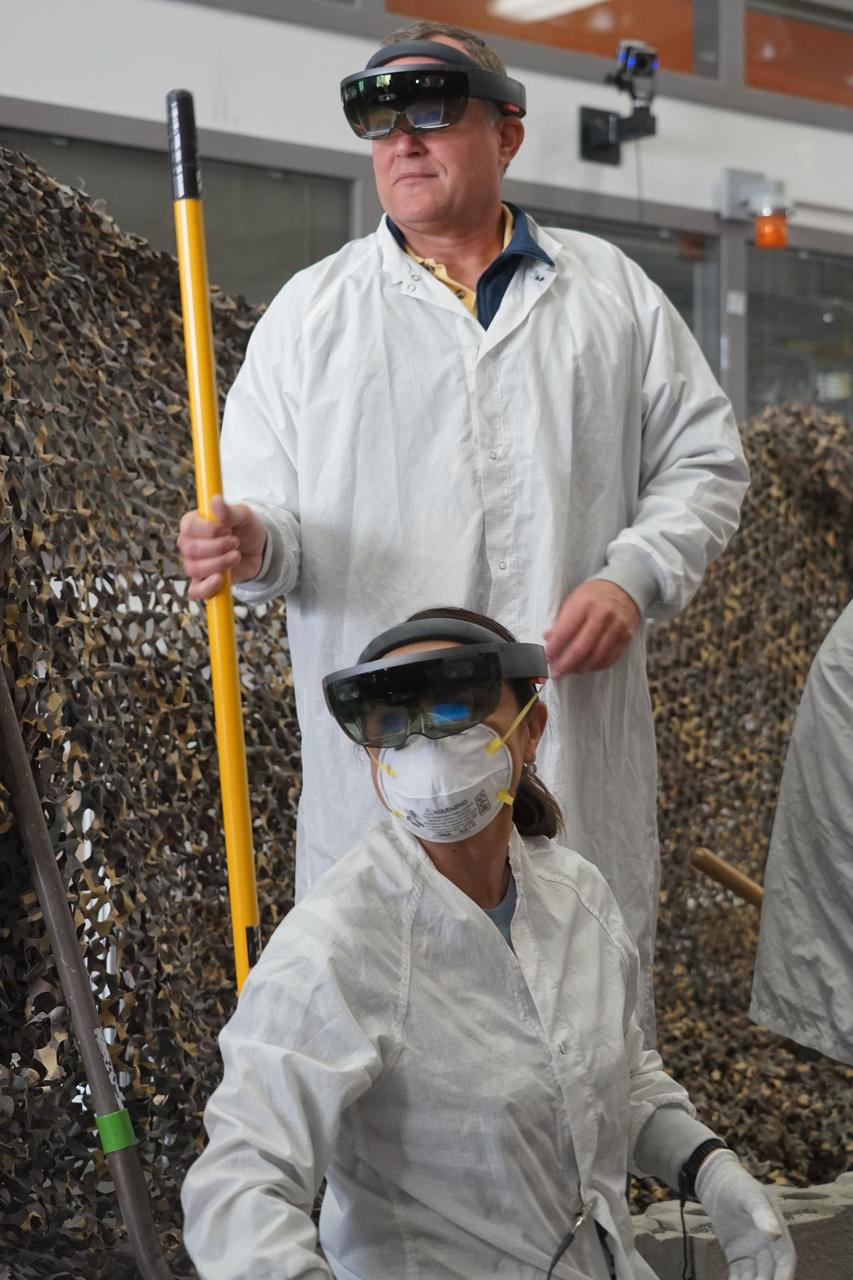
InSight Project Manager Tom Hoffman (standing) and engineer Marleen Sundgaard wear Microsoft HoloLens augmented reality headsets, which project digital terrain models of InSight's landing location on Mars over a lab space. https://photojournal.jpl.nasa.gov/catalog/PIA22951
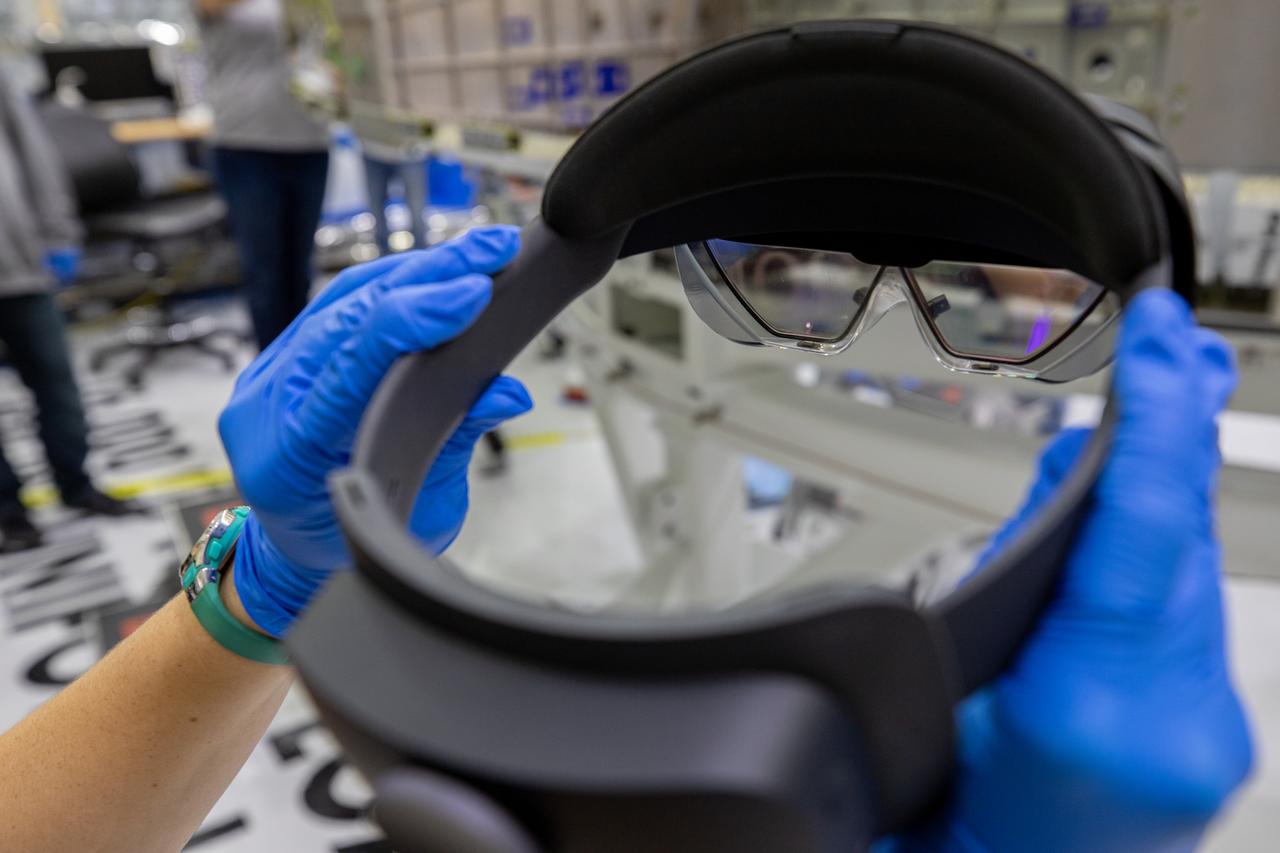
Mary Lakaszcyck, a technician with ASRC Federal Data Solutions, displays a pair of augmented reality (AR) goggles inside the high bay of the Neil Armstrong Operations and Checkout Building at NASA’s Kennedy Space Center in Florida on Jan. 16, 2020. Orion manufacturer Lockheed Martin provided the goggles to technicians to help place tapes where components will be installed on the Orion crew module adapter for NASA’s Artemis II mission, the first crewed mission aboard the spacecraft. Using the AR goggles saves significant labor and time to complete tasks. Manufactured by Microsoft, the goggles, called HoloLens2, are the second version used by Lockheed.
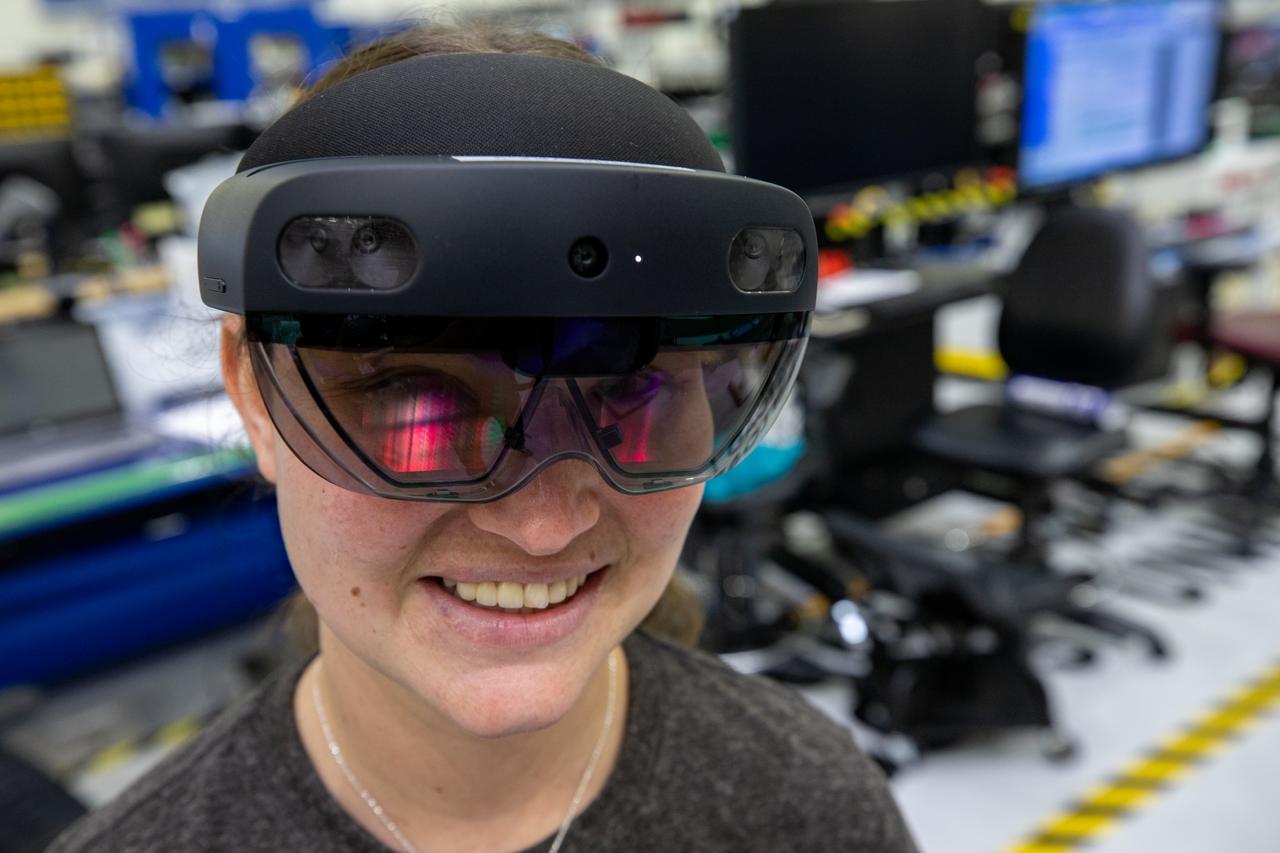
Mary Lakaszcyck, a technician with ASRC Federal Data Solutions, wears a pair of augmented reality (AR) goggles inside the high bay of the Neil Armstrong Operations and Checkout Building at NASA’s Kennedy Space Center in Florida on Jan. 16, 2020. Orion manufacturer Lockheed Martin provided the goggles to technicians to help place tapes where components will be installed on the Orion crew module adapter for NASA’s Artemis II mission, the first crewed mission aboard the spacecraft. Using the AR goggles saves significant labor and time to complete tasks. Manufactured by Microsoft, the goggles, called HoloLens2, are the second version used by Lockheed.
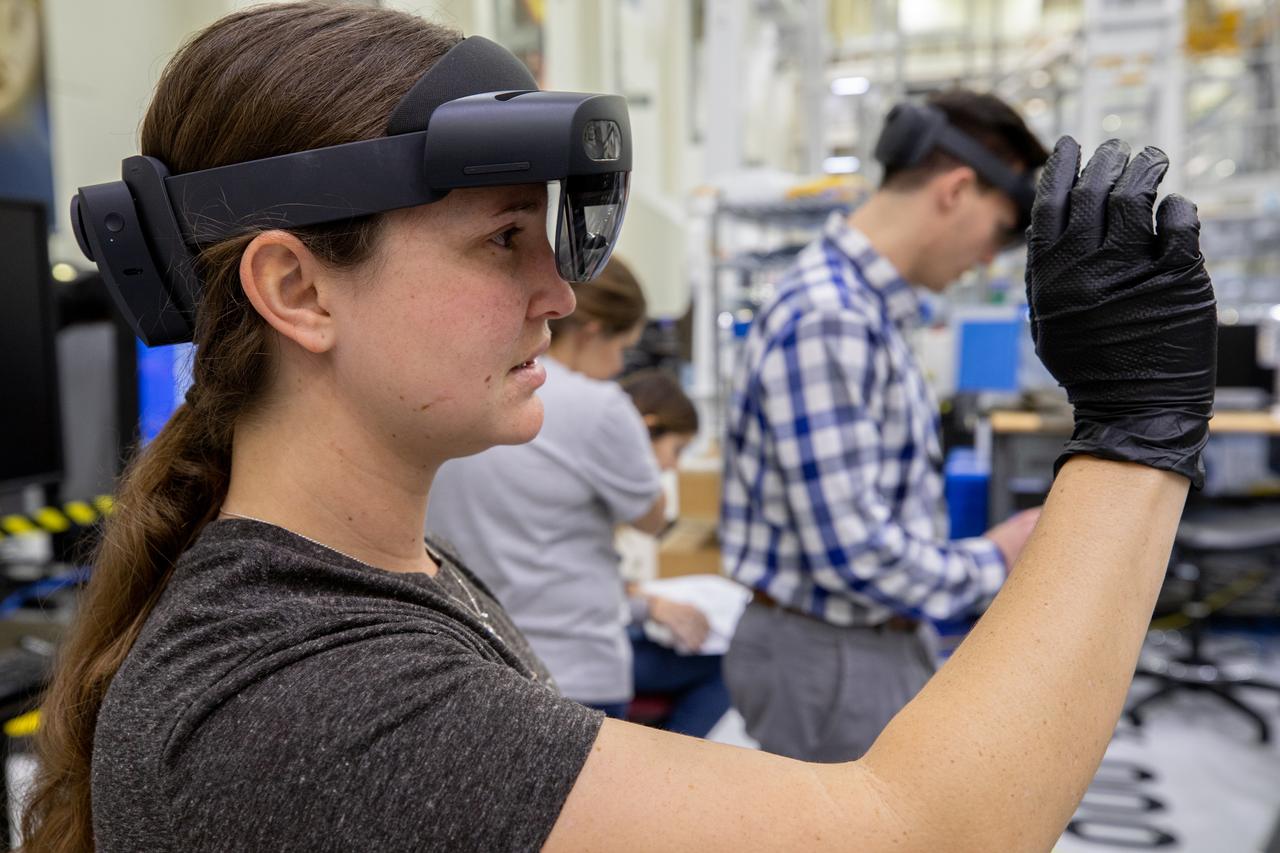
Mary Lakaszcyck, a technician with ASRC Federal Data Solutions, demonstrates a pair of augmented reality (AR) goggles inside the high bay of the Neil Armstrong Operations and Checkout Building at NASA’s Kennedy Space Center in Florida on Jan. 16, 2020. Orion manufacturer Lockheed Martin provided the goggles to technicians to help place tapes where components will be installed on the Orion crew module adapter for NASA’s Artemis II mission, the first crewed mission aboard the spacecraft. Using the AR goggles saves significant labor and time to complete tasks. Manufactured by Microsoft, the goggles, called HoloLens2, are the second version used by Lockheed.
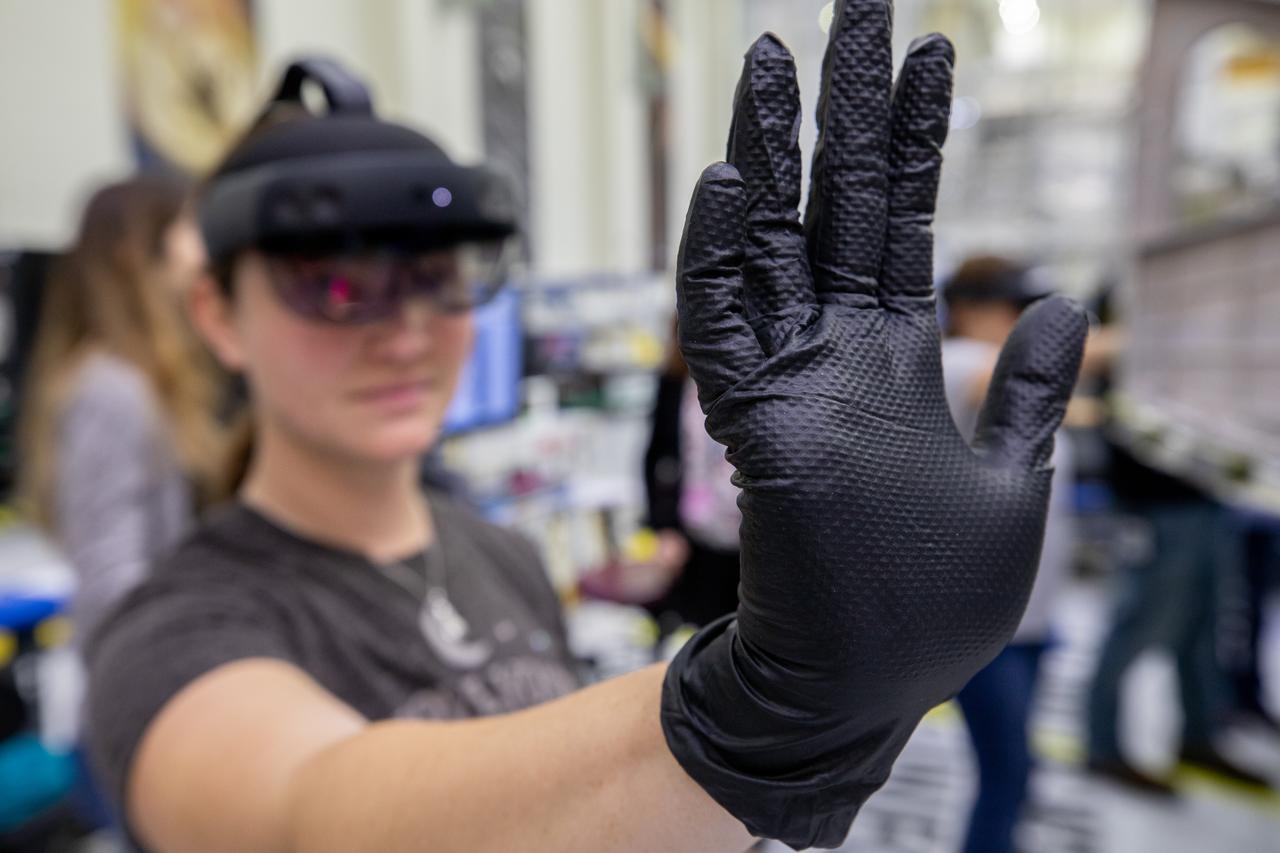
Mary Lakaszcyck, a technician with ASRC Federal Data Solutions, demonstrates a pair of augmented reality (AR) goggles inside the high bay of the Neil Armstrong Operations and Checkout Building at NASA’s Kennedy Space Center in Florida on Jan. 16, 2020. Orion manufacturer Lockheed Martin provided the goggles to technicians to help place tapes where components will be installed on the Orion crew module adapter for NASA’s Artemis II mission, the first crewed mission aboard the spacecraft. Using the AR goggles saves significant labor and time to complete tasks. Manufactured by Microsoft, the goggles, called HoloLens2, are the second version used by Lockheed.
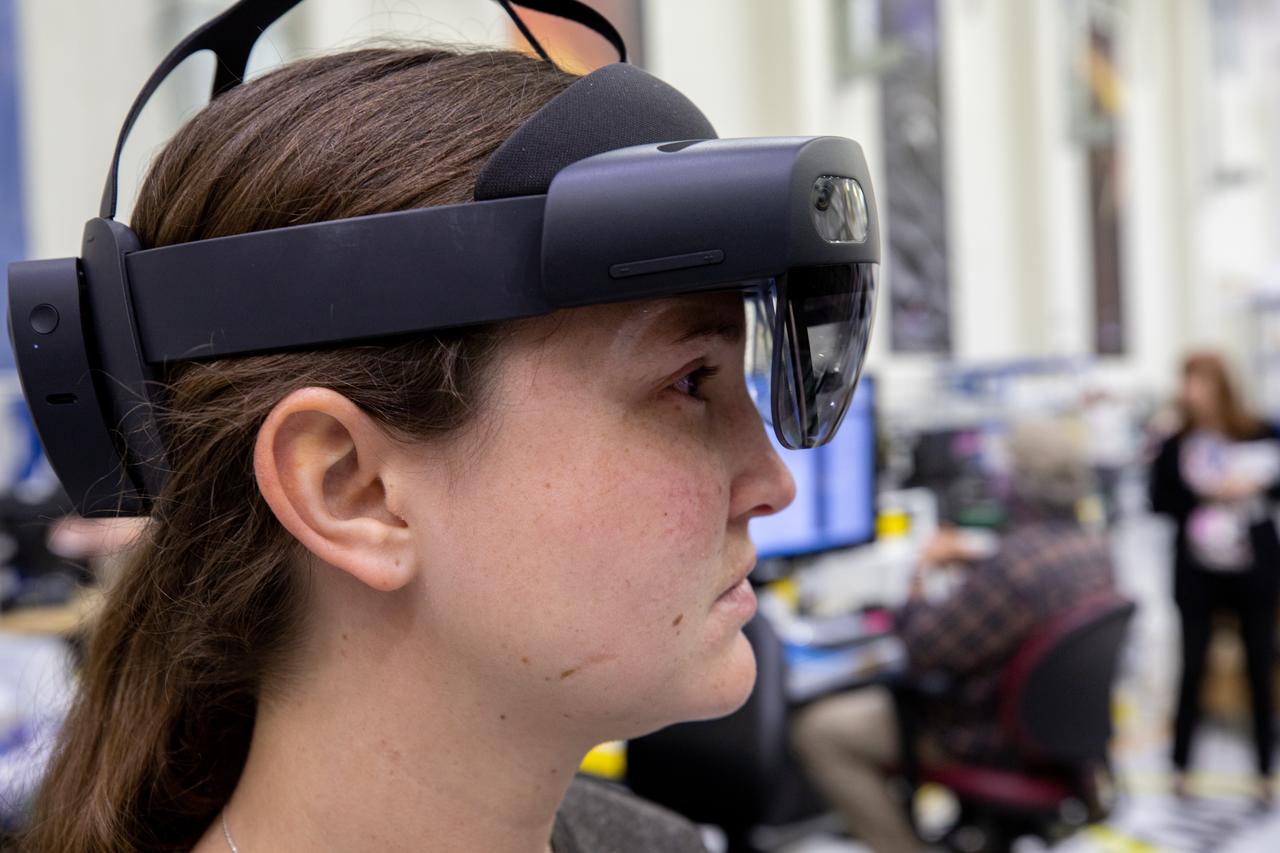
Mary Lakaszcyck, a technician with ASRC Federal Data Solutions, wears a pair of augmented reality (AR) goggles inside the high bay of the Neil Armstrong Operations and Checkout Building at NASA’s Kennedy Space Center in Florida on Jan. 16, 2020. Orion manufacturer Lockheed Martin provided the goggles to technicians to help place tapes where components will be installed on the Orion crew module adapter for NASA’s Artemis II mission, the first crewed mission aboard the spacecraft. Using the AR goggles saves significant labor and time to complete tasks. Manufactured by Microsoft, the goggles, called HoloLens2, are the second version used by Lockheed.
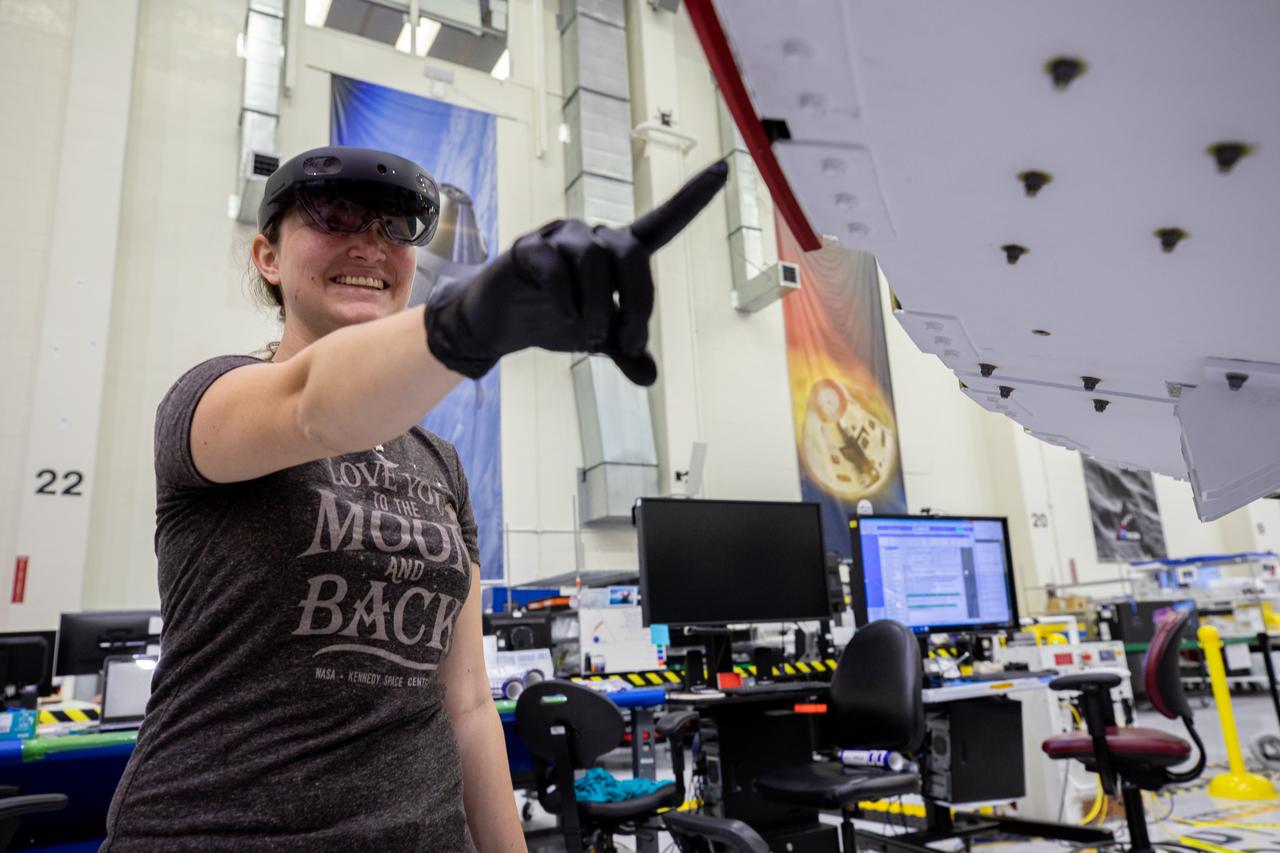
Mary Lakaszcyck, a technician with ASRC Federal Data Solutions, demonstrates a pair of augmented reality (AR) goggles inside the high bay of the Neil Armstrong Operations and Checkout Building at NASA’s Kennedy Space Center in Florida on Jan. 16, 2020. Orion manufacturer Lockheed Martin provided the goggles to technicians to help place tapes where components will be installed on the Orion crew module adapter for NASA’s Artemis II mission, the first crewed mission aboard the spacecraft. Using the AR goggles saves significant labor and time to complete tasks. Manufactured by Microsoft, the goggles, called HoloLens2, are the second version used by Lockheed.
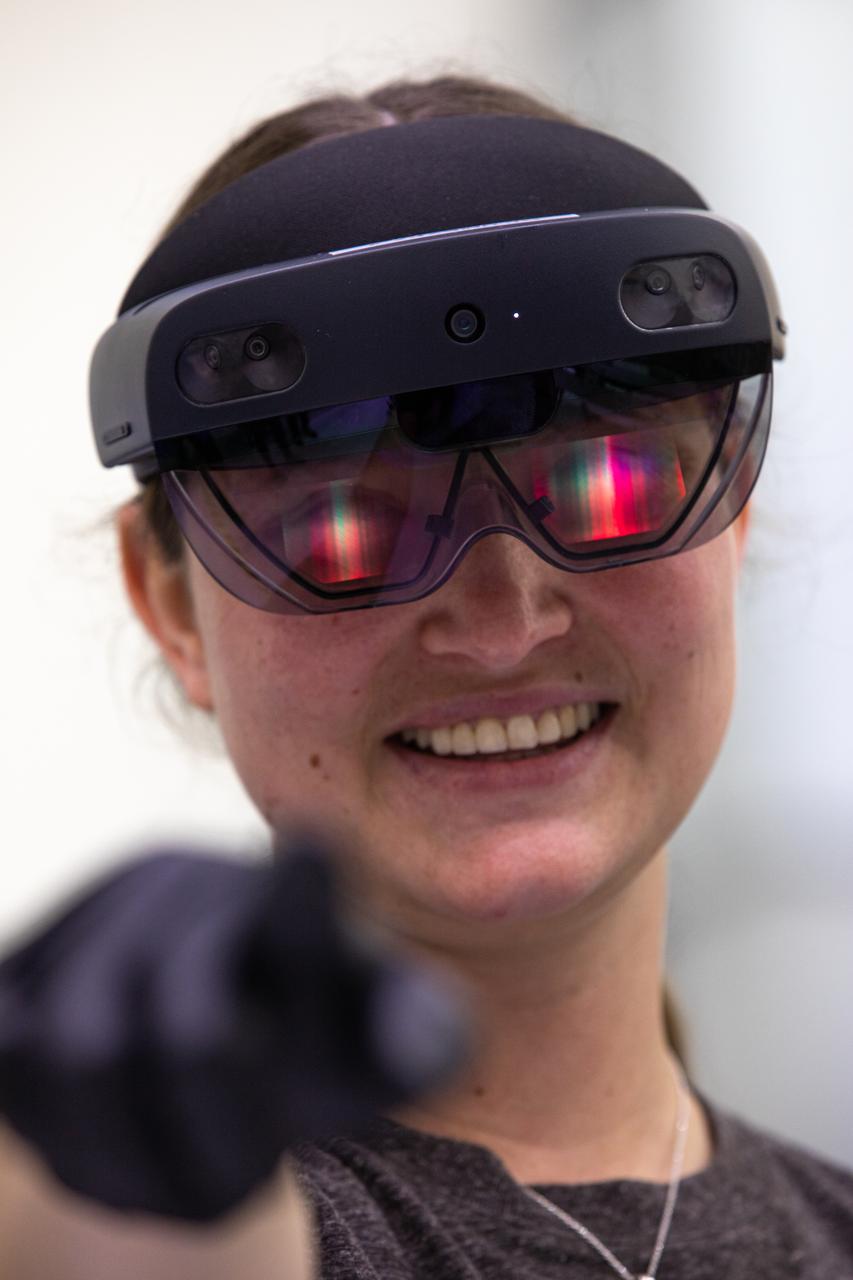
Mary Lakaszcyck, a technician with ASRC Federal Data Solutions, wears a pair of augmented reality (AR) goggles inside the high bay of the Neil Armstrong Operations and Checkout Building at NASA’s Kennedy Space Center in Florida on Jan. 16, 2020. Orion manufacturer Lockheed Martin provided the goggles to technicians to help place tapes where components will be installed on the Orion crew module adapter for NASA’s Artemis II mission, the first crewed mission aboard the spacecraft. Using the AR goggles saves significant labor and time to complete tasks. Manufactured by Microsoft, the goggles, called HoloLens2, are the second version used by Lockheed.
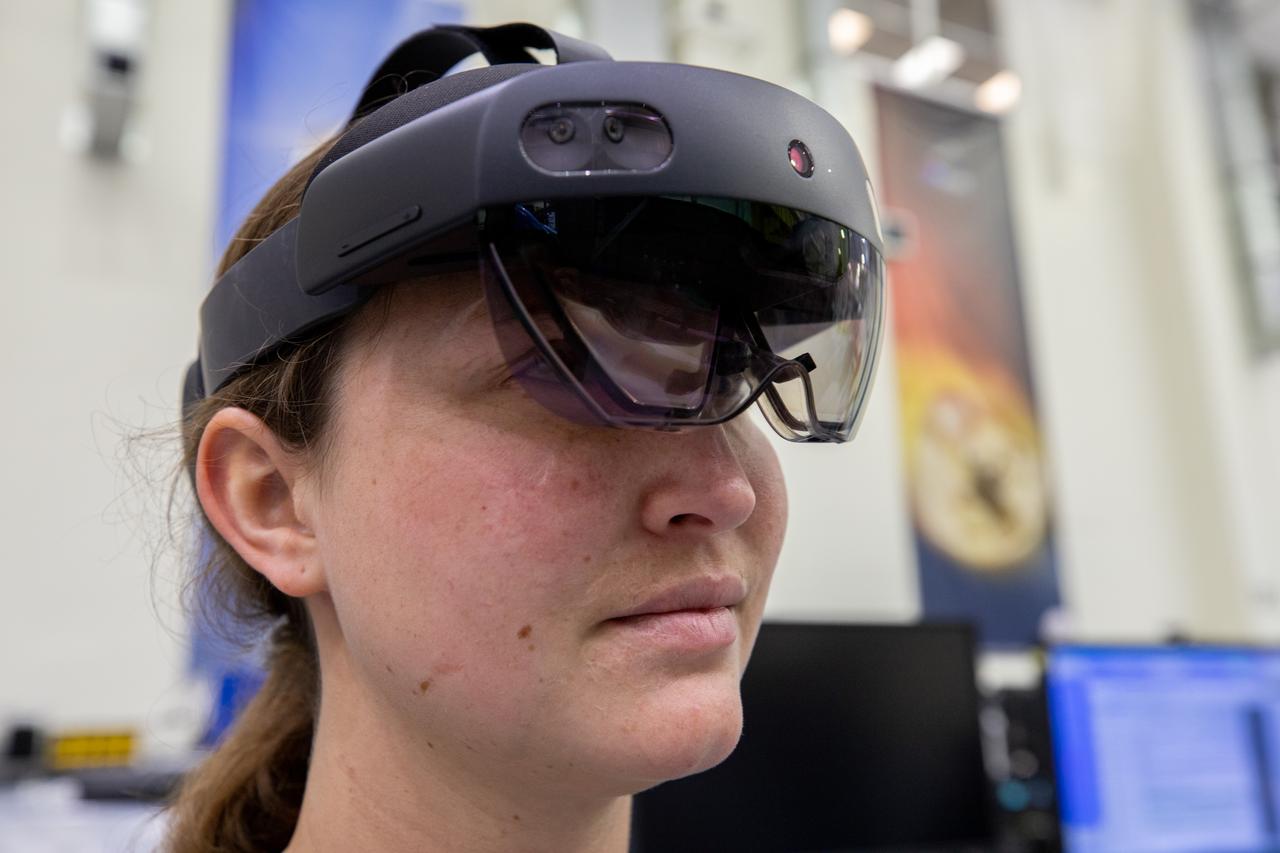
Mary Lakaszcyck, a technician with ASRC Federal Data Solutions, wears a pair of augmented reality (AR) goggles inside the high bay of the Neil Armstrong Operations and Checkout Building at NASA’s Kennedy Space Center in Florida on Jan. 16, 2020. Orion manufacturer Lockheed Martin provided the goggles to technicians to help place tapes where components will be installed on the Orion crew module adapter for NASA’s Artemis II mission, the first crewed mission aboard the spacecraft. Using the AR goggles saves significant labor and time to complete tasks. Manufactured by Microsoft, the goggles, called HoloLens2, are the second version used by Lockheed.
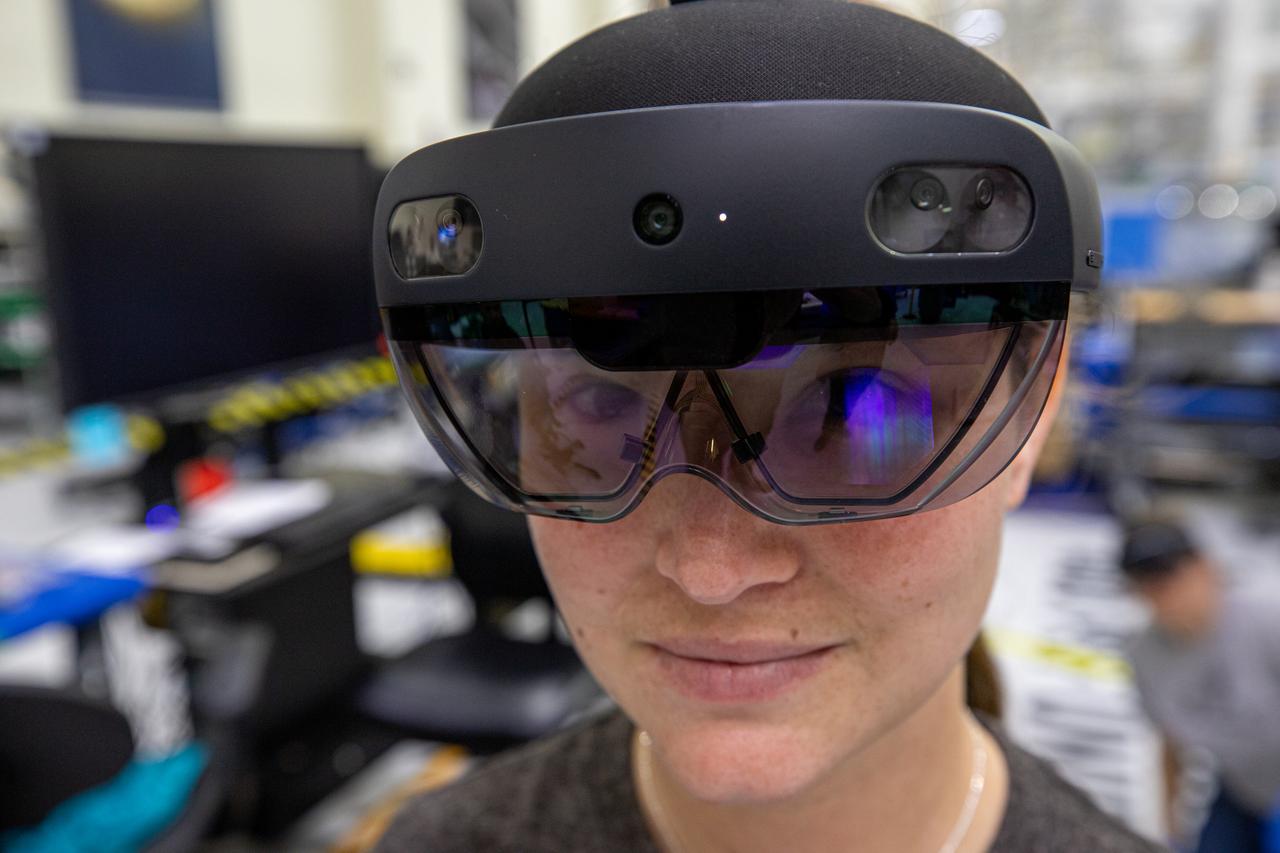
Mary Lakaszcyck, a technician with ASRC Federal Data Solutions, wears a pair of augmented reality (AR) goggles inside the high bay of the Neil Armstrong Operations and Checkout Building at NASA’s Kennedy Space Center in Florida on Jan. 16, 2020. Orion manufacturer Lockheed Martin provided the goggles to technicians to help place tapes where components will be installed on the Orion crew module adapter for NASA’s Artemis II mission, the first crewed mission aboard the spacecraft. Using the AR goggles saves significant labor and time to complete tasks. Manufactured by Microsoft, the goggles, called HoloLens2, are the second version used by Lockheed.
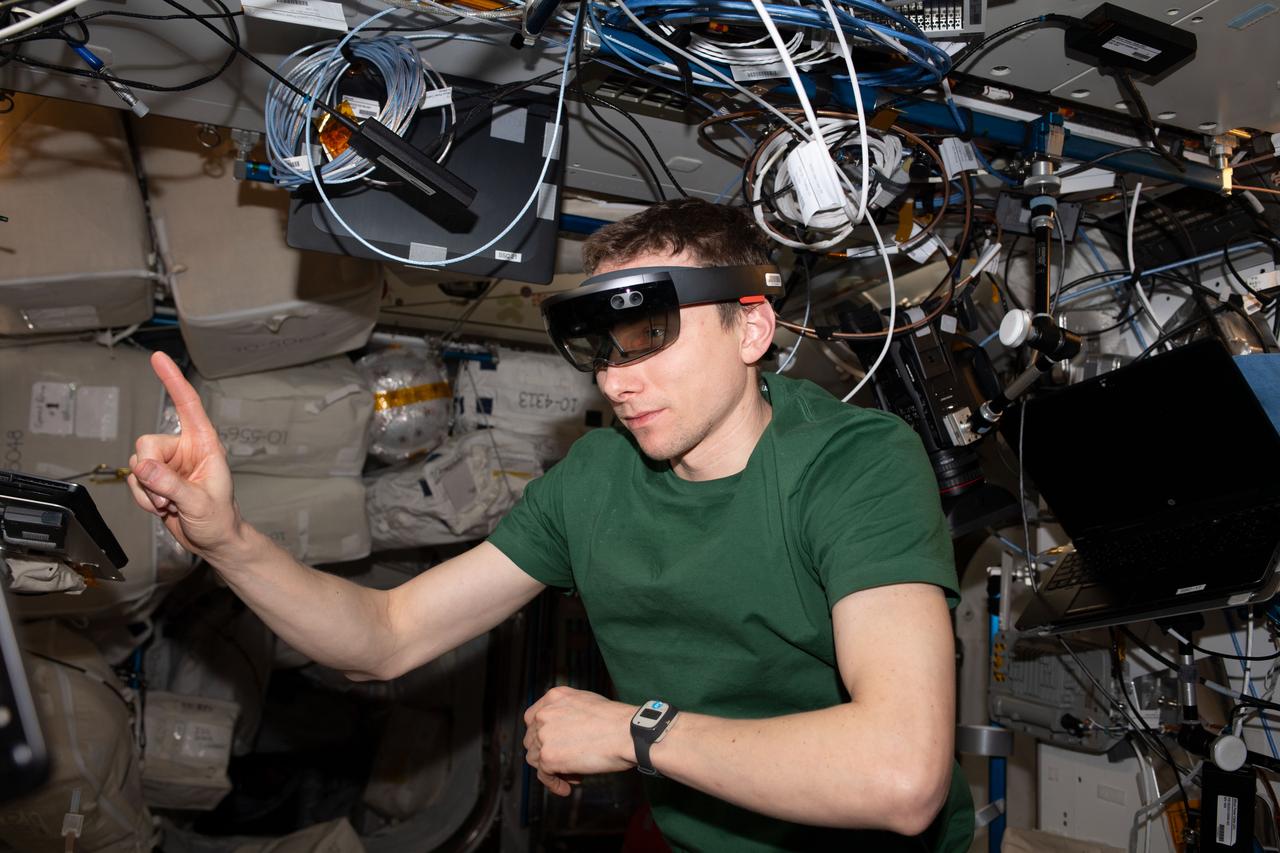
iss069e082115 (Aug. 18, 2023) --- NASA astronaut and Expedition 69 Flight Engineer Woody Hoburg tests the ability to use augmented reality goggles for maintenance aboard the International Space Station.
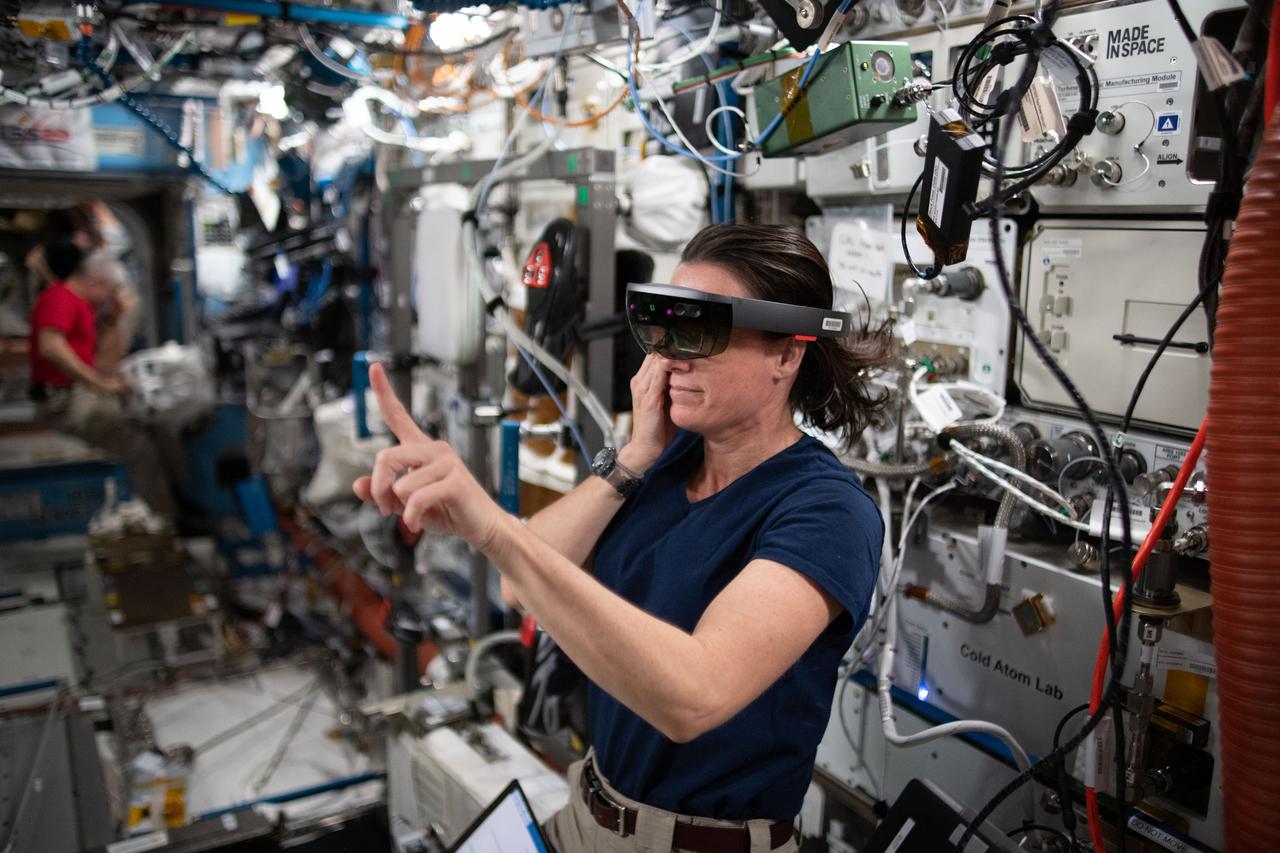
iss065e154542 (June 30, 2021) --- NASA astronaut and Expedition 65 Flight Engineer Megan McArthur wears the specialized Sidekick headset and tests using augmented reality aboard the International Space Station.
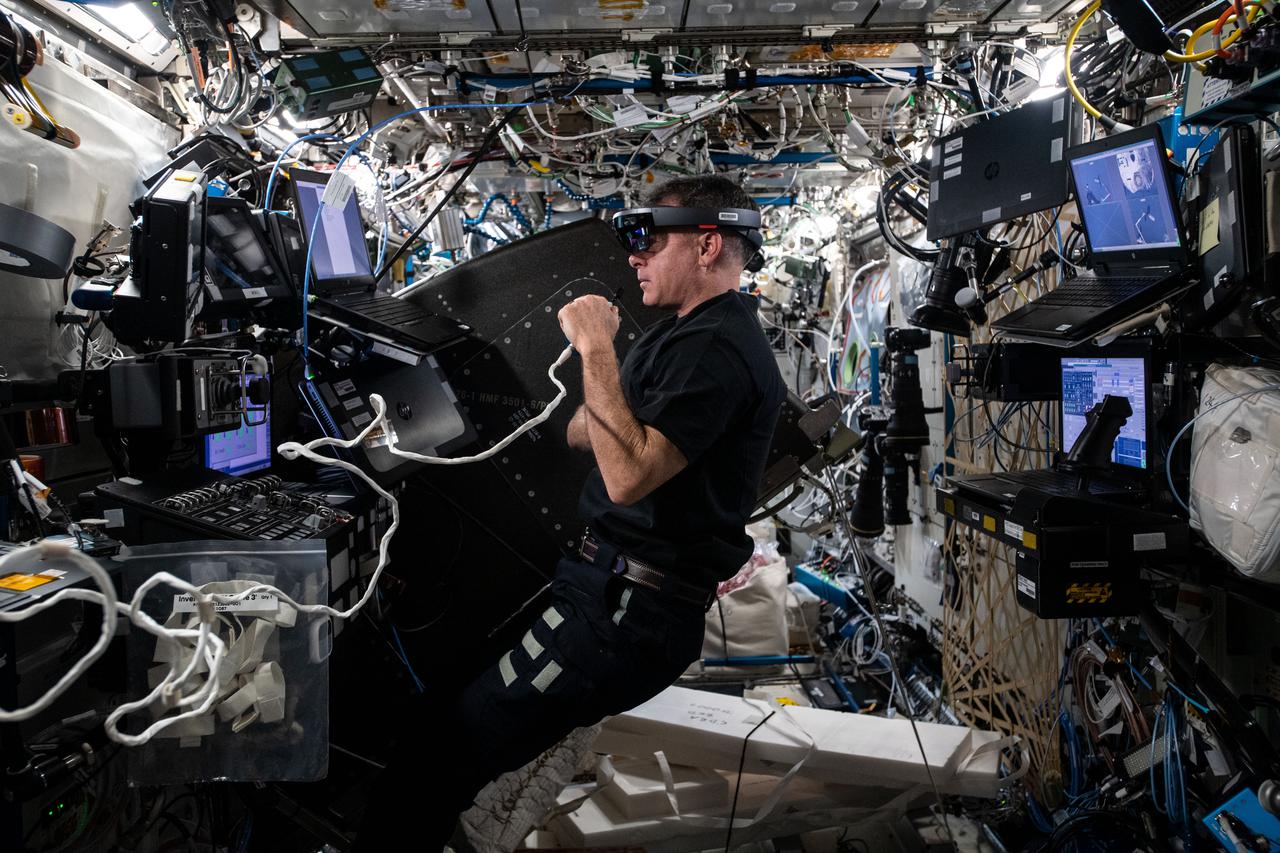
iss065e358558 (Sept. 7, 2021) --- NASA astronaut and Expedition 65 Flight Engineer Shane Kimbrough wears an augmented reality headset while servicing hardware on the International Space Station.
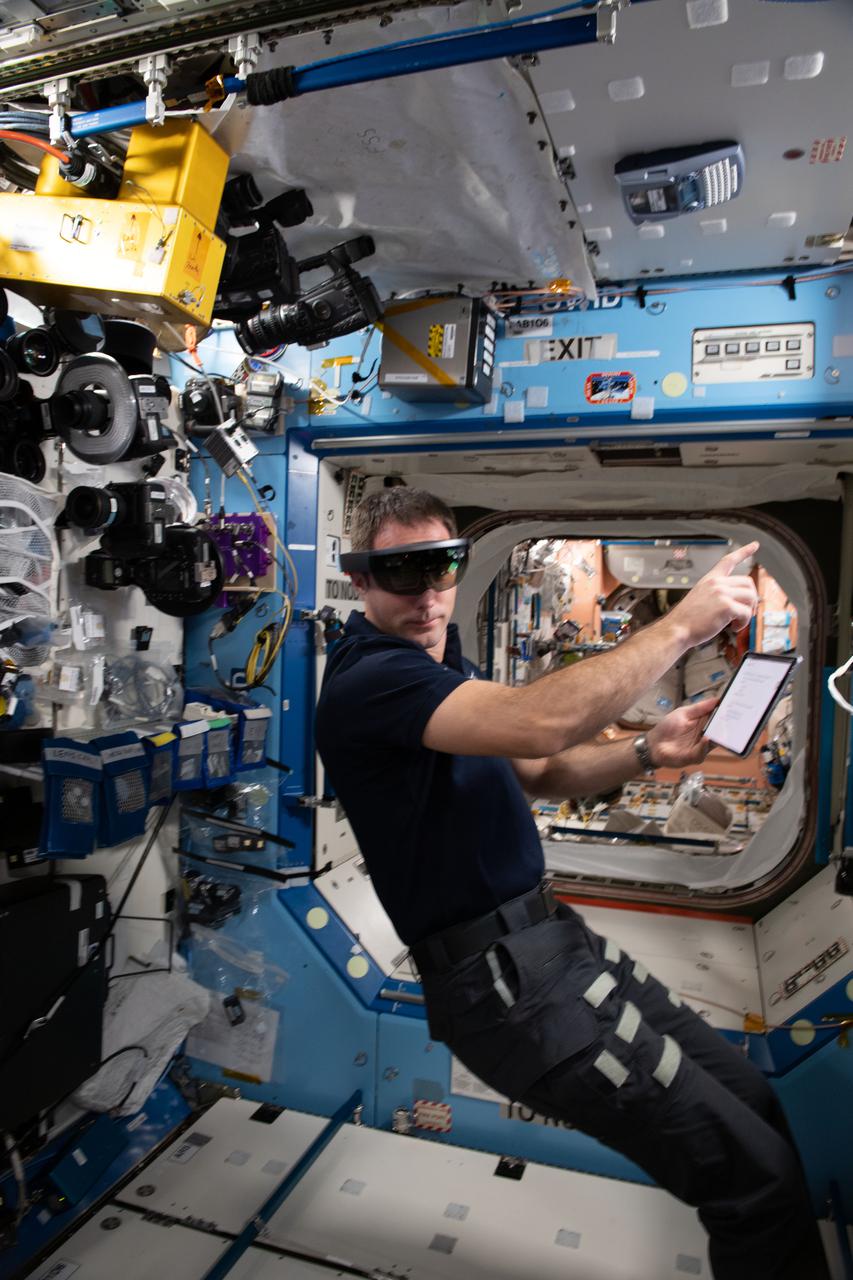
iss065e163235 (June 9, 2021) --- Expedition 65 Flight Engineer Thomas Pesquet of ESA (European Space Agency) is pictured wearing the specialized Sidekick headset and tests using augmented reality aboard the International Space Station.
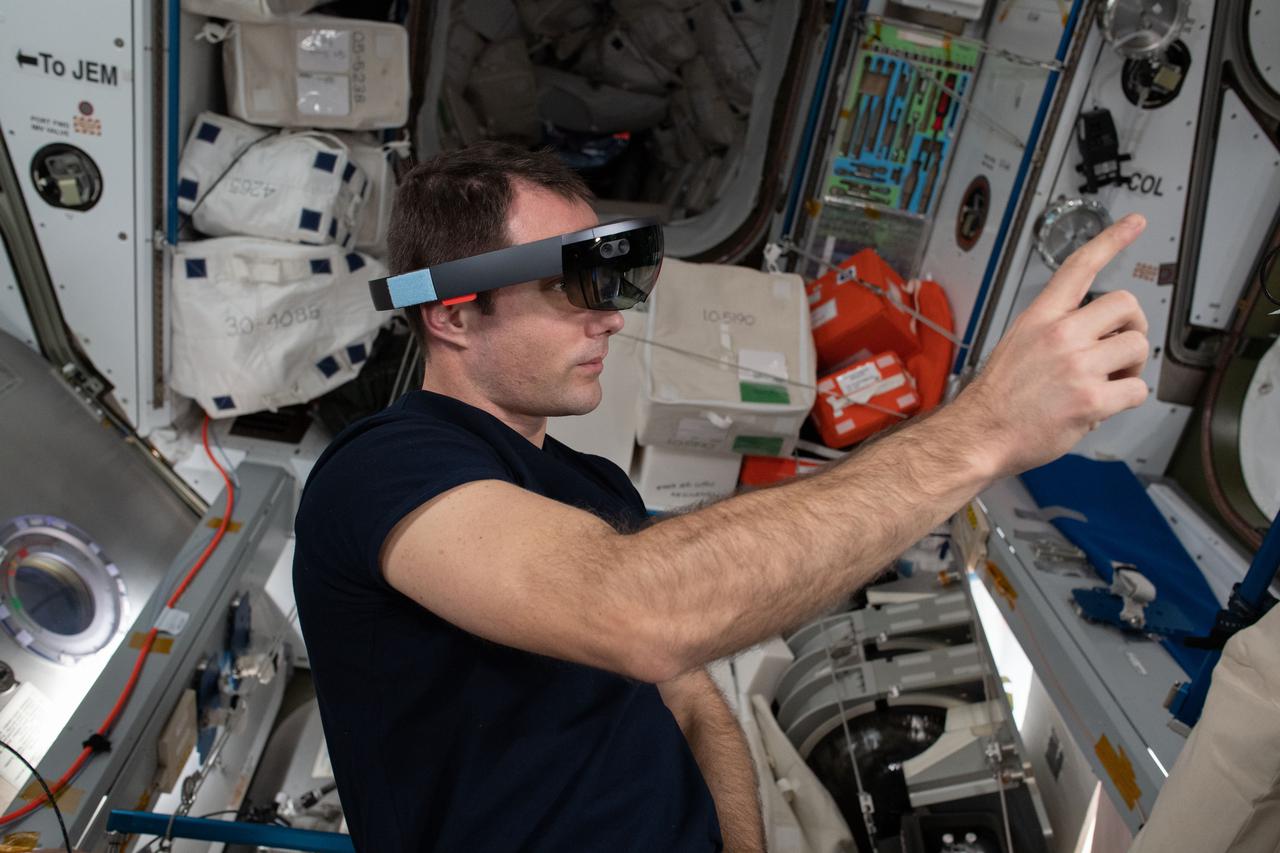
iss065e167797 (July 16, 2021) --- Expedition 65 Flight Engineer Thomas Pesquet of ESA (European Space Agency) wears Sidekick goggles to demonstrate using augmented reality while interacting with components aboard the International Space Station.
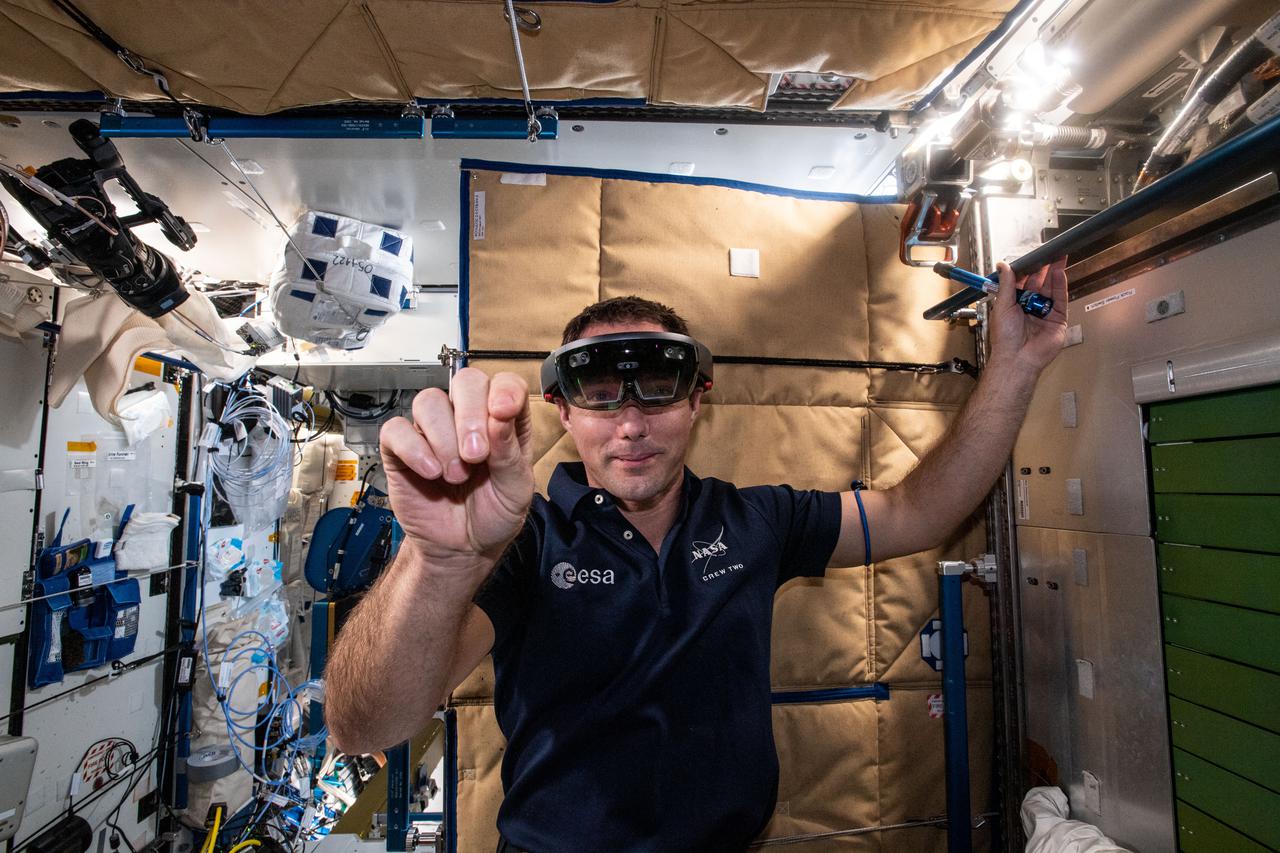
iss065e162496 (July 6, 2021) --- Expedition 65 Flight Engineer Thomas Pesquet of ESA (European Space Agency) wears the Sidekick augmented reality goggles that assist crew members during operations with science experiments and orbital maintenance tasks.
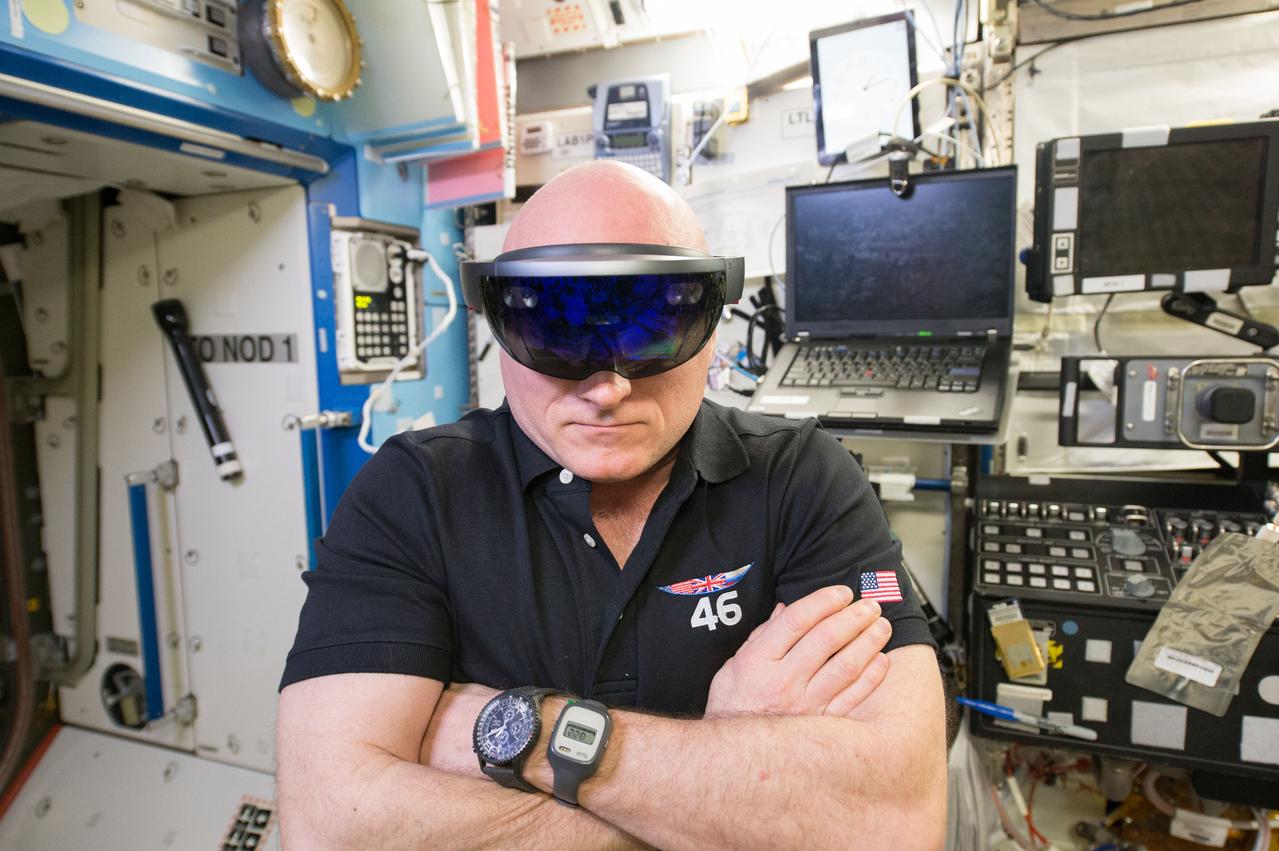
ISS046e043637 (02/20/2016) --- NASA astronaut Scott Kelly tweeted out this image to his followers Feb 20, 2016 with the tag: "This #Saturday morning checked out the @Microsoft #HoloLens aboard @Space_Station! Wow! #YearInSpace ". The device is part of NASA’s project Sidekick which is exploring the use of augmented reality to reduce crew training requirements and increase the efficiency at which astronauts can work in space.
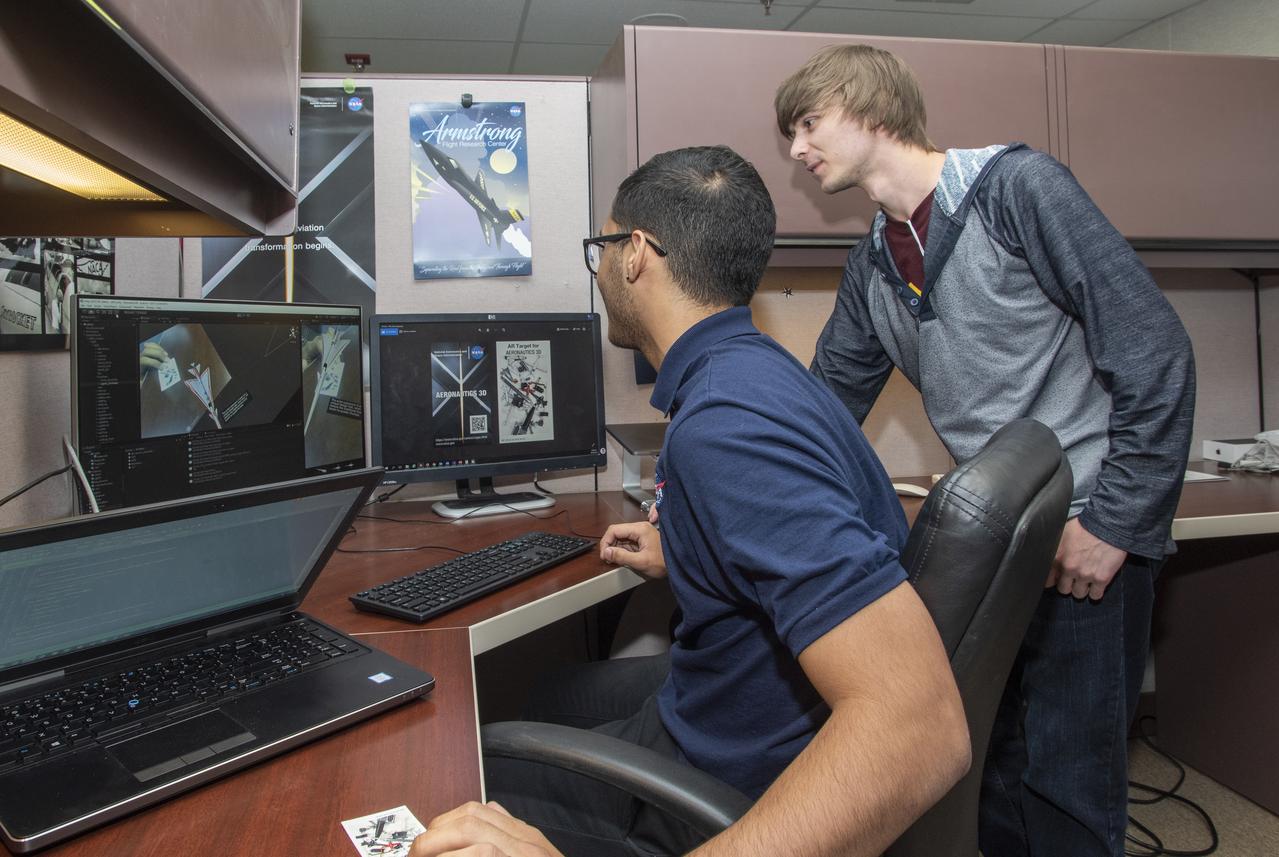
Kendrick Morales, left, and Alexander Passofaro, right, work together to transition the software for the Aeronautics AR app from being target image dependent to deleting the target image.

An interactive augmented reality sandbox, used by Swamp Works personnel to visually demonstrate the work being done in the Granular Mechanics and Regolith Operations laboratory at the Kennedy Space Center to produce high-fidelity models of rocket plume impingement on the lunar surface, is photographed during an innovation showcase on Nov. 19, 2019. Nearly 50 exhibitors gathered in the Florida spaceport’s Neil Armstrong Operations and Checkout Building’s Mission Briefing Room to participate in the center’s Innovation Days – one of several events throughout the year aimed at fostering an encouraging an innovative culture at Kennedy. Showcase participants included individuals from multiple directorates, programs and organizations throughout Kennedy. In addition to the showcase, employees had the opportunity to attend an overview presentation on NASA’s Human Landing System (HLS), hosted by HLS Program Manager Lisa Watson-Morgan.
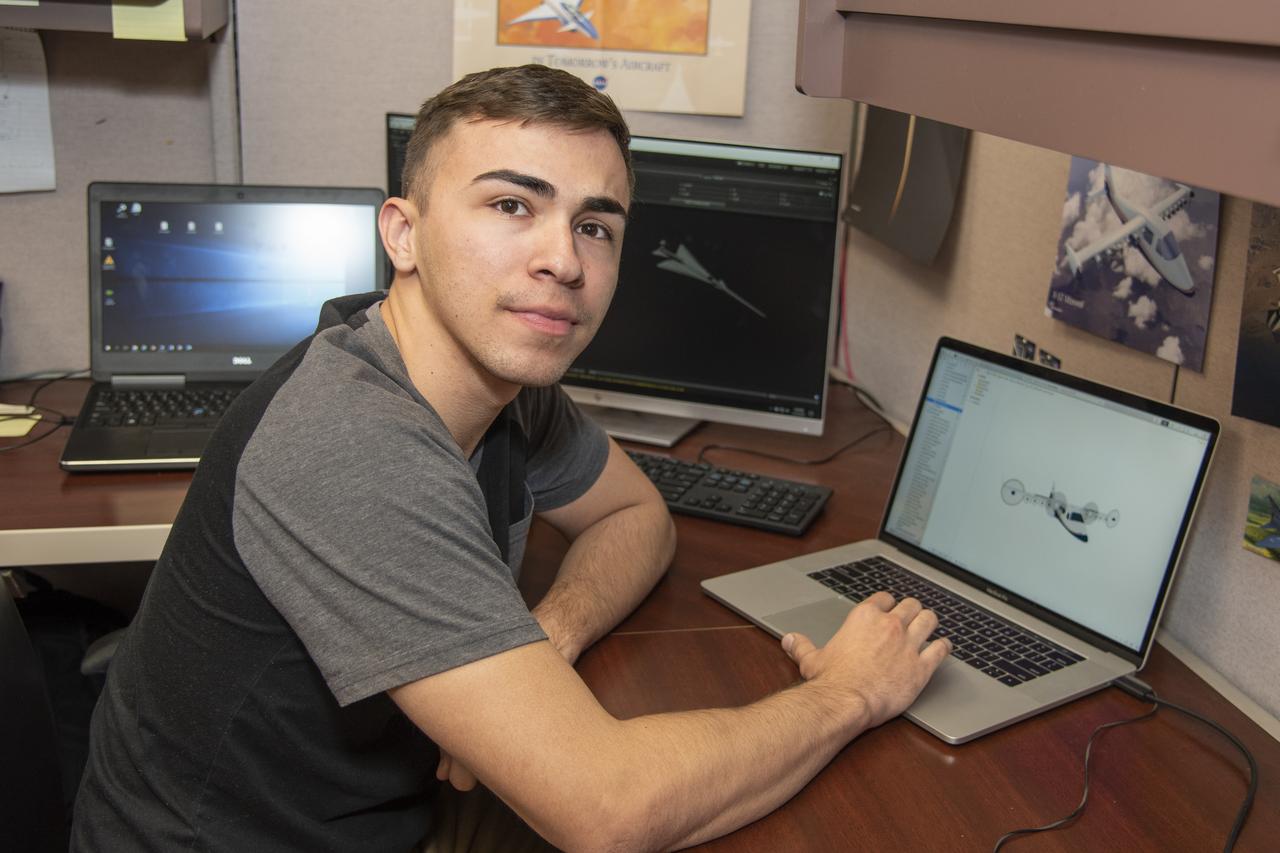
Christopher Morales, spring and summer 2019 intern, works to produce the first iOS version of the app
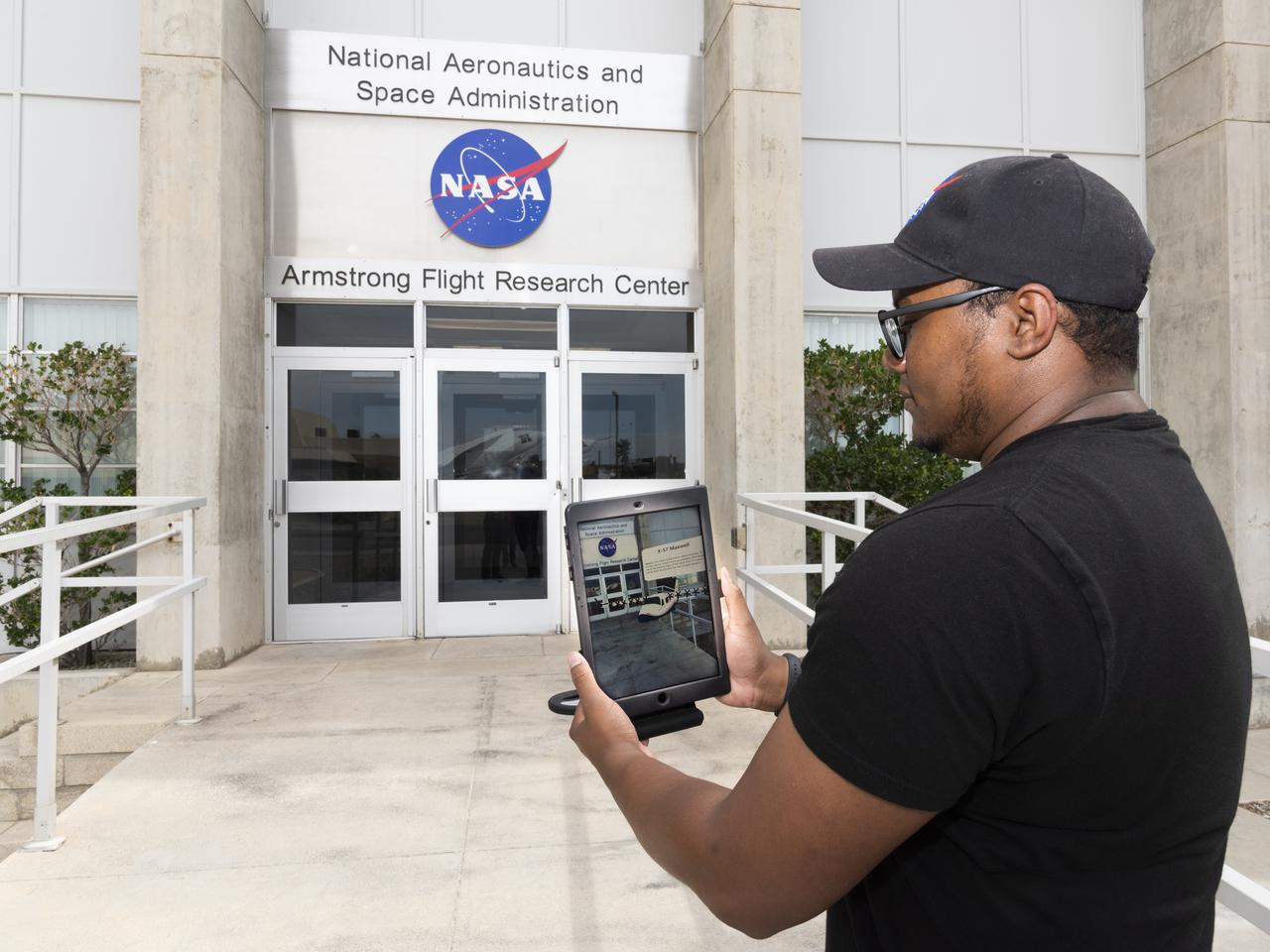
Daniel Williams, intern, shows what the app looks like while in use with the 3D model of the X-57 Maxwell displayed on the screen.